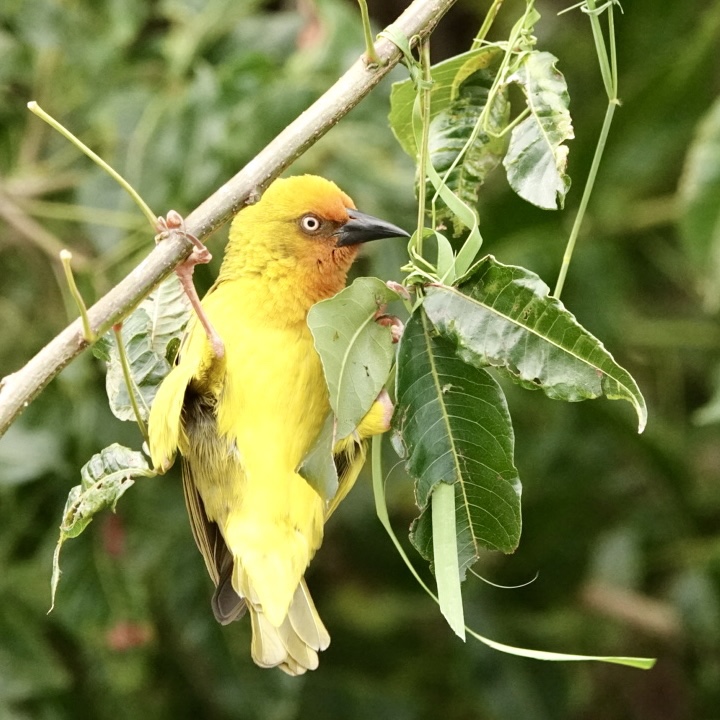
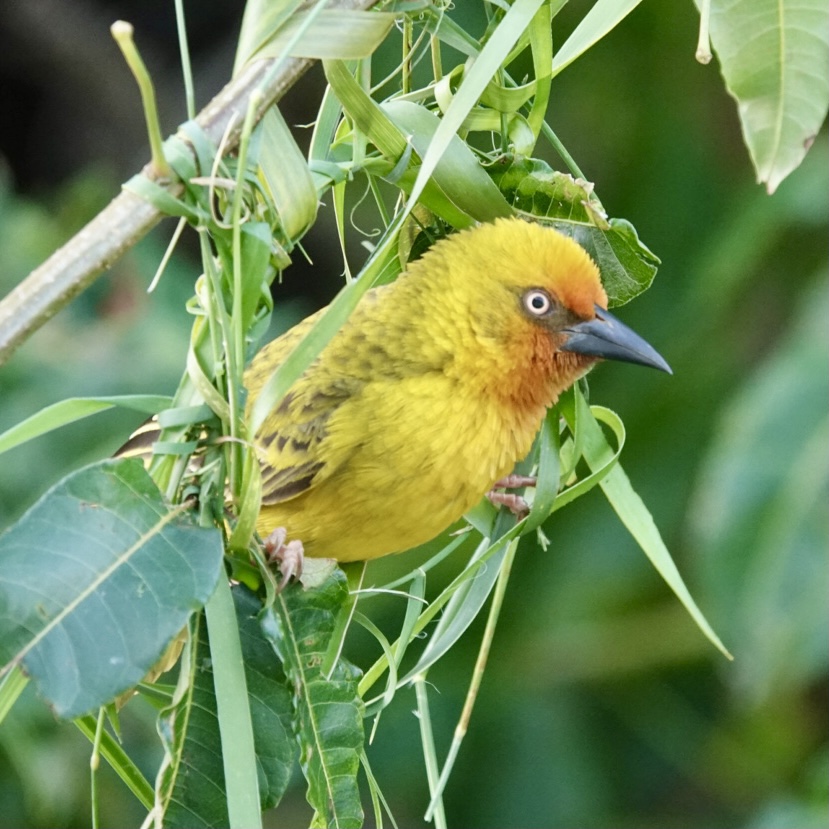
When we returned to our Mossel Bay home recently we were thrilled to find the Cape Weavers (Ploceus capensis/ Kaapse wewer) hard at work building nests right outside our upper floor living area. They provide endless entertainment with their constant activity, never stopping from dawn to dusk.
The post has been updated to include an image of the chicks being fed – they are growing fast
Male – just starting on the nestMale – initial nest frame in progressMale building nest – at an advanced stageFemale feeding two chicks
With the new year in its infancy, it’s time to select a few photos which best represent our 2020. In some cases, selection is based on the memory created, in others I just like how the photo turned out, technically and creatively. Despite the restrictions brought upon all of us by Covid 19, we still managed to travel, although it was limited to the borders of South Africa.
The Places
Birding and bird atlasing takes me to many places that would not otherwise feature on our travel map – here’s a selection ….
Balmoral area – The new Kusile Power Station early morning
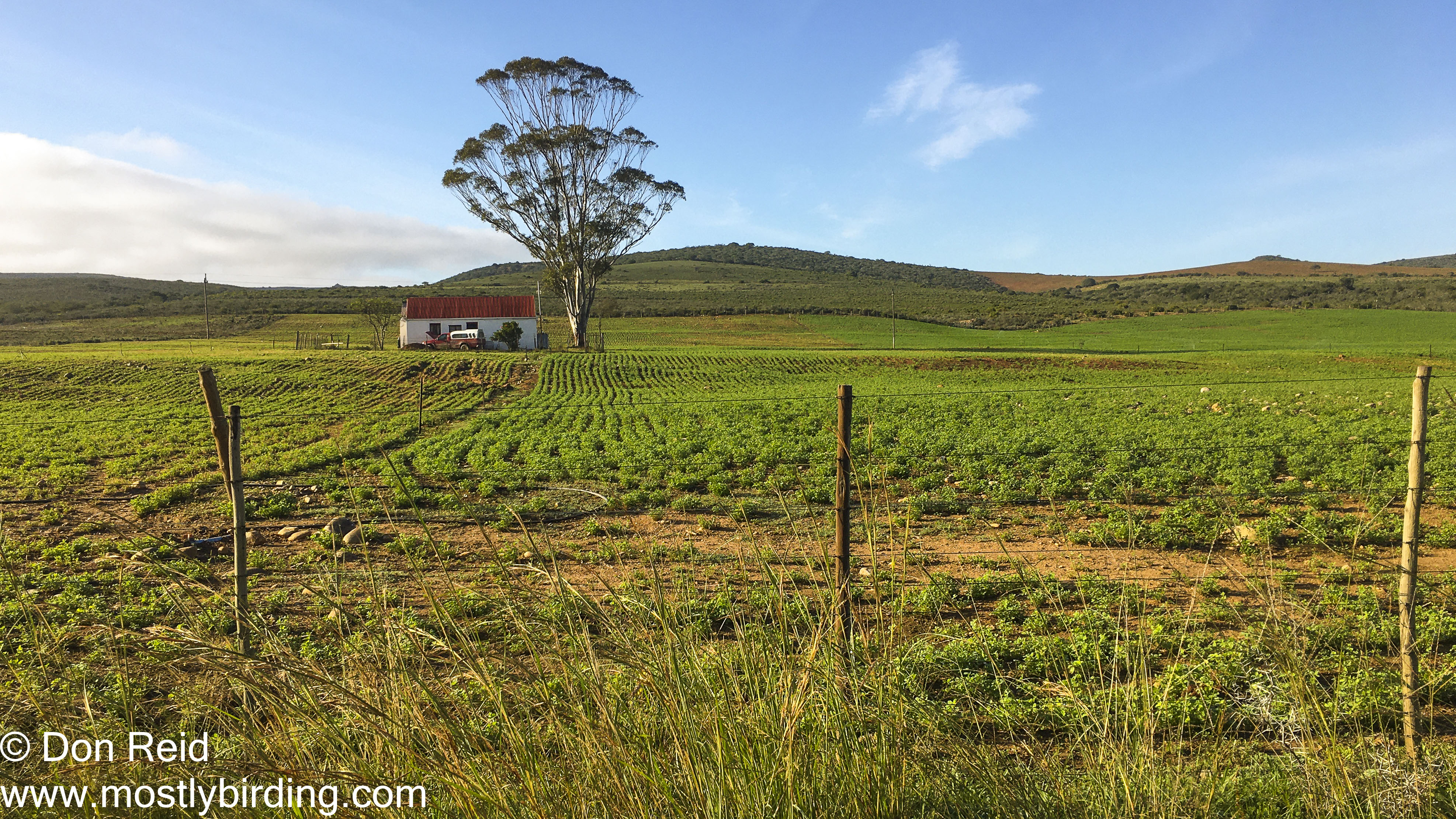
Herbertsdale area near Mossel Bay
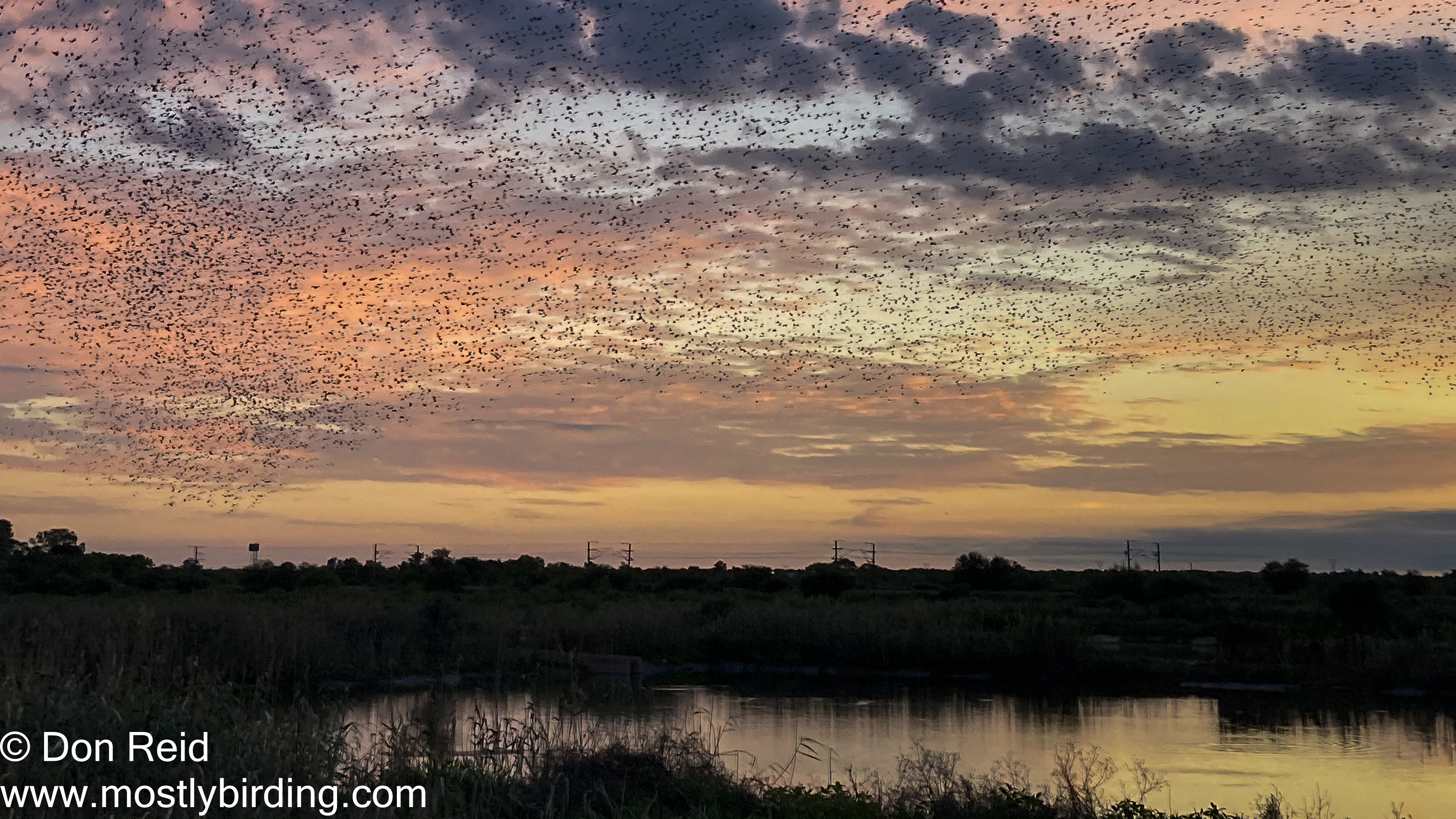
Irrigation Dams near Pienaarsrivier, Birding Big Day 2020 – thousands of Queleas rising into the air
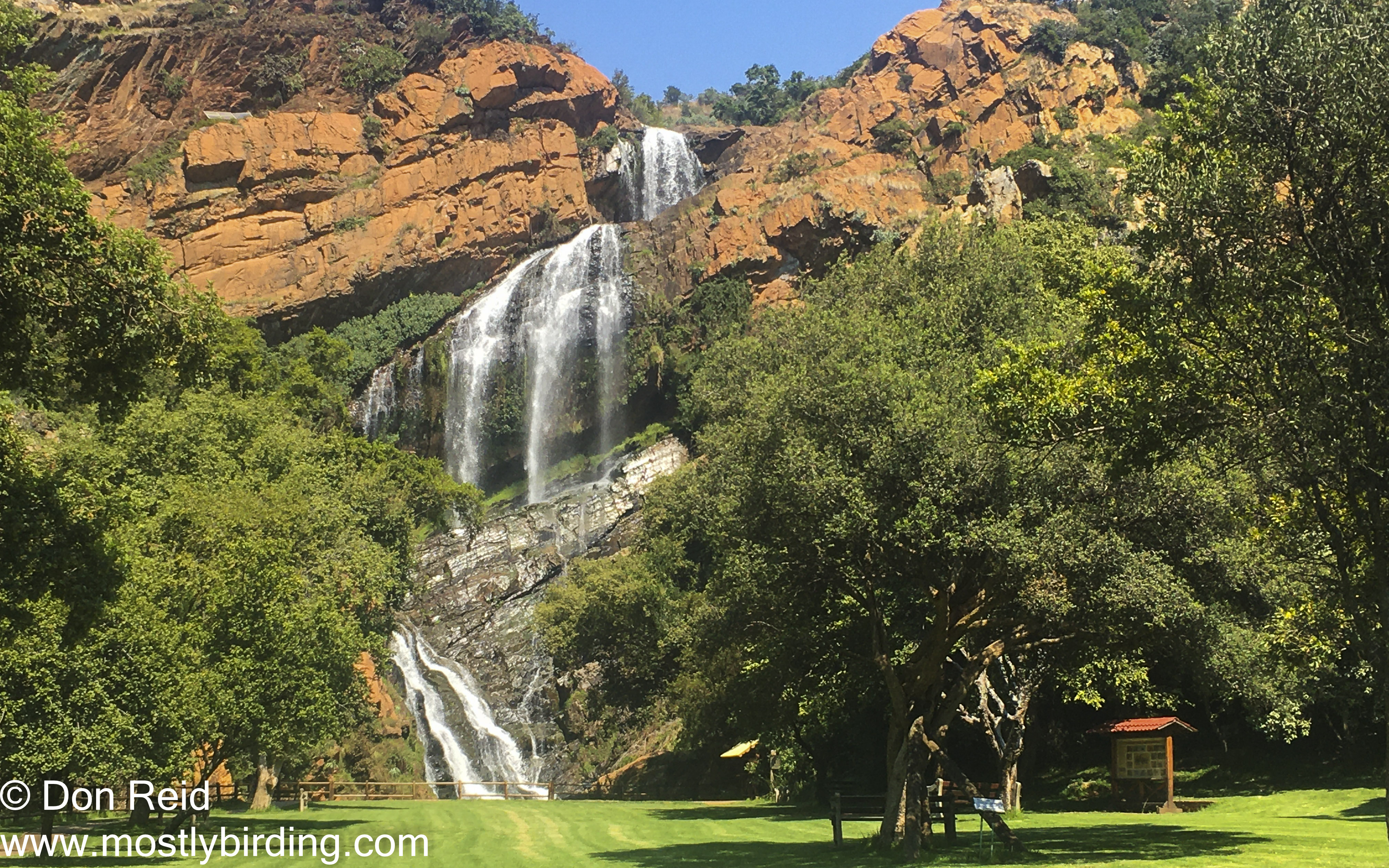
Walter Sisulu Botanical Gardens, Johannesburg – I fitted in a visit while Gerda was attending a class nearby
Voelklip beach, Hermanus on an overcast, rainy day
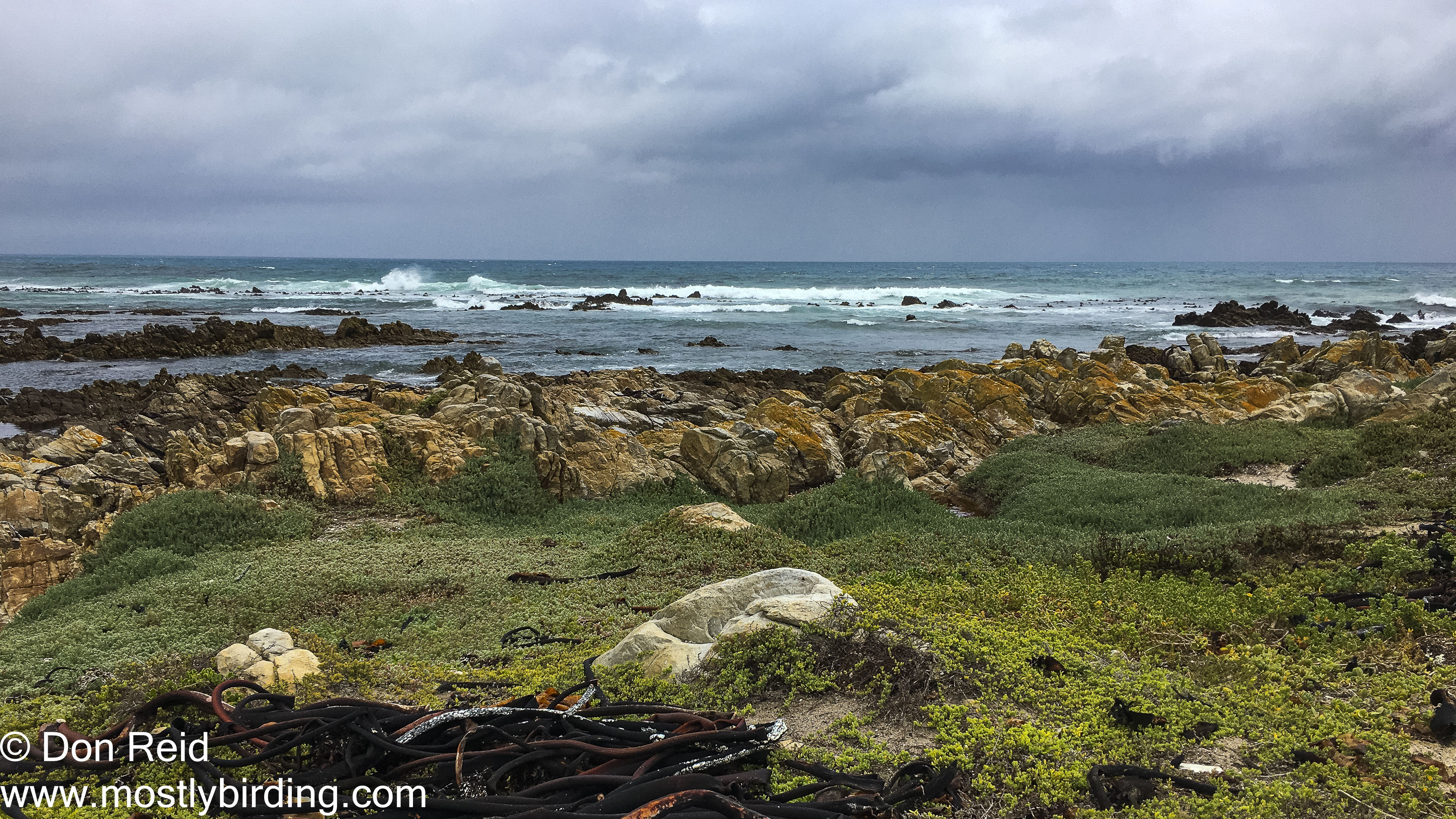
Pearly Beach, beyond Gansbaai
The Point, Mossel Bay on a moody winter’s day
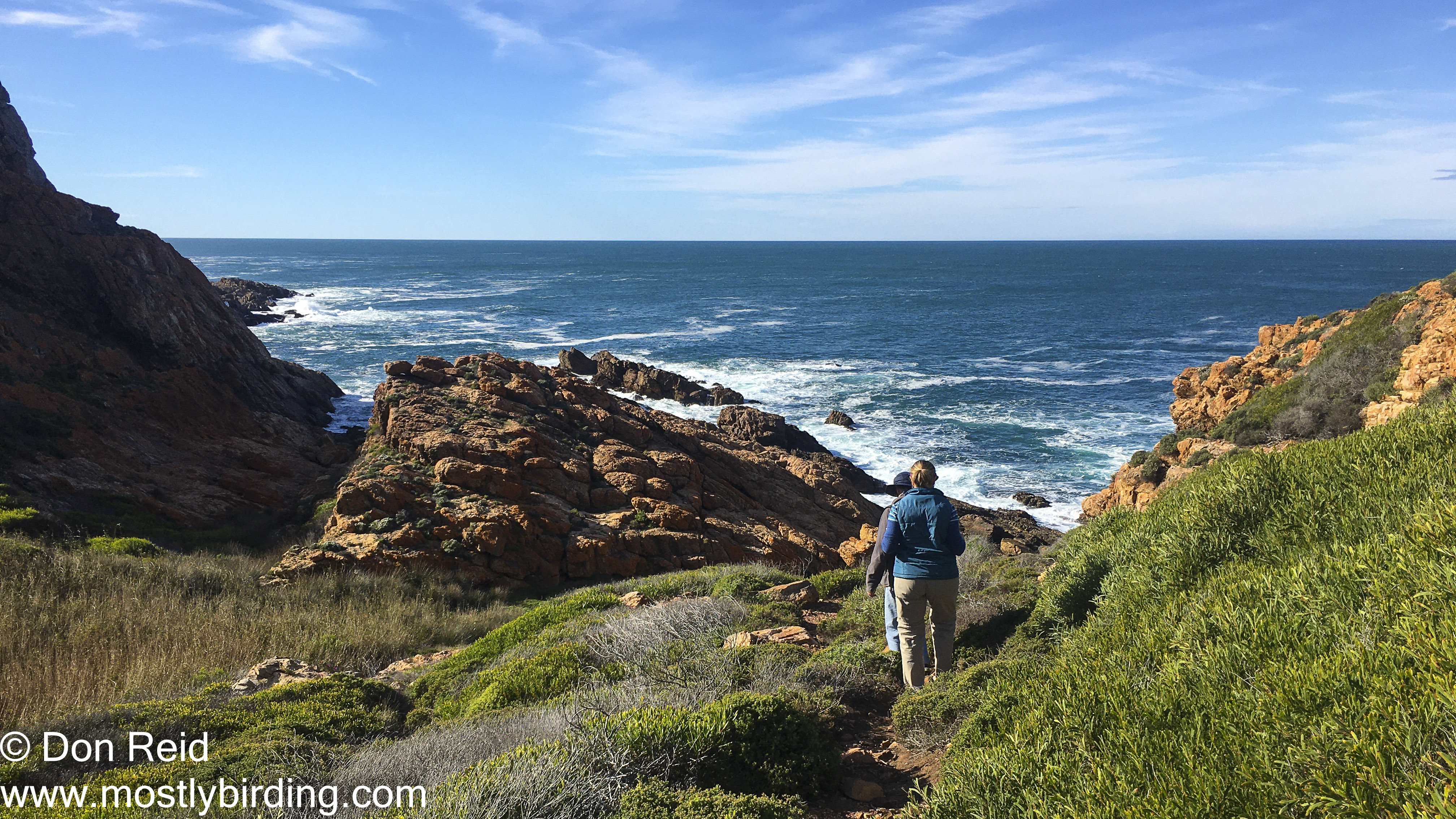
Early morning walk to a secluded cliffside spot for coffee on the rocks, Mossel Bay
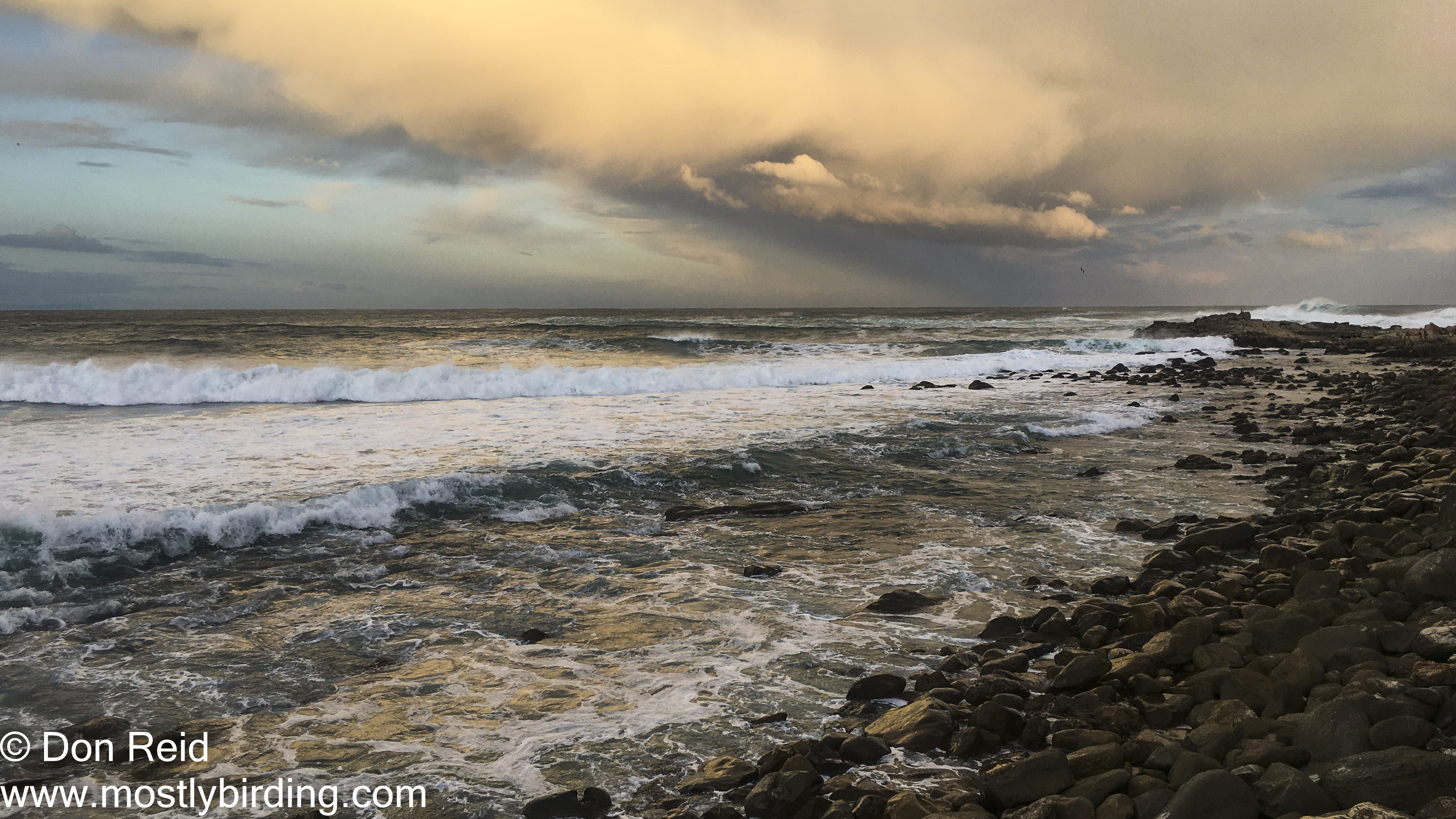
Mossel Bay at dusk – from the boardwalk
Onverwacht farm Vryheid
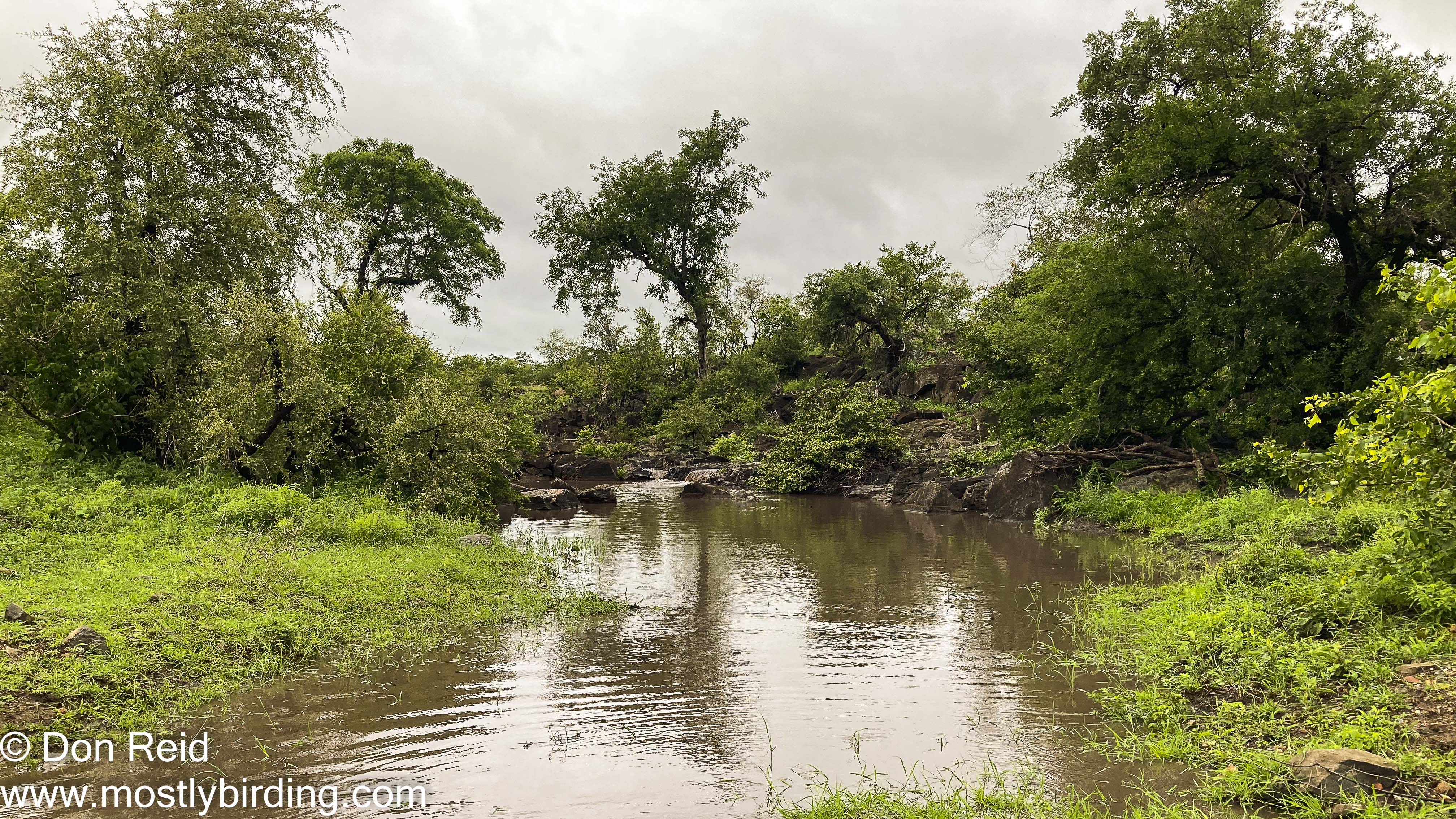
Crocodile River, Verlorenkloof
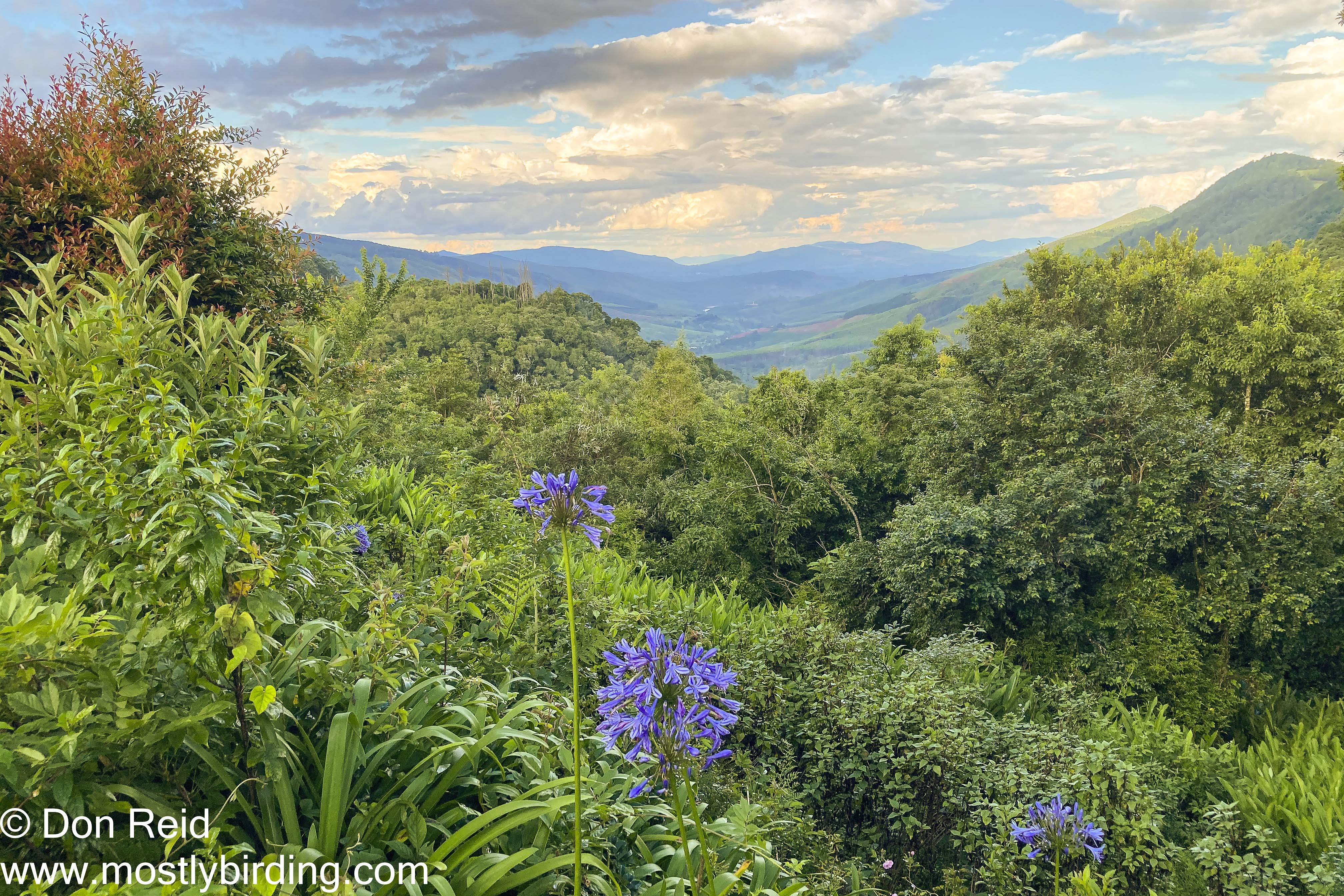
Magoebaskloof
Kruger National Park – Mopani (Shongololo Loop)
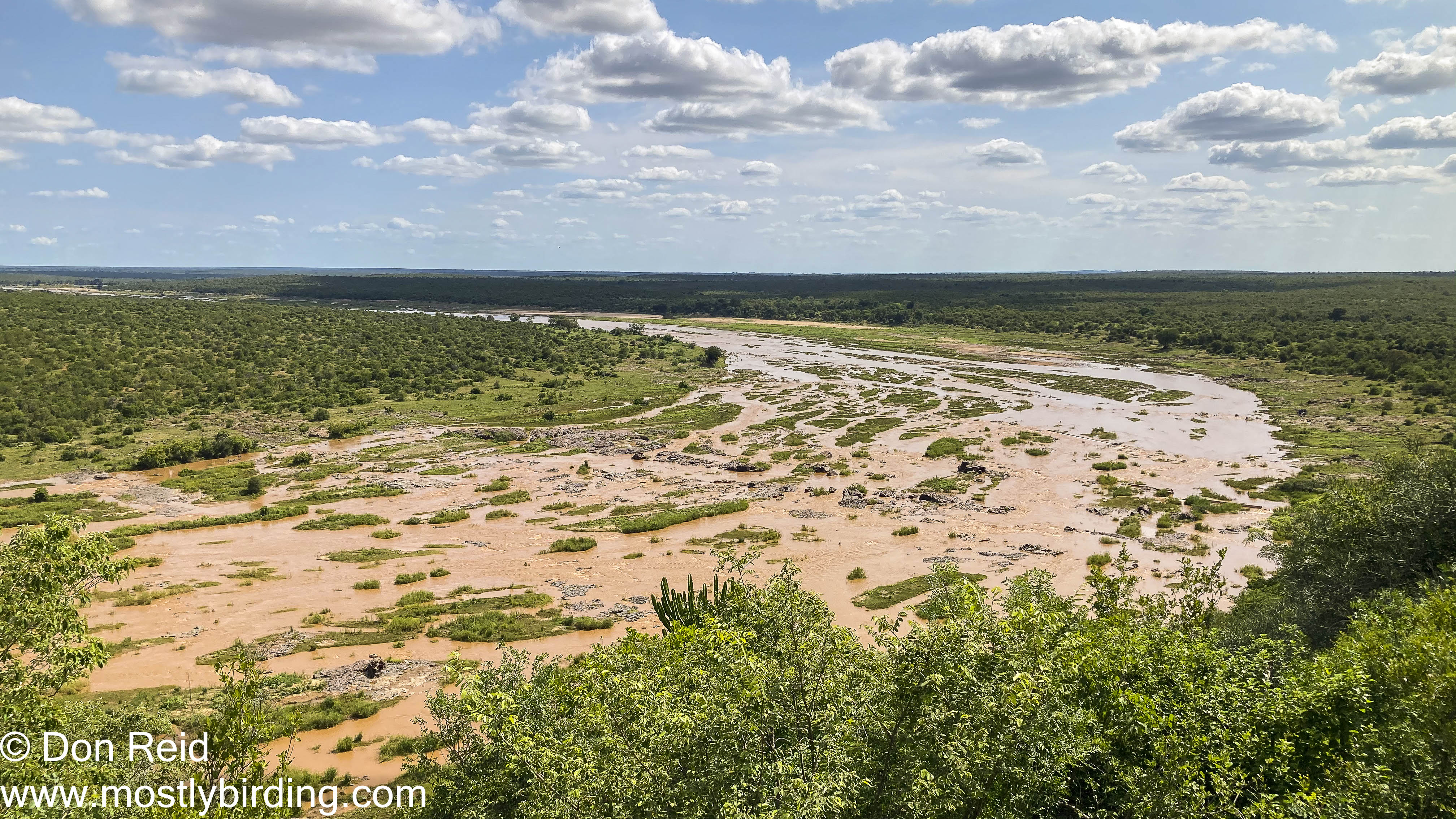
Kruger National Park – Olifants River
The Birds
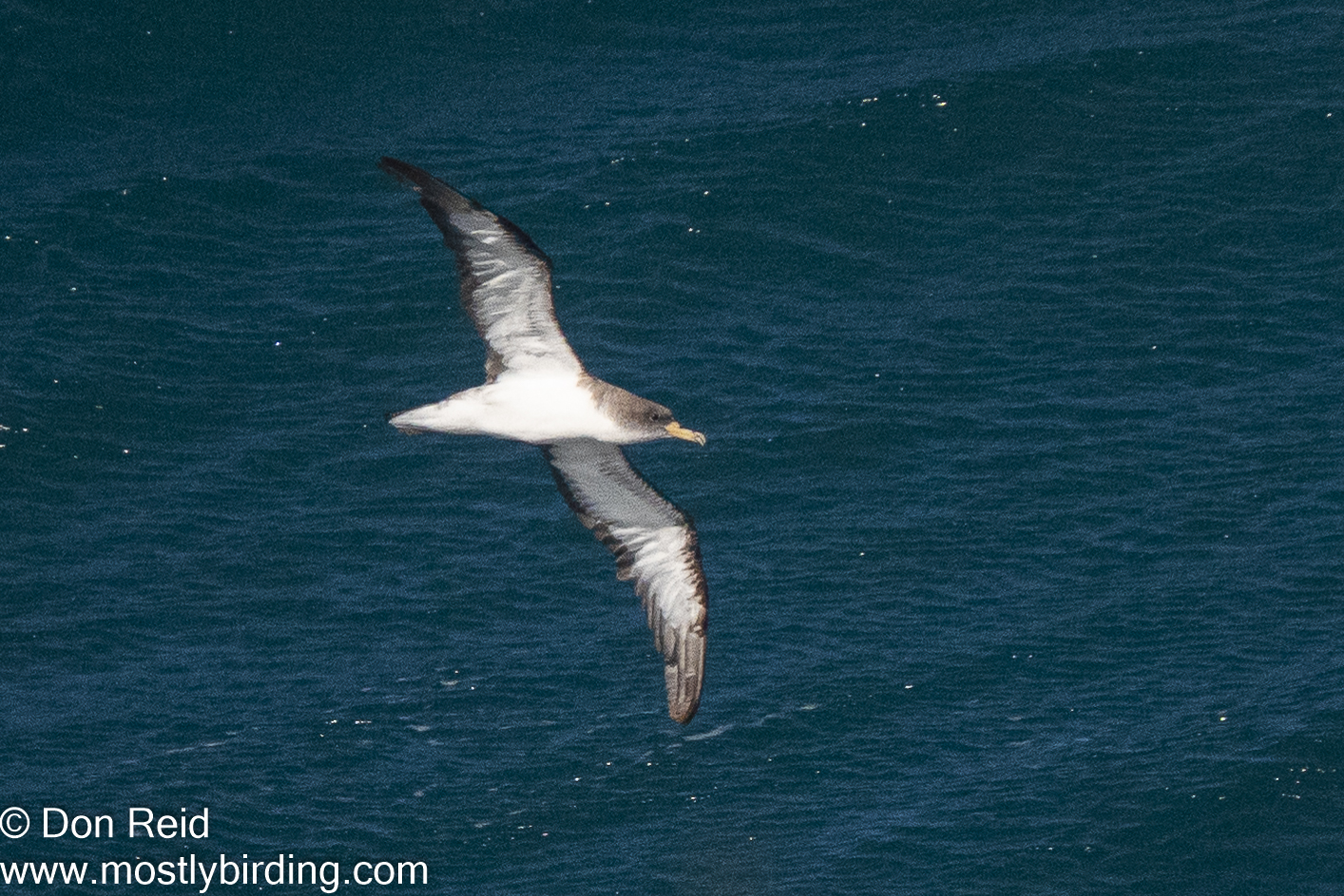
Cory’s Shearwater / Calonectris diomedea / Geelbekpylstormvoël, Mossel Bay Point
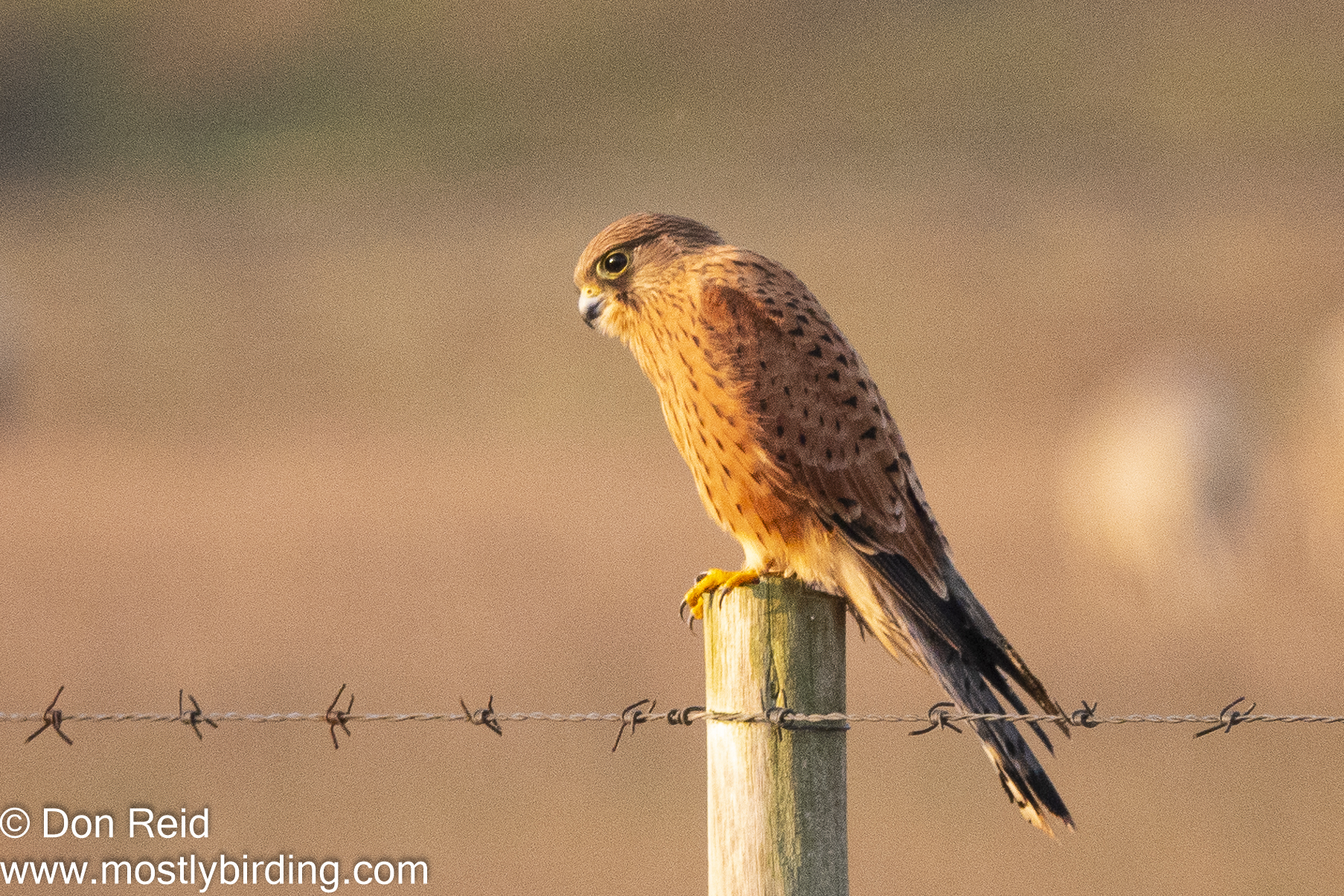
Rock Kestrel / Falco rupicolus / Kransvalk, Gouritsmond
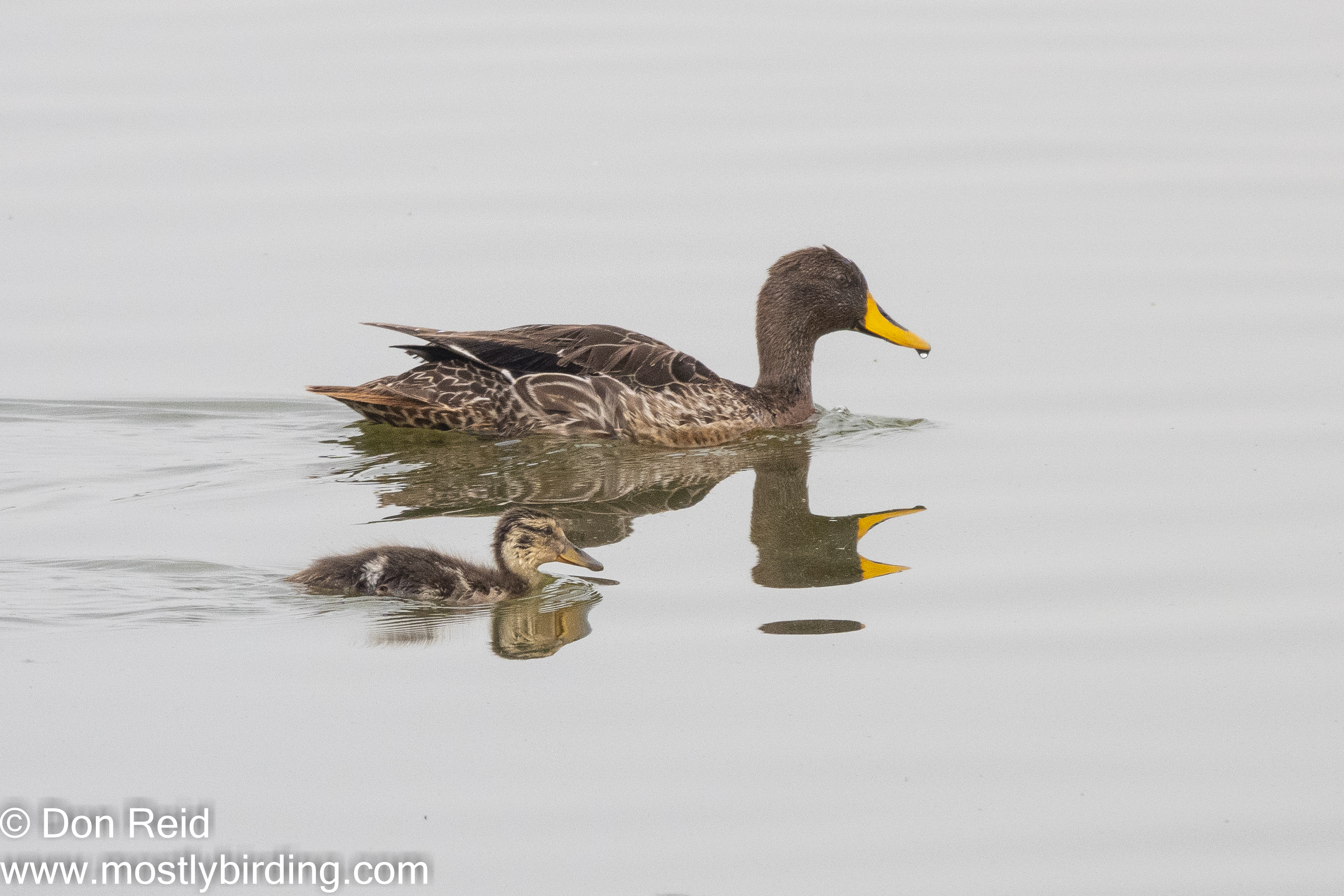
Yellow-billed Duck (Anas undulata / Geelbekeend) (Adult with Juvenile), Bronkhorstspruit Dam
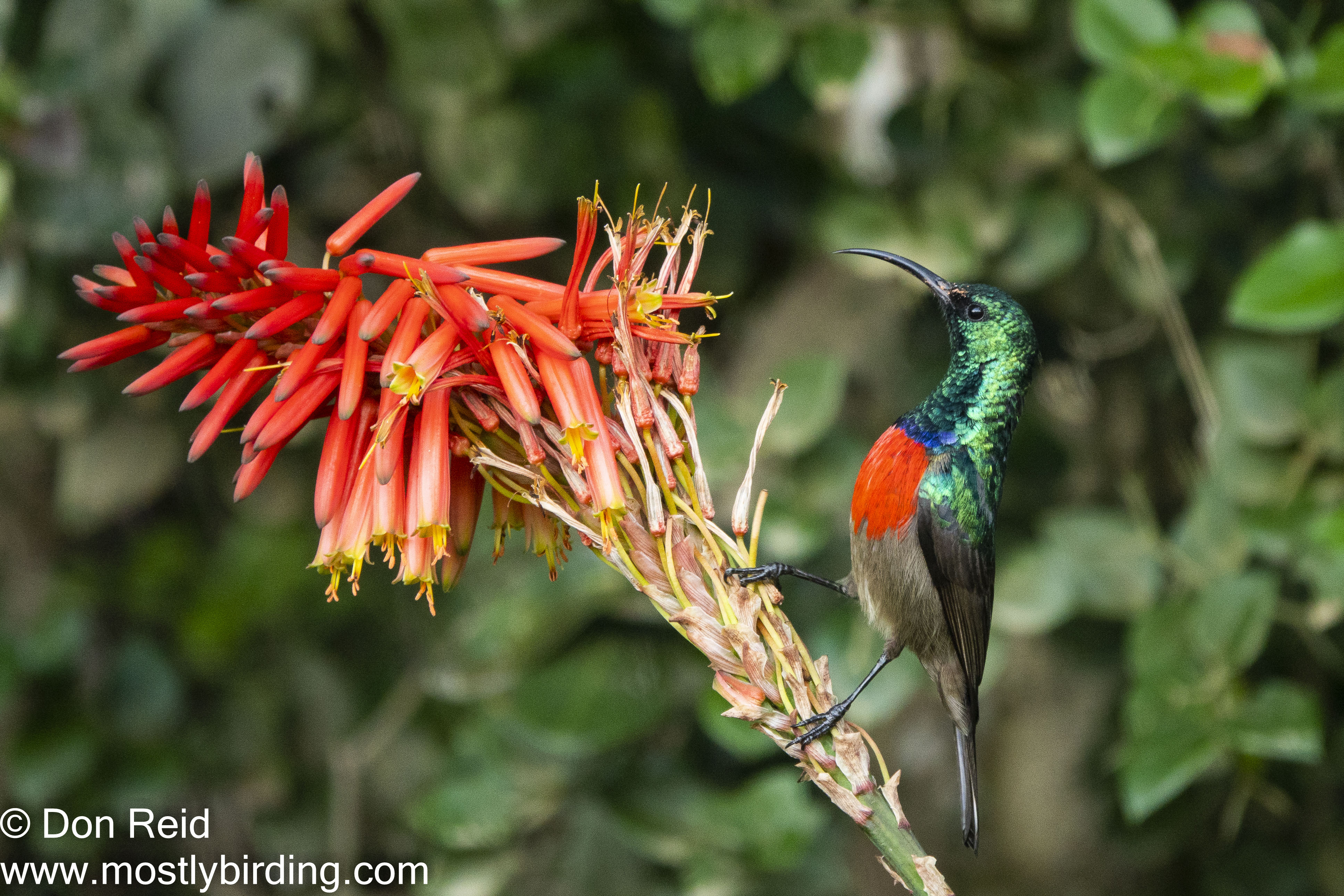
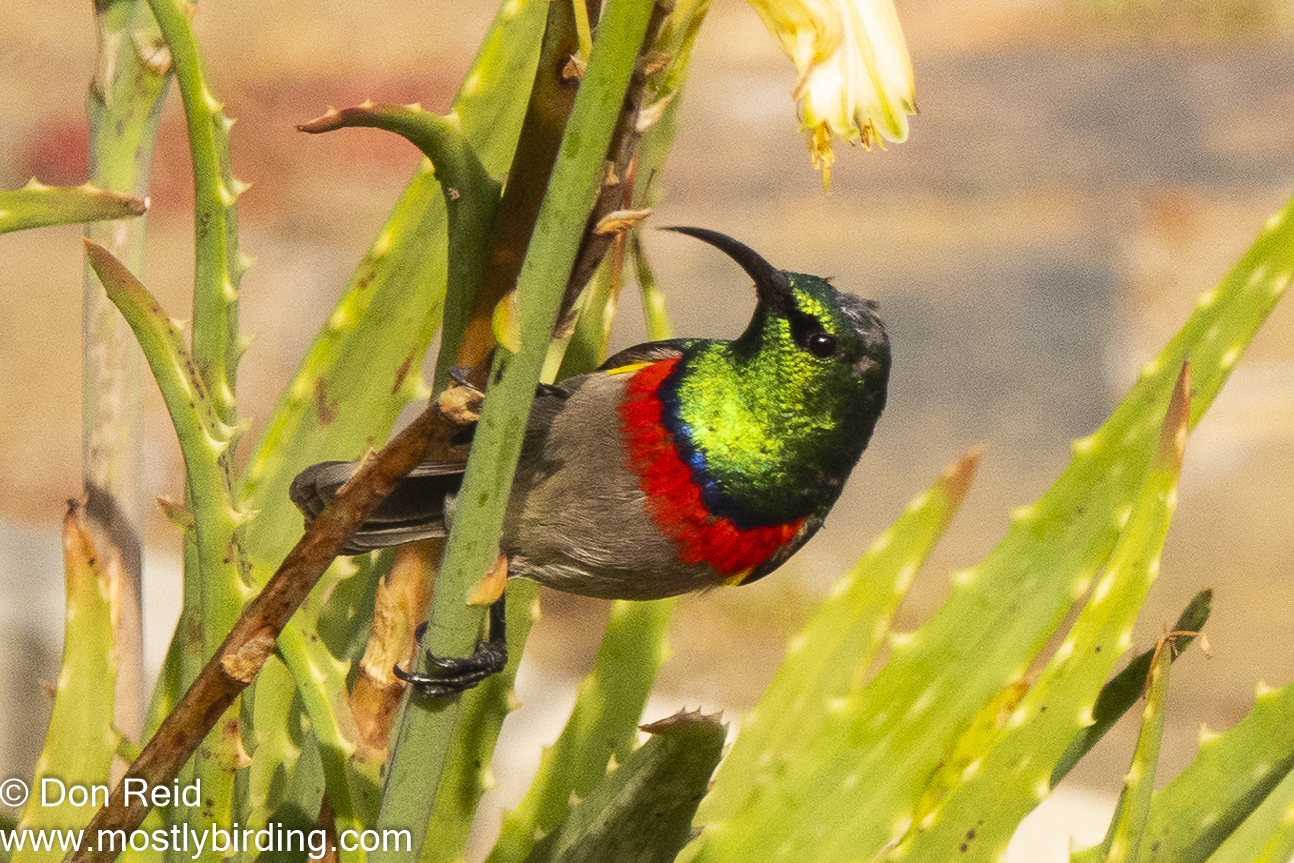
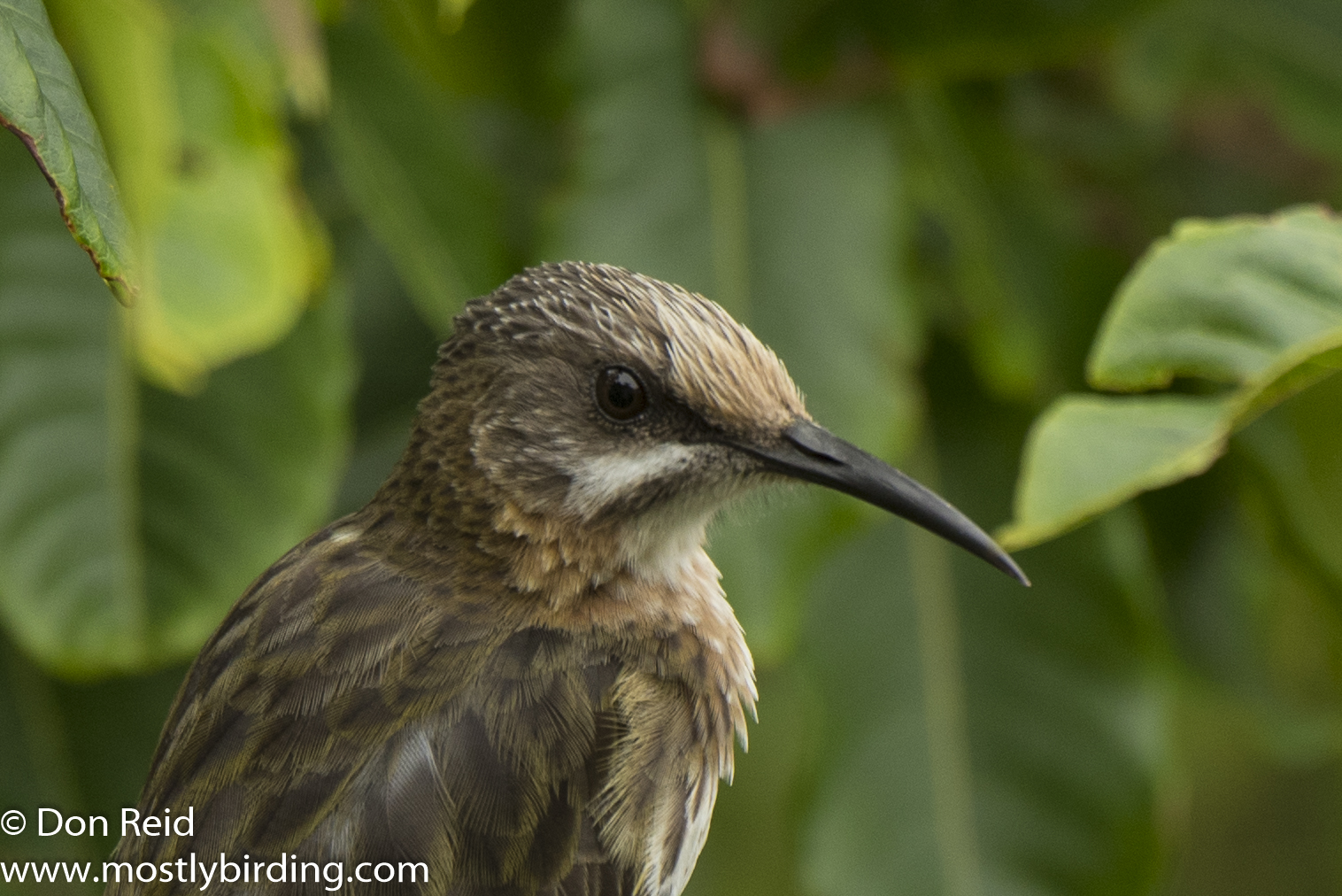
Greater Double-collared Sunbird (Cinnyris afer / Groot-rooibandsuikerbekkie), Great Brak River
Just to repeat some of the background to our lockdown experience while in Mossel Bay…..
Top of my list of activities to keep me occupied under lockdown was birding / atlasing and to make it more interestingBirdlasser came up with a “South African Lockdown Challenge” for which I registered. Any species that I logged on the Birdlasser app would be counted towards my personal total during lockdown and could be compared with others doing the same. I knew that I would not be very competitive, but saw it as an inspiration to keep up regular birding / atlasing during the lockdown.
The rules were simple – any bird species recorded in or from the garden would count – the “from the garden” bit makes it really interesting as it means a bird flying overhead or at a distance, even a kilometre or more away, counts, as long as you can confidently ID it.
The Habitats
The central habitat is of course the garden itself – in our case a small one – literally a u-shaped strip of lawn between 1 and 2m wide on three sides of the house, with the front side having a well-established rockery type garden on both sides of the driveway.
Our patio and enclosed stoep, where we have meals and tend to spend most of our time, looks over our neighbour’s gardens and has a sweeping view of part of the golf course and of the open sea beyond the cliffs.
The Sunbirds
These colourful little bundles of energy are an absolute joy to watch as they fly from one sweet flower to another, hyper-actively on the go all day, fueled of course by the nectar of the aloes and honeysuckles which flower at this time of year.
One thing I discovered about the smallest of them – with one of the longest names in our region – the Southern Double-collared Sunbird, is that their wings beat so fast that they make a whirring sound as they fly about.
The wing beat of Hummingbirds is a lot faster, causing the humming sound after which they are named, but I would hazard a guess that sunbirds are high up in the rankings of birds with the fastest wing beats.
I had never noticed this whirring sound before, but it became a calling card of this species when we were in the garden during the lockdown period, immediately alerting us to their presence and was the signal for me to grab my camera, in the hope of capturing an image while they prodded the flowers with their long curved bills.
The bills are unique in that they are both long and slender, down-curved at just the right radius to reach deep into the similarly curved flowers that they prefer – just another example of nature’s perfect partnerships. The tongue of the sunbird can extend to almost the same length as the bill and is tubular with projections at the tip to suck up the nectar while feeding. So long flowers such as the honeysuckle suit them perfectly –
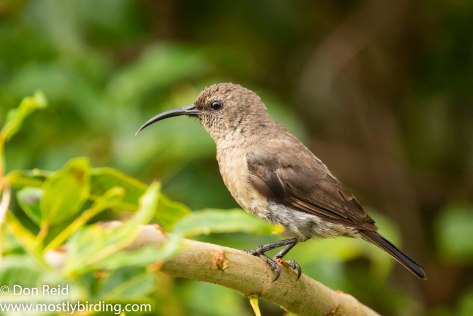
Southern Double-collared Sunbird Cinnyris chalybeus Klein-rooibandsuikerbekkie (Female), Mossel Bay
Four species of sunbird visit our garden, some more regularly than others, depending on the supply of nectar-producing flowers (and the neighbour’s feeders) and seasonal changes.
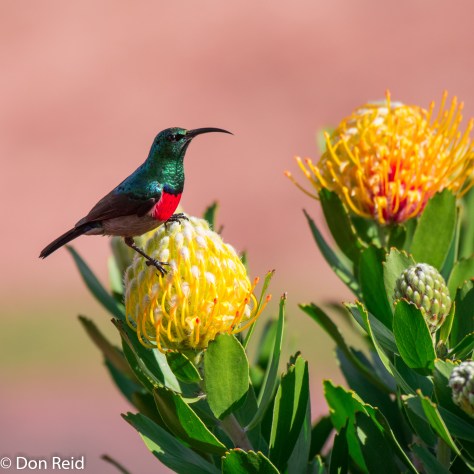
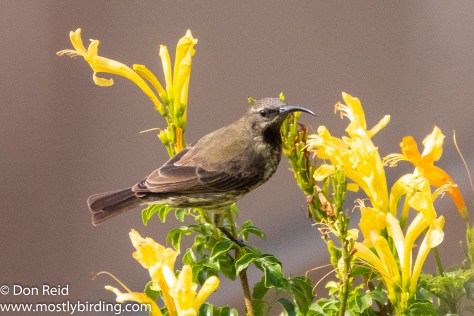
Most regular visitor is the Southern Double-collared Sunbird – like most of the sunbirds there is a distinct difference between the male and female colouring – known as dichromatism. Compare this colourful fellow with the photo of the female above and following the next one as an example.
Southern Double-collared Sunbird Cinnyris chalybeus Klein-rooibandsuikerbekkie (Male), Mossel Bay
Southern Double-collared Sunbird Cinnyris chalybeus Klein-rooibandsuikerbekkie (Female), Mossel Bay
Occasionally the cousin of the last species, the Greater Double-collared Sunbird will pop in, but the smaller Southern species outnumbers it by at least ten to one in our garden. Although larger than the Southern species, this is not always discernible when there is nothing to compare it with, so I usually rely on the width of the red band across the chest, which is about double the width in the case of the Greater species.
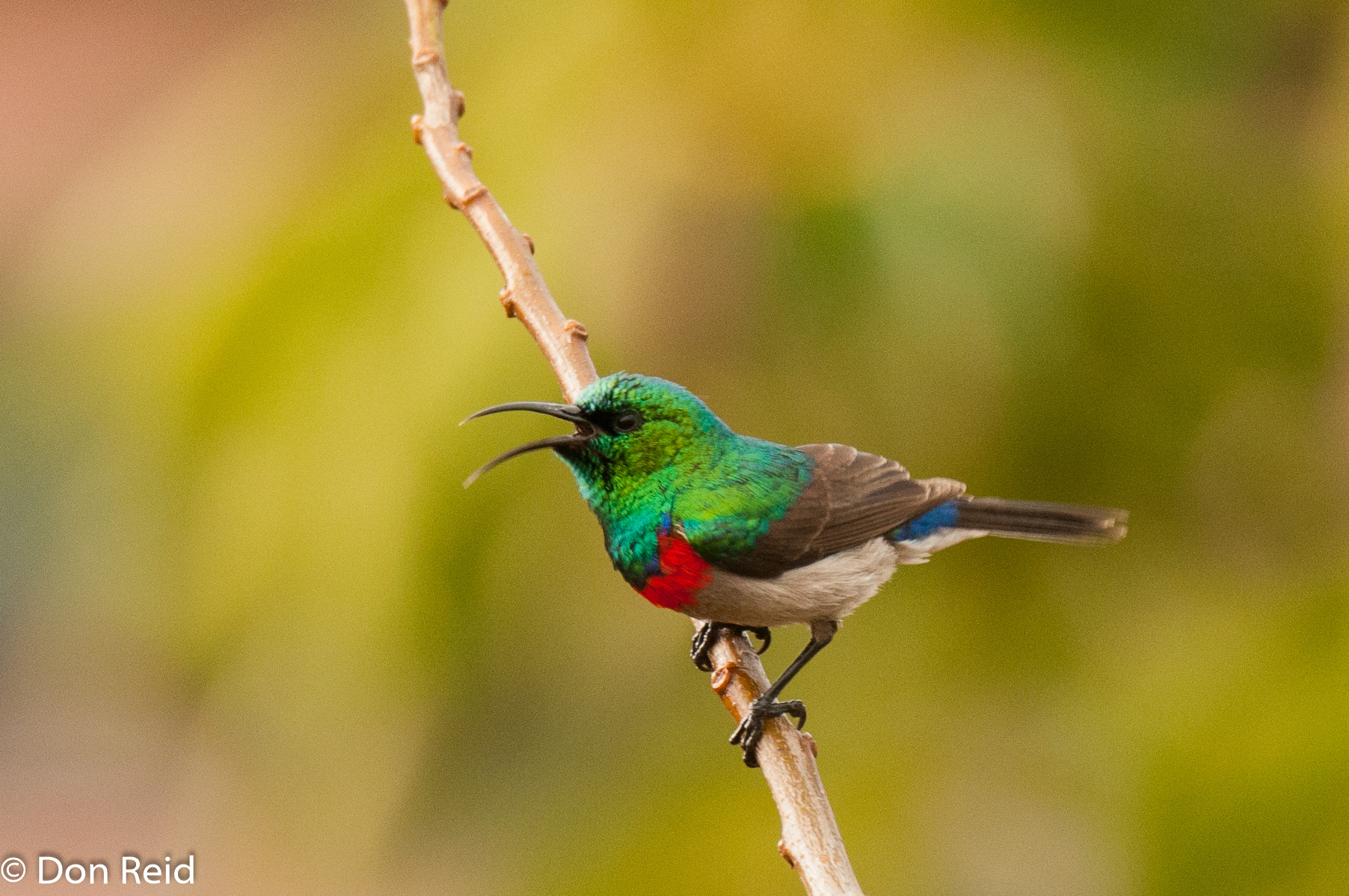
Greater Double-collared Sunbird, Mossel Bay
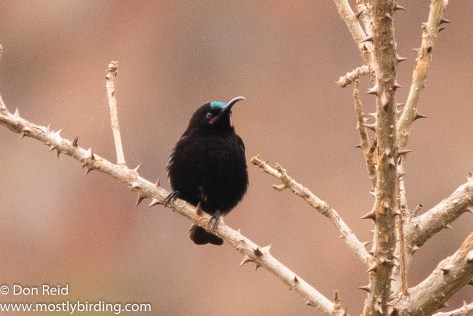
The Amethyst Sunbird with its all black glossy plumage is a regular at certain times of the year while completely absent at other times. It was a regular visitor during the lockdown period, but less conspicuous and seldom staying very long. I wasn’t able to capture an image of the male, so have included one from an earlier trip.
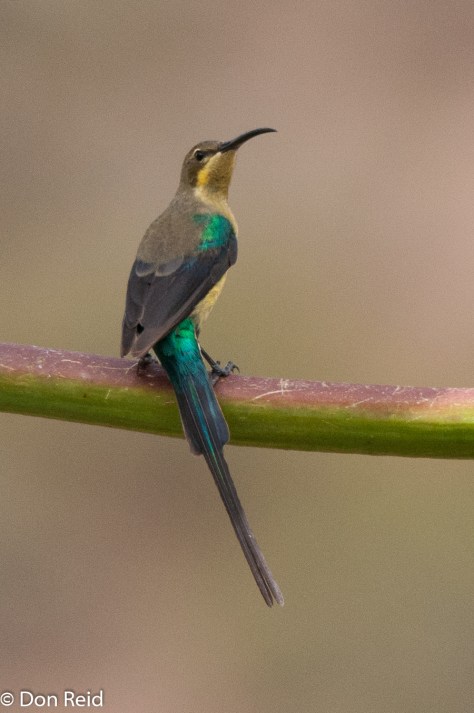
The most recognizable sunbird is the Malachite Sunbird, mainly because of its glossy green plumage and because it has a longer tail than any of the other sunbirds in the region. It was scarce during the lockdown months and seems to visit us more often during midsummer – November to February. This photo is from an earlier trip to the southern Cape
Malachite Sunbird, Valsriviermond
Cape Weaver in Action
Not far behind the sunbirds in the energy stakes are the weavers and I discovered that they also have a liking for a drop or two of nectar now and then (who doesn’t like a bit of sweetness after a meal?). Now weavers have a shortish, thick bill rather unsuited to prodding into flowers such as honeysuckle so they take a shorter route to get to the nectar – to my horror as a lover of flowers but interesting to watch.
They go straight for the jugular, as it were, nipping the entire flower off just above its base and so gaining direct access to the nectar, which they quickly take a sip of and move on to decimate the next flower. Fortunately they seem to be rapidly sated, so once again the natural balance remains intact.
One Cape Weaver was intent on building a nest and chose an overhanging branch of our neighbour’s tree which was no more than 2 metres from our patio window, affording us a grandstand view of its efforts. And did he keep us entertained!
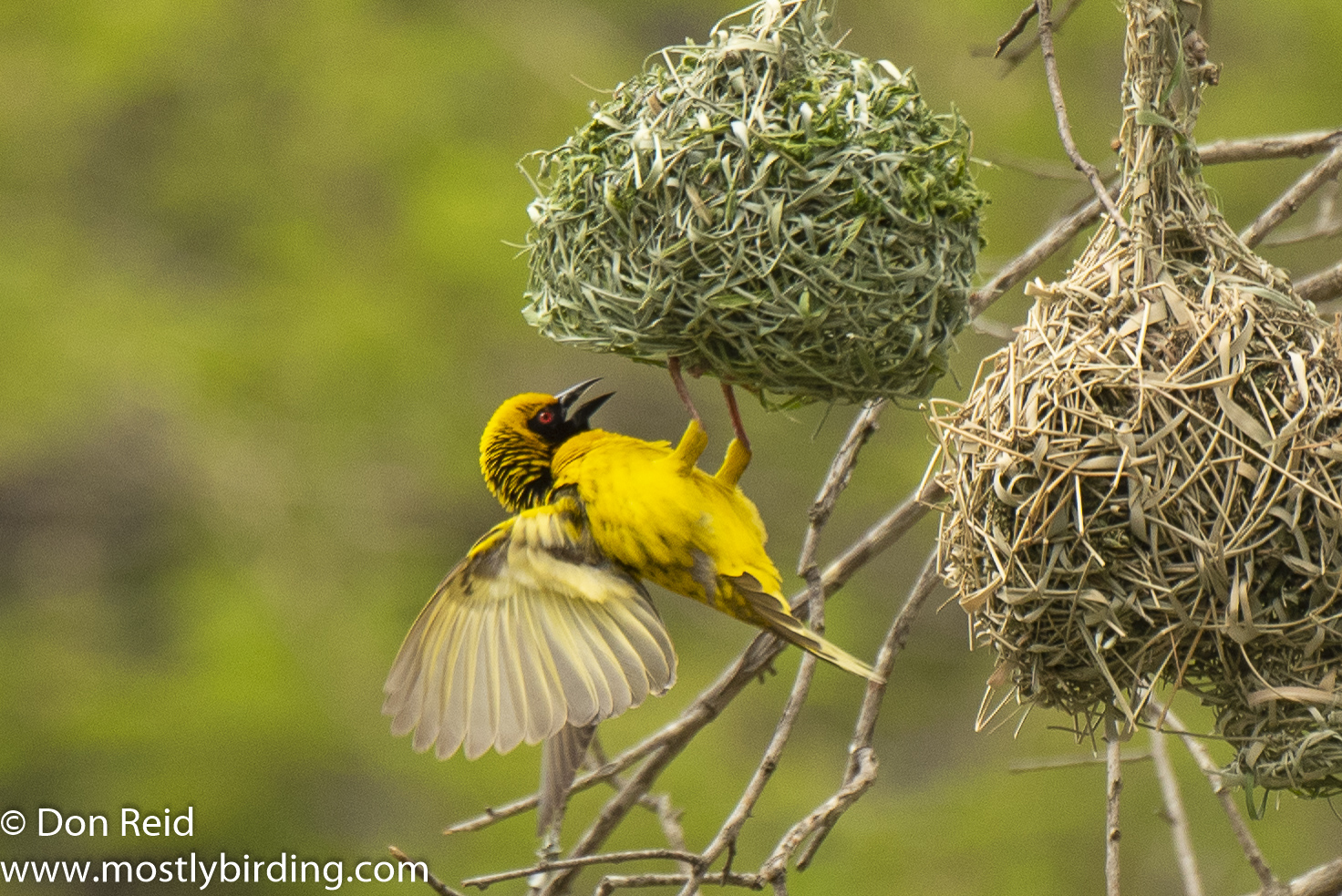
Cape Weaver Ploceus capensis Kaapse wewer (Male), Mossel Bay
I suspected the male was fairly young, otherwise he would not have been attempting to construct a nest so late in the season, with winter just around the corner. At a guess, he was possibly getting in some practice for the next breeding season, honing his all-important nest-building skills while impressing the female in his life, who was constantly around to inspect and comment on his prowess.
Cape Weaver Ploceus capensis Kaapse wewer (Male), Mossel Bay
This carried on for around a month – some days there would be no interest on his part to continue, other days he would be coming and going for a large part of the day, modifying the grass structure, adding a few strands here and there, twisting and turning and hanging underneath all at the same time.
Here the female is bringing some weaving material to the nest – clearly not confident that the male would pick the right material
Cape Weaver Ploceus capensis Kaapse wewer (Female), Mossel Bay
Don’t worry, I’ve got this …..
Cape Weaver Ploceus capensis Kaapse wewer (Male), Mossel Bay
Eventually it seemed he was satisfied after checking it out from the top and bottom and getting the nod from the female, after which it all went quiet and the weavers became less conspicuous. Perhaps they had realised that the cold and windy weather was not conducive to raising youngsters and that they would be better off next season – let’s wait and see.
Cape Weaver Ploceus capensis Kaapse wewer (Male), Mossel Bay
Faced with the phychological challenge of being under “house arrest” due to lockdown regulations, amplified by our supposedly risky senior citizen status, Gerda and I resolved to keep ourselves as busy as possible with our various hobbies and activities while confined to our house in Mossel Bay. We have generally succeeded so far but are enjoying the extra freedom since 1st of June when the regulations changed from level 4 to level 3, while keeping ourselves as safe as we can.
Top of my list of activities to keep me occupied under lockdown was birding / atlasing (but you knew that anyway, didn’t you) and to make it more interestingBirdlasser came up with a “South African Lockdown Challenge” for which I registered. Any species that I logged on the Birdlasser app would be counted towards my personal total during lockdown and could be compared with others doing the same. I knew that I would not be very competitive, but saw it as an inspiration to keep up regular birding / atlasing during the lockdown.
The rules were simple – any bird species recorded in or from the garden would count – the “from the garden” bit makes it really interesting as it means a bird flying overhead or at a distance, even a kilometre or more away, counts, as long as you can confidently ID it.
The Habitats
The central habitat is of course the garden itself – in our case a small one – literally a u-shaped strip of lawn between 1 and 2m wide on three sides of the house, with the front side having a well-established rockery type garden on both sides of the driveway, featuring aloes, pincushions and proteas which are a major drawcard for Sugarbirds and Sunbirds, even Canaries.
The lack of trees in our garden is compensated for by the neighbours’ trees and bird feeders which attract a variety of birds, depending on the weather and how frequently we all restock our bird feeders. Our patio and enclosed stoep, where we have meals and tend to spend most of our time, has a sweeping view of part of the golf course and of the open sea beyond the cliffs, albeit partially obscured by said neighbour’s trees and the roofs of the houses between us and the sea.
So, with the scene set let me tell you about the birds that came to see us (rather than the other way around) and the often interesting behaviour that they displayed.
The Doves
I’ll start with the really mundane ones – the Doves. We are so used to having them around that one tends to take them for granted, but with time on hand I set out to try and photograph the three common species of Dove on their own and together to highlight differences of size, colour etc. All three occur in abundance across most of southern Africa
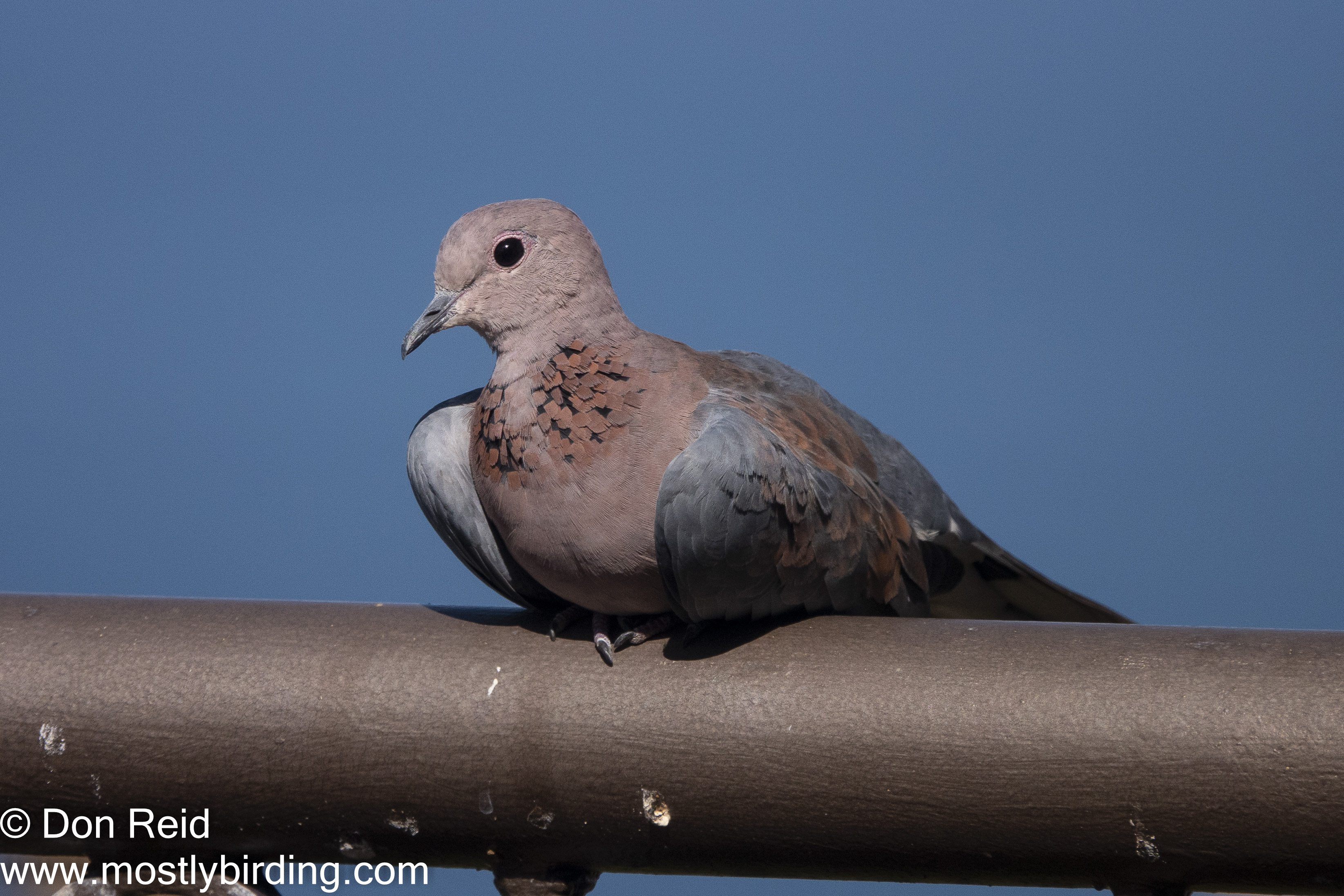
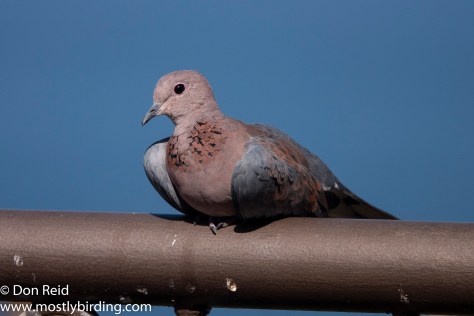
Starting with the smallest of them, the Laughing Dove – 25 cm; 100 g – quite easy to identify as it lacks the neck ring of the other two doves and the colouring is a lot more rufous with distinctive black spotting on the chest
Laughing Dove Spilopelia senegalensis Lemoenduif, Mossel Bay
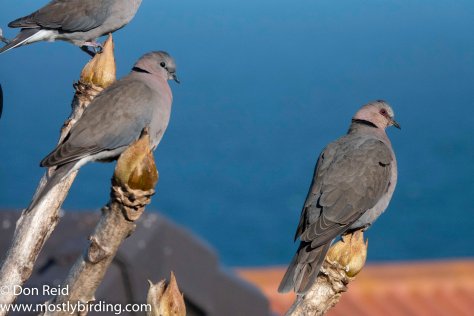
Next up in size order is the Ring-necked Dove – 27 cm; 153 g, until recently known as the Cape Turtle-Dove. This is where ID starts getting a tad trickier as it and the next species both have distinctive neck rings, however there is a considerable size difference (which only helps if you have another dove or other species to compare with) and colouring is overall greyer than the Red-eyed Dove.
Ring-necked Dove (Streptopelia capicola / Gewone tortelduif), Mossel Bay
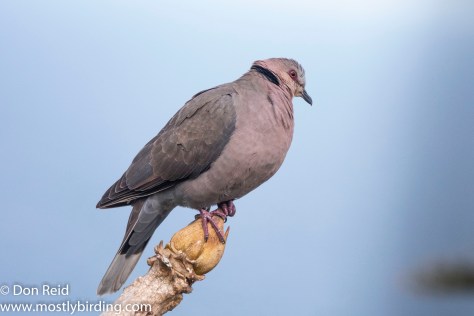
Last of the common doves is the largest as well – the Red-eyed Dove – 35 cm; 252 g – some two and a half times the weight of the Laughing Dove and one and a half times its length.
Red-eyed Dove (Streptopelia semitorquata / Grootringduif), Mossel Bay
Apart from the size difference the red eye ring and eye colour itself is an ID clincher, provided you are close enough to see it.
Red-eyed Dove (Streptopelia semitorquata / Grootringduif), Mossel Bay
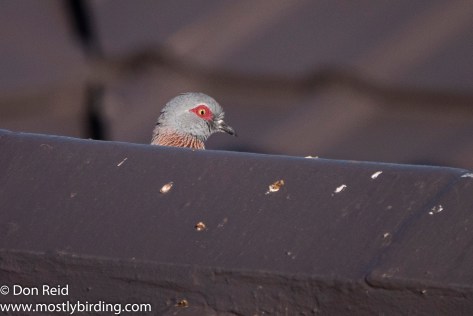
Just don’t confuse it with the Speckled Pigeon ….. or should this one be renamed the Peeking Pigeon?
Speckled Pigeon (Columba guinea / Kransduif), Mossel Bay
Some joint photos highlight the differences quite well, but they aren’t always this obliging by posing together
Here we have the Laughing Dove (front) and the Ring-necked Dove (back) . Very similar in size, but the lack of the neck ring on the Laughing Dove is what sets it apart. When seen together like this the colour difference is quite marked.
Ring-necked and Laughing Doves, Mossel Bay lockdown
This one of the Red-eyed Dove (left) and the Laughing Dove (right) shows the size difference, but this is not so obvious in the field when they are on their own and size is difficult to gauge. Here the red eye is just showing and the neck ring clearly differentiates it from the Laughing Dove.
Red-eyed and Laughing Doves, Mossel Bay lockdown
This one shows both of the doves with neck rings so at a quick glance they could be taken for the same species, however close scrutiny of the Red-eyed Dove on the right shows the red eye ring and eye itself, versus the plain ring-less dark eye of the Cape Turtle Dove / Ring-necked Dove
Ring-necked vs Red-eyed Dove, Mossel Bay
Cape Birds
Just for the fun of it I set out to photograph as many birds as I could with “Cape” as part of their name – there are 29 in southern Africa of which I managed to capture images of 10 in our garden. The neighbour’s Kiepersol tree with bare branches provided a perfect perch for photography, as the birds waited their turn at the feeders, but I wonder what the neighbours thought as I dashed out on to the balcony and knelt down every now and then with my camera, twisting to get the right angle and trying to avoid getting the railings in the way.
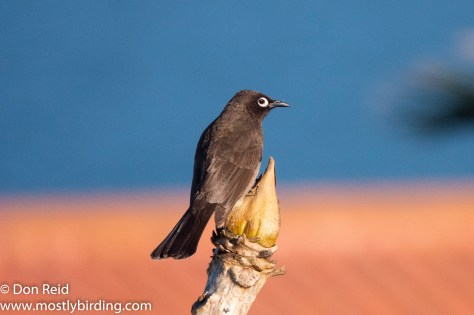
Cape Bulbul (Pycnonotus capensis / Kaapse tiptol), Mossel Bay
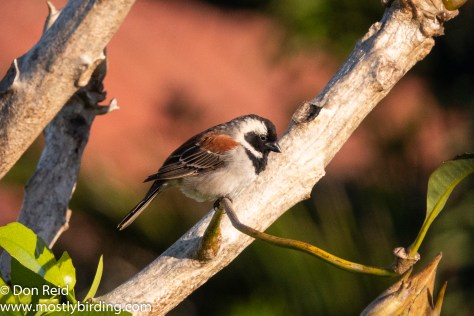
Cape Sparrow (Male) (Passer melanurus / Gewone mossie), Mossel Bay
Cape Weaver (Male) (Ploceus capensis / Kaapse wewer), Mossel Bay
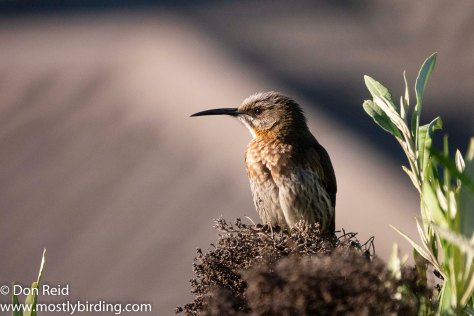
Cape Sugarbird (Promerops cafer / Kaapse suikervoël), Mossel Bay
Cape Sugarbird (Promerops cafer / Kaapse suikervoël), Mossel Bay
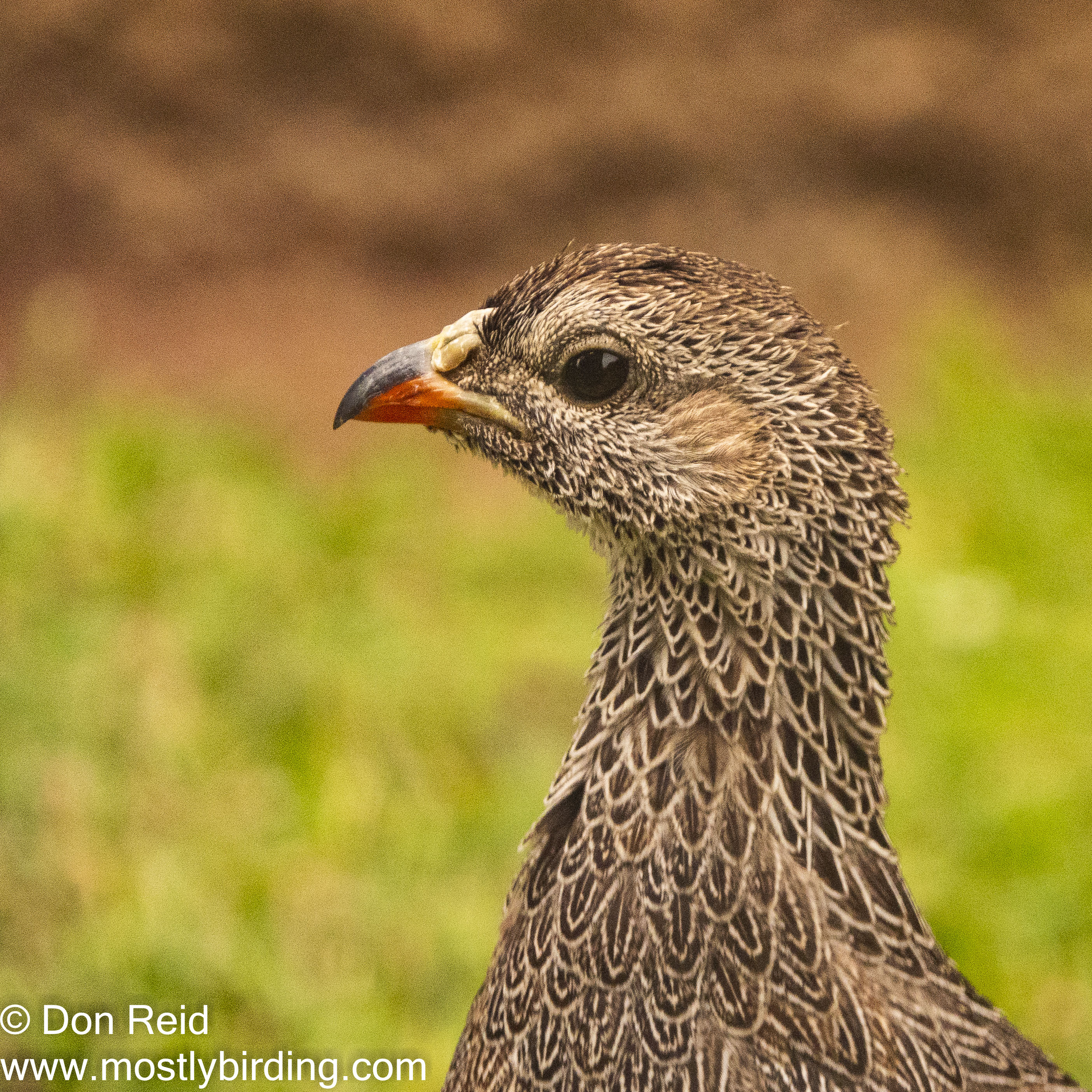
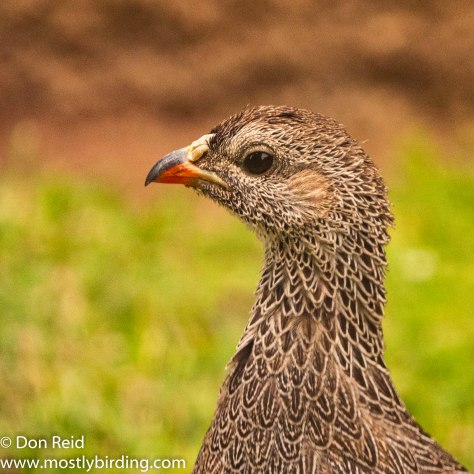
Cape Spurfowl ( Pternistis capensis / Kaapse fisant), Mossel Bay
Cape Spurfowl ( Pternistis capensis / Kaapse fisant), Mossel Bay
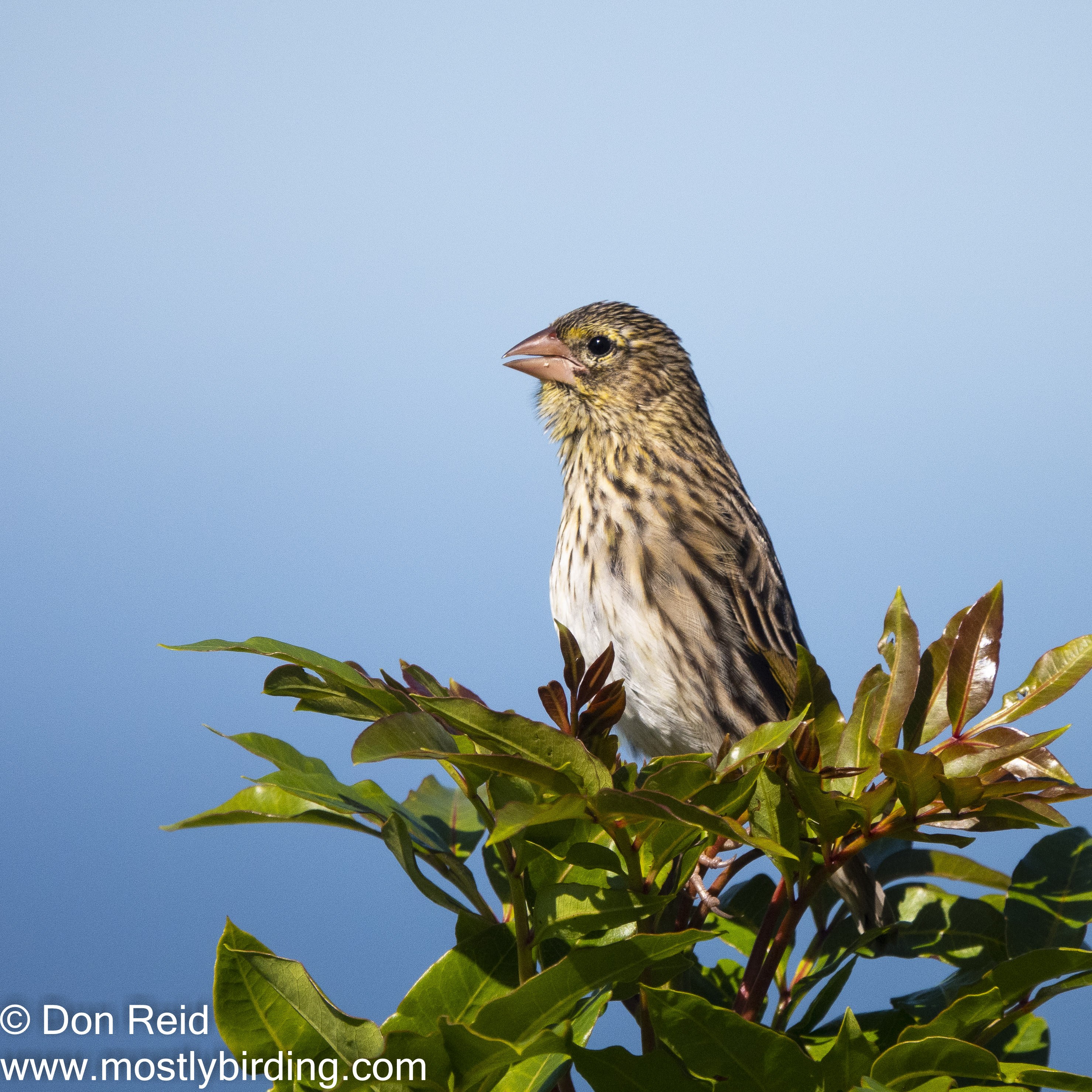
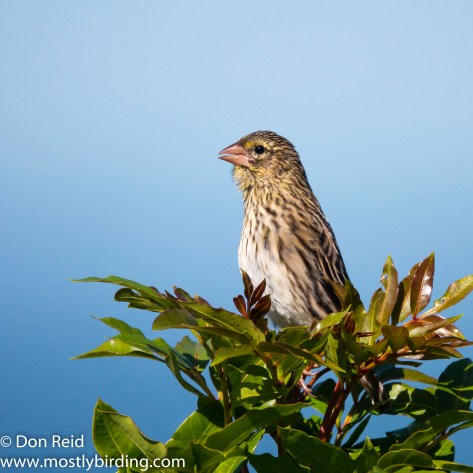
OK, this one is stretching it a bit but one of its alternative names is Cape Widow
Yellow Bishop (Euplectes capensis / Kaapse flap) (Female), Mossel Bay
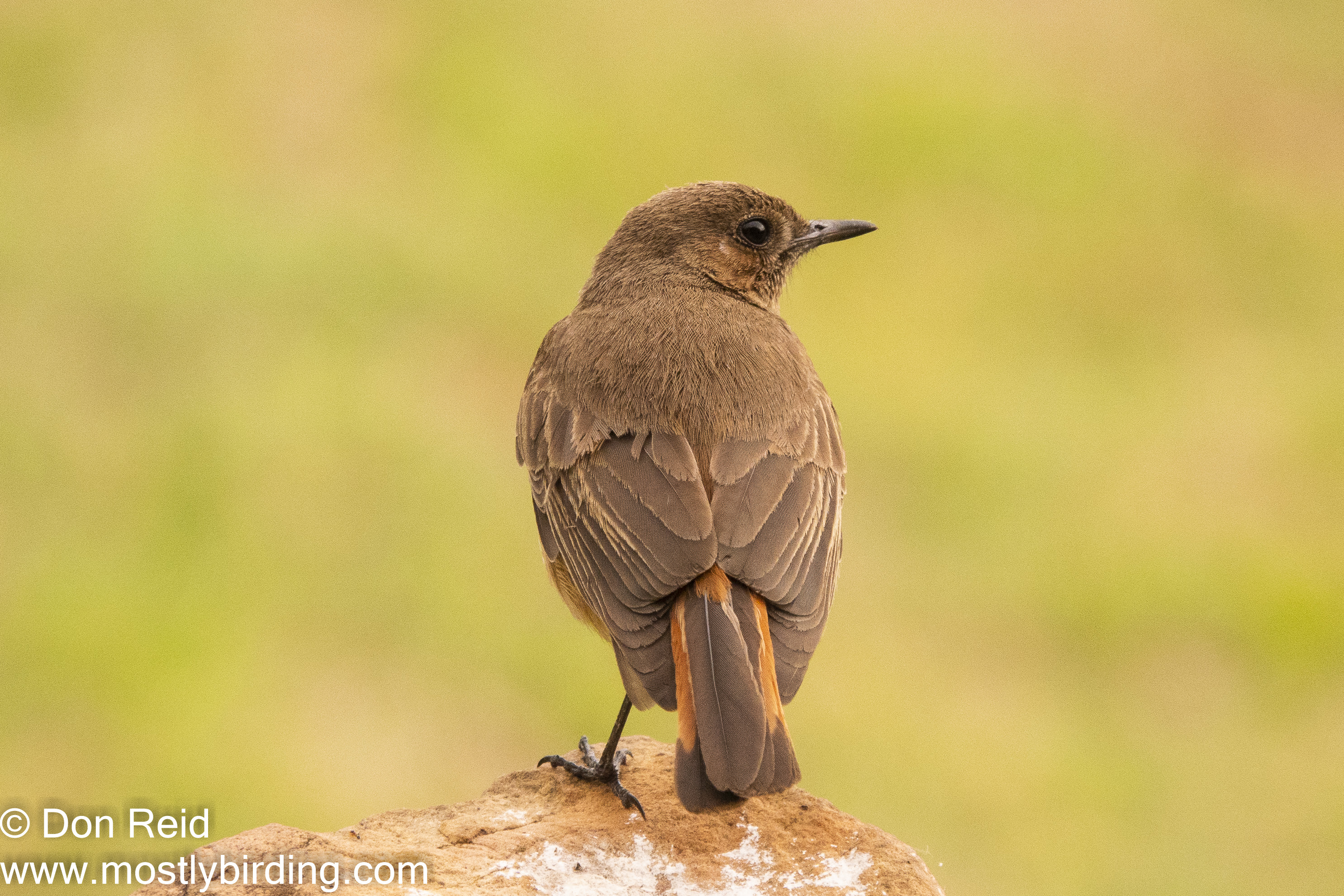
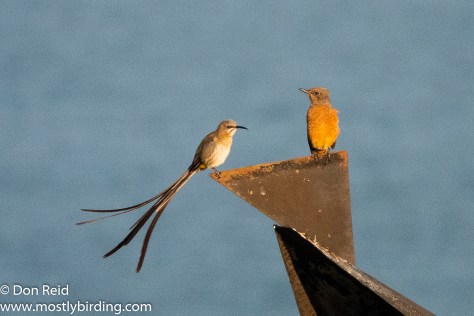
Two on one chimney was a bonus – but what contrasting companions – I can imagine the Sugarbird saying to the Rock-Thrush “you may have a more colourful breast but I have a spectacular tail, so there”
Odd couple, Mossel Bay
Next post will include the eye-catching nectar feeders – the Sunbirds – and a Weaver that was determined to show off his nest building skills
It was going to be just another late afternoon swim at Santos beach, a favourite in Mossel Bay for the visitors that stream into the town over the holiday season, stretching its resources to the limit. Late afternoon is usually when the crowds have thinned out, the sun is less fierce and you can actually swim without bumping into others.
By the time we got to the beach on this particular afternoon, it was cloudy with a cool breeze and a light spatter of rain – driving there, the usual comments of “it’s raining, we are going to get wet” were being bandied about, raising a few chuckles. It all worked in our favour as, by the time we had parked and walked across the cool sand to deposit our towels and gear near the water, there was but a handful of people in the water and we joined them eagerly.
The sea was calm, quite chilly, but we were soon in and enjoying the refreshing conditions, not expecting the natural extravaganza that was to unfold before us.
I noticed some terns gathering further out and plunge diving, so I guessed that there were fish around. Soon a few gulls joined the terns, settling on the sea in the same spot. Then we saw dark forms in the water quite close to where we were swimming, the forms changing shape as we watched, moving about like black ghosts.
Kelp Gull
Suddenly, a large, black, shiny seal surfaced nearby, causing a missed heartbeat or two….. it’s well known that these waters are favoured by large sharks which have a predeliction for these meaty creatures. We watched it move about nearby, then swim into deeper waters, half expecting a shark to rise out of the water and grab it with mighty jaws.
There was clearly food available for predators and seabirds alike – the numbers of terns and gulls was increasing by the minute, literally as we watched from our waist-deep position in the water. Moving closer to shore, until we felt a tad safer, we watched enthralled as the bird numbers grew further. Terns were plunge diving less than 10 metres from us and when the dark shapes we had seen earlier rose to the surface and magically turned into a mass of tiny silver fish, the terns took it in turn to fly in, dip down gracefully to scoop a fish or two, then fly off and let the next bird in line repeat the process.
Swift Tern (Thalasseus Bergii)
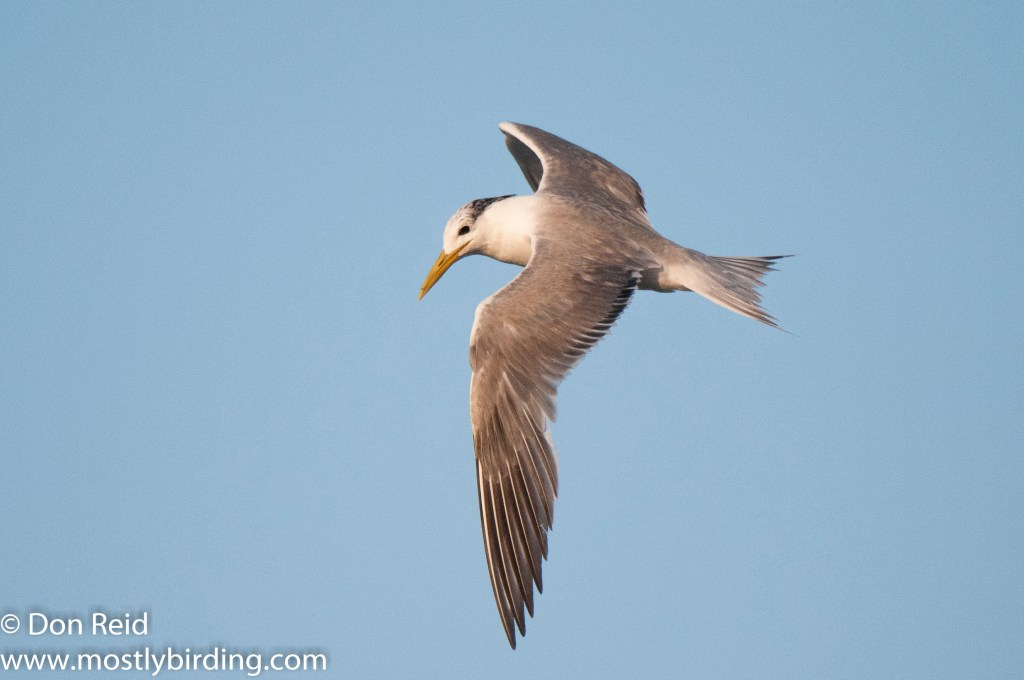
The Swift (Greater Crested) Terns were so adept at this that many emerged with 3 or 4 of the fish held sideways in their bills – much like the famous Puffin images that one sees. A fisherman informed us that the fish were anchovies – something was causing them to rise to the surface, creating a brief maelstrom of silver bodies and turning the surface of the sea into a frothy jumble. The terns were queueing up to take part in the bonanza, like tiny planes coming in to land on an aircraft carrier.
Swift Tern (Thalasseus Bergii)
By now the shoals of anchovies were so close to shore that some were being caught by the small waves and washed up onto the sand, where they were left in tiny desparation until kids came to scoop them up and throw them back in the water – their lucky day, except if they were taken in the seabird feeding frenzy of course.
As we slowly left the water, picked up our belongings and headed to where the car was parked, there were perhaps a couple of hundred seabirds filling the sky above the sea. More proof, if needed at all, that amazing experiences happen when least expected – this one will remain with me for ever.
Footnote : I did not have my camera with me, something which I initially regretted as I could have taken some memorable shots, but thinking about it I decided it was for the best – not everything has to be recorded digitally – that’s why we have a brain…
So here’s a synopsis of my birding activities during the last year along with photos of a few of the species encountered and places visited. Some of the trips are covered in separate posts in a lot more detail.
January 2018
Mossel Bay is our home over the holiday season up to the third week in January, so I try to use this time to fit in as much atlasing as I can in the beautiful surrounding countryside.
Atlasing trips and the highlight species included :
the area beyond Herbertsdale – Black Storks at the Gouritz River
the town of George with a visit to the waste water treatment works as well as the forested area at the top of the town – Black Cuckooshrike, Black Sparrowhawk and Knysna Turaco
Wilderness and the Woodville Big Tree (covered in a separate post) – Lemon Dove, Chorister Robin
Friemersheim area north of Klein Brak – Olive Bushshrike, Swee Waxbill, Narina Trogon, Black-winged Lapwing
Friemersheim area
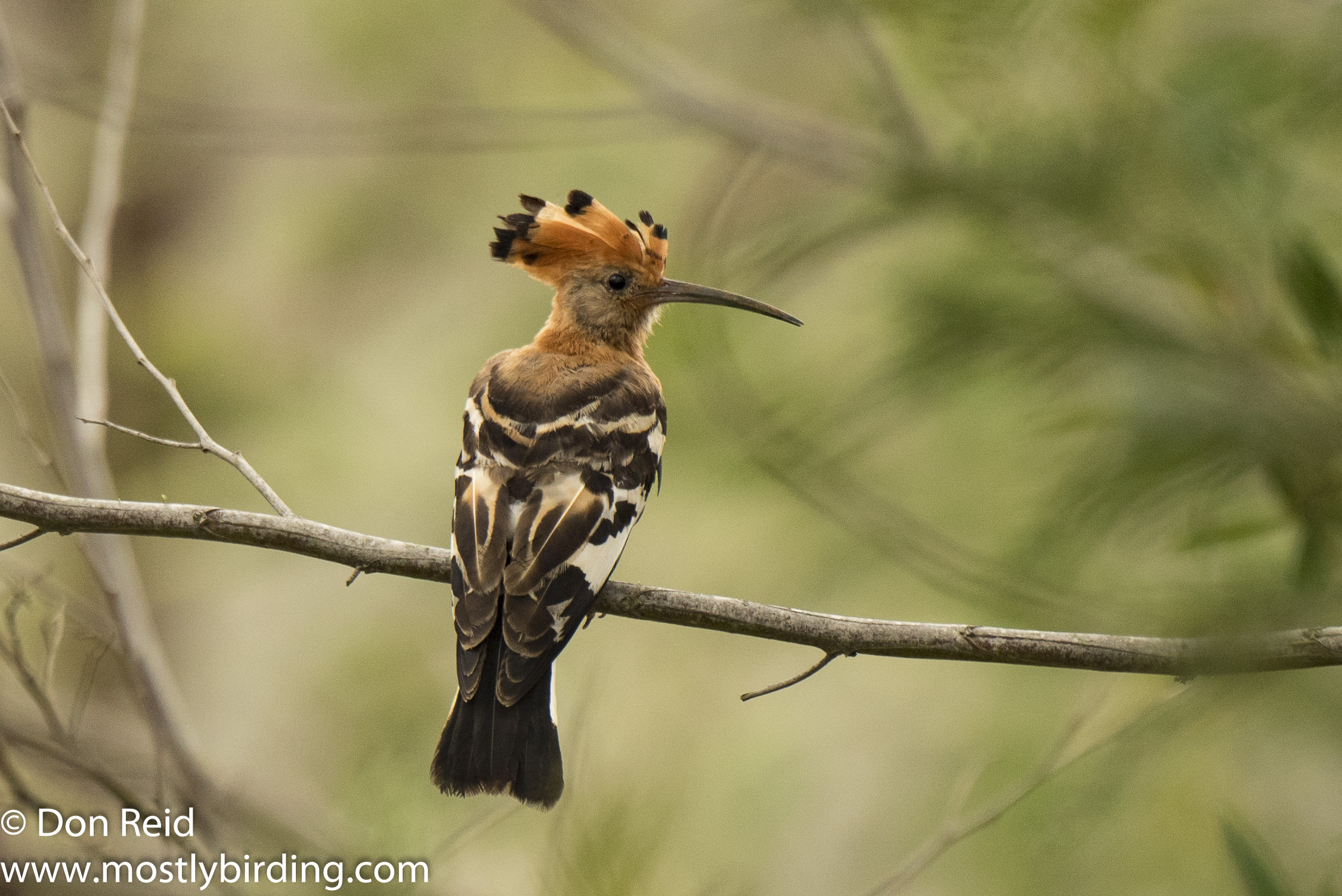
African Hoopoe, Friemersheim area
Black-winged Lapwing, Friemersheim area
A blustery day blew some seabirds inshore – a visit to the Point at Mossel Bay produced White-chinned Petrels, Gannets and Gulls galore, Terns and, amazingly, a Sooty Shearwater
February
Back in Pretoria I could catch up on some highveld atlasing with a visit to Mabusa nature reserve along with Koos Pauw – an outstanding day with both Pallid and Montagu’s Harriers seen and Great Reed Warbler heard.
Pallid Harrier (Juvenile), near Mabusa NR
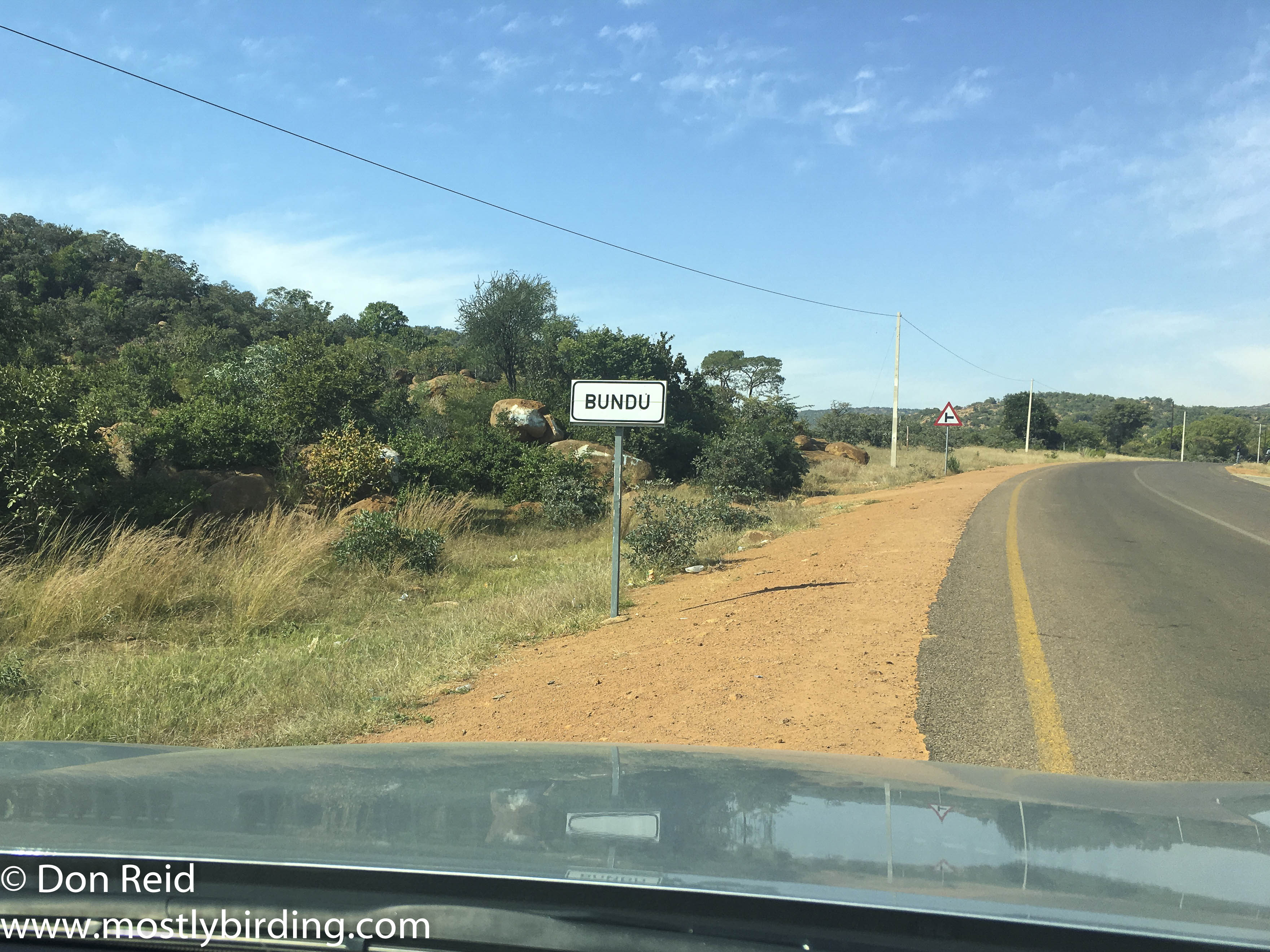
I literally went into the bundu on occasion
Mabusa NR and area
Mid-month we used up some expiring RCI points to spend a weekend at Champagne Valley resort in the southern Drakensberg. Great birding in a magnificently scenic environment – highlights were Cape Vulture, House Martin, Bearded Vulture, Grey Crowned Crane and Long-crested Eagle
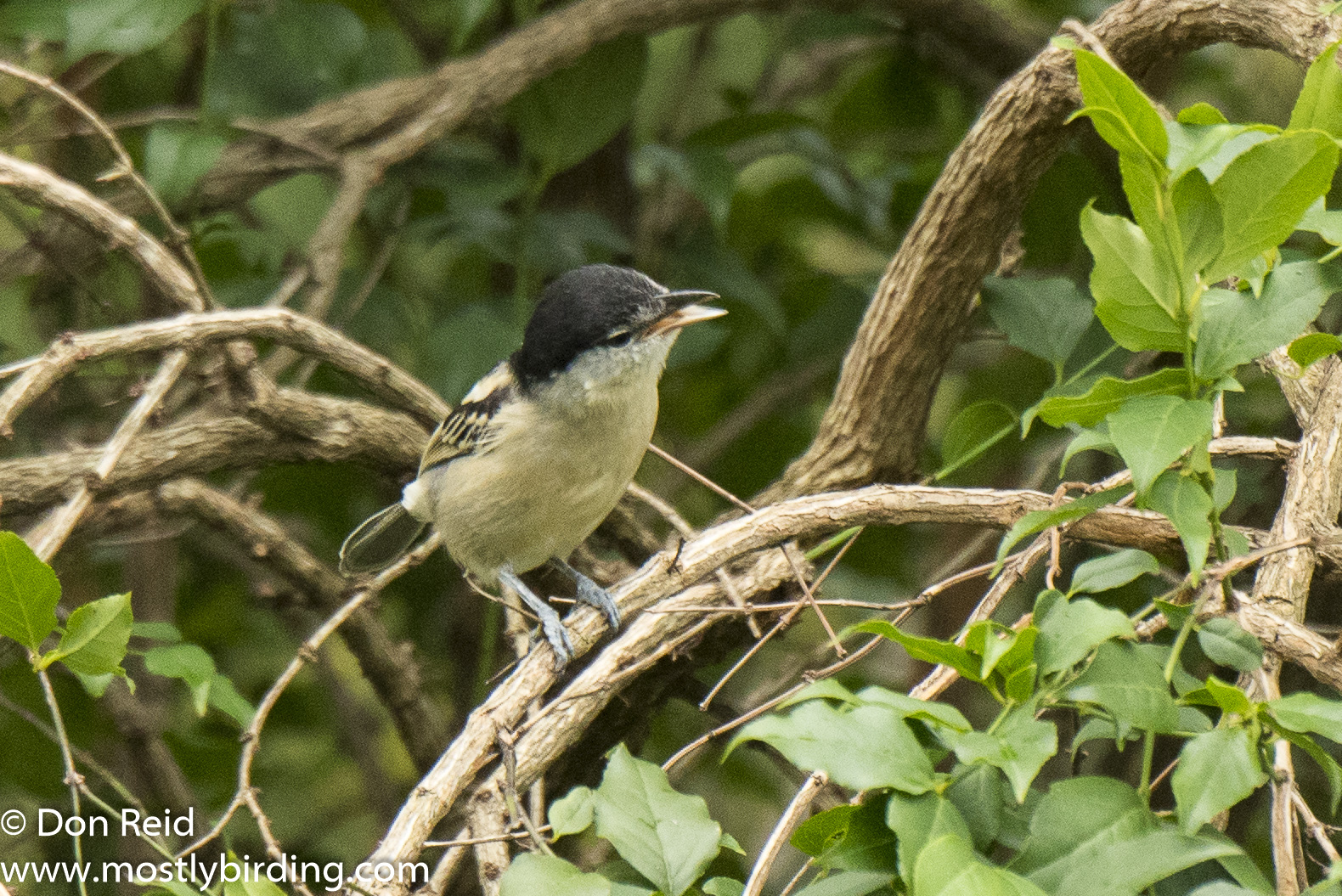
Black-backed Puffback (Juvenile), Champagne Valley Drakensberg
Amethyst Sunbird, Champagne Valley Drakensberg
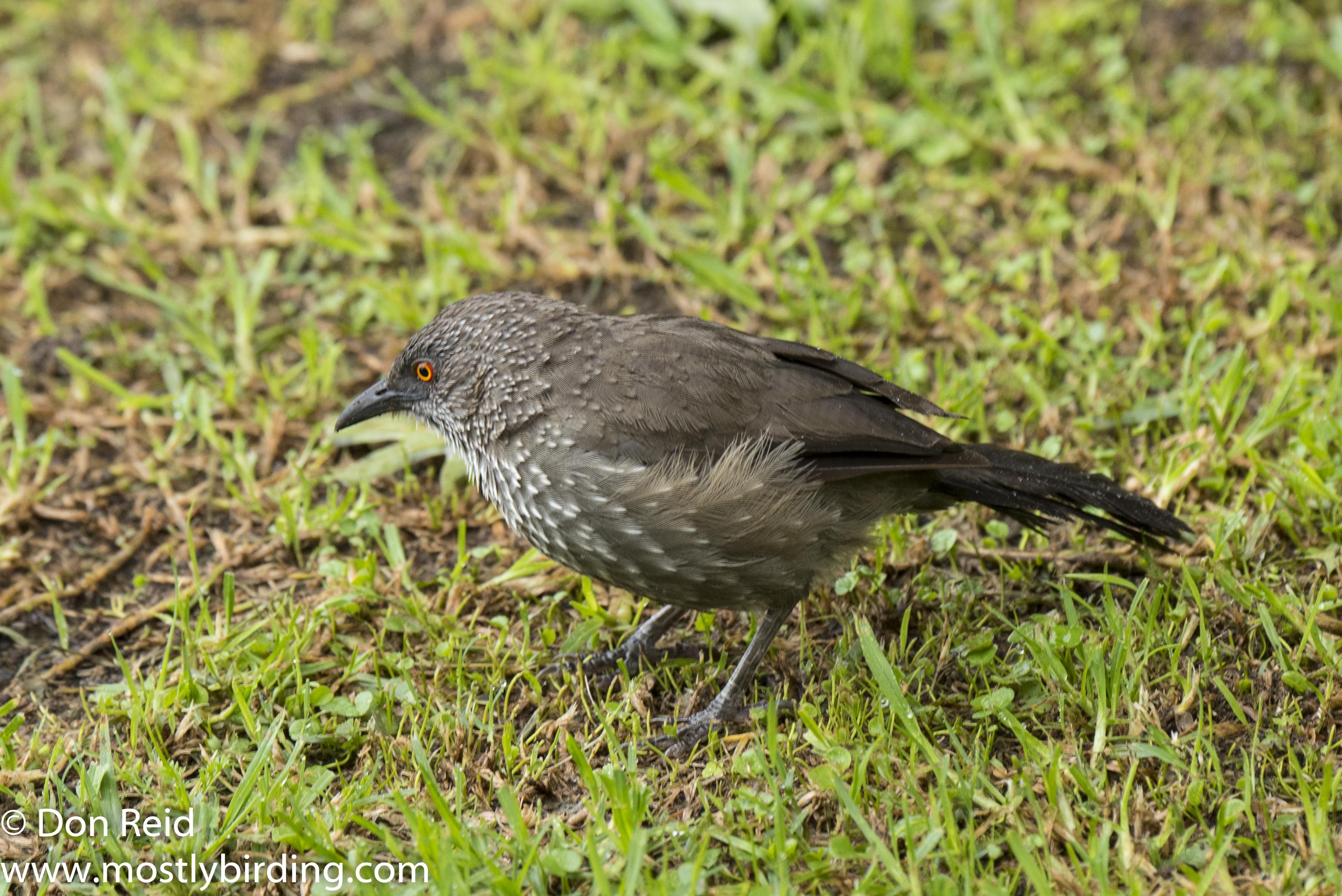
Arrow-marked Babbler, Champagne Valley Drakensberg
March
Back to the Drakensberg, this time with brother Andrew visiting from the UK – some birding, more touring from our base at Drakensberg Sun resort
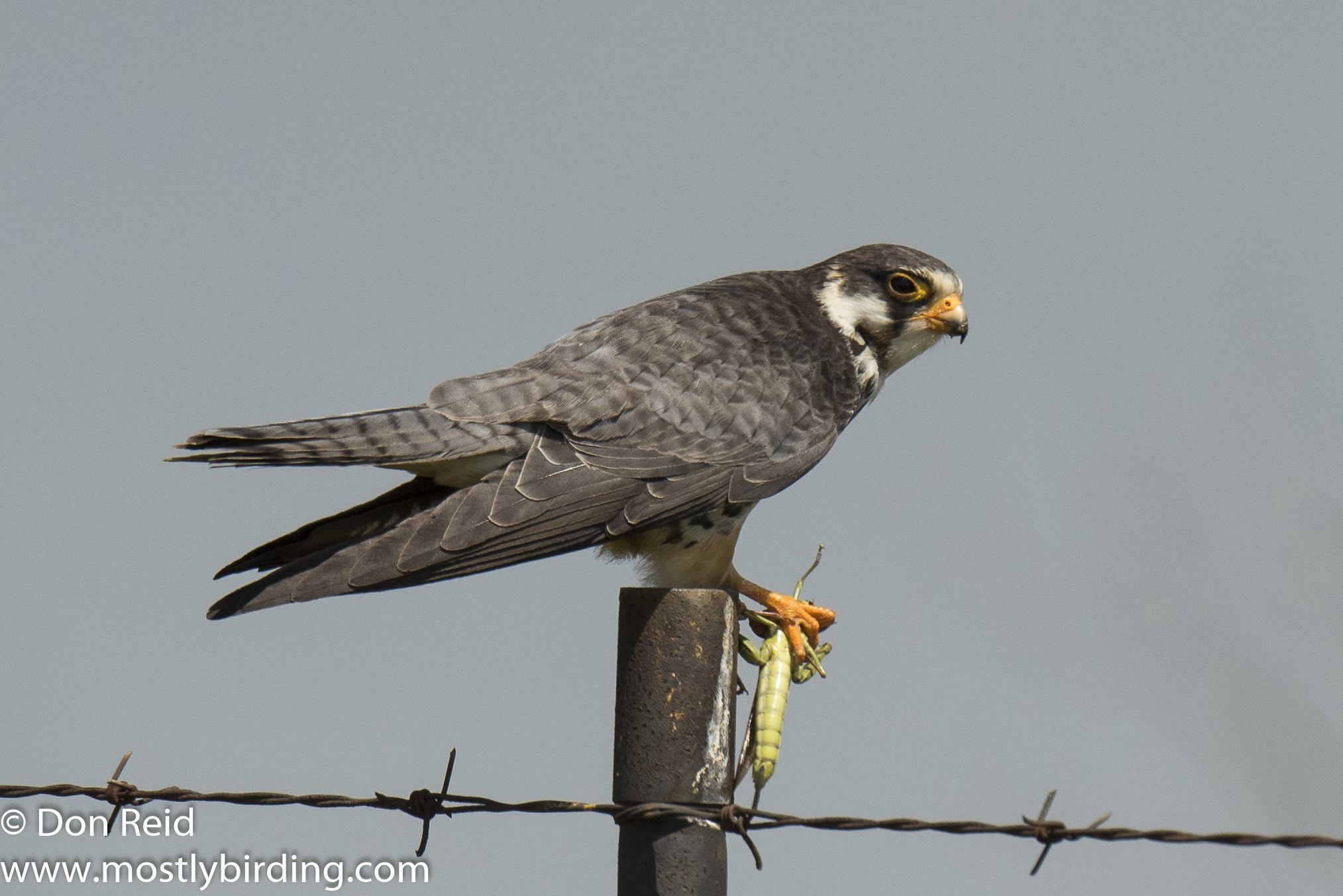
Work pressures meant no time for atlasing although I used the public holiday to do a couple of pentads around Delmas, where an Amur Falcon entertained me with its handling of a locust catch (covered in a separate post)
Amur Falcon feeding on grasshopper, Delmas south
April
For my 500th pentad I decided to atlas the area around Mkhombo Dam which proved to be a good choice (also covered in a separate post)
Marico Flycatcher, Mkhombo dam area
Black-faced Waxbill, Mkhombo dam area
The following weekend we visited family on Annasrust farm in the Free State near Hoopstad – one of the highlights of our year and a superb birding spot in its own right.
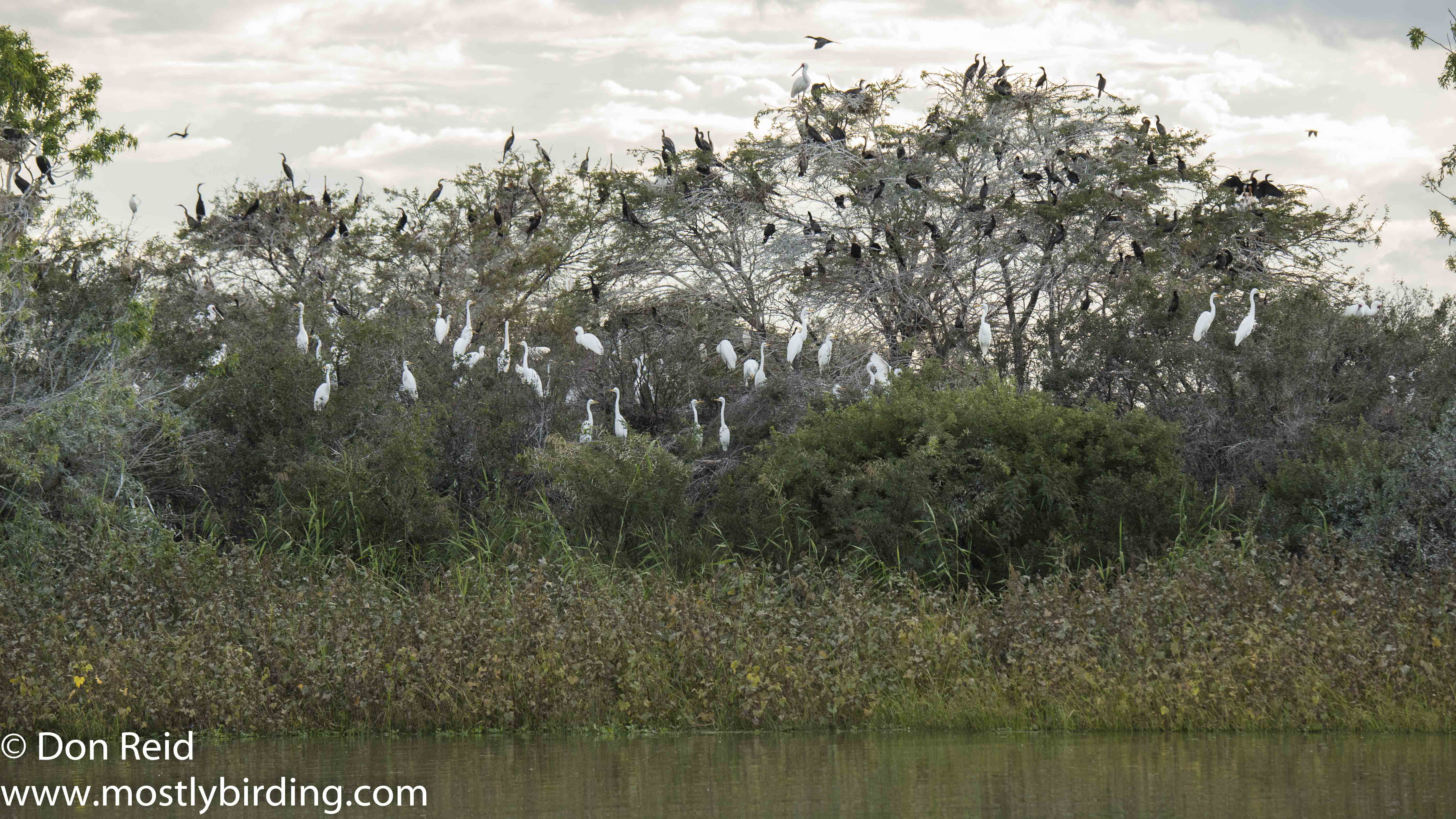
Massed Egrets, Spoonbills and Cormorants made for a spectacular sight on the river
Mixed roost, Annasrust farm Hoopstad
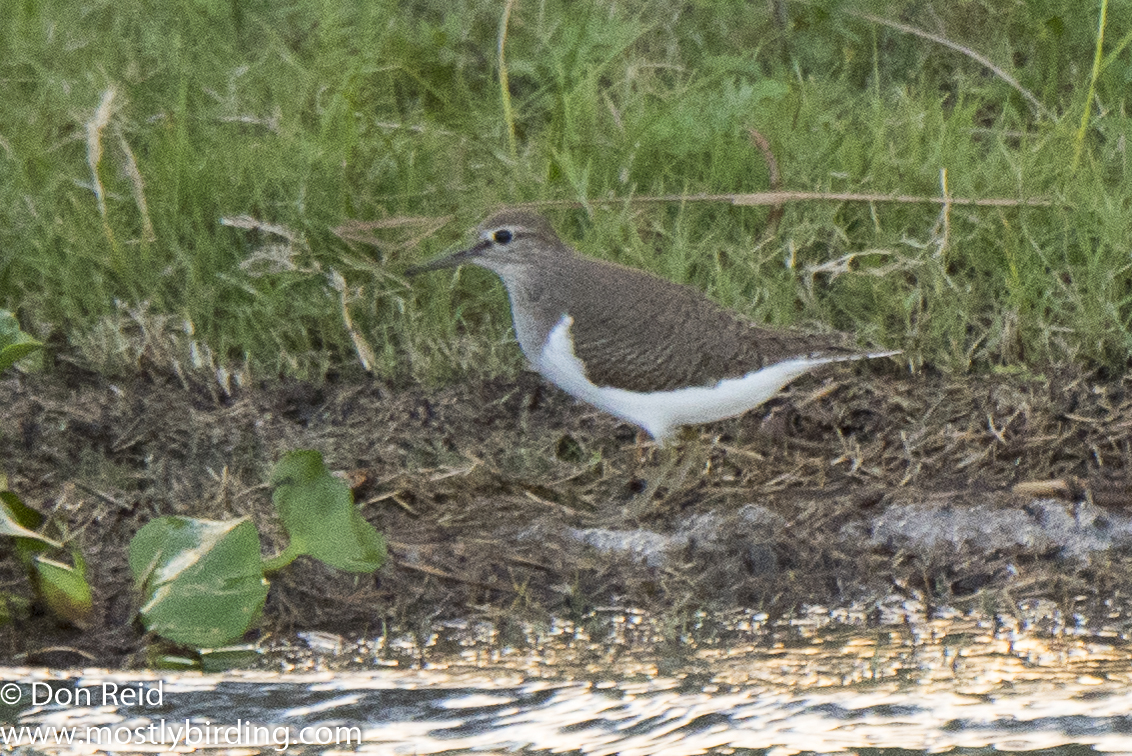
Common Sandpiper, Annasrust farm Hoopstad
Late in April, with some RCI points not fully used and about to expire, we booked a week at Pine Lake Resort near White River, which also included a memorable day visit to Kruger Park
Pine Lake Resort
African Fish Eagle, Kruger Day Visit
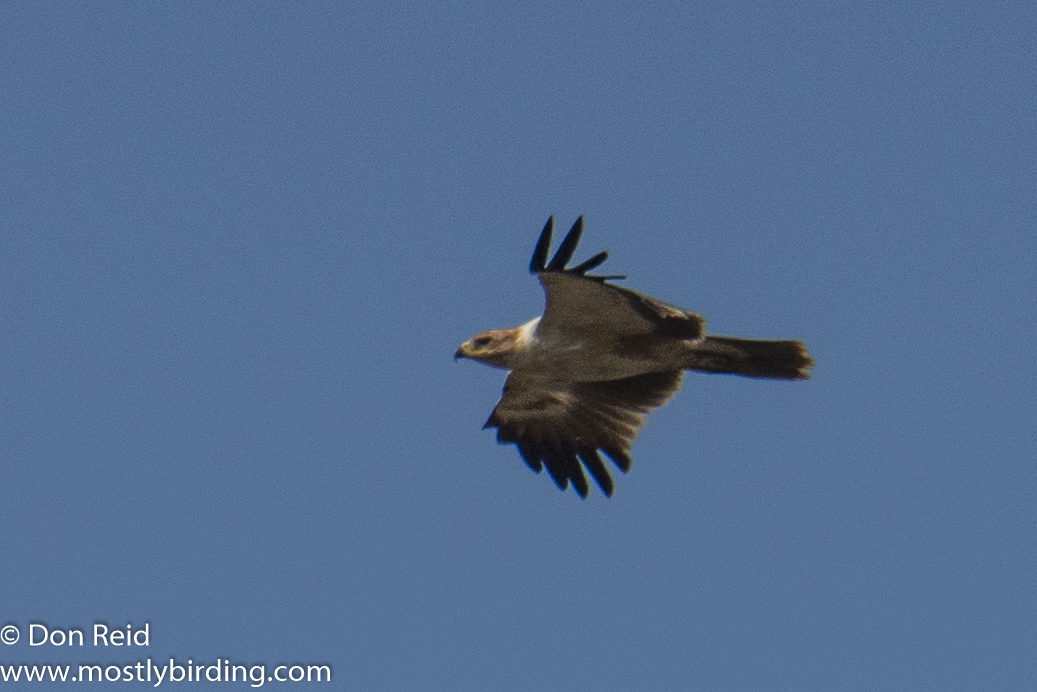
Booted Eagle, Kruger Day Visit
White-browed Robin-Chat, Kruger Day Visit
May
My only atlasing trip in May was to Mabusa Nature Reserve and the surrounding area – many highlights including Flappet Lark, Pearl-spotted Owlet, Long-tailed Paradise Whydah and Barred Wren-Warbler
June
Early June saw us in Mossel Bay for a brief visit – just one atlasing trip was squeezed in, covering the area north of Great Brak River
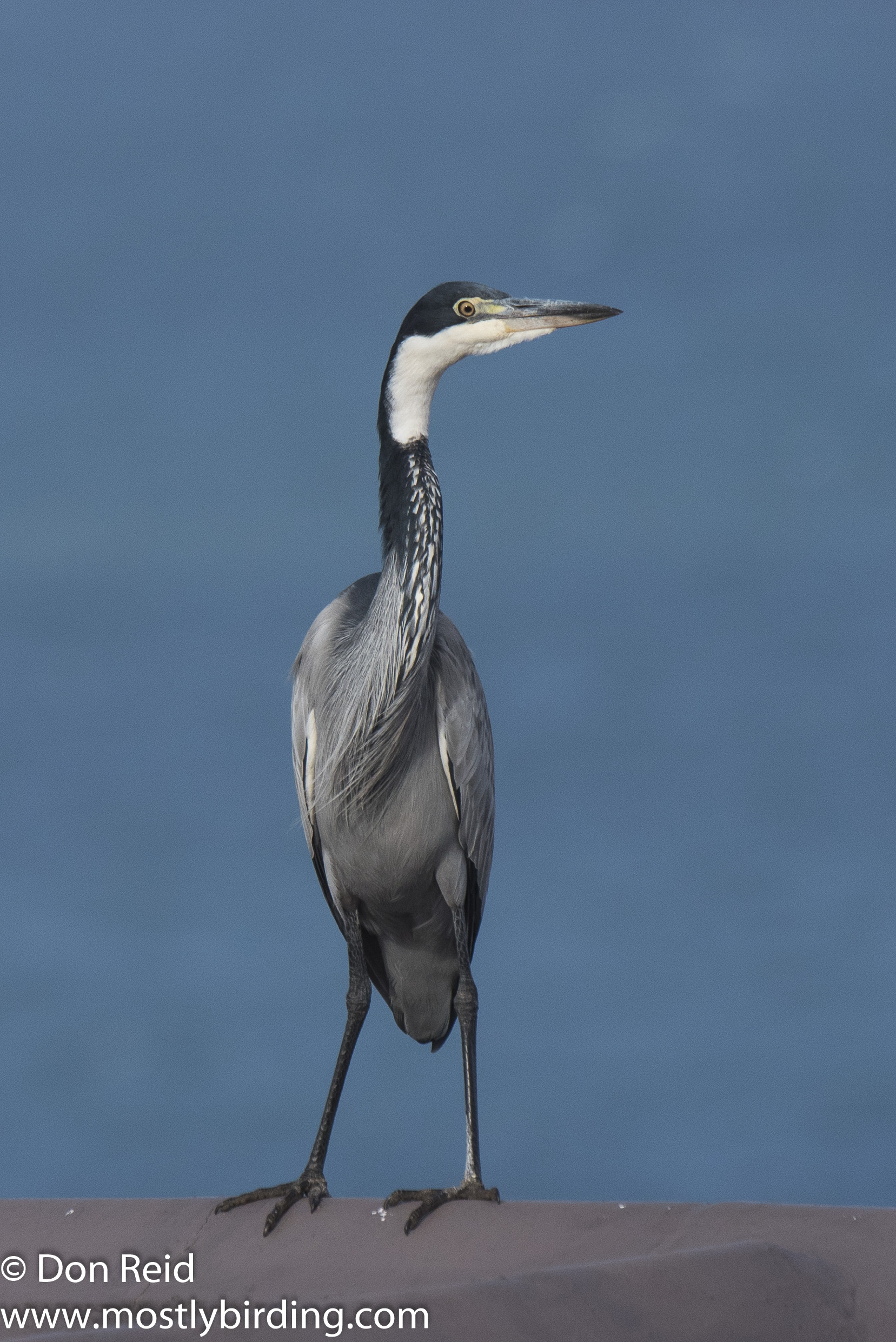
This Black-headed Heron posed on my neighbour’s roof
Black-headed Heron, Mossel Bay Golf Estate
We were hardly back in Pretoria when we set off for our annual visit to La Lucia near Durban where we have a timeshare apartment, with an overnight stay at the beautiful Oaklands Country Manor near Van Reenen
Oaklands Country Manor, near Van ReenenMy early morning walk was a misty affair
Oaklands Country Manor, near Van Reenen
La Lucia was as restful as ever but the World Cup soccer proved to be a distraction, nevertheless I managed to fit in a mix of beach birding walks, a trip to my favourite urban forest – Pigeon Valley – and a visit to Shongweni Nature Reserve
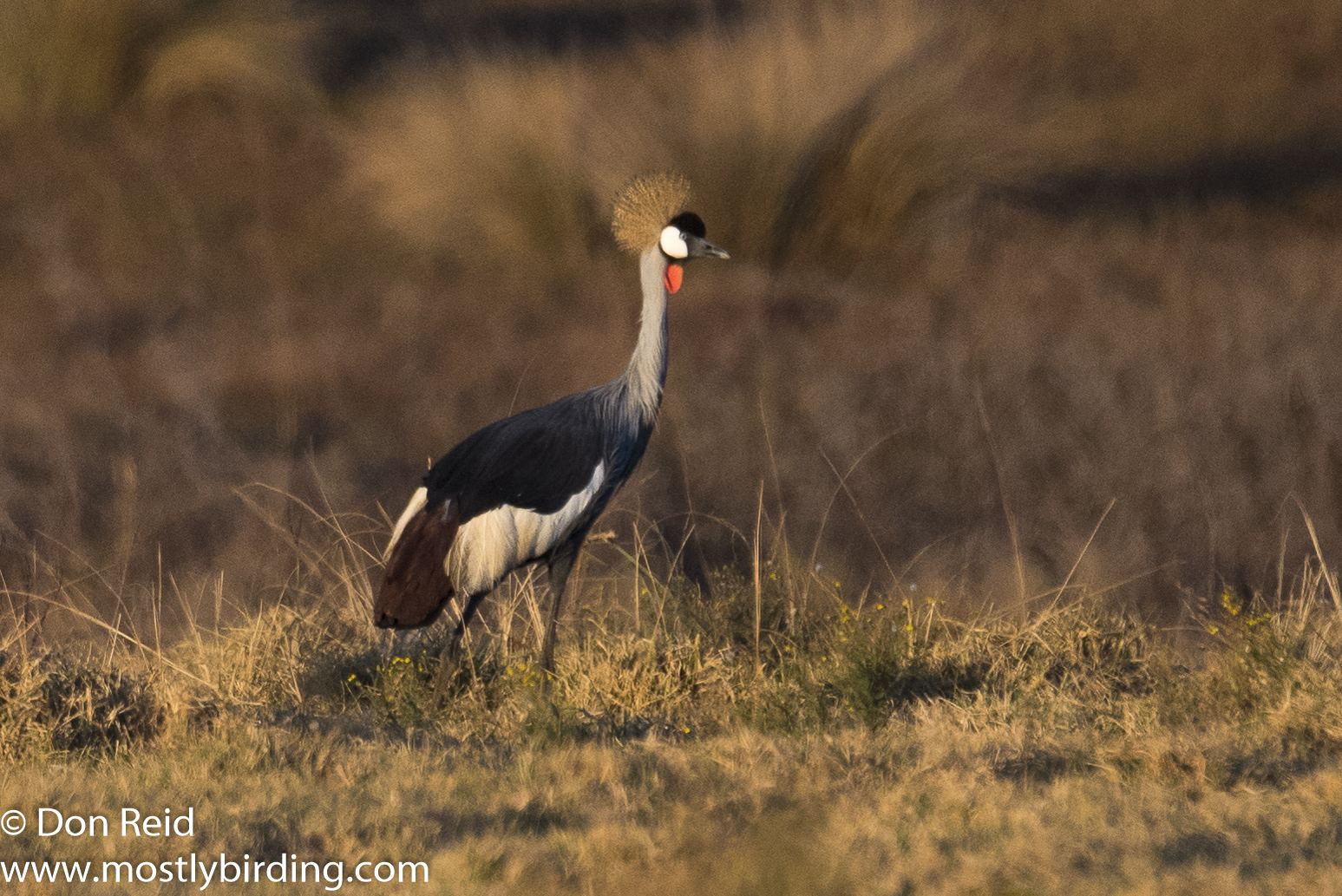
We took up Gerda’s Vryheid family’s invitation to stop over on their farm near the town on our way back – a worthwhile detour if there ever was one! A pair of Crowned Cranes made the visit really special, although Anlia’s breakfast krummelpap (a coarse farm porridge) was a serious competitor for “best reason to visit”.
Crowned Crane, Onverwacht farm Vryheid
Southern Bald Ibis, Onverwacht farm Vryheid
July
Mid-month I was in Cape Town for a day and found myself free for the afternoon – so where does a keen birder go on a rainy day in this famous City? Naturally to the Strandfontein Sewage Works – birding was superb with a few hundred Flamingoes amongst many other water birds
August
Mid-winter atlasing trips around Gauteng kept me sharp during August, despite cold (- 3 deg C at one stage), windy conditions that kept me mostly in my car. Spike-heeled Larks were a feature of both trips, while African Harrier-Hawk was an exciting find.
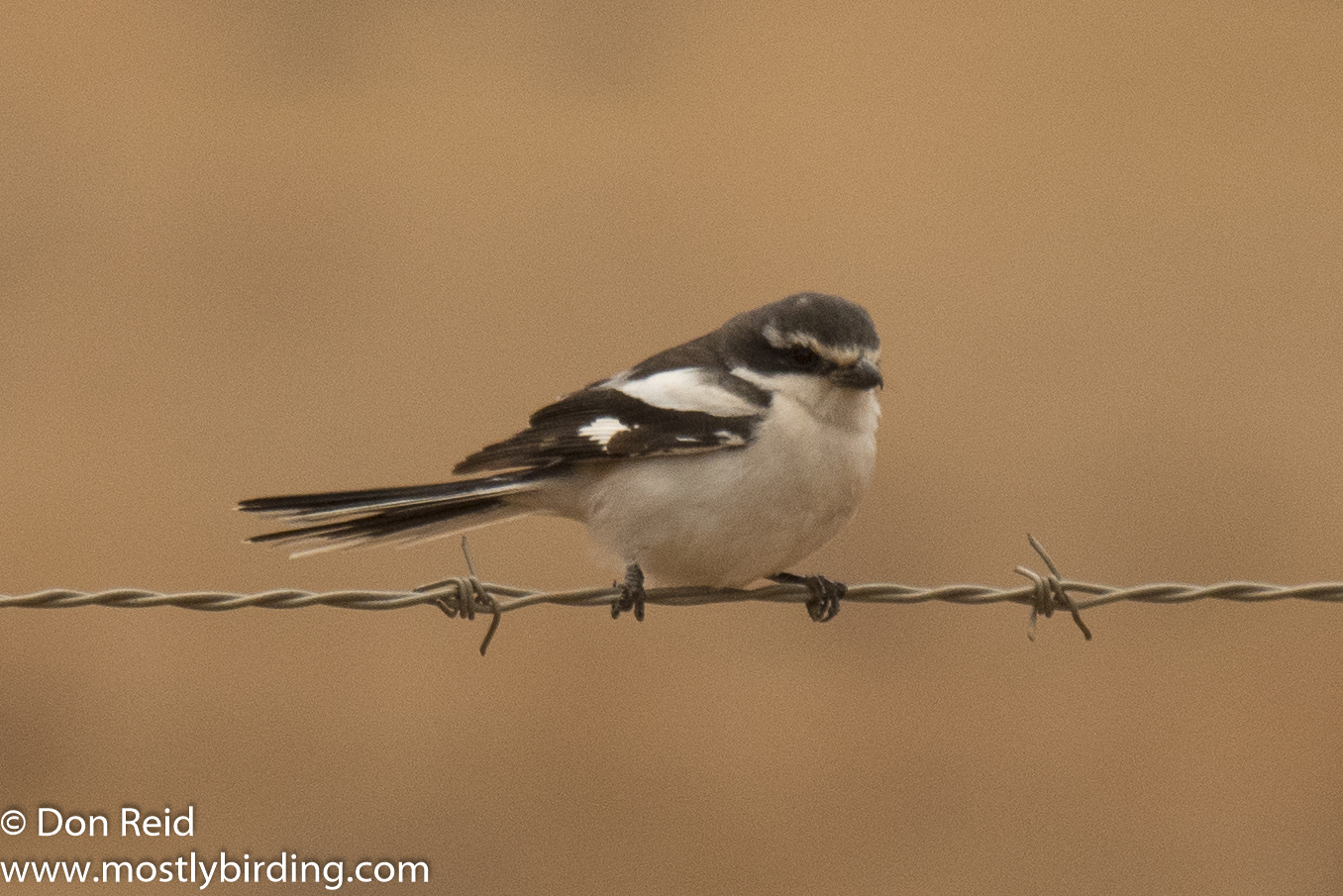
Southern Fiscals are common just about everywhere but this subcoronatus sub-species is quite a special find
Common Fiscal (subcoronatus), Nigel area
Pin-tailed Whydah (female), Nigel area
September
A last-minute decision to spend a week in Kruger Park turned into a memorable, relaxing trip with plenty of wild life experiences (covered in several posts)
Crested Francolin, Sable Dam, Kruger Park
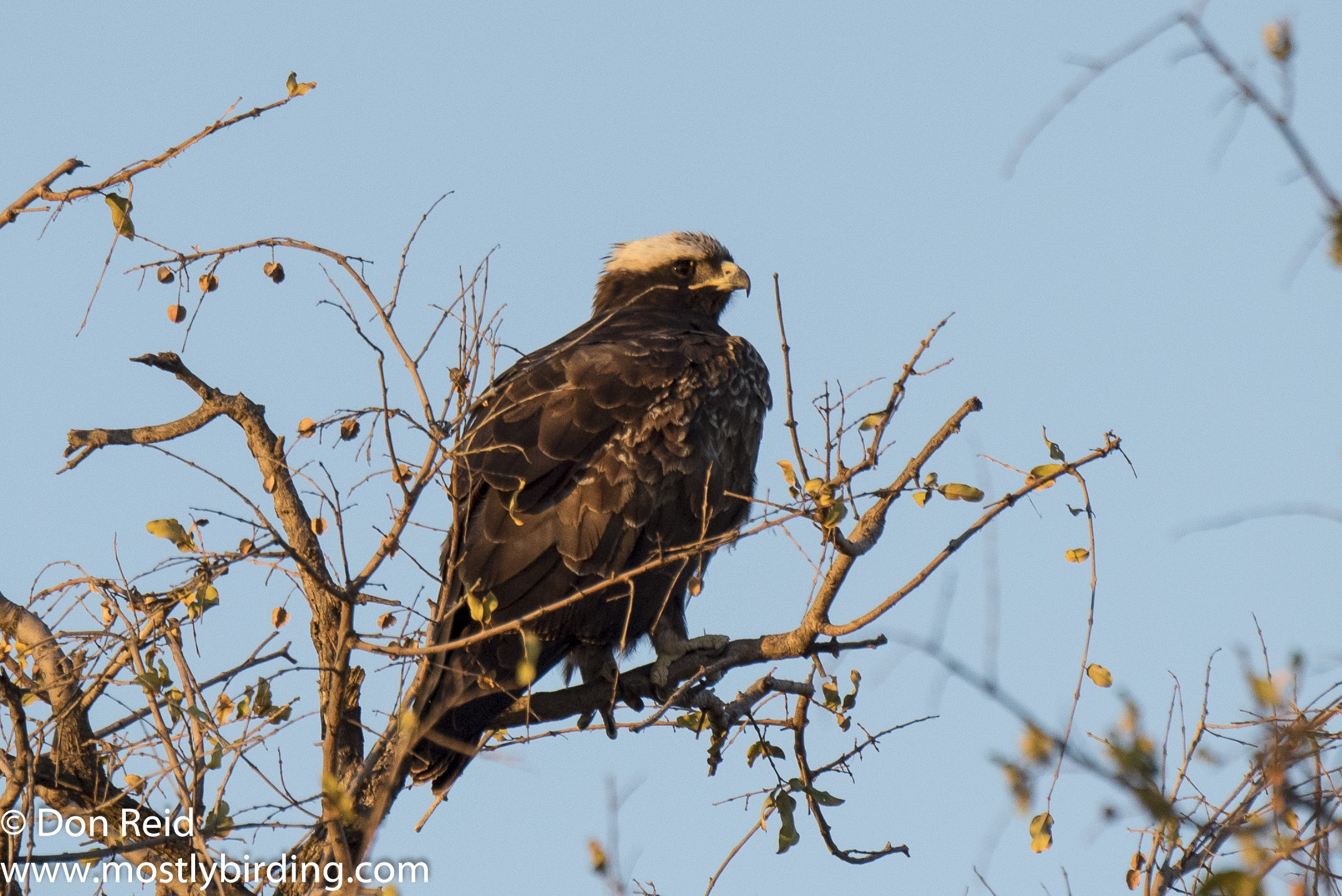
Wahlberg’s Eagle (Juvenile White crowned), Olifants River, Kruger Park
Sabota Lark, Kruger Park
An atlasing trip to the Delmas area later in the month produced a Blue Korhaan, scarce in these parts, as well as a couple of other terrestial species in the form of Orange River Francolin and Northern Black Korhaan
October
Time for our timeshare week at our favourite get away – Verlorenkloof, which produced fine birding once again and some interesting atlasing opportunities in the area.
The most exciting sighting at Verlorenkloof was of an immature Crowned Eagle, which apparently was born and raised on the property, the nest still visible on top of a tall tree
The sought after Broad-tailed Warbler is a regular at Verlorenkloof during the summer months but does its best to frustrate any attempts to get a close photograph
Back to the Cape in the last week of October for a short visit to Mossel Bay, followed by a quick visit to family in the western Cape town of Worcester, where I spent a morning enjoying the surprisingly good birding that was on offer in the adjoining hills.
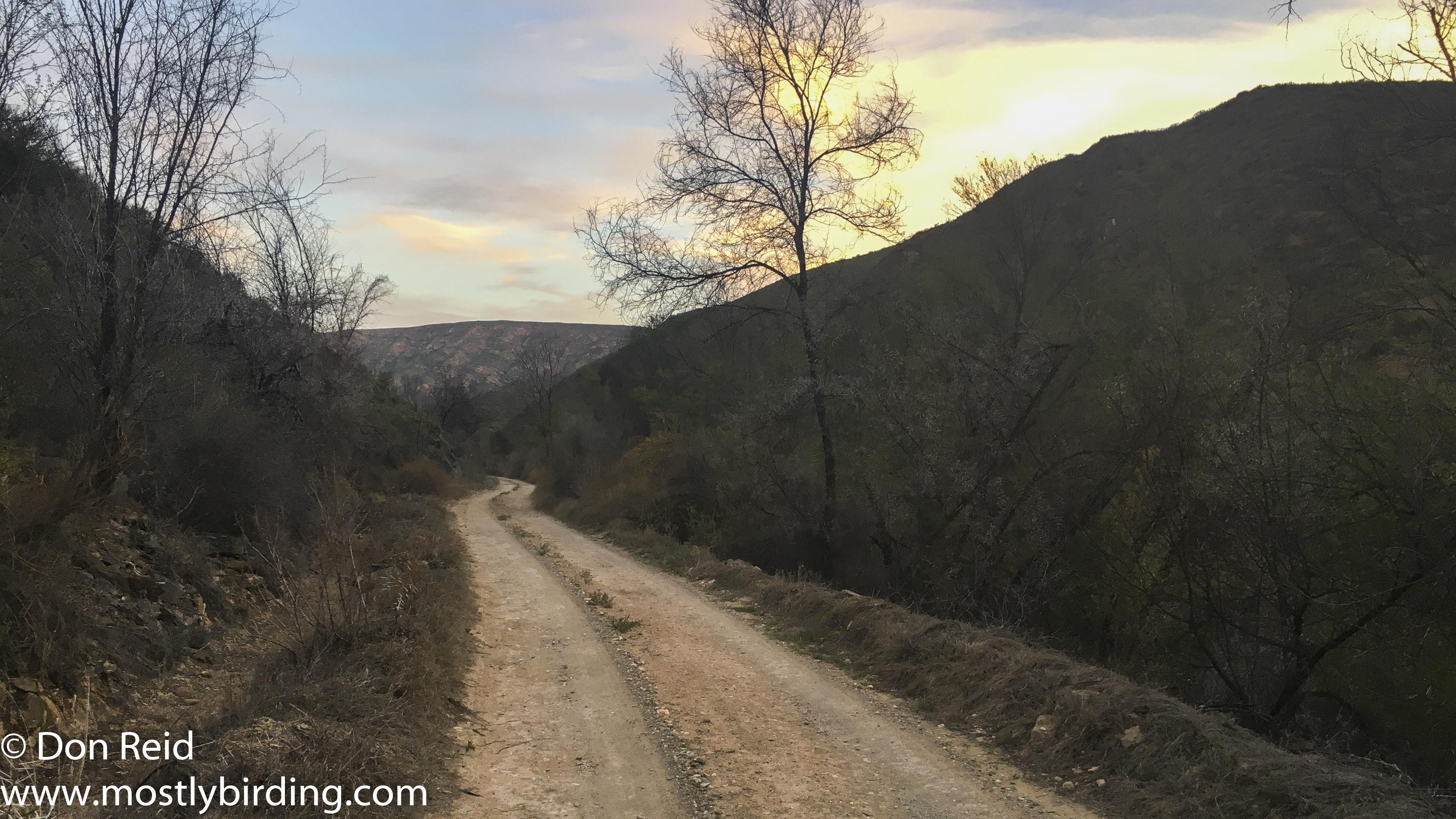
Quarry road, Worcester
November
Further atlasing in the Mossel Bay area included trips to Herbertsdale and Gouritz River, before returning to Pretoria where we prepared for our return to Mossel Bay for a longer stay over December and January, as has become our custom over the last few years.
The road trip to the southern Cape included an overnight stop at Kuilfontein near Colesberg and a two night stay at Karoo National Park, both places providing some diverse atlasing opportunities
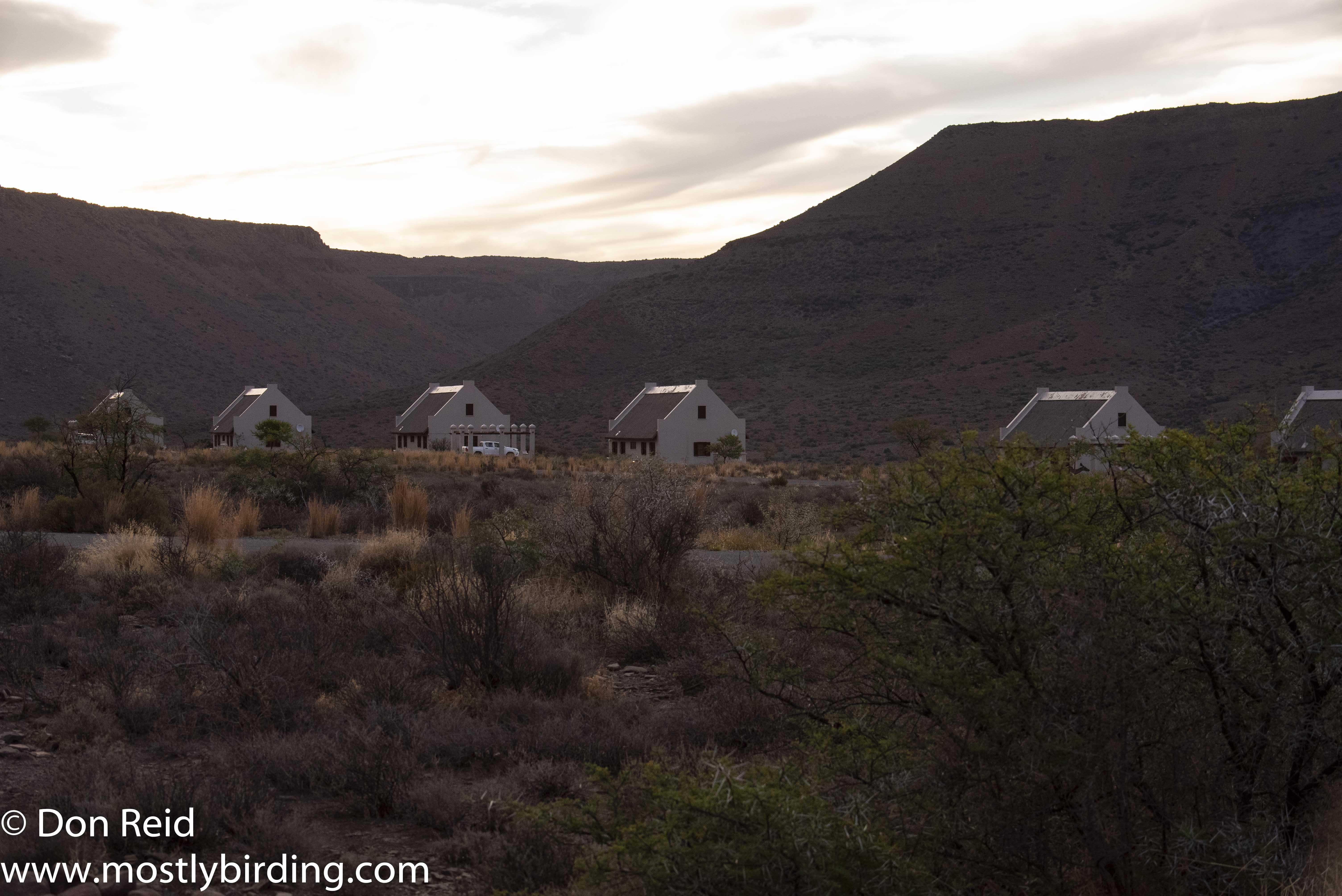
Karoo National Park
Short-toed Rock-Thrush, Karoo National Park
The following week saw me returning by air to Gauteng and onward to Kasane in northern Botswana for a final inspection visit to the airport project that I was involved in. I booked a boat-based and vehicle-based game drive during my stay, in order to make the most of this last visit to Chobe game reserve, both of which provided some amazing sightings and photographic highlights.
Cattle Egret, Chobe River Trip
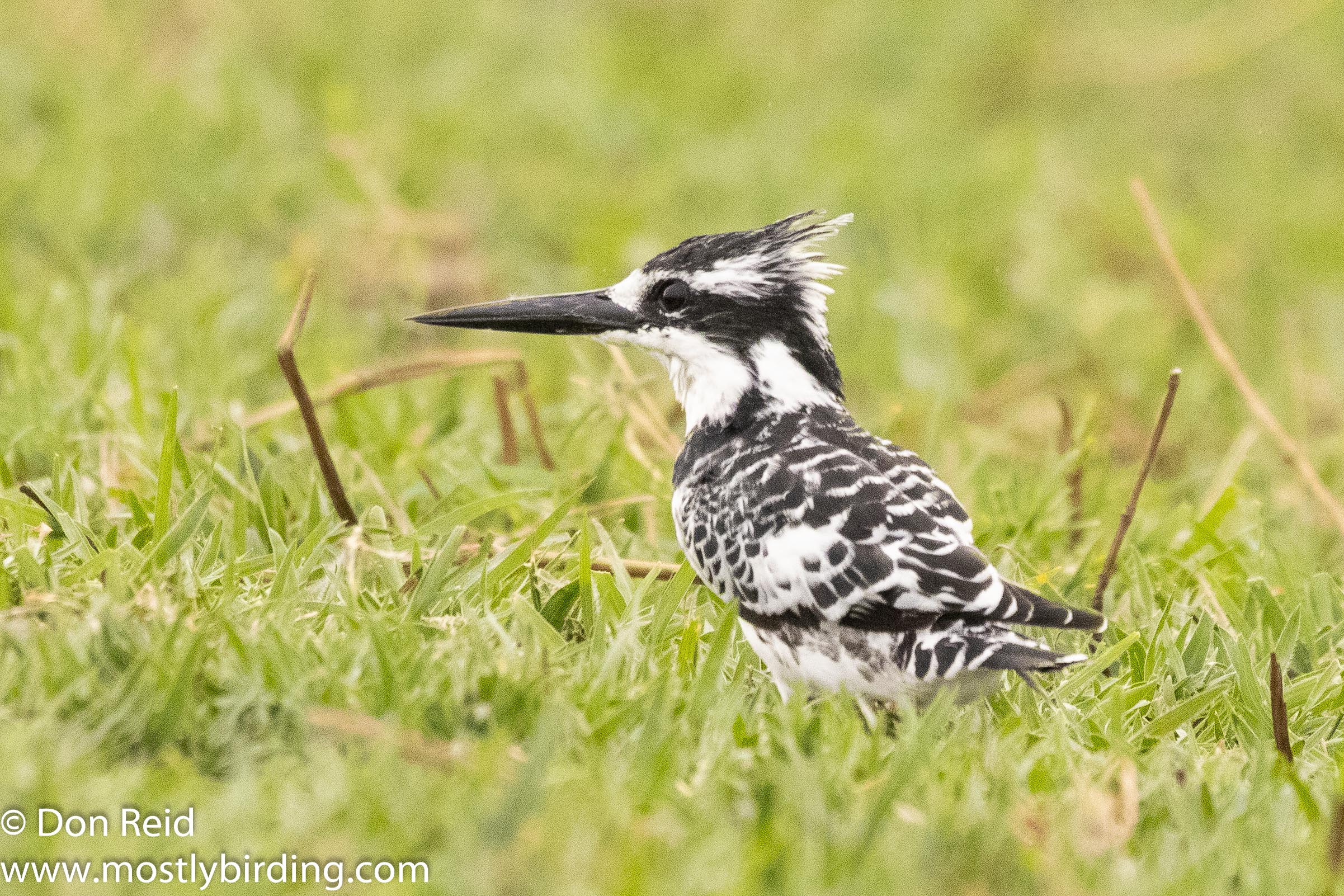
Pied Kingfisher, Chobe River Trip
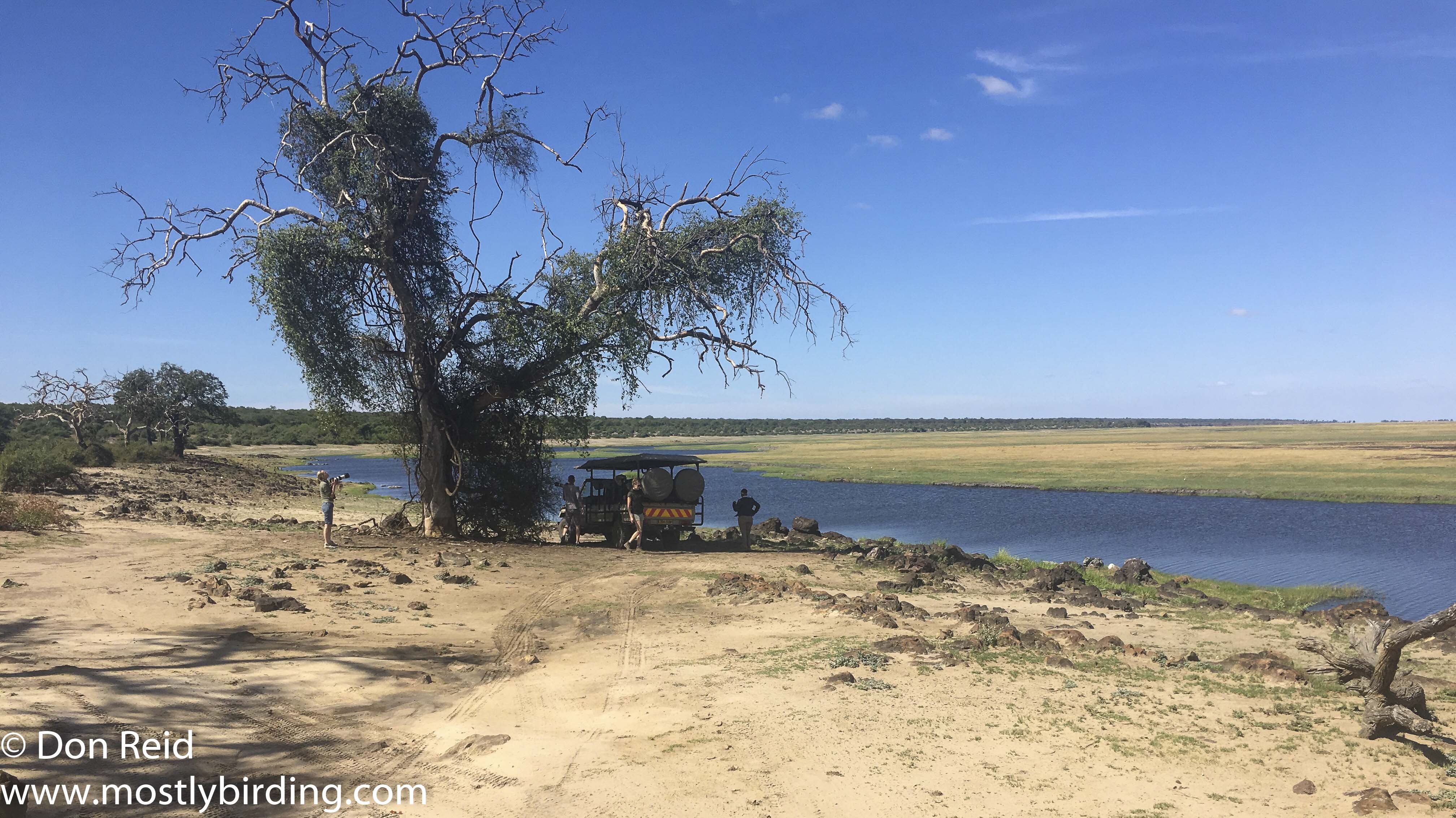
Chobe Riverfront Game Drive
Spur-winged Goose, Chobe Riverfront game drive
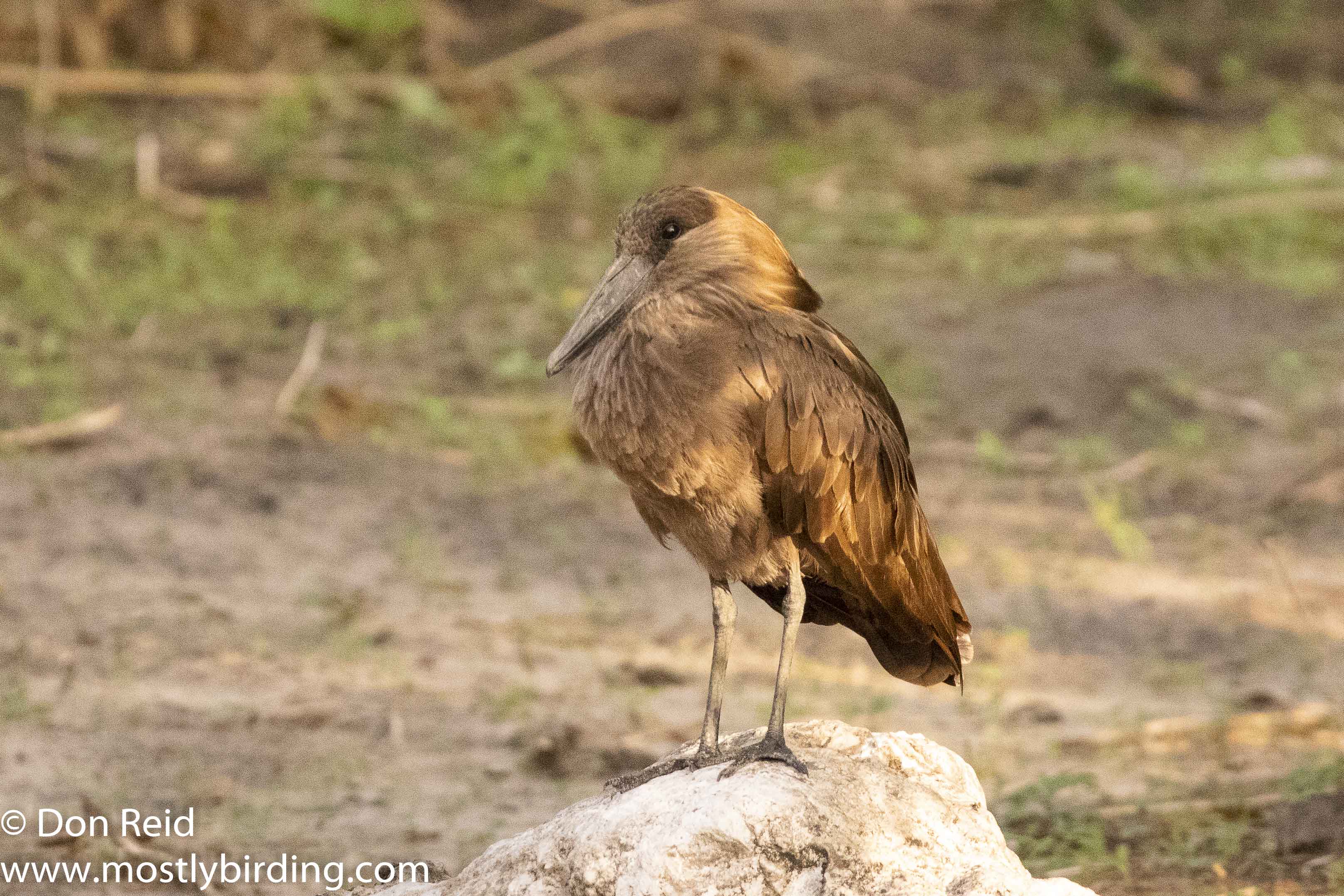
Hamerkop, Chobe Riverfront game drive
December
Back in Mossel Bay, it was time to get into relaxed mode and I looked forward to some atlasing of the area, including Mossel Bay itself.
Water Thick-knee, Mossel Bay GE
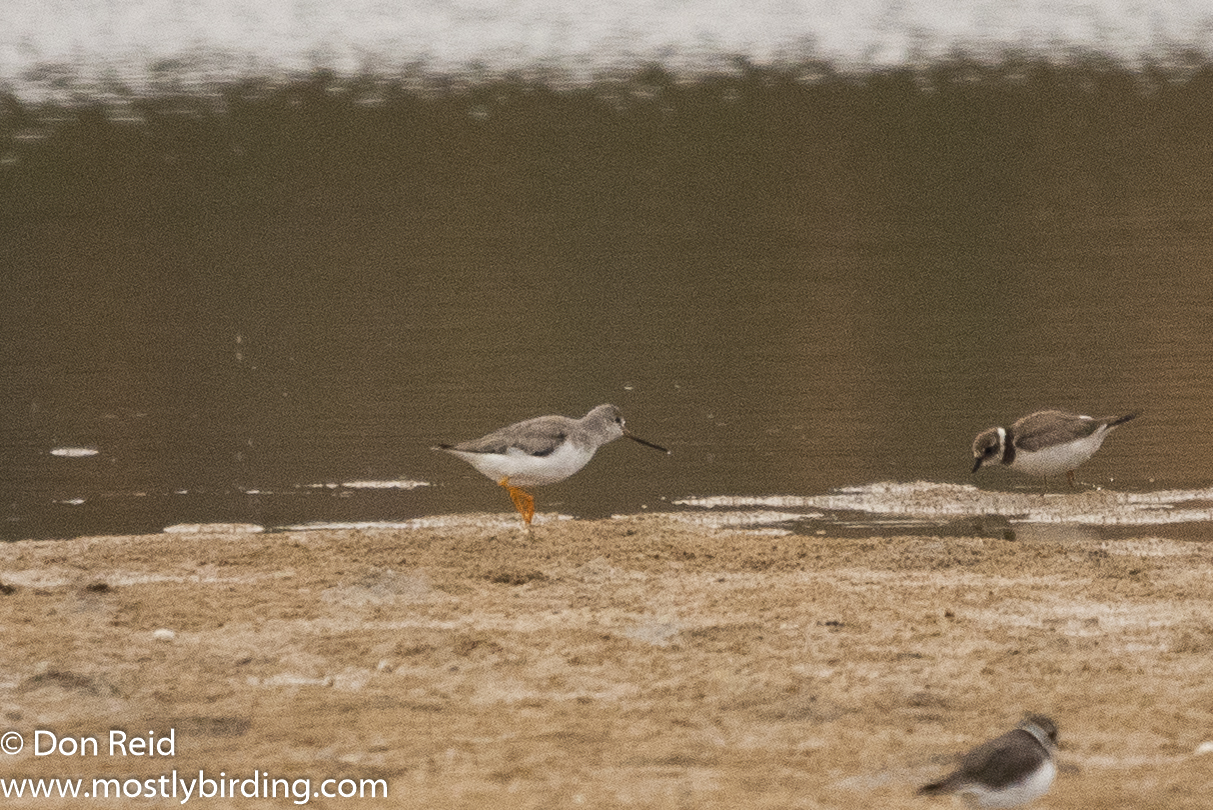
A Terek Sandpiper at Great Brak was a lifer for me
Terek Sandpiper, Great Brak River mouth
Little Egret, Great Brak River mouth
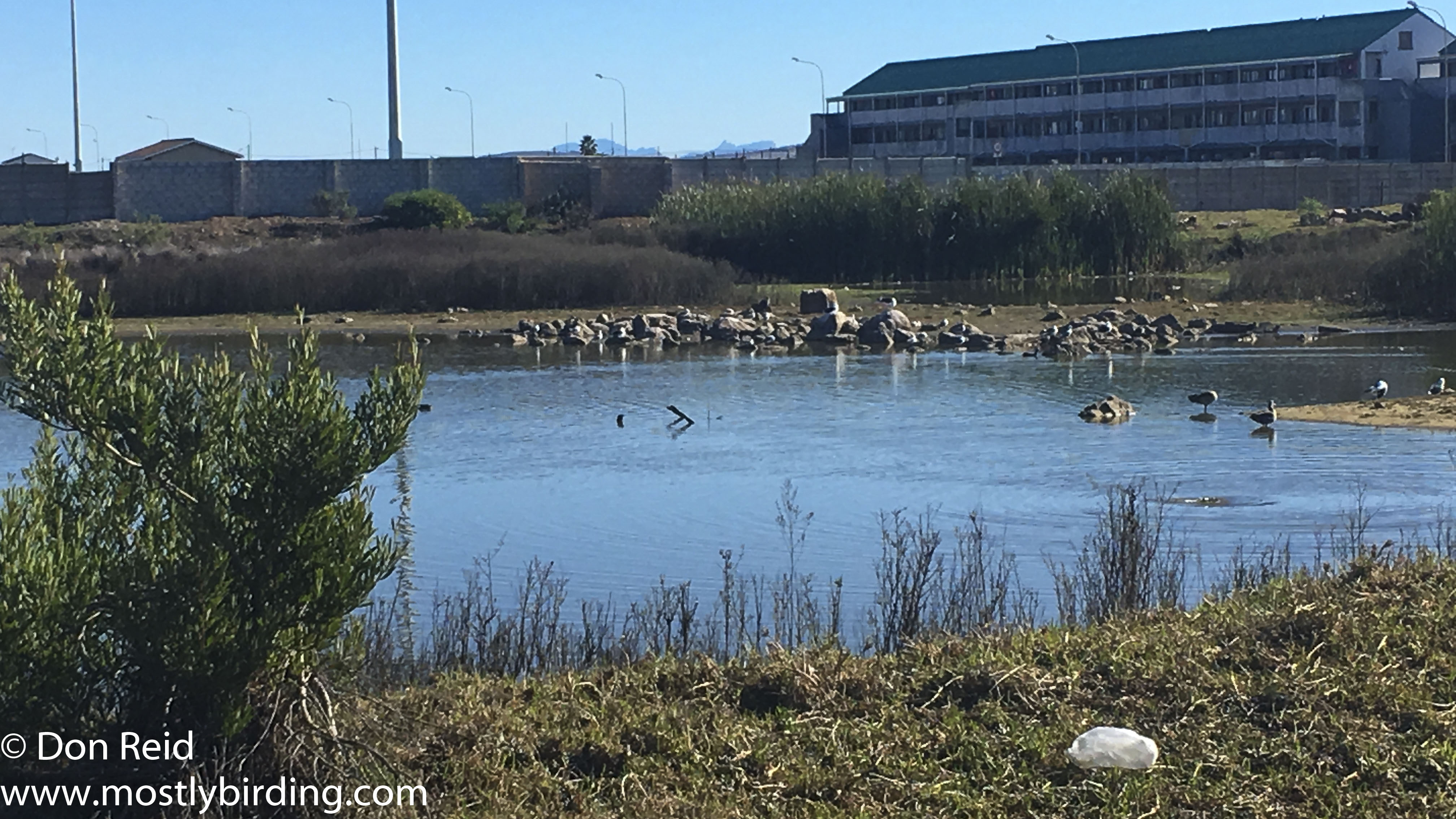
The only body of fresh water in Mossel Bay is a drawcard for numbers of birds
SPCA dam, Mossel Bay
This Cape Weaver decided to use the bird-feeder in our neighbour’s garden as a base frame for its nest – probably an inexperienced juvenile practicing his skills. He never did complete the nest.
Following on Part 1 of My Birding Year for 2017 ……… guess what, here’s Part 2!
So here’s a synopsis of my birding activities during the second half of 2017 along with photos of a few of the species encountered and places visited.
July
The first week saw me back in Kasane for a project visit and we managed to fit in a memorable drive through Chobe Riverfront where the game viewing took precedence, but the birdlife was hard to ignore, particularly the Carmine Bee-eaters
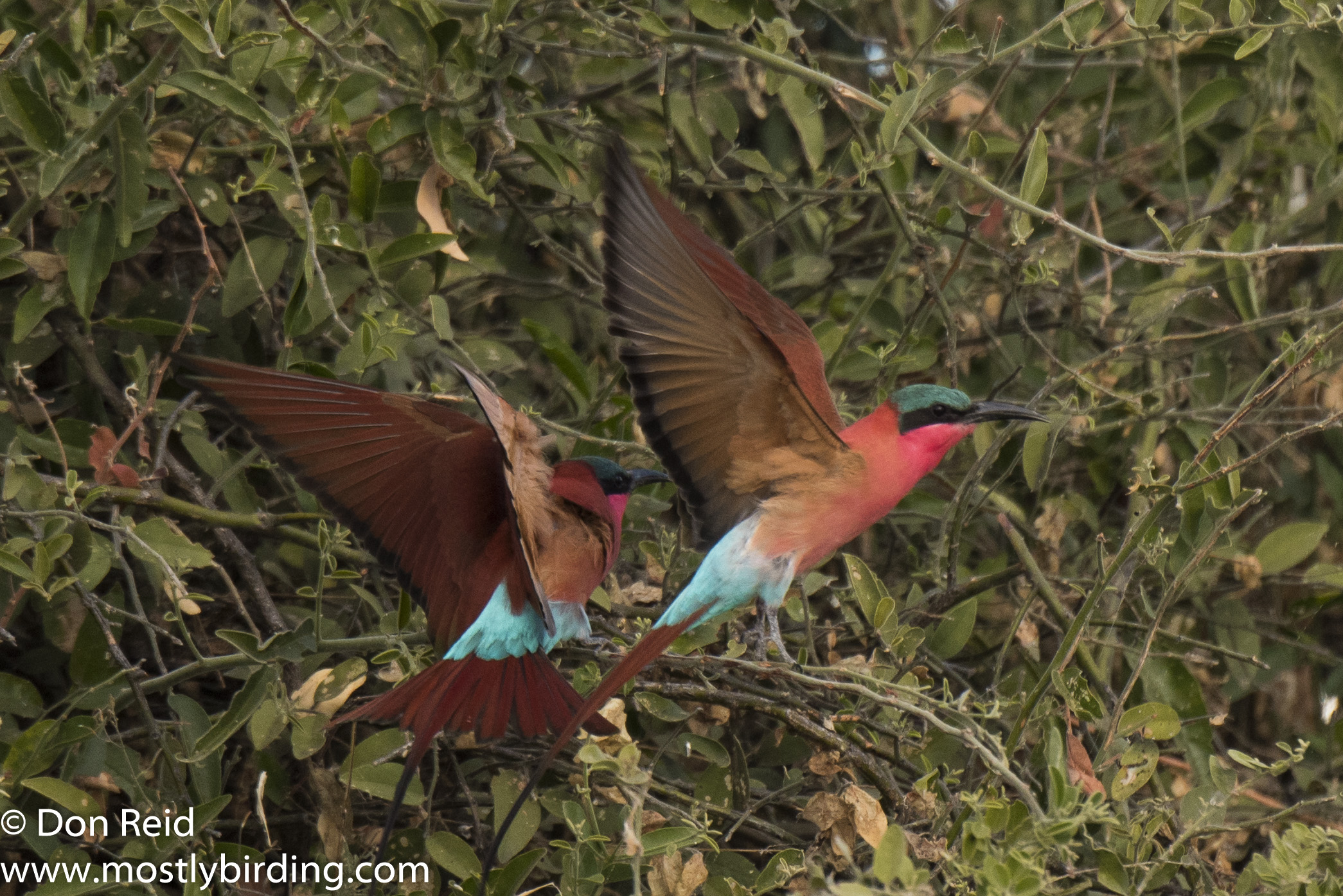
Southern Carmine Bee-eater, Chobe Riverfront
Greater Blue-eared Starling, Chobe Riverfront
Later on in the month I was back to atlasing in the area south of Bronkhorstspruit, some 50 km east of Pretoria, dominated by the drab midwinter “browns” of the highveld and providing some challenging birding in the form of very similar looking small birds in their winter plumage.
Southern Red Bishop (winter plumage), Bronkhorstspruit area
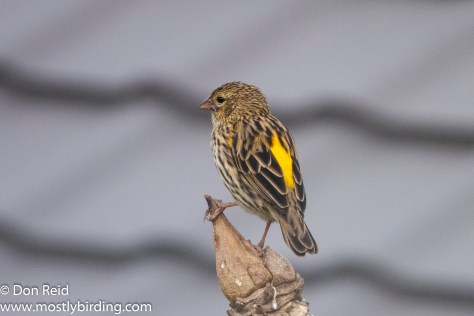
White-winged Widow (winter plumage), Bronkhorstspruit area
August
Another visit to Kasane, Botswana in the first week included a spectacular boat safari on the Chobe river with Pangolin Safaris in a specially equipped boat kitted out with swivel seats and pliable camera mounts. One of the owners of Pangolin Safaris, who goes by the nickname of “Guts”, accompanied us and made sure we had some amazing photo opportunities of the wildlife and birds to be found along the river.
Six species in one frame (1 only just) – can you spot them? (see end of post for answer)
Glossy Ibis, Chobe River
Doing it in style with Pangolin Safaris on the Chobe River
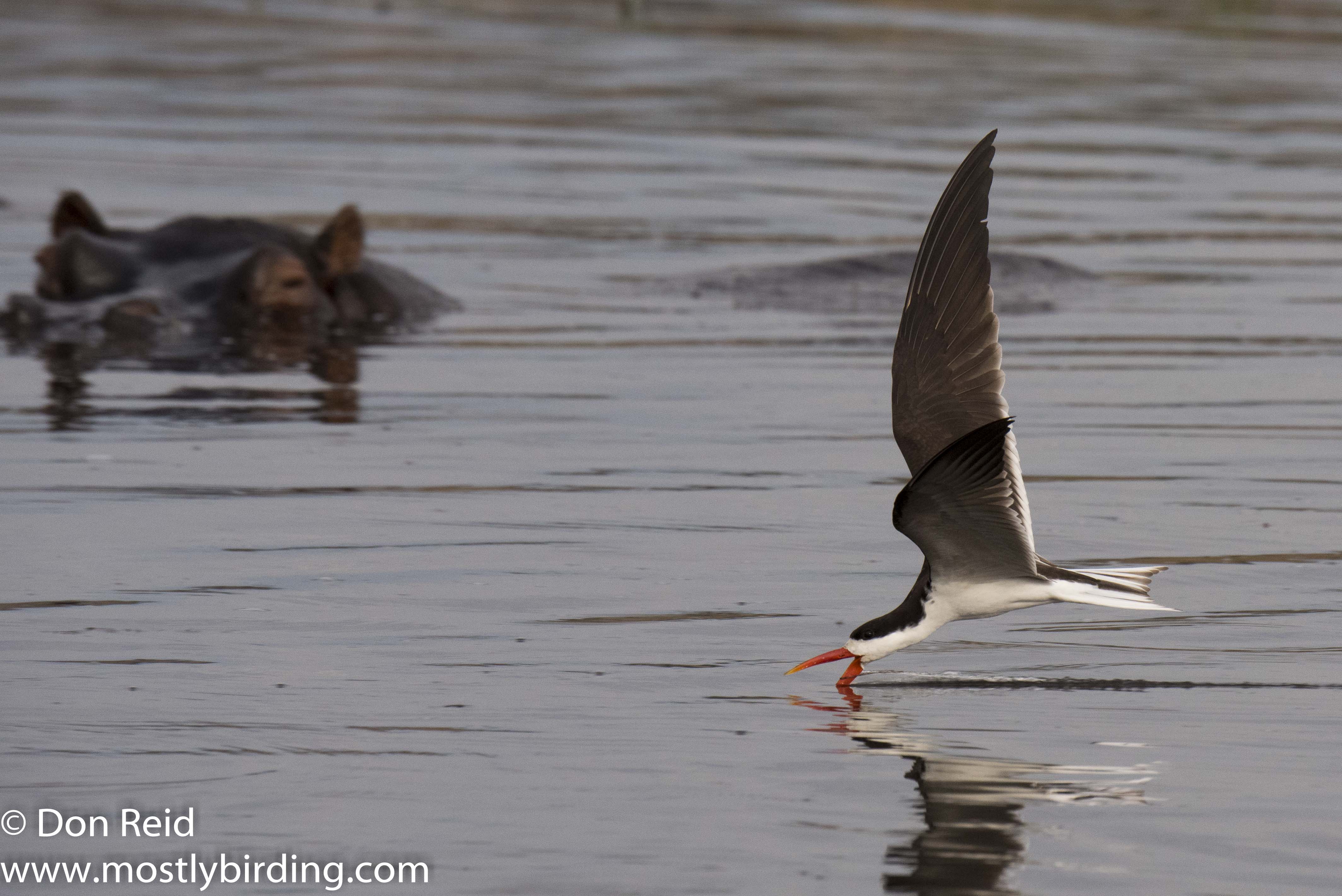
One moment of sheer photographic magic came my way in the form of a lone African Skimmer passing by and showing how it got its name.
African Skimmer, Chobe River
The following weekend saw us visiting family in Potchefstroom once again – I took the two grandkids for a birding outing to nearby Boschkop dam and was again very pleased with the quality of birding at this venue, which is also quiet and safe for the kids to roam about a bit.
Next up was some atlasing in the grasslands north east of Pretoria – known as Vlaklaagte, which was good for birding but the gravel roads at this time of year are very dusty and the passing mining lorries tend to make it quite difficult to bird in peace – nevertheless a successful day’s atlasing.
Pied Starling, Vlaklaagte area
Dam, Vlaklaagte area
Buffy Pipit, Vlaklaagte area
A short winter visit to Mossel Bay in the second half of August provided the opportunity to explore the Karoo south of Oudtshoorn on a cold day – I added several species to my year list and atlased in areas not regularly covered so well worthwhile.
Cape Weaver, Mossel Bay
Karoo Lark, Oudtshoorn south
White-throated Canary, Oudtshoorn south
On Robinson Pass, my patience was rewarded when a Victorin’s Warbler posed briefly for a photo – a very difficult species to photograph so a nice bonus.
Victorin’s Warbler, Robinson Pass
September
My monthly visit to Kasane was likely to be one of my last as the project was heading to completion, so I made the most of the 3 days there and fitted in birding at every opportunity. The airport precinct and perimeter were particularly lively with up to 200 bee-eaters present along the fences.
Swallow-tailed Bee-eater, Kasane Airport area
An early morning drive through the Chobe Riverfront was as good as ever with some unusual species showing.
Burchell’s Sandgrouse, Chobe GR
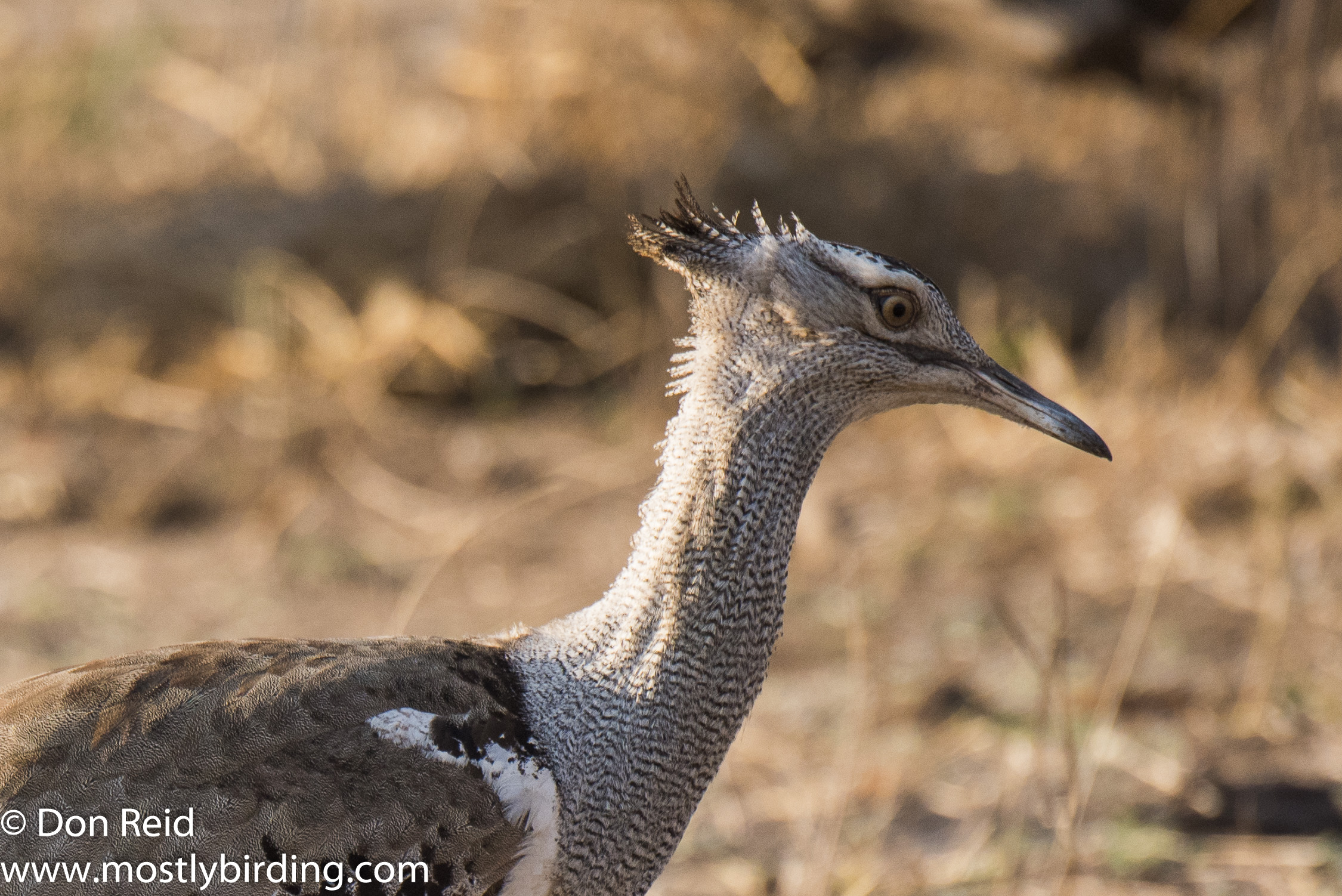
Kori Bustard, Chobe GR
During the rest of the month I targeted some of the more remote areas of north-east Gauteng to do some atlasing, selecting pentads not yet atlased in 2017.
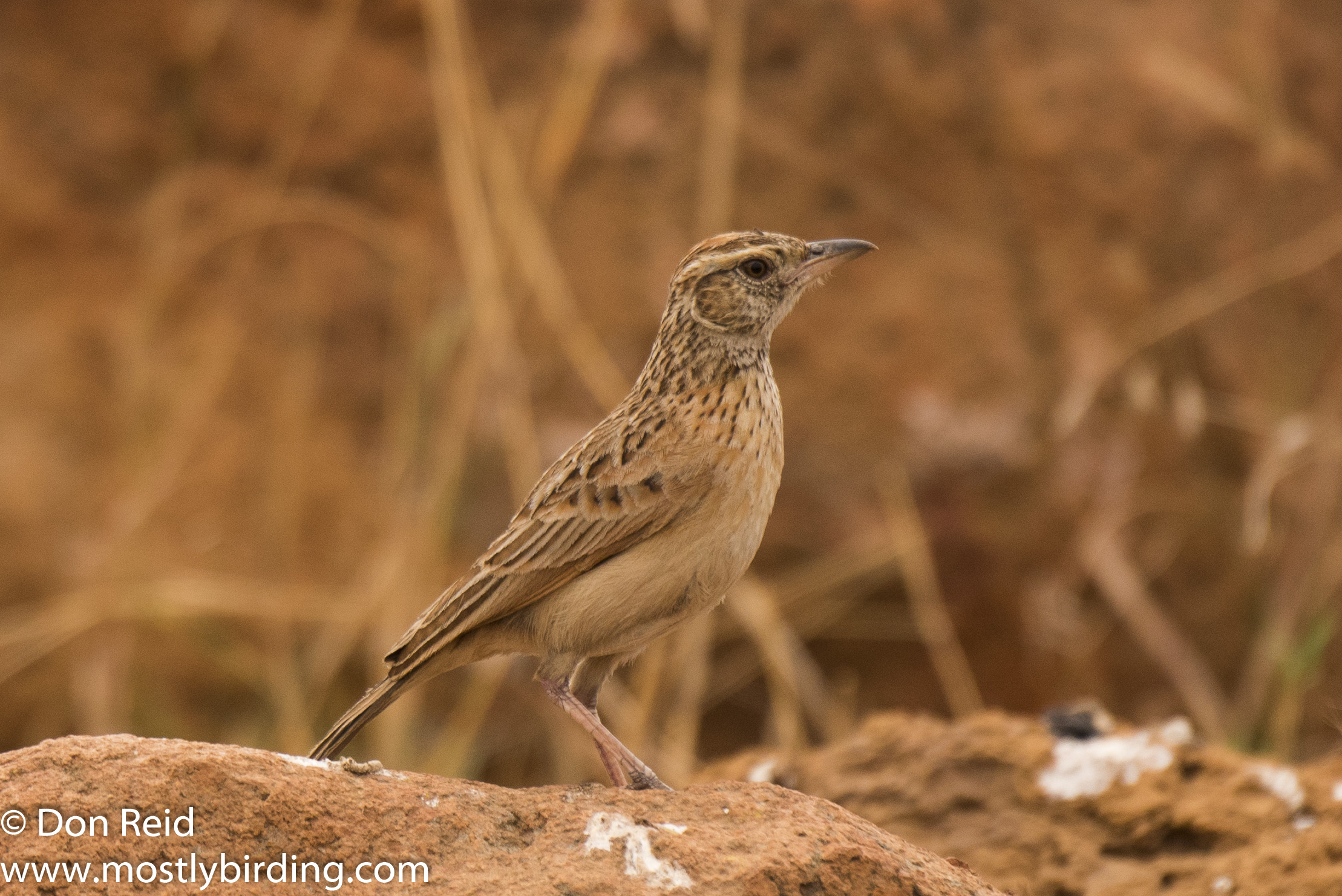
Rufous-naped Lark (Mirafra africana – subspecies transvaalensis, Vlaklaagte area
Spike-heeled Lark, Balmoral area
October
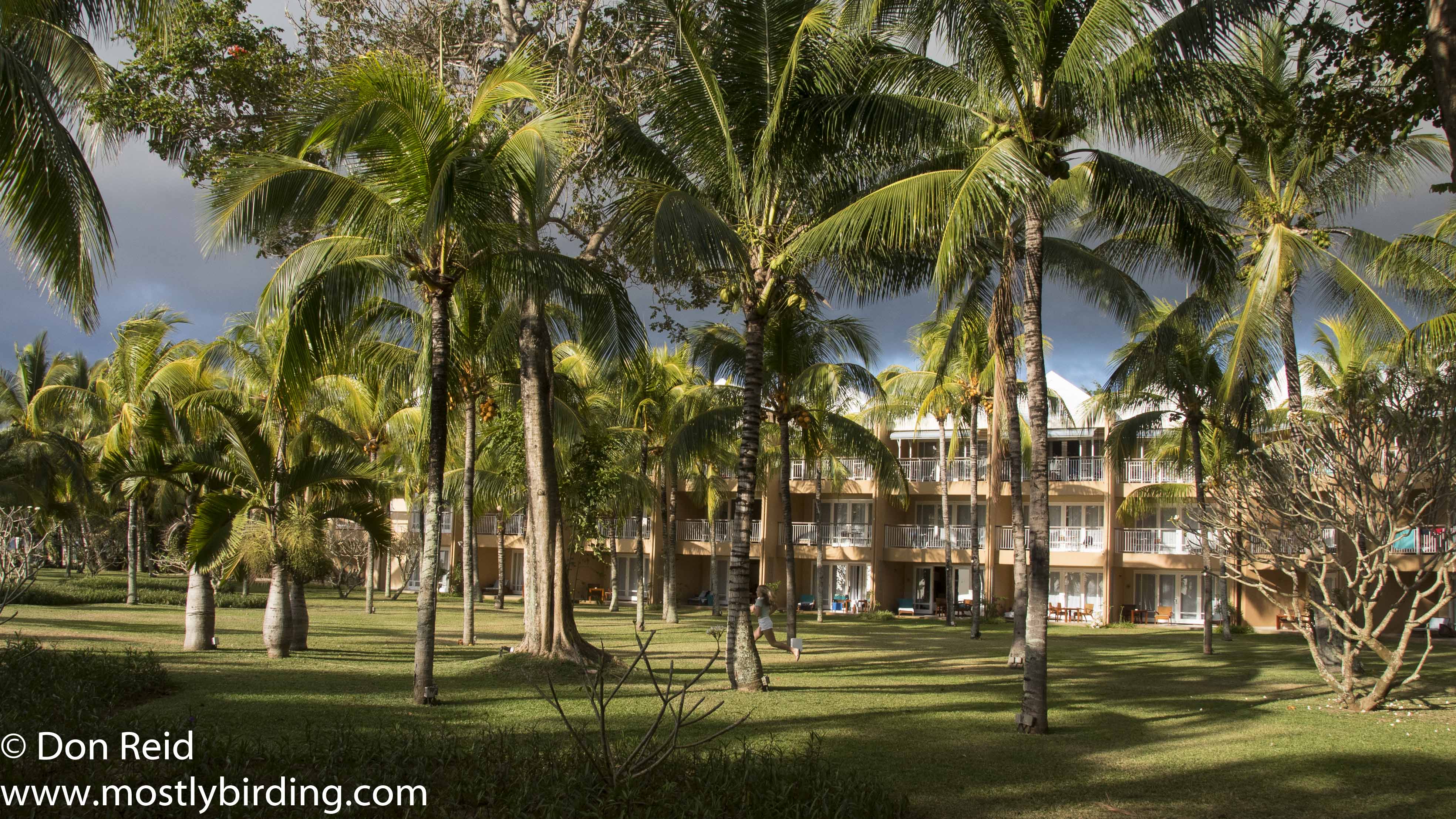
Our much anticipated trip to Mauritius to celebrate our “milestone” birthdays with the family was a highlight of the year from all points of view – the sheer joy of having our 3 children, their spouses and our 7 grandchildren with us in such a beautiful setting for a whole week was awesome (as they say).
Le Victoria hotel, Mauritius
I didn’t do any serious birding but the hotel gardens were good for a total of just 11 species, of which 6 were lifers to add to my world list (yes I’m a “lister”!)
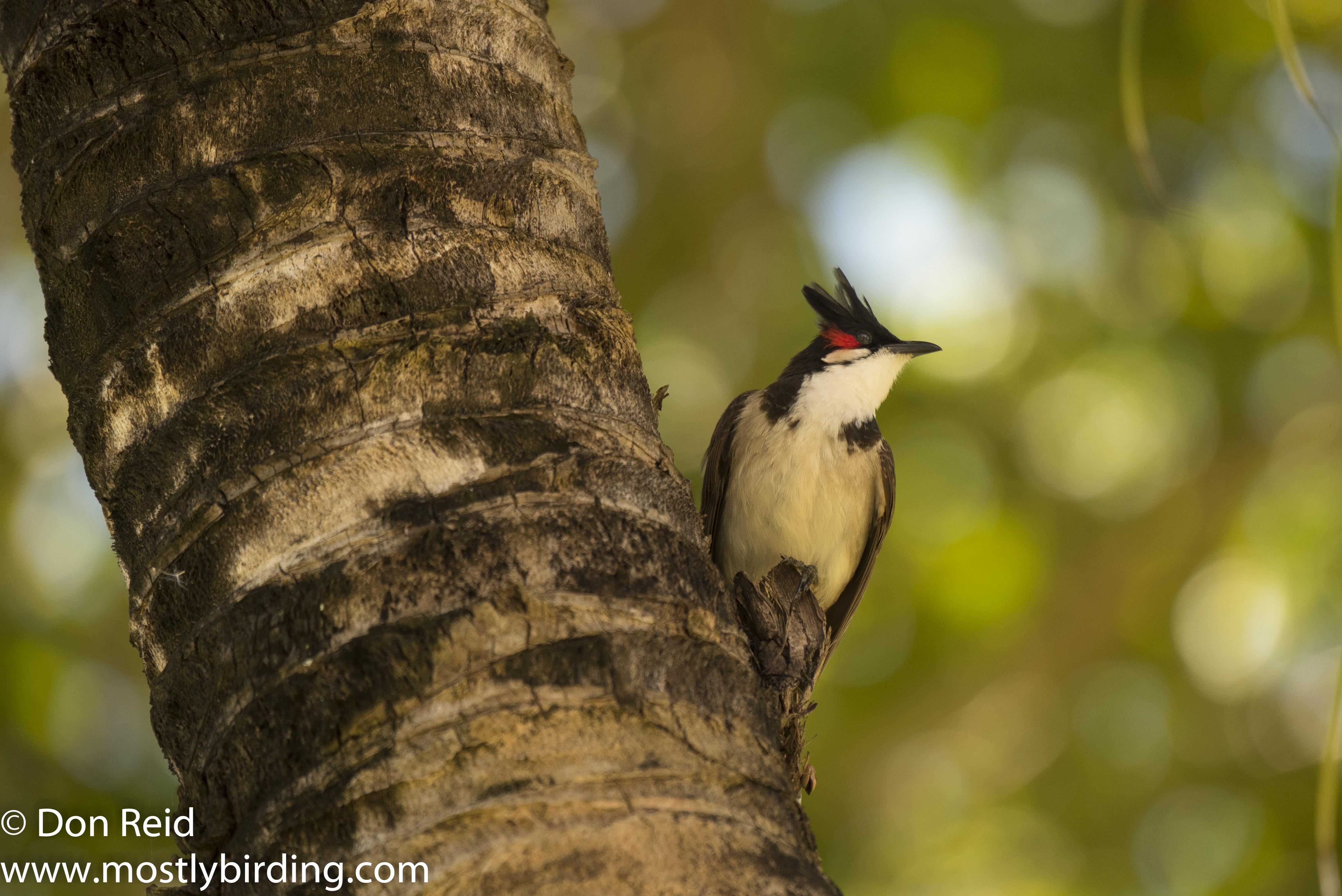
Red-whiskered Bulbul (Pycnonotus jocosus), Le Victoria hotel, Mauritius
Red Fody (Foudia madagascarensis), Le Victoria hotel, Mauritius
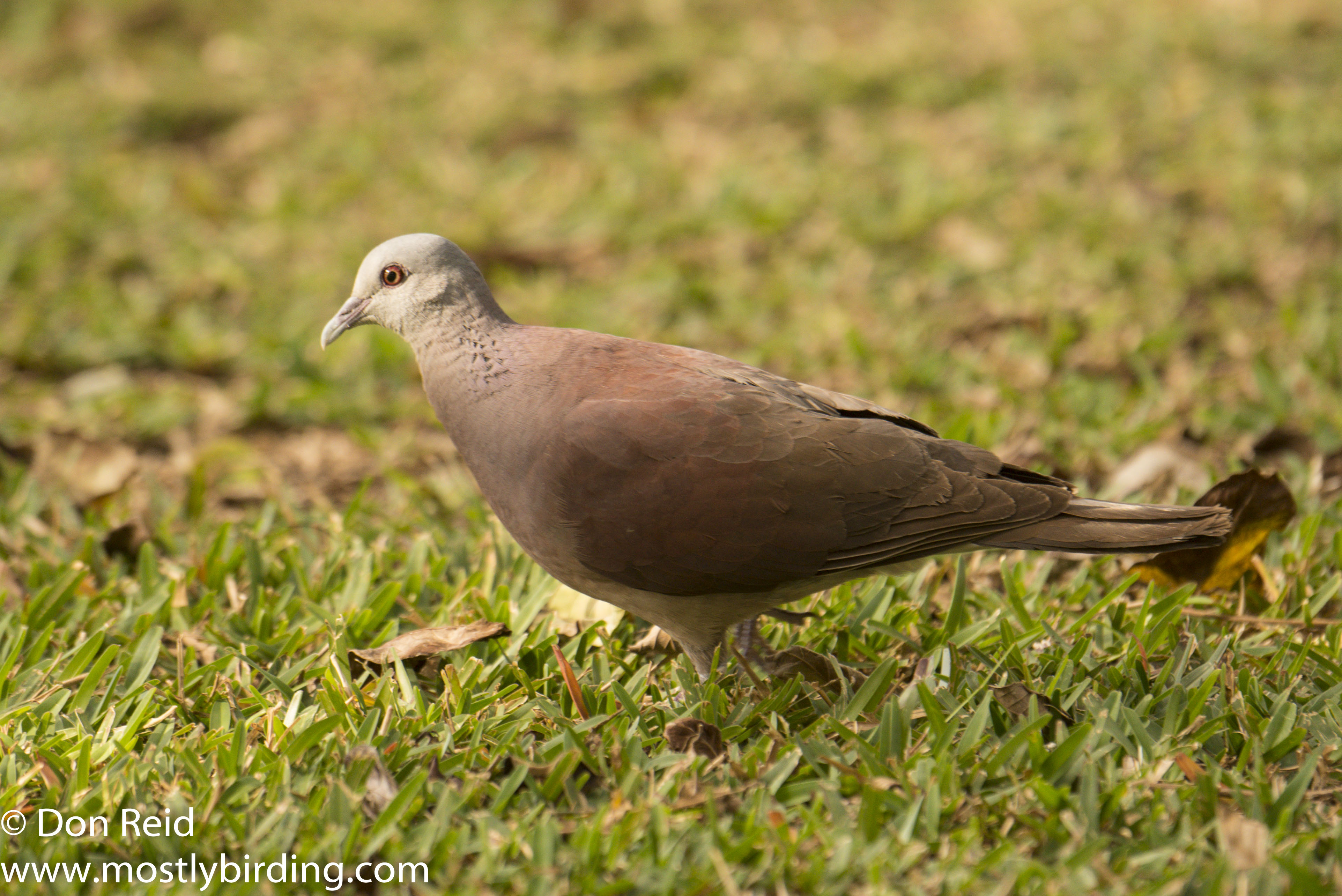
Malagasy Turtle Dove (Nesoenas picturatus), Le Victoria hotel, Mauritius
Zebra Dove / Barred Ground Dove (Geopelia striata), Le Victoria hotel, Mauritius
In any case I was so busy enjoying the ambience, the family, the great meals and the snorkelling that birding was relegated to about 10th place (just for that week, mind)
Later in the month I visited Marievale Bird Sanctuary near Nigel in Gauteng for a superb morning of birding in this prime waterbird location.
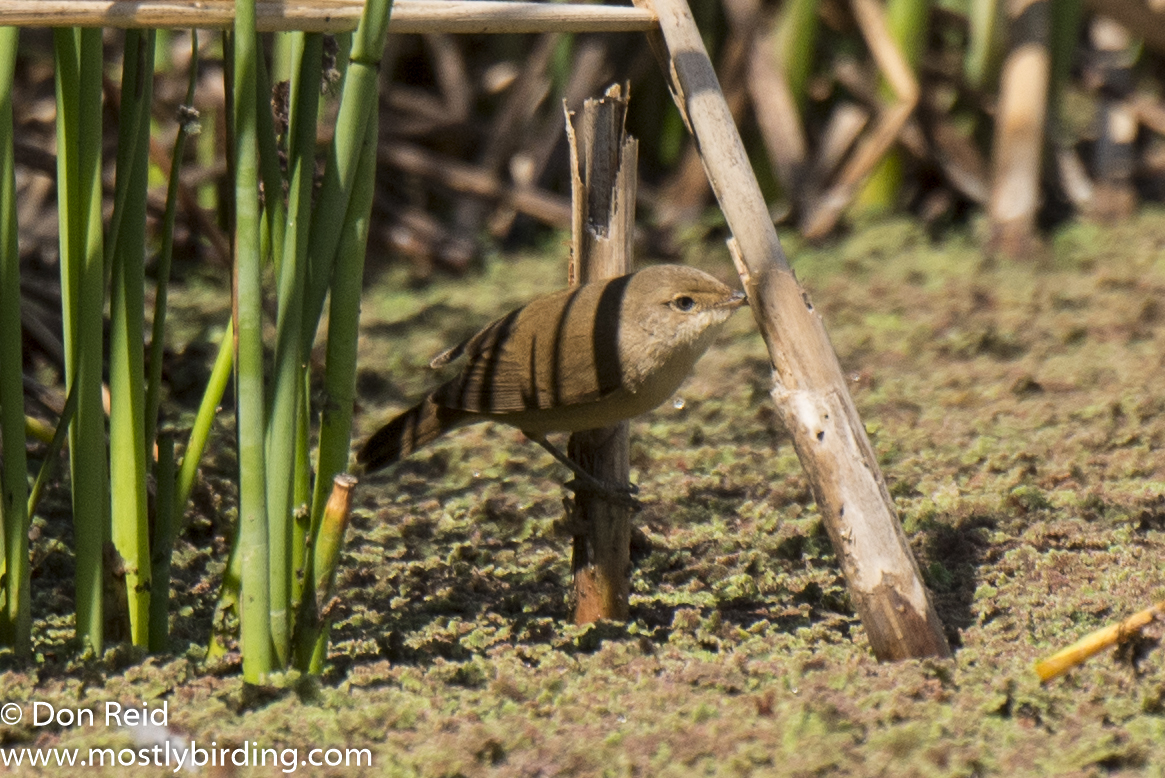
Lesser Swamp-Warbler, Marievale
White-backed Duck, Marievale
An unexpected atlasing trip with Koos on the 21st in the pentad covering the north-east corner of Pretoria was a delight, covering all areas from industrial to country estates.
November
My last visit to Kasane was also a busy one work-wise so not much opportunity for birding other than snatched moments in between other commitments – how I’m going to miss this place!
A weekend in Potchefstroom presented another chance to take Christopher (6) with me for some atlasing at Boschkop dam – plenty of highlights to make it interesting for both of us.
Marievale was my destination for the second time in 4 weeks when reports came through of Baillon’s Crake seen there. I dipped on the crake but still had a wonderful morning’s atlasing.
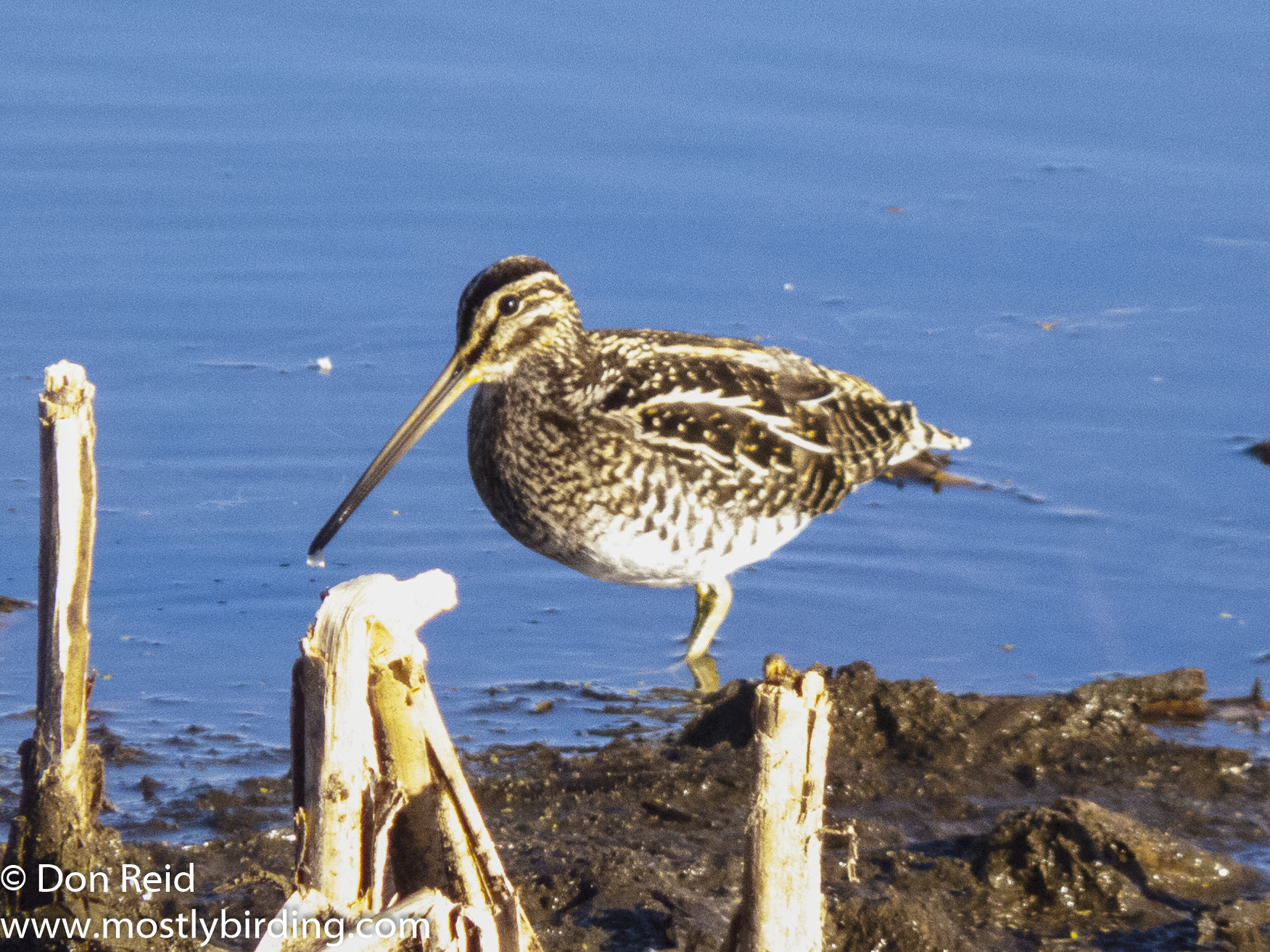
African Snipe, Marievale
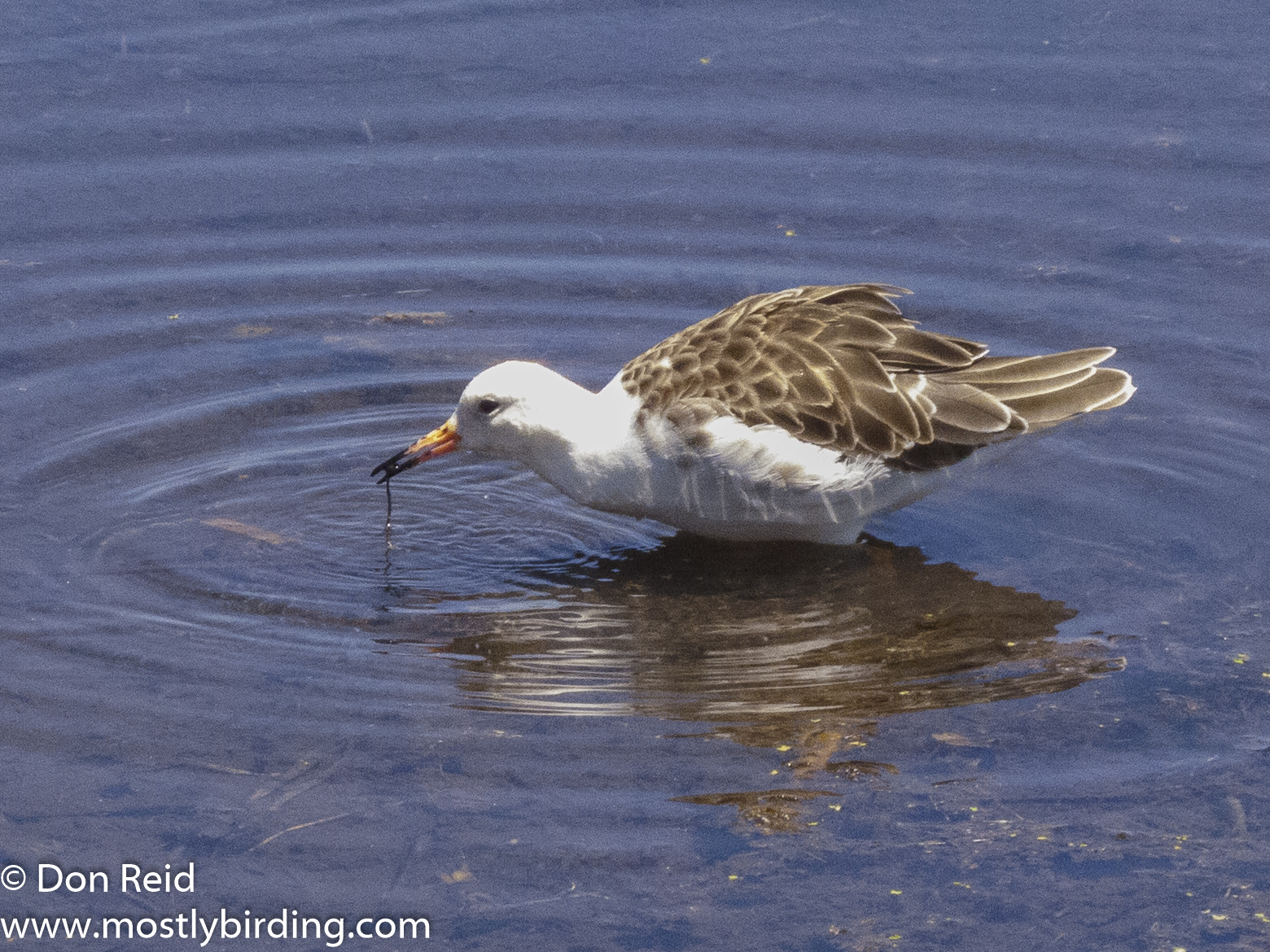
Ruff (white headed form), Marievale
On the 22nd it was time to head south (how time flies!) to our Mossel Bay home – a two day road trip with an overnight stop at Kuilfontein guest farm near Colesberg, which provided some great birding and relief from the long driving sessions.
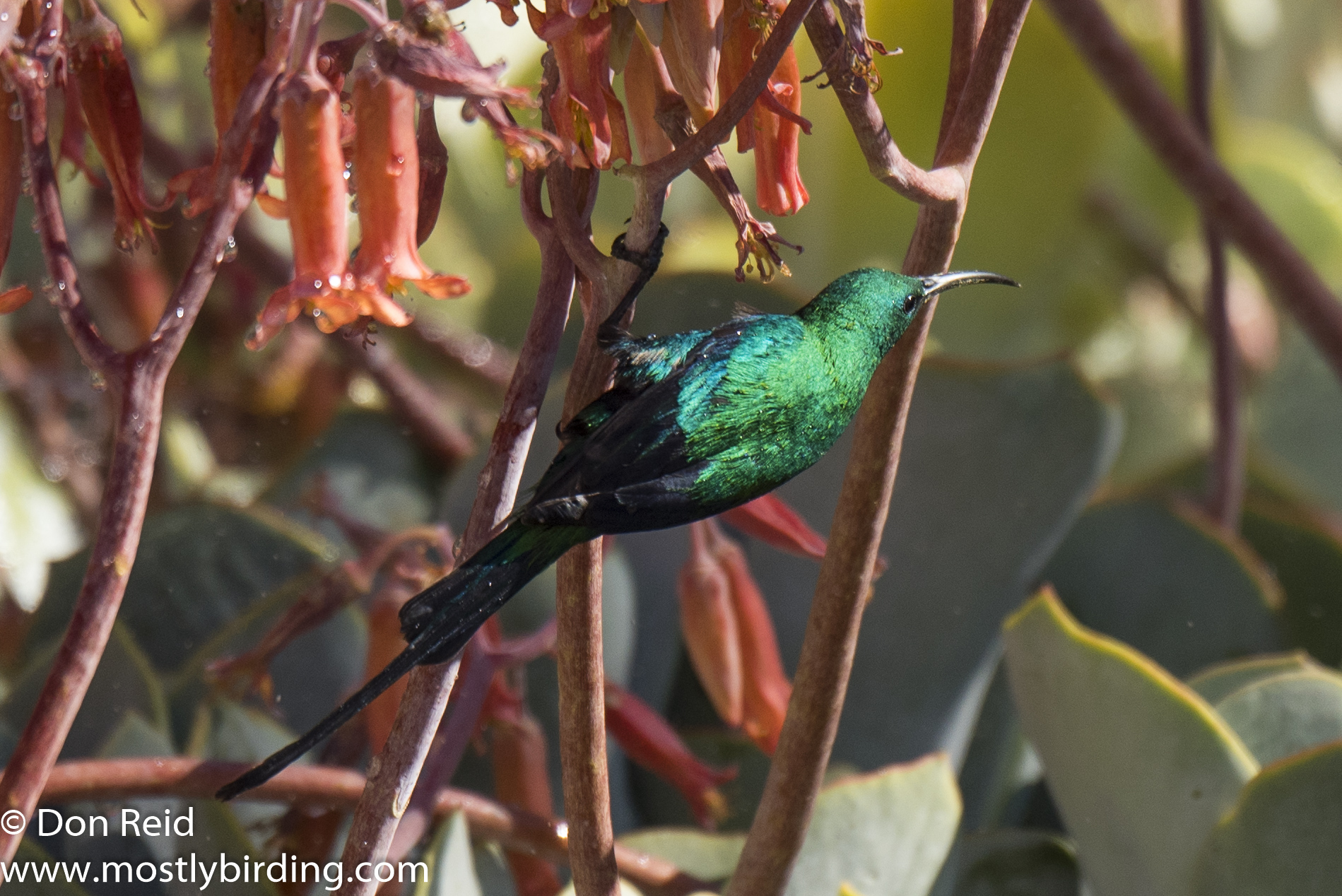
Malachite Sunbird, Kuilfontein near Colesberg
I hardly had time to recover in Mossel Bay when Birding Big Day was upon us and I invited Willie to join me for a long but fruitful day’s birding along some of the back roads of the surrounding countryside. We ended the day quite happy with 124 species and something like 120th place in the national challenge.
Common Ringed Plover, Klein Brak, BBD 2017
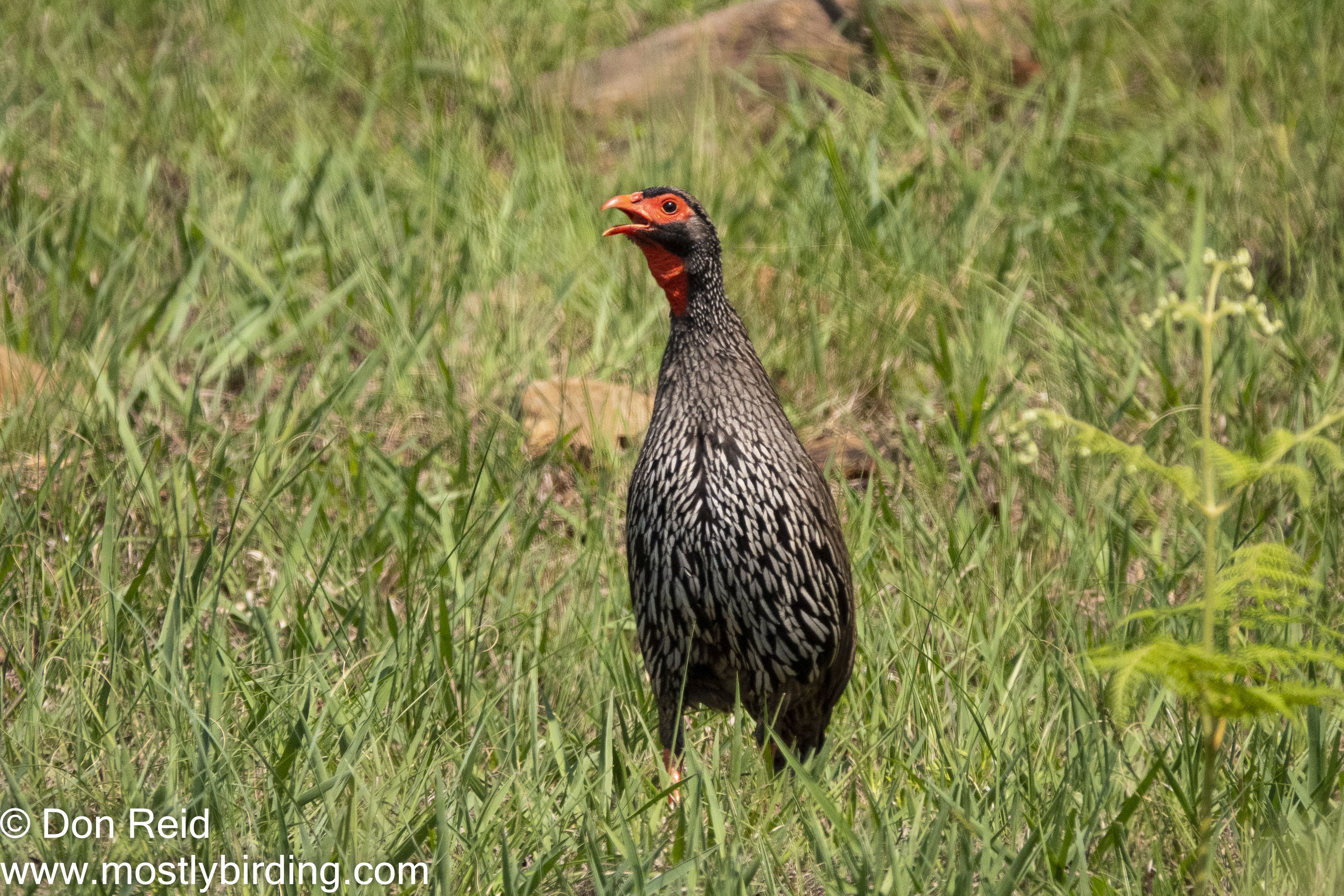
Red-necked Spurfowl, Brandwag area, BBD 2017
December
December as usual was given over to family matters with a bit of atlasing squeezed in here and there. Apart from the good birding that Mossel Bay offers, most of my trips were in the direction of Herbertsdale, some 50 kms north-west of Mossel Bay, where the countryside is attractive and the roads quiet.
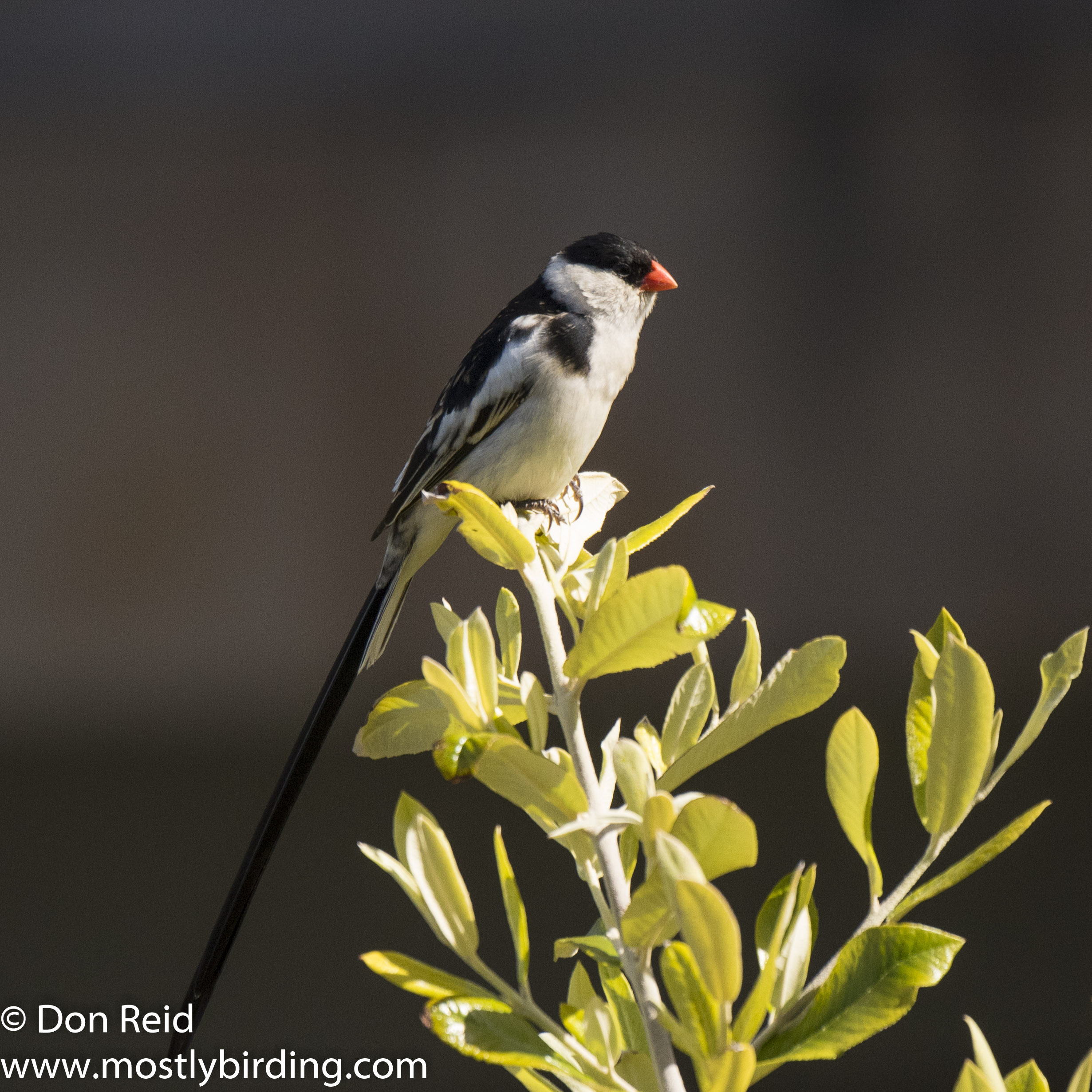
Pin-tailed Whydah (Male), Mossel Bay
Booted Eagle, Mossel Bay
White-rumped Swift, Mossel Bay
Steppe (Common) Buzzard, Mossel Bay area
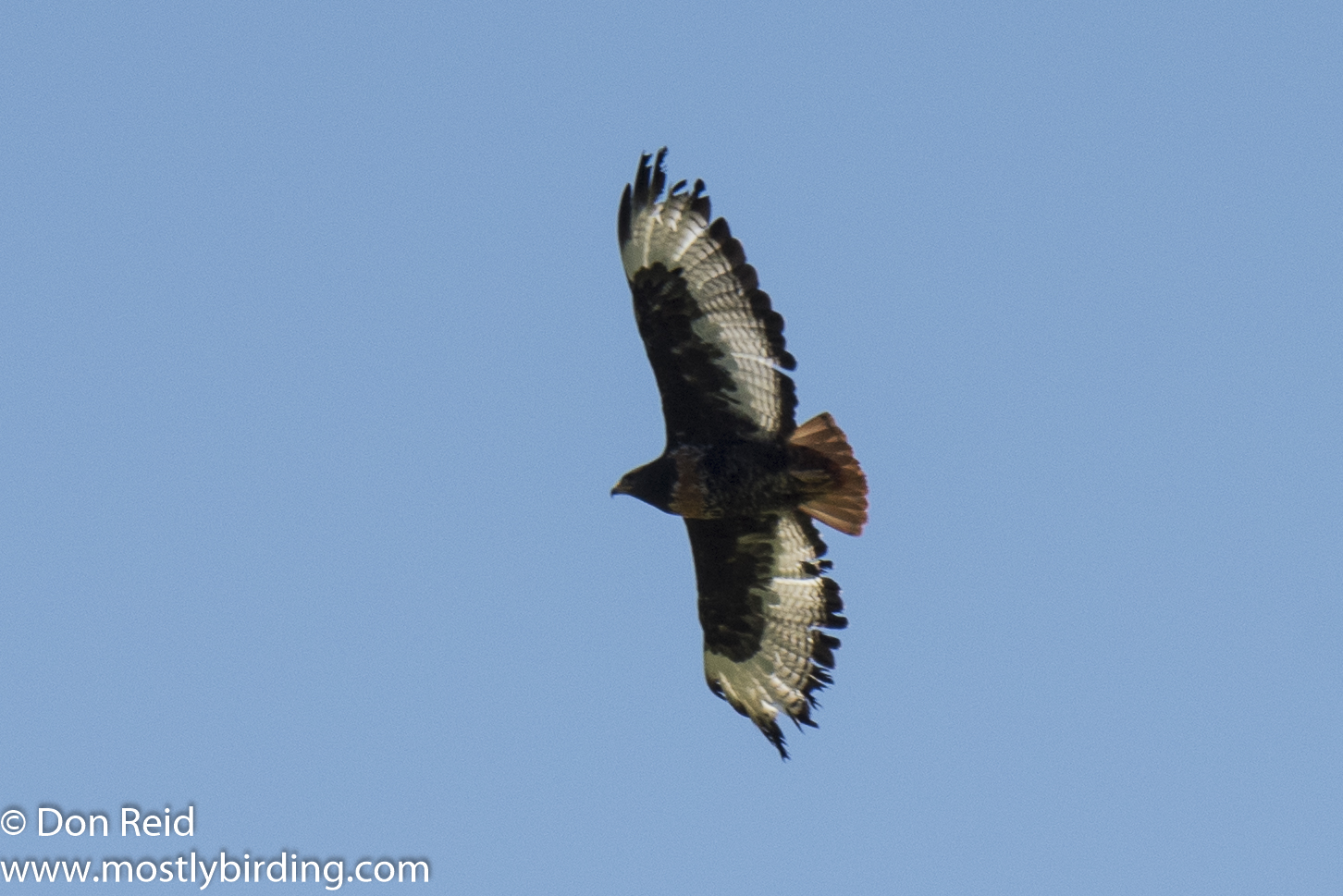
Jackal Buzzard, Mossel Bay
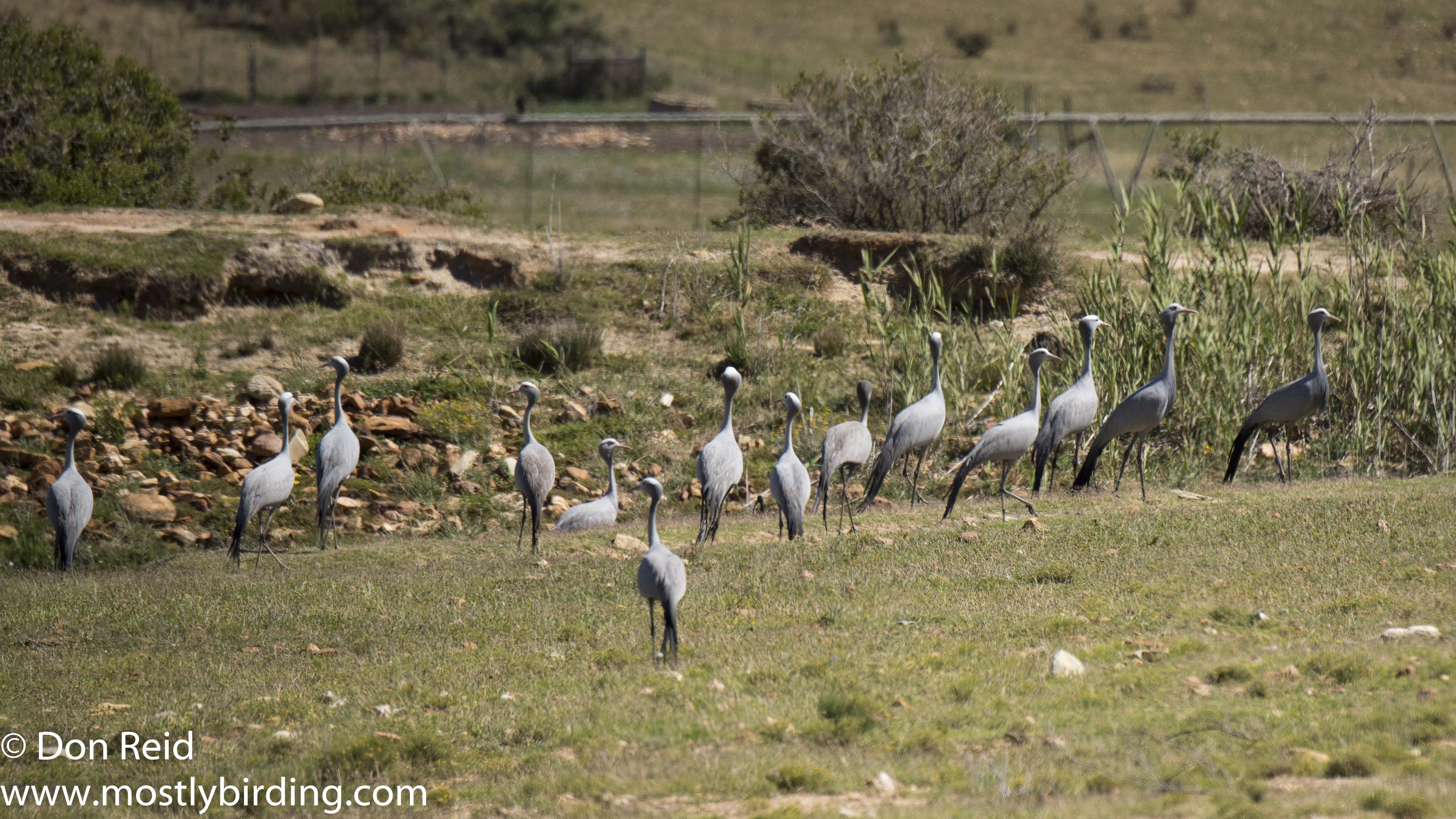
Blue Cranes, north of Herbertsdale
Cape Sugarbird, Mossel Bay
Scenery north of Herbertsdale
The last 3 days of the year were spent at a cottage in the hills beyond Calitzdorp, serious Little Karoo country and good for some of the Karoo specials. The cottage was Andre and Geraldine’s dream that became real, through a lot of hard work on their part.
Evening walk, Calitzdorp
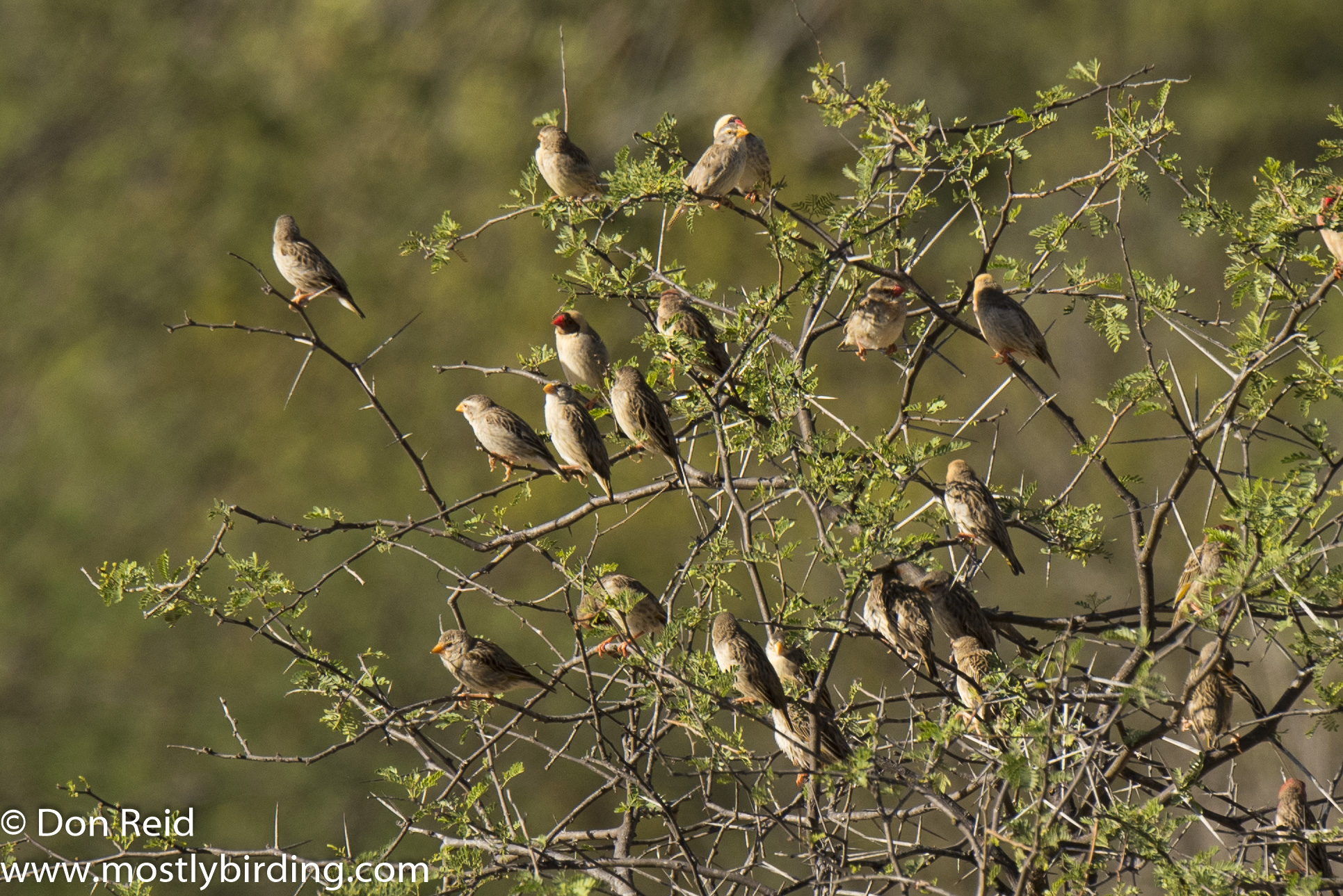
Red-billed Queleas, Calitzdorp
Answer to “6 Species in one frame” – left to right :
Glossy Ibis (left, just in frame), Squacco Heron, African Darter (in front), African Spoonbill (rear, twice), Little Egret, Long-toed Lapwing
Phew glad I got that post out in January (only just) – a Birding Year story is no good whatsoever in February
Another memorable Birding Year has come and gone – a year filled once again with travelling to many familiar places and some exciting new ones, atlasing at every opportunity, a number of new birds seen and enough experiences to fill my journal to the brim.
So here’s a synopsis of my birding activities during the year along with photos of a few of the species encountered and places visited. Some of the trips are covered in separate posts in a lot more detail.
January
Our year kicked off in Mossel Bay, our home town for some of the year and I took the opportunity to do some atlasing / birdmapping in the area – Hartenbos and the adjoining inland in particular.
Agulhas Long-billed Lark in full song
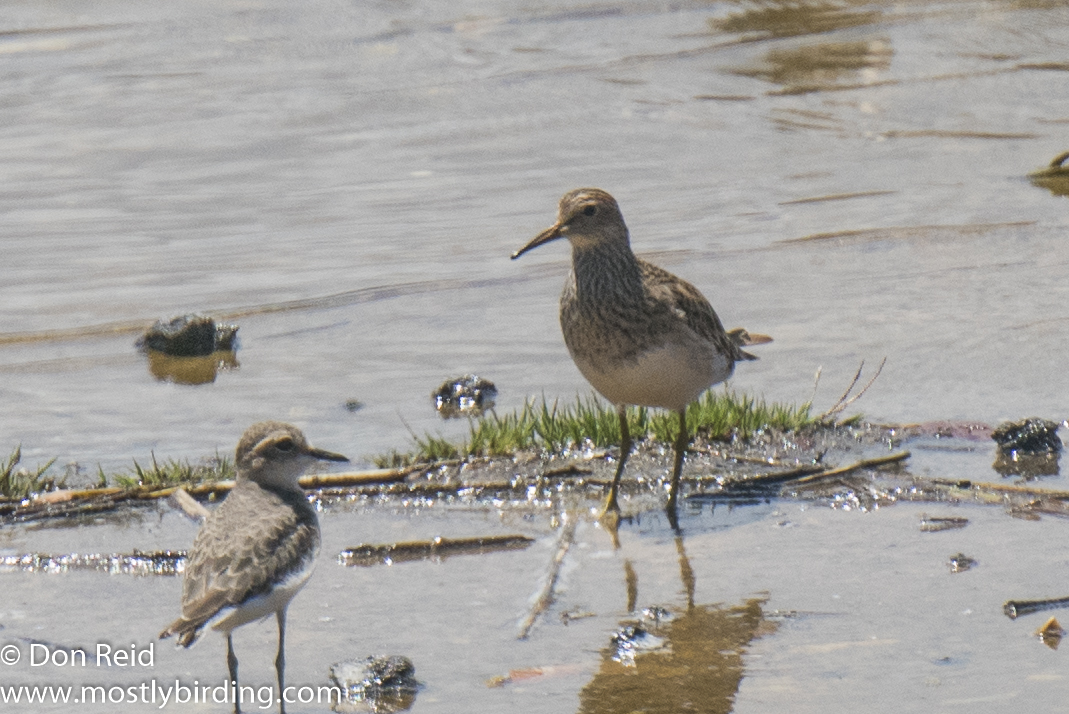
On the 9th I had the unexpected thrill of finding a Pectoral Sandpiper, classed as a national rarity, which I duly reported to Trevor Hardaker who sent out a note to all subscribers to the SA Rare Bird News network – what a memorable day!
Pectoral Sandpiper, Hartenbos River weir
SA Rare Bird News report
We started our journey back to Gauteng on the 13th, first stopping over in charming Prince Albert for two nights. I managed to fit in some atlasing in the area including a pleasant trip along the Damascus road.
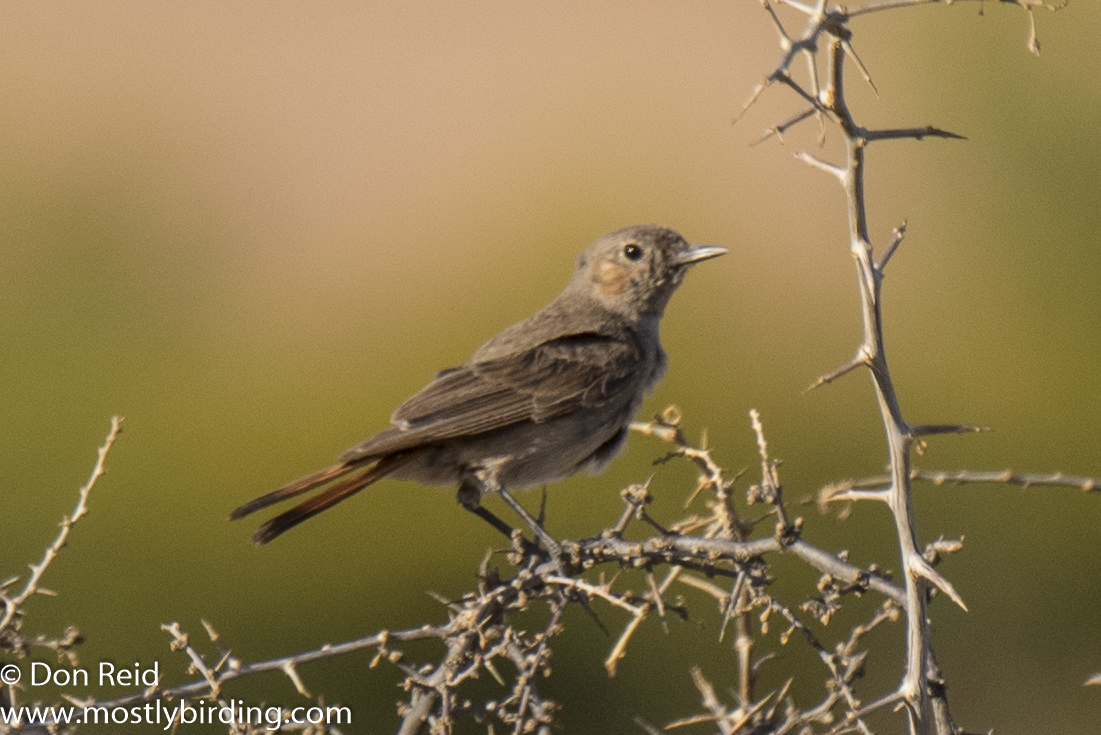
Familiar Chat, Prince Albert (Damascus road)
Our next stop for one night was at Garingboom guest farm near Springfontein in the Free State which also proved to be an interesting birding destination.
Amur Falcon, Garingboom Guest farm, Springfontein
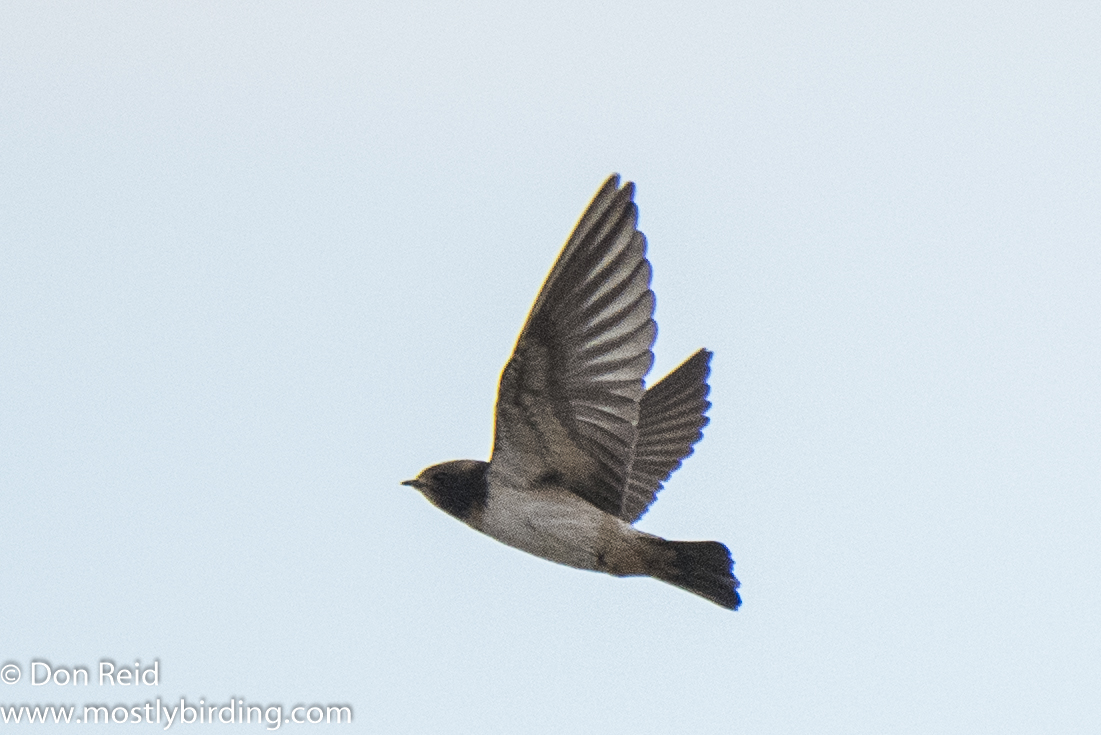
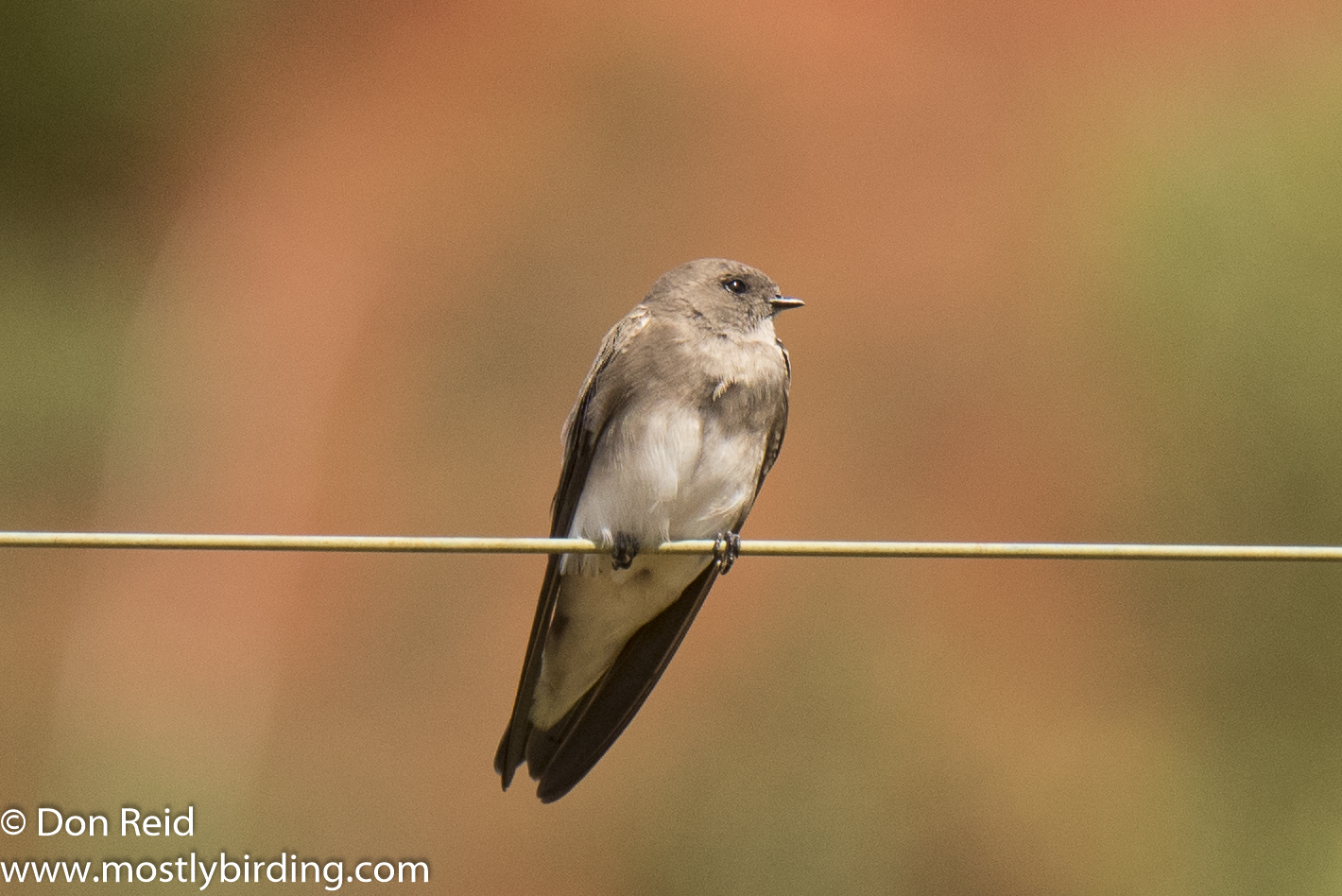
SA Cliff Swallow, Garingboom Guest farm, Springfontein
Back in Pretoria, my first atlasing was centred around Mabusa Nature Reserve some 100 km north east of Pretoria which was a most enjoyable spot with some challenging roads and good birding
Mabusa Nature Reserve
Yellow-fronted Canary, Mabusa Nature Reserve
Bushveld Pipit, Mabusa Nature Reserve
Mabusa Nature Reserve
February
My first trip of the year to Kasane presented some great birding and atlasing opportunities in the summer lushness of Chobe Game Reserve.
Kasane Forest Reserve
White-crowned Lapwing, Chobe Game Reserve
Chobe Game Reserve
Double-banded Sandgrouse, Chobe Game Reserve
Back in Pretoria I did further atlasing in the Delmas area
Brown-throated Martin, Delmas area
We used our timeshare points for a weekend at Champagne Valley in the Drakensberg, which provided an opportunity for some atlasing in the area
Grey-crowned Crane, Drakensberg south
Drakensberg south
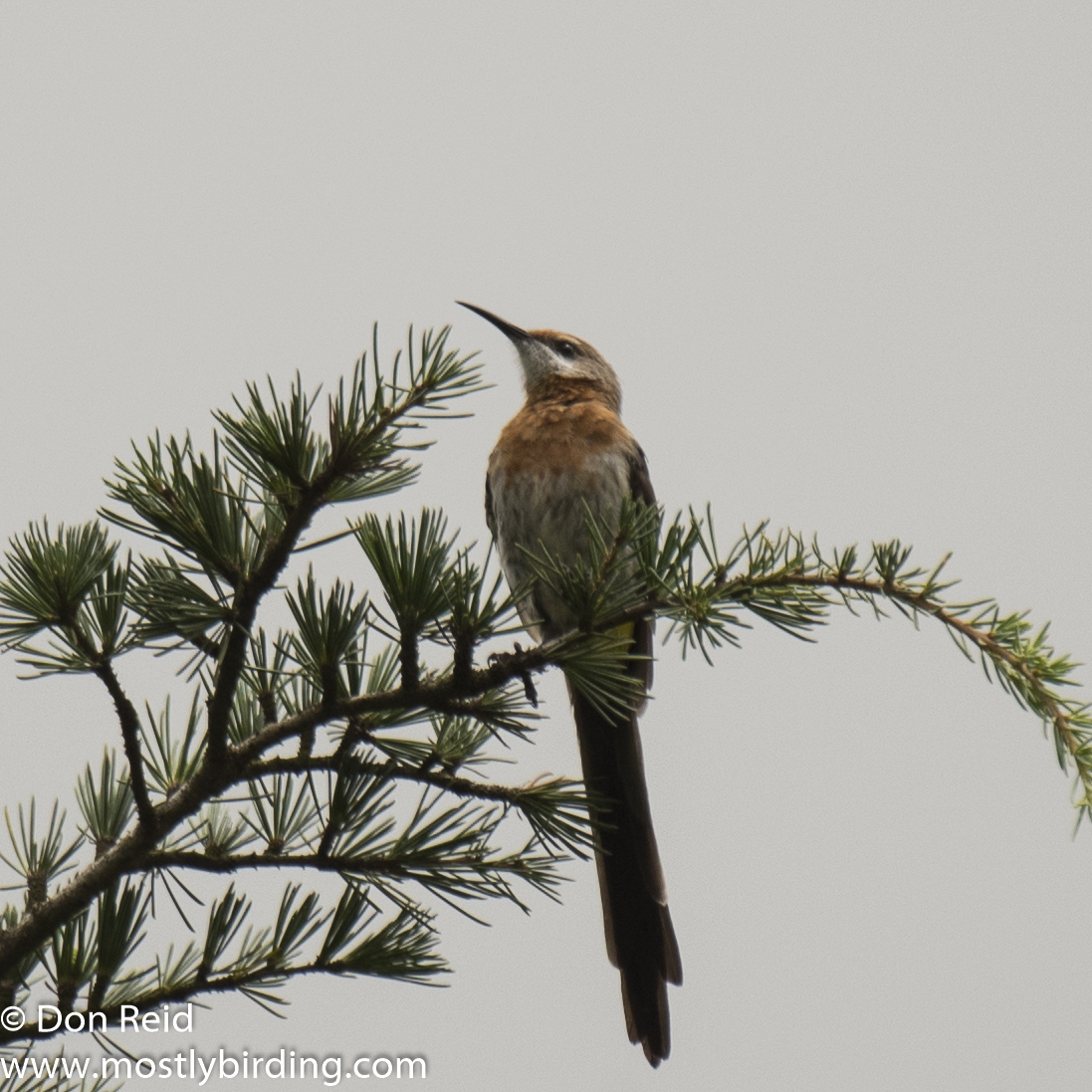
Gurney’s Sugarbird, Drakensberg south
March
Our Canadian family arrived on the 6th for a two week visit which included a Kruger Park visit and a trip to Vic Falls and Chobe Game Reserve
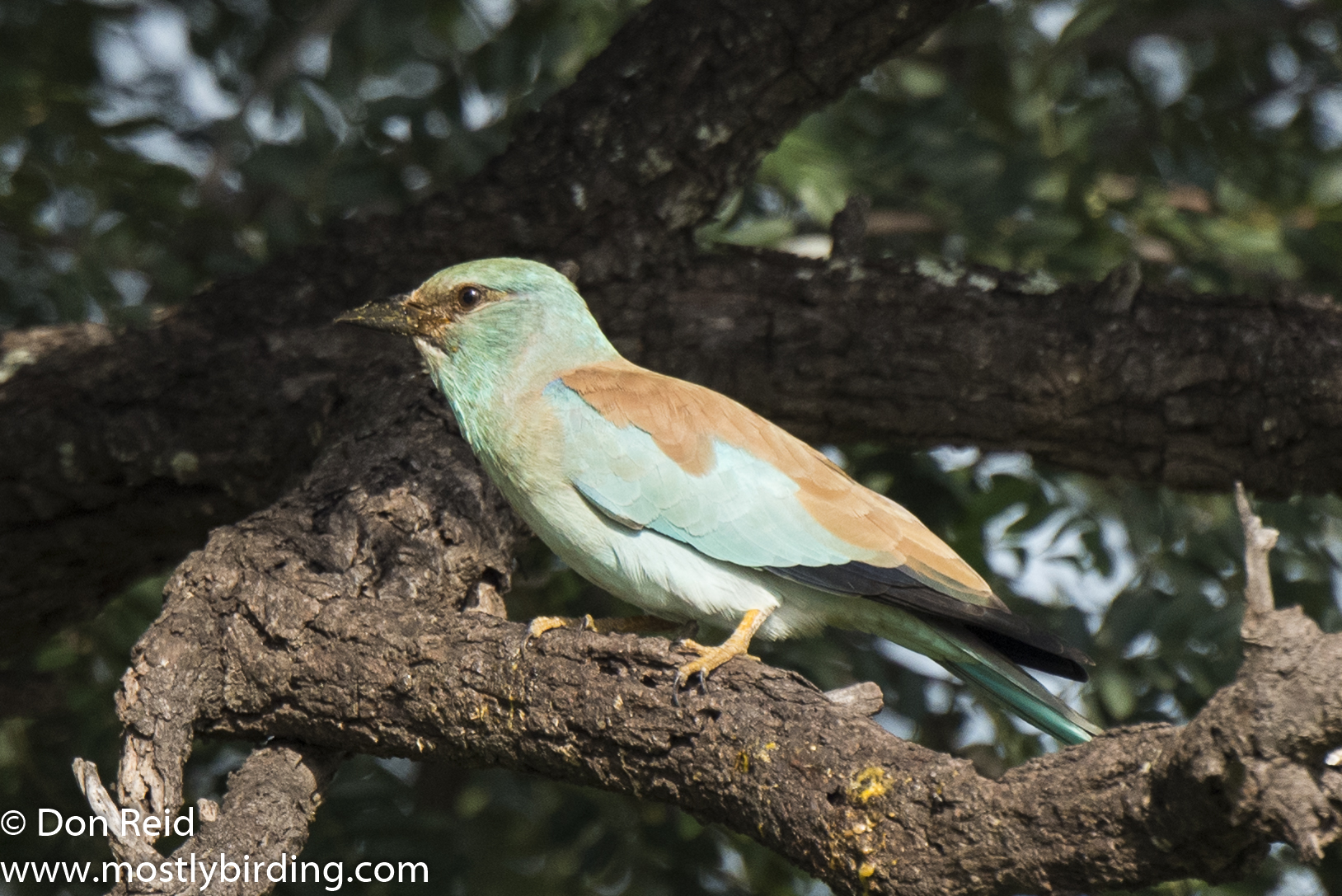
European Roller, Kruger Park
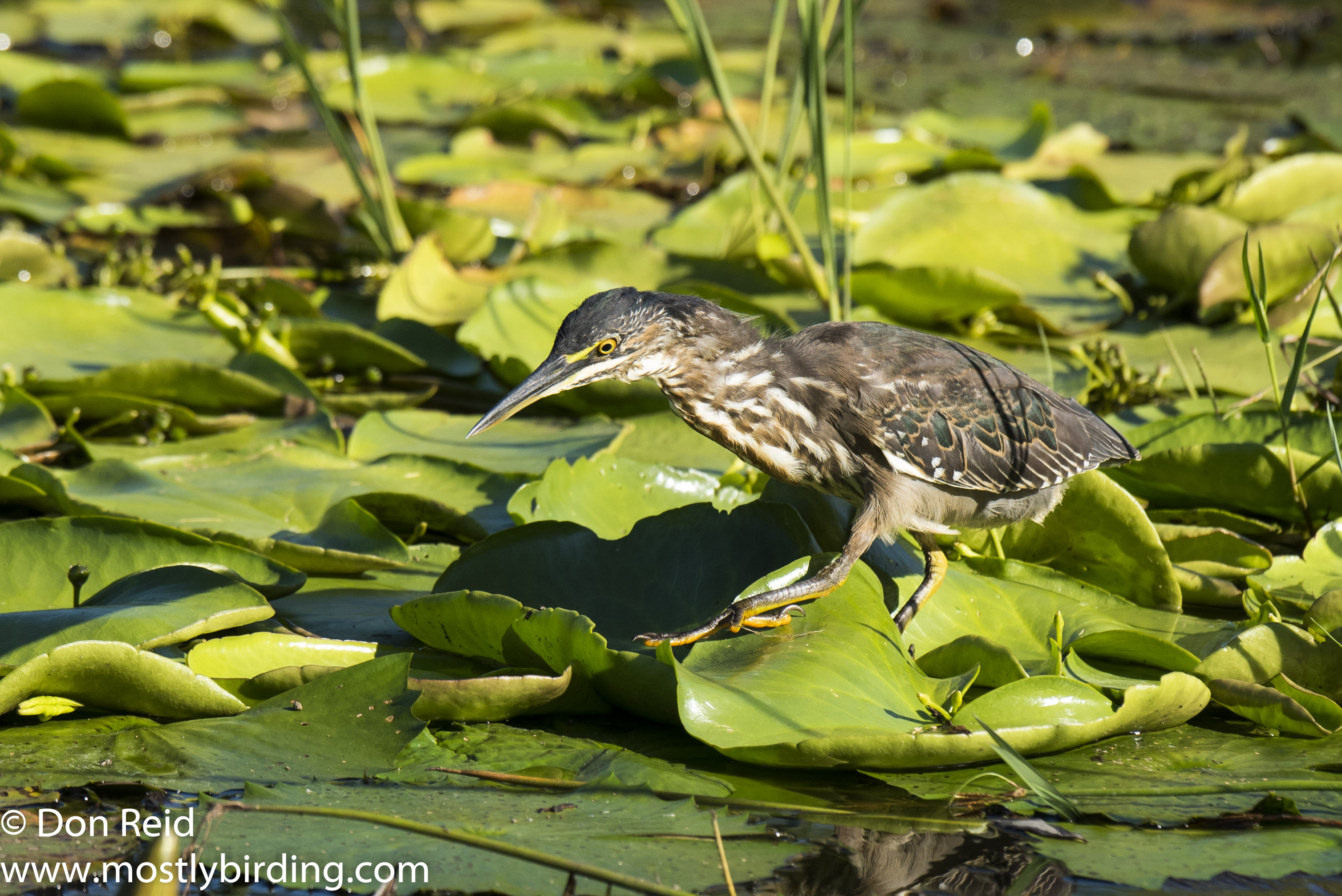
Green-backed Heron (Juvenile), Lake Panic in Kruger Park
White-fronted Bee-eater, Zambezi Cruise
Little Sparrowhawk (Juvenile), Chobe Safari Lodge
Getting back to normal after the excitement of touring with the family, we visited Potchefstroom, and I was happy to take grandson Christopher (6) with me for some birding at the local dam – I think he was more interested in my Prado’s little fridge filled with cold-drinks, but you have to start somewhere!
April
My monthly visit to Kasane, Botswana afforded another opportunity for some birding around Kasane and in Chobe Game Reserve – such a great destination which I try not to spoil with too much work….
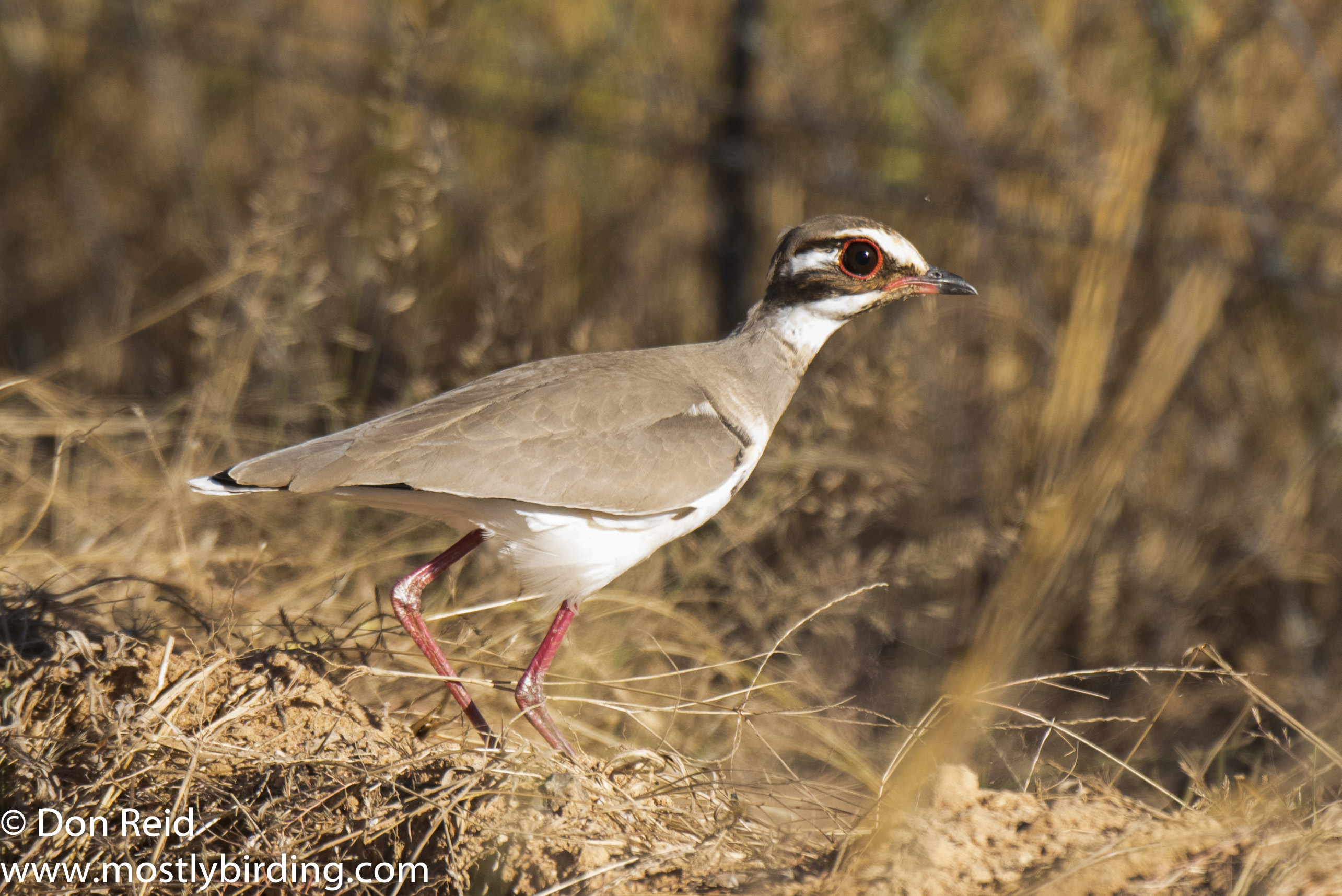
Bronze-winged Courser, Kasane Airport perimeter
Western Yellow Wagtail, Kasane Sewage Works
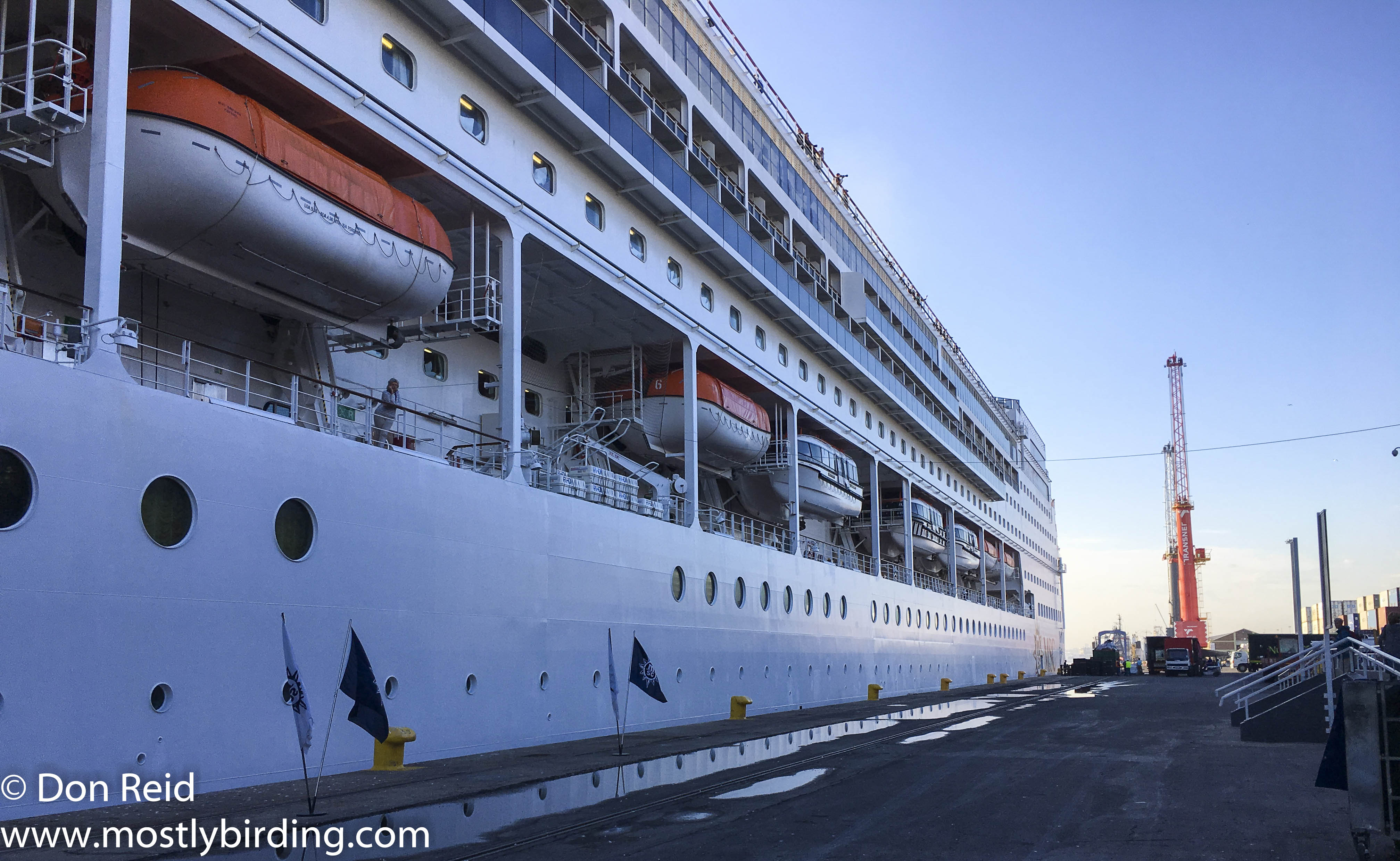
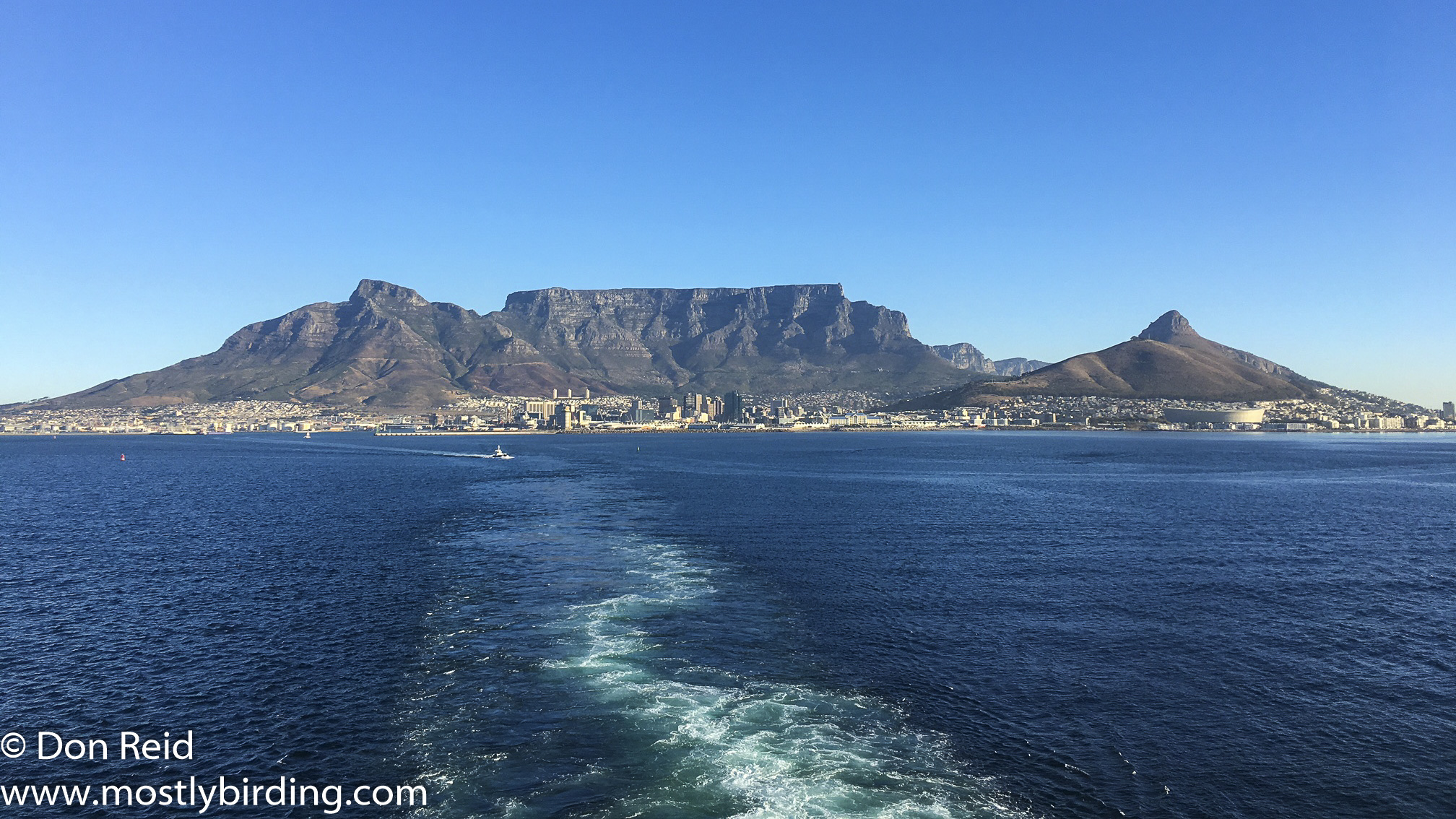
Then it was time for our much anticipated “Flock at Sea” cruise from the 24th to 28th arranged by Birdlife SA
Flock at Sea Cruise
Flock at Sea Cruise
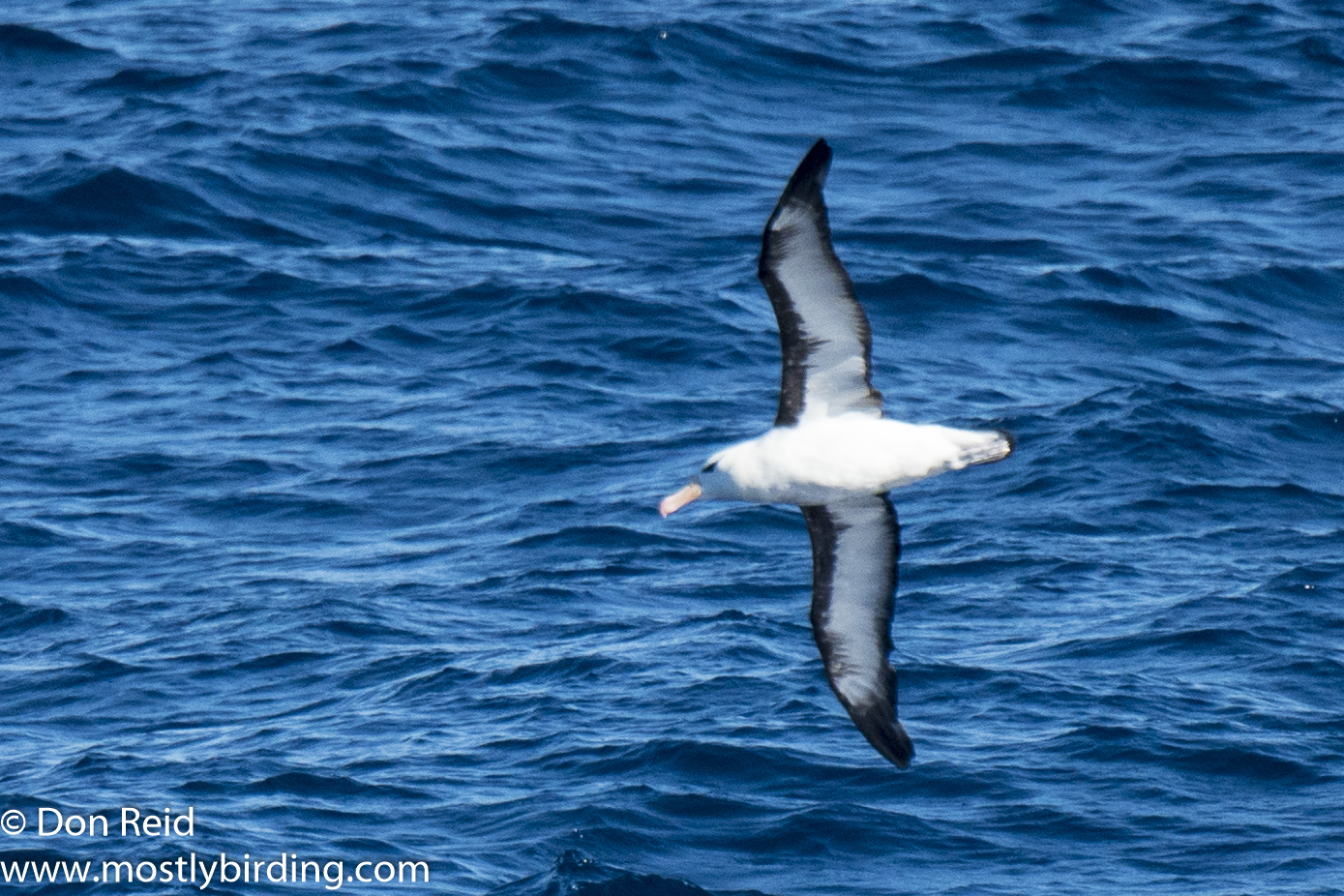
Black-browed Albatross, Flock at Sea Cruise
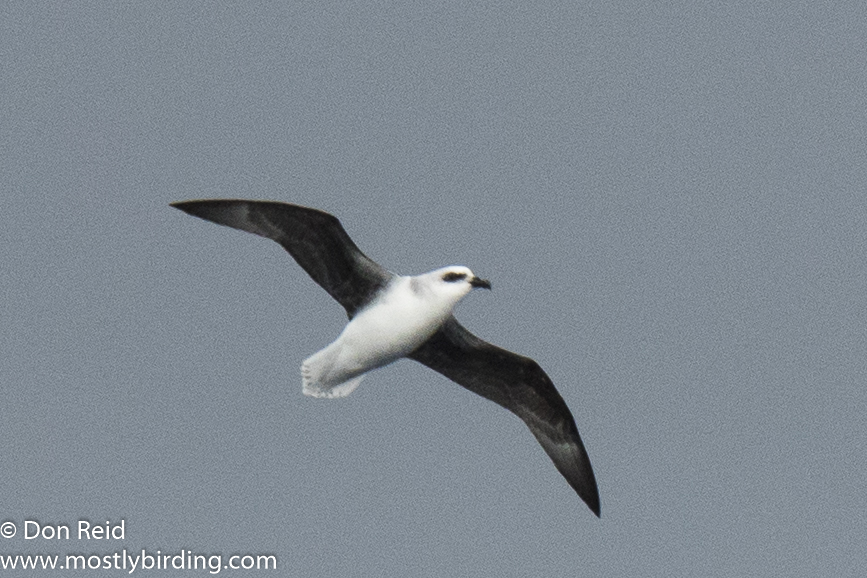
White-headed Petrel, Flock at Sea Cruise
Flock at Sea Cruise
May
Another short autumn visit to Mossel Bay meant I could fit in some further atlasing in the Southern Cape
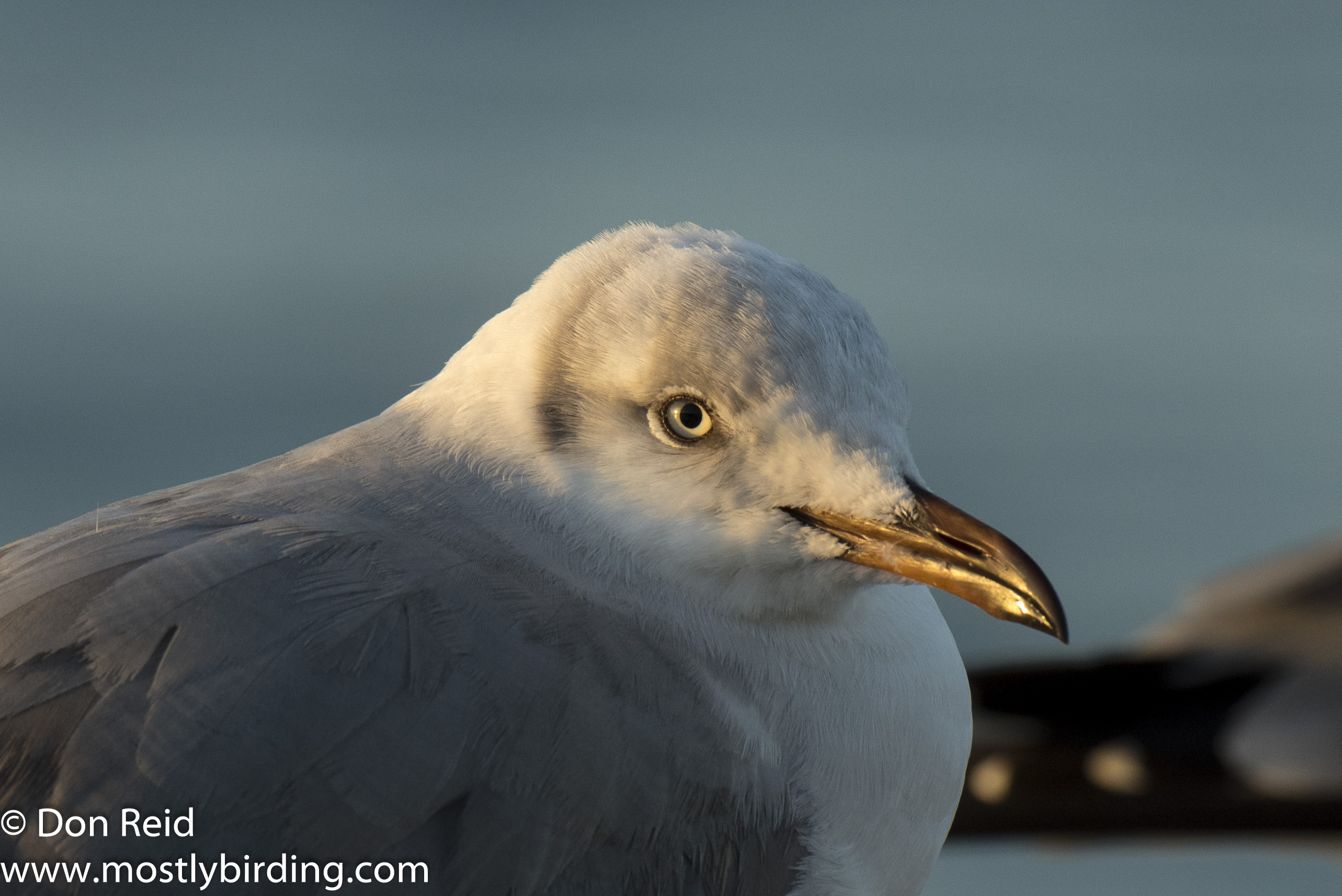
Grey-headed Gull, Mossel Bay
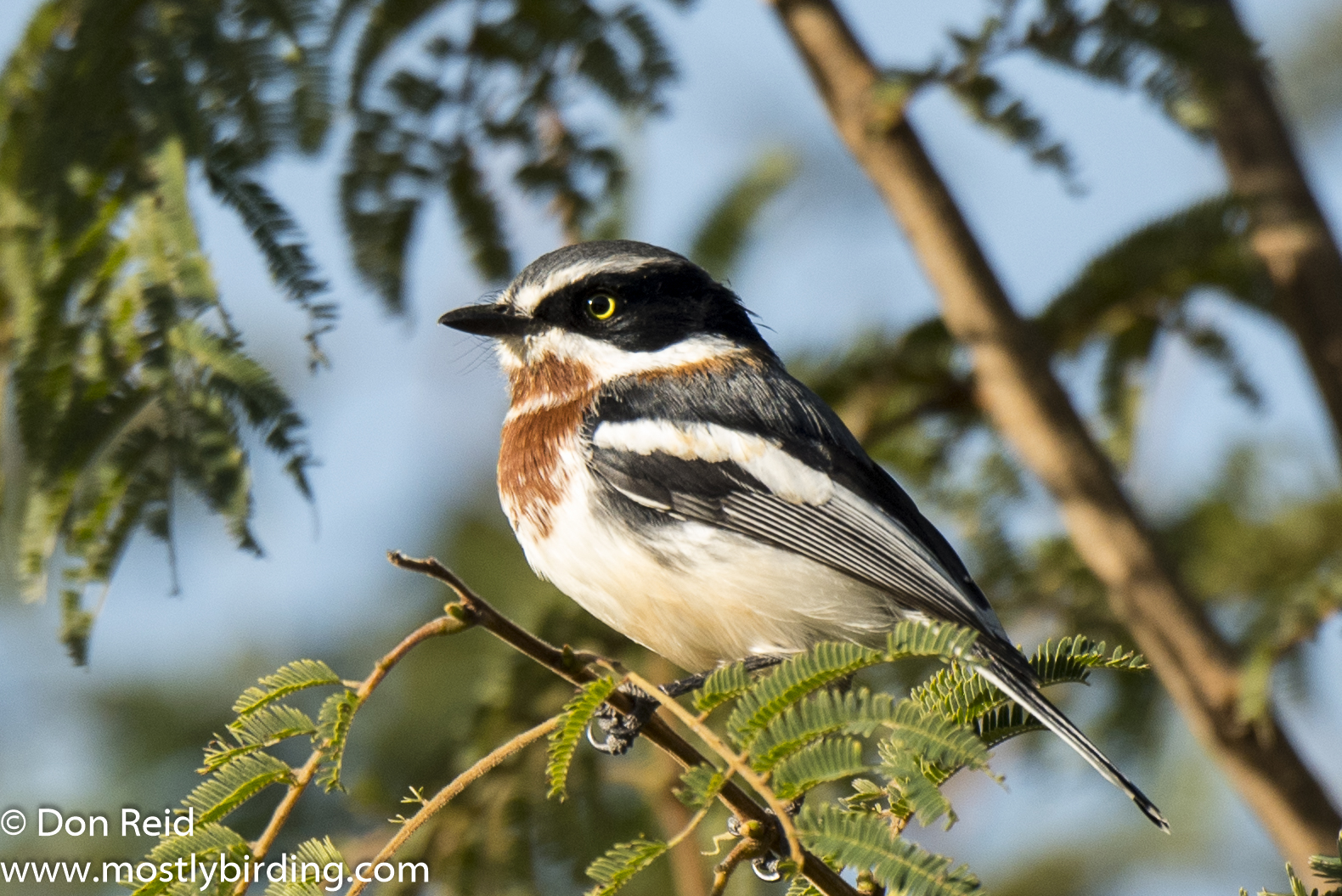
Cape Rock-Thrush (Male), Victoria Bay
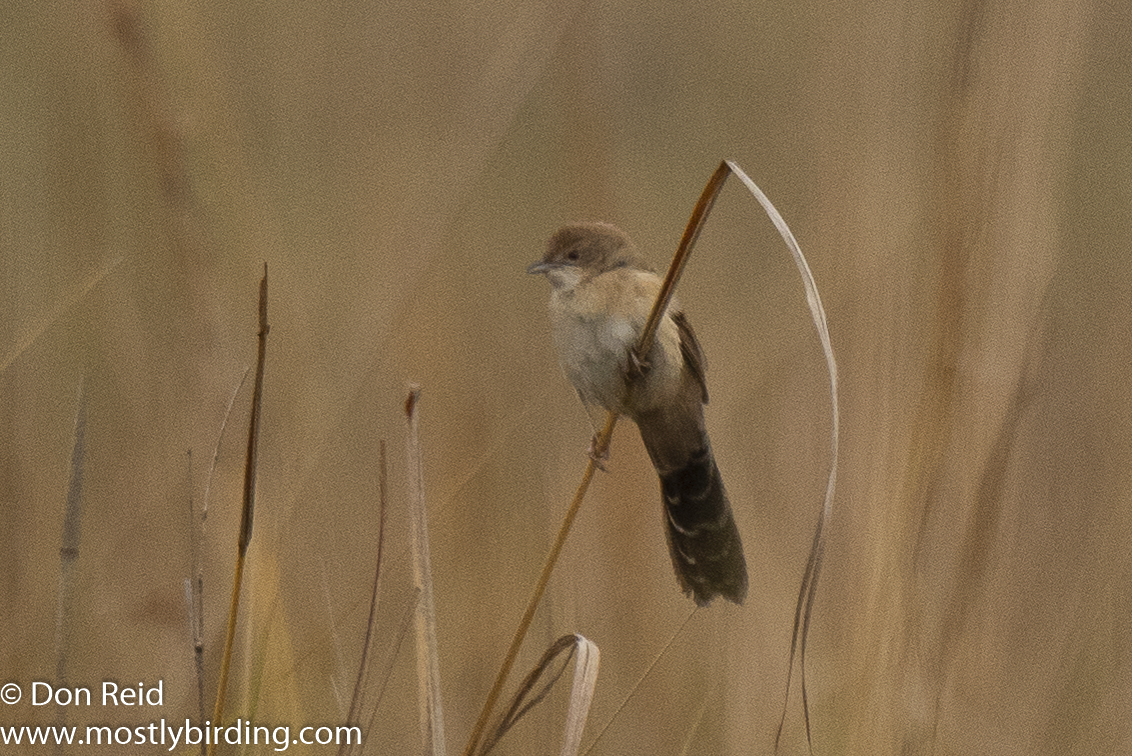
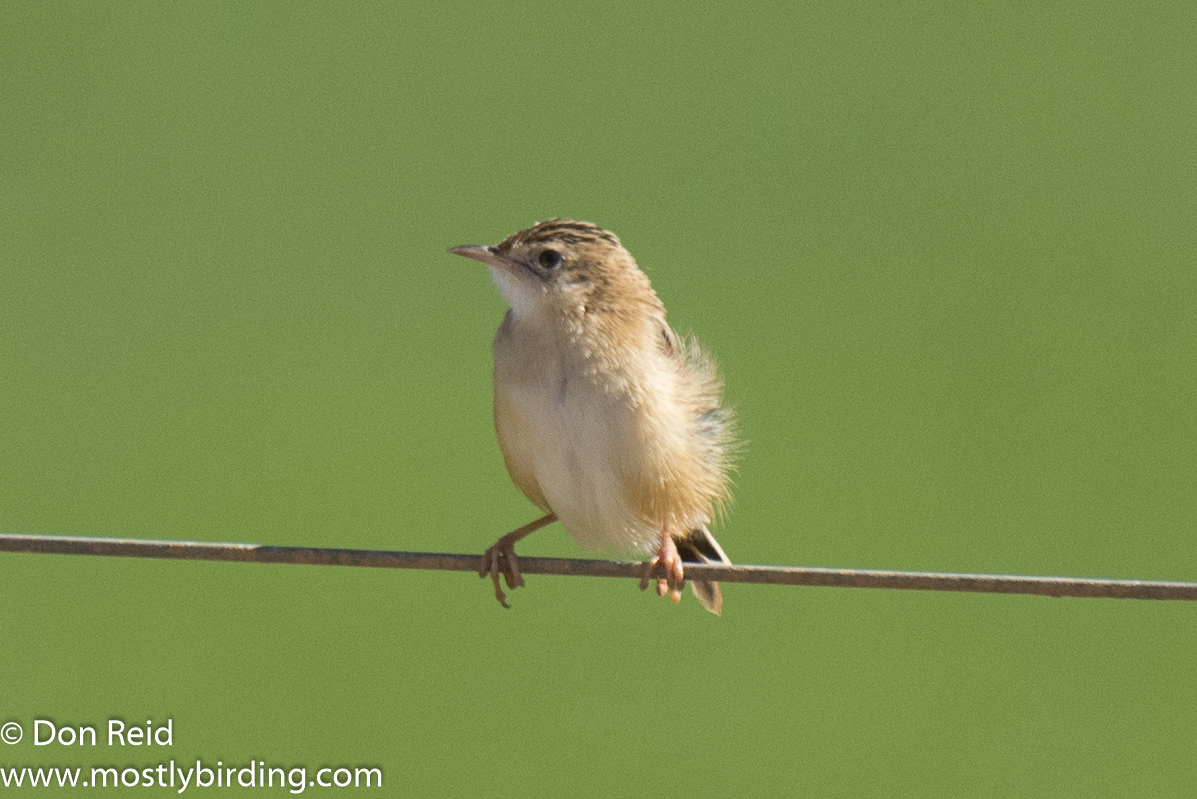
Zitting Cisticola, Herbertsdale area
Later in the month Koos and I headed to Bushfellows Lodge near Marble Hall in Mpumulanga for a day’s atlasing (and some snake watching)
Just a week later we spent 4 days at Verlorenkloof also in Mpumulanga with Koos and Rianda, one of our favourite spots for relaxing and blessed with a variety of birding opportunities
Chinspot Batis, Verlorenkloof
Lower dam, Verlorenkloof
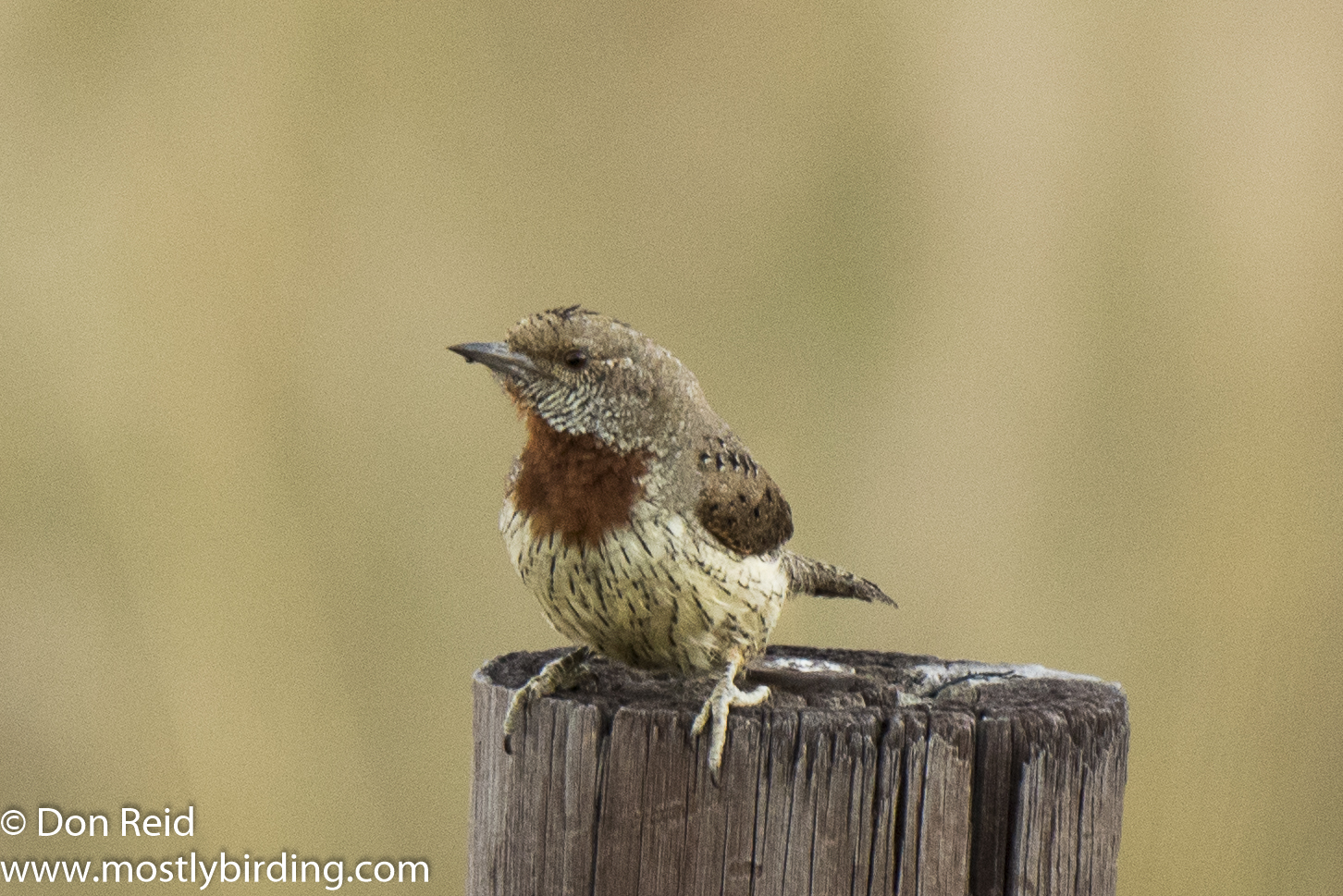
Red-throated Wryneck, Verlorenkloof
June
The month kicked off with a visit to Kasane but this time my birding was limited to a rather hurried morning trip into Chobe Riverfront
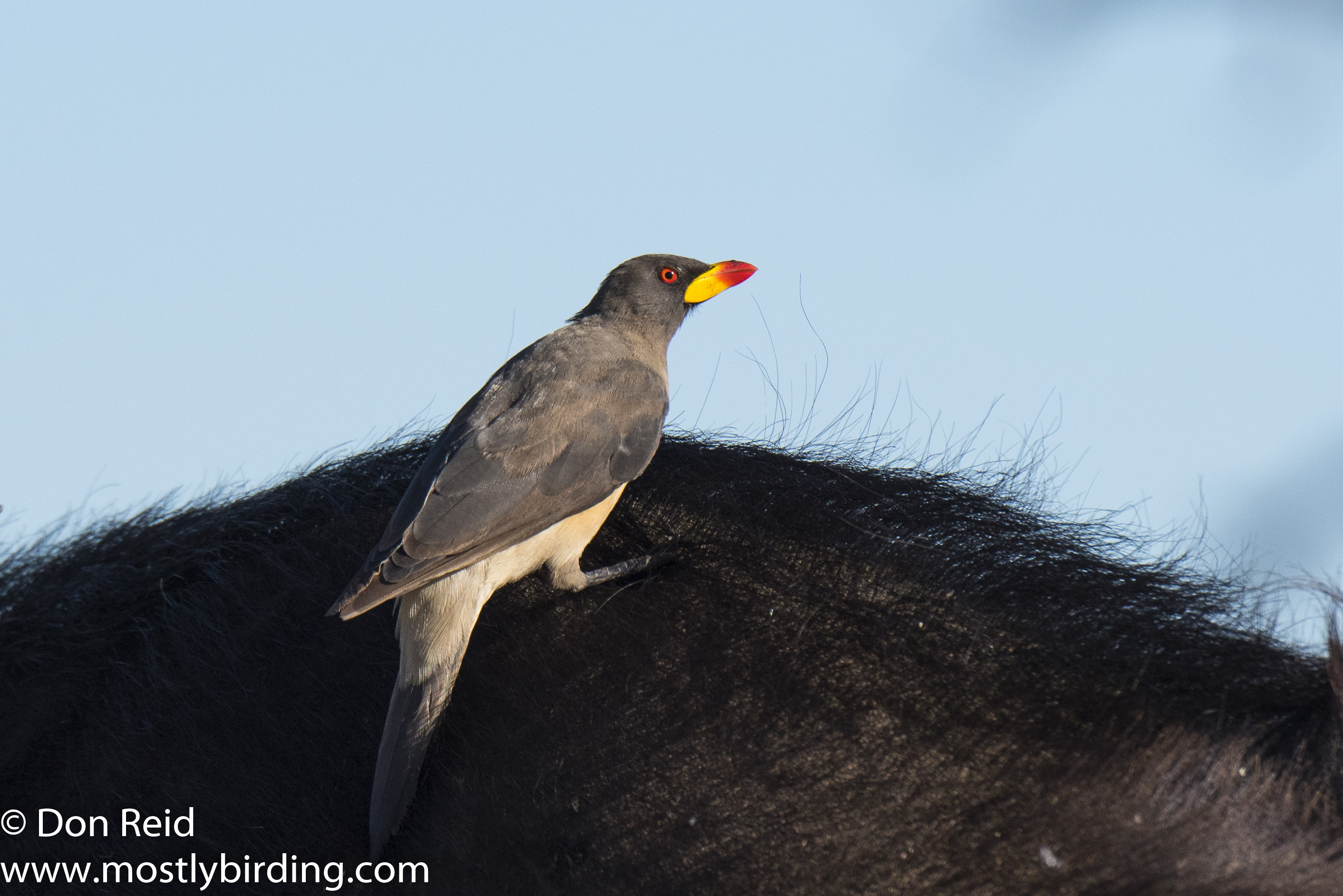
Yellow-billed Oxpecker, Chobe Game Reserve
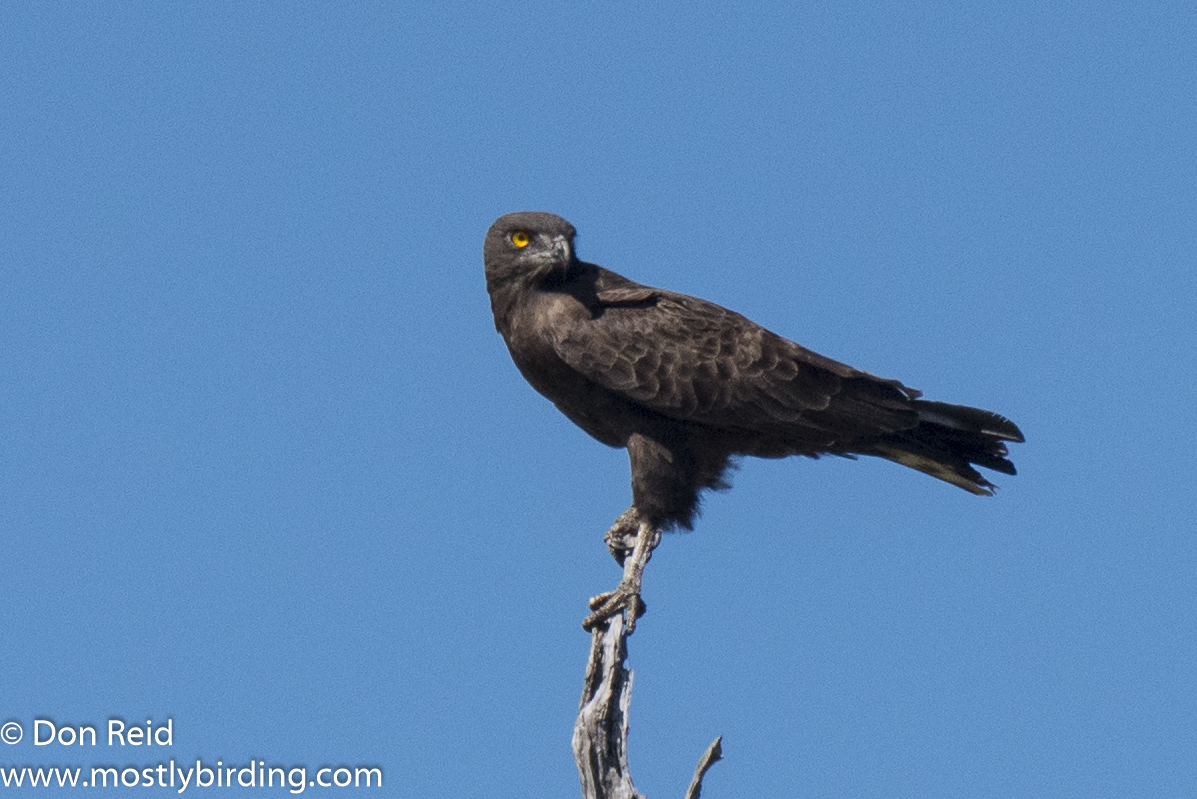
Brown Snake Eagle, Chobe Game Reserve
On the 10th Koos and I braved the mid-winter cold and the notoriously dangerous Moloto road north of Pretoria to do some atlasing in NE Gauteng
Marico Sunbird, far north east 4DG
We closed out the half year with our “get away from it all” break in La Lucia near Durban at our timeshare resort – this was interrupted by a breakaway to northern Zululand to view a Malagasy Pond-Heron that had taken up residence at Phinda Game Reserve.
Phinda North KZN
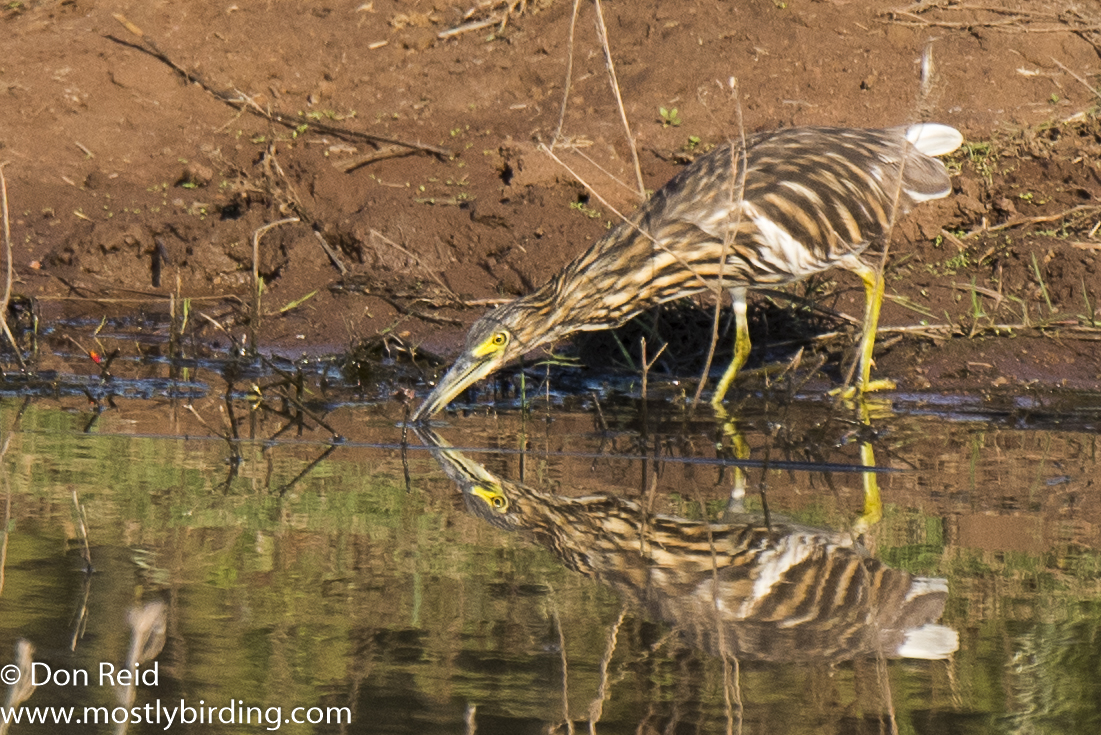
Malagasy Pond-Heron, Mziki dam, Phinda North KZN
Long-tailed Paradise Whydah, Phinda North KZN
In the latter part of the week I visited Pigeon Valley for some superb forest birding
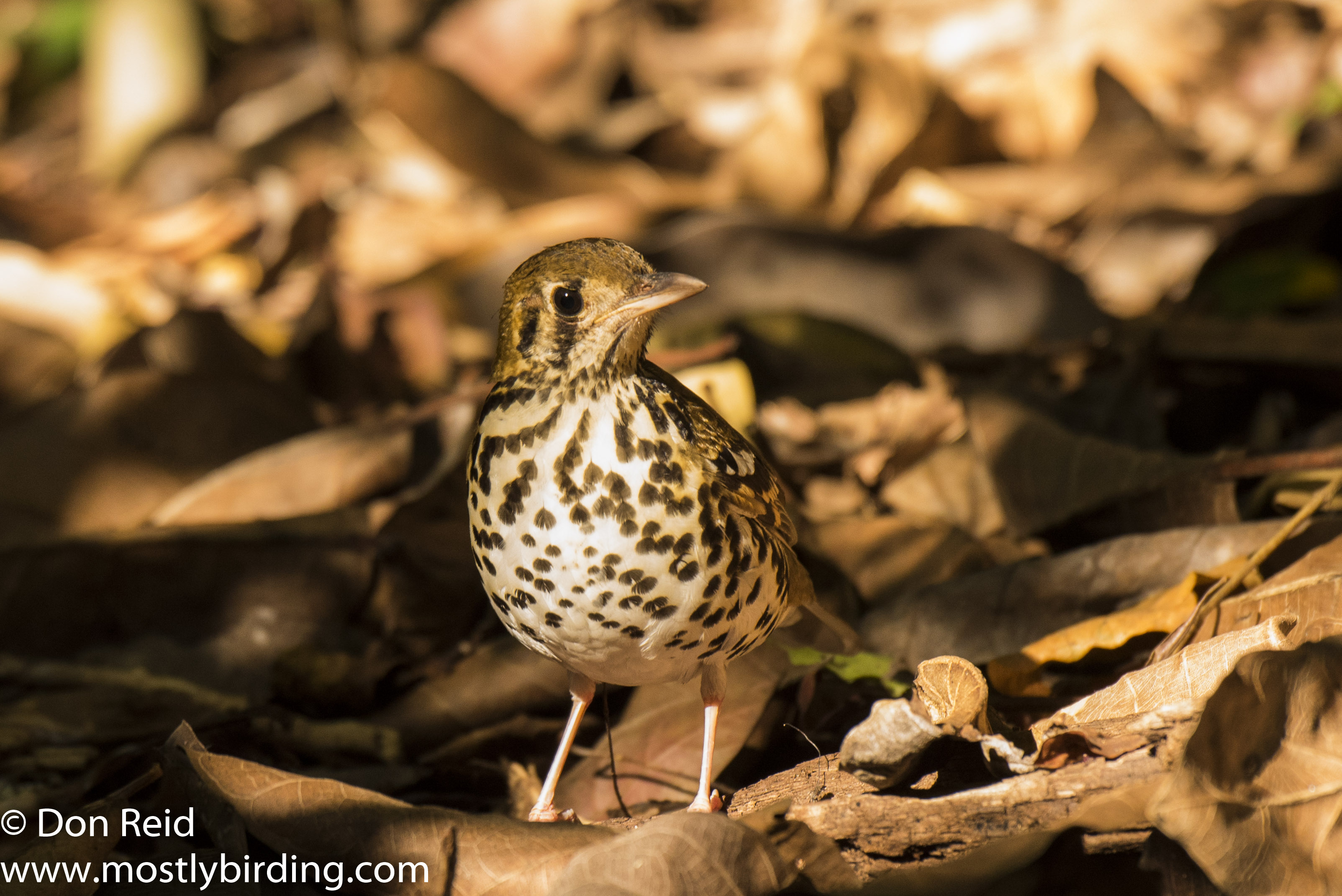
Spotted Ground Thrush, Pigeon Valley Durban
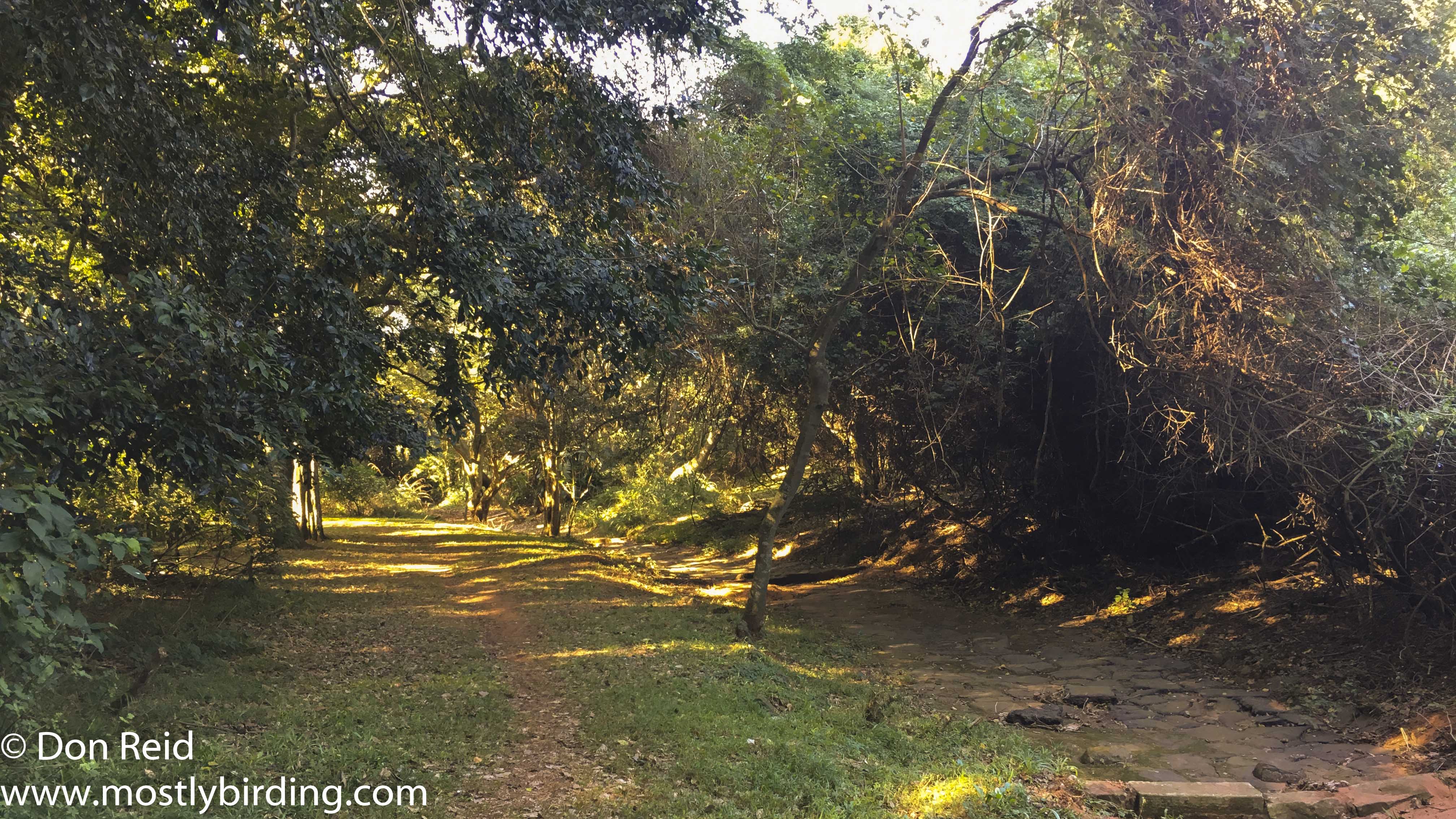
Pigeon Valley Durban
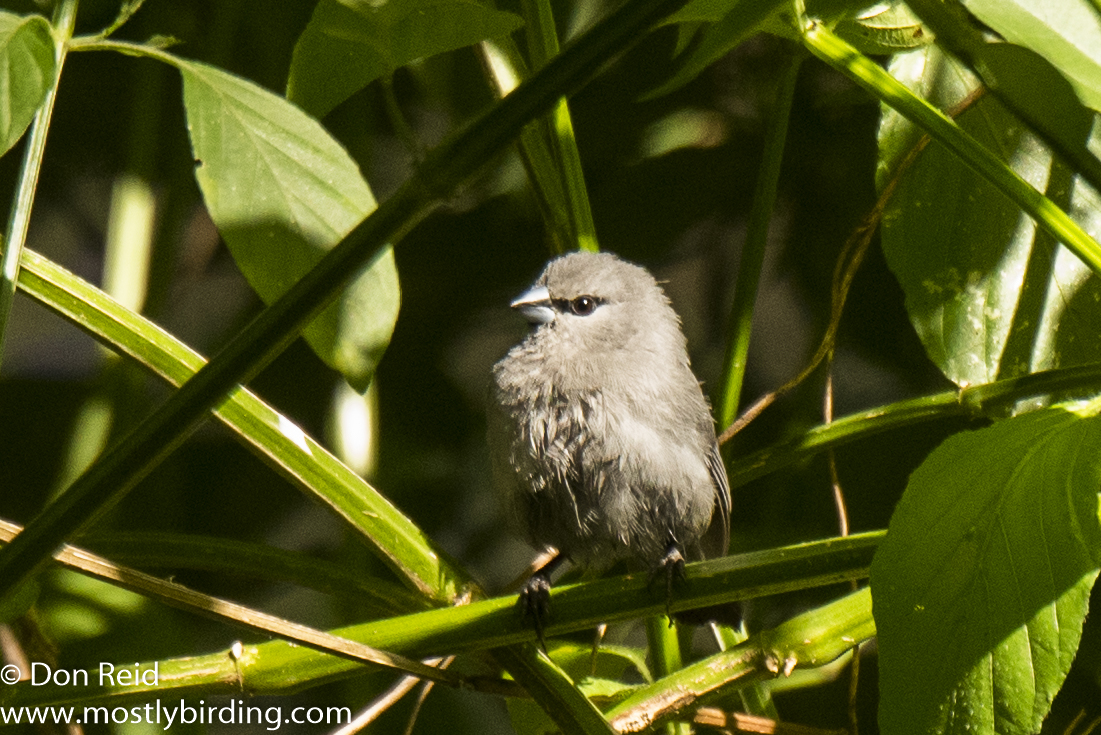
Grey Waxbill, Pigeon Valley Durban
July to December will be covered in the next post – watch this space!
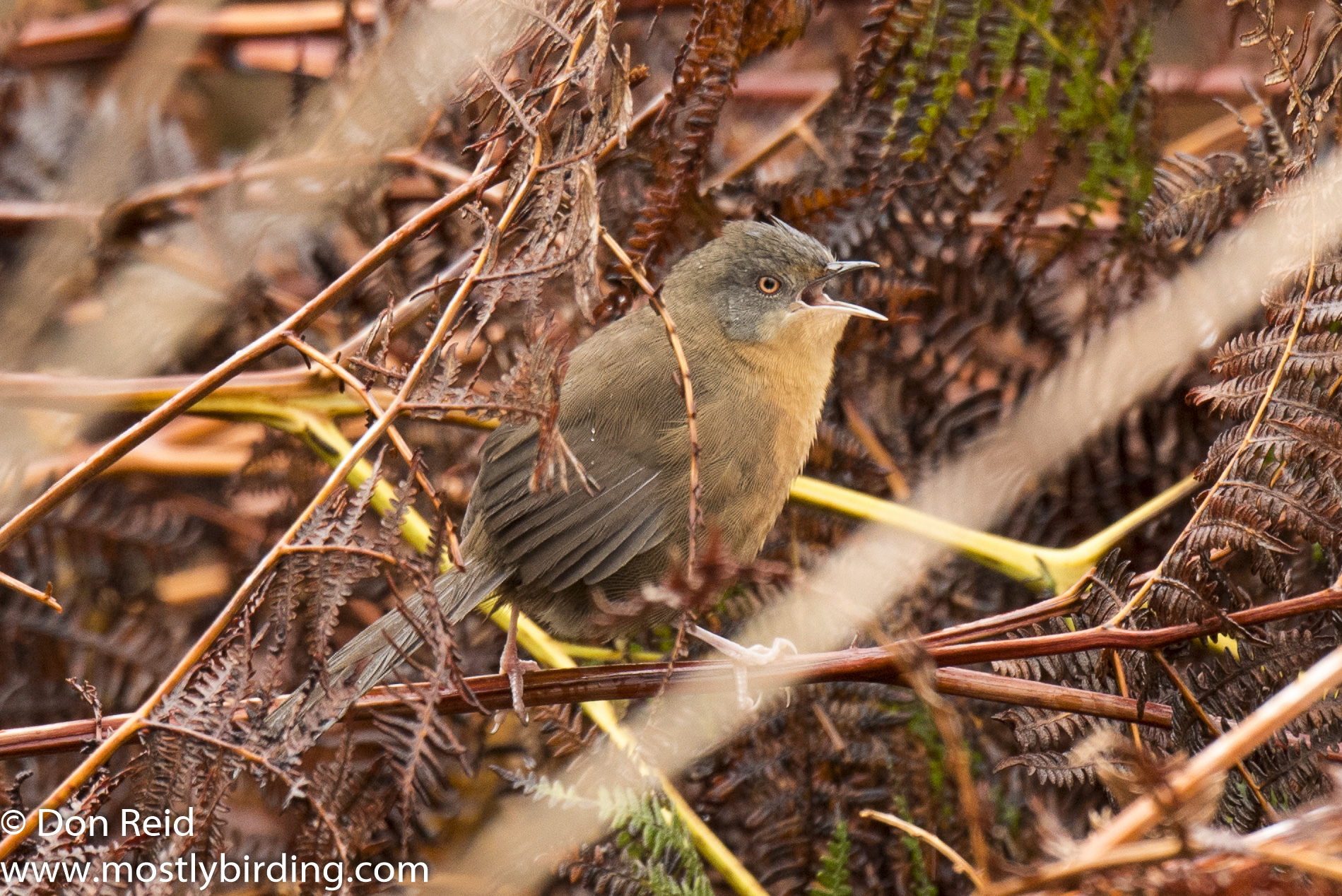
24 December 2017 – 7.42 pm : Knysna Warbler / Bradypterus sylvaticus (Knysnaruigtesanger) becomes my latest lifer – number 765 on my Southern Africa life list and the 9th addition to my life list for 2017. Location : Mossel Bay Golf Estate
Those are the bare facts and as I was not able to get a photo of this elusive bird, the post could end right here……… but there is more to the story than that of how I came to find this bird.
Firstly, some information on this species, starting with an extract from Roberts Birds of Southern Africa :
Status – Uncommon to rare and localised endemic; regarded as vulnerable
Habitat – Dense tangled thickets on edge of forests and along watercourses
General Habits – Very secretive; presence usually revealed only when calling
The Eskom Red Data Book of Birds of South Africa adds to this :
The Knysna Warbler is endemic to the region and has a highly restricted and fragmented distribution….
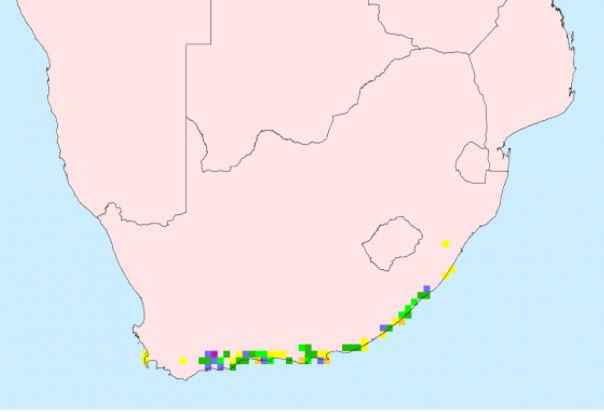
The SABAP2 distribution map below shows the current distribution of the Knysna Warbler, spread along the southern coastal regions of SA :
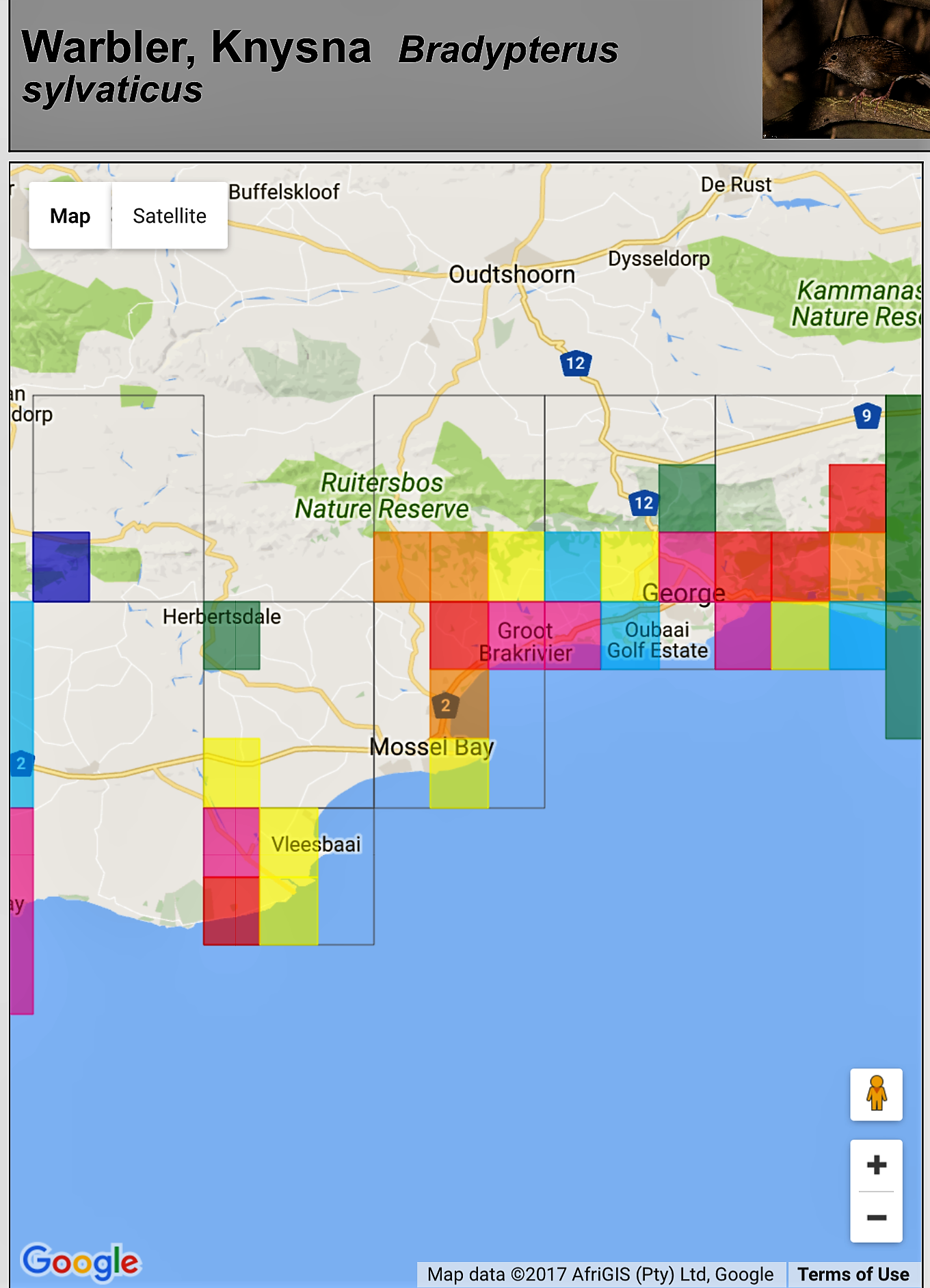
Going into more detail the map below is of the pentads in the Mossel Bay area, the coloured ones showing where Knysna Warbler has been recorded during the 10 years that records have been gathered – yellow, orange and green indicate a lower number of sightings, while blue, pink, red and purple indicate more frequent sightings. Uncoloured pentads are where the species has not been recorded yet. So for example there has been only one previous record in Mossel Bay (the yellow block) in 10 years
Estimates put the total population at less than 2500 individuals with a status of Vulnerable
None of which explains why this species, which occurs in areas I have visited frequently during the 30 or so years that I have been birding, has eluded me until now. That’s birding – no certainties, lots of surprises.
I can only recall one occasion some years ago, during a visit to the Big Tree near Knysna, when I heard the distinctive trilling call from deep in the surrounding forest bush, but was unable to locate the bird at all
I have been very aware of this gap in my birding life list for some time and was determined to put in a special effort to fill this gap during our current December 2017 / January 2018 visit to Mossel Bay. A local birder offered to show me some spots known to be reliable for Knysna Warbler but I had not yet got around to taking up the offer.
The story of my unexpected find starts with a family walk around the golf estate on Christmas eve, around 7 pm in the evening and still light. Gerda and I set off with daughter Geraldine and Andre as well as the two granddaughters – first to leave the group was Megan who had her running shoes on and with the abundant energy of youth went running off like an Impala.
At the top of the hill Gerda and Geraldine returned home to put the final touches to the Christmas eve dinner, leaving myself, Andre and Maia to continue, heading for the clubhouse with the intention of doing a full circuit of the estate. A little further along the road it started drizzling lightly and with dark-ish clouds chasing in from the sea, I suggested a shortcut over the golf course to get home – problem was Maia was barefoot and with access to the golf course being across a stretch of veld with the possibility of thorns, she and Andre decided to turn around and walk back along the paved road we had just come on. This left me to continue on my own with the weather threatening and dusk approaching ….
I increased my pace a tad and at the bottom of the next hill I took a path on to the golf course and headed towards the edge of the 14th fairway and the path homewards. The rain had stopped and the dark clouds seemed to be moving away from me so I slowed my pace and listened to the birds calling from the dense bush that lines this part of the estate – the usual Mousebirds, Apalises and others were still active.
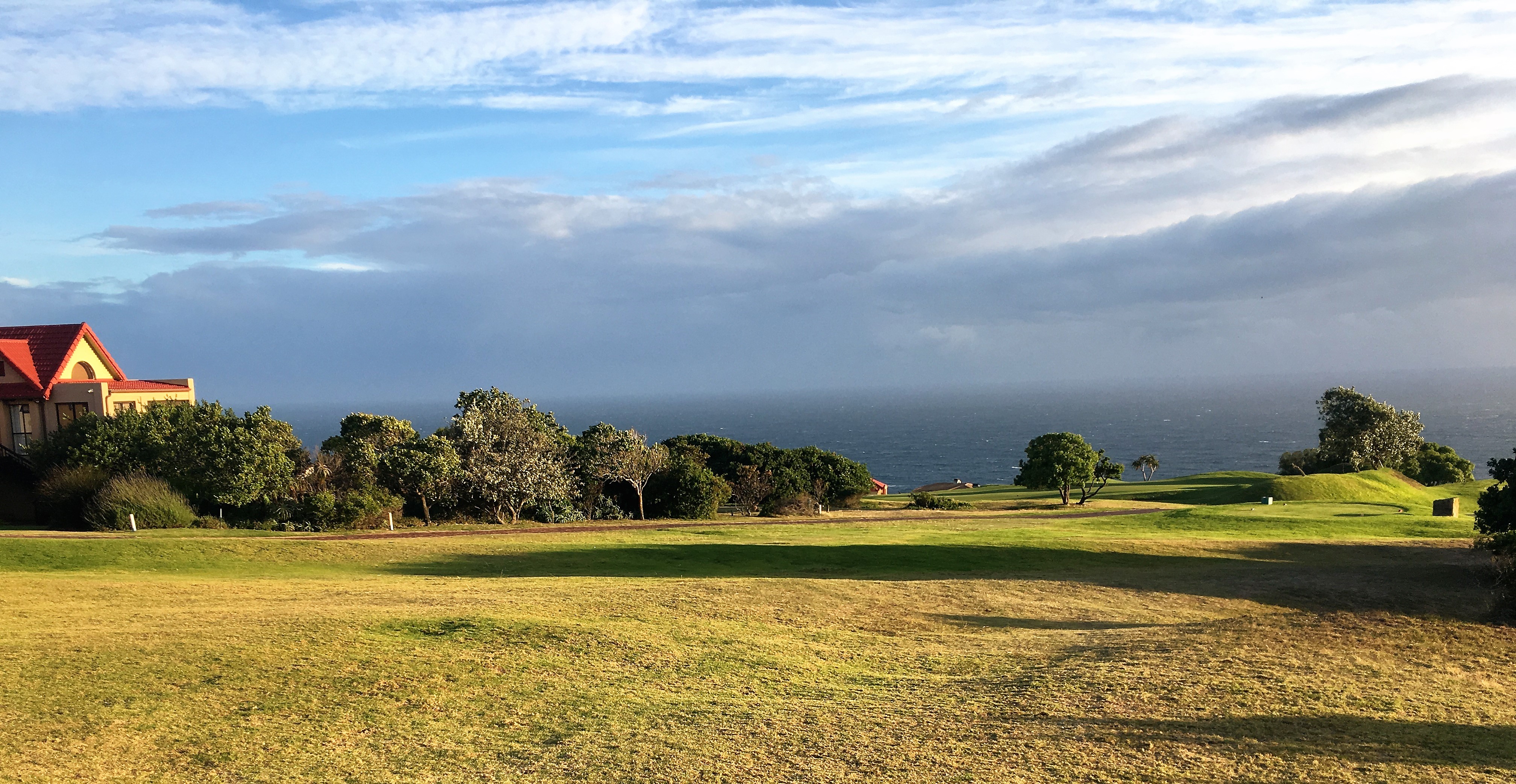
The dense bush lining the fairway, from where the Knysna Warbler was calling
Then a different call attracted my attention and had me wondering out loud what it could be – my auditory memory kicked into overdrive and I just knew this was a call that I needed to get a handle on, familiar yet strange at the same time and certainly one I had not heard on the estate before.
The warbler like call started slowly then sped up into a drawn-out rapid trilling conclusion, with the clarity of a whistle with a pea in it – after some deep thought I went to the Roberts app on my iphone and looked up western cape then warblers. As soon as I saw Knysna Warbler it hit me like a wet snoek and I pressed the play on the bird’s call – bingo, that’s what it was!
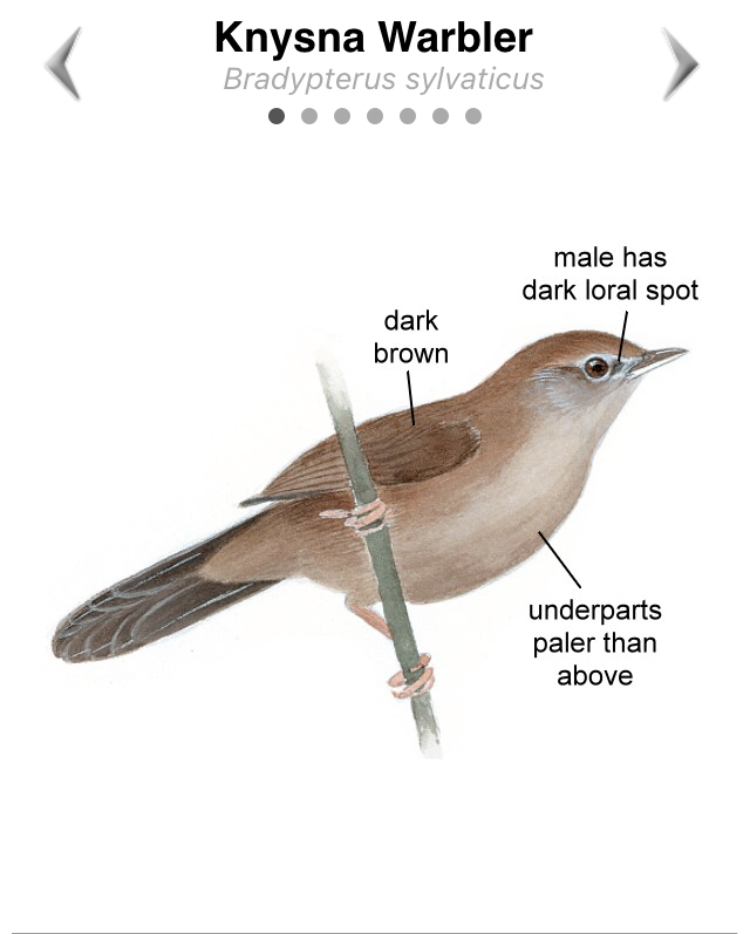
This illustration is from Roberts Birds of Southern Africa :
Next challenge was to try and see it, so I got as close as I could to the bush from where it seemed to be calling and searched in the fading light. It sounded so close I felt I should be able to reach out and touch it, but it is a master at remaining hidden, not even stirring a leaf to give a clue to its position.
After spending 20 minutes or so searching, the best sighting I could get was of a small drab bird flitting from one dense bush to the next, but I decided this was the best I was going to do and left it calling non-stop, even though it was by now almost dark.
In any case this is an example of a bird whose call is much prettier than the bird itself, so I was quite content with my sighting / hearing and very happy to be able to add it to my life list at last.
So after agonising about where I should go to find this species, it popped up virtually on my doorstep – considering the circumstances that led to my finding it, I was left with the feeling that this was how it was meant to be.
We had been planning Birding Big Day (BBD) – which took place on 25 November 2017 – for months, working out a route with stops planned to the minute and covering as much of the allowed 50 km radius as possible while making sure we included as many habitats as we could in the 24 hours ……….. Well that’s what we should have done to do any justice to the day; in fact our planning consisted of my jotting down a few “must visit” spots that I knew of close to Mossel Bay, the day before BBD. These included the Golf Estate, the harbour and Point, Herbertsdale road, Hartenbos waste water treatment works, Klein Brak area and the Hartenbos river. Any others would be added on a “play it by ear” basis as the day progressed.
Having only arrived in Mossel Bay from Pretoria the day before, there was not much time to gather ourselves but the prospect of a full day’s birding was enough to motivate me and I looked forward to having Willie Boylan, old friend and occasional birder, join me as the other half of our two man team – the Harried Hawks.
I had set the alarm for 4.15 am having suggested that Willie join me at 5 am, which he duly did and we immediately started our birding big day with a slow walk down the hill to the belt of coastal fynbos that lies between the residential area of the estate and the cliffs that drop away to the sea below
The weather was perfect and remained that way throughout the day – sunny yet cool with no cloud to speak of and a light wind. Doves were already vocal while the drawn out trilling call of Cape Grassbirds greeted the first rays of the sun. Yellow Canaries were active and plentiful along with Yellow Bishops with their standout black and yellow colouring.
Yellow Bishop (Male)
Cape Robin-Chat
The African Black Swifts that roost along the cliffs were up and about, joined by a lone Kelp Gull on its way to the sea. After scanning the bush for quite a while we felt we had exhausted the coastal fynbos possibilities, so we set off by car and exited the estate with 31 species, just about a quarter of our target of 125 for the day, with one hour down. As can be expected this was by far the best hour of the day.
Streaky-headed Seedeater
Southern Boubou
We took it slow along the road bordering the St Blaize trail and soon spotted a Tern roost on the rocks far below – I set up the scope and was mildly disappointed to find they were all Swift Terns as I had been hoping for one or two other Tern species. Early morning joggers were curious and when told what we were up to they wished us luck. As we were packing up the scope a Southern Tchagra, always a difficult species to spot, showed briefly in the bush just below the road.
Olive Thrush
On to Church street and the harbour area where we quickly added Grey-headed and Hartlaub’s Gulls as well as Mallard, but the Point was a disappointment being very quiet – none of the usual Cormorants or Terns – were we too early for them?
Hartlaub’s Gull
By 7 am with two hours done and a total of 46 we headed through town and out on to the Cape road, deviating briefly to explore the bush along the outskirts of town at the small industrial area which turned out to be quite lively with Bokmakierie, Red Bishop, African Pipit and Pied Starling.
The light traffic meant we reached the Herbertsdale turnoff not long after where we almost immediately found some of the expected species. Large-billed Lark was first up with its “squeaky hinge needs oil” sounding call, but for a change wasn’t joined by Agulhas Long-billed Lark – hopefully we would get it later.
Southern Red Bishop
We added the likes of Karoo Prinia, Diderick Cuckoo, Grey-backed and Cloud Cisticola before reaching the small farm dam alongside the road which had just a few Yellow-billed Ducks and a couple of Common Moorhens.
By now we were in need of coffee and rusks, so we turned off onto the quieter (we thought) Klipkop road to find a peaceful spot but we were harried by 4 x 4 enthusiasts heading to an off-road event along the same road so in the end we had to venture further beyond the venue entrance before stopping. While enjoying the caffeine boost a Rock Kestrel came to greet us as did a Brimstone Canary on the nearby fence, while in the distance we could just make out some cattle with Cattle Egrets in attendance.
This is where the “play it by ear” factor kicked in for the first time as we decided to carry on with Klipkop road rather than head back to the tar road and soon we had Steppe Buzzard and White-necked Raven on our list, but not much else as we passed through the undulating hills and headed towards Hartenbos,
Our first stop at the Hartenbos river produced Black-winged Stilt, Red-billed Teal and White-faced Duck before continuing to the Waste water treatment works which we hoped would give our list a nice boost. It delivered as hoped and we added 9 species including Cape Teal, Cape Shoveler, Little grebe on the ponds, a Lesser Swamp Warbler calling and a couple of aerial birds in Brown-throated Martin and Pearl-breasted Swallow. By now it was 10.30 am and we had recorded 88 species, pleasing enough but I imagined it was going to be much slower going from there on.
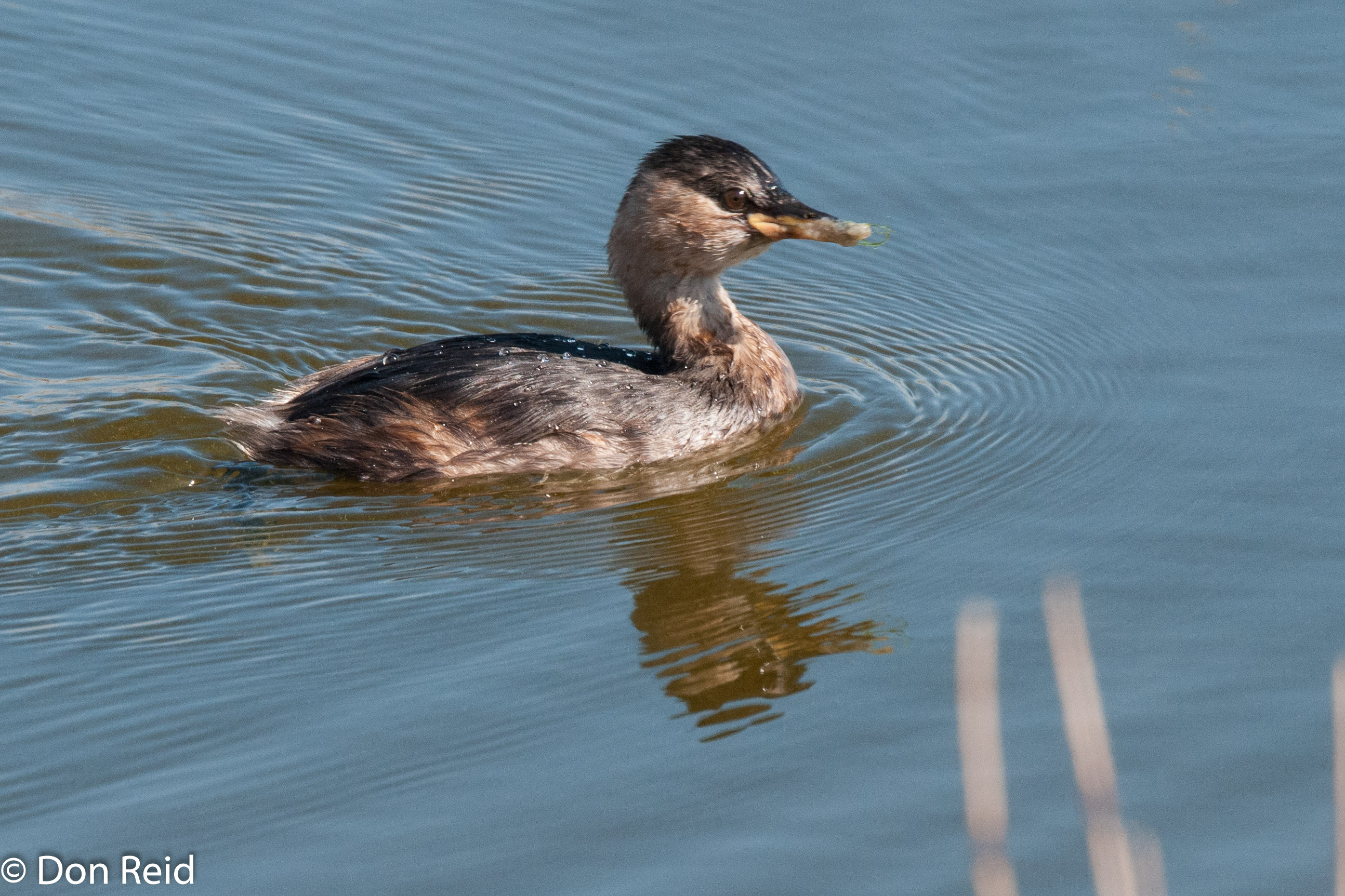
Little Grebe
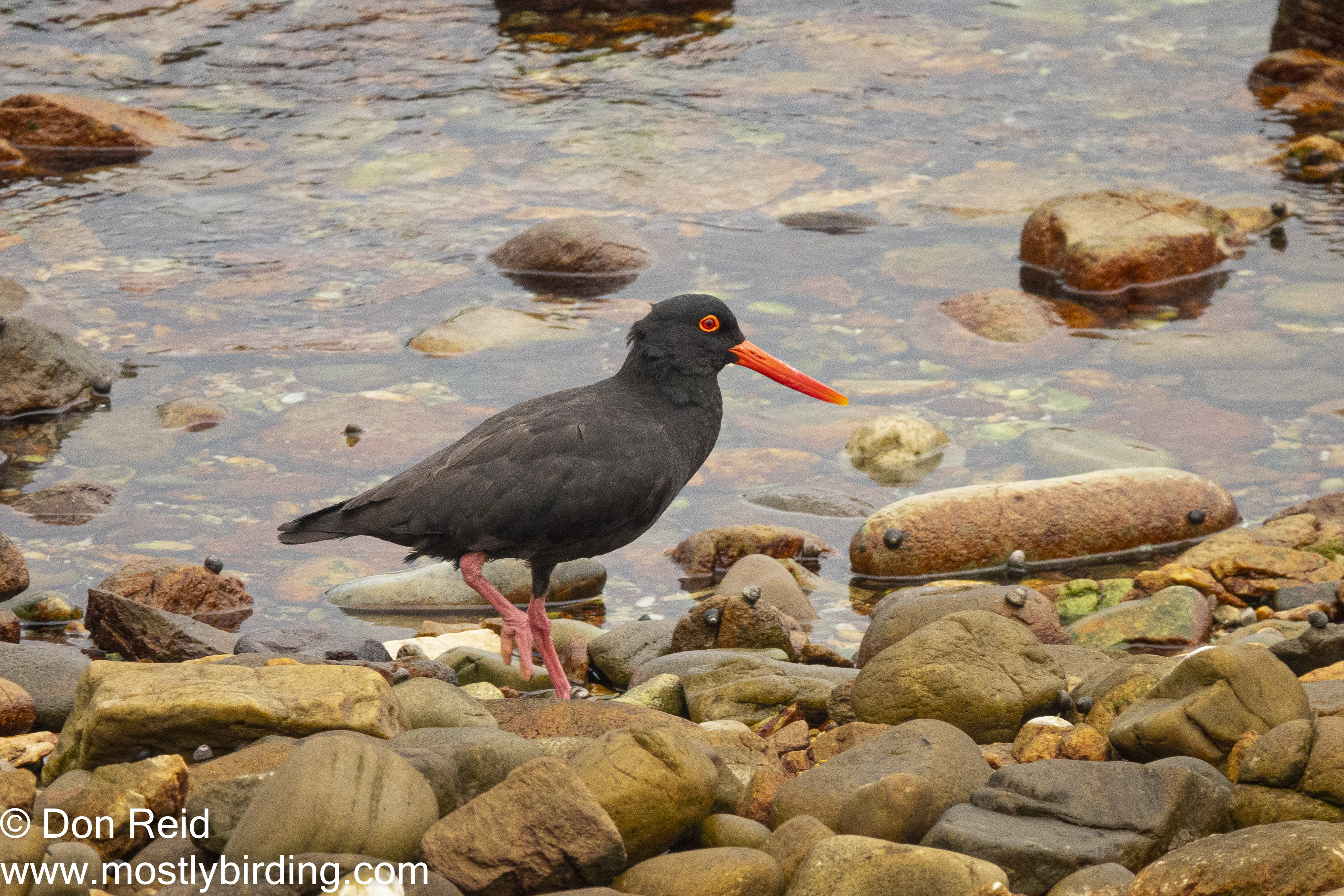
In fact the next two hours produced just 10 species as we covered both Klein Brak and Great Brak river mouths, nevertheless including some less common birds such as African Black Oystercatcher, Little Egret, Greenshank, White-fronted and Common Ringed Plovers as well as a soaring Jackal Buzzard.
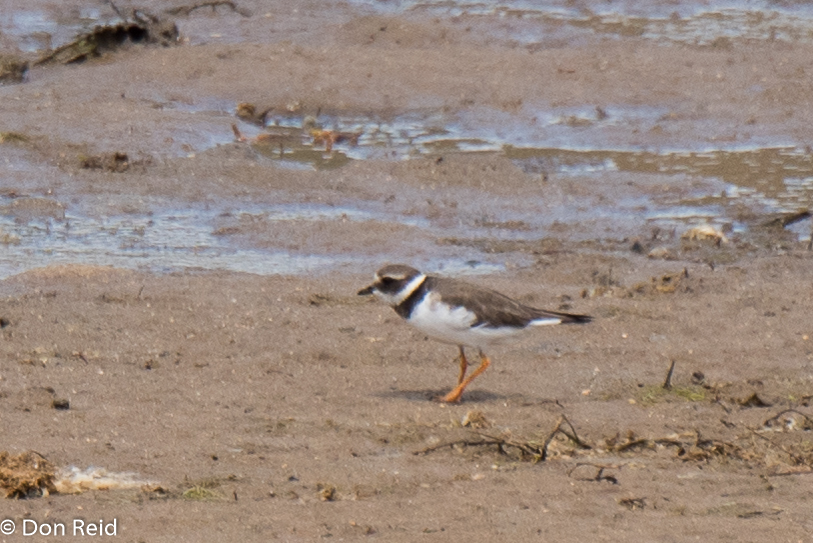
Common Ringed Plover
Time for our next route decision – this time we decided to make our way through Great Brak village and turn off west onto the road which would take us back to Klein Brak, but along the secondary road north of the N2. Our first stop along this stretch was at another waste water treatment works, the ponds visible from the road, which produced Pied Avocet, Three-banded Plover and a calling Little Rush Warbler.
Before reaching Klein Brak we turned right and took the Botlierskop road, just after spotting a Spoonbill in a marshy area before the bridge. Two “Olive” birds were our reward along this road – Olive Pigeon and Olive Bush-Shrike. As we passed a small obscure track we noticed another group of birders higher up on the embankment – turned out this was the “202 Ostriches” team who set a new Western Cape BBD record that day. We decided not to disturb them but to take a look later on our way back (the road was closed further on). In fact we discovered later on that the embankment was the wall of a large dam which held White-backed Duck and a lone African Darter – nice one to know about for future reference.
The 202 Ostriches passed us and stopped to say hi but were clearly hyped up and we didn’t want to hold them up – at that point they were on 160 species compared to our 101. Our next target was the Geelbeksvlei road – the vleis mostly dry but with a few water channels which held Hamerkop, Little Stint and Pied Kingfisher. Greater Honeyguide was calling “Victorrrrr” in the same spot I had heard it before while cycling the road.
The next hour was the longest of the day as we headed back into the undulating hills from the Brandwag turnoff, only finding our next species at the end of the hour after stopping at a farmstead near the road with a large Jacaranda tree in full bloom, which was alive with sunbirds including Amethyst and Greater Double-collared. They came as a timely boost to our pensioner aged team as our energy was being rapidly sapped although spirits were still high as we headed back towards Mossel Bay along the Gondwana road.
Southern Double-collared Sunbird
Almost simultaneously we spotted Denham’s Bustard followed a minute later by Red-necked Spurfowl crossing the gravel road, raising our spirits a notch or two again. A Forest Buzzard on a dry tree was worth turning off for but flew off before I could position the car for a photo.
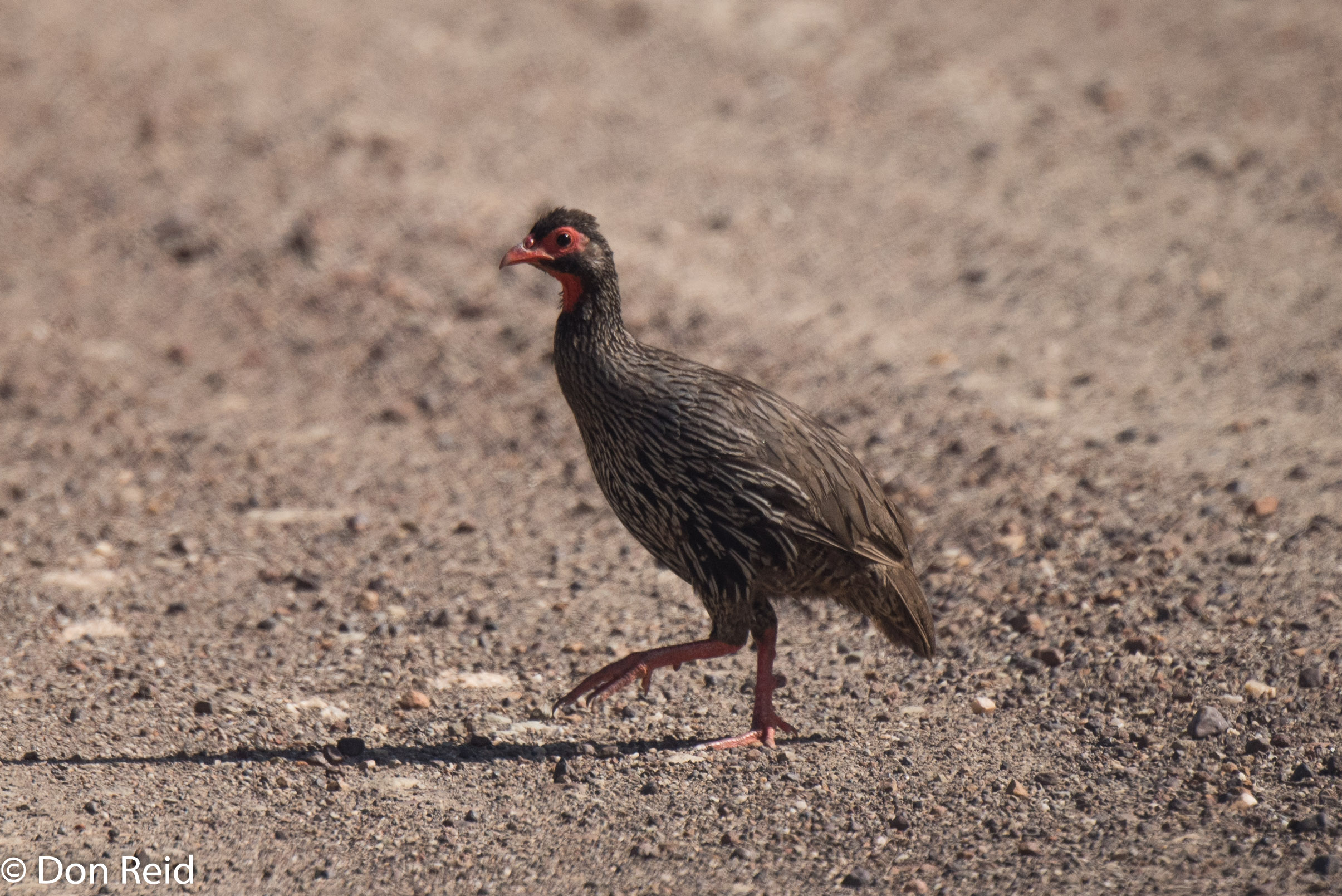
Red-necked Spurfowl
At the next junction with the R327 tar road we crossed over and carried on towards Kleinberg and the N2 national road – this road was also quiet until we reached the mill where we found Red-capped Larks in the road and a few House Sparrows on the fence, the latter having eluded us all day despite popping into a couple of filling stations en route, often their preferred hangout.
Heading towards Mossel Bay along the N2, another bird that had eluded us – Agulhas Long-billed Lark – caught my ear and a quick stop confirmed the ID. Black-shouldered Kite was the last to be added on the road and we headed back to the estate, tired but happy with our total standing on 123, just two short of our target. It was 5.30 pm and there would still be daylight for an hour and a half at least, but we both agreed to call it a day, although Willie was happy to accept any further species I may spot once he left.
Black-shouldered Kite
After a short recovery, I felt somehow compelled to find two more birds and took another short walk which happily produced a Cape Rock-Thrush, then while I was relaxing on the balcony with the light fading and a celebratory glass of wine in hand, still keeping an eye on passing birds, a Peregrine Falcon of all things obliged by flying past – 125 done!
Next day I checked the BBD Birdlasser page which showed 124 against our team’s name – the difference turned out to be the Domestic Goose which we had recorded at Great Brak estuary but which had been disallowed. Makes sense although when atlasing it is a recordable species. So 124 was our final total. All in all it was a great day’s birding with some slow progress in the middle third of the day – better planning and ranging wider to cover more habitats would have improved our total – good thing there’s a next time to look forward to!


































































































 Mostly Birding