Category Archives: Flowers

West Coast Wanderlust – Flowers, Birding and Small Towns (Part 3)

The Plan (Repeat from Part 1)

“Let’s do the flowers again” – I can’t recall whether it was me or Gerda that raised the thought earlier this year, but the immediate answer was “Yes!”

Translated, that means we were both keen to “do” the famed Spring flowers that bloom during August and September in parts of South Africa, in particular the West Coast and Namaqualand areas of our country.

With that decision made, we set about planning and booking a 14-night trip for the last two weeks of August, which would take us to some of the prime flower spots of the West Coast and Namaqualand during what we hoped would be the peak of the flower season

The plan we came up with looked like this –

  • 2 nights in Welbedacht Nature Reserve near Tulbagh (Covered in Part 1) – not part of a recognised flower route, but a convenient stopover before heading northwards to Namaqualand
  • 3 nights in Nieuwoudtville, Northern Cape (Covered in this Part 2), with the prospect of visiting several interesting spots that we had missed during our only previous visit in 2013
  • 3 nights in Clanwilliam with attractions such as the Cederberg and Biedouw Valley nearby, as well as Lambert’s Bay within an hour’s drive
  • 3 nights in Darling, not part of our previous itineraries, brimming with possibilities, and finally..
  • 3 nights in Paternoster on the coast, a place that we have got to know from a couple of previous visits and not far from the West Coast National Park

Day 5 – Nieuwoudtville: Botanical wonders, Glaciers and Farms

Our second day in Nieuwoudtville was again fine and warm, encouraging us to get out a tad earlier. Still with Linda’s recommendations in mind, we left before 11am and headed through town then south along the road to

Hantam Botanical Gardens

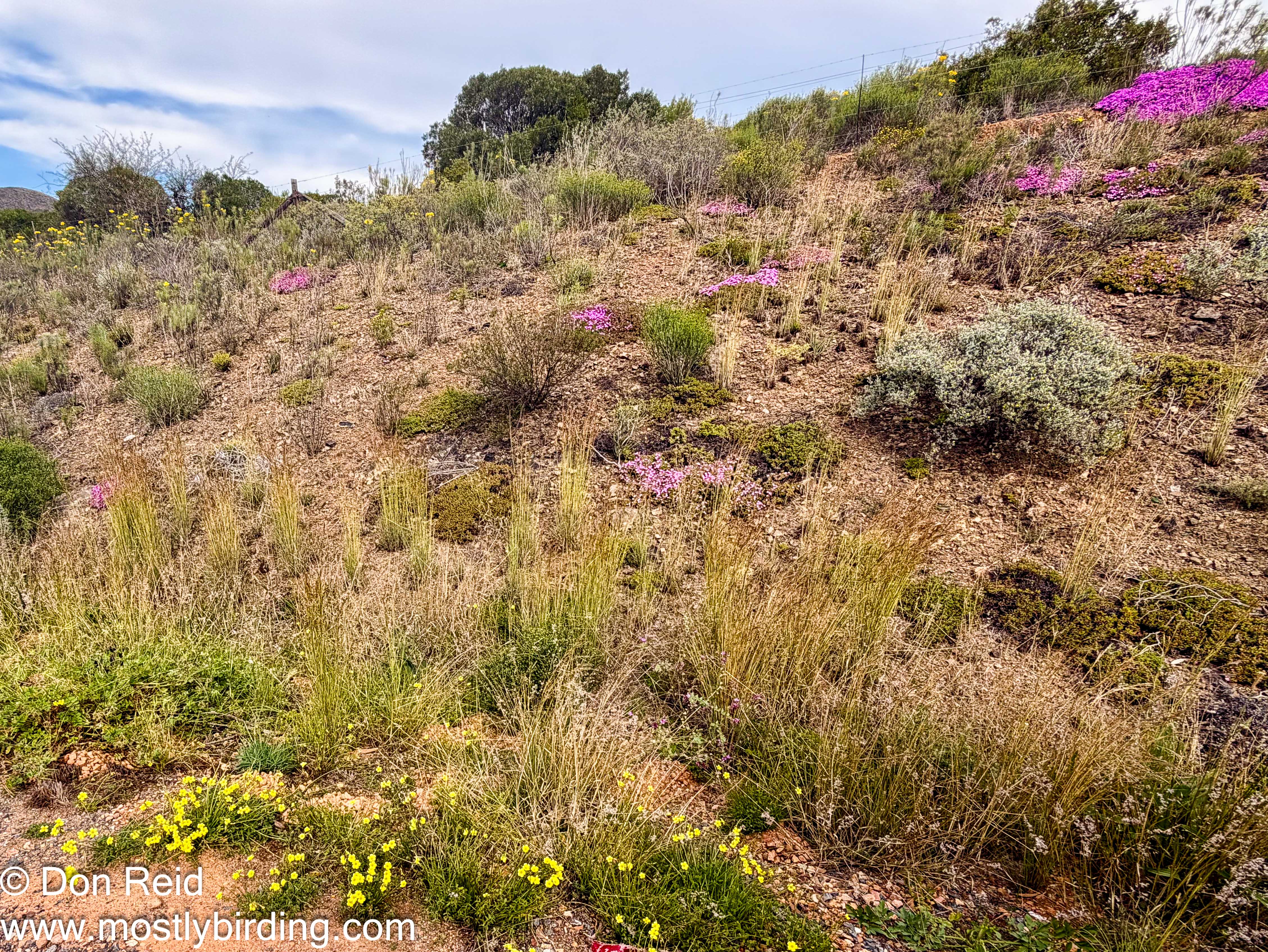
Our first stop was a ‘should we bother?’ one – the botanical gardens were not on the list of recommended stops as the flowers were “over” according to several sources. However we were glad we turned off at the Botanical gardens signboard and headed to the parking for a short visit, pausing along the entrance road to admire the interesting flowers on the embankment.
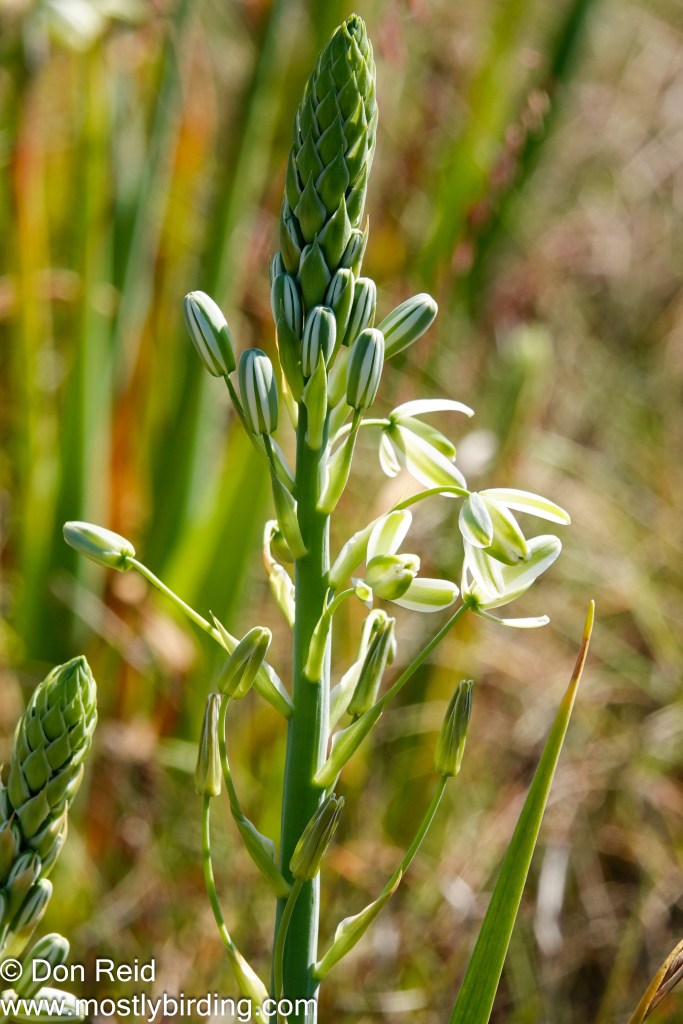
Tamaraks Genus Albuca , Hantam Botanical Gardens Nieuwoudtville

After parking, we took in the display of local plant species in the small hall, then took a walk to the nearby field of blooms, which we were told were the last remaining in the gardens (actually more like a farm with no formal gardens as such)
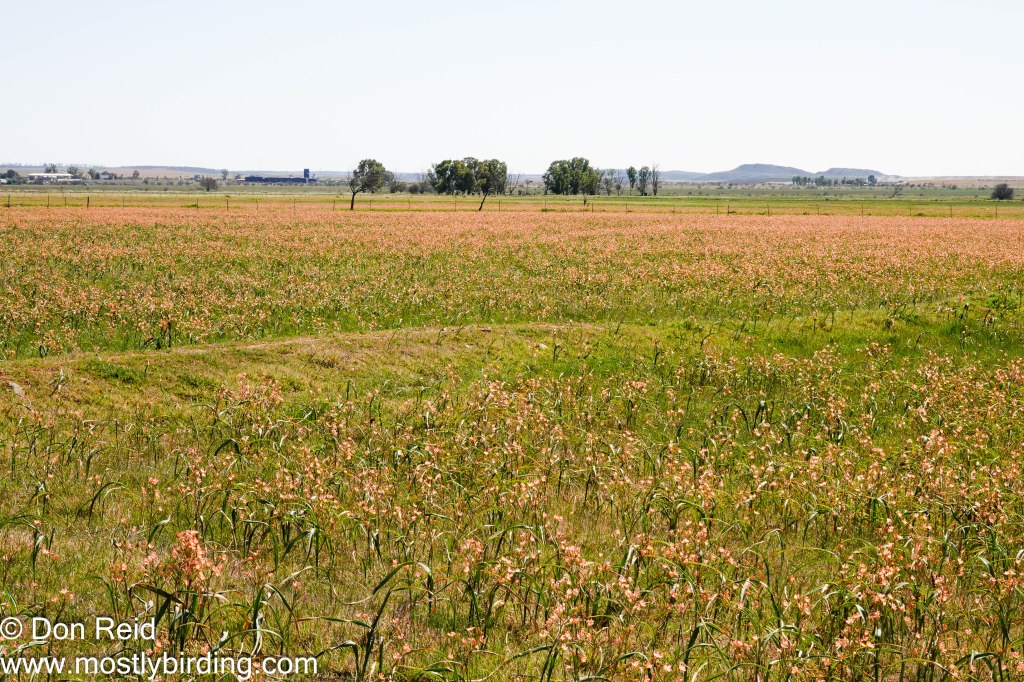
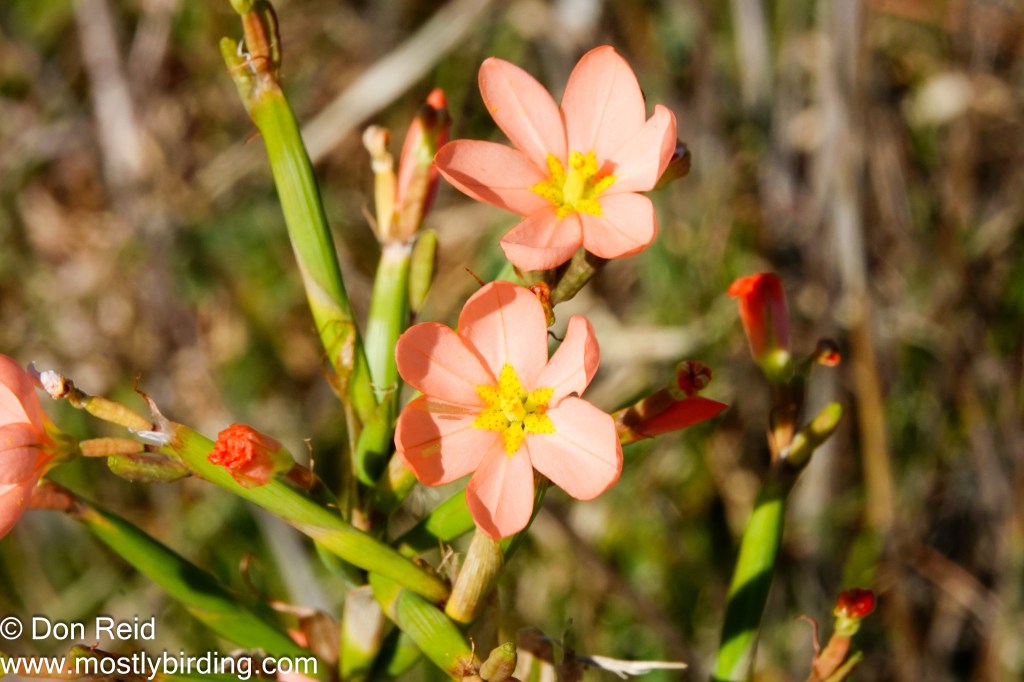
Field of Pink Tulps Moraea bifida , Hantam Botanical Gardens Nieuwoudtville
Pink Tulp Moraea bifida , Hantam Botanical Gardens Nieuwoudtville

Glacial Pavement

Moving on, we made a short stop to have a look at the Glacial Pavement – exposed rocks with striations indicating the track of a glacier some 300 million years ago! The striations are clearly visible but it’s hard to imagine a time so long ago when glacial conditions prevailed over Southern Africa.
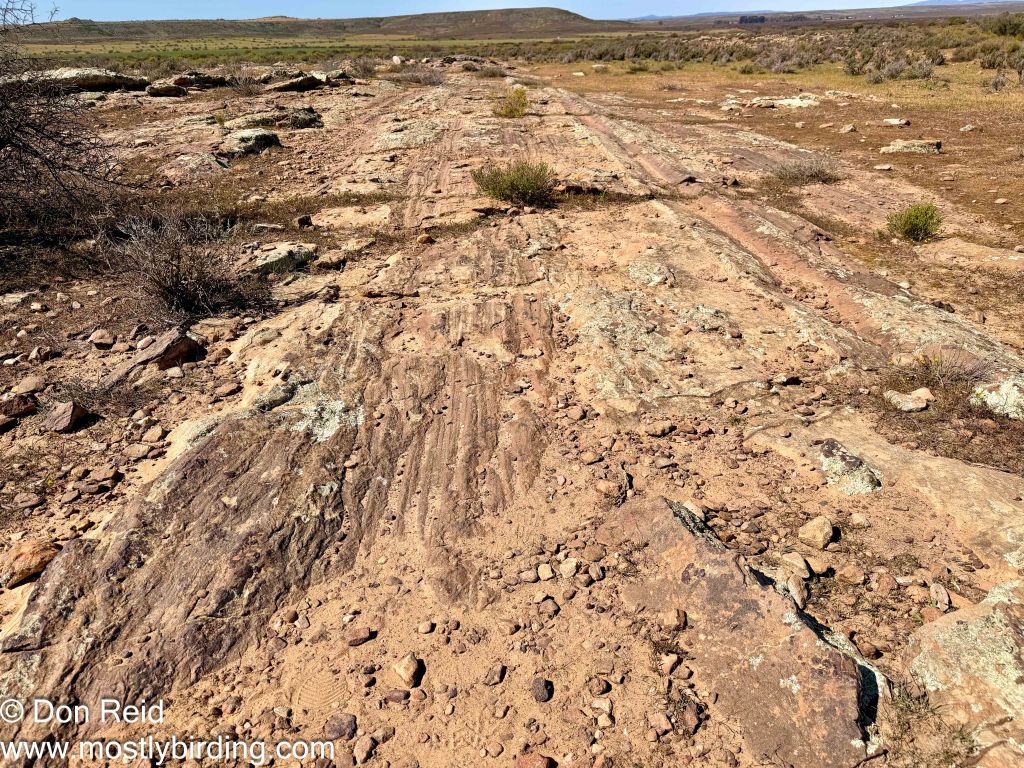
Oorlogskloof Glacial Pavement, Nieuwoudtville south

Boereplaas

We were curious to see Boereplaas, a large farm with a flower route, which neighbours De Lande where we stayed 13 years go and woke to snowfalls on my birthday.
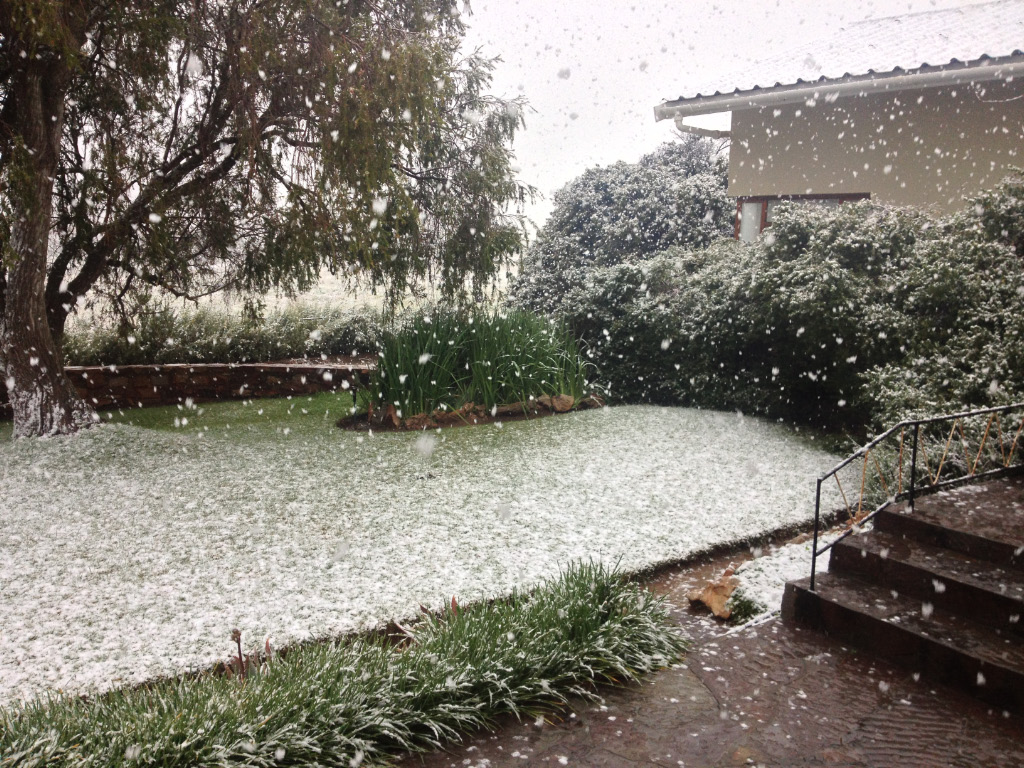
Snow scenes at De Lande Guest Farm during our 2013 flowers trip

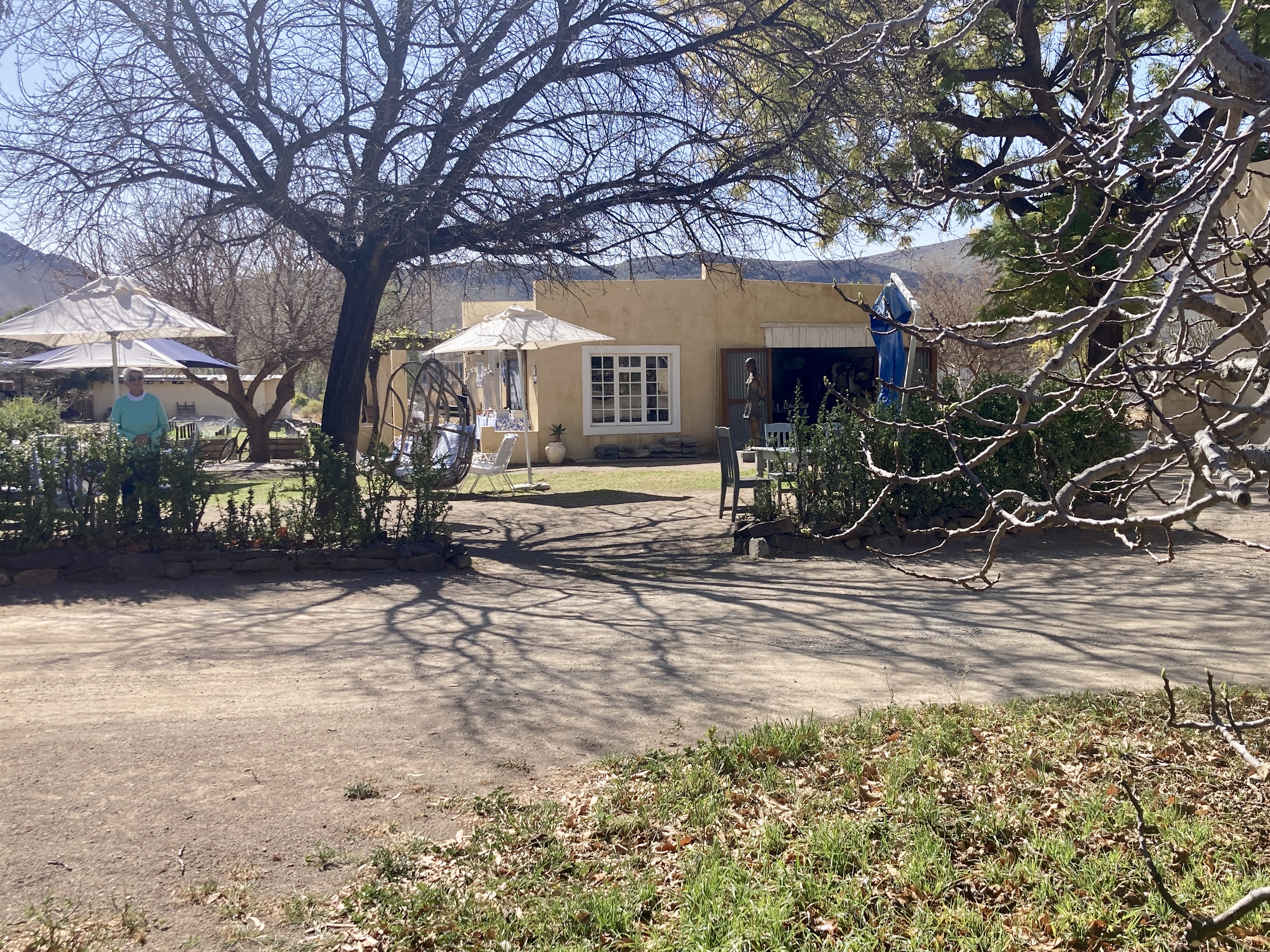
As we stopped under the trees at the farm, this scene caught my eye and I just had to capture it on my iphone
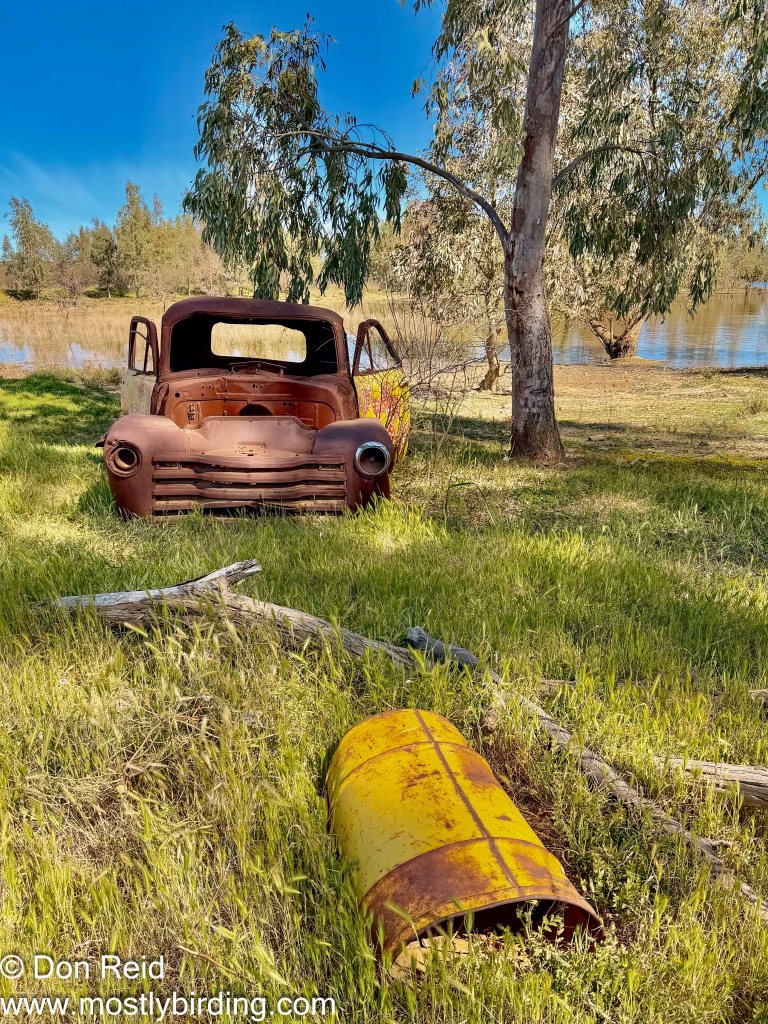
Boereplaas

Boereplaas’s restaurant did not disappoint and we had a simple, delicious lunch of butternut soup and roosterkoek – also the only choice on the menu – then scouted round the small gift shop, coming away with oven gloves emblazoned with ‘Boereplaas’ and a couple of pecan nut tarts for ‘pudding’ later
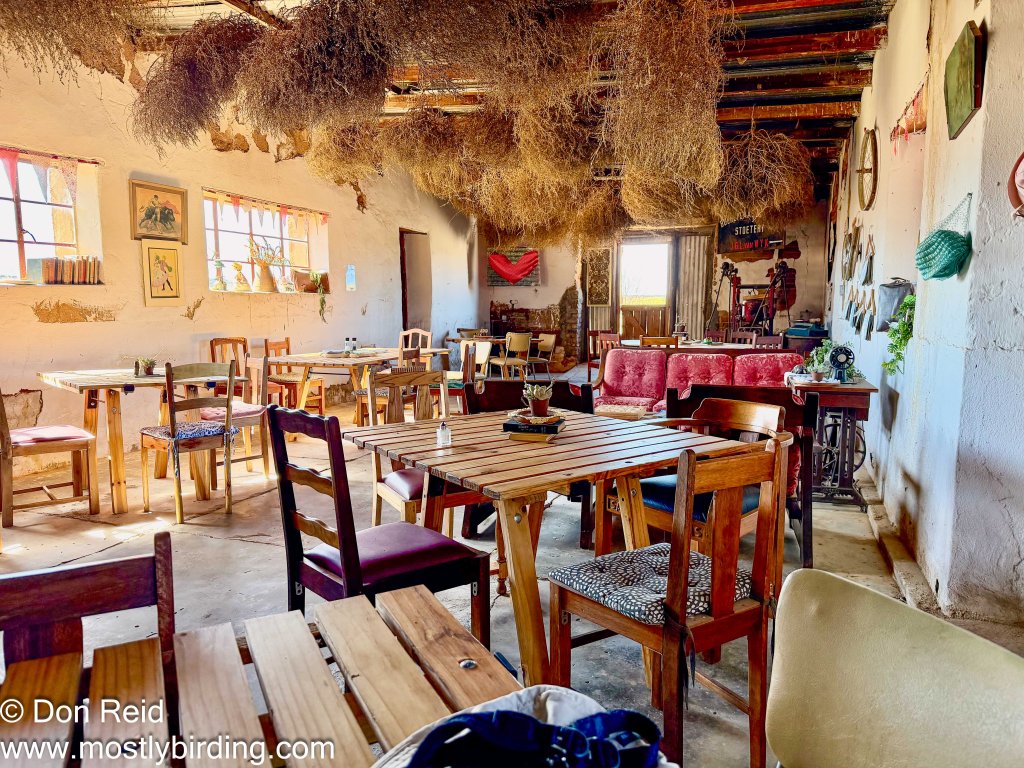
Boereplaas restaurant – as rustic as they come

Just by the way, the restaurant must be a contender for attracting the most bird species to a public building – no less than three species flew in and out of the small building while we sat down –

  • House Sparrow (no surprise there),
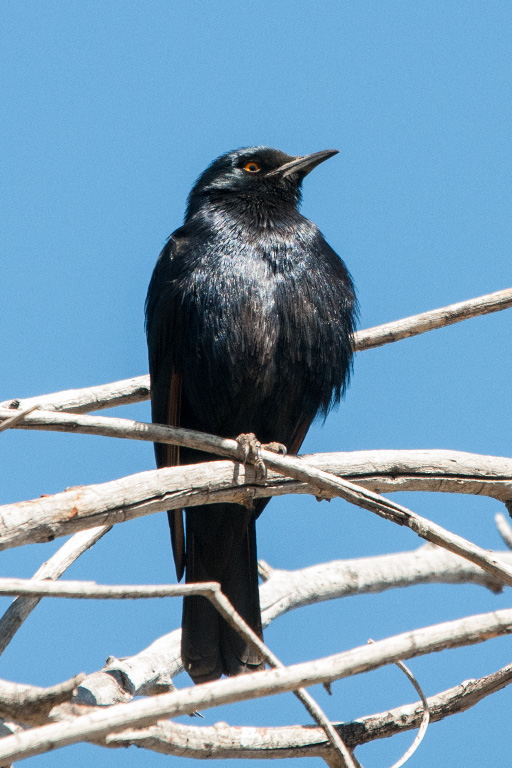
  • Pied Starling (who had a nest in the roof beams it seems) and
  • Familiar Chat (maybe nesting or just plain curious).

After lunch we took a drive around the farm on a 7km circular track that took in some lovely views of the farm and surroundings and afforded views of many species of flowering plants, including the last remnants of the Rooi Katstertjies (Red Cat’s tails) that the farm is known for. Several stops and tens of photos later we were back where we had started.
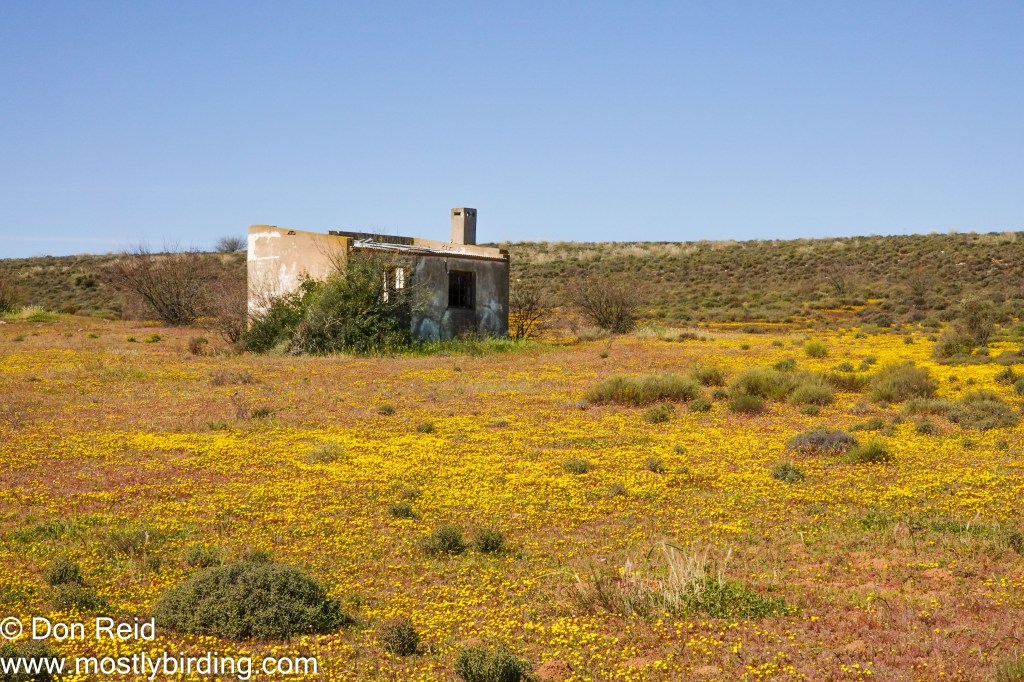
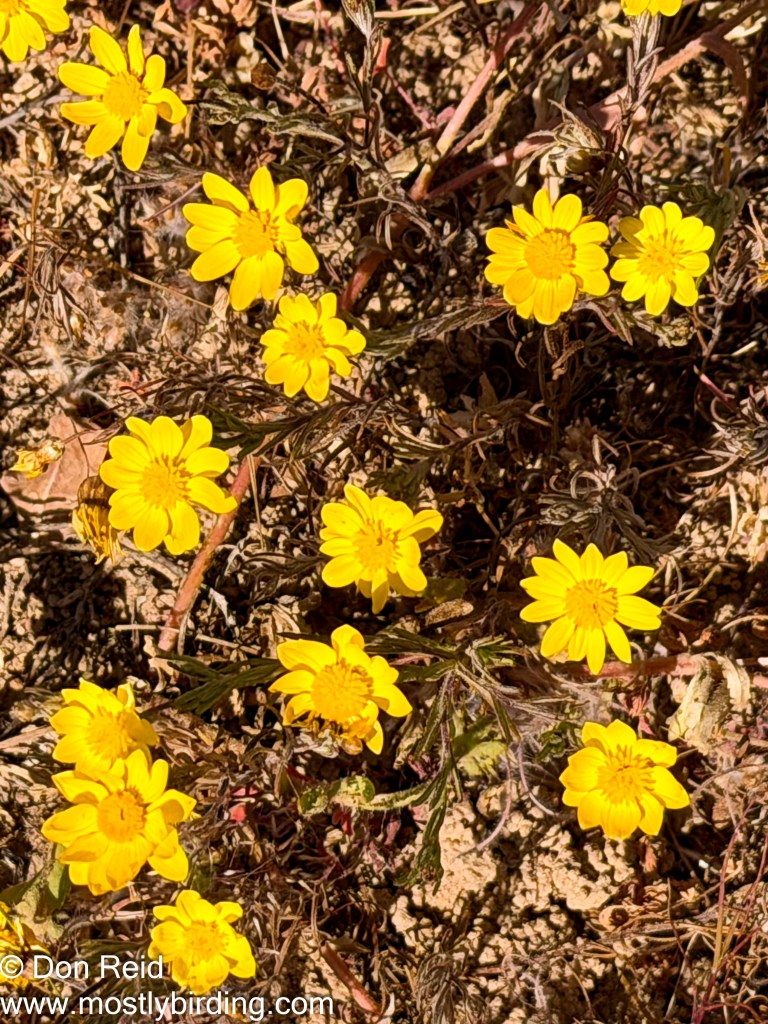
Boereplaas
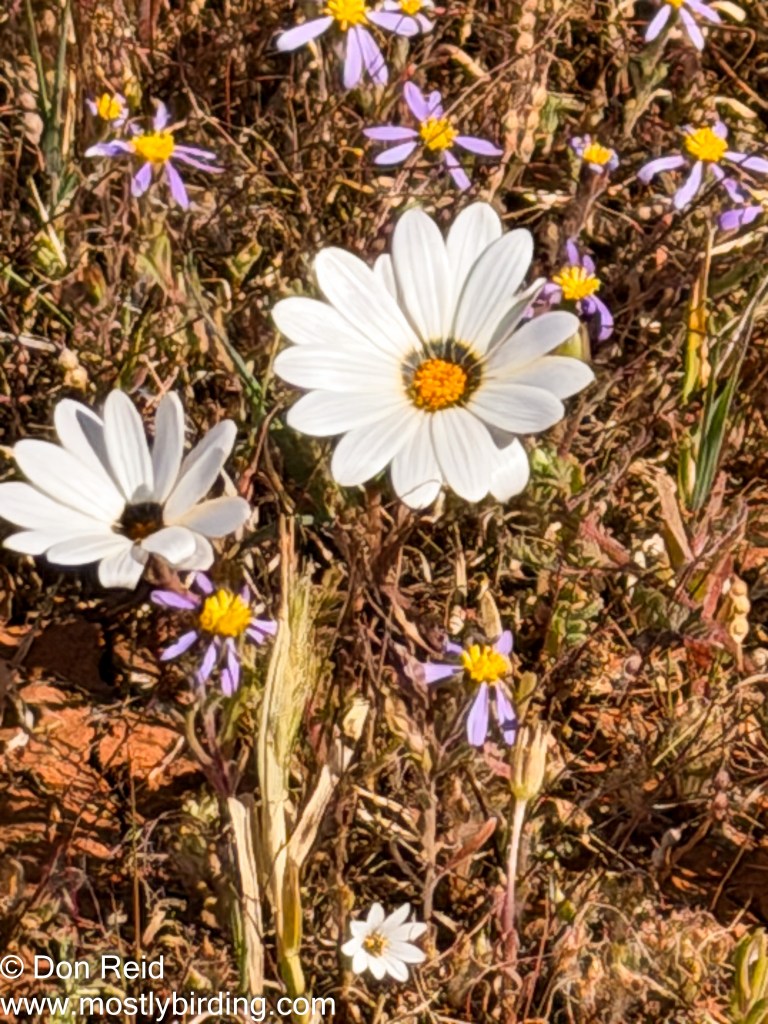
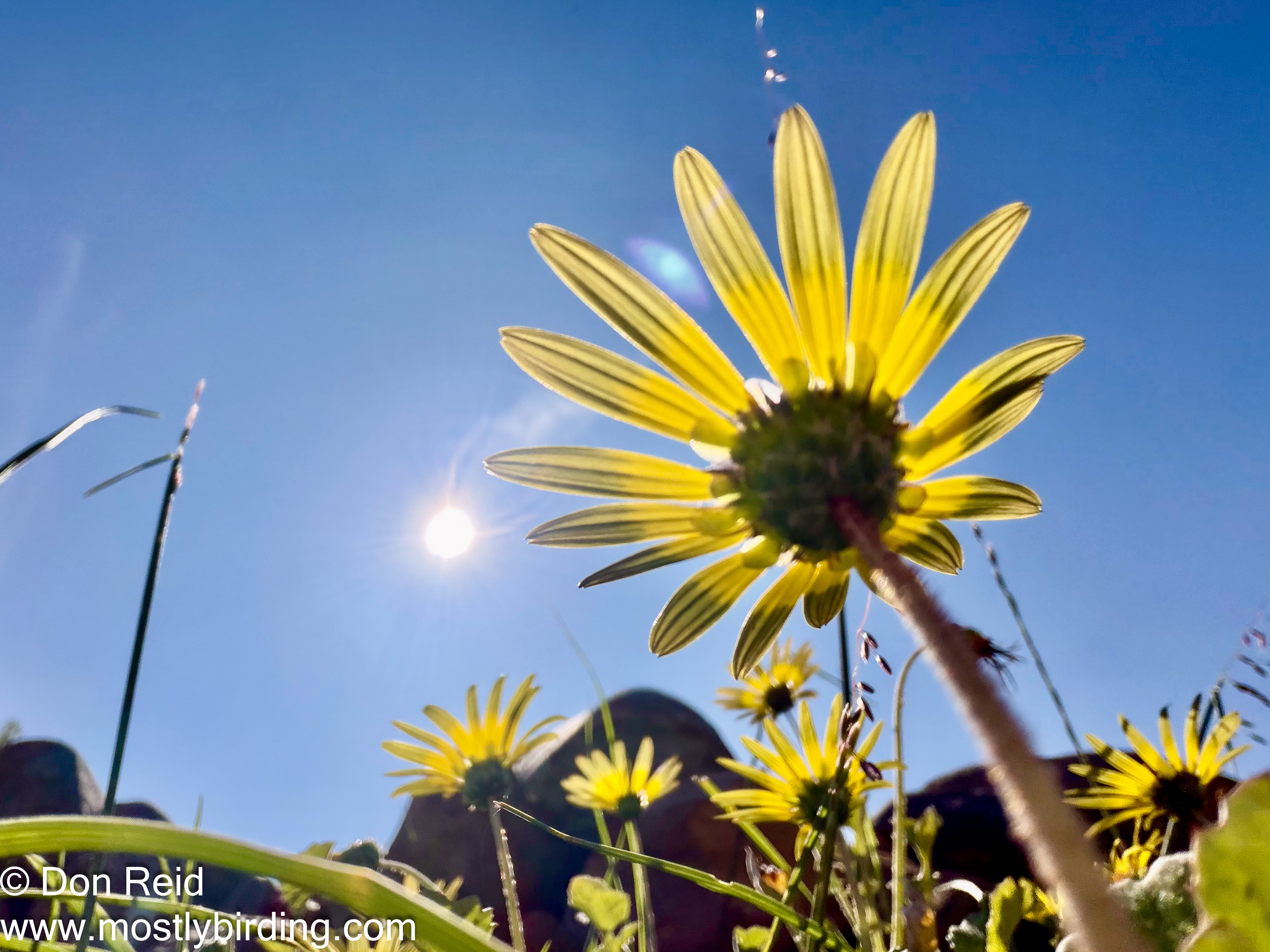
Daisies, Boereplaas
Boereplaas
Rain Daisies, Boereplaas
Boereplaas flower route

This unusual plant caught our eye
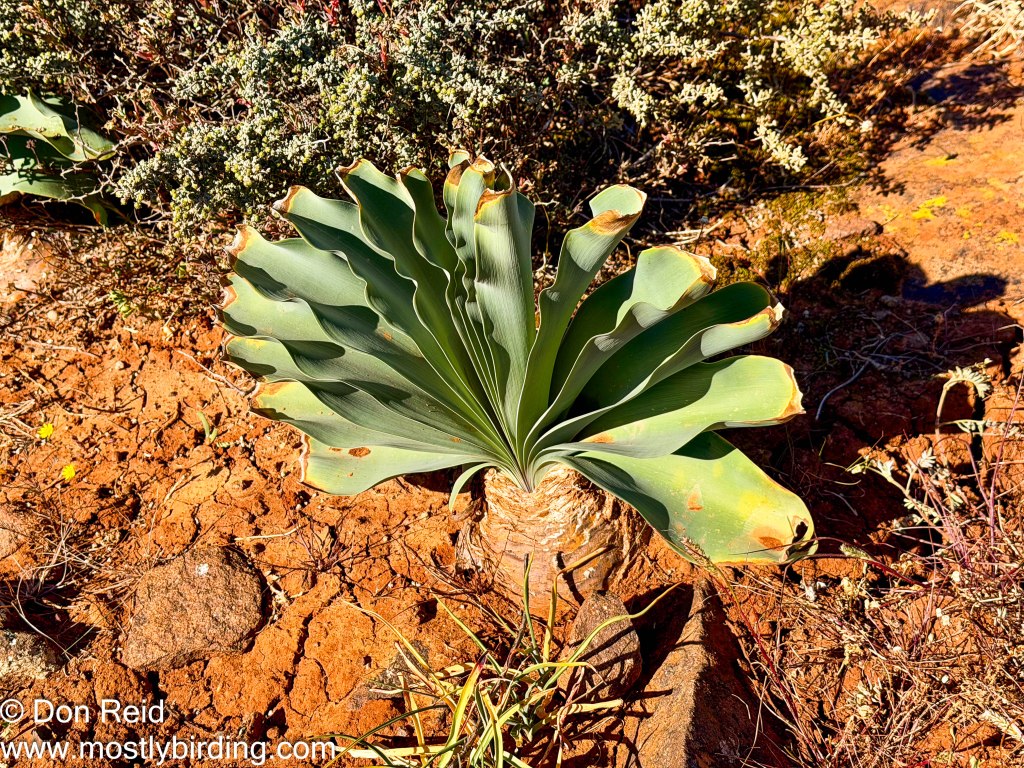
Brush Oxbane Boophone haemanthoides, Boereplaas

Matjiesfontein

Our last stop of the day was a few kms further along the road at Matjiesfontein, another farm-based padstal and restaurant, also offering a flower route of some 13km.
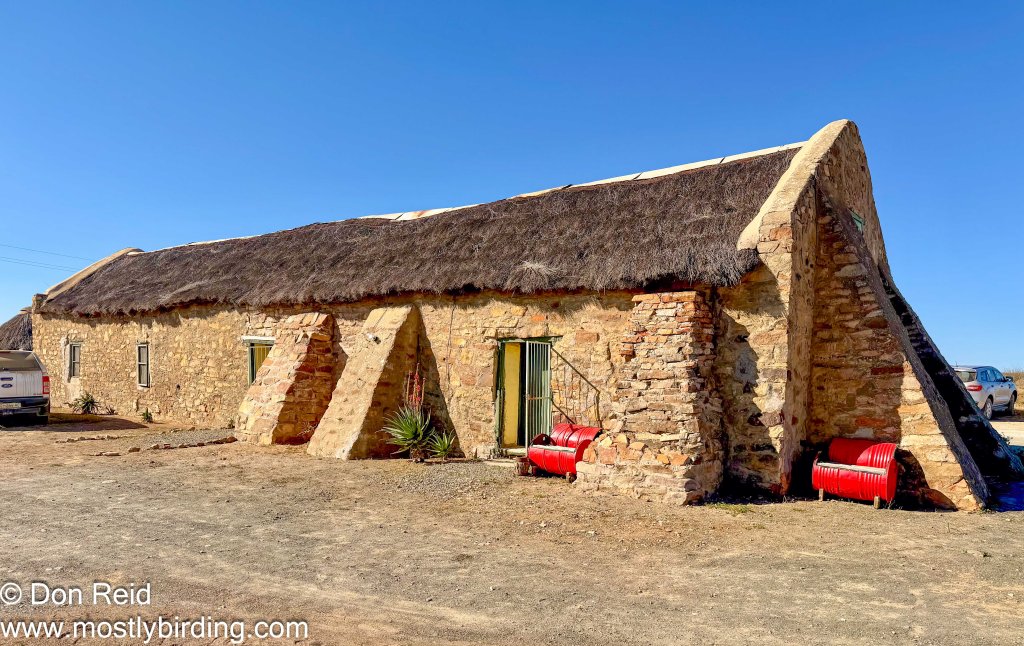
Padstal at Matjiesfontein

The full 13km route sounded too much at this point as it was already approaching 4pm but the friendly young lady at reception suggested we could do a short section of the route in reverse, which would take us straight to where the most flowers were at this stage, about 2kms in.

So that is what we did, after dragging ourselves away from the chatty personnel, and found some beautiful spreads of flowers at the point she had mentioned.
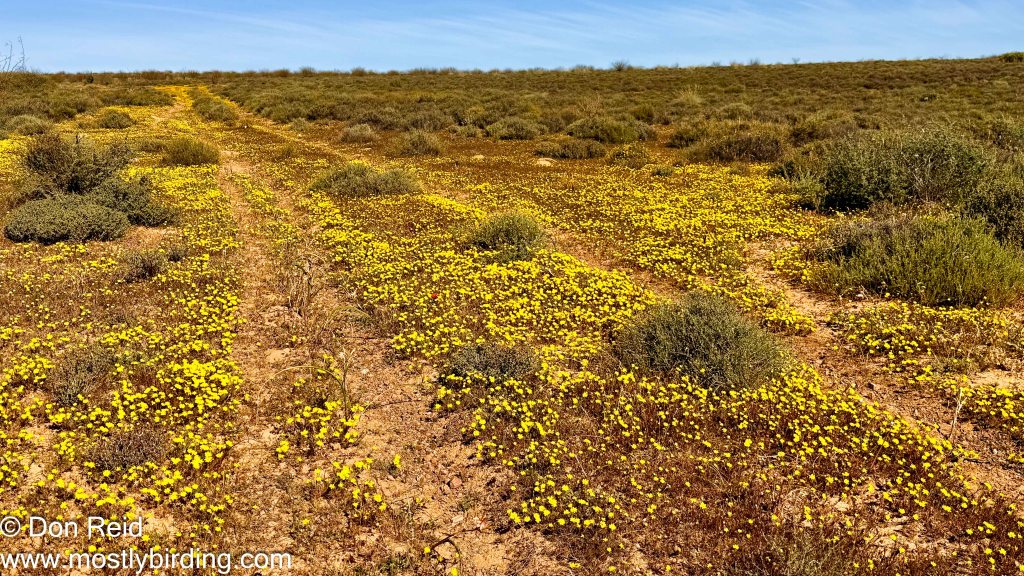
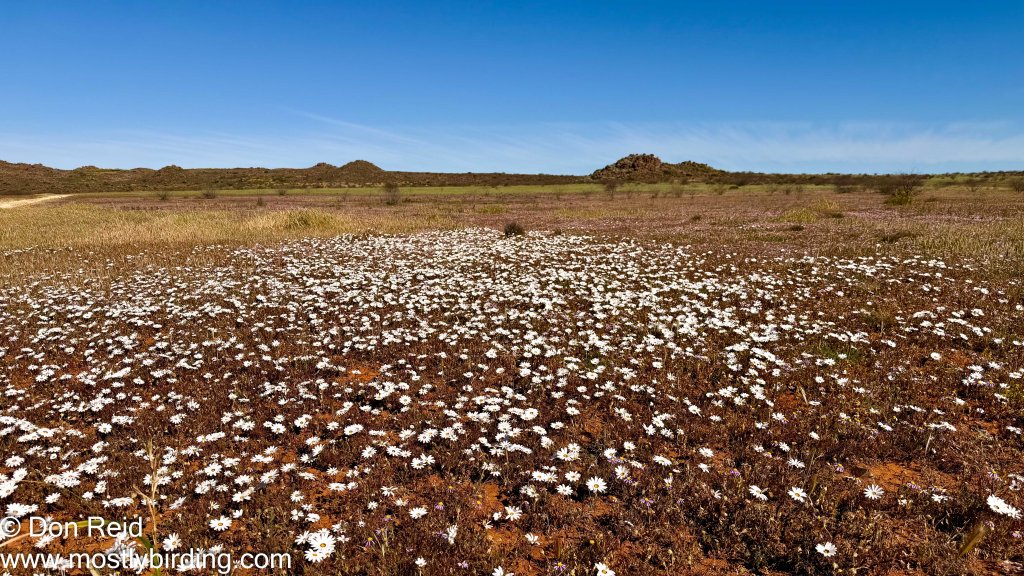
Daisies, Matjiesfontein

We had to agree with other flower tourists that the flowers were not as spectacular as previous seasons, in terms of the hoped for massed displays that are such a feature of the flower regions.

But we found that the way to counter this was to get out wherever patches of flowers occurred and scout around for different individual species, often small and hidden by the more prominent flowers.

It proved to be hard work, but paid off handsomely when we found unusual species and took copious photos to admire and identify once we got back to our base at the end of the day.

While the majority of other flower tourists were inclined to complain and be disappointed, we could hardly contain our excitement about what we had found.
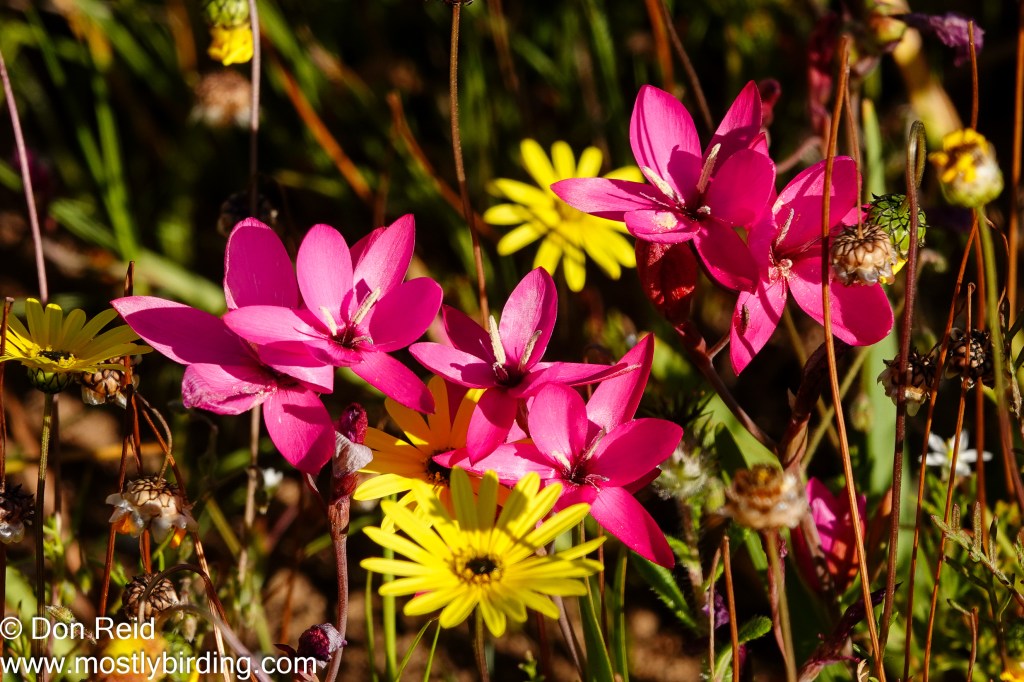
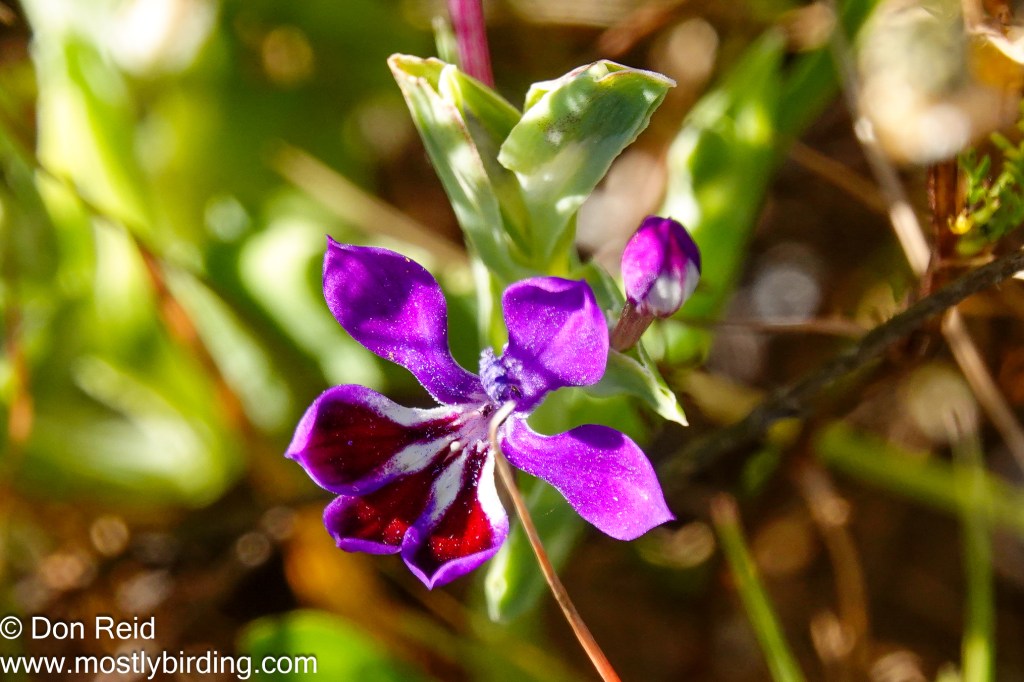
Pink Eveninglily Hesperantha pauciflora , Matjiesfontein
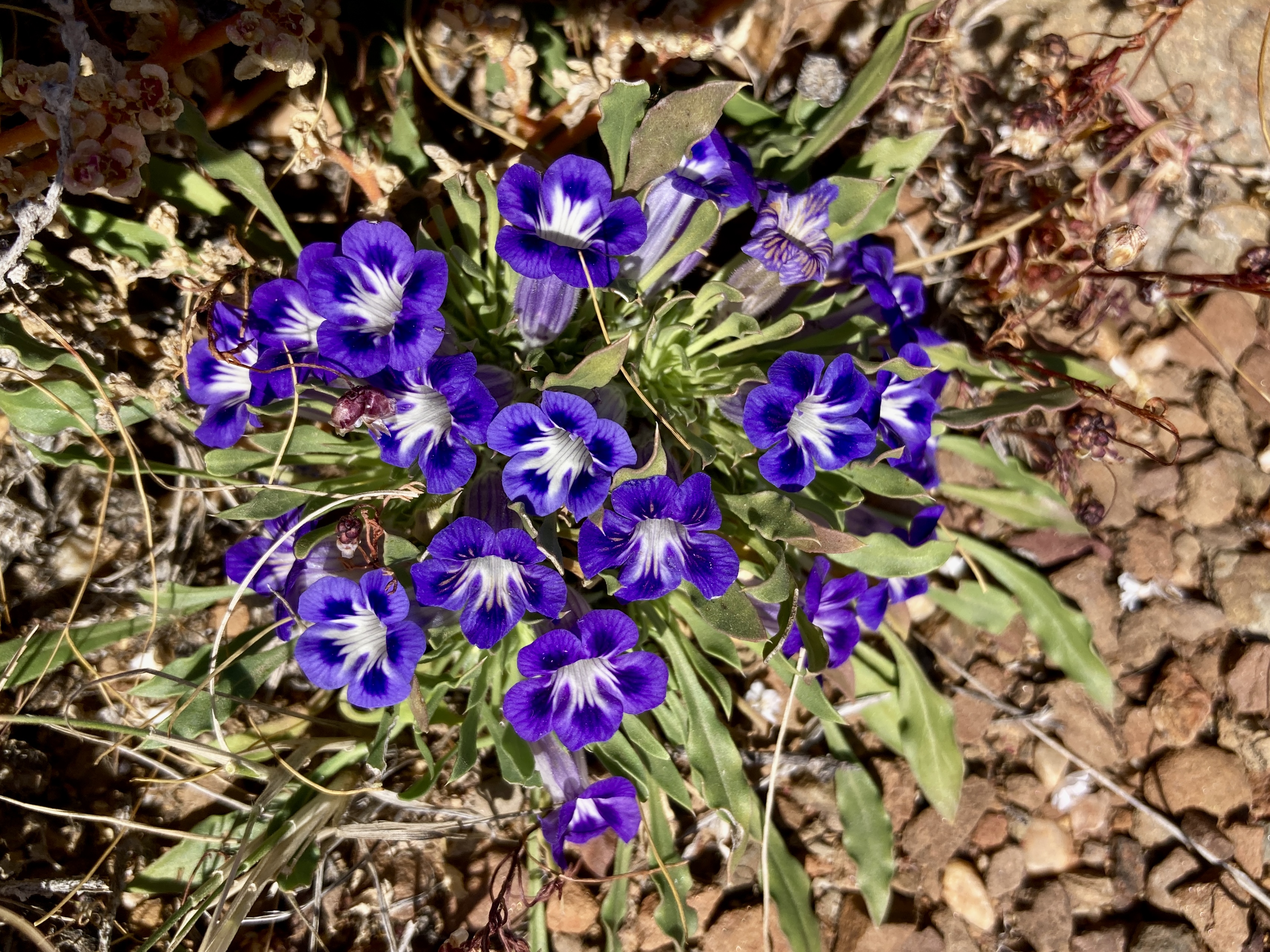
Purple Kabong Lapeirousia jacquinii , Matjiesfontein
Matjiesfontein

After that, we headed home on the corrugated road, a bit faster than I would normally drive, to ‘smooth out’ the worst of the irritating corrugations.

Our evening meal was that prepared by the guesthouse staff, taken at a communal table with a few other guests who provided pleasant conversation.

Birding highlights :

  • Ant-eating Chat on the way to the Botanical gardens
  • Black-winged Kite just outside the town
Black-winged Kite Elanus caeruleus Blouvalk
  • Several Capped Wheatears – some doing their display flight and calls
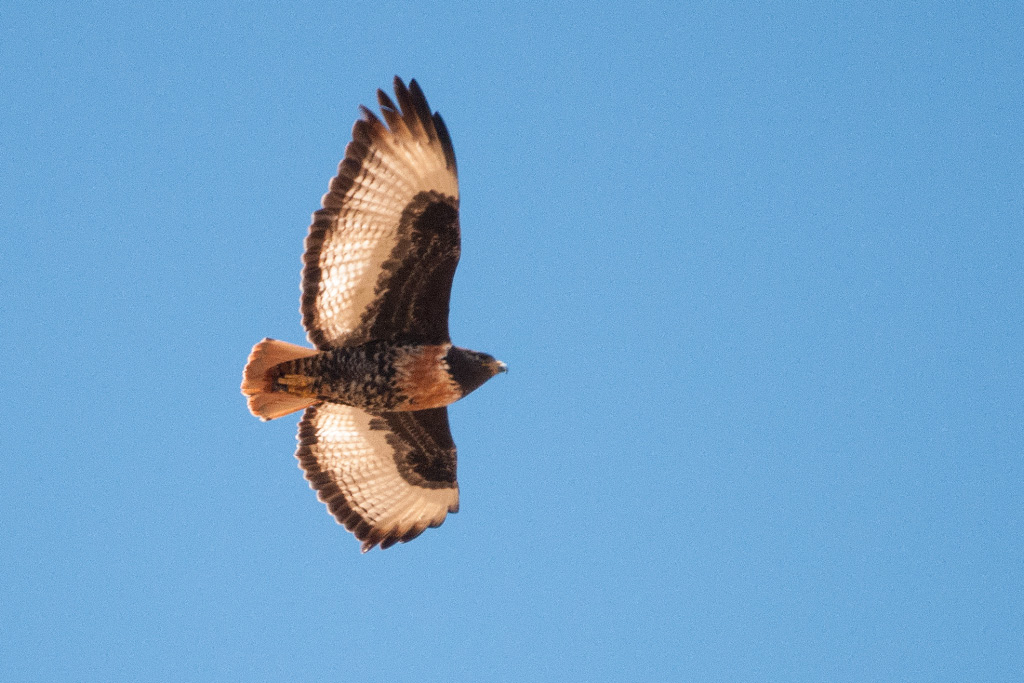
  • Jackal Buzzard over Boereplaas
Jackal Buzzard (Rooiborsjakkalsvoel)
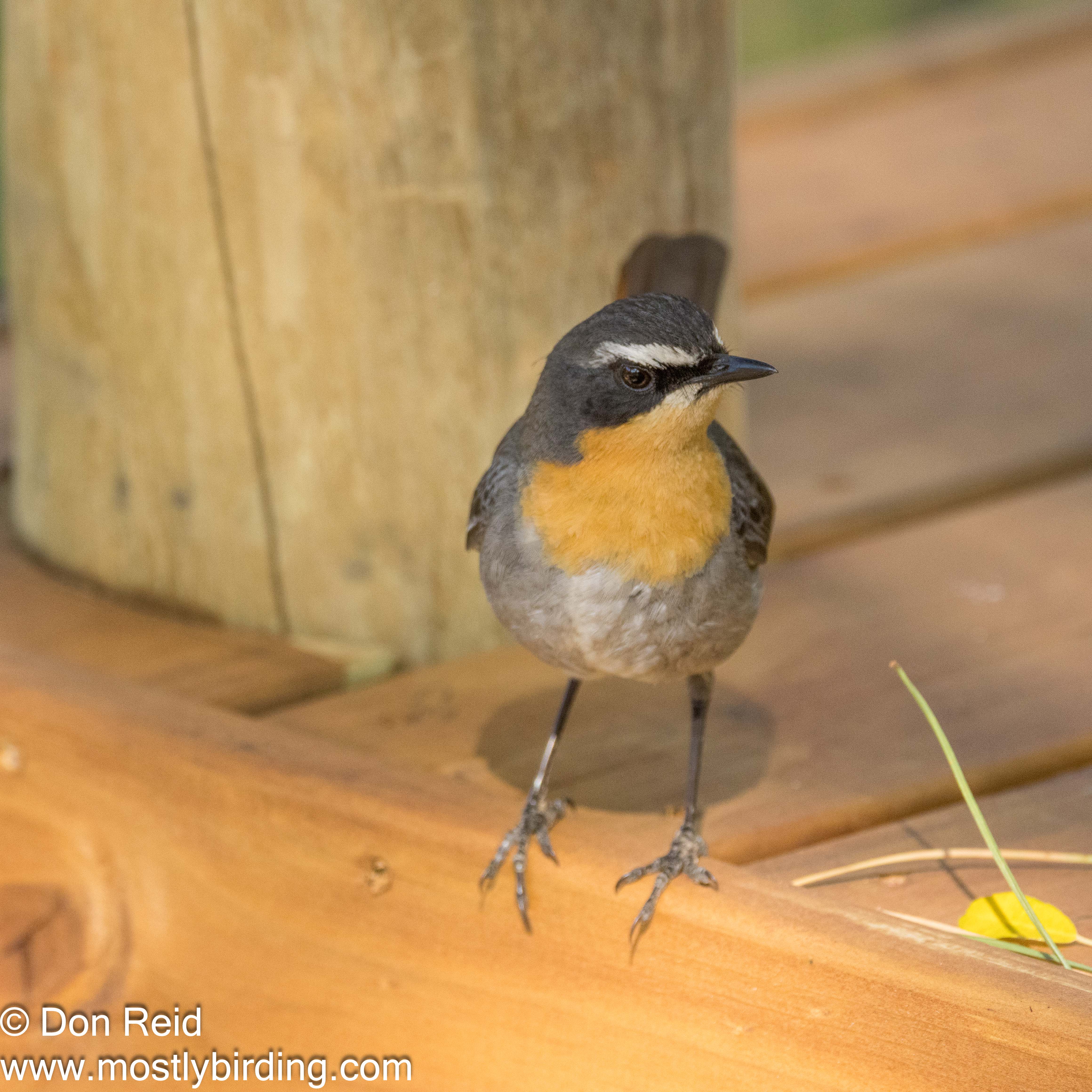
  • Sickle-winged Chat on the drive around Boereplaas
  • Common Quail heard a few times and seen once while on the drive around Boereplaas
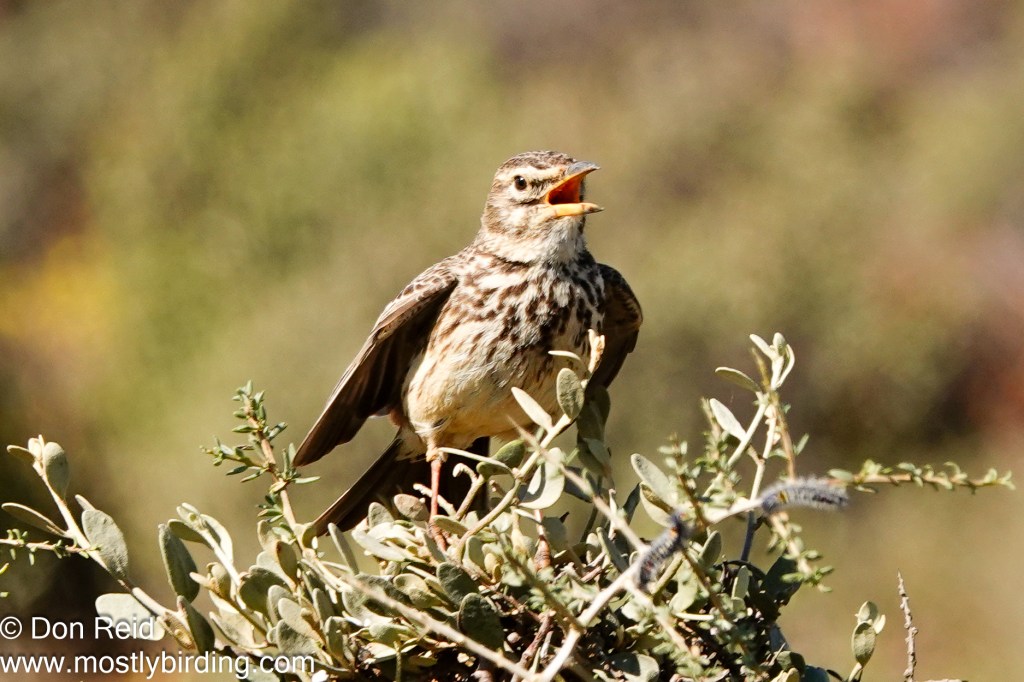
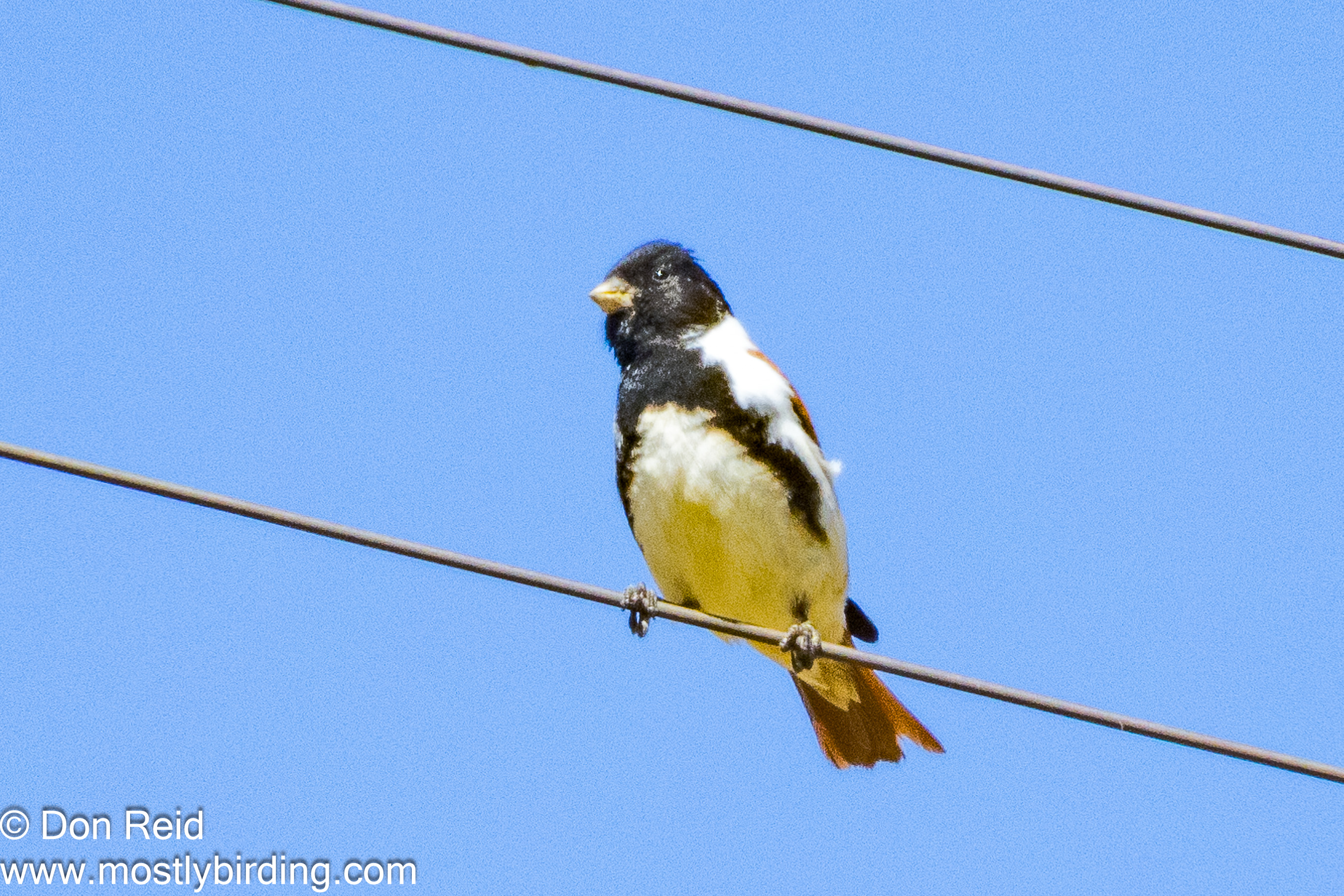
Large-billed Lark Galerida magnirostris Dikbeklewerik, Matjiesfontein

Day 6 – Nieuwoudtville to Clanwilliam

Time to move on again – however, with a short drive of 120km facing us, we had time to explore Nieuwoudtville before heading southwards.

After checking out after 10am we headed to the local NG Church Hall where they serve pancakes and tea or coffee during the flower season, in the hall which is filled with stalls offering all kinds of crafted goods.
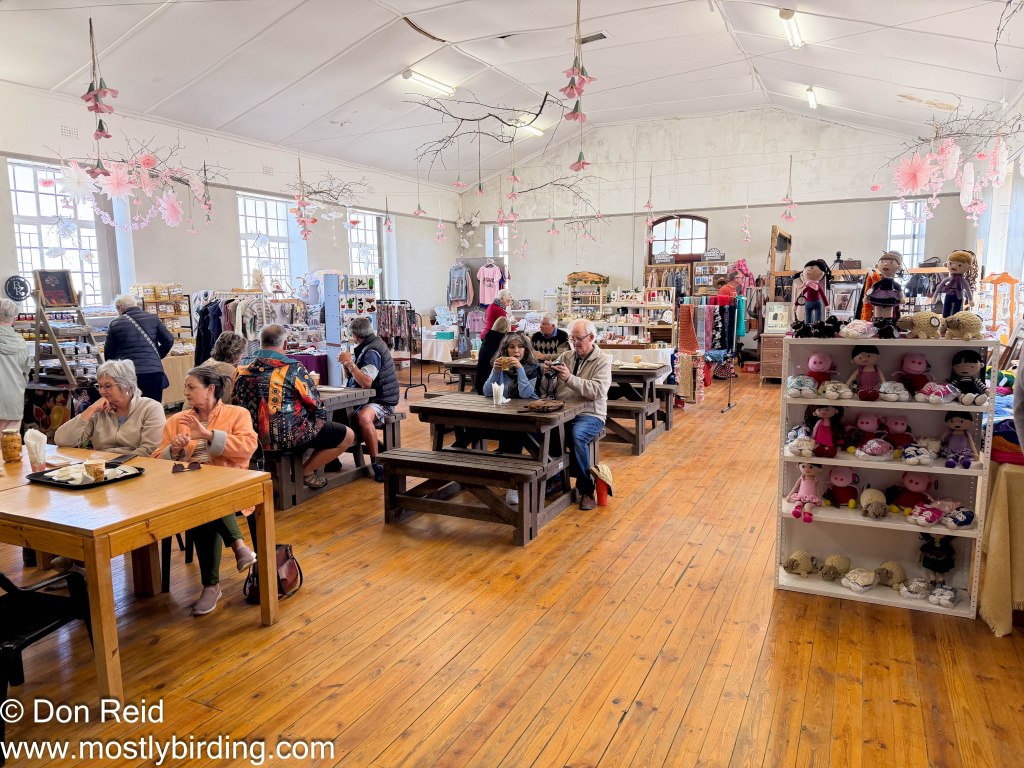
Church Hall, Nieuwoudtville

Gerda bought a number of goodies as small presents for the family and we had pancakes and tea at an outside table, while many similar-minded people (of a similar age group) did the same thing.

We walked over to the old church – a classic example of a NG Church built in beautiful sandstone quarried just outside the town and completed in 1906 – very much an icon and dominating the skyline.
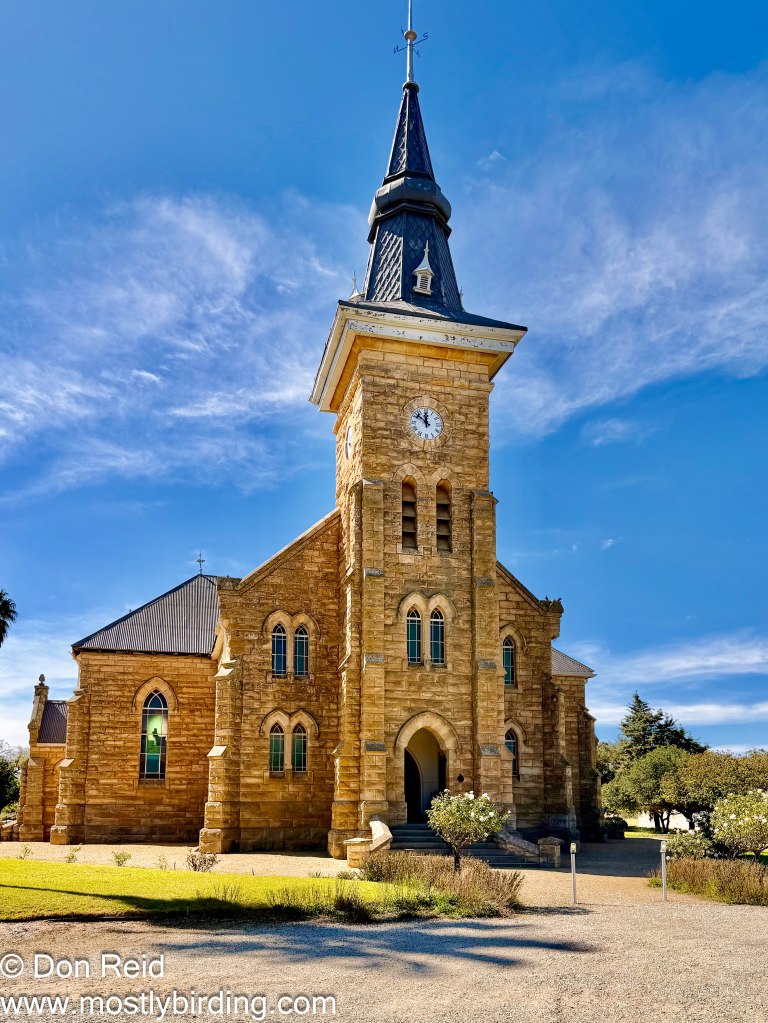
Nieuwoudtville

It was equally impressive inside and beautifully maintained with oak pews, wrought iron railings and a pristine white sandstone pulpit that has not discoloured over a period of more than 100 years.
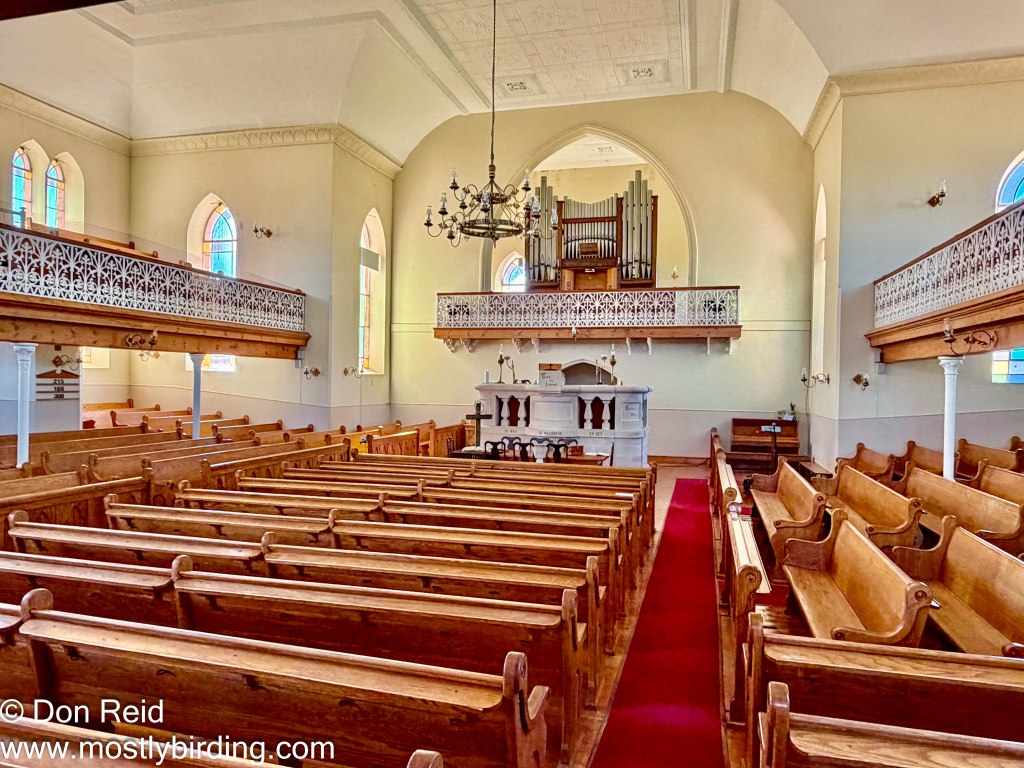
Nieuwoudtville

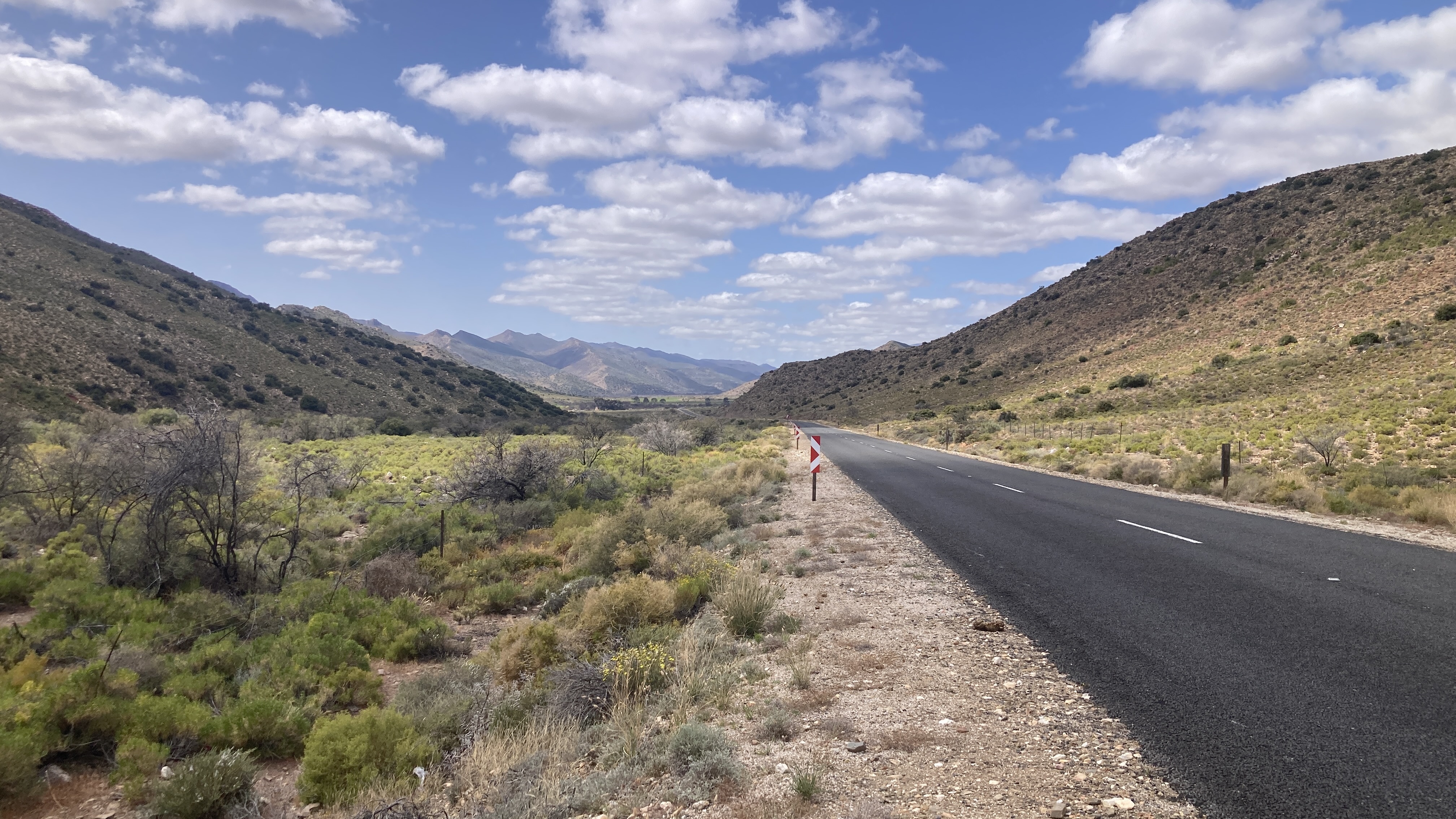
From there we set off on our short trip to Clanwilliam and were soon into the descent of the spectacular Vanrhyn’s Pass and beyond across the Knersvlakte again, before reaching the N7 where we turned south towards Clanwilliam.
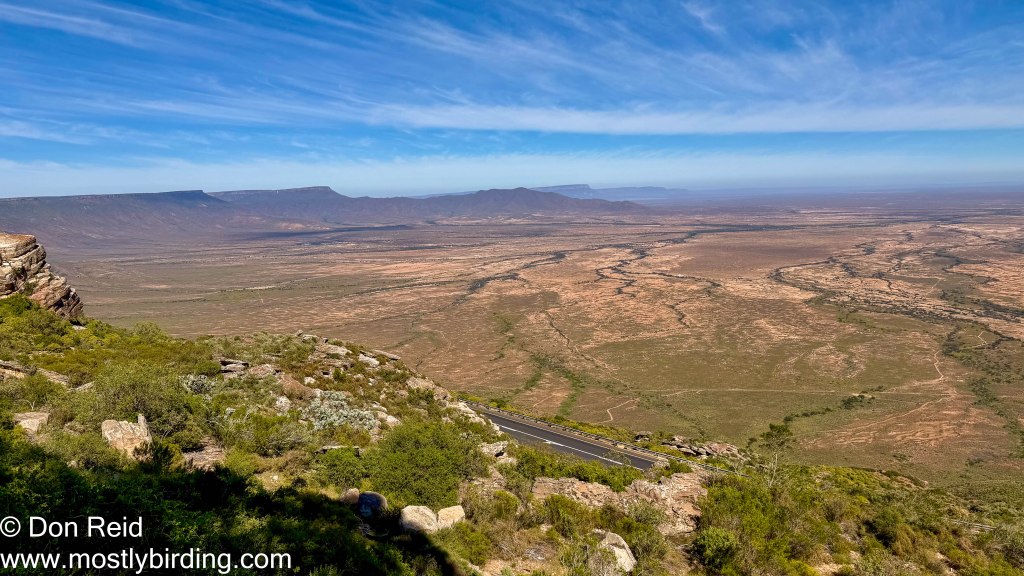
Vanrhyns Pass

We were too early for check in so had a lunch of bacon and egg toasties at Velskoendraai Padstal on the outskirts of Clanwilliam before heading to the Ochre and Ash guesthouse nearby.

Once checked in we had a rest and later a simple in-room supper / snack of rice cookies, ham and cheese

Birding highlights

  • Cape Canary and Fiscal Flycatcher added to my NC birdlasser list, both seen at the church
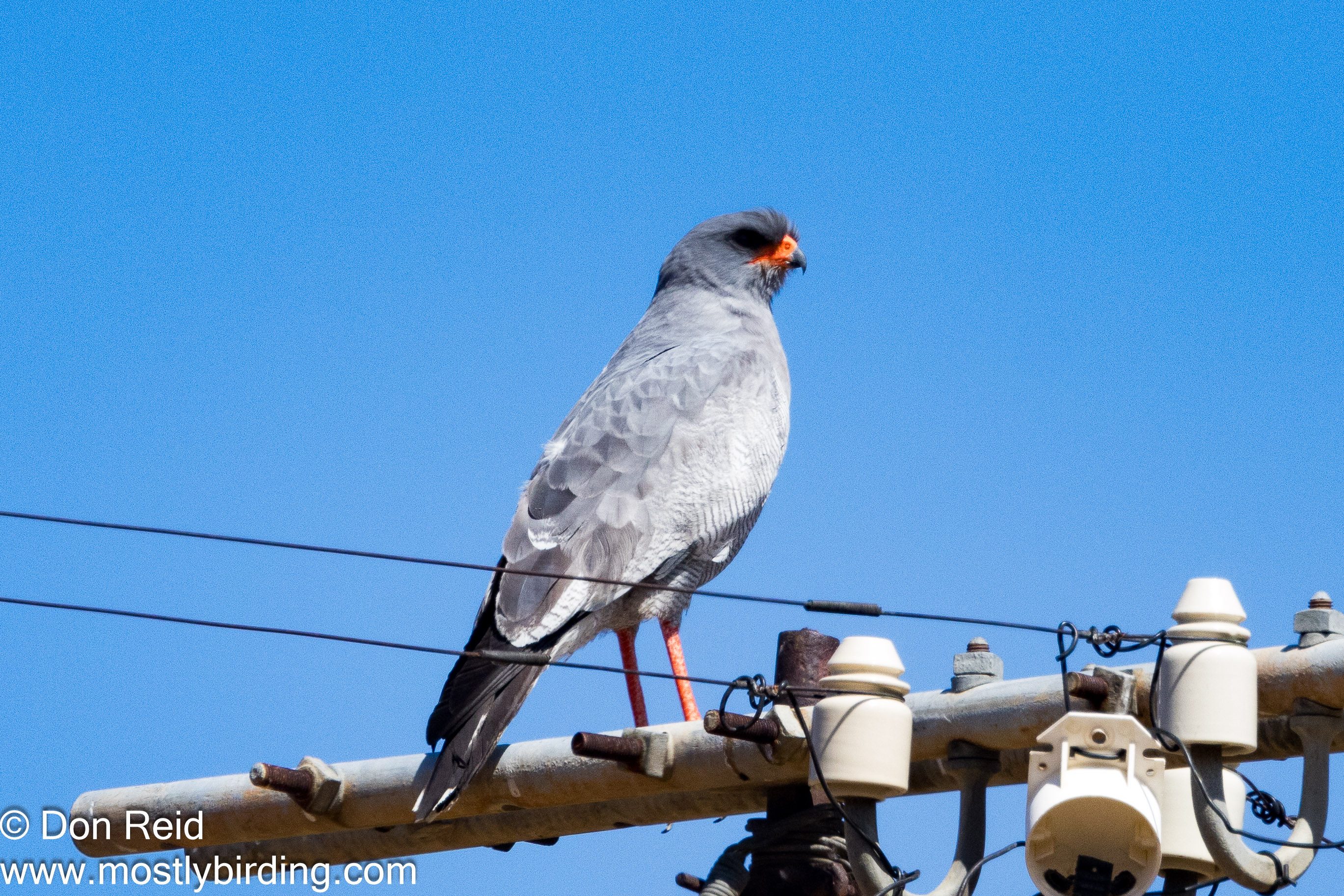
  • Pale Chanting Goshawk and Rock Kestrel on the Knersvlakte road
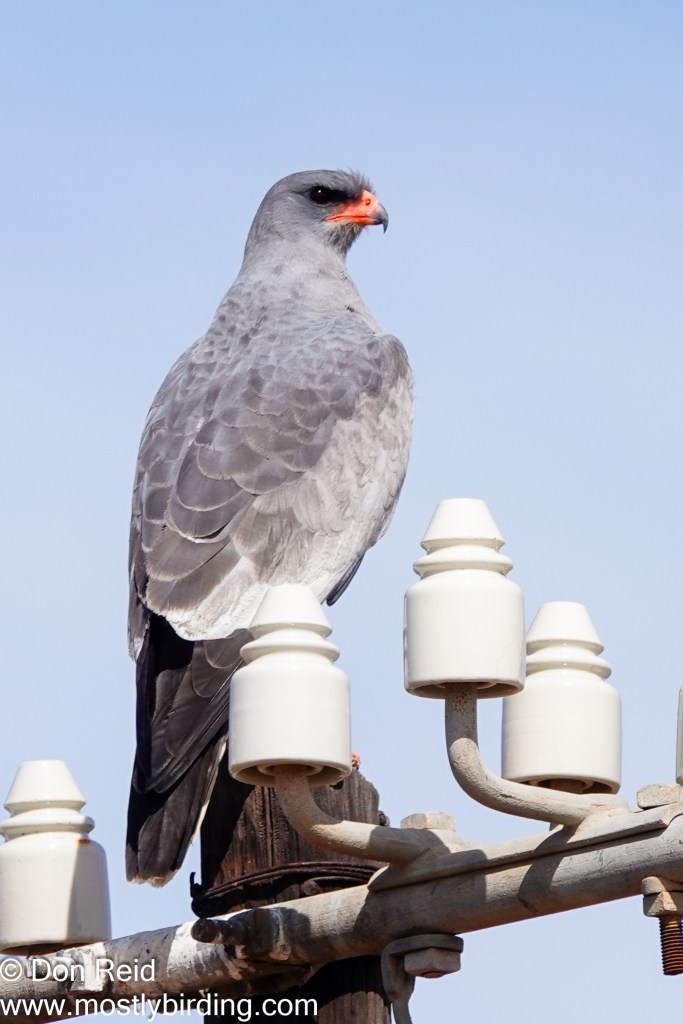
Knersvlakte, Vanrhynsdorp area
  • On arrival in Clanwilliam my new list got started at the Padstal with the common or garden species, with Hoopoe being the best of the bunch.
West Coast Wanderlust – Flowers, Birding and Small Towns (Part 2)

The Plan (Repeat from Part 1)

“Let’s do the flowers again” – I can’t recall whether it was me or Gerda that raised the thought earlier this year, but the immediate answer was “Yes!”

Translated, that means we were both keen to “do” the famed Spring flowers that bloom during August and September in parts of South Africa, in particular the West Coast and Namaqualand areas of our country.
With that decision made, we set about planning and booking a 14-night trip for the last two weeks of August, which would take us to some of the prime flower spots of the West Coast and Namaqualand during what we hoped would be the peak of the flower season

The plan we came up with looked like this –

  • 2 nights in Welbedacht Nature Reserve near Tulbagh (Covered in Part 1) – not part of a recognised flower route, but a convenient stopover before heading northwards to Namaqualand
  • 3 nights in Nieuwoudtville, Northern Cape, with the prospect of visiting several interesting spots that we had missed during our only previous visit in 2013
  • 3 nights in Clanwilliam with attractions such as the Cederberg and Biedouw Valley nearby, as well as Lambert’s Bay within an hour’s drive
  • 3 nights in Darling, not part of our previous itineraries, brimming with possibilities, and finally..
  • 3 nights in Paternoster on the coast, a place that we have got to know from a couple of previous visits and not far from the West Coast National Park

Day 3 – Welbedacht Nature Reserve to Nieuwoudtville

With a 290 km journey ahead, we did not have to rush and left at the “check out by” time of 11 am, sad to leave this piece of paradise with its constant birdsong and not another soul seen except a glimpse of the people in the neighbouring cottage on our way in.

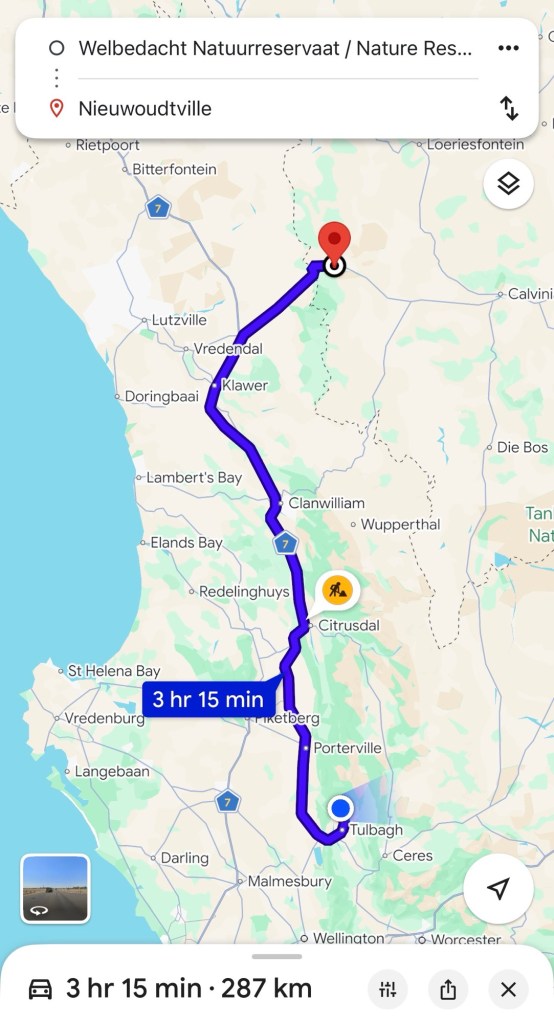
The route

The weather was fine and warm, the roads quiet, so we had a relaxed drive and time to stop a few times. The route took us through farming areas of the Swartland and small towns such as Gouda and Porterville, then onto the N7 national road northwards all the way to Vanrhynsdorp.

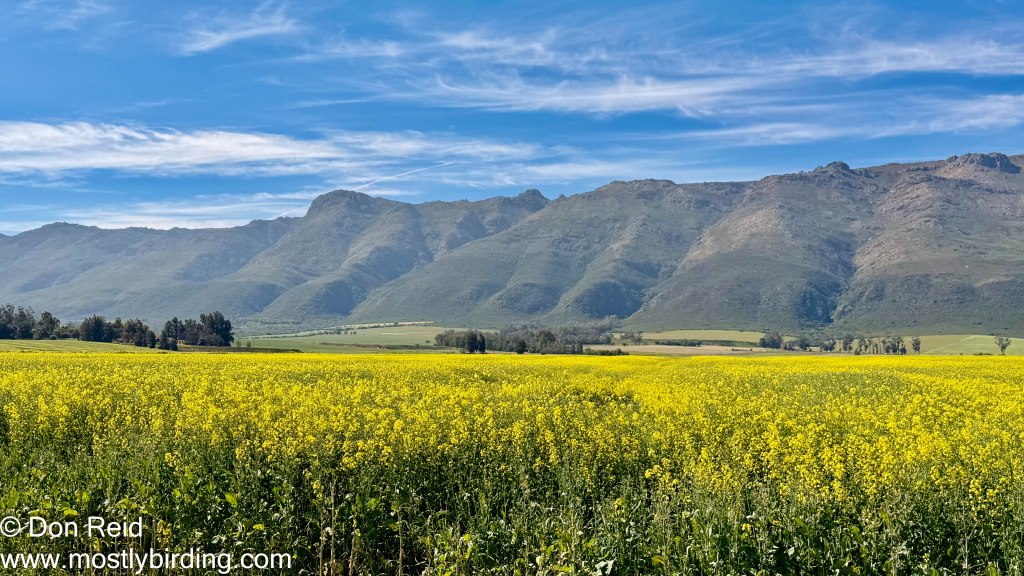
Canola fields near Porterville

Our stops along the route were –

  • Kole & Deeg Coffee shop in Tulbagh – for take away coffees and four of the superb Pasteia de natas we knew from an earlier visit
  • Kardoesie Padstal in the Piekenierskloof Pass for quiches (tonight’s supper) and some other goodies including Weskus Pinotage and Rose wines.

At Vanrhynsdorp we branched off the N7 towards Nieuwoudtville (the locals pronounce it Nee-oat-ville) and for the next 40 kms drove the road across the flat semi-arid landscape known as the Knersvlakte – which translates literally to “gnashing plain”.

The Afrikaans name describes the loud crunching sound that early wagon wheels made when grinding over the hard white quartz gravel that covers the region’s terrain.

Vanrhynsdorp – Nieuwoudtville road
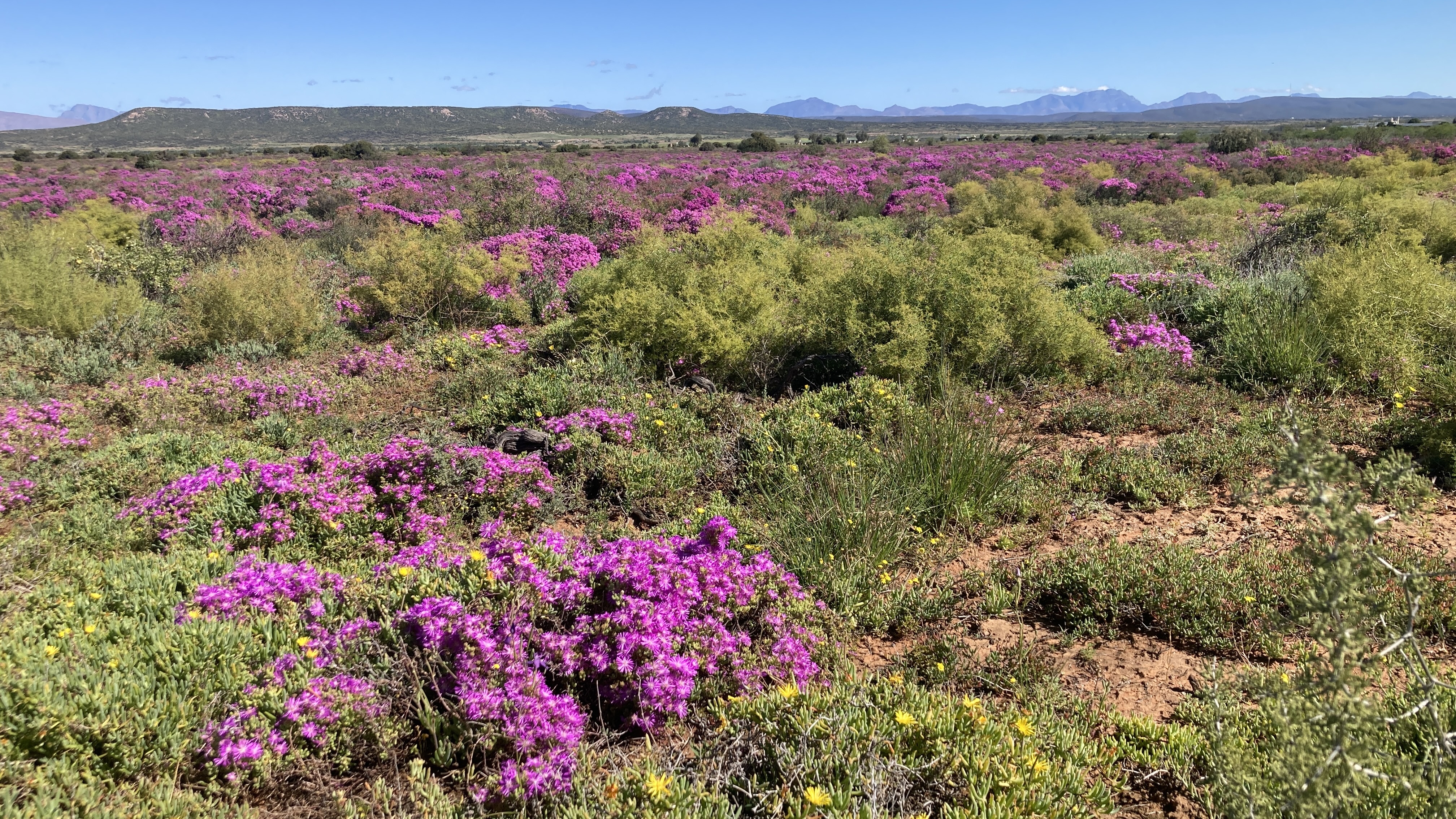
Vygies, Vanrhynsdorp – Nieuwoudtville road
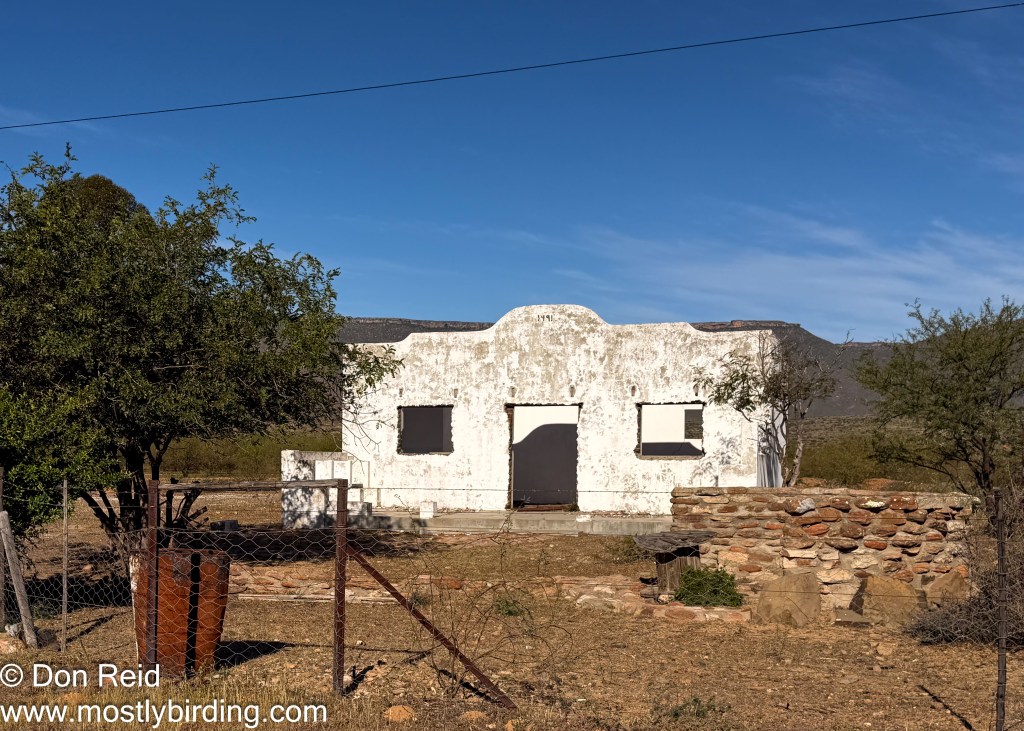
Abandoned farmhouse, Vanrhynsdorp – Nieuwoudtville road

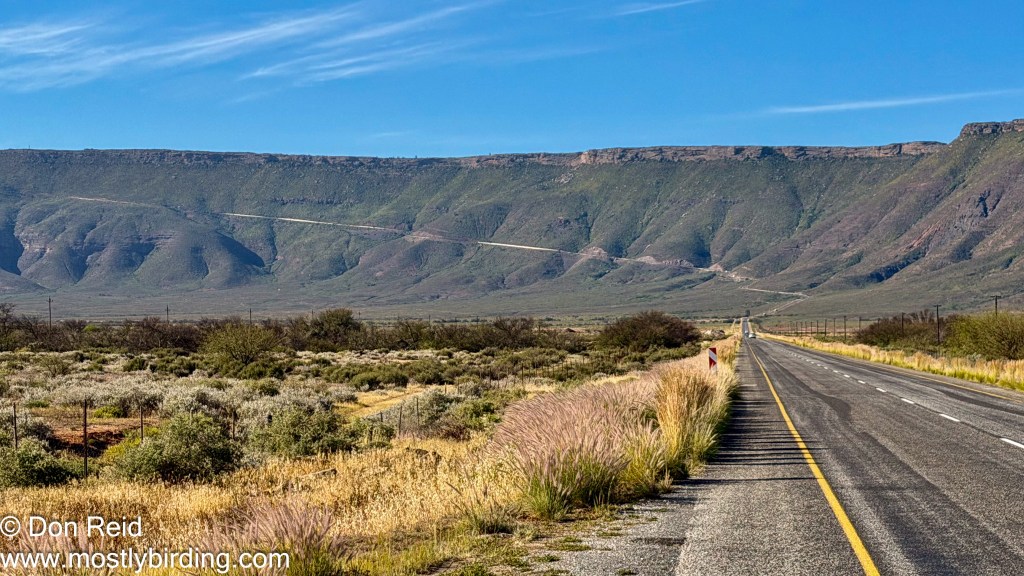
Van Rhyns Pass, which connects the Knersvlakte with Nieuwoudtville, can be seen a long way off, presenting as a long rising gash across the face of the mountainside.

Van Rhyns Pass in the distance

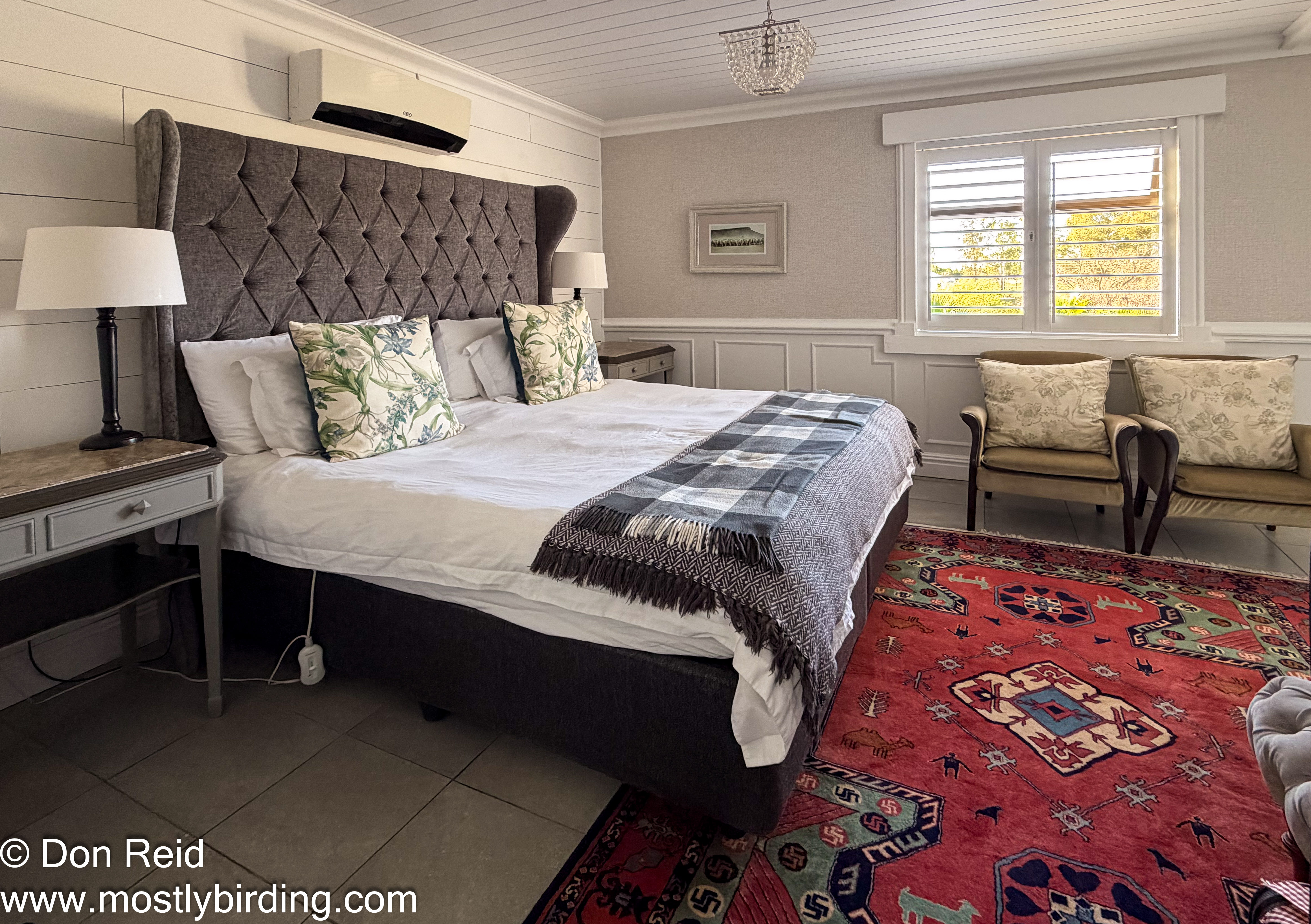
We arrived at the curiously named Linda se Dop, the guesthouse we had booked for our three night stay in Nieuwoudtville, at 4.30 pm and were soon settled in after having to get our suitcases and bags, etc up a longish flight of stairs.

Linda se Dop Guesthouse, Nieuwoudtville

It was still warm, and I was feeling the exertion of getting our baggage to the room – what better way to cool down than a swim in the inviting pool. No other guests seemed interested and I soon found out why – the water was icy cold and it took a while before I was fully immersed. After a few lengths I climbed slowly out, my limbs feeling quite numb, yet it had the invigorating effect I had hoped for.

Following that, I went for a short walk in the vicinity of the guesthouse, which is located in a sparsely populated part of the town with large stands, and I was soon admiring the flowers I came across – mostly different from those we had found so far.

Nieuwoudtville flowers
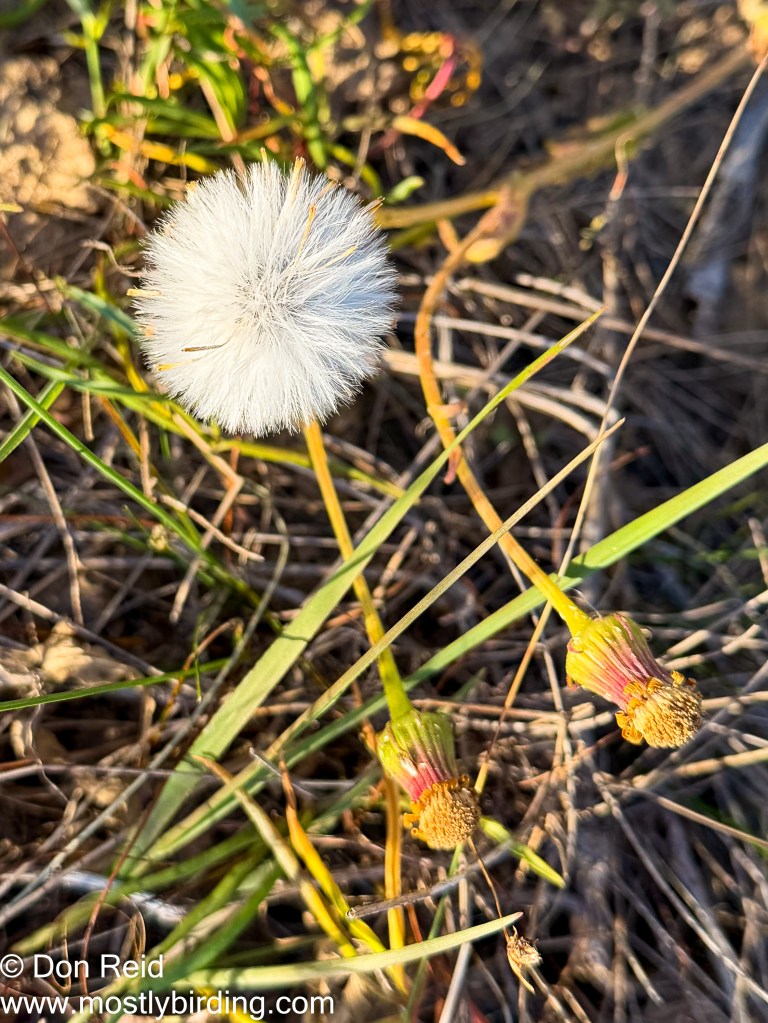
Groundsel , Nieuwoudtville
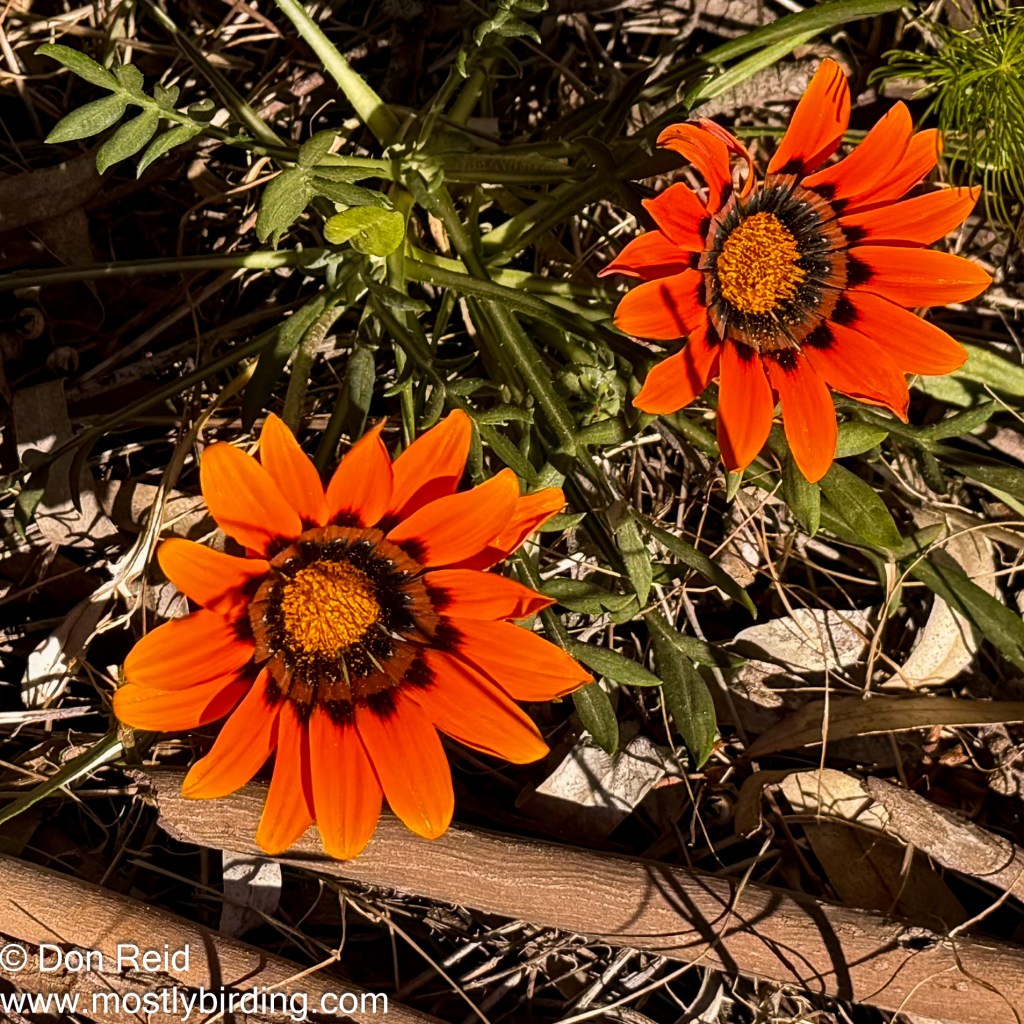
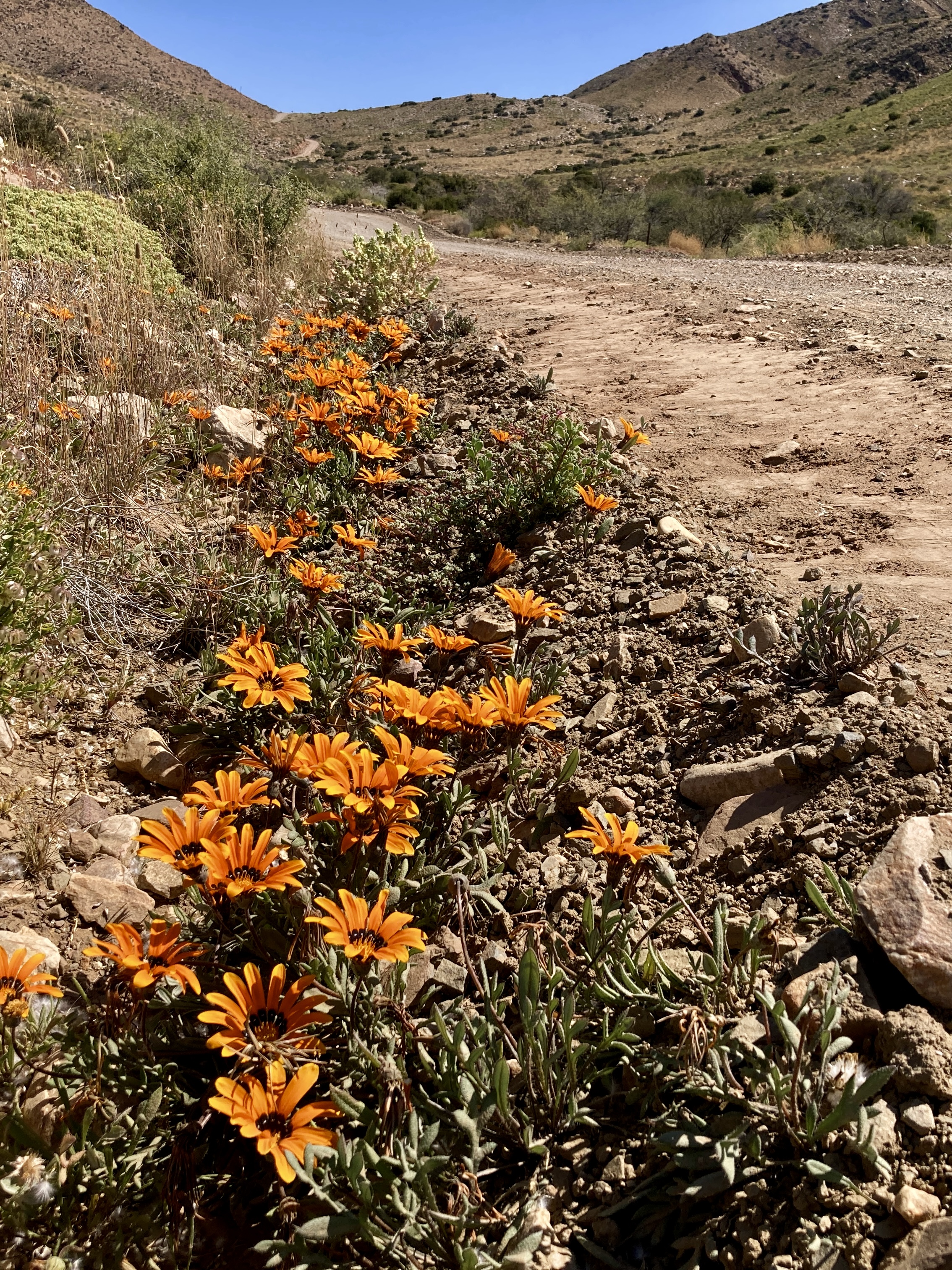
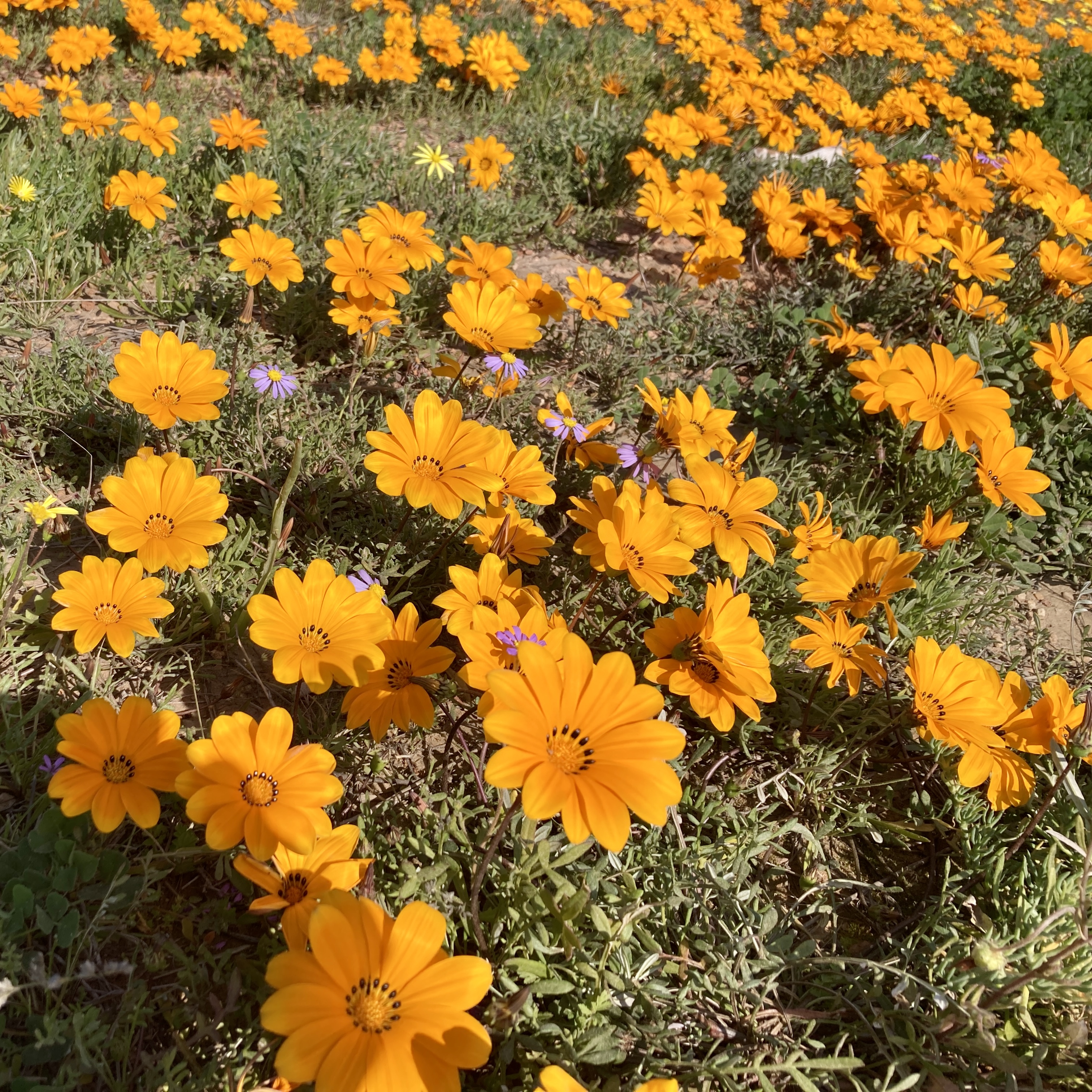
Gazanias, Nieuwoudtville

Supper was the quiche from Kardoesie padstal accompanied by the Weskus Pinotage which proved to be a good buy at R95.

Birding highlights

  • Birding highlight of the day was when Gerda shouted “STOP” just after Vanrhynsdorp – the reason for her urgency turned out to be a pair of Ludwig’s Bustards walking in the low scrub. This was only my second ever sighting of this species, the first was back in 2012 in the same area while touring the flower spots for the first time.

Day 4 – Nieuwoudtville: Quiver Trees, Flowers and a Waterfall

Our first full day in Nieuwoudtville was fine and warm, even hot at times, and presented an opportunity to see some of the sights that we had missed during our short visit in 2012.

Guesthouse owner Linda gave us a rundown of the recommended places to visit after a “gentleman’s hour” continental breakfast.

One of the pleasures of ‘doing’ the flowers is that the blooms are best viewed between 10 to 11 am and 4 to 5 pm, as they are fully open during those hours, providing it is not overcast. So there is no need to rush and relaxed breakfasts are the norm, followed by a slow drive along the day’s route.

Accordingly, we left the guesthouse after 11am and headed through town, then north along the road to Loeriesfontein, driving slowly enough to be able to spot flowers and birds, both of which were not plentiful at first, but every stop produced something of interest.

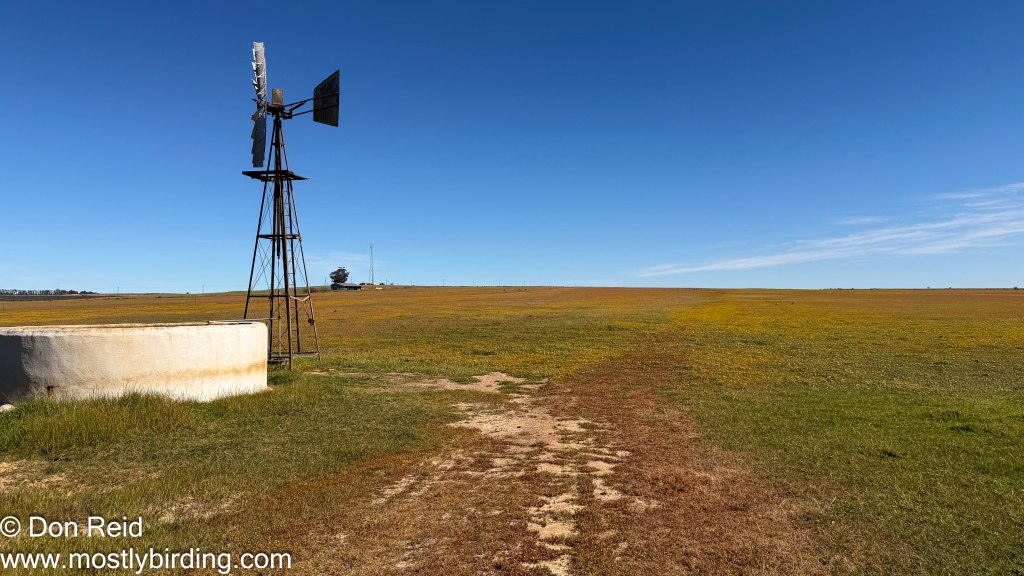
Farm alongside the Loeriesfontein road

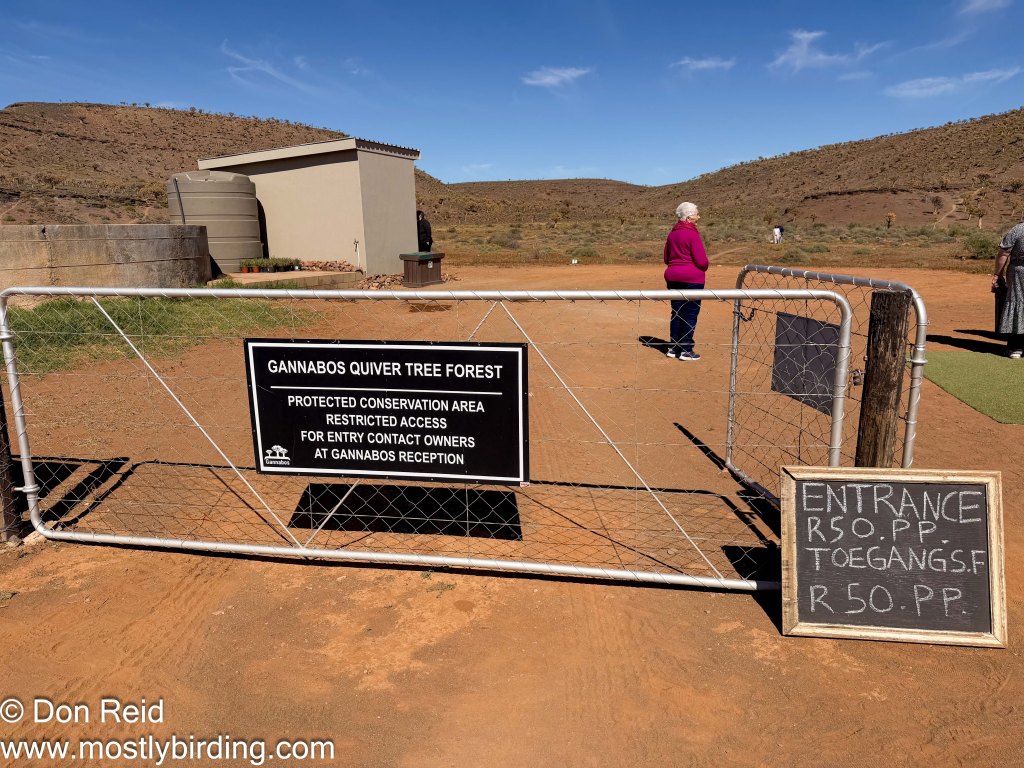
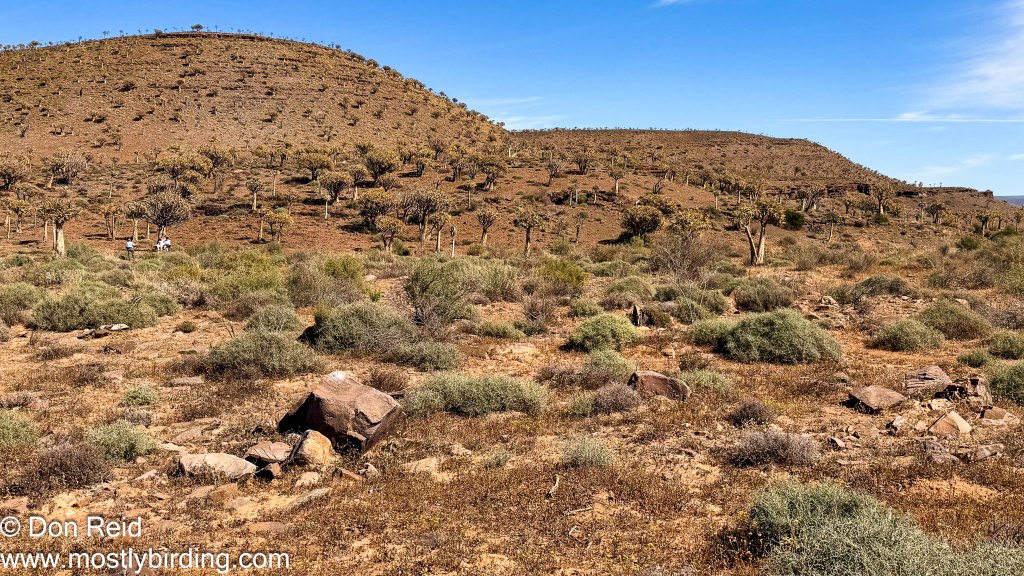
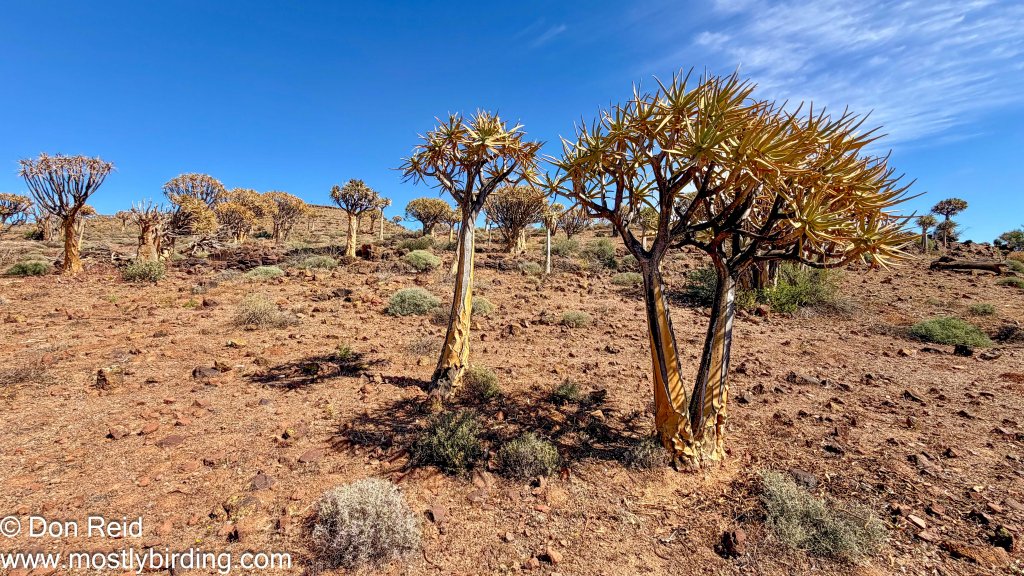
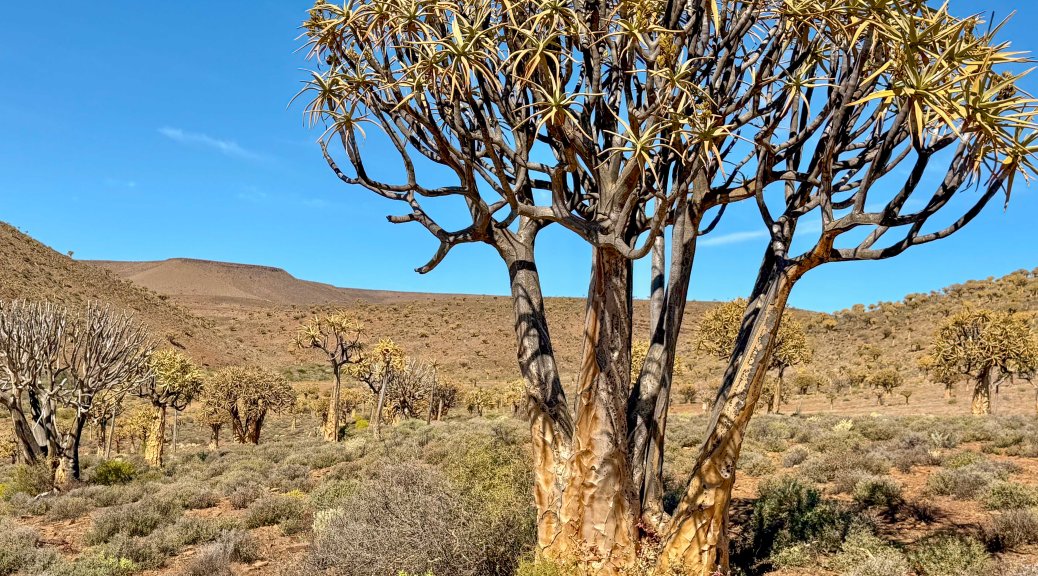
The habitat changed from open farmland to Karoo scrubland and after about 20km we reached the turnoff to our first destination of Gannabos and, a few kms down a bumpy gravel road, the gate to the Quiver Tree Forest.

Gannabos – Quiver Tree Forest
Quiver Tree Forest, Gannabos

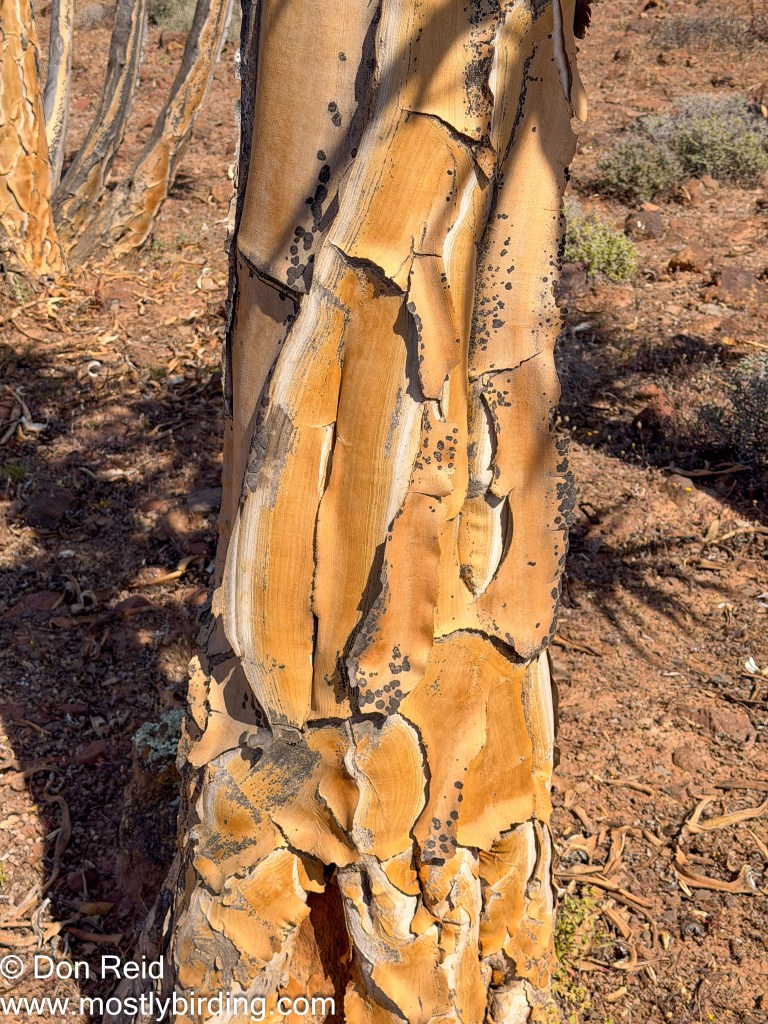
Gerda explored the area near the gate while I walked the narrow track to where the Quiver trees started and further to where groups of trees spread across the stony, hilly terrain, displaying their other-worldly form and bark.

Quiver Tree Forest, Gannabos
Quiver Tree bark

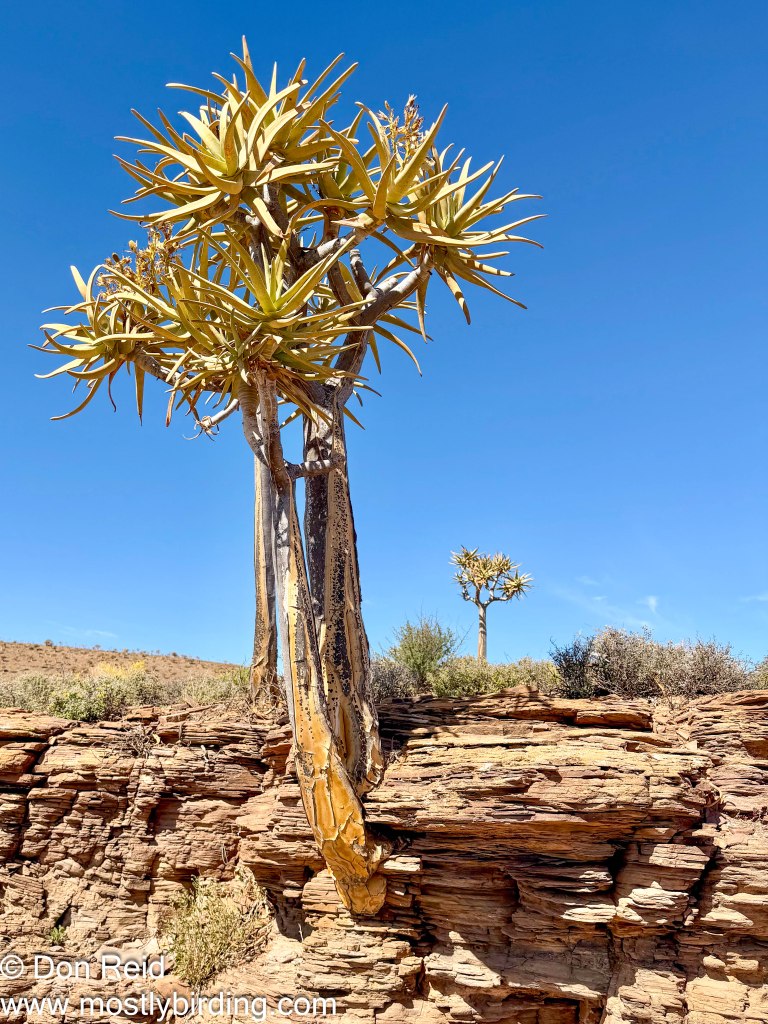
Quiver trees clearly do not need much soil to grow -this one was clinging to the rock face like a professional rock climber

Quiver Tree Forest, Gannabos

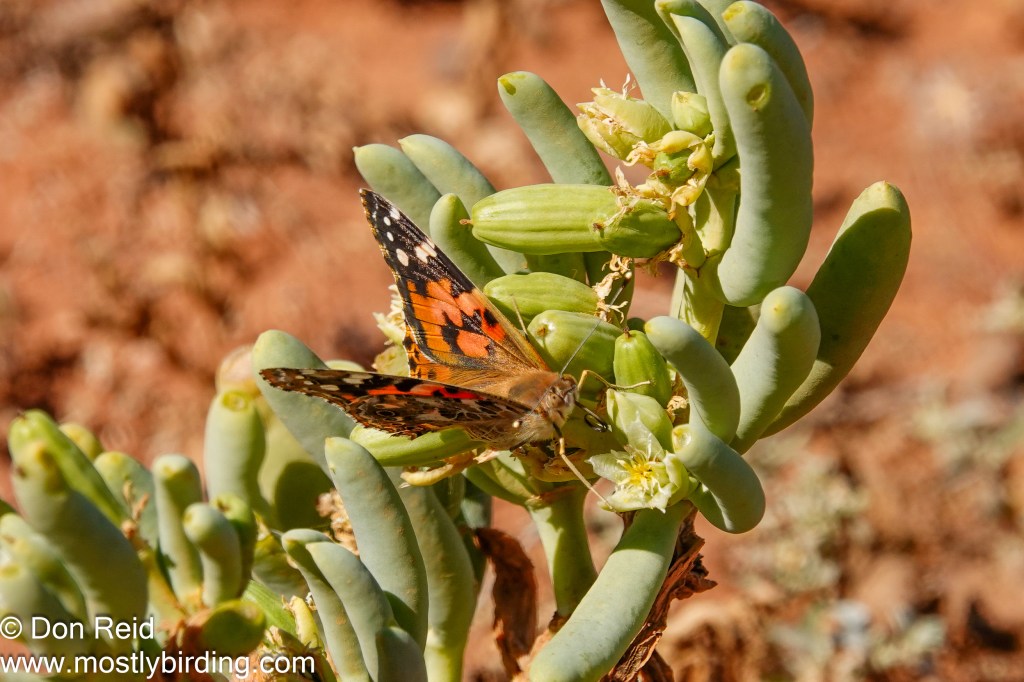
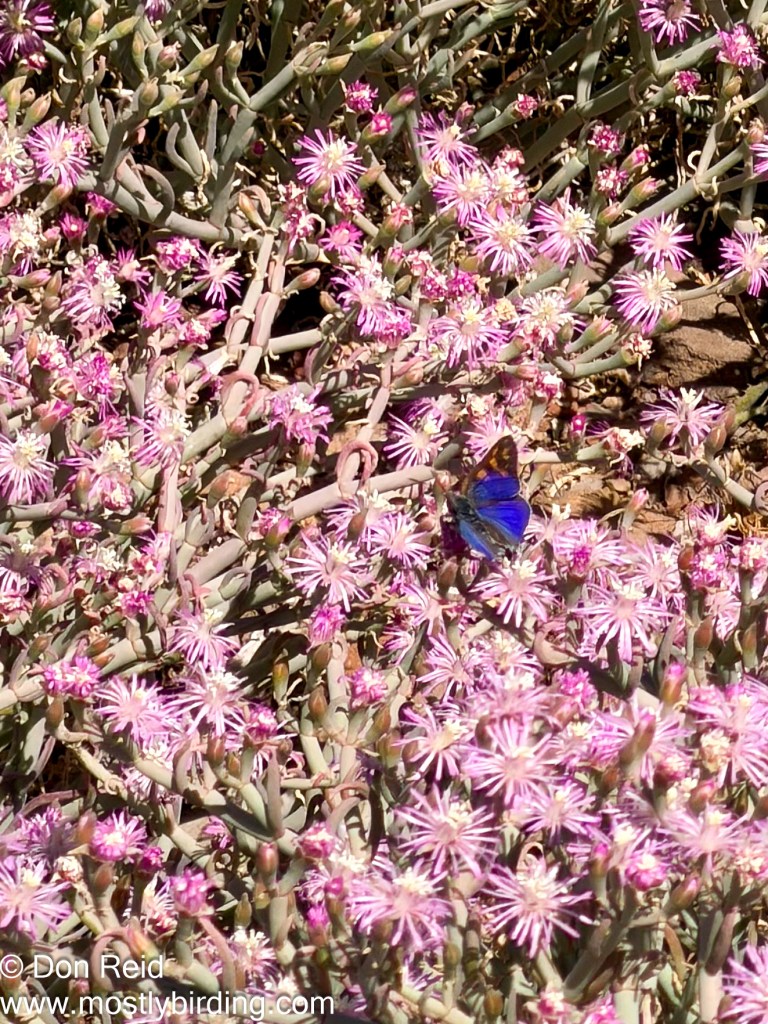
In between, the ground was sparsely covered with mostly nondescript plants but here and there were unusual succulents and vygies, some of which attracted butterflies coloured white, orange, and deep blue.

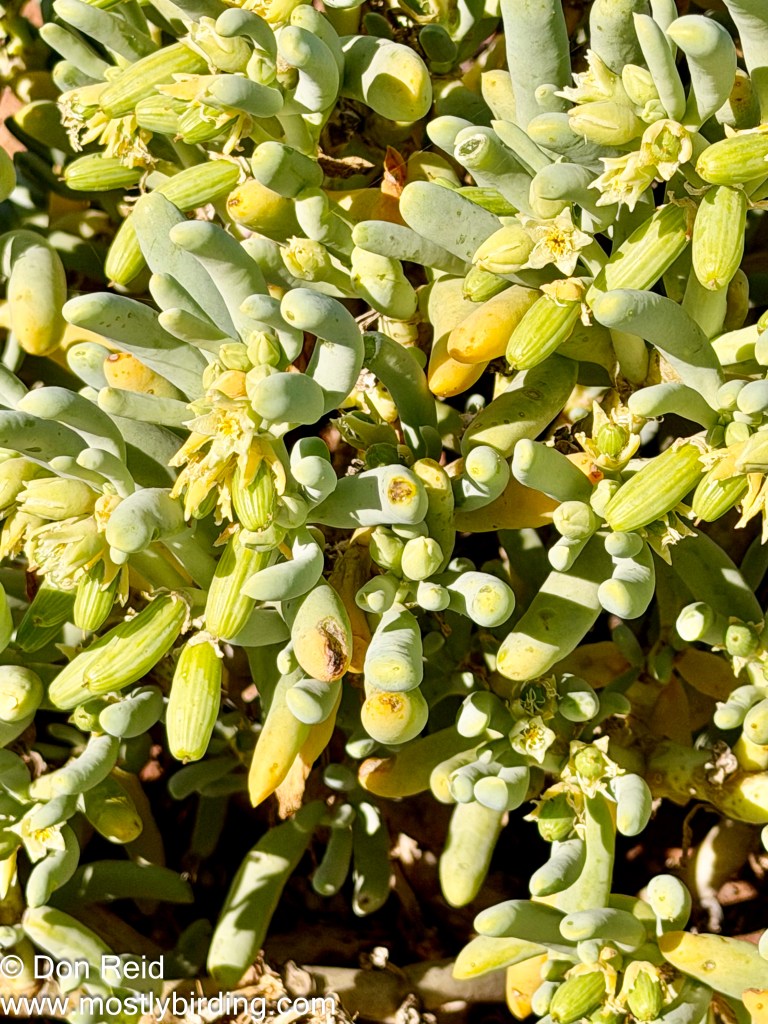
The most unusual succulent was the oddly named Willybush – now what prompted them to call it that?

Willybush Augea capensis , Gannabos
Painted Lady butterfly vanessa cardui , Gannabos
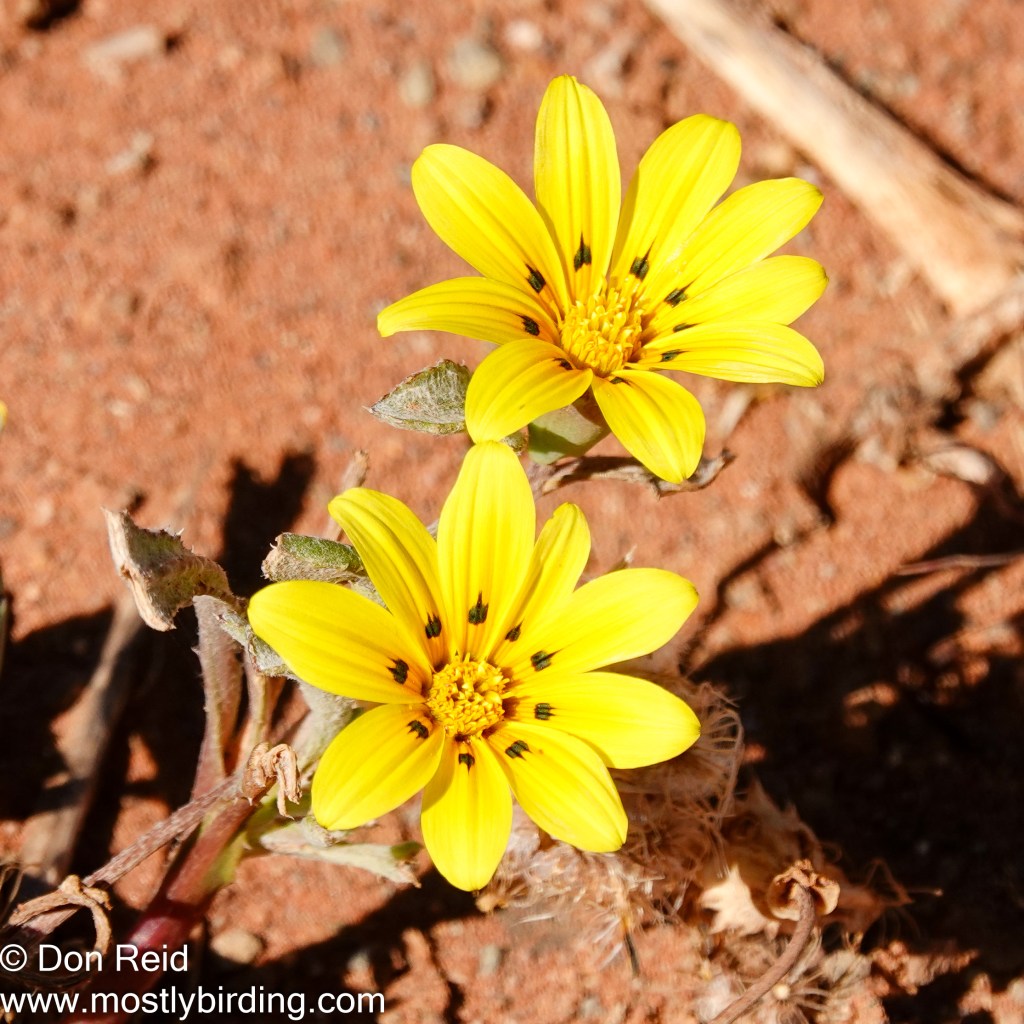
Yellow Gazania Gazania lichtensteinii, Gannabos
Vygies and a butterfly (possibly a Blue Pansy) Gannabos
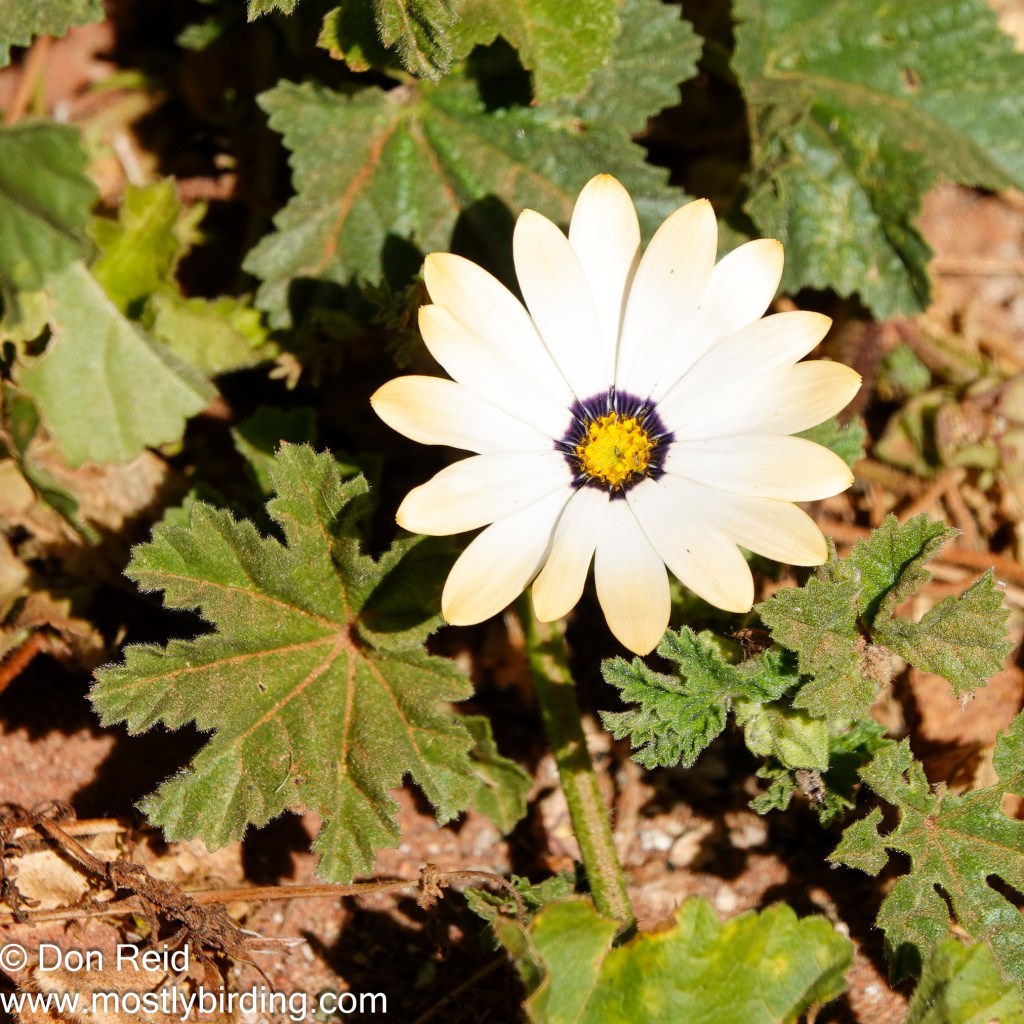
Rain Daisy Genus Dimorphotheca , Gannabos

Our next stop, on the way back, was at the Nieuwoudtville Waterfall reserve entrance, where a couple of locals were selling their wares from tables shaded by open tents – we succumbed to temptation and bought pancakes which we had straight away, plus home made iced rooibos tea and chocolate cookies for later.

The waterfall viewing point was a short walk along a track into the reserve, lined with interesting plants and flowers which attracted their share of insects and birds.

Pathway to the viewing point, Nieuwoudtville Waterfall, Klippe Rivier
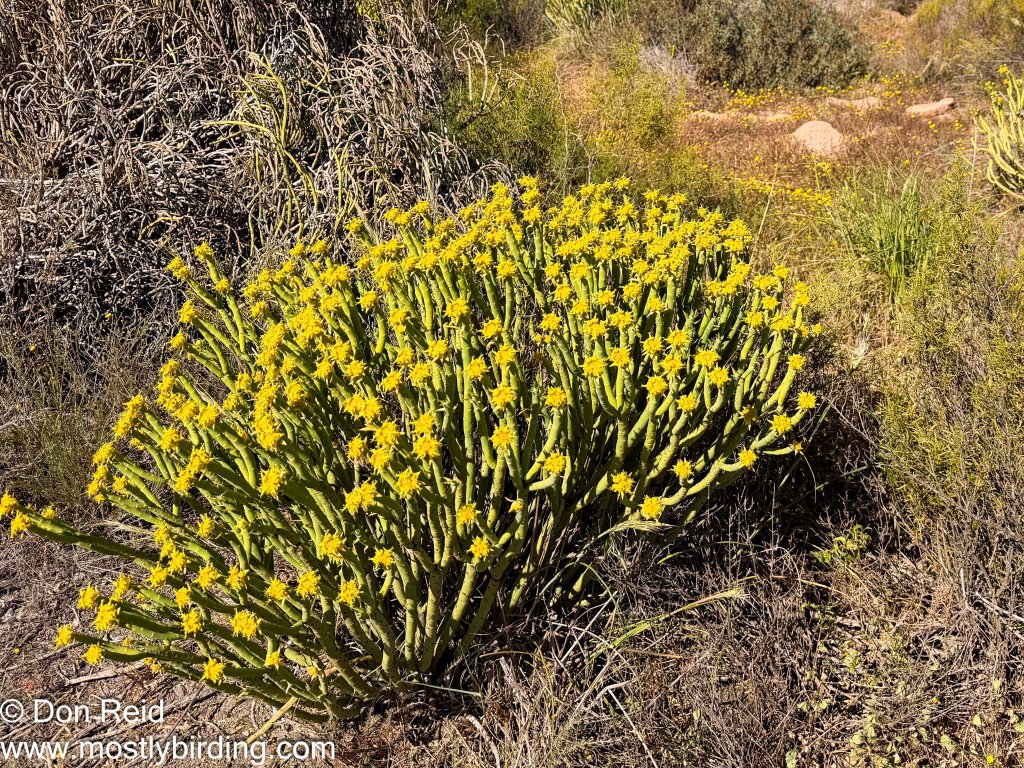
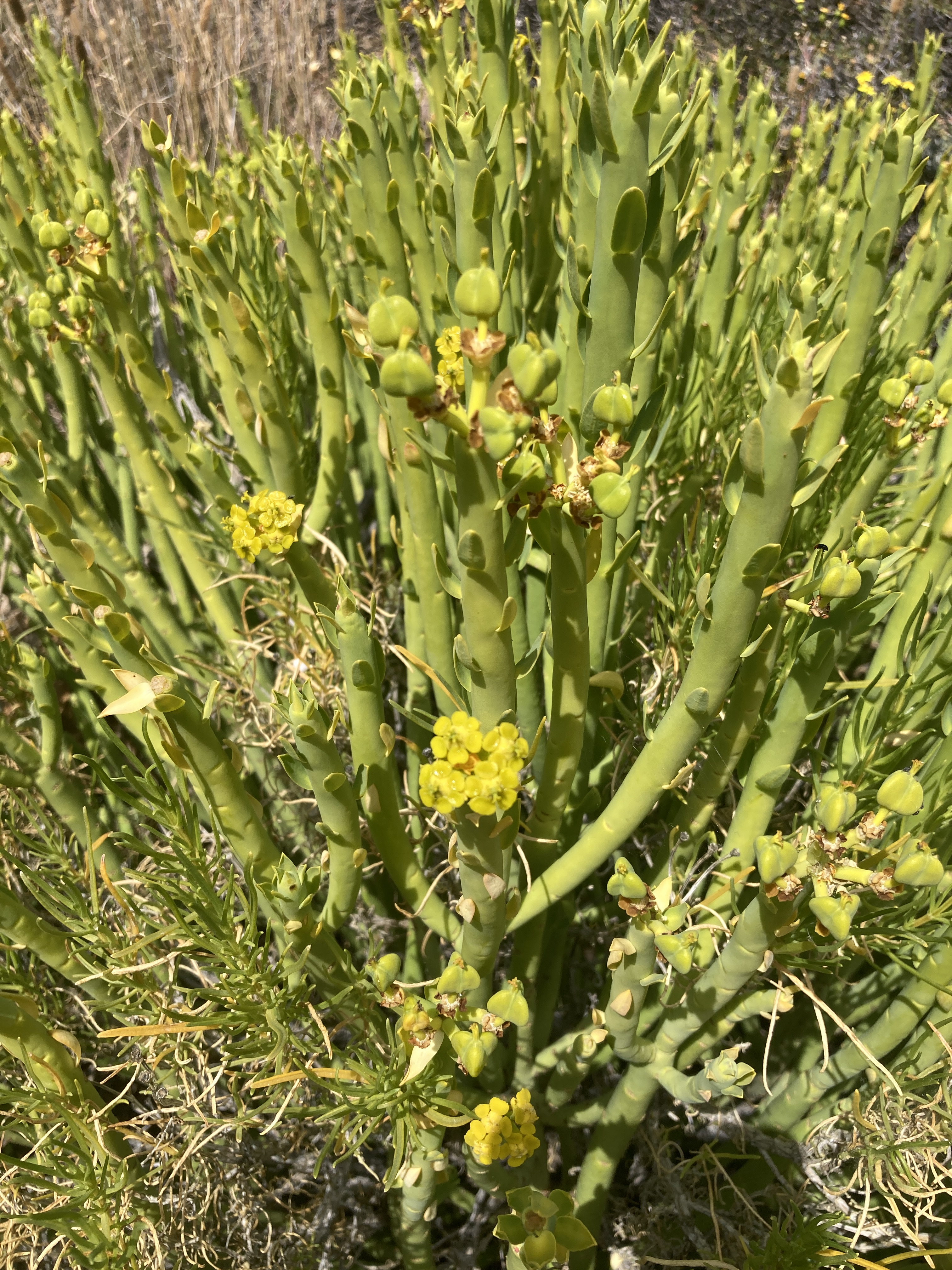
Yellow Milkbush Euphorbia mauritanica Geelmelkbos, Nieuwoudtville Waterfall, Klippe Rivier

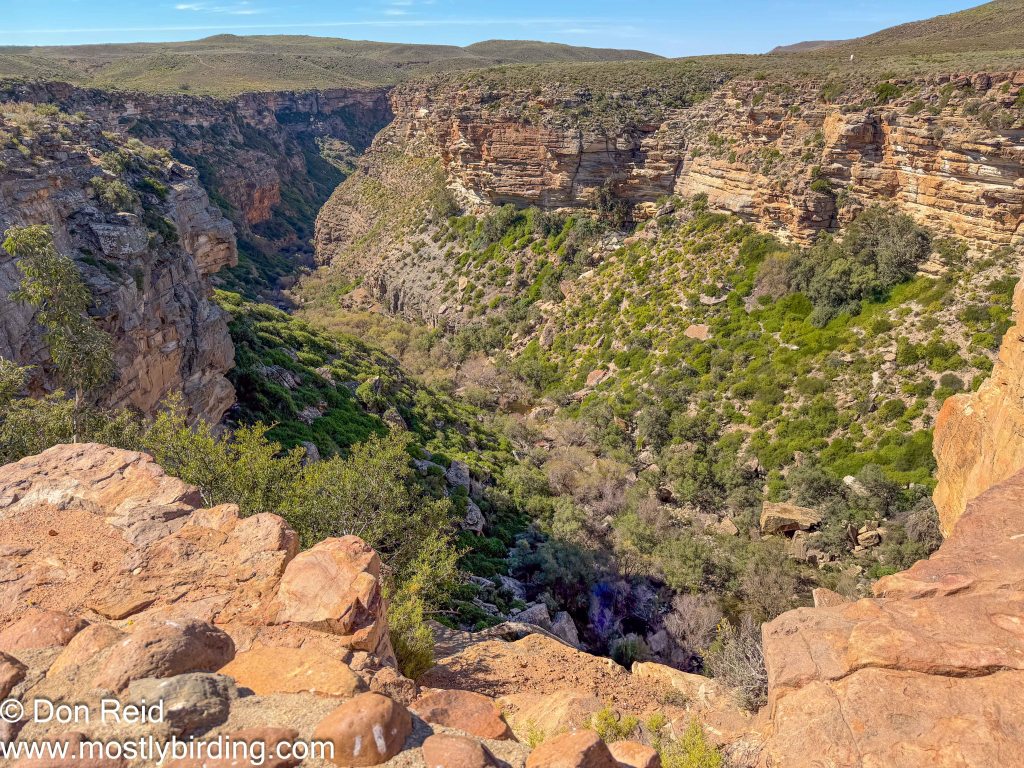
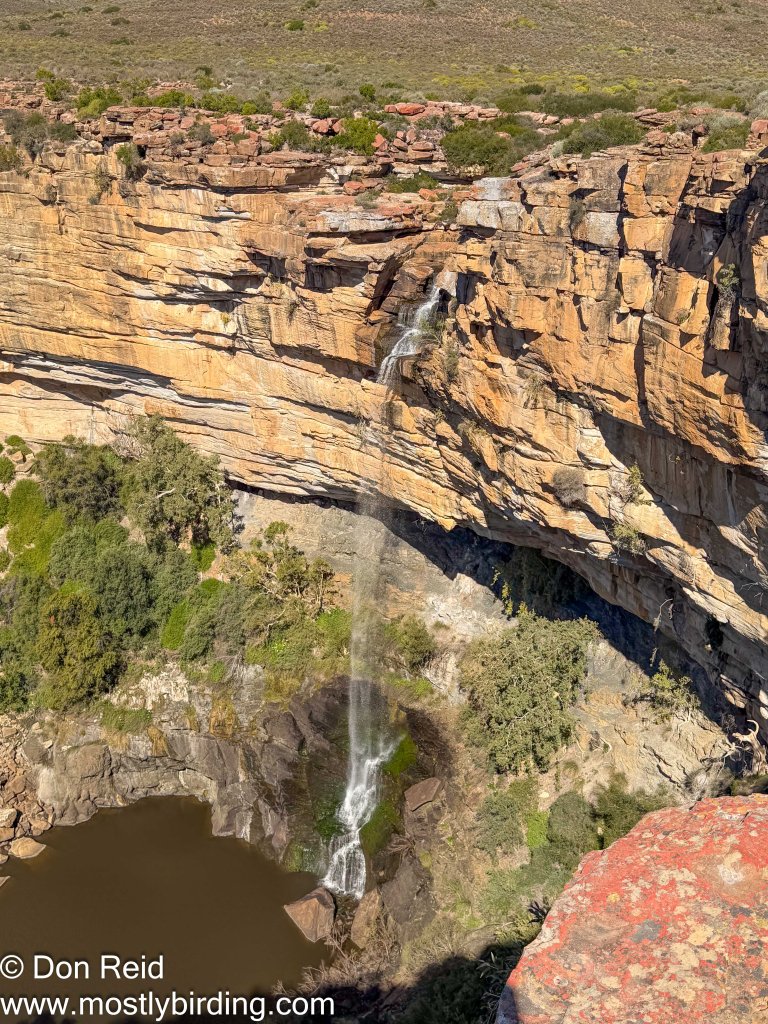
The waterfall came into view as we approached the rocky platform at the edge of the gorge and was quite spectacular despite the low water flow – the height of 90m made it special.

Nieuwoudtville Waterfall, Klippe Rivier

On the way out another stall run by a pair of local ladies attracted our attention, and we left with raw honey and dried peaches, pleased that we could support these entrepreneurs in a small way.

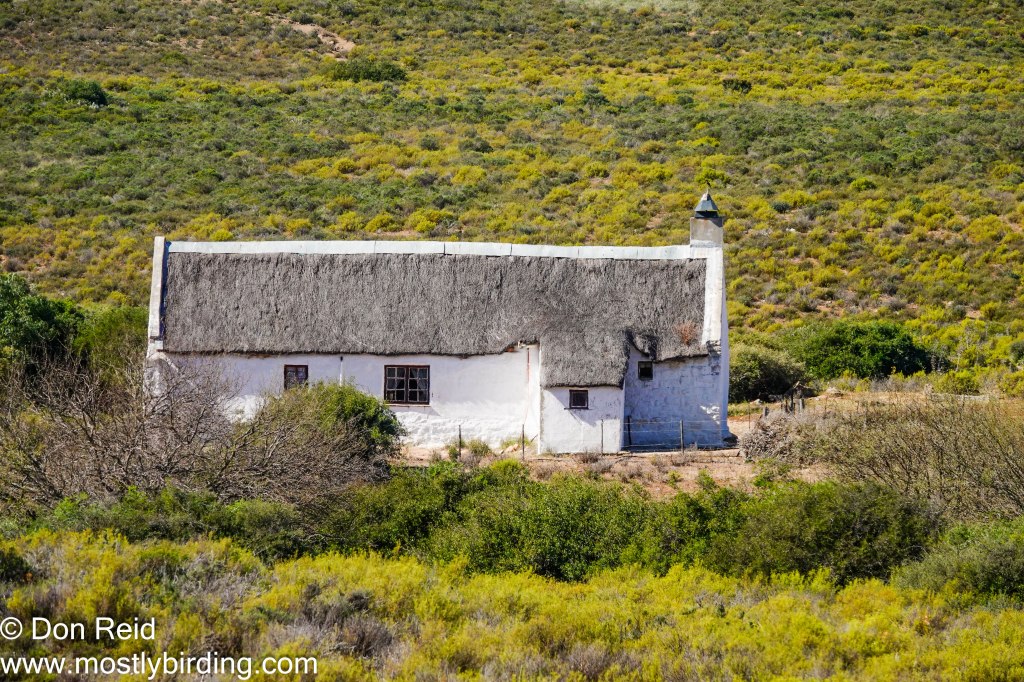
Old homestead Near Waterfall

By this time, we were happy to return to the guesthouse, however on the way back our curiosity got the better of us and we turned off onto another gravel track closer to town to find the flowers that Linda had told us we would find at Willemsrivier.

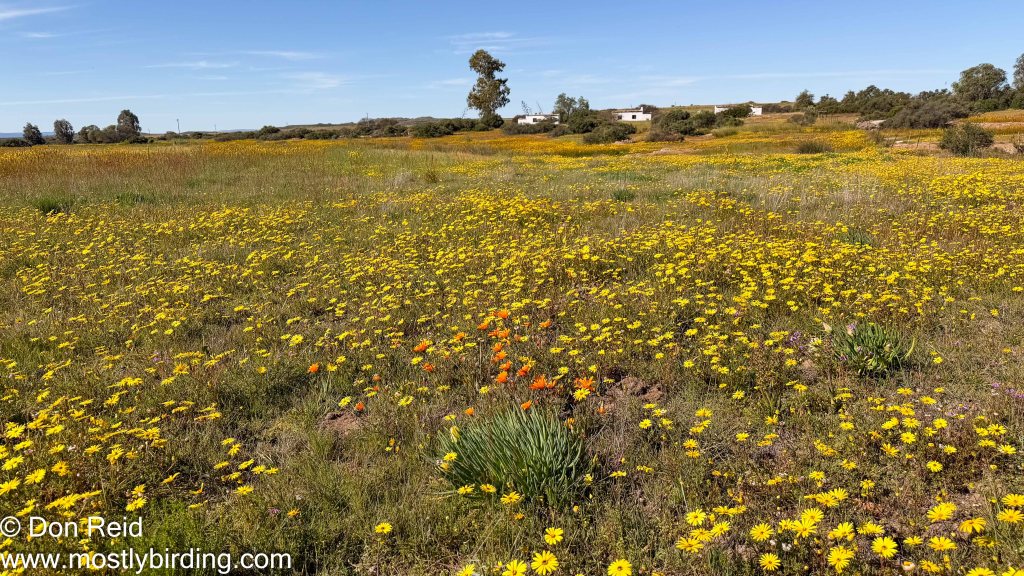
Daisies, Willemsrivier near Nieuwoudtville

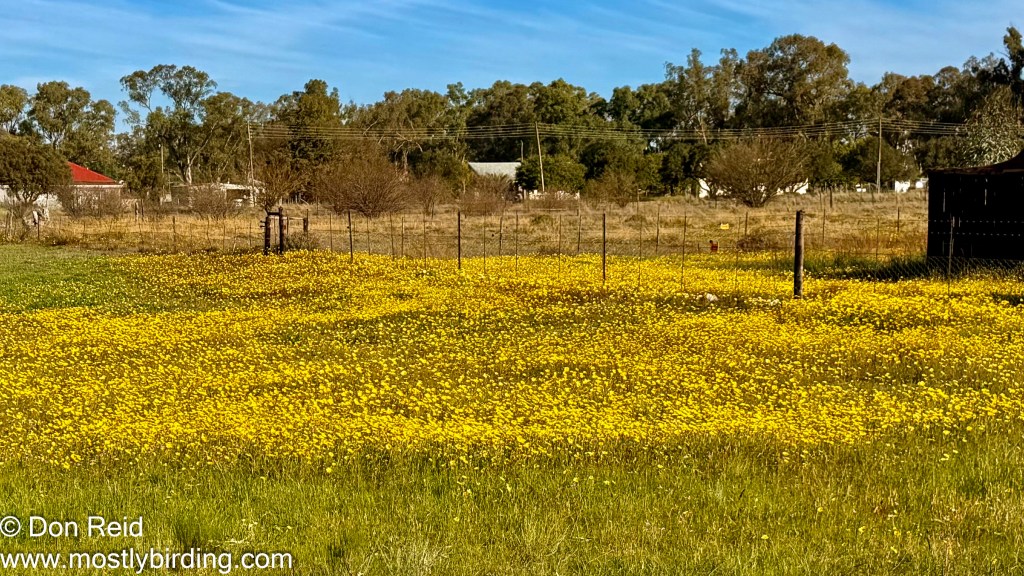
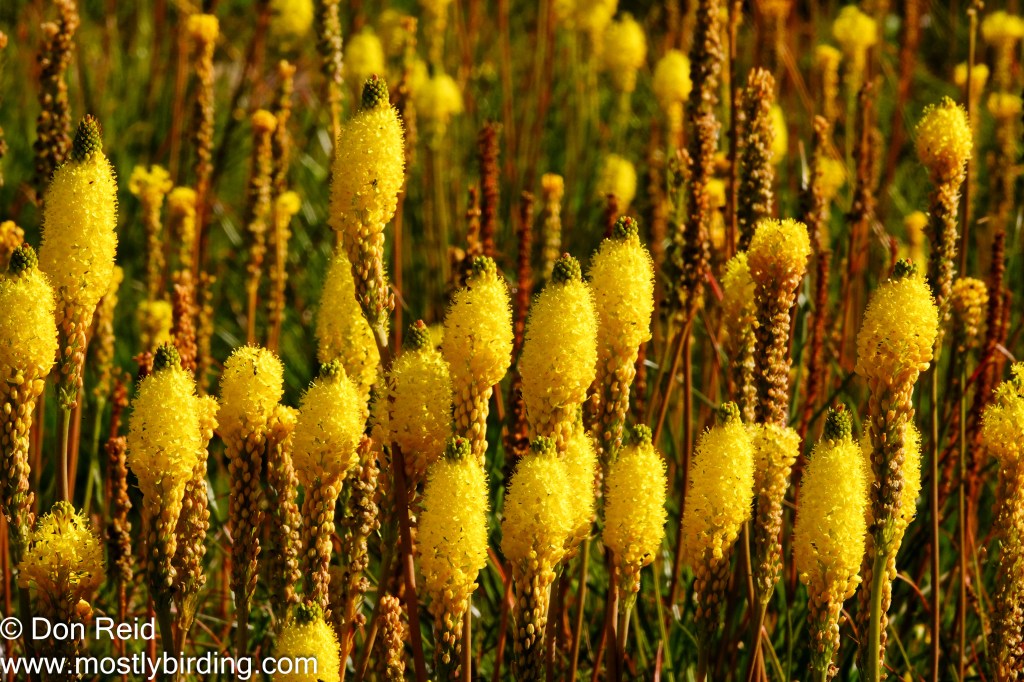
We were rewarded with a short drive through fields of mostly yellow flowers, dominated by Katstertjies (Cat’s tails) and I spent some time taking photos of this beautiful spread of colour.

Willemsrivier near Nieuwoudtville
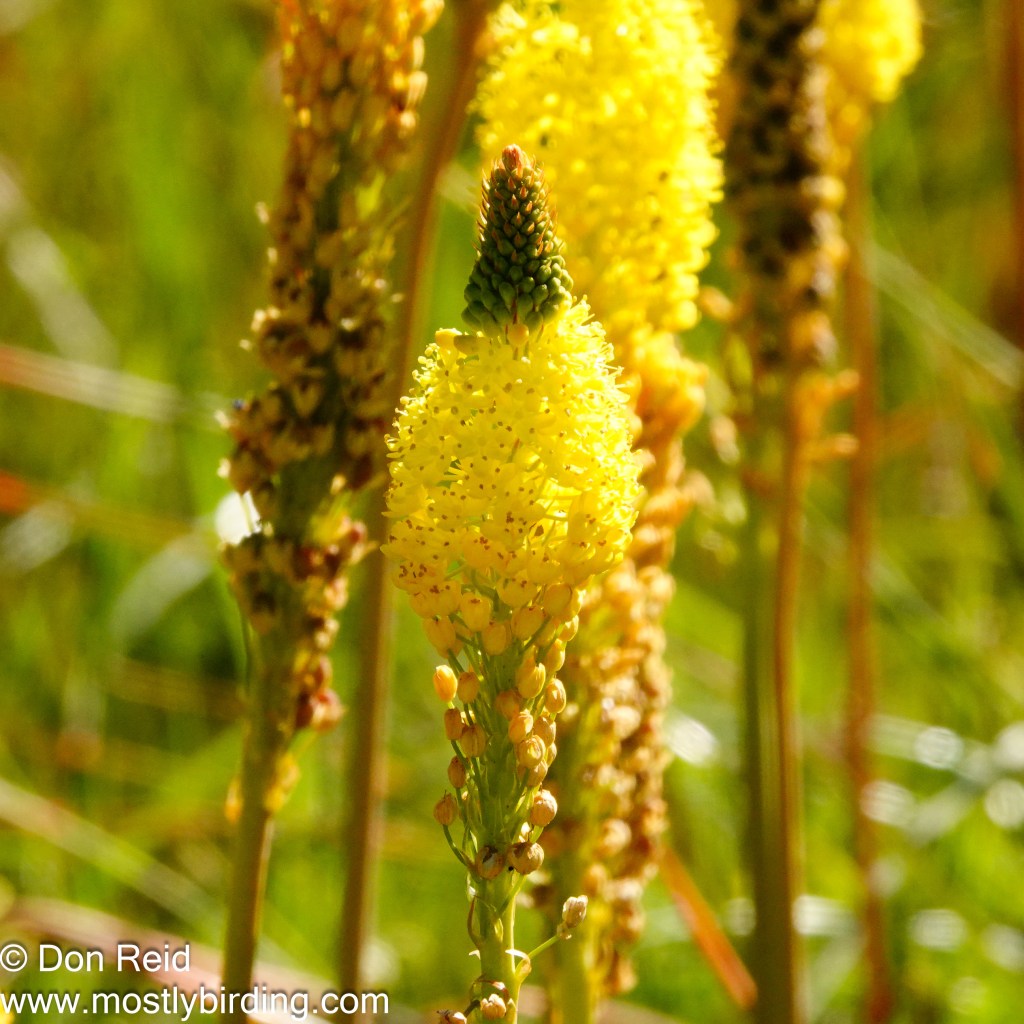
Water Catstails Bulbinella nutans Geelkatsterte, Willemsrivier near Nieuwoudtville
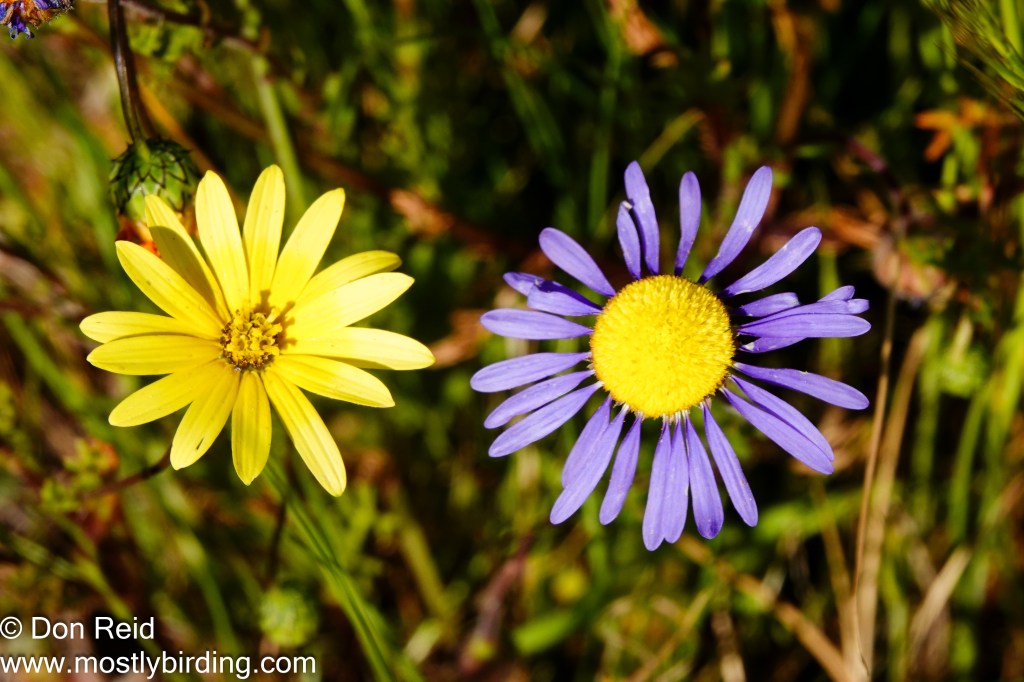
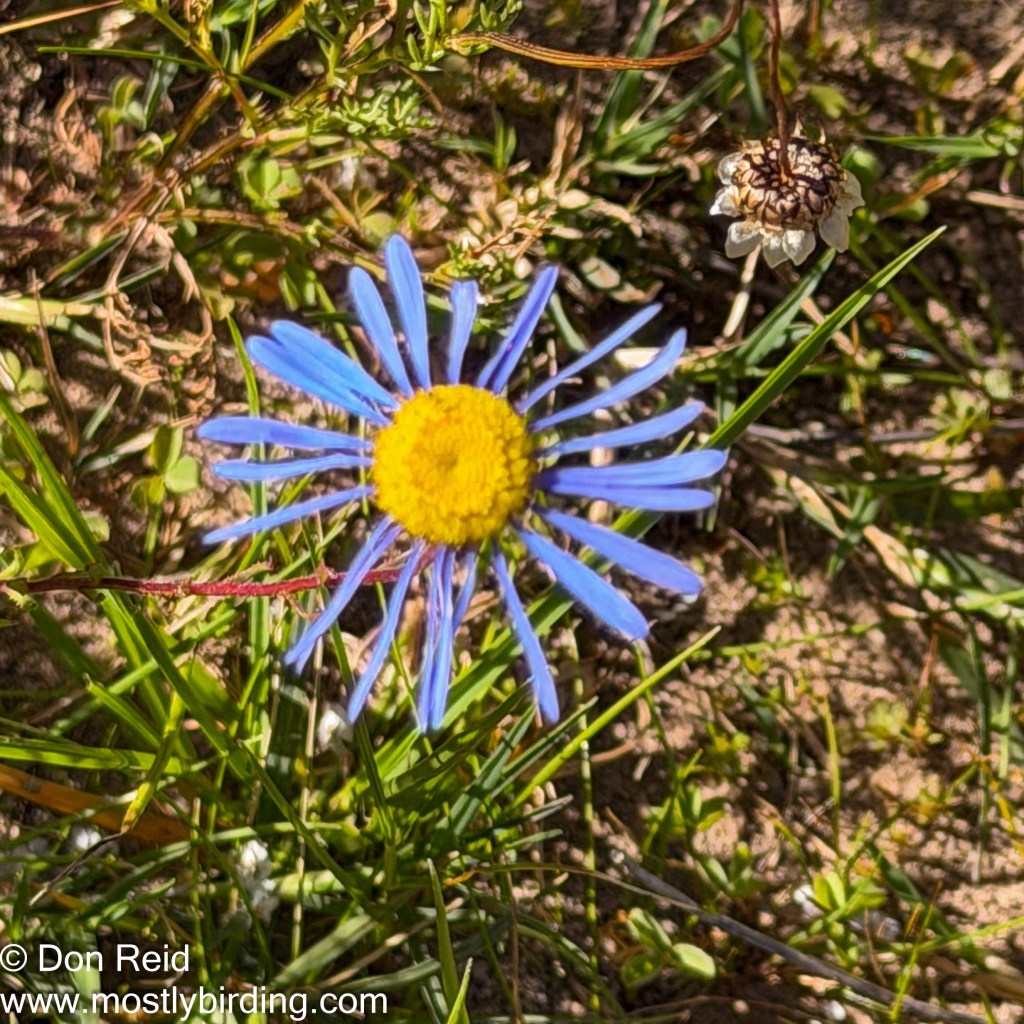
Soft Felicia Felicia amoena Bloumagriet, Willemsrivier near Nieuwoudtville
Water Catstails Bulbinella nutans Geelkatsterte, Willemsrivier near Nieuwoudtville

After that we made our way back for a welcome rest before enjoying a dinner at the guesthouse, with bobotie prepared by Linda and chatty table neighbours from Ogies, not far from our old hometown of Pretoria, who turned out to be large scale mielieboere (maize farmers)

Birding highlights :

  • Pale Chanting Goshawk on the road to Gannabos
  • White-throated Canary at the Quiver Tree Forest
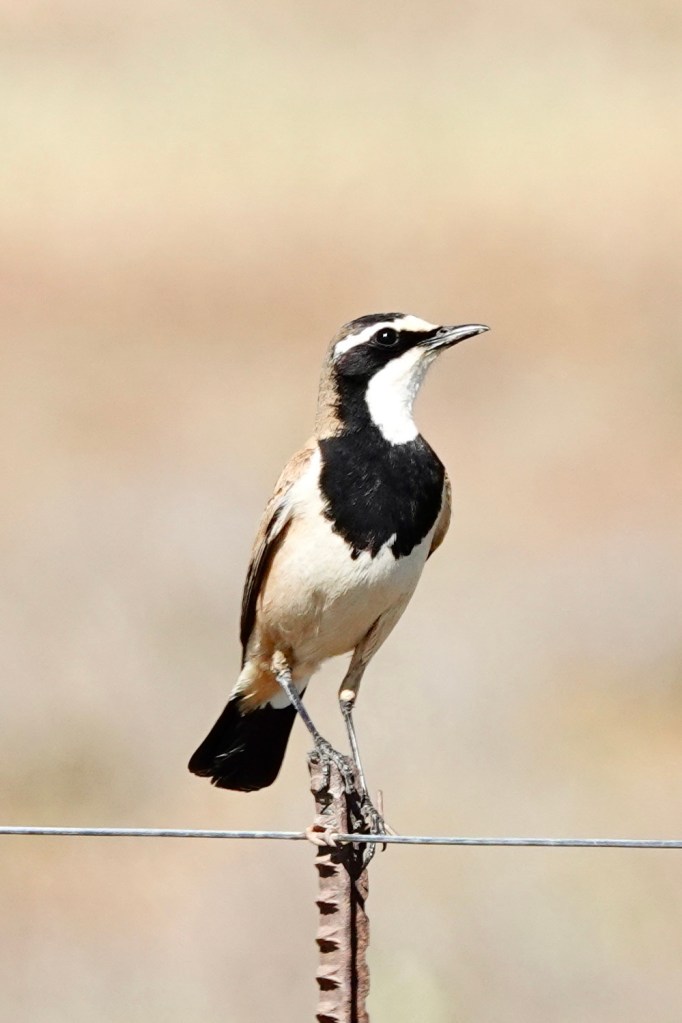
  • Capped Wheatear calling from a bush-top at the Quiver Forest
Capped Wheatear. Oenanthe pilesta. Hoëveldskaapwagter
  • Mountain Wheatear among the Quiver trees
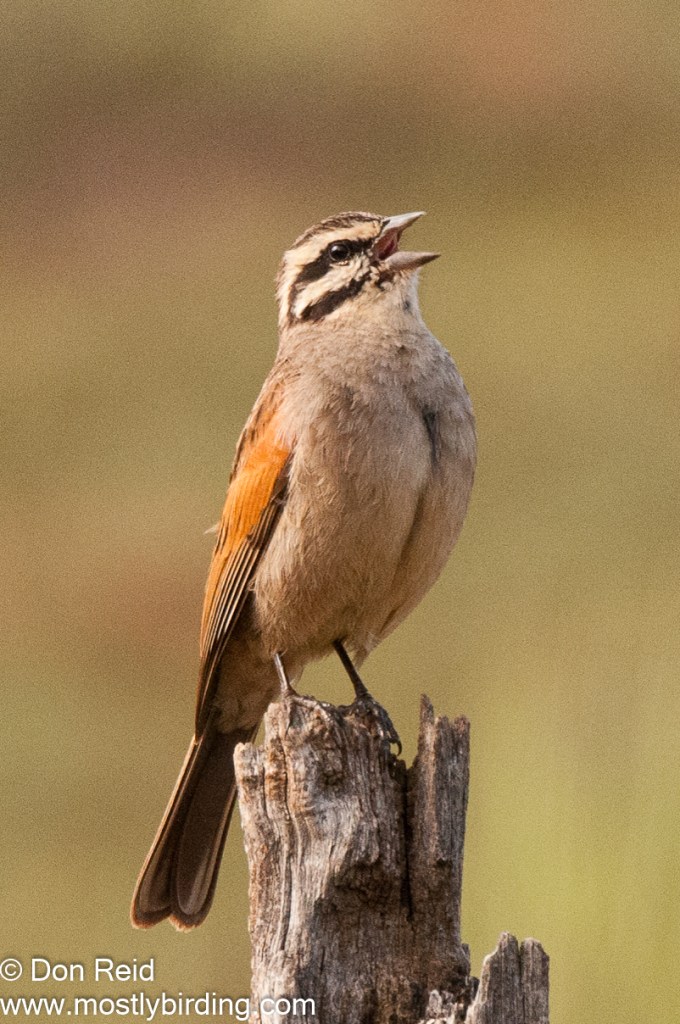
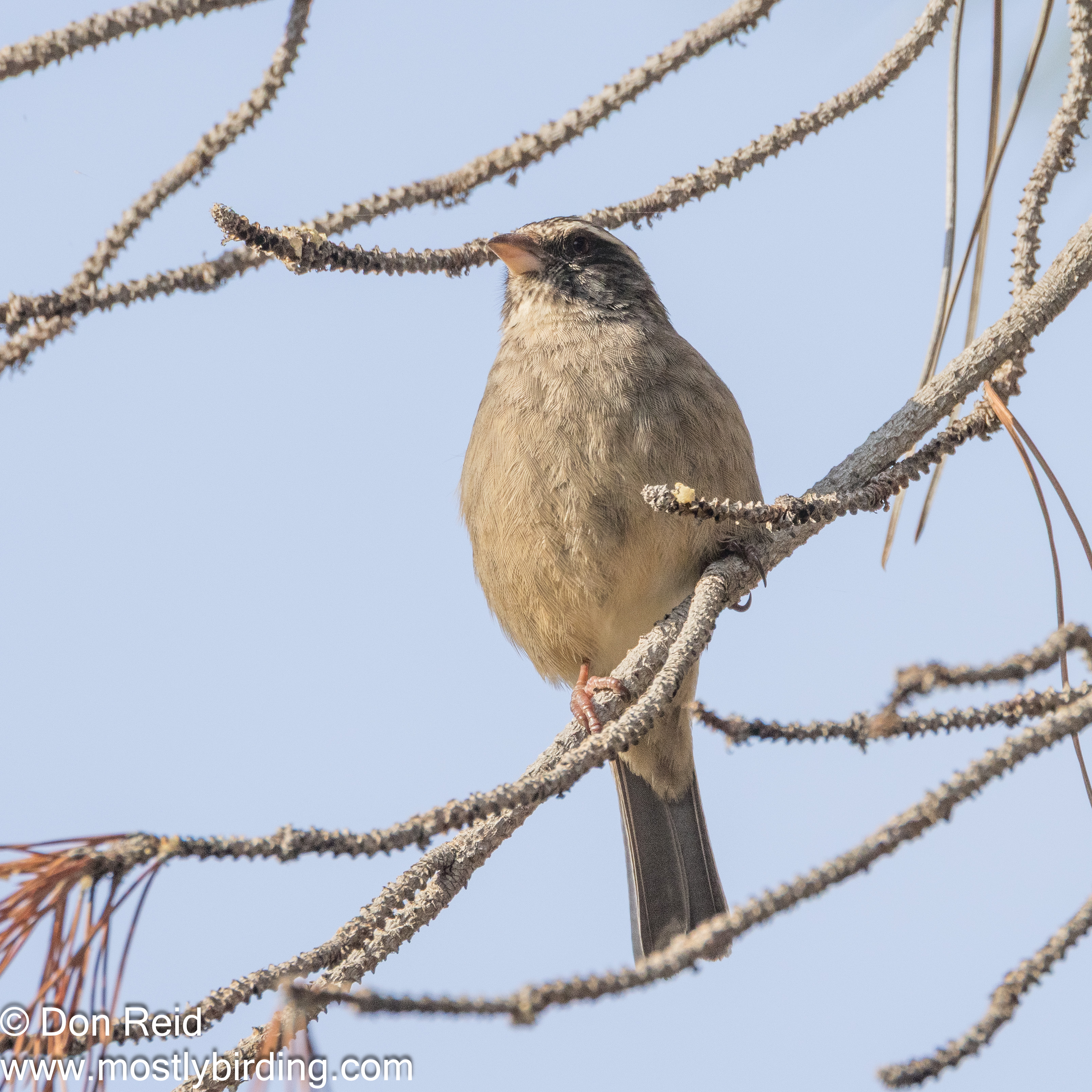
  • Cape Bunting, Karoo Scrub-Robin and Familiar Chat on the pathway to the waterfall
Cape Bunting Emberiza capensis. Rooivlerkstreepkoppie
  • Large-billed Lark (several) in the open fields
  • Pale-winged Starlings at the waterfall
Pale-winged Starling onychognatus nabouroup. Bleekvlerkspreeu
  • Spoonbill at the vleis at Willemsrivier

West Coast Wanderlust – Flowers, Birding and Small Towns (Part 1)

The Plan

“Let’s do the flowers again” – I can’t recall whether it was me or Gerda that raised the thought earlier this year, but the immediate answer was “Yes!”

Translated, that means we were both keen to “do” the famed Spring flowers that bloom during August and September in parts of South Africa, in particular the West Coast and Namaqualand areas of our country.

With that decision made, we set about planning and booking a 14-night trip for the last two weeks of August, which would take us to some of the prime flower spots of the West Coast and Namaqualand during what we hoped would be the peak of the flower season

There are many aspects of an extended road trip that appeal to Gerda and myself – chief among them is the freedom of not being bound to a rigid itinerary, but rather deciding day by day what we will be doing …. or not doing.

Having said that, my organised nature still demands a degree of planning that takes care of accommodation and ensures a relaxed trip with comfortable distances between stopovers.

The plan we came up with looked like this –

  • 2 nights in Welbedacht Nature Reserve near Tulbagh – not part of a recognised flower route, but a convenient stopover before heading northwards to Namaqualand
  • 3 nights in Nieuwoudtville, Northern Cape, with the prospect of visiting several interesting spots that we had missed during our only previous visit in 2013
  • 3 nights in Clanwilliam with attractions such as the Cederberg and Biedouw Valley nearby, as well as Lambert’s Bay within an hour’s drive
  • 3 nights in Darling, not part of our previous itineraries, brimming with possibilities, and finally..
  • 3 nights in Paternoster on the coast, a place that we have got to know from a couple of previous visits and not far from the West Coast National Park

Day 1 – Getting there

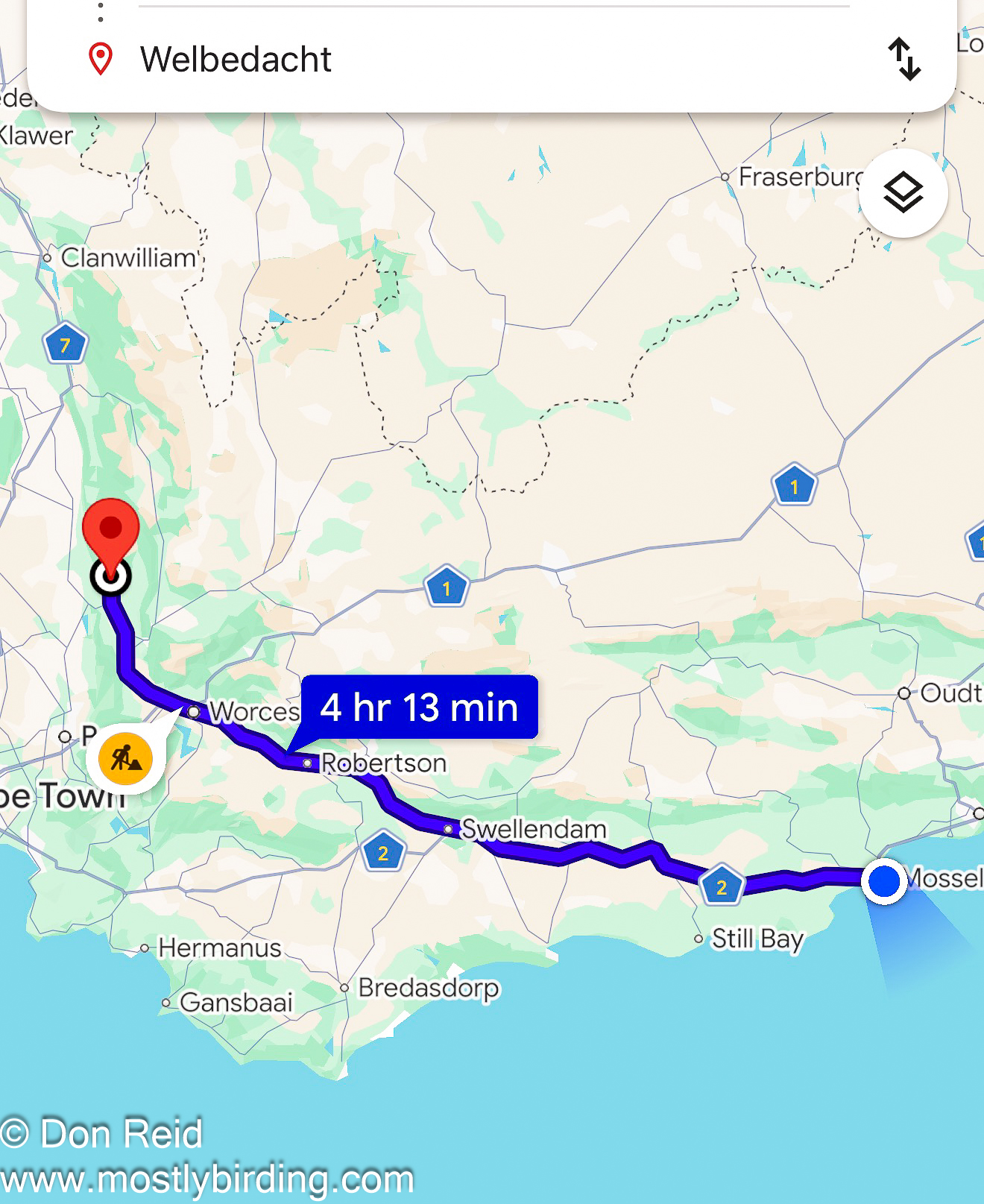
Mossel Bay to Welbedacht near Tulbagh

Final preparations for our departure started the day before – choosing the catering items we would need, packing most of our clothing requirements, sorting out the medical kit (essential at our age) and the paraphernalia that accompanies me on our road trips (cameras, binos, laptop, ipad) together with all the various batteries, cables and plugs to keep all of it working smoothly.

I was excited to try out my newest acquisition – an Iphone 17 – in the field as it were – more camera than phone, it has many of the features of my ‘fancy’ cameras, all packed into an unbelievably small package. I have made do for several years with a now outdated iphone SE – heck, even our Son-in-law said I deserved a better phone!

We left home at 10.30 am and travelled at our usual relaxed pace, which included stops at –

  • Oumeul outside Riversdale for coffee and one of the nicest savoury muffins ever – they call it a Four-cheese muffin, I call it a delight. We bought two more to take away after eating the first one at an outside table.
  • Nuy on the hill near Worcester for a late-ish lunch of Chicken mayo roosterkoek (a large bun baked over coals) – too much to complete so we doggy-bagged the rest for later in the evening
View from Nuy Restaurant near Worcester

Traffic was light for most of the trip and there was time to check out the verges and fields which had small patches of colourful flowers.

I pulled off the road at a couple of places, between Swellendam and Ashton and again between Robertson and Worcester, when I thought the concentration of flowers deserved a closer look.

Roadside near Ashton

That proved to be a good tactic as there were several different flowers at each stop, even though the area is not regarded as part of a flower route.

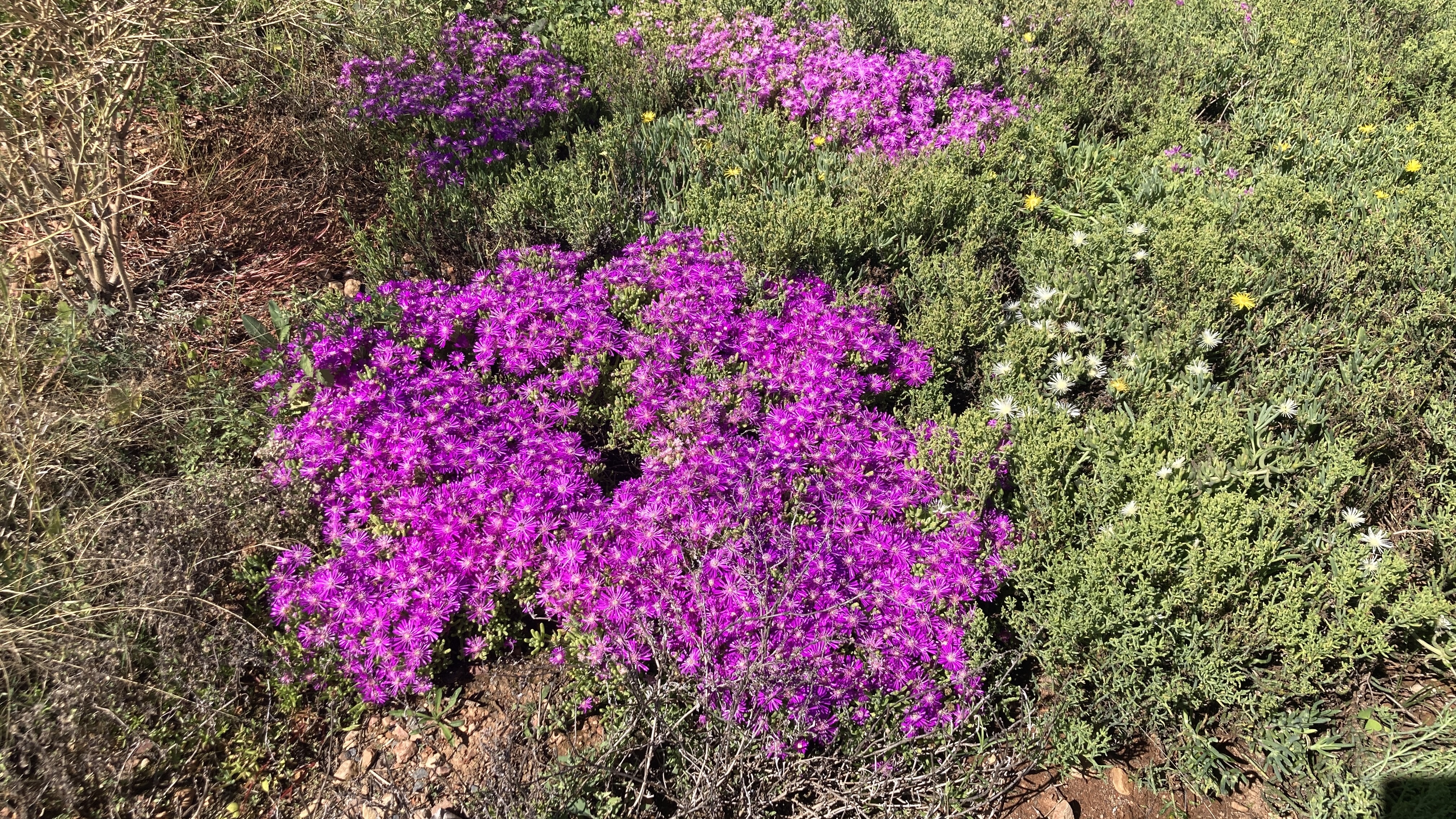
Brightfig (Vygies), roadside near Ashton

My new phone proved to be up to the task of photographing the flowers from different angles and producing nice crisp images.

Cushion Sorrel Oxalis convexula (Suring), roadside near Ashton
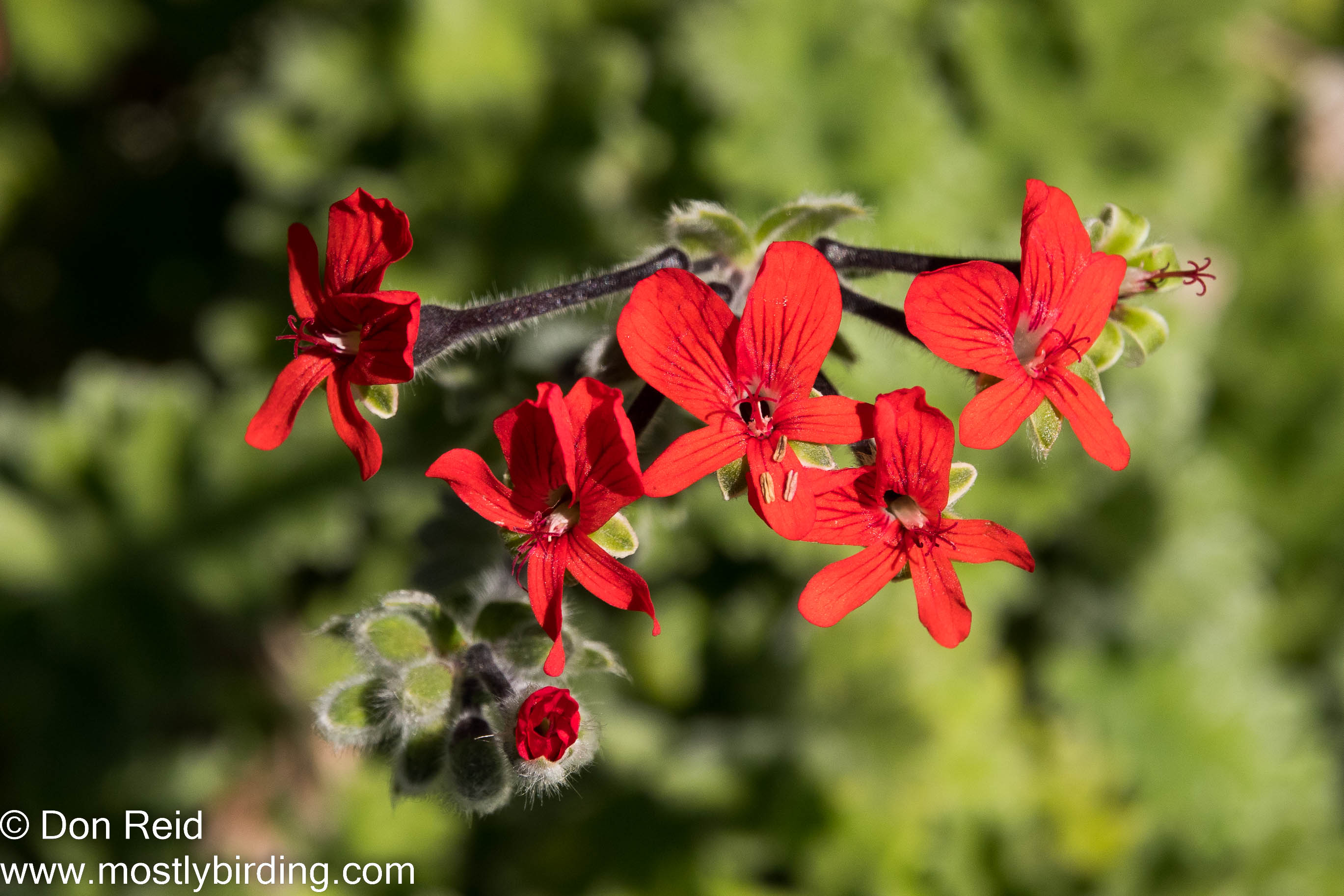
Velvet Storksbill Pelargonium candicans (Malva), roadside near Ashton
Mouse Dewfig Drosanthemum hispidum (Doublaarvygie), roadside between Robertson – Worcester
Gazania (Gousblom), roadside between Robertson – Worcester
Capeweed Arctotheca calendula (Botterblom), roadside between Robertson – Worcester

Welbedacht Nature Reserve

The outskirts of Tulbagh

After passing through Tulbagh, it was a short drive to the nature reserve, which we reached at 5pm on the dot and followed the whatsapp instructions to access the reserve, find our key in a box at the main complex and follow the track to our cottage set amongst trees well away from the other cottages. The last few kms were through the reserve itself and we were pleased to see a few animals such as antelope and Zebra.

We found it unusual that there was no one to welcome us and provide information about the cottage and reserve, as we are used to – in fact we did not see or meet any staff during our two night stay and simply dropped the key off in the same box on the way out. However, that didn’t detract from the stay, and we enjoyed the peace and quiet along with no disturbances whatsoever.

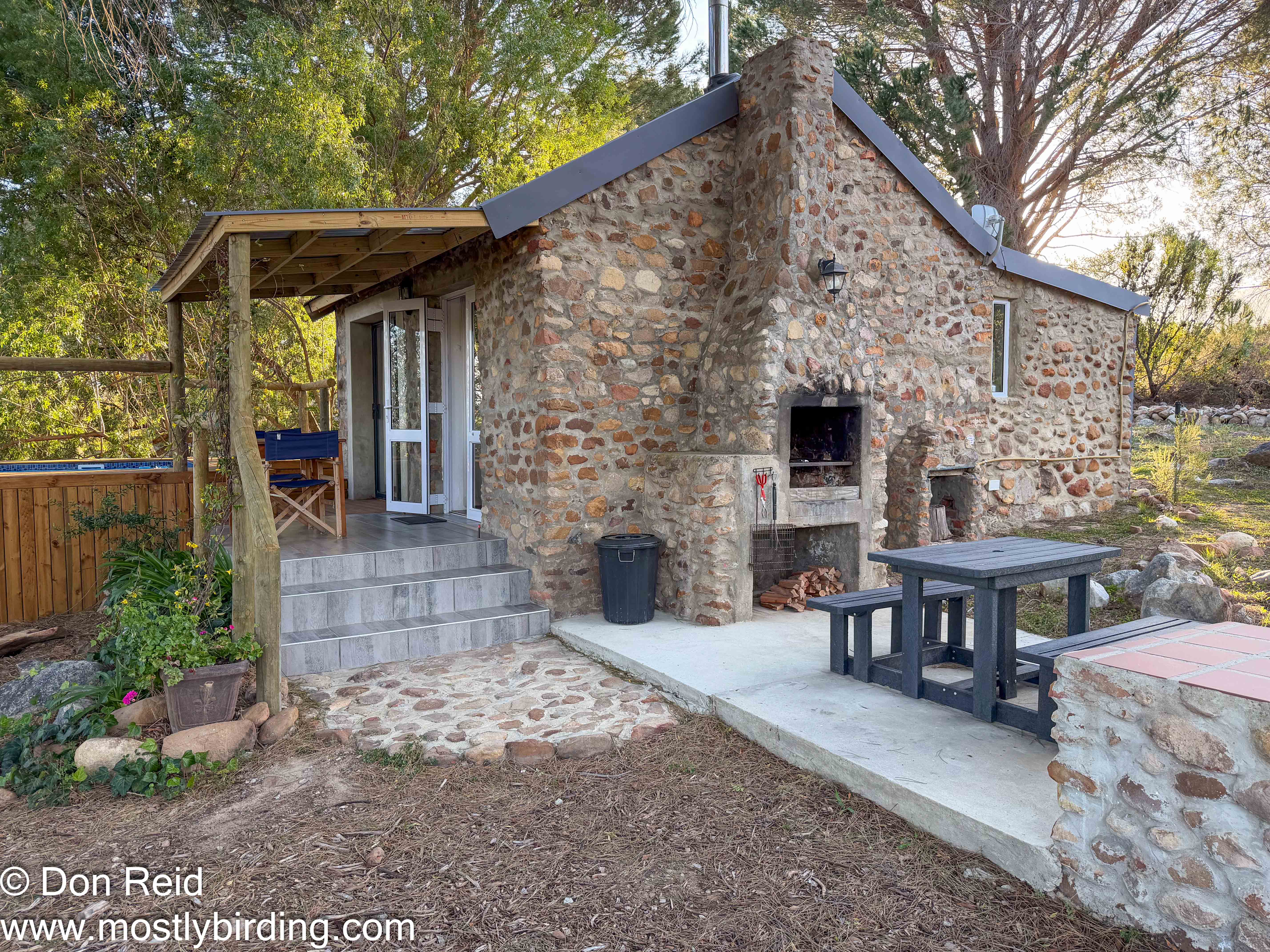
The cottage is compact with bedroom, living area and kitchen forming one space and a separate bathroom. What makes it special is the feeling of solitude and peace in natural surroundings, featuring fynbos and fields of flowers.

Cottage at Welbedacht Nature Resrerve near Tulbagh

Outside a small stoep looks out over the reserve and there is a small plunge pool adjacent to it, which I tried out later. (It’s heated so not as brave as it may sound)

Our evening meal was light – the rest of our roosterkoek with sides of sliced banana and tomato!

Birding highlights

My initial impression was that birdlife around the cottage was plentiful, with calls of Olive Thrush, Cape Grassbird, Bokmakierie and Blue Crane heard as the day ran out.

Evening brought the calls of the big three nighttime birds – Fiery-necked Nightjar, Spotted Thick-Knee and Spotted Eagle-Owl

Day 2 – Chilling in Welbedacht Nature Reserve

We awoke to a warm sunny day and decided to make it a ‘rest’ day and just stay at our cosy cottage all day. That was a good decision as we were feeling the effects of a particularly busy time of late.

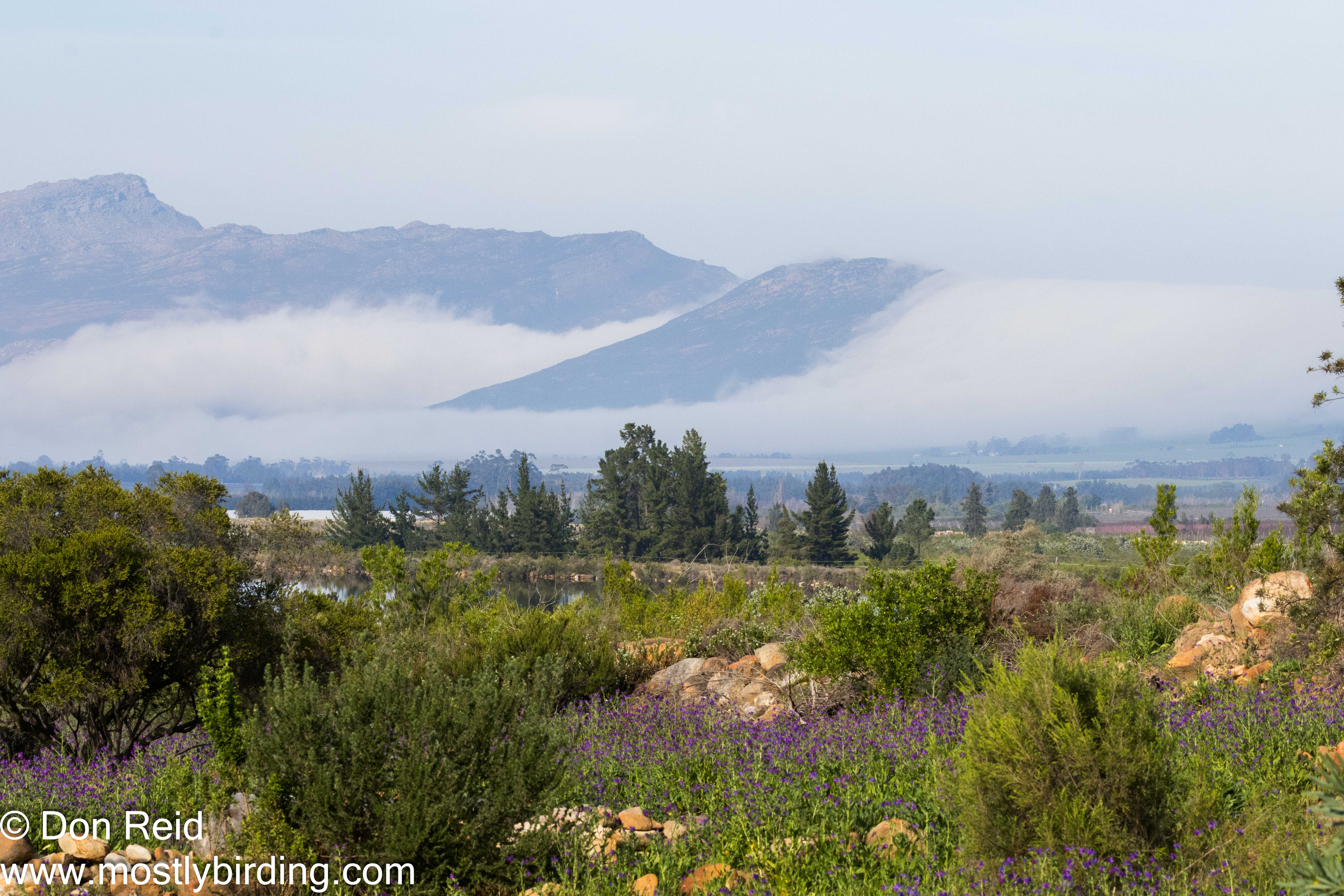
The view of the reserve from the cottage

After a late lie in and breakfast, I spent time on the stoep boosting my bird list, then scouted around the cottage for interesting flowers. I followed that with a short walk along the track leading to the other cottages.

There were plenty of flowers – and birds – to keep me occupied, the birds are typical of those I know so well from the Mossel Bay fynbos habitat, with Yellow and Cape Canaries and Streaky-headed Seedeaters visible and audible throughout the day.

Streaky-headed Seedeater Crithagra gularis (Streepkopkanarie), Welbedacht Nature Resrerve near Tulbagh

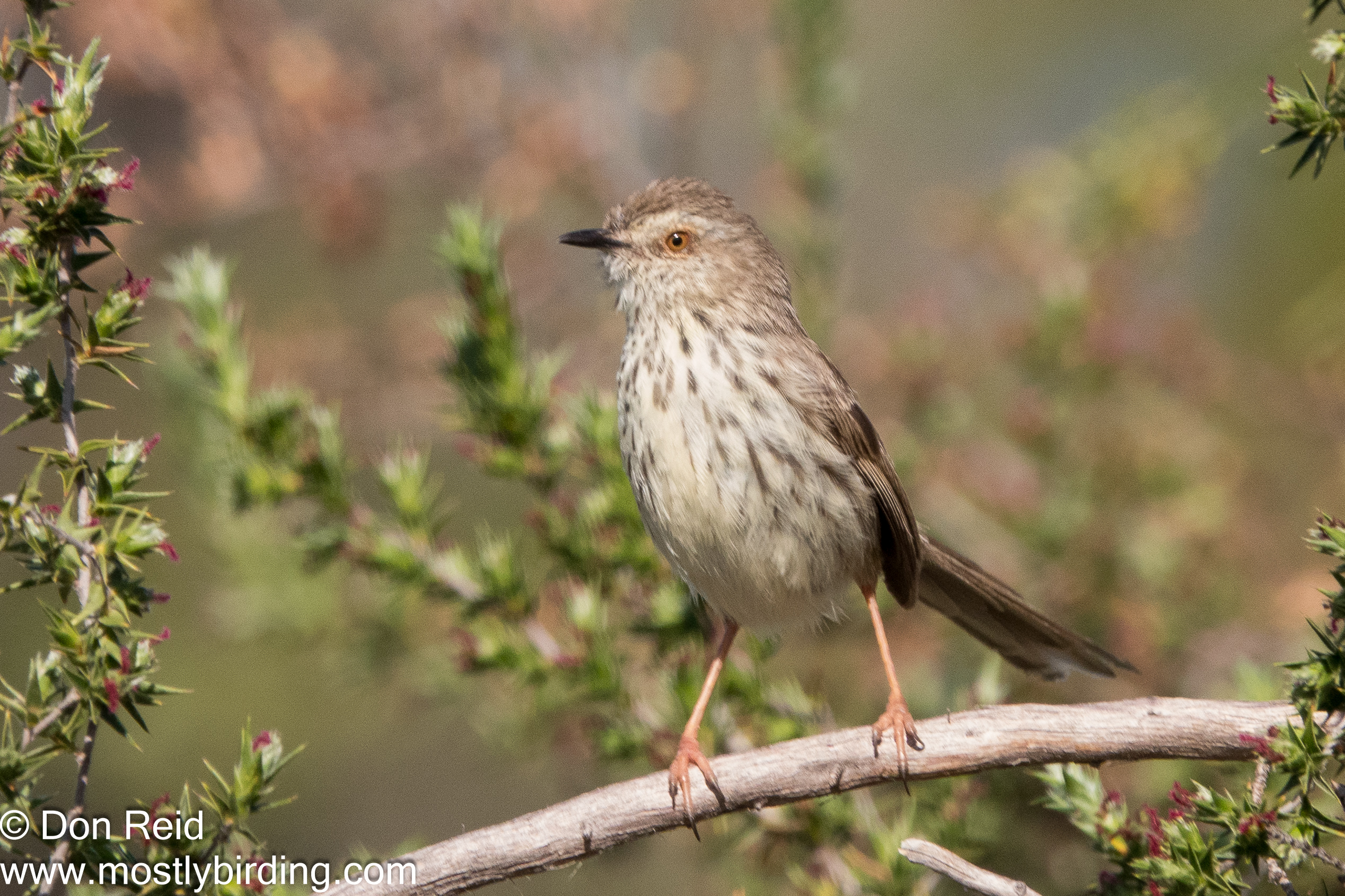
Karoo Prinias were not far behind, and Cape Robin-Chats made regular visits to the patio in the hope of picking up crumbs from our breakfast rusks.

Karoo Prinia Prinia maculosa (Karoolangstertjie), Welbedacht Nature Reserve
Cape Robin-Chat Cossypha caffra (Gewone janfrederik), Welbedacht Nature Reserve

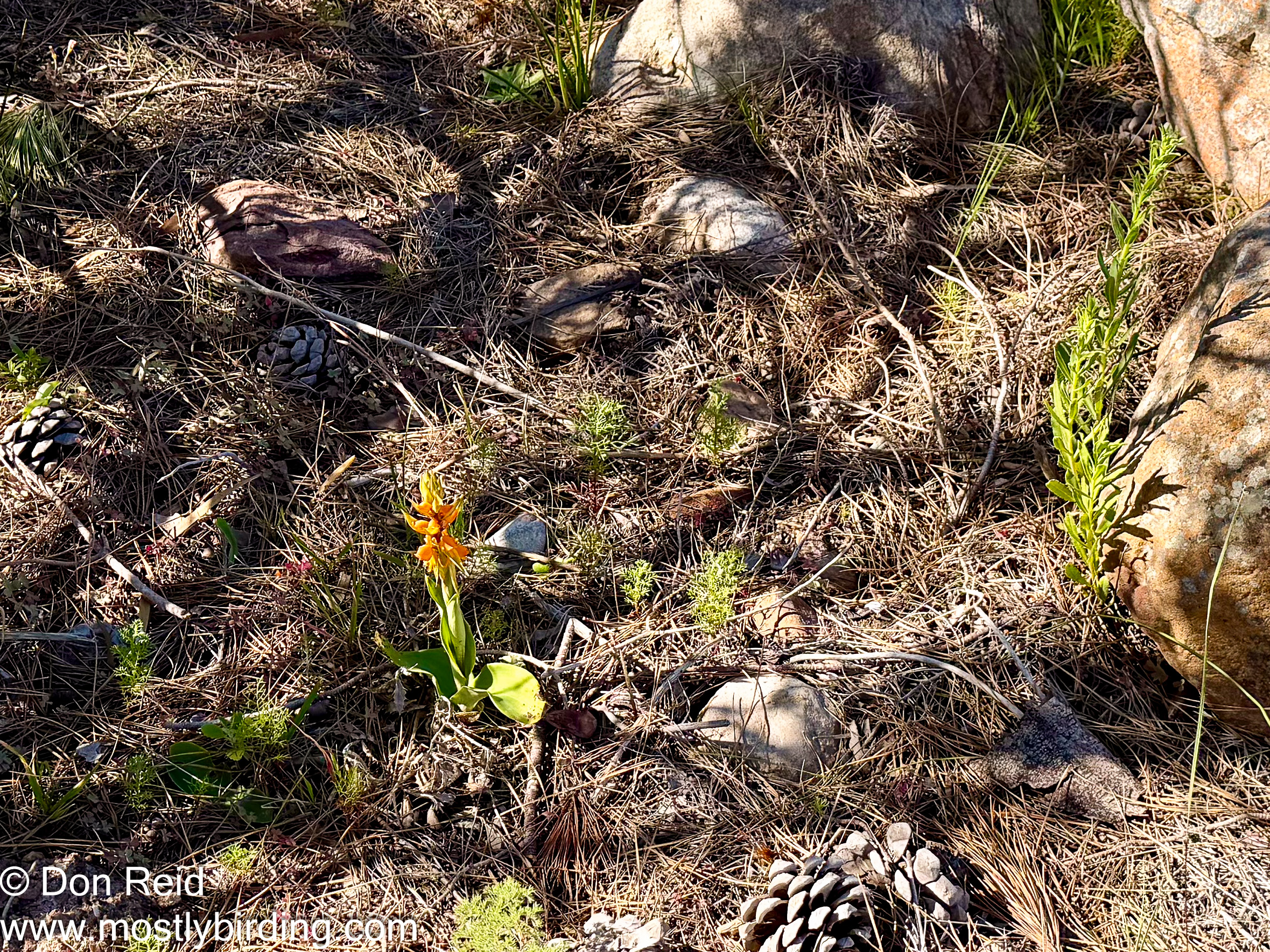
Flowers were colourful and varied, with two that were growing close to the cottage stimulating our curiosity, until Gerda matched the photos with illustrations in her wildflowers book and found that both were a type of wild Orchid.

It’s easy to overlook a flower when it is surrounded by undergrowth and in the shade, appearing quite nondescript ….

Orange Satyre Satyrium coriifolium (Ewwa-trewwa), Welbedacht Nature Reserve

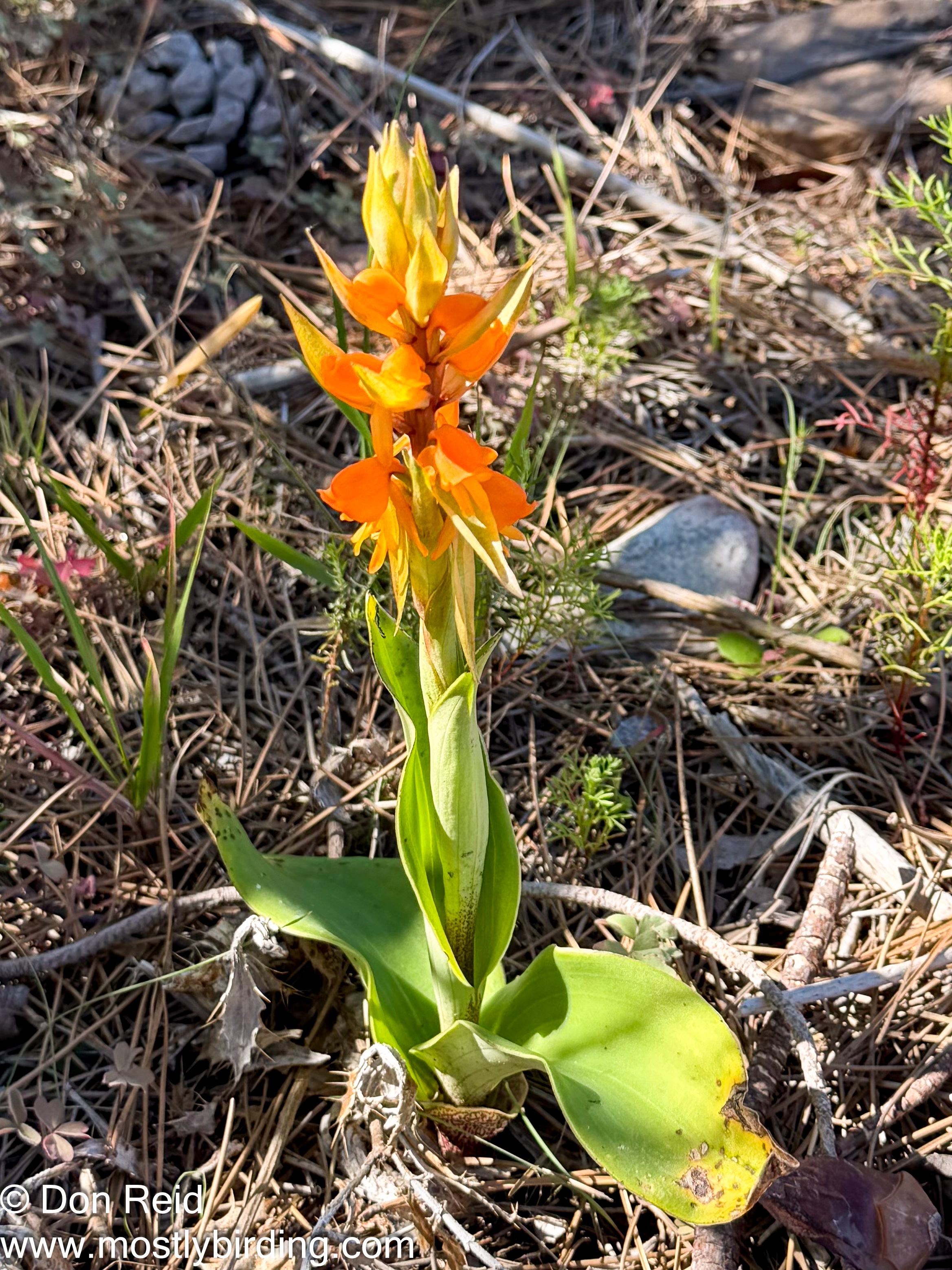
Get closer – on your knees if necessary – and the flower reveals its special beauty

Orange Satyre Satyrium coriifolium (Ewwa-trewwa), Welbedacht Nature Reserve
Welbedacht Nature Reserve near Tulbagh

We took a late afternoon drive to see what else the nature reserve had to offer and explored the tarred road beyond the reserve turn off to the foothills of the mountains. Fruit trees – dormant and pruned skeletons at this time of year – cover every available piece of arable land and seem to be managed by a couple of large estates.

And off we go on our drive….
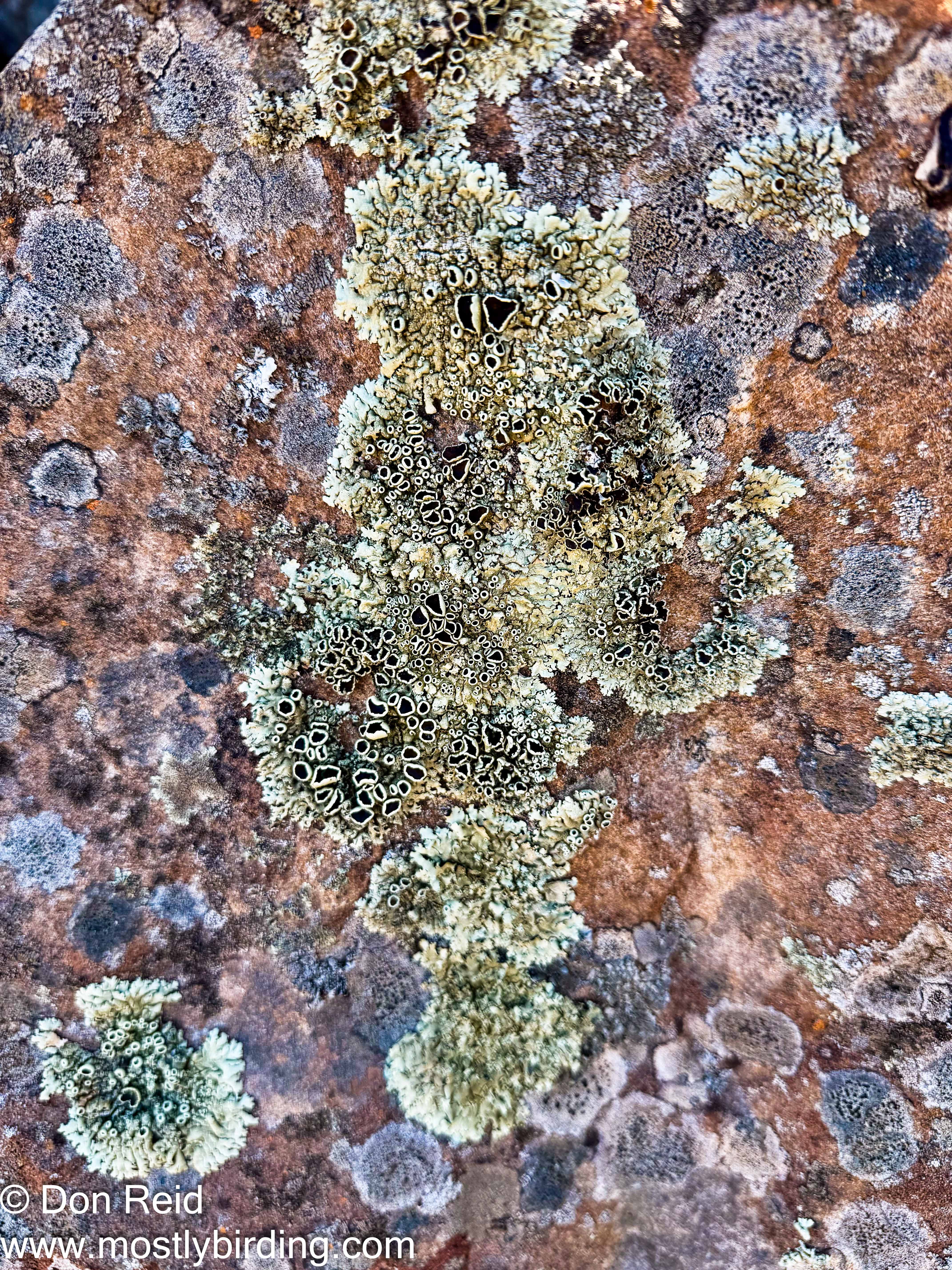
Lichens on a rock, Welbedacht Nature Reserve near Tulbagh
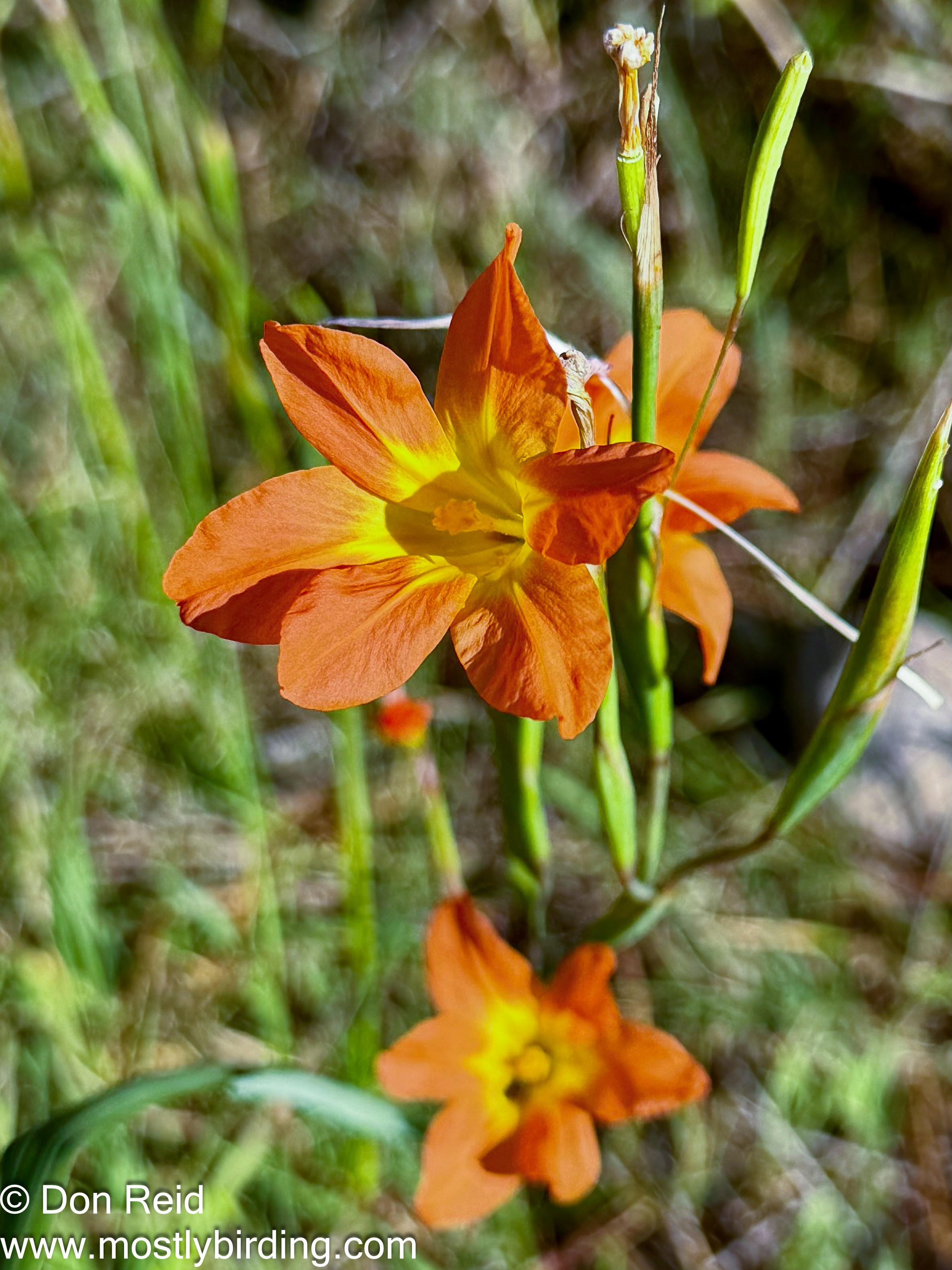
Apricot Tulp Moraea ochroleuca , Welbedacht Nature Reserve near Tulbagh

Birding highlights

  • Klaas’s Cuckoo calling in the morning
  • Cape Batis briefly in the trees in front of the stoep
Cape Batis Batis capensis (Kaapse bosbontrokkie)
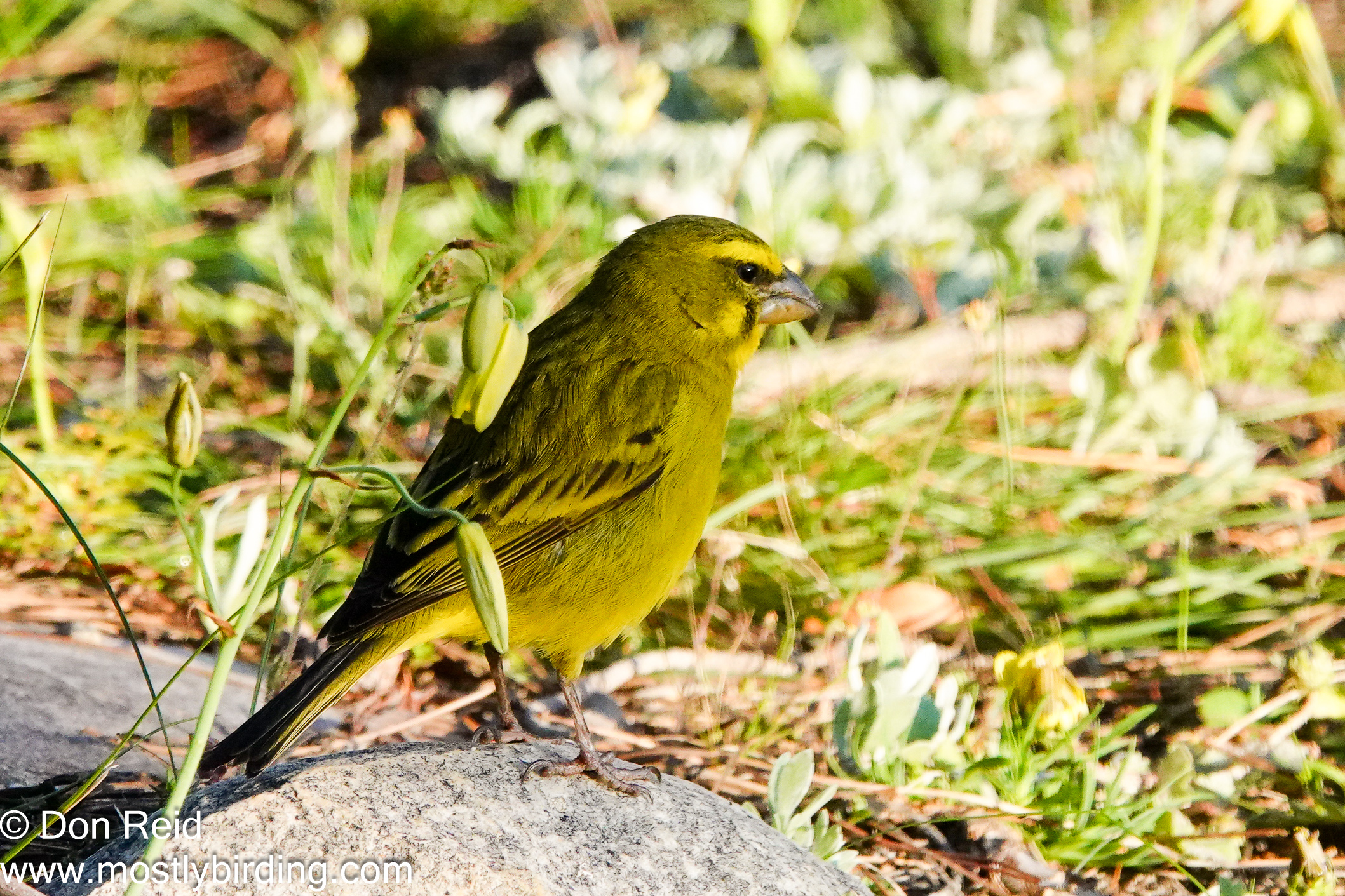
  • Brimstone Canary visited during the day
Brimstone Canary Crithagra sulphurata (Dikbekkanarie), Welbedacht Nature Reserve
  • 34 added to the pentad list during the day, taking the total to 52 species

Prince Albert – Birding and other Delights

Always on the lookout for a chance to get away for a few days, Gerda’s birthday seemed like a good excuse and Prince Albert a good option being just a couple of hours away yet much more in terms of “a change being as good as a holiday”

Wednesday 11th September 2024

Packing was left to the morning of our departure and went smoothly albeit slowly and by midday we were heading to our first stop – no prizes for guessing – our favourite Eight Bells Inn for a light lunch in the enclosed patio (bit too windy and cool for outside) with the familiar views and friendly staff.

On the way to the R328 we stopped at the Hartenbos Vleis for a quick scan of the birdlife and came up with an African Jacana – still a Western Cape Rarity – and African Swamphen among the usual Teals and Ducks. A Ruff was an interesting sight being one of the early palearctic migrant arrivals.

African Jacana (Western Cape rarity), Hartenbos Vlei

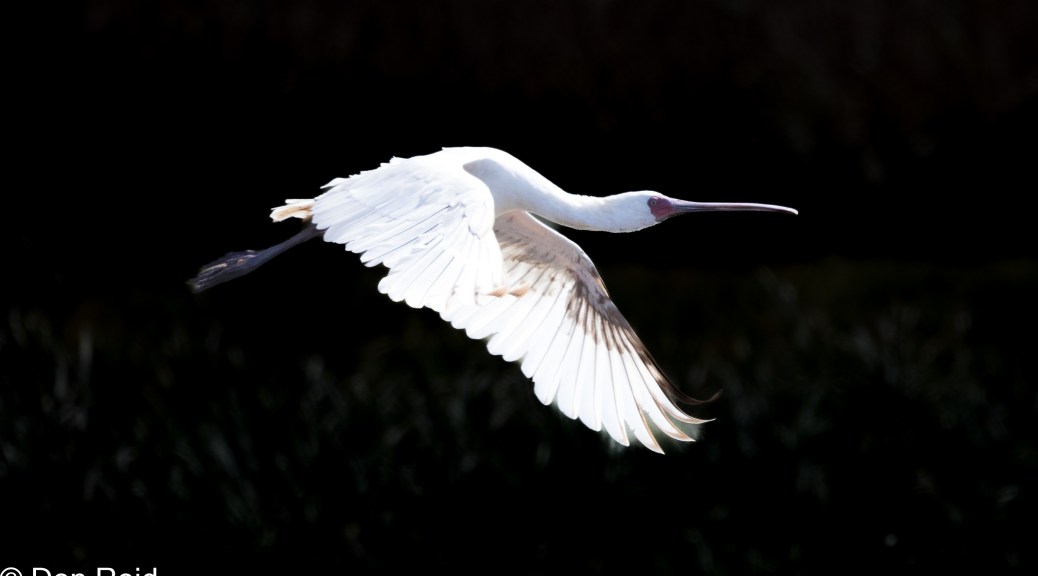
A number of Spoonbills on the far side of the vlei took to the air, providing an opportunity for some in flight photos, one of which I used for the heading image above after tweaking it to darken the background.

Back on the road after Eight Bells, we enjoyed the rest of the classic road trip through the Robinson Pass and Meiringspoort then along the hills and dales of the beautiful stretch of road heading to Prince Albert through the Kredouw Pass and the Prince Albert Valley

Prince Albert Valley

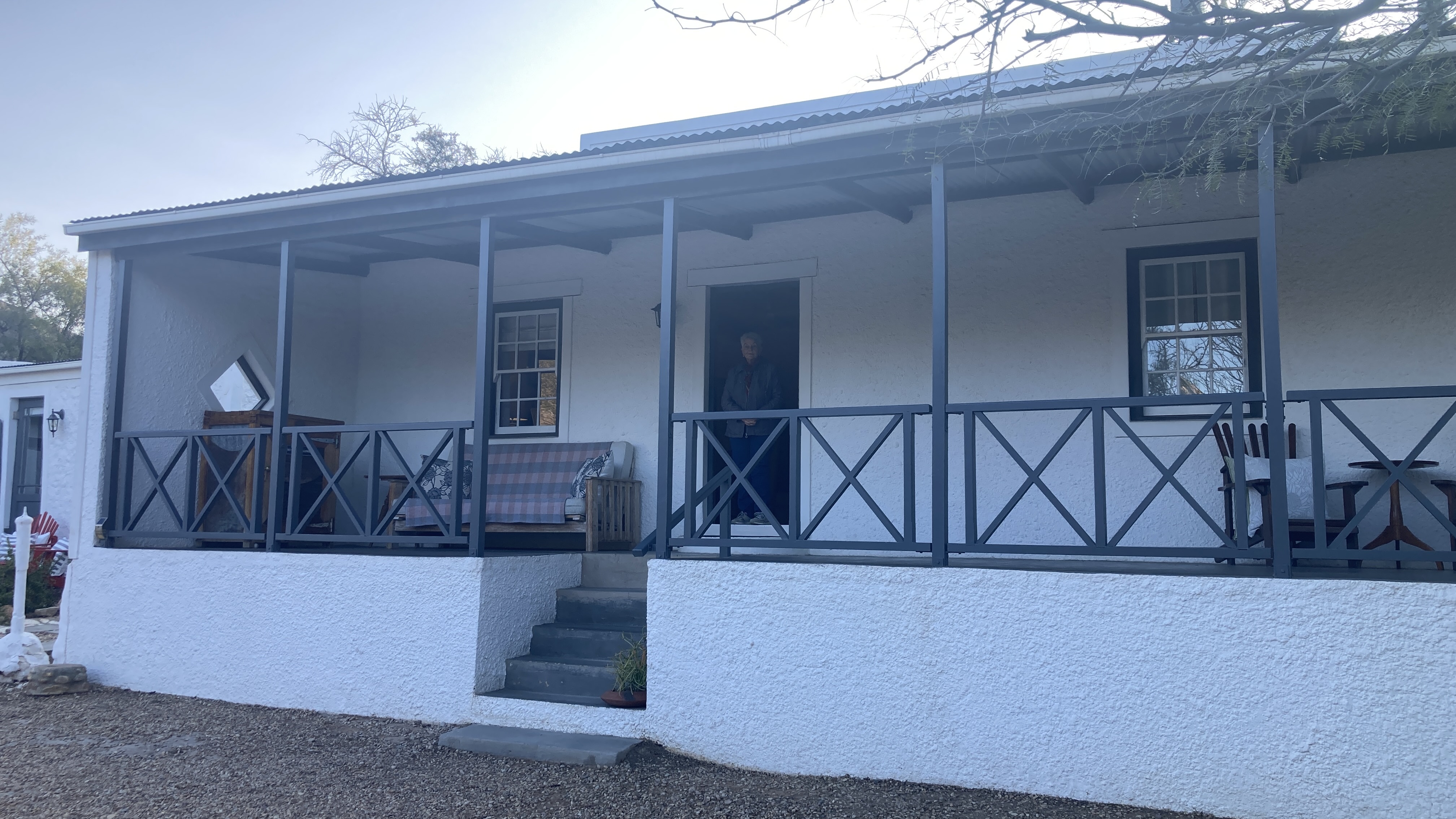
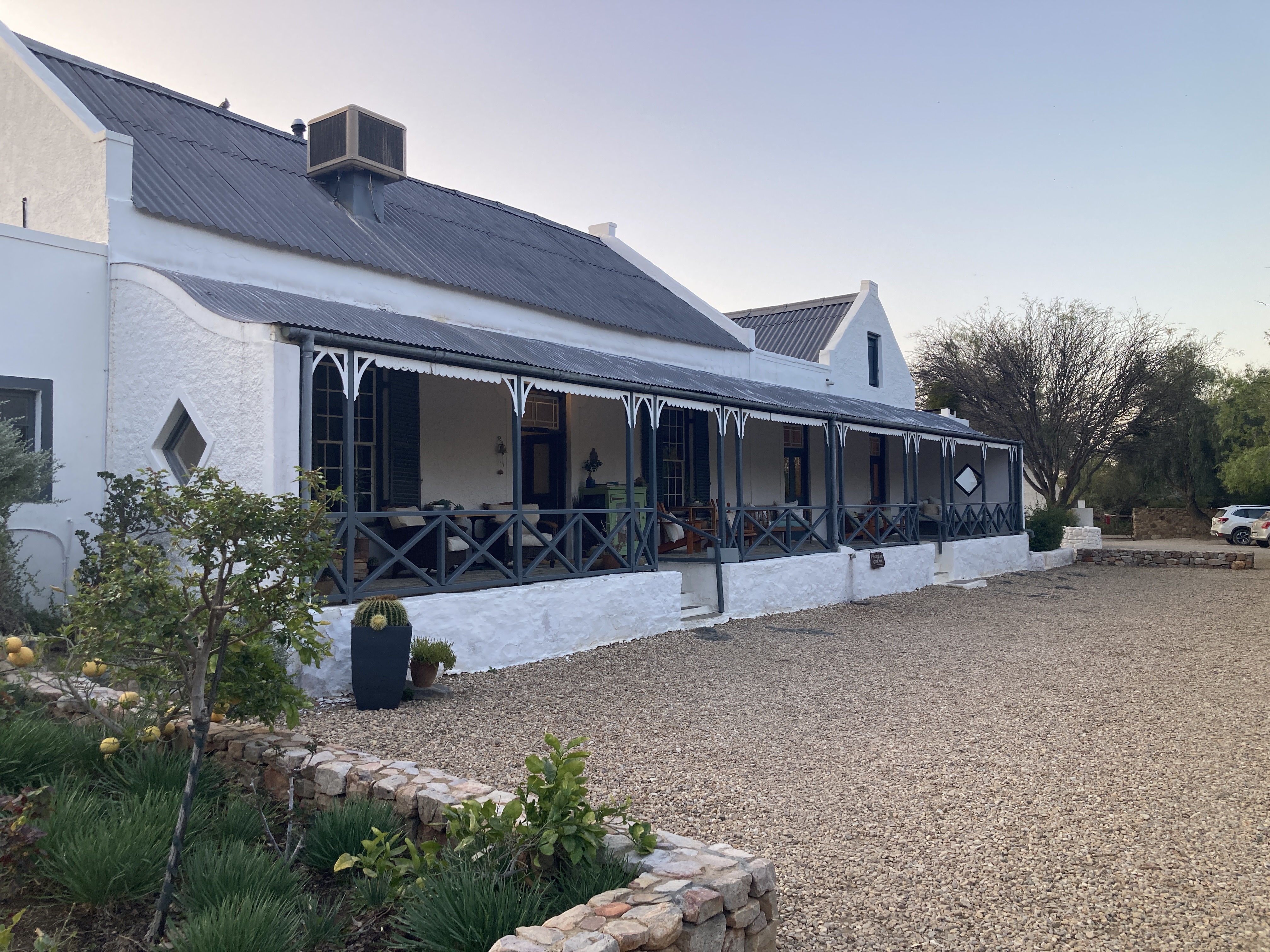
We hadn’t been to Dennehof Guesthouse before, but it was easy to find on the main road just before reaching the town proper and we were met by Albert (not the Prince) who showed us the room and provided info on dining options and things to do.

Dennehof – our room

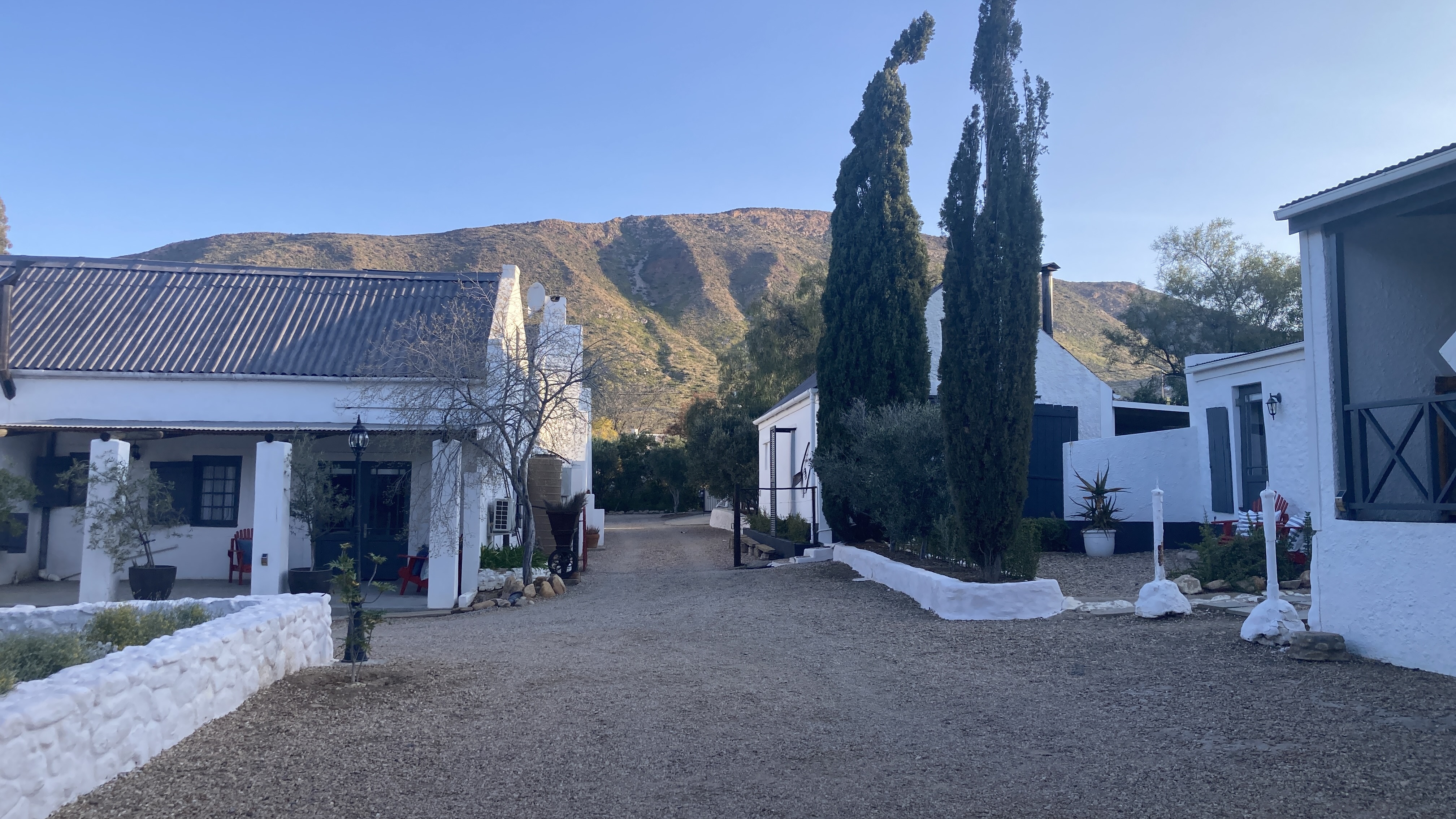
We have been to Prince Albert many times but there are always new places and eateries to hear about in this quiet yet dynamic Karoo dorp. Dennehof has a nice feel to it – not too pretentious with a mix of simple whitewashed buildings in the Karoo style making up a pleasant complex.

Dennehof

There was time before dusk to sit on the stoep and soak up the atmosphere, watched by the resident Spotted Eagle-Owl

Spotted Eagle-Owl, Prince Albert

The passing bird life included –

  • White-backed Mousebird
  • Purple Heron flying overhead probably to its roost
  • Sparrows, Cape and House, flitting about energetically
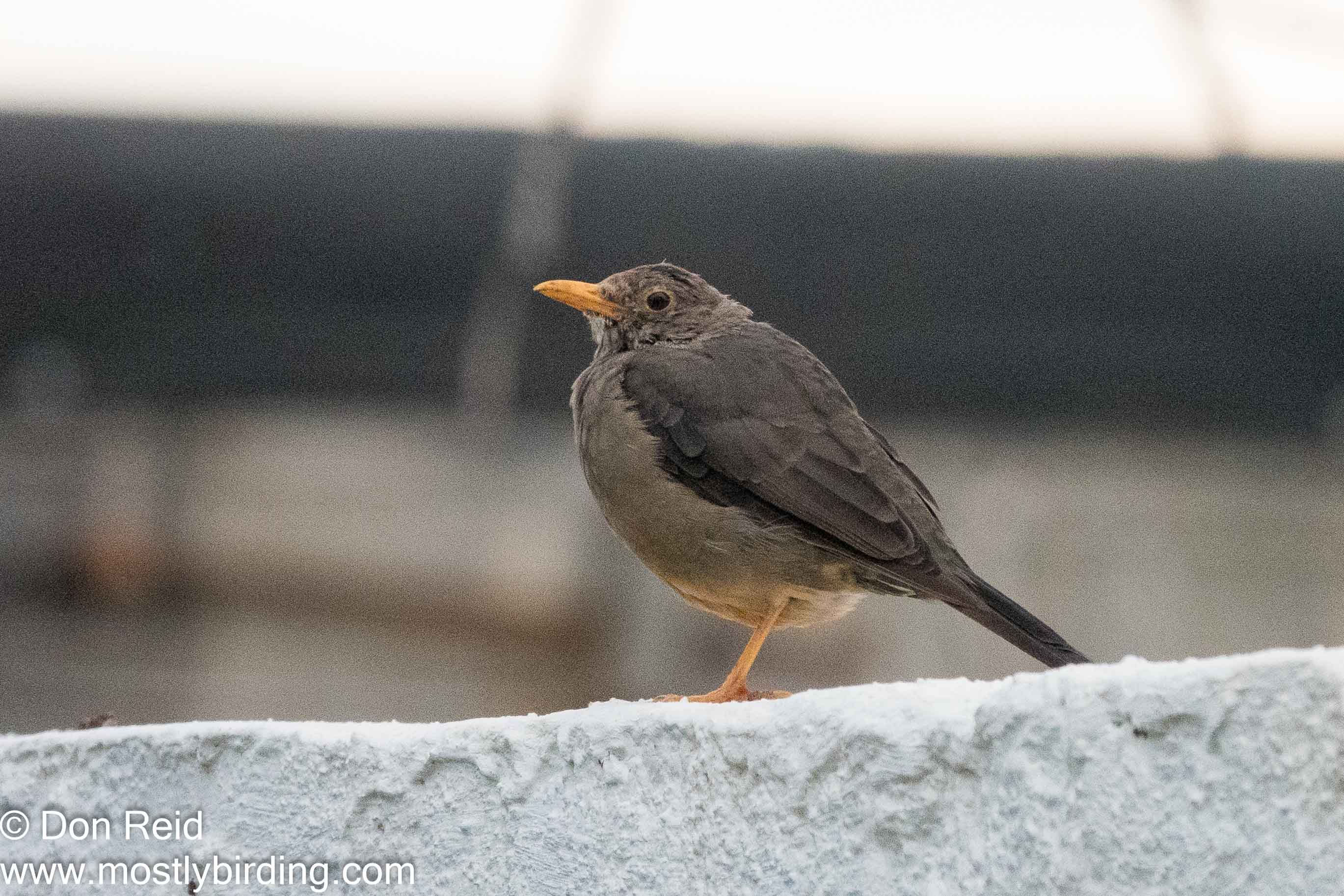
  • Karoo Thrush singing its cheerful song at close of day
Karoo Thrush
  • Pied Barbet calling plaintively

Dinner was chicken and salads that we brought with us.

Thursday 12th September 2024

Albert had said we could arrive for breakfast up to 9.30 am so being Gerda’s birthday we did exactly that. The setting is a delight – out in the garden in a glazed conservatory (where so many murders happen apparently) with a view of the adjoining wetland busy with Red Bishops and Masked Weavers doing their thing.

Dennehof Main house
Dennehof – the breakfast Conservatory

 The breakfast was above average and imaginative with a fruit and muesli mix that had us licking the bowl, followed by a herby omelette as good as they get – if for nothing else, I will return for that omelette. The coffee wasn’t half bad either.

That set us up nicely for the day which we planned as we went, starting with a slow drive down the main street of Prince Albert, followed by a short trip to the Olive farm north of the town which took us through some of the greenest Karoo countryside we have ever seen.

Along the way we stopped at the sewage works (as birders are wont to do) and at the low water bridges which, for the first time in our experience, had water flowing over them. The first of the two was productive for my atlasing list, adding half a dozen species in quick time –

  • Chestnut-vented Titbabbler
  • Karoo Scrub-Robin
  • Pririt Batis
Pririt Batis
  • Fiscal Flycatcher
  • White-throated Canary that came to drink from the shallow stream
White-throated Canary
  • Even a Three-banded Plover unexpectedly dropping in for a wade

We were treated to the unusual sight (for this arid part of SA) of water flowing over the low water bridges on the outskirts of the town

Just after the second bridge we turned into the Olive farm and, as it was lunchtime, we ordered tea and a waffle which we enjoyed outside under the trees (all part of the birthday celebration of course).

View from the Olive Farm

On the way back we turned off at the Karoo View signpost and drove a few kms to see the remnants of the flowers still in the open veld, then made a short stop at Karoo Souk which is a small group of craft shops, before heading back to Dennehof for a welcome rest.

Later, still in celebratory mode, we ventured out for a meal at the Yellow House restaurant which was up to the occasion and provided a nice ending to a very pleasant day.

Friday 13th September 2024

Another nice breakfast although we didn’t go for the full monty after last night’s big meal. After breakfast I added a few species to the atlas card including Alpine Swifts and Palm Swifts flying by and a Long-billed Crombec moving through the garden. That made four Swifts in all after seeing Little and White-rumped Swifts on the first day.

We had decided to drive to the fig farm at Weltevrede but first followed Albert’s suggestion of a drive along the ‘Bush pub’ road in search of a Karoo Eremomela. The bird eluded us but we did see a few other area specials such as –

 Mountain Wheatear

Mountain Wheatear, Prince Albert
  • Lark-like Bunting
  • Dusky Sunbird
  • Rufous-eared Warbler
Rufous-eared Warbler

And no less than three species of Canary –

  • White-throated Canary
  • Black-throated Canary
  • Black-headed Canary

It was time to head to the fig farm, so we turned back to town and took the road past the cemetery signposted ‘Weltevrede 25 km’.

We took it slow, stopping for birds – and flowers – and there were plenty of both to attract our attention.

At around 6 kms the road passes between tall rocky cliff faces which, according to Albert and Inge, is a site where Ground Woodpecker has been seen.

We spent some time stopping to scan the rocks carefully for any sign of the Woodpecker and even more so on the way back, to no avail. The spectacular drive made up for that mild disappointment and we arrived at the farm where we found we were the only visitors – very different from our previous visit which was during the peak of fig picking and drying.

Weltevrede Fig Farm

After treating ourselves to fig tart we headed slowly back – Black-headed Canaries were the most frequent sightings along with Pale Chanting Goshawk and Karoo Chat.

Black-headed Canary, near Prince Albert
Pale Chanting Goshawk, near Prince Albert

We weren’t particularly keen to go out that evening but after a relaxing time at the room we had a bit more energy and ‘lus’ for Jeremy’s Restaurant which was a great choice and suited to our reduced appetite. We both had Taglietelle puttanesca not having ever had it and it was wonderfully simple and delicious, cooked by Jeremy himself. We treated ourselves to Spekboom ice cream which was different but not overly so and we left in a good frame of mind.

Saturday 14th September 2024

Up a bit earlier to fit in packing and breakfast before checkout time, we enjoyed the fruit and omelette once again, then greeted Inge and Albert like family and set off through town to Gays dairy for some of their lovely cheeses before heading out on the road back. This time we had time to stop and savour the flowers and birds – often both at the same spot.

Lunch venues are limited on this route so we looked for a place in De Rust, ending up at Herries which is the local pub and turned out to be a good choice even though we just had tea and a sandwich in a venue that almost demands you have at least a beer or two if not a klippies and coke.

The rest of the trip was uneventful with stops in George at the nurseries and a ‘koffie vir oulaas’ at Elvis Brew, a favourite coffee spot near the George Airport, before heading homewards, well satisfied yet again with our choice of Prince Albert for a short breakaway.


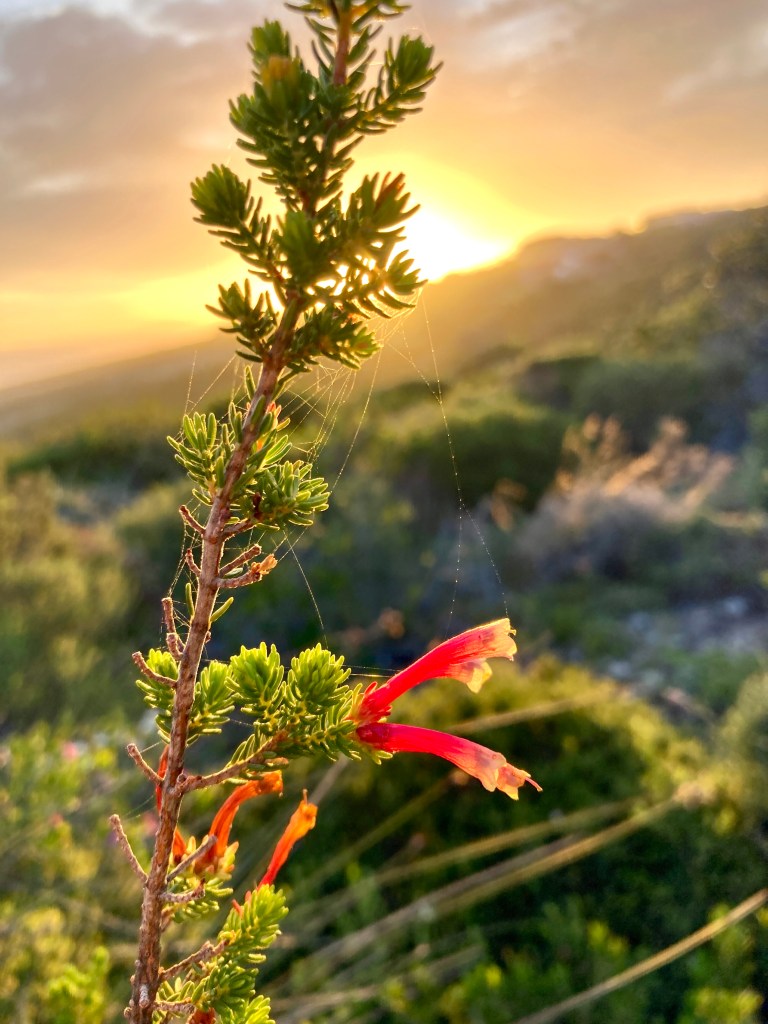
A Fynbos Sunset

One of the joys of Mossel Bay, our new home town, is the proximity of our house to the broad band of coastal fynbos that separates the estate we live in from the rugged coastline running along this part of the southern Cape.

A short walk of a few minutes takes one into a world of tiny flowers in an expanse of heath-like bushes and although my primary aim is usually to see what birdlife is present, the setting sun this afternoon enticed me to try my hand at some more ‘arty’ photos, using my trusty iphone.

Here are some of the results

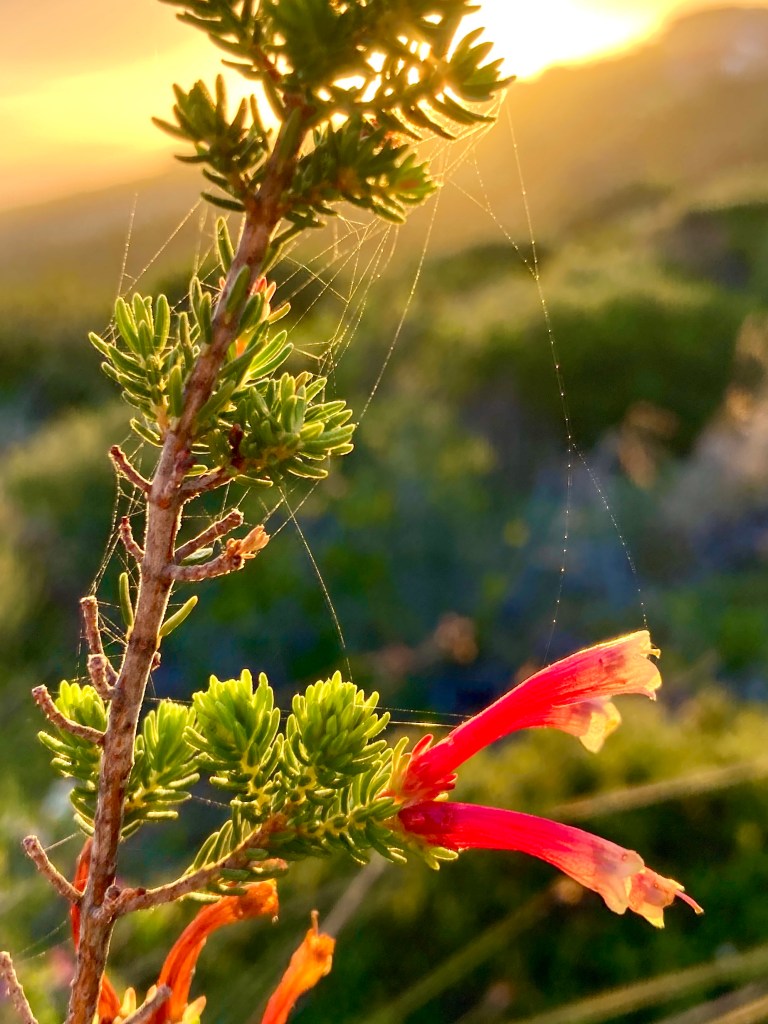
On closer inspection of the above photo I noticed that the flower was draped in spider’s web which shows up better in this cropped version

Karoo in Flower

Our road trip from Pretoria to Mossel Bay this past weekend followed a by now familiar routine – around 1300 kms spread more or less equally over three days with stopovers near Bloemfontein and Graaff-Reinet.

What we love about road trips is the changing landscape along the way, which varies according to the season – that is when traffic and weather conditions allow you to take it in.

The first half of the journey tends to be busy, but once we branch off from the N1 National Road traffic diminishes and despite a narrower road the driving becomes easier, allowing us to scan the surrounding landscape.

What set this trip apart for us was the appearance of flowers at the roadside and extending into the adjoining fields in places.

Spring brings an abundance of wild flowers to the western parts of South Africa and we have enjoyed flower watching trips in previous years.
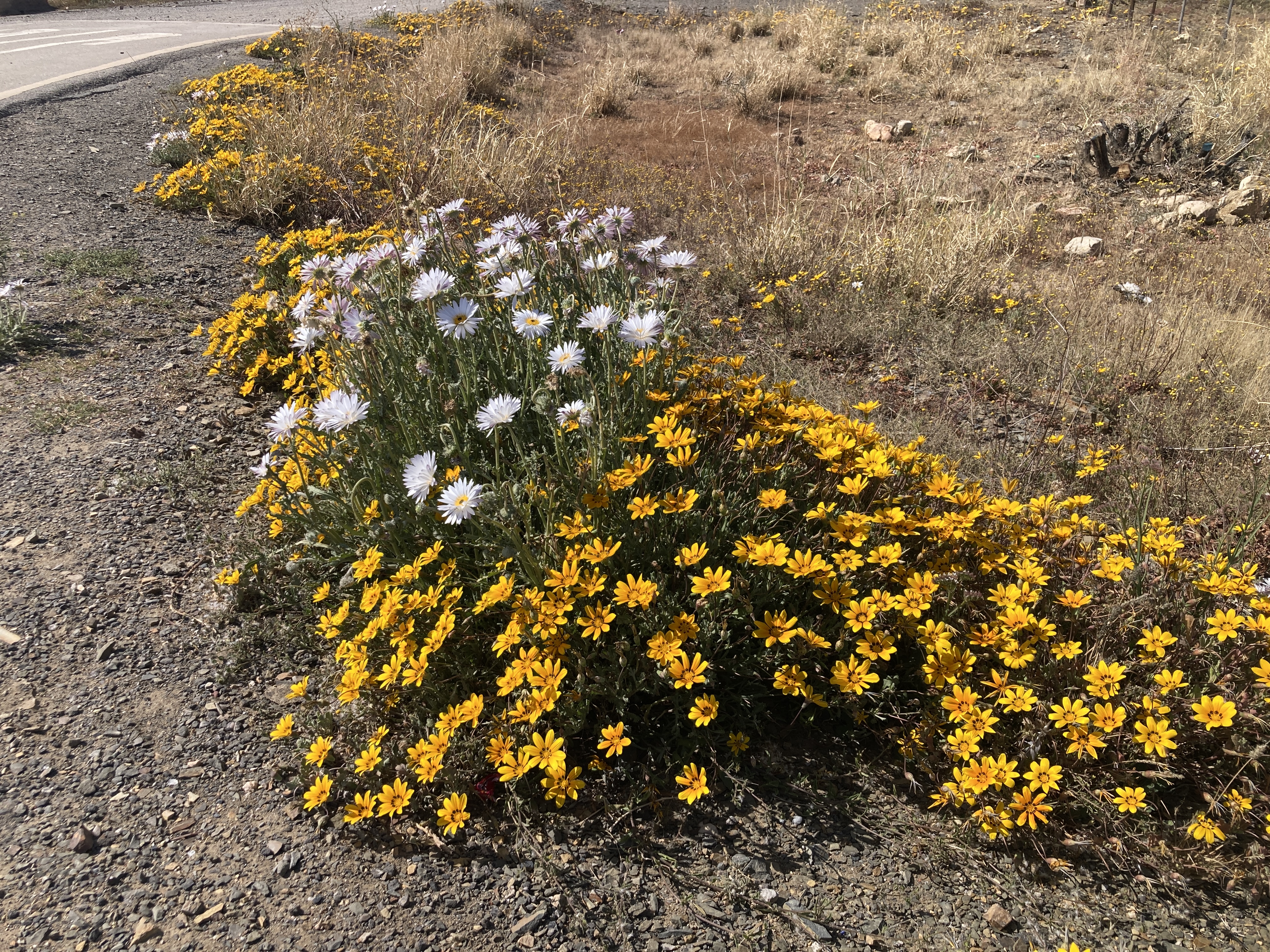
But the Karoo is not known for its spring flowers, so it was a pleasant surprise to see massed displays in places as we drove the second half of our journey, starting in the Willowmore area and continuing through to Oudtshoorn and beyond. Some examples …..

Bright orange daisies just south of Oudtshoorn…

Karoo Violets near Graaff-Reinet…

Vygies galore along the road between Oudtshoorn and De Rust….

Just what we needed after a couple of months of arduous clearing out and packing of our Pretoria home in preparation for our permanent move to Mossel Bay

Spring Flowers Trip 2022 – West Coast National Park

This is the last of my series of posts on the Spring flowers trip we undertook in 2022

The Background

With wonderful memories of our Spring Flowers trip through parts of the Western Cape in September 2021 still fresh in our minds, we decided to do a similar, but different, trip in September 2022. Our planned route was to take us to Tulbagh for one night, then three nights each in Clanwilliam and Paternoster. To round off the trip we treated ourselves to a three-night stay in Cape Town’s Vineyard Hotel, in celebration of our birthdays which “book-ended” the trip,

Decision Time

Our trip had met all of our expectations and we felt more than satisfied with what we had seen and done during our trip so far. Day 7 of our trip was to take us from Paternoster to Cape Town and we debated whether or not to visit the West Coast National Park on the way there or to skip it this year, having ‘done’ it just a year ago.

Fortunately, as it turned out, we decided to head to the Langebaan gate of the Park after our last breakfast at Paternoster Dunes Guest House, and ‘play it by ear’ as to how much of the Park we would have time to explore, bearing in mind the distances involved in getting to the Postberg section of the park, which is only open during the flower season months, and the numbers of other flower viewers we were likely to encounter.

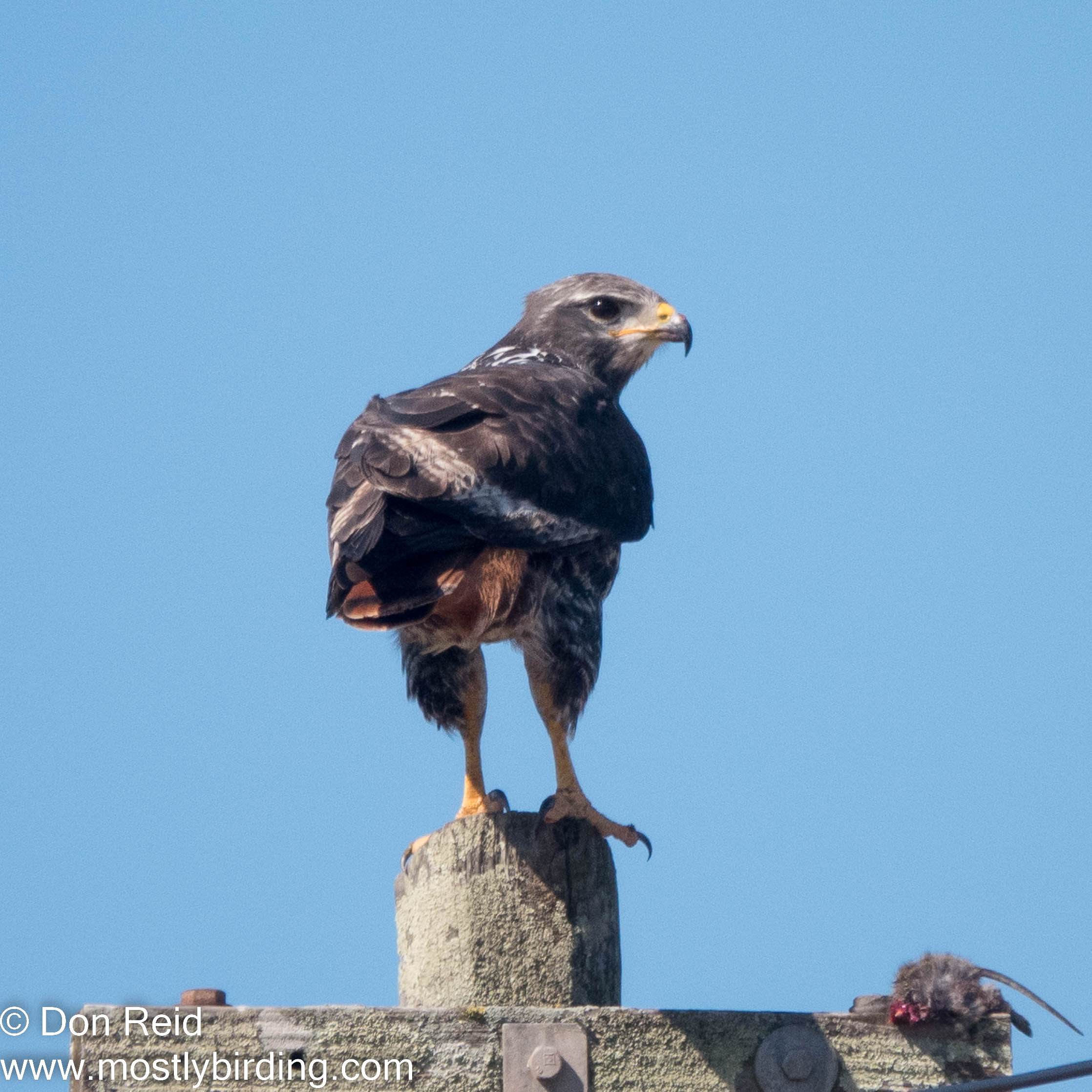
On the way to Langebaan a roadside Jackal Buzzard on a utility pole had me braking for a quick photo

Jackal Buzzard Buteo rufofuscus Rooiborsjakkalsvoël, Paternoster

Langebaan Gate to Postberg

After finding our way through the residential areas of Langebaan, we arrived at the gate into the Park where 12 cars were waiting to enter. The queue moved quickly and we were soon in the Park and making good progress to the T-junction where we turned right towards Postberg

West Coast NP

We like to stop at every interesting bush to have a closer look at its flowers – the following two images are an example of a bush appearing fairly nondescript, but once you get up close and personal the flowers are quite striking

West Coast NP
West Coast NP

And so our journey went, all the way to Postberg section, stopping frequently, hopping in and out of the car to get a closer look and a photo from the right angle.

A few others seemed to be doing the same, but the majority passed by with hardly a glance, eager to get to Postberg for the massed displays of flowers – to each his own, but we prefer to take in everything we see

Now if only I knew the names of some of these beauties – it took me a few years to build up a reasonable knowledge of birds, now it seems to be taking even longer to learn more about the flowers and I still feel like a raw beginner

West Coast NP
West Coast NP
West Coast NP
West Coast NP
West Coast NP
West Coast NP

Once into the Postberg section of the Park, we joined the many vehicles driving the gravel roads and admiring the incredible displays of multi-coloured flowers – irresistible for more photos!

West Coast NP
West Coast NP
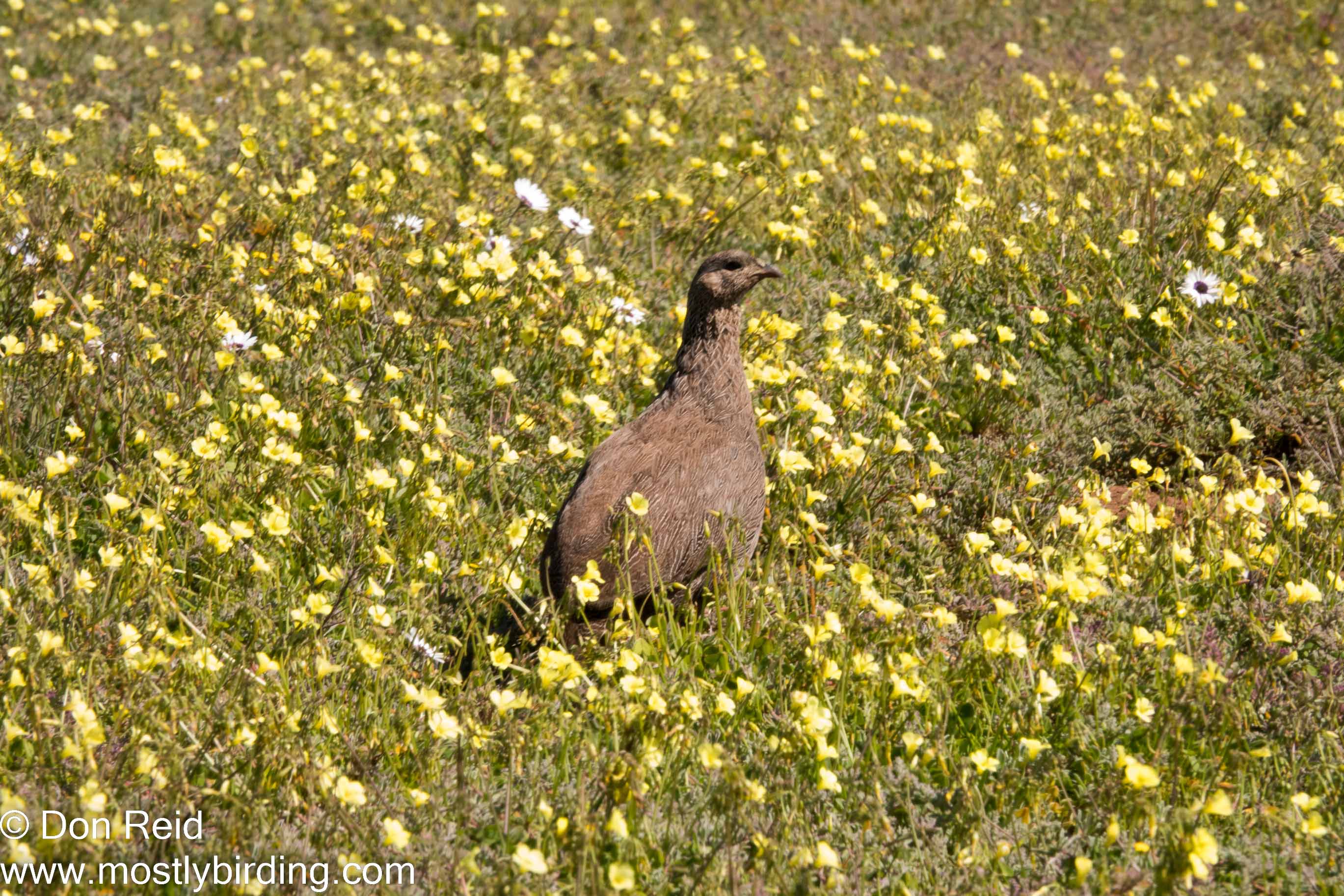
Cape Spurfowl among flowers, West Coast NP
West Coast NP

At one point on the return journey to the gate, the sky was filled with Gulls, wheeling above the flower-bedecked flats – quite a sight to see!

West Coast NP
West Coast NP

Edible Flowers too!

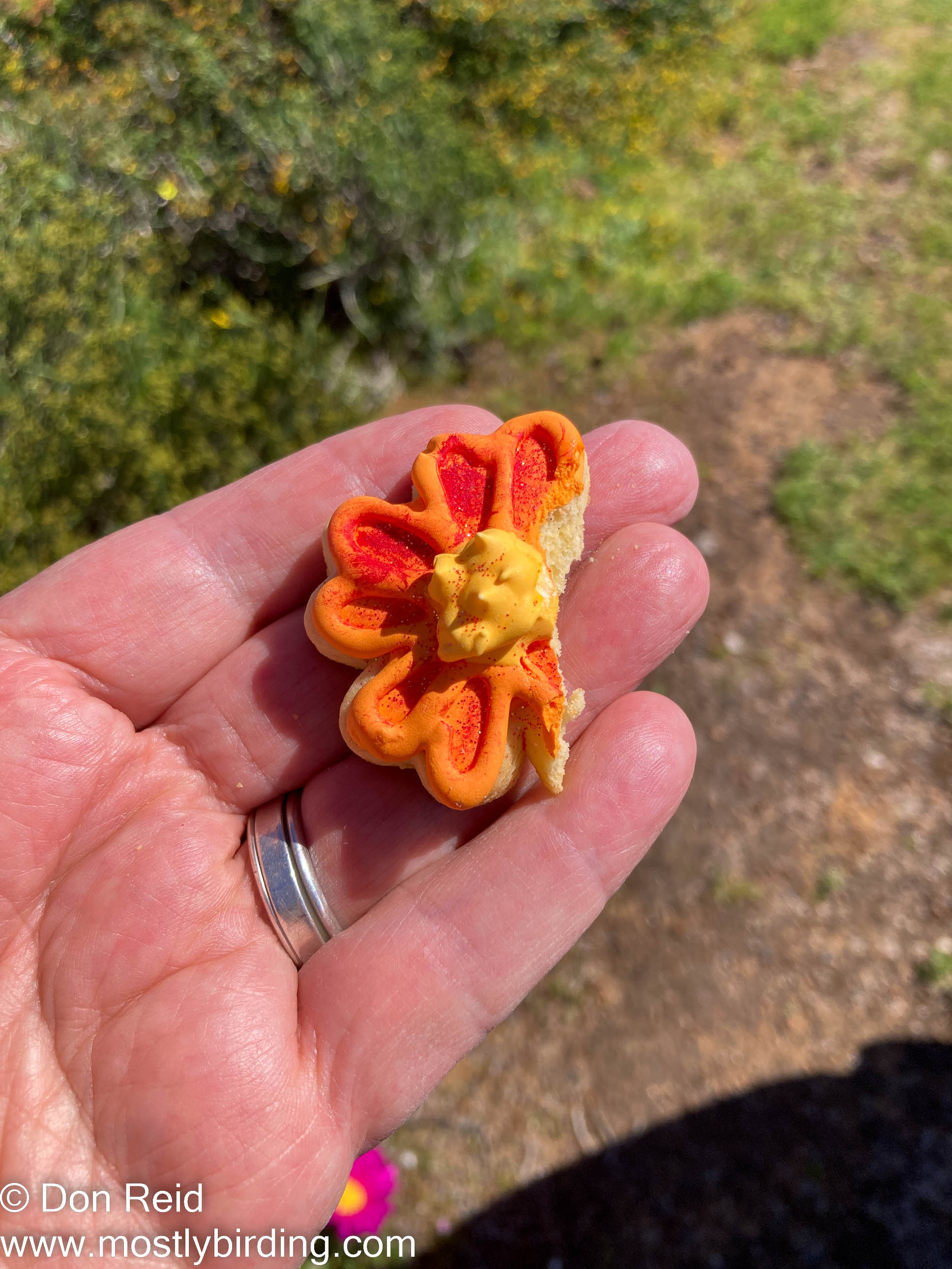
And on a lighter note – did you know that some of the flowers in the park are edible? Well, I can confirm this is so, as you will see from the following photos of a cookieata sweetieae that we came across as we drove to Postberg – it is well known in the Biedouw Valley

Cookieata sweetieae, West Coast NP
Mmmmm, rather nice

And that, dear readers, is how the cookie crumbles

2023! – A Beacon of Hope…..

It’s strange how things cross your path when least expected – I was out for my last late-afternoon walk of the year, enjoying the fresh, mind-clearing wind and keeping a look out for birds in the conservation area close to our home in Mossel Bay.

I was heading back up the hill along the narrow track that leads through a sea of fynbos, most of which lacks any sort of flowers at this time of year, when a flash of bright red caught my eye – I lifted my binos and saw to my delight that it was a lone flower, poking out above the sea of green like a beacon…. of hope, I decided right there

This comes with my wish to everyone for a blooming good 2023!

Fire Lily

Spring Flowers Trip 2022 – Tietiesbaai : Bay of Plenty….. Flowers

The Background

With wonderful memories of our Spring Flowers trip through parts of the Western Cape in September 2021 still fresh in our minds, we decided to do a similar, but different, trip in September 2022. Our planned route was to take us to Tulbagh for one night, then three nights each in Clanwilliam and Paternoster. To round off the trip we treated ourselves to a three night stay in Cape Town’s Vineyard Hotel, in celebration of our birthdays which “book-ended” the trip,

I would recommend clicking on the images where appropriate to view in larger scale and appreciate the beauty and perfection of the flowers.

Flowers in abundance

The full breakfast at Paternoster Dunes is a gourmet affair, presented with flair and with unusual flavours – just what we enjoy as a treat. Adding to the enjoyment is the view from the upper floor dining room with its panoramic windows looking over the wide expanse of beach below and across the waves to the distant headlands.

During brekkie we got chatting to a couple from Vryburg – well Gerda got chatting, I just nodded my head occasionally – and as often happens when you get chatting with strangers, we had a glimpse into each other’s lives, which is always interesting.

The sun was shining, holding the promise for a bountiful day’s flower viewing, so after breakfast we set off to visit Cape Columbine Nature Reserve, which has the well-known ‘alternate’ name of Tietiesbaai (literally ‘Boobs Bay’ for the international readers).

Cape Columbine NR – Tietiesbaai

The reserve gate lies just a few kms from the guesthouse and once we had paid the nominal fee and entered, we travelled very slowly, with plenty of birdlife and beautiful spreads of flowers demanding our attention all the way.

Cape Columbine NR – Tietiesbaai

The sea is almost always visible from the sandy road into the reserve and tracks leading off the main route took us closer to the rocky shoreline where we admired the rafts of flowers in shades of yellow, orange and white, with the odd contrasting colour here and there, all against the rugged backdrop of sea and rocks.

Cape Columbine NR – Tietiesbaai

I don’t know of any other spot along the West coast that provides the same spectacular combination of scenery, flowers and birdlife – we were spoilt for choice!

Cape Columbine NR – Tietiesbaai

Even without the flowers, Tietiesbaai is worth a visit, but in flower season the carpets of stunning flowers add another dimension to the reserve, making it a must-visit spot, in our opinion.

Cape Columbine NR – Tietiesbaai

Strangely, not that many people have cottoned onto this as, during our visits in September last year and again this year, we have found that we have the reserve mostly to ourselves, allowing us to stop at random along the narrow tracks without the worry of blocking the road for others.

Cape Columbine NR – Tietiesbaai

The birds we came across were many and varied, with a couple of special encounters which had us excited and fascinated – I will be featuring the birds in a follow-up post as they, and indeed the flowers, are both deserving of a separate post.

Cape Columbine NR – Tietiesbaai

Once we reached the campsite, right on the edge of the sea, we made use of the neat ablutions and turned back towards Paternoster, taking the ‘upper’ road past the lighthouse.

To end off let me share some of the images of individual flowers that particularly caught our eye

Cape Columbine NR – Tietiesbaai

And to absolutely end off, even the fungi look like attractive flowers (well, I think it’s fungi …..)

Cape Columbine NR – Tietiesbaai

Oh, and please do enjoy the Christmas weekend wherever you may find yourself!

Spring Flowers Trip 2022 – Clanwilliam to Paternoster

The Background

With wonderful memories of our Spring Flowers trip through parts of the Western Cape in September 2021 still fresh in our minds, we decided to do a similar, but different, trip in September 2022. Our planned route was to take us to Tulbagh for one night, then three nights each in Clanwilliam and Paternoster. To round off the trip we treated ourselves to a three night stay in Cape Town’s Vineyard Hotel, in celebration of our birthdays which “book-ended” the trip,

I would recommend clicking on the images where appropriate to view in larger scale and appreciate the beauty and perfection of the flowers.

Travelling to Paternoster

Today’s trip was less about flower viewing and more about getting from one place to another with the minimum of fuss, so we were not planning any specific stops – more of a ‘play it by ear’ approach was to be the order of the day. As it turned out, the day was interesting but probably doesn’t warrant a separate post, however I wanted to treat this series of posts as a daily report of the trip, so this one is just for completeness. (hey, I’m a QS – we are obsessive types)

After another full breakfast at Yellow Aloe Guest House, which took longer than usual as everyone came to breakfast at more or less the same time, we left Clanwilliam with many fond memories of our short stay.

Rather than heading down the N7 National Road, we took the coastal route, which would take us along quieter regional roads past a number of small towns – including Lamberts Bay, Leipoldtville, Elands Bay and Velddrif.

Near Elands Bay

Along the way there were small patches of flowers here and there and I slowed down as we passed, but did not stop as we had seen many glorious flowers the previous day in the Biedouw Valley

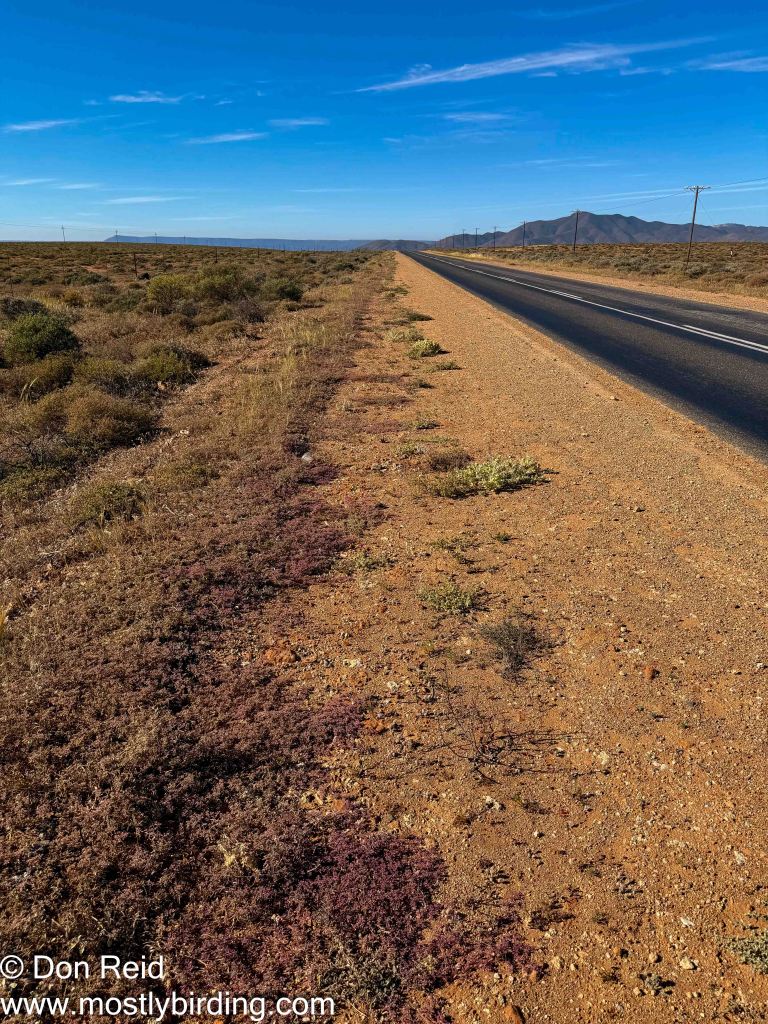
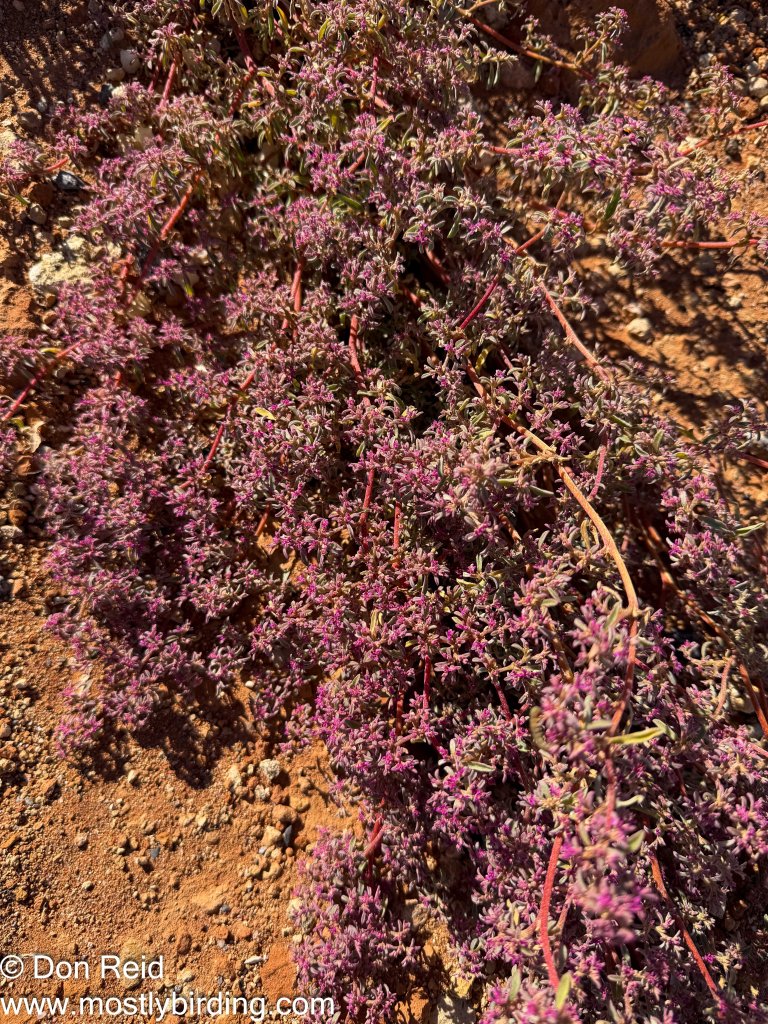
On the way to Elands Bay we noticed patches of red in the gravelly margin bordering the tar road and stopped to have a closer look as it did not look like anything we knew. Closer inspection didn’t enlighten us, but I took a few photos of this rather strange ‘growth’ in an environment which hardly looked as if it could support anything but weeds.

Near Elands Bay

We took a quick detour to Elands Bay just to see what it looks like – the town centre left us less than impressed but the beach provided a sweeping view of the wide sands, wind-whipped sea and distant headland which demanded a photo. Easier said than done, as the wind was so strong, I had to brace myself, legs spread wide and shielding my eyes from the sand, in order to get a couple of moody shots with my iphone.

Elands Bay

Feeling peckish we popped into Rooidak padstal just outside town and got a pie for lunch – which I couldn’t finish as it was rather stodgy, then carried on along mostly straight, very flat roads to Velddrif.

Just after we turned off towards Paternoster, the road passed some of the salt pans that Velddrif is known for and I slowed, then stopped at the roadside to do a quick scan – several interesting birds were making the most of this very specific habitat and I spent about twenty minutes getting a few shots from a distance.

Pied Avocet Recurvirostra avosetta Bontelsie, Velddrif
Kittlitz’s Plover and Little Stint, Velddrif
Lesser Flamingo Phoeniconaias minor Kleinflamink, Velddrif
Lesser Flamingo and Pied Avocet, Velddrif
Lesser Flamingoes taking off, watched by Caspian Terns, Velddrif

Paternoster

The last stretch to Paternoster was in light rain and we reached our booked accommodation – Paternoster Dunes Guest House – around 3 pm where we were welcomed and soon settled in. They serve coffee/tea and cake every afternoon at 4 pm so we climbed the single flight of stairs up to the dining area and lounge which has magnificent views across the beach and beyond.

During our previous stay we had not managed to fit the afternoon tea session into our busy days so it was a particular pleasure to do so this time around, while the rain came pelting down and the strong wind tested the beach-facing windows to the extreme.

Paternoster
Paternoster

Neither of us felt like going out for dinner so we cancelled the booking that we had and ‘ate in’ on what could best be described as ‘dehydrated steak and chips’ – actually beef biltong and crisps with provita and cheese on the side – surprisingly satisfying when washed down with a glass of decent wine.

The rain subsided a bit later, so I took a walk along the beach with a light drizzle in the air and the wind still gusting quite strongly – that helped to blow all the day’s driving-induced cobwebs clear away.

Paternoster

The combination of a low sun, cloudy skies and wheeling gulls made the scene especially photogenic, and I snapped happily away with my iphone before heading back to our cosy room to relax and plan the next day’s activities. Tietiesbaai, here we come, ready or not!

Paternoster
Paternoster
Paternoster
Paternoster
Mussel shell in the sand