
Mackay : The Wettest place we have experienced!
As mentioned in Part 1, we had inadvertently chosen the wettest time of year to visit Mackay, when most of the annual rain falls over the area, but the rain we experienced was way beyond the norm
My walks around the wetlands area close to the house more than satisfied my desire to see and photograph as many new birds as the weather allowed, which Part 1 covered in some detail.
However, Gerda and I were keen to see more of Mackay proper, but without our own transport, outings were limited to shortish ones that could be fitted in between the morning and afternoon school runs that Liesl undertook every day.
One of the local attractions we managed to visit a couple of times was …..
The Botanic Gardens

Our first visit was accompanied by light rain falling, so we headed to the café for tea and cake which we enjoyed out on the deck with broad views over the lagoon.
From our table I could already see that there were various waterbirds present including a Pelican, Moorhens, Swamphens, Cormorants, etc and there was a moment of excitement when a Whistling kite flew overhead, clutching in its beak several twigs obviously bound for a nest under construction somewhere in the tall trees on the opposite bank of the lagoon.
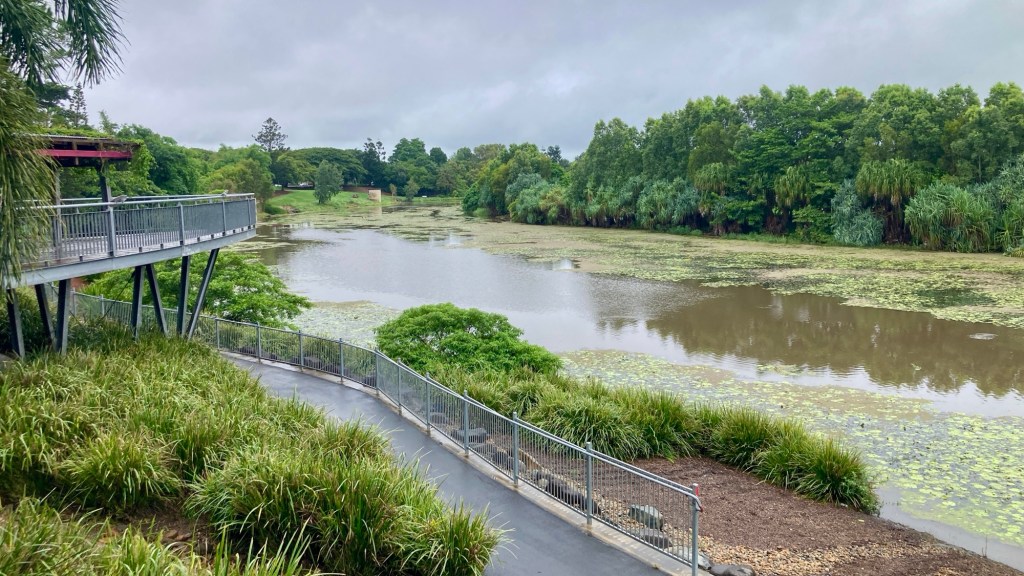
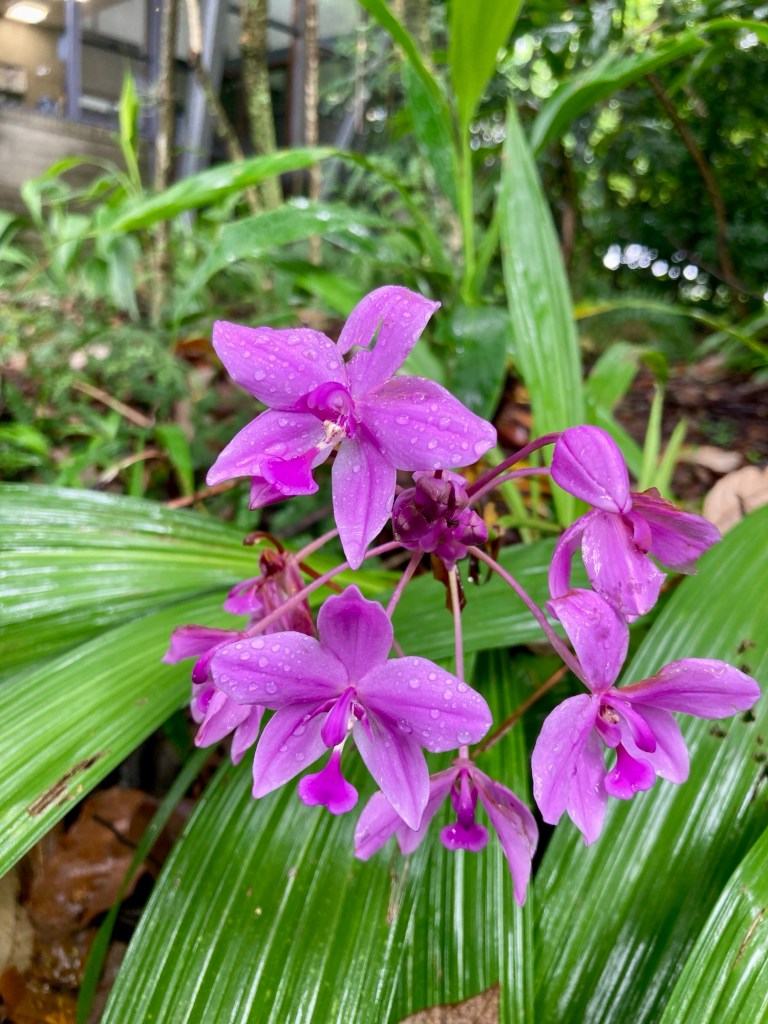
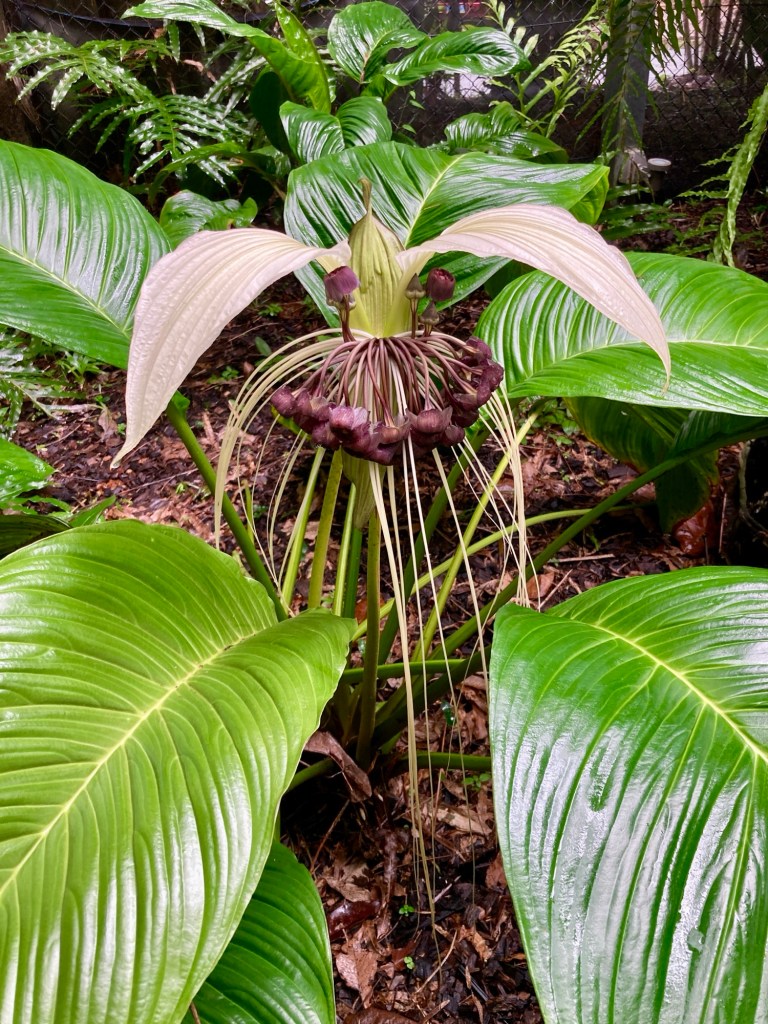
We followed tea with an interesting stroll through the rainforest area – in light rain of course – which had some fascinating, exotic-looking plants and trees, then a longer walk through some of the other garden areas.
Here’s a selection of some of the ‘rainforest’ plants and flowers that are on display


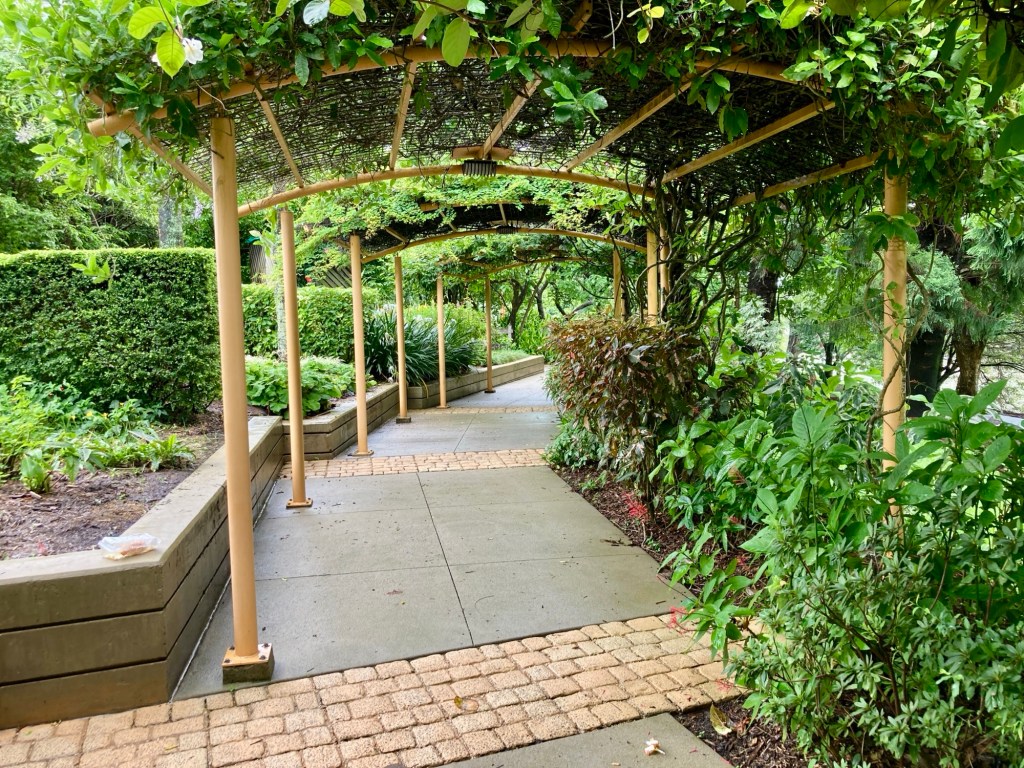
A quiet, lush pathway leading back to the entrance of the gardens
Birds of the Botanic Gardens
A selection of the birds I was able to photograph in the overcast rainy conditions …..
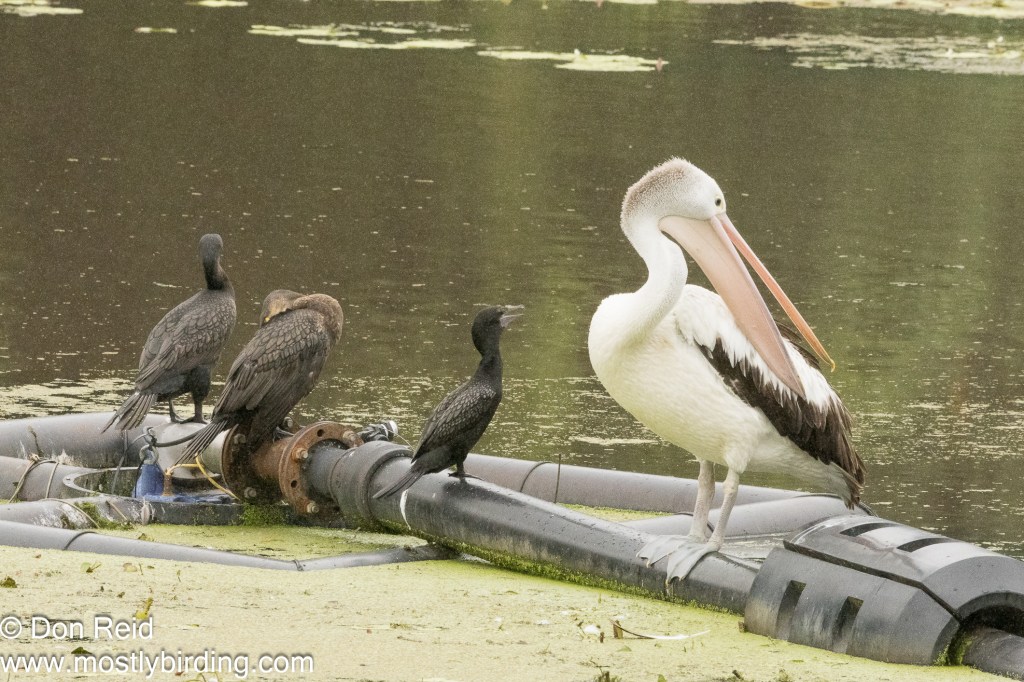
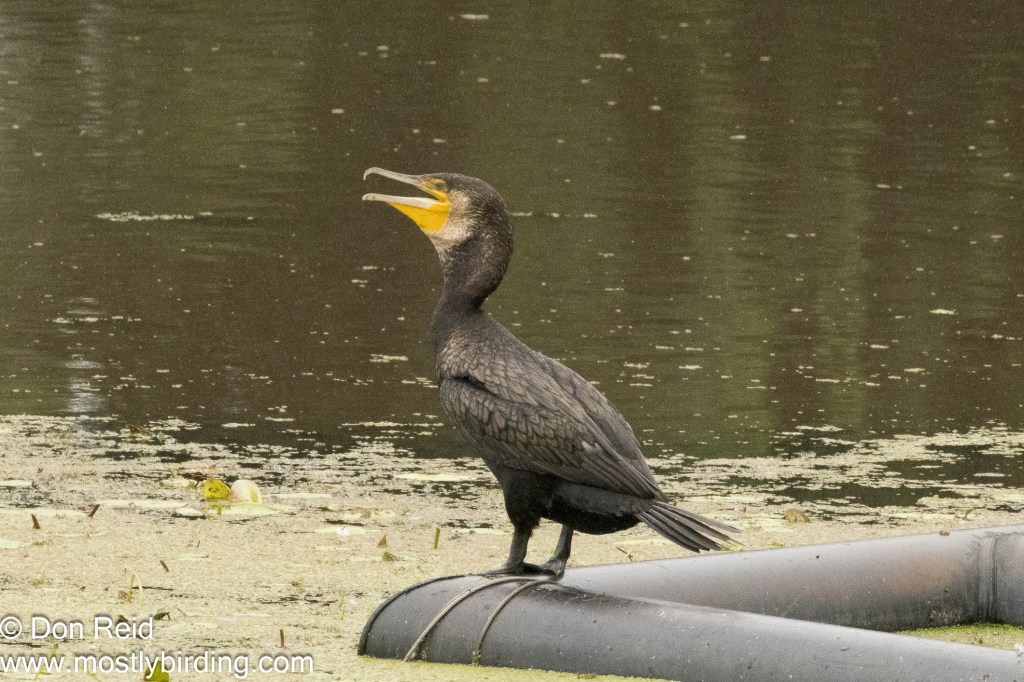
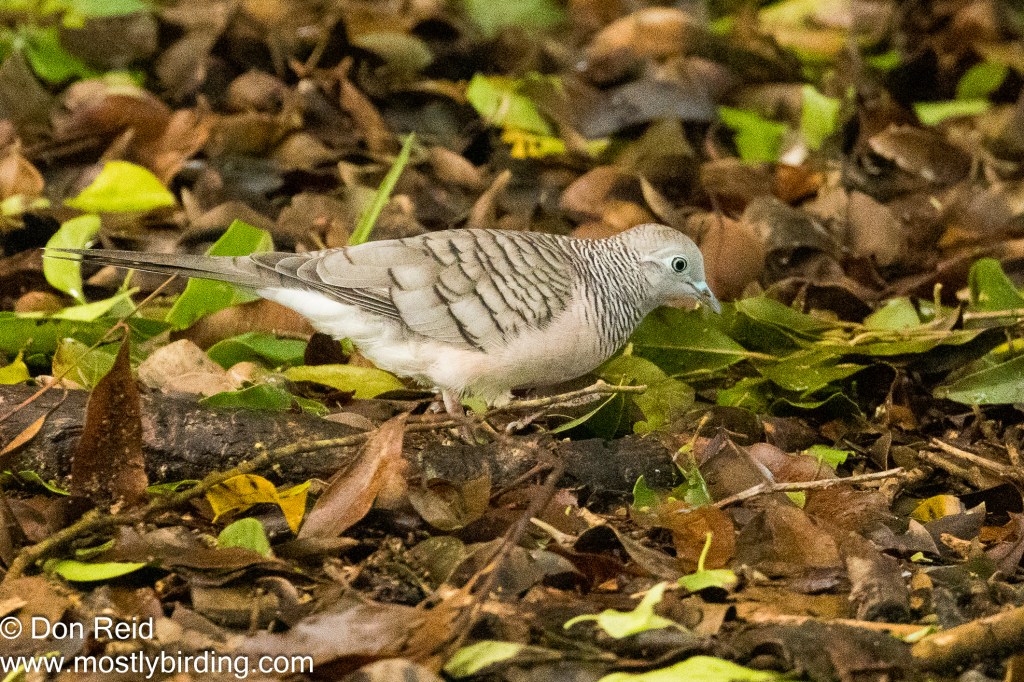
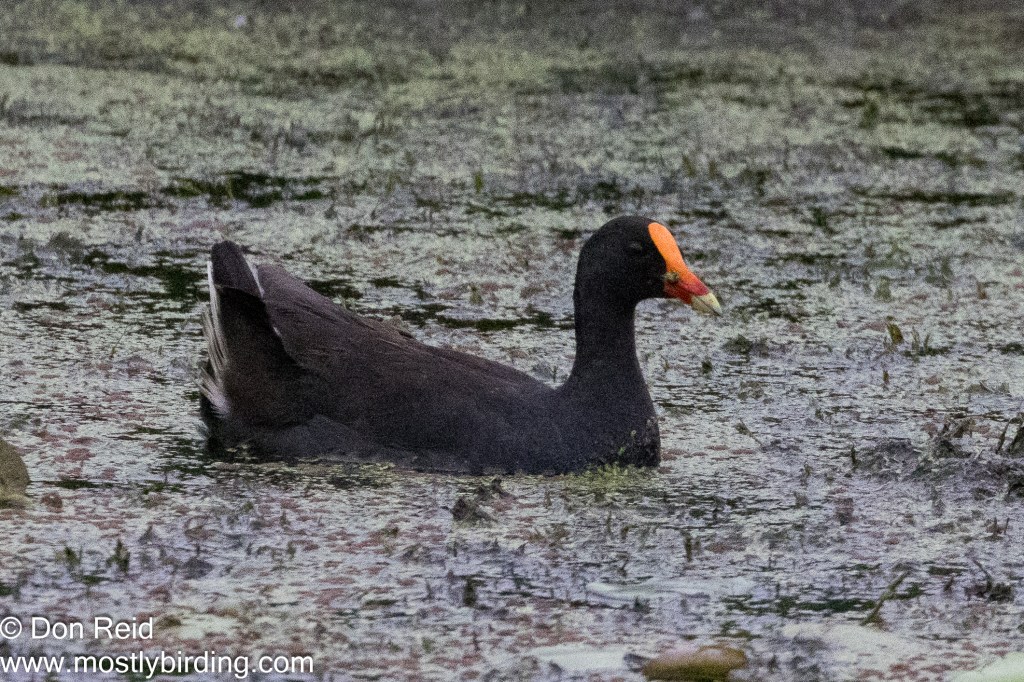
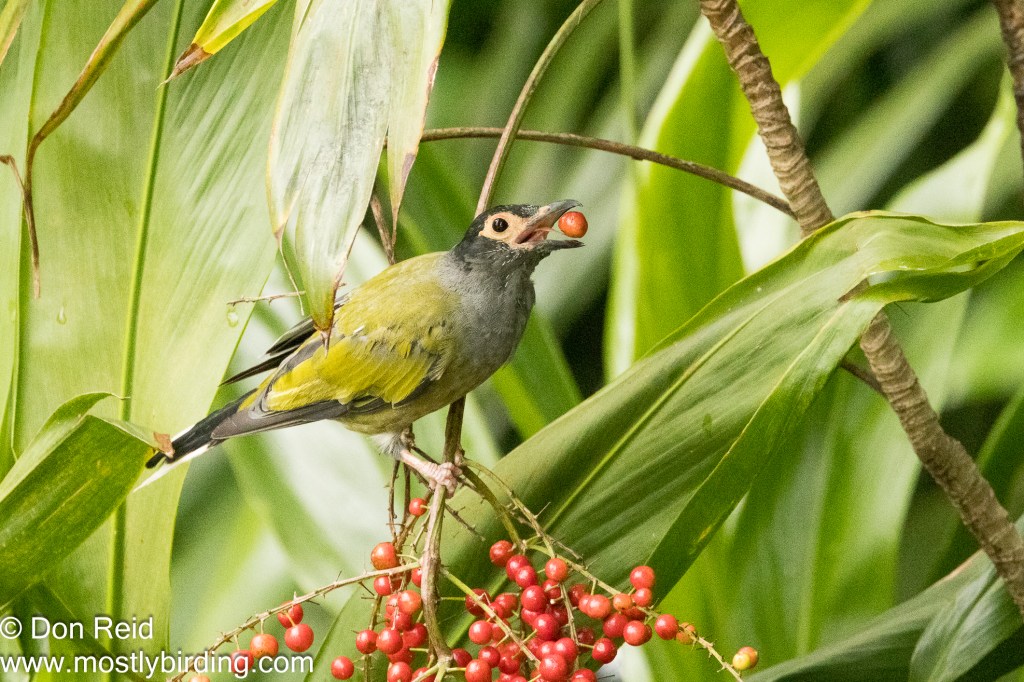
I was particularly thrilled to get photos of an Australasian Figbird feeding on small red berries in the trees near the main entrance, carefully plucking the berries before juggling them into position for easy swallowing
The Beaches
Other exploratory trips between school runs were focused on visiting some of the fine beaches along the eastern coastline of the town.
Lamberts Beach
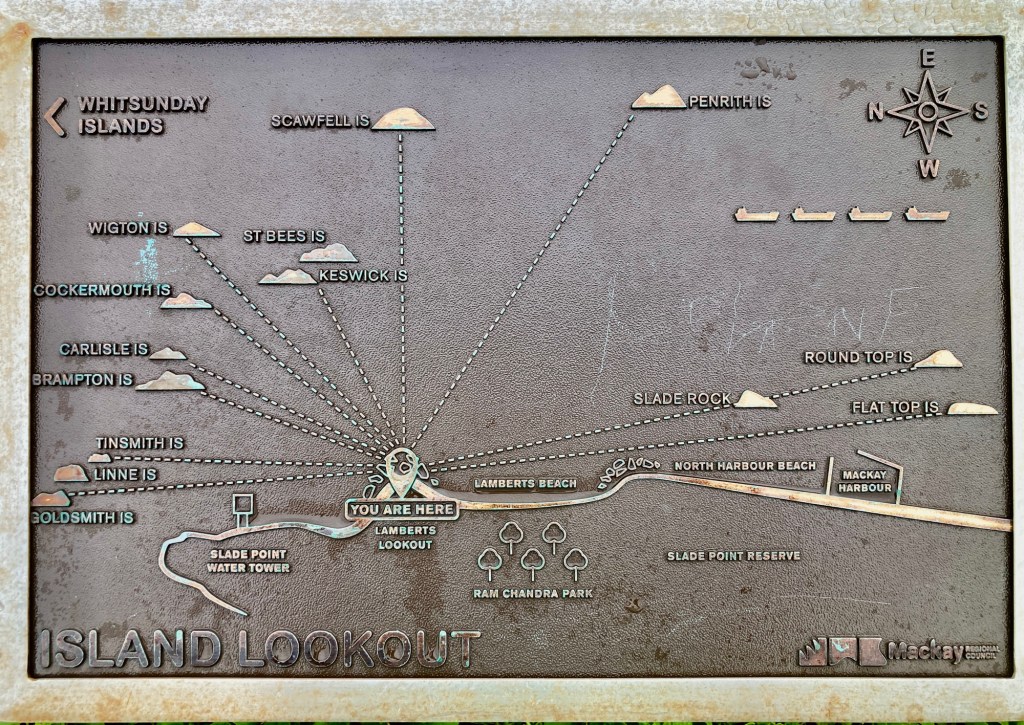
We drove to Lamberts Beach and stopped at the Island Lookout point where we had views up and down the coast and beach – rugged in places with a few of the islands visible in the distance despite cloud and mist.
A plaque at the lookout point showed the names and positions of the offshore islands


Black’s Beach
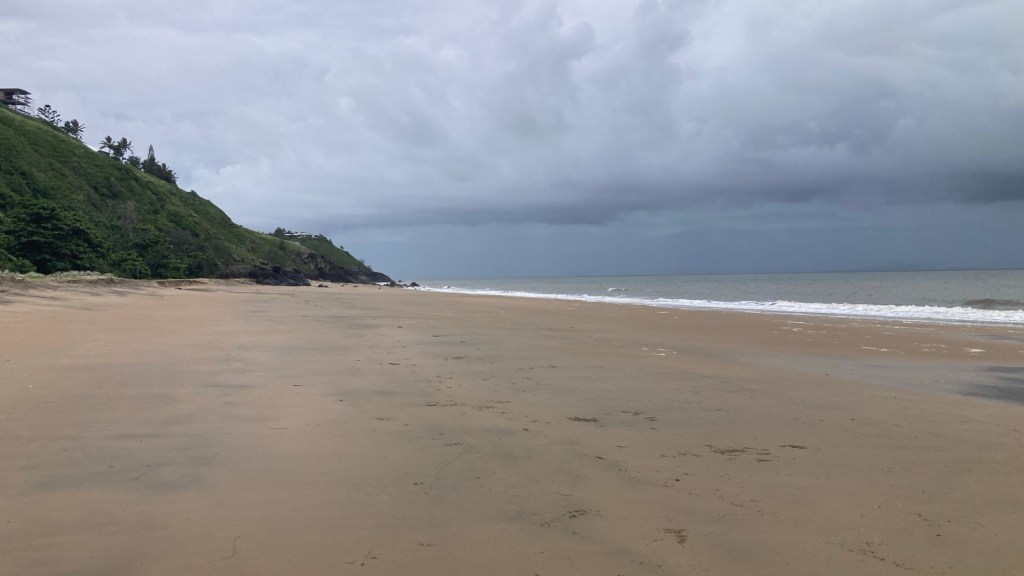
Towards the end of our stay in Mackay we were thankful to see a bit of sunshine one morning – that was just the inspiration we needed to get out and about, which we did with our youngest grandchild Ellie joining us for the short drive to Black’s Beach north of the house.
We had the picnic area and beach to ourselves after the group that was there left shortly after we arrived.
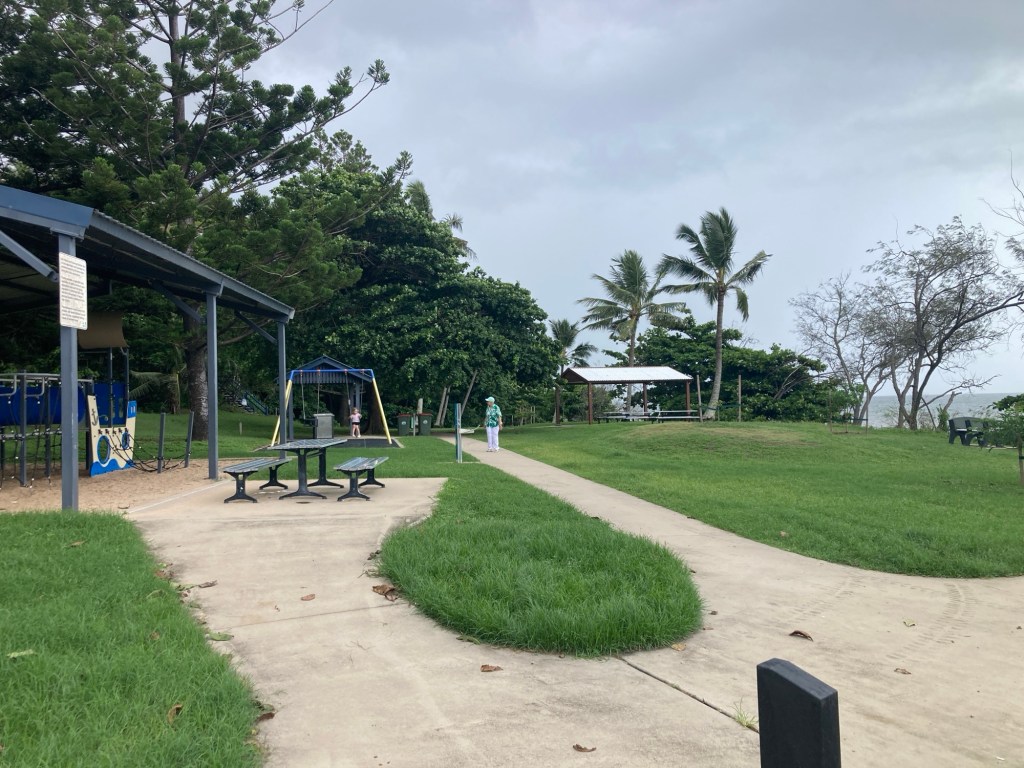
A play area with swings made it ideal for kids and the table and benches under a canopy roof invited a picnic meal – maybe next time!
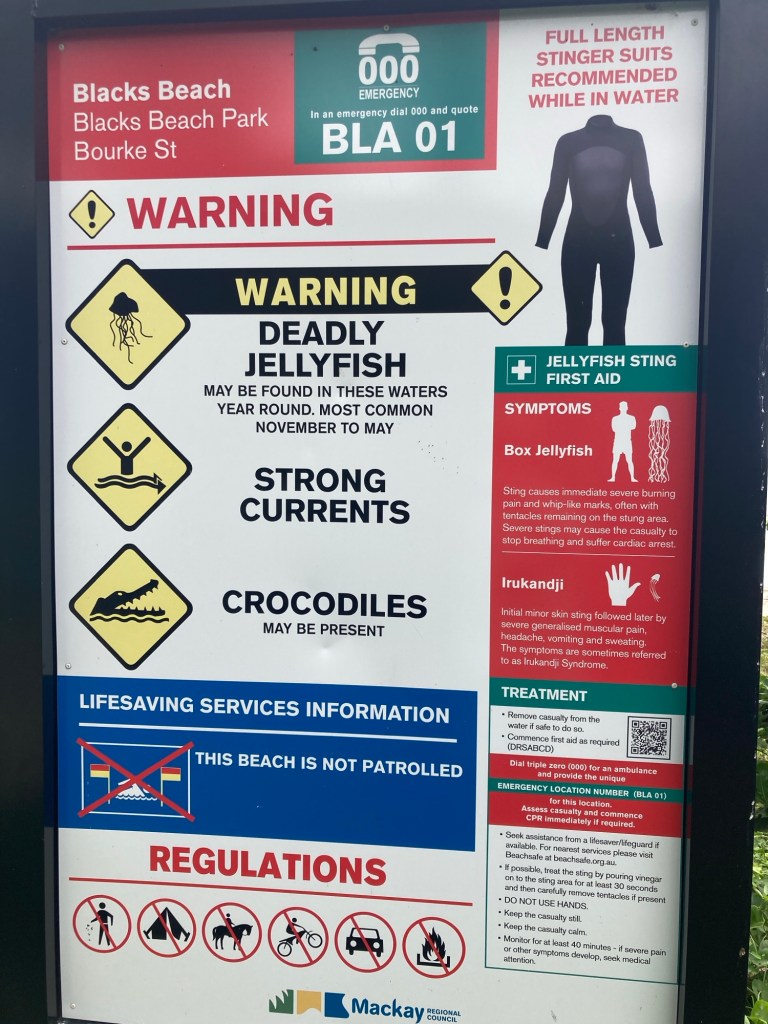
However swimming appears to be a risky business judging by the signage – we were aware of the Jellyfish, but not the Crocodiles!
Ellie and I had a walk on the beach which is wide and flat but clearly gets swamped at high tide.
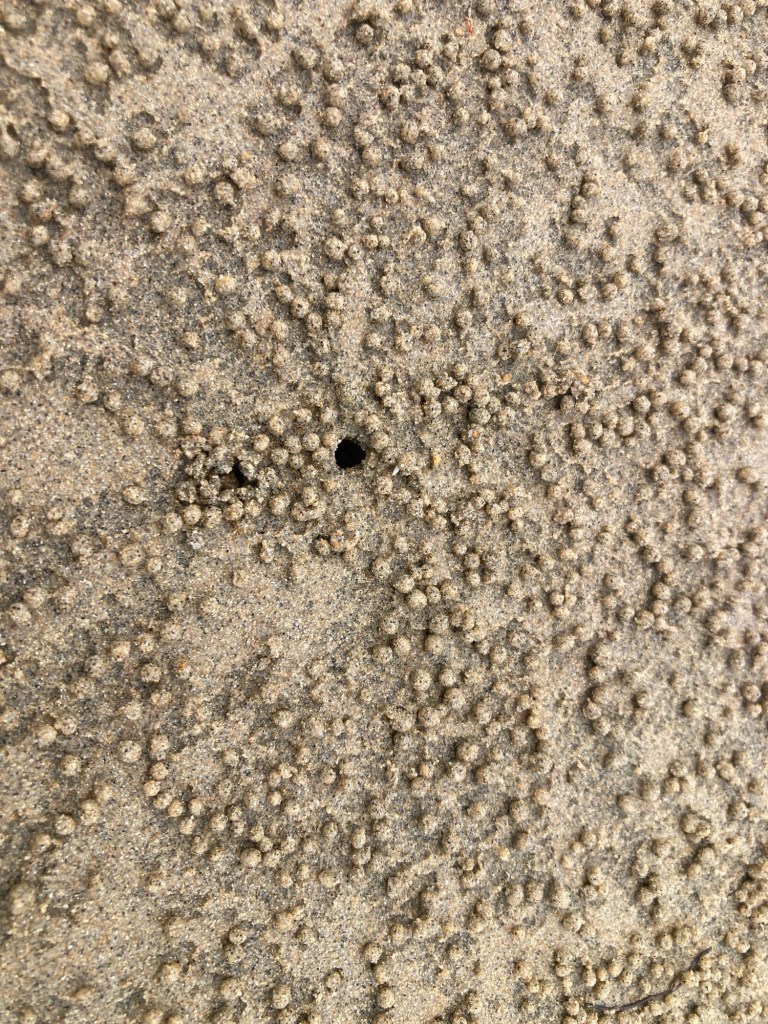
There were signs of the Sand Bubbler Crabs that create patterns with tiny round balls of sand around their burrows in the wet sand
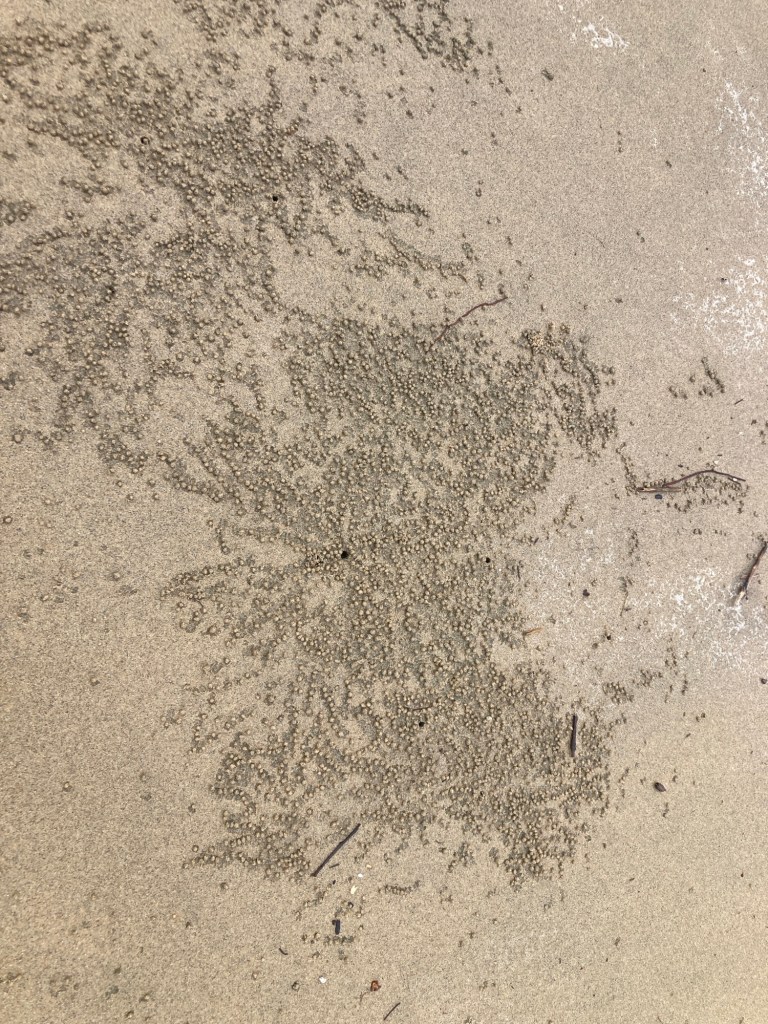
I was fascinated to find out that these small crabs sift the sand through their mouthparts, filter out the nutrients, and discard the remaining cleaned sand as small, processed pellets, which are left in radial patterns around their burrows.
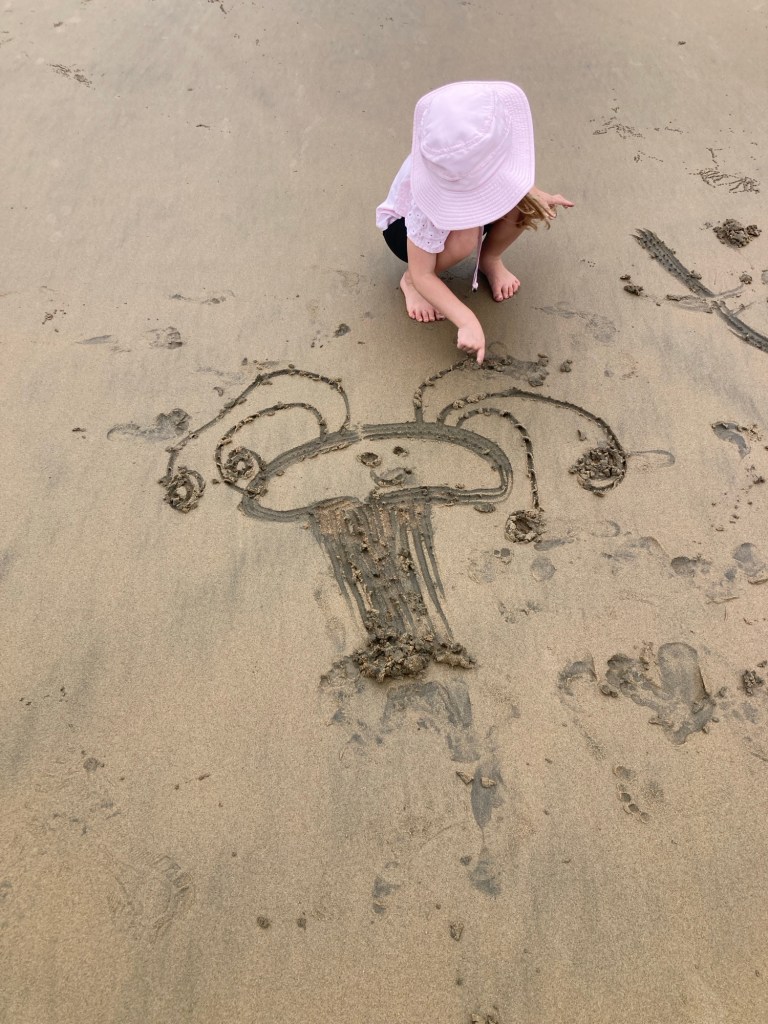
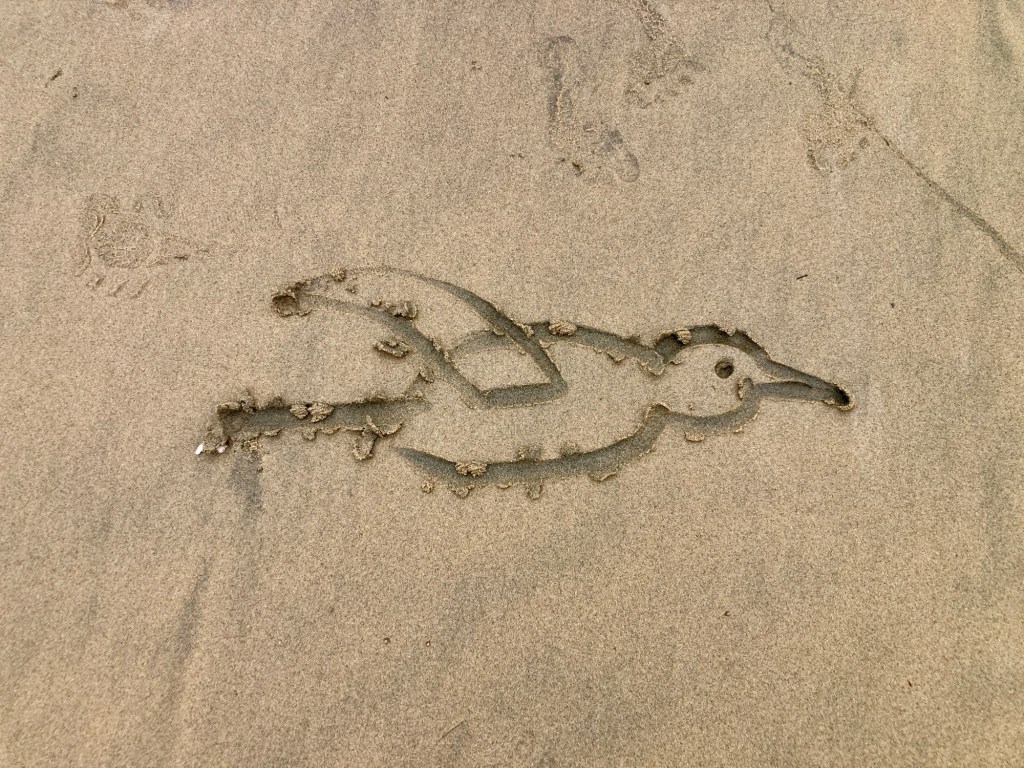
Ellie and I had a competition to see who could draw the best ‘finger picture’ in the firm sand – I reckon she won this one by a mile!
On the way home from the trip to the beaches, we had a wonderful sighting of two Wedge-tailed Eagles in a newly cut caneland next to the main road – walking in the field then flying up and circling low as we watched in awe of these massive raptors.
The Suburbs
On the days when it was too rainy to walk the wetlands, I took shorter walks around the suburb in the vicinity of the house, which paid off with a couple of new birds almost each time I ventured out.
There were also times when the birds came to the small garden of the house, so I tried to keep my camera at the ready for such occasions, leaping up and rushing to the nearest vantage point if I spotted anything unusual.
Birds of the Beaches and the Suburbs
Here are some of the more significant birds I came across …..
Oriental Dollarbird
Heading back from one of our beach visits, Ellie called out “Oupa there’s a bird” and I stopped to have a look. Well what a surprise when I realised it was the unusually named Oriental Dollarbird which I had been hoping to see!
Back at home I checked out the bird books and found it is related by genus to our Broad-billed Roller, which it resembles in many of its main features
Why Dollarbird? Apparently in flight it shows round silver “dollars” at the tips of the underwing area

Torresian Crow
I initially took the large black Crow-like birds that I was seeing regularly in Mackay to be Australian Ravens, which was a bird seen many times during our previous visits. But reading some posts on the local birder’s facebook page I picked up that the Torresian Crow was common in the Mackay area – also that the easiest way to separate it from the Ravens was through its call.
So I made a point of listening to their calls when I next saw them and was able to confirm the ID and add another new bird to my growing list.
We came across a group during our visit to Black’s Beach and I was happy to get some images despite the difficulty of photographing a black bird against an overcast but bright background – thank goodness for Lightroom editing software which allows exposure adjustments of the subject and the background separately

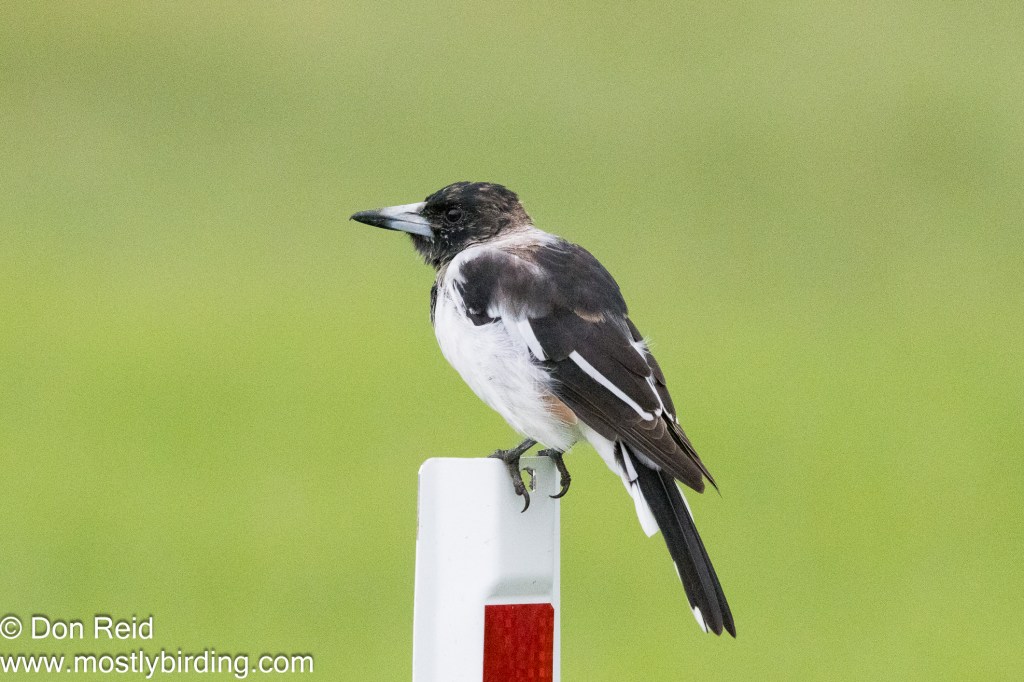
Pied Butcherbird
During another suburban walk I spotted what looked to me like Butcherbirds – it took a second look to realise this was a different species to the Grey Butcherbird I had seen several times before. It fortunately stayed in place while I struggled to get my camera working properly as I had inadvertently adjusted settings while it was in the plastic bag protecting it from the rain
Torresian Imperial Pigeon
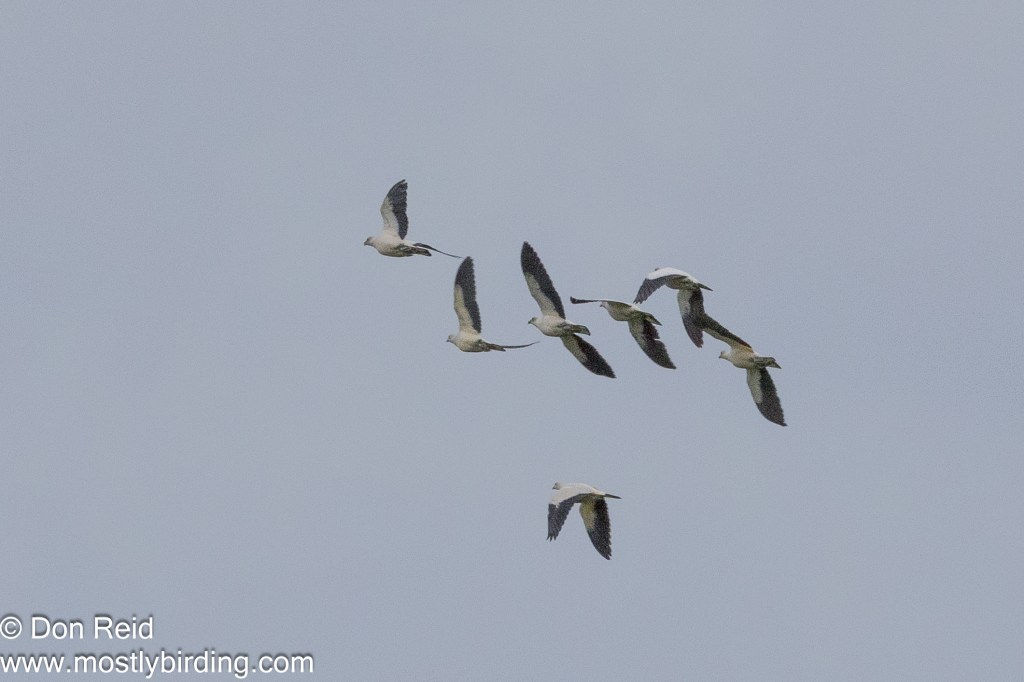
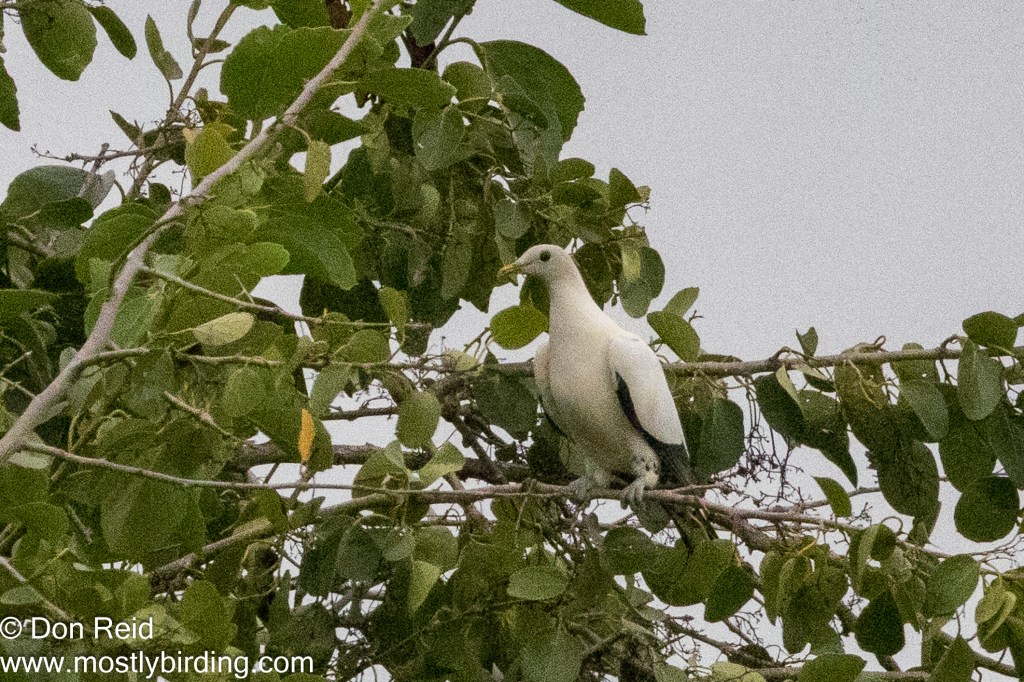
During a visit to the local public swimming pool where Stephan likes to train, I did a few lengths myself, then scouted around the gardens surrounding the pool. A flock of large-ish white and black birds drew my attention flying from one tree to another.
I was fairly certain they were pigeons but had no binos or camera to confirm the species – later research convinced me they were Torresian Imperial Pigeons, which I subsequently spotted a few times in different parts of Mackay.
This is another species that seems to go under a few different names, Pied Imperial-Pigeon being the one that local facebook posts seemed to use and which lead to some doubt on my part at first, but I settled on the name that Birds of the World used.
Yellow Honeyeater
Another new species I spotted at the swimming pool for the first time, then saw a few times in other parts of Mackay, was the Yellow Honeyeater. I was eventually able to photograph one during a wetland walk, when it flew across the pathway and settled in a nearby tree.

Red-tailed Black Cockatoo
This spectacular species became a regular sighting, especially late afternoon when they returned in flocks to their roost while calling loudly
The visit to Black’s Beach provided a good photo opportunity where a small group were working their way through the trees
The red tail, just visible in the image below, is prominent in flight

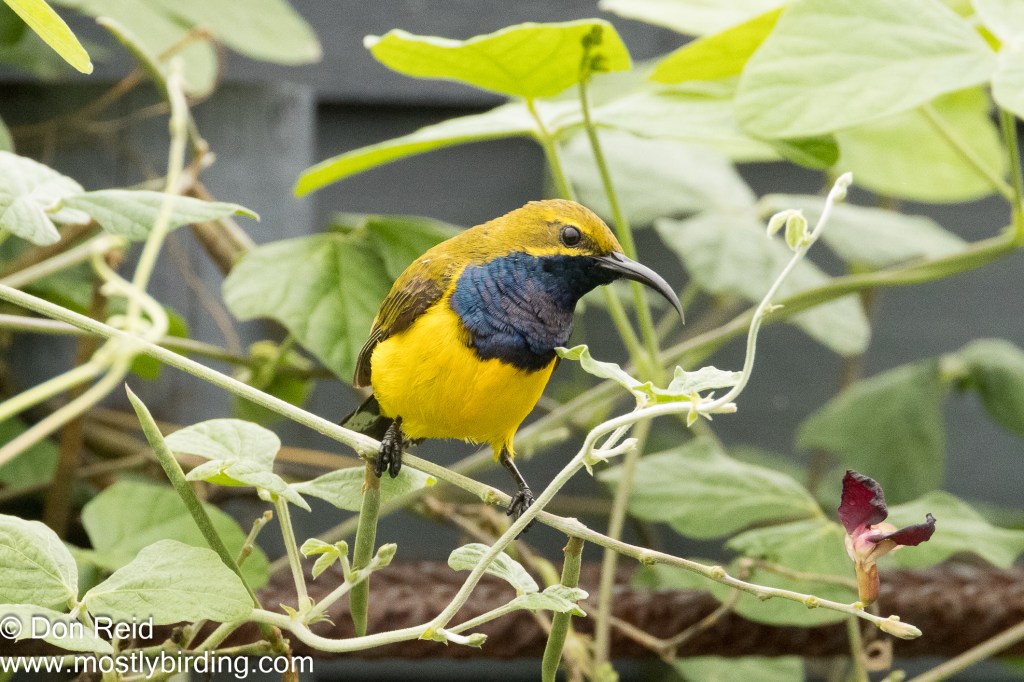
Sahul (Olive-backed) Sunbird
The only representative of the Sunbird family in Australia is this striking species which visited the garden a few times.
After a few attempts I was able to get some reasonable photos as a pair moved through the garden
It turned out that this was not a lifer but new to my Australian list – I discovered that I had in fact seen it in two diverse places before in years gone by – Mauritius and Kuala Lumpur

Little Friarbird
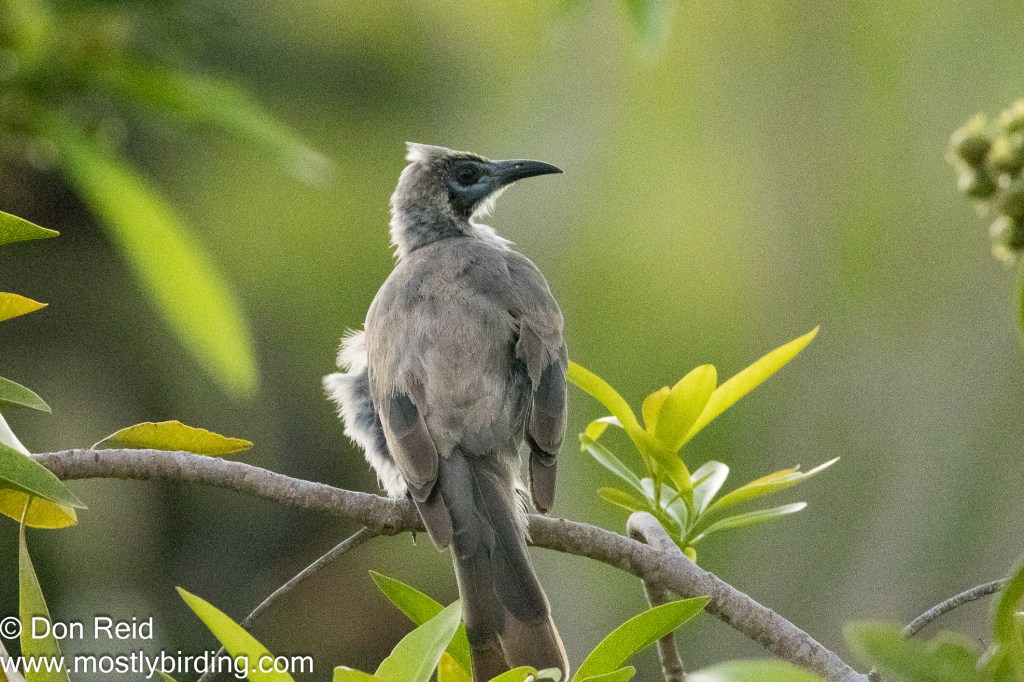
Heading homewards at the end of another rainy walk through the suburbs, I spotted what I thought was a Helmeted Friarbird, a species I had come across a couple of times partly hidden in sidewalk trees. This one looked a little different and closer inspection of the photos I took confirmed it was a Little Friarbird – another lifer
Black-fronted Dotterel
Another unexpected sighting during one of my short suburban walks between rain showers, was a pair of small plovers in the short grass at the end of a cul de sac which adjoined farmland.
As I approached they darted off to some small heaps of soil with shallow pools of water between formed after the rains, which the birds had clearly decided suited them well.
I was keen to get a photo of the Dotterels so the following day after lunch, when the rain held off for a while, I returned to the same spot. Happily, they were still around and I was able to get some shots even though they were quite wary and flew a short distance each time I edged closer.
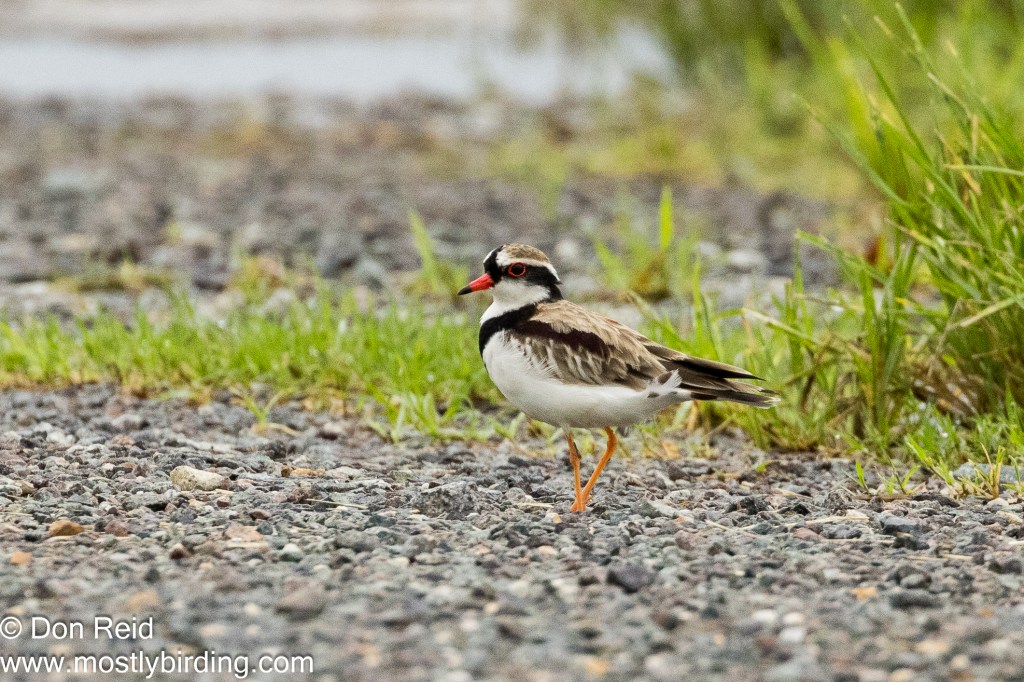
The Dotterel looked very familiar – the reason being it carries the same genus name as our Three-banded Plover and shares many of its features
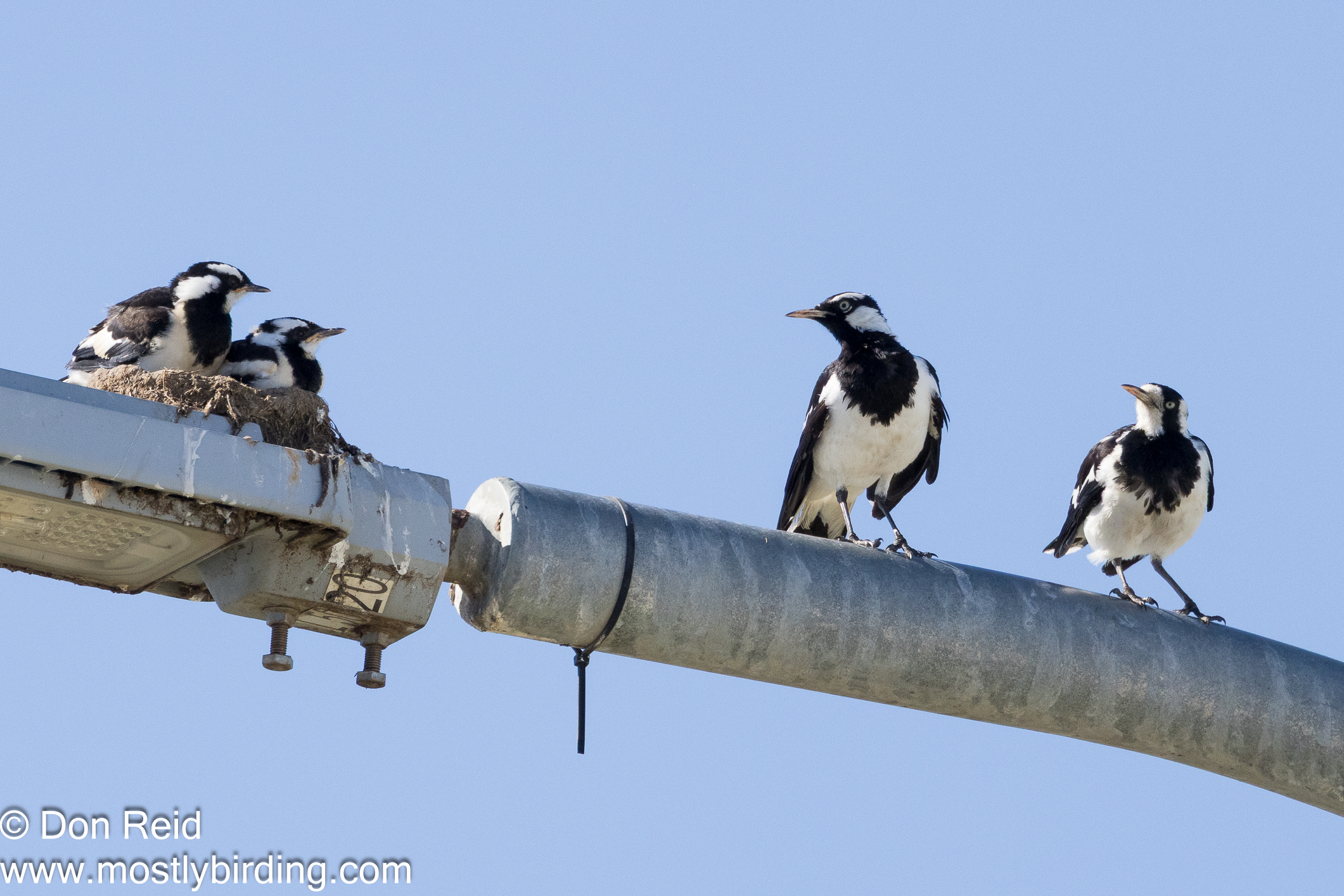
And just to end off this post, this pair of Magpie-Larks proudly watching over their youngsters kept me interested in their progress from the first day in Mackay to the day of our departure, when this photo was taken and the young ones about to fledge by the looks of it.
What worried me was the precarious and exposed position of the nest on top of a lamp post just outside the house, and in particular whether the mostly mud constructed nest would hold together in the incessant rain. Incredibly it did and I’m sure the youngsters took their first flight shortly after our departure.
 Mostly Birding