To repeat the intro to my previous posts on this subject ….
Many of the migrant waders – or shorebirds as they are also known – display the most Jeckyll and Hyde characteristics of all birds, living two dramatically different lives and spending time in habitats which are far removed from each other, both in distance and in nature.
Separating these two lives are amazing journeys that take these small yet hardy birds halfway across the world – and back again.
In the southern hemisphere we get to know migrant species during the months from October to April, so let’s find out a bit more by delving (again) into the typical annual life cycle of these waders.
This time it’s one of the most common freshwater waders –
Ruff (Kemphaan) Calidris pugnax
The Ruff was named for its projecting coloured ring of feathers around the neck (in breeding plumage, which we do not see in southern Africa). It is also the name given to the projecting starched frill worn around the neck during the Elizabethan era.
The genus Calidris comes from the Greek kalidris applied by Aristotle in 330BC to an unspecified sandpiper
The species name pugnax is from the Latin pugnus, the origin of the word pugnacious, so named for the energetic confrontation between males at their breeding grounds (called leks)
In a similar vein, the Afrikaans name ‘Kemphaan’ comes from the same word in Dutch, which translates literally to “combative rooster”
Identification
Male Ruffs in breeding plumage are hard to miss, as this photo (from Cornell Birds of the World) shows –
The Ruffs we see in southern Africa are in their non-breeding plumage, the males having lost the variably coloured head-tufts and ruff, leaving them quite plain by comparison to the spectacular breeding colours.
The larger size of the Ruff tends to make it a bit easier to identify amongst other shorebirds.
Females greatly outnumber males but are smaller and are called Reeves
Ruff, Marievale
What to look out for –
size : 20 to 30cm with thickset appearance
Ruff Philomachus pugnax Kemphaan, Voelvlei near Vleesbaai
distinctive scalloped upperparts
Ruff Philomachus pugnax Kemphaan, Voelvlei near Vleesbaai
shortish stout bill, slightly decurved
Ruff, Marievale Bird Sanctuary
orange legs – which no similar sized wader has
Ruff, Marievale
An uncommon white form can be found – the white extending from the head to the upperparts and breast. I came across such a Ruff during a visit to Marievale Bird Sanctuary, south-east of Johannesburg, some years ago
Ruff (white headed form), Marievale
Worldwide Distribution –
The orange area on the global distribution map (from Cornell Birds of the World) shows where breeding occurs in the Northern Hemisphere while the blue area, mostly in the Southern Hemisphere, is where they go to ‘get away from it all’ and prepare themselves for the next round of raising a family.
Southern African Distribution
The southern African distribution map (from The Firefinch Birding app) shows the species presence across most of the region, absent only from the highlands of Lesotho.
Ruff, Marievale Bird Sanctuary
Life in the North – Siberia’s not so bad!
As with other migrant shorebirds, Ruffs choose to breed in the Arctic and subarctic, from Scandinavia eastwards through Siberia to Chukotskiy Peninsula.
Their preferred breeding habitat is coastal to forest tundra, near small lakes, in marshes and deltas with shallow-water margins.
Their diet is mainly small terrestrial and aquatic insects, caught by pecking or probing while walking in shallow water.
Ruff, Kasane Treatment Works, Botswana
Breeding – no time for headaches
Mating generally occurs at traditional ‘leks’ – arenas where males gather to display their finery and perform ritual attacks on other males – that’s the basics, it actually involves a lot more as described by Cornell Lab of Ornithology’s ‘All About Birds’ which I have ‘borrowed’ from their website :
The nest is usually a shallow scrape on the ground lined with grass, stems and leaves, concealed in marsh plants or meadow grass.
Clutches of eggs (usually 4) are laid and incubated by the female only for about 3 weeks. Fledging some 3 to 4 weeks later, the fledglings are independent soon thereafter, facing the many dangers that young birds are subject to.
Migration – It’s getting too cold, let’s head south
The most easterly populations of Ruff are the longest distance, terrestrial migrants in the world, travelling some 16,000 kms between breeding and non-breeding grounds.
Those heading to southern Africa are thought to set off from Siberia from where they head south via the Black and Caspian Seas before passing along the Rift Valley and spreading out over southern Africa.
Adults arrive in southern Africa by mid August with juveniles following from September through to November/December
Flock of Ruffs, Devon (near Johannesburg)
Life in the South – It’s Holiday time!
Estimates of Ruffs that end up in southern Africa vary between 50 – 200,000, with just 10% of those believed to be males, so vastly outnumbered by females (no comment …!)
Favoured freshwater habitats are those with shallow water, muddy margins and short emergent vegetation, found at muddy estuaries, salt-marshes, pans, dams, vleis and the like.
Ruff (white headed form), Marievale
Males start to lose their breeding plumage before their southward migration so are unlikely to be seen in our parts in that form, but a few early arrivals in the south may have vestiges of breeding plumage visible.
Usually found in small parties and flocks, often in the company of other waders.
Ruffs, Rooiwal Water Treatment Works Gauteng
The males depart from January to February with the females following in April to May, heading north to their breeding grounds where the cycle will start all over again…
These tales record some of the more memorable experiences while atlasing – in this case two atlasing outings 4 months apart in time and 1250 kms apart in distance –
And in case you’ve forgotten or have not heard of Atlasing, there’s a brief synopsis at the end of the post
North in Winter
One of my last atlasing trips in Gauteng, before our move to Mossel Bay in October 2023, was a mid-winter outing to the farming area about 30kms south-east of Pretoria, not far from the town of Bapsfontein.
Good friend Koos, also an avid atlaser, had suggested the outing and he picked me up around 6.15 am with 40 minutes to go before sunrise. We headed east along Lynnwood road extension, which was already busy with Saturday morning commuters and keen cyclists heading out along their favourite route.
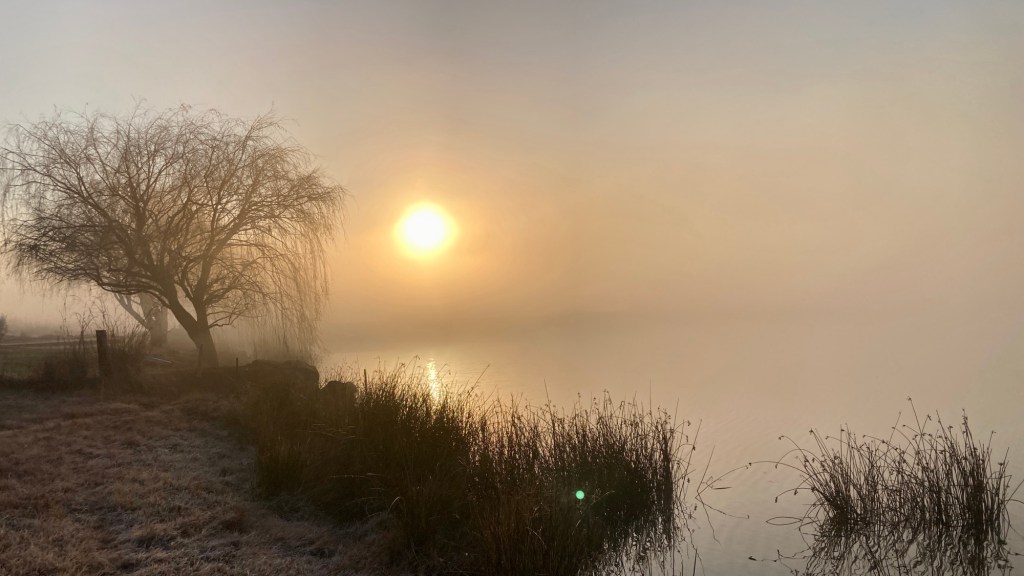
At the T-junction with the R25, we turned southwards towards Bapsfontein, then east again at the Witpoort road. The road changed to gravel and heavy mist enveloped the car, slowing our progress considerably until we reached the northern boundary of our target Pentad
Pentad 2600_2830
A side road signposted “Knoppiesdam“ invited exploration and after turning off we came to a ‘gate’ – one of those unique rural designs consisting of strands of barbed wire attached to thin poles each side, one side fixed, the other side secured by loops of strong wire (known in Afrikaans as ‘bloudraad’ or “bluewire”) which allow the gate to be detached and secured as needed. The ‘gate’ has no frame so you have to pull it over to the side and lay it flat on the ground while the vehicle drives through, then attach it again before moving on.
While I was opening the gate to let Koos drive through and closing it again, an Ostrich (of the farm variety, so not recorded) approached and started doing a mating dance of sorts – this is not the first time I have experienced this when stopping near Ostriches – Koos reckoned it was my woollen beanie that caused the unwanted attention this time around!
A short distance after the gate we came to the dam where we found a group of fishermen setting up for the day and a substantial body of water largely hidden by the heavy morning mist.
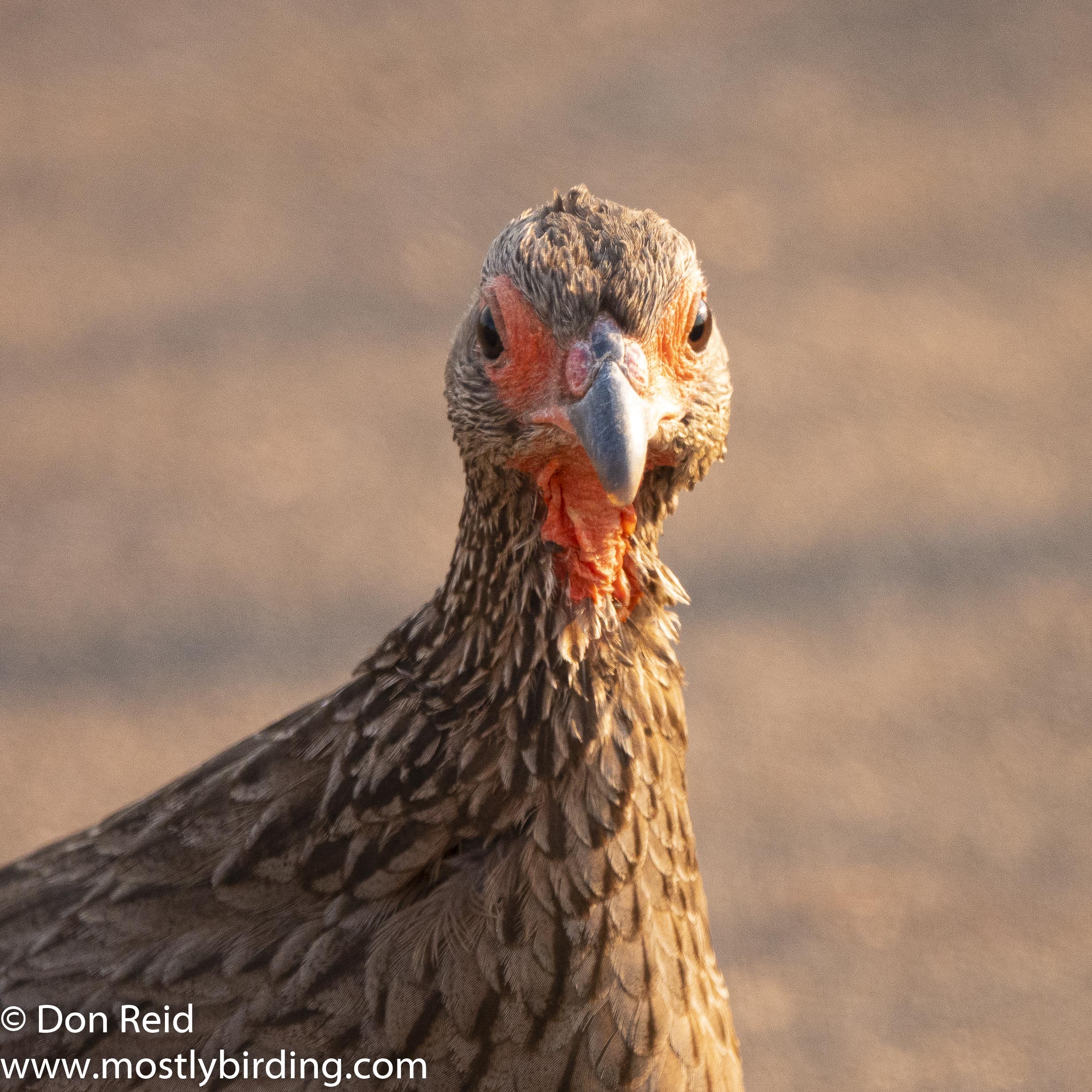
As usual the first birds listed were those calling in the early morning, some visible others not – Swainson’s Spurfowl has a particularly raucous call that carries a long way in the relative peace and quiet of the countryside and was my first record of the day. That was followed quickly by several other species – Kurrichane Thrush, Red-eyed and Laughing Dove, good old Hadada Ibis and a few others.
Swainson’s Spurfowl Pternistis swainsonii Bosveldfisant), (taken in Kruger Park)
We lingered and listened intently while walking the shoreline of the dam as the mist slowly dissipated, revealing a few Red-knobbed Coots and Common Moorhen as well as a Little Grebe.
Little Grebe Tachybaptus ruficollis Kleindobbertjie
As we headed to the car Koos spotted a pair of large birds flying overhead but away from us – clearly Flamingoes! But which species – Greater or Lesser ? Fortunately they changed direction while still visible and gave us a view of their large bills, which were light coloured compared to the dark colour of the Lesser Flamingo, confirming that they were indeed Greater Flamingoes.
On the way back to the main road, more fine spotting from Koos produced two Little Bee-eaters high up in the trees.
Little Bee-eater Merops pusillus Kleinbyvreter, (taken in Kruger Park)
Back on the main road, the habitat of open fields with short grass and stones prompted me to comment that ‘this is Wheatear territory’ – my words were barely cold when the first Capped Wheatear was spotted, along with Red-capped Lark, Crowned Lapwing, Wattled Lapwing and African Pipit – all species that share a fondness for this habitat.
The road left the pentad so we headed quickly southwards to join up with the R50 Delmas road which took us back to the pentad. The R50 is a busy road with heavy trucks that rumble back and forward constantly, making it awkward, even dangerous to try and pull off onto the verge to check for birds. At the first opportunity we turned off onto a gravel side road to escape the traffic and were soon back into a more relaxed atlasing mode.
Long-tailed Widowbirds (almost unrecognisable in their drab winter non-breeding plumage) were next up – the males lose their long tails and most of their black colouring (summer plumage shown in the first photo below), but retain their colourful ‘epaulettes’ to differentiate them from the all-brown females (the second photo below)
Long-tailed Widowbird Euplectes progne Langstertflap – male in full breeding plumageLong-tailed Widowbird Euplectes progne Langstertflap – female
White-winged Widowbirds (equally drab females and non-breeding males) were encountered .
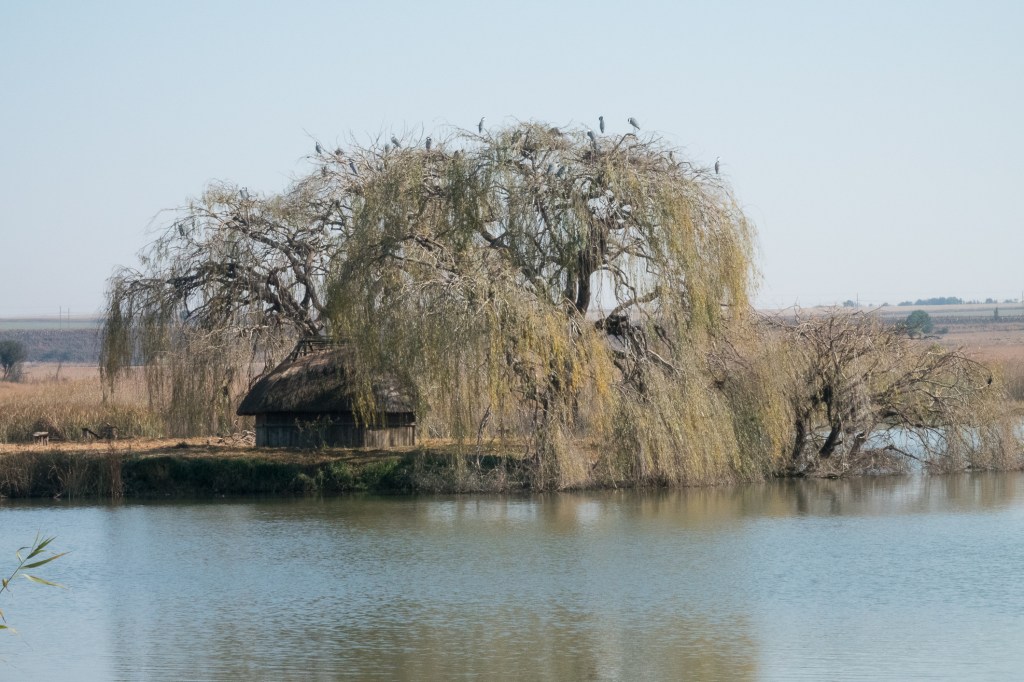
Just after finding a Namaqua Dove, always a pleasing species to encounter, we saw a large dam some distance from the road and found a track leading to it. Hoping that we were not intruding on someone’s farm we headed a short distance down the track to the dam only to find that a few large trees had been chosen as a roost by numbers of Black-headed Herons. We watched their comings and goings for a while and picked up a few other species before heading back to the road.
Black-headed Herons at heronry, Bapsfontein AreaBlack-headed Heron Ardea melanocephala Swartkopreier
Smaller roadside pans and dams that we stopped at further along the road held a few species such as Reed Cormorant, Malachite Kingfisher, African Snipe and Lesser Swamp Warbler, to close out the morning’s atlasing with a total of 39 species recorded in the pentad
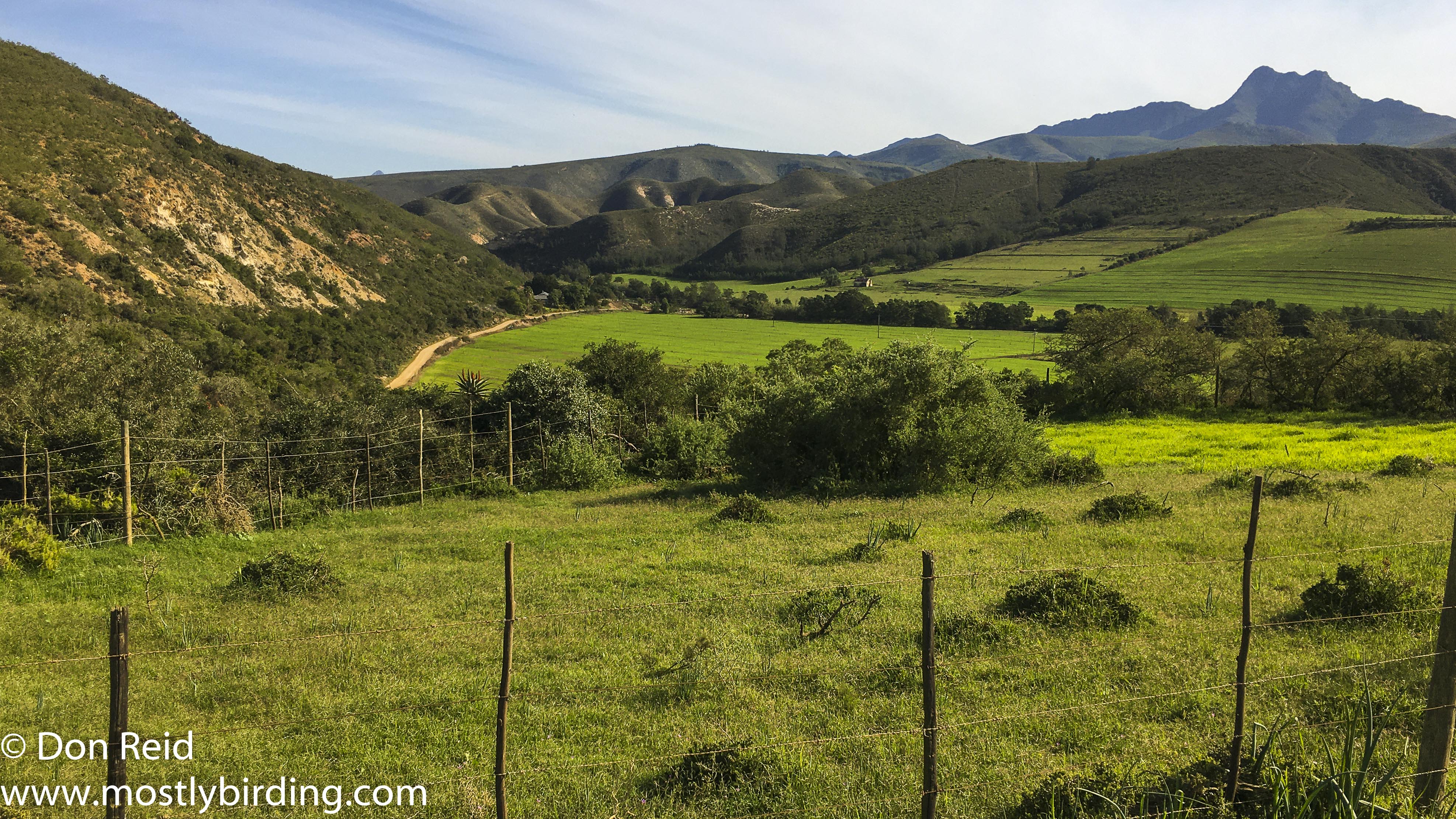
For my first atlasing trip proper since arriving in Mossel Bay permanently, I chose a pentad in the area between the Oudtshoorn and Herbertsdale roads.
Pentad 3405_2155
Bang on 6am I stopped in lovely rolling country with a few small farm dams and with many birds calling and I spent the next half hour listing those I could identify along with some that showed themselves.
Most prominent were the first of dozens of Common Quail that I was to hear (and encounter as described below) throughout the morning, along with Cape Spurfowl, Little Rush Warbler calling from the reeds of one of the dams and Common Moorhen.
Cape Spurfowl Pternistis capensis Kaapse Fisant
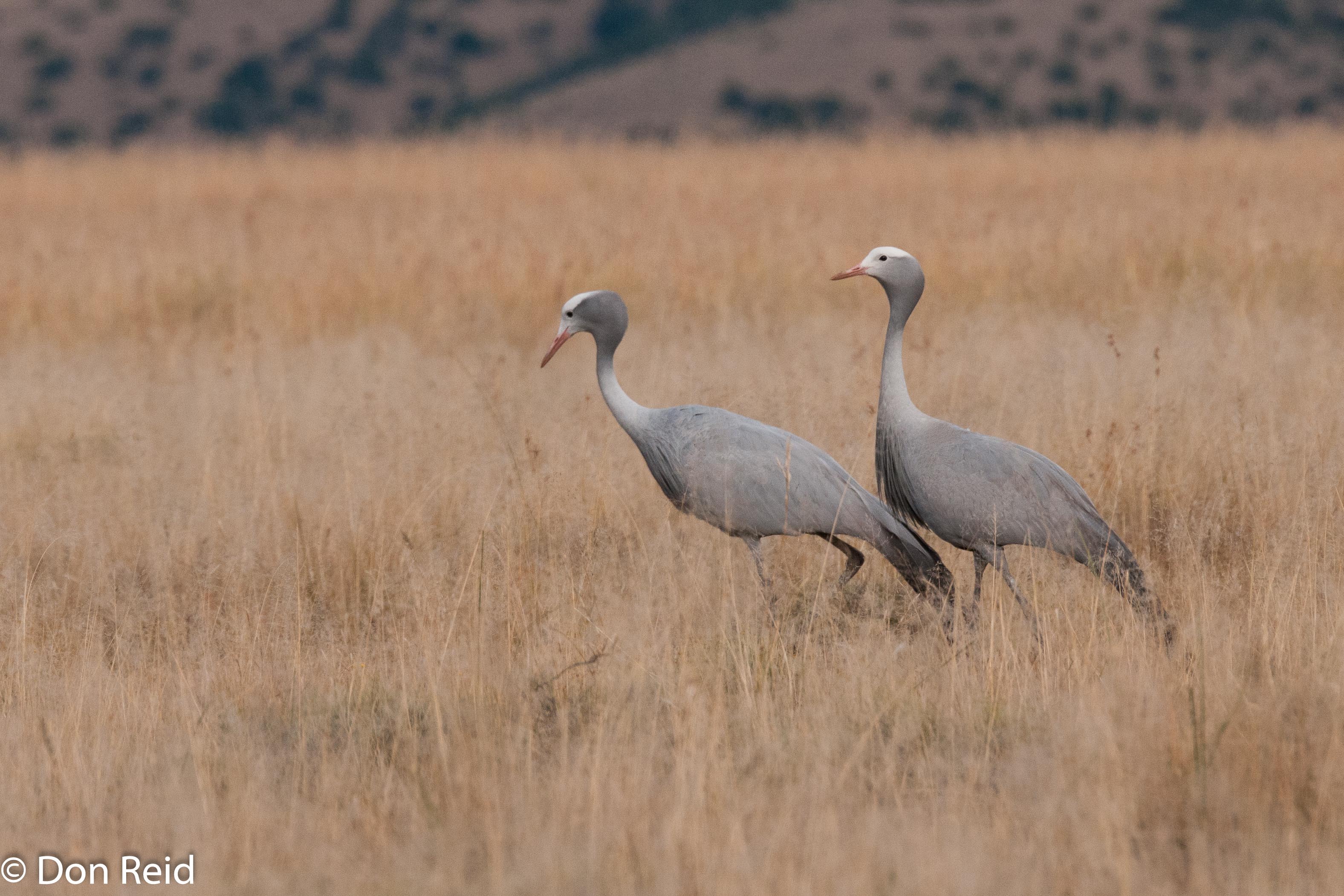
I could pick out Blue Cranes in a distant field – a common bird in the southern Cape but always a pleasure to see.
Blue Crane Anthopoides paradiseus Bloukraanvoel
Knysna Warbler calling from dense bush – I didn’t bother to try and see it as it hardly ever shows – was species number 22 after as many minutes of atlasing, after which the pace slowed somewhat, nevertheless I kept adding new species regularly.
Moving on from my first stop, the habitat changed from farming land to short grassveld, which produced three Larks in quick succession – Long-billed Lark, Large billed Lark and Cape Clapper Lark, the latter calling and displaying beautifully.
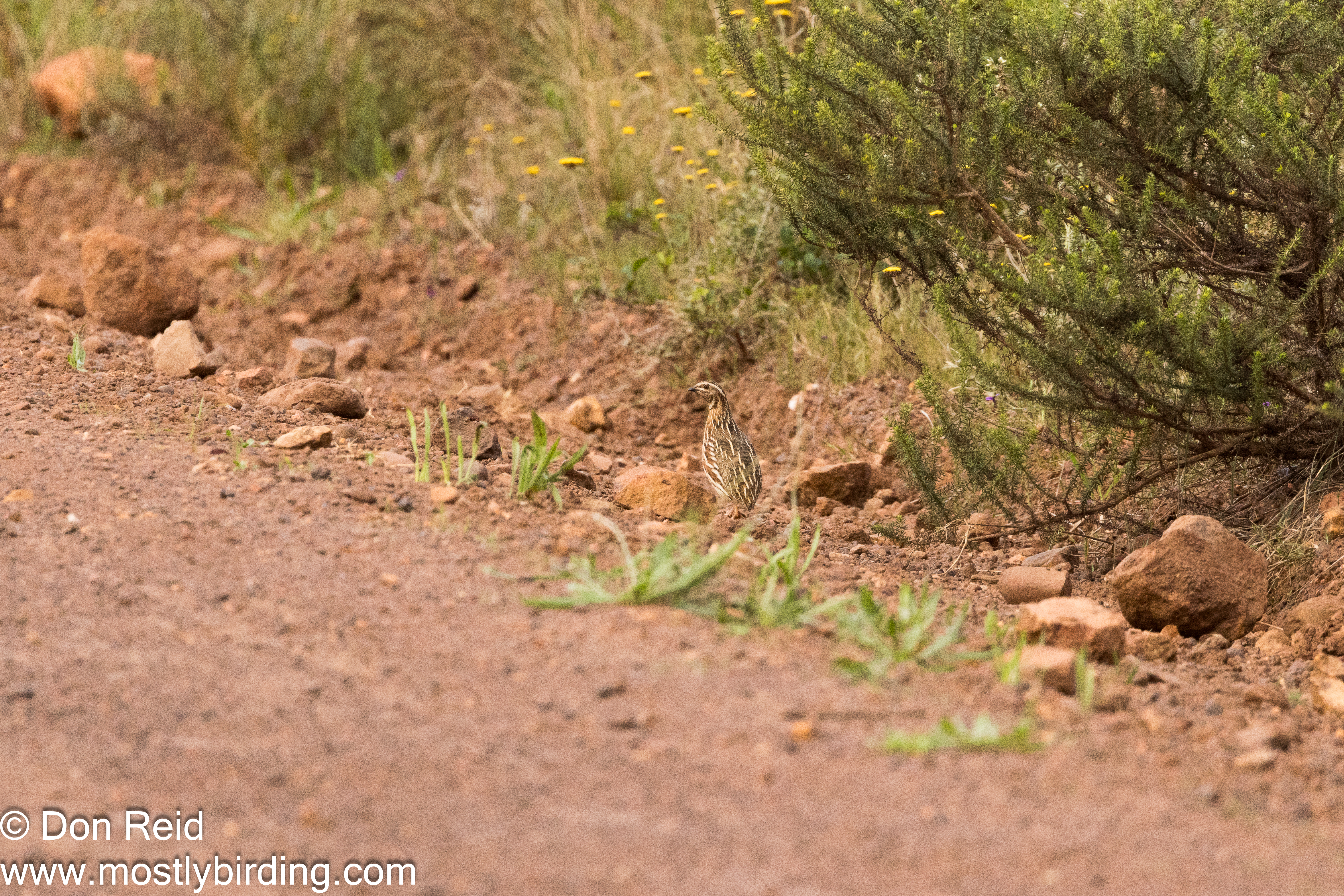
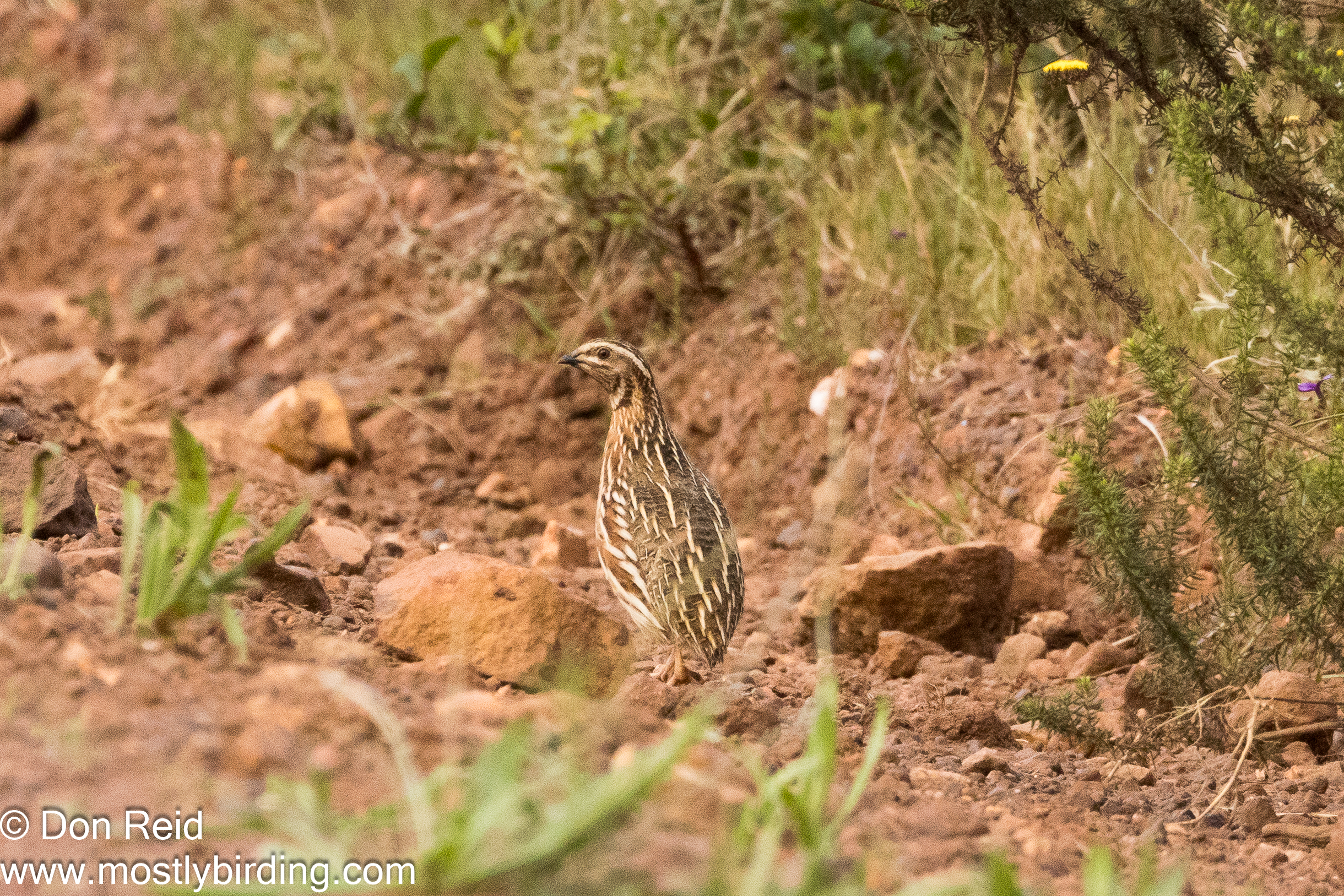
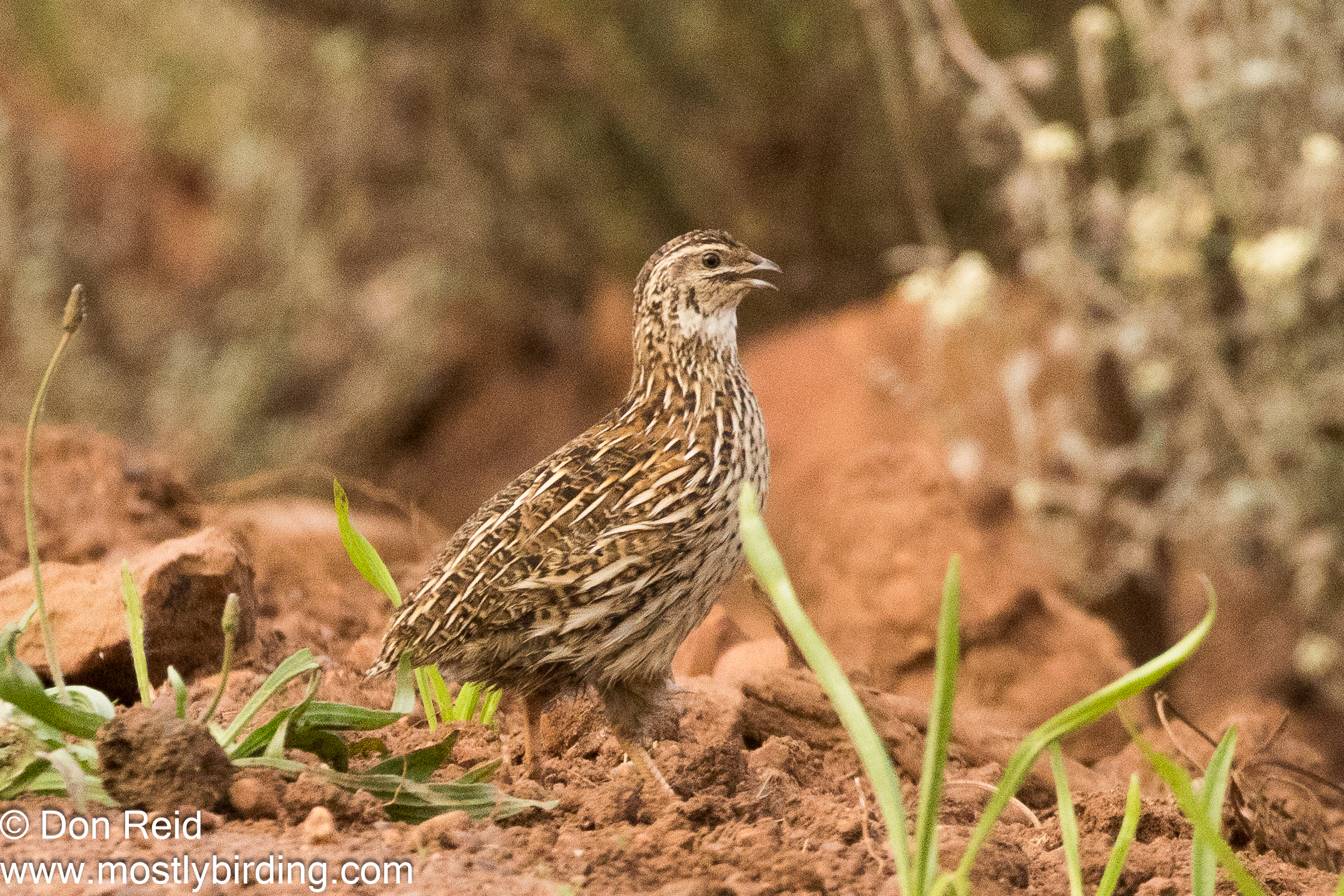
Up ahead small birds at the edge of the road attracted my attention and a look through the binos had me grabbing my camera – there were two Common Quails pottering about in the grass tufts at roadside! This is a species which I have heard dozens of times but have only had one short glimpse in all the years of atlasing, so this was an opportunity not to miss.
Common Quail Coturnix coturnix Afrikaanse kwartel
I was still some distance from the quail, which is a small bird about the size of a Lark, so I tried to edge the car closer for a better photo opportunity. However they were on to me and moved further along at the same pace as the car, so I turned the car slightly sideways to get a view with the camera and took as many shots as I could. Fortunately, I managed to get a few reasonable shots – my first ever photos of this species in the bag!
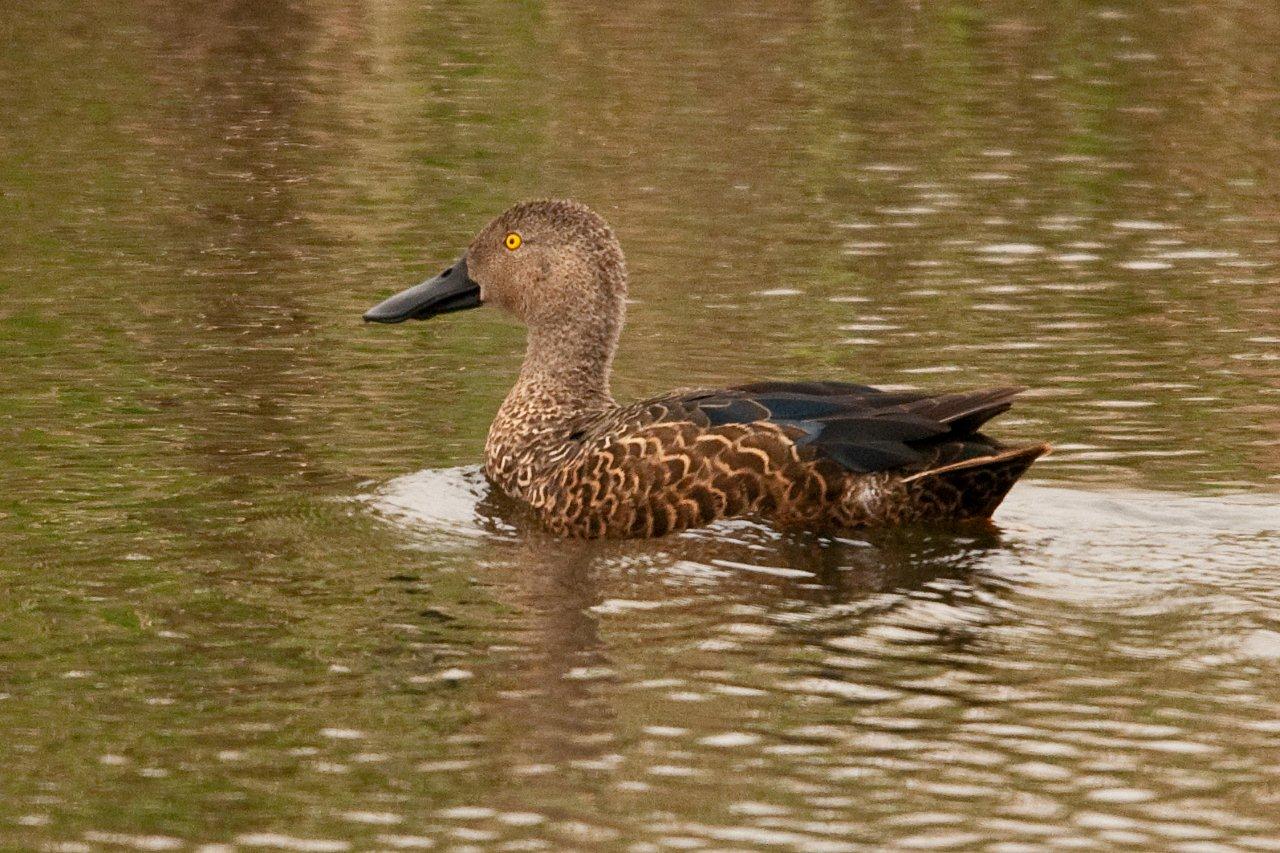
After crossing over the R327 I proceeded on the Kleinberg Road and soon stopped to scan a large farm dam which lies some distance from the road. I set up my spotting scope and used the maximum zoom (60 X) to identify the many waterfowl on the dam, which included Red-knobbed Coot, Cape Shoveler and Little Grebe – all common in the area.
Cape Shoveler Anas smithii Kaapse Slopeend
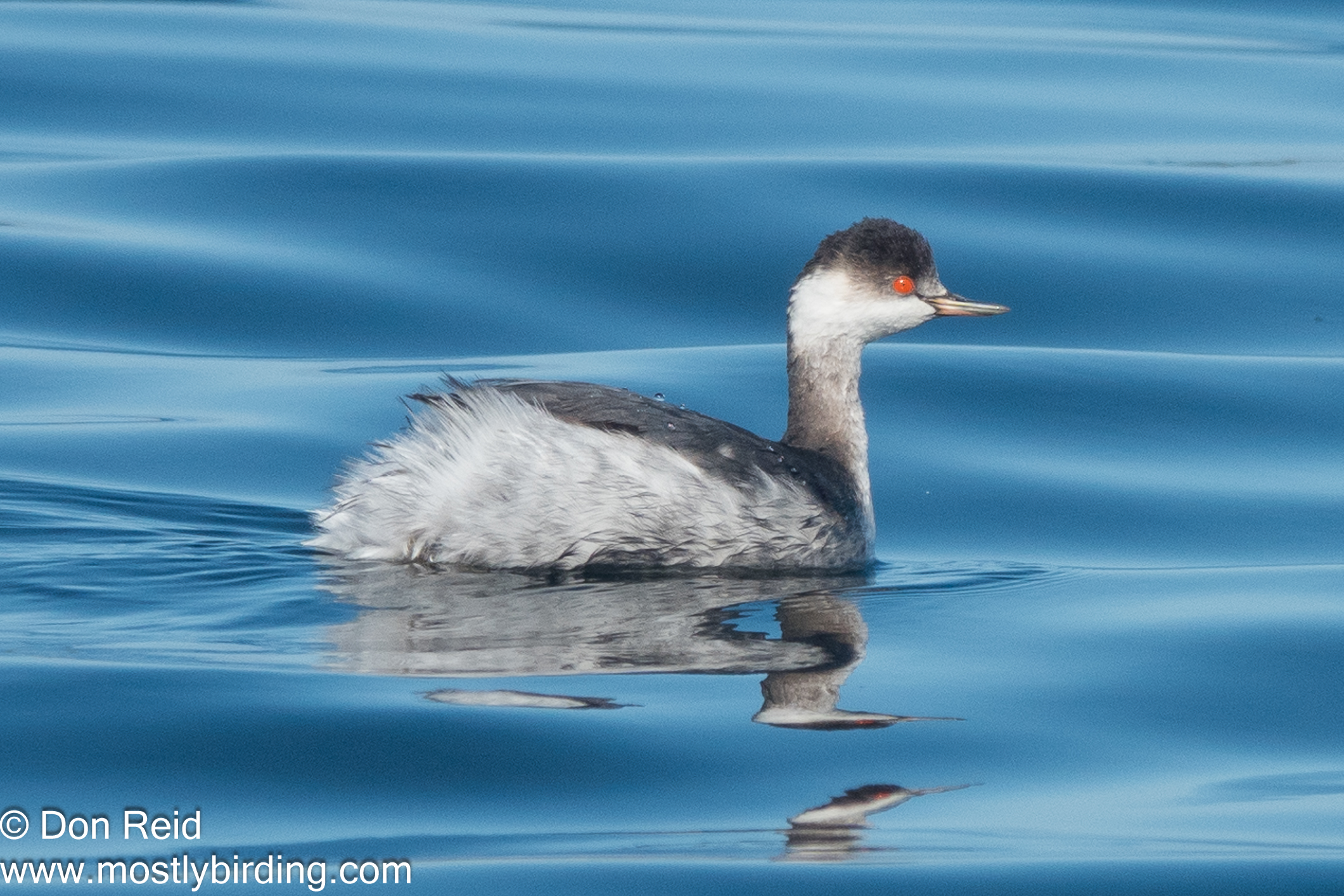
Less common, in fact it turned out to be a new species for the pentad, was a pair of Black-necked Grebes, swimming in the middle of the dam. I have only ever found them further east at the lakes beyond the village of Wilderness so was really pleased to record them so close to Mossel Bay. They were way beyond my camera’s reach so the photo below is from a visit to Strandfontein near Cape Town.
The dam edges had both fresh water Cormorants present – White-breasted and Reed Cormorant as well as Blacksmith Lapwing.
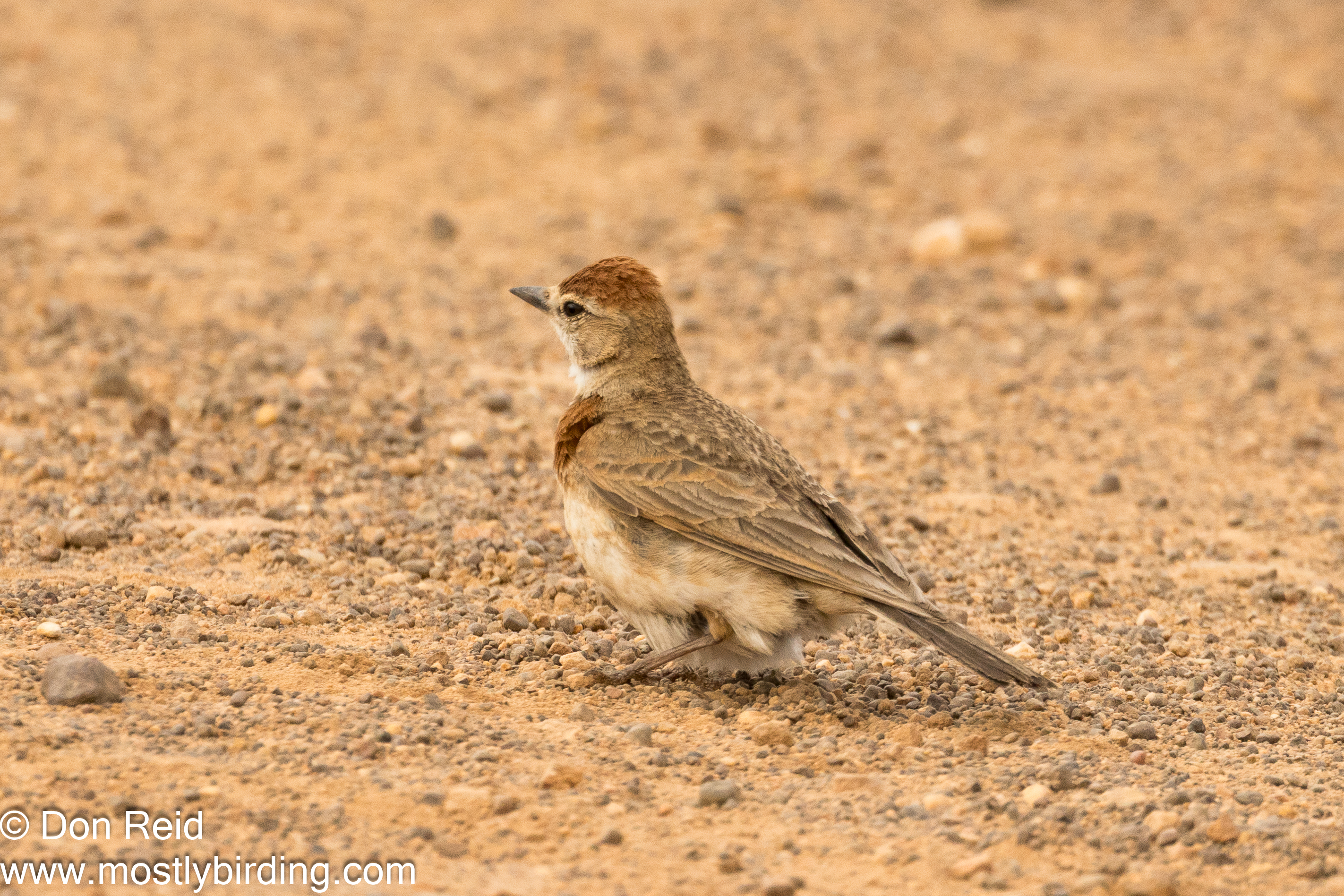
I continued along the road adding Red-capped Lark and Capped Wheatear before entering the next pentad, which signalled the close of the atlasing of the pentad with a total of 53 species.
Atlasing is the regular mapping of bird species in a specific area called a “pentad”. Each pentad has a unique number, based on its geographical position according to a 5 minute x 5 minute grid of co-ordinates of latitude and longitude, which translates into a square of our planet roughly 8 x 8 kms in extent.
As a registered observer / Citizen scientist under the SABAP2 program (SA Bird Atlas Project 2), I record all of the species I see or hear in a particular pentad over a period which can be anything between 2 hours and 5 days, for submission to the project database at the ADU (Animal Demography Unit) based in Cape Town.
As mentioned in Part 1, we had inadvertently chosen the wettest time of year to visit Mackay, when most of the annual rain falls over the area, but the rain we experienced was way beyond the norm
My walks around the wetlands area close to the house more than satisfied my desire to see and photograph as many new birds as the weather allowed, which Part 1 covered in some detail.
However, Gerda and I were keen to see more of Mackay proper, but without our own transport, outings were limited to shortish ones that could be fitted in between the morning and afternoon school runs that Liesl undertook every day.
One of the local attractions we managed to visit a couple of times was …..
The Botanic Gardens
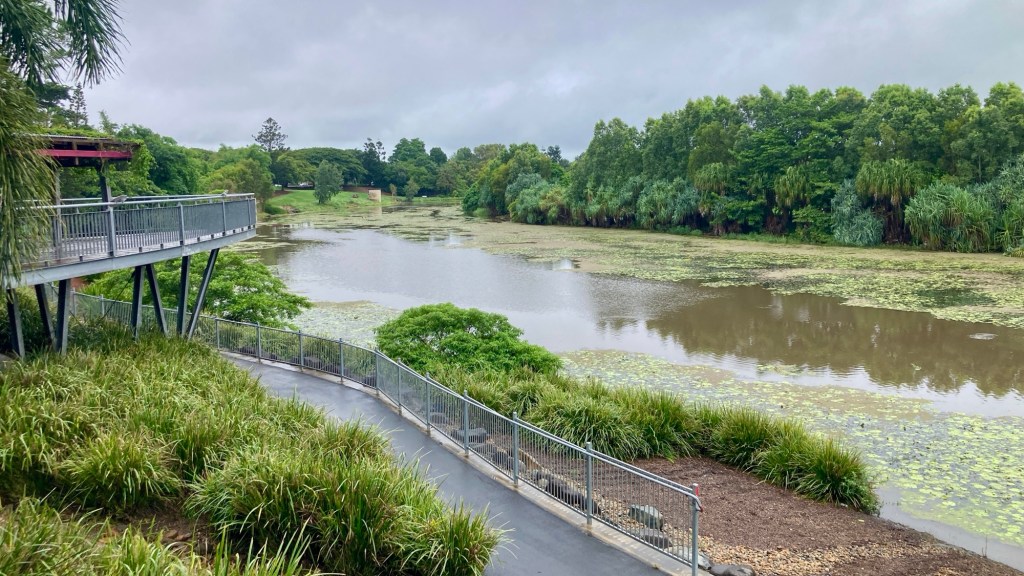
Our first visit was accompanied by light rain falling, so we headed to the café for tea and cake which we enjoyed out on the deck with broad views over the lagoon.
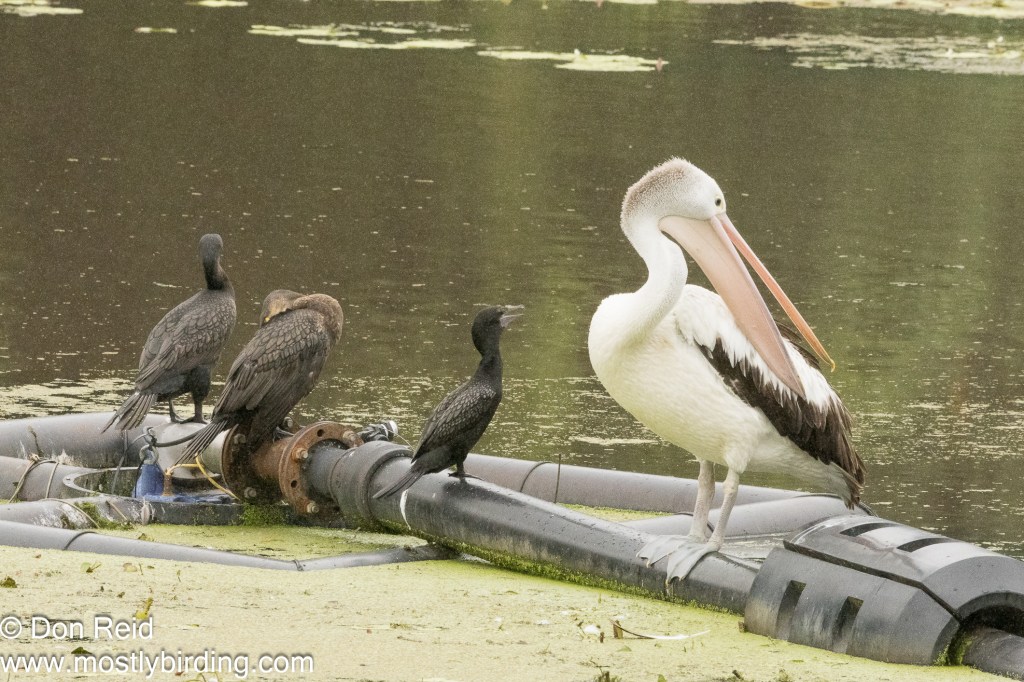
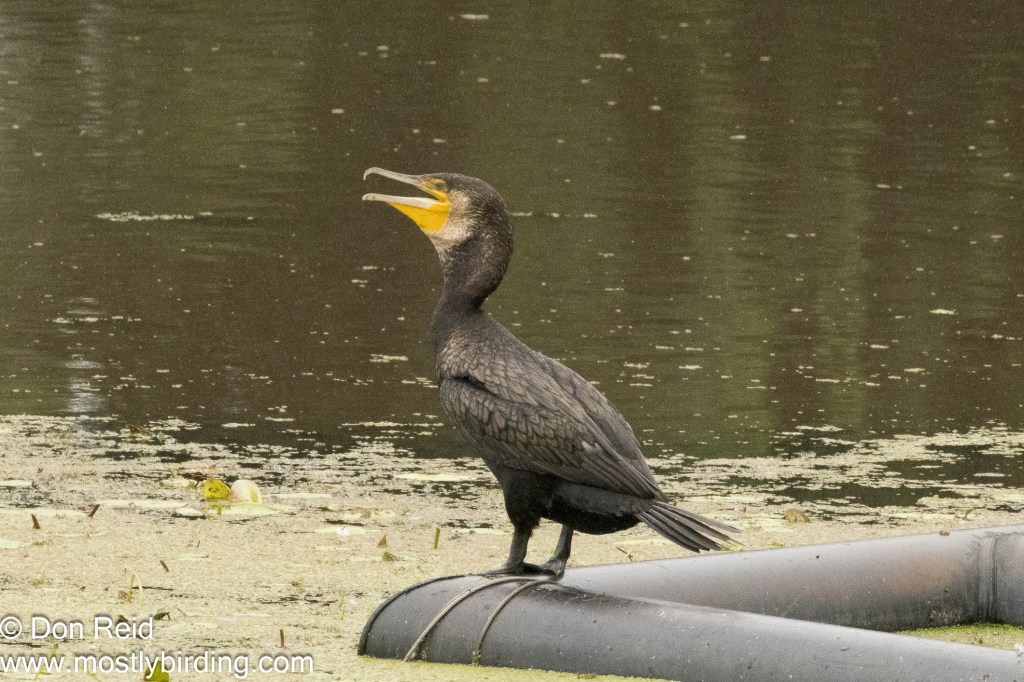
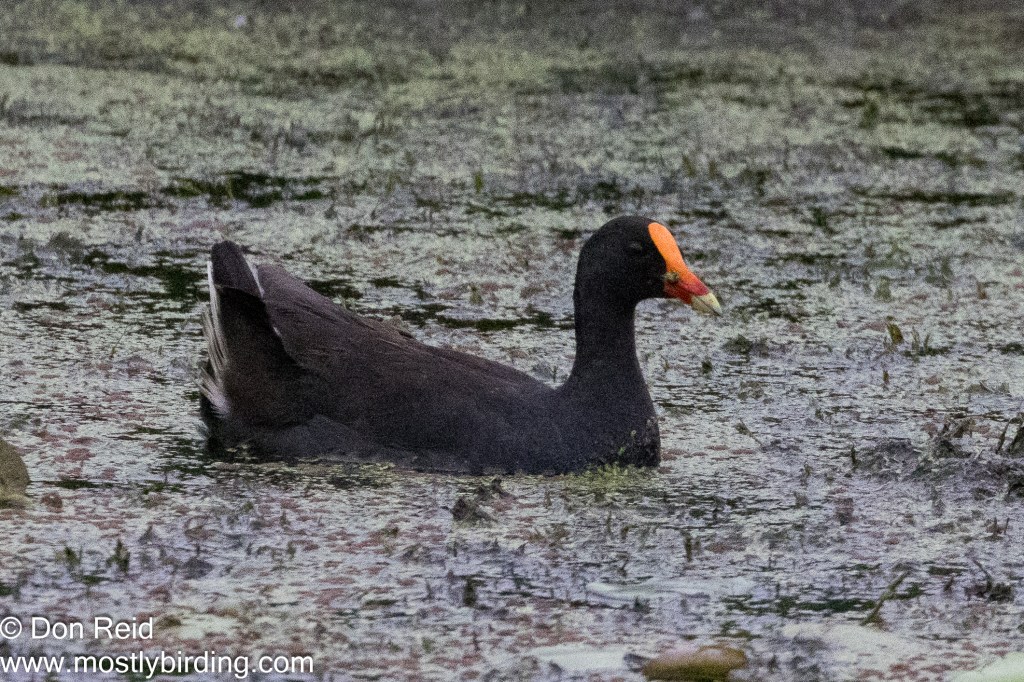
From our table I could already see that there were various waterbirds present including a Pelican, Moorhens, Swamphens, Cormorants, etc and there was a moment of excitement when a Whistling kite flew overhead, clutching in its beak several twigs obviously bound for a nest under construction somewhere in the tall trees on the opposite bank of the lagoon.
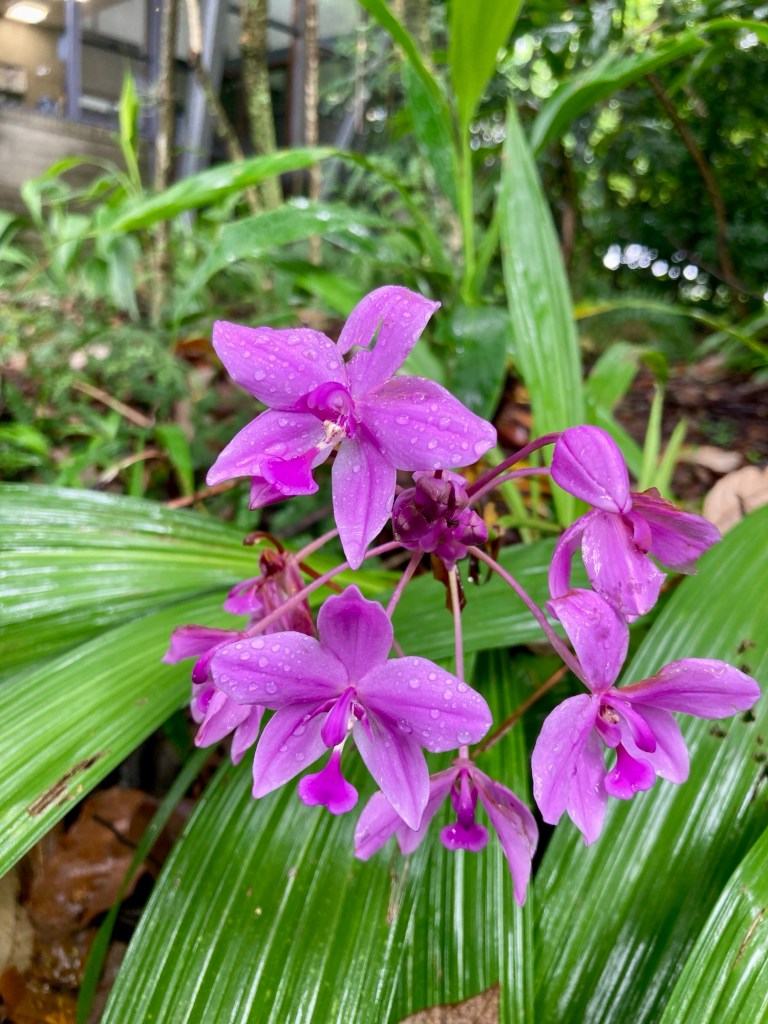
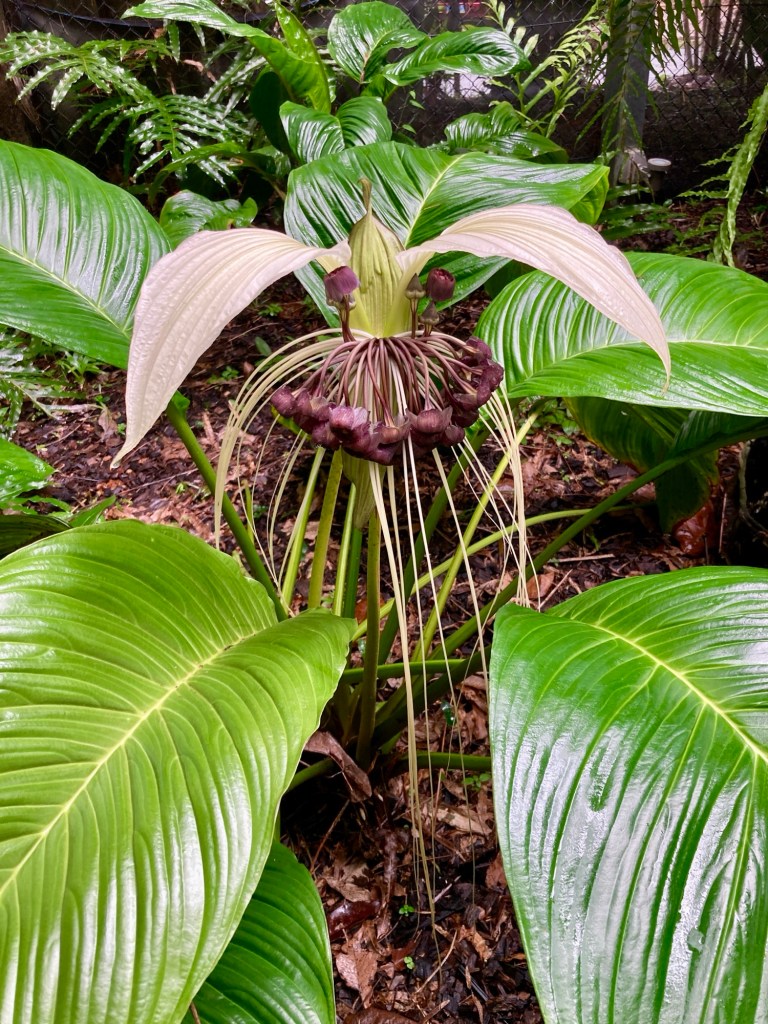
We followed tea with an interesting stroll through the rainforest area – in light rain of course – which had some fascinating, exotic-looking plants and trees, then a longer walk through some of the other garden areas.
Here’s a selection of some of the ‘rainforest’ plants and flowers that are on display
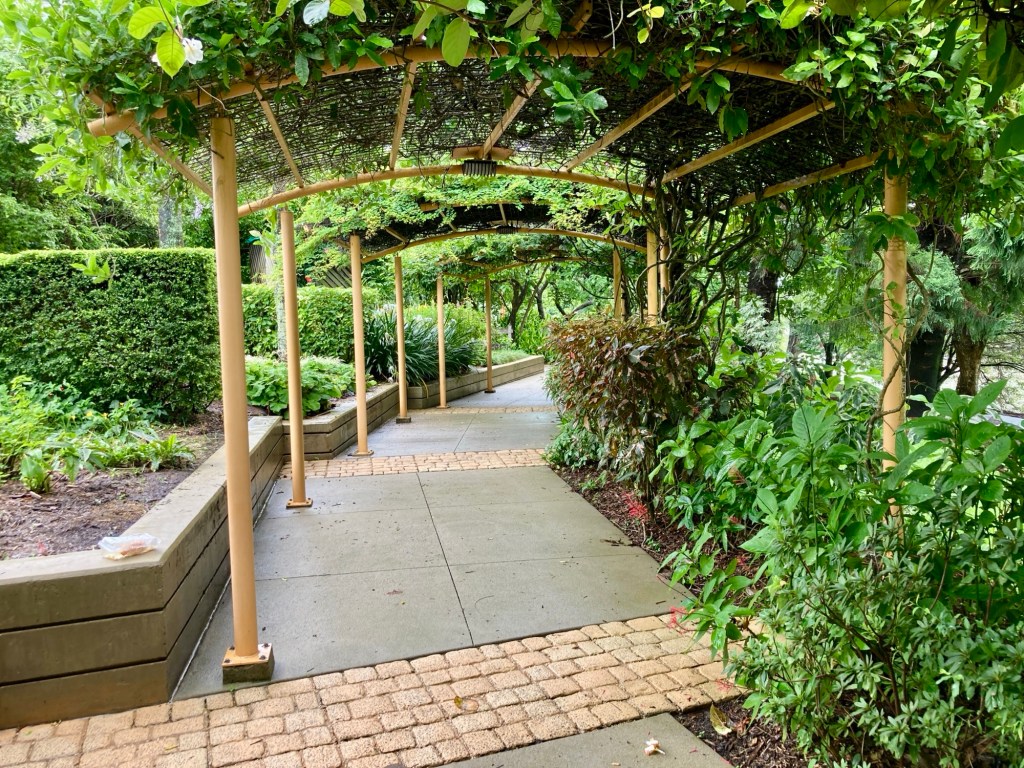
A quiet, lush pathway leading back to the entrance of the gardens
Birds of the Botanic Gardens
A selection of the birds I was able to photograph in the overcast rainy conditions …..
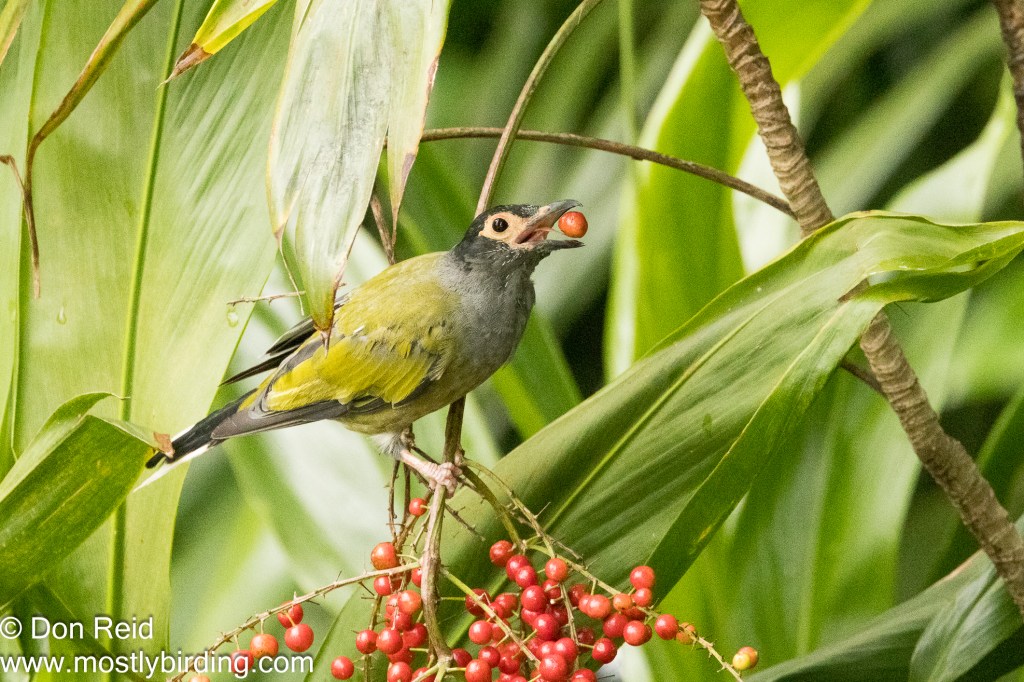
I was particularly thrilled to get photos of an Australasian Figbird feeding on small red berries in the trees near the main entrance, carefully plucking the berries before juggling them into position for easy swallowing
Other exploratory trips between school runs were focused on visiting some of the fine beaches along the eastern coastline of the town.
Lamberts Beach
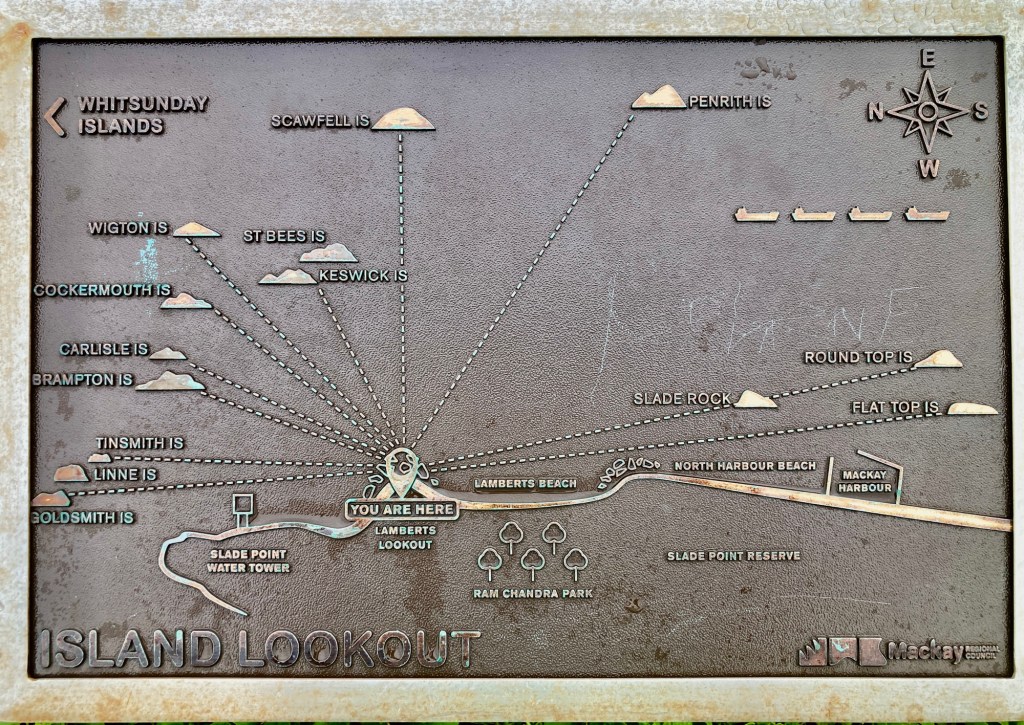
We drove to Lamberts Beach and stopped at the Island Lookout point where we had views up and down the coast and beach – rugged in places with a few of the islands visible in the distance despite cloud and mist.
A plaque at the lookout point showed the names and positions of the offshore islands
View northwards from the lookoutView southwards from the lookout
Black’s Beach
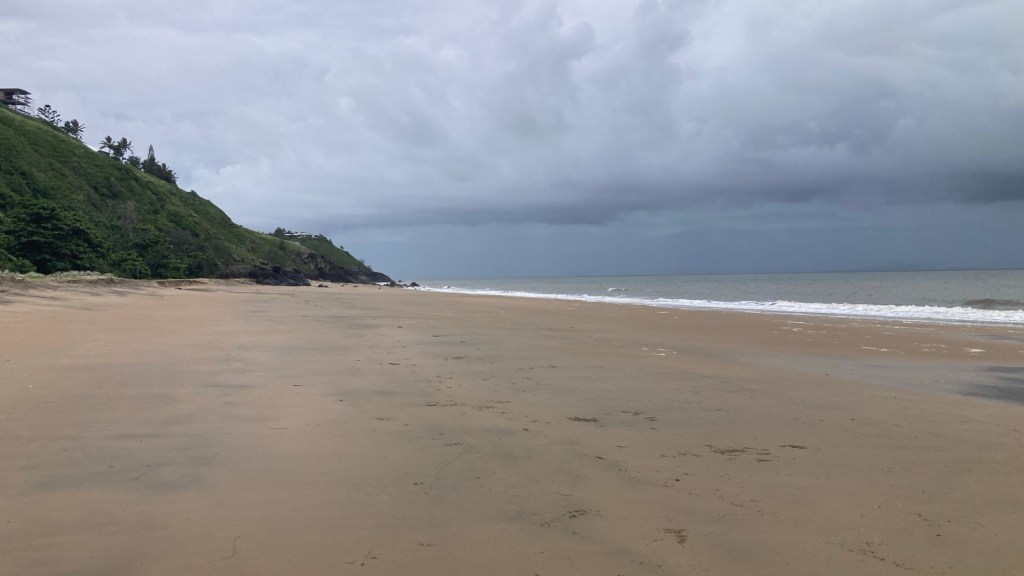
Towards the end of our stay in Mackay we were thankful to see a bit of sunshine one morning – that was just the inspiration we needed to get out and about, which we did with our youngest grandchild Ellie joining us for the short drive to Black’s Beach north of the house.
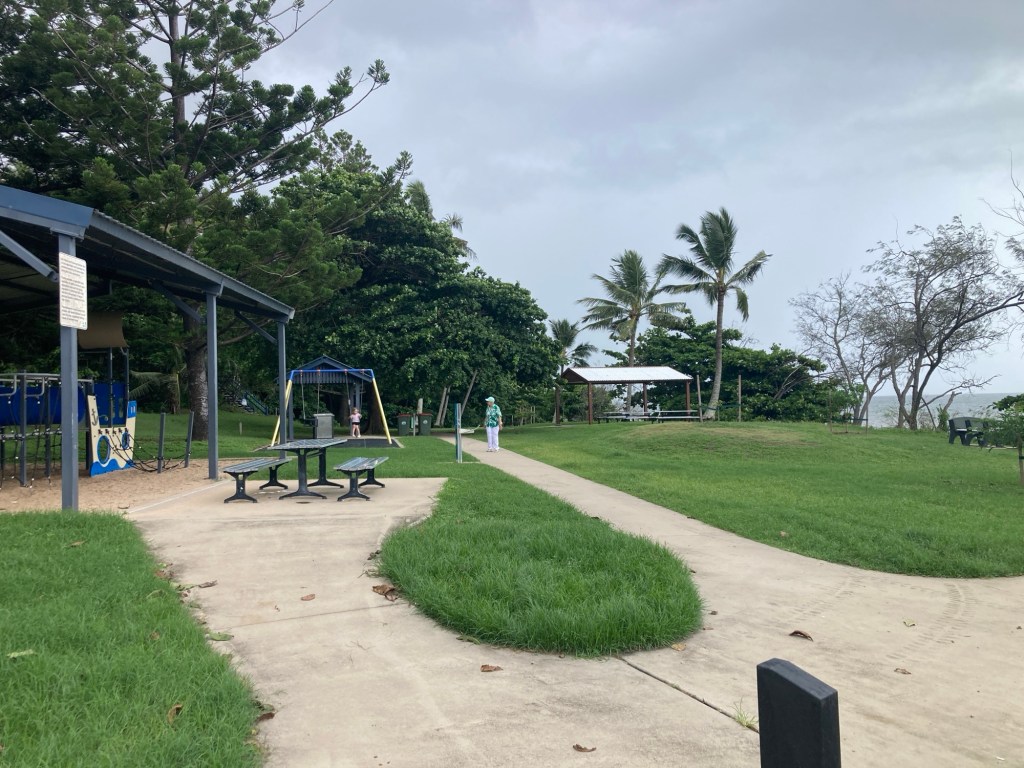
We had the picnic area and beach to ourselves after the group that was there left shortly after we arrived.
A play area with swings made it ideal for kids and the table and benches under a canopy roof invited a picnic meal – maybe next time!
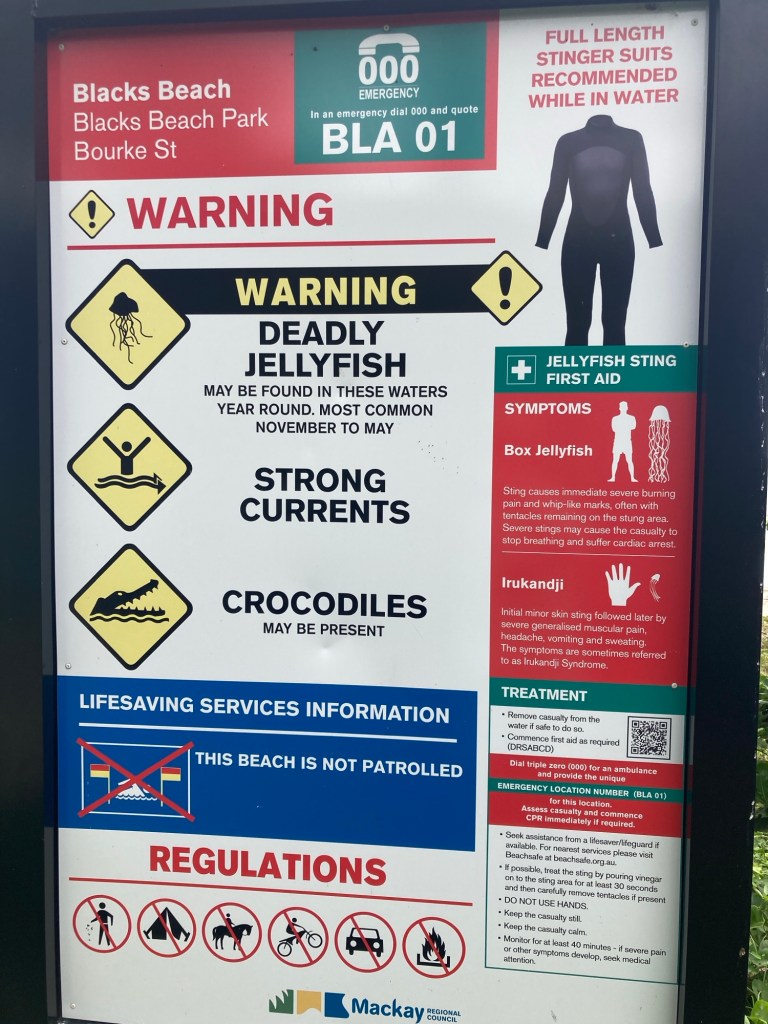
However swimming appears to be a risky business judging by the signage – we were aware of the Jellyfish, but not the Crocodiles!
Ellie and I had a walk on the beach which is wide and flat but clearly gets swamped at high tide.
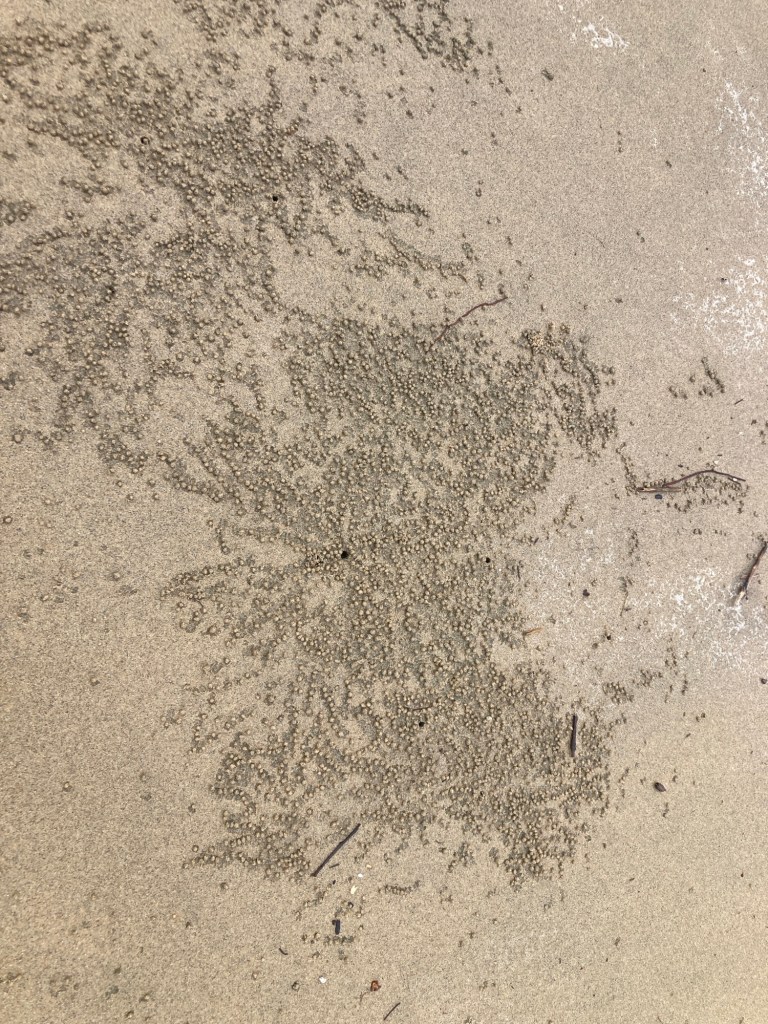
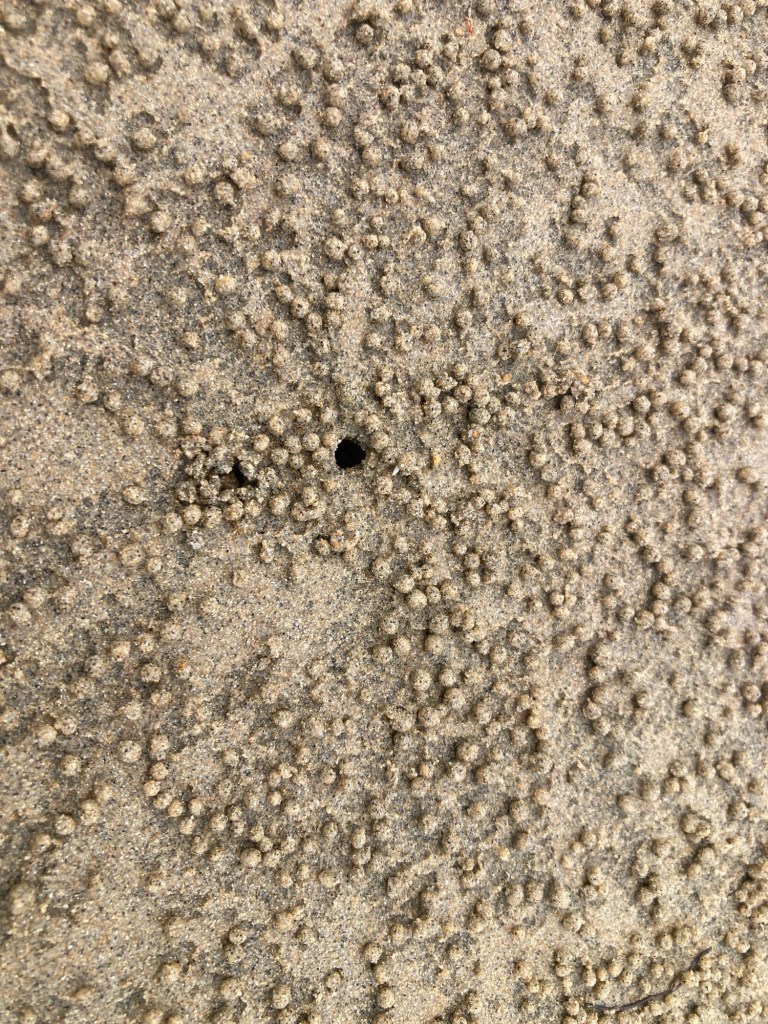
There were signs of the Sand Bubbler Crabs that create patterns with tiny round balls of sand around their burrows in the wet sand
I was fascinated to find out that these small crabs sift the sand through their mouthparts, filter out the nutrients, and discard the remaining cleaned sand as small, processed pellets, which are left in radial patterns around their burrows.
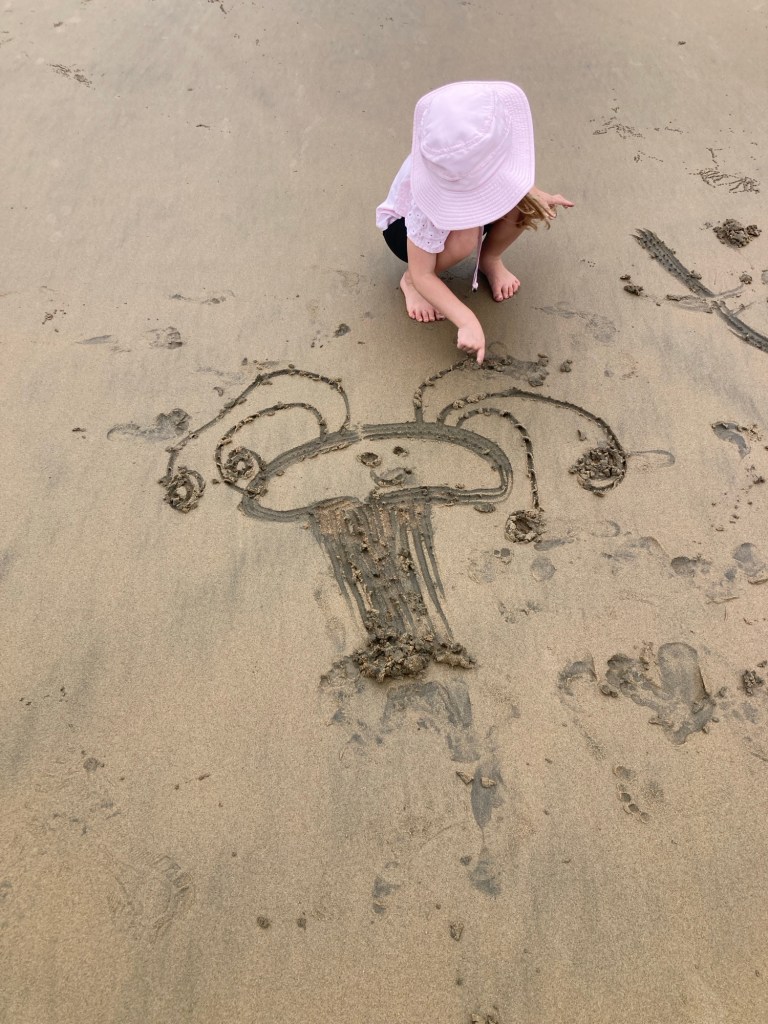
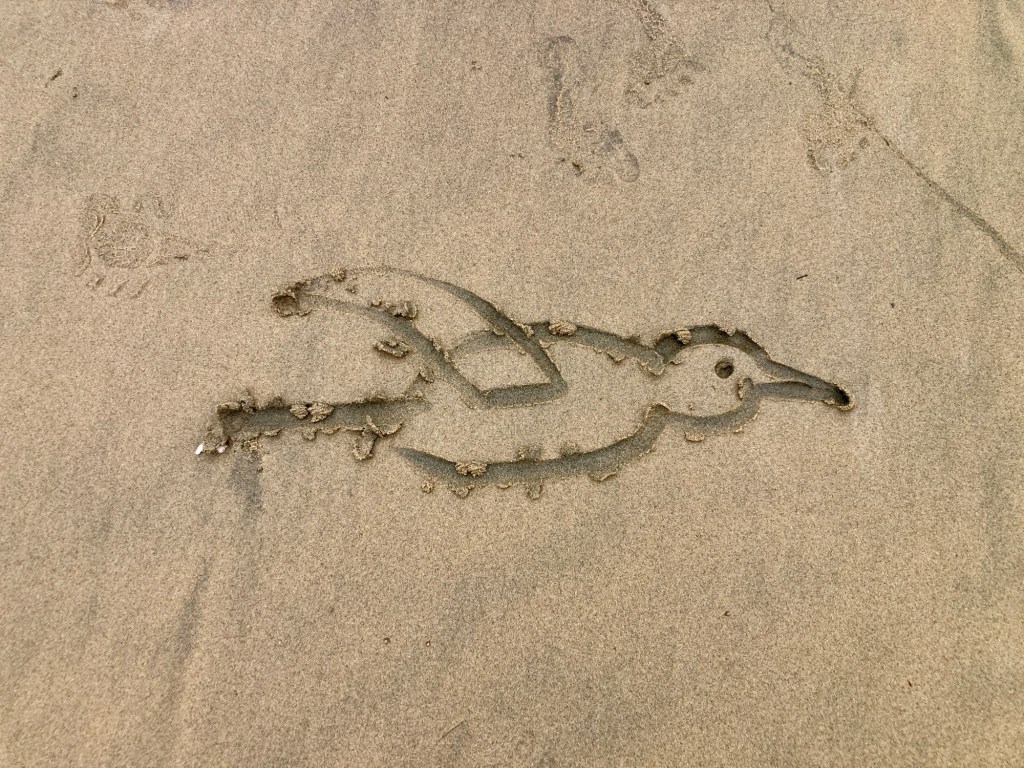
Ellie and I had a competition to see who could draw the best ‘finger picture’ in the firm sand – I reckon she won this one by a mile!
Ellie’s imaginative jellyfish – not bad for a 4 year old!Don’s Seabird – yes I know what you are thinking – stick to your photography…
On the way home from the trip to the beaches, we had a wonderful sighting of two Wedge-tailed Eagles in a newly cut caneland next to the main road – walking in the field then flying up and circling low as we watched in awe of these massive raptors.
The Suburbs
On the days when it was too rainy to walk the wetlands, I took shorter walks around the suburb in the vicinity of the house, which paid off with a couple of new birds almost each time I ventured out.
There were also times when the birds came to the small garden of the house, so I tried to keep my camera at the ready for such occasions, leaping up and rushing to the nearest vantage point if I spotted anything unusual.
Birds of the Beaches and the Suburbs
Here are some of the more significant birds I came across …..
Oriental Dollarbird
Heading back from one of our beach visits, Ellie called out “Oupa there’s a bird” and I stopped to have a look. Well what a surprise when I realised it was the unusually named Oriental Dollarbird which I had been hoping to see!
Back at home I checked out the bird books and found it is related by genus to our Broad-billed Roller, which it resembles in many of its main features
Why Dollarbird? Apparently in flight it shows round silver “dollars” at the tips of the underwing area
I initially took the large black Crow-like birds that I was seeing regularly in Mackay to be Australian Ravens, which was a bird seen many times during our previous visits. But reading some posts on the local birder’s facebook page I picked up that the Torresian Crow was common in the Mackay area – also that the easiest way to separate it from the Ravens was through its call.
So I made a point of listening to their calls when I next saw them and was able to confirm the ID and add another new bird to my growing list.
We came across a group during our visit to Black’s Beach and I was happy to get some images despite the difficulty of photographing a black bird against an overcast but bright background – thank goodness for Lightroom editing software which allows exposure adjustments of the subject and the background separately
Torresian Crow Corvus orru, Mackay Queensland
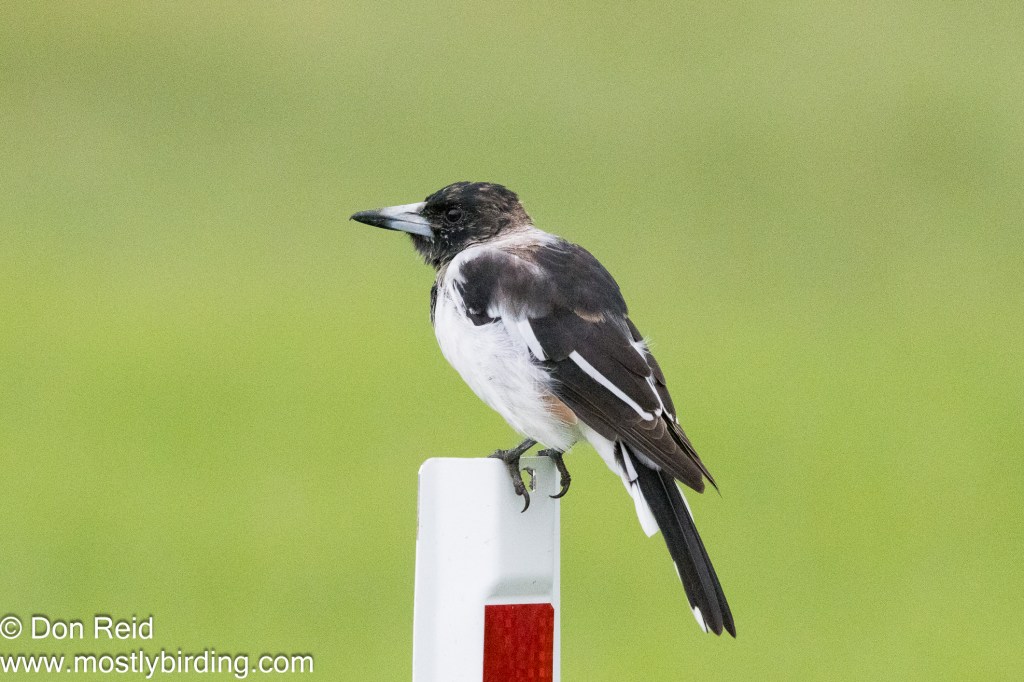
Pied Butcherbird
During another suburban walk I spotted what looked to me like Butcherbirds – it took a second look to realise this was a different species to the Grey Butcherbird I had seen several times before. It fortunately stayed in place while I struggled to get my camera working properly as I had inadvertently adjusted settings while it was in the plastic bag protecting it from the rain
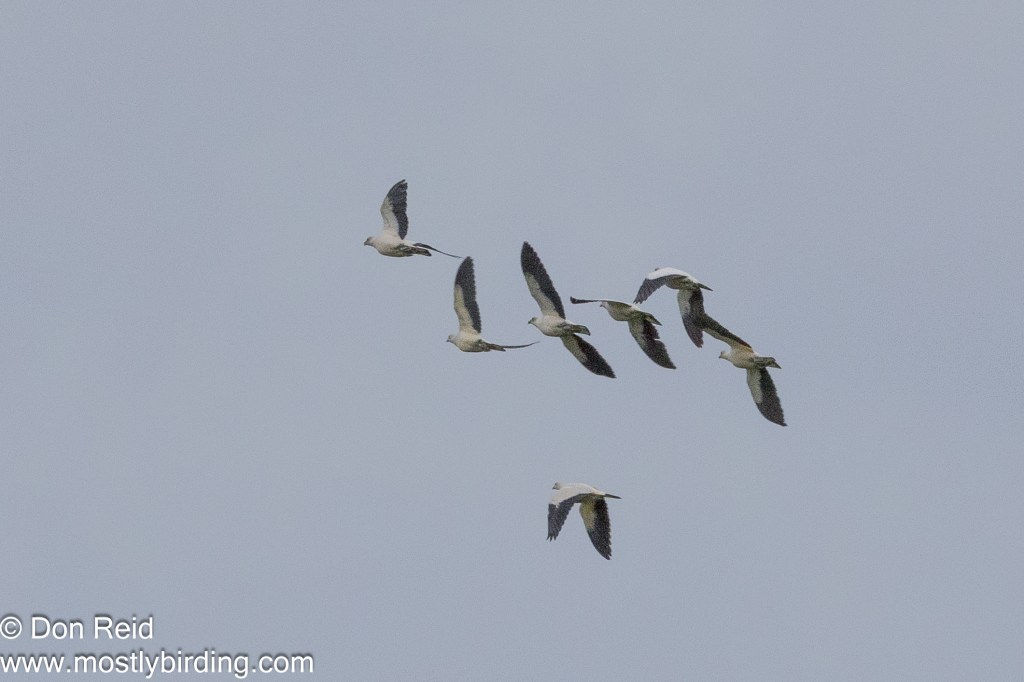
During a visit to the local public swimming pool where Stephan likes to train, I did a few lengths myself, then scouted around the gardens surrounding the pool. A flock of large-ish white and black birds drew my attention flying from one tree to another.
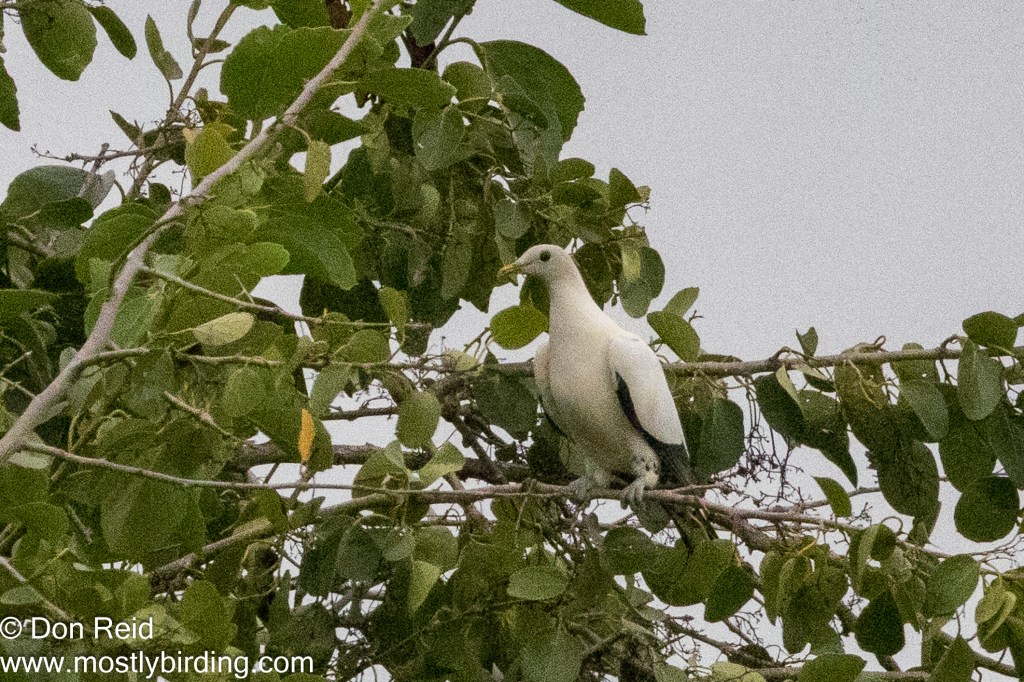
I was fairly certain they were pigeons but had no binos or camera to confirm the species – later research convinced me they were Torresian Imperial Pigeons, which I subsequently spotted a few times in different parts of Mackay.
This is another species that seems to go under a few different names, Pied Imperial-Pigeon being the one that local facebook posts seemed to use and which lead to some doubt on my part at first, but I settled on the name that Birds of the World used.
Another new species I spotted at the swimming pool for the first time, then saw a few times in other parts of Mackay, was the Yellow Honeyeater. I was eventually able to photograph one during a wetland walk, when it flew across the pathway and settled in a nearby tree.
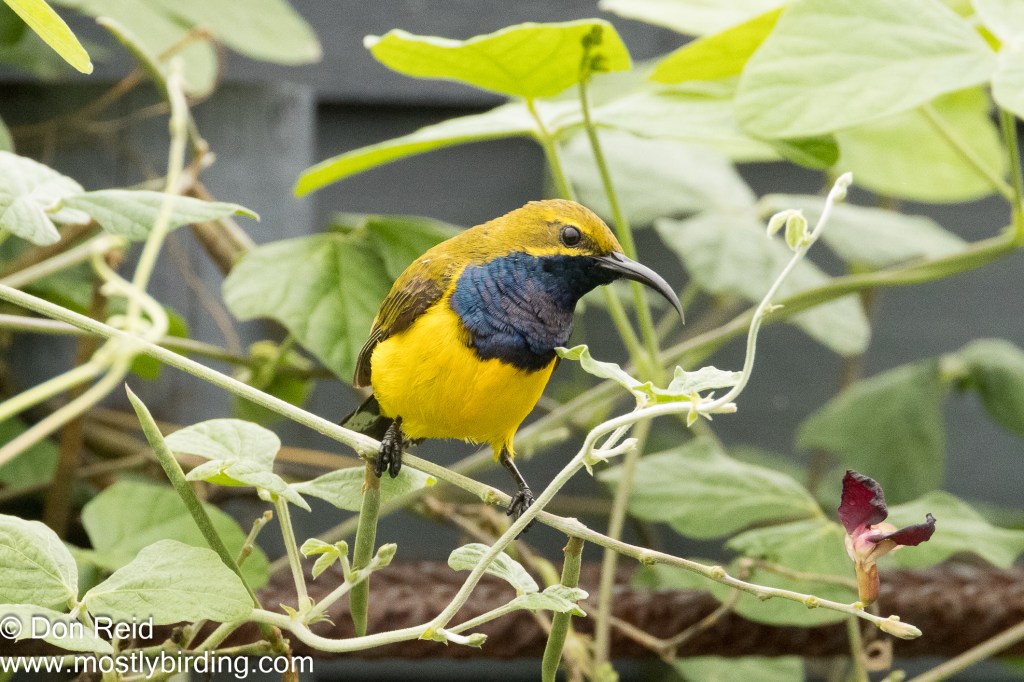
The only representative of the Sunbird family in Australia is this striking species which visited the garden a few times.
After a few attempts I was able to get some reasonable photos as a pair moved through the garden
It turned out that this was not a lifer but new to my Australian list – I discovered that I had in fact seen it in two diverse places before in years gone by – Mauritius and Kuala Lumpur
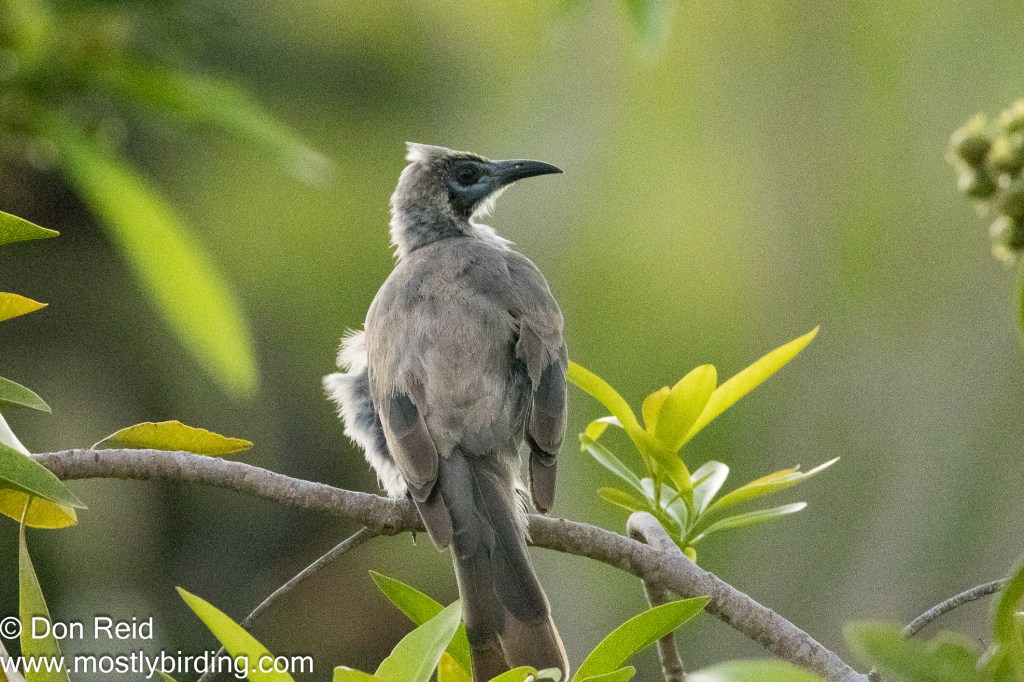
Heading homewards at the end of another rainy walk through the suburbs, I spotted what I thought was a Helmeted Friarbird, a species I had come across a couple of times partly hidden in sidewalk trees. This one looked a little different and closer inspection of the photos I took confirmed it was a Little Friarbird – another lifer
Little Friarbird Philemon citreogularis, Mackay Queensland
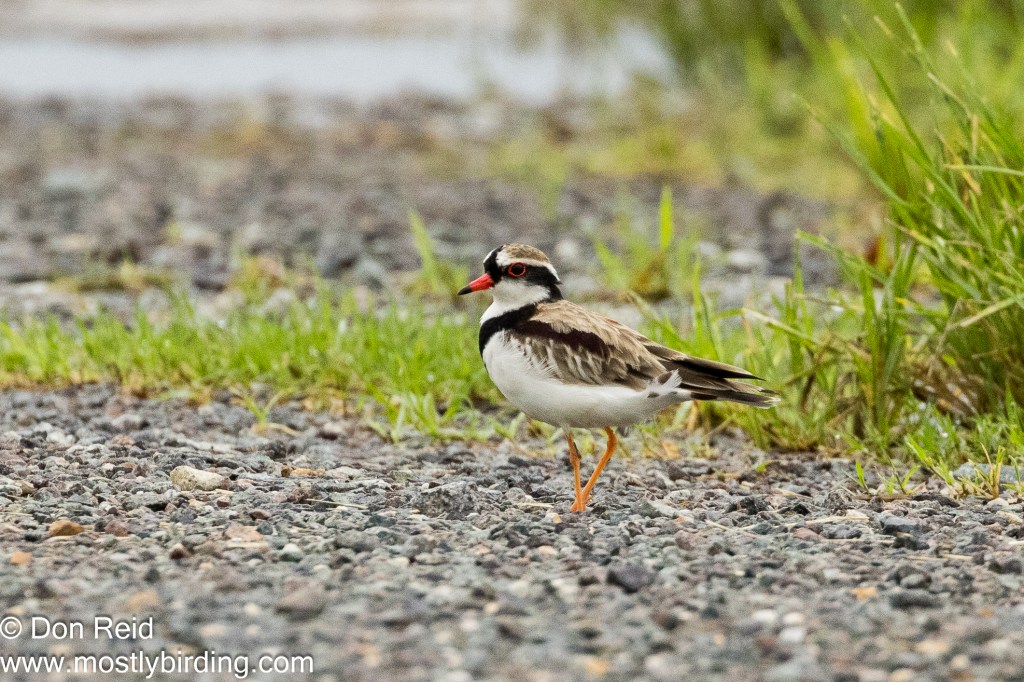
Black-fronted Dotterel
Another unexpected sighting during one of my short suburban walks between rain showers, was a pair of small plovers in the short grass at the end of a cul de sac which adjoined farmland.
As I approached they darted off to some small heaps of soil with shallow pools of water between formed after the rains, which the birds had clearly decided suited them well.
I was keen to get a photo of the Dotterels so the following day after lunch, when the rain held off for a while, I returned to the same spot. Happily, they were still around and I was able to get some shots even though they were quite wary and flew a short distance each time I edged closer.
The Dotterel looked very familiar – the reason being it carries the same genus name as our Three-banded Plover and shares many of its features
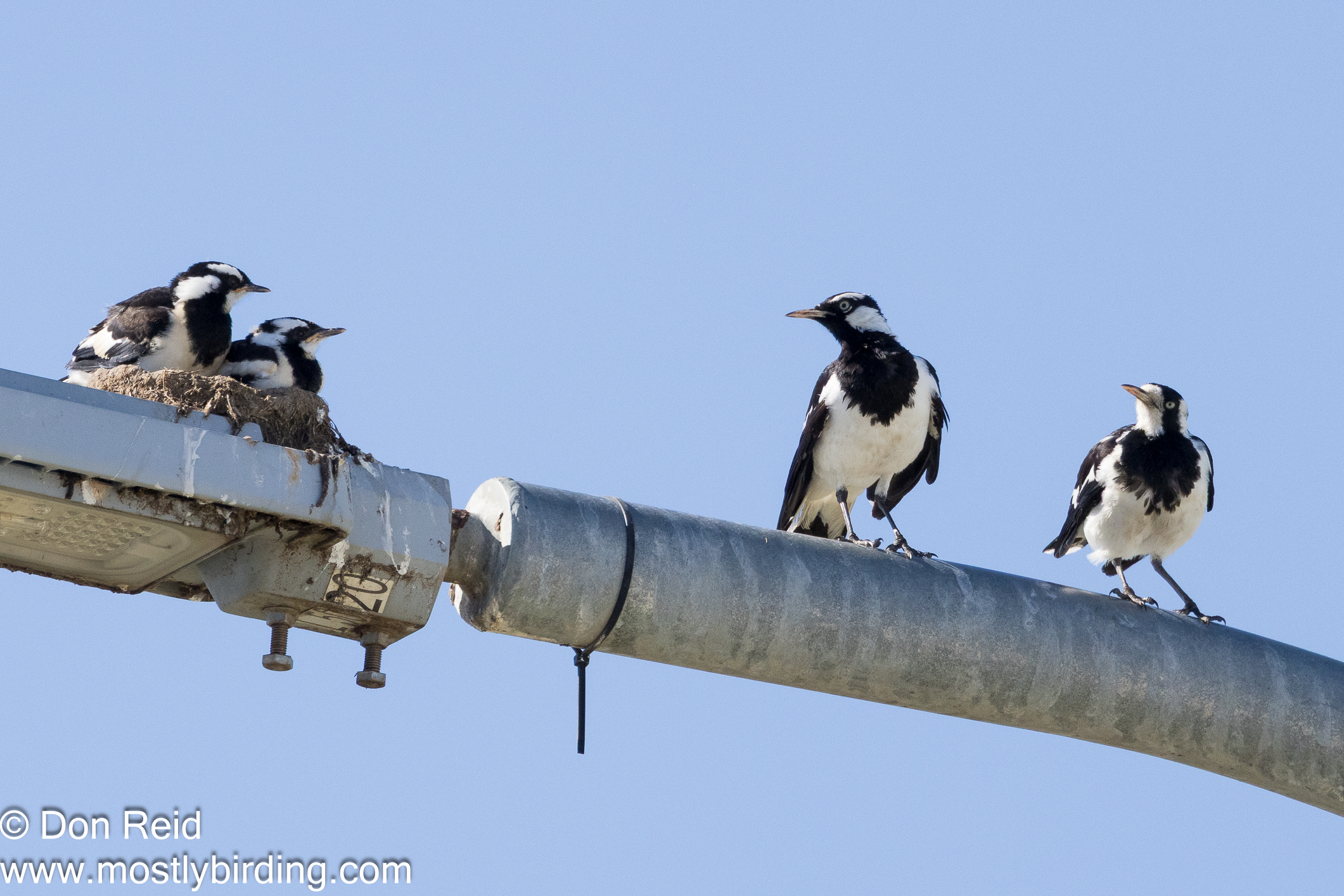
And just to end off this post, this pair of Magpie-Larks proudly watching over their youngsters kept me interested in their progress from the first day in Mackay to the day of our departure, when this photo was taken and the young ones about to fledge by the looks of it.
What worried me was the precarious and exposed position of the nest on top of a lamp post just outside the house, and in particular whether the mostly mud constructed nest would hold together in the incessant rain. Incredibly it did and I’m sure the youngsters took their first flight shortly after our departure.
Magpie-Lark breeding on top of lamppost, Mackay Queensland
To repeat the intro to my previous posts on this subject …. Many of the migrant waders – or shorebirds as they are also known – display the most Jeckyll and Hyde characteristics of all birds, living two dramatically different lives and spending time in habitats which are far removed from each other.
Separating these two lives are amazing journeys that take these small yet hardy birds halfway across the world – and back again.
South African birders get to know migrant species during their stay in the southern hemisphere, typically during the months from October to April, so let’s find out a bit more about their ‘other’ lives by delving (again) into the typical annual life cycle of these waders.
This time it’s the –
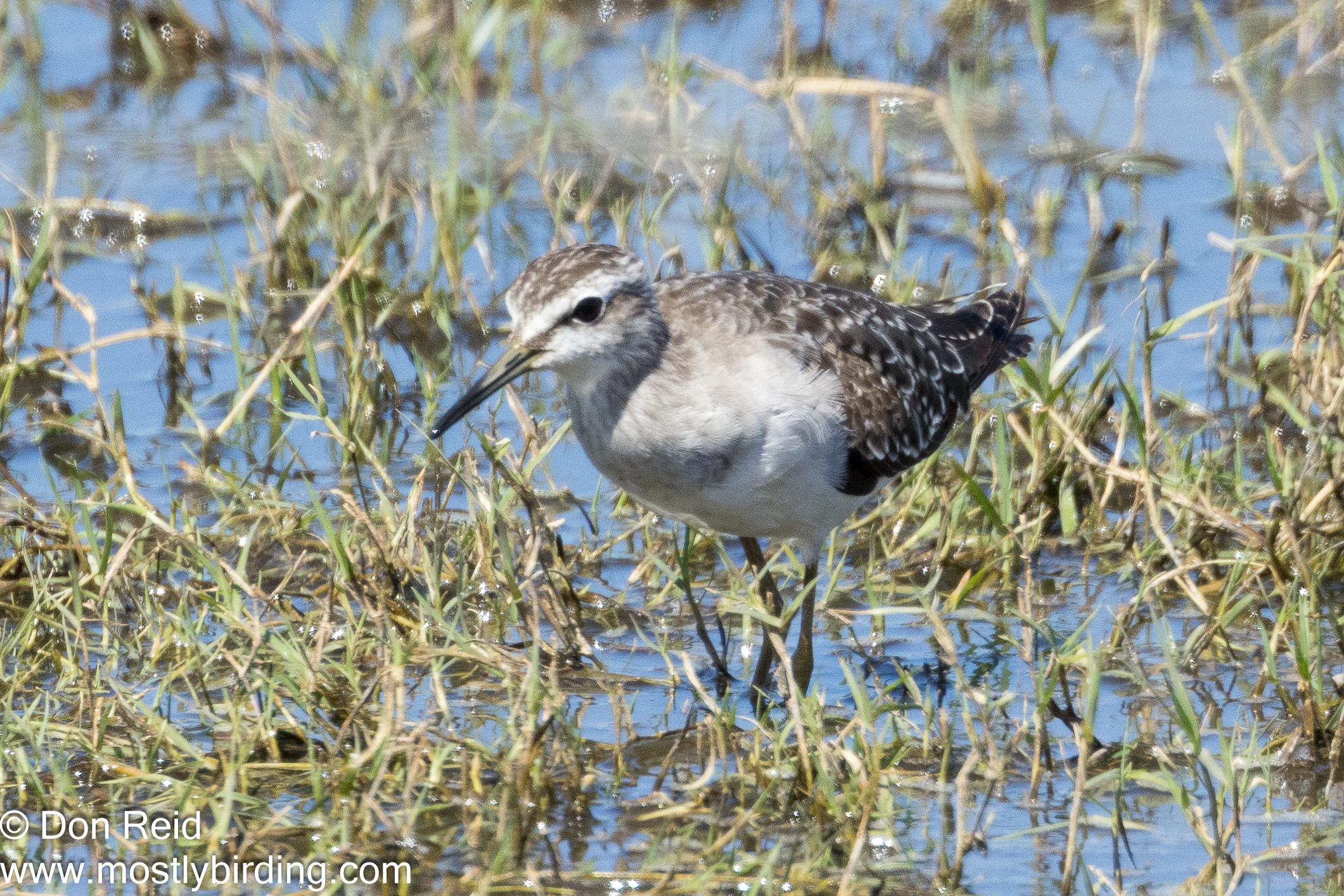
Wood Sandpiper (Bosruiter) Tringa glareola
Affectionately called ‘Woodies’, this species is so named because they breed on swamps and peat bogs in the coniferous taiga forests of the Northern Hemisphere – who would have thought this is also a ‘Forest bird’ !
Identification and Distribution
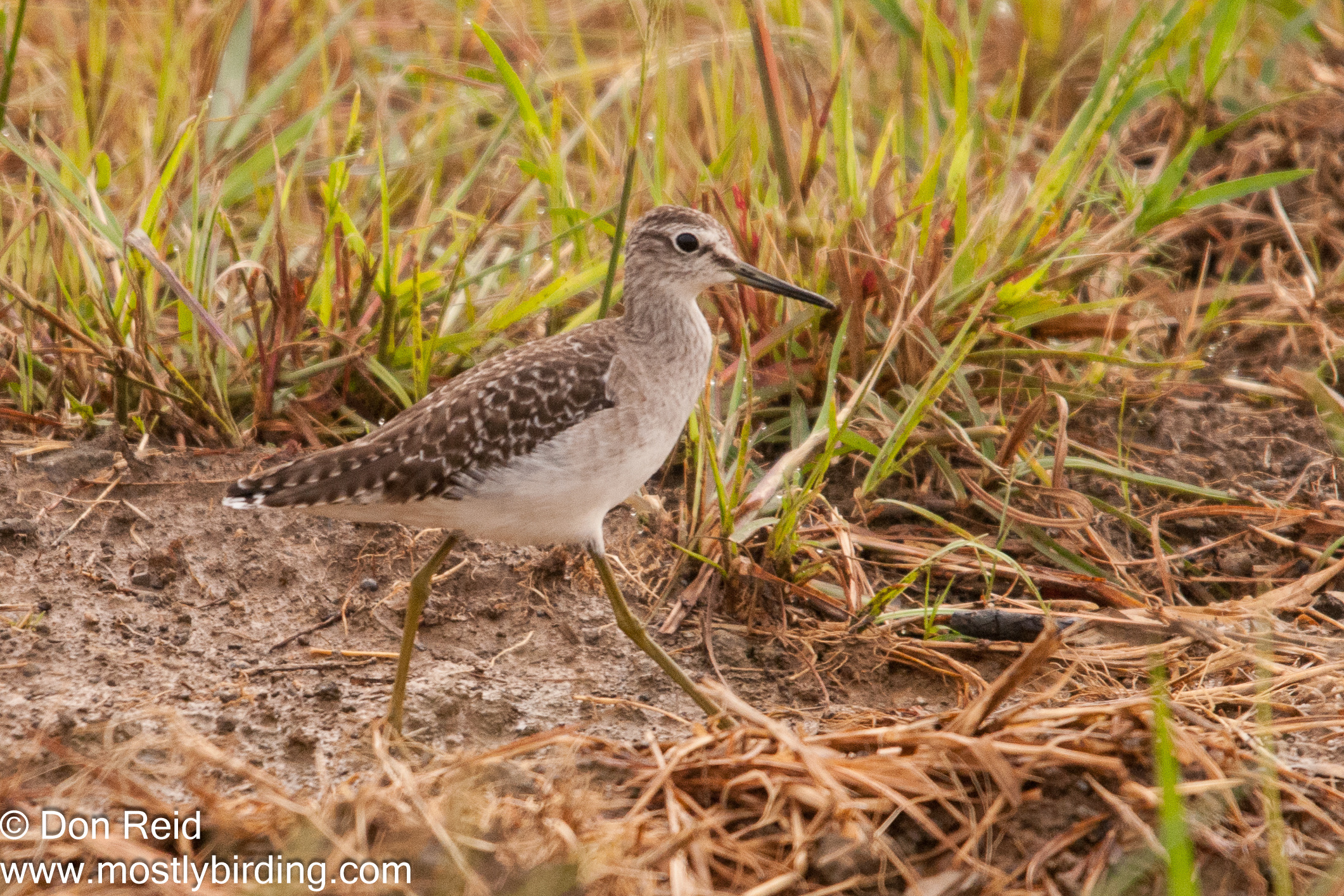
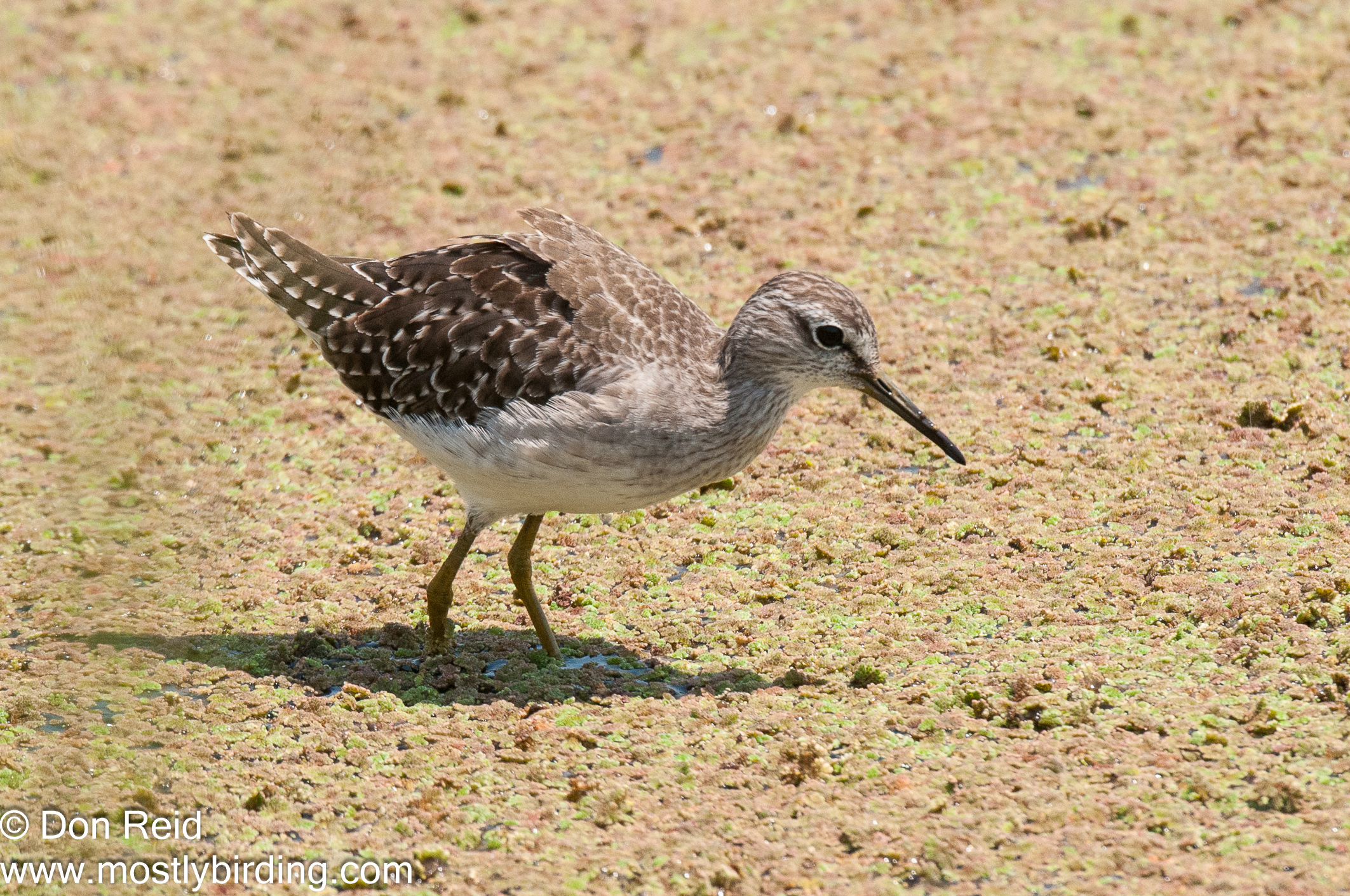
Identification of the Wood Sandpiper is relatively easy – compared to some of the other LBW’s (Little brown waders) – and is often the first wader that novice birders will get to know as it is one of the most common freshwater waders
straight bill about the same length as the head, white brow extends behind eye
grey-brown above with eye-catching white ‘spotting’ , grey below
Wood Sandpiper, Devon
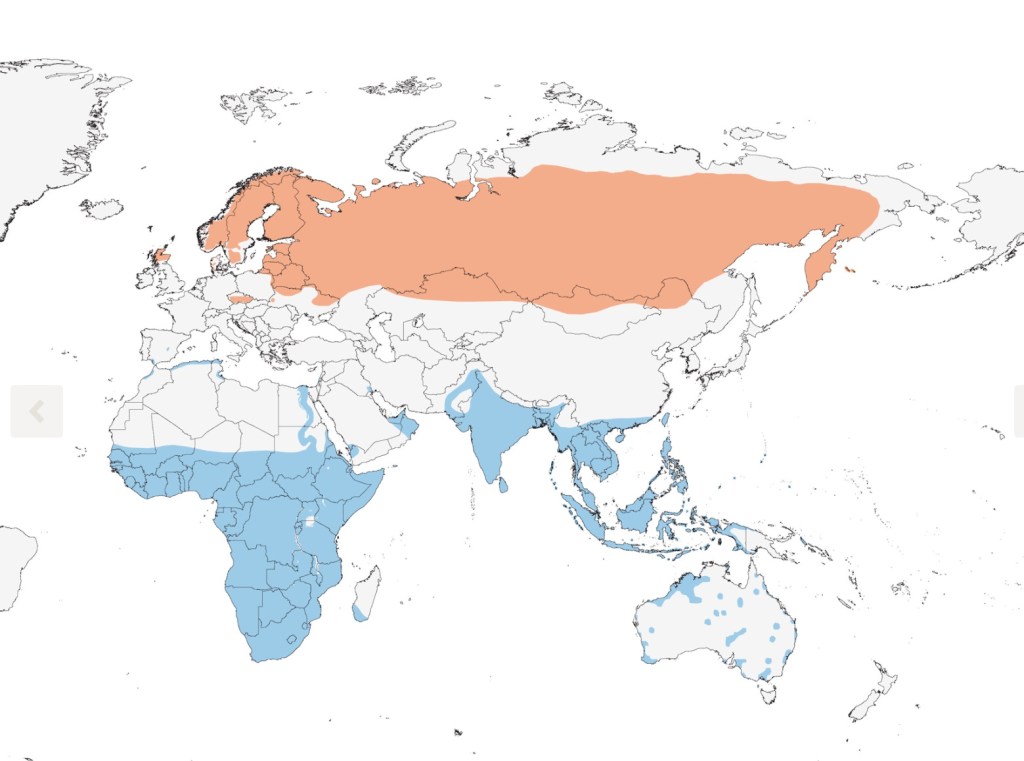
Distribution –
The orange area on the global distribution map (from Cornell Birds of the World) shows where breeding occurs in the Northern Hemisphere while the blue area, mostly in the Southern Hemisphere, is where they go to ‘get away from it all’ and prepare themselves for the next round of raising a family.
Wood Sandpiper, Marievale
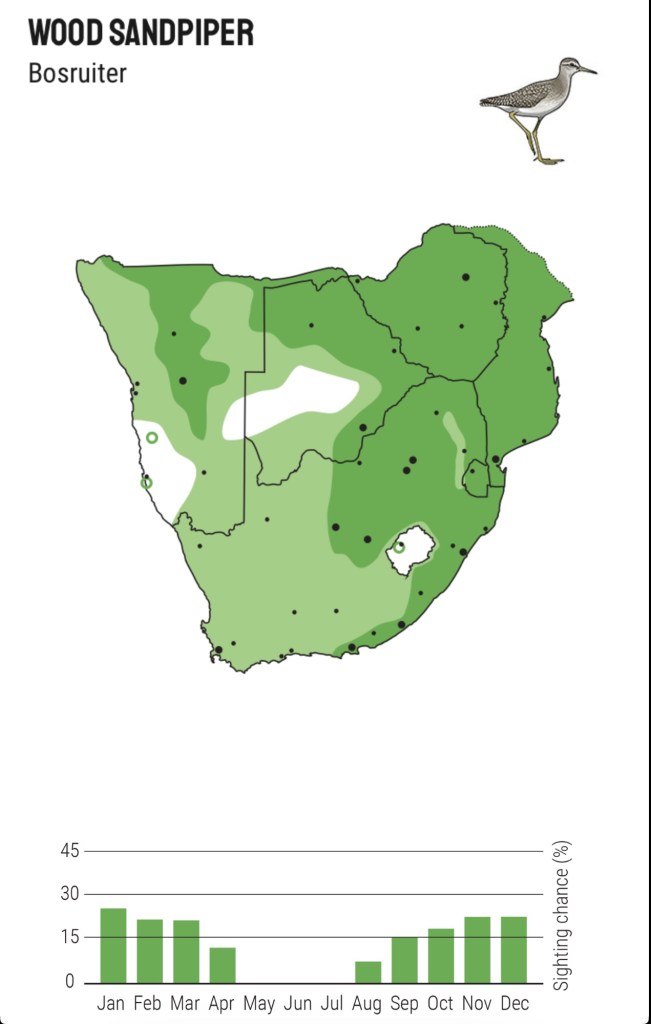
The southern African distribution map (from The Firefinch Birding app) shows the species presence across most of the region but absent from the Kalahari and arid west.
Life in the North
The preferred breeding habitat is the open swampy area and peat bogs in coniferous forests, scrubland between those forests and tundra
Their diet is mainly small aquatic insects, caught by pecking or probing while walking in shallow water
Wood Sandpiper, Marievale Bird Sanctuary
Breeding
The nest is usually a small scrape on the ground lined with moss, stems and leaves, in dense vegetation, but also frequently in trees in old nests of other species
Eggs (usually 4) are laid and incubated for about 3 weeks – from 7 to 10 days after hatching the male cares for the young on its own
Fledging some 3 to 4 weeks later, the fledglings are independent soon thereafter, facing the many dangers that young birds are subject to.
Wood Sandpiper, Kasane Botswana
Migration
The birds we see in Southern Africa are thought to originate from Russia, first adults leave early July, arriving in the south from late July / August with juveniles following mainly in September and October.
Migration is undertaken at night with birds capable of single flights of up to 4000km. Overland routes are followed by small flocks or singly, mainly via the Rift Valley
Wood Sandpiper, Kasane Botswana
Life in the South
Of the 3 million+ Woodies that head to Africa, some 50 – 100,000 end up in southern Africa, where they seek out suitable freshwater habitats. These can be anything from shallow sewage ponds to marshes, flood plains and muddy edges of streams and rivers, down to the size of a puddle.
Wood Sandpiper, Punda Maria
Sometime after arrival, adults start a post-breeding moult which continues for up to 4 months, during which time all feathers are replaced with new ones.
Generally, a solitary bird except where food is abundant when they may gather in loose groups
Wood Sandpiper with Little Stint, Leeuwfontein Pan near Belfast
They start departing from late February with the majority having left by end April, heading north to their breeding grounds where the cycle will start all over again…
Wood Sandpiper, Bredasdorp
References : Cornell Lab of Ornithology Birds of the World; Roberts VII Birds of Southern Africa; Firefinch app, Collins Bird Guide; Waders of Southern Africa
Always on the lookout for a chance to get away for a few days, Gerda’s birthday seemed like a good excuse and Prince Albert a good option being just a couple of hours away yet much more in terms of “a change being as good as a holiday”
Wednesday 11th September 2024
Packing was left to the morning of our departure and went smoothly albeit slowly and by midday we were heading to our first stop – no prizes for guessing – our favourite Eight Bells Inn for a light lunch in the enclosed patio (bit too windy and cool for outside) with the familiar views and friendly staff.
On the way to the R328 we stopped at the Hartenbos Vleis for a quick scan of the birdlife and came up with an African Jacana – still a Western Cape Rarity – and African Swamphen among the usual Teals and Ducks. A Ruff was an interesting sight being one of the early palearctic migrant arrivals.
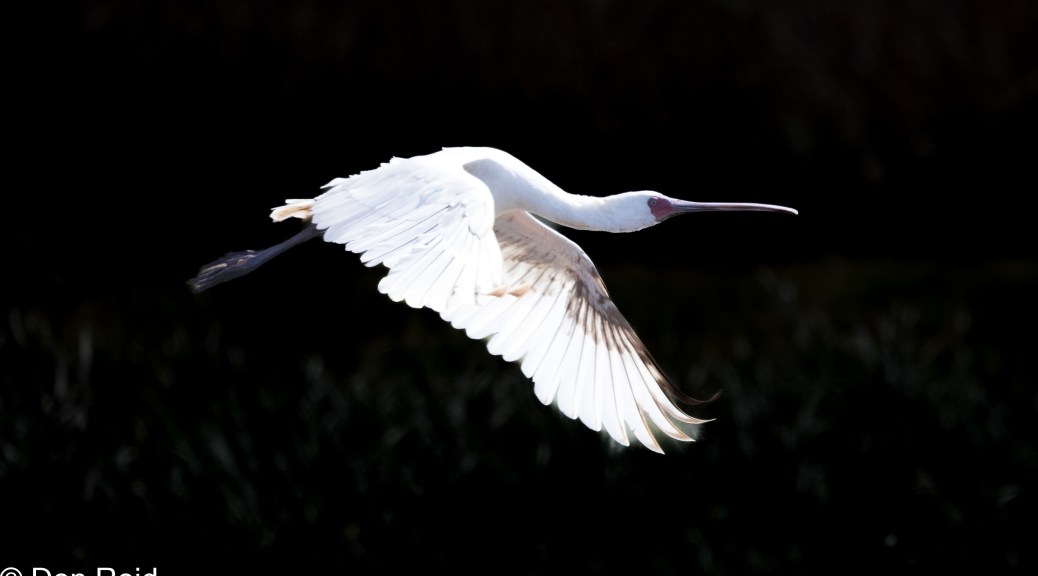
A number of Spoonbills on the far side of the vlei took to the air, providing an opportunity for some in flight photos, one of which I used for the heading image above after tweaking it to darken the background.
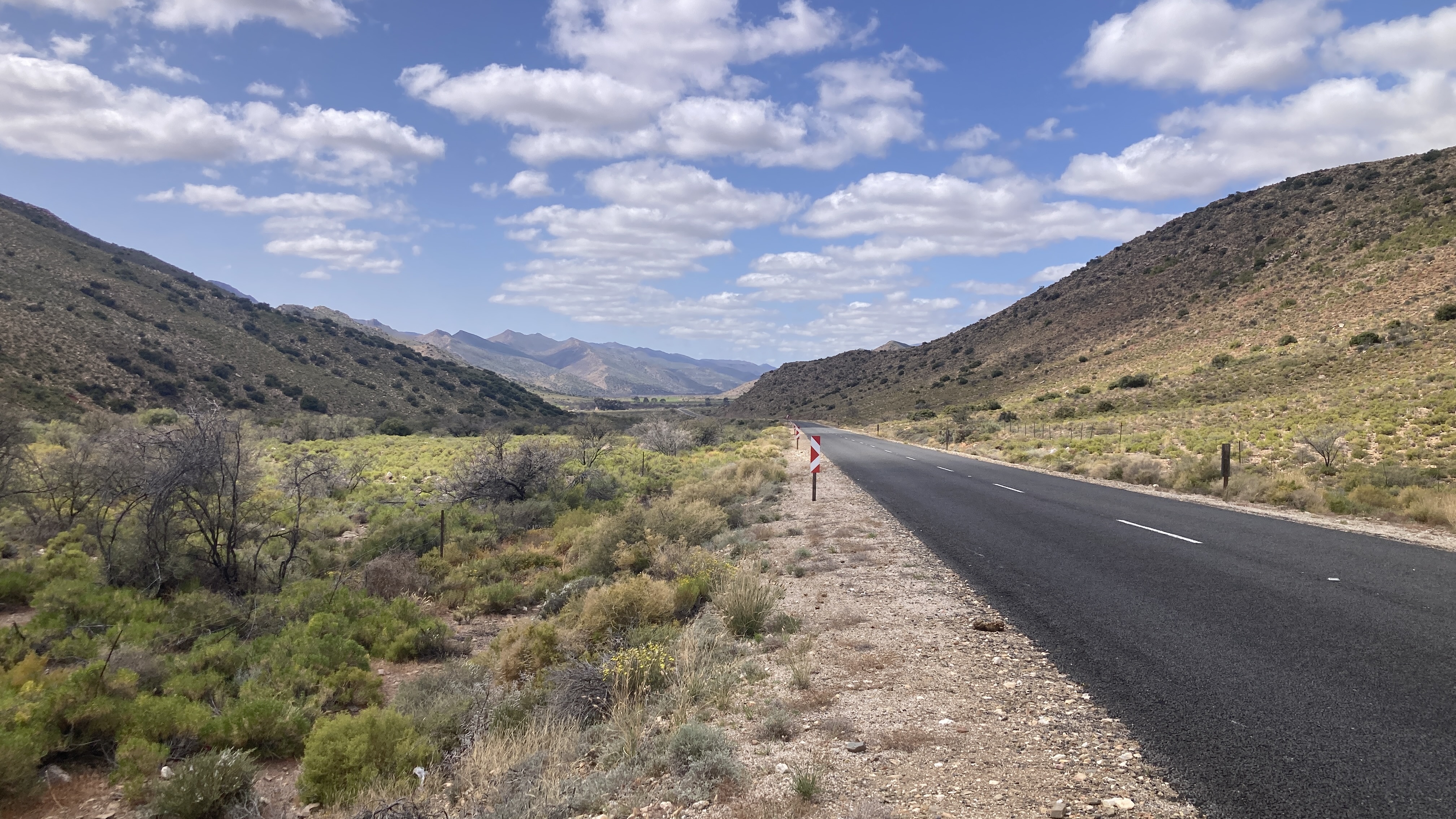
Back on the road after Eight Bells, we enjoyed the rest of the classic road trip through the Robinson Pass and Meiringspoort then along the hills and dales of the beautiful stretch of road heading to Prince Albert through the Kredouw Pass and the Prince Albert Valley
Prince Albert Valley
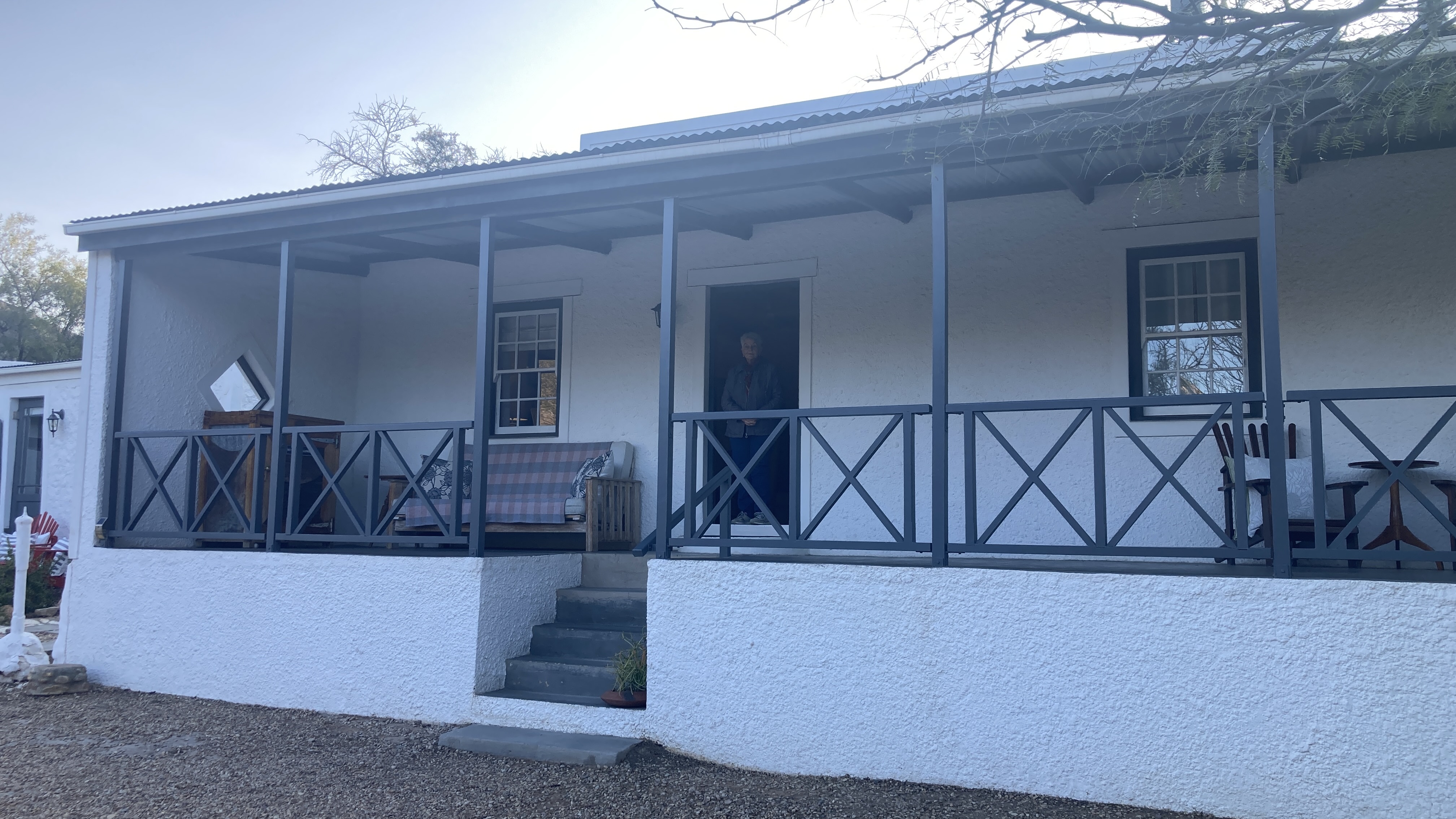
We hadn’t been to Dennehof Guesthouse before, but it was easy to find on the main road just before reaching the town proper and we were met by Albert (not the Prince) who showed us the room and provided info on dining options and things to do.
Dennehof – our room
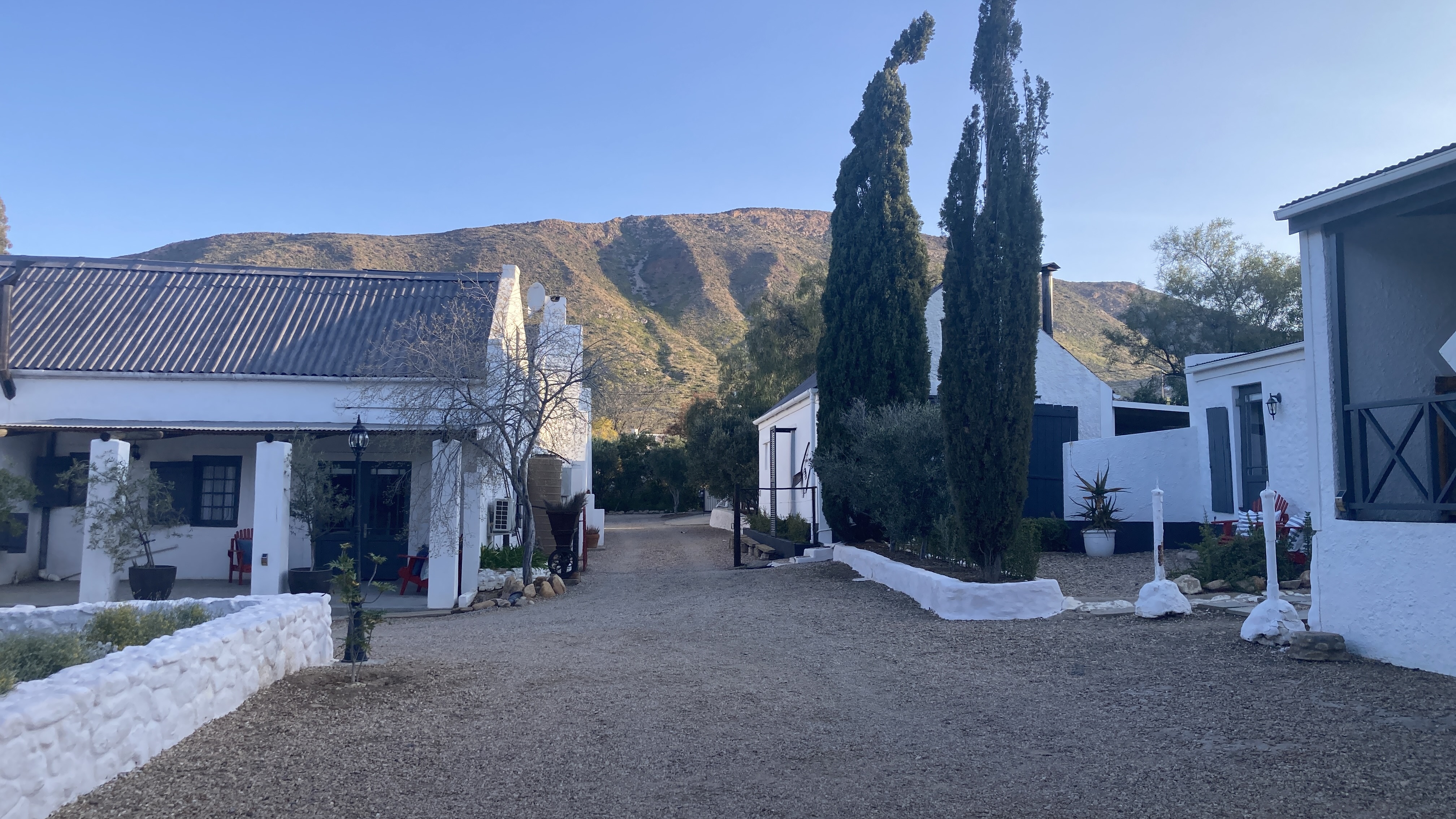
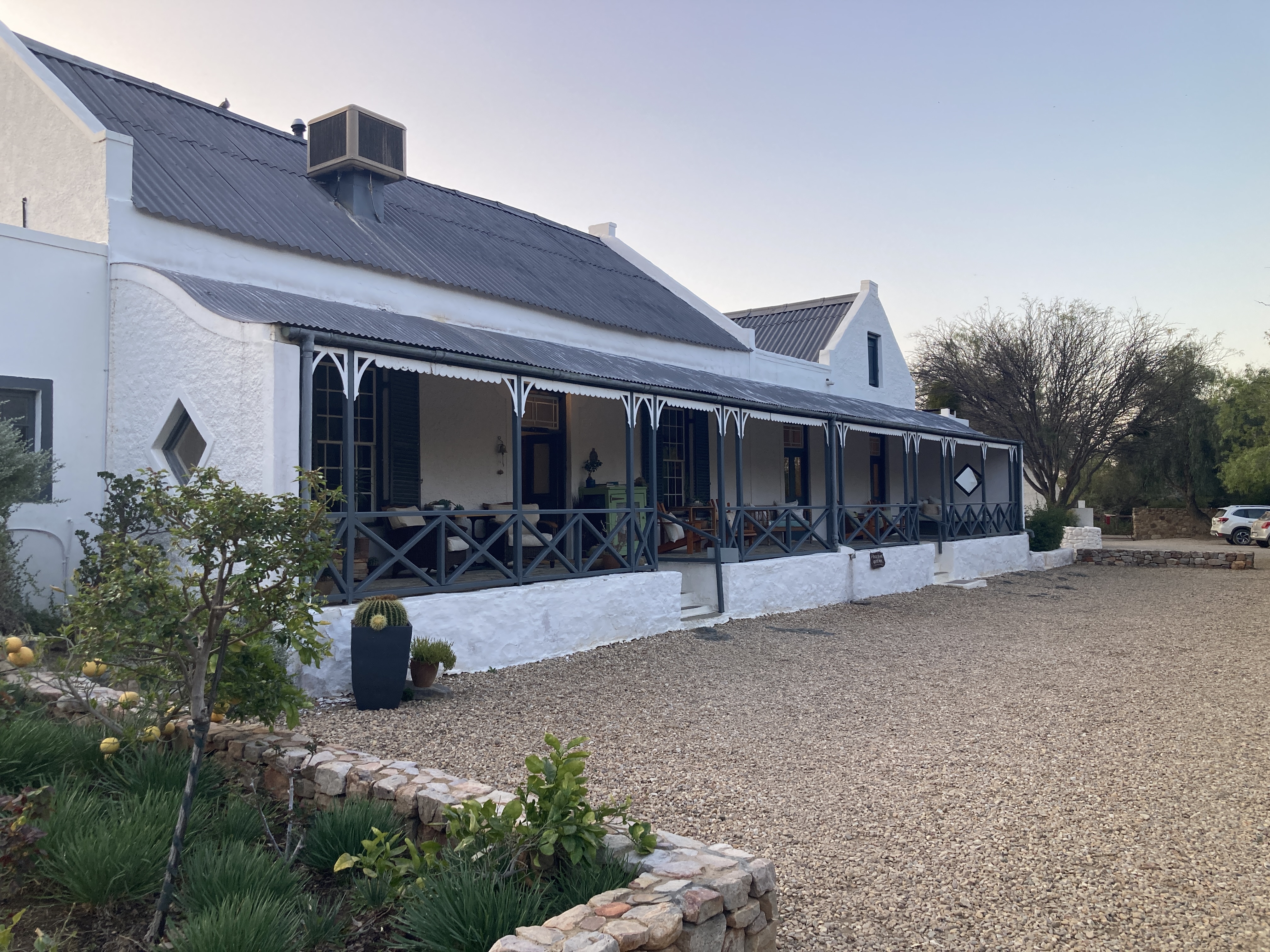
We have been to Prince Albert many times but there are always new places and eateries to hear about in this quiet yet dynamic Karoo dorp. Dennehof has a nice feel to it – not too pretentious with a mix of simple whitewashed buildings in the Karoo style making up a pleasant complex.
Dennehof
There was time before dusk to sit on the stoep and soak up the atmosphere, watched by the resident Spotted Eagle-Owl
Spotted Eagle-Owl, Prince Albert
The passing bird life included –
White-backed Mousebird
Purple Heron flying overhead probably to its roost
Sparrows, Cape and House, flitting about energetically
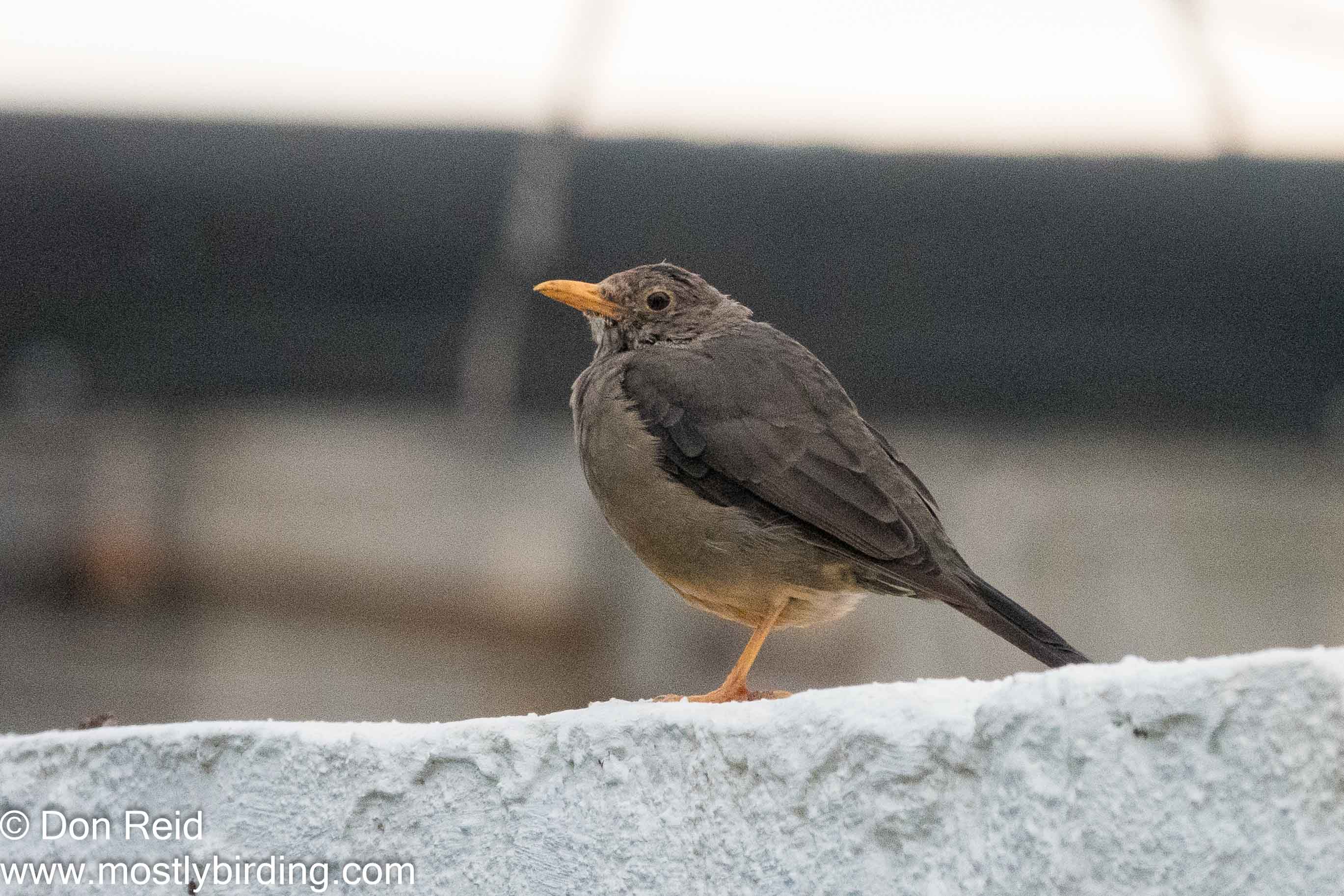
Karoo Thrush singing its cheerful song at close of day
Karoo Thrush
Pied Barbet calling plaintively
Dinner was chicken and salads that we brought with us.
Thursday 12th September 2024
Albert had said we could arrive for breakfast up to 9.30 am so being Gerda’s birthday we did exactly that. The setting is a delight – out in the garden in a glazed conservatory (where so many murders happen apparently) with a view of the adjoining wetland busy with Red Bishops and Masked Weavers doing their thing.
Dennehof Main houseDennehof – the breakfast Conservatory
The breakfast was above average and imaginative with a fruit and muesli mix that had us licking the bowl, followed by a herby omelette as good as they get – if for nothing else, I will return for that omelette. The coffee wasn’t half bad either.
That set us up nicely for the day which we planned as we went, starting with a slow drive down the main street of Prince Albert, followed by a short trip to the Olive farm north of the town which took us through some of the greenest Karoo countryside we have ever seen.
Along the way we stopped at the sewage works (as birders are wont to do) and at the low water bridges which, for the first time in our experience, had water flowing over them. The first of the two was productive for my atlasing list, adding half a dozen species in quick time –
Chestnut-vented Titbabbler
Karoo Scrub-Robin
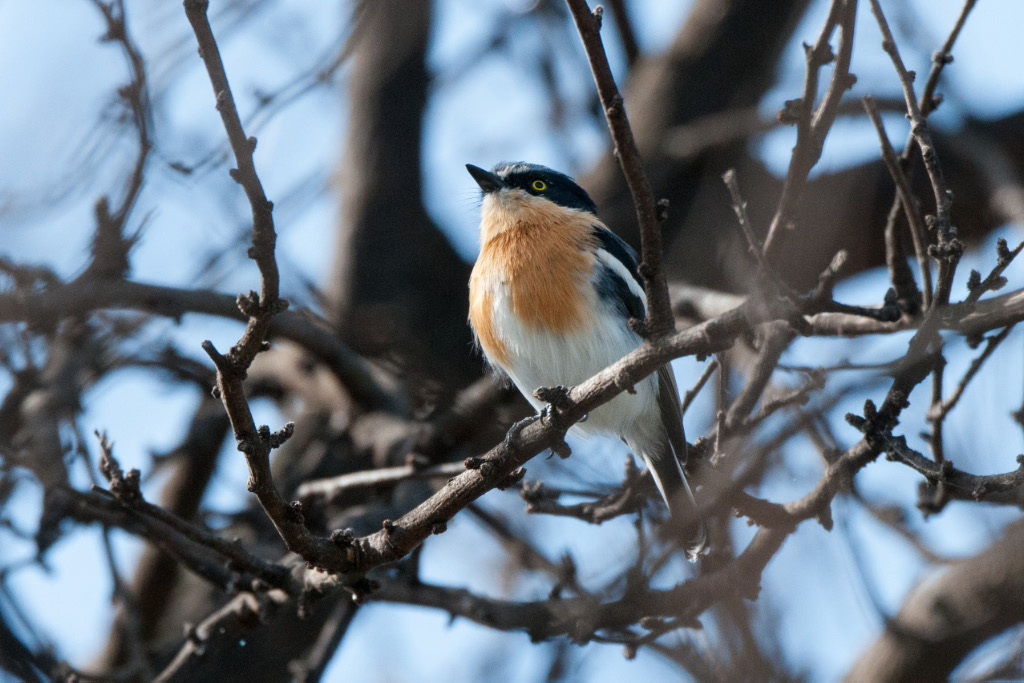
Pririt Batis
Pririt Batis
Fiscal Flycatcher
White-throated Canary that came to drink from the shallow stream
White-throated Canary
Even a Three-banded Plover unexpectedly dropping in for a wade
We were treated to the unusual sight (for this arid part of SA) of water flowing over the low water bridges on the outskirts of the town
Just after the second bridge we turned into the Olive farm and, as it was lunchtime, we ordered tea and a waffle which we enjoyed outside under the trees (all part of the birthday celebration of course).
View from the Olive Farm
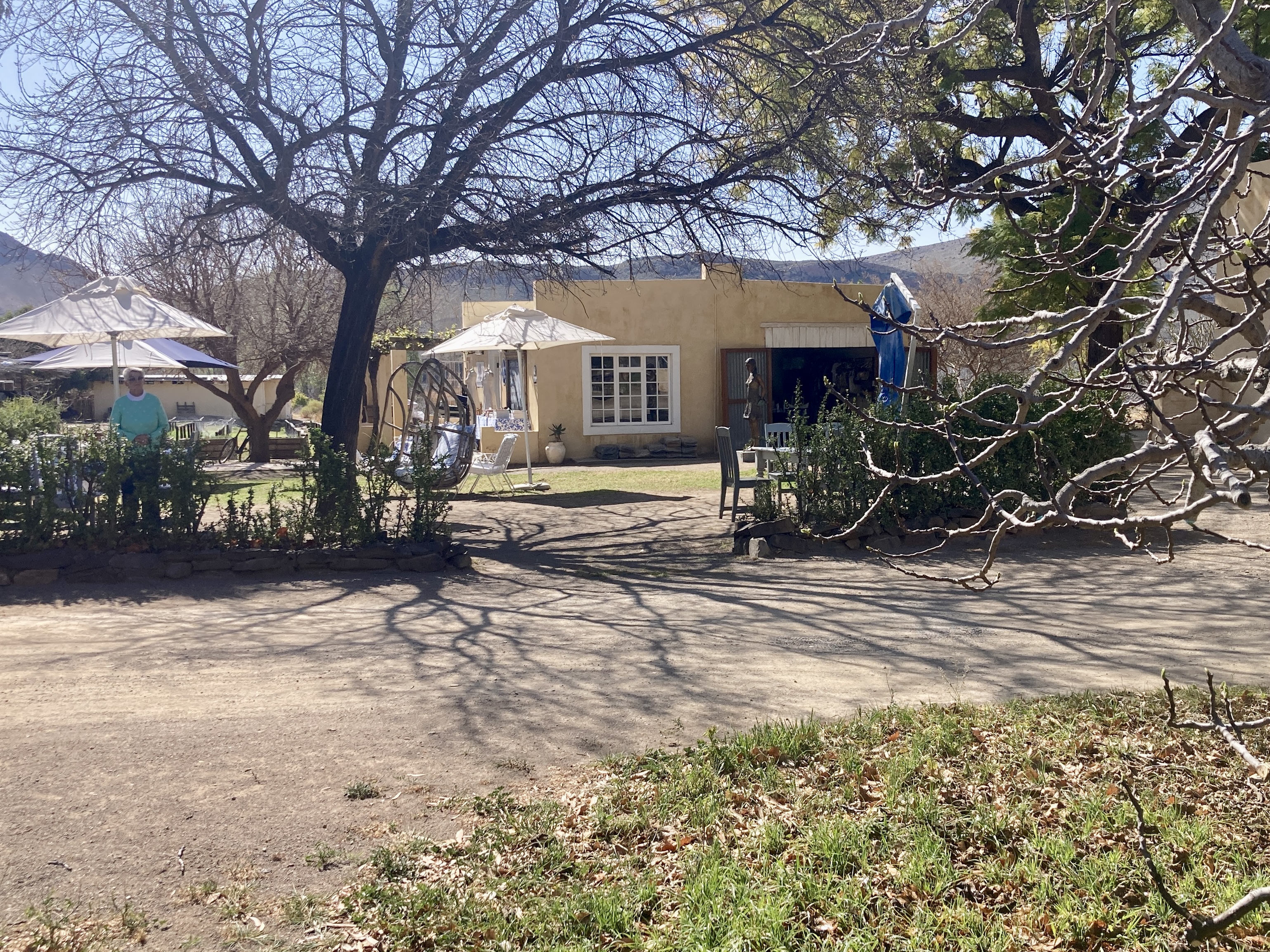
On the way back we turned off at the Karoo View signpost and drove a few kms to see the remnants of the flowers still in the open veld, then made a short stop at Karoo Souk which is a small group of craft shops, before heading back to Dennehof for a welcome rest.
Later, still in celebratory mode, we ventured out for a meal at the Yellow House restaurant which was up to the occasion and provided a nice ending to a very pleasant day.
Friday 13th September 2024
Another nice breakfast although we didn’t go for the full monty after last night’s big meal. After breakfast I added a few species to the atlas card including Alpine Swifts and Palm Swifts flying by and a Long-billed Crombec moving through the garden. That made four Swifts in all after seeing Little and White-rumped Swifts on the first day.
We had decided to drive to the fig farm at Weltevrede but first followed Albert’s suggestion of a drive along the ‘Bush pub’ road in search of a Karoo Eremomela. The bird eluded us but we did see a few other area specials such as –
Mountain Wheatear
Mountain Wheatear, Prince Albert
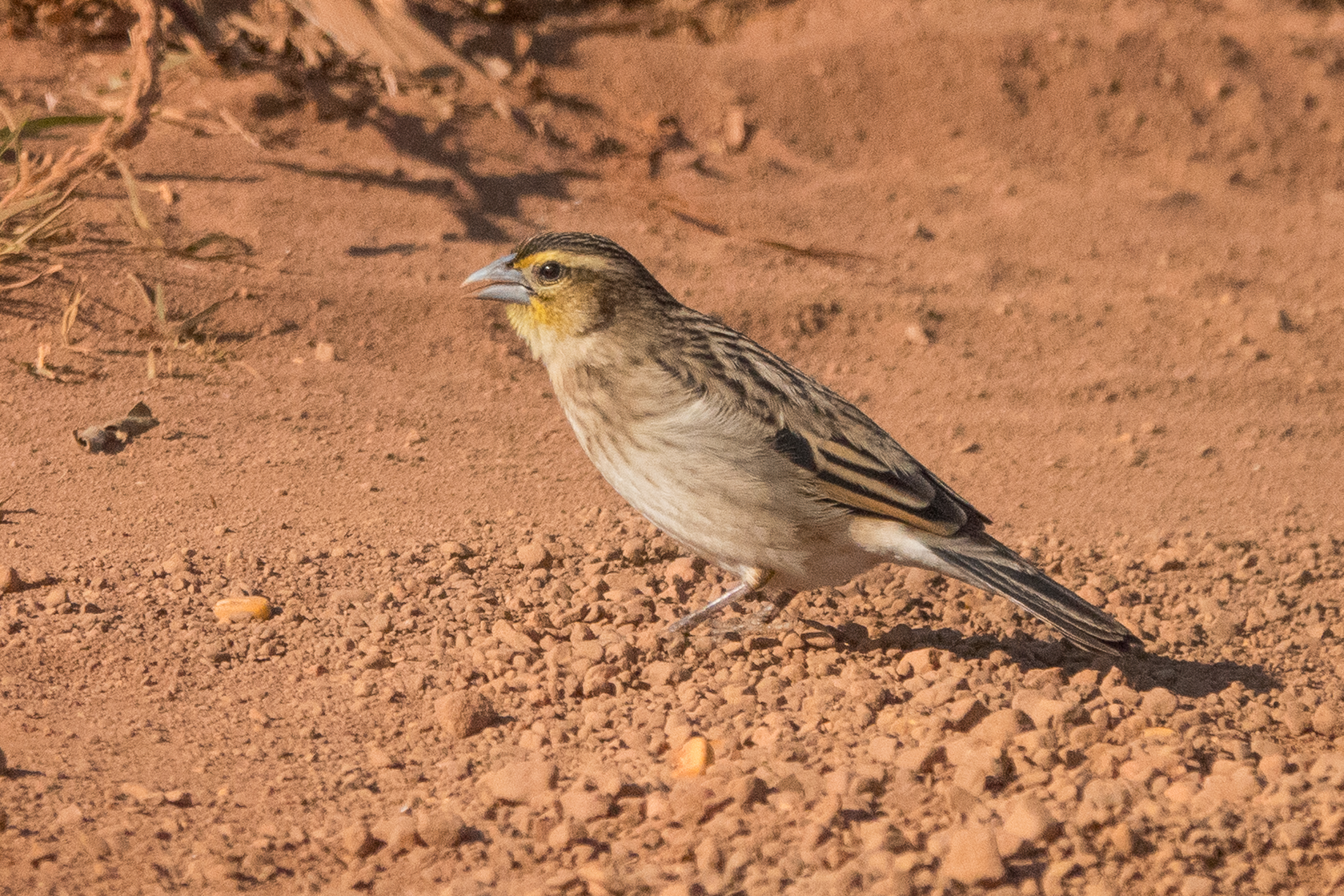
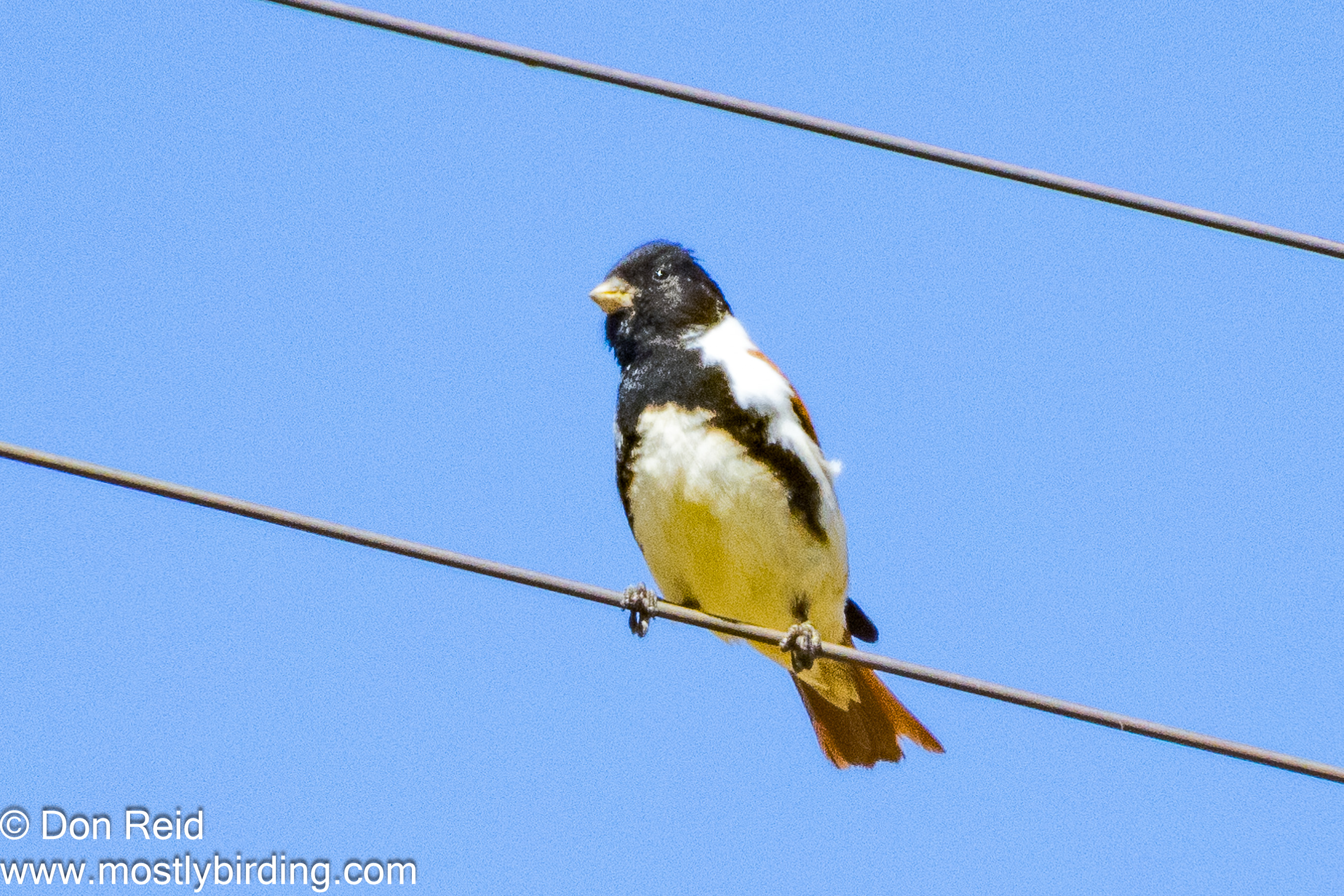
Lark-like Bunting
Dusky Sunbird
Rufous-eared Warbler
Rufous-eared Warbler
And no less than three species of Canary –
White-throated Canary
Black-throated Canary
Black-headed Canary
It was time to head to the fig farm, so we turned back to town and took the road past the cemetery signposted ‘Weltevrede 25 km’.
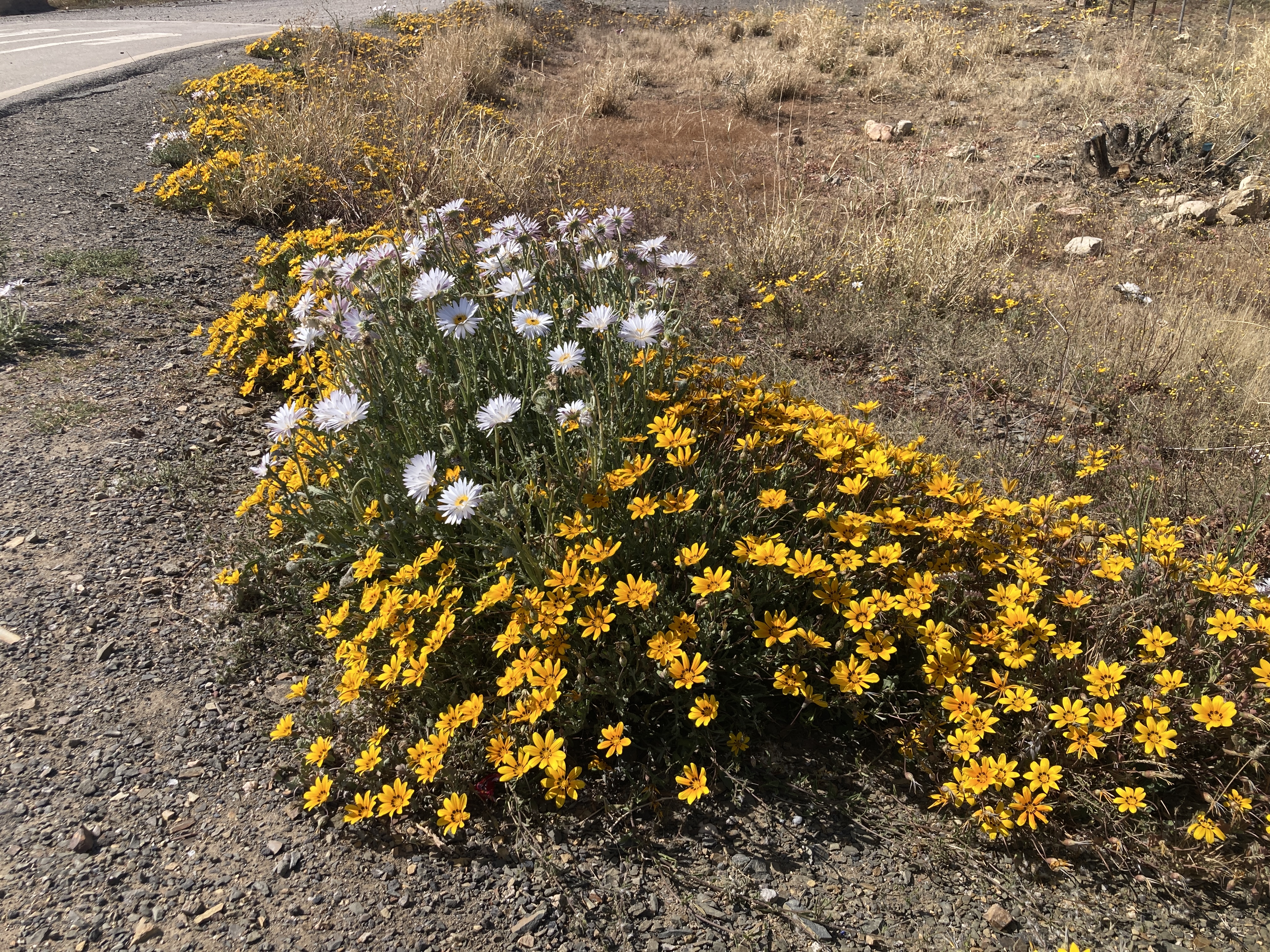
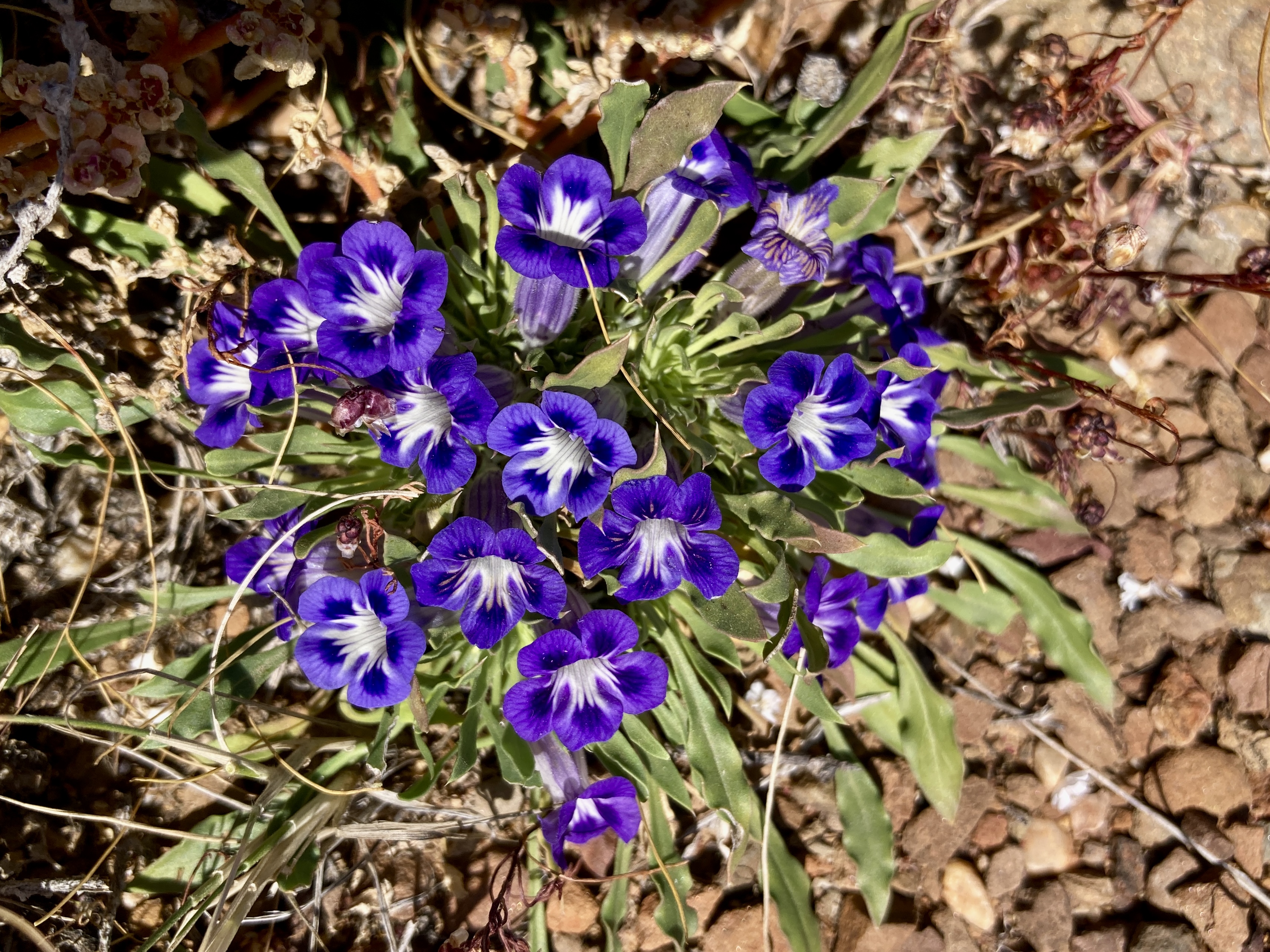
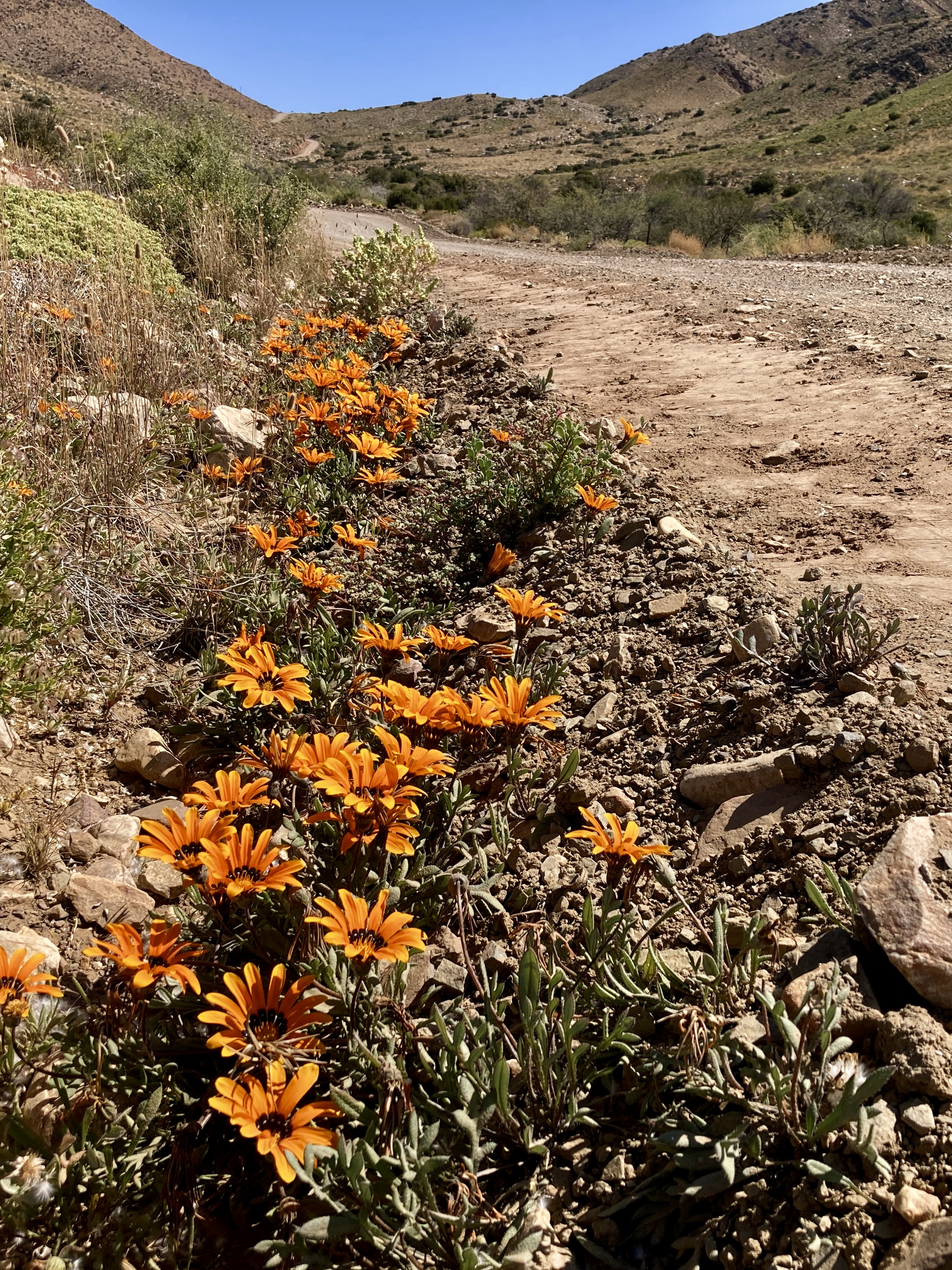
We took it slow, stopping for birds – and flowers – and there were plenty of both to attract our attention.
At around 6 kms the road passes between tall rocky cliff faces which, according to Albert and Inge, is a site where Ground Woodpecker has been seen.
We spent some time stopping to scan the rocks carefully for any sign of the Woodpecker and even more so on the way back, to no avail. The spectacular drive made up for that mild disappointment and we arrived at the farm where we found we were the only visitors – very different from our previous visit which was during the peak of fig picking and drying.
Weltevrede Fig Farm
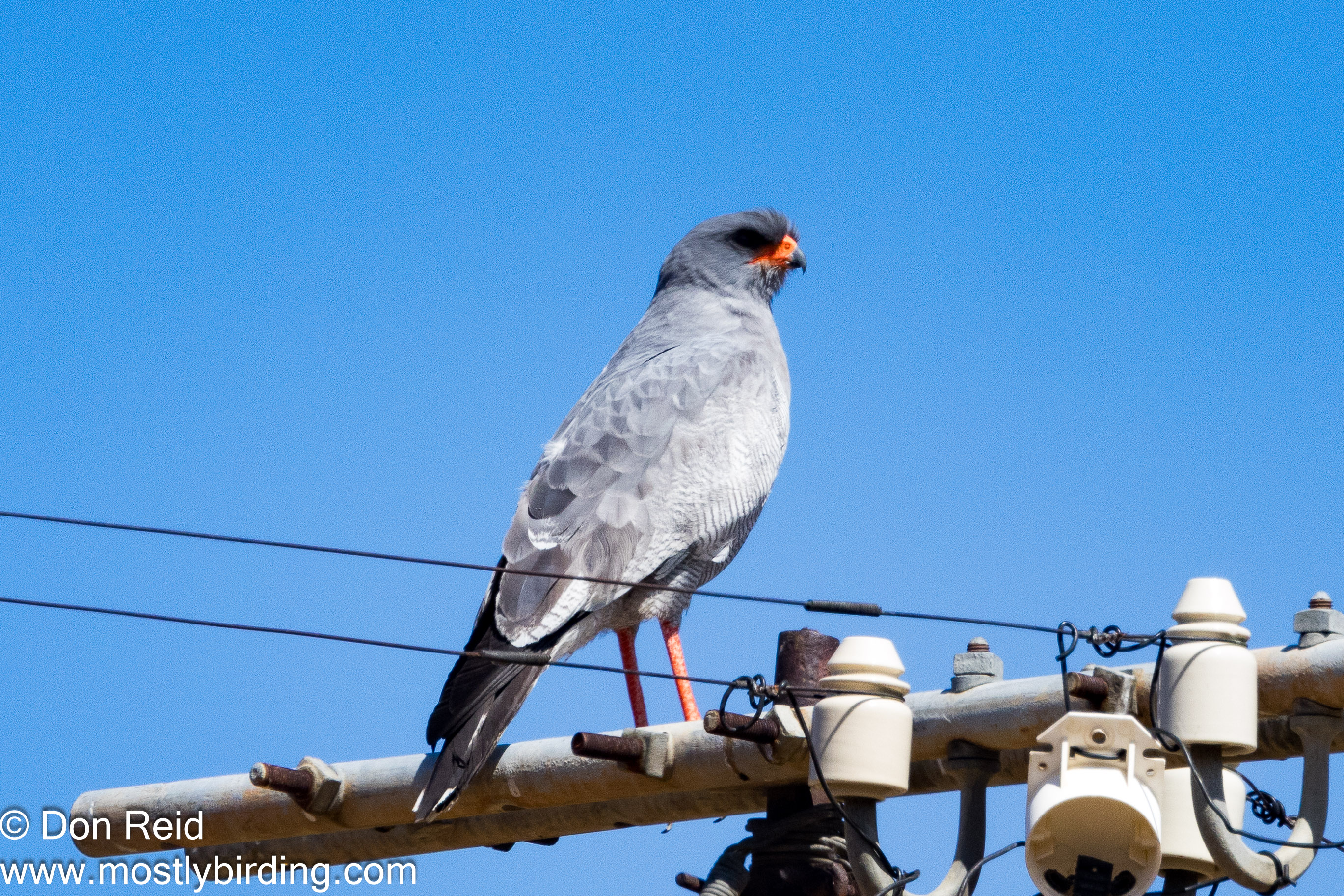
After treating ourselves to fig tart we headed slowly back – Black-headed Canaries were the most frequent sightings along with Pale Chanting Goshawk and Karoo Chat.
Black-headed Canary, near Prince AlbertPale Chanting Goshawk, near Prince Albert
We weren’t particularly keen to go out that evening but after a relaxing time at the room we had a bit more energy and ‘lus’ for Jeremy’s Restaurant which was a great choice and suited to our reduced appetite. We both had Taglietelle puttanesca not having ever had it and it was wonderfully simple and delicious, cooked by Jeremy himself. We treated ourselves to Spekboom ice cream which was different but not overly so and we left in a good frame of mind.
Saturday 14th September 2024
Up a bit earlier to fit in packing and breakfast before checkout time, we enjoyed the fruit and omelette once again, then greeted Inge and Albert like family and set off through town to Gays dairy for some of their lovely cheeses before heading out on the road back. This time we had time to stop and savour the flowers and birds – often both at the same spot.
Lunch venues are limited on this route so we looked for a place in De Rust, ending up at Herries which is the local pub and turned out to be a good choice even though we just had tea and a sandwich in a venue that almost demands you have at least a beer or two if not a klippies and coke.
The rest of the trip was uneventful with stops in George at the nurseries and a ‘koffie vir oulaas’ at Elvis Brew, a favourite coffee spot near the George Airport, before heading homewards, well satisfied yet again with our choice of Prince Albert for a short breakaway.






























 Mostly Birding