Tag Archives: Birding Australia

Australian Adventure – Going Walkabout in Sale Town Centre

I love walking and have always found that it is by far the best way to explore a new town or city – you may not get to see everything they tell you about in the guide books but it lets you get closer to the soul of a place, discovering little gems as you go, watching people going about their business, seeing all the many ordinary things that make a town what it is.

So when Gerda and Liesl went shopping one afternoon. I took the opportunity to tag along, but only as far as the main shopping street where I left them and started my random walk.

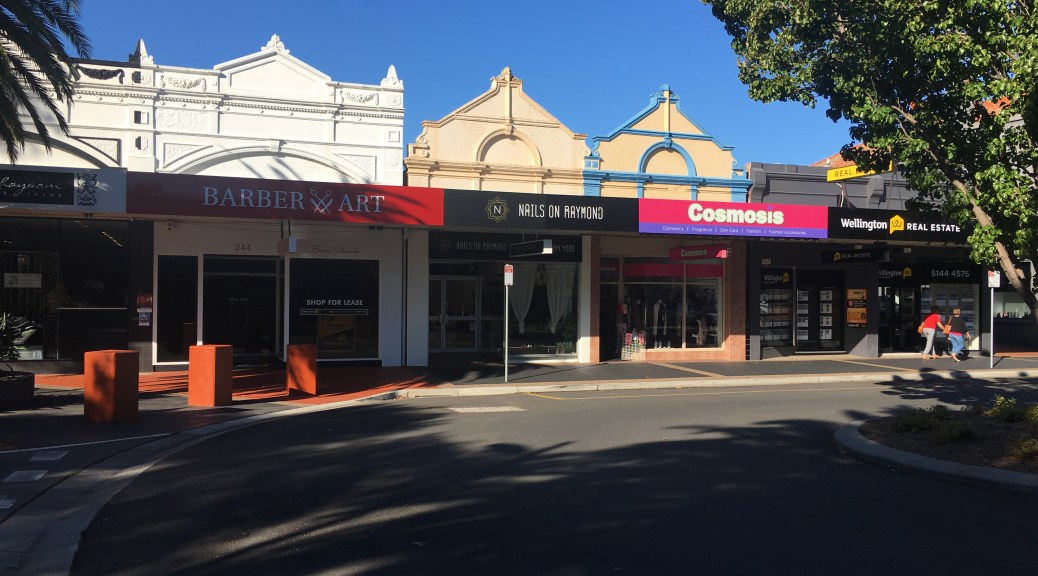
The main shopping street is called Raymond Street and is lined with a variety of “small town” shops along both sides with the road reduced to a minimum size to allow maximum pedestrian space and room for parking and landscaping.
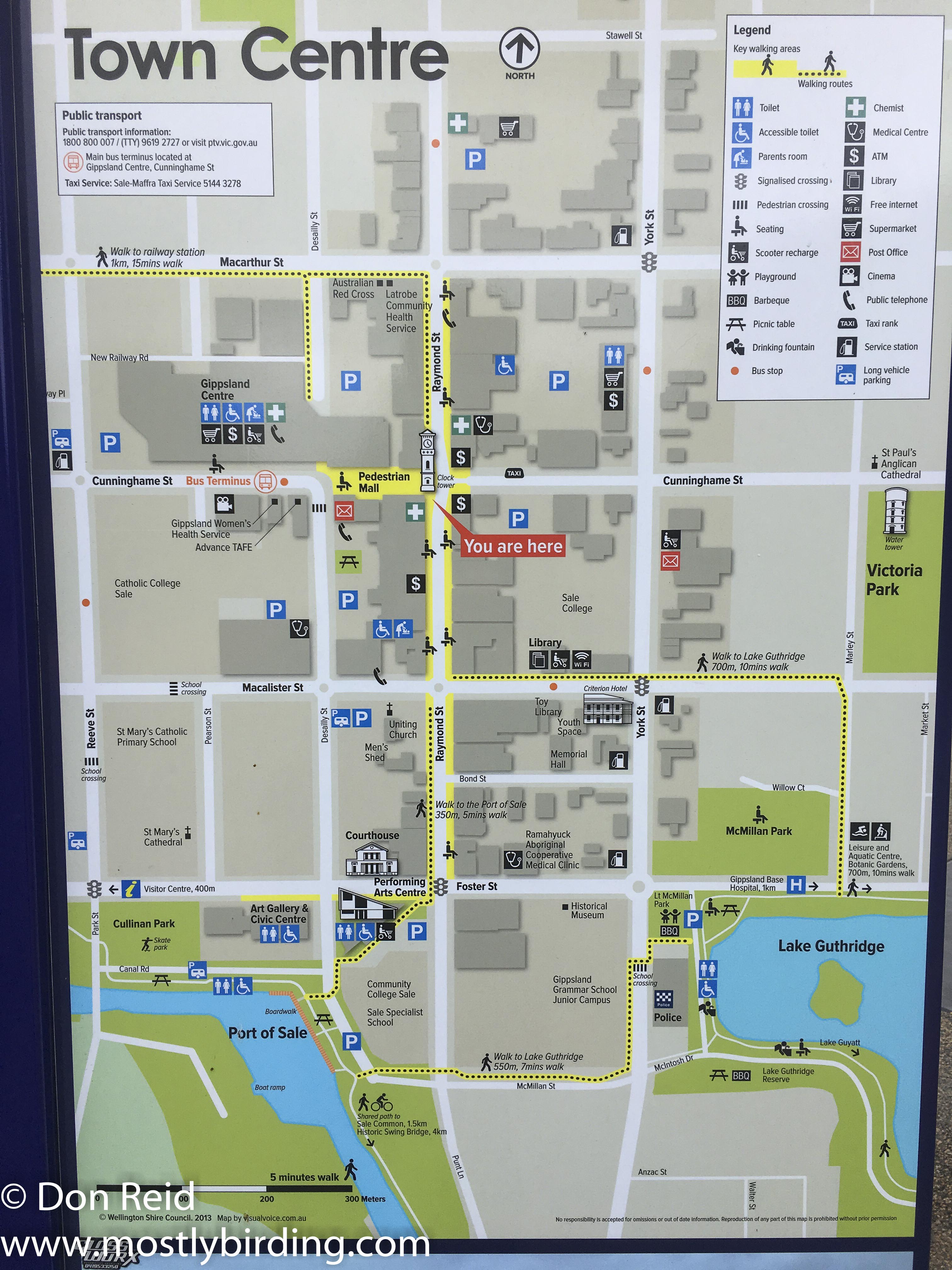
Sale map

I started by walking up to an intersection where a tall brick clock tower stands – there I found a second-hand book store to browse in and came away half an hour later with a very readable novel for $8 (R80). From there I meandered around the block past the shopping centre and came upon my first surprise – an old Railway Signal Box building, looking spick-and-span but rather forlorn and out of place across the road from the shopping centre parking area.
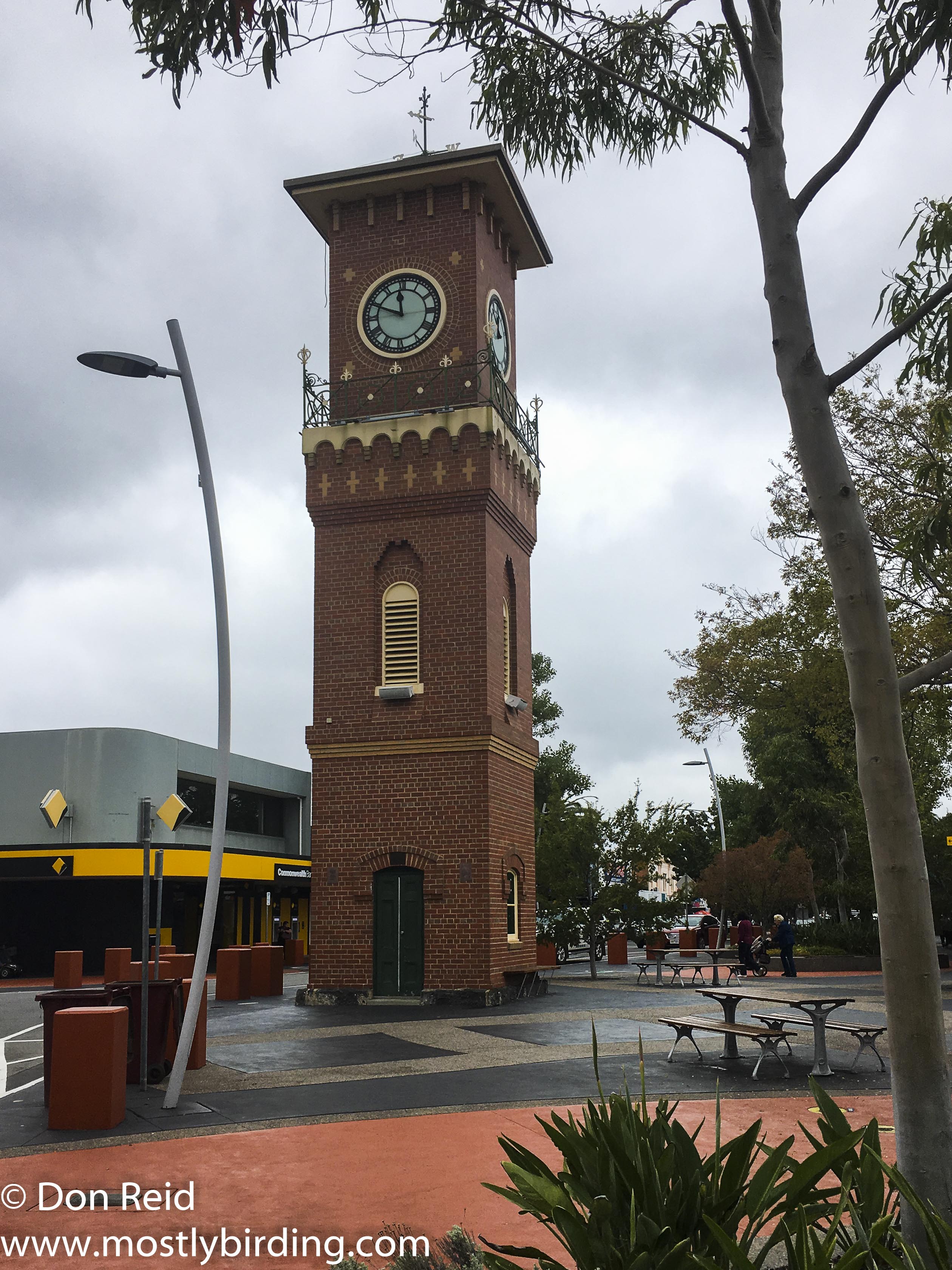
Clock Tower, Sale
Old Signal Box, Sale, Victoria

I later found it was erected in 1888 on the site of the original Railway Station, which was demolished in 1983 to make way for the shopping centre. The Signal Box, railway gates and 2 signals were left as a reminder.

Old Signal Box, Sale, Victoria

Wandering further, I passed the Catholic School with its neat brick buildings and came to the busy main road through Sale, which I crossed. On the other side, signage pointing to “Port of Sale” piqued my curiosity – carrying the name “Port” implies being located at the sea or at least on a major waterway, neither of which apply to Sale, so what was this about?

I had read about the Sale Canal but hadn’t absorbed the details – later I read up more on the subject and found that the pioneers of the area, seeing the advantage of access to the Gippsland Lakes, cut the 2,5 km long canal which links the town to the Thomson River and beyond to the Gippsland Lakes, establishing Sale as a busy port for steamers plying the 400 square kms of the lakes system.
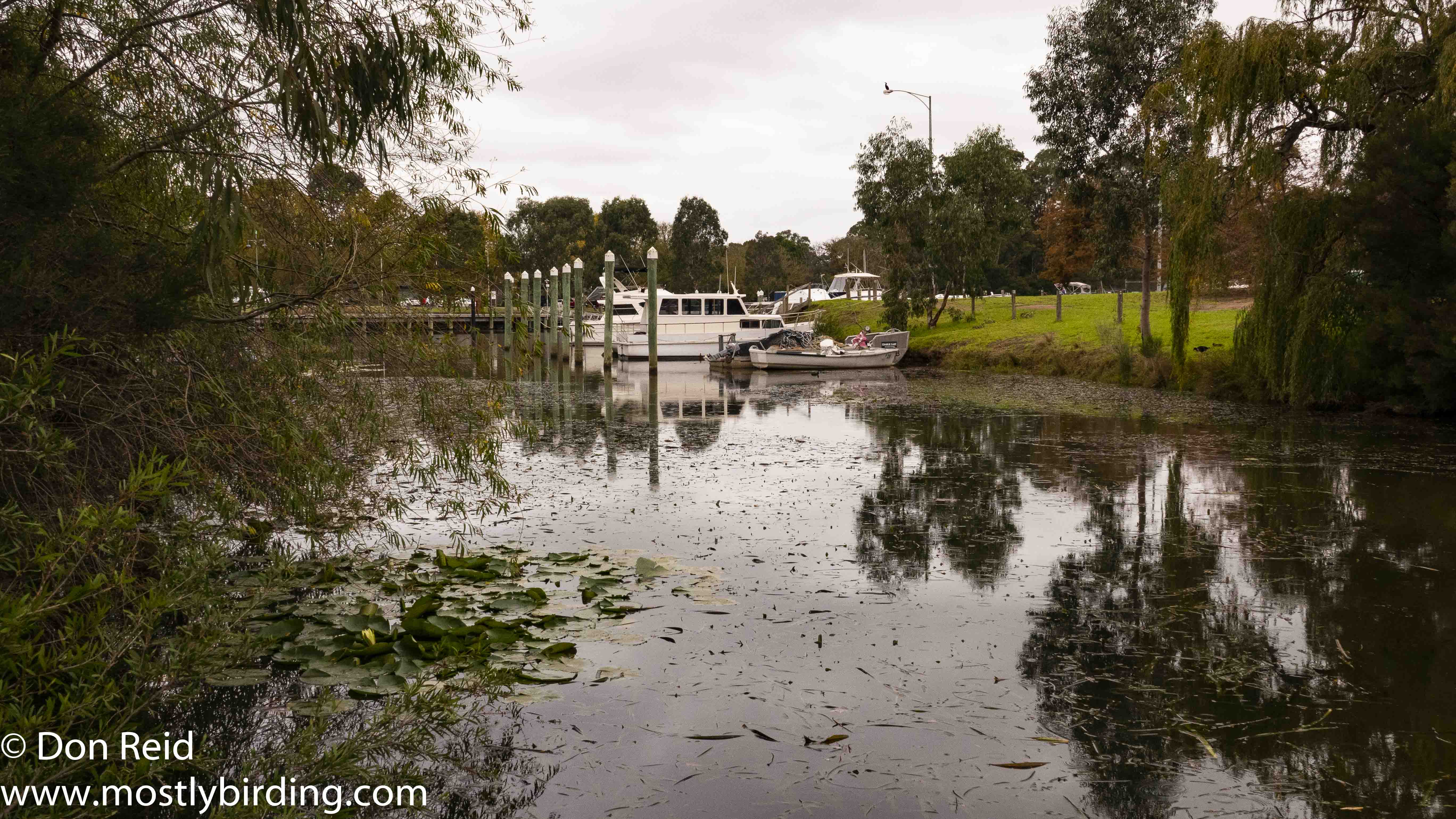
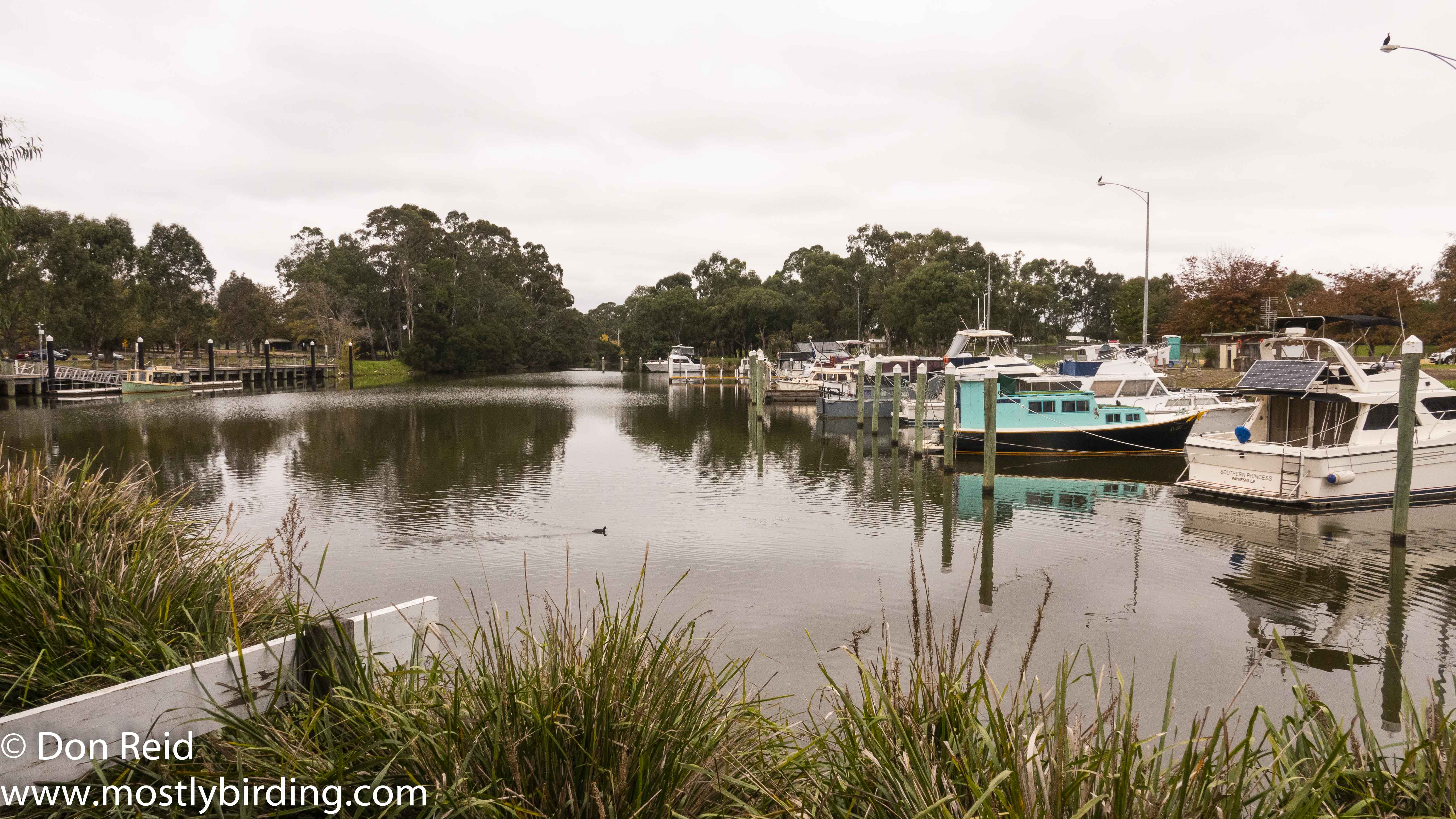
Port of Sale, Victoria

Now it’s a dock for pleasure boats and the precinct has been developed into an attractive spot for picnics and leisure activities. I wasn’t planning to bird so had left my binos at home, but sight of some waterbirds on the water had me using my backup plan – the telephoto lens on my camera which brought them digitally closer for ID purposes – Australasian Grebe as it turned out.

Australian Grebe, Sale, Victoria
Eurasian Coot, Sale, Victoria

Next, I was drawn to the new-looking Port of Sale civic centre, got several pamphlets from the Visitor Centre and did a quick tour of the Art Gallery, before heading back towards the town centre.
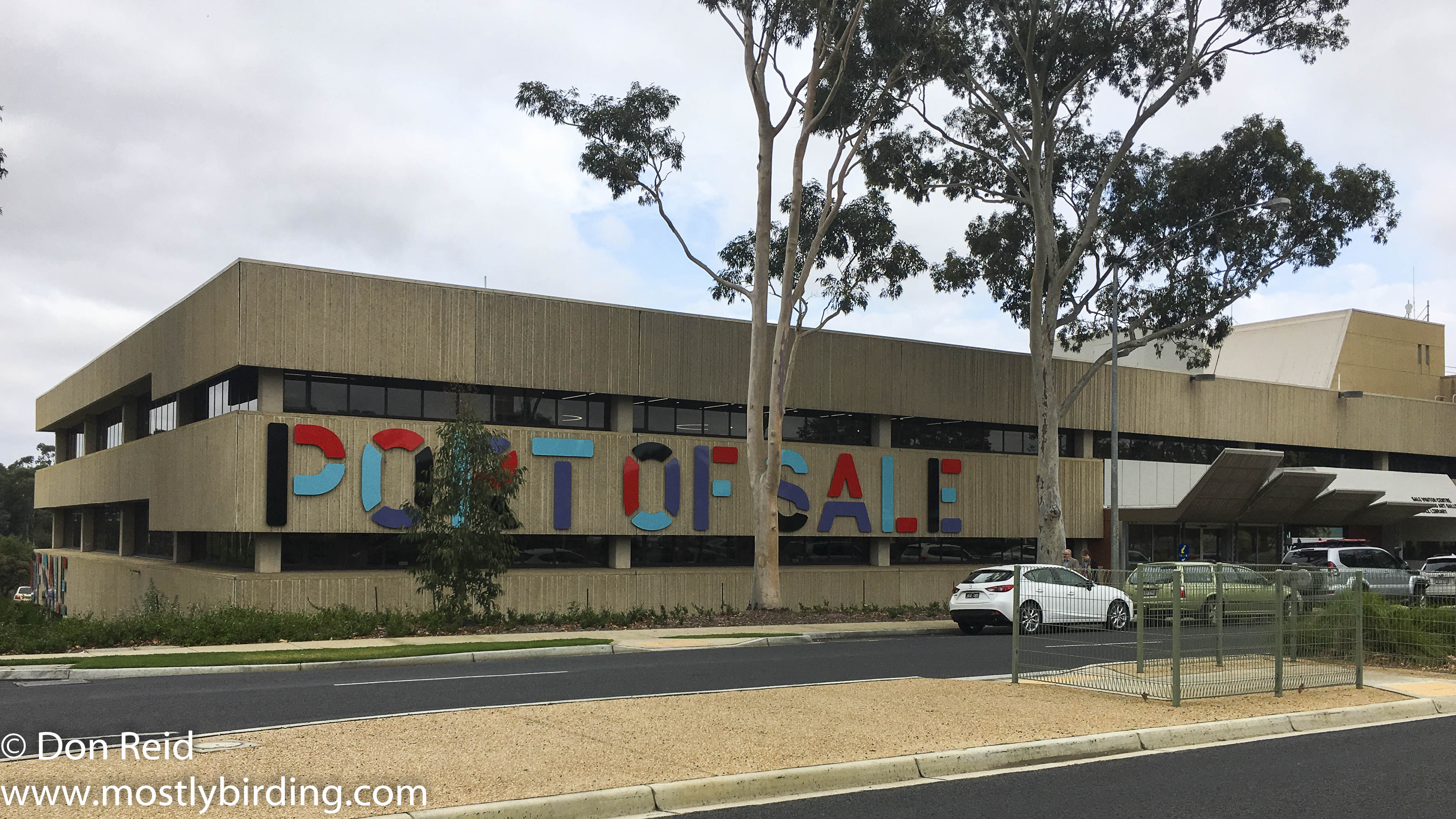
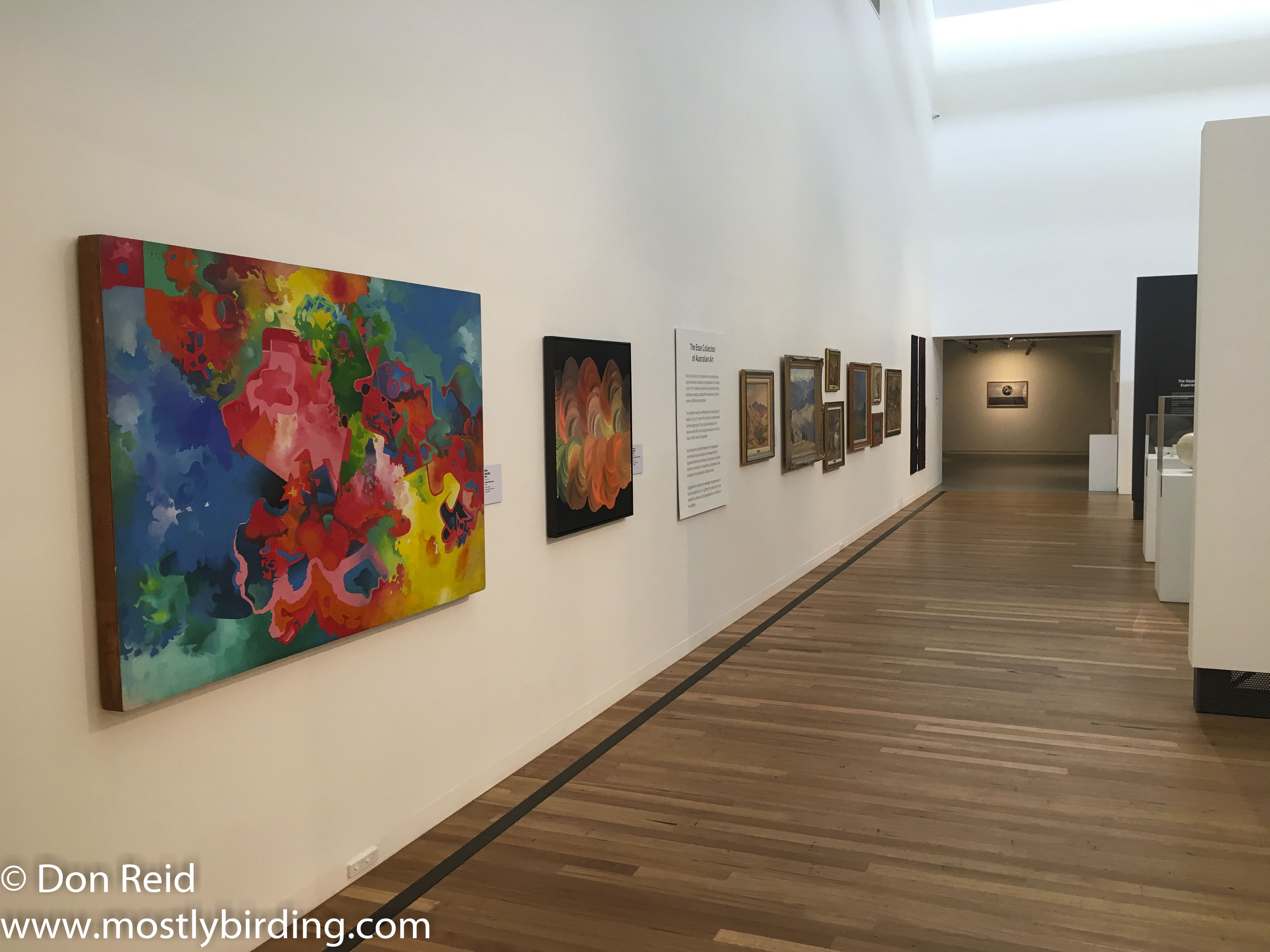
Civic Centre, Sale
Art Gallery, Sale

On the way I passed a few older buildings – the Court House, Victory Hall and some charming houses that have been beautifully maintained with their Victorian style architecture.
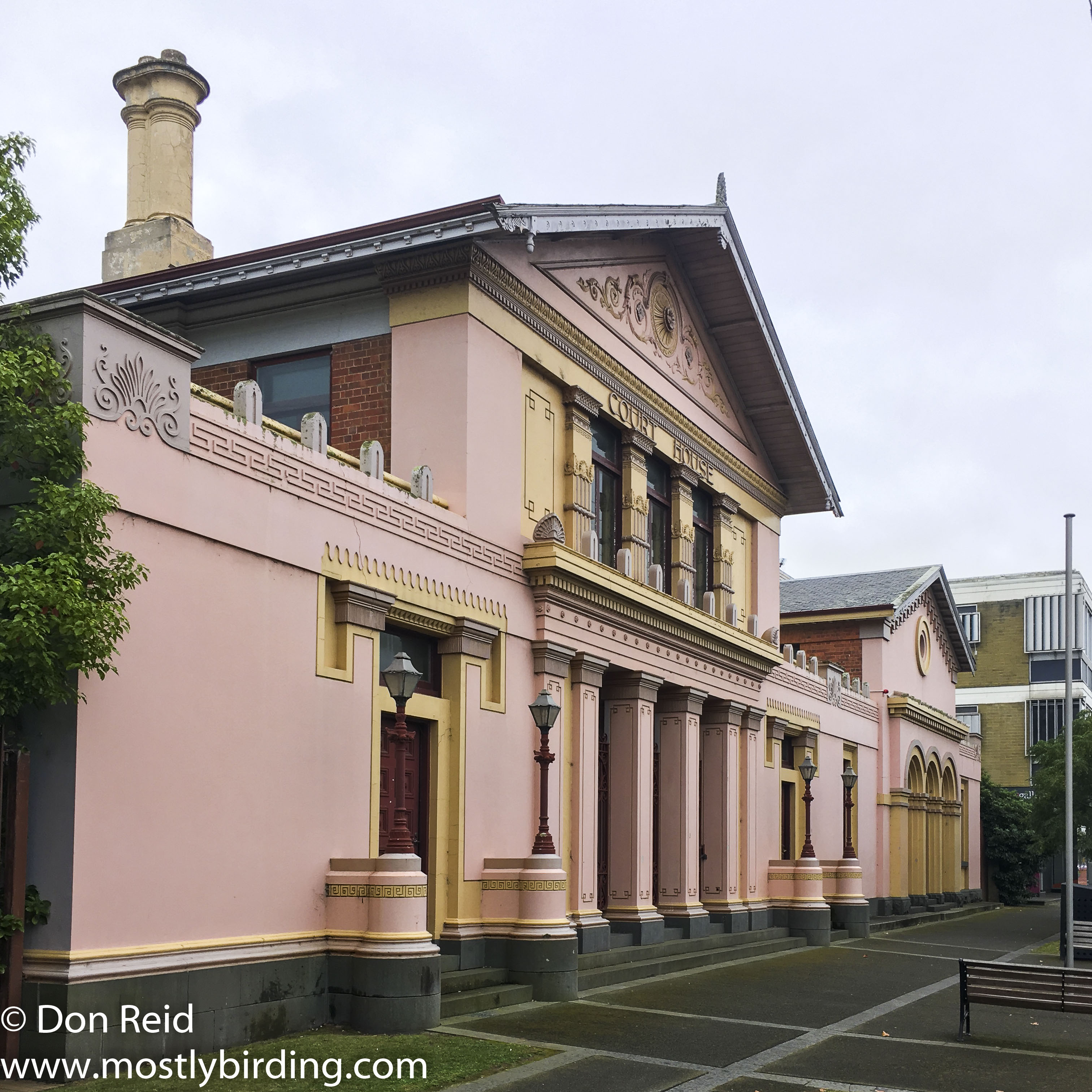
Court House, Sale
Court House, Sale
Victoria Hall, Sale
Old House, now offices
Old house, Sale

Seeing Sale’s Cinema took me back to Saturday mornings at the Scala cinema in Cape Town back in the ….. oops almost gave my age away. Anyway, it was quite a long time ago.

Cinema, Sale, Victoria

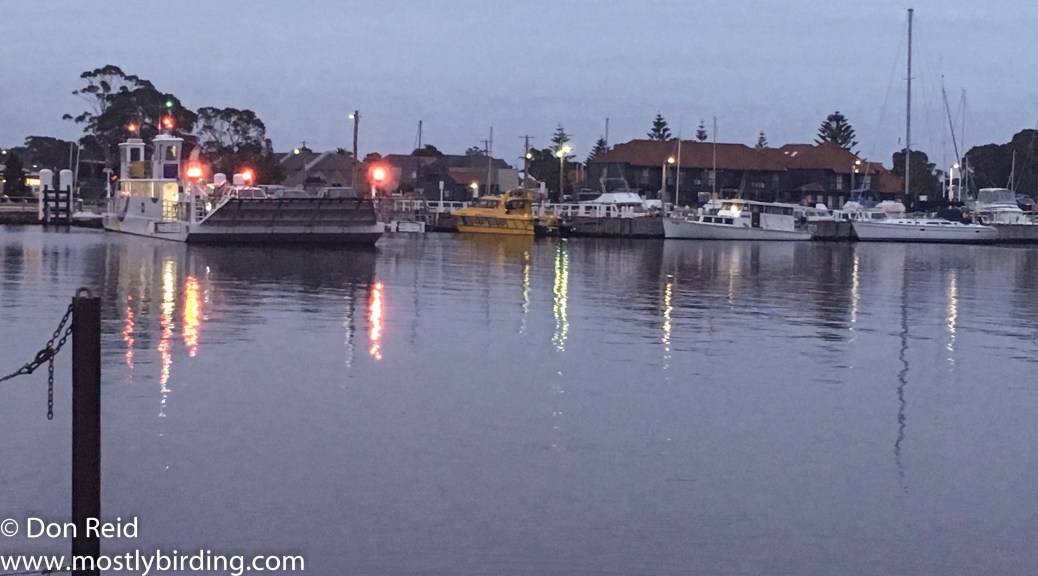
By now it was close to 2 hours since I had left the girls and I met them for coffee at the Centre Bakery, housed in a tiny old church in Cunningham Street, concluding a lovely walk through this most civilised town
Australian Adventure – Paynseville and Raymond Island

We were beginning to settle in Sale, Victoria, the new home of our son Stephan and family, although jet-lag brought on by the 8-hours-ahead time difference was playing tricks with our sleeping patterns. Nevertheless we were eager to see a bit of Victoria and were more than happy to go along with Stephan’s suggestion that we do a day trip to Paynesville and Raymond Island, a comfortable hour’s drive from Sale.

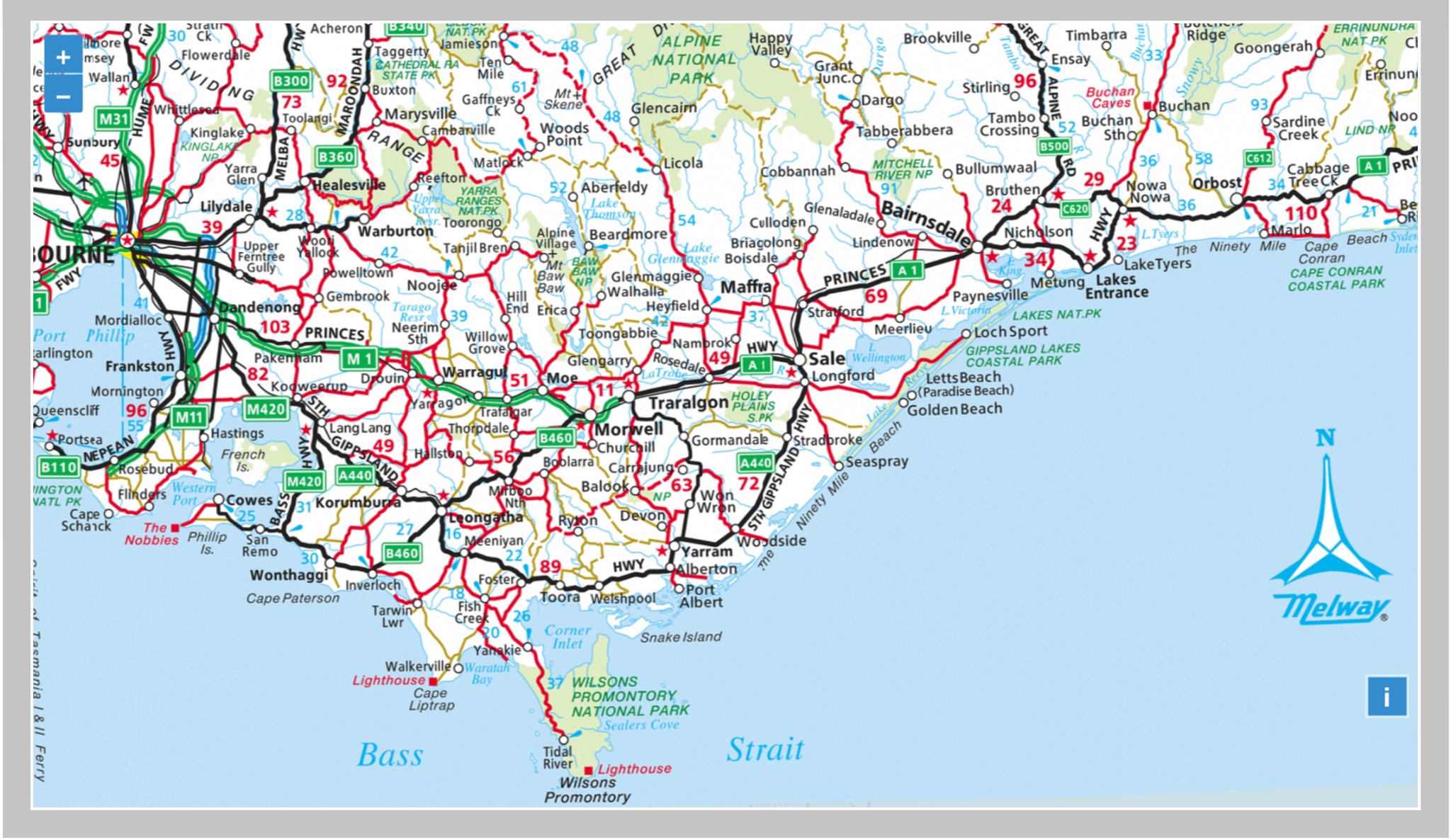
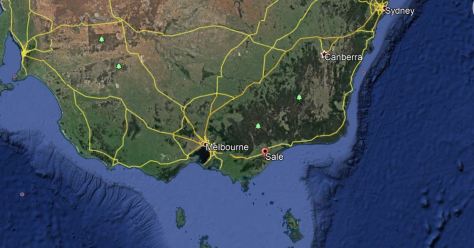
Just for orientation, here are a couple of maps (courtesy Google Earth) to show the position of Sale relative to Melbourne and the other major cities in the south-eastern part of Australia, and the location of Paynesville –

Map Sale position
Sale lies about 200 kms east of Melbourne
Map Sale-Paynesville
Sale – Paynesville

We left just before lunchtime after a relaxed morning at home in Sale and drove to Paynesville which is situated on Lake King, a seawater lake not far from Lakes Entrance where – you guessed it – the sea enters the lake. The drive was along smaller country roads through pleasing landscapes of farming areas, expansive fields and occasional rivers, or creeks as they are often called in Australia. Interestingly some of the stretches of road either side of the river have signage indicating that they are “subject to flooding” and strategic posts indicate the depth just in case you feel like testing it during a flood!

Paynesville-1
The road is lined with trees in places (iphone shot while driving – don’t try this at home}

We felt at home when we passed a roadside farm stall advertising avocados at 49c each – we should have stopped as they are $2.50 in the shops, but were already well past by the time we realised what it was.

After an hour of easy driving we arrived in Paynesville and headed to the Esplanade where we found parking and walked to the Pier 70 restaurant for a delicious lunch of fish and chips, with a view over the channel that separates Paynesville from Raymond Island just a couple of hundred metres away.

Australian Magpie, Paynesville & Raymond Island, Victoria
Australian Magpie, Paynesville – one of the more common birds encountered in Australia
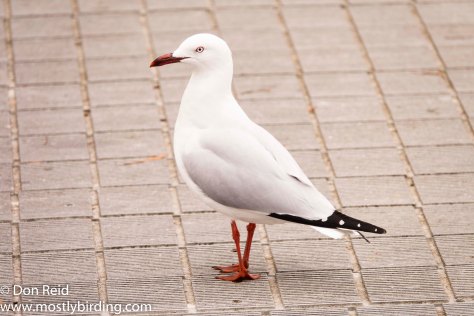
Silver Gull, Paynesville & Raymond Island, Victoria
Silver Gull, Paynesville & Raymond Island, Victoria – a really handsome species of gull with its bright eyes and red bill contrasting with the white body
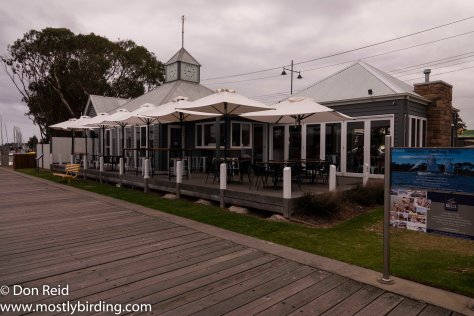
Pier 70, Paynesville, Victoria
Pier 70 restaurant, Paynesville, Victoria

I kept getting distracted from the important business of eating by various birds that were visible on and above the water but had my binos on hand to determine what they were. There were many Silver Gulls / Chroicocephalus novaehollaniae wheeling above the water and I spotted a single Pacific Gull / Larus pacificus on the opposite side. I had already found that Black Swans / Cygnus atratus and Australian Pelicans / Pelecanus conspicillatus seem to pop up wherever there is a large-ish body of water and this spot was no exception.

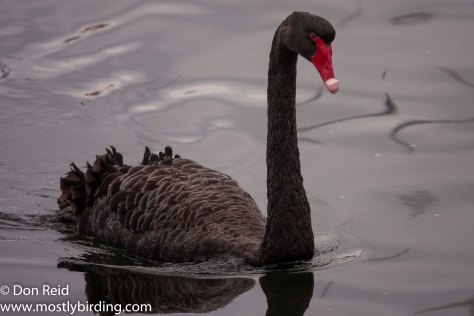
Black Swan, Paynesville & Raymond Island, Victoria
Australian Pelican, Paynesville & Raymond Island, Victoria
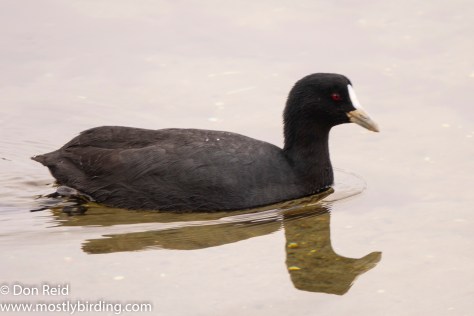
Eurasian Coot, Paynesville & Raymond Island, Victoria

On the opposite bank I spotted a heron, which turned into a White-faced Heron / Egretta novahollandiae when I had it focused in the binos. Nearby Little Pied Cormorant / Microcarbo melanoleucos  preened on a bollard projecting from the water.

Little Pied Cormorant, Paynesville & Raymond Island, Victoria
Paynesville-8
A nice plate of fish and chips to accompany the birding

A large Tern swooping over the water looked familiar and once I could get a good enough view I realised it was a Swift Tern – or Greater Crested Tern / Thalasseus bergii as it is listed in my Australian bird book – a species I am very familiar with as it occurs in numbers in Mossel Bay.

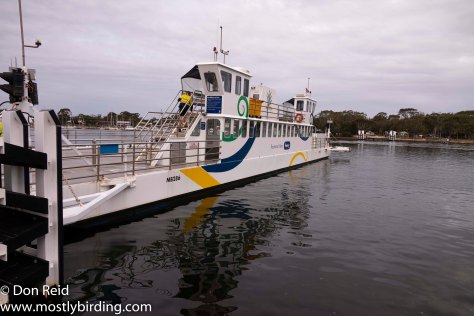
Lunch over, we walked to the nearby ferry for the short ride of just 4 minutes across the channel on the chain-driven ferry to Raymond Island, a small island (6km long and 2km wide) which lies some 200 metres inland of the coast.

Ferry, Paynesville & Raymond Island, Victoria

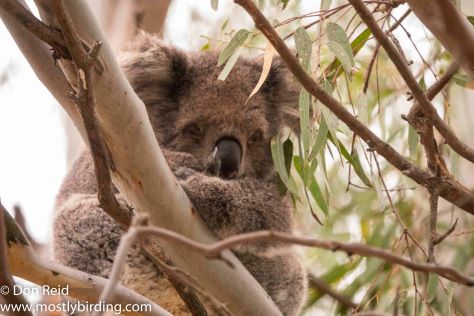
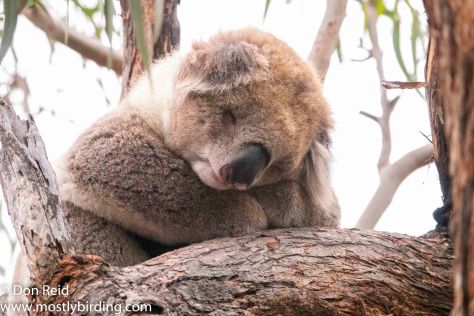
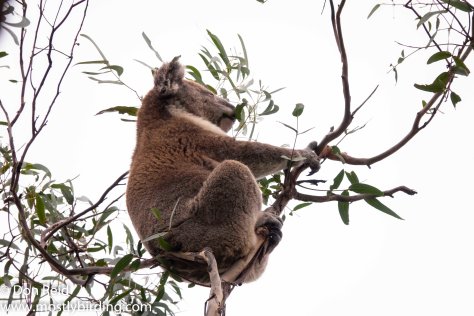
On the island we followed the Koala trail which initially winds between houses then emerges into bush interspersed with tall trees. It did not take long to spot the first Koala, sleeping high up in the branches, and several more thereafter, some sleeping just as soundly, others feeding slowly and methodically on the green foliage. Koalas were introduced to the island as a conservation measure in 1953 and now number more than 200.

Koala, Raymond Island, Victoria

Next up was a relaxed pair of Laughing Kookaburras / Dacelo novaeguineae, a bird I was particularly hoping to see, looking as I expected like a very large Kingfisher – they posed like old pros and left me with a few photos to treasure.

Laughing Kookaburra, Raymond Island, Victoria

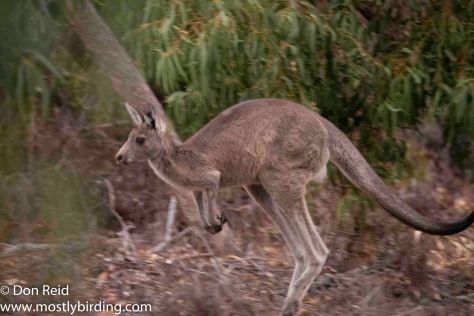
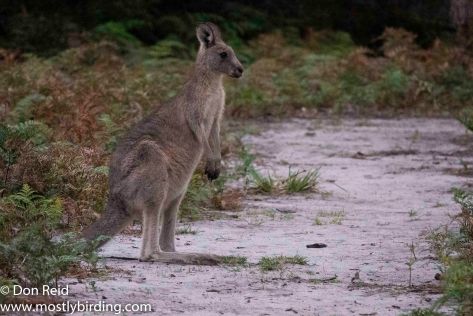
Stephan was ahead of us and called us closer as he had spotted a couple of Eastern Grey Kangaroos in the low bush! We approached cautiously and there they were – our first views of this famous animal with its unusual shape and looks. One came bounding our way, showing how effective this technique is to propel the animal at a fair speed

Eastern Grey Kangaroo, Raymond Island, Victoria

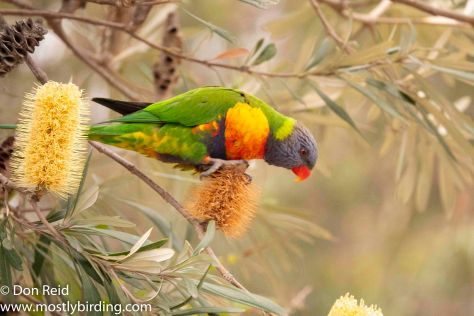
In between viewing these (for us) brand new animals, we also spotted several of the colourful birds that Australia is renowned for – groups of Crimson Rosella / Platycercus elegans, Eastern Rosella / Platycercus eximius and Rainbow Lorikeet / Trichoglossus moluccanus moved through the trees giving glimpses of their brilliant colouring while Galahs / Eolophus roseicapilla simply paraded on the lawns, showing off their pink, grey and white plumage.

Rainbow Lorikeet, Raymond Island, Victoria
Galah, Raymond Island, Victoria

We had heard from Stephan about the Common Bronzewing / Phaps chalcoptera, a pigeon-like bird with interesting multi-coloured plumage, and were thrilled to find one sitting on a nearby fence

Common Bronzewing, Raymond Island, Victoria
Paynesville & Raymond Island, Victoria

We had seen a lot in one afternoon and made our way back to the ferry as dusk fell, most satisfied with the outcome of our first outing

Paynesville-24


Australian adventure – the Start

Life is full of surprises, some good, some less so and our son’s announcement that they were thinking of relocating from Potchefstroom in South Africa to a small town in Victoria, Australia definitely belonged to the latter when he first raised it some two years ago. The family moved lock stock and barrel to the town called Sale in September 2018, which meant that, if we wanted to see them other than on video calls, we would have to travel a little further to do so – about 11 000 kms further in fact!

It did not take much persuasion to make the trip, and on Sunday 14th April 2019 we boarded Qantas flight QF64 to Sydney then took a further short flight to Melbourne where we arrived after 7pm local time.

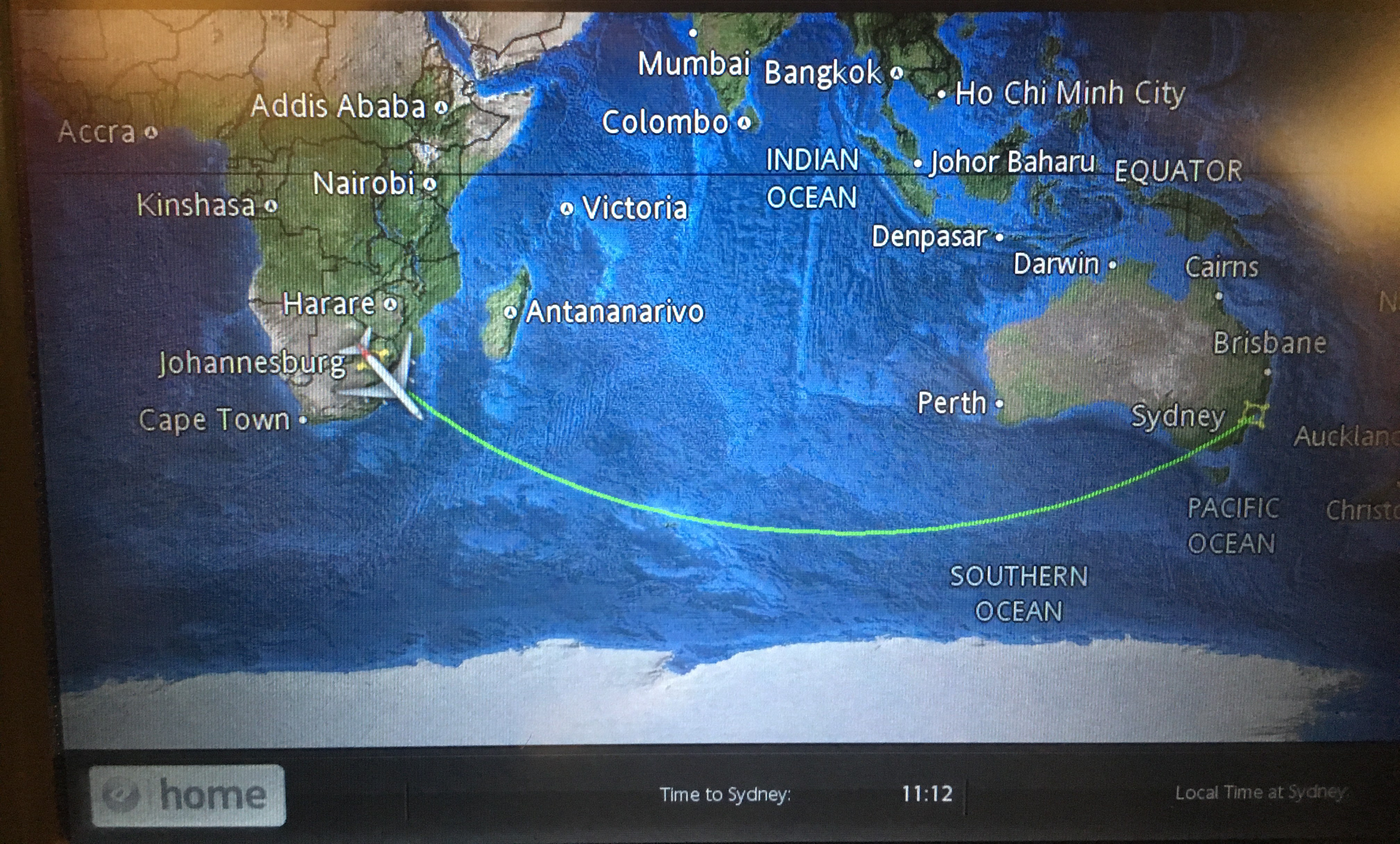
The flight route is almost over Antarctica

Stephan and the whole family had come to meet us – so good to see them all in the flesh again! Fortified with a good coffee and a sandwich we proceeded to the mini-bus that Stephan had rented and set off to Sale some 2.5 hours drive further east, taking our total travel time to 24 hours door-to-door – it’s not easy being a senior jet-setter but sometimes you just have to do these things! That wonderful invention – Premium Economy – certainly helped to ease the pain of a long-haul overnight flight, however we felt the effects of the 8 hour time difference for a few days before settling into a new body rhythm.

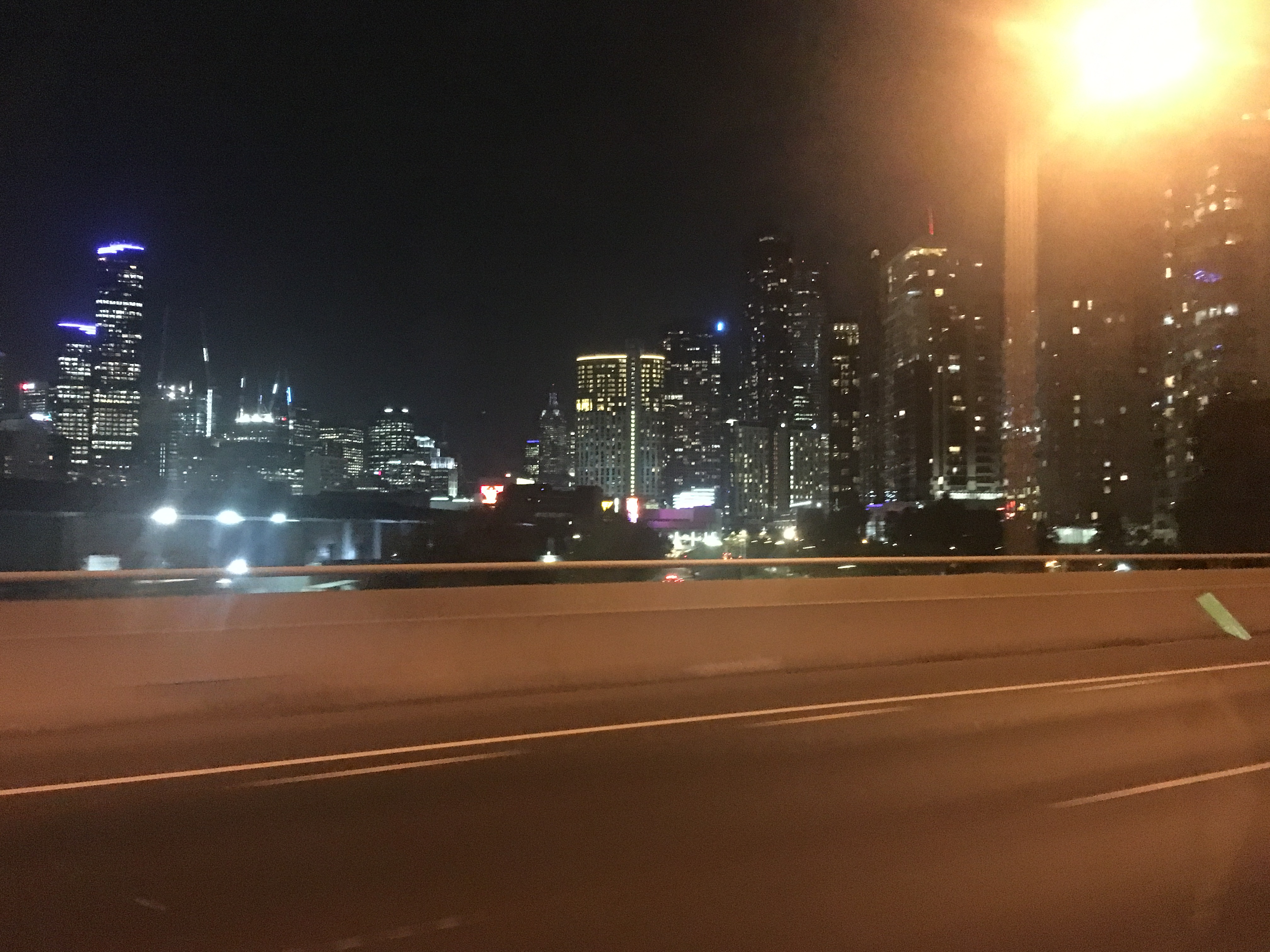
We had glimpses of the city skyline at night as we skirted around Melbourne on the way east to Sale –

Melbourne skyline

Melbourne’s suburbs seemed to be endless but eventually the road became narrower, the traffic lighter as we left the bright lights behind and passed through several smaller towns before reaching Sale

The City of Sale

Sale is a city situated in the Gippsland region of the state of Victoria, with an estimated urban population of 15,000 and was founded in 1851. It lies 212km east of Melbourne and is named after a British army officer, General Robert Sale, who won fame in the first Afghan war before being killed in battle in India in 1845. Although a small town by our standards, the building of St Paul’s Cathedral in 1884 may have ensured that it would earn the name “city” as per the tradition in the UK.

First impressions are of a quiet, neat, organised town with good facilities – very civilized in all respects and far removed from the big city life that we are used to.

First day in Sale – Someone left the Aviary door open!

I was curious to see what birds would be around the suburbs, but wasn’t expecting my first bird to be a Common Myna – probably the most disliked, introduced bird in South Africa! However that shock was soon forgotten as I stood in the small garden and watched the comings and goings of some more exciting species.

Oh No! (Common Myna)

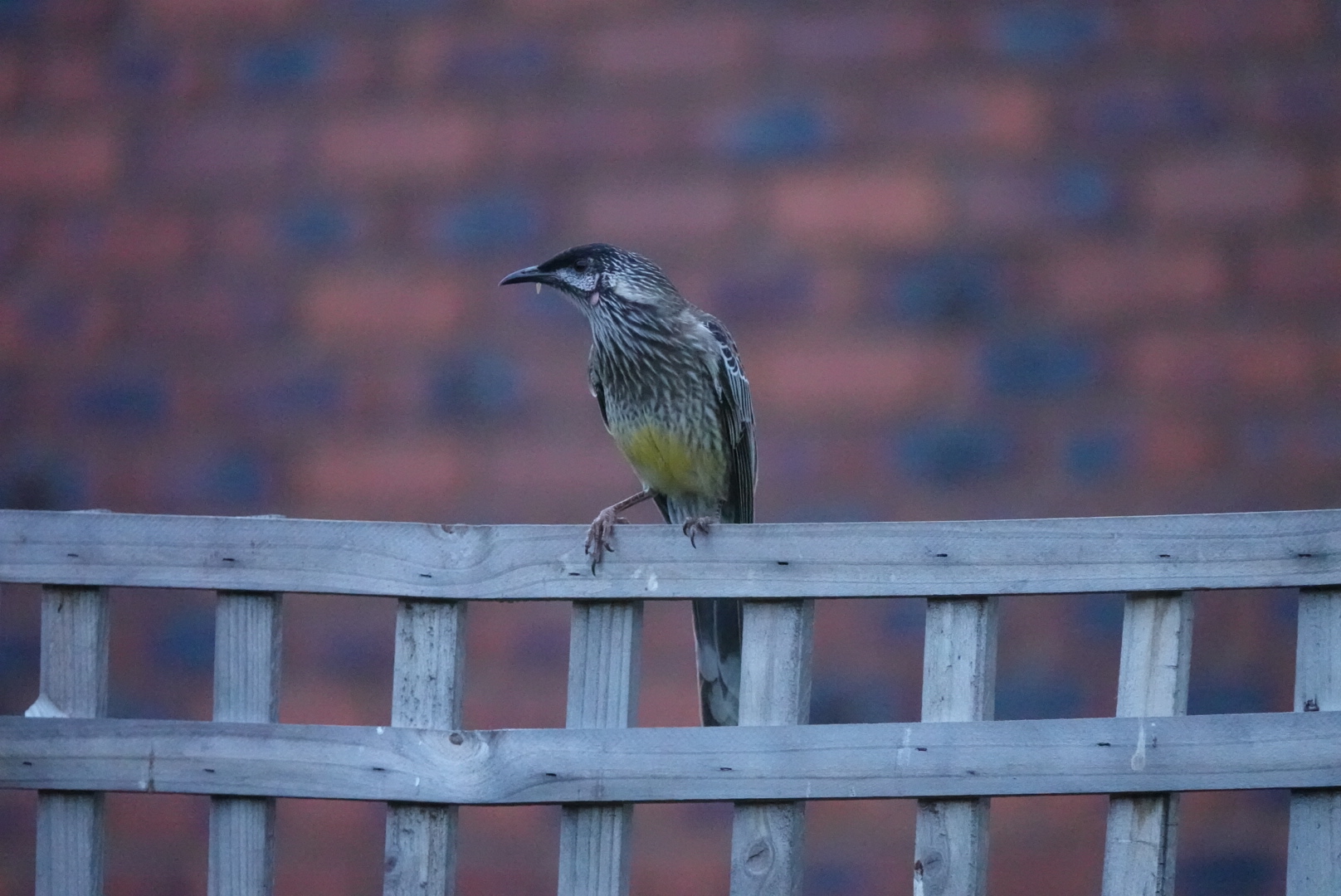
Pied Currawongs, a Raven-like large black bird with white markings, and Australian Magpies were the most obvious birds around, followed by Red Wattlebirds, a medium-sized, long-tailed bird with features and giss similar to our Sugarbirds and also a nectar eater.

Pied Currawong
Australian Magpie
Red Wattlebird

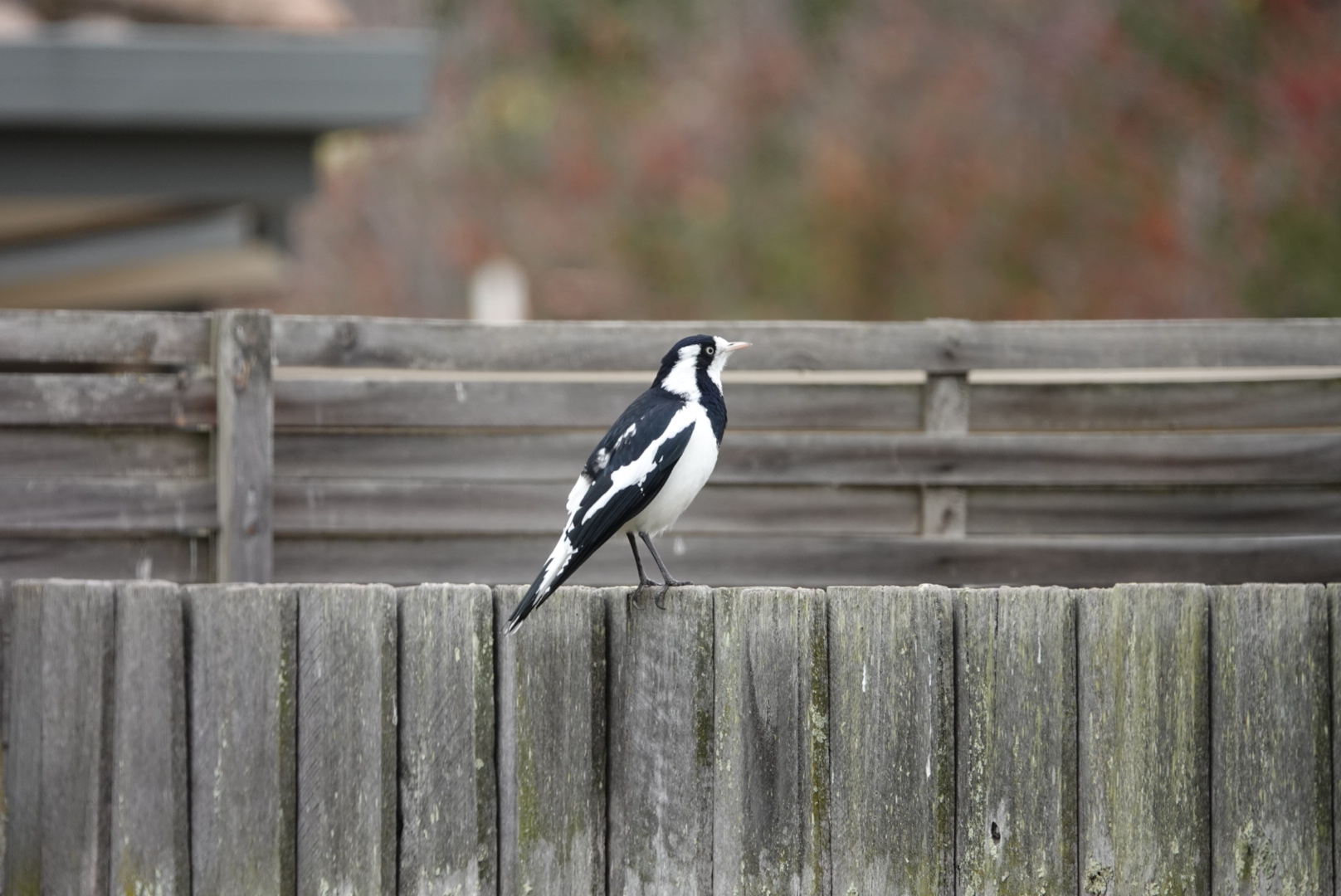
Another regular, the Magpie-lark flew in and sat on the fence then dropped onto the lawn – a handsome pied bird that reminded me of our Pied Wagtail but on steroids.
Magpie-lark

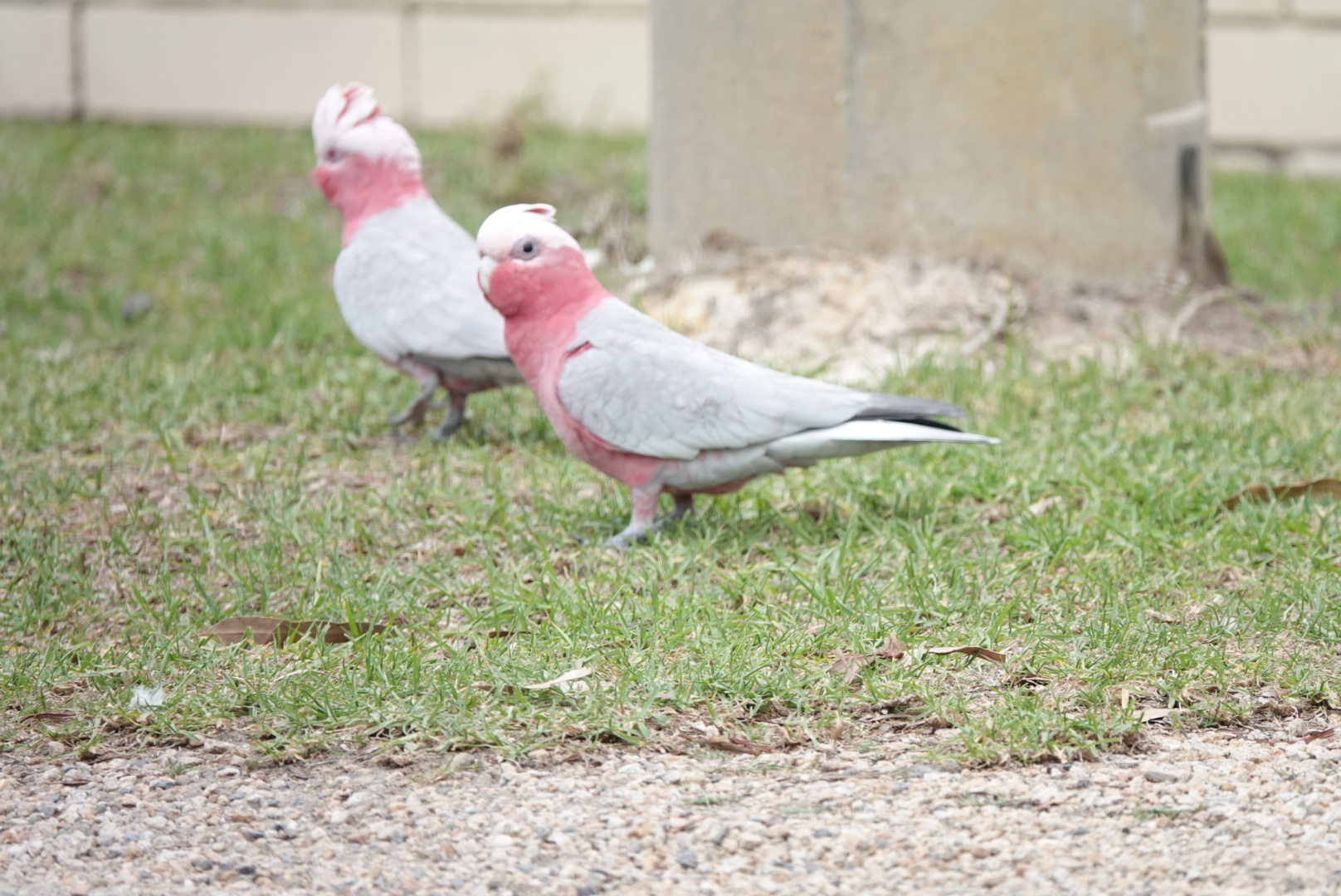
The real surprise was the birds that Australia is famous for – the colourful parrots – flocks of bright green, yellow and blue Rainbow Lorikeets flashing by and settling in trees where they chatter away and screech so that you cannot ignore them and unexpected Galahs on grassy pavements, looking completely out-of-place with their deep pink, white and grey colouring. When you are accustomed to seeing these birds in cages it is a revelation to realise that they are, like all birds, able to cope and at their best in the wild.

Rainbow Lorikeet
Galah

Late afternoon we went for a walk in the wetland area not far from the house. The area has suffered from a drought for some time so the wetlands were mostly dry and fairly barren but a lone Masked Lapwing was a good find and the cattle in the fields were accompanied by Cattle Egrets, much as they would be in South Africa but here the species is the Eastern Cattle Egret.

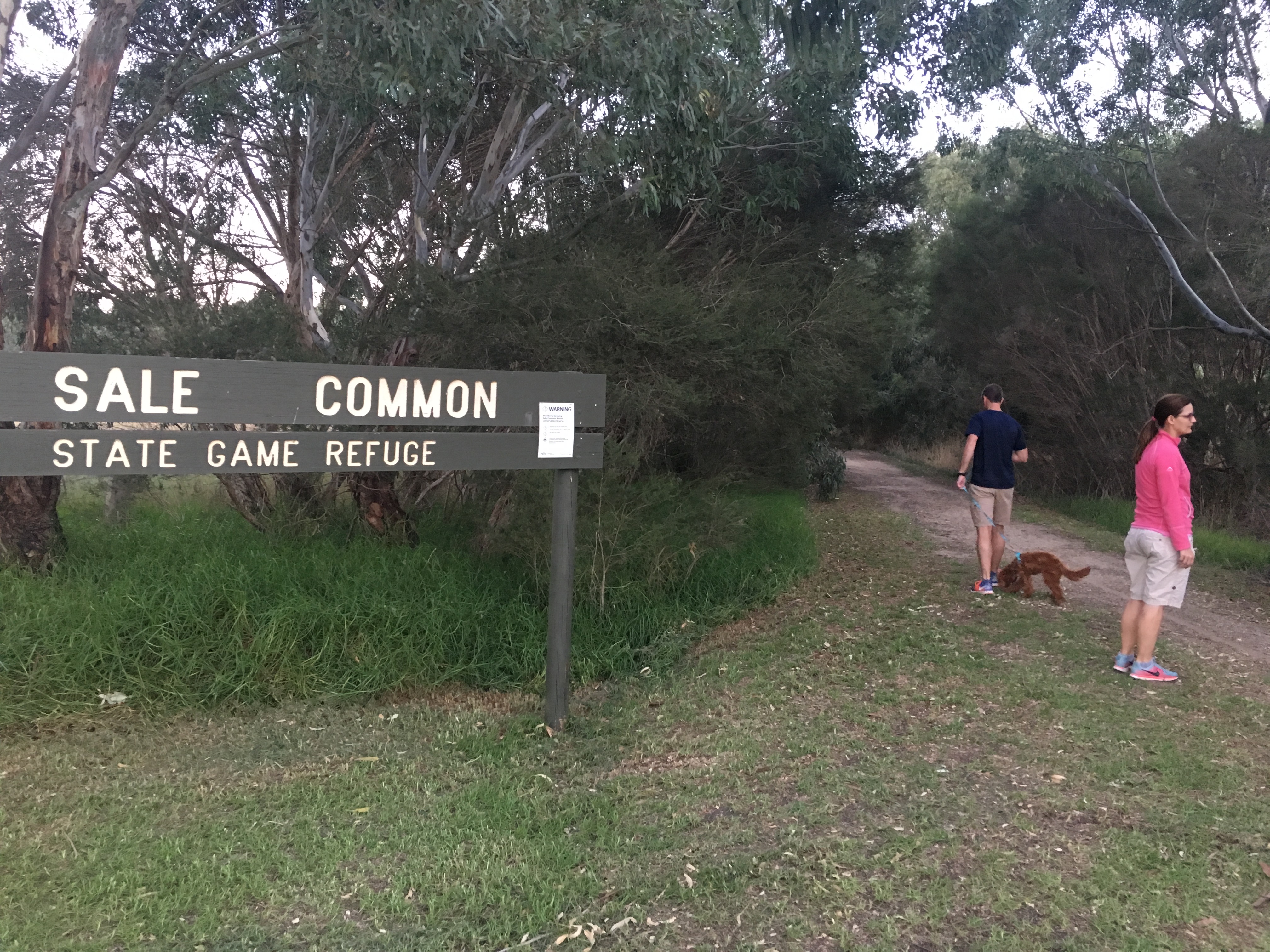
Sale Common – pathway to the wetlands

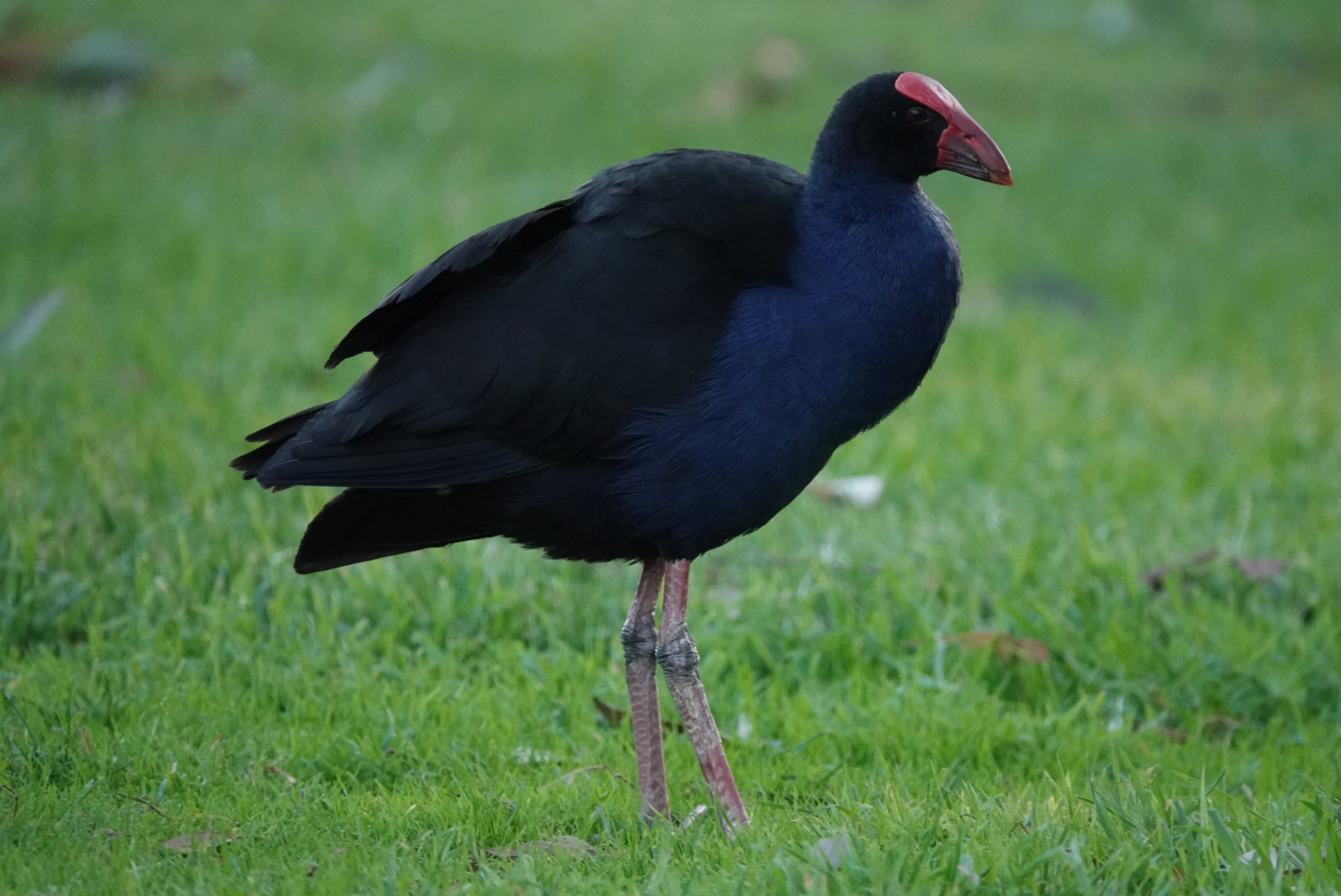
Another feature of Sale is the numbers of Australasian Swamphens that are around and inhabit open lawns and verges. The African species we are used to seeing is mostly a skulker whereas the similar looking species in Australia seems to be comfortable wandering around the suburbs and parks.

Australasian Swamphen

By the end of day one my brand new Australian bird list (courtesy of the wonderful Birdlasser app) stood at a modest 13 species, but 11 of those were “lifers” so a very pleasing start