Tag Archives: Birding Australia

Australia 2025 : A Glimpse of Sydney

Australia 3.1

Our third trip to Australia in January and February this year was all about seeing son Stephan and his family of wife Liesl and kids Jocelyn, Christopher and Eleanor (our youngest grandchild at 4 years) for the first time since 2022.

A year ago, they moved from Sale, Victoria to Mackay, a coastal town in north Queensland which, apart from being in a different state, is far removed from Victoria in distance and climate.

It was a far harder decision than before to make a third trip to Australia – advancing years do cause one to consider such a trip carefully as the chances of health issues increase. As it turned out we got through the 5 weeks of our visit without any significant issues, for which we are very thankful.

Getting there

Getting to the first destination is often the hardest part of long-distance travel, and this trip was no different. Total travel time from our home in Mossel Bay to the hotel near the airport in Sydney, where we spent the first night, was around 24 hours which, along with a 9 hour ahead time change left us quite petered out.

The trip itself had the usual queues to endure – at George for check-in, security, boarding and repeated on a much greater scale at Joburg with passport control in addition.

Fortunately, we had a good couple of hours to relax in the lounge before heading to the boarding gate, where there seemed to be more people than could fit on any plane, but this was just a reminder of how many can be squeezed into an Airbus A380 double decker plane.

As we taxi-ed out towards the main runway at OR Tambo, I was fascinated to see a Long-tailed Widowbird doing its low, slow display flight just above the long grass between the runways – or was this an elaborate bon voyage on its part to send us on our way ? Either way it showed that birds are able to carry on their lives despite human endeavours to deter them.

Long-tailed Widow, Mabusa Nature Reserve

The 11-hour flight went smoothly and surprisingly quickly with some short bouts of sleep in between dinner and breakfast (at 3am in our time!) – Premium Economy certainly helps to make it all more comfortable.

We landed in Sydney just after 2pm local time and faced more queues for passport control and customs before finding the shuttle bus to the nearby Holiday Inn Express, which was an excellent choice with its comfortable room, all the basic amenities (in working order) and a reasonable price for it all. After a catch-up snooze we had a light supper in the hotel restaurant and retired to the room for an early night.

Monday – First Taste of Sydney

We had booked a rental car which had to be picked up from a site some distance from the hotel so, after a full breakfast in the busy restaurant, we packed up and got to the pickup area on ground level. I was about to call an Uber when a taxi drew up and offered to take us at the same price as quoted by Uber – the friendly Asian driver was quite persuasive and so we took him up on the offer and were soon at the rentals office, and not long after we were heading to the CBD in our rented Toyota RAV, our transport for the next 11 days.

Google maps directed us efficiently through Sydney’s busy streets to our next destination, the Park Royal Darling Harbour hotel where the friendly valet parking gent met us – it was well before our check in time, so our baggage was stored, and we went off to find a coffee shop nearby.
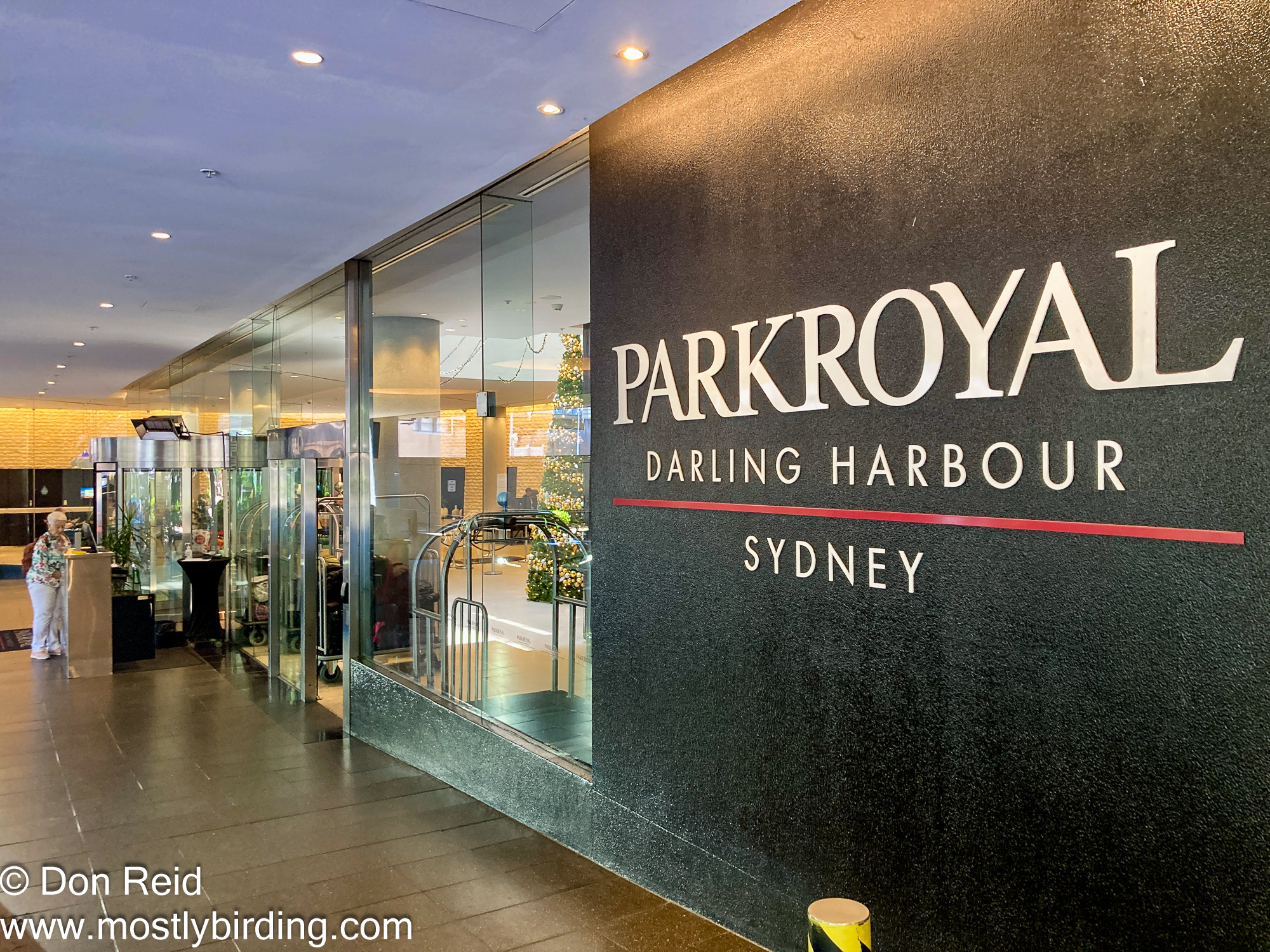
Hotel, Sydney

The friendly folk at hotel reception (you may notice a recurring theme here – Aussies are such a friendly lot – except when playing cricket against SA) suggested Brew Bros which was a short walk away and we enjoyed a cappuccino and an almond croissant while getting a feel for the busy city passing by.

First coffee, Sydney

Shortly after returning to the hotel, we were able to check in and find our room with a view of the surrounding cityscape. There was time for a rest while waiting for Stephan and family to arrive for our rendezvous, which was around 4pm and, after much greeting and swopping of presents, we all took a slow walk to find a suitable restaurant for a celebratory meal.

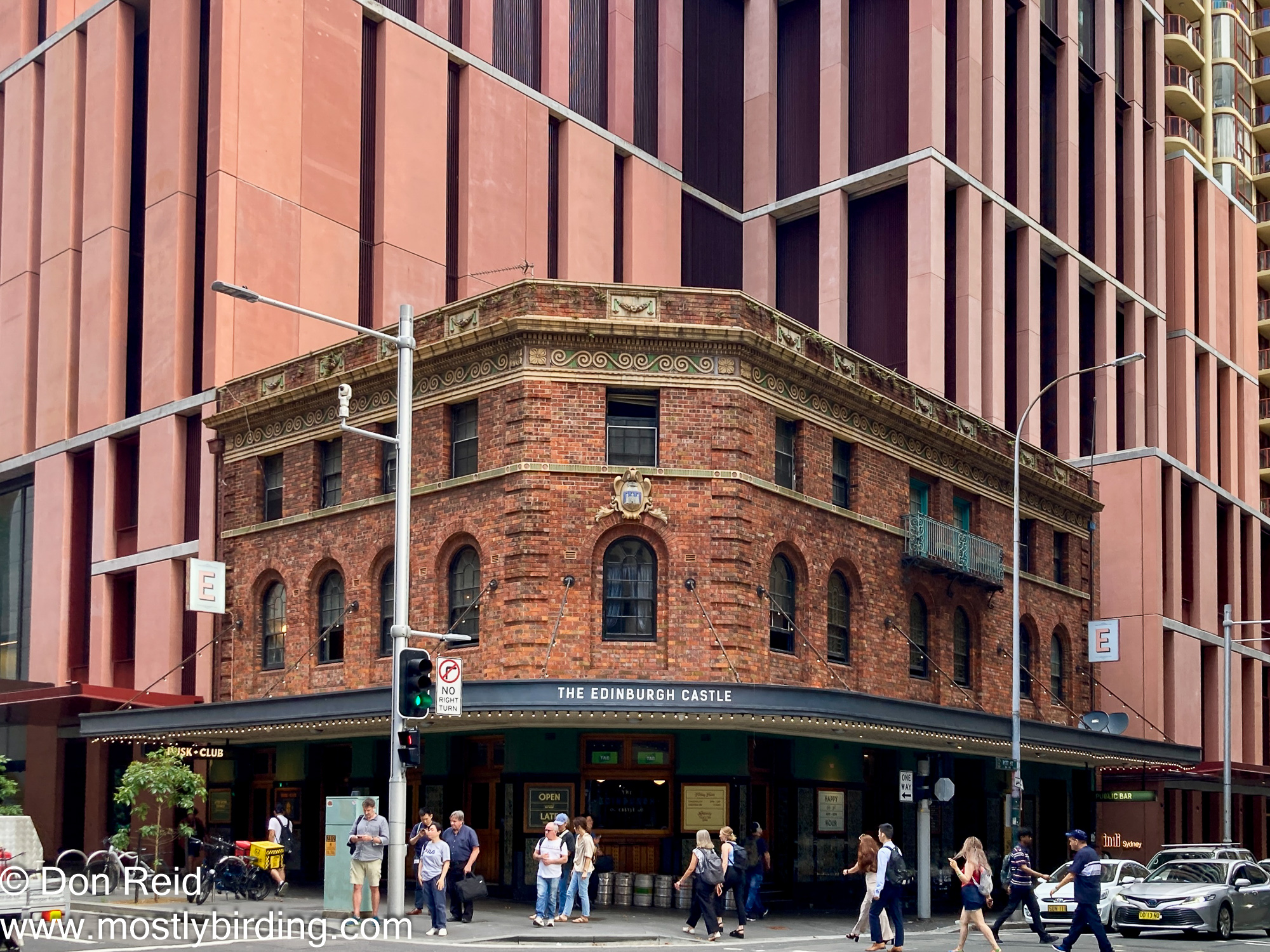
The walk took us past attractive buildings, some modern, some older and restored to their former glory.
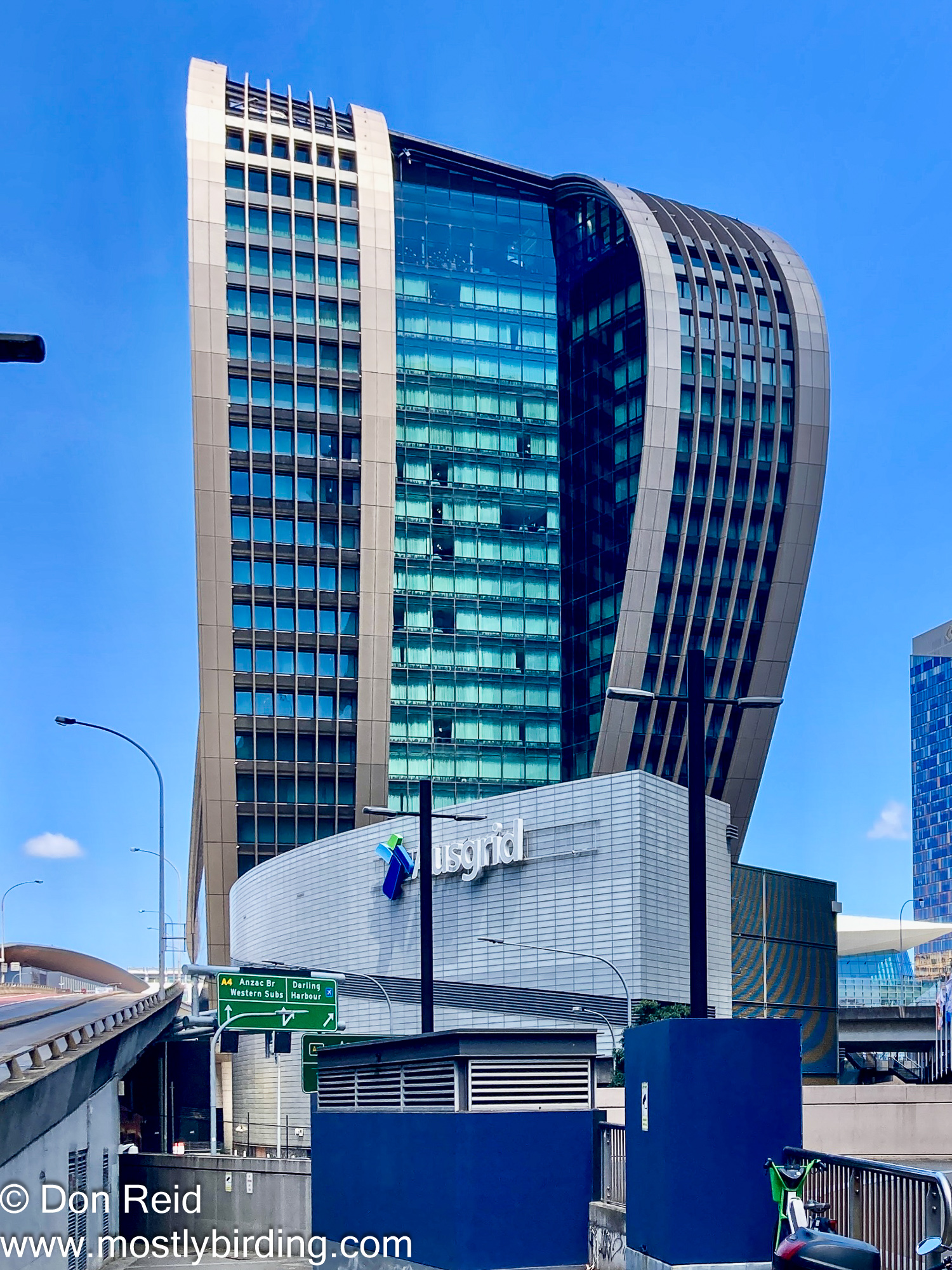
Impressive architecture, Sydney
Street scene, Sydney

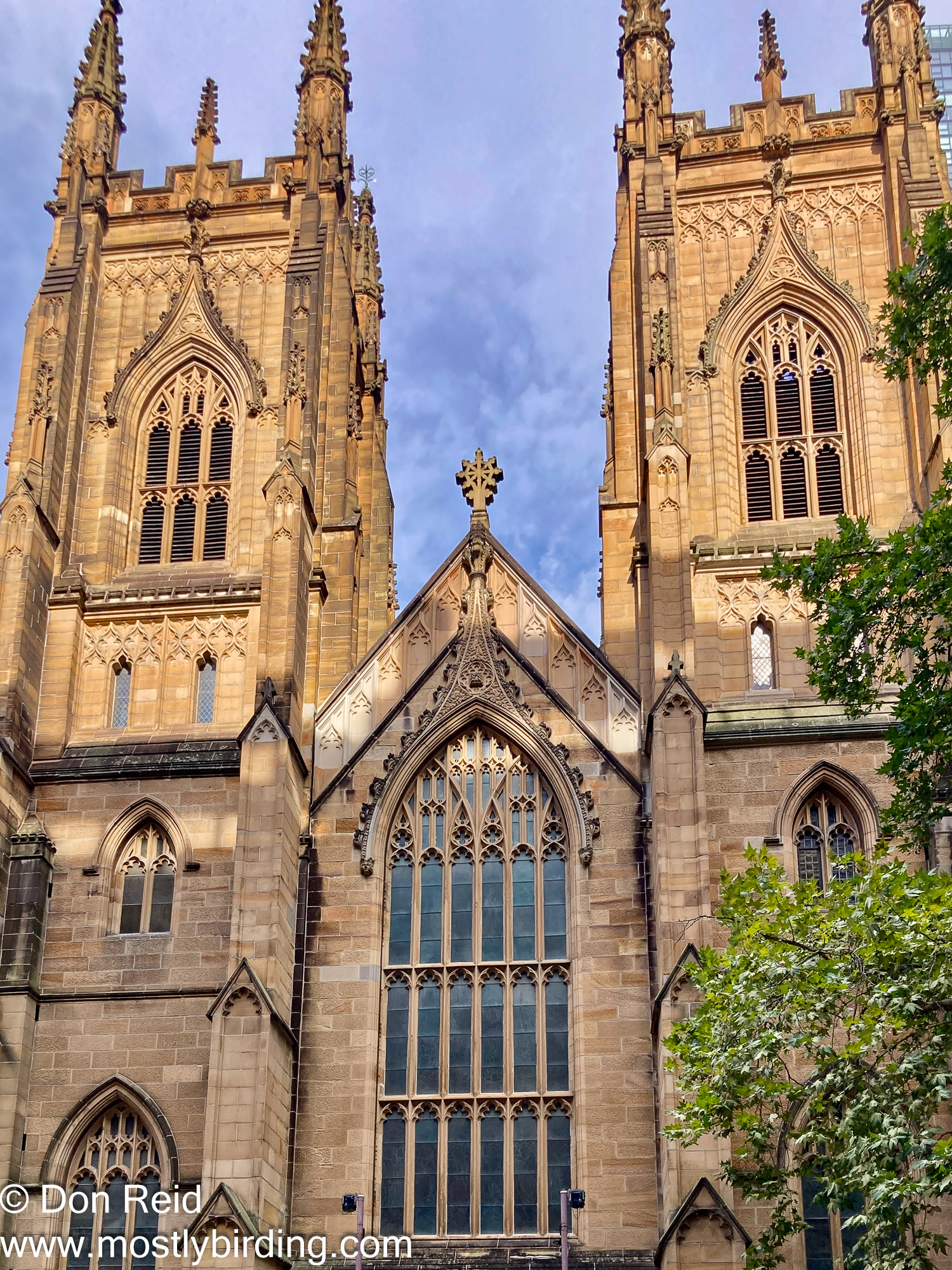
Also on our route were some handsome historic buildings with beautiful architecture including St Andrew’s Cathedral, the Town Hall and Queen Victoria building.
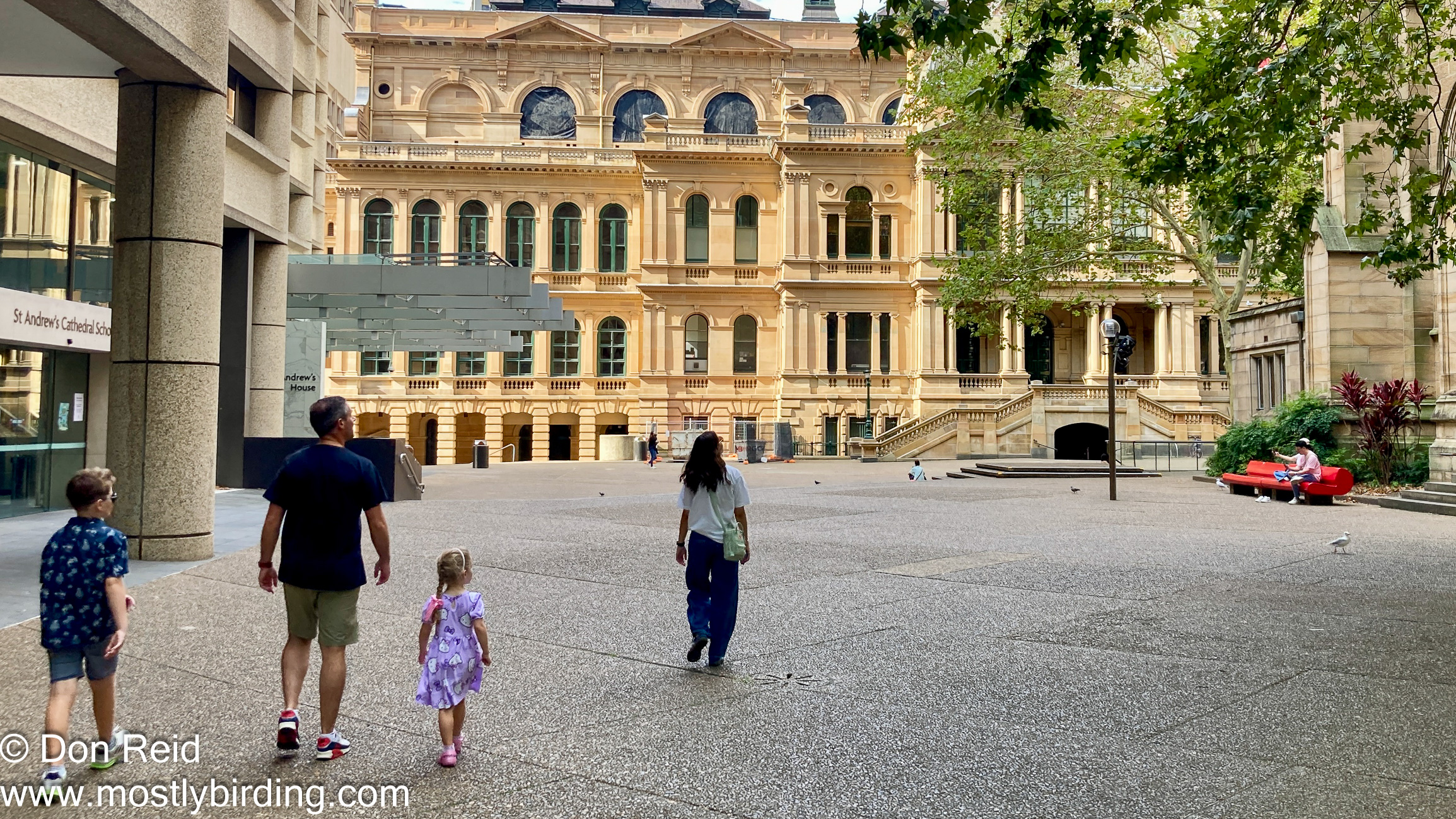
Town Hall, Sydney
St Andrews Cathedral, Sydney
Town Hall, Sydney

The restaurant was Grounds of the City which had décor to match the vintage of the surrounding buildings and tasty food.
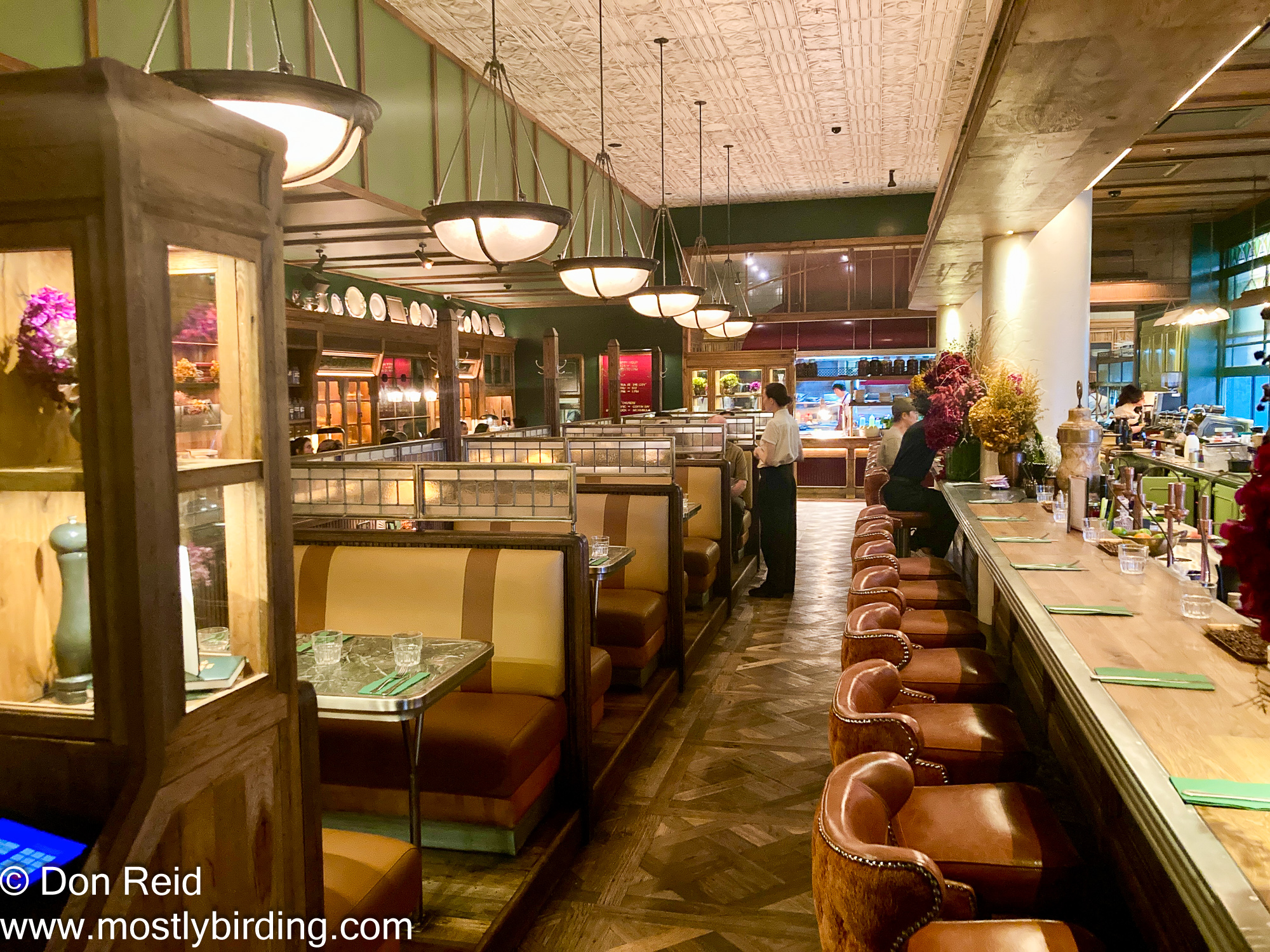
Restaurant, Sydney

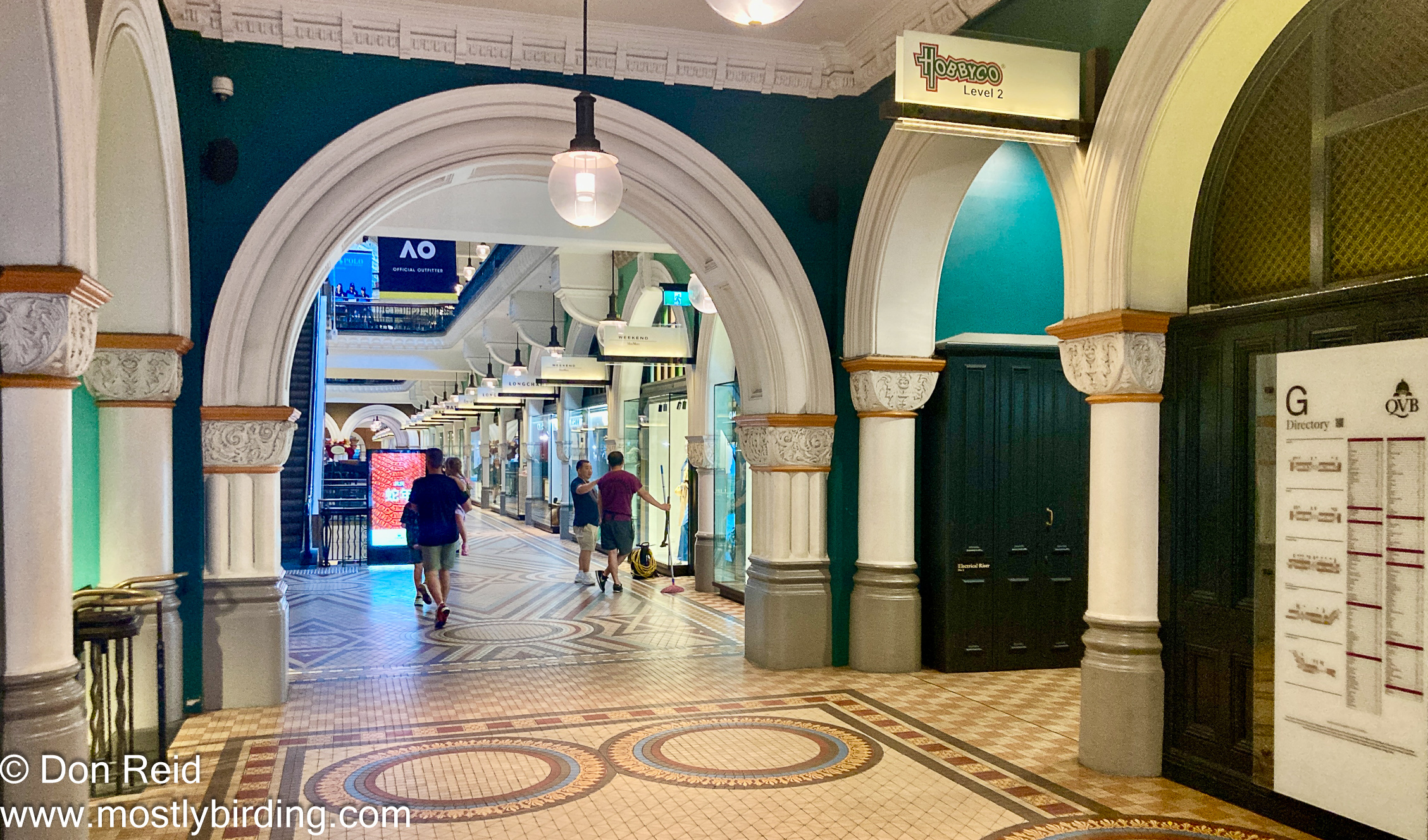
The walk back took us past The Galeries Mall, another architectural gem both inside and out

The Galeries Mall, Sydney

Birds added to my Triplist

No trip is complete without a list of birds seen – being in the centre of the city meant bird species were limited, nevertheless a couple of surprising ones

  • Noisy Miner, the most common bird we would see during the whole road trip from Sydney to Brisbane
Noisy Miner Manorina melanocephala
  • Silver Gull, probably the second most common bird we would see – quite surprising to see them flourishing in the middle of a city such as Sydney and using the skyscraper-lined roads as flyways to and from the harbour area
Silver Gull
  • Rock Dove – like every city, Sydney has its share of this well-known city-dweller

Tuesday – Sydney Harbour by Boat

The day started with a sumptuous breakfast in the hotel restaurant – that set us up for a day of sightseeing around Sydney. We had bought tickets for the Hop-on Hop-off boat tour around Sydney harbour, which proved to be the best way to see a lot in the one full day we had available.

The nearest boarding spot was King Street Wharf at Darling Harbour, which we got to by Uber from the hotel to Lime Street.
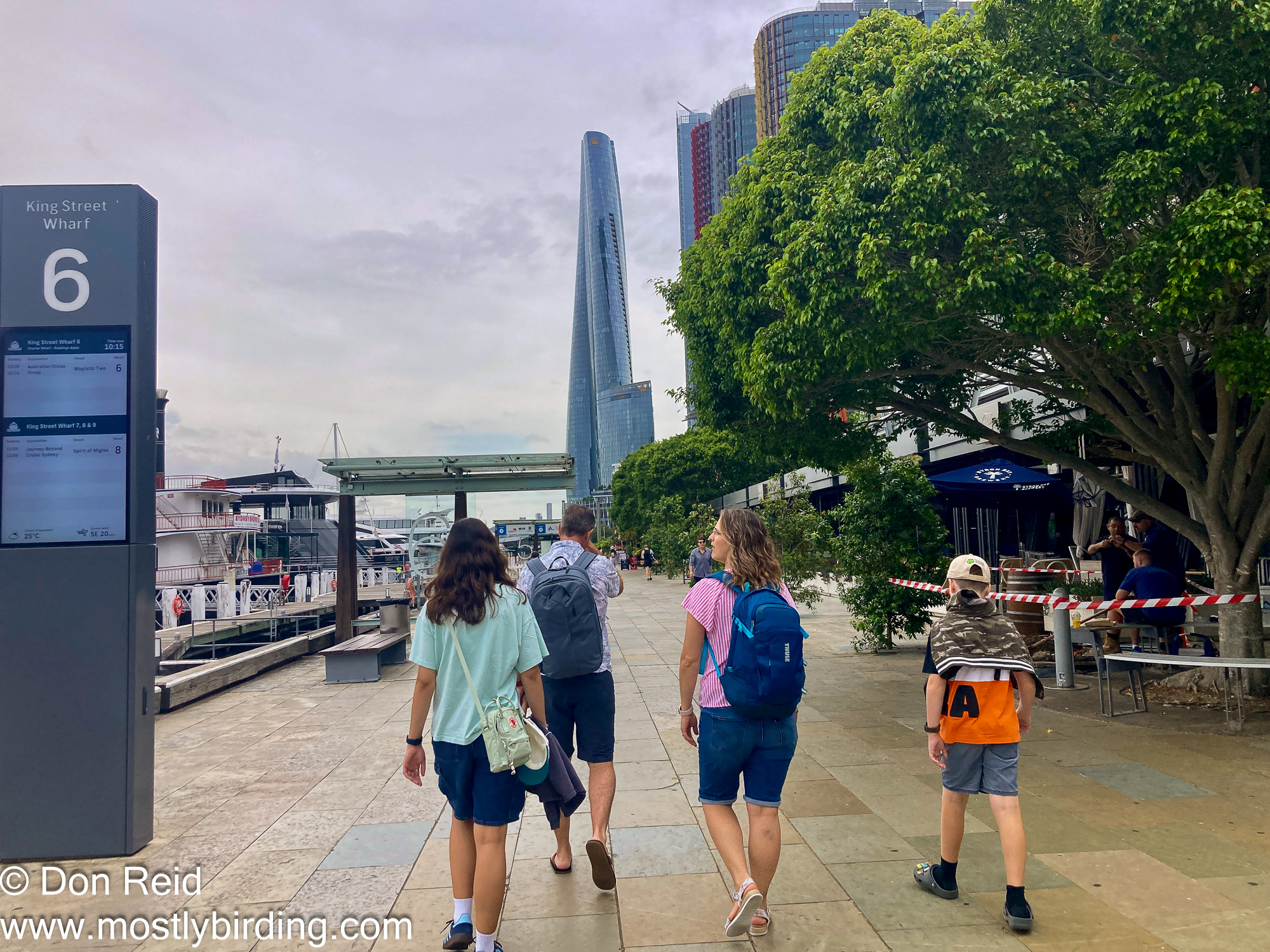
King Street Wharf Darling Harbour
King Street Wharf, Sydney Harbour Cruise
King Street Wharf Darling Harbour

From there we walked a short distance along the promenade to the quay to wait for the next boat which arrived shortly afterwards. A trickle of passengers boarded with us and the boat made its way out into the harbour

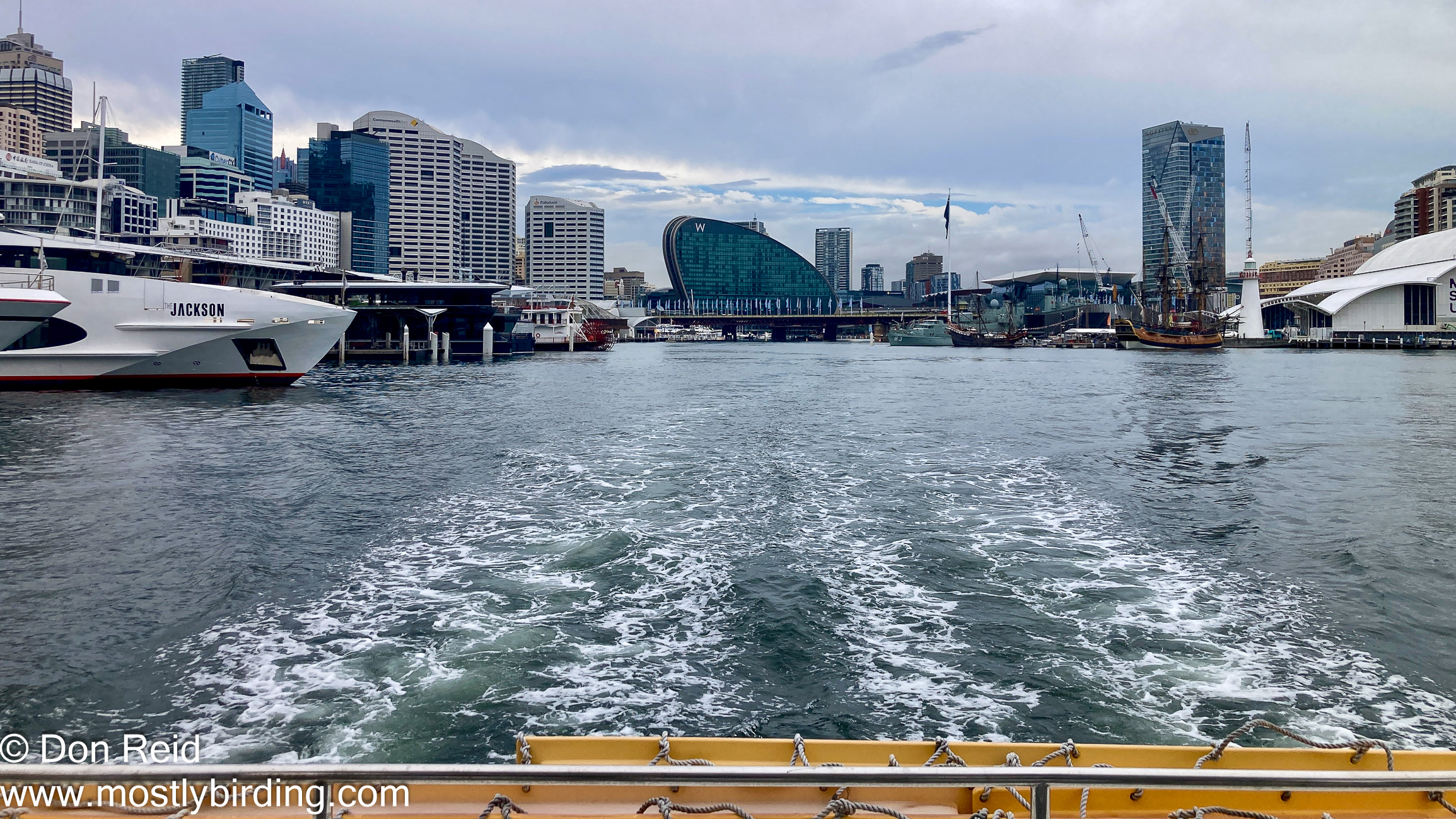
Sydney Harbour Ferry
Sydney Harbour Cruise

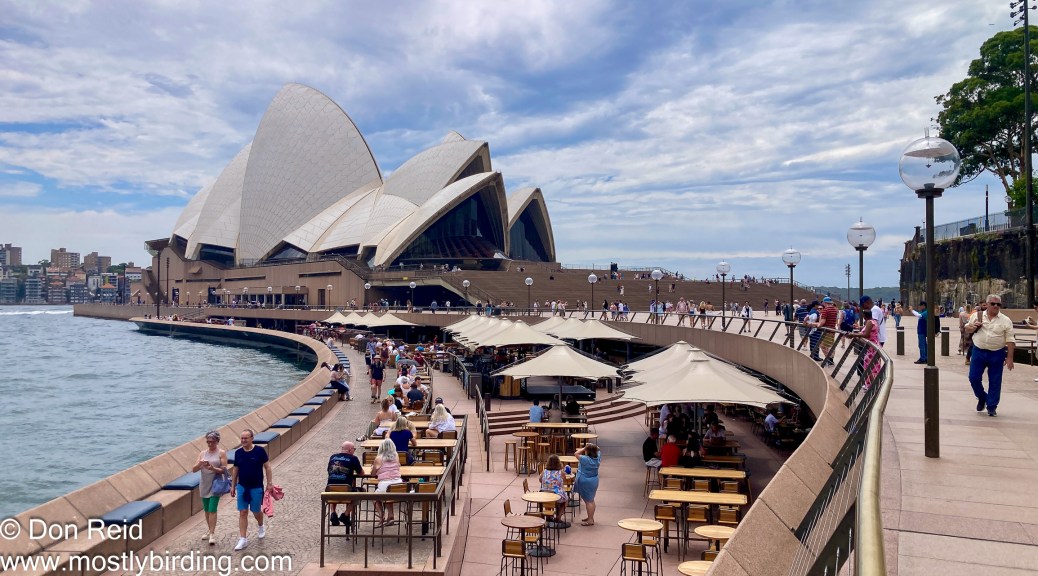
The first stop on the route around the harbour was Circular Quay, which was also our first hop off after enjoying stunning views of the famous landmarks – the Harbour Bridge, which we saw as the ferry rounded the bend and went beneath the bridge, and the Opera House on the opposite side of the harbour.
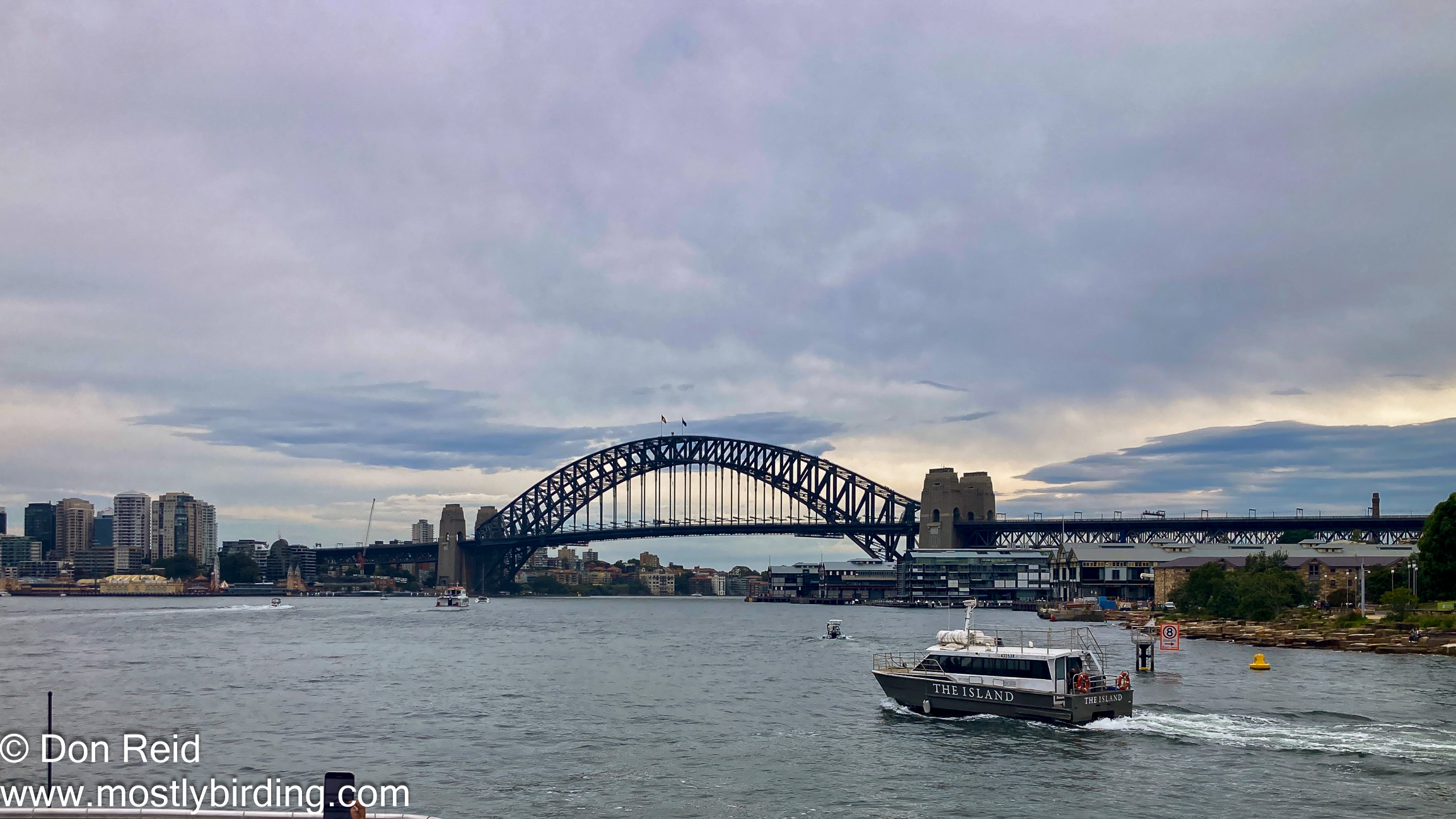
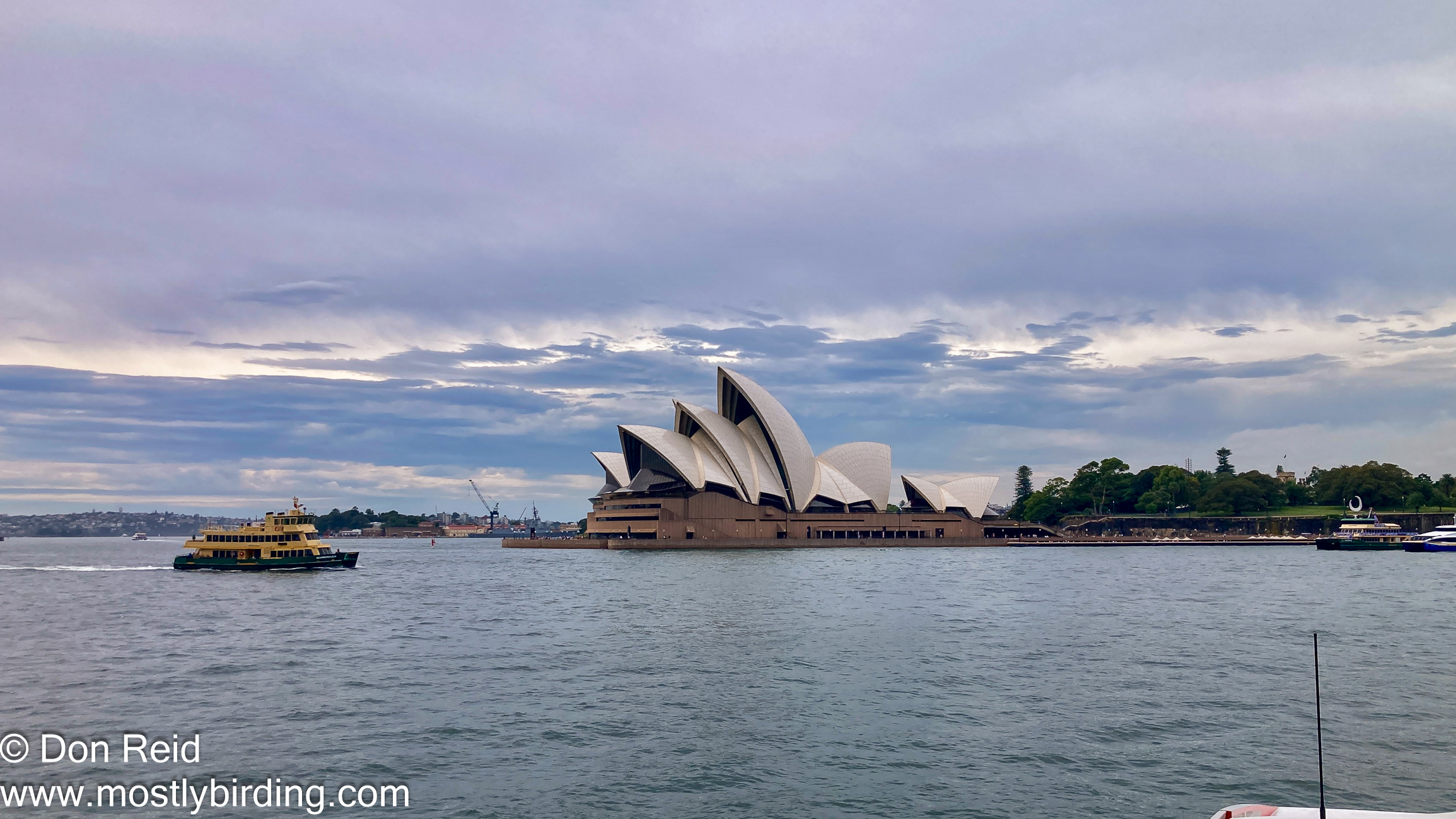
First view of Harbour Bridge, Sydney Harbour Cruise
First view of the Opera House, Sydney Harbour Cruise

It’s always a “pinch yourself” moment when you see iconic structures such as the Bridge and Opera House in real life for the first time – they seem so familiar from the hundreds of times they have appeared in print, TV and film that you have to remind yourself that this is the real McCoy!

Once off the ferry we walked along the restaurant lined quay to a vantage point for different views of the bridge and Opera House

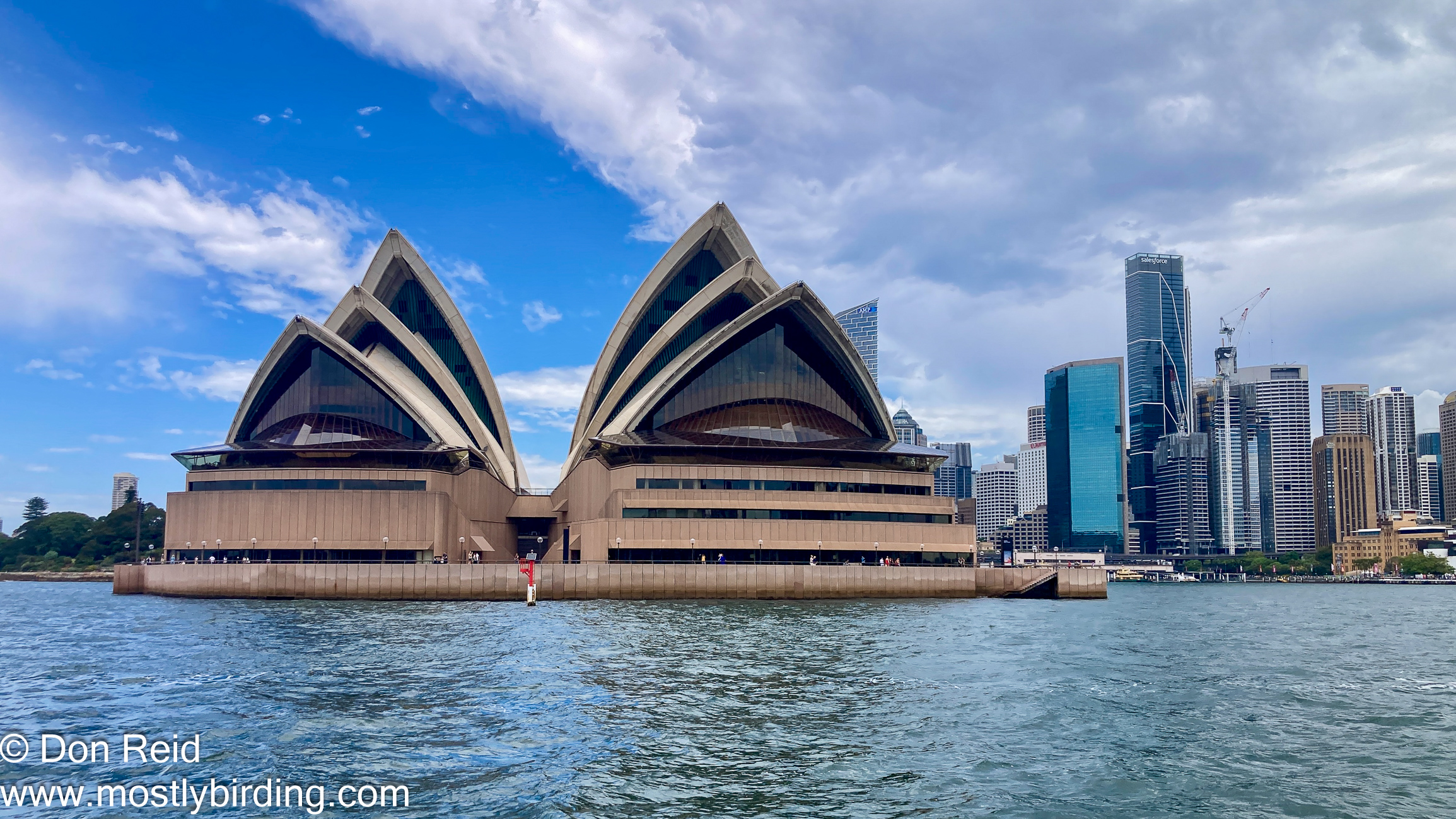
Sydney Harbour Cruise
Opera House, Sydney Harbour Cruise

We stopped for drinks at one of the dozens of cafes – milkshakes and coffees were ordered and we watched the passing show for a while.

Returning to the boat we rode to its furthest stop at Manly beach, pausing at Taronga Zoo, Shark Island and Watsons Bay.

Manly was hot and humid so we quickly sought a shady spot under trees, then an airconditioned restaurant for a light lunch before heading back to the quay for the 3.30pm boat back to Darling Harbour and an Uber ride to the hotel.

Birds added to my Triplist

  • More Silver Gulls everywhere including on the canvas canopy where we enjoyed drinks at the waterfront – Ellie pointed out the strange leaf shapes moving about above us, which we realised was the underside of the gull’s feet on the translucent canopy.
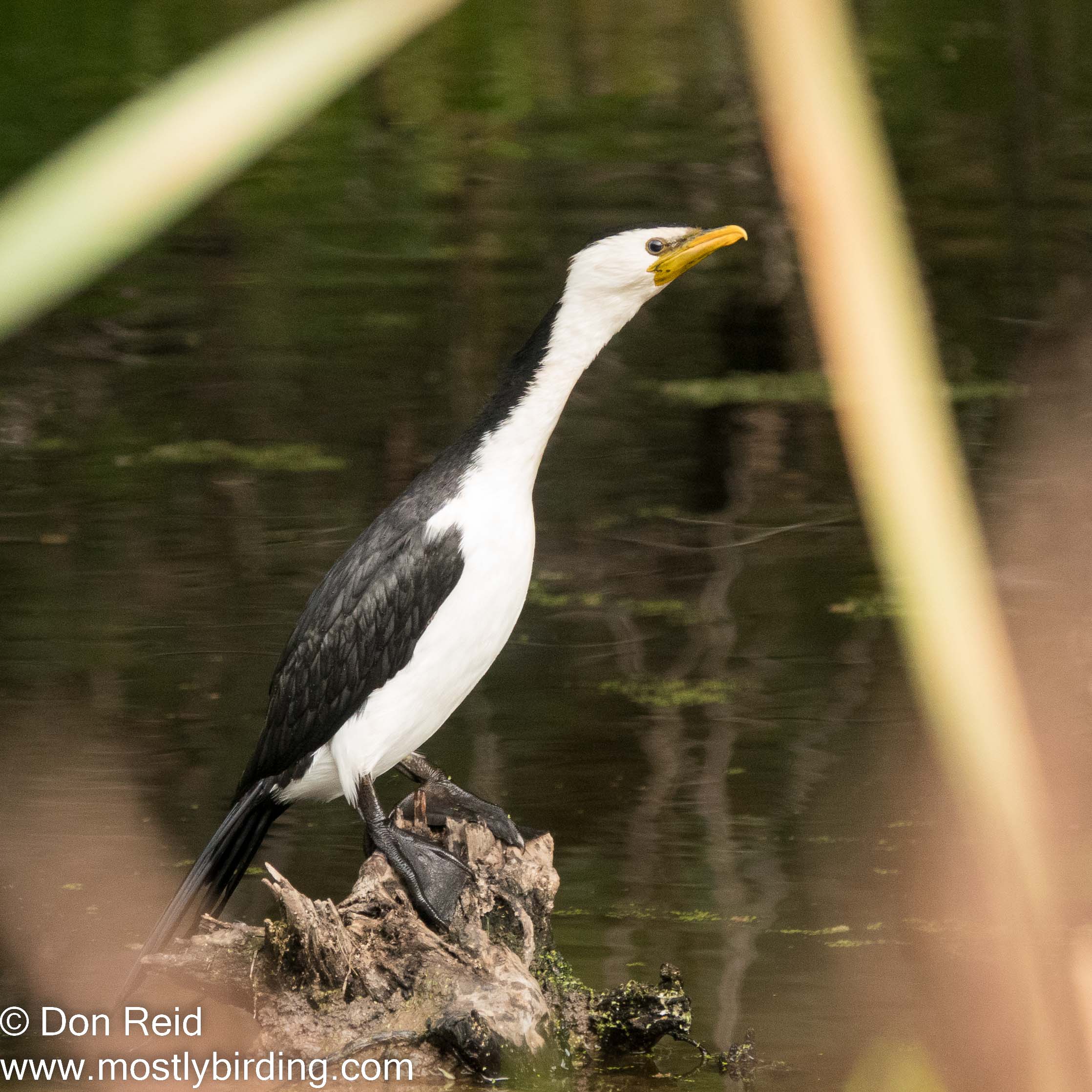
  • Little Pied Cormorant at Manly
Little Pied Cormorant Microcarbo melanoleucos
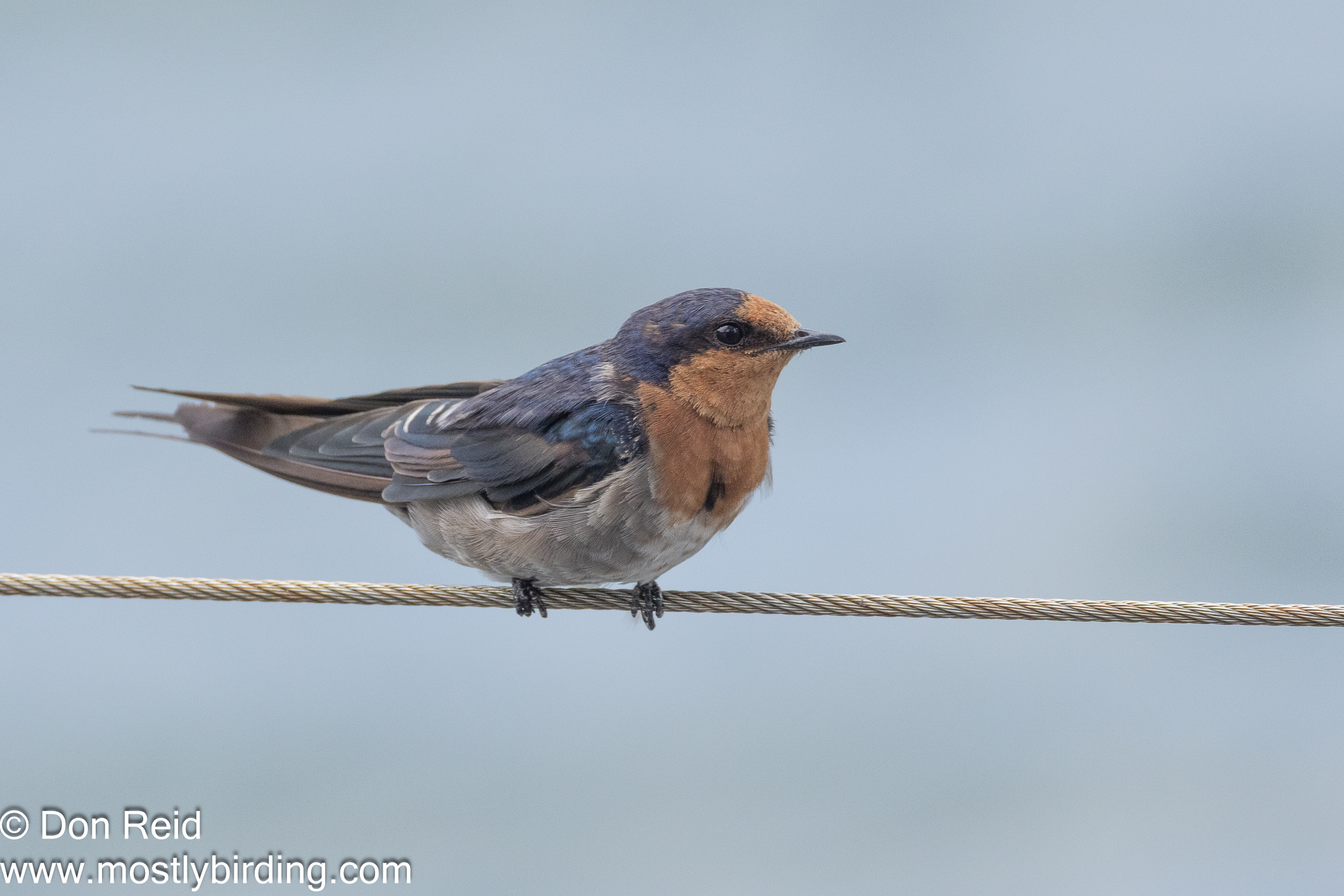
  • Welcome Swallows over the beach
Welcome Swallow
Hirundo neoxena
  • Sulphur-crested Cockatoo in a small flock
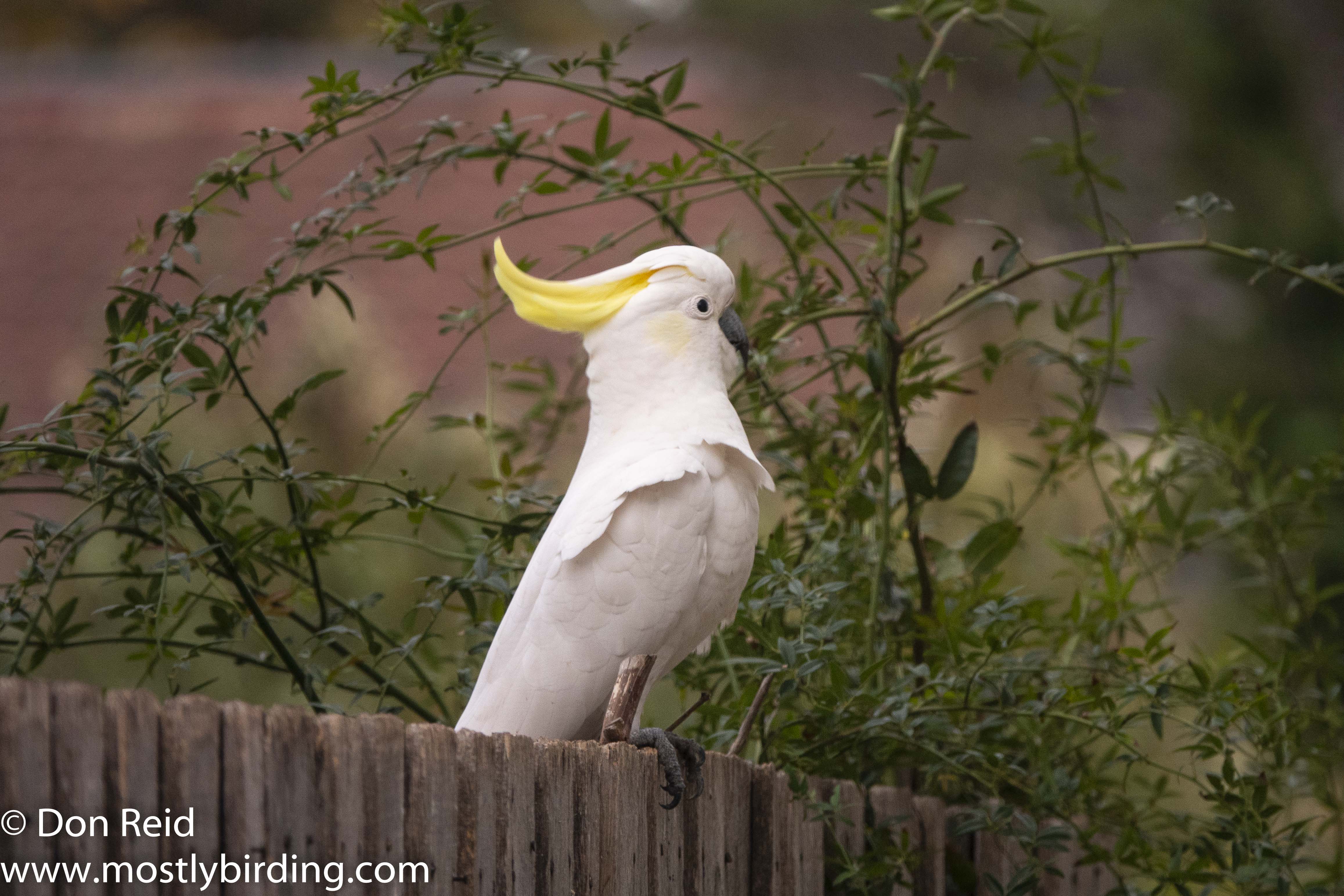
Sulphur-crested Cockatoo

Tomorrow, we start our road trip up the east coast of Australia to Brisbane
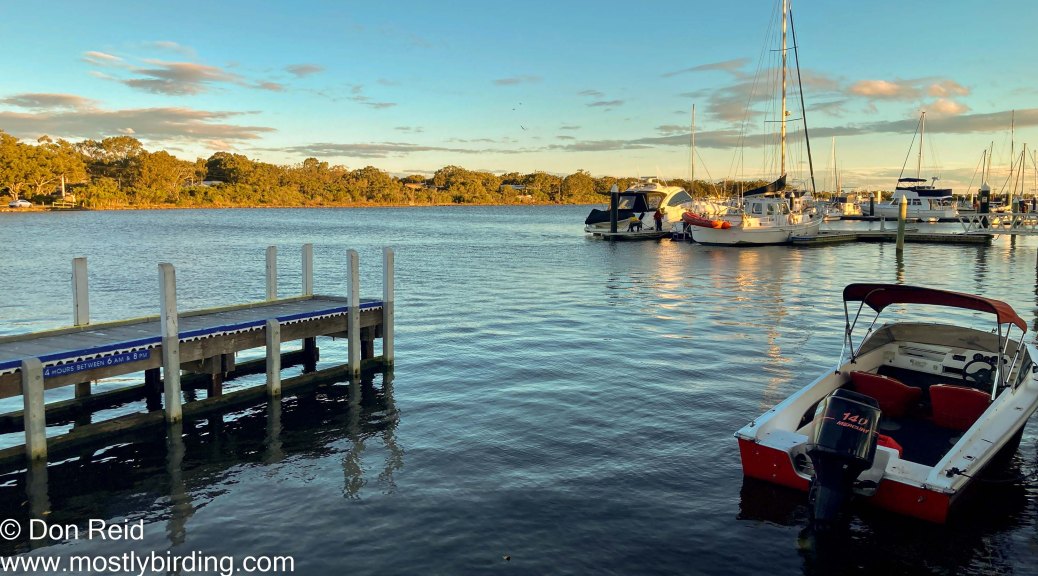
Australia May 2022 – Raymond Island : Revisited

It was our last weekend in Australia and we were more or less back to health after a second bout of flu, so were keen to get out and about before heading back to SA.

When Stephan suggested a day trip to Raymond Island we jumped at the chance and set off late morning along the very pleasant “back” road to Paynesville. The country roads in Victoria (and probably in other states) are often lined with mature eucalyptus trees which give them a particular character and form a stately ‘ tunnel’ as you drive through…

Road to Paynesville, Victoria

Along the way a couple of raptors caused some excitement – well, I got excited, the others in the car just smiled :

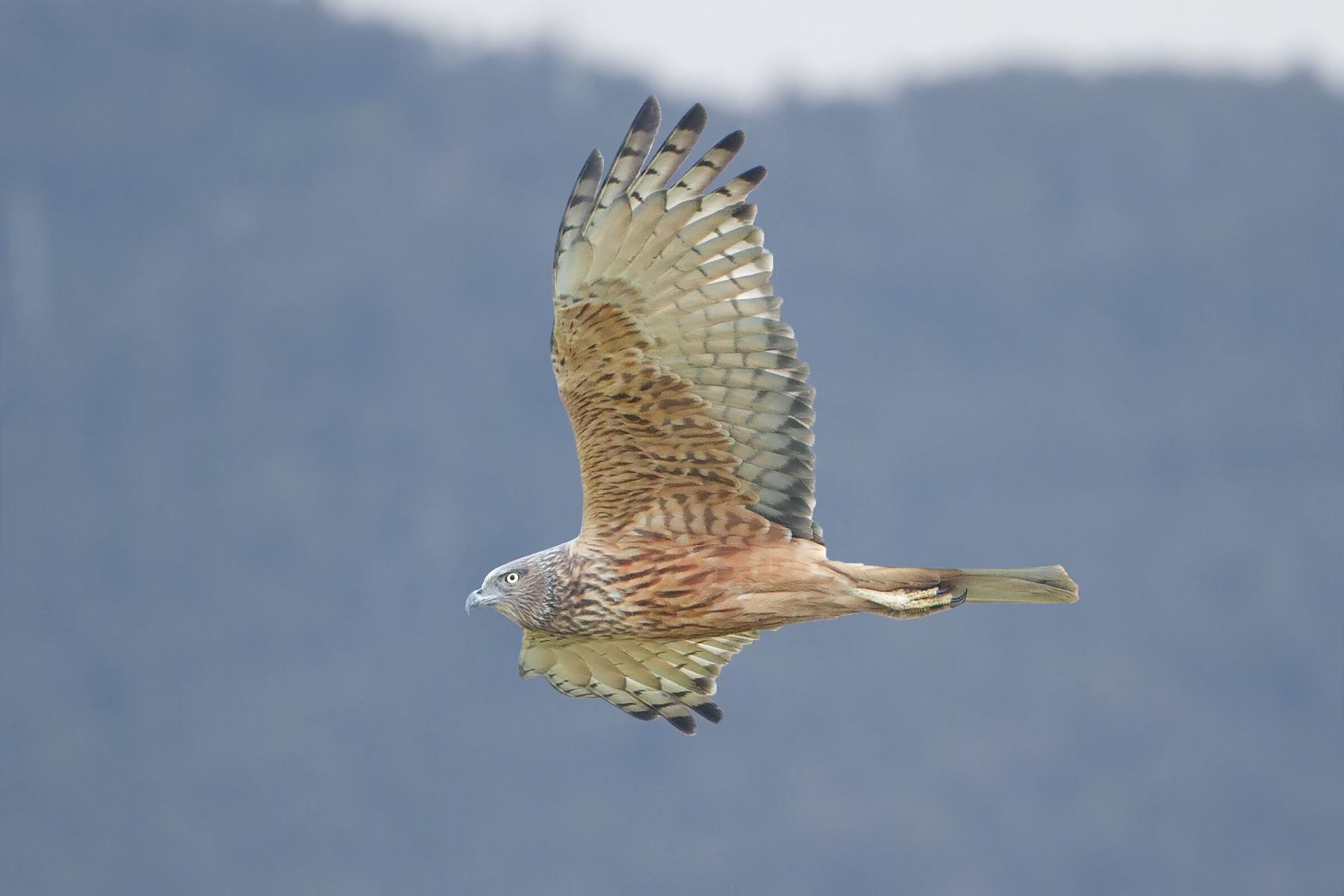
  • Swamp Harrier – a couple of seconds view as we swept past a wetland were enough to pick up the important clues – low flight, white rump, swamp habitat and of course the all-important ‘giss’ which convinced me that it was a Swamp Harrier – and a lifer to boot

There was no time to get a photo so I am posting this beautiful image courtesy of the photographer –

By JJ Harrison (https://www.jjharrison.com.au/) – Own work, CC BY-SA 3.0, https://commons.wikimedia.org/w/index.php?curid=16315120

  • Black-shouldered Kite – almost an equally short view but the familiar giss in flight and black wing ‘shoulders’ were enough for a positive ID
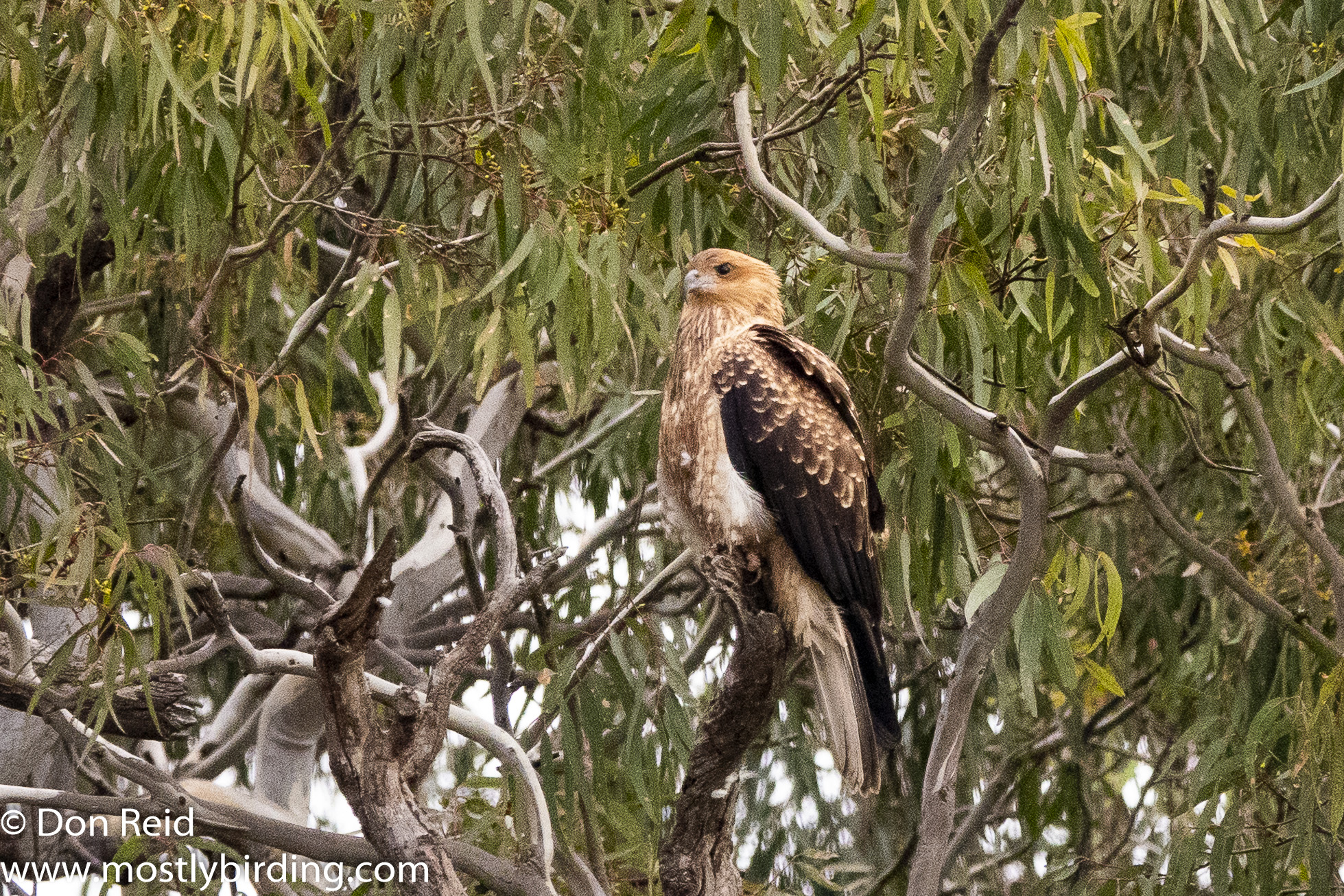
  • Whistling Kite – flying up from the roadside as we passed, this is a bird I have come to know quite well as they are regularly seen around Sale
Whistling Kite, (photo taken on Sale Common)

On reaching the waterfront at Paynesville, we parked and walked, looking for an open restaurant, and came upon Alma’s which turned out to be a good choice for the fish and chips we were thinking of – really tasty and served with a good salad.

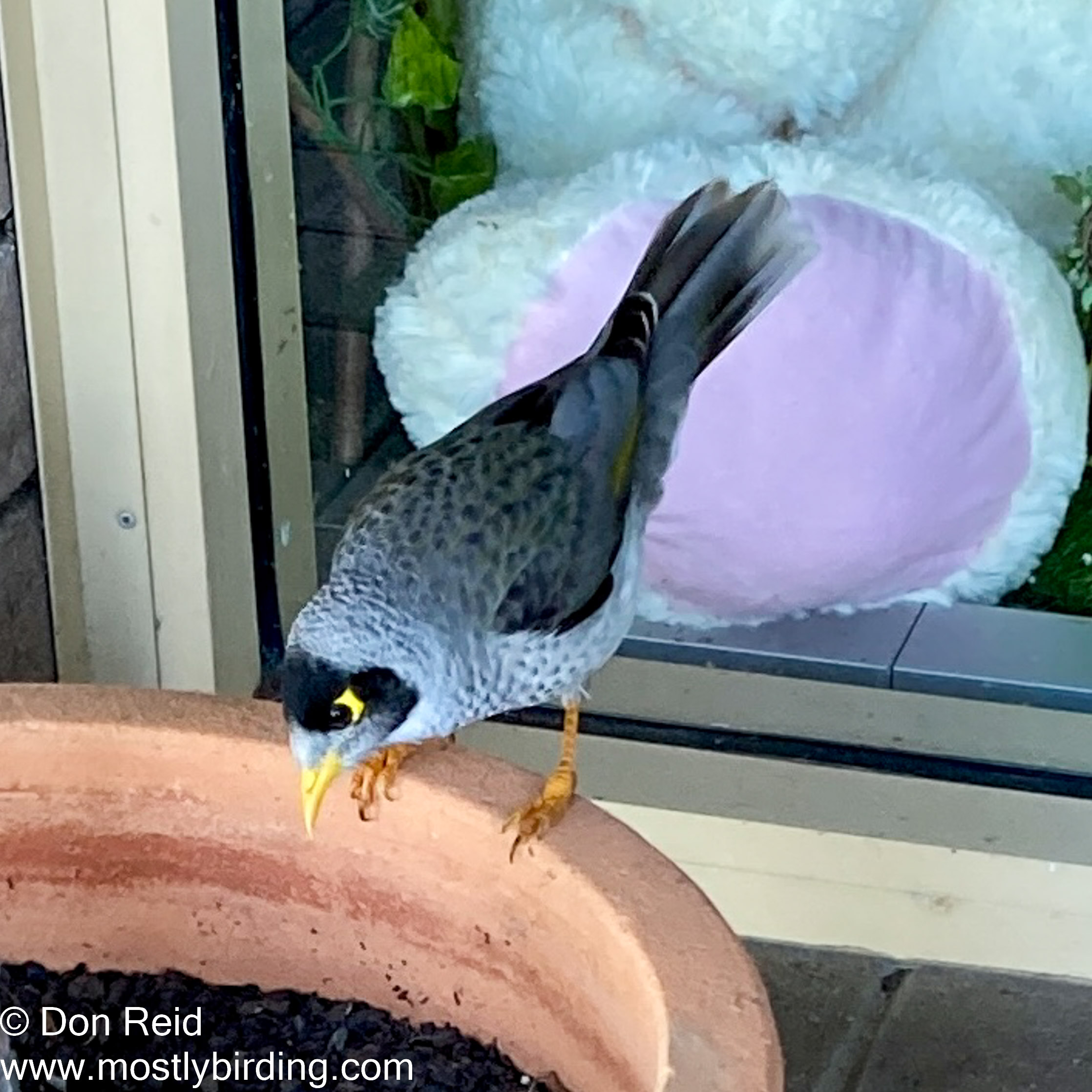
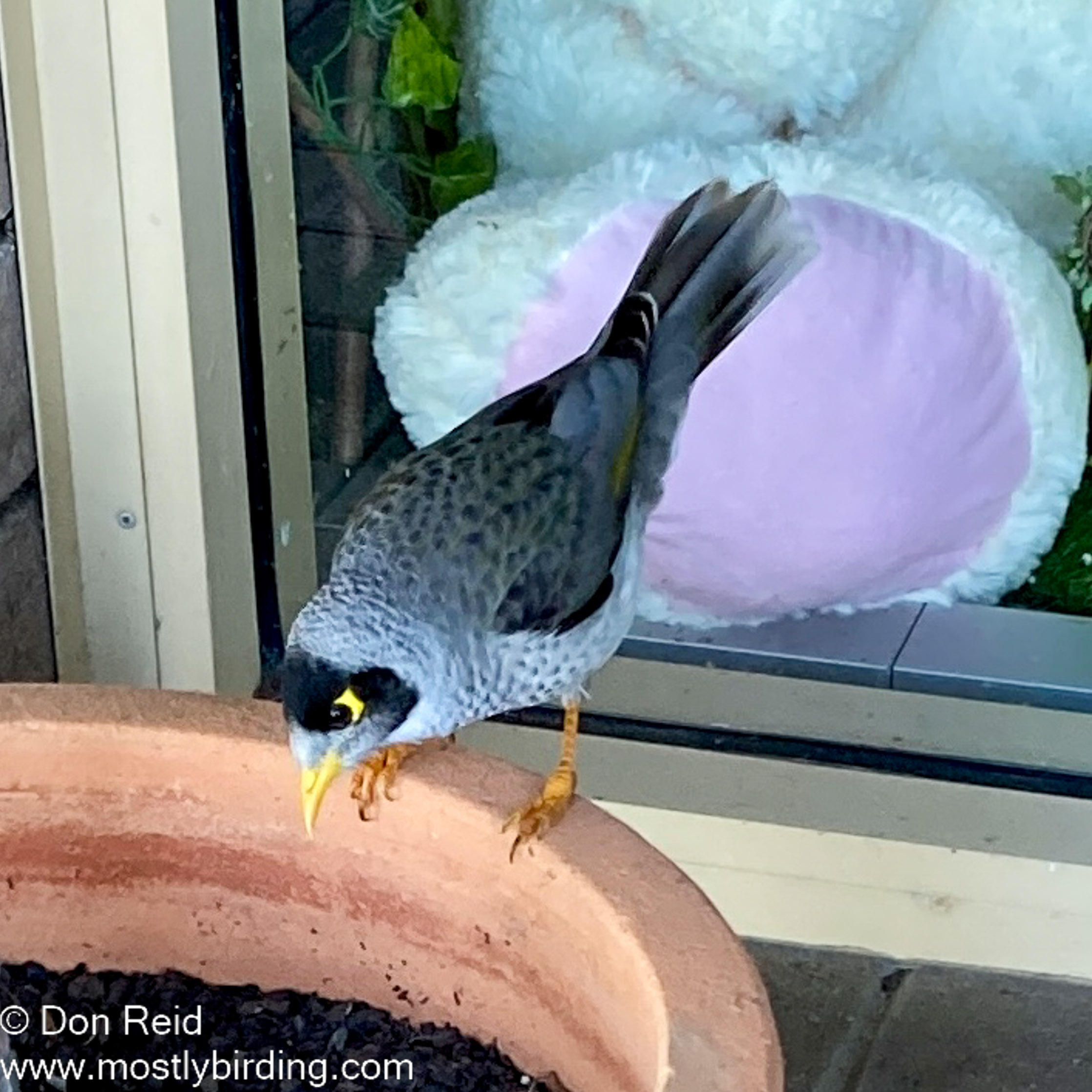
Outside the restaurant a Noisy Miner was going about its business pretty much ignoring the people passing by – so much so that I was able to get a close-up with my Iphone

Noisy Miner Manorina melanocephala, Paynesville, Victoria
Raymond Island Victoria

After lunch it was time to explore Raymond Island, so we joined the short queue for the ferry and were soon on the island, where we turned left along the shoreline then inland and right across the island to Gravelly Beach.

Raymond Island Victoria
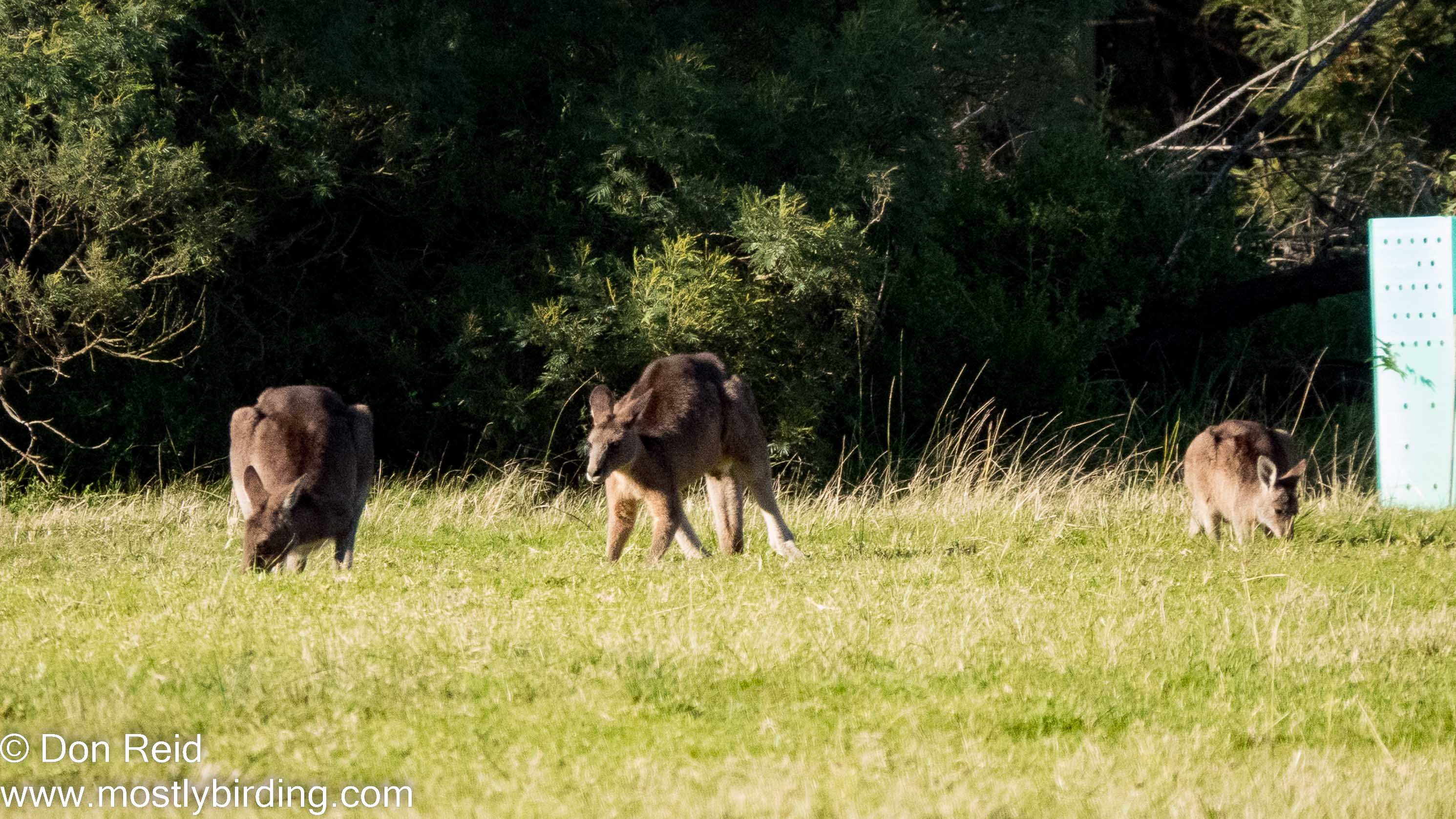
Kangaroos, Raymond Island Victoria
Raymond Island Victoria

Some of the birds spotted along the way :

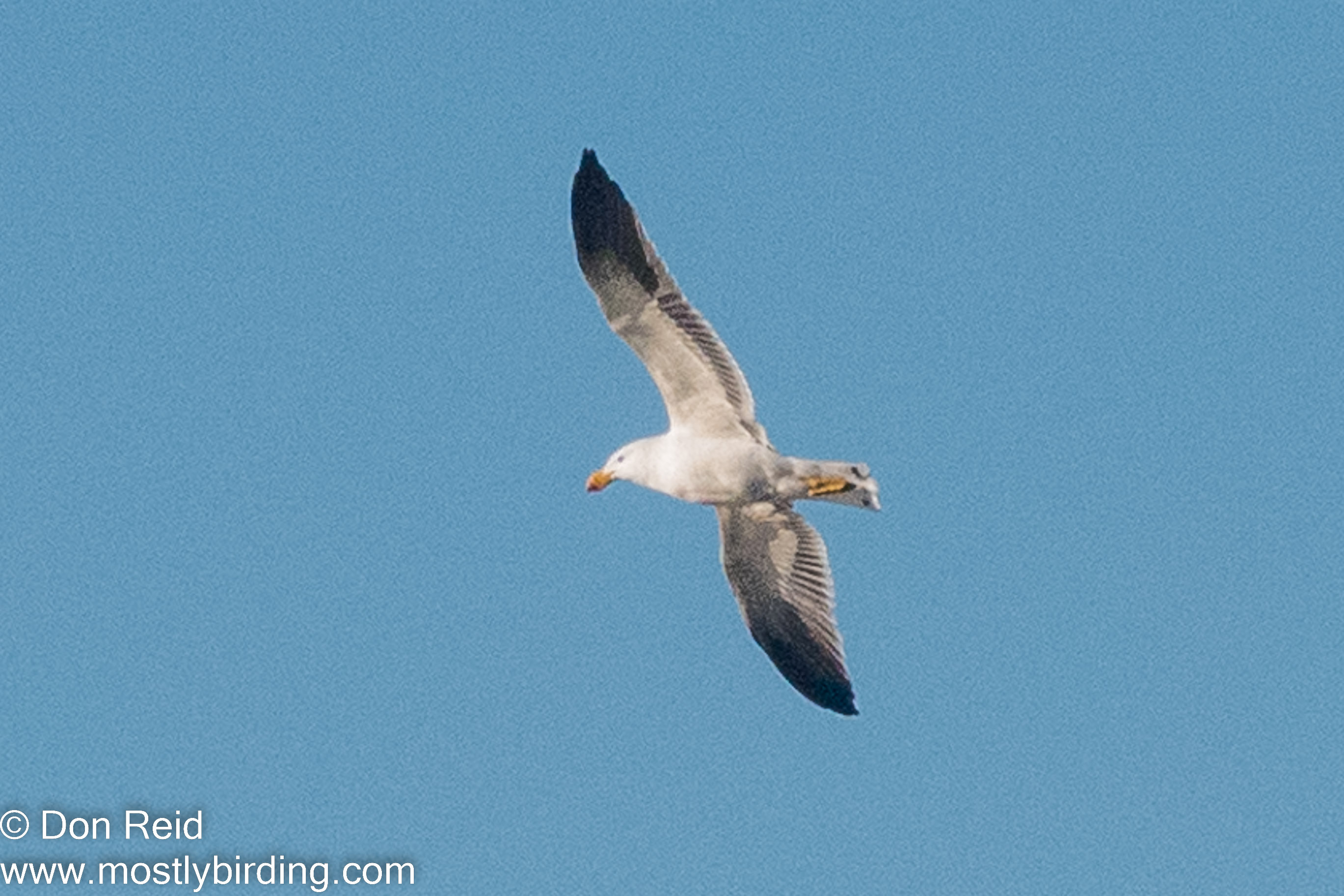
  • Pacific Gull – quite common but far outnumbered by the Silver Gulls
Pacific Gull, Raymond Island Victoria
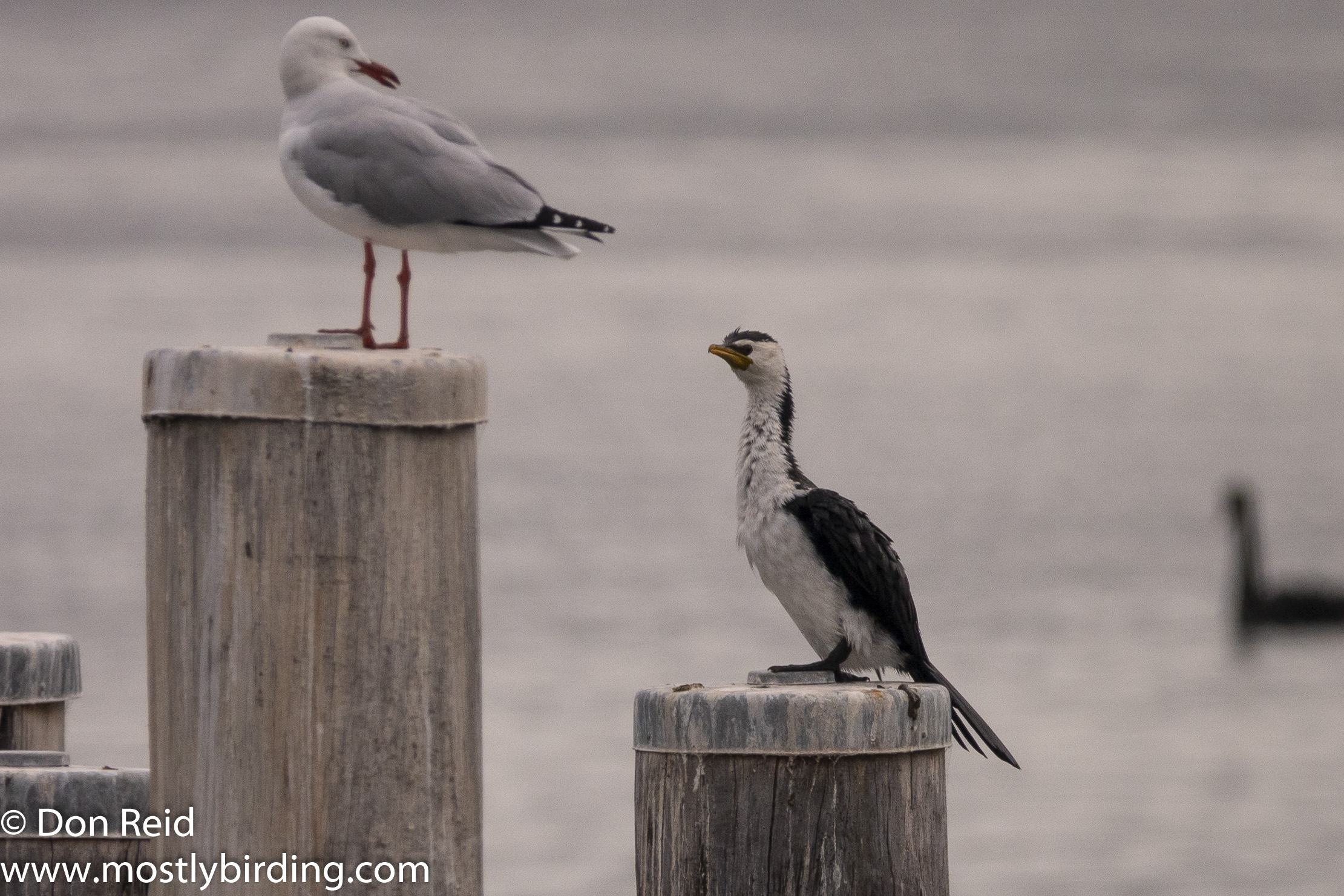
  • Little Pied Cormorant – a few perched on poles in or near the water
Little Pied Cormorant, Paynesville & Raymond Island, Victoria
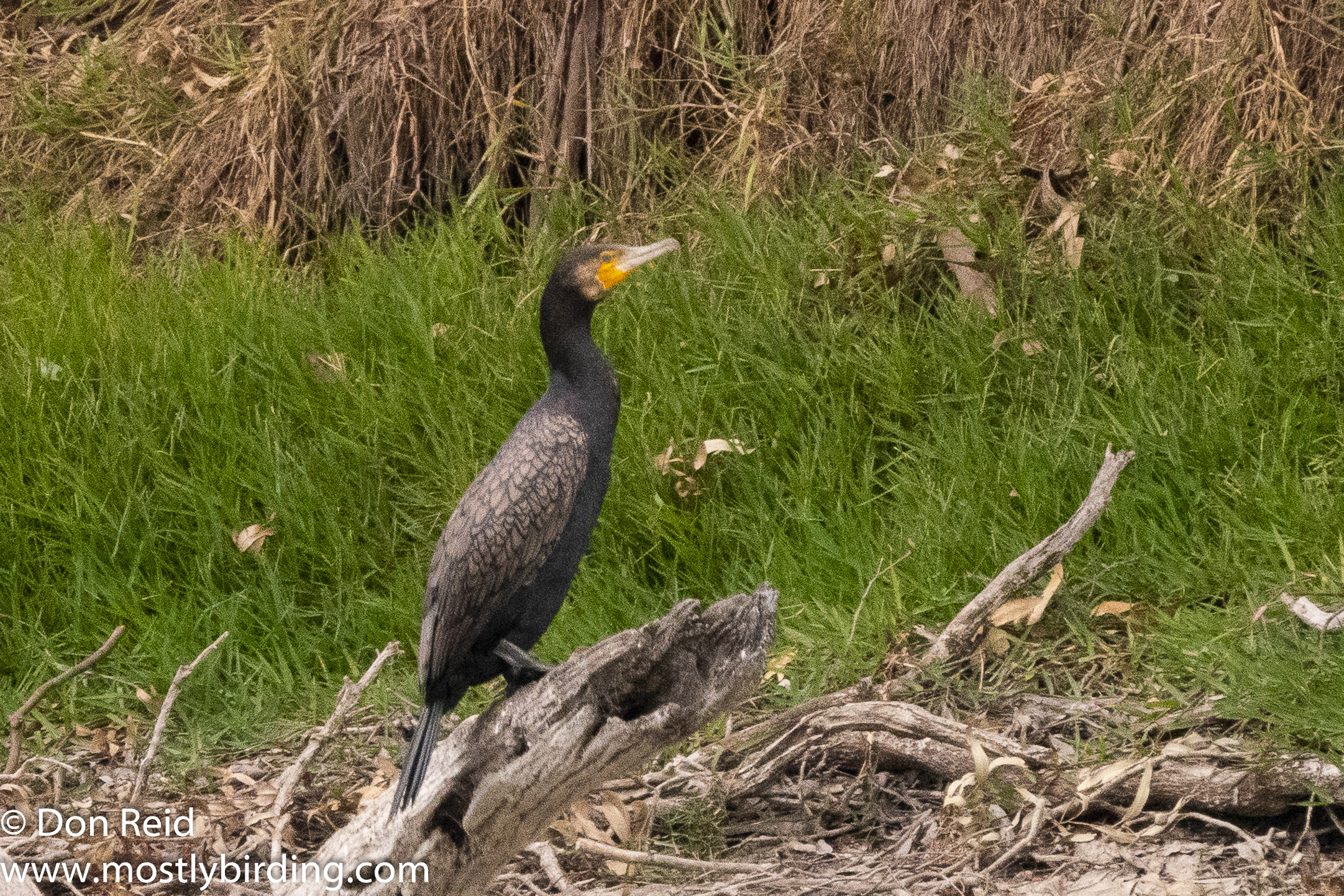
  • Great Cormorant – as the name suggests a much larger Cormorant
Great Cormorant, (photo taken on Sale Common)
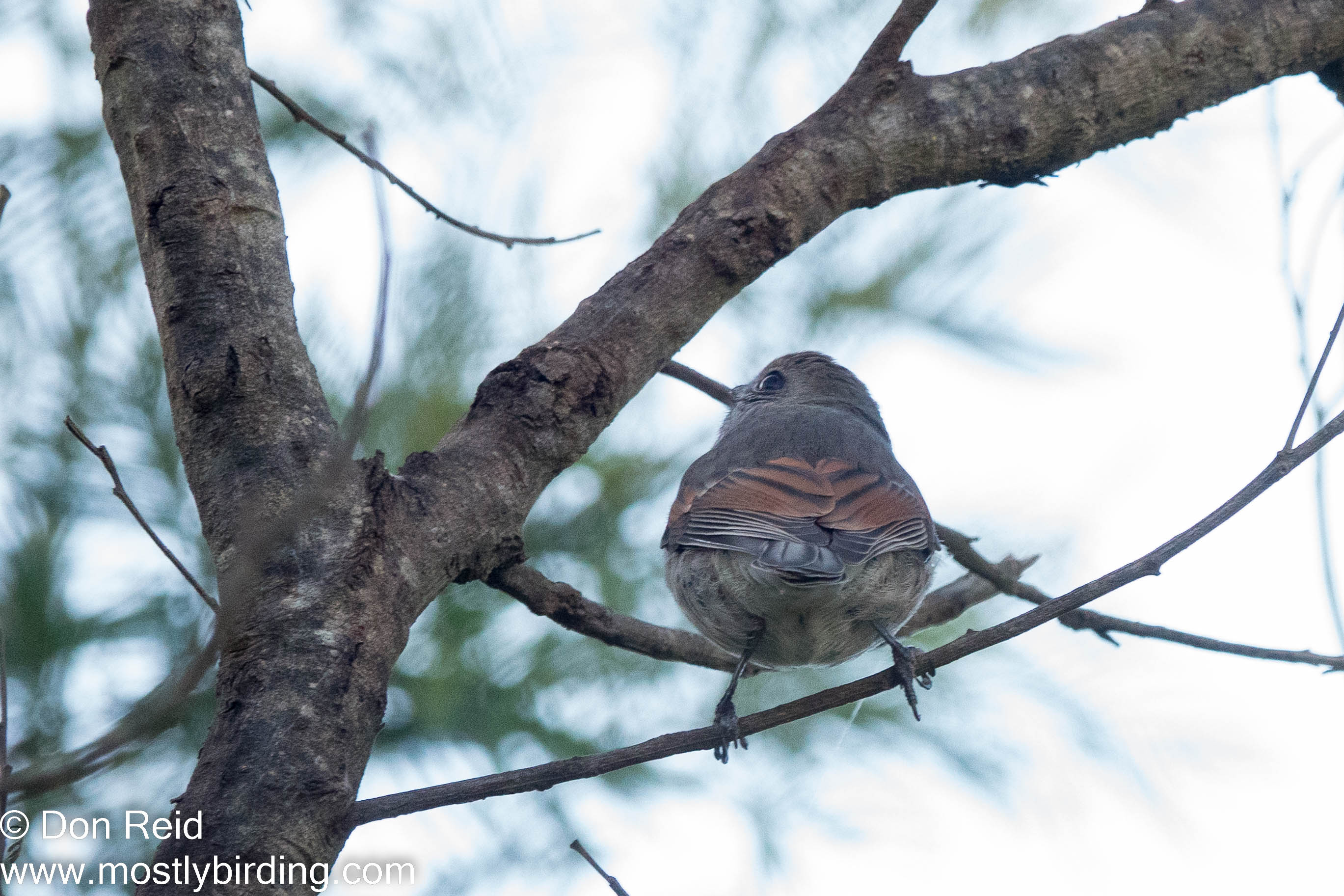
  • Australian Golden Whistler – with a name like that you would expect a colourful, spectacular bird, however this was the rather dull immature version of the species. I spotted it in a tree as we passed by and asked Stephan to stop – it looked a lot like the Grey-headed Sparrow that we are familiar with in SA and I was only able to identify it after some time spent paging through the bird book (which always takes me back to my early days of birding). The male would have been a lot more obvious with its bright yellow colouring…
  • This poor photo was all I came away with after almost pulling a muscle or two trying to get my aging body into a position in the car to get a decent view of the bird, which did its best to frustrate me … but – it was another Lifer!
Australian Golden Whistler Pachycephala pectoralis, (Immature) Raymond Island Victoria

At Gravelly Beach we walked about enjoying the view up and down the deserted beach

Gravelly Beach, Raymond Island Victoria

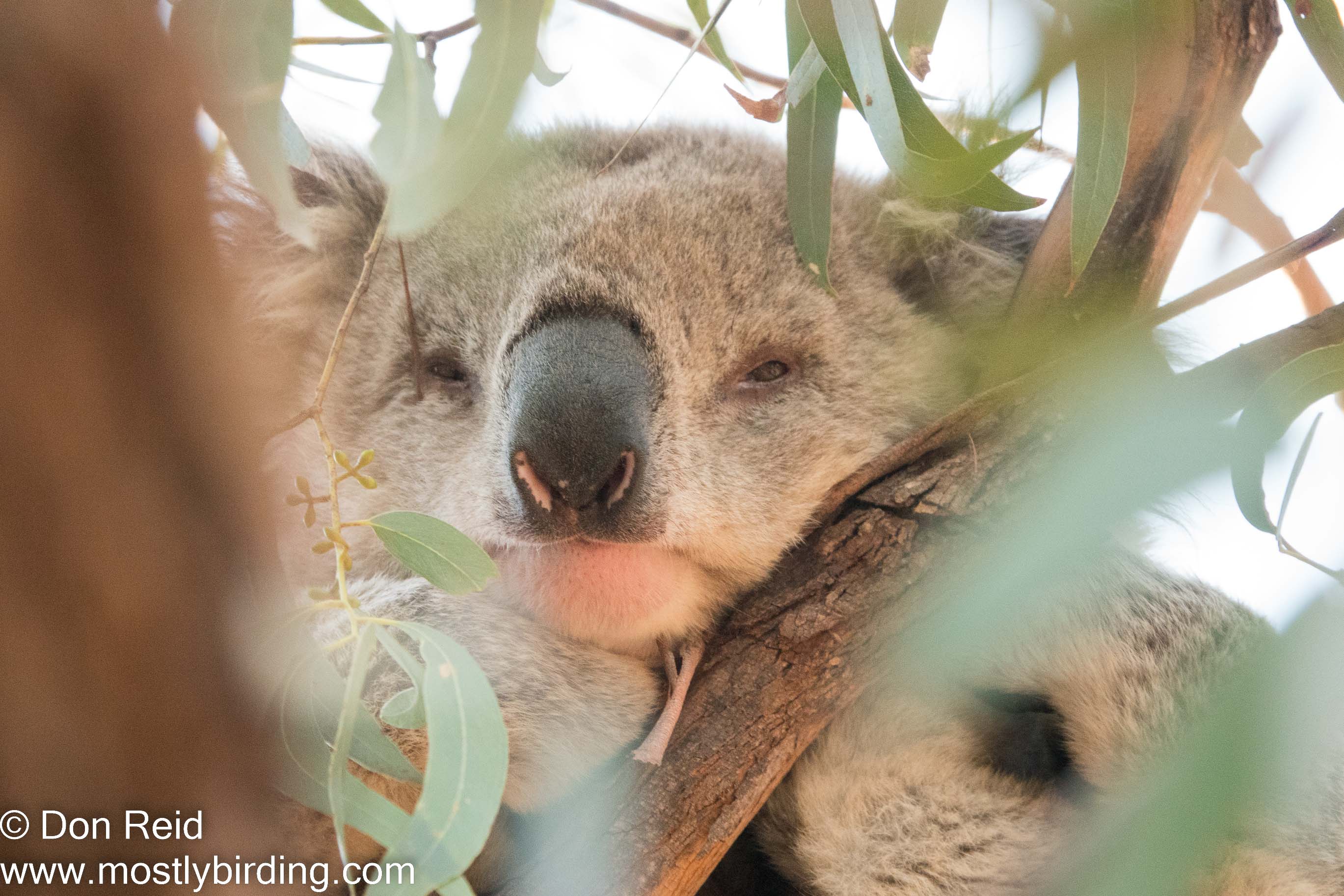
Another road took us back to the nature area where we parked again and walked a section of the Koala trail, coming across a few of these cute, sleepy creatures.

Koala, Raymond Island Victoria

Along the way we also found

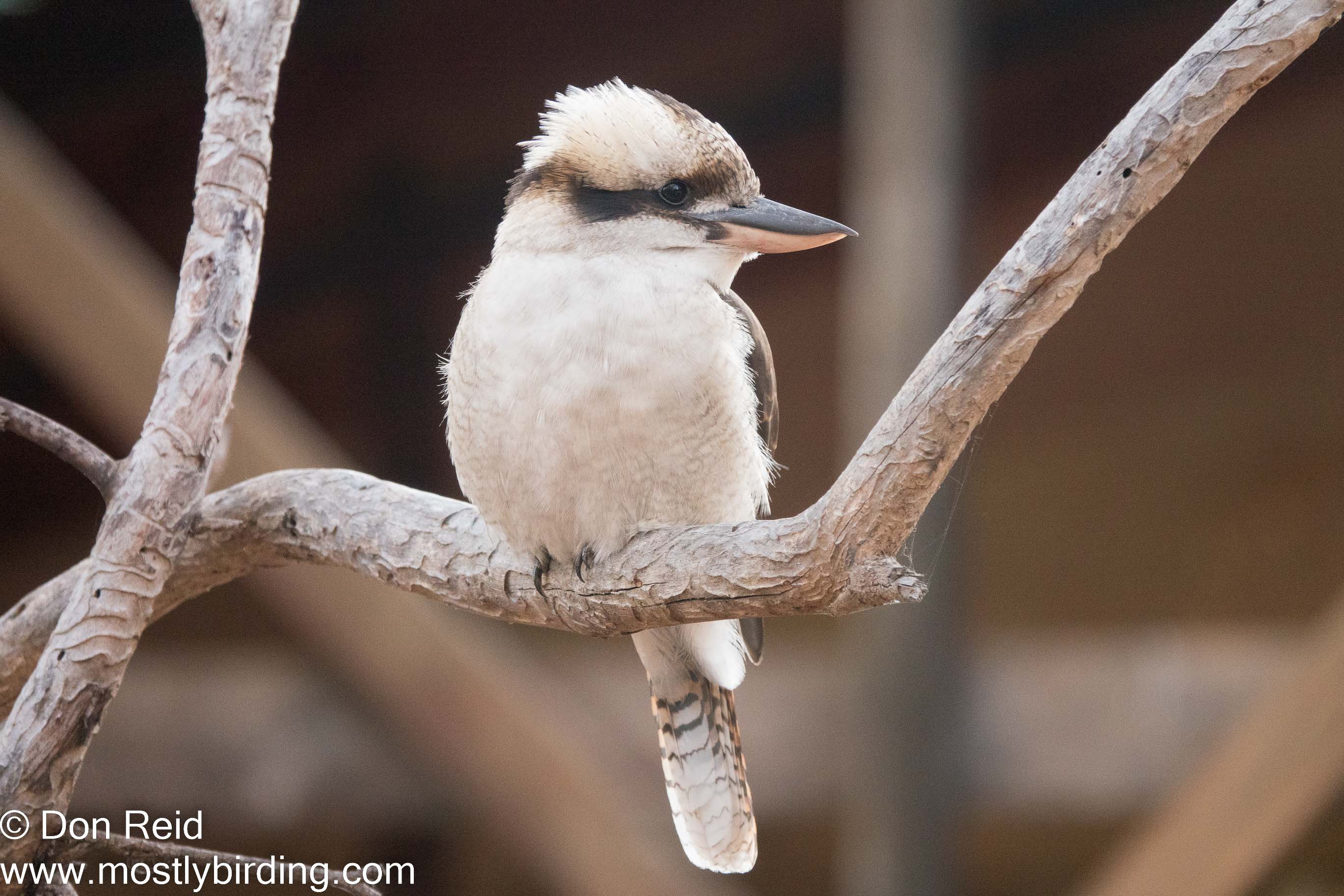
  • Laughing Kookaburra – very habituated to humans as they allowed us to approach to within a couple of metres of where they were perched
Laughing Kookaburra Dacelo novaeguineae, Raymond Island Victoria
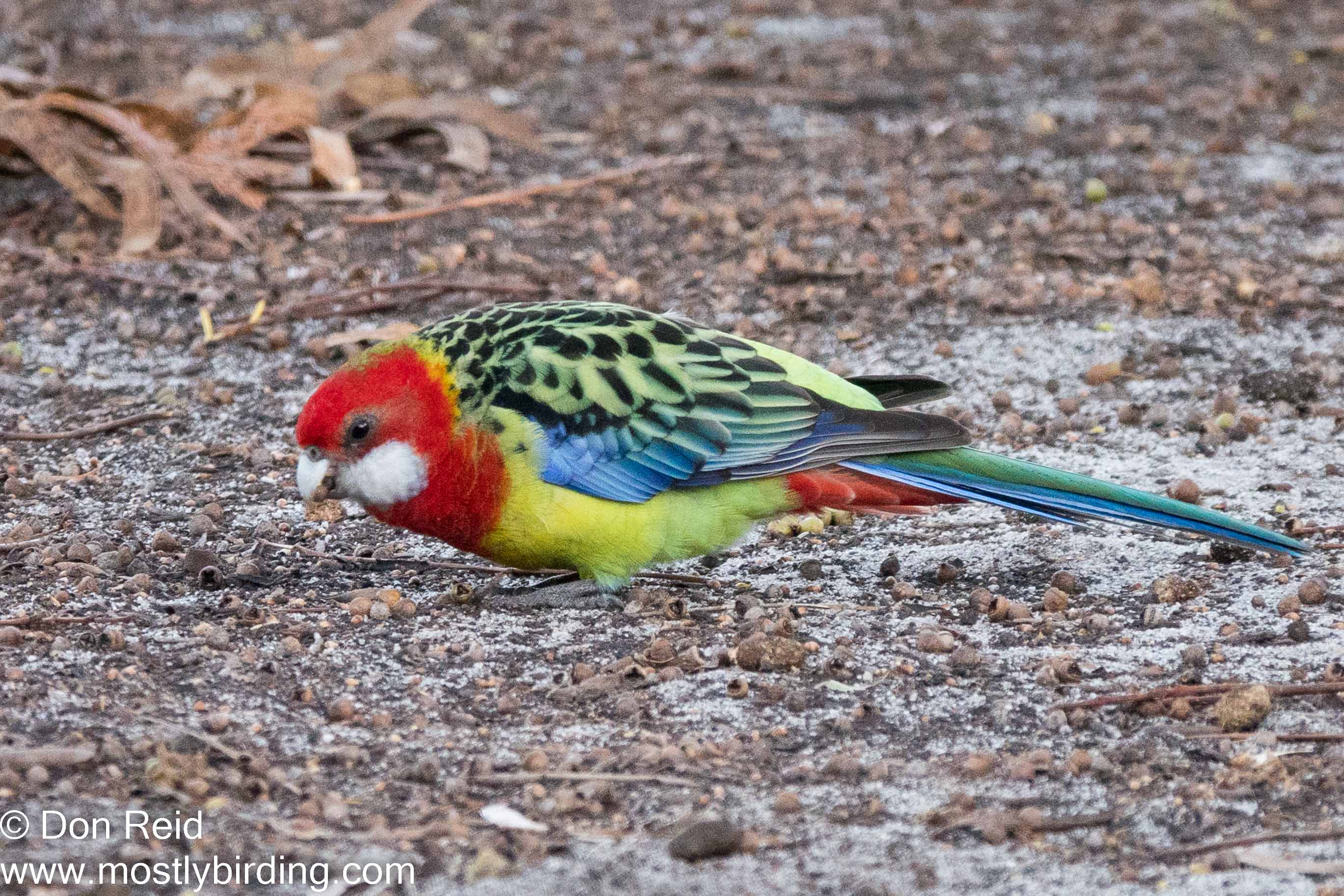
  • Eastern Rosellas – a flock feeding on the ground
Eastern Rosella platycercus eximius, Raymond Island Victoria
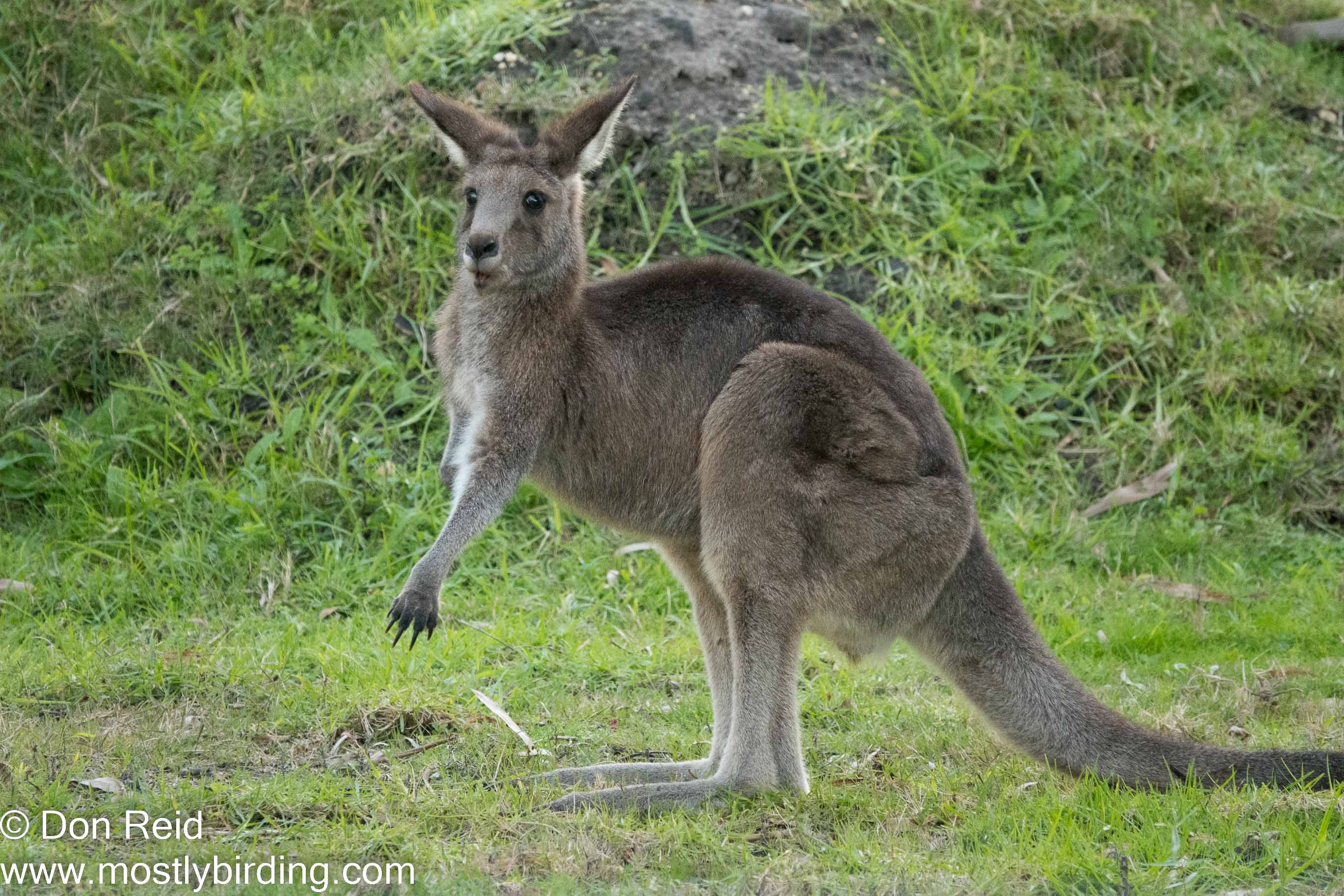
  • Wallabies – a pair in a garden – the wildlife and the people who live on the island seem to get on well with each other
Wallaby, Raymond Island Victoria

It was late afternoon by now so we headed back to the ferry and were soon on the road back to Sale, having spent a memorable day in a charming part of Victoria

Australia May 2022 – Sale Common Walk

With our time in Australia running out and having more or less recovered from the flu virus that had restricted our outings, I was keen to visit Sale Common for a nature walk.

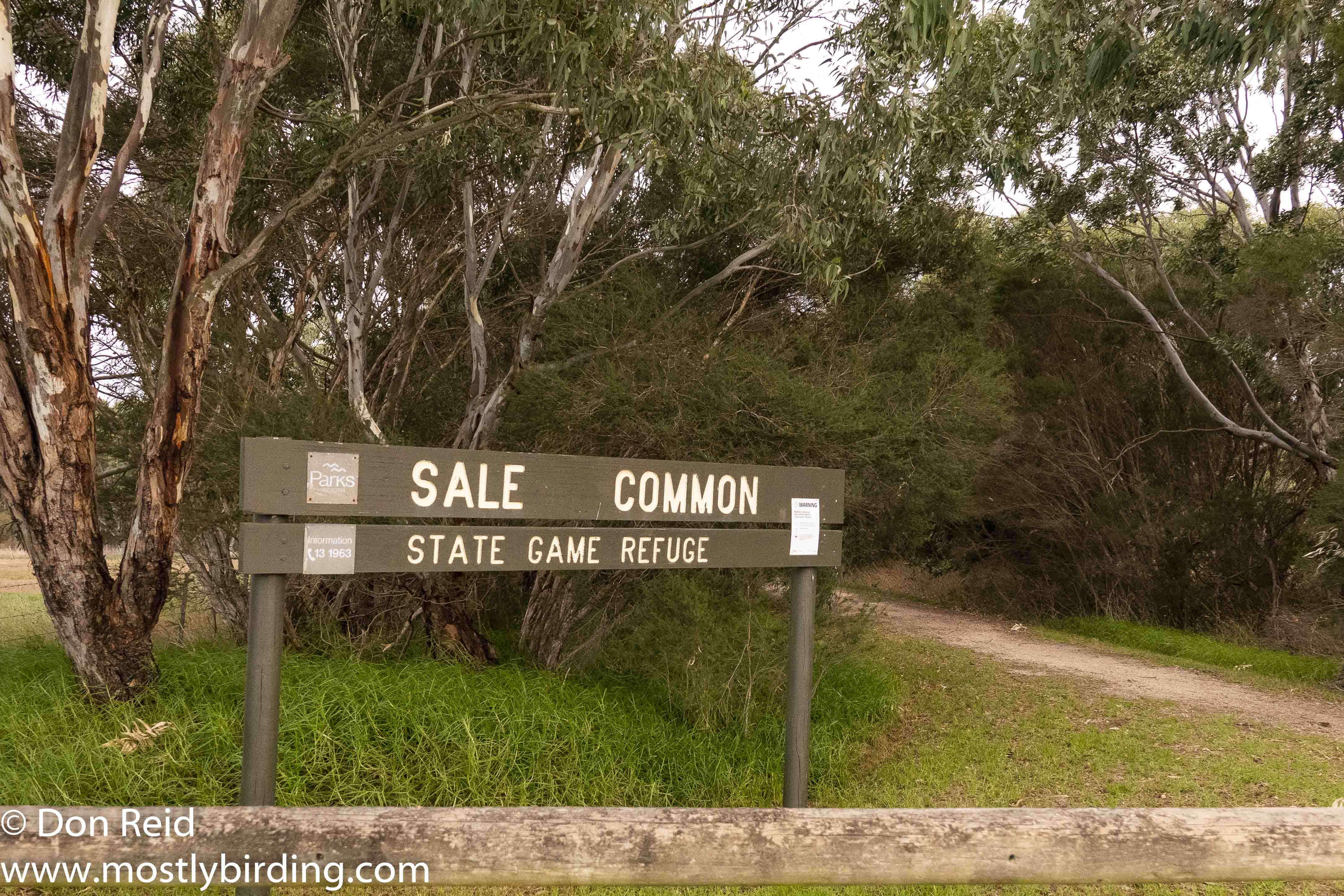
So, one Friday towards the end of May, I borrowed the family car and drove to the parking area for the Common (full name is Sale Common State Game Refuge) where I parked next to one other car already there.

Sale Common NCR

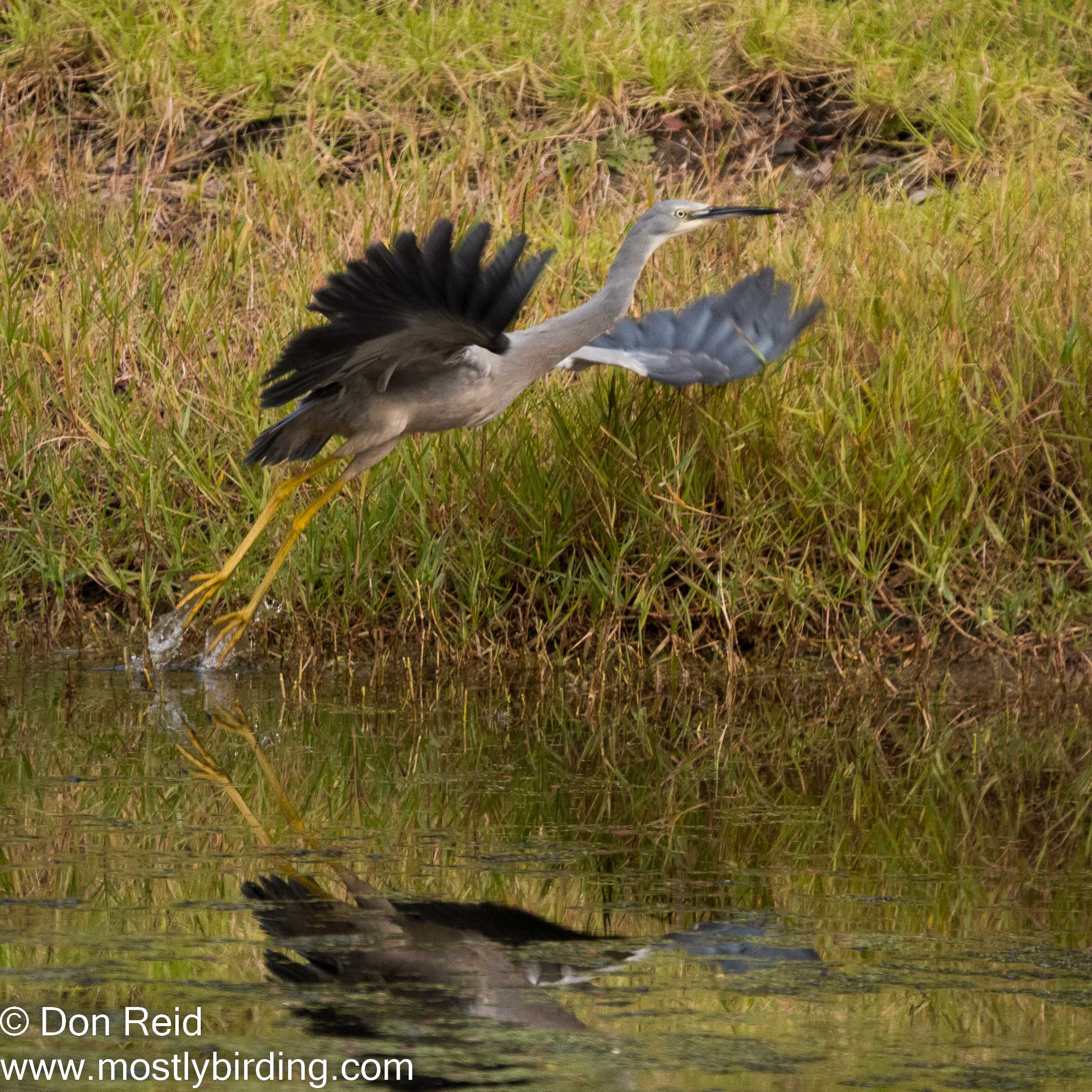
Before reaching the parking area I had passed a stretch of river which was occupied by two prominent birds – a White-faced Heron and a Little Pied Cormorant – both of which I was able to photograph before they moved off.

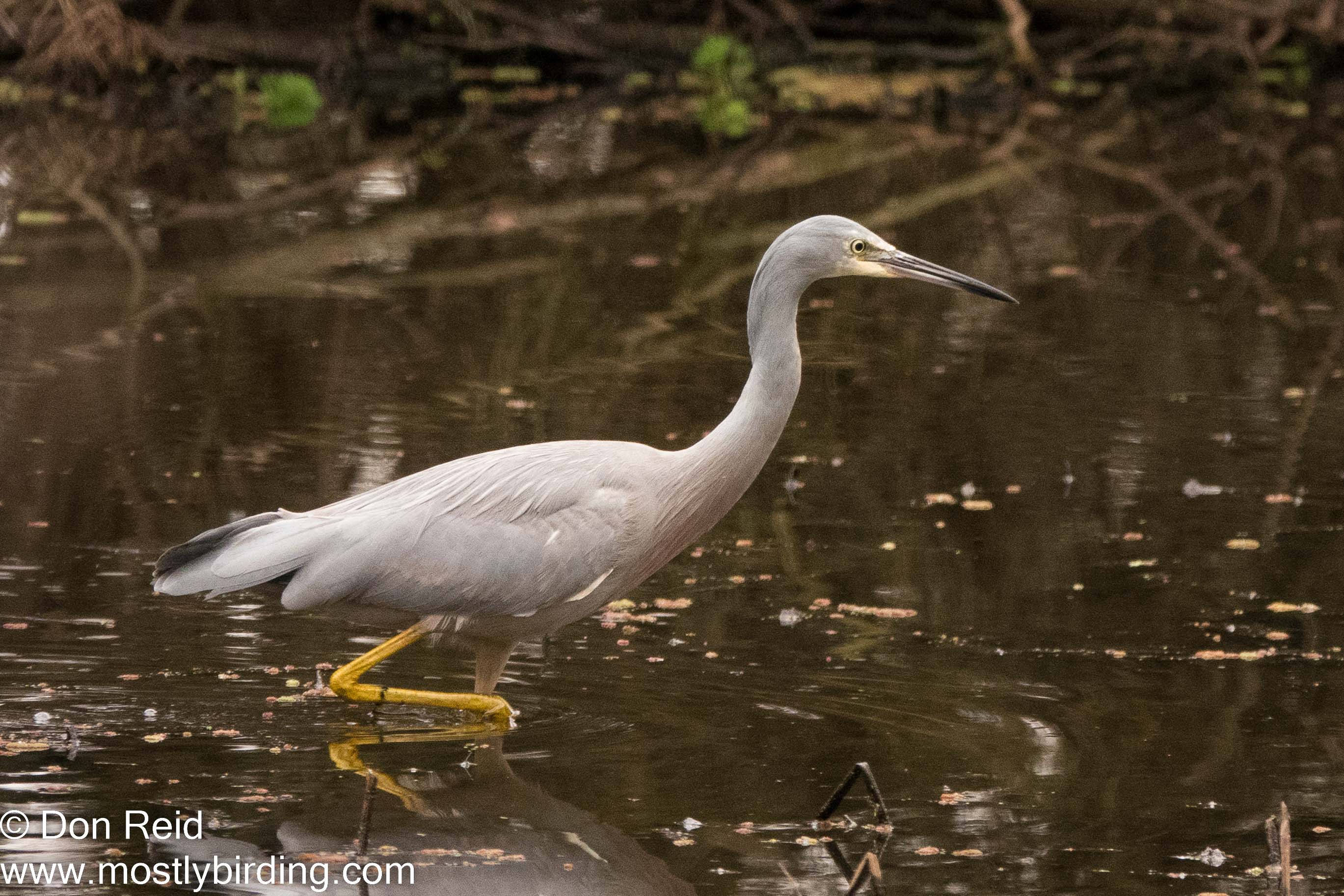
White-faced Heron Egretta novahollandiae, Sale Common NCR
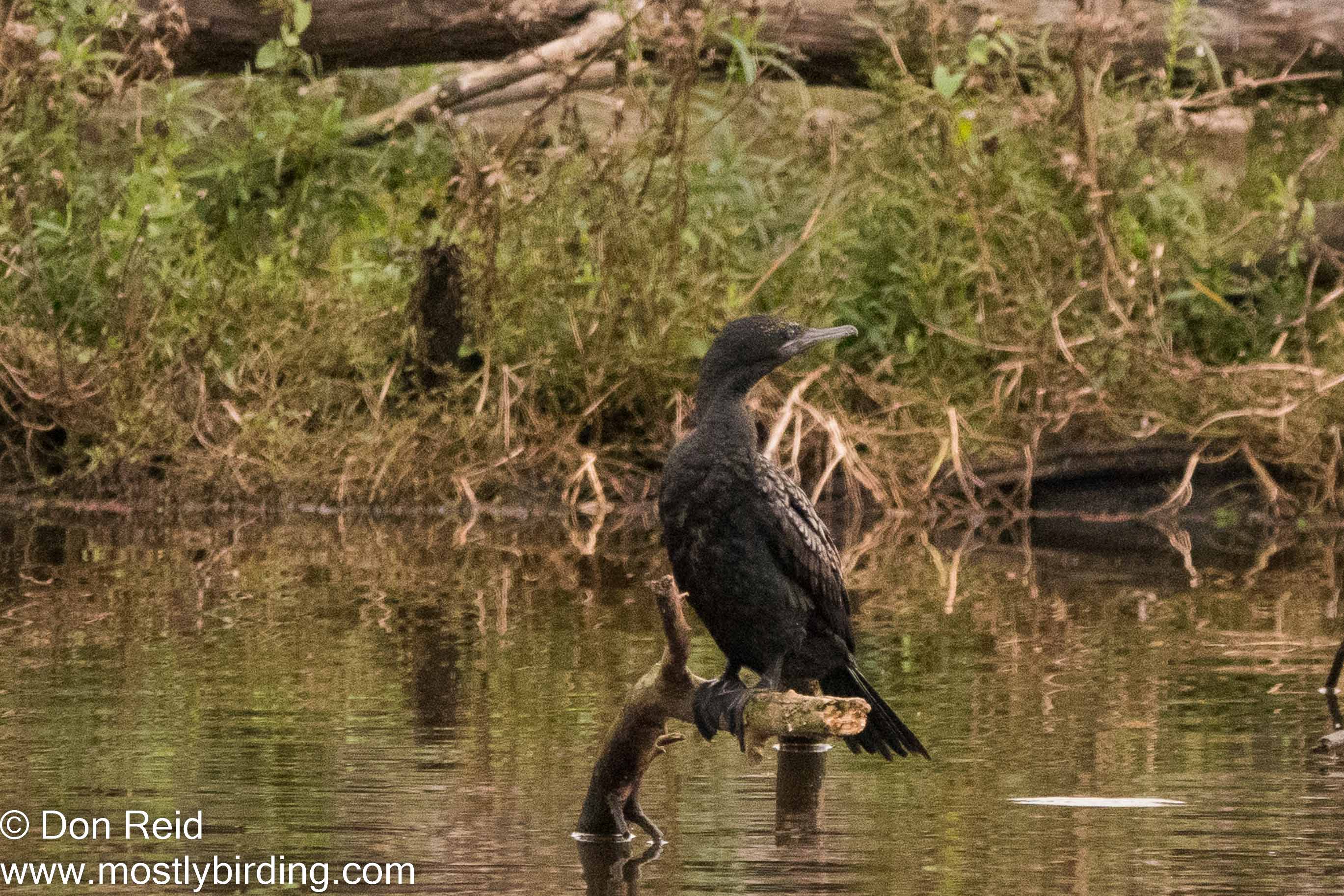
Little Pied Cormorant Microcarbo melanoleucos, Sale Common NCR

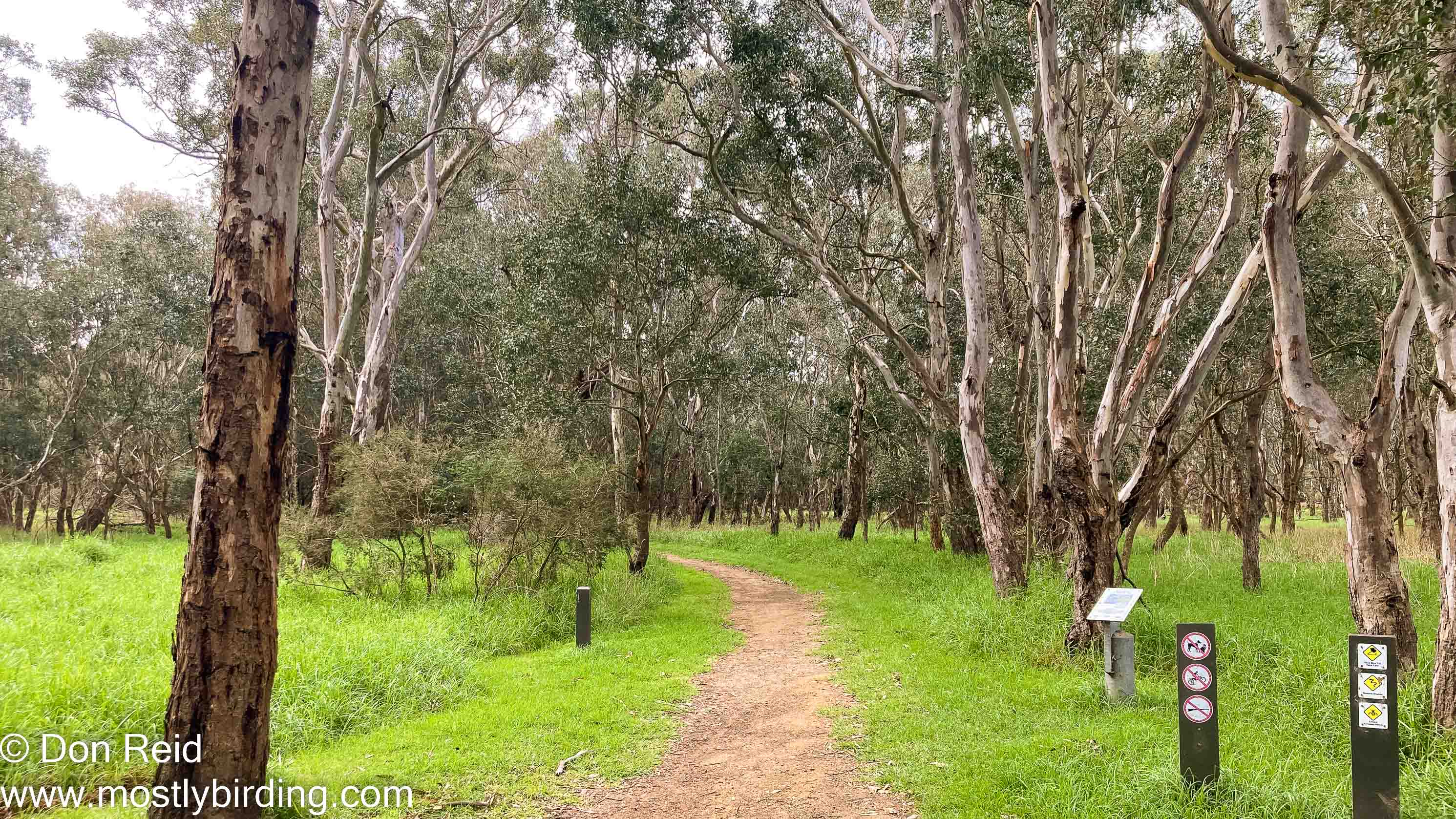
After parking I gathered my warm jacket, binos and camera and set off along the first stretch of pathway through Red Gum Woodlands with a carpet of greenery creating a beautifully peaceful scene.

Sale Common NCR
Sale Common NCR

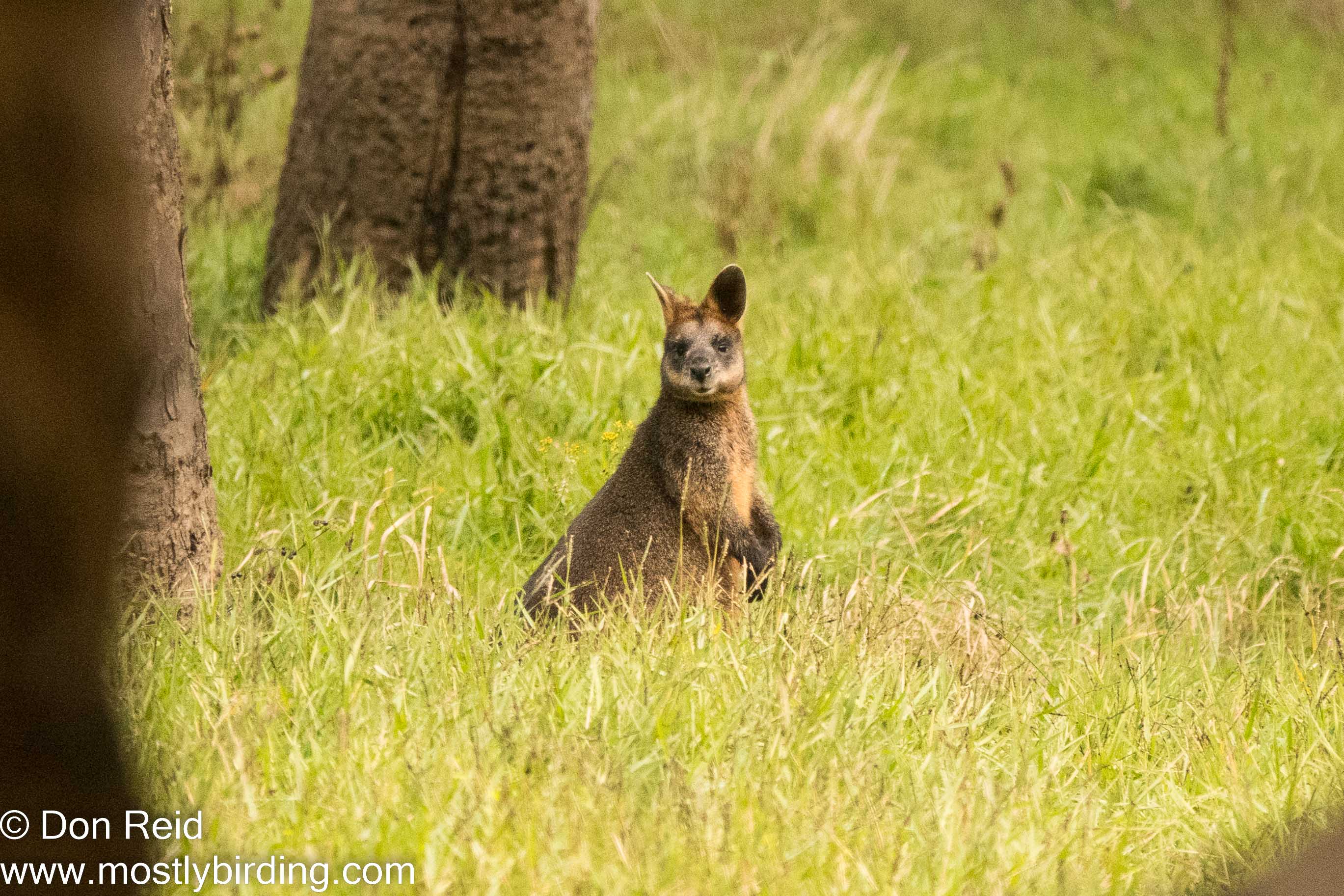
Shortly thereafter the pathway branched off towards the “lagoon” (as it was known to the early settlers) and I soon came across my first sighting – not a bird for a change but a Wallaby – who eyed me from a distance, cocked its ear then turned slowly and went bounding off through the long grass.

Wallaby, Sale Common NCR

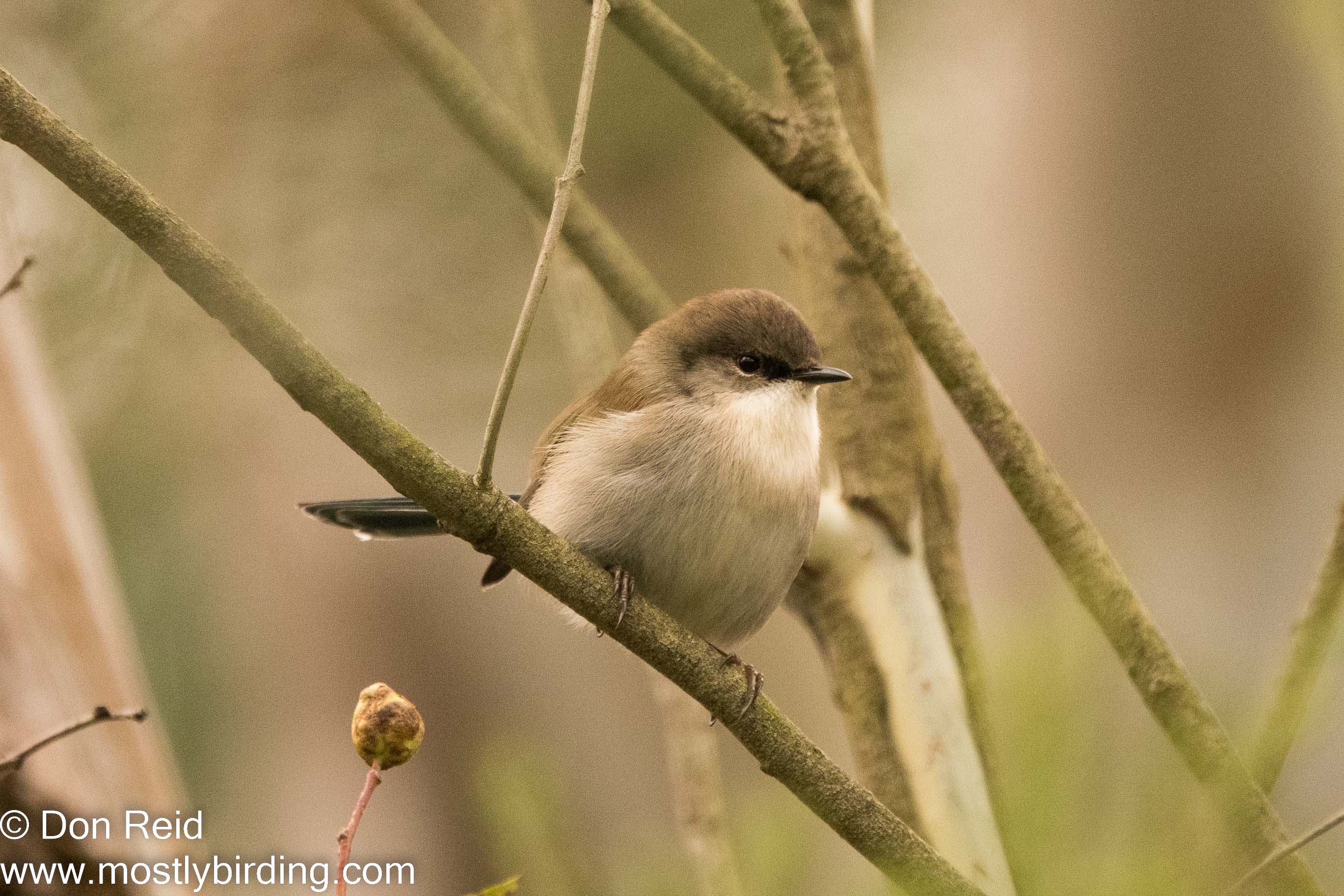
This was followed by close-up sightings of two small birds of the bush that I have become very familiar with in Australia – Superb Fairy-Wren and Grey Fantail, both emitting cheerful calls to liven up the forest.

Superb Fairywren Malurus cyaneus (Non-breeding plumage), Sale Common NCR
Grey Fantail Rhipidura albiscapa, Sale Common NCR

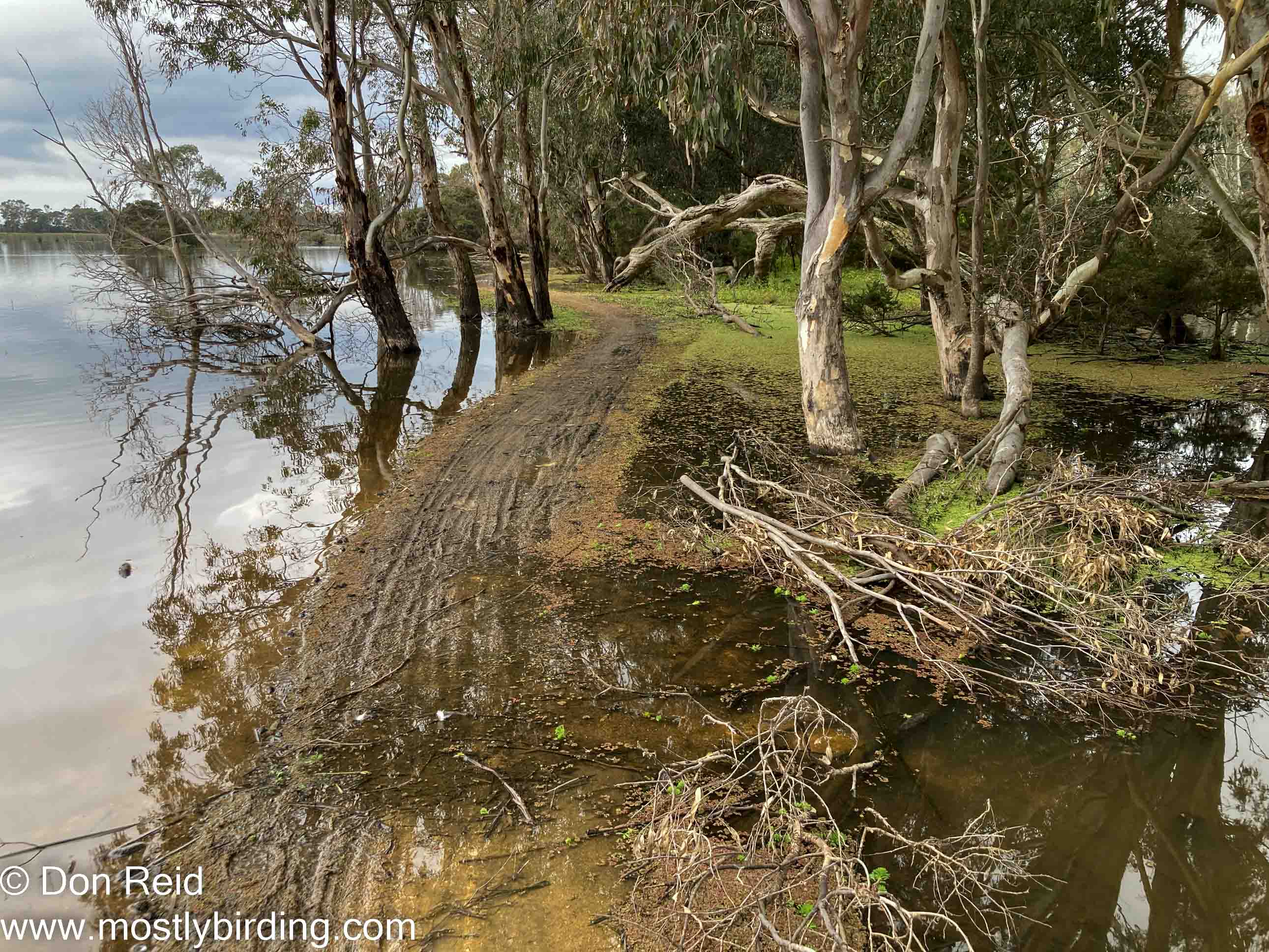
As I approached the first stretches of water it was obvious that water levels were very different from those in 2019 when I had last walked these routes, to the point that the pathway was close to being inundated in places.

Sale Common NCR

I could see waterfowl ahead, breaking from their waterside cover and heading out into the middle of the lagoon, looking back to eye me warily as I hastened to get a photo or two before they became too distant.

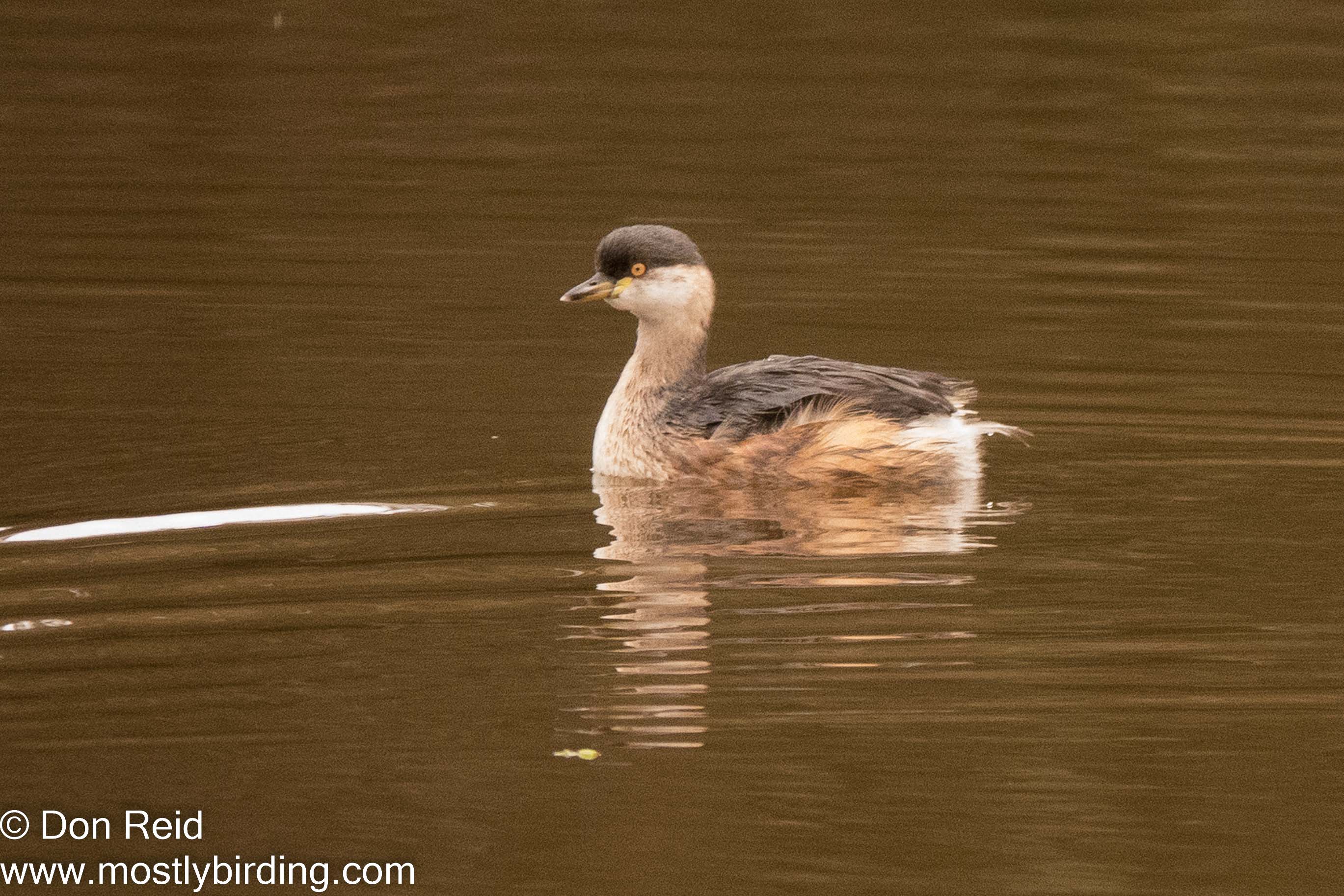
Australasian Grebe Tachybaptus novaehollandiae (Non-breeding plumage), Sale Common NCR

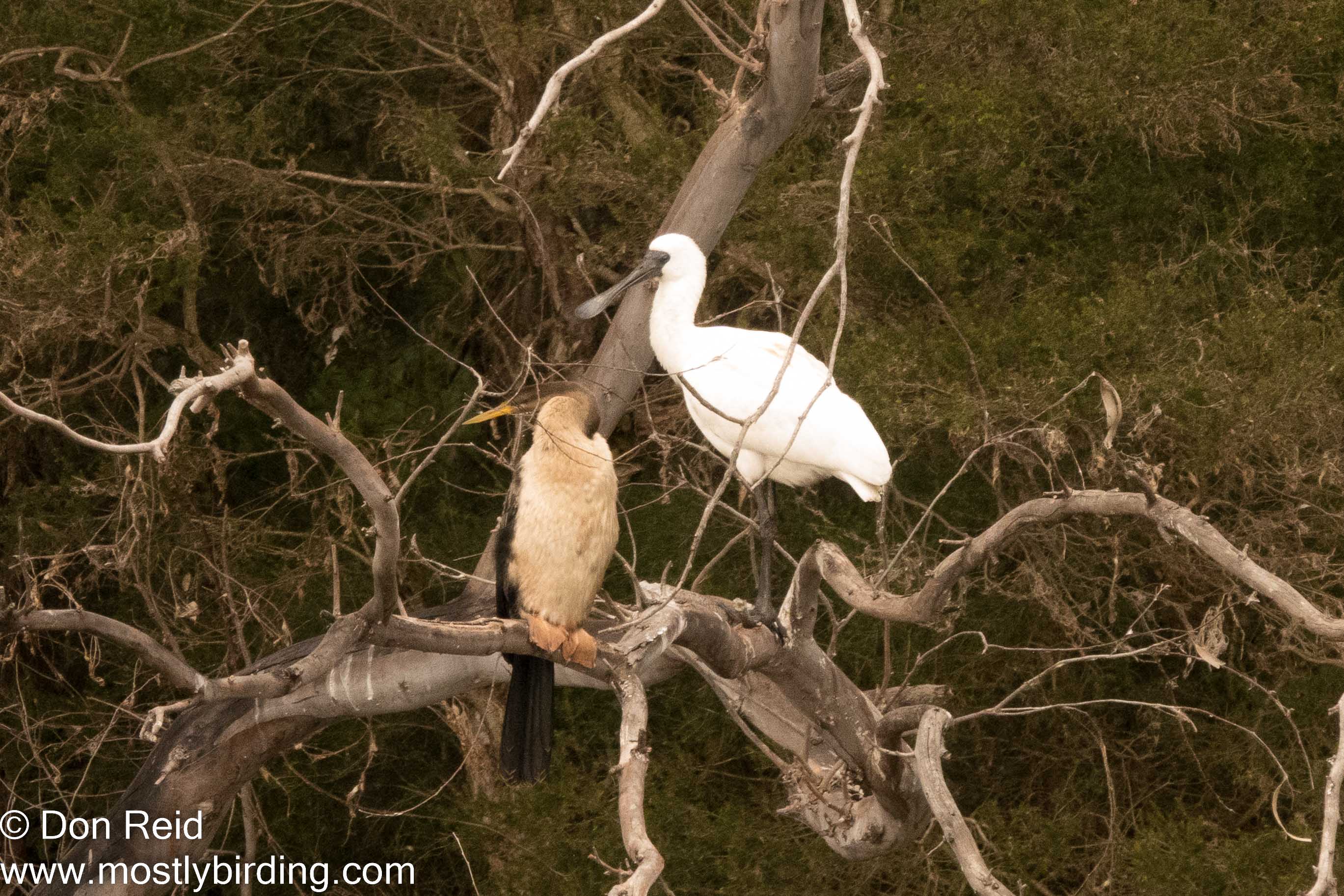
A short detour in the pathway led to the “Lookout” – a low hill with views over the lagoon and across to the opposite bank which was lined with trees. From this vantage point I could see a variety of birds perched in partially submerged trees, including Little Black Cormorants and Yellow-billed and Royal Spoonbills, the latter being a Lifer – my first for the morning.

Little Black Cormorant Phalacrocorax sulcirostris, Sale Common NCR
Royal Spoonbill Platalea regia, Sale Common NCR – Lifer!
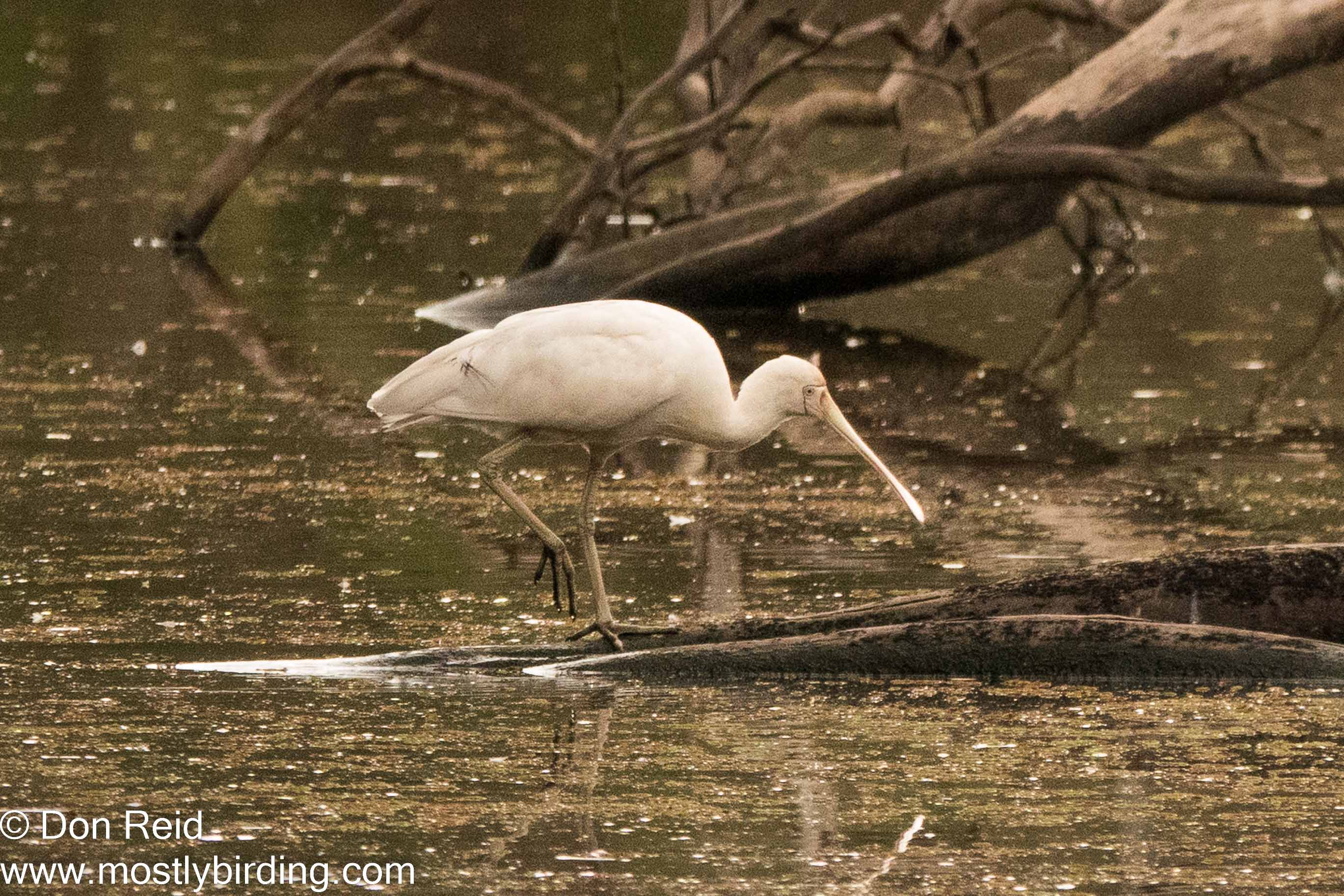
Yellow-billed Spoonbill Platalea flavipes, Sale Common NCR

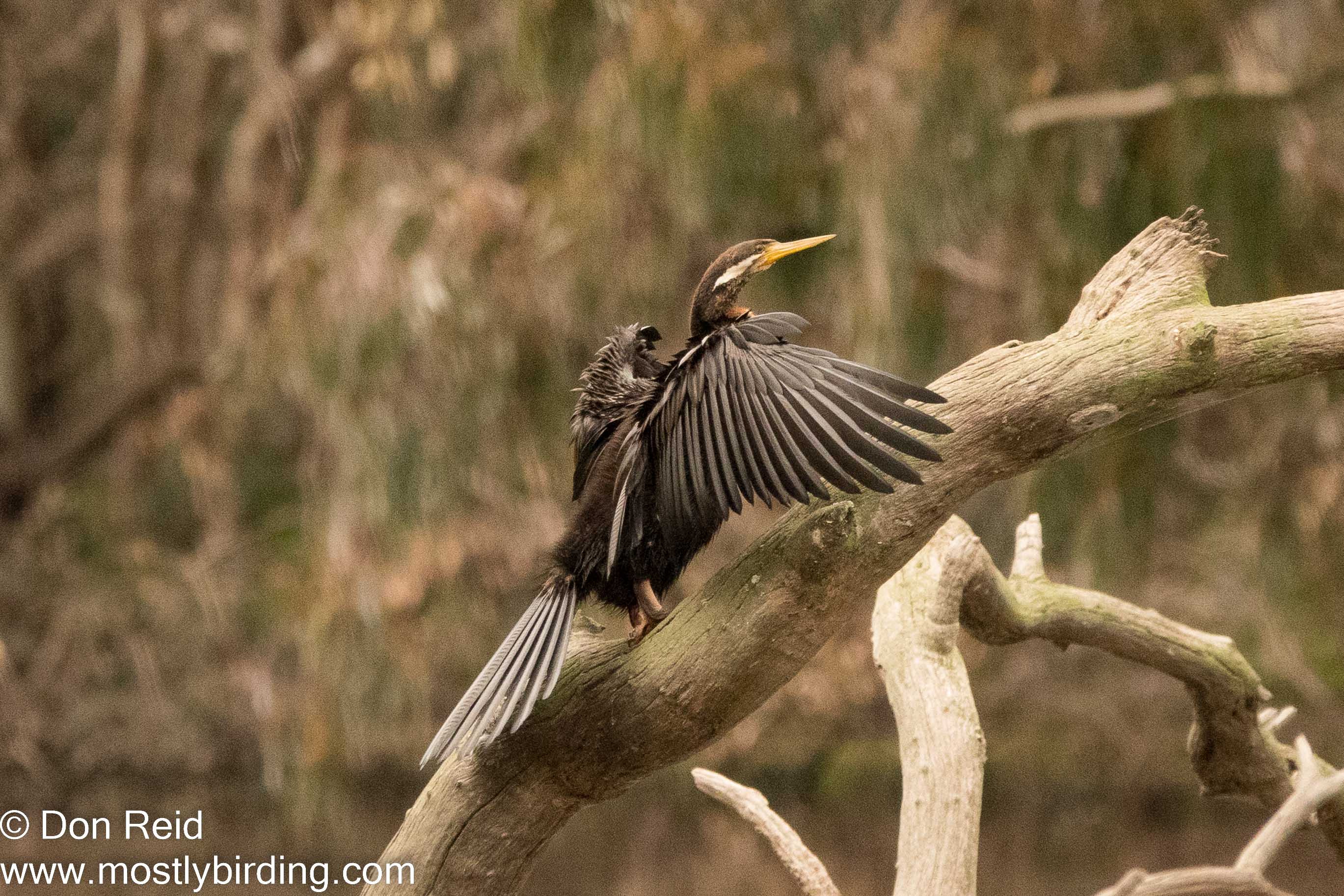
Nearby an Australian Darter was perched with wings spread, drying its feathers before its next fishing dive, and higher up in the tree above a Whistling Kite was partially concealed – I later discovered it was attending a nest with a young nestling.

Australasian Darter Anhinga novaehollandiae, Sale Common NCR

I joined the main pathway again, alternating between natural track and boardwalks across the wetland sections, the latter providing a good vantage point for close views of White-faced Herons and Black Swans before reaching a stretch of track surrounded by water.

Sale Common NCR
Sale Common NCR
Black Swan Cygnus atratus, Sale Common NCR
White-faced Heron Egretta novahollandiae, Sale Common NCR

A bench standing in water was a further indication that the water levels of the wetlands were substantially higher than May 2019 when I had last visited the Common and I didn’t need further persuasion to make this my turnaround point, having walked enough and seen enough for the morning.

Sale Common NCR
Sale Common NCR

Time was moving on and the car would soon be needed for the school run so I headed back along the pathway, without rushing but with fewer meandering dawdles. Nevertheless, I spotted two ducks which I didn’t immediately recognise – with good reason as both turned out to be Lifers!

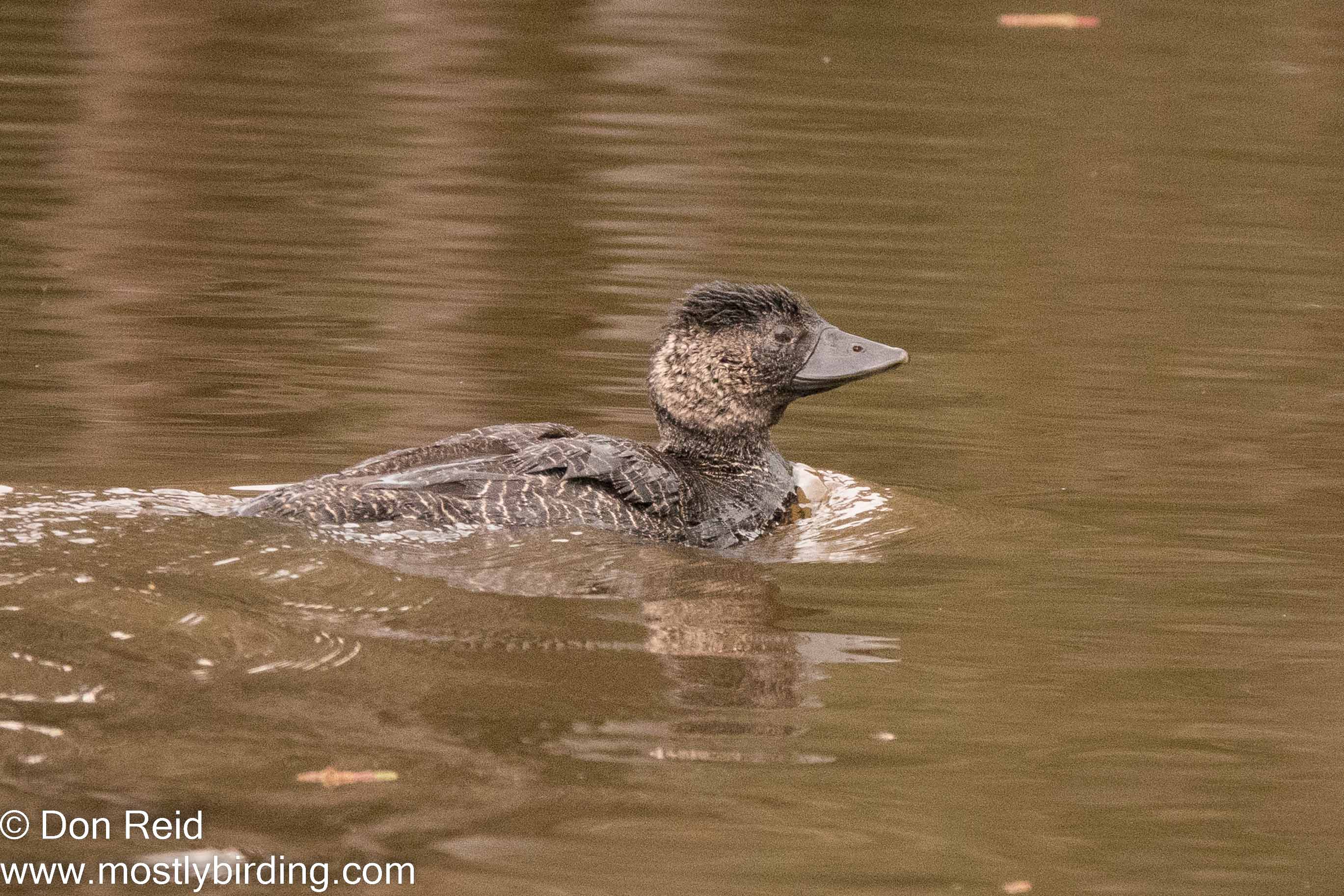
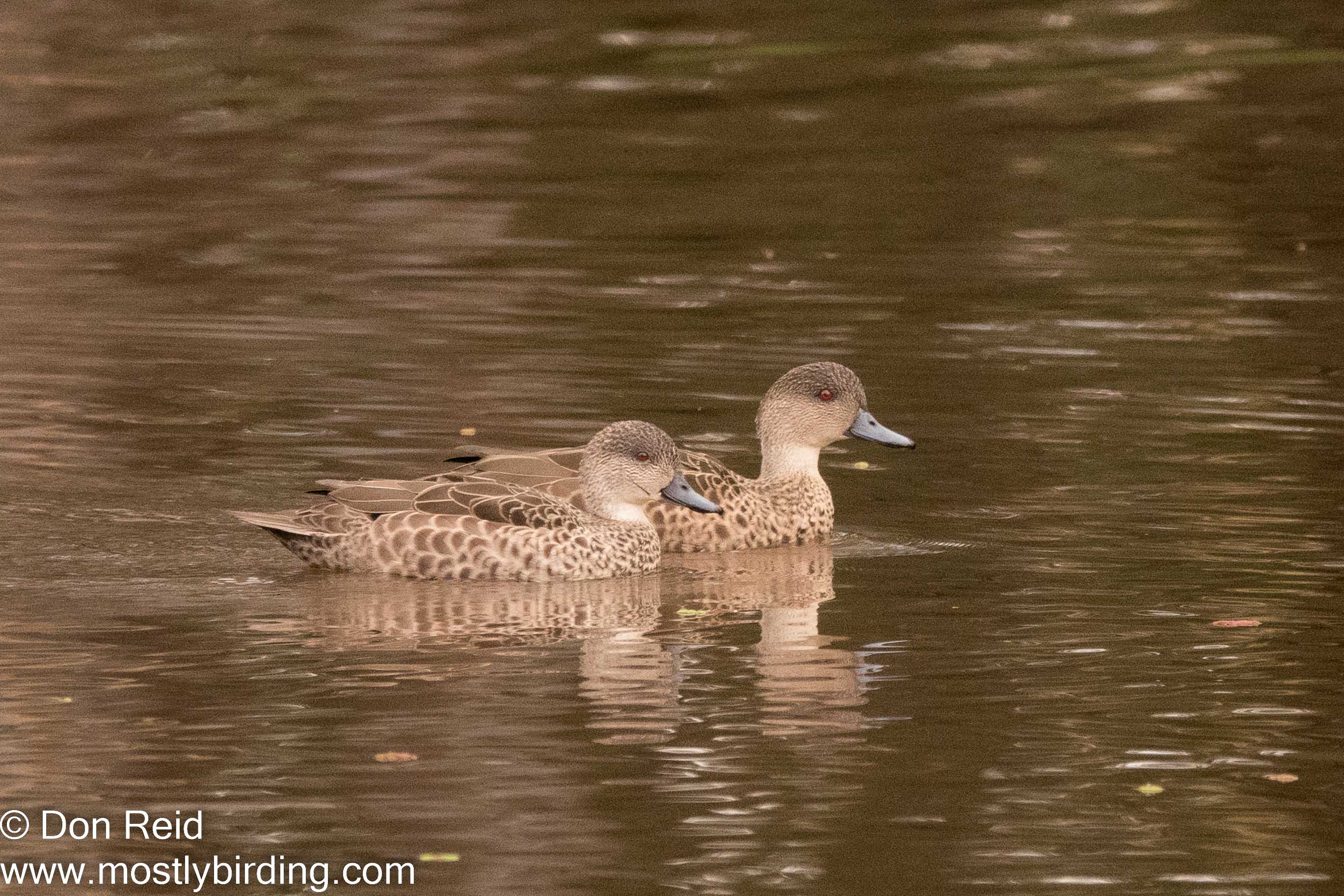
One was a Musk Duck with an unusual bill that reminded me of a Pygmy Goose, the other was a Grey Teal that looked remarkably like the Cape Teals we are used to in SA.

Musk Duck Biziura lobata, Sale Common NCR
Grey Teal Anas gracilis, Sale Common NCR

Thrilled with my haul of three lifers for the morning and the absolute pleasure of walking in such an inspiring environment (which I virtually had to myself as well) I hastened to the parking area and found I was just in time to head straight to the schools to collect our grandson and granddaughter.

Australia May 2022 : The Birding – it’s Different! (Part 3)

The Other Birds

Parts 1 and 2 described some of the more common “black and white” and “vividly coloured” species, which make up a large proportion of the birds that are found in the area of Victoria where our son has settled.

In this Part three I will be showing some of the other common birds to be found, the ones that don’t fall into one of those categories but which are likely to attract your attention because of their uniqueness or simply because they are plentiful or easily seen.

And to start off, let’s take a look at one of Australia’s most iconic birds and also one of my favourites –

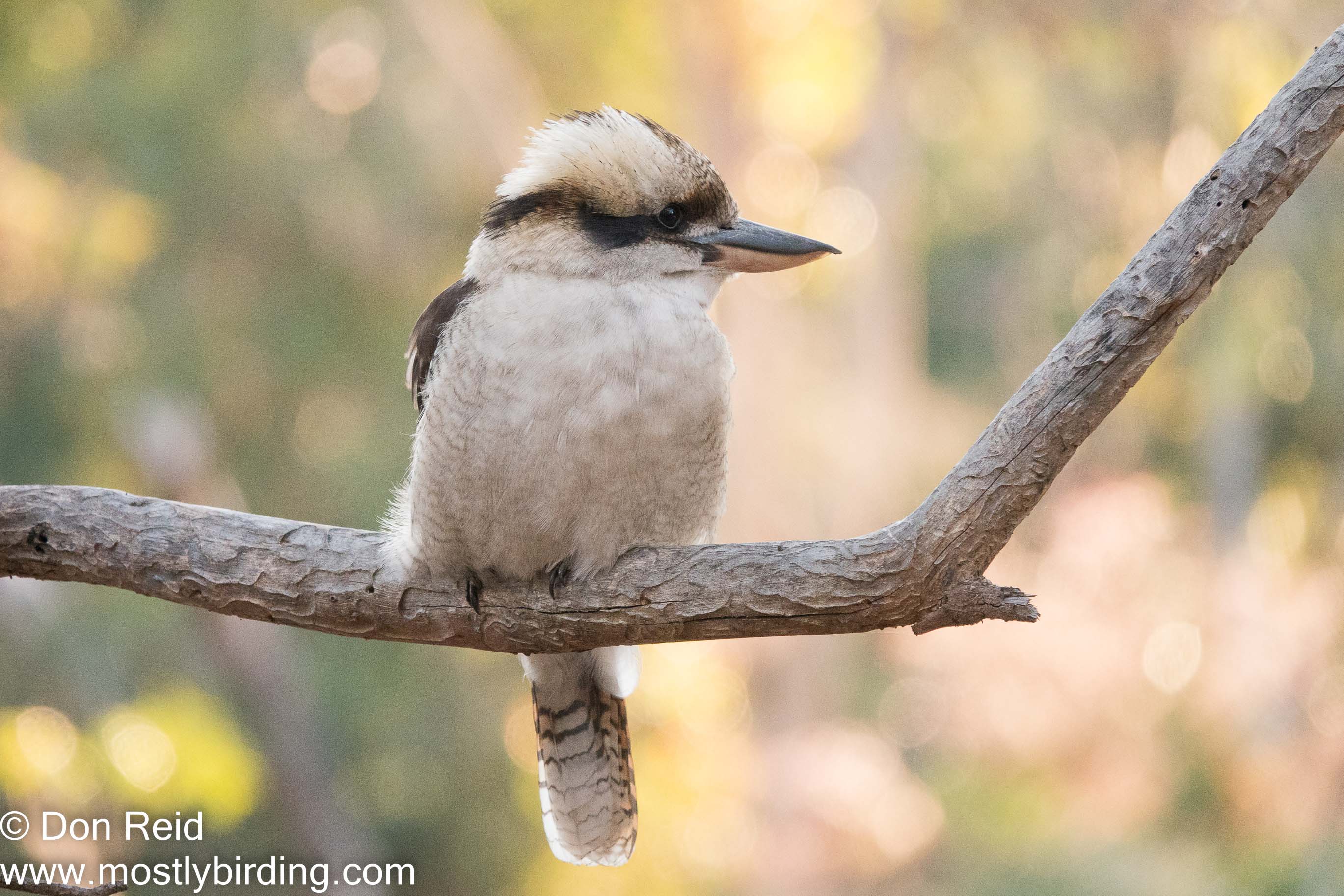
Laughing Kookaburra Dacelo novaeguineae

The Kookaburra has adapted well to urban environments, particularly those with areas of large eucalypts and if you think it looks a lot like a kingfisher, you would be spot on – it is in fact the largest member of the kingfisher family, outsizing even the Giant Kingfisher from Africa, but its “fishing” exploits are confined to dry land with its diet including insects, small mammals and even other birds.

The name is a loan-word from the Wiradjuri people who called it a guuguubarra which in turn is an onomatopeic version of the sound of its call. The call is loud and distinctive, ringing through the trees and sounding rather maniacal – listen to the calls at this link :

https://wildambience.com/wildlife-sounds/laughing-kookaburra/

For interest, I looked into the scientific name of the Kookaburra – Dacelo novaeguineae – and learnt a couple of totally useless facts, nevertheless fascinating if you are into that sort of thing.

Firstly Dacelo is an anagram of Alcedo, the latin word for kingfisher – which was the genus name originally given to the species. As an aside the genus name of two South African species of kingfisher is Alcedo, while 5 of the other 8 South African kingfishers fall under the genus Halcyon

As to the species name novaeguineae, the laughing kookaburra was first described and illustrated by French naturalist and explorer Pierre Sonnerat in his Voyage à la nouvelle Guinée, which was published in 1776. He claimed to have seen the bird in New Guinea. In fact Sonnerat never visited New Guinea and the laughing kookaburra does not occur there. He probably obtained a preserved specimen from one of the naturalists who accompanied Captain James Cook to the east coast of Australia

Well, I warned you that it’s useless (yet fascinating) information! Just shows that scientists are a quirky bunch at times.

Laughing Kookaburra Dacelo novaeguineae, Raymond Island Victoria

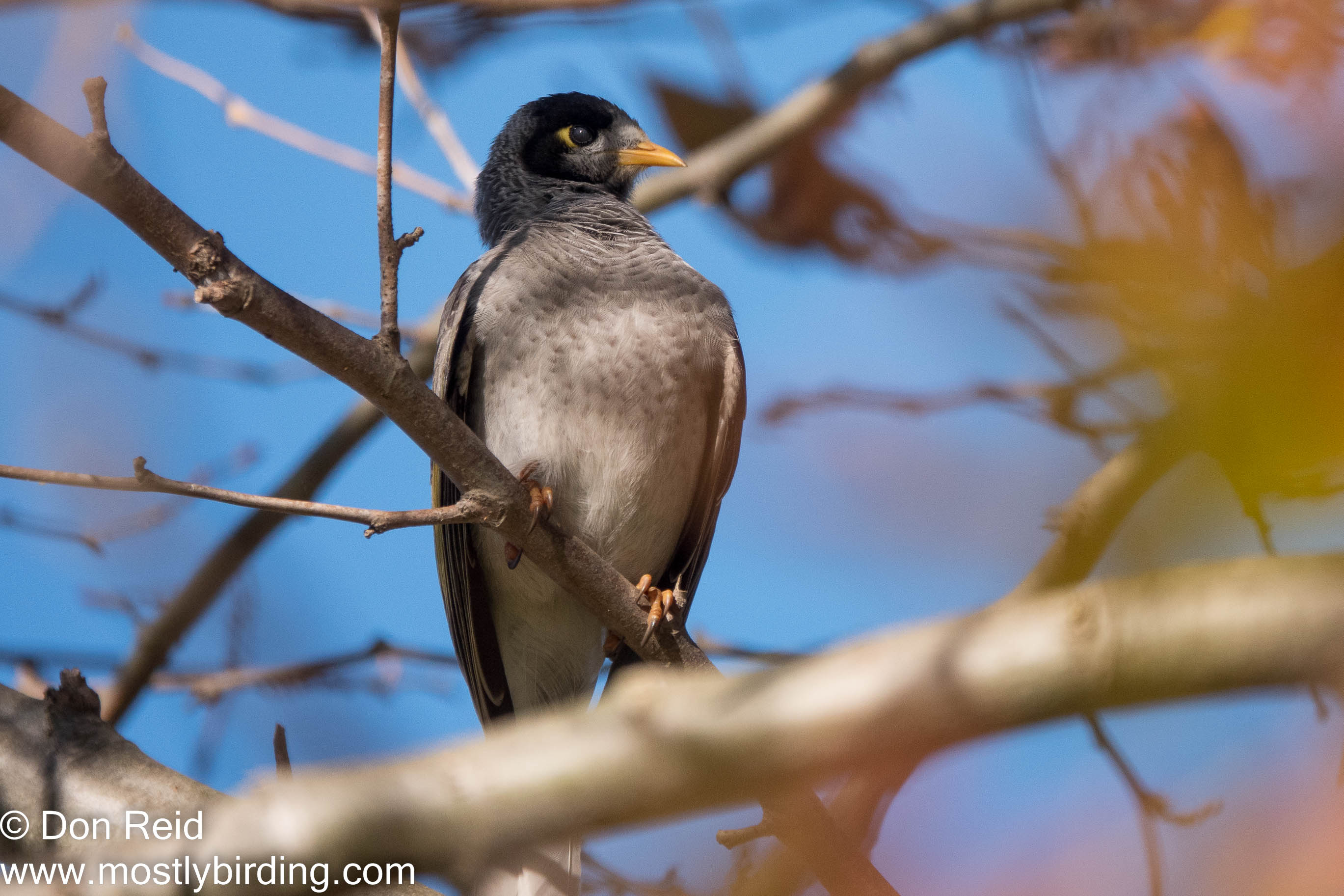
Noisy Miner Manorina melanocephala

Like the Laughing Kookaburra, the Noisy Miner is found mostly in the eastern parts of Australia and, like so many species of this vast country, it is an endemic. The first thing that strikes you about this bird is its somewhat cross-eyed appearance – mainly due to the yellow coloured bare patch of skin behind the eyes

And the name? Well I did try and find the origin of Miner but could not come up with anything other than a suggestion that it is another form of Mynah, which we know all too well in South Africa. There is a resemblance so let’s assume that is the case. As for the Noisy part of its name, it is just that – a noisy bird that lives in loose colonies and vigorously defends its feeding area.

Noisy Miner Manorina melanocephala, Sale
Noisy Miner Manorina melanocephala, Raymond Island Victoria

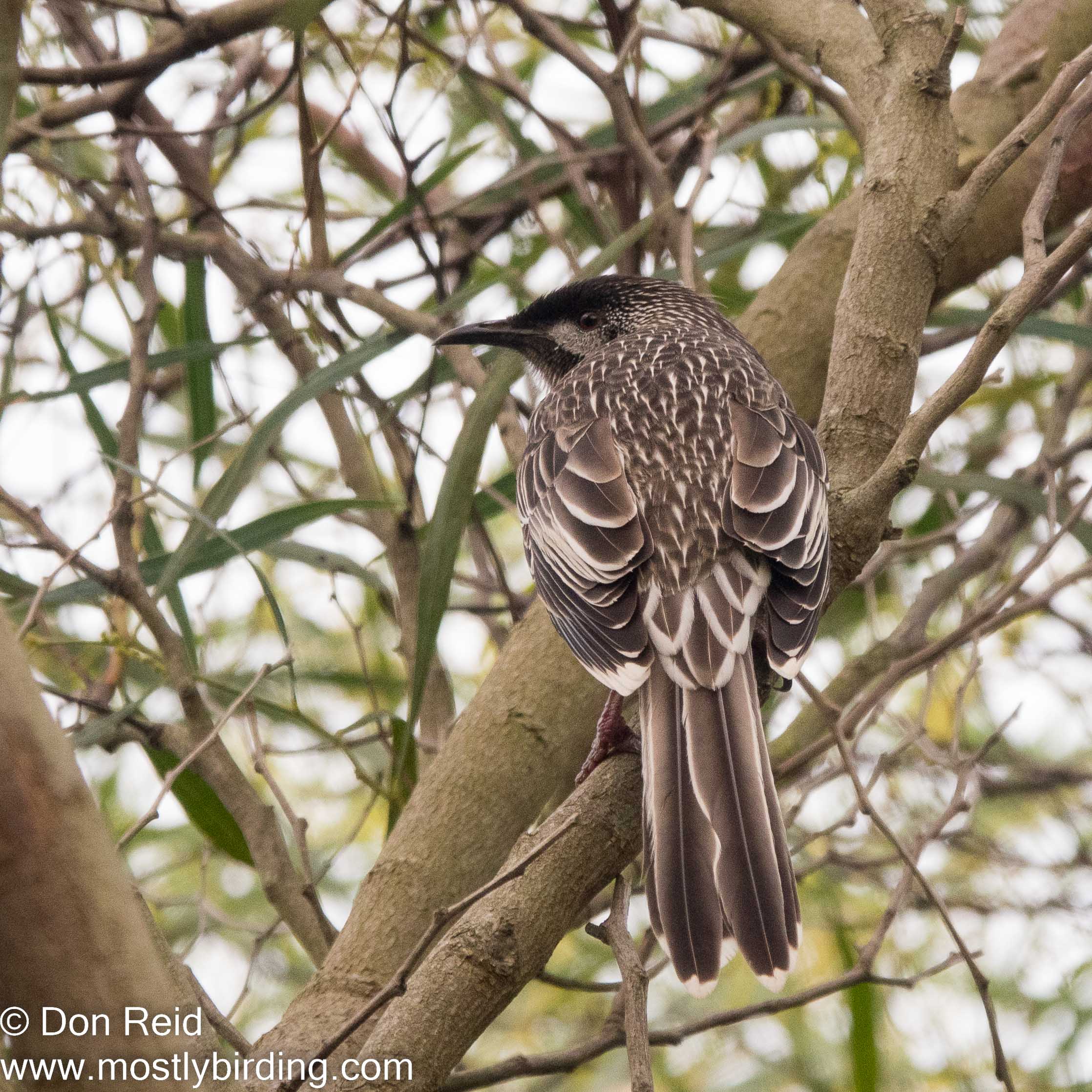
Red Wattlebird Anthochaera carunculata

It’s named for the red wattles just below its cheeks, not visible in my photo so you’ll have to use your imagination. A member of the extensive honeyeater family of birds, this is one of the largest and possibly noisiest as well, using its harsh, grating cough or bark to announce its presence in the neighbourhood. It’s the avian equivalent of that aggressive hell’s angel type who roars through the suburbs creating a cacophany of sound.

Red Wattlebird Anthochaera carunculata, Wurruk, Sale Victoria

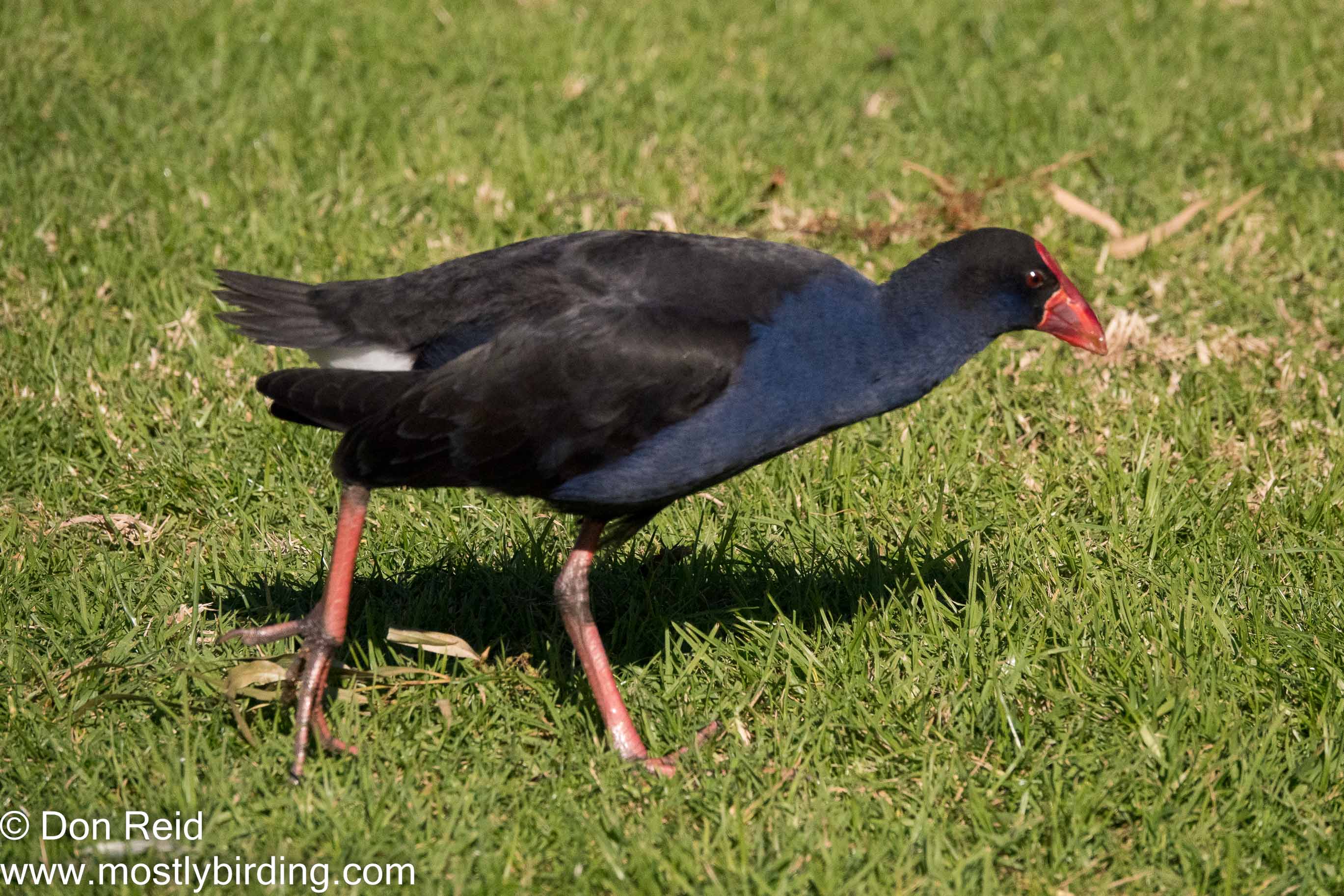
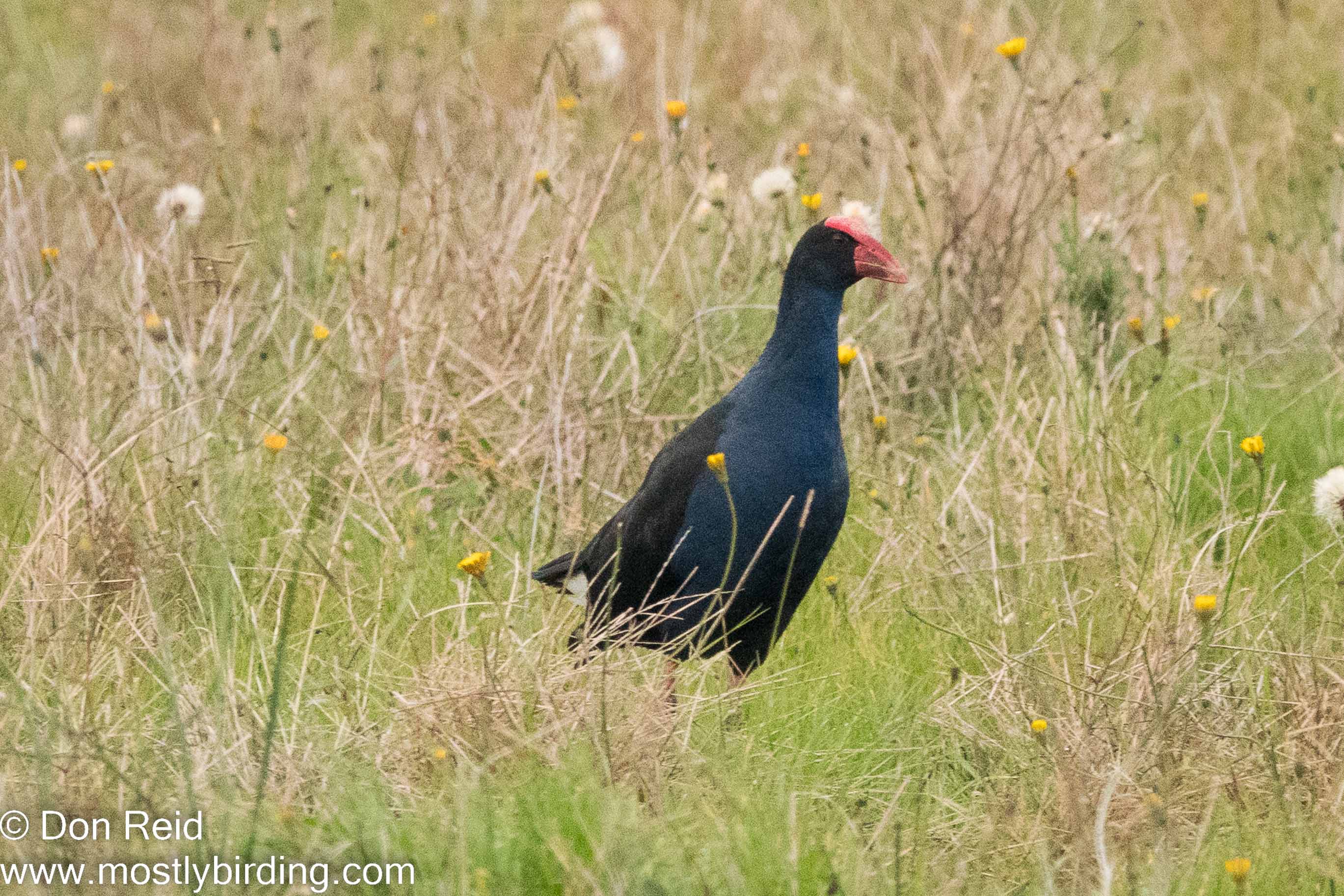
Australasian Swamphen Porphyrio melanotus

I was amazed during our first visit to Australia some 3 years ago and again during our recent visit, to find this Swamphen in places you would least expect, particularly if you are accustomed to birding in southern Africa. Where we are used to swamphens being shy and retiring, seeking refuge among reeds at every opportunity, the Australian version, which is very similar in appearance, can pop up just about anywhere and is hardly fazed by humans. This one approached to within a couple of metres of our picnic table next to the lake where we were enjoying a take-away lunch.

Australasian Swamphen Porphyrio melanotus, Sale Victoria
Australasian Swamphen Porphyrio malanotus, Wurrk, Sale Victoria

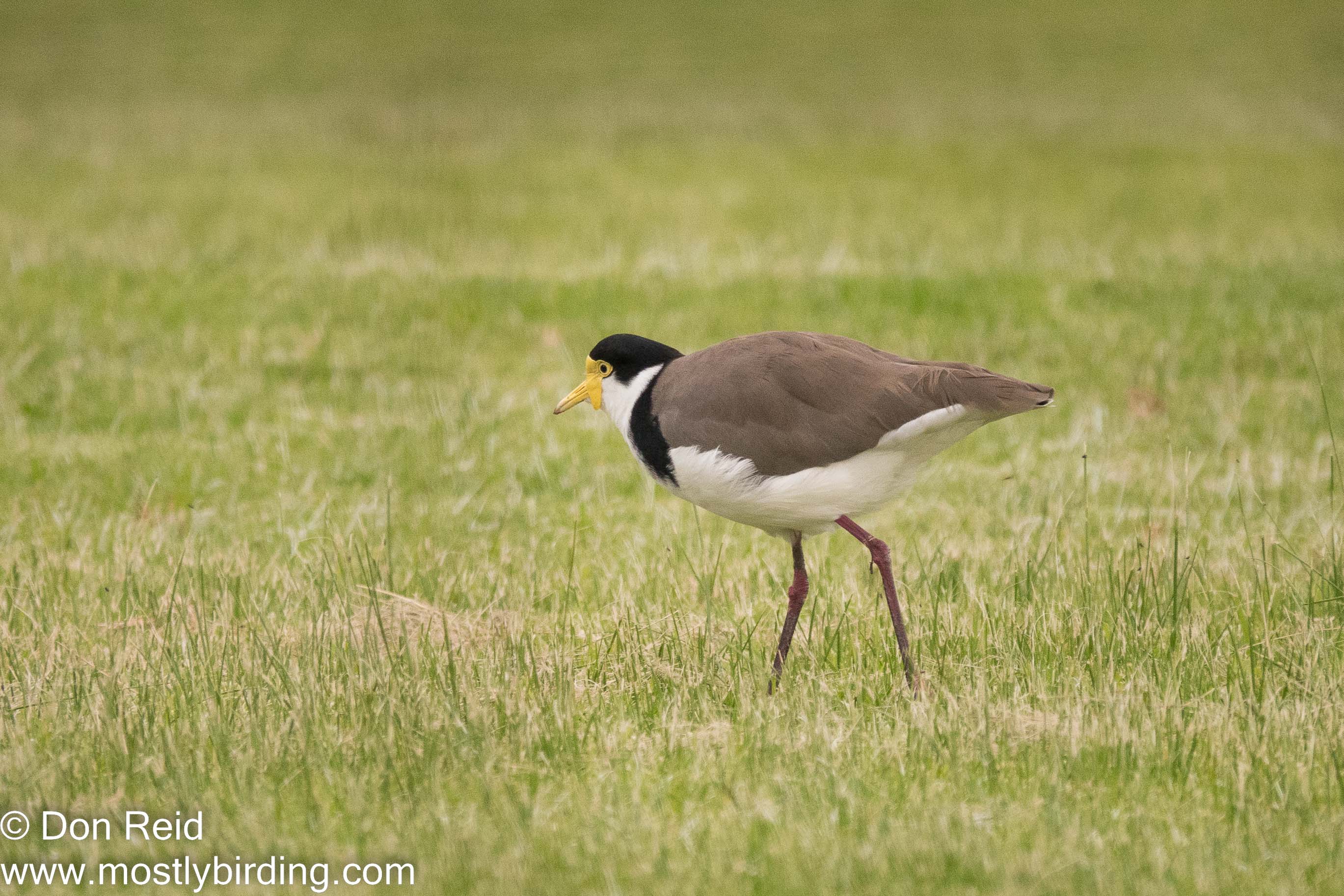
Masked Lapwing Vanellus miles

As Lapwings go, this is a particularly handsome one, often seen on larger lawns and in fields, feeding in its slow, deliberate fashion across most of Australia. This species used to be called the Spurwinged Plover as, like many lapwings, the wings are armed with spurs at the carpal joint that are used to defend their territory in breeding season.

Masked Lapwing Vanellus miles, Wurruk, Sale Victoria

Superb Fairywren Malurus cyaneus

Now I know what you’re thinking …. what’s so “superb” about this attractive but dull-looking bird? The answer is in two parts – the female lacks the bright colouring of the male, while the male, brightly coloured in the breeding season, loses the bright colouring in non-breeding plumage, other than its tail which remains blue.

Interestingly, they have a communal group breeding system where one pair in the group raise up to four broods in a season, while the rest of the group members look after the young.

This is one of the most common of the small birds that I have come across on my walks and in the garden and are found across the south-eastern parts of Australia.

Superb Fairywren Malurus cyaneus (Non-breeding plumage), Sale Common NCR

New Holland Honeyeater Phylidonyris novaehollandiae

Not the best photo, but this is s a bird that chooses to perch on the very top of tall trees, and with the sky often being overcast yet bright it presents a real challenge to get a reasonable image. Without any exposure adjustment the image is likely to be so dark as to be unrecognisable.

My approach is to adjust the exposure compensation on the camera by up to +2 full stops – in this case it was +1.3 stops which I found wasn’t enough, so I added a further +0.4 stops while editing. Apologies if this is getting too technical, but this is one of the simplest ways of improving your photos, as I have found that almost every situation calls for some exposure compensation – plus or minus – and all modern cameras have this function available.

As to the bird itself, this is one of the huge family of Honeyeaters that are major pollinators of many of Australia’s unique native plants, feeding on the honey-flora flowers and in the process pollen is deposited on their head and transferred to the next plants they visit. They are common in south-west and south-east Australia and often come into the garden.

New Holland Honeyeater Phylidonyris novaehollandiae, Wurruk, Sale Victoria

Other Flying Things

And now for something else that’s aerial ……. – is it a bird, is it a plane? ….. no it’s Superm….. sorry it IS a plane! That red colouring had me thinking for a moment it was my favourite superhero with his famous red cape! Oh well…..

Actually this is one of the six Pilatus C-21 aircraft that make up the Roulettes aerobatic team – they perform at air shows across the country and seem to spend a large part of the day practising over Sale as there is almost always one of them buzzing around overhead

One of the Pilatus C-21 aircraft making up the RAAF Aerobatic Team

References :

The Complete Guide to Australian Birds by George Adams

Wikipedia (Laughing Kookaburra)

Australia May 2022 : The Birding – it’s Different! (Part 2)

I started my previous post by saying that the casual, non-birder observer could easily come to the conclusion that Australia’s birds fall into three basic groups –

  • black and white or shades in between
  • vividly coloured birds
  • a variety of smaller, often nondescript birds

The author of The Complete Guide to Australian Birds, George Adams, has this to say in his introduction –

Australia is one of the world’s ten mega-diverse countries and is fortunate to have a rich diversity of birds and an unusually high number of endemic species found across its many, equally diverse and beautiful landscapes. The jabbering of parrots, the laughter of Kookaburras, the song of the Magpie or the trilling warble of Fairy-wrens all bestow a real sense of ‘place’ that is uniquely Australian.


Part 1 described some of the more common “black and white” species, which make up a large proportion of the birds that are found in the area of Victoria where our son has settled. In this Part 2 I will be showing some of the other common birds to be found, in particular ….

The Vividly Coloured Birds

Australia is probably best known for its variety of brightly coloured birds, and rightly so! They seem to occur just about everywhere, especially where their favoured habitat occurs – mostly forests of various kinds, but also anywhere else with trees such as gardens, farmlands, woodlands and the like.

Crimson Rosella Platycercus elegans

Corellas are small, ground-feeding cockatoos but are not averse to foraging in eucalypts for insects, seeds, fruit, nectar and larvae.

This endemic species has several colour forms across its range, which includes eastern and south-eastern Australia. Mostly crimson with blue patches on the cheeks as well as some of the wing and tail feathers, it stands out wherever you find it – in the image below it was scratching amongst a thick layer of fallen leaves and had found an acorn or seed of some kind.

Crimson Rosella Platycercus elegans, Bright Victoria

The immature version shows little crimson, which is replaced by dull green, making it far more difficult to spot

Crimson Rosella Platycercus elegans (Juvenile), Wurruk, Sale Victoria

Australian King Parrot Alisterus scapularis

The only endemic parrot with a red head, this is another standout species – the image shows a female with its somewhat duller colouring, with the red limited to the belly, nevertheless unmistakeable. I had seen King Parrots during our previous visit in 2019, but was not able to photograph one, so this opportunity was not to be missed when it posed briefly on a fence before flying off with the rest of its small group.

Habitat is forests, parks and gardens and its feeding preference is the outer foliage of trees where it looks for fruit, nuts, nectar and blossoms. They are found in eastern Australia.

Australian King Parrot Alisterus scapularis (female), Omeo Victoria

Rainbow Lorikeet Trichoglossus moluccanus

Surely one of the most colourful birds you’ll see anywhere, they are easily spotted as they fly around the neighbourhood in small flocks, screeching as they go, then chattering while feeding in the trees. Lorikeets are arboreal feeders that have brush-like tongues for extracting nectar from flowering eucalypts. Favoured habitats are forests, parks and gardens.

Rainbow Lorikeet, Raymond Island, Victoria

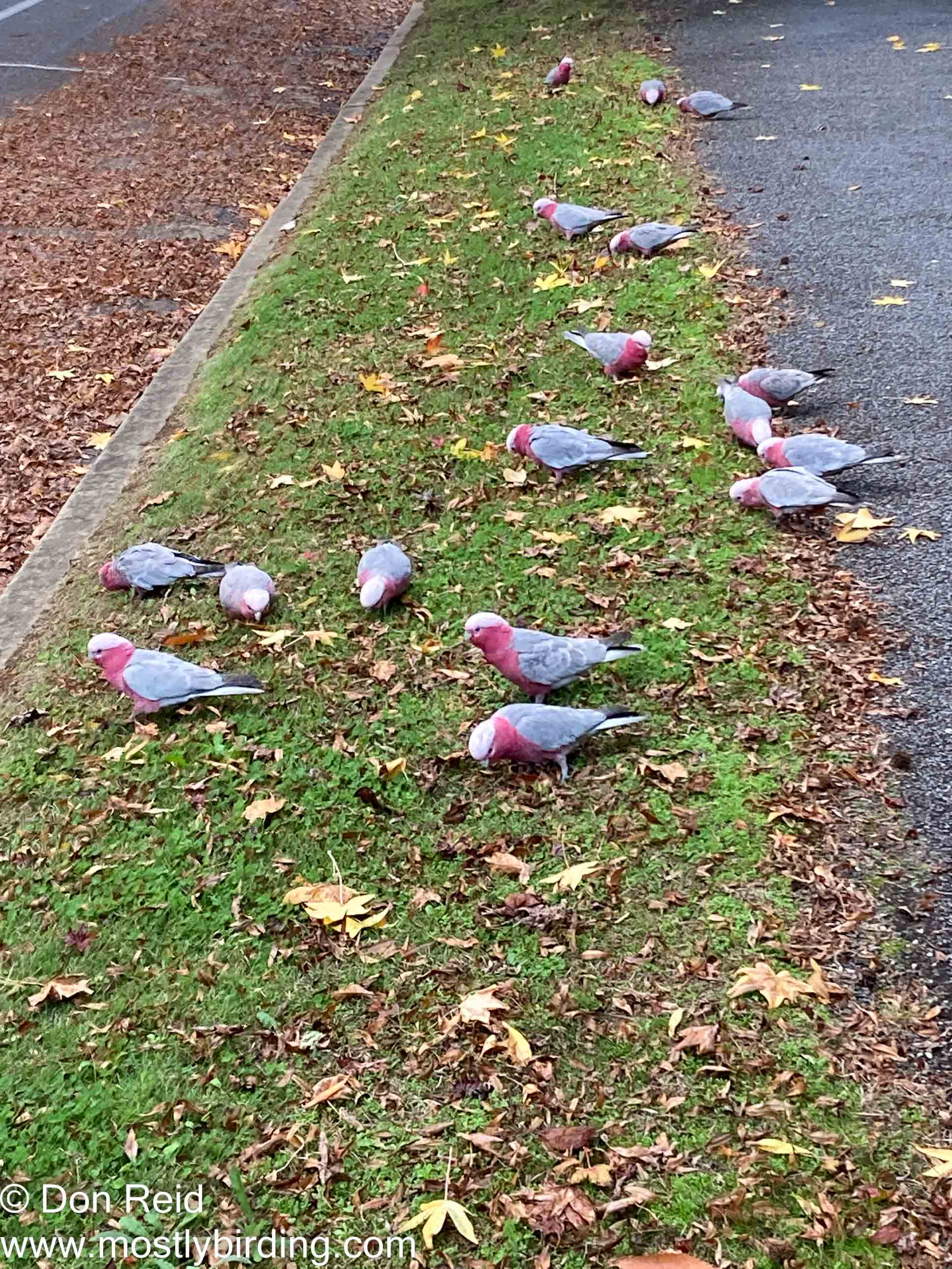
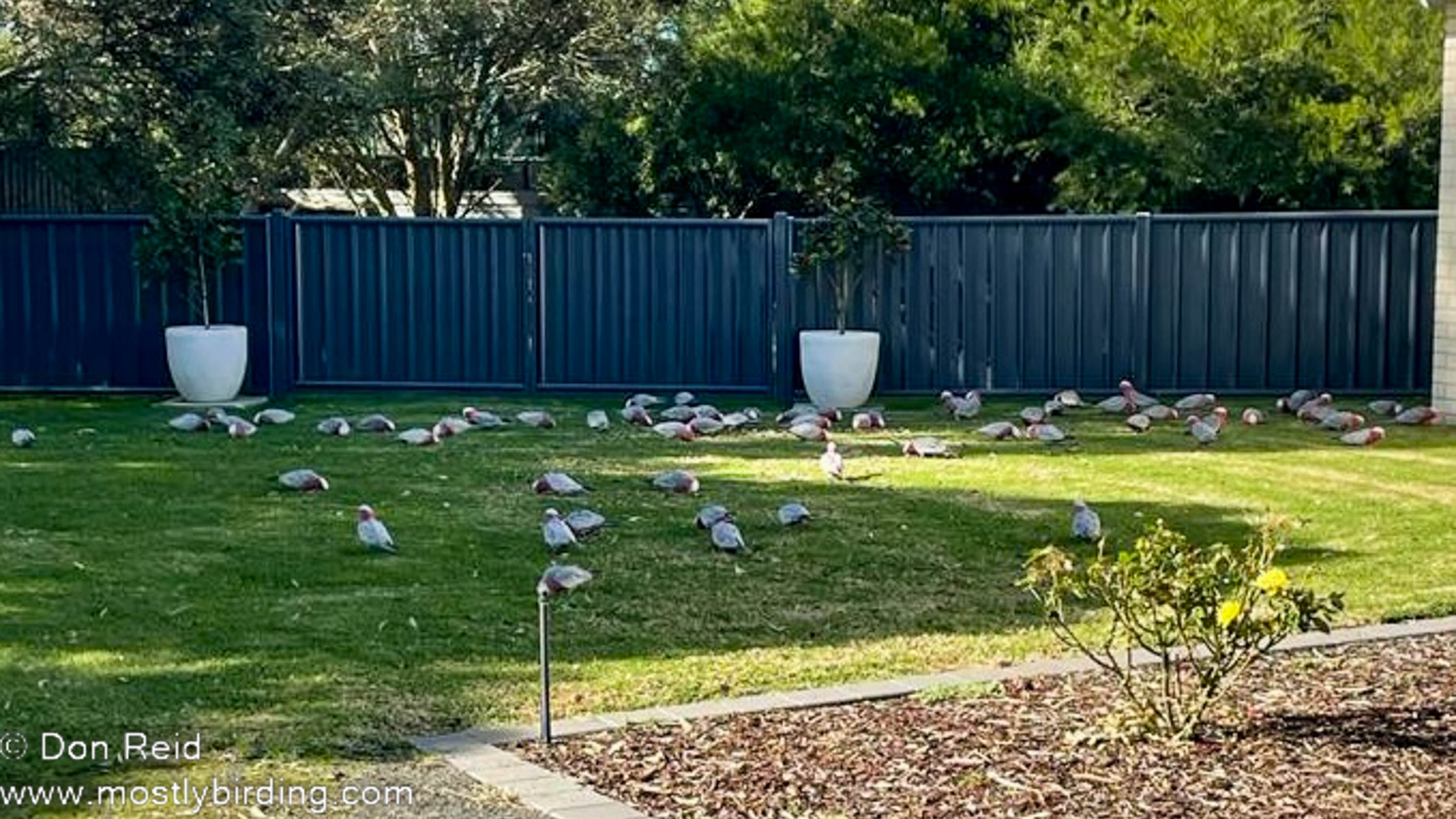
Galah Eolophus roseicapilla

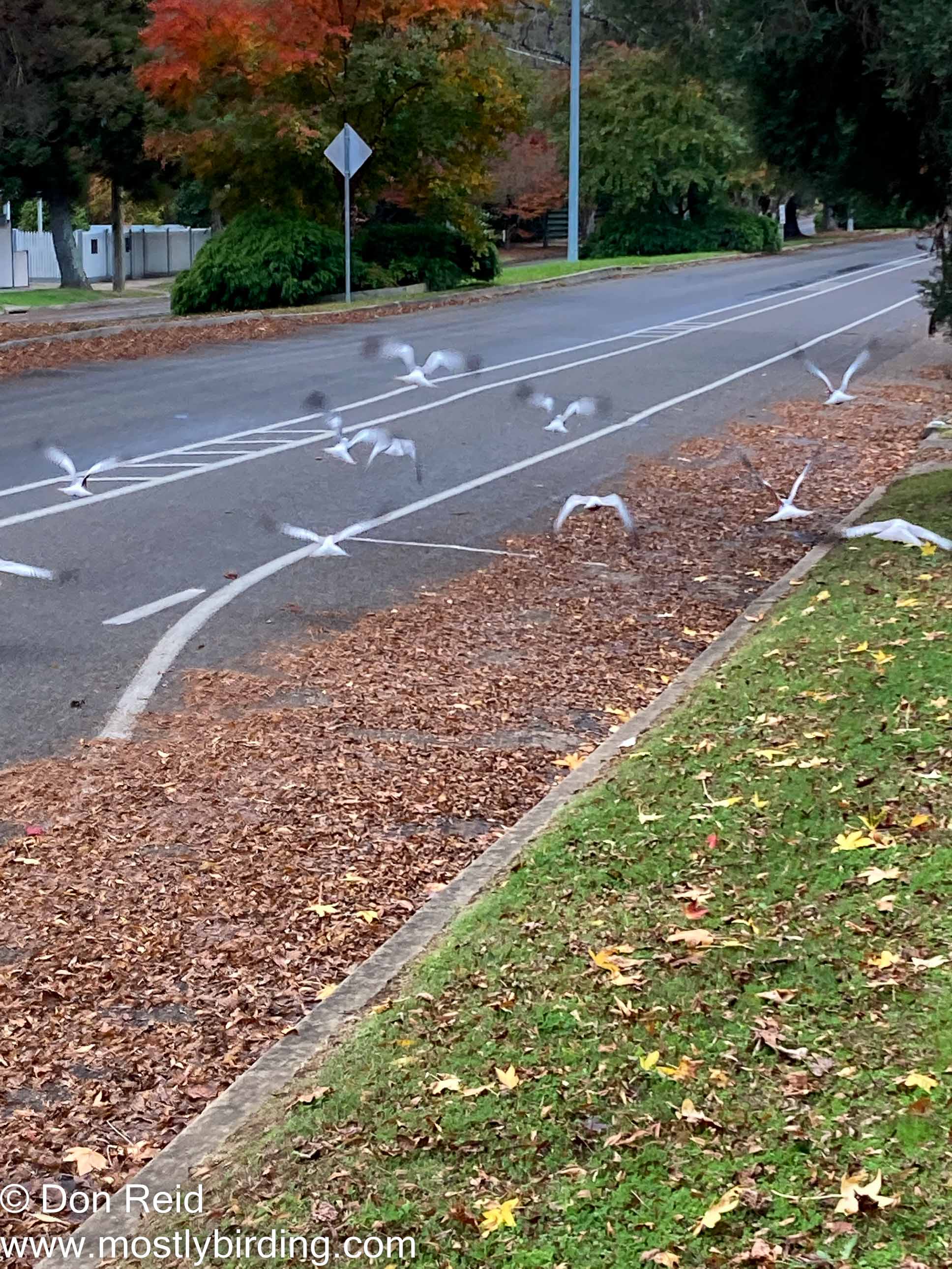
More sedately coloured than those above, the Galah makes up for any lack of bright colouring by gathering in flocks, sometimes large ones as will be seen in some of the images below. The Galah occurs across Australia and is usually a ground feeder, taking seeds, herbs and roots or spilt grain and cereal crops.

Galah, Philip Island (race albiceps occurring in southeast Australia, has a white crest and crown)
Galah’s, Bright Victoria
Galah’s foraging on the lawn in Wurruk, Sale

Eastern Rosella Platycercus eximius

This is another species that eluded my attempts to photograph it during our previous visit, so I was particularly pleased to get some decent images during an outing to Raymond Island (more about that outing in a future post). It is confined to the south-eastern parts of Australia where it is regarded as common.

As vividly coloured as the Rainbow Lorikeet above, the white throat and bill of the Eastern Rosella stand out against the bright colours of the rest of the bird. Preferred habitat is open eucalypt woodlands (where I found this one), grasslands, parks, gardens and farmland. A ground feeder of grass and fallen seeds, it is surprisingly well camouflaged when among foliage.

Eastern Rosella Platycercus eximius, Raymond Island Victoria

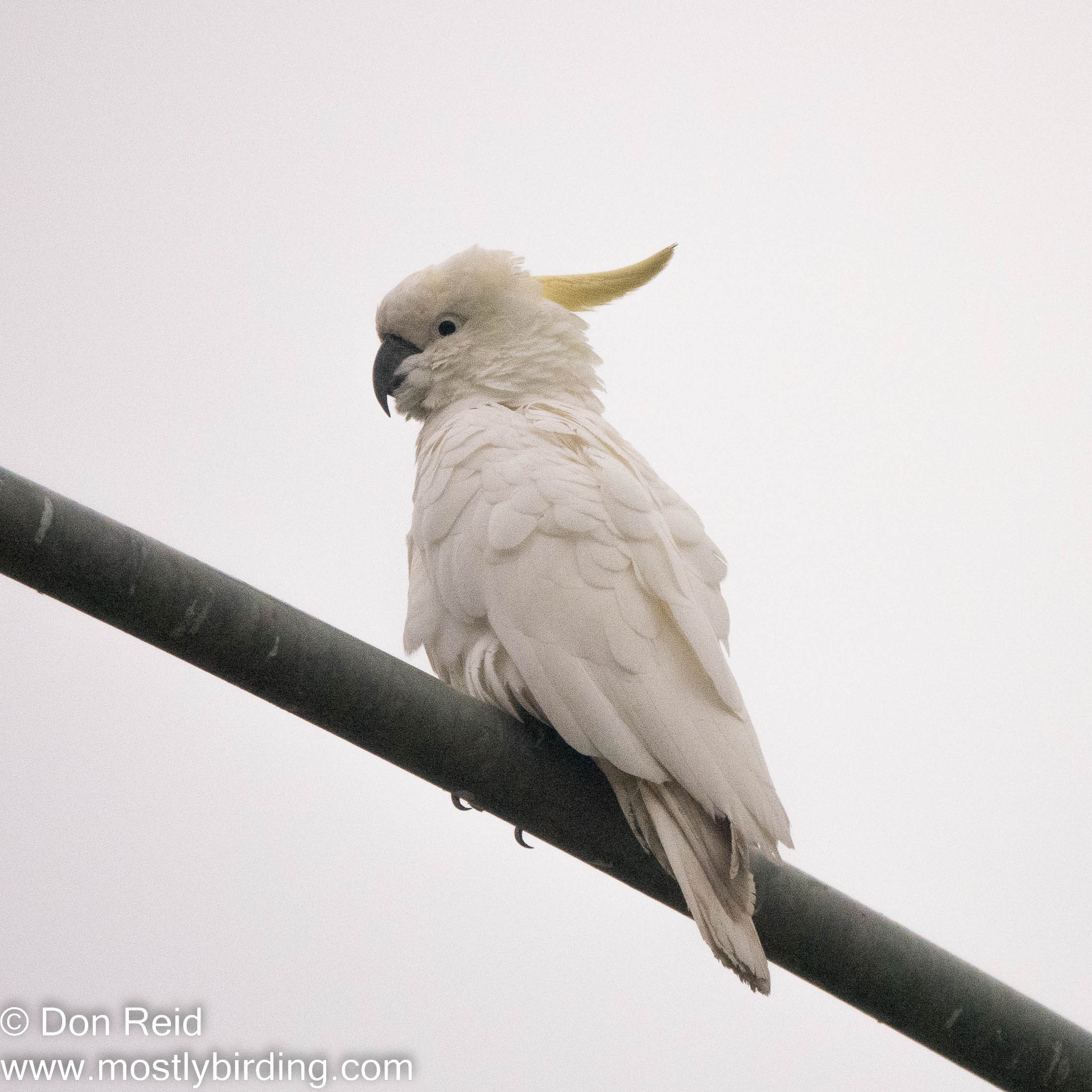
Sulphur-crested Cockatoo Cacatua galerita

Perhaps I’m pushing my luck including this all white bird under the general description of vividly coloured birds, however it is a spectacular bird that makes its presence known in no uncertain manner with a harsh raucous screech that comes straight out of a horror movie. They move about in small flocks, inhabiting forests, woodland, cultivated lands, parks and gardens and feed mostly on the ground on grass seeds, herbs, berries and fruit.

South Africans of a certain “vintage” will remember this bird well as it featured in adverts for NBS building society

Sulphur-crested Cockatoo, Wurruk, Sale Victoria

So what’s left? Having covered the “black and white” birds in Part 1 and the “Vividly coloured” birds in this Part 2, there are still a number of other birds to mention under the heading of “the others” – watch this space…

Reference : The Complete Guide to Australian Birds by George Adams

Australia May 2022 : The Birding – it’s Different! (Part 1)

The casual, non-birder observer could easily come to the conclusion that Australia’s birds fall into three basic groups –

  • A majority that are various combinations of black and white or shades in between and can be found hanging about just about anywhere – in trees, on lampposts, in the garden, in town, at the sea – you get the picture
  • A lot that are vividly coloured birds, that in any other country would most likely be sitting in a cage in someone’s kitchen saying “hello – polly wants a cracker” or suchlike
  • The rest – a variety of smaller, often nondescript birds that don’t seem to seek the limelight as much as the above two groups and take some effort to find as they skulk in the bushes and trees

That’s a gross simplification of course, so to put it into some perspective, this is what the author of The Complete Guide to Australian Birds, George Adams, has to say in his introduction –

Australia is one of the world’s ten mega-diverse countries and is fortunate to have a rich diversity of birds and an unusually high number of endemic species found across its many, equally diverse and beautiful landscapes. The jabbering of parrots, the laughter of Kookaburras, the song of the Magpie or the trilling warble of Fairy-wrens all bestow a real sense of ‘place’ that is uniquely Australian.

Having just returned from our second visit to Australia (the first was in pre-pandemic 2019) I can associate with his description of the birding experience that this fine country has to offer.

The only problem is, with Australia being such a vast country, and considering that our two visits to date have been restricted to a relatively small part of one state – Victoria, in the south-east corner of Australia – means we have hardly touched on that rich diversity.

The majority of this massive continent and its birdlife therefore remains a mystery for the time being, with my only knowledge of it gleaned from the abovementioned guide.
Farmlands, Wurruk, Sale Victoria

However, having spent a total of some two and a half months during the two visits we have made to Sale, Victoria where our son and family have settled, there has been ample time to observe the neighbourhood birds and those in other places we visited, in the process getting to know some of the common birds quite well.

Which brings me back to those three basic groups, starting with …..

Black and white – and shades in between

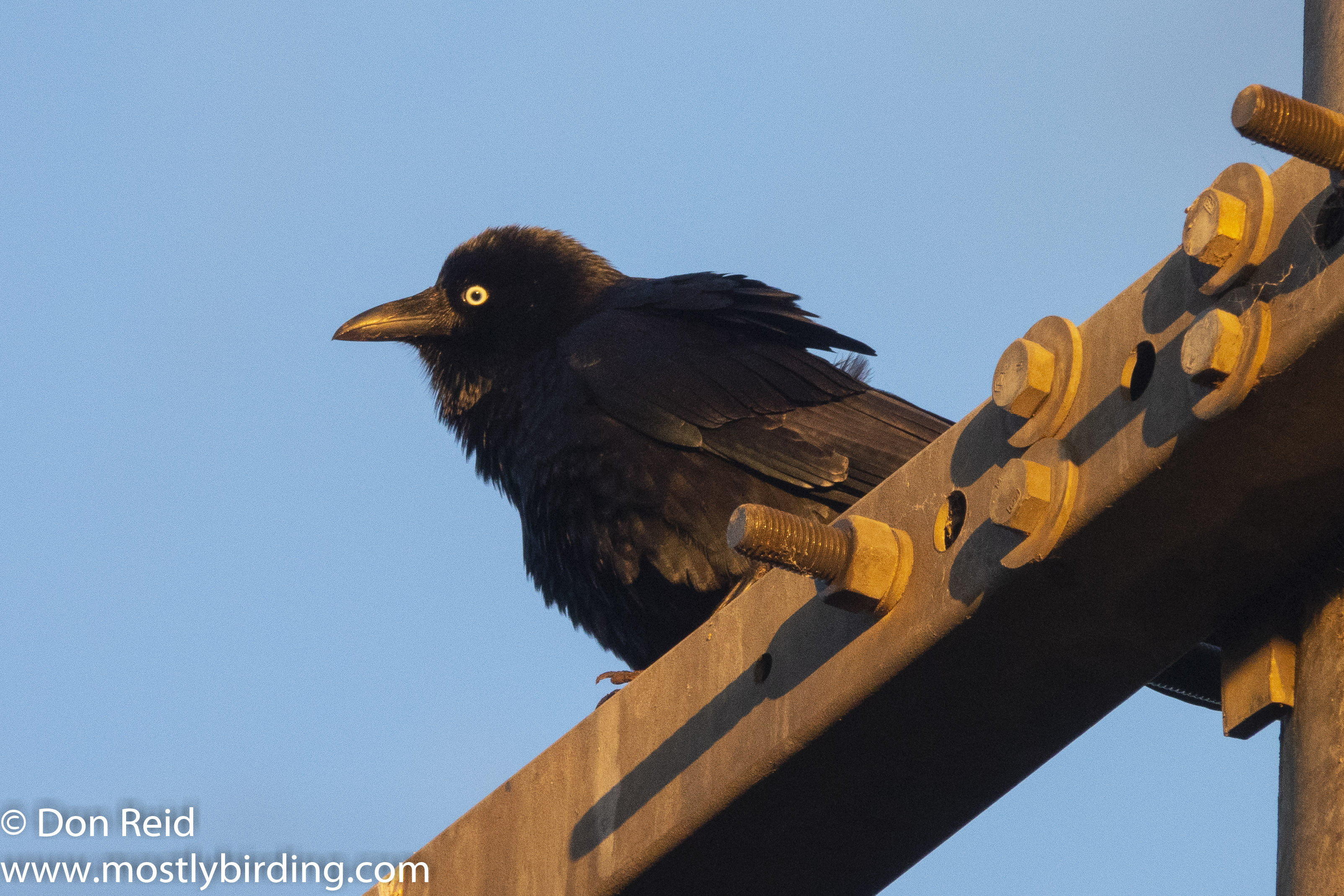
Starting with the “all-blacks”, one of the most obvious and widespread is the Australian Raven Corvus coronoides, loudly pronouncing its presence with its “aark” call and often seen from a distance gliding across the landscape

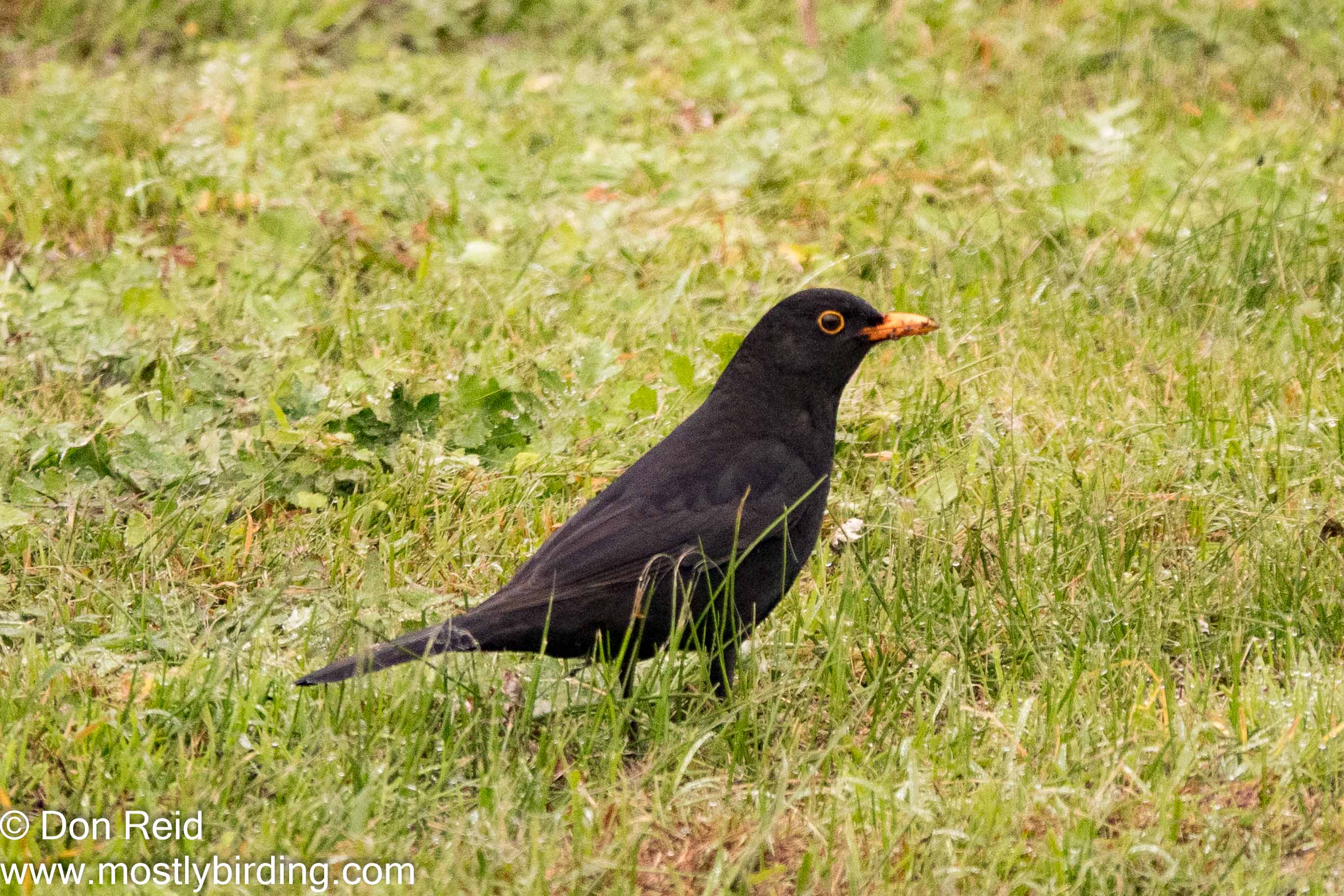
The Common Blackbird Turdus merula, a much smaller species of thrush size and common in the UK and Europe, favours gardens – the female is a mottled brownish colour

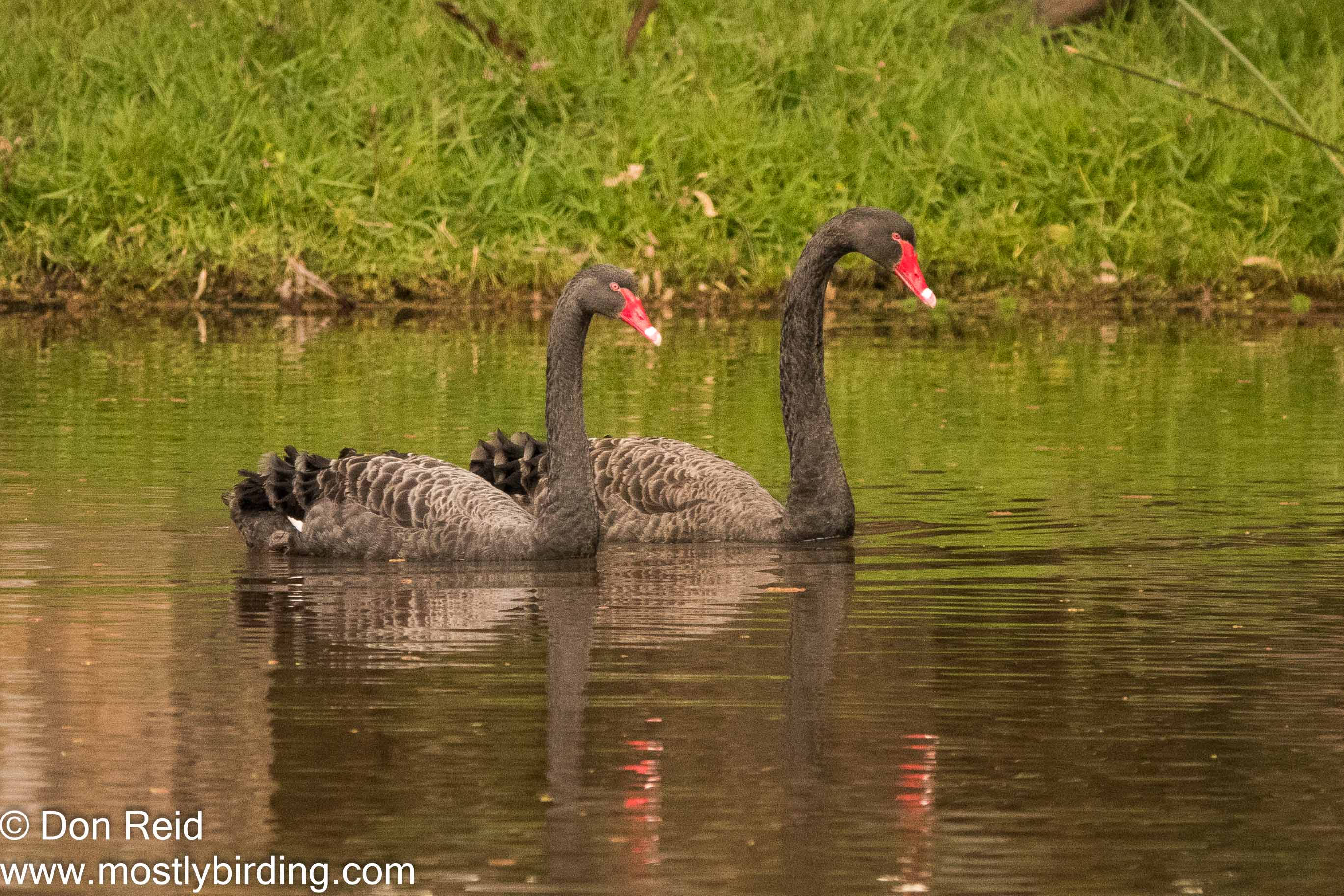
Largest of all, the Black Swan Cygnus atratus, (yes, even the swans are black in Australia) which looks all black when swimming but shows white flight feathers when flying

Australian Raven Corvus coronoides, Sale Victoria
Common Blackbird Turdus merula, Sale Victoria
Black Swan Cygnus atratus, Sale Common, Victoria

The “black-and-whites” make up a large proportion of the birds seen generally, with the Australian Magpie Cracticus tibicen leading the way (by a couple of furlongs) – it is just everywhere and the family in Aus were quick to mention how aggressive it can be especially during breeding times. I was quite intimidated by one during our road trip along the Great Alpine Road (more about that in a future post) when I found one perched on our rental car’s mirror one morning, giving me a glaring look of “Who’s car is this anyway?”

They do have a very different song, curiously tuneful and sounding like it’s being produced by some sort of electronic instrument.

One of my favourites is the Magpie-lark Grallina cyanoluca, a glossy black-and-white medium sized bird which spends most of the time foraging on the ground, often in gardens. Also known as the “Peewee”, presumably based on its liquid call, it is neither Magpie or Lark but is related to Flycatchers, which it shows by its buoyant fluttering flight when chasing insect prey

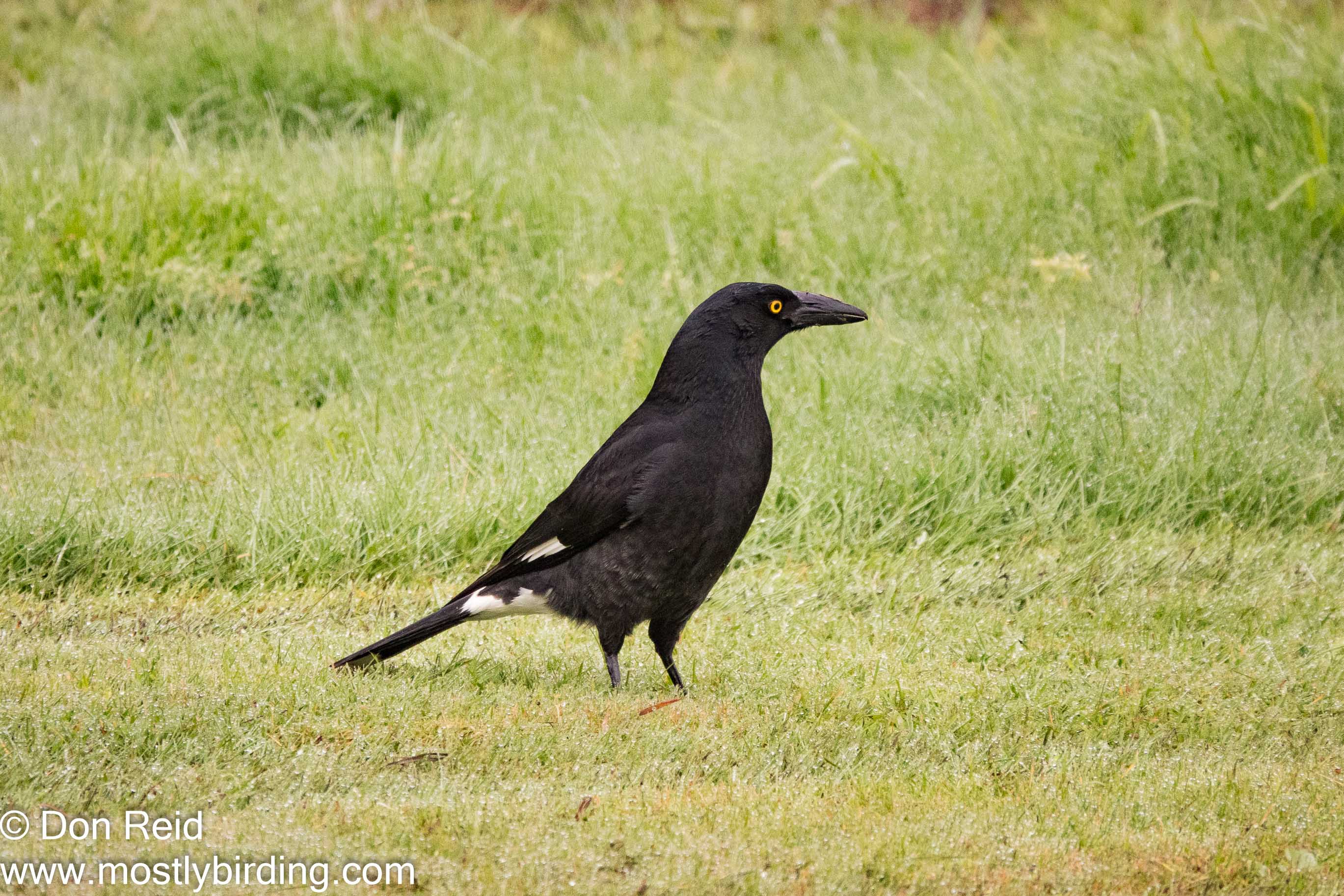
Another favourite is the Pied Currawong Strepera graculina, which looks like a slightly smaller edition of the Magpie, although it has less obvious white colouring confined to a white band on the wings and a white-tipped tail. The voice is a distinctive, ringing “cur-ra-wong” which is why it carries the unusual name

Australian Magpie Cracticus tibicen, Sale Victoria – “Who’s car is this anyway?”
Magpie-lark Grallina cyanoleuca, Sale Victoria
Pied Currawong Strepera graculina, Sale Victoria

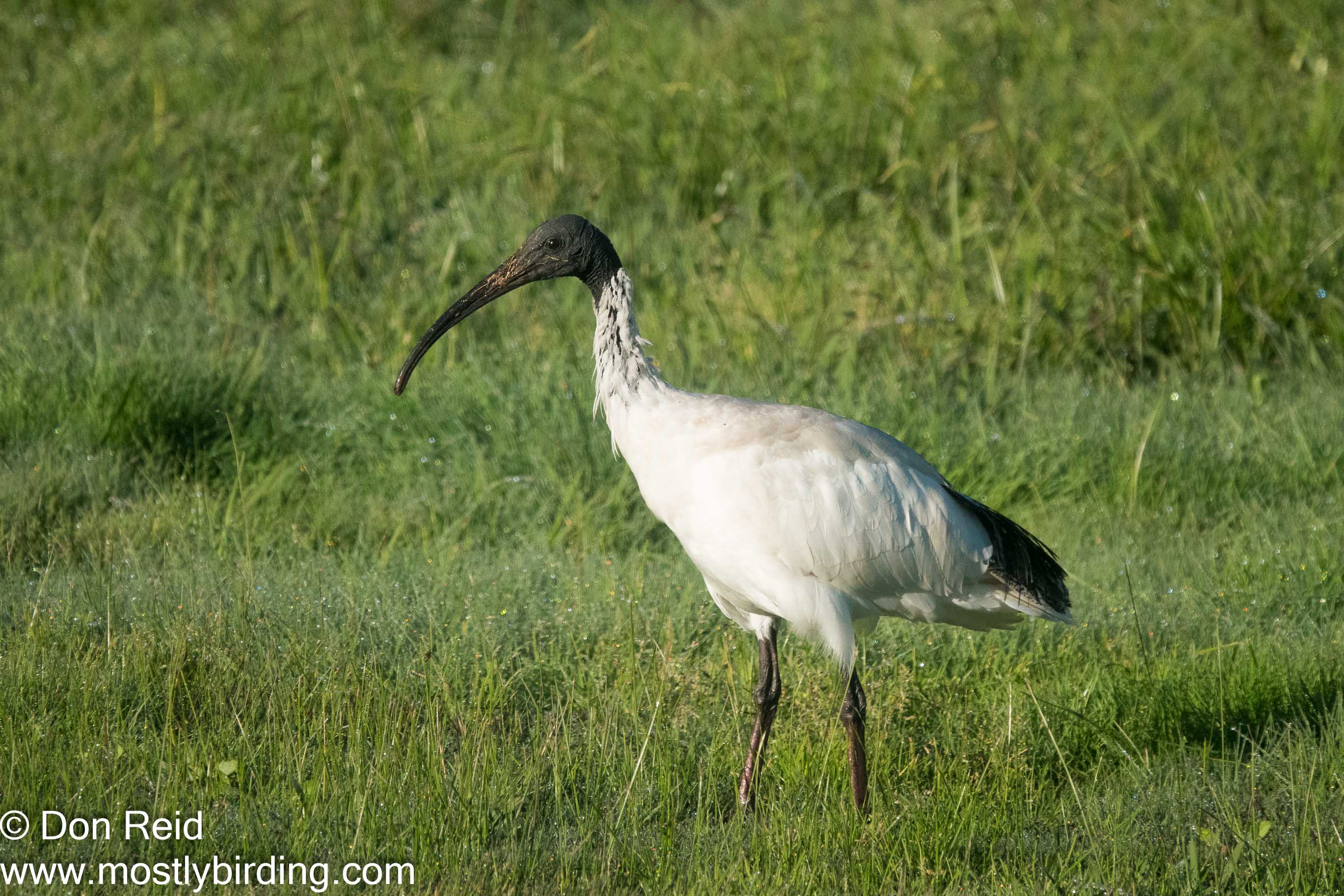
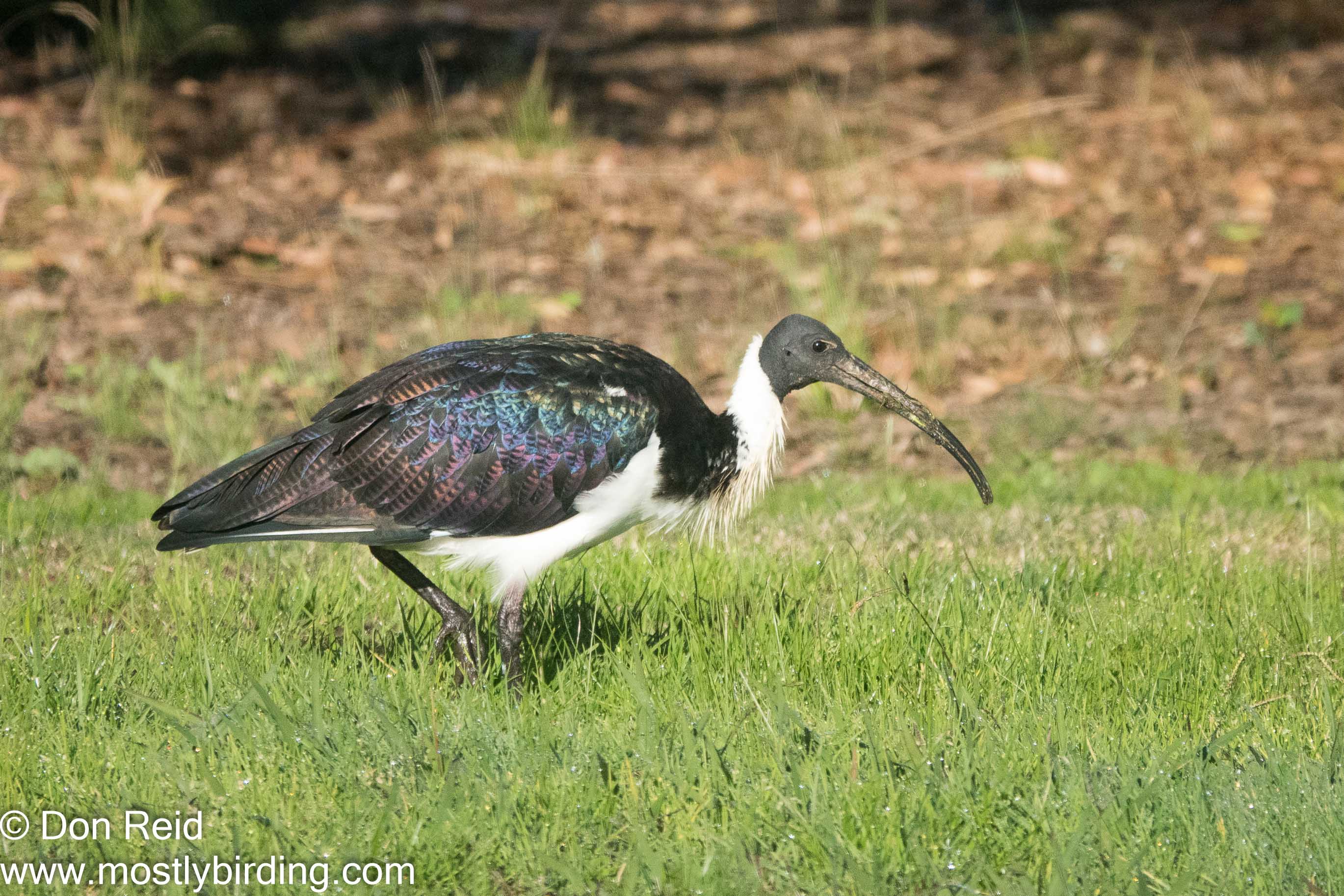
Also in this category are the two common Ibises, both of which are combinations of black and white and both occur in flocks of anything from a handful to a hundred or more. One morning I counted over 20 on the lawn of our son’s house, enjoying a temporary “wetland” caused by recent heavy rains.

Firstly, the one that has the impressive name of Australian White Ibis Theskiornis molucca, but is colloquially known as the “Bin Chicken” due to its habit of scavenging from rubbish bins in the cities. They make a grand sight at dusk when they fly in numbers in V-formation on their way to roost for the night.

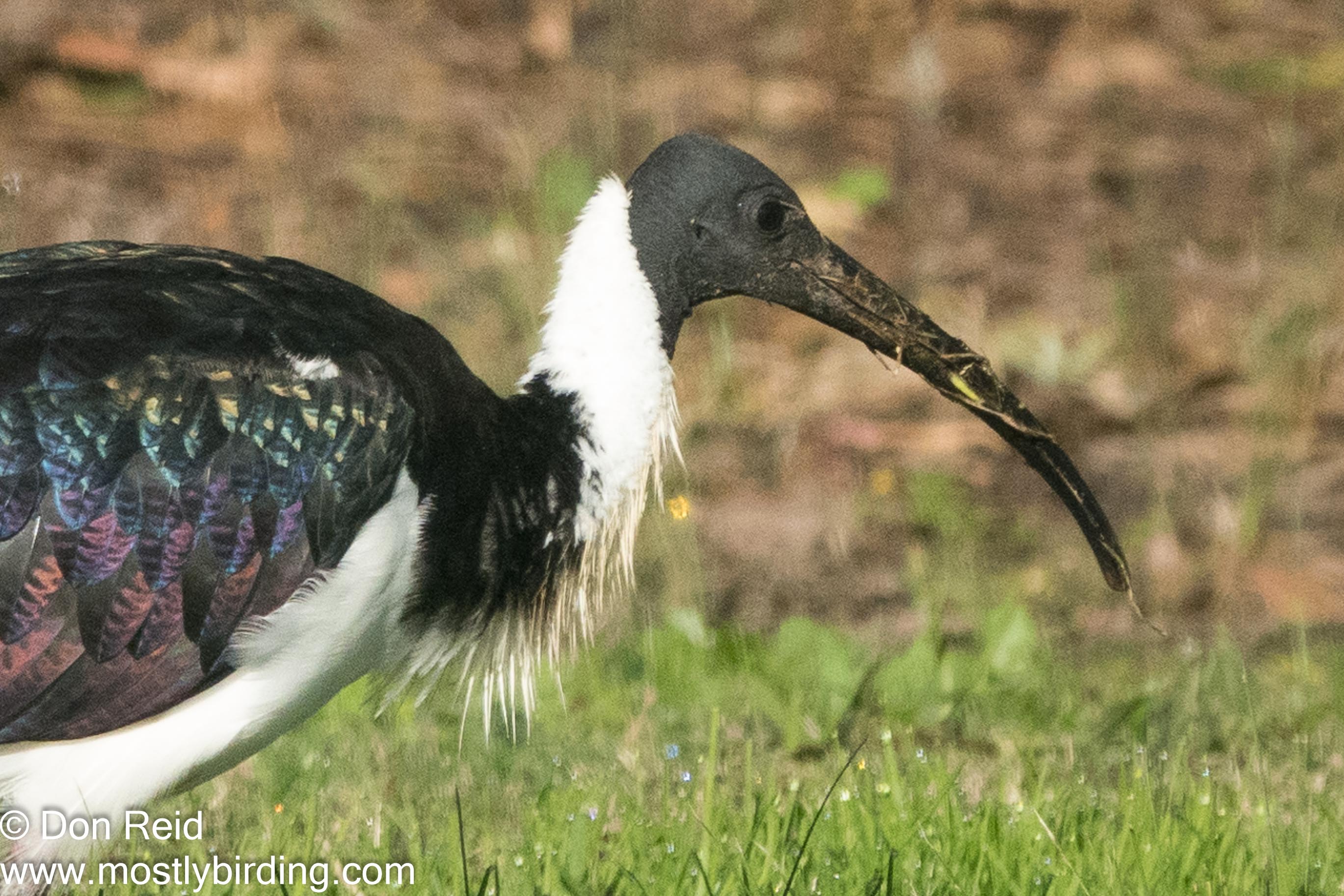
The second Ibis has the interesting name Straw-necked Ibis Theskiornis spinicollis, but the reason for this name is not immediately obvious until you zoom in on the photos taken and notice that, indeed, the neck does have a straw-like appearance

Australian White Ibis Theskiornis molucca, Sale Victoria
White Ibis as depicted on the cover of a children’s book in the bookshop
Straw-necked Ibis Theskiornis spinicollis
The “Straw” that gives it the name

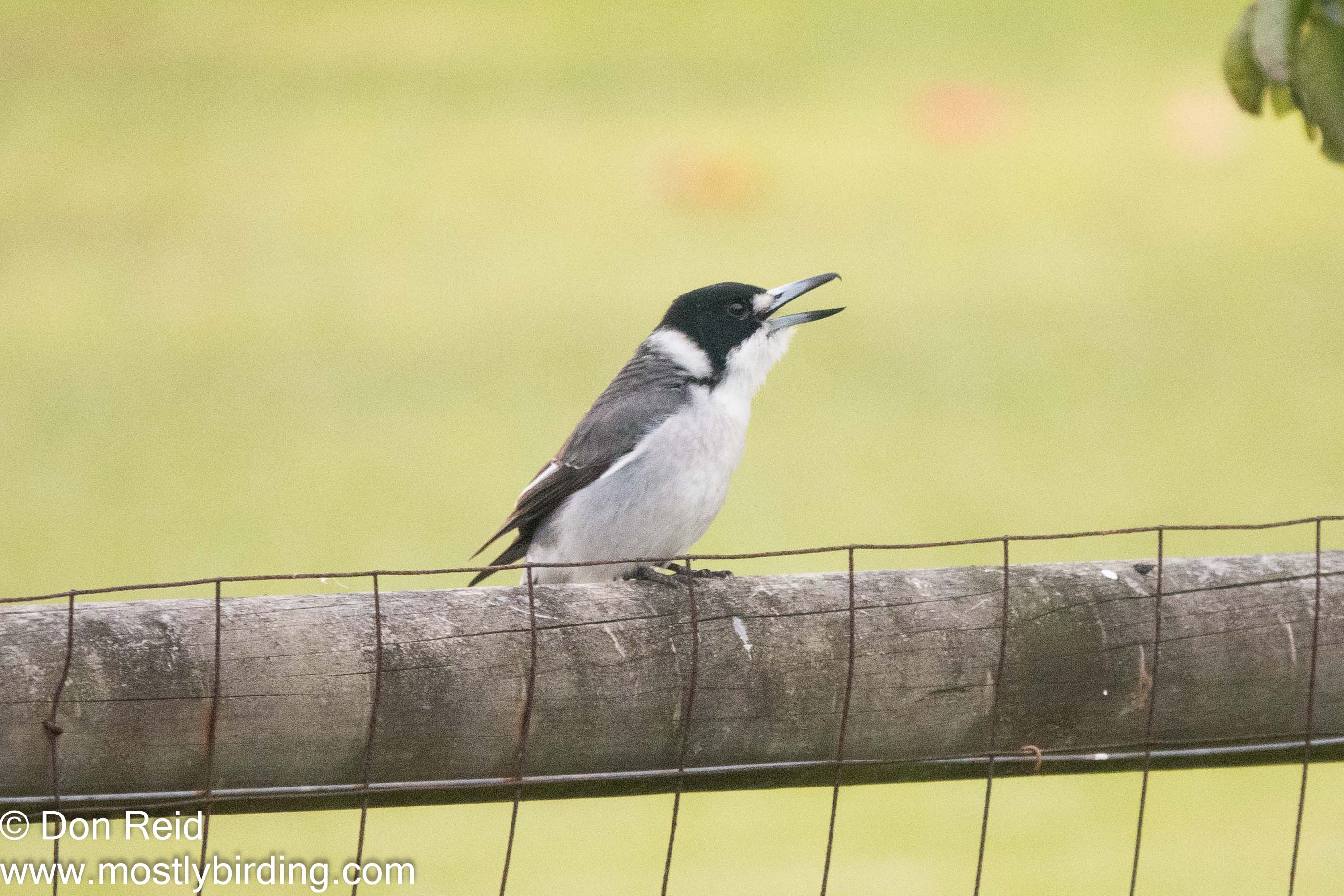
A bird which I had only a glimpse of during our 2019 visit but which afforded me some cracking views this time around is the Grey Butcherbird Cracticus torquatus. “Honey, I shrunk the magpie” comes to mind as it has all the features of the larger Magpie, scaled down to about half the size. In fact the Magpie and Butcherbirds belong to the same genus so the similarity is easy to understand. The Butcherbird name derives from its habit of impaling prey for later consumption, much like we see in South Africa with the Fiscals (which are also referred to as butcherbirds)

Grey Butcherbird Cracticus torquatus, Sale Victoria

That covers the black and white birds that are most often seen – excluding the smaller birds and water birds which I will introduce in further posts. That leaves the “vividly coloured birds” and “the rest” for a follow up introductory post on my Australian birding experience

Straw-necked and White Ibises together

My Photo Picks for 2019

With the new year in its infancy, it’s time to select a few photos which best represent our 2019. In some cases, selection is based on the memory created, in others I just like how the photo turned out, technically and creatively.

If you have any favourites, do let me know by adding your comment!

The Places

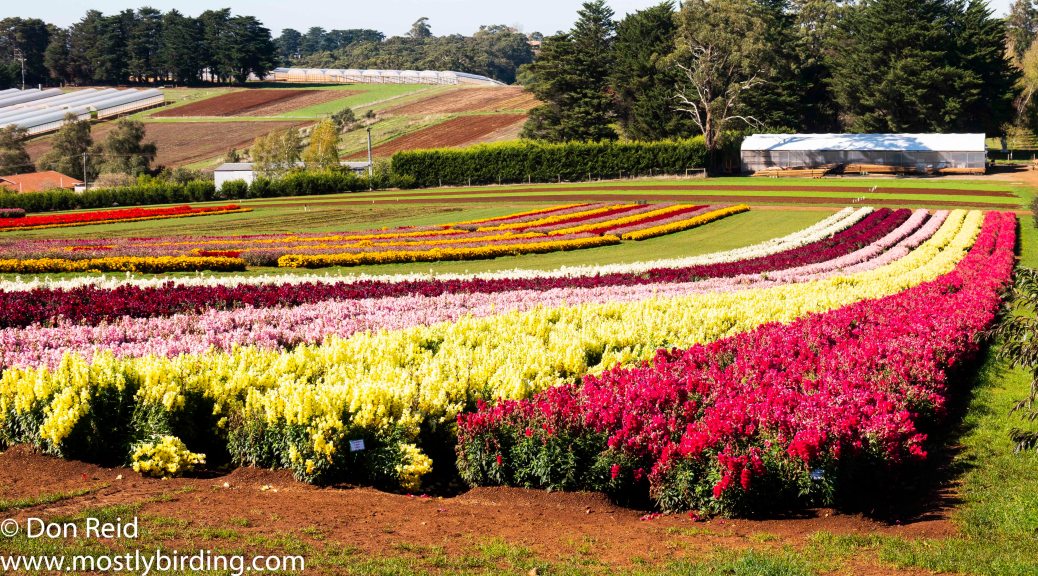
The highlight of our travels during the past year was without doubt our trip to Australia to visit our son and family and to do a bit of touring through the State of Victoria. Other than that we did not venture far afield but managed to tame our travel itch with several local trips and extended visits to our second home town of Mossel Bay in the Southern Cape.

The year started and ended in our second home town of Mossel Bay. Walks along the seafront boardwalk are always a highlight with scenes like this to enrich the soul

The Wilge River Valley, about an hour’s drive from Pretoria, is a popular birding spot amongst Gautengers and delivers many species in summer as well as attractive landscapes

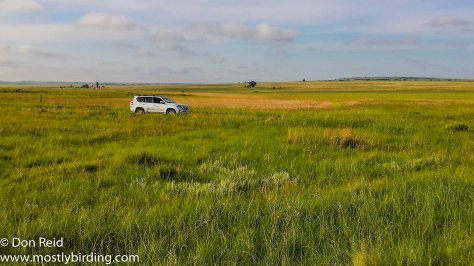
The Vlakfontein grasslands north-east of Pretoria are a favourite atlasing area for me – away from the hectic traffic of Gauteng

The Delmas area south-east of Pretoria is another favourite atlasing area, however traffic is a challenge – this early morning shot was taken in winter when the skies are a lot smokier – good for dense colour but nothing else

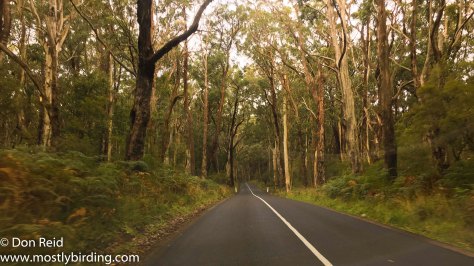
The road to Cape Otway Lighthouse in Victoria, Australia – we did not realise just how much forest Australia has – well the bit of Victoria that we saw anyway

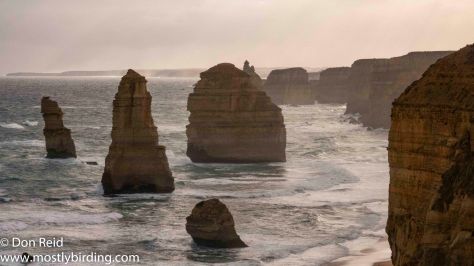
The very popular tourist spot called the Twelve Apostles along the Great Ocean Road to the west of Melbourne, Australia certainly lived up to its reputation as a “must see and photograph” – quite a dramatic scene created by weathered columns of rock

The beautiful beach at Cowes, Philip Island, just south of Melbourne

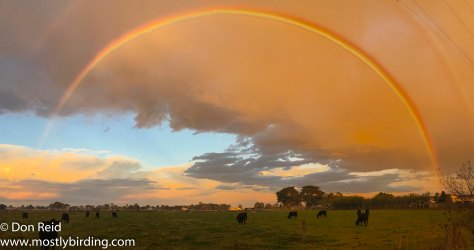
A special rainbow while walking in Sale, Victoria Australia

The early morning train approaches in mist to take us from Sale to Melbourne

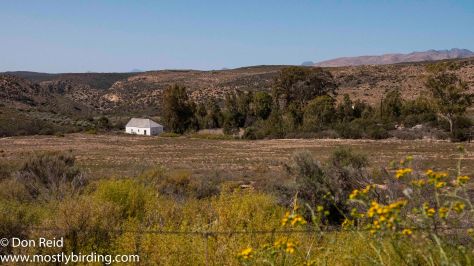
The Klein Karoo is another favourite atlasing area despite low bird numbers – it has a special attraction of its own. This photo was taken south of Oudtshoorn, Western Cape

The Wildlife

With visits to Kruger National Park and Karoo National Park, as well as our time in Australia, we enjoyed some usual and unusual wildlife sightings

Spotted Hyena pups, Tshokwane area, Kruger Park
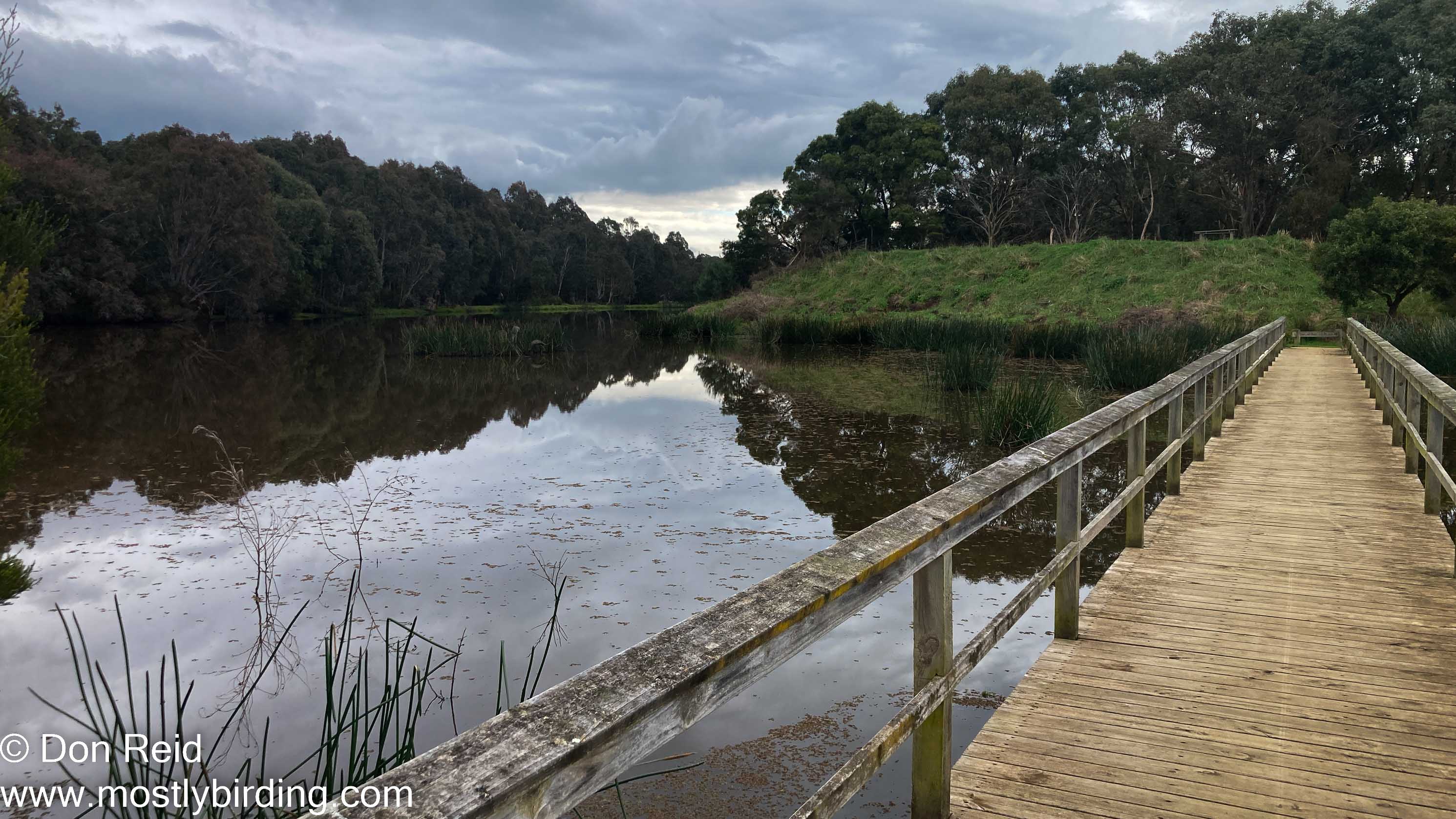
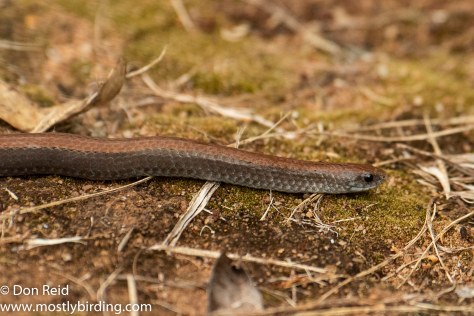
Common Slug-eater / Tabakrolletjie (Duberria lutrix), Pine Lake Resort, White River
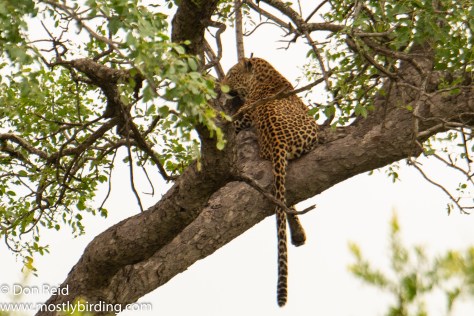
Leopard, Kruger NATIONAL PARK
Plains Zebra (equus burchelli), Olifants area, Kruger Park
Baboon, Olifants area, Kruger Park
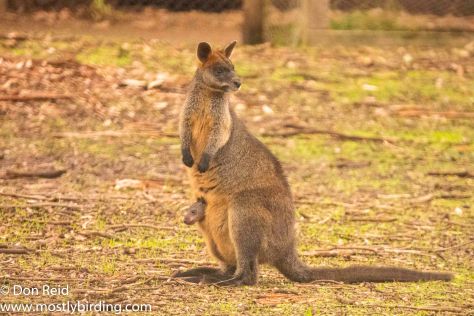
Swamp Wallaby, Philip Island, AUSTRALIA
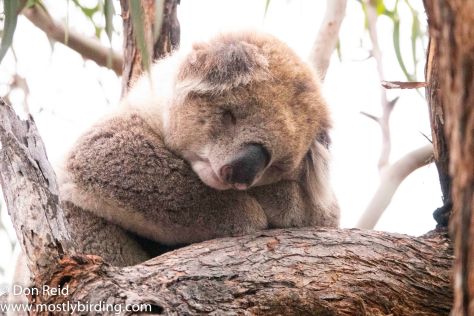
Koala, Raymond Island, Victoria, AUSTRALIA
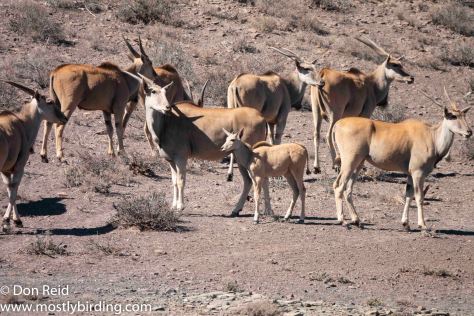
ELAND, KAROO NATIONAL PARK
KLIPSPRINGER, KAROO NATIONAL PARK
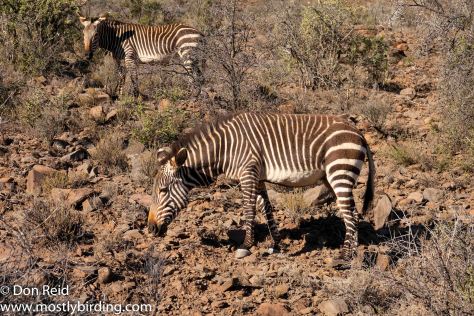
MOUNTAIN ZEBRA, KAROO NATIONAL PARK

The Other Stuff

I love to photograph just about anything that moves, within nature and outside it occasionally. Here’s a few examples

Colourful fly
Butterfly: Yellow Pansy (Junonia hierta cebrene / Geelgesiggie), Mossel Bay
Dragonfly: Common Thorntail (Ceratogomphus pictus), Calitzdorp
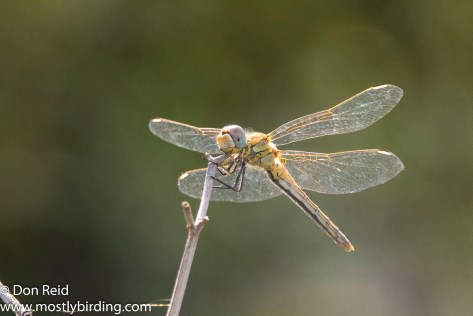
Dragonfly : (NOT ID’D YET) Mabusa Nature Reserve
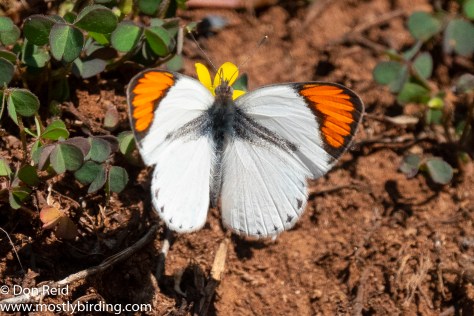
Butterfly: Common Orange Tip (Colotis evenina evenina), Verlorenkloof
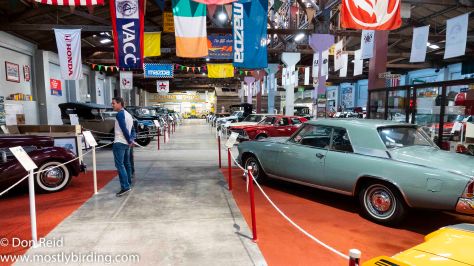
Gippsland Vehicle Collection Maffra, Victoria Australia

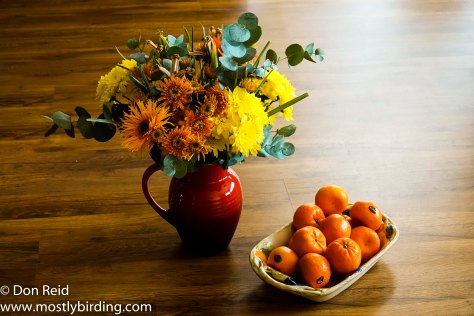
And just for fun, a non-moving subject …..

Flowers and fruit

I have not included any of the many bird photos that I took during the year – they will be included in a separate “My Birding Year 2019” post

Australian Adventure – Victoria : Apollo Bay

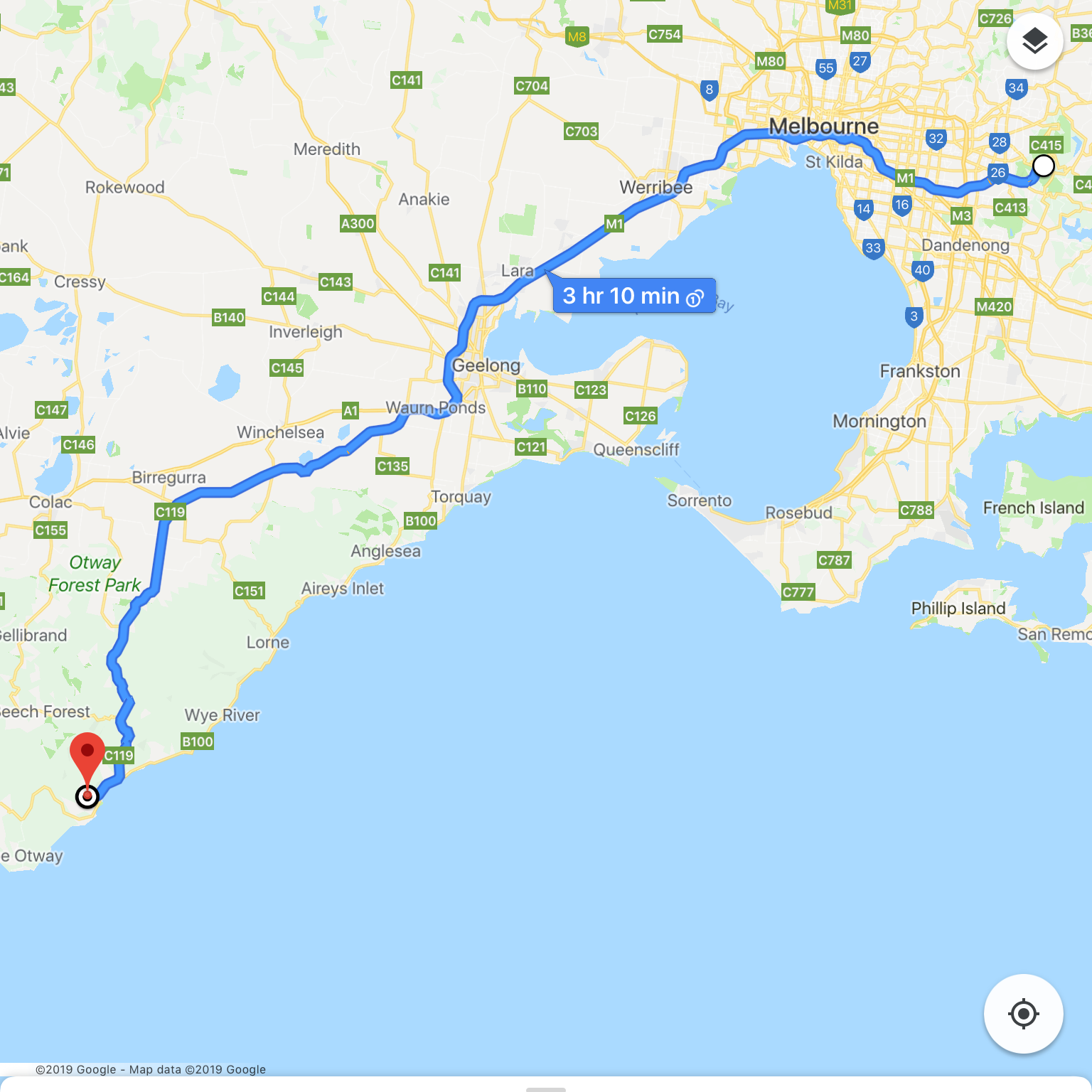
Continuing our road trip through Victoria, we had spent the night in  Sassafras in the Mount Dandenong area outside Melbourne and the following morning, after continental breakfast in our room, we set off to Apollo Bay, a distance of about 250 kms from our overnight stop. Ordinarily, this distance would be a comfortable half-day drive for us, but in this instance it meant finding our way through Melbourne’s inner city suburbs, then taking the M1 highway around the south of the city and further eastwards.  I had to avoid the more direct tolled highways which required an electronic tag or special account, neither of which were available to us

Our route

Closer to our destination we turned off the highway and found ourselves on narrow country roads with pleasing scenery, whereafter the road became seriously twisty as it wound its way through forested hills, so much so that the constant turning had me feeling somewhat light-headed. Thankfully, we eventually crested the last hill and saw the sea far below and we were soon enjoying the last stretch of the trip along rugged coastline up to Apollo Bay. 250 kms has never felt so long!

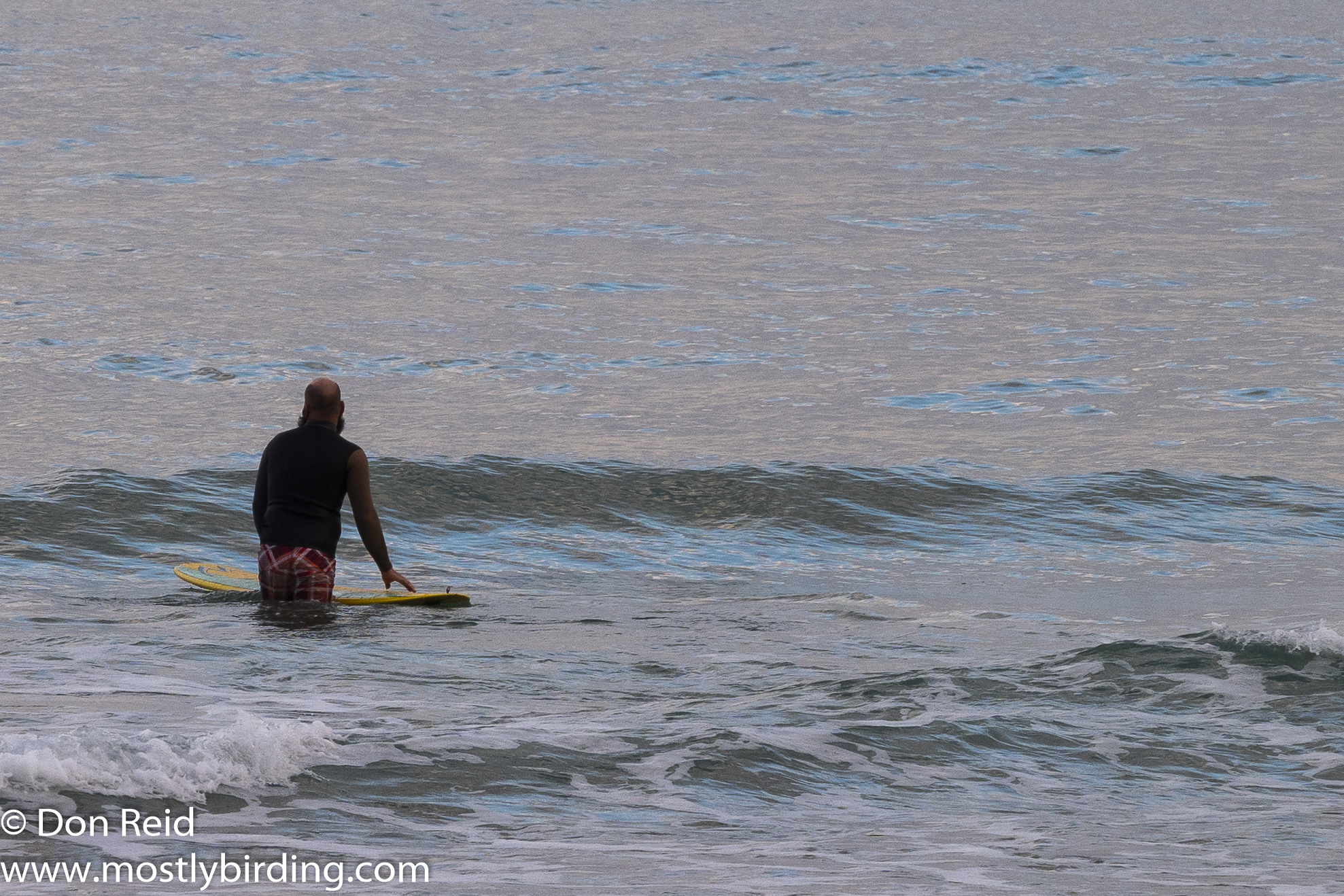
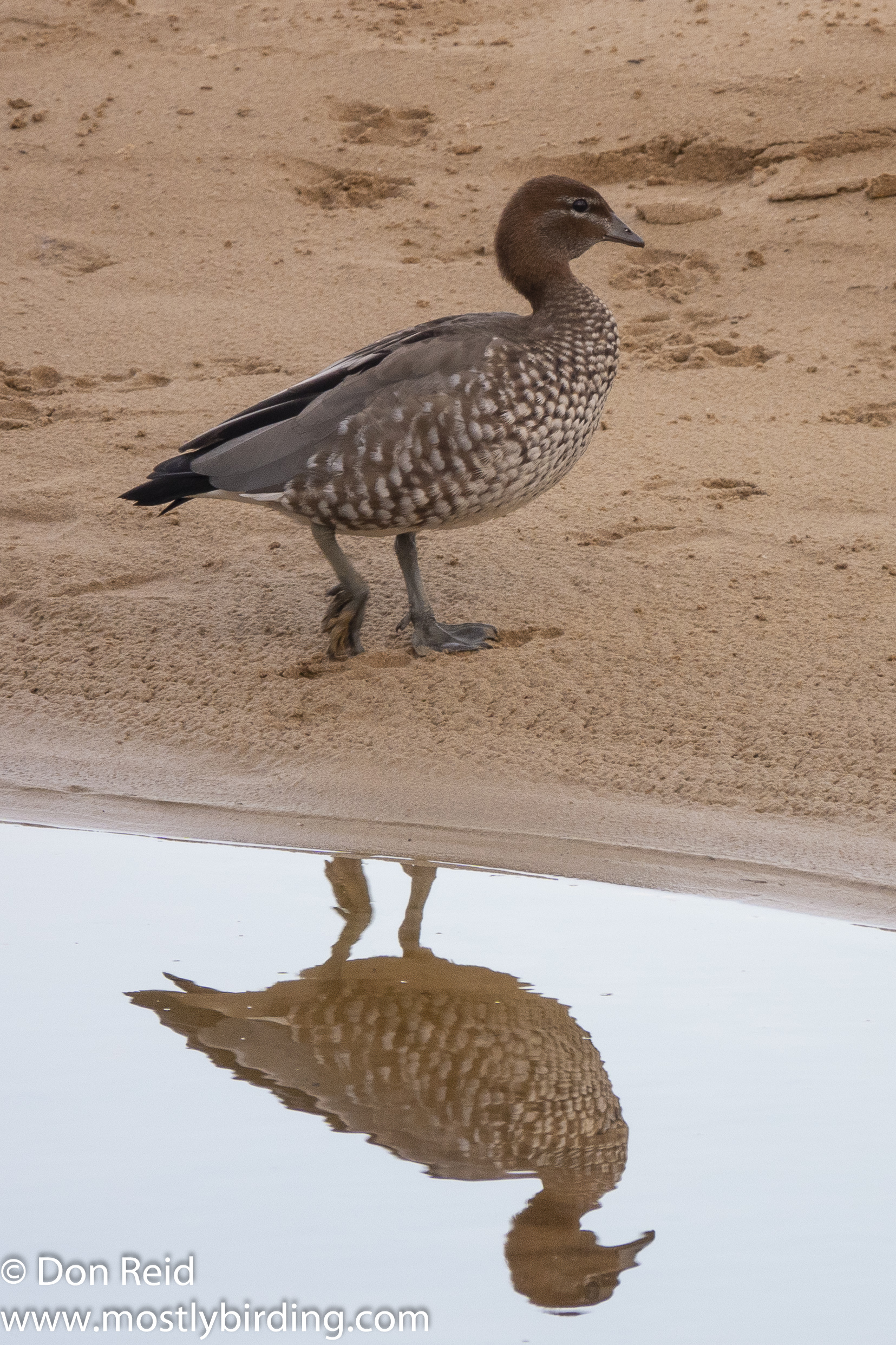
I stopped at the first opportunity to stretch and take in the coastal views, which included the first of many surfers we were to see on the Great Ocean Road and a pair of Maned Ducks at a small pond in the sand

Surf’s up – near Apollo Bay

Maned (Wood) Duck – female

Maned (Wood) Duck – male

After checking in to our comfortable accommodation at the Stay Inn, we followed the advice of the B&B owner and enjoyed a memorable dinner that evening of freshly grilled salmon, chips and coleslaw at the Fishermen’s Co-op at the small harbour. Seating was at a “rough and ready” table outside in less than comfortable weather but the superb food made us forget everything else.

We got chatting to the guys at the next table – just  another example of how friendly we found the majority of Aussies to be – one was from Melbourne, the other his cousin visiting from Israel and they demolished 3 platters of seafood between them while our jaws dropped at the sight of whole crayfish being so casually eaten.

Next morning we awoke to cold, overcast weather which brought squalls of rain at regular intervals. We took our time enjoying the continental breakfast provided in the room, hoping the weather would improve. Our room overlooked the front garden which provided a lively source of entertainment as numerous birds visited  the bird-friendly plants.

Room with a garden view – Stay Inn, Apollo Bay

New Holland Honeyeaters, which I had come across in Sale, were true to their name and reveled in the nectar-producing plants while Eurasian Tree Sparrows searched the grass and pathways for seed.

New Holland Honeyeater, Apollo Bay

Eurasian Tree Sparrow, Apollo Bay

I was fascinated by the cutely named Willie Wagtail which popped up briefly, a perky bird elegantly coloured black and white and with a  broad tail that he wagged vigorously, but from side to side rather than the up and down of other wagtails.

Willie Wagtail

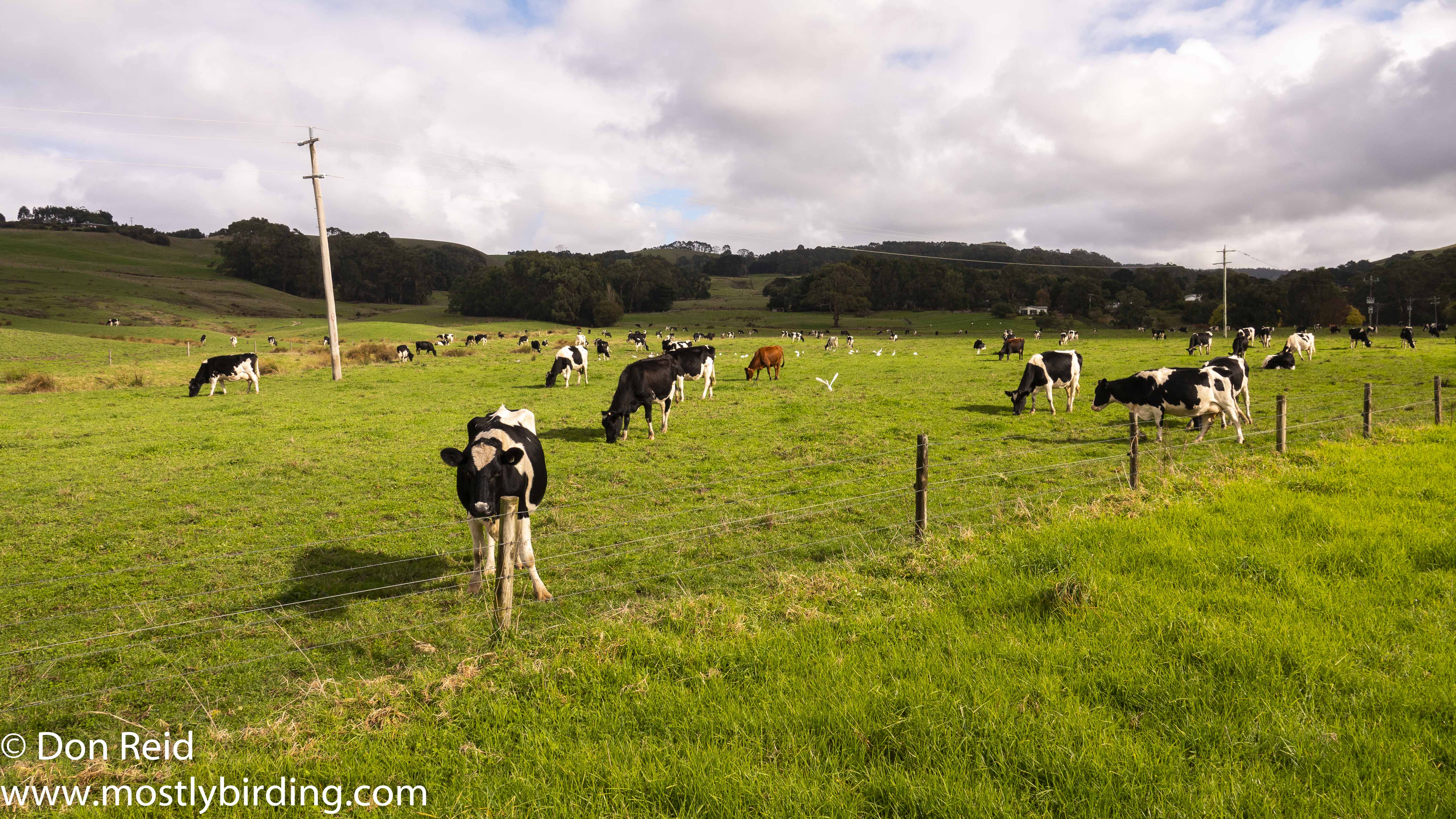
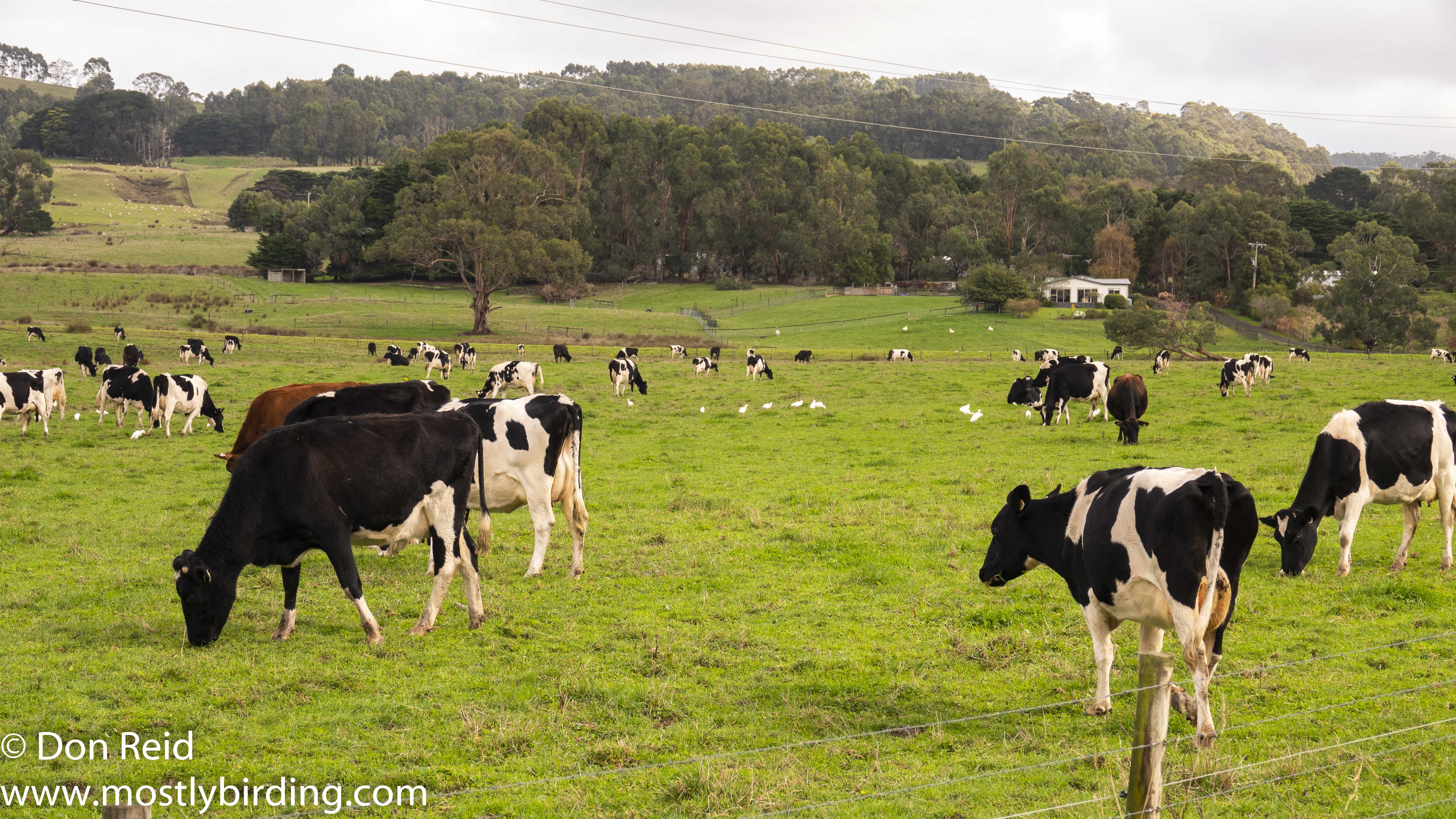
After breakfast, with the rain letting up, we drove through the village – I soon spotted a sign pointing the way to “Scenic Route” and headed along the indicated road into attractive countryside with green fields, plenty of picturesque cattle and the odd river – all adding up to a totally idyllic scene –  whoever had decided to call it a scenic route knew what they were about (in fact that’s something we noticed frequently – Aussies do seem to know what they’re doing)

Scenic drive, Apollo Bay

Scenic drive, Apollo Bay

Scenic drive, Apollo Bay

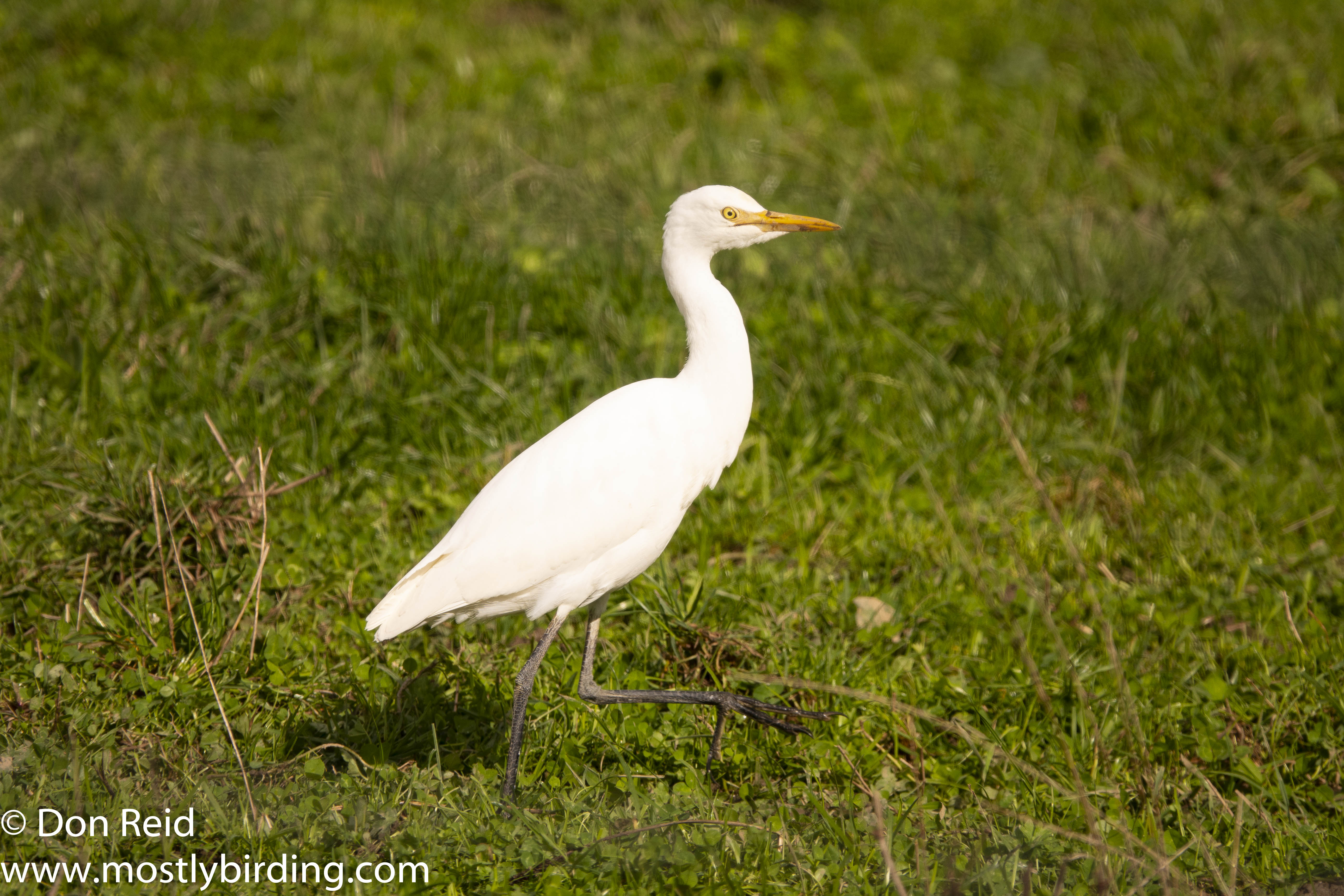
Apart from the many Cattle Egrets amongst the cattle, there were Maned Ducks at the river and a lifer in the form of a Grey Shrikethrush sat briefly on the fence – too briefly for a kodak moment. There was also a Little Pied Cormorant perched on a tree stump in the river

Eastern Cattle Egret, Apollo Bay

Little Pied Cormorant, Apollo Bay

It happened to be our wedding anniversary and the rest of the day was taken up with a drive to the famous Twelve Apostles, which did not turn out quite as we had imagined – but that’s another story……..


Australian Adventure – Cruising down the River

I mentioned the Sale canal in an earlier post and that it links the Port of Sale, now a small boat harbour, to the Thomson River and beyond to the Gippsland Lakes. The Port, the canal and the Swing Bridge were all part of the solution to the challenge of transporting resources out of and bringing supplies in to the area during the late 1800’s when gold was discovered in the area and fine cheese was being made and exported to Europe

There is a twice daily cruise of around two hours by boat down the canal and the Thomson River to the Old Swing Bridge and back and we had waited for some warmer, less windy weather to join the afternoon cruise. The last day of April, a Tuesday, turned out to be such a day and we reported at the dock at 1.45pm where we met Alan, the Captain and owner of the Rubeena, paid the requisite amount and stepped on board the historical boat.

A guard of honour was waiting for us and the navy band struck up as we boarded ………….. actually I made that bit up but that was what it felt like, despite the boat being quite small.

The Rubeena was built in Sydney and was originally licensed on 4 April 1912 (that’s just 11 days before the Titanic sank) and spent most of her working life on the Gippsland Lakes. She has been carefully restored and takes up to 40 passengers, but on our trip there were just 6 others apart from Gerda and myself so we had plenty of room to move about.

Rubeena at its berth in the Port of Sale

The Rubeena

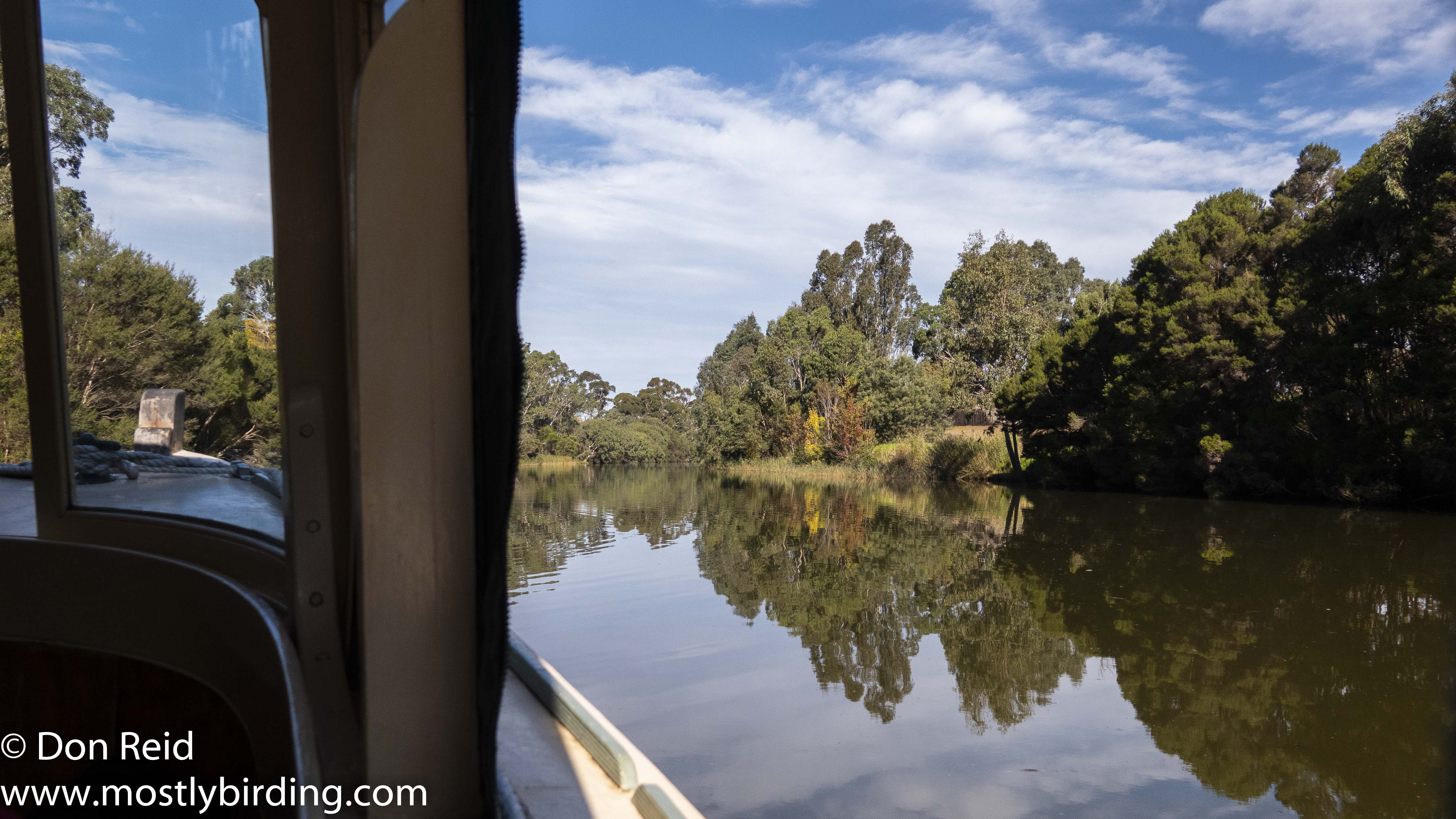
The electric motor is a bonus as it makes the cruise a quiet, gentle experience, especially when the weather is as perfect as it was, with a mild breeze hardly stirring the smooth surface of the river as we set off.

Setting off down the canal

Alan was an excellent captain and guide, giving a running commentary on the features we passed and the significance of the canal, particularly how it served the Sale area during the pioneer years. The canal was dug by horse and scoop and was completed by 1890

Captain and owner Alan in full flow

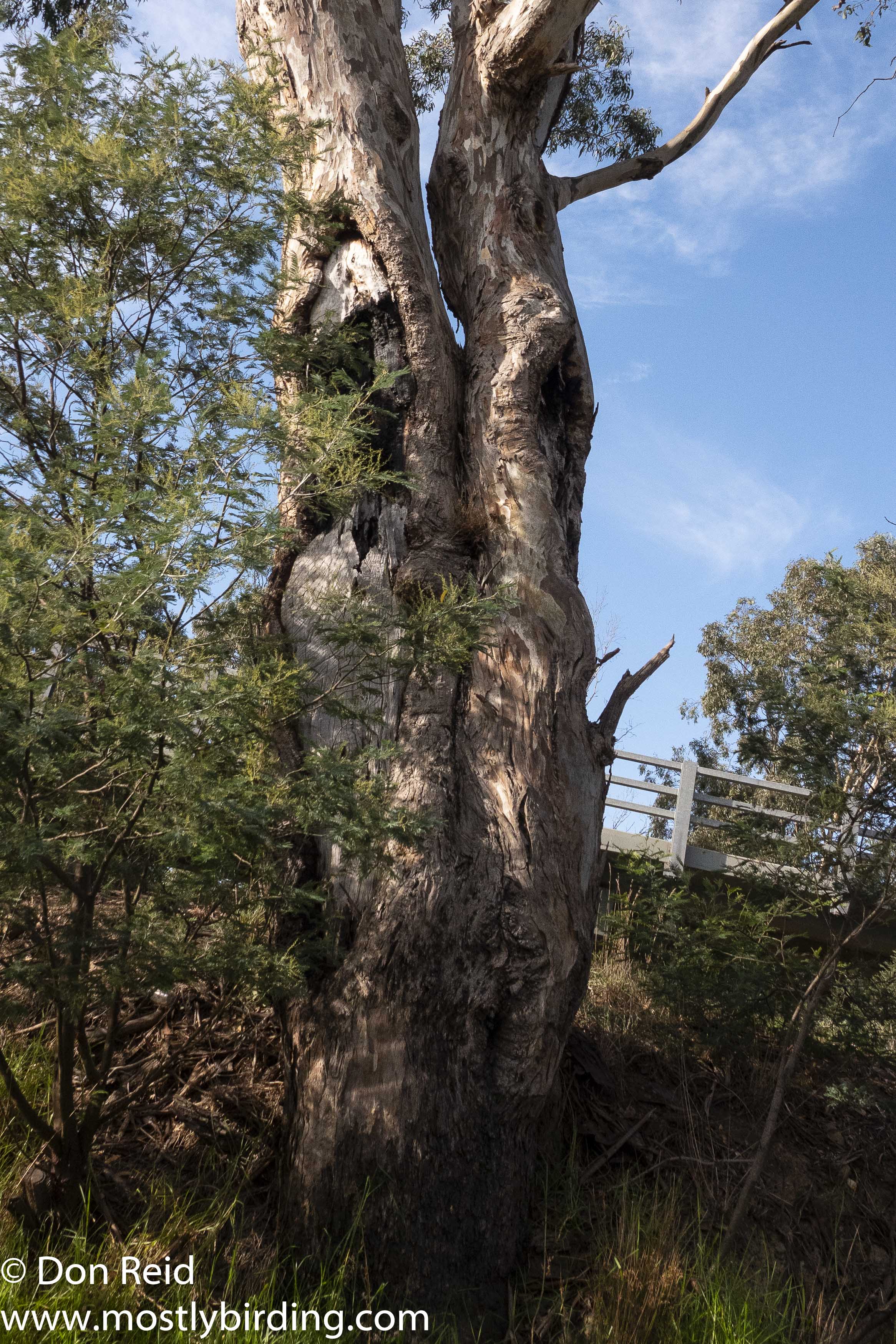
We were fascinated by the “canoe” trees – old gum trees with visible indentations where the original inhabitants of the area had harvested timber for canoe-building without destroying the tree. According to Alan, some of these trees were  350 to 400 years old and still standing on the banks of the river.

A typical “Canoe Tree”

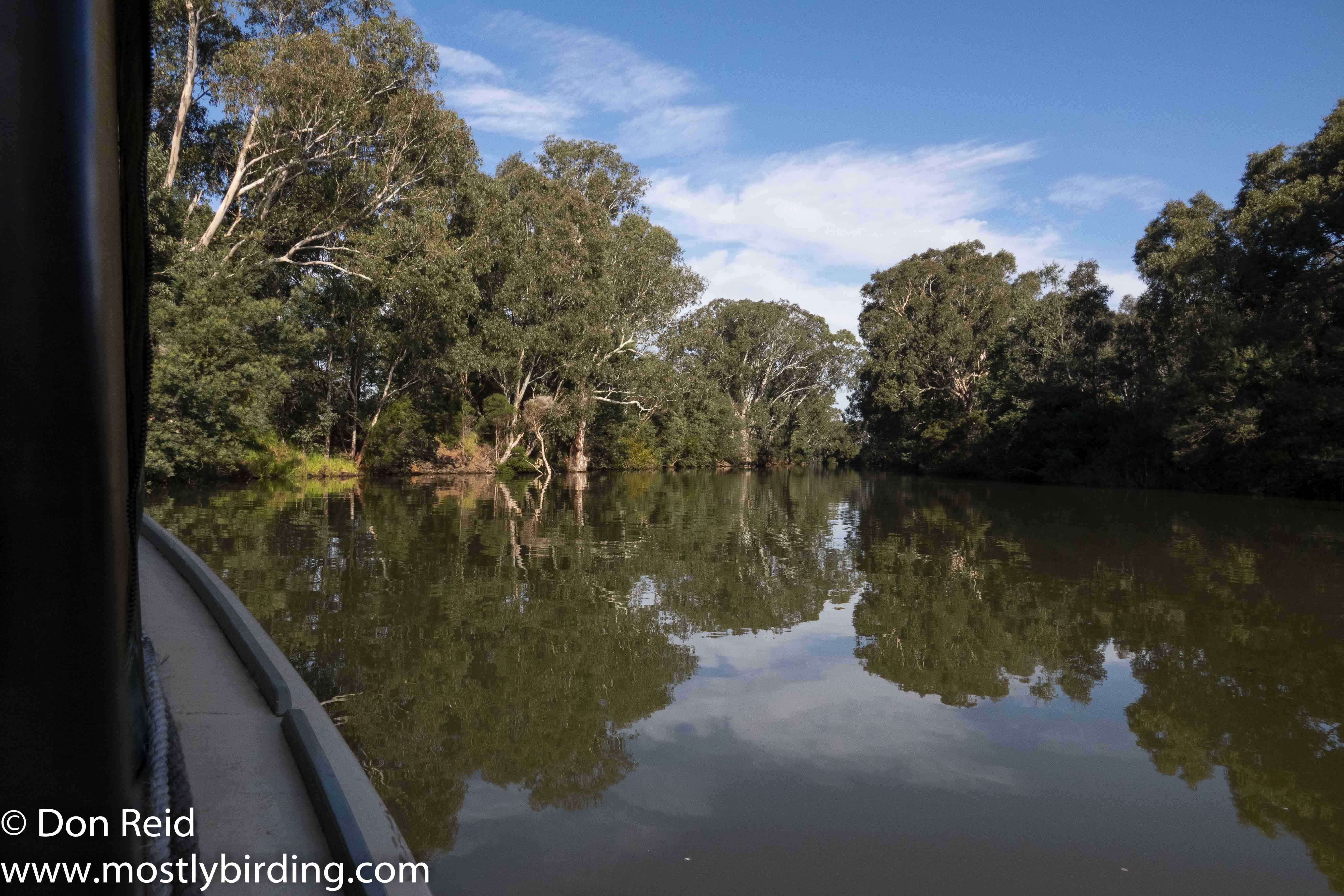
The canal/river is lined with majestic old trees

At certain spots he also pointed out the sections of the original river course that were diverted and “straightened” to make it more shipping-friendly

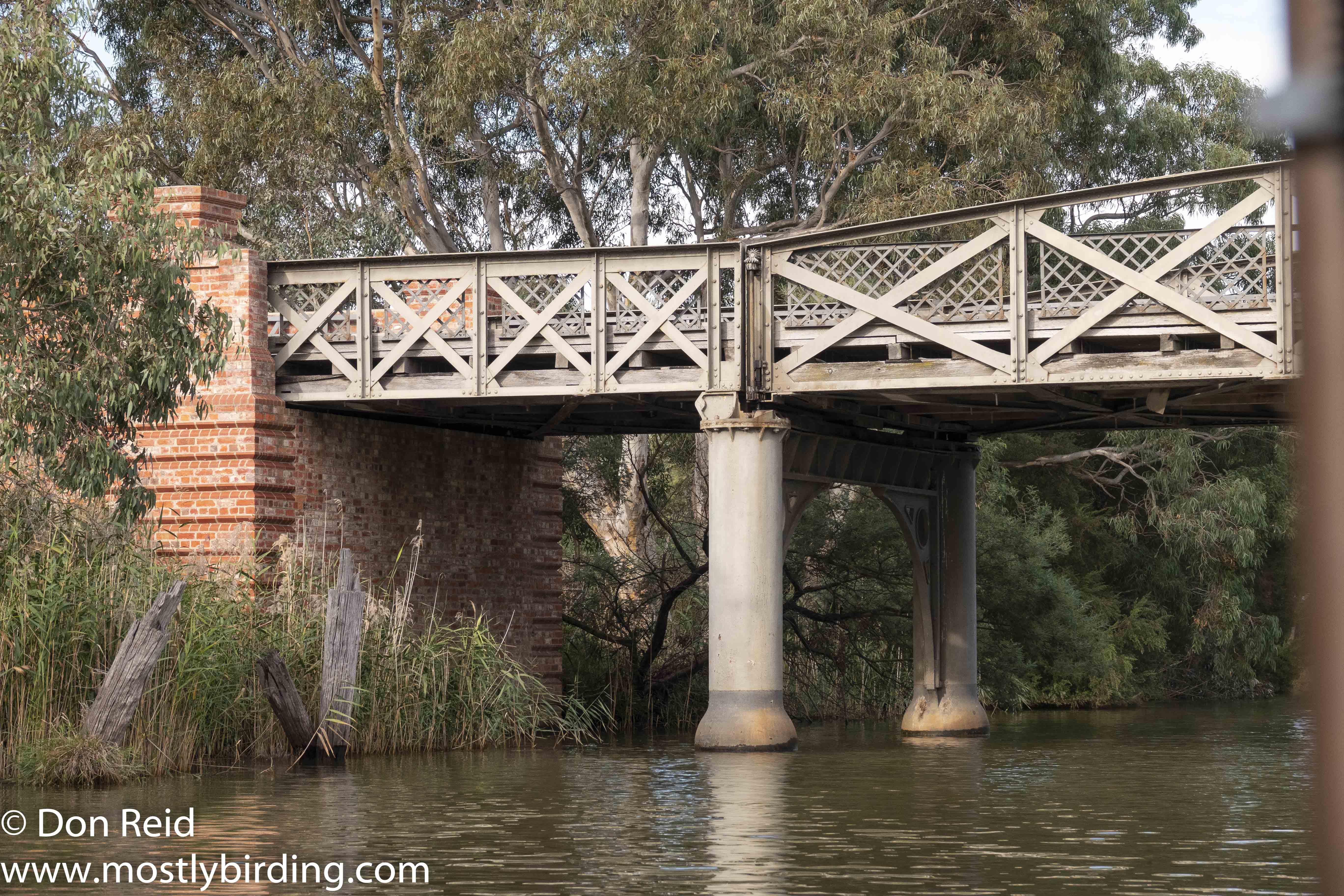
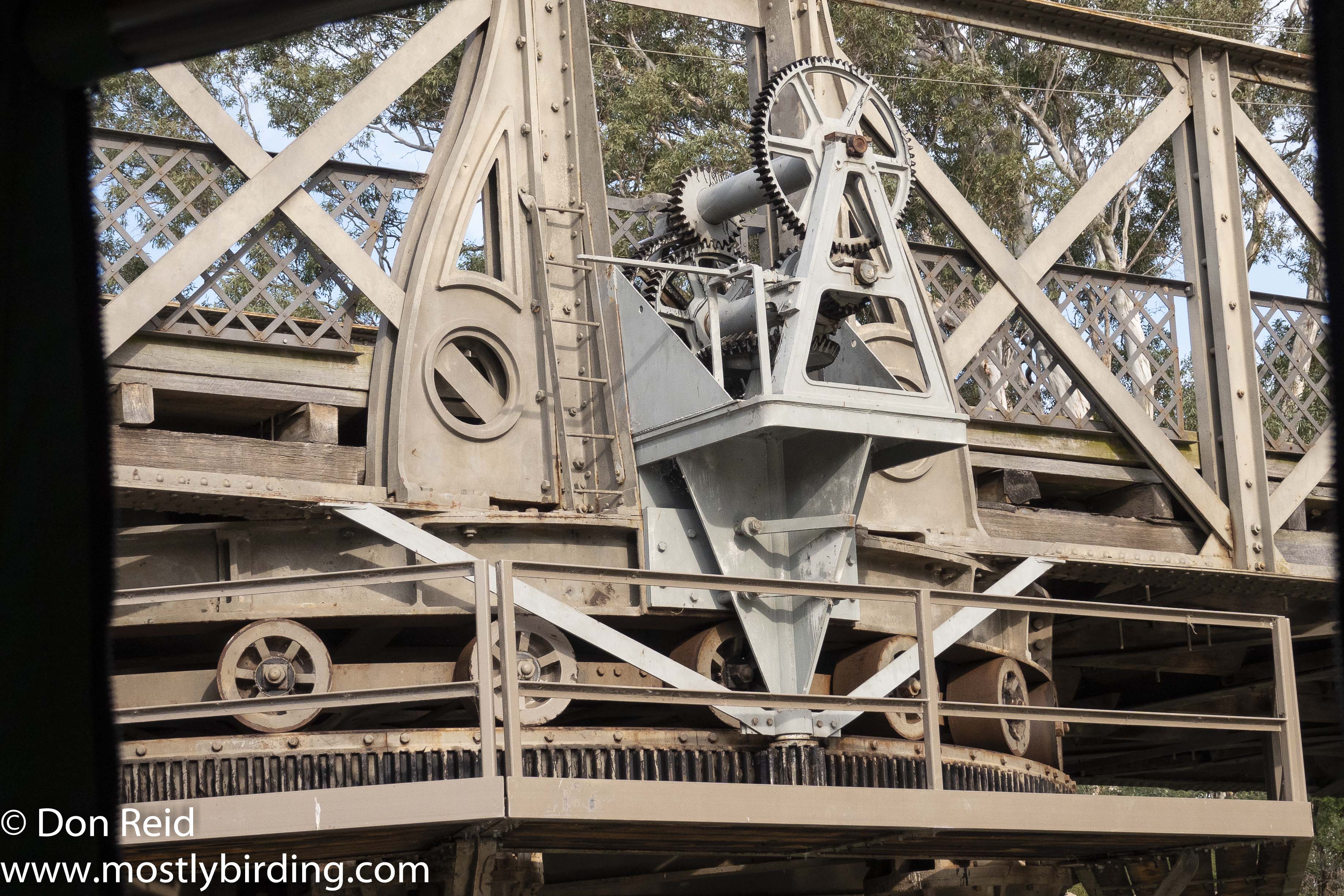
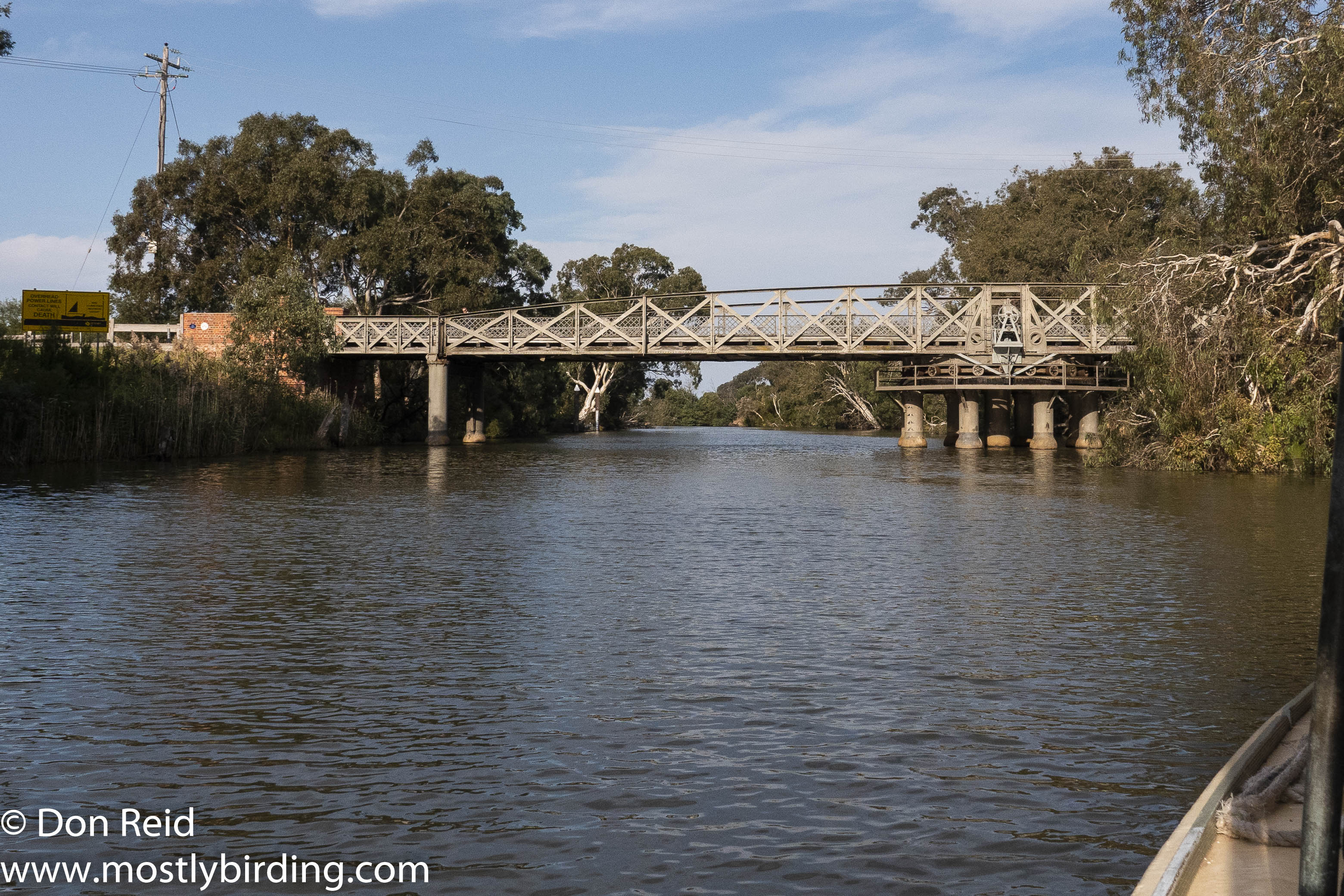
Our turnaround point was reached after just more than an hour of gentle puttering – the Old Swing Bridge, which we were able to study in detail as we passed slowly beneath it, then turned around and retraced our route back.

Swing bridge

The mechanics that make it work

Swing Bridge – one half showing with the other half hidden behind vegetation

The bridge is a remarkable example of 19th century engineering with its intricate mechanics which swing it open 180 degrees to allow taller vessels to pass by on either side. It is the oldest intact, operational bridge of its kind in Australia.

I had mentioned my interest in birding to Alan and he kindly made a point of identifying the birds that we spotted along the river, most of which I had already got to know, but happily there were two new birds to add to my growing Australia list –

  • Nankeen Night-heron – as the name suggests, these birds are mostly nocturnal but Alan knew where they roosted during the day and pointed them out high up in a tree, warily watching us from behind a veil of feathers, much like a mysterious eastern dancer may do

Nankeen Night-heron

  • Azure Kingfisher – I spotted it first some way upriver whereupon it flew past the boat, landing briefly right next to us before flying further – unfortunately too quick for me to photograph it

(The photo is taken from The Complete Guide to Australian Birds by George Adams)

Other birds that we encountered along the way were –

  • Australasian Darter

  • Great Cormorant

  • Eurasian Coot

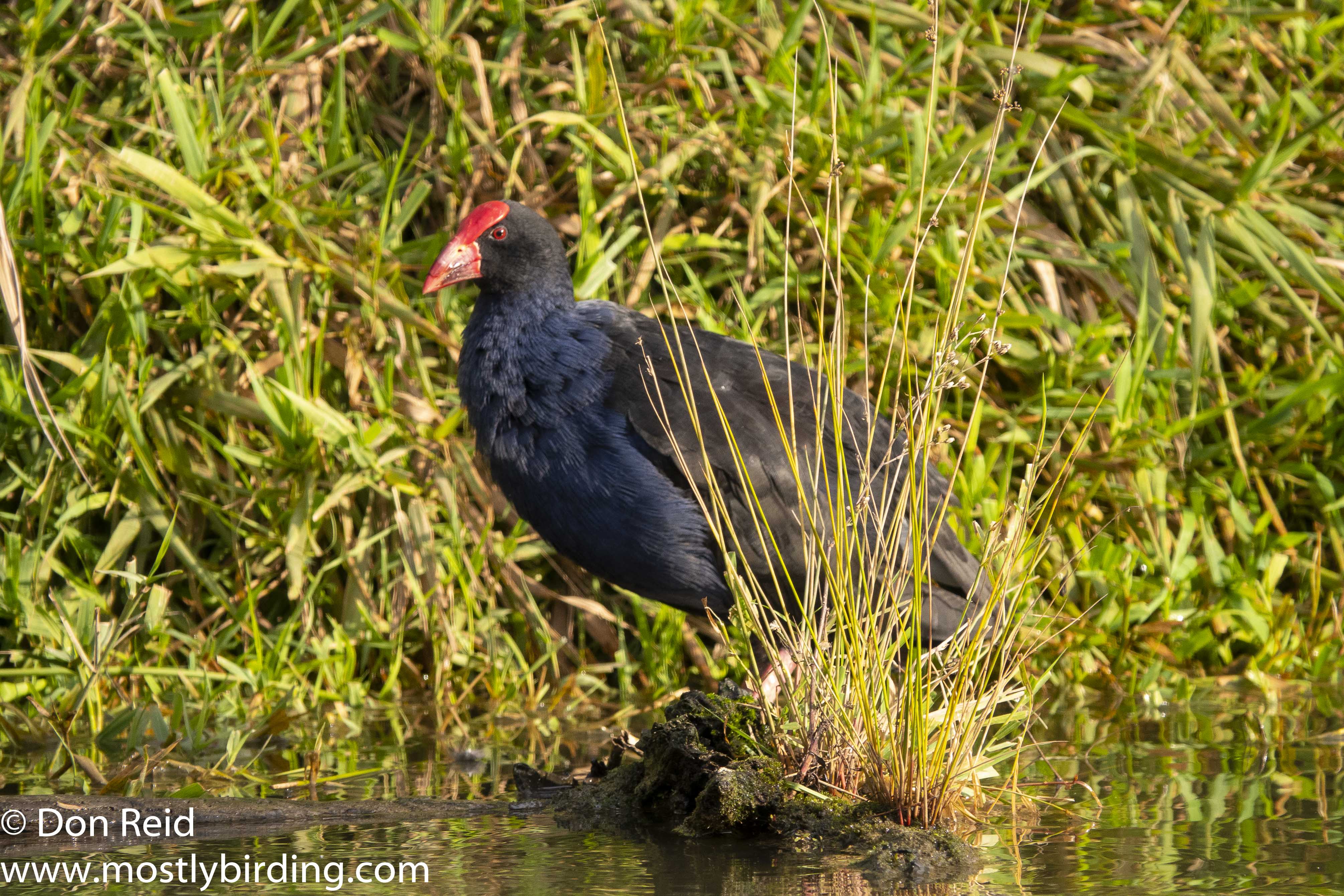
  • Australian Swamphen

  • Australian White Ibis

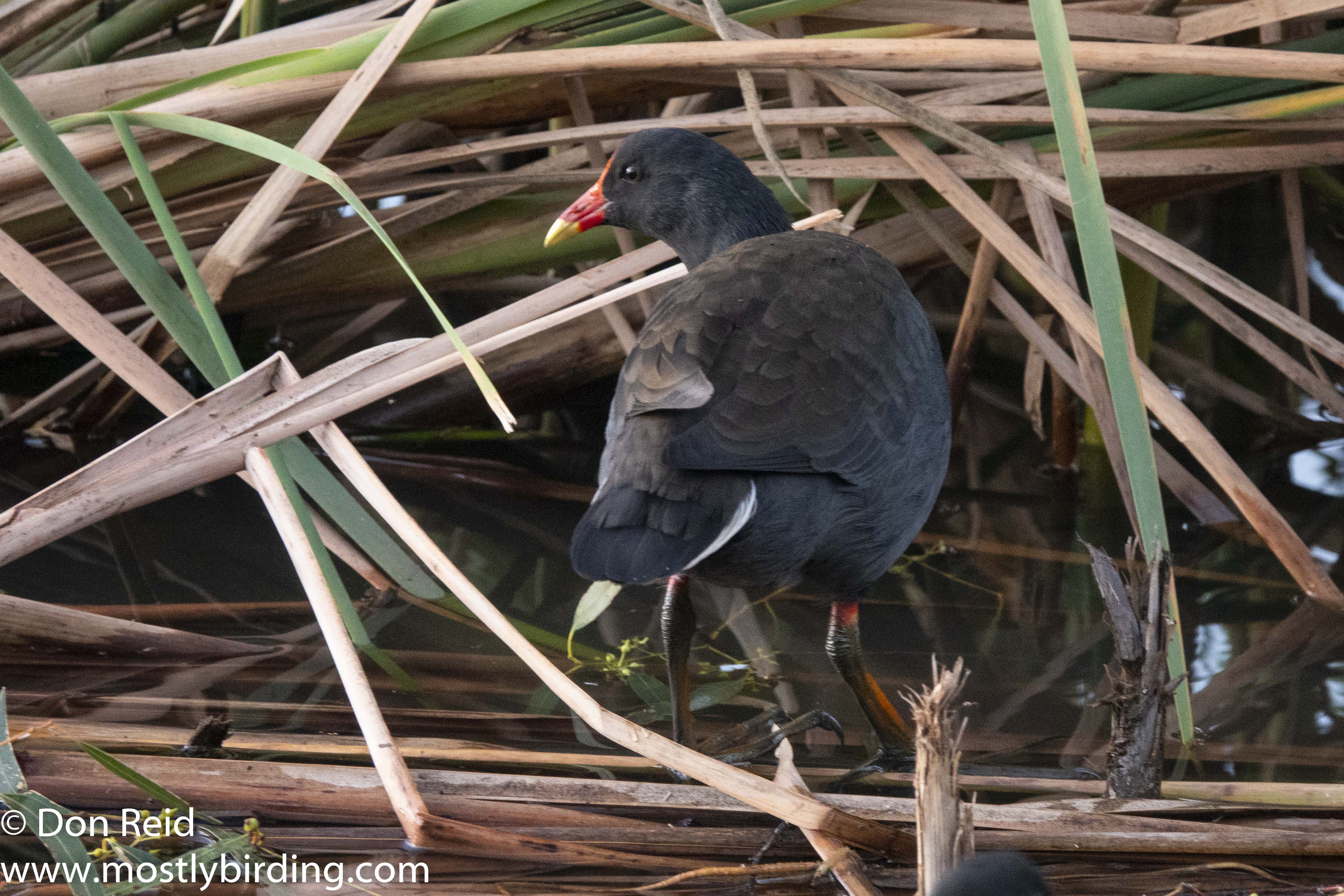
  • Dusky Moorhen

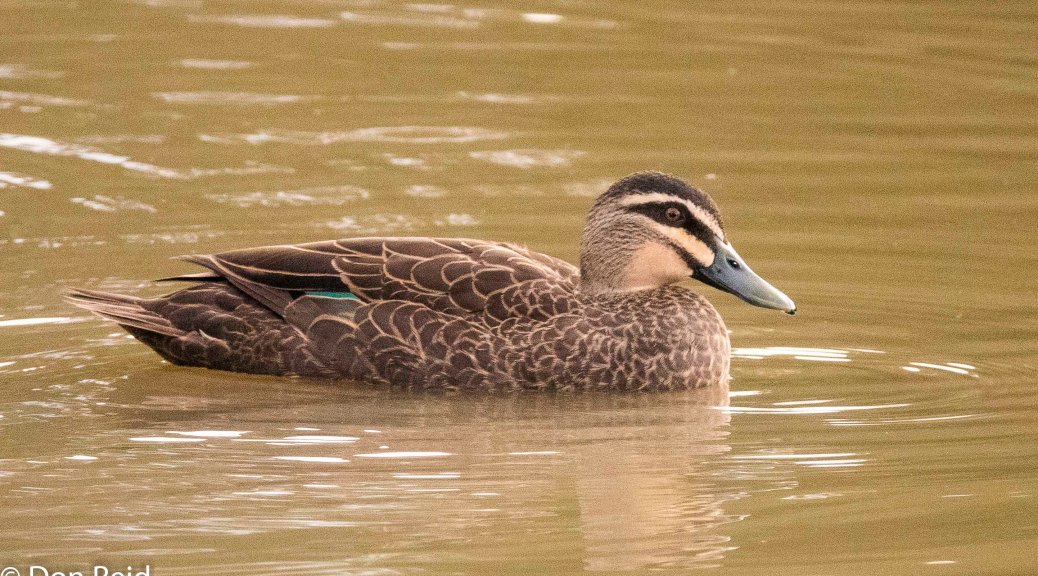
  • Pacific Black Duck – see the featured image at the top of the post

Two hours had passed and we were sorry it had ended – a really pleasant way to spend a sunny afternoon


Australian Adventure – Going walkabout on Sale Common

We had been in Sale, Victoria for about 10 days and we were getting into the swing of suburban life in this charming Australian town. Sale presents a number of opportunities for pleasant walks, with two lakes and a nature conservation area nearby, and the weather at this time of year is often ideal – not too hot, sometimes chilly, but not so that it puts you off getting out an about.

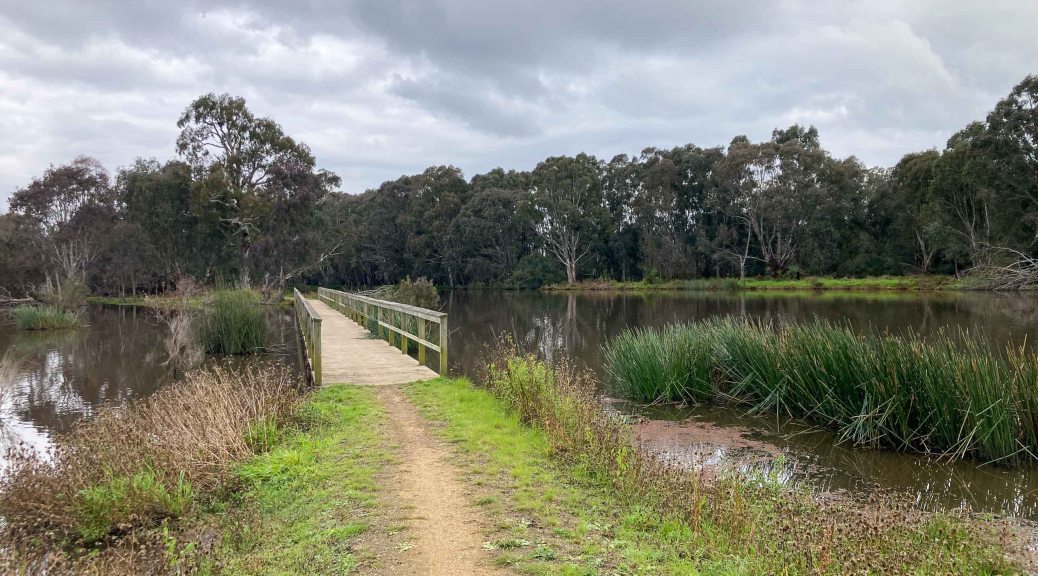
Just after arriving in Sale I joined the family for a short walk through Sale Common Nature Conservation Reserve, which was just enough to whet my appetite for a longer birding-orientated walk on my own. One cold and windy weekday afternoon, with the family otherwise occupied with work, school and household activities, I chose to do so and drove the couple of kms to the parking area where I began my walk.

Somehow I had managed to leave my binos at home but fortunately had my new Sony “bridge” camera with me and decided to rely on my eyesight with backup from the telephoto camera lens to help ID the distant birds. The camera was a pre-trip purchase to avoid having to carry my heavy Nikon DSLR with its equally heavy lens halfway round the world – the Sony is about a third of the weight and a remarkably good substitute, so I have had no regrets so far, although the bank balance took a knock in the process as it is one of the more expensive bridge cameras.

Sale Common was proclaimed in 1863 and was used for farming for 101 years before being declared a nature conservation reserve. It consists of freshwater marshes, red gum woodland and introduced grasslands. The wetland is listed as a RAMSAR site and has a network of tracks and boardwalks leading through the varying habitat which provide a wonderful environment for birds and small animals.

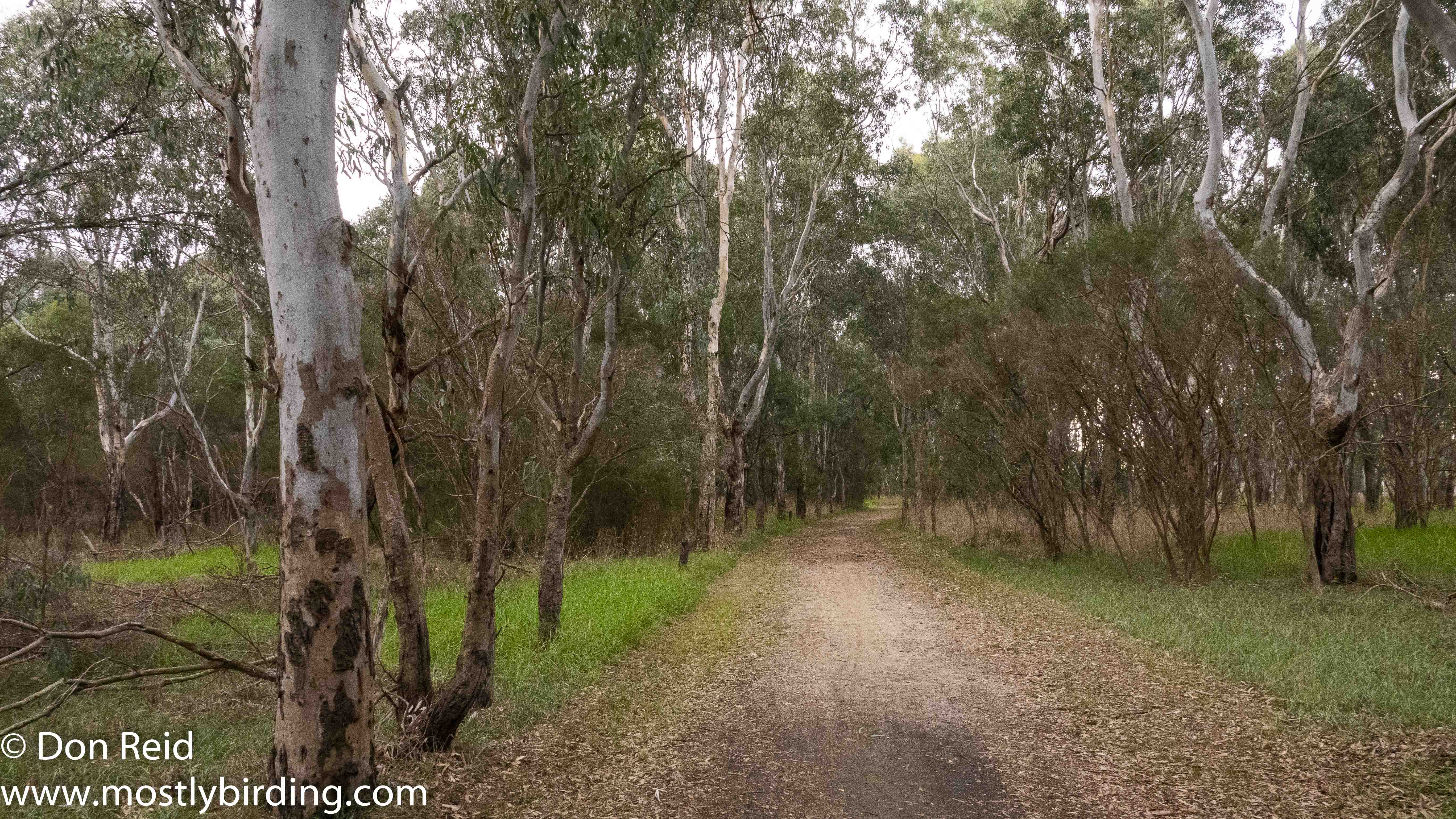
I proceeded along the trail, stopping briefly to chat to a similar-aged gent eating his sandwich at a picnic table with his old-fashioned black bicycle leaning against a nearby tree – he pointed the way and wished me good spotting as I carried on. The trail proper started as a track through Eucalypt forest with the tall, sturdy trees forming a high tunnel overhead, the foliage attractively coloured in autumnal shades.

Start of the trail

So far I had found the forests to be devoid of obvious bird life other than the Laughing Kookaburras which favour this environment and make themselves heard with their loud cackling calls, but they do make for a very attractive walking environment.

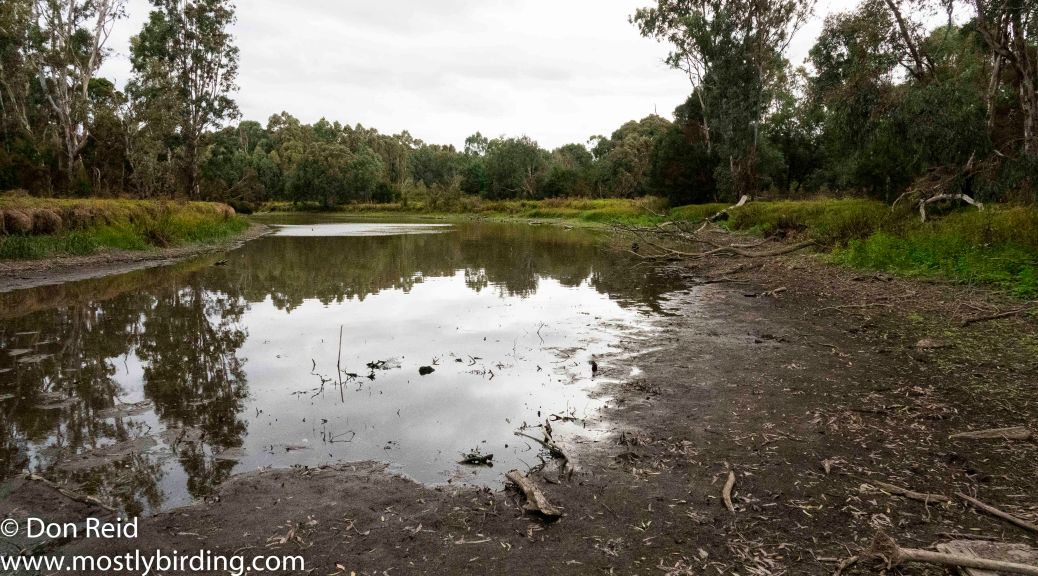
Signage advised that the boardwalk over the wetlands was closed for repairs and in any case the wetlands were dry after the recent drought in the area, so I stuck to the sandy track. Soon I reached the first visible stretch of the river, called the Flooding Creek at this point, and checked the waters for water birds but saw none. However movement at the water’s edge caught my eye and I approached carefully to see what they might be.

A few photos later of the tiny birds with long tails held erect clinched their ID as Superb Fairywrens, a nice lifer and a lovely spot to find them.

Superb Fairywren (non-breeding male) – in breeding plumage they are brightly coloured

The trail continued along the river with raised boardwalks where it crossed a part of the wetland.

Sale Common

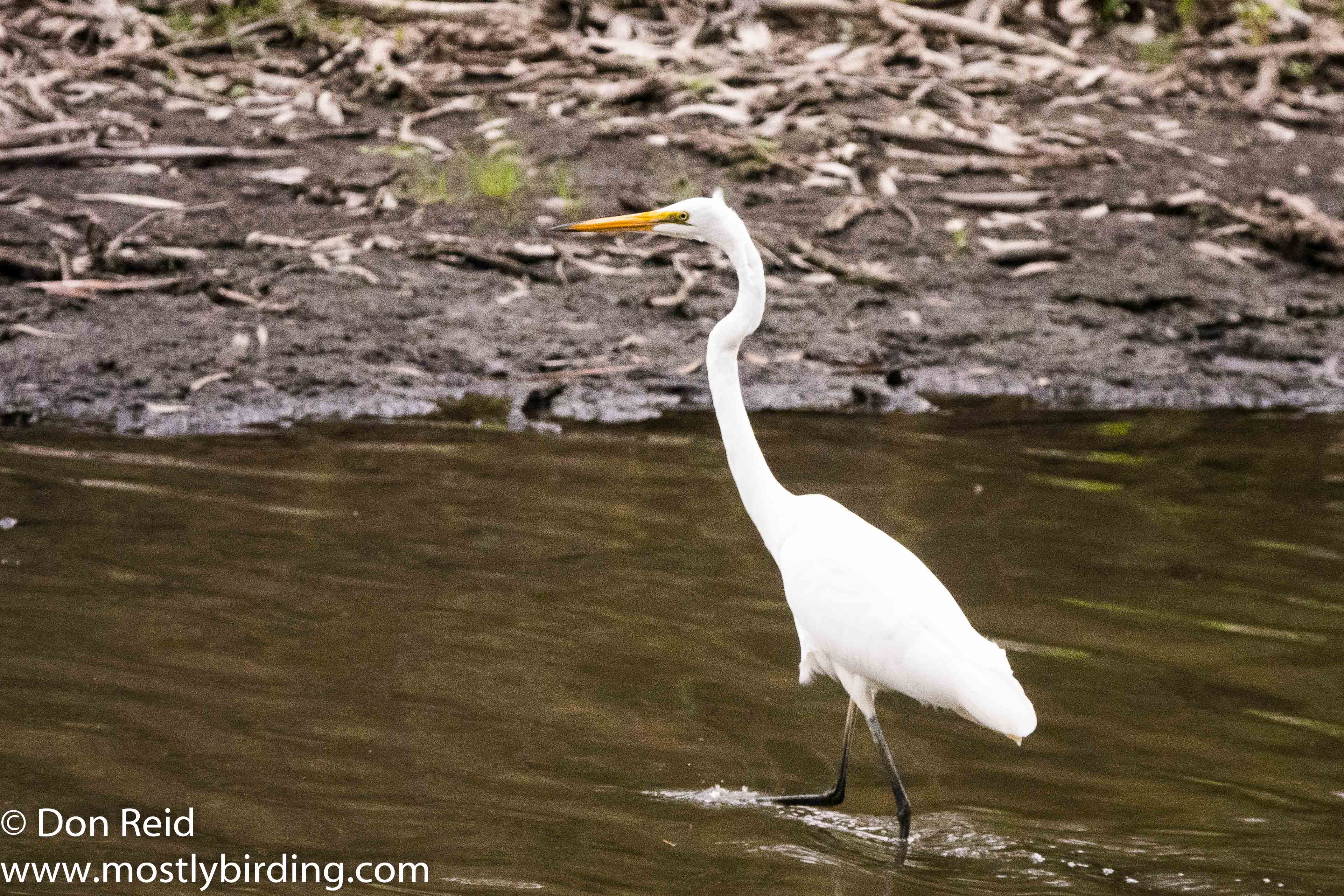
Rounding a bend, the river was once again visible ahead and several larger birds in the shallows made me approach cautiously, using the trees as a partial screen where possible. The slender, graceful form of a Great Egret on the near side was a familiar sight, looking identical to the SA version of this large all-white egret. The Australian bird book I use has it as Eastern Great Egret and some taxonomists consider it to be a subspecies but there were no features that I could pick up to differentiate it from the Southern African bird.

Eastern Great Egret, Sale Common

On the far side of the river four Yellow-billed Spoonbills were sweeping the shallow water from side to side with their spatulate bills – the smallest creature – fish, crustacean or insect – touching the inside of the broad tip triggers it to close instantly.

Yellow-billed Spoonbill, Sale Common

I watched them for a while then, looking up, a couple of soaring raptors caught my eye and I guessed they could be Whistling Kites, having seen one over the wetlands a few days earlier. Fortunately I spotted one that had landed high up in a tree, making it a far easier photo ID target than trying to shoot against the bright, grey sky and was able to confirm my initial ID of Whistling Kite.

Whistling Kite, Sale Common

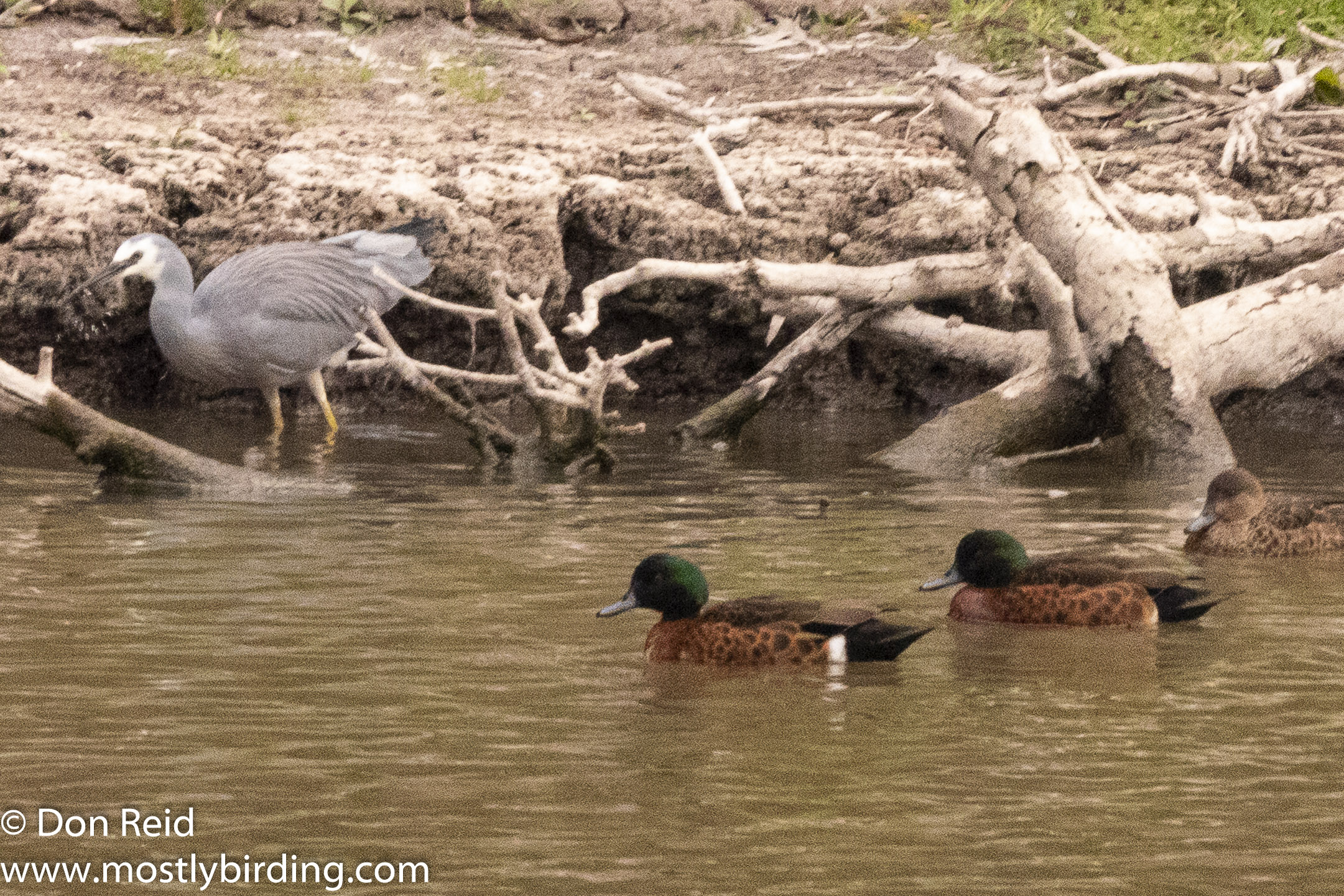
The river held plenty of Ducks including Chestnut Teals in large numbers and some Pacific Black Ducks.

Chestnut Teal, Sale Common – males in front, female just visible in the rear. On the left is a White-faced Heron

Chestnut Teals, Sale Common

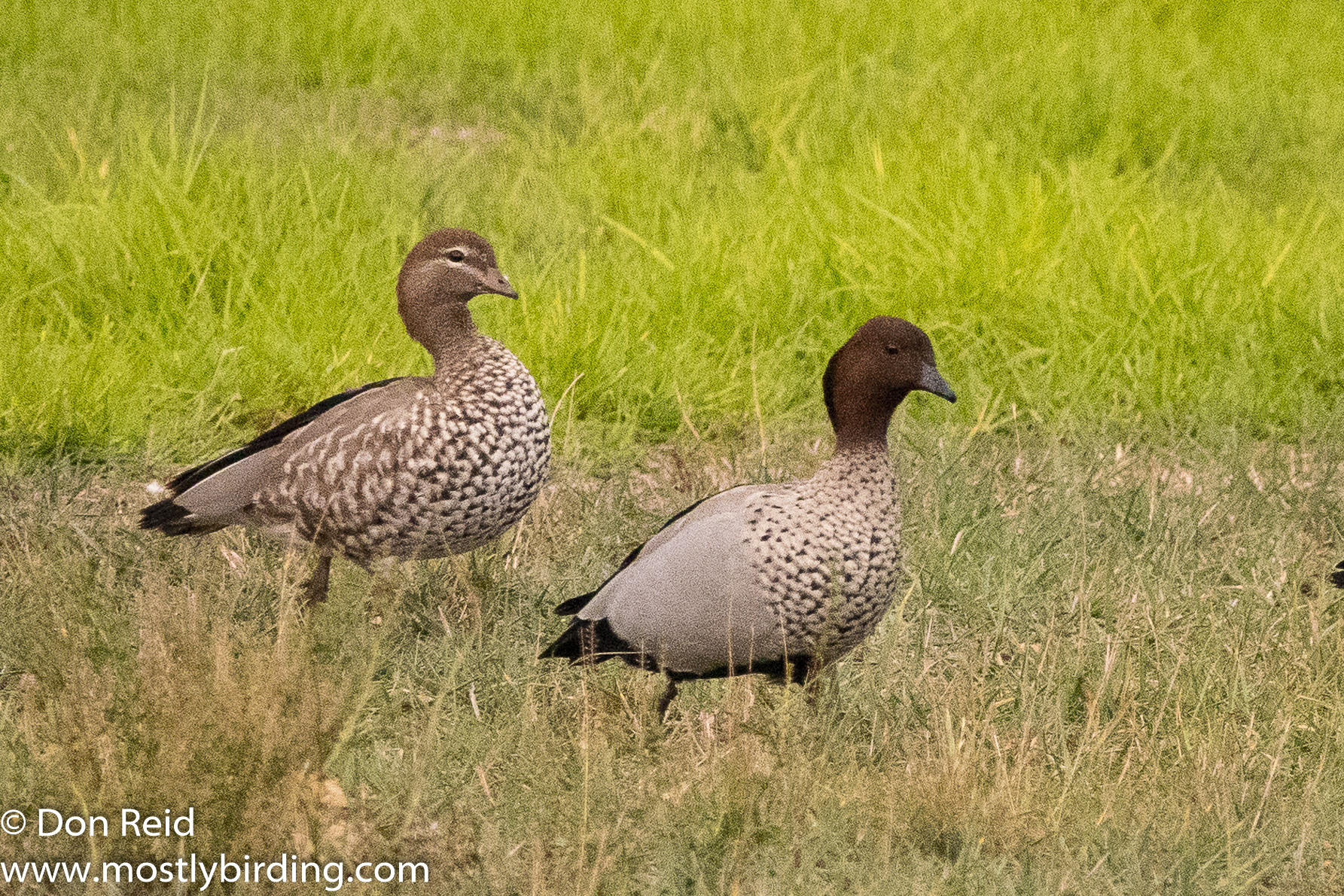
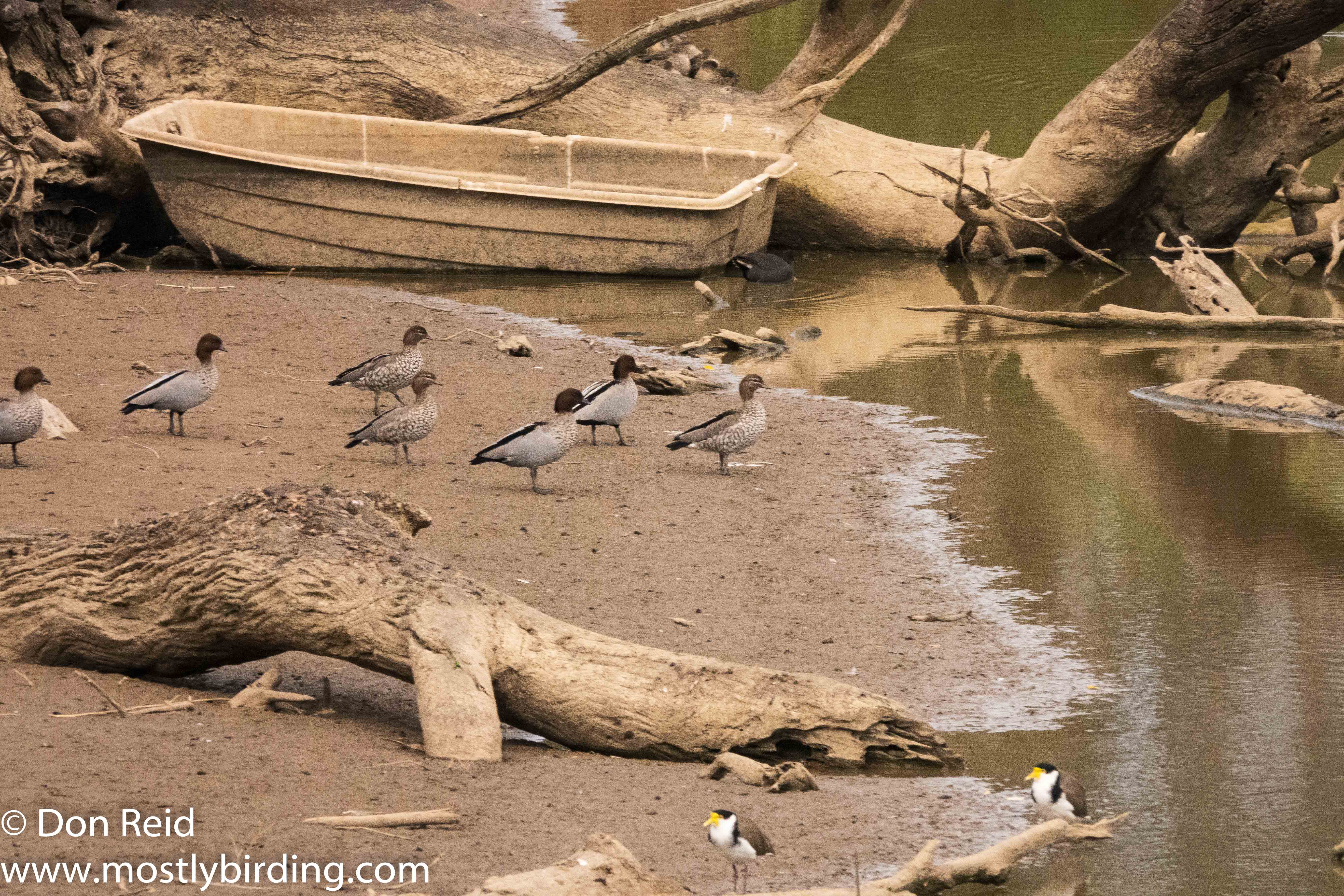
Maned Ducks (aka Australian Wood Duck, depending on which book you use) were almost as numerous but on the grassy banks. I have yet to see this latter duck actually in the water so they obviously don’t seem to understand the adage “takes to the water like a duck” for some reason.

Maned Duck, Sale Common – female on left, male on right

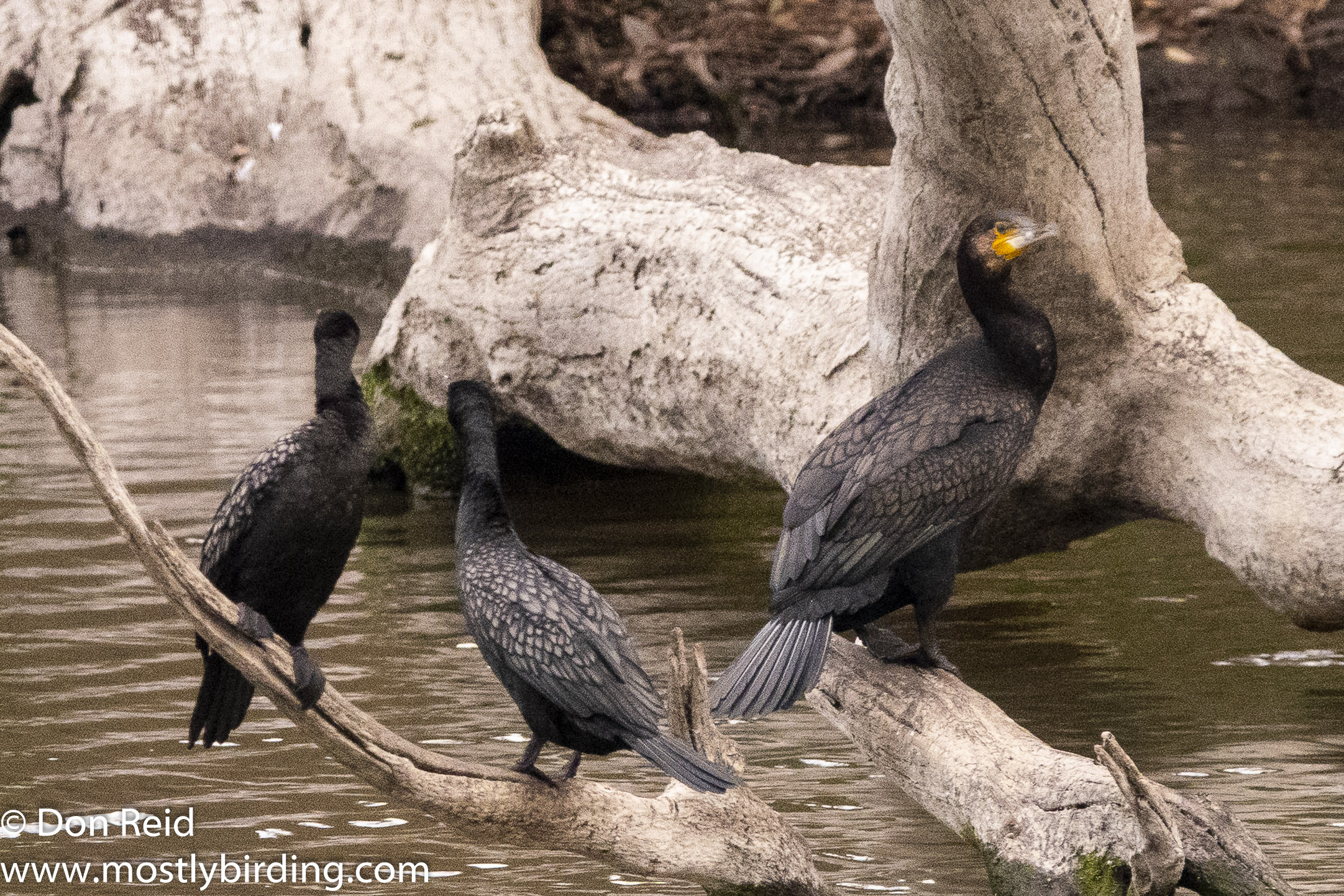
I had walked a good distance along the track and decided to turn around, with the light starting to fade, as it does from around 4.30 pm in the autumn in these parts. As I did I came across Little Black Cormorants and a Great Cormorant on dry tree stumps in the river.

Little Black and Great Cormorants, Sale Common

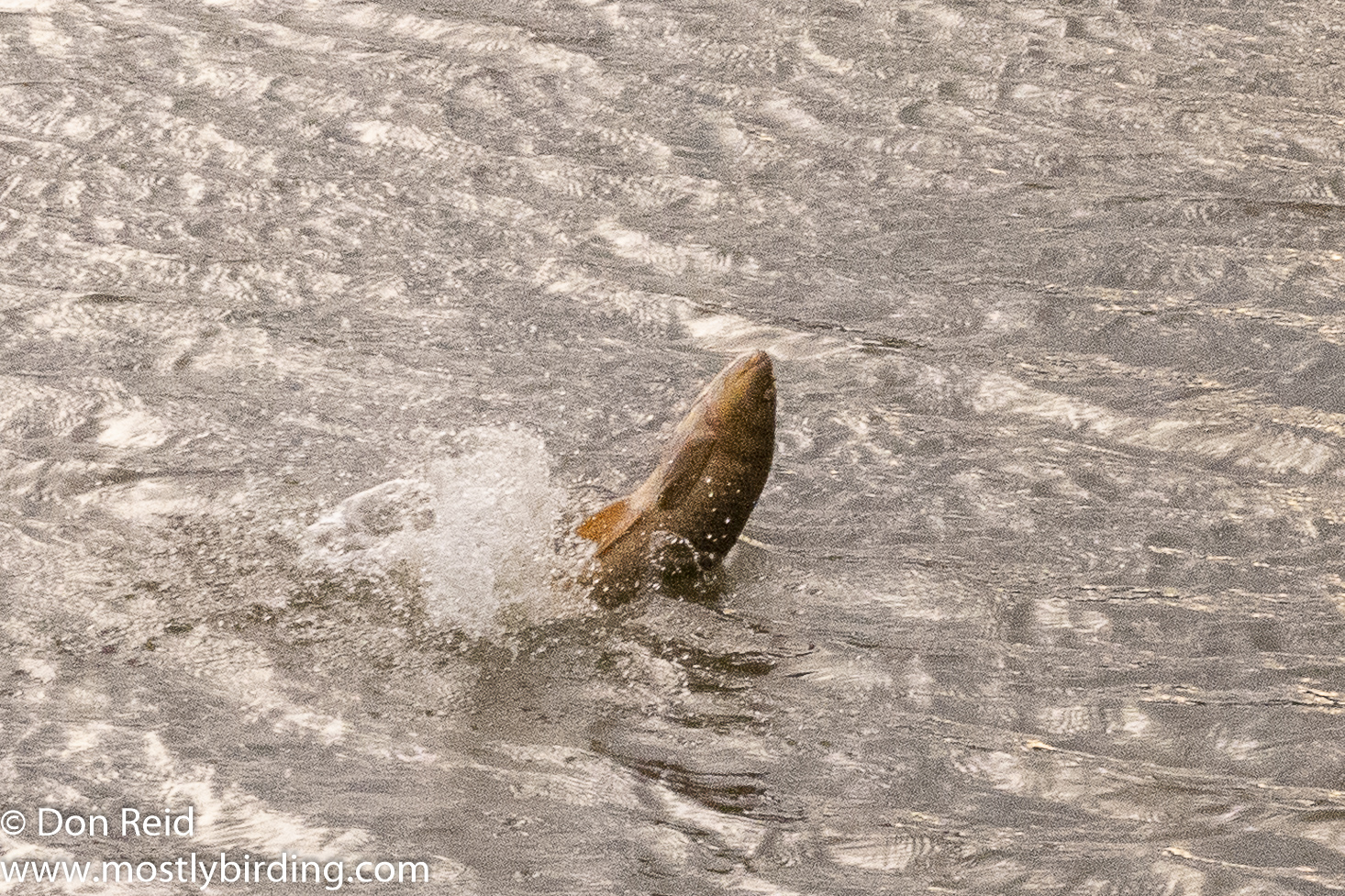
Something moved in the middle of the river and as I focused my camera on the ripples a fish leaped out and I instinctively pressed the shutter button, capturing it in mid leap – a really lucky shot! I’m not a fish expert but took this to be a trout

I did not see anything new on the way back but at the bridge I stopped to view the Masked Lapwings at the water’s edge, accompanied by more Maned Ducks.

Sale Common

Just before reaching the car park a flock of Sulphur-crested Cockatoos descended on the trees, very noisily, probably getting ready to roost for the evening. South Africans of a certain era will remember the NBS adverts which featured this unmistakable bird – seeing it in numbers in the wild is a somewhat bizarre birding experience!

Sulphur-crested Cockatoo

Here and there a plaque provided more info on the history of the area

Sale Common

Sale Common

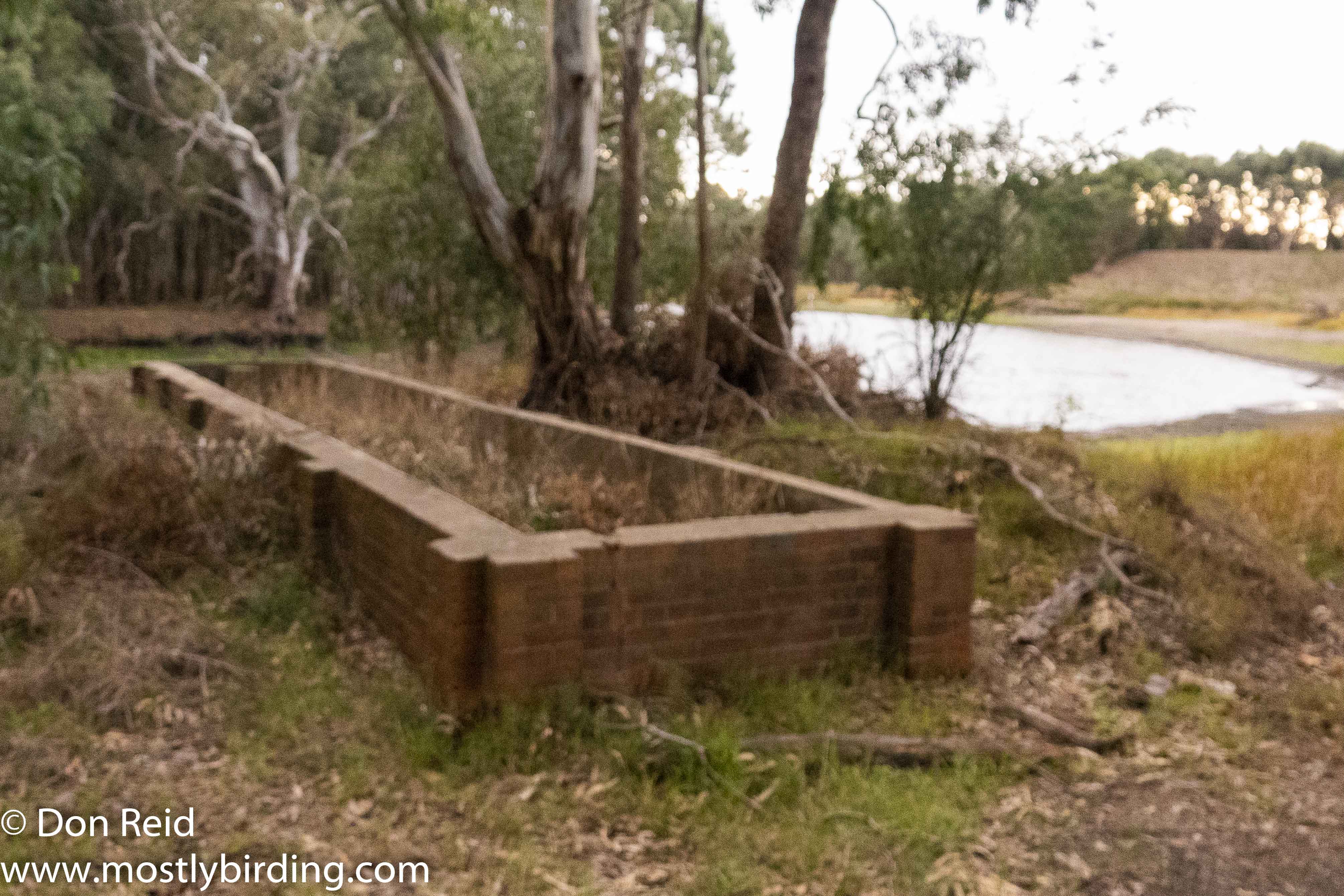
Water trough, Sale Common

All in all a thoroughly entertaining and interesting afternoon spent in a safe environment