Tag Archives: Australian Birds

Australia 2025 : Mackay – a Wet Introduction : Part 1

Australia 3.1

This was our third visit in six years to this wonderful country – we had completed our slow, memorable road trip from Sydney to Brisbane, enjoying a few days each at Caves Beach, Nambucca Heads, Gold Coast and Brisbane, where we had boarded a plane again to travel ‘home’ to Mackay and the very pleasant prospect of spending the next three weeks with the family and getting to know the town.

Mackay is a city in the Mackay Region on the eastern or Coral Sea coast of Queensland, Australia. It is located about 970 kilometres north of Brisbane, on the Pioneer River.

Mackay : The Wettest place we have experienced!

We had inadvertently chosen the time of year to visit Mackay, when the area receives its highest rainfall, but the rain we experienced was way beyond the norm

A selection of my journal comments paint the picture …..

“The rain came down in torrents today, keeping us indoors, which allowed me to catch up on some blogging and photo editing. No birding opportunities though.”

Yet another rainy day and not much done. The weather was kind enough to allow me an afternoon walk, this time with camera wrapped in a plastic bag just in case.”

No birds added for two days now, mainly due to the unending rain that kept on during the late afternoon 4 to 6 pm slot when I usually take a walk”

By the time I got home I was thoroughly drenched but still warm as the humid air does not cool down much.”

And still it rains, two weeks after arriving in Mackay!”

And if that is not convincing enough, have a look at some local news reports ….
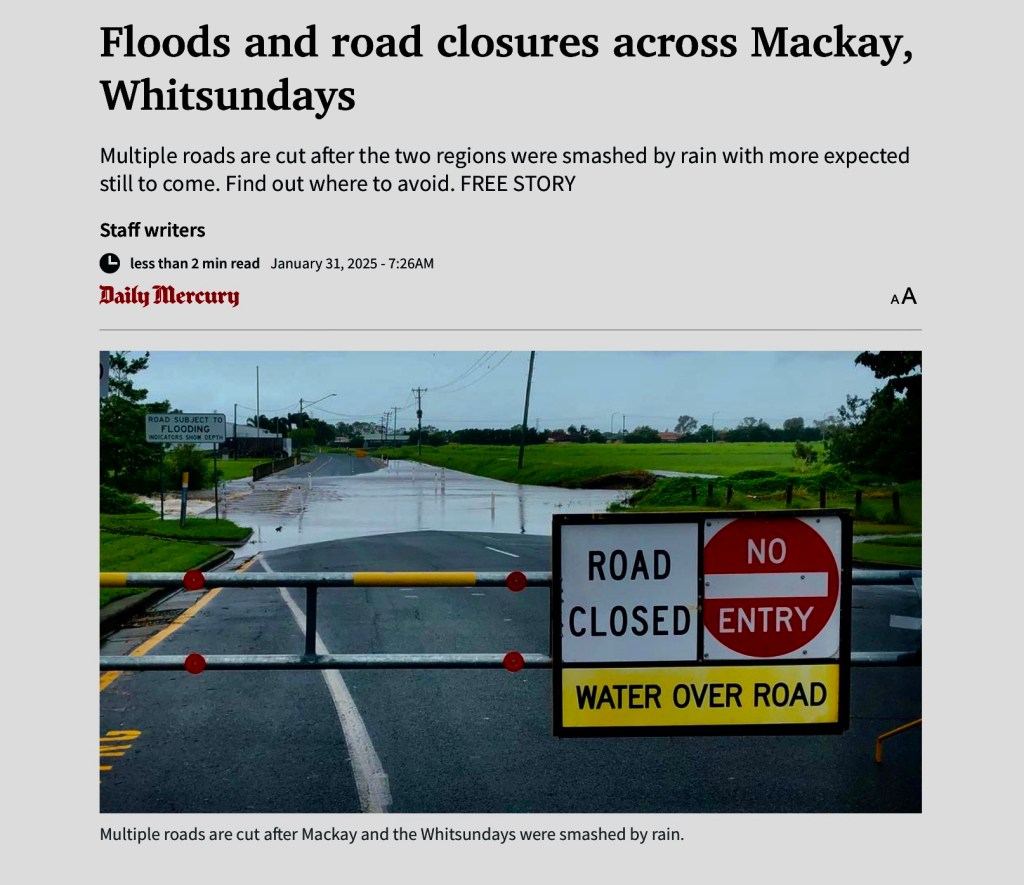
Fortunately the rain eased during our last week in Mackay and we could at last get out and about to have a look at some of the beaches and the Botanic Gardens.

The (Very Wet!) Wetlands

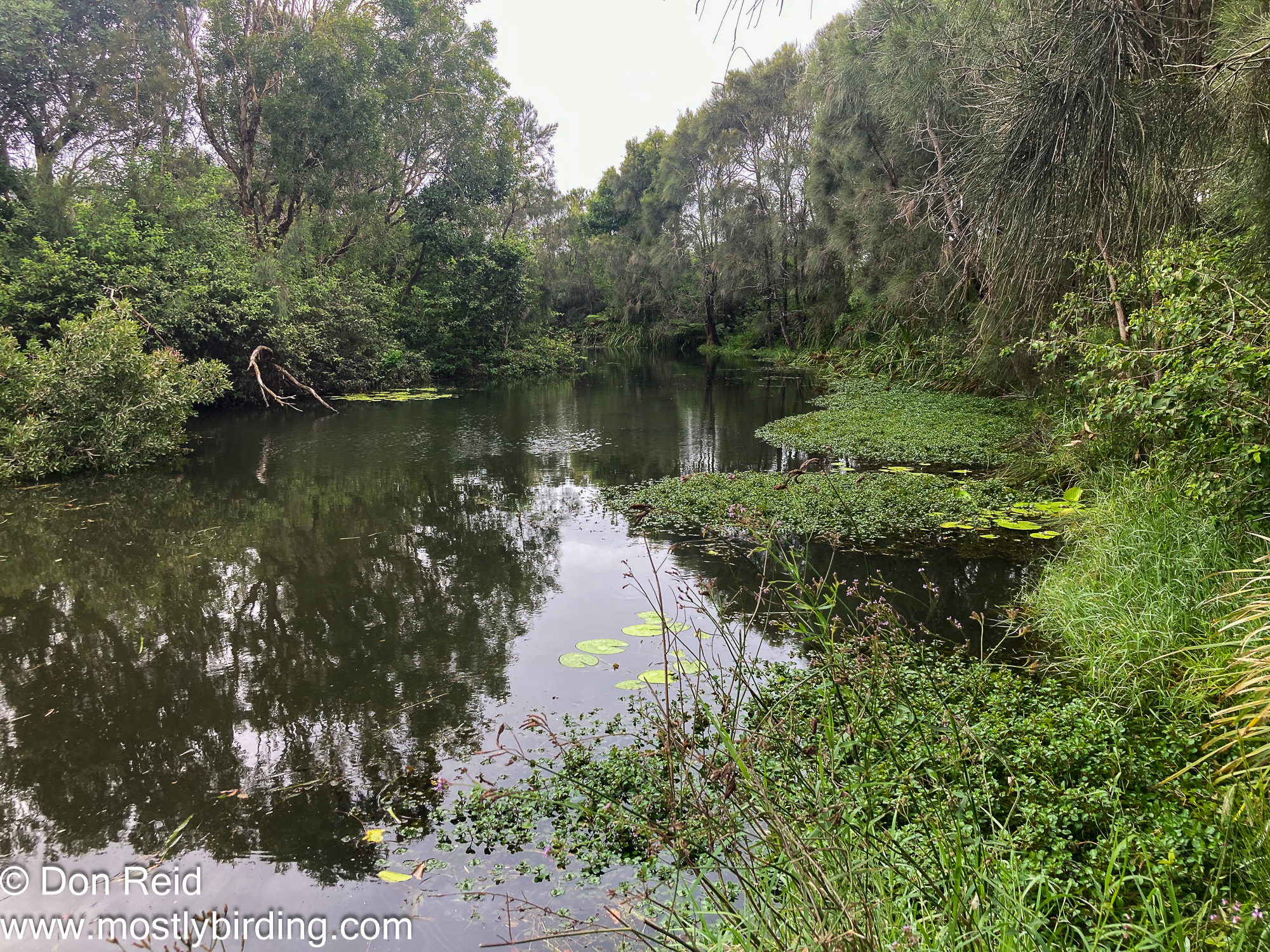
As soon as the weather allowed, I set out on a slow recce of the neighbourhood in the vicinity of the house and was immensely pleased to find some large ponds with surrounding vegetation within easy walking distance. Even better, the adjoining lands, which seemed to be part of a farm, were partially inundated to form a large wetland area, with numerous birds visible in the shallow water and along the fringes.

I have been using the ebird app to record my birding occasionally and it came in handy in Australia with its worldwide coverage and data.

As per the screenshot below, the app tracks your route while birding – shown by the blue line in the image. I added a green outline just to show the approximate extent of the wetlands adjoining the built up area.

Blue = ebird tracking of my walking route. Green = an indication of the extent of the temporary wetlands

After that first exploratory walk and whenever the weather allowed, I enjoyed late afternoon walks to and around the nearby wetlands which I quickly discovered were a sheer birding delight, with plenty of birds easily visible. Although many of the birds on the expansive wetlands were further away, they were still identifiable for the most part.

Wetlands


One afternoon, I went for a longer walk around the wetlands with rain imminent. It rained lightly at first then came down a lot heavier while I was halfway around. There was no going back, so I pulled on my rain jacket and quickened my pace but had to take off my sandals to get across the newly formed streams pouring across the walking trail at a slight dip.


A very wet pathway!

Another afternoon, I took what had become my customary walk, this time without a camera (which usually guarantees that I will have exceptional photographic opportunities) and with e-bird at the ready to do an ebird list.

After an hour of circling the wetland area I had listed 31 species, which compares well with my SA atlasing pace – not something I expected in Australia based on my Victoria birding outings during previous visits. 

The Birding

Birders like nothing better than finding and seeing new birds – or ‘lifers’ as they are known – I am no exception and exploring a new area in a different country is one of the absolute joys of this endlessly fascinating pastime, with the prospect of coming across a lifer or two.

Despite the extreme weather – or perhaps partly because of it – I managed to find a lot more new birds during our stay in Mackay than I had hoped for – here is a selection of those in the wetland areas – Part 2 of this post will include the lifers and others that I found away from the wetlands.

Photography

Heavily overcast conditions and rain meant 1. Light for photography was seldom satisfactory and 2. It just was not worth the risk of damaging my camera out in the rain

So I have relied on two other sources where I was not able to take my own images of birds :

  • Australian Birds eguide app by Michael Morcombe and David Stewart
  • The Complete Guide to Australian Birds by George Adams

Wandering Whistling Duck

Just 5 minutes from the house, approaching the wetlands for the first time, a group of ducks flew up calling in a familiar way that reminded me of our White-faced Ducks. When they settled again, I approached cautiously and was able to ID them, confirming my first instinct.

Wandering Whistling Duck Dendrocygna arcuata, Mackay Queensland

Comb-crested Jacana

One of the highlights of our visit was finding this striking Jacana on my first walk around the ponds, the red comb on its head standing out like a bright red beret. They became a regular feature of my walks, but remained quite skittish, not hanging around for a sharper image.

Comb-crested Jacana Irediparra gallinacea, Mackay Queensland

White-browed Crake

Literally a few metres after the Jacanas, I saw movement among the water lilies and was thrilled to see two small Crakes moving about warily before disappearing into denser vegetation.

White-browed Crake, Mackay Queensland

Pied Stilt

Still on my first walk, while I was scanning the distant wetlands, I quickly picked up a familiar long-legged black and white wader – certainly a Stilt I thought, very similar to its South African cousin but it had a black neck instead of the white of the Black-winged Stilt
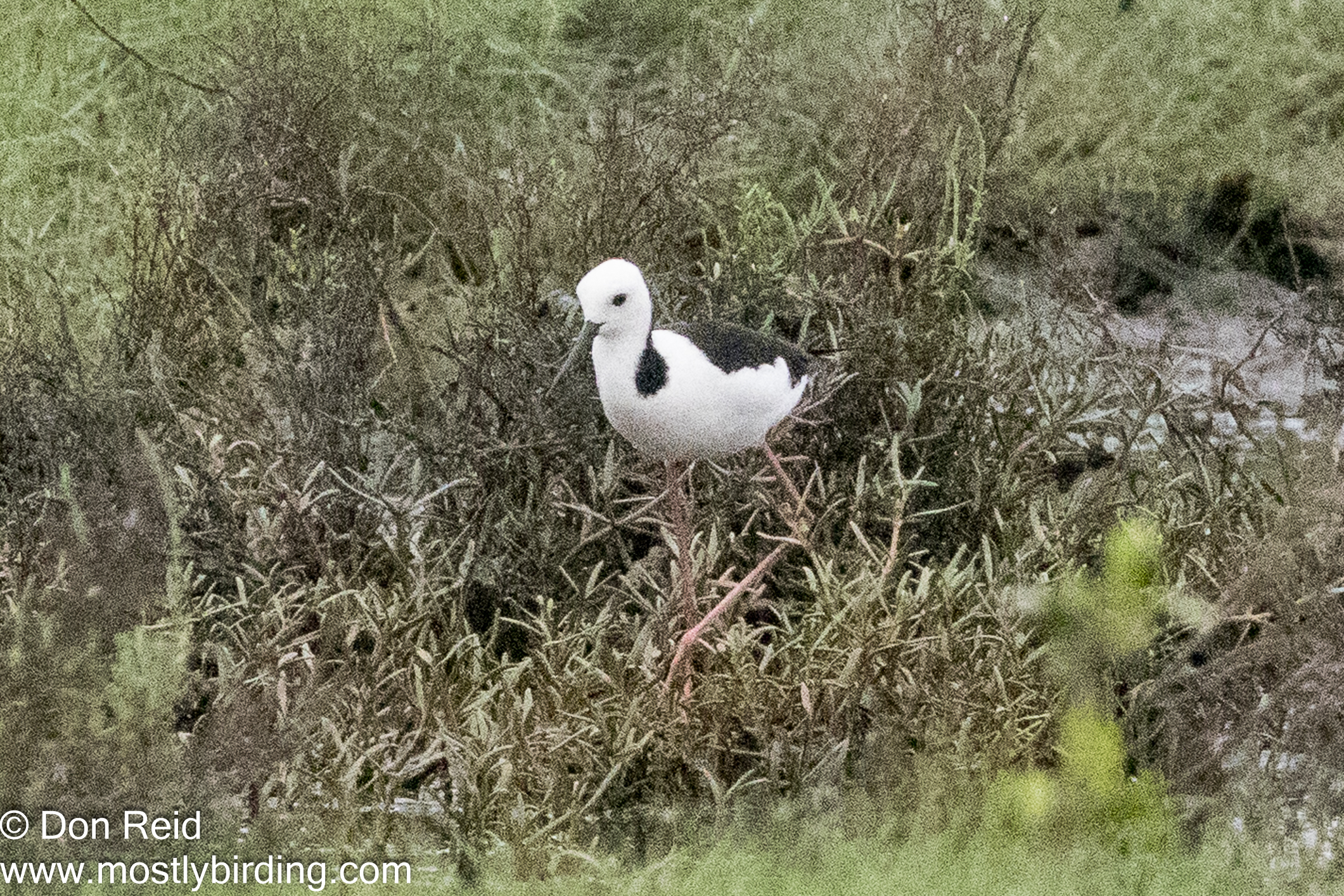
Pied Stilt Himantopus leucocephalus, Mackay Queensland

Royal Spoonbill

Not a lifer but pleasing to find was this Royal Spoonbill
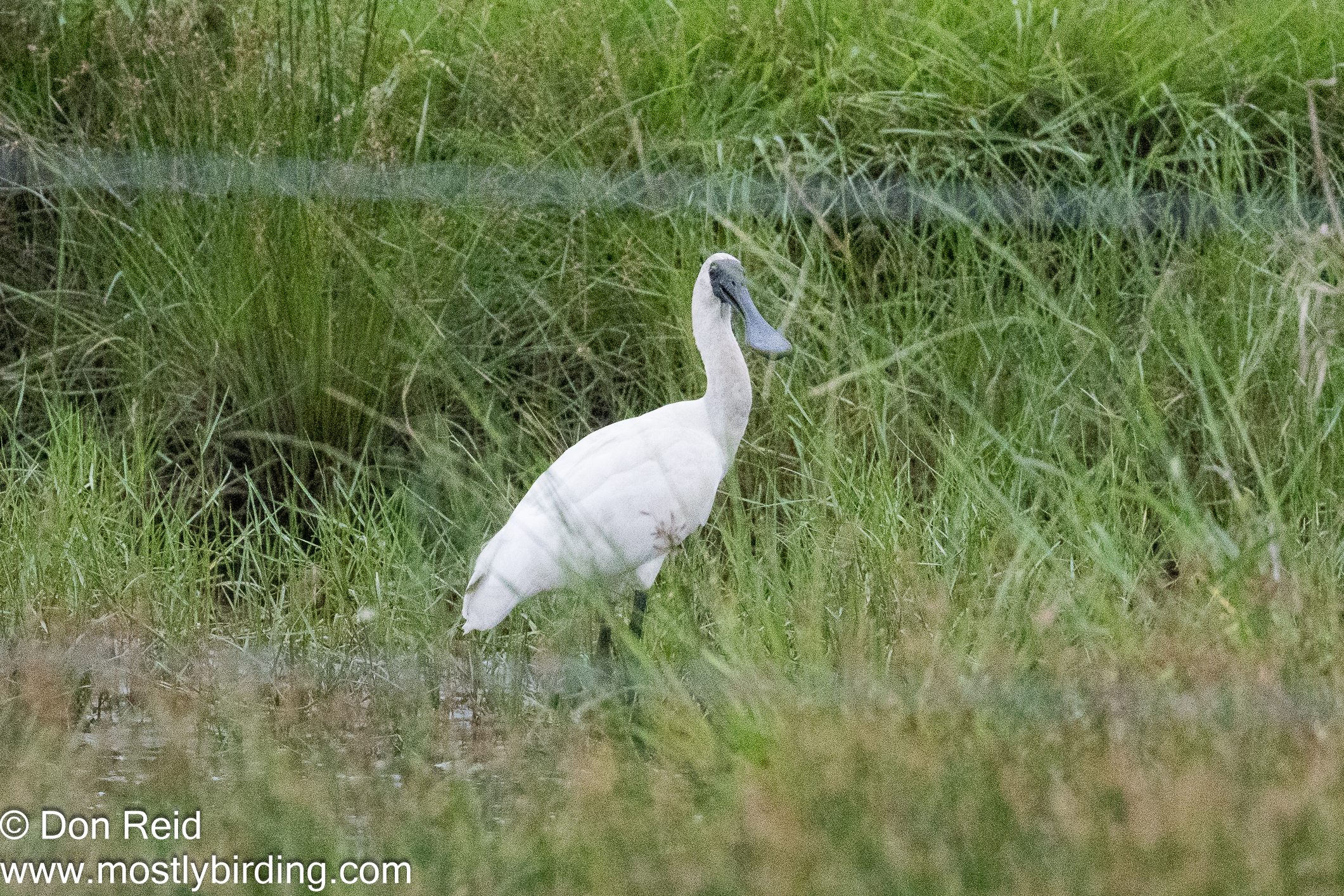
Royal Spoonbill Platalea regia, Mackay Queensland

Scaly-breasted Munia

This was the first of two Mania / Mannikin species I came across in small flocks, landing in the rank grass verge of the ponds

I assumed this was a lifer as it carries the name Nutmeg Mannikin in the app, but it turned out to be the same species I saw in Mauritius back in 2017!
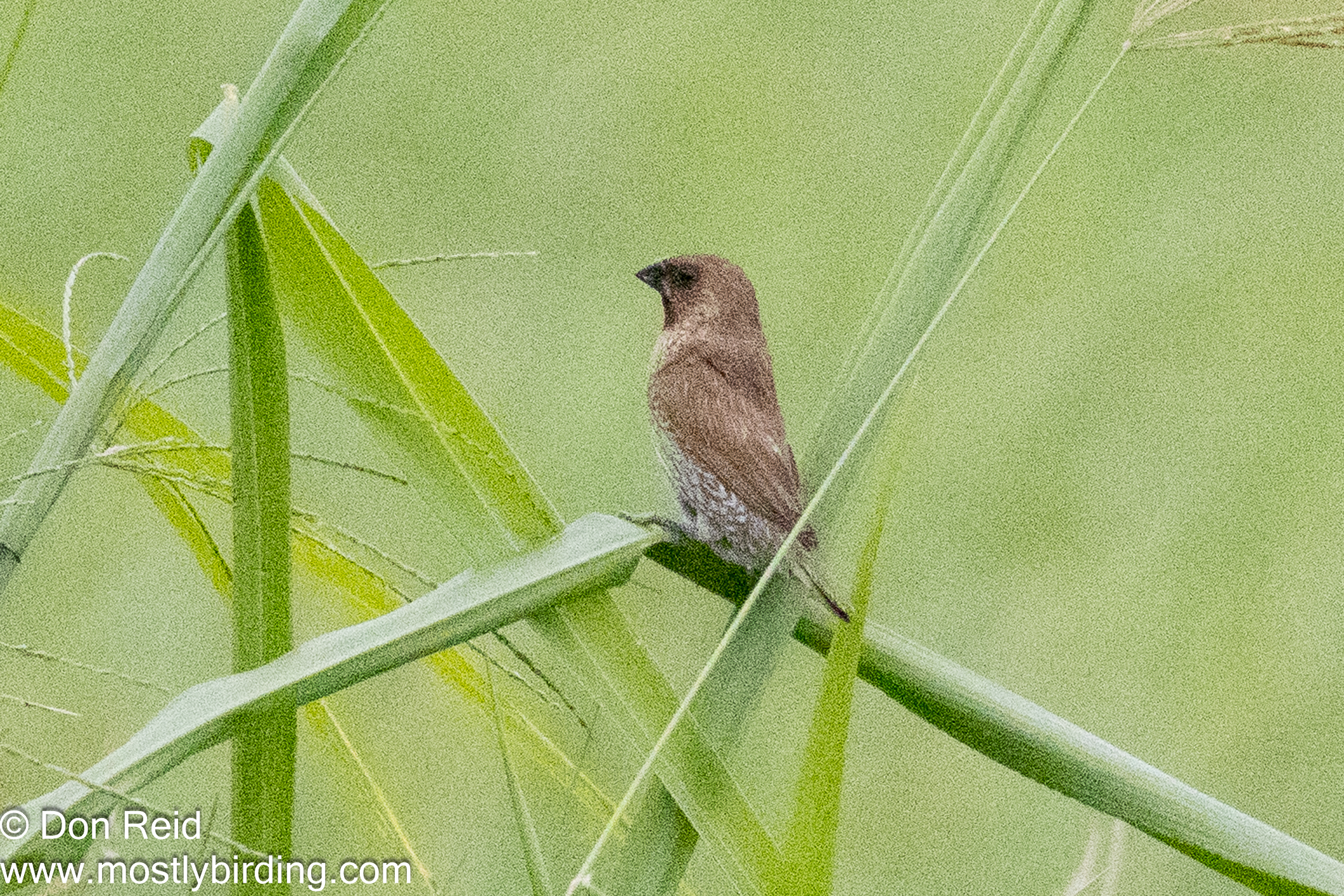
Scaly-breasted Munia Lonchura punctulata, Mackay Queensland

Chestnut-breasted Mannikin (Munia)

The other one was indeed a lifer and quite a striking little bird at that – shown by the illustration below

Magpie Goose

This large goose became a familiar sighting during our stay, including in a flock of 100 or more, descending on the wetlands as I headed home

Magpie Goose Anseranas semipalmata, Mackay Queensland

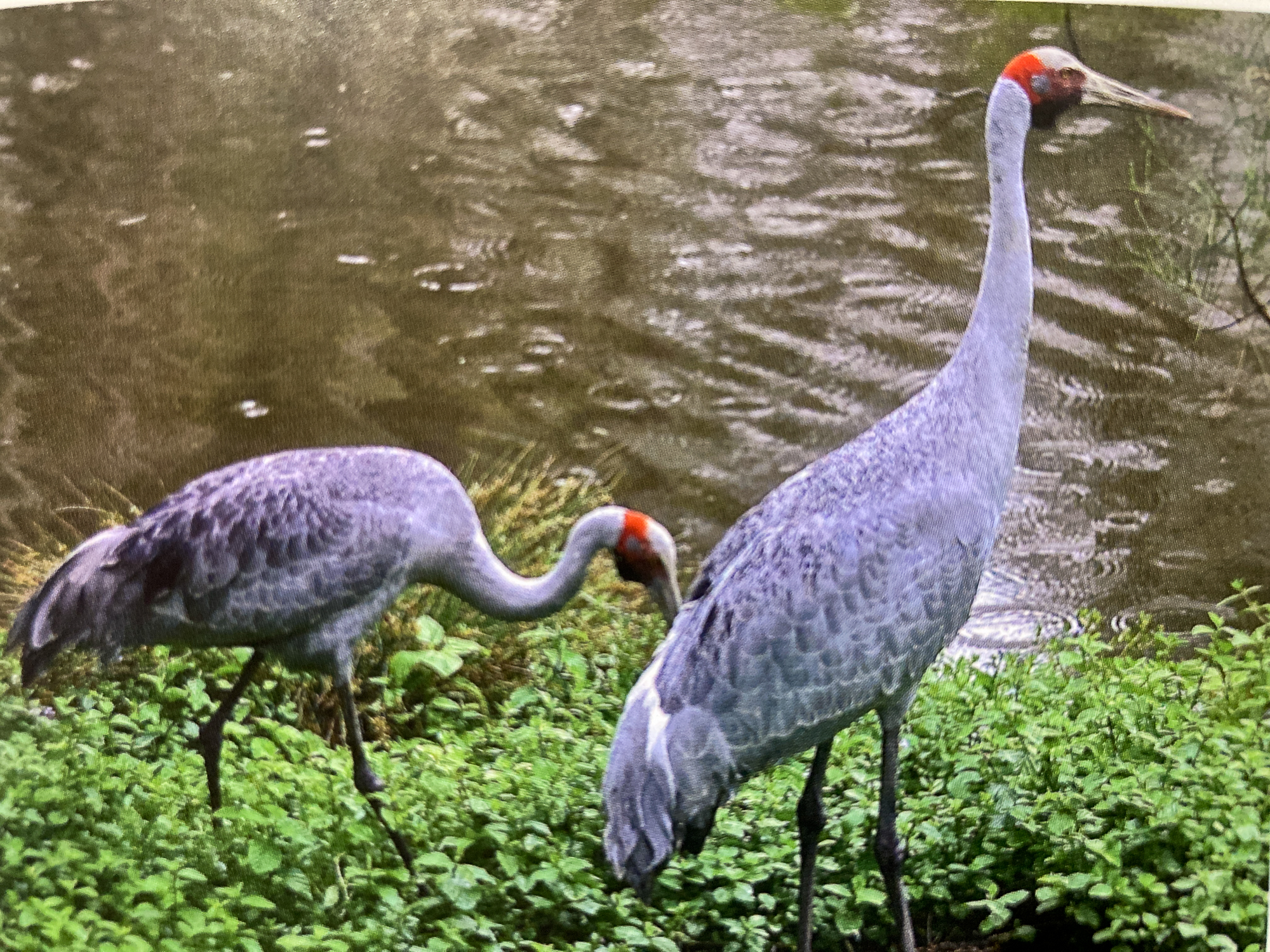
Brolga

An elegant crane species, my first sighting was of a group of five doing a high fly past over the suburbs. A few better sightings were had in the wetlands as they came in to settle there, but photo opportunities were scarce or non-existent

It became obvious that this is a stand out species in the area, when I stopped to chat with people from the neighbourhood – first question when they noticed my binos was inevitably “have you seen the Brolgas?”
Brolga

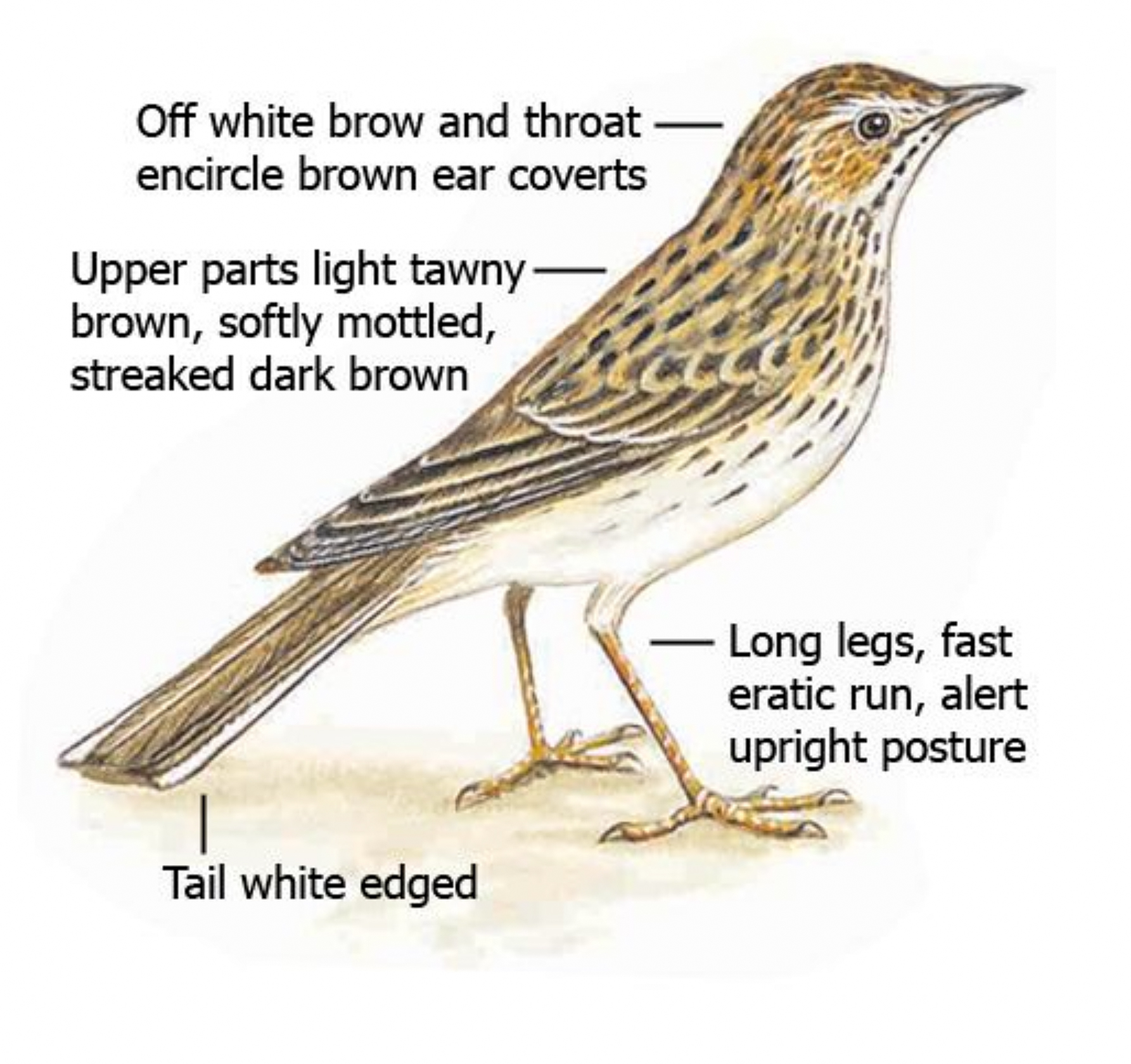
Australian Pipit

Spying a dullish bird walking in the short grassy area adjoining the pans, my instinct said ‘this just has to be a Pipit’ and sure enough that’s what it turned out to be
Australasian Pipit

Bar-breasted Honeyeater

Another exciting find – for no good reason other than being something quite different – was a Honeyeater (probably the most numerous species in Australia) moving about among the longer grass and reeds, which I followed anxiously until I had decent views of it

Plumed Whistling Duck

I had mastered the several differences between the two species of Whistling Duck, having seen them on a daily basis

A pair with 7 ducklings made for a lovely sighting but light conditions were just not conducive to getting clear images
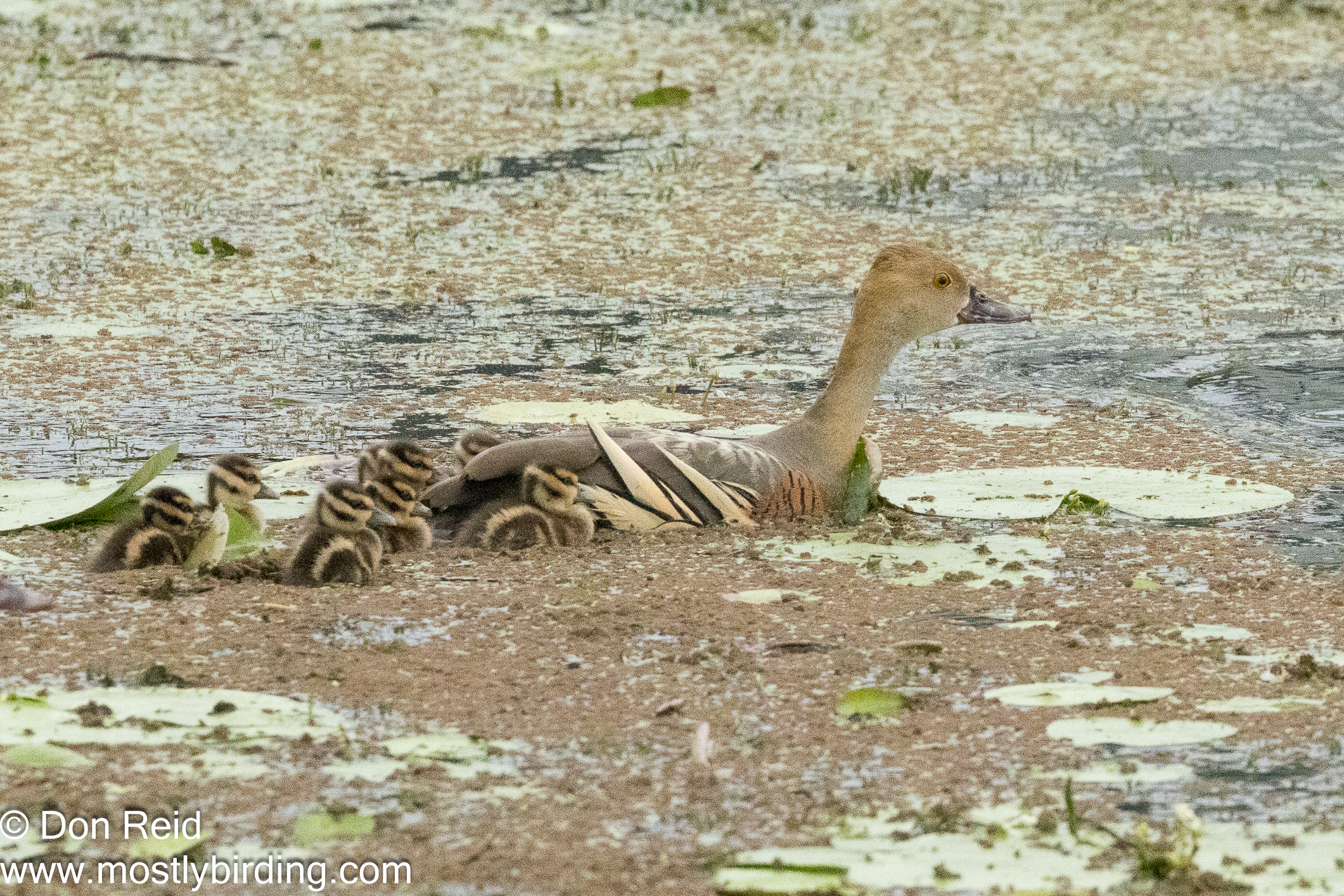
Plumed Whistling Duck Dendrocygna eytoni, Mackay Queensland

By contrast brief sunshine made all the difference in this image

Plumed Whistling Duck Dendrocygna eytoni, Mackay Queensland

Black-necked Stork

Way over on the far side of the wetland a single black and white bird drew my attention – another lifer and less common species was walking about in the long grass
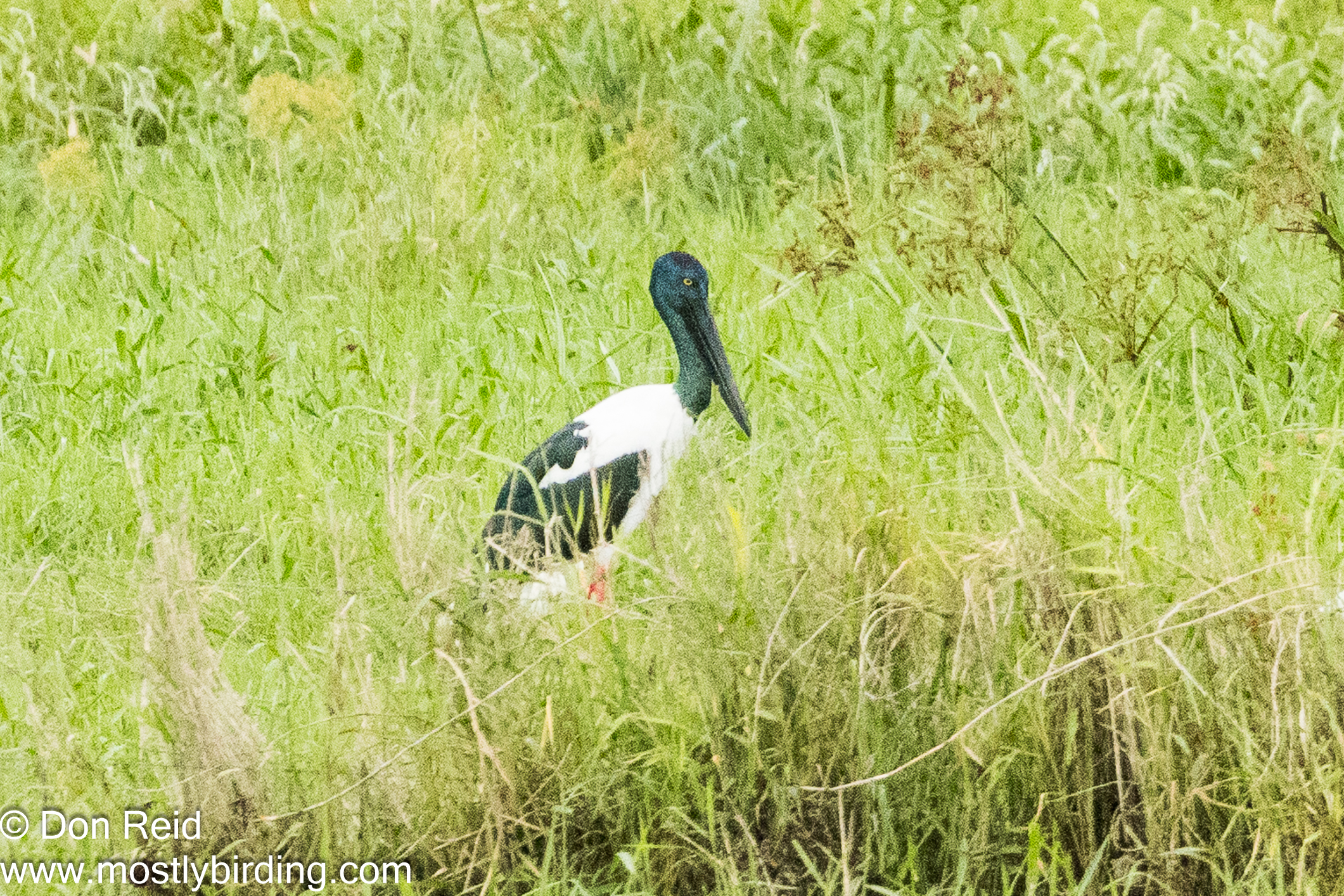
Black-necked Stork Ephippiorhynchus asiaticus, Mackay Queensland

A Couple of Cuties

The next two species are not strictly linked to wetlands habitat but I include them under this section as that is where I had memorable encounters with them and could watch their antics


Golden-headed Cisticola

I had hoped to find at least one Cisticola in Mackay and this energetic bird on a fence wire was a most pleasing find, putting everything into its song while raising its colourful crest.

Golden-headed Cisticola Cisticola exilis, Mackay Queensland

Red-backed Fairy Wrens

My last afternoon walk of our visit felt like a farewell to the birds I had got to know over the last 3 weeks, and many came out in the welcome sunshine for a last sighting and some special photos.

A pair of Fairy-Wrens put on a show which had me chuckling at their antics on a fence wire – clearly some sort of wooing was going on as the male pranced about on the wire and repeatedly leapt over the female to present himself from both sides

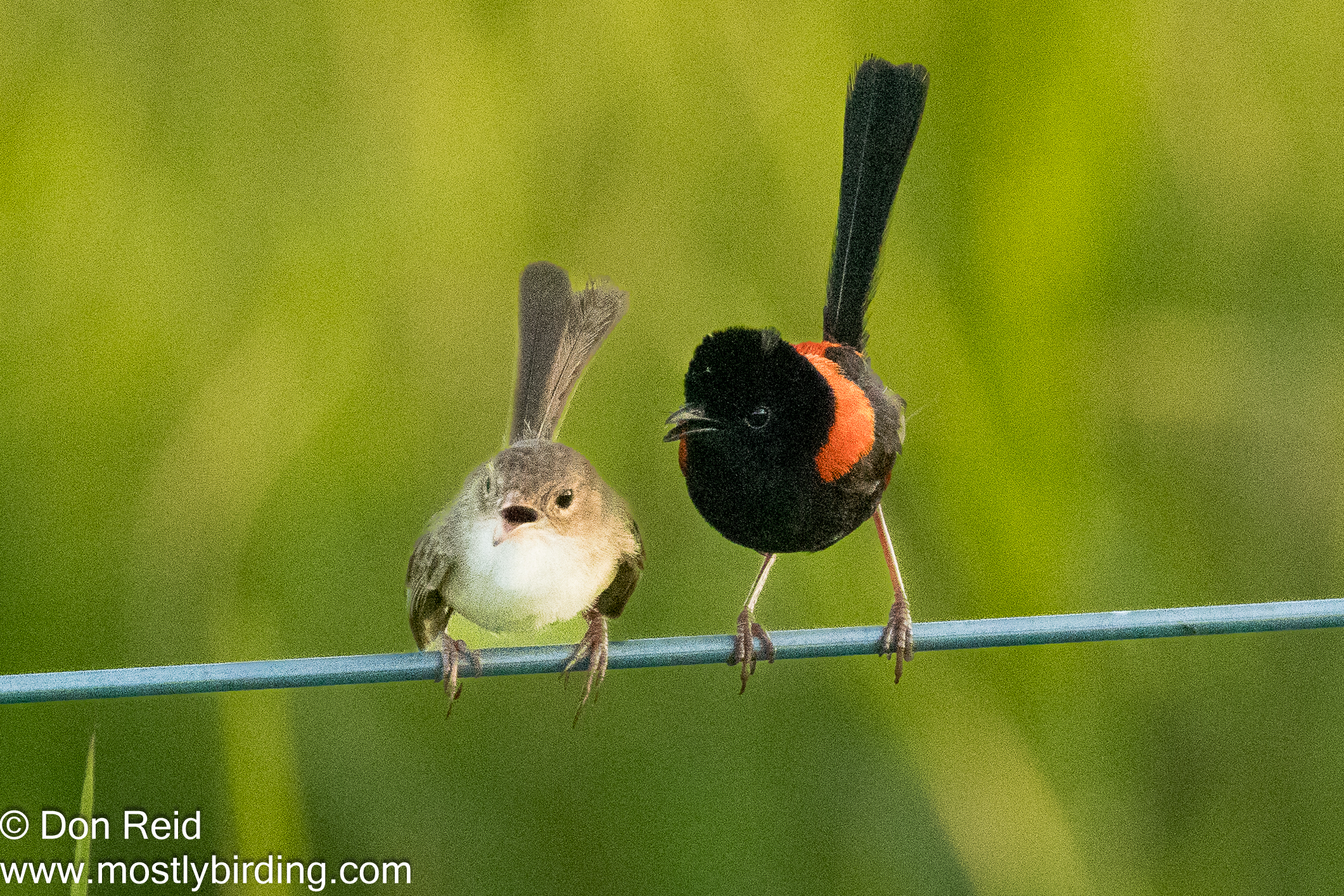
Red-backed Fairy-Wren Malurus melanocephalus, Mackay Queensland

A sighting like this is the essence of why birding is such a rewarding pastime – there is never an end to the moments that await you – at the end of a pathway, along a lonely beach, up in the mountains, deep in a forest, or wherever the birding urge takes you. Moments that you recall time and again later, bringing that same smile to your face that broke out when you first observed it.
Australia 2025 : Brisbane – a Brief Glimpse

Australia 3.1

Our third trip to Australia in January and February this year was all about seeing son Stephan and his family for the first time since 2022, while using the opportunity to see more of Australia – a huge country we are getting to know in small instalments.

The ‘instalment’ this time around was based on a suggestion by Stephan that we meet the family in Sydney and do a slow road trip up the east coast to Brisbane, where we would catch a flight to Mackay in Queensland, their new home town. That appealed to us, as it meant spending quality time with the family while our grandkids had school holidays and Stephan was on leave, at the same time seeing a part of Australia that we had not visited before.

We had left Sydney behind and enjoyed two days each at Caves Beach, Nambucca Heads and Gold Coast, now it was time to conclude our road trip with a short visit to Brisbane

Wednesday – Some shopping and a slow trip to Brisbane

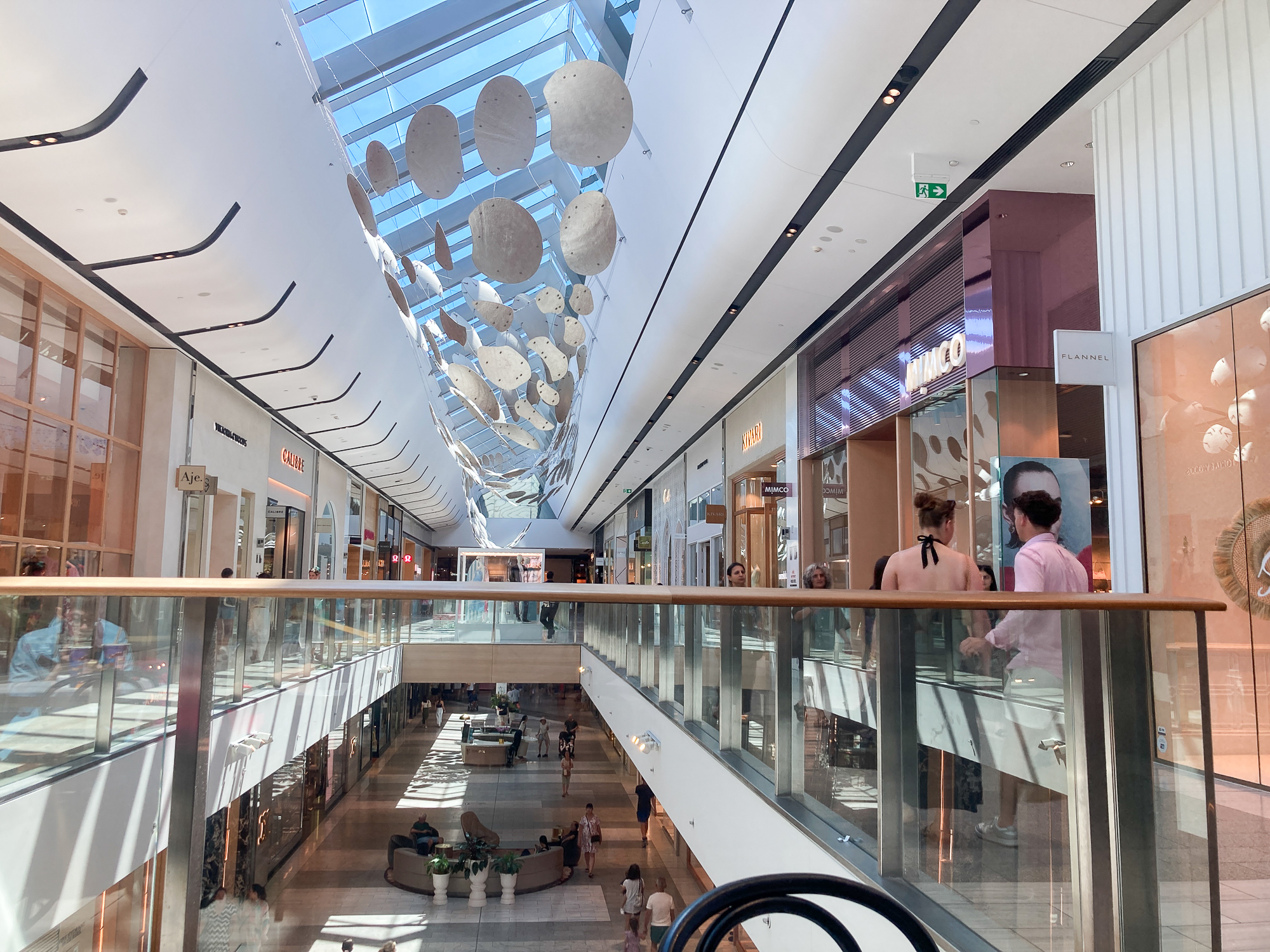
After checking out of the Meriton Suites in Gold Coast, we tagged along with the family to the nearby Pacific Fair shopping mall, with no particular goal in mind other than to see what it looked like and while away some time before undertaking the (supposedly) short trip to Brisbane, a mere 75 kms away.

Pacific Fair Mall, Gold Coast Queensland

What we found was a mall much like those in all big cities with the usual mix of shops, some with names we recognised, others not, and walkways full of people of all ages but predominantly young and fashionable.

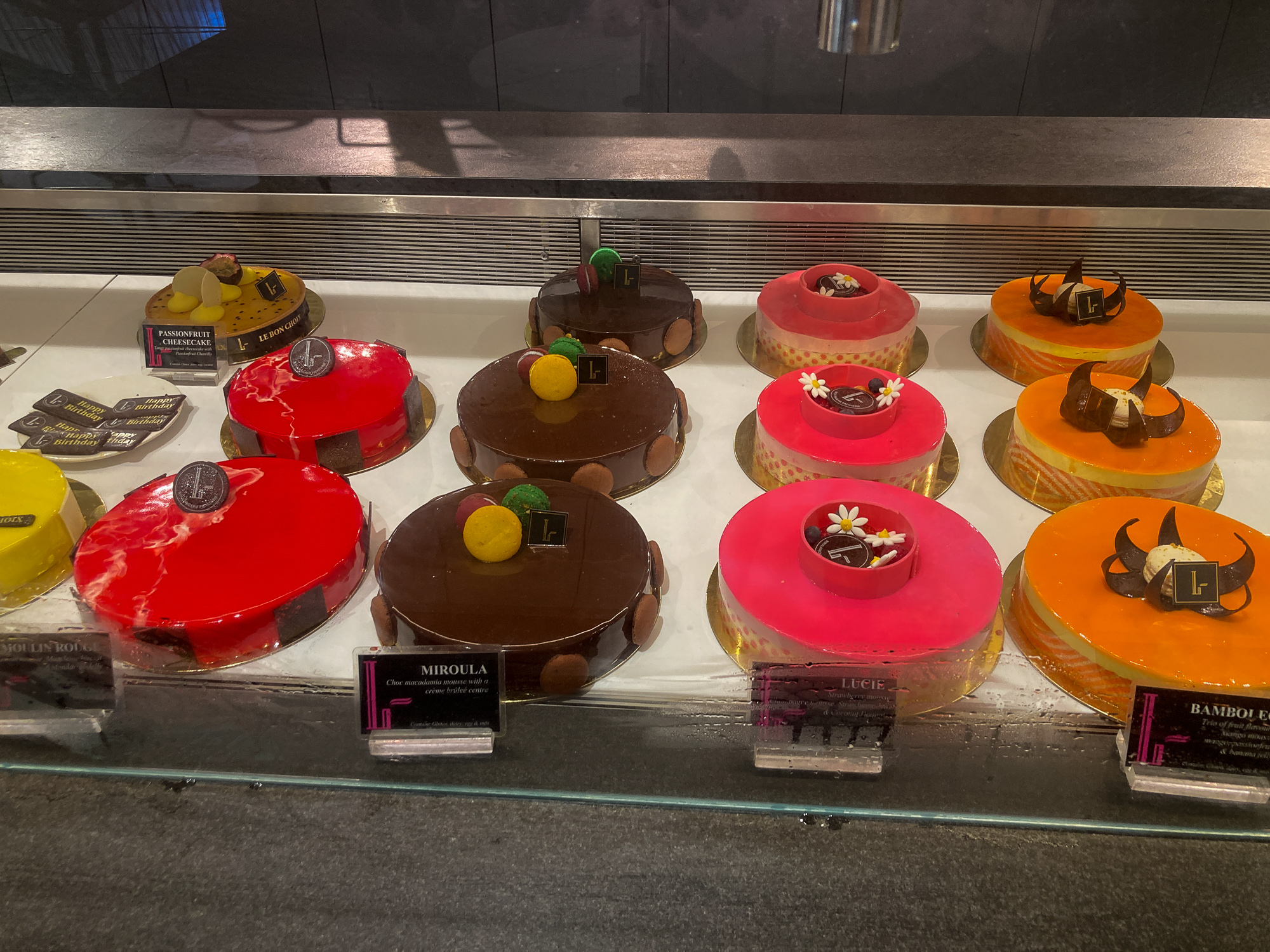
First stop was at Le Bon Croix restaurant for tea/coffee and something delicious – the choice of croissants and tarts, the latter fresh and brightly coloured, was tempting

Pacific Fair Mall, Gold Coast Queensland

After some deliberation I chose this slightly more conservative one to accompany my coffee

Pacific Fair Mall, Gold Coast Queensland

Then the girls did a round of the shops with the boys in tow, before returning to the car and setting off to Brisbane.

Traffic was painfully slow all the way to the highway and for most of the way to Brisbane, which turned the short journey into a 3 hour affair.

Thank goodness for the technology that provides a map and directions on the console – it’s hard to imagine driving in a foreign country to a city you have never been to before without it.
Nevertheless, driving in constant traffic on roads you have never driven on before is not easy (dare I say especially at our age), so it was not surprising that I missed the turn into the Indigo Hotel Brisbane City and had to find my way around a series of one-way, busy city streets to get back to the hotel, adding to the already somewhat nervy state I was in.  I was mightily relieved once we had offloaded our bags, got them to the room and I had taken the car to the off-site parking a block away.

The family had delayed their trip due to the traffic, so we went in search of a restaurant on our own, ‘following our noses’ along strange streets and ending up a few blocks down George Street at Lennons in the Hyatt Hotel – we enjoyed a good dinner and by the time we got back to the hotel the family had arrived.

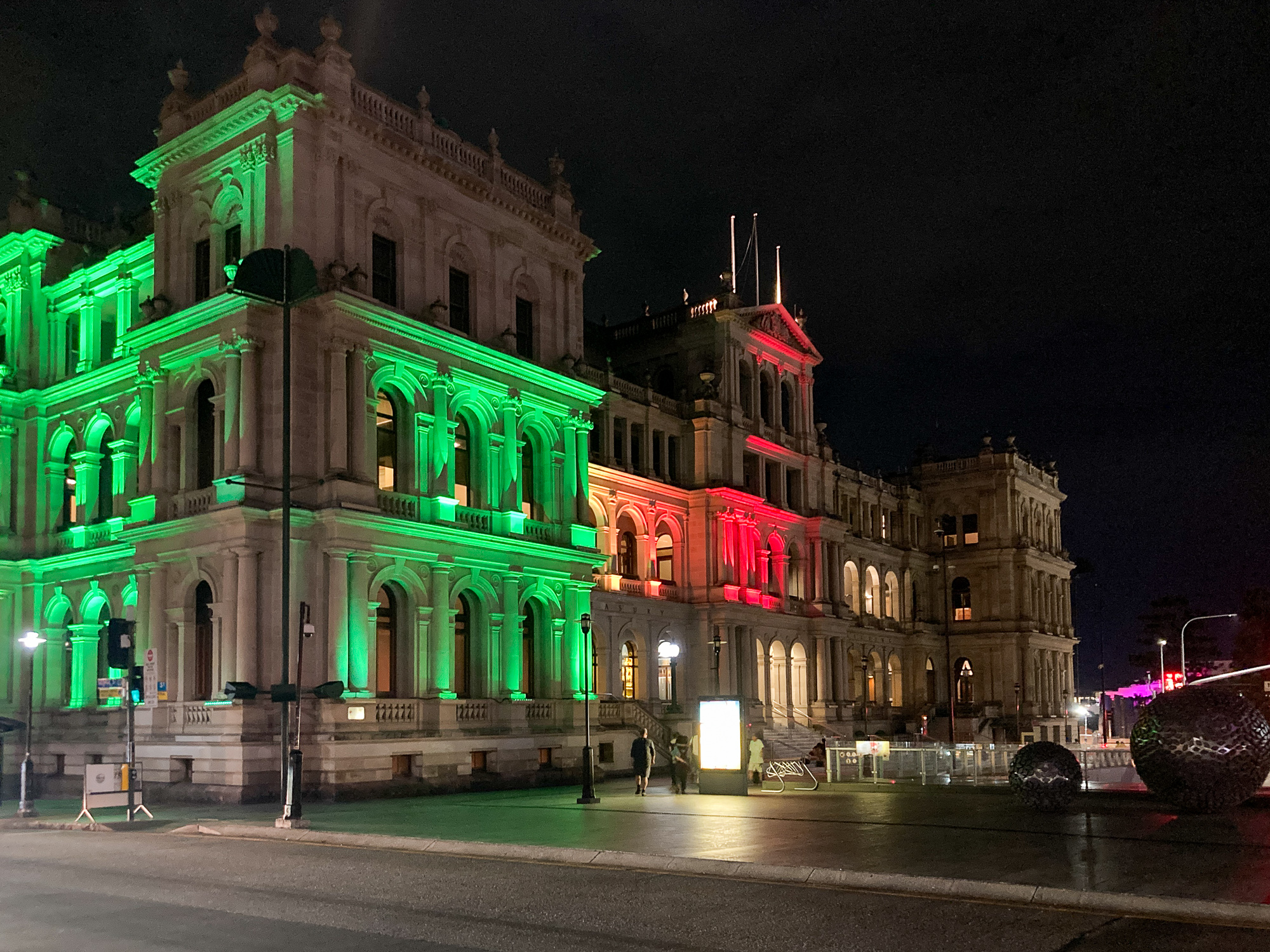
Brisbane Queensland

Birds added: None!

Thursday – Brisbane – Gardens and the Museum

We slept a bit later and went for breakfast as late as allowed.

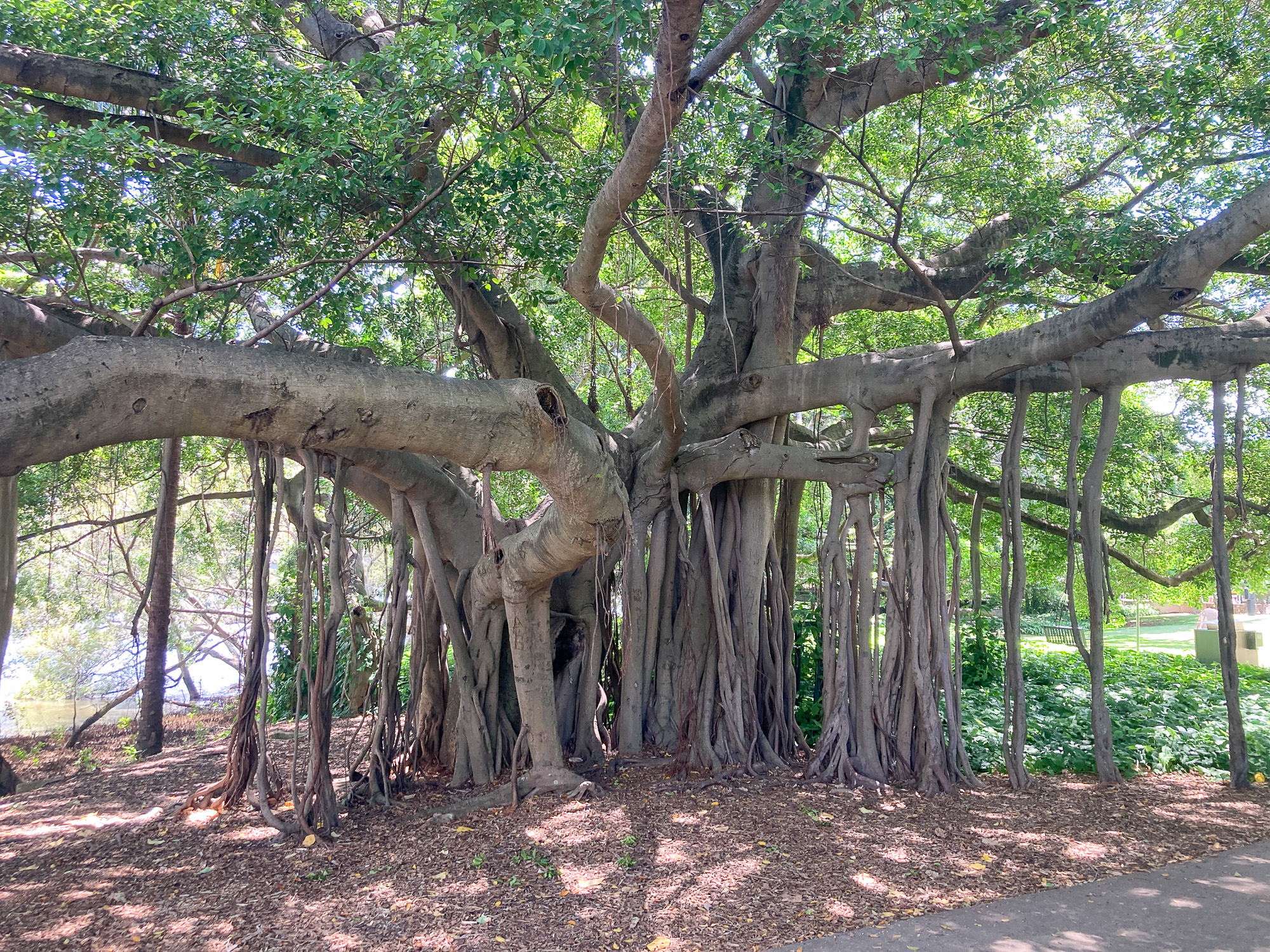
We had decided to visit the Botanical Gardens in the city, so we ubered there and took a slow walk from the drop off point, taking in the lush forest like gardens along the way.

Botanical Gardens, Brisbane Queensland

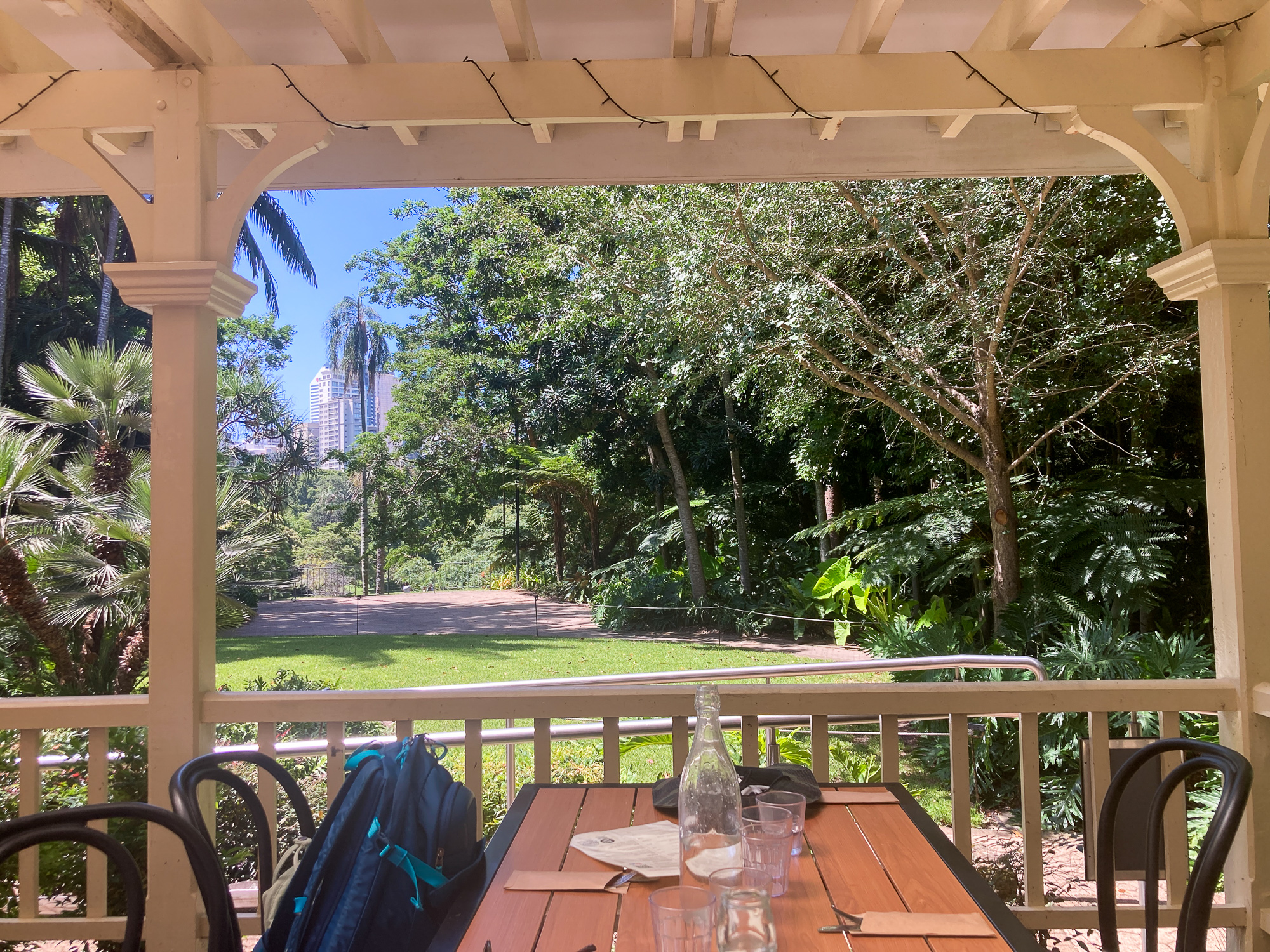
A cafe with a view beckoned for tea…

Botanical Gardens, Brisbane Queensland

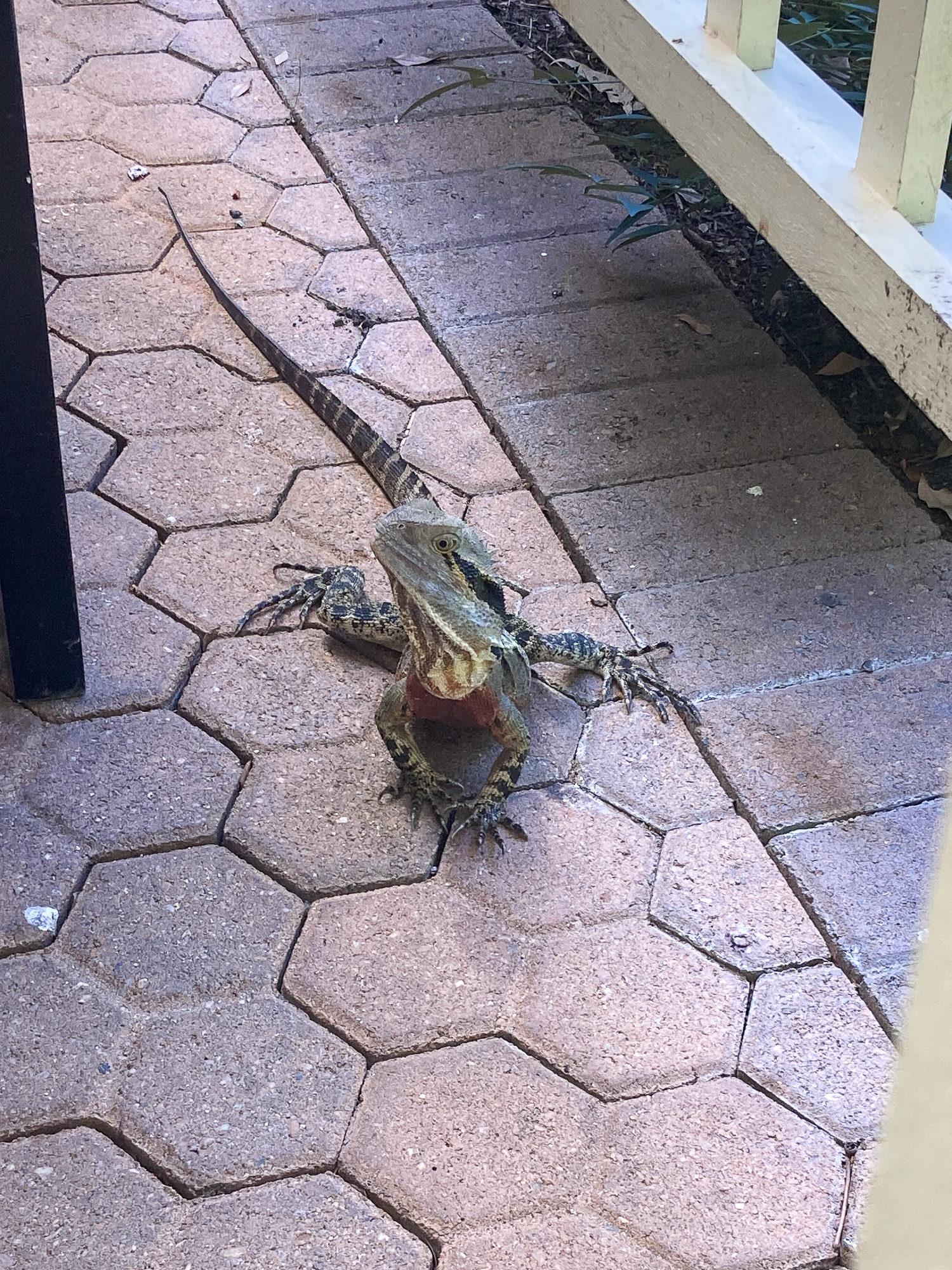
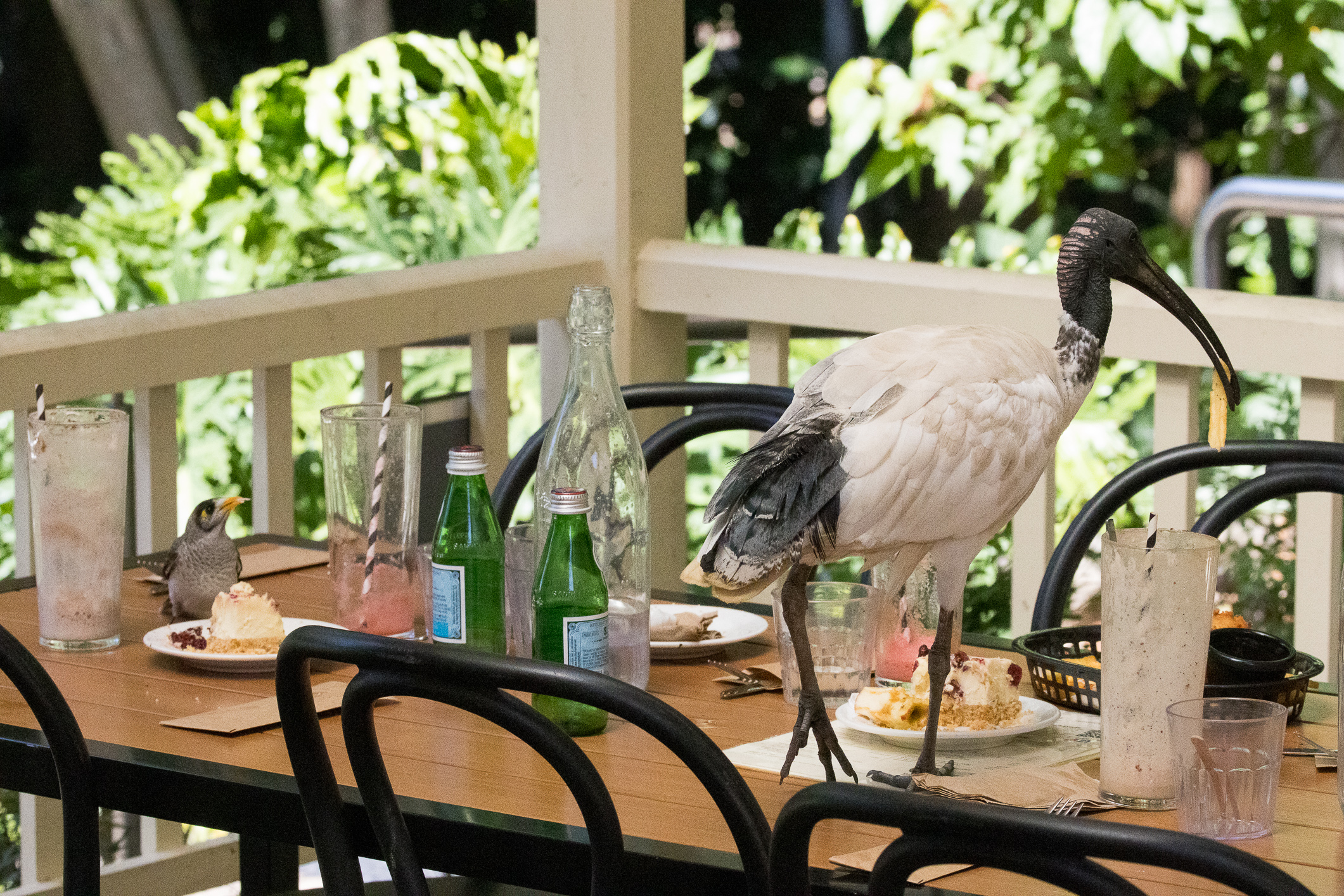
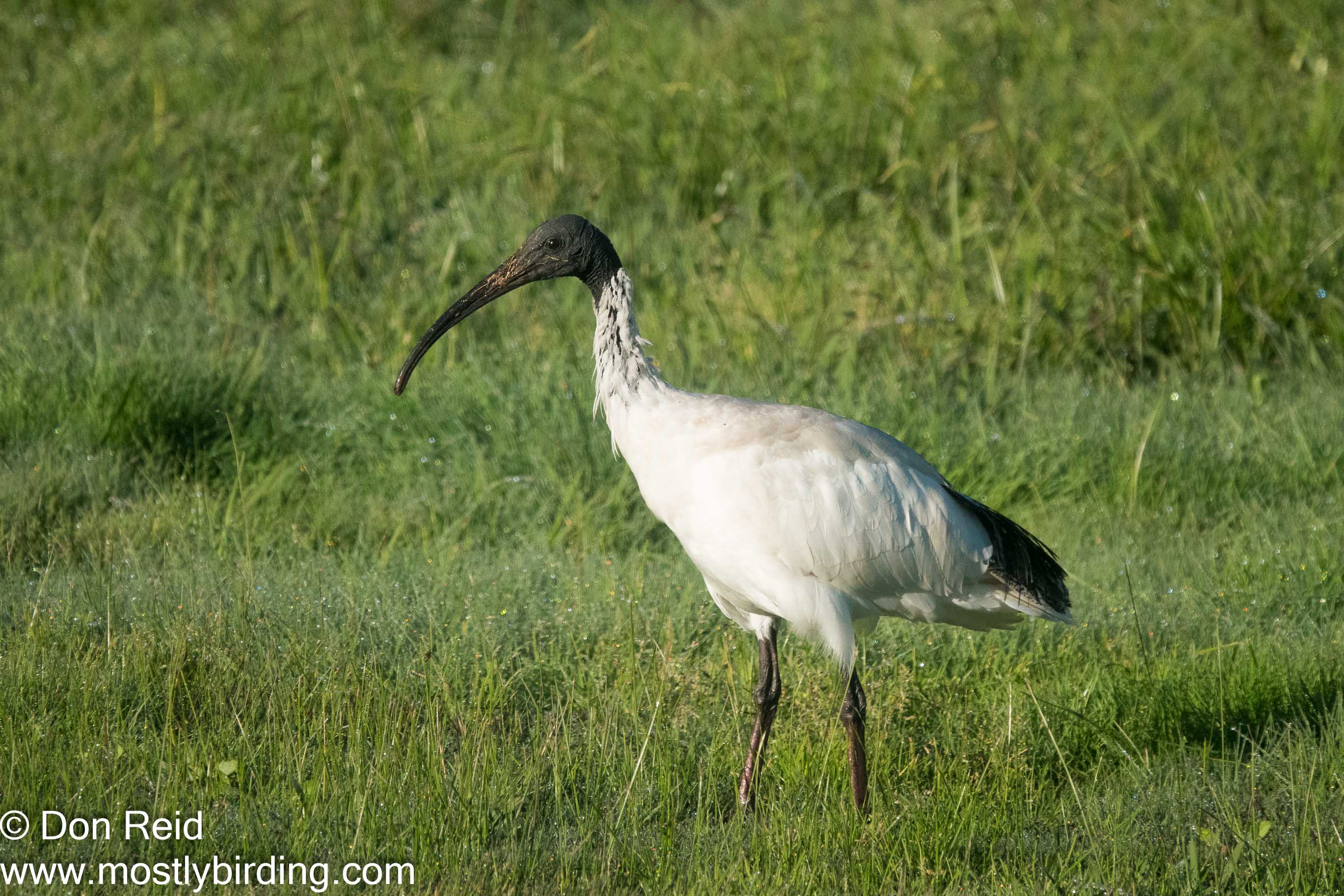
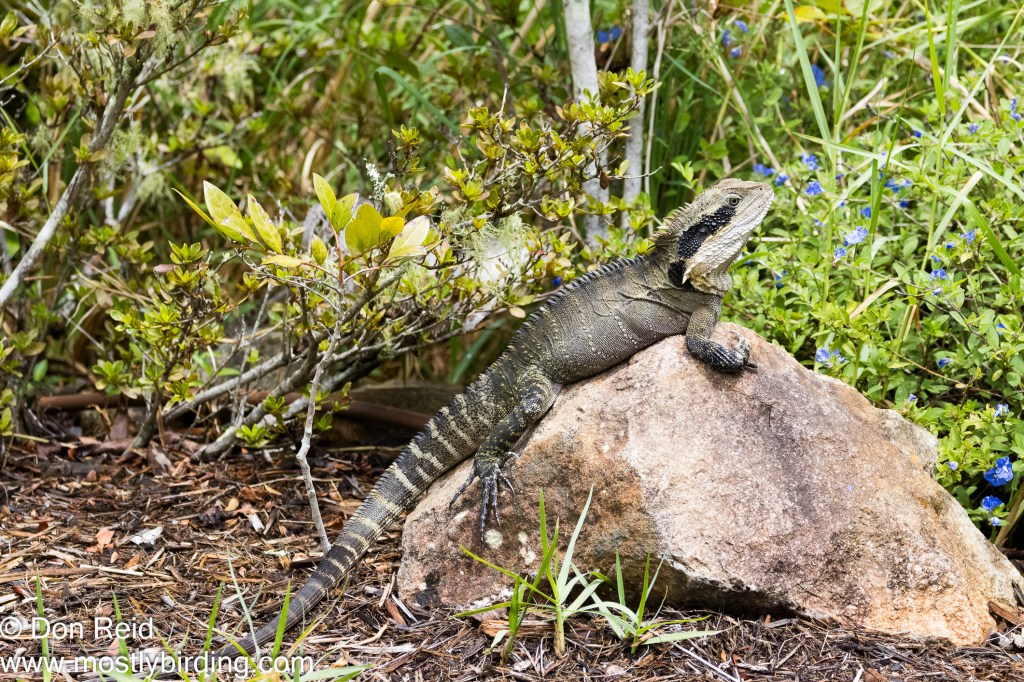
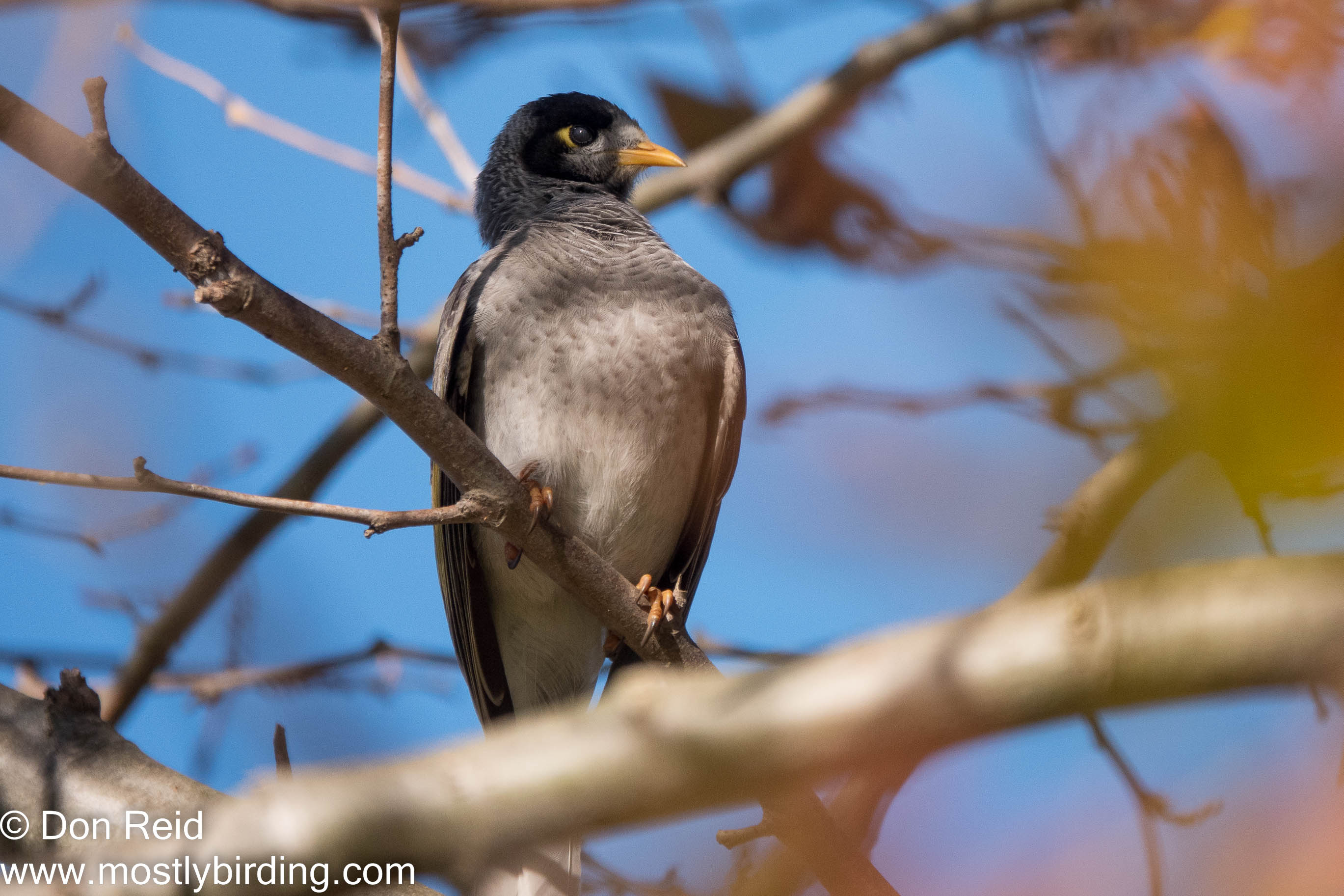
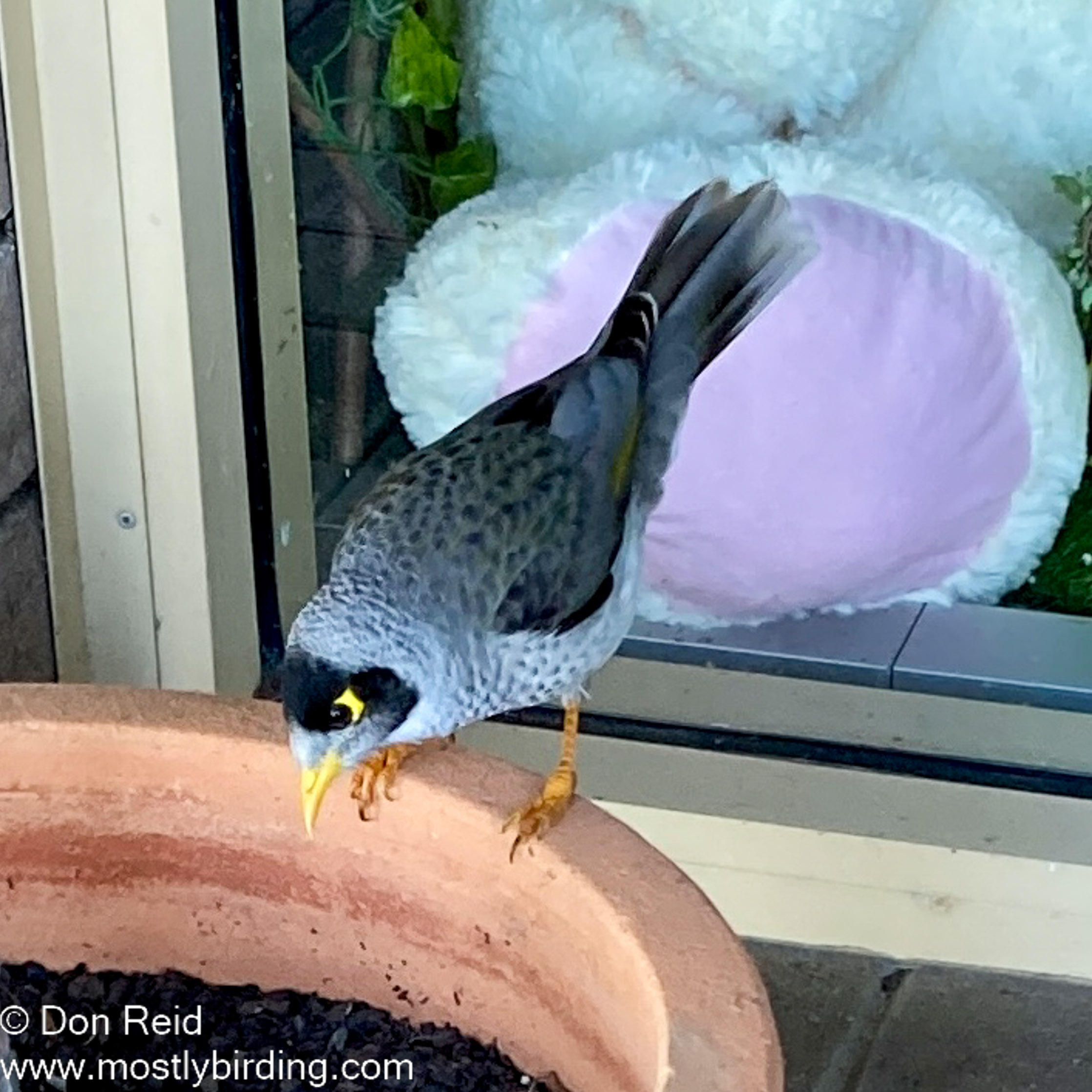
Refreshments were accompanied by the presence of Noisy Miners and an Australian White Ibis / Bin Chicken as well as a Water Dragon that dashed between our legs causing a flutter or two.

Noisy Miner, Botanical Gardens, Brisbane Queensland
Eastern Water Dragon, Botanical Gardens, Brisbane Queensland
“Bin Chicken” cleaning up as soon as we stood up to leave

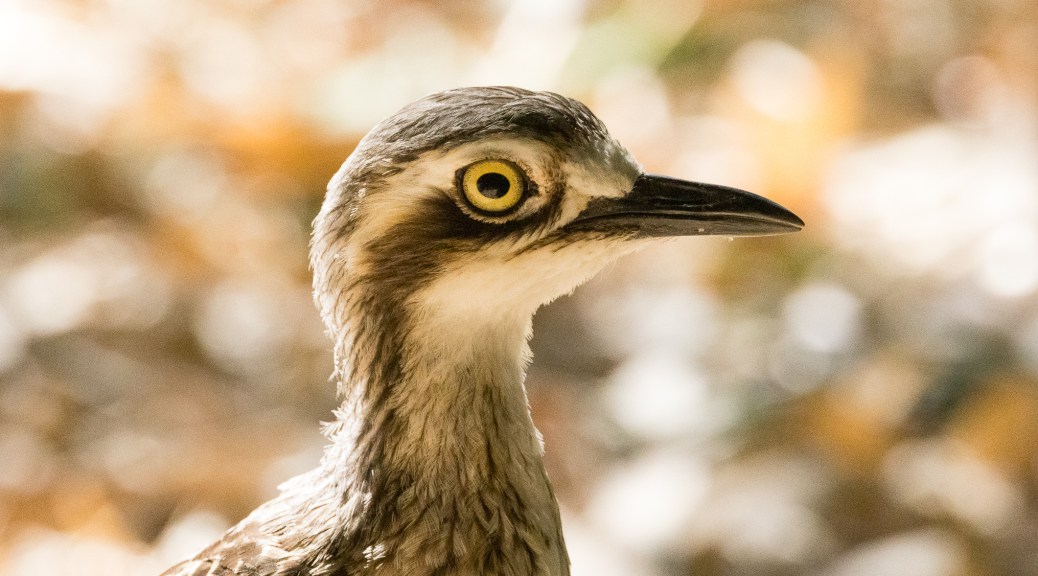
 A nice surprise awaited when we carried on along the pathways, in the form of three Bush Stone-Curlews standing like statues among the trees.

Bush Stone-Curlew, Botanical Gardens, Brisbane Queensland

I had hoped to find this species, which is of the same genus as our Dikkops – Burhinus – so is akin to being a cousin, albeit on a different continent.

Further on we came to the ponds which held a number of Dusky Moorhens.

Brisbane Queensland

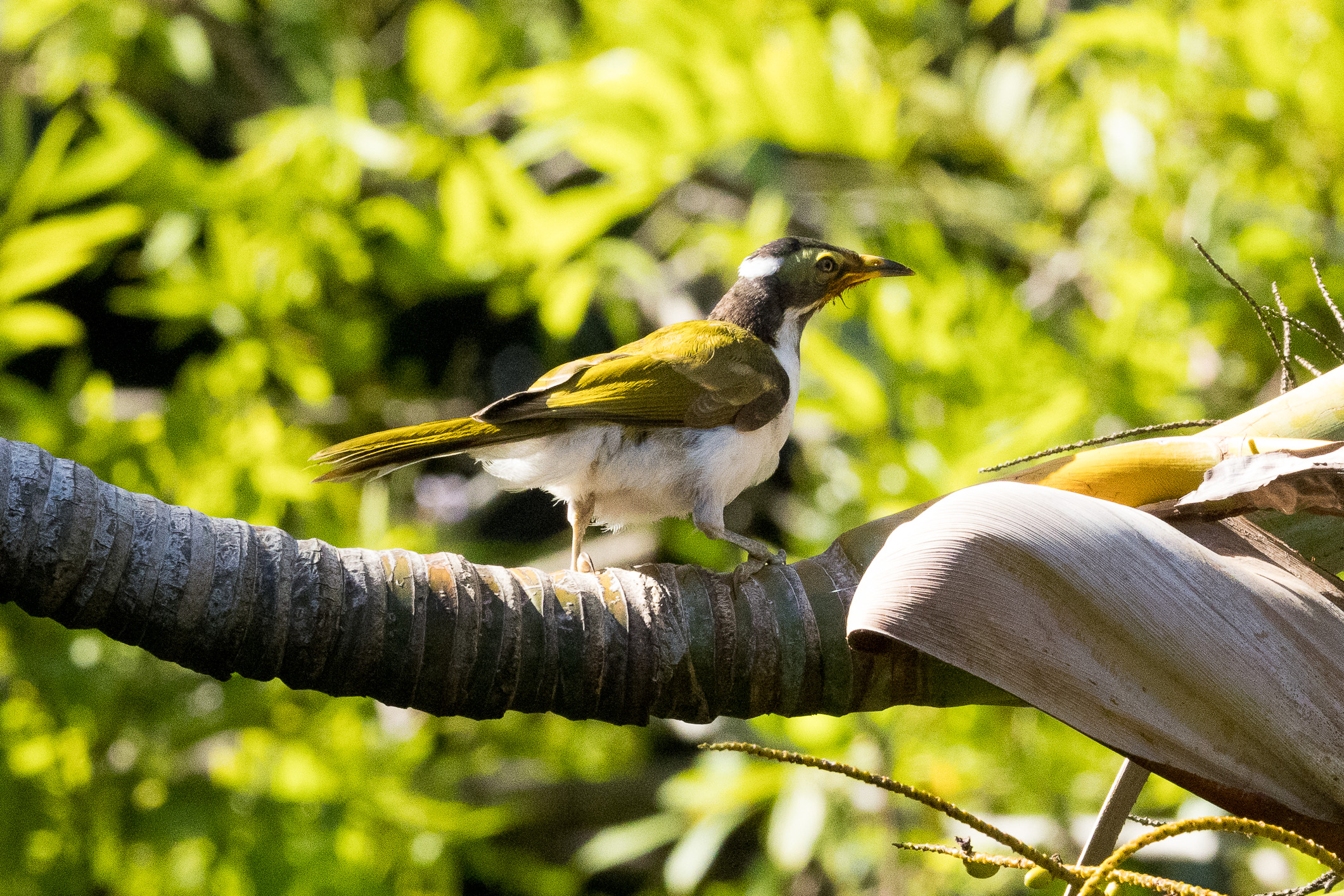
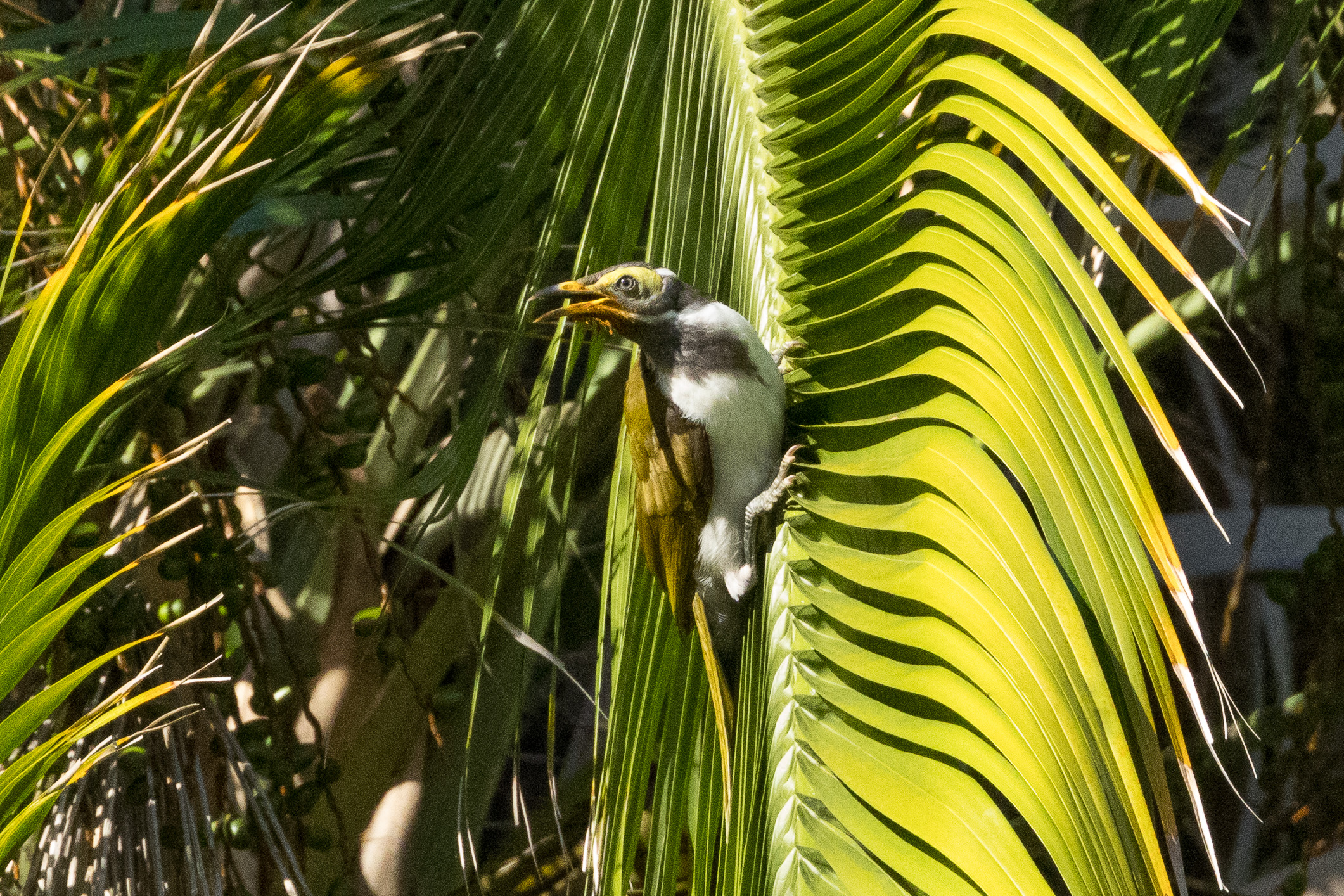
At one of the ponds I noticed two birds flying low over the water and snatching something from the surface. On closer inspection of the photos and after comparing my photos with the Birding app, my hopes for another lifer were confirmed – Blue-faced Honeyeater.

Blue-faced Honeyeater, Botanical Gardens, Brisbane Queensland

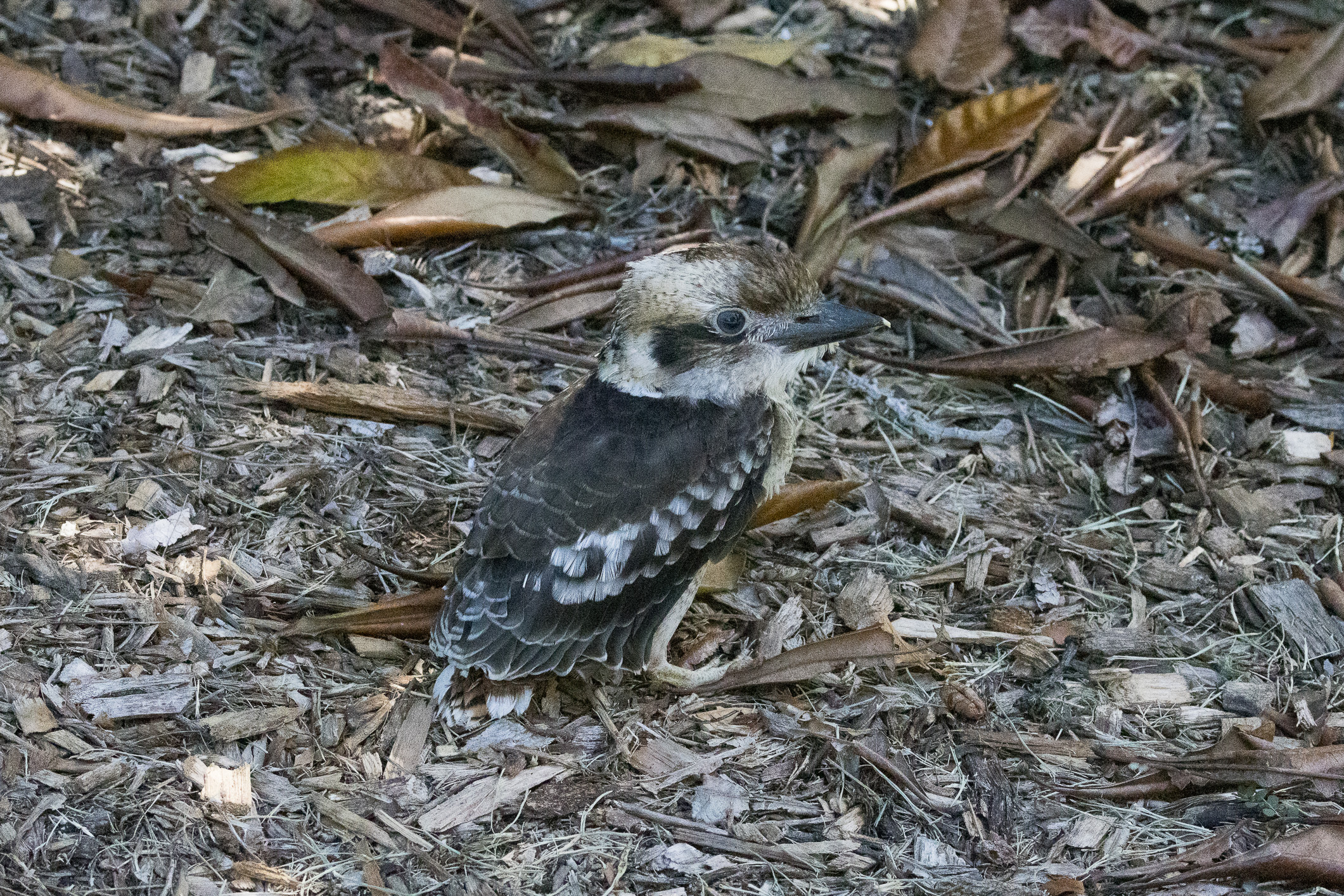
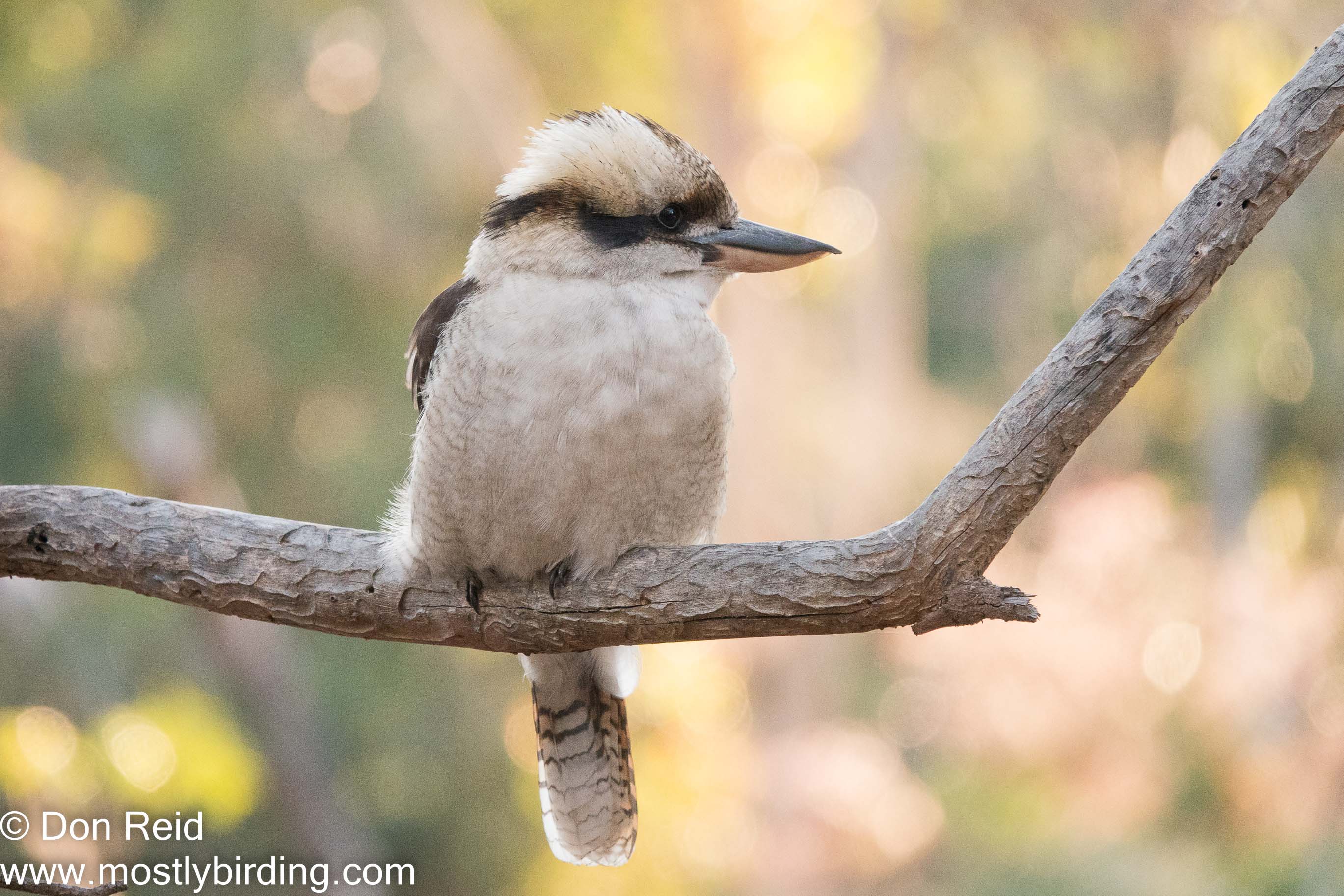
This juvenile Laughing Kookaburra was quite content scratching about in the leaf litter and seemed unconcerned by our presence

Laughing Kookaburra (Juvenile), Botanical Gardens, Brisbane Queensland

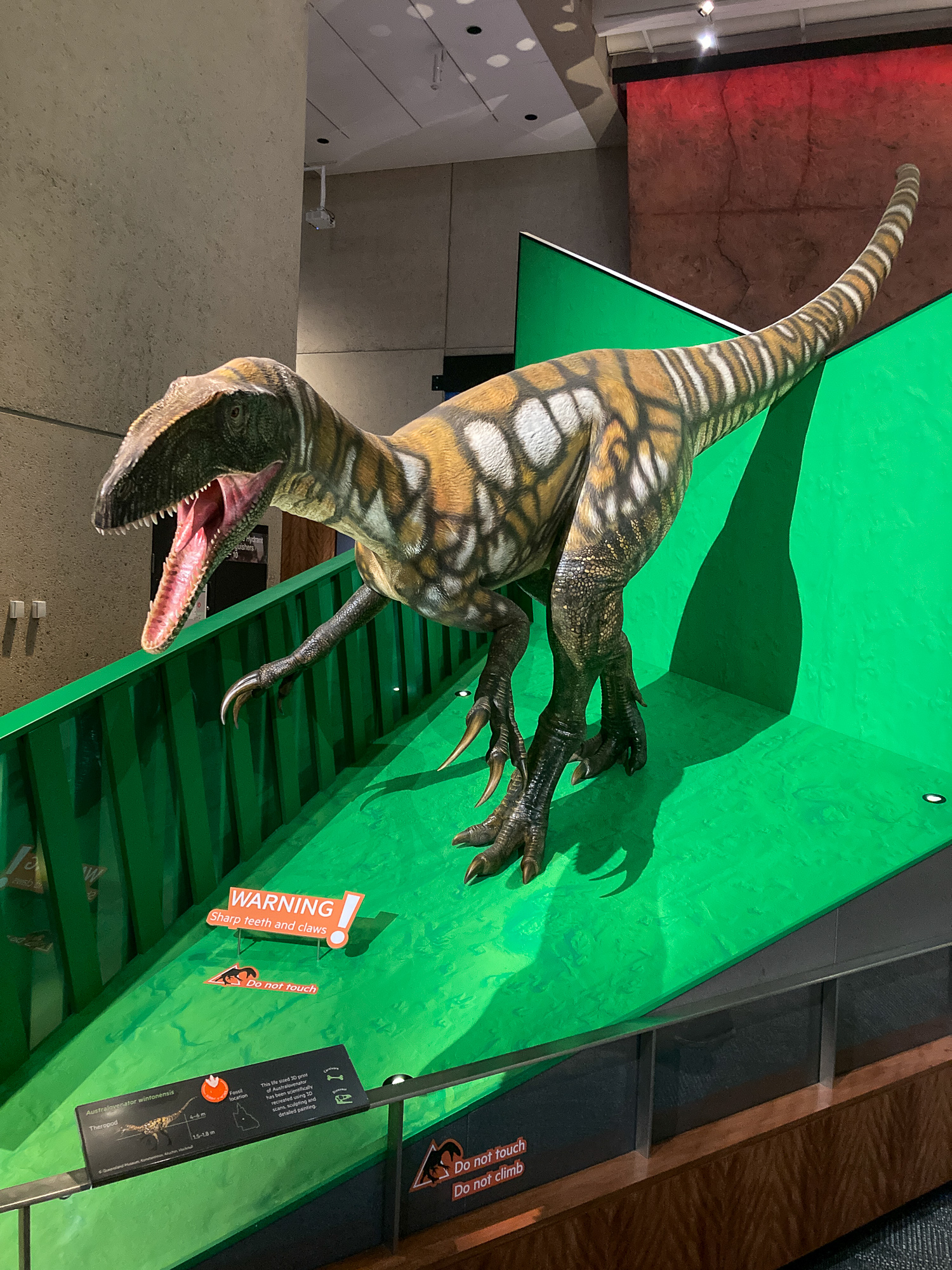
The kids were keen to visit the Queensland Museum and with closing time just an hour away we ubered there from the main gate of the gardens. It was a worthwhile trip with outstanding exhibits although we had to rush it a bit.
Brisbane Museum

The digital recreations of prehistoric scenes were particularly impressive

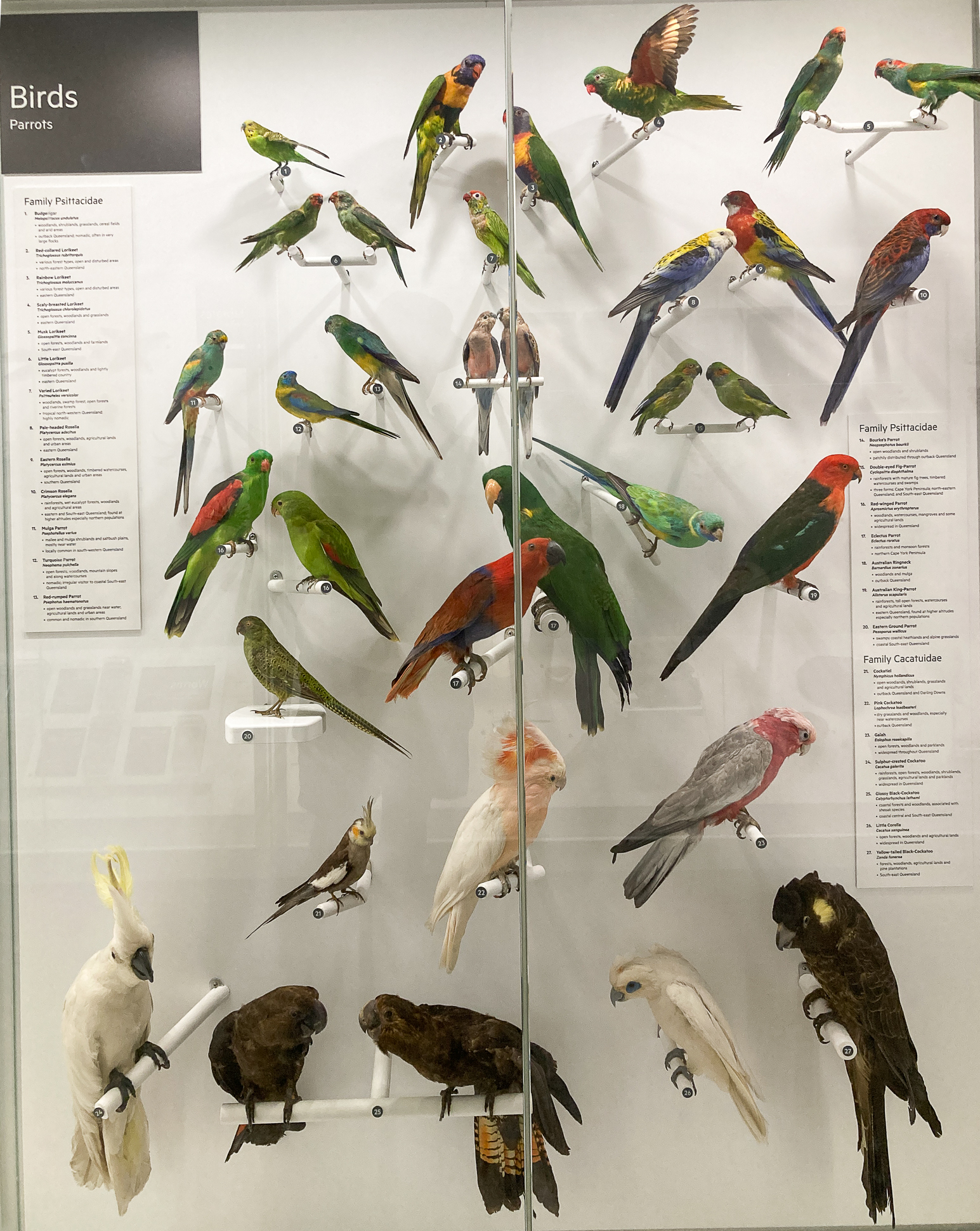
We all found something interesting to see, mine being the displays of Aussie birds and butterflies

Brisbane Queensland
Brisbane Queensland

On the way back we had a glimpse of the river and views of the city from the minibus cab that we called

Brisbane Queensland

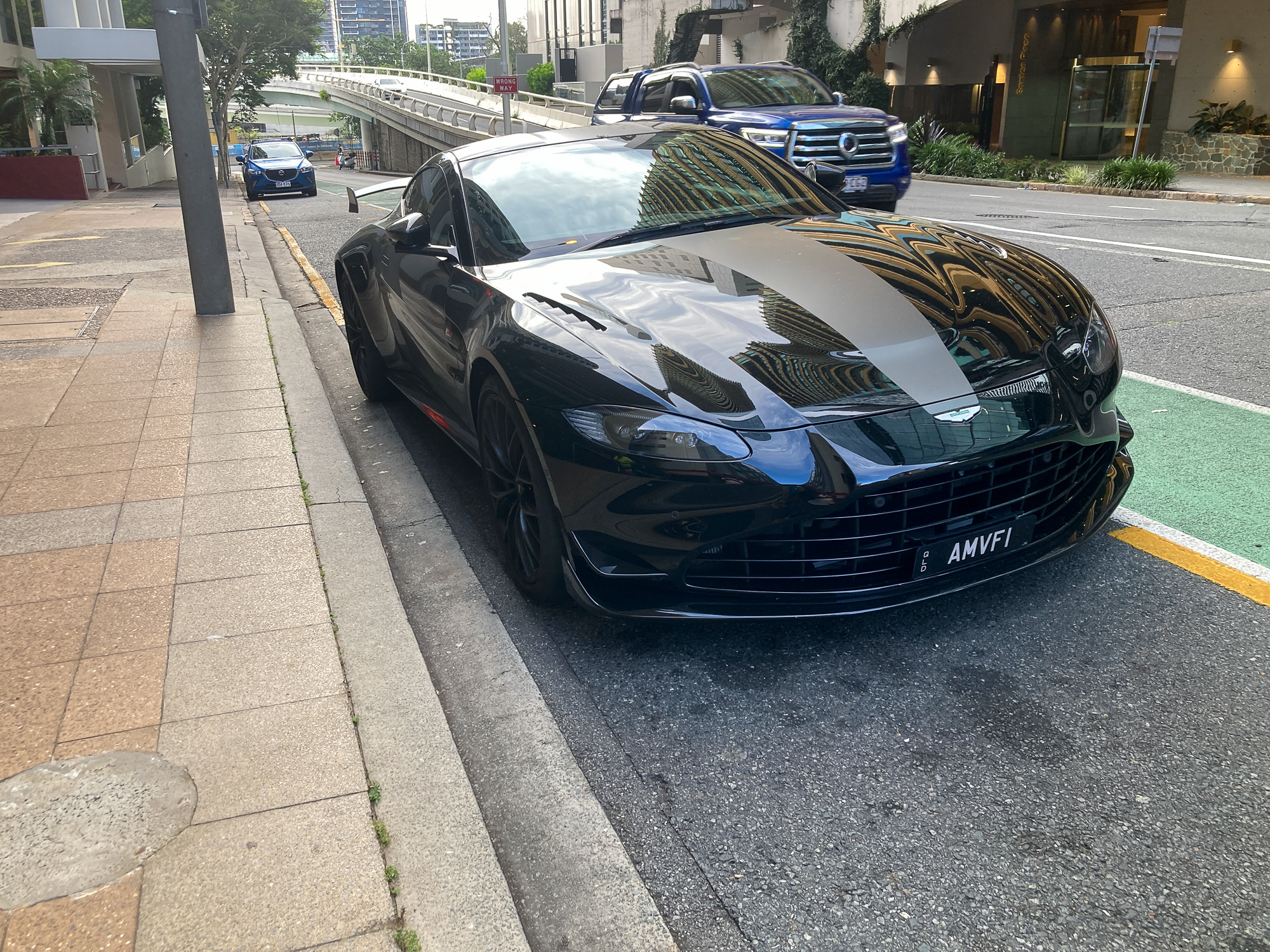
No this is not the cab! Just a sleek Aston Martin outside our hotel

Brisbane Queensland

We rounded off the day with a last meal in the hotel restaurant, which was Japanese fusion and our ‘Wagyu Bagas’ were the best burgers we’ve had in a long while.

Tomorrow we travel ‘home’ to Mackay on the last leg of a memorable trip.

Triplist – Birds added

  • Bush Stone-Curlew at the Botanical Gardens
  • Blue-faced Honeyeater at the Botanical Gardens
  • Australian Brushturkey on the lawns where we waited for our Uber

Friday – Brisbane to Mackay

We are looking forward to our stay in Mackay which a first impression suggests is a pleasant town without pretension.

Footnote on modern travel

Oh well, we live and learn…

Australia 2025 : Gold Coast

Australia 3.1

Our third trip to Australia in January and February this year was all about seeing son Stephan and his family for the first time since 2022, while using the opportunity to see more of Australia – a huge country we are getting to know in small instalments.

The ‘instalment’ this time around was based on a suggestion by Stephan that we meet the family in Sydney and do a slow road trip up the east coast to Brisbane, where we would catch a flight to Mackay in Queensland, their new home town. That appealed to us, as it meant spending quality time with the family while our grandkids had school holidays and Stephan was on leave, at the same time seeing a part of Australia that we had not visited before.

We had left Sydney behind and enjoyed two days each at Caves Beach and Nambucca Heads – next stop Gold Coast

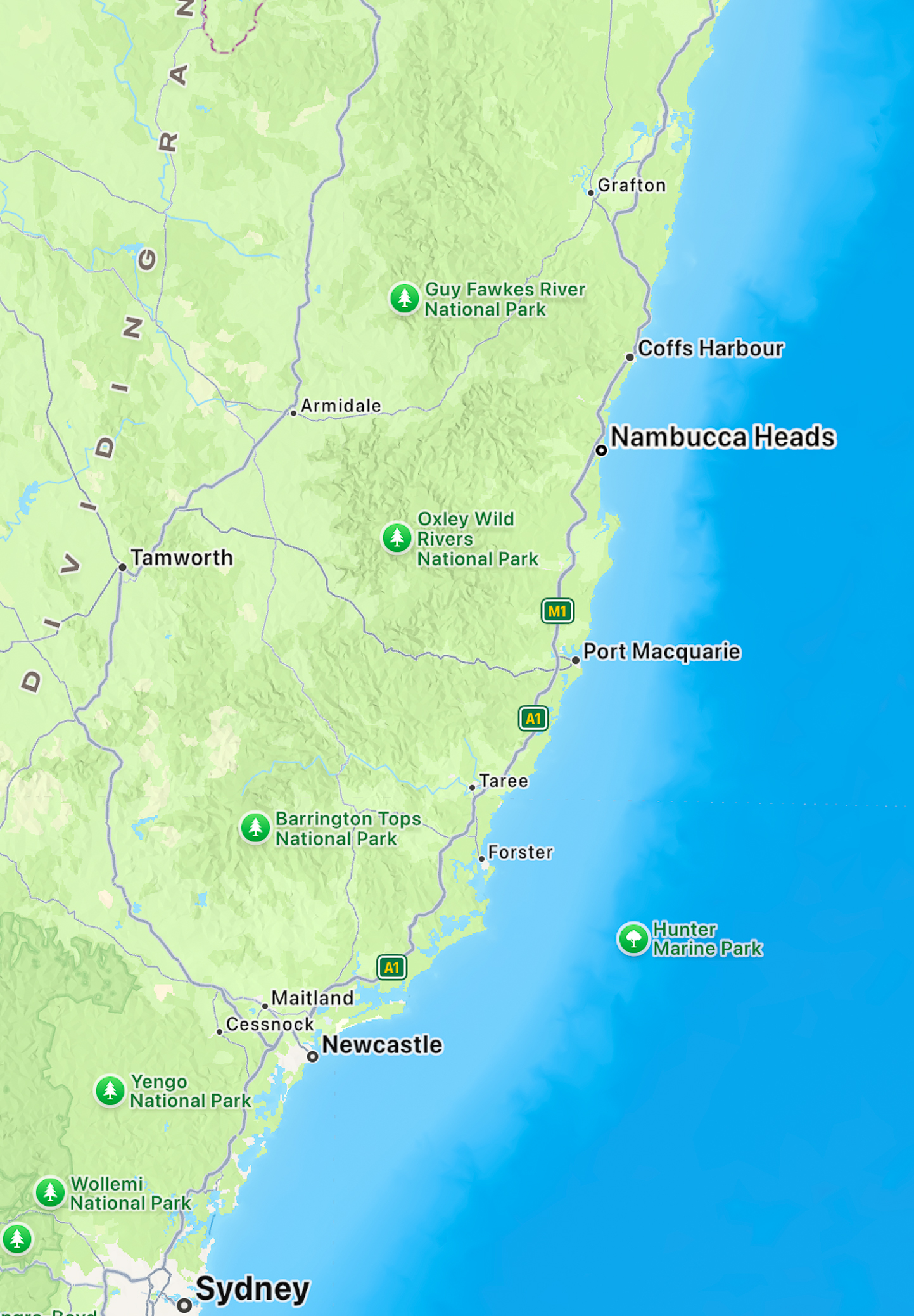
Sunday – Nambucca Heads to Gold Coast

Time to head further north today, but not before enjoying a breakfast at Wharf Café which overlooks the estuary. The rain had almost subsided and allowed us to load the cars and leave by checkout time.

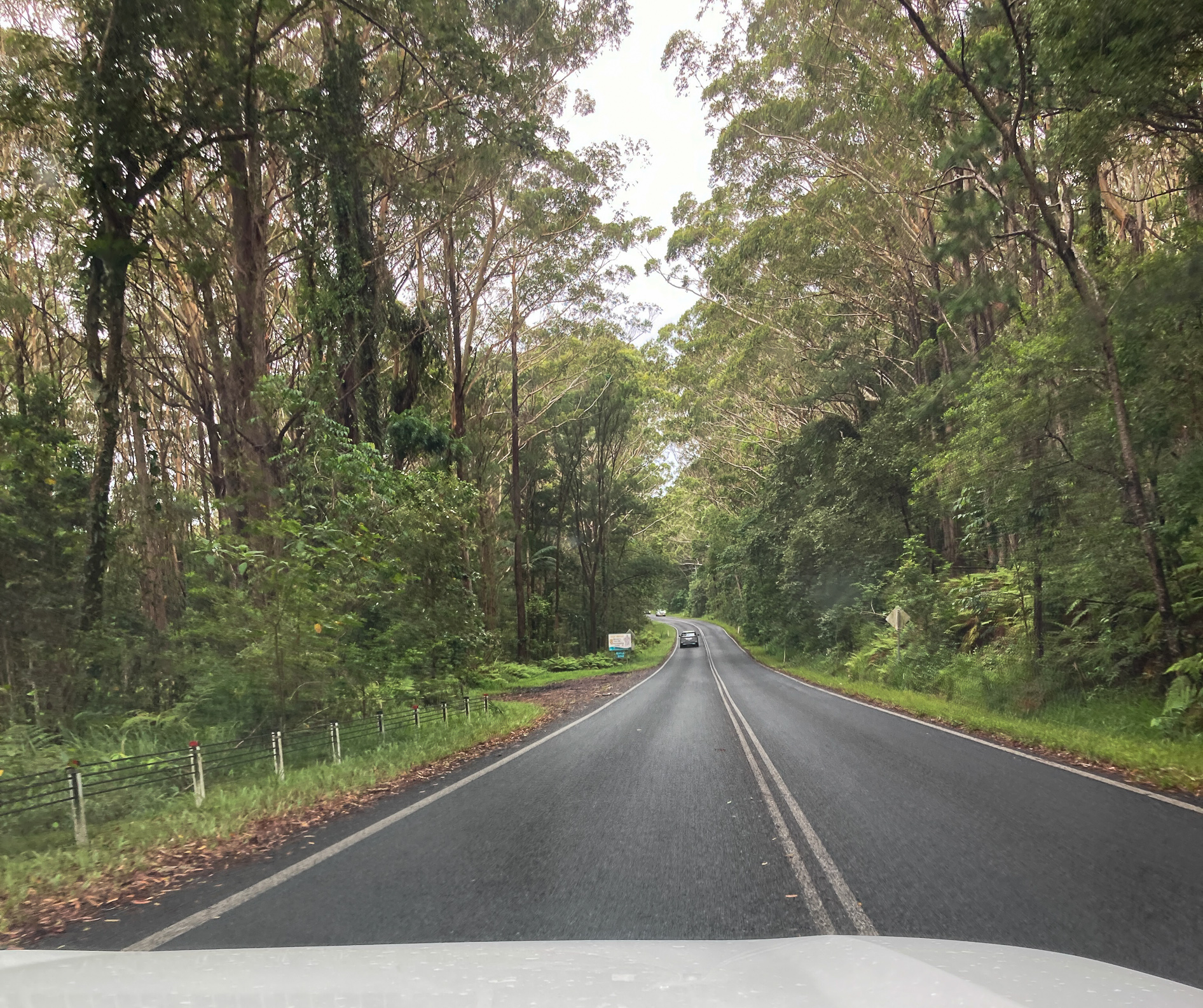
Breakfast done, we started on the route to Gold Coast and were soon back on the Pacific highway, this time in sunny conditions which made the drive a lot more comfortable. As in other parts of Australia that we have driven, we passed through long stretches lined with tall trees on both sides, which is always pleasing to the eye.

On the road

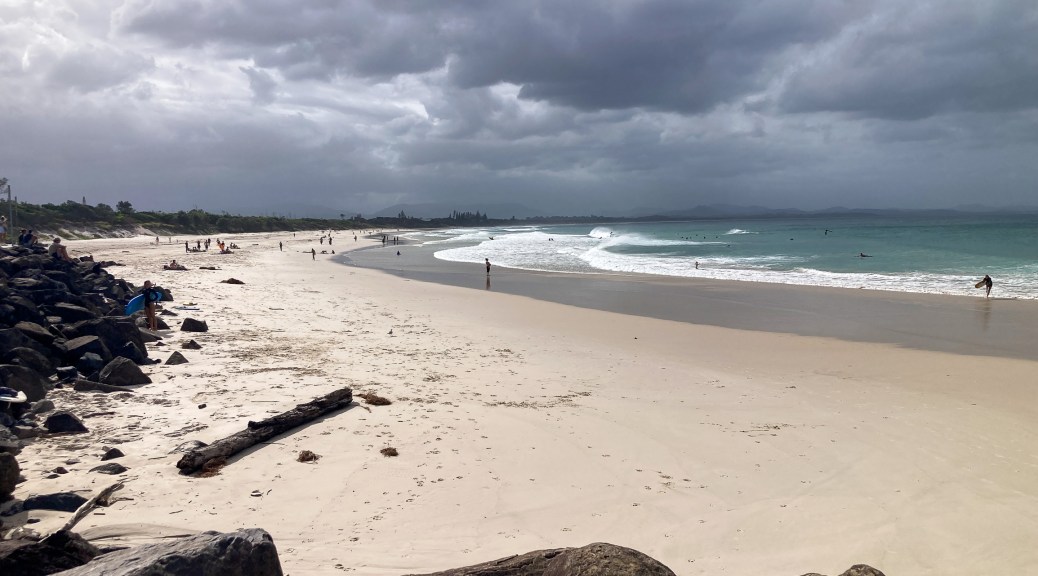
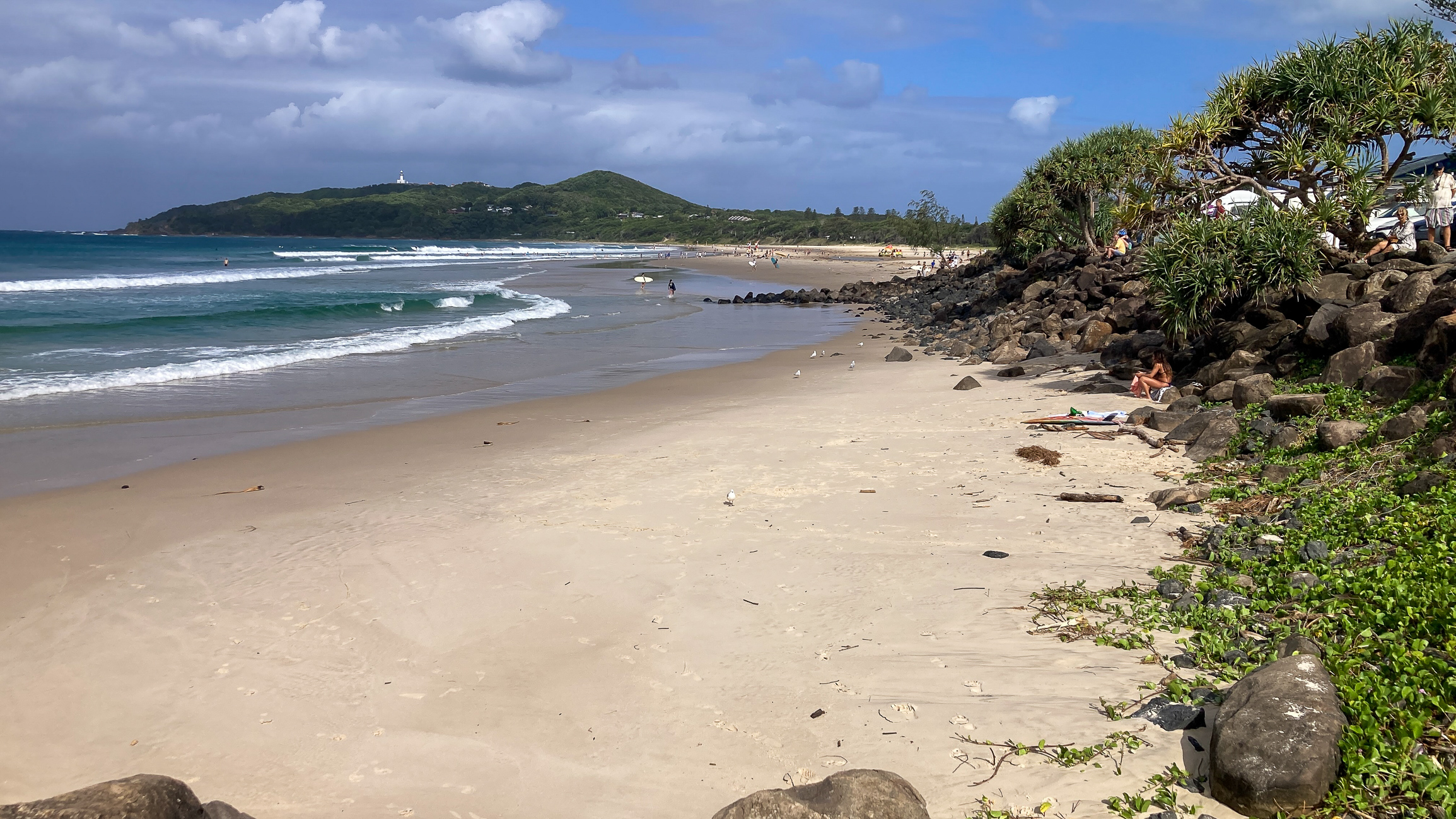
We stuck to the highway all the way to Byron Bay where we diverted to drive through the town and stop for refreshments and a look at the beach. Byron Bay is known for its beautiful coastal scenery, its famous surf breaks and for being a spot favoured by celebrities – it struck us as being similar in character to our Garden Route towns such as Plettenberg Bay and Knysna.

Byron Bay Beach NSW

Back on the highway, a notable feature are the ‘bridges to nowhere’ that the road passes under at fairly regular intervals – bridges that seem to end either side of the highway with no visible approach road crossing over.

We saw similar bridges in Canada so I guessed that their purpose was the same ie to provide a safe crossing point for wildlife of all kinds, without having to set foot on the road at all.

The principle behind these structures is the provision of ecological connectivity between the areas occupied by various wildlife on either side of the highway. They are used by everything from marsupials and reptiles to frogs and birds, saving countless wildlife from becoming roadkill.

Passing under one of several “Wildlife crossings” on the Pacific Highway
Gold Coast Queensland
Burleigh Heads Queensland

Being in in a new time zone in Queensland (which does not observe daylight saving in summer), we had lost an hour so had about an hour of daylight left to relax on the deck. Naturally I spent most of that hour scanning the surrounding trees for birdlife and gazing into the sky where a number of what looked like swallows were making the most of the time before sunset.
View from the deck at Burleigh Heads Queensland

Triplist

Birds added:

Good old House Sparrow at one of the stops

Swamp Harrier flying over the road in an area with wetlands bordering the highway

Swamp Harrier (image from Birds of the World)

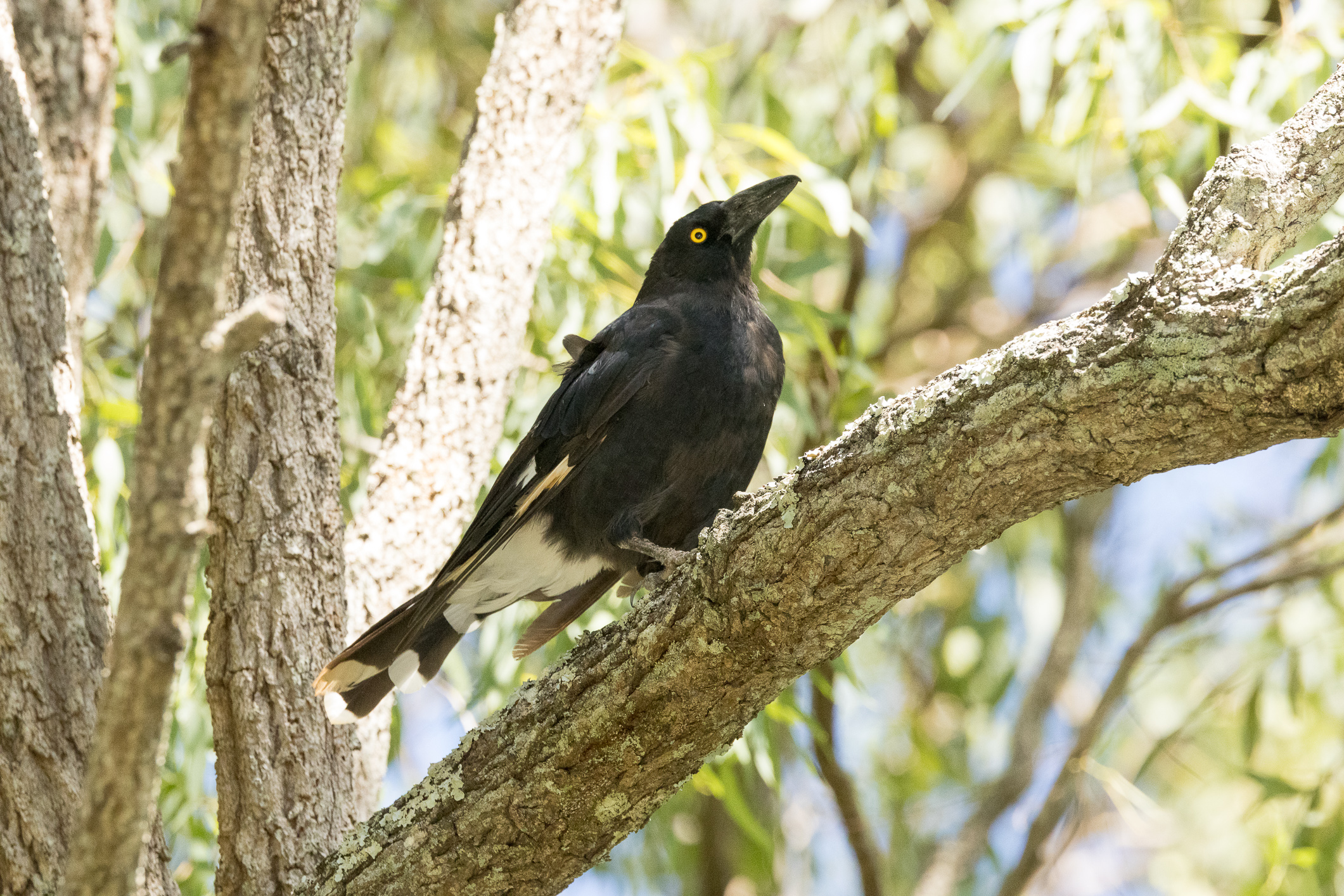
Pied Currawong in the large trees around the house

Pied Currawong
Strepera graculina, Burleigh Heads Queensland

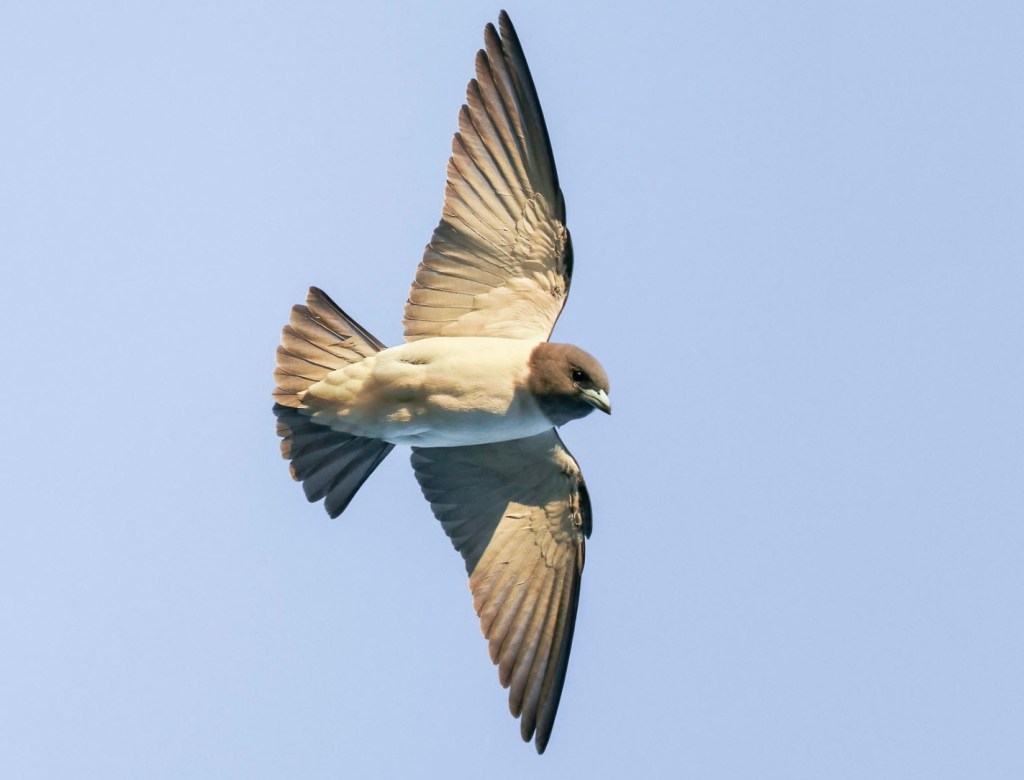
White-breasted Woodswallow high up above the house

White-breasted Woodswallow (image from Birds of the World)

Monday – Gold Coast : Sea World

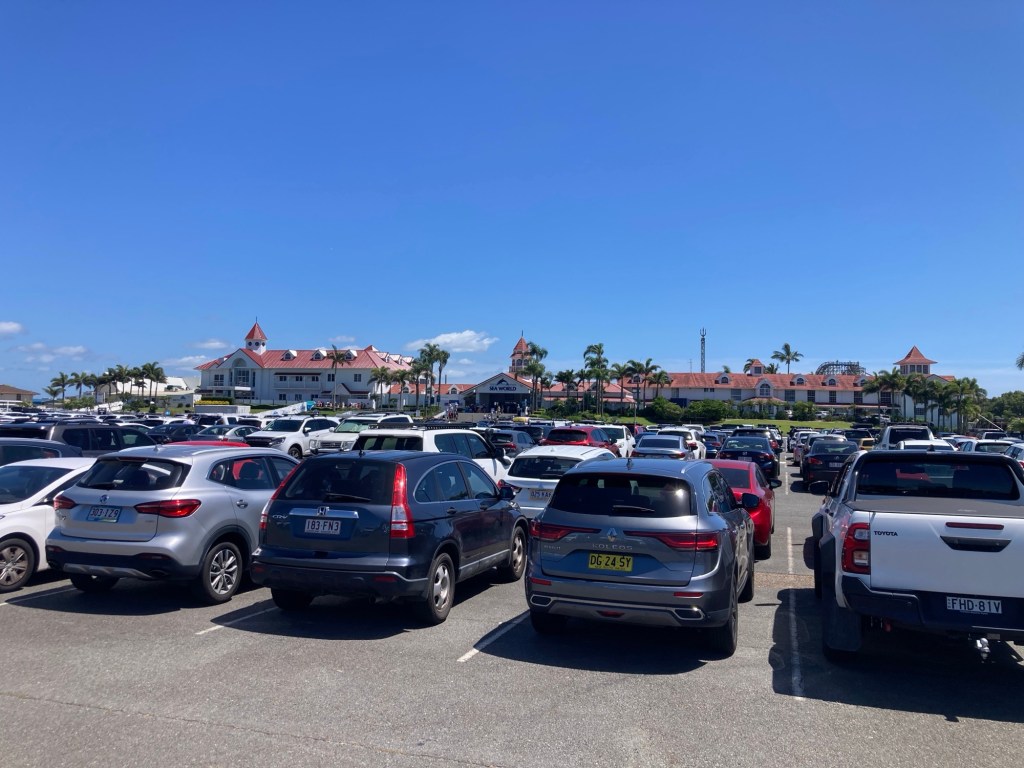
Stephan had booked tickets for a visit to Sea World and we set off along a busy route lined with tall apartment buildings and hotels which told a story of a popular place for holidays and plenty of wealth. Our hearts sank when we saw the exceptionally large, full parking area – expected I suppose but still… I dropped Gerda off near the entrance, parked far away and walked back to join the queue at the entrance.
Heading back to the entrance

Inside, the foyer was buzzing with activity and people – after a tea and a snack we walked along paths filled with more people and flanking expansive outdoor pools which we bypassed for the time being – the dolphin show was scheduled to start soon and we didn’t want to miss it.
We made it in good time after a longish walk with throngs of people and found a good spot to sit and enjoy the show – which was very well done and a highlight of the day.

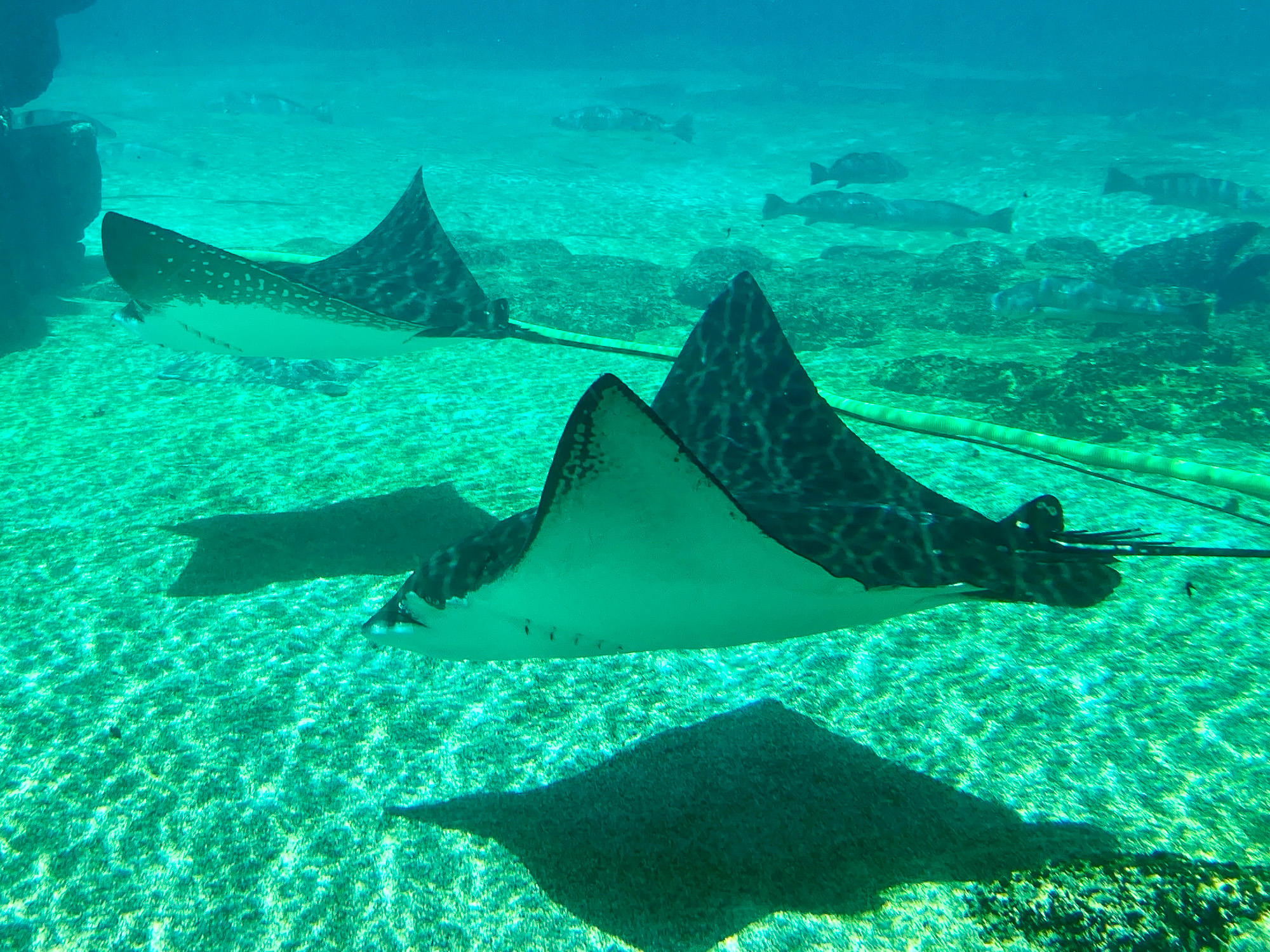
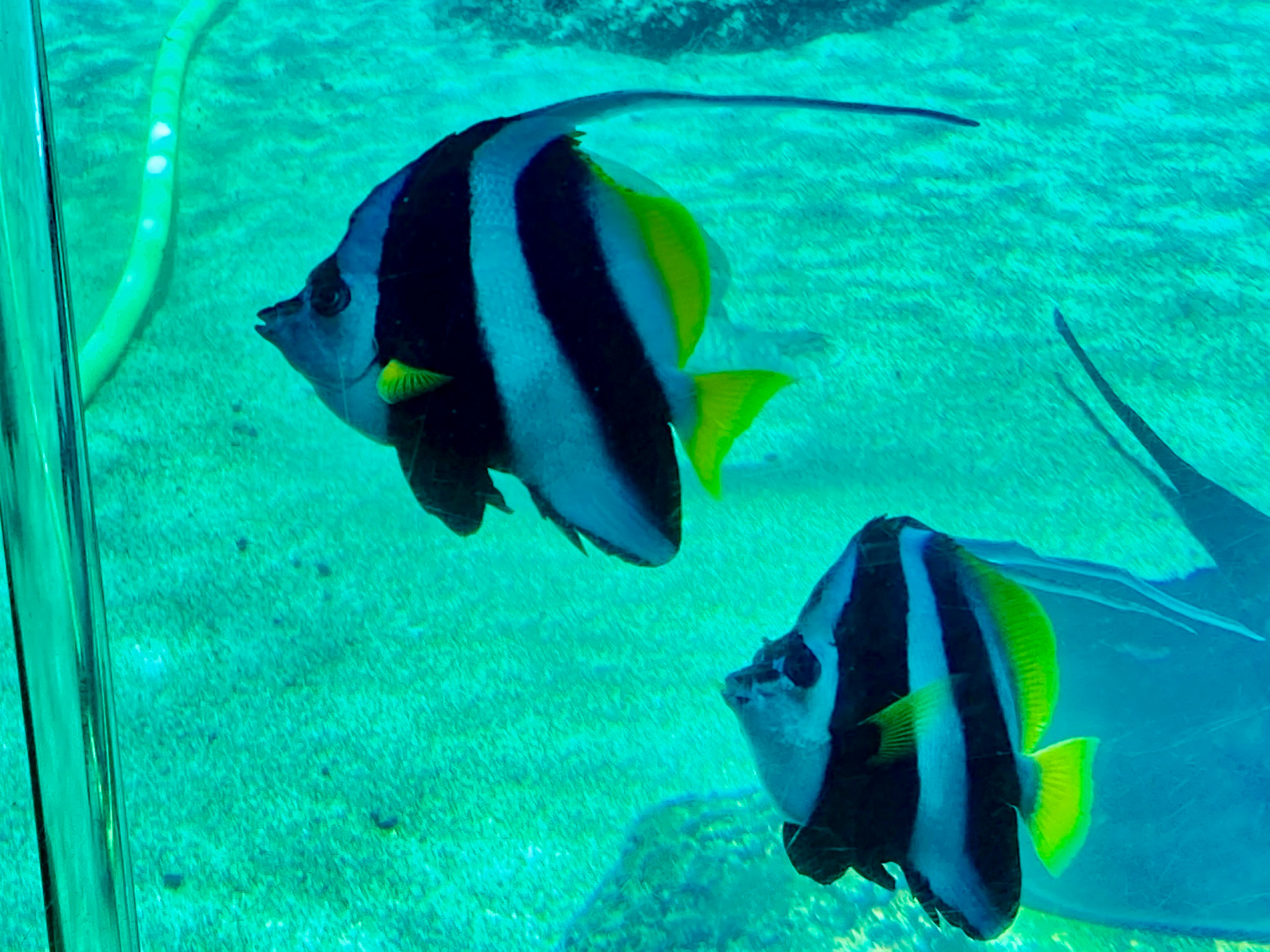
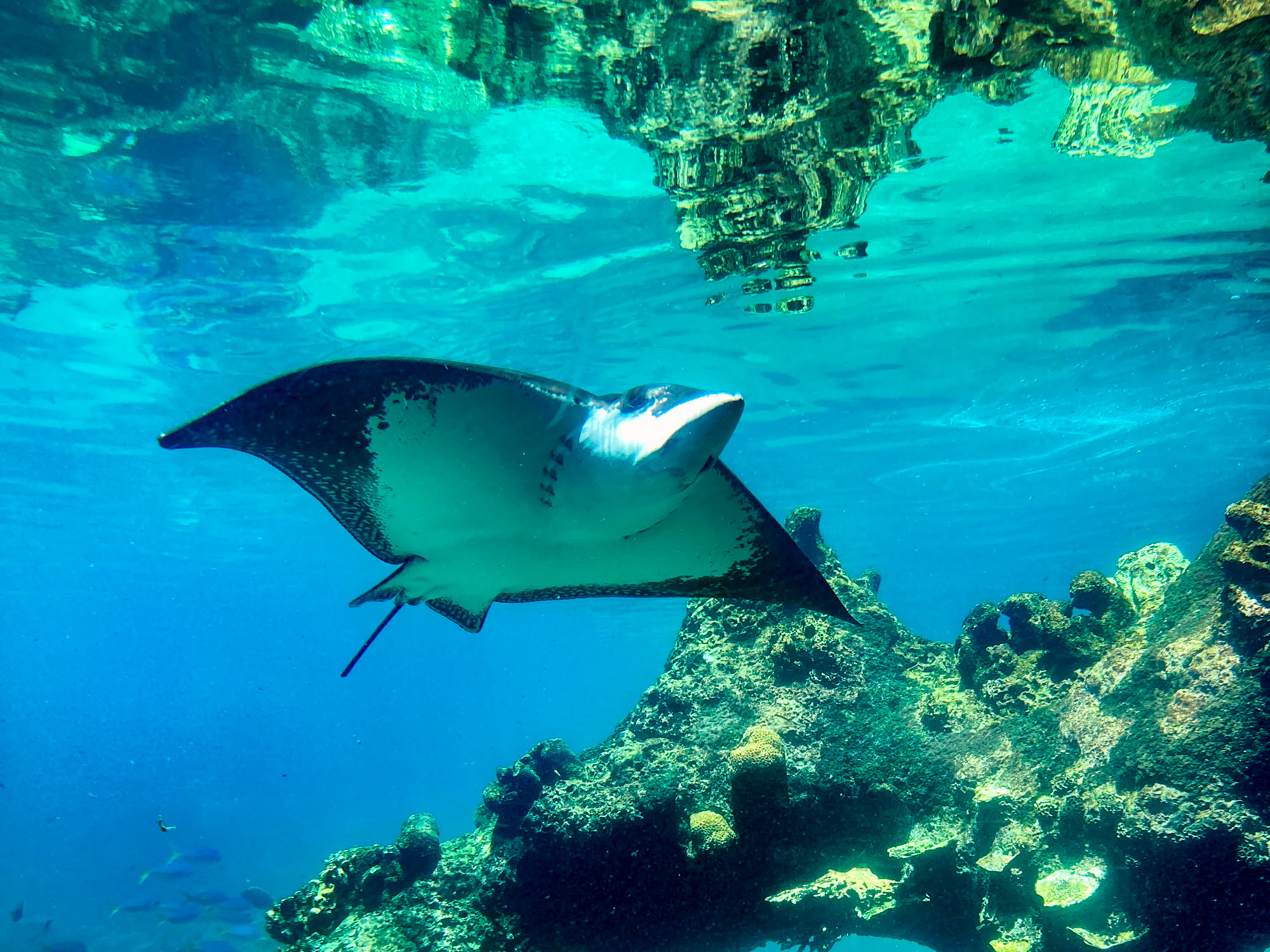
Heading back, we found a table at the main area for a burger lunch, after which we slowly made our way back to the exit, leaving the family to do the rides, while we took in the Shark tank and Manta ray pools on the way back.

Sea World, Gold Coast Queensland

At the house we flopped onto the bed for a recovery snooze followed by some outside time on the deck before the rest of the family returned, exhilarated after doing several of the spectacular rides on offer.

Tuesday – Gold Coast : Surprise Low and a Spectacular High

The Low

Well it had to happen sometime – no proper road trip ever runs smoothly all of the way….

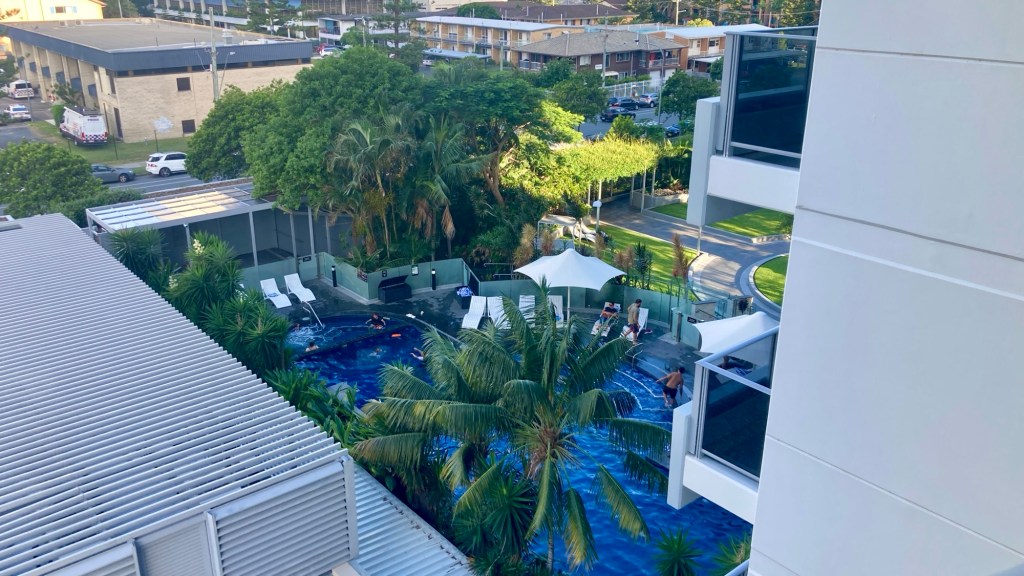
We set about finding alternative accommodation while we packed, which we eventually found in an apartment complex not too far away. Meriton Apartments turned out to be quite smart, upmarket in fact and apart from the cost it was a good move, albeit just for one night. Gerda and I checked in while the rest were having a beach swim, and I popped down to the pool for a refreshing swim.

The High

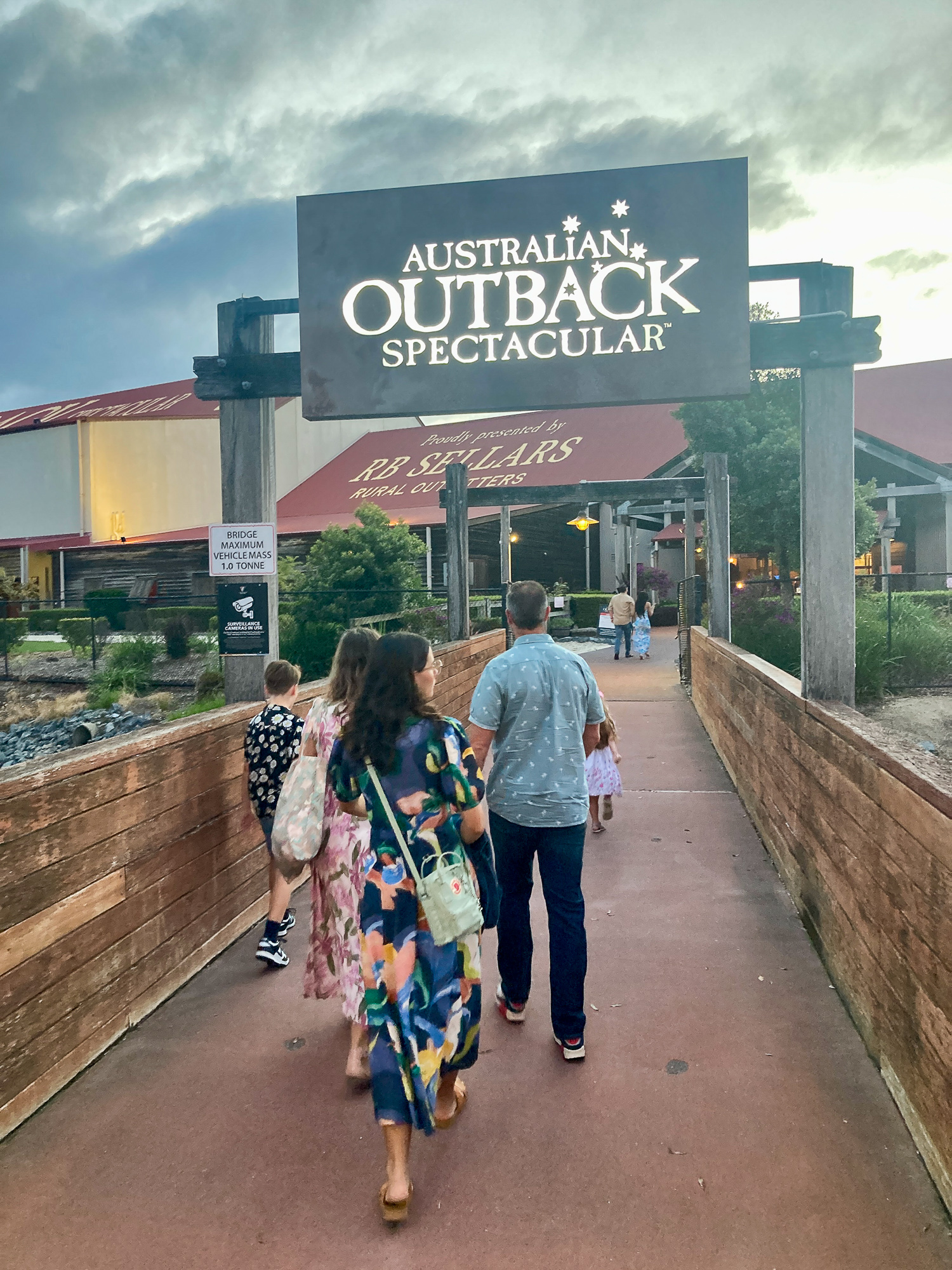
Soon it was time to set off for the Outback Spectacular evening show at a venue on the way to Brisbane, which was true to its name and made up for the drama and disappointment of the day so far.

Australian Outback Spectacular show, Gold Coast Queensland

The show had it all …… and more as the images hopefully show –

Australian Outback Spectacular show, Gold Coast Queensland

We all enjoyed the show thoroughly, with horses, cattle, a dog and various vehicles adding to the spectacle, all synced with an outstanding projection of images on the back wall and on the floor of the arena and woven around a story of the outback

Australian Outback Spectacular show, Gold Coast Queensland

There didn’t seem to be any way of topping what had been done so far – until a helicopter entered the arena! I mumbled something about ‘Good grief it’s a flipping helicopter!’ or words to that effect, as the helicopter, a real one tethered to a steel beam running below the roof, did a circuit of the arena and helped ‘rustle’ the cattle back to their pens – truly spectacular!

And as if that wasn’t enough, a cloudburst with real water fell across the arena (not the seating area) and was followed by a digitally created waterfall and river flowing through the sandy floor of the arena. We left with embedded memories …… and a complimentary straw hat!

Triplist –

Birds added (before we vacated the house)

Pacific Swift amongst swallows and swifts soaring above the house

Pacific Swift (Image from Birds of the World)

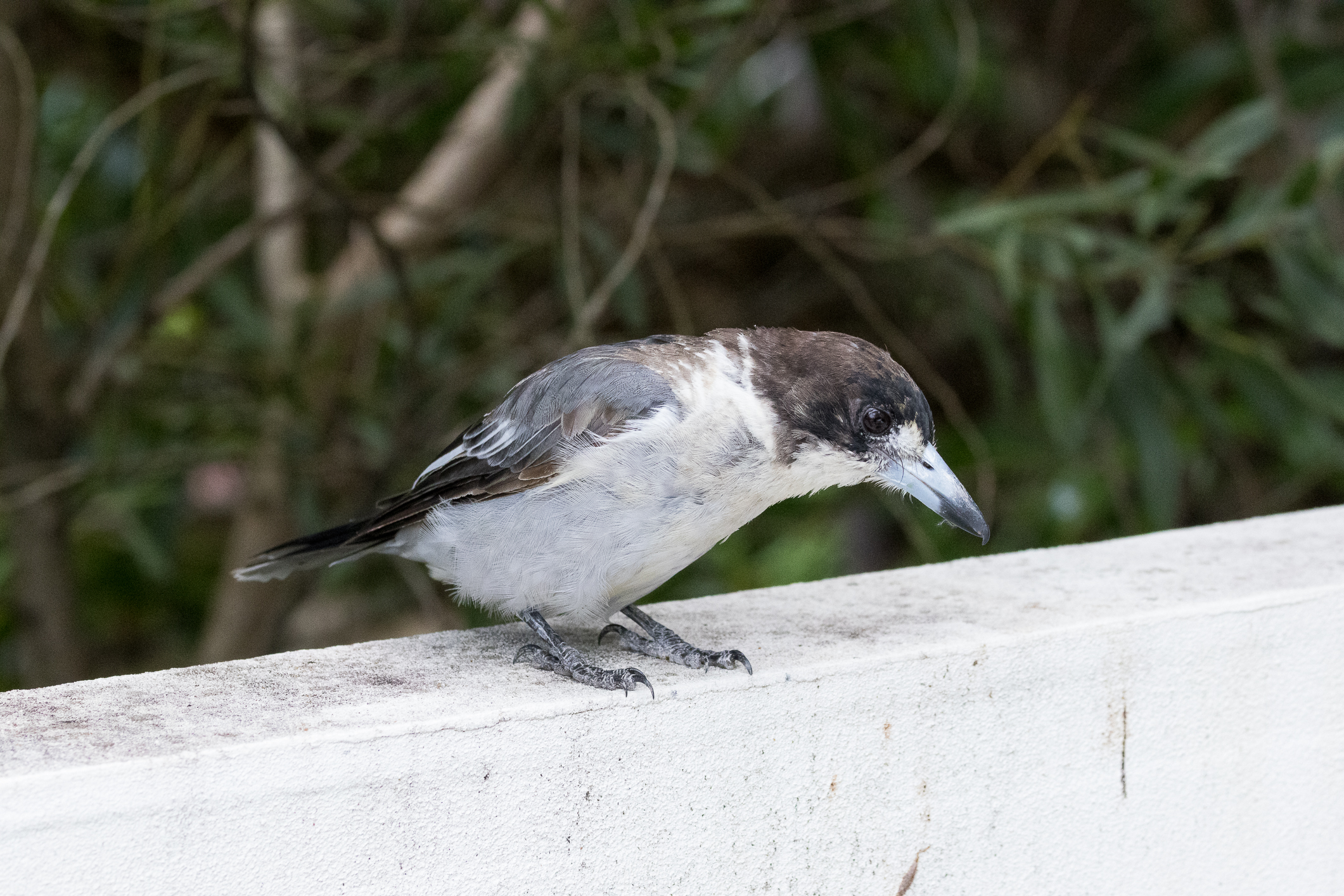
A curious Grey Butcherbird appearing on the deck and popping out into the open to give us the once over

Grey Butcherbird
Cracticus torquatus, Burleigh Heads Queensland

The Gold Coast had proved to be memorable for many reasons – all that remained of our road trip was the short stretch to Brisbane.

Australia 2025 : Nambucca Heads

Australia 3.1

Our third trip to Australia in January and February this year was all about seeing son Stephan and his family for the first time since 2022, while using the opportunity to see more of Australia – a huge country we are getting to know in small instalments.

The ‘instalment’ this time around was based on a suggestion by Stephan that we meet the family in Sydney and do a slow road trip up the east coast to Brisbane, where we would catch a flight to Mackay in Queensland, their new home town. That appealed to us, as it meant spending quality time with the family while our grandkids had school holidays and Stephan was on leave, at the same time seeing a part of Australia that we had not visited before.

We had left Sydney behind and enjoyed two days at Caves Beach – the exotic sounding Nambucca Heads lay enticingly in wait for our next stop

Friday – Caves Beach to Nambucca Heads (In the rain)

Rain accompanied us almost the entire distance of just under 400kms and along with slow roads for the first two hours turned a 4 hour trip into 6, with the added challenge of poor visibility for most of the way. Lunch was burgers at Taree Service stop which was very busy but quick.

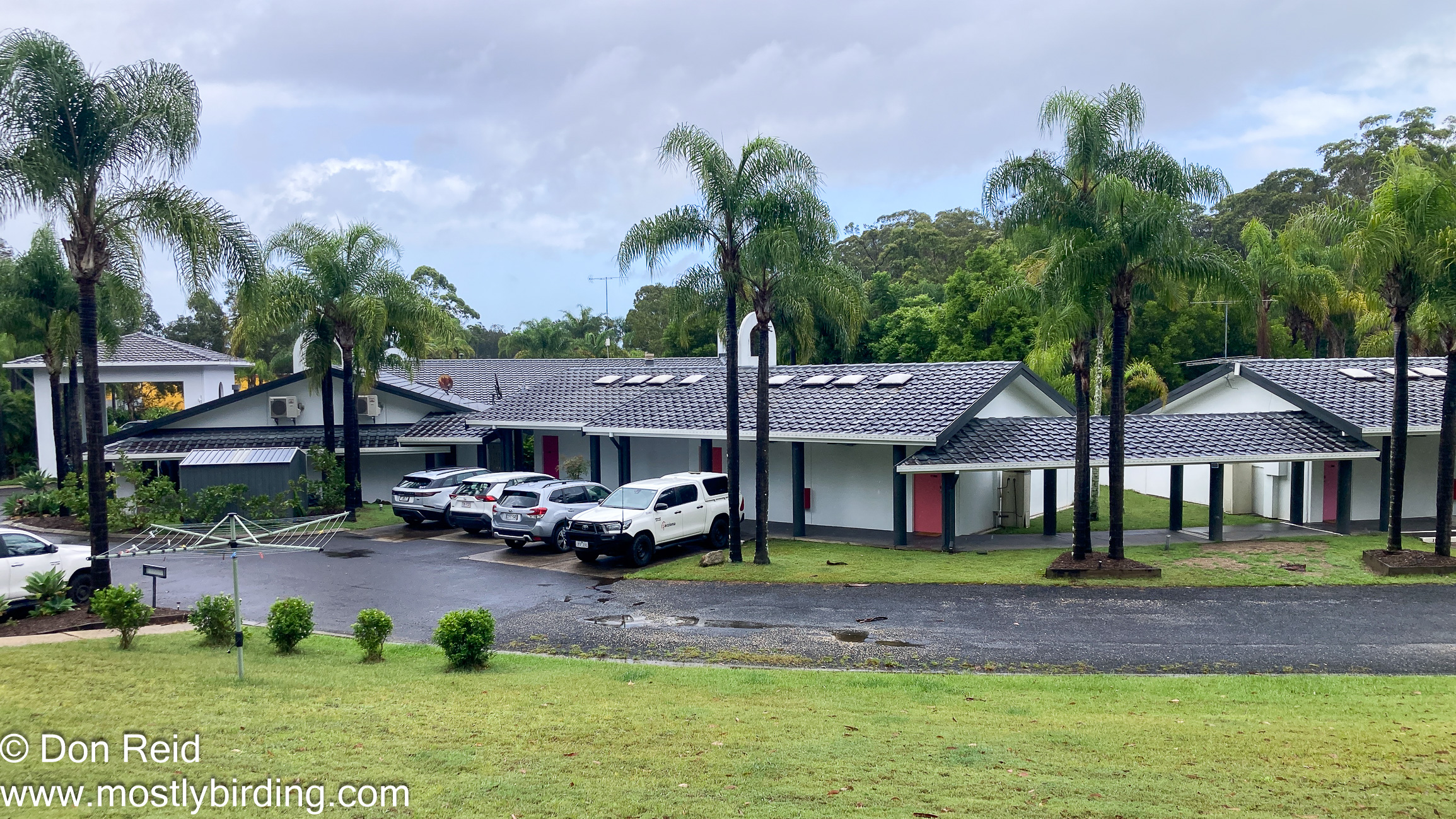
We were glad to reach the Cubana Resort at Nambucca Heads safe and sound and were soon settled into our two rooms with ours overlooking lush gardens and a lake.

Cubana Resort, Nambucca Heads New South Wales

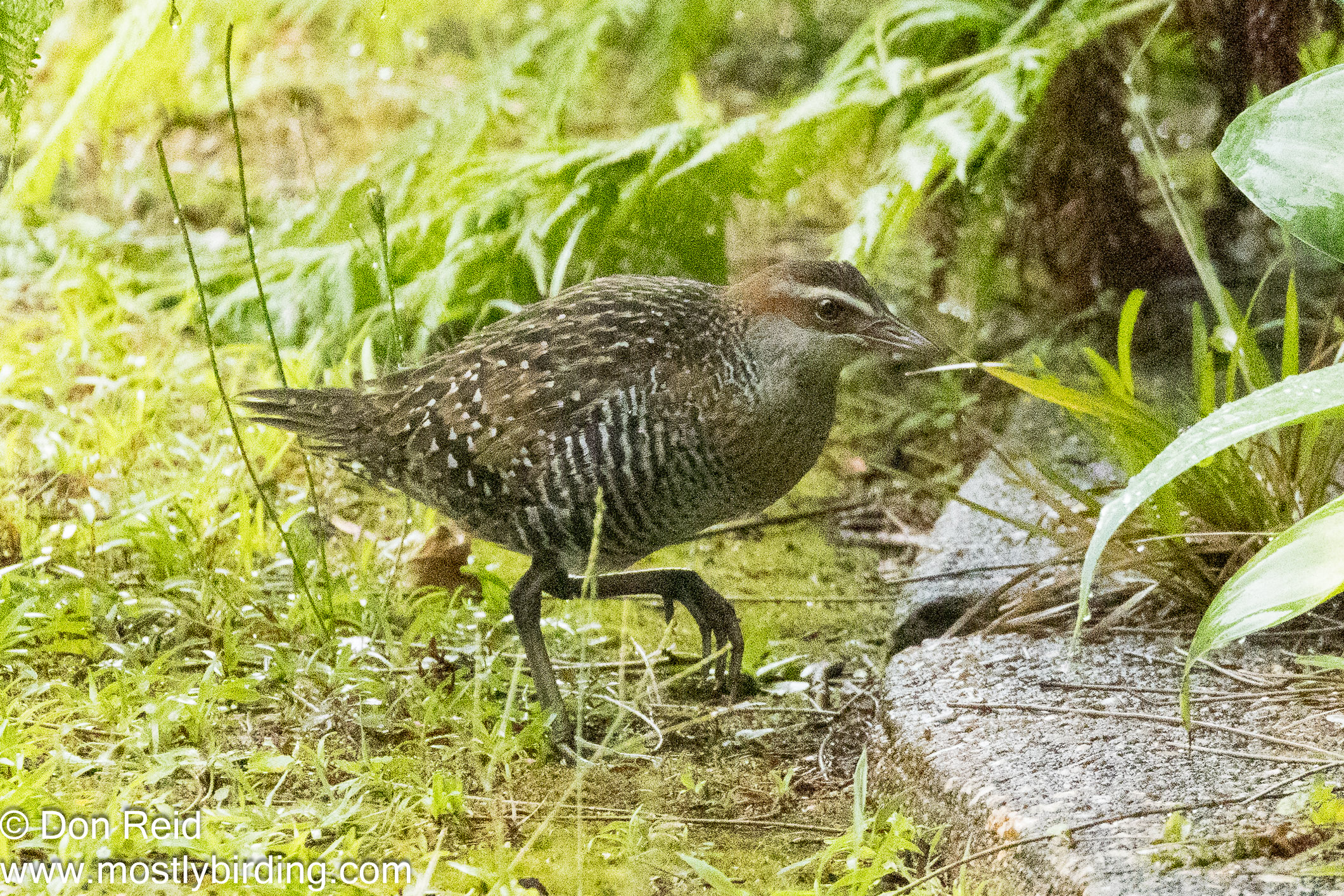
When the rain subsided enough to venture outside, I stood scanning the garden in front of our room for signs of any bird or other life and noticed a bird darting out into the open, picking up something then darting back.

I rushed to get my camera suspecting something special, and when it ventured into the open again, I was able to get a few shots as it scurried between tufts of grass, which were good enough to ID the bird – it was my first Rail photographed! Buff-banded Rail to be exact.

Buff-banded Rail
Gallirallus philippensis,
Nambucca Heads New South Wales

Later we drove to the nearby supermarket for provisions which included a selection of prepared meals for the evening – the fridge and microwave in the room proved to be invaluable and we enjoyed our supper in the room.

Triplist

Birds added:

The weather conditions with regular showers and poor light meant opportunities for bird photography were severely limited – something we were to experience throughout our trip.

Where I did not manage to get a fresh photo, I have ‘borrowed’ some of my images from our previous trips to Australia to illustrate the birds added to the triplist

Our quick lunch stop at Taree Service Stop produced a Magpie-Lark

Magpie-lark

The Buff-banded Rail was a Lifer for me, the first of the trip and made a few appearances on the grass in front of our room, but I had to grab my camera rapidly and be as stealthy as I could as it dashed into the cover of the bushes at the slightest movement

Buff-banded Rail
Gallirallus philippensis,
Nambucca Heads New South Wales

Strangely we had not seen the well-known “Bin Chicken” or Australian White Ibis until we reached Nambucca, where they were plentiful

Australian White Ibis
Theskiornis molucca

Rainbow Lorikeets are for me one of the most iconic birds of Australia so I was happy to see a few high up in the tall Eucalyptus trees that line one boundary of the resort

Rainbow Lorikeet

On the way to the river mouth we spotted a flock of Little Corellas

Little Corella
Cacatua sanguinea

Other stuff –

On my walk around the lake I came across several Eastern Water Dragons near the water’s edge, sitting dead still on a handy rock, then scurrying off when I got too close for its comfort

Eastern Water Dragon
Intellagama leseurii,
Nambucca Heads New South Wales – semi-aquatic agamid species

Saturday – Nambucca Heads (Mostly in the rain!)

The weather forecast showed another day of rain, light at times, heavy at other times and that is how it panned out. That meant staying indoors then venturing outside when rain held up for a while, for short spells of walking about and birding.

After the continental style breakfast, we chilled for most of the morning with Stephan and the kids enjoying ‘boat races’ with leaves and sticks in the fast-flowing water channels next to the road in between rain squalls. Some simple pleasures never age – as kids growing up in Cape Town it was a particular delight to go out in the rain and ‘race’ our matchsticks in the kerb channel to the nearest stormwater gulley.

I managed a couple of short walks around the lush gardens before the rainy conditions chased me back to the shelter of the verandah of our room.

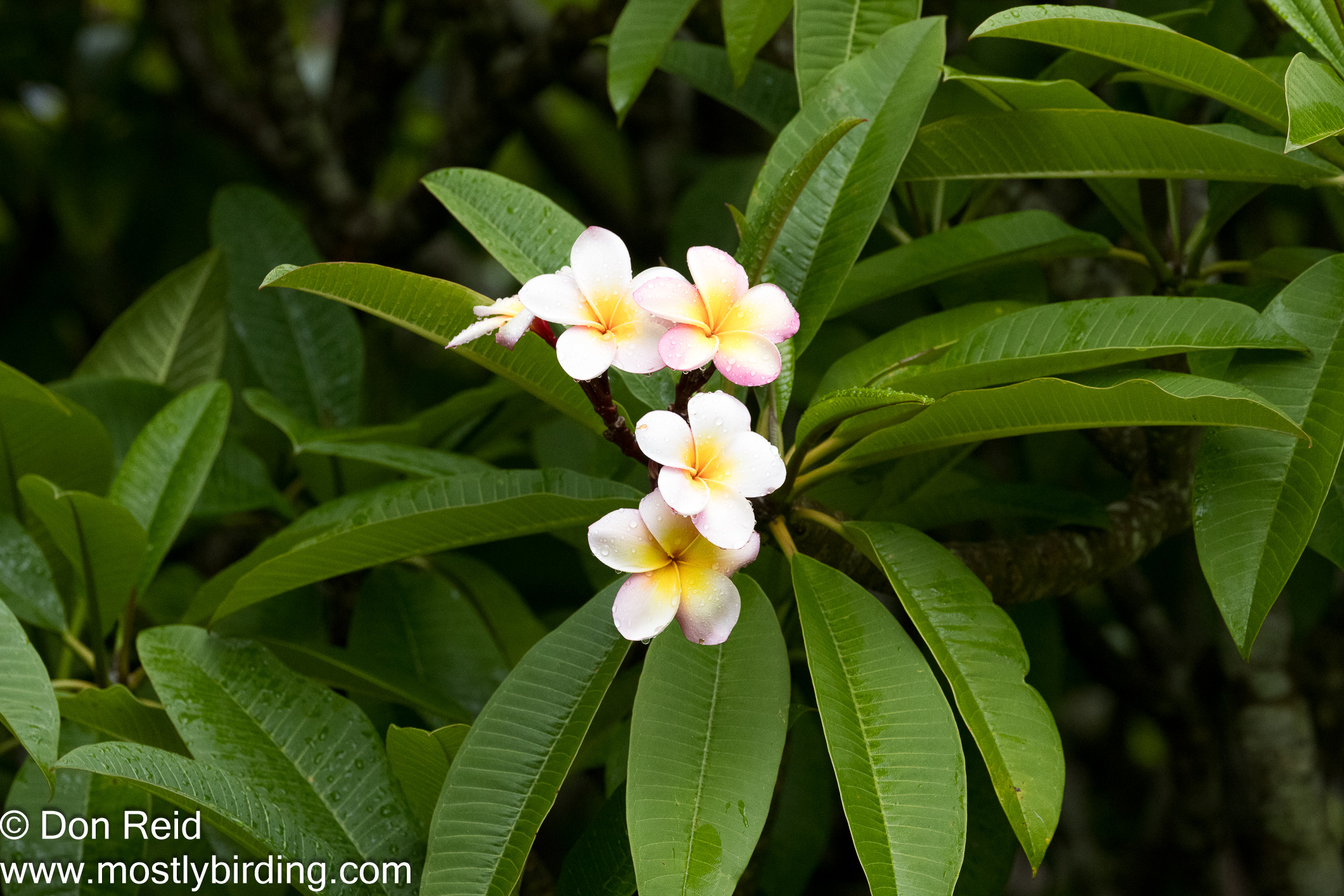
The flowers in the garden of the resort were tropical in nature
Lichen cover tree – looks similar to what we would call ‘Old man’s beard’
Scarlet Percher Dragonfly (I think),
Nambucca Heads New South Wales

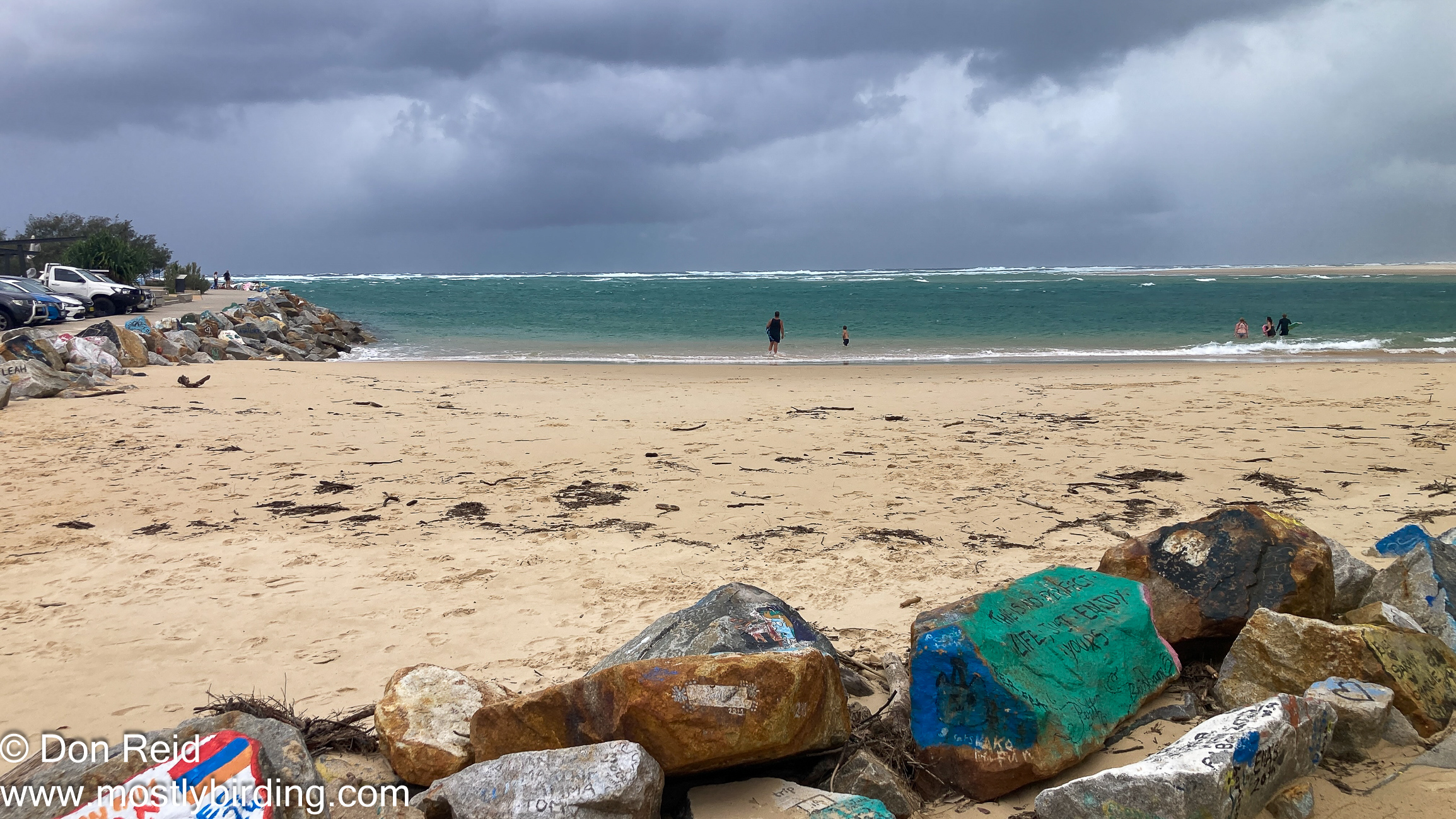
After lunch we drove to the river mouth and parked where we could view the beach and stormy seas, whipped up by high winds.

Beach, Nambucca Heads New South Wales

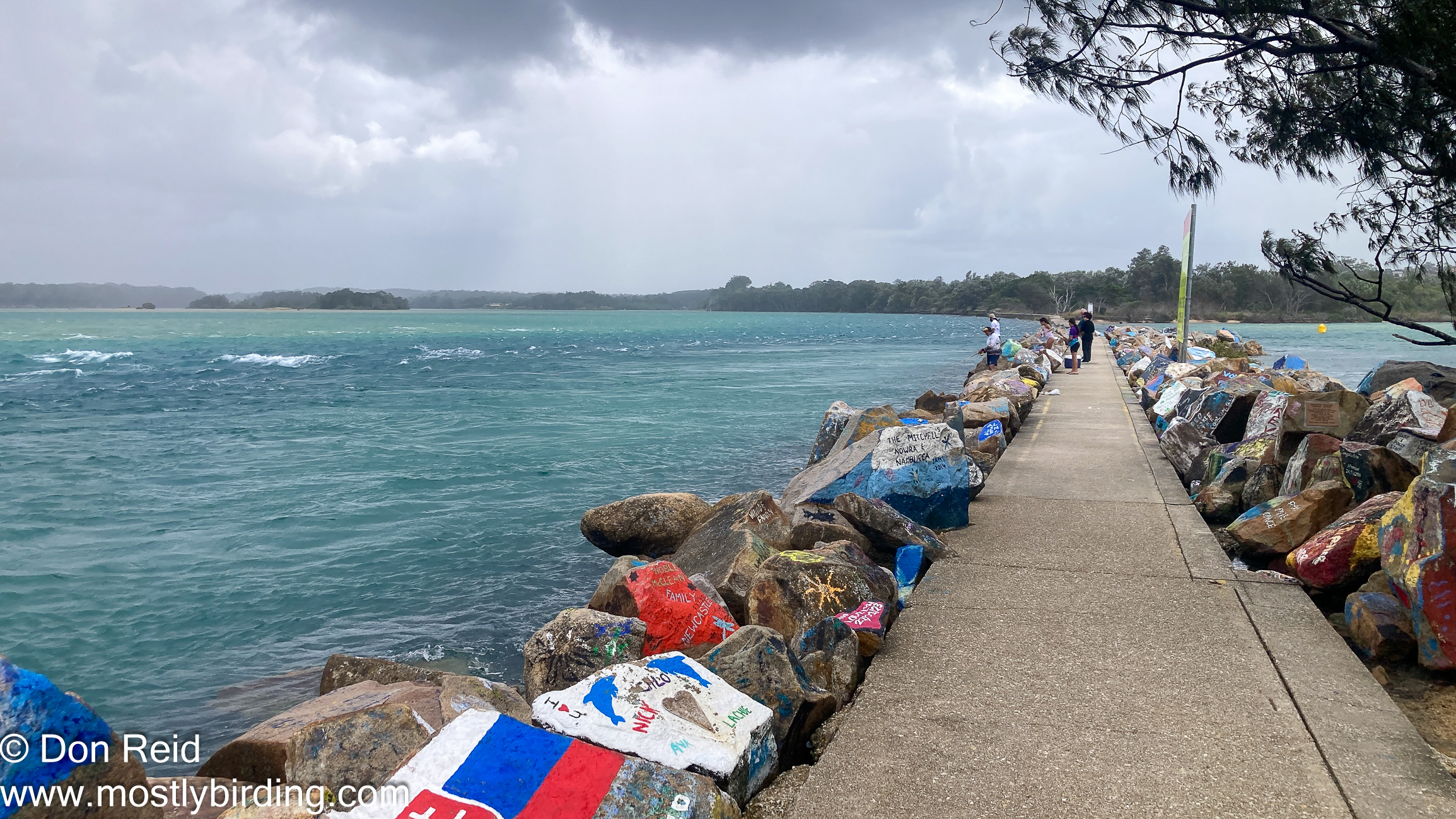
The rain let up long enough for me to get some images of the beach and the unusual painted “Art rocks” lining the pathway.

Art rocks, Nambucca Heads New South Wales

I also tried a few in flight photos of passing terns with some success, before another squall chased me back to the shelter of the car.

Later we returned to the estuary for a pizza dinner at a busy Mathildas Restaurant – we could only get seating outside so were glad that the rain held off

Triplist –

Birds added

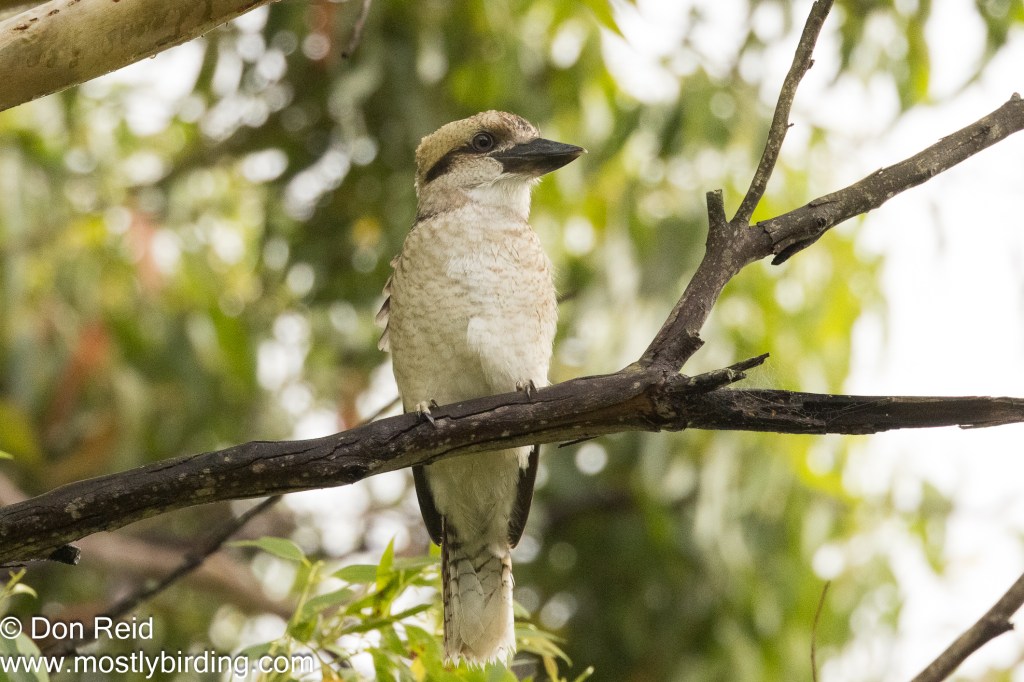
Another iconic Aussie bird, the Laughing Kookaburra, attracted my attention with its calling in the tall eucalyptus trees

Laughing Kookaburra
Dacelo novaeguineae,
Nambucca Heads New South Wales

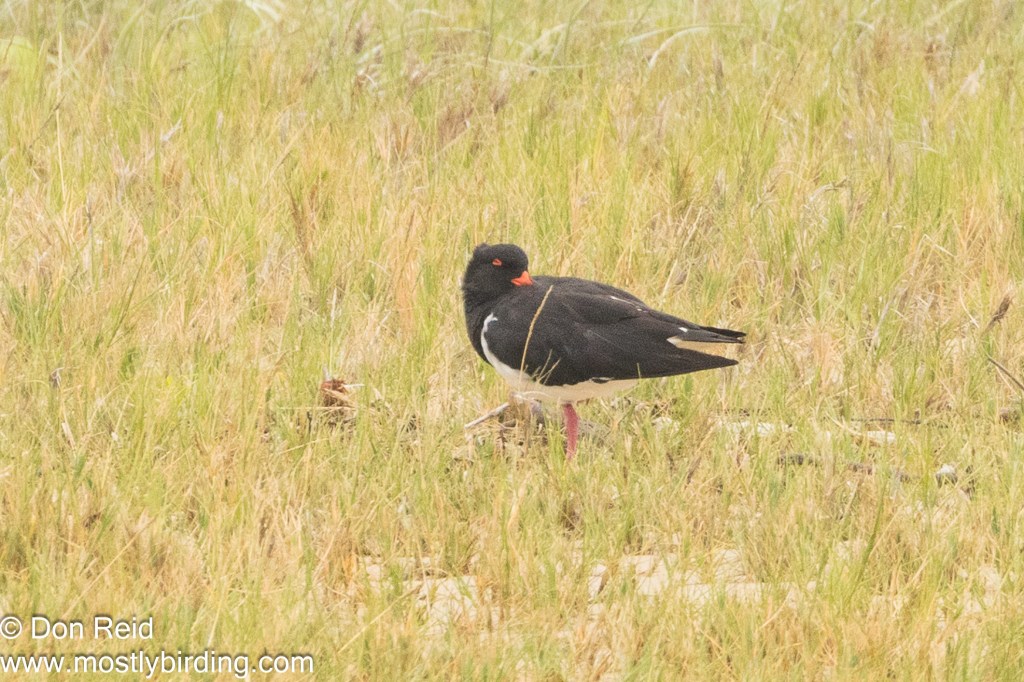
On the way to the main beach I spotted a Pied Oystercatcher on a grassy sandbank in the estuary – another Lifer!

Pied Oystercatcher
Haematopus longirostris,
Nambucca Heads New South Wales

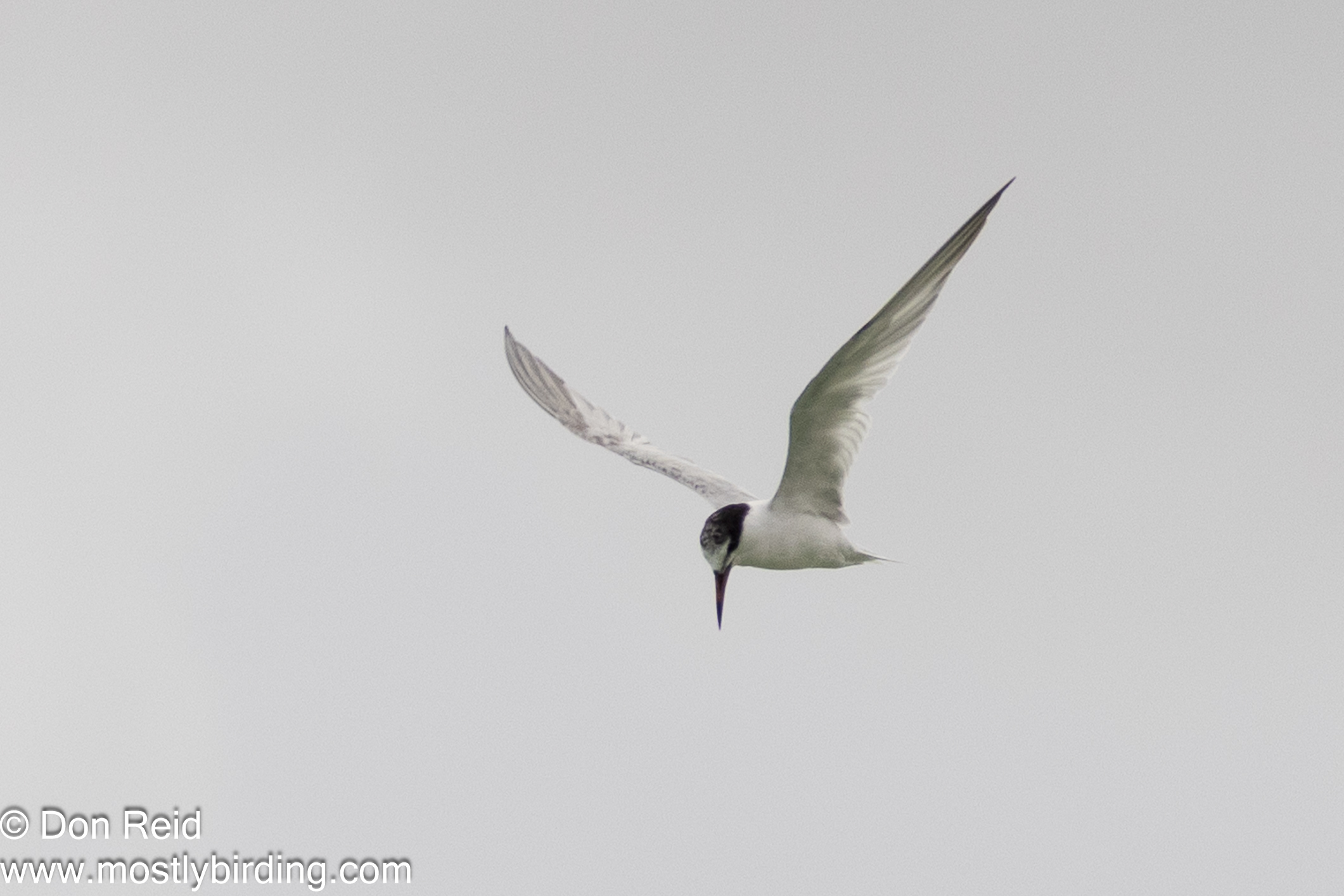
Greater Crested/ Swift Tern and Common Tern hunting and diving at the estuary – distant birds in flight + poor light = somewhat fuzzy images – what birders like to call a “Record Shot”.

Both of these Terns are seen regularly in Mossel Bay, but the Common Tern was a new addition to my Australia list

Common Tern
Sterna hirundo,
Nambucca Heads New South Wales
Swift (Greater Crested) Tern
Thalasseus bergii,
Nambucca Heads New South Wales

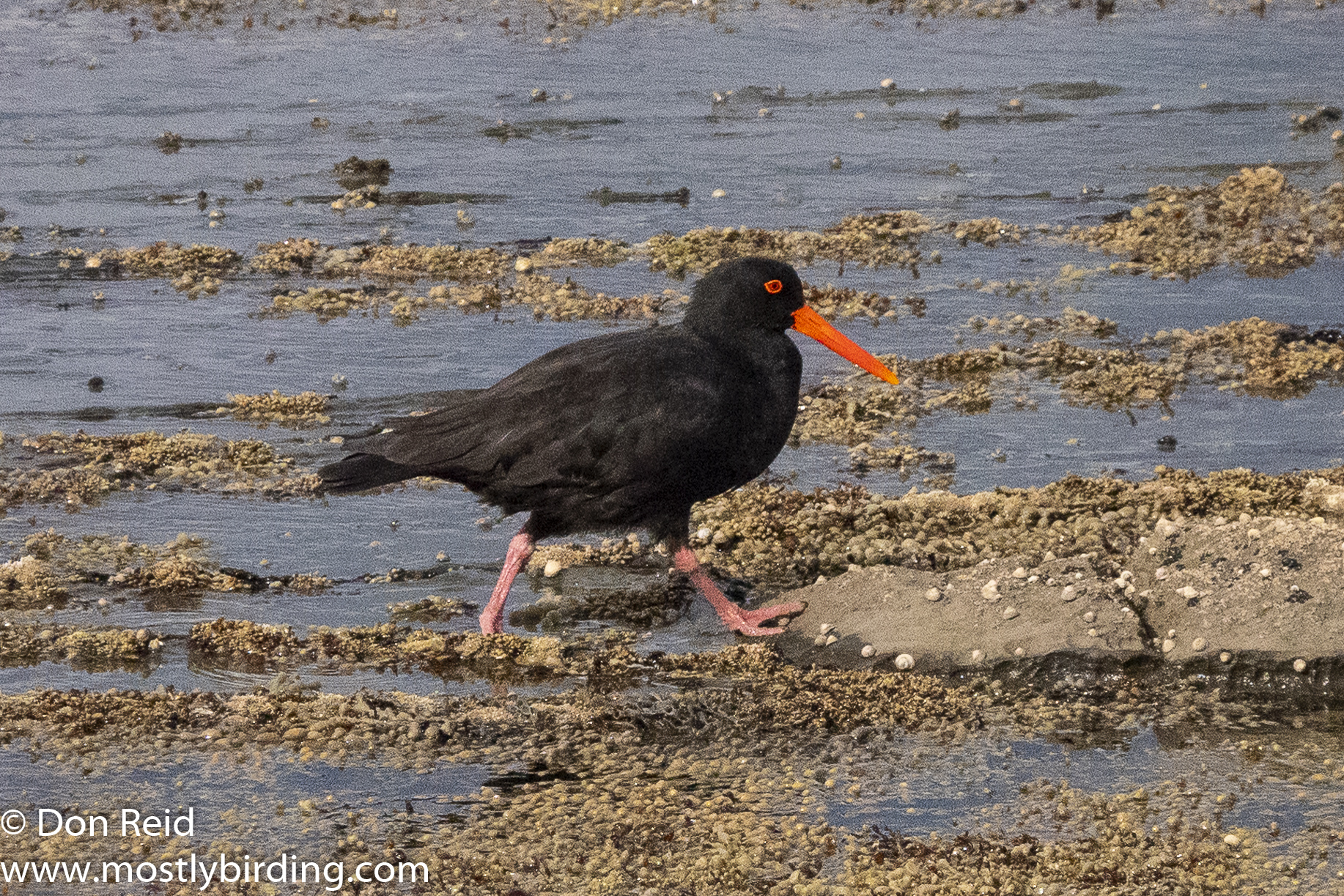
I spotted the second species of Oystercatcher for the day – Sooty Oystercatcher – at the estuary

Sooty Oystercatcher
Haematopus fuliginosus

A few Australian Pelicans were hanging out on a distant sandbar – identifiable but too distant for a photo of any description

Australian Pelican
Pelecanus conspicillatus

Expanding my walk beyond the boundary of the resort, I spotted a Sacred kingfisher among the trees bordering the walking track – my second lifer of the trip – just a pity it it flew off as I lifted my camera, not to be seen again. I have no previous photos of this handsome bird so include this illustration from The Complete Guide to Australian Birds by George Adams

img_7428-1

Tomorrow we head to the Gold Coast in Queensland

Australia 2025 : Caves Beach

Australia 3.1

Our third trip to Australia in January and February this year was all about seeing son Stephan and his family for the first time since 2022, while using the opportunity to see more of Australia – a huge country we are getting to know in small instalments.

The ‘instalment’ this time around was based on a suggestion by Stephan that we meet the family in Sydney and do a slow road trip up the east coast to Brisbane, where we would catch a flight to Mackay in Queensland, their new home town. That appealed to us, as it meant spending quality time with the family while our grandkids had school holidays and Stephan was on leave, at the same time seeing a part of Australia that we had not visited before.

With Sydney ‘done and dusted’ the road trip could begin…

Wednesday – Sydney to Caves Beach

The first leg of the road trip was a short one – about 140km – so we stretched our stay at the Sydney Park Royal right up to checkout time of 11am. That gave us time for another substantial breakfast of fruit with yoghurt, egg and bacon with trimmings and an apple danish with coffee – back home it’s corn flakes or porridge so hotel breakfasts are a treat, and we like to make the most of them to see us through the day.

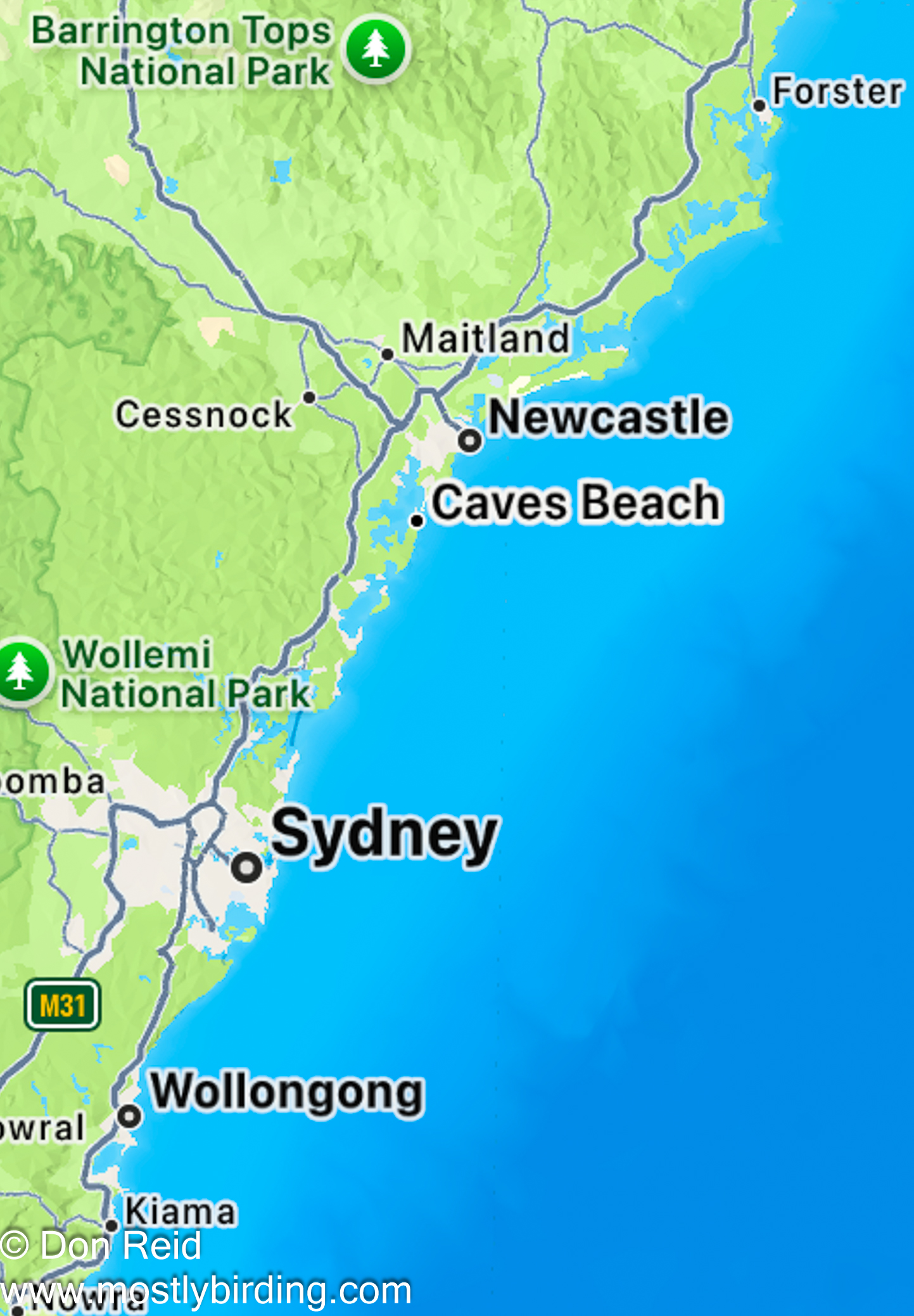
After packing up we checked out, retrieved our rental car from the valet parking service and with the destination address loaded onto google maps we set off through Sydney following the map’s “blue line” until we reached the Pacific Highway which wound through suburbia (looking uncannily like parts of Joburg) onto the Pacific Motorway. From there it was an easy drive to the turnoff to Swansea and Caves Beach.

We were too early for checkin at 3pm so looked for a coffee shop – the first one we found was closing at 2.30pm and as it was 45 minutes to go, we thought that would give us plenty of time for a coffee and slice of something nice. But that’s not how the young lady at the door saw it and insisted that we would have to do take aways if we wanted coffee and cake as they were closing! We have experienced this before, but it is still a mystery why businesses in Aussieland are often so inflexible and bound by strange rules.

Somewhat aggravated, we googled and found a bakery a few minutes away – it turned out to be a place that did not invite a sit down, but the takeaway quiches and other goodies proved to be excellent.

Next stop was the house Stephan had rented at Clipper Close, Caves Beach – we had the lower floor of a large double storey home and settled in quickly.

After chilling for a good while we set off for a walk, heading through the garden gate and down to the beach, which stretched for kms to the north and south.

Caves Beach New South Wales

In the distance we could see a rocky headland and what appeared to be the caves after which the town is named, so set out southwards in that direction.

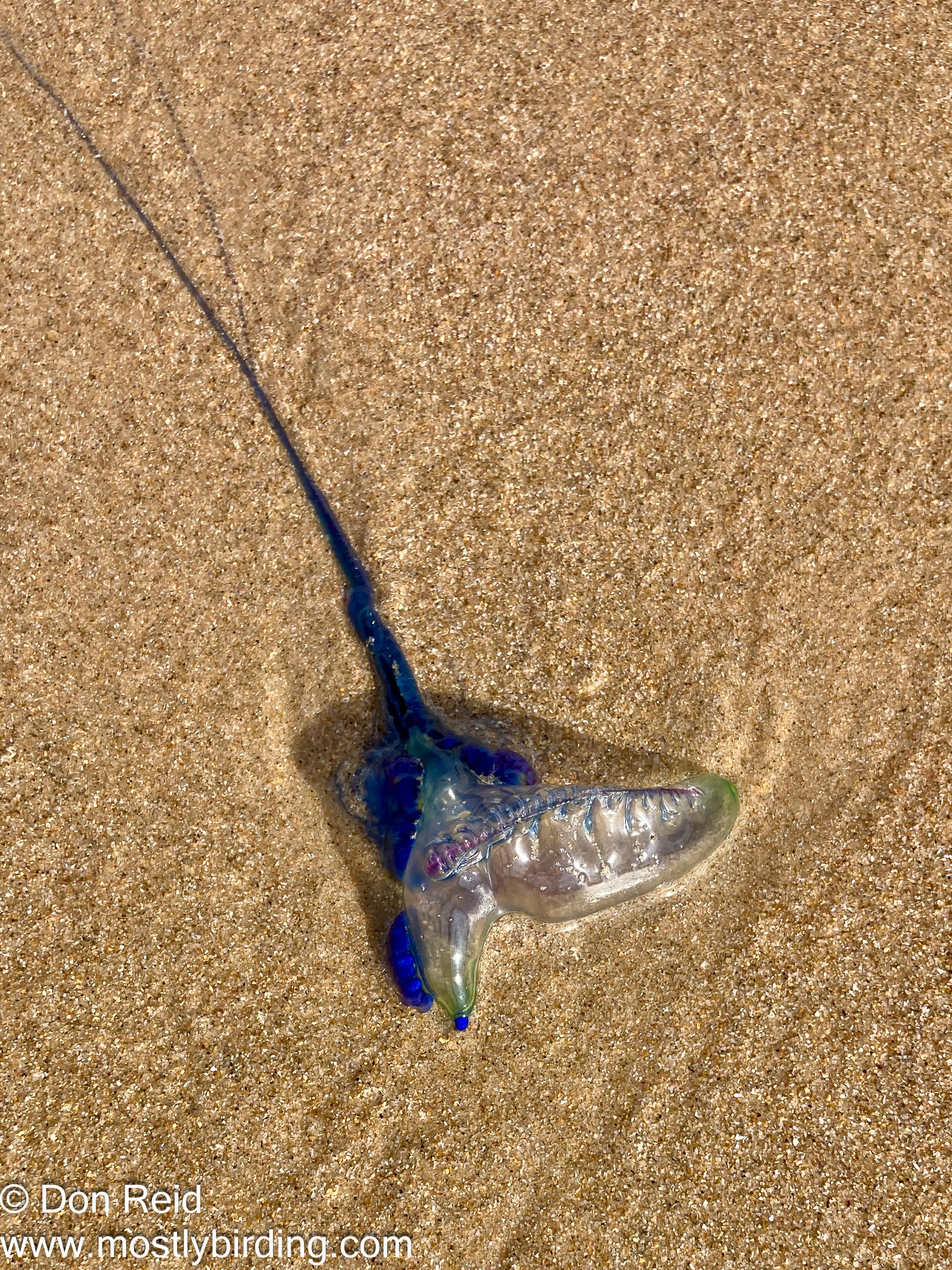
There were interesting things for the kids and us to explore along the beach – rock pools with small fish, tiny crabs, bluebottles and gulls aplenty.

Caves Beach New South Wales
Minute crab – no more than 1cm long, Caves Beach New South Wales
Bluebottle, Caves Beach New South Wales

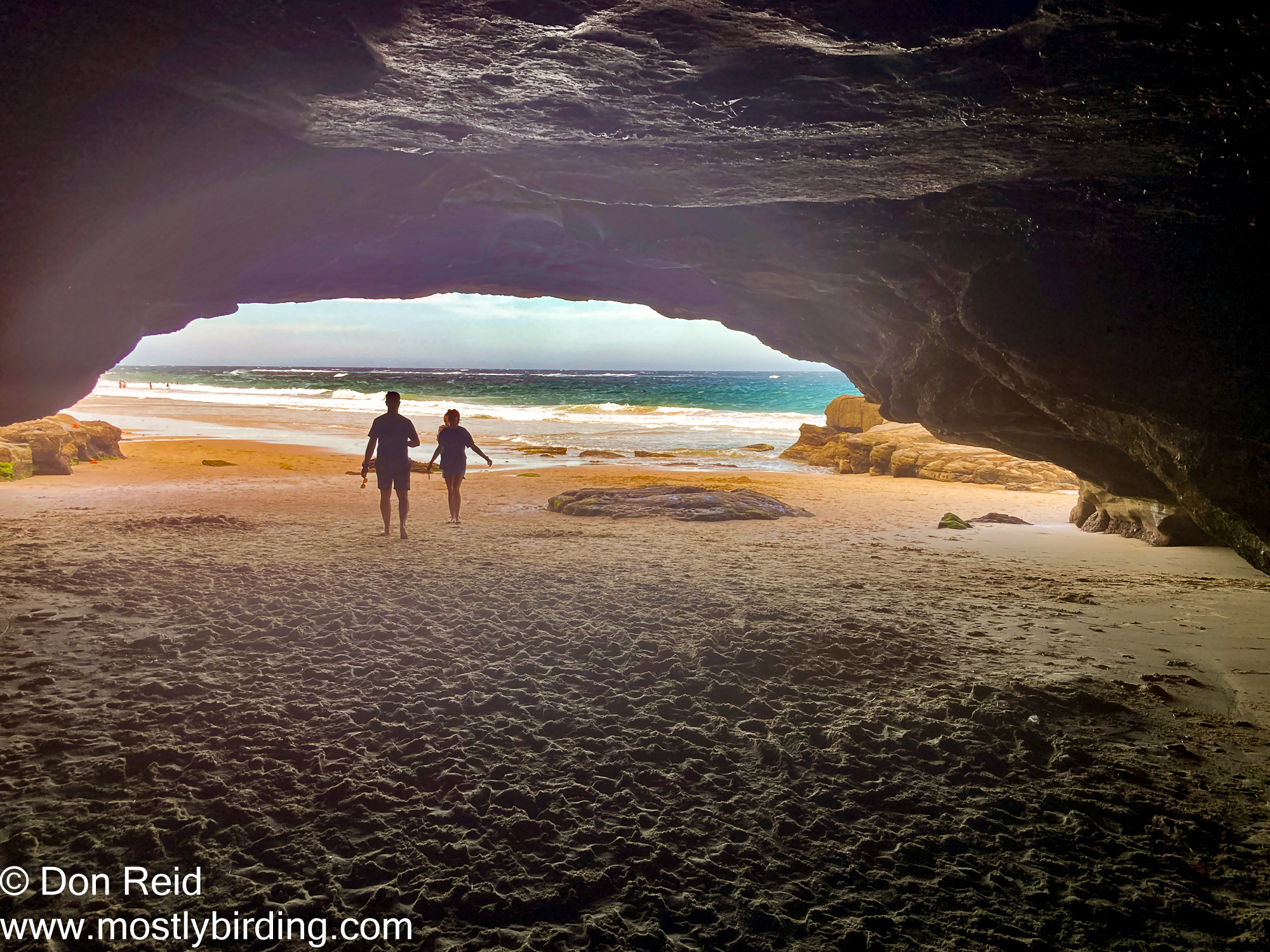
Approaching the main swimming beach we could now see the caves formed in the rocky headland and spent some time exploring them.

Caves Beach New South Wales
Inside a cave, looking out
Exploring a cave

The wind was blowing strongly as we walked back, peppering our lower legs with beach sand and by the time we got back to the house our faces and arms felt sticky from the fine sea spray in the air.

Triplist

My triplist was gaining momentum with numbers of birds seen on the way to the beach – on a small pond and in the bushy fringes. Mostly birds that I have seen on previous trips but good to make their acquaintance once again.

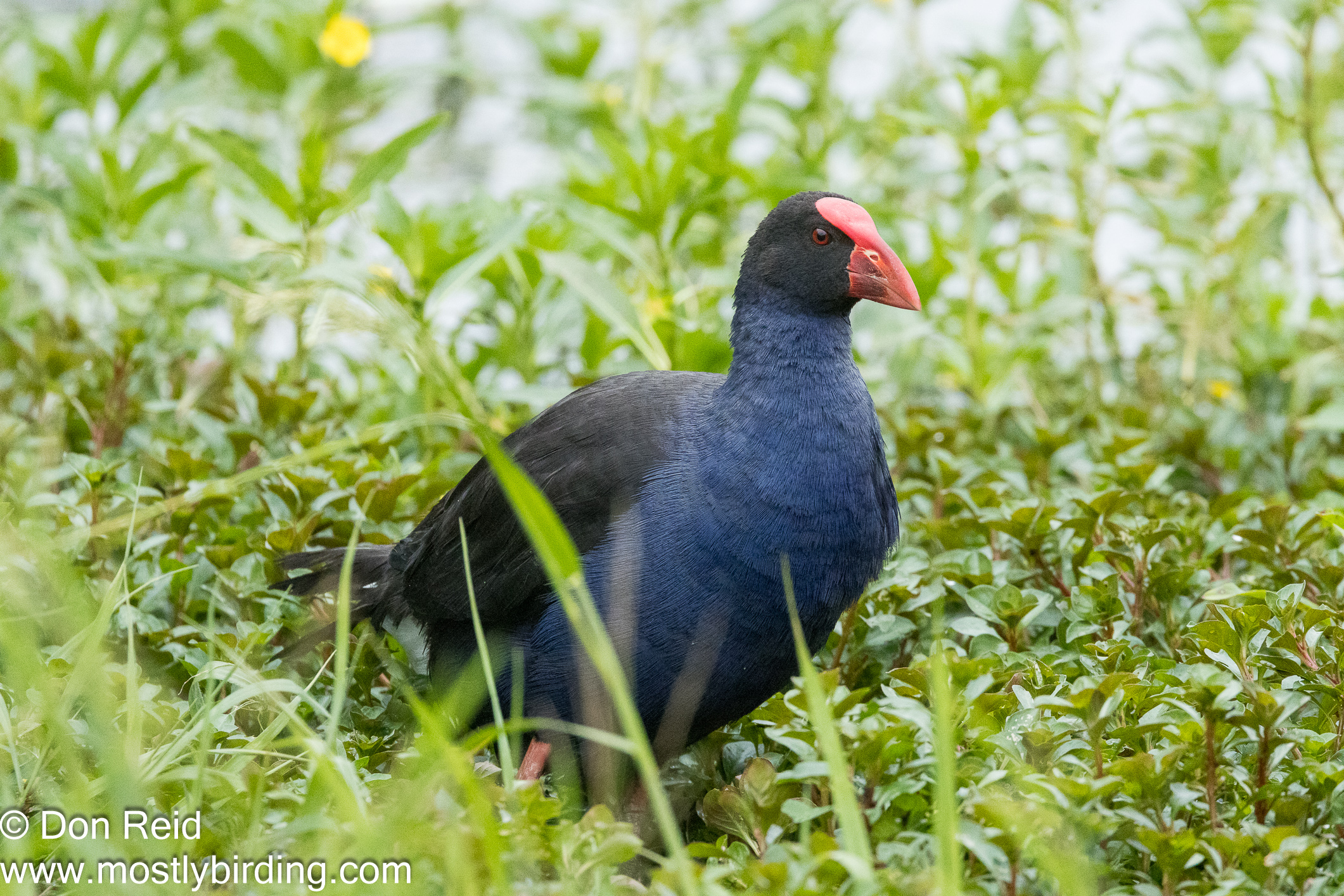
Australasian Swamphen
Porphyrio melanotus, Caves Beach New South Wales
Dusky Moorhen
Gallinula tenebrosa, Caves Beach New South Wales
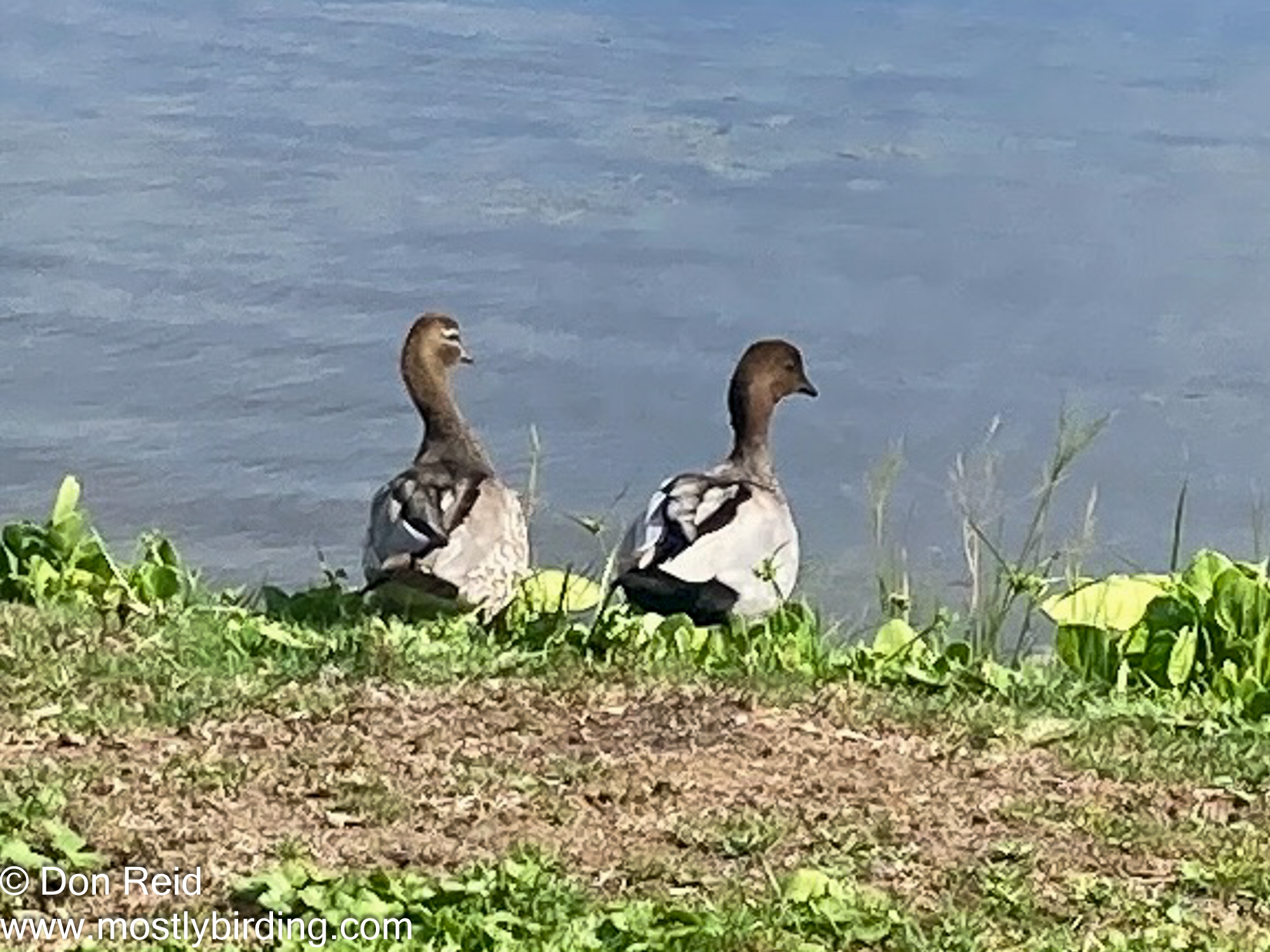
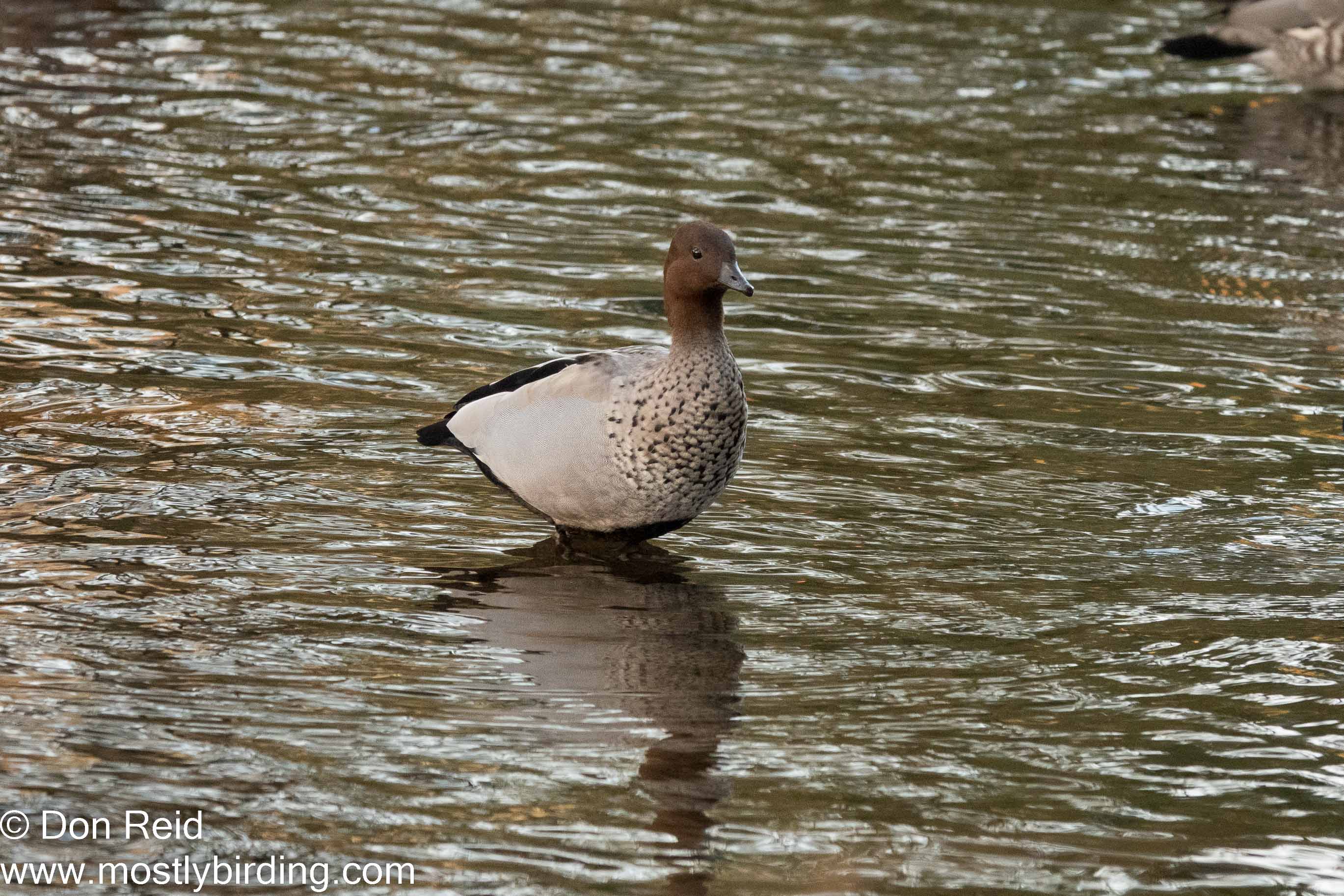
Maned Duck
Chenonetta jubata, Caves Beach New South Wales (taken with Iphone)
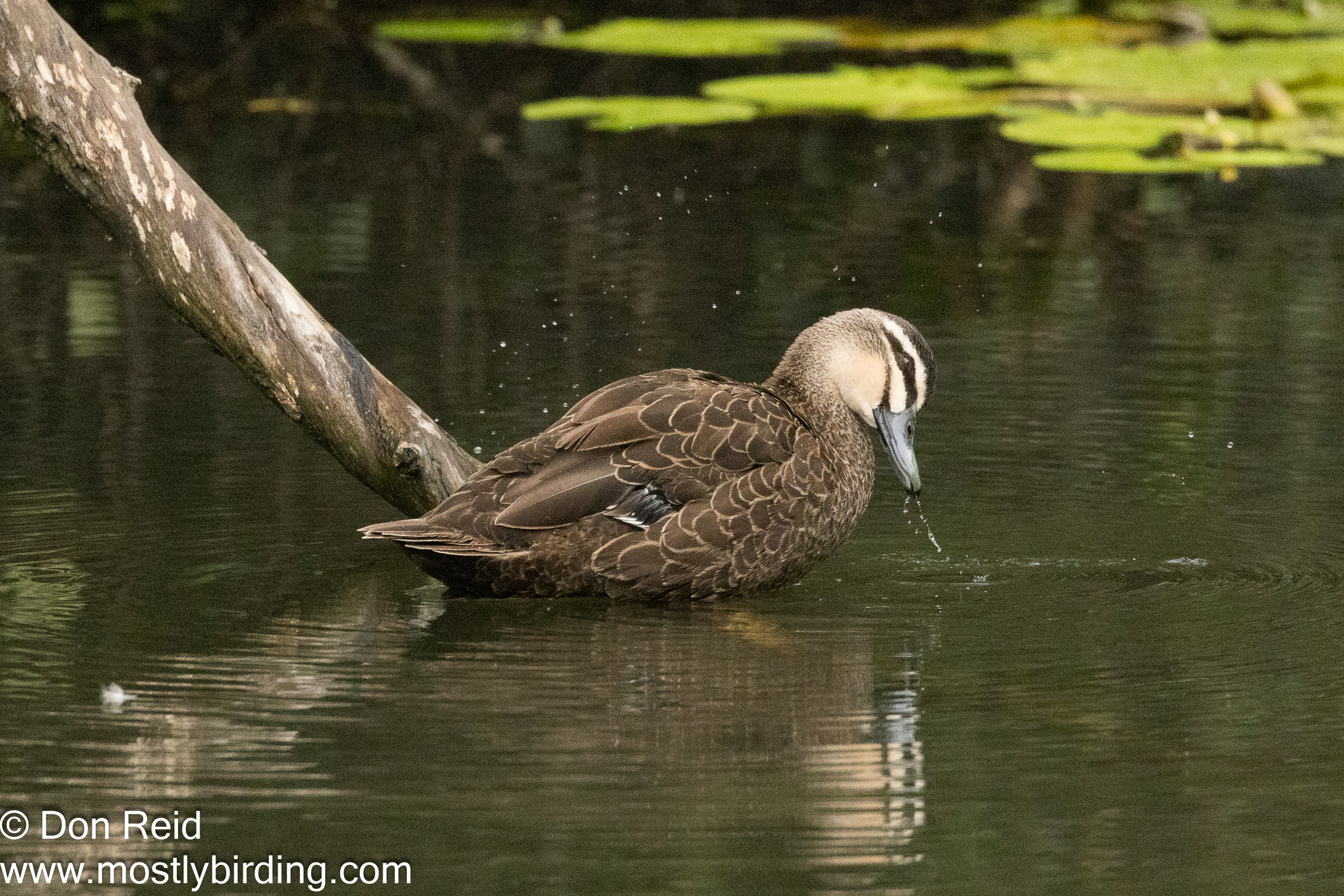
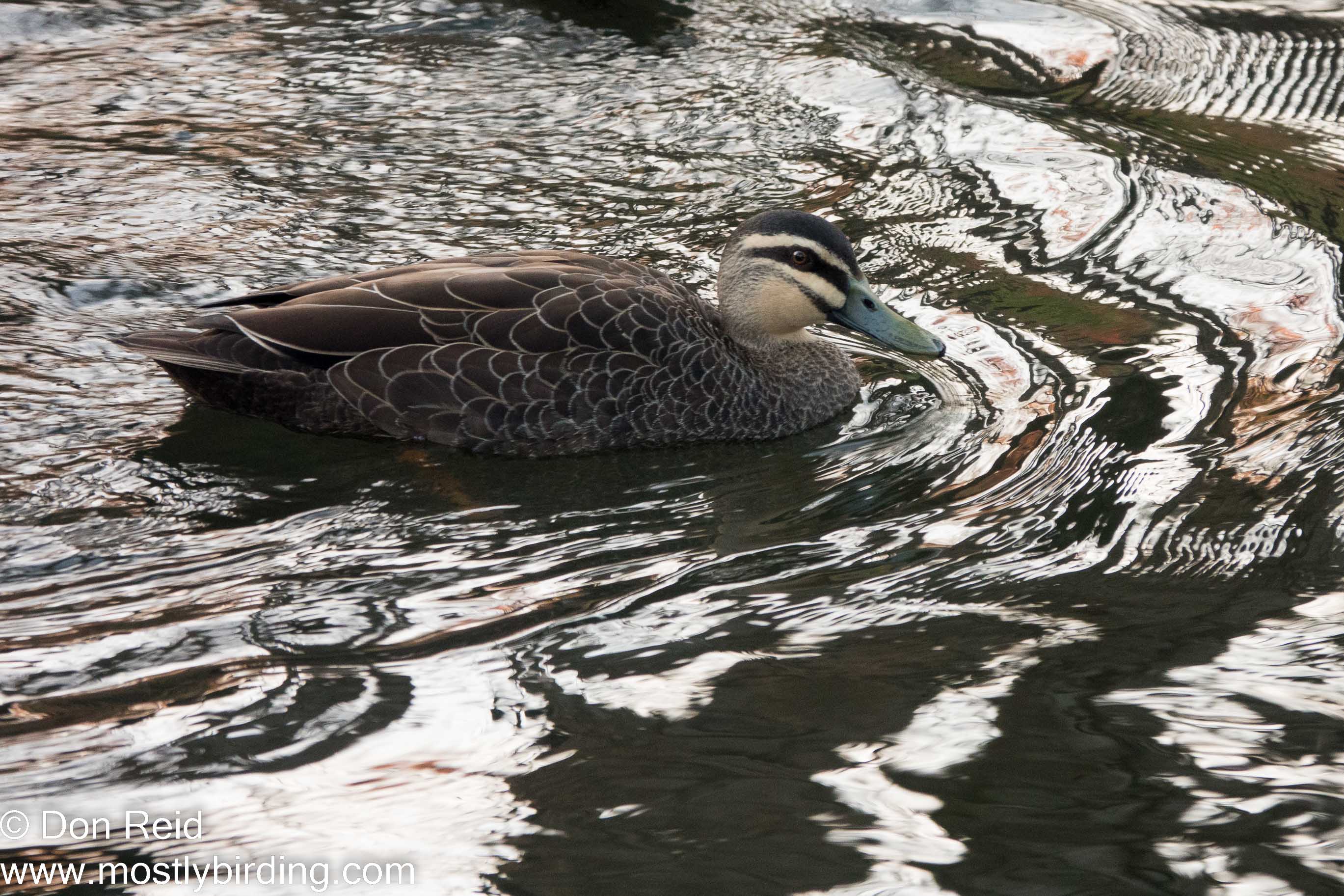
Pacific Black Duck
Anas superciliosa, Caves Beach New South Wales

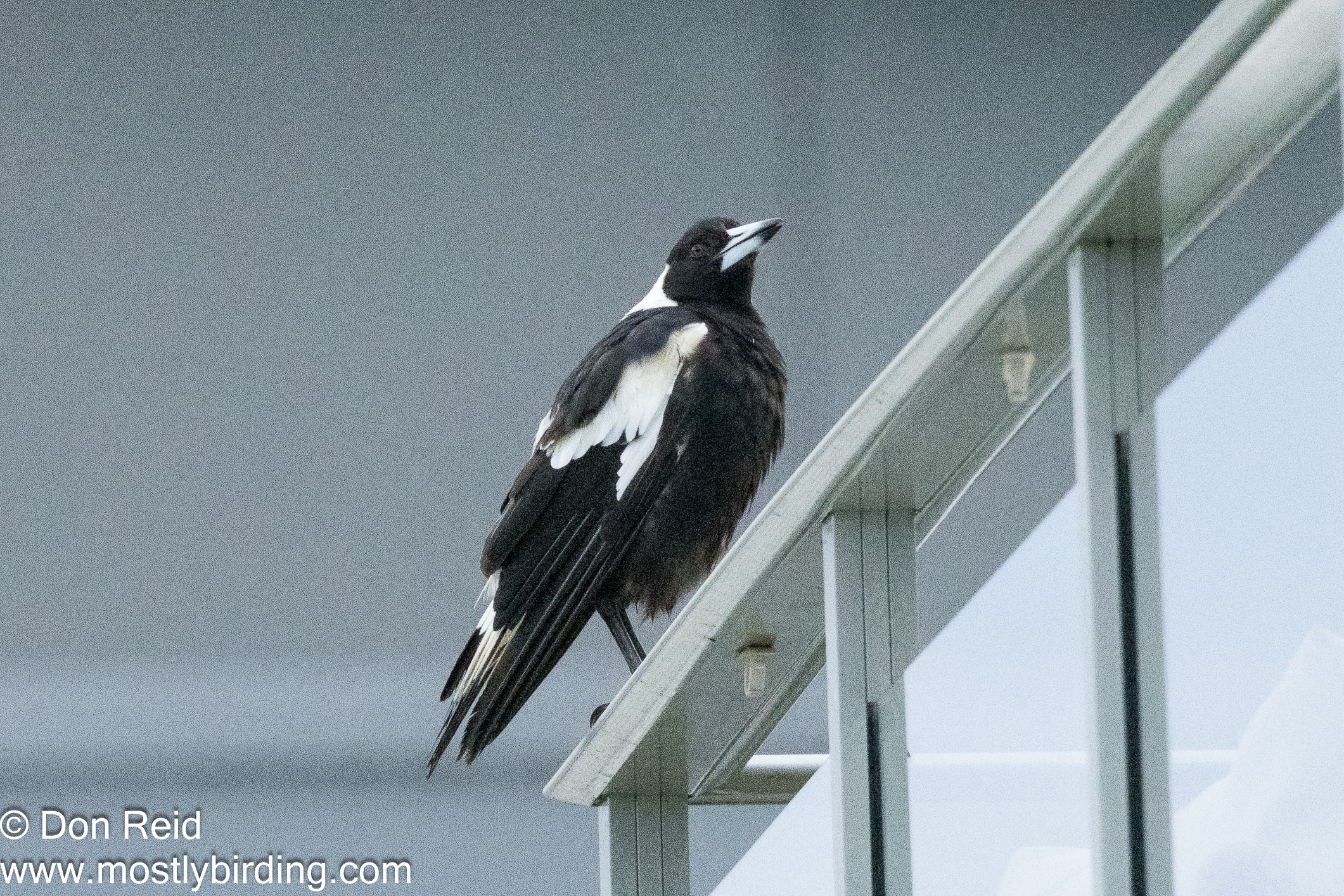
Common everywhere, the Magpie is nevertheless a fascinating bird that makes you wonder ‘who is looking at whom?’

Australian Magpie
Gymnorhina tibicen, Caves Beach New South Wales

And you can’t help loving the Willie Wagtail with its side-to-side waggle of the tail announcing its identity from afar

Willie Wagtail
Rhipidura leucophrys, Caves Beach New South Wales

Birds I did not manage to photograph but new to the triplist :

  • Great Cormorant over the beach
  • A pair of Australian Ravens on the beach
  • Common Myna (urgh)

Thursday – Caves Beach – a Rainy day

Awake at 7am to overcast weather (getting later each morning as our body clock adjusts), we spent the first hour or two sipping coffee/tea and enjoying the freshness of the morning after a few hot muggy days.

Later the rain came down and the wind increased – no one wanted to do anything energetic, so the day passed with plenty of chilling through teatime and lunchtime with an extended snooze in the afternoon. By late afternoon, the rain had subsided, and I ventured out to explore the area between the house and the beach, in the process discovering a small lake concealed by a ring of trees.

Caves Beach New South Wales

A small pathway between the trees led to the water’s edge where several Black Ducks, Moorhens and Coots were paddling about serenely. In the trees a pair of Willie Wagtails were hopping about while Cormorants, Herons and Egrets flew overhead.

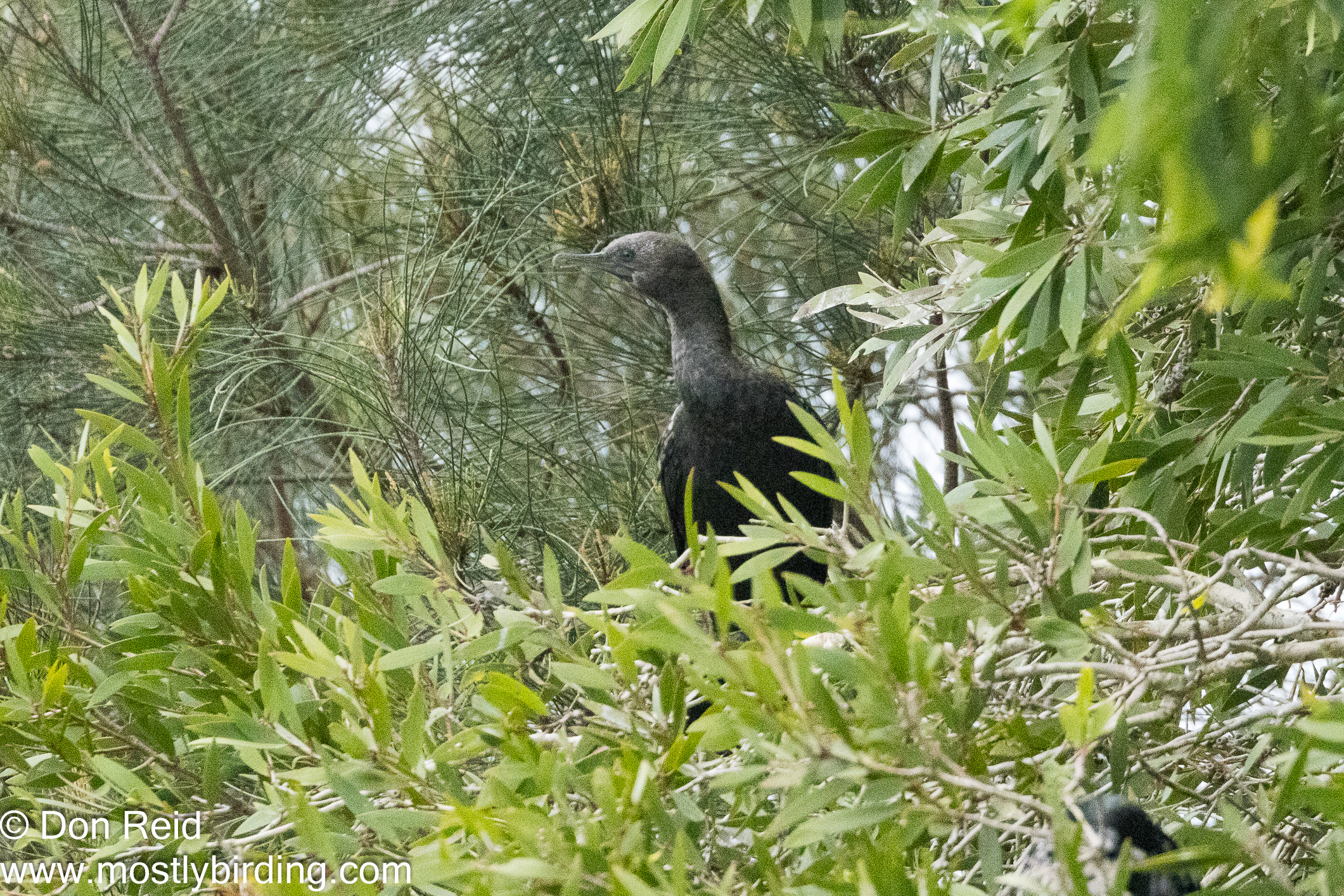
Little Black Cormorant
Phalacrocorax sulcirostris, Caves Beach New South Wales

I had left my camera at the house, so headed back to fetch itand persuade Stephan to join me to investigate further. We did a full circuit of the lake and added a few more species to the list.

Triplist –

Around the house – no photos taken due to the rain

  • Nankeen Kestrel flying past
  • Australian King Parrot – ditto
  • New Holland Honeyeater
  • Crested Pigeon
  • Masked Lapwing

At the lake –

Eurasian Coot
Fulica atra, Caves Beach New South Wales
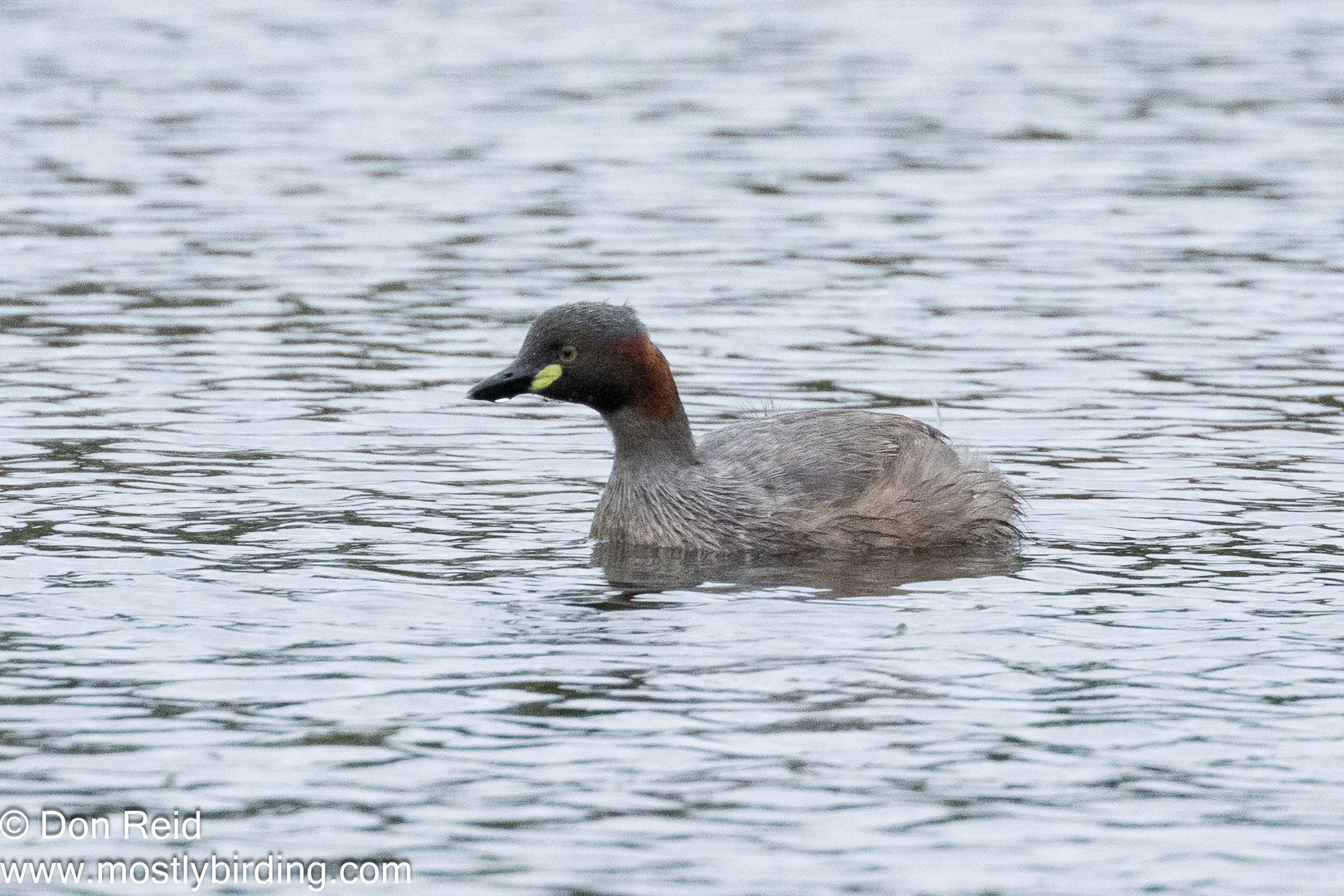
Australasian Grebe
Tachybaptus novaehollandiae, Caves Beach New South Wales
Chestnut Teal
Anas castanea, Caves Beach New South Wales
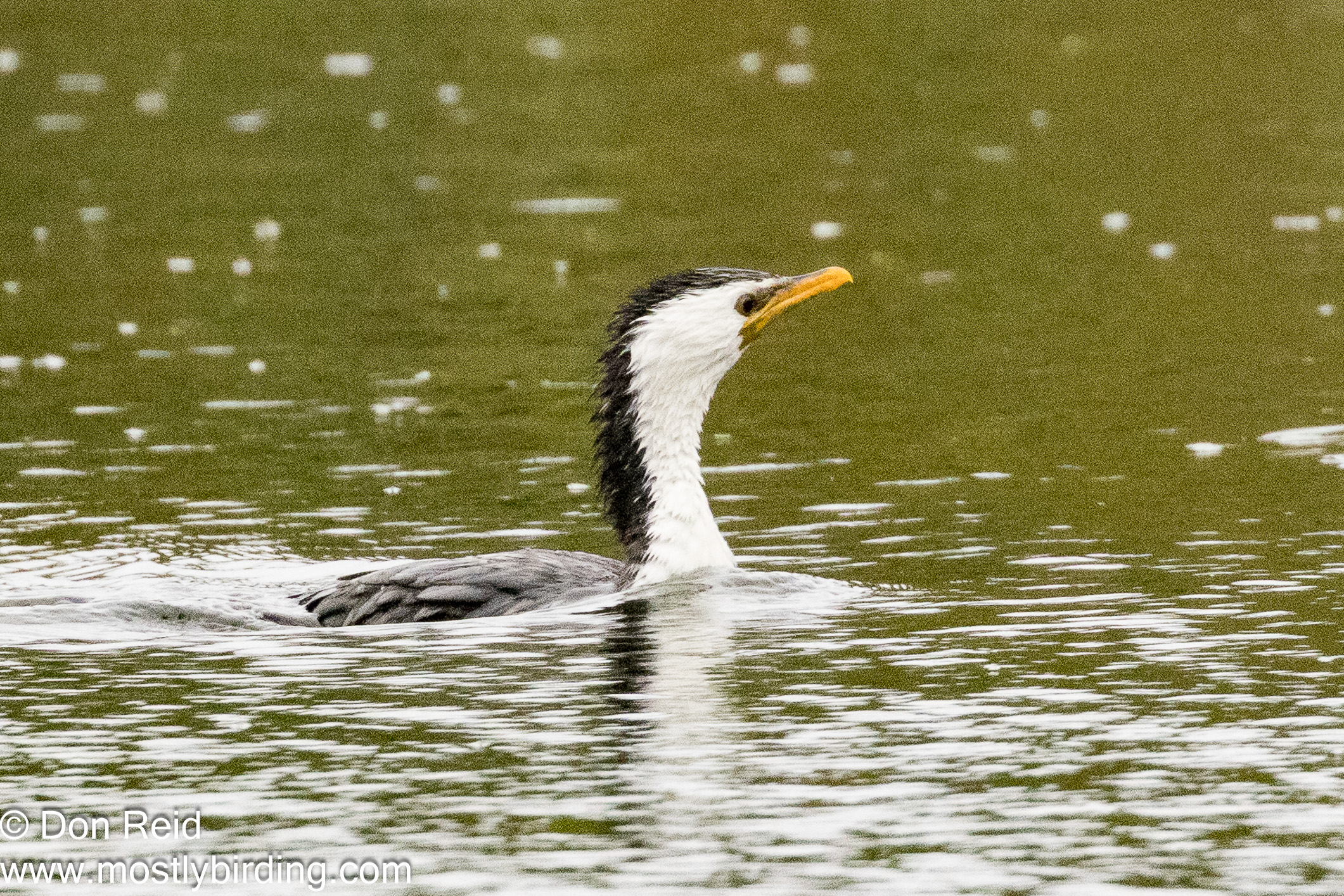
Little Pied Cormorant
Microcarbo melanoleucos, Caves Beach New South Wales

Other stuff:

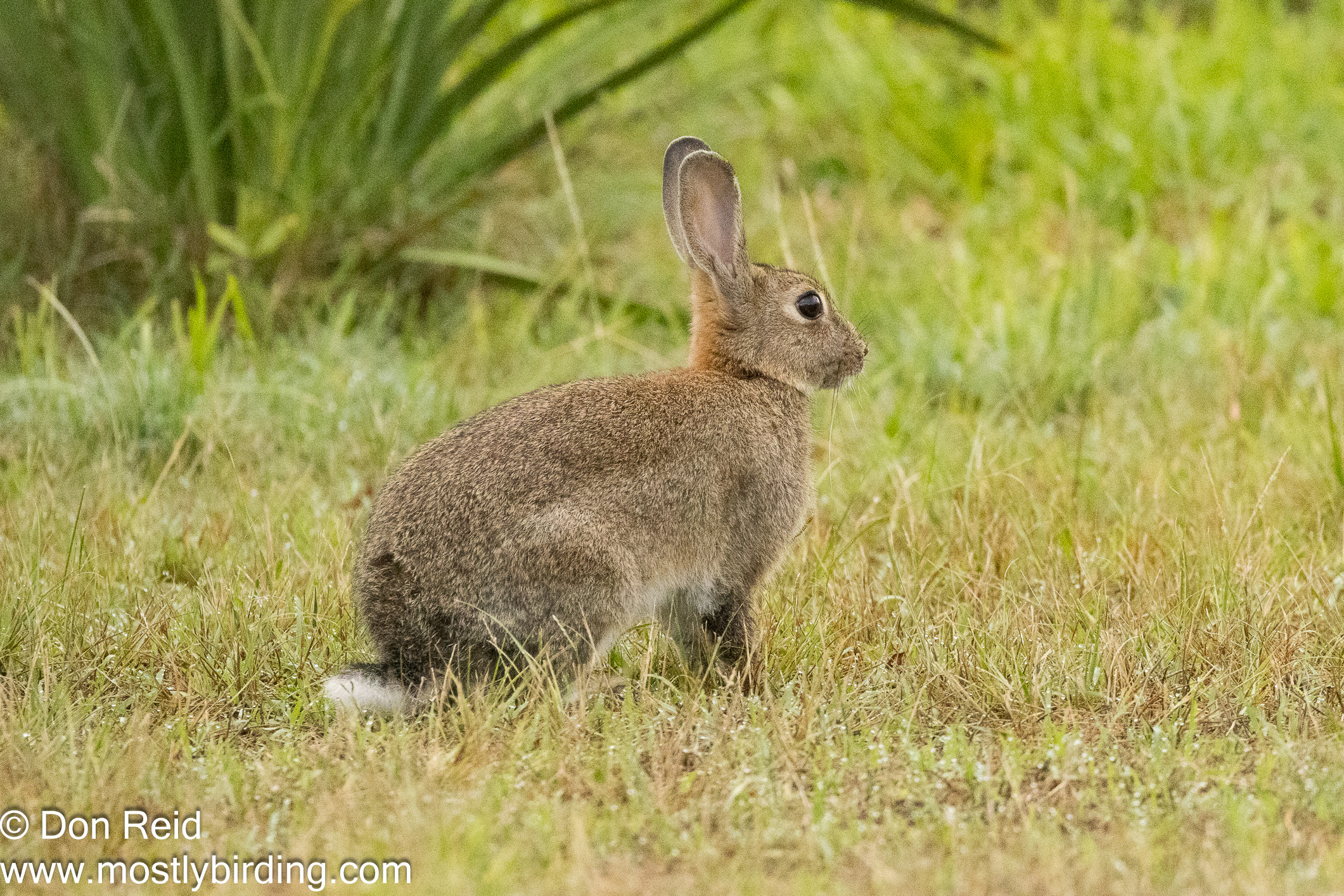
We found a few Brown Rabbits near the house – a species introduced from Europe in the 1800’s

Brown Rabbit,
Caves Beach New South Wales

Tomorrow, we continue our road trip up the east coast to Nambucca Heads

Australia May 2022 – Bright and Beautiful (Part 4)

Bright to Sale

I wasn’t really planning to add another Part to this story, but there were enough interesting things on our trip back to Sale to make it worth another one – and it was a lot less stressful than the initial trip.

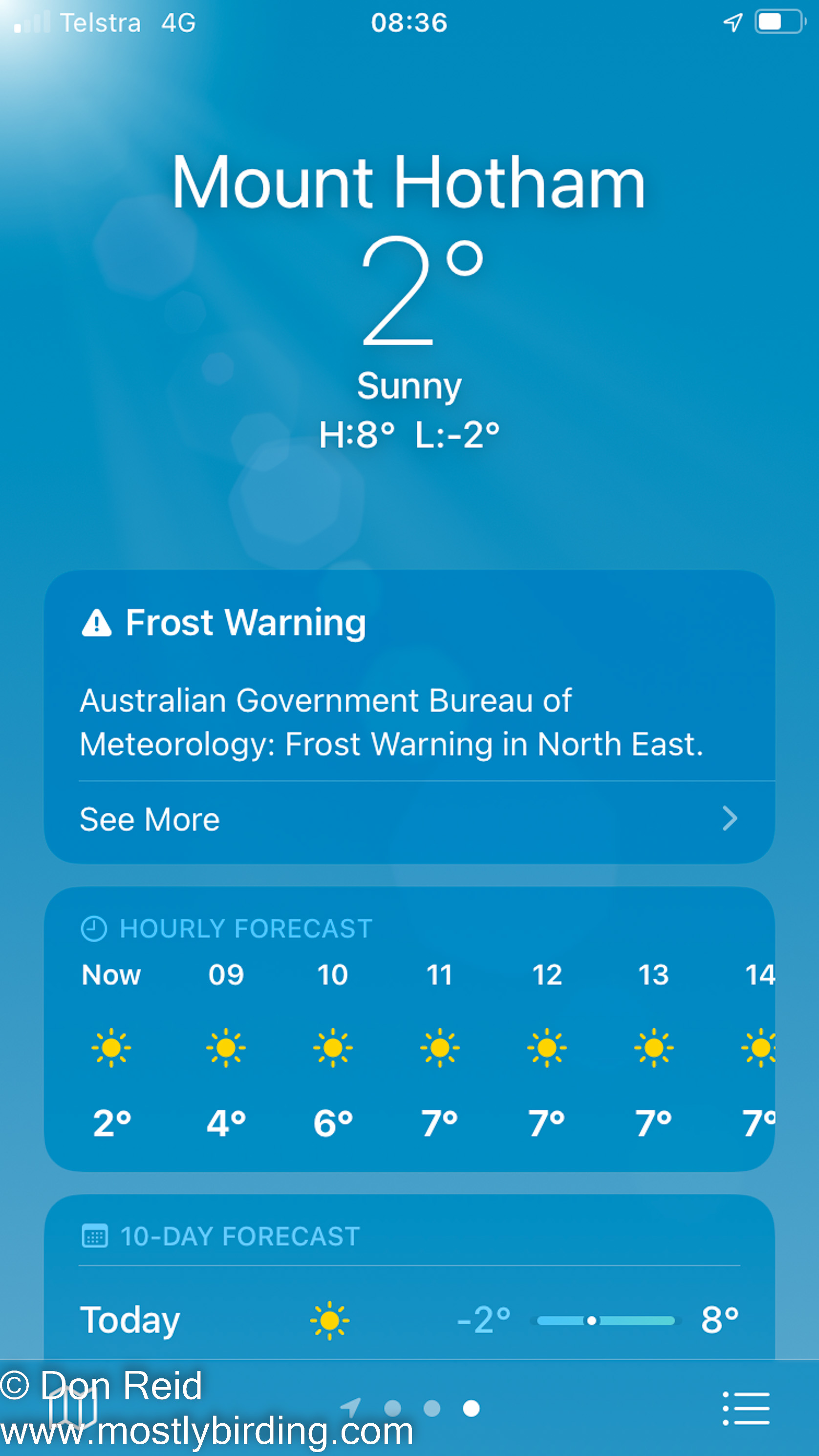
I had been checking the weather forecast for our return trip every day since we arrived in Bright and it seemed we were in for sunny skies most of the way, including through Mount Hotham which had caused us several types of panic on the way there with heavy snow falls.

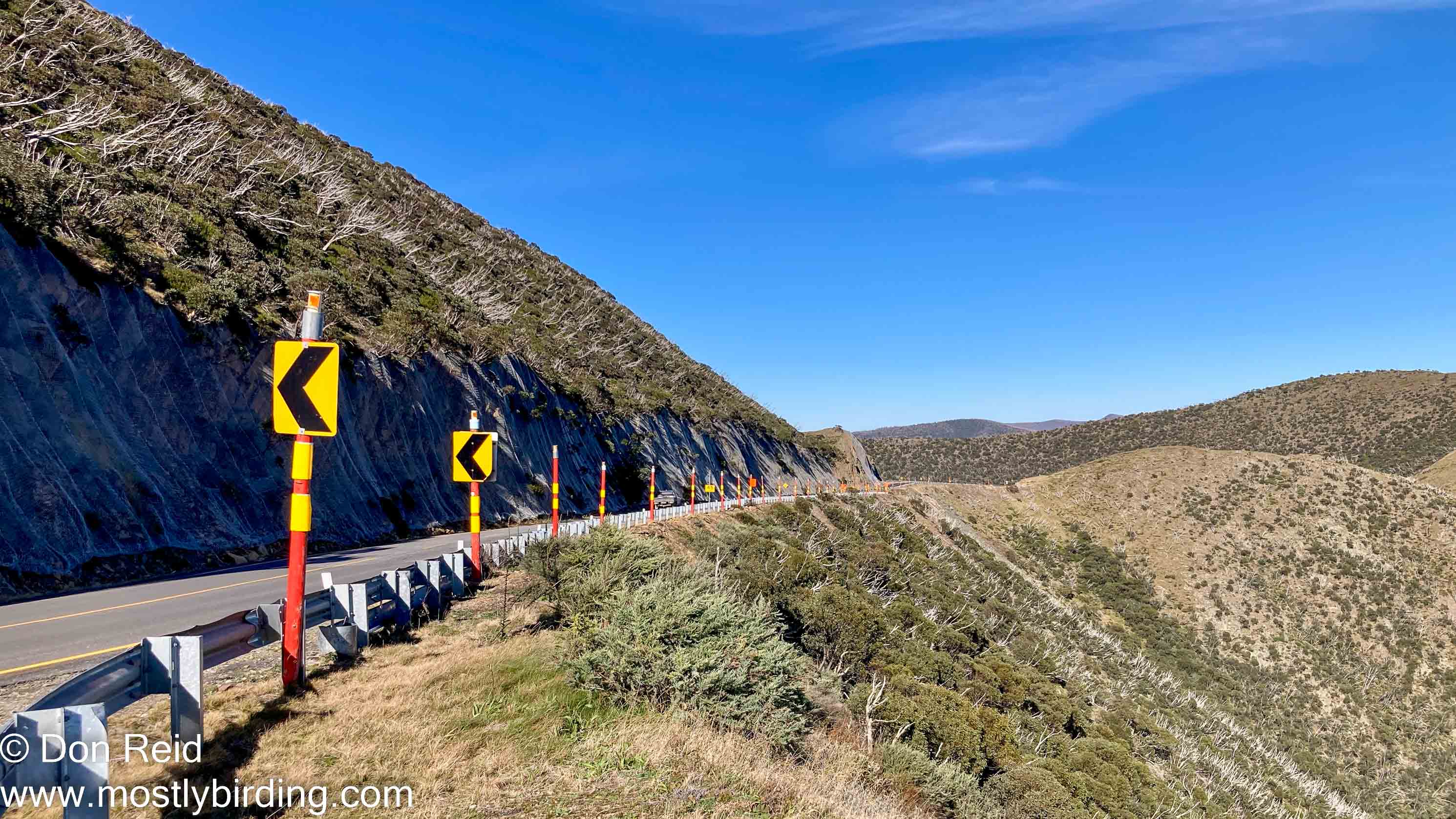
We left Bright at around 9.45 am and stopped in Mount Hotham an hour later, after negotiating what seemed like a 1000 turns in the road.

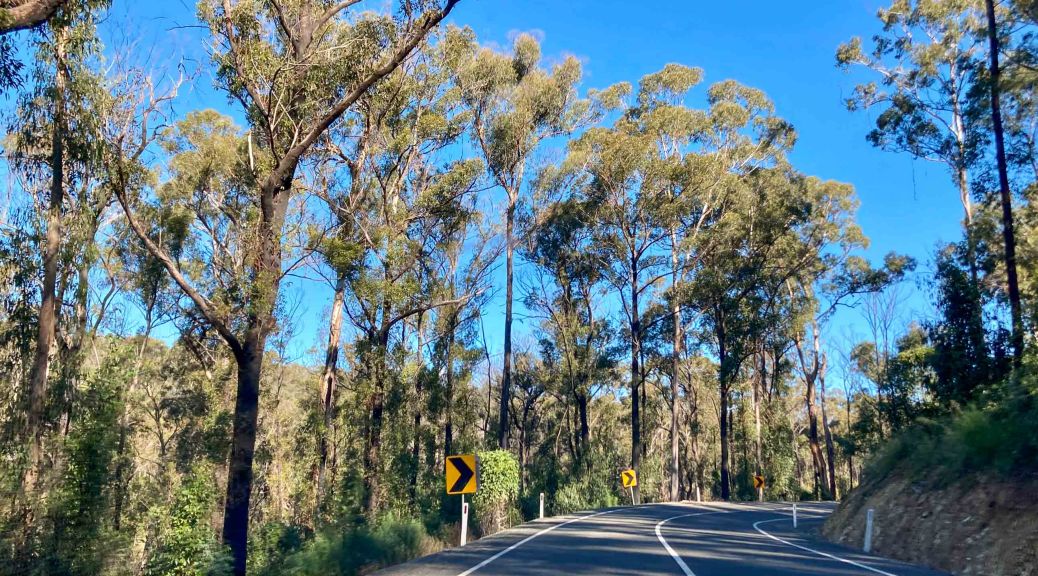
On the way to Mount Hotham, Victoria – those poles are there to indicate where the edge of the road is when the snow is deep!

Along the way we stopped at a viewpoint which gave spectacular views across the valley and to the mountains beyond

View across to Mount Hotham, Victoria

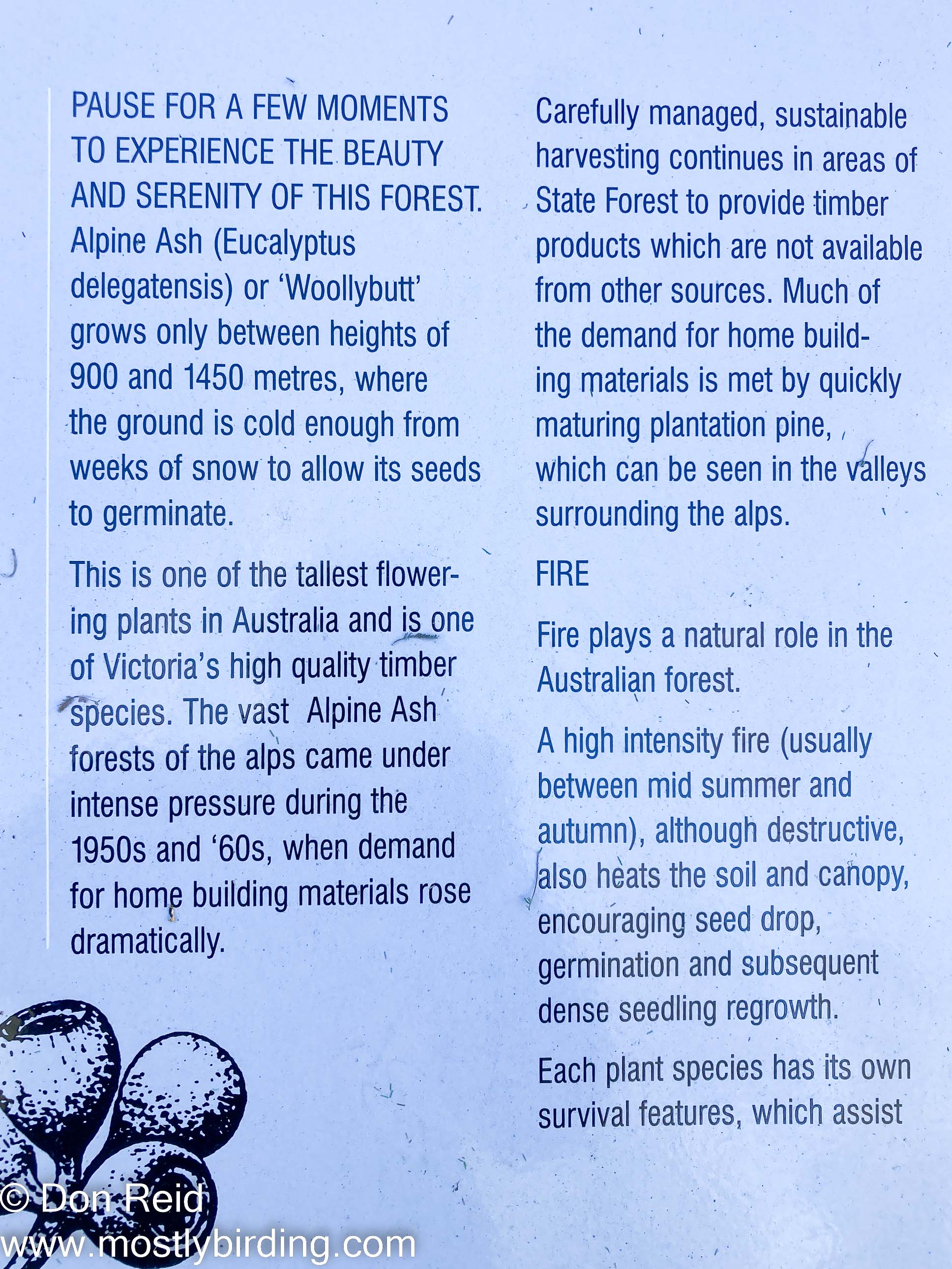
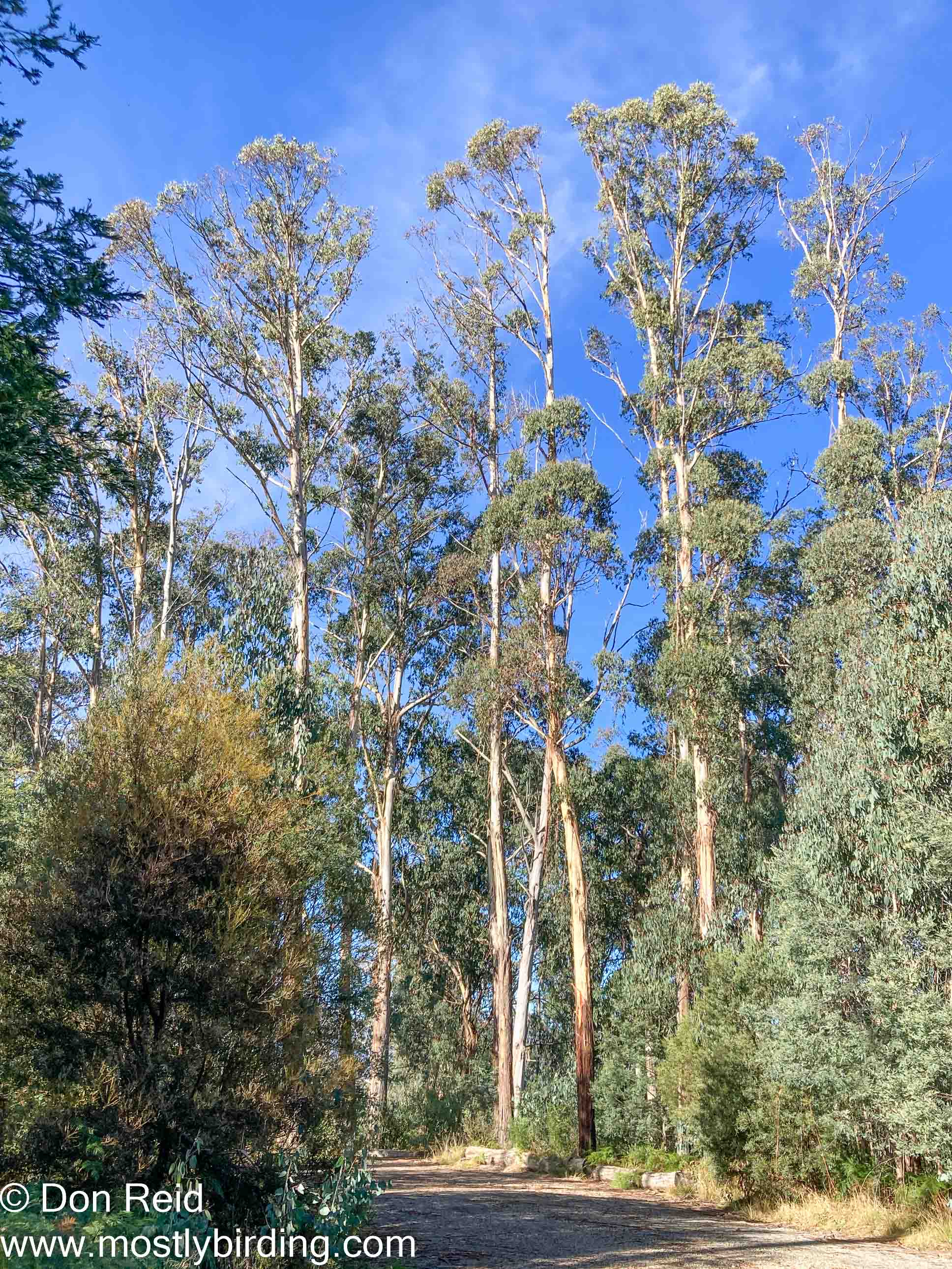
Some way down the road we stopped briefly to have a look at some trees – Oh No, we don’t need more trees, we thought – and more Eucalyptus at that. Well, yes but these particular trees were special – and just to confuse us we found they were called Alpine Ash. We had to admit they were handsome trees.

Alpine Ash trees, near Mt Hotham Victoria

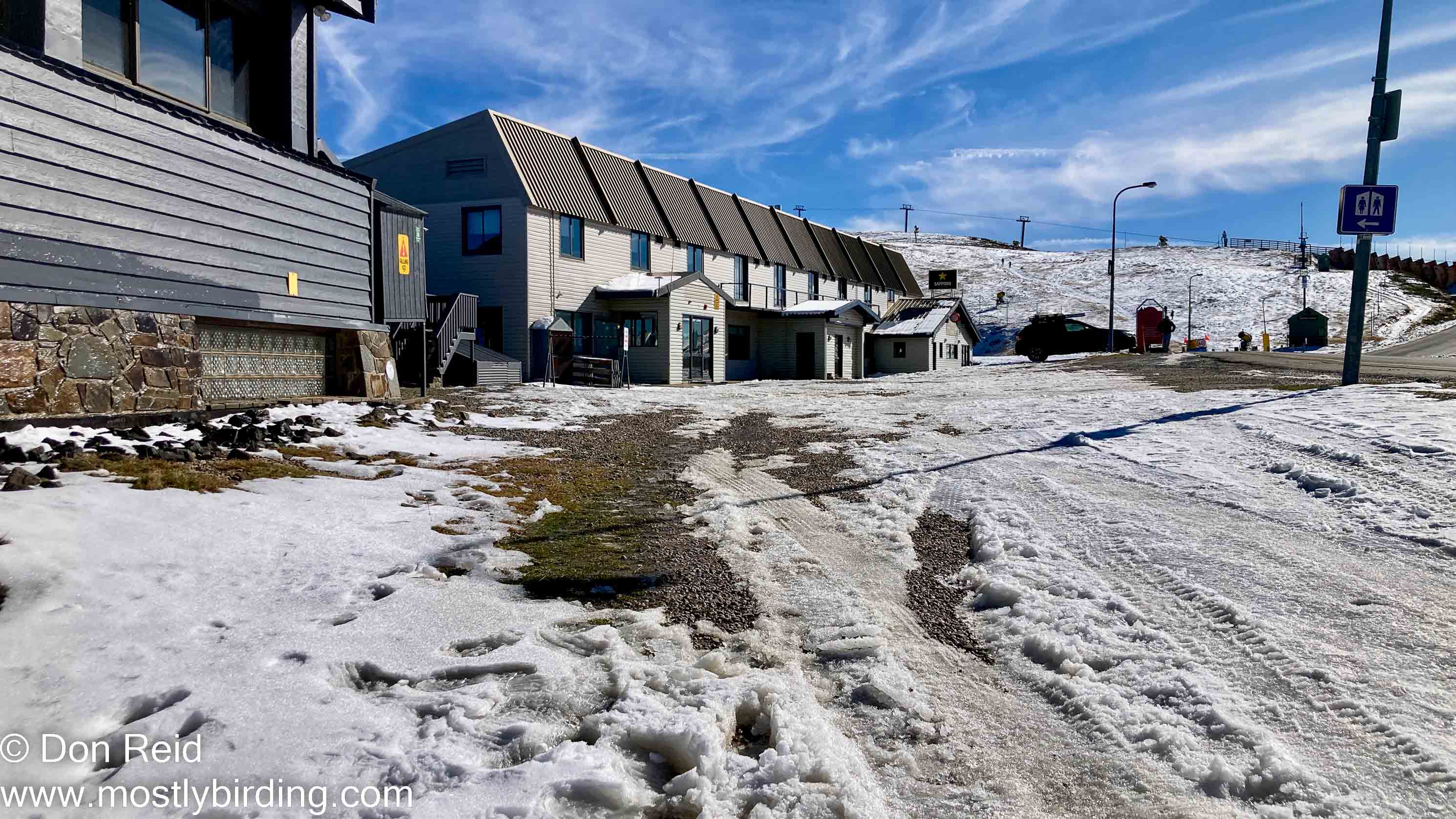
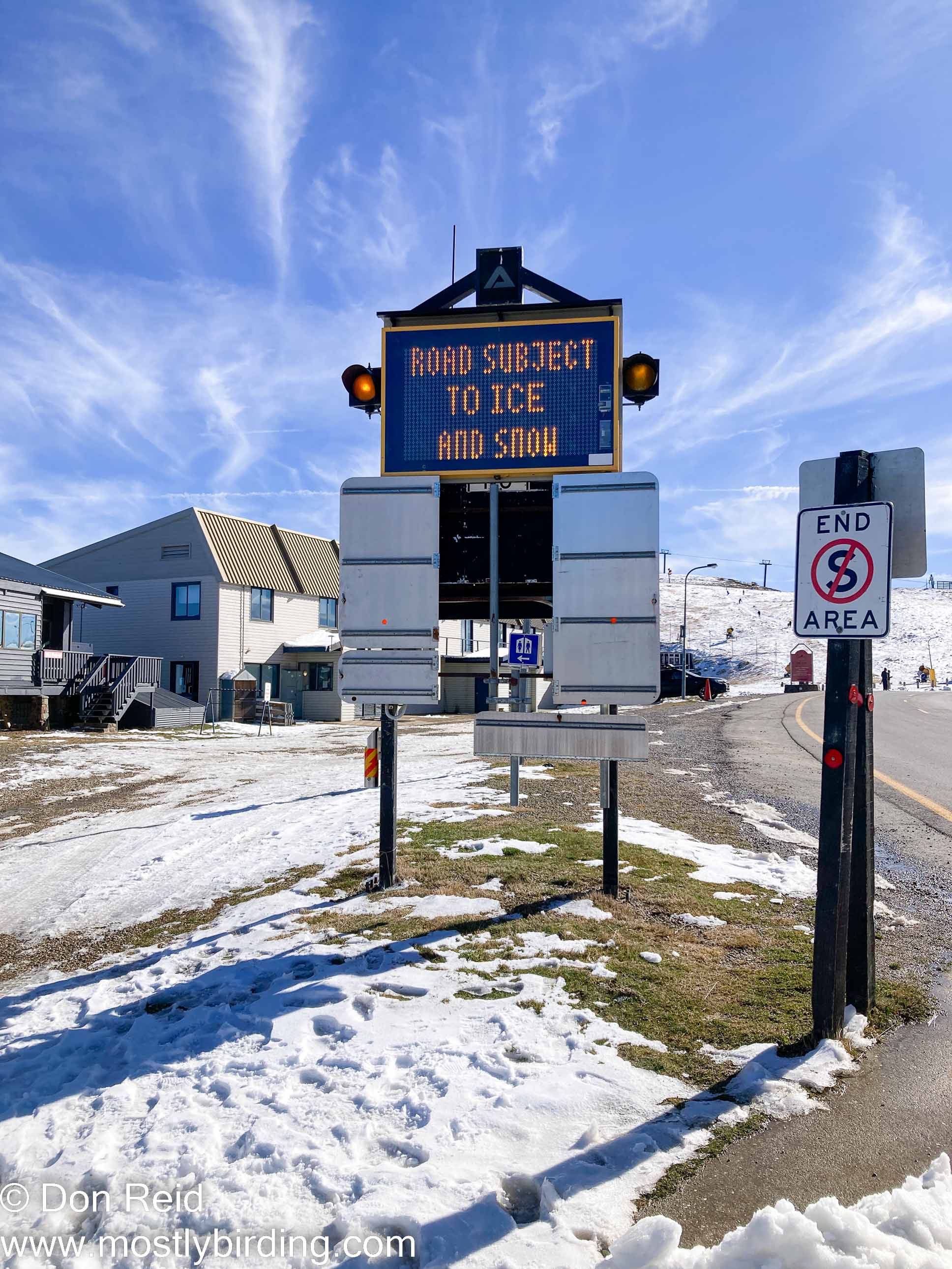
Although there were still remnants of snow around in Mt Hotham and even some hardy types tobogganing down one of the snow-covered hills adjoining the town, the bright, sunny (yet very chilly) weather was in complete contrast to when we had passed through a few days earlier.

Mount Hotham, Victoria

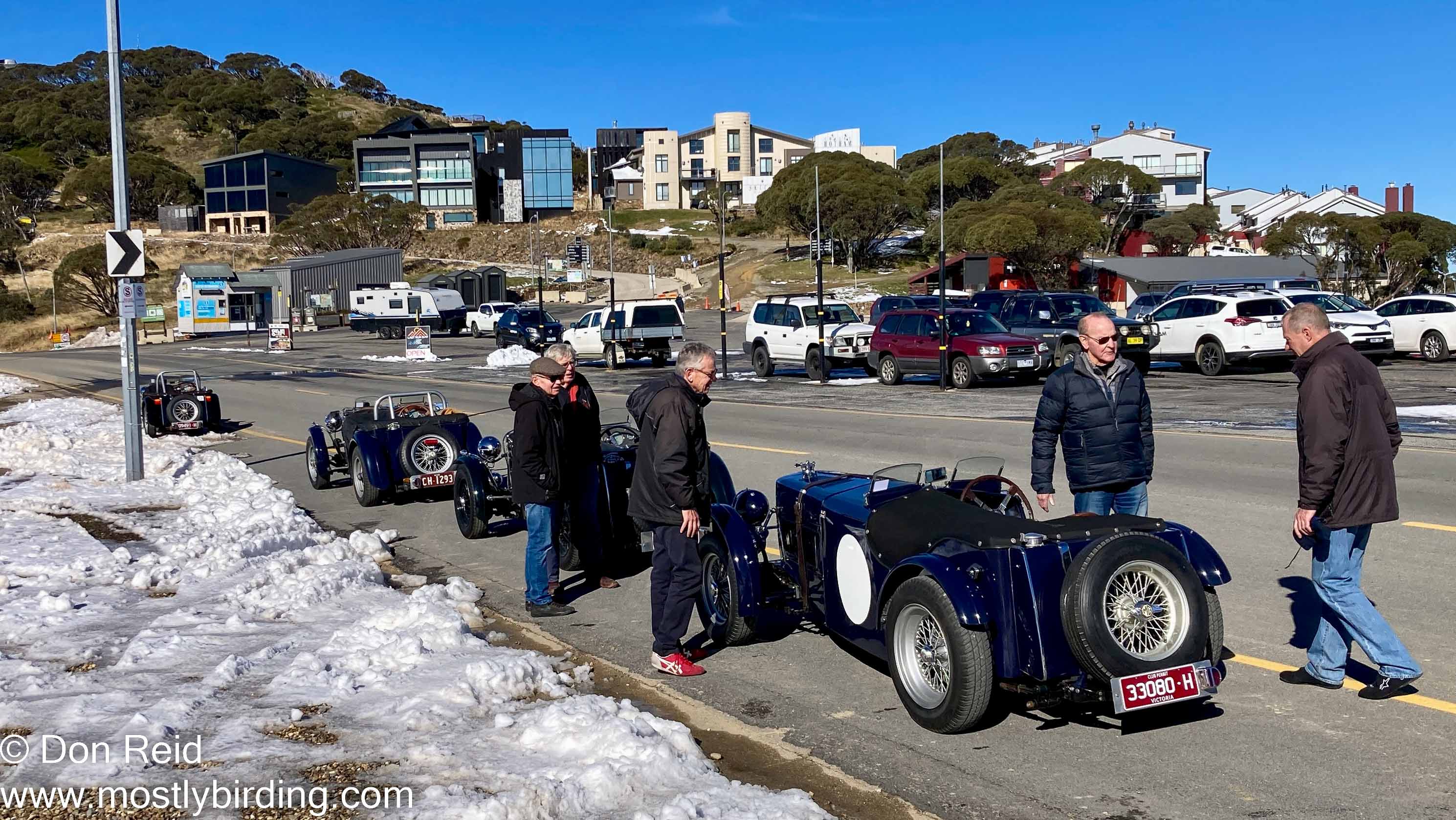
We pulled off the road to enjoy our tea and a muffin – and the sight of four vintage MG Sports cars from the early Fifties

MG Special, Mount Hotham, Victoria

Chatting to one of the owners he explained they were a group of enthusiasts who had all modified their old MG’s with uprated engines, suspension and wheels – which would explain why they went roaring past us on a couple of the last bends before Mt Hotham, after I pulled over to the left verge to let them through.

MG Special, Mount Hotham, Victoria

I could see them going slightly sideways through some of the bends thereafter, despite – or perhaps because of – the wettish surface of the tar. In any case I just love old cars and walked around these beauties having a good look and taking in that throaty roar when they started up.

It was a day for car club outings, as at our next brief stop in Omeo we came across a group of 6 or 7 lovely Citroen 2CV’s in the parking area.

Citroen 2CV, Omeo Victoria

And they’re off! But not very quickly……

Citroen 2CV, Omeo Victoria

Leaving Omeo I spotted a pair of White-faced Herons in a roadside field and pulled off for a quick photo – I only just caught them as they took off almost straight away (and the sun was on the wrong side, hence the shadows)

White-faced Heron Egretta novahollandiae, Omeo Victoria

Another bird caught my eye some way further down the road, perched on a high branch so I couldn’t resist stopping for another quick shot

Laughing Kookaburra Dacelo novaguineae, Omeo Victoria

Apart from that the trip was uneventful but tiring as the continuous curves and ups and downs require utmost concentration.

Double Bridges, Victoria

For some reason the small towns we passed through after Omeo don’t have any restaurants or even coffee shops, so we had to wait to reach Bairnesdale where we had a late lunch of Hungry Jacks burgers, before tackling the last stretch to Sale.

We arrived back in Sale pleased that we had seen a bit more of Victoria, in particular the “Alpine” region and looking forward to our last two weeks in Australia

Australia May 2022 – Bright and Beautiful (Part 3)

Bright Area

A late lie-in and a slow time getting ourselves ready meant we only started our Bright “discovery” around midday with a drive around the town to orientate ourselves, stopping at the river and the park to take in the scenery

Bright is known as a tourist and holiday destination with a focus during autumn on the multitude of European trees that turn streets into multi-hued avenues and add a bright splash of colour to many gardens and parks.

Bright Victoria
Autumn colours, Bright Victoria
Bright Victoria

We enjoyed driving slowly along some of the streets to take in the splendour and to add to the pleasure a few significant birds crossed our path.

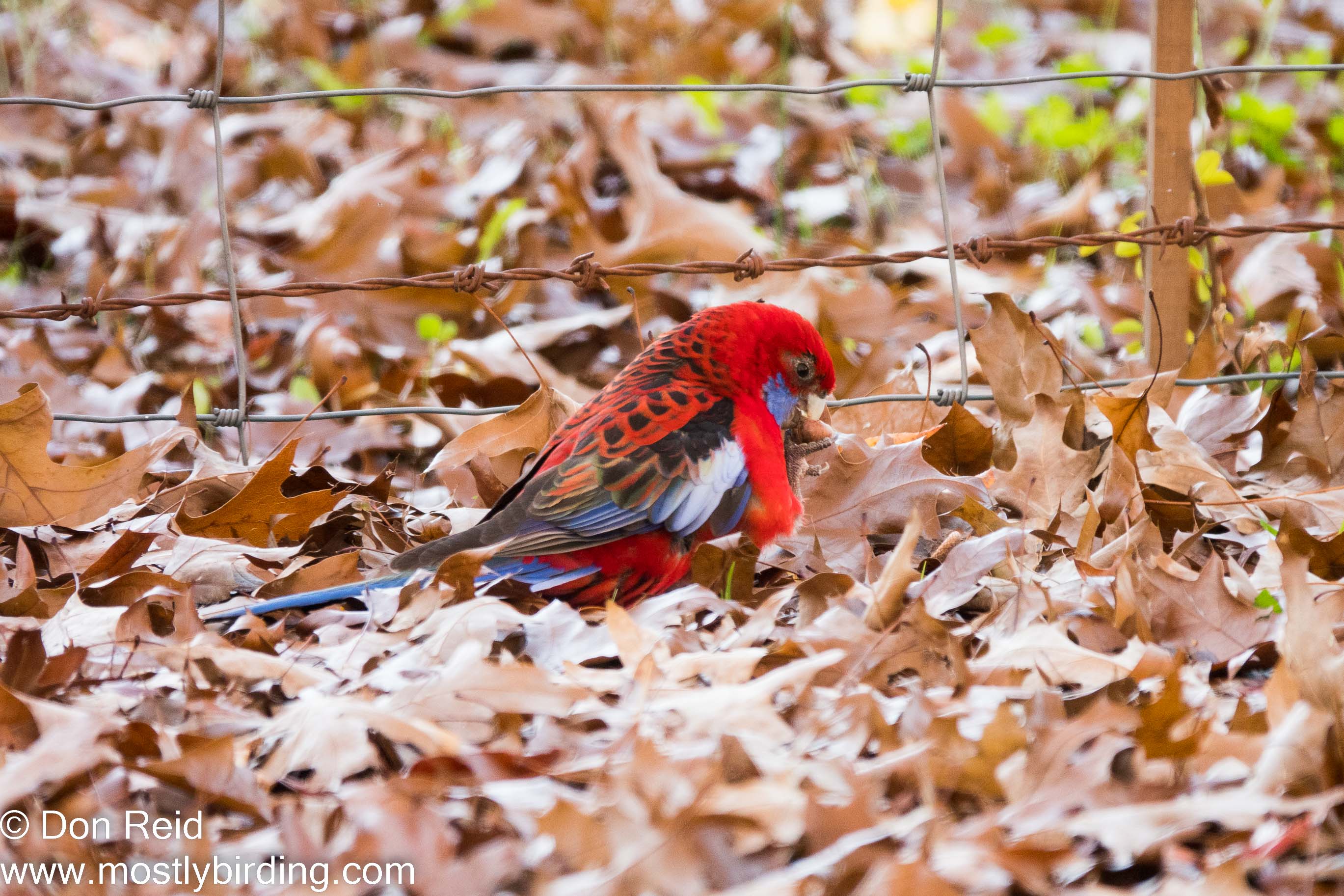
The first of these was a Crimson Rosella, scratching in leaf litter at the side of the road, coming up with what looked like acorns or nuts and holding them parrot fashion in its claws while consuming the “meat” of the nut.

Crimson Rosella Platycercus elegans, Bright Victoria

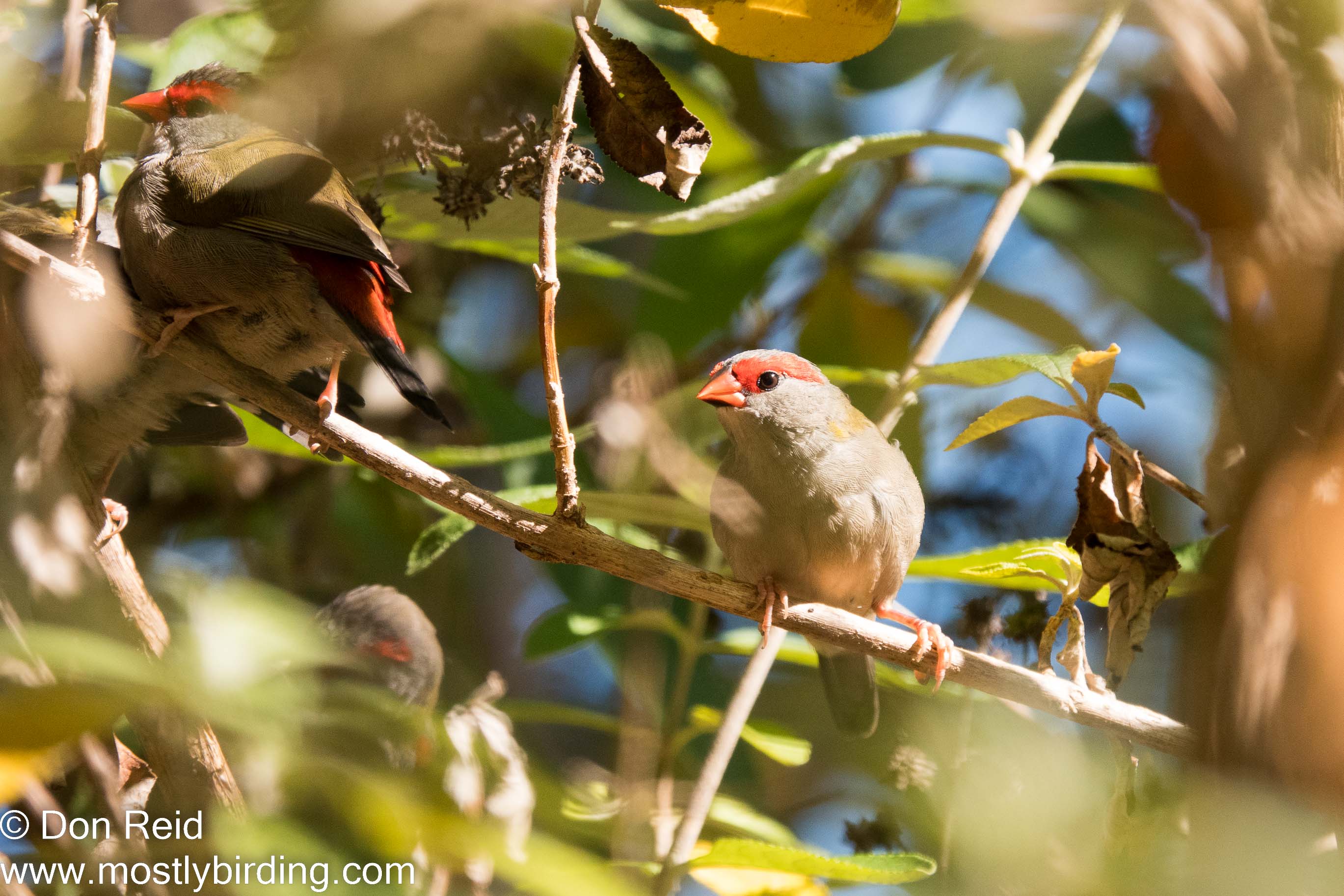
Next up was an unexpected sighting of two small birds that were both new to my Australia list – we were leaving a riverside spot where we had parked, when I spotted movement out of the corner of my eye. I braked, reversed and saw several small birds drinking at a puddle some distance from the road – too far to be certain what they were, even with my binoculars, as they were moving about and flitting back and forwards between the puddle and the nearby bushes.

So I did what I usually do in this situation – I grabbed my camera and rattled off a number of shots before the birds dispersed, which gave me a chance to study what I had “captured” and put a name to them.

As it turned out there were two species – both lifers for me :

Red-browed Finch Neochmia temporalis, Bright Victoria
Silvereye Zosterops lateralis, Bright Victoria

And if you are a Saffer and think the Silvereye looks familiar, that’s because it is remarkably similar to the White-eyes found in Southern Africa, which carry the same genus name of Zosterops

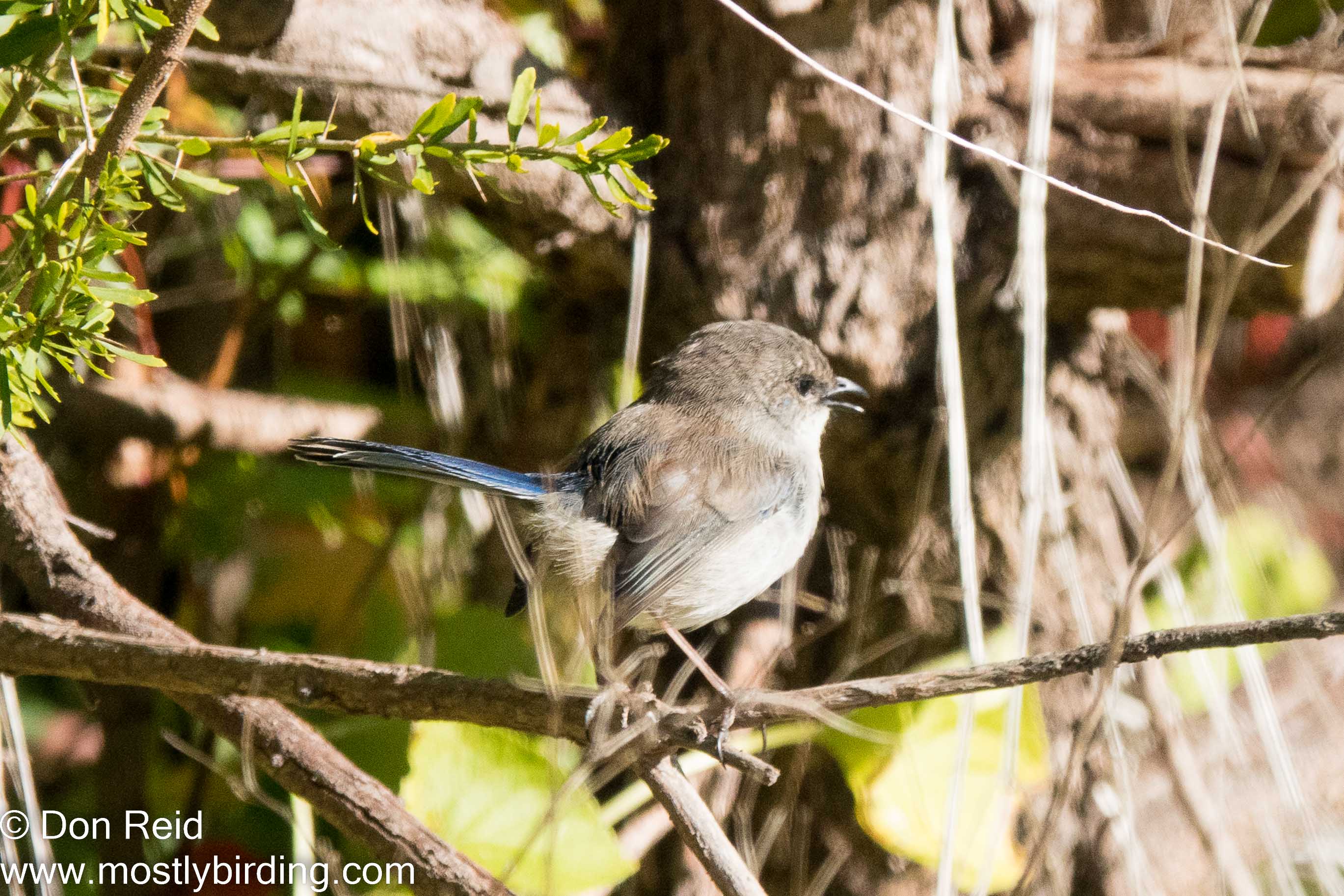
Just for good luck a Superb Fairywren popped up onto an exposed twig for a moment

Superb Fairywren Malurus cyaneus, Bright Victoria

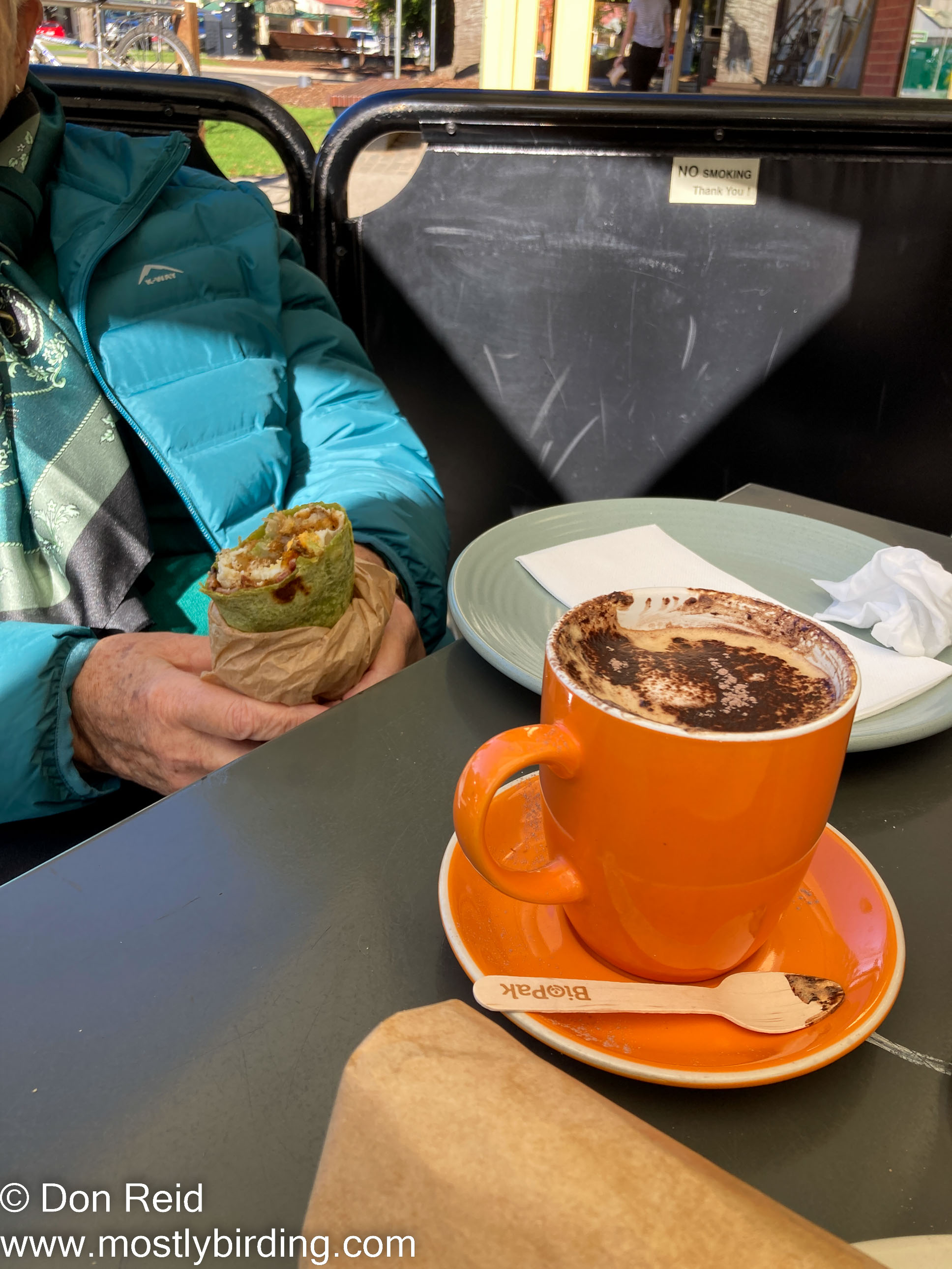
Our motel didn’t offer breakfast, so we got by on rusks and coffee in the room, but were by now feeling decidedly peckish, so we parked in a side street and walked through the village where we came across an ideal looking restaurant with tables set outside on the pavement and ordered their tasty bacon and egg wraps and cappuccinos.

Bright Victoria

That gave us an opportunity to decide what to do for the rest of the day and we chose to not try and cover too much of the surrounds, but to limit ourselves to a trip to a neighbouring area that looked interesting.

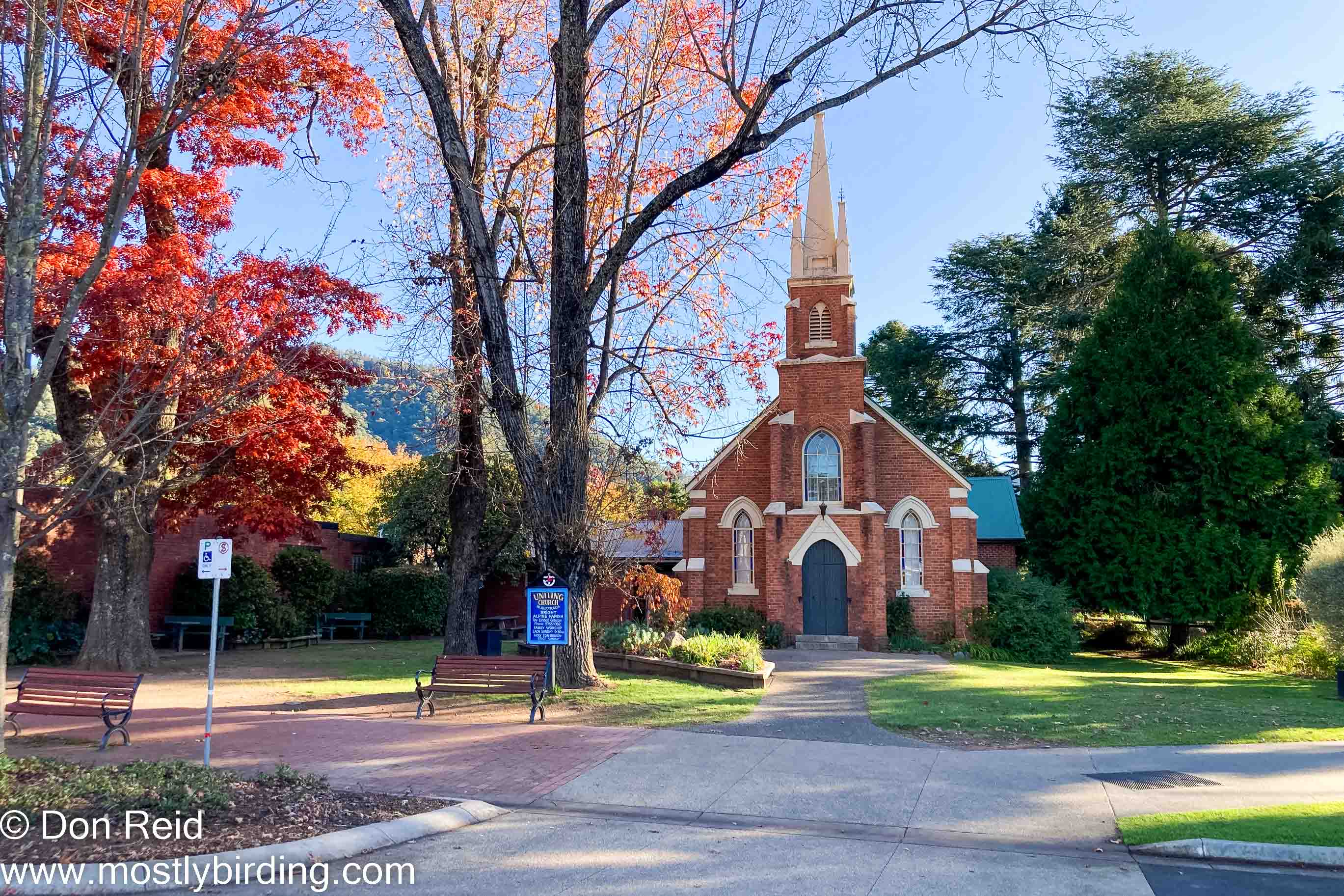
Before setting off again, we walked along the main street, admiring some of the well-kept older buildings and a church surrounded by handsome trees and popping into a couple of the shops for a quick browse (well, that was the idea, but Gerda’s browsing is a slightly lengthier affair which usually has me wandering about outside looking for birds)

Bright Victoria

Wandiligong

With most of the afternoon at our disposal, we drove around Bright a bit more, then visited the tourist info centre where a very helpful and friendly lady marked various spots on the map for us to explore.

One of them was Wandiligong, an old village where gold was mined in the mid 1800’s, which we thought was worth a visit and was literally just “down the road” from Bright – an easy 6 kms along country roads.

What we found was not a small village as such, but rather a sprinkling of houses and other buildings with a lot of character and heritage spread over an attractive landscape of forests and mountain ranges, set in a picturesque valley

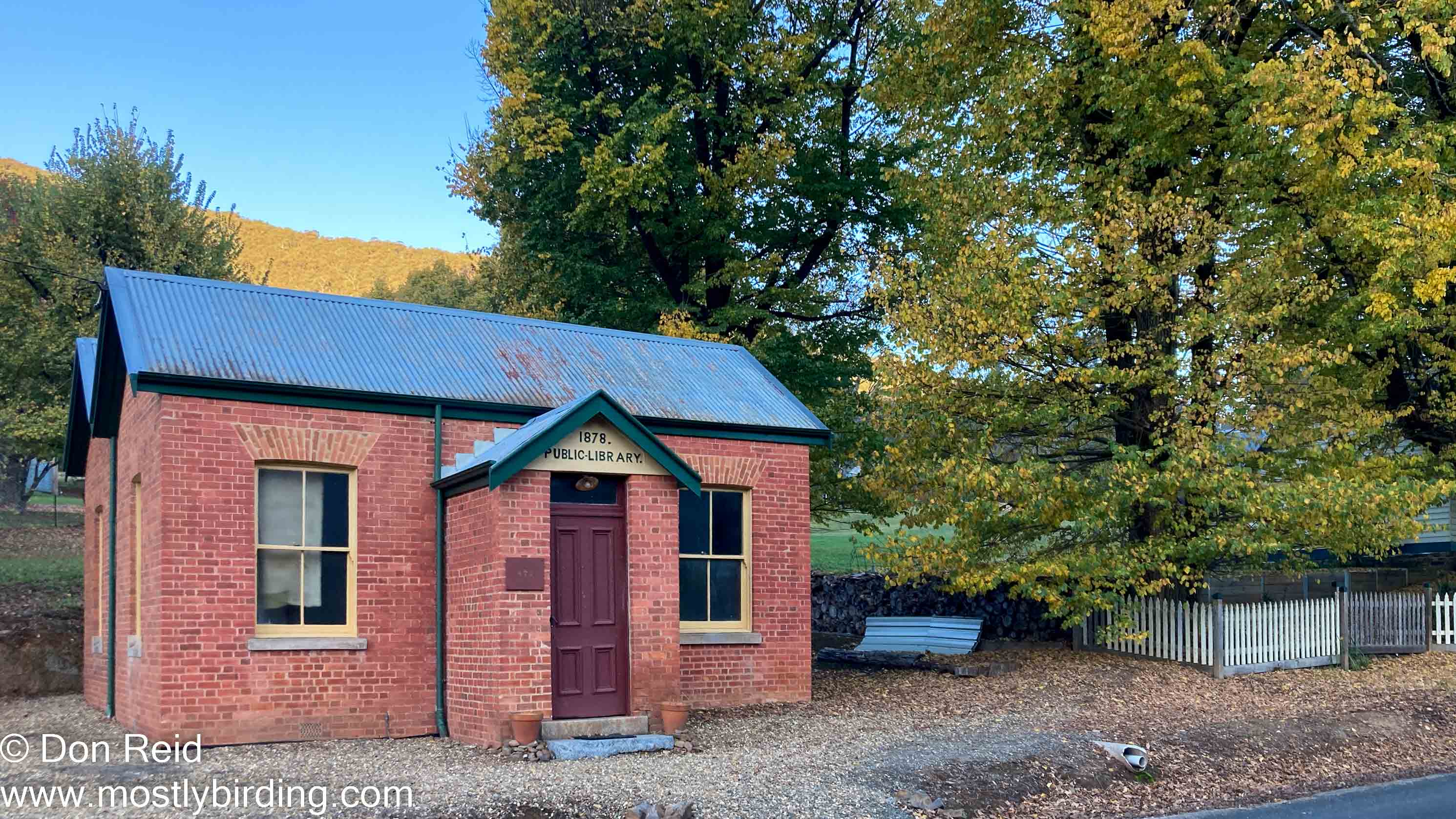
The whole town is now registered with the National Trust as a classified landscape and features historical buildings such as the Manchester Unity public hall (built in 1874), the general store, several churches and a number of quaint cottages. We spent a very pleasant hour or more meandering up and down the roads through the area, stopping to photograph some of the buildings that caught our eye.

The old Public Library in Wandiligong
Wandiligong Public Hall
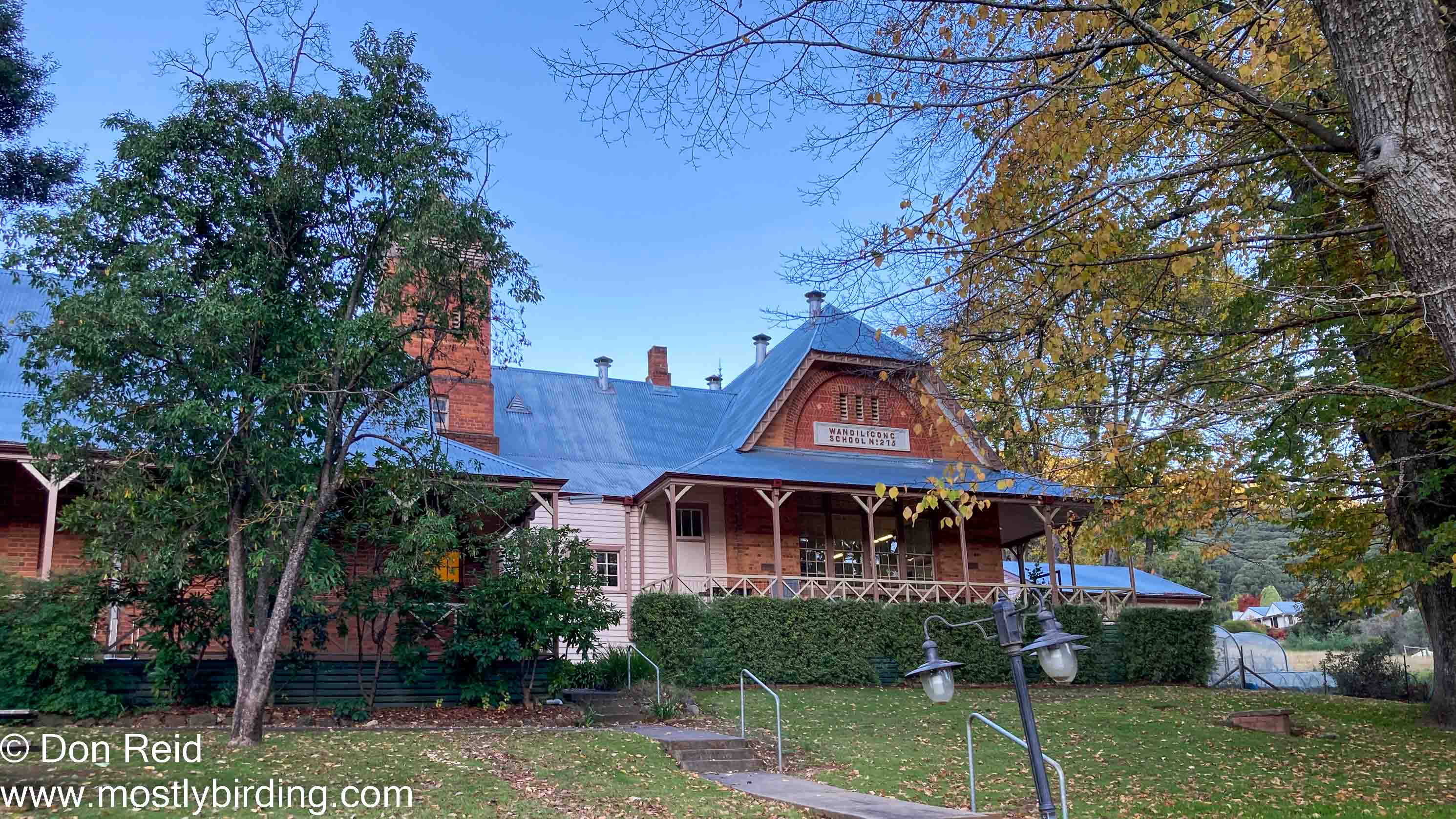
The Primary school dates back to 1870
Wandiligong Primary School
An old church in Wandiligong, Victoria

It was heading to late afternoon so we returned to our Motel in Bright for a bit of relaxation at the end of an interesting day

Mount Beauty

The next day dawned sunny and we followed a similar pattern – after a light breakfast self-caterd in our room we heade back along the road to Harrietville, then turned off towards Mount Beauty. The road took us through yet another seriously twisty pass which topped out at 895 metres, which is where we had our own tea and a muffin, while enjoying the view down to the valley below and across to distant mountains topped with snow.

Once we had descended into the valley we entered Mount Beauty – driving around we were a little disappointed as it did not seem to live up to its name and came across as just another town. Driving around the town, it seemed to be ‘closed for lunch’ so we stopped at the info centre which suggested ‘The Bakery’ may be open. We had not seen it so followed their directions and found it tucked away in a side street – their pie and salad was just what we needed and the service friendly so things picked up again

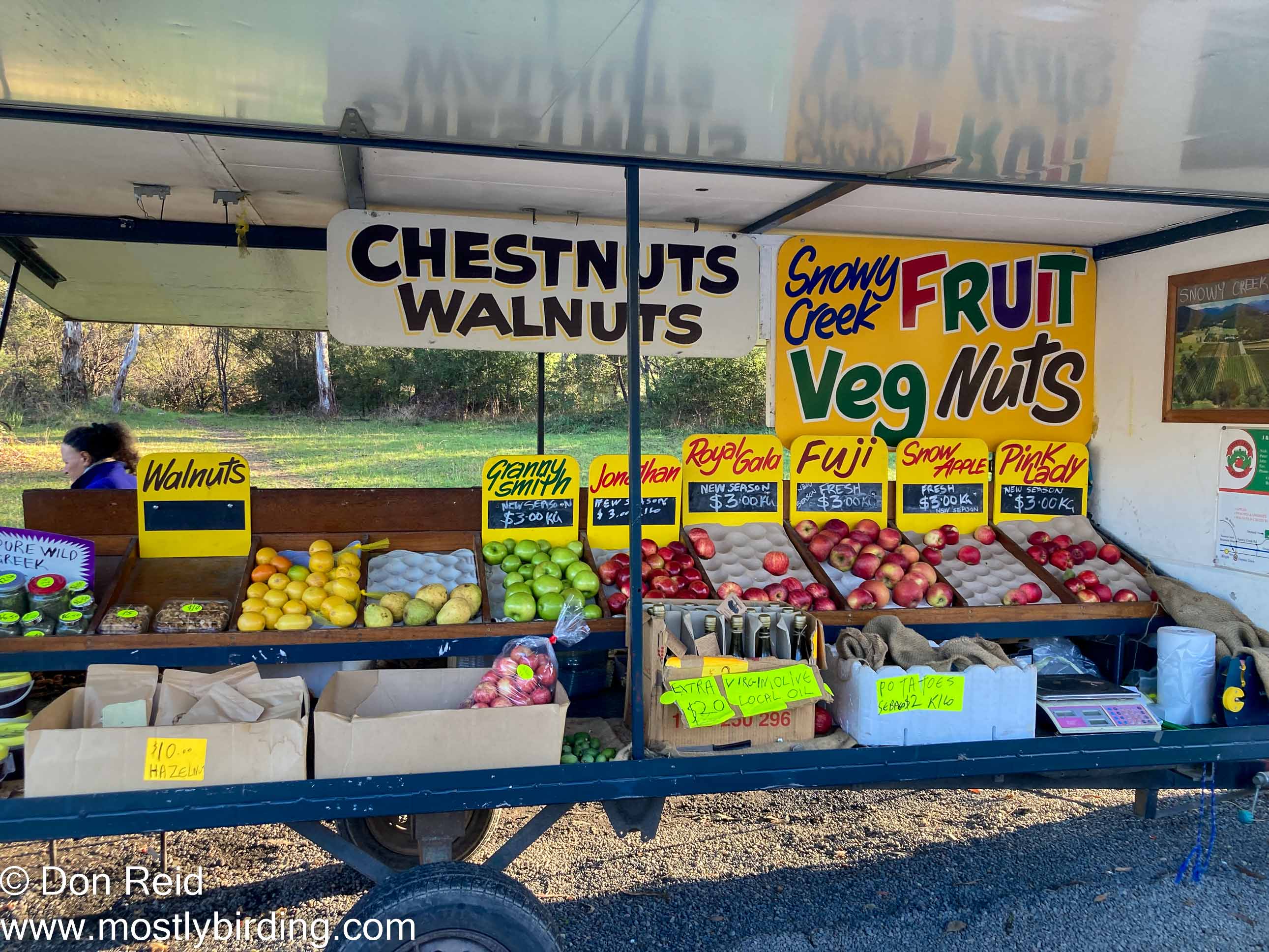
There was not much else to see so we headed back up the pass and down the other side towards Bright. At the T-junction with the main road a roadside stall had been set up – the first time we had come across such a thing in Australia – so we stopped to have a look at the farm produce on offer. The lady running the stall kept up a continuous stream of conversation, some of which we actually understood, and she offered us samples of strange (to us) fruit to taste. In the end we played safe and bought a bag of walnuts from her.

Roadside stall, Bright Victoria

Canyon Trail

There was still time for another walk along the Canyon trail before the sun disappeared. There were many ducks on the river and the late afternoon shaded light made for some interesting photos.

Canyon Walk, Bright Victoria
Pacific Black Duck Anas superciliosa, Bright Victoria
Maned Duck Chenonetta jubata (Male), Bright Victoria
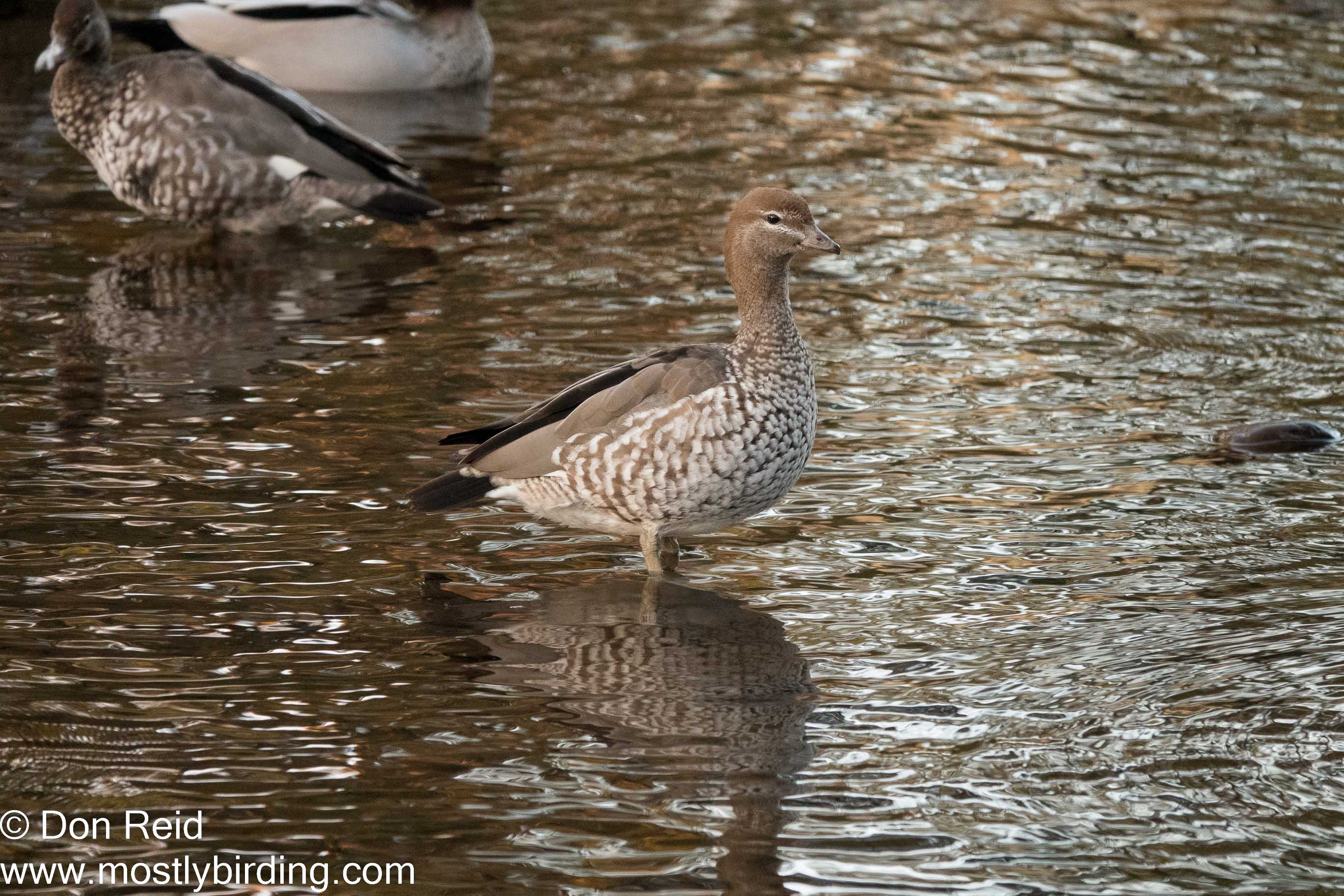
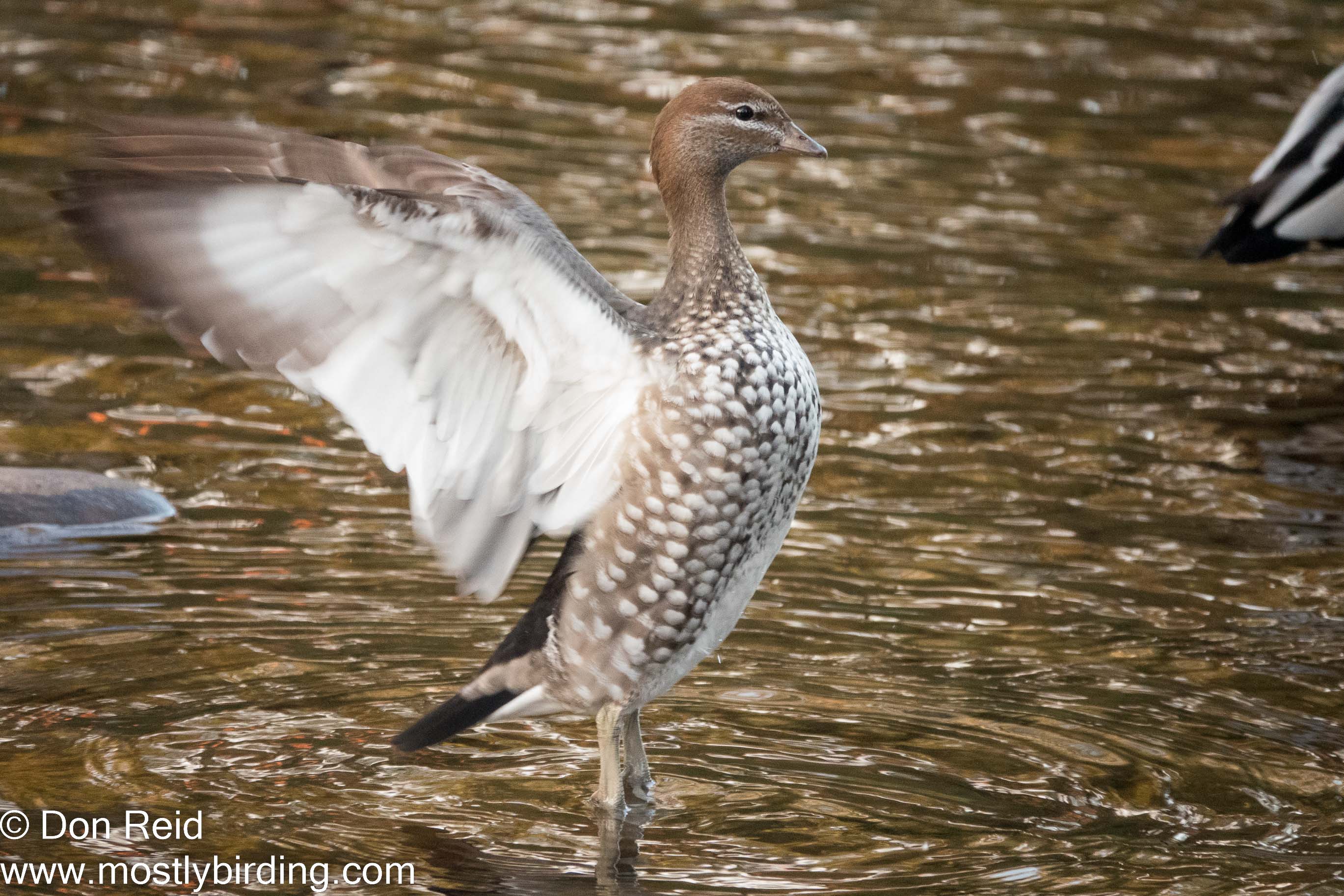
Maned Duck Chenonetta jubata (Female), Bright Victoria

That brought another most pleasant day in Bright to a close. I will be adding a further instalment on our road trip, covering the trip back to Sale – not nearly as epic as the initial trip to Bright but with a few interesting ‘sightings’, not necessarily birding related …

Australia May 2022 – Bright and Beautiful (Part 1)

Road Trip!

It was a very windy and nippy morning when we set off from Sale, Victoria on our 5 day road trip into the mountains north-east of Sale, with our main destination being the town with the charming name of Bright, situated on the scenic Great Alpine Road in the Ovens Valley.

The first leg of our trip was a comfortable 200 kms to the curiously named Omeo, a small town on the Great Alpine Road in the Shire (you have to love these old English terms still used in Australia) of East Gippsland. Omeo comes from an Aboriginal word for hills, which in the event was more than appropriate.

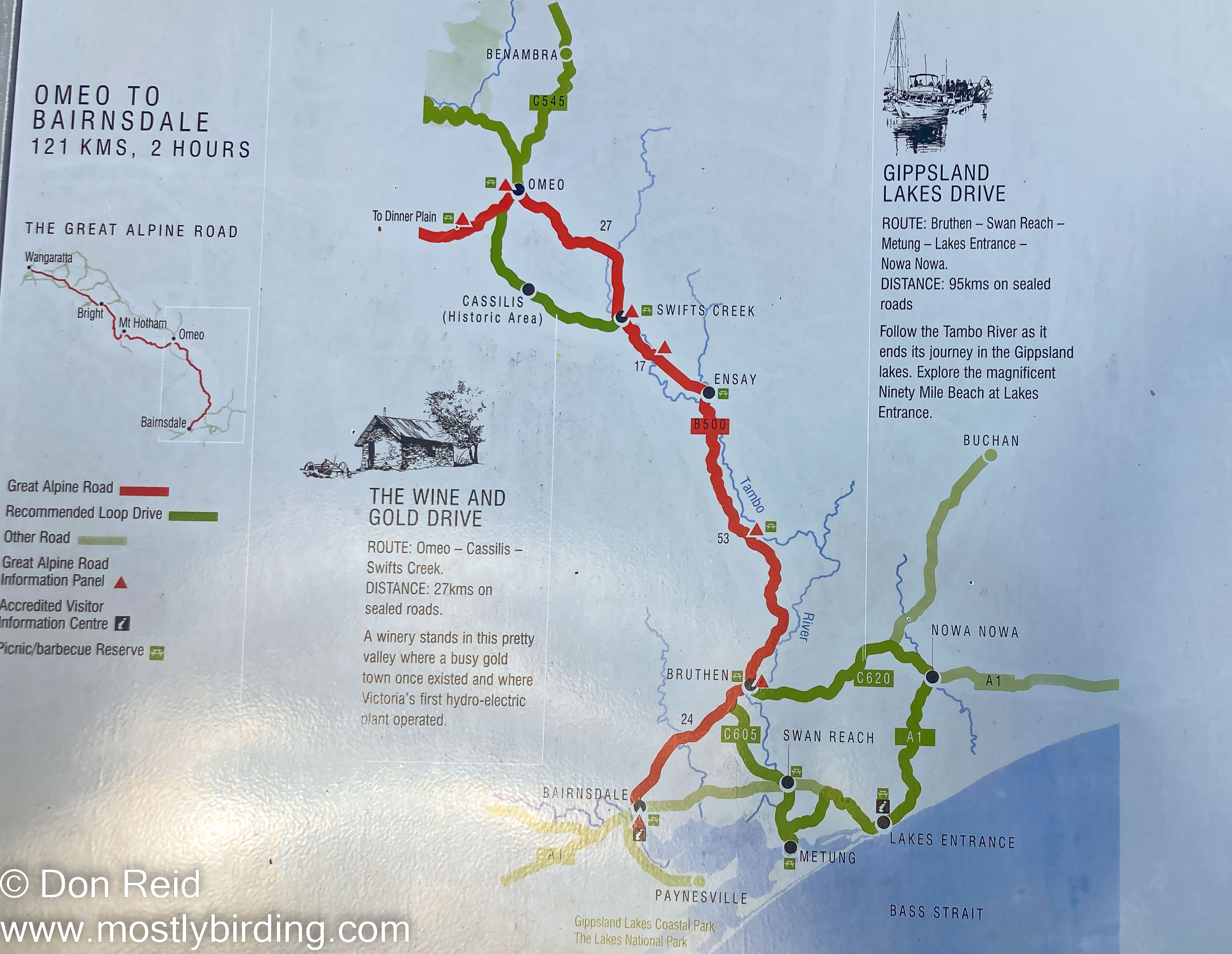
We eventually left Sale just after 12 pm and followed the A1 main road to Bairnesdale, where we had a burger and coffee lunch, then branched off on the B500 which took us onto the Great Alpine Road.

Bright trip

The road soon became twisty and slow as we approached the mountains and even more so the further we travelled, at times feeling like one of those funfair rides as my arms were constantly swinging the steering wheel back and forth through continuous bends. This alternated with stretches of more sedate road where we could admire the roadside scenery and make better progress.

Great Alpine Road map

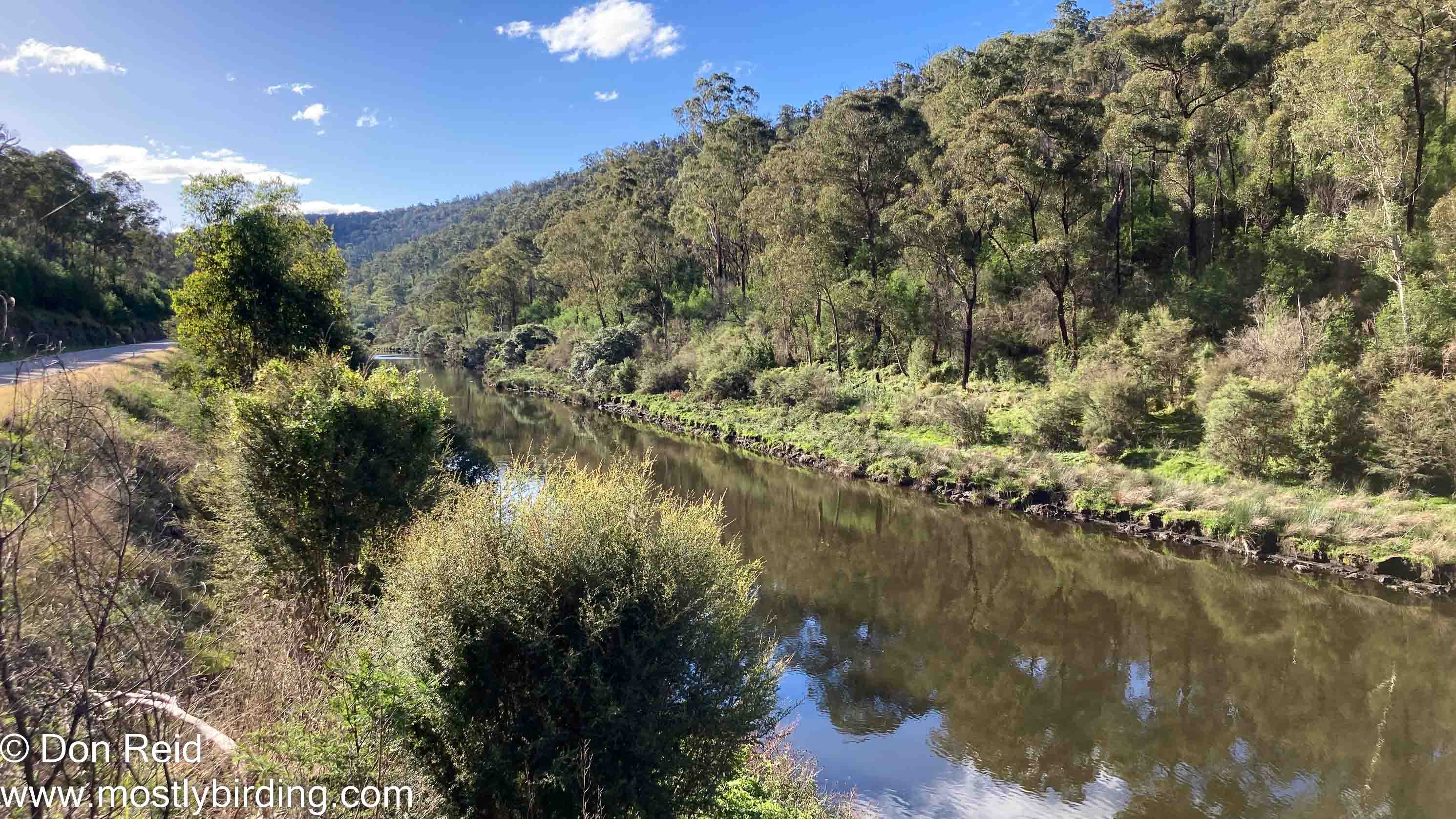
The road skirted a river for many kms and at one vantage point I stopped for a photo

Tambo River, Great Alpine Road

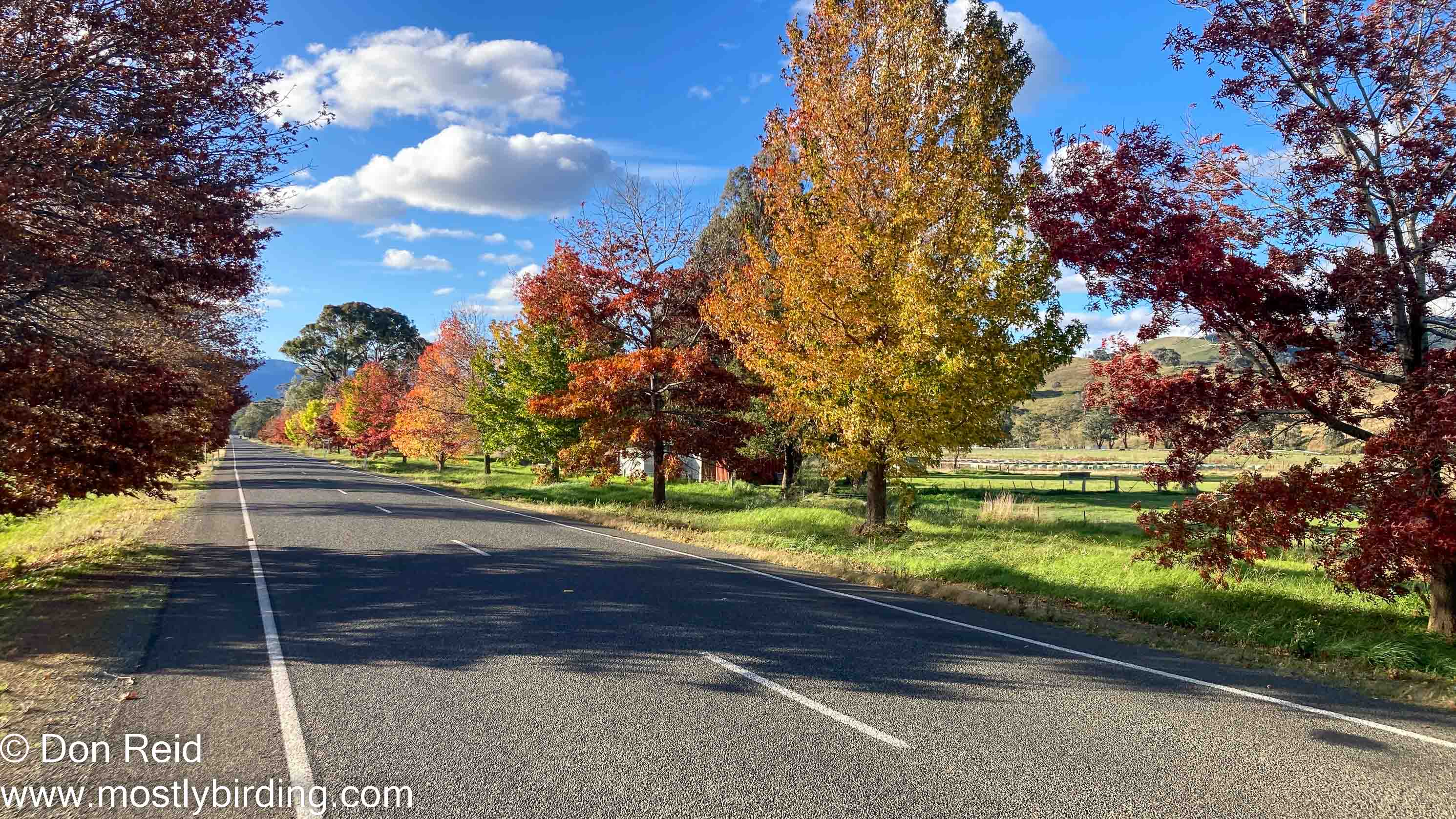
We passed through several small towns – Bruthen, Ensay and Swifts Creek – the latter town was lined with attractive trees showing their autumn colours and I could not resist another stop to take a photo or two.

Swifts Creek, Great Alpine Road

Omeo

We reached Omeo around 4 pm and took a short drive through the village before heading to Homeo Alpine Cottage which we had booked for the night through one of the booking sites. The name and description of the accommodation had conjured up a charming cottage set in a pretty garden in our minds, but the reality was just the opposite as we stopped outside and viewed our accommodation with some trepidation.

Homeo Alpine Cottage, Omeo, Great Alpime Road

From the road it looked more like a shack than a cottage, set in a garden that was bordering on unkempt. The word rust-ic came to mind and we wondered how we were going to ward off the chilly air in this cold looking place.

Rust-ic comes to mind….

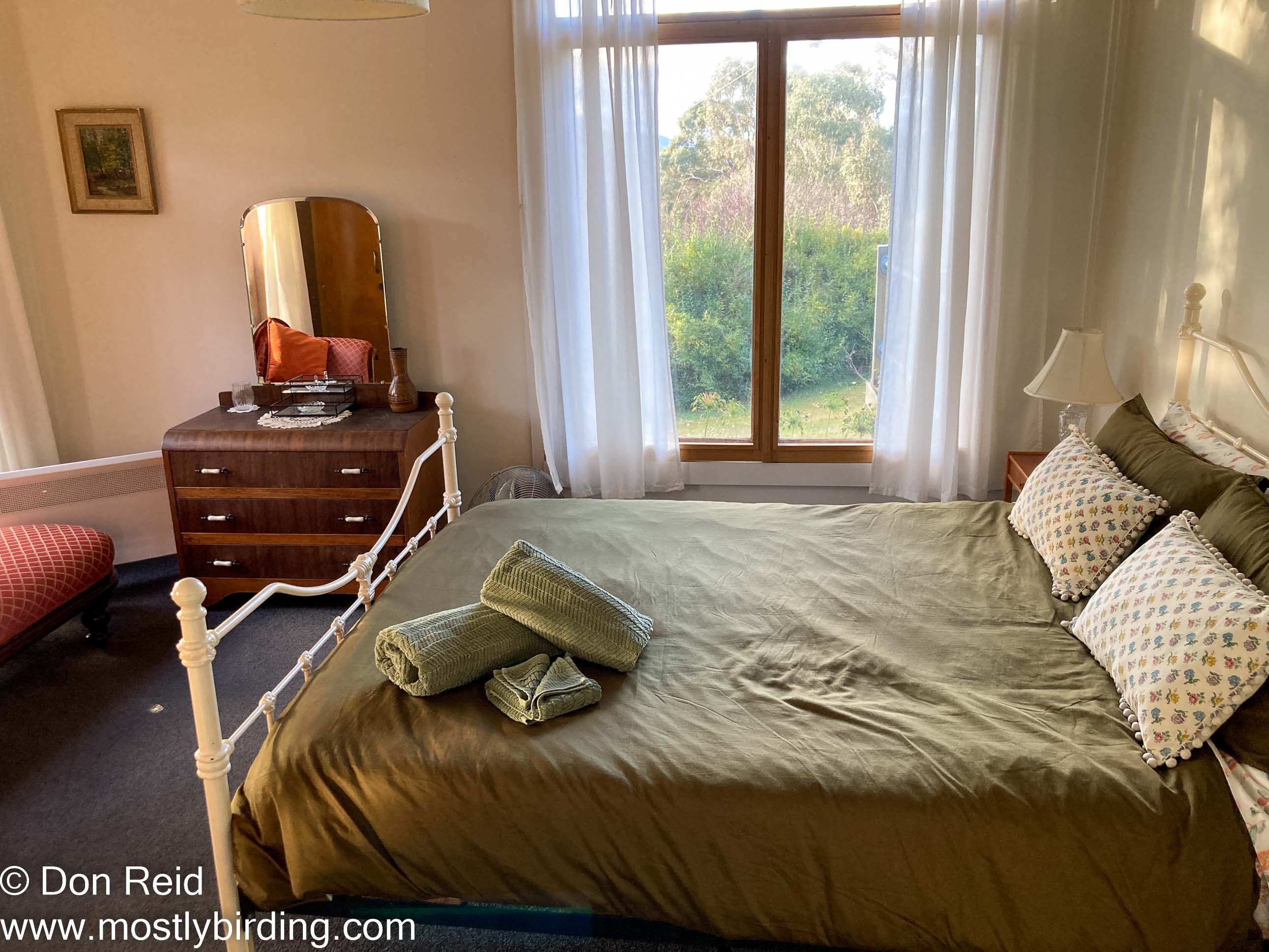
Nevertheless, we found the inside old-fashioned yet quite comfortable, especially once I had lit the fire and switched on every available heater in the house and we started to relax and enjoy our latest “unexpected surprise”. Later we dined on bread rolls and cheese and watched a Netflix series while getting ourselves warm and comfortable under lots of blankets as the temperature dropped quickly.

The lounge – Homeo Alpine Cottage
The main bedroom

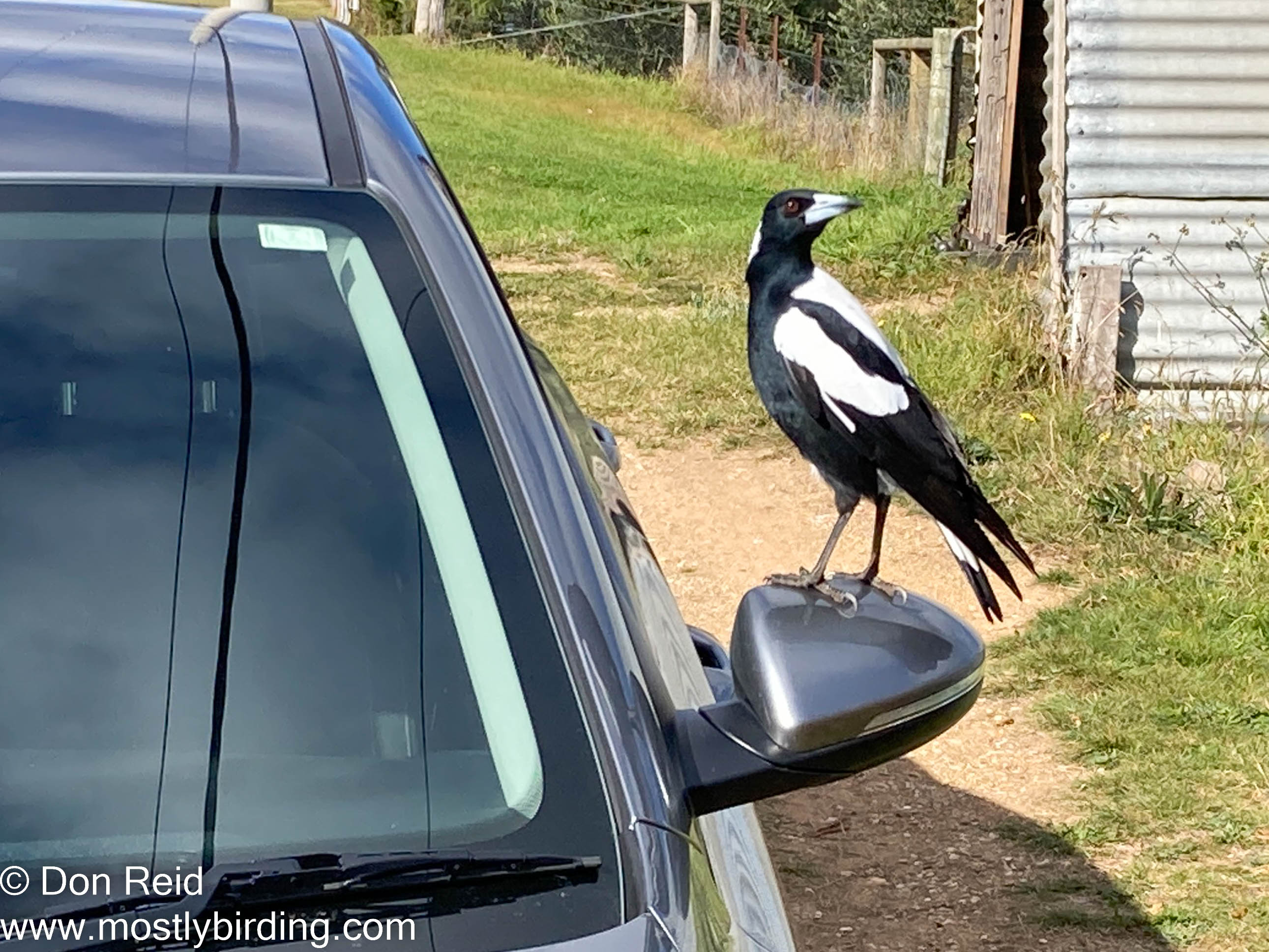
Next morning we left the cottage feeling more positive about it and ventured into Omeo for a brunch of a toastie and coffee at the only restaurant that seemed to be open. But not before being “challenged” by three Australian Magpies which seemed bent on blocking our way to the car and one even perched on the mirror in a pose that said “don’t mess with me”. I kept an eye on them while loading the car and we got away without further ado.

Australian Magpie Cracticus tibicen, Omeo Victoria

On the way to the village we came across a flock of Australian King Parrots at the roadside, apparently feeding on something and when I reversed to have a closer look, we found that there was a dead (probably roadkill) Sulphur-crested Cockatoo which was the centre of their attention. So it seems Aussie parrots are not averse to eating one of their kind!

Australian King Parrot Alisterus scapularis (female), Omeo Victoria

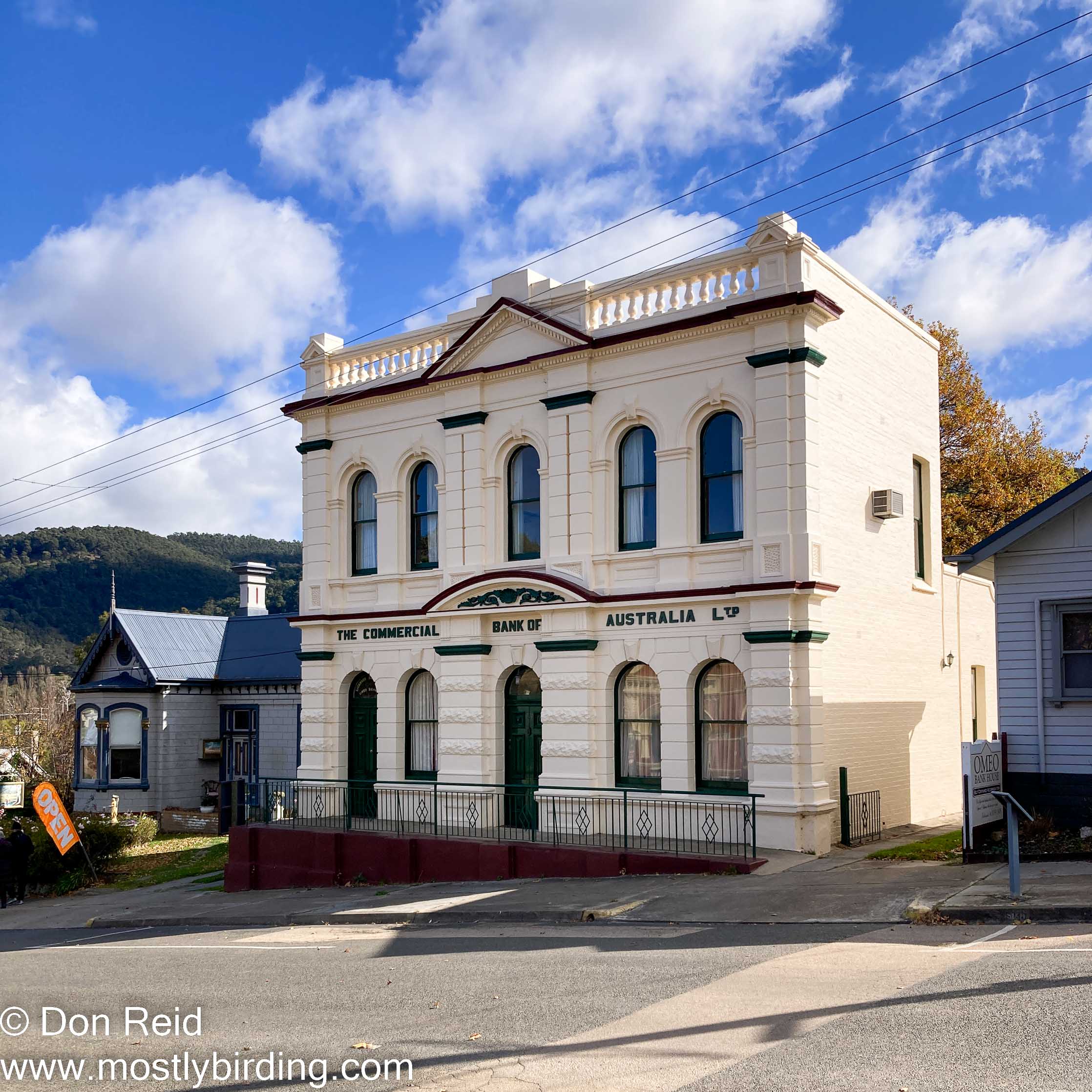
Omeo itself is a pleasant small town with some interesting old buildings, many of which were rebuilt after devastating bushfires

Omeo, Great Alpine Road

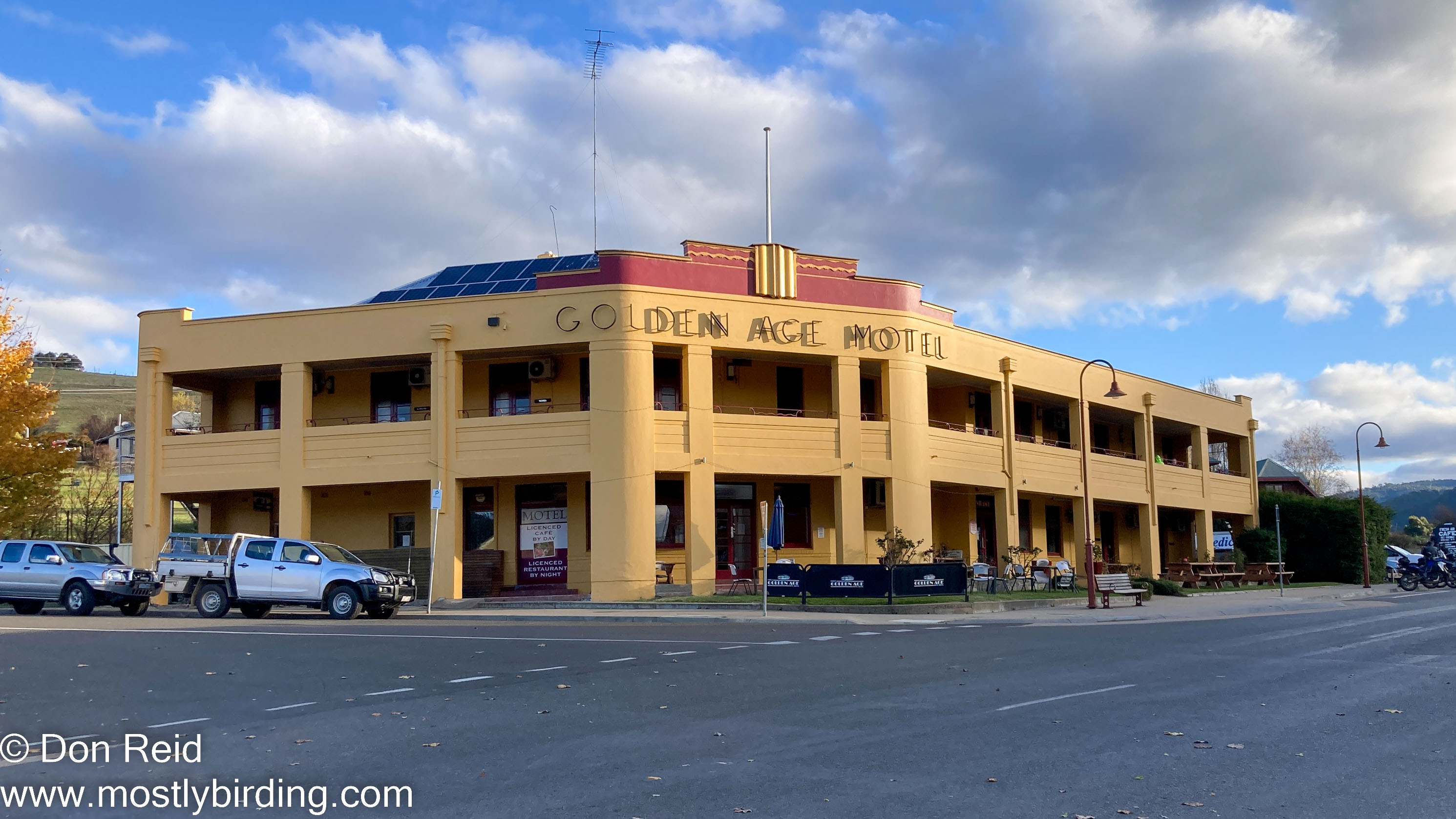
The Golden Age Hotel stands in the middle of town and has a long history involving fires

Omeo, Great Alpine Road

The next post will cover the next leg of our trip to Bright, Victoria – a memorable one indeed!

Australia May 2022 : The Birding – it’s Different! (Part 3)

The Other Birds

Parts 1 and 2 described some of the more common “black and white” and “vividly coloured” species, which make up a large proportion of the birds that are found in the area of Victoria where our son has settled.

In this Part three I will be showing some of the other common birds to be found, the ones that don’t fall into one of those categories but which are likely to attract your attention because of their uniqueness or simply because they are plentiful or easily seen.

And to start off, let’s take a look at one of Australia’s most iconic birds and also one of my favourites –

Laughing Kookaburra Dacelo novaeguineae

The Kookaburra has adapted well to urban environments, particularly those with areas of large eucalypts and if you think it looks a lot like a kingfisher, you would be spot on – it is in fact the largest member of the kingfisher family, outsizing even the Giant Kingfisher from Africa, but its “fishing” exploits are confined to dry land with its diet including insects, small mammals and even other birds.

The name is a loan-word from the Wiradjuri people who called it a guuguubarra which in turn is an onomatopeic version of the sound of its call. The call is loud and distinctive, ringing through the trees and sounding rather maniacal – listen to the calls at this link :

https://wildambience.com/wildlife-sounds/laughing-kookaburra/

For interest, I looked into the scientific name of the Kookaburra – Dacelo novaeguineae – and learnt a couple of totally useless facts, nevertheless fascinating if you are into that sort of thing.

Firstly Dacelo is an anagram of Alcedo, the latin word for kingfisher – which was the genus name originally given to the species. As an aside the genus name of two South African species of kingfisher is Alcedo, while 5 of the other 8 South African kingfishers fall under the genus Halcyon

As to the species name novaeguineae, the laughing kookaburra was first described and illustrated by French naturalist and explorer Pierre Sonnerat in his Voyage à la nouvelle Guinée, which was published in 1776. He claimed to have seen the bird in New Guinea. In fact Sonnerat never visited New Guinea and the laughing kookaburra does not occur there. He probably obtained a preserved specimen from one of the naturalists who accompanied Captain James Cook to the east coast of Australia

Well, I warned you that it’s useless (yet fascinating) information! Just shows that scientists are a quirky bunch at times.

Laughing Kookaburra Dacelo novaeguineae, Raymond Island Victoria

Noisy Miner Manorina melanocephala

Like the Laughing Kookaburra, the Noisy Miner is found mostly in the eastern parts of Australia and, like so many species of this vast country, it is an endemic. The first thing that strikes you about this bird is its somewhat cross-eyed appearance – mainly due to the yellow coloured bare patch of skin behind the eyes

And the name? Well I did try and find the origin of Miner but could not come up with anything other than a suggestion that it is another form of Mynah, which we know all too well in South Africa. There is a resemblance so let’s assume that is the case. As for the Noisy part of its name, it is just that – a noisy bird that lives in loose colonies and vigorously defends its feeding area.

Noisy Miner Manorina melanocephala, Sale
Noisy Miner Manorina melanocephala, Raymond Island Victoria

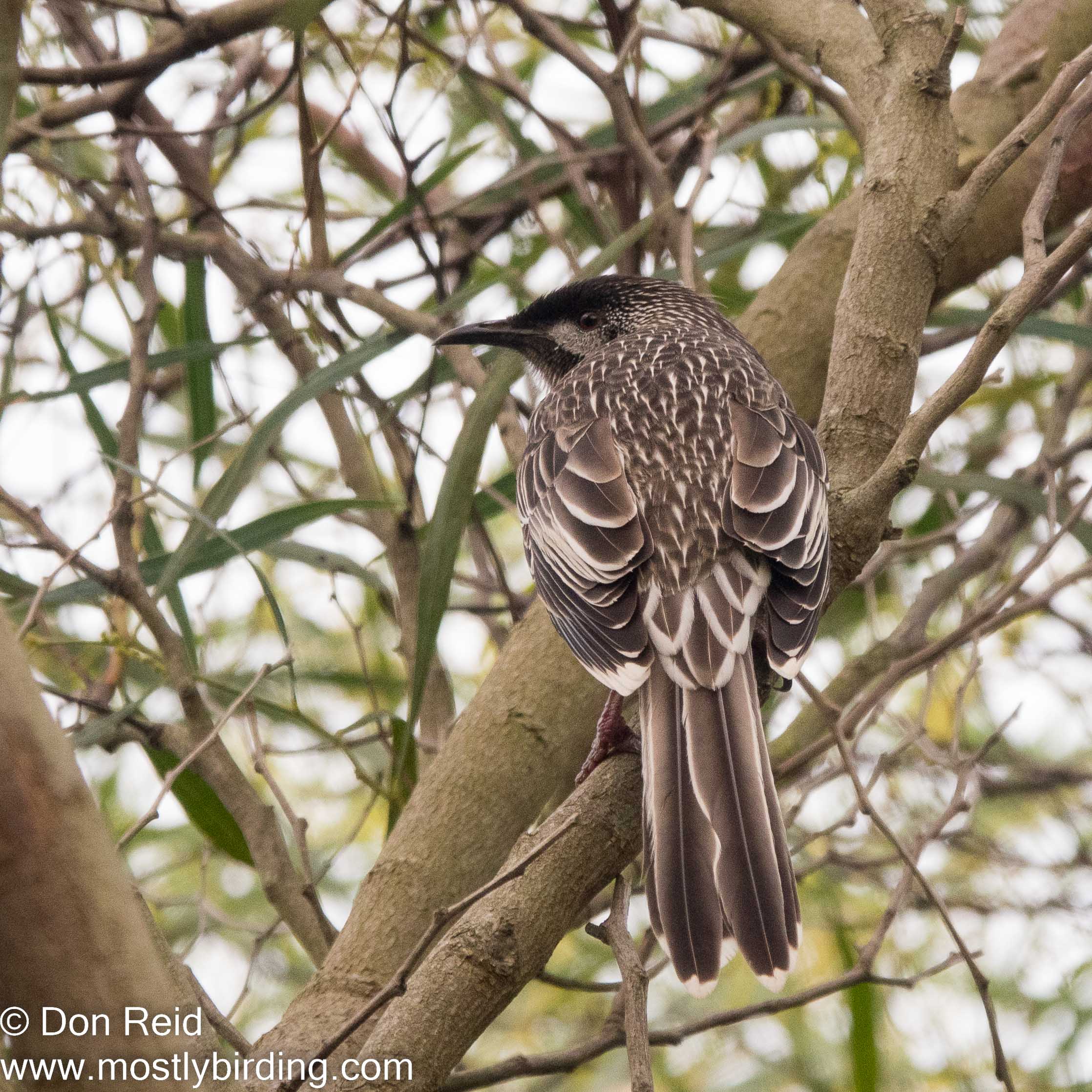
Red Wattlebird Anthochaera carunculata

It’s named for the red wattles just below its cheeks, not visible in my photo so you’ll have to use your imagination. A member of the extensive honeyeater family of birds, this is one of the largest and possibly noisiest as well, using its harsh, grating cough or bark to announce its presence in the neighbourhood. It’s the avian equivalent of that aggressive hell’s angel type who roars through the suburbs creating a cacophany of sound.

Red Wattlebird Anthochaera carunculata, Wurruk, Sale Victoria

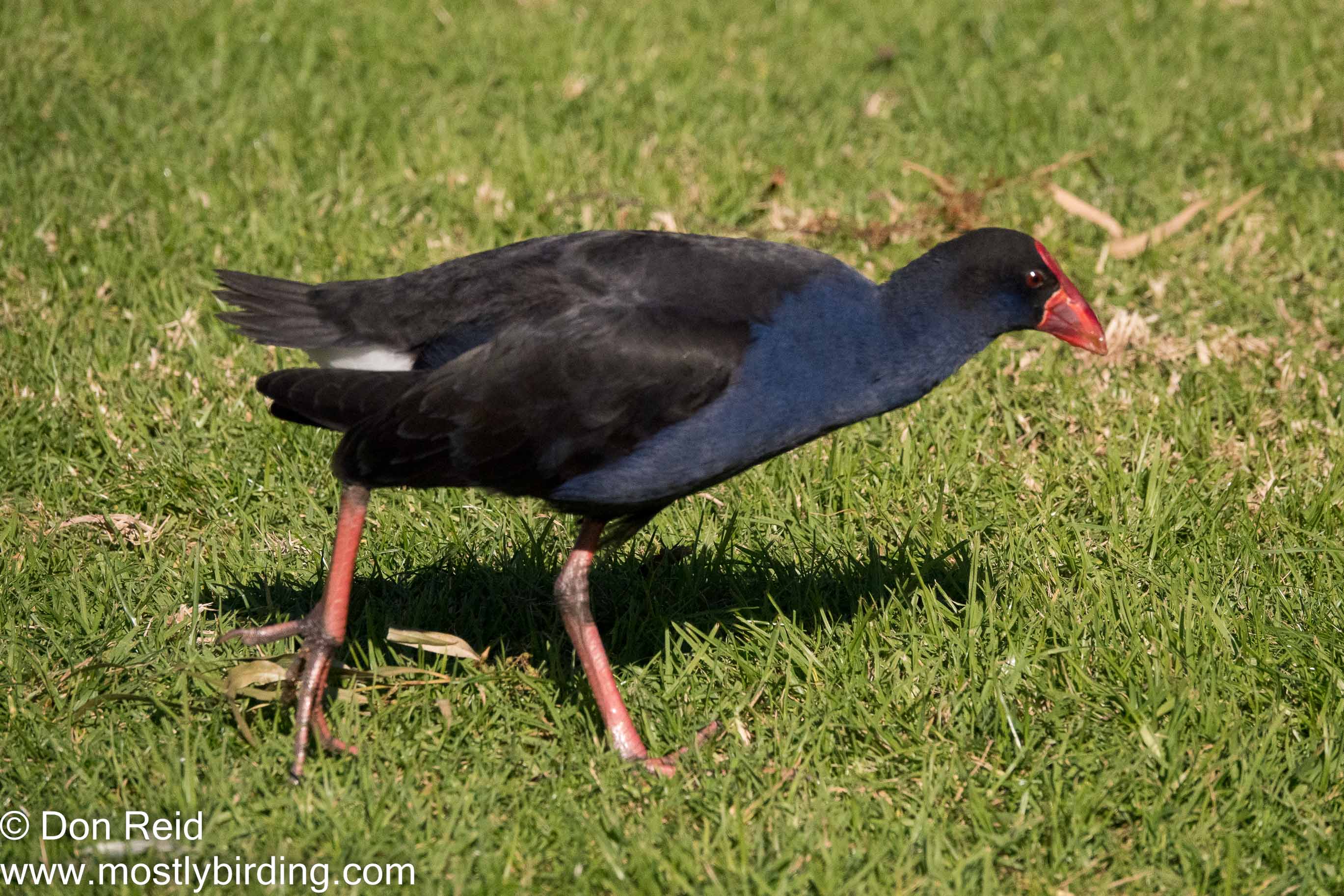
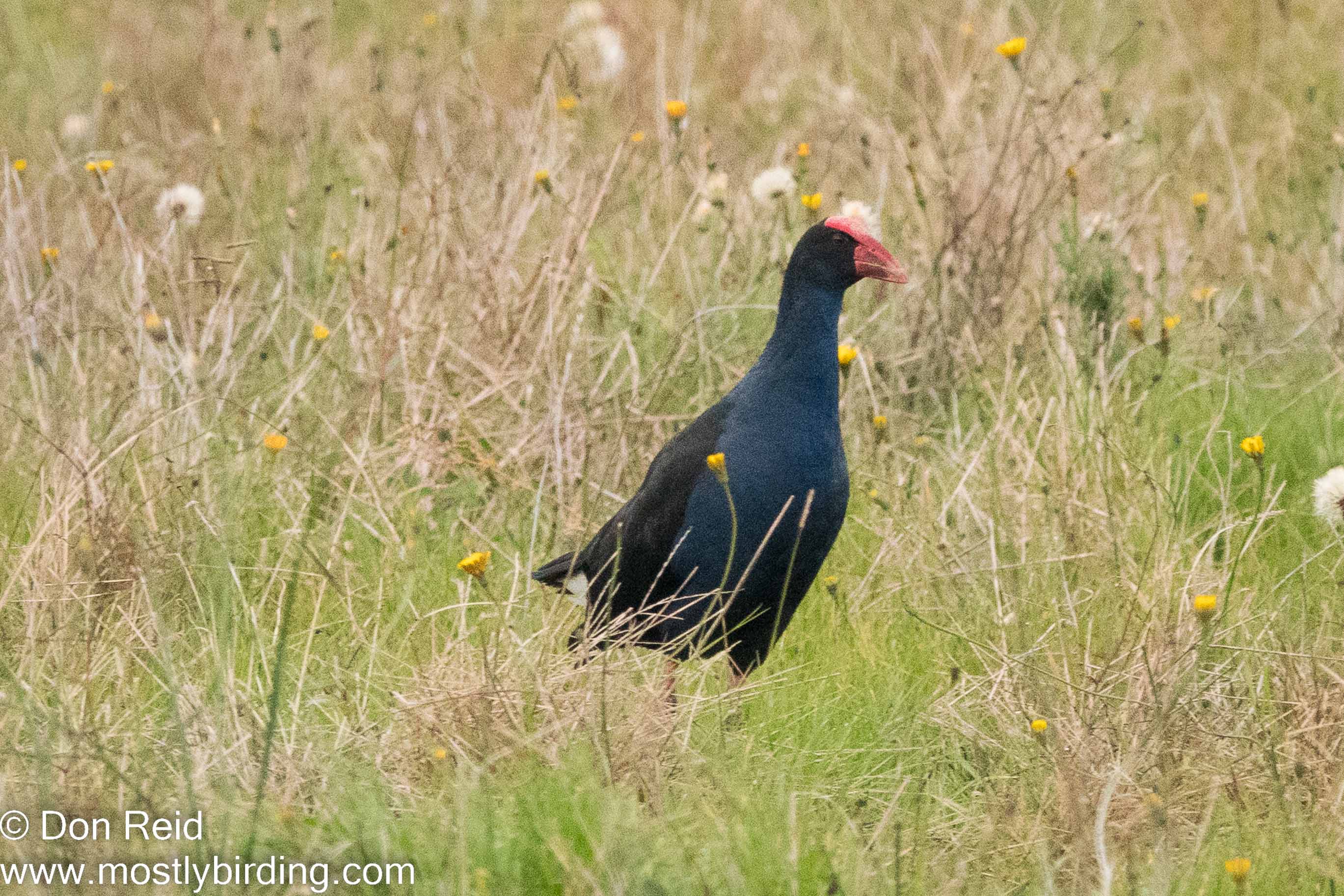
Australasian Swamphen Porphyrio melanotus

I was amazed during our first visit to Australia some 3 years ago and again during our recent visit, to find this Swamphen in places you would least expect, particularly if you are accustomed to birding in southern Africa. Where we are used to swamphens being shy and retiring, seeking refuge among reeds at every opportunity, the Australian version, which is very similar in appearance, can pop up just about anywhere and is hardly fazed by humans. This one approached to within a couple of metres of our picnic table next to the lake where we were enjoying a take-away lunch.

Australasian Swamphen Porphyrio melanotus, Sale Victoria
Australasian Swamphen Porphyrio malanotus, Wurrk, Sale Victoria

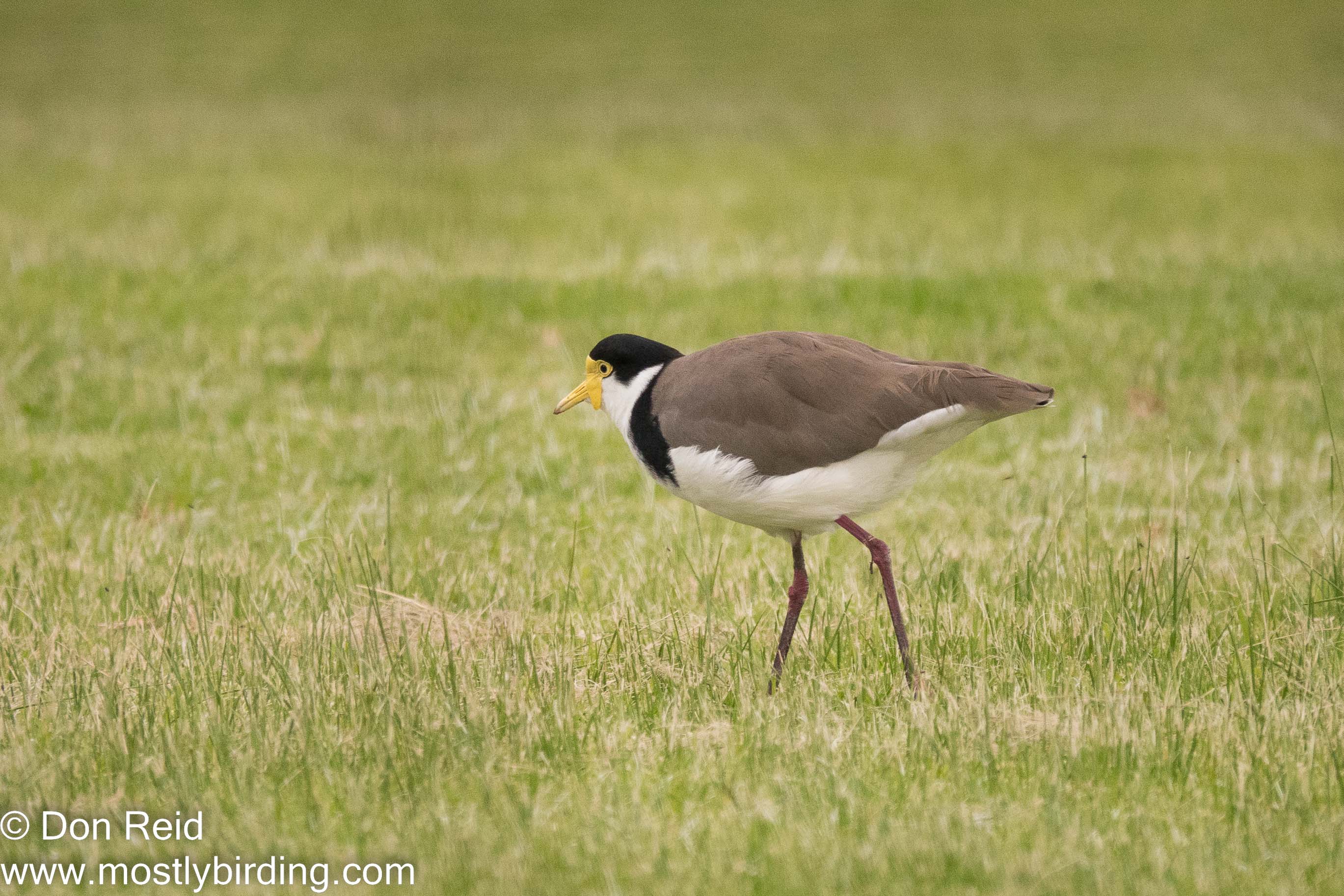
Masked Lapwing Vanellus miles

As Lapwings go, this is a particularly handsome one, often seen on larger lawns and in fields, feeding in its slow, deliberate fashion across most of Australia. This species used to be called the Spurwinged Plover as, like many lapwings, the wings are armed with spurs at the carpal joint that are used to defend their territory in breeding season.

Masked Lapwing Vanellus miles, Wurruk, Sale Victoria

Superb Fairywren Malurus cyaneus

Now I know what you’re thinking …. what’s so “superb” about this attractive but dull-looking bird? The answer is in two parts – the female lacks the bright colouring of the male, while the male, brightly coloured in the breeding season, loses the bright colouring in non-breeding plumage, other than its tail which remains blue.

Interestingly, they have a communal group breeding system where one pair in the group raise up to four broods in a season, while the rest of the group members look after the young.

This is one of the most common of the small birds that I have come across on my walks and in the garden and are found across the south-eastern parts of Australia.

Superb Fairywren Malurus cyaneus (Non-breeding plumage), Sale Common NCR

New Holland Honeyeater Phylidonyris novaehollandiae

Not the best photo, but this is s a bird that chooses to perch on the very top of tall trees, and with the sky often being overcast yet bright it presents a real challenge to get a reasonable image. Without any exposure adjustment the image is likely to be so dark as to be unrecognisable.

My approach is to adjust the exposure compensation on the camera by up to +2 full stops – in this case it was +1.3 stops which I found wasn’t enough, so I added a further +0.4 stops while editing. Apologies if this is getting too technical, but this is one of the simplest ways of improving your photos, as I have found that almost every situation calls for some exposure compensation – plus or minus – and all modern cameras have this function available.

As to the bird itself, this is one of the huge family of Honeyeaters that are major pollinators of many of Australia’s unique native plants, feeding on the honey-flora flowers and in the process pollen is deposited on their head and transferred to the next plants they visit. They are common in south-west and south-east Australia and often come into the garden.
New Holland Honeyeater Phylidonyris novaehollandiae, Wurruk, Sale Victoria

Other Flying Things

And now for something else that’s aerial ……. – is it a bird, is it a plane? ….. no it’s Superm….. sorry it IS a plane! That red colouring had me thinking for a moment it was my favourite superhero with his famous red cape! Oh well…..

Actually this is one of the six Pilatus C-21 aircraft that make up the Roulettes aerobatic team – they perform at air shows across the country and seem to spend a large part of the day practising over Sale as there is almost always one of them buzzing around overhead

One of the Pilatus C-21 aircraft making up the RAAF Aerobatic Team

References :

The Complete Guide to Australian Birds by George Adams

Wikipedia (Laughing Kookaburra)

Australia May 2022 : The Birding – it’s Different! (Part 2)

I started my previous post by saying that the casual, non-birder observer could easily come to the conclusion that Australia’s birds fall into three basic groups –

  • black and white or shades in between
  • vividly coloured birds
  • a variety of smaller, often nondescript birds

The author of The Complete Guide to Australian Birds, George Adams, has this to say in his introduction –

Australia is one of the world’s ten mega-diverse countries and is fortunate to have a rich diversity of birds and an unusually high number of endemic species found across its many, equally diverse and beautiful landscapes. The jabbering of parrots, the laughter of Kookaburras, the song of the Magpie or the trilling warble of Fairy-wrens all bestow a real sense of ‘place’ that is uniquely Australian.


Part 1 described some of the more common “black and white” species, which make up a large proportion of the birds that are found in the area of Victoria where our son has settled. In this Part 2 I will be showing some of the other common birds to be found, in particular ….

The Vividly Coloured Birds

Australia is probably best known for its variety of brightly coloured birds, and rightly so! They seem to occur just about everywhere, especially where their favoured habitat occurs – mostly forests of various kinds, but also anywhere else with trees such as gardens, farmlands, woodlands and the like.

Crimson Rosella Platycercus elegans

Corellas are small, ground-feeding cockatoos but are not averse to foraging in eucalypts for insects, seeds, fruit, nectar and larvae.

This endemic species has several colour forms across its range, which includes eastern and south-eastern Australia. Mostly crimson with blue patches on the cheeks as well as some of the wing and tail feathers, it stands out wherever you find it – in the image below it was scratching amongst a thick layer of fallen leaves and had found an acorn or seed of some kind.

Crimson Rosella Platycercus elegans, Bright Victoria

The immature version shows little crimson, which is replaced by dull green, making it far more difficult to spot

Crimson Rosella Platycercus elegans (Juvenile), Wurruk, Sale Victoria

Australian King Parrot Alisterus scapularis

The only endemic parrot with a red head, this is another standout species – the image shows a female with its somewhat duller colouring, with the red limited to the belly, nevertheless unmistakeable. I had seen King Parrots during our previous visit in 2019, but was not able to photograph one, so this opportunity was not to be missed when it posed briefly on a fence before flying off with the rest of its small group.

Habitat is forests, parks and gardens and its feeding preference is the outer foliage of trees where it looks for fruit, nuts, nectar and blossoms. They are found in eastern Australia.

Australian King Parrot Alisterus scapularis (female), Omeo Victoria

Rainbow Lorikeet Trichoglossus moluccanus

Surely one of the most colourful birds you’ll see anywhere, they are easily spotted as they fly around the neighbourhood in small flocks, screeching as they go, then chattering while feeding in the trees. Lorikeets are arboreal feeders that have brush-like tongues for extracting nectar from flowering eucalypts. Favoured habitats are forests, parks and gardens.

Rainbow Lorikeet, Raymond Island, Victoria

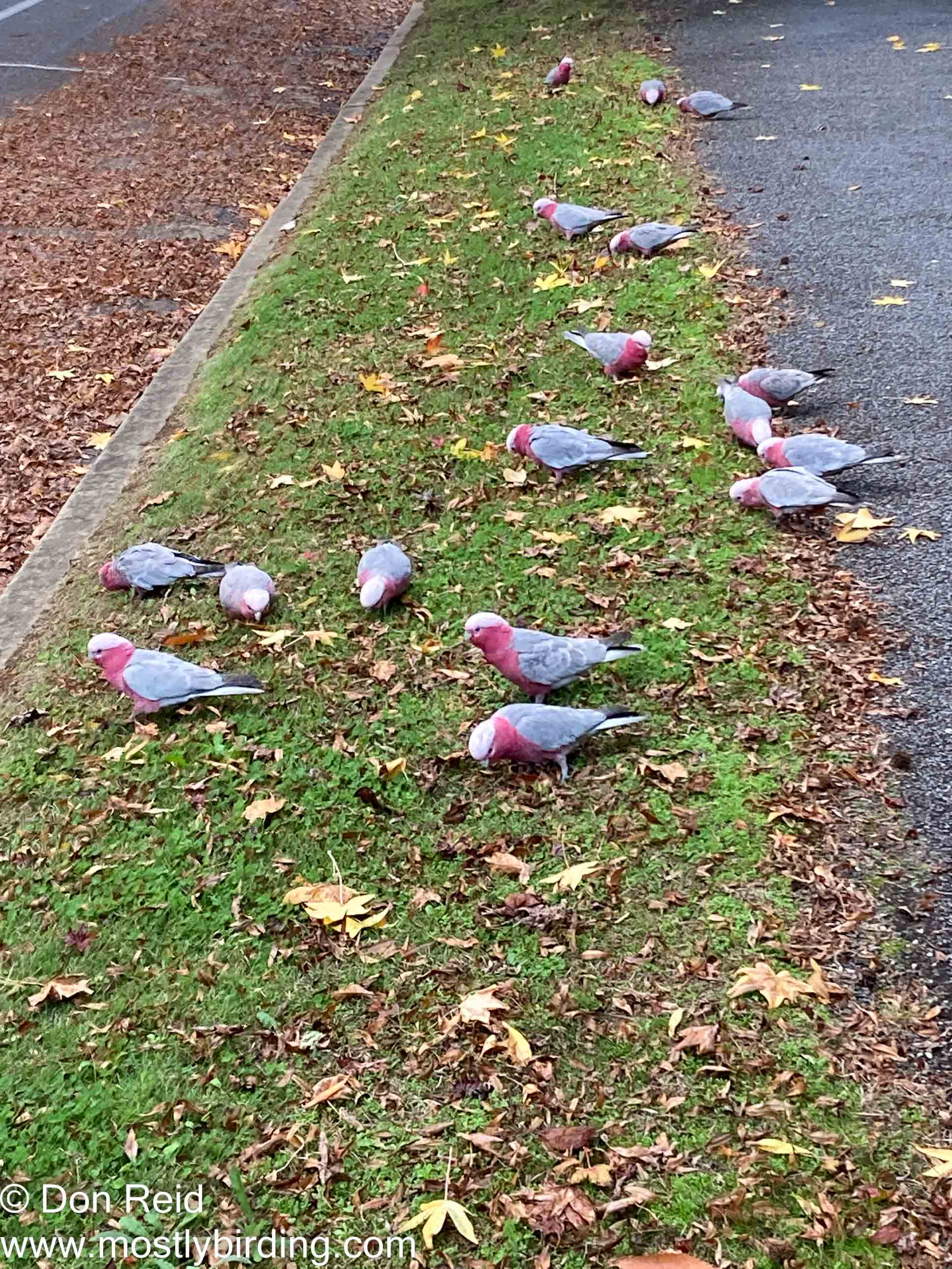
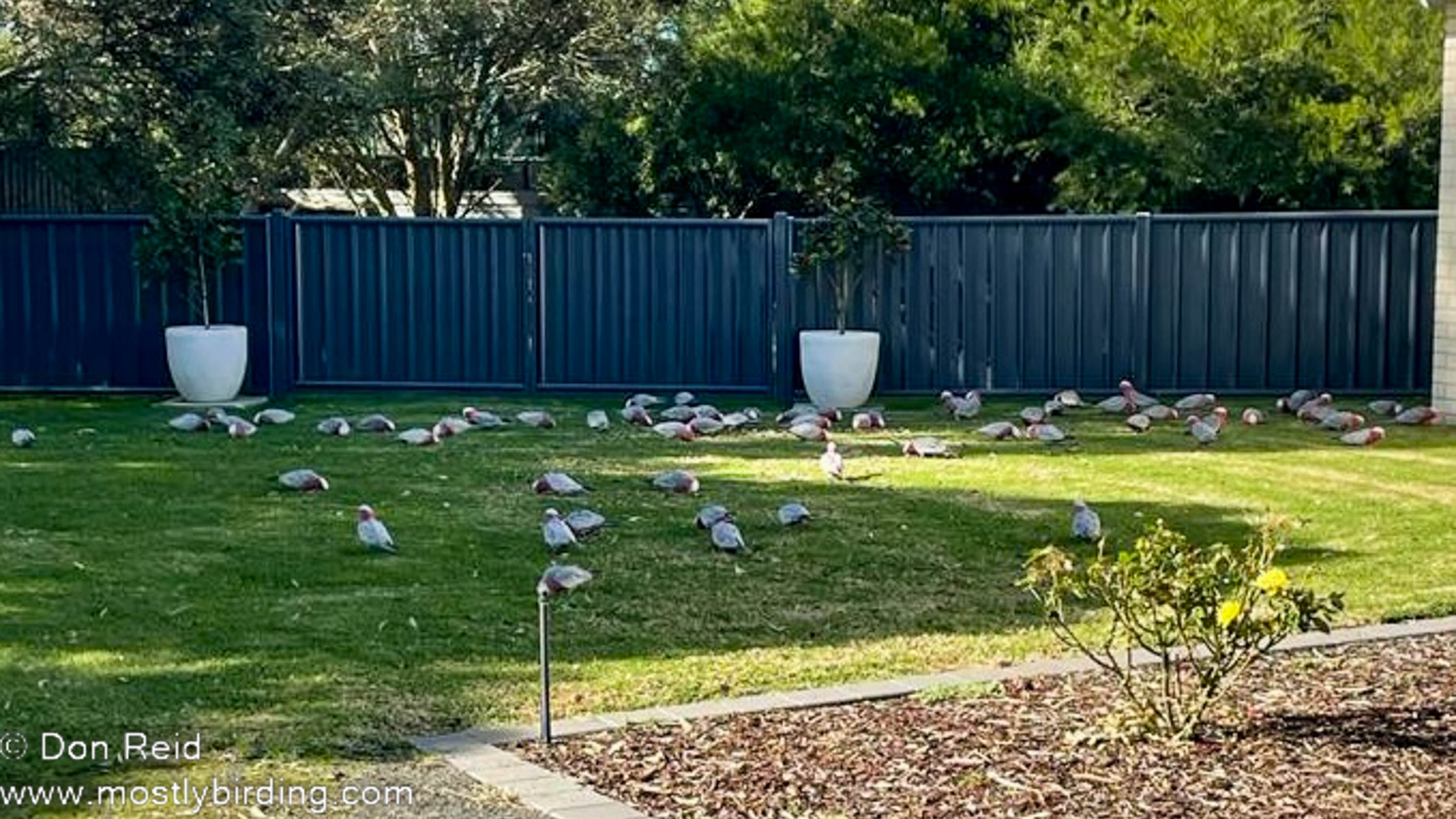
Galah Eolophus roseicapilla

More sedately coloured than those above, the Galah makes up for any lack of bright colouring by gathering in flocks, sometimes large ones as will be seen in some of the images below. The Galah occurs across Australia and is usually a ground feeder, taking seeds, herbs and roots or spilt grain and cereal crops.

Galah, Philip Island (race albiceps occurring in southeast Australia, has a white crest and crown)
Galah’s, Bright Victoria
Galah’s foraging on the lawn in Wurruk, Sale

Eastern Rosella Platycercus eximius

This is another species that eluded my attempts to photograph it during our previous visit, so I was particularly pleased to get some decent images during an outing to Raymond Island (more about that outing in a future post). It is confined to the south-eastern parts of Australia where it is regarded as common.

As vividly coloured as the Rainbow Lorikeet above, the white throat and bill of the Eastern Rosella stand out against the bright colours of the rest of the bird. Preferred habitat is open eucalypt woodlands (where I found this one), grasslands, parks, gardens and farmland. A ground feeder of grass and fallen seeds, it is surprisingly well camouflaged when among foliage.

Eastern Rosella Platycercus eximius, Raymond Island Victoria

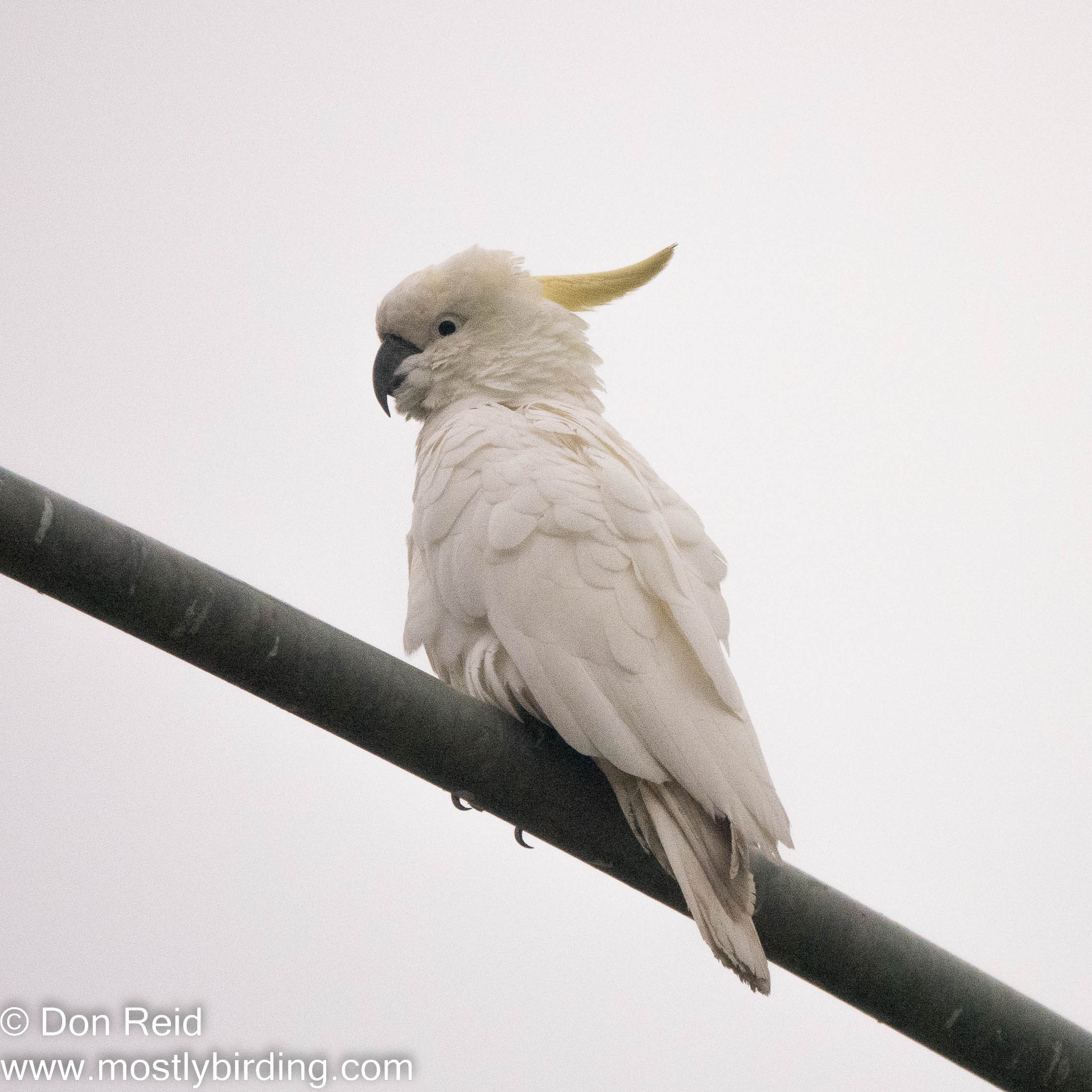
Sulphur-crested Cockatoo Cacatua galerita

Perhaps I’m pushing my luck including this all white bird under the general description of vividly coloured birds, however it is a spectacular bird that makes its presence known in no uncertain manner with a harsh raucous screech that comes straight out of a horror movie. They move about in small flocks, inhabiting forests, woodland, cultivated lands, parks and gardens and feed mostly on the ground on grass seeds, herbs, berries and fruit.

South Africans of a certain “vintage” will remember this bird well as it featured in adverts for NBS building society

Sulphur-crested Cockatoo, Wurruk, Sale Victoria

So what’s left? Having covered the “black and white” birds in Part 1 and the “Vividly coloured” birds in this Part 2, there are still a number of other birds to mention under the heading of “the others” – watch this space…

Reference : The Complete Guide to Australian Birds by George Adams