Our road trip from Pretoria to Mossel Bay this past weekend followed a by now familiar routine – around 1300 kms spread more or less equally over three days with stopovers near Bloemfontein and Graaff-Reinet.
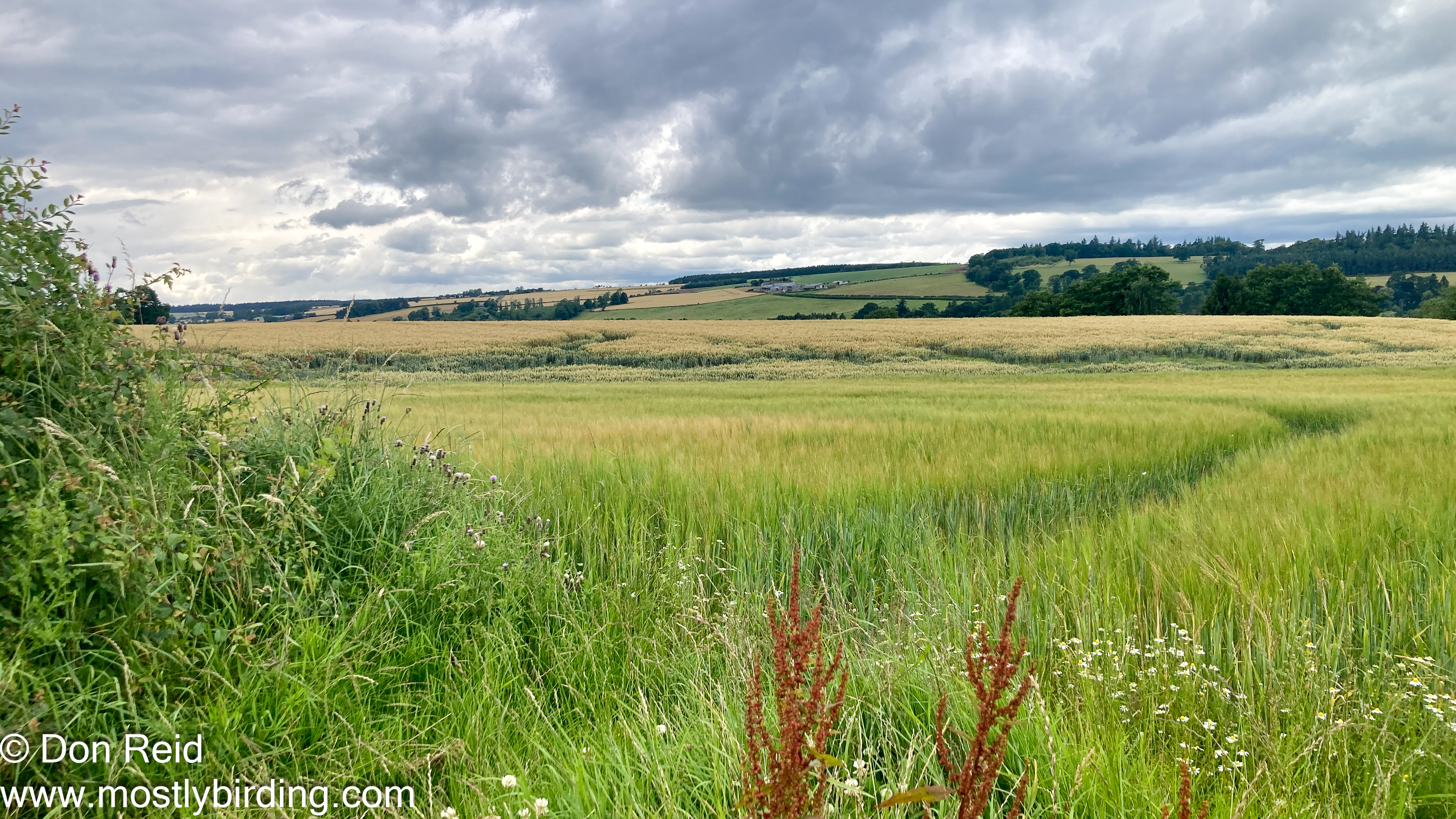
What we love about road trips is the changing landscape along the way, which varies according to the season – that is when traffic and weather conditions allow you to take it in.
The first half of the journey tends to be busy, but once we branch off from the N1 National Road traffic diminishes and despite a narrower road the driving becomes easier, allowing us to scan the surrounding landscape.
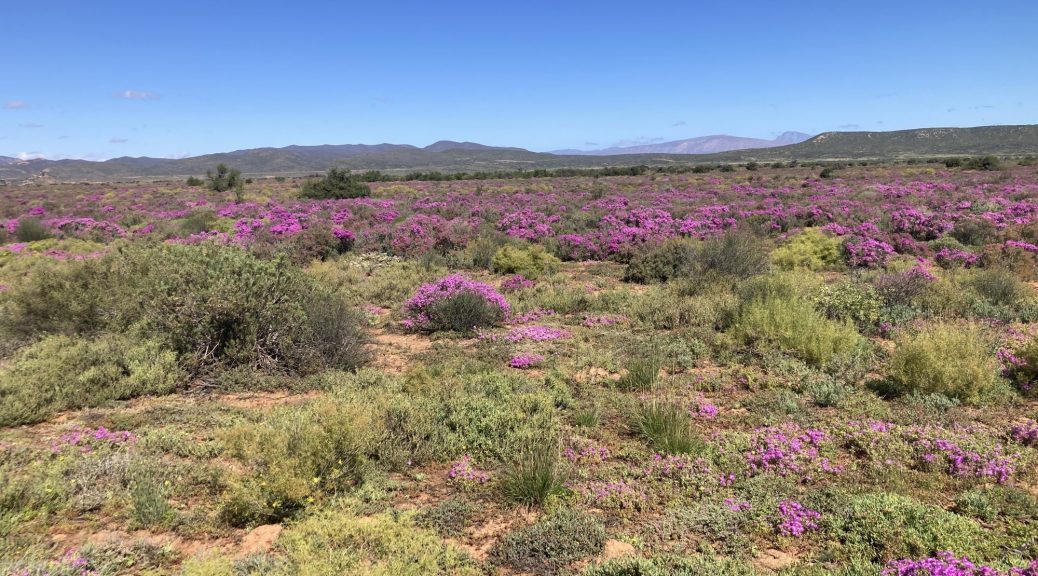
What set this trip apart for us was the appearance of flowers at the roadside and extending into the adjoining fields in places.
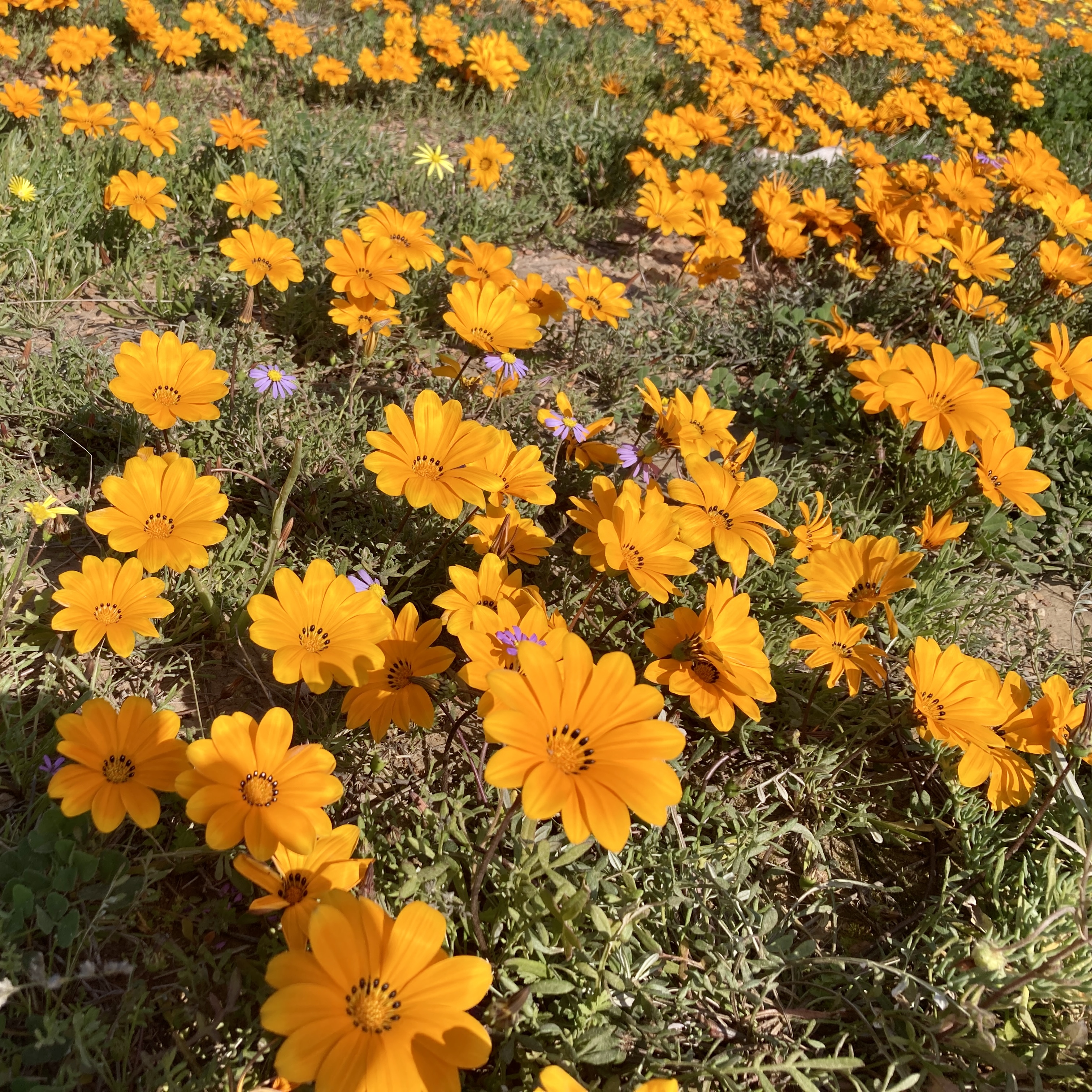
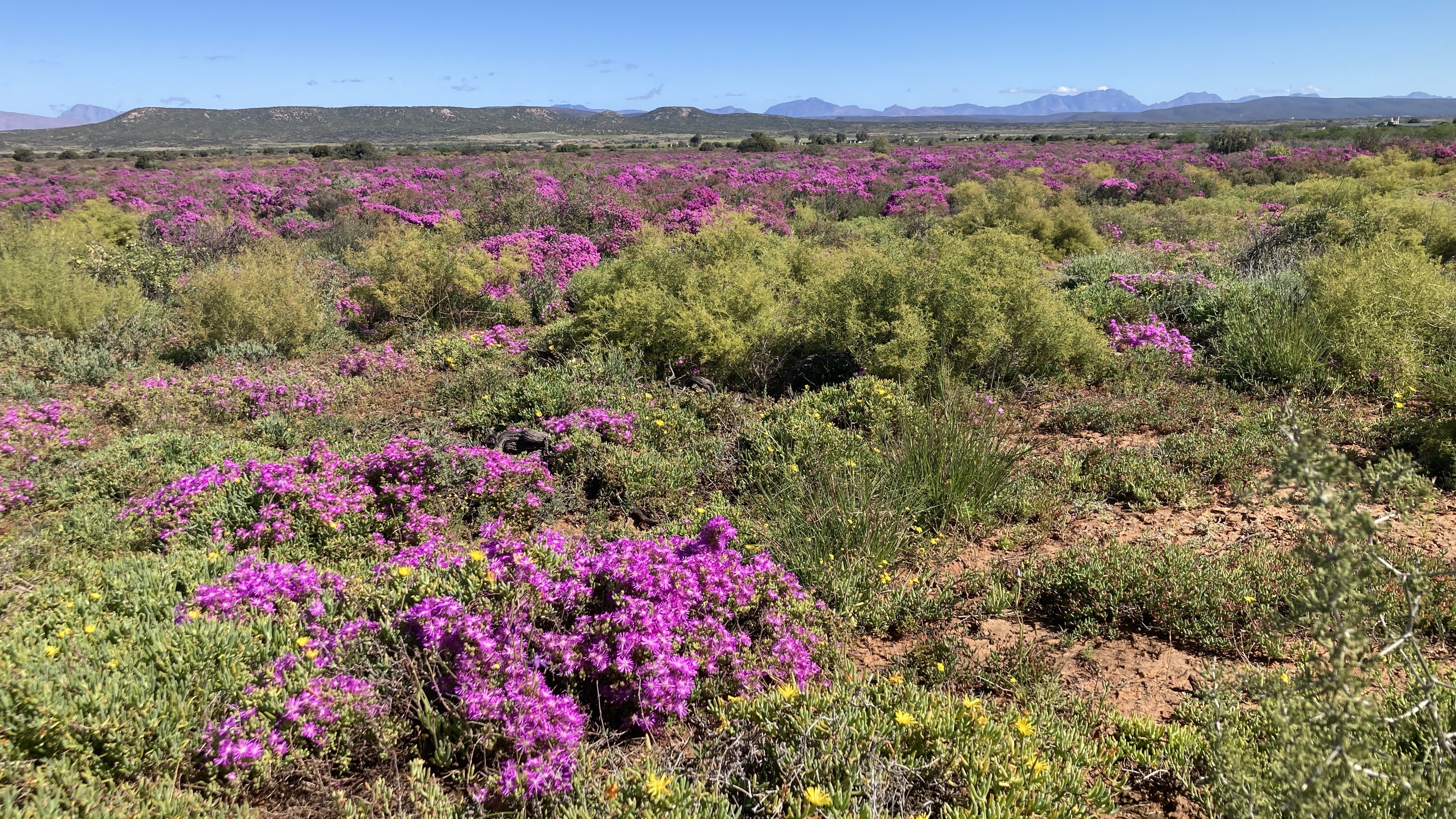
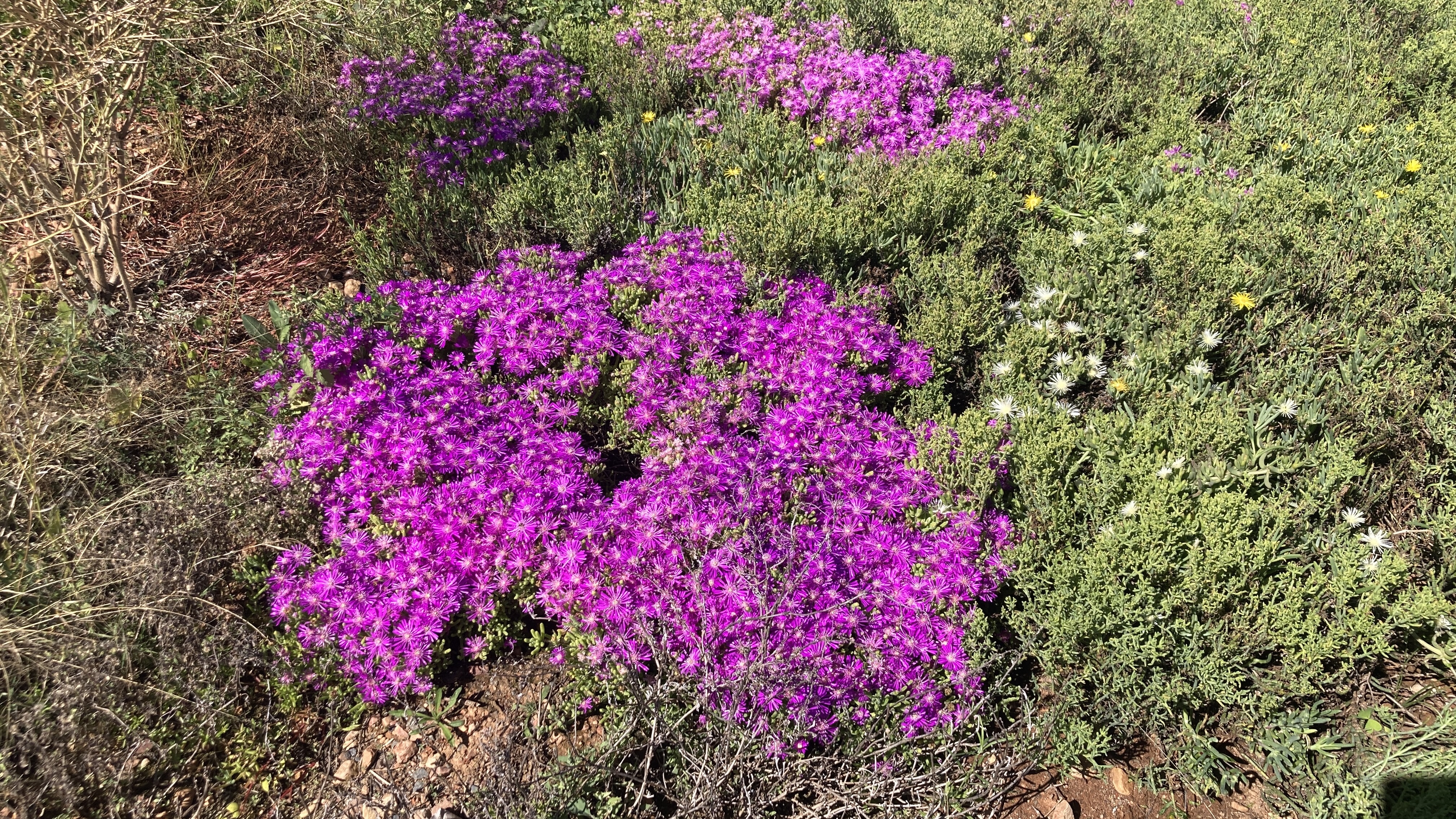
Spring brings an abundance of wild flowers to the western parts of South Africa and we have enjoyed flower watching trips in previous years. But the Karoo is not known for its spring flowers, so it was a pleasant surprise to see massed displays in places as we drove the second half of our journey, starting in the Willowmore area and continuing through to Oudtshoorn and beyond. Some examples …..
Bright orange daisies just south of Oudtshoorn…
Karoo Violets near Graaff-Reinet…
Vygies galore along the road between Oudtshoorn and De Rust….
Just what we needed after a couple of months of arduous clearing out and packing of our Pretoria home in preparation for our permanent move to Mossel Bay
My time in Grantown on Spey had come to an end and the next stop on my itinerary for the week was in Upper Largo, a small village not far from the most famous of all golf courses – St Andrews
After a final breakfast at Grant Arms Hotel, I checked out and set off along the route googled the evening before (in blue on the map below).
Just to add some birding interest, I decided to divert from the route slightly so that I could pass through Montrose on the east coast. A scan through the Scottish Birding Spots app had shown an interesting tidal basin at Montrose which seemed to be worth a look.
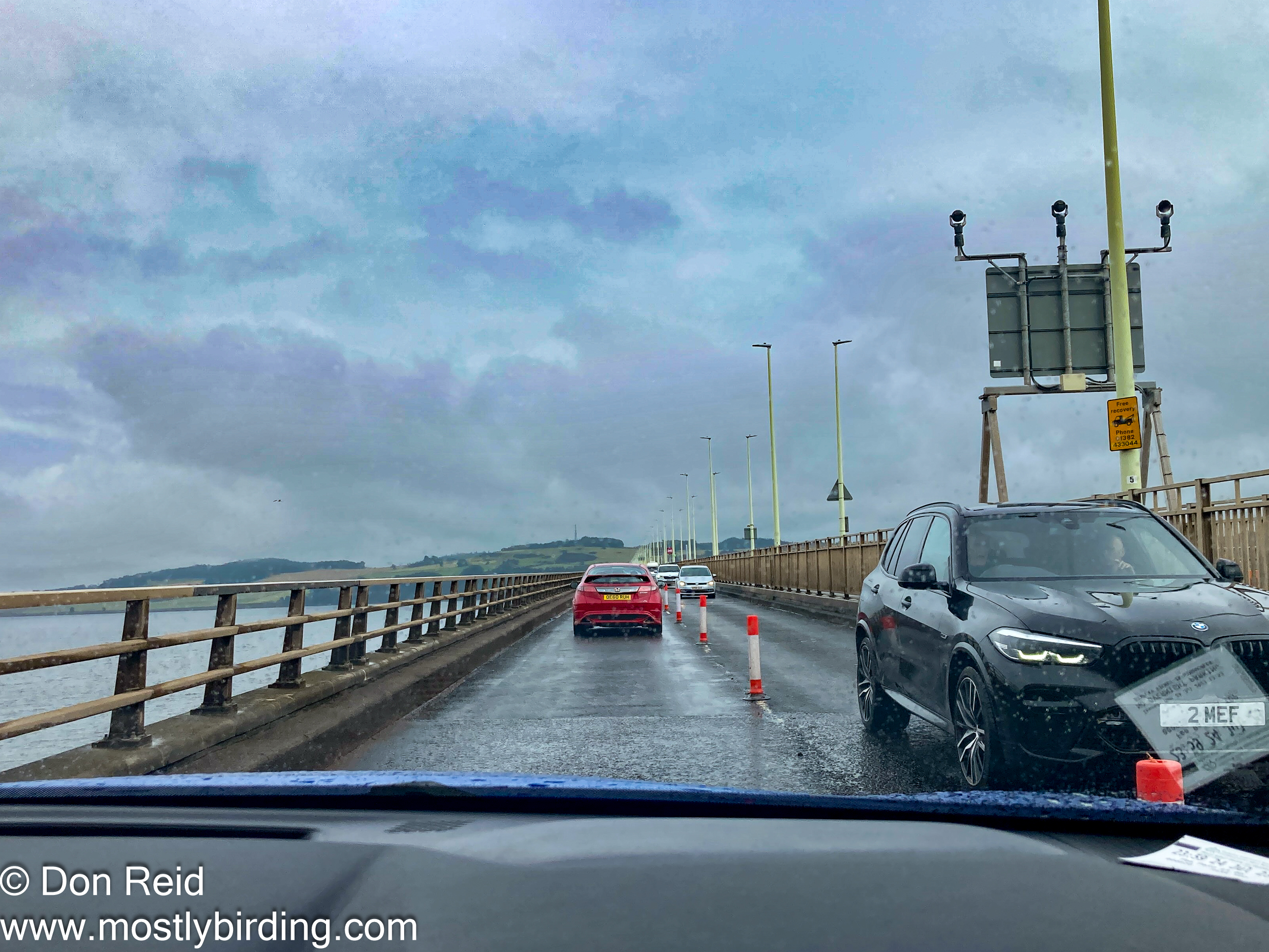
The distance of 131 miles / 210 km was not that far but the narrow twisty roads meant progress was very slow and of course I made frequent stops at lay byes to scout around or just to look and listen, resulting in a total trip of some 7 hours.
The 3 and a quarter hours estimated by google was an indication of just how slow this route was going to be, even without stops and deviations.
Highland Tourist Route
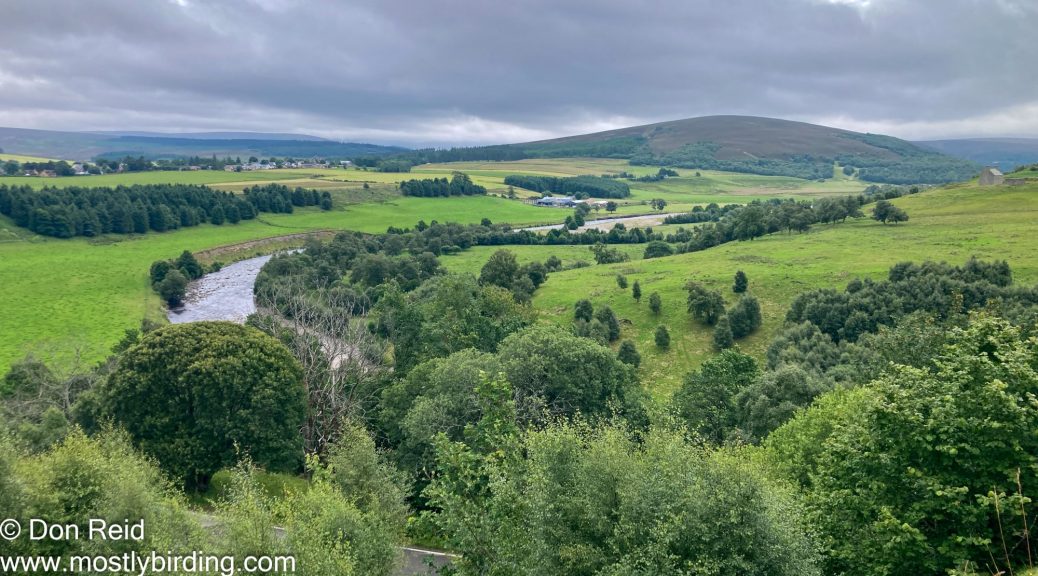
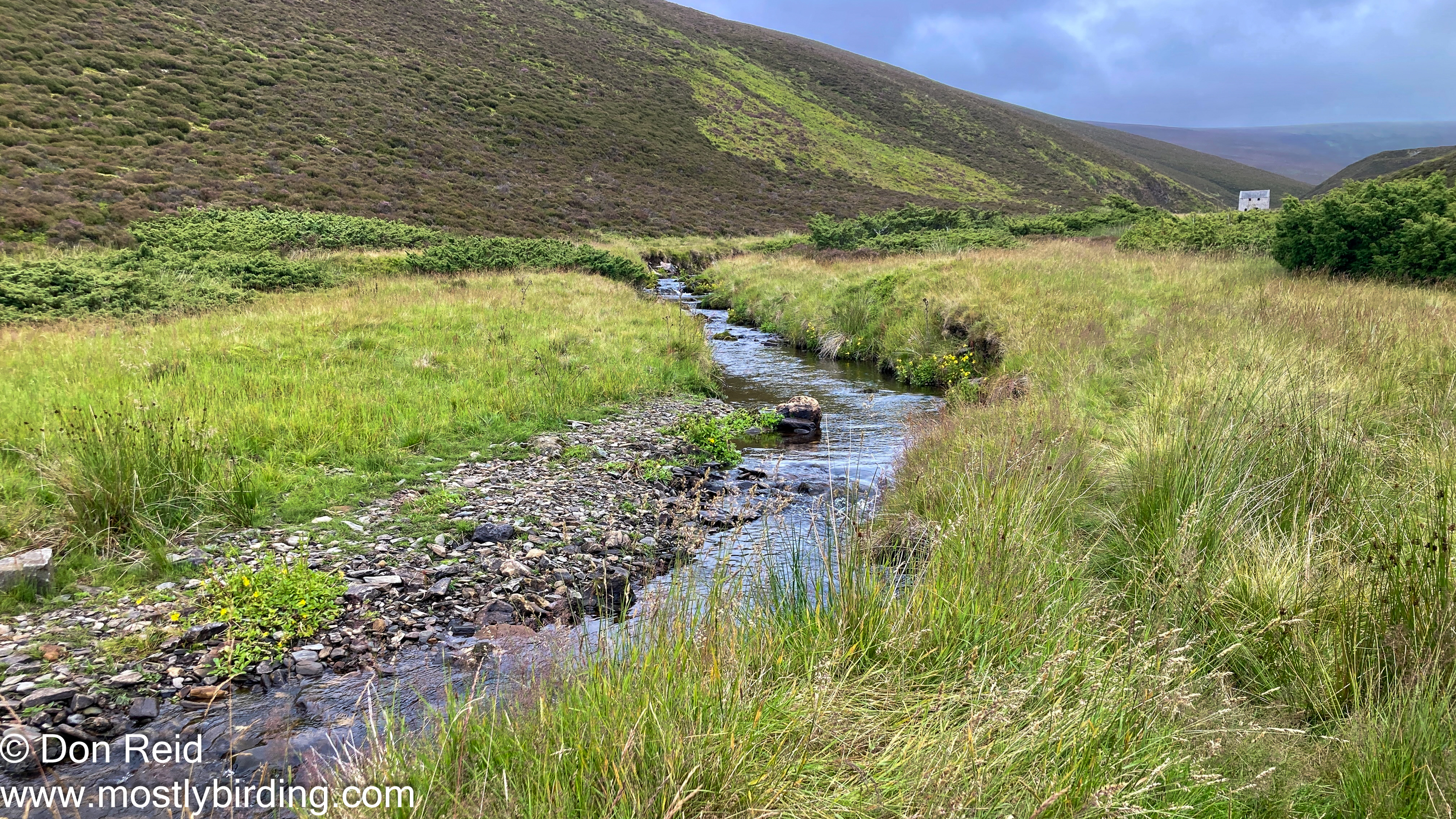
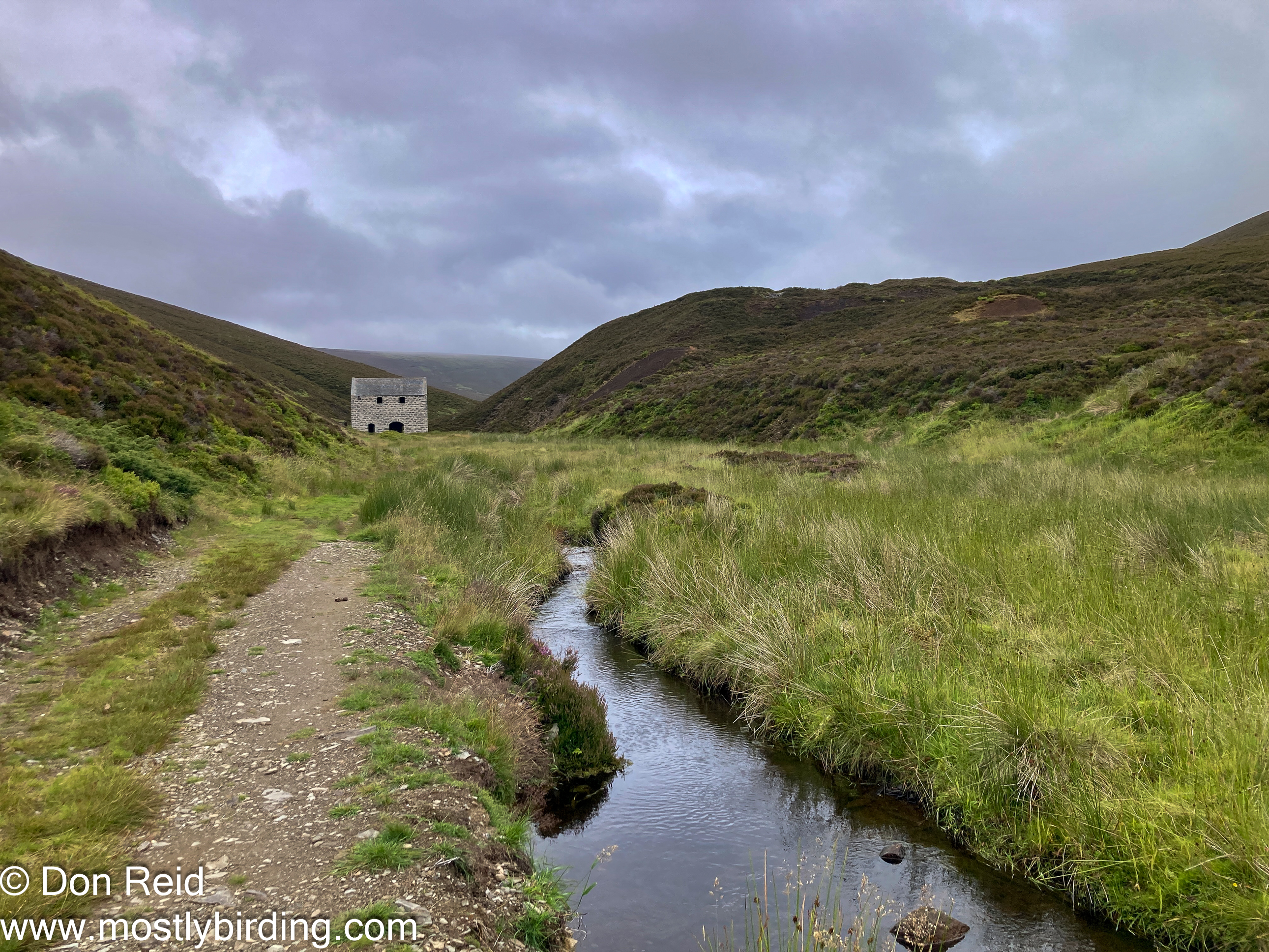
Not long after setting off the signposts indicated that the road was part of the Highland Tourist Route and I could see why – the moors have a beauty of their own – covered in heath and heather and undulating to the point of grandeur. Rugged looking sheep dot the hillsides in places and being part of the Cairngorns the whole area is sparsely populated.
The Moors, Highland Tourist RouteHighland Tourist Route
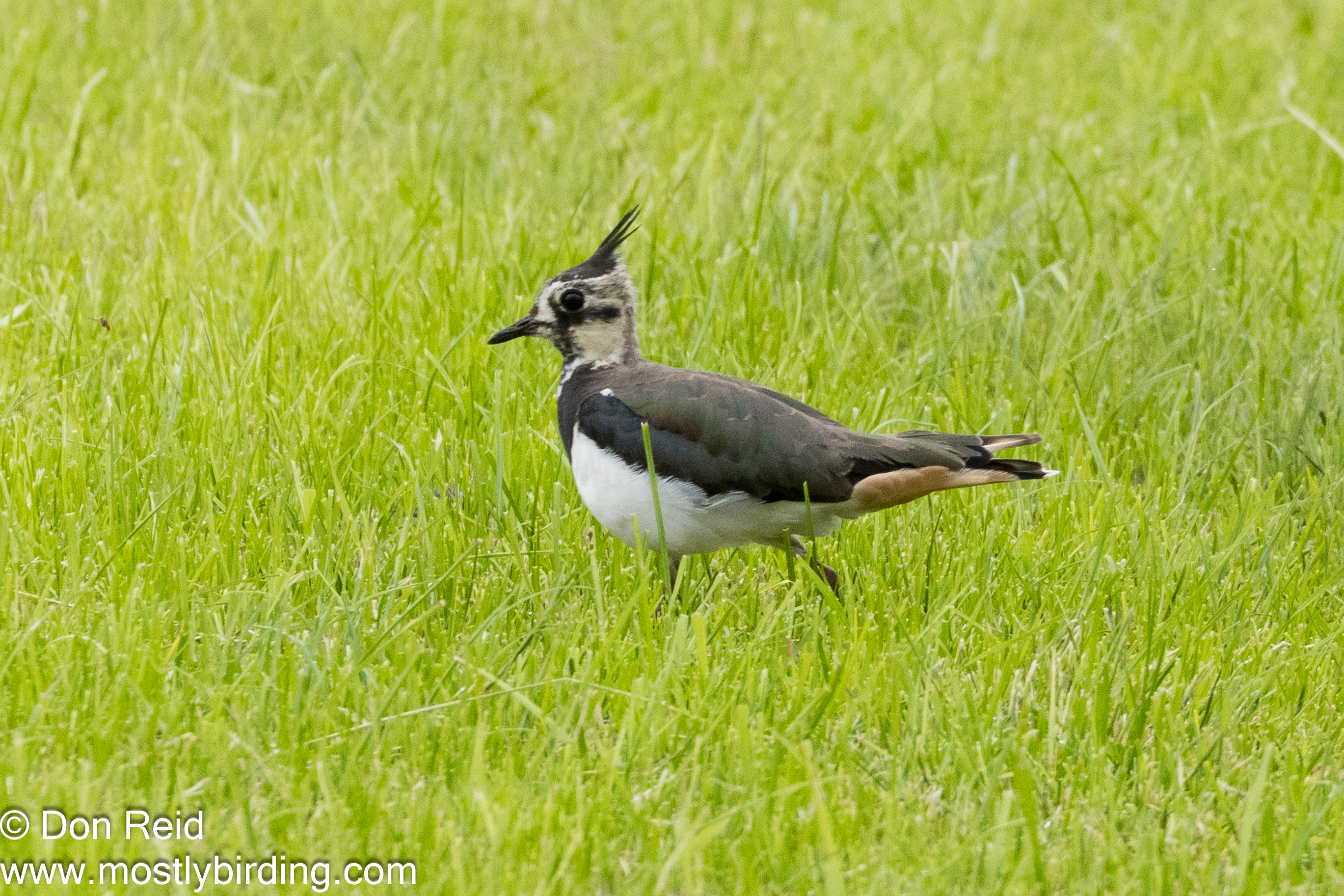
Ever on the lookout for birds, I stopped at a field where a few Lapwings were accompanying a small flock of sheep – or was it the other way round – in any event the lapwings and sheep seemed quite comfortable in each other’s presence.
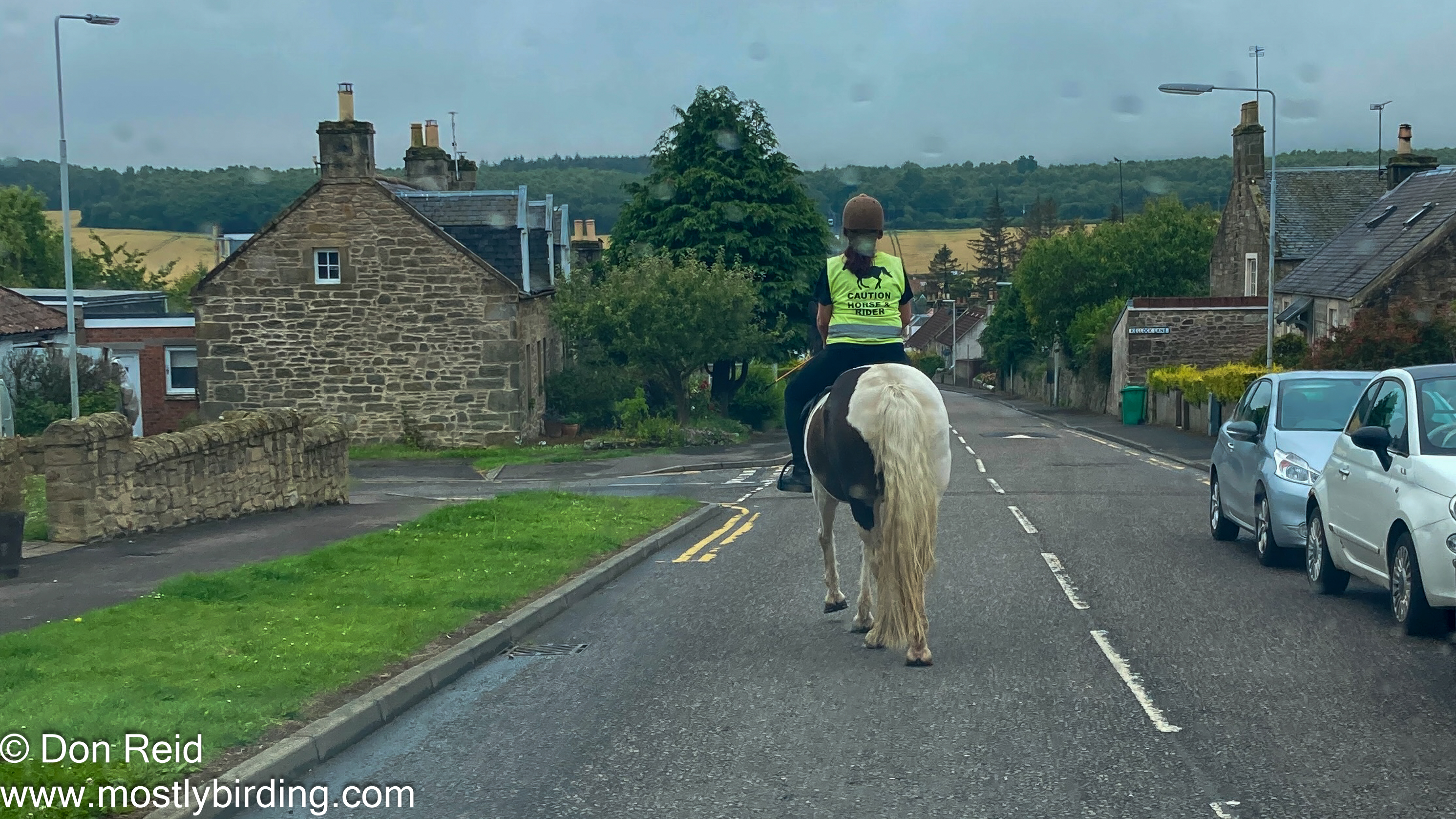
The villages along the way look as if they haven’t changed for decades with neat stone houses often right up against the road and not much sign of life. And the main road is not necessarily reserved for vehicles….
Strathkiness near St Andrews
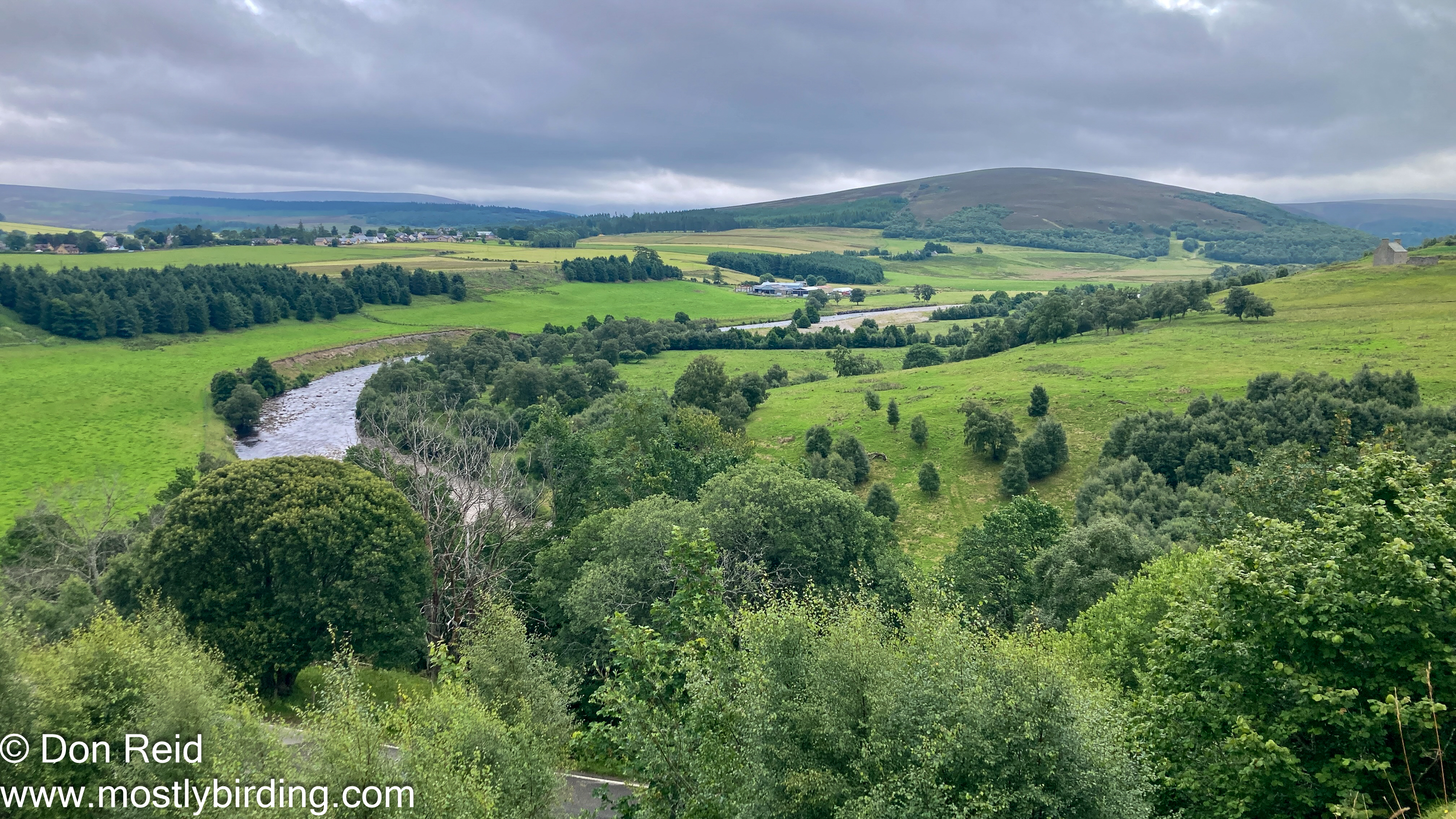
Another stop and a short but steep walk up a hill took me to a viewpoint overlooking the Avon River and an expansive stretch of handsome countryside below
River Avon, Highland Tourist Route
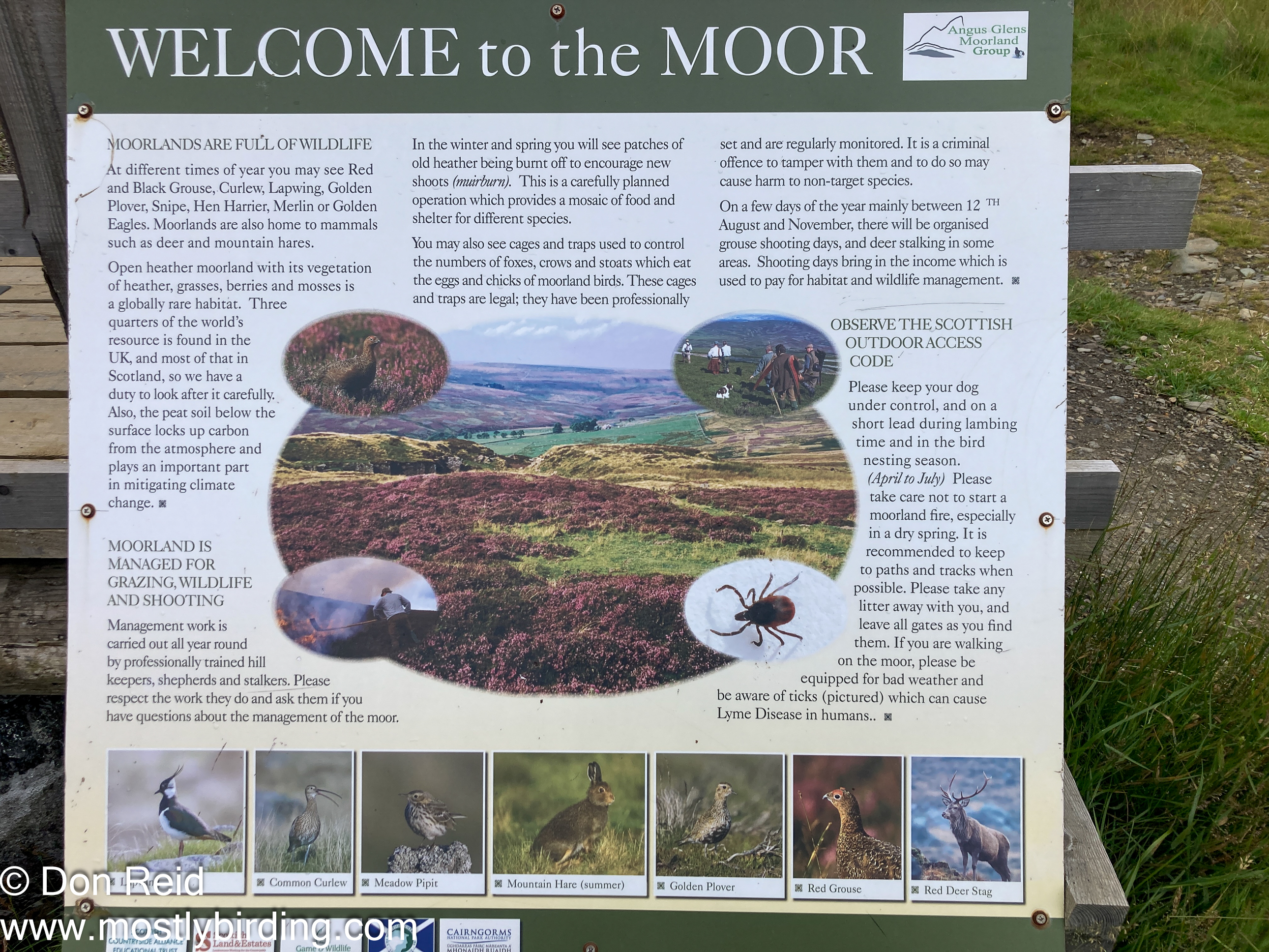
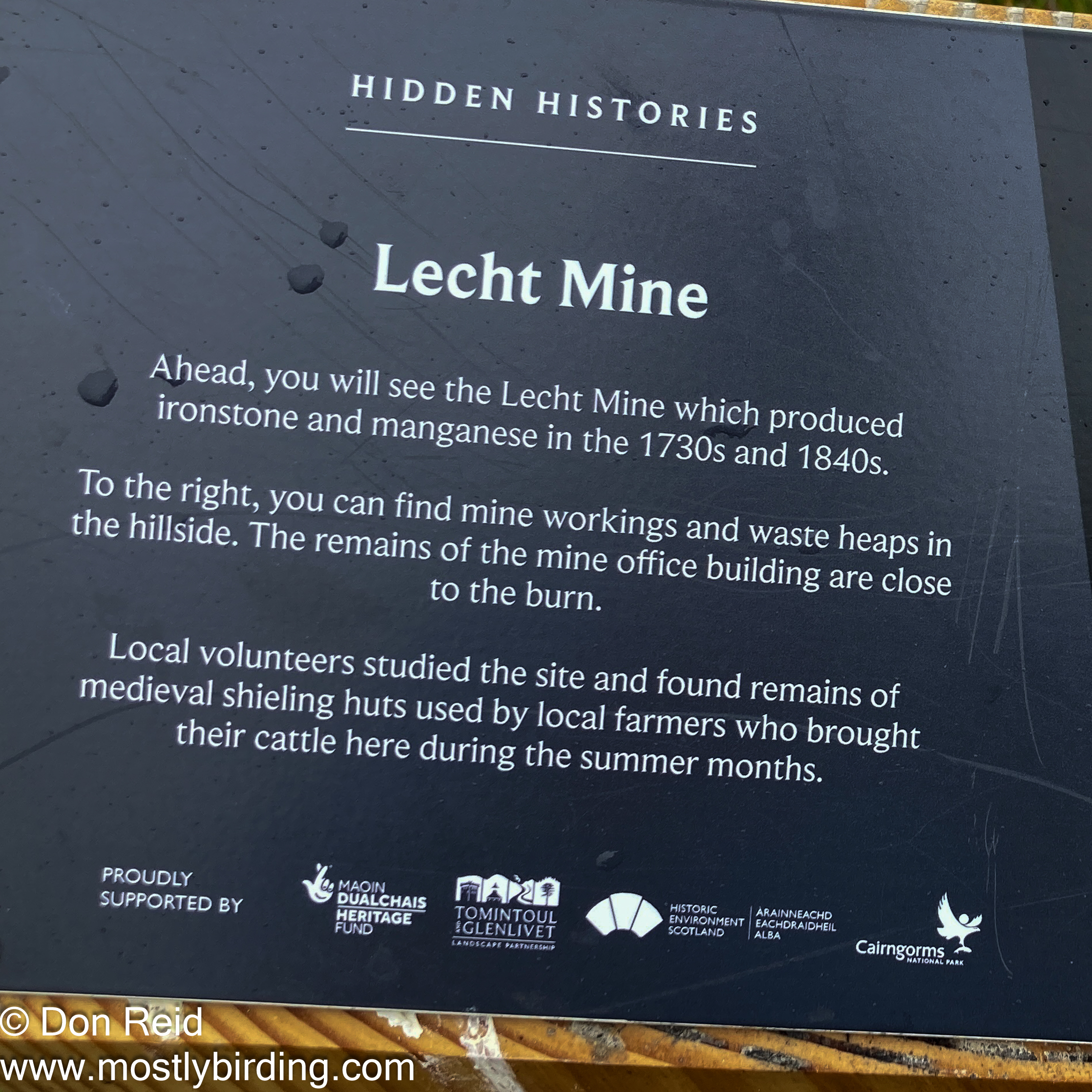
At this spot the signboard near the road gave some background of that most famous of Scottish products …
The Moors, Highland Tourist Route
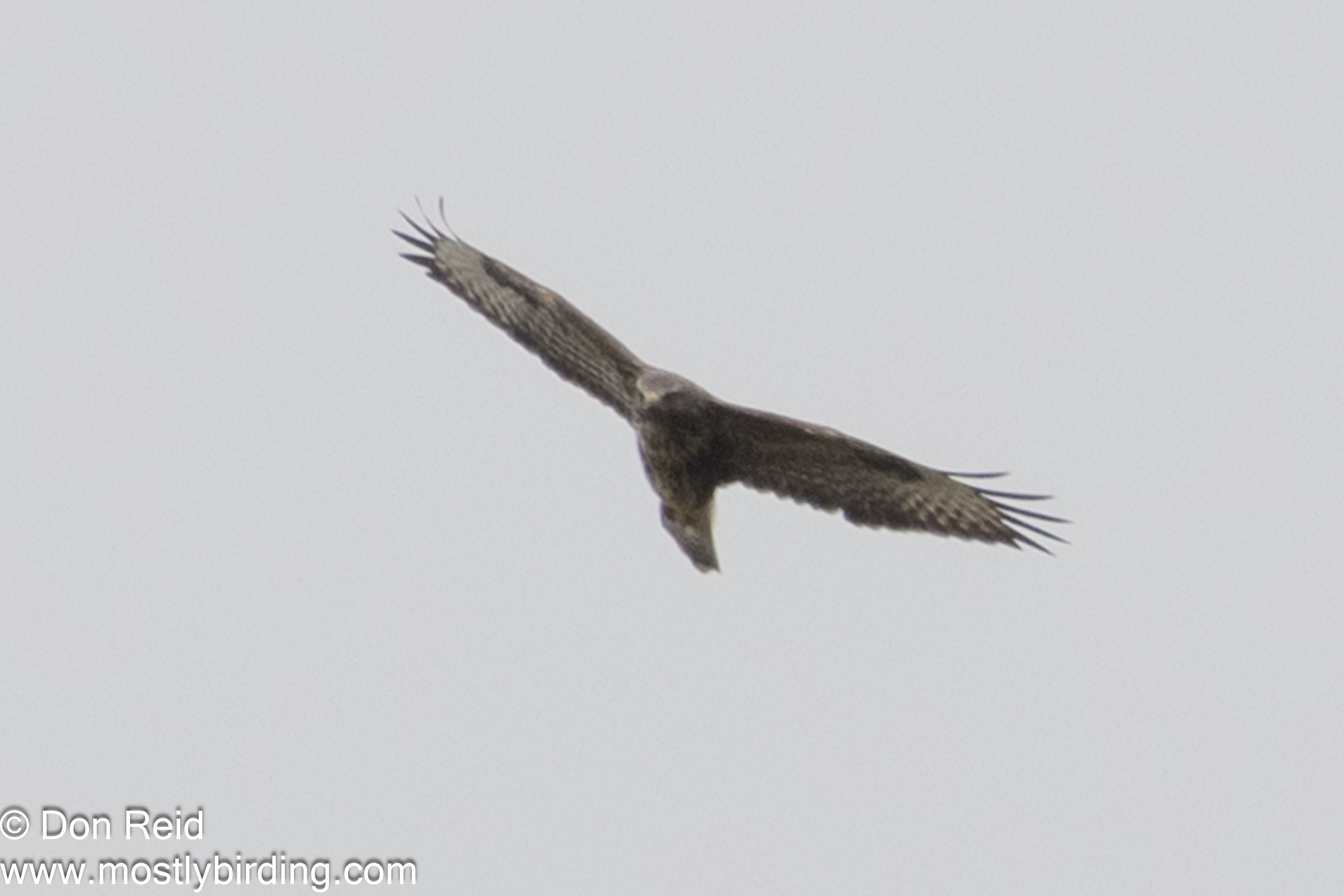
My first longer stop of the day was when I pulled off at a roadside parking area which led to a pleasant walk into a low valley, with birds active in the bushes and a couple of raptors overhead – one turned out to be a Kestrel while I could only ID the larger raptor as a Common Buzzard later, based on the photos taken of it flying at a great height and with grey backlight.
Teatime meant I made a quck stop at a roadside cafe for a small slice of their carrot cake, which I enjoyed with my tea at an old bridge on an abandoned stretch of road next to the main road – a boulder placed to discourage vehicles from using the bridge became my rugged tea table for the occasion.
Highland Tourist Route
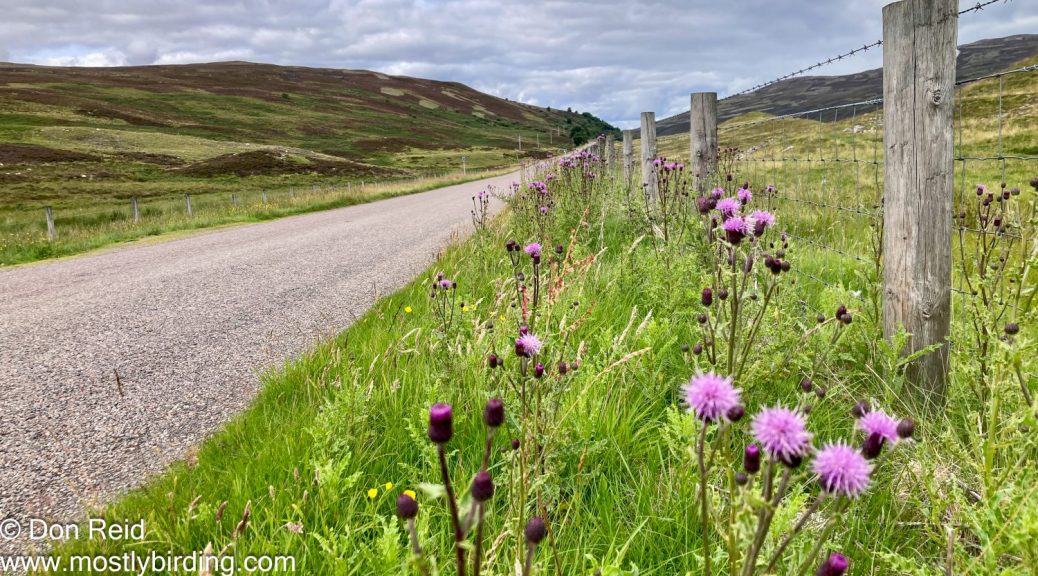
Thistles are common at the roadside and this one was particularly attractive
Thistle, Highland Tourist Route
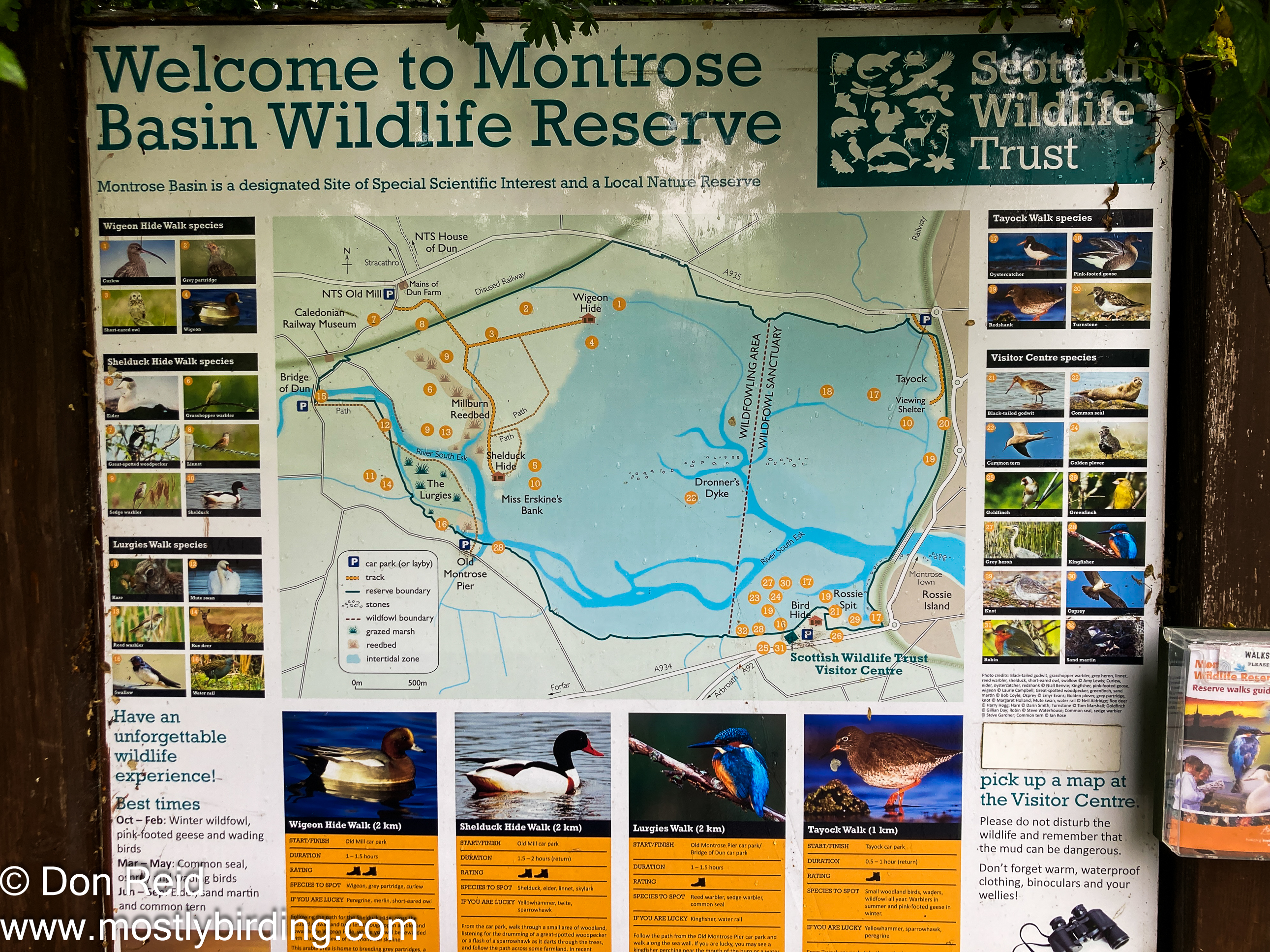
The diversion to Montrose gave me an opportunity to visit the Montrose Basin Wildlife Reserve and have lunch while viewing the many waders on the sandbanks formed at low tide – just a pity visibility was not great due to the diffused light caused by cloud cover and a general haziness in the air. The distance of the viewing windows from the water also made it not worthwhile to attempt any photography.
Montrose Basin
Nevertheless there was a good variety of species that I could ID with the help of the scopes provided for visitors and the assistance of the pleasant young lady in charge. During the hour spent at the visitor centre’s viewing windows I was able to add several species to my growing trip list…
Waders such as Greenshank, Redshank and Eurasian Curlew
Eurasian Oystercatchers
A familiar looking Grey Heron
Common Tern – a chart on the wall showed its migration route, ending in South Africa
”Ordinary species such as Eurasian Collared Dove and Stock Dove
Bonus species in the form of Eurasian Tree Sparrow and Eurasian Magpie
There was still a couple of hours driving to do so I didn’t dawdle and continued along roads that seemed to get increasingly narrower, other than a stretch that took me through busy Dundee. There were still plenty of sights worth stopping for but that was sometimes impossible where roads are narrow and busy with no verge or lay bye handy to pull off
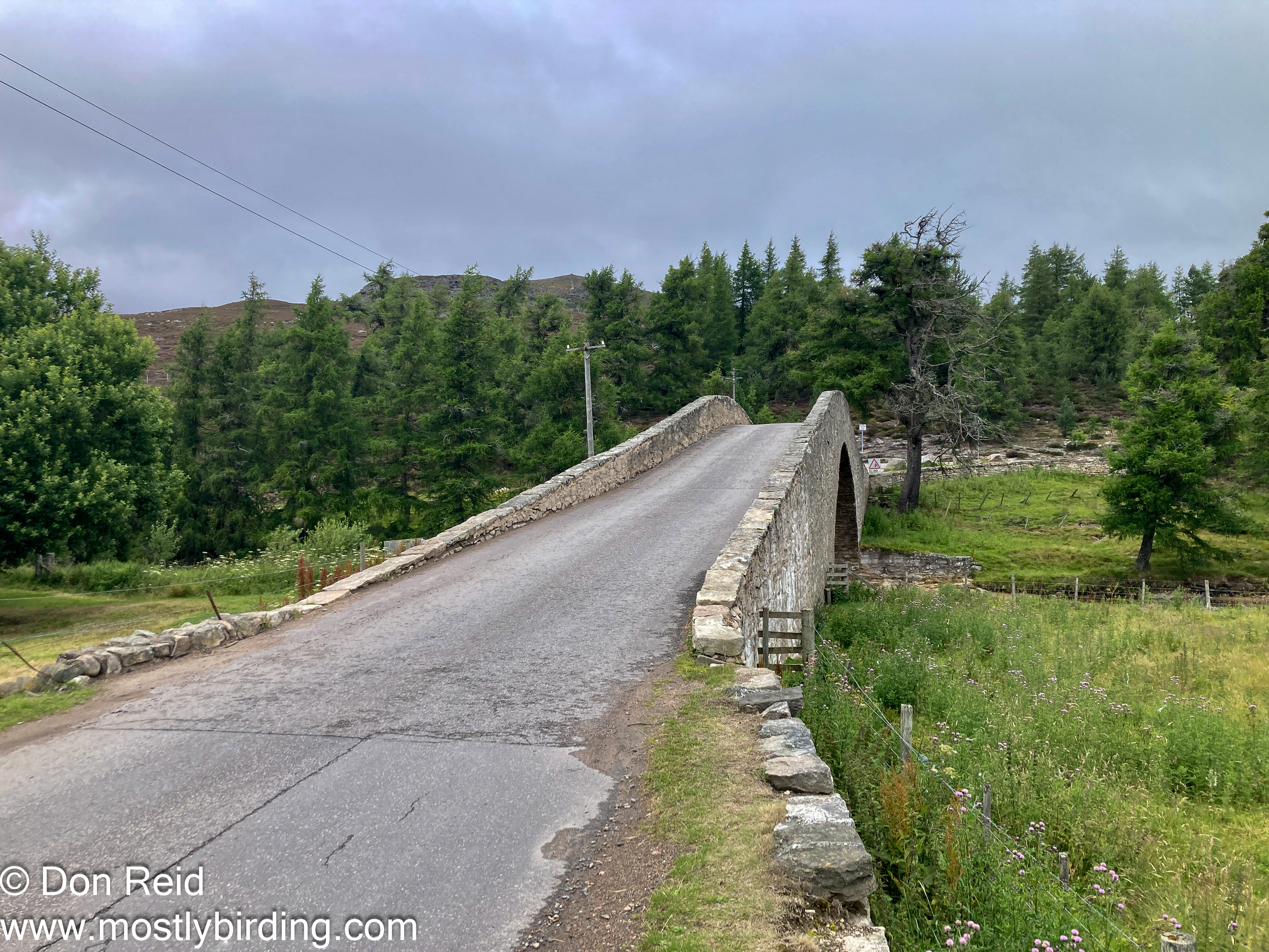
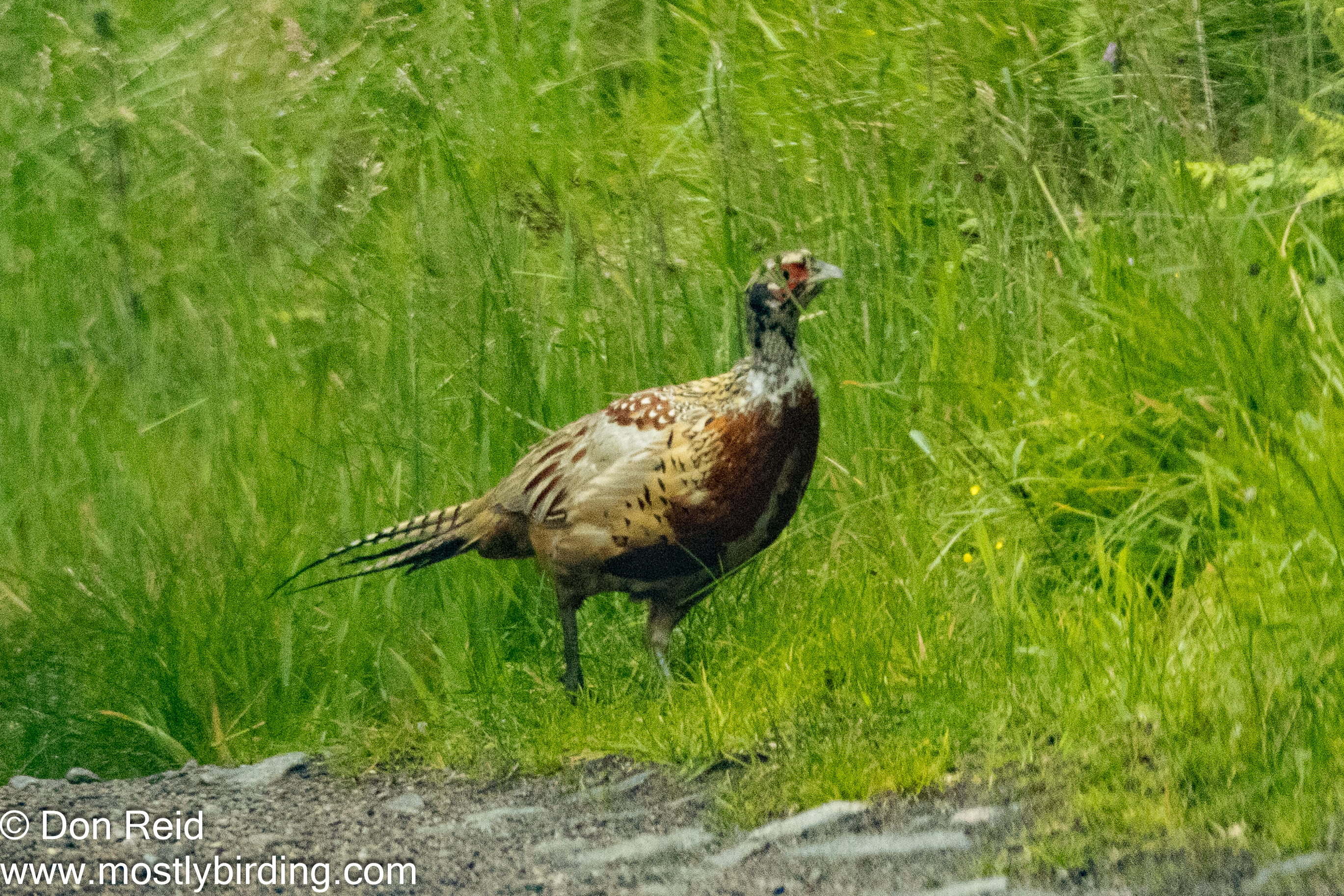
A hump back bridge that I drove over – quite a strange sensation going over it, not being able to see the other sideCommon Pheasant Phasianus colchicus Highland Tourist RouteBridge of Ess Highland Tourist RouteCrossing the River Tay at Dundee
At last I got to Monturpie Guesthouse and checked in, then walked to the village for a decent meal of prawn cocktail and fish and chips at the local hotel where most customers were regulars judging by the many who had brought their dogs with them – all well behaved so it felt quite normal.
Upper Largo
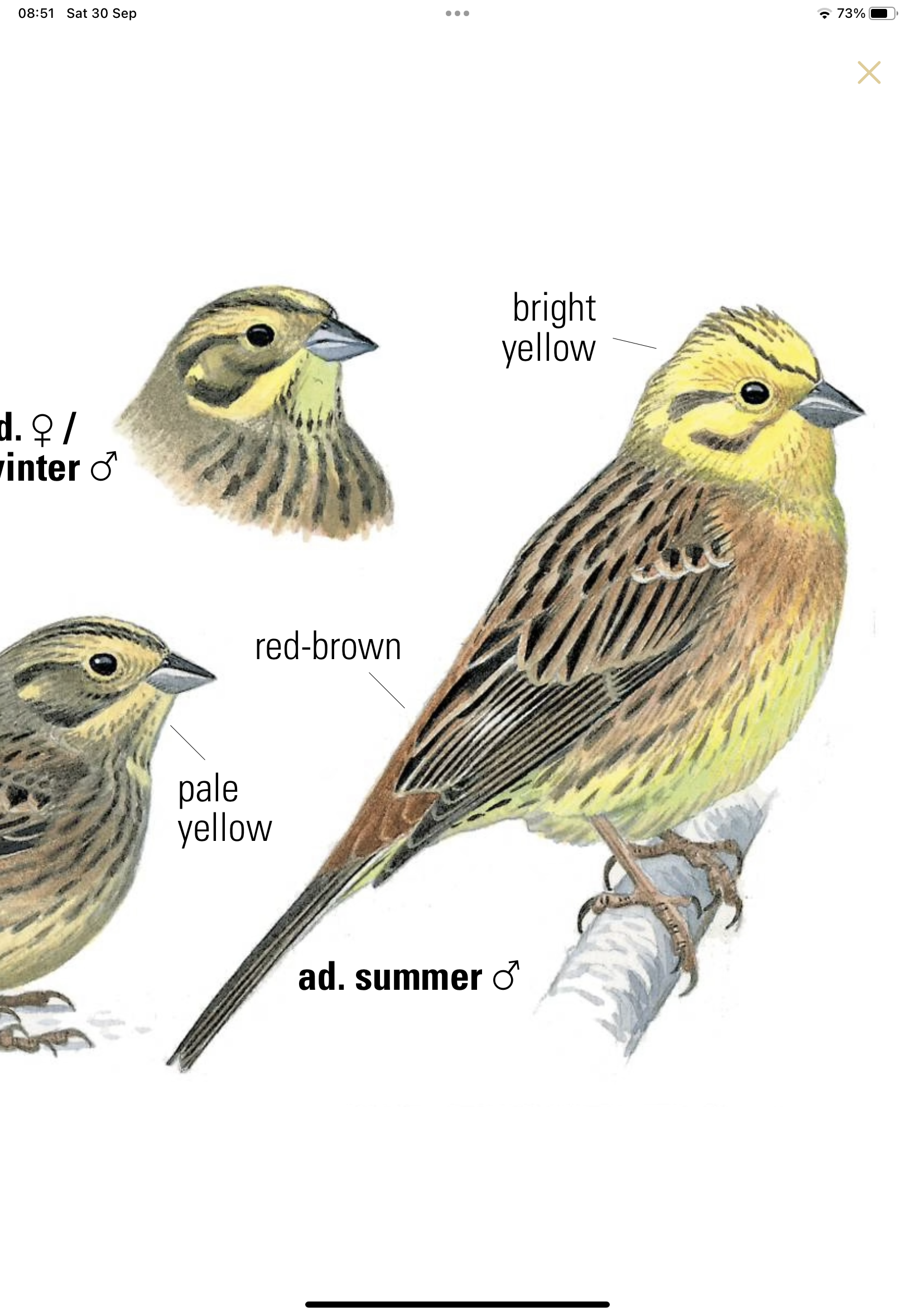
On the walk down to the village I spotted a Yellowhammer which was a lifer for me – I had no camera available so include the illustration from Collins just to show how striking this little bird is
And that was a nice way to round out an interesting day of travel along the back roads of the Highlands
Still working on Sue, the Grant Arms Hotel’s in house bird guide’s suggestions, I planned to visit the Findhorn River Valley today. Sue had said this was one spot I should not miss and at the end of the day I was inclined to agree.
Waking up just after 6 am I made a quick decision to follow Sue’s other suggestion and see if I could find Black Grouse at nearby Dava Moor, just 15 minutes drive from Grantown so easily do-able before breakfast
Dava Moor
I followed the instructions given and parked at a lay bye then walked a short distance to a farm gate with a view across an expanse of field, with a few sheep wandering about. I spent a patient half hour scanning the field, but there was no sign of the grouse so I returned to the car, but not before taking in the beautiful sight of rows of pink flowers bordering another open field with a dam and hills in the distance
Dava MoorYarrow Achillea Dava Moor
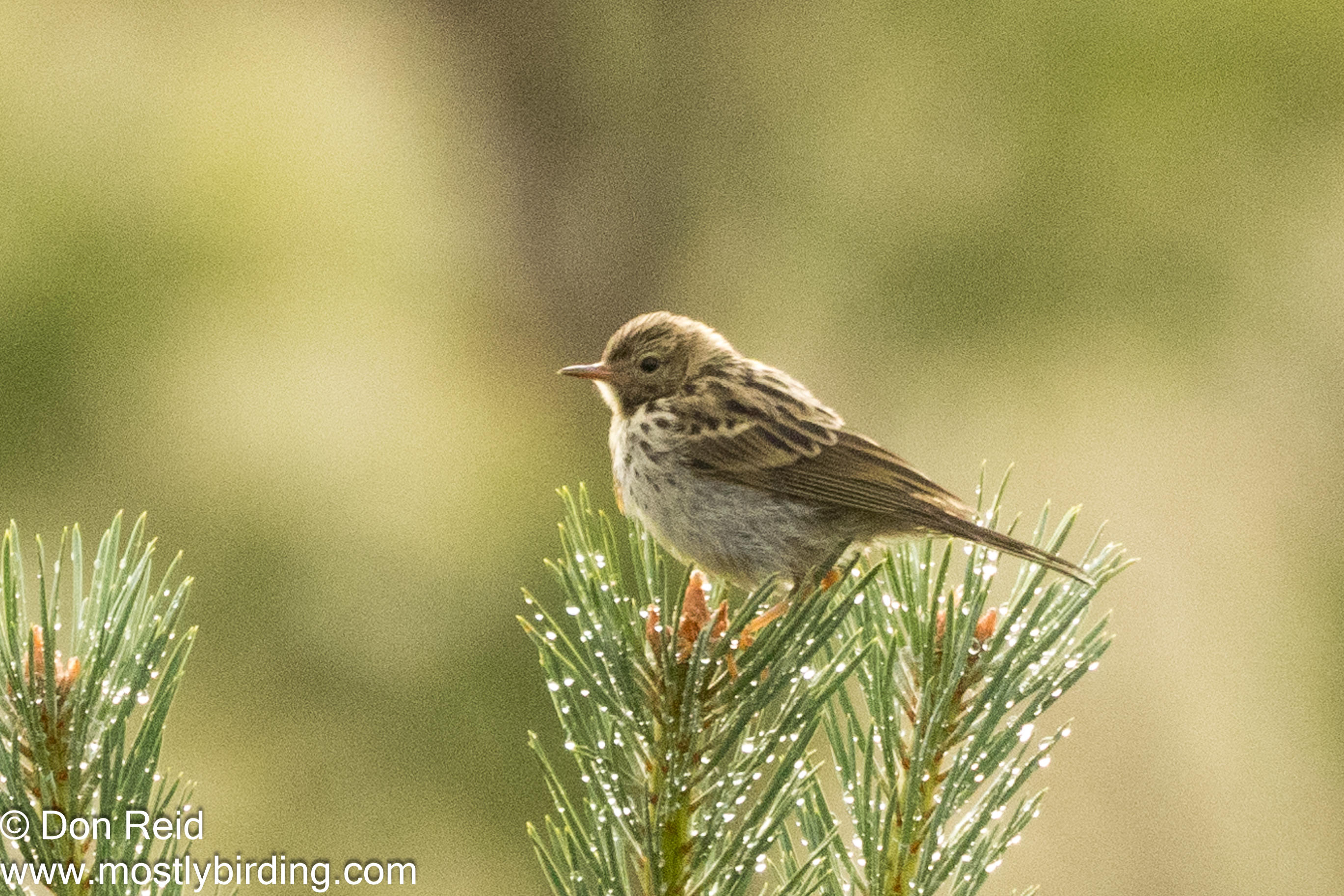
At the lay bye where the car was parked, a few birds were active and I spent a while watching their early morning activity and tracking some with my camera. I found the first of many Meadow Pipits that I would see that day
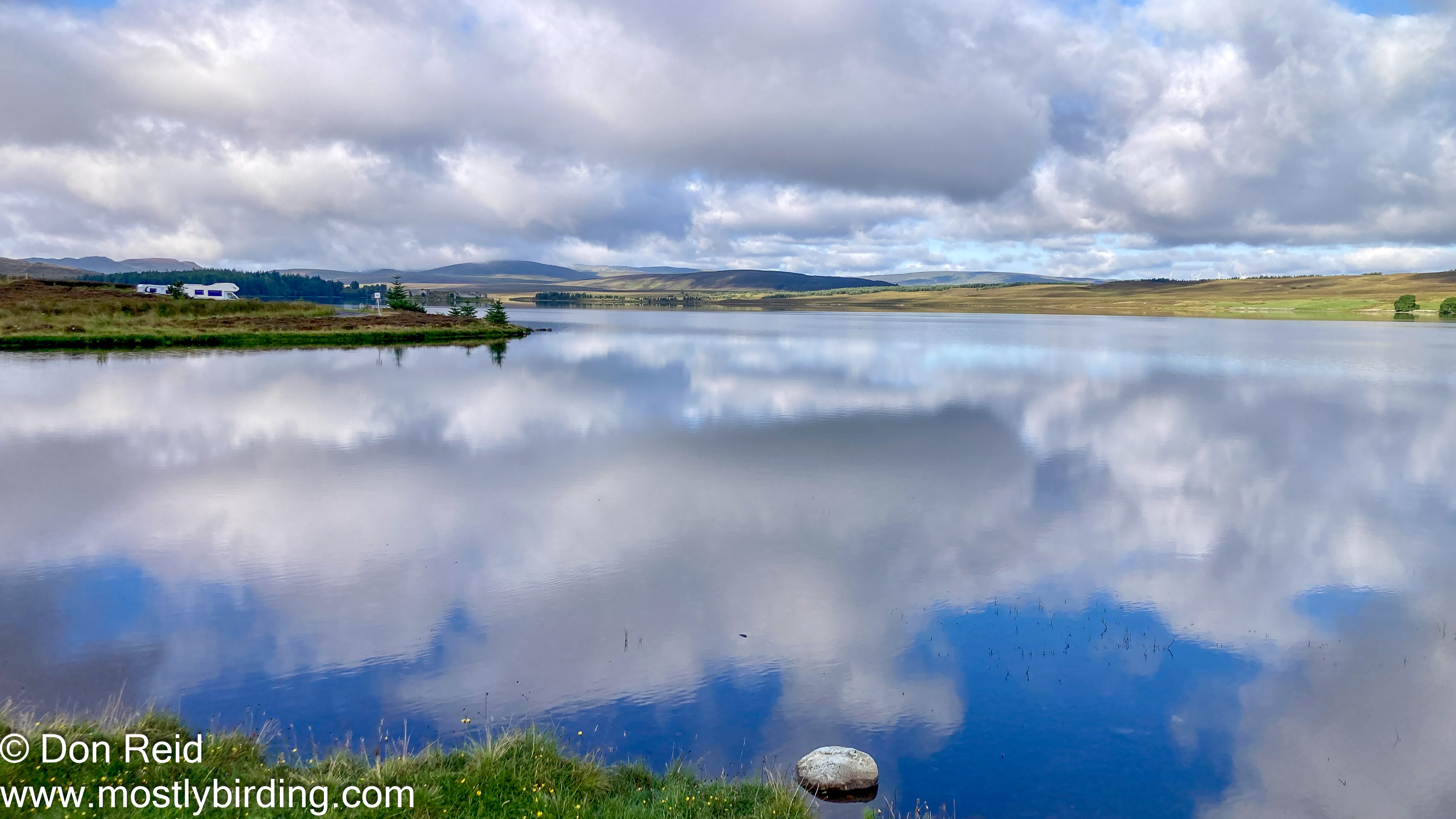
I carried on to the turn-off to Lochindorb a few kms further and followed the single-track road to the loch, passing an unusual sign along the way – one that did not fill me with much confidence …… but I got across safely and encountered some birds and other wildlife before reaching the large open loch.
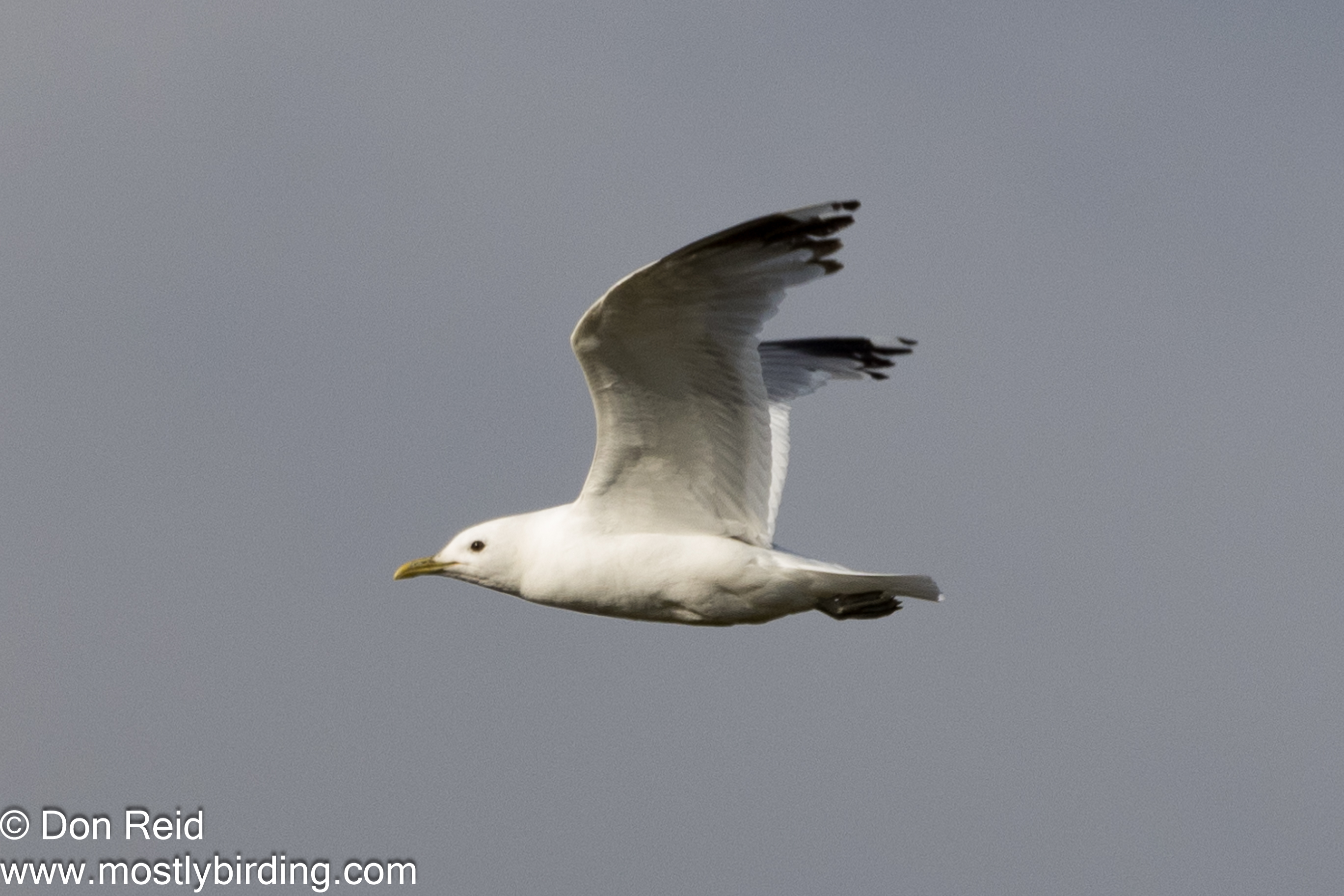
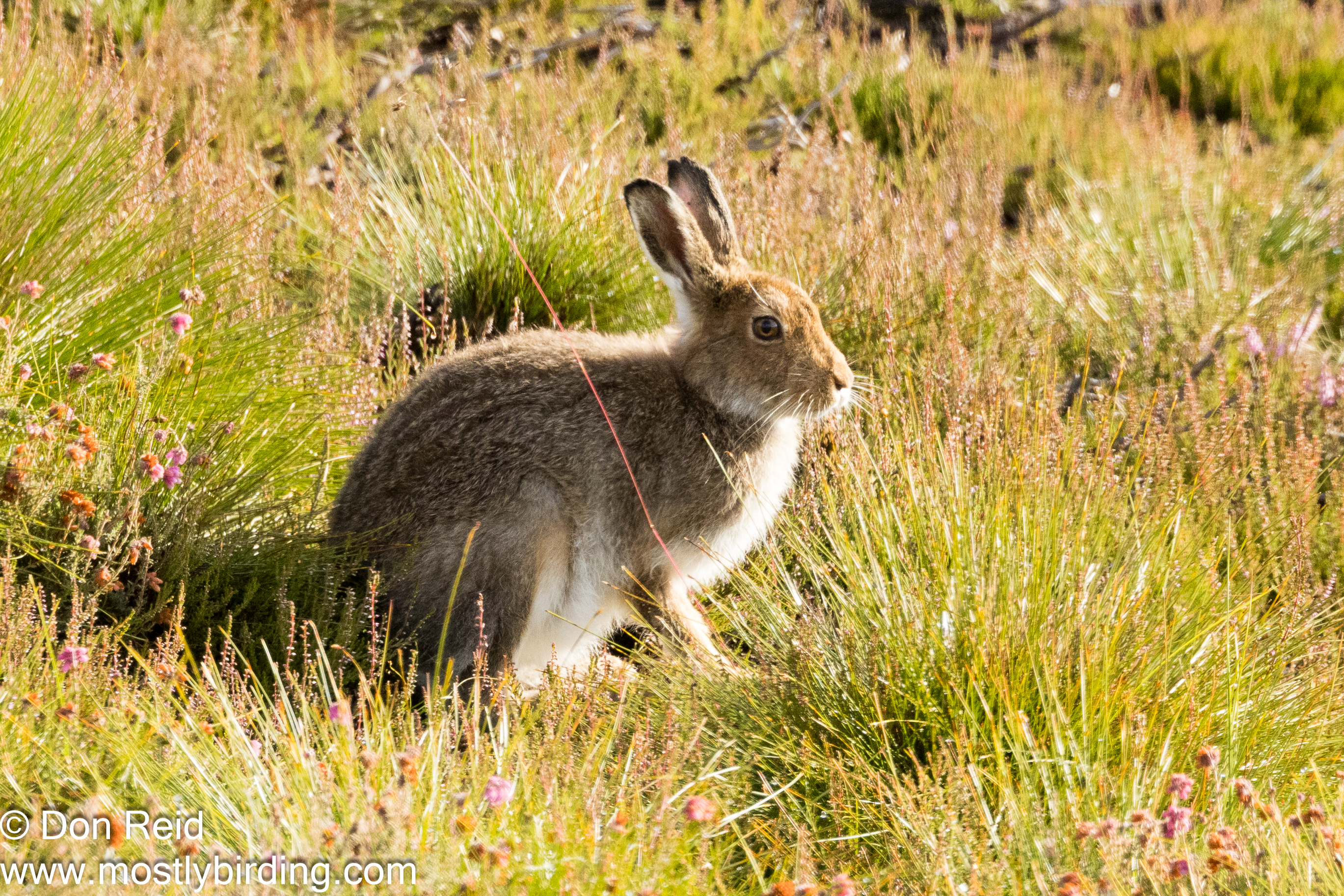
LochindorbCommon Gull Larus canus LochindorbMountain Hare Lepus timidus Lochindorb
At the loch the water was bird free, but I had the place to myself apart from a couple of camper vans in the distance and happily soaked up the early morning freshness while having coffee, counting my blessings for the chance to experience such beauty and solitude.
Lochindorb
The day was still young, but I was in danger of missing the fine hotel breakfast, so I headed back without delay and enjoyed fresh fruit, egg and bacon and toast with marmalade then returned briefly to the room to prepare for the rest of the day.
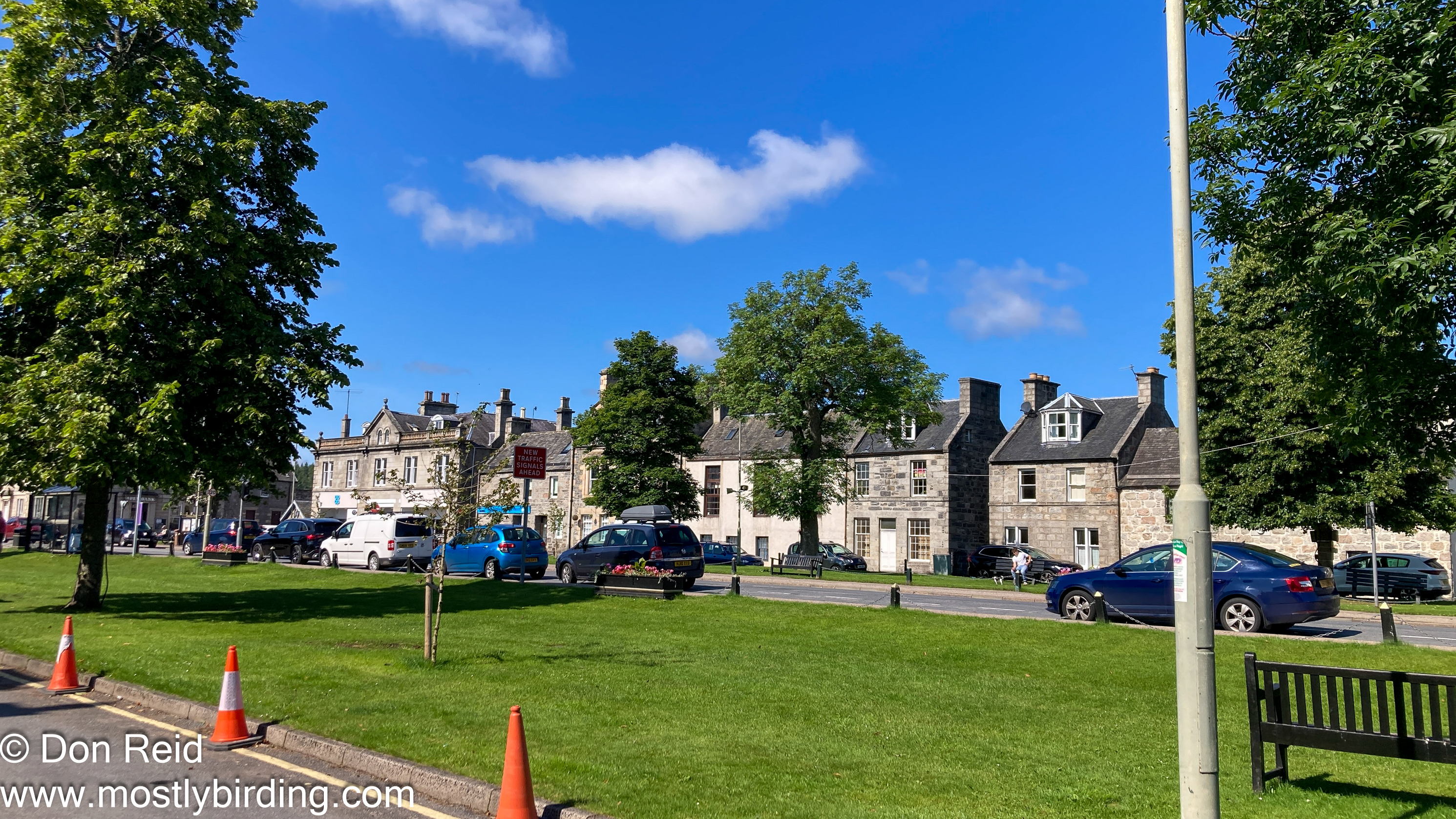
Before venturing out again, I walked down the neat, well maintained main street of Grantown on Spey to a small supermarket to get a cheese wrap for my lunch later on, suspecting that I would be far from any villages or other meal options during the course of my trip today.
Grantown on Spey
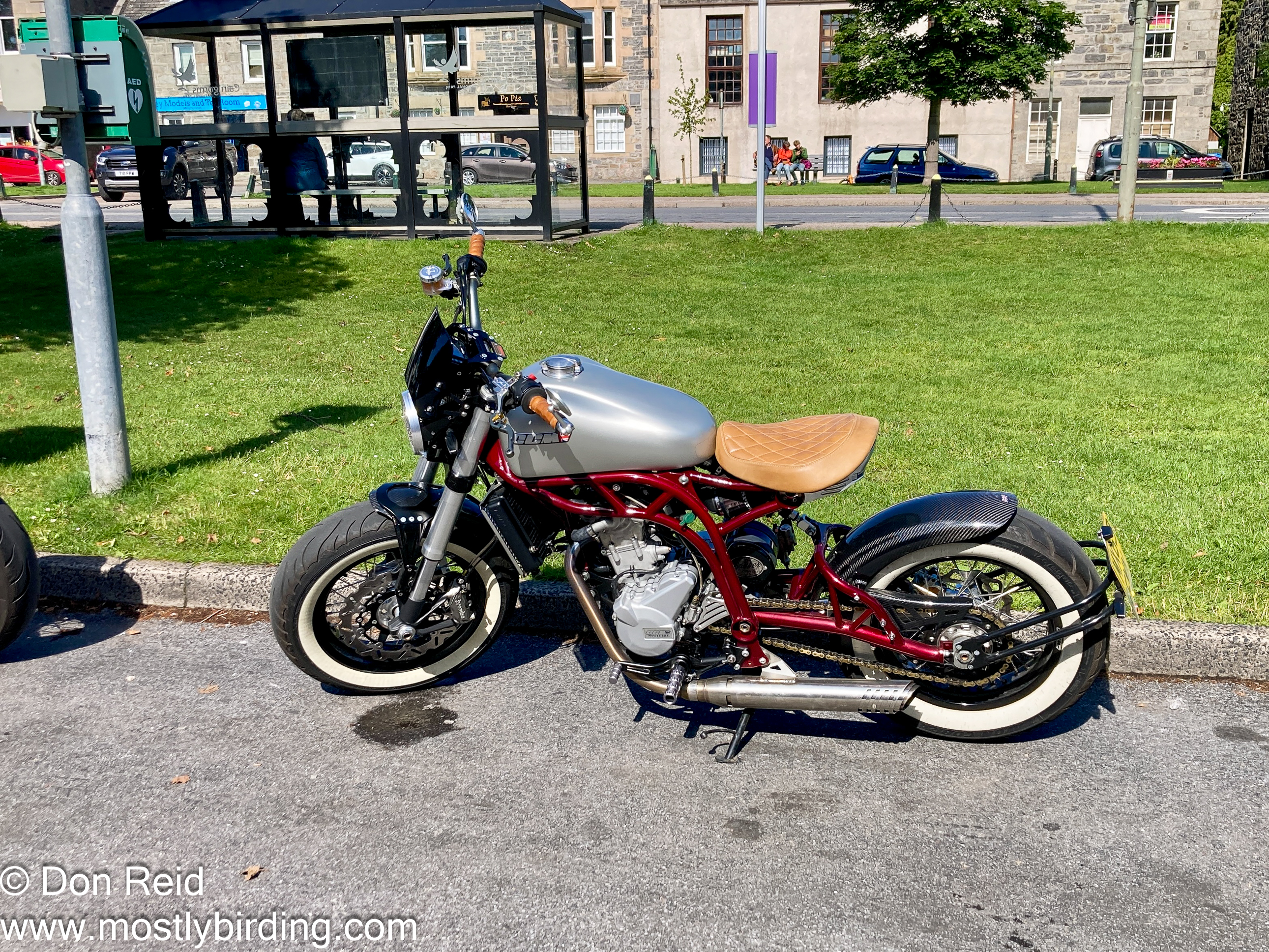
A few motorbikes were parked near a coffee shop and I took a fancy to this one’s unusual design – a mechanical work of art
Grantown on Spey
Strathdearn – Findhorn River Valley
Armed with a flask of tea and the cheese wrap I had purchased, I set off to visit Strathdearn (Findhorn Valley), using the hotel’s map and instructions. The route took me through the villages of Dulnain Bridge and Carrbridge then onto the A9 for a few miles before turning off at the sign for Raigbeg and Balvraid (love the names).
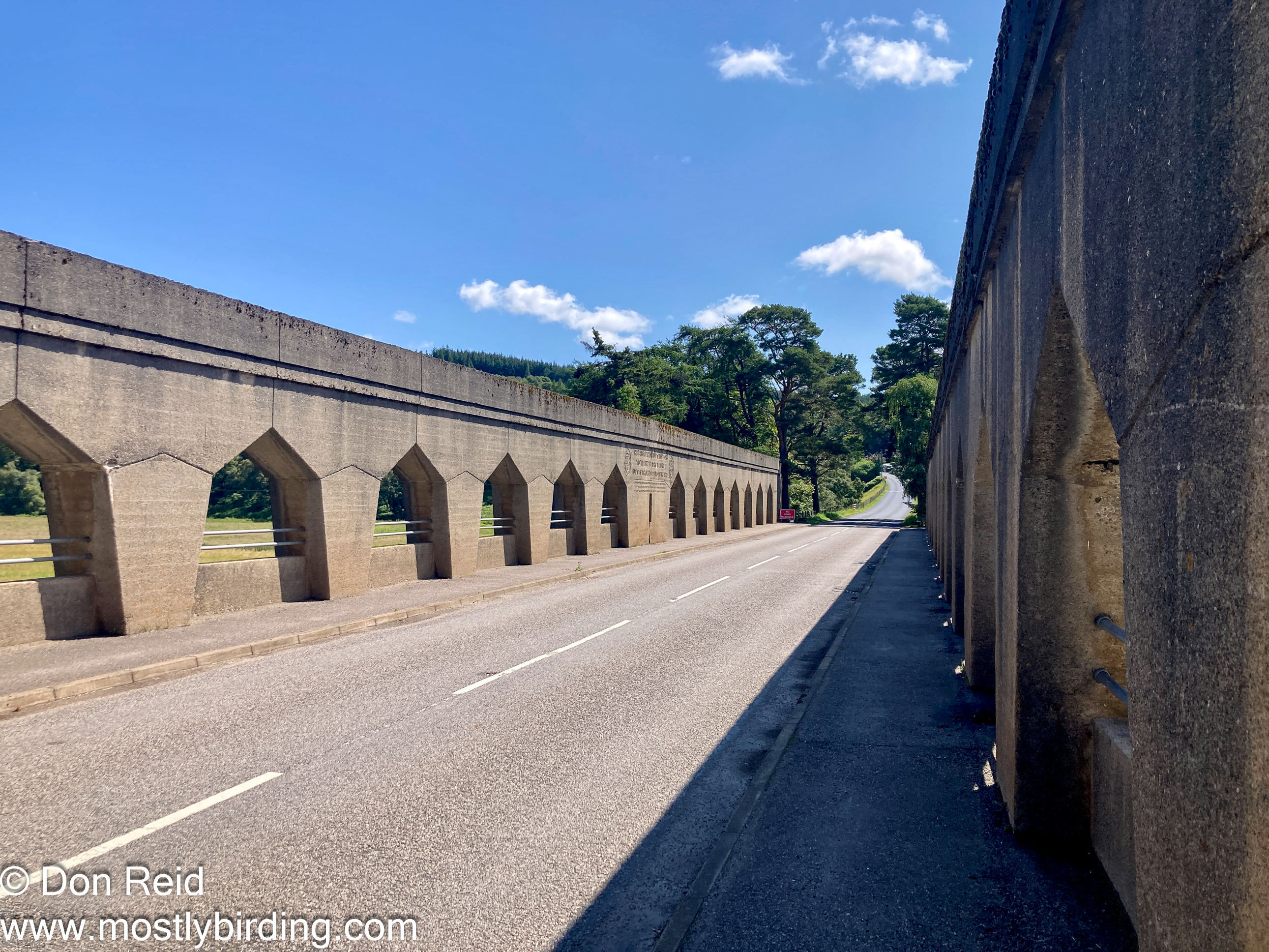
I stopped for a while to have a walk across the Findhorn Bridge, which is of a design I have never encountered before – quite stark in appearance and I wondered to myself what, if anything, had ‘inspired’ this particular design.
Findhorn Bridge and River
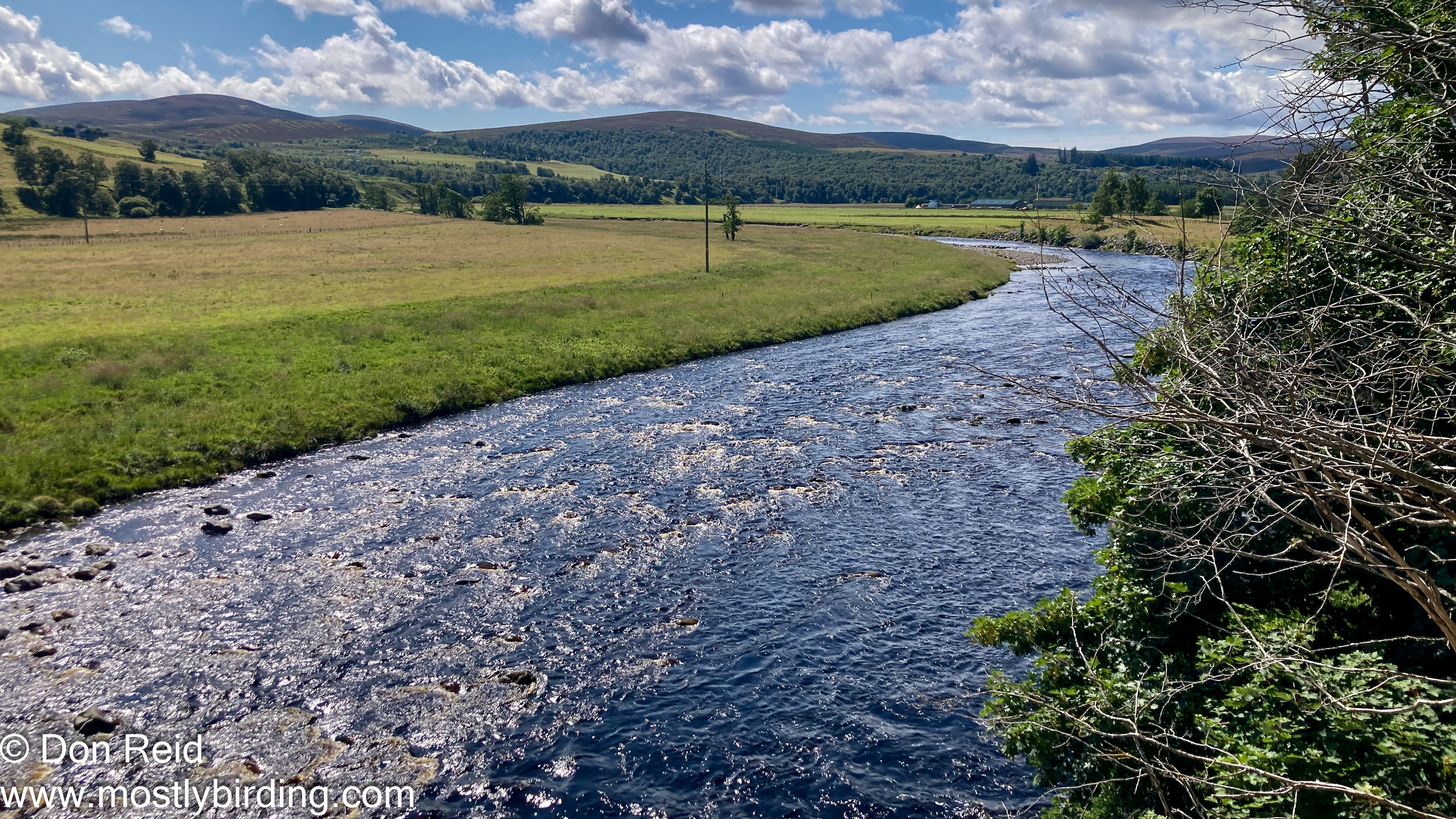
In contrast to the bridge, the river below was a fine sight, as are all the Scottish rivers I had come across so far – wide, fast flowing and inviting you to dip a glass in and drink straight from it.
Findhorn Bridge and River
Just after the Findhorn Bridge I turned left at the signpost for Garbole and Coignafearn onto a single-track road which I followed for the next 10 miles to the parking area at the end
I was becoming accustomed to the single track roads that seem to be a feature of the Scottish Highlands, but this particular road needed full and intense concentration as there is no warning of oncoming cars where the road bends or rises or drops and it does that continuously.
Single track road again
Fortunately I was one of few cars using the road and only had to take avoiding action or stop completely on a handful of occasions over the 10 miles.
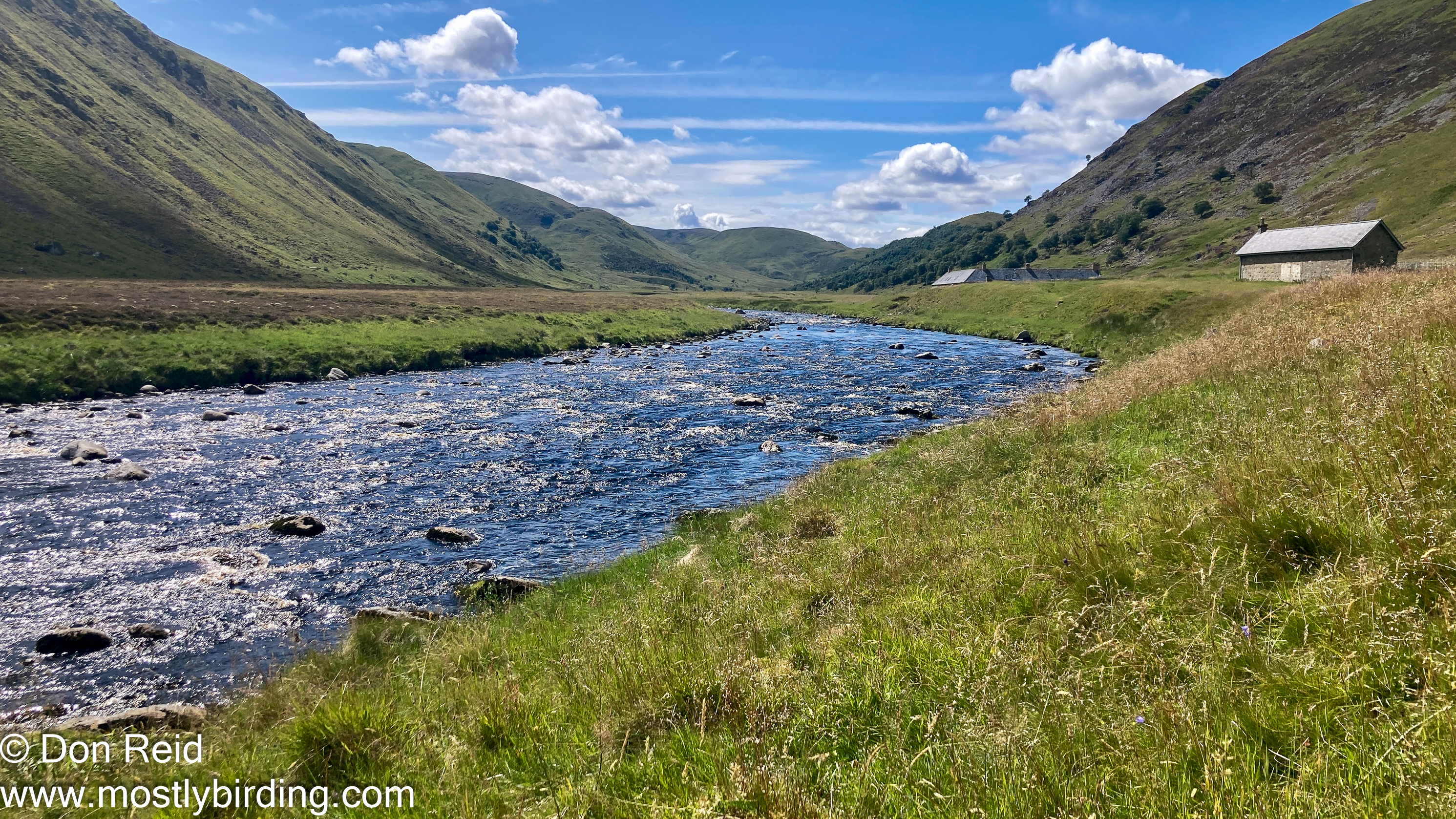
Findhorn River Valley
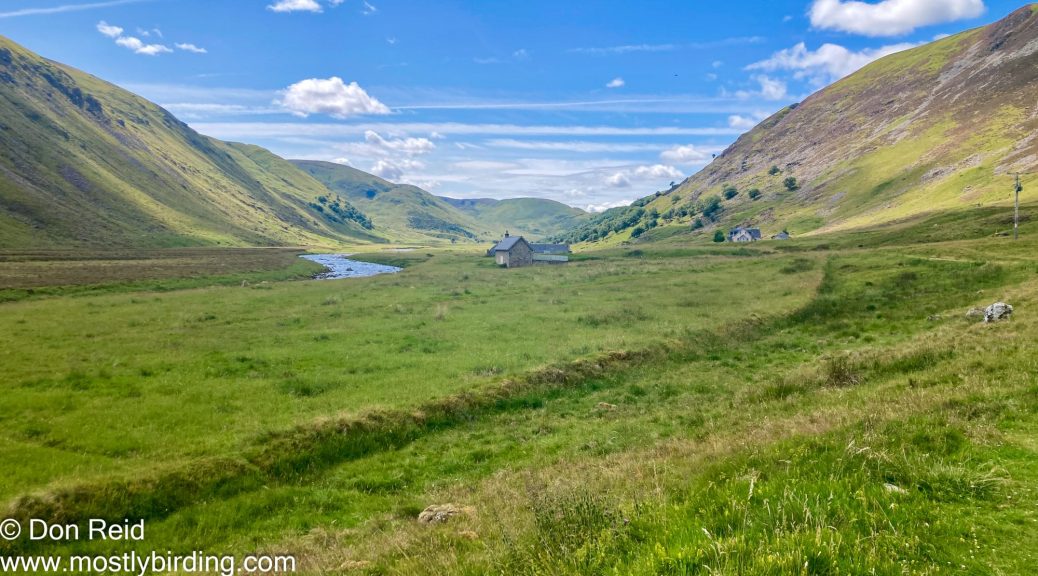
The road initially wound its way past a few small farms, then the landscape opened up to reveal a scene as striking as I’ve seen anywhere in my travels
Findhorn River Valley
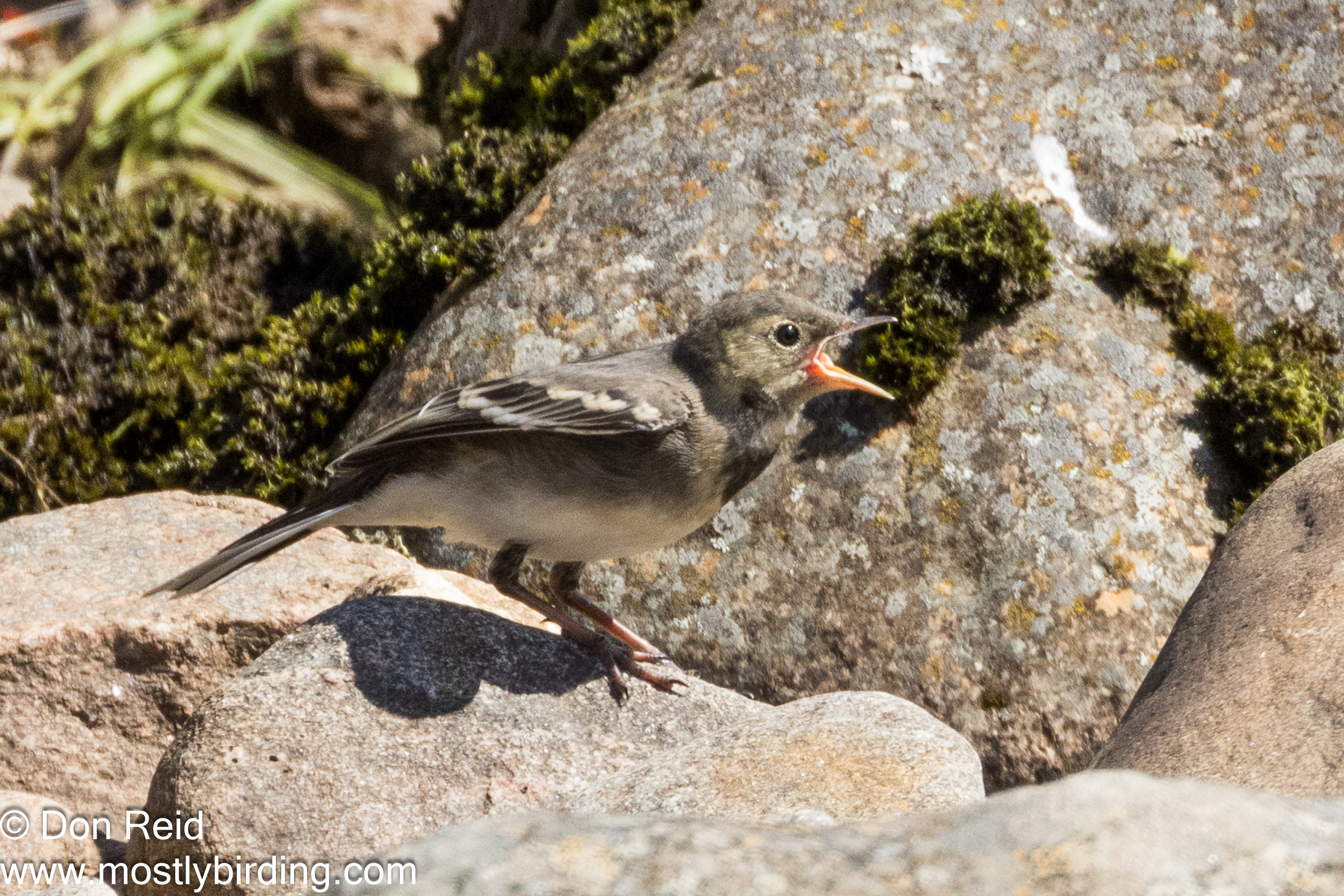
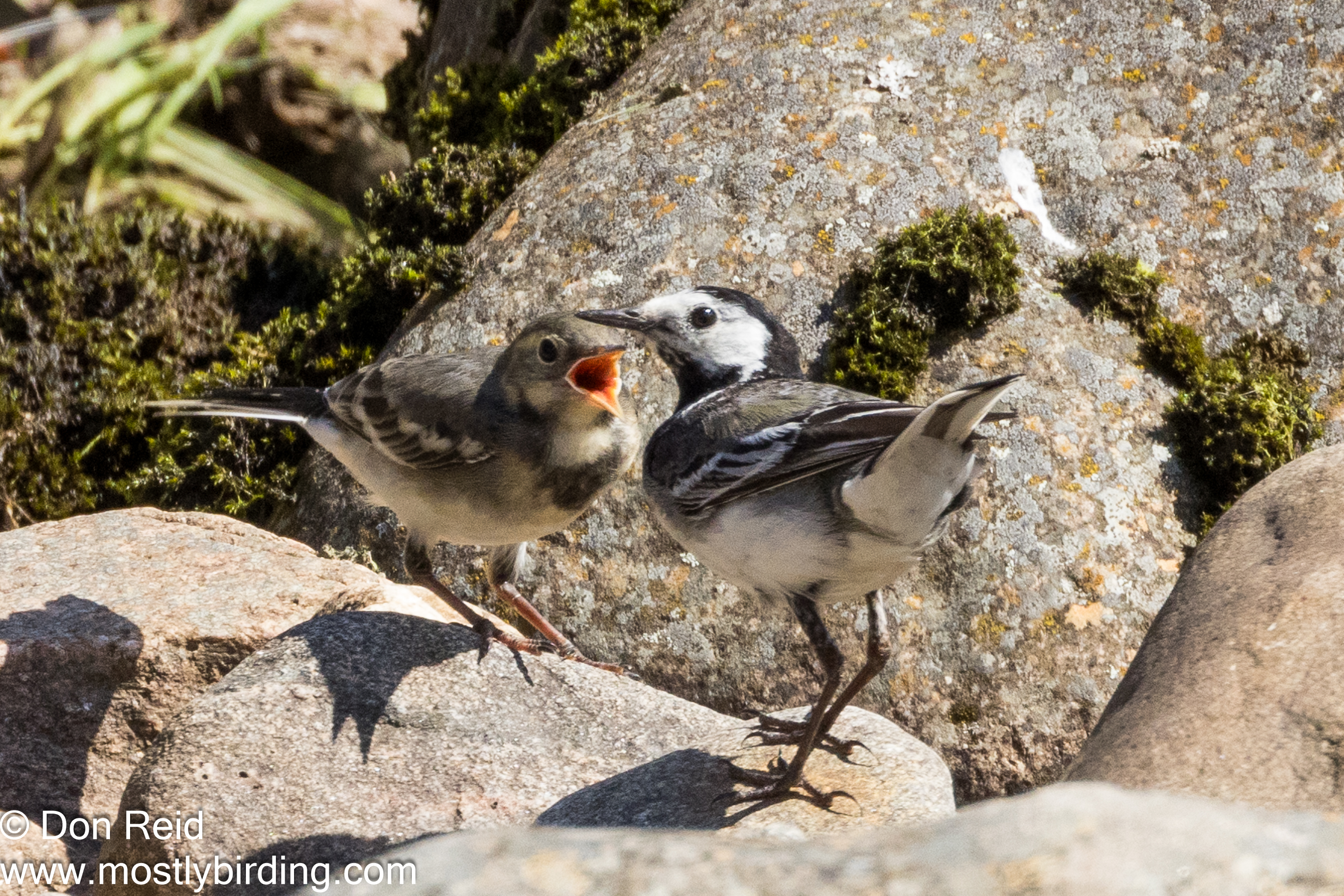
Along the way I made a few stops at interesting looking spots such as this one – I noticed a White Wagtail flying to the river and back and on closer inspection found it was taking food to its youngster on a rock at the water’s edge
Findhorn River ValleyWhite Wagtail Motacilla alba Findhorn River Valley – adult feeding juvenile
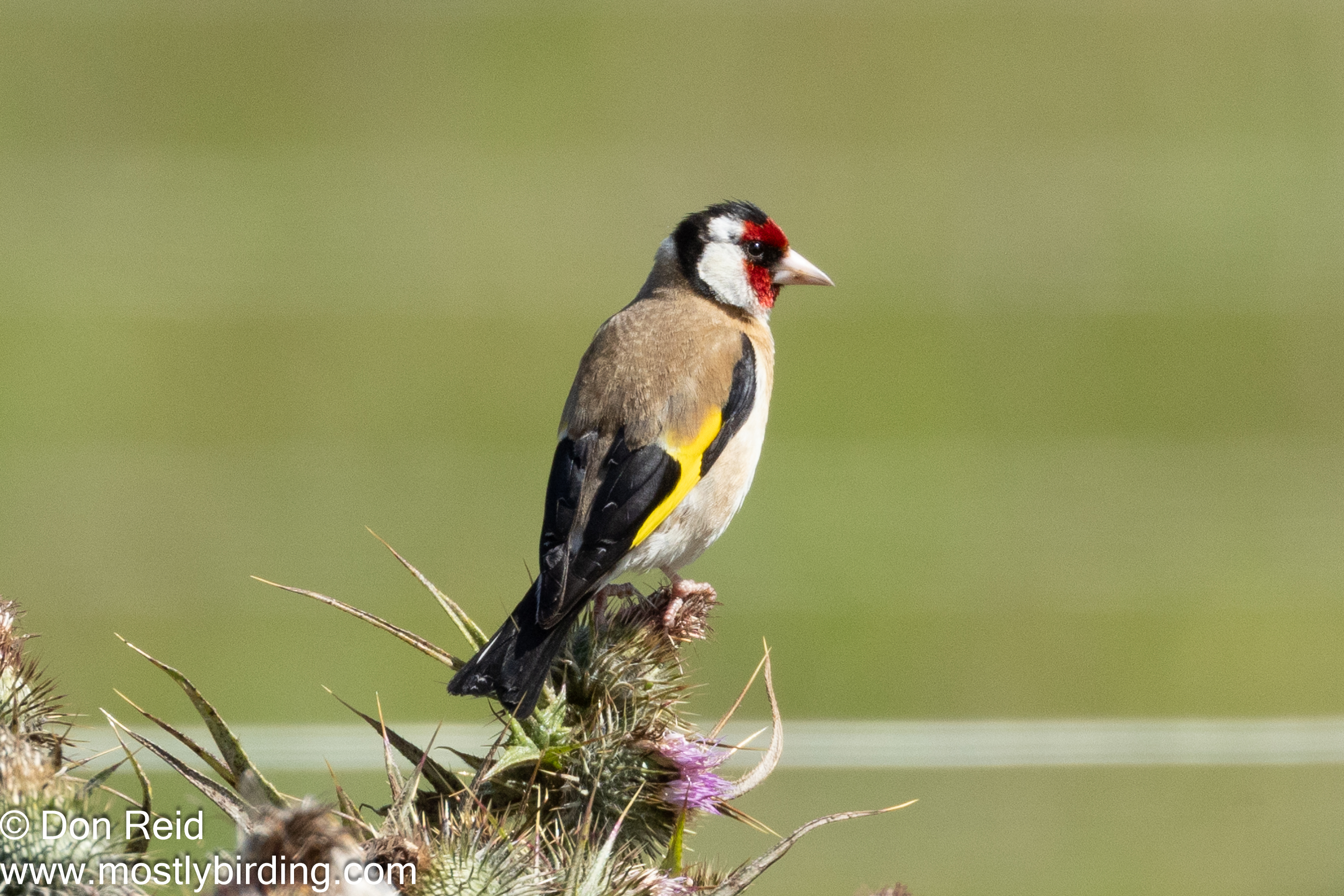
At the same spot a European Goldfinch flew down and perched for a moment on a colourful Thistle, just long enough to capture it on camera
European Goldfinch Carduelis carduelis Findhorn River ValleyFarr away in the Findhorn River Valley
It was a memorable experience all round being all but alone in such a stunning environment and I soaked it up by enjoying the sandwich and tea down by the riverside watching the rushing brown waters go by. The only other life of note was a flock of Common Mergansers, which paddled off down the river as I approached
Findhorn River Valley
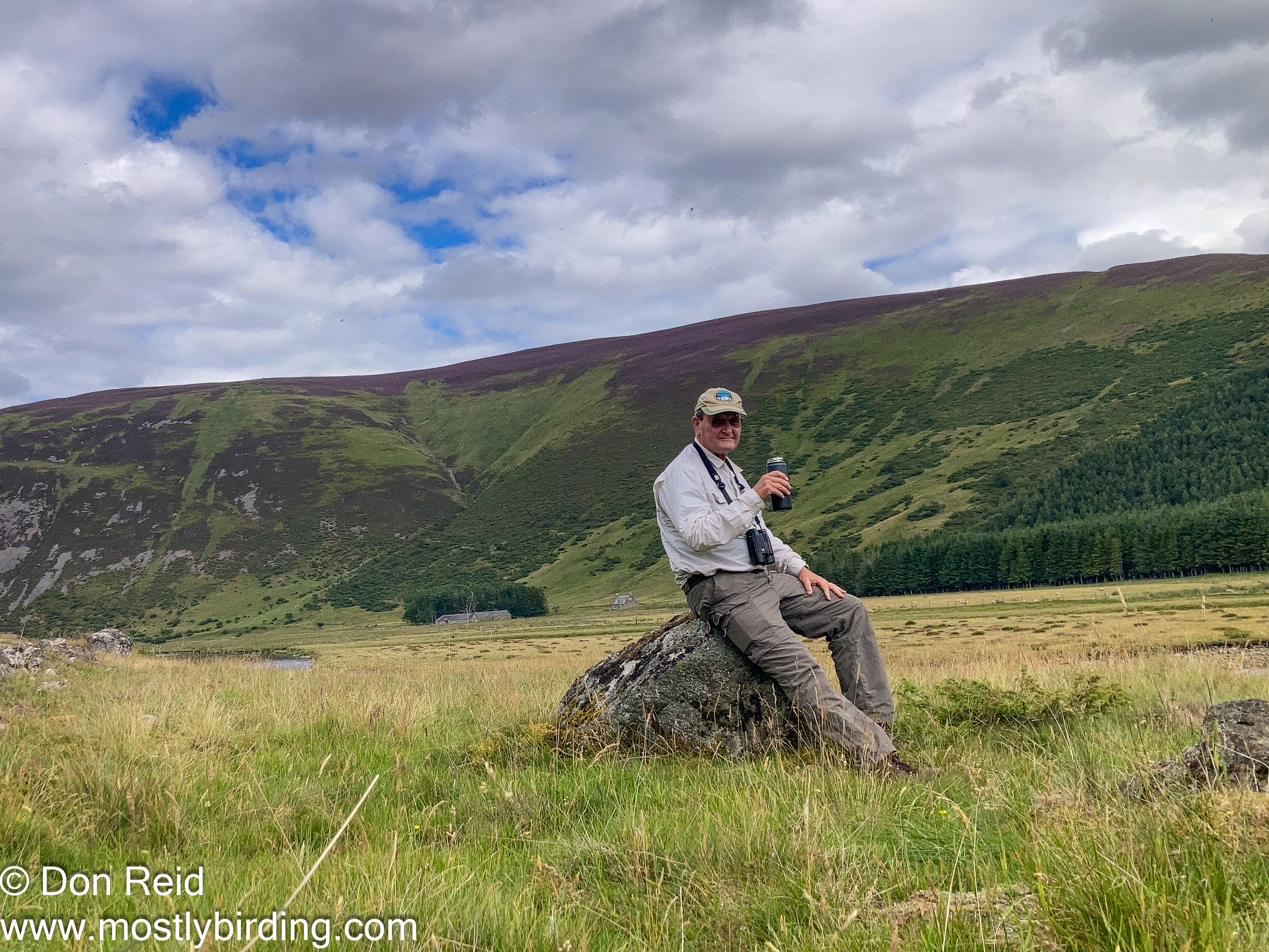
I don’t usually bother about selfies but this setting just had to be put on record – I balanced my phone on a nearby rock, set the timer and dashed (OK I walked rapidly) to another rock and pretended to have been relaxing there for a while – not sure that I pulled it off but at least I have it on record.
Findhorn River Valley
Shortly after I came to the end of the formal road at a parking area with one other vehicle but no sign of the owner ….. or anyone else in fact. Once I had parked, I set off down the walking/cycling track which disappeared into the distant hills in a dead straight line.
I couldn’t help wondering whether the world came to an end on the other side of those hills, but never did find out as, after 2kms of strolling along and enjoying the magnificence of the valley, I decided to turn back. Oh, and I actually saw two people on their way back to the other vehicle and we briefly shared our thoughts on this special place
Findhorn River Valley
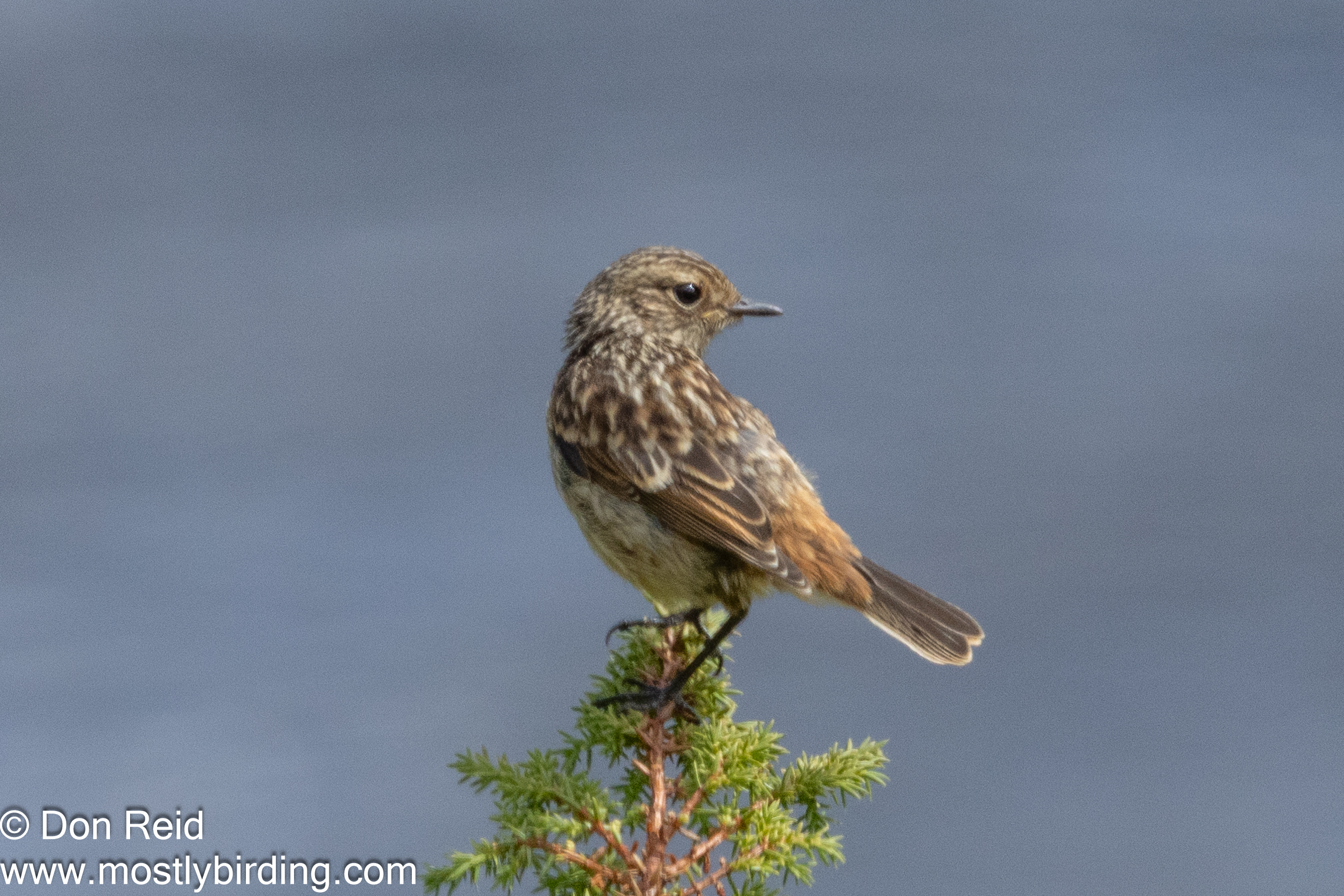
There was no shortage of interesting things – birds, flowers, butterflies and the ever present pristine river with smaller streams flowing into it from the sides. Meadow Pipits were plentiful before coming across the cousin of a well-known species back home – a European Stonechat.
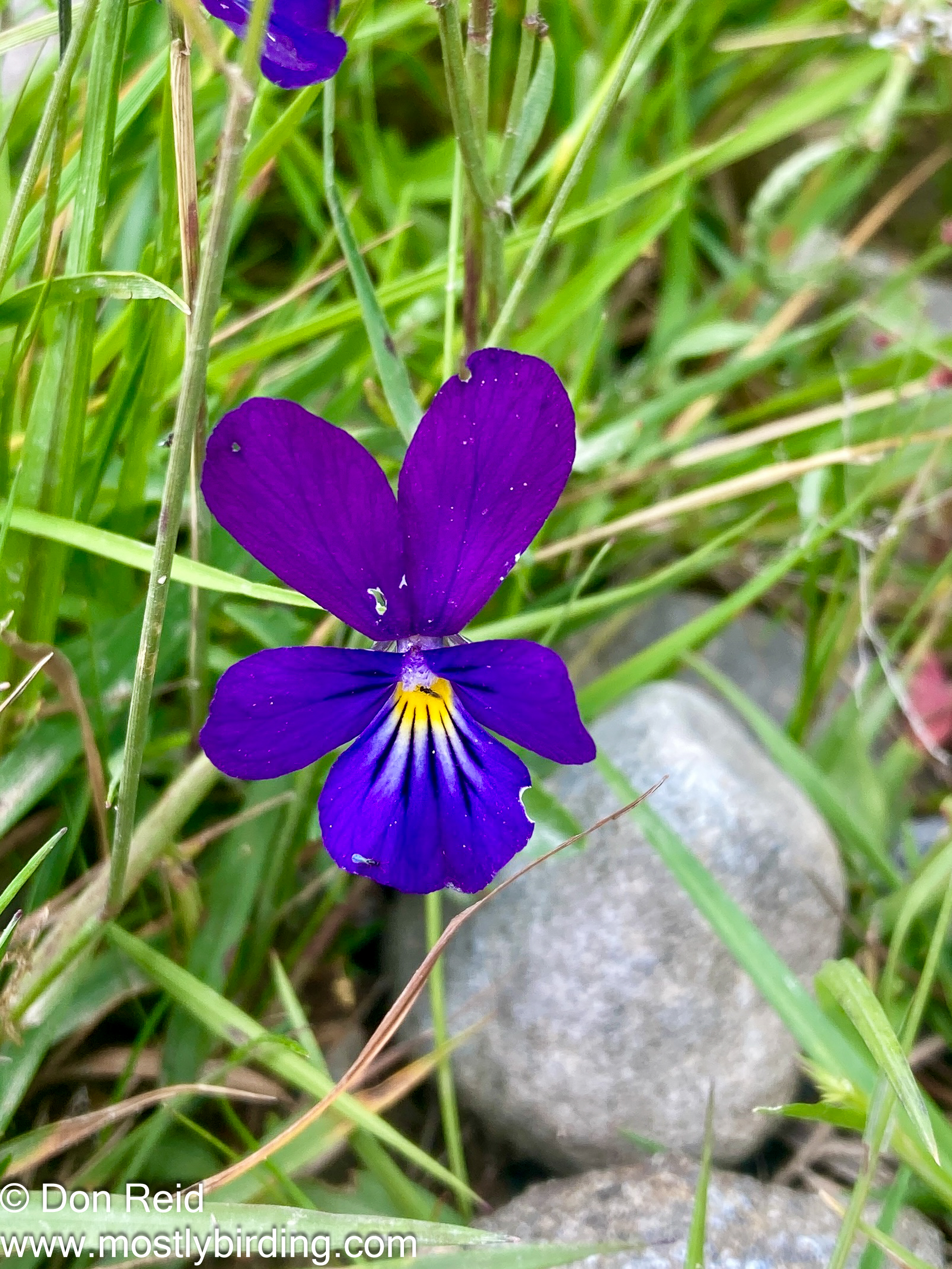
European Stonechat Saxicola rubicola Findhorn River ValleyMountain Pansy, Findhorn River ValleyA tributary of the Findhorn River which I crossed over on my walkLady’s Glove, Findhorn River Valley
Reluctantly tearing myself away from this memorable spot, I returned along the same road, encountering just one other car in the 10 miles back to the main road, then taking the same route to the hotel in time for dinner
My first day in Grantown on Spey started with breakfast of fruit and ‘real’ Scottish porridge – it seemed appropriate to enjoy it without milk and too much sugar. While sipping coffee I thought about the day ahead and how to best spend it – I wasn’t keen to do too much travelling but rather find some good birding spots nearby where I could spend some quality time.
The Grant Arms Hotel where I was booked is renowned for being a “Birder’s hotel” and has an in-house birding guide available each morning after breakfast to provide advice on birding spots and to lead guests on various walks and outings in the area.
I had checked out the planned walk for the morning and tentatively put my name down for it, so straight after breakfast I went to reception where Sue, the birding guide on duty for the day, was sitting and introduced myself.
No one else had booked for the walk but Sue was happy to still go ahead and after giving me some tips about other birding spots we arranged to meet at the Loch Garten parking area at 9.30 am.
Loch Garten Nature Walk
Loch Garten
We duly met at the parking area for Loch Garten, another reserve run by the RSPB and walked slowly down the path towards the water, stopping frequently to look at plants, fungi, trees, even bugs and bees that Sue had lots of info about – this was a true nature ramble not just confined to birds and I enjoyed it thoroughly.
The area around the loch was mostly well developed Scottish Pine forest with a carpet of green comprising several different plant species – too many to take in on a short walk but fascinating to see. Here and there colourful fungi were prominent
Loch GartenFungus, Loch Garten
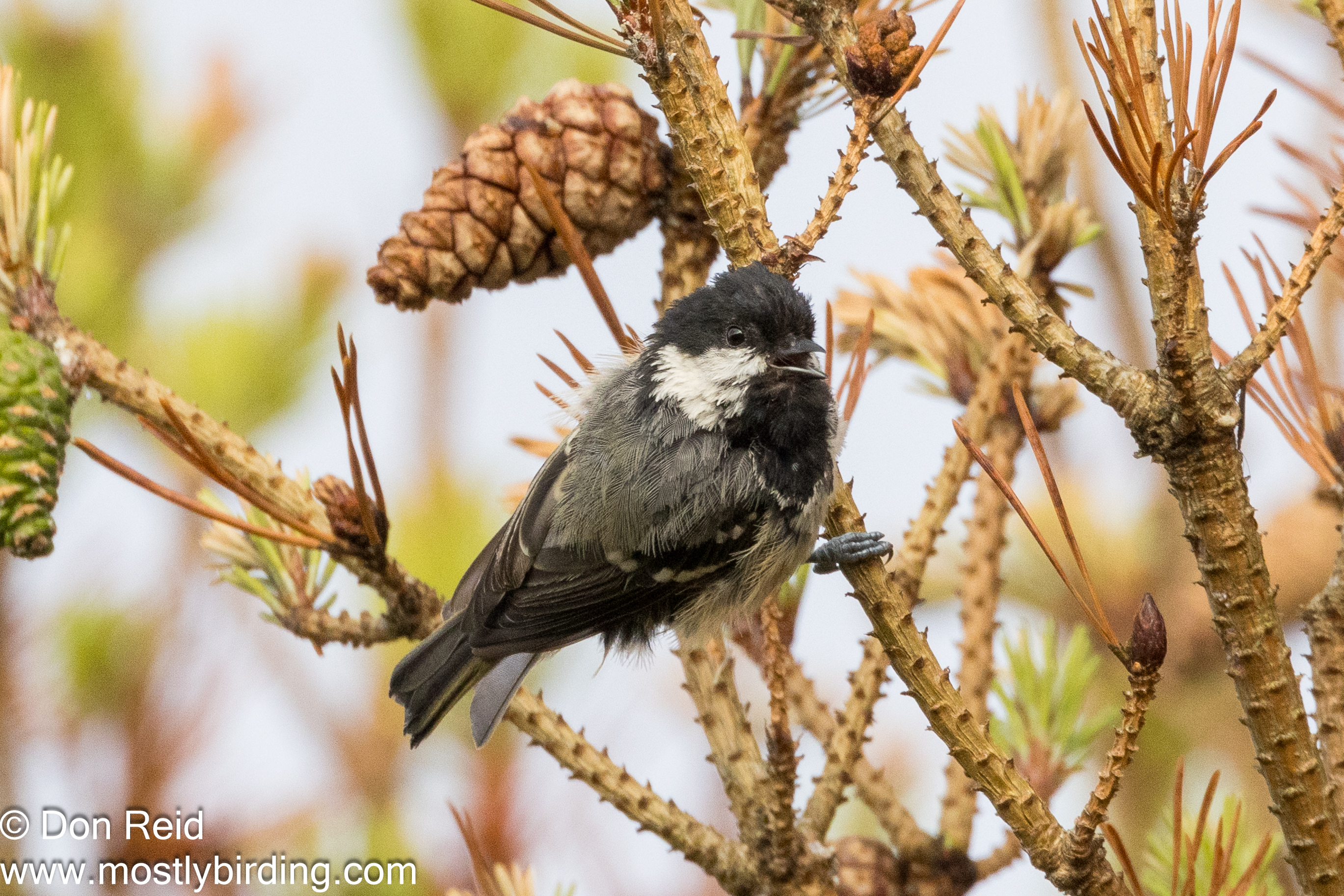
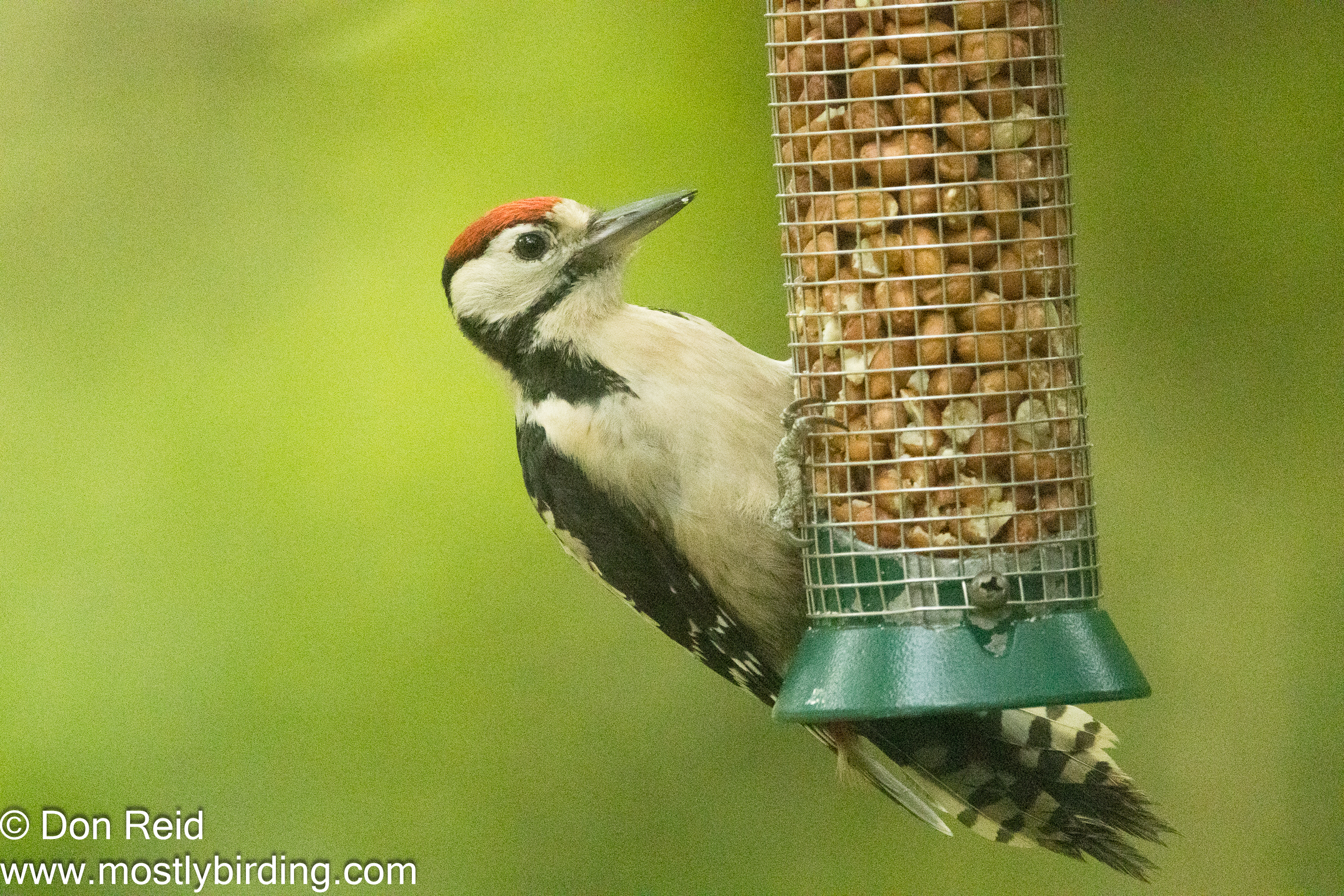
At one point Sue stopped to listen to the various calls which indicated the presence of a small bird party in progress and we spent a while listening for and finding Crested Tit and Greater Spotted Woodpecker as well as Spotted Flycatcher and a Tree Creeper (which I did not get a good view of).
Getting a photo of the Crested Tit was a priority for me but was particularly tricky as it was high up amongst the branches with foliage obscuring it and with a strong backlight behind, added to which the bird was constantly on the move, hardly sitting in one spot for more than a half second or so. Each time I saw it I rattled off a number of shots and hoped for the best…
Crested Tit Lophophanes christatus Loch Garten
Fortunately (thanks Canon R7) just one of the many shots came out reasonably and with that prize in the bag we moved on.
On reaching the loch just a single Goldeneye was visible – a juvenile it seemed, and after following the track along the loch edge for a while we headed back to the carpark, having walked two hours in all.
Common Goldeneye (Juvenile) Bucephala clangula Loch Garten
Sue left to return to Grantown and I headed further down the road to the visitor centre for a brief visit – mainly to get a sandwich for my lunch later but while I was there I took advantage of the viewing windows and scopes provided to look at a distant Osprey on a nest.
Back in the car I looked at potential sites to visit that afternoon and selected Insh Marshes Nature Reserve as it promised a different habitat with other birds, possibly waders.
Along the road to Insh Marshes
Google maps indicated about 30 miles – a doddle on normal roads but as it turned out the route was along narrow, twisty, up and down country roads which made fast driving impossible as you have to take avoiding action every time a vehicle comes in the opposite direction.
Loch Garten to Insh Marshes
Not only are the roads narrow but they are hemmed in on both sides by fences and stone walling right up against the verge so there is very little space to move to the side and in some cases, you have to almost come to a halt and let the other cars go by – not a moment’s relaxation can be afforded.
There seemed to be birds active in the trees and bush lining the road, so I looked for an opportunity to pull off and take a closer look, as well as to take a break from the concentration required driving these roads.
A small parking area next to the road at the start of a forest walk seemed like just the right spot and I spent a pleasant half hour or so scouting around, finding a few birds in the process. I was most excited about a European Blackcap flitting about the top of the low bushes at roadside – this is a bird that occurs in certain parts of Southern Africa but has eluded my efforts to find one, so seeing it here and managing to capture a fleeting image was a highlight of the day.
Eurasian Blackcap Sylvia atricapilla Loch Garten to Insh Marshes
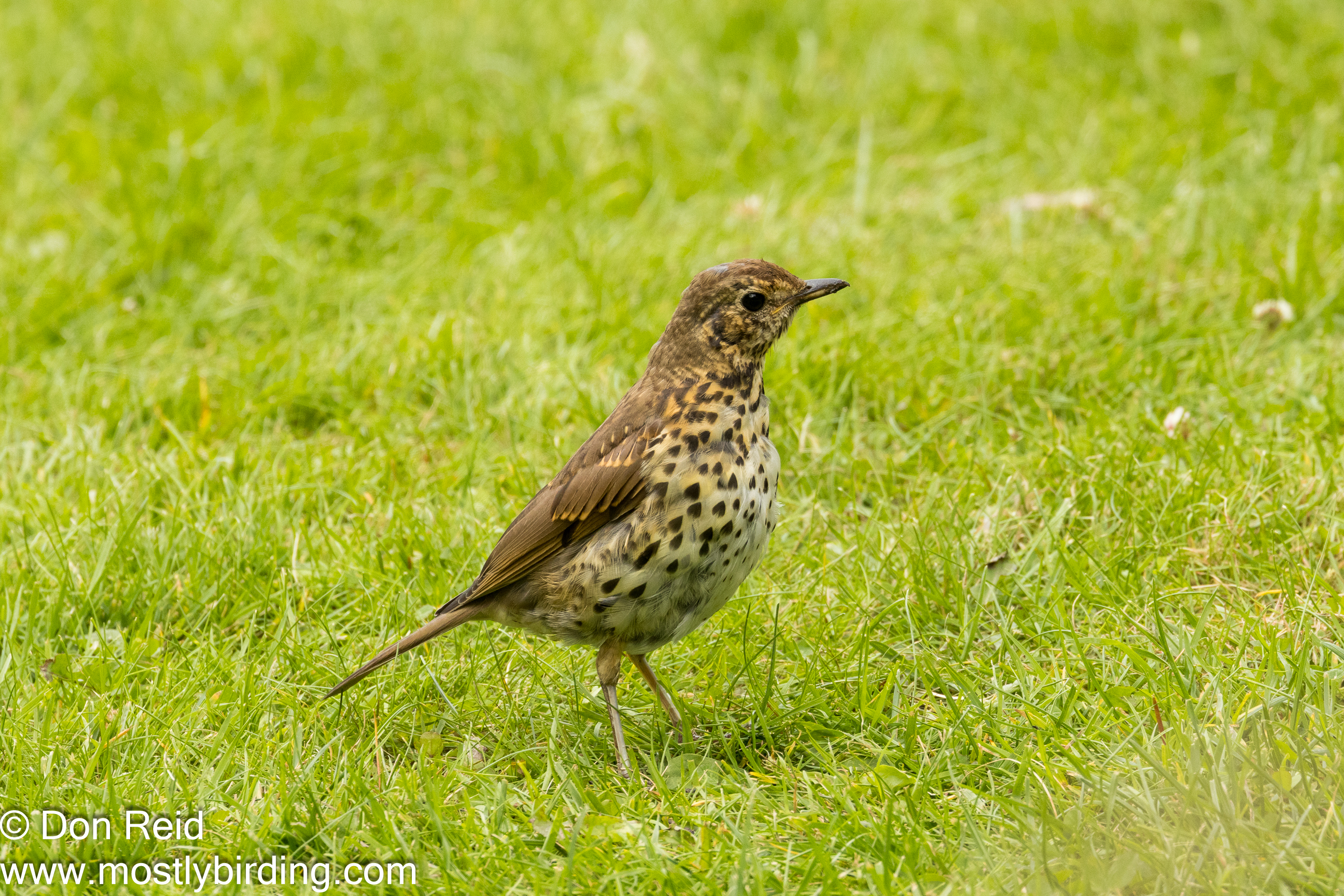
A Song Thrush was more relaxed and posed nicely on a post for me
Song Thrush Turdus philomelos Loch Garten to Insh Marshes
With a few decent bird images in the bag, some striking wild flowers begged my attention and they soon joined the birds on the SD card
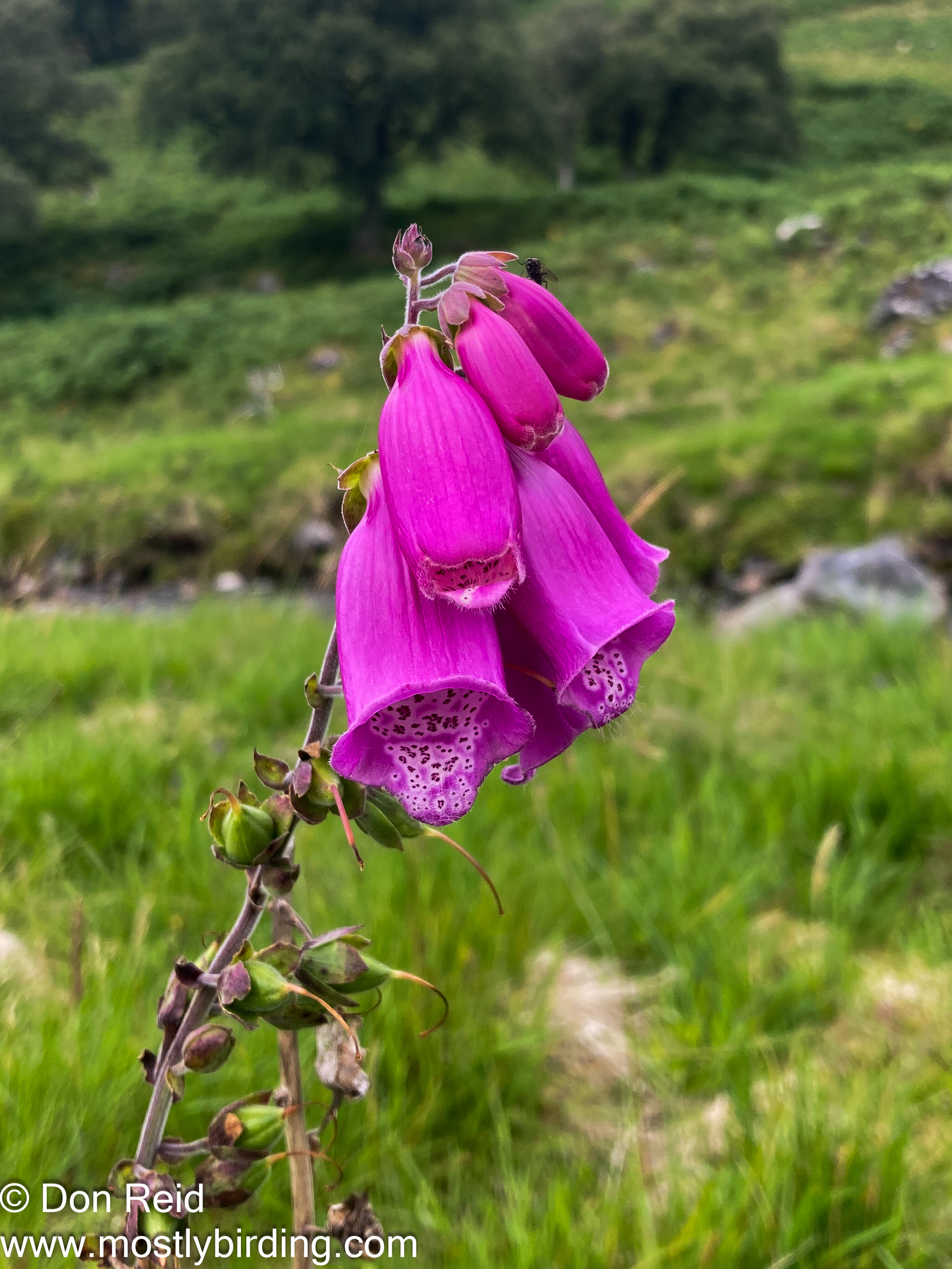
Common Honeysuckle, Loch Garten to Insh MarshesFoxglove, Loch Garten to Insh MarshesFoxglove, Loch Garten to Insh Marshes
Time to move on, but I was hardly back on the route to Insh Marshes when I crossed a bridge over the Feshie River – not a major river but one of the prettiest sights of the day, so I had to stop again at a safe spot on the other side of the bridge and walk back for a quick snap
River Feshie, Feshiebridge
Insh Marshes
I reached Insh Marshes and found a spot in the full car park, then took the pathway that others were using and found my way to the hide which was sited at the end of a slippery downhill track.
Insh MarshesThe path to the hide at Insh Marshes Insh Marshes
The hide overlooks a part of the vast marshes and promised to be a good spot to spend time scanning for birds. In fact, the opposite was true as all I could pick up was a lone Grey Heron partly concealed by long grass – perhaps many others were present but hidden, however there were no calls to indicate this.
Grey Heron Ardea cinerea Insh Marshes
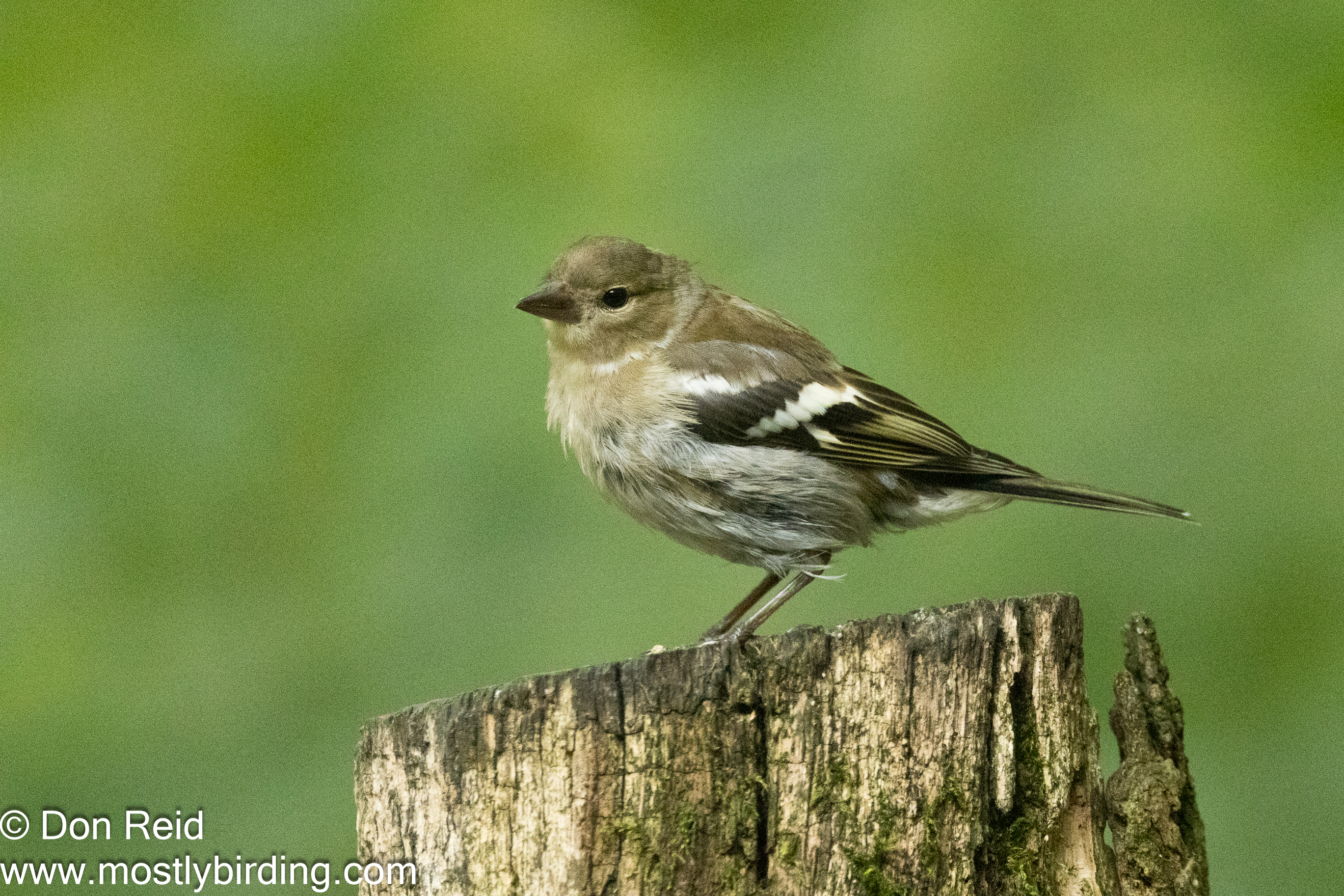
Somewhat disappointed, I went back to the car park and beyond to another hide which had a different view but the same lack of birds. Nevertheless it was a fine place to enjoy the sandwich and tea I had brought with me, before heading back to the car park, where I made up for the lack of other photographic subjects by taking advantage of some relaxed Chaffinches and a Robin that took an interest in my doings.
Common Chaffinch Fringilla coelebs Insh MarshesEuropean Robin Erithacus rubecula Insh Marshes
I had spent less time than expected at Insh, which meant there was more than enough time to get to Avielochan, the last stop on my itinerary for the day, one which I hoped would be more successful from a birding aspect.
Avielochan
A short drive later I turned off towards Avielochan, a small loch in the middle of an agricultural area, and followed the road past a few houses until I found the hide located some distance from the water’s edge. The hide was erected by and belongs to Grant Arms hotel and is made available to guests
There were many waterfowl swimming on the loch, including several Greylag Geese which I had seen in fields earlier in the day, and Herring Gulls along the shoreline.
European Herring Gull Larus argentatus AvielochanGreylag Goose Anser anser Avielochan
Most of the birds were on the far side of the loch and difficult to identify without a scope, however I used my camera’s reach to good effect and was able to pin down an ID on most of them.
Common Goldeneye Bucephala clangula Avielochan
Little Grebe and Common Goldeneye were additions to my trip list and then I turned my attention to trying to find the bird featured in a large poster on the hide’s wall – Slovenian (Horned) Grebe. There are just 30 breeding pairs of this bird in the UK, all of which are to be found in the Scottish Highlands, with Avielochan being one of its favoured sites.
Avielochan hide
After some searching with my binos and taking a few photos I was fairly sure I had spotted one – this is what the image looked like at full 800mm zoom and with way too much light coming off the surface of the water
Slavonian Grebe Podiceps auritus Avielochan
The same image after some serious cropping, exposure adjustment and enhancement – the miracle of modern photographic technology allowing me to ID this Slovenian Grebe with certainty
Slavonian Grebe Podiceps auritus Avielochan
By now it was getting close to dinner time and, not wanting to miss the excellent hotel dinner, I made haste back to Grantown and the Grant Arms for a lovely supper of soup, gammon, and a rich tart for pudding.
Sue, the hotel’s birding expert, had given me some good tips for birding spots which I planned to visit the next day …… but first a good night’s rest was what I needed most after another busy day.
1. Our granddaughter Maia (aged 16) has a passion for playing the flute and was very keen to attend the summer school run by Flute Scotland near Perth, Scotland. 2. Her parents could not afford the additional time off to chaperone her to Scotland. 3. Gerda ‘volunteered’ me to be chaperone and it was an easy decision, being an opportunity for a brief tour of the Scottish Highlands and some Scottish birding.
Planning the Day
My first full day in Scotland started with coffee in the self-catering Apartment in the village of Birnam – I hadn’t thought to make provision for breakfast and so wished I had brought a rusk or two from home to dunk in the coffee, but that would have to wait. First, I had to get myself ready for the day and plan my route to Grantown-on-Spey – a drive of some 140 kms, so there would be plenty of time to fit in some birding at selected spots along the way.
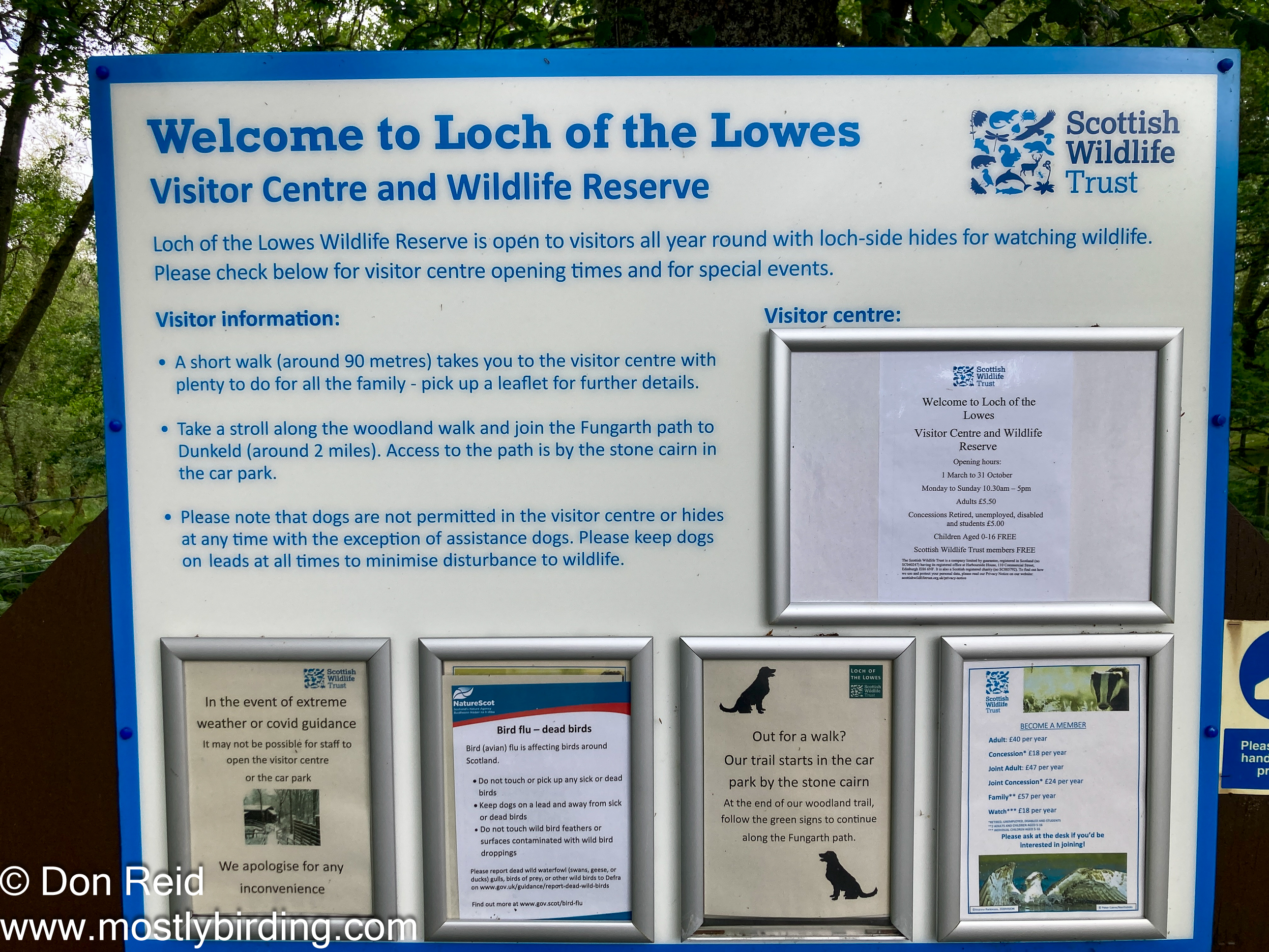
I consulted the app I had downloaded before the trip to see what birding opportunities I might find along the route – the app “Where to Watch Birds in Scotland” was my primary source of info throughout my trip. The app showed a couple of birding spots nearby and I decided that my first stop would be the Loch of the Lowes Wildlife Reserve – this reserve was located just beyond Dunkeld, the small village across the River Tay from Birnam, where I had spent the night.
Loch of the Lowes
Soon after, I was heading through Dunkeld and looking for the signposts to Loch of the Lowes – the turn off was just a few kms outside Dunkeld and I parked in the designated area and walked a short distance to the Visitor Centre
Road to Loch of the LowesLoch of the Lowes
The friendly lady at the front desk gave a quick run-down on the facilities at the Reserve and mentioned the breeding Ospreys that were in the area and usually visible, while I purchased a small coffee and a much-needed large oats and chocolate snack bar.
On one side of the centre a full width window with one-way glass provided a panoramic view of the adjoining lush, wooded area and I settled down on an unoccupied bench to enjoy a belated ‘breakfast’ with a view. A number of feeders had been installed in front of the viewing window, providing an intimate view of the many birds coming and going almost constantly.
Great Tit Parus major, Loch of the Lowes
It was a good opportunity to take some photos of the birds attracted by the feeders – mostly Tits and Chaffinches, but a Great Spotted Woodpecker also appeared.
Chaffinch Fringilla coelebs Loch of the LowesEurasian Blue Tit Cyanistes caeruleus Loch of the LowesGreat Spotted Woodpecker Dendrocopus major Loch of the Lowes
Just to liven things up a Red Squirrel came to check out the feeding table specially stocked with nuts and briefly ‘posed’ for me on a nearby branch.
Red Sqirrel Sciurus vulgaris Loch of the Lowes
Moving on to the hides – one double-storey and another single – both afforded a broad view of the loch which was dotted with waterfowl.
View from the hides at Loch of the Lowes
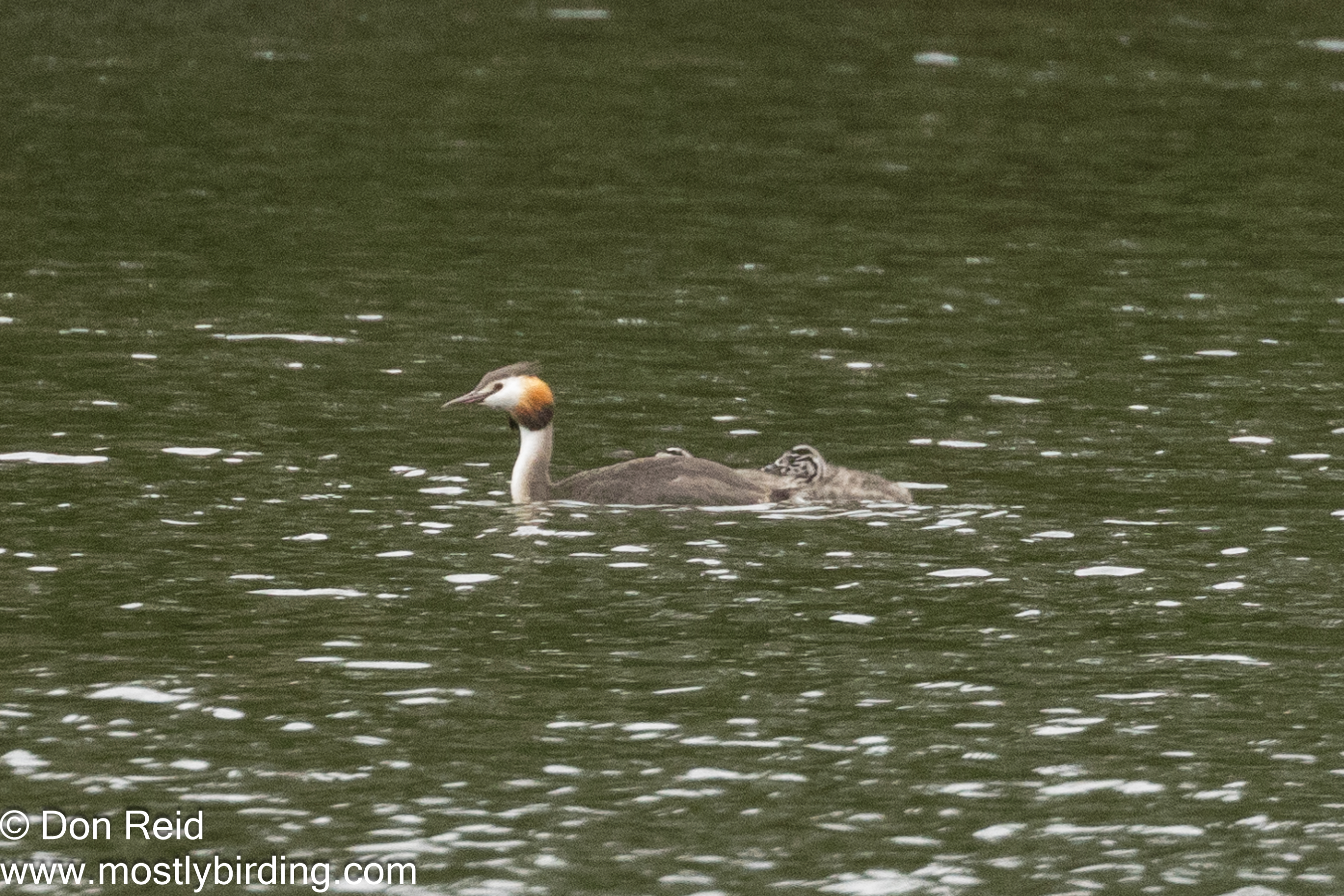
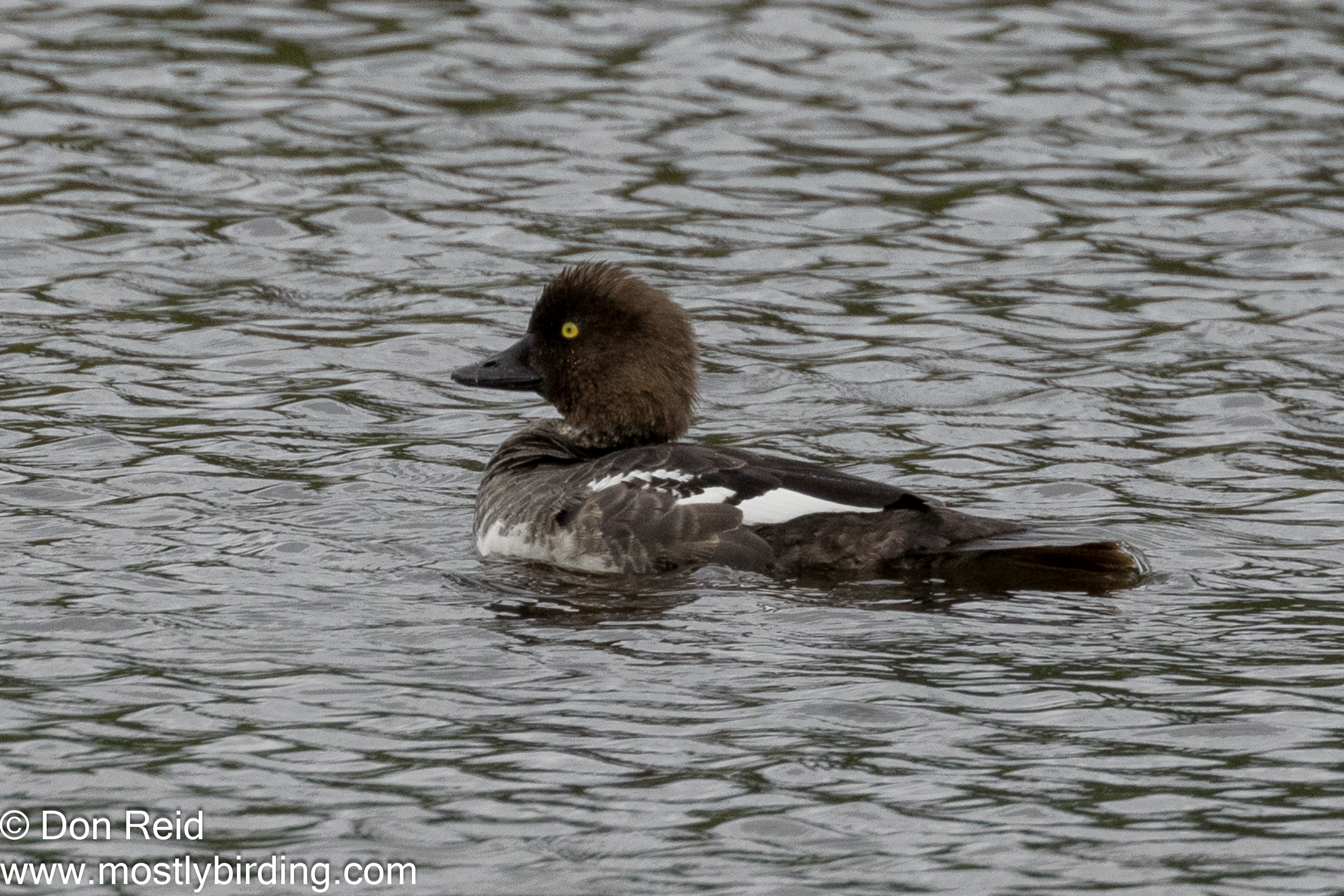
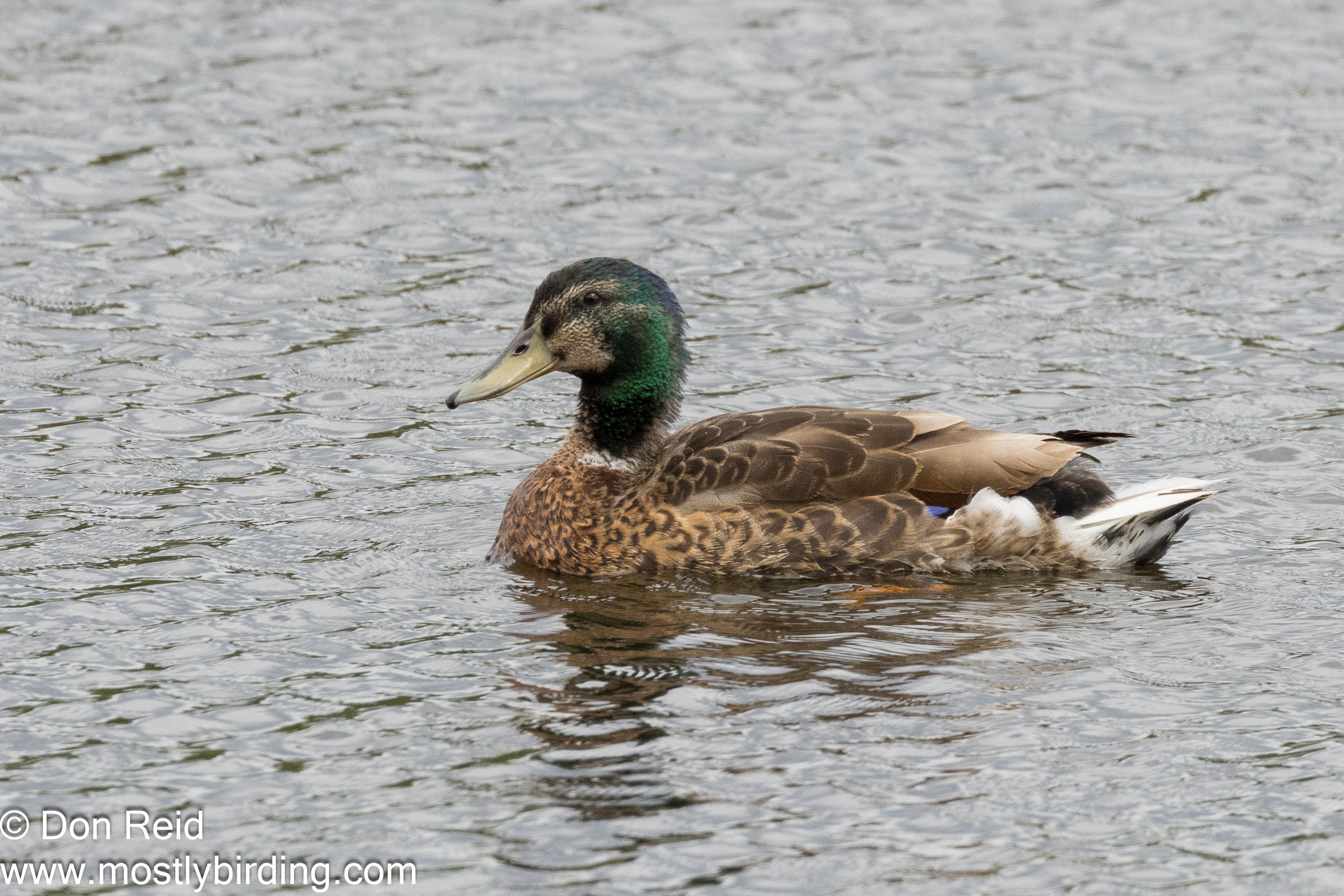
I set about identifying the waterfowl that swam close enough to the hides and was pleasantly surprised to see a variety of species in a relatively short time.
Tufted Duck Aythya fuligula Loch of the LowesGreat Crested Grebe Podiceps christatus Loch of the LowesCommon Goldeneye Bucephala clangula Loch of the LowesMallard (male) Anas platyrhyncos Loch of the Lowes
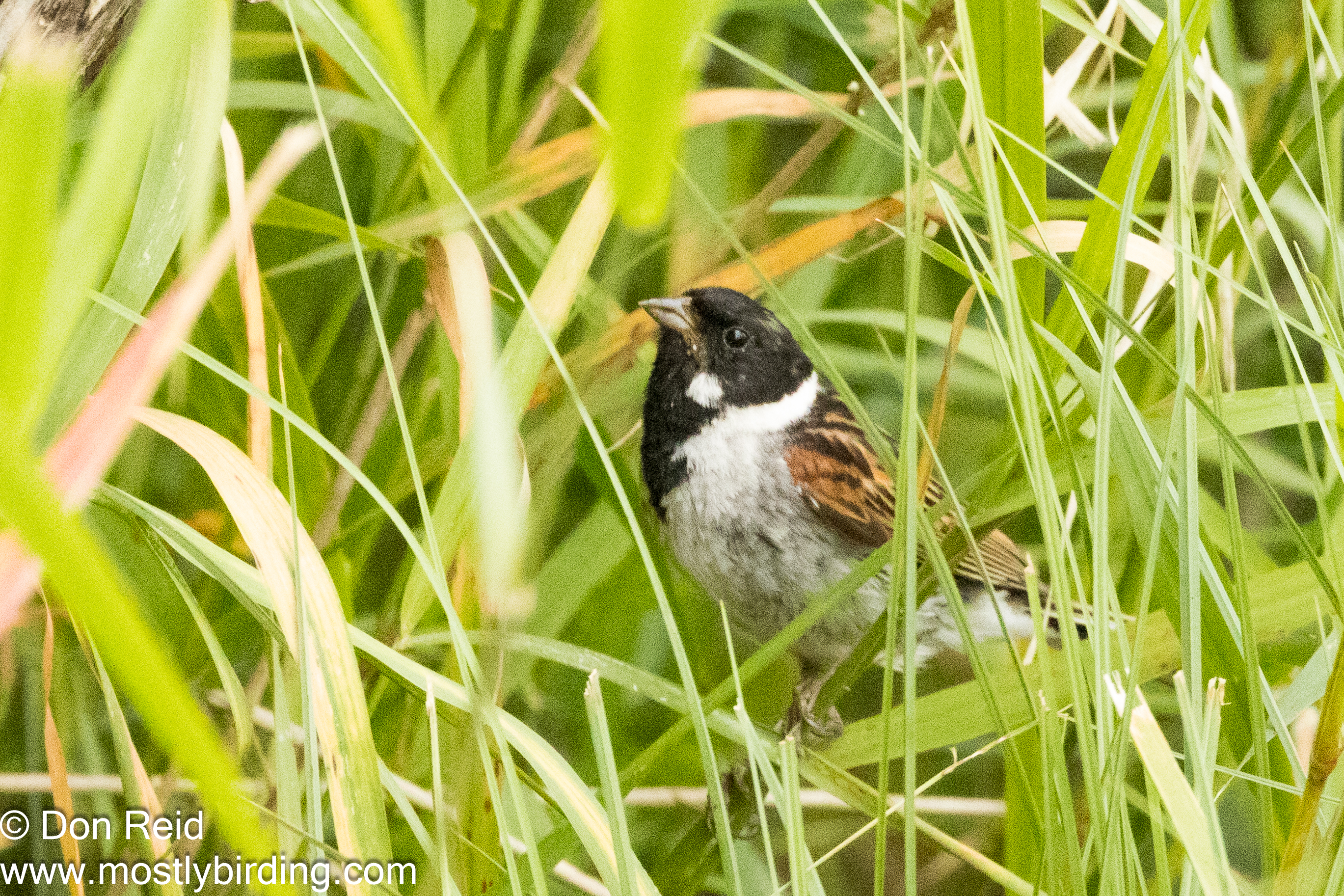
A Reed Bunting working its way busily through the reeds along the shoreline, provided some distraction from the open waters and proved to be a challenging photographic subject, showing for the briefest of moments, just enough to grab a shot or two.
Common Reed Bunting Emberiza schoeniclus Loch of the Lowes
Breeding Ospreys
The lady from the visitor centre spent time with us in one hide, explaining the history of the Ospreys breeding at the site. Curiously, the adults and juveniles migrate separately and according to tracking and ringing records head to West Africa.
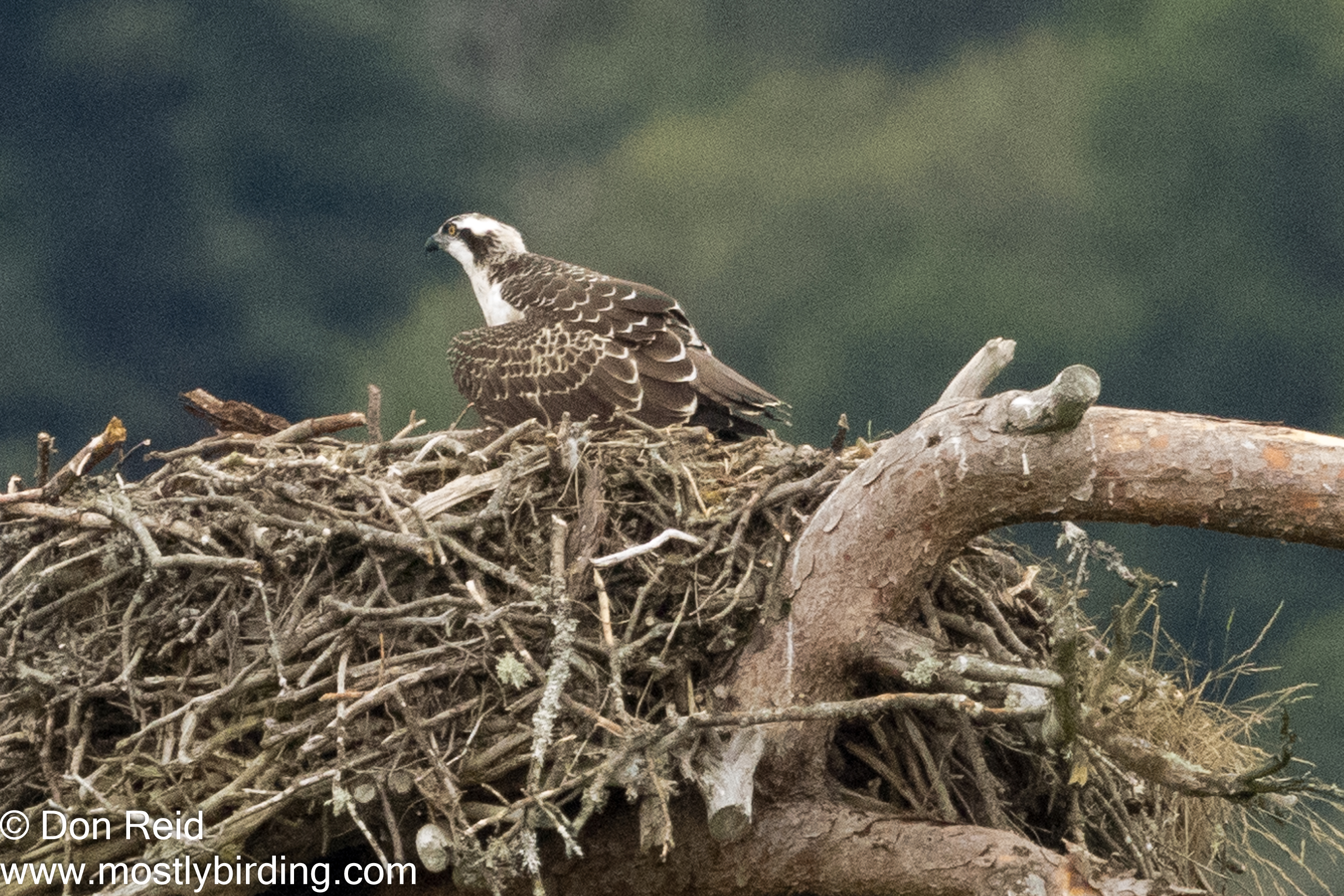
Just then, the two juvenile Ospreys from the current brood showed up – one at the nest and the other in a dry tree on the opposite shore, both some distance away so the scopes provided by the centre came in handy.
Osprey (Juvenile) Pandion haliaetus Loch of the Lowes
By now it was lunchtime and with a way to go to Grantown on Spey I moved on along the back roads to Pitlochry where I thought I could get lunch. Well, the town was full of holidaymakers and their cars filled every parking spot I could see, so I carried on and googled the next birding spot – Loch Faskally, just the other side of town.
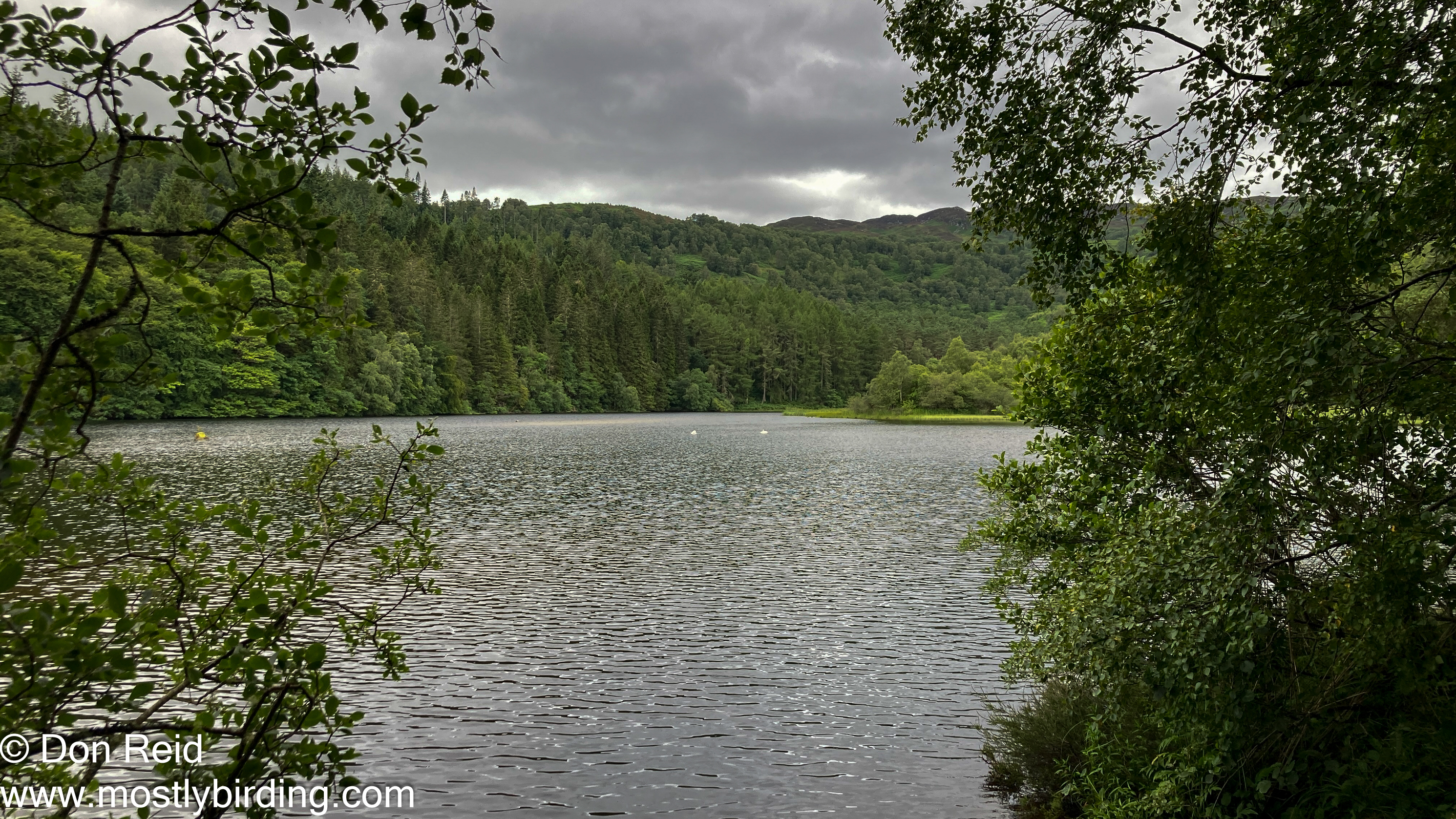
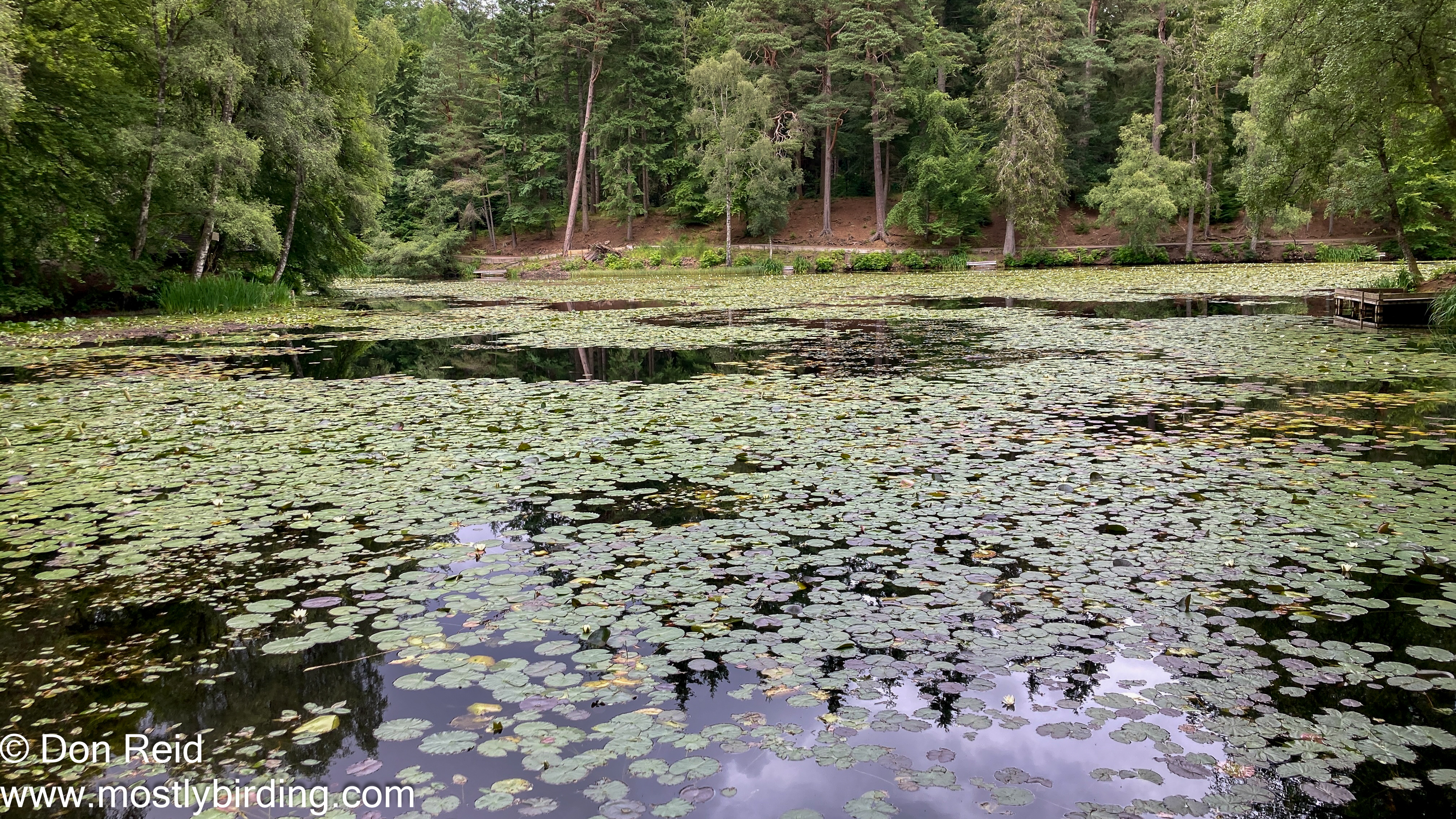
Loch Faskally
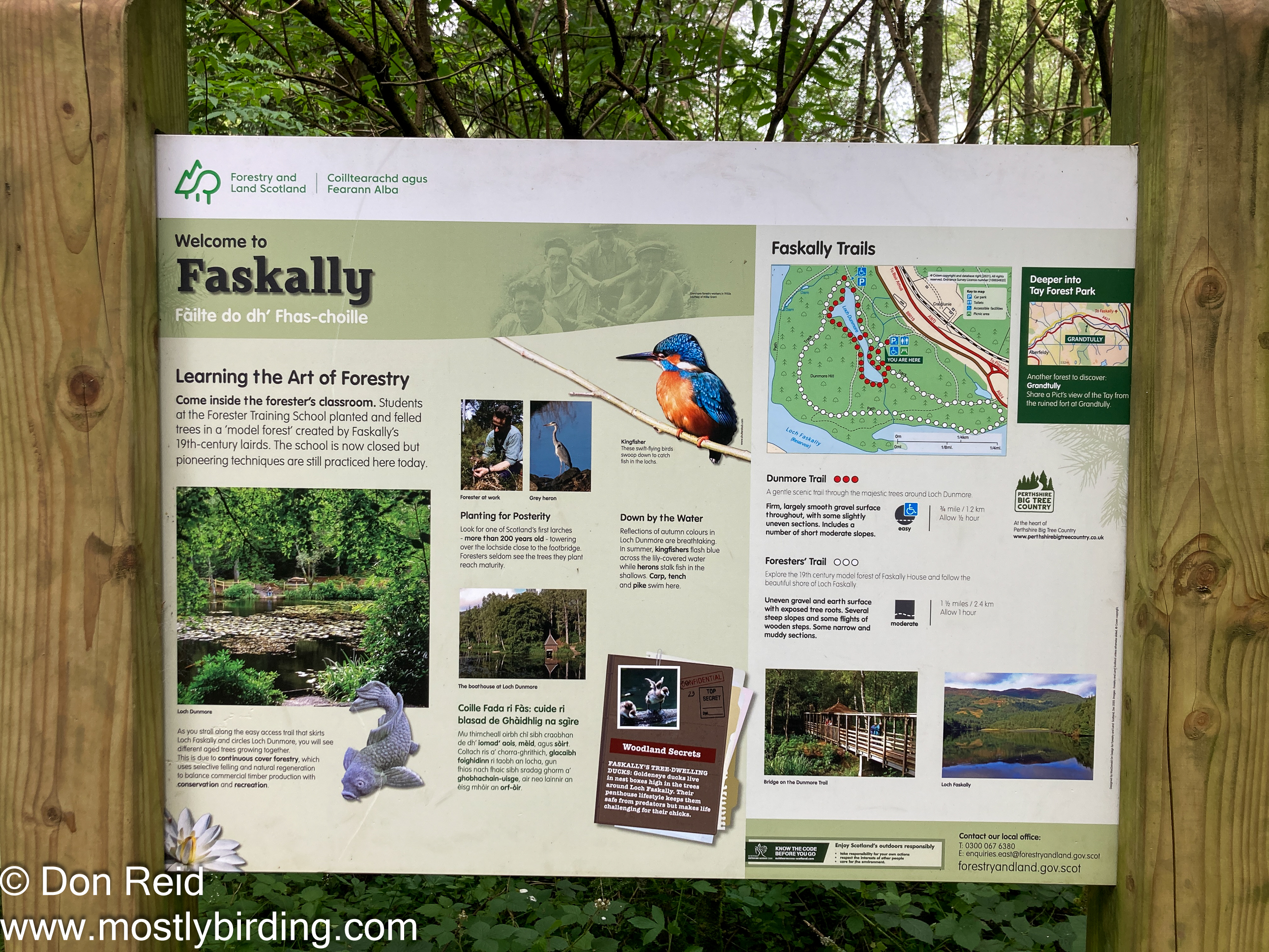
There were no facilities such as a Visitor Centre or bird hides, just a parking area and a board with walking trails marked on a map of the reserve, so I parked and set off on a walk which I thought would take in the best features.
Loch Faskally, Pitlochry
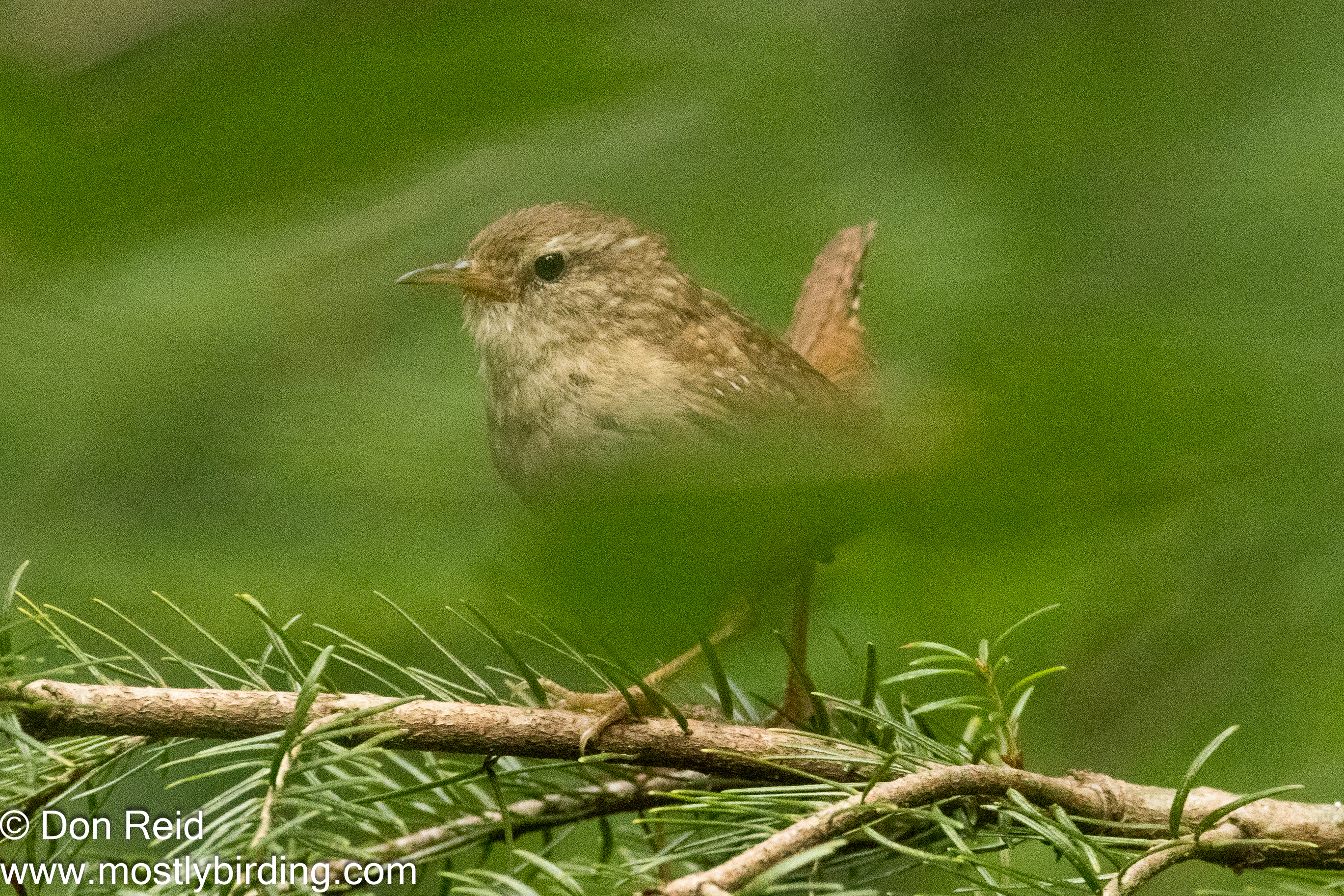
The walk took longer than planned as I found several new birds – Wrens in the bushy areas were particularly numerous as I walked along trails through tall Scottish Pine forest.
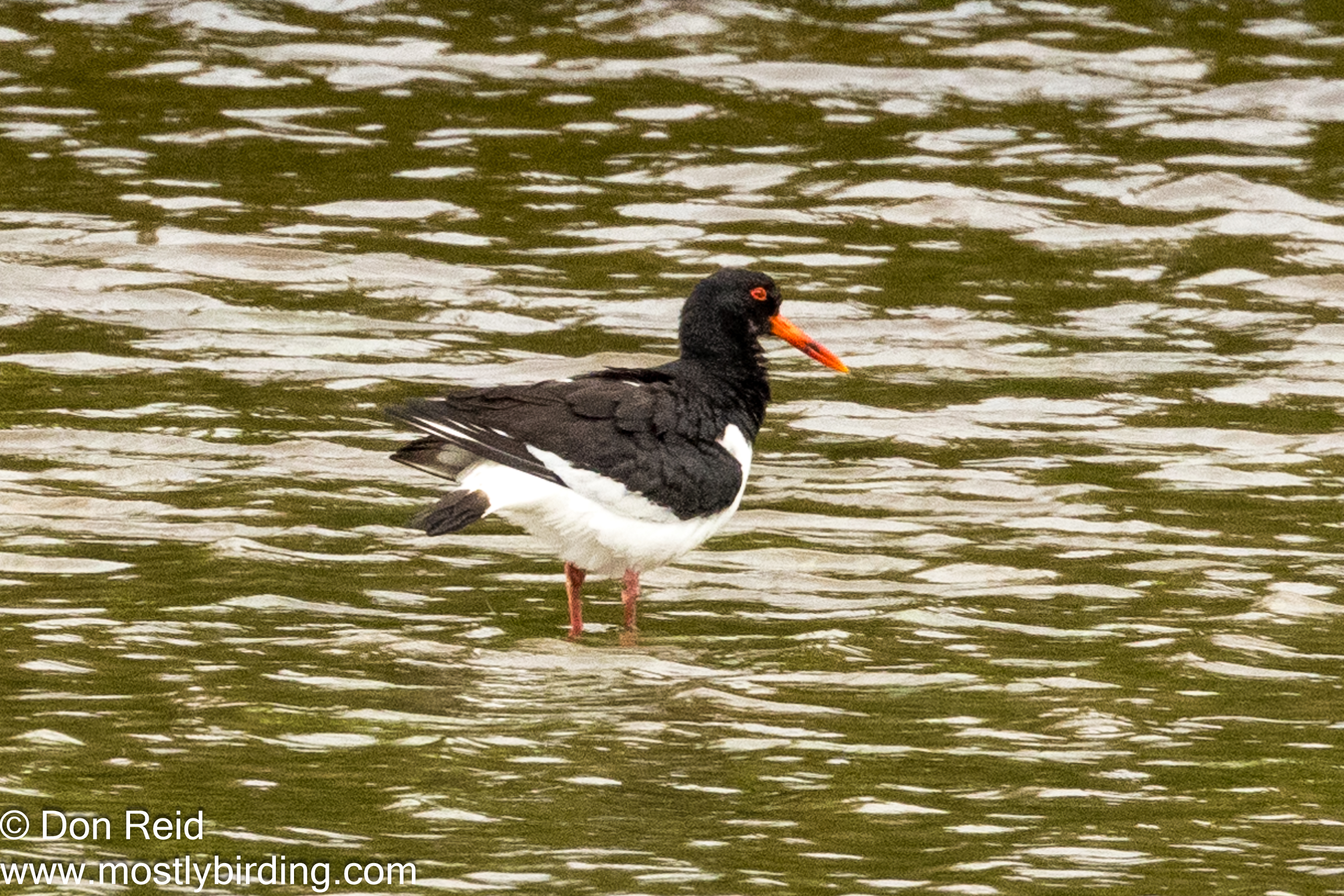
The trail skirted the loch itself and I could see a pair of Mute Swans floating gracefully in the middle of the loch – just then a pair of Eurasian Oystercatchers flew in noisily and settled in shallow water on a nearby sandbank.
I was tiring a bit and aware of time passing by, so took a shortcut back to the parking area, from where I headed north towards the A9 main route and was soon barrelling along with trucks and cars all doing the same speed.
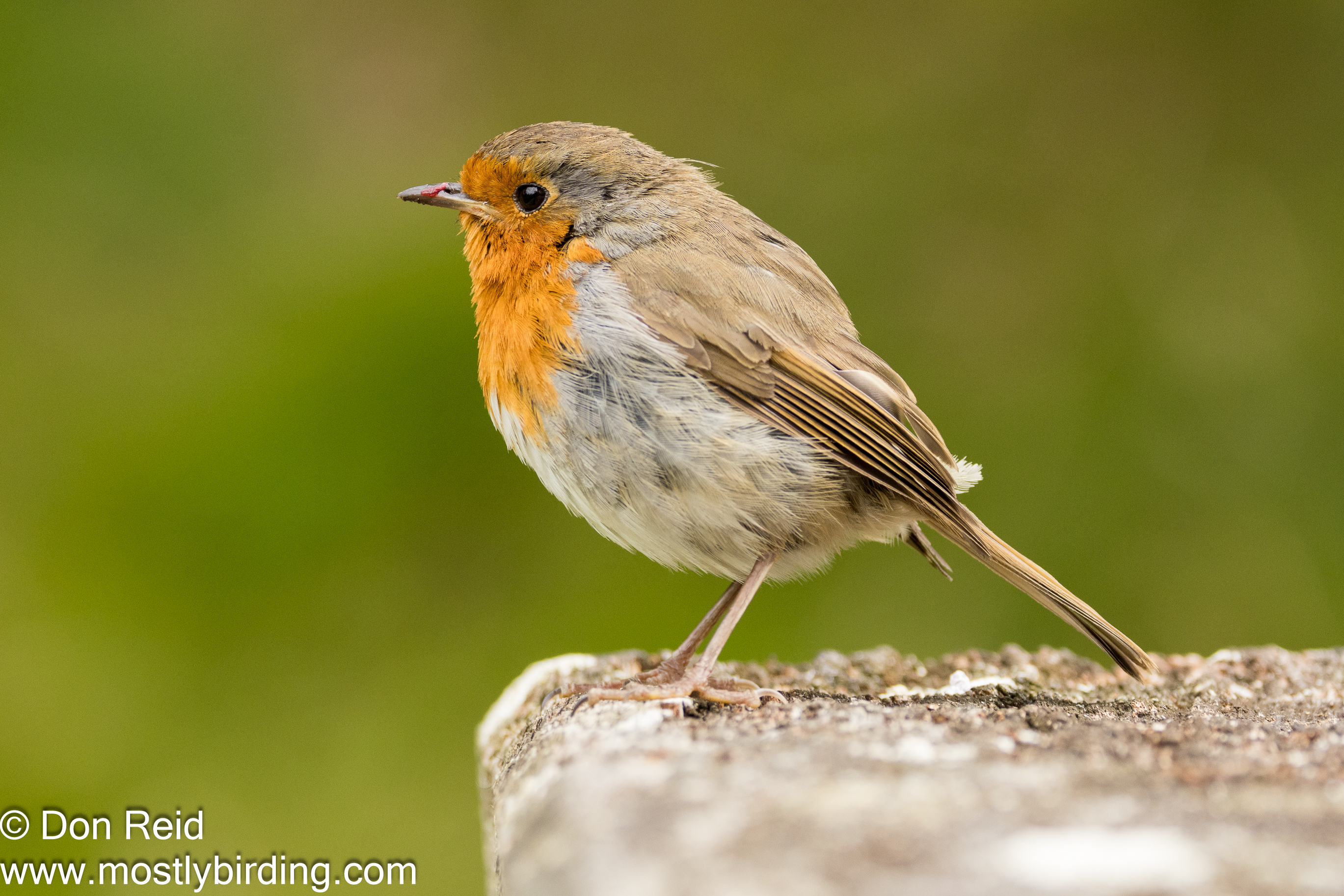
I was getting hungry having had just the snack bar the whole day, so I took the first turn off that indicated Services. I bought a sandwich and cappuccino and sat and ate at an outside table, accompanied by cheeky Robins begging crumbs and a more demure Song Thrush hoping for a scrap or two
European Robin Erithacus rubecula Lunch stop on A9Song Thrush Turdus philomelos Lunch stop on A9
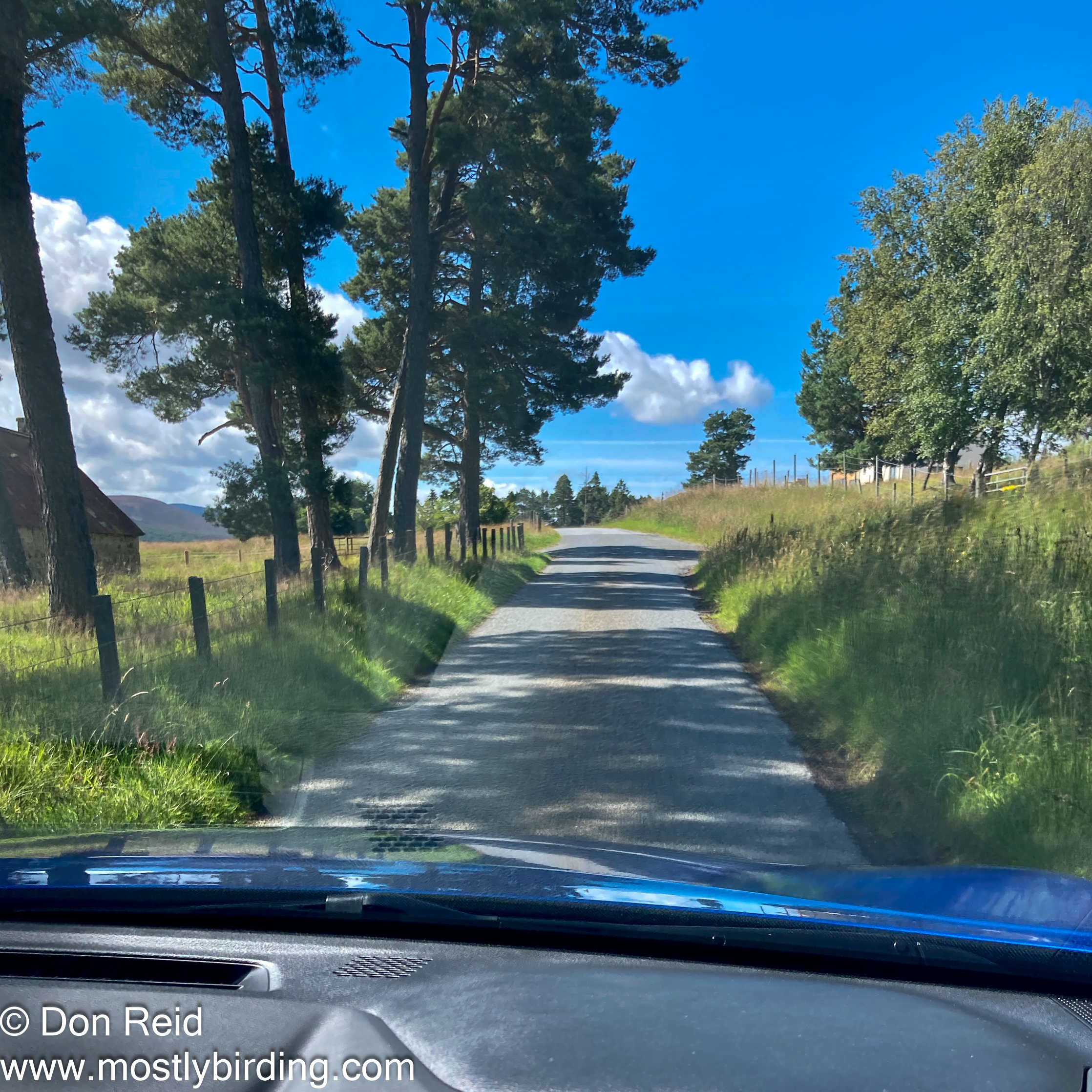
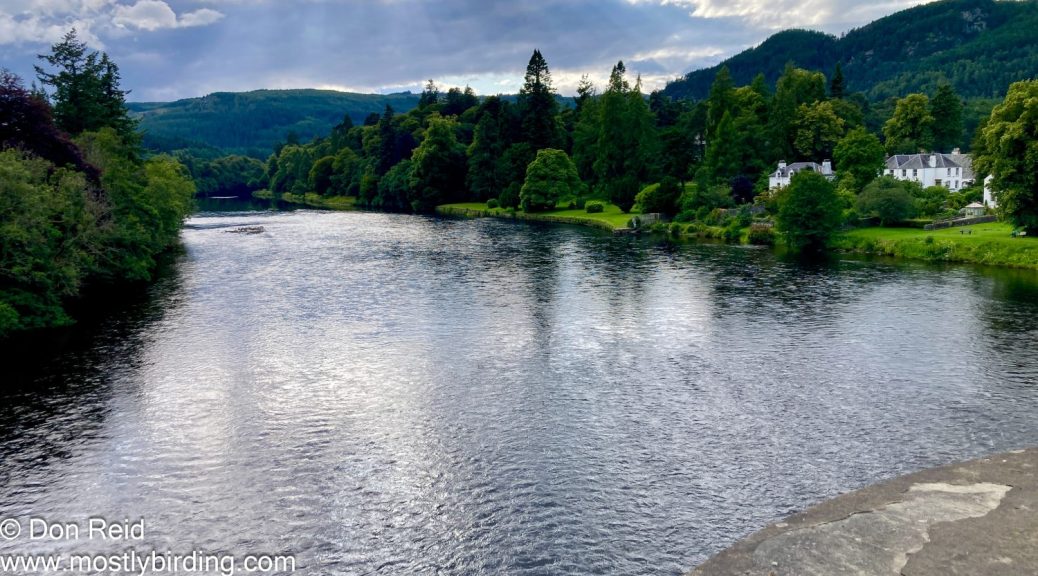
Feeling a lot better I carried on towards Grantown along more ‘back roads’ (where I stopped for the photo in the heading to this post) then re-joined the A9 and made haste towards my destination, which I reached by about 5.30 pm, glad to be able to check in, unpack and freshen up. On checking in I was asked what time I would like supper, which was included, and said 7.30 pm.
Grant Arms Hotel, Grantown on Spey
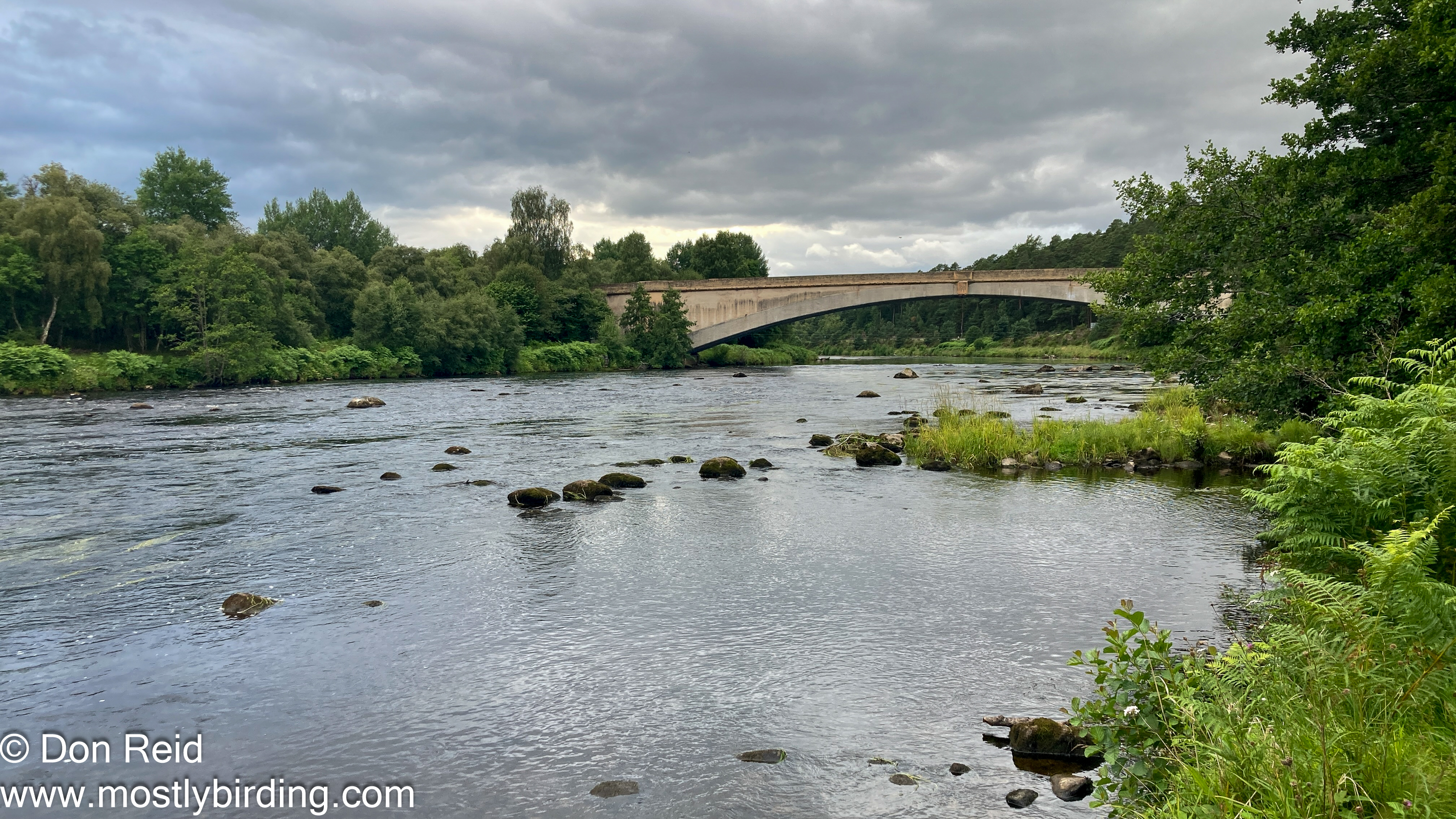
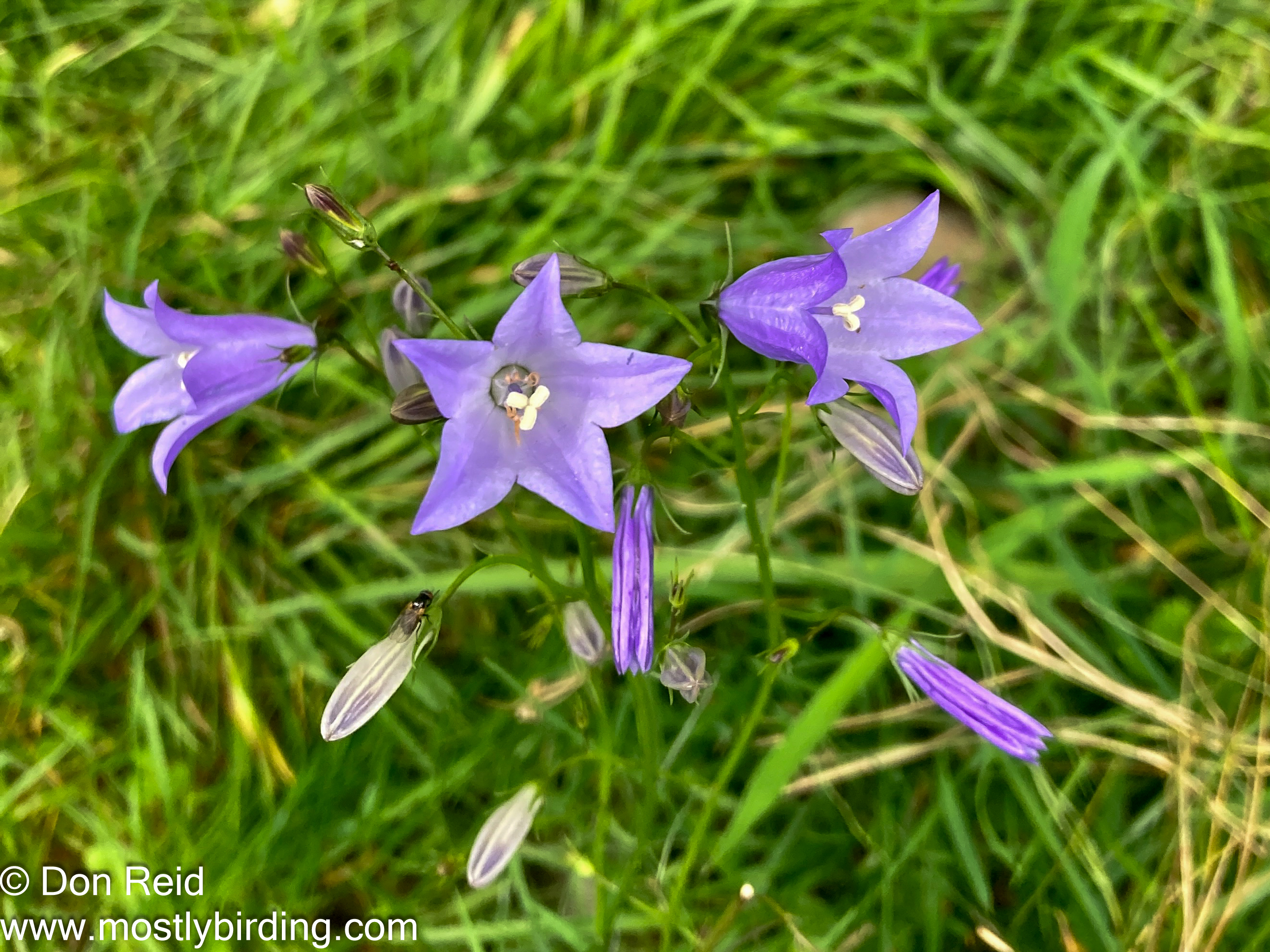
That left me with an hour and a half to scout around Grantown and I ‘followed my nose’ until I saw a sign pointing towards yet another nature reserve and I was soon walking along a gently sloping trail through forest to the banks of the River Spey. There I spent time just taking in the pleasant view of an old bridge, the clear running waters of the river and some colourful flowers along the river’s edge.
River Spey, Grantown on SpeyBellflower, River Spey
The busy day was rounded off with a superb three course meal in the hotel dining room – soup, a perfect trout dish and a decadent dessert was thoroughly enjoyed after a rather ‘thin’ day of snacking.
The short version is that: 1. Our granddaughter Maia (aged 16) has a passion for playing the flute (dwarsfluit in Afrikaans) and was very keen to attend the summer school run by Flute Scotland at Strathallan School near Perth, Scotland. 2. Her parents could not afford the additional time off to chaperone her to Scotland, especially as the family had just returned from a holiday trip to England the previous week. 3. On hearing this Gerda ‘volunteered’ me to be chaperone and it was an easy decision as it opened up all kinds of opportunities for a brief tour of the Scottish Highlands and discovering some Scottish birds, while Maia attended the summer school. This all happened just two months prior to the trip so plans had to be put in place and bookings made without delay.
The Journey to Scotland
Traveling overseas is never easy and when it involves three separate consecutive flights the challenges are increased. As I was tasked with chaperoning Maia to her week-long Flute school, I felt an extra responsibility to make sure she got there safely and without too many hassles
As it turned out the journey to Scotland went as well as can be expected, considering that Europe had just started their summer holidays and we experienced peak numbers of travellers, all seemingly heading to their chosen destinations at the same time as us. That meant queues at every step in the process, especially at Schiphol which normally provides a pleasant experience for transit passengers but when you have to queue for 20 minutes to buy a much needed take away coffee it takes a lot of patience not to get too agitated.
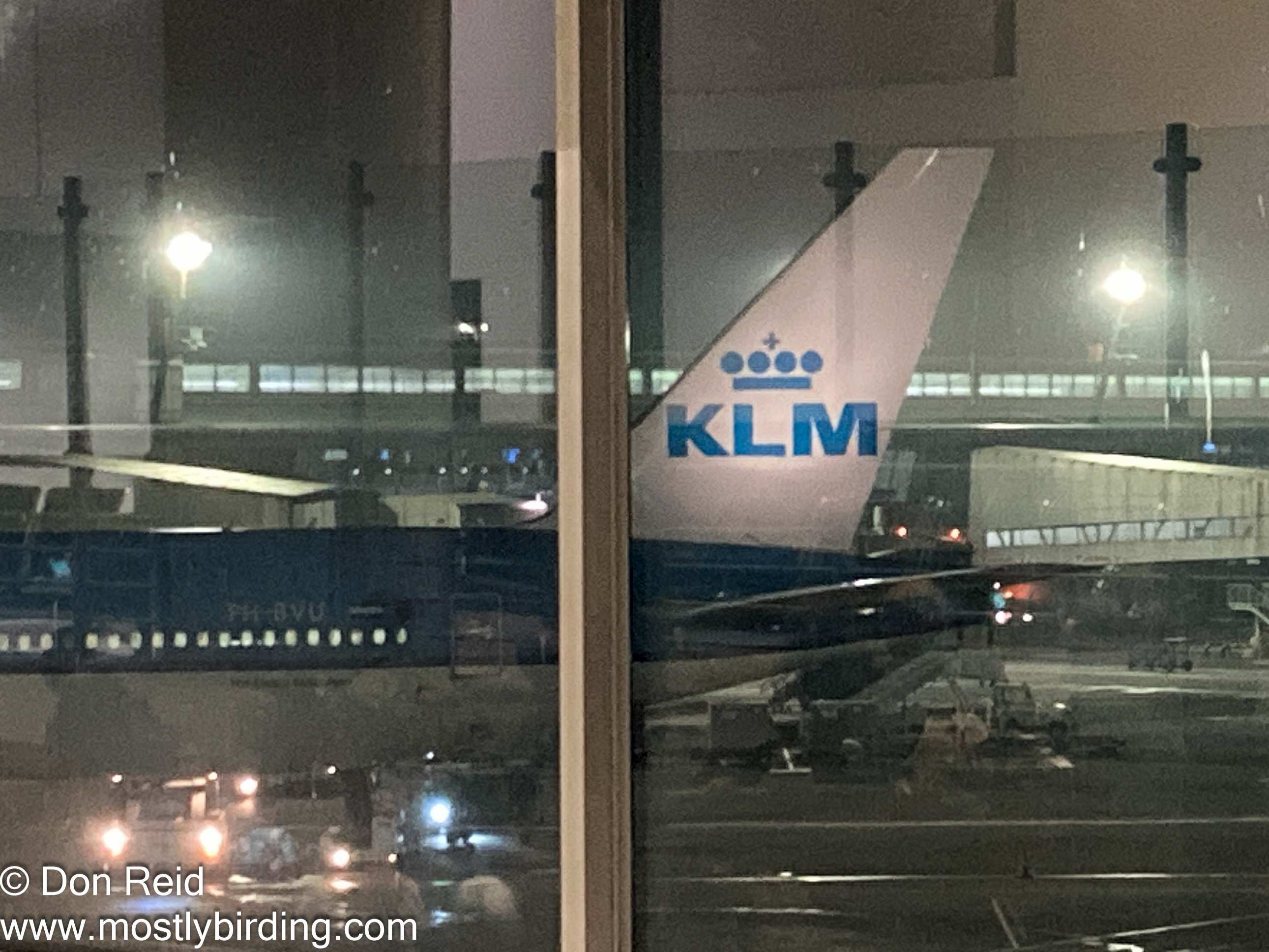
KLM to Edinburgh
At the security checkpoint where full body x-ray machines are used an irritated official decided to take it out on me and called me aside after complaining that I did not remove the tissues I had in my pants pocket (!) and performed a body search of every nook and cranny of my body, while reminding me ‘to remove everything from my pockets next time’. Needless to say I left the security area in a less than happy frame of mind, wondering, not for the first time, why such miserable individuals are chosen for this job.
Total travel time from Mossel Bay to Maia’s drop off at Strathallan school was around 25 hours. Fortunately I had booked extra legroom seats on all flights and on the main flight we had a spare seat between us so could achieve a better level of comfort and I managed to sleep more than I usually can on a long flight, albeit in that unnatural upright position that airplane seats force you to adopt.
That took-up most of the second day – Sunday – as well but I did fit in some very pleasant activities after the long trip.
Finding Strathallan
We collected the rental car from Avis at Edinburgh Airport and headed tentatively out and northwards towards the first point of call at Strathallan School in the countryside south-west of Perth. A panicky yet funny moment occurred while getting out of the rental car parking area – I just could not get the manual gears sorted until I realized I had forgotten how to drive with three pedals and was trying to find first gear without using the clutch. That is what happens when you drive only automatic cars for a couple of years – and your aged brain momentarily forgets how you drove manual cars for so many years
After that mild hiccup I was soon into my stride with the car and we followed the gps instructions which took us close to the school then googled the balance of the route. Scenery along the way was typically urban gradually morphing into attractive countryside once we turned off the main A90 route. The standout sight was seeing the bridges while crossing the Firth of Forth, especially the one we were on which is clearly quite new and very spectacular in design.
Firth of Forth Bridge, Edinburgh
The school seemed deserted and we drove all over the beautiful grounds to find someone in charge, without avail until Maia checked her papers and saw the name Glenbrae House which turned-out to be the right place
Strathallan School near Perth
Birnam and Dunkeld
Once she was settled I carried on towards Perth and beyond to Birnam for my first night in Scotland. The route took me along narrow country roads through idyllic scenery – green fields dotted with mostly white and a few black sheep (every family has them) with a glorious backdrop of hills and cloudy skies – I couldn’t ask for more on my first day in this really beautiful country.
Farmland, Perth and KinrossFarmland, Perth and Kinross
In Birnam I found the Merryburn Apartments and checked in, only to discover the apartment I was allocated on the ground floor was named after a Reid – how’s that for good karma!
Once I had checked in I freshened up after the long journey and set out for a walk to the nearby village of Dunkeld, just a couple of kms away. I was feeling jaded and stiff from sitting in plane seats for 16 hours in total and a walk in the cool late afternoon air was what I craved.
I started off down the main street of Birnam finding interesting spots along the way and enjoying the well kept old architecture, the verdant lawns and gardens with a touch of wildness about them.
Architecture in BirnamBeatrix Potter garden, Birnam
I crossed the old bridge over the River Tay – a wide fast flowing river with water which looked pristine – and walked along the main street of Dunkeld keeping a look out for a place to eat.
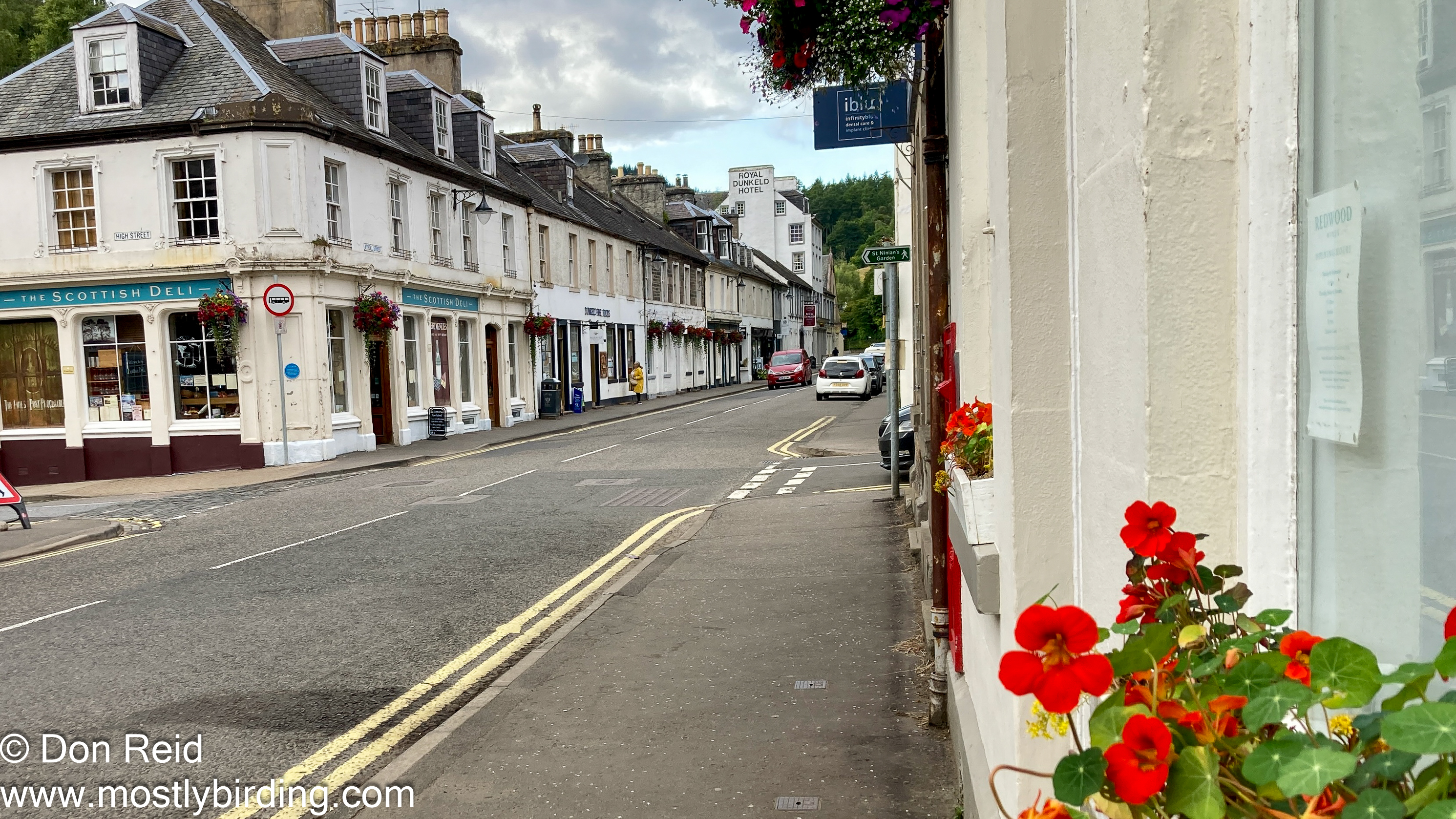
Dunkeld main street
My plan had been to enjoy a sit down meal but a bright and clean looking fish and chips shop changed my mind so I ordered a ‘small haddock supper’ and headed back to the river where I had seen people seated outdoors next to the river
I soon had a decent glass of Pinot Noir and a seat at a long communal table right next to the river where I had one of the nicest meals and best views of the handsome old bridge – way better than sitting in a restaurant (and a lot cheaper, which is always heartwarming for someone with a Scots heritage)
River Tay, DunkeldA simple supper on the banks of the River Tay, Dunkeld
Mallards were swimming about at the river edge as I revelled in the view of the old bridge and sparkling waters – will it get better than this?
Mallard, River Tay, Dunkeld (cellphone photo through my binos)
After soaking it all up I headed back to Birnam, walking to the opposite end of the village then back to my accommodation. By this time it was close to 8pm but still light with a couple of hours to go before sundown
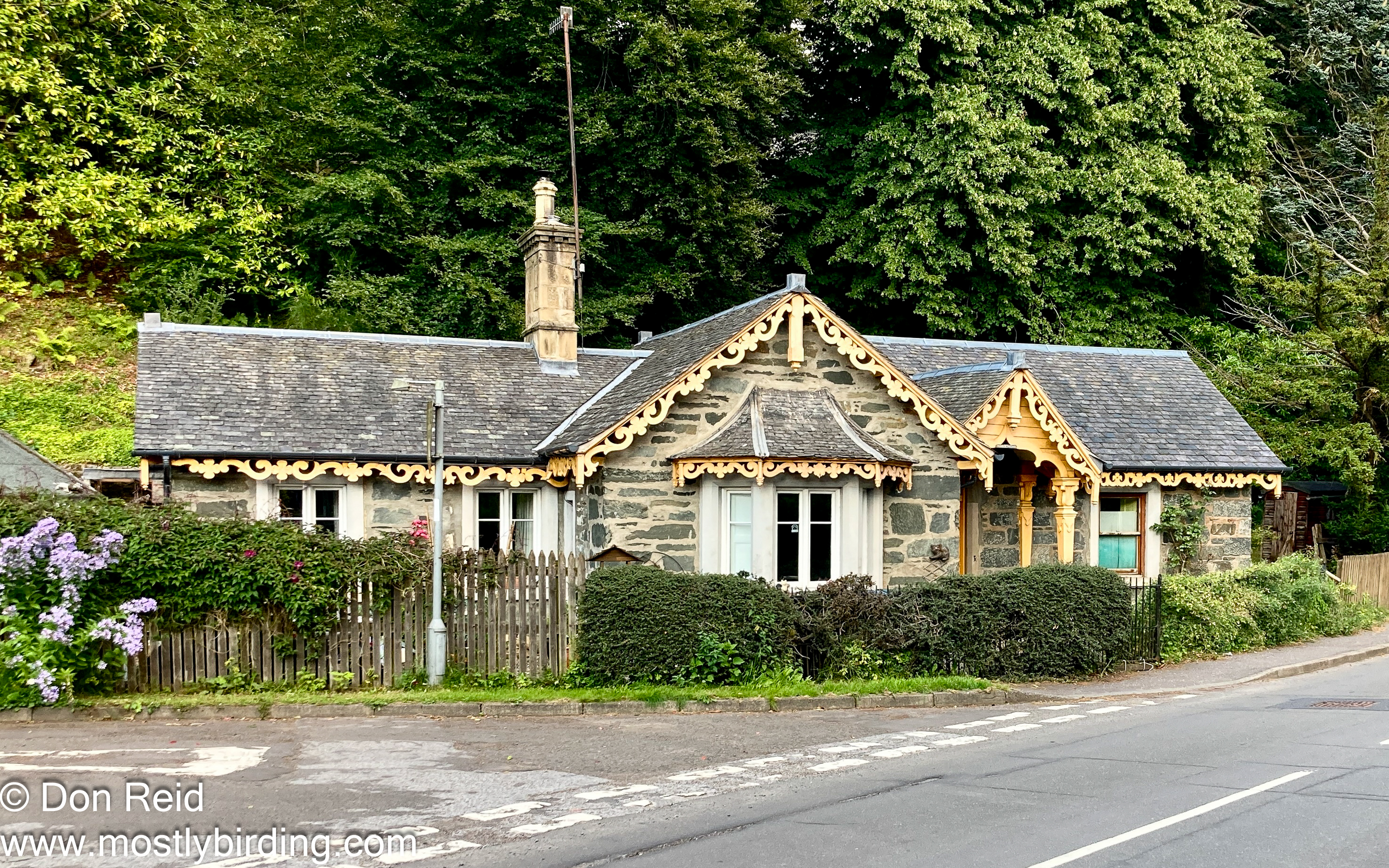
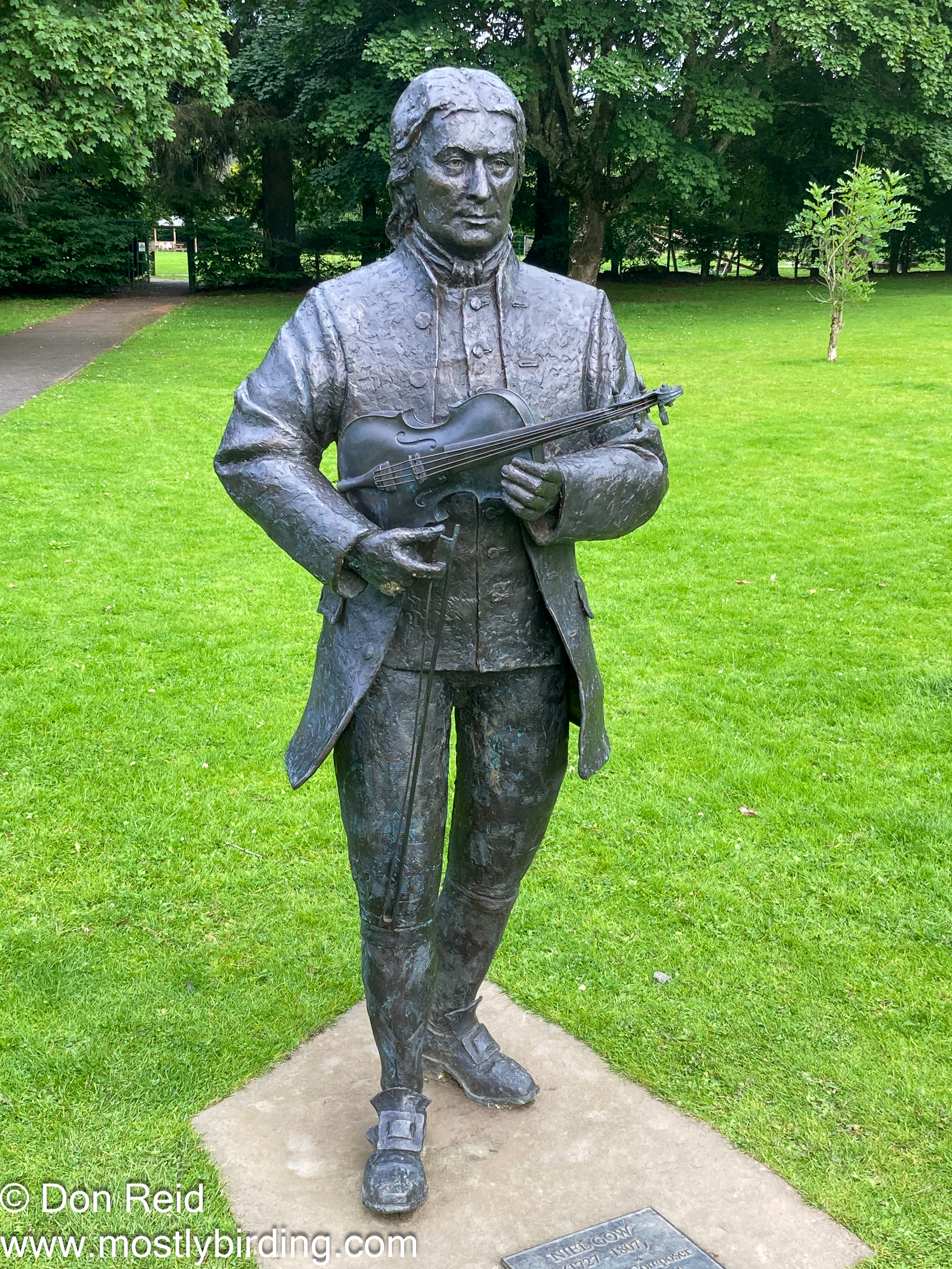
Unique house, BirnamA statue commemorates one Niel Gow ‘Fiddler and Composer, Inver, Dunkeld’
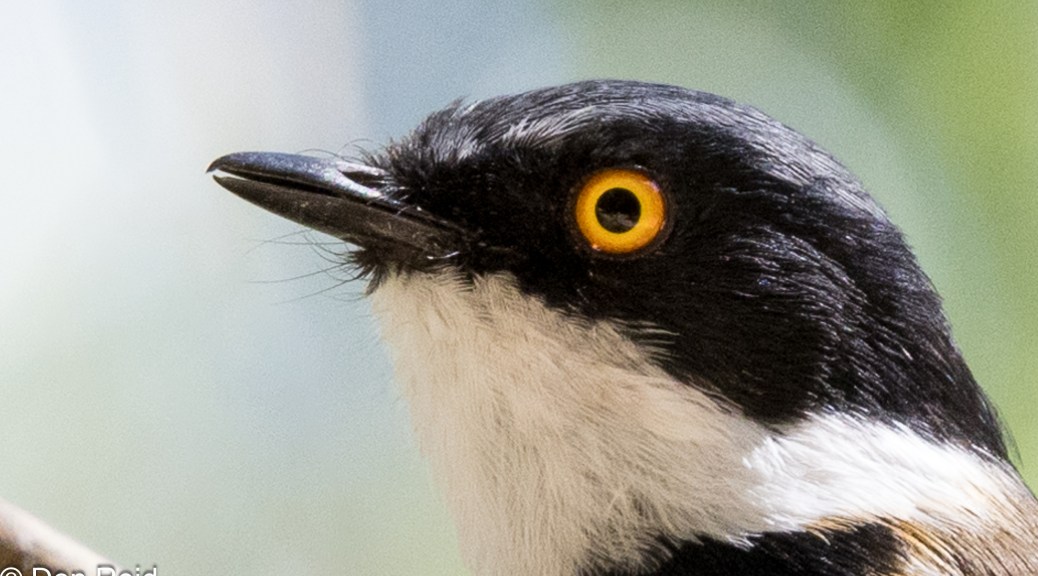
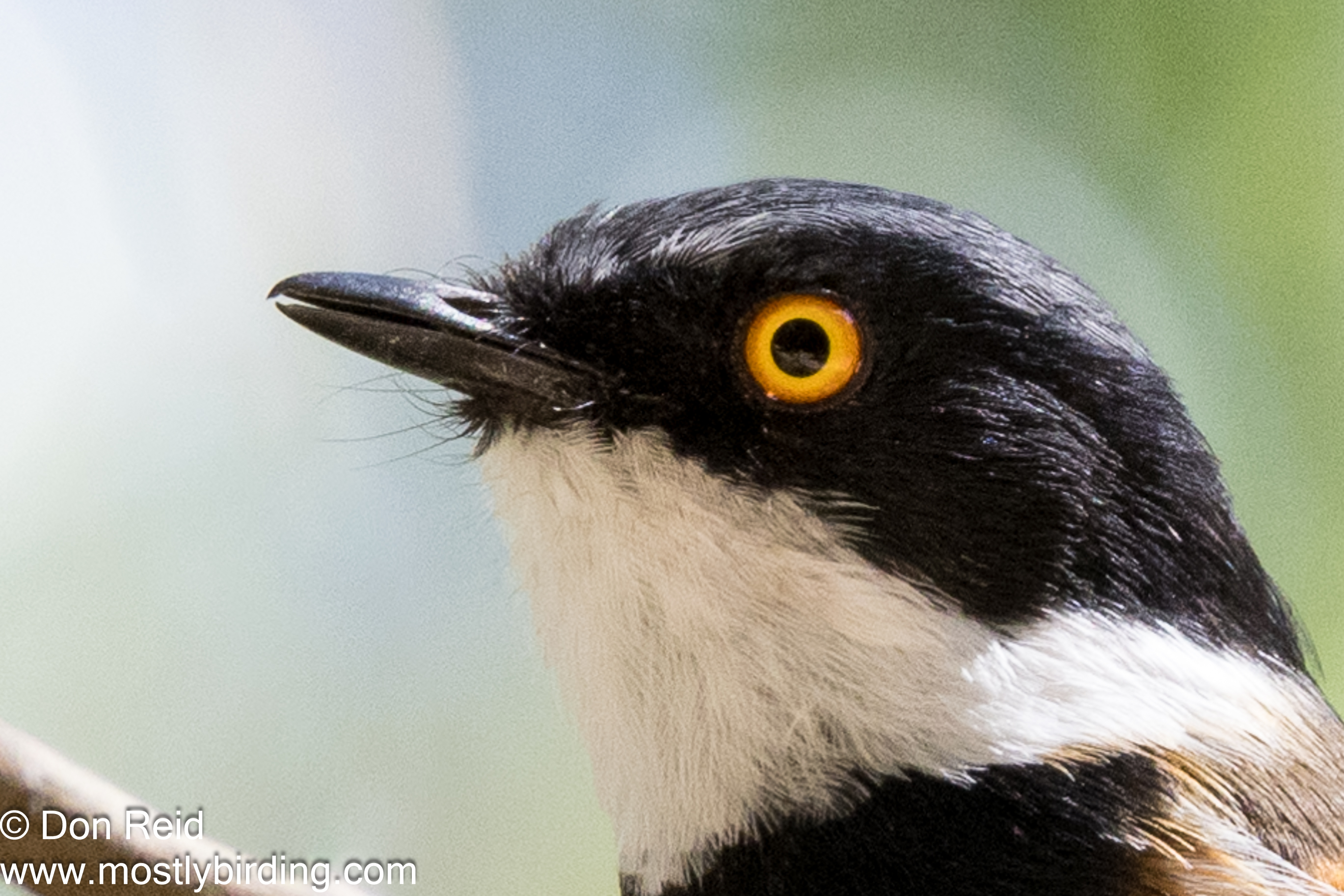
Another species that fits the description of birds with striking eyes is the diminutive Cape Batis
Cape Batis (Kaapse bosbontrokkie) Batis capensis
Where to find them
The Cape Batis occurs mainly, but not exclusively, in forest habitat – I have come across them in bushy areas not 200m from our Mossel Bay home and in various other locations outside ‘proper’ forests.
Distribution is confined to southern Africa as shown on the map below – courtesy of Birds of the World.
What to Look for
Batises can be confusingly similar in appearance, but the Cape Batis is the only one with orange flanks and wing bar, while the male is told by the broad black band across its chest.
Cape Batis Batis capensis Kaapse bosbontrokkie (male), Friemersheim area
The Firefinch app refers to this species as the “standard” forest bird – common, bold, noisy and striking. It is an active bird, flitting between bushes with a ‘fripping’ sound caused by rapid beating of its tiny wings and can often be found at the centre of bird parties.
Cape Batis Batis capensis Kaapse bosbontrokkie (male), Friemersheim area
Getting the Photo
The images above were taken while atlasing in the Friemersheim area not far from George – I stopped to scan a forested patch next to the road when I noticed movement among the branches not far from where I was standing, and pointed the camera in the general direction just as a Cape Batis popped into view, posing in sunlight just long enough to get a few shots.
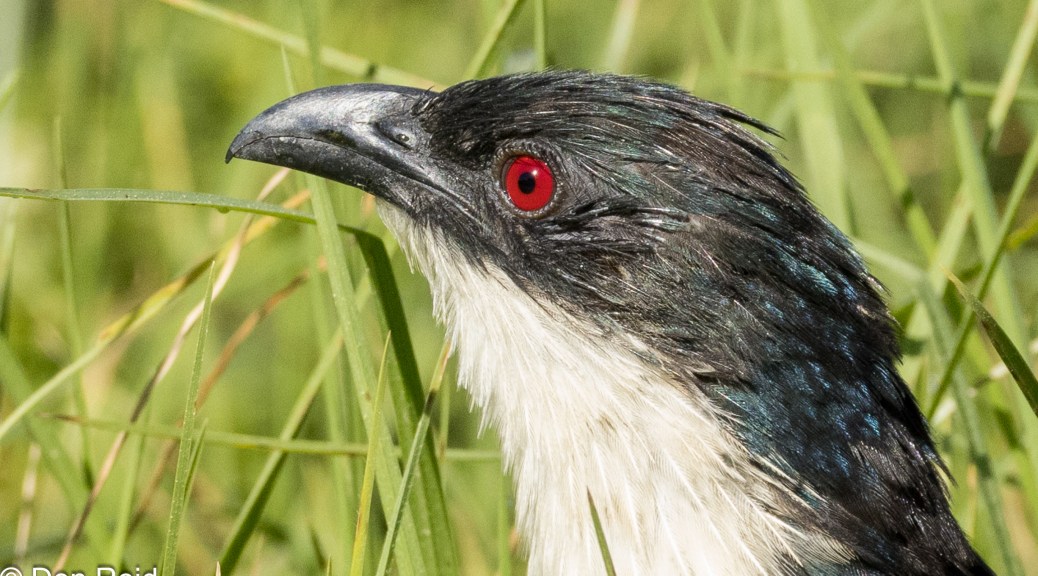
As a follow up to the previous posts on the subject of birds with striking eyes – here’s a look at another species, familiar to South African birders, with eyes that beg your attention –
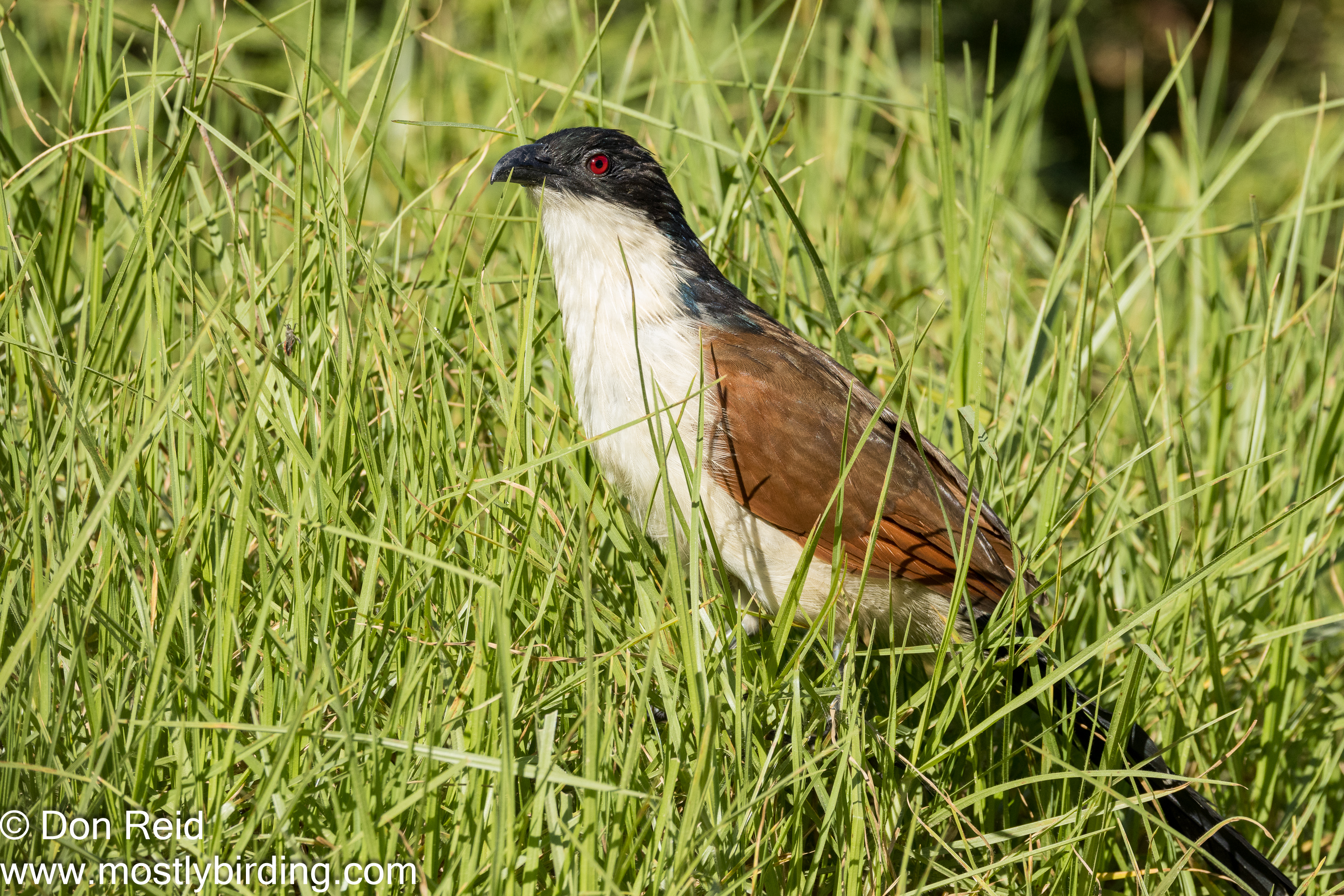
Burchell’s Coucal (Vleiloerie)
Centropus burchellii
This is a species best known for its bubbling call from the depths of dense bush or trees – a call which Roberts VII describes as “like water being poured from a bottle”.
And that may be the only clue you get to its existence until, one day, you actually get a glimpse of the bird as it flies heavily from one bush then crashes clumsily into the next one and disappears again. This is a bird that does not crave attention as it goes about its daily routine of searching on the ground and in bushes for just about anything it can lay its claws on – rodents, reptiles, other birds, nestlings, frogs, snails, insects … etc
Distribution
Birds of the World (see footnote) – lumps two species together with a combined distribution across Africa and a narrow stretch of Arabia as per the map below.
Southern African birdlists separate the two species into :
Burchell’s Coucal — Centropus burchelli – with distribution from south-east Tanzania through Mozambique to the Western Cape in South Africa and including south-east Botswana
White-browed Coucal – Centropus superciliosus – with distribution from Yemen, south-west Arabia, Ethiopia south to Zambia, Angola and southern Africa
Getting the Photo
As mentioned above, this is a fairly secretive species so when the opportunity arises one has to be quick off the mark to get a decent photo
I was fortunate enough to have such an opportunity recently while atlasing in the area east of Friemersheim in the southern Cape. I was driving slowly along a dirt road and had just passed a small stream when I spotted movement in the long grass at the roadside and stopped to look further.
I soon saw what had attracted my attention – a Burchell’s Coucal making its way through the lush grass and close enough to the road for a reasonably close-up photo. That sighting had me grabbing my camera and reversing at the same time to get into a position where I could aim the camera through the passenger side window, which I was busy opening while doing all of the above (this just shows men CAN multi-task – provided the motivation is there of course).
Suffice to say I believe my efforts paid off and I was very pleased with the results!
The Firefinch app produced by the incomparable Faansie Peacock always has interesting facts about birds and in this case it mentions that Coucals have stiff, spiky breast feathers – which can be seen in the above photo.
Also that they are known as ‘rainbirds’ because they sing just before, during and after rain
Footnote : The website Birds of the World published by the Cornell Lab of Ornithology provides a wealth of information on birds worldwide and the good news is that access to the website is free for Southern African residents – all that is required is to create an account which can be done at : https://birdsoftheworld.org/bow/home
As a follow up to the previous post on the subject of birds with striking eyes – which showcased Southern African Cormorants – here’s a look at another species that fits that description to the full
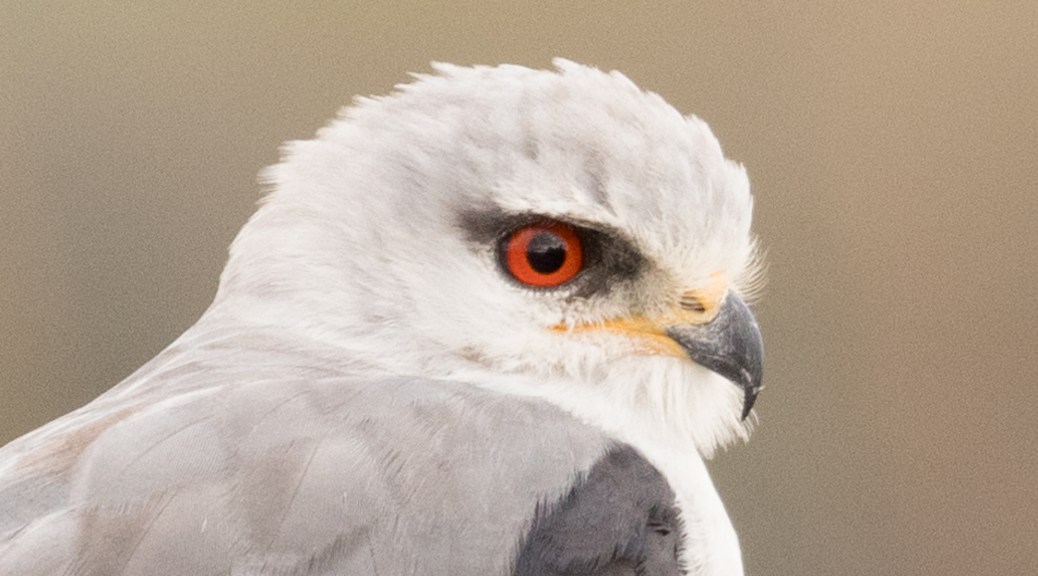
Black-winged Kite (Blouvalk)
Elanus caeruleus
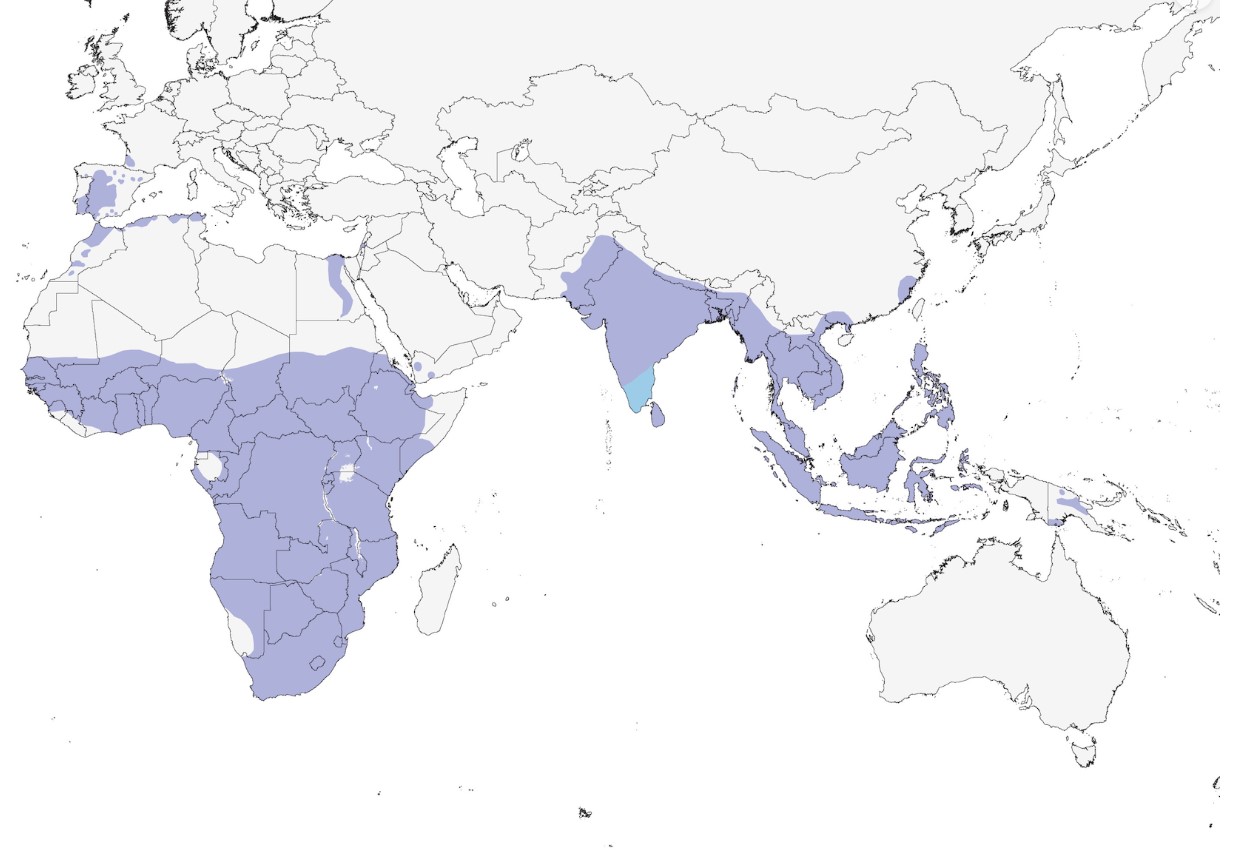
This well-known, small raptor is without doubt the most common raptor to be found across all of Southern Africa – and beyond as you will see from the global distribution map reproduced below courtesy of Birds of the World
Global distribution of Black-winged Kite
It is also the raptor you are most likely to see on any road trip through southern Africa, as their preferred hunting ground is along the road verges and adjoining fields.
They are most often seen perched on roadside powerlines, which provide the ideal vantage point for their hunt for the next small rodent.
However, it’s just as easy to overlook this species, which is similar in size to the many doves which also like to perch on powerlines. The good news is that the flatter pose and habit of slowly wagging its tail up and down will confirm that it’s a Black-winged Kite, even from a good distance, and once it takes to the air there is no doubt about the ID as it hovers, then ‘parachutes’ down to grab its prey.
The images that follow were taken during a recent atlasing trip north of George, on the way to Oudtshoorn – once I had spotted the bird up ahead I approached very slowly, using roadside bush to conceal my approach until I was close enough to quickly take a few photos through the open passenger window.
Black-winged Kite Elanus caeruleus Blouvalk, George-Oudtshoorn Area
And just look at that eye colour! Beyond striking and ready to take you on in a staring competition
Black-winged Kite Elanus caeruleus Blouvalk, George-Oudtshoorn Area
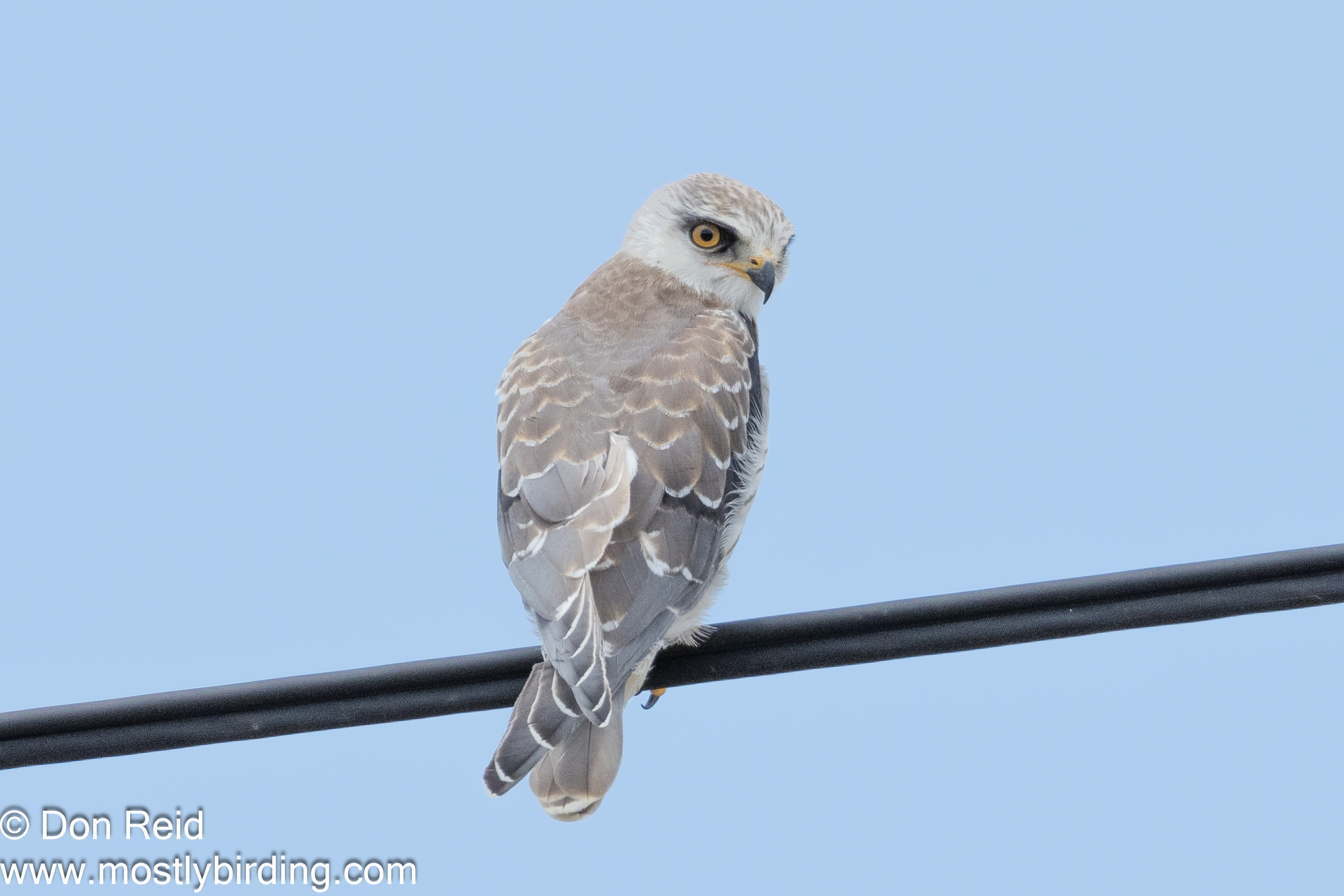
On another atlasing trip earlier this year in the Gouritsmond area just south-west of Mossel Bay, I came across another Black-winged Kite, this time a juvenile without the black ‘shoulder’ and with yellow eyes – still fierce looking, mind you, but not yet up to adult standard
I would like to mention a birding website that has helped me to broaden my birding info horizons and opened up a world of new knowledge (literally) to add to and enhance that which I have gathered during many years of birding.
The website is Birds of the World published by the Cornell Lab of Ornithology and the good news is that access to the website is free for Southern African residents – all that is required is to create an account which can be done at
Cormorants are not generally regarded as birds that are high on the list of desirable birds to see – unless it’s a potential lifer of course. When you’ve been ‘into’ birding for a while the most that a cormorant is likely to elicit is a slightly off-hand “Oh, there’s another Reed Cormorant” or “Hey, have a look at that Little Grebe just to the right of that White-breasted Cormorant”.
But there’s more to cormorants than meets the eye – or eyes in this case …..
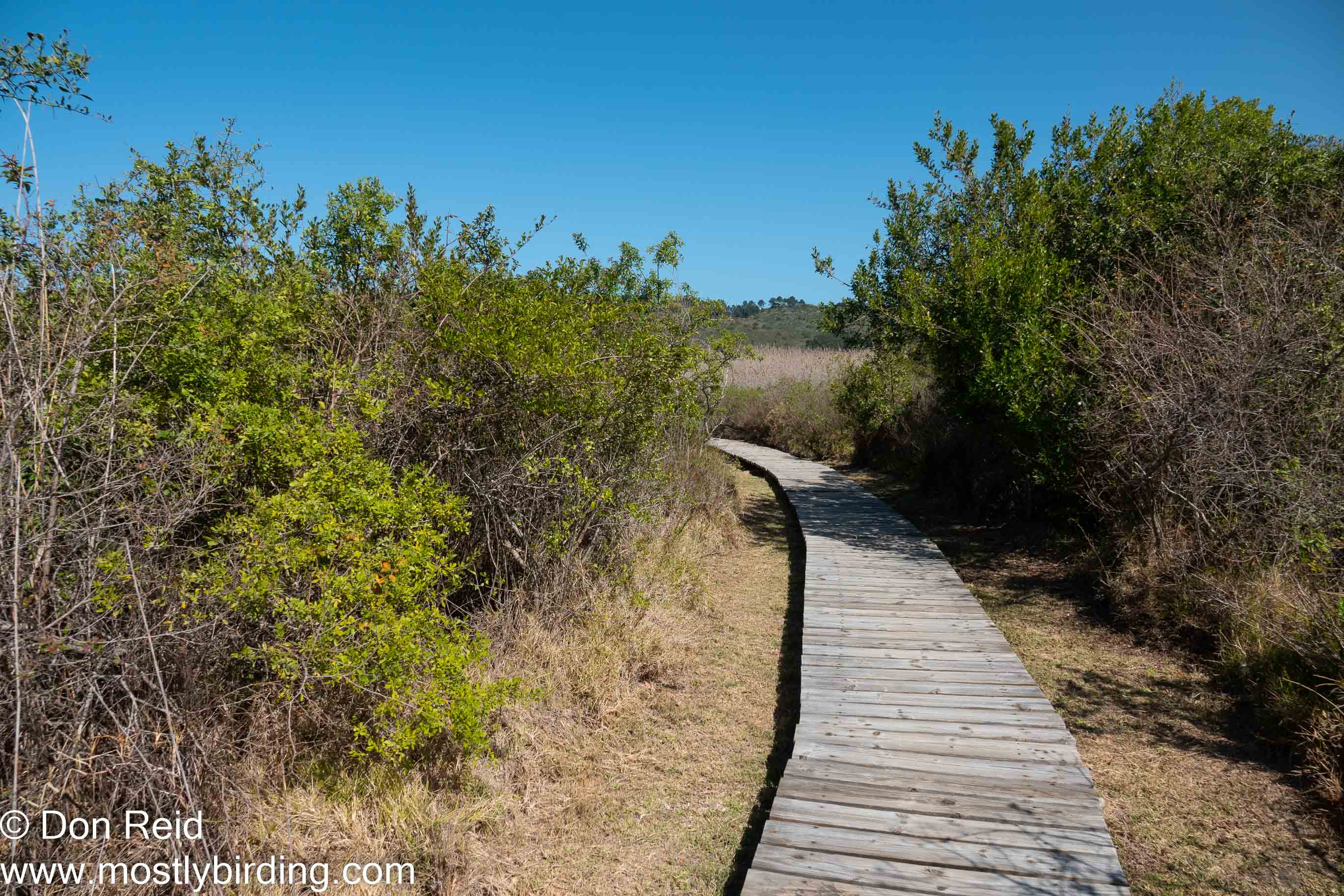
During one recent day trip, I found an opportunity to visit the area which we know as “The Vlei’s”, to the east of the small town of Wilderness, and spent a pleasant hour or so in the bird hide at Langvlei.
Boardwalk to the hide at Langvlei Wilderness
There were numerous waterbirds on the vlei, mostly Coots but also significant numbers of Grebes, more than I can recall seeing in any location before and including all three southern African species – Little Grebes, Great Crested Grebes and a few Black-necked Grebes. However, they were too distant for photography.
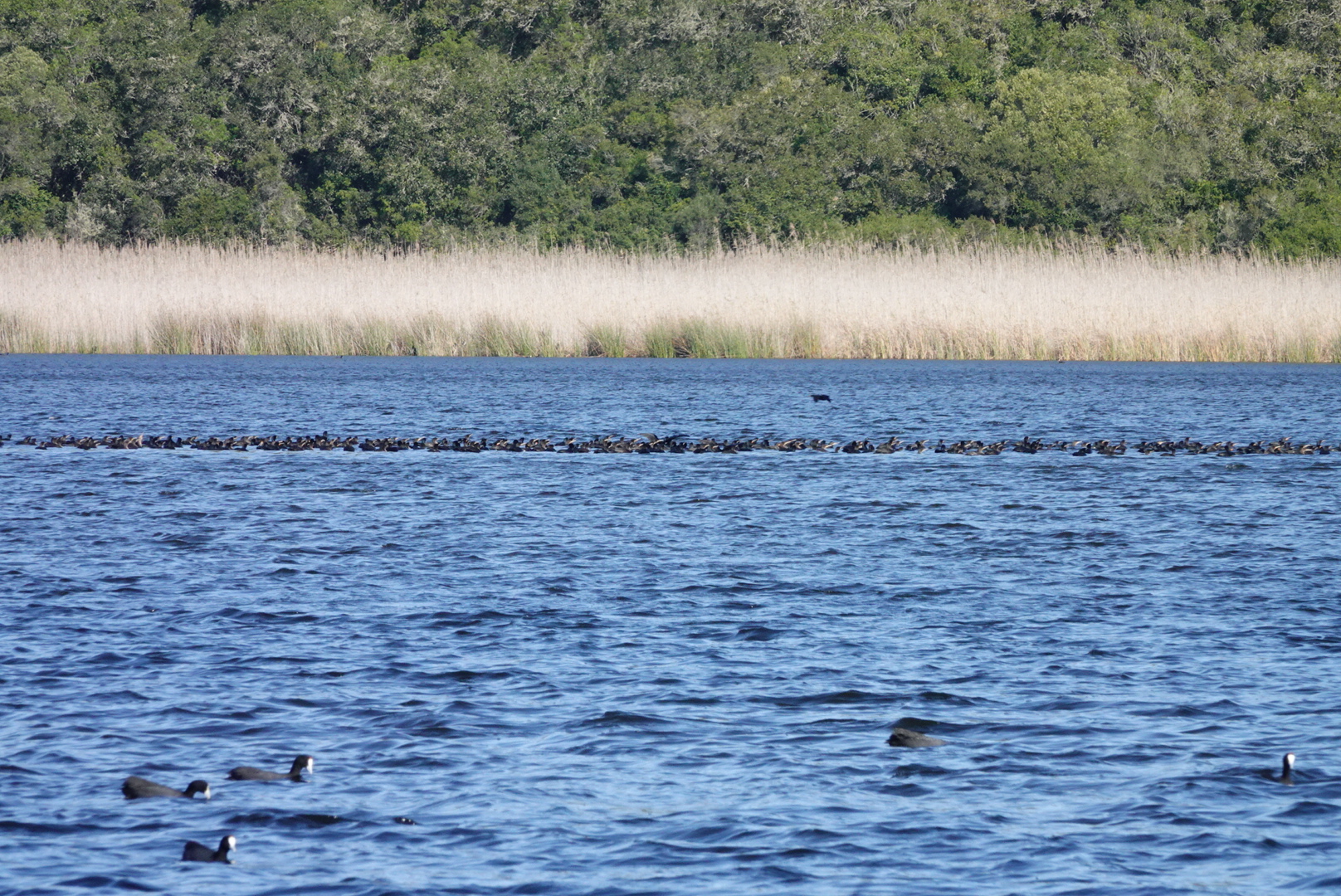
Also distant was a long line of dark birds on the water, as the image below shows, and once I had the scope in position, I could see that it consisted of a few hundred Reed Cormorants, again more than I can recall seeing in one location before. As I watched the line, a few of the foremost swimmers flew up out of the water and circled back to the rear of the “queue” where they settled down in line again. I can only assume they were performing some kind of feeding strategy.
Close to the hide a dead tree stump has been strategically placed and perched on it were two cormorants – the larger White-breasted Cormorant and the somewhat smaller Reed Cormorant.
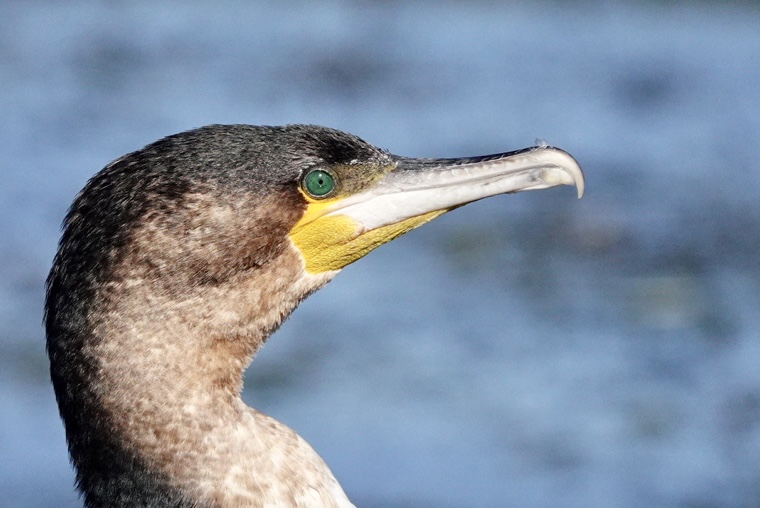
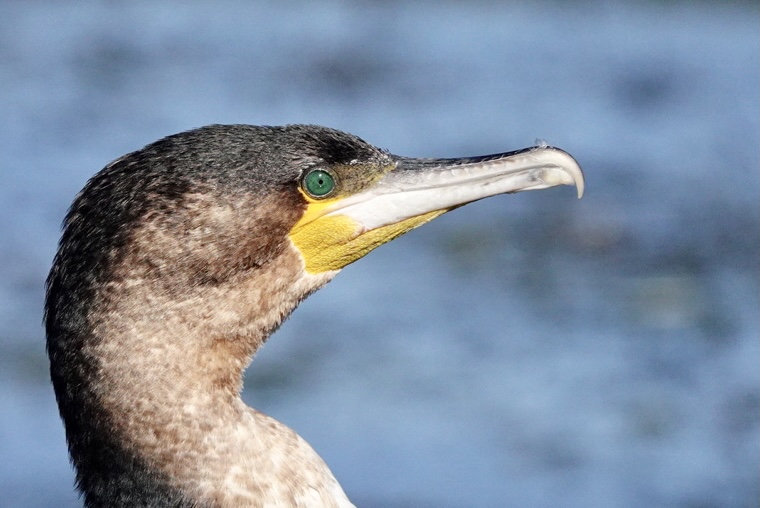
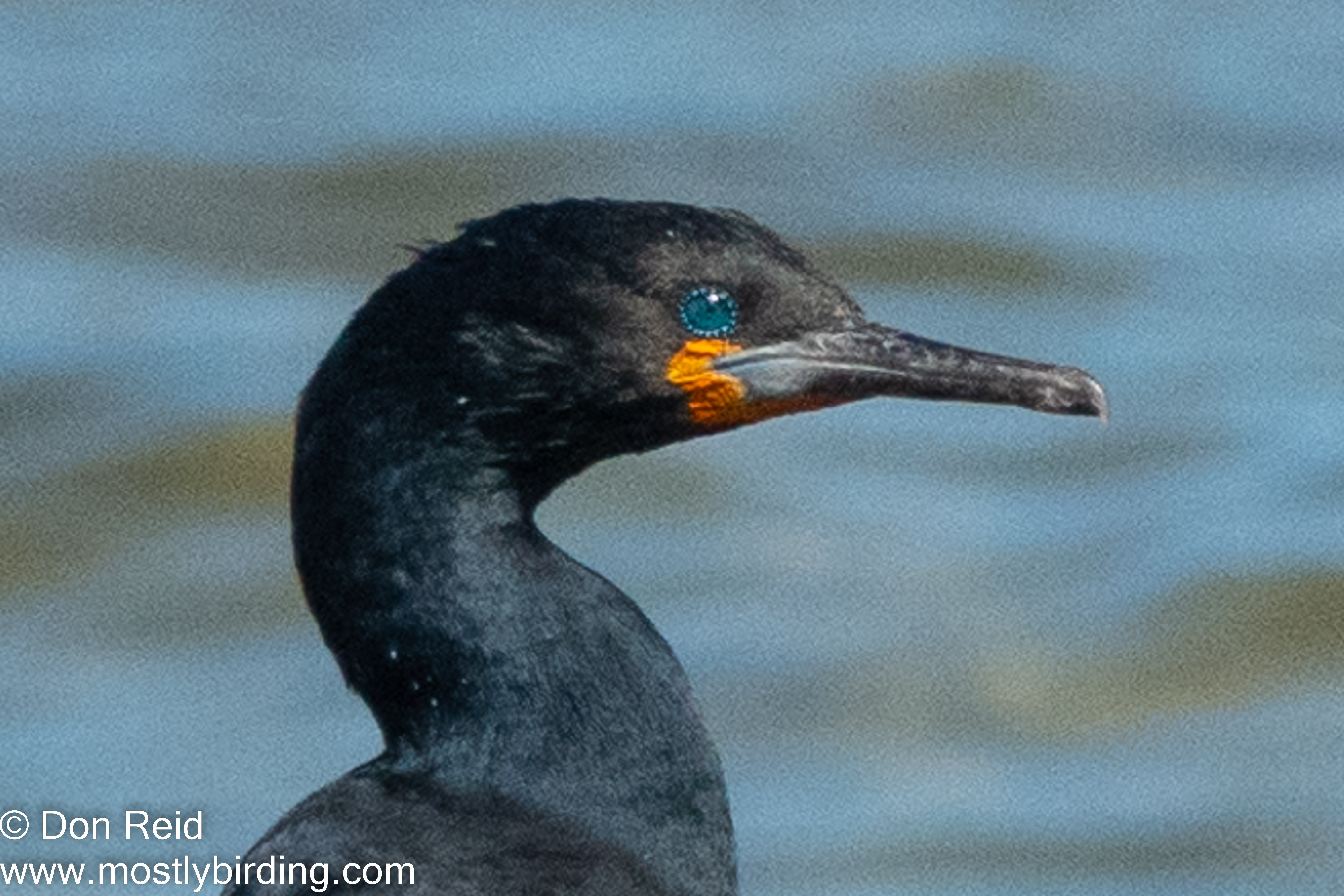
The light was favourable, so I took a few shots then zoomed in on their heads and took a few more. And that’s where the magic came in! In contrast to their rather dull appearance and less than comely shape, the cormorants have some of the most stunning eye colours of the bird world.
White-breasted Cormorant (Witborsduiker) (E-bird : Great Cormorant)
Phalacrocorax lucidus
Starting with the brilliant green eyes of the largest cormorant in our region, commonly found in saltwater and freshwater habitats across southern Africa
Now this species is somewhat ungainly on land, but once in the water it will outswim Michael Phelps by a long way – that’s if you can get it to swim in a straight line and stay within its lane. And all it uses are its feet which have four toes connected by webbing, which it uses to propel itself most effectively through the water when chasing prey
It uses that hooked bill to secure small fish, which are eaten underwater, while bigger fish are brought to the surface to juggle into a head-first swallowing position.
Worldwide this species is often referred to as Great Cormorant and occurs across 6 continents – I have seen Great Cormorants in Australia, Canada, UK and Europe during our travels abroad
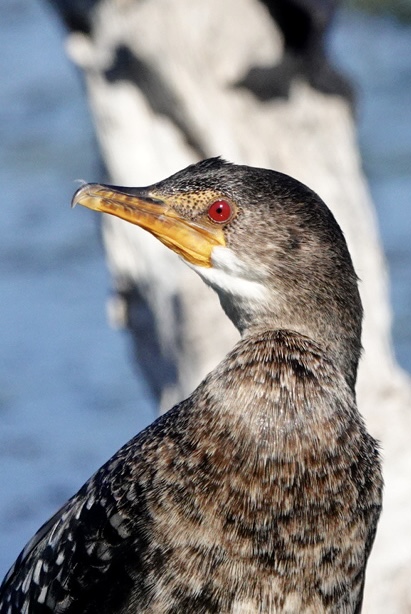
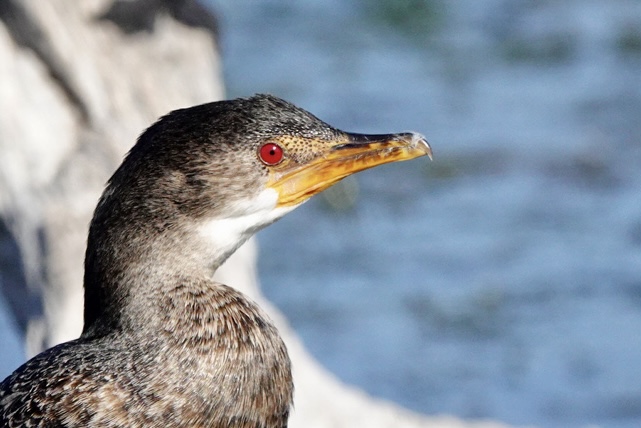
The Reed Cormorant is substantially smaller than the previous species and has a similar distribution across our region, but unlike the White-breasted (Great) Cormorant it is restricted to the African continent, occurring in most of sub-Saharan Africa
And the eyes? Red instead of green, but just as striking!
Reed Cormorant, Langvlei Wilderness
A surprising fact (courtesy of Faansie Peacock’s wonderful birding app called Firefinch) is that the feathers of cormorants are less waterproof than those of other birds – the reason is that this makes them less buoyant and allows them to sink when hunting underwater. This also explains why they spend much of their time out of the water with wings spread to dry. It is also believed that they swallow stones for additional weight, much like scuba divers wearing lead weights on their belts.
Cape Cormorant (Trekduiker)
Phalacrocorax capensis
I wasn’t expecting to find a Cape Cormorant alongside the other two species at Langvlei, as they are generally known as an exclusively marine species, but this one clearly thought a day away from the rough seas would be to its liking
Mossel Bay’s Point is a wonderful place to watch seabirds and Cape Cormorants are regular passers-by (or more appropriately flyers-by) flying low and fast over the ocean, singly or in pairs or in long skeins of up to a couple of dozen at a time.
This is usually late afternoon when we like to get a take-away coffee and sit and watch the sea and its inhabitants, which can be anything from humans surfing and snorkelling to seals, dolphins or whales (in season), while yachts and boats of various types and sizes make their way to and from the small harbour nearby.
I haven’t been able to establish where these passing Cape Cormorants roost, but it is probably one of the quieter stretches of beach further east towards Great Brak River and beyond.