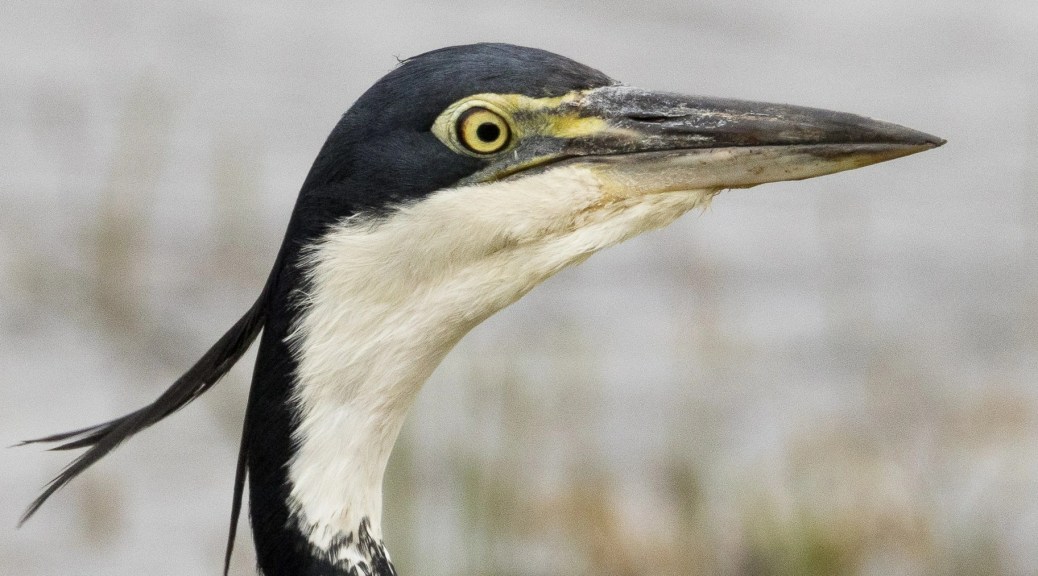
A while back I showcased a few species with striking eyes – continuing that theme, here’s a look at another species that has formidable eyes -although this is not immediately obvious but does become more so once you get up close and personal with it
The distribution of this species is extensive across Sub-Saharan Africa, missing only from a few arid areas such as the Kalahari in southern Africa. It is the commonest of the large herons throughout Africa.
What to Look for
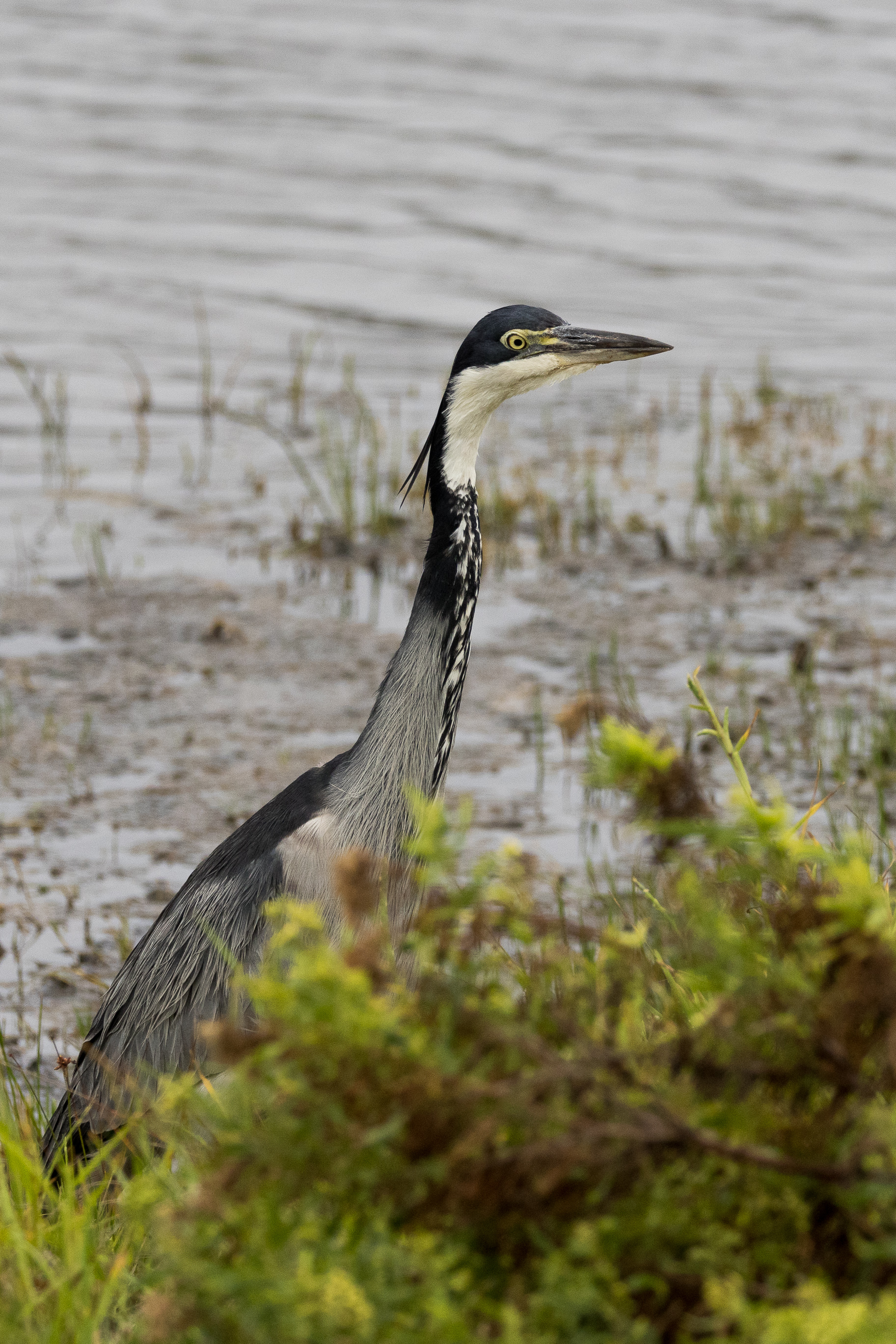
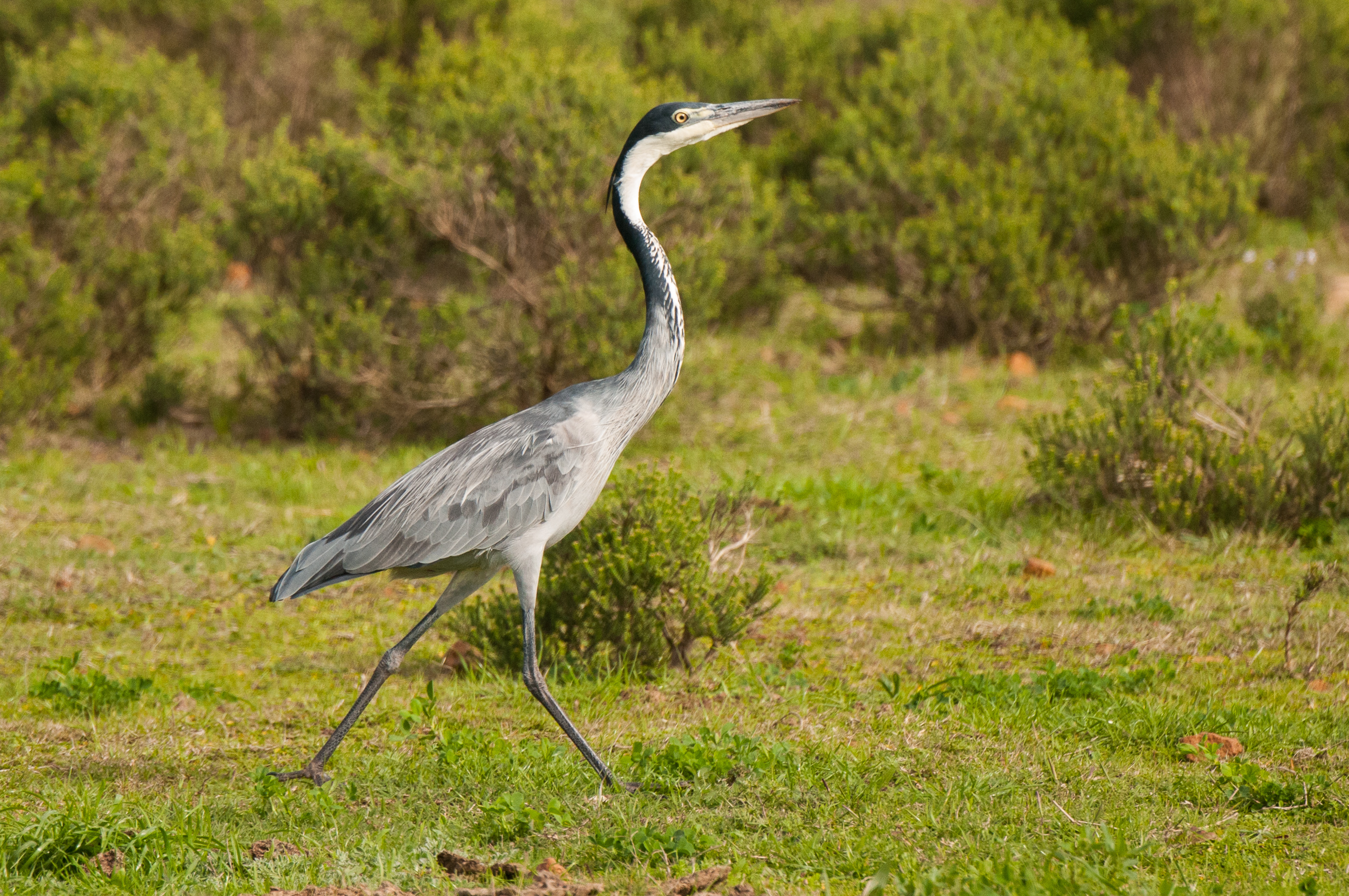
This is not a bird that is likely to be confused with any other, with the possible exception of the Grey Heron which is of similar size and, at a distance, of similar appearance. Non-birders (no disrespect, but you are missing out seriously) do mistake this species for the iconic Blue Crane, something I can vouch for from personal experience.
It’s a tall bird, up to 96 cm in height and weighing between 700 and 1650 g
Black-headed Heron Ardea melanocephala Swartkopreier, Great Brak River
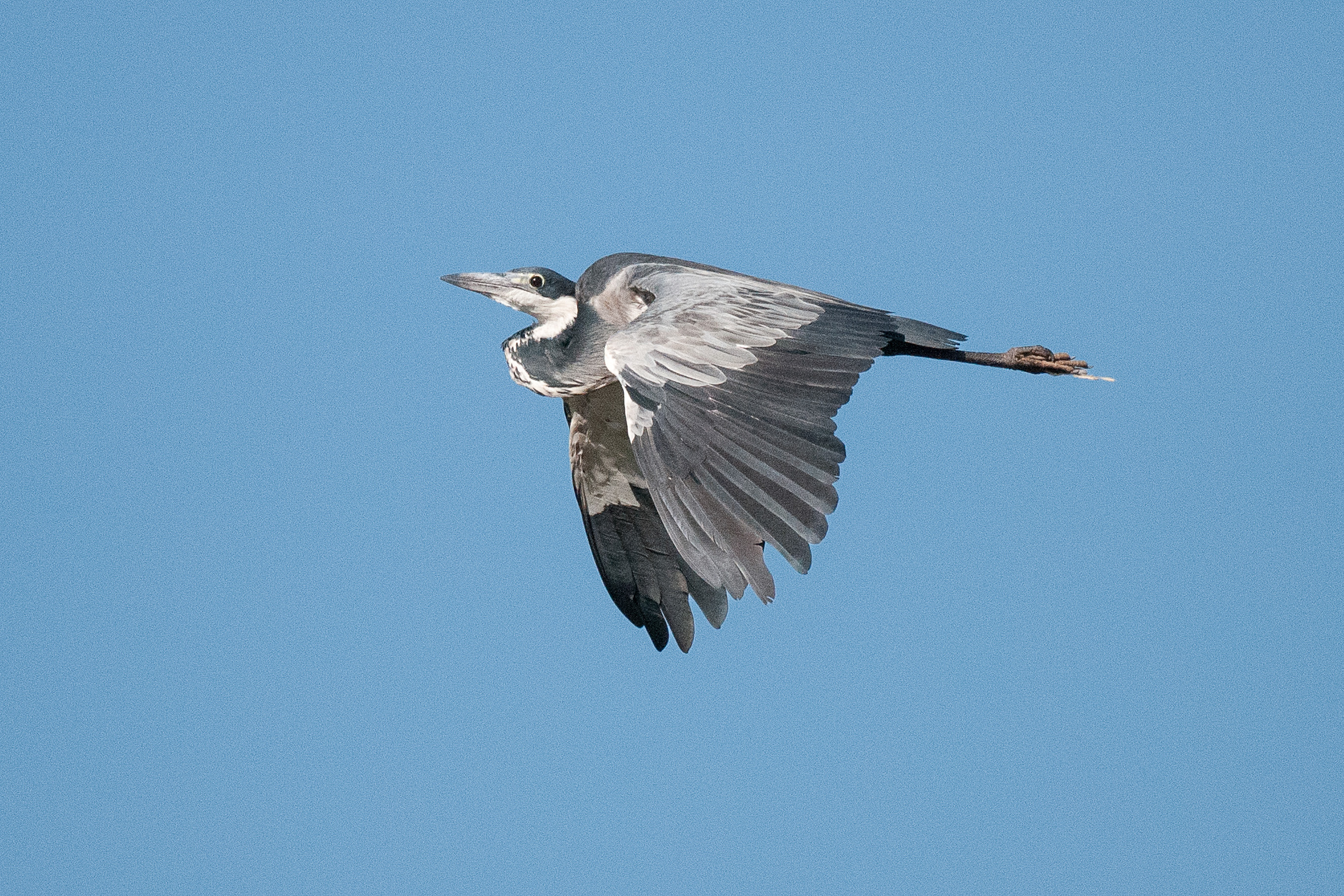
In flight it’s easier to confirm the identification due to the bi-coloured wings – black flight feathers, white underwing coverts
Black-headed Heron, De Hoop NR
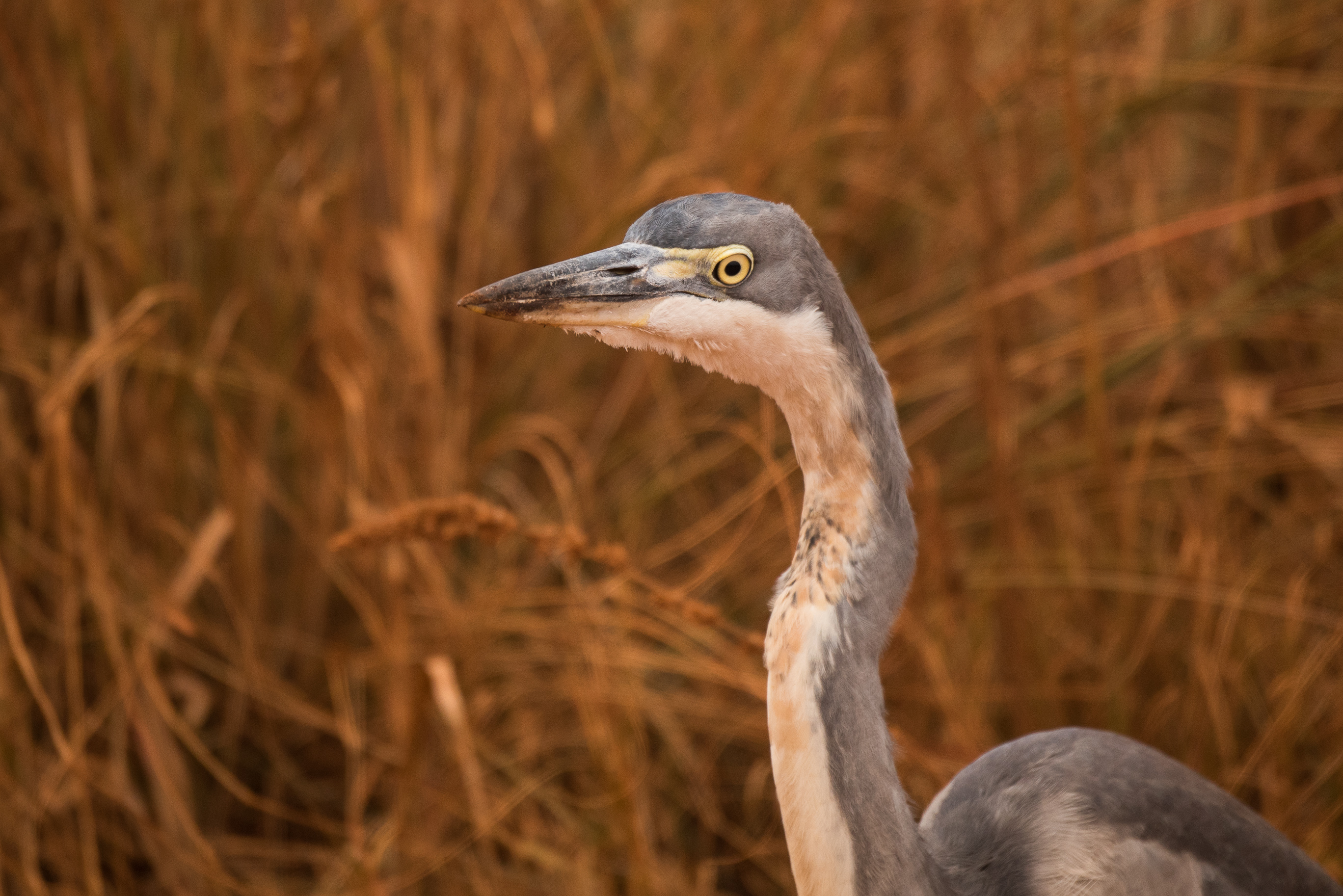
Eyes are yellow, but turn orange, then red during breeding
Black-headed Heron, Delmas area
Black-headed Heron is a terrestial species, not necessarily found near wetlands as with other herons, and is one of the few birds that benefit from human alteration to the environment such as irrigated areas, which suit their preference for damp pastureland
They will often be found striding through grass, hunting for prey
Black-headed Heron, Mossel Bay-Herbertsdale
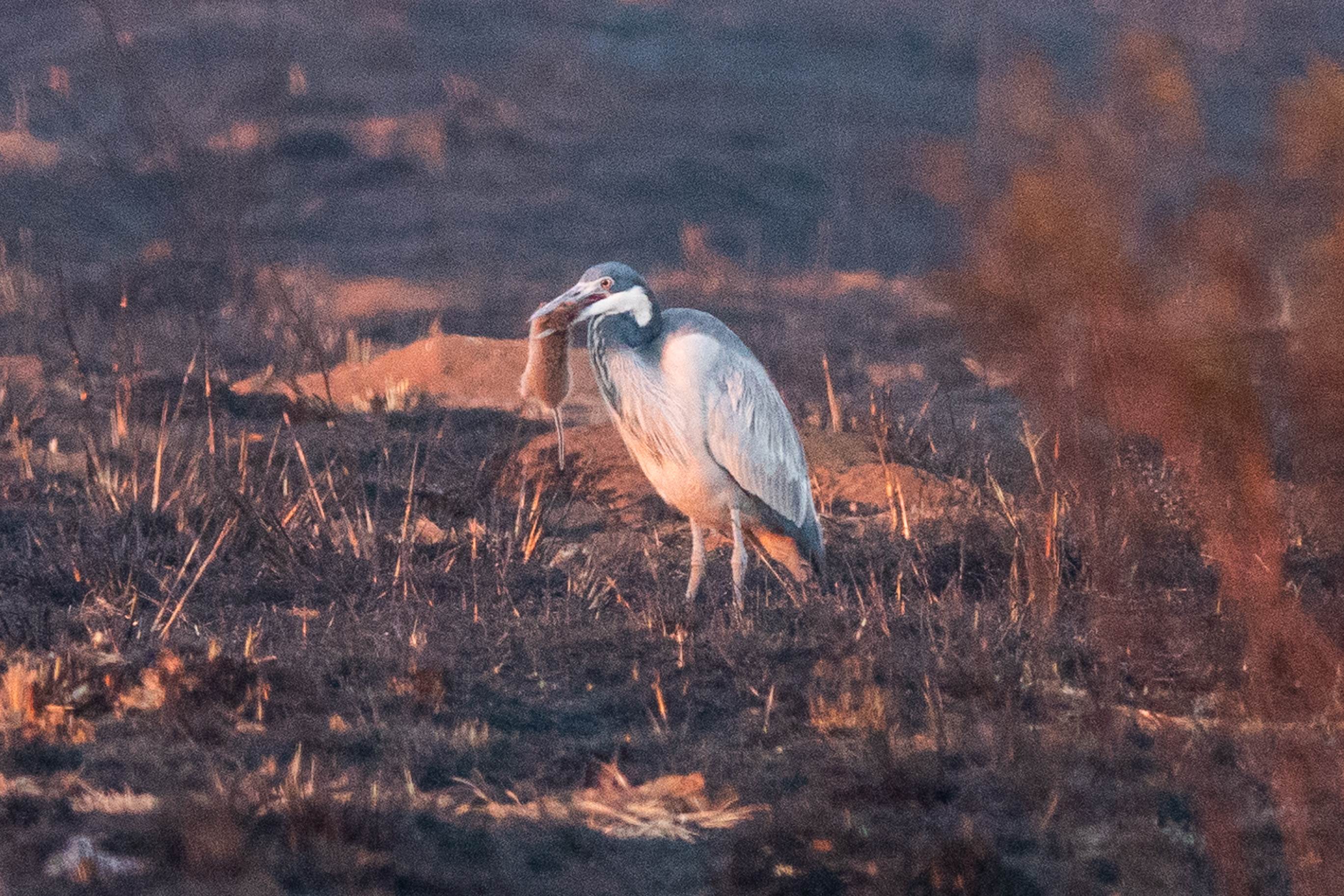
They eat a variety of rodents,insects, snakes, frogs, crabs, fish – in fact just about anything that crosses their path including small birds. This individual I came across early one morning in the Rayton area near Pretoria had caught a large rodent, possibly a vlei rat, and proceeded to swallow it whole, taking a few minutes to manoeuvre it into position for swallowing. I could see the progress of the prey moving down the bird’s long neck, which bulged as it gradually slipped down.
Black-headed Heron swallowing prey, Rayton-Culinan area
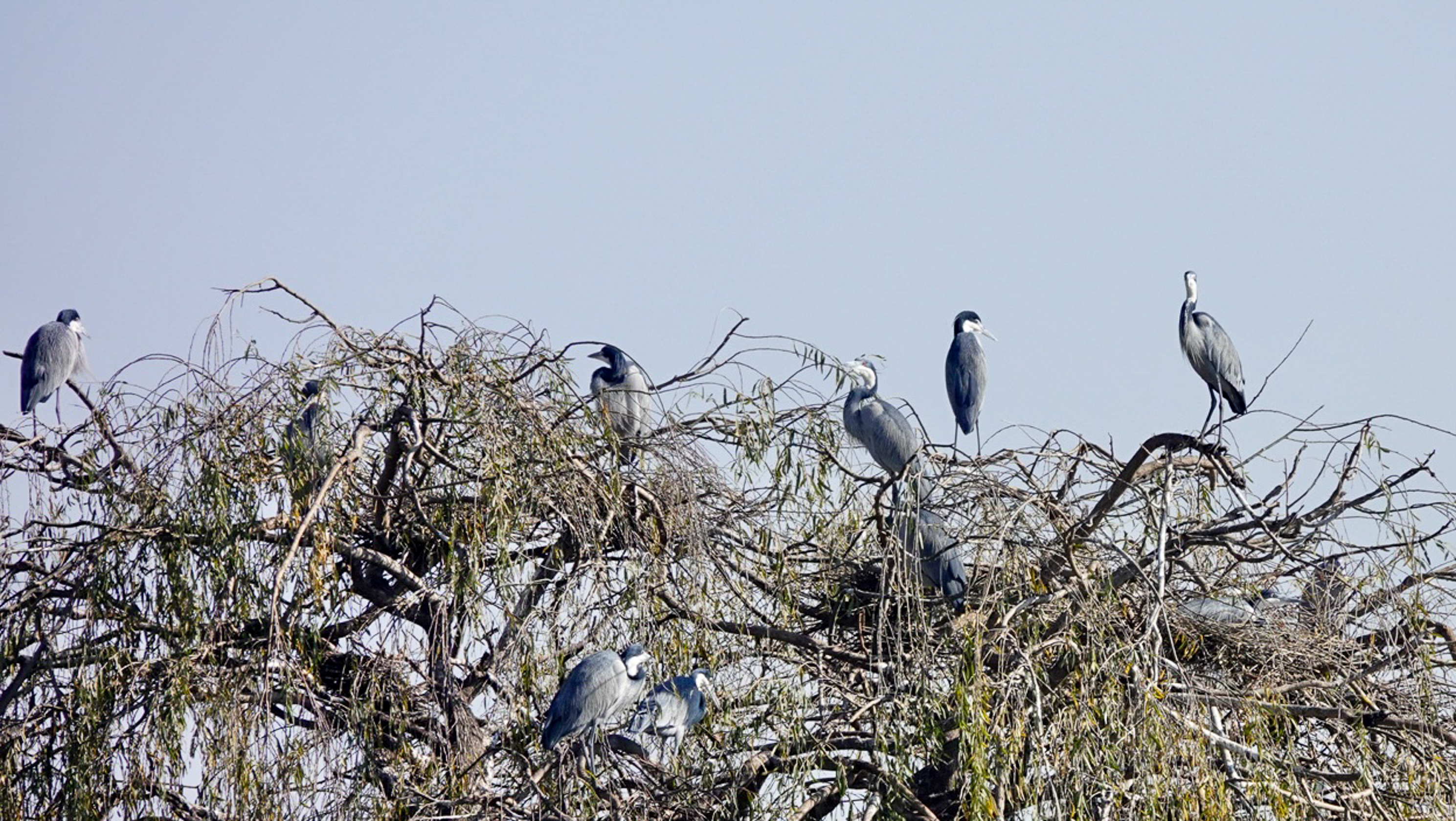
They often nest in or near towns – Great Brak River, just down the road from Mossel Bay, has a busy roost in a tall tree on the main road. The next photo was taken in a more rural area near Pretoria, where numbers of Black-headed Herons occupied a large tree next to a farm dam.
They make themselves known with their harsh squawking calls at all times of the day.
Black-headed Herons, Bapsfontein east
References: Roberts VII Birds of Southern Africa; Firefinch Birding App; Birds of the World – Cornell Lab of Ornithology
After the stress of packing up our Pretoria home of the last 21 years and getting our house contents and ourselves to Mossel Bay last September, we were looking for a short breakaway but without a long drive, so Eight Bells Inn seemed like the ideal spot – one of our favourite places for tea or lunch and just 40 minutes from home.
Day One
The packing was simple for just three days, and we arrived at the inn soon after 4pm, settled into the comfortable room and relaxed for a while.
Sitting outside and enjoying the lush gardens, I added a few birds to the pentad list I had started on the way there, including Knysna Turaco flying by and disappearing into a tall tree, Red-chested Cuckoo calling repeatedly, Black-headed Oriole flashing its yellow plumage in the trees and Amethyst Sunbird busily finding nectar high up in the flowering tree in front of our room
Amethyst Sunbird
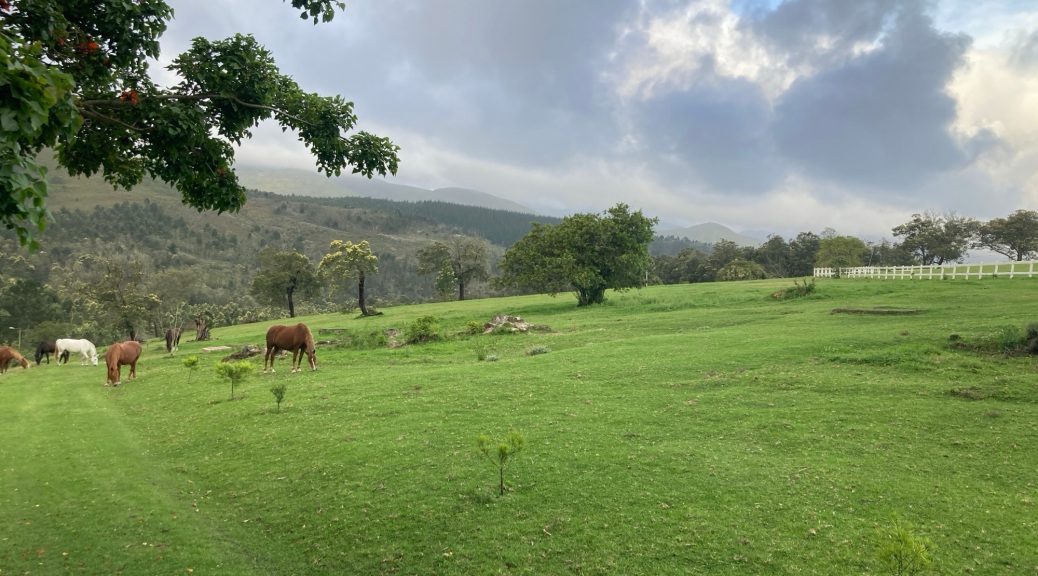
Later, I set off on a walk down into the adjoining valley, passing horses grazing on the short grass and listening to the calls from the bushy areas. I was pleasantly surprised to see a group of Olive Pigeons in the tall trees, as I have not seen them outside of the forests.
A number of other ‘specials’ were quickly added as I made my way down the slope into the valley– Cape Batis, Spotted Eagle Owl, Terrestial Brownbul and Greater Double-collared Sunbird.
Eight Bells Inn, Robinson Pass
Dinner time was approaching, which hastened my return to our room to neaten up for the hotel dinner in the cosy dining-room. The evening meal was pleasant and we were looked after by the staff, still as super-friendly as we have come to know them over the years.
Day Two
After a relaxed breakfast, we set off on a drive with the Rose farm situated between George and Oudtshoorn, as our destination, and a route that would take us through the back roads of the Klein Karoo
The first part was up the Robinson Pass with several stops along the way to listen and look for the specials without much luck. Beyond the pass we were amazed by the extensive displays of wildflowers, particularly the deep pink vygies that stretched as far as we could see in places.
Approaching Oudtshoorn from the south, we took the Mount Hope turn off onto a gravel road and into typical arid Karoo countryside for the next hour or two as we wound our way up and down hills and dales.
Mount Hope road near Oudtshoorn
This sign at a farmstead had us chuckling – covers just about everything!
Translation : Please drive slowly! Old people, farm workers, children, grandchildren, dogs and chickens
There were many attractive flowers that caught Gerda’s attention and we made numerous stops to look closer.
Birds were scarce, as is often the case in such arid areas but there were a few highlights –
Lesser Honeyguide in a group of gum trees near a farmstead– exactly where I had heard one during my previous atlas trip through the pentad some two years ago
Pale Chanting Goshawk juveniles – twice, one with small prey
Jackal Buzzard on utility pole
Pale Chanting Goshawk (Juvenile)
Dams along the route were mostly full, some verging on overflowing, but few had any birds except one large dam which held numbers of Shelducks, Yellow-billed Ducks and Red-billed Teals
SA Shelduck
At the Rose farm we enjoyed coffee and carrot cake / scone and Gerda spent a while buying roses for her planned small rose garden and two hanging baskets
Not wanting to return along the same road we headed over the Outeniqua pass, then through George to the N2 highway which took us to Great Brak River. From there we made our way via the Geelbeksvlei road back to the R328 and completed a full circuit once we reached Eight Bells.
After a while relaxing and a power nap, I took a walk around the paddock, adding Diderick Cuckoo, Paradise Flycatcher to my list. The evening dinner was a tasty chicken curry for me, bobotie for Gerda.
Day Three
We were looking forward to a day with less driving and more time to relax, so after another leisurely breakfast we set off with our tea and cookies to explore the road from nearby Ruiterbos to Leeukloof.
With light rain falling, we wound our way down into the valley, passing dense growth and broad stands of protea bush.
Passing through Ruiterbos village, we found Red-winged Starlings and Fork-tailed Drongo’s, while further on were Cape Canaries and Karoo Prinias. Heading into the lower part of the kloof the roadside vegetation became dense and colourful,with plenty of wildflowers, even some wild growing roses.
Leeukloof road
At its lowest point the road through Leeukloof crosses a river and we chose this spot to have our tea – we couldn’t have wished for a better spot – then carried on up the hill and back towards the tar road.
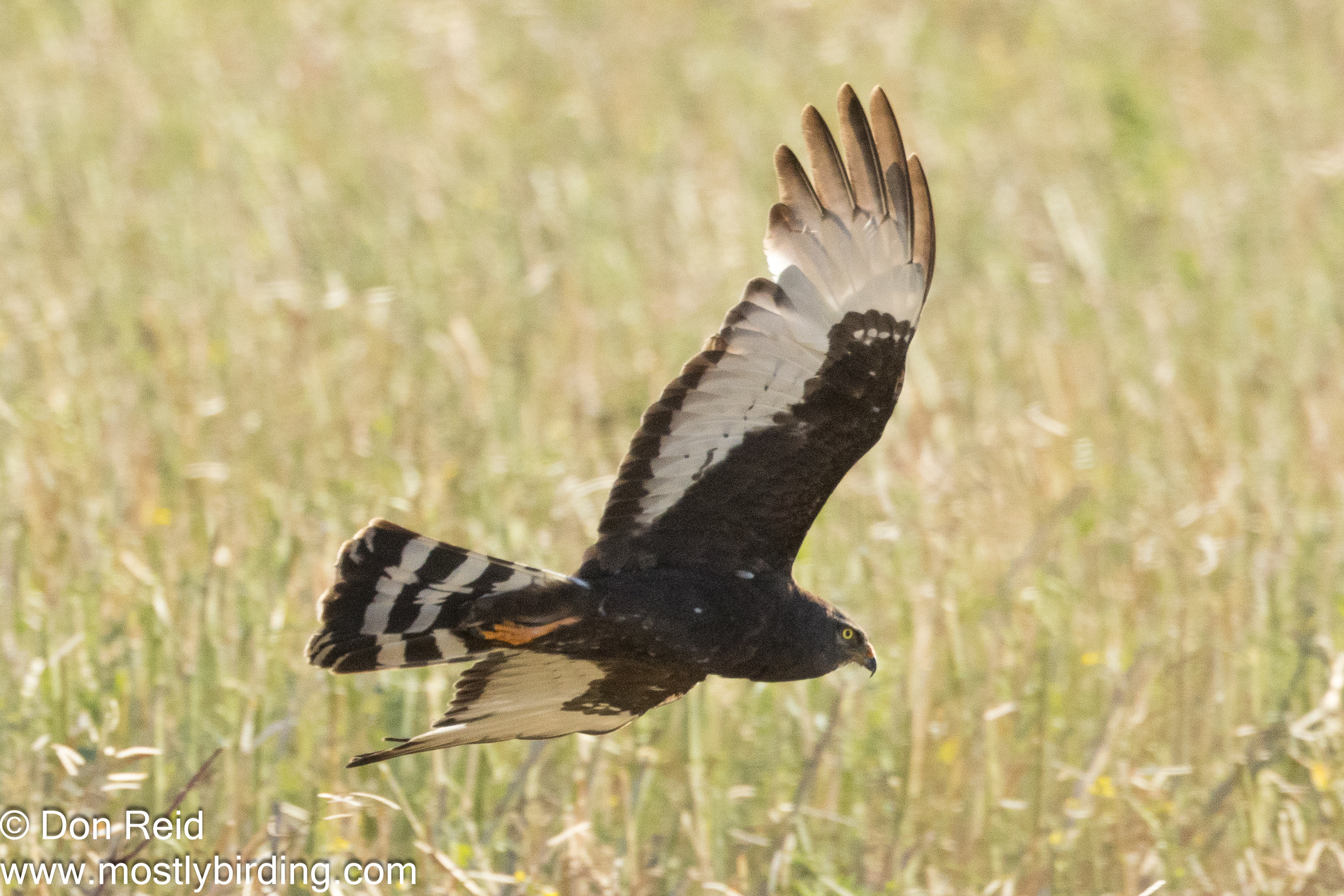
Heading back I took the next turn off left along the road to Bonnievale with limited birding success until a Black Harrier floated across the road in front of us
Black Harrier Circus maurus Witkruisvleivalk
Back at the Inn we relaxed while light rain fell outside, only raising ourselves in time for the dinner.
Heading Home
Rain fell heavily overnight and continued to fall in the morning, and the garden was sodden when we made our way to breakfast in the dining room, sheltering from the rain under large umbrellas
A flowering Bottlebrush tree with raindrops covering the bright red flowers caught my eye and demanded a quick photo with my iphone
After a full breakfast we headed back home in lighter rain. I had received a whatsapp reporting on the rain and mentioning three roads in the area that were closed due to flooding – Geelbeksvlei, Leeukloof and Haelkraal roads, all of which we had driven over the last two days, so fortune was on our side.
We could see the effects of the rain when we crossed the bridge over Brandwag River and when we paused to look at the Geelbeksvlei road, which we had driven just two days prior, now impassable due to the high level of the river.
Brandwag River in floodGeelbeksvlei road under water
The weather in Mossel Bay, our new home town, is nothing if not variable, typical of coastal towns along the southern Cape coast.
This past week the mist has rolled in from the sea every day, sometimes dissipating by mid-morning but often remaining for most of the day. Without the usual sea breezes the days have been warm and humid, so the cooling mist has been welcome.
At The Point in Mossel Bay yesterday afternoon, the mournful sound of the foghorn in the background and the whistling calls of the Oystercatchers flying past added to the ghostly atmosphere that is conjured up by such misty days.
When not flying about and whistling, African Black Oystercatchers can usually be found on rocky shorelines at low tide, looking for mussels which they prise open with their bills.
African Black Oystercatcher
We were not put off our customary coffee time visits to the Point this past week, it just meant the sea view where we usually park was somewhat limited. However the mist did recede enough while we were there for us to be able to make out a couple of pelagic species such as Parasitic Jaegers and Cory’s Shearwaters in addition to the usual complement of Swift Terns, Kelp Gulls, Cormorants and the occasional Cape Gannet
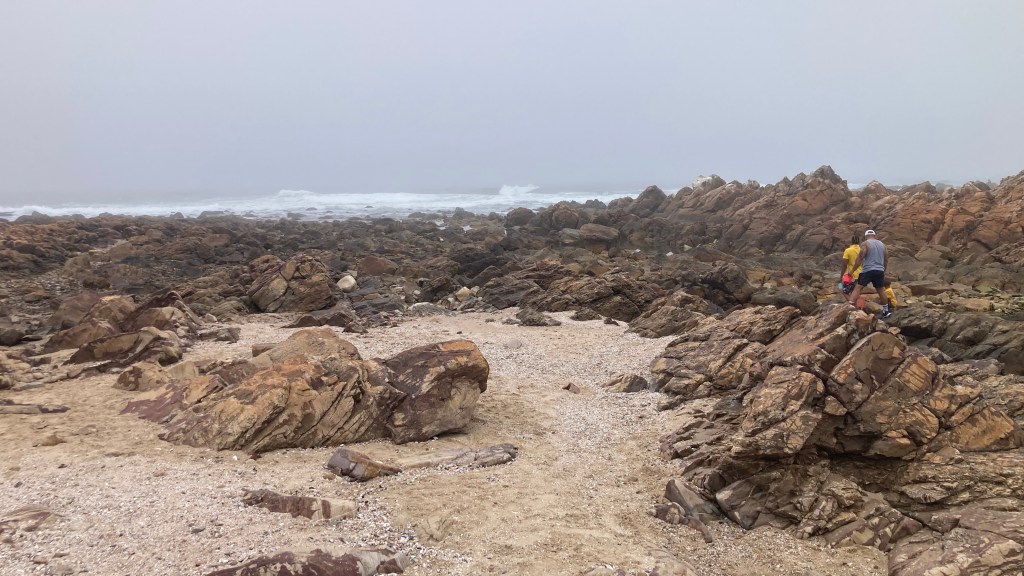
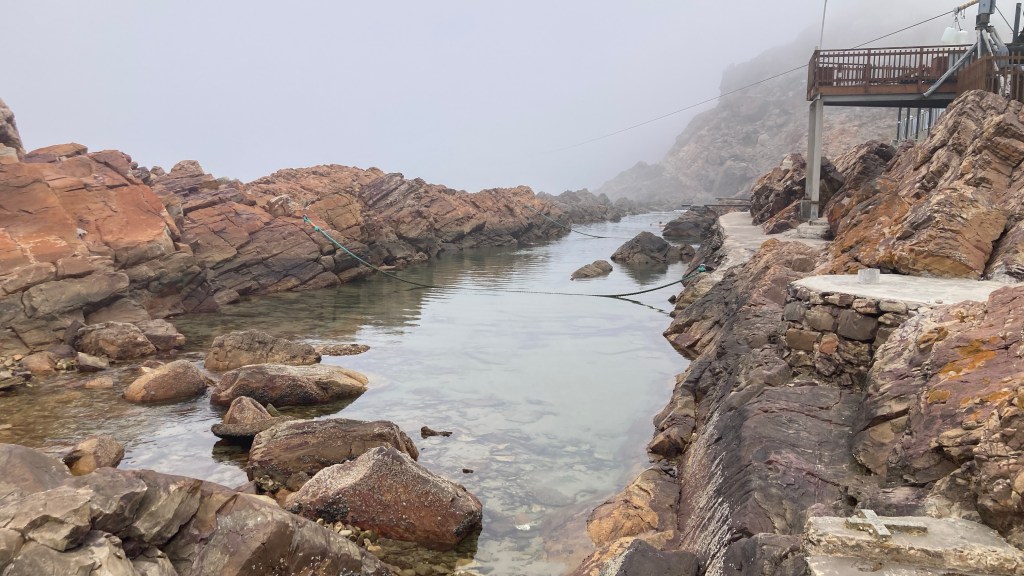
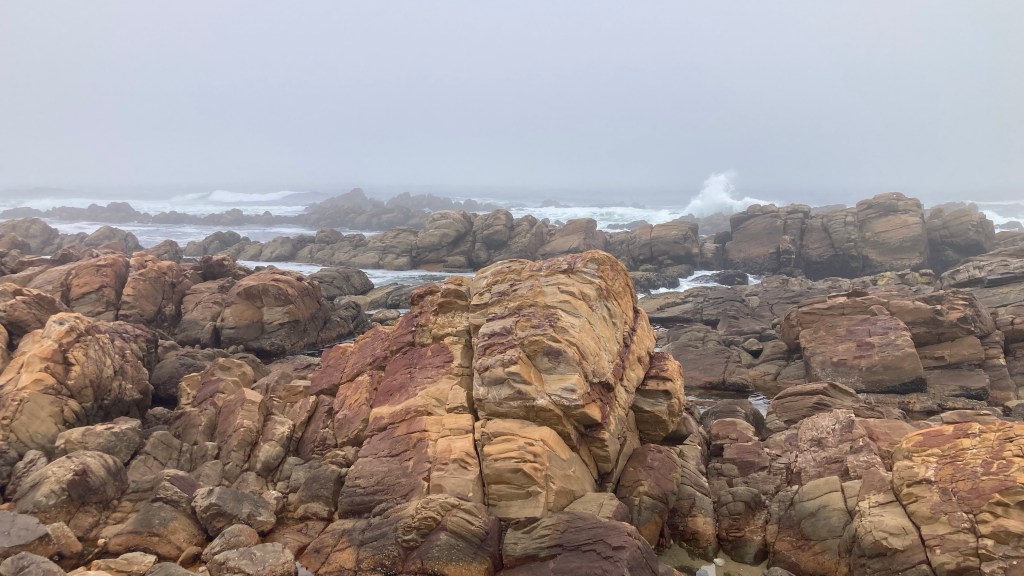
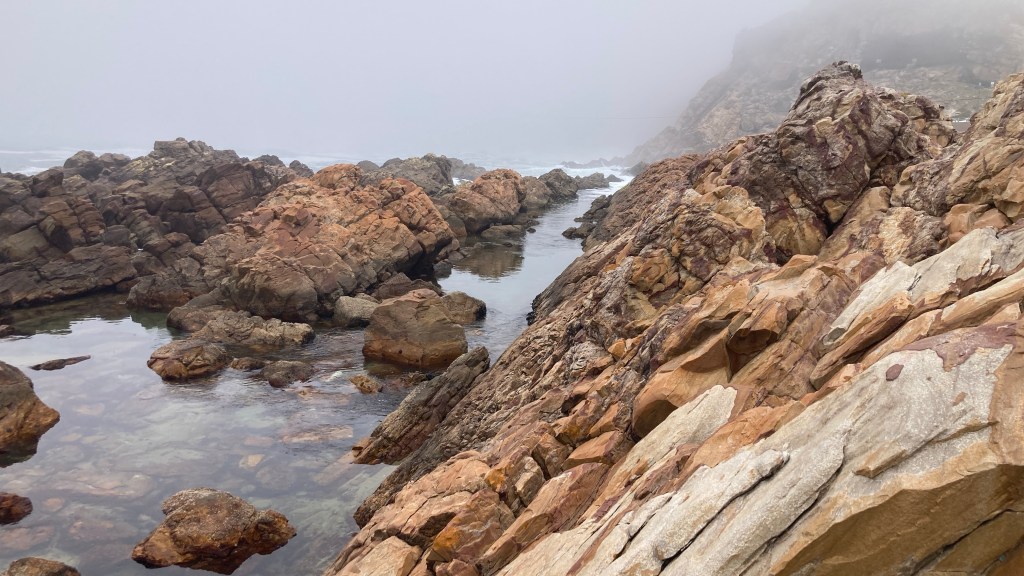
I ventured onto the rocks below the parking area to take a few shots of the scenery, softened by the mist and with that slightly mysterious aura that such conditions impart.
The Point, Mossel BayThe natural swimming pool at The Point – known as Die PoortThe Point, Mossel BayThe Point, Mossel Bay
Meanwhile back at the ranch – well actually the golf estate that is our home nowadays, the mist was creating scenes like this when I went for a late afternoon walk
We decided during December to take a short breakaway trip to the Cape, in particular Stellenbosch, the famous University town and centre of all things wine-related.
The route from Mossel Bay, west to Stellenbosch
Our eldest granddaughter has a small flat close to the university and central Stellenbosch and as she was not due to return there until late January, it was a good opportunity for us to spend a few days there.
The town itself and the wine farms in the area are very busy at this time of year, attracting as they do visitors and tourists from all parts of the country and the world in fact, while the university campus area is exceptionally quiet, with hardly a soul in sight other than the campus security guards on every street corner that make it a safe place to walk about.
And walk about I did, taking in the beautiful architecture and pleasant streets of this delightful part of the town – here’s a selection of the images I collected on the way.
The Streets
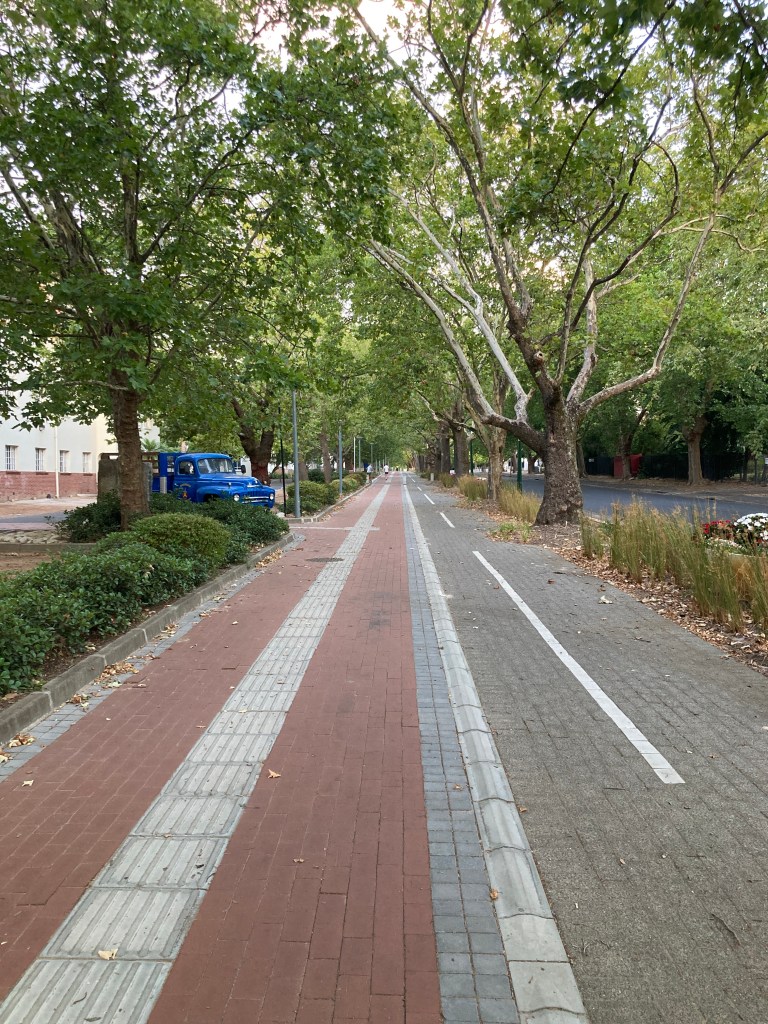
In a few weeks time these streets will be busy with students walking, riding and driving between their residences, town and the campus buildings, but now they are dead quiet
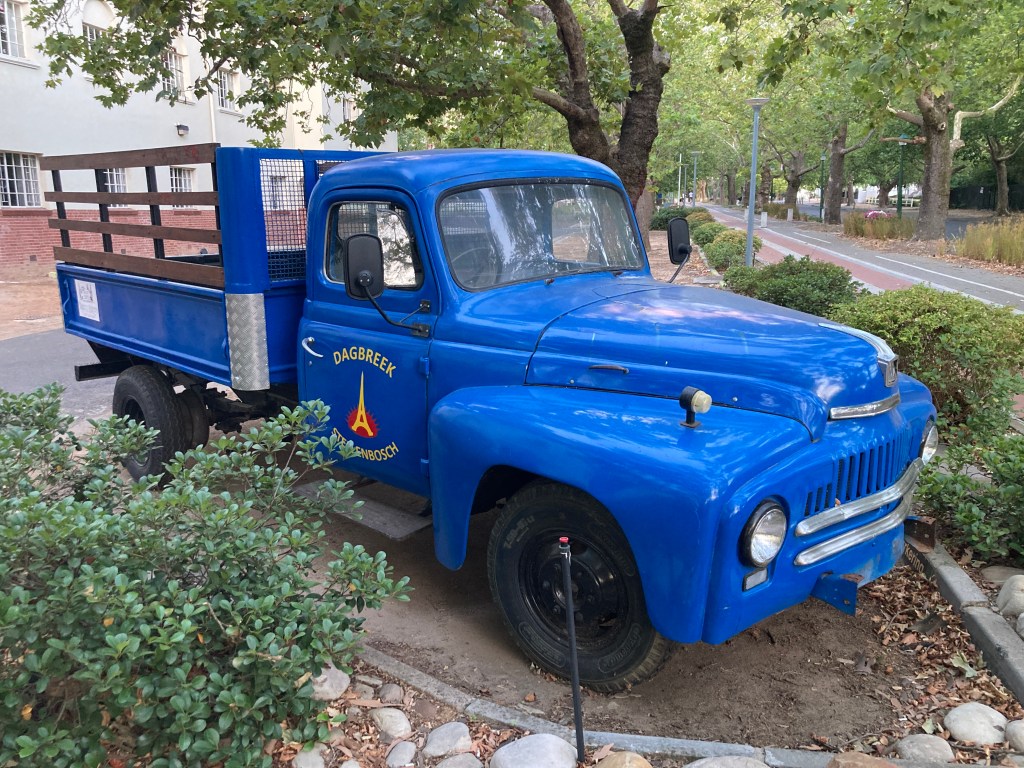
This old restored lorry belongs to one of the men’s residences and would probably have a few stories to tell if it could …..
The Architecture
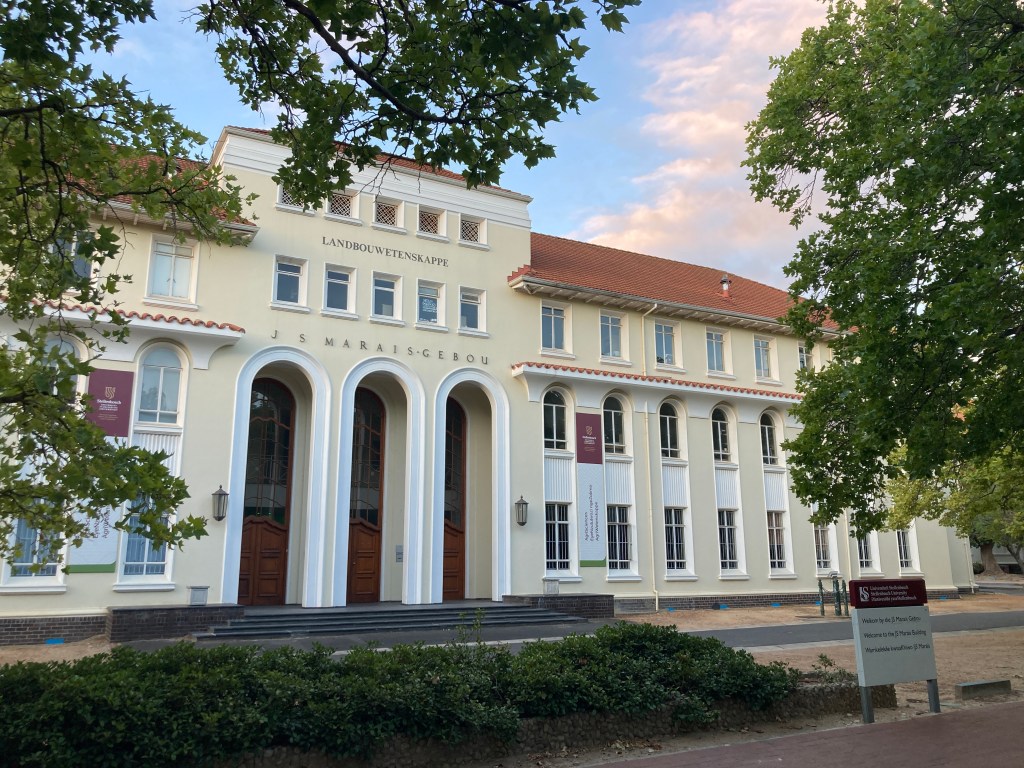
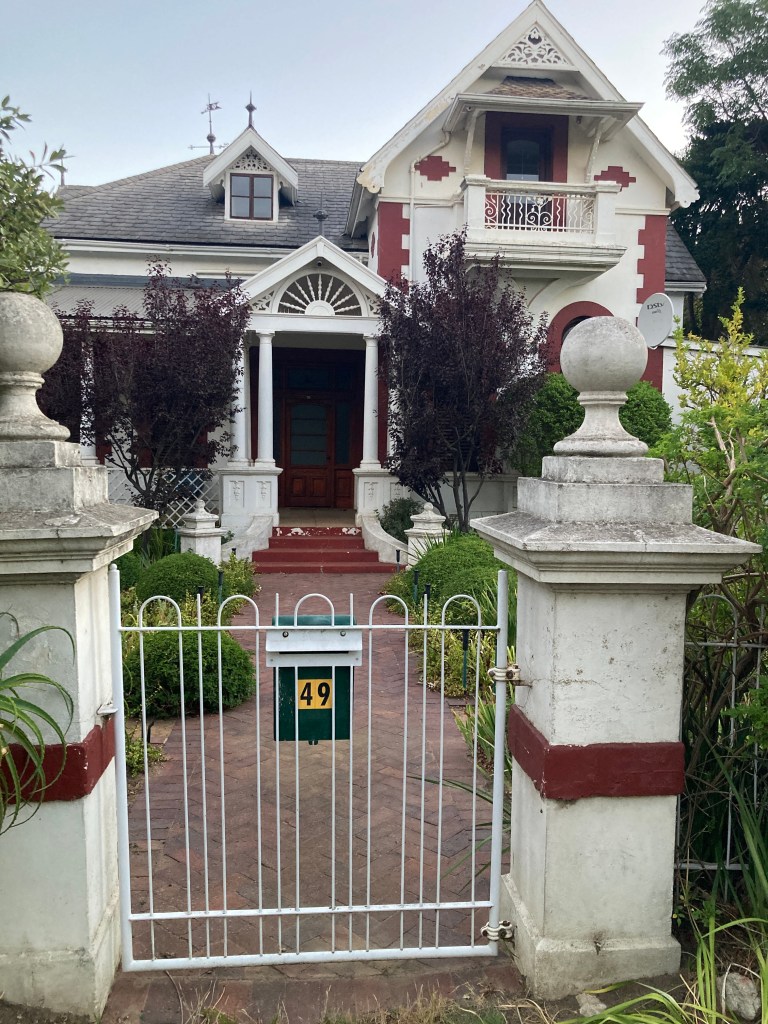
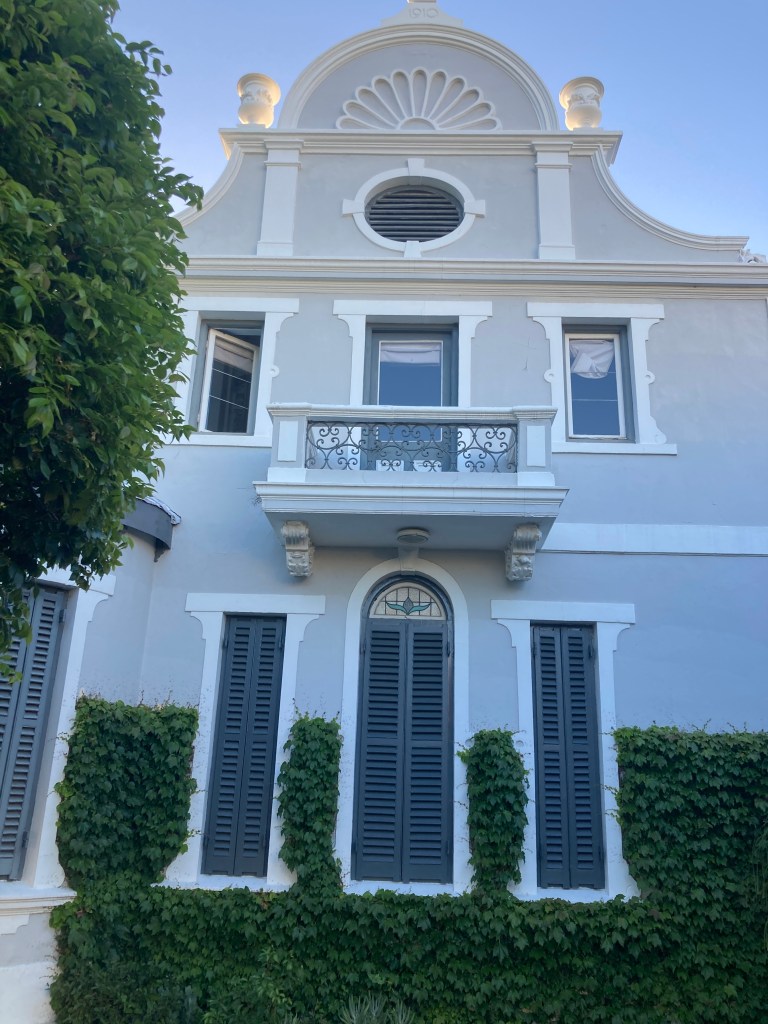
The faculties are housed in handsome buildings such as this one, each with an elegant style of their own.
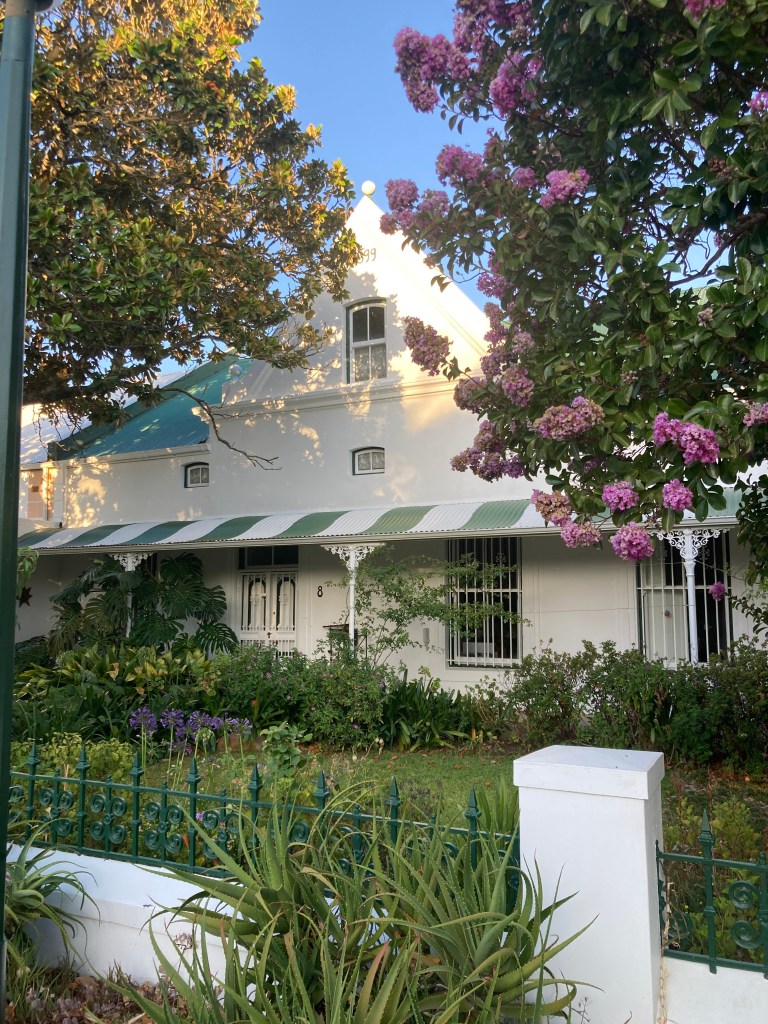
Some of the old houses are privately owned, others house specialist sections of the university – all have one thing in common : they are beautifully restored and in pristine condition, ranging in style from Victorian to Cape Dutch
Leivore
Some towns in the Western Cape still have leivore – the traditional water furrows used to supply water for irrigation, usually emanating from a spring in the nearby mountains and channeled alongside the streets through the town. Leivore is pronounced ‘lay-foora’
Sluice gates such as this one (missing the upper part) control the flow of water in the leivore and where they branch off to a property
Moving home from Pretoria to Mossel Bay during the year took a lot of our energy and meant we travelled less than usual – so much so that we didn’t even manage to fit in a trip to one of our national parks, the first time this has happened in many years!
Nevertheless my photo library increased by some 1500 images, and for this retrospective I have selected 50 images which appeal to me for various reasons.
An unexpected mid-year trip to Scotland for a week was a wonderful opportunity to boost my photo library and try out my new mirrorless camera to its full extent – my verdict is it met all my expectations once I had mastered the myriad settings available.
The brief comments tell a bit of the story of each image. So to start with ….
The Places
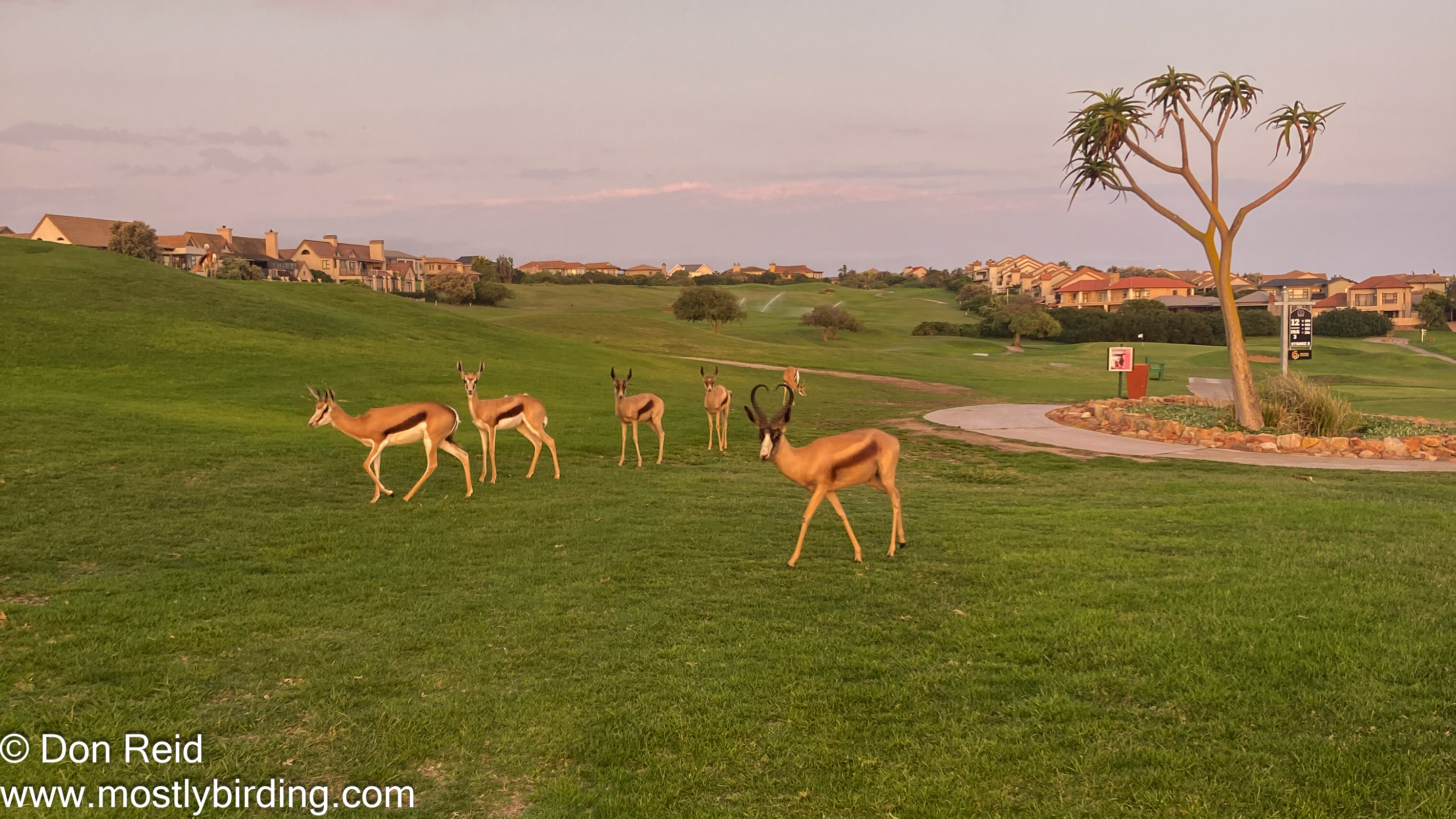
Starting at home – one of the pleasures of living on a golf estate is having the golf course to yourself after the last golfers have left – it’s ideal for long walks and an added bonus is the small herd of Springboks that also enjoy the peace and quiet without golf balls flying about
Mossel Bay Golf Estate
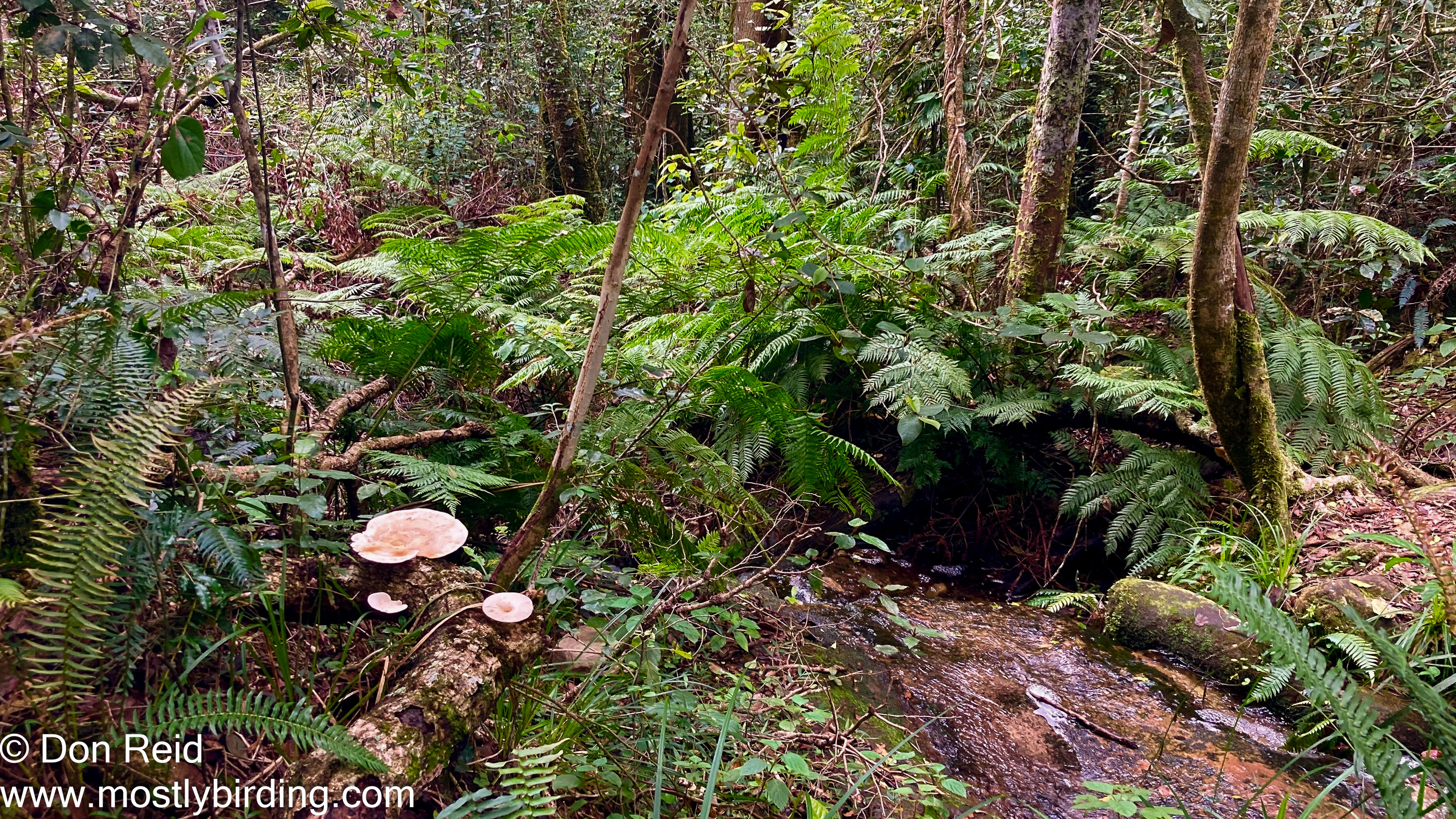
Hoekwil Forest near Wilderness, also known as Big Tree Forest, is one of my favourite spots for forest walks and birding, presenting scenes like this along the trail
Hoekwil Forest
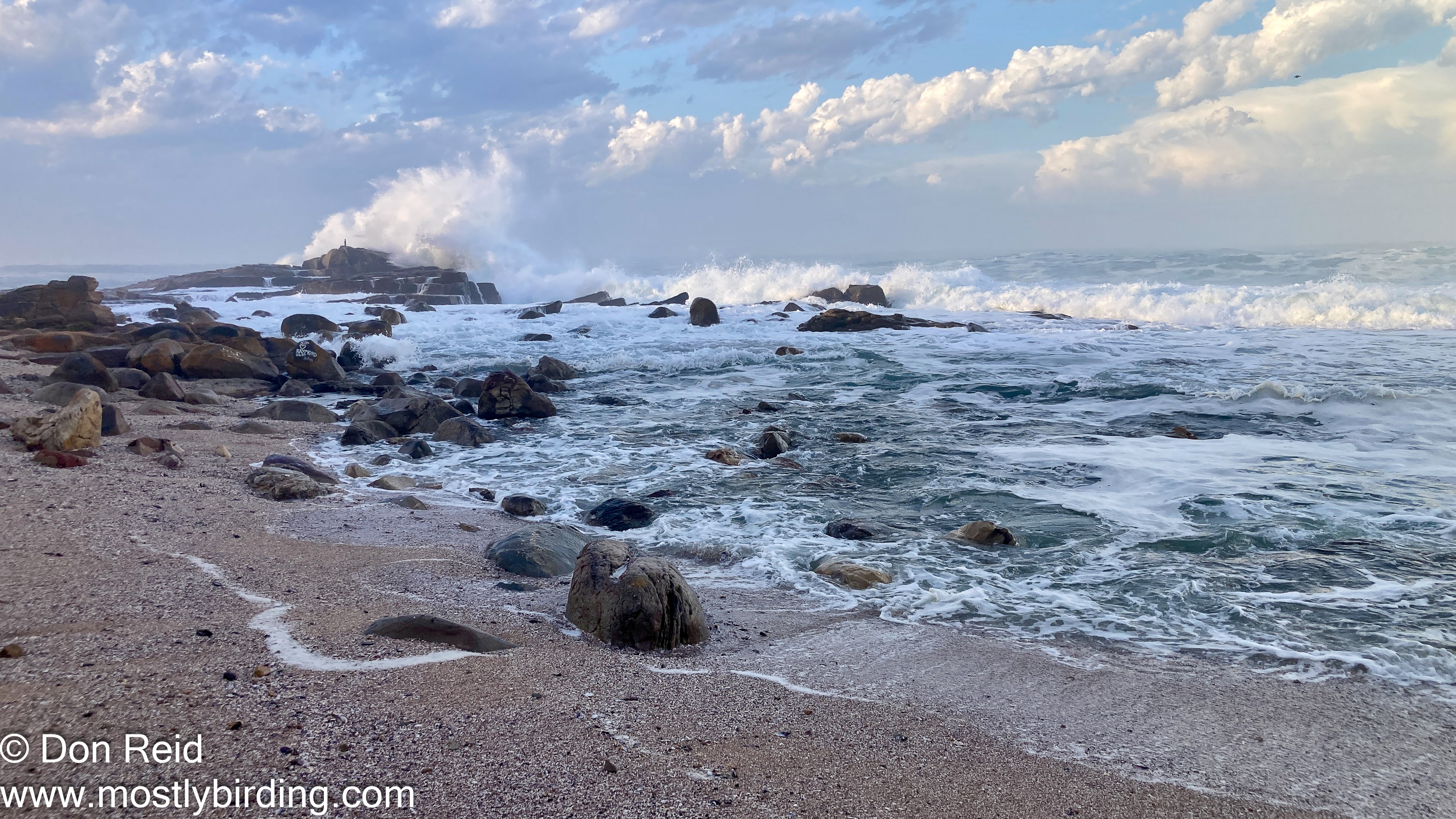
A trip to Fransmanshoek (“Frenchman’s Corner”) just a half hour’s drive from Mossel Bay is always worth it – the rugged coastline and big waves make for spectacular coastal scenery on a windy day
Fransmanshoek
It’s impossible to go through a year without taking photos at The Point in Mossel Bay on a day of high seas, capturing (hopefully) the drama of the sand, sea and sky that such days produce
Mossel Bay Point
Back in March, Gerda’s relative Anlia sent us this photo taken early morning on their farm near Vryheid in Kwazulu Natal – I was immediately blown away by the colours and texture of the scene – almost akin to a Monet Impressionist painting, don’t you think?
Vryheid farm
A short breakaway trip to Plettenberg Bay (Plett for short) was an opportunity to explore another part of the beautiful Garden Route and stop at scenes like this
Keurbooms River Plett
While in Pretoria for our final packing I went out atlasing with friend Koos (the lone figure in the photo) – this was taken as the sun rose on a cold winter morning over the grassland east of Pretoria
Bronkhorstspruit
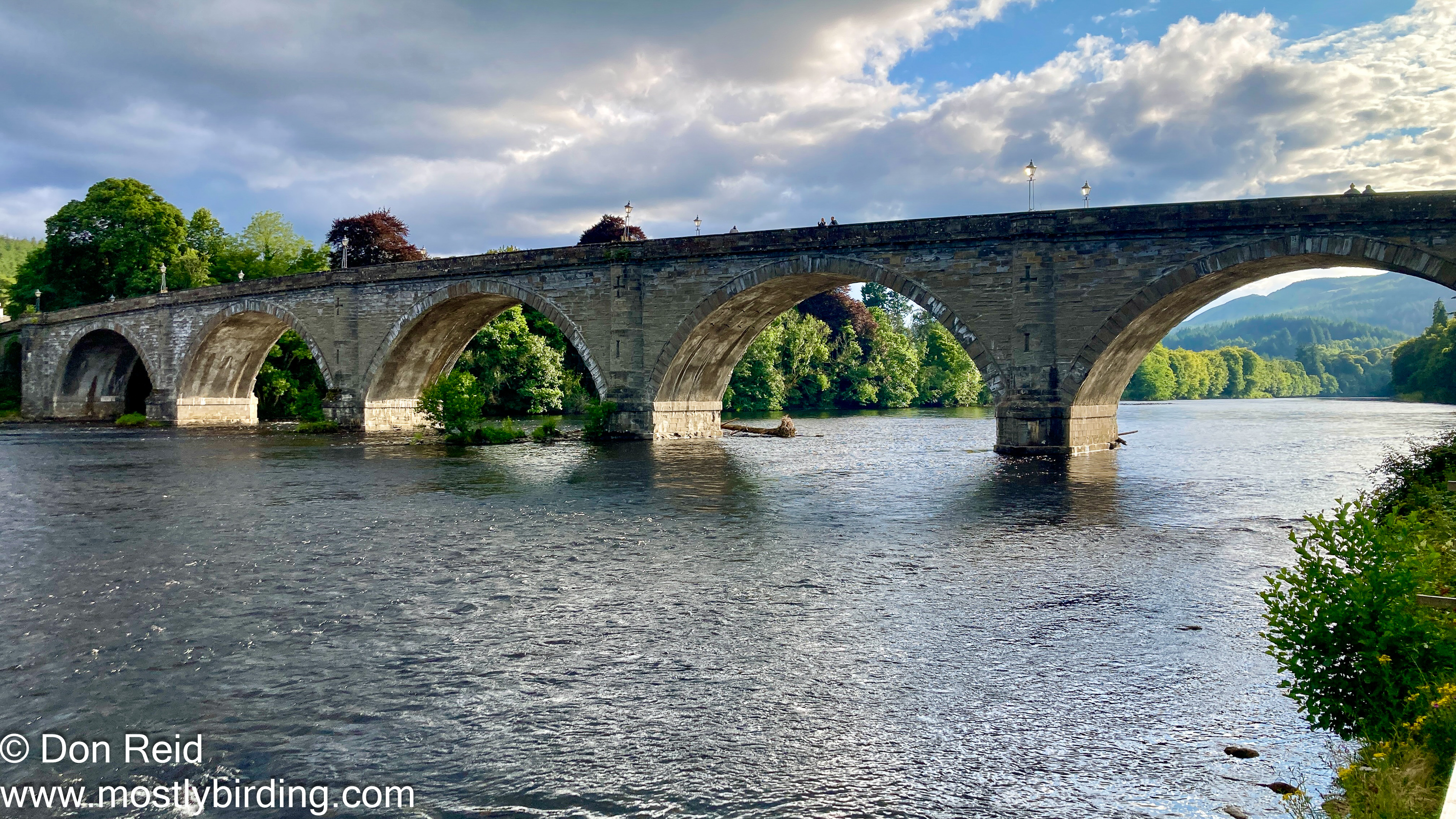
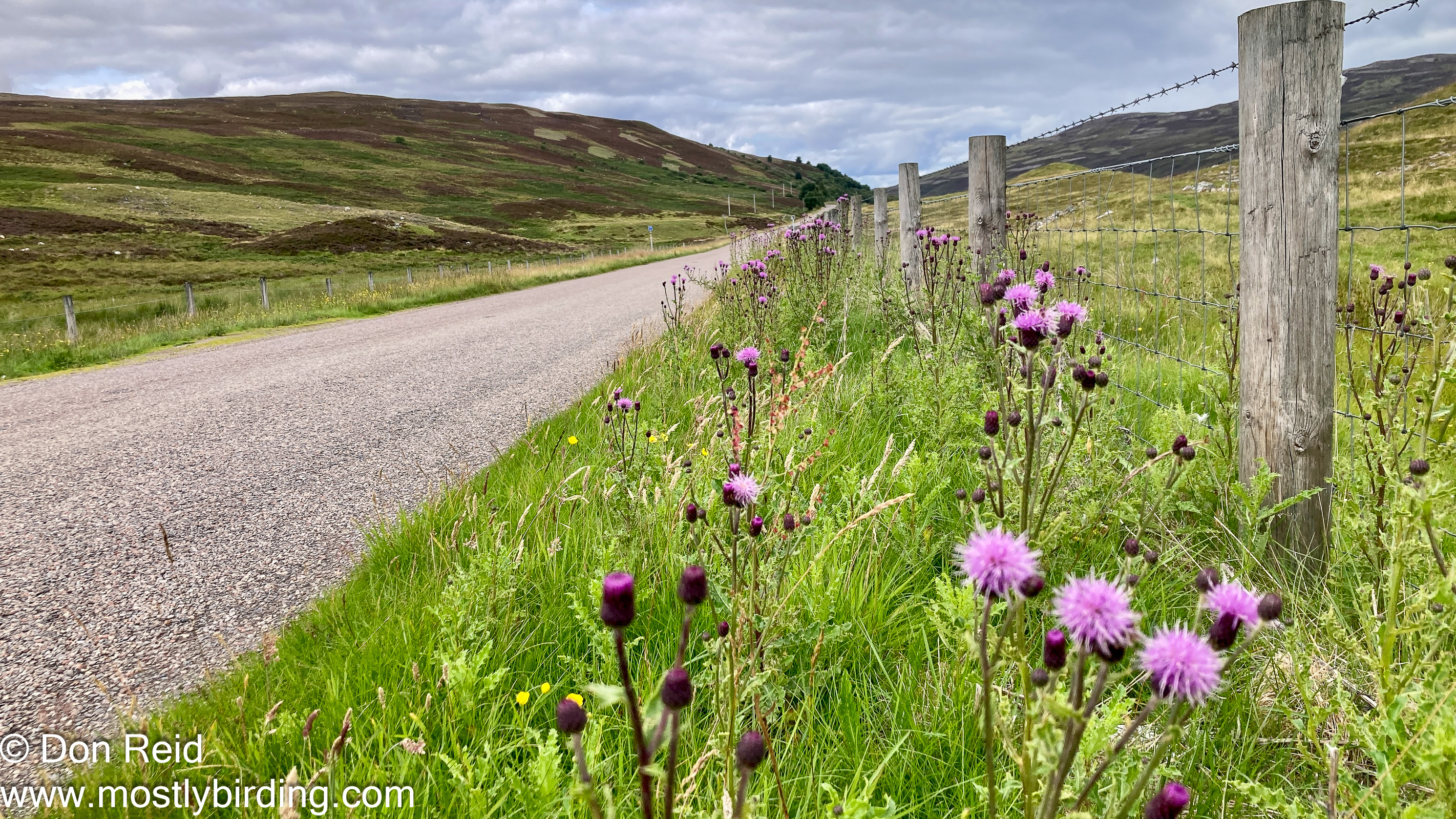
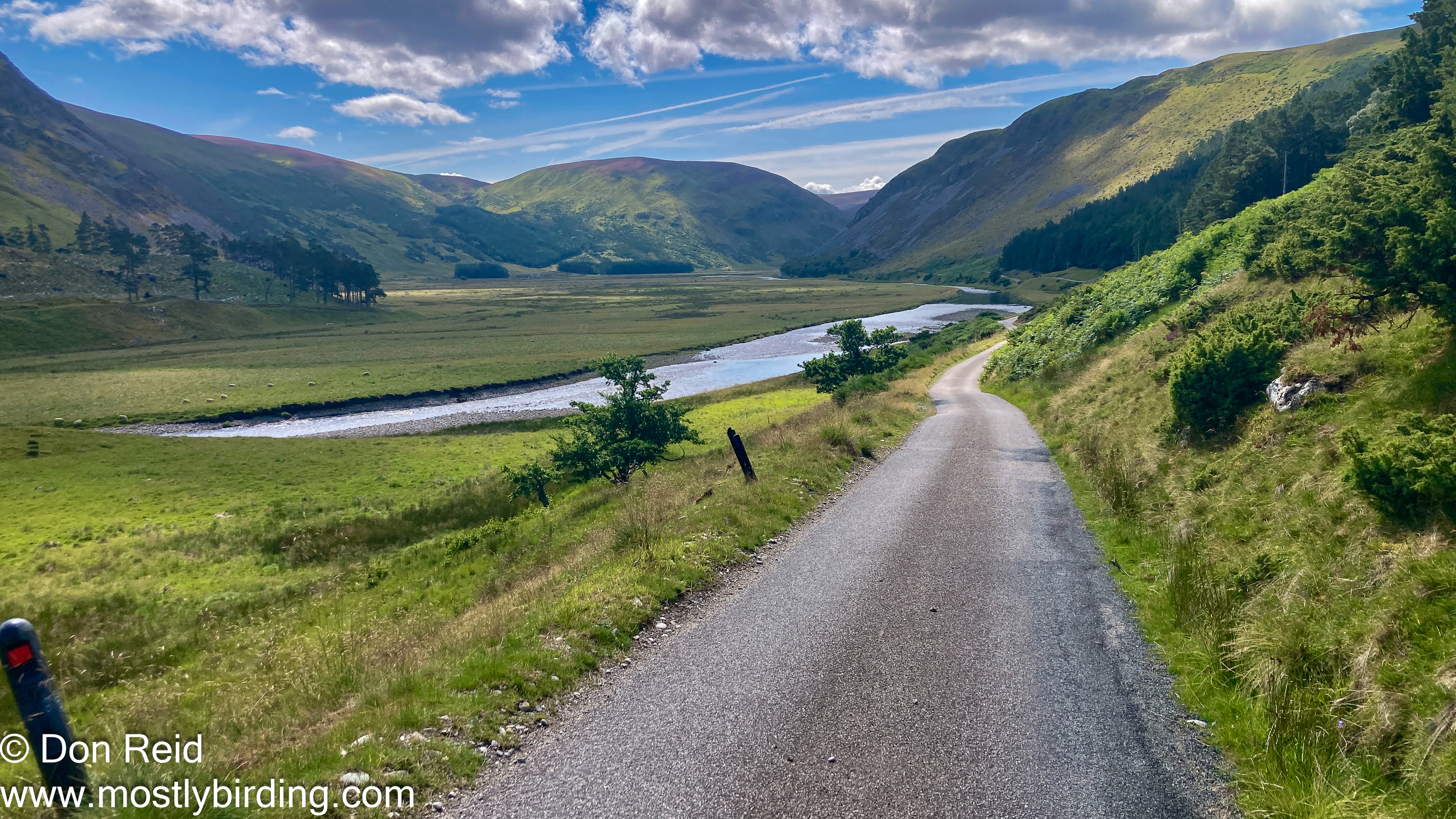
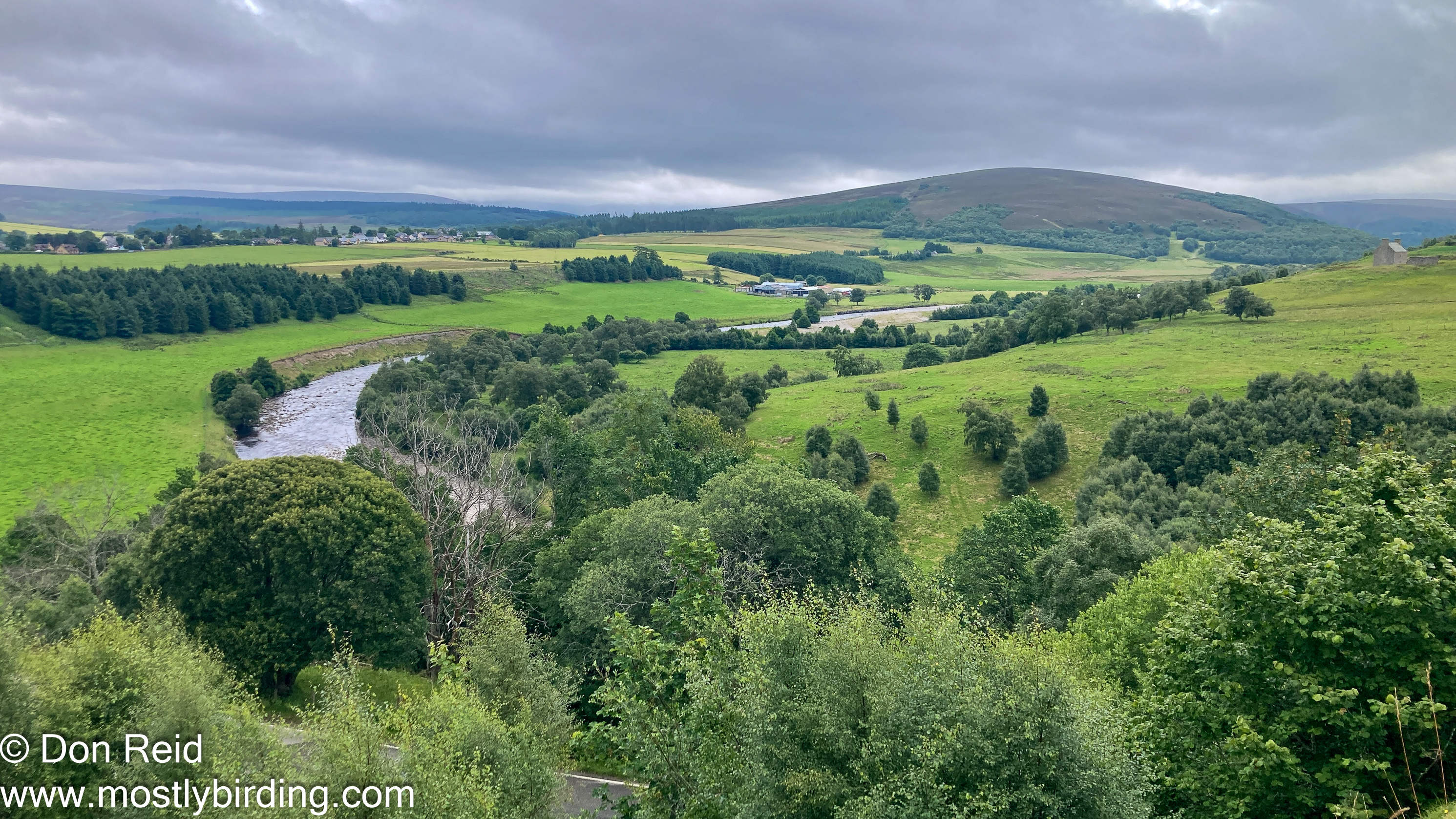
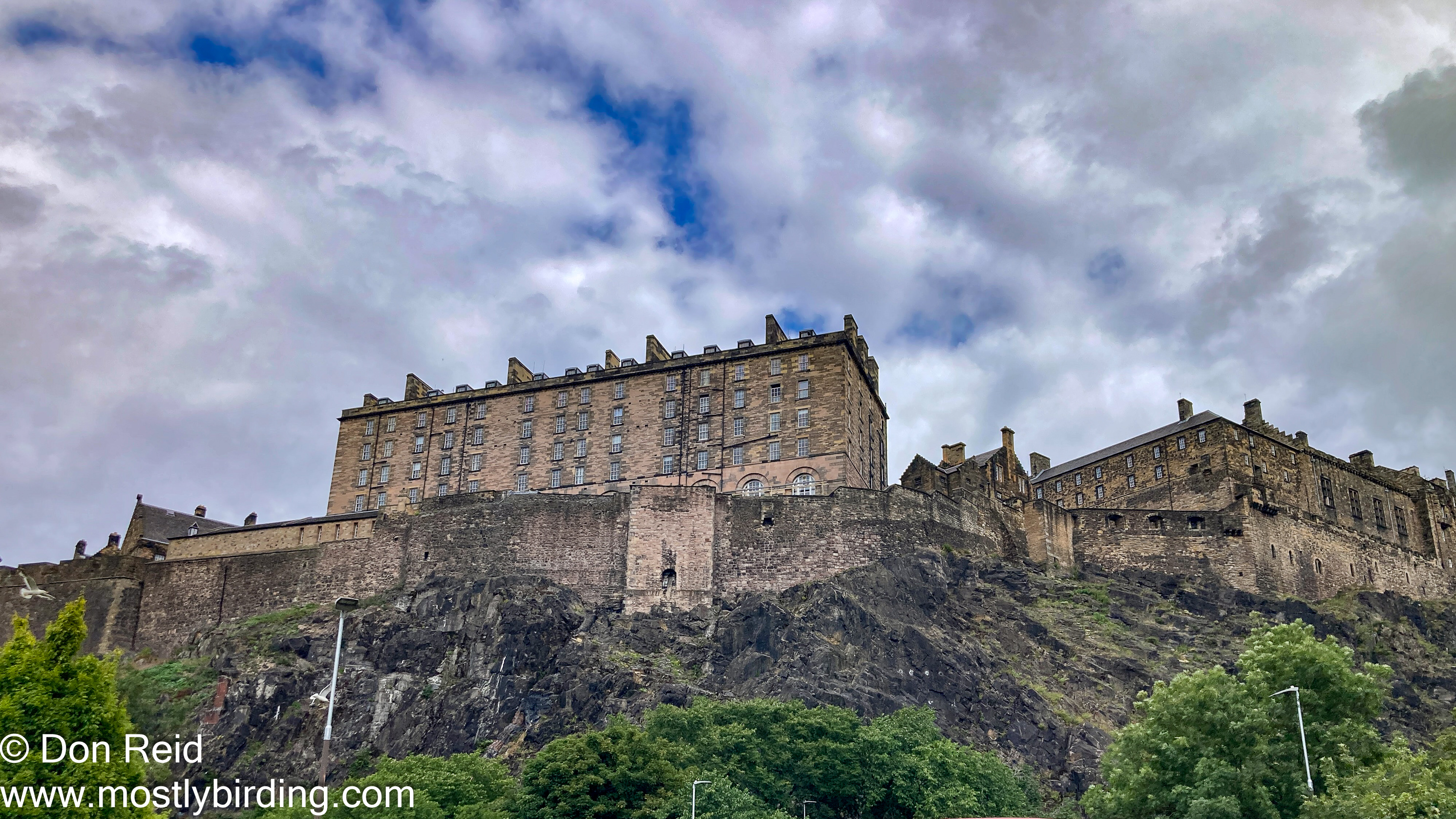
And then came the Scotland trip where I was spoilt for choice when it came to striking scenery – here is a selection of the places I visited or simply stopped to admire
River Tay, DunkeldGenl Wade’s Military Road, DalwhinnieRiver Feshie, FeshiebridgeFindhorn River ValleyRiver Avon, Highland Tourist RouteEdinburgh
The Birds
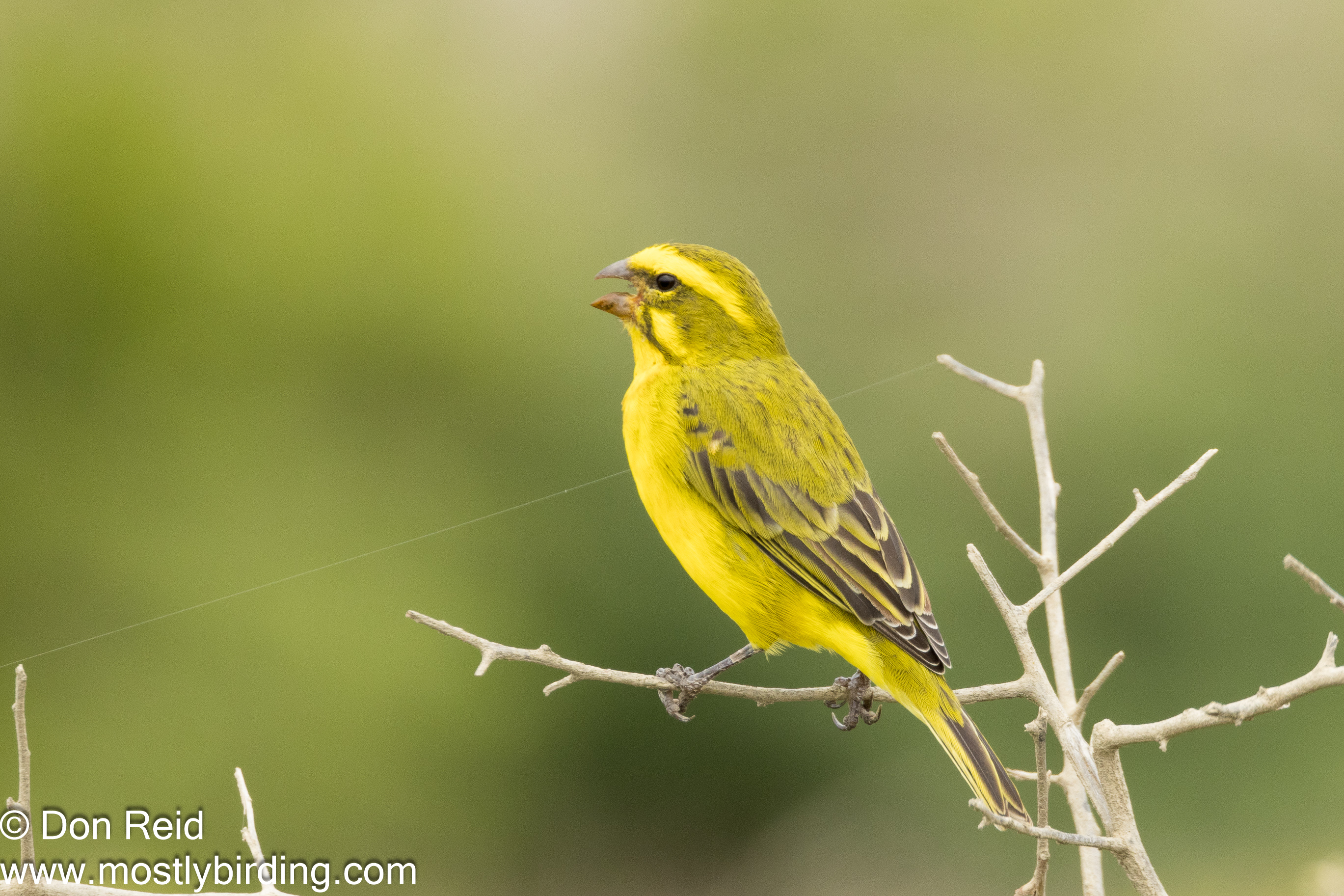
I spend a lot of my photographic energies on capturing images of birds, often with mixed results. These are some of the better ones
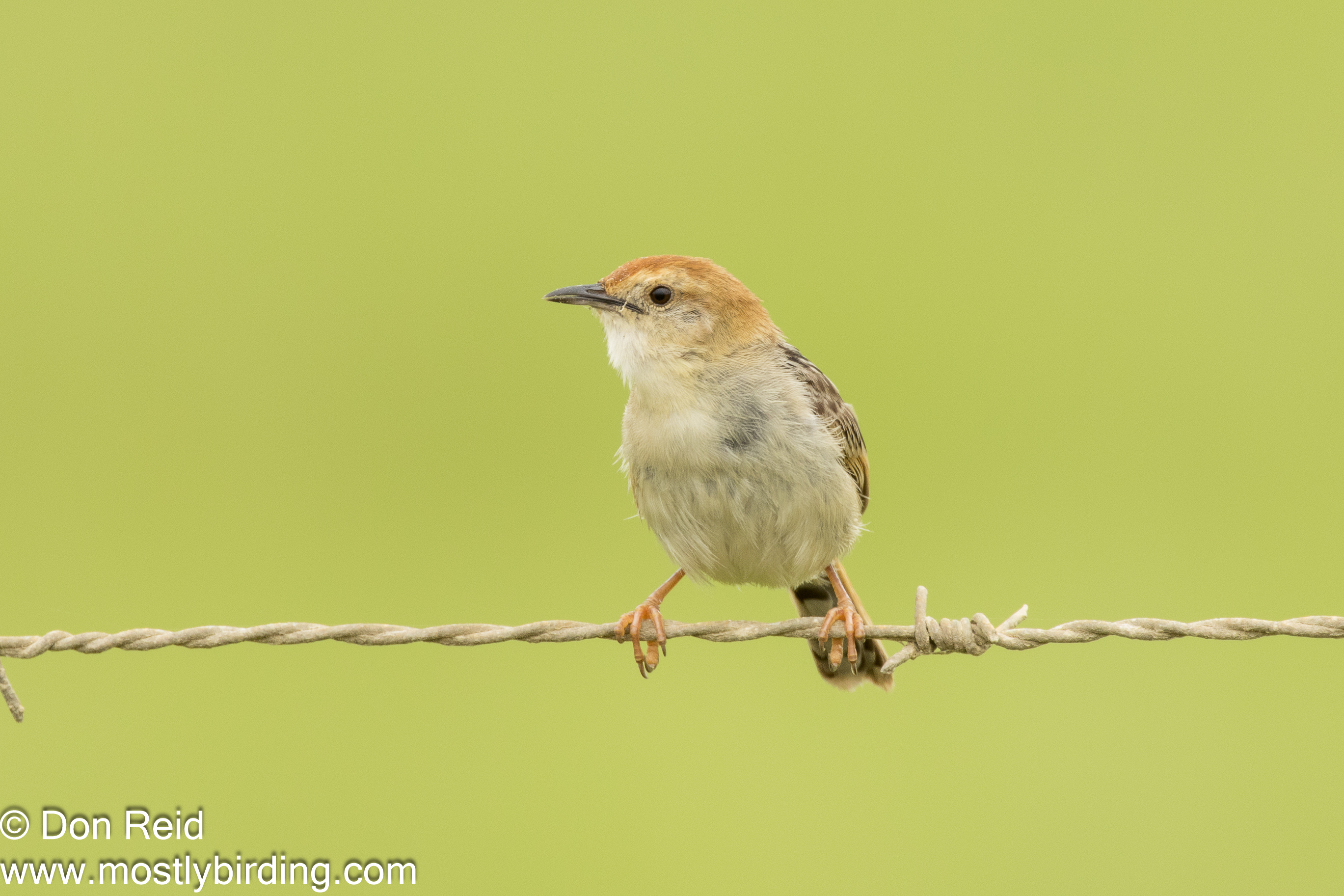
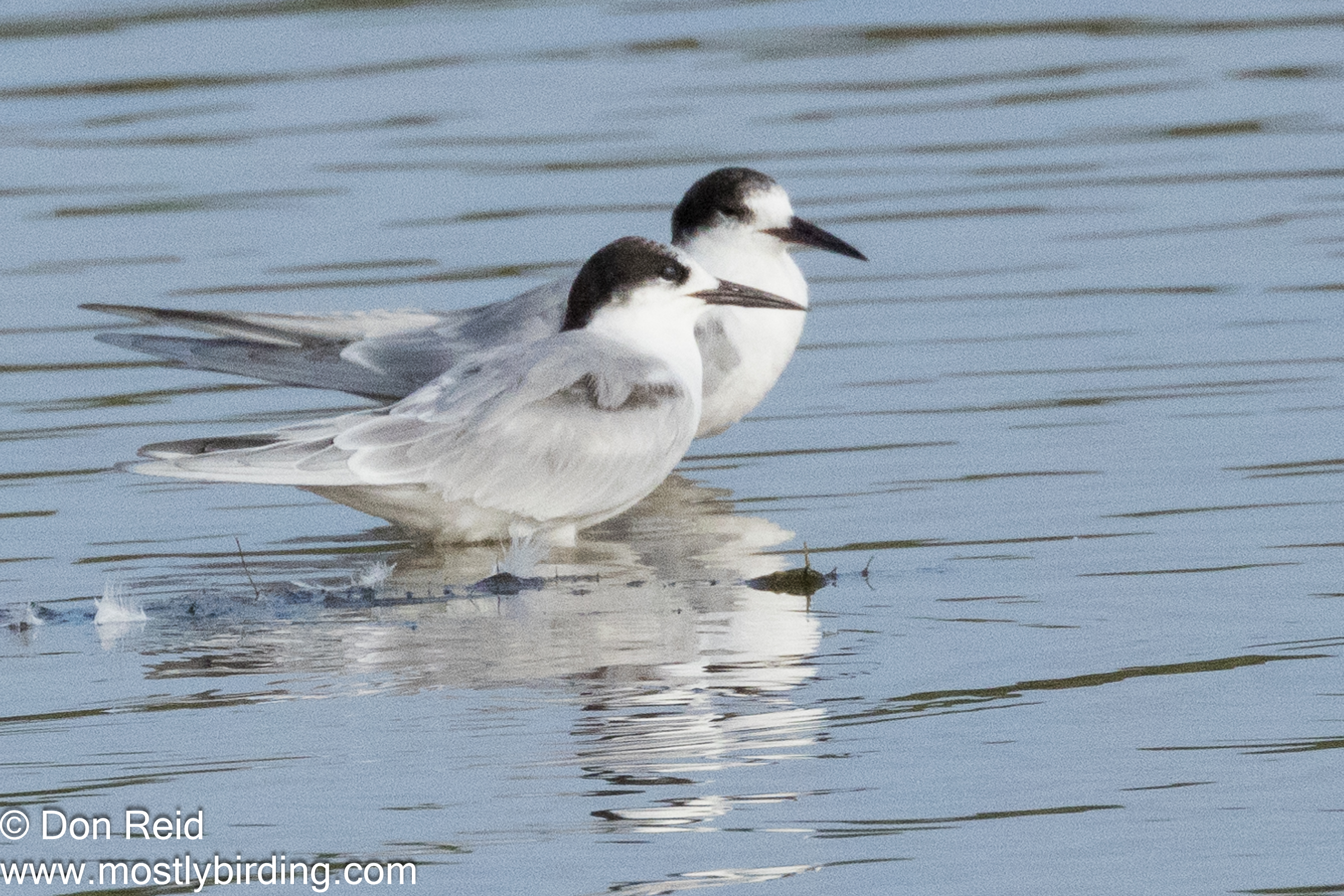
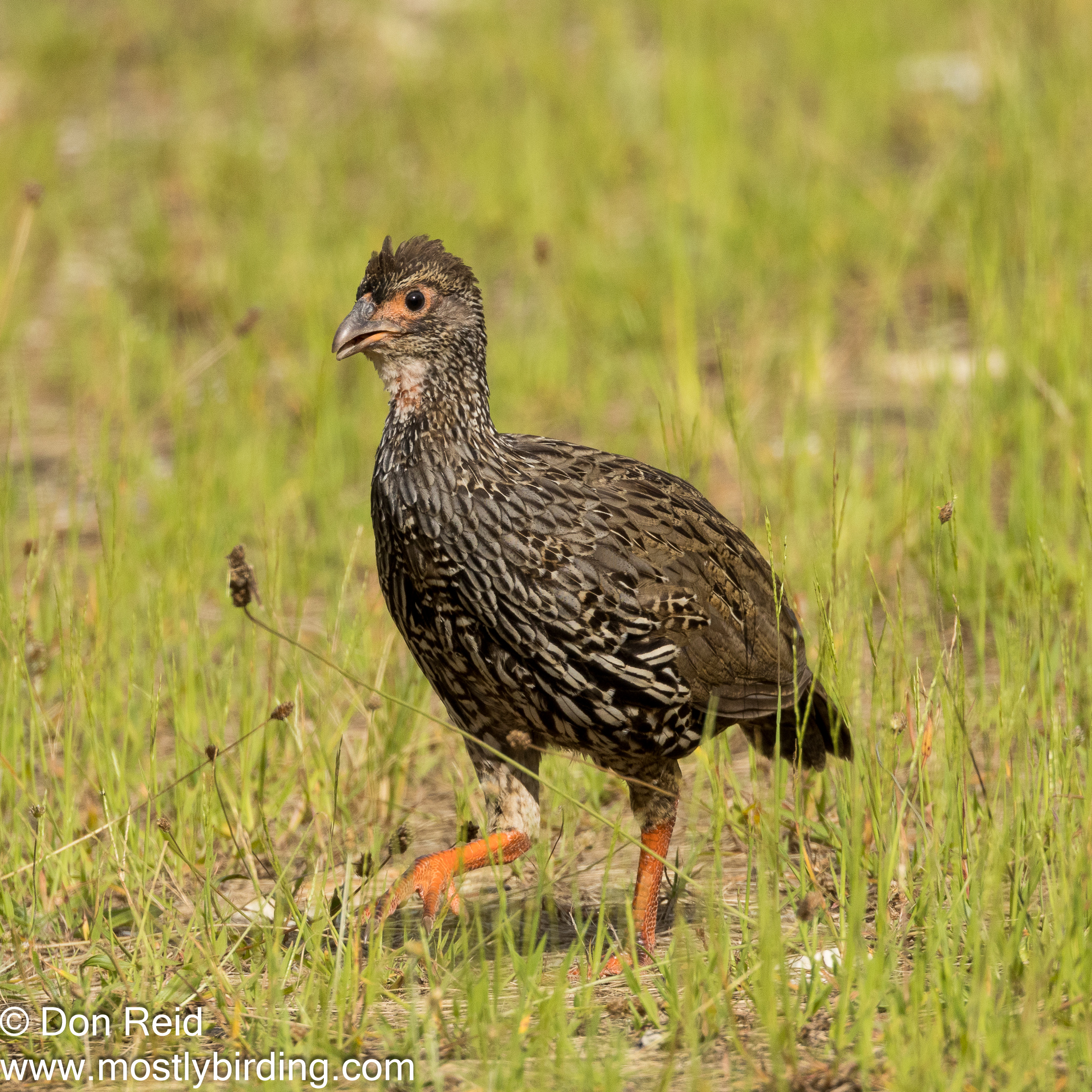
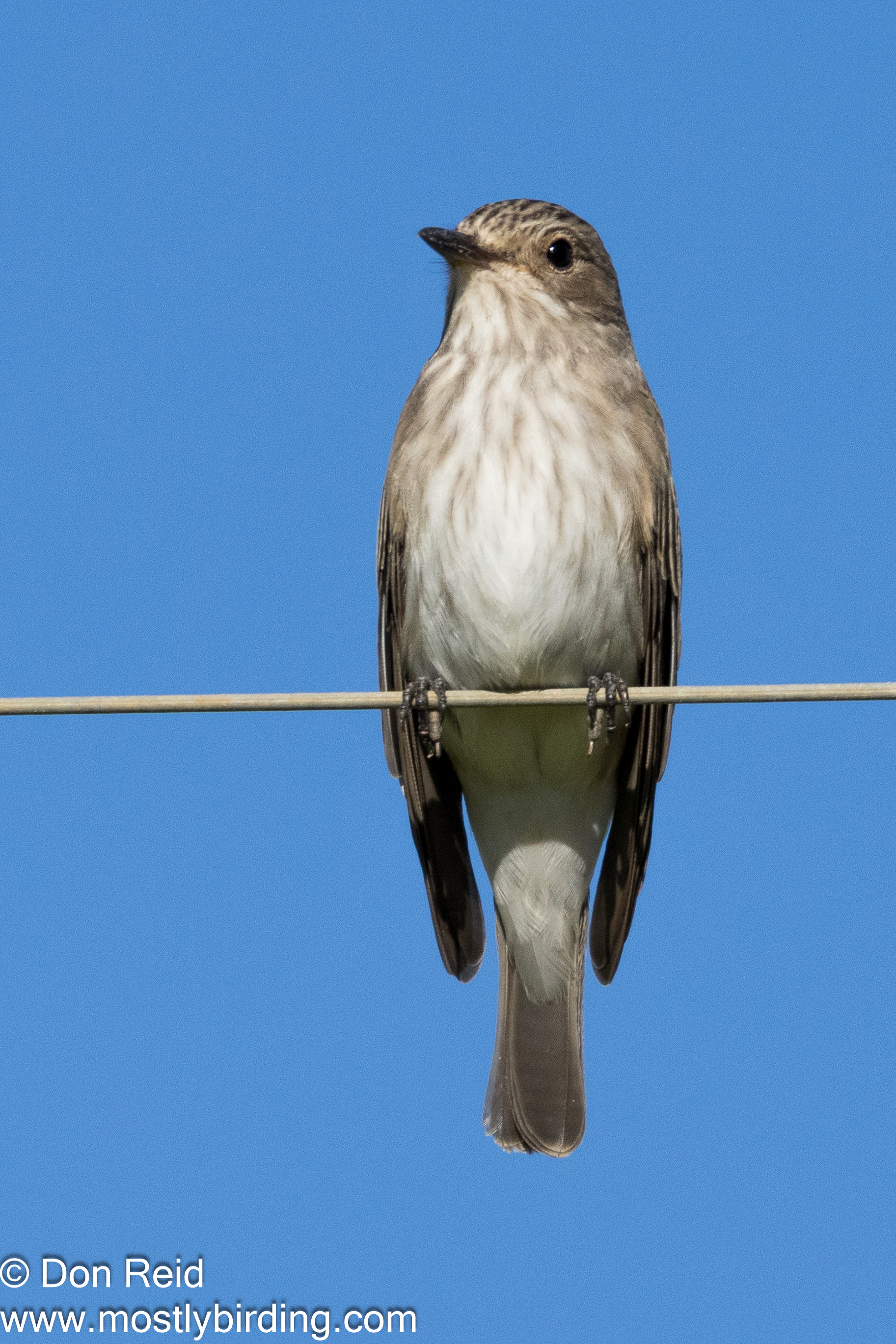
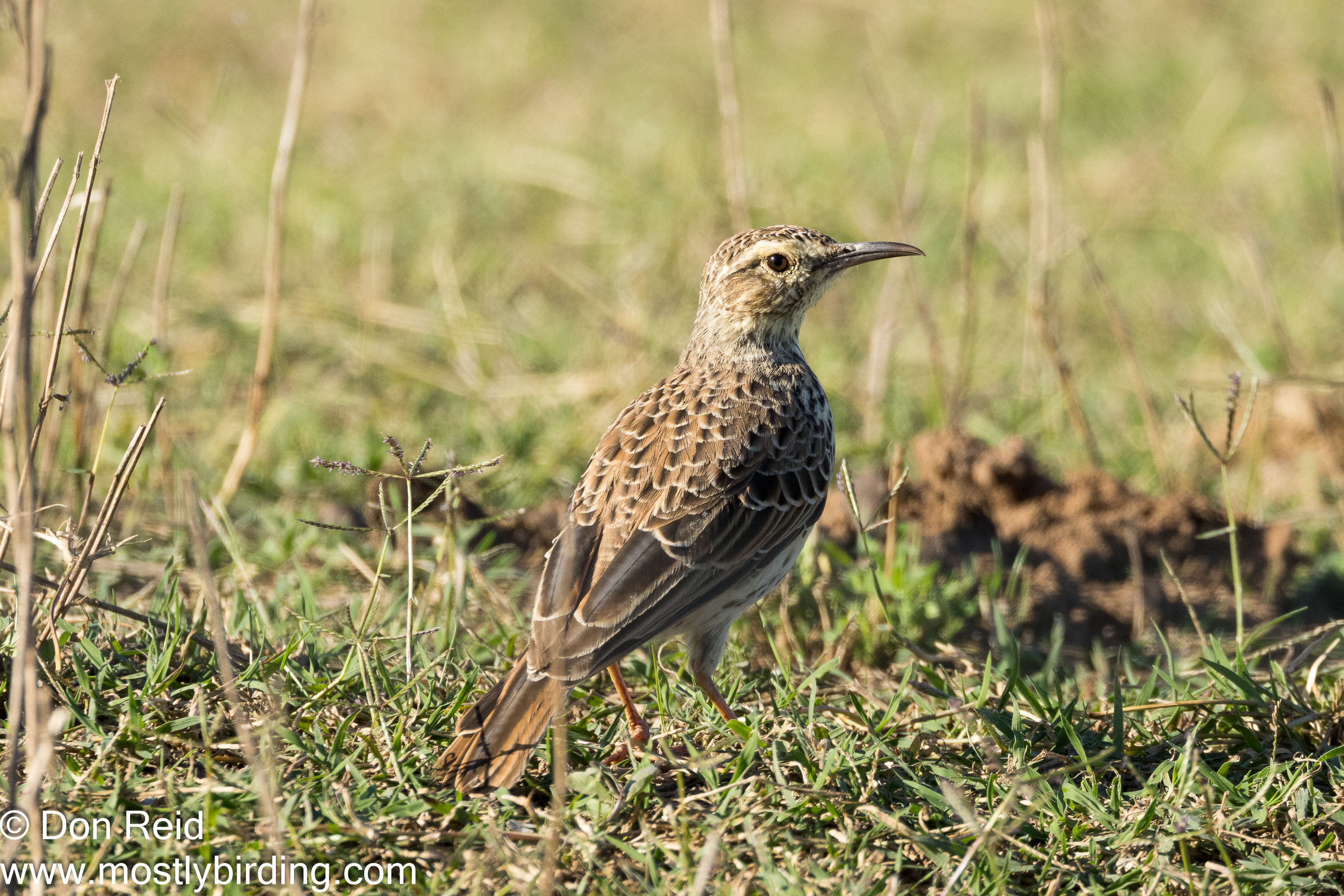
Speckled Mousebird Colius striatus Gevlekte muisvoël, Mossel Bay Golf EstateYellow Canary Crithagra flaviventris Geelkanarie (race flaviventris), GouritzmondAfrican Stonechat Saxicola torquatus Gewone bontrokkie (race torquatus), Great Brak InlandLevaillant’s Cisticola Cisticola tinniens Vleitinktinkie (race brookei), Great Brak InlandCommon Tern Sterna hirundo Gewone sterretjie, Hartenbos River mouthCommon Greenshank Tringa nebularia Groenpootruiter, Hartenbos River mouthRed-necked Spurfowl Pternistis afer Rooikeelfisant (race castaneiventer) (Juvenile), Robinson PassMalachite Kingfisher Alcedo cristata Kuifkopvisvanger, Great Brak inlandSpotted Flycatcher Muscicapa striata Europese vlieëvanger, Friemersheim areaAgulhas Long-billed Lark Certhilauda brevirostris Overberglangbeklewerik, Vleesbaai areaCape Teal Anas capensis Teeleend, Great BrakKittlitz’s Plover Charadrius pecuarius Geelborsstrandkiewiet, Voelvlei near Vleesbaai
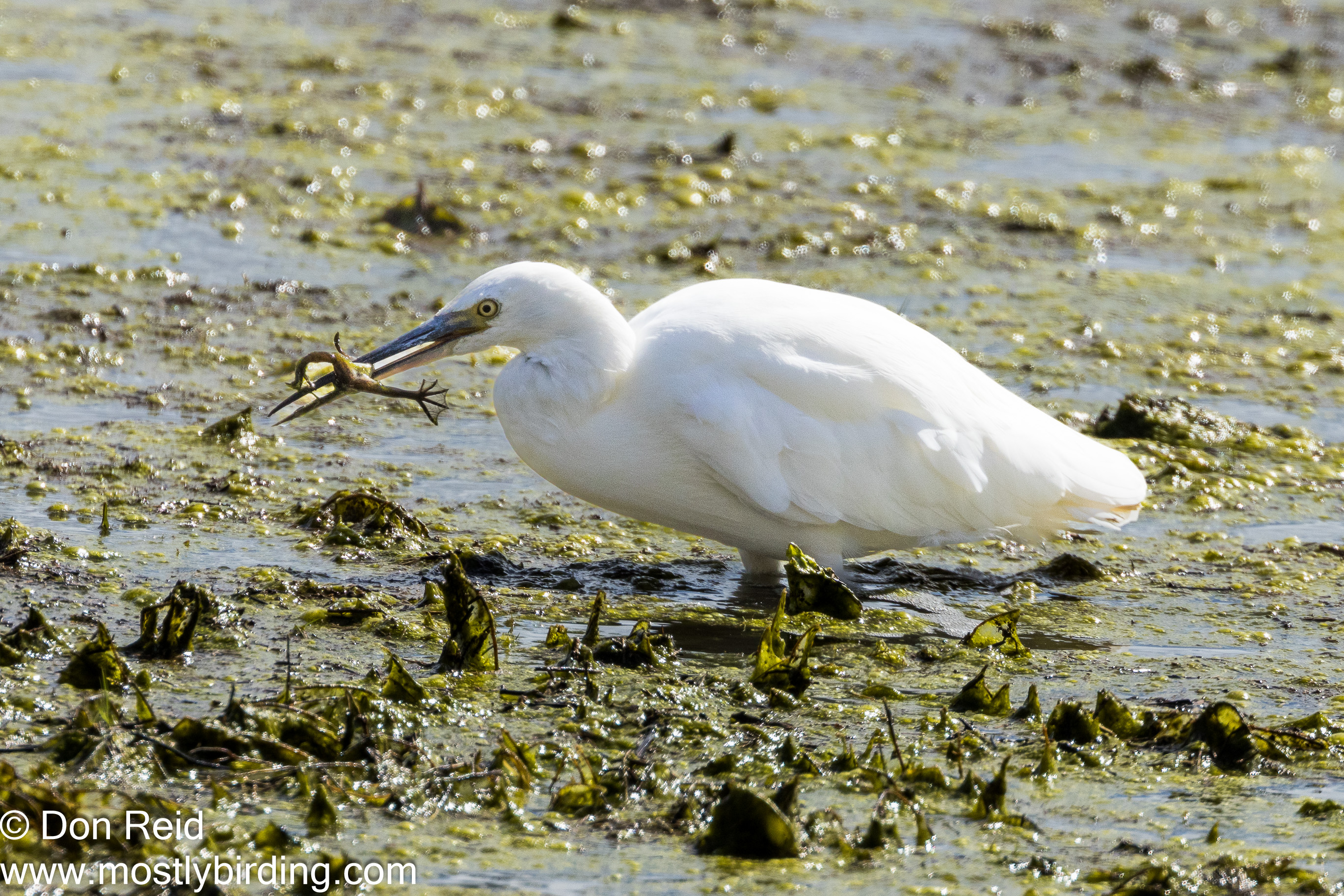
Have a closer look at what this Little Egret has caught
Little Egret Egretta garzetta Kleinwitreier, Voelvlei near Vleesbaai
On one of my last atlasing outings for the year I came across this delightful pair of protective Blue Cranes looking after junior
North of Herbertsdale
My trip to Scotland was a great opportunity for some birding in a different environment and I grabbed the chance with both hands
Chaffinch Fringilla coelebs Loch of the Lowes
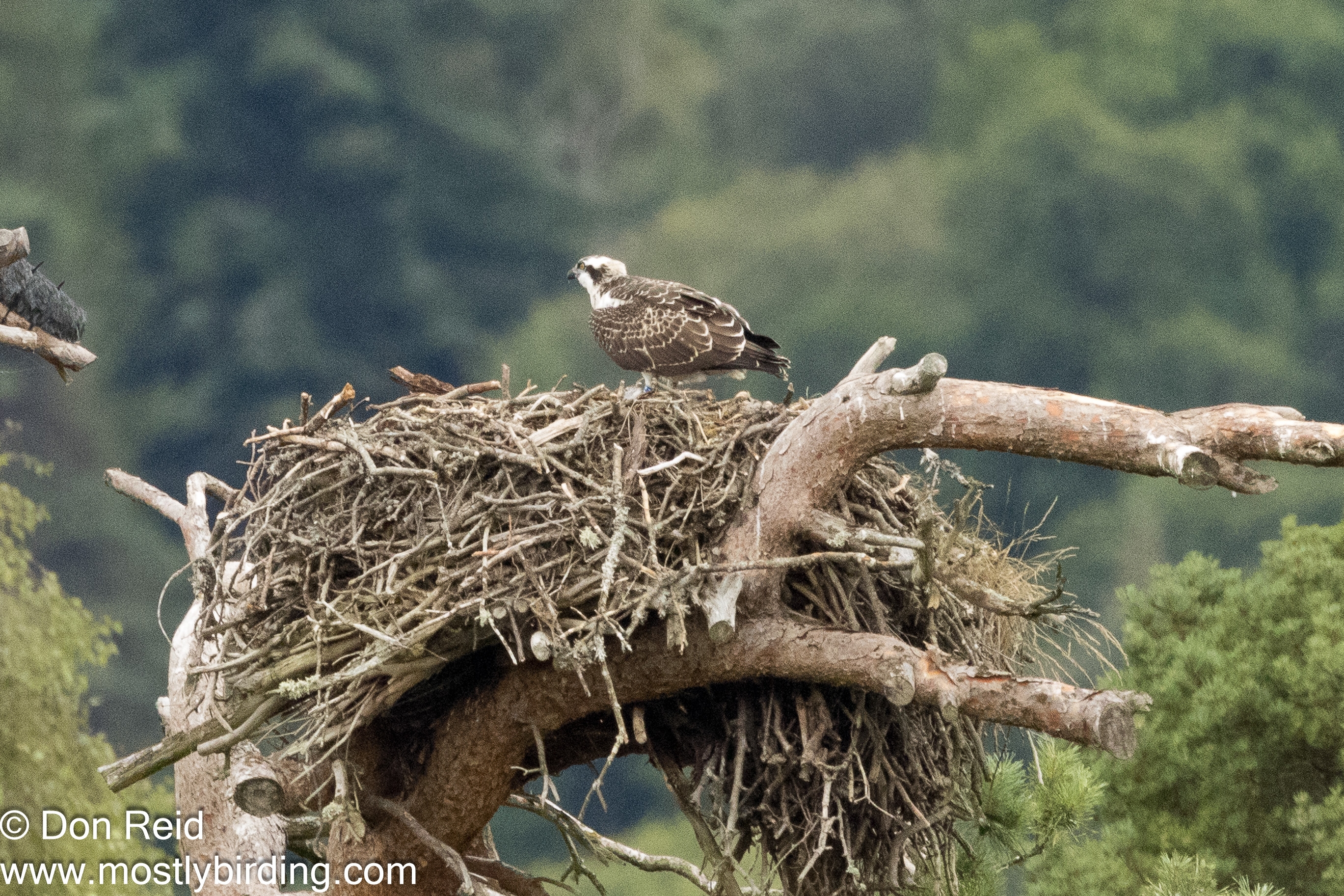
This is a sight we don’t get to see in southern Africa – a juvenile Osprey at the nest, waiting to be fed
Osprey (Juvenile) Pandion haliaetus Loch of the Lowes
This cheeky Robin hopped onto the table at a roadside service centre where I stopped for coffee
European Robin Erithacus rubecula Lunch stop on A9Common Goldeneye Bucephala clangula AvielochanLittle Egret Egretta gazetta River Eden EstuaryEurasian Curlew Numenius arquata River Eden Estuary
It was a special treat to see Common Redshanks by the hundred at River Eden Estuary – this is a bird rarely seen in southern Africa
Common Redshank Tringa totanus River Eden Estuary
The Mossel Bay area attracted a few rare vagrants during the year and I was happy to be able to see them and get some reasonable photos
Lesser Sand Plover Charadrius mongolus Mongoolse strandkiewiet, Klein Brak vleiBuff-breasted Sandpiper Tryngites subruficollis Taanborsstrandloper, Voelvlei near Vleesbaai
Birds in Flight
Birds in flight – or BIF as it’s known – is the most challenging aspect of bird photography, with a success rate of about 1 usable image for every 30 taken, based on my experience. In the same way as golfers seek the perfect shot and surfers the perfect wave, so are bird photographers always on the look out for a better photo.
Here are some of the year’s BIF images that worked
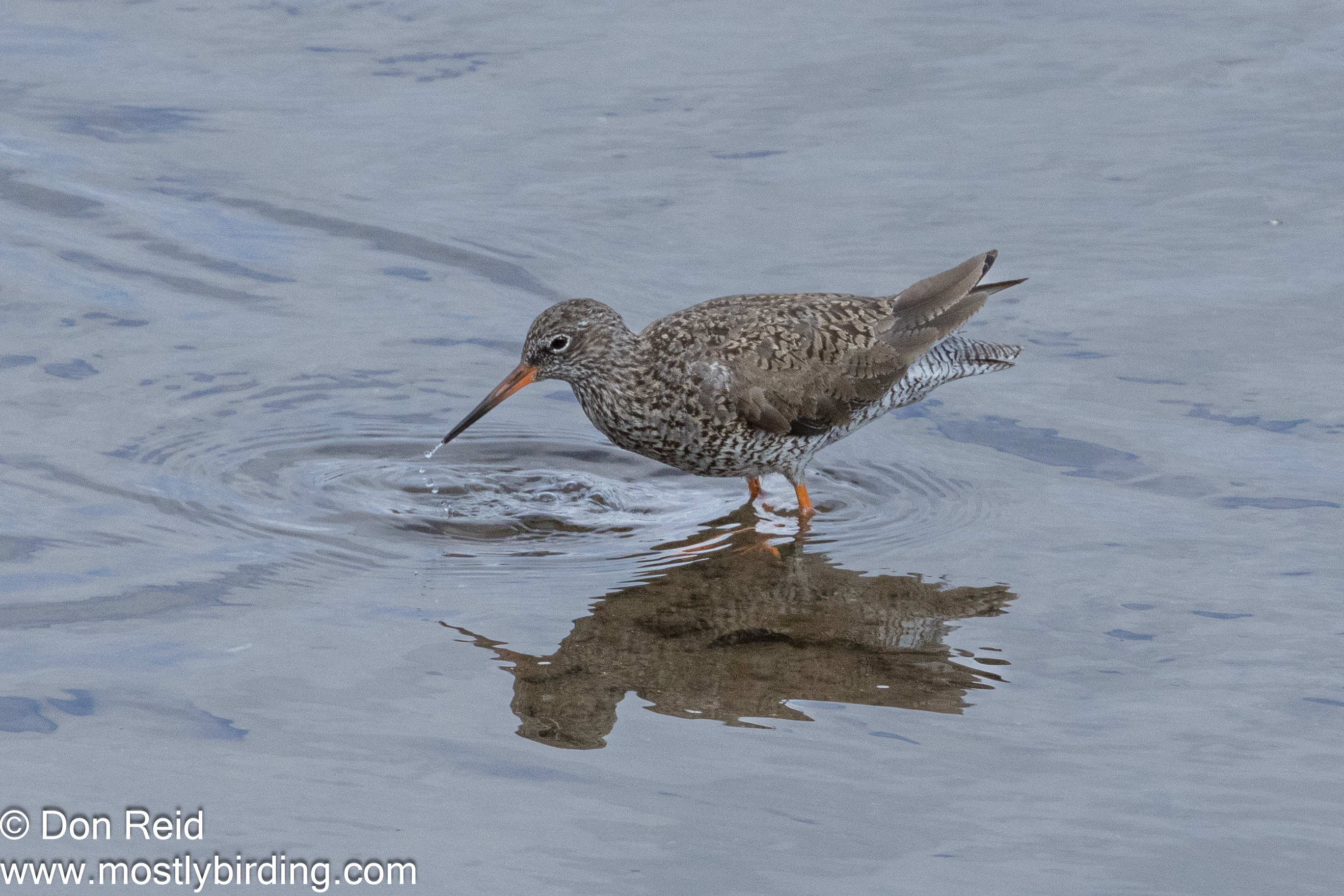
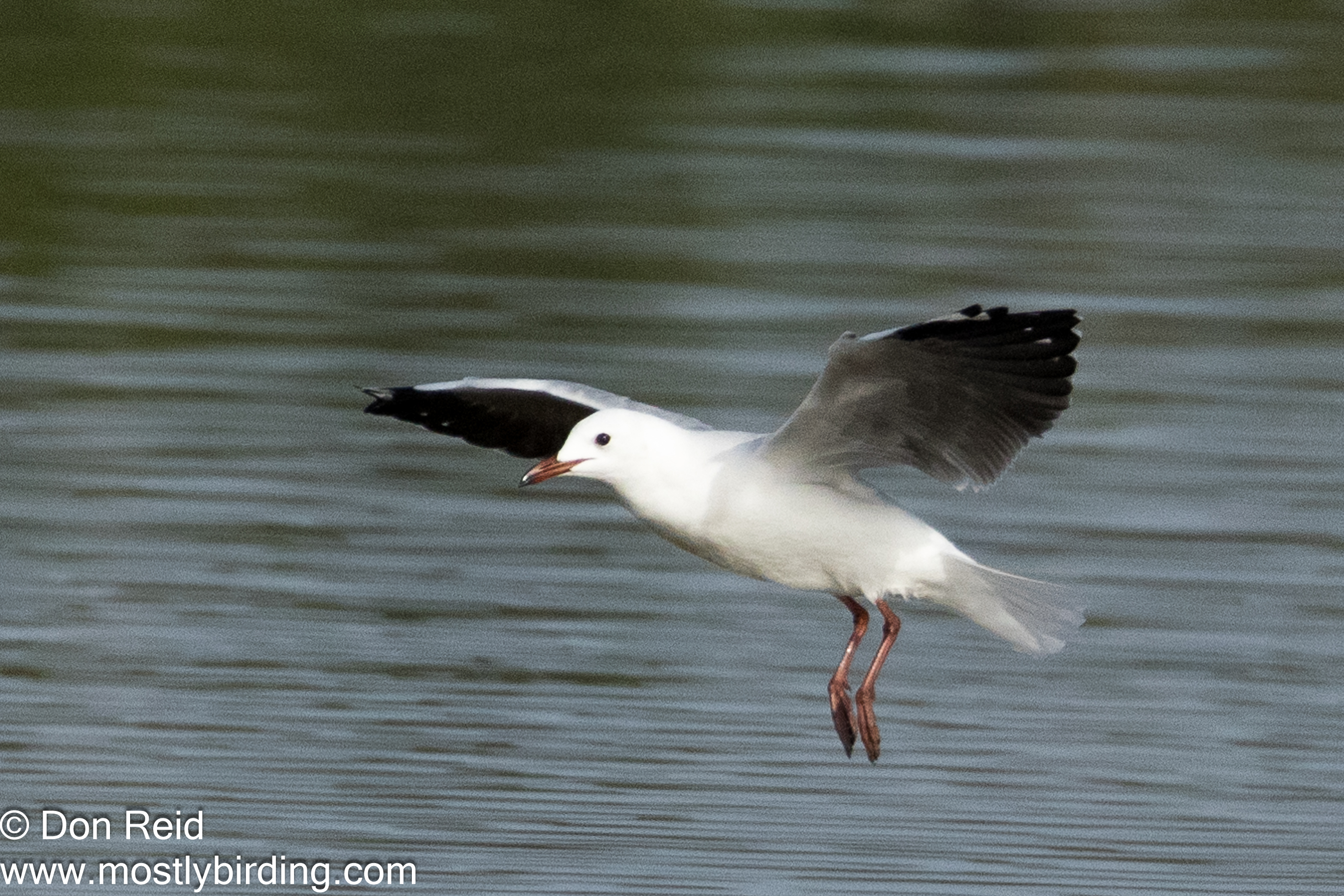
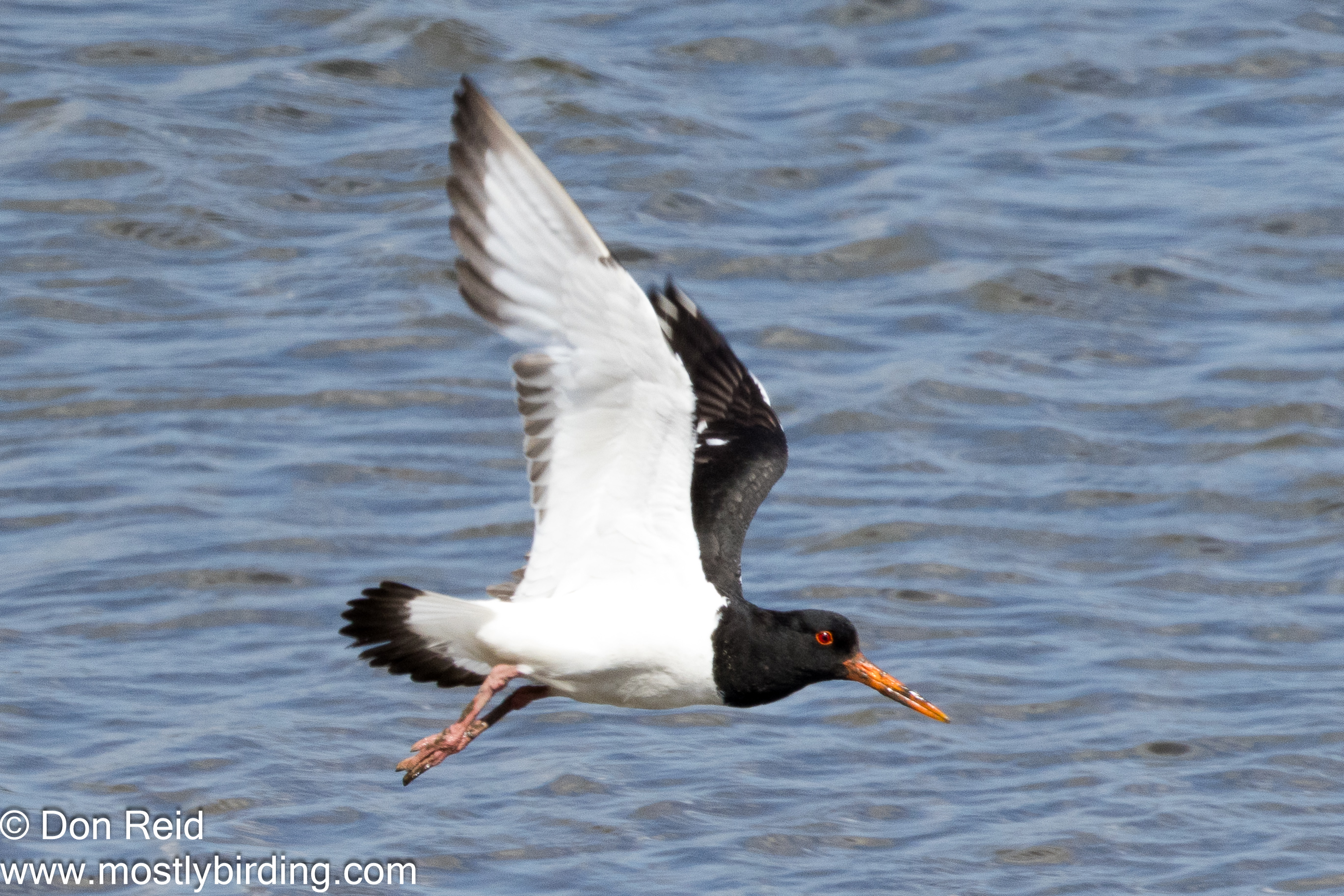
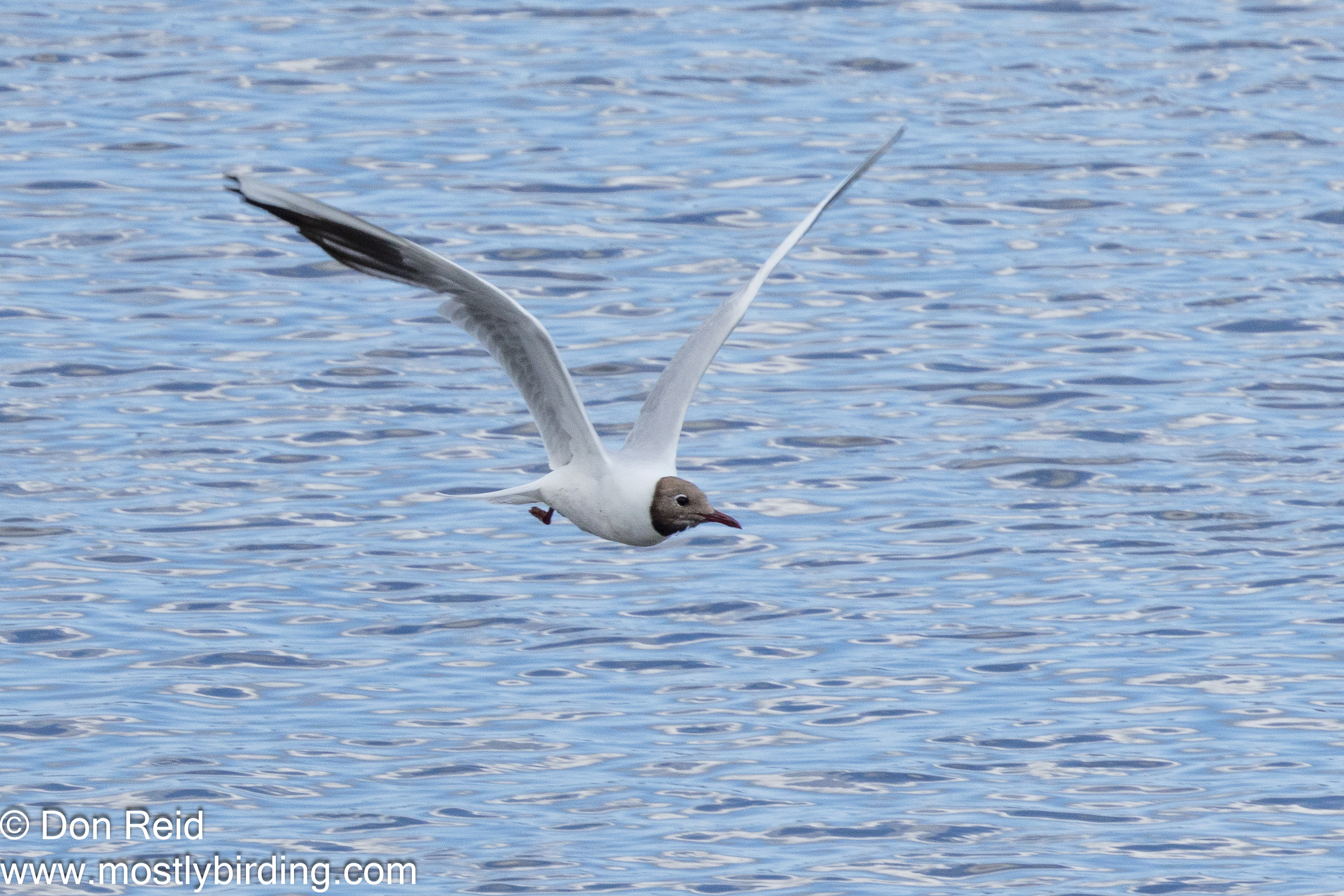
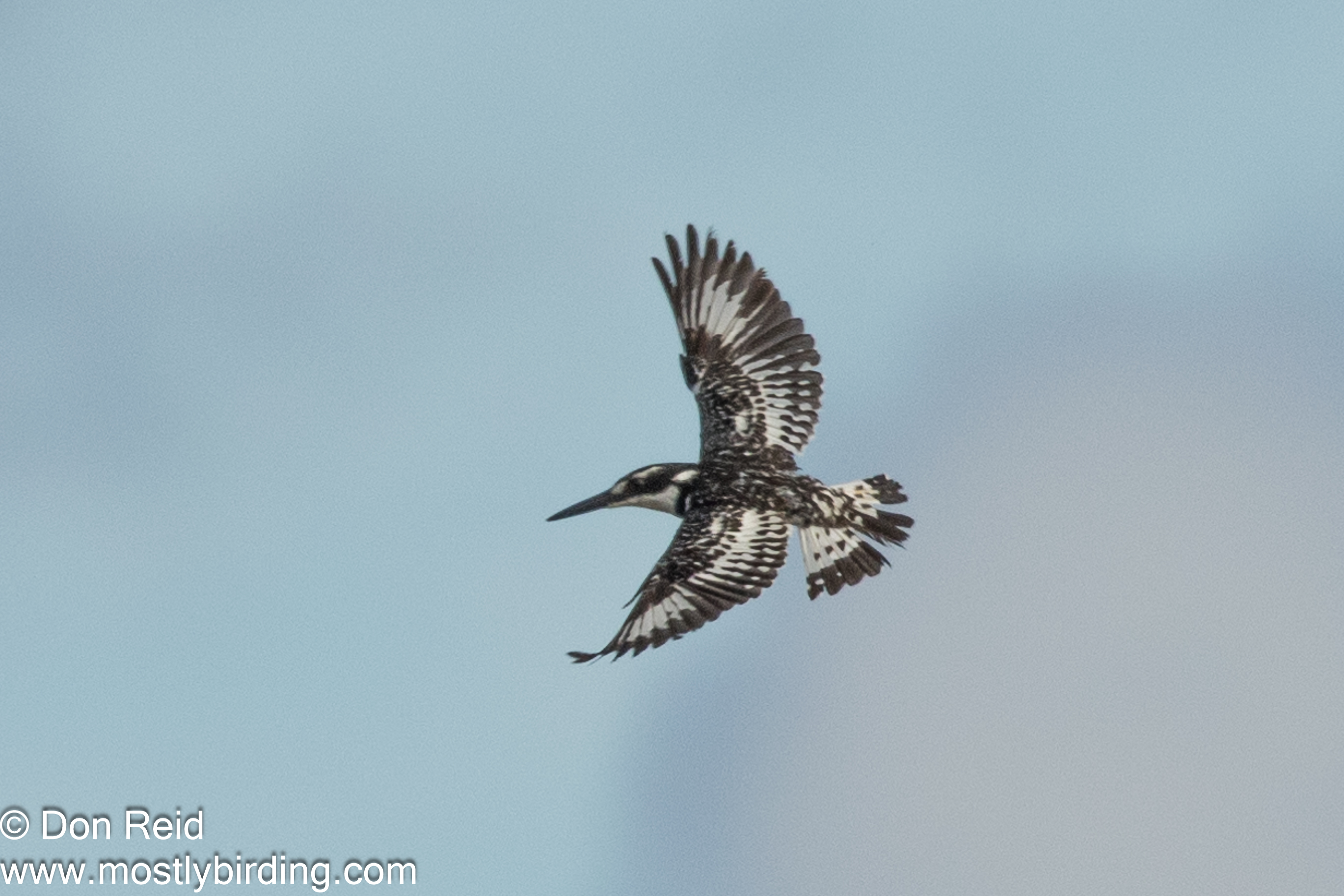
Hartlaub’s Gull Chroicocephalus hartlaubii Hartlaubse meeu, Hartenbos River mouthEurasian Oystercatcher Haematopus ostralegus River Eden EstuaryCommon Redshank Tringa totanus River Eden EstuaryBlack-headed Gull Chroicocephalus ridibundus River Eden EstuaryPied Kingfisher Ceryle rudis Bontvisvanger, Gouritzmond
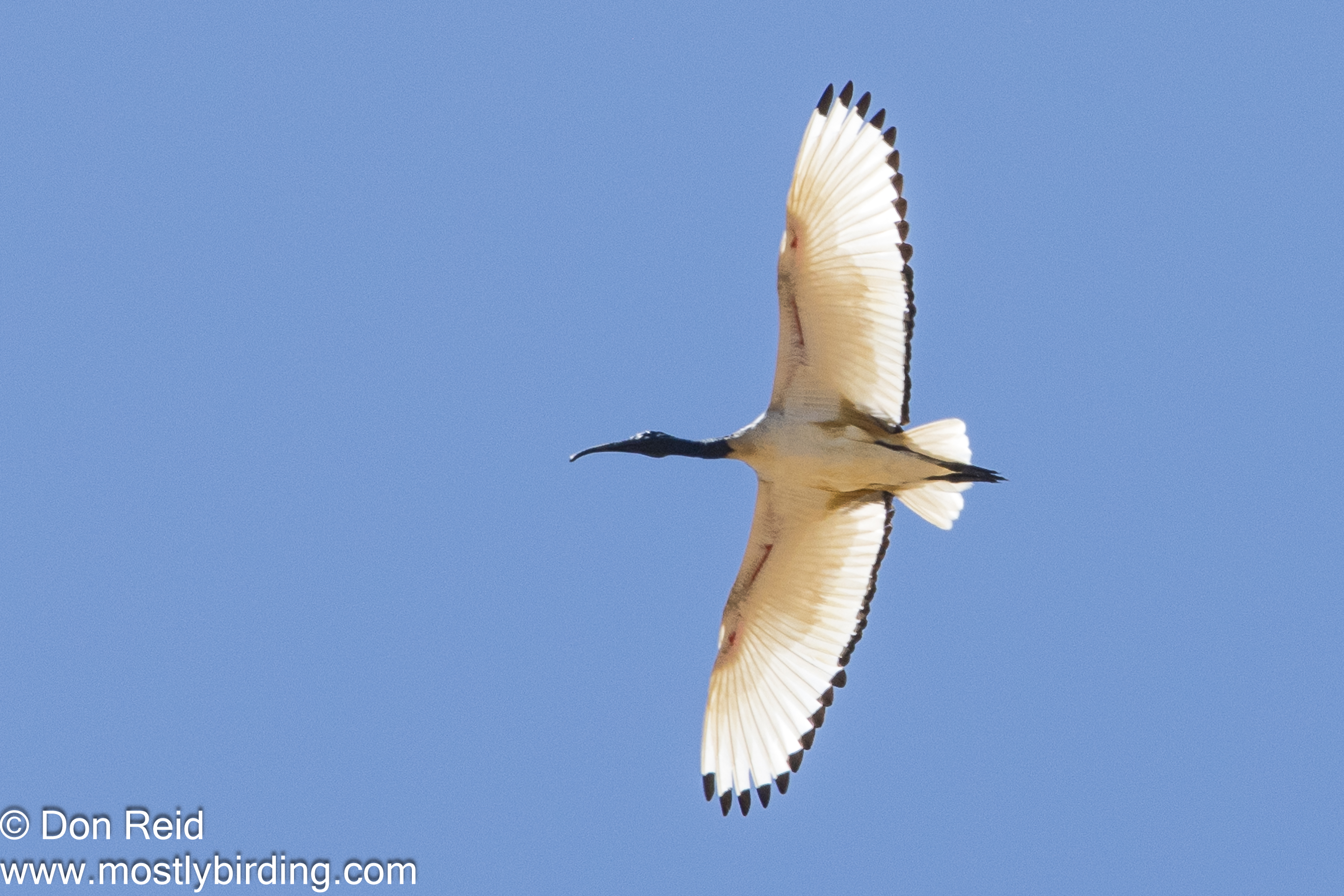
A different view of a Sacred Ibis – it was soaring like an eagle
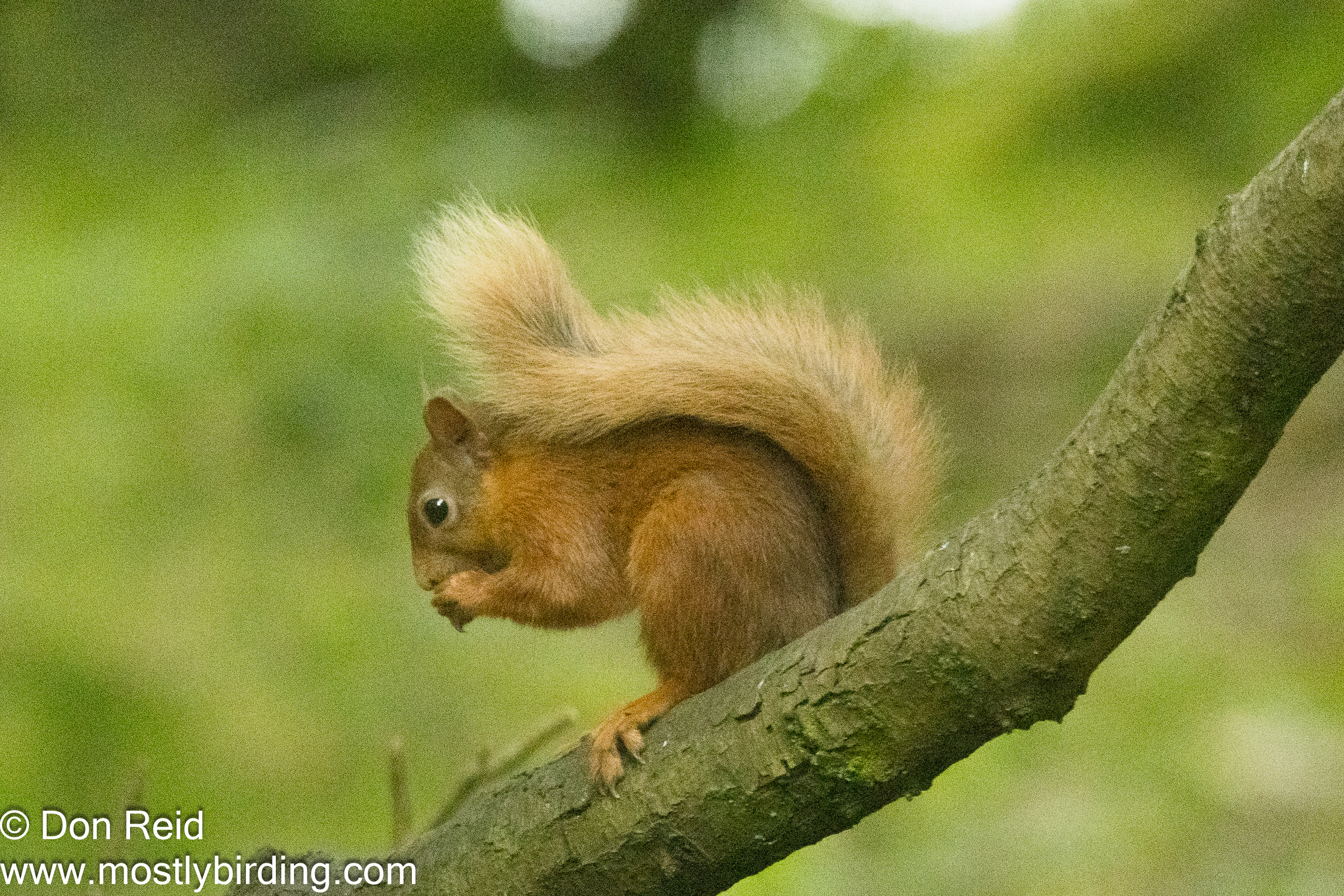
As I mentioned we did not get to visit a single national park during the year so I had to be content with some not-so-wildlife ….
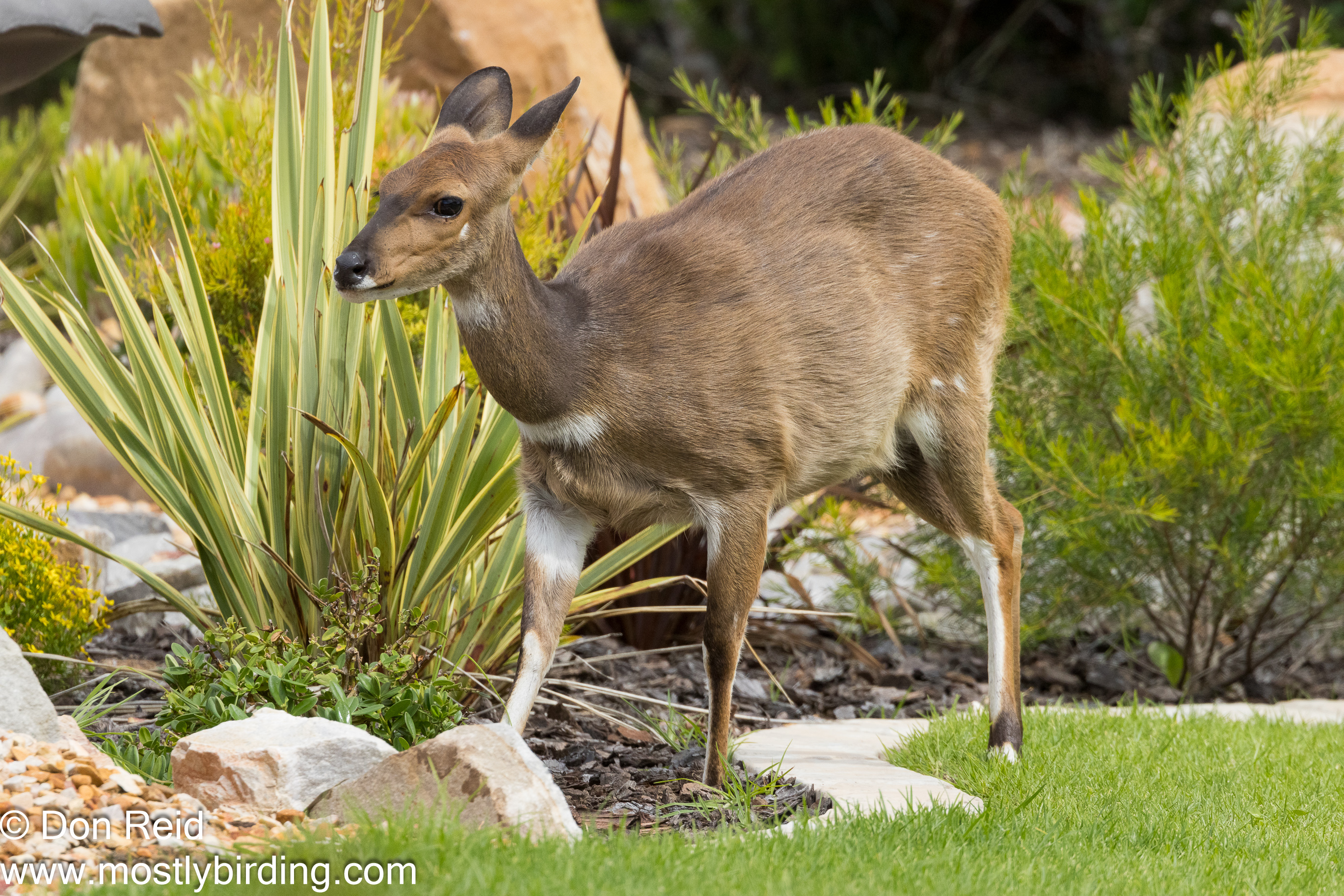
Red Sqirrel Sciurus vulgaris Loch of the LowesBush buck, Mossel Bay Golf Estate
The Other Stuff
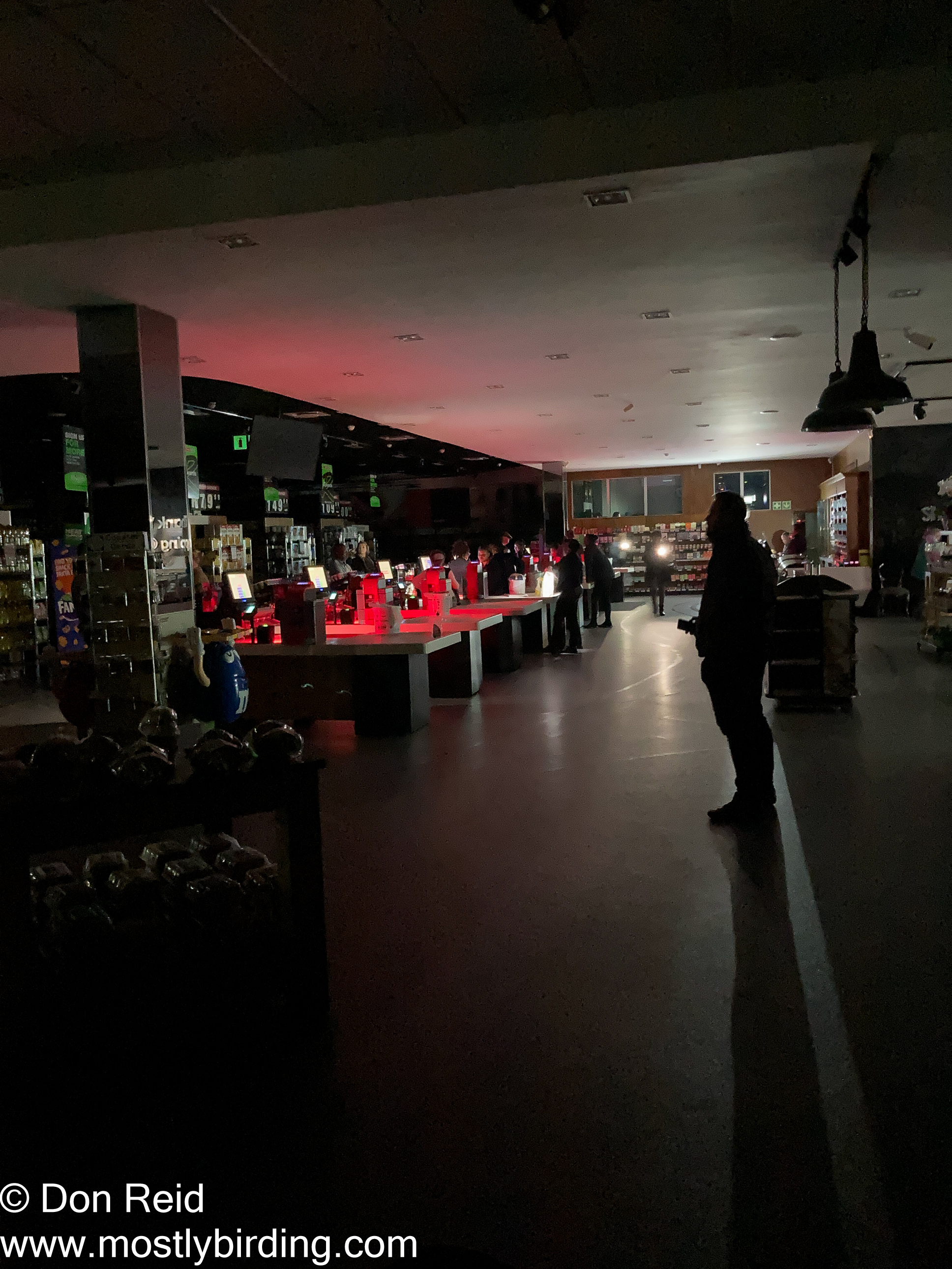
South Africa’s infamous load shedding (electricity cuts) got worse this past year – I took this photo in our local supermarket just after the main lights went off, before the generators kicked in
Pretoria
This unusual image was taken in a local nature reserve after a heavy rainstorm, which swept a variety of debris down the stream that runs through the reserve ….
Faerie Glen NR
And finally, a quirky decorative topping to the post box in a Scottish village
Upper Largo
I can’t imagine a life without photography .. or birding of course
Firstly, I hope to get back to more regular posts – other matters have taken priority the last while and have meant I haven’t been able to spend nearly as much time on blogging as I would like, so hopefully I can change that going into the holiday season.
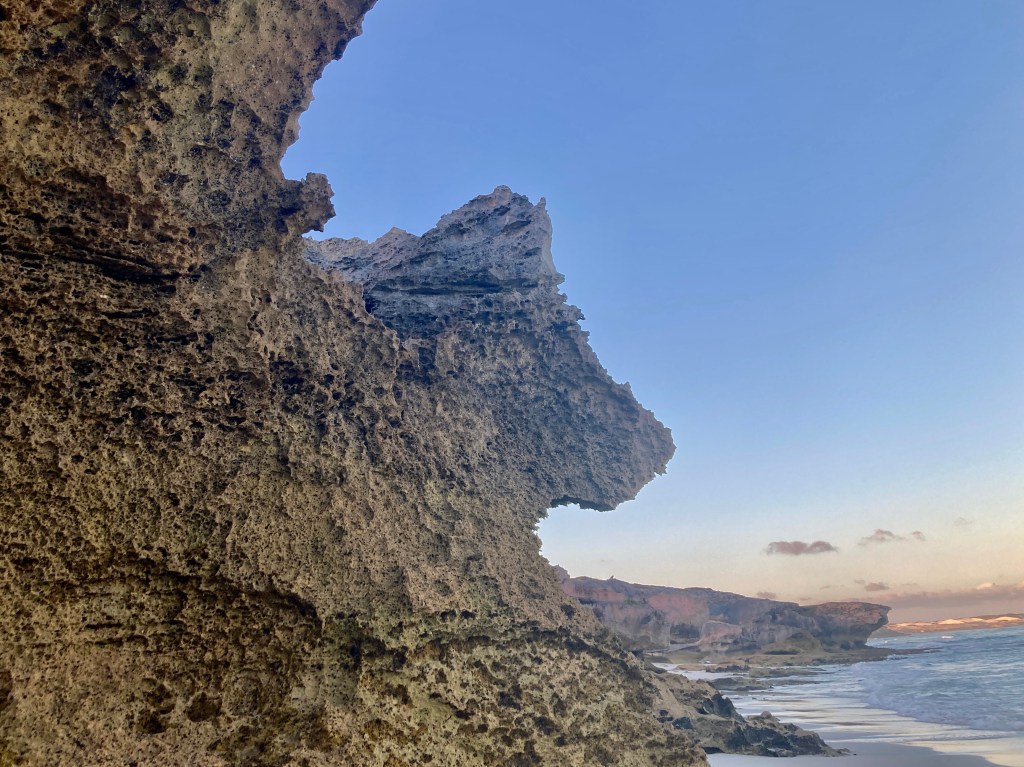
Secondly this may or may not be the start of a new series of posts – my last one featured a Fynbos sunset and here I go again with a Beach sunset – we’ll just have to see where this goes…..
We decided to take a short break and chose Arniston, a small coastal town about 260 kms from our home in Mossel Bay. We had only been there once before for lunch at the Arniston Hotel and have always wanted to experience the charming spot more thoroughly so booked for three nights in a seafront room.
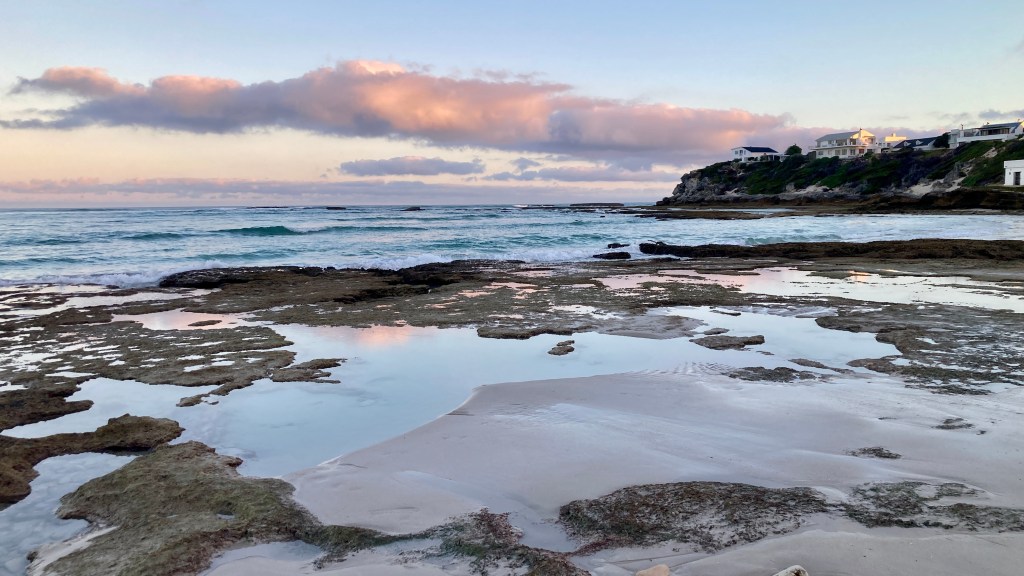
As usual I went for my late afternoon walks during the stay and was drawn towards the beach right in front of the hotel for a stroll along the sand and a clamber over the low rocks that are exposed by the low tide.
The scenes were stunning, the sand, sea and sky lightly brushed with colour from the sun setting behind my back on the land side.
Once I had a few shots taken of the beach I looked around for interesting patterns and colour combinations amongst the exposed rocks and didn’t have to go far to find these
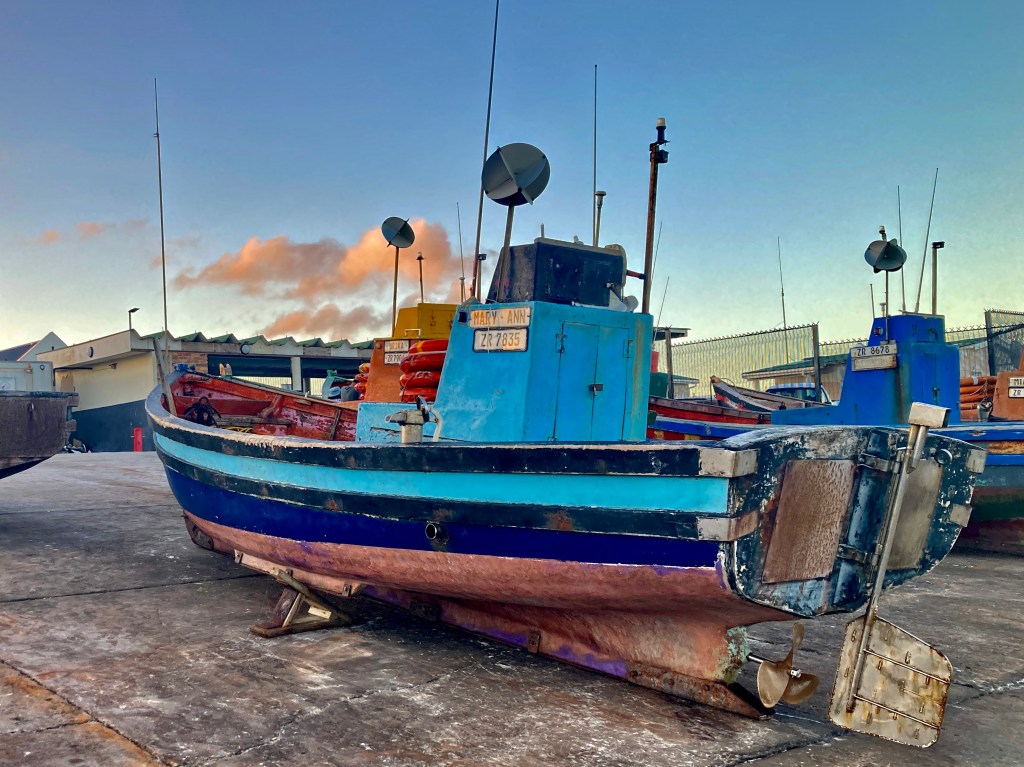
The harbour slipway had a few fishing boats standing out of the water and this colourful one demanded a photo
Back on the sand I was fascinated by the variety of pebbles large and small, swept into random patterns by the incoming and outgoing tide
Oh, and I met a dog on the beach…..just gazing out to sea
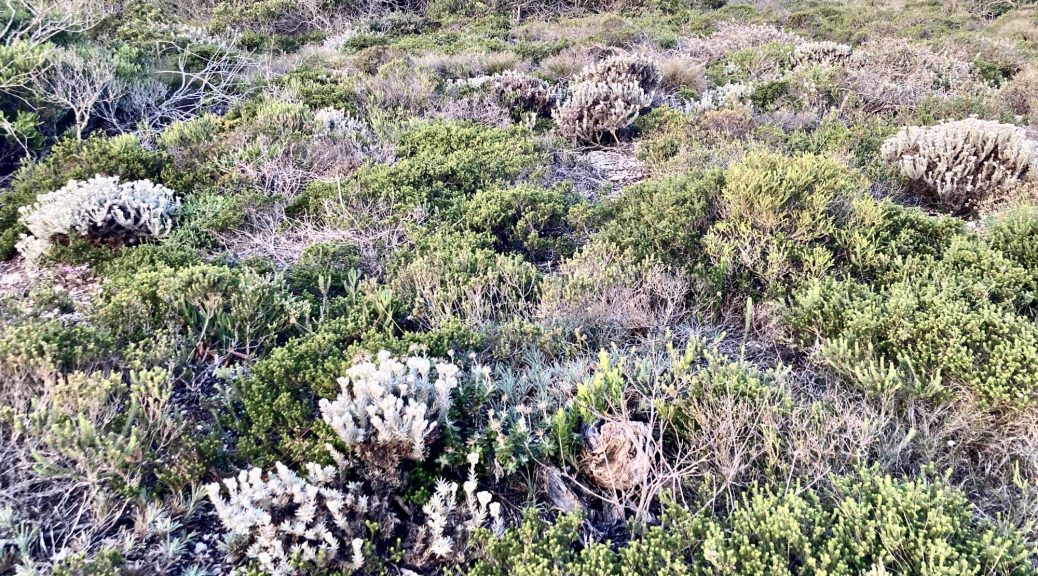
One of the joys of Mossel Bay, our new home town, is the proximity of our house to the broad band of coastal fynbos that separates the estate we live in from the rugged coastline running along this part of the southern Cape.
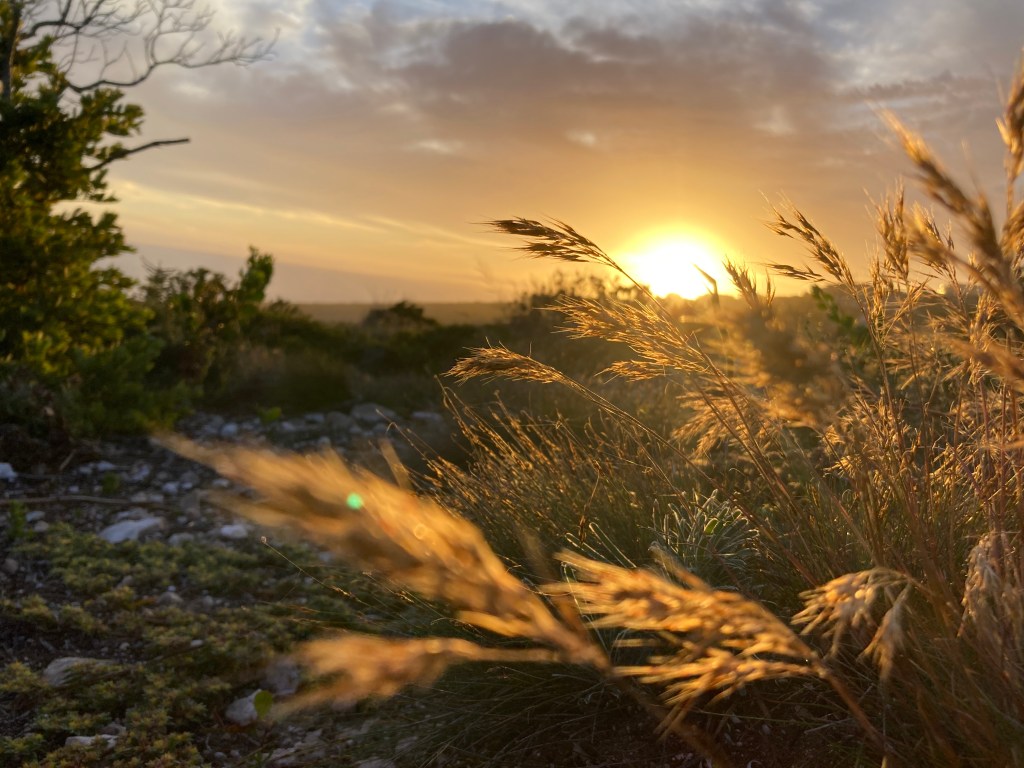
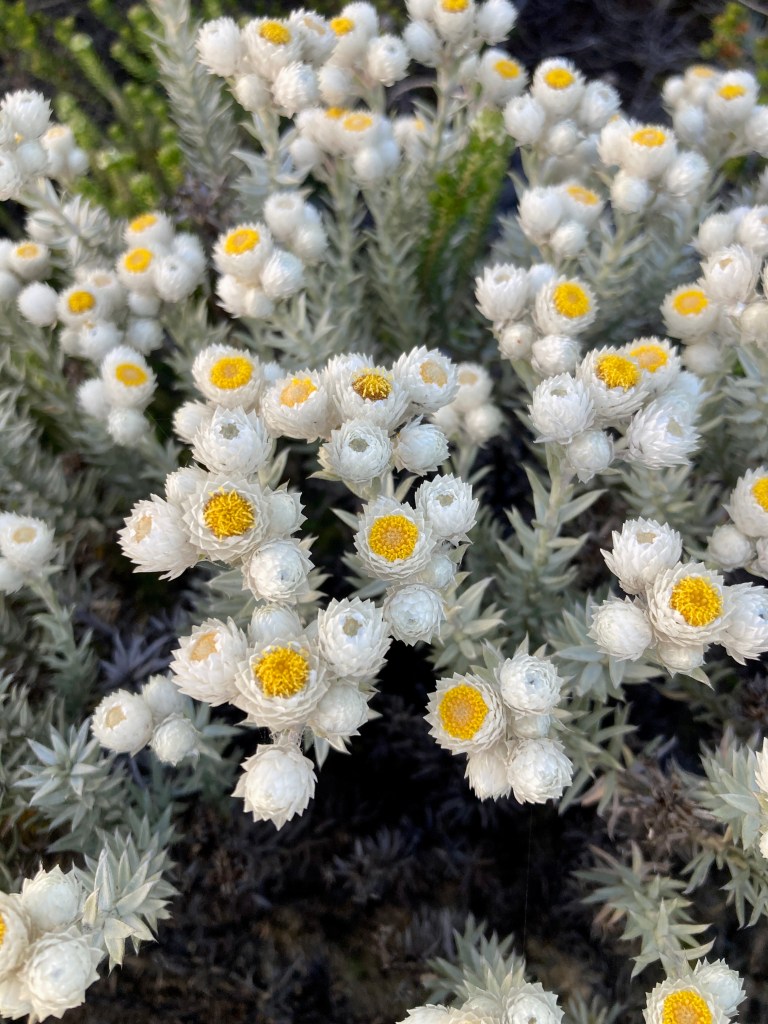
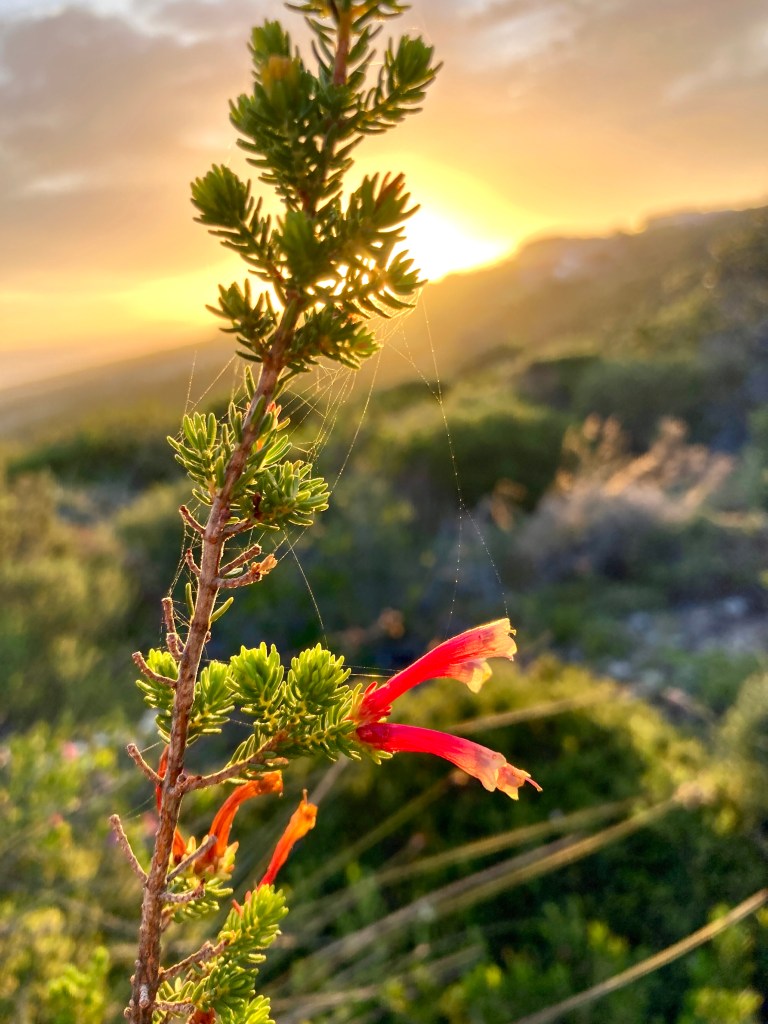
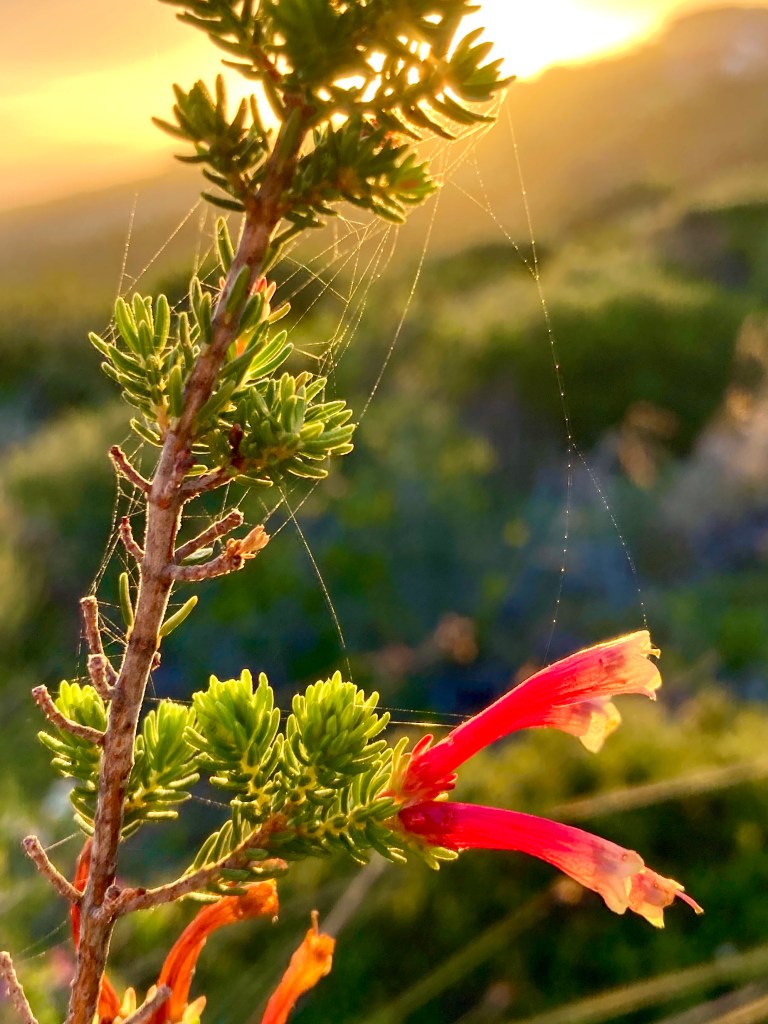
A short walk of a few minutes takes one into a world of tiny flowers in an expanse of heath-like bushes and although my primary aim is usually to see what birdlife is present, the setting sun this afternoon enticed me to try my hand at some more ‘arty’ photos, using my trusty iphone.
Here are some of the results
On closer inspection of the above photo I noticed that the flower was draped in spider’s web which shows up better in this cropped version
My 300th post is a short one with just one photo of one bird – but I have reason to celebrate both…
The bird in question is a Common Quail – so what’s the big deal I hear you think. Well if I tell you that I’ve heard this bird calling a few hundred times during my birding and atlasing travels over 35 years or so, but have seen it just once before, so briefly that there was no chance to get a photo, then you may appreciate my excitement about my experience last week.
I was out atlasing in the early morning not far from our new home in Mossel Bay and heard the familiar call of Common Quail almost every time I stopped. There were numbers of Larks and other birds in the gravel road and along the verges, then I noticed something different up ahead and raised my binos once more – it was a Common Quail, in fact a pair that were walking along the edge of the gravel amongst grass tufts.
With my heart pumping I grabbed my camera, checked settings and fired away even though the Quails were not ideally positioned and not close enough to achieve sharpness, but I was ecstatic that I had at last seen this bird clearly and at least had a reasonable record photo.
The birding part of the trip was done and I could not have been happier with the outcome, now it was time to collect my granddaughter and spend a day together in the beautiful city of Edinburgh.
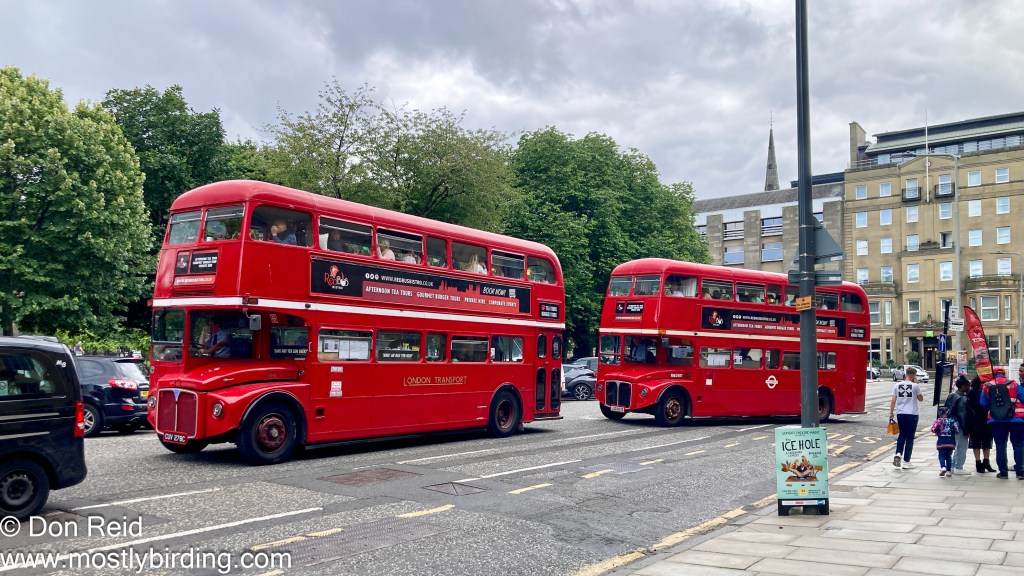
With just the one day at our disposal I had made a booking on one of the ‘hop-on, hop-off’ bus tours which take tourists around the city, much as they do in many popular cities around the world. I had been to Edinburgh (my dad’s birthplace) twice before with Gerda, so it was all about showing Maia the places of interest and let her dictate how we spent the day.
I had undertaken to collect Maia by 9 am which meant an early, quick breakfast of fruit and toast and leaving the B&B in Upper Largo at 8 am to drive the 35 miles or so to Strathallan School south of Perth where she had spent the week learning new skills on the flute with some of the best teachers in the world. (She played some of her newly learnt pieces when we got back to SA and I can confidently say the trip was very worthwhile for her as well – they were simply magical to listen to).
Edinburgh
After a short wait and a chat with the school pianist, Maia appeared, and we set off to find our hotel west of Edinburgh where we parked the car and got the No 25 bus into the city.
The bus stop indicated by the driver was close to St Andrews Square, the departure point for the Red Bus tour we had booked and a short walk later we boarded the bus and plugged in the earphones for the running commentary.
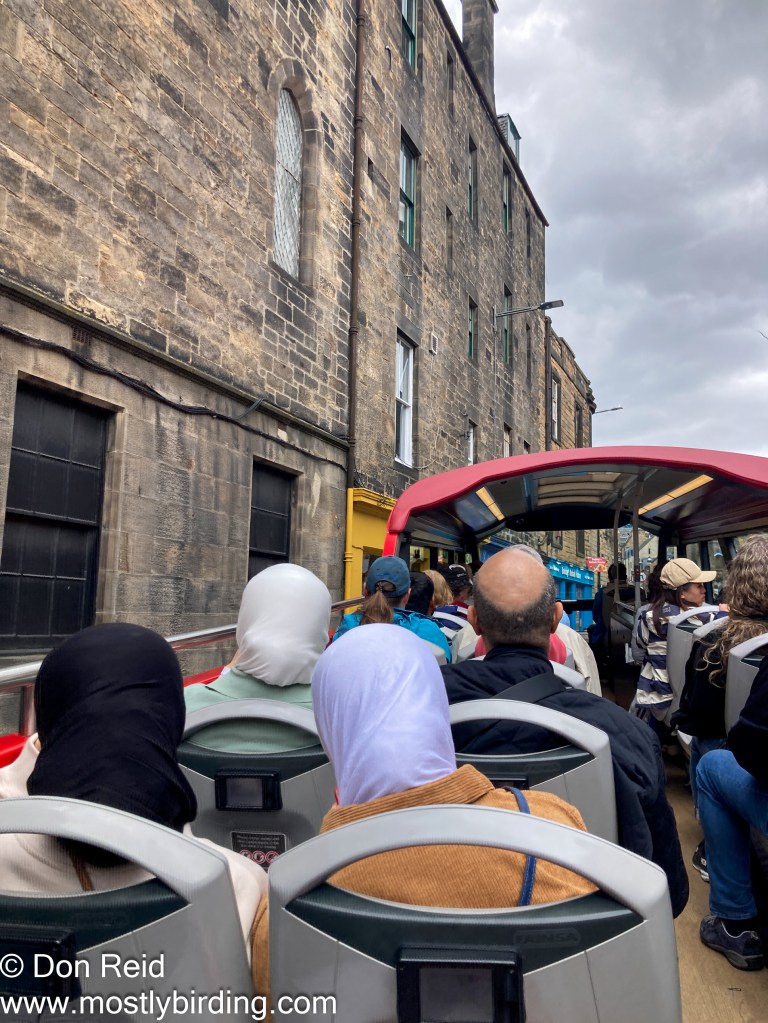
Red buses setting off on the city tour – ours was an open top versionMuch better views with the open top bus – including our fellow tourist’s heads
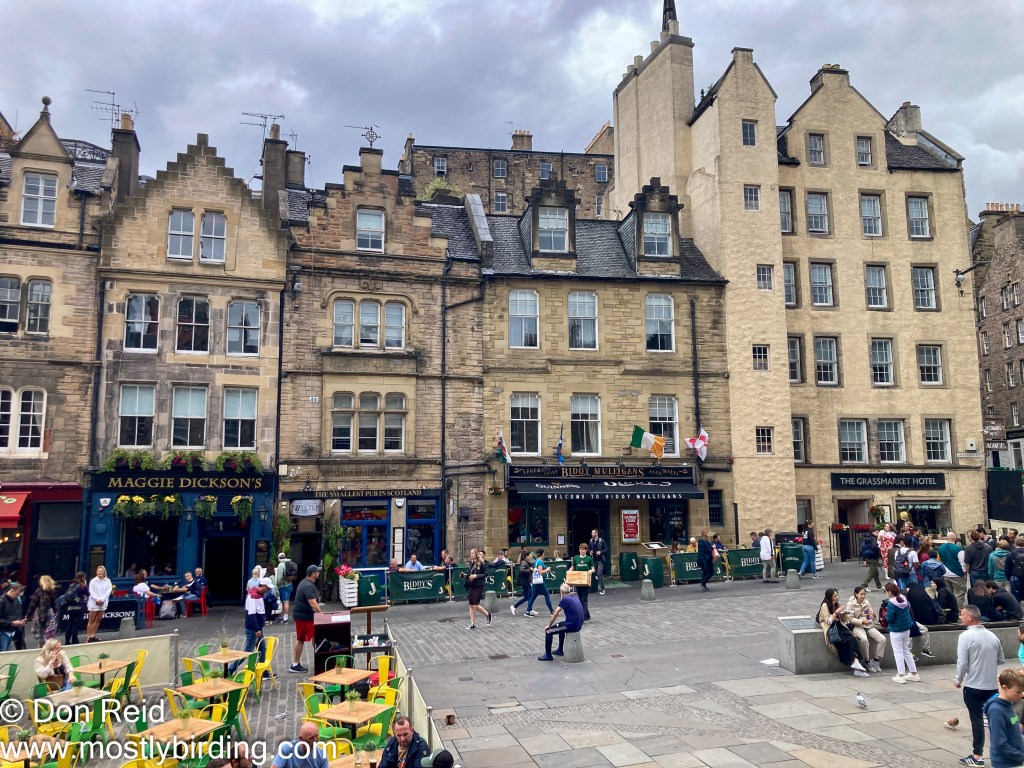
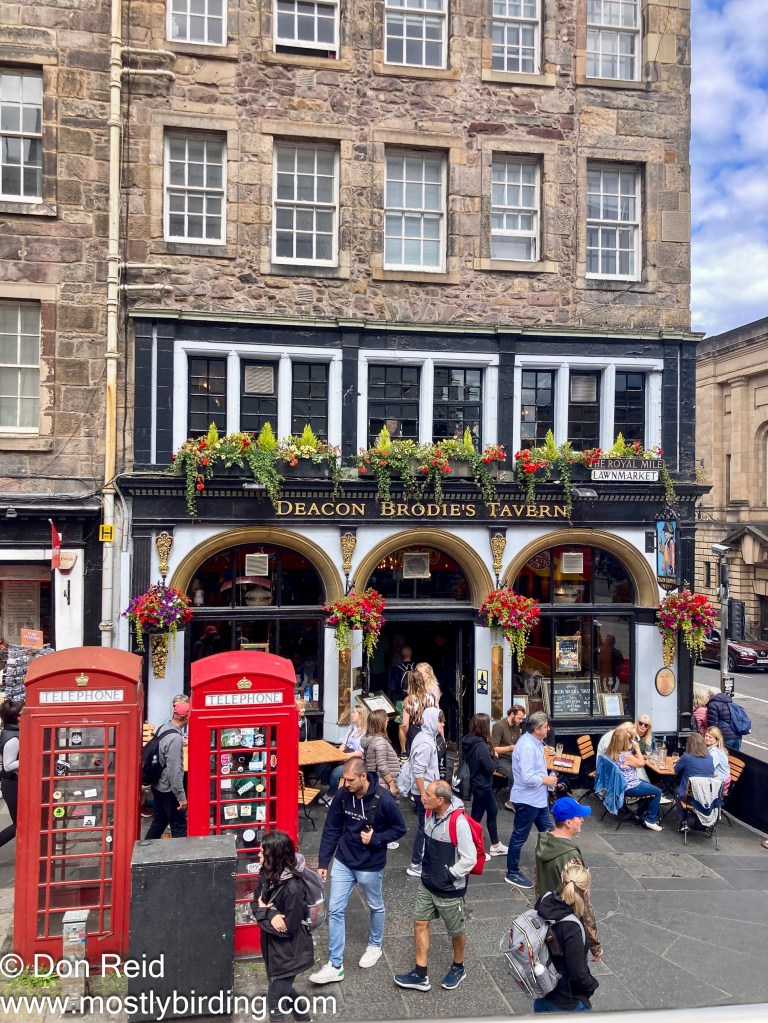
The bus did a one-hour circuit of the historic parts of the centre city while we admired the iconic buildings and were amazed by the crowds of tourists that filled every narrow street and corner – I don’t recall ever seeing a major city with so many tourists, not even Rome, although Venice possibly outdoes all of them.
EdinburghEdinburgh
We got off at the last stop before the square and walked back to where we had started, then found a small Sainsbury to get a lunch special for three pounds fifty – wrap, snack and drink – which we enjoyed in the park at the square.
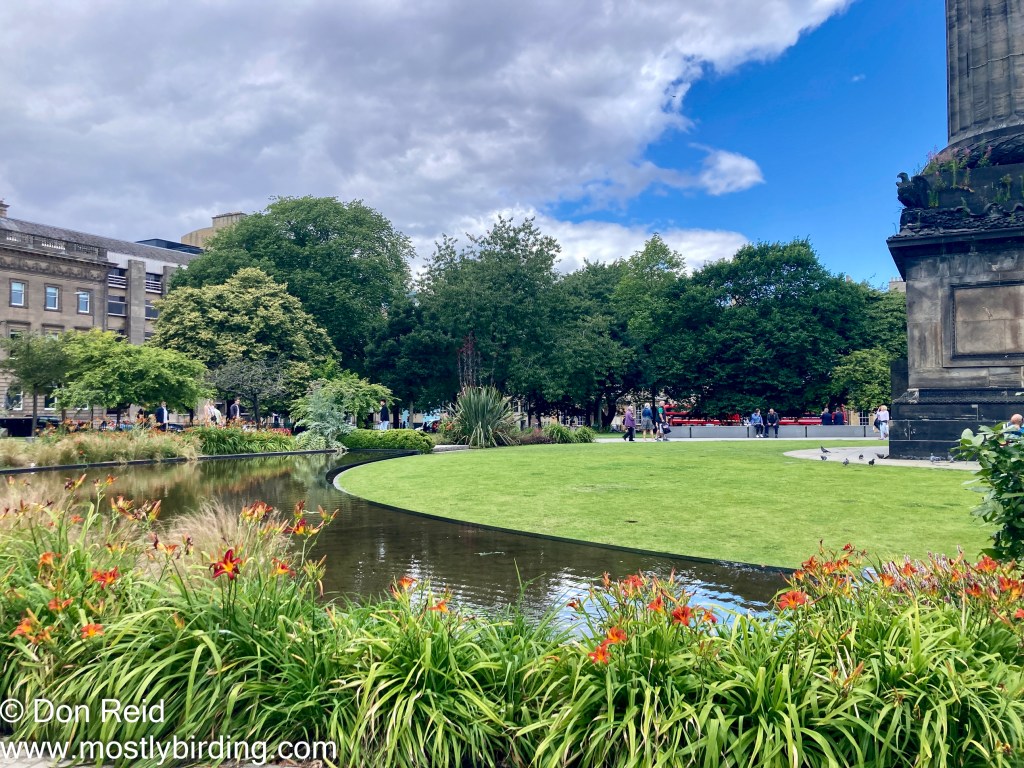
Lunchtime view of the square – EdinburghHandsome building and garden in central Edinburgh
Next on the agenda was a shopping session for Maia while I hung around and watched the passing show – never seen quite such a variety of people all seemingly trying to stand out from the crowd – what happened to just being ordinary?
The rest of the tour was done on foot, revisiting some of the sights we had seen from the bus – we weren’t always entirely sure where we were going but walked up and down hills and along crowded streets just taking it all in and popping into a few shops which had mostly tourist ‘stuff’ at premium prices so we were not inspired to buy anything (also proof of my Scottish heritage)
Edinburgh
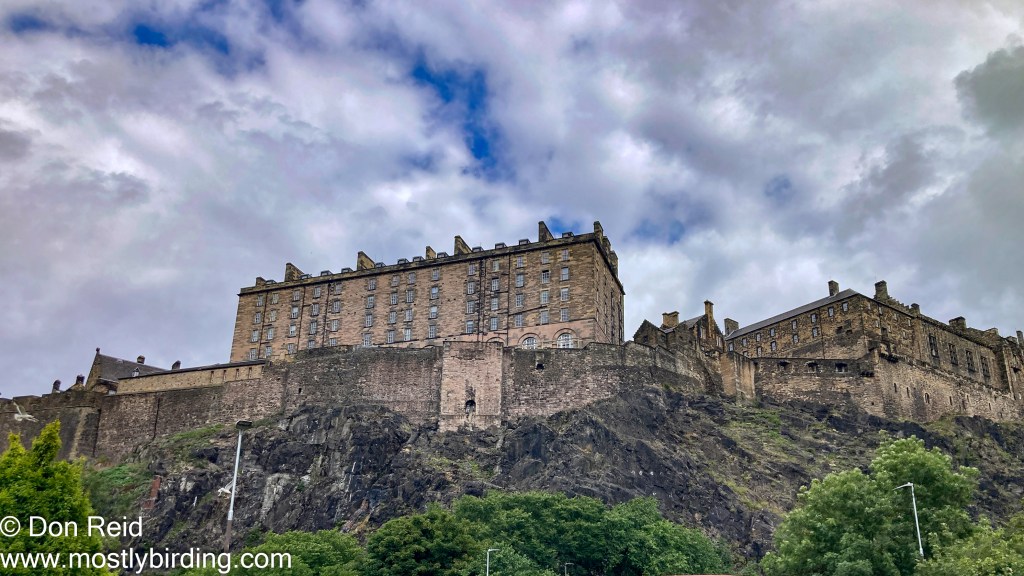
We did walk up to the entrance of the famous castle, where large stands have been erected for the Tatoo coming up in August – that must be amazing to experience.
Edinburgh CastleEdinburgh CastleEdinburgh Castle
Sated with the sights of Edinburgh and a bit weary of the incessant crowds, we hopped on the next red bus, which passed many of the sights once more before getting us back to the square.
The bus skirted this lovely natural park bordering on central EdinburghEdinburgh
From there we walked back to Prince’s Street where we found the No 25 bus and were soon on the slow trip back to the campus where the hotel was located.
By now it was early evening and we were in need of a more substantial meal, so we headed to the hotel restaurant for a burger, after which we were glad to get back to the room and prepare for a short sleep before getting up around 3 am to catch our flight to Amsterdam and onward to Johannesburg.
Getting home
Sunday’s trip back was somewhat stressful – despite getting to Edinburgh Airport at 4.30 am – in plenty of time for our 6 am flight, or so we thought – we were met with the sight of a check-in queue snaking back and forward 6 or 7 times and spent the next 45 minutes getting ever more panicky as the queue moved painfully slowly. We had underestimated the impact of the start of the European summer holidays on the time required for airport passenger processing.
The next hurdle of getting through security was almost as bad and we ended up literally running to get to the boarding gate, fortunately just in time. The rest of the trip went as expected and we arrived in Joburg at 9 pm, got a car and drove to Pretoria to our son James’s house for the night. On Monday we did the last leg of the trip back to George in a more relaxed fashion and were glad to see the happy faces of Gerda and Geraldine as we entered the baggage hall.
And there I draw the curtain on my week in Scotland – except these curtains were on the outside of the windows so couldn’t be drawn…
I was determined to make the most of this, my last day of birding opportunities – tomorrow I was due to collect Maia from the Flute School and spend the day exploring the delights of Edinburgh, before heading back home early the next day.
My first priority was to visit, or at least see, the famous St Andrews golf course – an absolute ‘Must See’ place if you are anywhere near it even if, like me, you are a non-golfing visitor to the area.
After a substantial breakfast (I couldn’t manage the black pudding or the baked beans on top of two eggs, a pile of bacon, mushrooms and fried tomatoes), I headed to St Andrews about 10 miles away from my B & B.
My intention was to park at the Old Course clubhouse and walk along the public pathway to the sea as suggested by the Scottish birding app which I had once again consulted for advice.
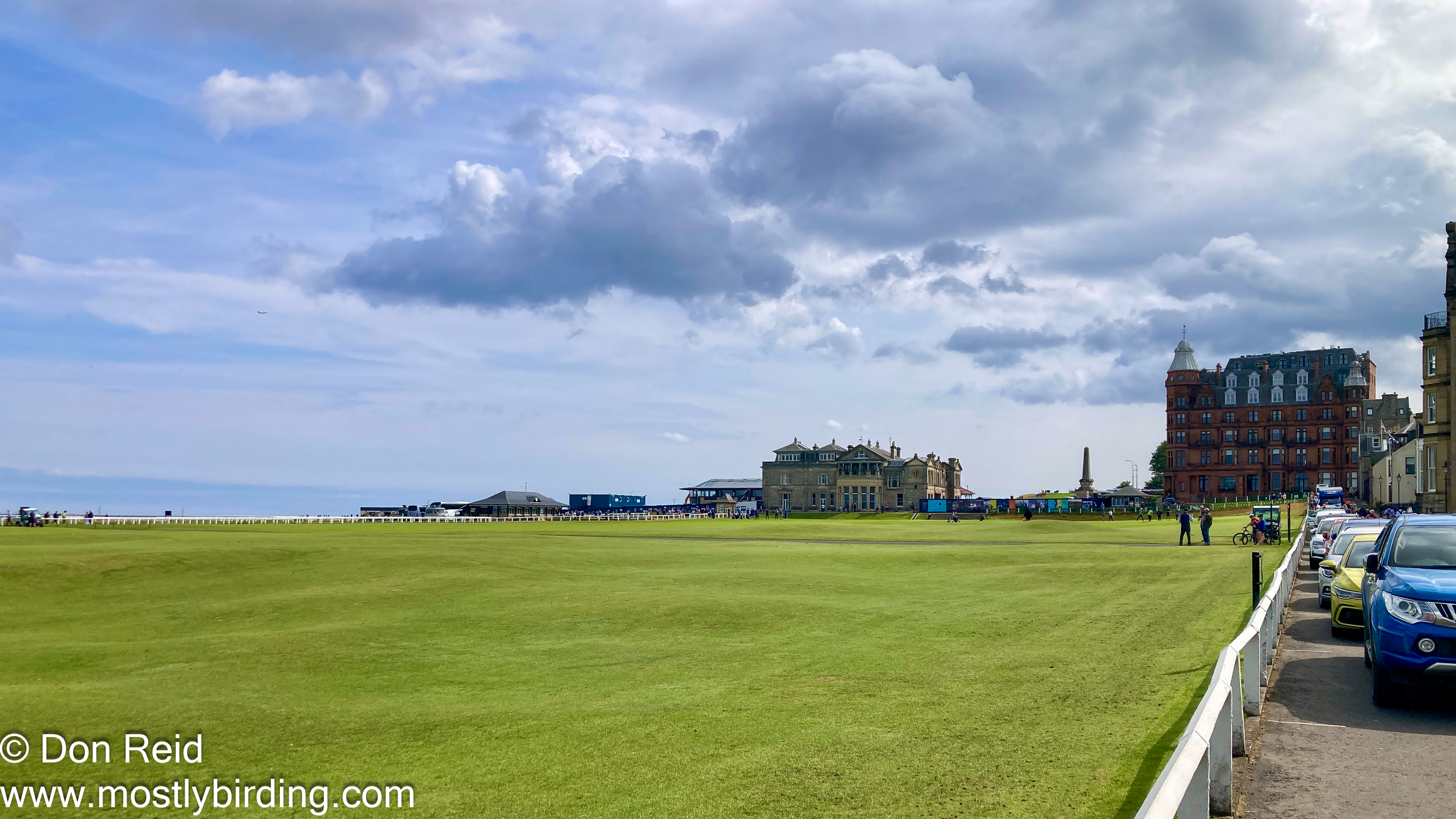
St Andrews
St Andrews village was busy and I had to make quick decisions about which turning to take, which had me going the wrong way down a narrow one way right in front of the famous golf course’s last hole.
Fortunately I realised my mistake fairly quickly and found an empty parking spot to pull into before I could cause mild chaos in front of the most famous golf course in the world – never mind that I was facing the wrong way and it was obvious to all passers-by what I had done.
St Andrews
After taking a couple of iphone images of the classic scene before me I managed to extricate myself but, in the process, missed the next turning and ended up much further down the road, heading away from where I had hoped to find the access road to the parking area.
St Andrews
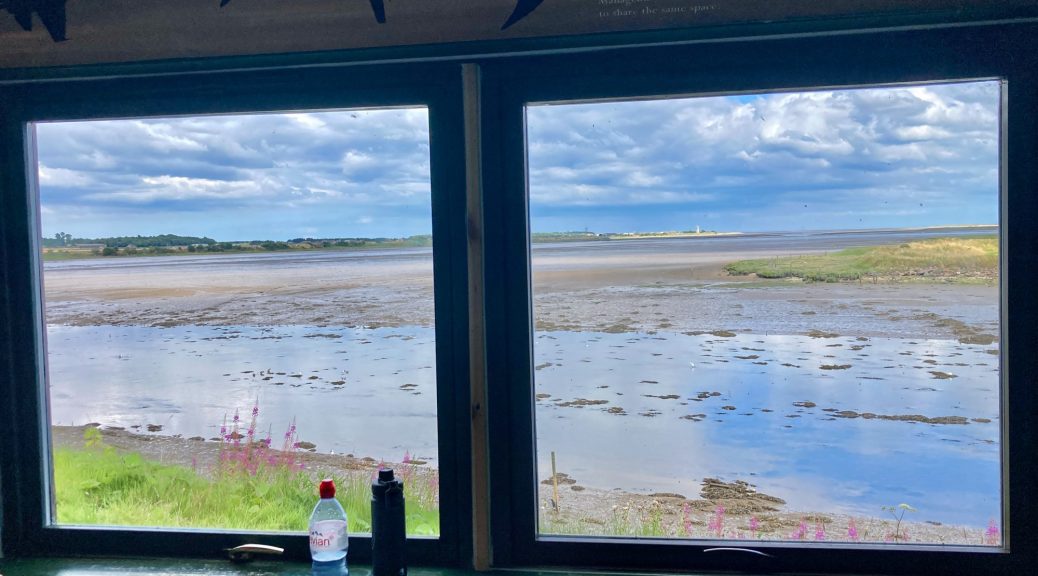
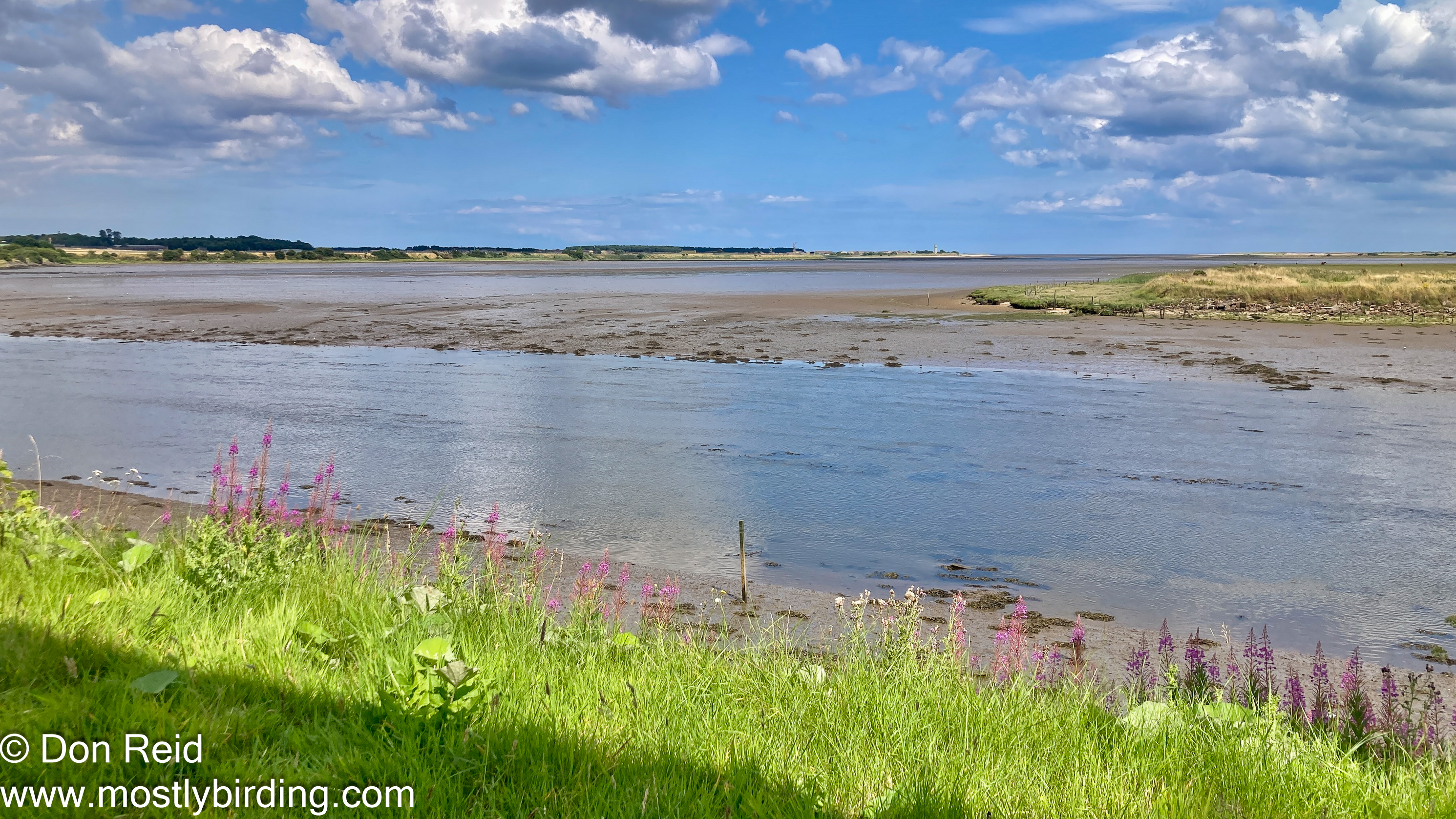
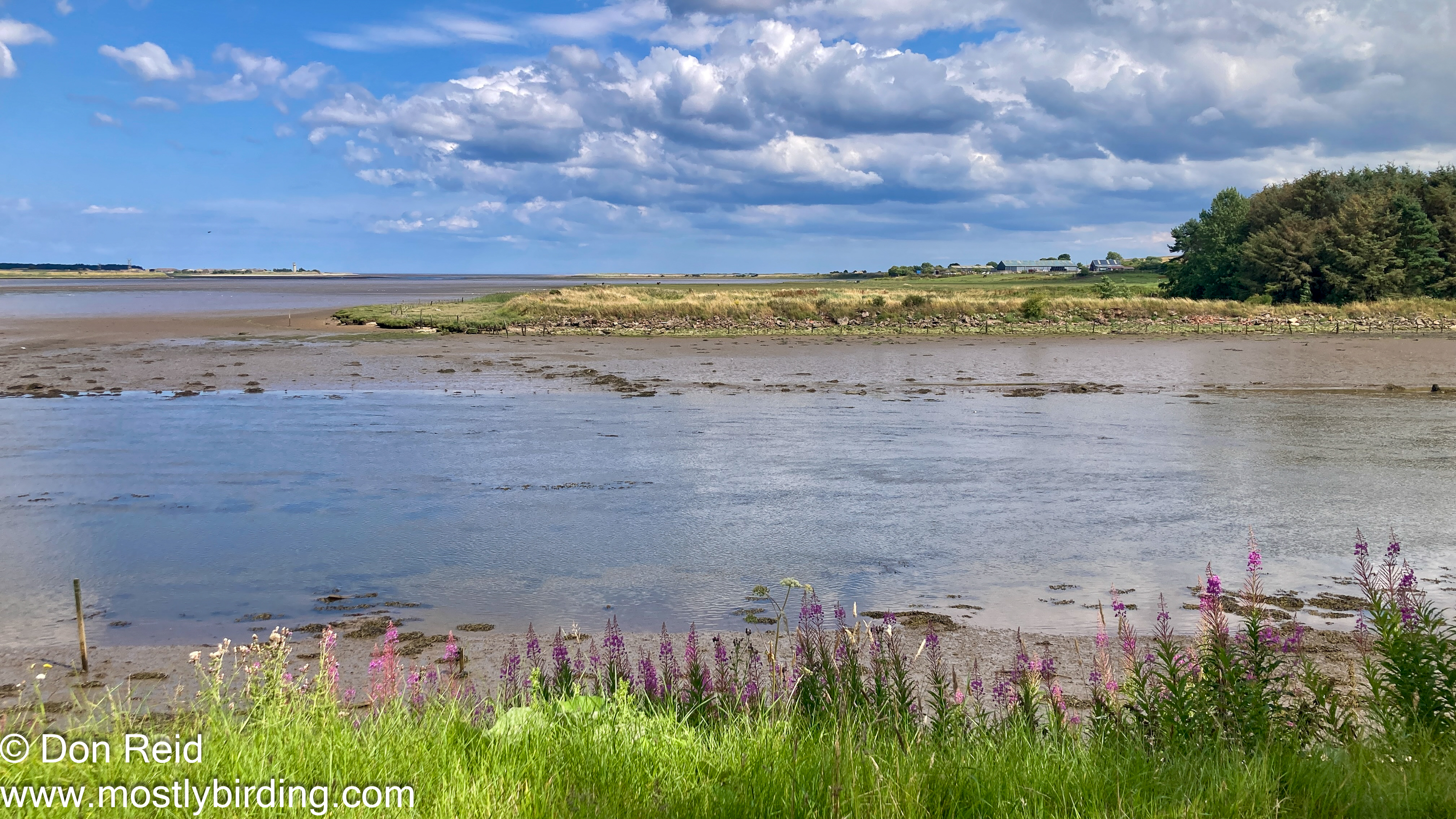
River Eden Estuary
This turned out to be the best thing as it led me to the hide at the River Eden estuary that the birding app had also mentioned as a good viewing spot for waders, depending on the tidal conditions.
I parked in the designated area and walked through the adjacent park to the river / estuary where I found the hide – locked but with instructions to phone the local nature office for the combination. That let me into the spacious hide which I had to myself for the next four and a half hours.
Why so long? Well, when I got there after 11 am the water levels were still high, with birds crowded along the narrow sandy edge that was exposed, but the longer I stayed the lower the water levels dropped, exposing more muddy fringes for the shorebirds, and creating ideal wading conditions for those birds that like the shallows.
Compare the images below to see the difference an hour and a half made
River Eden Estuary – just after I arrivedRiver Eden Estuary – an hour and a half laterRiver Eden Estuary – just after I arrivedRiver Eden Estuary – an hour and a half later
It was fascinating to watch the changes and the movement of the birds as they took their turns flying in and out – so much so that I could not tear myself away with my only regret that I hadn’t brought any lunch with me. I did go to the car to fetch my flask of tea and a snack bar which was still in the cubby to sustain me to 4 pm when I left.
Seeing Red ….. shanks
Most prominent of the birds was the Common Redshanks which numbered over 400 at a rough count!
Considering I have only ever seen one Common Redshank in 40 years of birding (in Botswana) it was quite something to see it ‘at home’ in such astounding numbers.
Common Redshanks Tringa totanus River Eden Estuary
When I arrived at the hide, they were all bunched close together on the narrow sandy edge on the opposite side of the river, so dense I did not spot them immediately as they appeared at a glance to be part of the vegetation.
Gradually they started to spread out as the sand widened and, as if instructed, they all marched in unison to the water’s edge, then started flying off individually and in small groups to forage, some returning later.
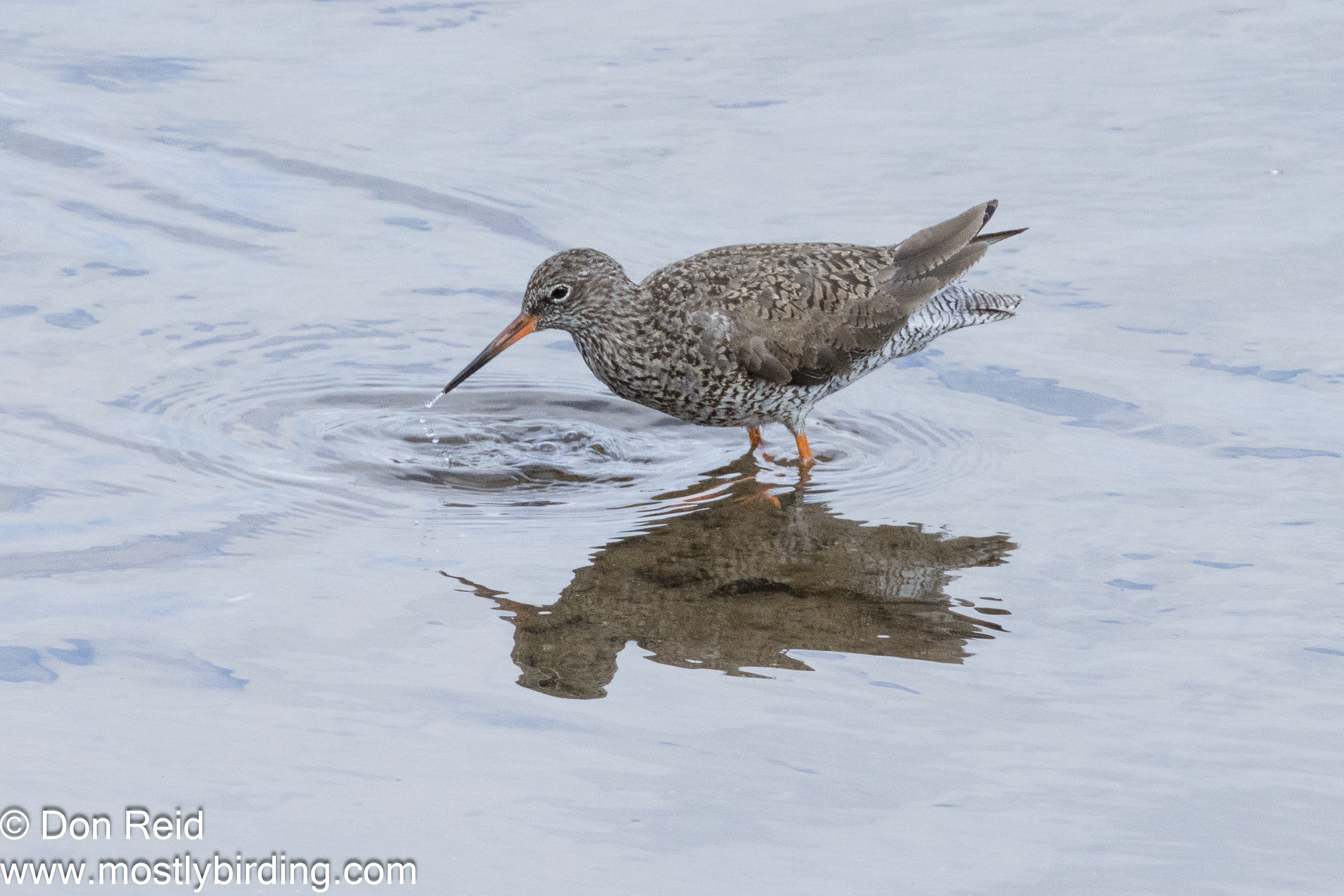
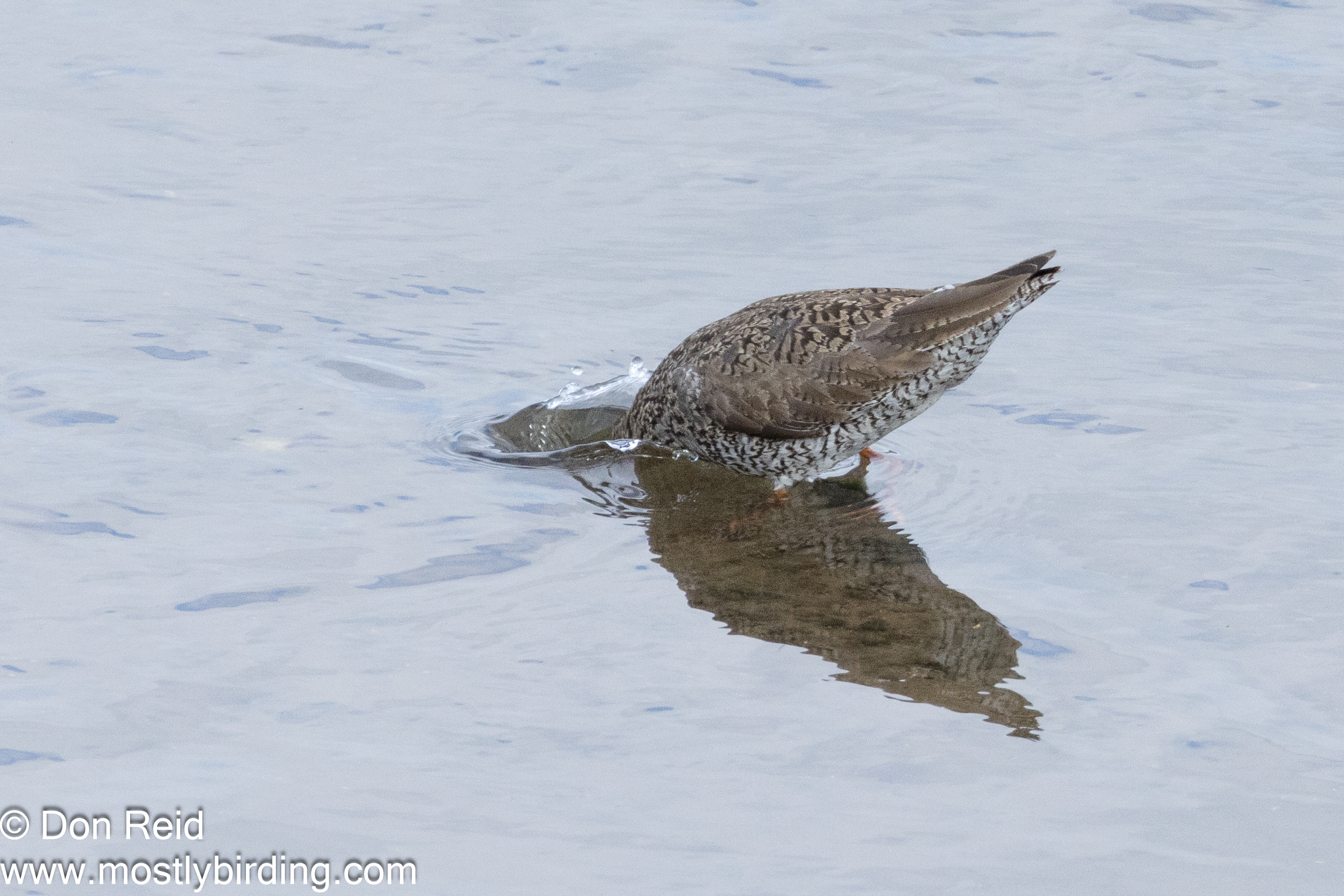
I was especially happy when one or two came to forage right in front of the hide, and I was able to take some decent images of this bird which had managed to stir the senses of an excited birder
Common Redshank Tringa totanus River Eden EstuaryCommon Redshank Tringa totanus River Eden Estuary
I also tried my hand at some in flight images with my new camera which I’m still getting to know – a few of the dozens of images turned out quite nicely…. I was particularly pleased with this one…
Common Redshank Tringa totanus River Eden Estuary
And Many Others ….
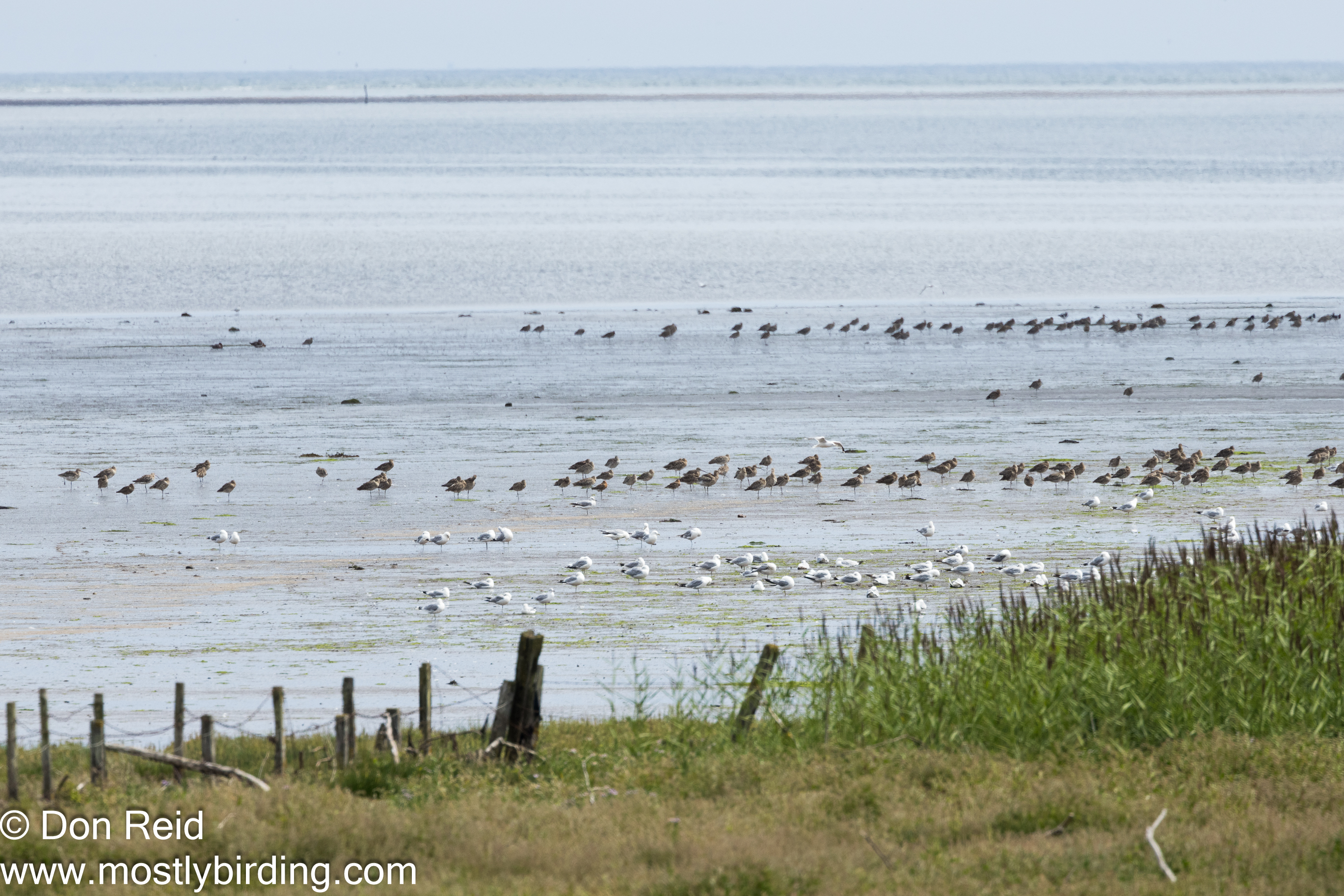
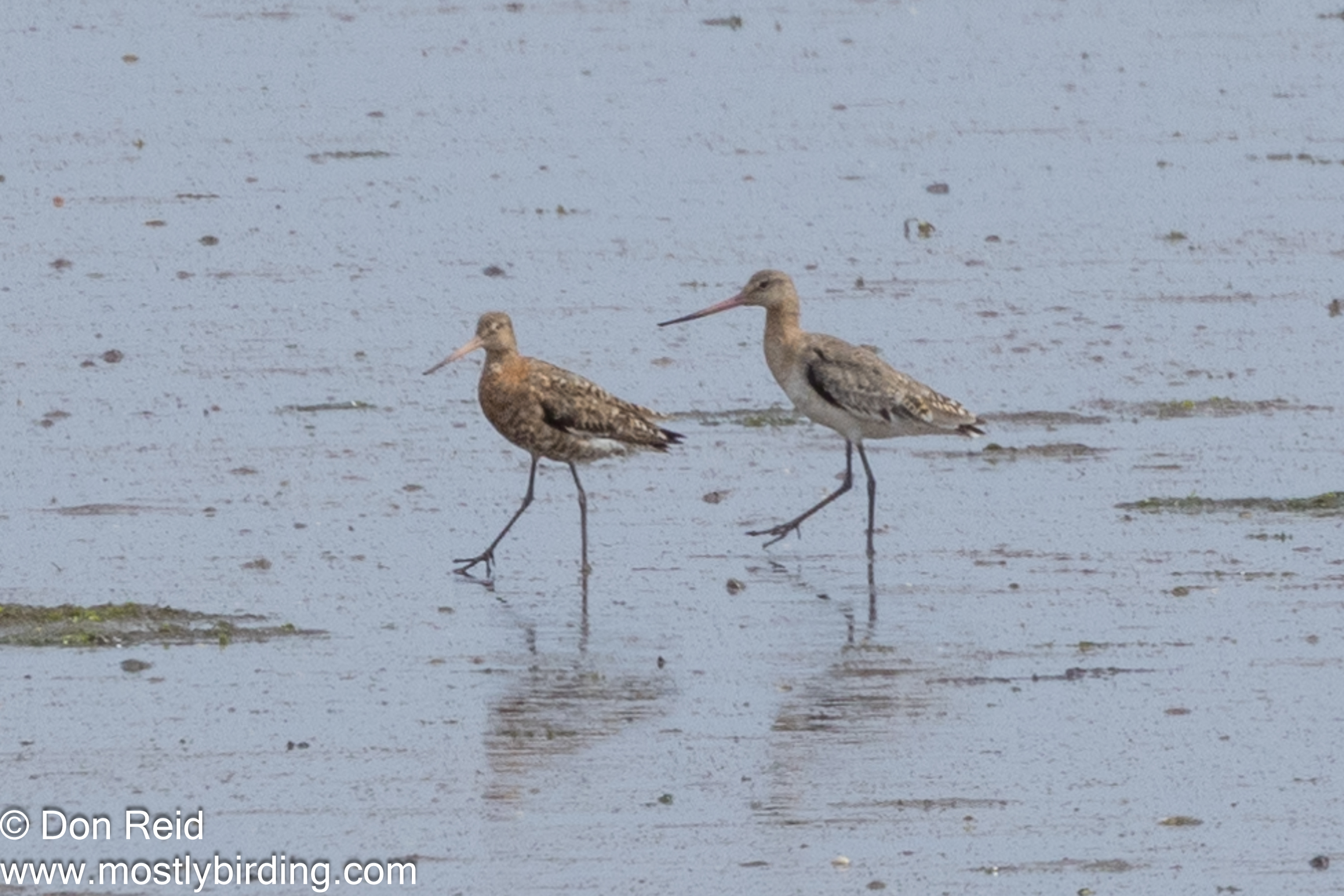
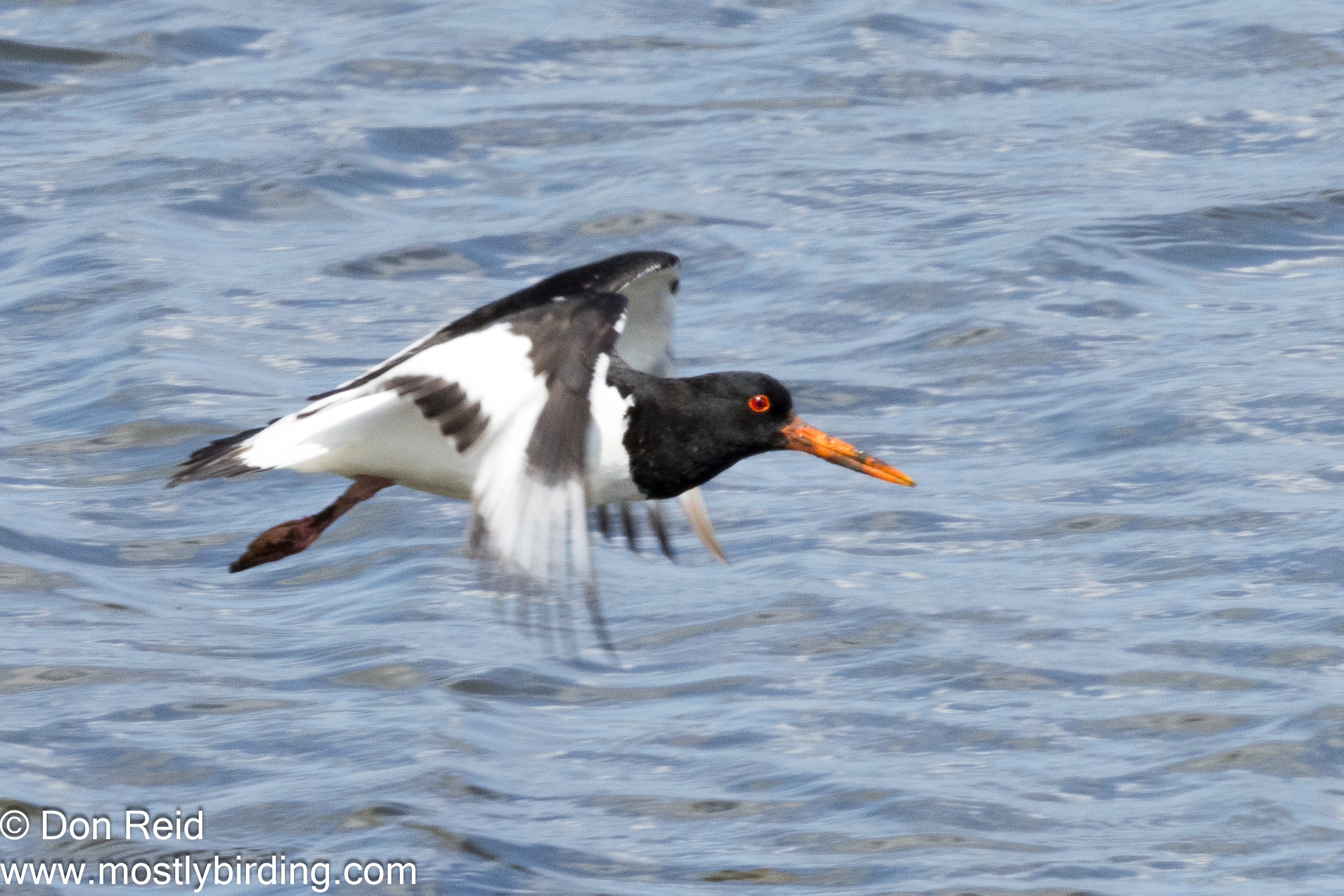
Scanning the scene before me just after entering the hide, I could see large numbers of birds on a distant sandbank, still partially submerged – in the image below the front row of white birds are gulls while the remainder of darker birds are Eurasian Curlews, numbering in the hundreds as well as Black-tailed Godwits, Eurasian Oystercatchers and others
River Eden EstuaryBlack-tailed Godwit Limosa limosa River Eden EstuaryEurasian Oystercatcher Haematopus ostralegus River Eden Estuary
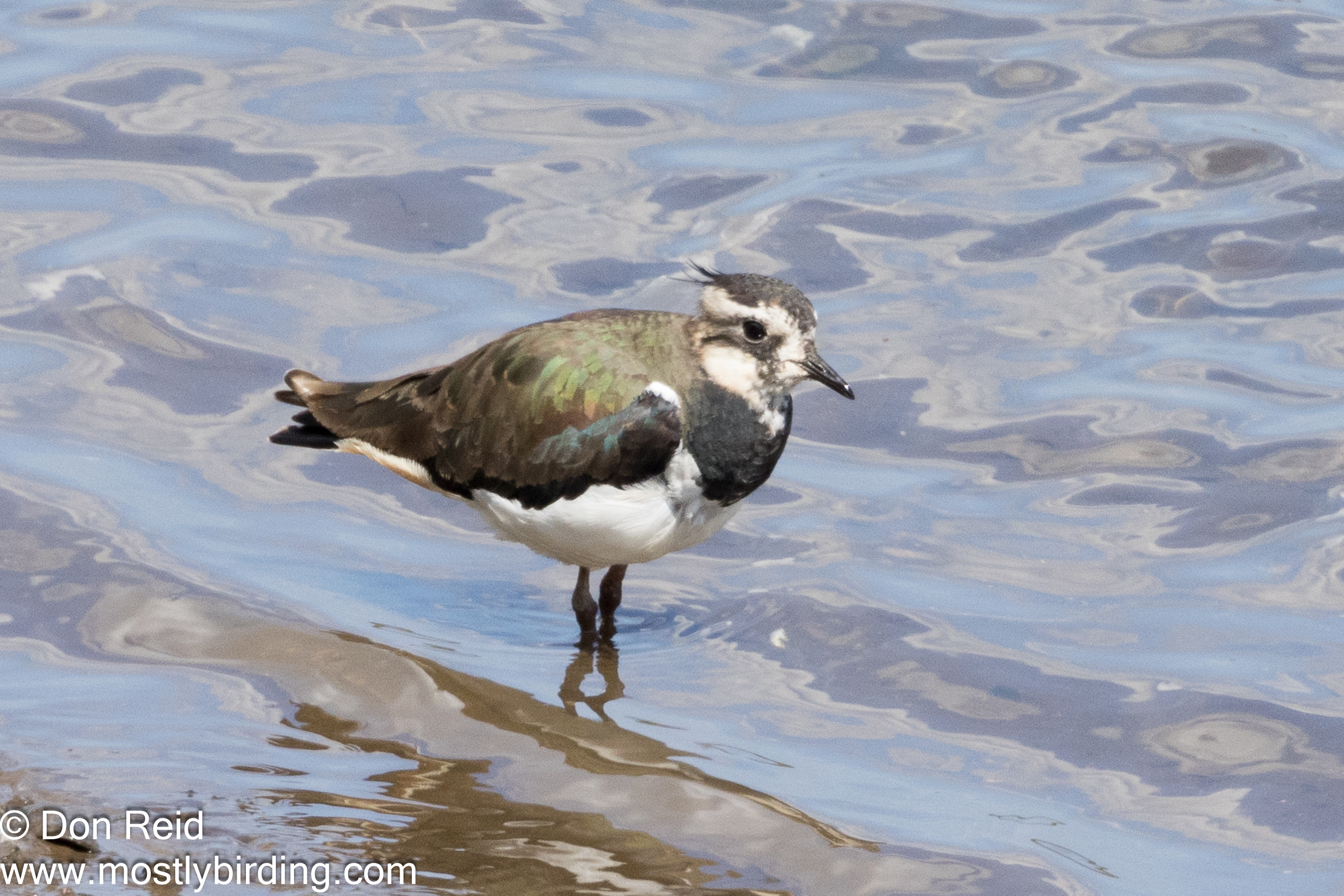
Northern Lapwings were as plentiful, including many juveniles without the crest of the adults
Northern Lapwing Vanellus vanellus River Eden EstuaryNorthern Lapwing Vanellus vanellus River Eden Estuary
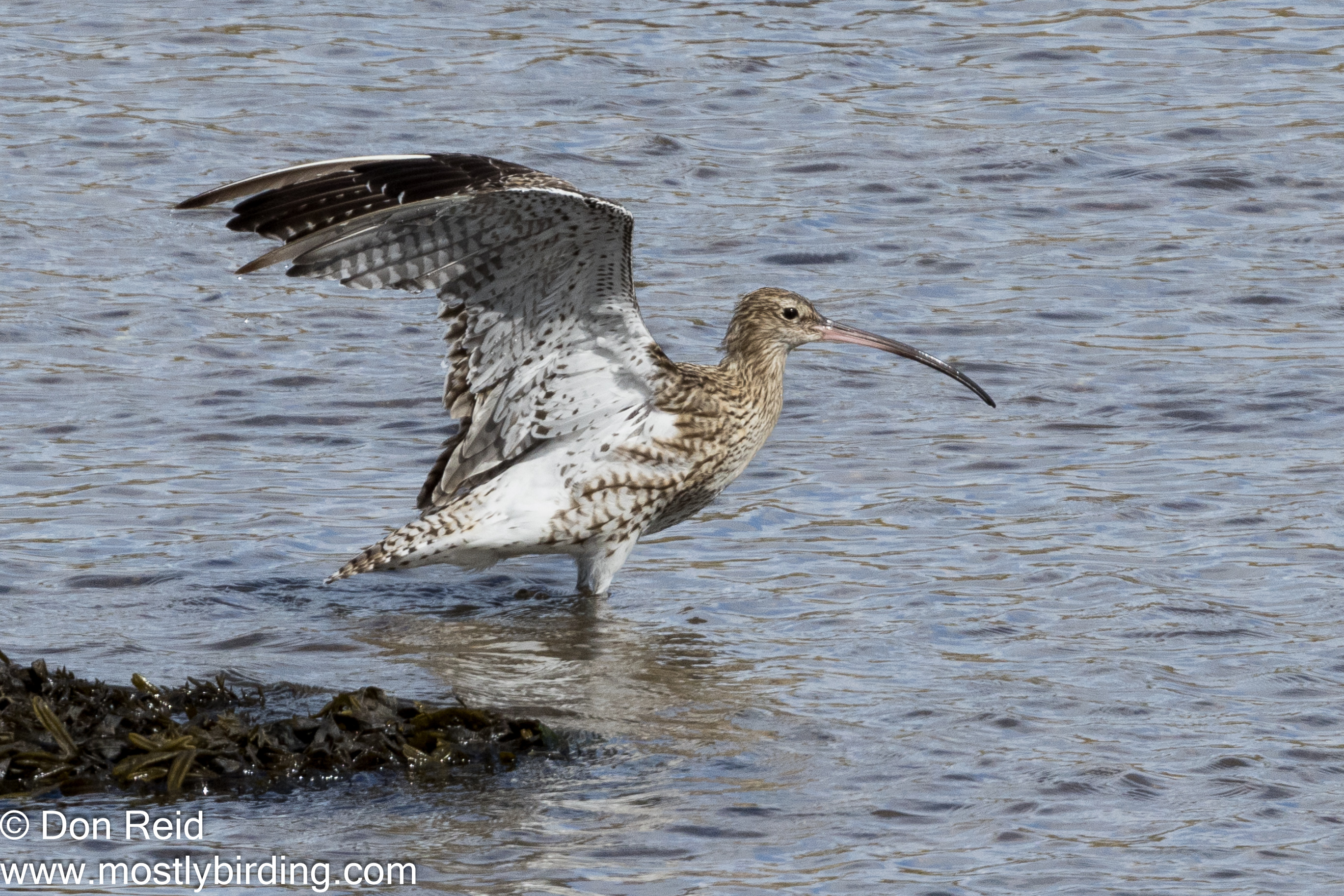
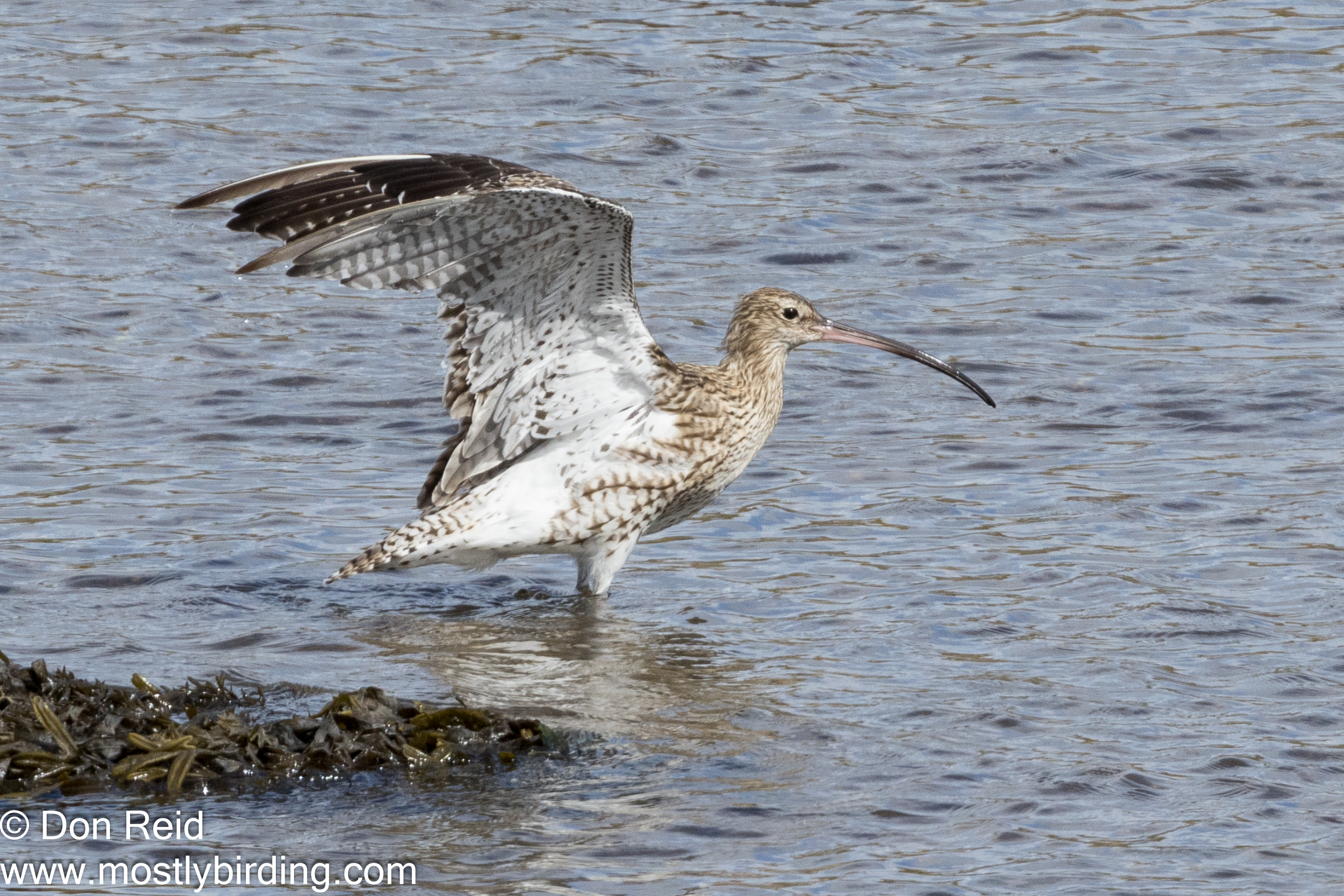
As the water level dropped, the massed birds began to disperse. Eurasian Curlews approached within shooting distance of the hide, probing with their long ungainly looking bills into seaweed as it became exposed
Eurasian Curlew Numenius arquata River Eden Estuary
Some Familiar Birds
Among the throngs of birds not generally seen in my home country were some familiar species that occur back home or are regular migrants
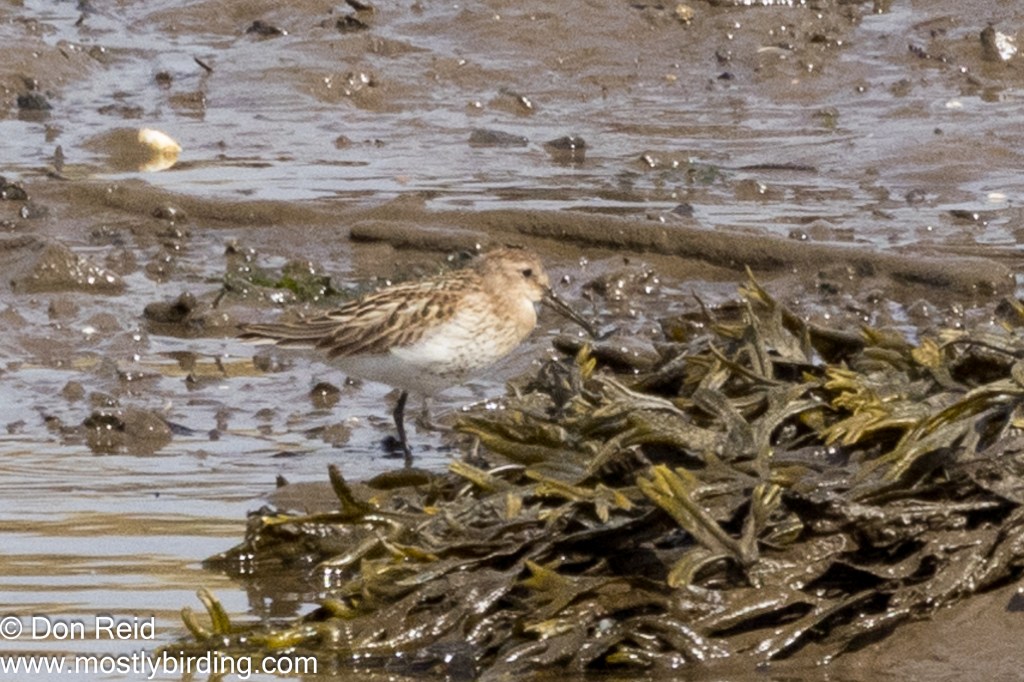
Little Egret Egretta gazetta River Eden EstuaryGrey Heron Ardea cinerea River Eden EstuaryLittle Stint Calidris minuta River Eden EstuaryCommon Sandpiper Actitis hypoleucos River Eden Estuary
The Gulls
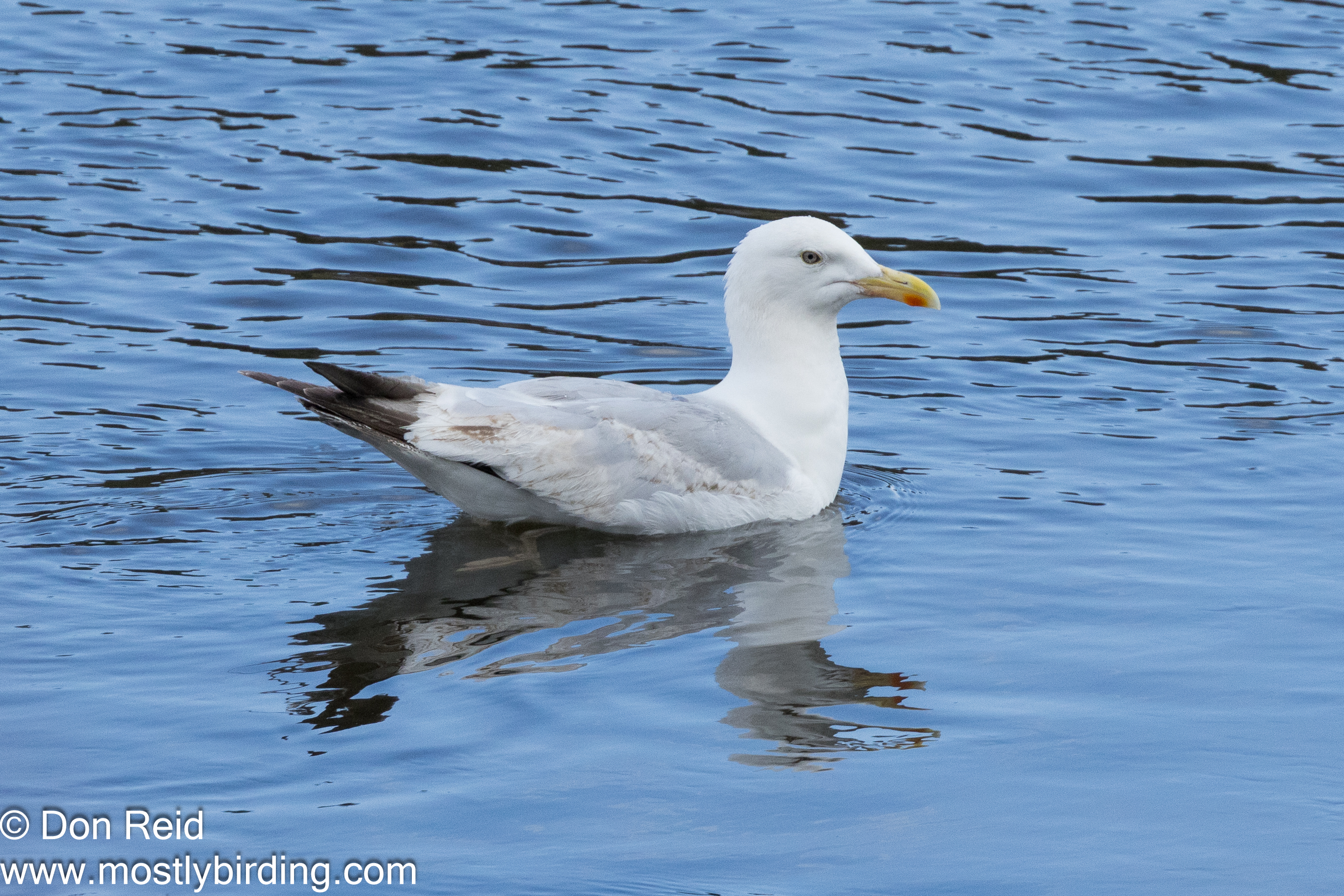
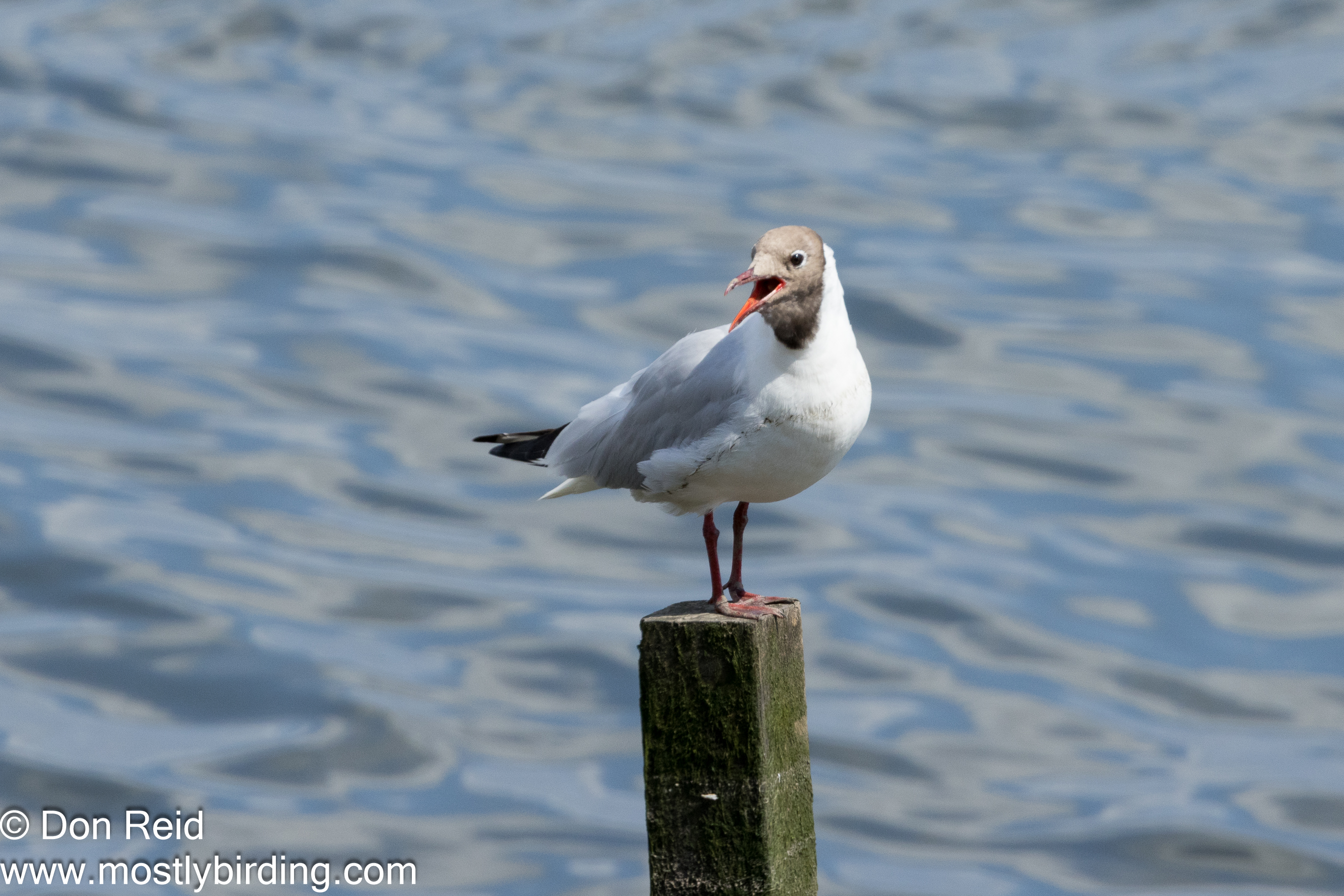
Gulls were initially strung out across the mud flats, then dispersed to other parts of the estuary – a few came close to the hide, providing an opportunity to get a photo of two of the three gull species present – the Lesser Black-backed Gulls stayed too far away for any chance of a reasonable photo.
European Herring Gull Larus argentatus River Eden EstuaryBlack-headed Gull Chroicocephalus ridibundus River Eden EstuaryBlack-headed Gull Chroicocephalus ridibundus River Eden Estuary
The Swimmers
Swimmers also appeared with Eiders prominent and later a group of Common Mergansers (Goosander) and a couple of Mallards.
Common Eider (female) Somateria mollissima River Eden EstuaryCommon Merganser Mergus merganser River Eden EstuaryMallard Anas platyrhyncos River Eden Estuary
Still More
An unexpected bird on the shoreline….
Carrion Crow Corvus corone River Eden Estuary
A Kingfisher caused a moment’s excitement as it flew low across the river and settled briefly on a fence but vanished almost immediately.
The scene in front of the hide continued changing right up until I reluctantly left to explore further on my last day.
Tentsmuir Nature Reserve
Next stop was also found by chance as I drove away from St Andrews and saw the signboard for Tentsmuir Nature Reserve which I knew of. Following the road which became single again for a few miles, I took a short detour to get coffee and cake (no sandwiches as ‘the kitchen closes at five’ I was told), then carried on to the reserve entrance, parked and set out on a walk down the Icehouse trail which I hoped would take me to the beach.
The trail went through the forest and emerged into open undulating ground but all I managed was a distant view of the sea as I was tired by now. I slogged back to the car, drove back to the B & B and walked – again – to the village hotel for another pleasant supper to round off the birding side of my trip.