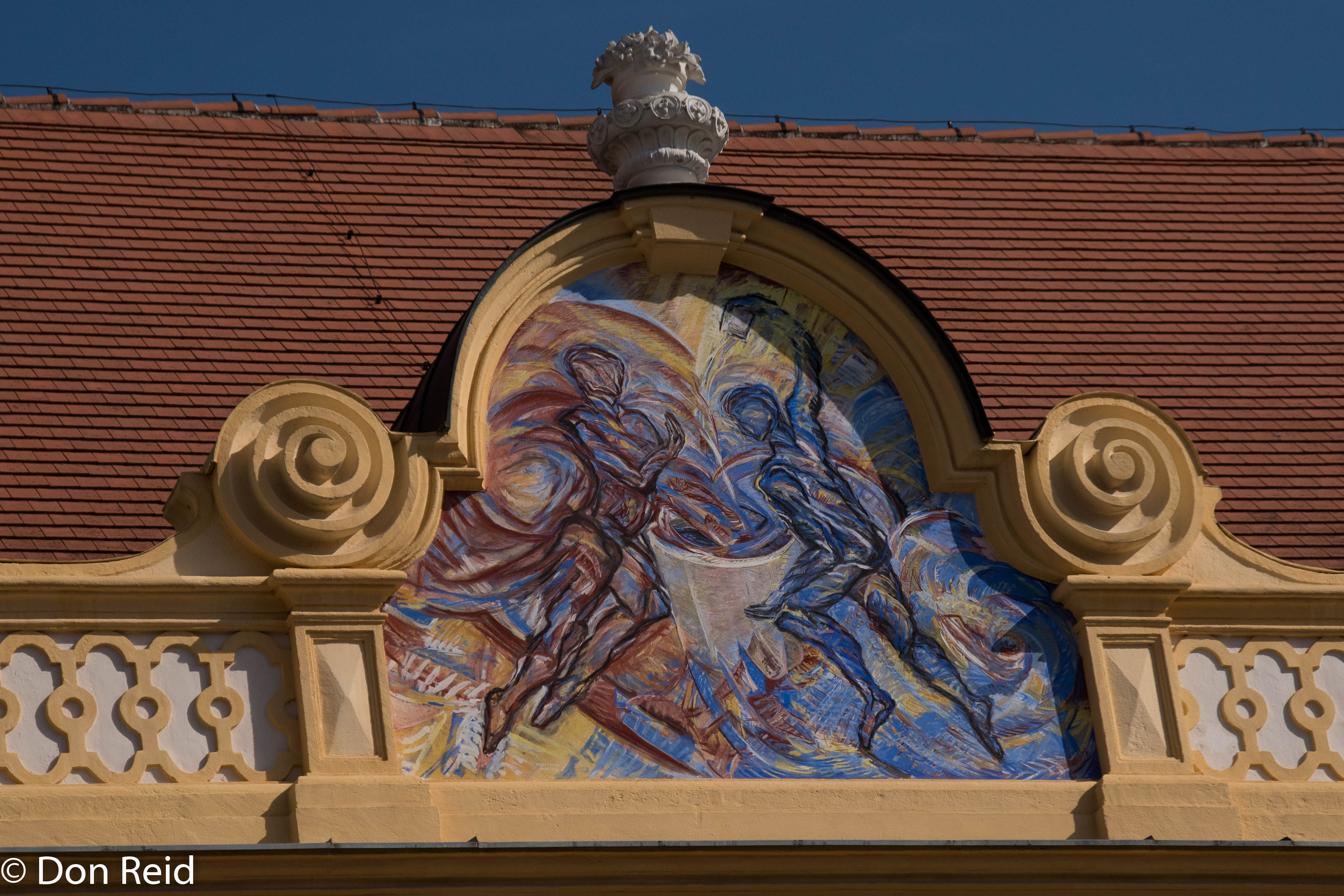
Previous posts on our Danube River Cruise were about the places visited during the eight-day cruise, this one is about the river cruising experience itself and some of the special the sights along the way……….
The Route
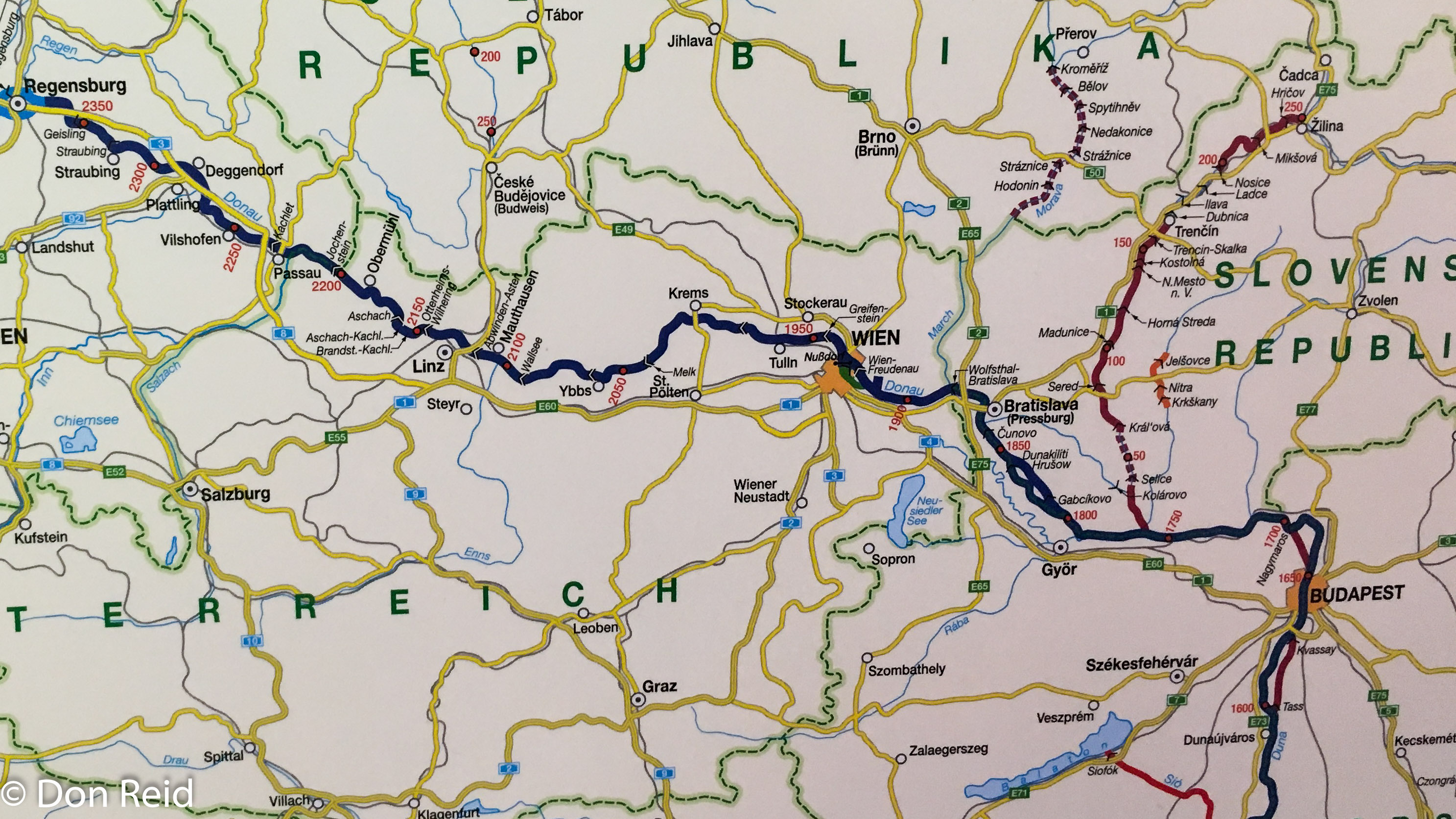
Cruise route map – Passau to Budapest and back through Germany, Austria, Slovakia and Hungary
The Boat
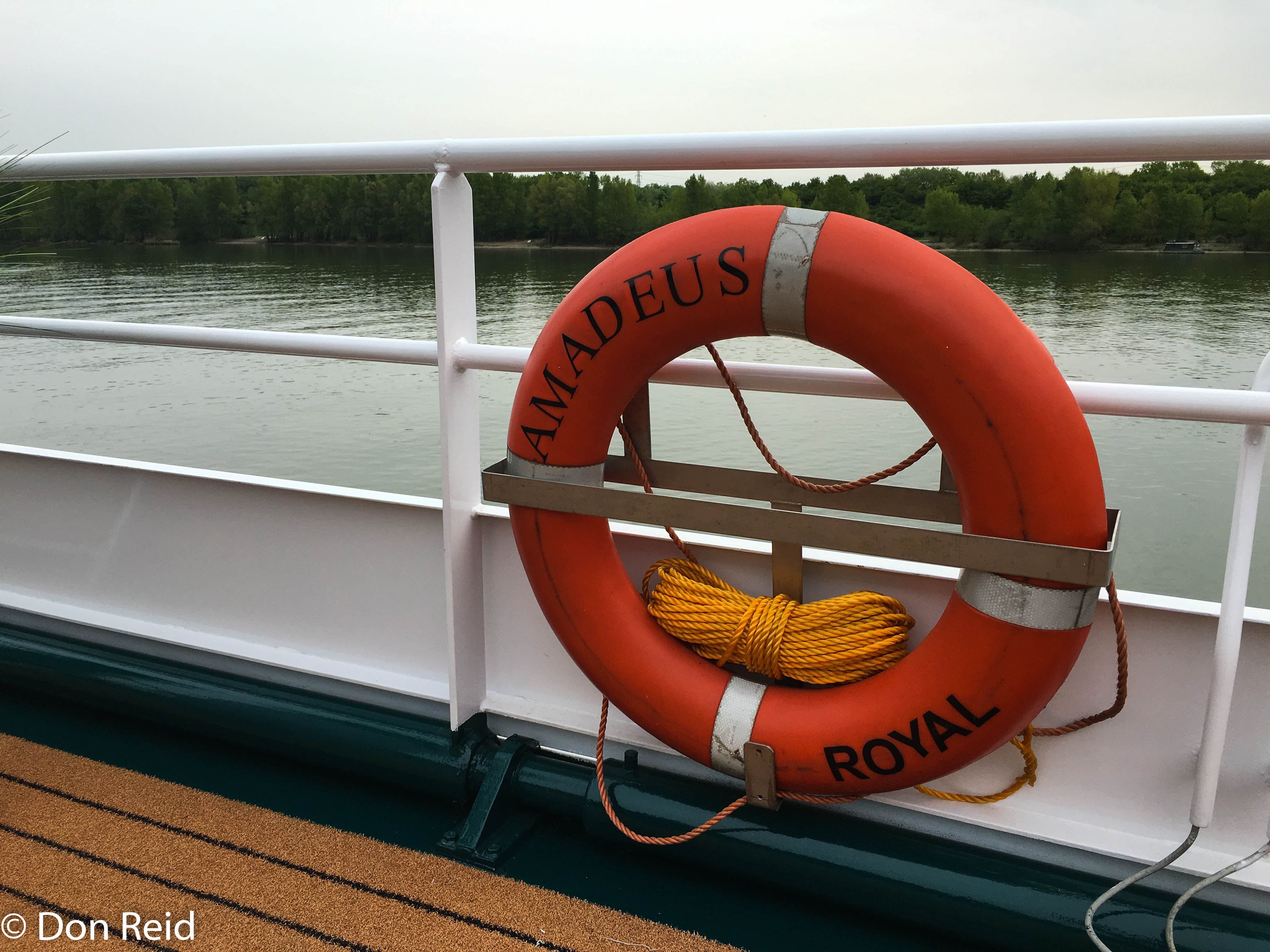
The Amadeus Royal was our home for the cruise duration and provided all the comforts we expected
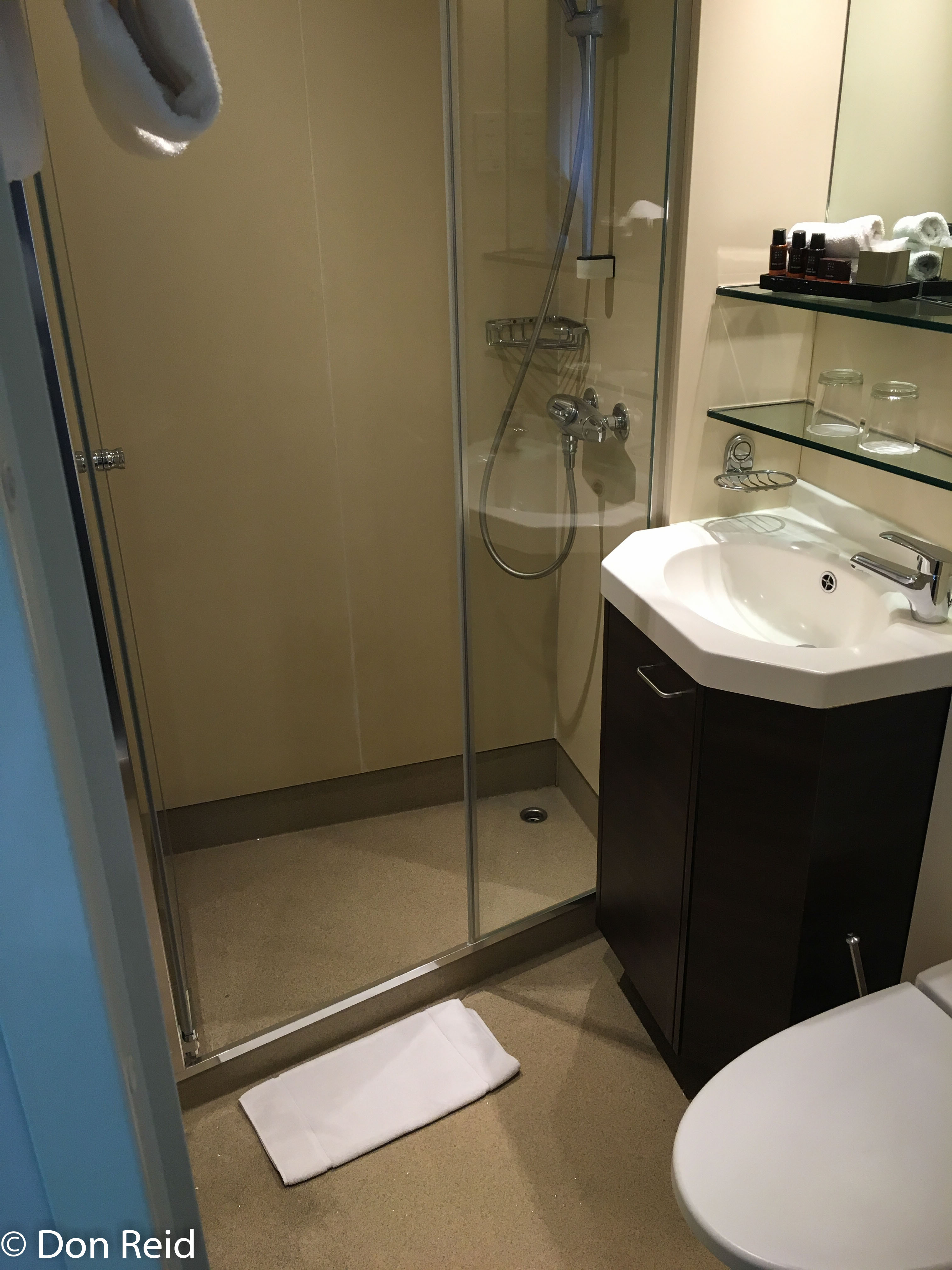
Our embarkment point at PassauTea and Apfelstrudel in Passau just before boarding (What’s on Gerda’s mind?)Amadeus Royal – the compact bathroomAmadeus Royal – unpacking in our cabinOff we goLeaving Passau
Riverside Scenery
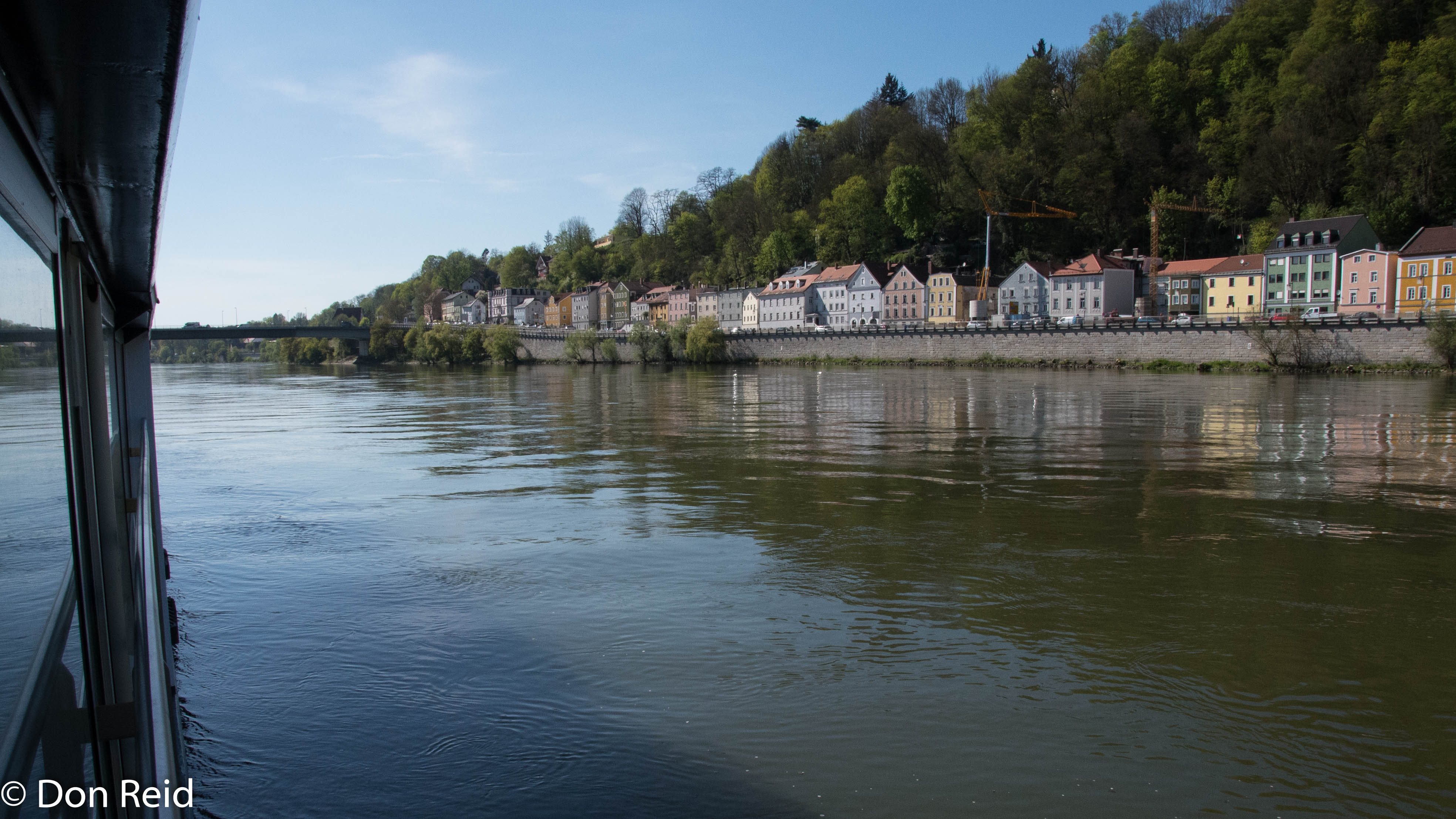
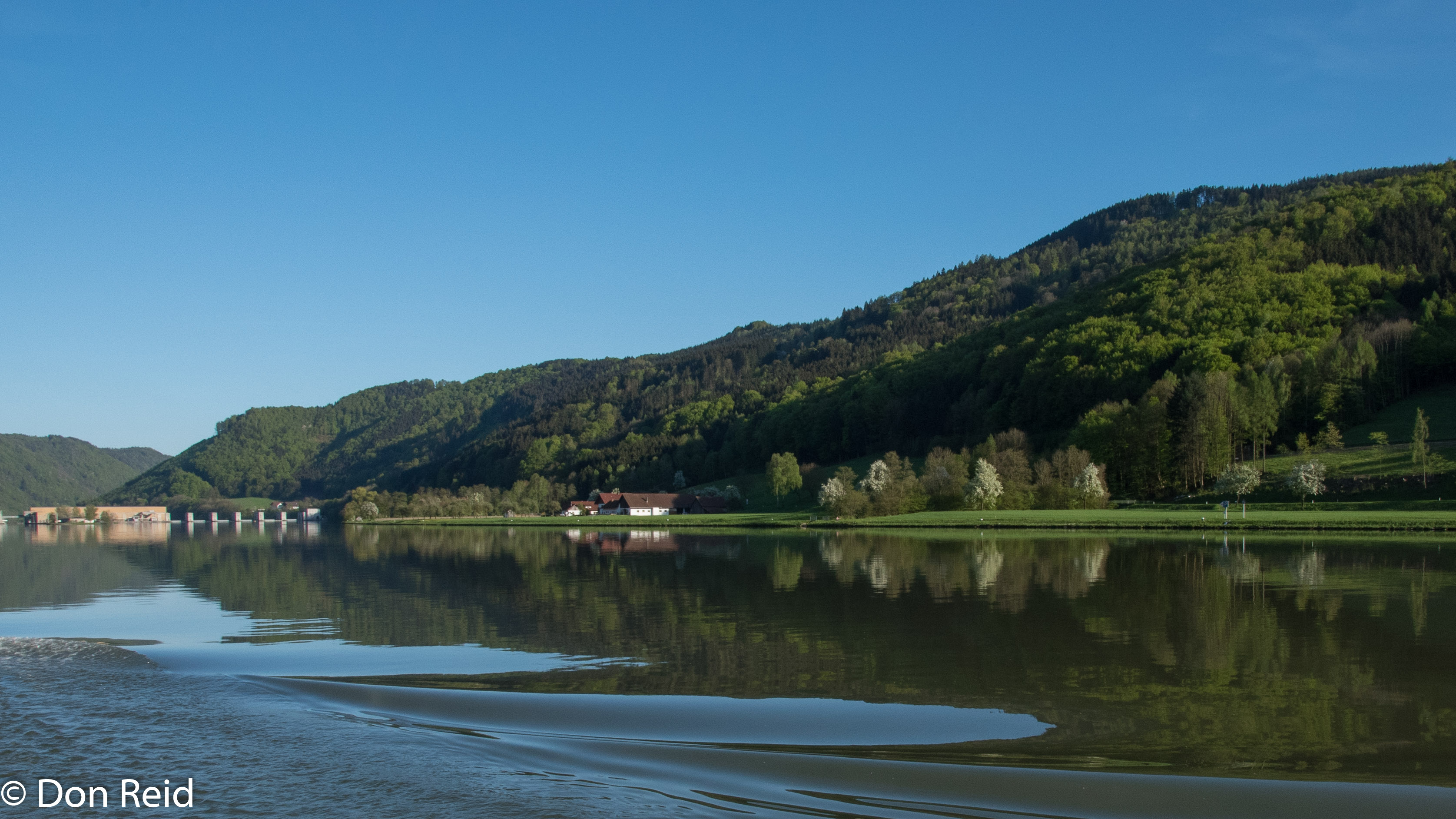
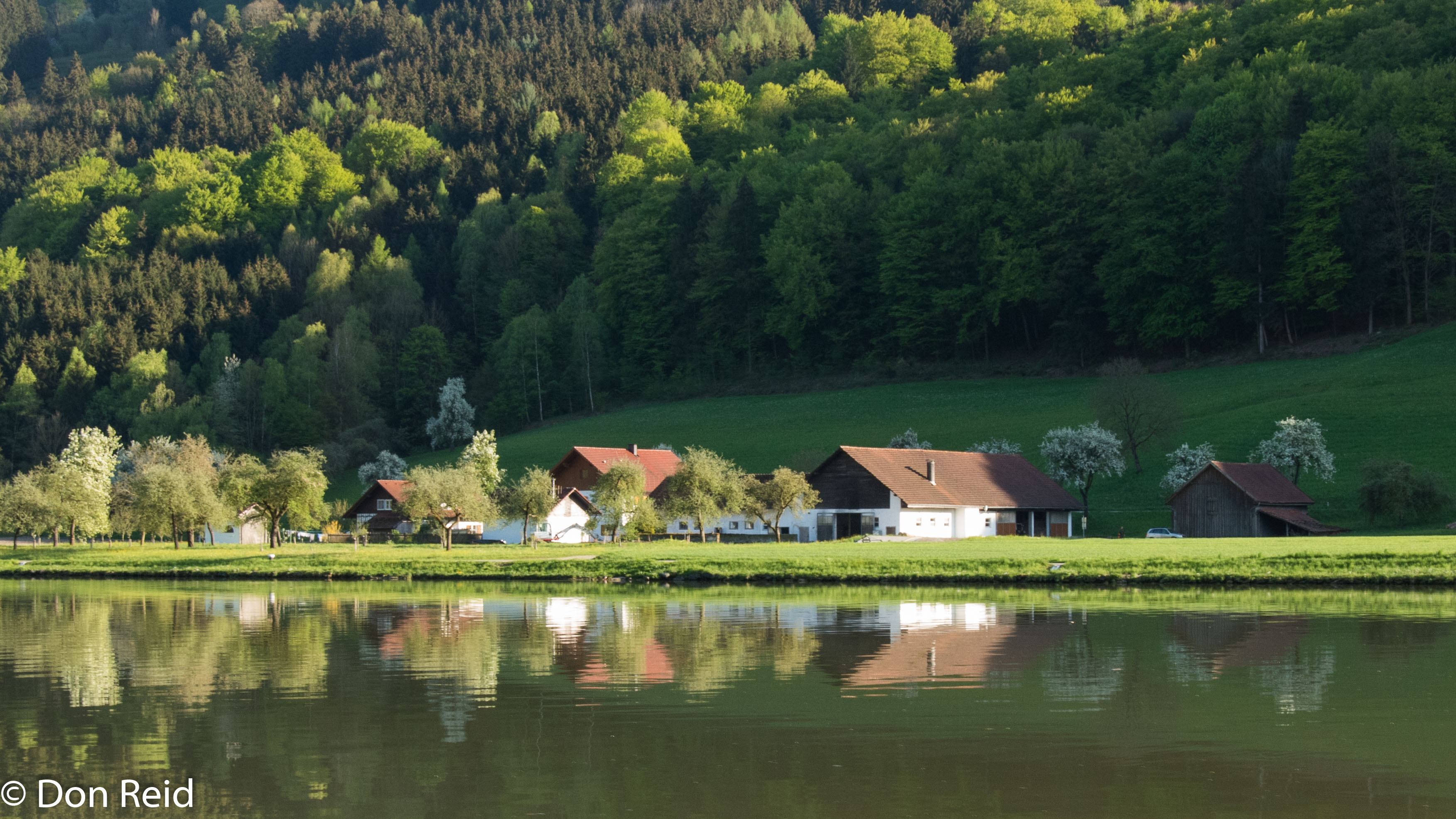
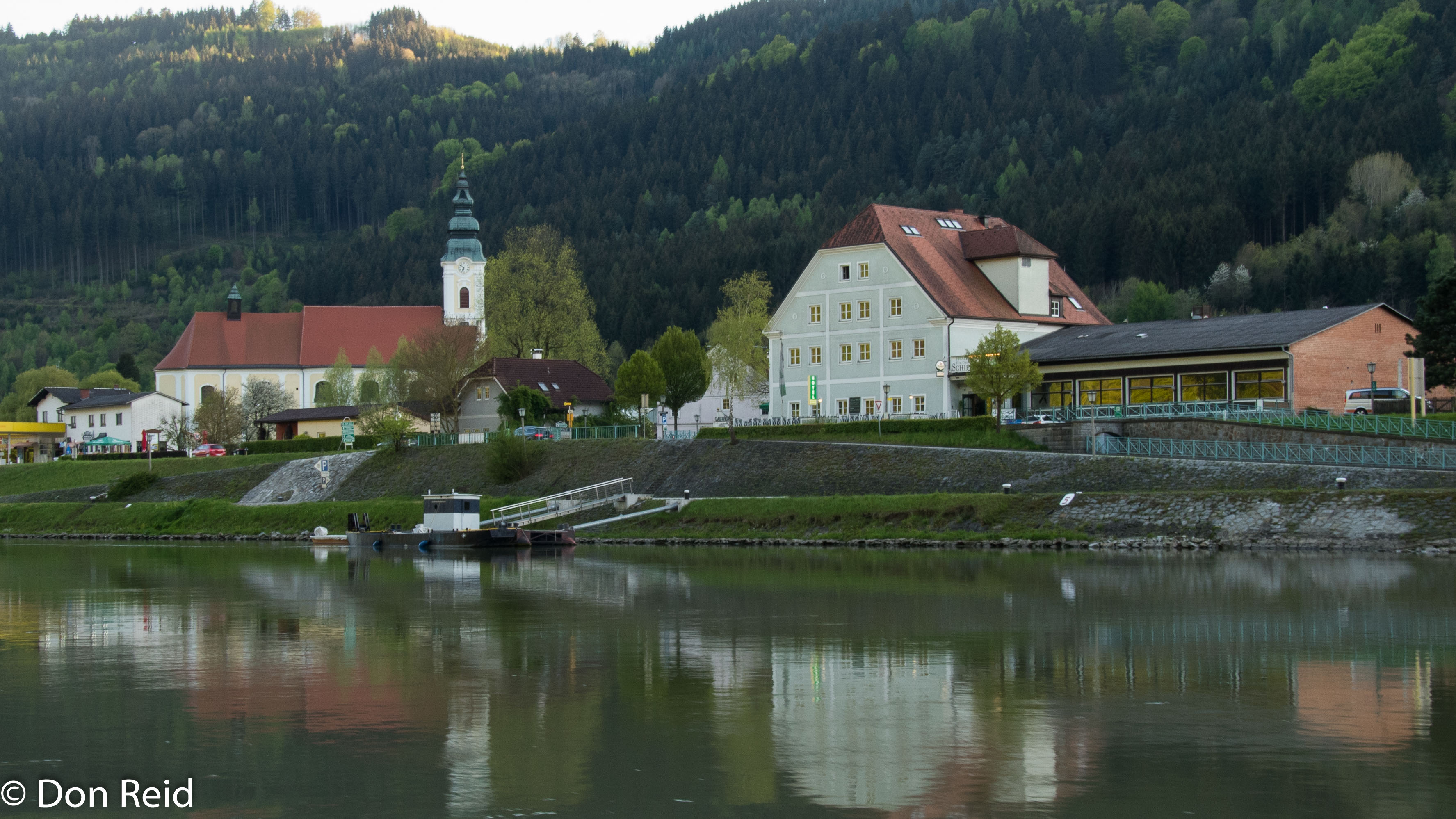
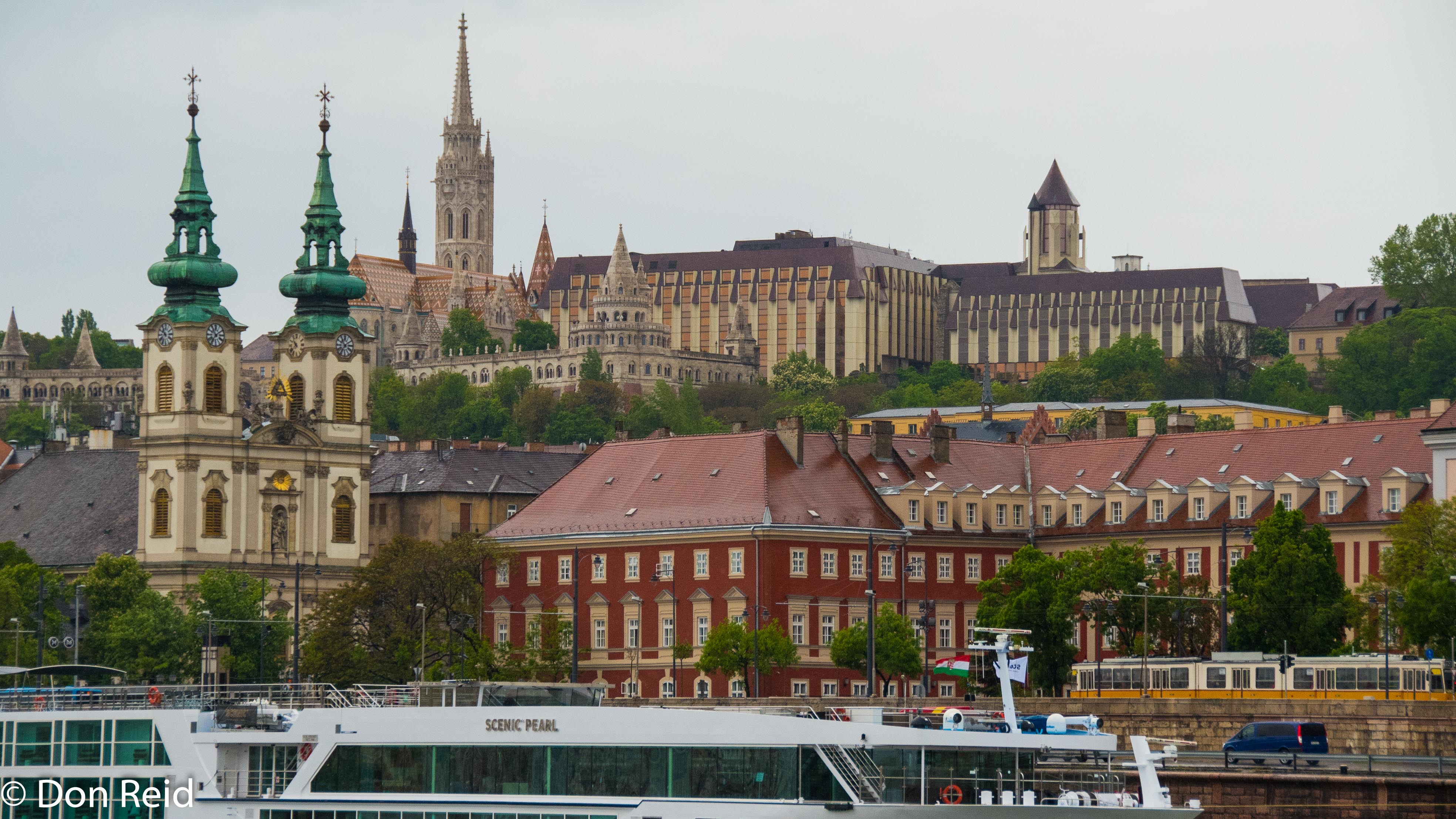
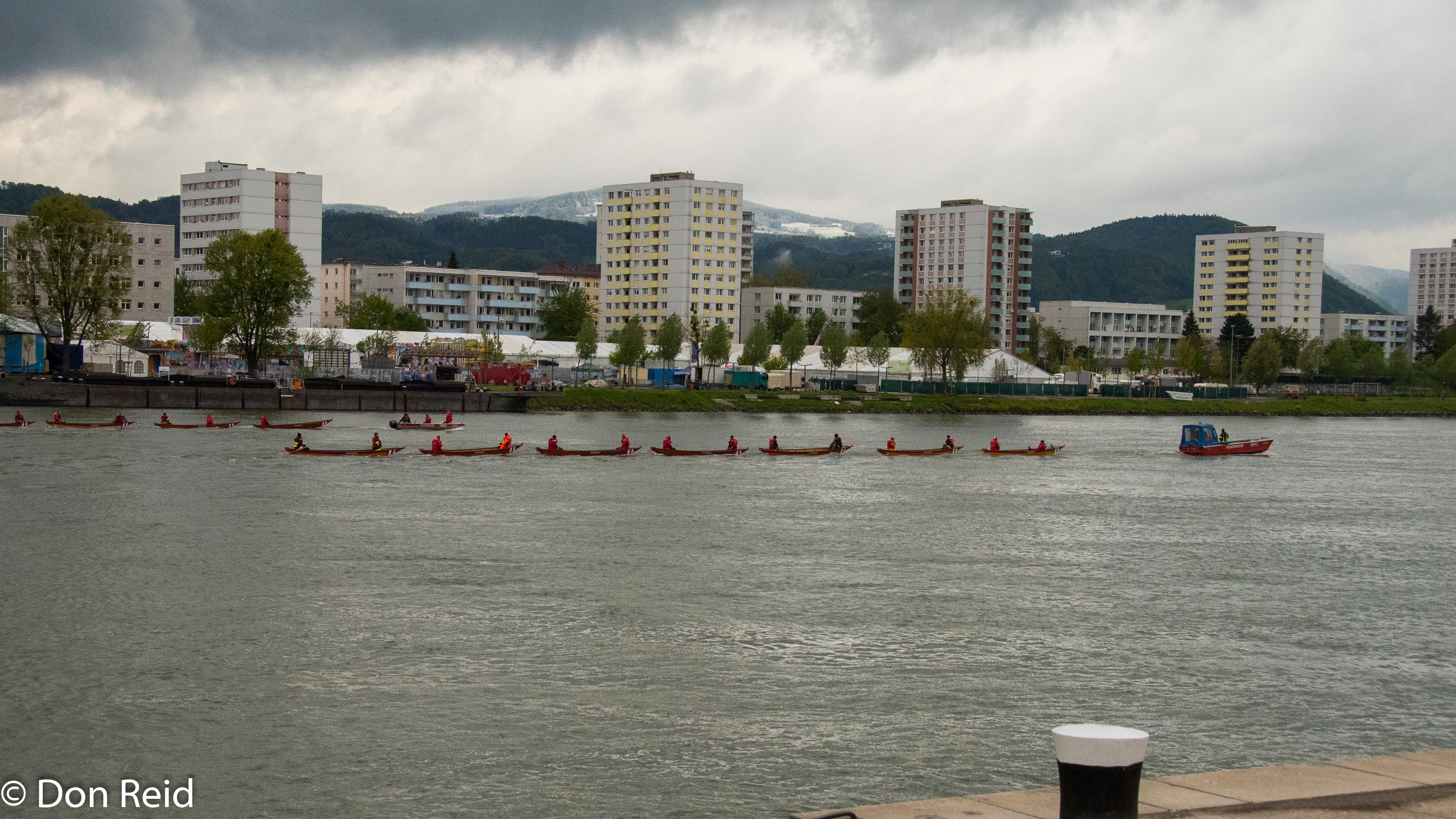
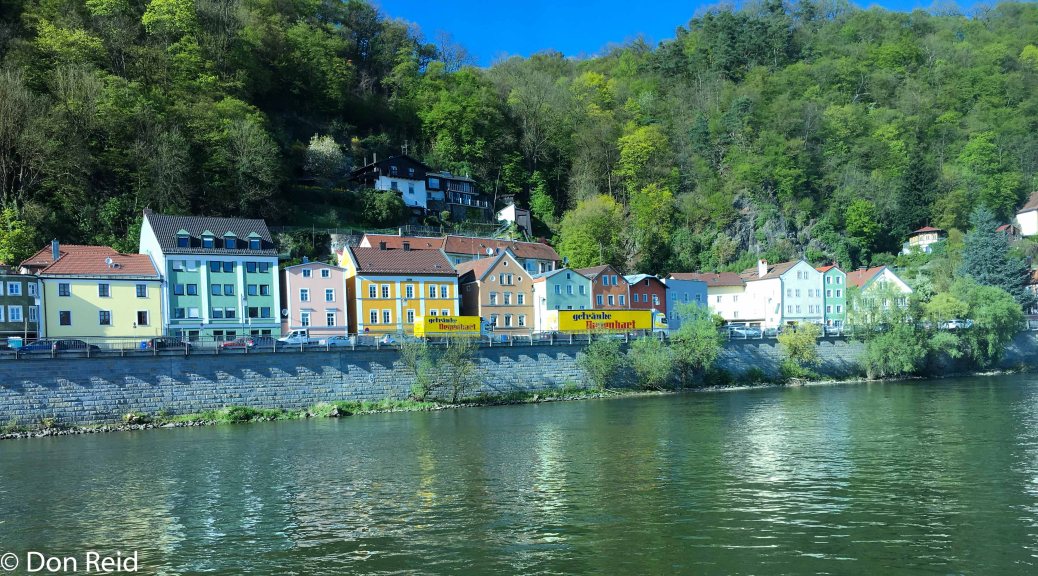
Riverside scenesRiverside scenesRiverside scenesSchloss Schonbuhel, Melk District AustriaPassing ViennaPassing ViennaRiver scenesApproaching BudapestMoored at BudapestLinzLeaving Linz
The Locks
Here you will have to bear with me – I am interested in all things mechanical, even boring things such as locks on the river. During the 1160 km cruise, we passed through 22 locks, often at night, changing altitude by some 360 metres. The average lock entailed a lift or drop of about 8 metres – now that doesn’t sound much, but consider that the cruise boat is 110m long x 11,4m wide with a tonnage of 1,556t, that means a lot of water has to be pumped in a short space of time to accomplish it efficiently.
In the lockDon’t stick your head out too far in the lock
Donau-Auen National Park
During one afternoon we cruised through the Donau-Auen National Park, a section of the Danube which has been declared part of a UNESCO Biosphere park. Along this stretch, downstream of Vienna, the natural floodplains form a green corridor with a large area of lowland forests, meadows, wetlands and other riparian habitat.
We relaxed in our cabin with curtains fully open, taking in the greenery of the forests lining the river bank, with sightings every now and then of birds and occasionally other wildlife.
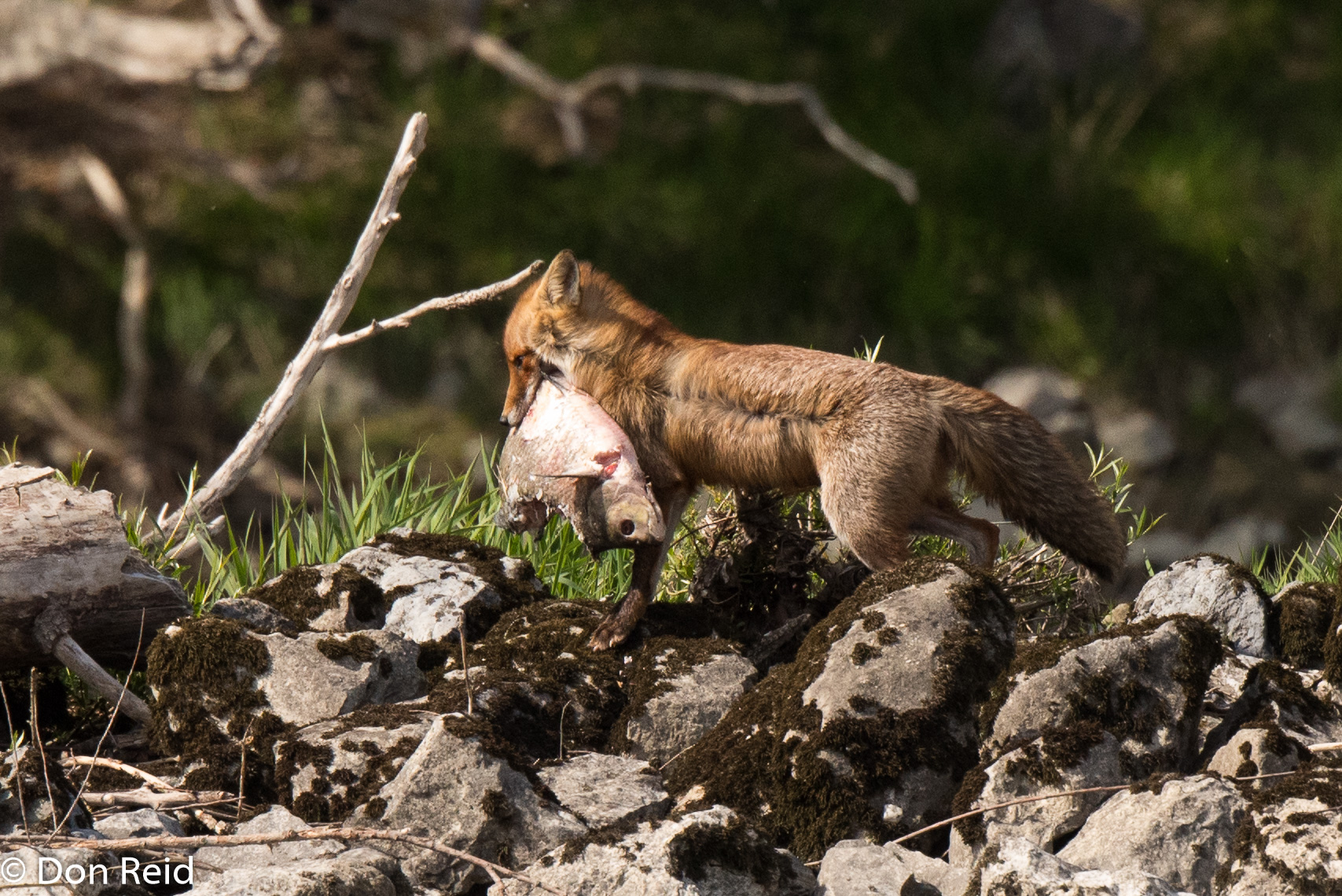
The surprise of the trip was undoubtedly the Red Fox (Vulpes vulpes) which I spotted trotting along a ridge of rocks on the bank of the river, with an enormous fish in its jaws. It is not often one gets to see “real” wildlife in Europe so this was very special. Fortunately I had my camera and telephoto lens ready for passing birds and managed to rattle off a few shots of the fox carrying the fish, before the boat had passed it by.
Red Fox with fish catch
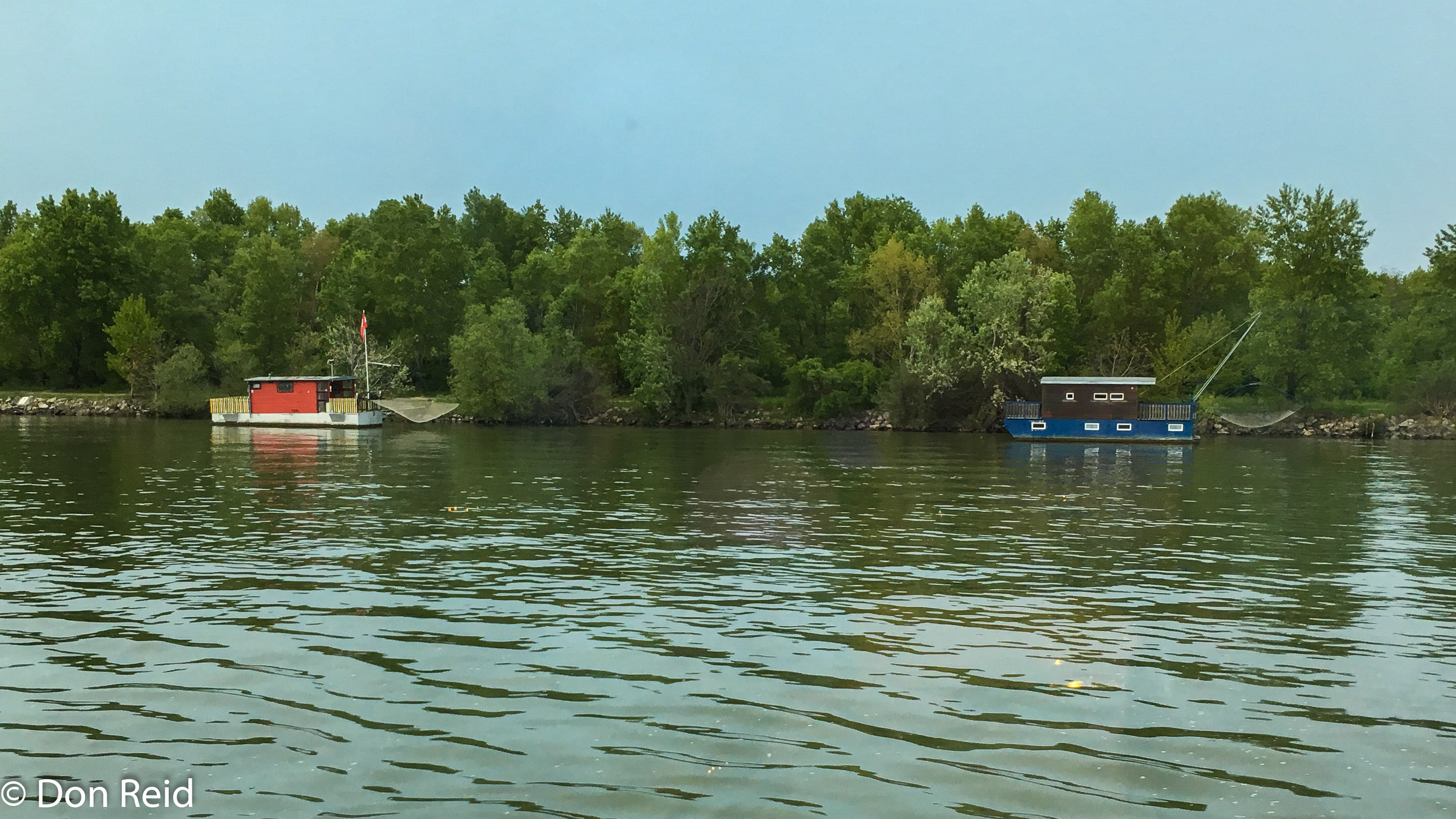
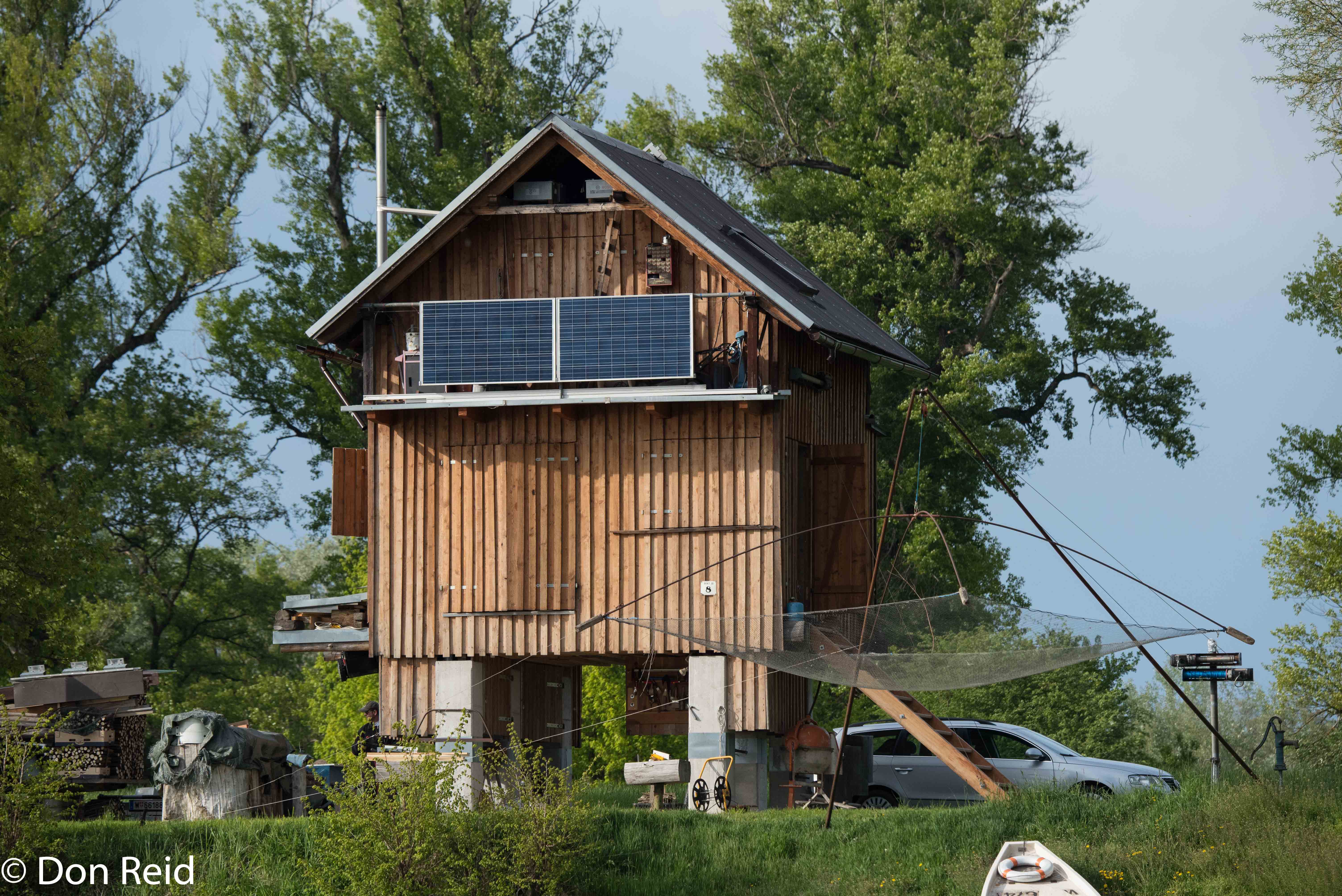
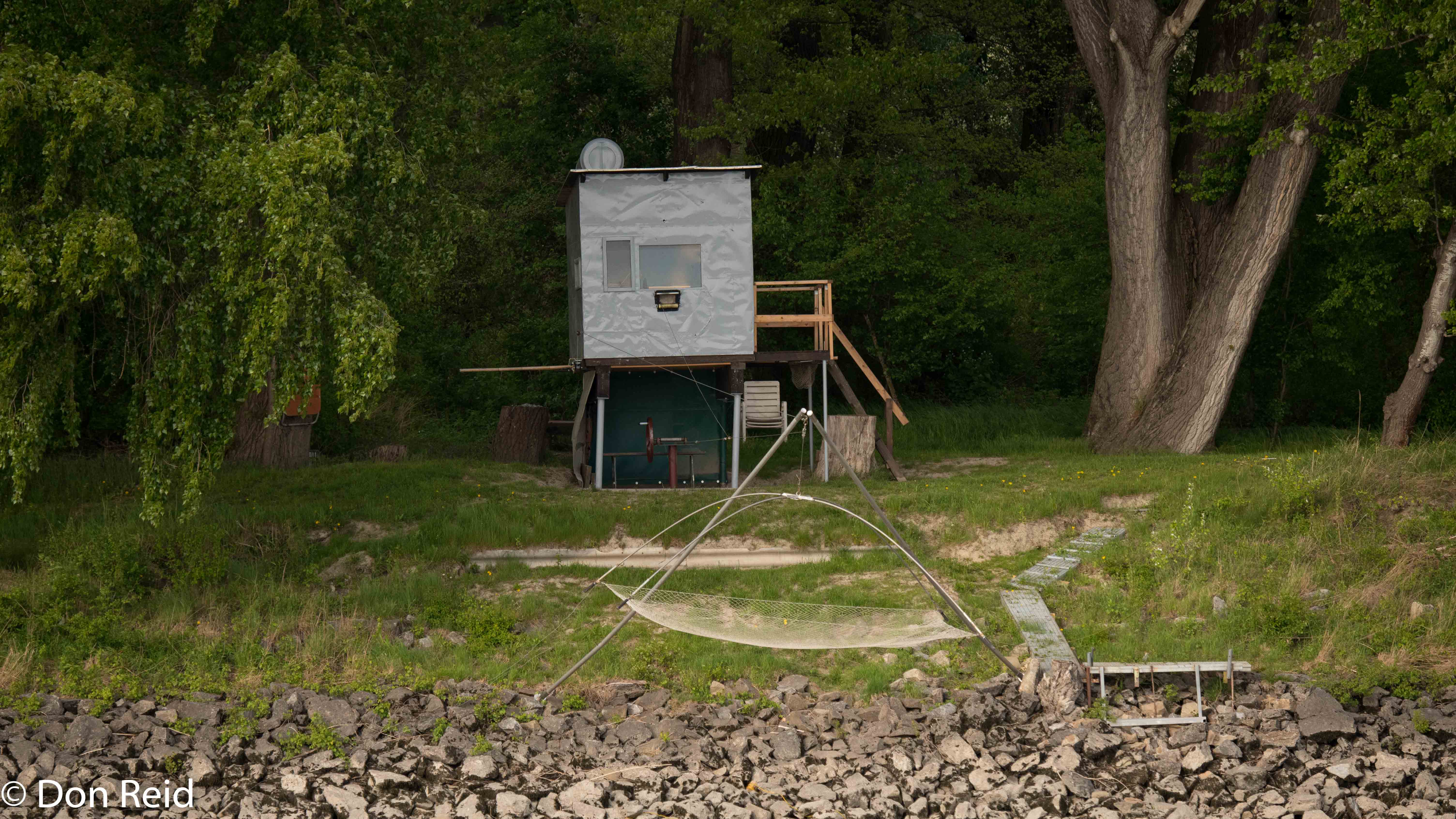
Another feature of this stretch was the small “fishermen’s cabins” dotted at intervals along the river bank, most with a net in a large frame ready to drop into the river. Word on board was that these cabins cannot be bought or sold, but have to be passed on to the next generation in their original state and no extensions are allowed. So they remain small and simple – often just space for a couple of beds and basic facilities for the fishermen to spend the night camping there.
Riverside dwellings with fishing rightsRiverside dwellings with fishing rightsRiverside dwellings with fishing rightsRiverside dwellings with fishing rights
Bridges
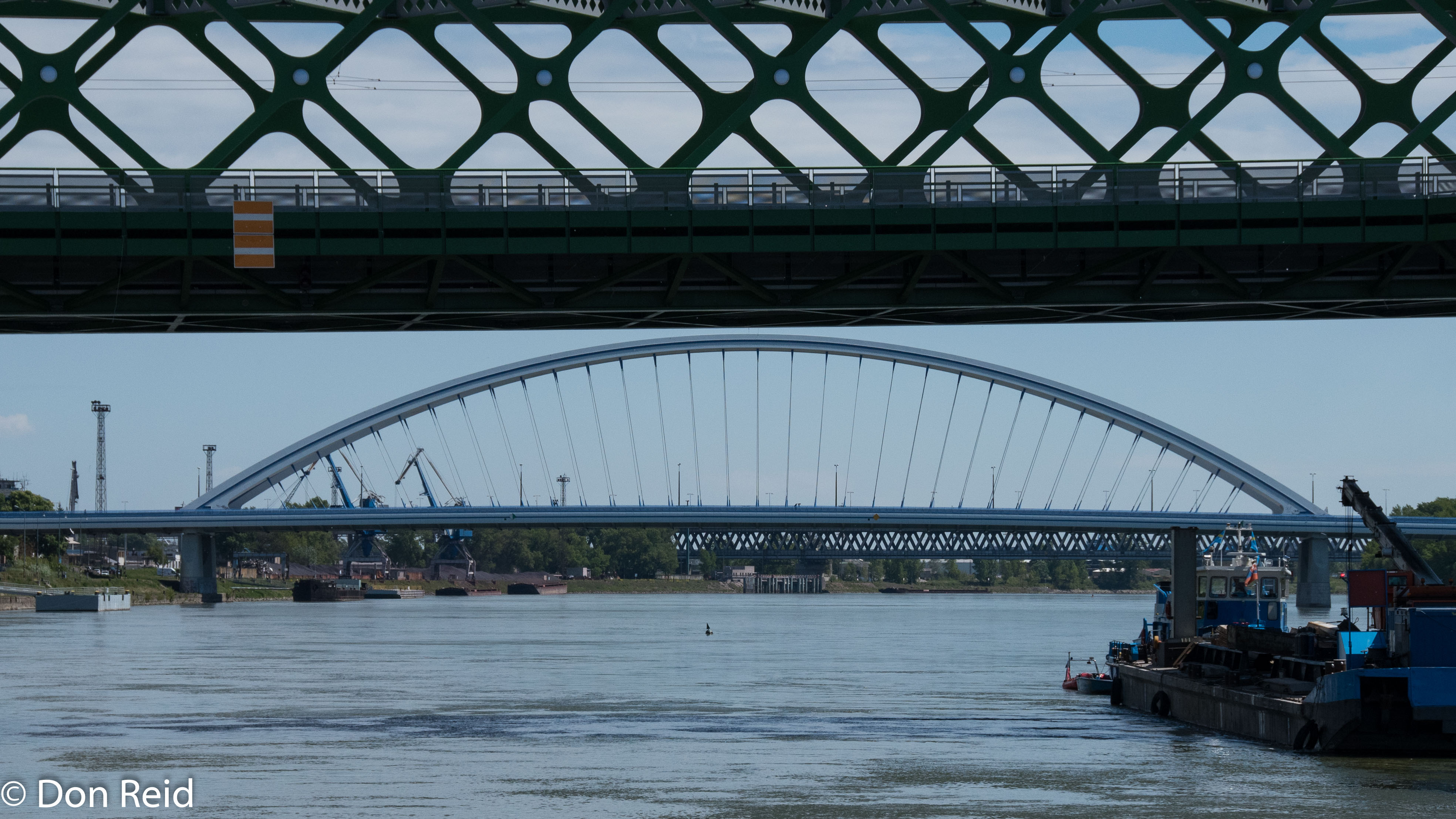
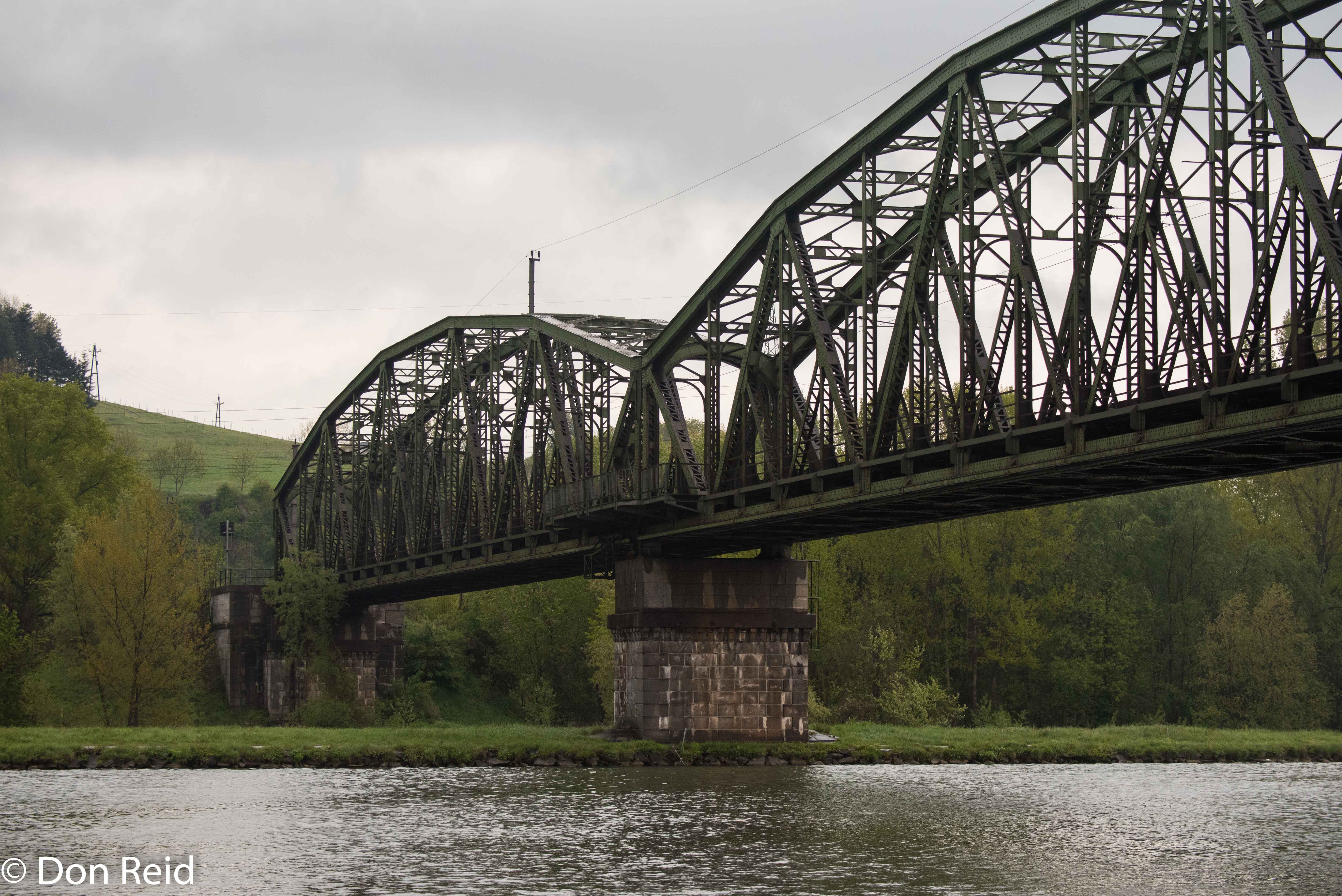
There were numerous bridges over the river, some functional, others handsome, old and new
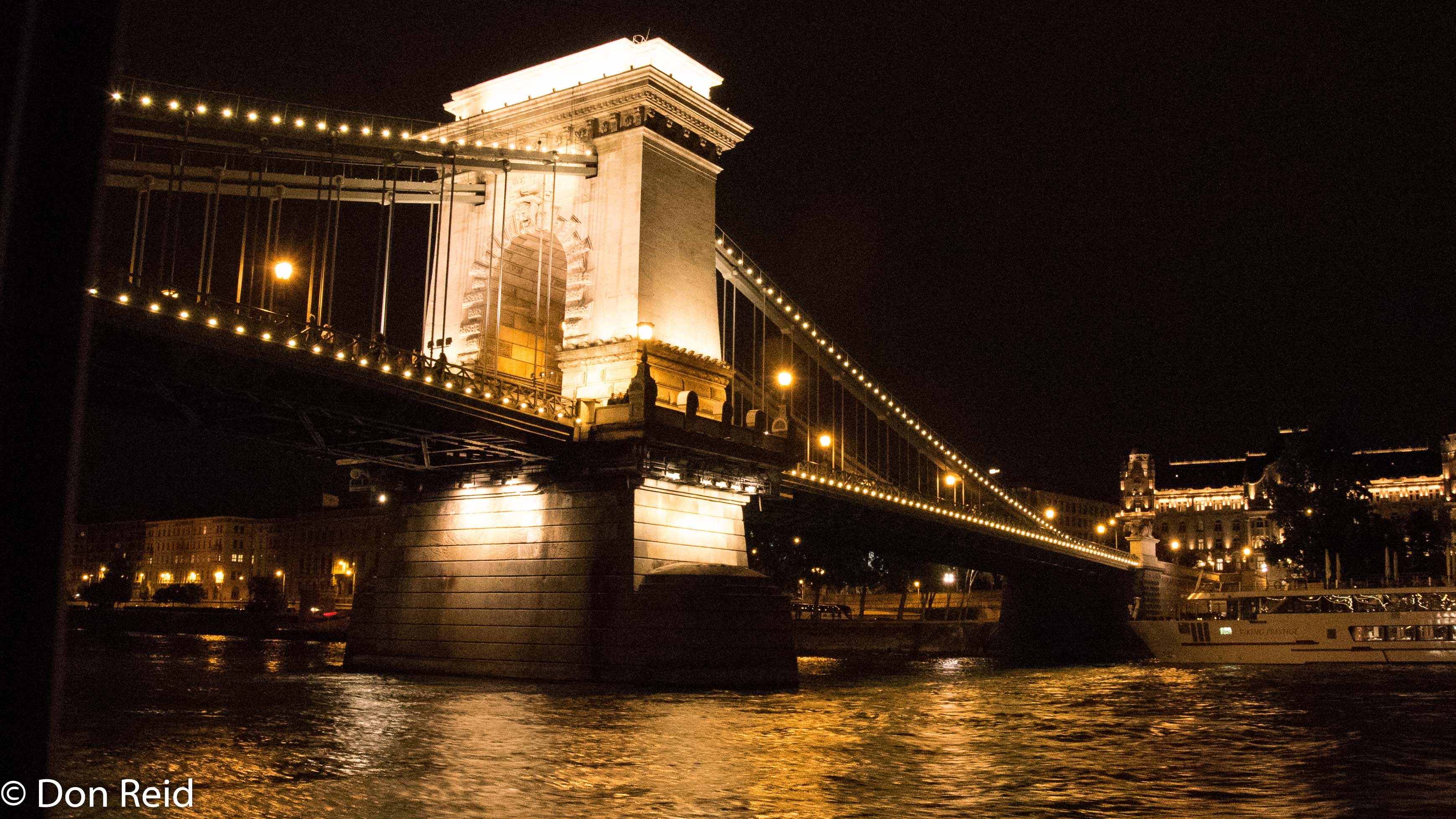
New Bridge over the DanubeBridges at BratislavaChain Bridge Budapest
Other Stuff
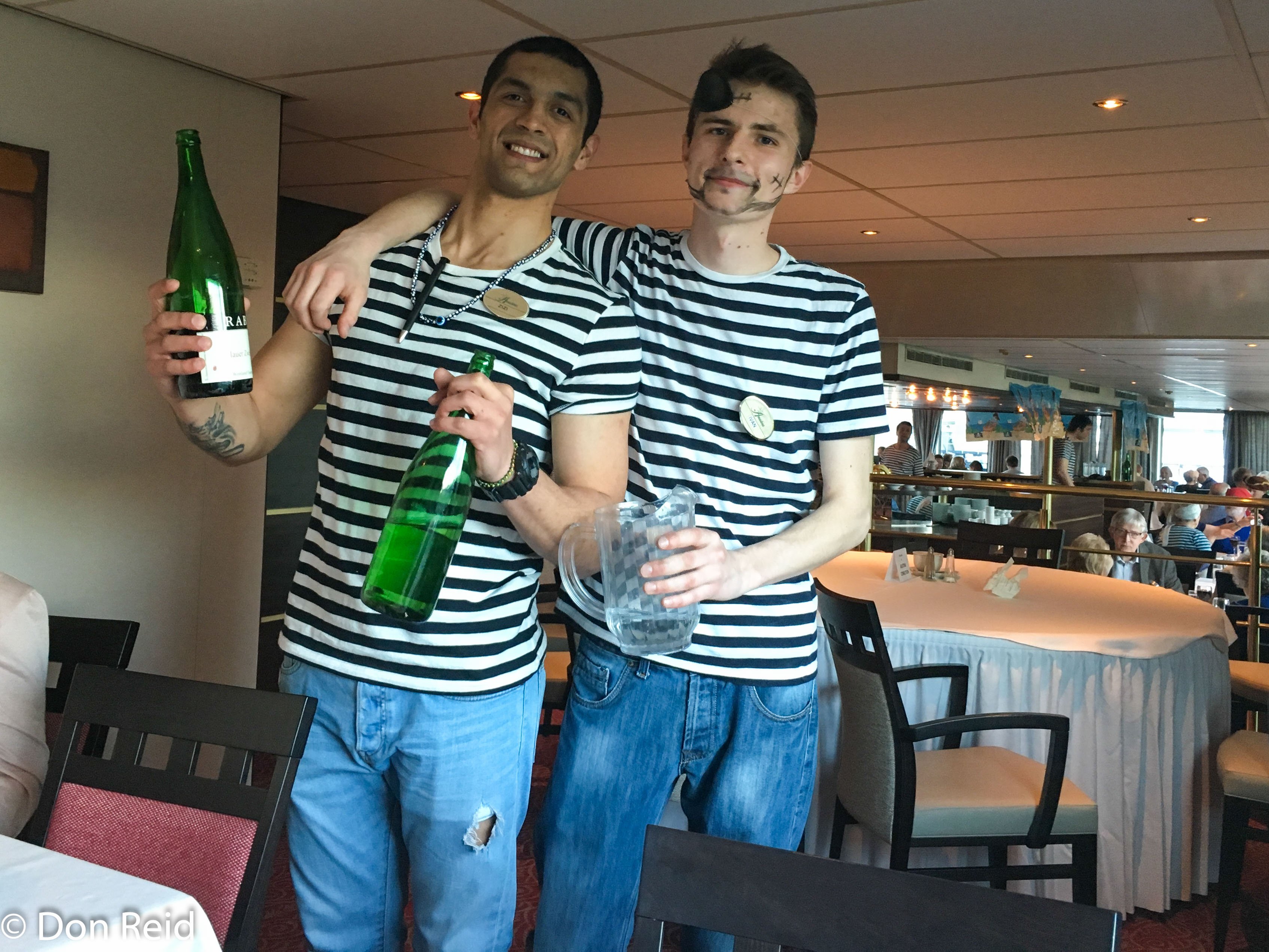
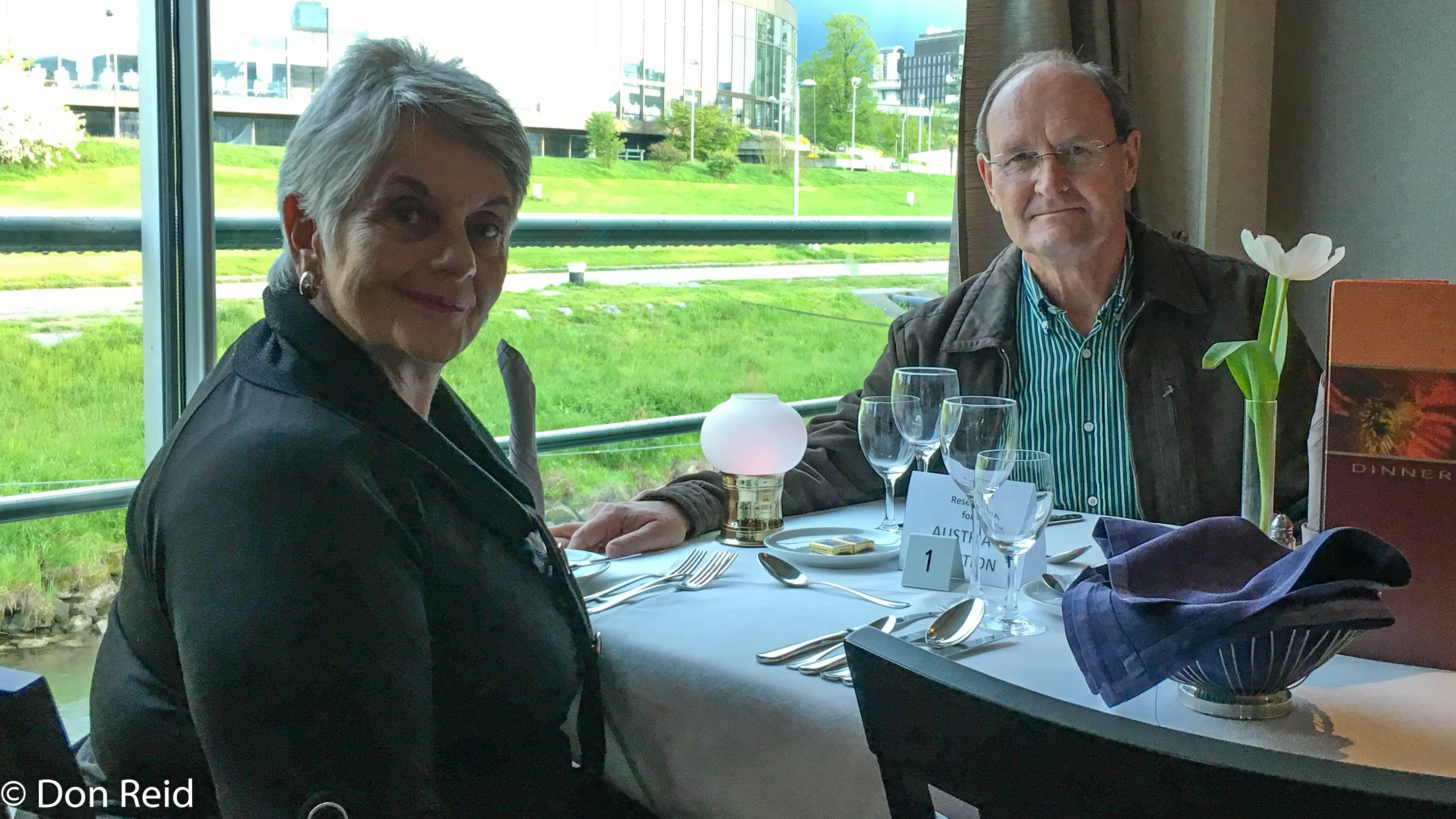
Amadeus RoyalOn boardTowel creationOn boardWaiters Zizi and Ivan – Pirates dinnerGayle, Denise, Fleur with Gerda
I was not expecting to do much birding during our short tour of two weeks in Eastern Europe but, as always, I was constantly on the lookout for bird life and was rewarded with five new birds (“lifers”) during our tour, which consisted of four days in Prague, an eight-day cruise of the Danube with stops in four countries, and a short stay in Passau, Germany.
The best birding was while relaxing in our cabin, sliding door open to the fresh air and binos and camera at the ready as the boat cruised at a steady pace along the Danube. The only problem with this was the limited field of vision and the speed of the boat, which meant I had a very short time to react if I saw anything and I mostly had to rely on photographs for an ID of the bird species. The Danube at times widens out into a lake-size body of water, so any birds along the banks tended to be quite far away and it proved difficult to get a decent photo.
The photos showcased here represent the best shots I could get under the circumstances.
Prague
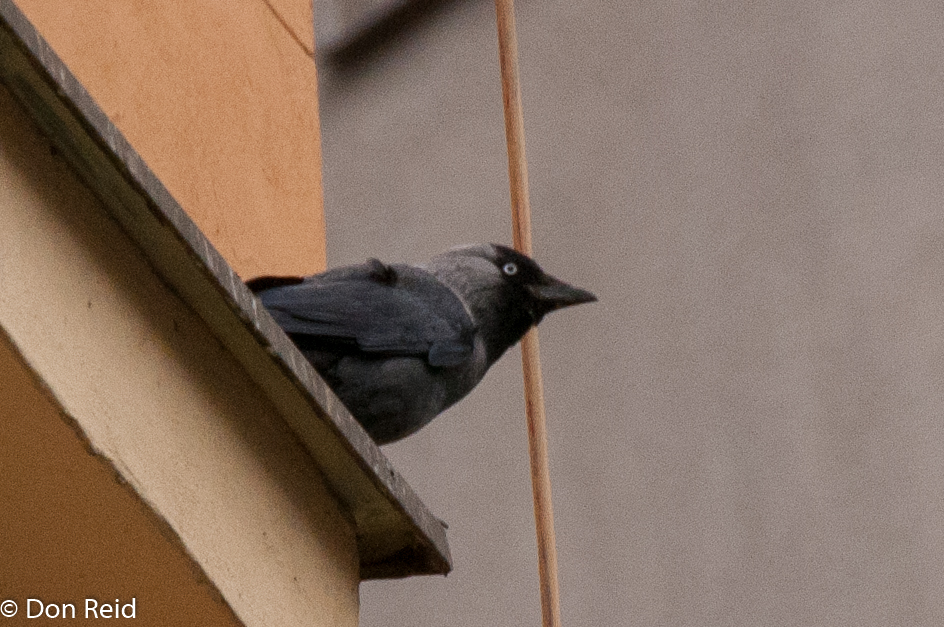
The best way of seeing a new city is to walk the streets and parks, which we did during our stay in this handsome city. European cities are not known for their variety of birds and Prague was no exception, with Jackdaws, Magpies and Blackbirds being the most common birds.
Jackdaw, Prague
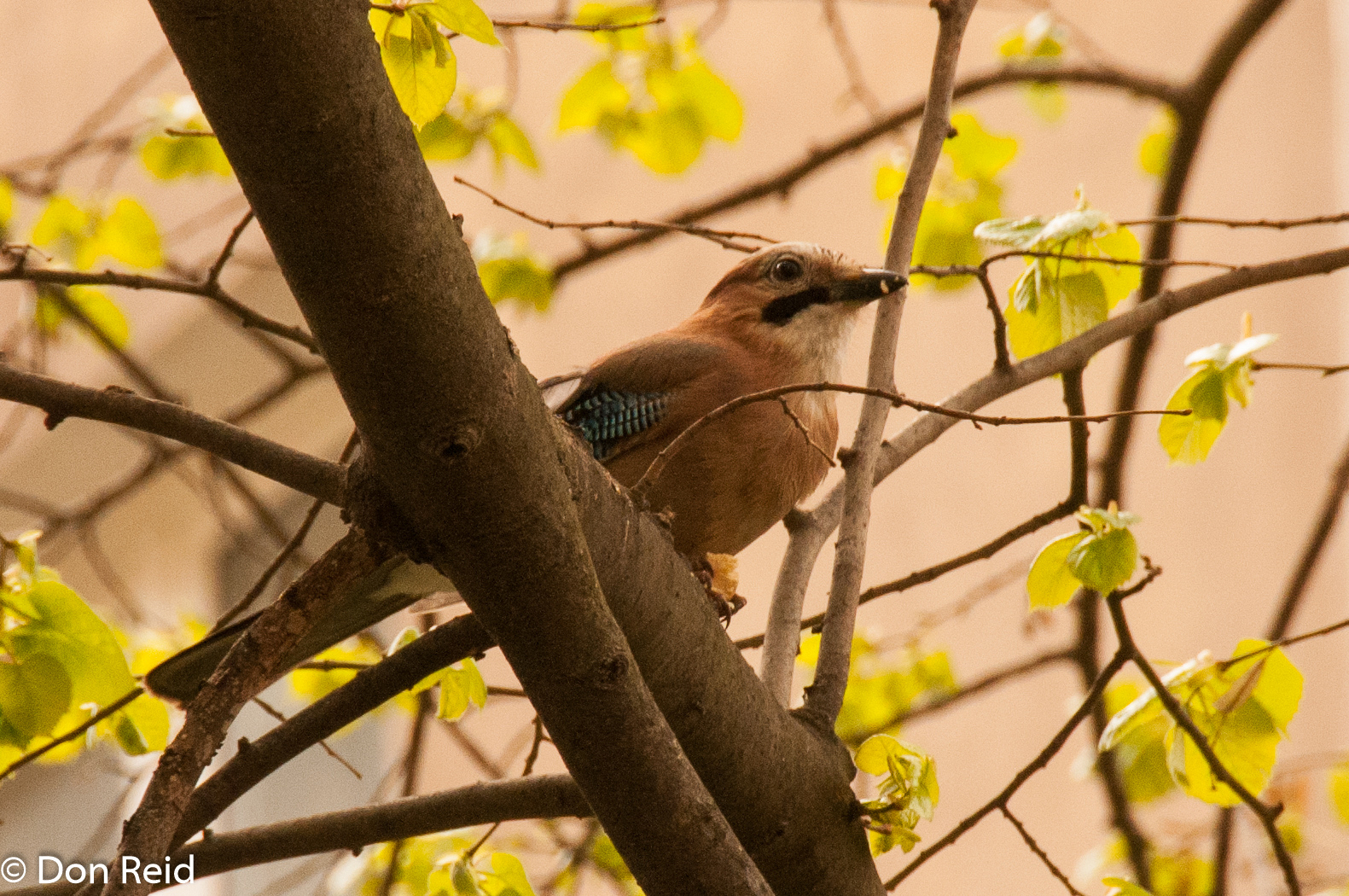
One city park had a Eurasian Jay which was a new species for me
Eurasian Jay, Prague
One fine day we took the funicular to the top of the hill which overlooks the city and walked through the extensive parkland and forests of Petrin Park. Here we came across a Common Chiffchaff and on the walk down saw Wood Pigeons. A Eurasian Green Woodpecker drew our attention with its call but did not hang around long enough for a photo.
Common Chiffchaff, PragueWood Pigeon, Prague
Cesky Krumlow
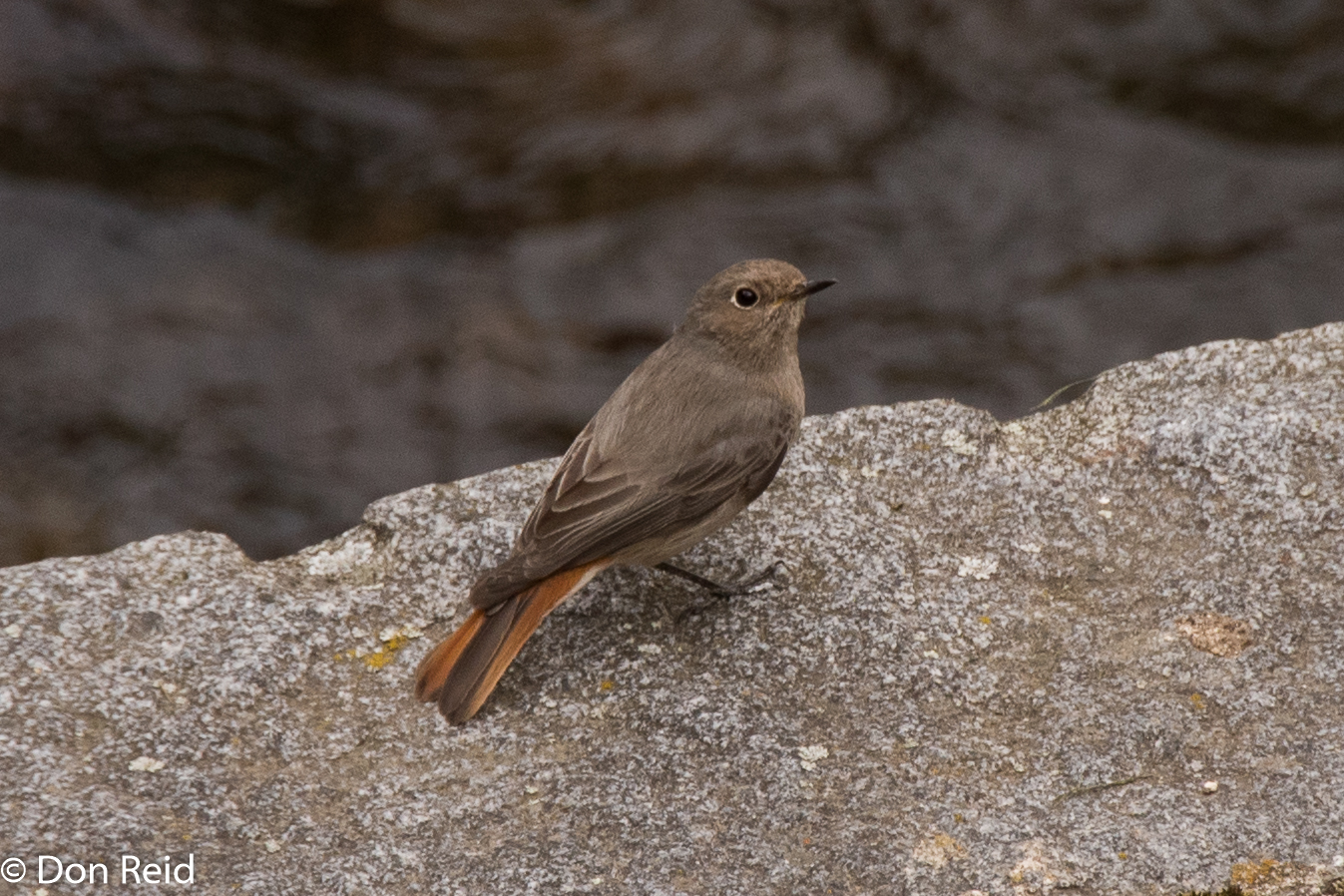
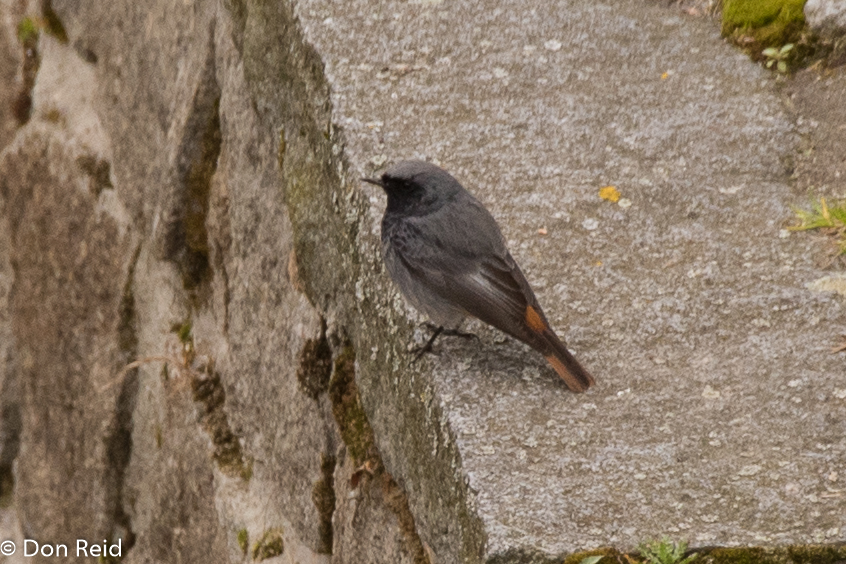
We took a day trip to this historic town a couple of hours bus ride from Prague. With time to spare after the walking tour of the town, we found a pleasant riverside café for coffee which also turned out to be a good spot for viewing some birds as they came to the river. Apart from the ubiquitous Blackbirds, we found Grey and Pied Wagtails on the banks of the strongly flowing Elbe River (both eluded my camera) and a few Black Redstarts, one of which looked remarkably similar to the Familiar Chat we know from SA.
Blackbird, Cesky KrumlowBlack Redstart (Female/Immature Male), Elbe River in Cesky Krumlow – having a striking resemblance to the Familiar Chat we know from SABlack Redstart, Cesky Krumlow
Danube Cruise
A selection of the birds we spotted while cruising :
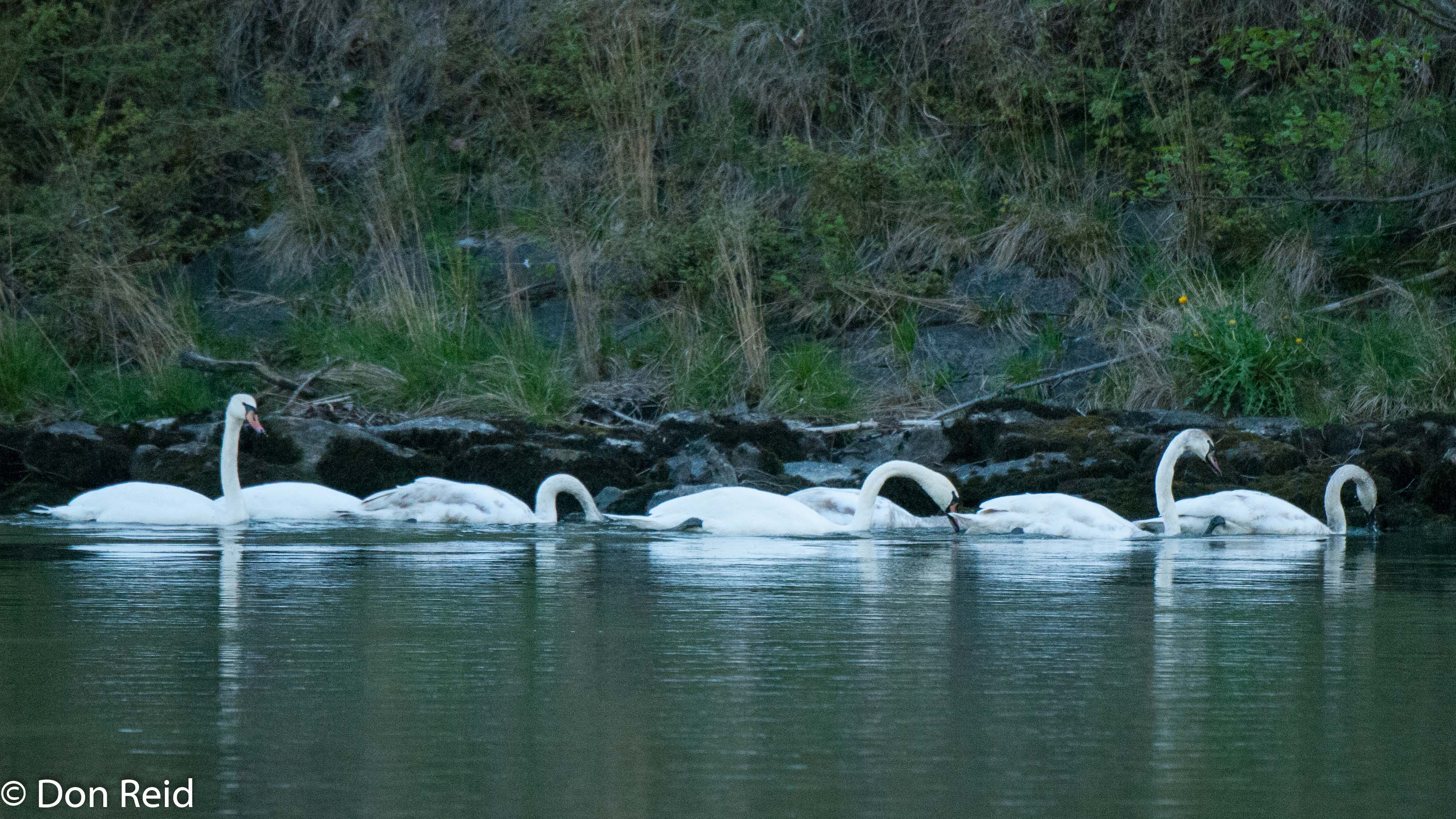
Mute Swans were seen frequently
Mute Swan, Danube
A single sighting of Mandarin Duck was a surprise and a new species for me
Mandarin Duck, Danube
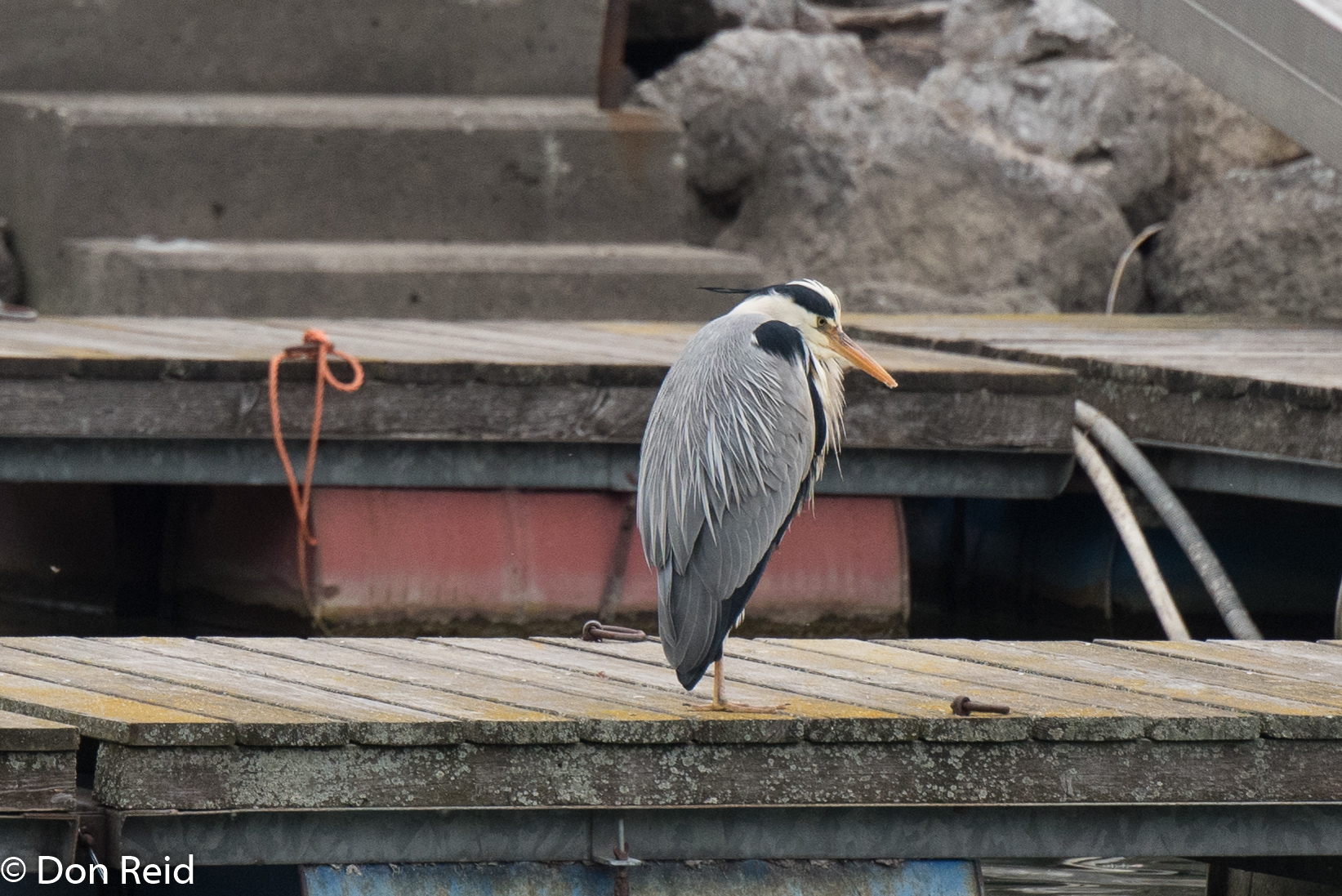
Grey Herons were seen regularly
Grey Heron, Vienna
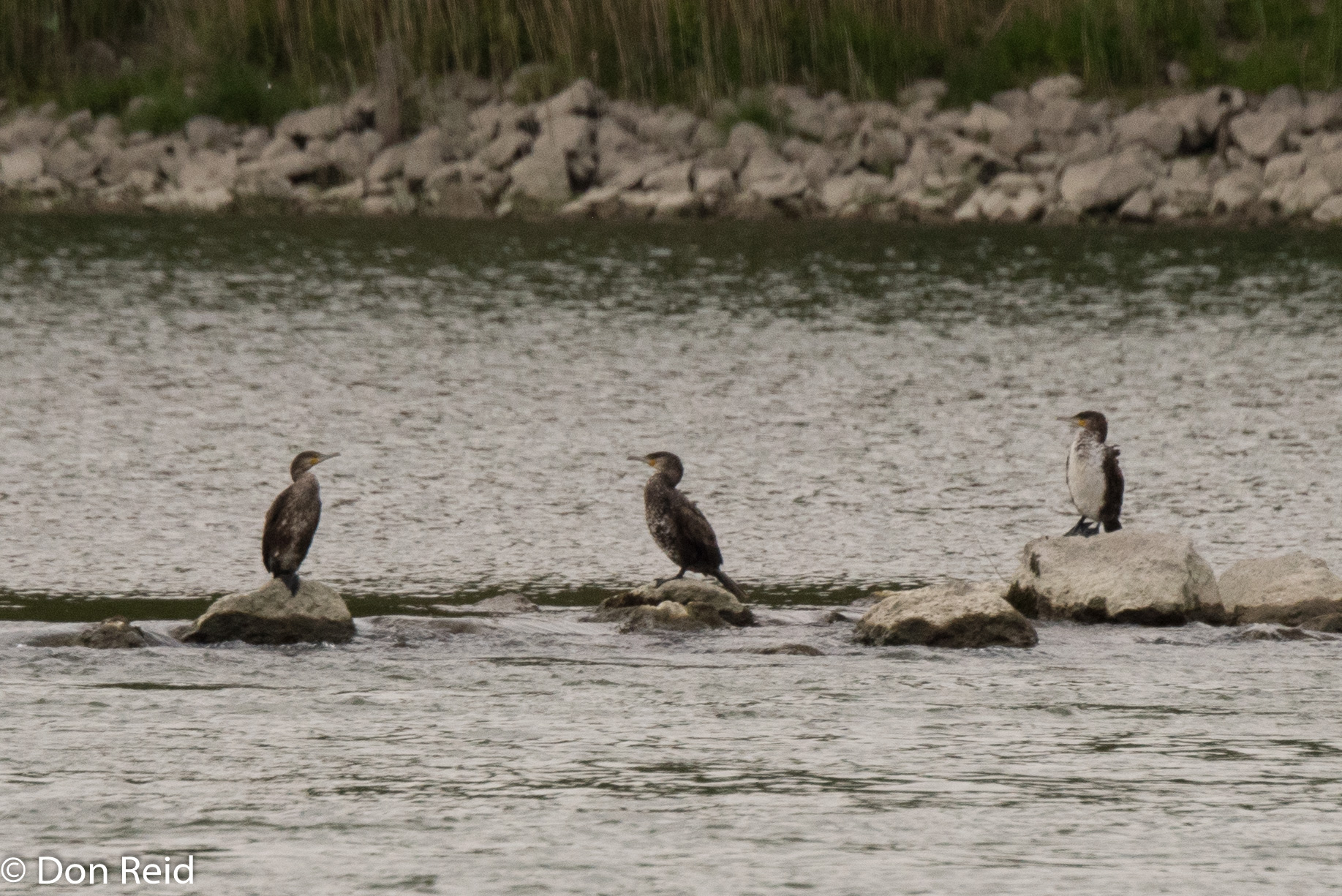
Great Cormorants in the protected area
Great Cormorant, Danube
Goosanders were another regular sighting but always at a distance
Goosander, Danube
Caspian Gull in the protected area
Caspian Gull, Danube
Vienna
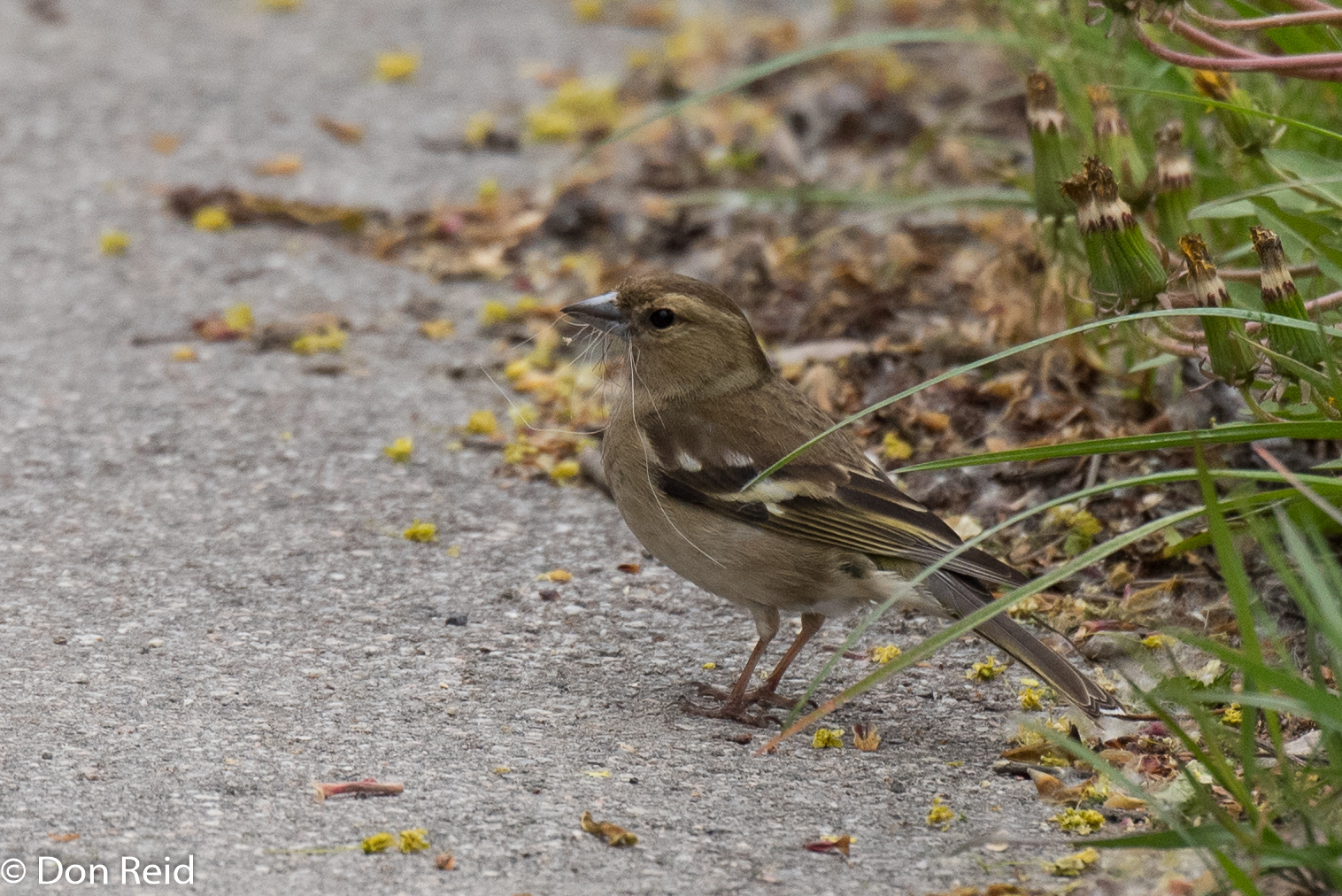
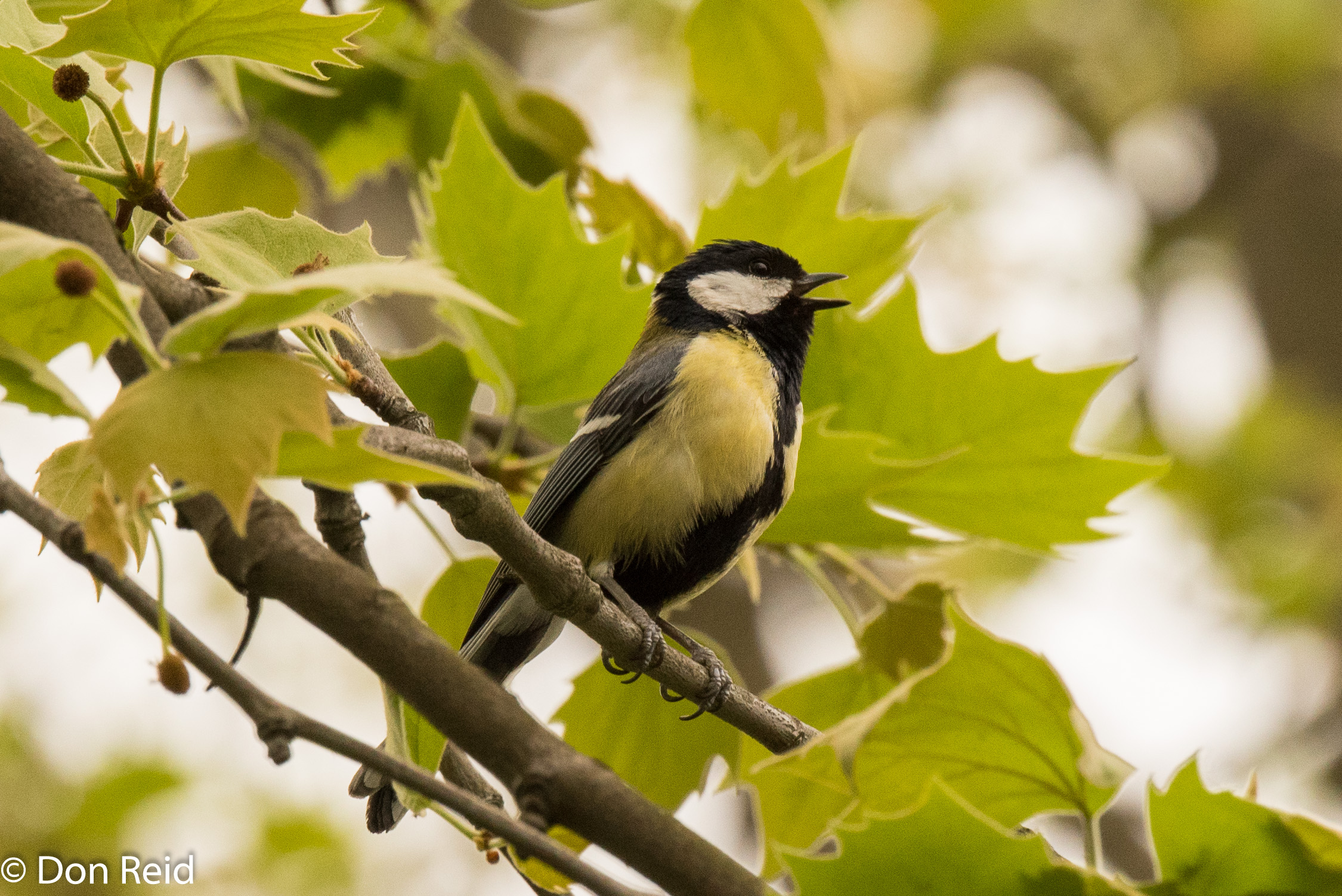
Our extended stop at Vienna allowed for a walk along the riverside, which was good for a few land-based species
Common Chaffinch, DanubeGreat Tit, Vienna
Linz
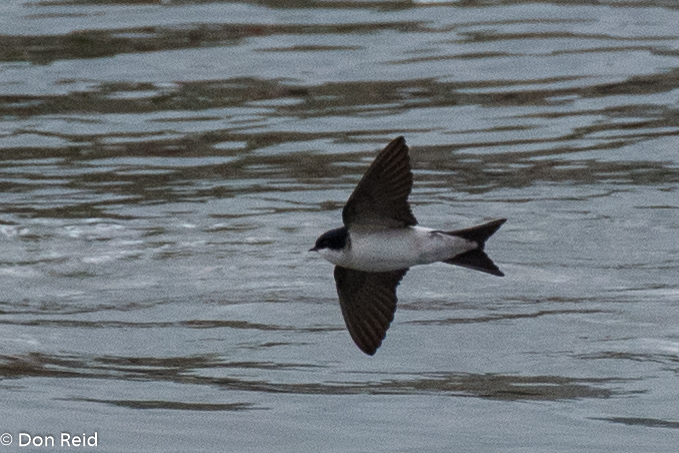
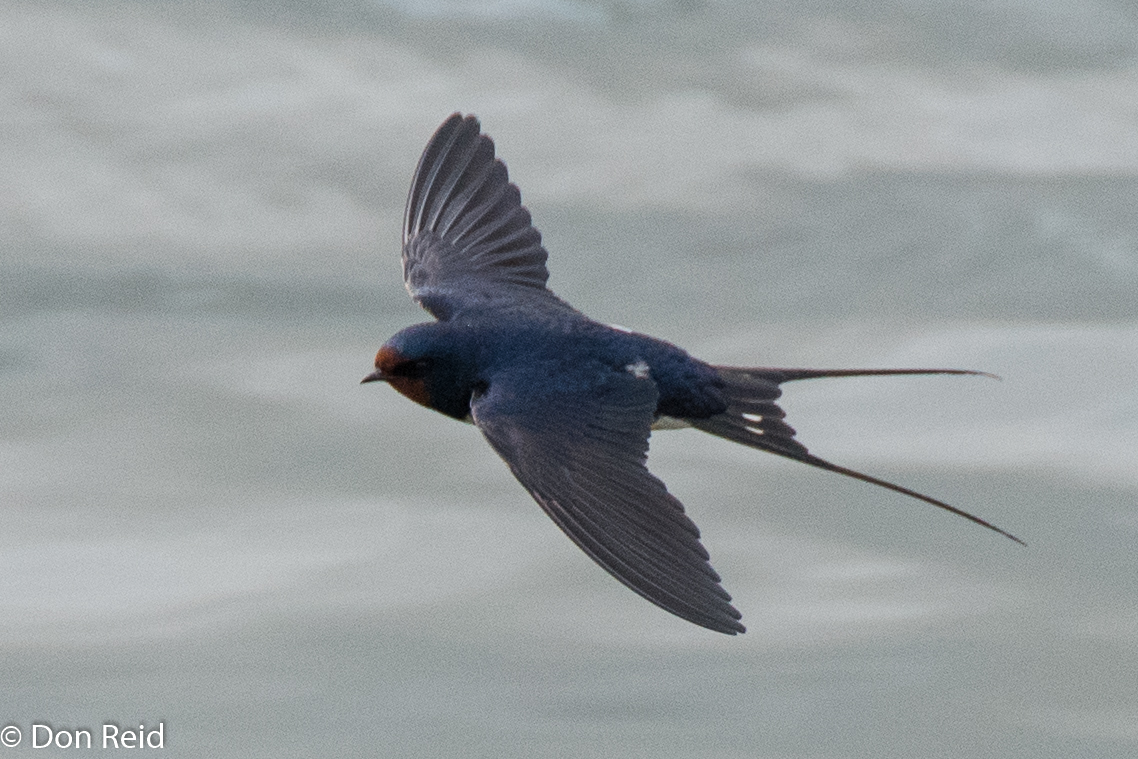
While moored in Linz, Common Martins and Barn Swallows suddenly appeared in numbers over the river. I surmised that they had just returned from their annual African summer safari and were revelling in being back “home”, judging by the enthusiastic way they were swooping over the river, despite the bitterly cold weather
Common House Martin, DanubeBarn Swallow, Danube
Passau
This delightful town was a highlight of our trip (more about it in a later post). The birding was limited but a Lesser Kestrel flying high above the Castle was an interesting sighting
Lesser Kestrel, Passau
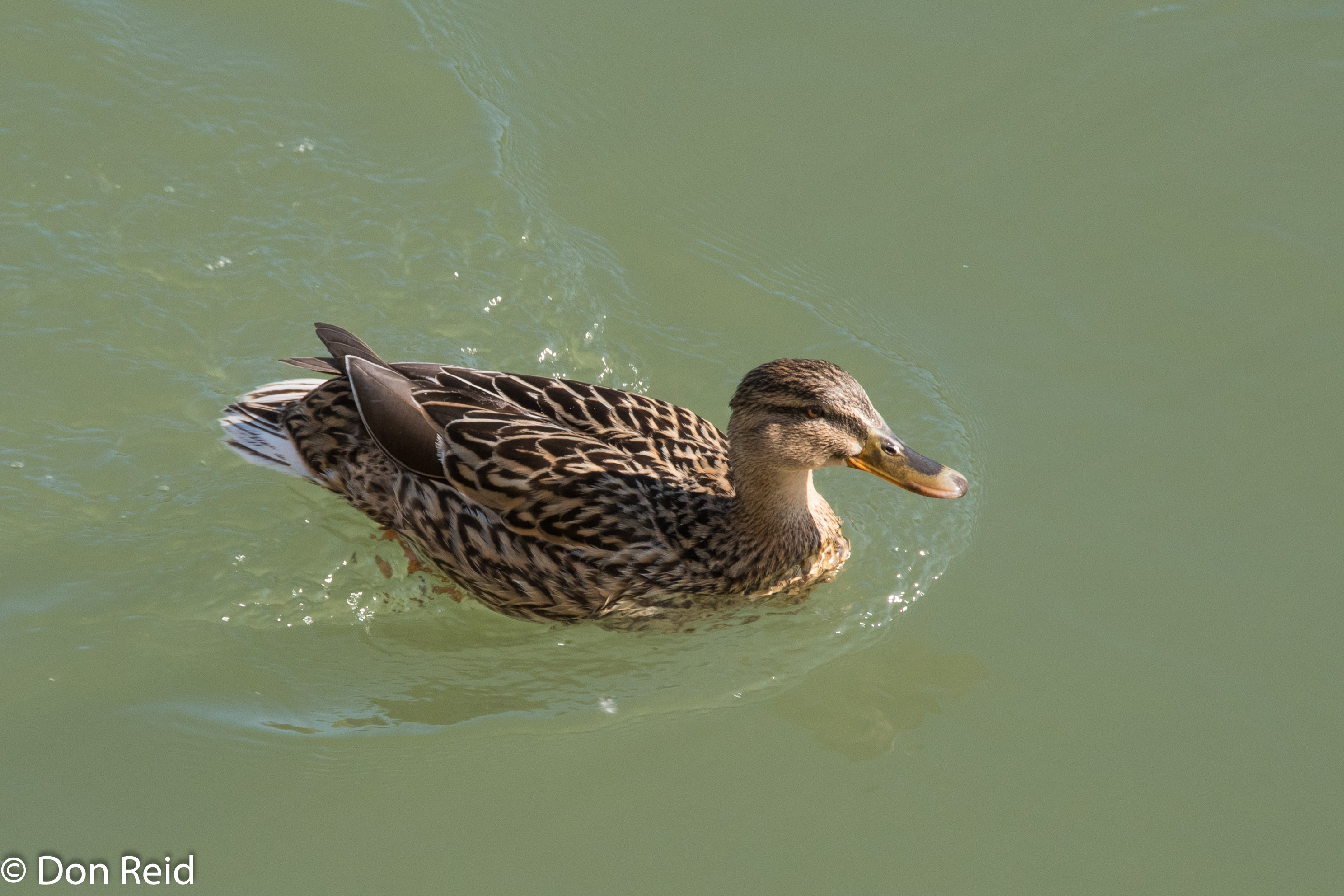
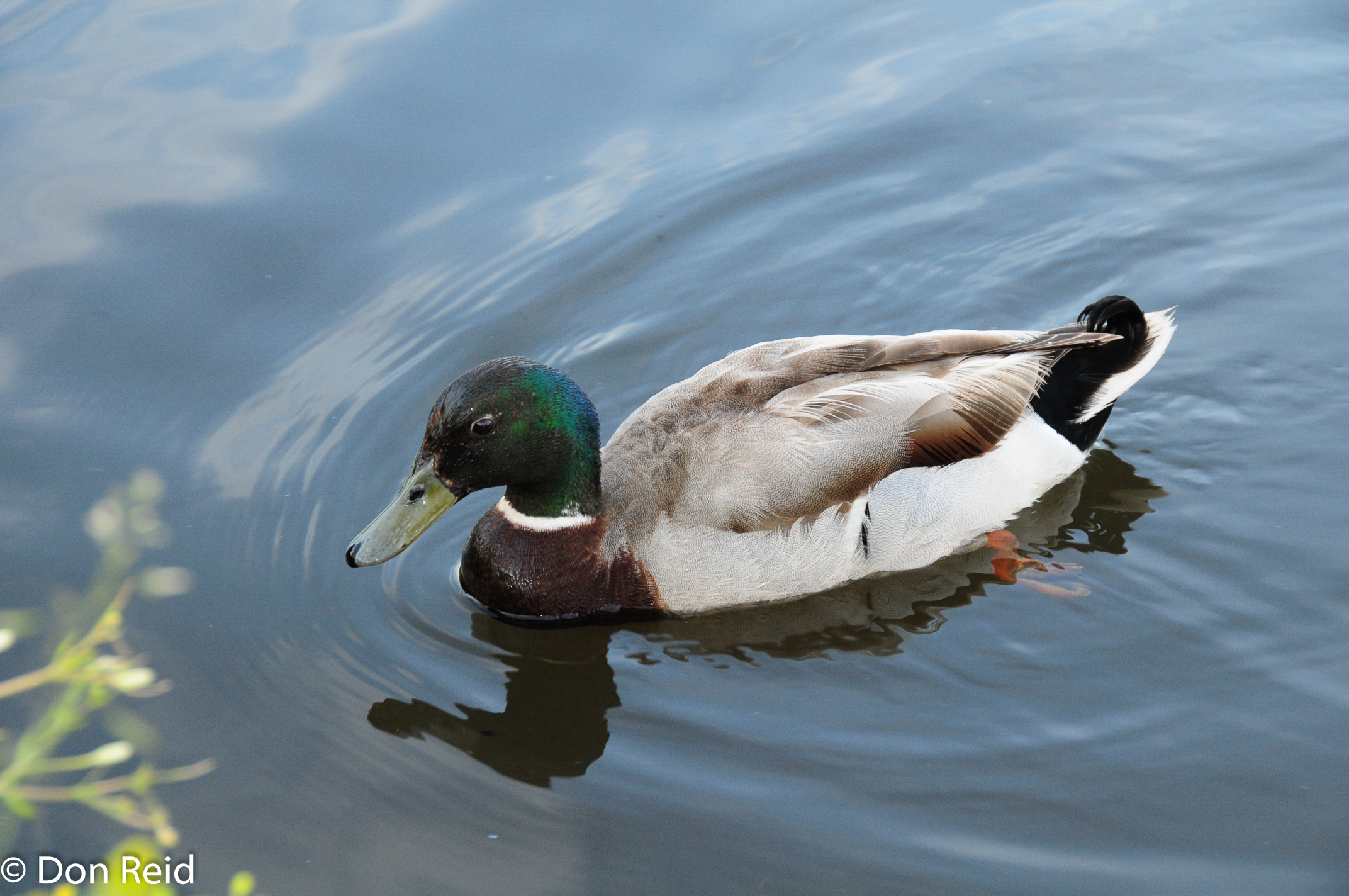
Other than that the ubiquitous Mallard Duck was the only water bird of note
Mallard, PassauMallard, Passau
I had downloaded Collins Bird Guide for Europe prior to the trip – it has a useful bird listing function which I used to list the species we encountered. At the end of the two weeks I had a grand total of just 33 species – par for the course in Europe when the focus is not on birding.
I regularly see that many species in an hour, walking around our neighbourhood in SA – I’m just saying.
Continuing the story of our eight-day, seven night “Danube Rhapsody” cruise, starting from and returning to Passau in Germany with the furthest point reached being Budapest in Hungary and traversing 4 countries along the way …………..
Monday 25 April
Budapest – Horse Farm
Still moored in Budapest, we enjoyed a quick breakfast before boarding the bus once again for the trip out of town to a horse-riding show farm. Our cheerful guide gave us a run-down on the significant places we passed, many of which we had seen during the city tour the previous day, but it all helps to cement them into our senior brains.
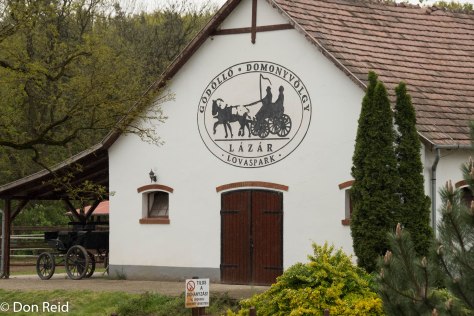
Soon we were at the Lazar Farm having a welcoming scone with a powerful liquor called …… er, I seem to have forgotten, I just know it went down well in the cold weather.
Lazar Horse farm
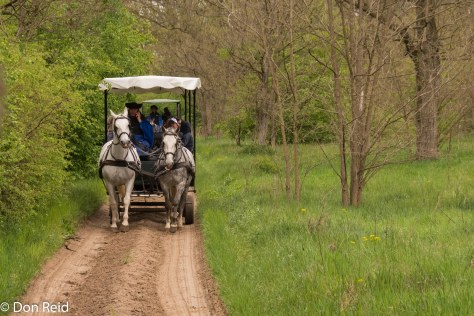
Then we climbed onto horse-drawn wagons for a short ride along tree-lined tracks, muddy from the recent rain – the cold wind was biting with nowhere to hide, so we were glad to have packed our warm jackets and wooly hats.
Riding in the wagon
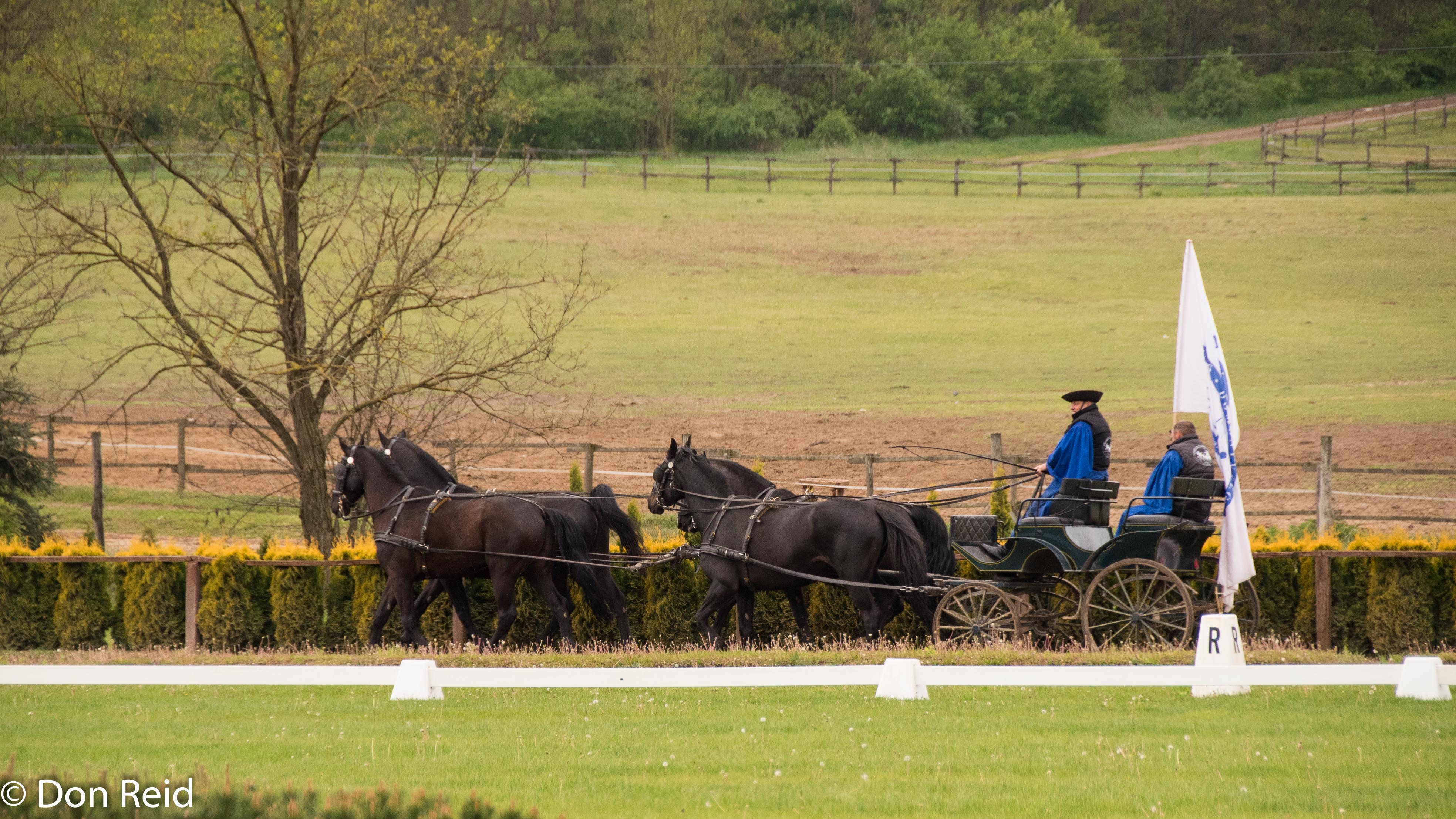
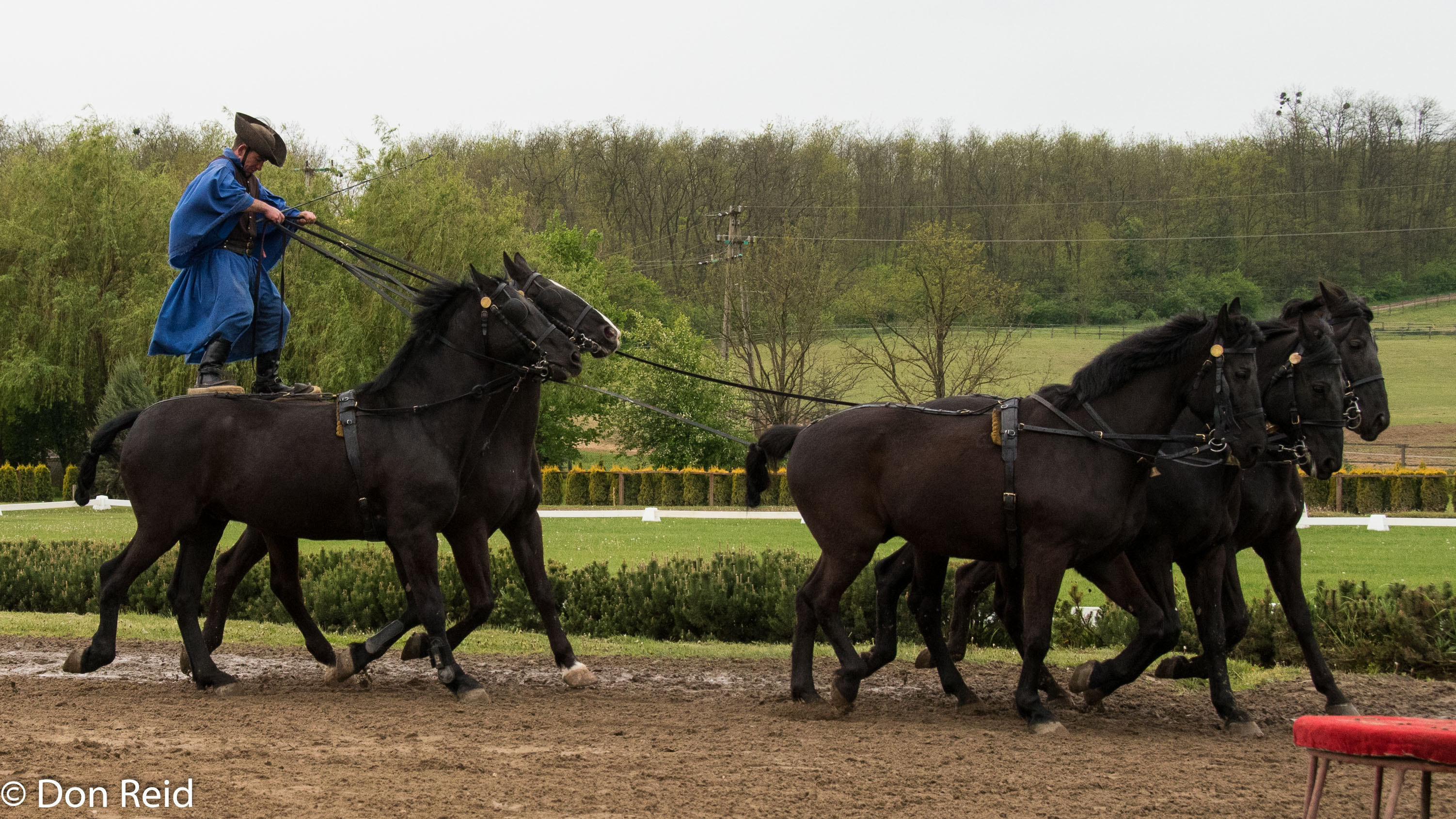
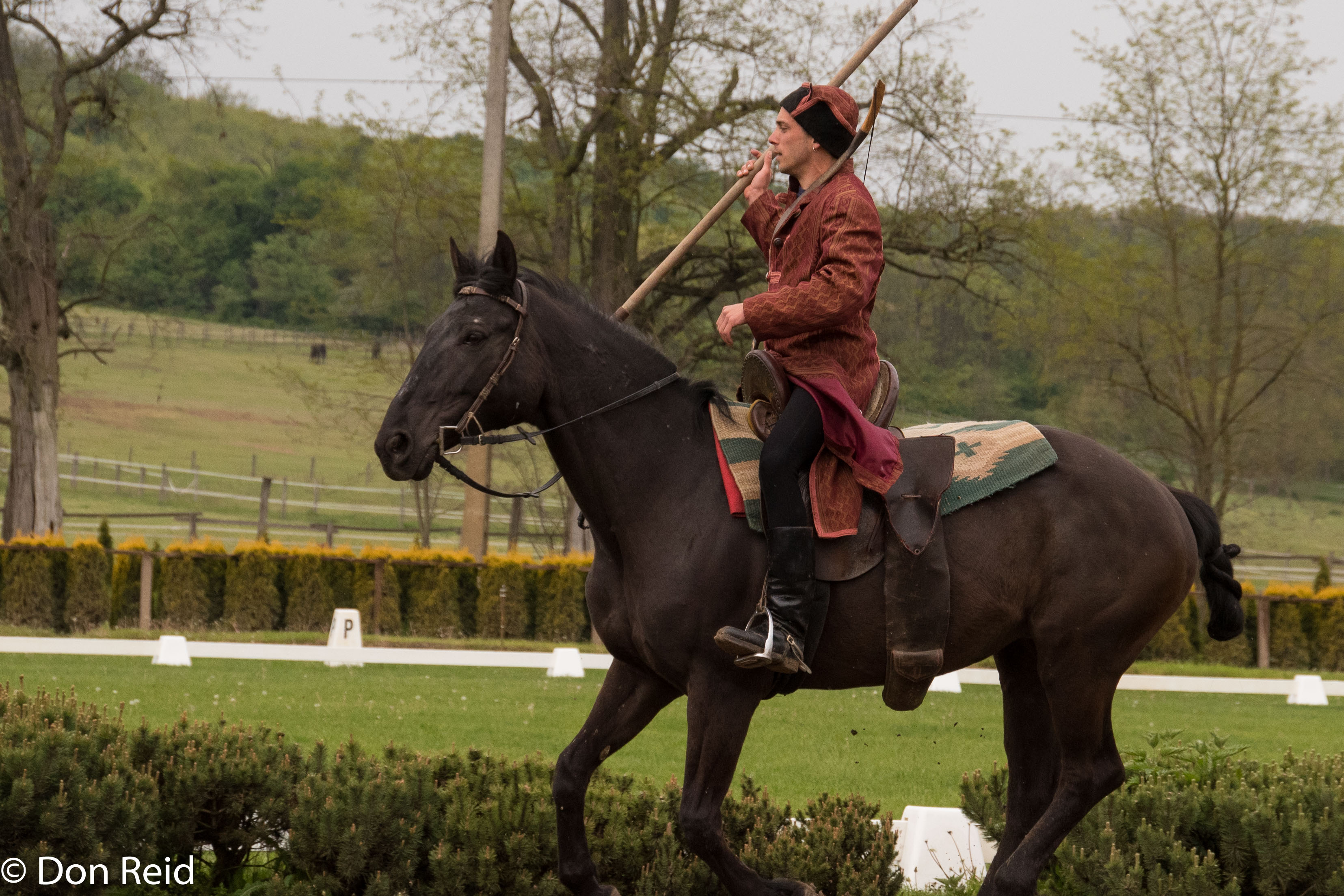
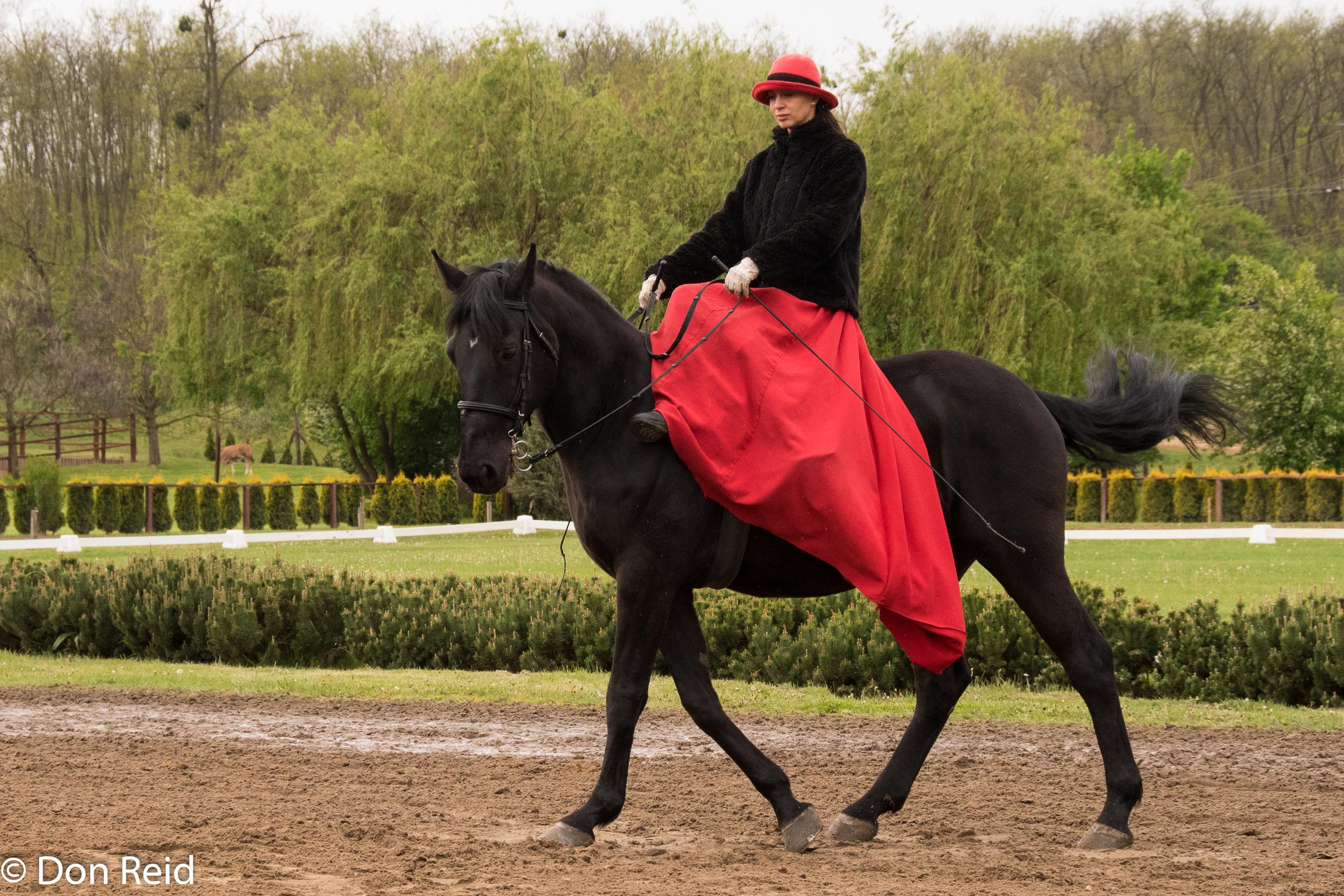
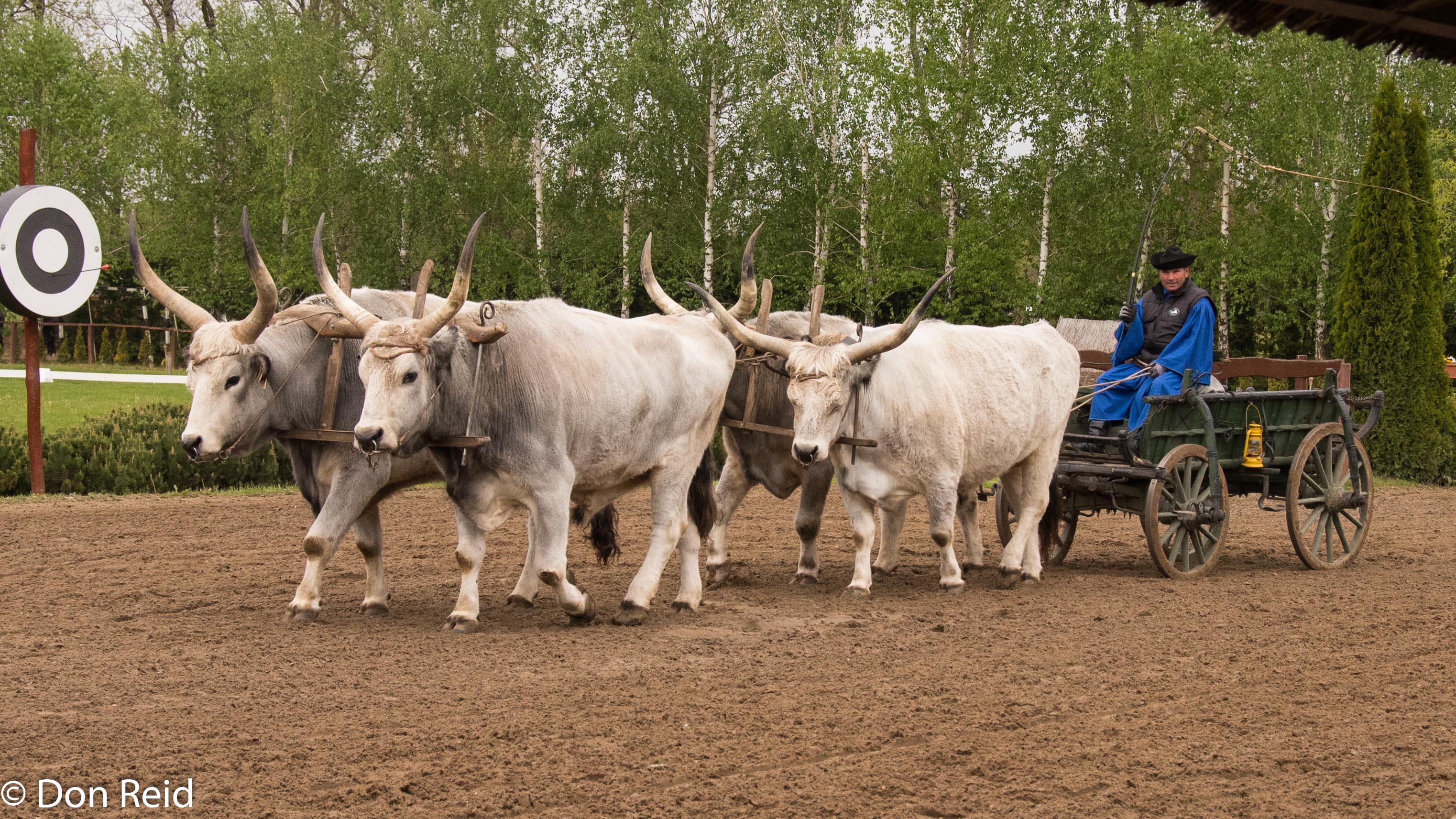
Next up was a horse show viewed from a seating area next to a short sandy oval track, including a series of displays of the horse-riding skills particular to the region, which celebrate the unique relationship between Hungarian horsemen and -women with their horses :
2 pairs of horses pulling a heavy wagon, galloping by us at full speed, mud flying from the hooves
Lazar Horse farm
2 pairs of ponies drawing a smaller wagon, a lot more sedately
The ponies
an archer on horseback, shooting at a fixed target and mostly hitting it as he galloped past
a brave rider standing on two horses while controlling a team of five horses
Bareback ridingThe horses giving it their all
other riders performing in traditional costumes
Lazar Horse farmAn elegant lady riderNot just horses on this farm
All in all a memorable show and most enjoyable to be out in the countryside, despite the cold weather
Just Cruising
The morning tour was enough for us for the day, so we decided to skip the afternoon tour (through the countryside to meet the boat further upstream) and spent the afternoon pleasantly cruising along the Danube as the boat started the return journey. More about the “Just Cruising” part in a forthcoming post. (I know you can’t wait, but I have to stretch this trip out to get my money’s worth from it – that’s what comes from having a Scottish heritage)
Tuesday 26 April
Bratislava – City Tour
By the time we awoke in the morning, the boat was already docked in Bratislava, capital of Slovakia, and by 9 am we were on the bus for the City Tour. The young guide, who looked like a student, gave us a summary of Slovakia’s history (in good English, flavoured with a strong eastern European accent) as we drove up to the first stop at the Castle which, compared to others we have seen, is quite plain and of simple design.
The old Castle on the hill
Particularly the inner courtyard, where I noticed no one was inclined to take photos, as there were none of the elaborate features and details we have become used to seeing. This was refreshing in a way and set the tone for the rest of the city, parts of which we saw later during our walk through the Old Town.
Quirky architecture on the Castle facade
The castle has a long and chequered history, having been destroyed and rebuilt several times.
Wikipedia says of the castle’s earliest history :
“The castle, like today’s city, has been inhabited for thousands of years, because it is strategically located in the centre of Europe at a passage between the Carpathians and the Alps, at an important ford used to cross the Danube river, and at an important crossing of central European ancient (trade) routes running from the Balkans or the Adriatic Sea to the Rhine river or the Baltic Sea, the most important route being the Amber Route.
The people of the Boleráz culture were the first known culture to have constructed settlements on the castle hill, around 3500 BC. Their “castle” was a fortified settlement and a kind of acropolis for settlements in today’s Old Town of Bratislava.”
From the castle there were great views across the Danube, with the standout feature being the rows of communist-era apartment blocks, taking up most of the space beyond the river and painted in cheerful pastel shades.
Communist era housing in pleasing pastel colours
The walking part of the tour commenced at our second stop and took us through several old town squares (called Namesti), some very old, others newer, all interesting with handsome buildings and that very European sense of scale – comfortable rather than overwhelming.
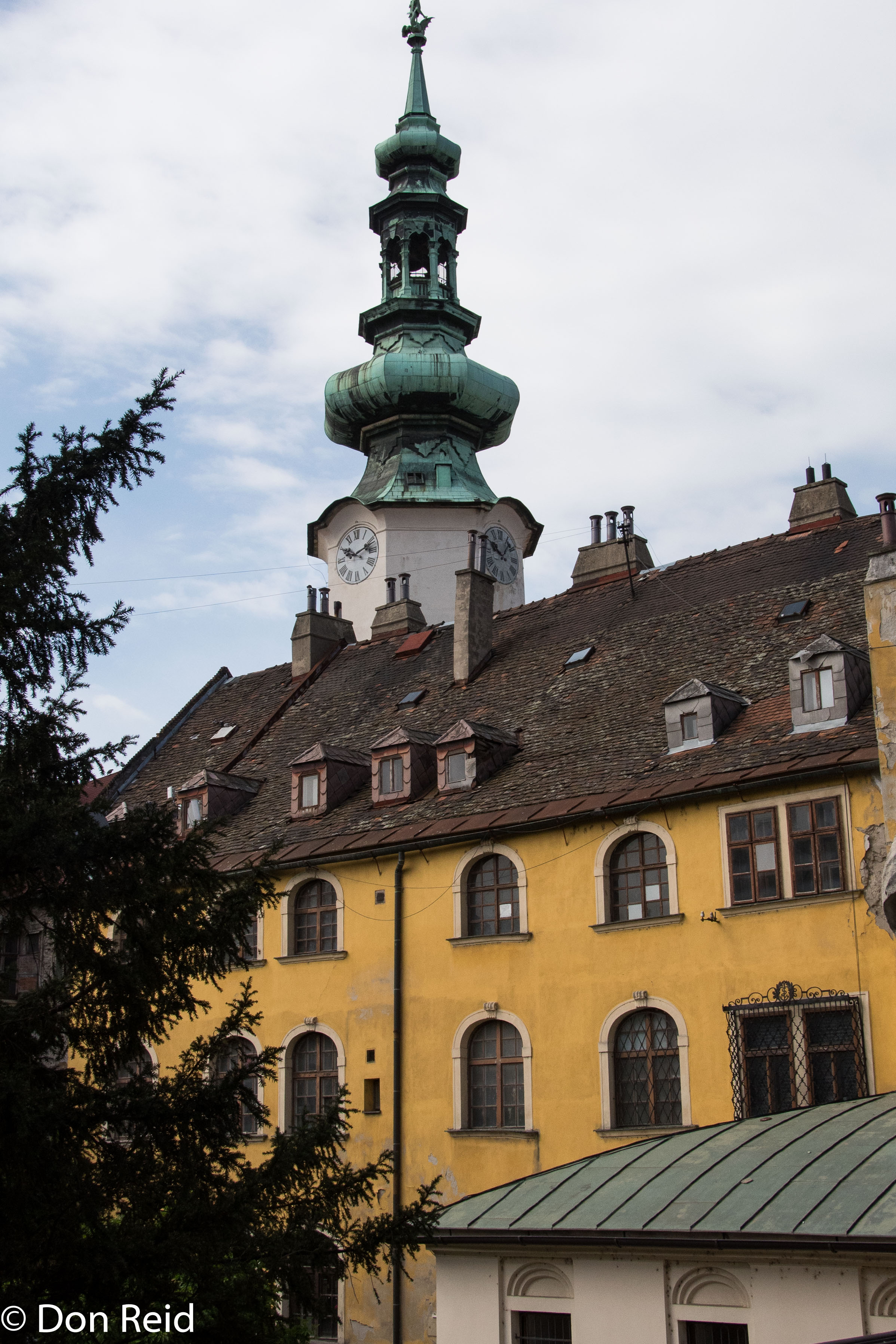
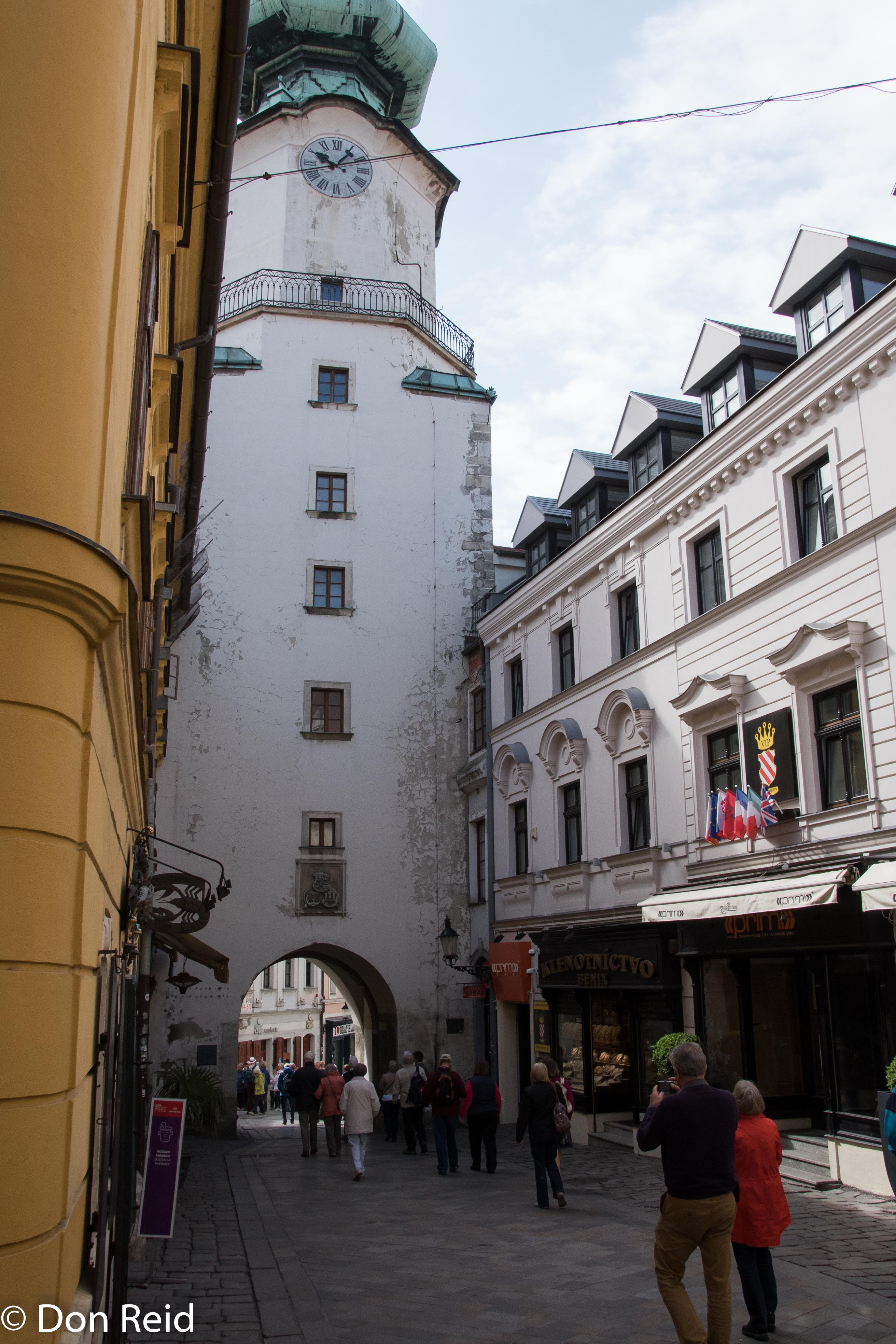
Bratislava old town.Michael’s GateThe Town Hall
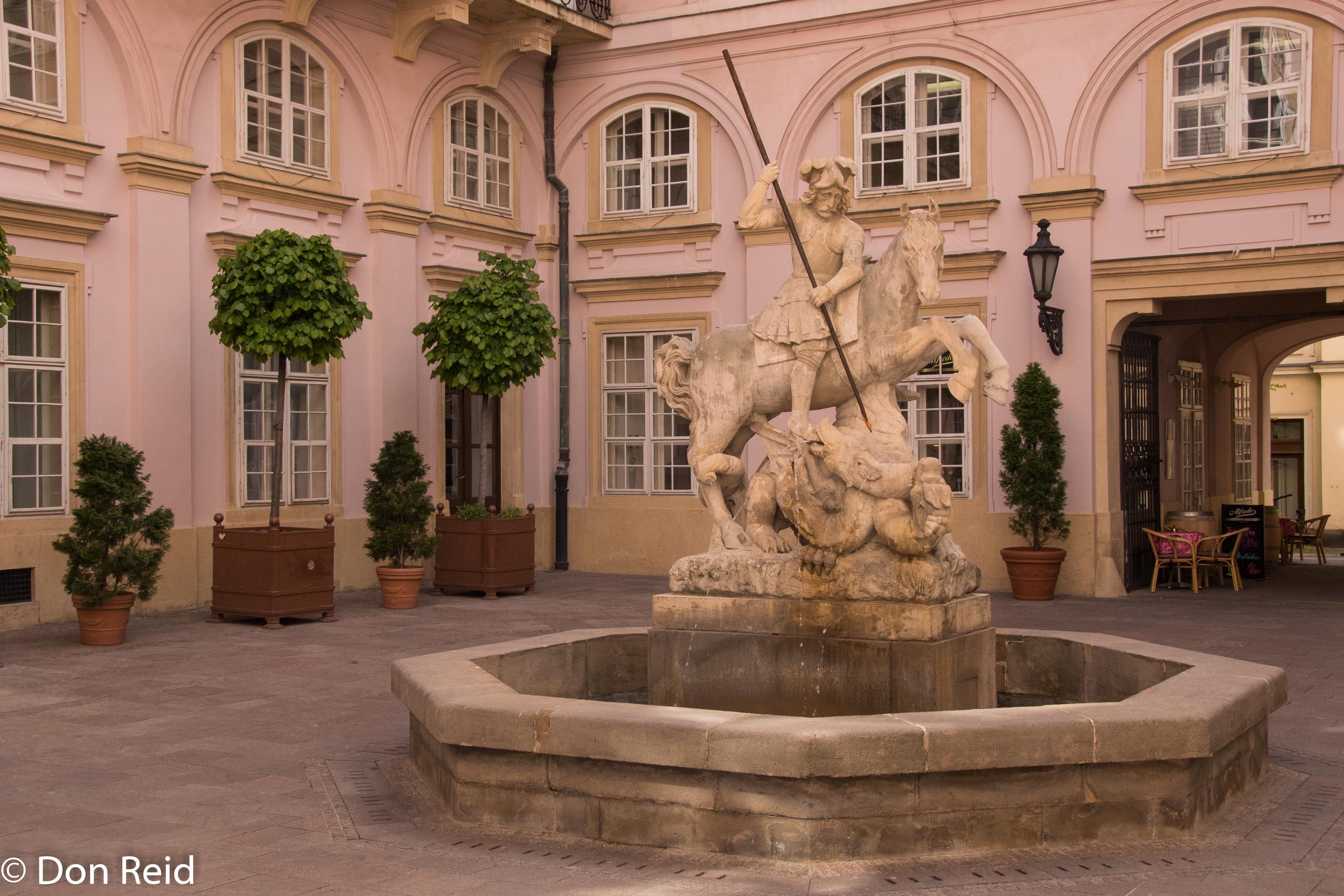
Primate’s ResidencePrimate’s Residence : Fountain of St George and the dragon
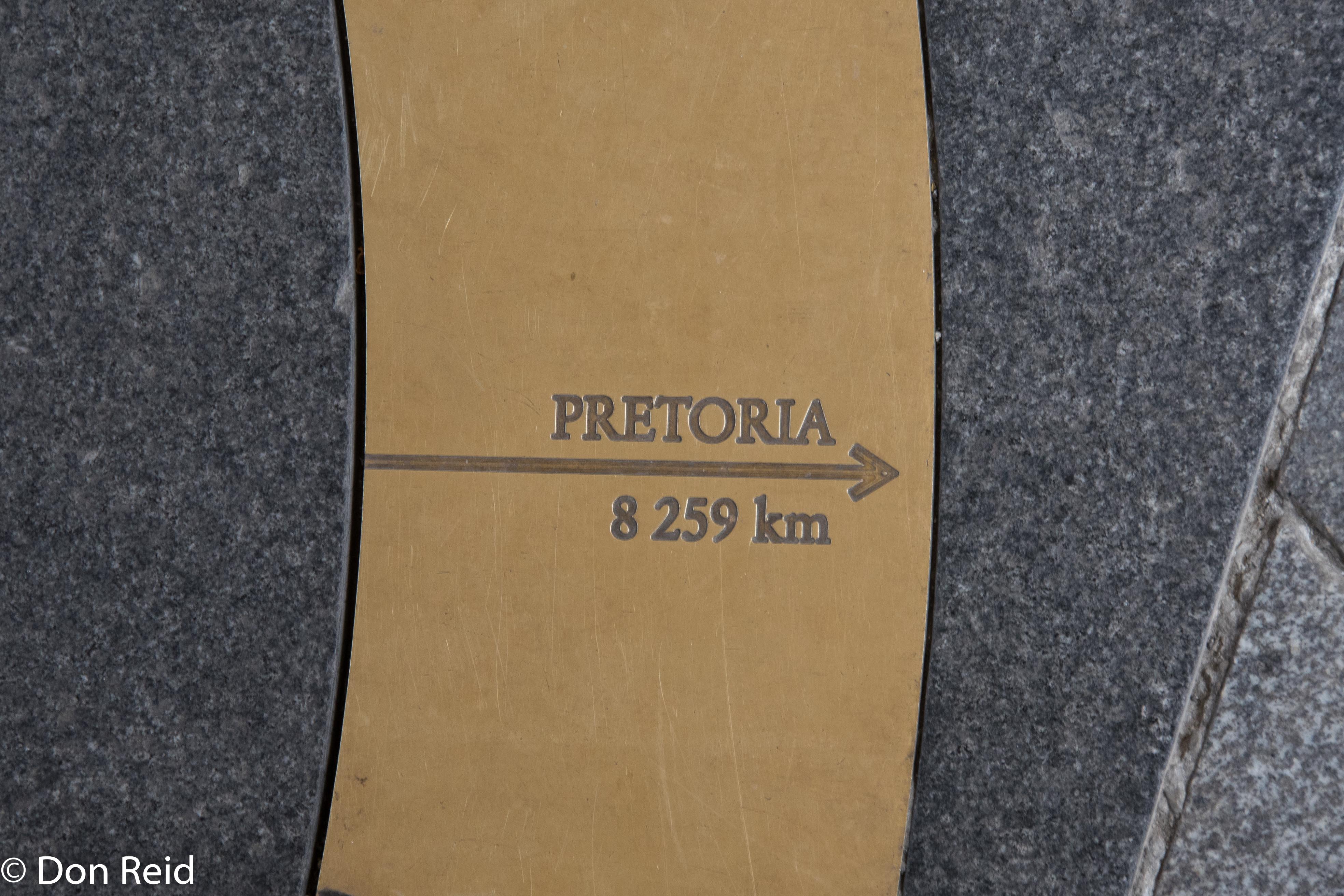
And a reminder that we were quite far from home……
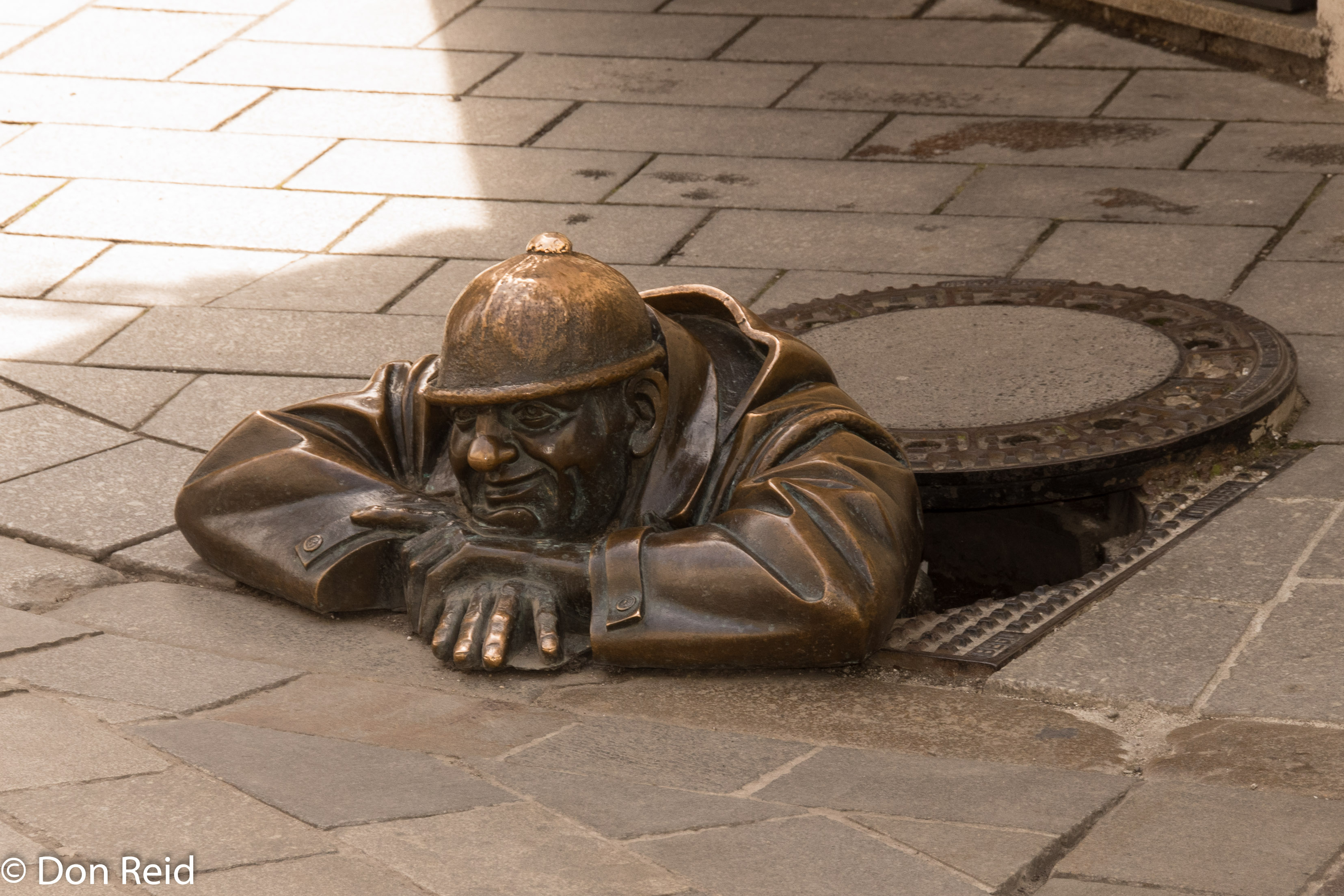
One of the features of Bratislava is its collection of quirky statues, sprinkled around the city, none more so than the tourist favourite, “Man at Work”, which depicts a “worker” partly emerging from a manhole and clearly not at work.
Bratislava old town. “Man at work”
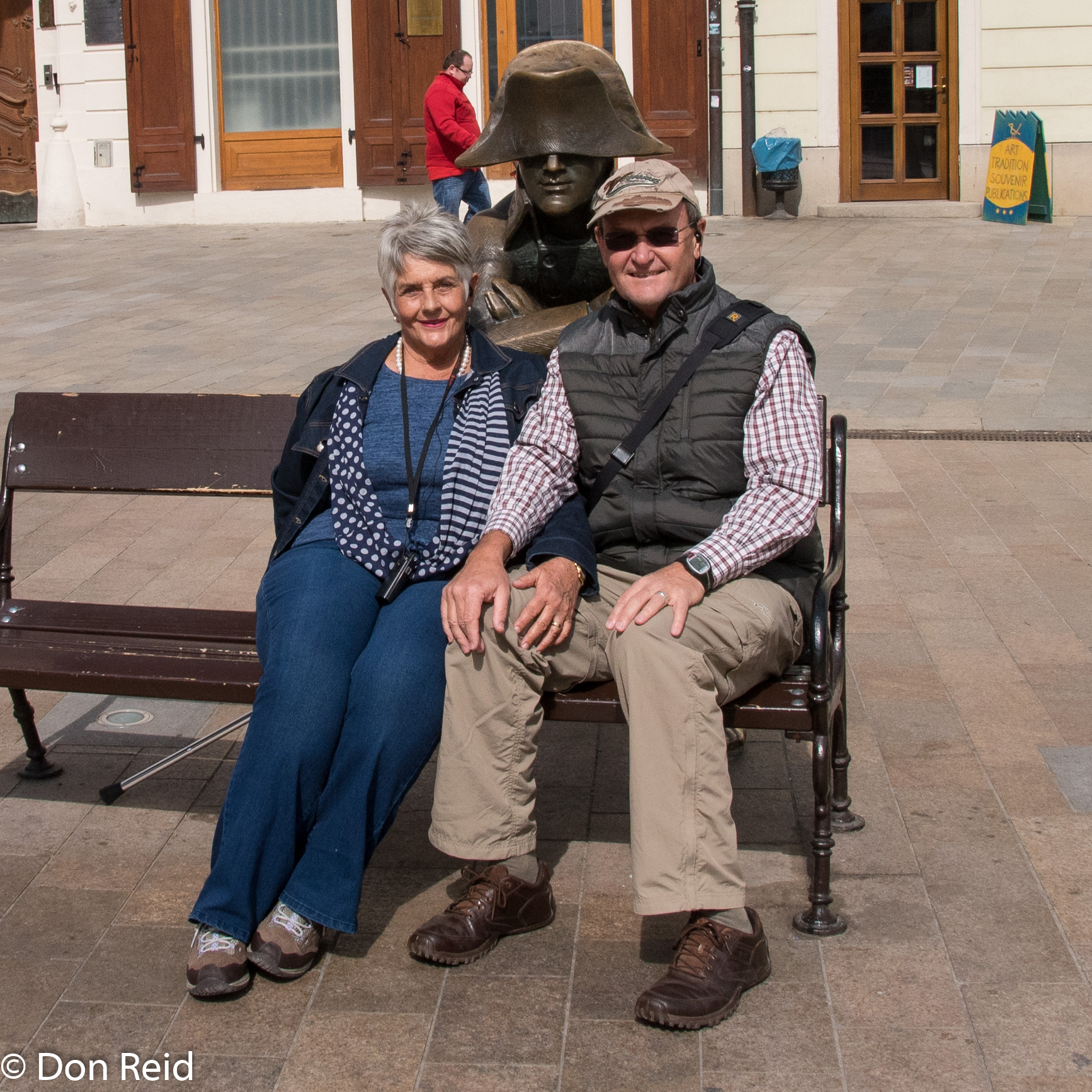
Another in the main square has a Napoleonic soldier leaning over your shoulder, if you choose to sit on the bench in front of it, as many tourists elect to do.
Our new pal – the Napoleonic Soldier in the Main SquareHe’s really quite friendly
And there are others – spot the living one……….
Hint – note the basket for donations
Hans Christian Andersen – well a statue of him actuallyA party of colourful kids pass another figure
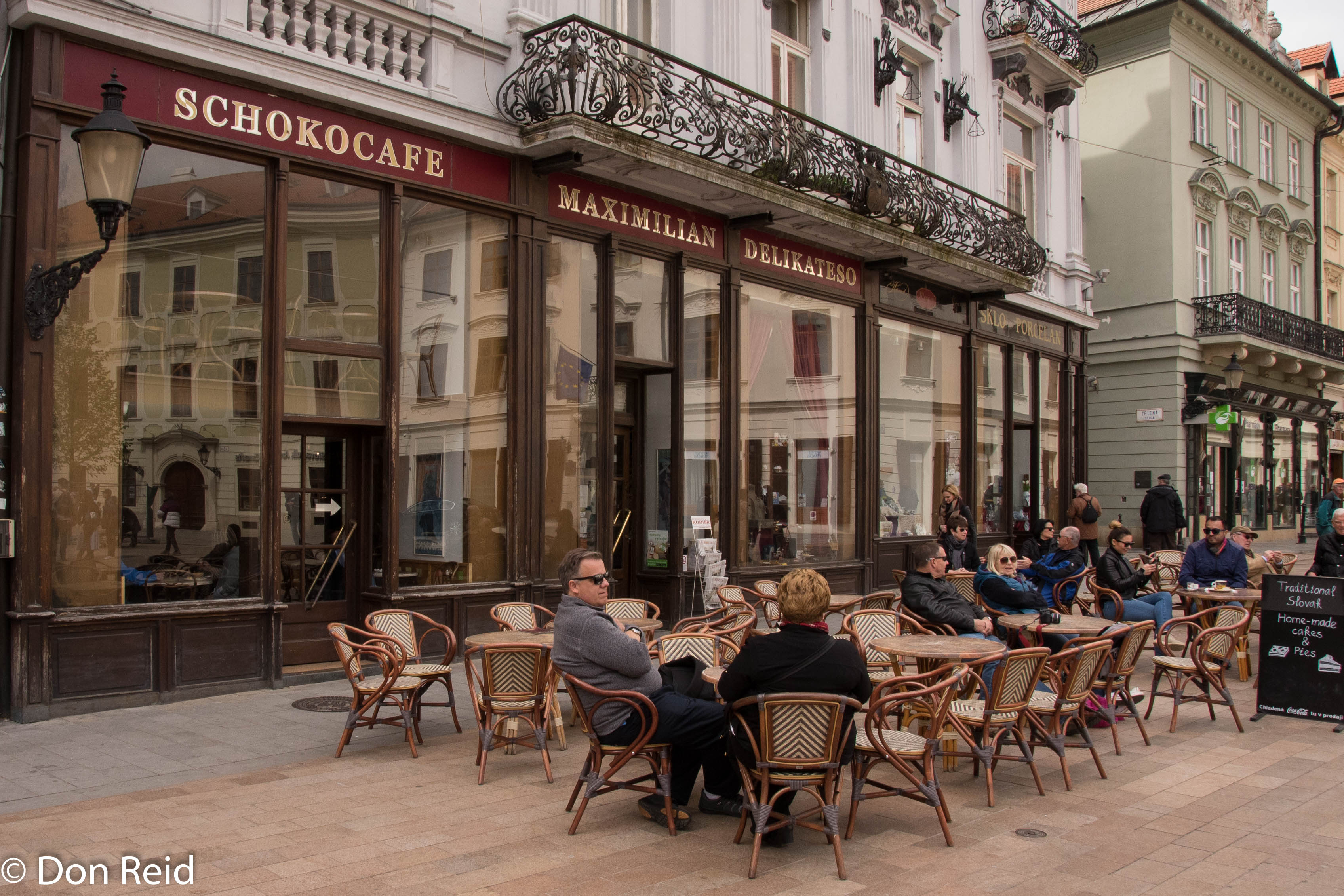
The main square, Hlavne Namesti, drew us back after the official tour was done, to enjoy a “Big Cappuccino” and the local version of apple pie at an outside table, nicely positioned to watch the passing people traffic and the goings on in the square.
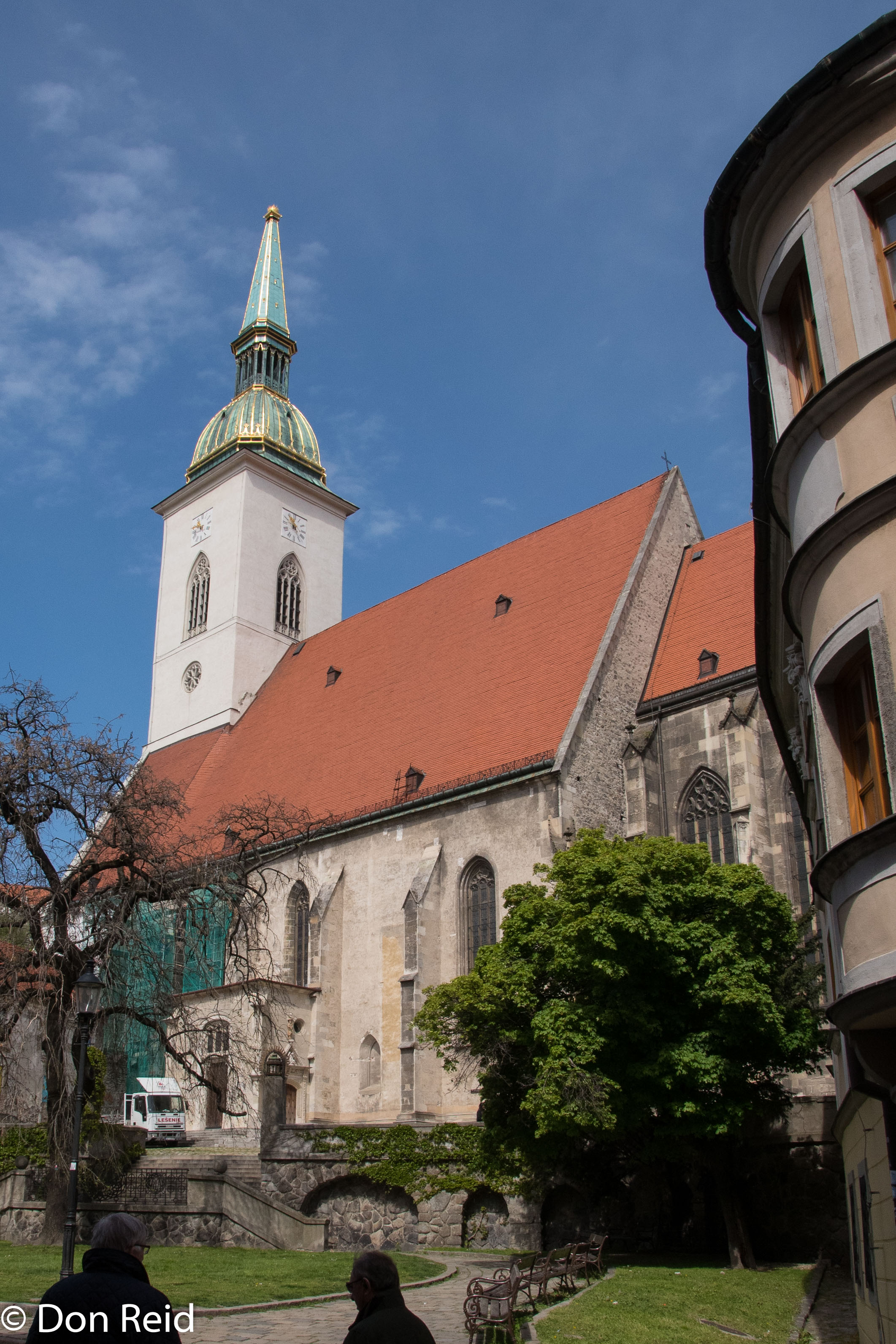
The outside café on the squareChurch in the old town.The Main Square
Fountains are also big in Bratislava – this pretty one is called Ganymede’s Fountain
There was time for some window shopping (which for Gerda means going inside every interesting shop and chatting to the assistants) before making our way back to the boat just a couple of blocks away.
A lovely avenue full of trees
Inconsiderate PigeonThe Opera
Wednesday 27 April
Our last day of cruising as the boat proceeded to Linz in Austria, docking around lunchtime. The walking tour of the town was cancelled due to too few participants, so we set off on our own along the waterfront and into town, encased in several layers of warm clothing to ward off the bitter cold.
Linz – riverfront
Linz was clearly not on many people’s list of places to visit and seemed almost deserted – perhaps because of the weather. That might also explain why we found it one of the less inspiring places we have visited – apart from the usual complement of churches, abbeys and cathedrals, none of which stood out for any particular reason, we did not encounter much of interest as we wandered through the streets around the main, very large square and adjoining old town.
Linz – not much going on
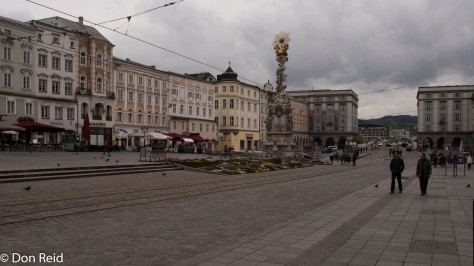
The main square is lined with old patrician houses, the 17th century Town Hall and St Ignatius church with its two towers, while the centre of the square has the Trinity Column, erected by grateful citizens after the town managed to escape a trio of severe threats to their lives – the pest, a massive fire and a Turkish invasion – good enough reason, I reckon. What spoils it all is the scale of the square – too big – and the fact that the tram system runs right through the middle of it, completely destroying any intimate character it may have had.
Linz – Hauptplatz with the Trinity column in the middle
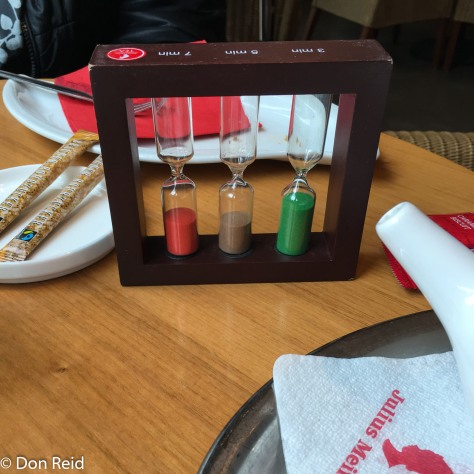
We did find a cosy café in one of the side streets in the Old Town and had an exceptional tea but a disappointing version of the local speciality cake – Linzertorte – which was crumbly and not particularly memorable. (Oh, how fussy we get at our age!) Maybe it was just a poor example. My German pronunciation was not up to scratch either – when I asked the waiter for “milch, bitte” with our tea he brought us a cute little timer for measuring how long the tea bag should stay in – fortunately the timer was useful and the tea so good it was actually better off without any “milch”.
Linz – best tea in a long time (asked for milk, got a timer!)
As we sat in the café the rain started falling, soon turning to sleet for a few minutes, just to reinforce how cold it was.
Linz – sleet falling in the Old Town
After some further wandering we came across the Mozarthaus, where he composed the Linz Symphony during a short stay of a few days.
Linz – Mozarthaus
Linz – Mozarthaus
Linz – Mozarthaus
We made our way back to the boat and were soon immersed in the last day festivities including the Captain’s gala dinner with multiple courses. The cruise was coming to an end ………
More to come…
So what’s left to tell? Well there’s the “Just Cruising” bit – birding and other special sights along the river during the course of the cruise. After that, more about the places visited before and after the cruise – the two “P’s” – Prague and Passau, both unique and both full of highlights……..
Continuing the story of our eight-day, seven night “Danube Rhapsody” cruise, starting from and returning to Passau in Germany with the furthest point reached being Budapest in Hungary and traversing 4 countries along the way …………..
Saturday 23 April
Vienna – Riverside Walk
Having docked in Vienna the previous afternoon and attended a concert in the evening, we already had a good feeling about the city we last visited in December 1971.
We were due to do the city tour in the morning but decided to skip it and conserve our energy, physical and mental, for the excursion to Schönbrunn Palace in the afternoon. This gave us a chance to have a late breakfast and explore the top deck of the boat (not much there, just an open area with deck chairs but way too cold to enjoy at this time of year), then relax until lunchtime. I took the opportunity to walk along the riverfront and enjoyed a peaceful hour or two of relaxed birding and photography.
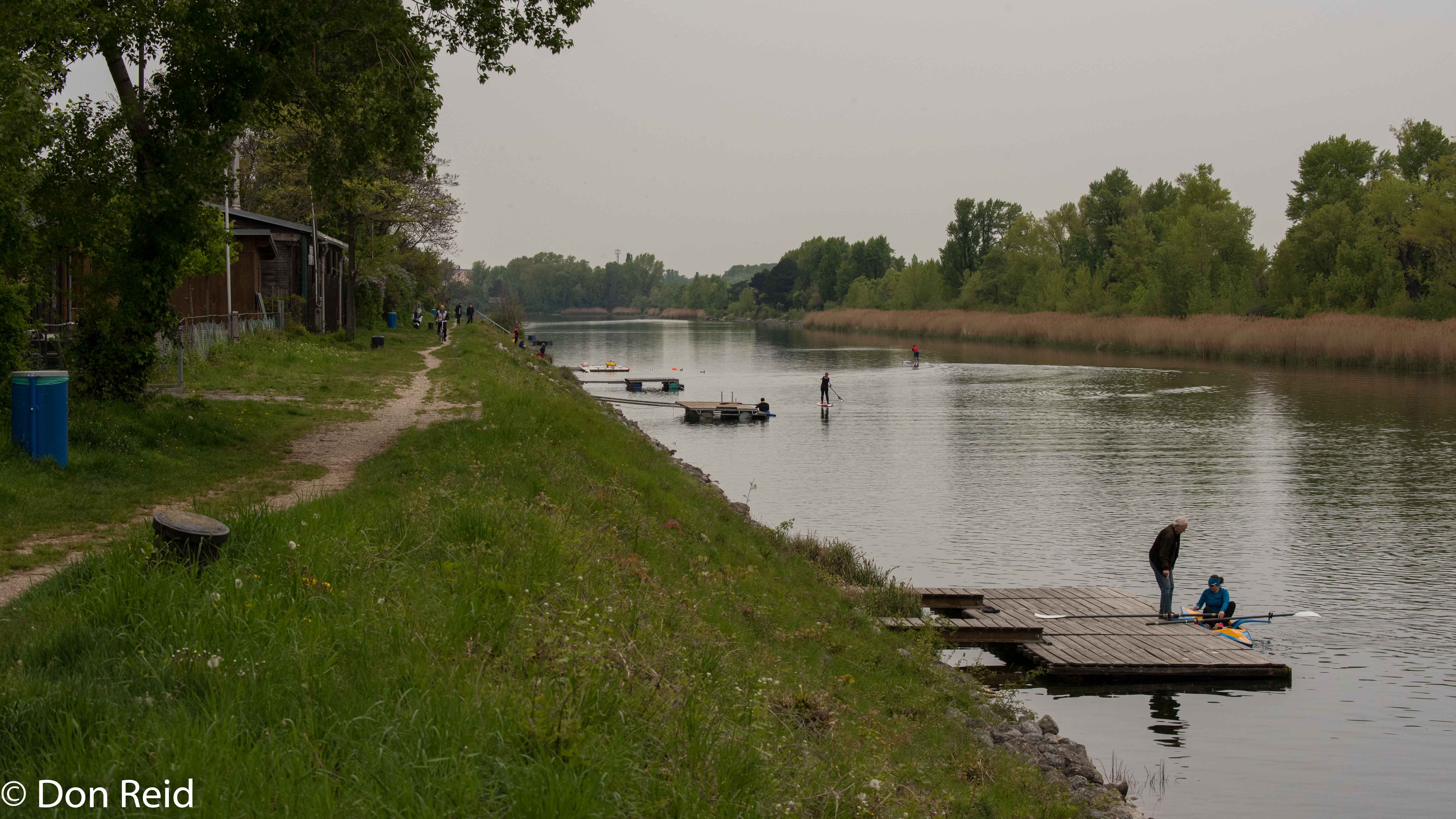
It was nice to see a sprinkling of Viennese people at play, some rowing on the river in a protected tributary of the Danube, others cycling and jogging along the riverside pathways, which are pleasantly bordered by green grass and lined with trees and bushes just coming into bloom, creating an attractive park-like area all along the river.
Walk along the riverWalk along the riverA small church near the riverThe riverside parklands
Spring is here
Vienna – Schönbrunn Palace
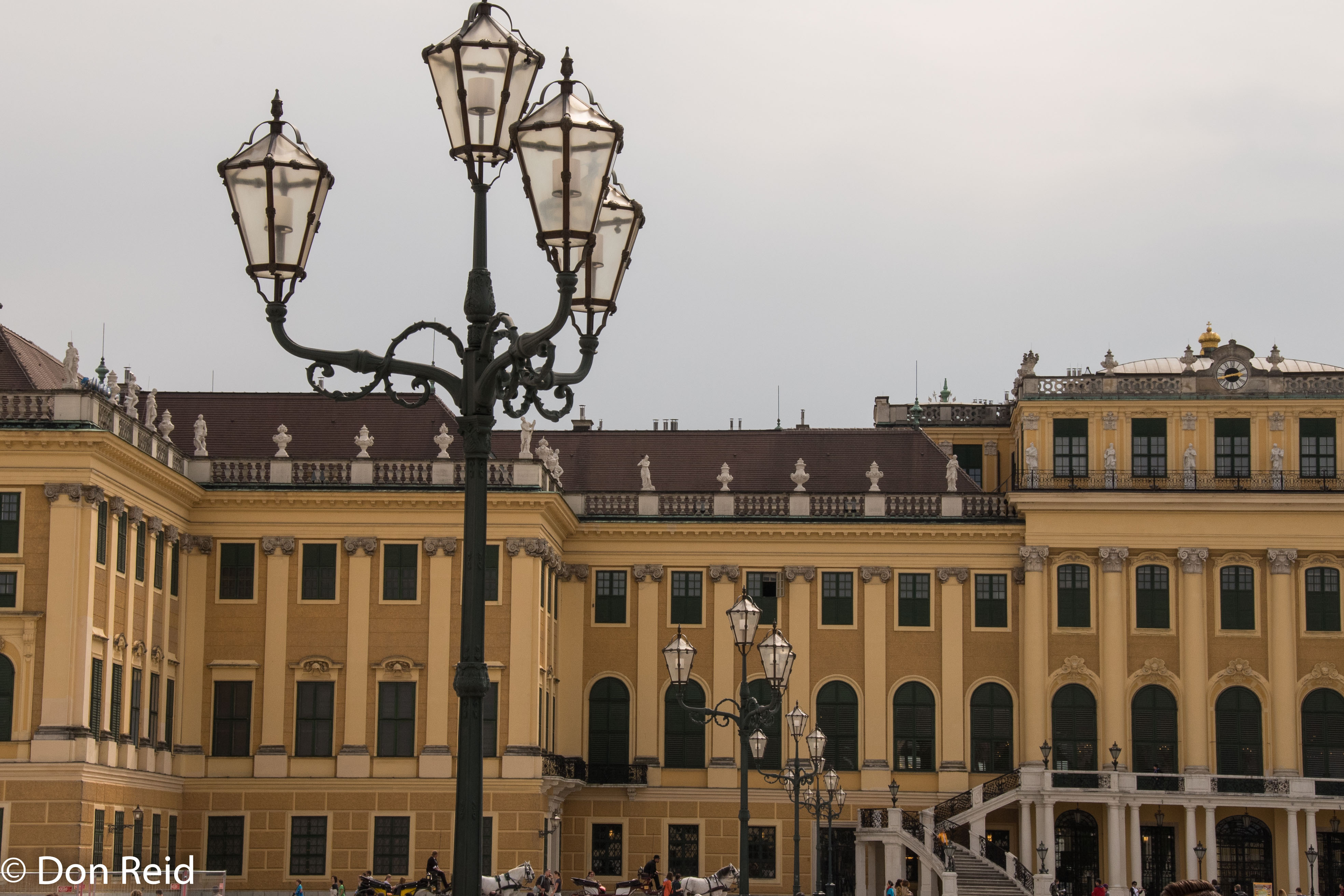
After lunch we joined the group for the tour of Schönbrunn – once again it was a re-living of our trip of some 44 years ago as newly weds, but none of it seemed familiar after such a long time. The bus stopped close to the entrance gates and, walking into the palace grounds, we had a great view of the main buildings which have been superbly maintained.
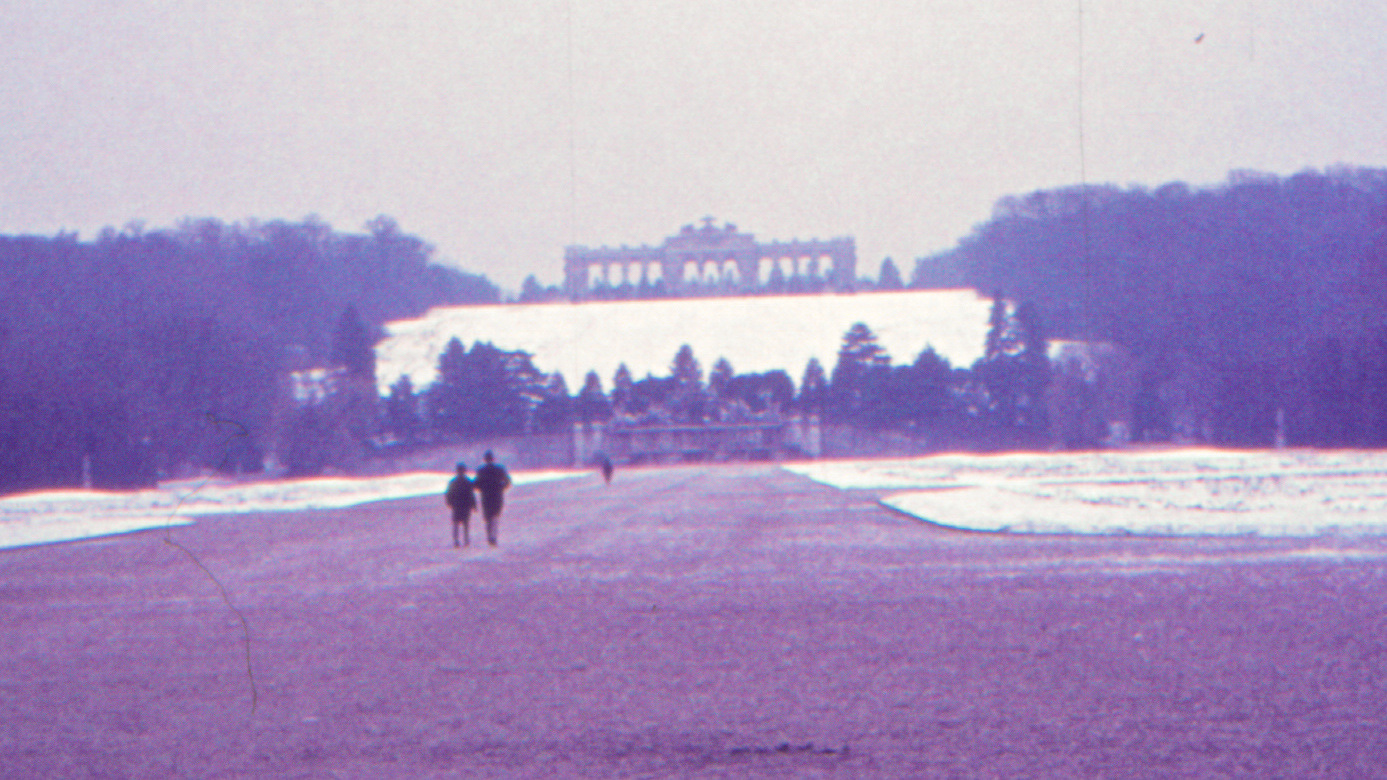
Schonbrunn PalaceMy January 1972 photo of Schonbrunn
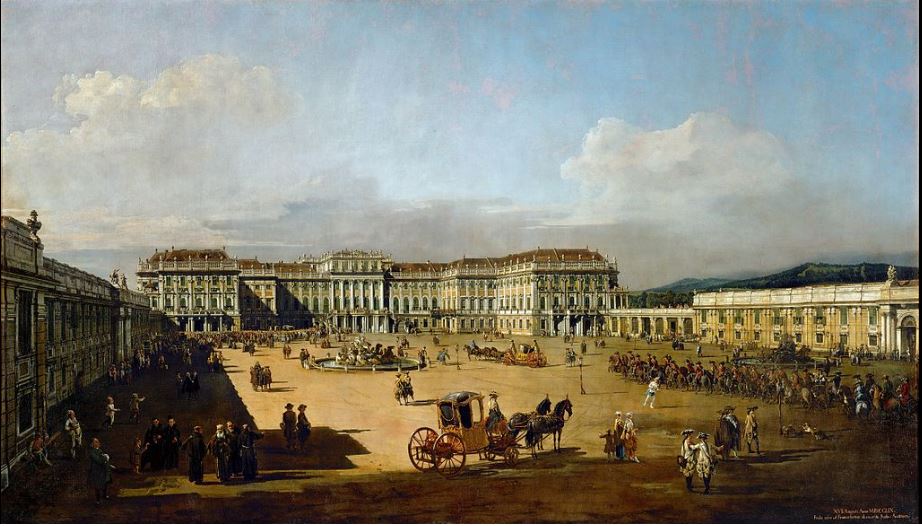
And a lot further back in time……
Painting by Bernardo Bellotto 1758Schonbrunn Palace
Schonbrunn Palace – view towards the hill which since 1775 has been crowned by the Gloriette structureCall back the past – my 1972 photo of the hill with the Gloriette structureGolden Eagle – meet live Crow
We learnt later that the palace attracts some 8 million visitors each year – that’s more than 20,000 per day! It didn’t seem that busy or overcrowded, probably due to the efficient systems that are in place to regulate the flow of tourists.
Heading inside, our guide took us through the main ceremonial rooms, just touching on the 1441 rooms that make up the whole palace. No internal photography is allowed so I could not do my usual photo record – suffice to say the internal design and finishes were very much up to “Grand European Palace” standards and worthy of its World Cultural Heritage status. Here is one photo from Wikipedia which illustrates the opulence of the interior design –
Interior of the Great Gallery (Wikipedia)
Palace Gardens
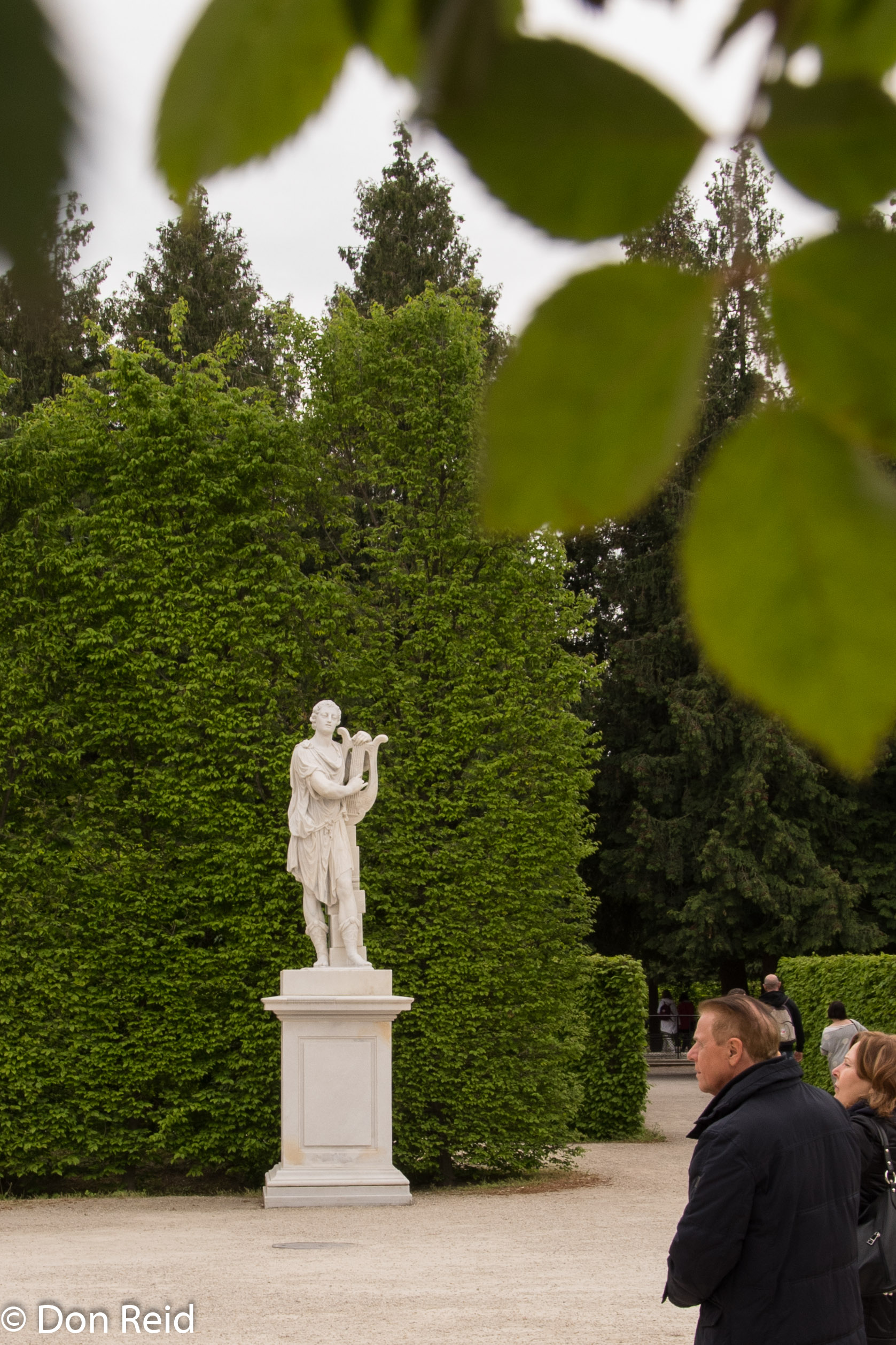
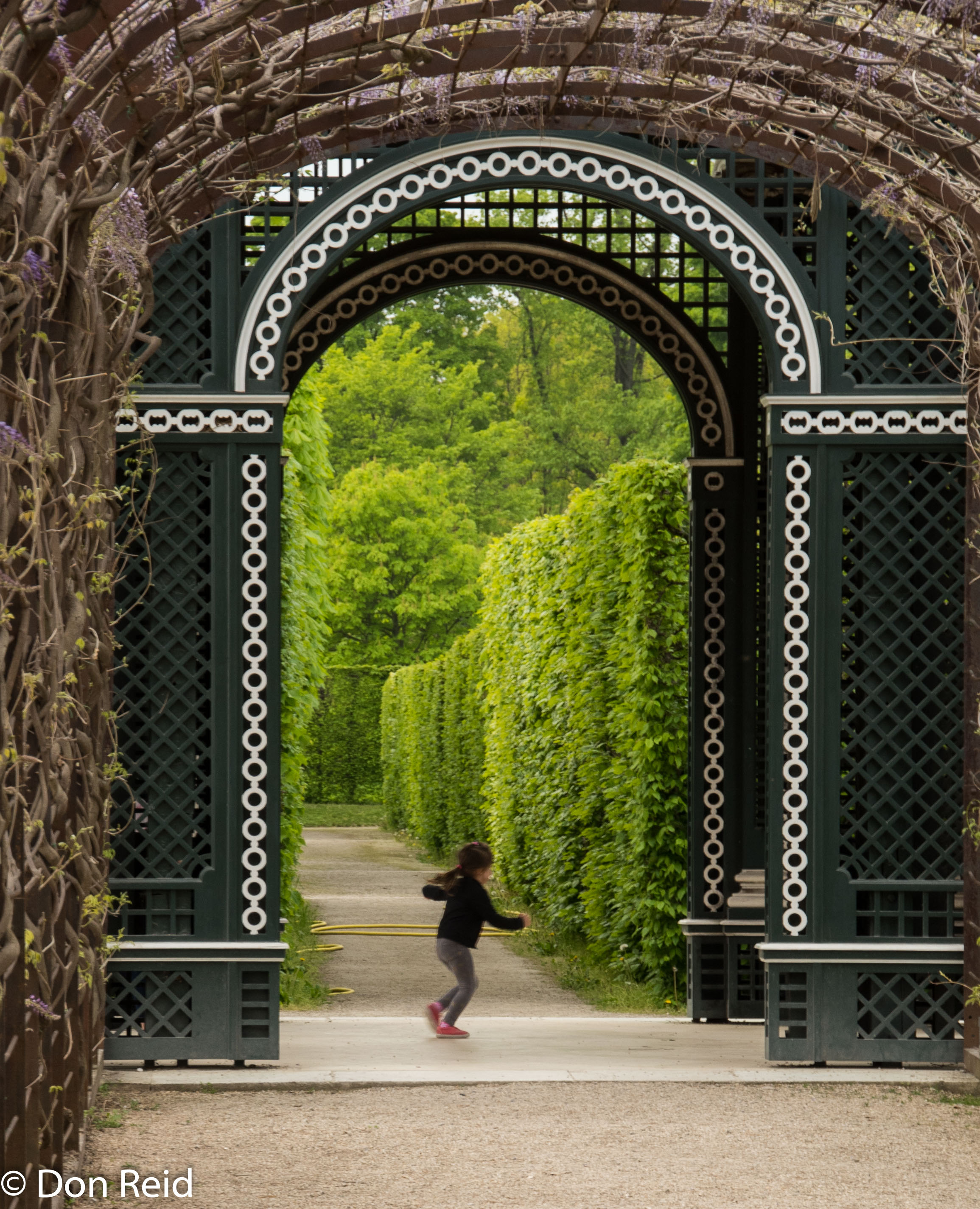
With no restrictions on external photography, I took a walk around the impressive gardens while Gerda did some gift shopping and took in the colourful early spring displays of flowers as I wandered around the extensive pathways. Despite the numbers of other tourists I found some quiet spots away from the madding crowd.
No tour would be complete without a visit to a coffee shop and Schönbrunn’s was up to standard with its offerings. We enjoyed a Wiener Melange (similar to cappuccino) and a taster plate of three of the famous cakes – Mozart, Zachertorte and Himbeer-Topfen – all very tasty.
Trio of cakes and a Wiener Melange coffee
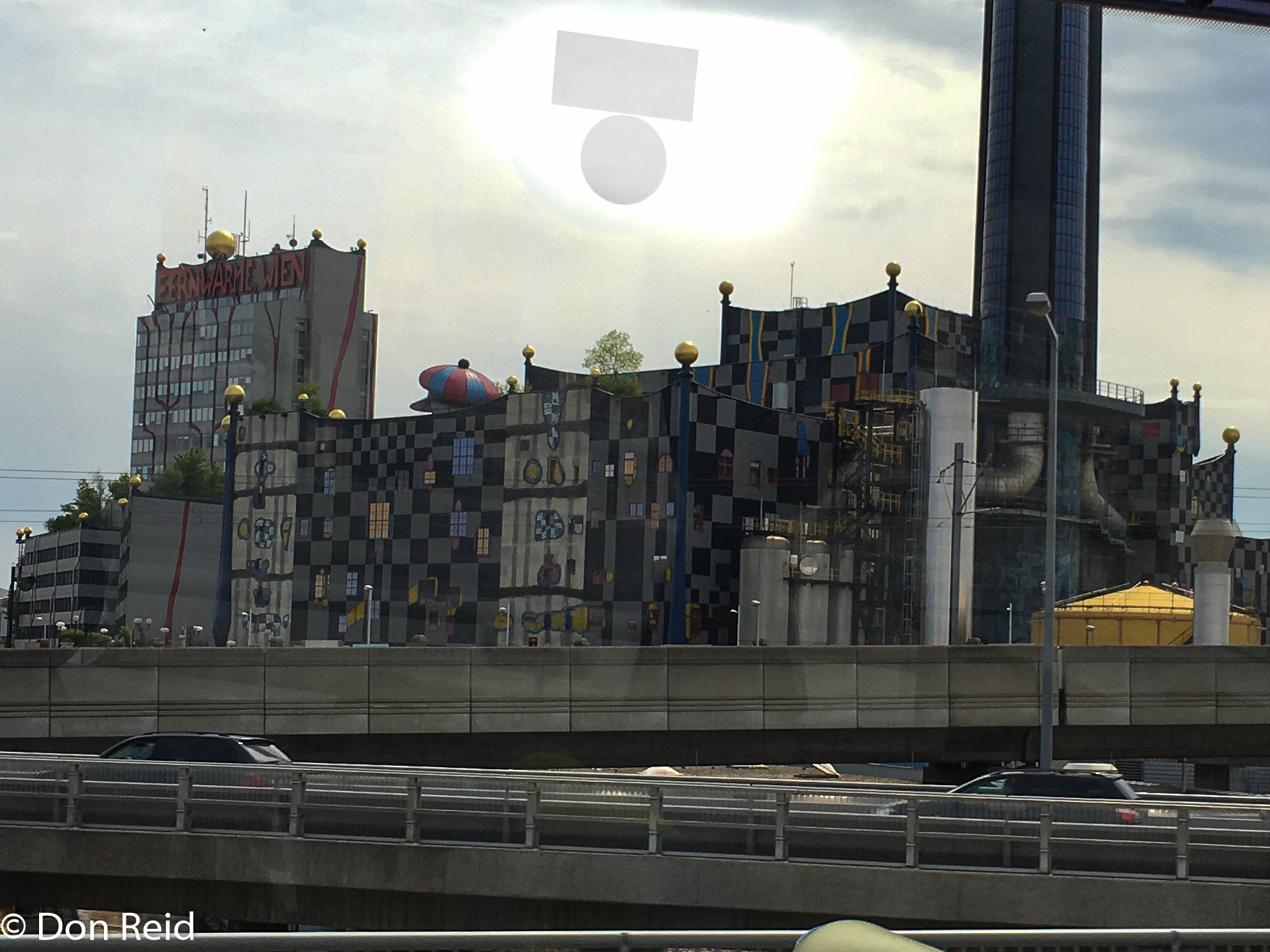
Not having done the city tour, it was nice to get a brief glimpse of Vienna during the 40 minute drive there and back – a couple of unique sights caught our eye : the “underground” train that travels for kilometres through the city on an elevated track and the most unusual “Incinerator” building which is beyond quirky.
Incinerator building glimpsed from the bus
Sunday 24 April
Budapest
Another day, another new city – and country – this time Budapest in Hungary. The boat had travelled through the night to our new destination. Breakfast was a bit later as we were only due to dock in Budapest at 10h30.
The approach into Budapest to our dock gave us good views of both “halves” of the city, Buda and Pest on opposite sides of the river, each with several impressive buildings on view.
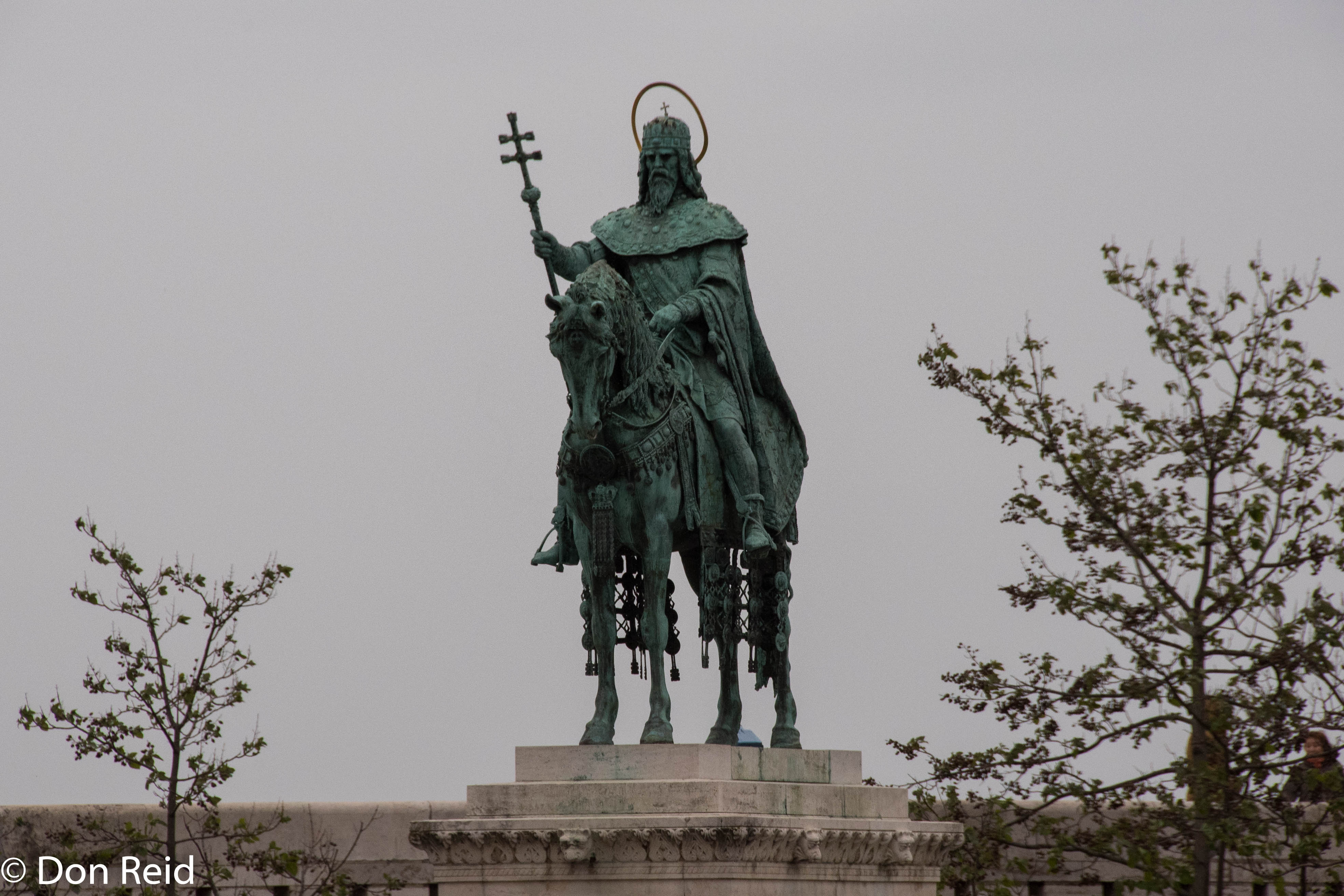
Monument to St Gerard who was rolled down the hill in a barrel
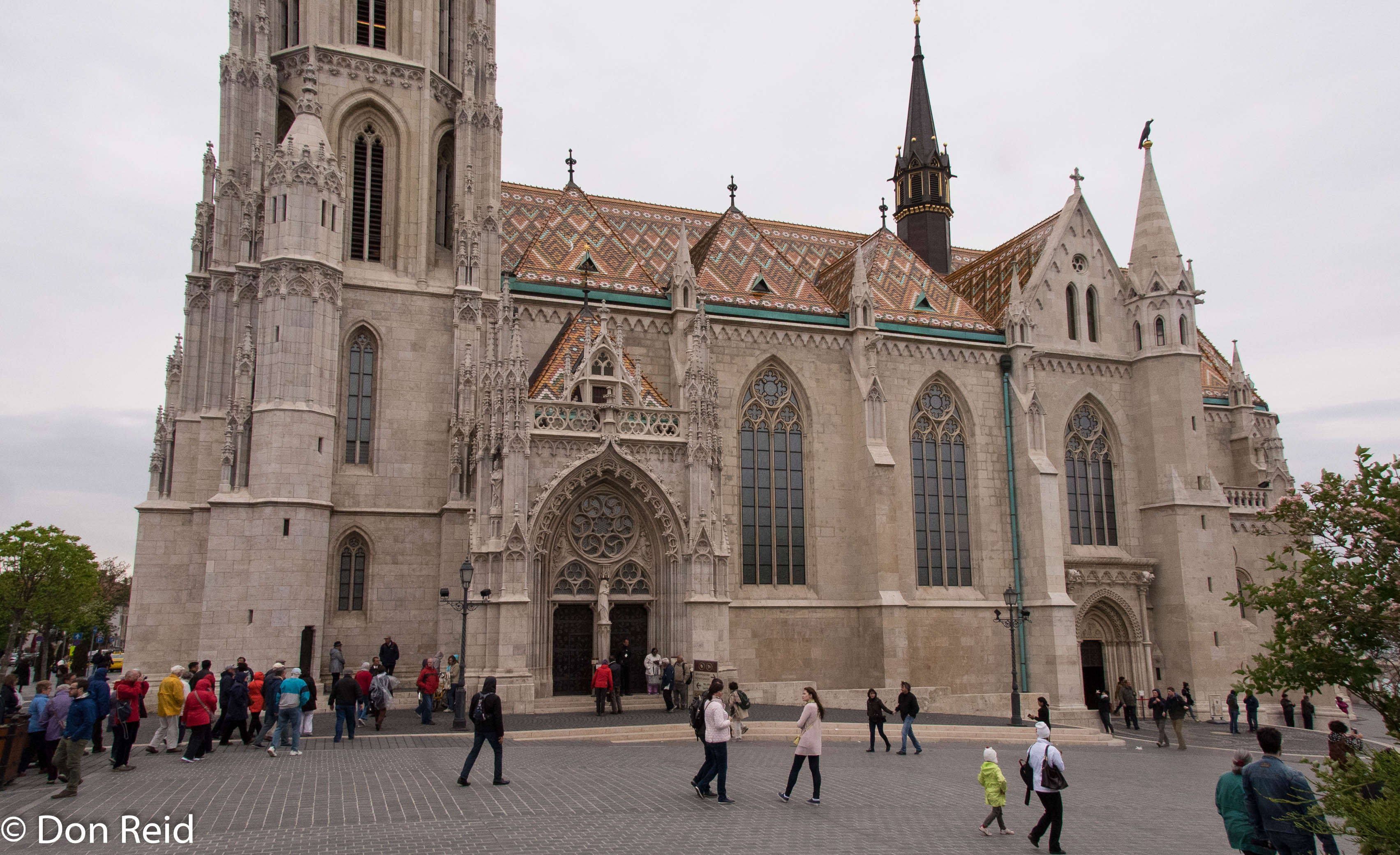
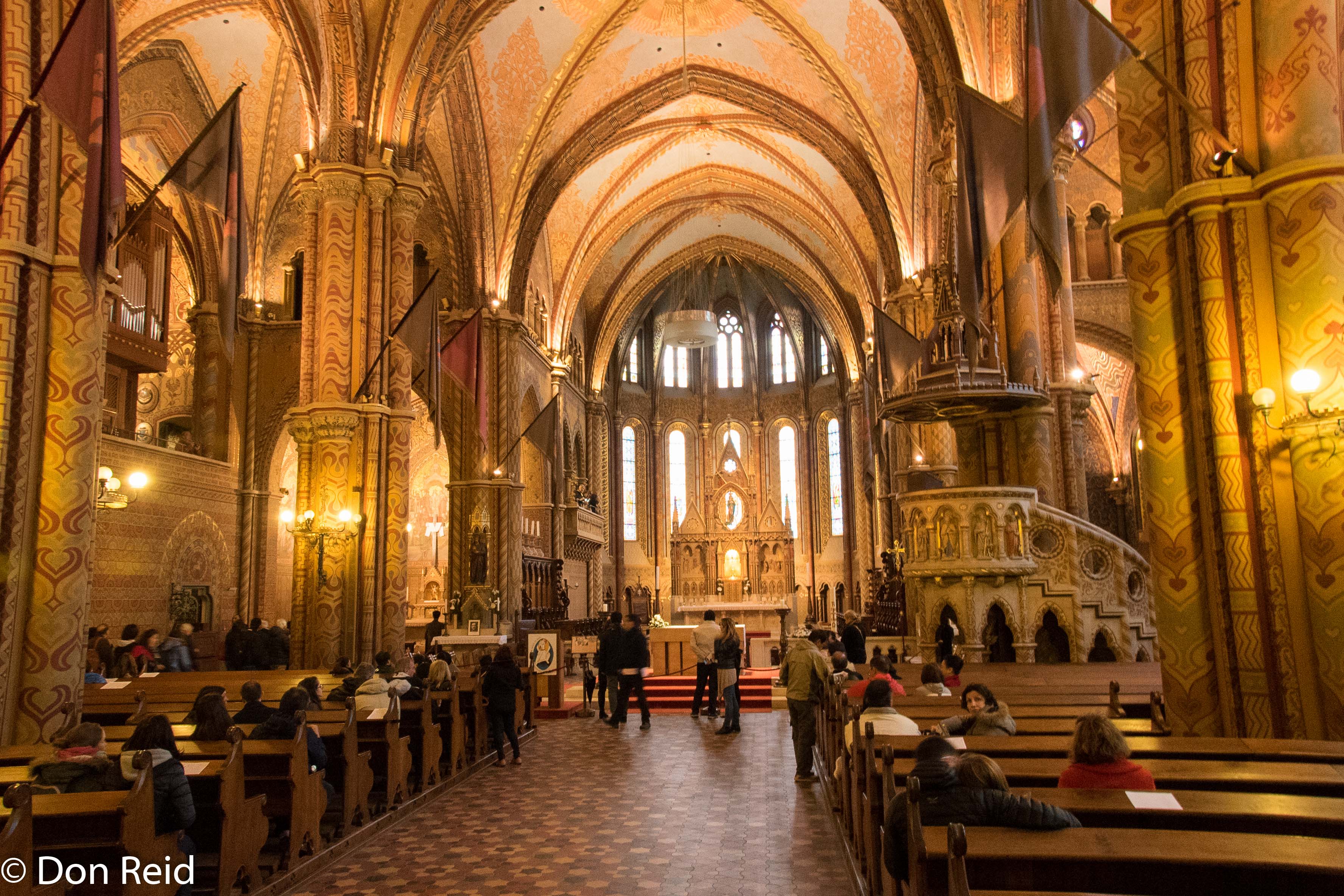
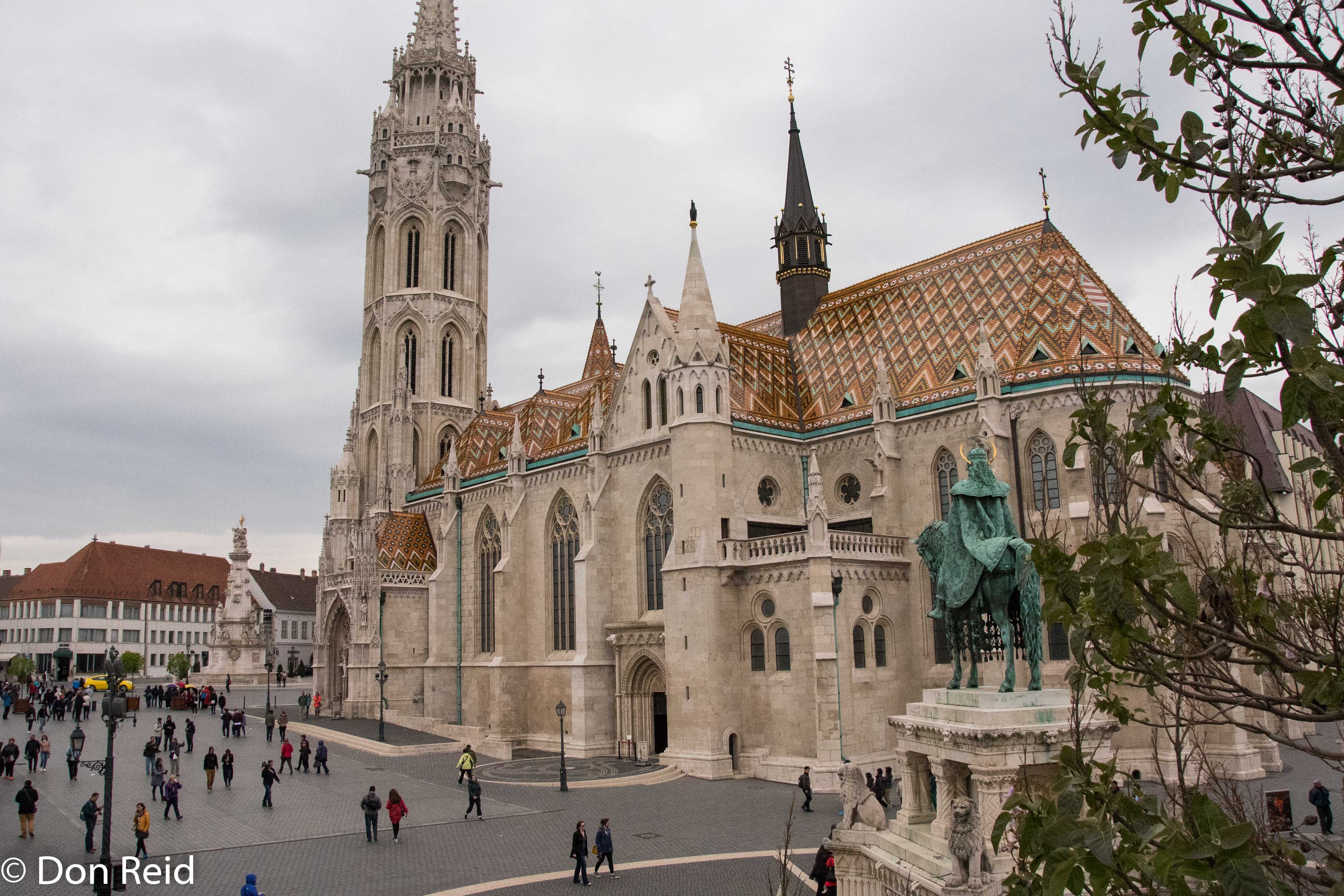
We relaxed on board until lunchtime, then took the city tour after lunch which included a drive-by of some of the main historical features of Buda and Pest. An extended stop allowed a short walk up a hill to the St Matthews Church which had a less gilded interior than others we have seen, but almost more attractive for it.
Our charming guide gave us an insight into the history of the once divided city and how the two halves were united. Wikipedia’s version is a neat summary of events :
“The history of Budapest began with Aquincum, originally a Celtic settlement that became the Roman capital of Lower Pannonia. Hungarians arrived in the territory in the 9th century. Their first settlement was pillaged by the Mongols in 1241–42. The re-established town became one of the centres of Renaissance humanist culture by the 15th century. Following the Battle of Mohács and nearly 150 years of Ottoman rule, the region entered a new age of prosperity in the 18th and 19th centuries, and Budapest became a global city after the unification of Buda and Óbuda on the west bank, with Pest on the east bank on 17 November 1873. It also became the second capital of the Austro-Hungarian Empire, a great power that dissolved in 1918, following World War I. Budapest was the focal point of the Hungarian Revolution of 1848, the Hungarian Republic of Councils in 1919, the Battle of Budapest in 1945, and the Revolution of 1956″.
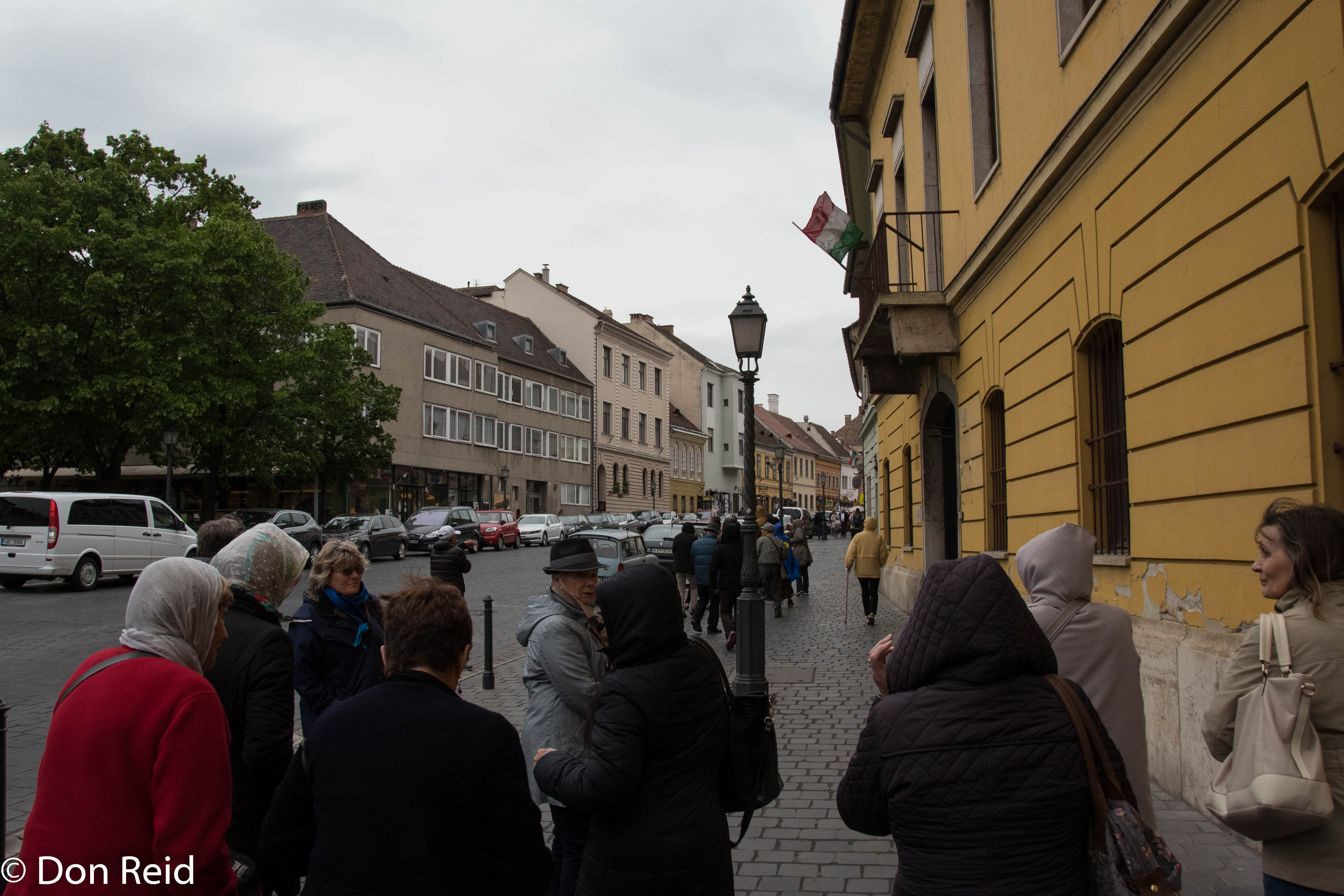
Budapest street scenePaprika for sale
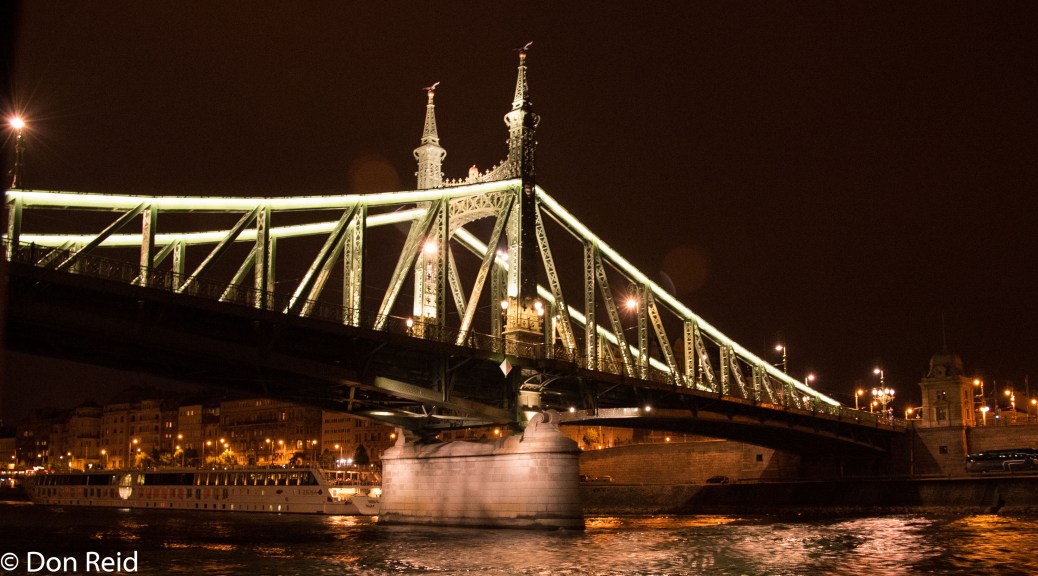
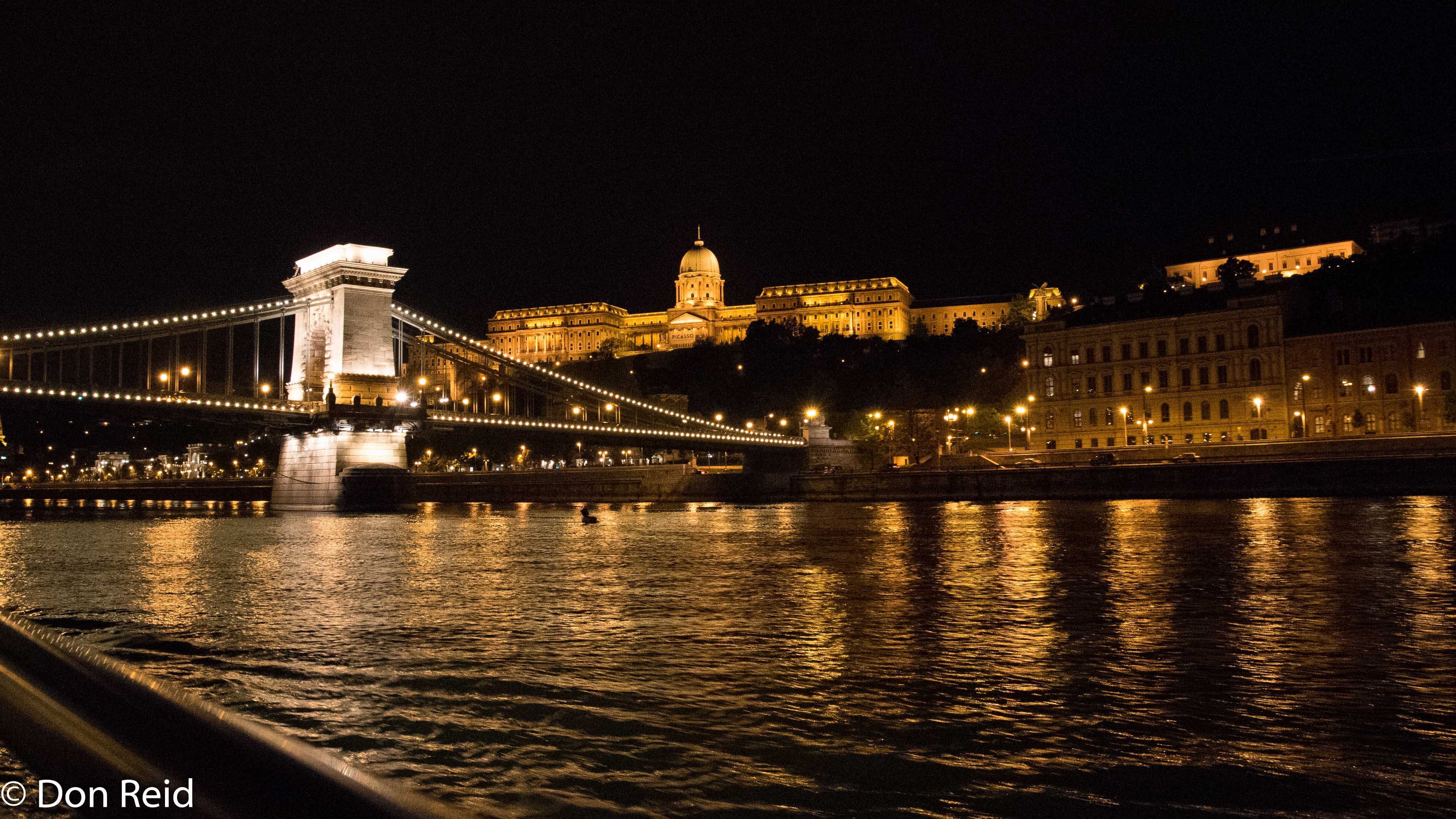
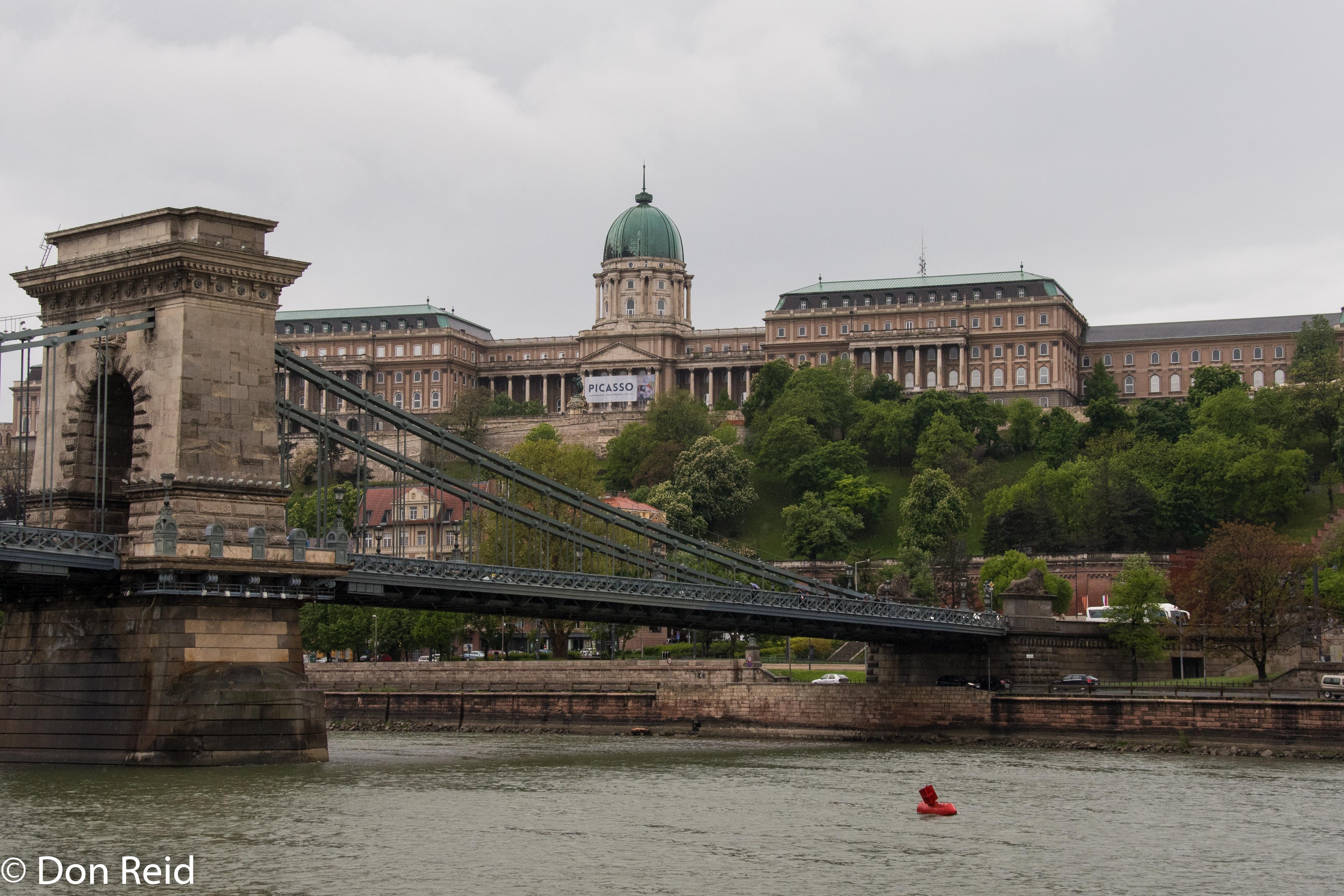
The bridges between the two halves of the city are a feature of Budapest, making crossing the Danube an interesting affair. Old cast iron bridges vie with more recent suspension bridges for “Best Bridge in Budapest” (no, there is no such competition but the alliteration is irresistible).
Liberty BridgeChain Bridge
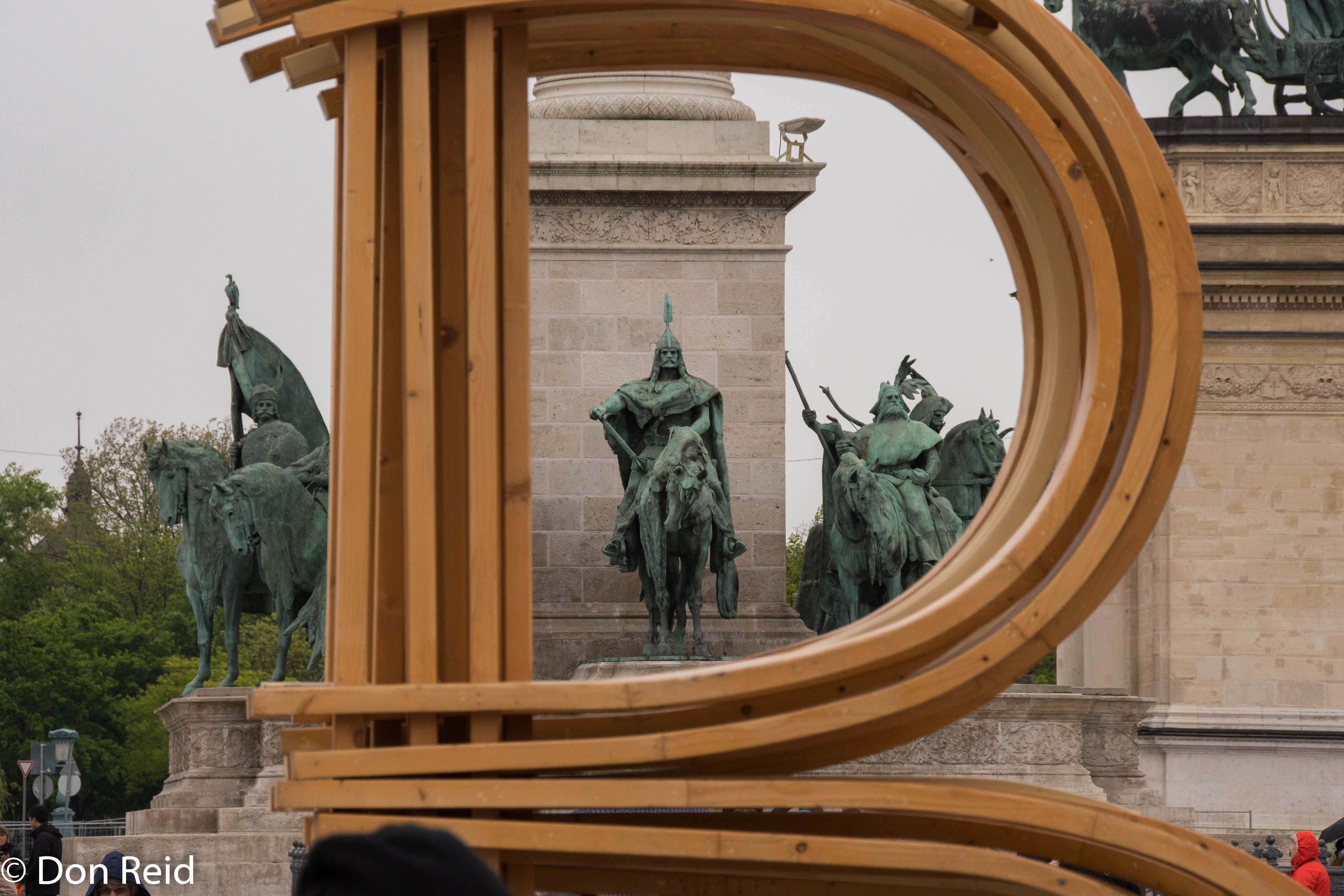
The only other longish stop was at the commemorative Hero’s Square with the usual complement of monumental structures and statues, including a circle of imposing Magyar horsemen.
Hero’s SquareHero’s SquareHero’s Square
Less imposing but more fun was the sight of tourists on a “Beer bike” enjoying a beer or two while pedalling in unison on a 4 wheeled contraption with draught on tap and space for about 5 or 6 pedallers/revellers – not sure how many of the sights they will remember.
Beer bike
Back on the boat there was time for a leisurely dinner before the evening cruise through Budapest began, preceded by locals performing folk music and dancing. We chose to miss the latter and made our way to our cabin where we did the evening cruise in style, lying in bed with the cabin lights off and the curtains wide open.
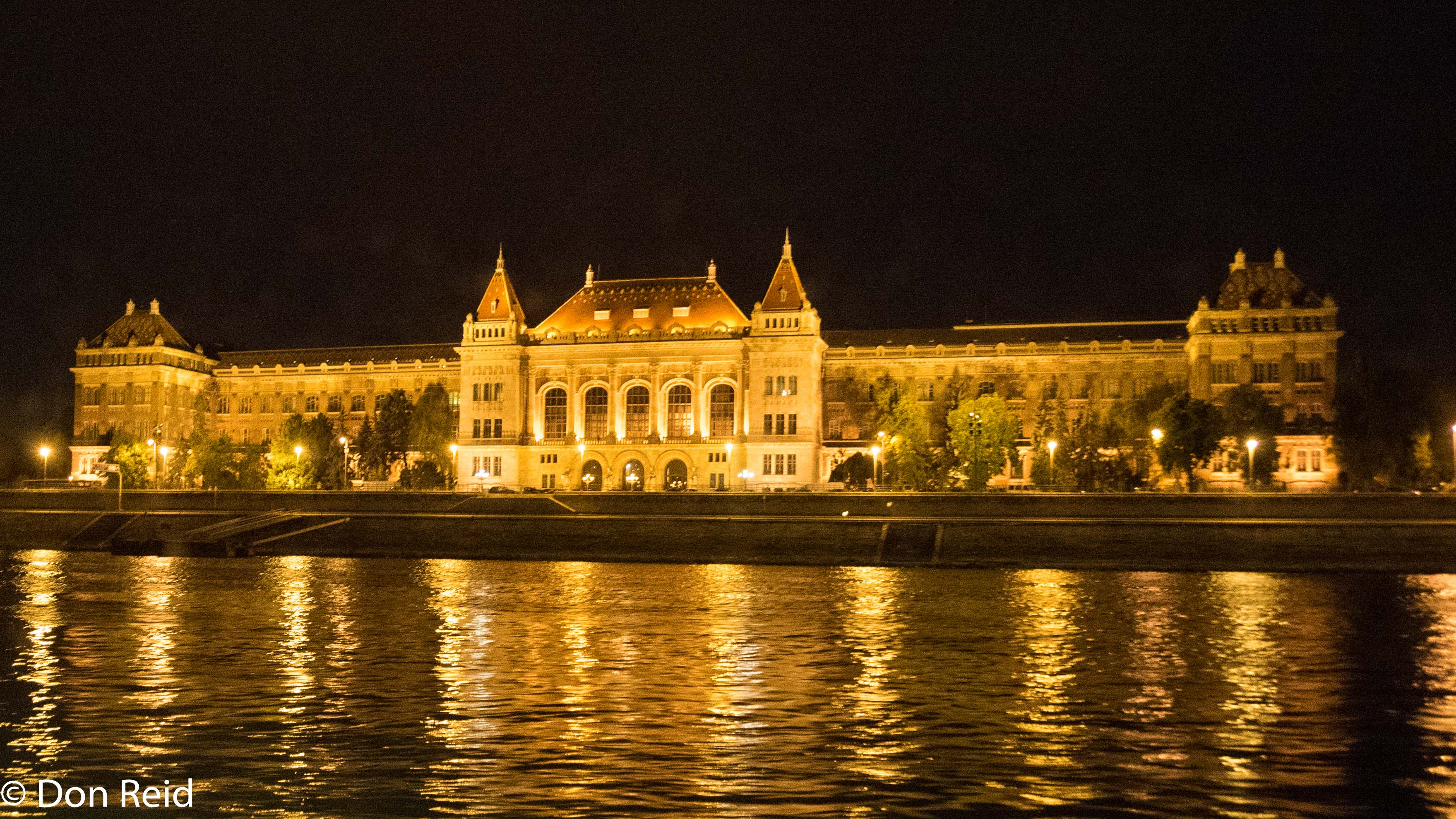
Budapest’s significant river frontage buildings are brilliantly lit up at night and presented quite a sight as we cruised gently down the river and back up again for over an hour – what a way to end the day!
ParliamentBudapest by nightBudapest by nightBudapest by nightLiberty BridgeChain Bridge
More to come…
A horse farm near Budapest, then on to Bratislava in Slovakia. But that will have to wait for the next post.
For many years we have dreamt of cruising down the Danube in one of those river cruise boats that one sees on the pages of travel magazines and newspapers.
In April 2016 we turned the dream into reality, using as an excuse our upcoming major anniversary to treat ourselves to a special trip.
The cruise was an eight-day, seven night cruise, starting from and returning to Passau in Germany with the furthest point reached being Budapest in Hungary and traversing 4 countries along the way.
Embarkation in Passau
Thursday 21 April at 16h00 was the time for embarkation, according to the info we had been given. We had played it safe and had the pre-booked shuttle pick us up at 10h30 from our hotel in Prague to make sure we would be in good time. We travelled through Czech countryside for a couple of hours, then through twisty mountain passes into Germany and reached Dock A13 in Passau some four hours later in comfortable and safe style (CK Shuttle are highly recommended).
Our home for the next week, the Amadeus Royal, awaited us in all its splendour at the dockside.
We were too early to board, but fortunately the cruise boat accepted our luggage, so we were able to go and find a relaxing cup of tea at a nearby café, where we sat outside and soaked up the atmosphere until 3 pm at which time we were allowed to board.
The cabin was similar to the one we had during our Alaska cruise – on a large cruise ship – but with no balcony, just a sliding door. However we saw the reason for that when we went through some of the locks, with just enough space to squeeze the boat in. The afternoon on the boat was taken up with relaxing in the forward panorama lounge and a briefing by the cruise director in German and excellent English.
We were curious to find out whether the dining experience would be as good as anticipated and were not disappointed – the first meal set the standard with a four course dinner including starter, soup, main meal and dessert, all nicely presented and quite delicious, fortunately in fairly small portions, so that we never felt bloated.
Our waiter Ivan, from Croatia, was excellent, looking after our every whim and he was quick to get us into a routine of deciding on our main course for the next meal in advance, so that he was always fully prepared. The wine waiter Zi-zi , also from Croatia, made sure we had our share of the complimentary wines at dinner, a happy situation for South Africans paying in our weak Rands.
The Maitre’d had placed us in a section of the dining room amongst two groups of other South Africans, which was a pleasant surprise and made for a convivial atmosphere for most of the trip.
Friday 22 April
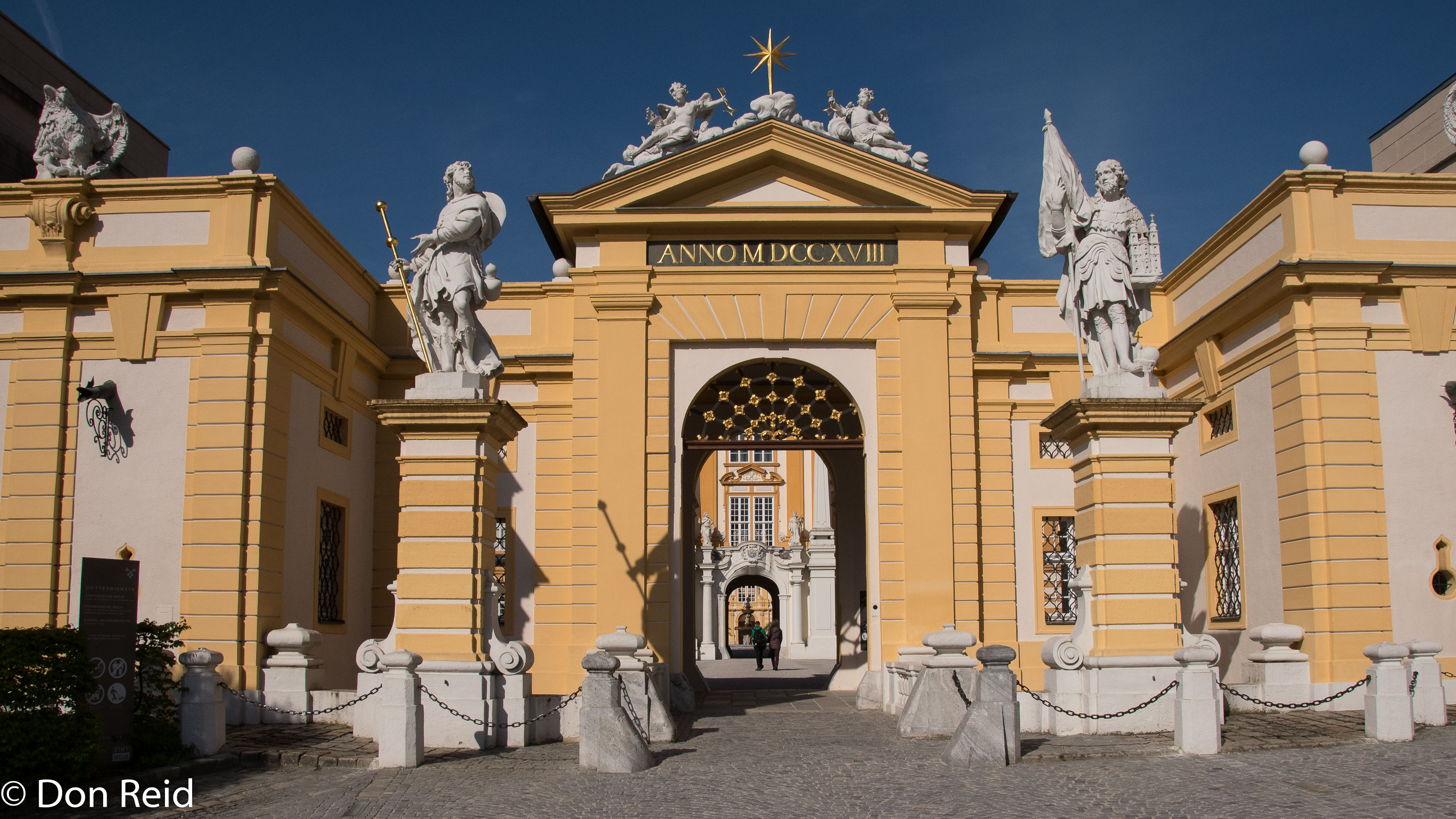
Our first full day on board and, as it turned out, a busy one indeed! After breakfast and docking at Emmersdorf, a small town in Austria (Population 1731 according to Wikipedia), we were collected by bus, taken across a nearby bridge and for a short drive to Melk Abbey, a magnificent example of Baroque architecture, with curves in all the right places.
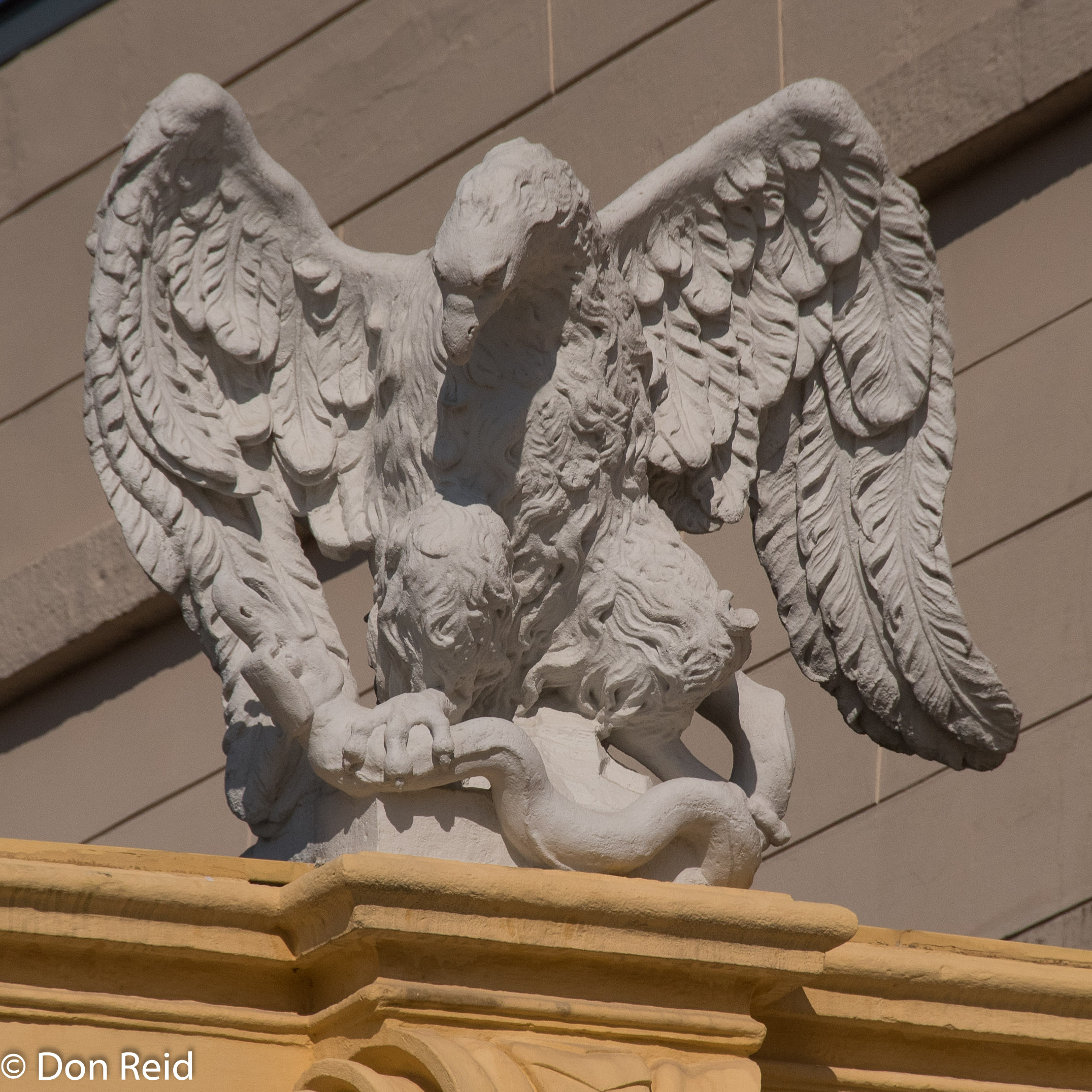
Melk Abbey entranceMelk Abbey sculptureMelk Abbey – modern replacement of bomb damaged facade
The abbey guide was a demure looking young lady, who turned out to have a mischievous sense of humour and a full complement of informative and interesting facts as she led us through a series of rooms, each depicting an aspect of the history of the Abbey and the religious beliefs of the time. Many of the displays were done in a modern way using lighting and projection to add to the impact.
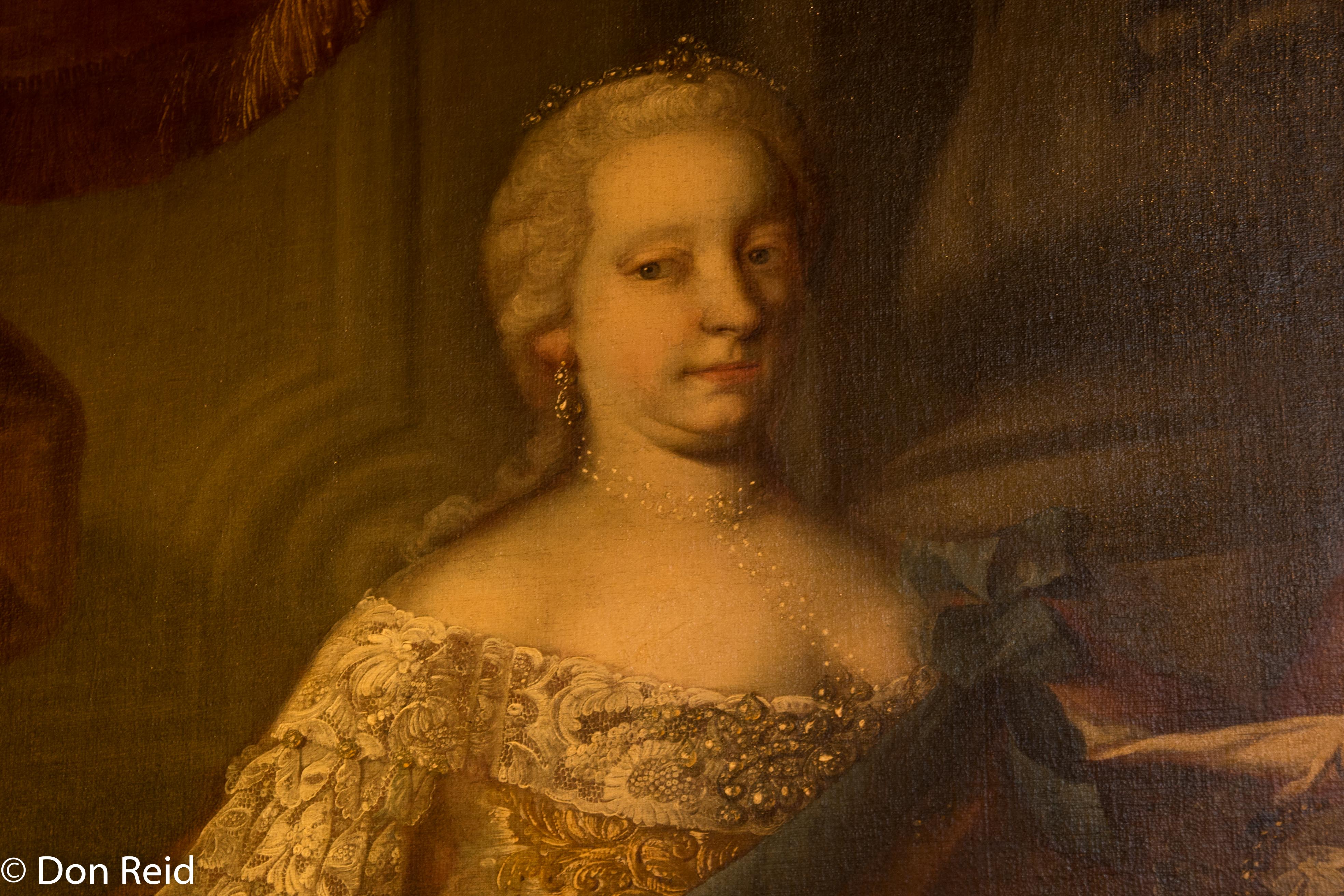
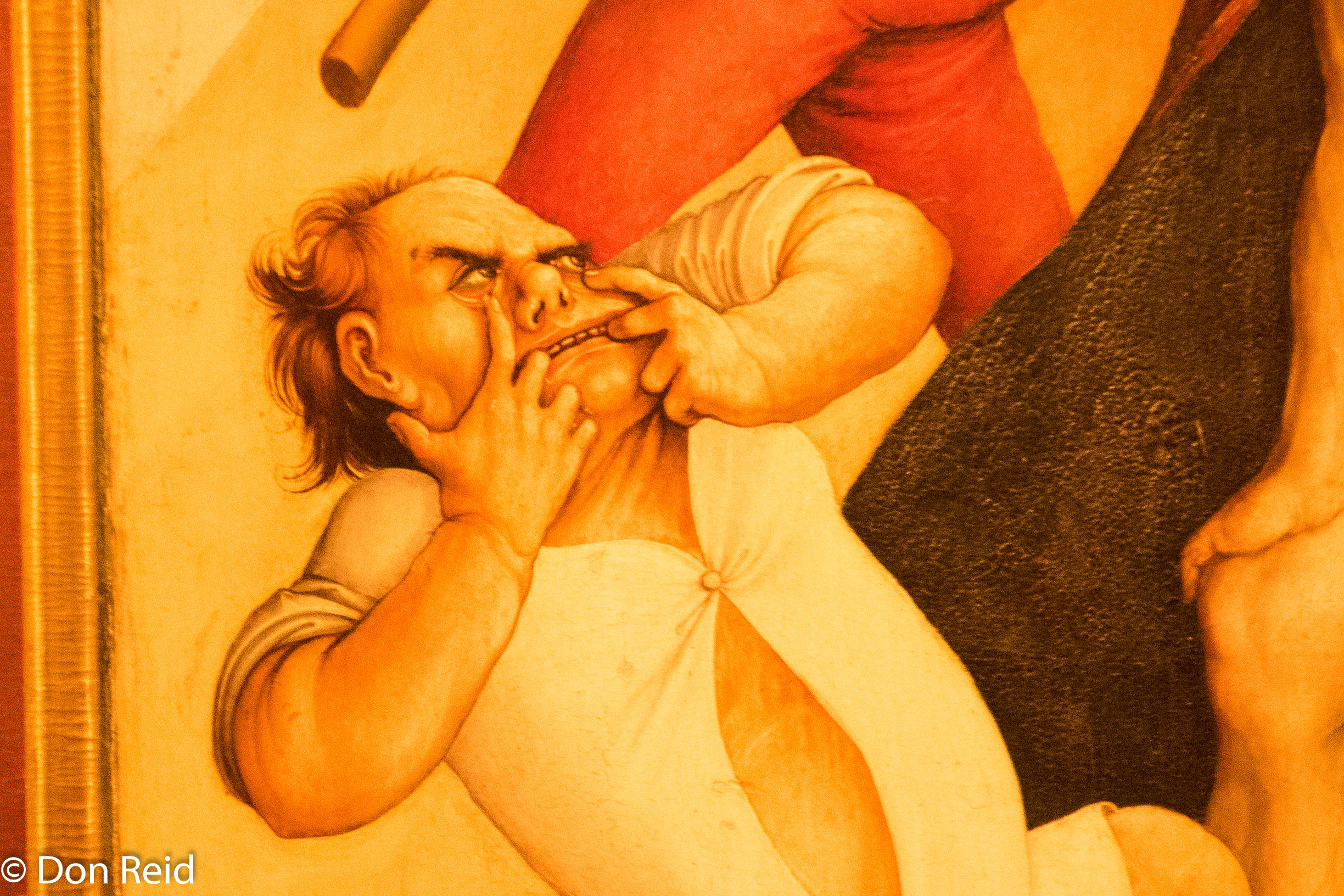
Melk Abbey – lady in a paintingMelk Abbey – strange figure in a painting
We were guided through the abbot’s chambers, along the imperator’s walk, through the marble hall, the balconies and the library.
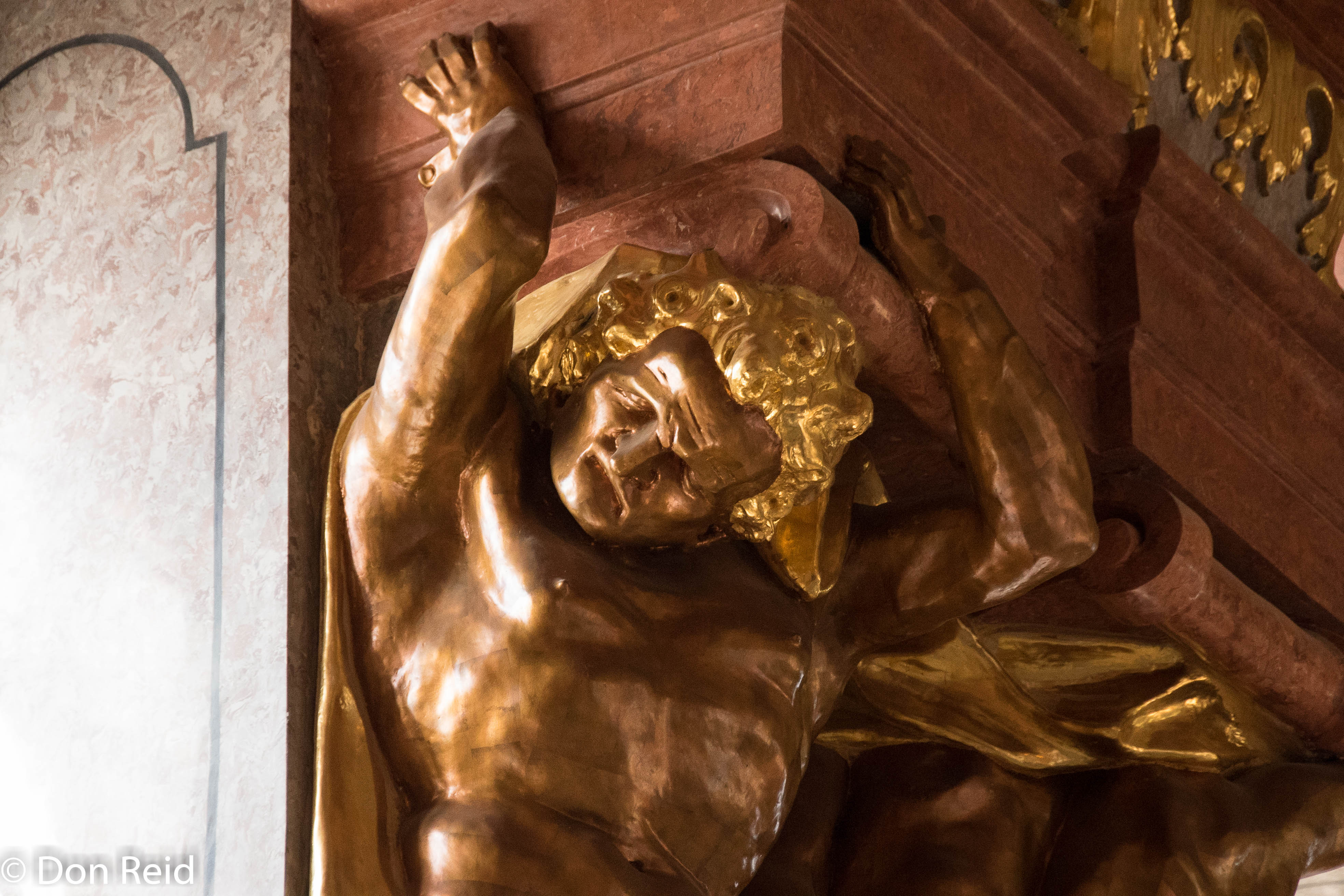
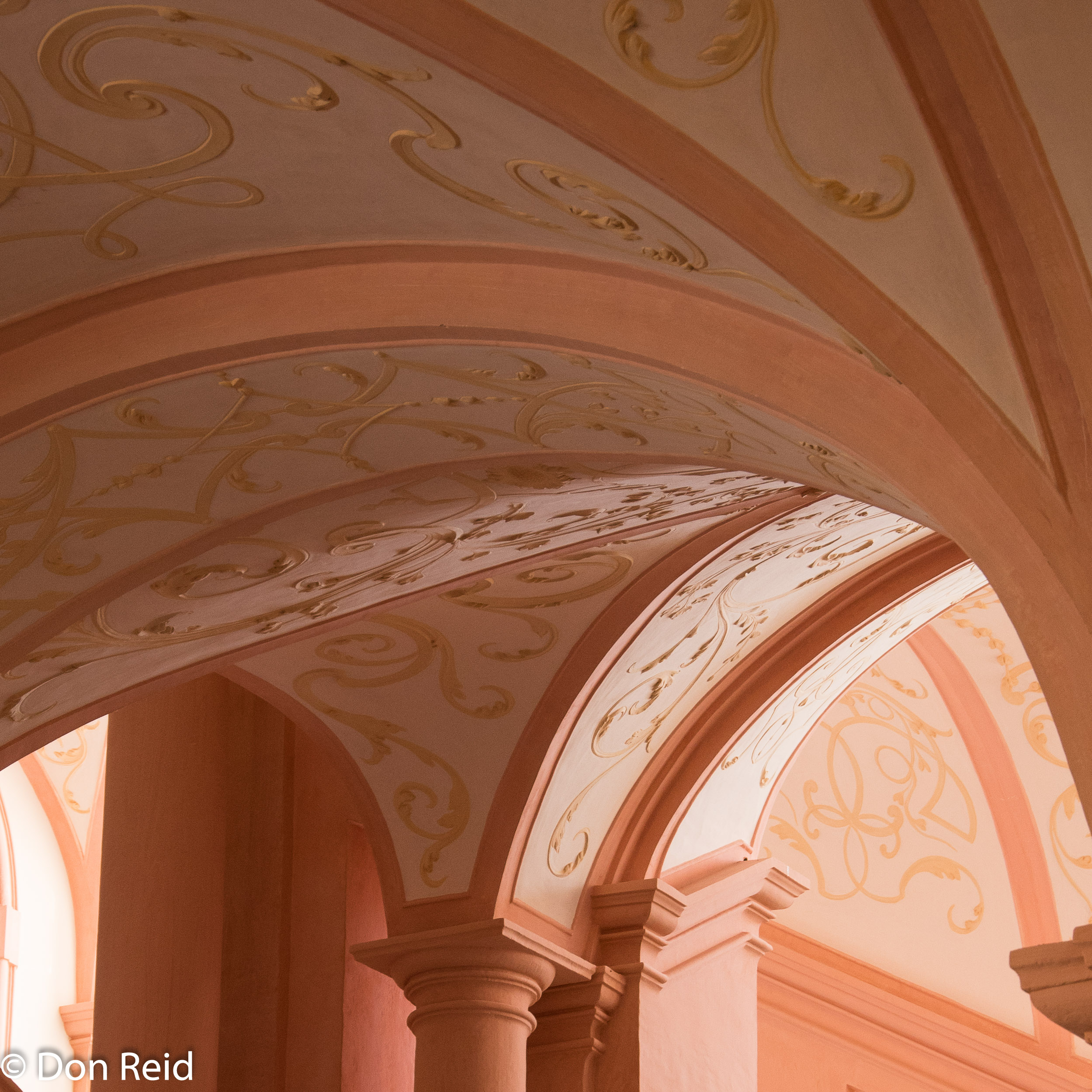
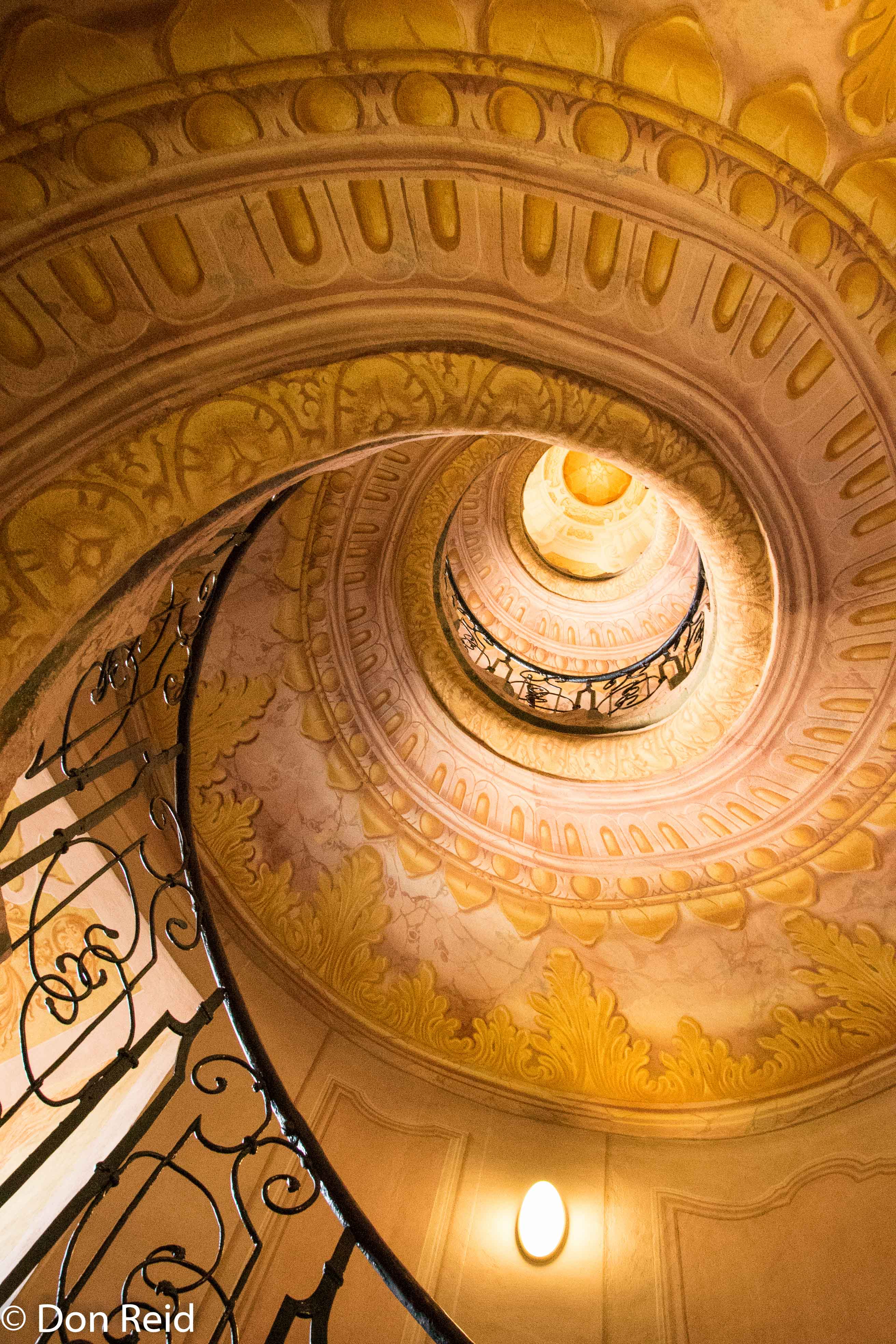
Melk Abbey – the beauty of simplicityMelk Abbey – one of the highly decorated ceilingsMelk Abbey – this is hard work!Melk Abbey – Views from the balconyMelk Abbey
The abbey church was last on the list and the opulence of it was astounding, with so many gilded statues and decorations it was hard to take it all in.
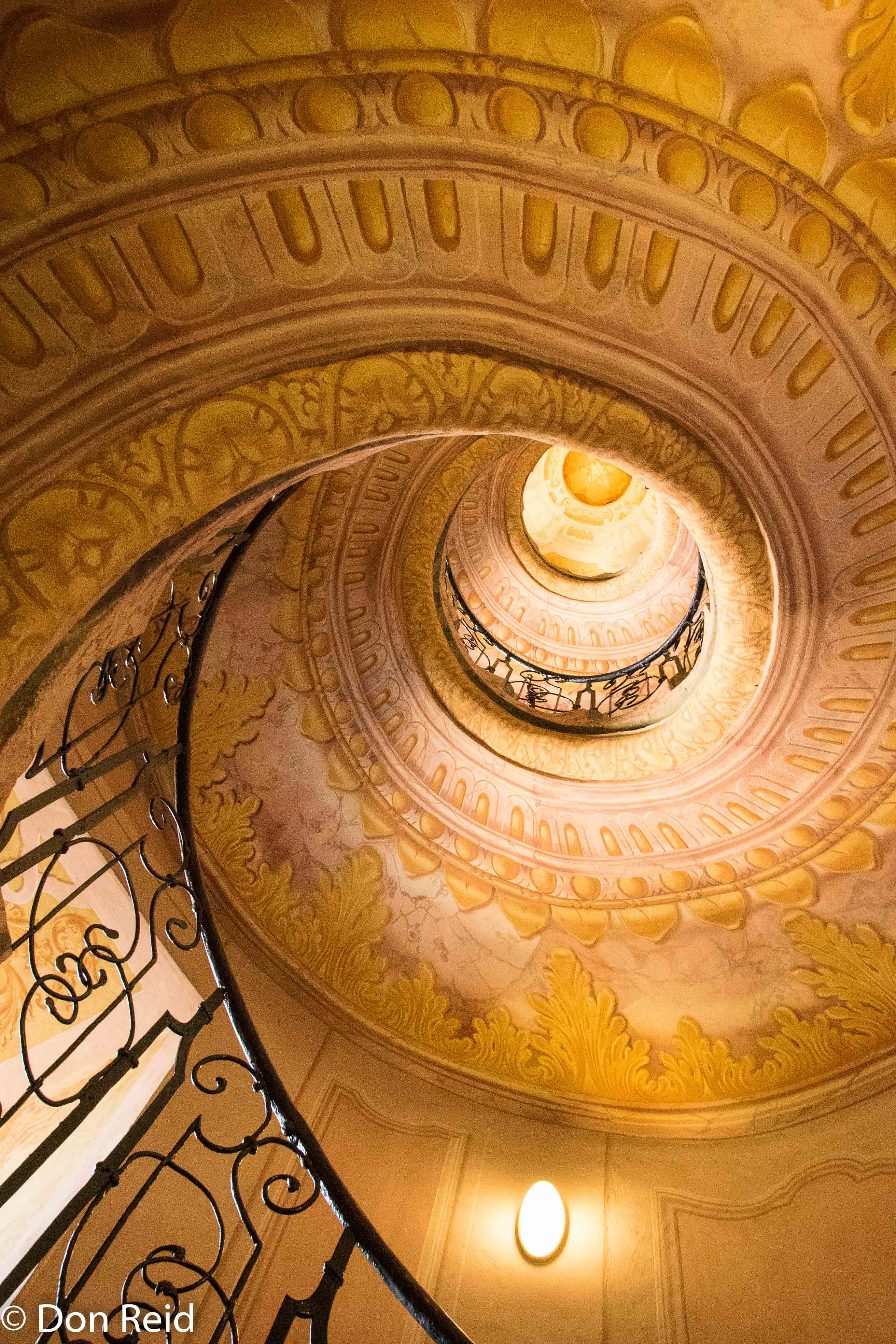
Melk Abbey – stairway to heaven?Melk Abbey – the ChurchMelk Abbey – the Church
The history of the abbey goes a long way back – all the way to the 10th century to be inexact – when it started out as a castle, later being handed over to the Benedictines. Over the years it was variously sacked and burnt by succeeding marauders, but survived until it was rebuilt in the early 1700’s, since when it has stood as a supreme example of the Baroque period.
Melk Abbey – beautiful architecture
In case, like me, you are desperate to know more about Baroque architecture, here is an extract from Wikipedia :
Baroque architecture is the building style of the Baroque era, begun in late 16th-century Italy, that took the Roman vocabulary of Renaissance architecture and used it in a new rhetorical and theatrical fashion, often to express the triumph of the Catholic Church and the absolutist state. It was characterized by new explorations of form, light and shadow, and dramatic intensity.
So now you know……….
This is what I think of it –
Just joking…
After the abbey tour there was time for a tea and (wait for it) apfelstrudel at the restaurant, which was superb.
Melk Abbey – stylish apfelstrudel
The tour rounded off with a stop at a wine-tasting venue and a sampling of the local Wachau wines – the wines were not particularly memorable, the venue was crowded and the presentation rather too “touristy” for our liking, so we were happy when it was done and we could walk the short distance back to the boat.
We were just in time for lunch, while our boat headed east towards our next stop at Vienna – the day was not yet done!
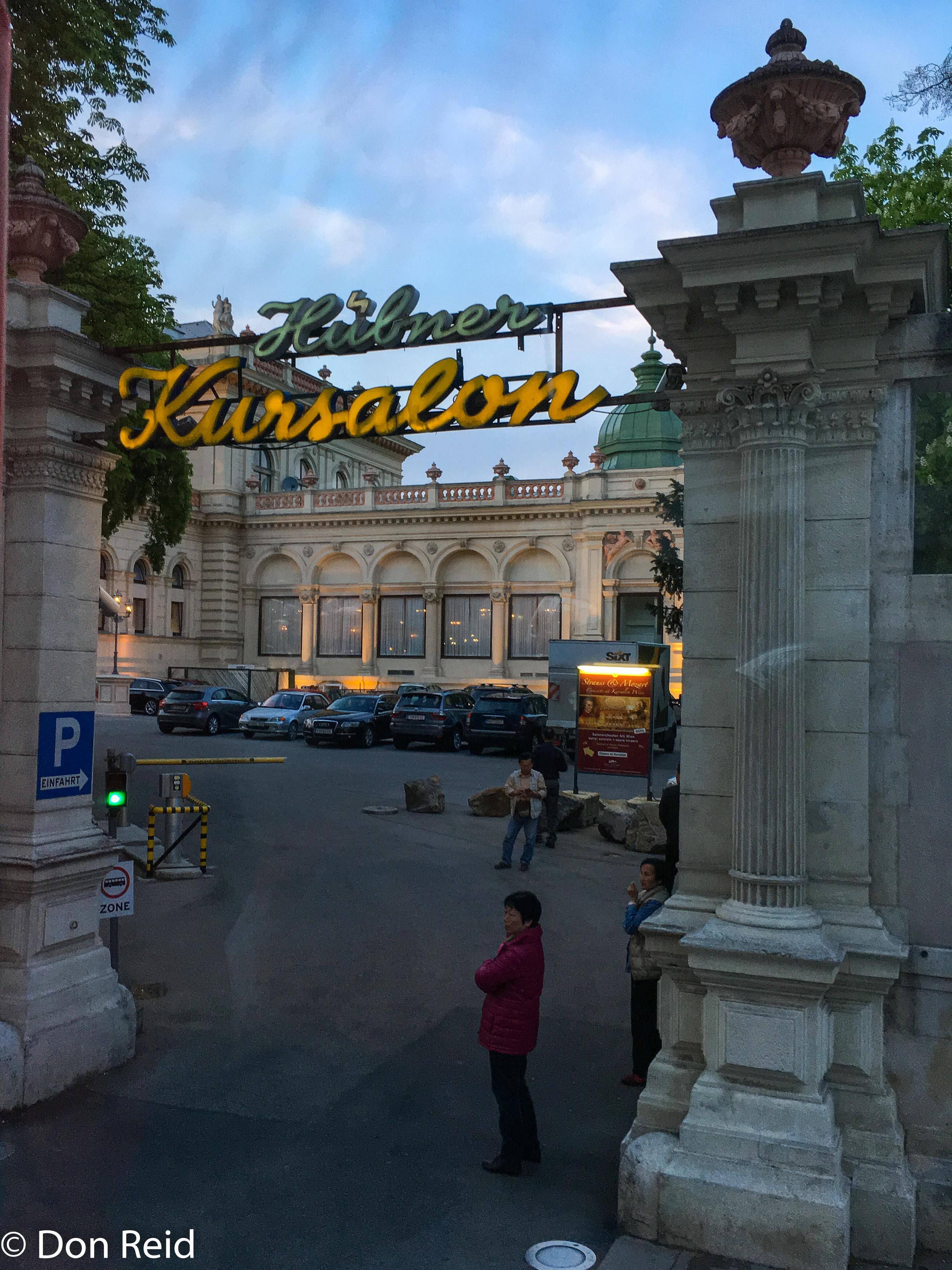
By late afternoon we had docked in Vienna, a city we last visited as newly weds some 44 years ago, so our memories were faded at best, totally absent at worst and it was like visiting a new place. We had pre-booked a package of tours which included a “Sound of Vienna” evening tour so, just after an early dinner, we were once again taken by bus into the city and to the Kursalon Wien for a concert in a large “salon” – a hall packed with about 500 straight-backed chairs.
Vienna – sounds of ViennaVienna – sounds of ViennaVienna – sounds of Vienna
The music and accompanying performances by singers and dancers was beautiful and good for the soul, just a pity they find it necessary to pack in so many people, 99% tourists, into a venue that is not designed for it.
More to Come………
While in Vienna we visited Schonbrunn Palace and I had a walk along the river – more about that and the next stop in the next post
For many years we have dreamt of cruising down the Danube in one of those river cruise boats that one sees on the pages of travel magazines and newspapers.
In April 2016 we turned the dream into reality, using as an excuse our upcoming major anniversary to treat ourselves to a special trip.
Over the next few weeks I will be describing some of the highlights of the two weeks spent in Eastern Europe, starting with four nights in Prague, Czech Republic and ending with a two night stay in Passau, Germany, with a week-long cruise down the Danube sandwiched in between. Along the way we traversed four different countries – Germany, Austria, Hungary and Slovakia.
So here’s a taster of some of the places visited and wonderful experiences along the way, with more to follow in later blogs …..
Prague
This has to rate as the most beautiful city we have visited, from an architectural perspective, with each street lined with magnificent old buildings and something interesting around every corner. We did a lot of walking – always the best way to see a new place.
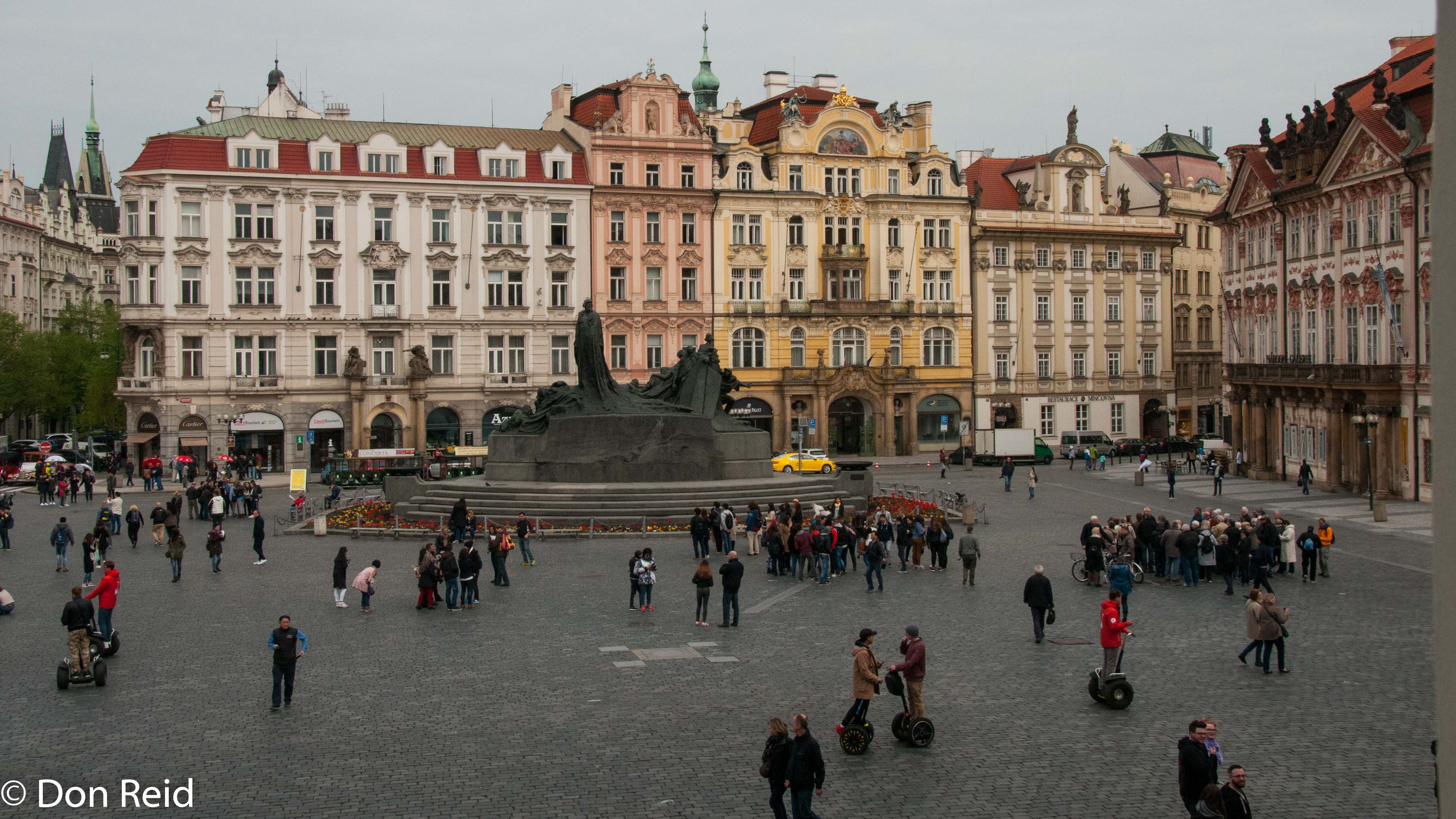
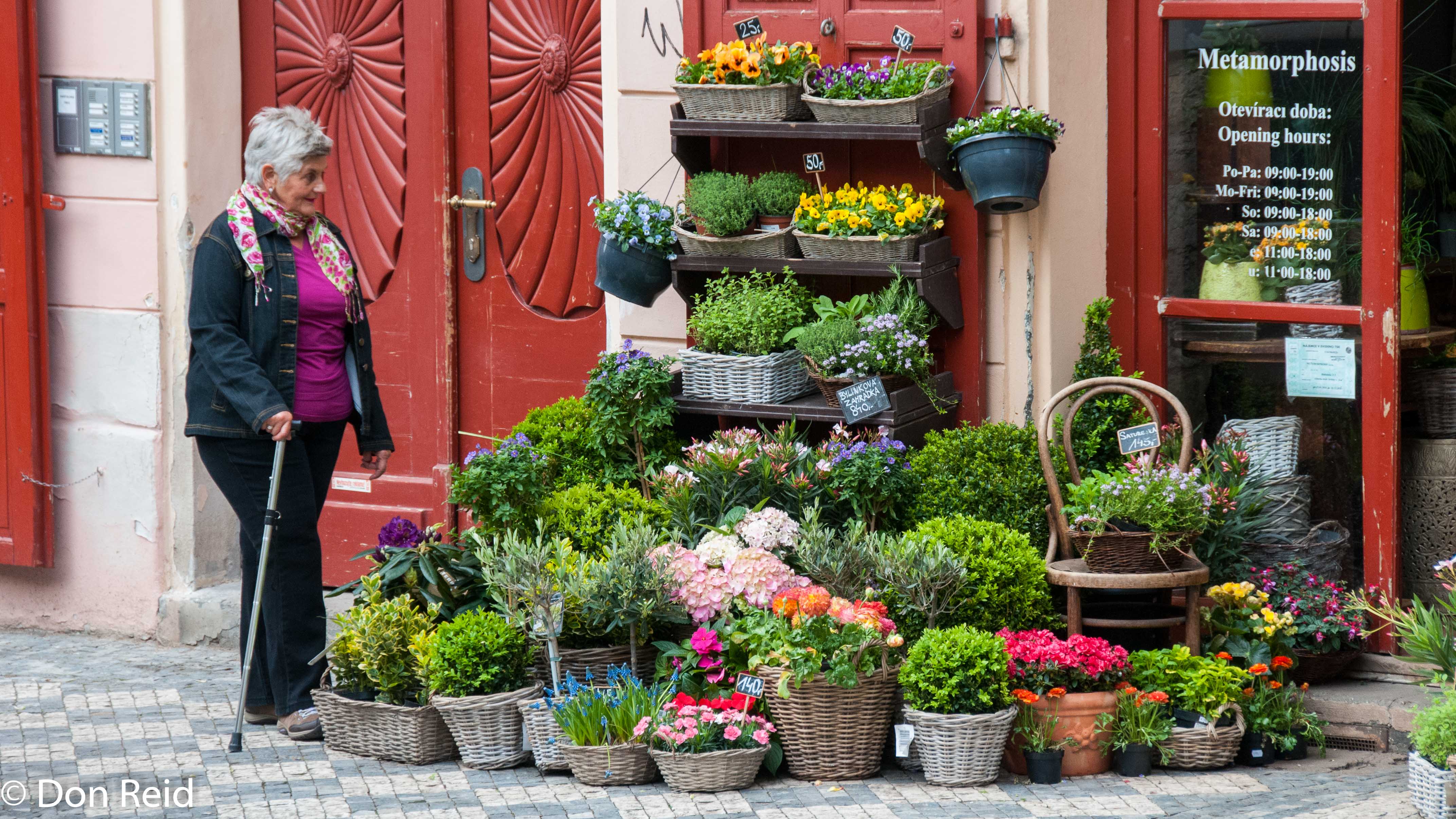
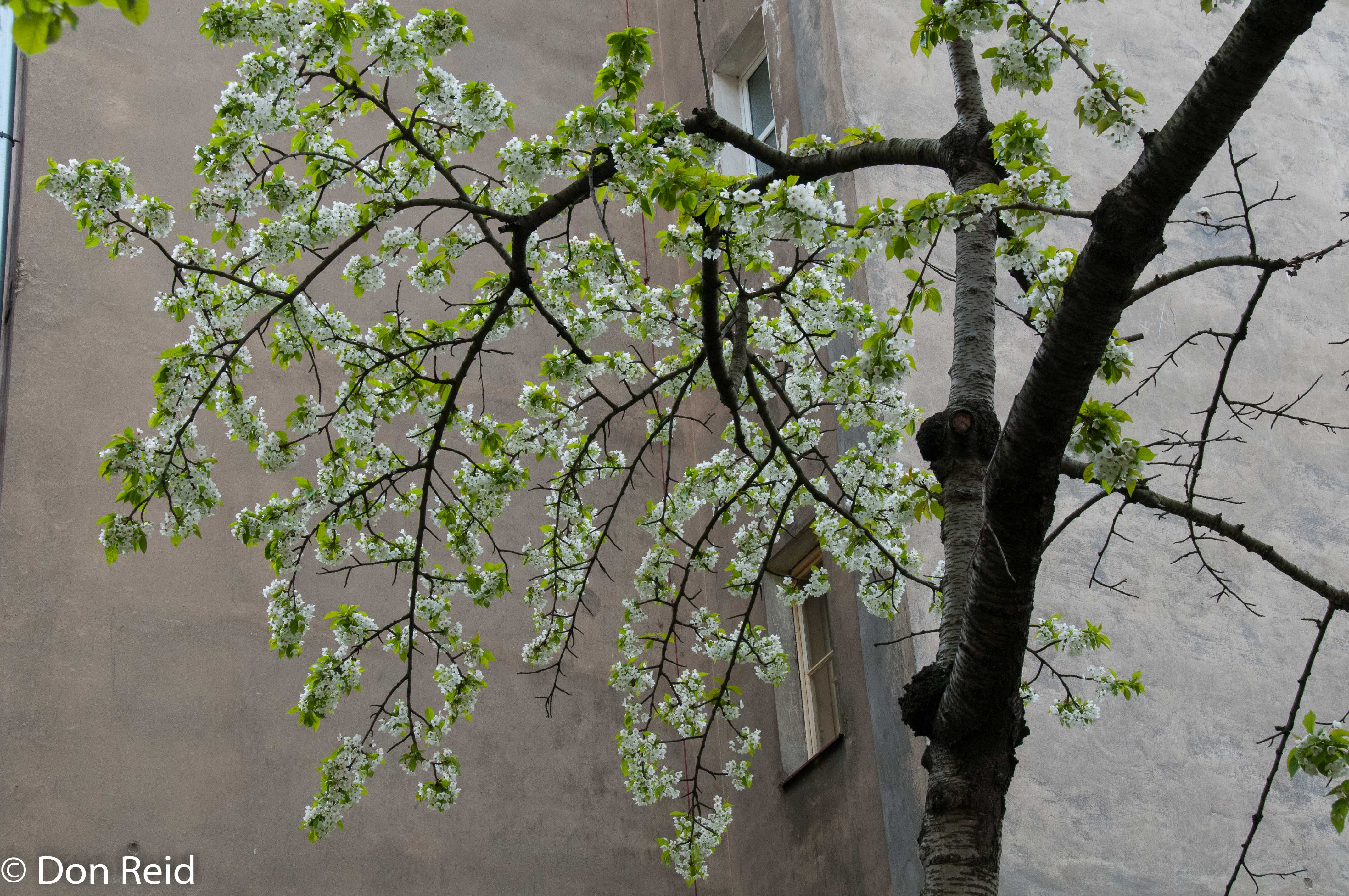
Prague – Old Town SquarePrague – street scenePrague – Old Town Square : Church of St NicholasPrague – Florist shopPrague – Spring blossoms
Danube Cruise
The cruise was an eight-day, seven night cruise, starting from and returning to Passau in Germany with the furthest point reached being Budapest in Hungary and traversing 4 countries along the way.
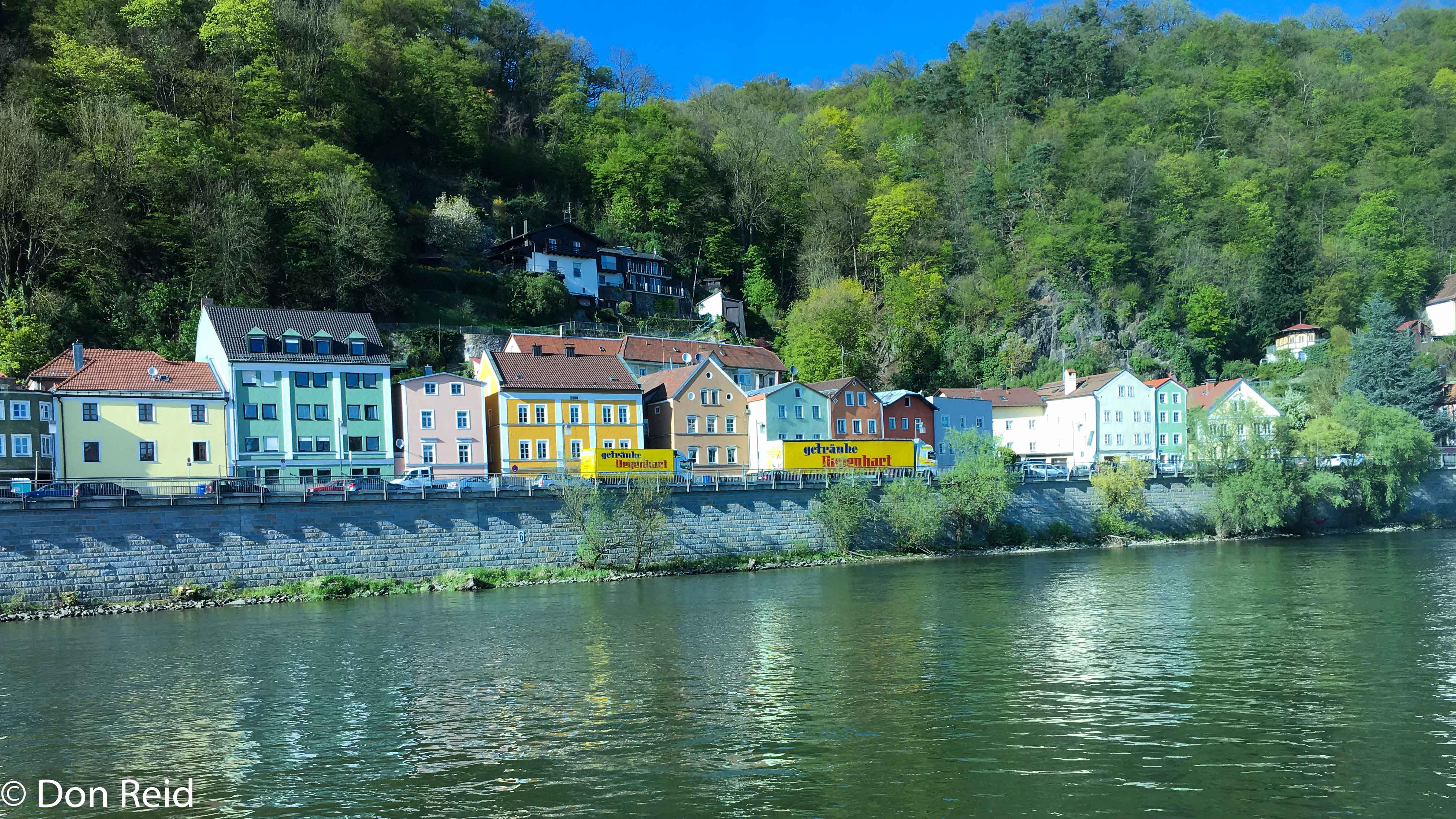
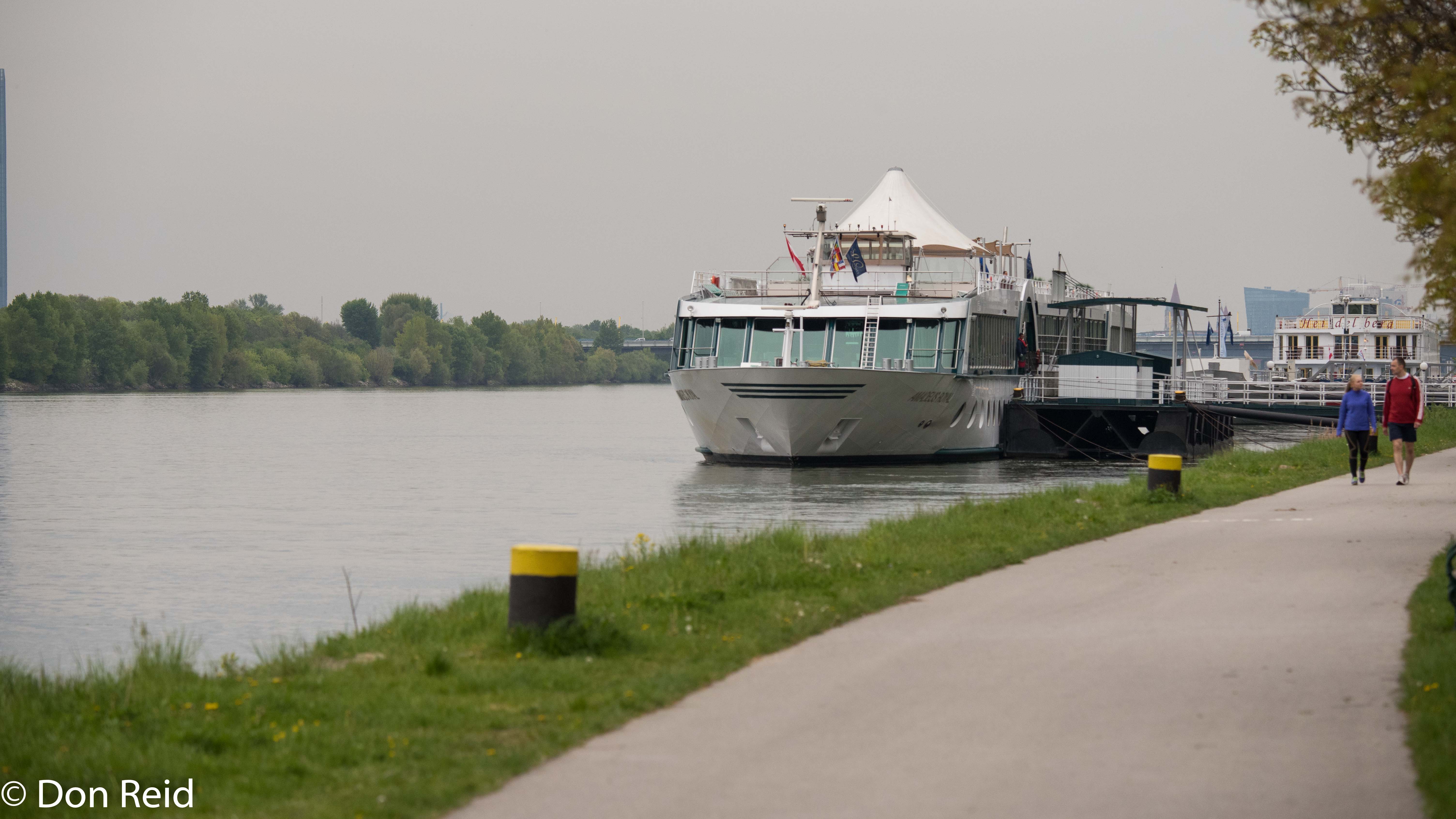
Riverside scenesMoored at ViennaApproaching BudapestBudapest by night – ParliamentBridge at Esztergom, Hungary (near Danube bend)Bratislava – the Castle
We were kept busy with tours at every stop, but some of the best moments were just cruising along the wide river, the sliding door of our cabin wide open, watching the passing scenery.
The stops along the way gave us a wonderful insight into places that, for us, were just mysterious- sounding names before – Budapest in Hungary, Bratislava in Slovakia, Linz, Melk and Vienna in Austria.
We decided to round off our trip with a short stay in the small town of Passau in Germany, also the starting and ending point of the cruise, which turned out to be a highlight of our trip.
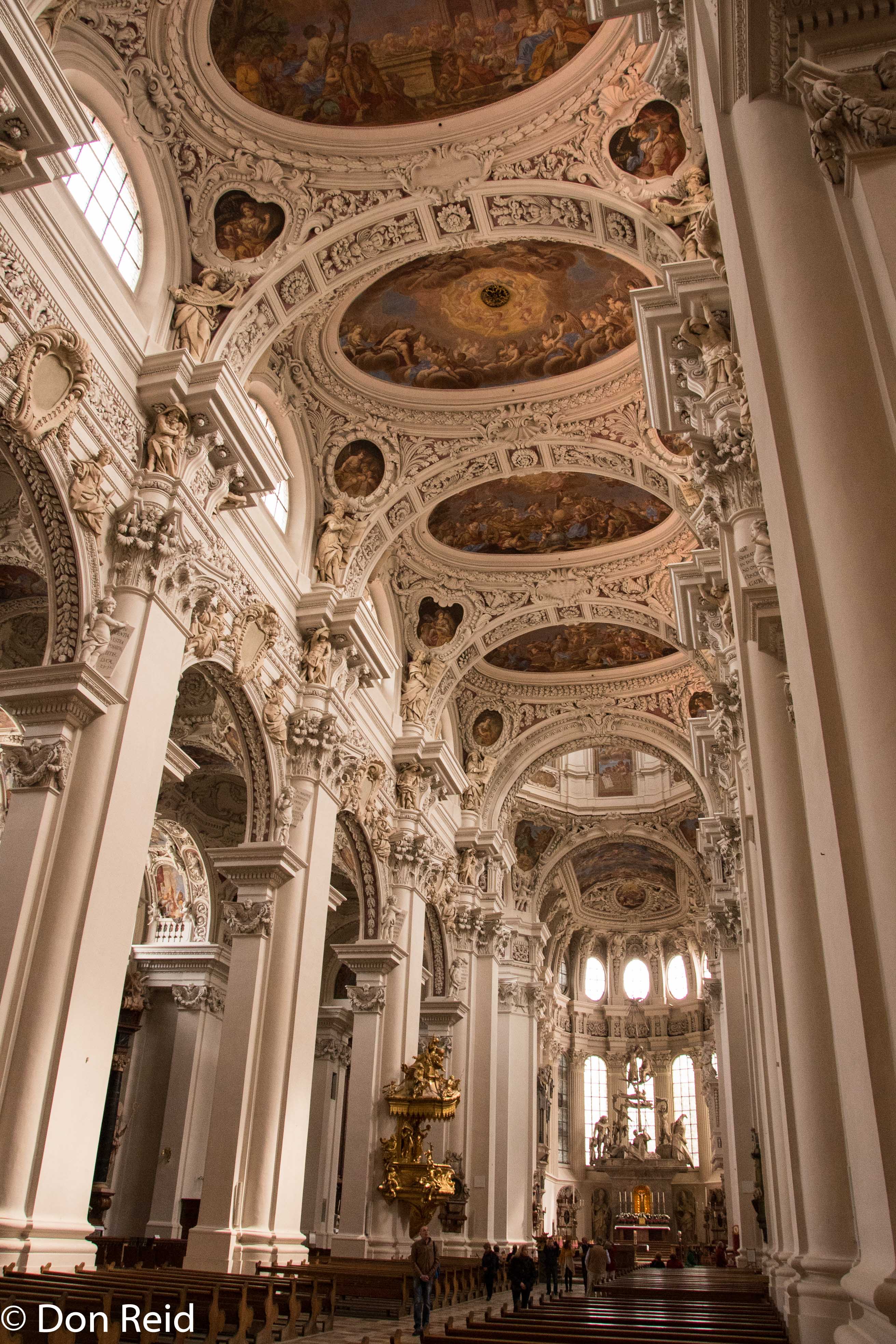
Passau – St Stephan’s CathedralPassau – river scenes
Accommodation
From our large room in Prague to the compact cabin on the cruise boat and ending with our neat room in Passau, all were more than comfortable, clean and a pleasure to return to after a hard day’s touring.
Food
The meals on the cruise were of a very high standard and at every stop we tried the local cake or pastry speciality, usually accompanied by a decent cappuccino. During our Prague and Passau stays, we tried a variety of restaurants close to our hotel and were never disappointed.
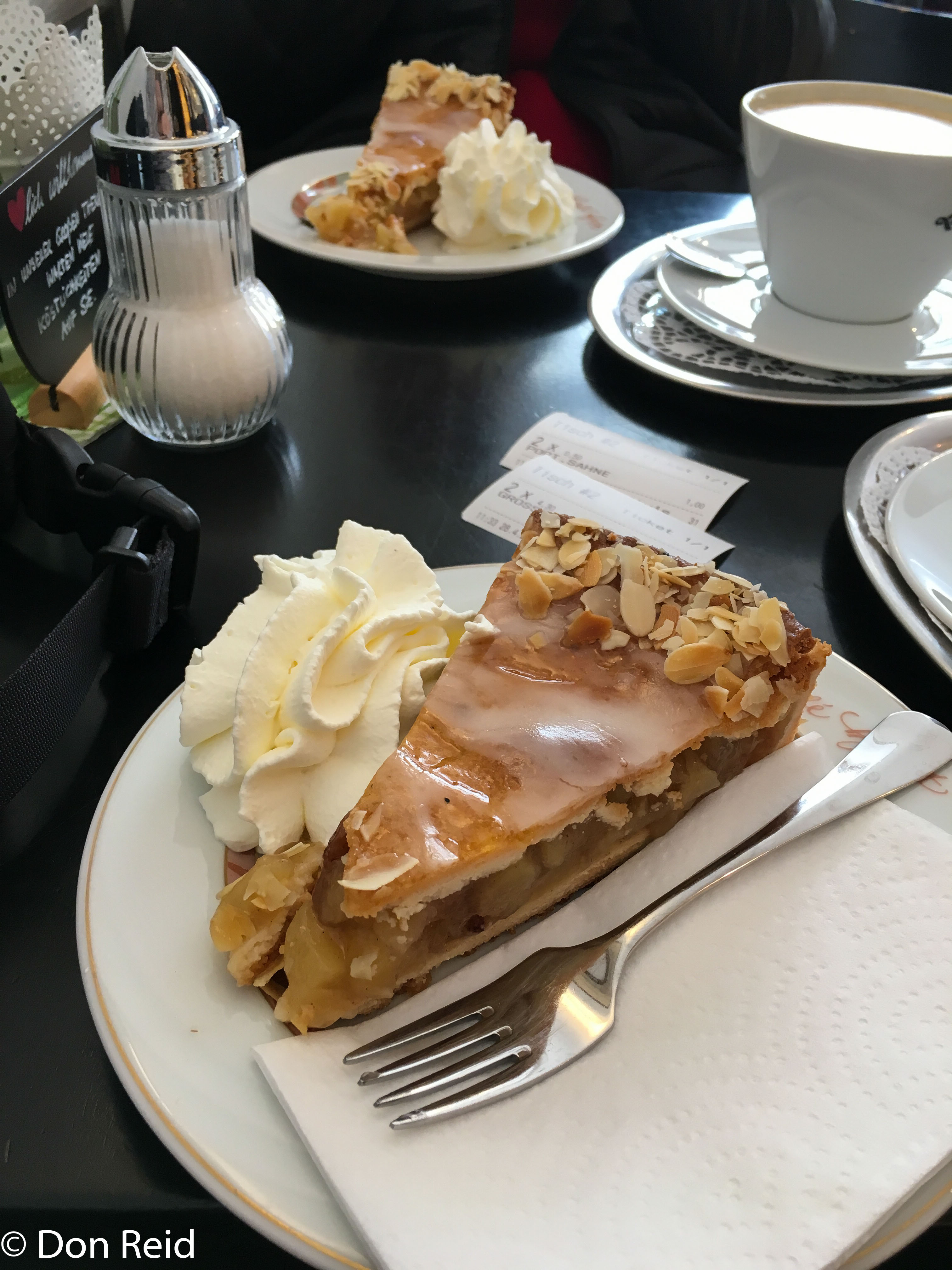
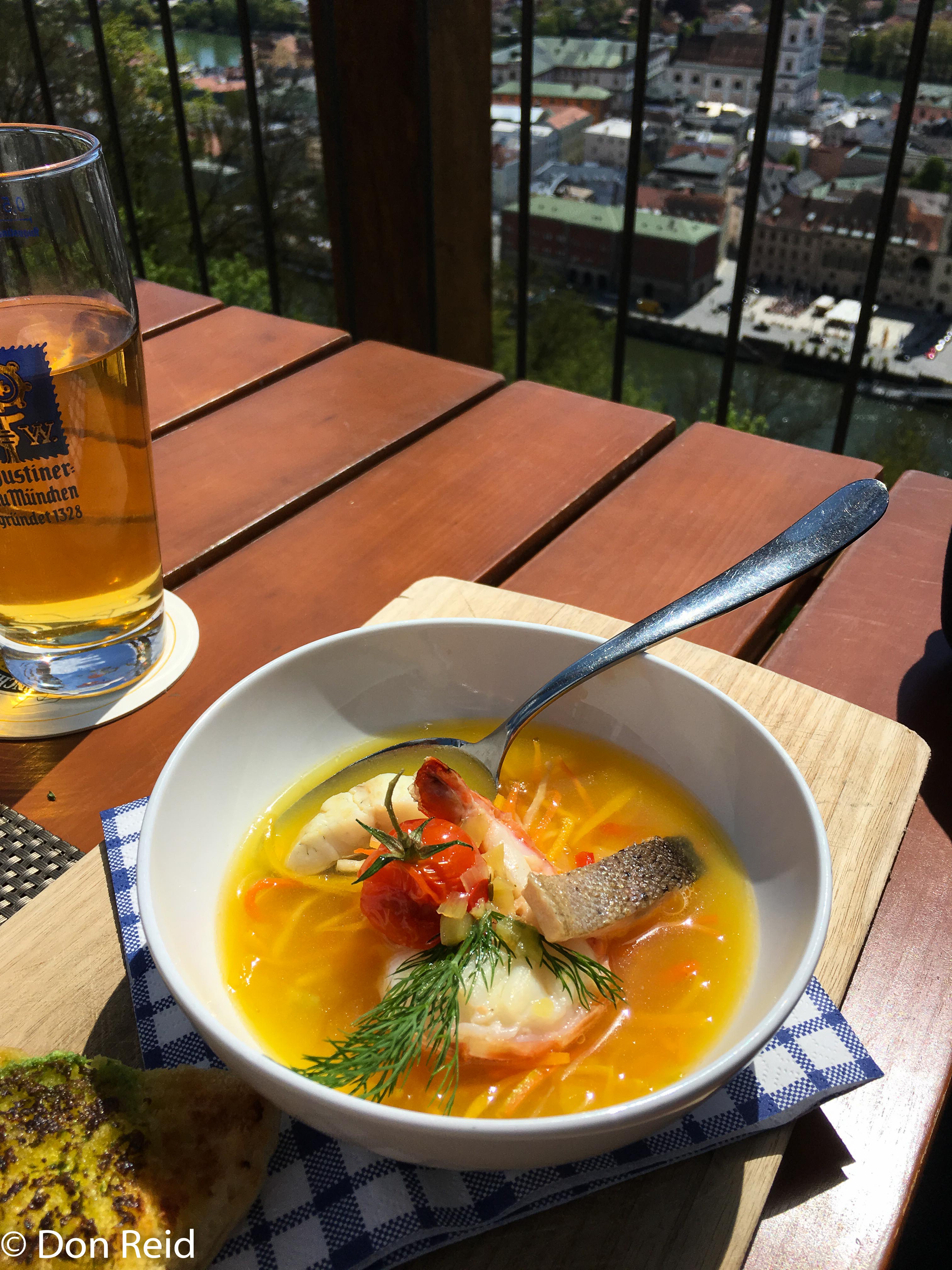
Passau – Apfelkuchen and cappucinoPassau – lunch on the hill
Birding and Wildlife
The Danube river is not renowned for its birding, other than the delta where it runs into the Black Sea apparently. So the birding was not memorable, nevertheless I was always on the lookout and ended with a modest list of 33 species – heck, I have seen more bird species than that in an hour’s walk around our residential estate in Pretoria!
You don’t expect to see wildlife in Europe, so the couple of small animals we encountered were a pleasant surprise, particularly the fox with a fish catch.
Red Fox with fish catch
Photography
Regular readers of my blog (yes both of you) will know that I am a keen photographer and this trip presented plenty of opportunities for photographing some well-known and sometimes lesser-known tourist spots. I like to get the places visited on record along with the hordes of other tourists all recording similar shots, but love it when I can get a different angle or a detail shot that others haven’t thought of, so that I end up with what I consider a nice mix of the expected and unexpected.
More to Come………
Future blogs will go into a lot more detail on our experiences during two busy weeks spent in Eastern Europe, with plenty of photos included!
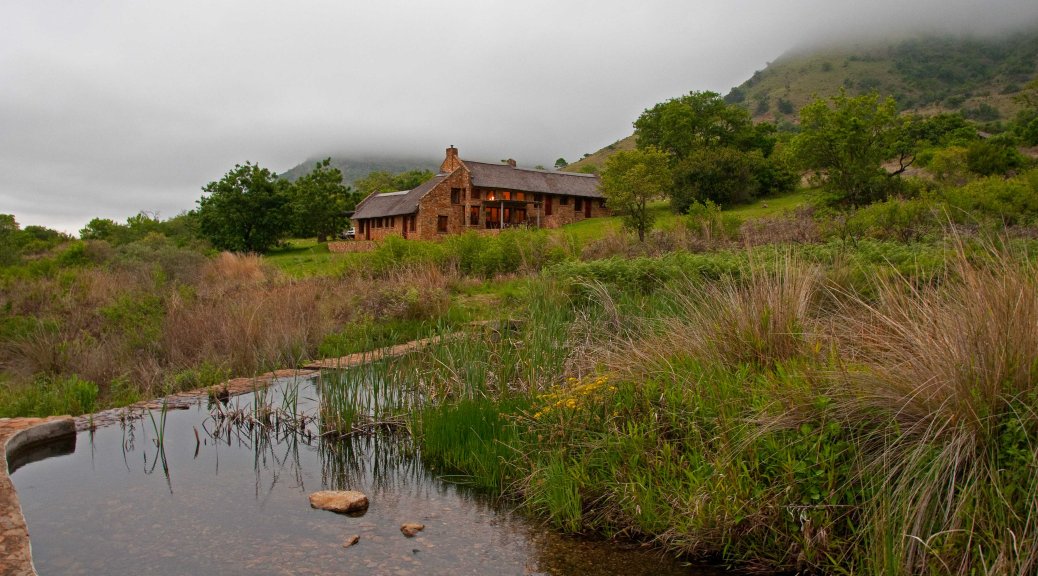
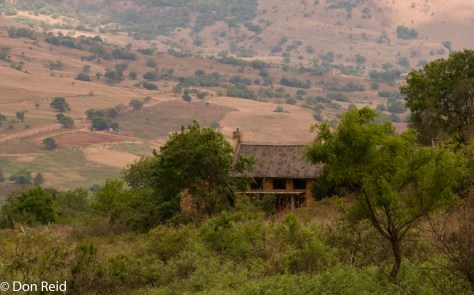
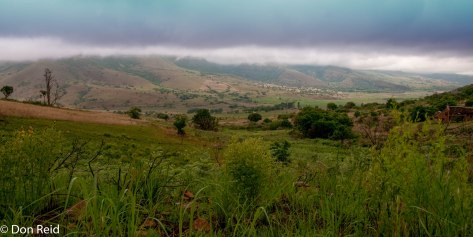
Apart from being our favourite place to spend a relaxing week away from it all, Verlorenkloof Estate offers a variety of habitats that make for superb birding opportunities, whether walking, cycling or driving.
The website of the estate describes it better than I can :
“Verlorenkloof Estate is a well established and highly regarded shareblock development and self catering holiday resort on the eastern escarpment in the heart of the trout triangle in Mpumalanga.
Accommodation is in 23 self catering crofts. Each croft is privately situated, thoughtfully designed, fitted, maintained and serviced to a very high standard, making this the best self catering accommodation in Mpumalanga .
The surrounding 1600 hectare estate offers many layers of outdoor activities, all in a safe, settled rural environment known for its extraordinarily beautiful and richly biodiverse natural landscapes.”
Finding the Birds
Each time we visit the estate, usually in May or October, we spend a good part of the day birding and over the years have got to know the estate and its variety of habitats well enough to know which species can be expected at a particular spot. The Birding Tips that follow are my view of how to make the most of the time spent at Verlorenkloof if Birding is your preferred pastime.
Birds are season dependent, so not all the migrant species will be present during the non-summer months. Conversely if you visit the estate in the peak summer months there are likely to be many more migrants than we are used to finding.
Around the Crofts
A lot of quality birding can be done in the vicinity of the Crofts and will vary depending on which particular one you are staying in as they are widespread over the property – Croft 2 and 3 are well-known to us. It’s rewarding to spend as much time on the patio as the weather allows and to simply look and listen. An almost constant flow of bird life will pass by, settling in and on the surrounding bush and trees for you to pick them out with your binoculars, in between enjoying a hot or cold beverage or two.
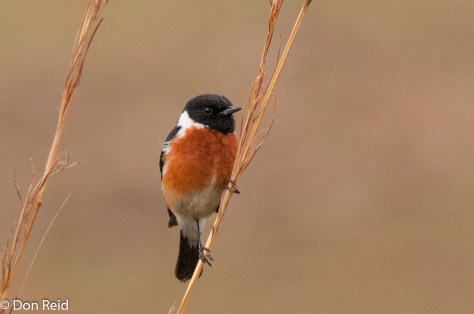
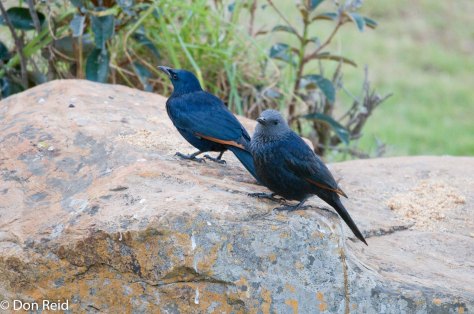
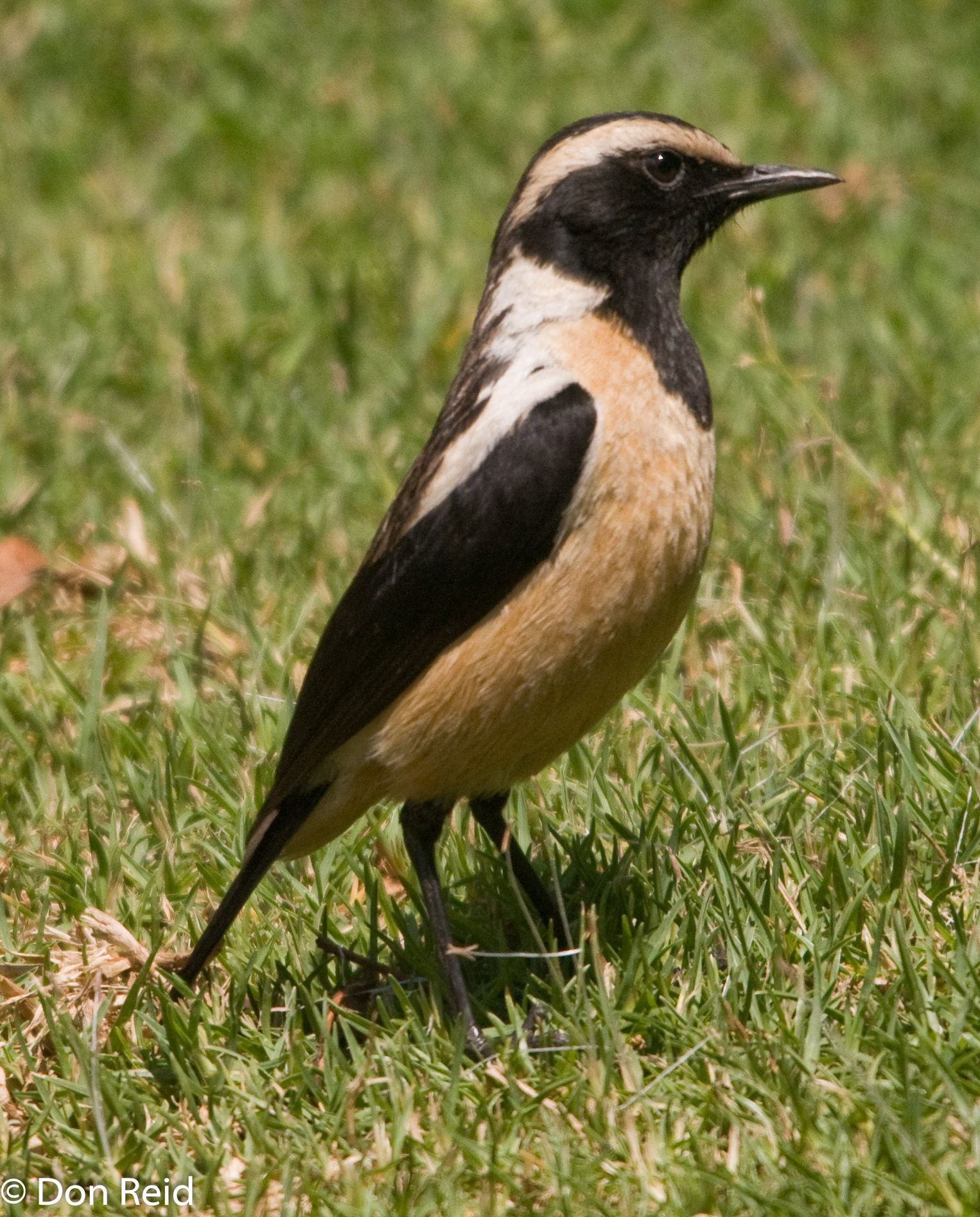
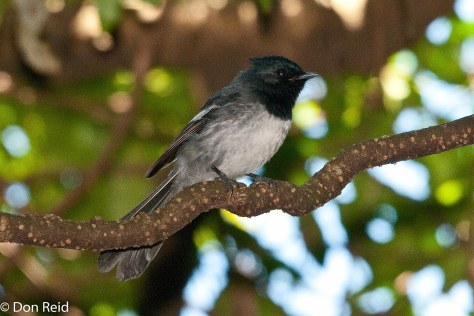
Scan the trees for Dark-capped Bulbul, Sombre Greenbul, Southern Grey-headed Sparrow, Crested Barbet, Arrow-marked Babbler and less frequently Yellow-fronted Tinkerbird and Willow Warbler. Cape Wagtail, African Stonechat, Cape Rock-Thrush and Yellow-throated Petronia frequent the grassed areas while Red-winged Starling and Buff-streaked Chat like hanging out on the roof of the croft.
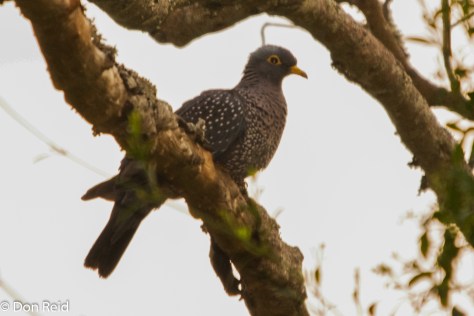
If you feel energetic enough, take a walk up the pathway that winds its way up the lower slopes from Croft 2, starting at the weir, although you can spend more time on the patio if you are within hearing distance of the calls which echo down from higher up. Either way you are likely to see/hear Purple-crested Turaco, Narina Trogon, African Hoopoe, Black-collared Barbet, Red-eyed Dove (constantly) , Southern Boubou, Black Cuckoo (monotonously and mournfully), Black-headed Oriole, African Olive Pigeon (late afternoon), Black-backed Puffback, Speckled Pigeon, Klaas’s Cuckoo and Black-crowned Tchagra.
African Olive-Pigeon
3. Forested Kloofs
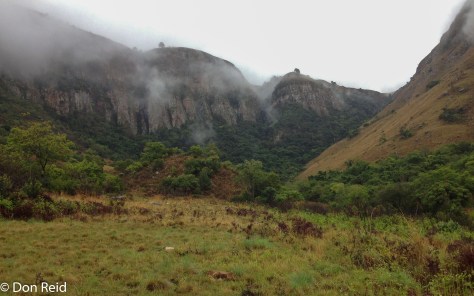
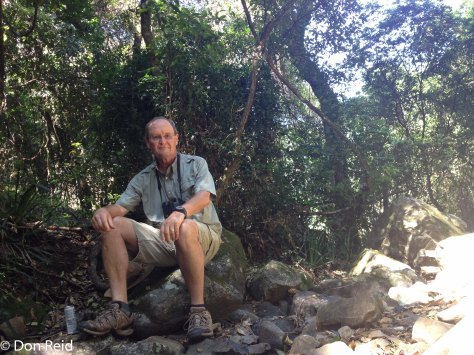
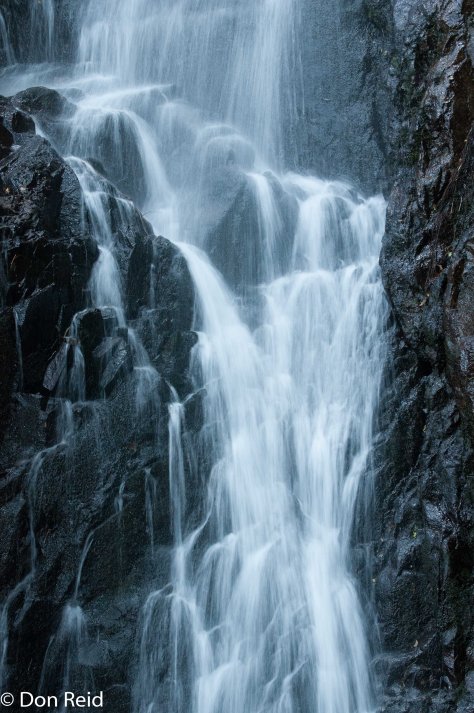
VerlorenkloofResting spot on the Waterfall trail, VerlorenkloofWaterfall, Verlorenkloof
Once you have birded the lower slopes, carry on up the slope and follow the path through the first patch of indigenous forest. Stop frequently, sit quietly on a rock or tree stump and listen for the calls of the forest species – Black-throated Apalis and Cape Batis are curious and often the first to appear. Judicious playing of their calls may bring others closer – Blue-mantled Crested Flycatcher, Chorister Robin, White-starred Robin are all common here.
The fringes of the forest are good for Greater Double-collared Sunbird and you are bound to hear or see Olive Bush-Shrike, while Southern Black Tit and African Paradise Flycatcher are sometimes present.
4. The Streams
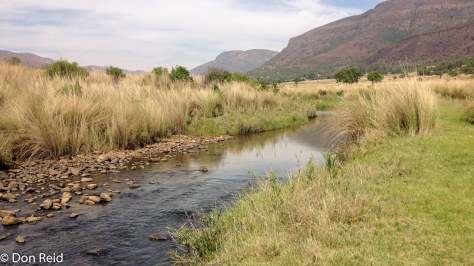
A River runs through it
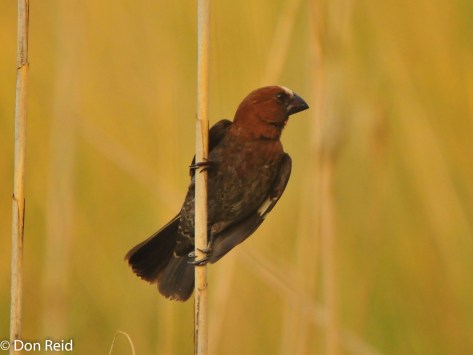
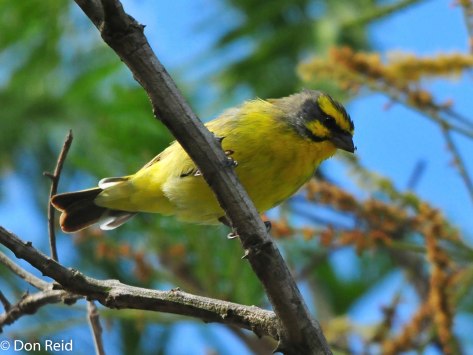
The estate is blessed with several streams that flow down from the surrounding heights and run through the estate into the river which courses through the valley. The reeds and vegetation alongside these waterways are favoured by numbers of birds such as Cape Grassbird, Croaking Cisticola, Spectacled and African Golden Weavers, Southern Red Bishop, Thick-billed Weaver, Yellow-fronted Canary, Cape Canary, Brown-hooded Kingfisher and Dark-capped Yellow Warbler. Just spending time near the streams sorting out the various calls of these species is an hour or two well spent.
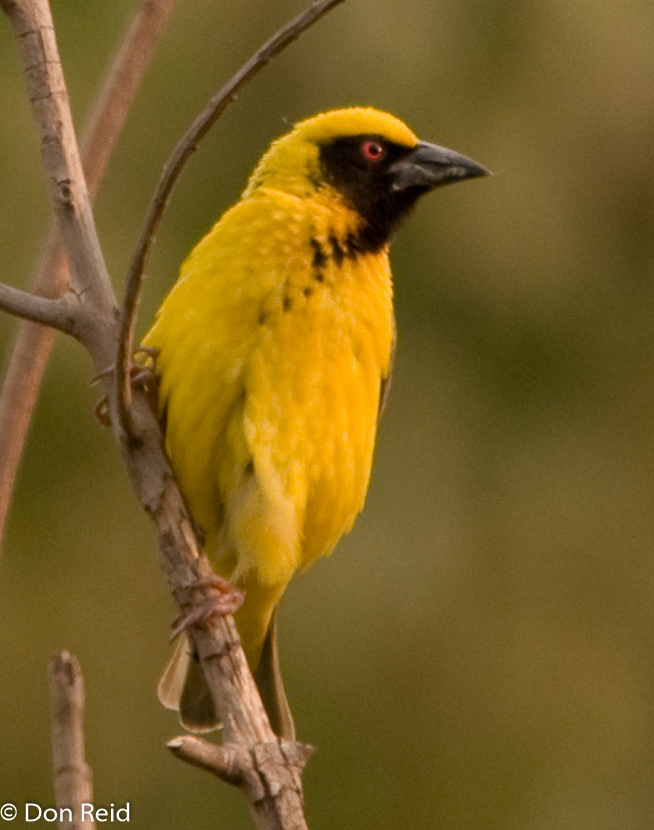
African Golden Weaver (Ploceus xanthops) – Goudwewer
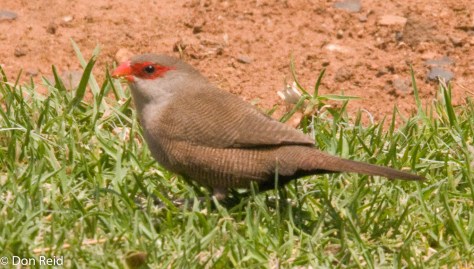
Along the river it’s a hive of activity in early summer with tens of Village Weavers building nests and generally creating a storm of sound with their chattering calls. Elsewhere Southern Masked-Weavers are slightly less noisy but just as active. The riverside is also favoured by Common Waxbill and Tawny-flanked Prinia with many Barn Swallows using it as a convenient thoroughfare. Just be careful not to disturb any fishermen enjoying the solitude of the River Beat.
Village WeaverCommon Waxbill
6. Grasslands
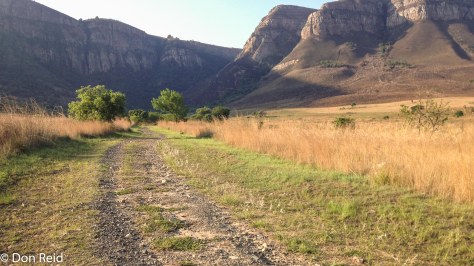
VerlorenkloofLong grass is a feature of Verlorenkloof
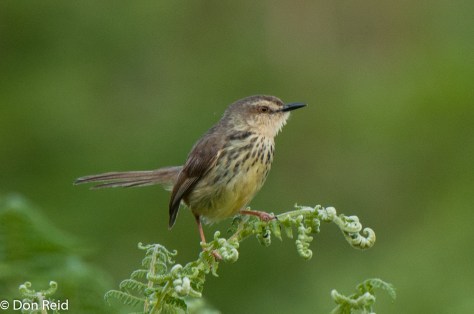
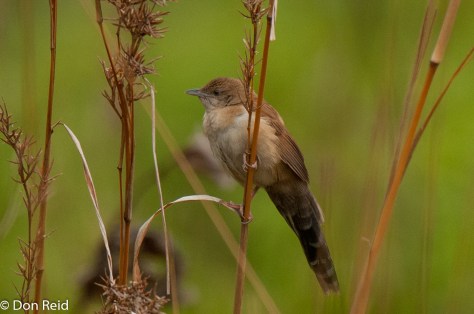
Large tracts of the estate consist of grassland, which are alive with birds at certain times of the day. Apart from the regulars such as Drakensberg Prinia and Lazy Cisticola, with its long tail held upright just like a Prinia, Red-collared Widowbird and the ubiquitous African Stonechat, one of the stars of the Estate is undoubtedly the Broad-tailed Warbler, a sought-after species for most birders. Its curious pinging call announces its presence and then it’s a cat and mouse game to get a good view of it, usually concealed among the long grass stalks.
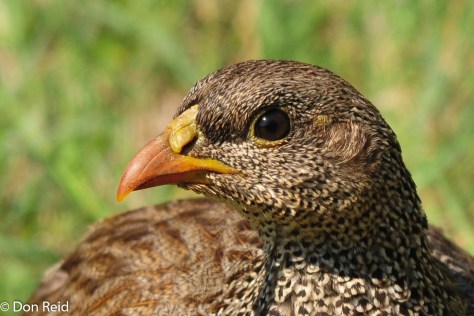
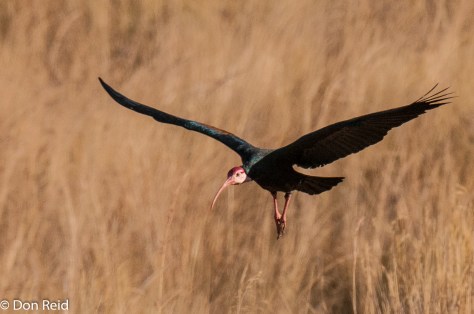
This is also the favoured habitat of two other Widowbirds – White-winged and Fan-tailed, plus Yellow bishop, Fiscal Flycatcher and Levaillant’s Cisticola in the damper areas. Also favouring the long grass, but terrestrially are Natal Spurfowl and Red-winged Francolin while the shorter grass is good for Helmeted Guineafowl, Swainson’s Spurfowl and Southern Bald Ibis.
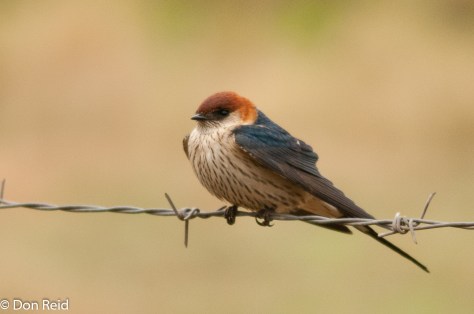
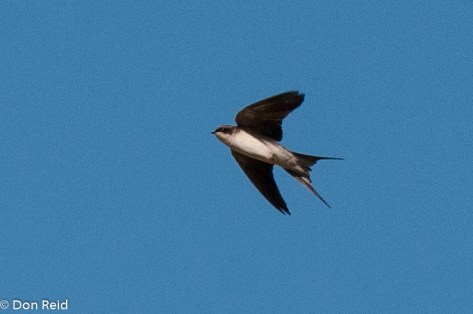
There is no shortage of aerial species such as Swallows, both Greater and Lesser-striped often seen perched near the stream as you head to the mountain crofts, sometimes joined by several Grey-rumped Swallows.
All the regular Swifts are present – Little, White-rumped, Alpine, African Black and African Palm Swifts, while Martins are represented by Rock and Brown-throated Martins.
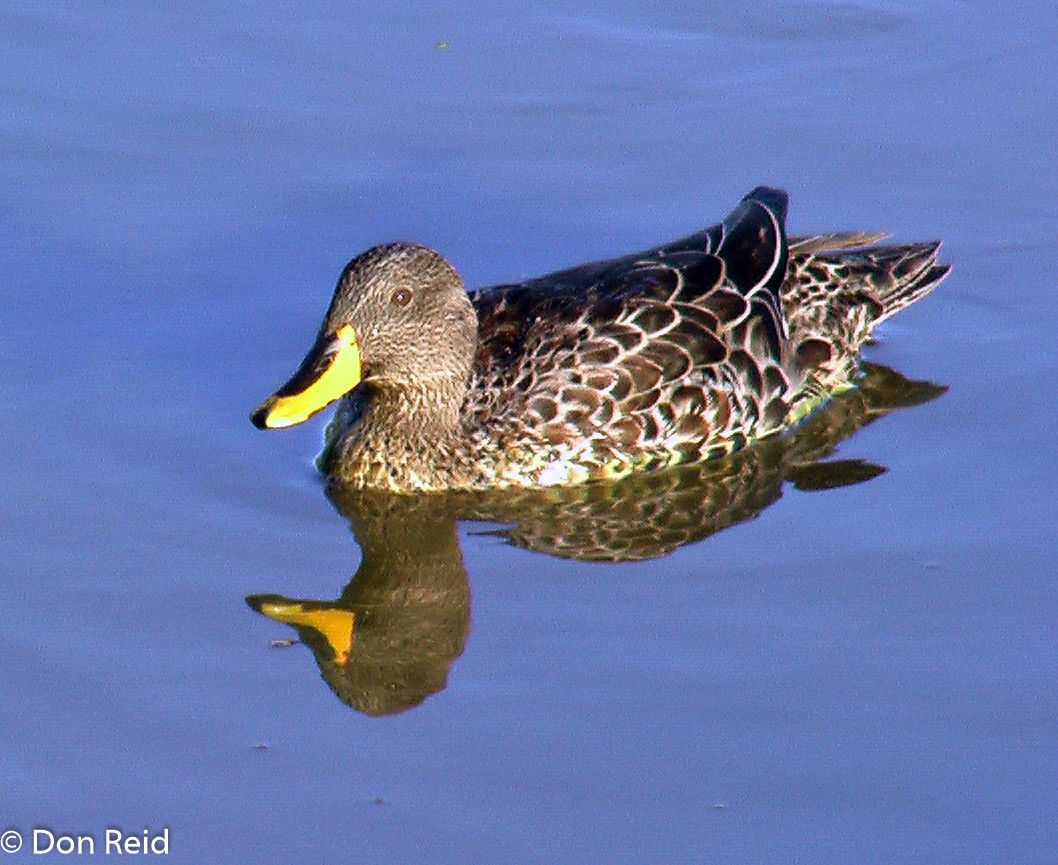
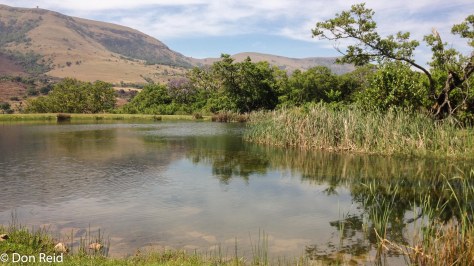
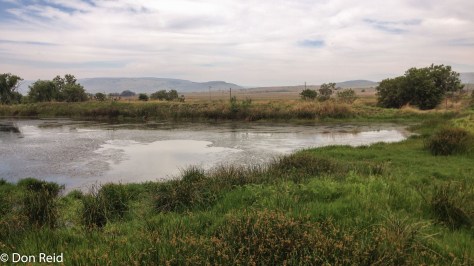
The dams are primarily for the fishermen, but when not occupied a few water birds take up residence, including Red-knobbed Coot, Reed Cormorant, Little Grebe and Yellow-billed Duck. In the fringing reeds around the dams there is a chance to listen for Warblers such as Little Rush-Warbler and African Reed-Warbler, while the banks are favoured by Sacred Ibis, Common Moorhen, Blacksmith Lapwing and the ubiquitous Egyptian Geese. This is also a good spot for White-throated Swallow.
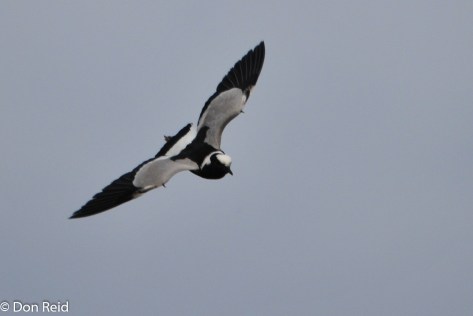
Blacksmith Lapwing
9. Back Roads
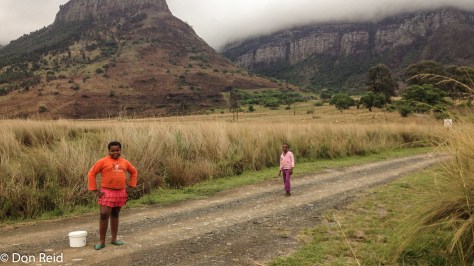
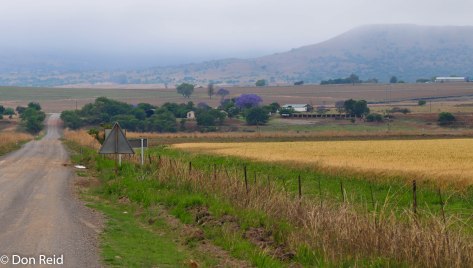
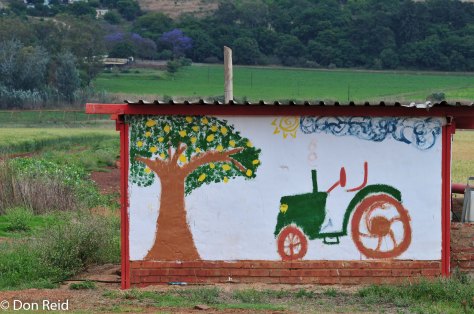
A back roadA colourful outbuilding
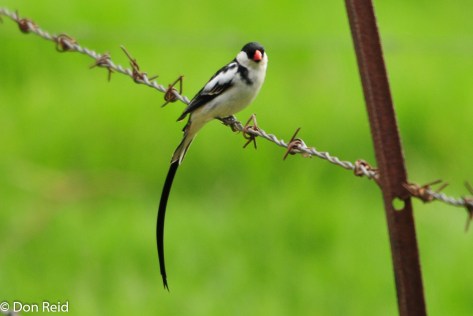
After exhausting the possibilities of all the above habitats, there is still more on offer along the roads and tracks that run to, from and through the Estate, which can be covered by car or, if you are up to it, by mountain bike. Dust can be a problem so keep windows closed whenever another vehicle approaches. Take it super slow, stop a lot and you are likely to be rewarded with species such as Black Saw-wing, Pearl-breasted Swallow, Southern Black Flycatcher, Pin-tailed Whydah, Pied Starling, Amethyst Sunbird, Malachite Sunbird, Brubru, Steppe Buzzard and even Long-crested Eagle if you are lucky.
Pin-tailed WhydahPied Starling
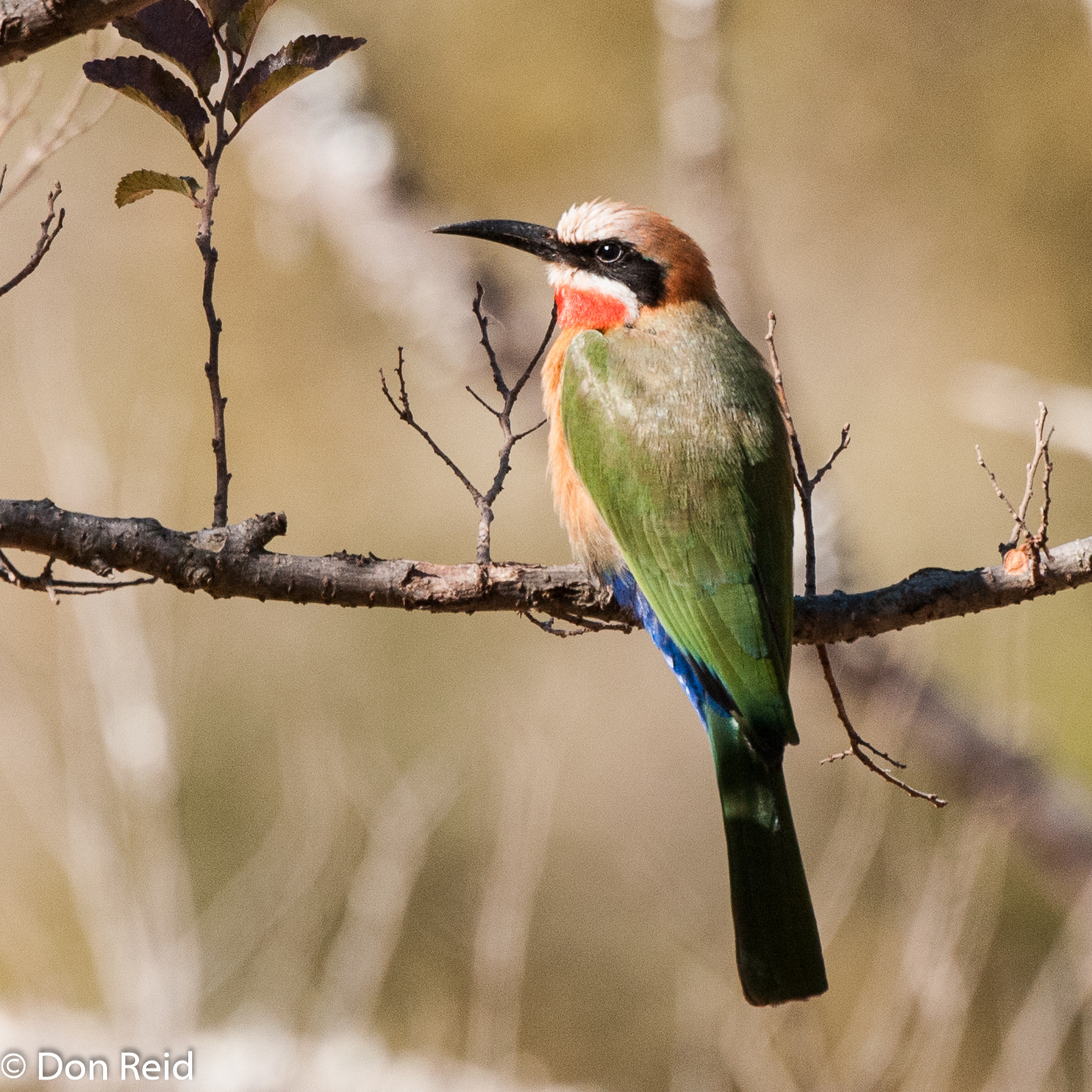
Spend some time around the dairy and adjacent farmhouse where you can add House Sparrow, Laughing Dove, Red-throated Wryneck, Groundscraper Thrush and Southern Fiscal. The tall Eucalyptus trees on the road down from reception often house a flock of White-fronted Bee-eaters.
White-fronted Bee-Eater
I can almost guarantee you will leave Verlorenkloof in a relaxed and satisfied frame of mind after a weekend or week spent in this beautiful environment.
We spent two weeks over the Easter holiday period in our “happy place” – our home in Mossel Bay, which lies at the start of the famous Garden Route in South Africa.
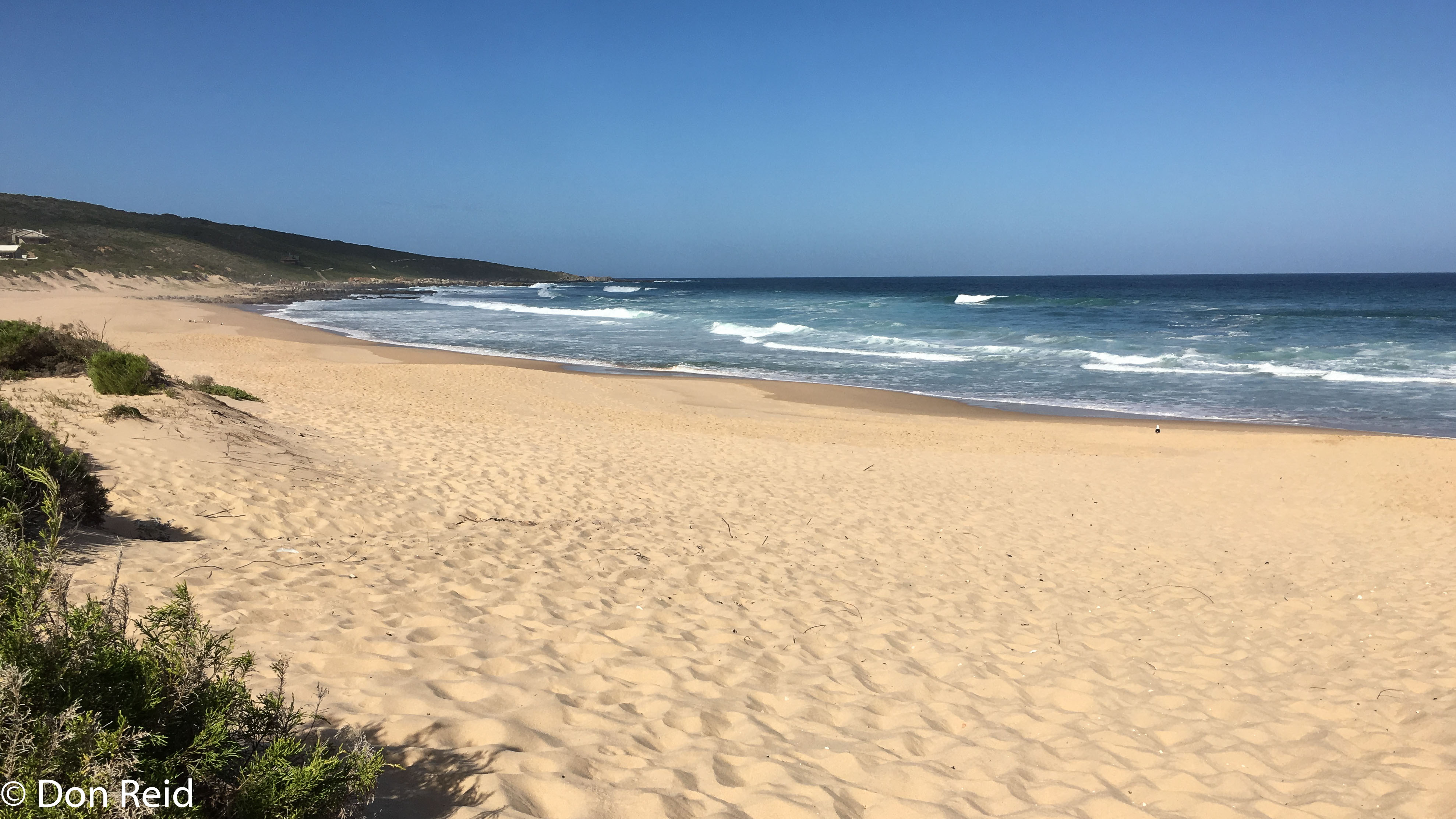
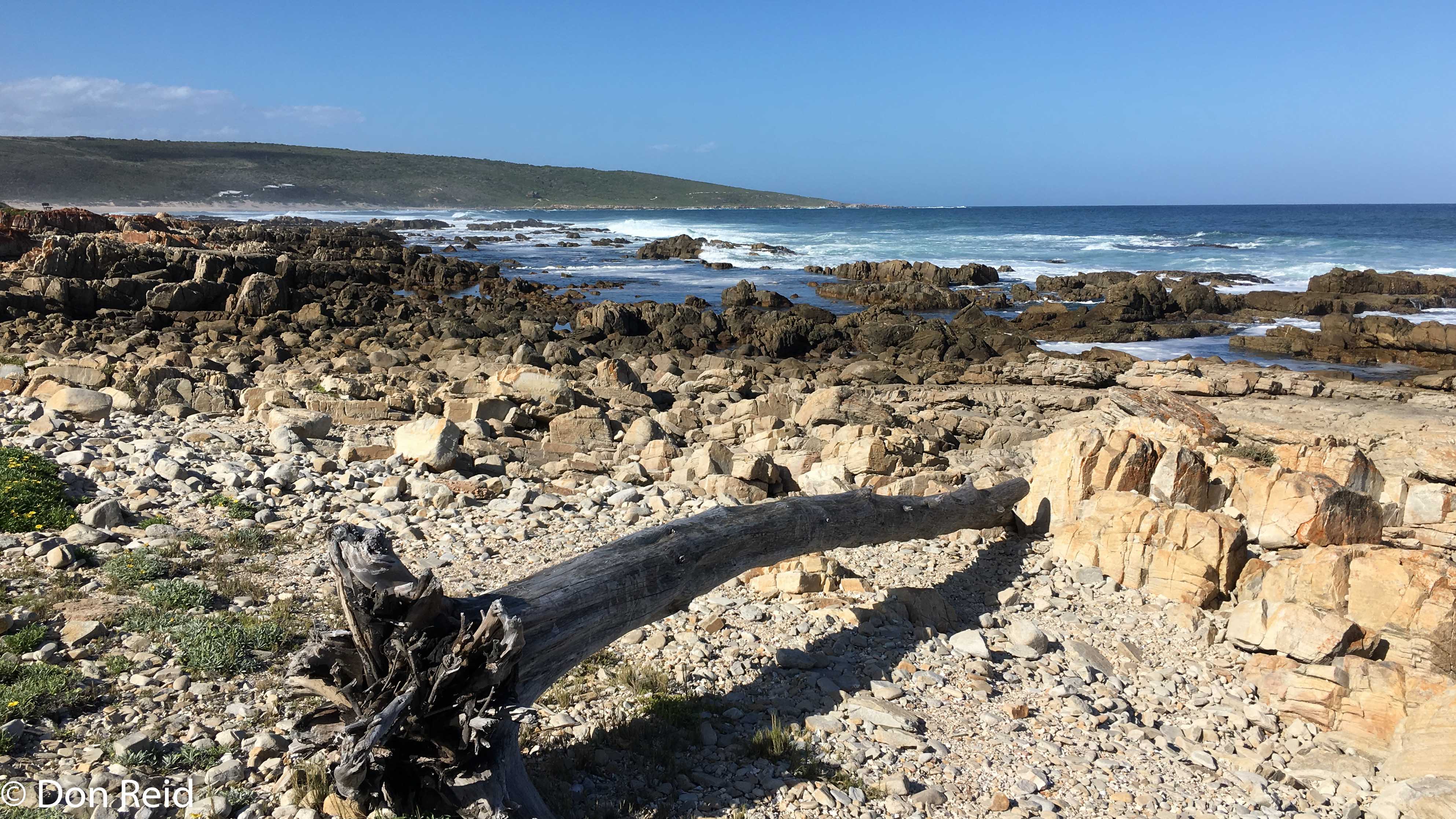
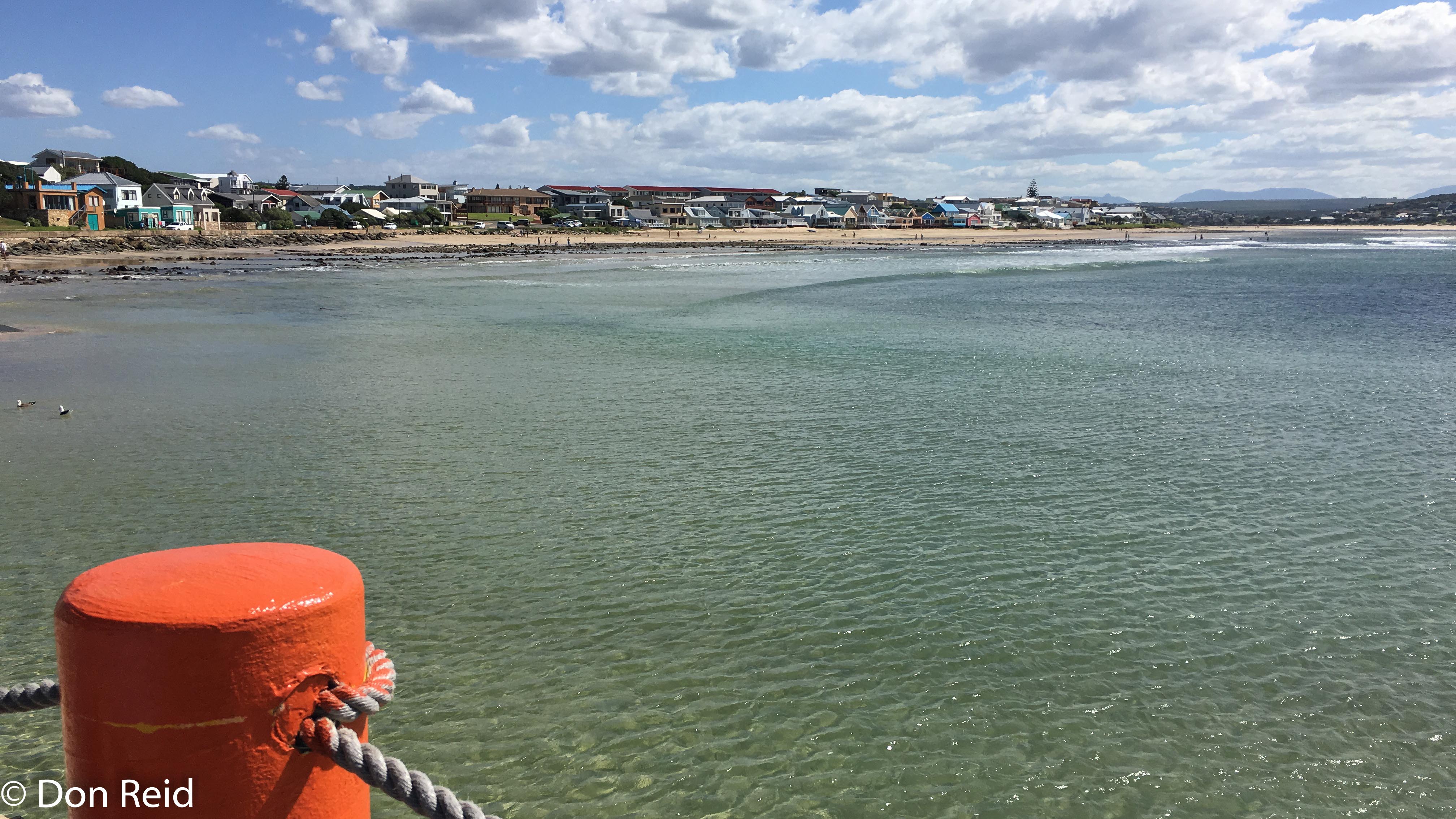
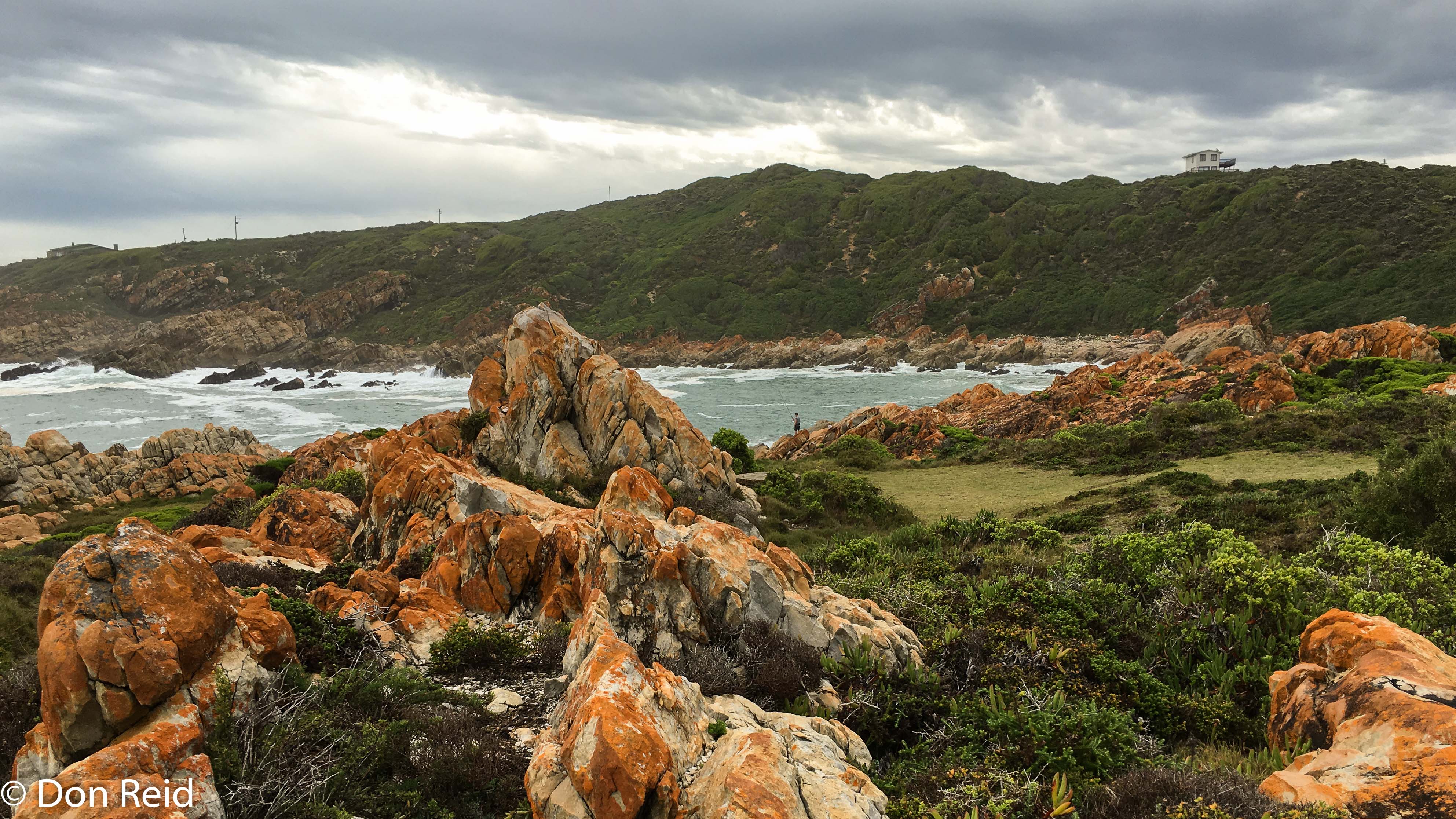
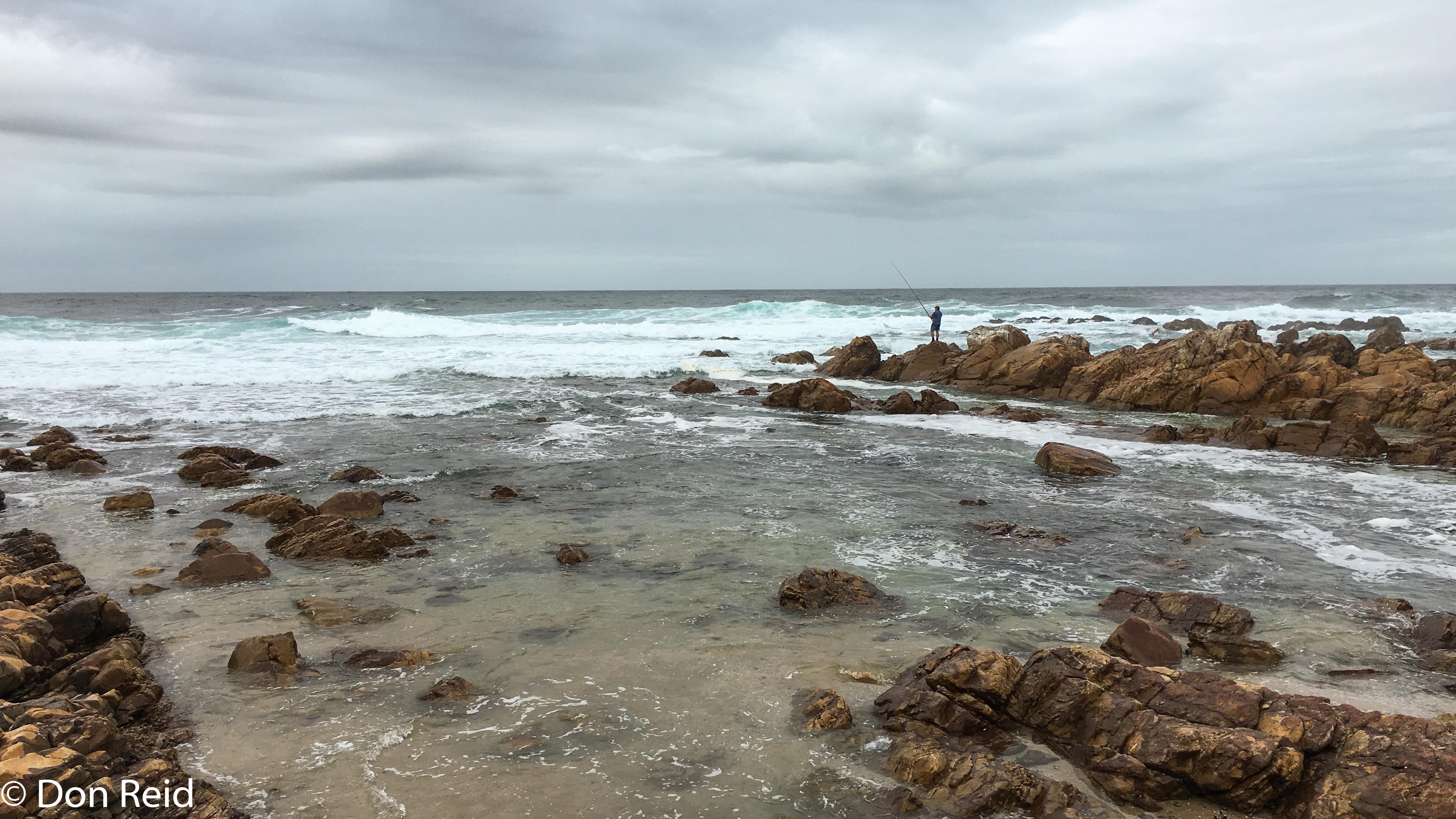
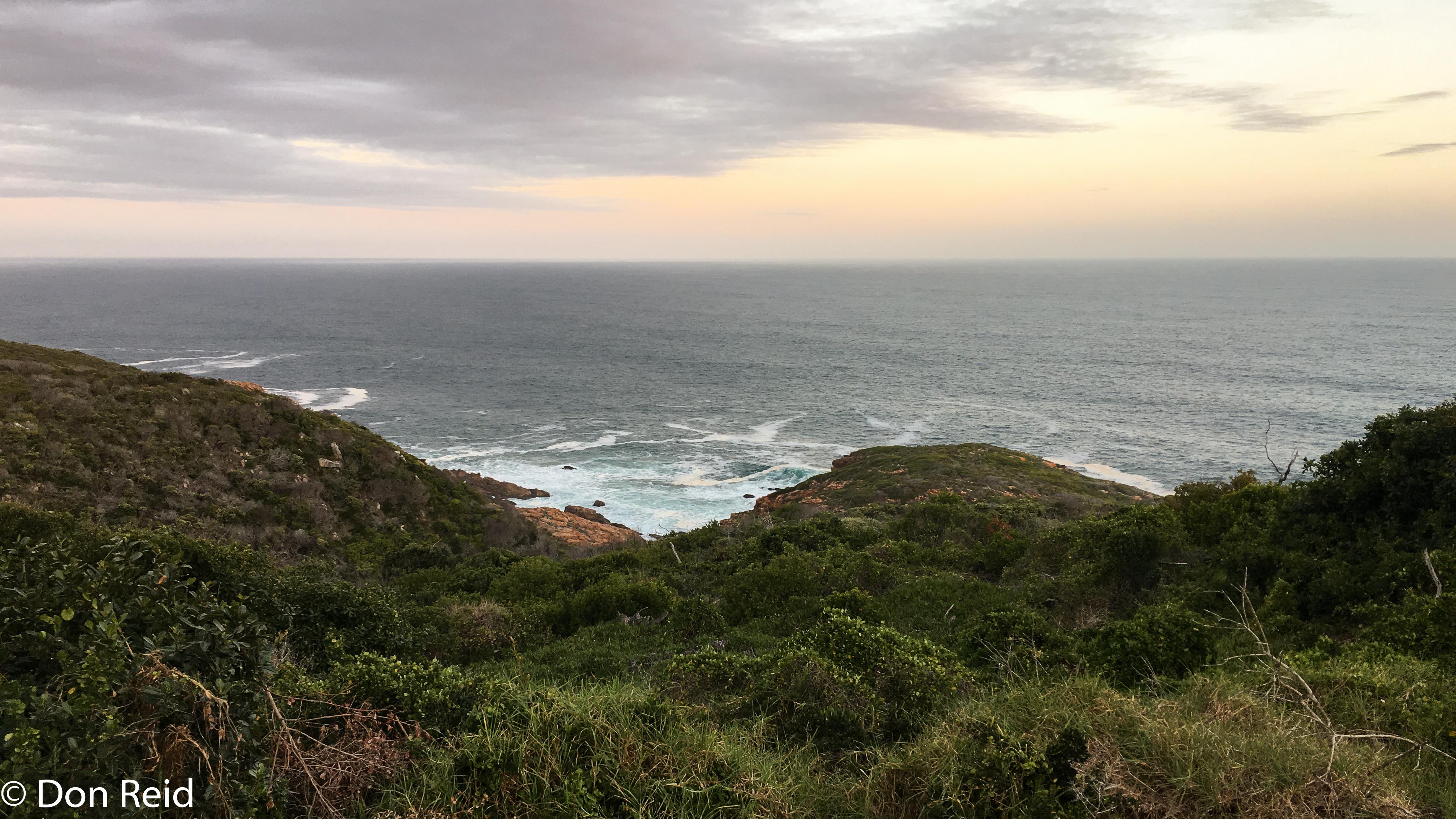
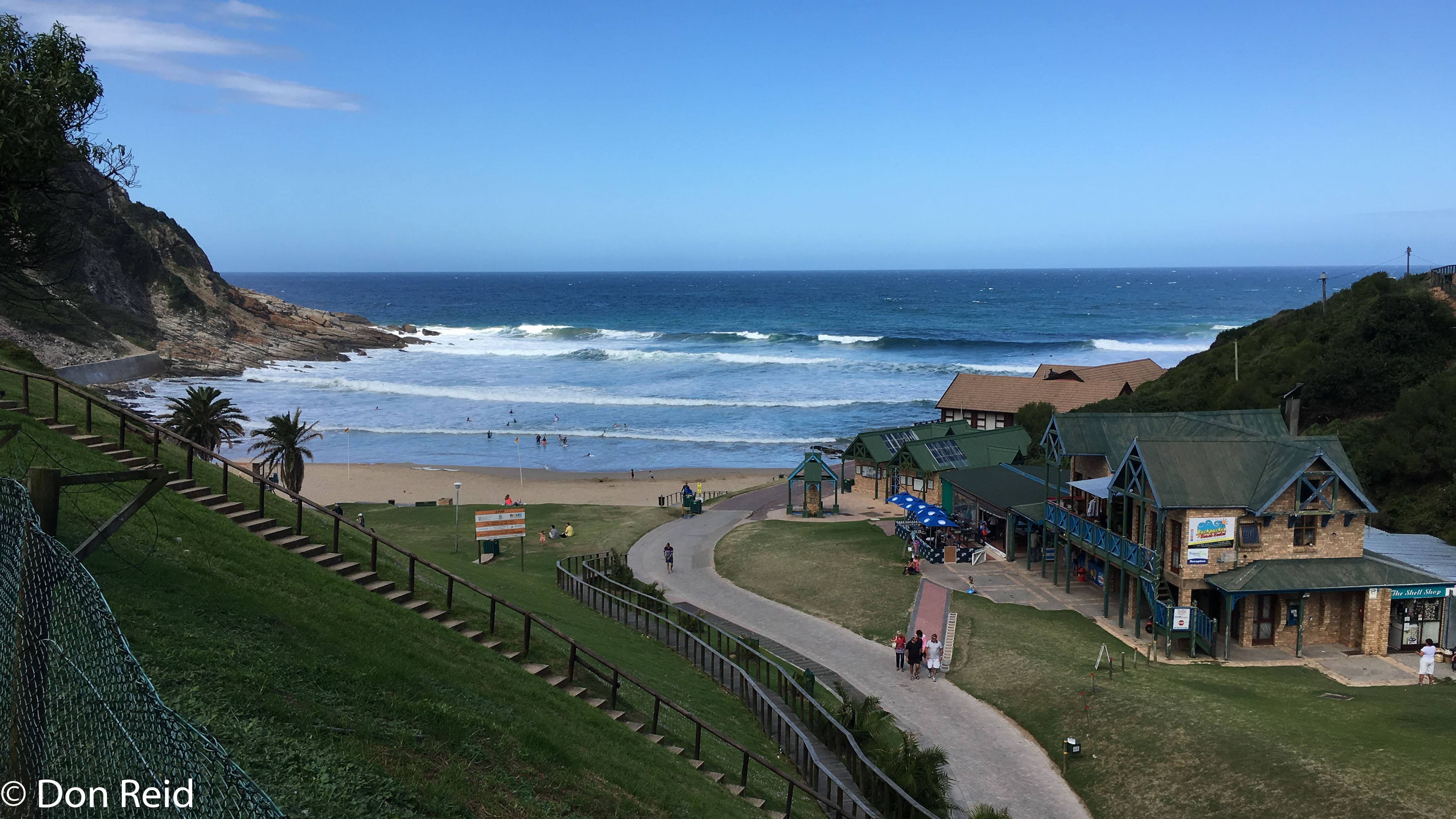
During our stay we ventured out to various places along the coast, west and east of Mossel Bay, and rediscovered just how beautiful the coastline is where the southern Cape meets the Indian Ocean.
My camera is seldom far from my side when travelling but I had left both my “good” cameras in Pretoria this time around so that they could be serviced and recalibrated by the technicians at Nikon – something that was long overdue after the frequent use to which I put my equipment and the rough life they endure in dusty and bumpy conditions most of the time.
So I was left with one option – my Iphone – which I have found is a fantastic substitute when taking landscapes and such like, but not much help with bird photography.
What follows is a selection of photos of the beautiful spots we visited, all taken with my Iphone – for a change I will let the photos do most of the talking (Is that a sigh of relief I hear?).
This map of the region shows most of the places mentioned in the post :
Map of the Southern Cape coast
Starting with the westernmost spot and heading east………..
Just click on any of the photos to open a larger view
Jongensfontein – small coastal holiday town near Stilbaai
JongensfonteinJongensfontein
Stilbaai (“Quiet Bay”) – Favoured by retirees and holidaymakers
StilbaaiStilbaai
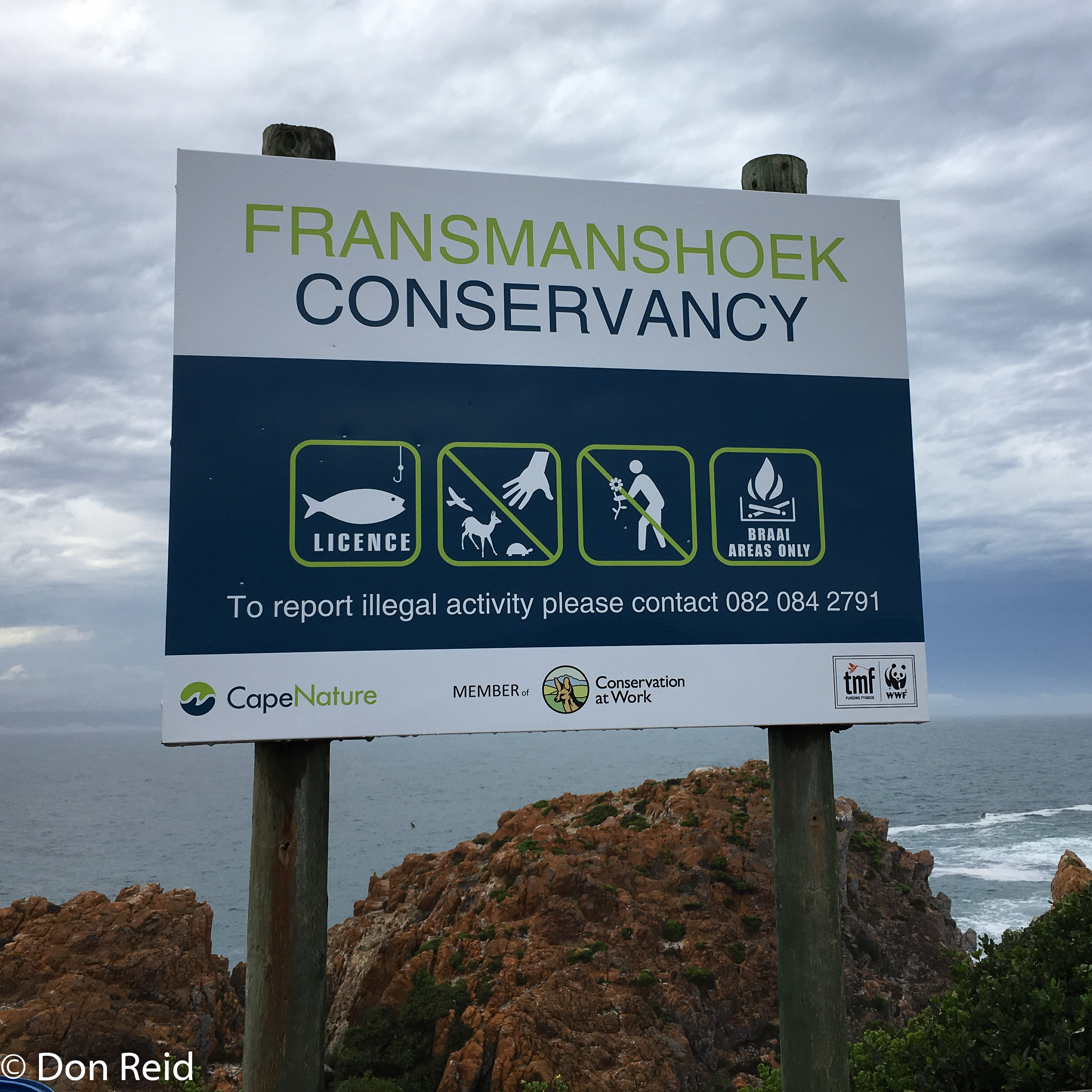
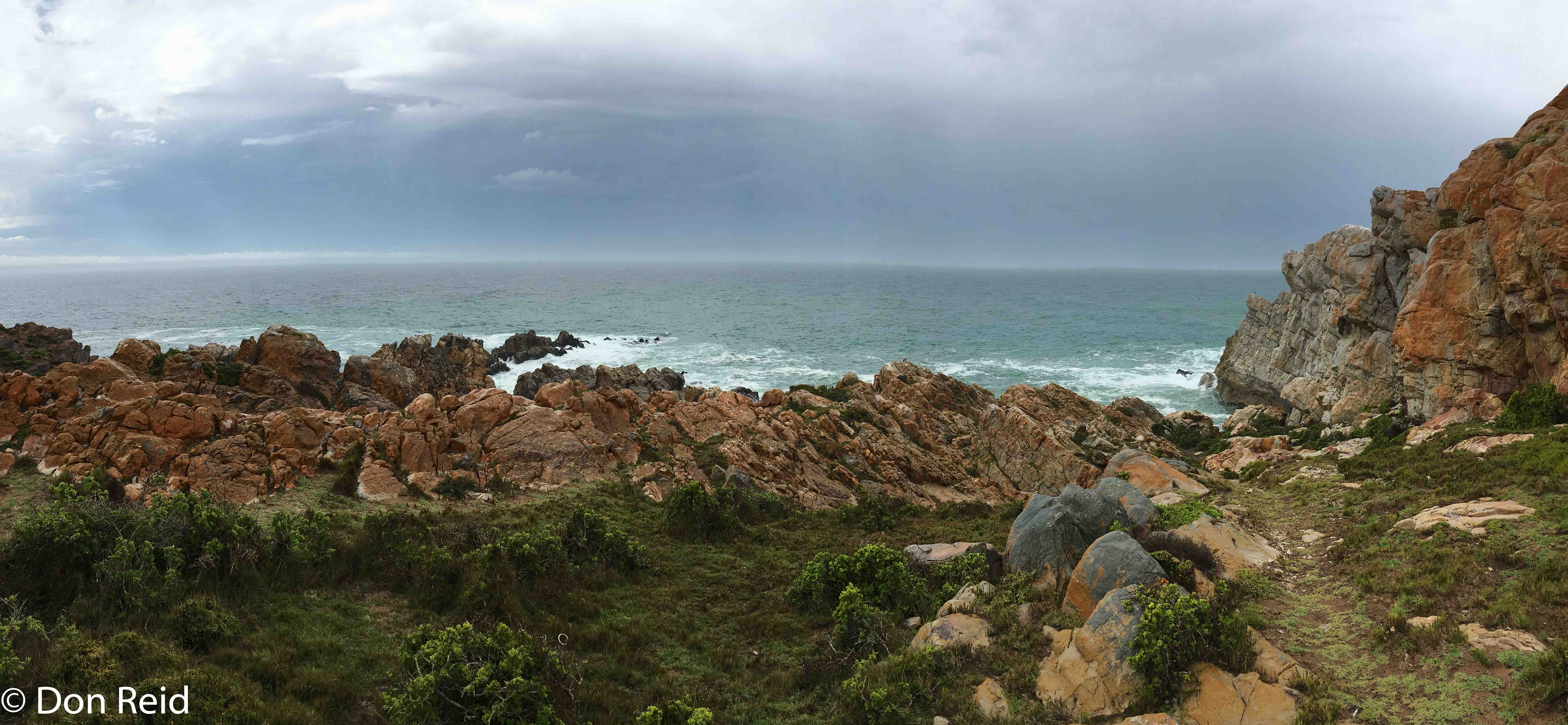
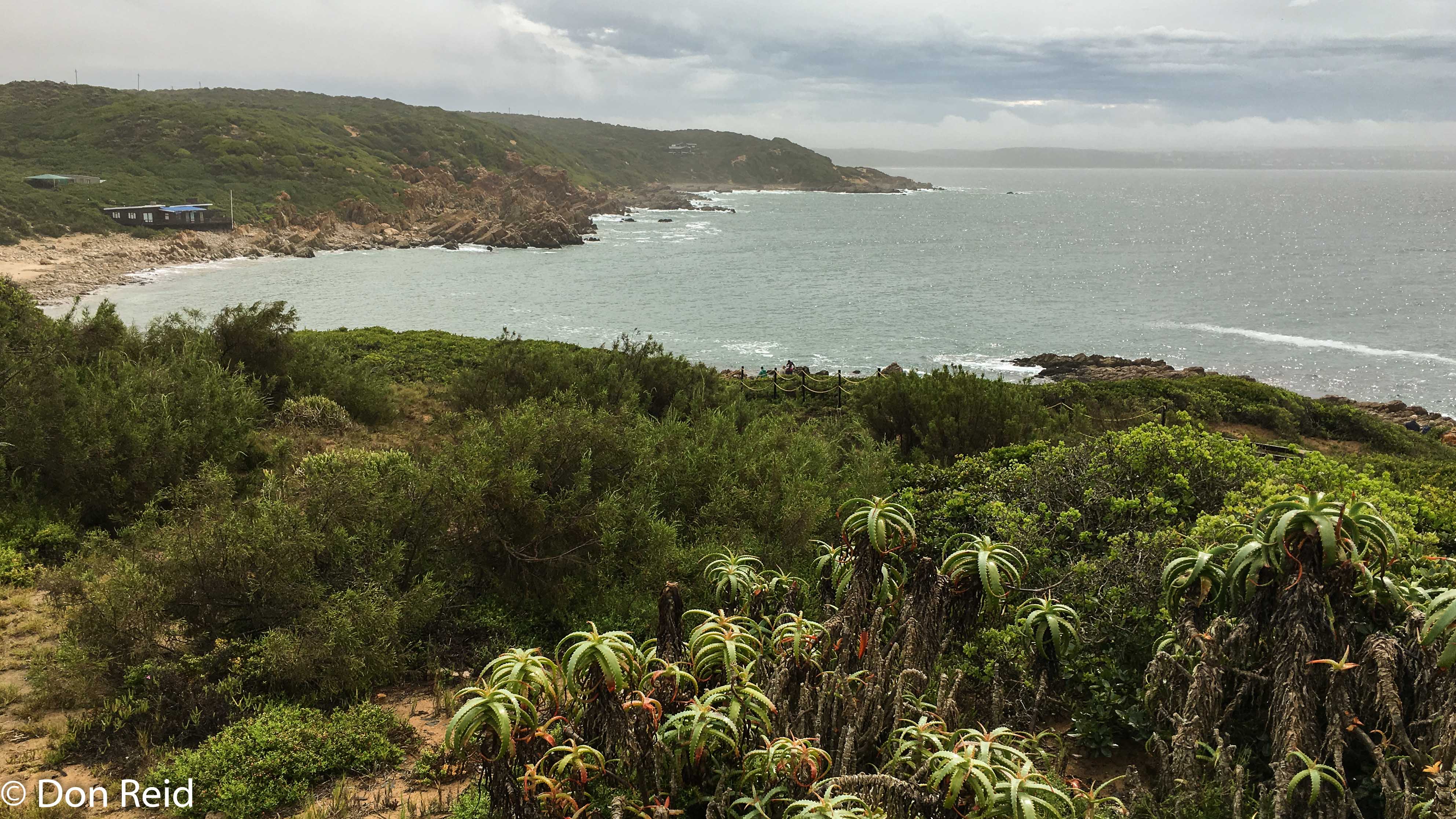
Fransmanshoek Conservancy – unspoilt beauty near Vleesbaai
As I mentioned in my previous post about twitching (https://mostlybirding.com/2016/02/23/a-twitch-or-two/), I hardly consider myself to fall into the category of keen twitchers, those hardy, sometimes mildly bonkers birders who let nothing stand in the way of seeing rare birds that turn up in Southern Africa.
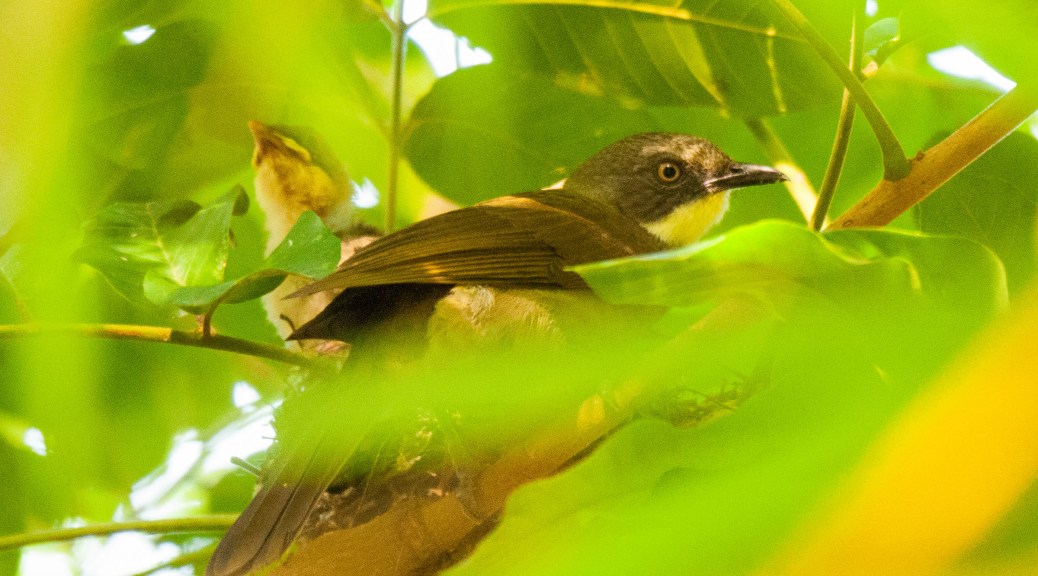
Such was the case when a pair of Yellow-throated Leafloves (interesting name!) turned up and started nesting at a riverside lodge near Katima Mulilo in Namibia, some 200 kms south of their normal distribution in Zambia and northwards. Suddenly the Southern African region had a brand new bird added to the regional list!
The reports started coming through in mid February 2016 of this unexpected pair of birds in the gardens of the Caprivi Houseboat Safari Lodge near Katima Mulilo and there was soon a gold-rush like invasion of keen twitchers heading to this remote part of Southern Africa via plane and car from various places in South Africa and Namibia.
The Twitch
I watched with interest the messages coming through from Trevor Hardaker and the SA Rare Bird Facebook page, knowing that I would be going to Kasane in northern Botswana for a project I am involved in, during the 1st week in March. I also had a look at the map and realized that Katima Mulilo fell nicely within my “twitch limit” of around 2 hours drive, being about 120 kms from Kasane with a border crossing from Botswana to Namibia to negotiate along the way. So, if the Leafloves hung around until then, I planned to “pop over” the border for a quick visit and hopefully a new tick on my life list for Southern Africa.
Tuesday 1st March
Come Tuesday, I caught the daily flight from Joburg to Kasane – a day early for my site visit so that I could spend a night in Katima Mulilo (KM) and be back in time for the project commitments the following day. I had arranged for a bakkie (pickup) to be available and shortly after landing I set off for KM via Ngoma border post. The border formalities went smoothly, perhaps because I was the only customer in an hour or two.
From Kasane to Ngoma the public road (tarred) bisects the northernmost section of Chobe Game Reserve and the landscape is pristine woodland all the way.
The road to Katima Mulilo
Once into the Caprivi in Namibia, the scenery changes to more open, patchy woodland interspersed with small settlements and small-scale agriculture.
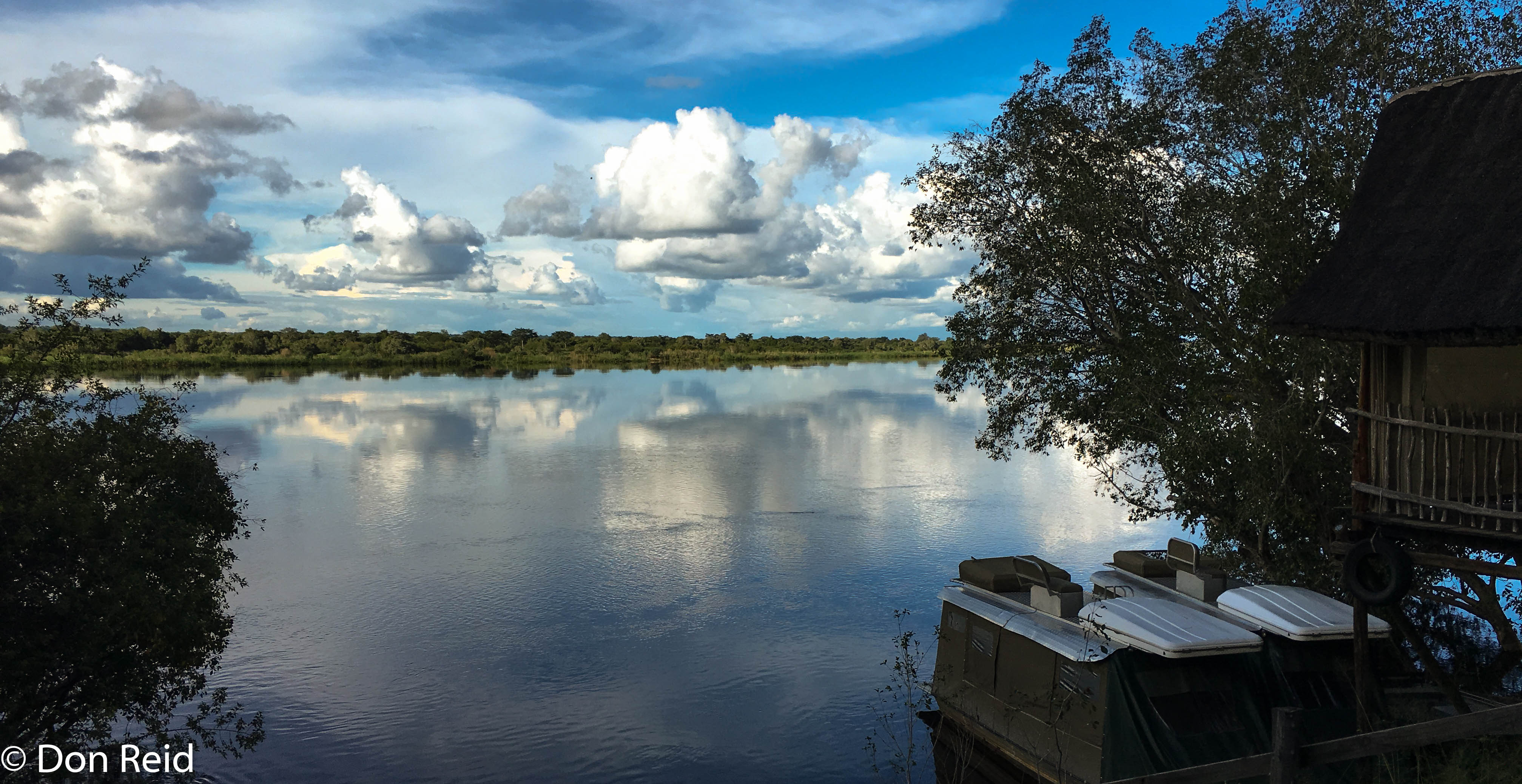
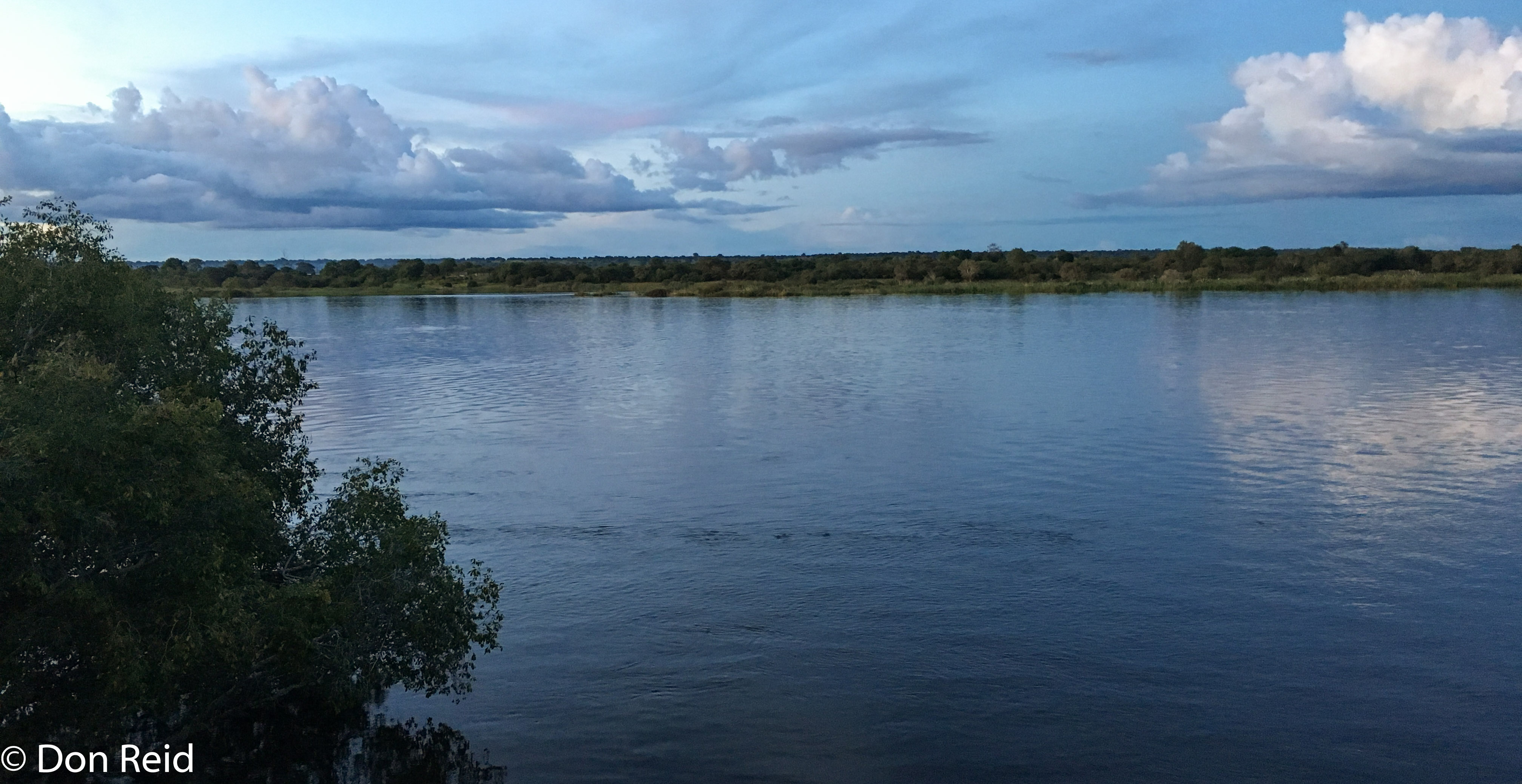
I arrived at the lodge by 4.30 pm and settled into the rustic accommodation on the river in unit No 5, which is right alongside the tree where the Leafloves were nesting.
Caprivi Houseboat LodgeThe rustic cabin at Caprivi Houseboat LodgeView from the cabin
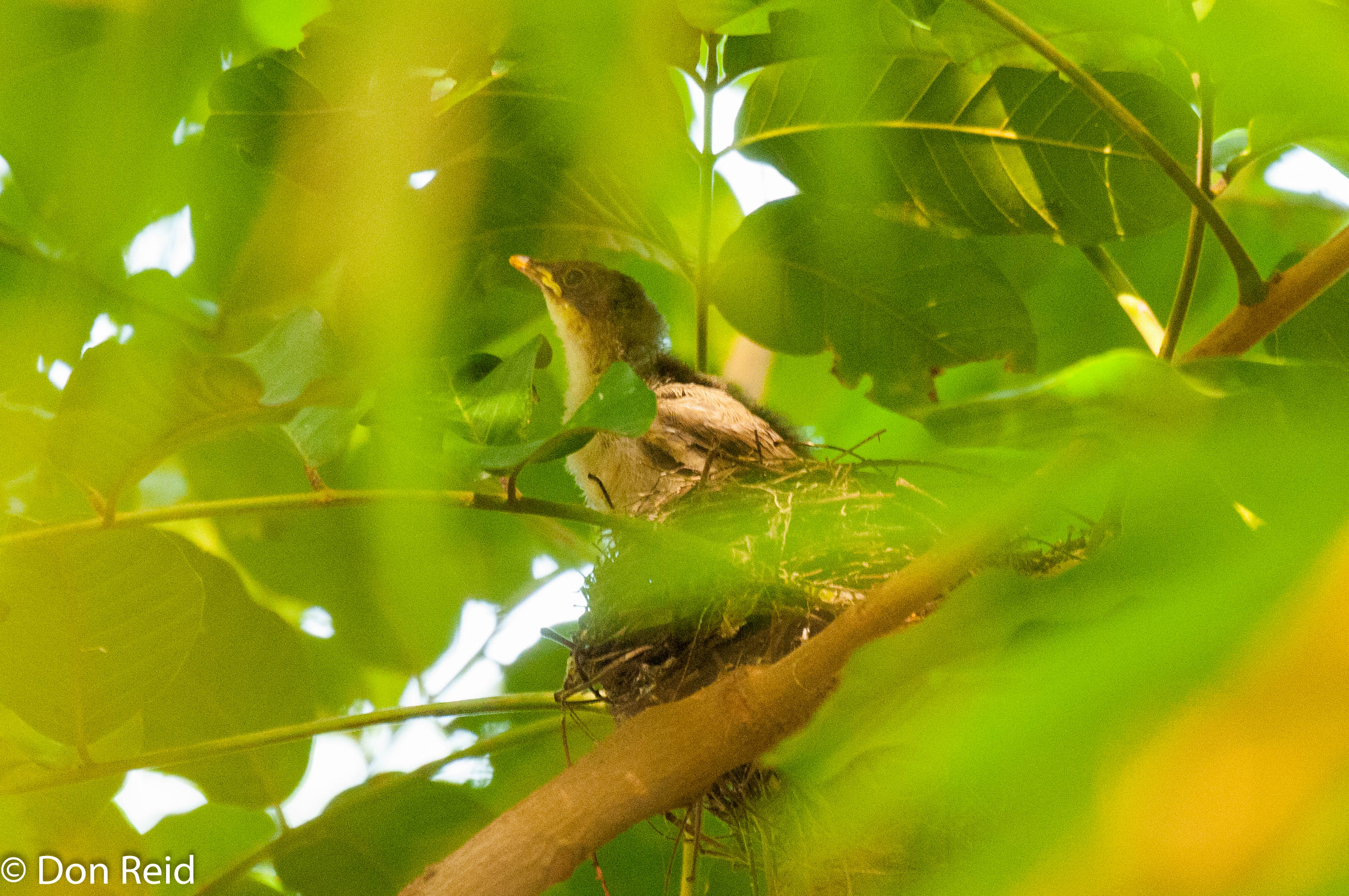
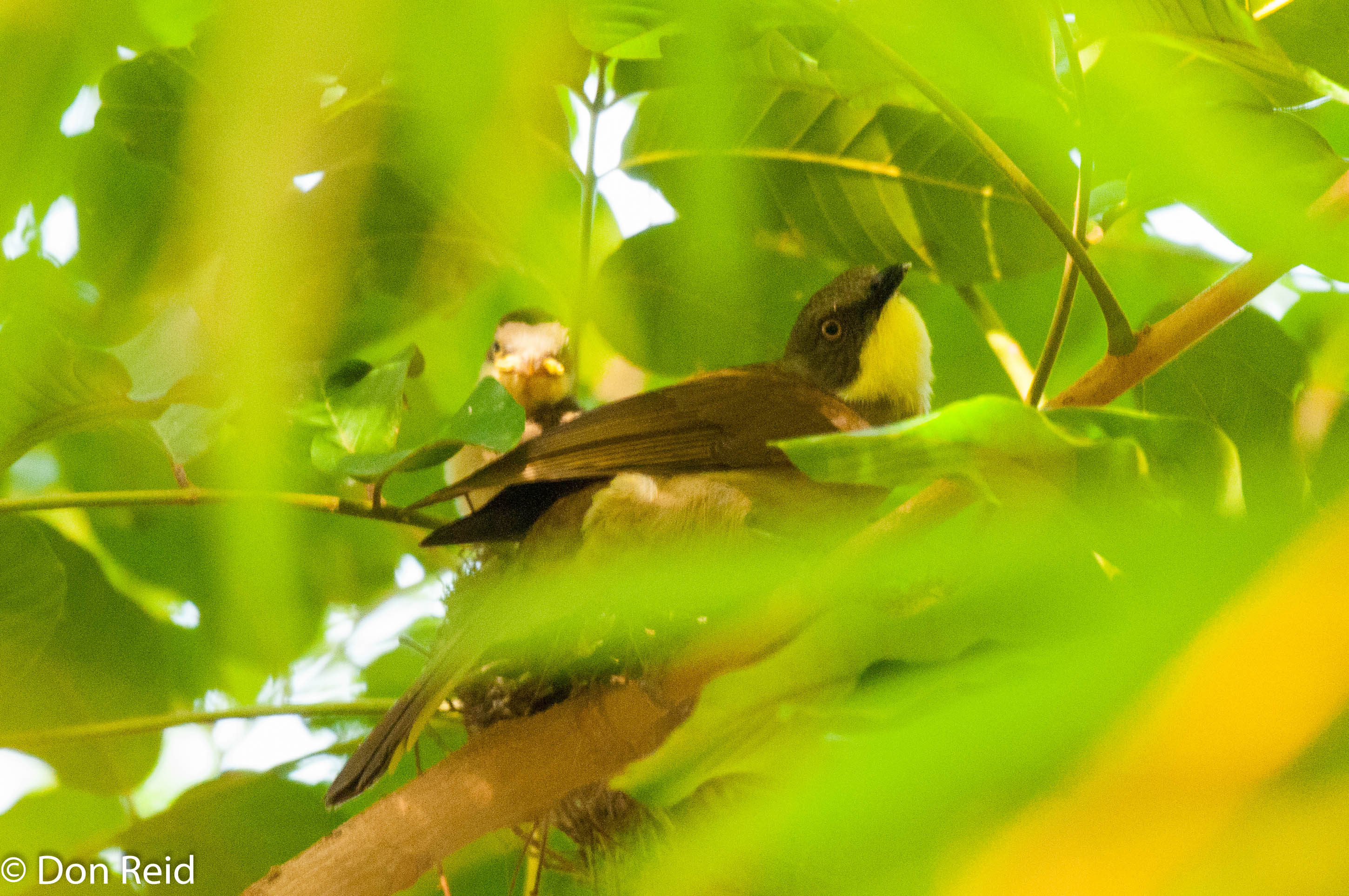
I immediately saw one of the young chicks peering over the edge of the nest and within minutes the parents were in the vicinity and at the nest, bringing morsels and calling in a Babbler-like manner although less harsh.
The rest of the afternoon was spent re-visiting the nest site in the hope of getting better views / photos and exploring the small property with its jungle-like gardens and river views.
River views, Caprivi Houseboat LodgeRiver views, Caprivi Houseboat Lodge
It proved to be really challenging trying to get the Leafloves in my camera’s viewfinder for long enough to get a decent photo, as they seemed intent on hiding in the shadiest part of the foliage at every opportunity and when they did show themselves briefly, it was in an opening high up in the trees with bright light behind them.
Yellow-throated Leaflove
Other birders had arrived earlier and a few more arrived after me – we enjoyed a good evening meal together and then made our way to mosquito-netted beds in the rustic cabins, happy to be able to add the Leaflove to our life lists.
Wednesday 2nd March
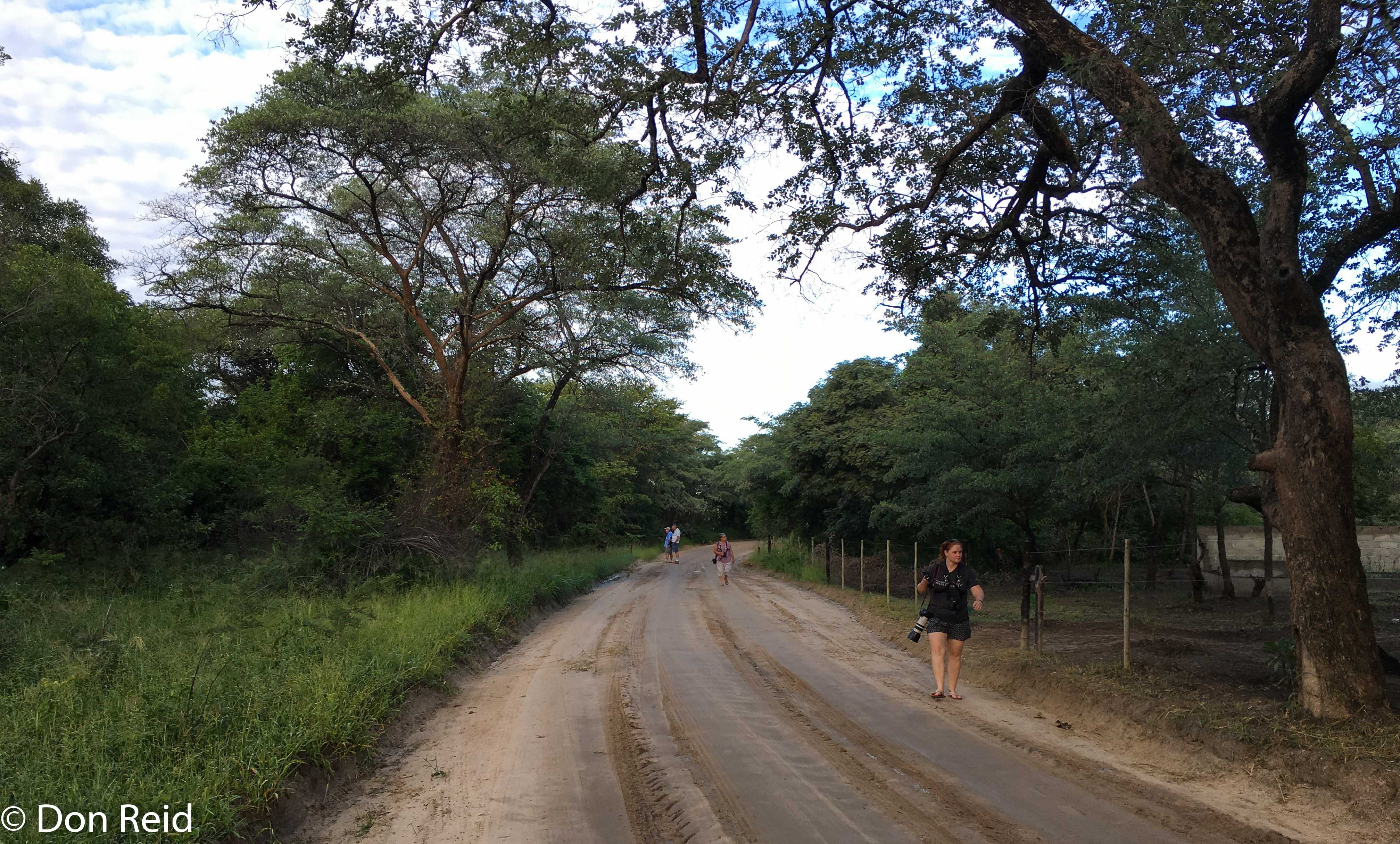
In the morning the others were already gathered at the coffee and rusks and I tagged along with the small group as they set off for a birding walk along the dirt road outside the lodge, which turned out to be quite busy with early morning commuters on their way to places unknown.
Morning walk near the lodge
White-bowed Robin-Chat and Tropical Boubou were competing for loudest call as we walked and there was no shortage of other interesting species, such as :
Paradise and Grey-tit Flycatchers
Village Indigobird on the very top of a tree
Namaqua Dove perched on overhead wires
Brubru working its way through the foliage of a large tree
Little Sparrowhawk perched on an open branch
Copper Sunbird female peering from its nest in the roadside bush
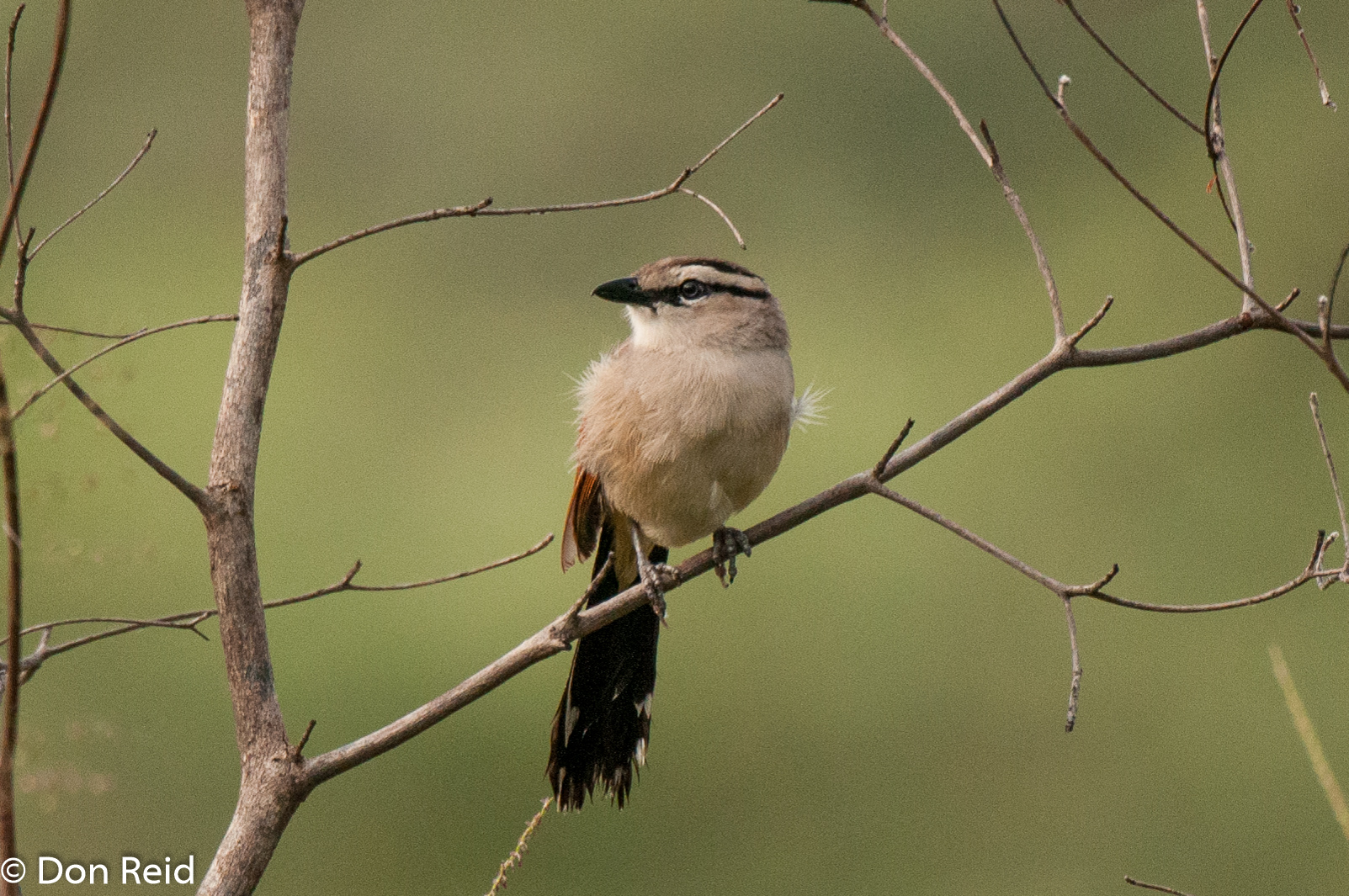
Brown-crowned Tchagra posing beautifully on a nearby branch
Greater Blue-eared Starlings
African Golden Oriole – bright yellow against the green foliage
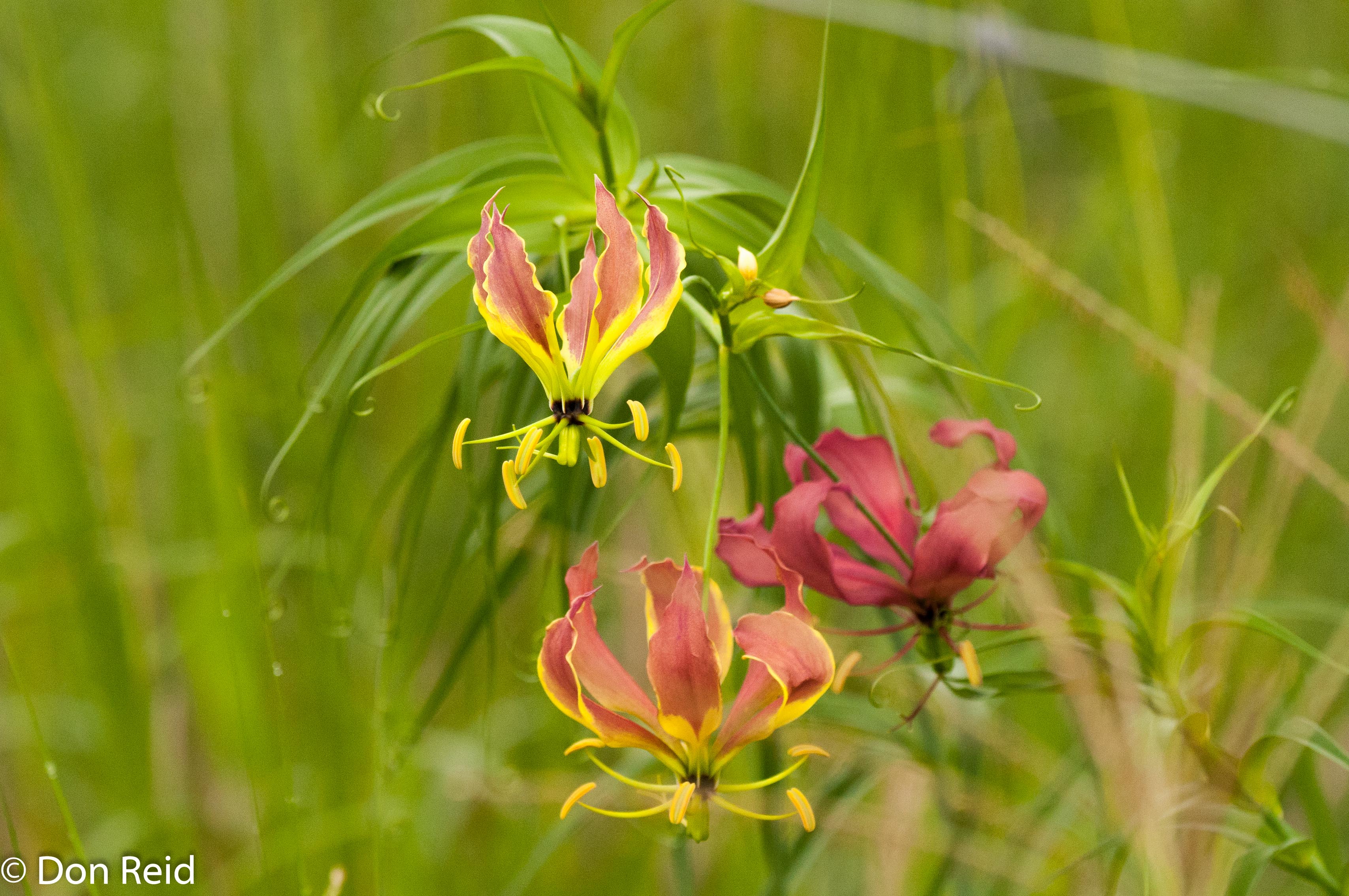
Copper Sunbird (Female) at nestFlame LilyBrown-crowned Tchagra
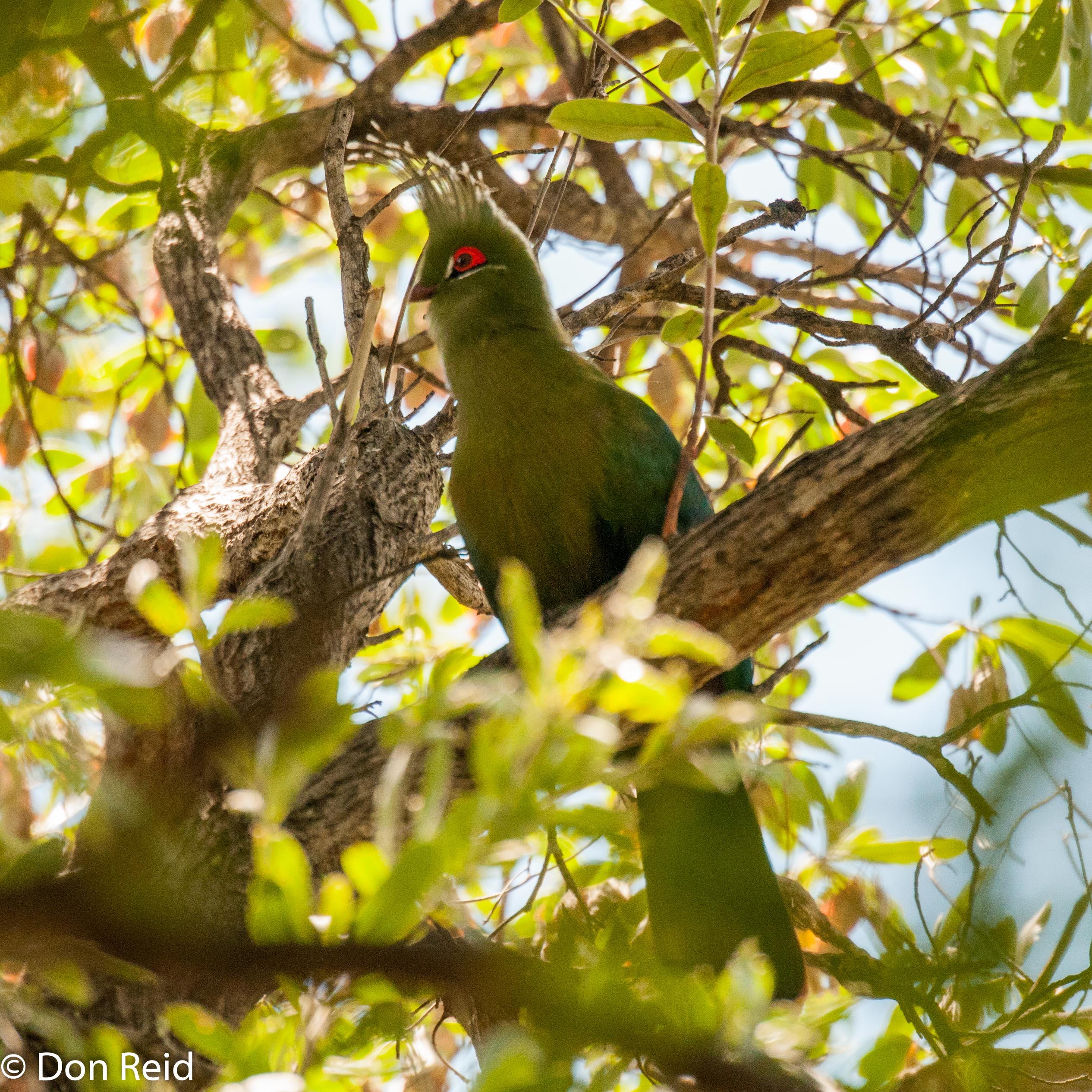
After the walk it was breakfast time followed by some further garden birding. A Schalow’s Turaco was calling and I followed the sound to find this lifer – a pair were moving about in the dense foliage of a tall tree, making it challenging to get a decent view or a photo. Fortunately I heard them again as I was leaving and found one on an open branch, almost inviting me to photograph this handsome species.
Schalow’s TuracoSchalow’s Turaco
The trip back to Kasane was uneventful, other than coming across a trio of elephants along the road traversing Chobe.
The road through Chobe
Another successful twitch and memories of a brief but busy trip that will stay with me for a long while.