A Week in Olifants – The camp and short drives

For the second year in a row we spent a week in Kruger National Park in October, this time spending 6 nights in Olifants rest camp in the northern part of Kruger, with one night stop-overs at Berg en Dal  and Pretoriuskop rest camps on the way there and back respectively.

There are two basic options when you plan a week’s stay in Kruger – spend two nights each in say three of the rest camps or book the whole week in one camp. Both options have pros and cons, but I must say our preference nowadays is the latter which means less travelling and more relaxing. It becomes less urgent to take a game drive every day, particularly when the camp itself offers “add-ons” such as swimming pools, decent coffee shop/restaurant, activities such as bush walks and of course the potential birding on offer in the camp itself.

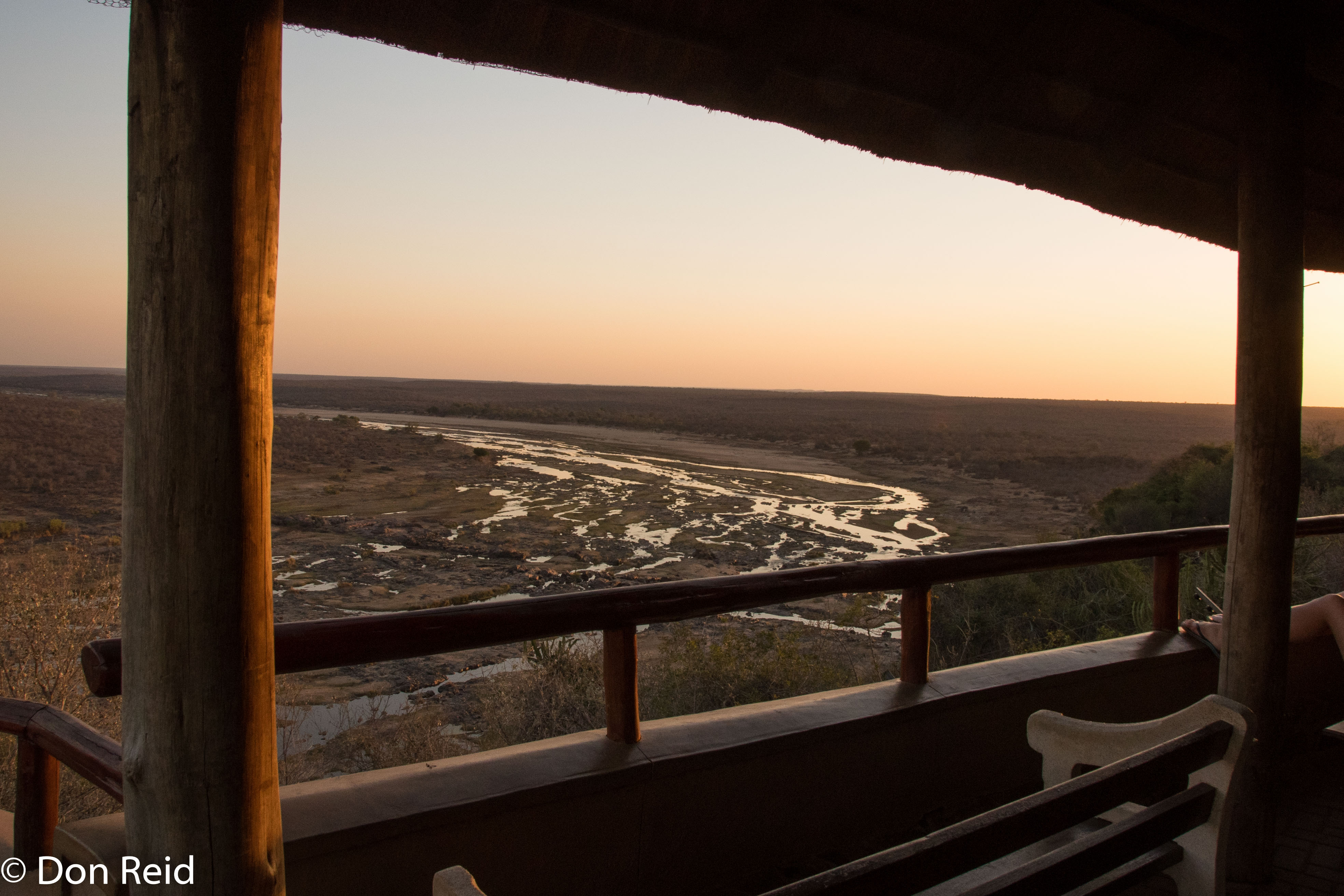
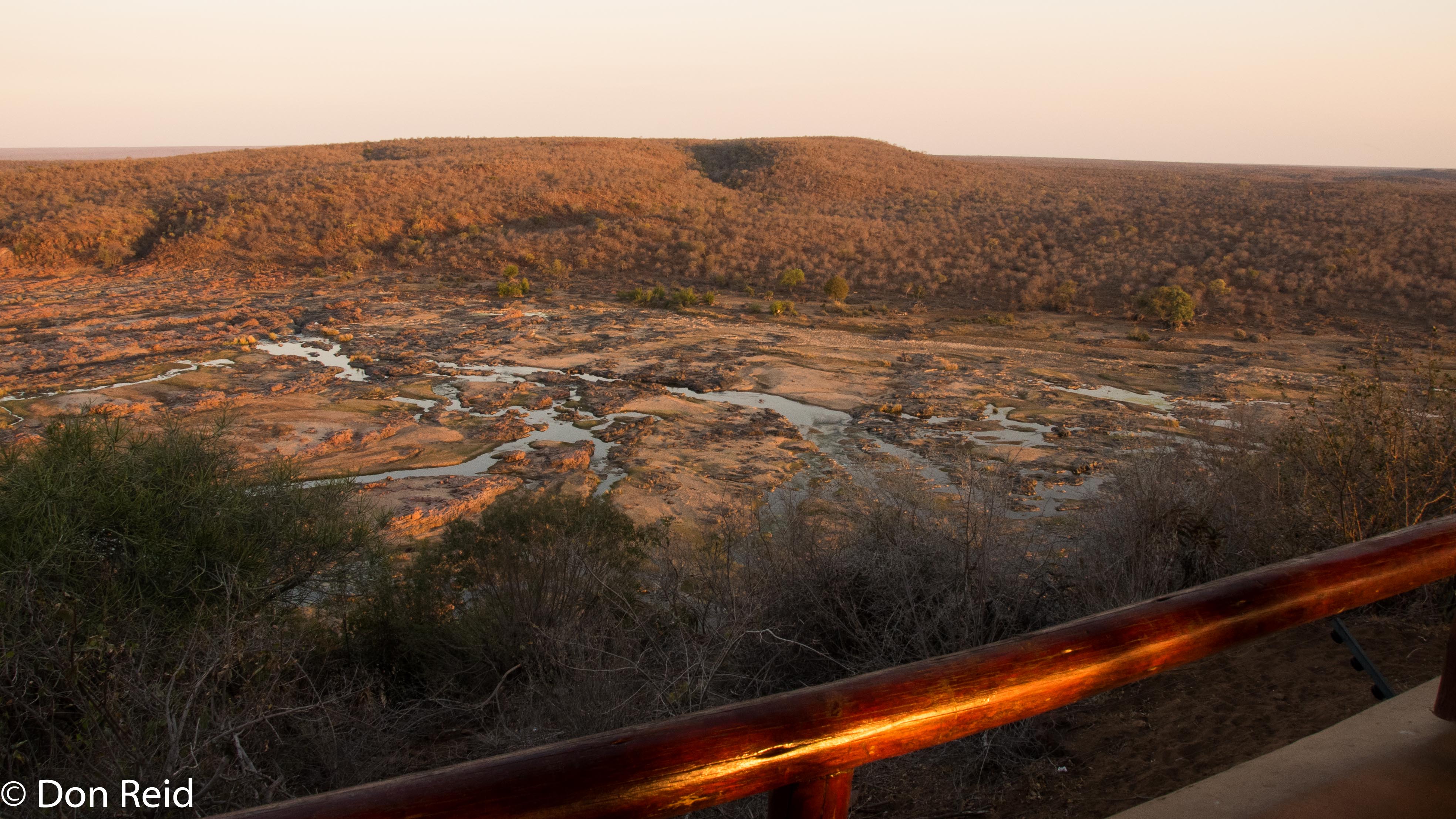
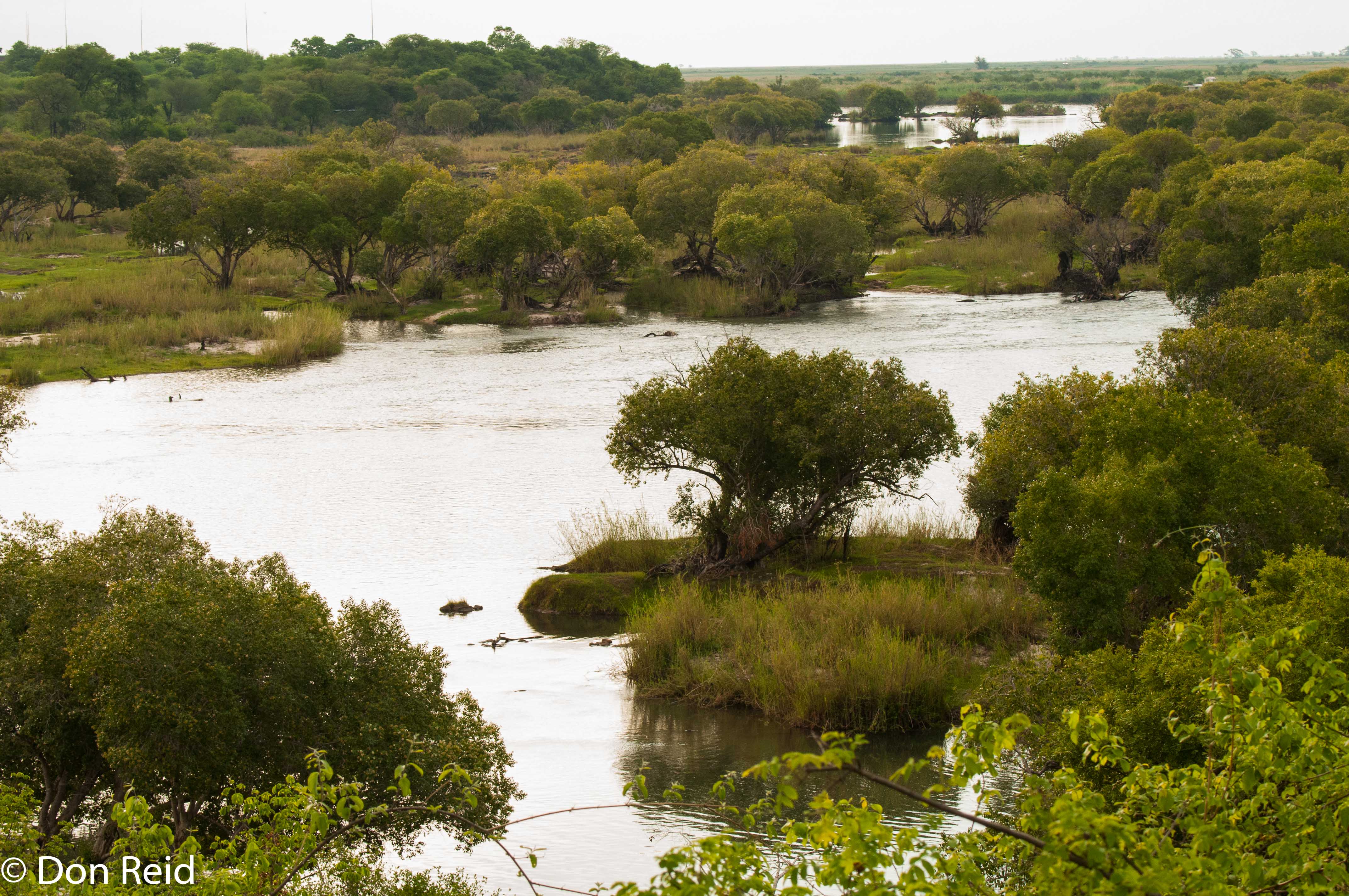
Olifants camp has all of the above and the added advantages of its location on top of a ridge, with its famous viewpoint overlooking the Olifants river far below and stretching to the horizon in an unbroken vista of pristine bushveld, one of the finest spots in Kruger and one that has remained unchanged for the four decades that we have been visiting it.

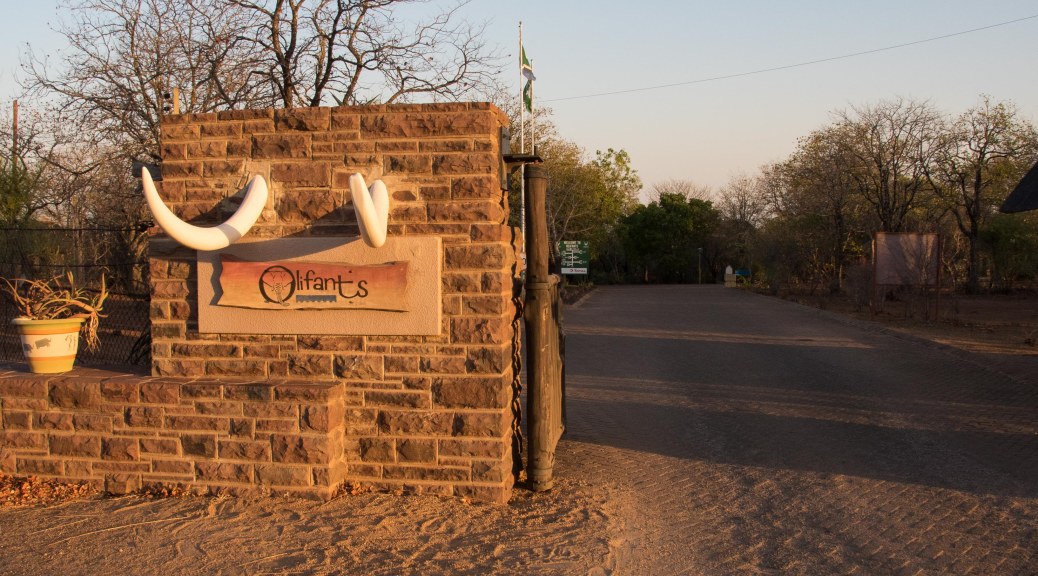
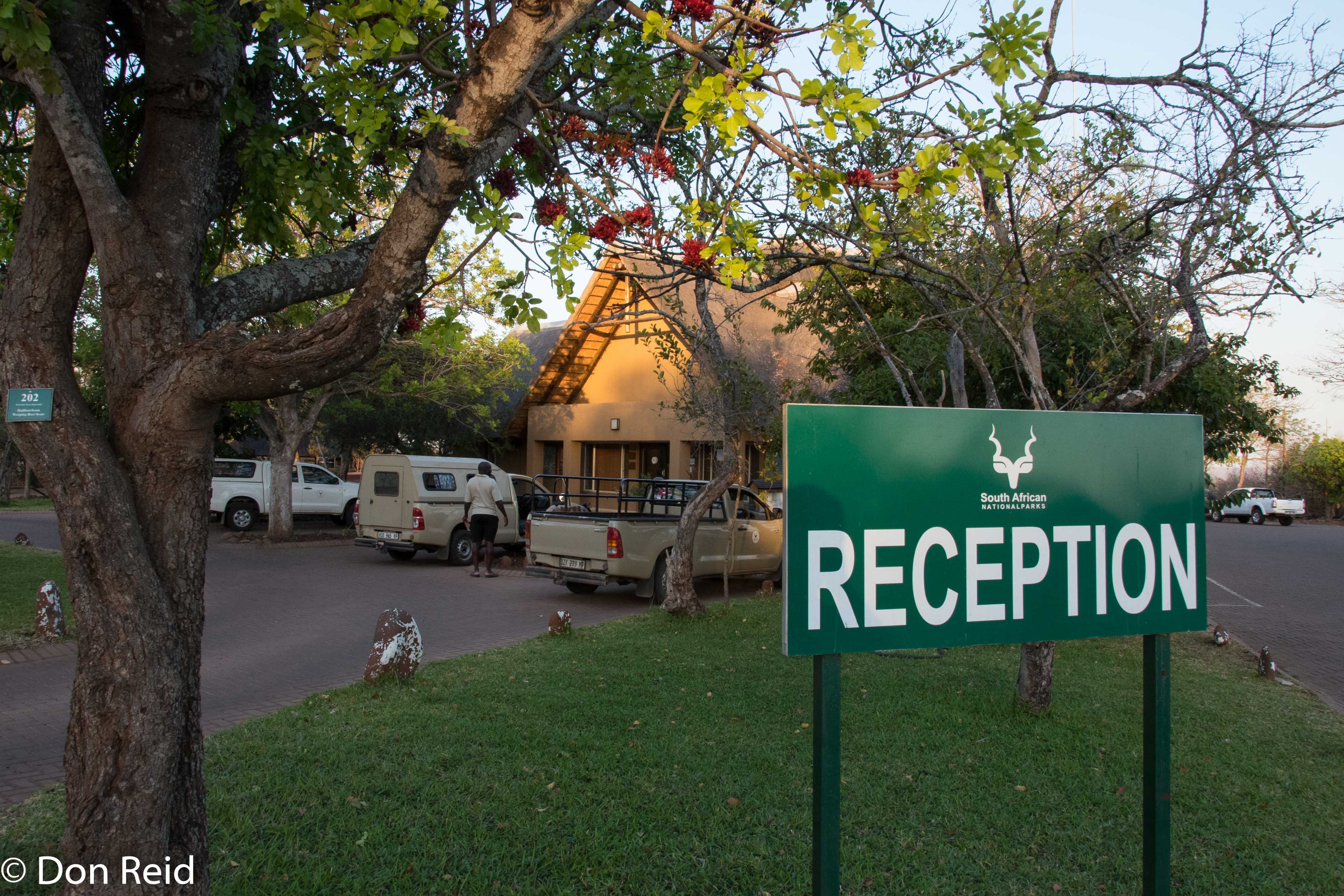
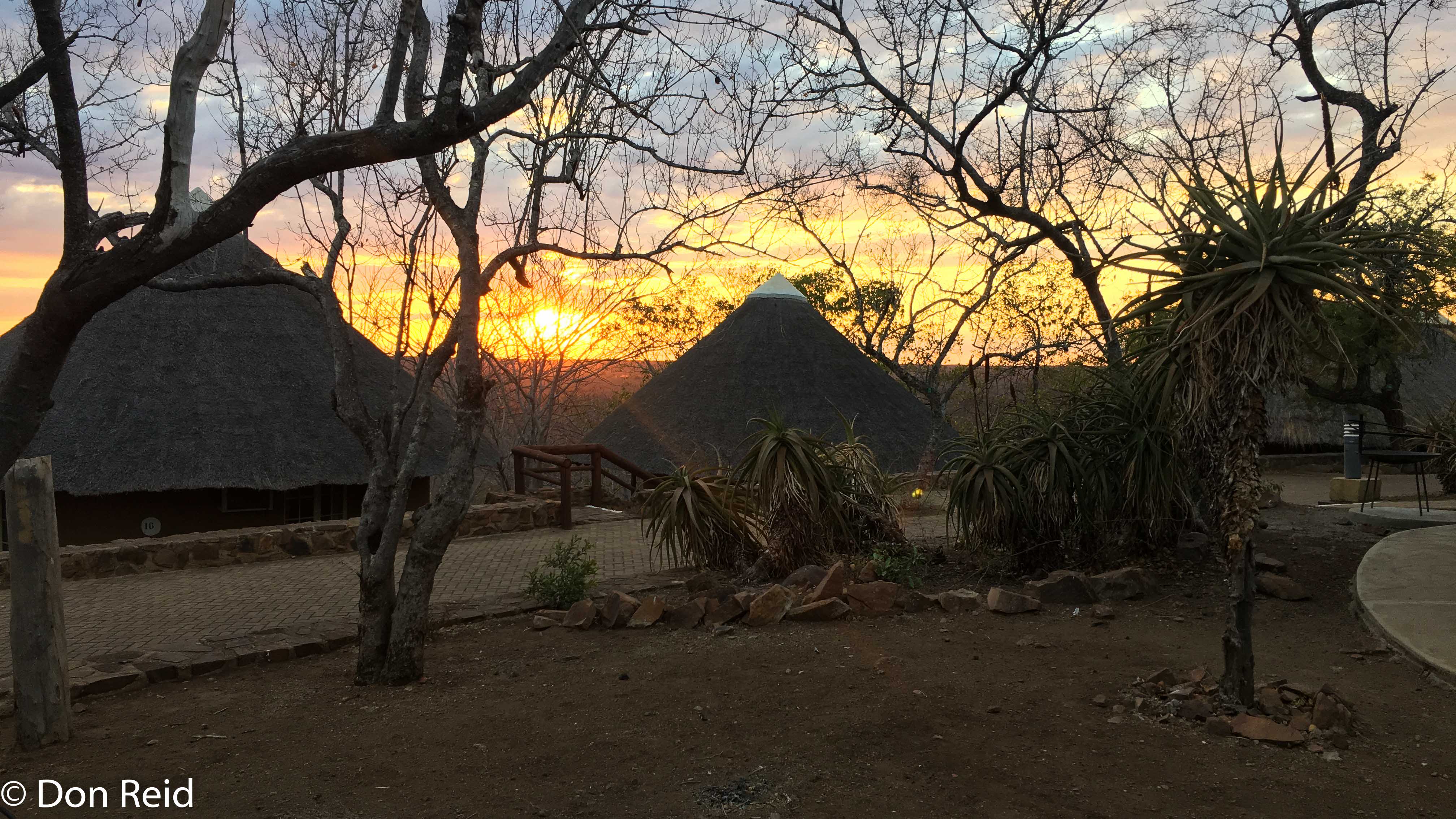
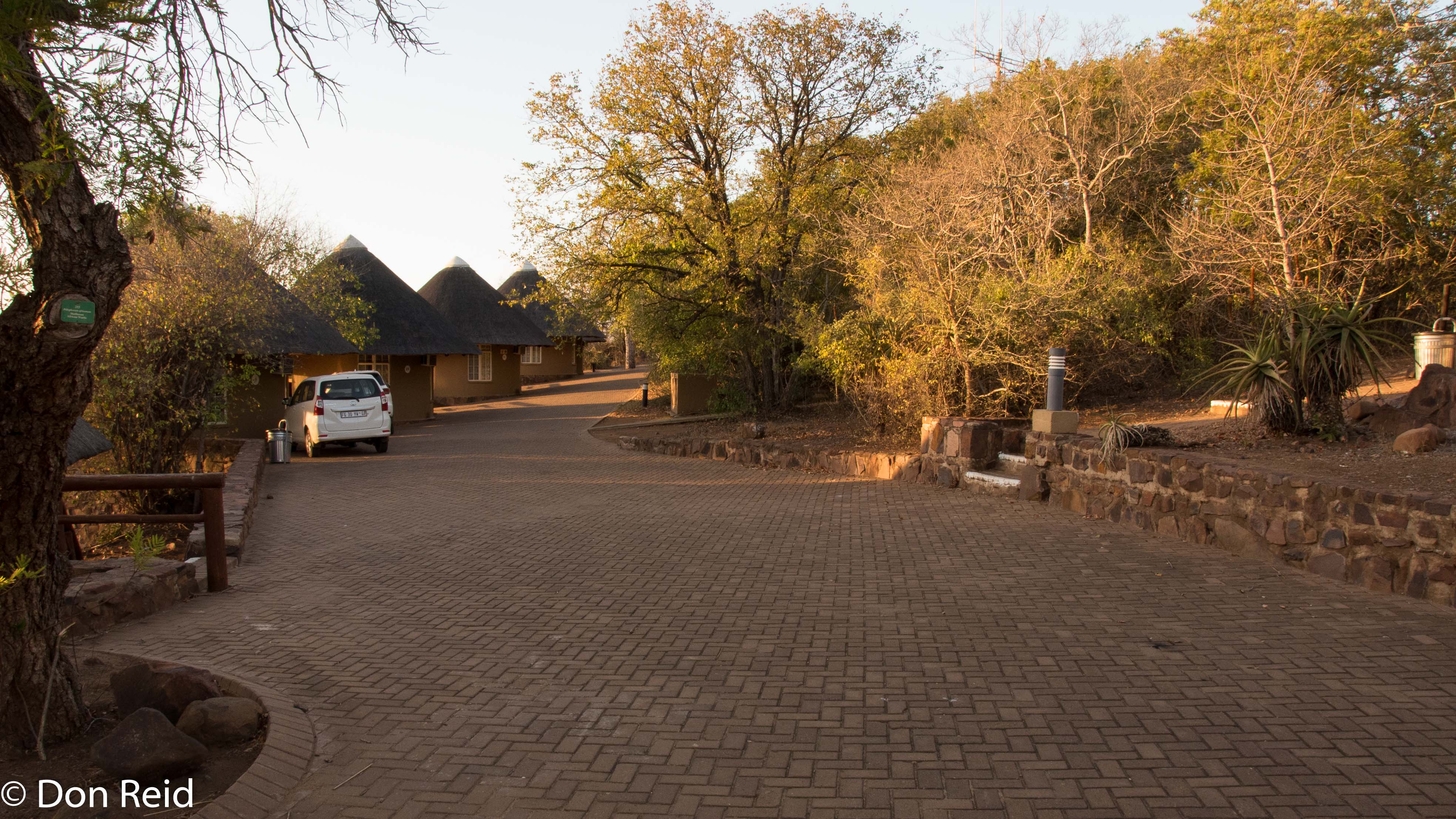
Olifants rest camp, KNP
Olifants rest camp
Olifants rest camp, KNP
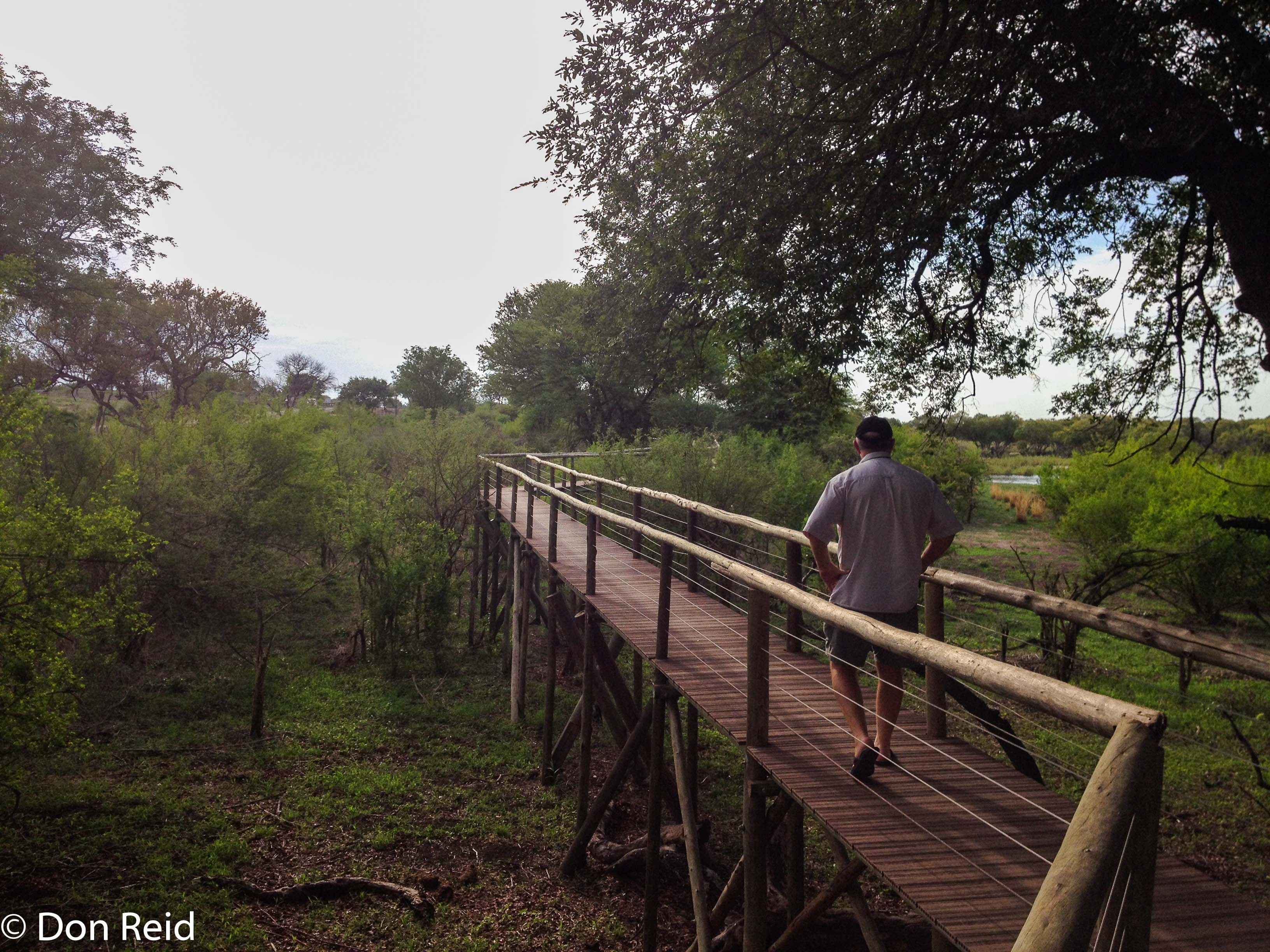
The viewing deck
Olifants rest camp, KNP
Olifants river far below

Recovery Time

Two full days of driving for Gerda and myself, three for Andre and Geraldine and the girls, meant our first day in Olifants was a recovery day and the unseasonably chilly, very windy conditions were in any case not conducive to pleasant game watching and bird-spotting. So we spent the whole day in camp, alternating between walks, eating and enjoying tea and coffee breaks.

Olifants rest camp, KNP
Our Rondavel

A trip to the restaurant for milkshakes was the treat of the day for the kids (young and old ones) followed by an “Ellie-roll” prepared at our rondavels – bacon and egg on a bun with fried onions and avo, plus beans on the side – it has to be prepared in Olifants camp to earn its name, otherwise it’s just a breakfast bun.

OLifants rest camp, KNP
OLifants rest camp
Olifants rest camp, KNP
Olifants rest camp

A morning birding walk around the camp added a few new birds to our trip list, among them Yellow-bellied Greenbul, Chinspot Batis, Amethyst Sunbird, White-bellied Sunbird and Crested Barbet, all of which are fairly easy to spot in the camp.

Olifants rest camp, KNP
Olifants rest camp
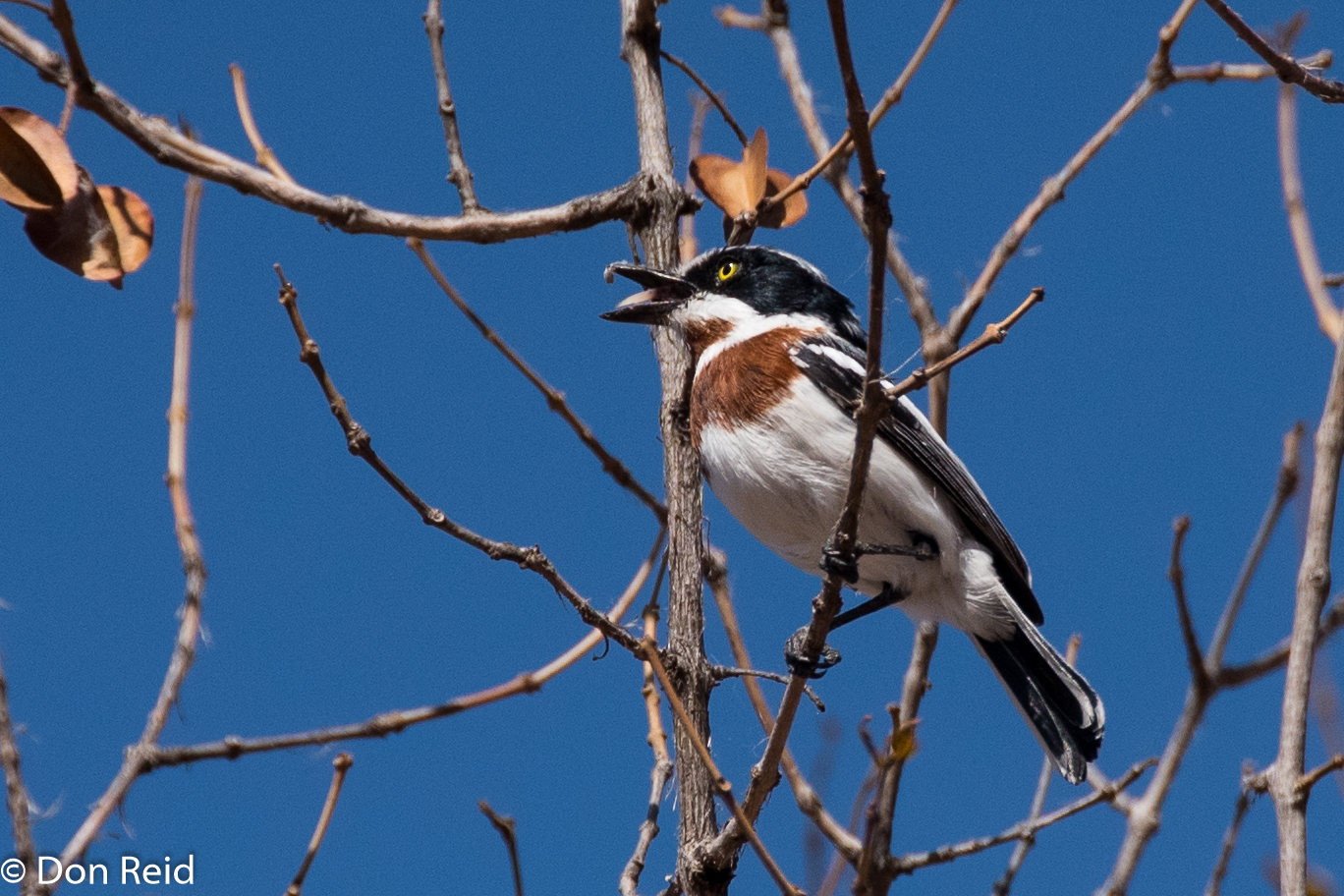
Chinspot Batis, Olifants KNP
Chinspot Batis
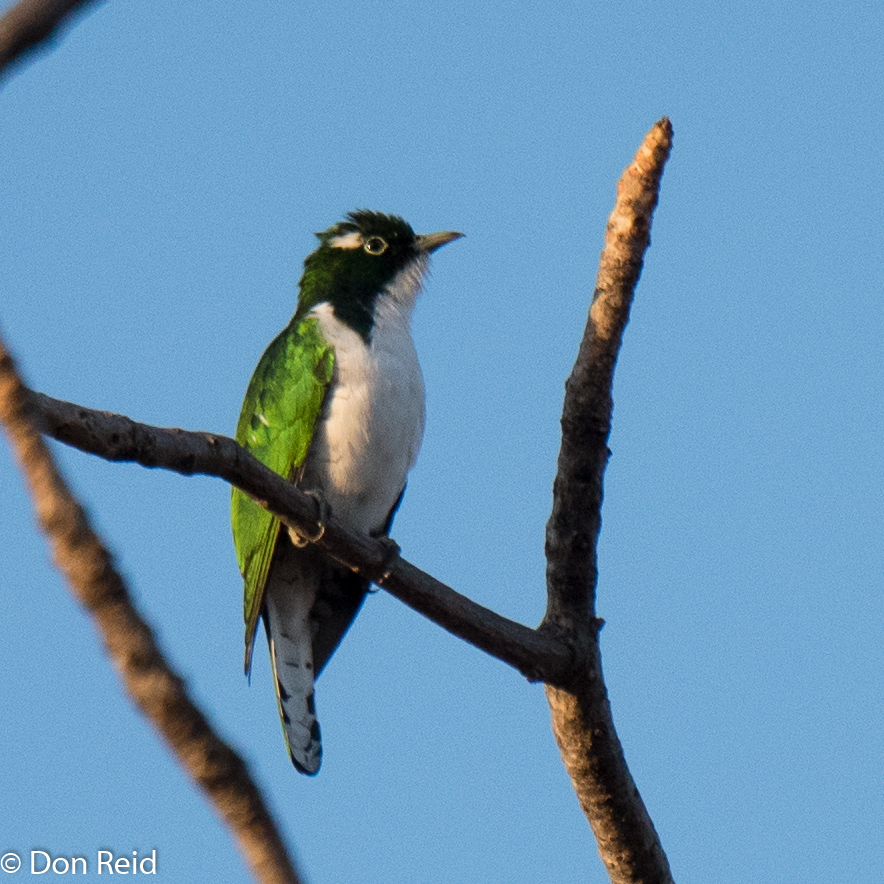
Klaas's Cuckoo, Olifants KNP
Klaas’s Cuckoo
Laughing Dove, Olifants KNP
Laughing Dove

Hornbills for Africa

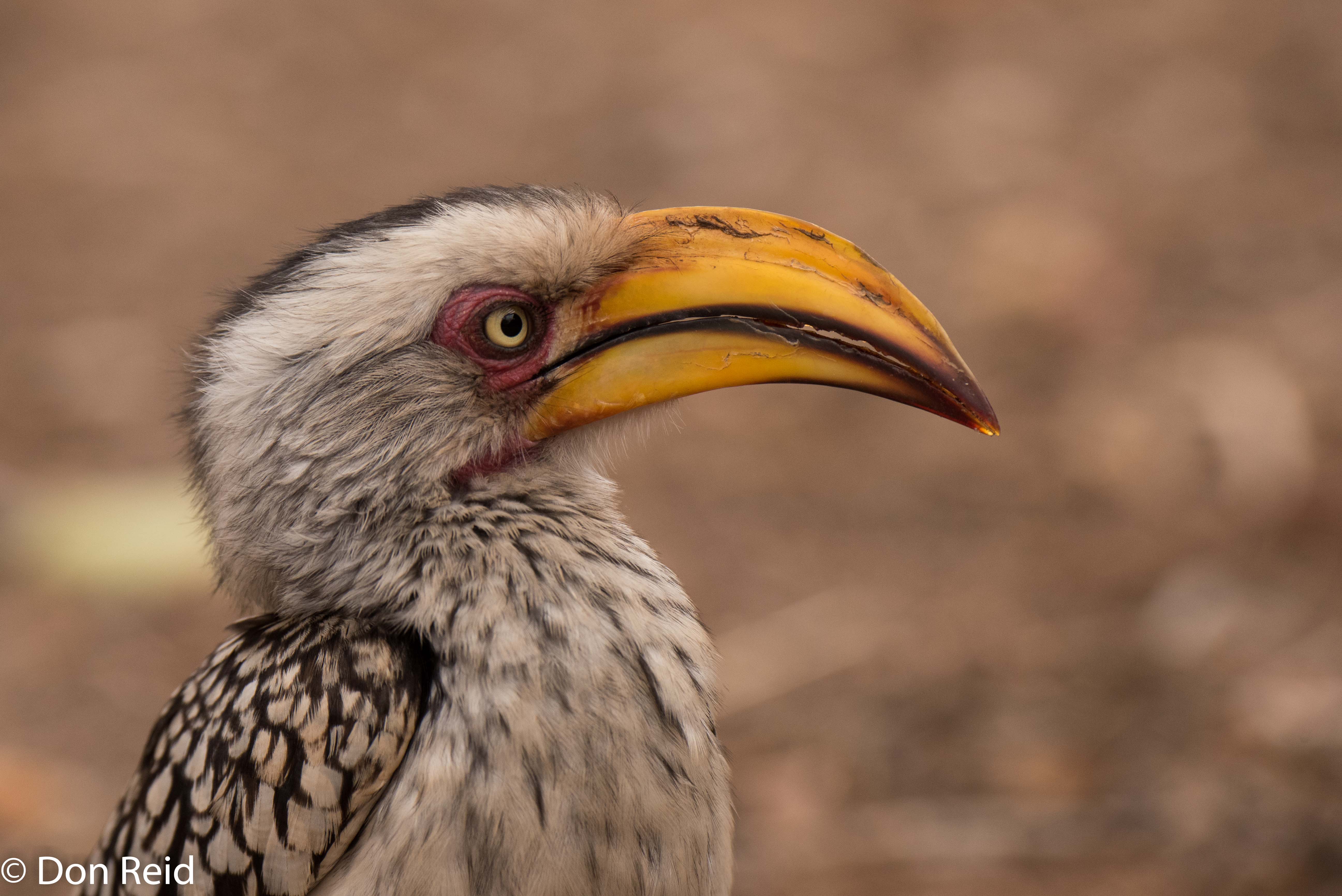
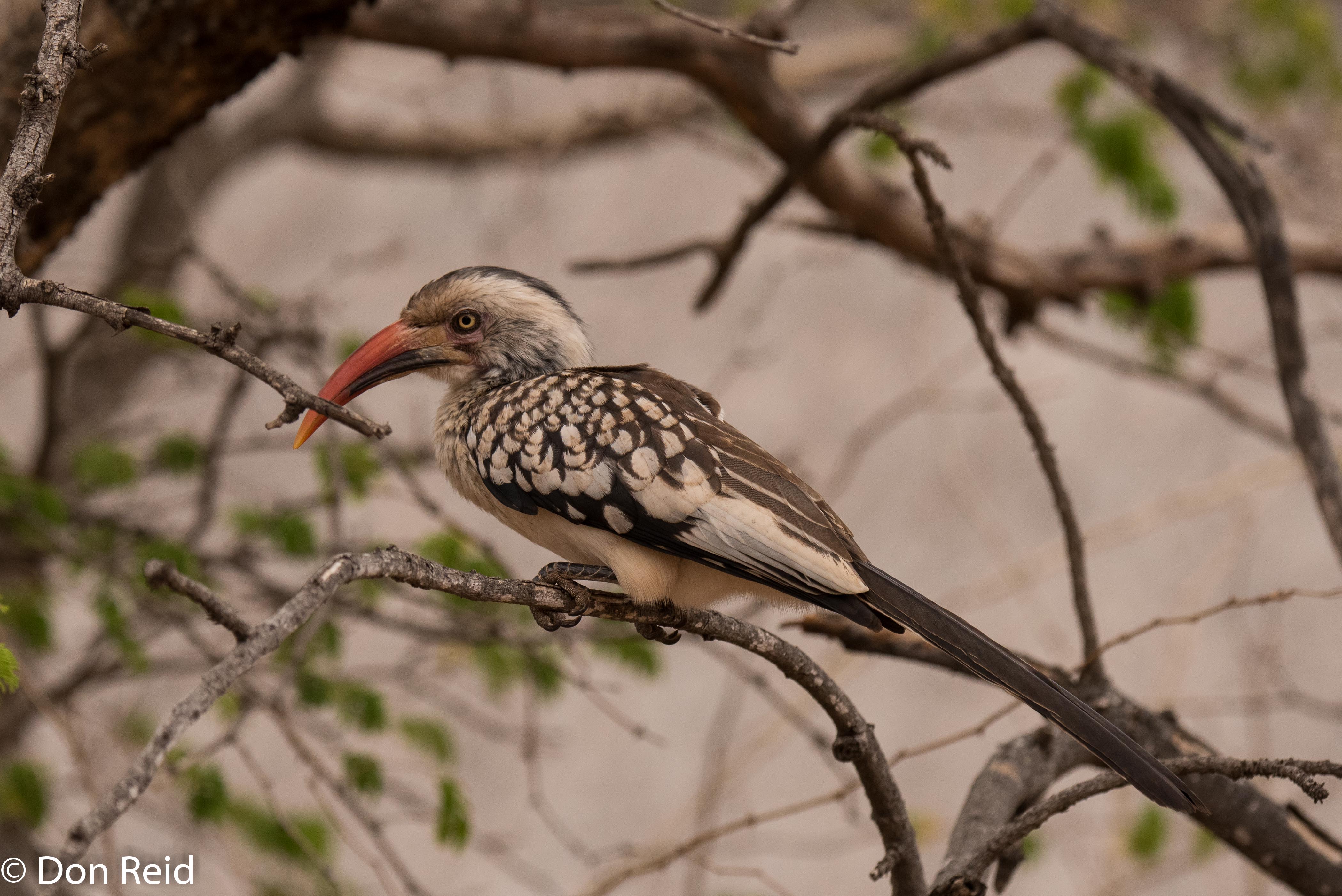
On another morning I had some fun photographing the almost ever-present Hornbills in the trees and on the ground around the rondavels, both Yellow-billed and Red-billed species. They are ridiculously easy to photograph, the only challenge is getting a different view of them and not just settling for the “posing on a branch” shot.  I tried getting down to ground level for some of the photos, which worked quite well

Southern Yellow-billed Hornbill, Olifants KNP
Southern Yellow-billed Hornbill picking up scraps of food
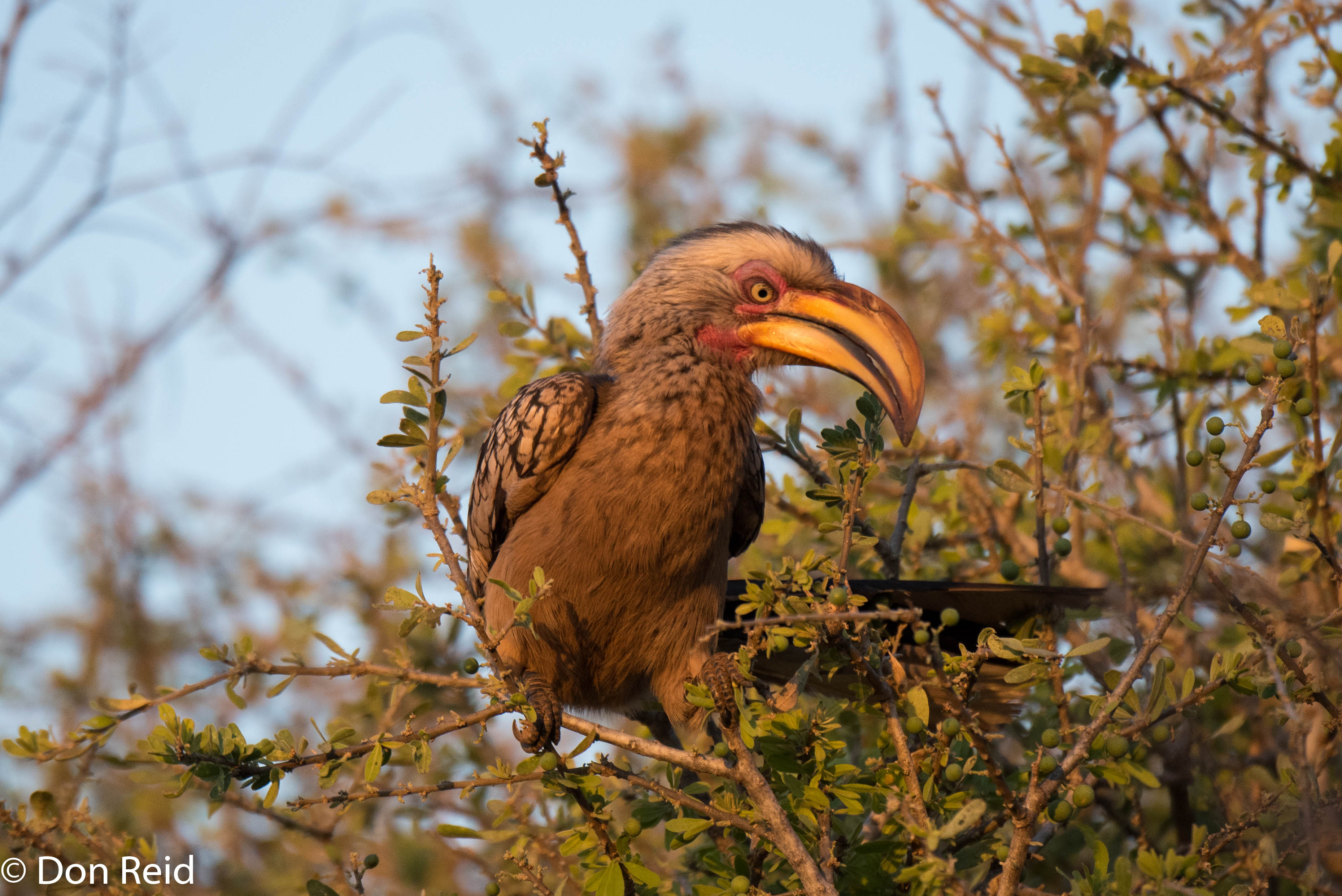
Southern Yellow-billed Hornbill, Olifants KNP
Old “Banana Bill”
Southern Red-billed Hornbill, Olifants KNP
Southern Red-billed Hornbill – OK so this is the standard shot
Southern Red-billed Hornbill, Olifants KNP
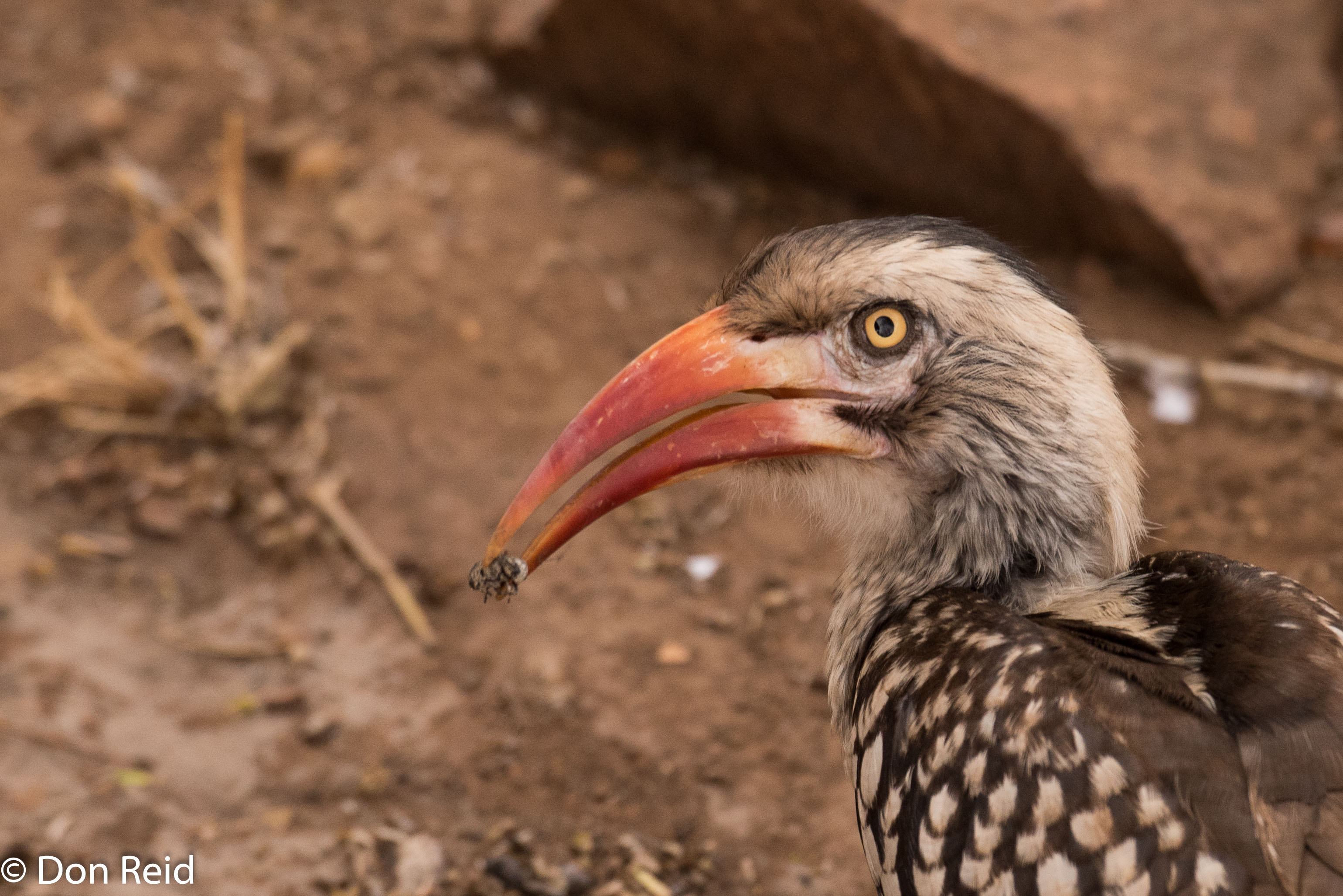
Southern Red-billed Hornbill with a bug delicately held in that cumbersome looking bill and a “How dare you” look in his eyes

Late one afternoon I came across this individual who had clearly been taking a dust bath…..

Yellow-billed Hornbill (After dust-bath), Olifants KNP
Yellow-billed Hornbill (After dust-bath)
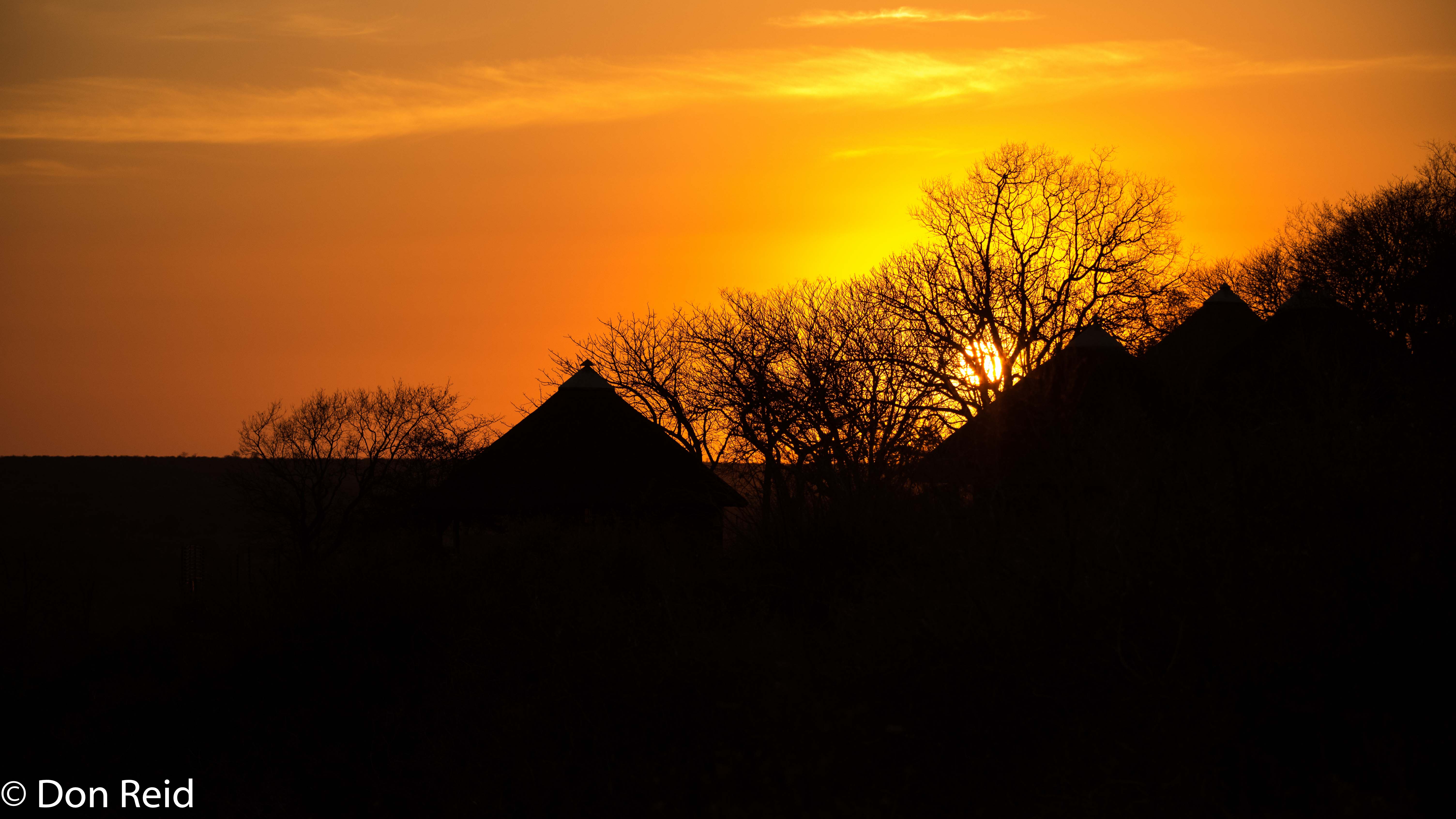
Olifants sunset, KNP
Olifants sunset

Short Drives around Olifants

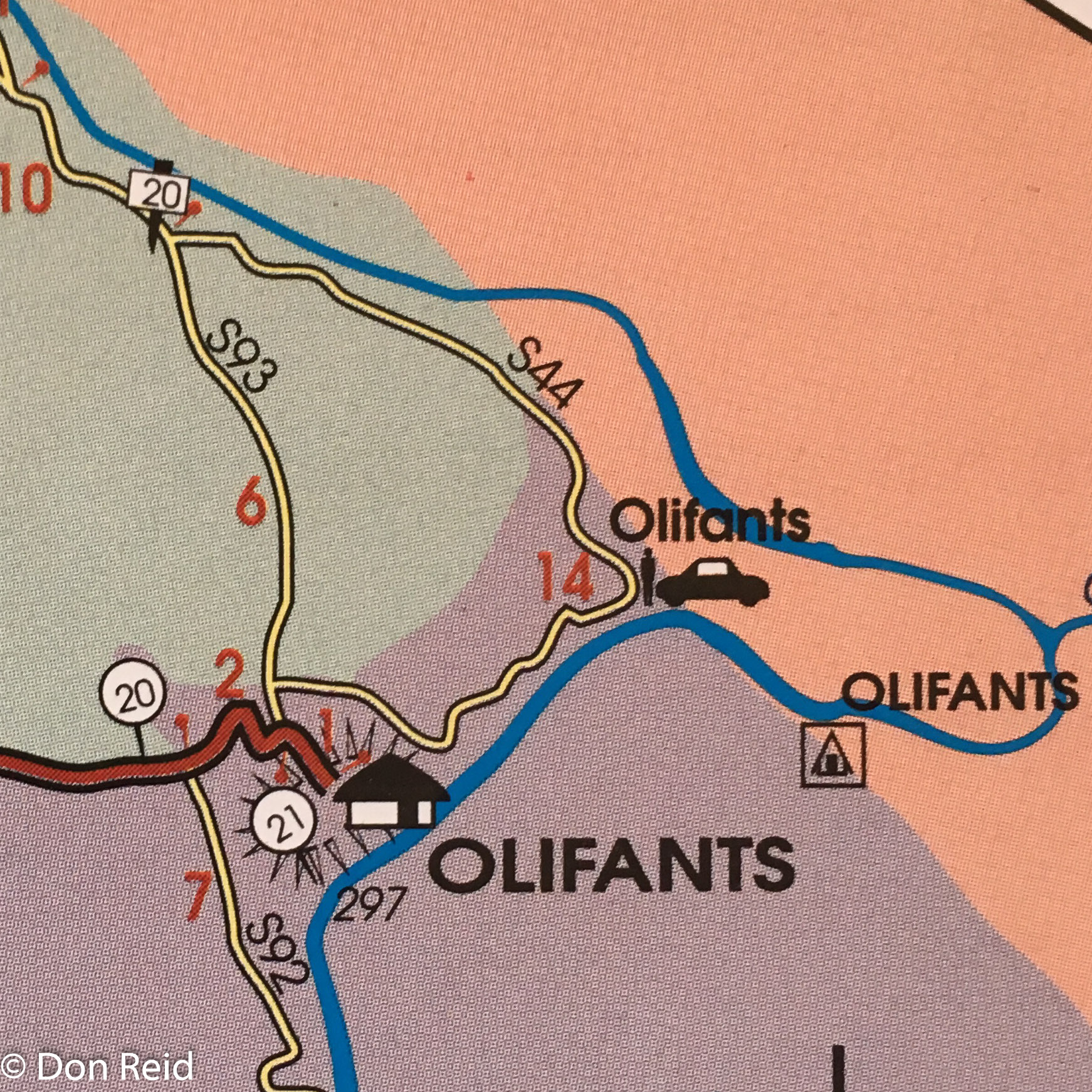
One option for a shorter drive from Olifants is the circular route that follows the S44 outbound and returns on the S93 and this was our chosen route early one morning.

Kruger maps
The circular route follows the S44 and S93

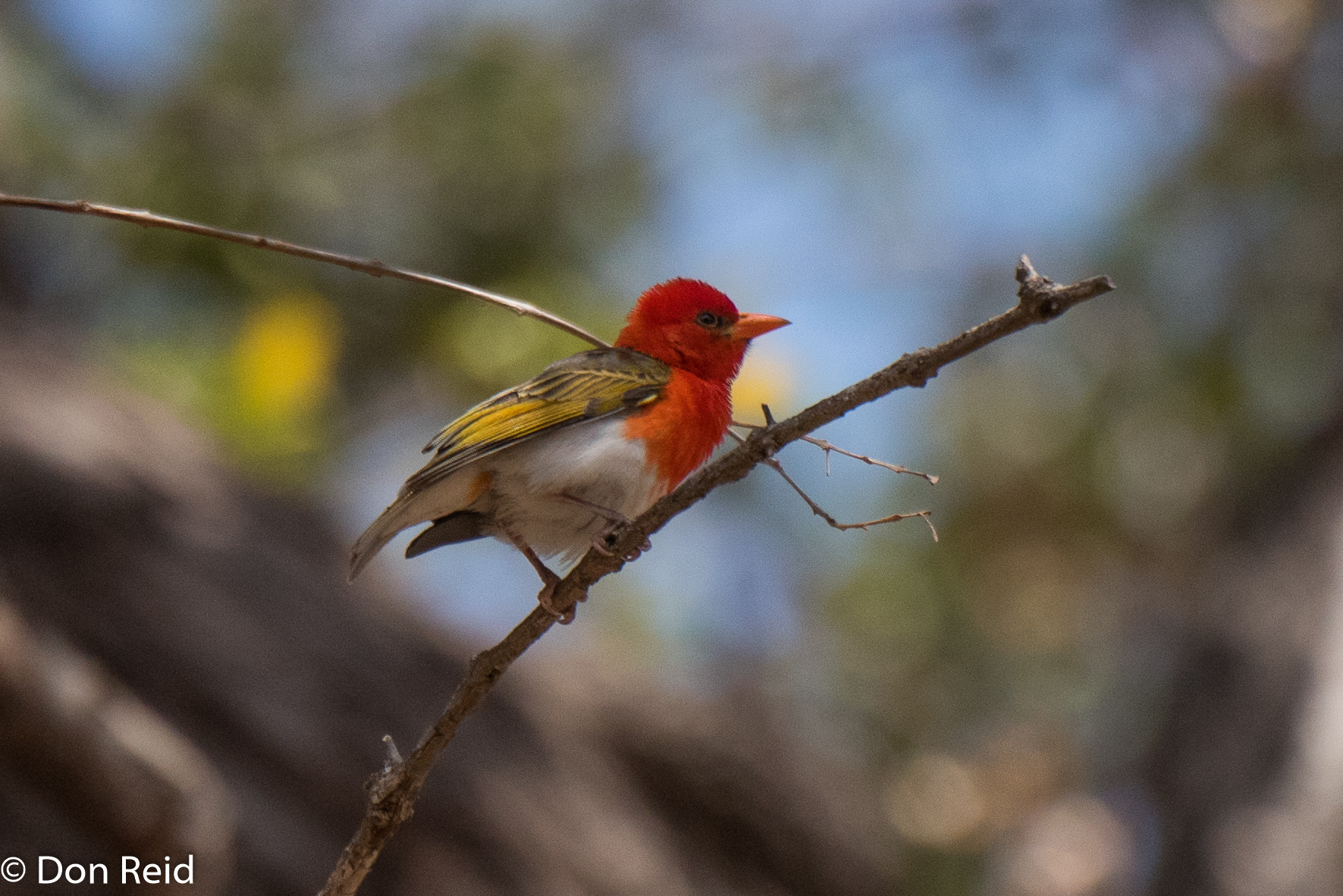
The frequent river views had enough game and other interesting sights to keep us alert and the birding proved to be excellent with the likes of Common Scimitarbill, Paradise Flycatcher, Red-headed Weaver, Grey Tit-Flycatcher and Little Bee-eater making their presence known.

A longer stop at the viewpoint, where you can get out of the car (whilst still keeping an eye out for wild animals of course), meant we could enjoy a tea and snacks – the genuine Kruger Park kind being two Provita biscuits with cheese wedges carefully squashed in between – the staple food of hiking trips.

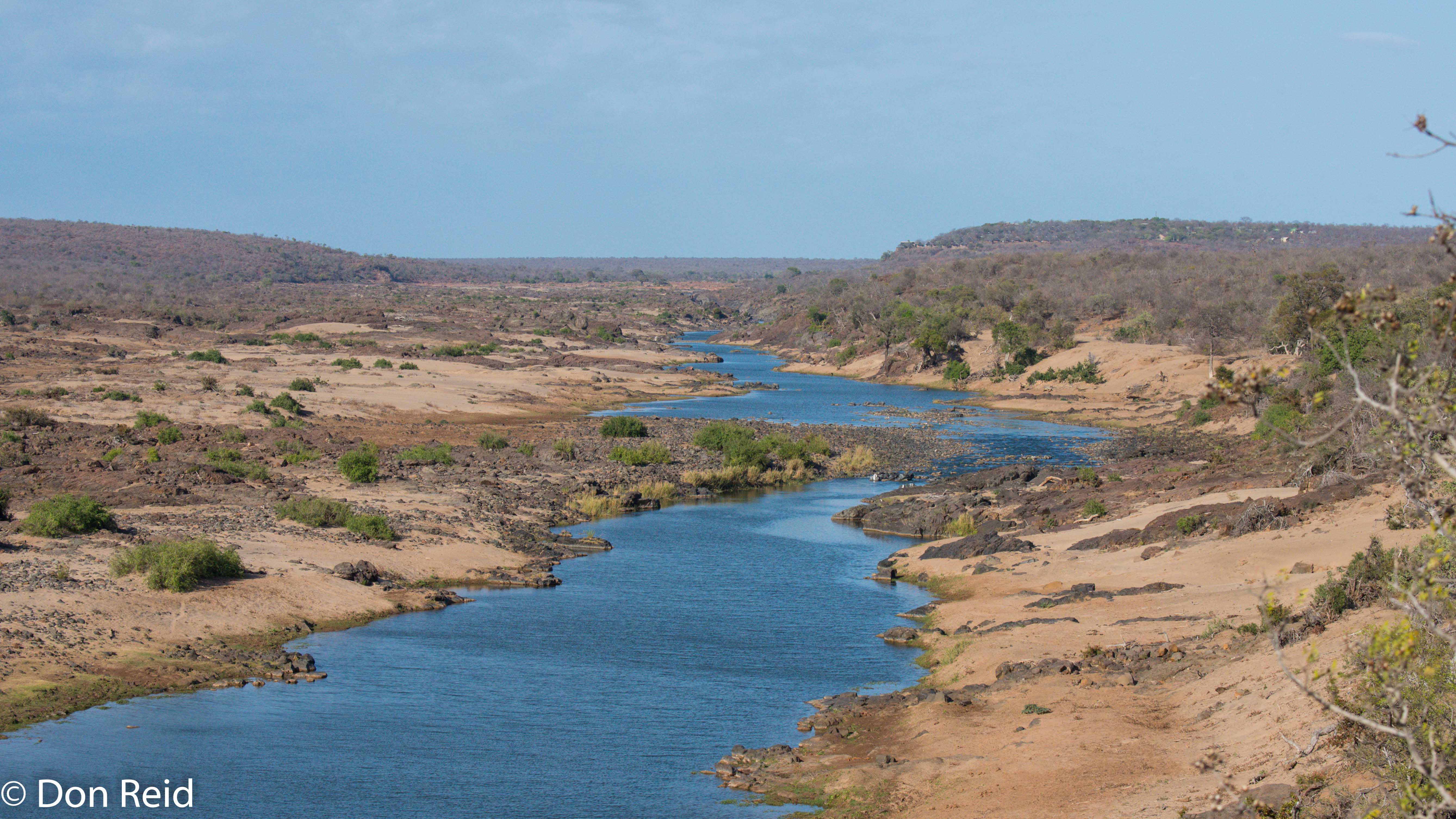
Olifants river from viewpoint, KNP
Olifants river from viewpoint on the S44
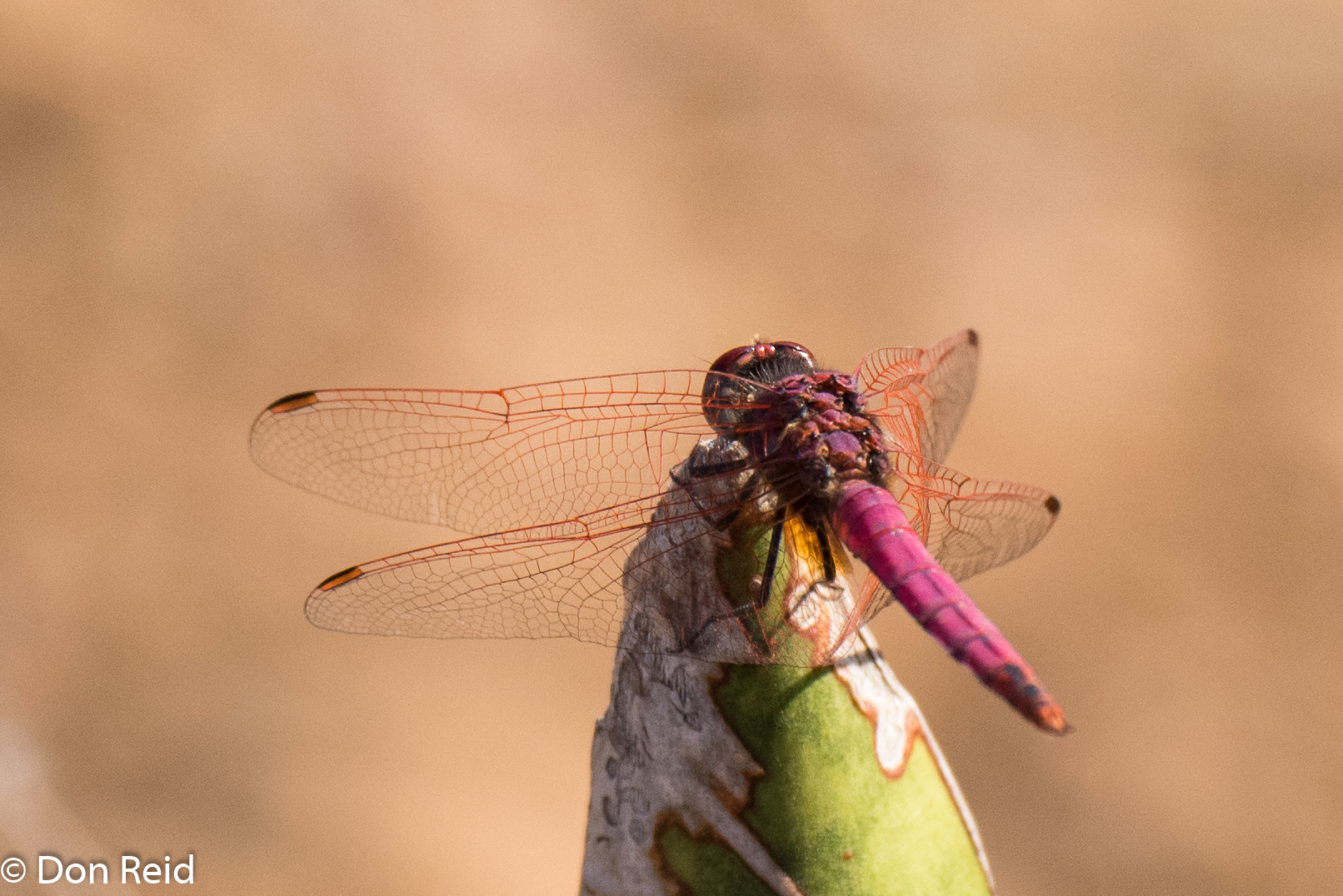
Dragonfly ?, Olifants river KNP
Dragonfly, Olifants river
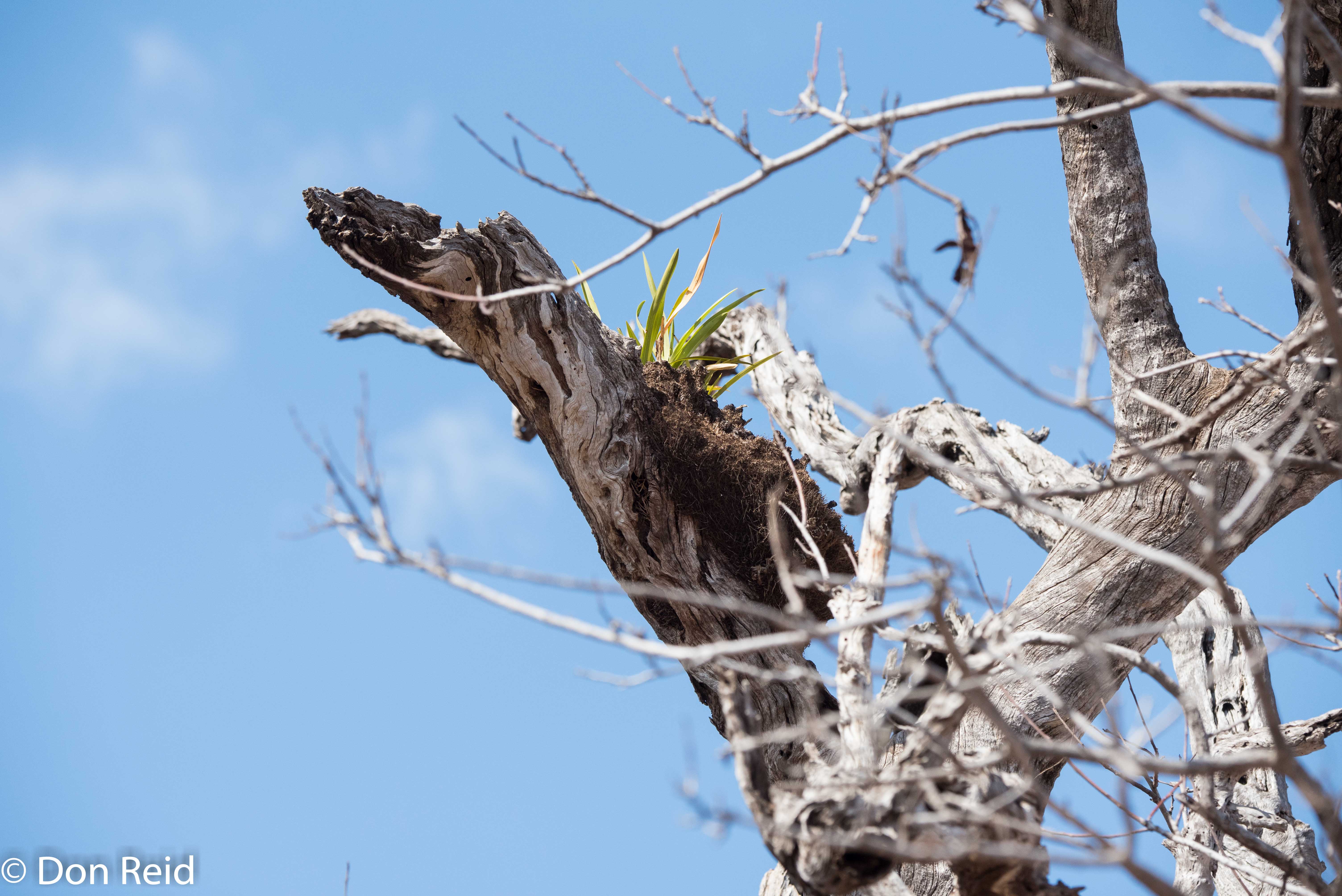
Plant (Wild Iris?) growing in dead tree, Olifants river KNP
Plant (Wild Iris?) growing in dead tree, Olifants river

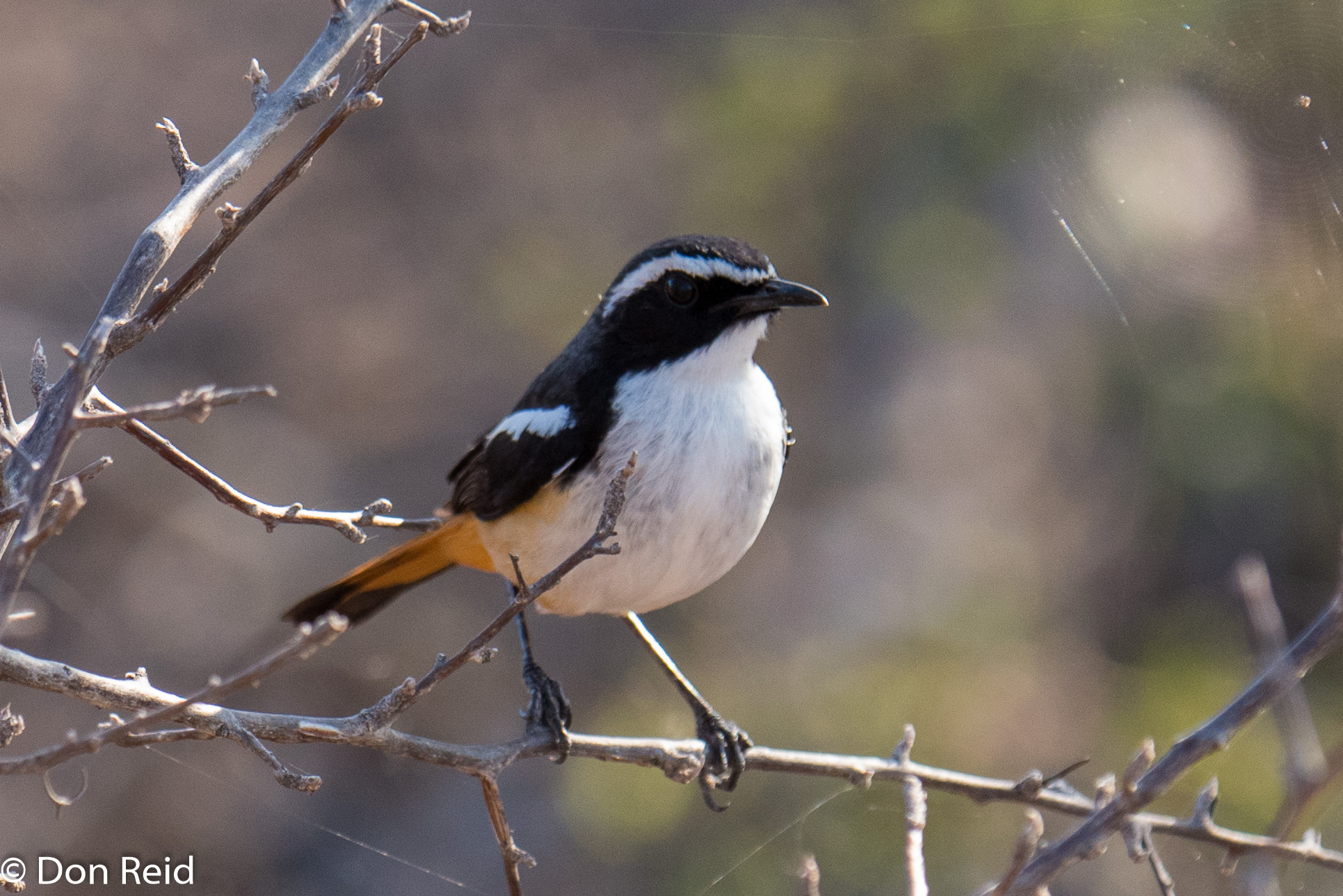
As we were standing around with our mugs of tea, a different looking bird caught my eye – it turned out to be a White-throated Robin-Chat, which sat obligingly still so that I could photograph it from close quarters.

White-throated Robin-Chat, Olifants river KNP
White-throated Robin-Chat, Olifants river

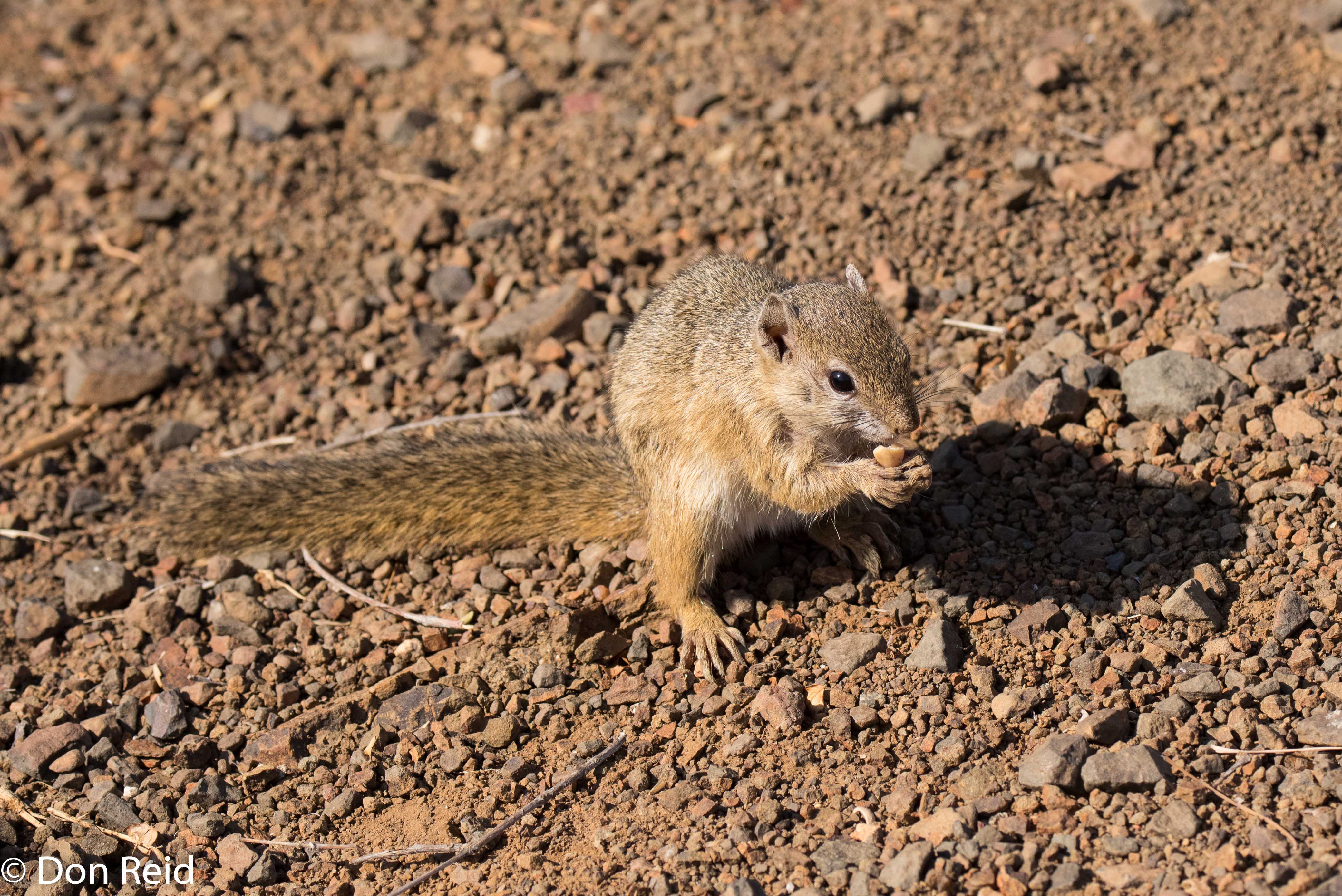
At the same time a very tame squirrel (suspiciously so – had he been drinking?) decided to entertain us, worrying Geraldine and even jumping onto my leg at one stage – no idea what he was thinking, it’s not as if I had some nuts hidden in my shorts.

Tree Squirrel (from hell!), Olifants river KNP
Tree Squirrel (from hell!)

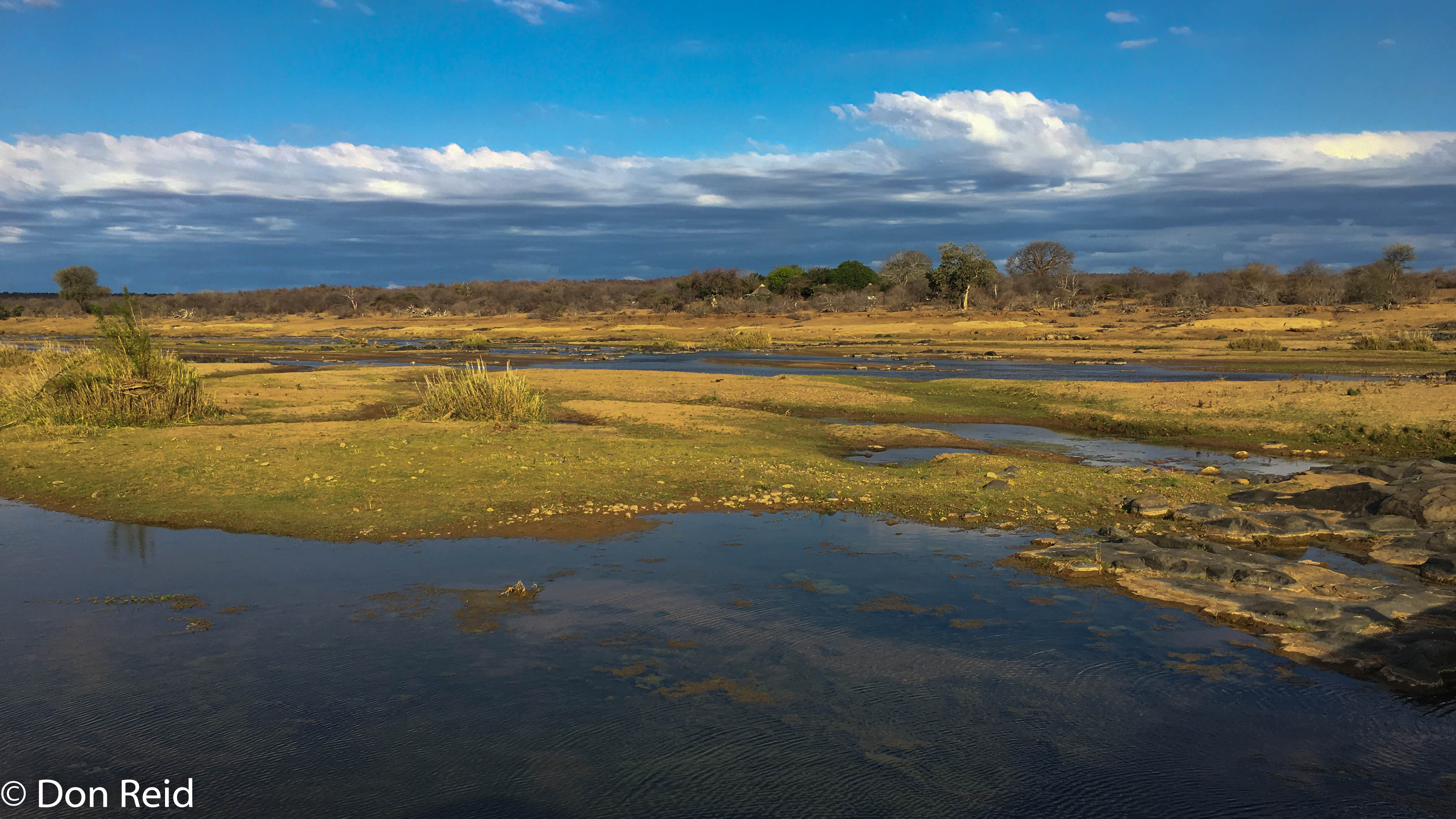
Later on the same day we headed out on a short drive to Balule camp and back, along the S92, spending time at the several river viewpoints and on the low water bridge at Balule, taking in the classic river scenes in the soft late afternoon light – “golden hour” for photographers.

Kruger maps
The road to Balule follows the S92
Bridge views at Balule, KNP
View from the low water bridge at Balule

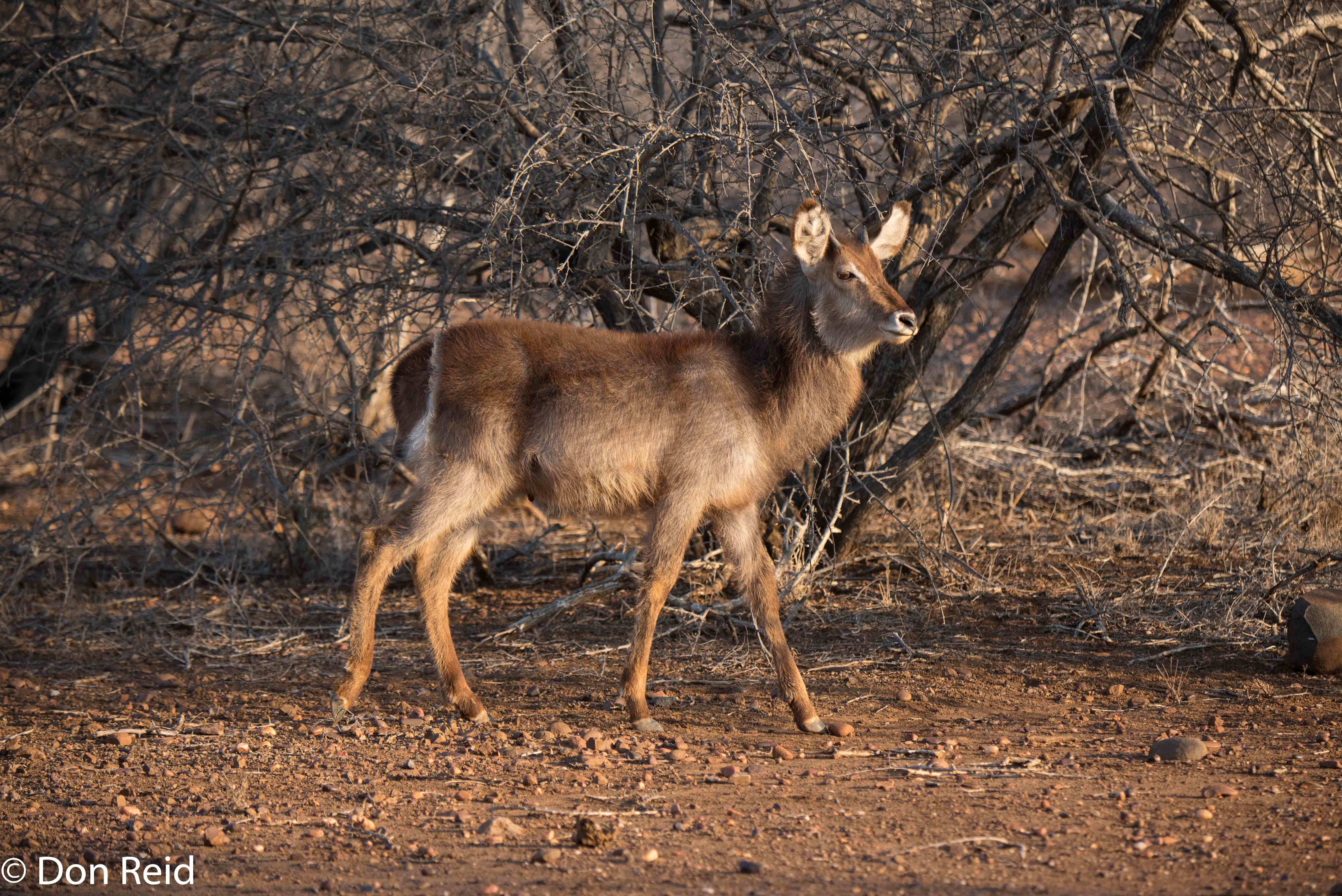
The short route had plenty of interest, from Waterbuck to White-fronted Bee-Eaters. A displaying Red-crested Korhaan entertained us briefly with its vertical flight and tumbling fall back to earth, while a Green-backed Heron put in an appearance at the bridge, moments after Andre predicted seeing one there – with some training this boy will go far!

Waterbuck, Olifants KNP
Waterbuck
White-fronted Bee-eater, Balule KNP
White-fronted Bee-eater

River Walk from Olifants

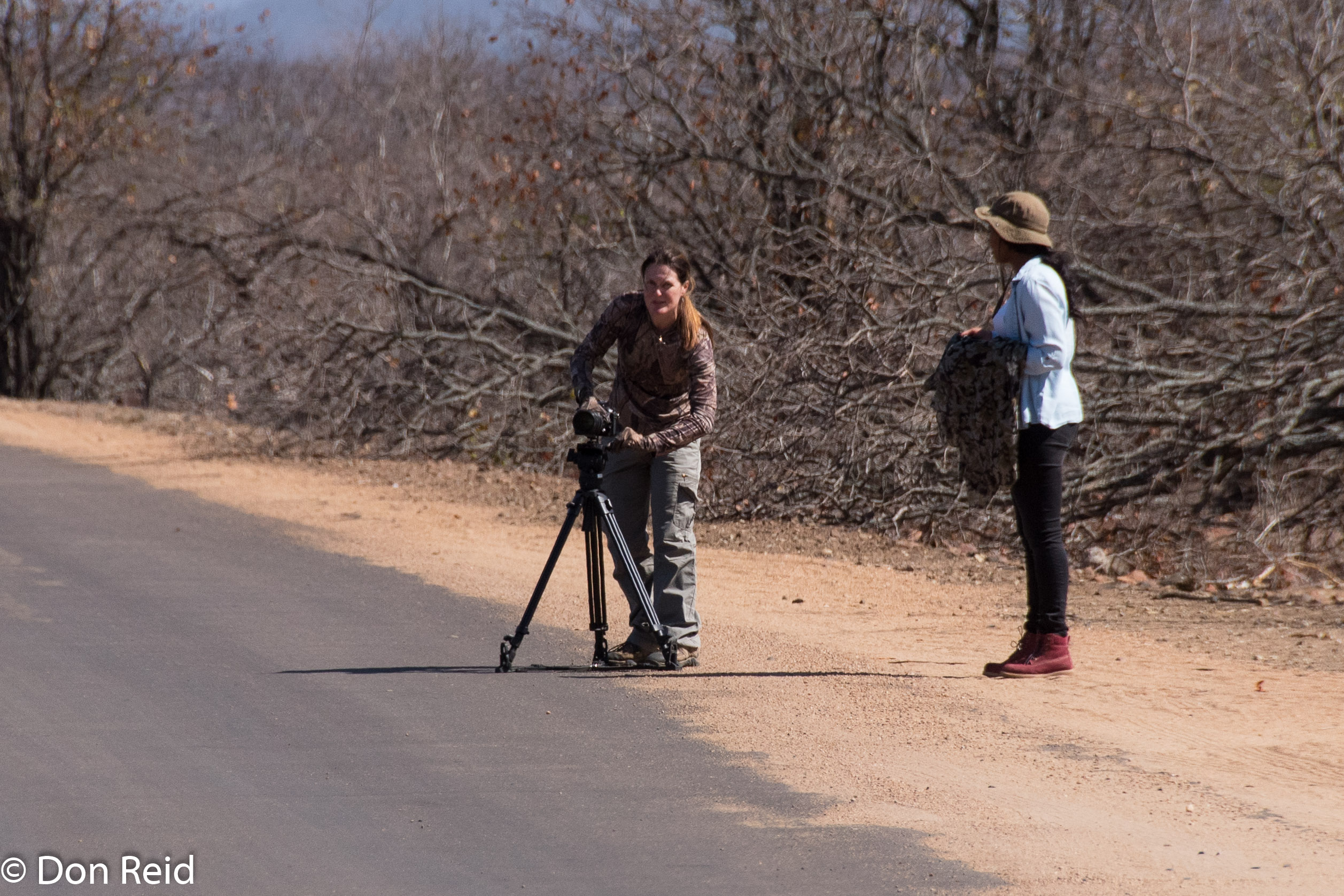
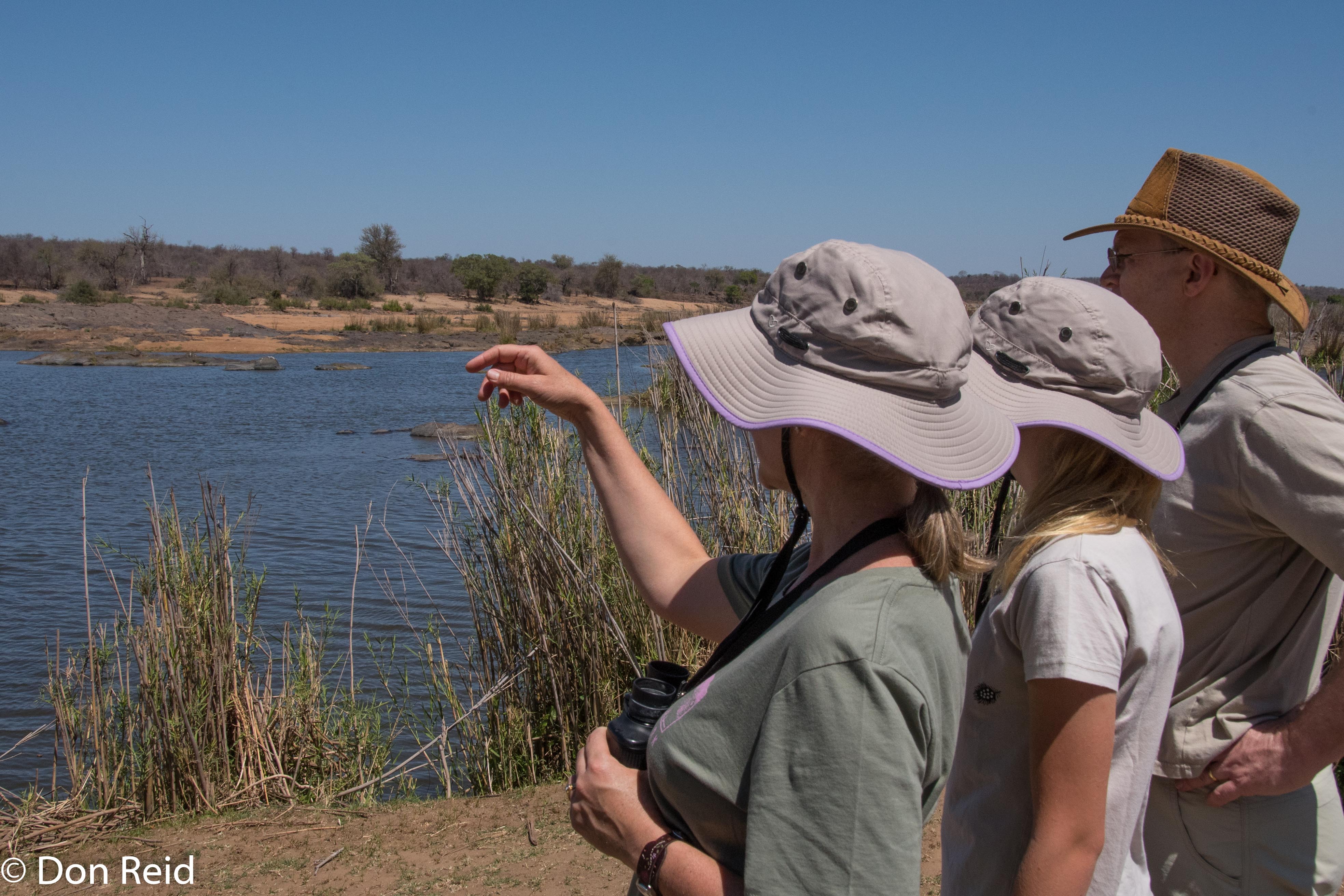
Nowadays there is a selection of activities available from most of Kruger’s camps and we decided to do the mid-morning River walk along a stretch of the Letaba river not far from the camp. On checking in for the walk we discovered we were to be bit-part actors in a promotional video and had to “pose” here and there.

Letaba River walk, KNP
And ACTION

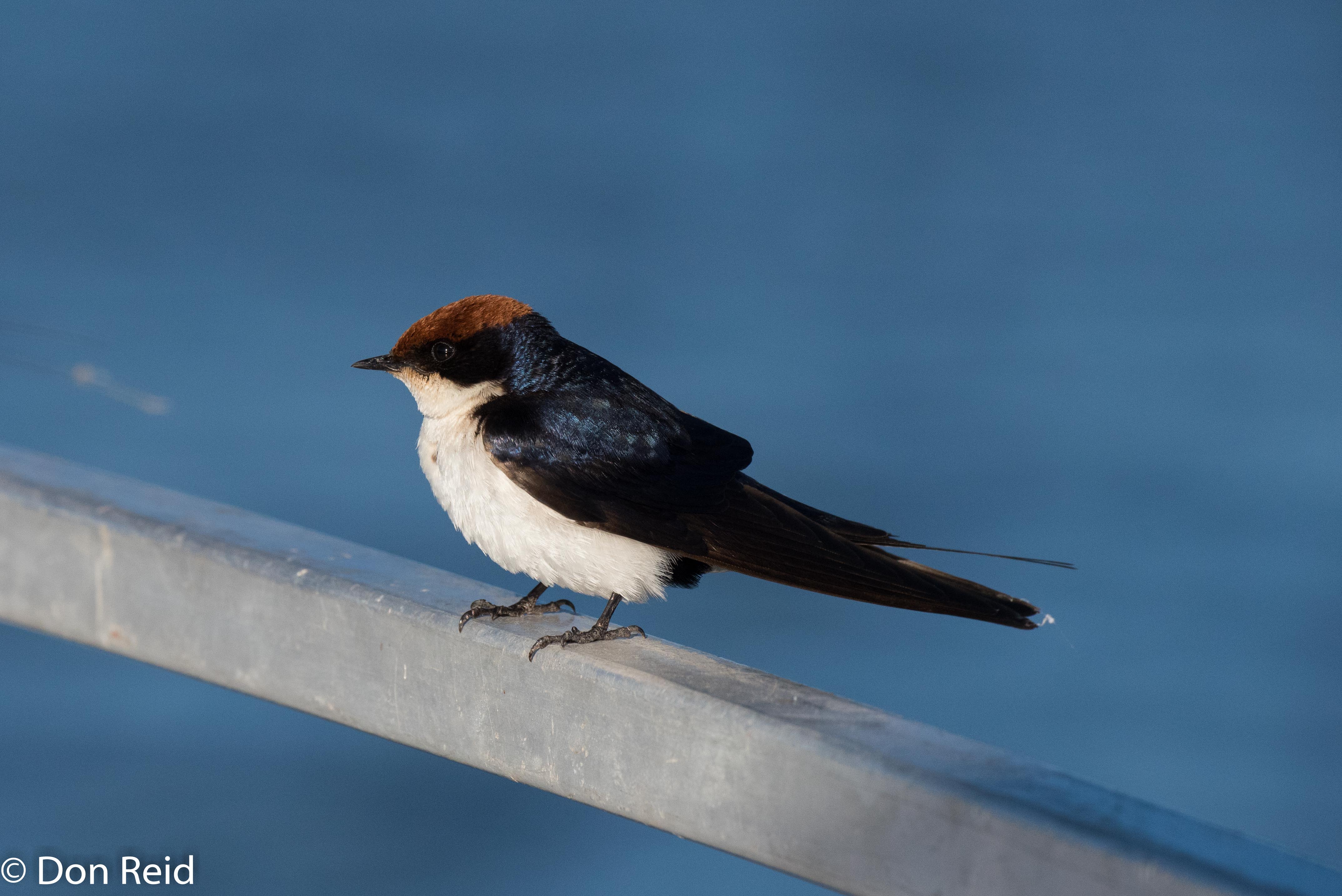
The guides drove to the starting point at a low water bridge accessed via a “no-entry” road. Along the way a pair of African Hawk-Eagles soared overhead and at the bridge we could spot African Jacana, Black Crake, Wire-tailed Swallows and a swooping African Harrier-Hawk.

The walk started at the bridge and we headed in single file down the river (or was it up?) our guides in front, stopping frequently for lessons in the various aspects of the surroundings including animal droppings – a science in itself it seems, river vegetation, trees, freshwater mussels and skeletal remains of animals such as Hippo and Buffalo.

Letaba River walk, KNP
Letaba River walk
Letaba River walk, KNP
Letaba River walk

Birds along the river included Goliath and Grey Herons, African Openbill, Egyptian Goose (of course) and Spoonbills. Calls emanating from the riverine bush belonged to Grey-headed Bushshrike, Black-headed Oriole and some noisy Tawny-flanked Prinias amongst the longer grasses.

Letaba River walk, KNP
Letaba River walk

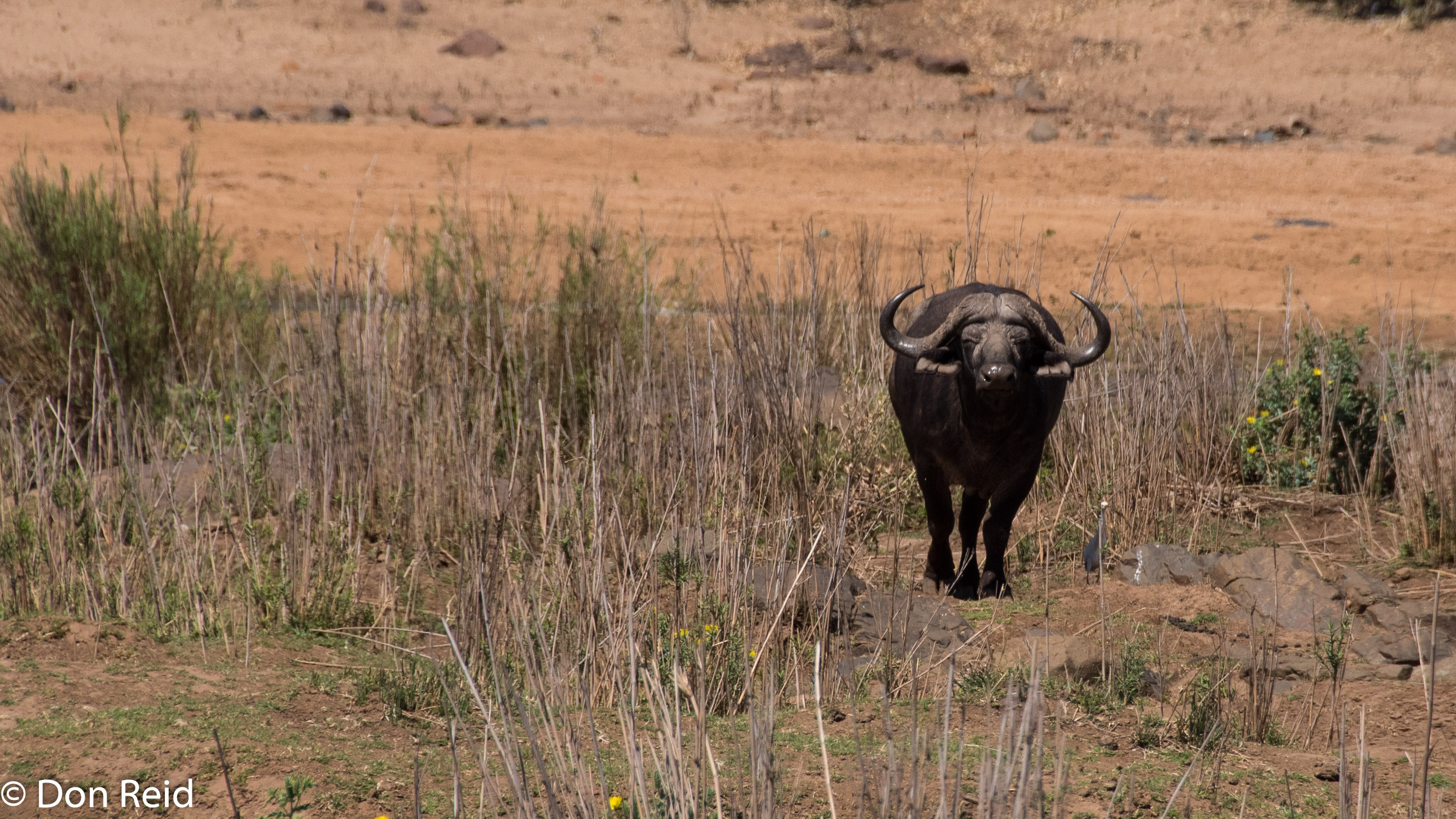
We purposely skirted around two lone Buffaloes – called “dagha-boys” for reasons which guide Patrick explained nicely – one of which watched us curiously as we ambled past. Hippos were seen at a distance and Waterbuck and Impalas scattered at our approach. The walk was not particularly strenuous and it wasn’t long before we turned around and headed back to the vehicle, well pleased that we had booked for this outing.

Letaba River walk, KNP
Buffalo – “dagha-boy”
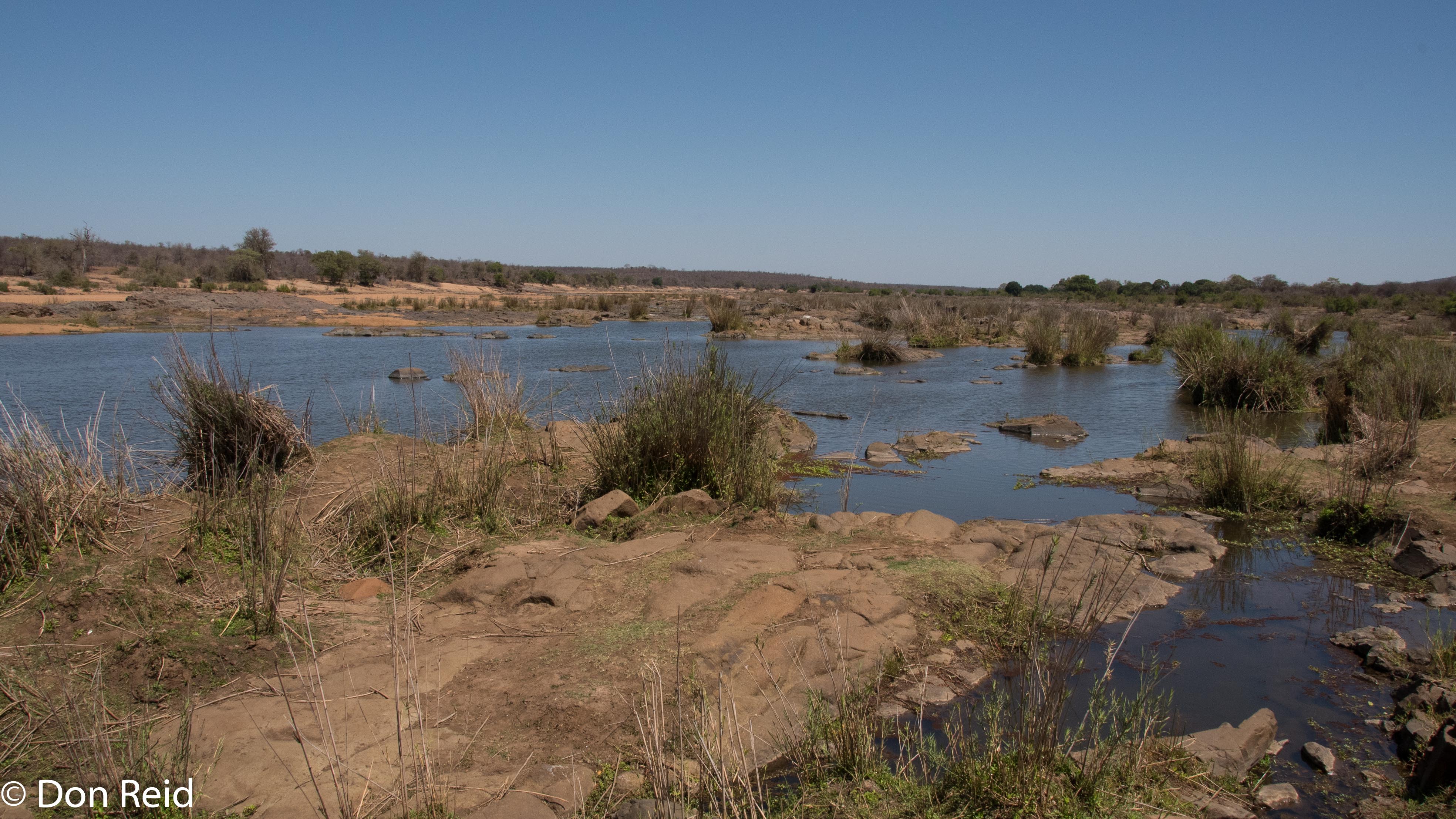
Letaba River walk, KNP
Letaba River

And the Baboons…….

Well they, along with the monkeys, are a real nuisance around the rest camp. On checking in at Reception they do warn you to keep your edibles inside and windows closed when not around, but these crafty animals find ways of getting what they want – grabbing goodies from vehicles while you unpack, opening cupboards on the stoep and even rummaging in the dustbins which are kept in a small enclosure behind a metal gate, which they simply jump over as it is not enclosed on the top.

Baboon nuisance, Olifants camp KNP
Baboon nuisance, Olifants camp

They also rate as some of the most aggressive animals I have come across, growling at me when I confronted them as they were busy trashing our neighbouring rondavel’s provisions. The only deterrent is a good old cattie (catapult) – they scatter at the sight of it!


A Week in Olifants – getting there

For the second year in a row we spent a week in Kruger National Park in October, this time spending 6 nights in Olifants rest camp in the northern part of Kruger, with one night stop-overs at Berg en Dal  and Pretoriuskop rest camps on the way in and out respectively.

Once again our visit was inspired by Andre and Geraldine who came all the way from Mossel Bay with their two daughters (our grandkids) to visit what is probably their favourite place on earth for the umpteenth time.

Writer Samuel Johnson once said “when a man is tired of London, he is tired of life” which can equally be said of Kruger National Park, especially if you are a lover of nature and the unique beauty of unspoilt Africa, but it may be as well to change “a man” to “a person” so that no one feels left out.

Friday : The trip to Berg en Dal
We were packed and ready to go by mid-morning and caught up with the Leonards, who had left earlier, at Milly’s near Machadadorp, where we had the customary Trout pie with salad, as delicious as ever. After Milly’s the road narrows and traffic got heavier so it was slow going all the way through Schoemanskloof and past Nelspruit to Malelane gate into Kruger.

As we crossed the Crocodile river just before the gate, Kruger performed its magic trick yet again, changing our mood in an instant from rather stressed concentration to one of relaxation and eager anticipation. Never mind that the first stretch showed signs of the severe drought and veld fires, just being in Kruger creates a state of mind like no other, as the stresses that modern life brings seem to physically drain away.

The 10 kms to Berg en Dal rest camp were uneventful with game and birds quite scarce – just a few Giraffe, Kudu and Impala in the greener parts and the bird life mostly confined to the hardier species such as Magpie Shrikes (Langstertlaksman), Fork-tailed Drongoes (Mikstertbyvanger) and Cape Glossy Starlings (Kleinglansspreeu).

Berg en Dal camp, KNP
Berg en Dal rest camp

Just before 4 pm we arrived at Berg en Dal, which we last visited several years ago and we were soon settled in No 73, enjoying tea with the sounds of Purple-crested Turaco (Bloukuifloerie), Grey-headed Bushshrike (Spookvoël) and Black-headed Oriole (Swartkopwieliewaal), each with its own very distinctive call, in the background.

Berg en Dal camp, KNP
Berg en Dal rest camp

A group of Retz’s Helmet-Shrikes (Swarthelmlaksman) put in a surprise appearance, not staying for long as they moved through the tree canopy in ragged unison. Later a few other calls demanded my attention – Greater Honeyguide (Grootheuningwyser) with its “Victorrrrr”, Arrow-marked Babblers (Pylvlekkatlagter) as raucous as ever, good old Hadeda Ibises (Hadeda) outdoing the others in sheer volume and the shrill call of a Water Thick-knee (Waterdikkop) near the Reception. After dark it was the turn of the African Scops Owl (Skopsuil) to take over night duty with its soft “prrrtt” call carrying far through the camp gardens.

Saturday : The Long Drive to Olifants
I was up early for a walk through Berg en Dal camp in welcome soft rain, adding several species on call alone, including Grey Tit-Flycatcher (Waaierstertvlieëvanger), whose soft trilling call has become a familiar one to me, Orange-breasted Bushshrike  (Oranjeborslaksman) whose call is known to many birders as “coffee, tea or me?”, Sombre Greenbul (Gewone willie), Green-backed Camaroptera (Groenrugkwêkwêvoël) and Black-backed Puffback (Sneeubal).

After my walk I joined the rest of the family in loading the cars – a surprise awaited when I picked up our suitcase to take to the car – hiding beneath it was a scorpion with tail raised threateningly. Turned out it was a relatively harmless type, so I was glad I ignored the calls to destroy it and carefully transported it outside.

Scorpion, KNP
Scorpion, Bergendal rest camp – the large claws point to a more harmless species but still capable of a painful sting

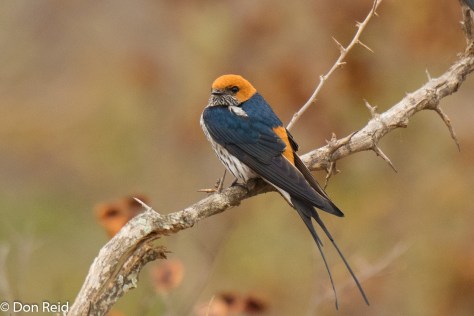
On the drive back to the main road to Skukuza, we added Golden-breasted Bunting (Rooirugstreepkoppie), Lesser Striped Swallows (Kleinstreepswael) – colourful in the soft cloud-filtered light – and White-backed Vultures (Witrugaasvoël) to close out the Berg en Dal pentad at 37 species.

Lesser Striped Swallow, Berg en Dal KNP
Lesser Striped Swallow, near Berg en Dal

The long trek to Olifants lay ahead – 210 kms does not normally present a challenge but at Kruger Park speeds of 50 km/h maximum and stops along the way it meant a minimum 7 hour drive was on the cards.

No shortage of game and birds…..

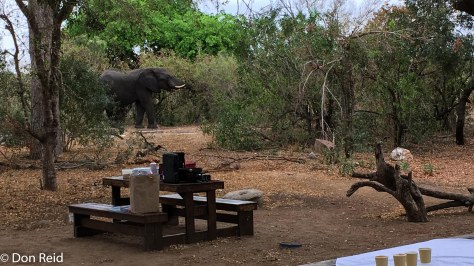
Regular sightings of game and birds and comfort / snack breaks at Afsaal and Tshokwane picnic spots meant the journey was never boring. Afsaal was also the place where we had a brief rendezvous with Andre’s brother Eddie and while enjoying a coffee an elephant close to the picnic spot caused some excitement and had us seeking the relative safety of the undercover area.

Afsaal picnic spot - Elephant nearby, KNP
Afsaal picnic spot – picnickers scatter as an Elephant approaches
Afsaal picnic spot - Elephant nearby, KNP
The Elephant got uncomfortably close before ambling off

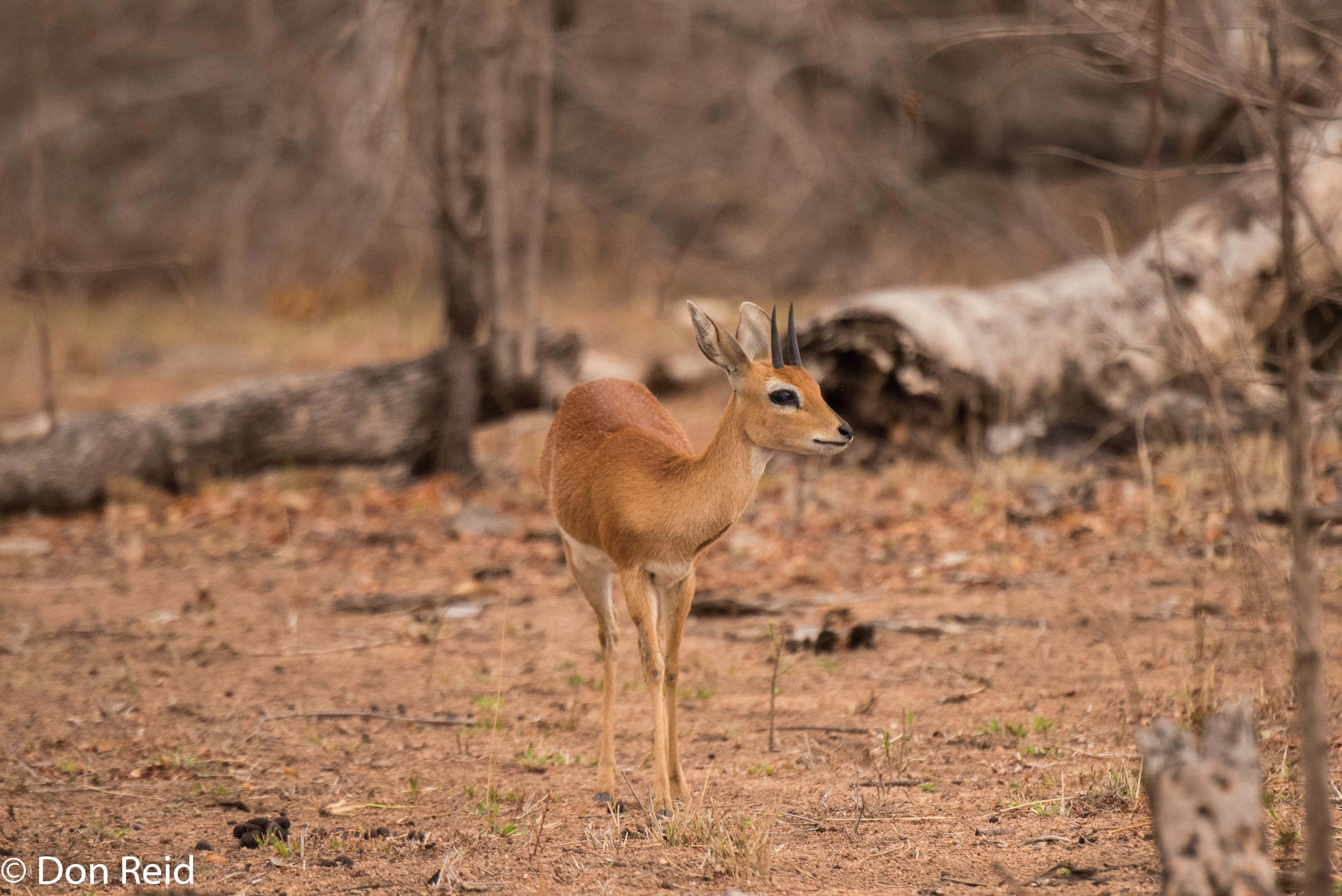
Game sightings kicked off with a roadside sighting of an adult White Rhino with a youngster, followed by more distant but regular sightings of Kudu, Elephant, Giraffe and more Steenbok that I can recall seeing on any previous trip.

White Rhino, Berg en Dal KNP
White Rhino
Steenbok, KNP
Steenbok – one of many seen mostly alone and vulnerable-looking

A lone antelope near a waterhole looked different and turned out to be a Grey / Common Duiker, despite its name not an everyday sighting in Kruger.

Common Duiker
Common Duiker

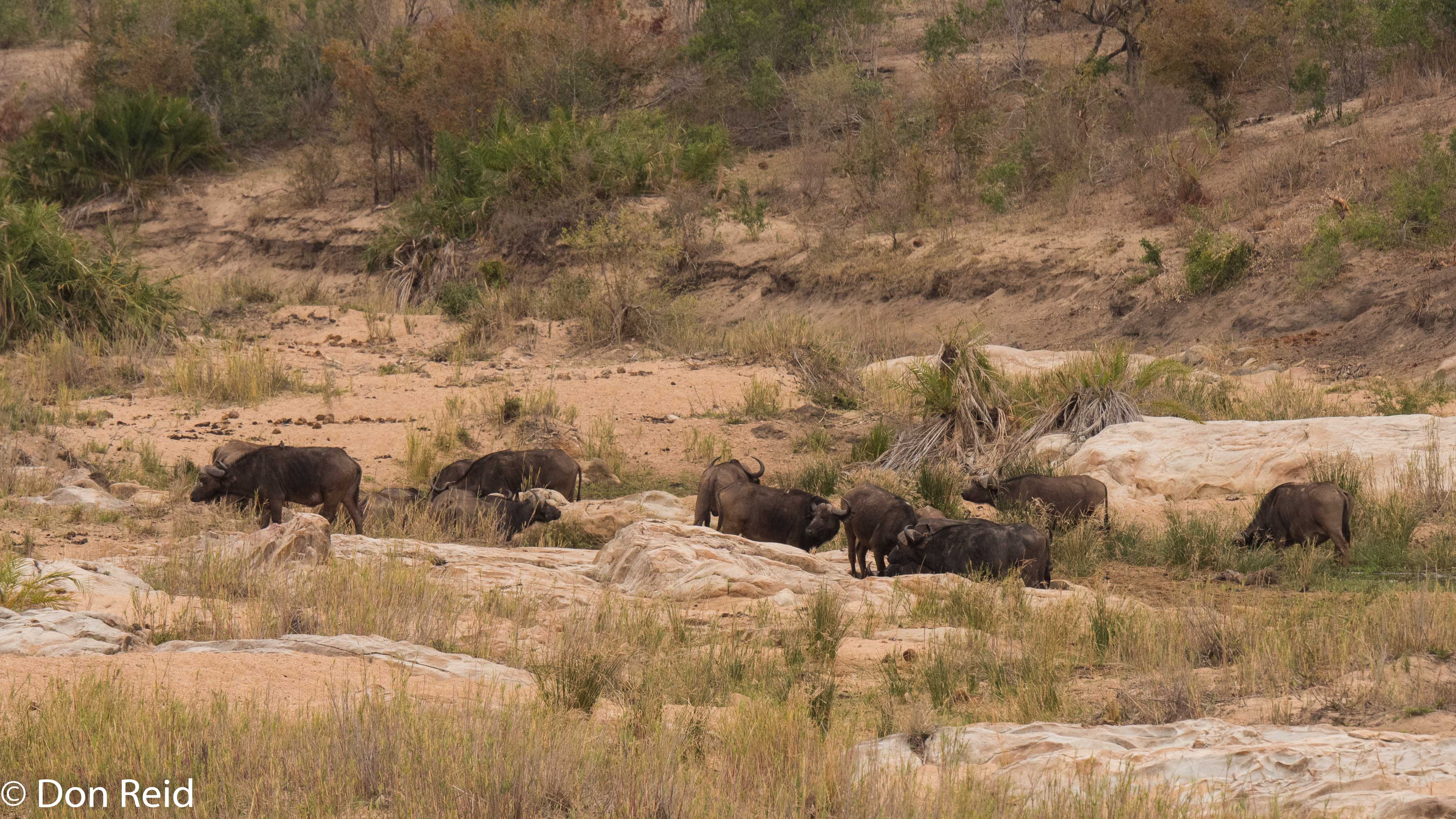
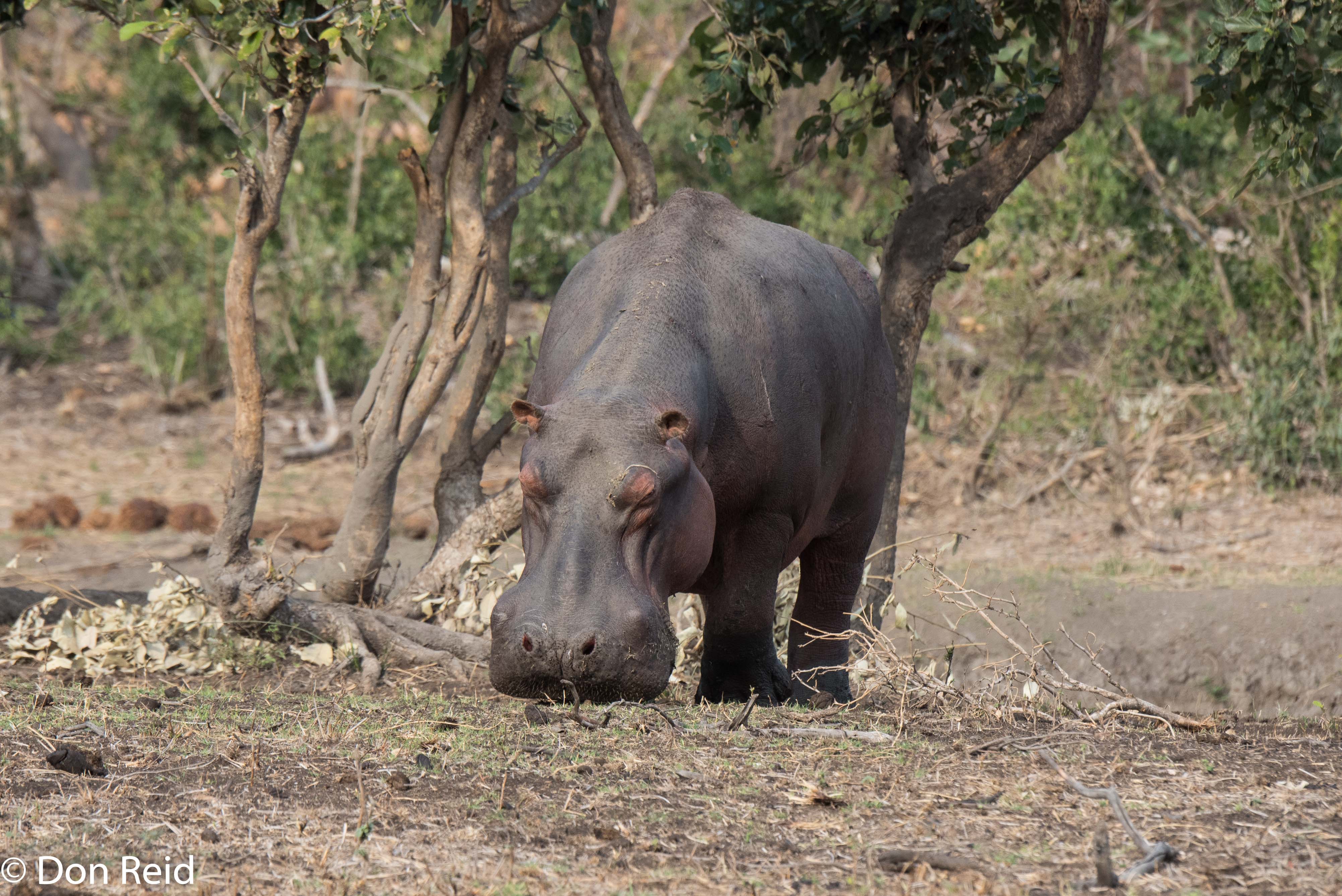
A large herd of Buffalo crossing the road at their usual slow pace caused a minor traffic jam, and a Hippo out of the water presented an unusual sight as it grazed in a grassy spot near the river.

Buffalo
Buffalo
Hippo, Ngotso
Hippo, Ngotso

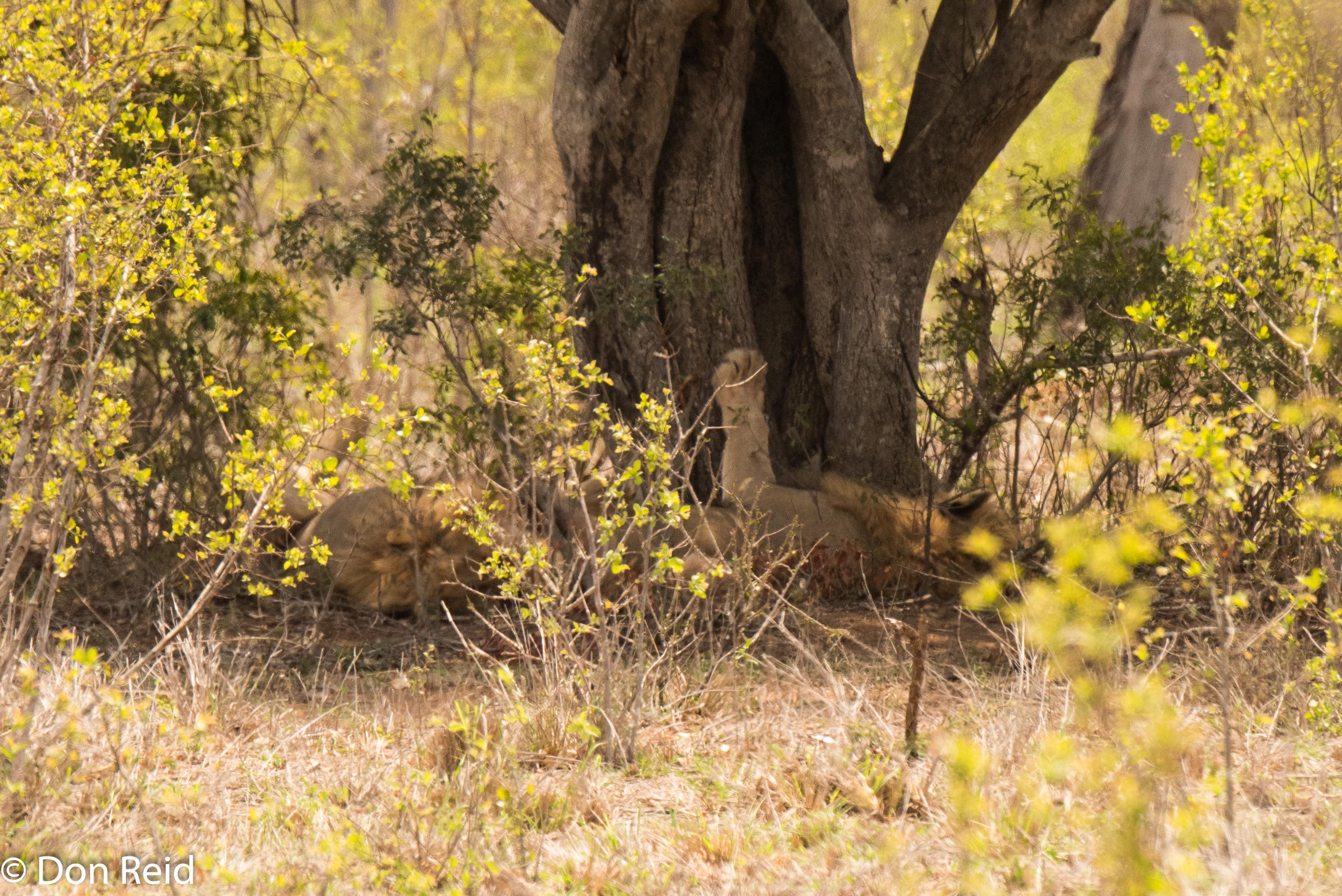
“Big cat” sightings were limited to a pair of lazy Lions lolling under a shady tree, while near Skukuza a crowd of vehicles had gathered near a tree with a dead Impala in the fork – clearly a Leopard kill stored in the “pantry” to mature, but there was no sign of the butcher and we did not have the time to hang around and see if it returned.

Lazy Lion
Lazy Lion
Leopard prey
Leopard prey

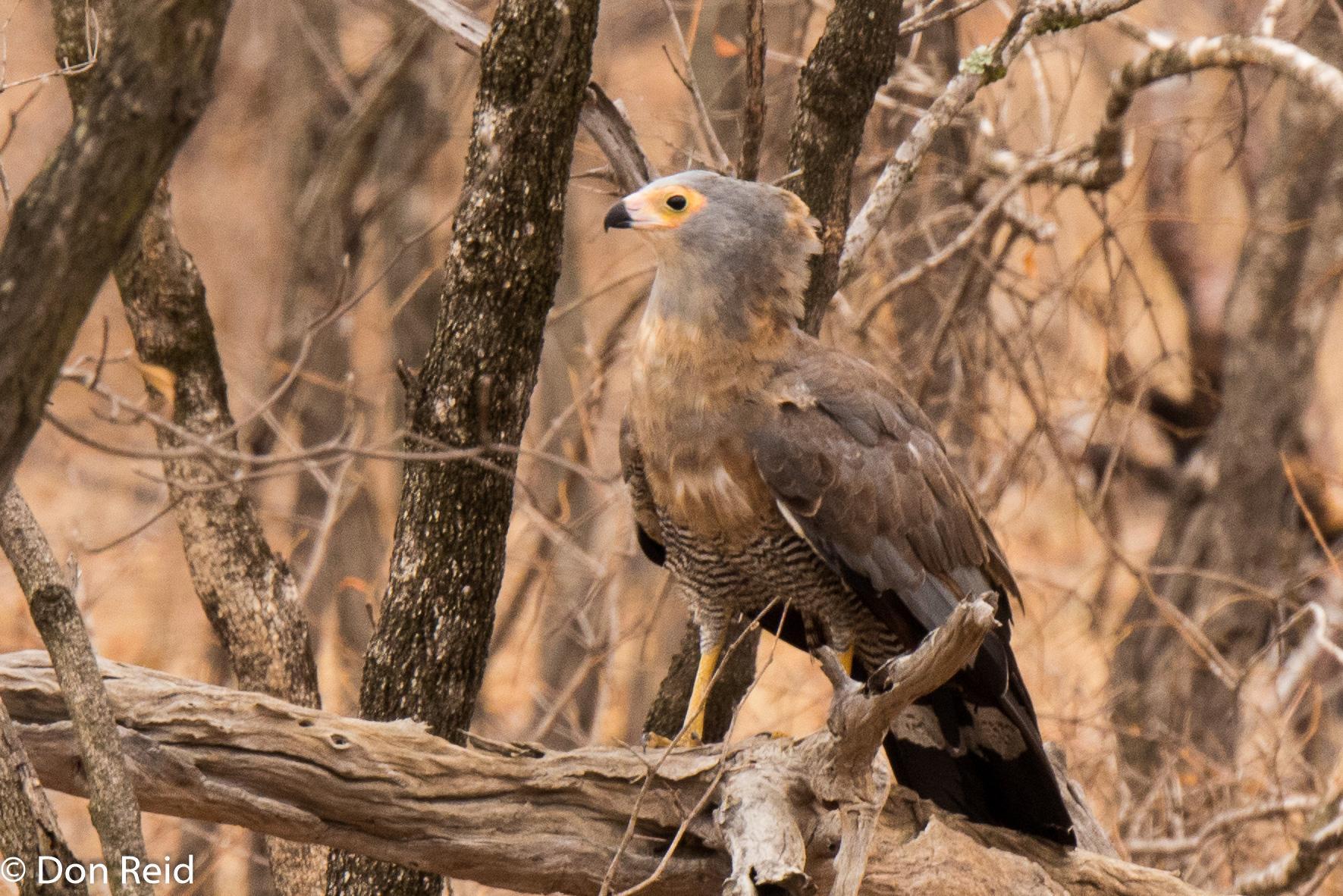
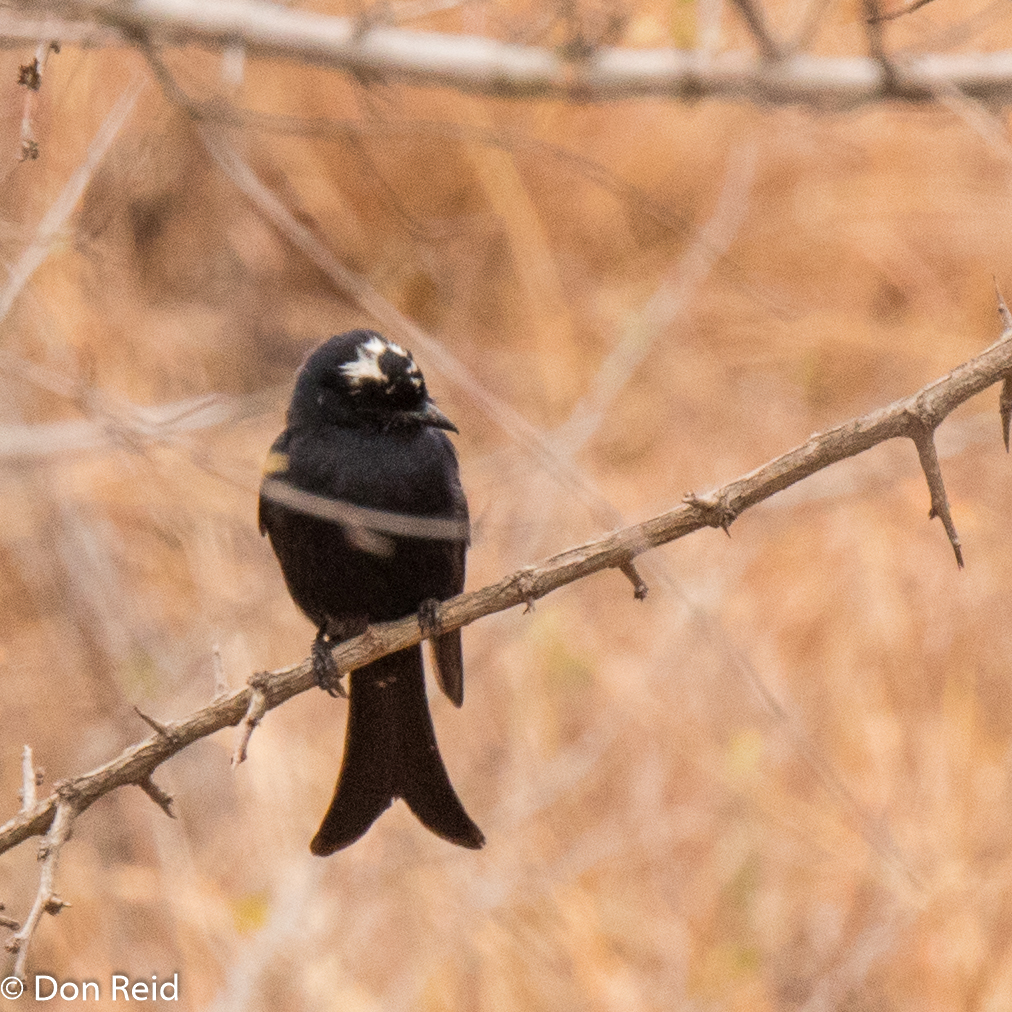
The birding was equally up to expectations with regular new species added to the trip list. Bird sighting of the day was an African Harrier-Hawk / Gymnogene (Kaalwangvalk)  moving through the bush, being mobbed by Fork-tailed Drongoes (Mikstertbyvanger) at every turn. One Drongo displayed partial leucism with some white on the top of its head.

African Harrier-Hawk, Afsaal area KNP
African Harrier-Hawk, near Afsaal
Fork-tailed Drongo (the white blotch on its head is a slight aberration)
Fork-tailed Drongo (the white blotch on its head is probably partial leucism in this normally all-black bird)
Brown Snake-Eagle, Satara - Tshokwane road KNP
Brown Snake-Eagle, Satara – Tshokwane road

Just after passing Skukuza, a flock of 100+ Marabou Storks (Maraboe) circled in a massive column – just as a plane took off from Skukuza’s airport and seemingly flew right through the middle of the column, fortunately without striking any.

Mazithi dam just after Tshokwane had a bevy of waders exploring the very shallow waters, including Common Greenshank (Groenpootruiter), Little Stint (kleinstrandloper), Common Sandpiper (Gewone ruiter) and Ruff (Kemphaan), and a lone Cattle Egret (Veereier).

Common Greenshank, Mazithi dam (Satara Tshokwane road) KNP
Common Greenshank, Mazithi dam (Satara – Tshokwane road)

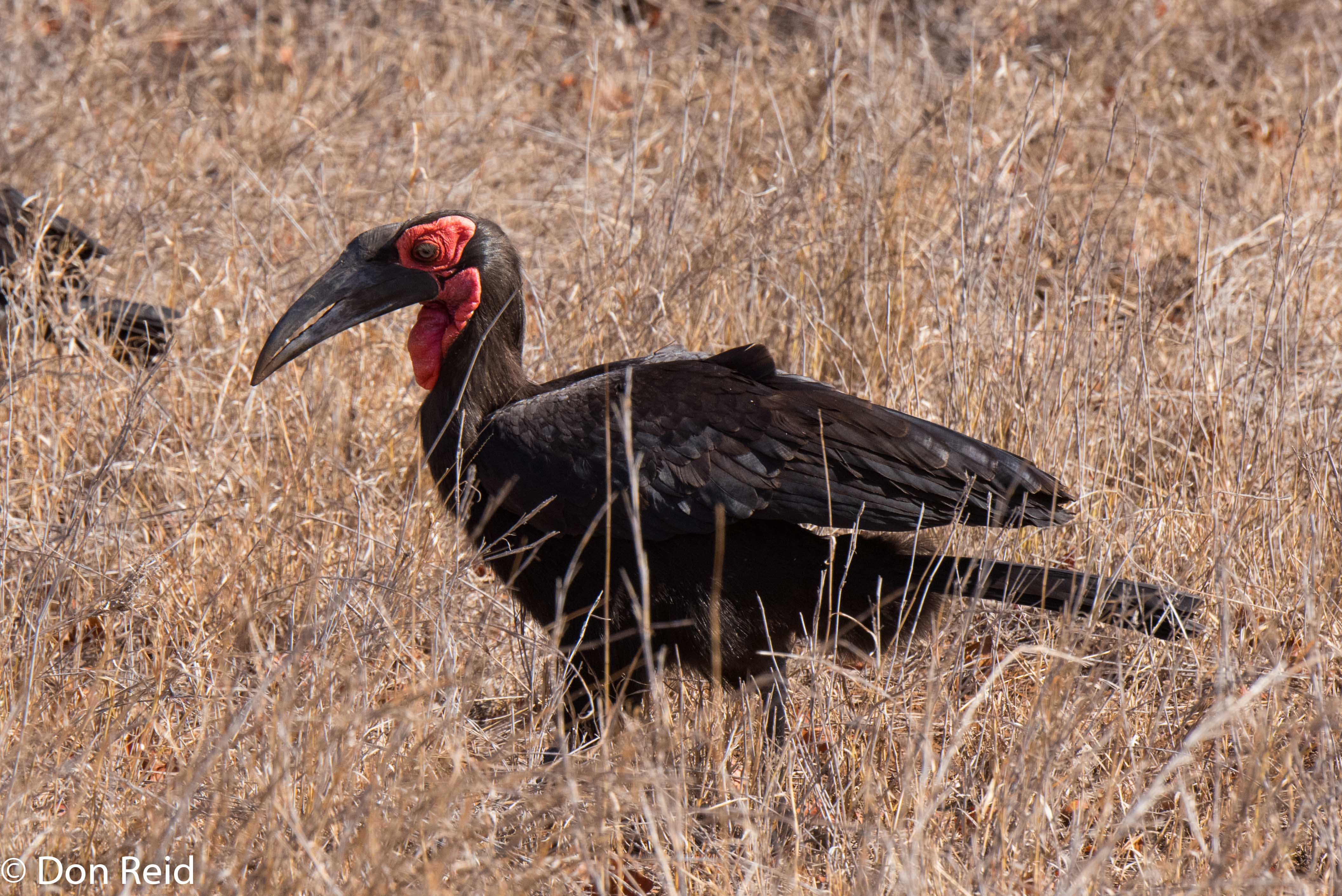
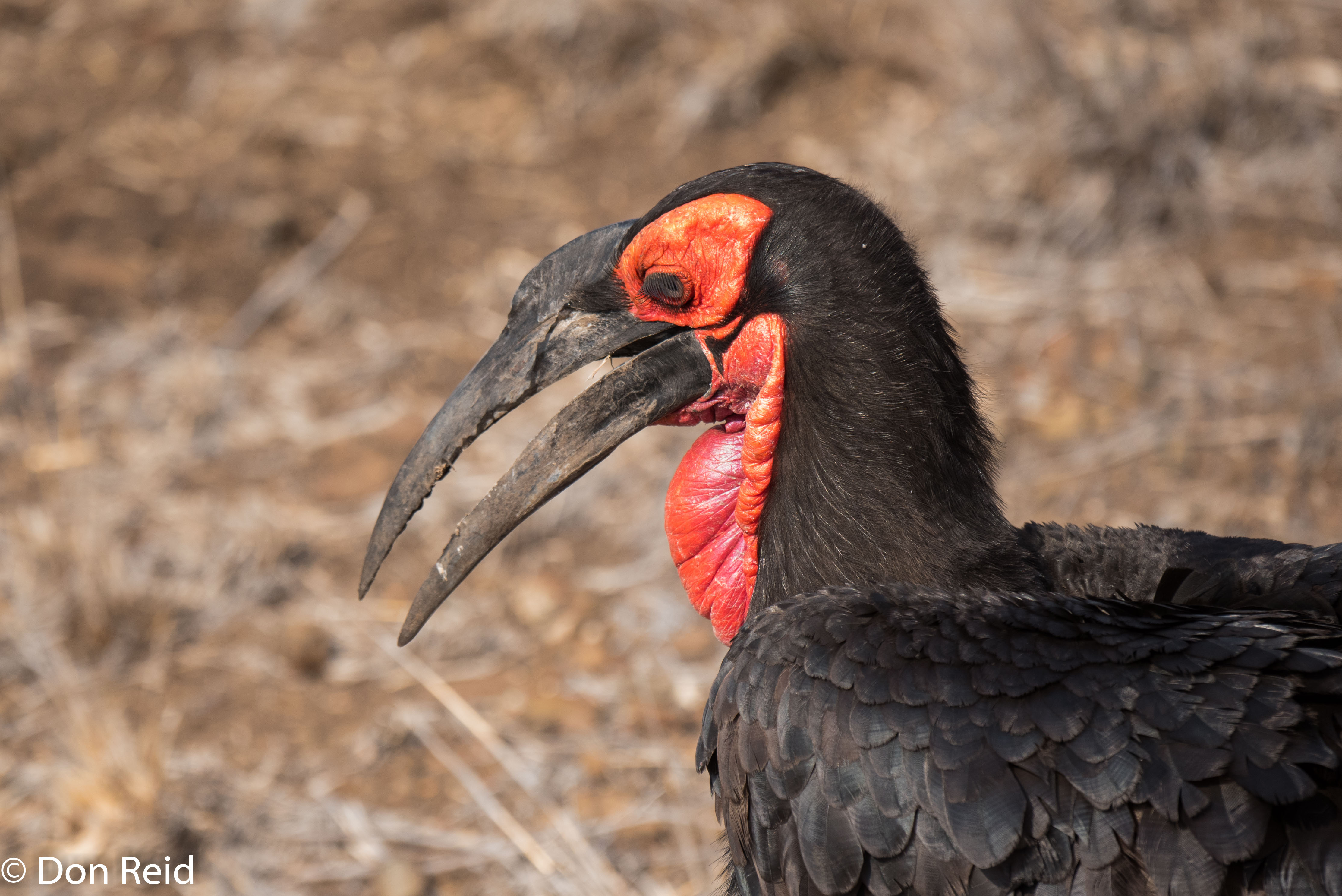
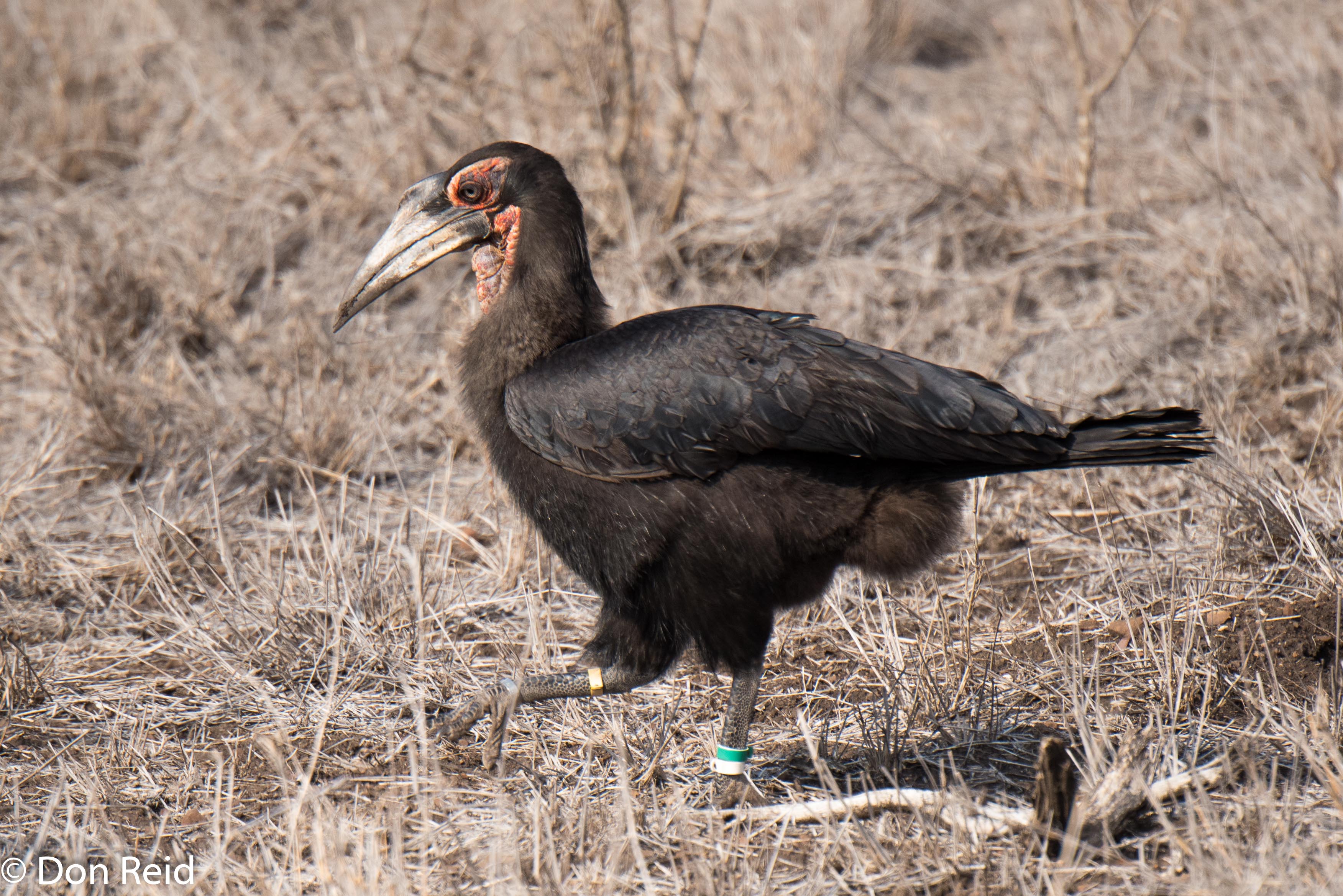
Closer to Olifants we came across 3 Ground Hornbills Bromvoël), one of which was a juvenile which had been ringed and which I photographed for submission to the research team doing a study of Ground Hornbills in Kruger.

Southern Ground Hornbill, KNP
Adult Southern Ground Hornbill
Southern Ground Hornbill, KNP
Juvenile Southern Ground Hornbill, ringed for ID by a research group
Saddle-billed Stork, Ngotso (Olifants - Satara road), KNP
Saddle-billed Stork

A lone Saddle-billed Stork (Saalbekooievaar) at Nyamarhi waterhole was one of our last sightings before arriving at Olifants rest camp around 4.30 pm, quite tired after the long day on the road, and settling into Rondavel No 37 for the week’s stay, in good condition after restoration work (the rondavel that is)

More about Olifants rest camp and the routes taken on our game and birding drives in forthcoming posts……..


The Nectar Lovers of the Southern Cape


Southern Cape winters are  often cold and wet, with cold, clammy mists regularly rolling in from the sea. We love visiting our home in Mossel Bay, which is seen by many as the start of the famous Garden Route, but our winter visits are usually kept short, although the conditions can be a tonic after a few months of the dry Highveld winter of our main home in Pretoria, with no rain for months stretching from May to mid-October.

One of the floral attractions during winter in the Southern Cape is the proteas and aloes that flower and enrich the green landscape with their bright orange, yellow and red colours, attracting the nectar lovers such as the Sugarbirds and Sunbirds.

When we visit Mossel Bay in the winter months, there is a great sense of anticipation as we land at George airport and head along the highway for the short drive to our home, soaking up the lush green winter scenery and particularly the aloes planted here and there along the highway, colourful in their winter dress.

Cape Sugarbird

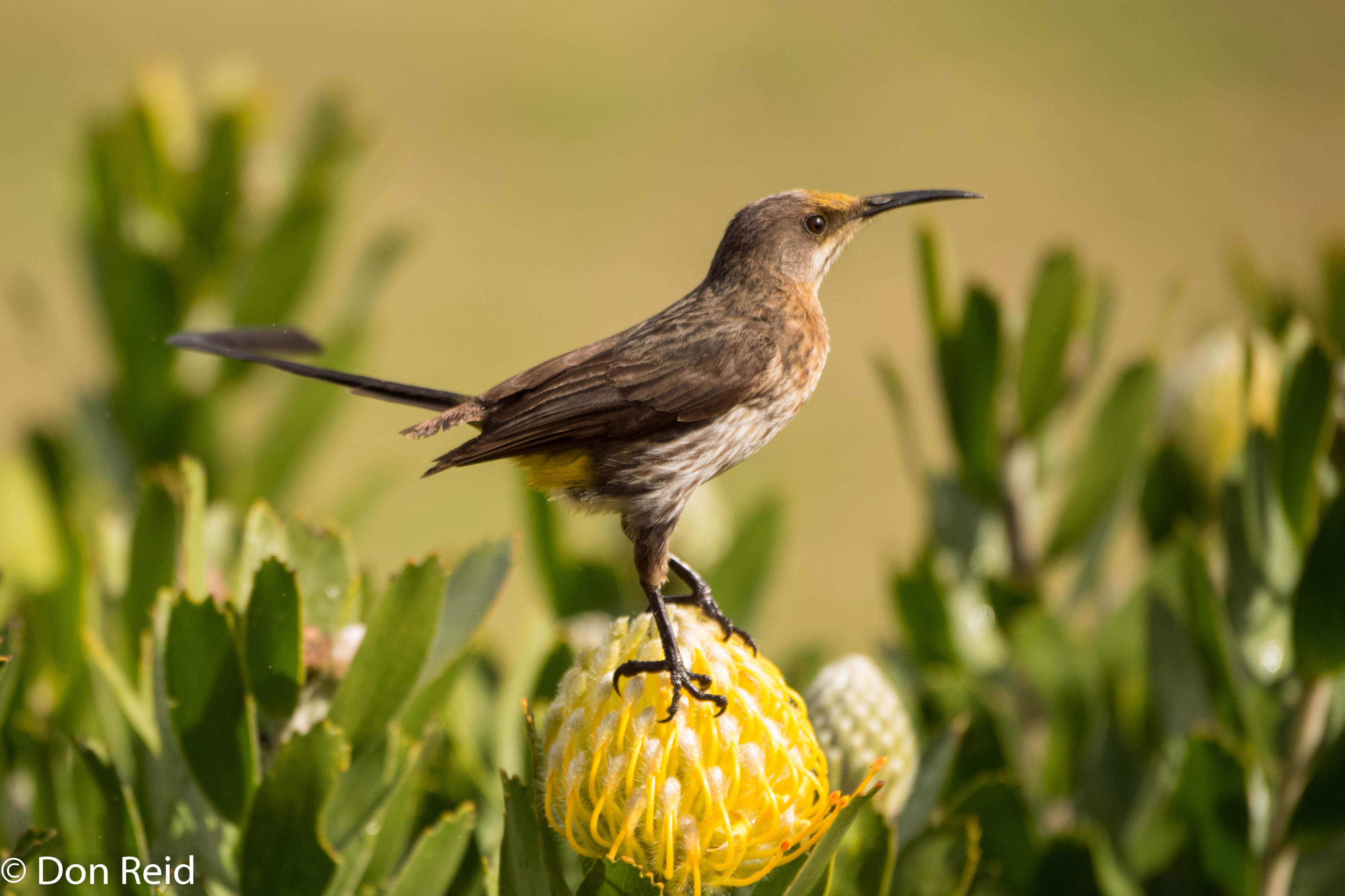
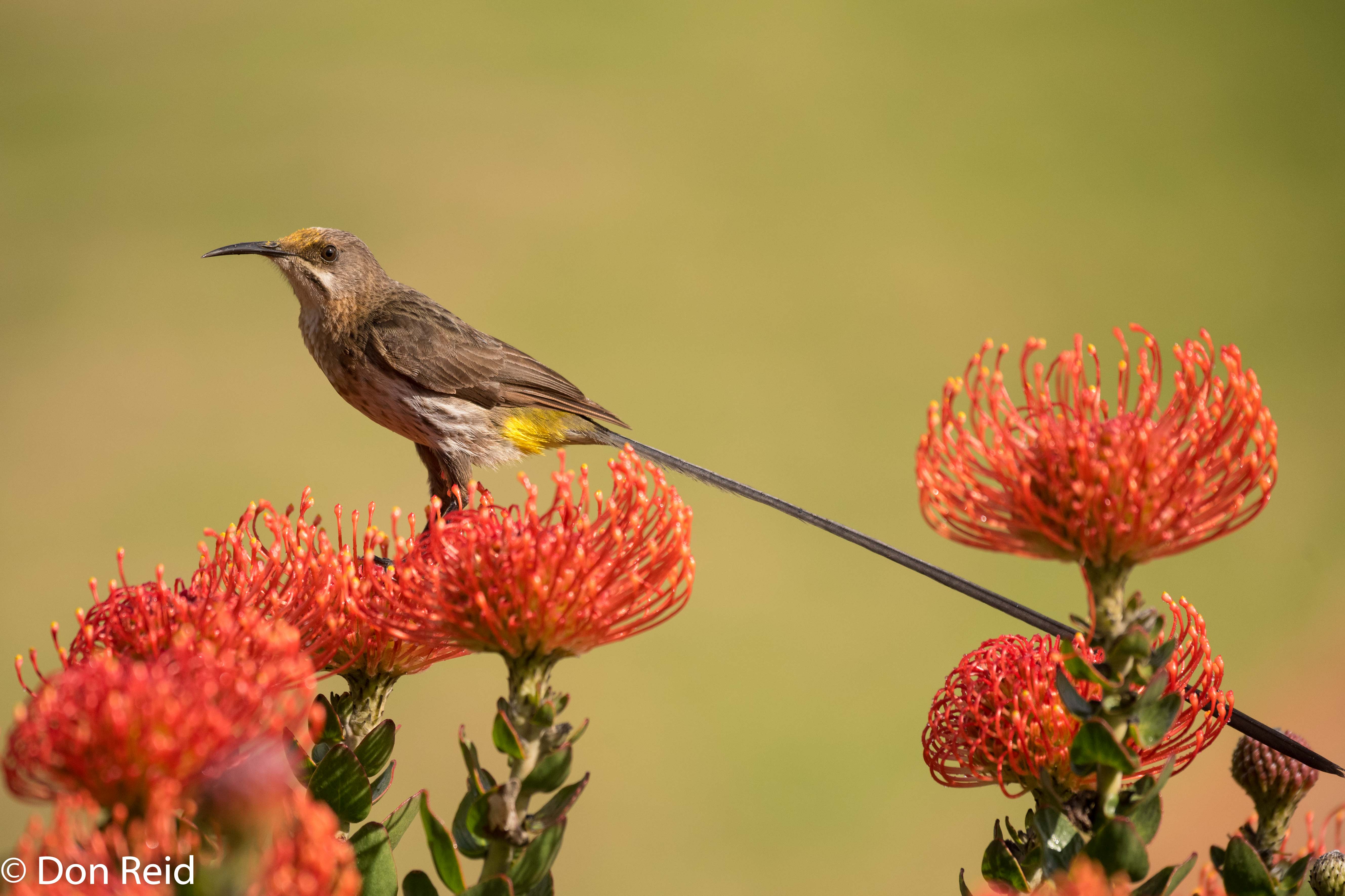
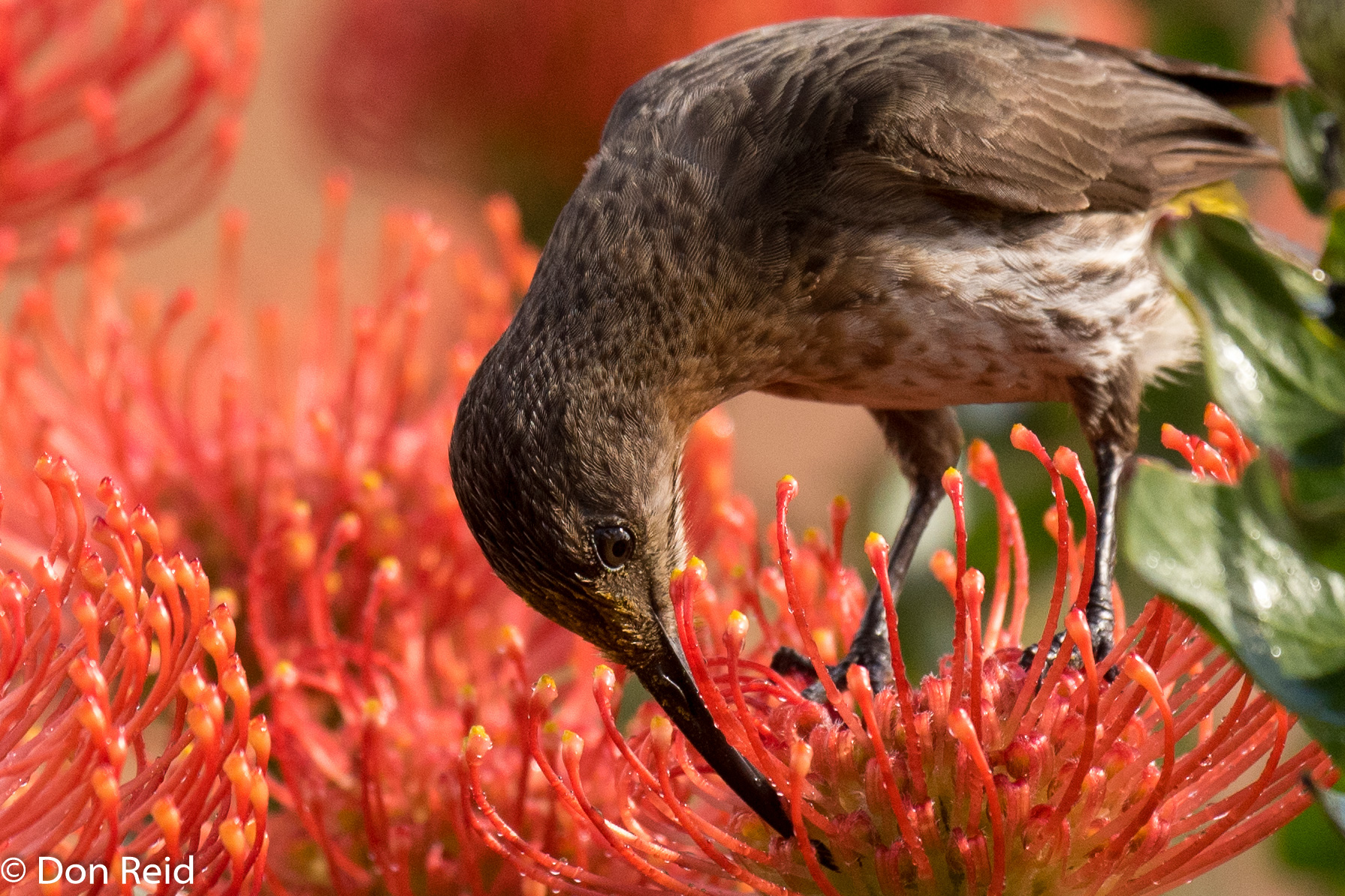
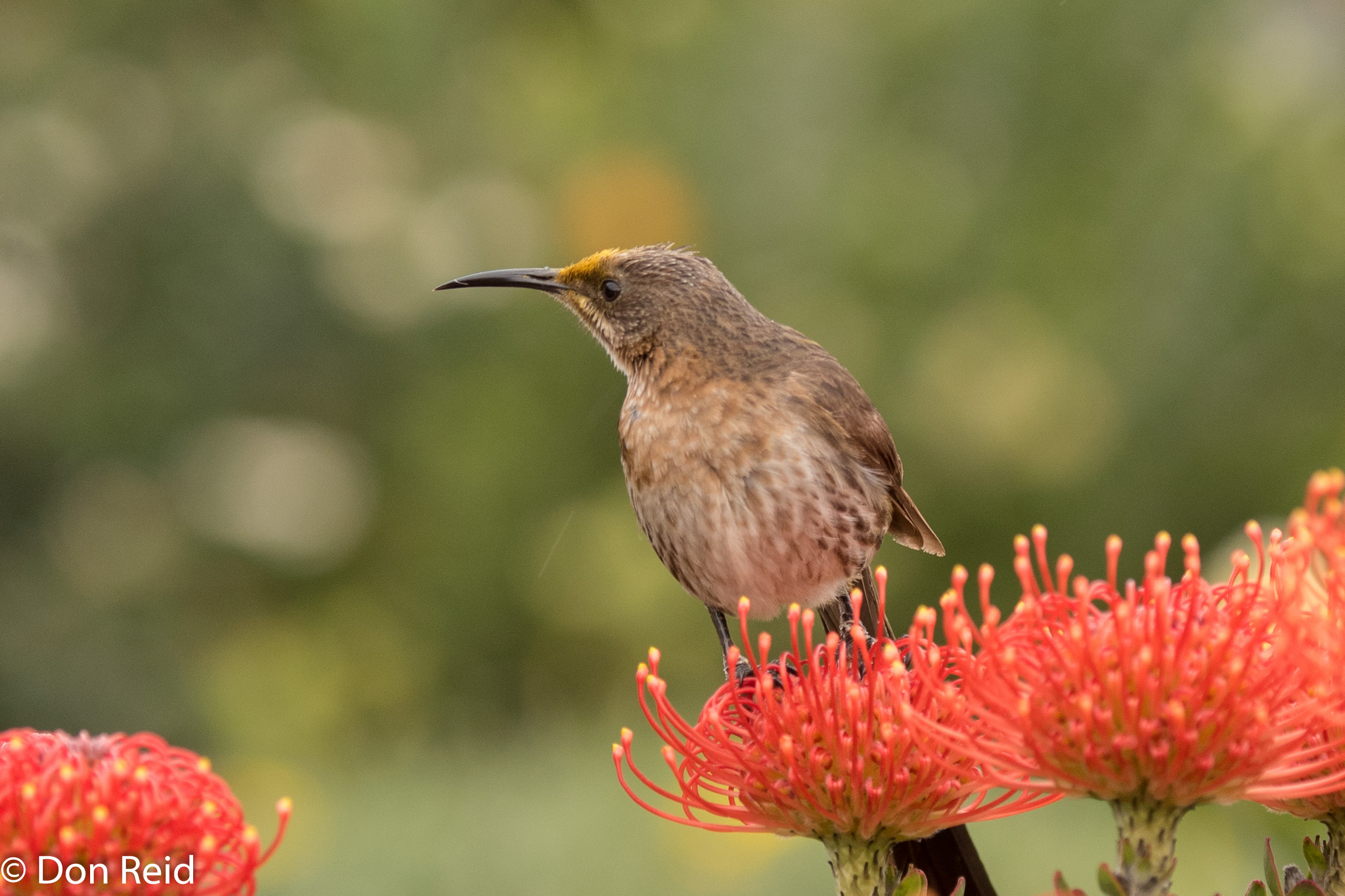
300 Flowers a day! That is how many flowering Proteas the Cape Sugarbird / Kaapse suikervöel (Promerops cafer) may visit during a day to meet its energy requirements.

Having watched them in action in our garden, I can well believe that figure – they maintain a frenetic level of activity amongst the Protea species, mostly of the Pincushion variety, that we have in our garden, flitting from bush to bush and flower to flower, then flying off rapidly in search of the next one, long tail swishing about in their urgency.

The yellow dusting on the forehead is the pollen picked up from dipping deep into the flowers, which then gets carried to the next flower.

Cape Sugarbird, Mossel Bay

Double-collared Sunbirds

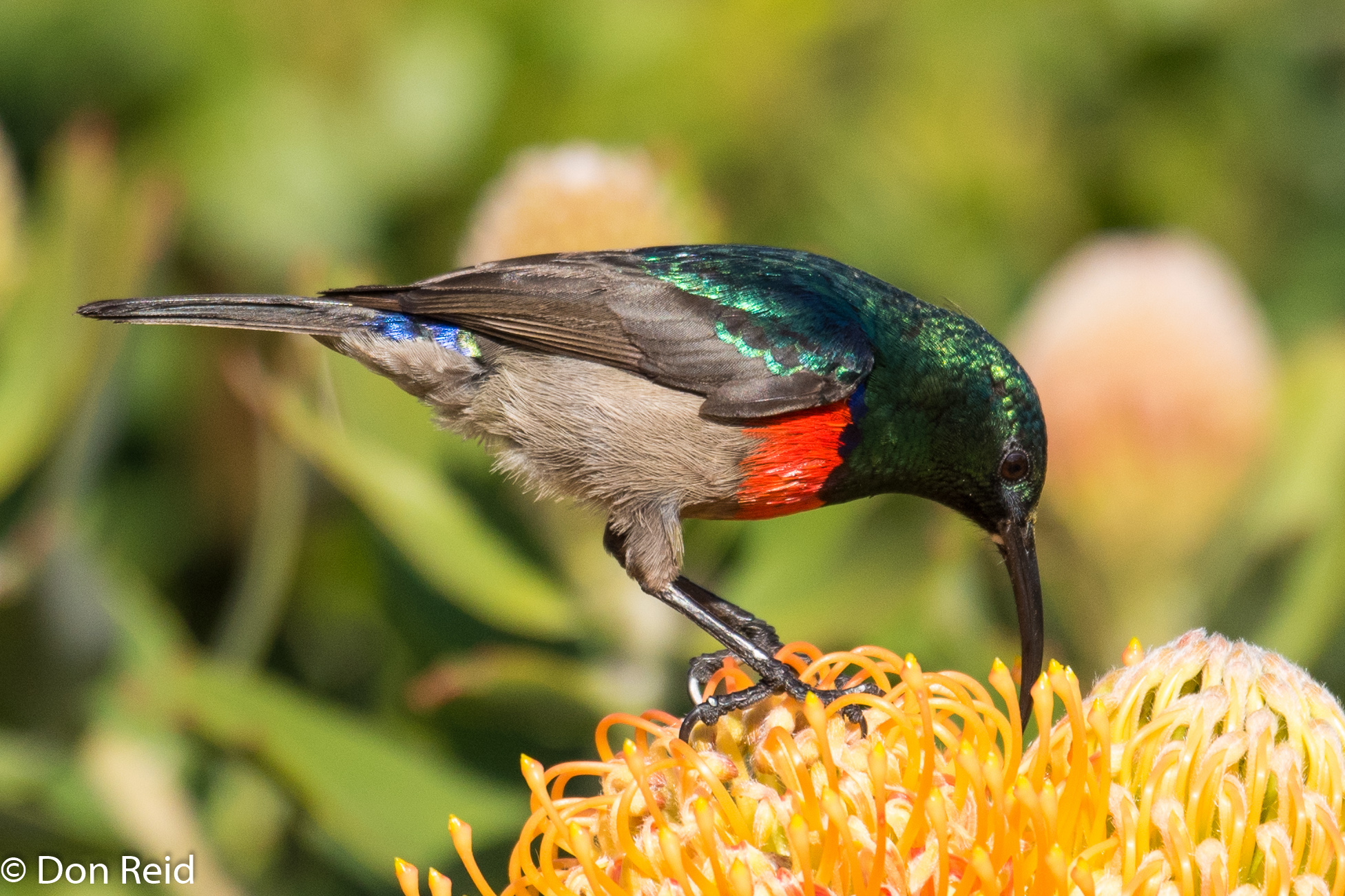
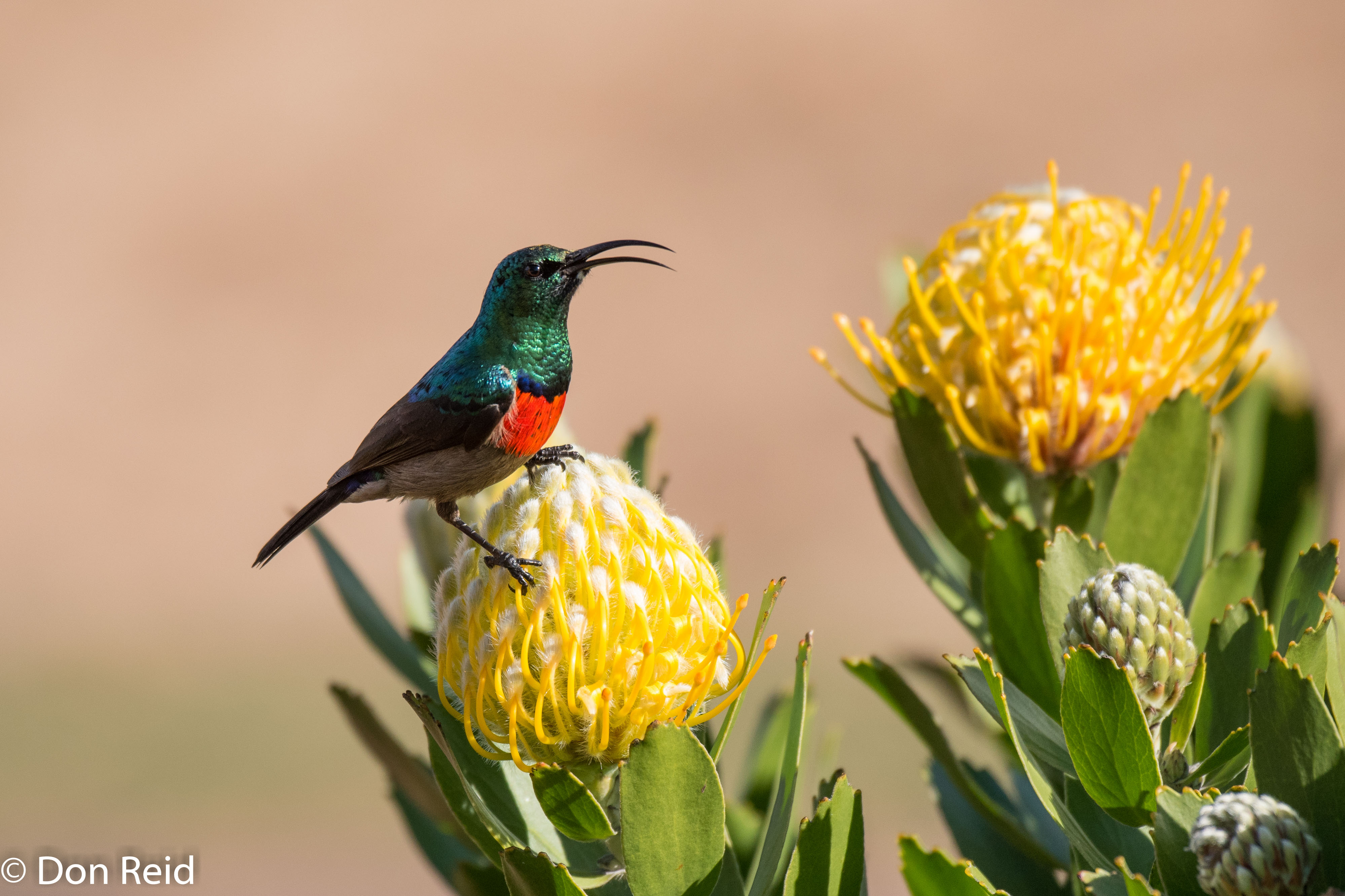
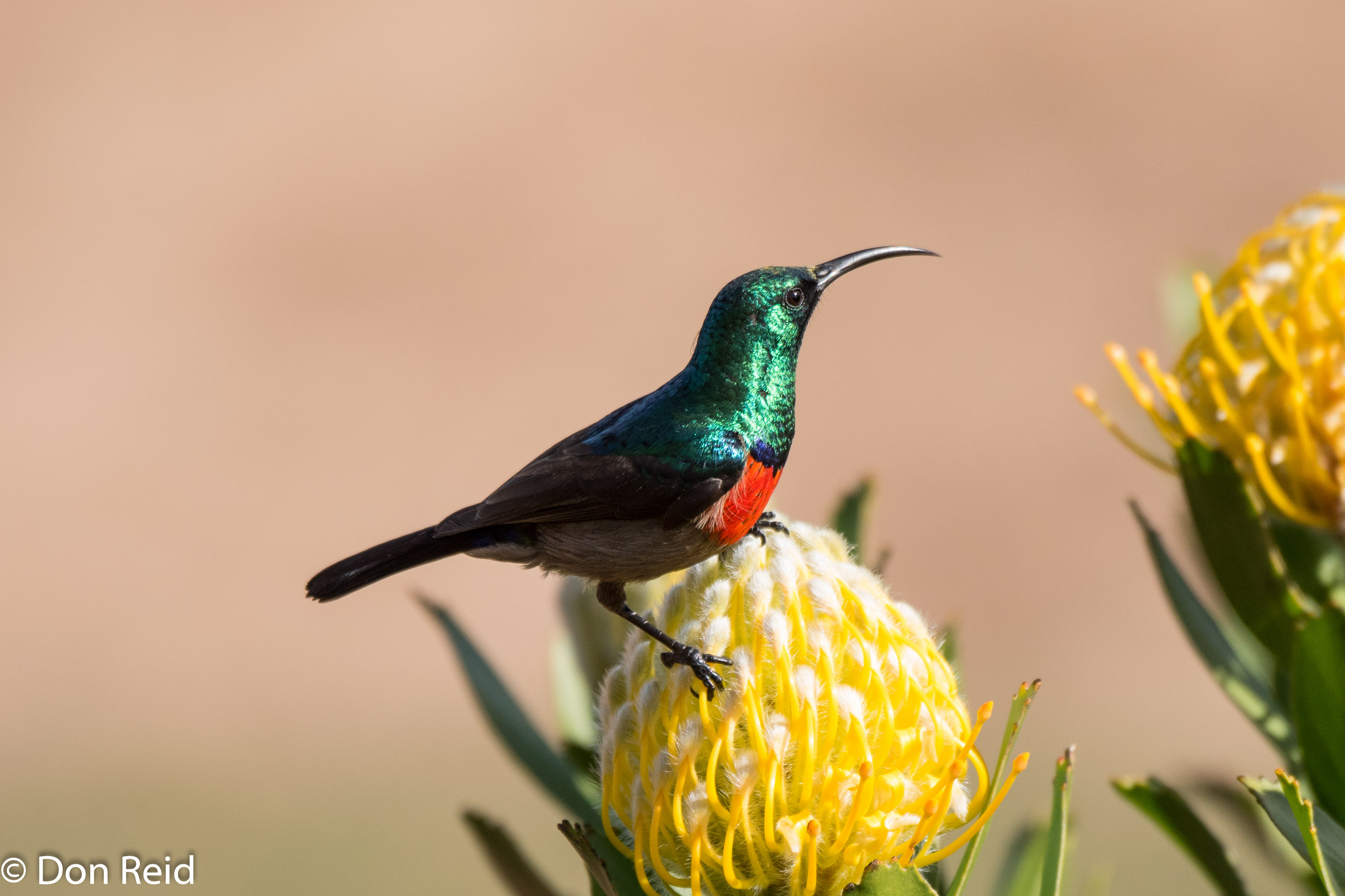
Alongside the Cape Sugarbirds, other nectar loving species look positively sedate, including the Double-collared Sunbirds, both Southern and Greater species which are wonderful to watch with their brightly coloured, shiny plumage as they feed on the equally colourful flowers.

The males of these species are similar looking but, if you have binos handy or can get close enough, they can be fairly easily identified by the width of the bright red band across their chests – the Southern Double-collared Sunbird / Kleinrooibandsuikerbekkie (Cynnyris chalybeus) has a narrow band while the Greater Double-collared Sunbird / Grootrooibandsuikerbekkie (Cynniris afer) has a much broader band of red.

Both take the prize for the longest name for a small bird!

Look carefully at the next photo and you will see the thin “tongue” which is hollow and with which the sunbird sucks the nectar – much like a flexible syringe.

Greater Double-collared Sunbird, Mossel Bay

Both of these species are guaranteed to brighten up your day, just as they add colour, vibrancy and action to your garden in the Southern Cape in the middle of the winter.

All the photos in this post were taken in our garden in Mossel Bay, which Gerda planned to be as indigenous as possible and to survive with the minimum of attention during the months when we are elsewhere.

Kasane Botswana – Birding Spots in and around town

Kasane is a small town in northern Botswana, close to the Sududo Gate into Chobe National Park.

I would guess that most birders passing through Kasane are on their way from or to Chobe Game Reserve or further afield to Namibia, Zimbabwe and Zambia, the borders of which are all in close proximity.

As you drive around the town and the surrounding area, you realize that this is very much “Wild Africa”, a feeling which is reinforced by the signs on the main road past town that declare it a wildlife corridor. It is not unusual to encounter, as we did, Elephant, Wild Dogs, Hyena and Buffalo close to Kasane as we were on our way for a drive through the Riverfront section of Chobe (covered in my earlier blog) and before getting to the entrance gate!

The project in Kasane that I am involved in requires monthly visits to this small but interesting town and in the process I have discovered a few birding spots, with the assistance of my colleagues who know the town better, that are easy to visit for an hour or two in between other commitments.

I try to visit one of the birding spots during every visit and have built up a very basic knowledge of what to expect – the following notes are based on my limited knowledge and are not meant to be comprehensive, but can hopefully provide a starting point for the birder spending time in this special corner of Botswana.

Kasane Water Treatment Works

Location : On the eastern side of Kasane, off the intersection of the main road from town and the road to Zimbabwe

Description : The Treatment Works have the customary treatment ponds in a fenced off area – ask permission at the small office  just inside the gate if you want to walk around, but some of the ponds are visible from the tar road that runs alongside, so that you don’t necessarily have to enter the site. As always, the quality of birding varies with the level of the ponds.

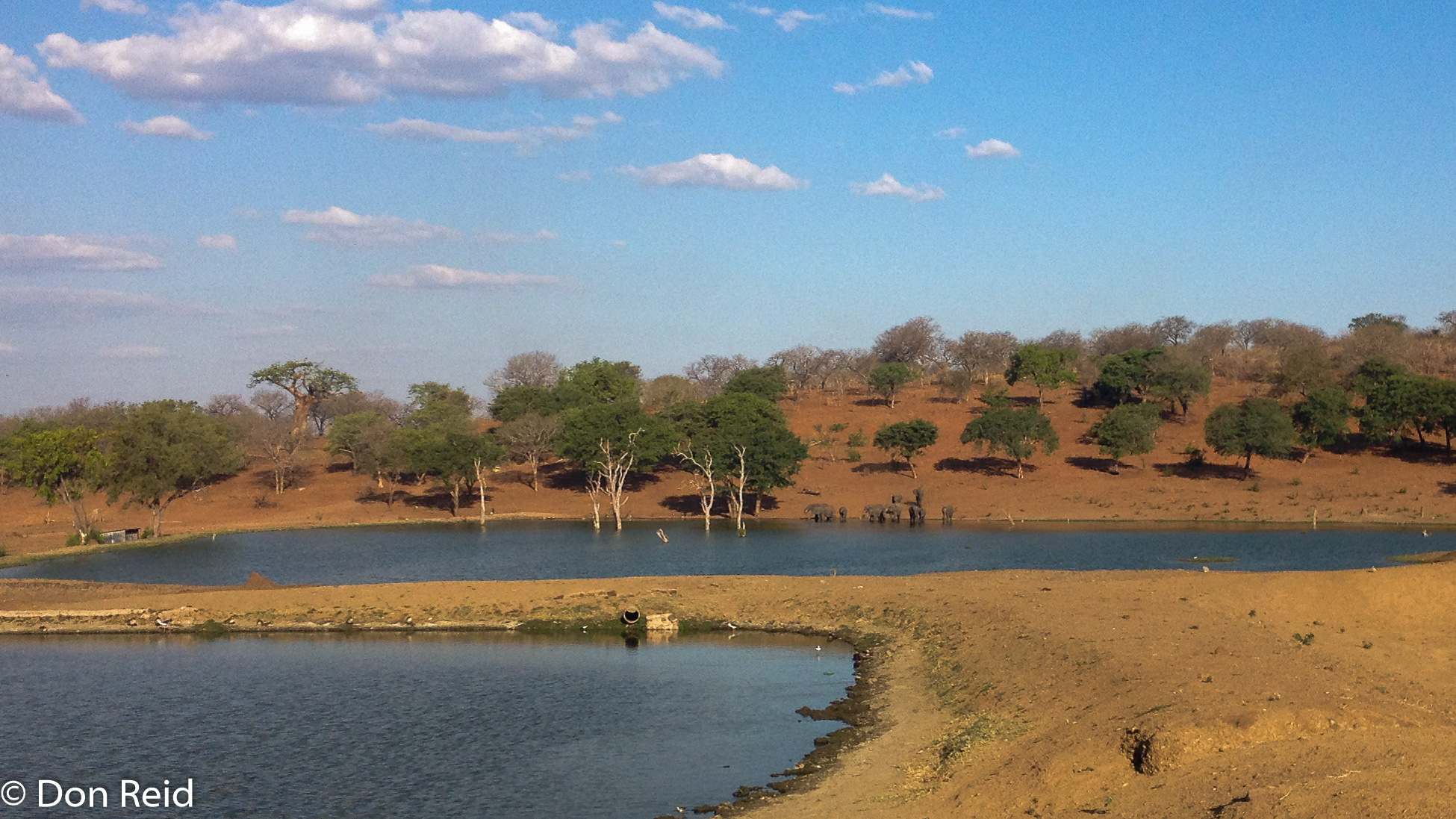
In addition there is a fair-sized dam alongside the works and being outside the fenced off area, you can approach it by taking the track that leads off to the left as you approach the Treatment Works. Do be aware however, that elephants use the dam as a watering spot so keep an eye out for them.

Kasane water treatment works - elephants drinking in the distance!
Dam at Kasane water treatment works – elephants drinking in the distance!
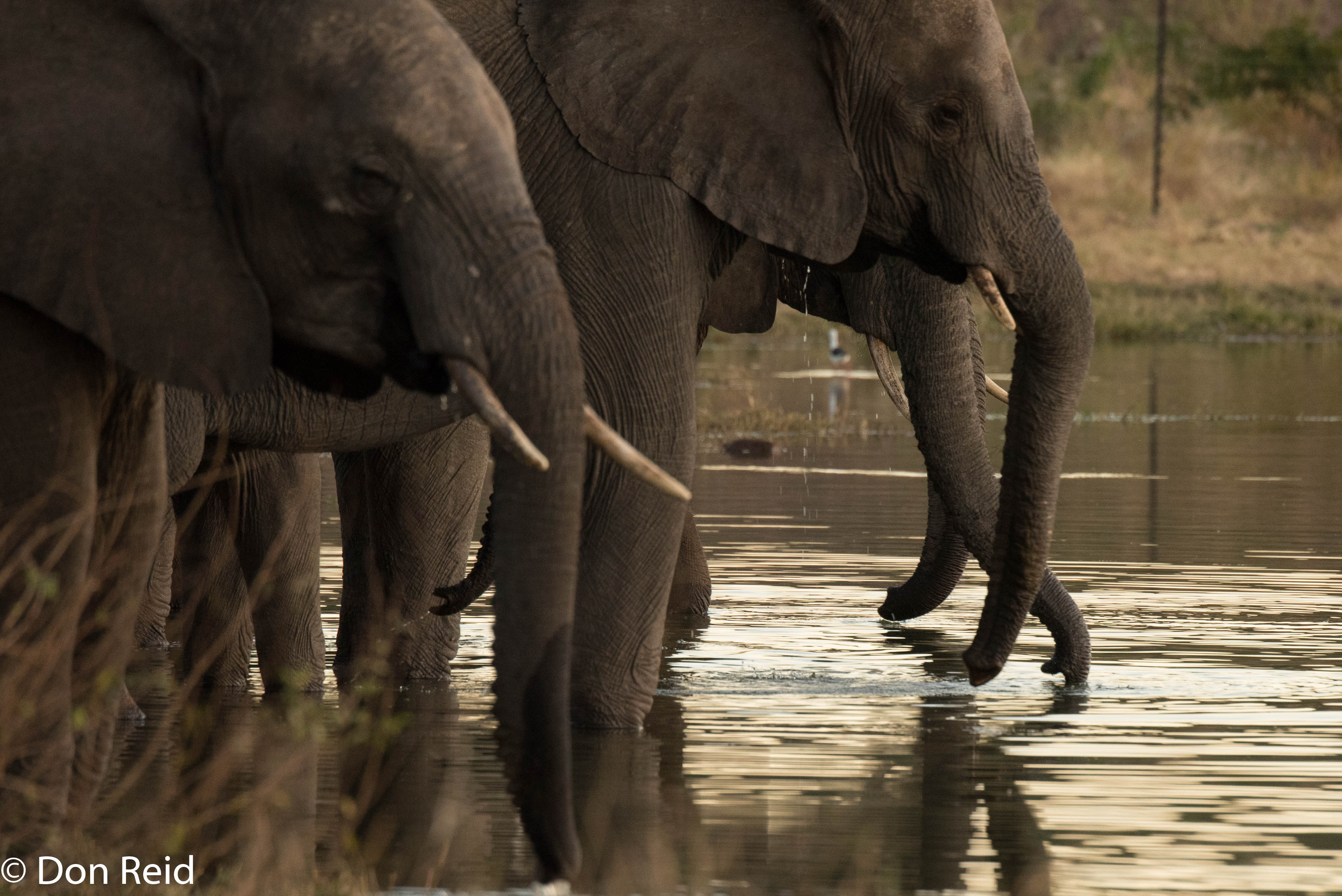
Elephants drinking, Kasane Water Treatment
Elephants drinking, Kasane Water Treatment works dam

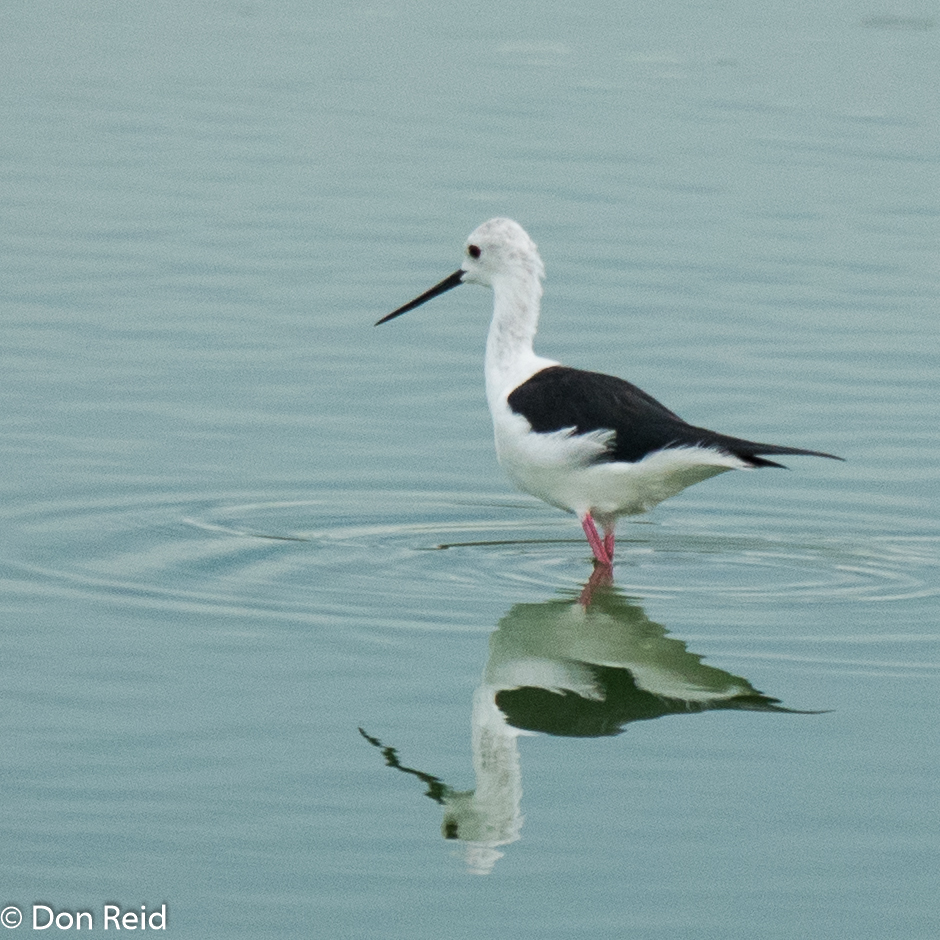
Bird life : Many water birds are attracted by the ponds and adjoining dam – all the usual ones such as Cormorants, Herons, Egrets and Ducks and depending on the time of year and water levels you can expect numbers of waders including African Jacana, Ruff, Black-winged Stilts and Wood Sandpipers. Smaller waders such as Three-banded Plover, Kittlitz’s Plover and Little Stint are common here.

Black-winged Stilt, Kasane Water Treatment
Black-winged Stilt
Egyptian Goose, Kasane Water Treatment
Egyptian Goose
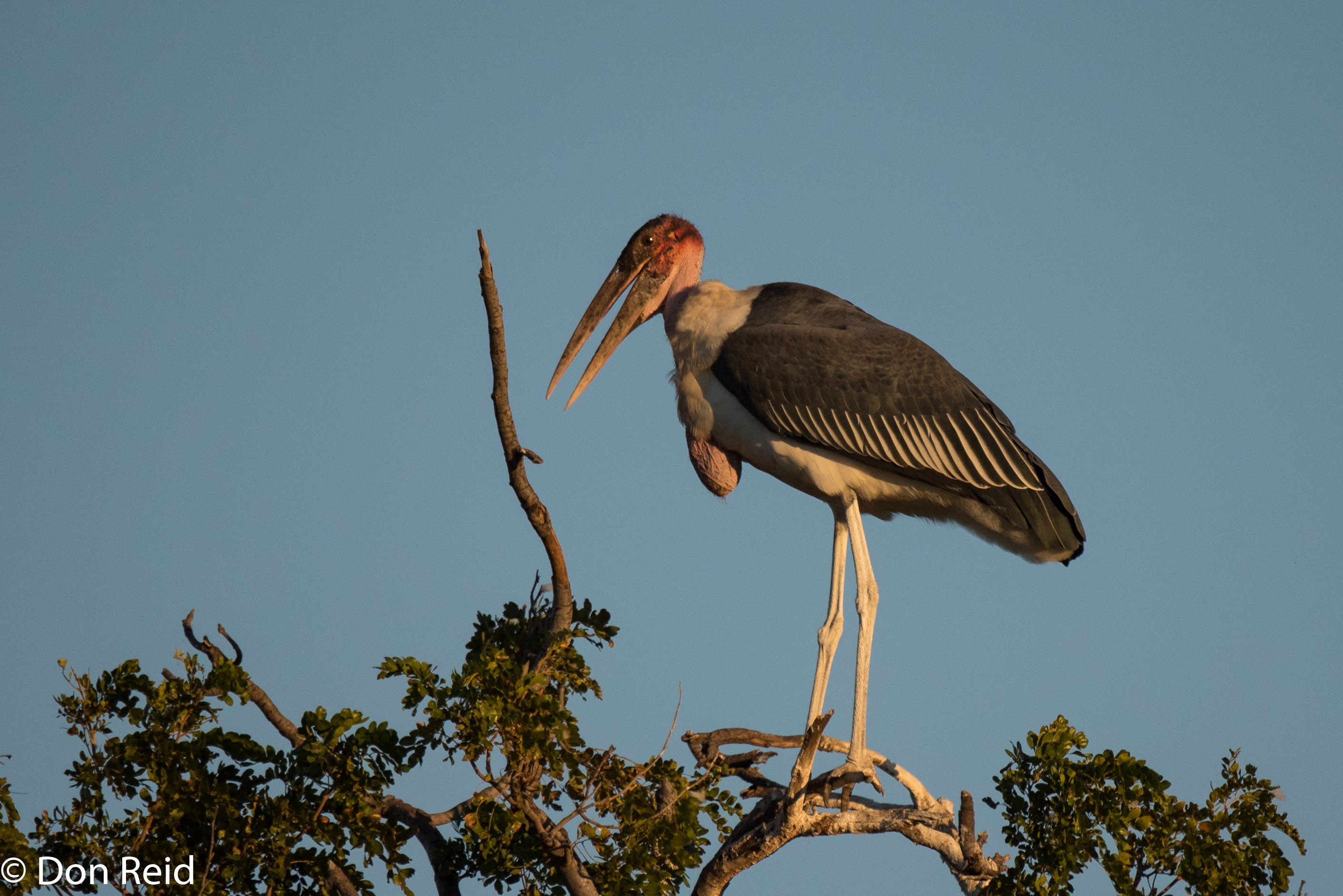
Marabou Stork, Kasane Water Treatment
Marabou Stork – they congregate in the trees around the Treatment works at dusk
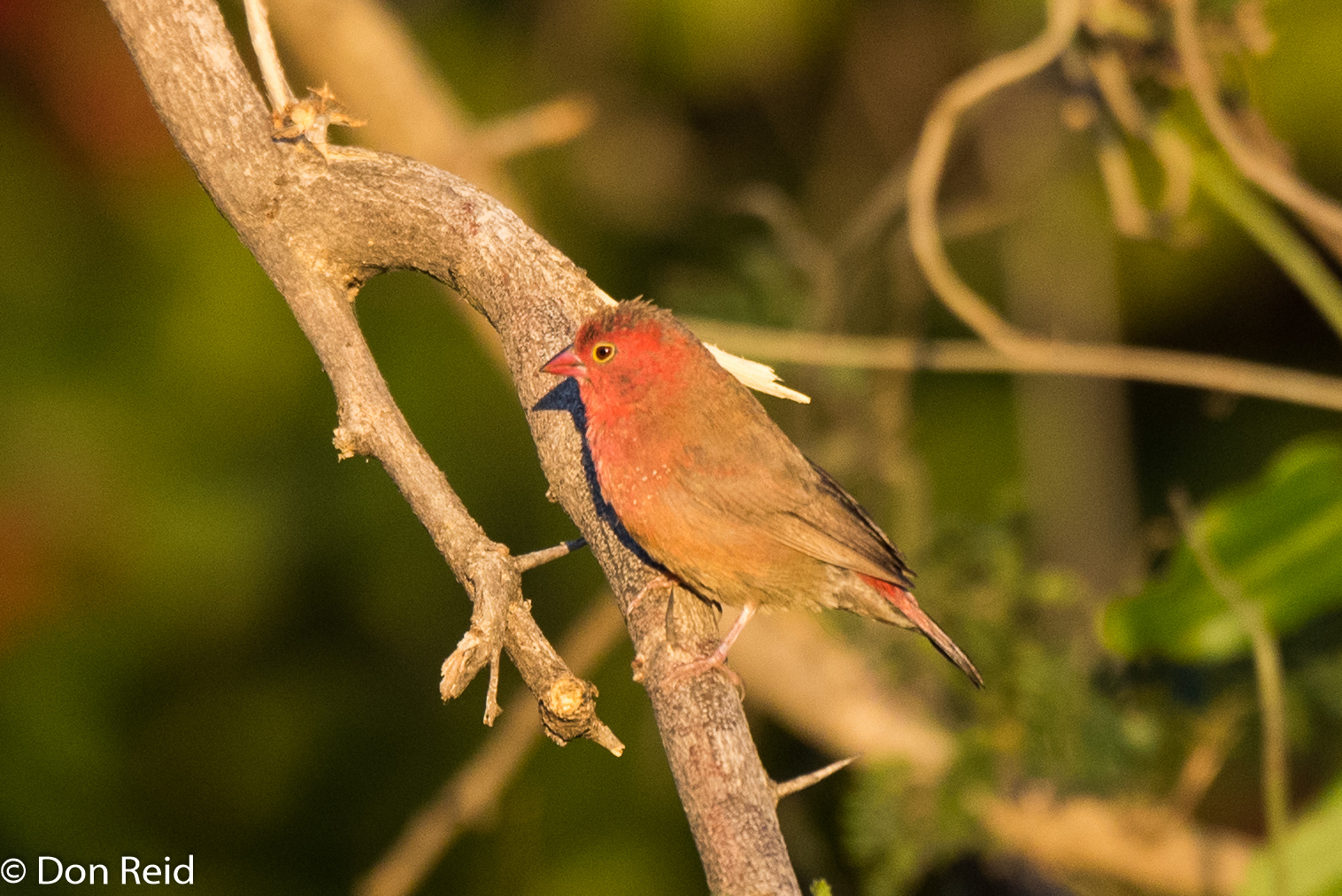
Red-billed Firefinch, Kasane Water Treatment
Red-billed Firefinch

Seboba Nature and Recreation Park

Location :This is a real gem which I covered in more detail in a separate post – suffice to say it is well worth a visit.

The small park lies along the river at the spot known as the Seboba rapids and has a nice mix of habitats and a variety of bird life.

I have covered this spot in a separate post : Kasane, Botswana –  Seboba Nature Park

Camping Site and Sundowner Spot

Location : Chobe Safari Lodge camping site on the outskirts of town on the western side

Description : The main attraction of this spot is the deck overlooking the Chobe river – treat yourself to one of the most spectacular African sunsets you are likely to see, as you enjoy a drink on the deck late afternoon. The channel in front of the deck gets quite crowded with boats in season, all loaded with tourists enjoying the sunset and its reflection, which transforms the Chobe waters into a deep red as you watch.

Sunset, Chobe Game Reserve
Sunset viewed from the deck at Chobe Safari Lodge camping area

Chobe Game Reserve

Bird life : while waiting for the sun to set and after it has disappeared beyond the horizon, listen for the bird life in the adjoining bushes which are favoured by the likes of White-browed Robin-Chat and Tropical Boubou, while the rank vegetation adjacent to the deck is home to Red-faced Cisticola whose ringing call is quite distinctive. There will more than likely be a Kingfisher or two in the vicinity and the floodplain on the opposite banks of the river is often occupied by tens if not hundreds of birds – Cormorants, Ibises, Openbills and the like. At certain times African Skimmers may be around flying in their unique way close to the water.

Glossy Ibis, Chobe Game Reserve
Glossy Ibises making their way down river at dusk
Afrcan Skimmer, Chobe Game Reserve
Afrcan Skimmers at sunset

Thebe Safari Lodge

Location : Compared to some of the well-known lodges in Kasane, Thebe caters mostly for more economical tour groups and particularly the large safari trucks full of younger tourists wanting an adventurous trip through Southern Africa’s wilder spots.

I have stayed there a few times and found the rooms comfortable and clean and, importantly, not “over-the-top” expensive as some of the more upmarket lodges tend to be

Description : The lodge grounds boast a variety of trees and shrubs which attract many birds and are a delight for the birder who chooses to take an early morning or late afternoon walk.

Bird Life : Birding around the grounds and gardens is excellent and best done by walking the property as thoroughly as time allows and covering all the habitats. Even before sunrise the bird calls will have you up and eager to get outside as the birds compete for “best call in garden”. Expect to hear and see Mourning Dove, Tropical Boubou, Orange-breasted Bush-Shrike, White-browed Robin and  Spectacled Weaver without too much trouble.

White-browed Robin-Chat, Thebe Safari Lodge
Tropical Boubou, Thebe Safari Lodge

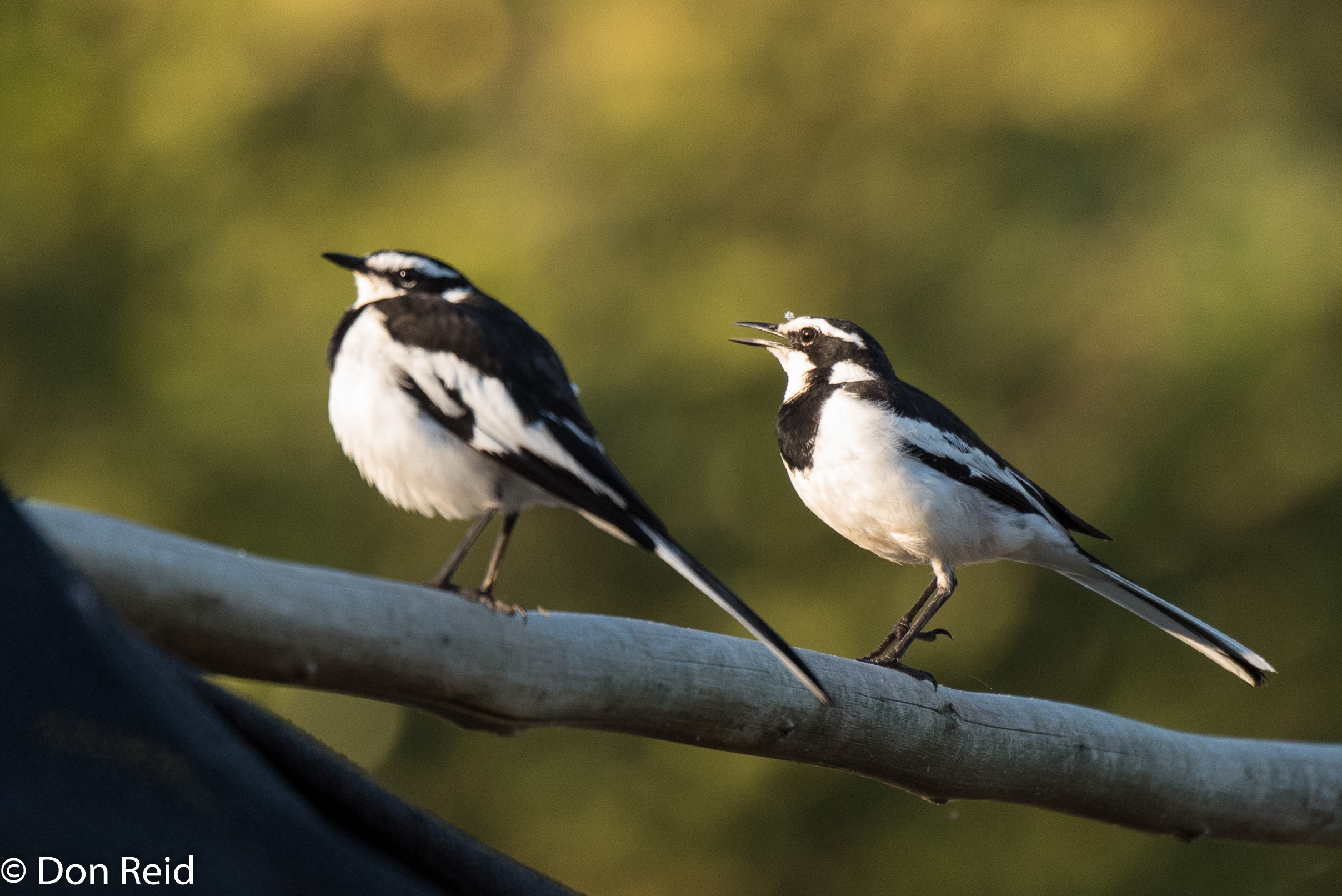
Bush lovers such as Yellow-bellied Greenbul, Grey-backed Camaroptera, Red-billed Firefinch and Blue Waxbill are not difficult to find, while closer to and over the river there is a chance for various water birds doing a fly past and perhaps an African Pied Wagtail …. or two.

Yellow-bellied Greenbul, Thebe Safari Lodge
African Pied Wagtail, Thebe Safari Lodge
African Pied Wagtail, Thebe Safari Lodge (could that be the female on the right I wonder?)

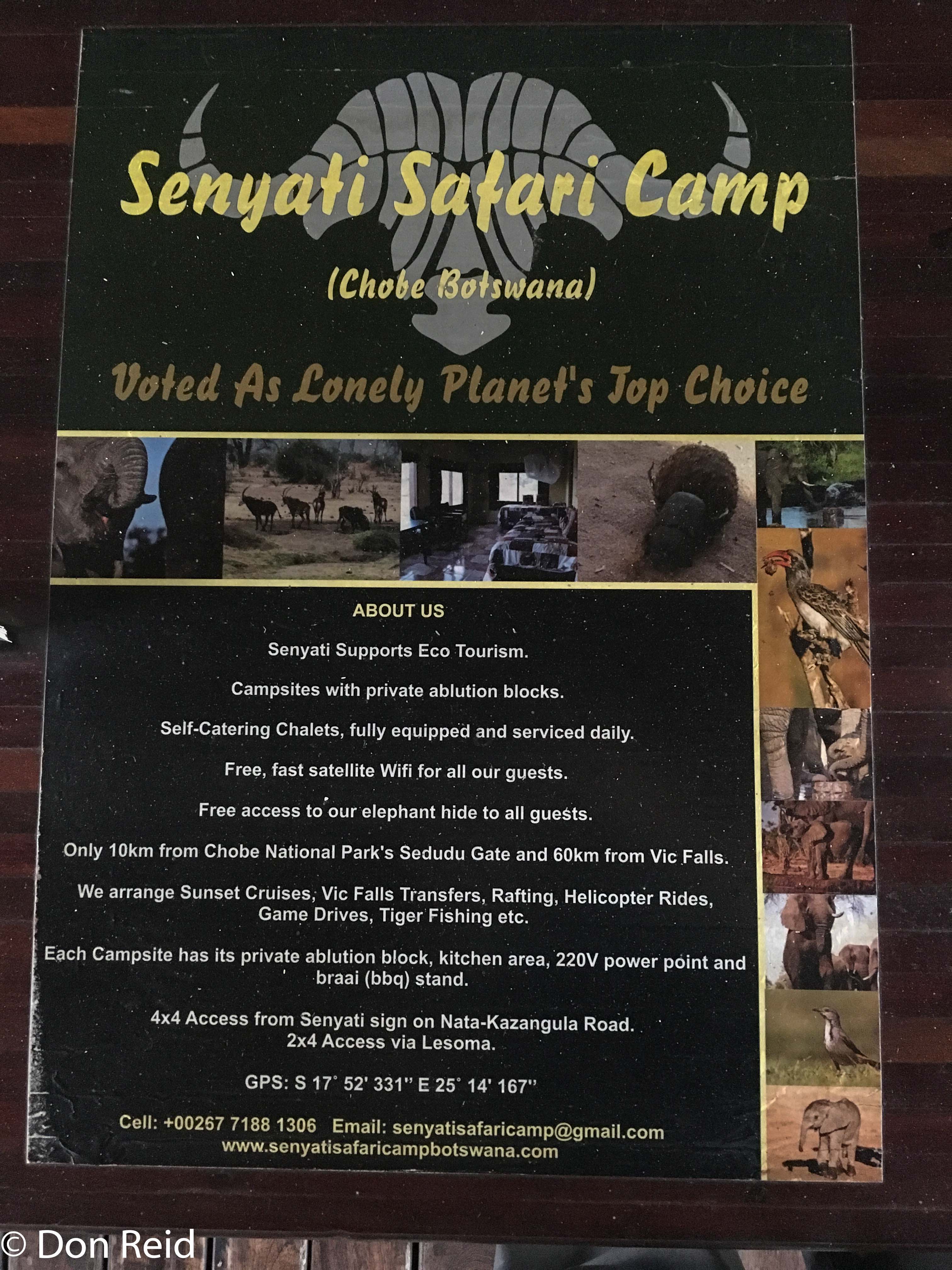
Senyati Safari Camp

Location : This spot is not as close to Kasane as the spots described above, nevertheless it is close enough (20Km) to make it an easy place to visit even if time is limited. Take the road from Kasane to Kazangulu, some 10 Km away, then turn off on the A33 towards Pandamatenga and look for the camp turn-off after about 7 Km. Best time for birding is probably late afternoon but if you use their accommodation (self-catering) you can spend more time there in the morning.

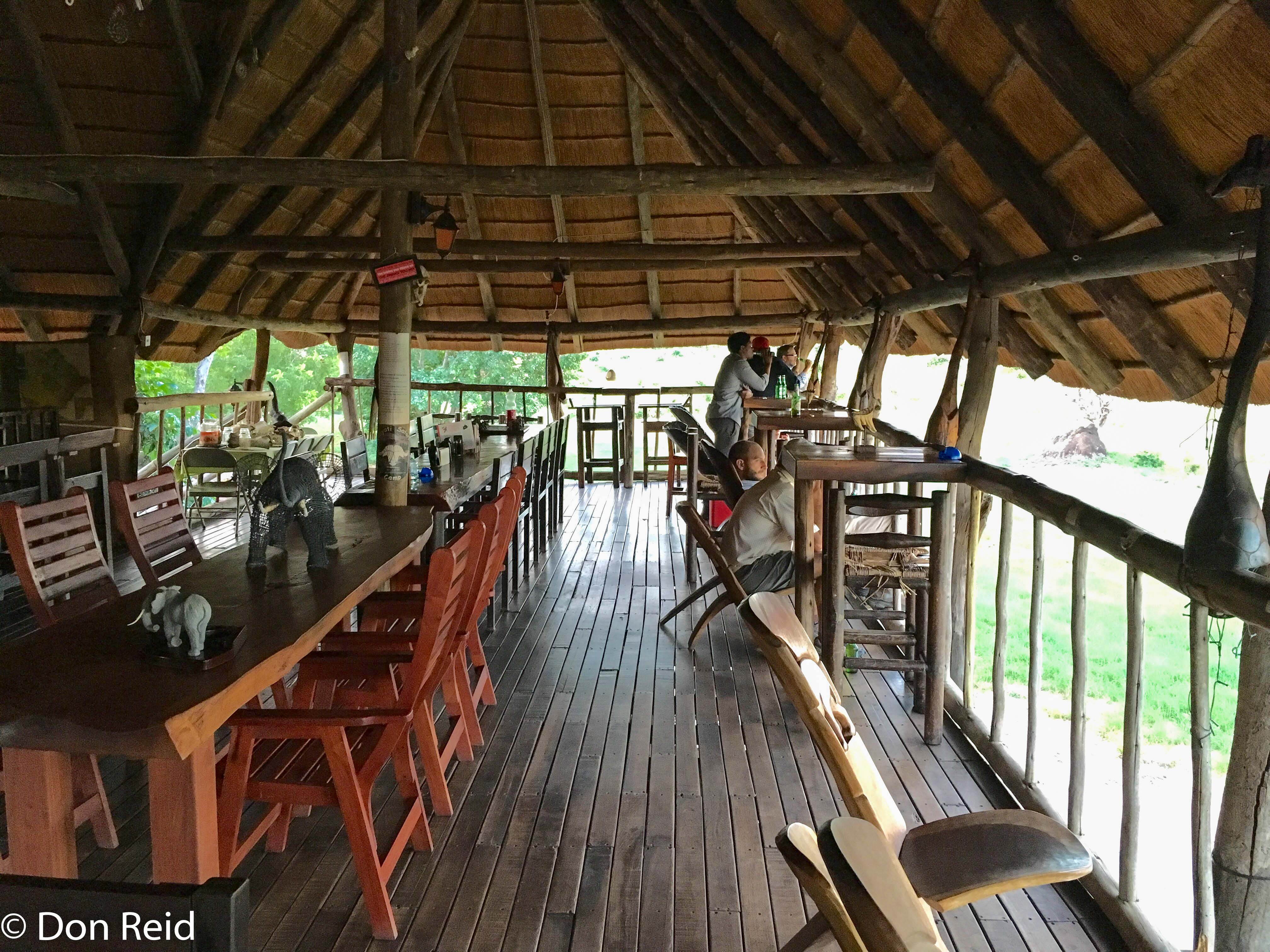
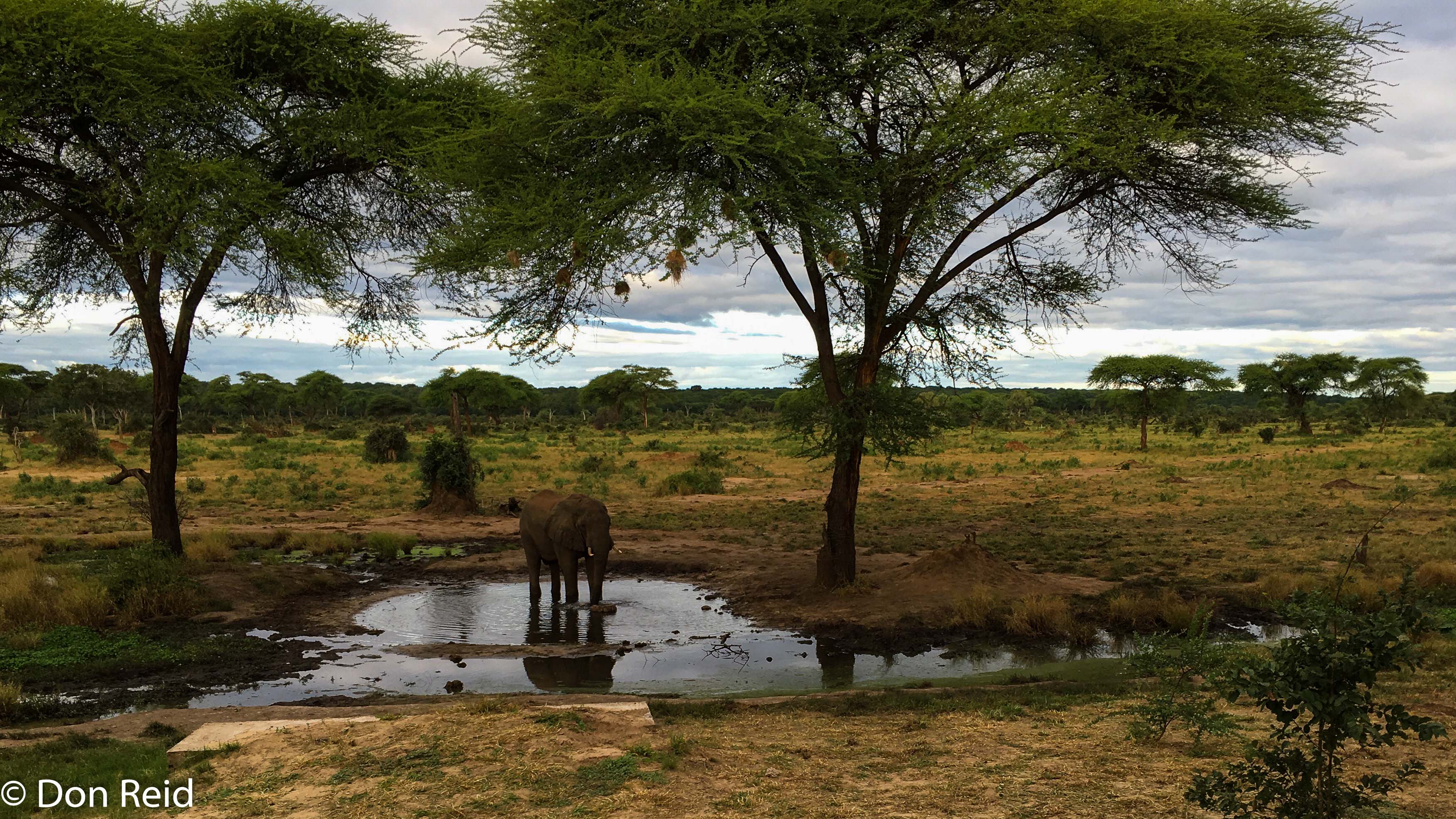
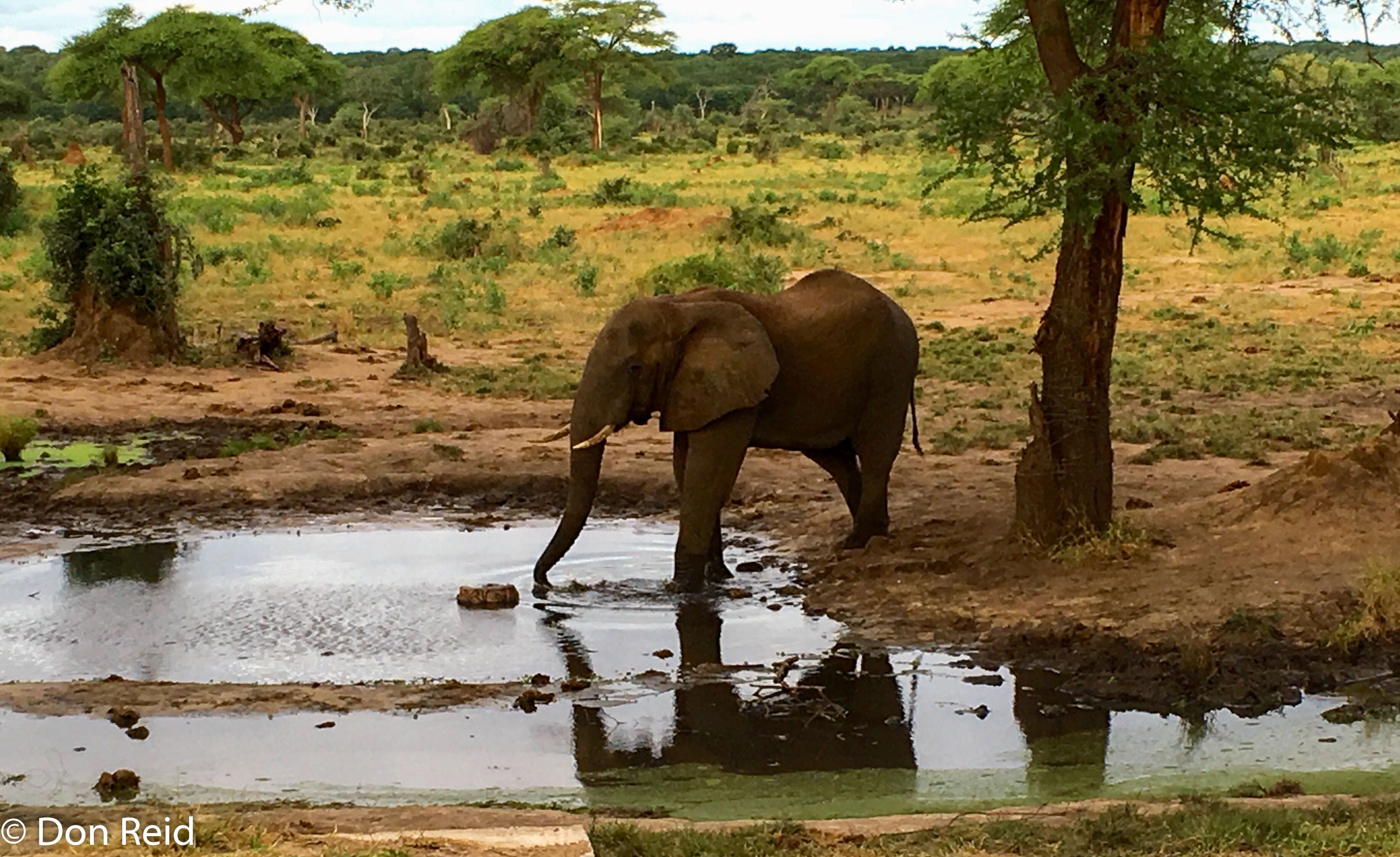
Description : The main feature is the deck with a cash bar and seating overlooking the plains in front of the camp, stretching to the distant Zambesi River, with the focus point being an artificial waterhole which is frequented during the day by a variety of game and, of course, birds.

Senyati camp
Senyati camp
Senyati camp
Senyati viewing deck
Senyati camp
View of the waterhole and plains

There is also an underground tunnel which you can walk along to a ground level hide right next to the waterhole – quite exciting if there are elephants present as you are literally metres away from them!

Senyati camp
View from the ground level hide
Senyati camp
Senyati camp – view from the deck

Bird Life : My one visit so far produced a good list of species in a short time, including Arrow-marked Babbler, Red-billed Hornbill, Wood Sandpiper, Grey-headed Bush-Shrike, Knob-billed (Comb) Duck and Red-billed Spurfowl. The potential for some excellent birding at this spot seems good. Unfortunately I had left my camera at the guest house so had to make do with non-digital memories other than the above taken with my pocket camera (which I also occasionally use to phone)


Kasane, Botswana : Chobe River Birding


Of all the birding experiences you can have, the water-based ones seem to be the most memorable. I had been looking for an opportunity to do a boat trip on the Chobe River in northern Botswana for a year or more and in July this year I decided to make it happen.

There are a few boat rental companies in Kasane and I chose Kalahari Tours based on a colleague’s recommendation – they were able to accommodate me early on the Friday of my monthly visit and I arrived at the reception on the stroke of 7 am, armed with my binos, camera, snacks and a warm jacket to ward off the cool wind that was coming up.

The boat was of aluminium construction, sturdy looking, hopefully Hippo-proof and fitted with 2 rows of three comfy seats with a fold-down canopy over. I took up position in the middle seat of the front row, being the only guest that morning, doing my best to look as if this was my customary position in all boats I travelled in, and spread my gear on the adjoining seats.

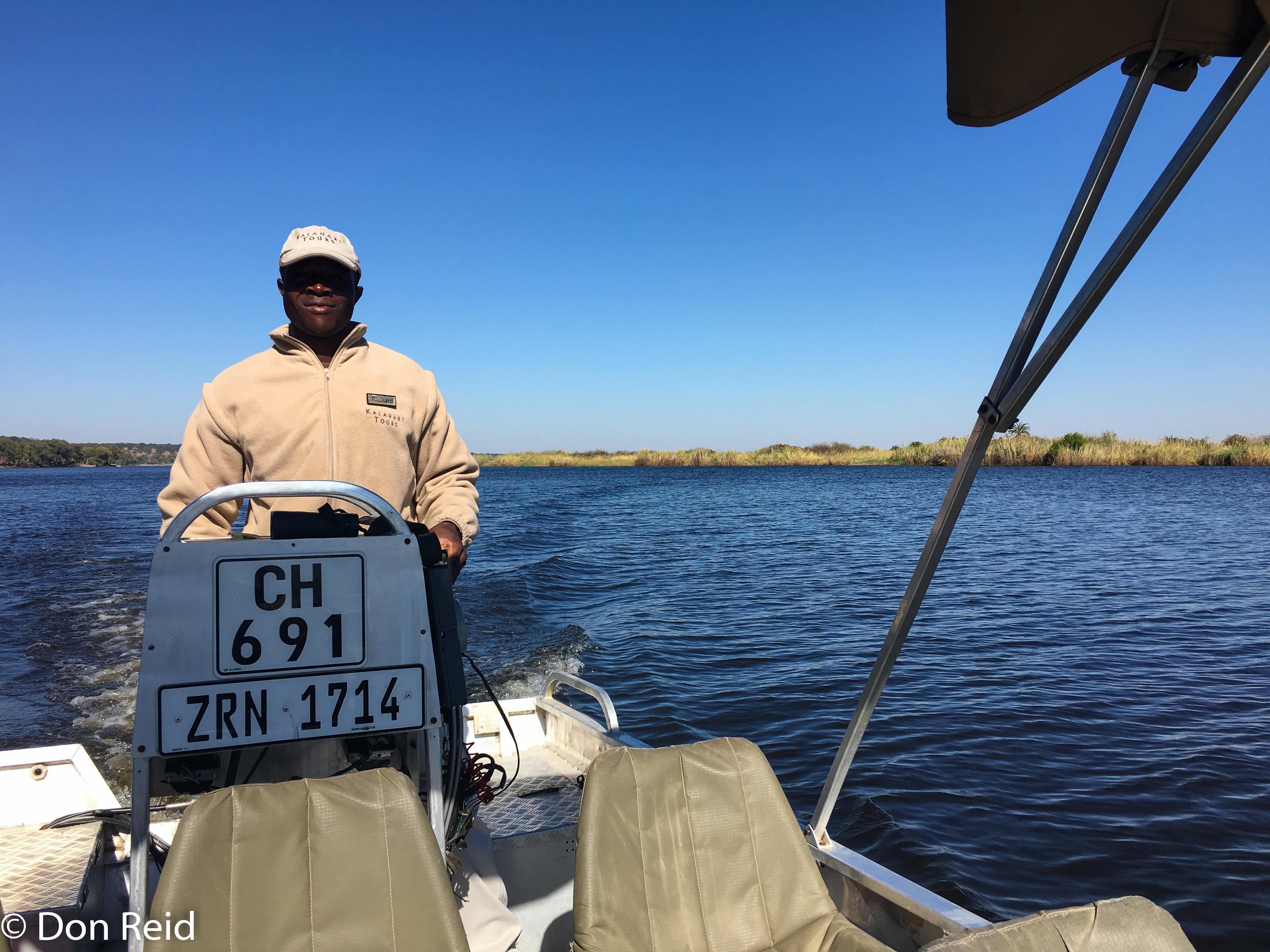
Richard, Chobe River Boat Trip
Richard, boatman and bird guide extraordinaire

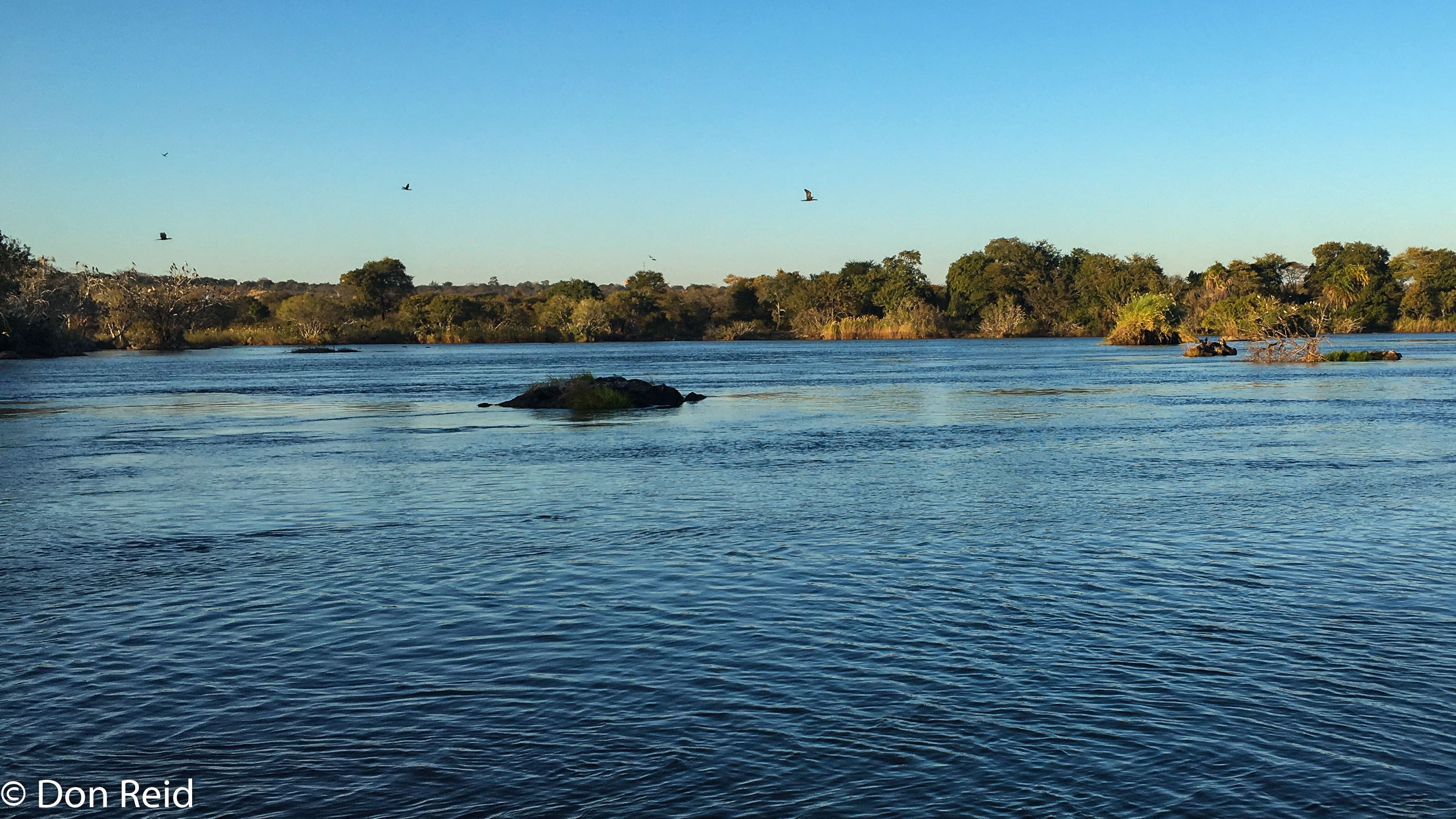
The boatman, Richard, took us out smoothly, initially downstream and around a wide bend in the majestic river, to the Seboba rapids where the river runs faster over unseen obstacles below the water. As we approached the rapids hundreds of Cormorants, Gulls and other large water birds were heading out from their roosts to feeding areas upstream.

Seboba rapids
Seboba rapids

There were still many birds roosting in the trees at the rapids, on the banks and on small islands in the middle of the river and Richard carefully approached as close as possible to allow intimate views of the birds and their youngsters.

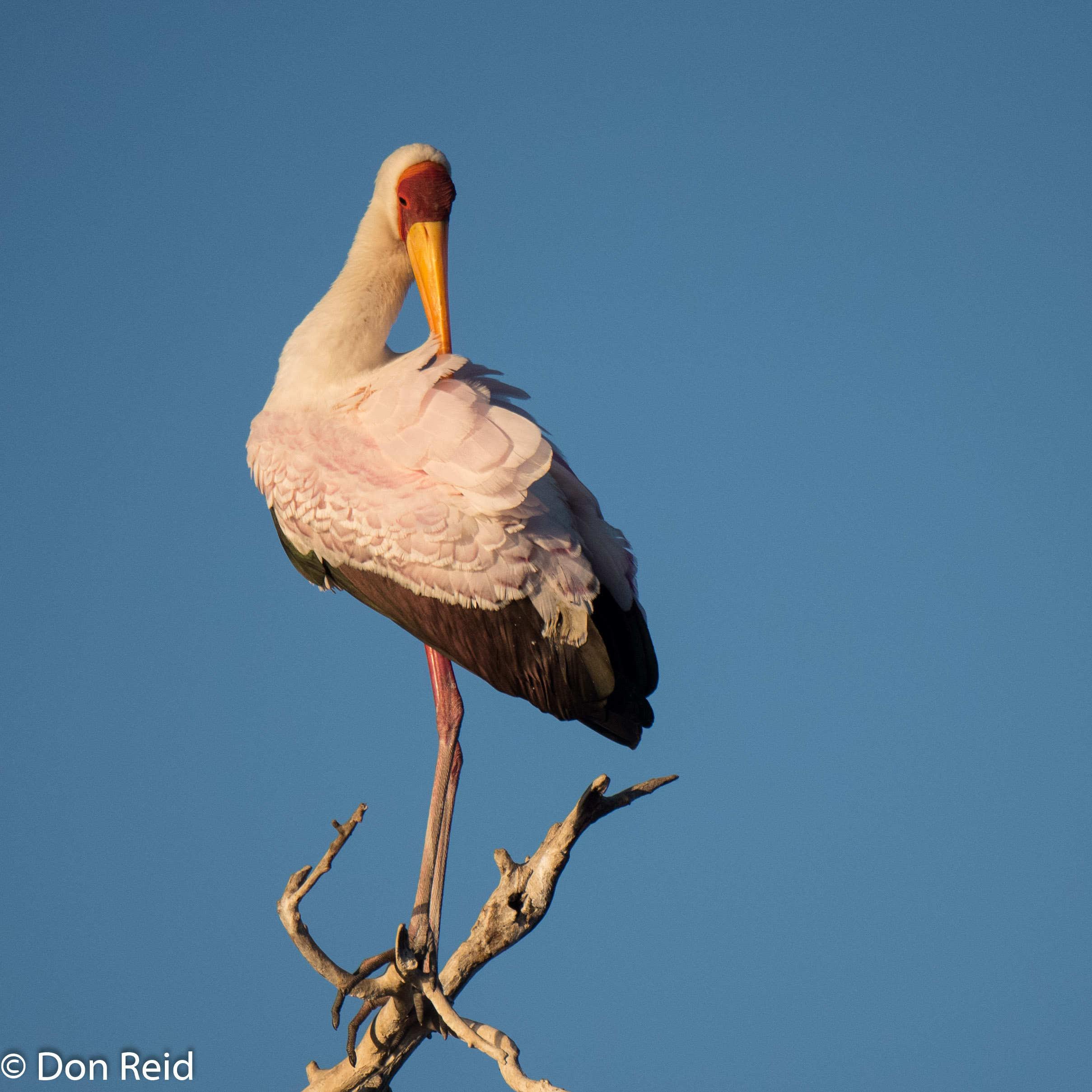
Yellow-billed Stork, Chobe River Boat Trip
Yellow-billed Stork
Yellow-billed Stork, Chobe River Boat Trip
Yellow-billed Stork family
Yellow-billed Stork, Chobe River Boat Trip
Yellow-billed Stork

Most visible were many Yellow-billed Storks with their fluffy grey and white youngsters crowded into one part of a tree. White-breasted Cormorants were numerous, some tending to nests in the tops of trees. My neck was already feeling the effects of trying to keep up with the action and the constant movement of the birds in and out of the trees, and up, down and across the river. We were literally surrounded by birds, in numbers second only to the masses that gather at trawlers on pelagic trips.

White-breasted Cormorant, Chobe River Boat Trip
White-breasted Cormorant

Amongst the massed Storks and Cormorants were many other species such as Purple Heron, African Spoonbill, Great Egret and Green-backed Heron.

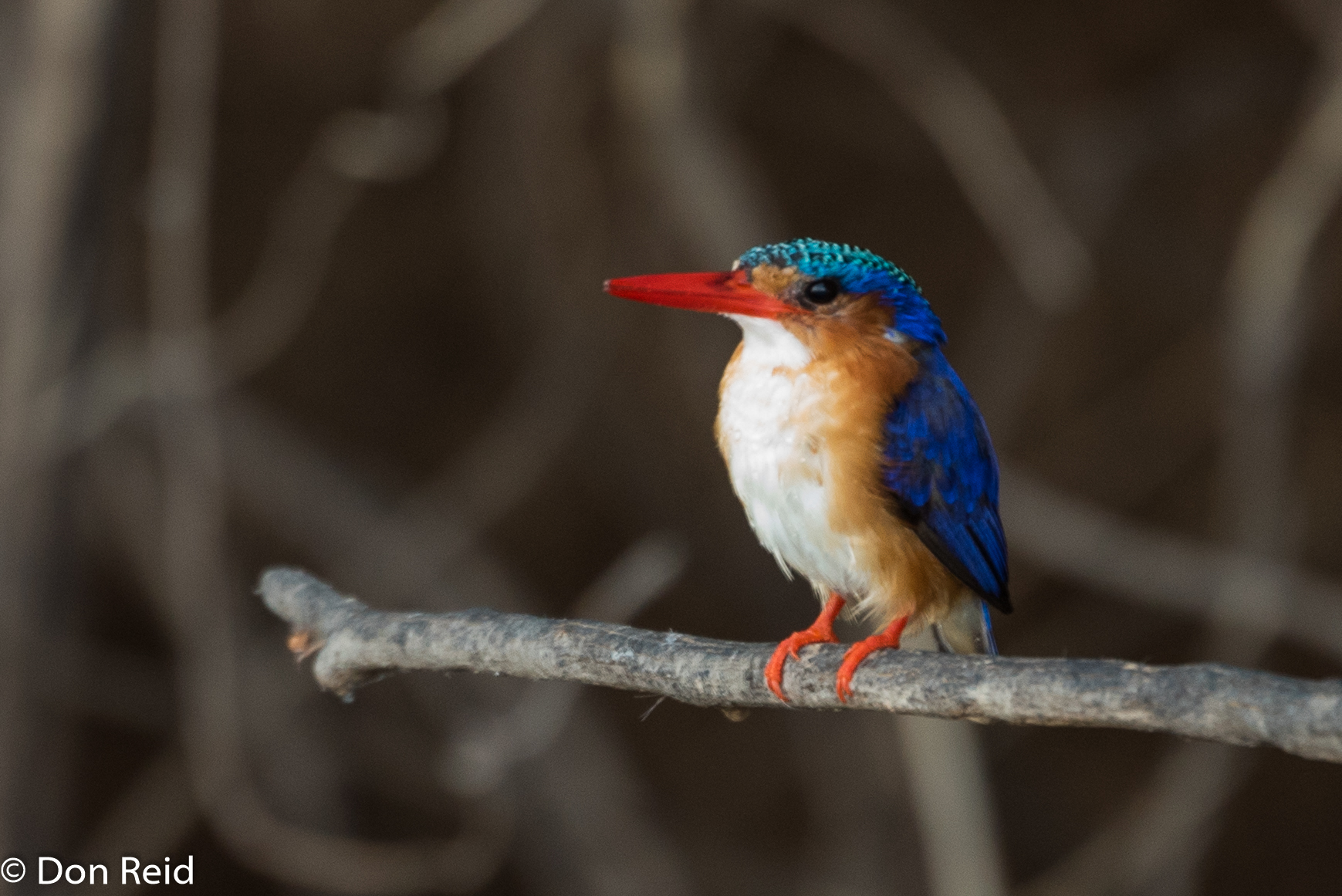
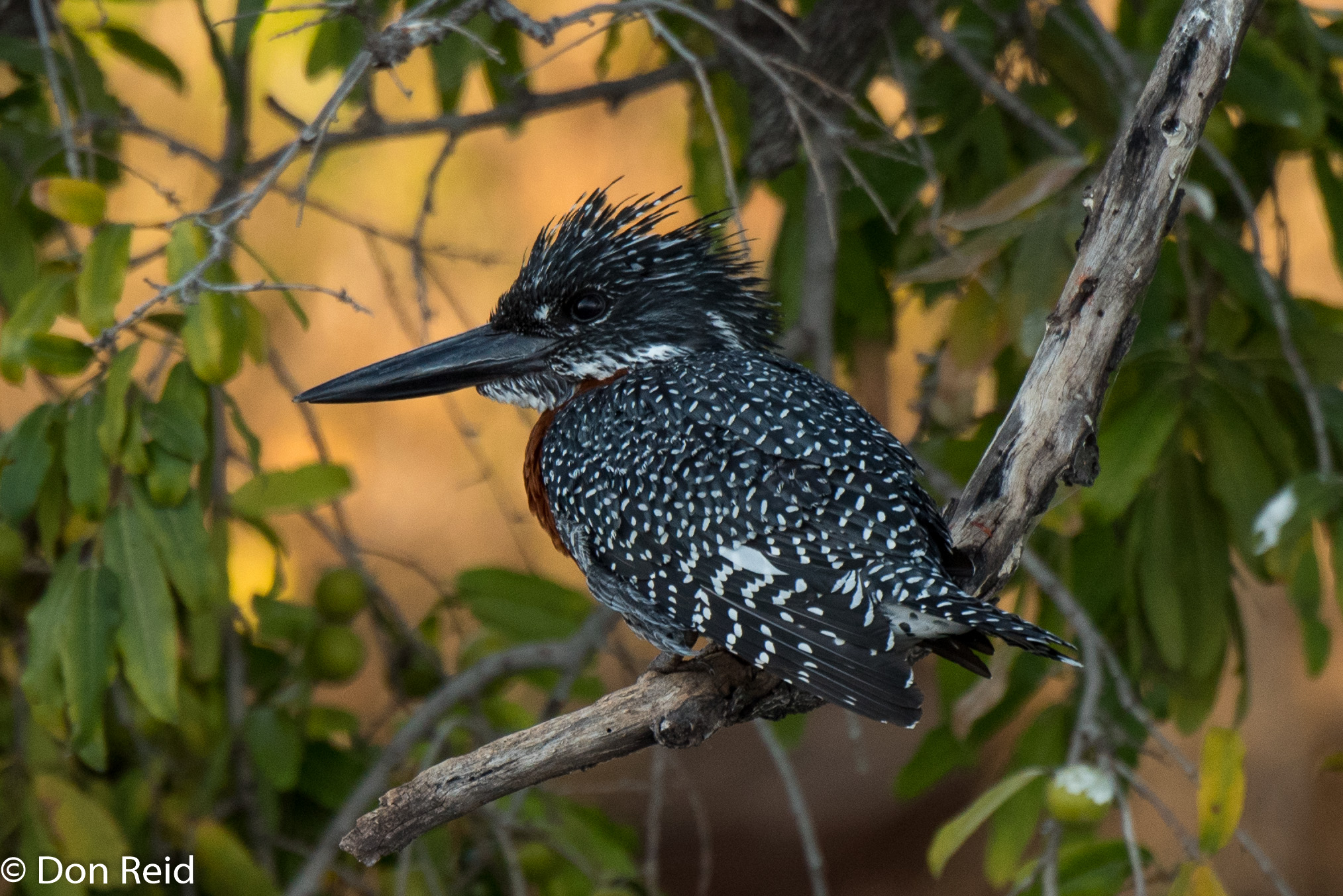
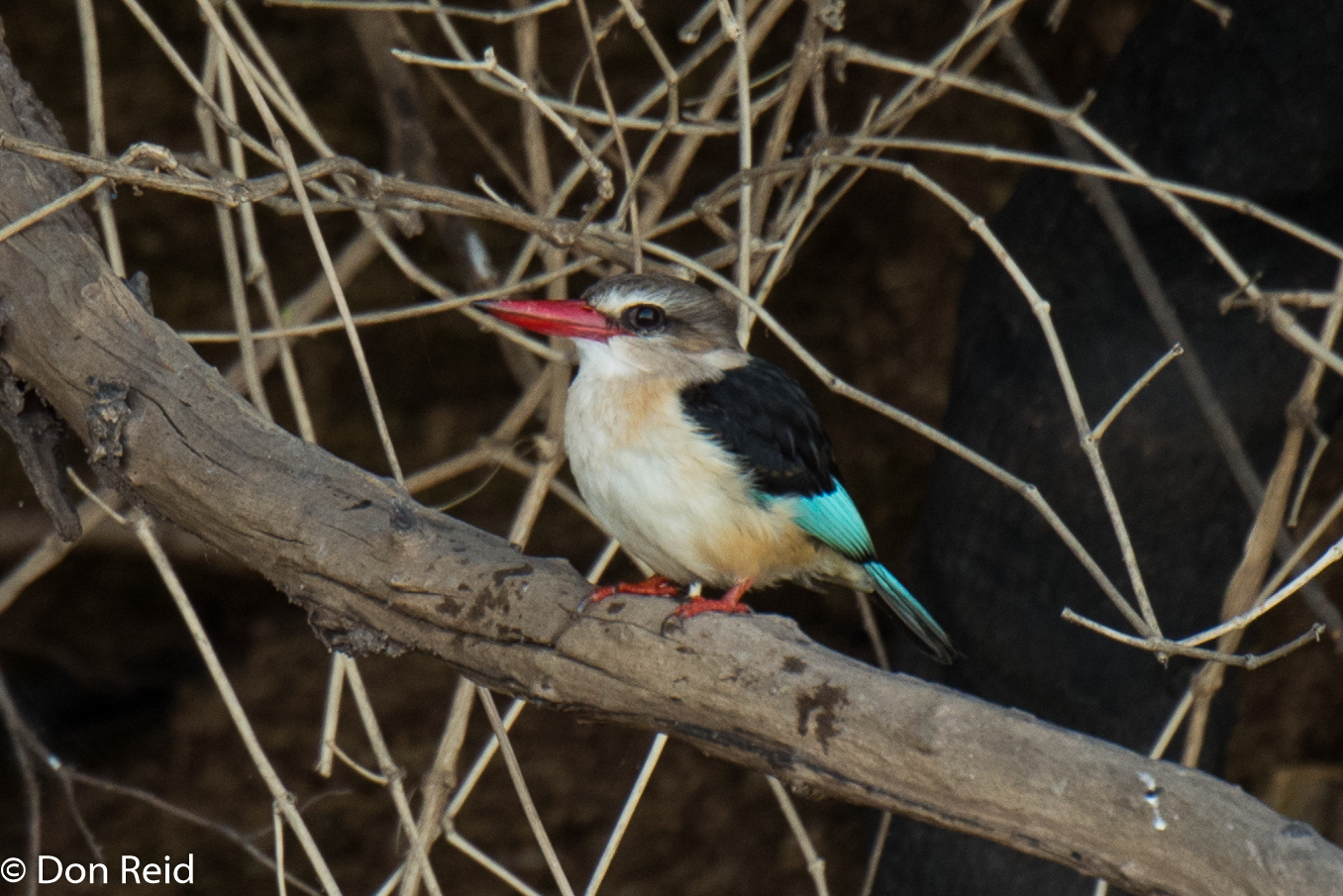
Once I was sated with the spectacular bird life at the rapids, I indicated to Richard that we could proceed and he headed upstream, staying close enough to the banks to spot birds in the overhanging reeds, bushes and trees. His eyes proved sharper than mine as he spotted and pointed out everything from the tiny Malachite Kingfishers to their larger cousin the Giant Kingfisher, not to mention Brown-hooded Kingfishers.

Malachite Kingfisher, Chobe River Boat Trip
Malachite Kingfisher
Giant Kingfisher, Chobe River Boat Trip
Giant Kingfisher
Brown-hooded Kingfisher, Chobe River Boat Trip
Brown-hooded Kingfisher

Water Thick-knees skulking in the shade of the riverside bush are particularly difficult to spot but Richard’s sharp eyes found them easily. On our way upstream we passed by some of the well-known lodges with their decks overlooking the great river.

Chobe River Boat Trip

Wire-tailed Swallows swooped over our boat continuously and  a pair even decided that our boat would be a good vantage point as we glided along the smooth waters.

Wire-tailed Swallow, Chobe River Boat Trip
Wire-tailed Swallow gets a lift

Further upstream we entered the Chobe National Park and Richard docked briefly at a small hut to sign us in. From there we made our way slowly along the side channels with the Park on our left and the large mass of Impalila Island on our right.

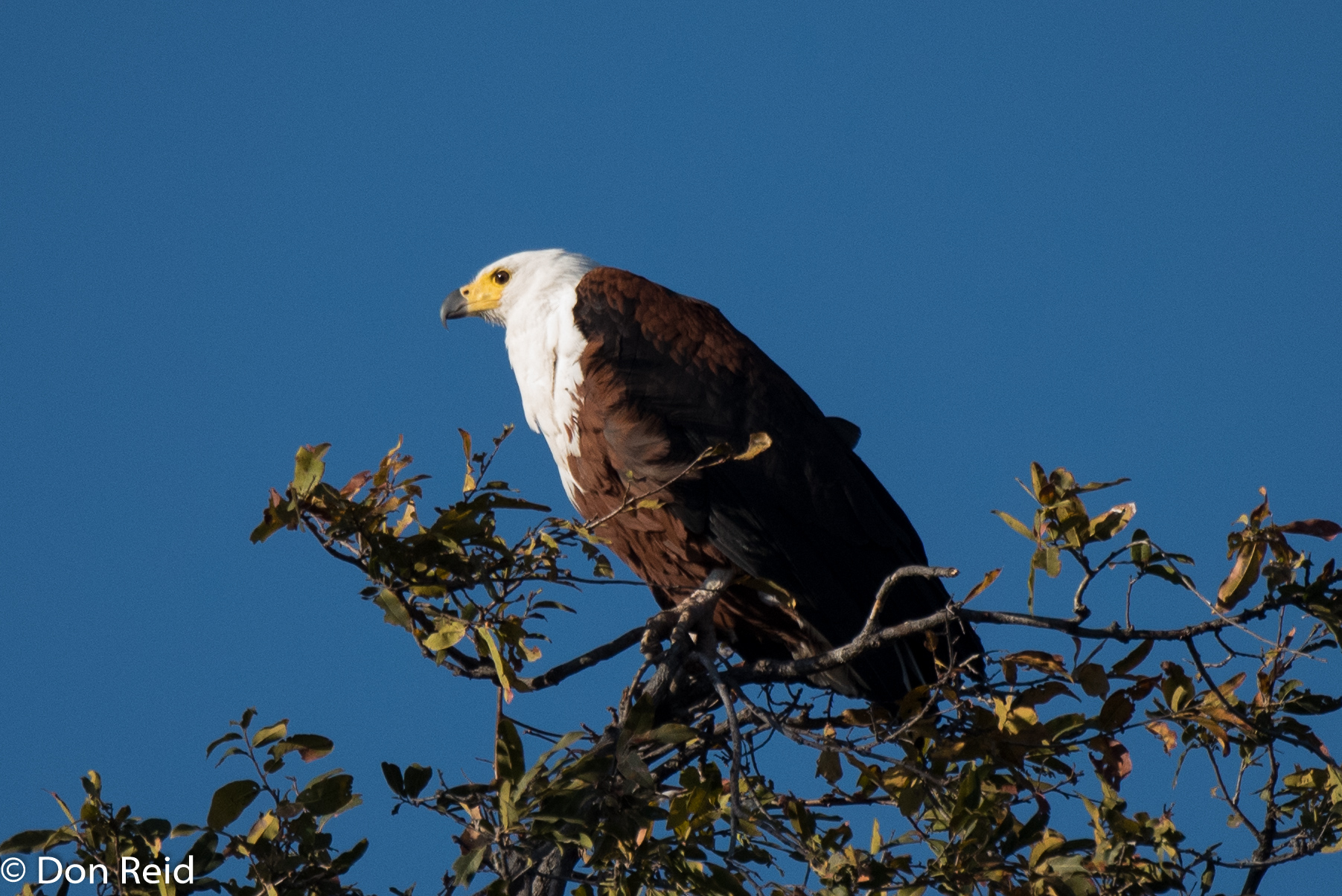
African Fish-Eagle, Chobe River Boat Trip
African Fish-Eagle
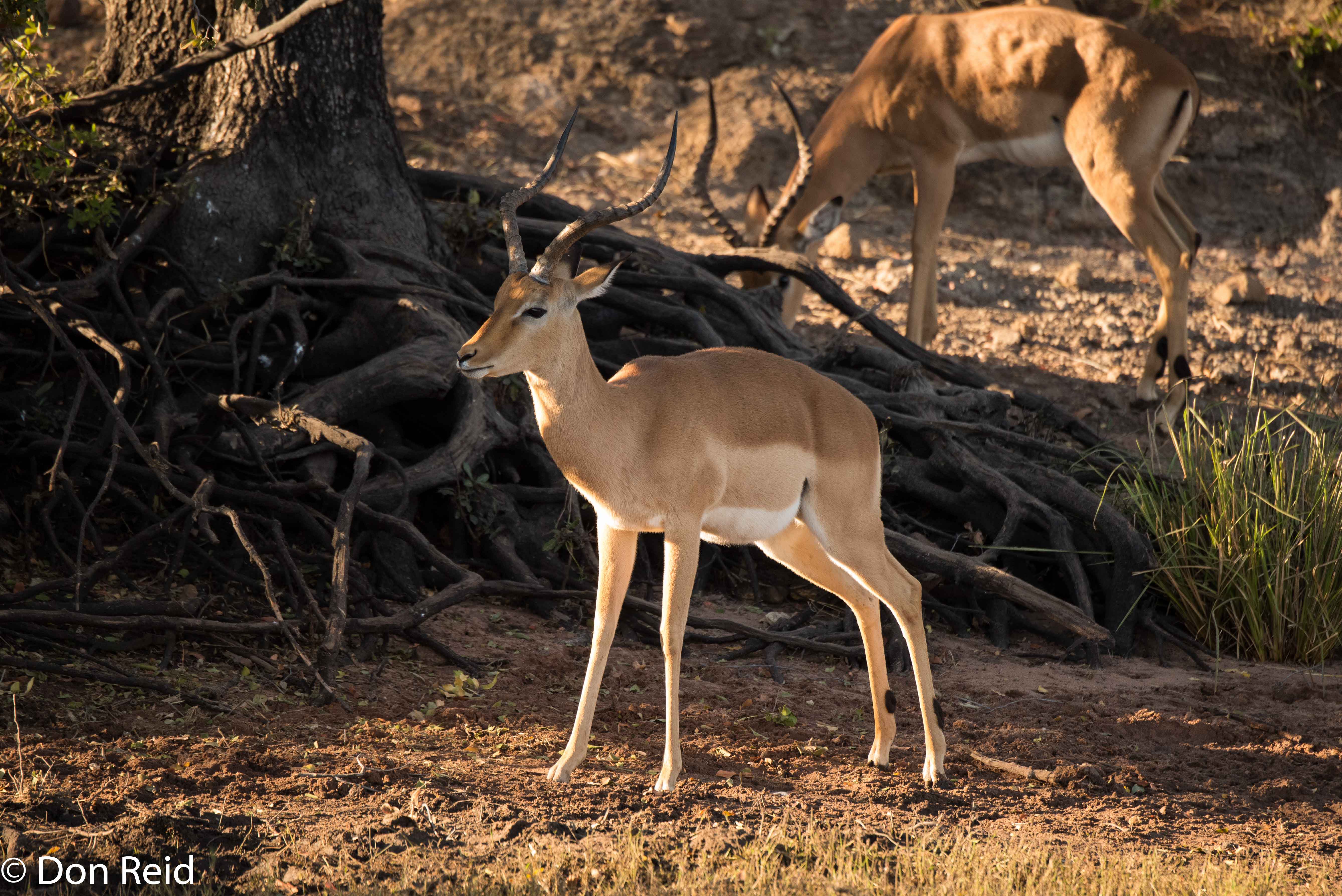
Impala, Chobe River Boat Trip
Impala

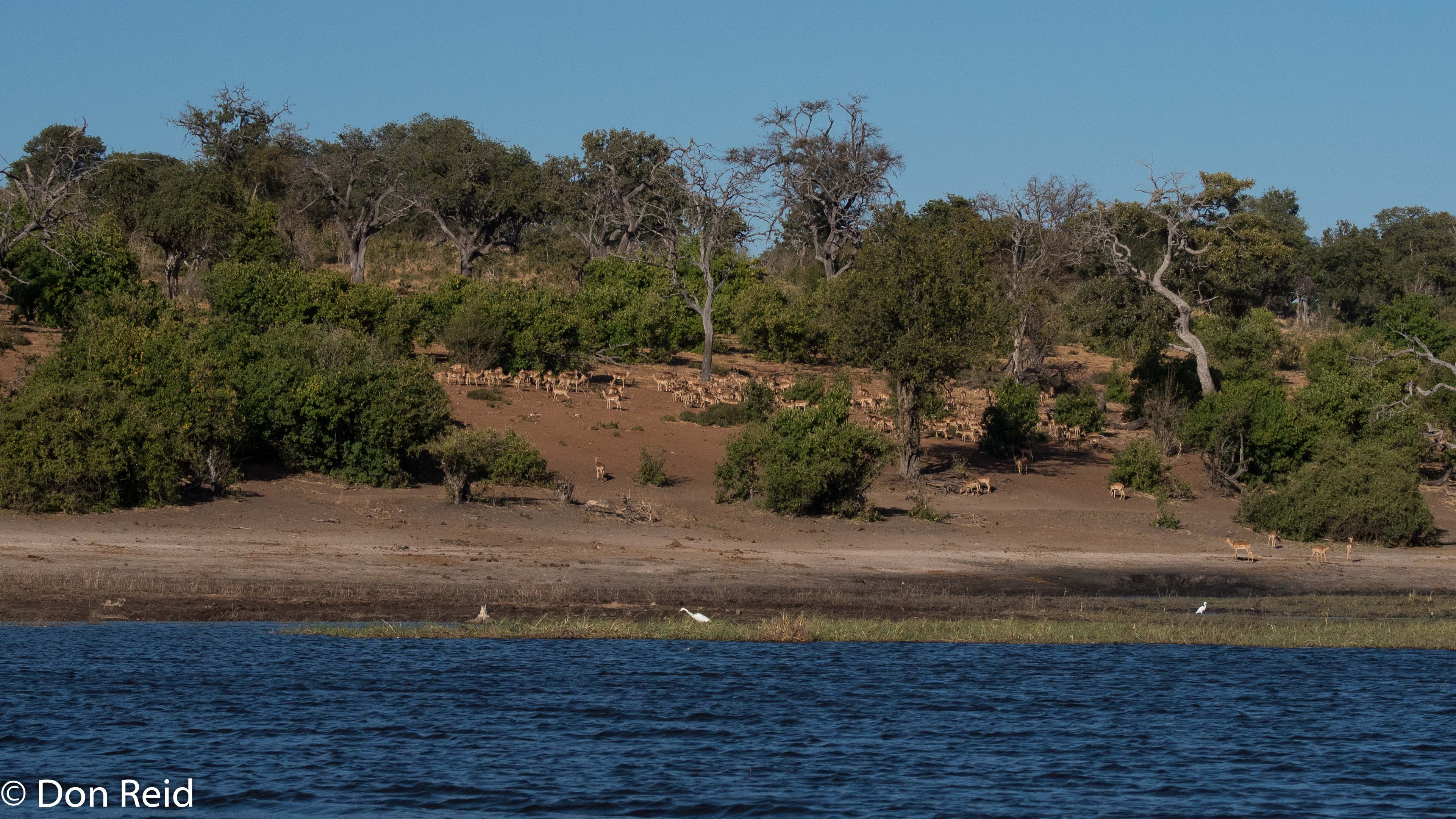
With the water having subsided from its post-summer highs, the island was now occupied by many Buffalos – a safe haven for them away from the big cats.

African Buffalo, Chobe River Boat Trip
African Buffalo

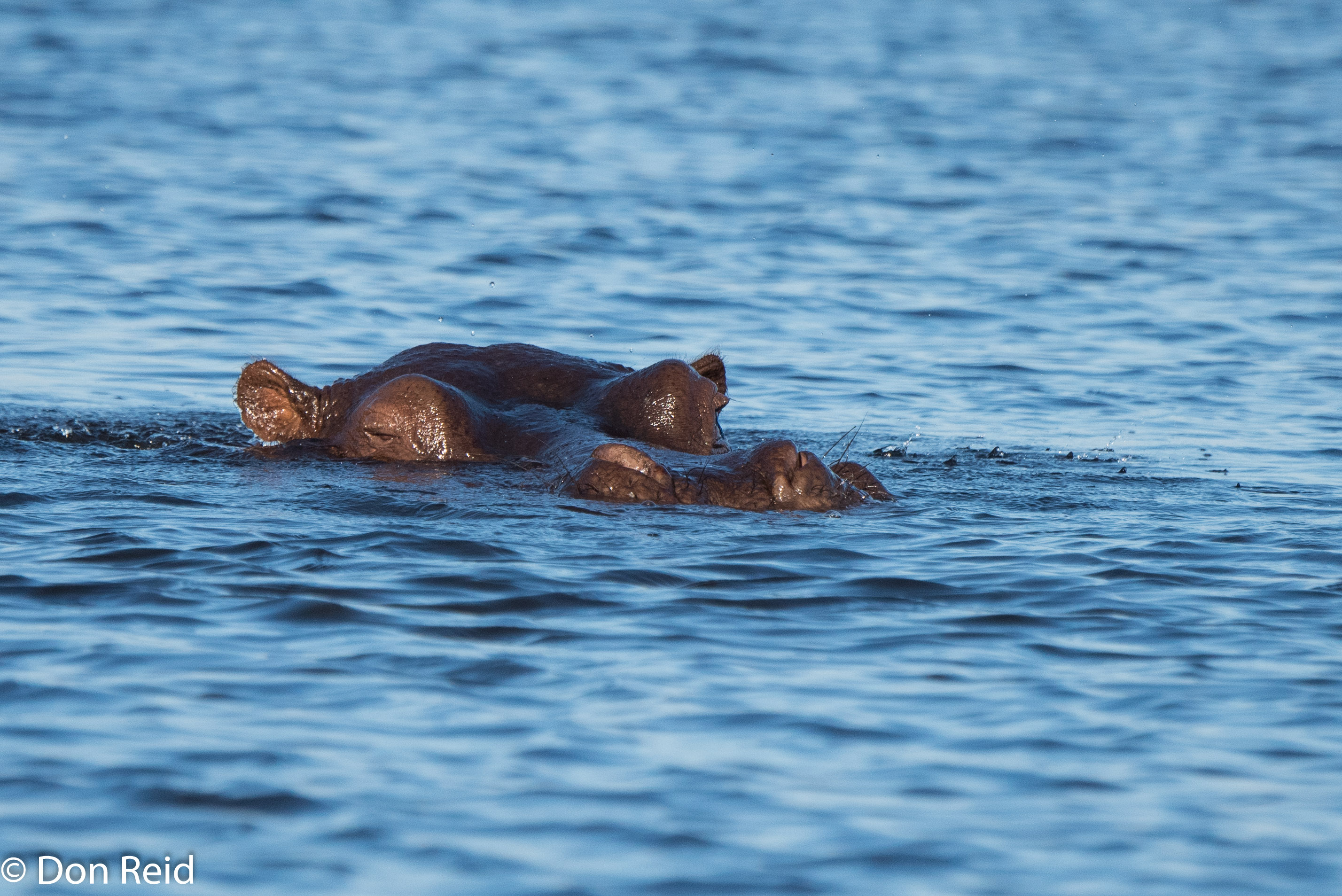
Here and there we saw Hippos and a couple appeared in the river just ahead of us, causing Richard to give them a wide berth – Hippos are one animal you do not mess with in the river, or on land for that matter.

Hippo, Chobe River Boat Trip
Hippo – best avoided

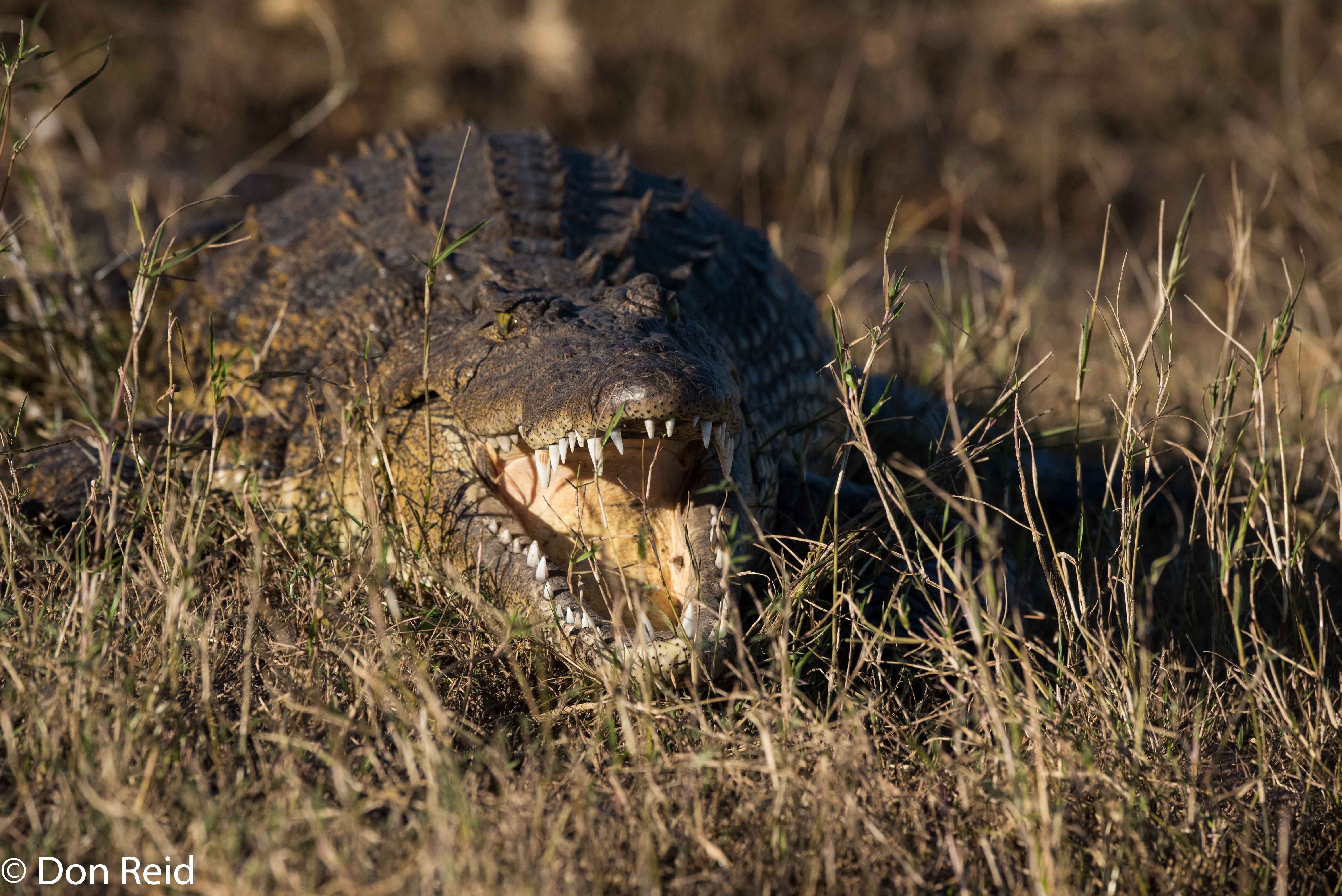
A mid-sized Crocodile on the bank drew us nearer to have a look and we literally peered down its throat as the bow of the boat bumped up against the bank just in front of it. While admiring its rows of teeth and taking photos I was looking for any signs of movement as, by my calculations, one lunge would have seen it land in our boat, but fortunately crocs are content to just lie there (most of the time) and regulate their body temperature by opening their jaws wide. Must remember to take dental floss next time.

Crocodile, Chobe River Boat Trip
Crocodile up close and personal

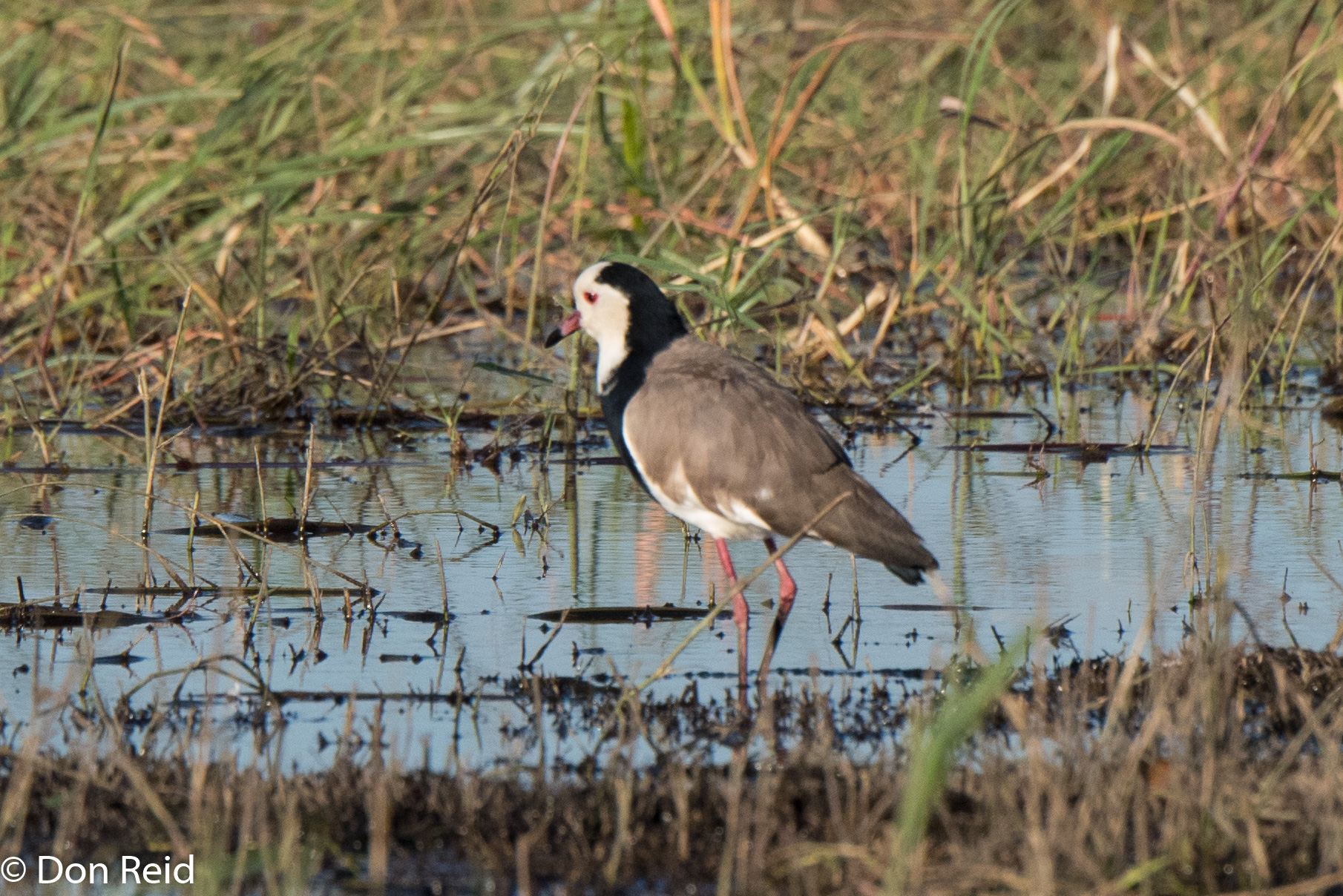
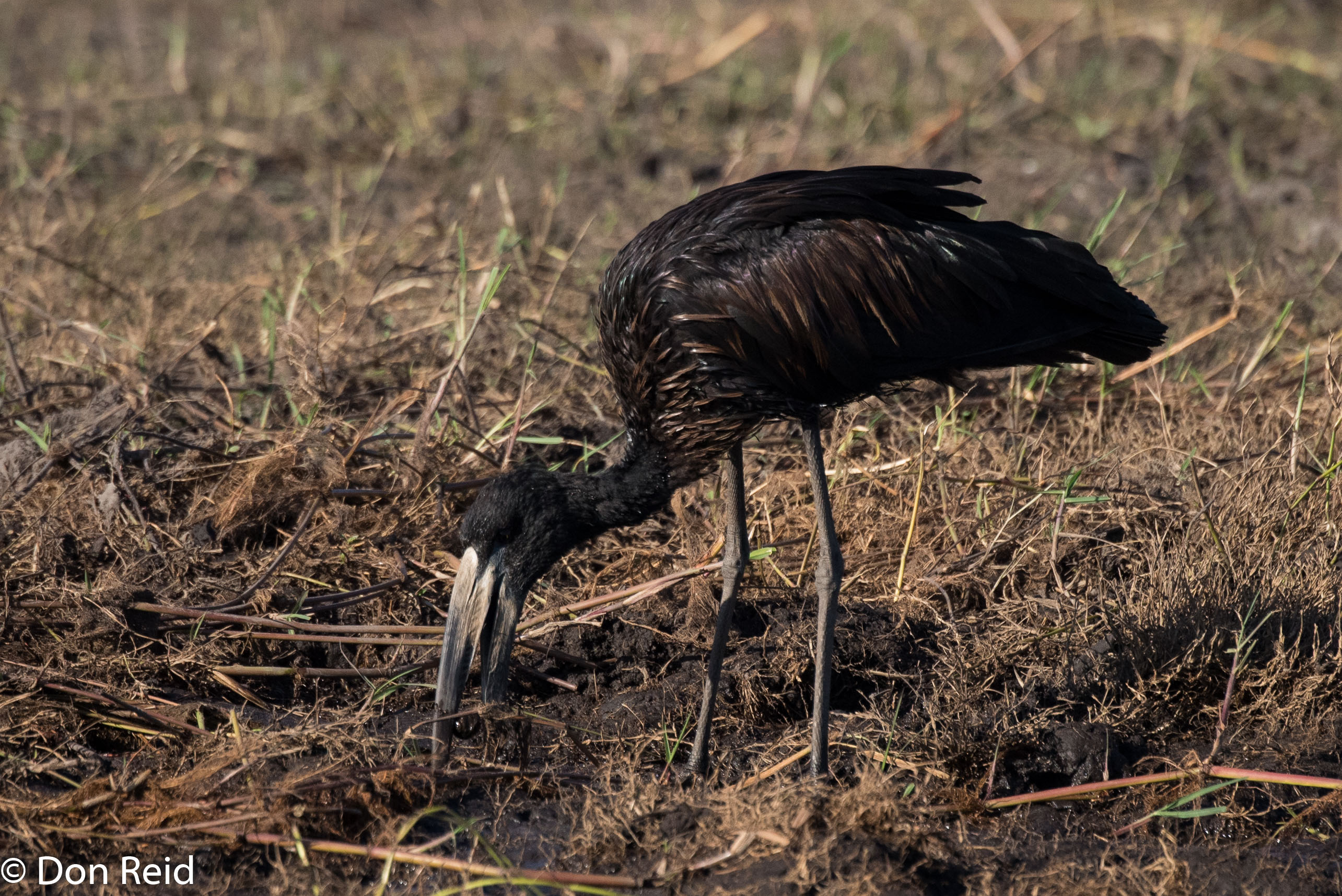
The island was home to many bird species – Lapwings (White-crowned and Long-toed), Squacco Herons, Geese in large numbers (Spur-winged and Egyptian) African Openbills, all the “White” Egrets except Cattle Egret (Great, Yellow-billed and Little), Ibis’s galore (Glossy, Sacred), many White-faced Ducks and larger waders such as African Jacana and Black-winged Stilt. A veritable feast of birding.

Chobe River Boat Trip
Chobe Game Park
Long-toed Lapwing, Chobe River Boat Trip
Long-toed Lapwing
African Openbill, Chobe River Boat Trip
African Openbill
Red-billed Firefinch, Chobe River Boat Trip
Red-billed Firefinch

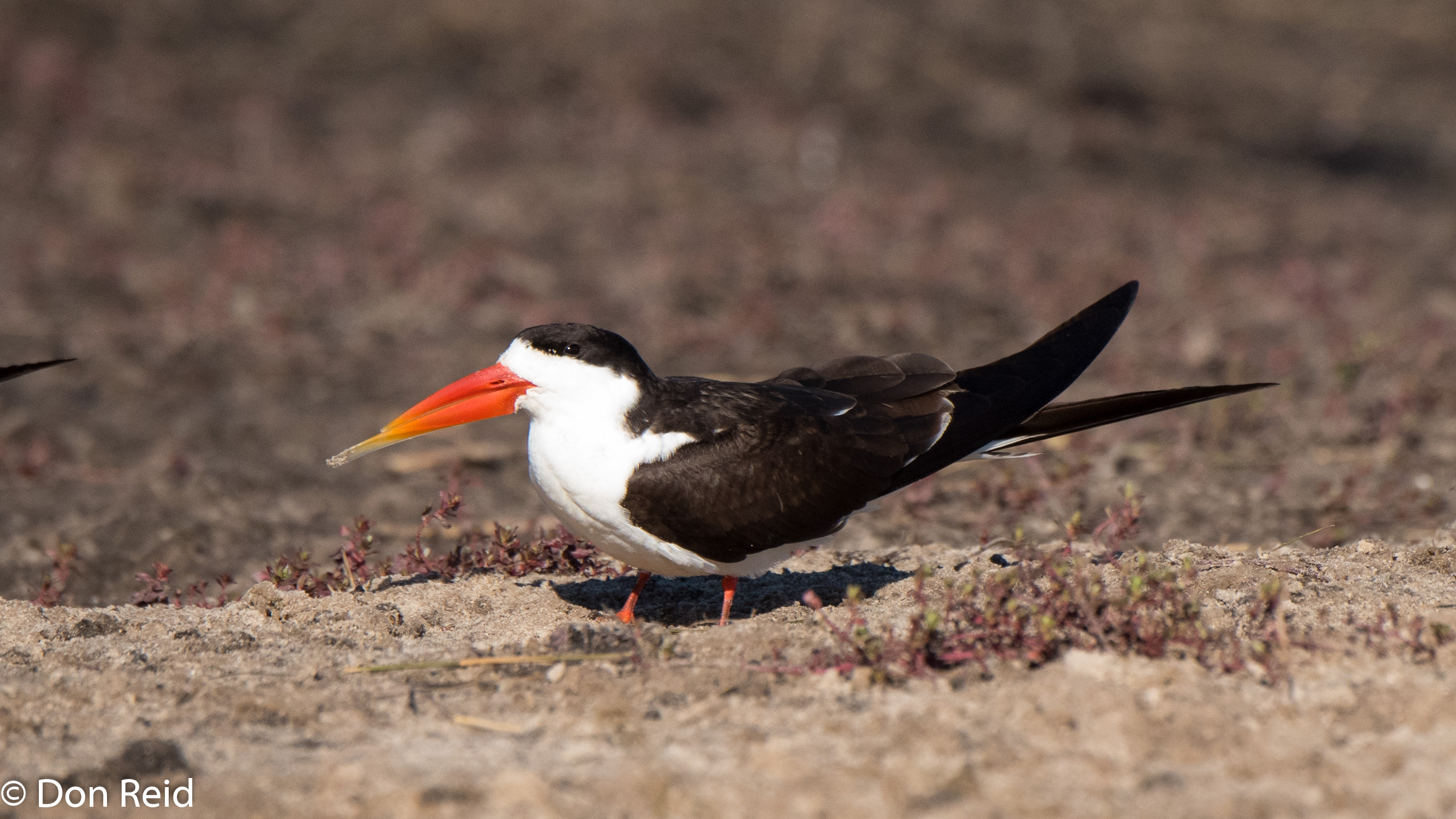
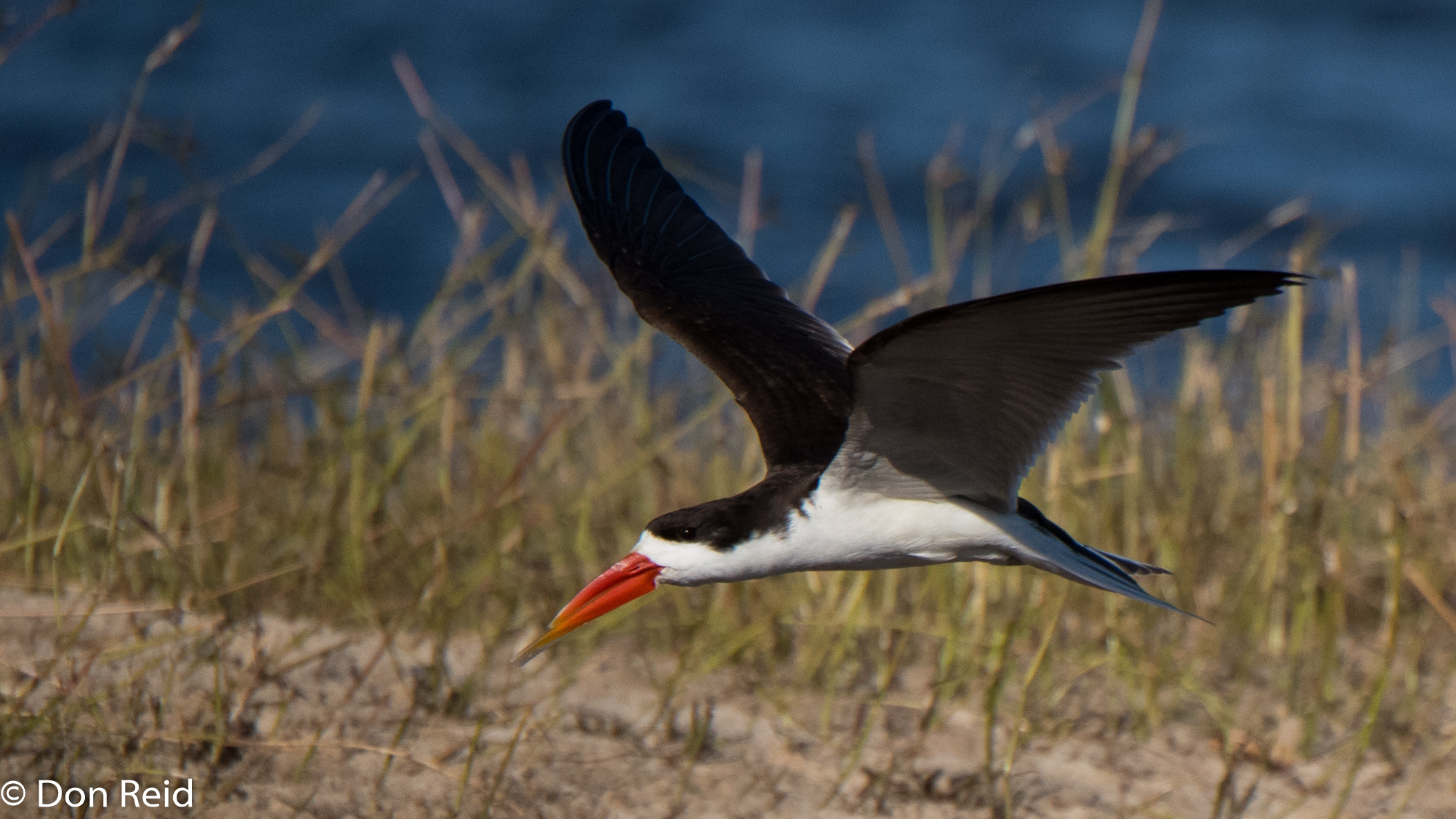
A smallish sandbar pretending to be an island was home to the bird highlight of the day – 50 or so African Skimmers using it as a roost in between sorties over the river, allowing a close approach to view these unique birds with their vivid colours. Their black and white plumage contrasts with their bright red bills, which look out of proportion but are perfectly designed for their function of skimming the surface of the water in search of small prey.

African Skimmer, Chobe River Boat Trip
African Skimmer
African Skimmer, Chobe River Boat Trip
African Skimmer

African Skimmer, Chobe River Boat Trip

African Skimmer, Chobe River Boat Trip

Pied Kingfishers are common throughout Southern Africa but never in numbers as we came across them along the river. I would guess we saw more than 100 during the trip and there were signs of them nesting in the sandy banks, where they occurred at a rate of one every 5m or so.

Pied Kingfisher, Chobe River Boat Trip
Pied Kingfisher

The return trip was along the main channel, by now rippled by the fresh wind which had come up, but not enough to cause any discomfort. Along the way we added Red-billed Teal and Knob-billed Ducks to our sightings as well as a lone Red Lechwe in long grass on a waterlogged plain.

Red Lechwe, Chobe River Boat Trip
Red Lechwe

Amazingly, three hours had passed without me noticing and we returned to the jetty where we had started – what an outing!

Bird in the Lens – Sociable Weaver

The Sociable Weaver, chosen by Birdlife South Africa as their “Bird of the Year” for 2016, is unique in many respects and more than worthy of its selection.

It is also a bird that has fascinated me ever since I first saw their massive nest structures on Camelthorn trees in the Free State, long before my interest in birding began. This was in the early 1970’s when I moved to Bloemfontein, Free State and developed two loves – for my wife and for the wide open spaces of the Free State, represented by the family farm near Hoopstad.

Although the farm we used to visit every couple of weeks is no longer in the family, the same massive Sociable Weaver nest sits securely in the same Camelthorn tree in the family cemetery, watching over the generations of the family who have found their final resting place in its dappled shade.

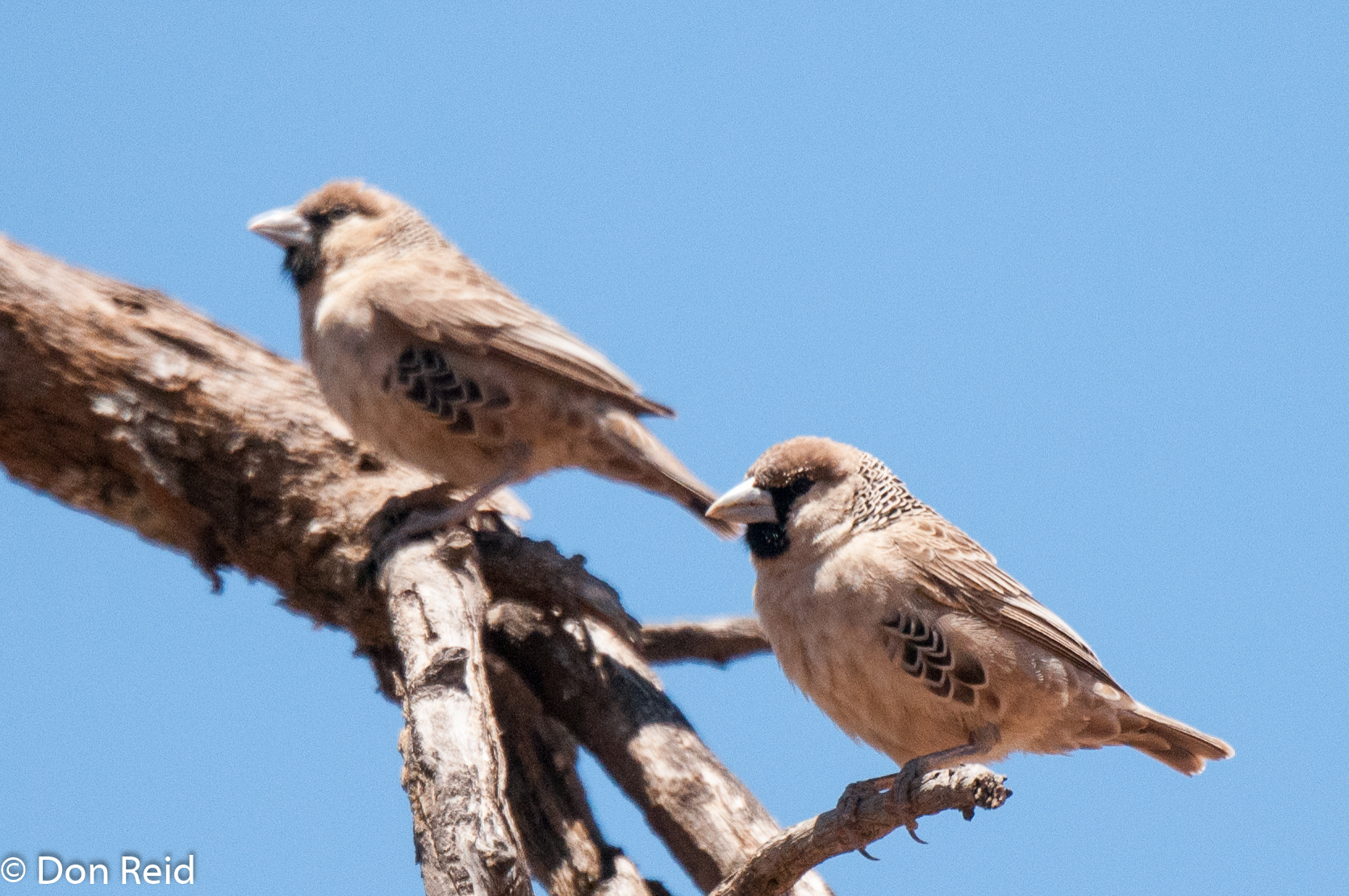
Sociable Weaver, Boskop Dam (Potch)

Why Unique?

Apart from being endemic to Southern Africa, the Sociable Weaver’s nest is the largest built by any bird in the world, large enough to house more than a hundred pairs of birds, often of several generations (why am I thinking of the Dallas Ewings right now?). They construct these enormous nests of stiff grasses, forming chambers at different distances from the outside face, which provide protection from the temperature extremes of Southern Africa’s arid zones.

Described as being like “giant haystacks”, the nests are constructed in trees or on artificial structures such as telephone and electricity poles, windmills and the like and have become an icon of the arid areas of Southern Africa.

Sociable Weaver nest near Hoopstad
Closer view of nest
Closer view of nest showing construction from stiff grass and some of the entrance holes

Species Names

Scientific : Philetairus socius – from the Greek philos = love and hetairos = companion

Afrikaans: Versamelvoël

Indigenous : Thantlagane(NS),  Kgwêrêrê  (Tw)

German : Siedelweber

French : Républicain social

Portuguese : Tecelão-sociável

Dutch : Republikeinwever

Sociable Weaver, Hoopstad

Sociable Weaver, Annasrust farm Hoopstad

Distribution

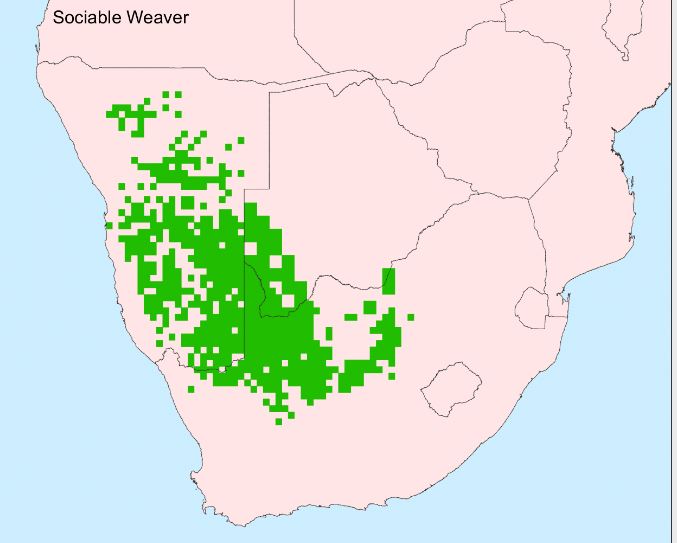
Distribution is across north-western South Africa, south-west Botswana and northwards across Namibia and is strongly associated with the arid savannahs of the southern Kalahari region.

The SABAP2 distribution map looks like this :

SABAP 2 Distribution map

Identification

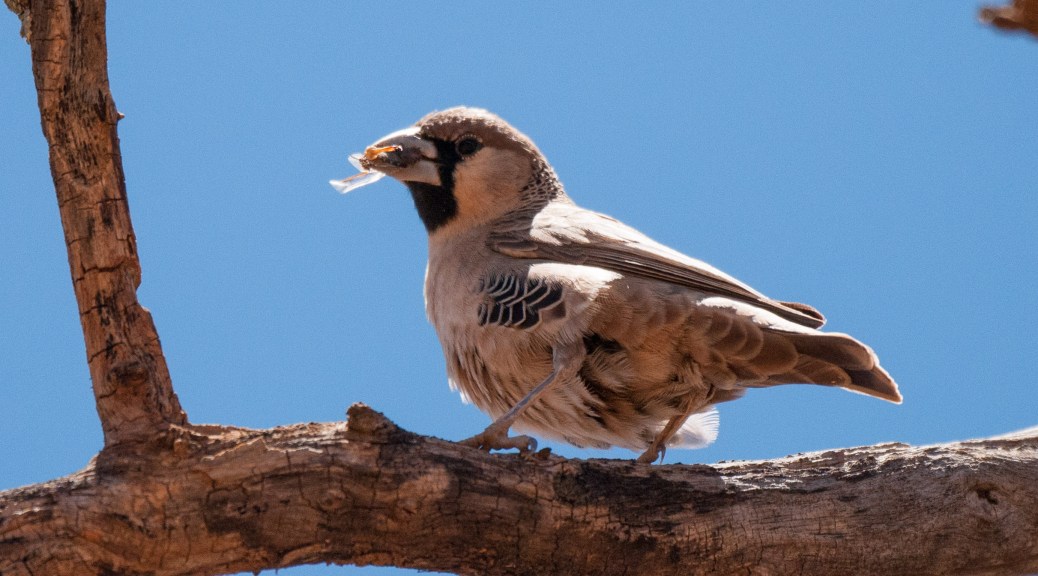
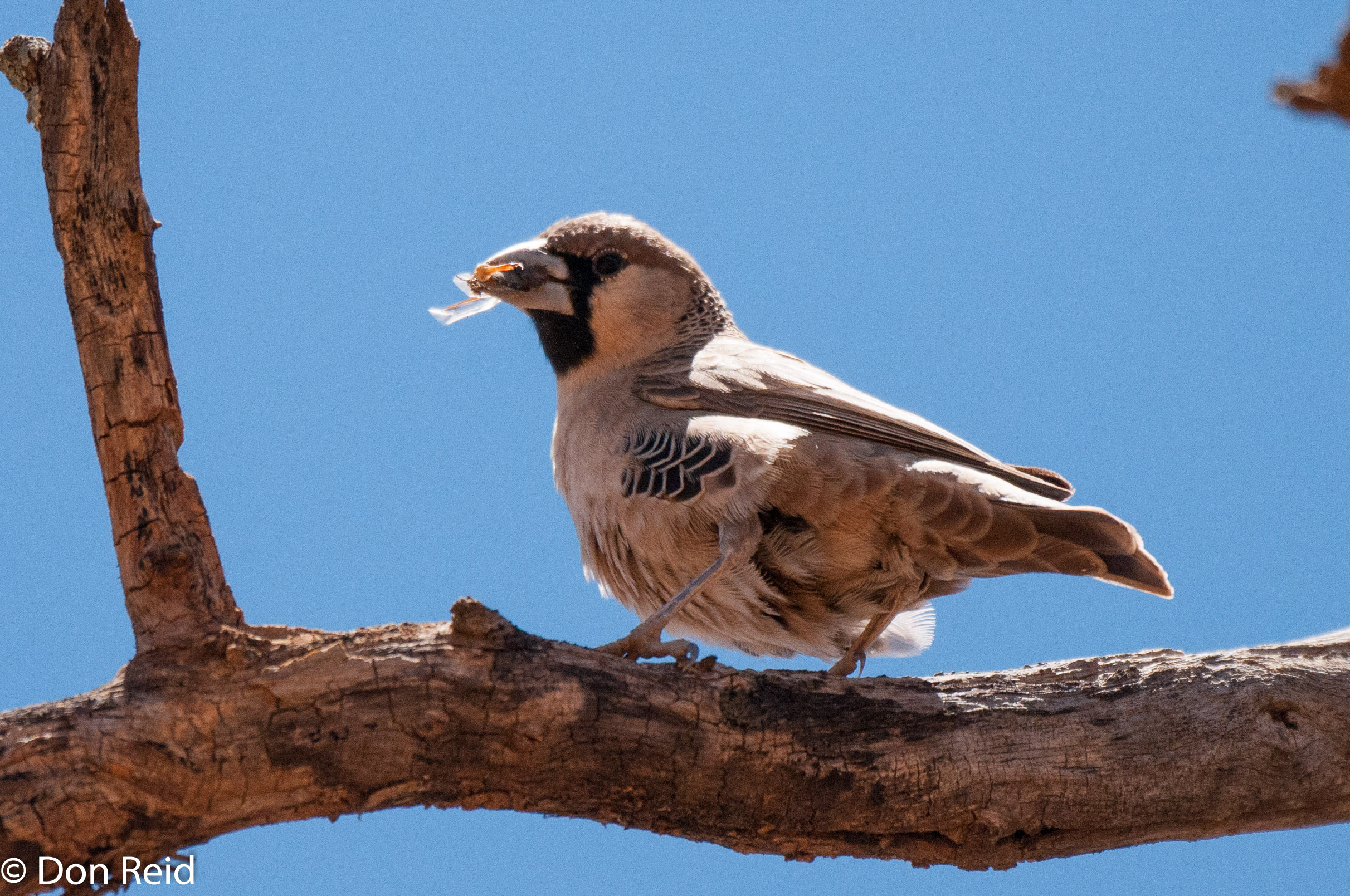
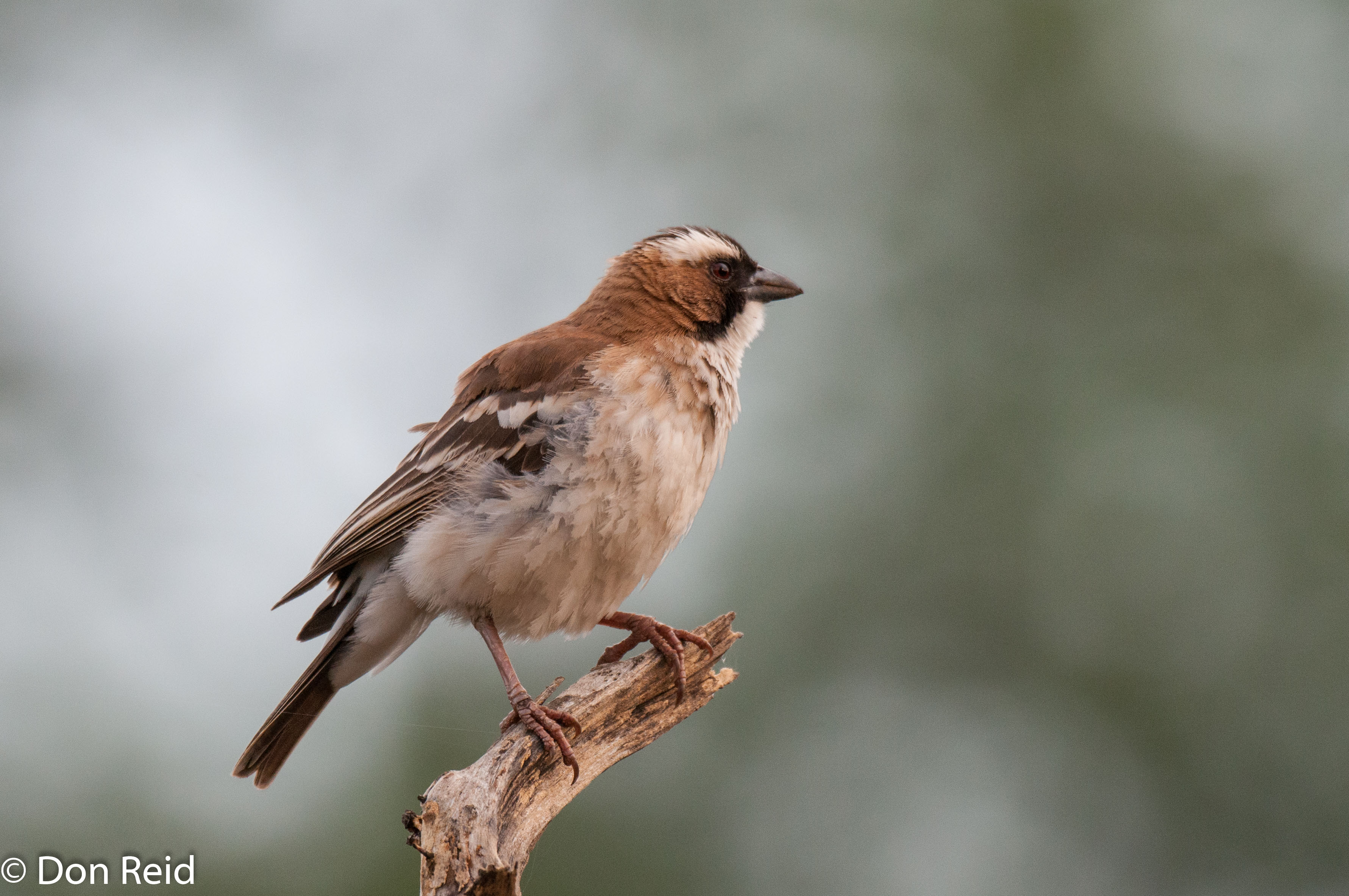
The nest is unmistakable, so once you have found the nest the birds will not be far away. Although classed as Weavers they are more Sparrow-like in appearance, small (14cm) and fairly drab-coloured to match the dry browns of the habitat they prefer. Their outstanding features are the black chin contrasting with a light-coloured front and face, black barred flanks and scalloped back

Images

Sociable Weaver, Annasrust farm Hoopstad

Sociable Weaver, Annasrust farm Hoopstad

Sociable Weaver, Annasrust farm Hoopstad

Sociable Weaver, Annasrust farm Hoopstad

Other Stuff

Several other species “borrow” nest chambers for their own breeding – such as  mud-nesting wasps, nesting Pygmy Falcons, Red-headed Finches and Rosy-faced Lovebirds. Others use them as roosts including Ashy Tits, Familiar Chats, Acacia Pied Barbets and  Pearl-spotted Owlets. So the great nest becomes a “bird hotel” for many, even snakes like visiting for a nestling or egg take-away.

There is certainly nothing else quite like it in the bird world.

Additional sources :

Robert’s Multimedia Birds of Southern Africa

Latin for Birdwatchers (Roger Lederer and Carol Burr)

Wikipedia

Birdlife SA Media Release – Bird of the Year 2016


Kasane, Botswana – Seboba Nature Park

Ever wondered what it would be like to have your own private Nature Reserve – one you can explore at your leisure, with a major African river on its doorstep?

That seems to be part of the deal when you visit the Seboba Nature Park in Kasane, northern Botswana. Introduced to it by a colleague, I have been fortunate to visit this idyllic spot a few times this year and each time I have been the only visitor. Clearly it is not always as quiet, particularly when school and other groups visit – it was probably a question of being lucky in choosing the times we did.

Seboba Nature Park is a small nature reserve located on the outskirts of Kasane, bordered on the one side by a stretch of the Chobe River and on the other by the tarred road into Kasane,  and was developed by the Botswana Government to support tourism in the area – by all accounts it has proved to be successful up to a point, but I would say it needs the support of tourism companies to persuade more tourists to visit.

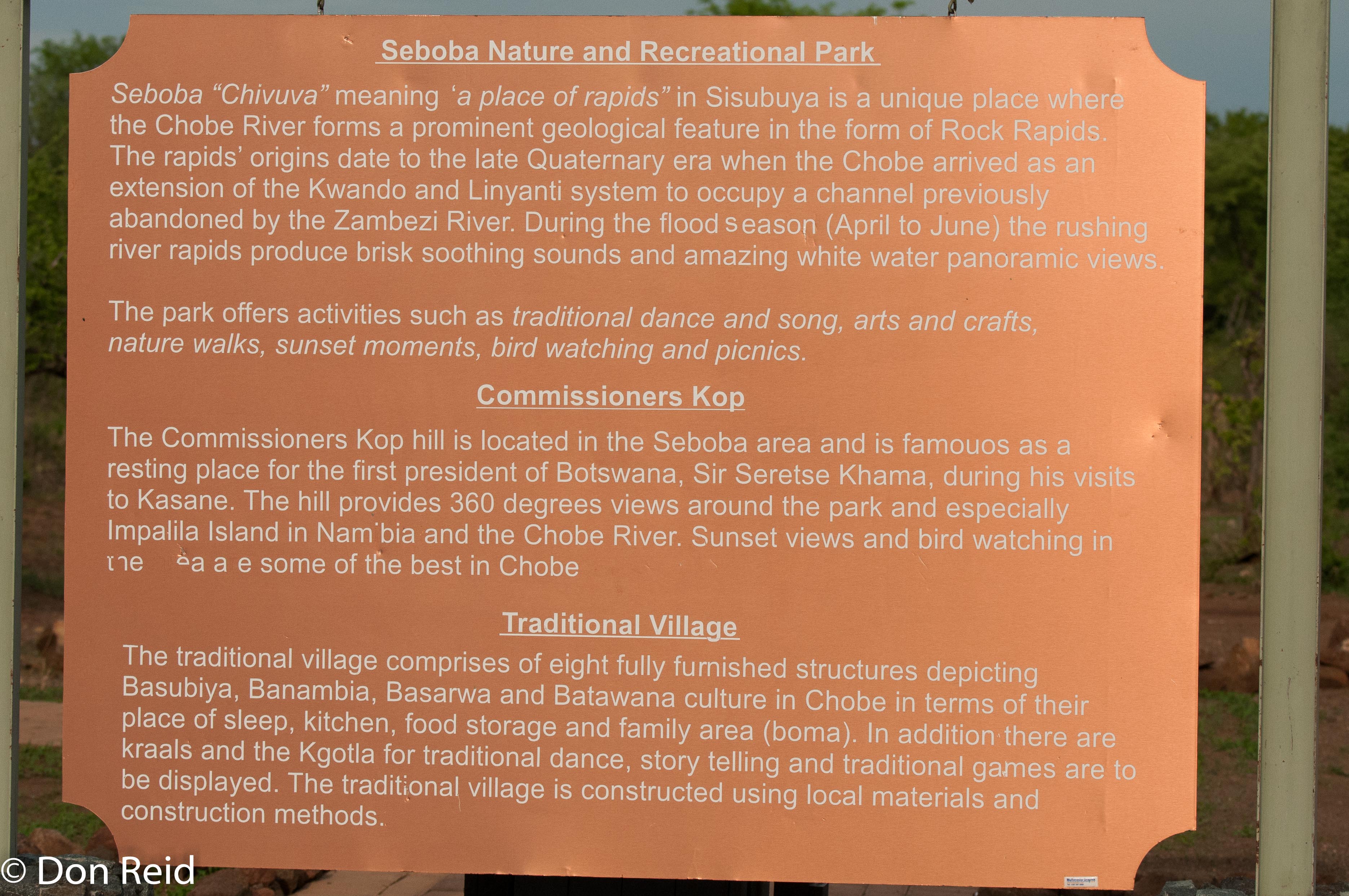
The notice board and map near the entrance spells out its origin and some of the attractions, which include cultural villages, information centre, curio shop, dance arena and walking trails :

Seboba Nature Park Kasane

Seboba Nature Park, Kasane
Map of Seboba Nature Park, Kasane

There are paths from the parking area that meander down to the river’s edge and to the top of a low hill, called Commissioner’s Kop, which has a deck with tables and chairs and magnificent views up and down the river.

Deck on Commissioner's Kop
Deck on Commissioner’s Kop
View from deck over Chobe River
View from deck on Commissioner’s Kop

A raised boardwalk leads off the reception area and meanders through the riverine forest and bush, creating opportunities to see some of the variety of bird life and a few animals.

The boardwalk
The boardwalk

The boardwalk ends at the picnic site, but paths take you further through the dense bush should you want to be a little adventurous – it’s best to have a ranger accompanying you from here as the chances of “bumping into” wild life increase.

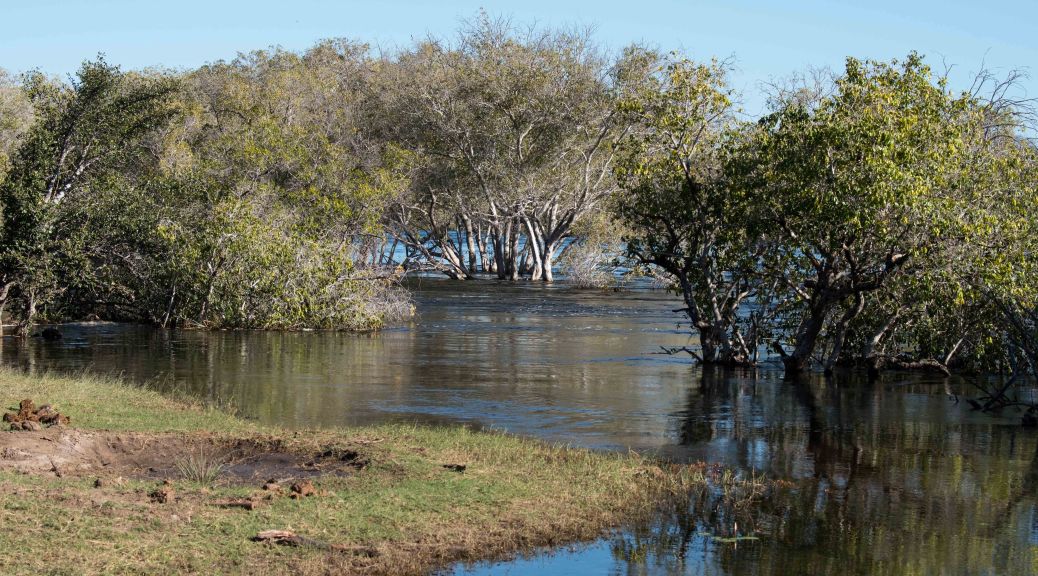
A small deck at the end of the boardwalk allows you to view the part of Chobe River known as the Seboba Rapids – a section of river with faster flowing water and small islands, some bedecked with trees and favoured by hundreds of birds for roosting and nesting.

Chobe River
Chobe River
Chobe River
Chobe River

Seboba is not a game park as such, but a wildlife corridor to the river has been maintained by leaving openings in the fence between the adjoining road and the park, which is regularly used by elephant and other wild life to gain access to the river, as they have for millennia in all likelihood.

One of my visits turned into a bit of an adventure and reminded me that the area is very much “Wild Africa”…….

After parking near reception, I slung my binoculars around my neck and my camera over my shoulder (two items which have become part of my outfit when birding) and headed down the track to the river. I could not help noticing the fresh-looking elephant tracks in the sand and equally fresh-looking elephant dung, which I had to step around in places, bush signs which had my senses on high alert.

The river was not far, so I carried on to the river bank and started birding, while looking around carefully all the while. Just then, one of the rangers came down the track to tell me there were elephants in the bushes to my right and suggested, with a hint of urgency, that I move away . I could see the elephants through a gap in the trees and decided the ranger had a point, so I followed his further suggestion that we head along the river, the ranger in front and me behind. We stuck to the river’s edge, which was flowing high, wide and strong from the rains in Angola some weeks prior.

We were now walking away from the elephants, so I was feeling a tad more relaxed and enjoying the solitude of the river and the adjoining thick bush – until I started thinking about crocodiles, having seen the warning notices. Besides that, we were now literally on the edge of the Chobe River, even treading in the water where the steep bank caused my shoes to slip here and there.

At least they warn you

I casually asked the ranger whether crocodiles were present and he nodded to say yes – not a minute later a loud splash ahead of us announced the first croc as he was scared off by our approach. Further ahead we spotted a croc about 50m away, lying in the shallows next to the bank – we approached slowly and cautiously and as we got closer the croc slid silently into the river, swam behind a partly submerged tree and eyed us as we passed.

A croc is spotted not far ahead
He has not seen us yet
The croc slides into the river
The croc slides into the river as we get closer

All in all, an eventful and exciting walk that I had not planned for at all – Africa can make you feel very small and vulnerable at times!

The Birding

My primary purpose in visiting Seboba was, of course, to do some birding and the park did not disappoint. My first sighting on my first visit was Collared Palm-Thrush on the reception building’s roof – a most desirable species for Southern African birders. This set the tone for what could be expected and as I explored further the list grew, including a pleasing number of “specials” –

Along the boardwalk –

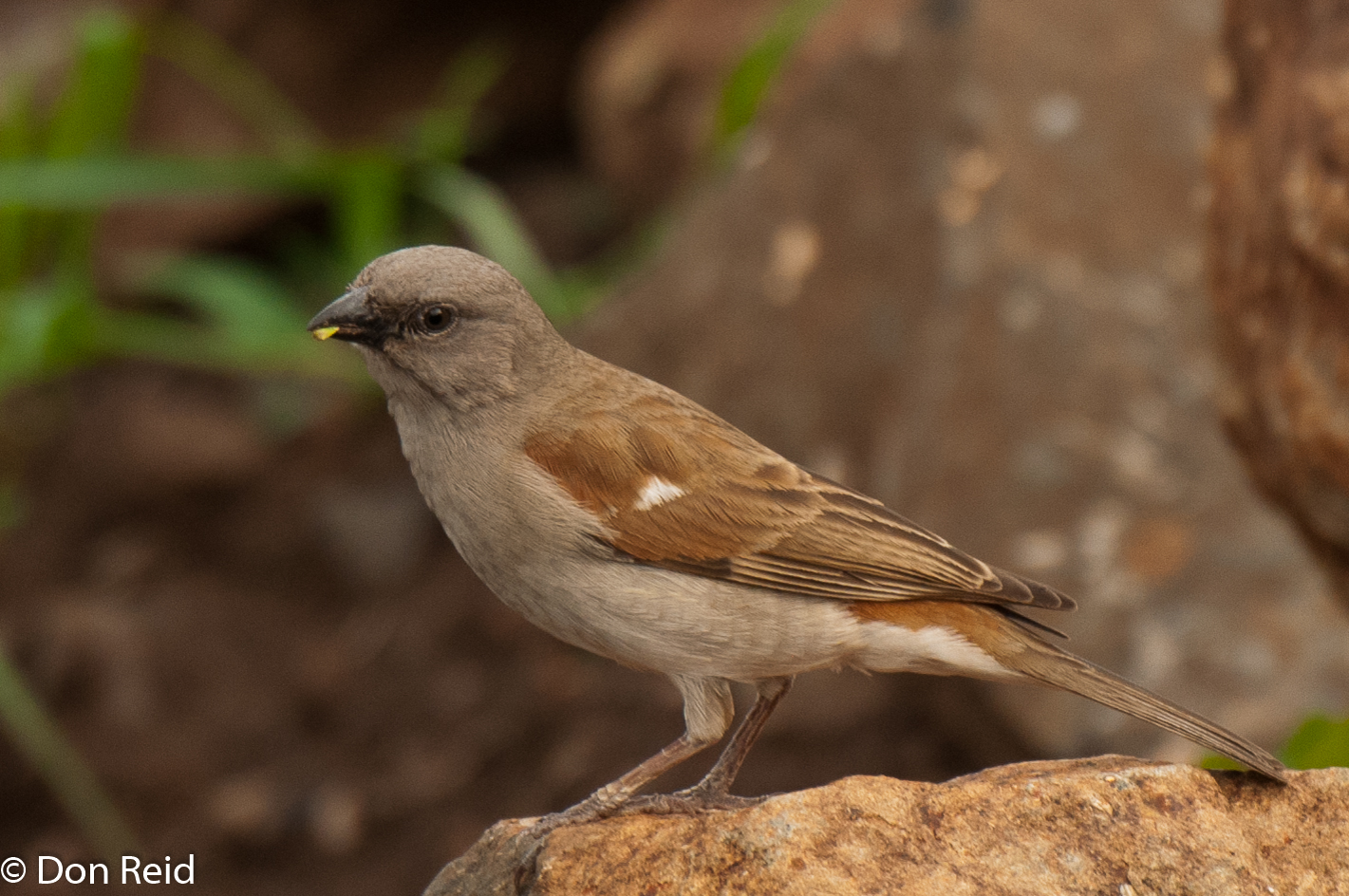
  • Grey-headed Sparrow, not scarce by any means but interesting because Kasane is one of the few places in Southern African region where both Southern and  Northern species occur. This one turned out to be the Southern species
  • Noisy Arrow-marked Babblers
  • Trumpeter Hornbills with their eerie “crying-baby” calls echoing through the woodland
  • Bradfield’s Hornbill
  • Broad-billed Roller
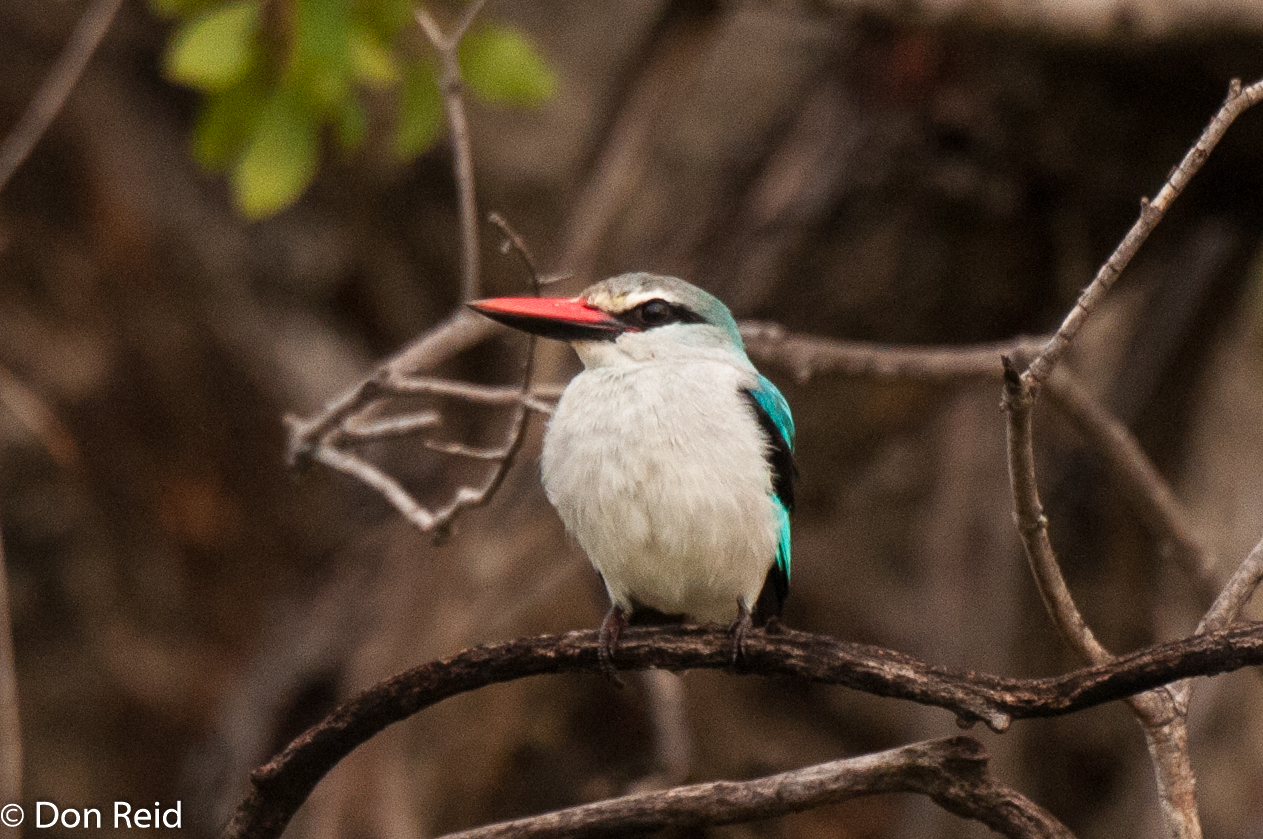
  • Woodland Kingfisher, its position  given away by its trilling call
Southern Grey-headed Sparrow, Seboba Nature Park Kasane
Woodland Kingfisher, Seboba Nature Park - Kasane
Woodland Kingfisher, Seboba Nature Park – Kasane

Commisioner’s Kop viewing point –

  • African Golden Oriole in its bright yellow plumage
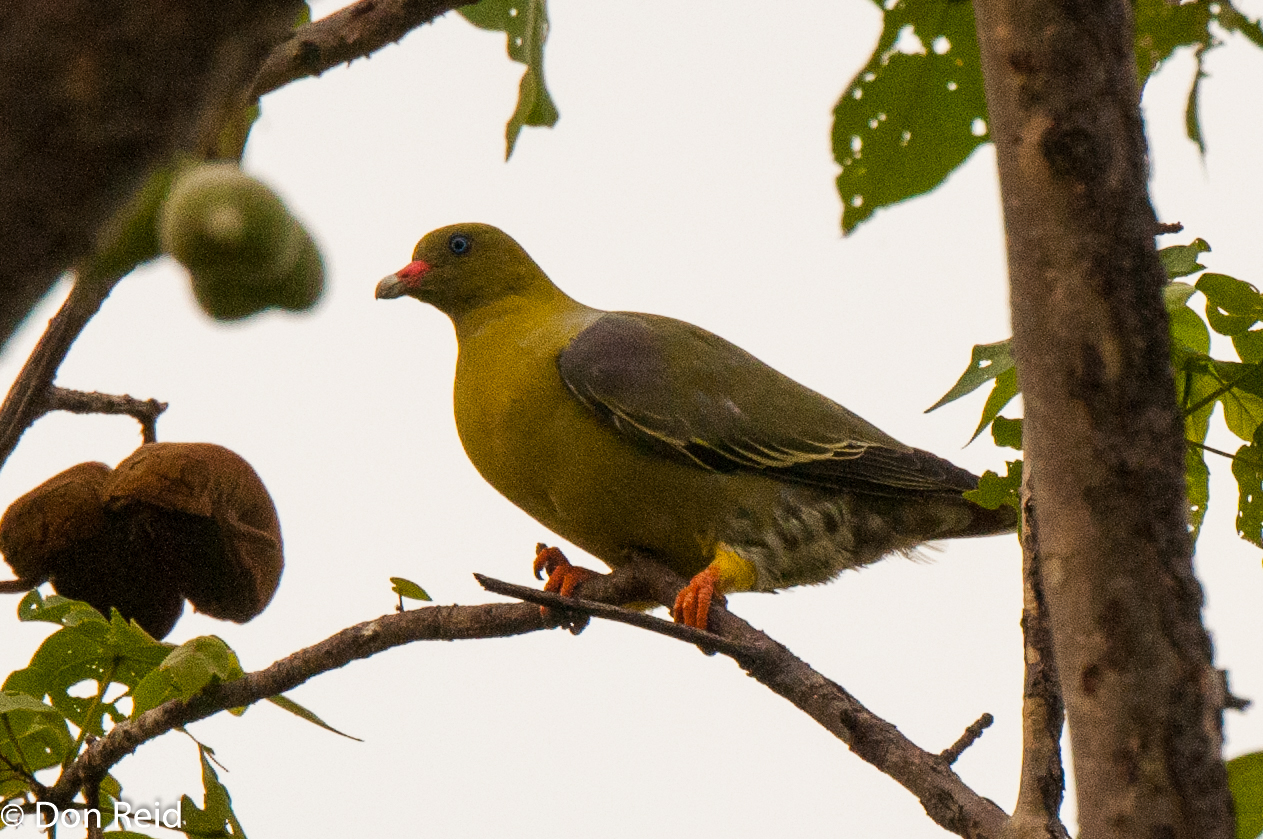
  • African Green Pigeon – good at hiding behind foliage
  • Emerald-spotted Wood-Dove
African Golden Oriole, Seboba Nature Park Kasane
African Green Pigeon, Seboba Nature Park Kasane

Down by the riverside –

  • African Jacana
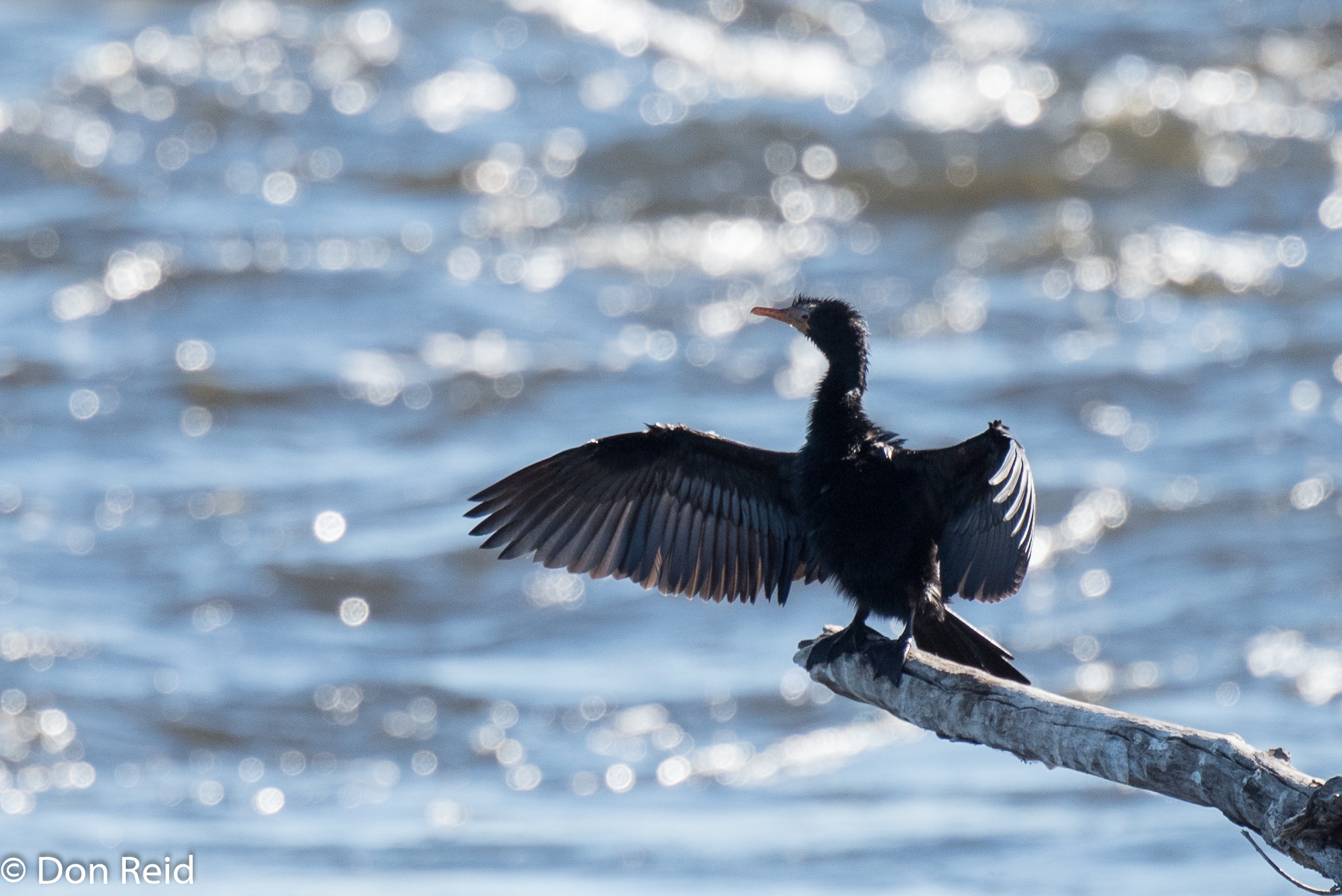
  • African Darter
  • Yellow-billed Stork
  • Pygmy Goose
  • African Openbill in the shallows, probing for molluscs
  • Reed and White-breasted Cormorants in numbers
  • Water Thick-knee, flying away low over the river when disturbed
  • White-crowned Lapwing, also prone to flying off but often landing a short distance further
Reed Cormorant, Seboba Nature Park Kasane
Water Thick-knee, Seboba Nature Park Kasane
White-crowned Lapwing, Seboba Nature Park - Kasane
White-crowned Lapwing, Seboba Nature Park – Kasane
Reed Cormorant, Seboba Nature Park Kasane

Hillside and open areas –

  • White-browed Sparrow-Weaver
  • Blue Waxbill
  • Little Bee-eater
White-browed Sparrow-Weaver, Seboba Nature Park - Kasane
White-browed Sparrow-Weaver, Seboba Nature Park – Kasane
Blue Waxbill, Seboba Nature Park Kasane

This small park is well worth a visit even if for just an hour or two – the variety of habitats in a concentrated area can be covered in a short time, although the longer you can stay the better … oh and don’t wander around too much unless there’s a ranger nearby (which they tend to be)

Special thanks to Derek Thomas for showing me this spot, and others, in Kasane.


Danube River Cruise – Just Cruising

Previous posts on our Danube River Cruise were about the places visited during the eight-day cruise, this one is about the river cruising experience itself and some of the special the sights along the way……….

The Route

Cruise route map - Passau to Budapest and back
Cruise route map – Passau to Budapest and back through Germany, Austria, Slovakia and Hungary

The Boat

The Amadeus Royal was our home for the cruise duration and provided all the comforts we expected

Our embarkment point at Passau
Tea and Apfelstrudel in Passau just before boarding
Tea and Apfelstrudel in Passau just before boarding (What’s on Gerda’s mind?)
Amadeus Royal - the compact bathroom
Amadeus Royal – the compact bathroom
Amadeus Royal - our cabin
Amadeus Royal – unpacking in our cabin
Off we go
Off we go
Leaving Passau
Leaving Passau

Riverside Scenery

Riverside scenes
Riverside scenes
Riverside scenes
Riverside scenes
Riverside scenes
Riverside scenes
Schloss Schonbuhel, Melk District Austria
Passing Vienna
Passing Vienna
Passing Vienna
Passing Vienna
River scenes
River scenes
Approaching Budapest
Moored at Budapest
Moored at Budapest
Linz
Linz
Leaving Linz
Leaving Linz

The Locks

Here you will have to bear with me – I am interested in all things mechanical, even boring things such as locks on the river. During the 1160 km cruise, we passed through 22 locks, often at night, changing altitude by some 360 metres. The average lock entailed a lift or drop of about 8 metres – now that doesn’t sound much, but consider that the cruise boat is 110m long x 11,4m wide with a tonnage of 1,556t, that means a lot of water has to be pumped in a short space of time to accomplish it efficiently.

In the lock
In the lock
Don't stick your head out in the lock
Don’t stick your head out too far in the lock

Donau-Auen National Park

During one afternoon we cruised through the Donau-Auen National Park, a section of the Danube which has been declared part of a UNESCO Biosphere park. Along this stretch, downstream of Vienna, the natural floodplains form a green corridor with a large area of lowland forests, meadows, wetlands and other riparian habitat.

We relaxed in our cabin with curtains fully open, taking in the greenery of the forests lining the river bank, with sightings every now and then of birds and occasionally other wildlife.

The surprise of the trip was undoubtedly the Red Fox (Vulpes vulpes) which I spotted trotting along a ridge of rocks on the bank of the river, with an enormous fish in its jaws. It is not often one gets to see “real” wildlife in Europe so this was very special. Fortunately I had my camera and telephoto lens ready for passing birds and managed to rattle off a few shots of the fox carrying the fish, before the boat had passed it by.

Red Fox with fish catch

Another feature of this stretch was the small “fishermen’s cabins” dotted at intervals along the river bank, most with a net in a large frame ready to drop into the river. Word on board was that these cabins cannot be bought or sold, but have to be passed on to the next generation in their original state and no extensions are allowed. So they remain small and simple – often just space for a couple of beds and basic facilities for the fishermen to spend the night camping there.

Riverside dwellings with fishing rights

Bridges

There were numerous bridges over the river, some functional, others handsome, old and new

Bridge over the Danube
New Bridge over the Danube
Bridge at Bratislava
Bridges at Bratislava
Chain Bridge Budapest

River scenes

Other Stuff

Amadeus Royal
Amadeus Royal
On board
On board
Towel creation
Towel creation
On board
On board
Waiters Zizi and Ivan - Pirates dinner
Waiters Zizi and Ivan – Pirates dinner
Gayle, Denise, Fleur with Gerda

Until Next Time …..

Dining

. 

Sunset over the Danube

Eastern Europe – a Bit of Birding

I was not expecting to do much birding during our short tour of two weeks in Eastern Europe but, as always, I was constantly on the lookout for bird life and was rewarded with five new birds (“lifers”) during our tour, which consisted of four days in Prague, an eight-day cruise of the Danube with stops in four countries, and a short stay in Passau, Germany.

The best birding was while relaxing in our cabin, sliding door open to the fresh air and binos and camera at the ready as the boat cruised at a steady pace along the Danube. The only problem with this was the limited field of vision and the speed of the boat, which meant I had a very short time to react if I saw anything and I mostly had to rely on photographs for an ID of the bird species. The Danube at times widens out into a lake-size body of water, so any birds along the banks tended to be quite far away and it proved difficult to get a decent photo.

The photos showcased here represent the best shots I could get under the circumstances.

Prague

The best way of seeing a new city is to walk the streets and parks, which we did during our stay in this handsome city. European cities are not known for their variety of birds and Prague was no exception, with Jackdaws, Magpies and Blackbirds being the most common birds.

Jacjdaw, Prague
Jackdaw, Prague

One city park had a Eurasian Jay which was a new species for me

Eurasian Jay, Prague

One fine day we took the funicular to the top of the hill which overlooks the city and walked through the extensive parkland and forests of Petrin Park. Here we came across a Common Chiffchaff and on the walk down saw Wood Pigeons. A Eurasian Green Woodpecker drew our attention with its call but did not hang around long enough for a photo.

Common Chiffchaff, Prague
Wood Pigeon, Prague
Wood Pigeon, Prague

Cesky Krumlow

We took a day trip to this historic town a couple of hours bus ride from Prague. With time to spare after the walking tour of the town, we found a pleasant riverside café for coffee which also turned out to be a good spot for viewing some birds as they came to the river. Apart from the ubiquitous Blackbirds, we found Grey and Pied Wagtails on the banks of the strongly flowing Elbe River (both eluded my camera) and a few Black Redstarts, one of which looked remarkably similar to the Familiar Chat we know from SA.

Blackbird, Cesky Krumlow
Black Redstart, Cesky Krumlow
Black Redstart (Female/Immature Male), Elbe River in Cesky Krumlow – having a striking resemblance to the Familiar Chat we know from SA
Black Redstart, Cesky Krumlow

Danube Cruise

A selection of the birds we spotted while cruising :

Mute Swans were seen frequently

Mute Swan, Danube
Mute Swan, Danube

A single sighting of Mandarin Duck was a surprise and a new species for me

Mandarin Duck, Danube

Grey Herons were seen regularly

Grey Heron, Vienna
Grey Heron, Vienna

Great Cormorants in the protected area

Great Cormorant, Danube

Goosanders were another regular sighting but always at a distance

Goosander, Danube
Goosander, Danube

Caspian Gull in the protected area

Caspian Gull, Danube

Vienna

Our extended stop at Vienna allowed for a walk along the riverside, which was good for a few land-based species

House Sparrow, Danube
Common Chaffinch, Danube
Great Tit, Vienna
Great Tit, Vienna

Linz

While moored in Linz, Common Martins and Barn Swallows suddenly appeared in numbers over the river. I surmised that they had just returned from their annual African summer safari and were revelling in being back “home”, judging by the enthusiastic way they were swooping over the river, despite the bitterly cold weather

Common House Martin, Danube
Barn Swallow, Danube

Passau

This delightful town was a highlight of our trip (more about it in a later post). The birding was limited but a Lesser Kestrel flying high above the Castle was an interesting sighting

Lesser Kestrel, Passau

Other than that the ubiquitous Mallard Duck was the only water bird of note

Mallard, Passau
Mallard, Passau
Mallard, Passau
Mallard, Passau

I had downloaded Collins Bird Guide for Europe prior to the trip – it has a useful bird listing function which I used to list the species we encountered.  At the end of the two weeks I had a grand total of just 33 species – par for the course in Europe when the focus is not on birding.

I regularly see that many species in an hour, walking around our neighbourhood in SA – I’m just saying.


Danube River Cruise – Budapest to Bratislava

Continuing the story of our eight-day, seven night “Danube Rhapsody” cruise, starting from and returning to Passau in Germany with the furthest point reached being Budapest in Hungary and traversing 4 countries along the way …………..

Monday 25 April

Budapest – Horse Farm

Still moored in Budapest, we enjoyed a quick breakfast before boarding the bus once again for the trip out of town to a horse-riding show farm. Our cheerful guide gave us a run-down on the significant places we passed, many of which we had seen during the city tour the previous day, but it all helps to cement them into our senior brains.

Soon we were at the Lazar Farm having a welcoming scone with a powerful liquor called …… er,  I seem to have forgotten, I just know it went down well in the cold weather.

Lazar Horse farm

Lazar Horse farm
Lazar Horse farm

Then we climbed onto horse-drawn wagons for a short ride along tree-lined tracks, muddy from the recent rain – the cold wind was biting with nowhere to hide, so we were glad to have packed our warm jackets and wooly hats.

Lazar Horse farm
Riding in the wagon

Lazar Horse farm

Next up was a horse show viewed from a seating area next to a short sandy oval track, including a series of displays of the horse-riding skills particular to the region, which celebrate the unique relationship between Hungarian horsemen and -women with their horses :

  • 2 pairs of horses pulling a heavy wagon, galloping by us at full speed, mud flying from the hooves
Lazar Horse farm
Lazar Horse farm

Lazar Horse farm

  • 2 pairs of ponies drawing a smaller wagon, a lot more sedately
Lazar Horse farm
The ponies
  • an archer on horseback, shooting at a fixed target and mostly hitting it as he galloped past
  • a brave rider standing on two horses while controlling a team of five horses
Bareback riding
Bareback riding
The horses giving it their all
  • other riders performing in traditional costumes
Lazar Horse farm
Lazar Horse farm
An elegant lady rider
Not just horses either
Not just horses on this farm

All in all a memorable show and most enjoyable to be out in the countryside, despite the cold weather

Just Cruising

The morning tour was enough for us for the day, so we decided to skip the afternoon tour (through the countryside to meet the boat further upstream) and spent the afternoon pleasantly cruising along the Danube as the boat started the return journey. More about the “Just Cruising” part in a forthcoming post. (I know you can’t wait, but I have to stretch this trip out to get my money’s worth from it – that’s what comes from having a Scottish heritage)

Tuesday 26 April

Bratislava – City Tour

By the time we awoke in the morning, the boat was already docked in Bratislava, capital of Slovakia, and by 9 am we were on the bus for the City Tour. The young guide, who looked like a student,  gave us a summary of Slovakia’s history (in good English, flavoured with a strong eastern European accent) as we drove up to the first stop at the Castle which, compared to others we have seen, is quite plain and of simple design.

Bratislava - the Castle
The old Castle on the hill

Particularly the inner courtyard, where I noticed no one was inclined to take photos, as there were none of the elaborate features and details we have become used to seeing. This was refreshing in a way and set the tone for the rest of the city, parts of which we saw later during our walk through the Old Town.

Quirky architecture on the Castle facade

The castle has a long and chequered history, having been destroyed and rebuilt several times.

Wikipedia says of the castle’s earliest history :

“The castle, like today’s city, has been inhabited for thousands of years, because it is strategically located in the centre of Europe at a passage between the Carpathians and the Alps, at an important ford used to cross the Danube river, and at an important crossing of central European ancient (trade) routes running from the Balkans or the Adriatic Sea to the Rhine river or the Baltic Sea, the most important route being the Amber Route.

The people of the Boleráz culture were the first known culture to have constructed settlements on the castle hill, around 3500 BC. Their “castle” was a fortified settlement and a kind of acropolis for settlements in today’s Old Town of Bratislava.”

From the castle there were great views across the Danube, with the standout feature being the rows of communist-era apartment blocks, taking up most of the space beyond the river and painted in cheerful pastel shades.

Bratislava - city views
Communist era housing in pleasing pastel colours

The walking part of the tour commenced at our second stop and took us through several old town squares (called Namesti), some very old, others newer, all interesting with handsome buildings and that very European sense of scale – comfortable rather than overwhelming.

Bratislava old town.
Michael's Gate
Michael’s Gate
Bratislava - Old Town Hall
The Town Hall


Primate's Residence
Primate’s Residence
Primate's Residence : Fountain of St George and the dragon
Primate’s Residence : Fountain of St George and the dragon

And a reminder that we were quite far from home……

Long way from home

One of the features of Bratislava is its collection of quirky statues, sprinkled around the city, none more so than the tourist favourite, “Man at Work”, which depicts a “worker” partly emerging from a manhole and clearly not at work.

Bratislava old town. "Man at work"
Bratislava old town. “Man at work”

Another in the main square has a Napoleonic soldier leaning over your shoulder, if you choose to sit on the bench in front of it, as many tourists elect to do.

Our new pal - the Napoleonic Soldier in the Main Square
Our new pal – the Napoleonic Soldier in the Main Square
He's really quite friendly
He’s really quite friendly

And there are others – spot the living one……….

Bratislava old town. Another quirky statue

Hint – note the basket for donations

Bratislava old town - living statue


Hans Christian Andersen - well a statue of him actually
Hans Christian Andersen – well a statue of him actually
A party of colourful kids pass another figure

The main square, Hlavne Namesti, drew us back after the official tour was done, to enjoy a “Big Cappuccino” and the local version of apple pie at an outside table, nicely positioned to watch the passing people traffic and the goings on in the square.

The outside café on the square
Church in the old town.
Bratislava old town - the Main Square
The Main Square

Fountains are also big in Bratislava – this pretty one is called Ganymede’s Fountain

Ganymede's fountain
Ganymede’s fountain
Ganymede's fountain
Ganymede’s fountain
Ganymede's fountain
Ganymede’s fountain
Ganymede's fountain
Ganymede’s fountain

There was time for some window shopping (which for Gerda means going inside every interesting shop and chatting to the assistants) before making our way back to the boat just a couple of blocks away.

Bratislava old town.
A lovely avenue full of trees


Inconsiderate Pigeon
The Opera
The Opera

Bratislava old town. Bratislava old town.

Wednesday 27 April

Our last day of cruising as the boat proceeded to Linz in Austria, docking around lunchtime. The walking tour of the town was cancelled due to too few participants, so we set off on our own along the waterfront and into town, encased in several layers of warm clothing to ward off the bitter cold.

Linz - riverfront
Linz – riverfront

Linz was clearly not on many people’s list of places to visit and seemed almost deserted – perhaps because of the weather. That might also explain why we found it one of the less inspiring places we have visited – apart from the usual complement of churches, abbeys and cathedrals, none of which stood out for any particular reason, we did not encounter much of interest as we wandered through the streets around the main, very large square and adjoining old town.

Linz - street scenes
Linz – not much going on

The main square is lined with old patrician houses, the 17th century Town Hall and St Ignatius church with its two towers, while the centre of the square has the Trinity Column, erected by grateful citizens after the town managed to escape a trio of severe threats to their lives – the pest, a massive fire and a Turkish invasion – good enough reason, I reckon. What spoils it all is the scale of the square – too big – and the fact that the tram system runs right through the middle of it, completely destroying any intimate character it may have had.

Linz - Hauptplatz
Linz – Hauptplatz with the Trinity column in the middle

We did find a cosy café in one of the side streets in the Old Town and had an exceptional tea but a disappointing version of the local speciality cake – Linzertorte – which was crumbly and not particularly memorable. (Oh, how fussy we get at our age!) Maybe it was just a poor example. My German pronunciation was not up to scratch either – when I asked the waiter for “milch, bitte” with our tea he brought us a cute little timer for measuring how long the tea bag should stay in – fortunately the timer was useful and the tea so good it was actually better off without any “milch”.

Linz - best tea in a long time (asked for milk, got a timer!)
Linz – best tea in a long time (asked for milk, got a timer!)

As we sat in the café the rain started falling, soon turning to sleet for a few minutes, just to reinforce how cold it was.

Linz - sleet falling in the Old Town
Linz – sleet falling in the Old Town

After some further wandering we came across the Mozarthaus, where he composed the Linz Symphony during a short stay of a few days.

Linz - Mozarthaus
Linz – Mozarthaus

We made our way back to the boat and were soon immersed in the last day festivities including the Captain’s gala dinner with multiple courses. The cruise was coming to an end ………

More to come…

So what’s left to tell? Well there’s the “Just Cruising” bit – birding and other special sights along the river during the course of the cruise. After that, more about the places visited before and after the cruise – the two “P’s” – Prague and Passau, both unique and both full of highlights……..


Adventurous Birding, Atlasing and Travel