Category Archives: Waders

Small Birds taking BIG Journeys : Part 4

To repeat the intro to my previous posts on this subject …. Many of the migrant waders – or shorebirds as they are also known – display the most Jeckyll and Hyde characteristics of all birds, living two dramatically different lives and spending time in habitats which are far removed from each other.

Separating these two lives are amazing journeys that take these small yet hardy birds halfway across the world – and back again.

South African birders get to know migrant species during their stay in the southern hemisphere, typically during the months from October to April, so let’s find out a bit more about their ‘other’ lives by delving (again) into the typical annual life cycle of these waders.

This time it’s the –

Wood Sandpiper (Bosruiter) Tringa glareola

Affectionately called ‘Woodies’, this species is so named because they breed on swamps and peat bogs in the coniferous taiga forests of the Northern Hemisphere – who would have thought this is also a ‘Forest bird’ !

Identification and Distribution

Identification of the Wood Sandpiper is relatively easy – compared to some of the other LBW’s (Little brown waders) – and is often the first wader that novice birders will get to know as it is one of the most common freshwater waders

What to look out for

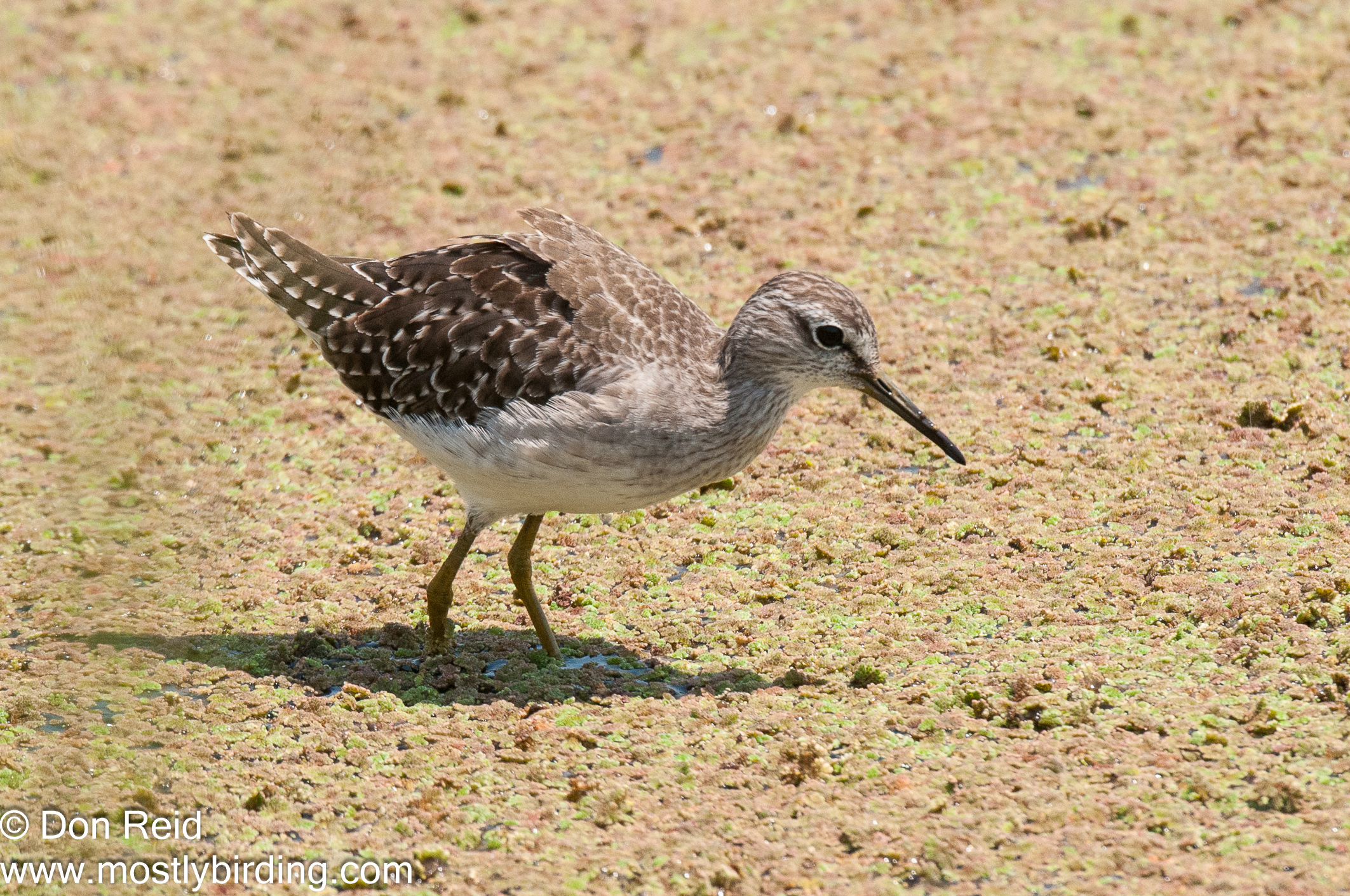
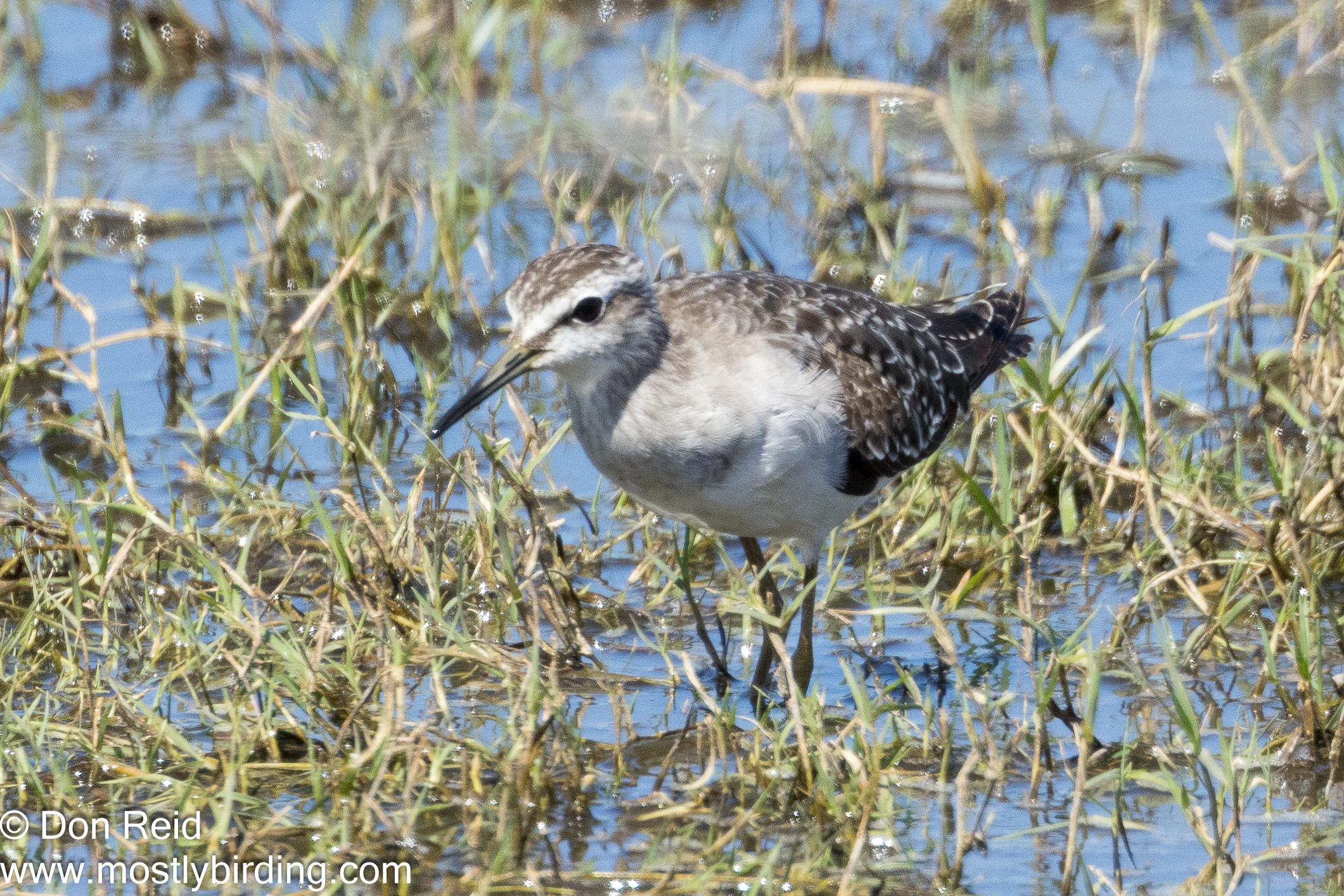
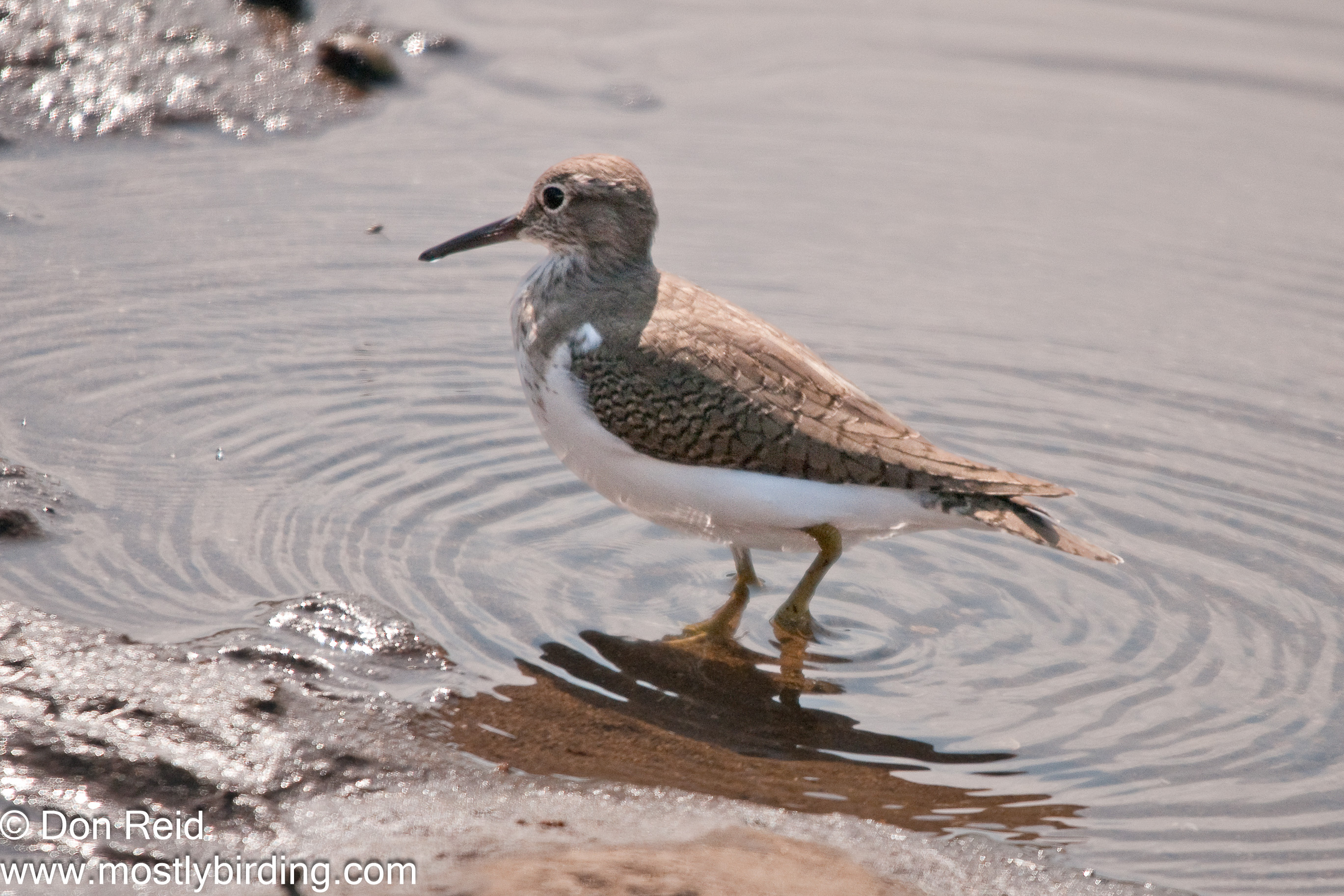
  • medium size (19 – 21cm; 55 – 65g) slim, fairly long-legged, graceful
  • straight bill about the same length as the head, white brow extends behind eye
  • grey-brown above with eye-catching white ‘spotting’ , grey below
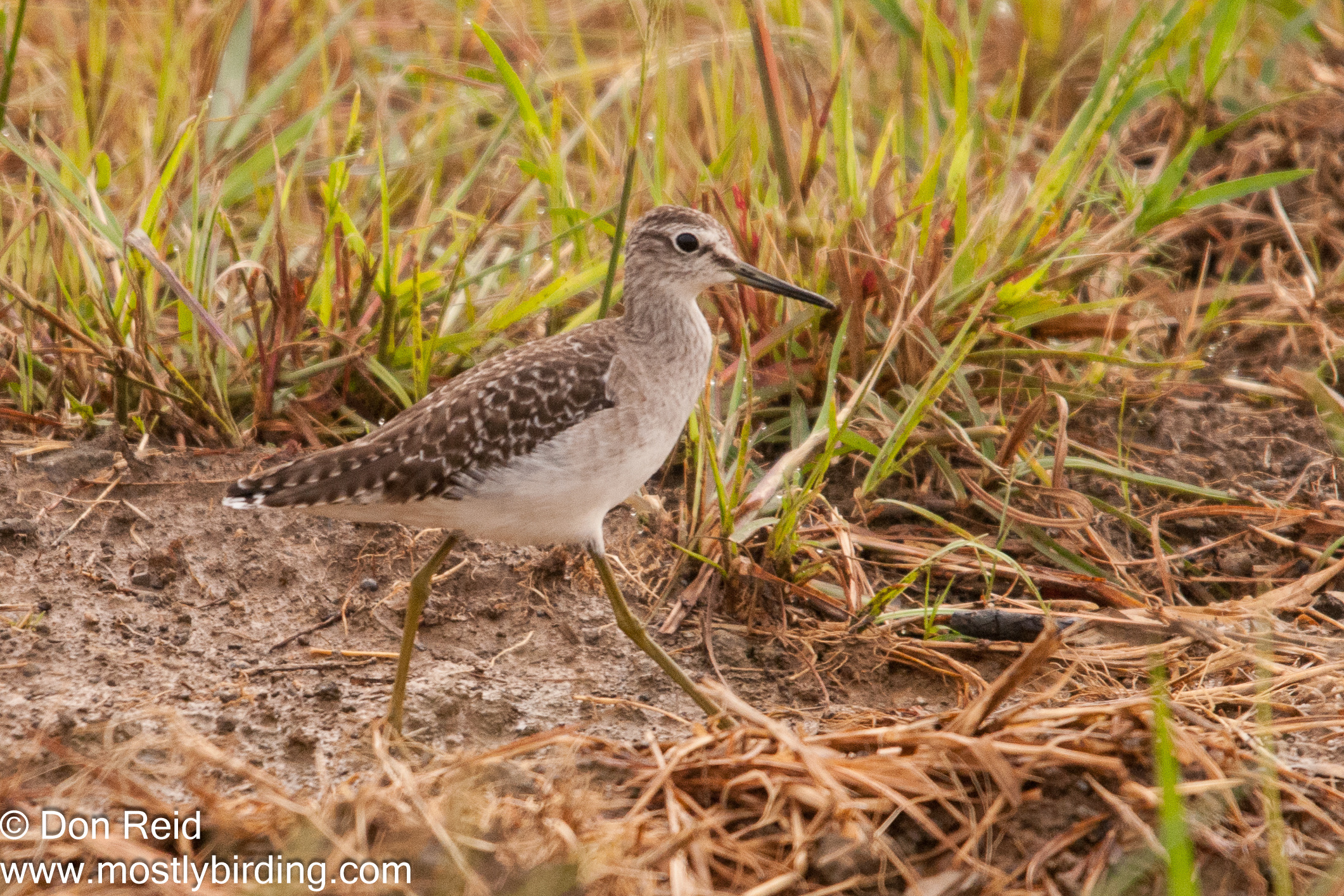
Wood Sandpiper, Devon

Distribution

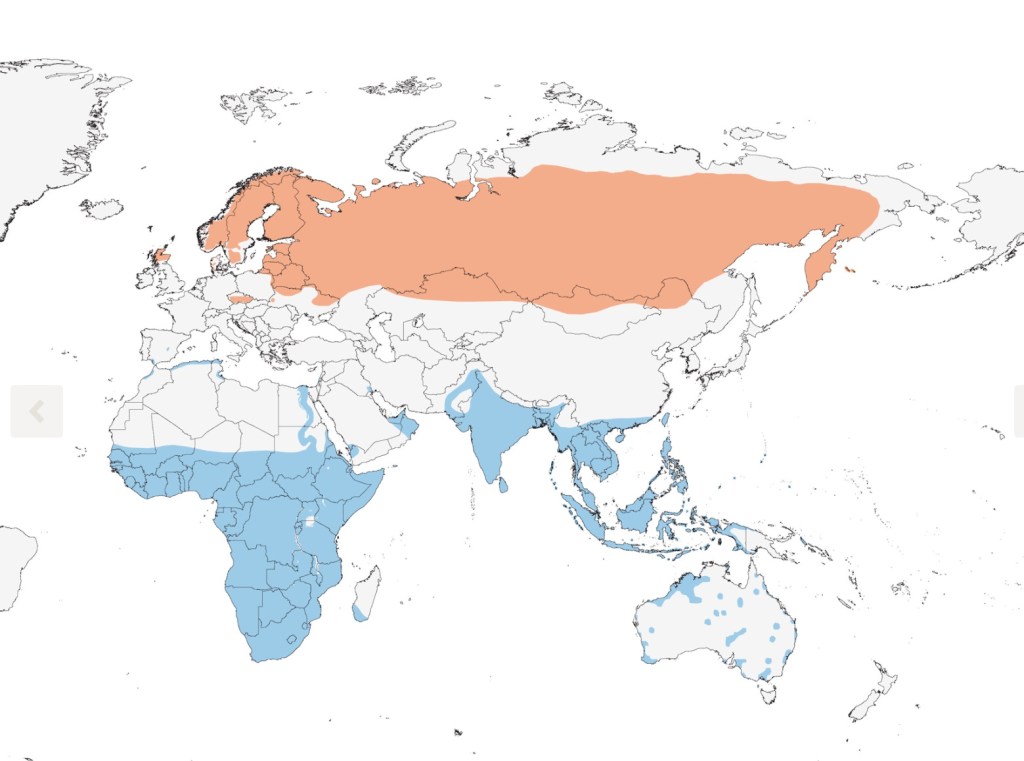
The orange area on the global distribution map (from Cornell Birds of the World) shows where breeding occurs in the Northern Hemisphere while the blue area, mostly in the Southern Hemisphere, is where they go to ‘get away from it all’ and prepare themselves for the next round of raising a family.
Wood Sandpiper, Marievale

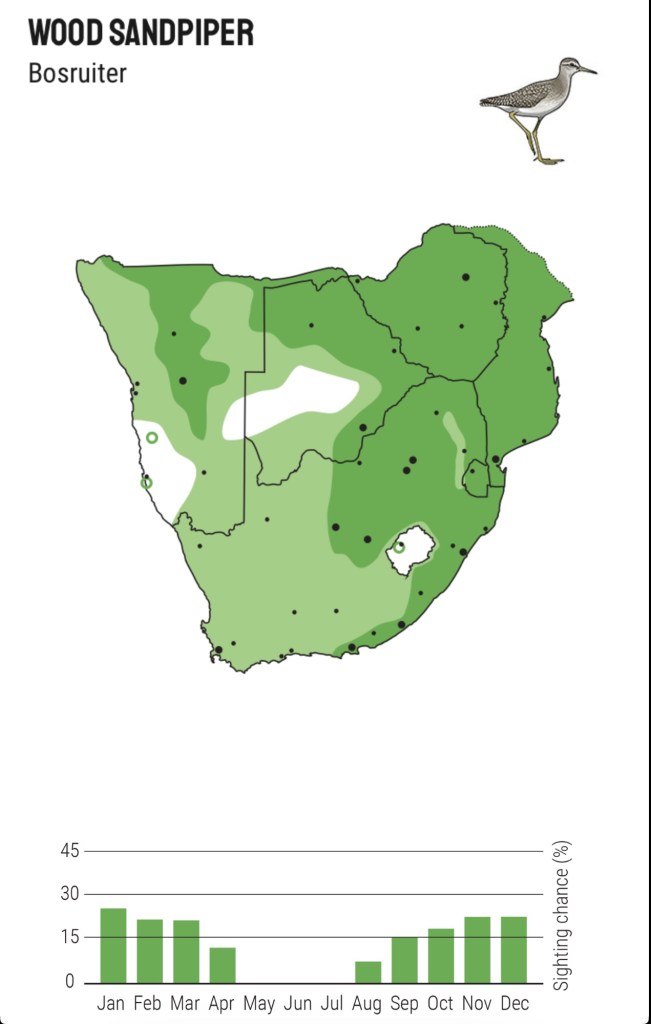
The southern African distribution map (from The Firefinch Birding app) shows the species presence across most of the region but absent from the Kalahari and arid west.
Life in the North

The preferred breeding habitat is the open swampy area and peat bogs in coniferous forests, scrubland between those forests and tundra

Their diet is mainly small aquatic insects, caught by pecking or probing while walking in shallow water
Wood Sandpiper, Marievale Bird Sanctuary

Breeding

The nest is usually a small scrape on the ground lined with moss, stems and leaves, in dense vegetation, but also frequently in trees in old nests of other species

Eggs (usually 4) are laid and incubated for about 3 weeks – from 7 to 10 days after hatching the male cares for the young on its own

Fledging some 3 to 4 weeks later, the fledglings are independent soon thereafter, facing the many dangers that young birds are subject to.

Wood Sandpiper, Kasane Botswana

Migration

The birds we see in Southern Africa are thought to originate from Russia, first adults leave early July, arriving in the south from late July / August with juveniles following mainly in September and October.

Migration is undertaken at night with birds capable of single flights of up to 4000km. Overland routes are followed by small flocks or singly, mainly via the Rift Valley

Wood Sandpiper, Kasane Botswana

Life in the South

Of the 3 million+ Woodies that head to Africa, some 50 – 100,000 end up in southern Africa, where they seek out suitable freshwater habitats. These can be anything from shallow sewage ponds to marshes, flood plains and muddy edges of streams and rivers, down to the size of a puddle.

Wood Sandpiper, Punda Maria

Sometime after arrival, adults start a post-breeding moult which continues for up to 4 months, during which time all feathers are replaced with new ones.

Generally, a solitary bird except where food is abundant when they may gather in loose groups

Wood Sandpiper with Little Stint, Leeuwfontein Pan near Belfast

They start departing from late February with the majority having left by end April, heading north to their breeding grounds where the cycle will start all over again…
Wood Sandpiper, Bredasdorp

References : Cornell Lab of Ornithology Birds of the World; Roberts VII Birds of Southern Africa; Firefinch app, Collins Bird Guide; Waders of Southern Africa

Small Birds taking BIG Journeys : Part 3

To repeat the intro to my previous posts on this subject …. Many of the migrant waders – or shorebirds as they are also known – display the most Jeckyll and Hyde characteristics of all birds, living two dramatically different lives and spending time in habitats which are as far removed from each other as can be imagined.

Separating these two lives are amazing journeys that take these small yet hardy birds halfway across the world – and back again.

The majority of South African based birders get to know migrant species during their stay in the southern hemisphere, typically during the months from October to April, so let’s find out a bit more about their ‘other’ lives by delving (again) into the typical annual life cycle of these waders.

This time it’s the –

Common Sandpiper (Gewone Ruiter) Actitis hypoleucos

Hypoleucos is Greek for white below, in reference to the species white underparts, which the detergent adverts of old would no doubt have described as ‘whiter than white’. Which leaves you wondering how they maintain that whiteness, considering that they spend a lot of their time in muddy or near-muddy conditions.

Identification and Distribution

Identification of the Common Sandpiper is often possible while the bird is still distant, based on behaviour and giss, even before being able to see the specific plumage features which will confirm the identification.

What you may see at a distance is –

  • medium-small wader (19 – 21cm; 45 – 50g) with a semi-crouched appearance,
  • long-tailed, rather short-legged,
  • moves in short quick movements and habitually bobs its rear body.
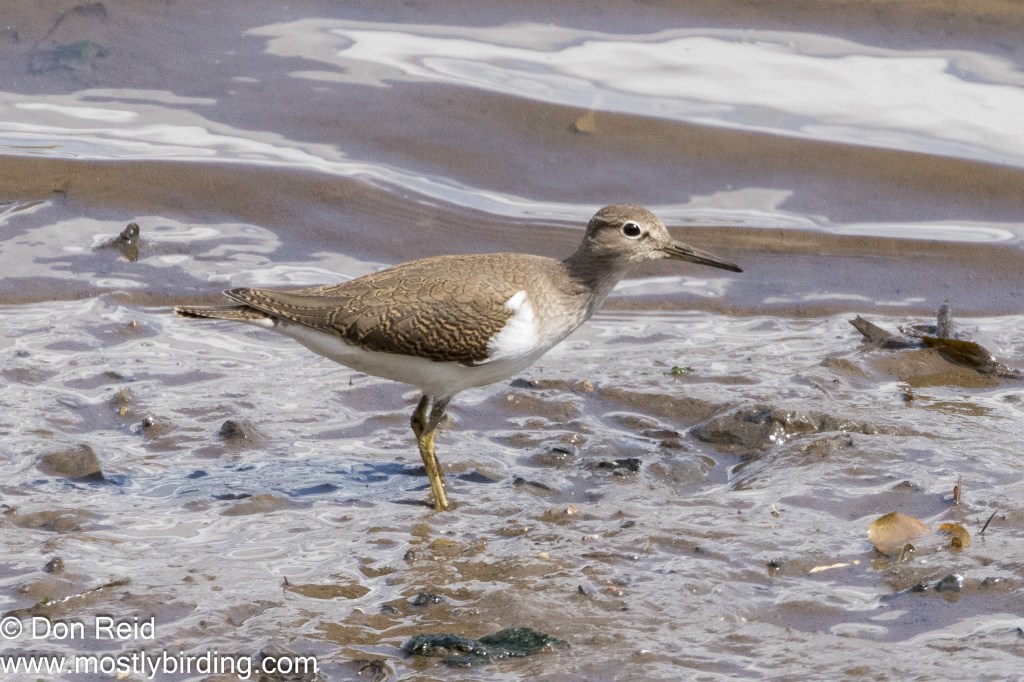
Common Sandpiper, KNP Satara

In flight it is just as distinctive, flying low over water with quick bursts of shallow wingbeats interspersed with glides on bowed wings.

Once close enough, the standout feature of this wader is the white underparts extending up in front of the shoulder to form a distinct crescent.

Common Sandpiper Actitis hypoleucos River Eden Estuary

The differences between breeding and non-breeding birds are subtle – greenish-brown upper parts of breeding adults change to faintly barred olive-brown upper parts, with less streaking on the head.

Distribution –

The orange area on the global distribution map (from Cornell Birds of the World) shows where breeding occurs in the Northern Hemisphere while the blue area, mostly in the Southern Hemisphere, is where they go ‘on holiday’ to unwind and prepare themselves for the rigours of the next breeding season.

The southern African distribution map (from The Firefinch Birding app) shows the species presence across most of the region but absent from the Kalahari and arid west.

Screenshot

Life in the North

The preferred breeding habitat is stony or gravelly shores, most commonly at margins of waterbodies in forested areas.

But, the preferred habitat doesn’t have to be at low altitude – they have been recorded breeding up to 1700m in the Pyrenees, 2600m in Turkey and up to 4000m elsewhere.

Their diet includes all manner of delicious things (for them, anyway) including beetles, spiders, molluscs, crustaceans, sometimes frogs, tadpoles or small fish. During breeding, adults and young chicks frequently feed on grassland.

Common Sandpiper Actitis hypoleucos River Eden Estuary

Prey is located visually, feeding is mainly by pecking and stabbing rather than probing, with insects often caught from surface, or pulled out from rocks or mud.

Breeding

The nest is simple – set in a sheltered depression, sometimes among shrubs and trees, usually close to water.

Eggs (usually 4) are laid from April and are incubated for 20 to 23 days by both parents, but one parent, often the female, leaves before the young fledge (imagine the consternation if humans did that!)

Fledging some 3 to 4 weeks later, the fledglings are independent soon thereafter, facing the many dangers that young birds are subject to.

Once the young have fledged and can look after themselves, they start migrating south, often after the adults have already departed – now that is brave!

Migration

The birds we see in Southern Africa are thought to originate from Russia, first adults leave early July, arriving in the south from late July / August with juveniles following mainly in September and October.

Migration is undertaken at night with birds capable of single flights of up to 4000km. Overland routes are followed by small flocks or singly, mainly via the Rift Valley

Life in the South

In southern Africa they seek out suitable aquatic habitat, favouring streams, rivers and dam shores with sandy, gravelly, stony or rocky substrate, estuaries and, especially, filtration ponds of sewage works (a favourite spot for keen birders as well, as it turns out)

Prefers wet conditions adjacent to water rather than wading in the water and is known to venture into woodland and even gardens.

Common Sandpiper Actitis hypoleucos Gewone ruiter, Bronkhorstspruit Nature Reserve

Some time after arrival, around October, adults start a post-breeding moult which continues for up to 4 months.

Common Sandpiper ( Actitis hypoleucos / Gewone ruiter), Great Brak River

Foraging is done in similar fashion as ‘back home’ but they are also known to perch and wait for waterborne insects at a concrete weir or other convenient spot next to running water – something I have witnessed myself during atlasing trips near Pretoria.

Common Sandpiper, Delmas area

The plovers start departing from late February with the majority having left by end April, heading north to their breeding grounds where the cycle will start all over again…

References : Cornell Lab of Ornithology Birds of the World; Roberts VII Birds of Southern Africa; Firefinch app, Collins Bird Guide

Small Birds taking BIG Journeys : Part 2

Many of the migrant waders – or shorebirds as they are also known – display the most Jeckyll and Hyde characteristics of all birds, living two dramatically different lives and spending time in habitats which are as far removed from each other as can be imagined.

Separating these two lives are amazing journeys that take these small yet hardy birds halfway across the world – and back again.

The majority of South African based birders get to know migrant species during their stay in the southern hemisphere, typically during the months from October to April, so let’s find out a bit more about their ‘other’ lives by delving (again) into the typical annual life cycle of these waders.

This time it’s the –

Common Ringed Plover

Ringnekstrandkiewiet

Charadrius hiaticula tundrae

The inclusion of the subspecies name tundrae above is because this is the particular subspecies (one of three in all) that makes its way to southern Africa in the non-breeding season

Hiaticula is Latin for cleft dweller, in reference to its habit of breeding among pebbles and rocks

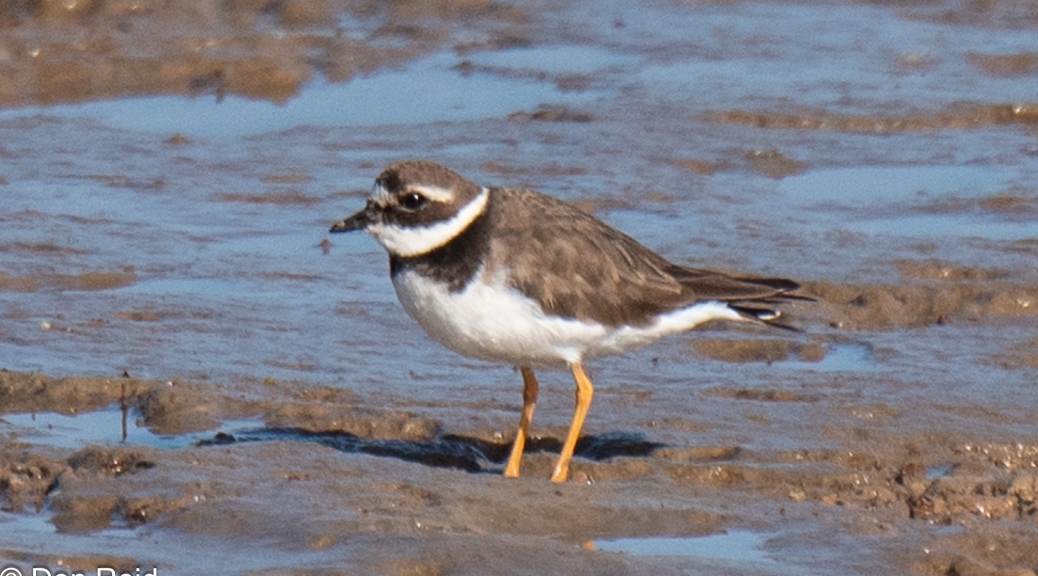
Common Ringed Plover, Marievale Bird Sanctuary

Identification and Distribution

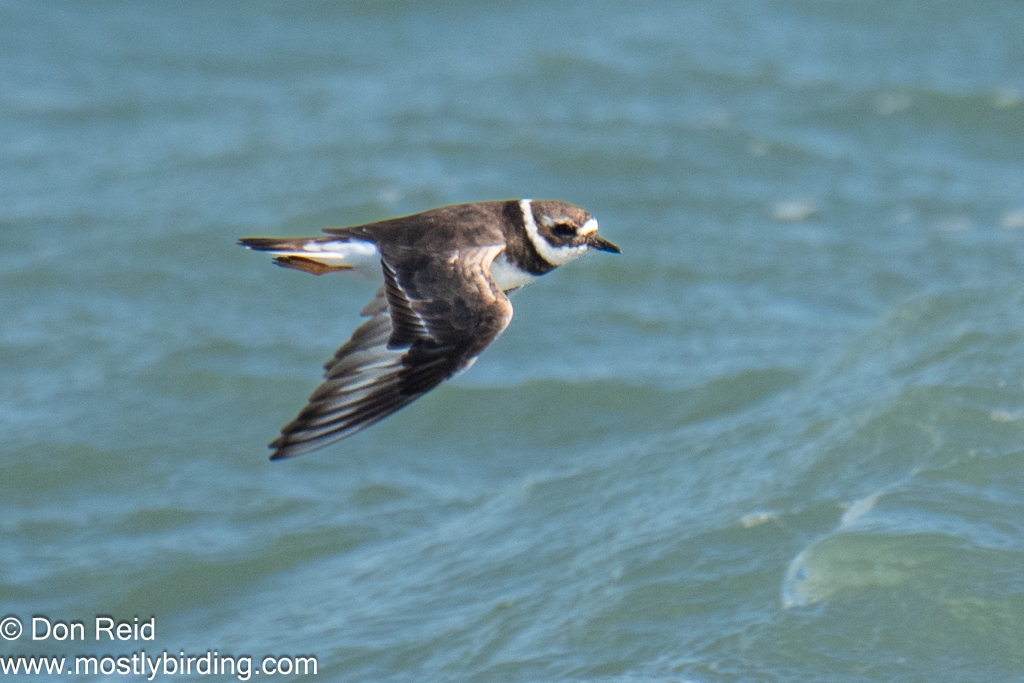
Key identification features of this petite (18 cm, 50g) wader are the size (similar to the Three-banded Plover) and the broad white collar above a blackish breast band, plus the distinctive orange legs

The differences between breeding and non-breeding birds are subtle – the main feature being the orange bill that changes to black, while the black collar and face mask become lighter – these illustrations from Birds of the World show the differences nicely

Clues to their very different lives lie in the global distribution map – the orange area is where breeding occurs in the Northern Hemisphere while the blue area, mostly in the Southern Hemisphere, is where they recuperate from all the rigours of the breeding season and build up strength for the next season.

Map from Birds of the World – Orange : Breeding; Blue : non-breeding; Yellow : Migration

The southern African distribution map shows the species presence across most of the region but absent from the Kalahari and arid interior

Map from Firefinch app

Life in the North

Breeding range is almost circumpolar – from north-eastern arctic-Canada, across Greenland, Iceland, Scandinavia and northern Russia. Their preferred habitat is spartan – along the coast on sandy or shingle beaches, sandbanks and mudflats, estuaries. They also occur on tundra and breed up to 1200m altitude in places such as Norway.

Foraging for their favoured food, which includes small crustaceans and molluscs, is done by day and night, taking advantage of the long days and short nights of the summer months in those far northern areas, typically in small flocks of up to 50 birds.

Breeding and Migration

Their nest is simple – a shallow scrape in the ground, lined with pebbles, debris and pieces of vegetation, sometimes in covered or shaded sites. Eggs (usually 4) are laid between April and mid-July and are incubated for 21 to 27 days by both parents.

Well camouflaged eggs amongst the shingles and pebbles (Photo by others)

If a potential predator approaches the nest, the adult will walk away from the scrape, calling and feigning injury by flopping along the ground as if its wing is broken. Once the intruder has been lured far enough away from the nest the plover will fly off.

I have witnessed this same behaviour by Kittliz’s Plover, where I was taken to be a threat to the nest by unwittingly approaching too close to it – much to my amusement and fascination at the time the plover repeatedly performed the broken wing routine until I left it in peace.

Fledging some 4 weeks later, the fledglings are independent soon thereafter, facing the many dangers that young birds are subject to.

Once the young have fledged and can look after themselves, they start migrating south, often after the adults have already departed. And this is where it gets interesting – those that breed the furthest north are also those that migrate the furthest south. On the other hand most of those that breed further south follow the shortest migration route to the northern parts of Africa.

So the Ringed Plovers that we see in southern Africa, the tundrae sub-species, originate from the far north of Scandinavia and Russia, travelling up to 18,000 kms before finding a suitable spot in our neighbourhood.

Common Ringed Plover, Strandfontein Sewage Works

In the process they “leapfrog” their slightly less adventurous cousins who have chosen a shorter migration route – a phenomenon known (unsurprisingly) as leapfrog migration.

As far as is known, the migration route to southern Africa crosses the Eurasian and African land masses in a broad front, possibly crossing the Sahara along the way, then heads to east and south Africa.

Common Ringed Plover, Gouritzmond

Migration south starts from July with the first adults arriving in southern Africa in September and the first juveniles in October, continuing to December

Life in the South

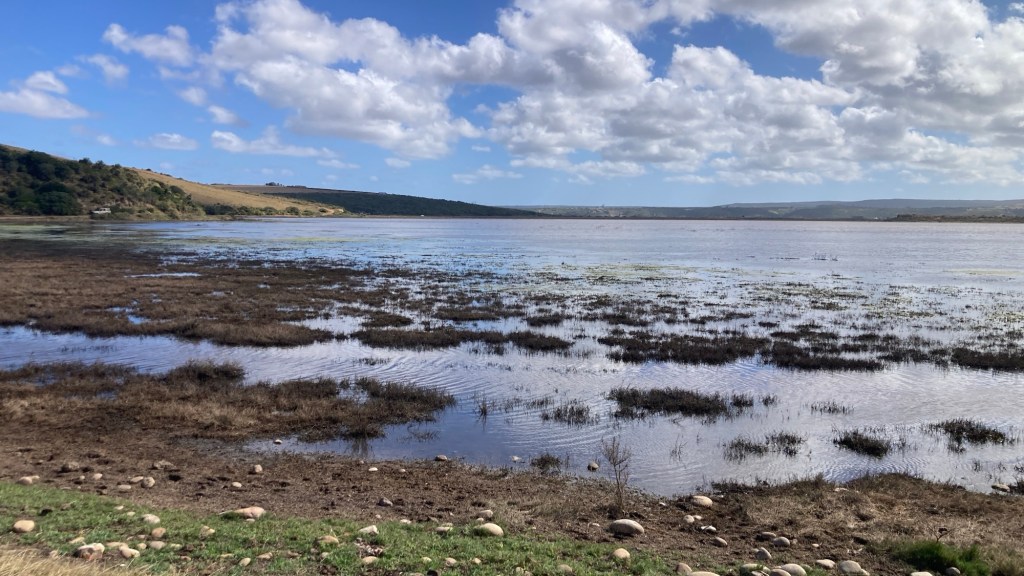
In southern Africa they seek out suitable habitat, mostly at the coast where they favour estuaries and lagoons, but also inland on mud- and sandbanks along rivers and at wetlands, favouring wide bare shorelines with little vegetation. They can often be found in the company of the more common Kittlitz’s and Three-banded Plovers.
Common Ringed Plover, Bronkhorstspruit Nature Reserve near Pretoria

Some time after arrival adults and juveniles have a complete moult over the next couple of months

Voëlvlei, about 30 minutes’ drive from Mossel Bay, which had no water for many years until the good rains of last year, attracted its share of Ringed Plovers this past summer along with many other waders.

Common Ringed Plover, Voelvlei near Vleesbaai

Foraging is done in very shallow water or on wet mud, using the typical plover run-stop-search technique, locating prey visually and picking off the surface rather than probing as many waders with longer bills tend to do.

Common Ringed Plover Charadrius, Voelvlei
Common Ringed Plover, Great Brak River

The plovers start departing from late February with the majority having left by end April, heading north to their breeding grounds where the cycle will start all over again…

References : Cornell Lab of Ornithology Birds of the World; Roberts VII Birds of Southern Africa; Firefinch app

Small Birds taking BIG Journeys : Part 1

During my birding and atlasing trips I come across a variety of migrant species, some of which I manage to photograph in their local habitat – one in particular, the Little Stint, had me thinking for the umpteenth time how fascinating and amazing these annual migrations are.

Many of the migrant waders – or shorebirds as they are also known – display the most Jeckyll and Hyde characteristics of all birds, living two dramatically different lives and spending time in habitats which are as far removed from each other as can be imagined.

The majority of South African based birders get to know migrant species during their stay in the southern hemisphere, typically during the months from October to April, so let’s find out a bit more about their ‘other’ lives by delving into the typical annual life-cycle of these waders, starting with –

Little Stint

Calidris minuta (Kleinstrandloper)

This is the tiny, compact (13 cm, 23 g) wader found across southern Africa, often in flocks and joining other waders at almost any coastal or inland habitat with shallow water, soft mud and not much vegetation.

Key identification features are the very small size, short black bill and wings that project beyond the tail – the latter is a common trait amongst migrant birds needing extra wing power for those ‘halfway across the world’ journeys that they undertake

Clues to their two very different lives lie in the distribution map (courtesy of Cornell Lab of Ornithology) – the orange area is where breeding occurs in the Northern Hemisphere while the blue area, mostly in the Southern Hemisphere, is where they go ‘on vacation’ to build up strength for the next breeding season

Life in the North

Birds are considered as “resident” in the area where they breed, which in the case of the Little Stint is situated within the Arctic Circle in a habitat known as Arctic Tundra, with temperatures well below zero for most of the year and a maximum of just 4 deg C in ‘summer’.

Tundra is known for large stretches of bare ground and rock and for patchy mantles of low vegetation and small shrubs – ‘barren’ and ‘frozen’ are about the kindest words to describe this habitat, yet these tiny waders thrive in this environment

Tundra in Siberia (Photo courtesy of Wikipedia)

They inhabit dry ground at lower altitudes, often near swampy areas or salt-marshes, avoiding areas with annual rainfall of more than 250mm (No, they don’t have a way of measuring it other than instinct)

Little Stint in breeding plumage (Photo courtesy of Cornell Birds of the World)

Breeding and Migration

Their nest is built on the ground, lined with leaves and grass but otherwise exposed. Eggs are laid starting late June to early July and are incubated by both parents.

Once the young have fledged and can look after themselves, they and the adult birds start migrating south, not necessarily together, heading across Europe before following a route via the Rift Valley lakes of eastern Africa then fanning out across southern Africa
According to estimates, up to 1 million Little Stints migrate to Africa, of which a relatively small proportion venture all the way south to southern Africa. Migration south starts from July with peak numbers arriving in southern Africa between October and December

Life in the South

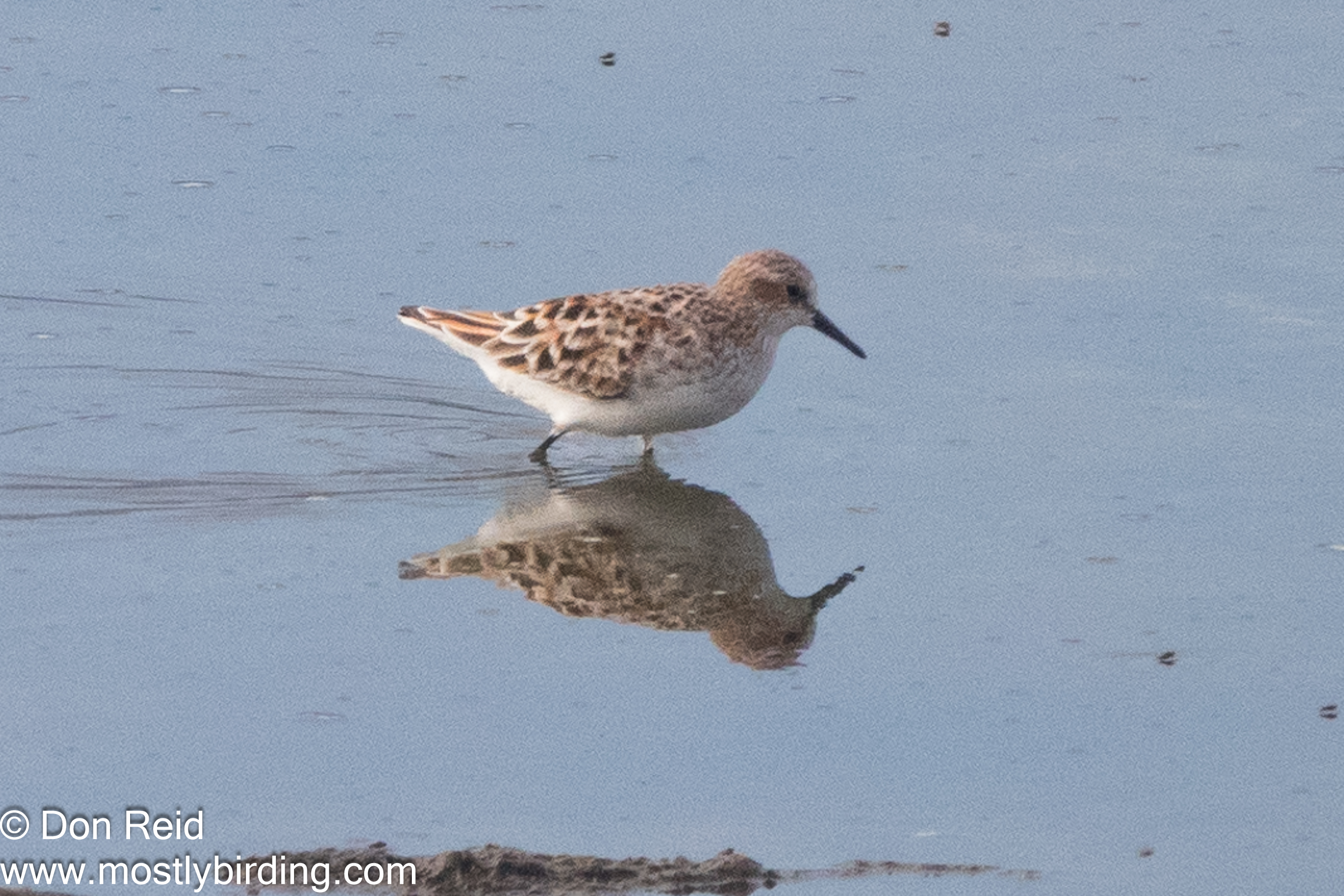
On arrival in southern Africa (and just before departure) some of the stints will still be in partial breeding plumage with upper parts washed rufous, while others will have adopted their non-breeding plumage of brownish grey

Little Stint, Bloemhof Saltworks : taken in April so showing partial breeding plumage

In southern Africa they seek out suitable habitat, preferring coastal and inland wetlands, especially where wet mud is available. Temporary pans in the interior can often provide the abundant short-term food that is perfect for their requirements.

Voëlvlei, about 30 minutes drive from Mossel Bay, which had no water for many years until the good rains of last year, has attracted hundreds of Little Stints this past summer along with many other migrant waders.

Voëlvlei near Vleesbaai

Not only did Voëlvlei provide abundant food for the waders and others, it also provided an ongoing feast for local birders enjoying the abundance of birds along with a few rarities. (More about that in future posts)

Foraging is done in very shallow water or on wet mud, picking small invertebrates off the surface rather than probing as many waders with longer bills tend to do.

Little Stint Calidris minuta Kleinstrandloper, Great Brak River estuary

Stints are fairly easy to spot amongst other waders, not only because they are generally the smallest of the waders present but also due to their hunched appearance which always reminds me of a little old man pottering about

Little Stint, Strandfontein Sewage Works

The Stints start departing from mid-February with the majority having left by end April, heading north to their breeding grounds where the cycle will start all over again…

Little Stint Calidris minuta Kleinstrandloper, Voëlvlei near Vleesbaai

What a privilege it is to welcome these fascinating waders to our shores

References : Cornell Lab of Ornithology Birds of the World; Roberts VII Birds of Southern Africa