And here it is once again (About time did you say?) – a selection of photos that appealed to me for various reasons, not just the quality of the photo but also for the memory it left with me. I hope you enjoy scrolling through them as much as I have enjoyed taking, editing and selecting them.
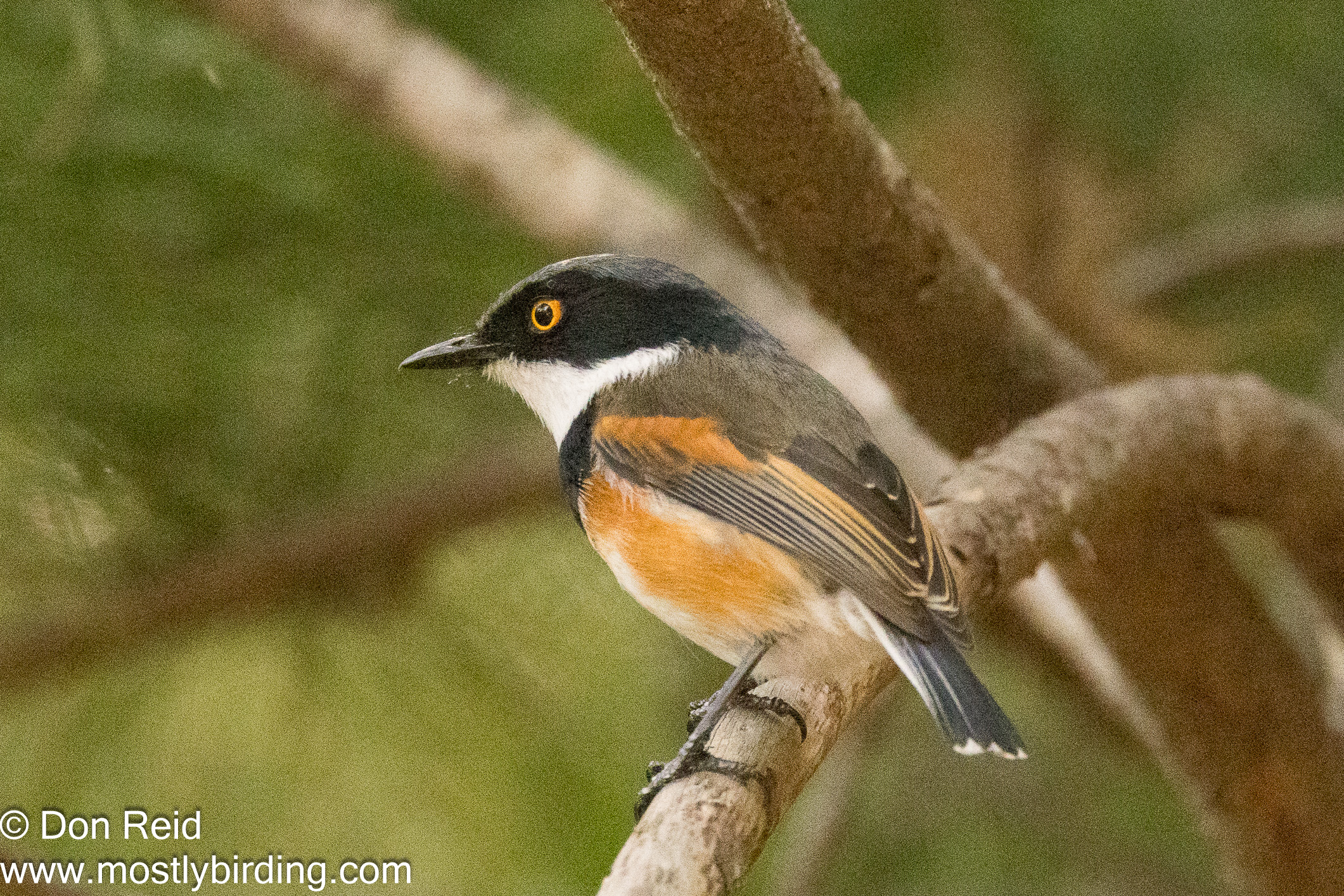
I have not included the many birds I photographed during our visit to Australia as they have been included in the posts on that visit, but chose one of my favourites for the Heading photo – a pair of perky Red-backed Fairywrens that entertained me on one of my many walks
The Places
A random selection of the places we visited during the year….
Starting with Australia and the iconic Sydney Opera House
Opera House, Sydney Harbour Cruise
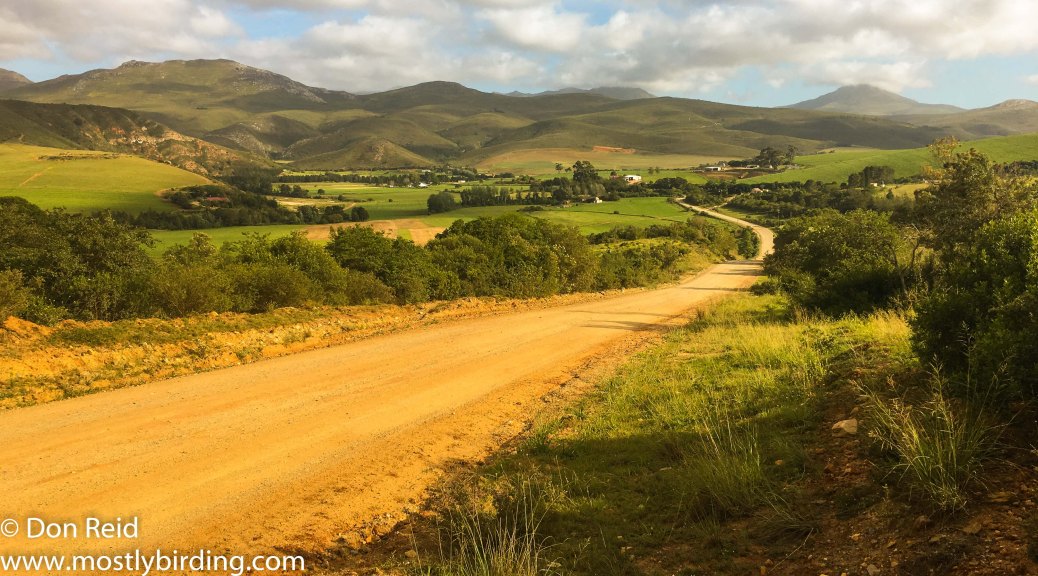
Back home, I never tire of the late afternoon views while walking the golf estate and adjacent nature trails
Mossel Bay Golf Estate
A Powervan, used in the past to check and maintain train tracks, was our transport one Saturday morning, taking us high up into the mountains above George
Powervan trip from George
An early morning atlasing outing took me to Herbertsdale where the low-lying mist added to the beauty of the area
Herbertsdale southwest
Hartenbos beach is a favourite dog-walking spot, especially at low tide
Hartenbos
This was the scene as the Cape Town Stadium gradually filled up for the memorable Andrea Bocelli concert we attended there
Andrea Bocelli Show
A view to the end of the world from the Robinson Pass on the road between Mossel Bay and Oudtshoorn
Robinson Pass
Contrasting colours, a lone tree and several ostriches made for a unique opportunity on a mid-year atlasing trip
Canola field with Ostriches, Albertinia north area
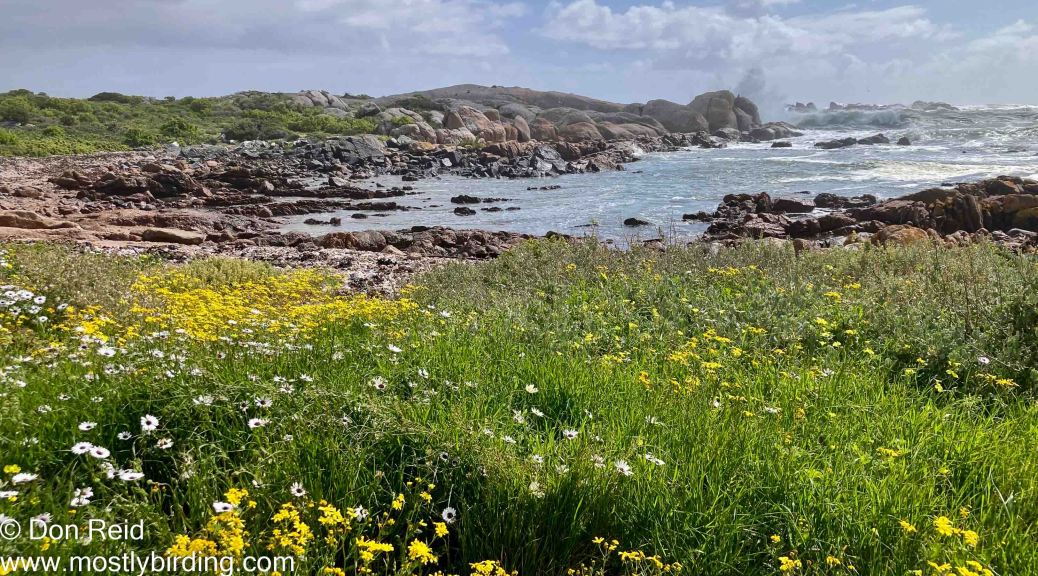
A unplanned visit to the West Coast town of Yzerfontein not far from Cape Town was a fortunate one
Yzerfontein West Coast
The Birds
As before, I have placed them under groupings ‘borrowed’ from Firefinch which is the excellent birding app produced by Faansie Peacock (his real name!) and his team.
Faansie has a way of making birding interesting and fun and the way he categorises bird species in his app is a good example of his practical approach.
Raptors
Seeing a raptor at the roadside is always exciting and a reason to stop and have a better look – most will fly off the moment you stop, so it requires a bit of stealth to keep the car moving slowly while approaching the target and to have the camera at the ready for the moment you come to a standstill – if they do take off there’s always the chance of freezing that moment, capturing the underwing patterns and colours
Spotted Eagle-Owl Bubo africanus Gevlekte ooruil, Mossel Bay Golf Estate
Perchers
This category covers a variety of birds normally seen perched on a tree or bush or other suitable spot
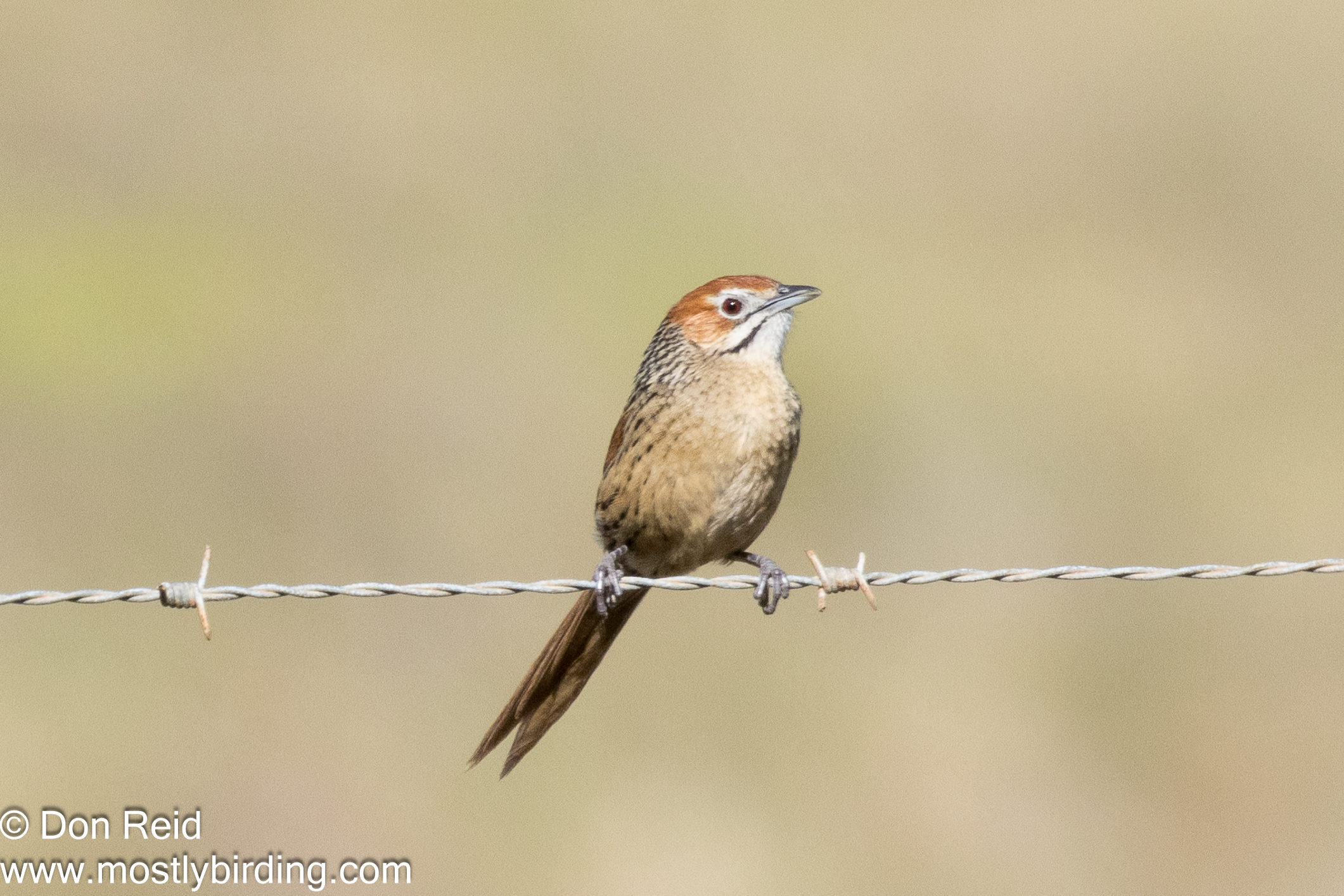
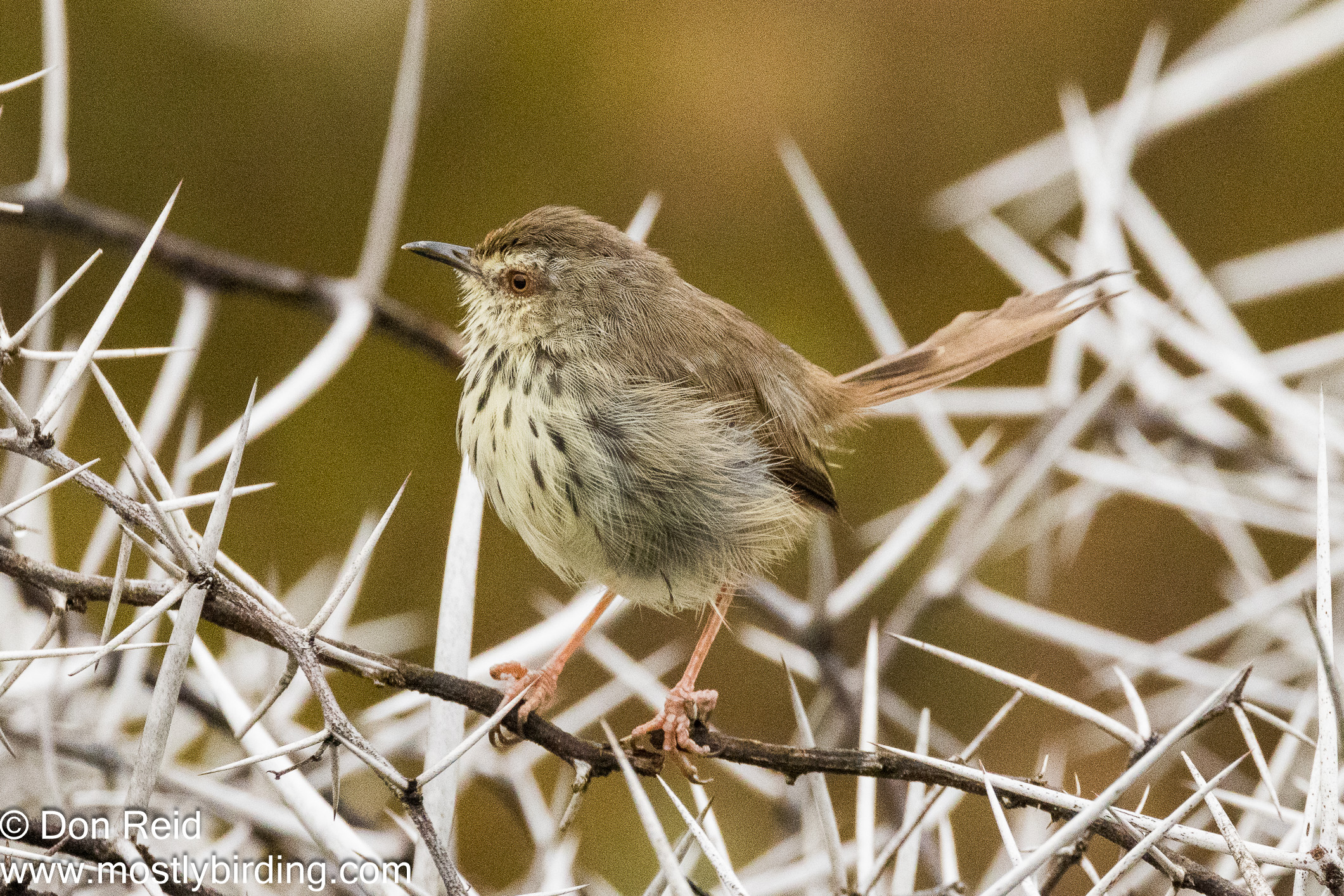
Rufous-eared Warbler, Paardebont areaAfrican Dusky Flycatcher Muscicapa adusta Donkervlieëvanger (juvenile), Hoekwil forestKaroo Prinia Prinia maculosa Karoolangstertjie, Mossel Bay Golf EstateLesser Swamp Warbler, Old R62 Road near Oudtshoorn
Suckers
The curve-billed nectar-suckers
Greater Double-collared Sunbird, Mossel Bay Golf Estate
Seed-eaters
All have short, strong triangular bills suited to their main diet of seeds.
Streaky-headed Seedeater, Mossel Bay Golf Estate
Favourites
A random mix of familiar birds, often colourful and with well-known calls. Here are three Kingfishers that fall into this grouping….
Brown-hooded Kingfisher, Old R62 Road near OudtshoornGiant Kingfisher, Gouritzmond CoastalPied Kingfisher Ceryle rudis Bontvisvanger, Klein Brak
Flyers
Swifts and swallows – the aerial feeders – also the most challenging to photograph unless they are resting between sorties
Brown-throated Martin Riparia paludicola Afrikaanse oewerswael, Herbertsdale southwestBarn Swallow Hirundo rustica Europese swael, Herbertsdale southwest
Plungers
Mainly seabirds that forage over water – and under water
At certain times during the year terns frequent the estuaries west and east of Mossel Bay where they move about in large flocks, usually requiring an energy-sapping walk across soft sands to get into position for photography
Terns, Klein Brak RiverGreater Crested Tern heading to the roost with fish catch, Klein Brak River
Runners
Small to medium-sized birds that forage on the ground
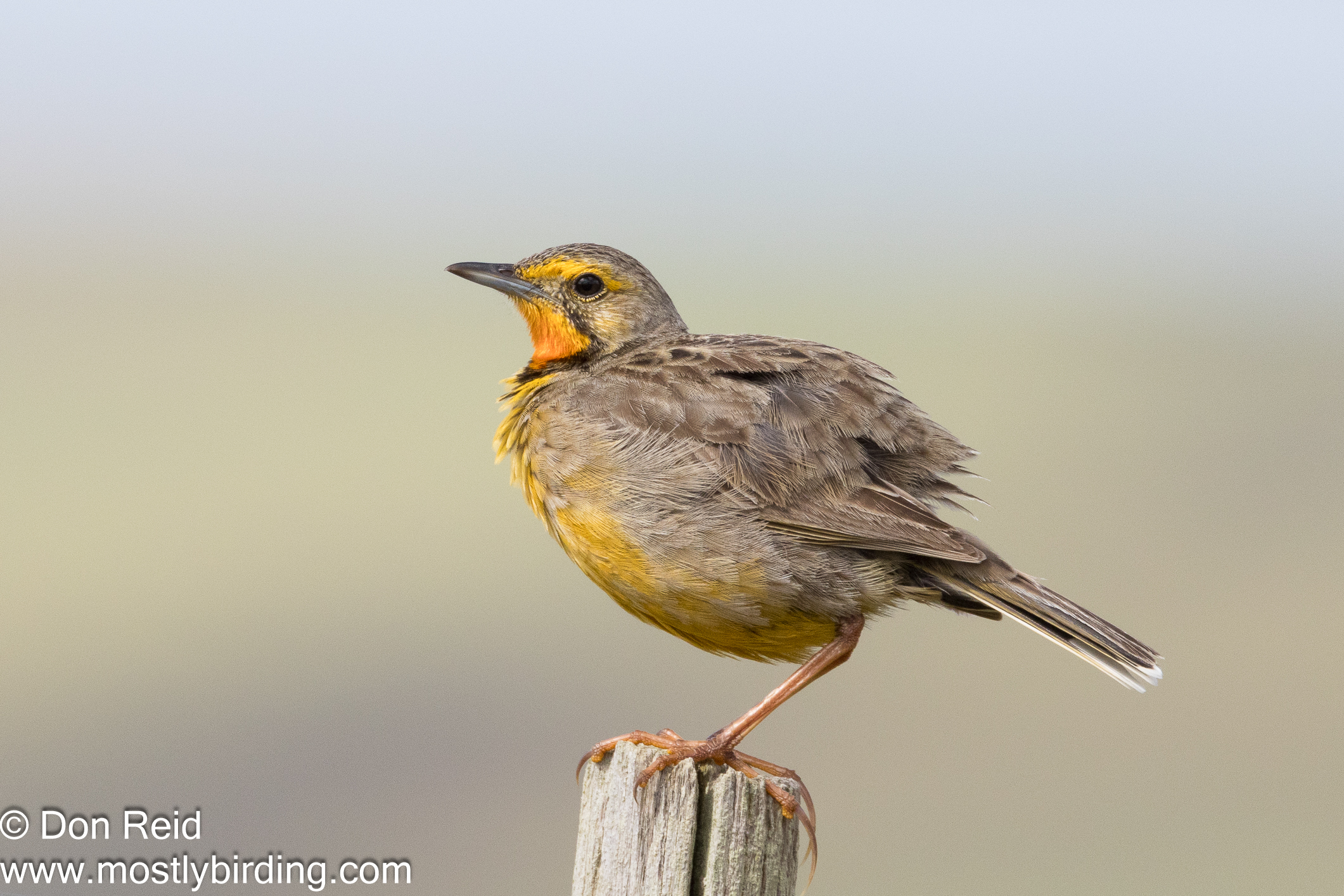
Pied Starling, Herbertsdale north beyond mountainLarge-billed Lark, Herbertsdale north beyond mountainAgulhas Long-billed Lark, Albertinia north areaChorister Robin-Chat Cossypha dichroa Lawaaimakerjanfrederik, Hoekwil forestCapped Wheatear Oenanthe pileata Hoëveldskaapwagter, Herbertsdale road
Swimmers
Birds with webbed or lobed toes for swimming
Crowned Cormorant Microcarbo coronatus Kuifkopkormorant, Yzerfontein West Coast
Walkers
And to end off – the group of large birds with long legs that feed and nest on the ground
Blue Crane, Vleesbaai areaWater Thick-Knee, Gouritzmond
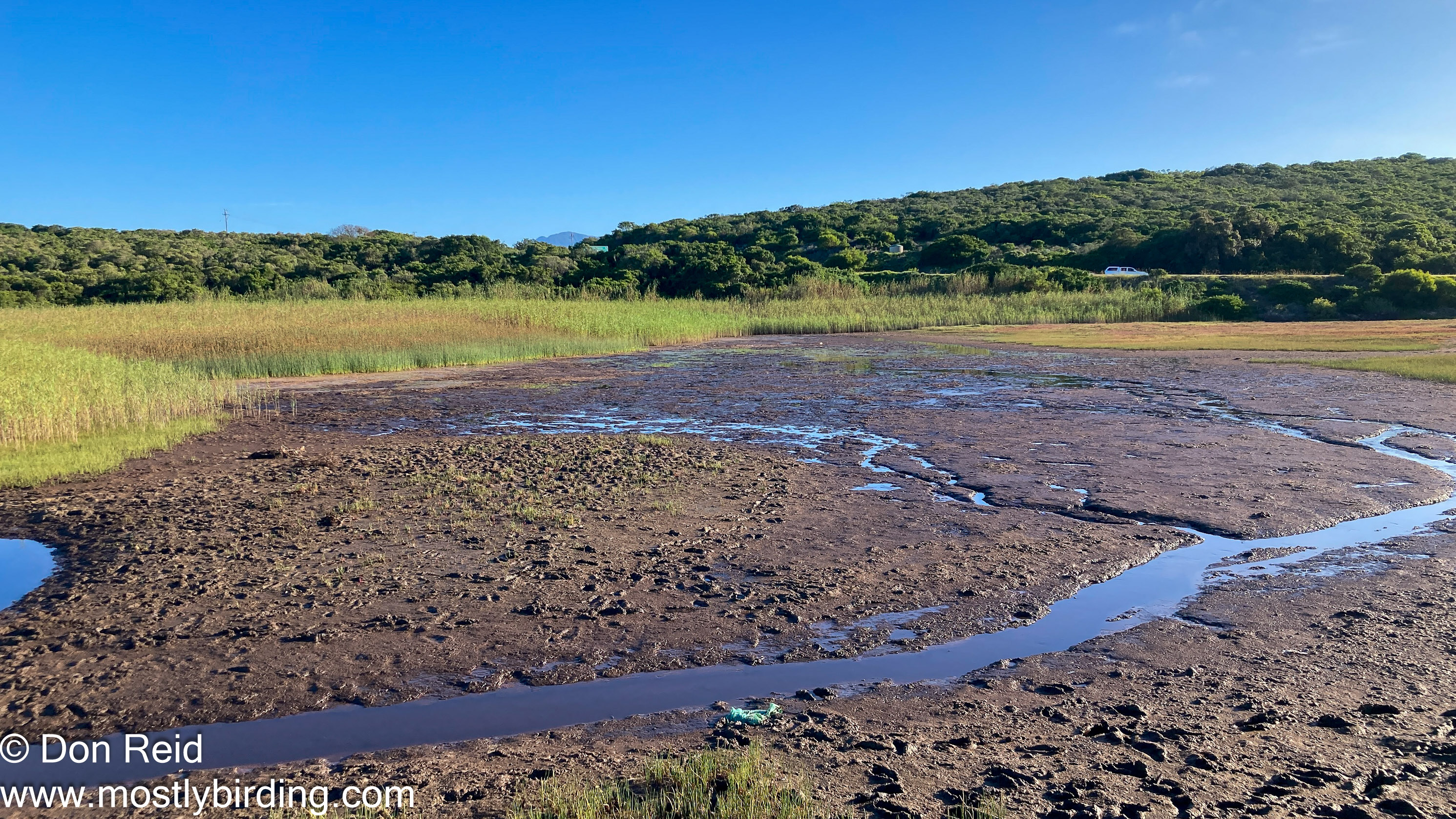
View of Voëlvlei after substantial rains (photo from whatsapp group)
Firstly, a few facts about this well-known birding spot near Mossel Bay – well-known if you are a birder that is, particularly one who has explored the birding delights of the southern Cape.
‘Voëlvlei’ can be directly translated from Afrikaans as “Bird wetland (or pan)”, although no one would ever call it that in South Africa. ‘Voël’ is of course the Afrikaans term for ‘Bird’ and ‘Vlei’ is a widely used term for any shallow body of water such as a seasonal wetland, shallow pan or marshy depression where water collects during the wet season.
The pan at Voëlvlei only retains water during very wet years, which can be anything from 7 to 15 years apart, so when the vlei has water it very quickly becomes a magnet for waterbirds and waders, followed closely by many a keen birder out to find a variety of birds, with a strong possibility of a rare migrant wader or two during the summer months.
Voëlvlei lies about 35km south-west of Mossel Bay and is on privately owned farming ground – the owners have generously allowed access to the vlei for birders as long as they behave in a respectful way.
Voëlvlei straddles three pentads
A track skirts the vlei on one side with entry possible from two farm gates at the northern and southern extremes (after entering or exiting it is good form to close the gate again).
My Atlasing Visits to Voëlvlei
SABAP2 Records
The table above shows all my atlasing records since my first visit in December 2015 – green indicates that it was a “Full Protocol” card, which requires a minimum of two hours of intensive atlasing, the grey is for “Ad hoc” cards.
The good (or bad news depending on your inclination) is that I still have my journal records of all of the “green” cards, so join me as I return to those journals and select some of the highlights of the visits. You can, of course, skip the words and just look at the pictures, but I believe my readers are made of sterner stuff than that and are not afraid to plough through the verbiage.
14 and 18 December 2015
My first visit was 10 years ago, long before we moved permanently to Mossel Bay…
I had long read about the vlei as being a top birding spot when conditions were right. With reports trickling through of favourable water levels after good winter and early summer rains, I stopped at Voëlvlei on my way back from atlasing Gouritsmond, to find that it indeed had plenty of water and what appeared to be thousands of birds.
I did a quick list of some of the obvious birds, without going through the gate into the vlei area itself. A few days later Gerda joined me for a late afternoon visit to the vlei, when we entered Voëlvlei proper and followed the track around the east flank, then returned along the same route. The atlasing protocol allows a maximum of five days for one ‘card’ so I could add to the short list I had started on the 14th.
Birding was excellent and plentiful, the only downside being the sun in the west which created a sharp glare, making it difficult to see the birds clearly. We added 36 species to the initial 10 taking the total to 46, including ..
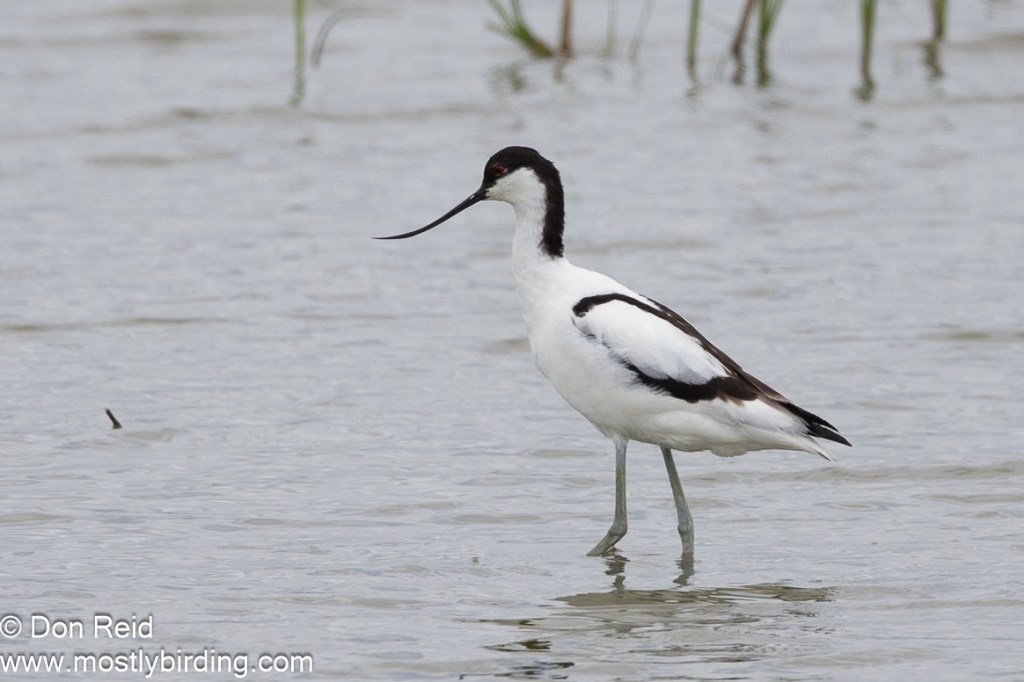
Pied Avocet – notable for being a ‘Year bird’ for me (Birders are such nerds)
This first visit was particularly memorable – little did I know it would be eight years before I would experience something similar at Voëlvlei…
I did atlas the pentad in the intervening years but did not include Voëlvlei itself as it had dried up completely
30th November and 2nd December 2023
Having moved to Mossel Bay in October 2023 and seeing the reports of increasing water and bird presence at Voëlvlei, I was keen to visit the spot and see for myself. Reports of rarities made it even more imperative so I set off on the last Thursday of November, the day in the week that I have tried to keep open for atlasing.
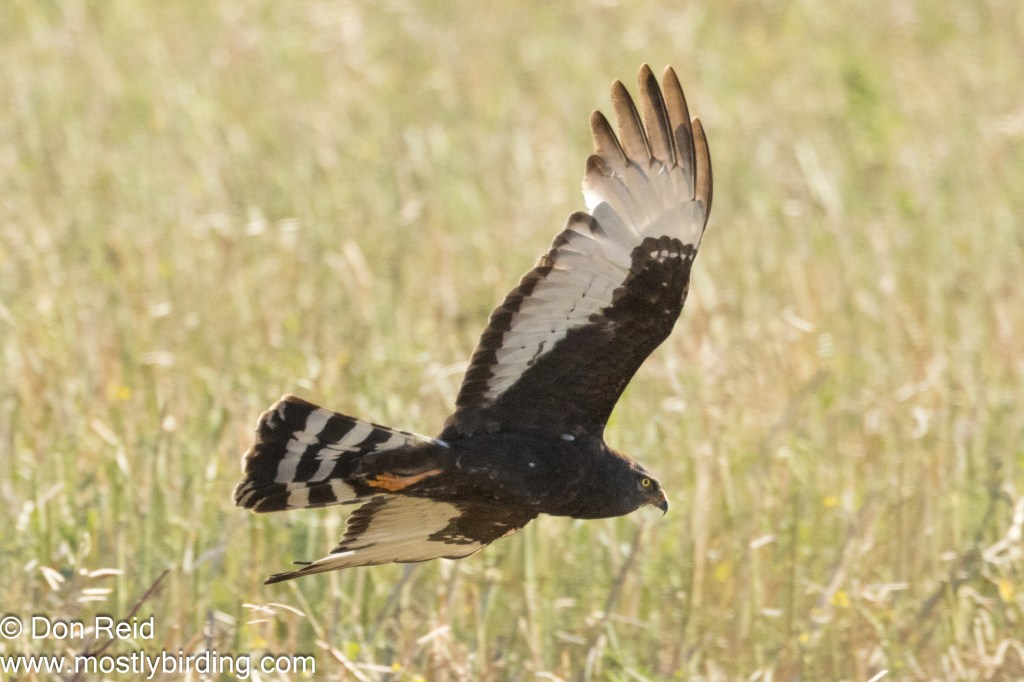
I started my pentad list along the road past Vleesbaai with a Black Harrier which I chased down the road to try and get level with it as it hunted low over the fields in true Harrier fashion, stopped quickly and rattled off a few shots – with limited success but lovely to see it in hunting mode.
Black Harrier Circus maurus Witkruisvleivalk, Vleesbaai area
Further on I took the turnoff to Voëlvlei and after passing through the gate I spent the next three hours carefully scanning the vlei from the track along the east flank, particularly the muddy margins which were teeming with birds.
The open waters towards the middle of the vlei as well as the surrounding dry land were equally busy with their particular species all enjoying a cornucopia of edible life.
Once again the waterbirds dominated my list …
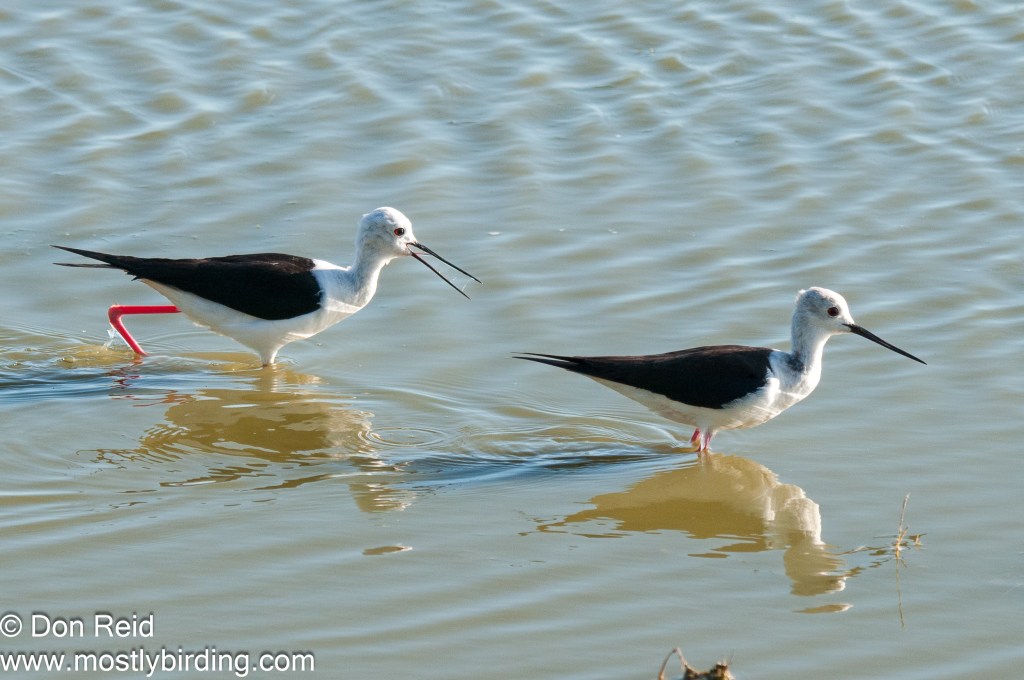
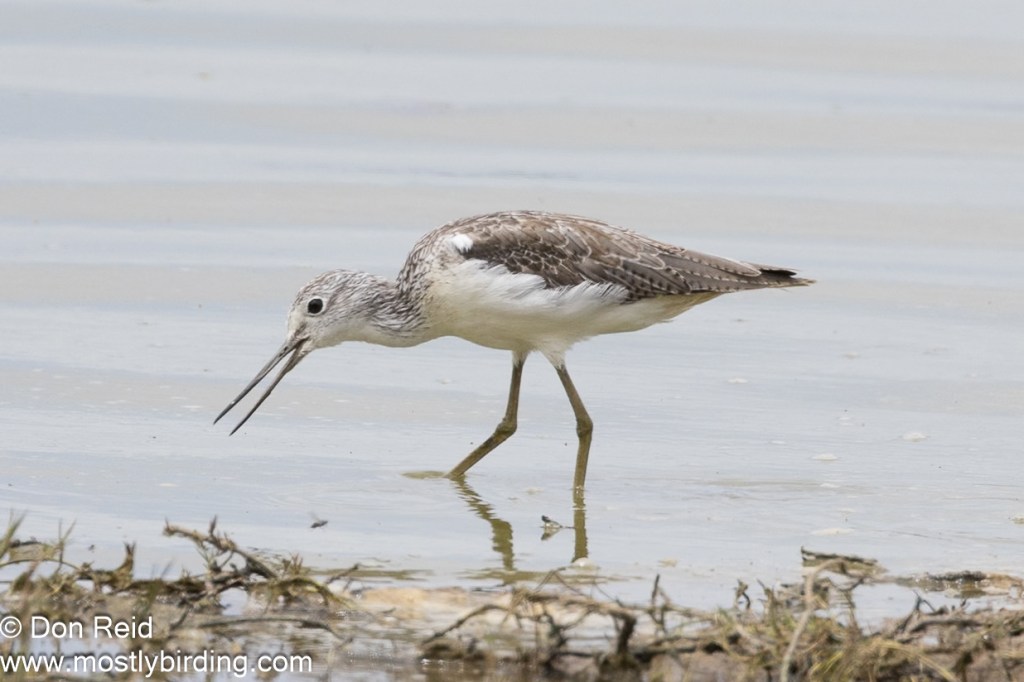
Waders – Black-winged Stilt, Three-banded, Kittlitz’s and Common Ringed Plovers, Little Stint (lots), Ruff, Wood Sandpiper, Grey Plover, Pied Avocet, Greenshank, Blacksmith Lapwing, Grey Heron, African Spoonbill and Little Egret
Rarities – This visit was excellent preparation for the annual Birding Big Day just two days later when many of the same birds were recorded by our team. An added thrill was seeing two rarities which had been spotted by some of the keen birders already present –
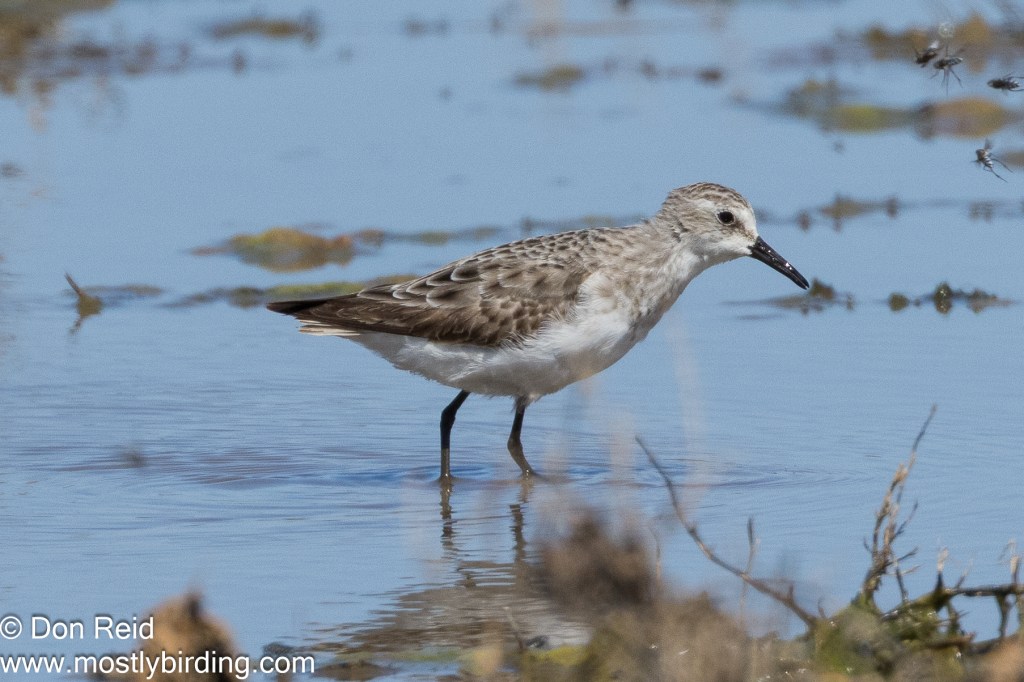
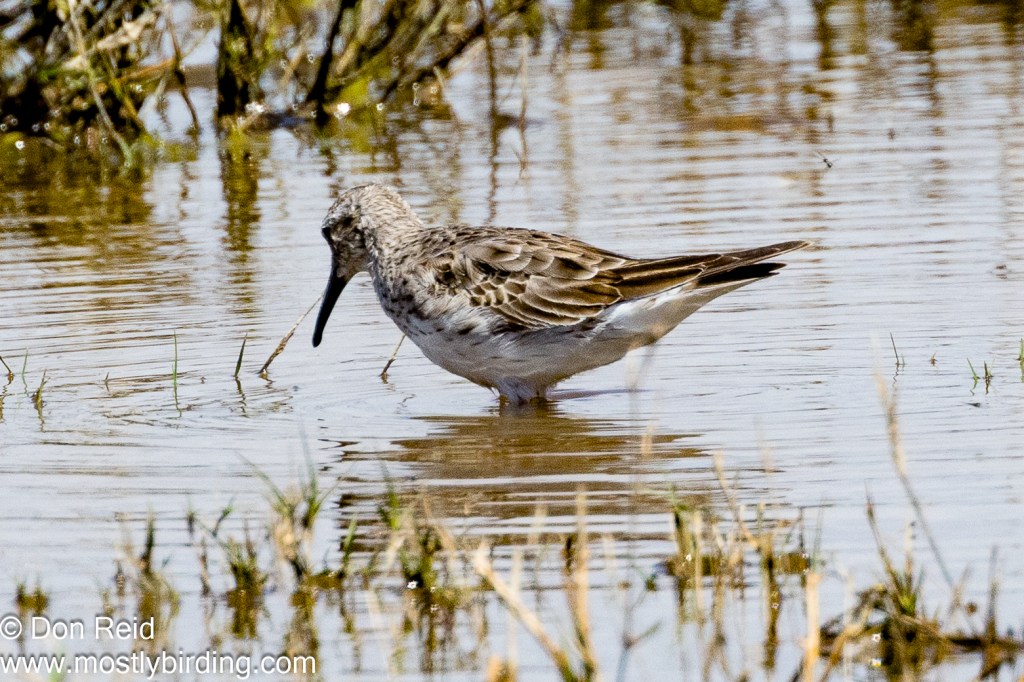
White-rumped Sandpiper – a low-slung, longish-winged sandpiper, difficult to distinguish among the many small waders except when close to the many Little Stints present
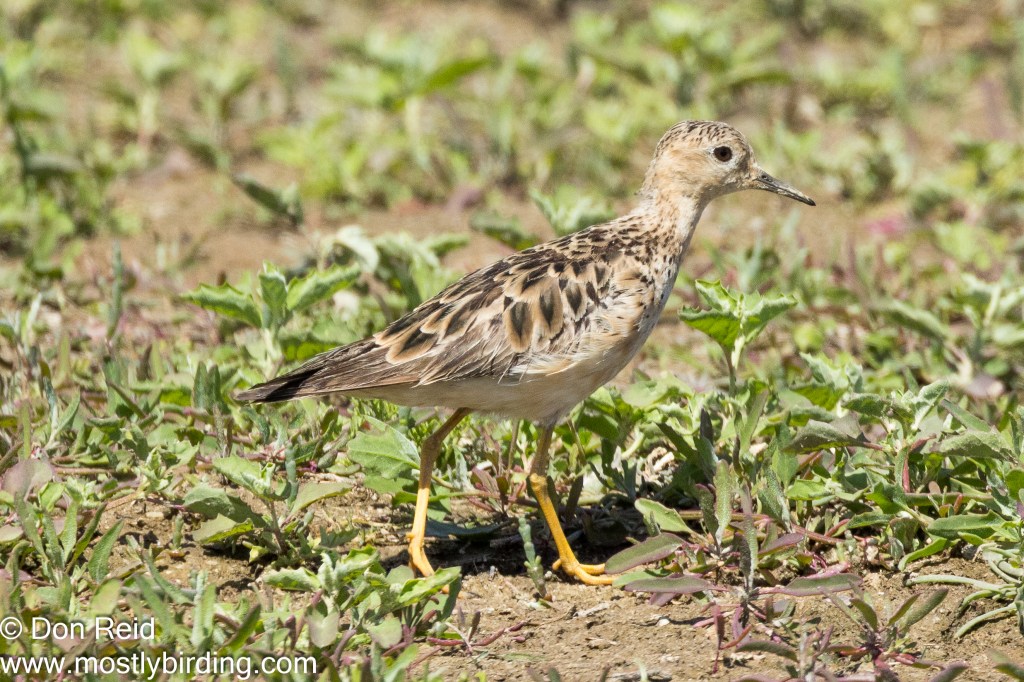
With Voëlvlei still attracting a lot of attention from birders and with reports of another rarity – Buff-breasted Sandpiper – being seen there, I couldn’t resist another visit just a week later.
It was a Sunday and Gerda agreed to join me, so after a traditional Sunday lunch at a country restaurant on the way (meat and three veg with rice plus a pudding) for not much money, we headed to Voëlvlei and joined several vehicles and birders with the same idea.
The Buff-breasted Sandpiper was quickly pointed out by those already present – on its own foraging in the dry, lightly grassed area away from the water – clearly a loner not interested in mingling with the many other waders in the vlei itself.
I spent a while scoping the sandpiper and taking photos of it from a distance, while recording all the other species present as they came into view.
We headed home with 34 species recorded. Feeling that the list needed boosting, I decided to include Voëlvlei in my next atlasing session on the following Wednesday, which would fall in the allowed 5 days for a “Full Protocol” card.
I arrived at the vlei mid-morning and spent three more enjoyable hours viewing the multitude of birds, adding a further 16 species to take my total to a nice round 50 for the pentad.
The White- rumped Sandpiper was still present and I spent some time trying to get better photos of this rarity – with limited success. It was difficult to get close enough to the bird, which remained among short grass tufts in the shallows of the vlei, intermingling with other waders and probing the mud constantly so that it was nigh on impossible to isolate it for a decent photo.
Waders – Black-winged Stilt, Kittlitz’s and Common Ringed Plovers, Little Stint (lots), Ruff, Pied Avocet, Blacksmith Lapwing, Grey Heron, African Spoonbill, Little Egret, Cattle Egret, Glossy Ibis and Sacred Ibis
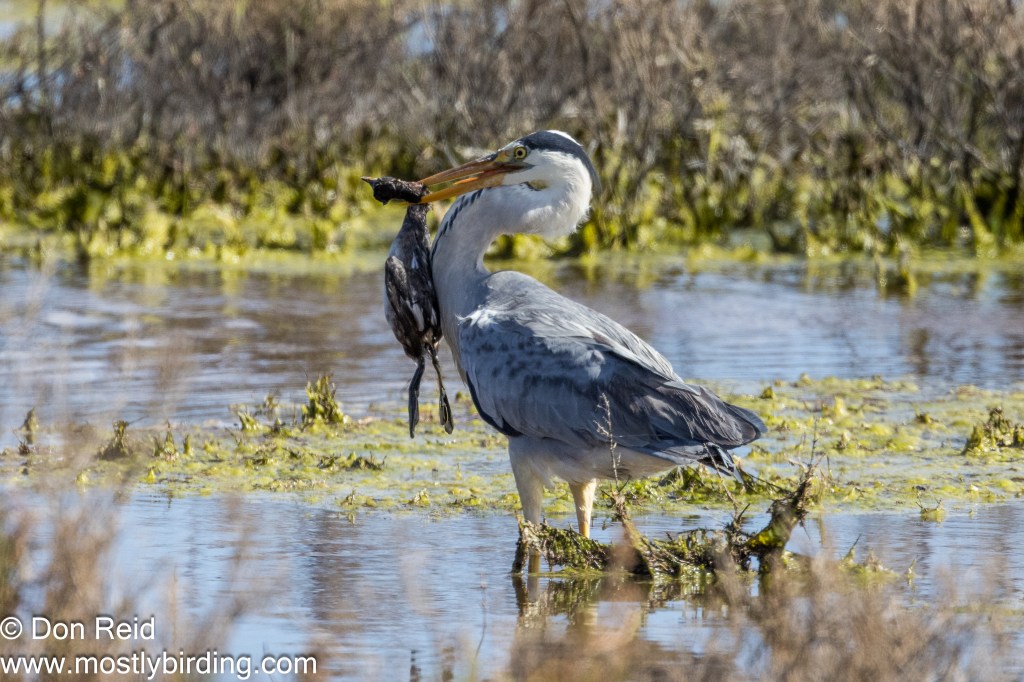
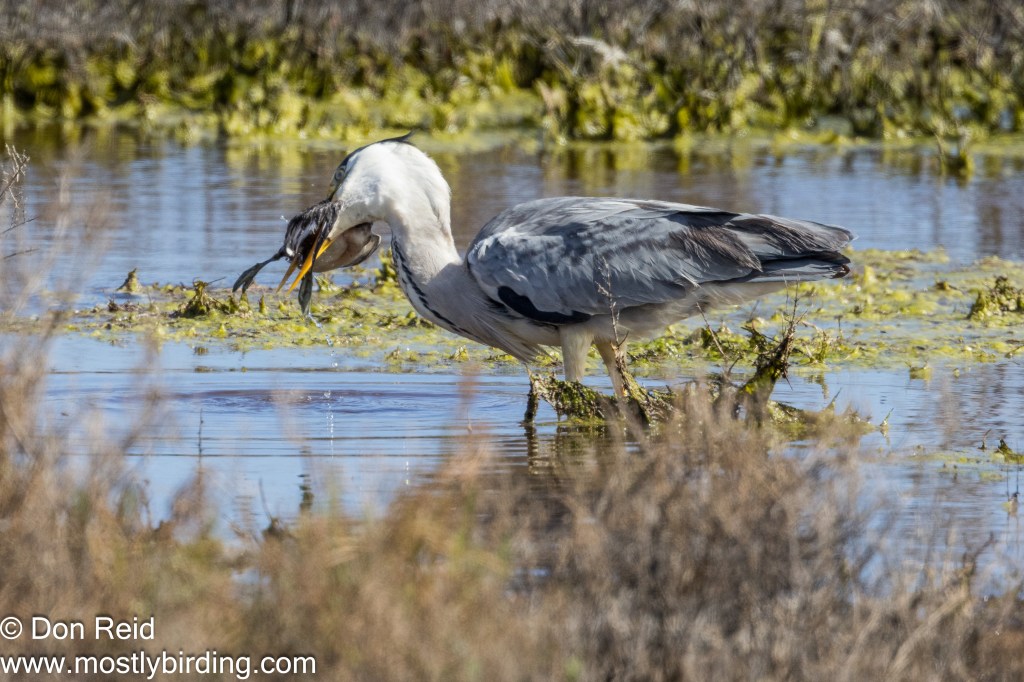
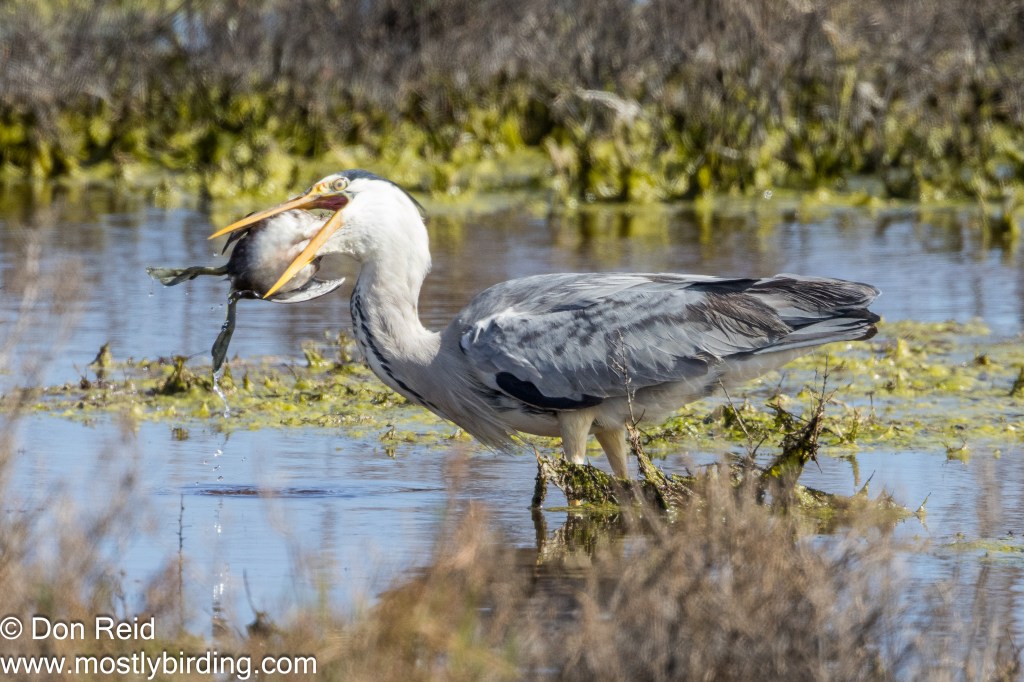
Most Surprising Sighting? – most certainly seeing a Grey Heron with what looked like a Reed Cormorant (possibly a juvenile) in its bill, which it proceeded to manoeuvre into position and swallow whole! I wasn’t able to capture the final swallow as the Heron moved behind some reeds.
The vlei remained partly inundated during the most of 2024, with water levels gradually decreasing as inflow dried up.
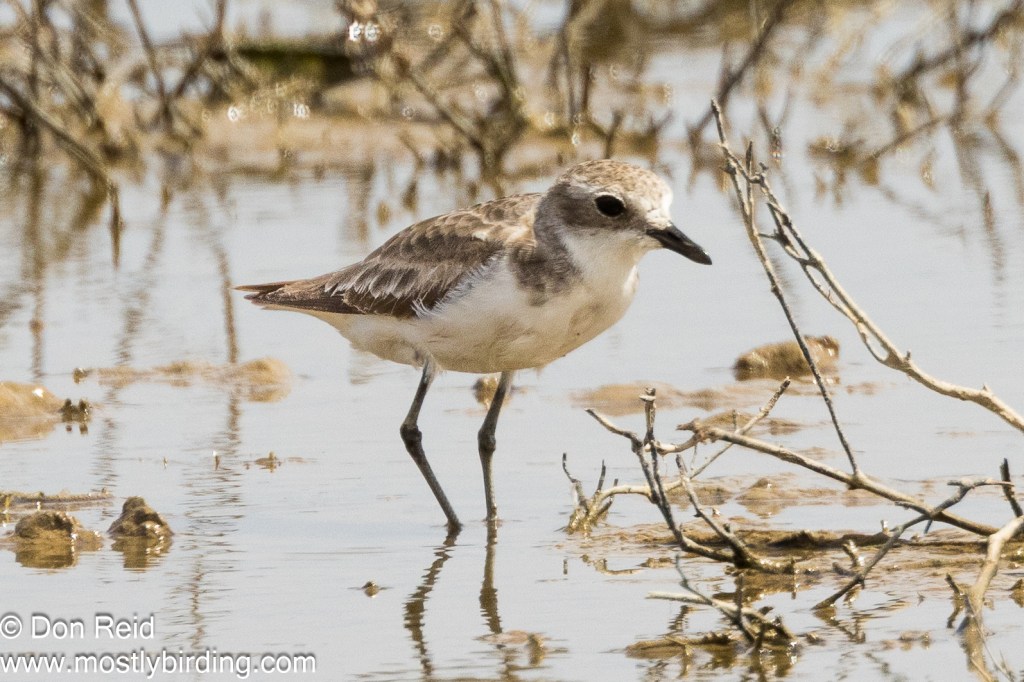
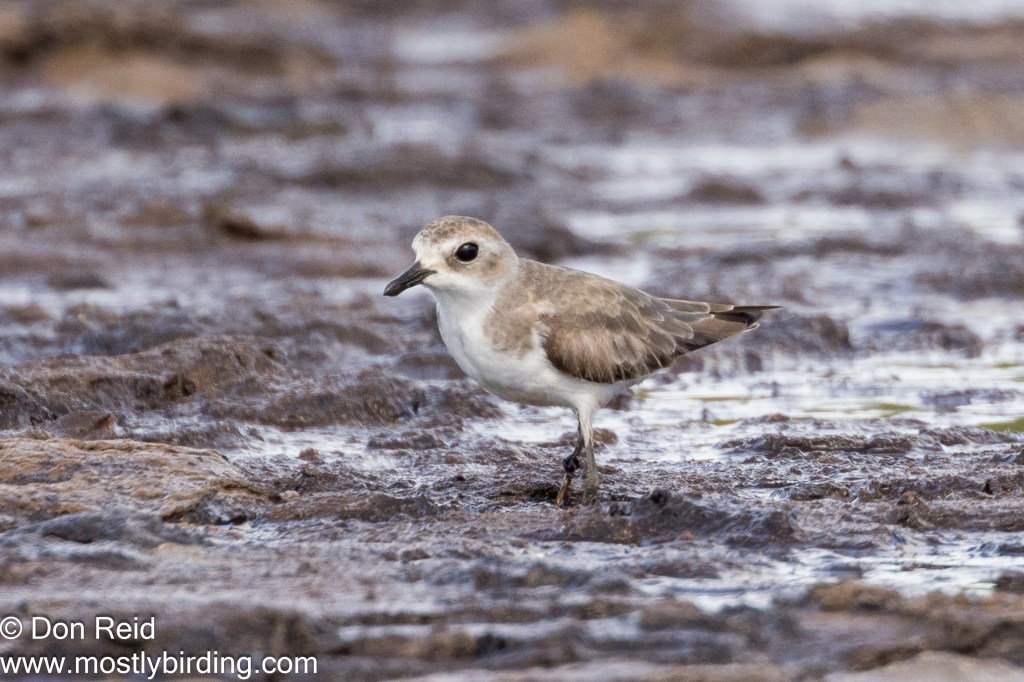
During February reports appeared on the local birding groups of a Greater Sand Plover at Voëlvlei – I had seen this species before but just once, so at the end of my next atlasing trip I took a detour to the vlei to see if I could find it.
At Voëlvlei I was able to find and photograph the Greater Sand Plover without too much effort and to record numbers of other waders which were still plentiful.
Thereafter the vlei gradually dried up, leaving ever wider margins. This did not come as a surprise for those living in the Southern Cape as it has been a particularly dry year for the area.
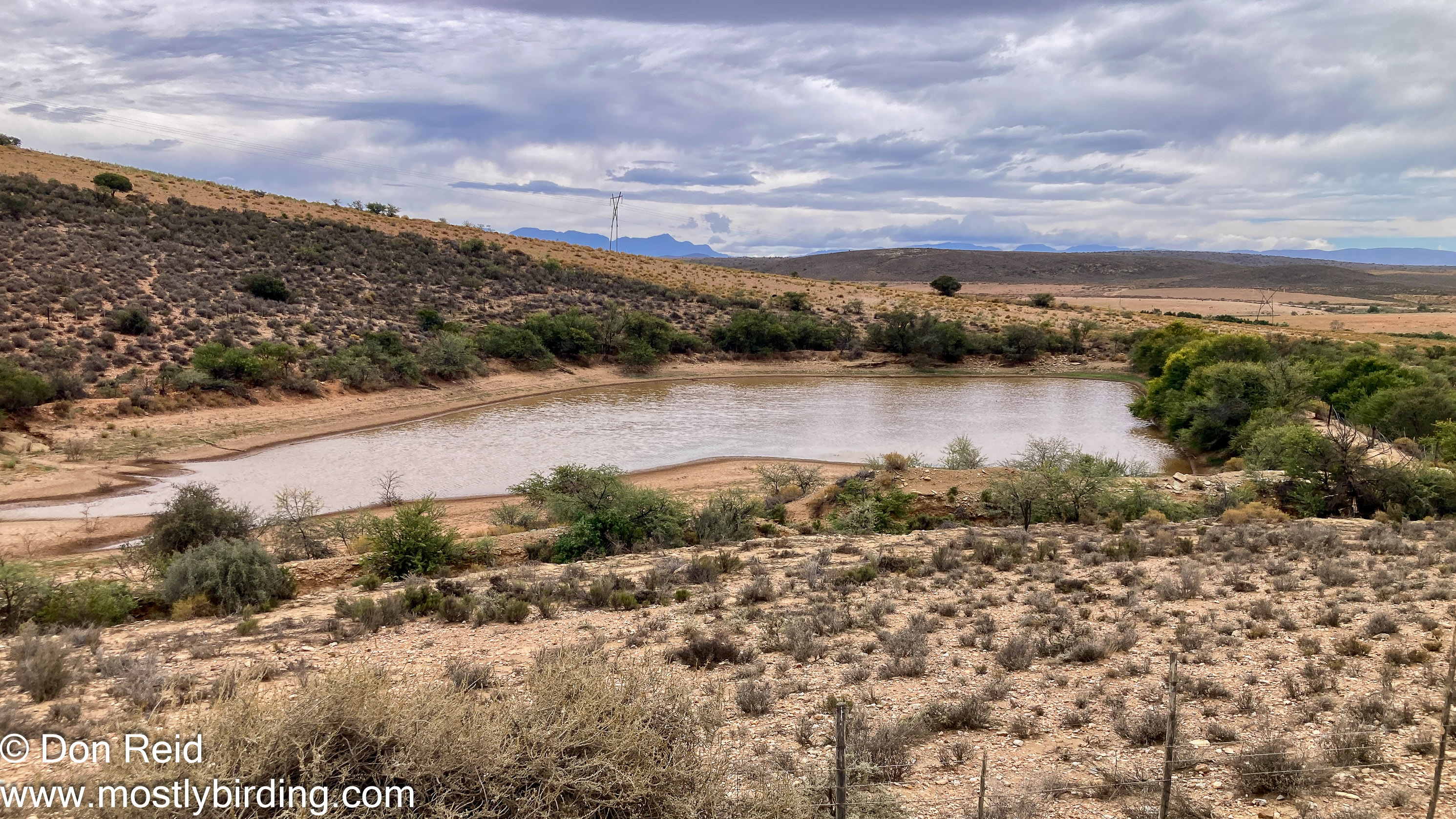
The photo below was taken in July this year, with just the northern section having any water – a couple of weeks after this photo the vlei was bone dry.
That just raises the question that is impossible to answer – when will Voëlvlei have water again? If average statistics are anything to go by it may be 7 or more years before that happens, a sobering thought at my age, I have to say, but I am thankful to have enjoyed two bountiful birding seasons during the last 10 years.
This is the second part of my photo pick for 2024 – a selection of bird photos that appealed to me for various reasons, not just the quality of the photo but also for the memory it left with me. I hope you enjoy scrolling through them as much as I have enjoyed taking, editing and selecting them.
If you have already glanced at the ‘categories’ I have placed them under and are wondering how I arrived at these – well, I didn’t but I did ‘borrow’ them from Firefinch which is the excellent birding app produced by Faansie Peacock (his real name!) and his team.
Faansie has a way of making birding interesting and fun and the way he categorises bird species in his app is a good example of his practical approach.
Raptors
Seeing a raptor at the roadside is always exciting and a reason to stop and have a better look – most will fly off the moment you stop, so it requires a bit of stealth to keep the car moving slowly while approaching the target and to have the camera at the ready for the moment you come to a standstill
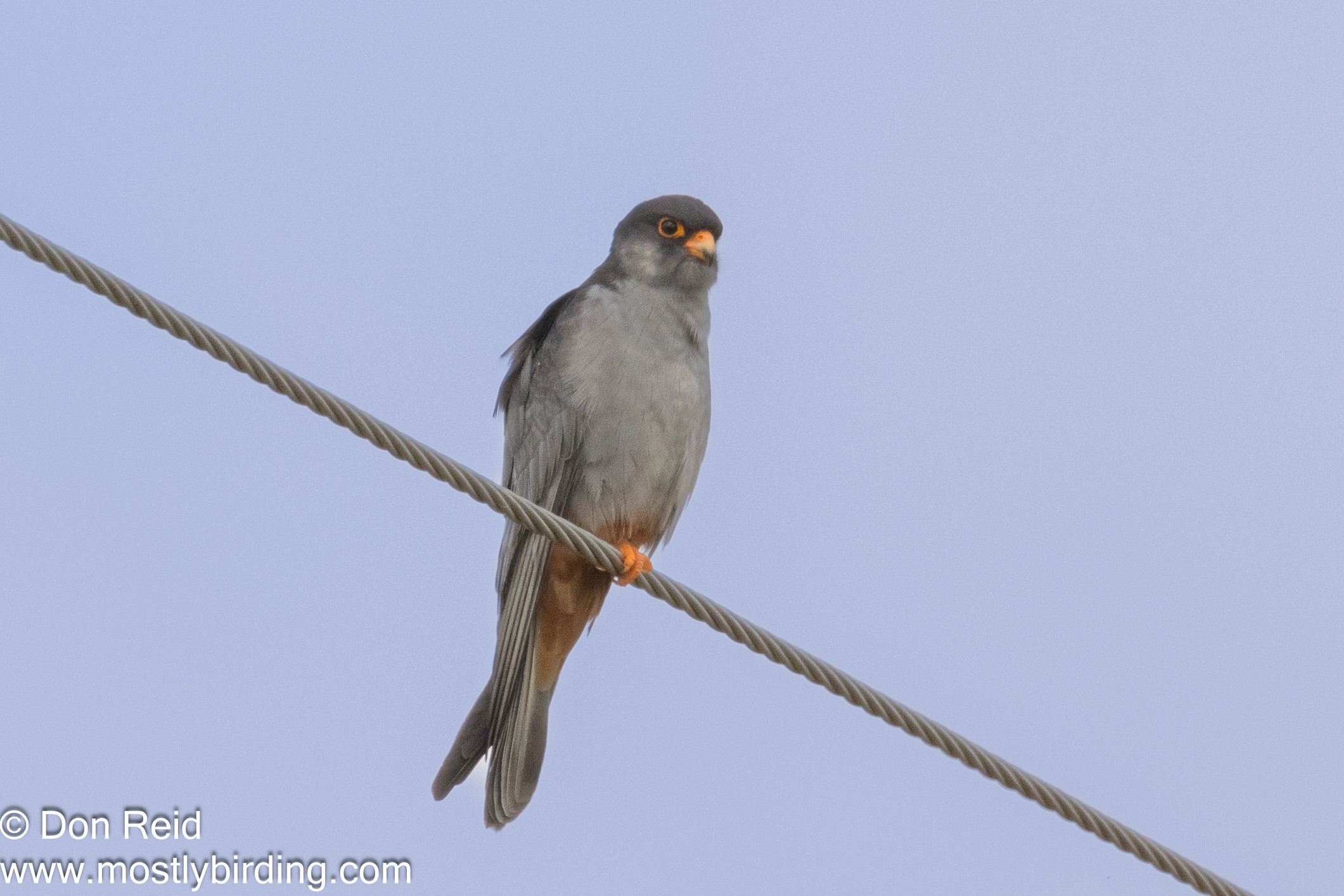
This is not a particularly good photo of an Amur Falcon that I came across but I include it only because it is a scarce sighting in the Southern Cape
Amur Falcon Falco amurensis Oostelike rooipootvalk (male), Kleinberg area
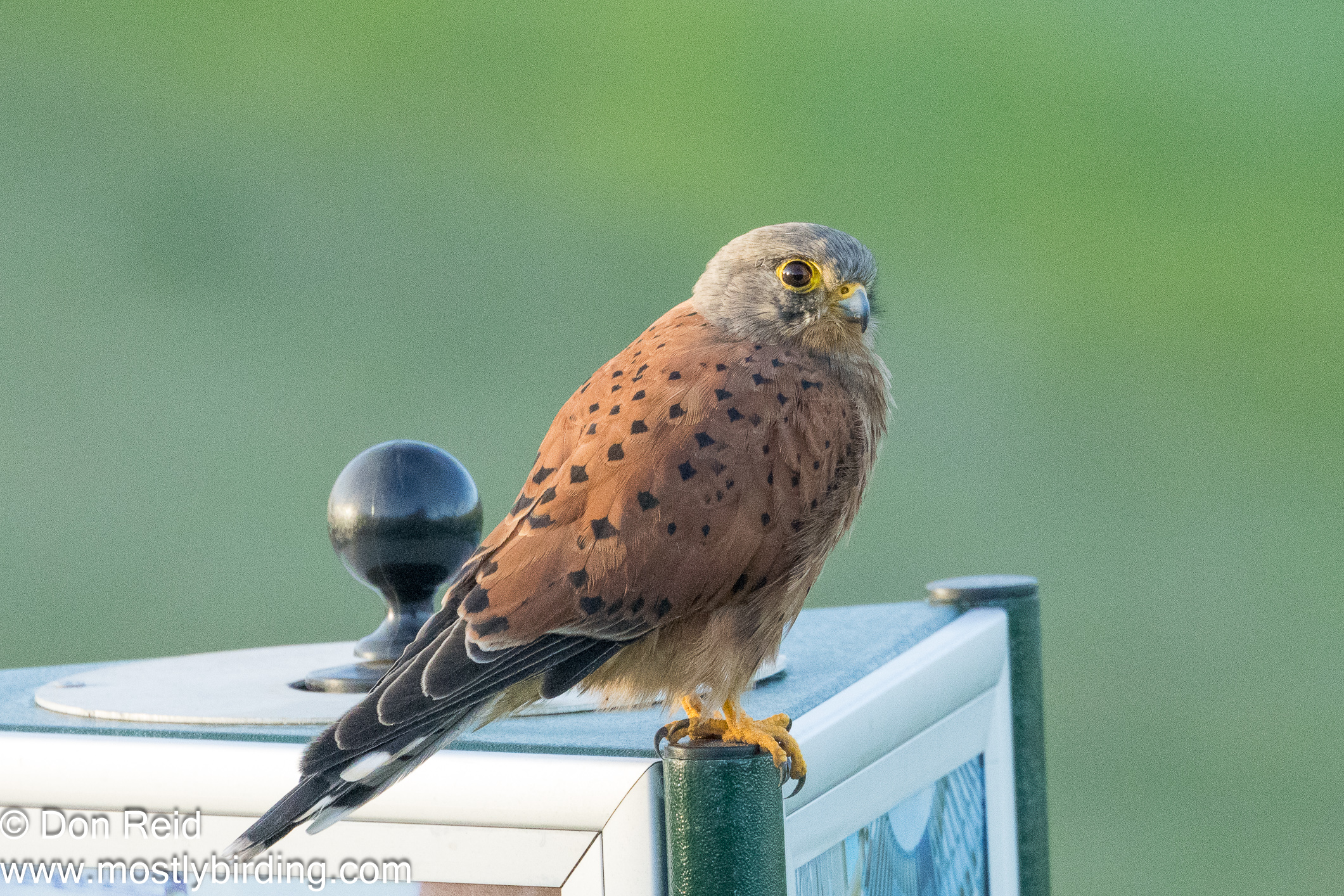
Rock Kestrel is a regular species in the estate where we live. This one chose the 15th tee, just 100m from our house, as a convenient spot for some hunting one morning
Rock Kestrel Falco rupicolus Kransvalk, Mossel Bay Golf Estate
Perchers
This category covers a variety of birds normally seen perched on a tree or bush or other suitable spot
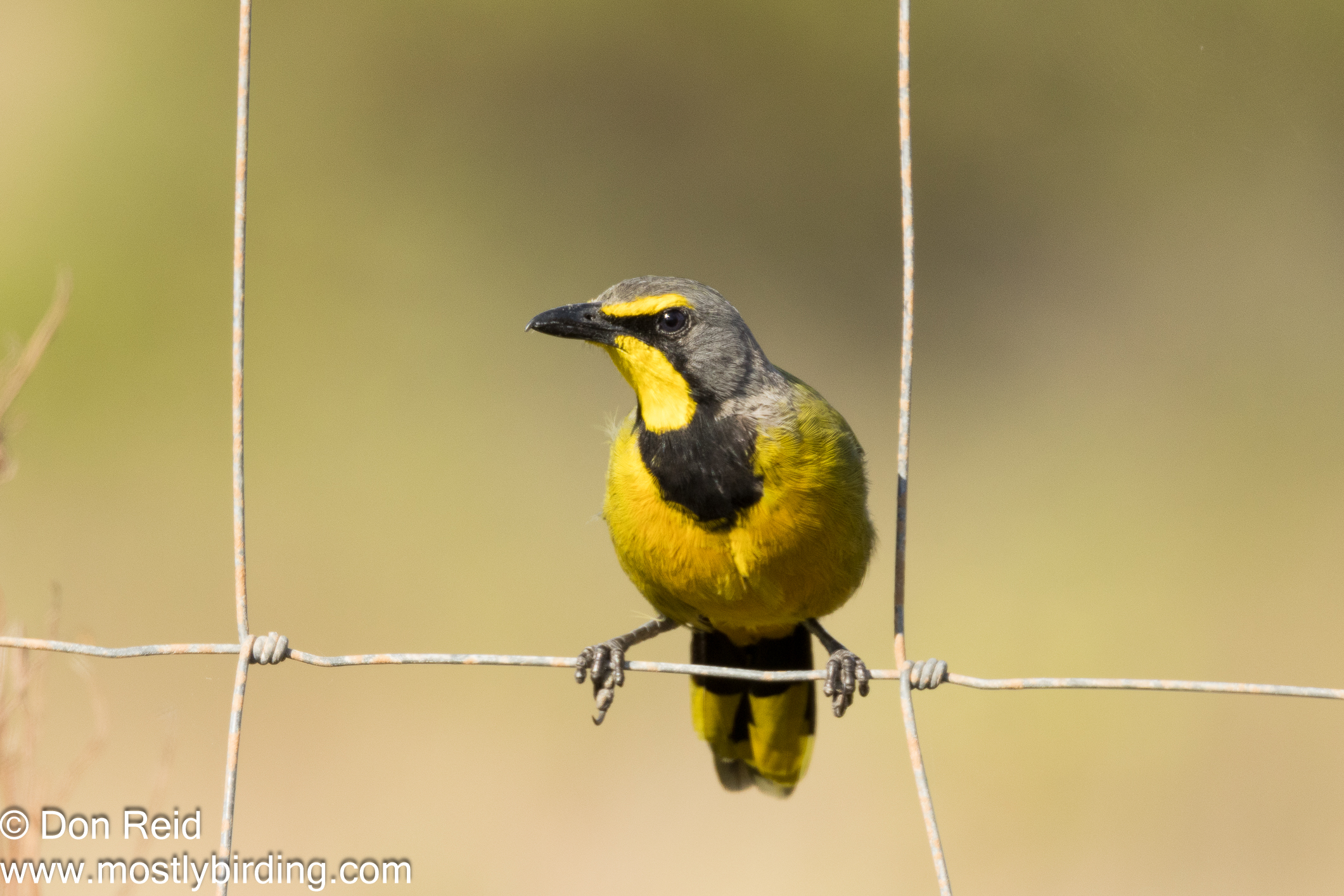
Bokmakieries are often one of the first species to be encountered when atlasing in the Southern Cape, as they greet the new day with vigourous calls. Getting them to pose is not always easy but this one eyed me from a wire fence, inviting me to take its photo
Bokmakierie Telophorus zeylonus Bokmakierie, Brandwag south
Cape Batis is a common forest bird – parts of the Bonniedale road heading west from the R328 are heavily forested and that’s where I found this one
I had stopped in the mountains beyond Herbertsdale to check for birds when this Grassbird – or perhaps it’s better to call it a Fencebird in this case – drew my attention with its familiar trilling call
Cape Grassbird Sphenoeacus afer Grasvoël, Herbertsdale north
Karoo Prinia is common in suitable habitat across its distribution range. I saw one while stoepsitting in the Addo NP and stalked it until it settled in a thorny bush for long enough to get this image
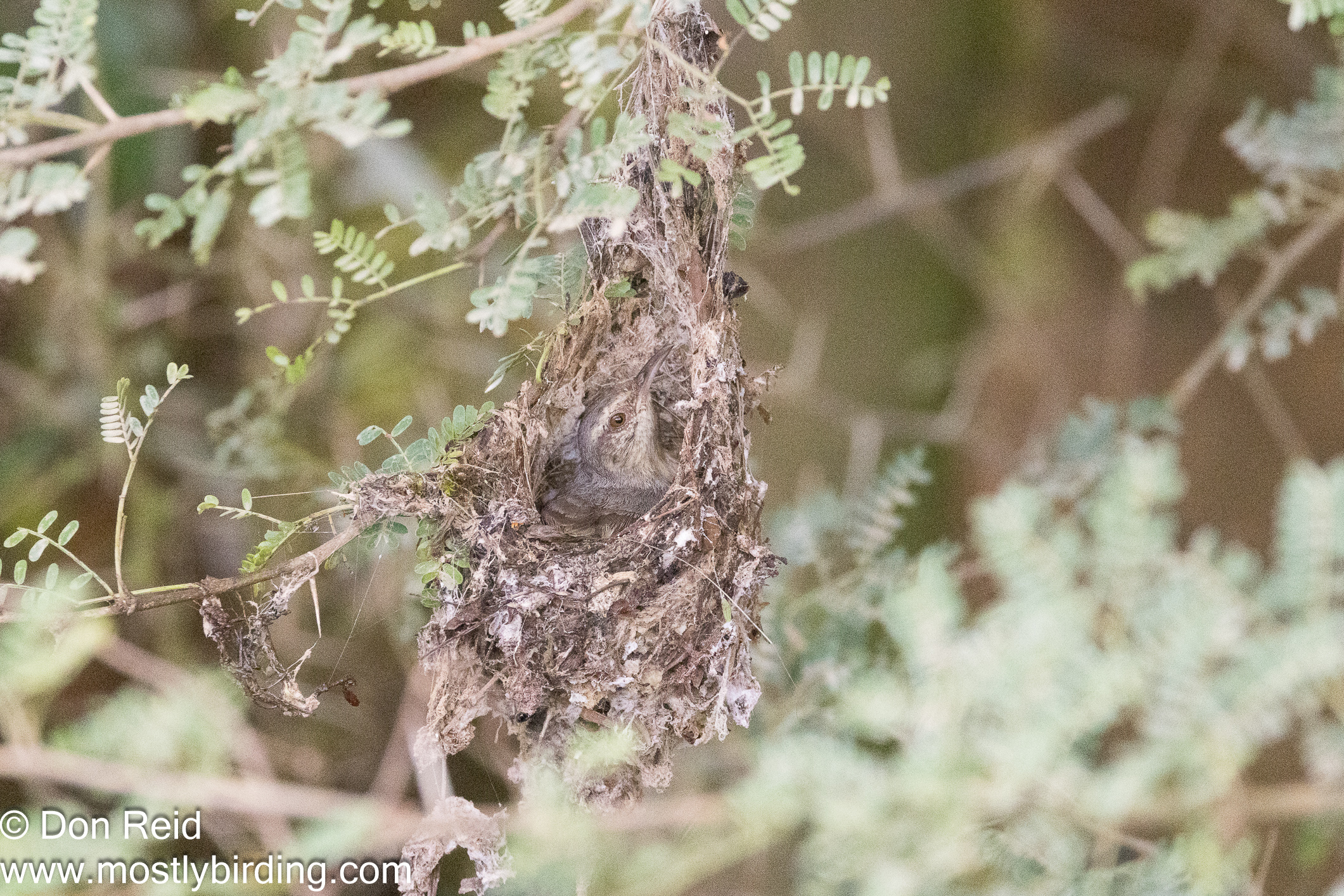
One of my favourite photos of the year, I came across this Long-billed-Crombec while atlasing and was thrilled to see it drop down and take up position in the mouth of the nest low in the tree, which I had not noticed
Long-billed Crombec Sylvietta rufescens Bosveldstompstert (race diverga), Herbertsdale north east
Suckers
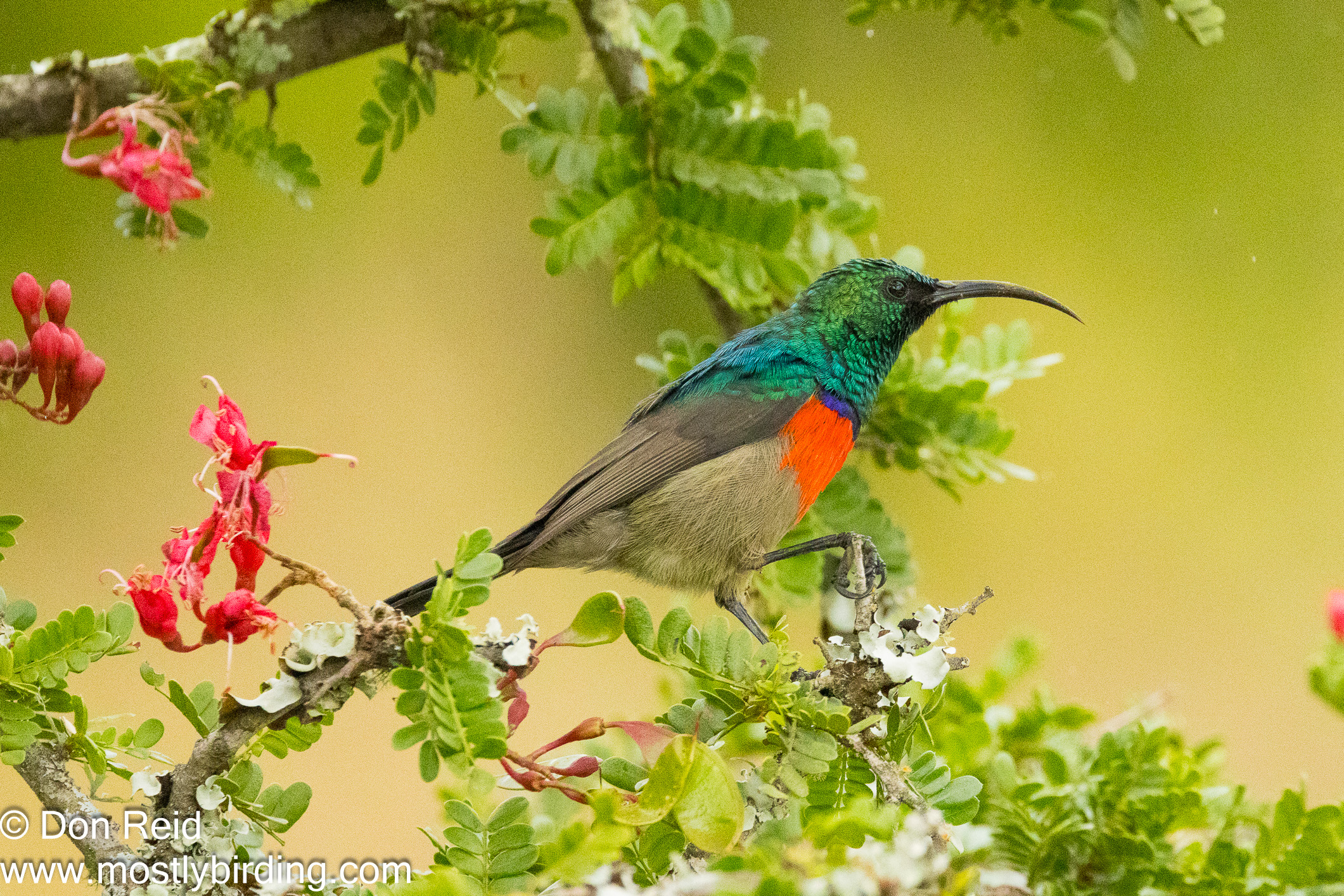
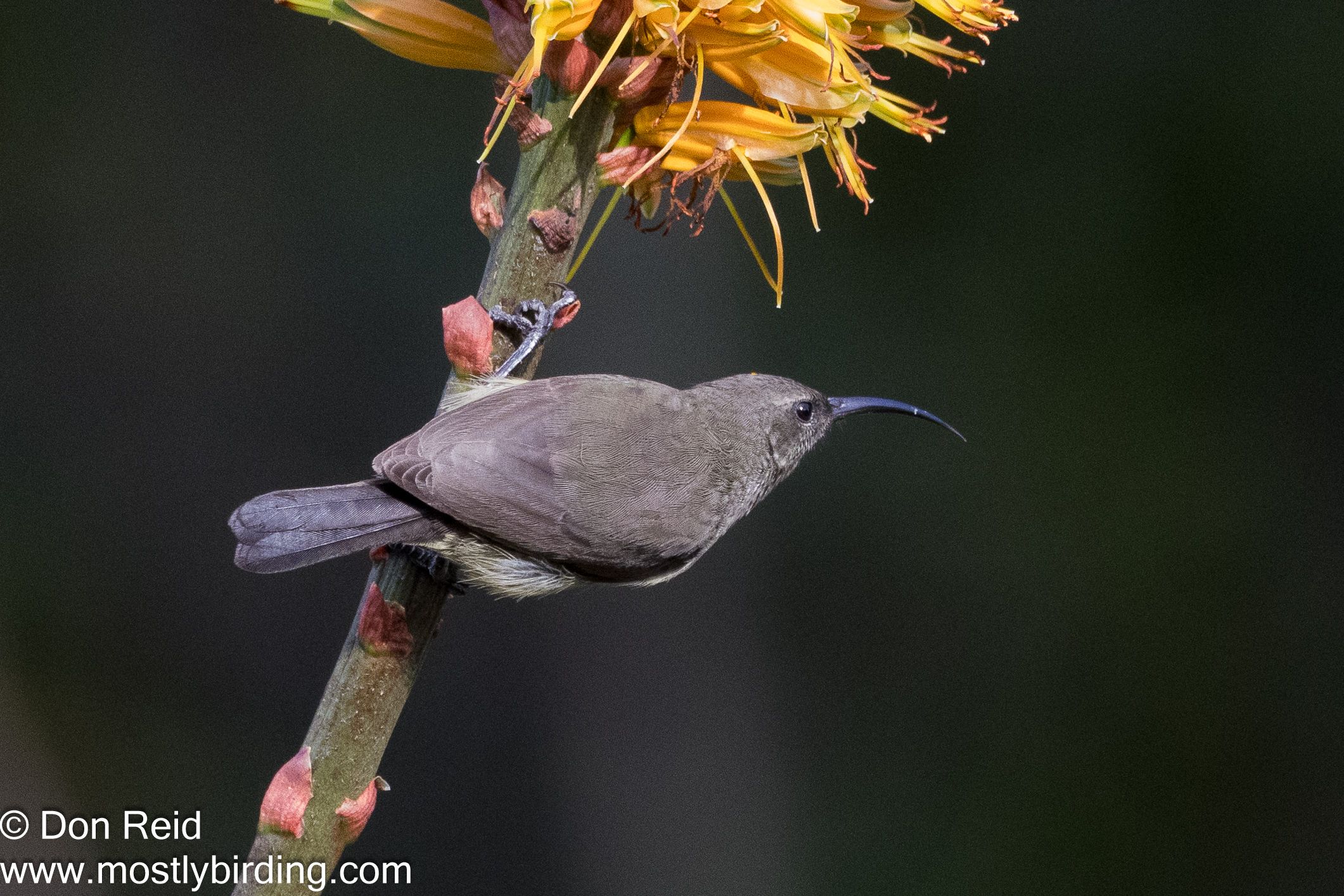
The curve-billed nectar-suckers
The photos illustrate the colourful male and the rather drab female of the species that I often come across while atlasing, and at home
All have short, strong triangular bills suited to their main diet of seeds.
The Bishops were both photographed in winter non-breeding plumage.
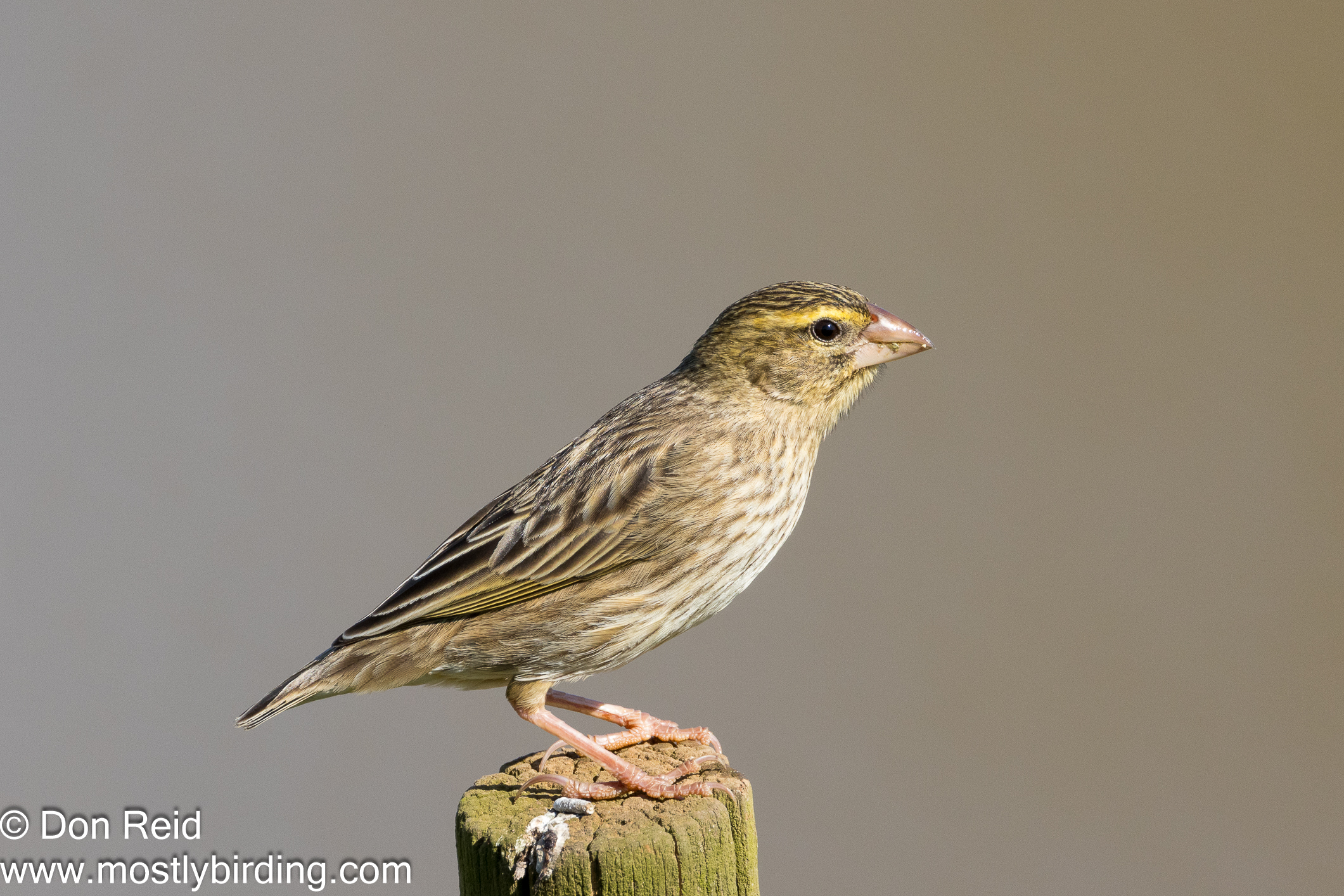
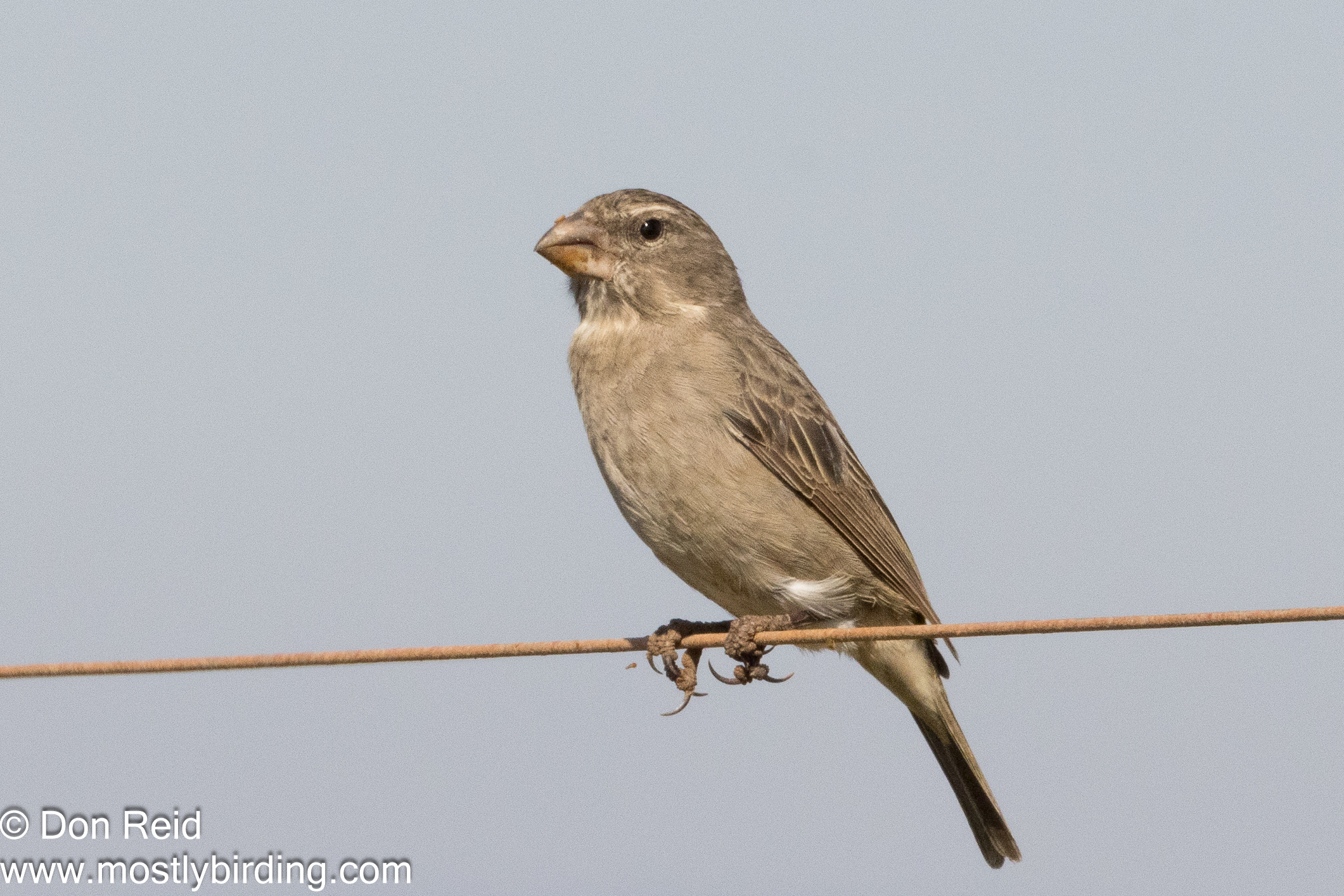
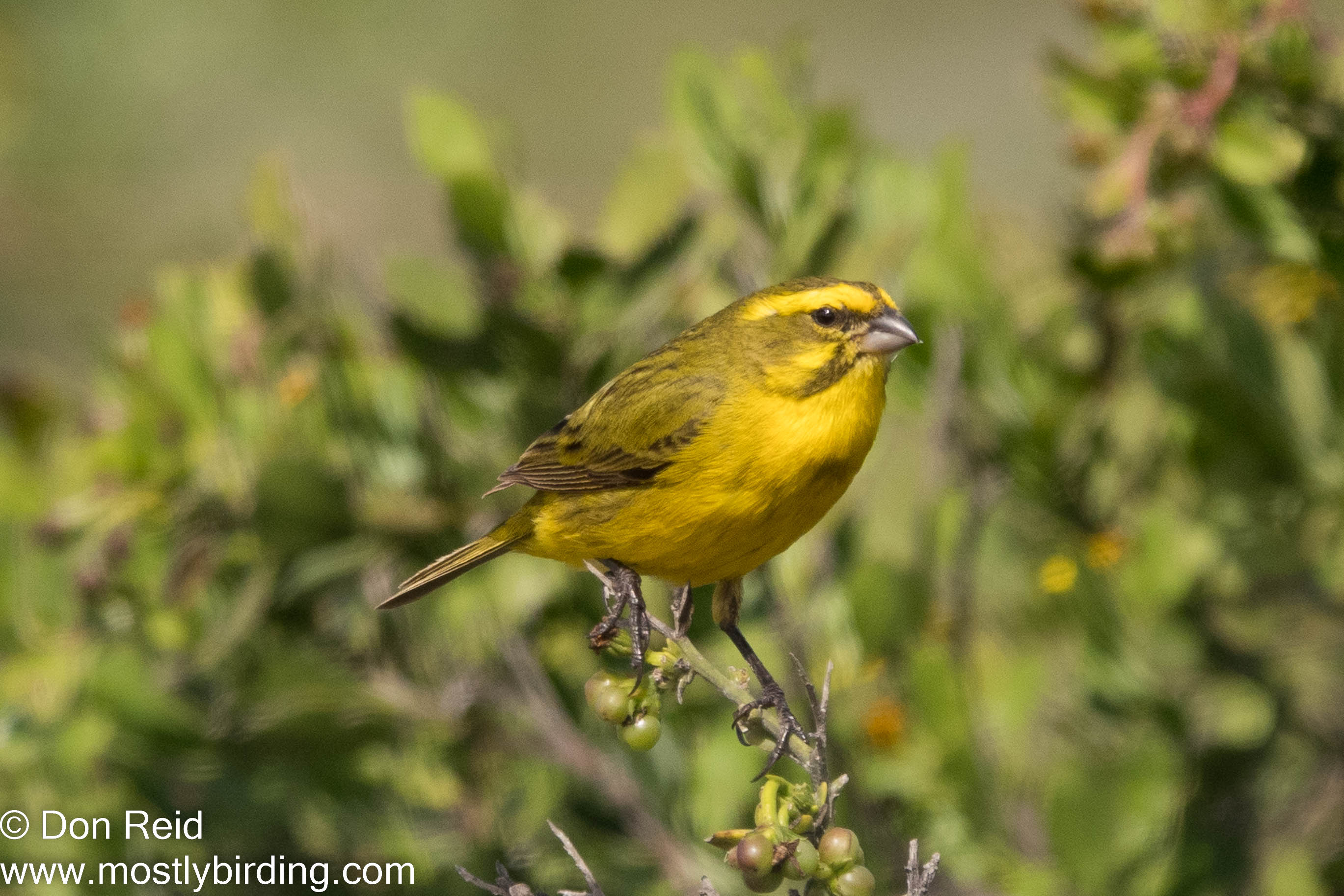
Yellow Bishop Euplectes capensis Kaapse flap (non-breeding male), Klein Brak areaSouthern Red Bishop Euplectes orix Rooivink (non-breeding), Bland’s DriftWhite-throated Canary Crithagra albogularis Witkeelkanarie, Herbertsdale area
Cape Canaries always seem to be on the go, not waiting for an anxious bird photographer to get his act together, so I was happy that this one hung around a bit.
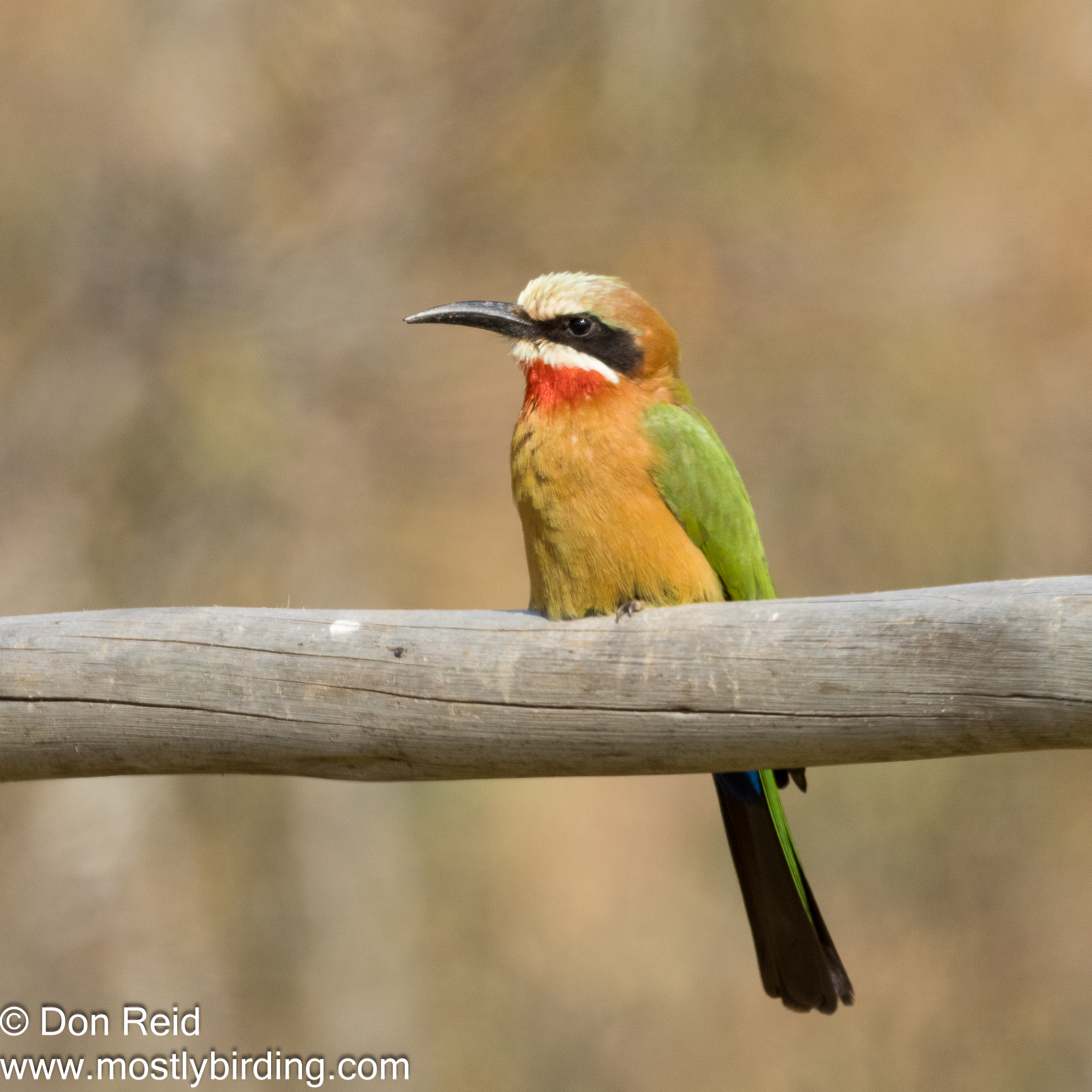
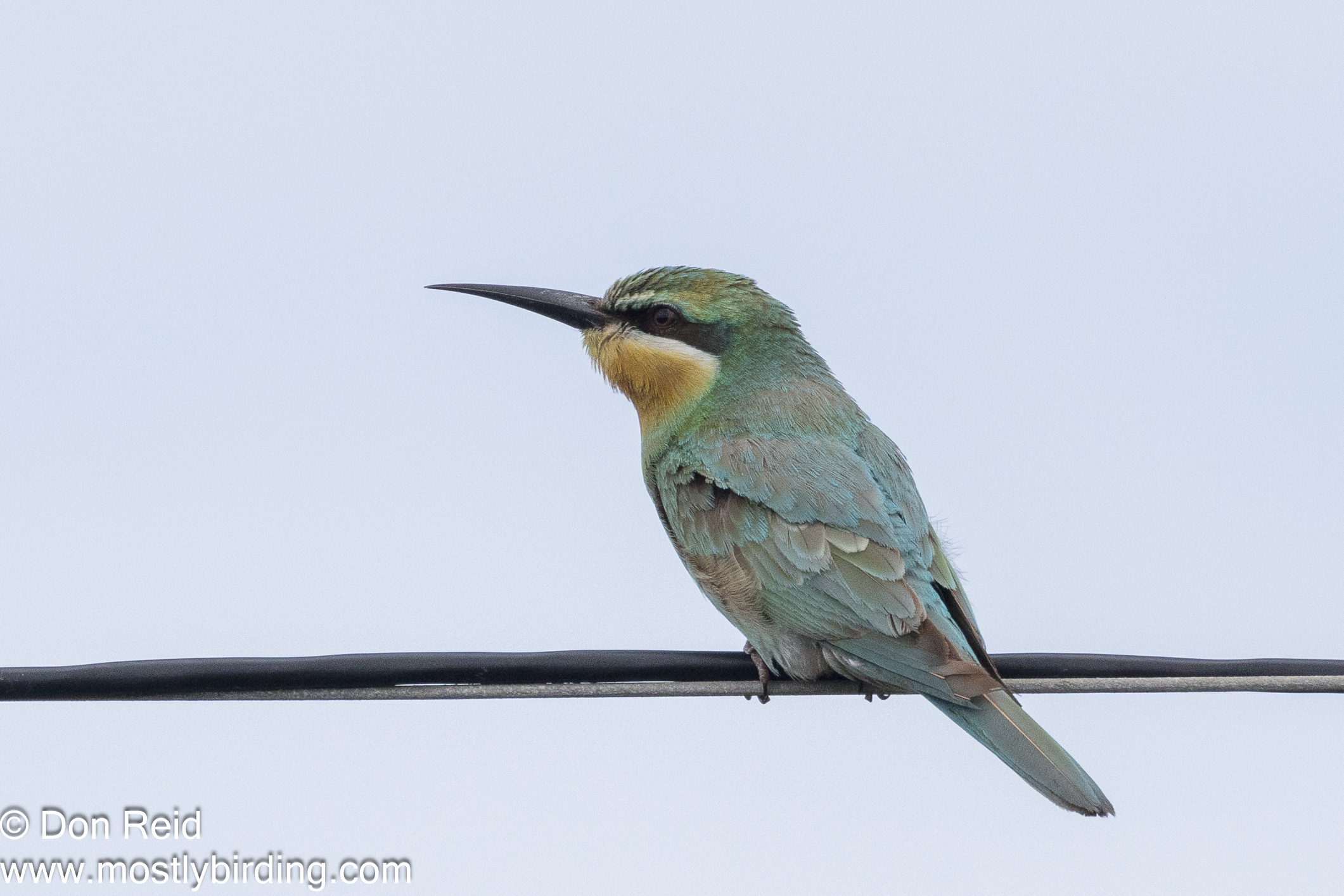
The Blue-cheeked Bee-eater is a Palearctic migrant, regarded as a rarity in the Western Cape, which is why I have included it in my pick. However they have been seen during summer near Gouritzmond for a few years now.
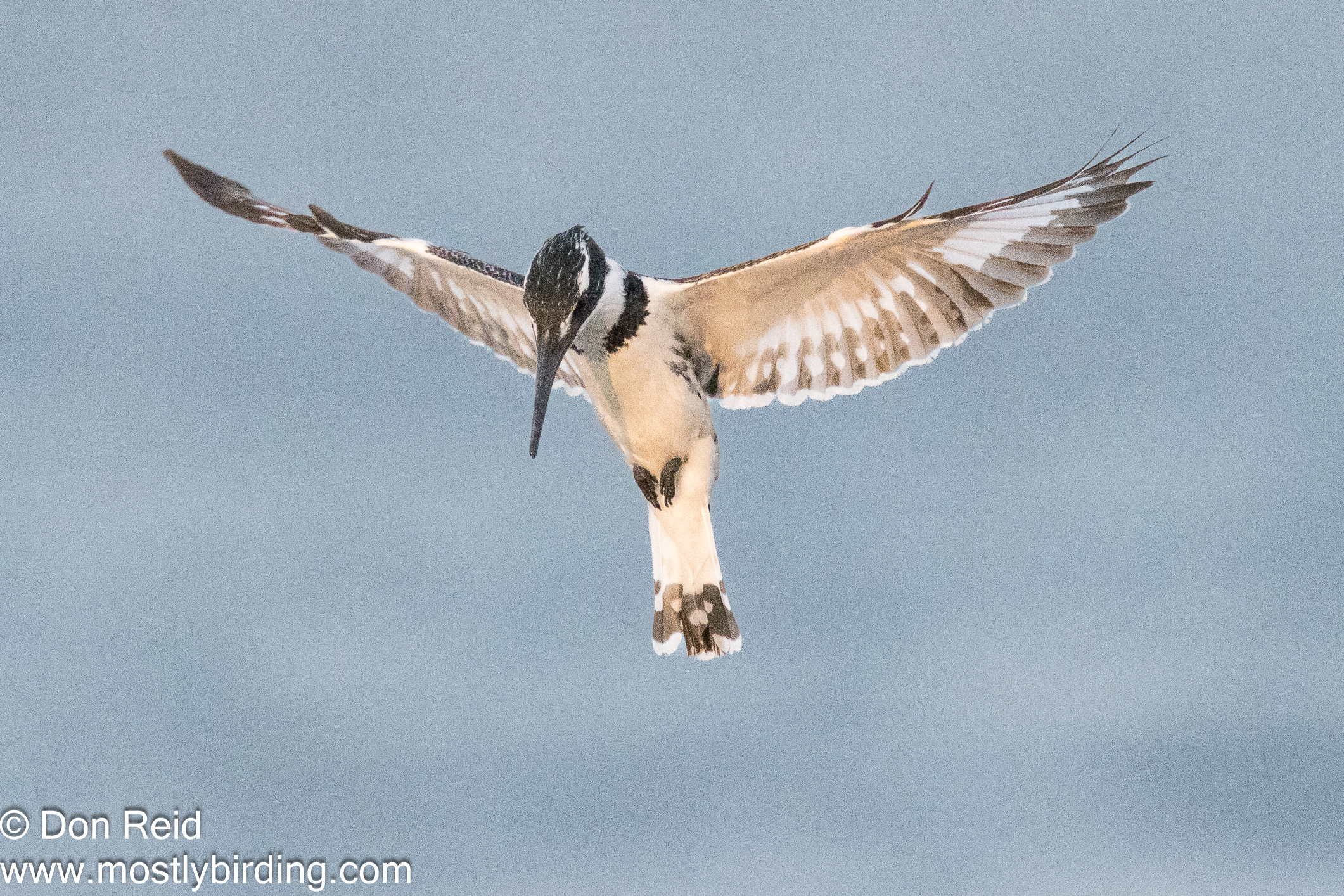
Pied Kingfishers are known for their habit of hover-hunting – this one did so at The Point in Mossel Bay while we were parked there enjoying our customary coffee one late afternoon just before sunset, with perfect lighting to enhance the beauty of the bird.
Pied Kingfisher Ceryle rudis Bontvisvanger (female), Mossel Bay Point
Flyers
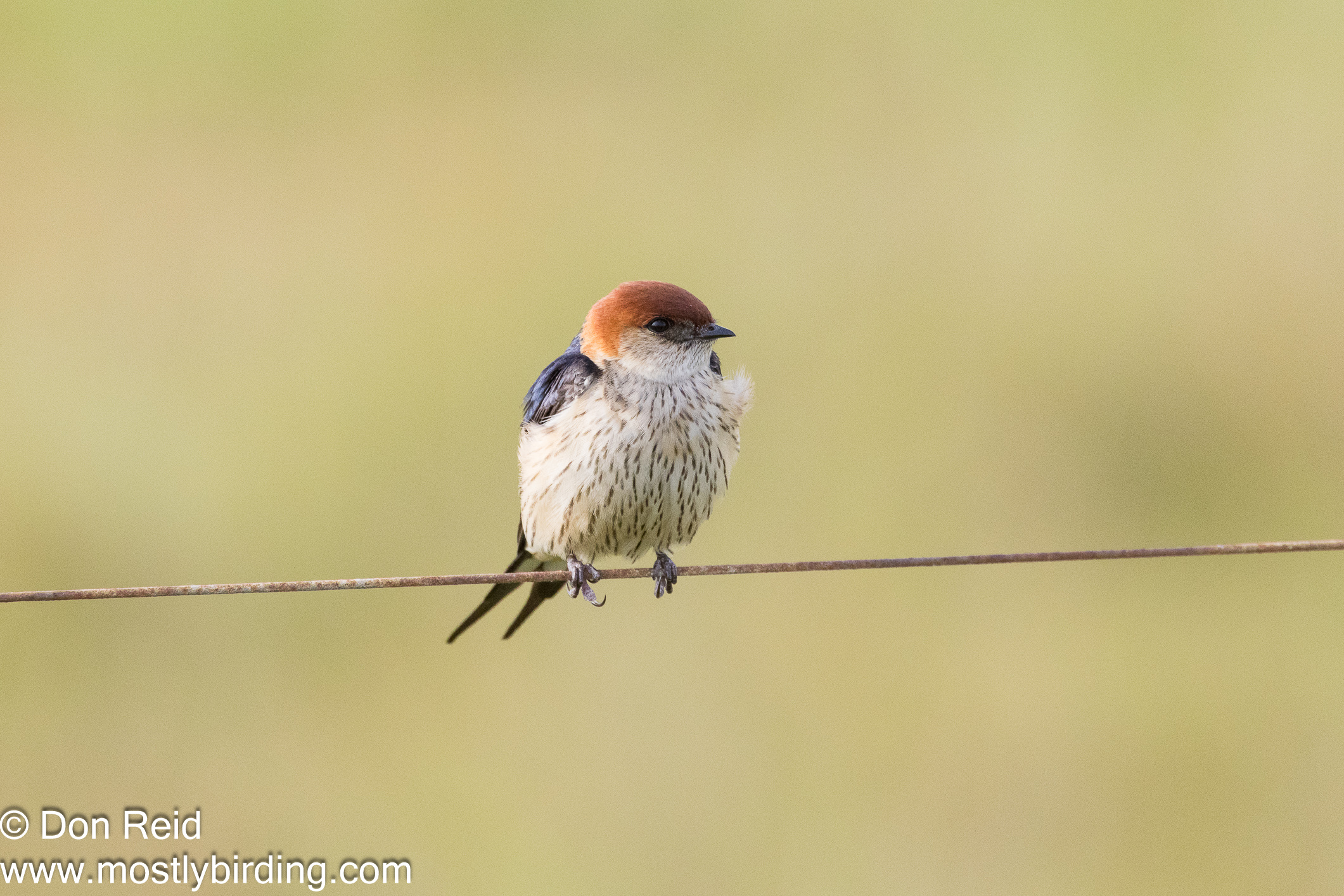
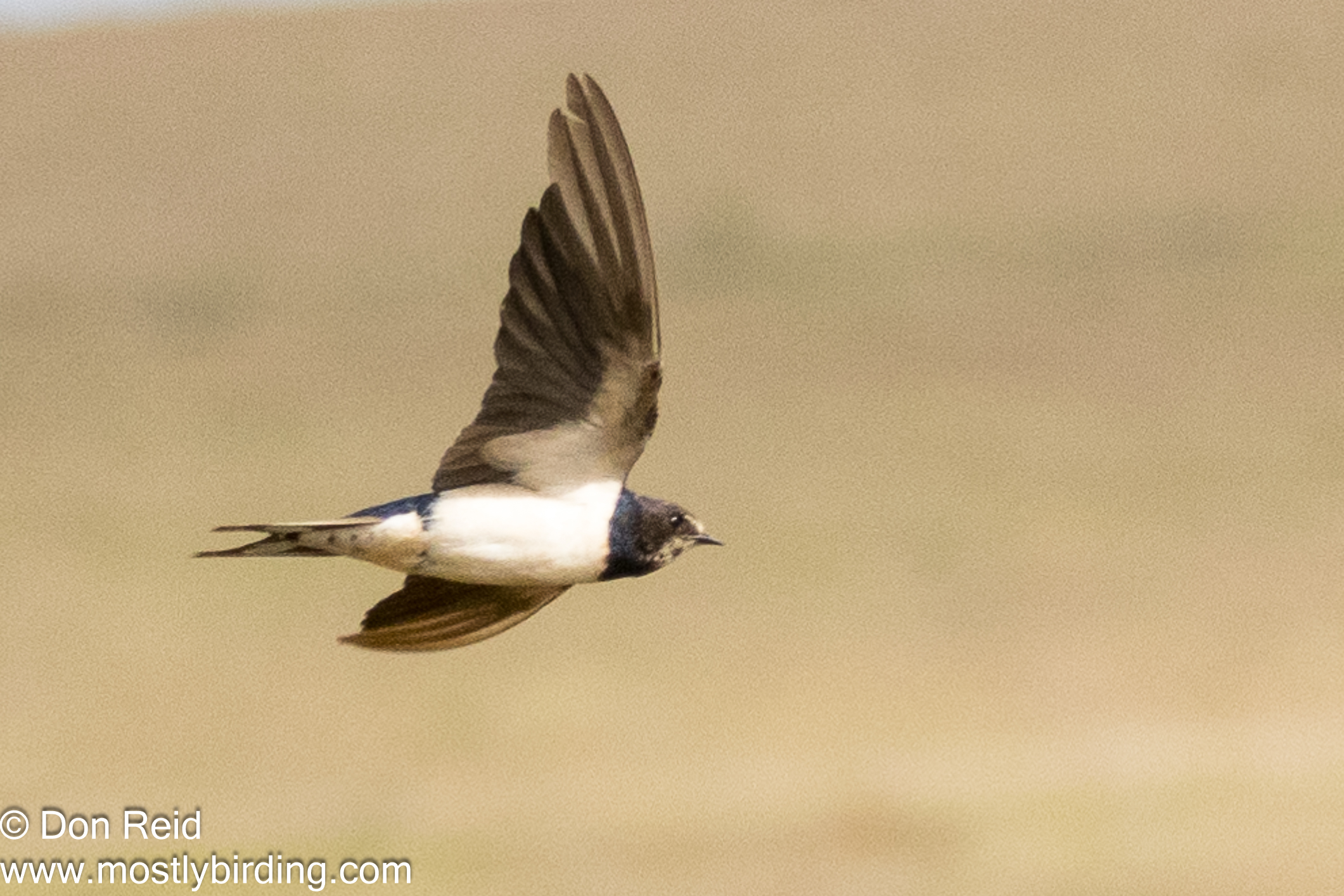
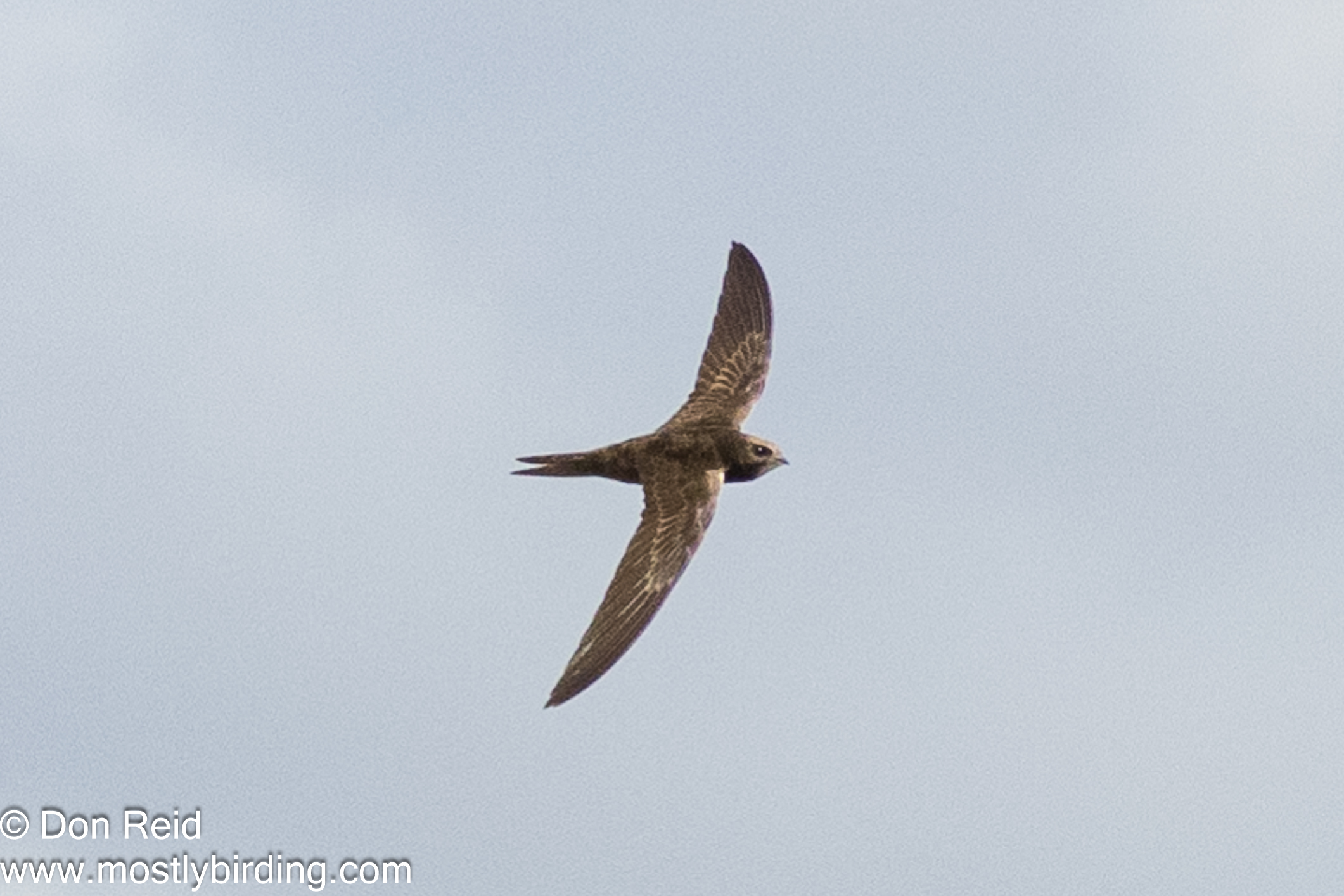
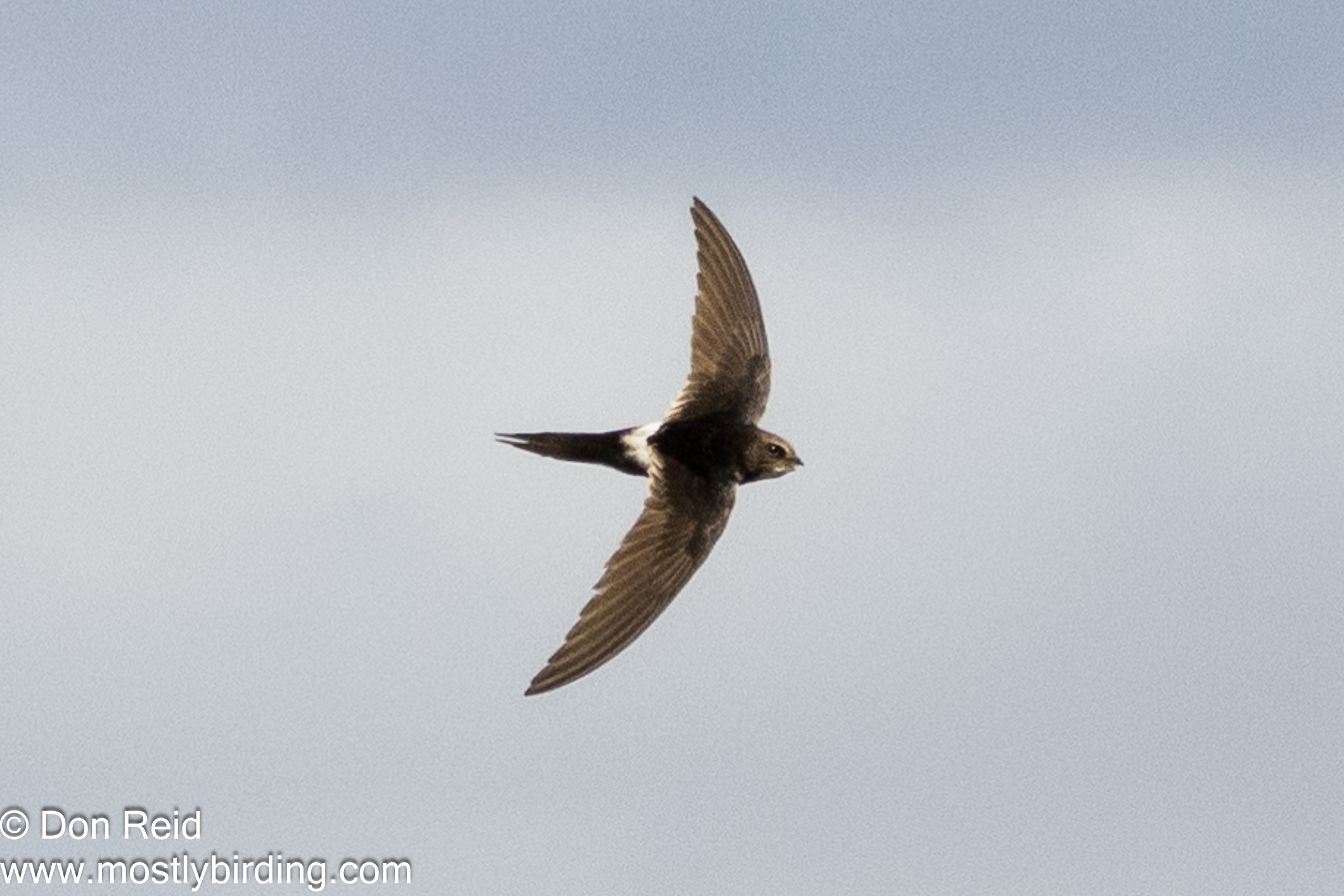
Swifts and swallows – the aerial feeders – also the most challenging to photograph unless they are resting between sorties
Greater Striped Swallow Cecropis cucullata Grootstreepswael, Kleinberg areaBarn Swallow Hirundo rustica Europese swael, Kleinberg areaCommon Swift Apus apus Europese windswael (race pekinensis), Kleinberg areaWhite-rumped Swift Apus caffer Witkruiswindswael, Kleinberg areaBrown-throated Martin Riparia paludicola Afrikaanse oewerswael, at nest burrow, Maalgate area
Plungers
Mainly seabirds that forage over water – and under water
At irregular times during the year terns roost in numbers at The Point in Mossel Bay, providing good photo opportunities as the rocks are relatively close to the viewing area
Sandwich Tern Thalasseus sandvicensis Grootsterretjie, Mossel Bay Point
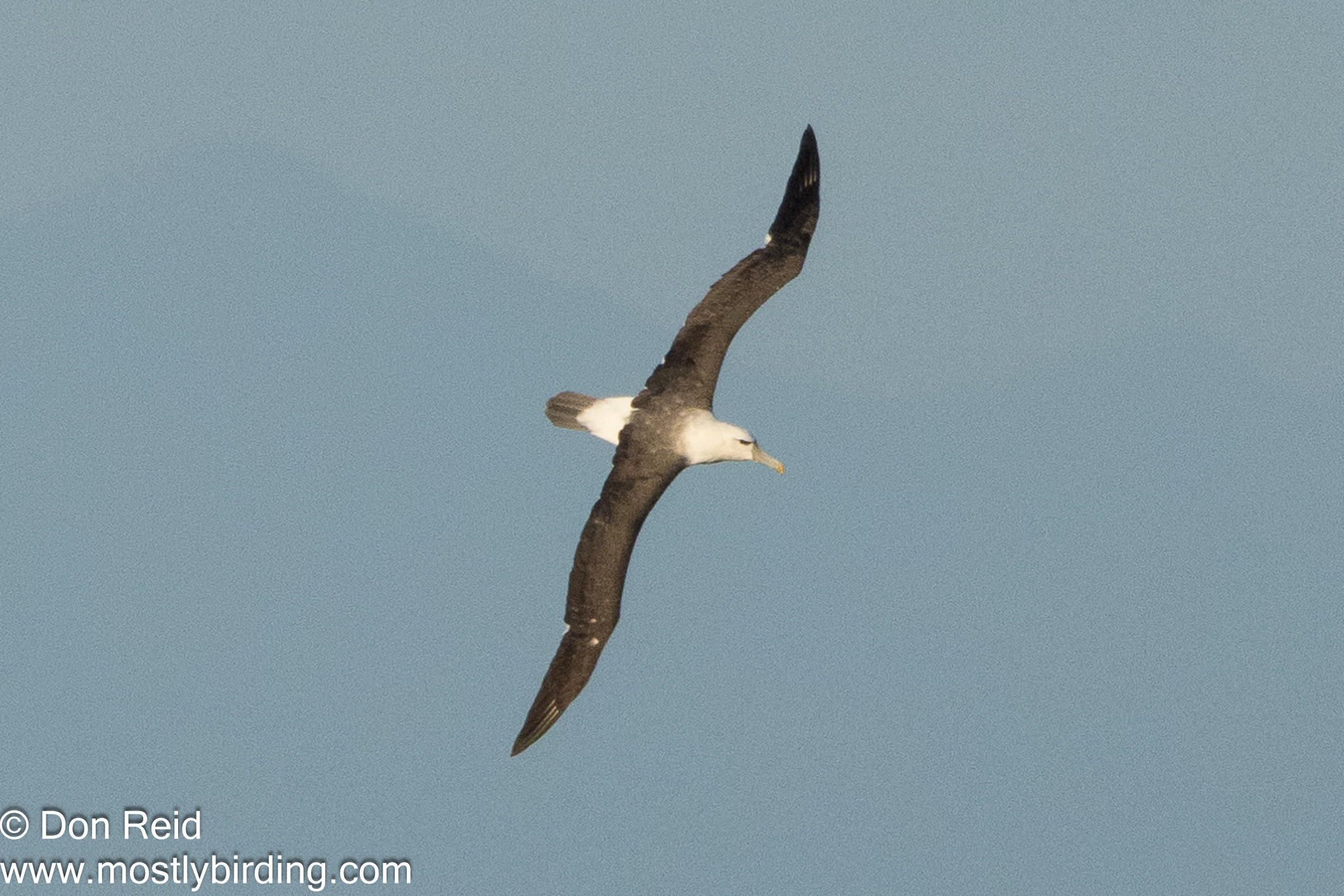
The Point is also a great spot for seabird watching when the winds are strong and in the right direction. One such day I was fortunate to be there when the seabirds were closer than usual and I was able to capture this image of a magnificent Shy Albatross – one of more than a dozen that passed by while we were there.
Shy Albatross Thalassarche cauta Bloubekalbatros, Mossel Bay Point
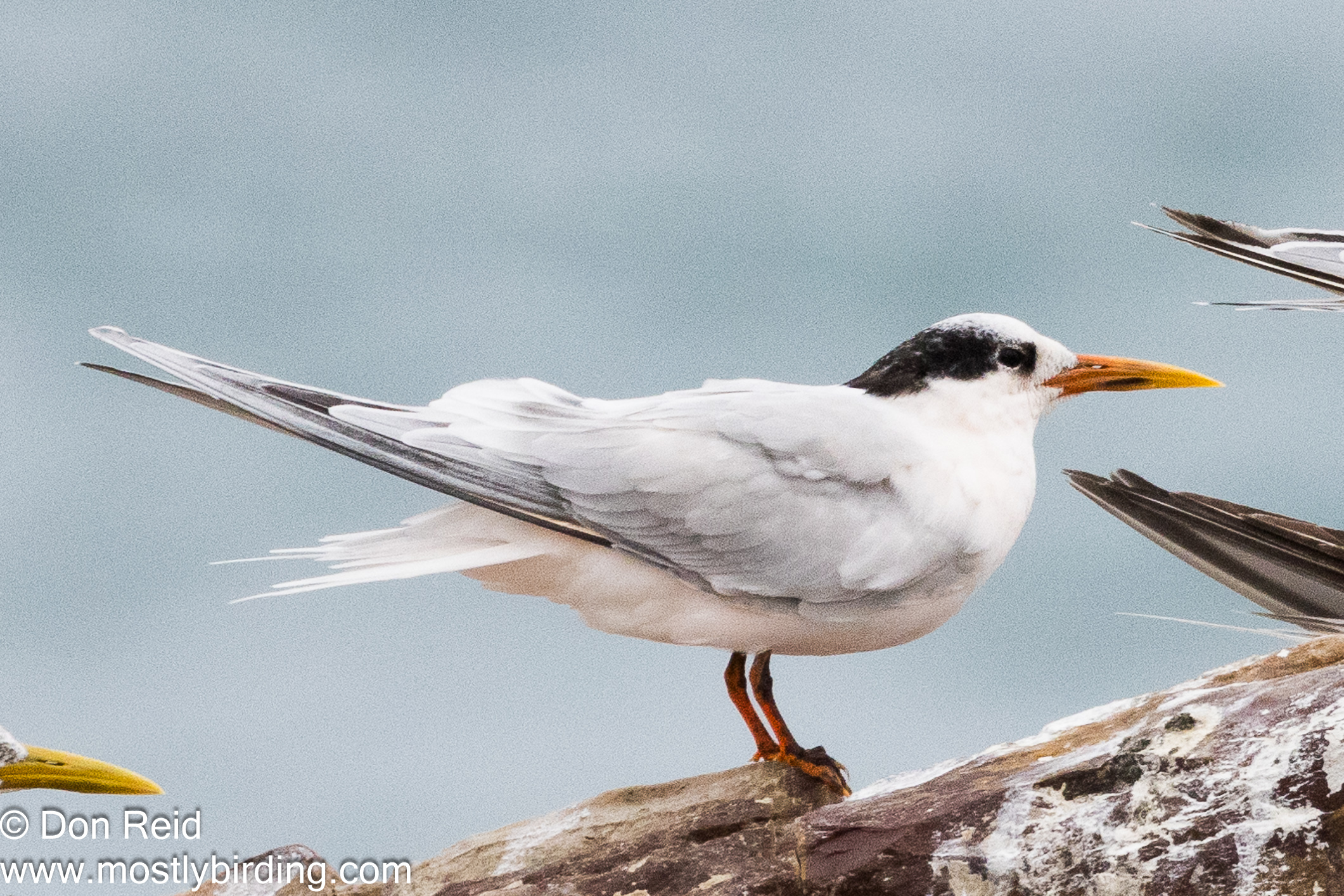
Another Tern that visited The Point was this rare hybrid – not a separately countable species but interesting nevertheless
Hybrid Elegant / Sandwich Tern, Mossel Bay Point
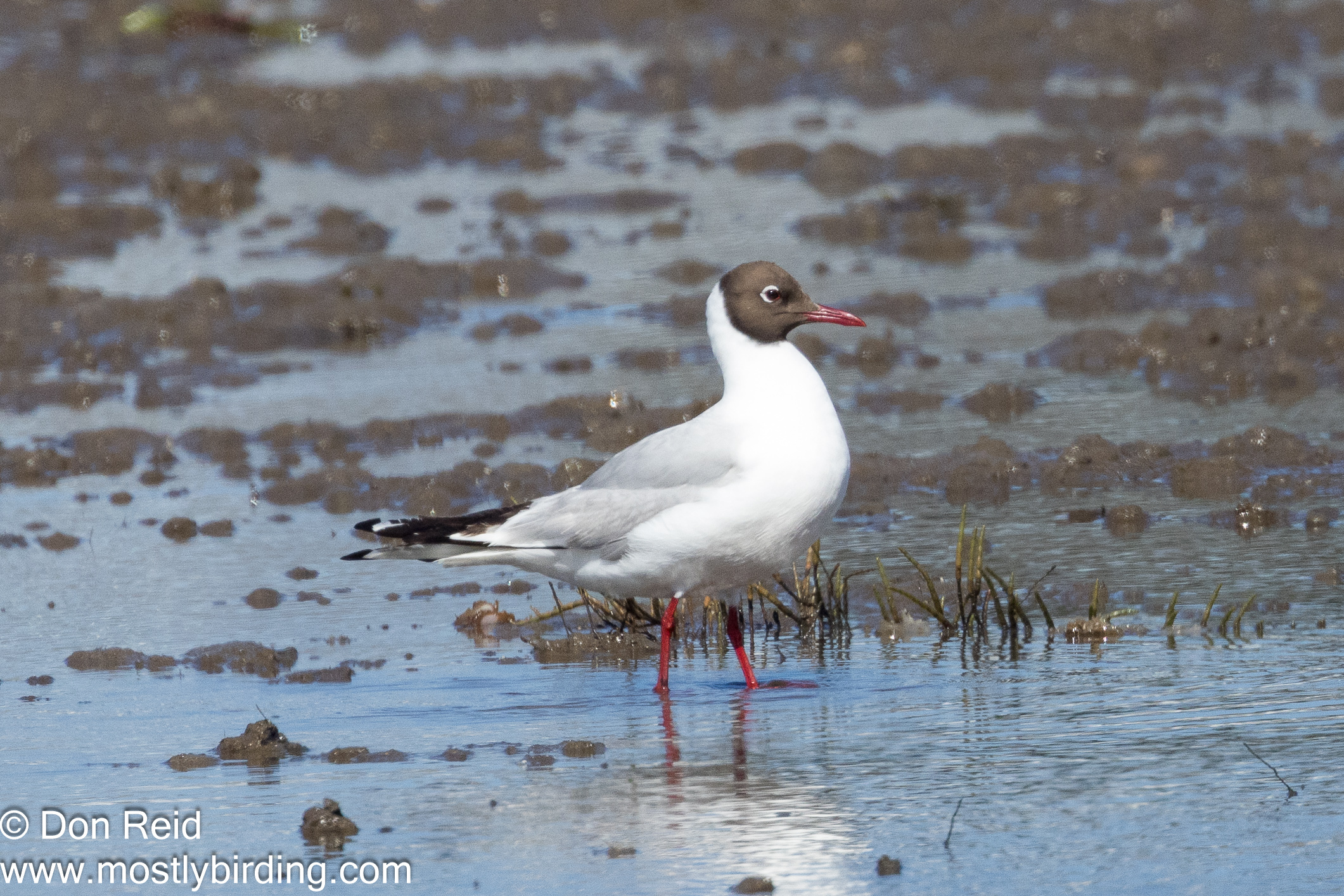
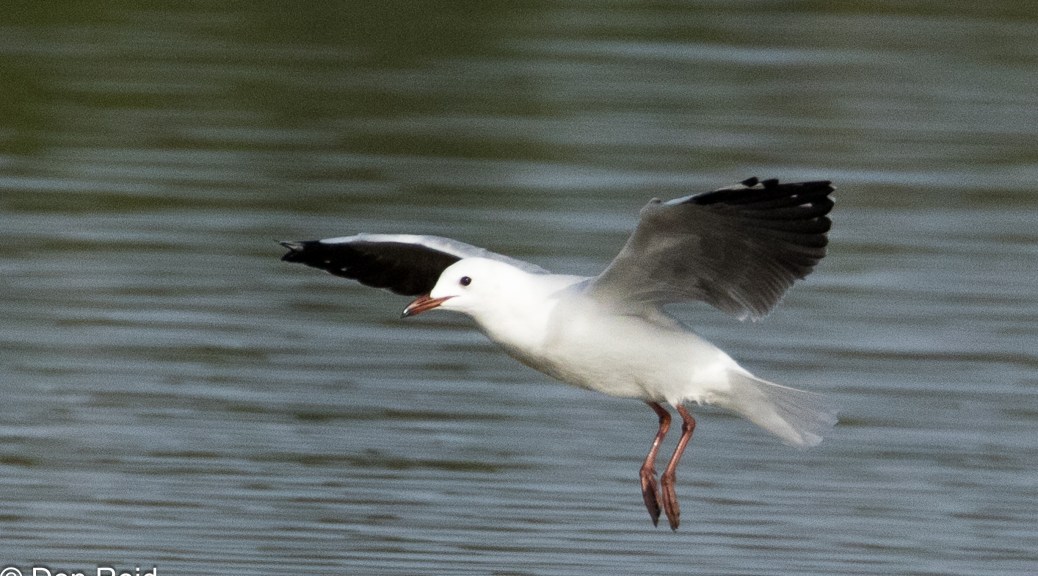
I was pleased when keen birder Estelle called me from Klein Brak to inform me about a Black-headed Gull that was present. I couldn’t resist heading out and was lucky enough to capture some images of this rarity, which I have seen in Europe and elsewhere but never in Southern Africa
Black-headed Gull Chroicocephalus ridibundus Swartkopmeeu (Breeding plumage), Klein Brak estuary
Runners
Small to medium-sized birds that forage on the ground
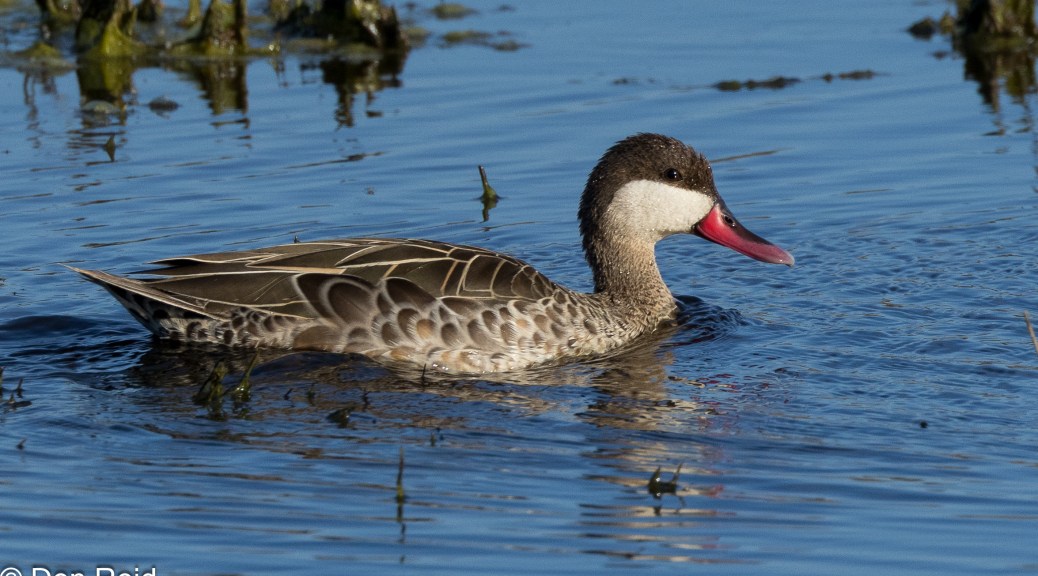
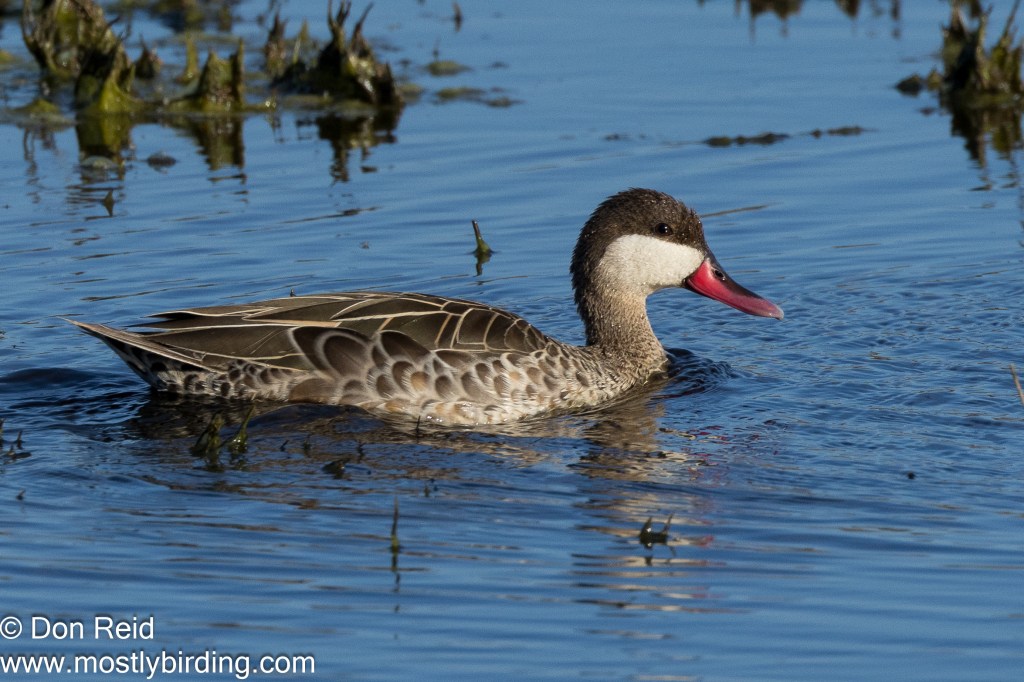
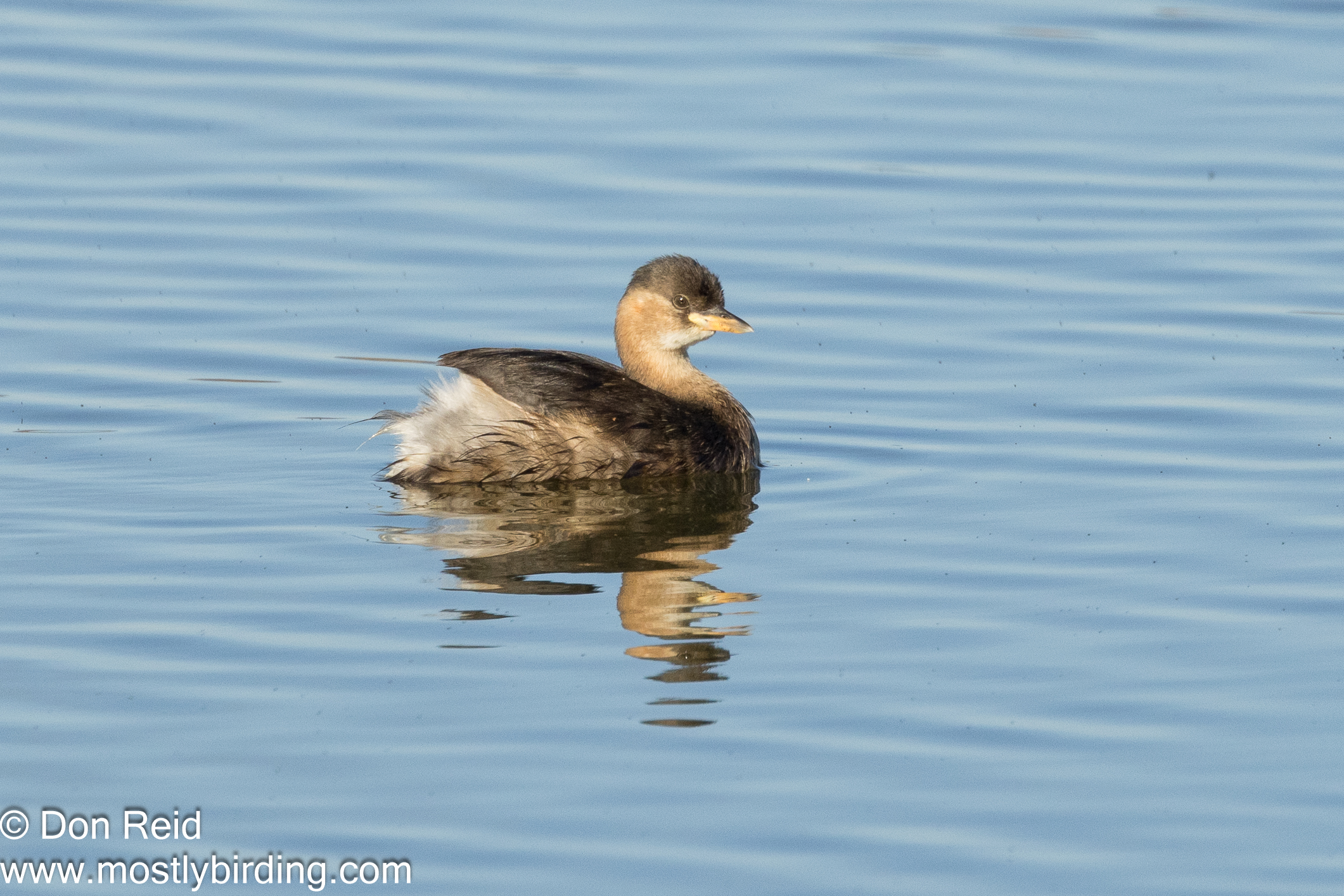
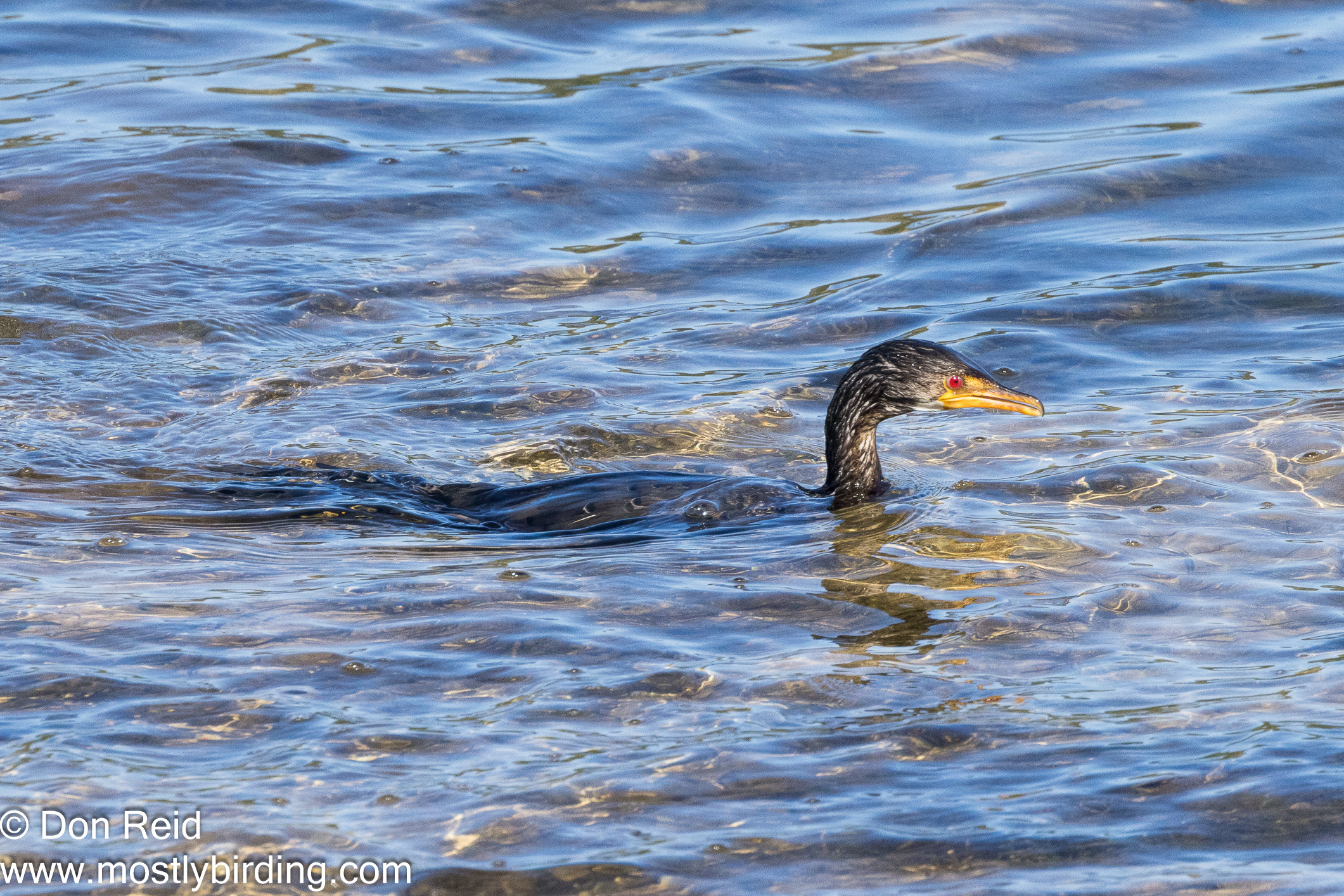
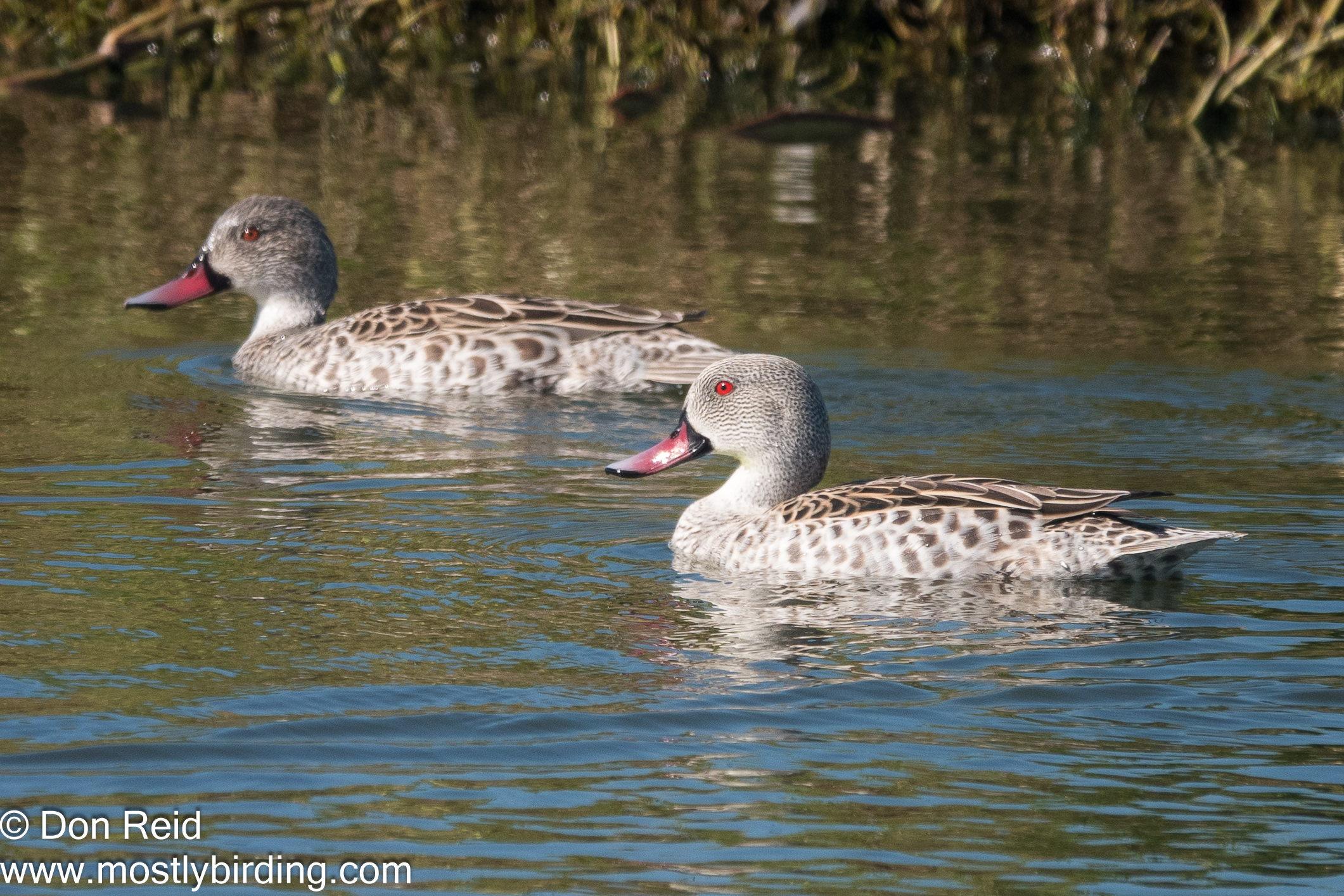
Little Grebe Tachybaptus ruficollis Kleindobbertjie, VoelvleiReed Cormorant Microcarbo africanus Rietkormorant, SedgefieldCape Teal Anas capensis Teeleend, Strandfontein sewage works
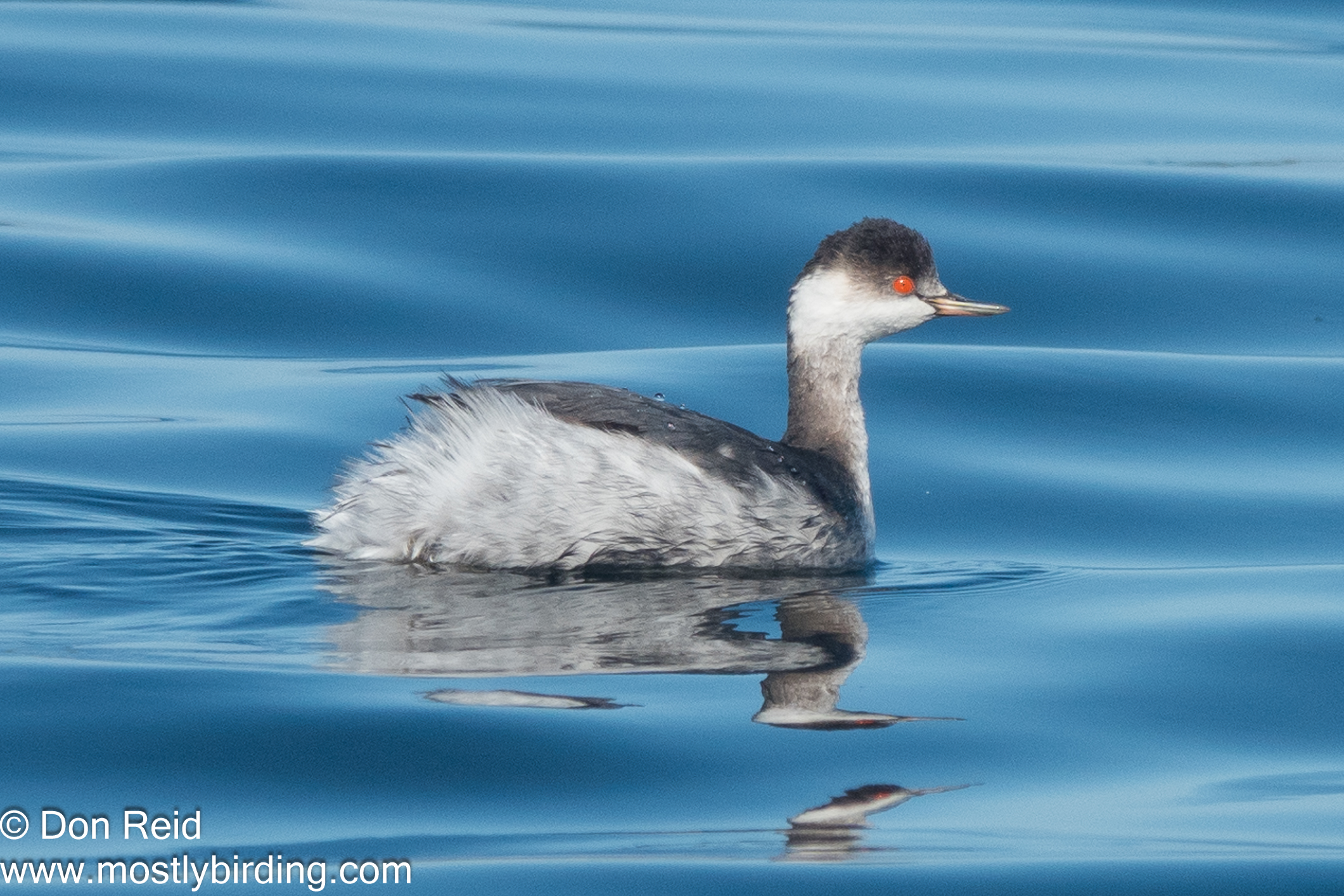
I was particularly pleased to photograph this Black-necked Grebe at reasonably close quarters during a visit to Strandfontein sewage works as my previous photos were all too far off to achieve any sort of detail of this striking swimmer
Black-necked Grebe Podiceps nigricollis Swartnekdobbertjie, Strandfontein sewage works
Waders
Those attractive waterbirds that don’t dive or swim but forage by wading in suitable shallow water
Also challenging to photograph at the best of times – often moving constantly, hiding behind vegetation, dipping into the mud and generally frustrating attempts to get a clear shot
These tales record some of the more memorable experiences while atlasing – in this case during February 2023 while we were at our ‘other’ home in Mossel Bay.
Klein Brak 2 to 4 February
Pentad 3405_2205
Reports of a Lesser Sand Plover seen at a vlei near Klein Brak River piqued my interest for two reasons – I have only seen the species once before in Mozambique, so it was a potential addition to my South African list, and Klein Brak is about 20 minutes from our front door.
So I headed out early-ish on a Tuesday morning to the vlei which is located near the old power station, as described by Amanda, keen Mossel Bay birder and the finder of this rarity. Once parked on the road next to the vlei, I scanned the shallow water and soon found the plover on its own, but distant and difficult to see against the brownish surface and the low sun in my face.
Lesser Sand Plover Charadrius mongolus Mongoolse strandkiewiet, Klein Brak vlei
Once I had my scope set up I had better views of the plover as it pottered about in a small area, after initially standing dead still. I was soon joined by a few other birders, two known from previous twitches, the other a young birder from George.
Lesser Sand Plover Charadrius mongolus Mongoolse strandkiewiet, Klein Brak vlei
Then it was a question of getting a reasonable photo, as is the norm for many birders nowadays – I had taken some from my position on the road but the distance and backlight meant that they were less than satisfactory – oh, it’s hard to please us bird photographers!
After hanging around for a while, the young birder set off to find a path down to the verge of the vlei on the opposite side and we watched his progress with interest…. he was soon in a much closer position and on firm ground it seemed, so we followed suit.
The plover was relaxed so we carefully edged closer, and I got on one knee (which is not as easy as it used to be) to take some shots closer to ground level, which made for some far better images of this scarce wader, as you can see above and below.
Lesser Sand Plover Charadrius mongolus Mongoolse strandkiewiet, Klein Brak vlei
I left soon after, with 12 species recorded including the Lesser Sand Plover (which would generate a Rarity form to be completed online)
Two days later I returned to the pentad to complete a ‘Full Protocol’ card (which requires a minimum of two hours of atlasing), starting in the northern part of Mossel Bay and heading through Hartenbos to the river mouth.
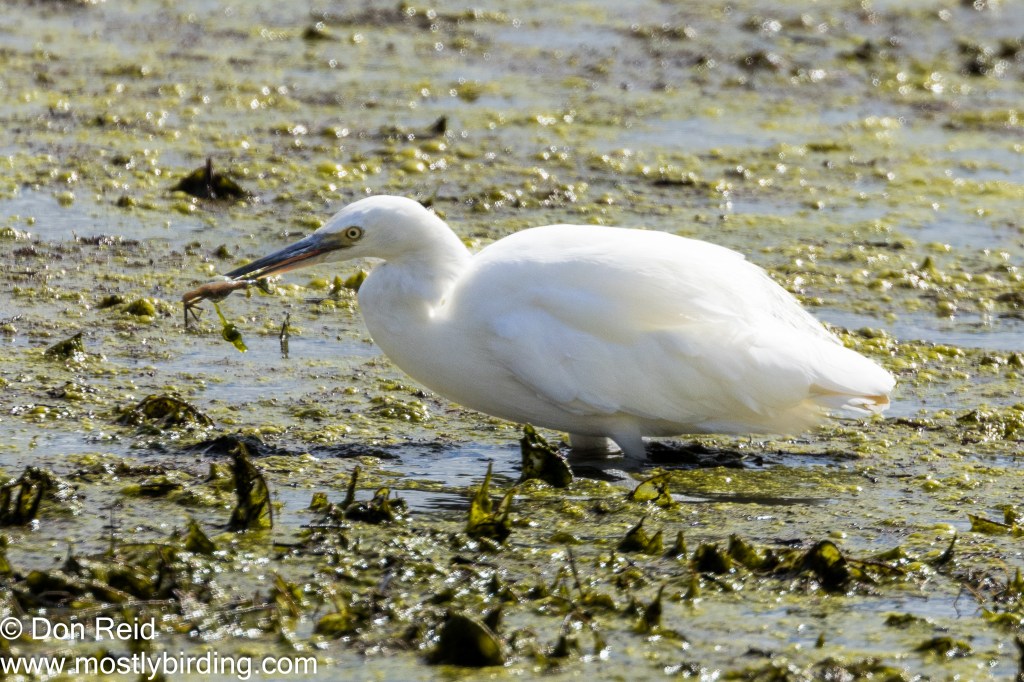
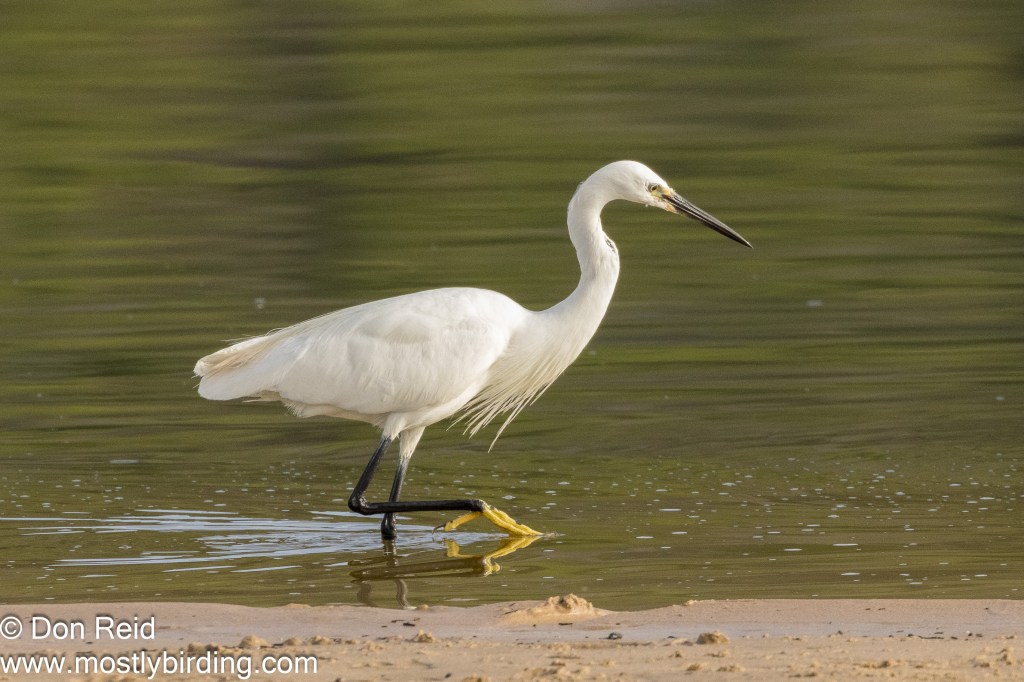
There was plenty of birdlife (and people, being Saturday) enjoying the fine weather, so I set up my scope and scanned the estuary back- and forwards, adding several species in a short time, including a Little Egret patrolling the water’s edge and displaying its bright yellow feet with every step.
Little Egret Egretta garzetta Kleinwitreier, Hartenbos
Further stops at the weir upriver and at the vleis adjoining the water treatment works were productive, with a quick return trip to the Lesser Sand Plover spot adding a few more species to take my pentad total to 63 species
Other highlights –
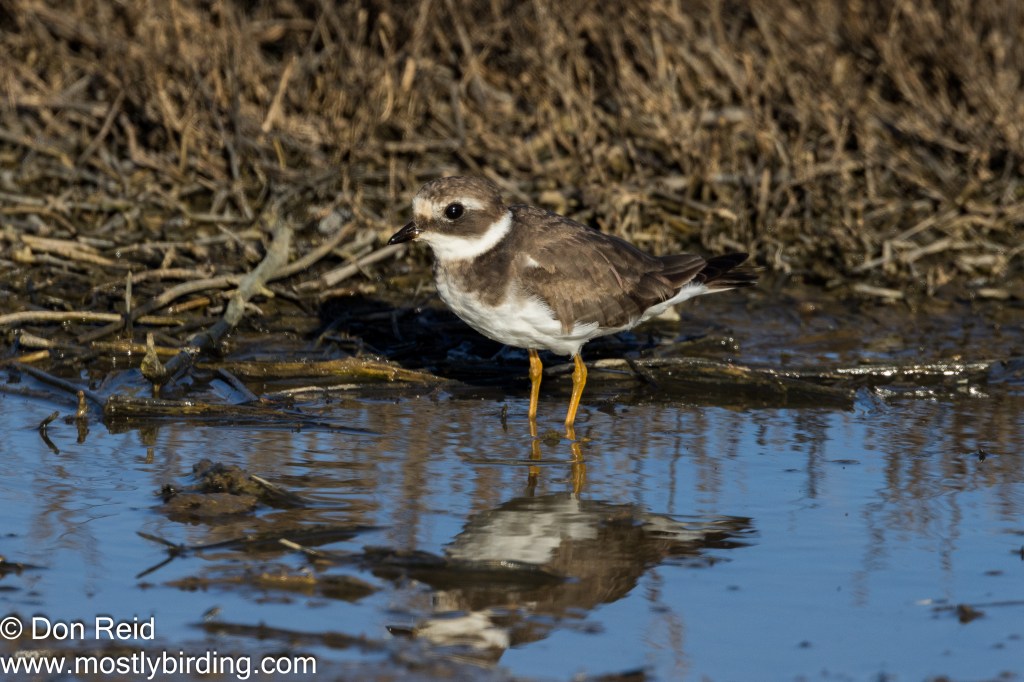
Common Ringed Plover at the same spot as the Sand Plover
Pied Kingfisher ‘fishing’ at the river mouth
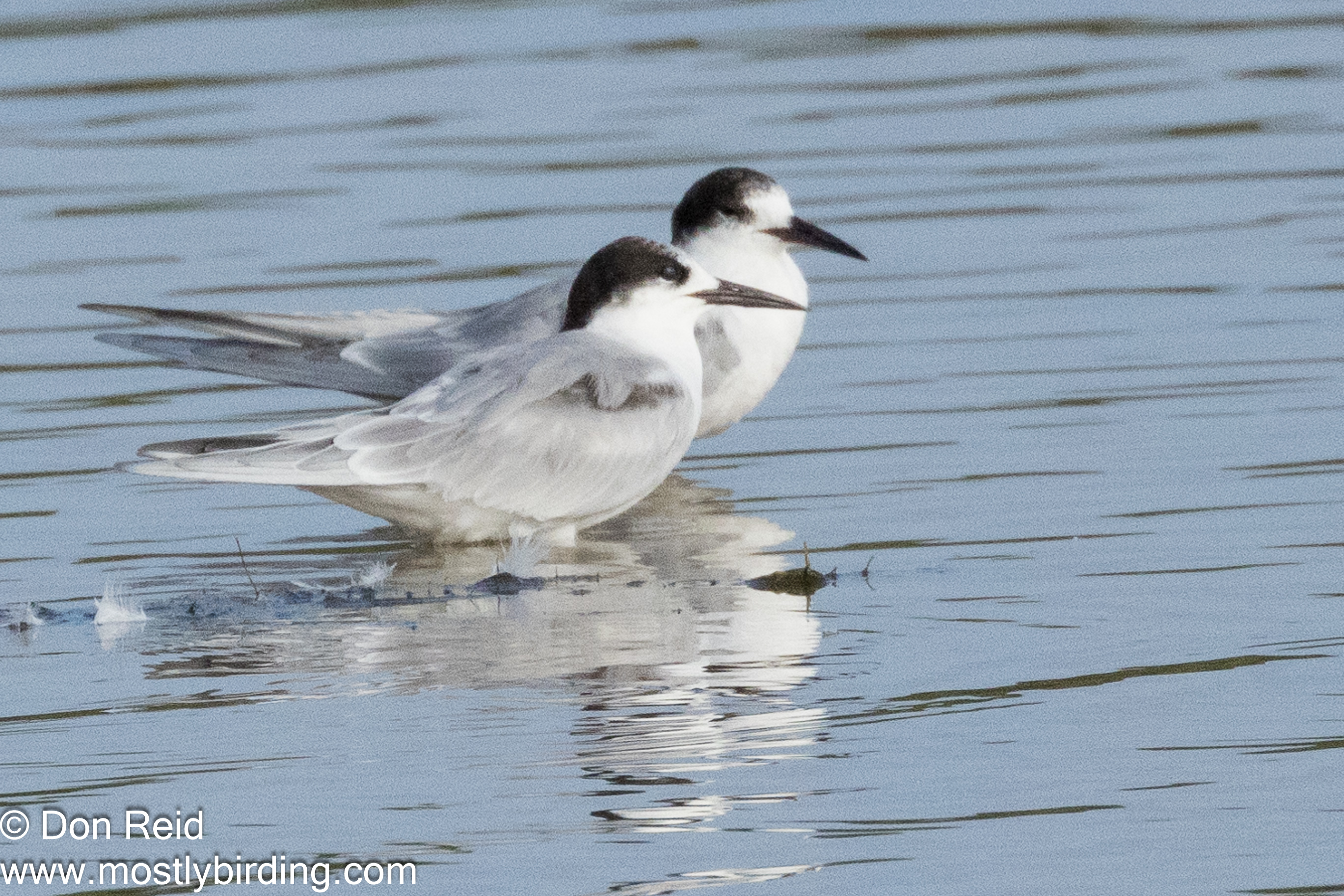
Three Tern species at the river mouth – Swift, Common and Sandwich Terns
Common Tern Sterna hirundo Gewone sterretjie, Hartenbos River mouth
Wood Sandpiper at the water works vleis
Day Trip to Robinson Pass – 11 February
We were keen to get out after being confined to home for most of the week and decided to have a late lunch at Eight Bells Inn followed by our customary nature drive up the Robinson Pass and back again.
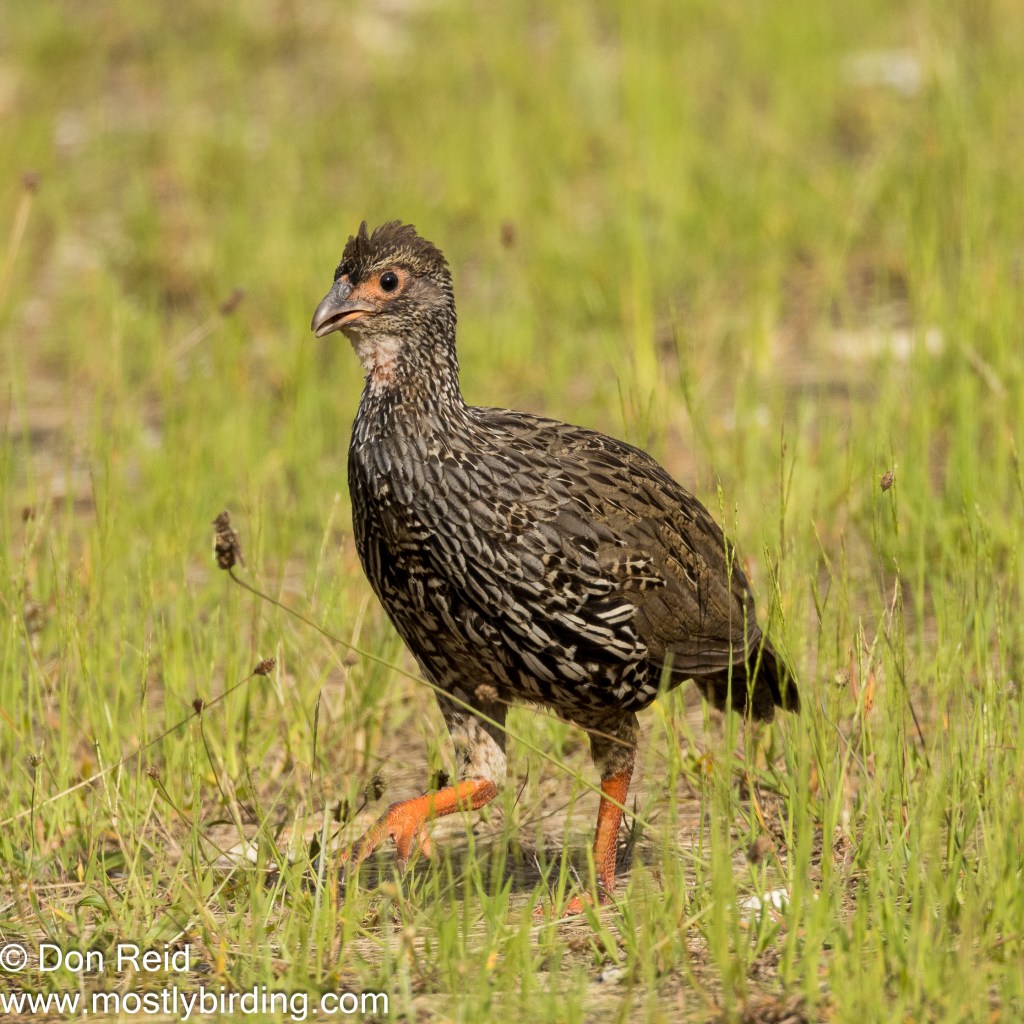
On the way down the pass I spotted a few Red-necked Spurfowl on the grassy verge ahead and pulled off to see what they were up to. One juvenile ventured cautiously onto the tar road and another followed, until a passing vehicle chased them back – I couldn’t help wondering – why did the Spurfowl try to cross the road?
Reports by Rudi, another of the keen birders based in Mossel Bay, of an Osprey at Great Brak river estuary had us heading there mid-afternoon to see if it was still around – and just as an excuse to get out to a pleasant birding spot.
30 minutes after leaving we were at the river, driving slowly along the Suiderkruis road as we are accustomed to doing – there were plenty of the usual waterbirds and waders visible, although no immediate sign of the Osprey.
The tern roost near the mouth was busy with Swift, Sandwich and Common Terns all present.
Moving around to the opposite side of the estuary, we stopped at the restaurant parking next to the old railway station and got out to scan the surrounds – a large bird in the sky caught my eye and Gerda’s at the same time and we both shouted excitedly. It was the Osprey!
Pleased, we headed homewards.
Fransmanshoek – Quick Trip 18 February
Andre suggested a late Saturday afternoon visit to Fransmanshoek, near Vleesbaai for a simple ‘picnic’ of coffee and biscuits at this lovely spot with its rugged rocky scenery and pathways among the rocks.
Swift Tern Thalasseus bergii Geelbeksterretjie, Fransmanshoek
Distant seabirds and closer birds among the undergrowth added up to a modest 13 species during the hour or so we spent there, nevertheless it is one of those ‘off the beaten track’ unspoilt spots that is worth a visit for the scenery alone.
Another lengthy treatment in George for Gerda meant another opportunity for some atlasing not too far from George. I decided to head ‘over the mountain’ into the Klein Karoo towards Oudtshoorn and selected a pentad which, on the face of it, was lacking in many features with a single road – signposted Heimersrivier – running west to east through the middle of the pentad. It did not promise a large total of species and that’s pretty much how it turned out.
Heimersrivier
In fact, the first hour of atlasing produced just 7 species, 6 of which were only added after 50 minutes of careful driving and scanning for movement in the arid landscape both sides of the gravel road.
Heimersrivier
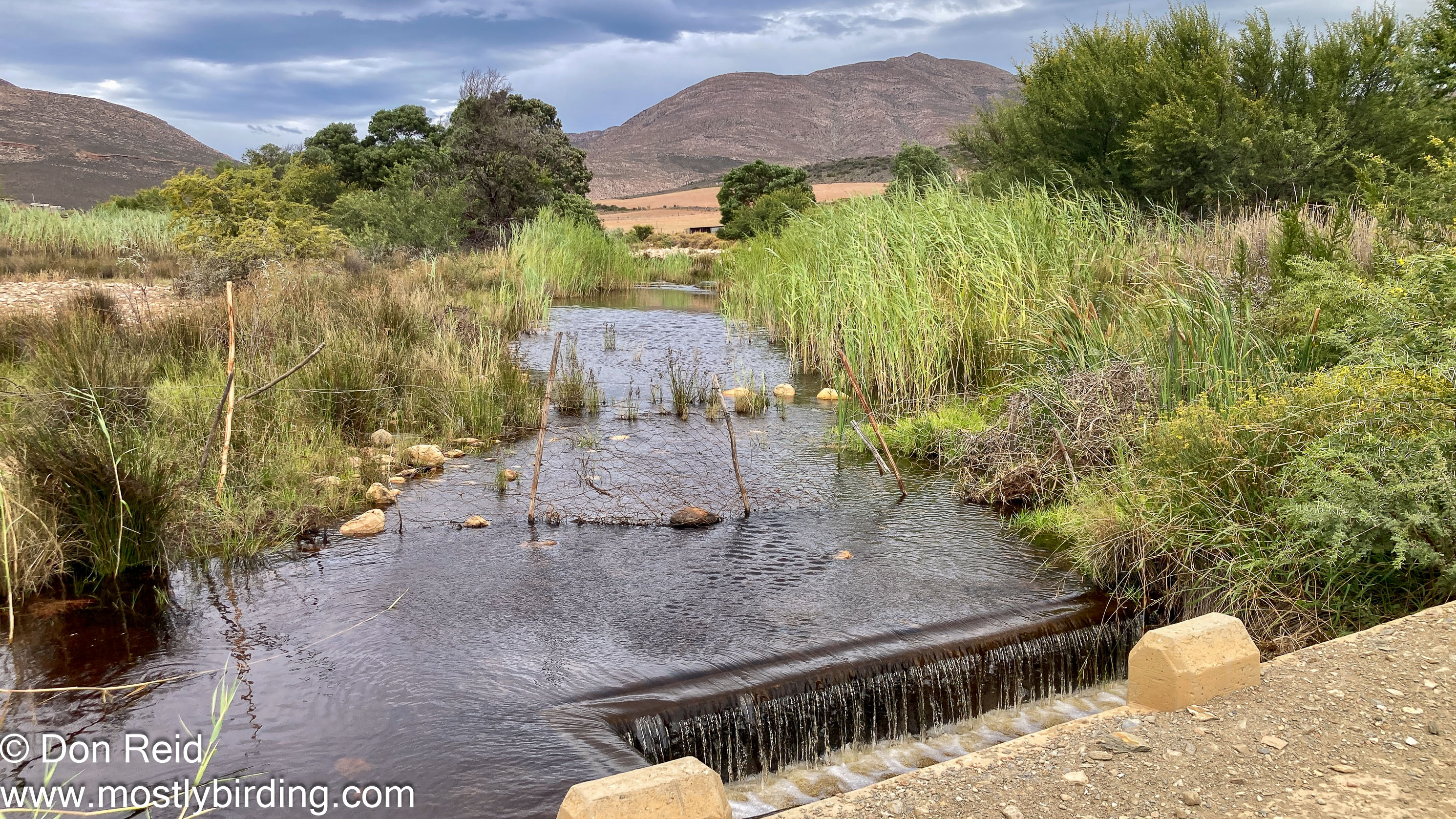
A dam just short of the eastern pentad boundary provided the boost with White-breasted Cormorant, SA Shelduck and African Black Duck and a small river soon after kept the momentum going.
HeimersrivierAfrican Black Duck Anas sparsa Swarteend, George-Oudtshoorn Area
The return drive along the same road was far more productive and easier for spotting as I now had the sun at my back instead of in my face and took me to 26 species in 2 and a half hours.
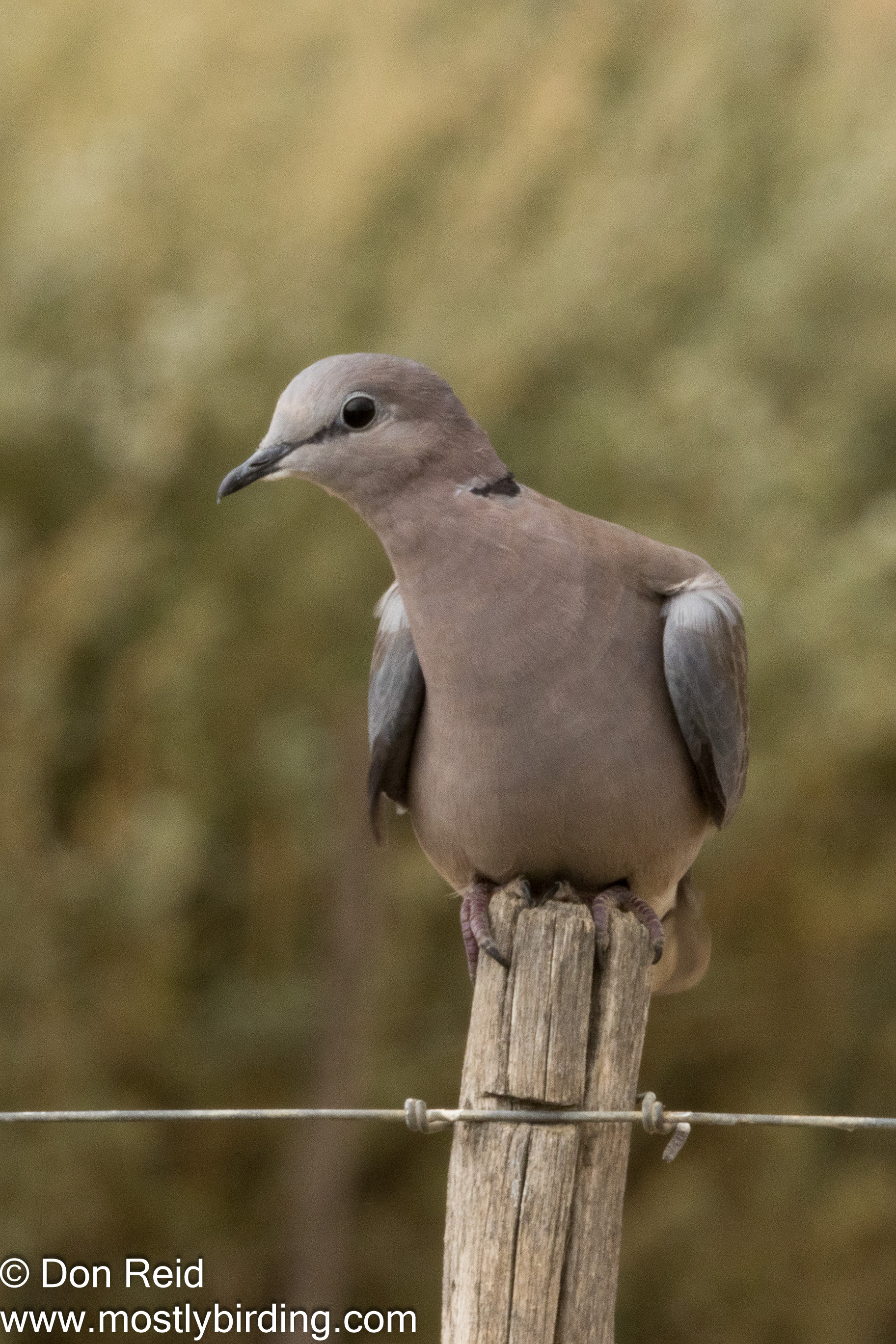
HeimersrivierRing-necked Dove Streptopelia capicola Gewone tortelduif, George-Oudtshoorn AreaFamiliar Chat Cercomela familiaris Gewone spekvreter (race familiaris), George-Oudtshoorn Area
Other highlights –
Namaqua Doves
Red-capped Larks
Black-winged Kite in a photogenic position
Black-winged Kite Elanus caeruleus Blouvalk, George-Oudtshoorn Area
Gondwana Area / Broad-billed Roller Twitch – 28 February and 4 March
Pentad 3400_2150
Now I’m not a ‘serious’ twitcher (defined as a birder who goes to extreme lengths to add a rarity to his/her lifelist) but when a report came through on the Monday afternoon of a Broad-billed Roller not far from Mossel Bay, I was sorely tempted. Broad-billed Rollers occur in the far north-east of South Africa, so this one was at least 1500 kms from its usual range – probably a case of reverse migration ie heading south when it was supposed to head north to central Africa
Come Tuesday and messages showed a few birders looking for the Roller, so far without success – I was not keen to leave Gerda alone at home as she was still in recovery mode, but she urged me to go and with Geraldine’s encouragement and support the twitch was on!
By mid-morning I was on my way to the area adjoining the Gondwana Game Reserve and reached the pentad just after 11 am, birding as I went. I got impatient and sped up to get to the pin drop provided by the original spotter, meeting the Waldens along the way going in the opposite direction – they had not found the Roller after a couple of hours looking for it, so I gave them the pin drop and continued along the gravel road.
I soon passed another couple – Simon Fogarty and Jenny, both from Cape town – who had also not had any luck finding the rarity. They had driven 400 kms from Cape Town to look for it, so were understandably keen to carry on until they did.
I carried on to the spot where an open field with low fence posts seemed to fit the photos posted on the Whatsapp Rarities group. I spent an hour in the vicinity, searching up and down the stretch of road where it had supposedly been seen. The Waldens returned and we chatted at length – about birding, naturally. Simon and Jenny also turned up and we all carried on the search.
Eventually I left them to it and headed homewards, only to pull up sharply about two kms down the road when I glanced towards a farmhouse and a rufous bird caught my eye, momentarily thinking it was a Rock Kestrel which are fairly common in these parts, then realising it was the Roller – Bingo!
Broad-billed Roller Eurystomus glaucurus Geelbektroupant, Gondwana Area
After taking a few photos I rushed back to where the two couples were still searching and happily informed them of the find. Back at the spot, we all admired the colourful Roller, took photos and just enjoyed the moment, then said au revoirs and returned home.
I had not done enough atlasing to justify a ‘Full Protocol’ card but was keen to get back to Gerda. Subsequently an opportunity arose on the Saturday, within the 5 day period allowed to complete an atlas card, to venture out to the same area and take the card from 15 to 42 species including some pleasing sightings –
Tambourine Dove calling – oh so mournfully
Secretary Bird in a distant tree, probably guarding a nest
Black Cuckooshrike near the Roller spot
Blue Cranes in an open field
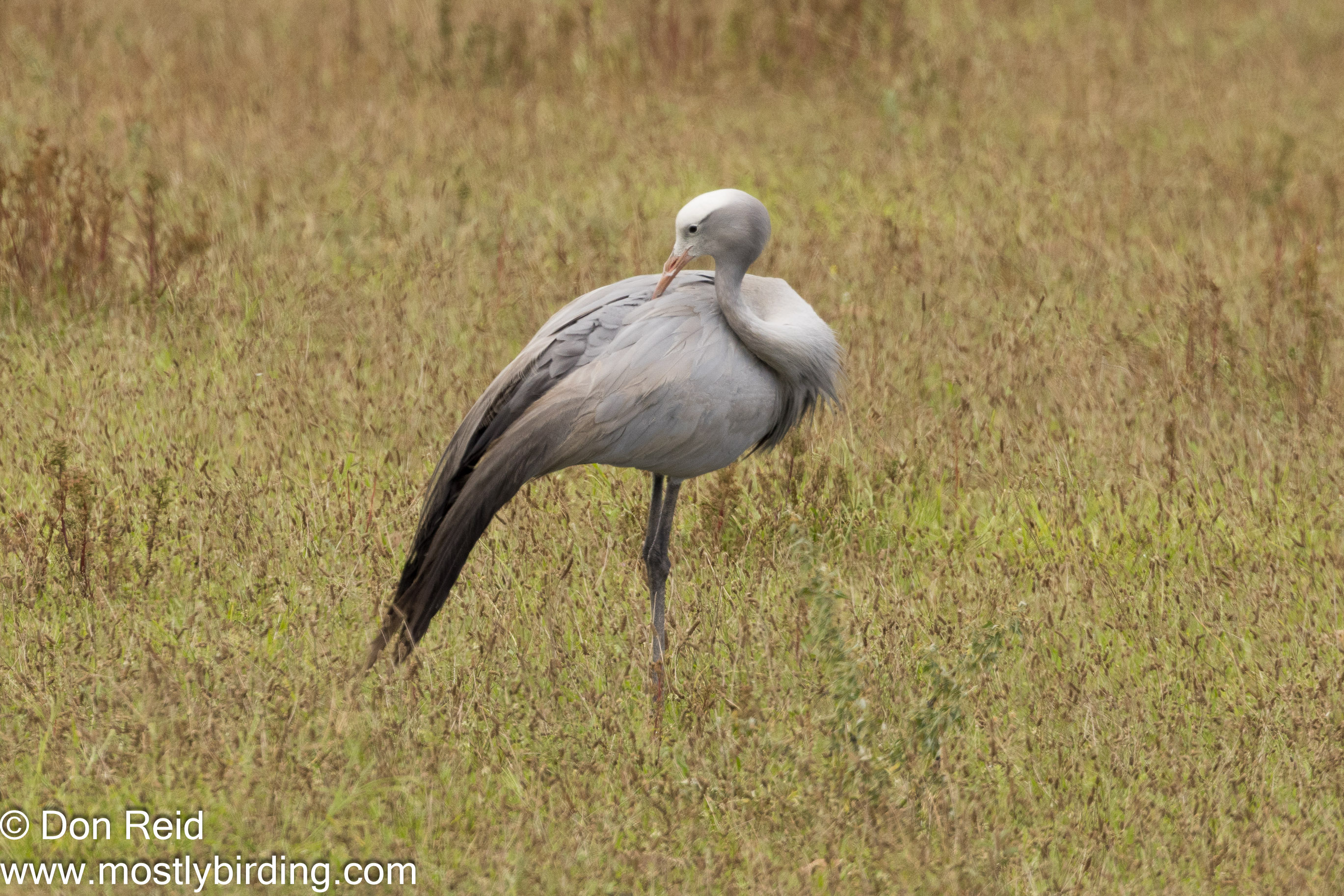
Blue Crane Anthropoides paradiseus Bloukraanvoël, Gondwana Area
Meanwhile back at the ranch …
As usual I atlased my ‘home’ pentad several times during the month and was rewarded with a number of good sightings –
Buff-spotted Flufftail calling from its favourite spot along the nature trail (such an eerie sound)
Fiery-necked Nightjar heard for the first time since November
Knysna Warbler heard from our balcony for the first time
Black Sparrowhawk flying over the golf course
Ruddy Turnstone at the Point
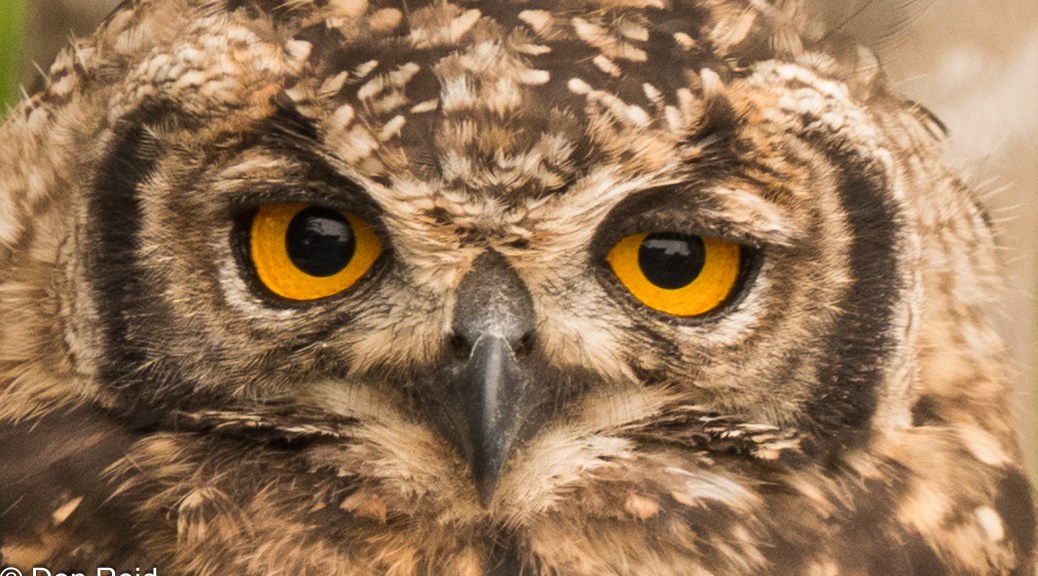
Spotted Eagle-Owl seen on the nature trail and around our home
Spotted Eagle-Owl Bubo africanus Gevlekte ooruil, Mossel Bay Golf Estate
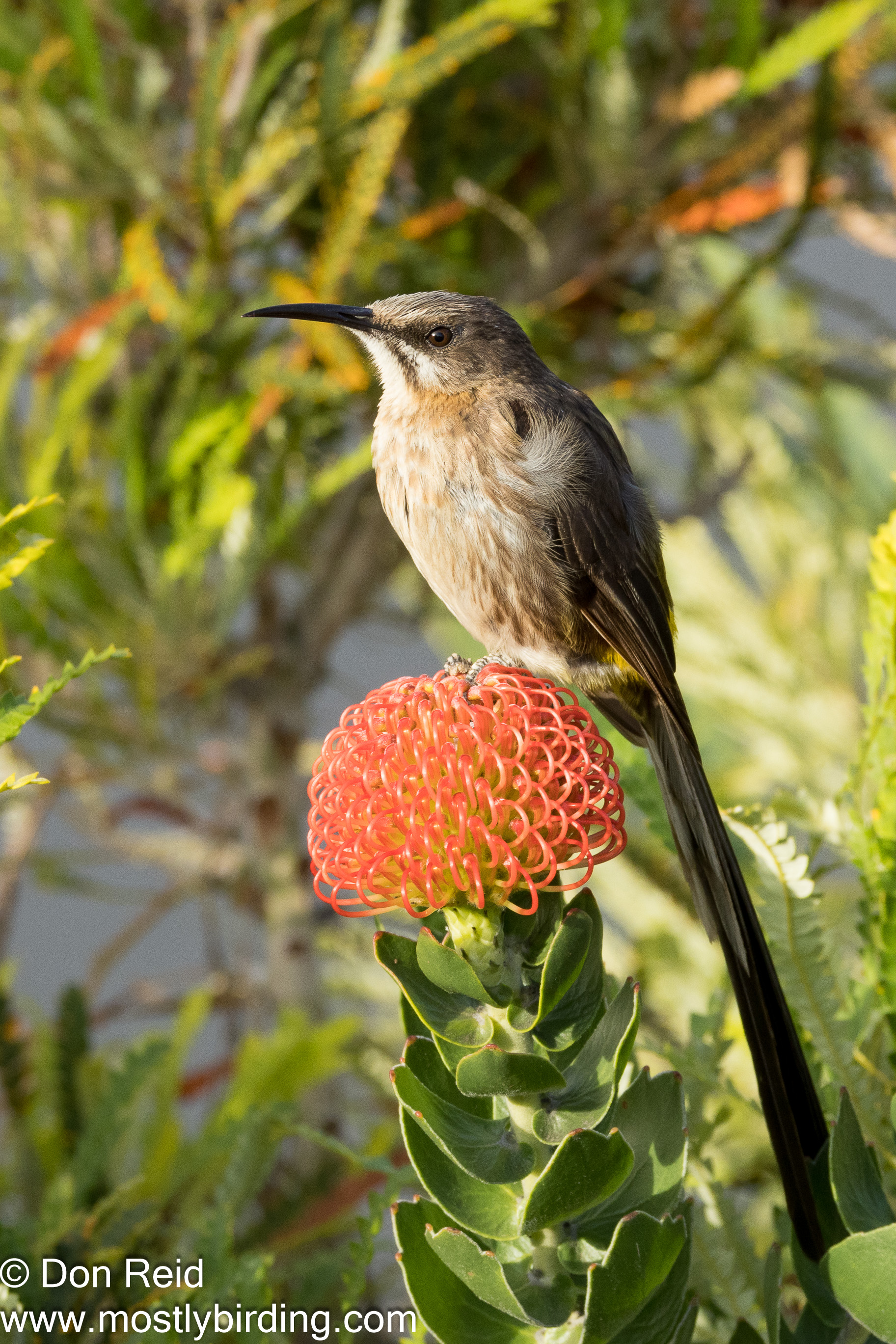
Cape Sugarbirds still enjoying the profusely flowering Pincushions in our garden
Cape Sugarbird Promerops cafer Kaapse suikervoël, Mossel Bay Golf Estate
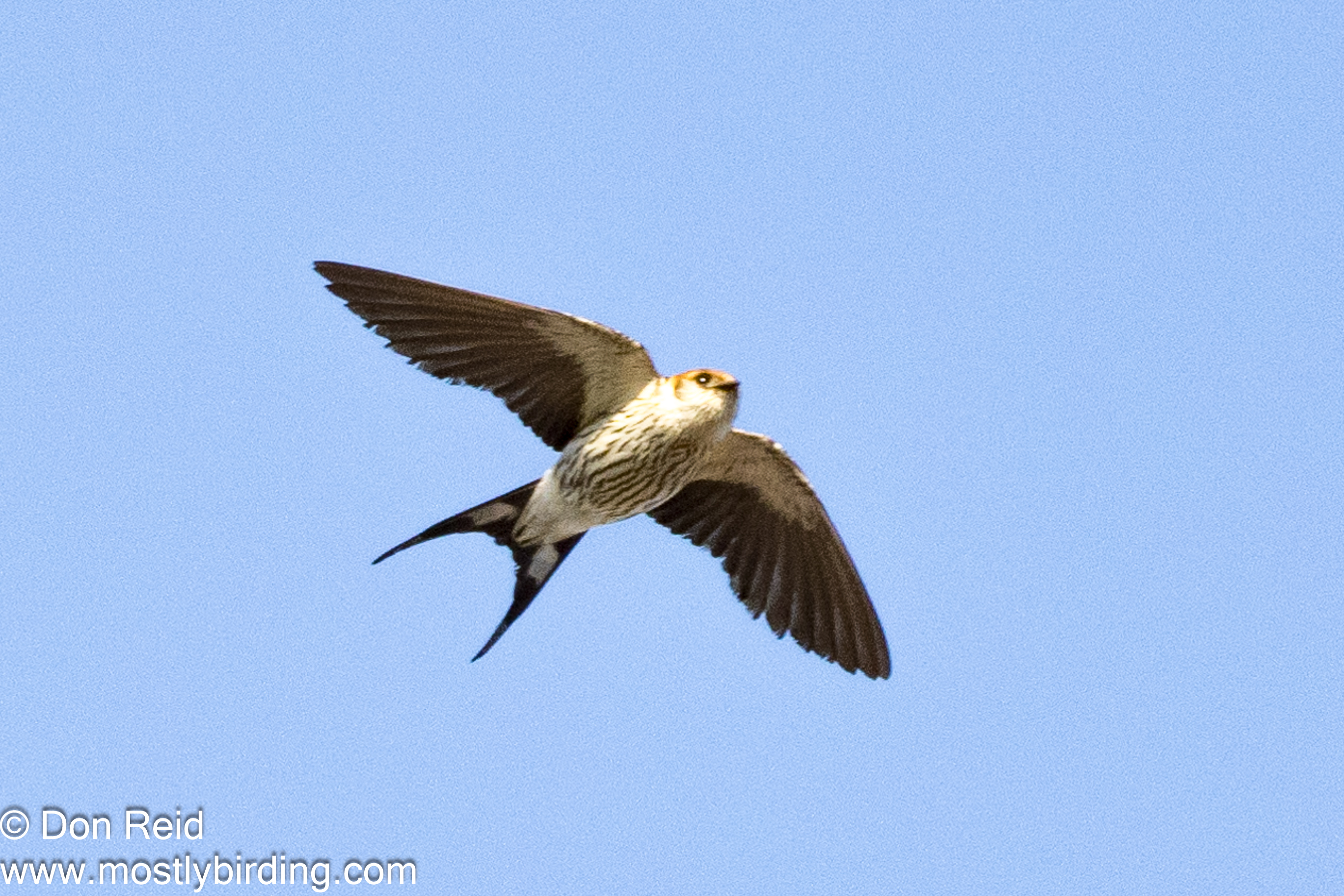
My attempts to capture a Greater striped Swallow in the air produced a couple of decent shots among hundreds of discards
Greater Striped Swallow Cecropis cucullata Grootstreepswael, Mossel Bay Golf Estate
My 300th post is a short one with just one photo of one bird – but I have reason to celebrate both…
The bird in question is a Common Quail – so what’s the big deal I hear you think. Well if I tell you that I’ve heard this bird calling a few hundred times during my birding and atlasing travels over 35 years or so, but have seen it just once before, so briefly that there was no chance to get a photo, then you may appreciate my excitement about my experience last week.
I was out atlasing in the early morning not far from our new home in Mossel Bay and heard the familiar call of Common Quail almost every time I stopped. There were numbers of Larks and other birds in the gravel road and along the verges, then I noticed something different up ahead and raised my binos once more – it was a Common Quail, in fact a pair that were walking along the edge of the gravel amongst grass tufts.
With my heart pumping I grabbed my camera, checked settings and fired away even though the Quails were not ideally positioned and not close enough to achieve sharpness, but I was ecstatic that I had at last seen this bird clearly and at least had a reasonable record photo.
We relocated to Mossel Bay towards the end of last year – somewhat unexpectedly, although it was always part of our medium-term planning. So you can expect the emphasis of my blog to shift towards the Southern Cape and away from the northern parts of our country, where we have lived for some 50 years.
However the Southern Cape, and in particular Mossel Bay are very familiar to us, having spent ever-increasing periods in our house here over the last 12 years and is the perfect place to spend our retirement years.
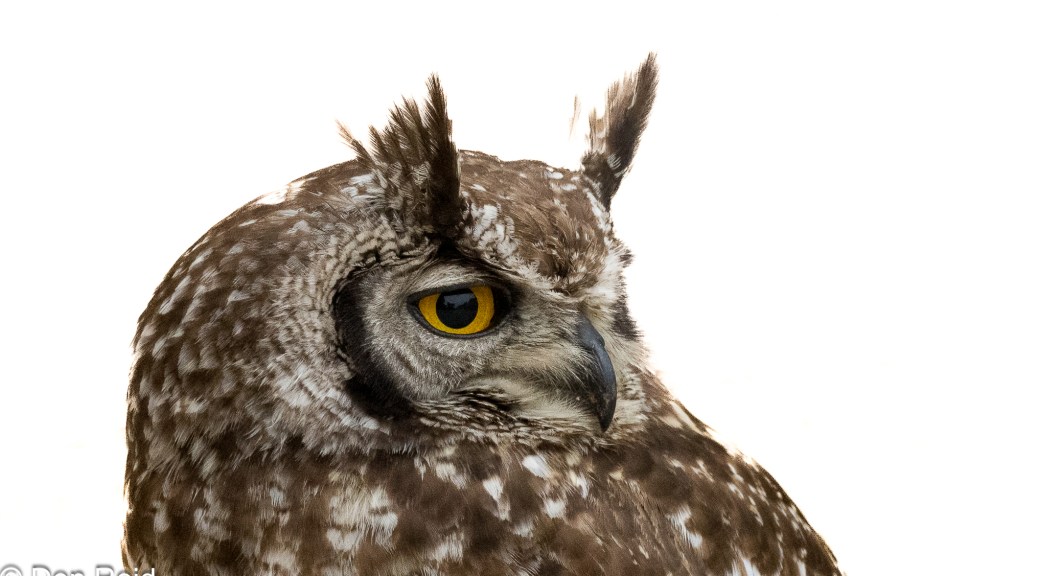
Our home in Mossel Bay is situated in the Mossel Bay Golf Estate which has a variety of habitats and gardens which attract many species of birds and this brings me to the subject of this post – the Spotted Eagle-Owl, which “put its hand up” (figuratively) to become the focus of a post by popping up in a number of places around the Golf Estate over the past few weeks.
It also seemed like a good opportunity to get back to the essence of my blog, which after all is called “Mostly Birding” for a reason ……
Here are some images of Spotted Eagle-Owls taken over the last while around our home and on my walks in the estate and adjoining nature areas:
Spotted Eagle-Owl bubo africanus Gevlekte Ooruil
Neighbour Catherine, knowing my interest in all things birding, popped over in the middle of the day to say there was an Owl in her garden, so I went to have a look, taking my camera of course. There it was perched on the garden wall and I surmised it was a juvenile, based on the lack of the “ears” (not really ears but protuding tufts of feathers for camouflage, not for hearing) which are a feature of the adults
‘Goodness, but it’s tiring being awake all night – am I ever going to get used to this …’
‘Hmmm – suppose I should keep a watch out even though I’m still young’
Spotted Eagle-Owl Bubo africanus Gevlekte ooruil, Mossel Bay
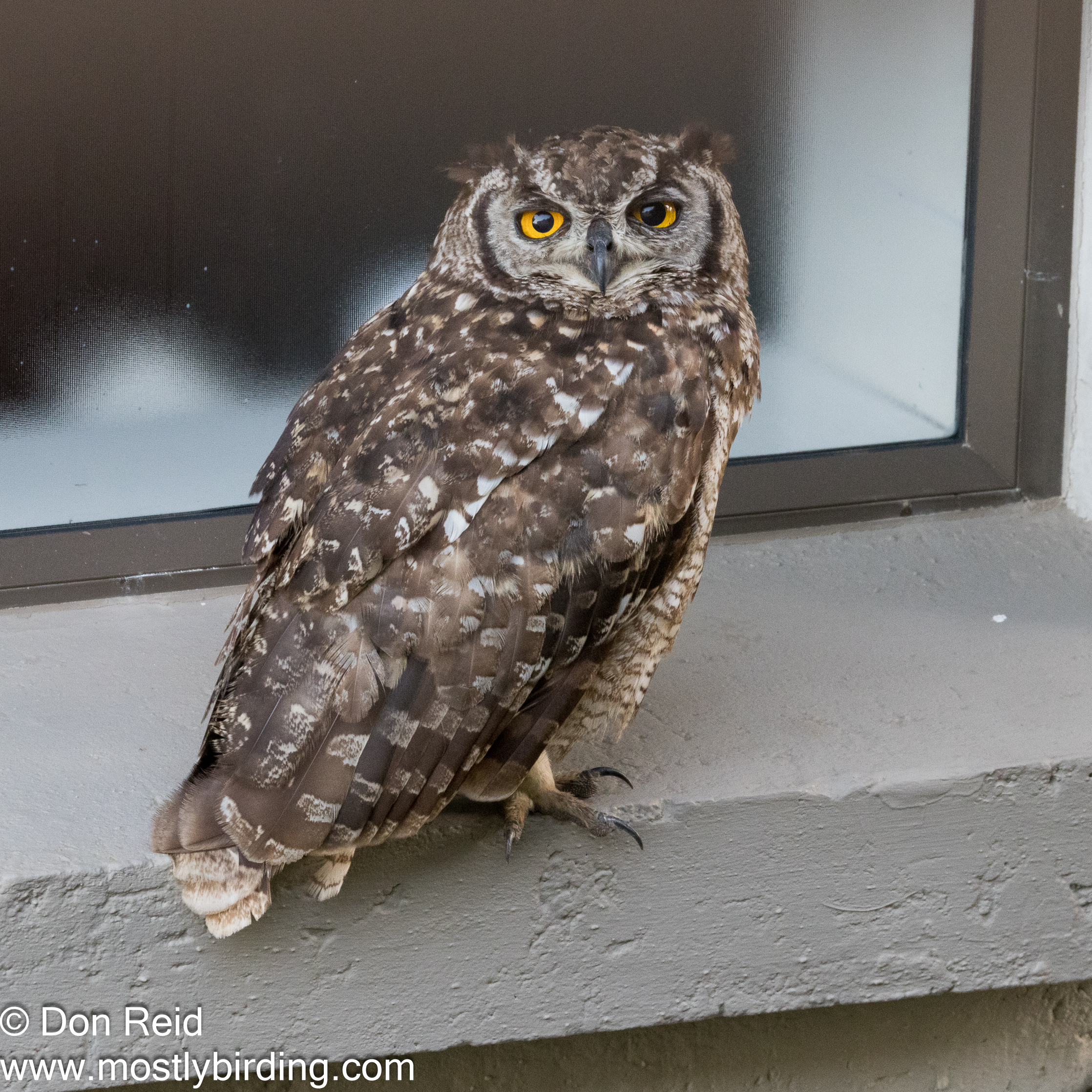
A few days later I noticed another Owl, this time an adult, sitting on the window cill of the neighbour’s house in broad daylight. More than likely the parent of the above juvenile.
Spotted Eagle-Owl Bubo africanus Gevlekte ooruil, Mossel Bay Golf Estate
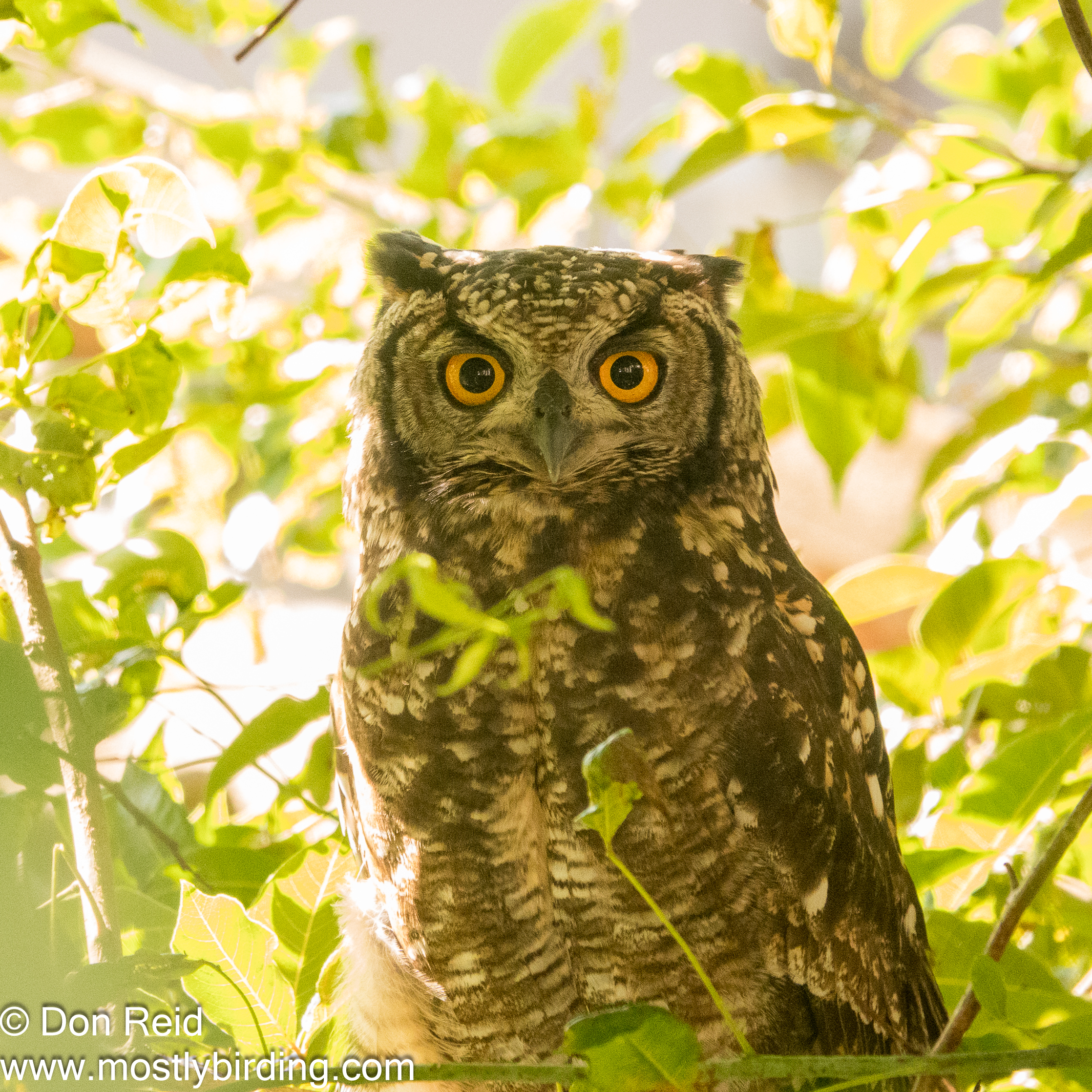
A week or so later again, neighbour Jan, phoned to say there was an owl in the trees in his back garden, between our two properties. I could not see it from our balcony which is a level higher than Jan’s house so I went downstairs to our garden and quickly spotted the owl on a branch partly concealed by foliage. I positioned myself as best I could without disturbing the owl and took a few shots against the strong backlight of the morning sun.
Spotted Eagle-Owl, Mossel Bay Golf Estate
My daily late afternoon walks take me all over the golf estate – my favourite walk being the one that takes in the nature area to the south and west of the estate as there is always something of interest.
One of my walks included an unusual encounter with an owl, which stood in the middle of the track as I approached and didn’t seem intent on flying away. I waited for a while to see what it would do, concerned that it was ill or injured, but after some 10-15 minutes I walked slowly past it as it moved to one side, eyeing me all the way but seemingly relaxed.
I kept a look out for this owl on my later walks as I was concerned about its health – I believe it was the same owl I spotted twice on the golf course itself, flying about without a problem so assumed it had recovered from any problem it may have had.
This species is well-known in the suburbs of our cities and towns and is often heard calling softly – wooo, hooo – and perched on roofs and streetlights from where it hunts insects, reptiles, rodents and the like.
Oh, and it’s good to have neighbours who keep you informed about birdlife in the garden ….
With wonderful memories of our Spring Flowers trip through parts of the Western Cape in September 2021 still fresh in our minds, we decided to do a similar, but different, trip in September 2022. Our planned route was to take us to Tulbagh for one night, then three nights each in Clanwilliam and Paternoster. To round off the trip we treated ourselves to a three-night stay in Cape Town’s Vineyard Hotel, in celebration of our birthdays which “book-ended” the trip,
Not just Flowers
My previous post described the rugged beauty of Tietiesbaai, particularly during the ‘flower season’ when rafts of colourful flowers add to the already spectacular views of sea and rocky shorelines.
What we found during our previous visit, and again this September, is that Tietiesbaai can also lay claim to being a birding spot that is the equal of some of the better known and more recognised birding destinations in this part of the country
From the moment we entered the main gate into the reserve the birding was interesting and took our attention away from the flowers many times.
A Familiar Raptor
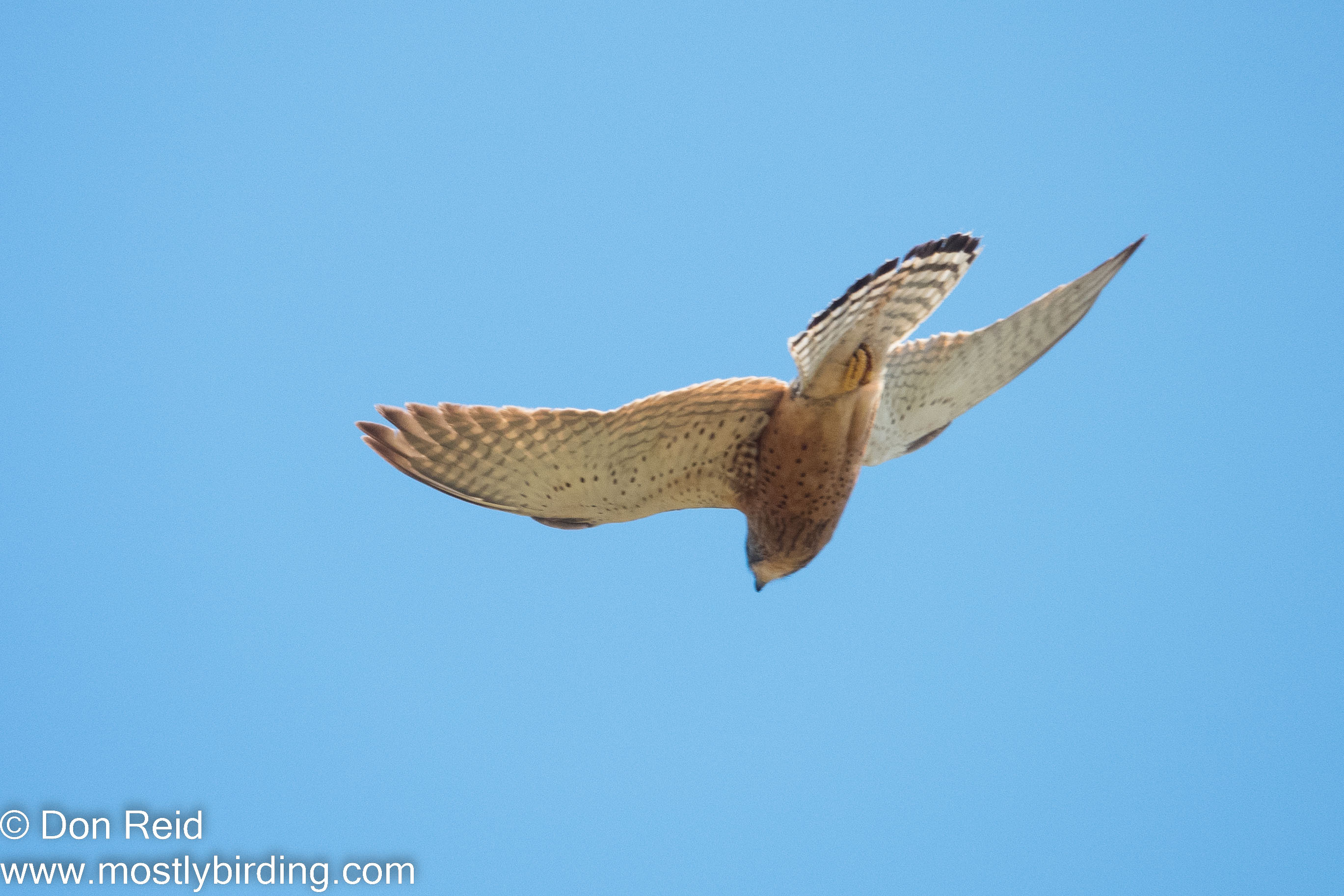
We came across several raptors during this trip, none more so than the Rock Kestrel, which we encountered many times. Before reaching the reserve proper, we found one on a utility pole, surveying the landscape, probably hoping to find a field mouse or small lizard to swoop down on. Raptors generally get edgy when you slow down and stop and will often fly off, only to settle on the pole a bit further away. This one was no exception, so I made sure my camera was ready before stopping, leapt out and tracked the kestrel with my camera as it took off – fortunately capturing an image in flight, albeit from behind.
Rock Kestrel, Cape Columbine NR – Tietiesbaai
Birds among the Fynbos and the Flowers
Once we were through the gate there was abundant bird life with the typical birds of the fynbos prominent – Grey-backed Cisticola, Yellow Canary, Karoo Scrub-Robin, Karoo Prinia and Cape Bunting.
Yellow Canary Crithagra flaviventris Geelkanarie, (male race flaviventris) Cape Columbine NR – TietiesbaaiKaroo Scrub Robin Erythropygia coryphaeus Slangverklikker (race cinerea), Cape Columbine NR – Tietiesbaai
Even more prominent were the Karoo Larks (SA Endemic) which we came across a few times, some of which were foraging on the ground, while others were calling and displaying avidly, no doubt hoping to attract the ‘right sort’ as it were
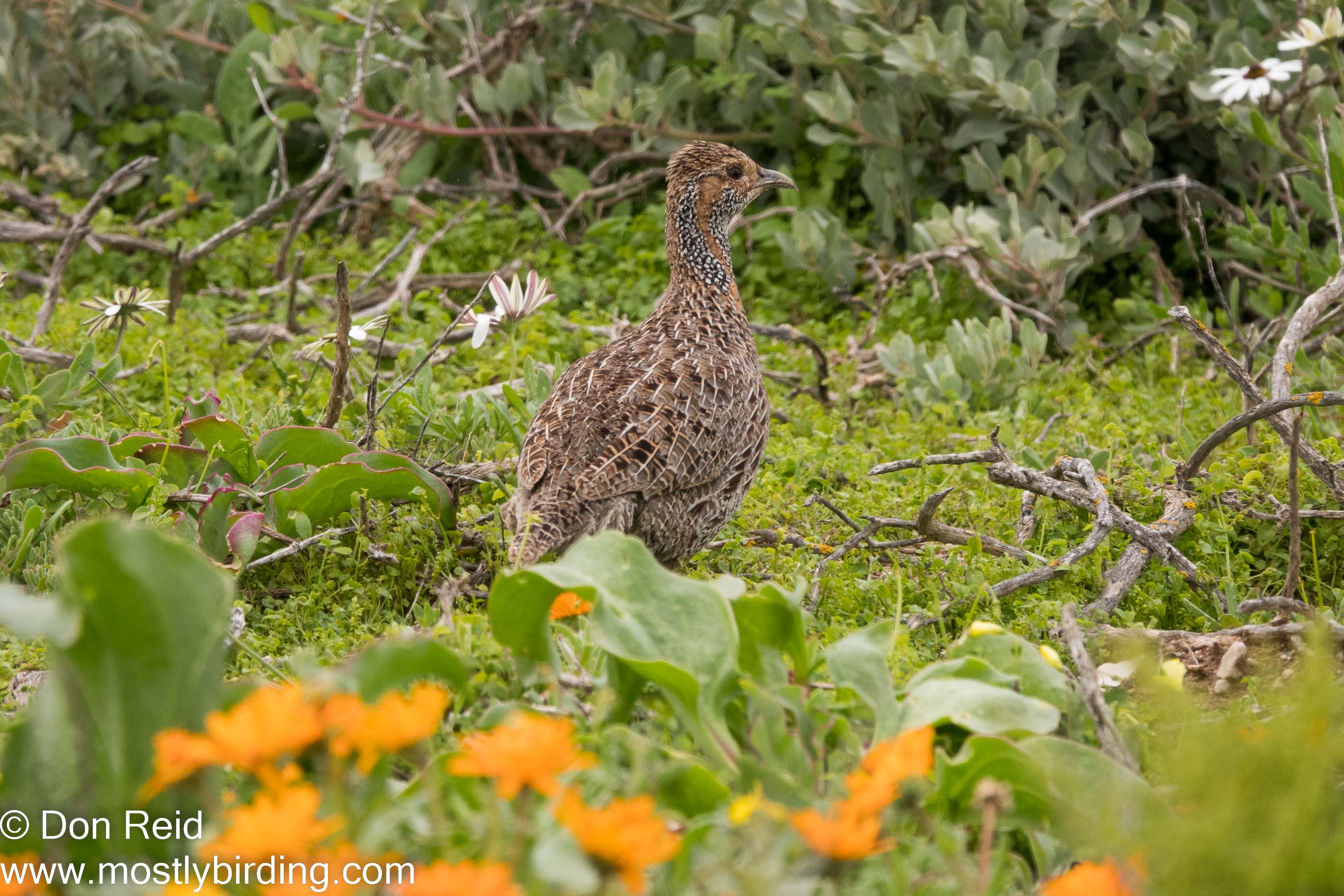
A particular thrill was finding a covey of Grey-winged Francolins among the flowers – always difficult to photograph as they tend to dash off into the bushes as you approach, so I was happy to be able to snatch a few images before they disappeared
Grey-winged Francolin Scleroptila africana Bergpatrys, Cape Columbine NR – Tietiesbaai
Birds among the Rocks
Our stop for tea was in the same spot as a year ago – along a short, narrow, bumpy track between the rocks near the “Sea Shacks” (basic accommodation for visitors).
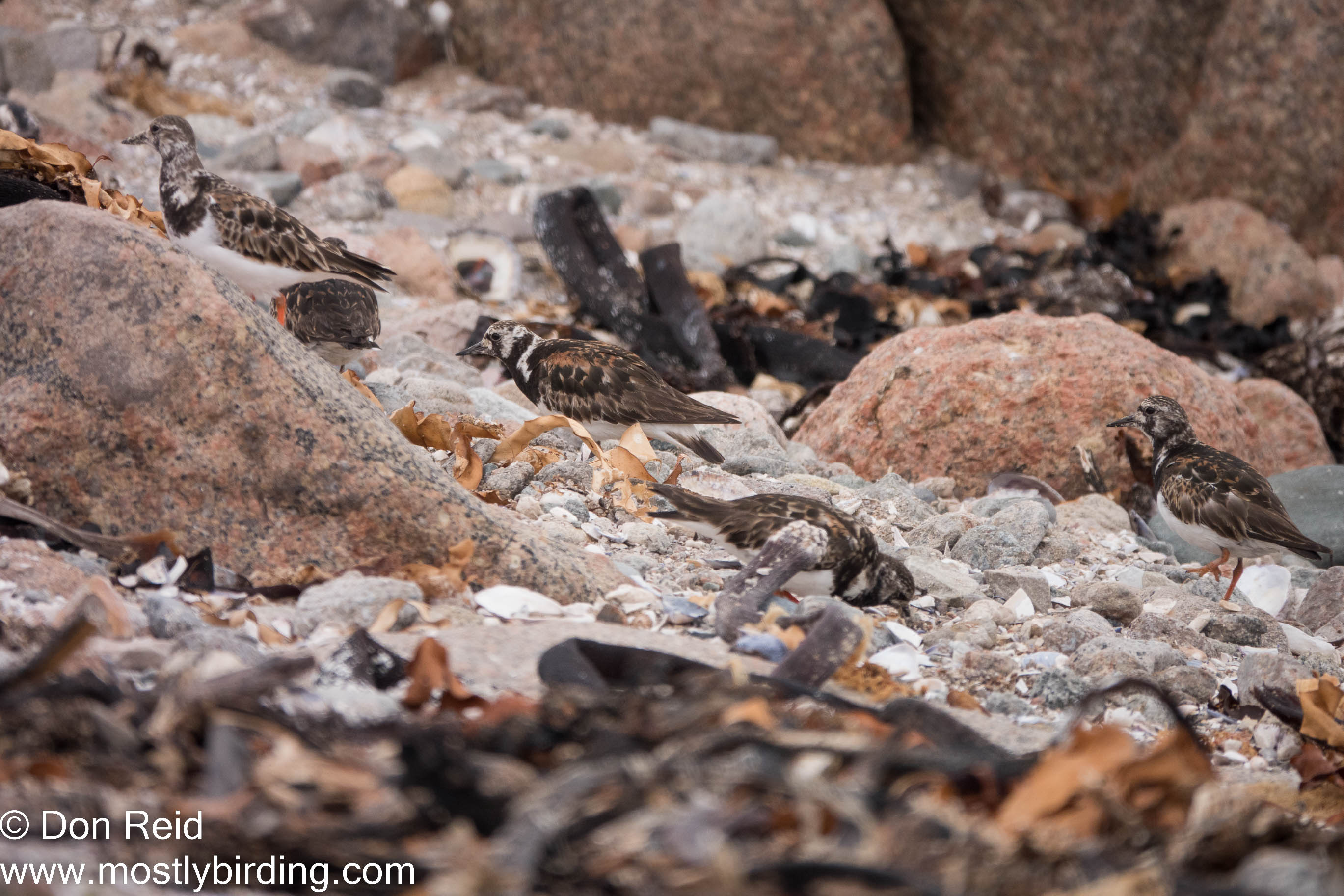
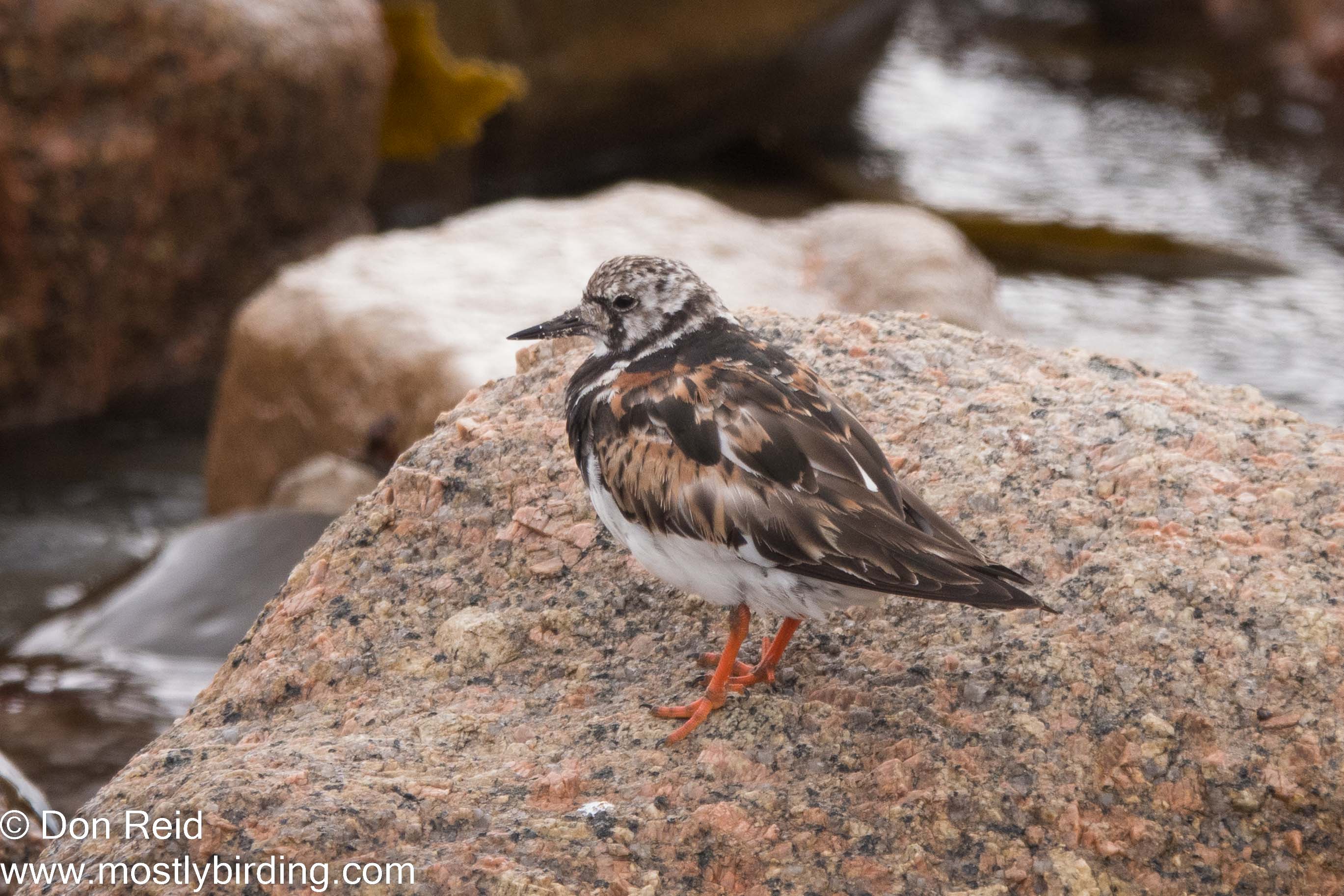
Nearby many Cape Cormorants were resting on the rocks and as we drove along the track we came across Ruddy Turnstones – no less than 30 of them according to my quick count! Now, Turnstones are fairly common summer migrants to our country from the arctic tundra region, but seldom have I seen more than a couple at a time, so this was a sight to behold!
Even from a few metres they can be surprisingly hard to spot as the next photo illustrates – their colouration blends in with the rocks, stones and kelp littering the shoreline
Ruddy Turnstone Arenaria interpres Steenloper, Cape Columbine NR – TietiesbaaiRuddy Turnstone Arenaria interpres Steenloper, Cape Columbine NR – Tietiesbaai
Another summer migrant to SA – from the Palearctic region – Curlew Sandpipers, were also around in numbers but nowhere near those of the Turnstones – the two species seemed happy to share each other’s space
Curlew Sandpiper Calidris ferruginea Krombekstrandloper, Cape Columbine NR – TietiesbaaiRuddy Turnstone and Curlew Sandpiper, Cape Columbine NR – Tietiesbaai
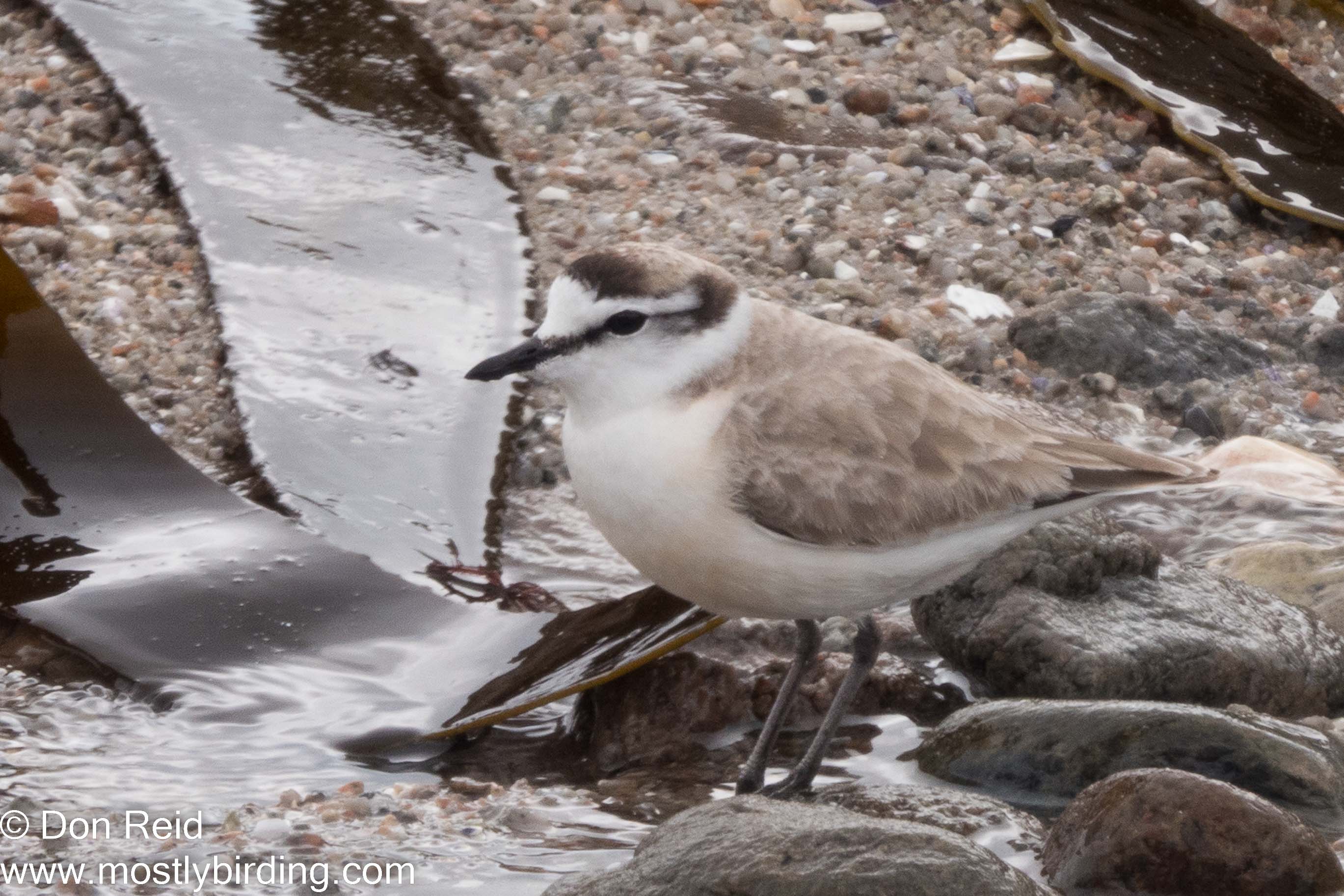
A (Turn) stone’s throw away was a single White-fronted Plover, a common coastal resident most often seen on open beaches – if you can spot them – they are masters of “hiding in full sight”
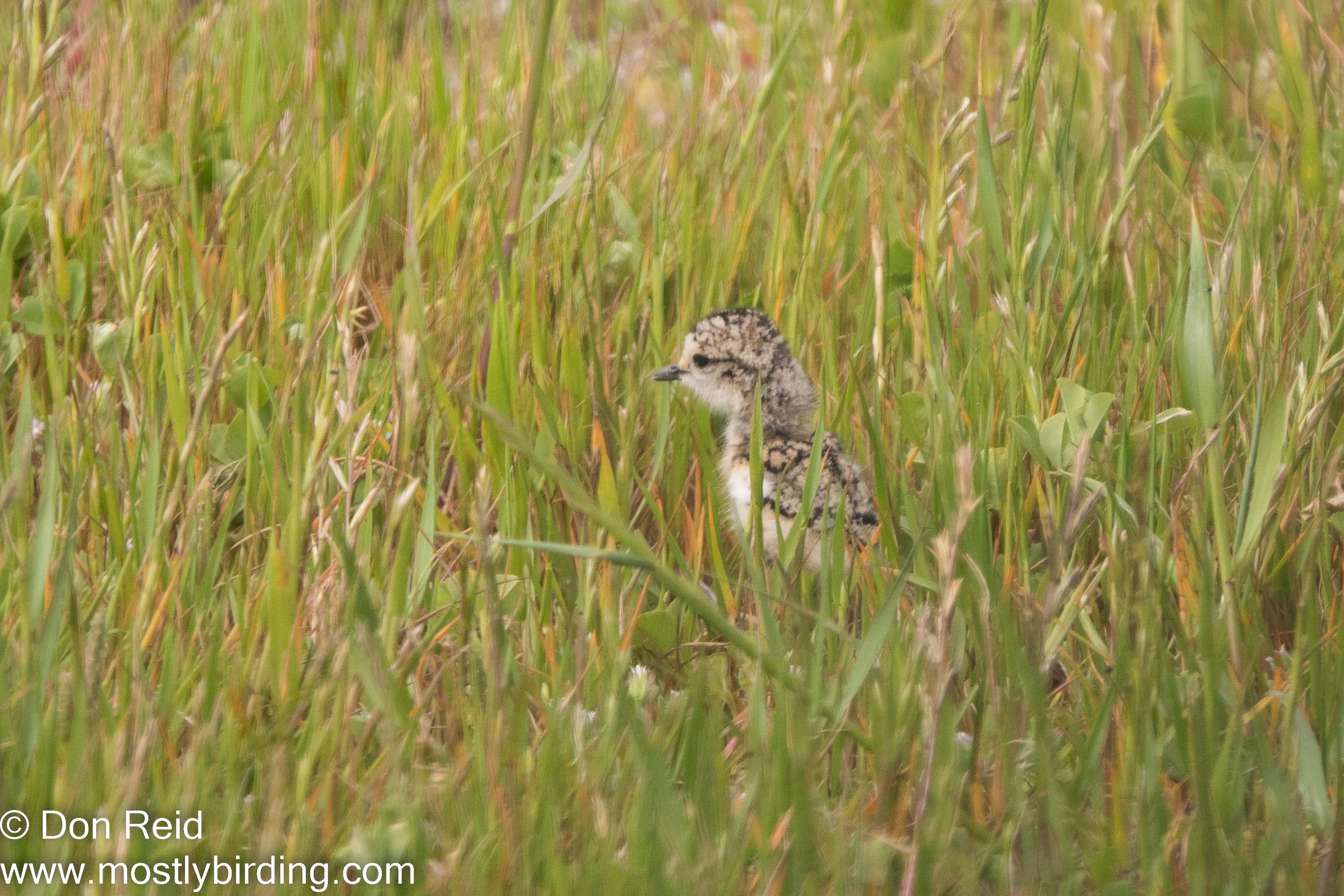
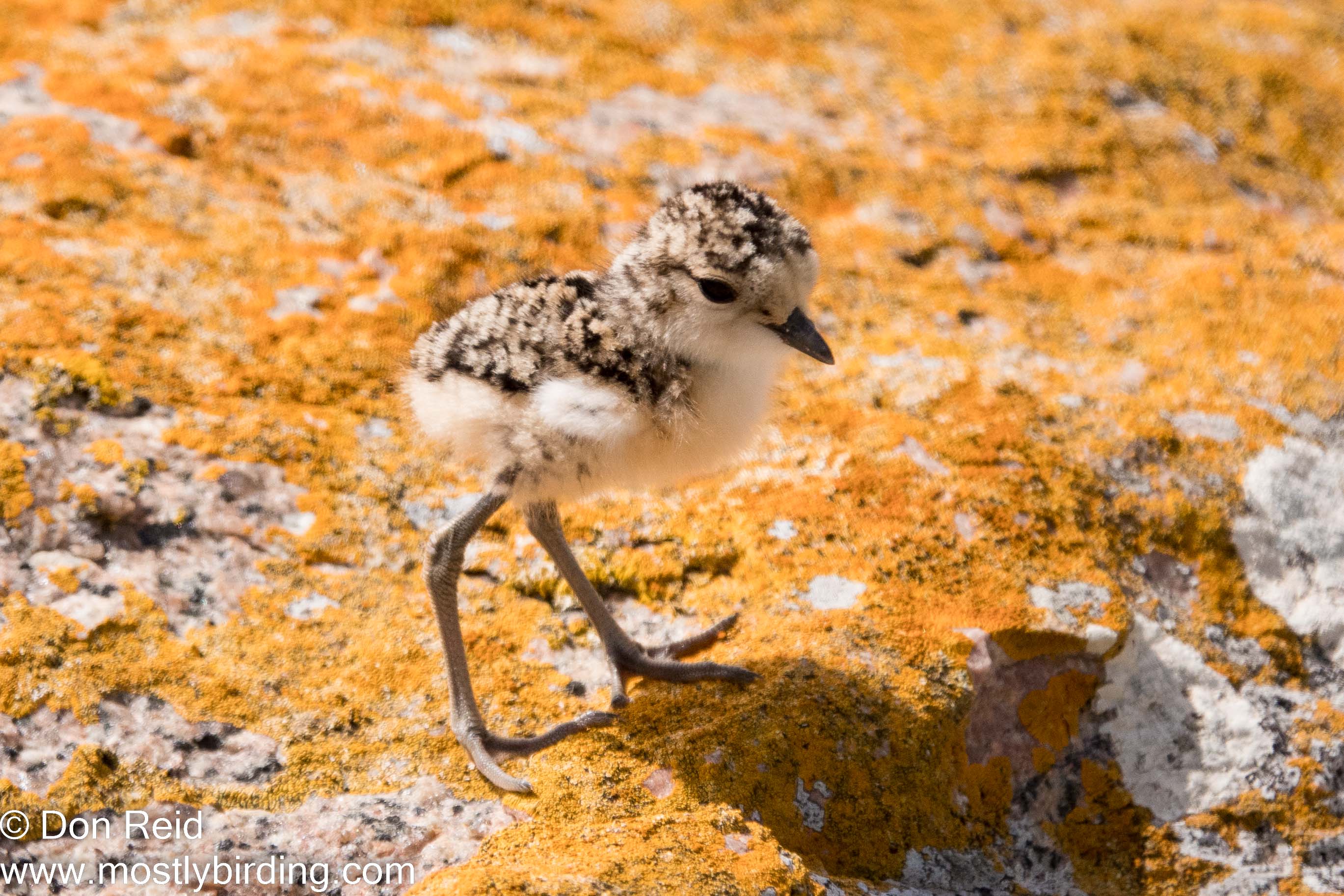
Heading back to the main track after enjoying our tea among the rocks, we spotted a pair of Kittlitz’s Plovers – looking rather anxious it seemed to us. The reason was obvious when we saw two juveniles in the short grass nearby – looking oh so cute – two balls of fluff with long legs and huge feet
Kittlitz’s Plover Charadrius pecuarius Geelborsstrandkiewiet, Cape Columbine NR – TietiesbaaiKittlitz’s Plover juvenile, Cape Columbine NR – Tietiesbaai
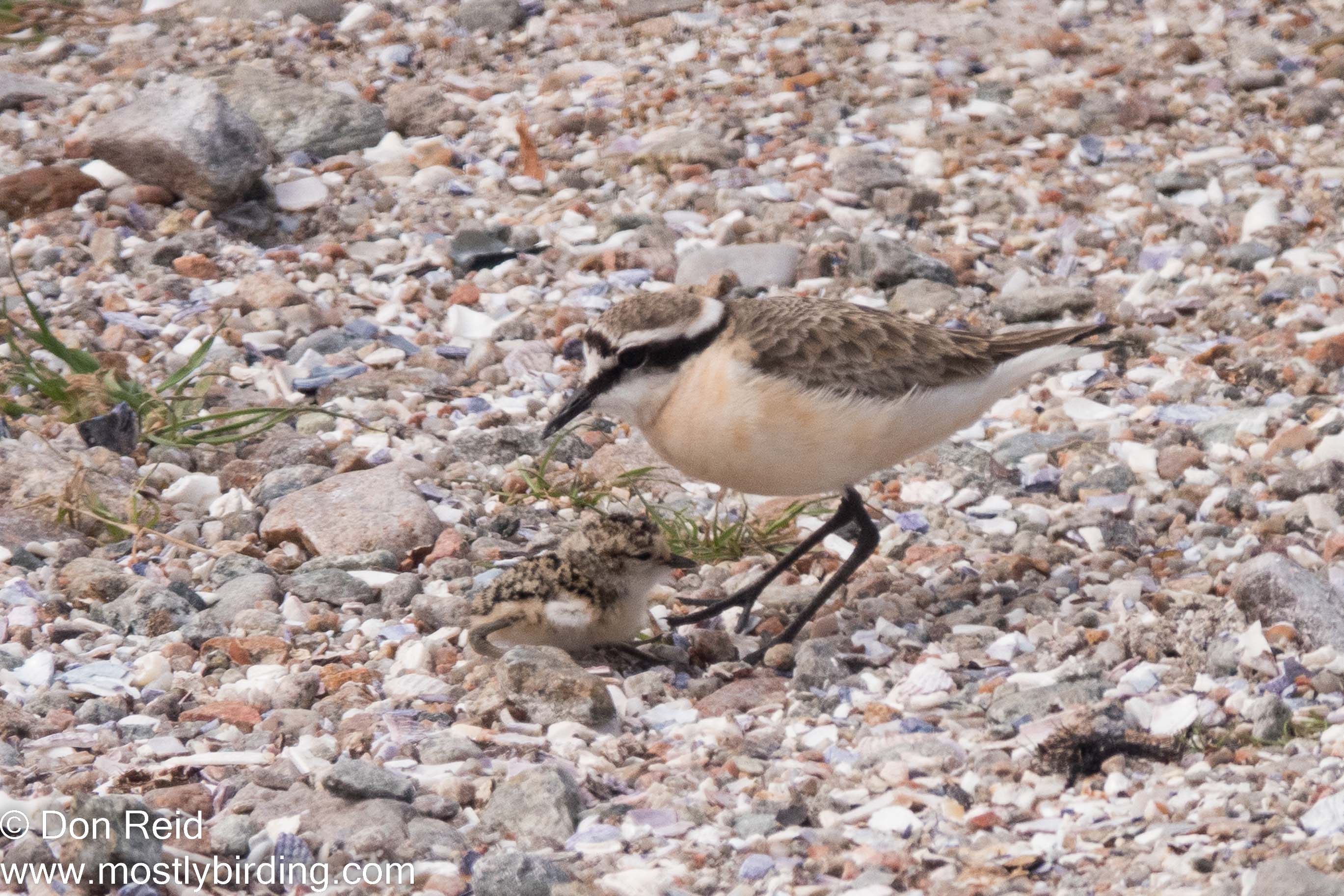
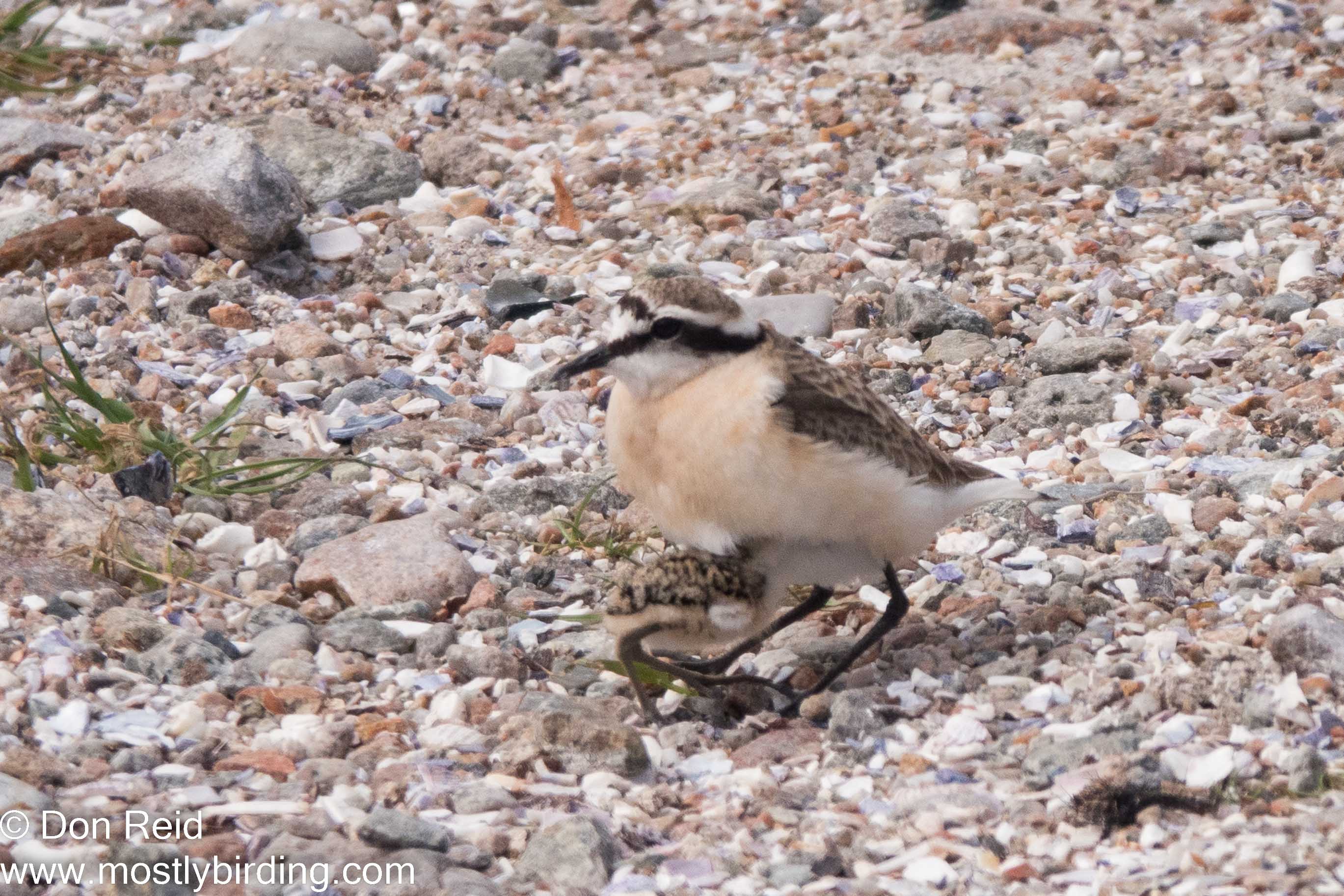
As we spotted them, one of the chicks scurried across the shale to its parent and literally disappeared before our eyes. The following sequence of photos shows how it “buries” itself in the belly feathers of the parent until just the legs are left dangling out
Kittlitz’s Plover chick hiding
Meanwhile the second chick, much braver, walked about in the track, then rather hesitantly across the rocks, before heading to the adult as well.
Kittlitz’s Plover, (Very young juvenile) Cape Columbine NR – Tietiesbaai
We had gradually edged the car past this scene to avoid disturbing them any further when the other adult set about trying to lead our “metal monster” away by doing its “mortally wounded act” right in front of our vehicle
Kittlitz’s Plover acting wounded to distract us
Eventually I was able to edge past this adult as well and we continued on our way
Discovering a Nest
Further along I spotted a small bird in the distance flying towards a shrub with yellow flowers, then promptly disappearing from view – into the middle of the shrub it seemed. I watched carefully as we got closer to see where it had got to, only to see it emerge from the shrub and fly off low and rapidly.
It was all too quick to ID the bird which was small and brownish, but my curiosity got the better of me and I stopped alongside the shrub, got out and walked around the car to have a closer look as I had a hunch there was a reason for the bird’s behaviour.
Sure enough, when I carefully parted the branches a nest with three eggs was revealed and I set about finding the parent’s ID by going through some of the possible suspects on my Roberts app. My second guess was correct – Cape Bunting
Cape Columbine NR – TietiesbaaiCape Bunting nest, Cape Columbine NR – Tietiesbaai
So, our flower-viewing day at Tietiesbaai had turned into a birding bonanza as well, much to our delight!
A late lie-in and a slow time getting ourselves ready meant we only started our Bright “discovery” around midday with a drive around the town to orientate ourselves, stopping at the river and the park to take in the scenery
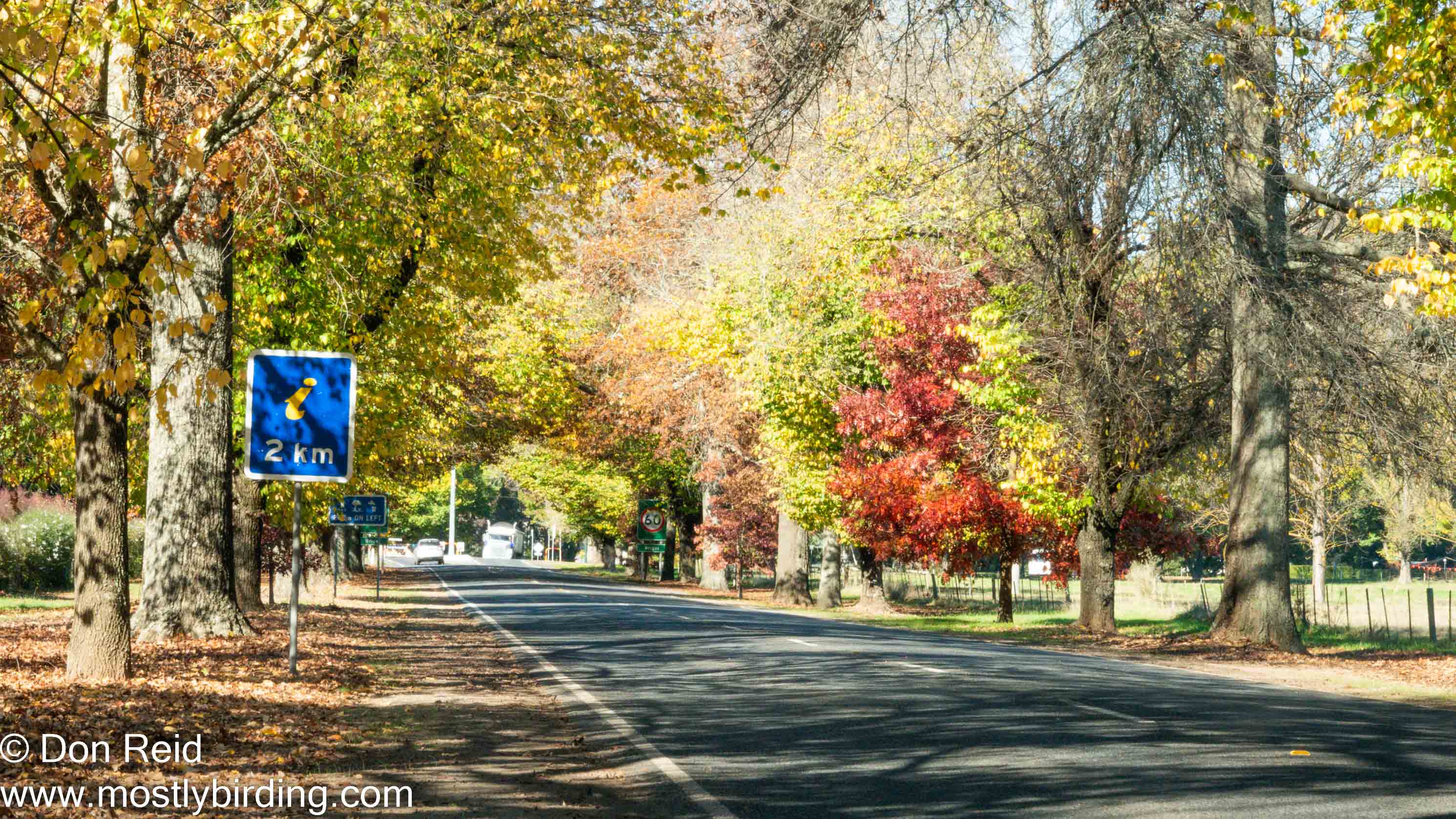
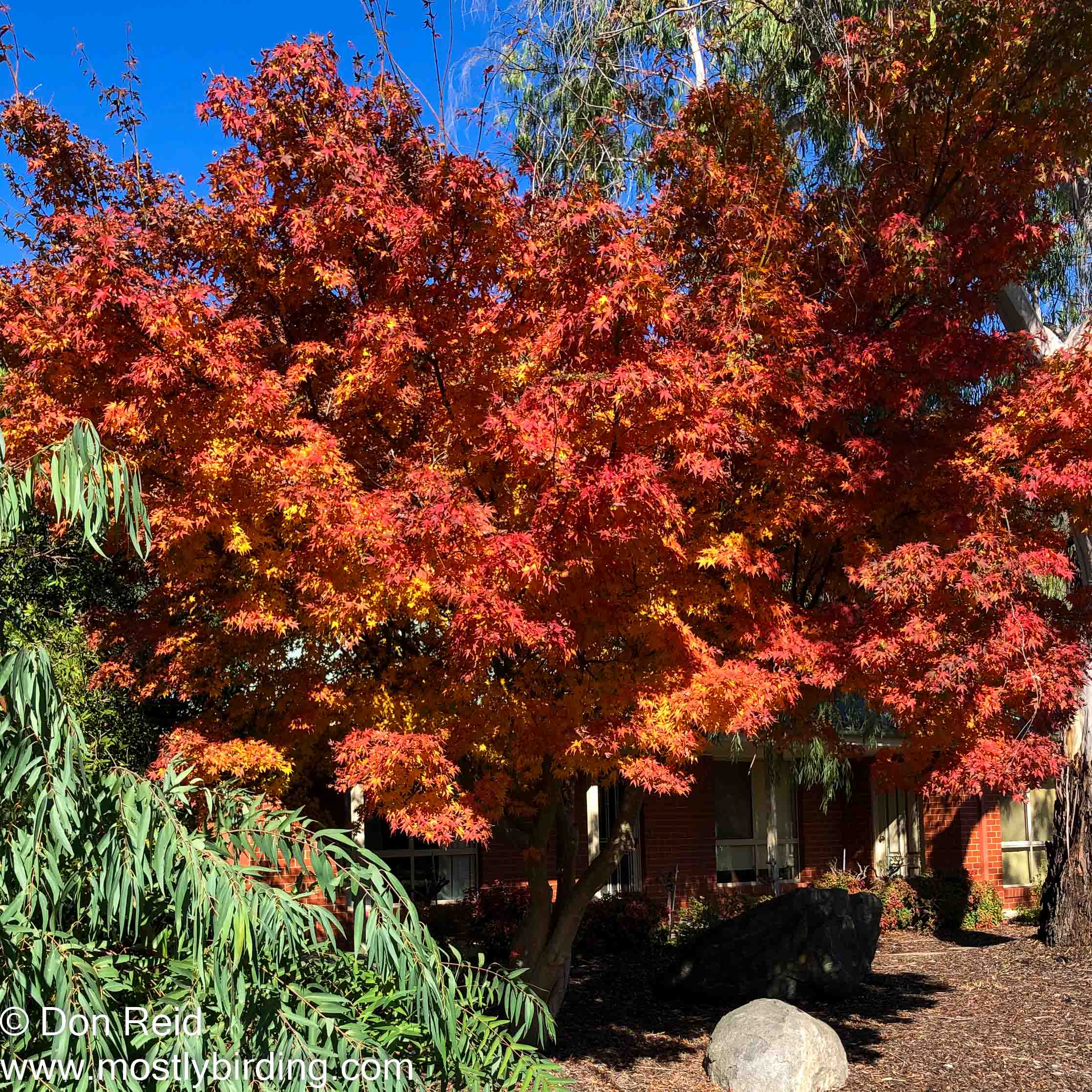
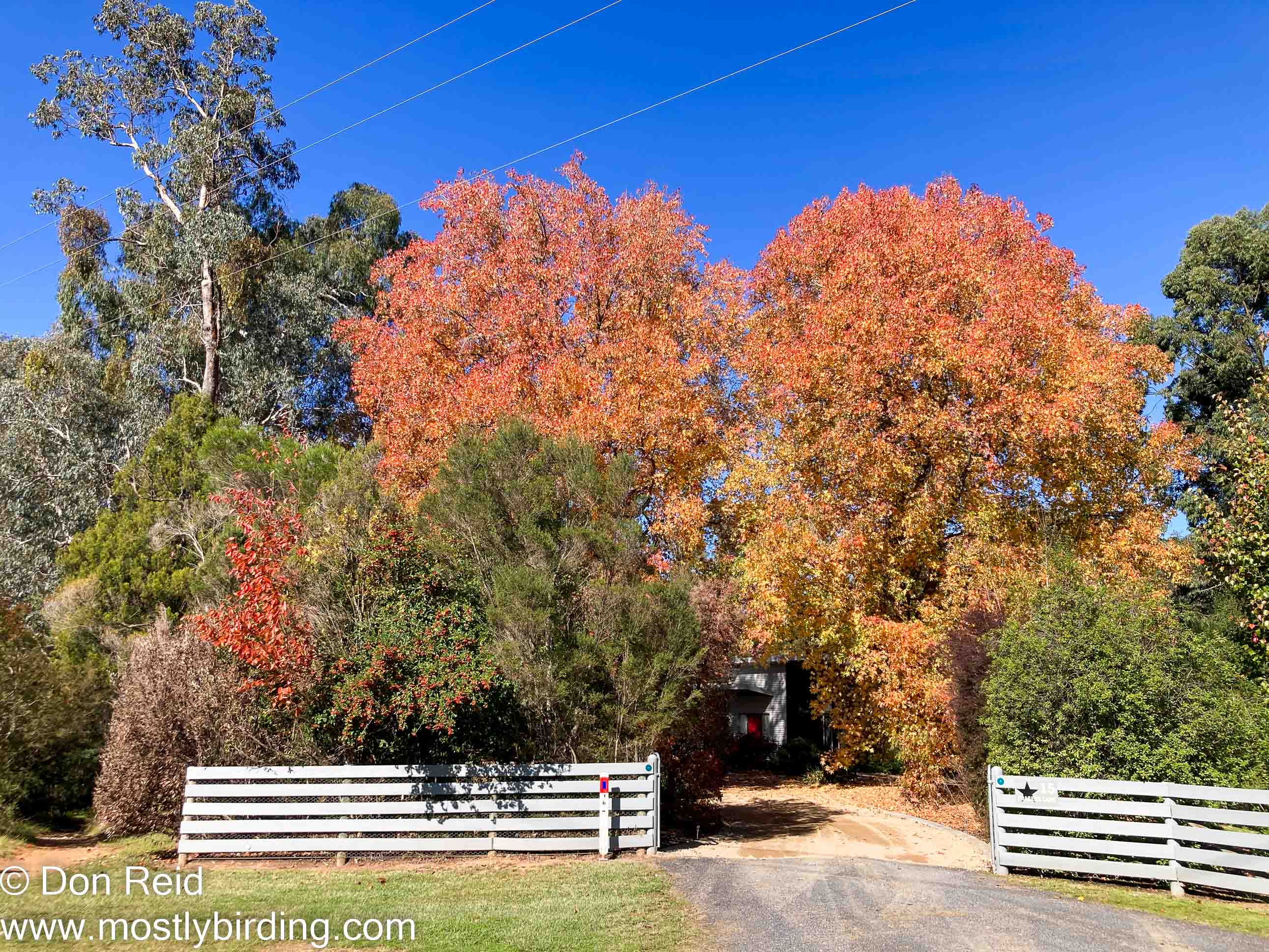
Bright is known as a tourist and holiday destination with a focus during autumn on the multitude of European trees that turn streets into multi-hued avenues and add a bright splash of colour to many gardens and parks.
Bright VictoriaAutumn colours, Bright VictoriaBright Victoria
We enjoyed driving slowly along some of the streets to take in the splendour and to add to the pleasure a few significant birds crossed our path.
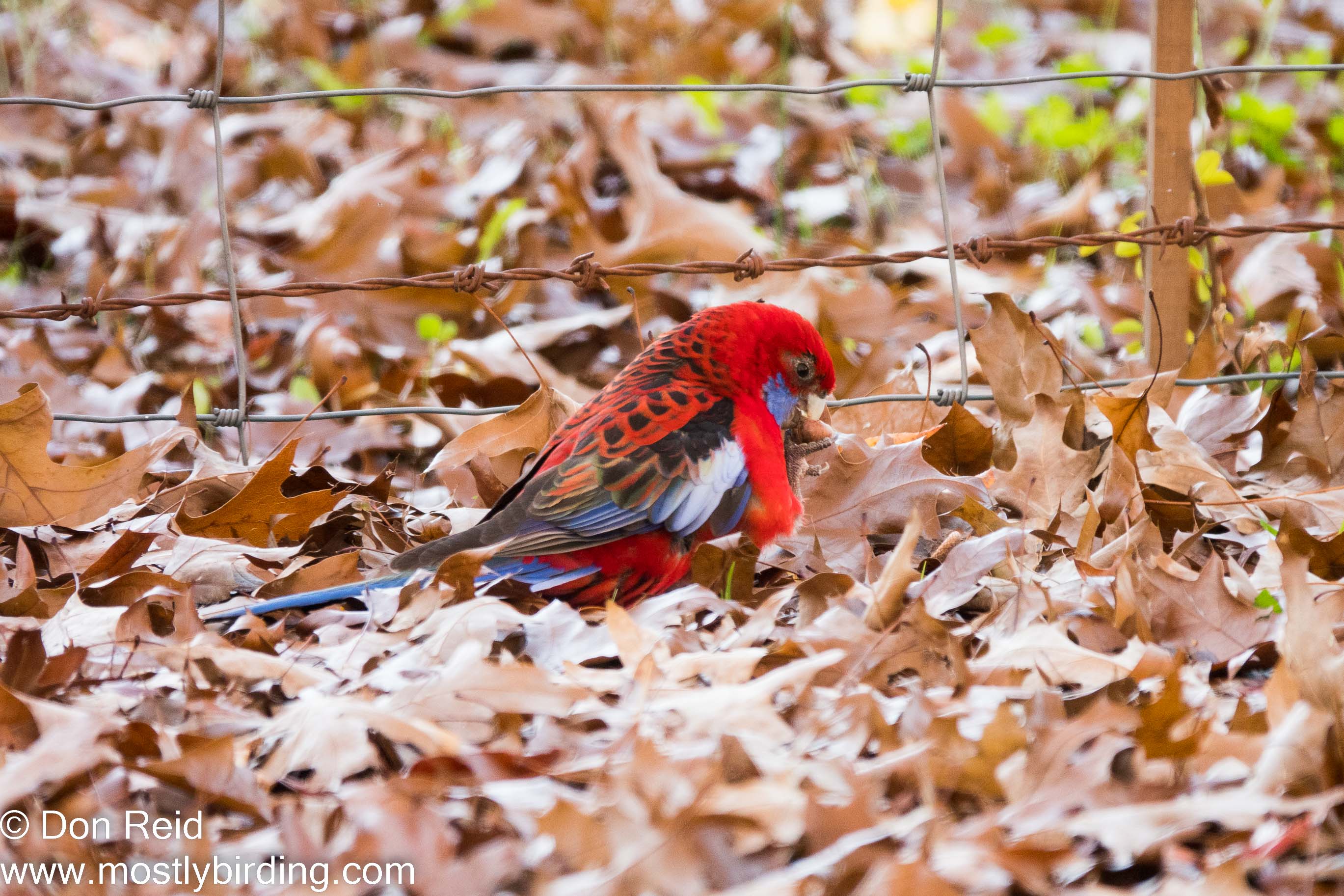
The first of these was a Crimson Rosella, scratching in leaf litter at the side of the road, coming up with what looked like acorns or nuts and holding them parrot fashion in its claws while consuming the “meat” of the nut.
Crimson Rosella Platycercus elegans, Bright Victoria
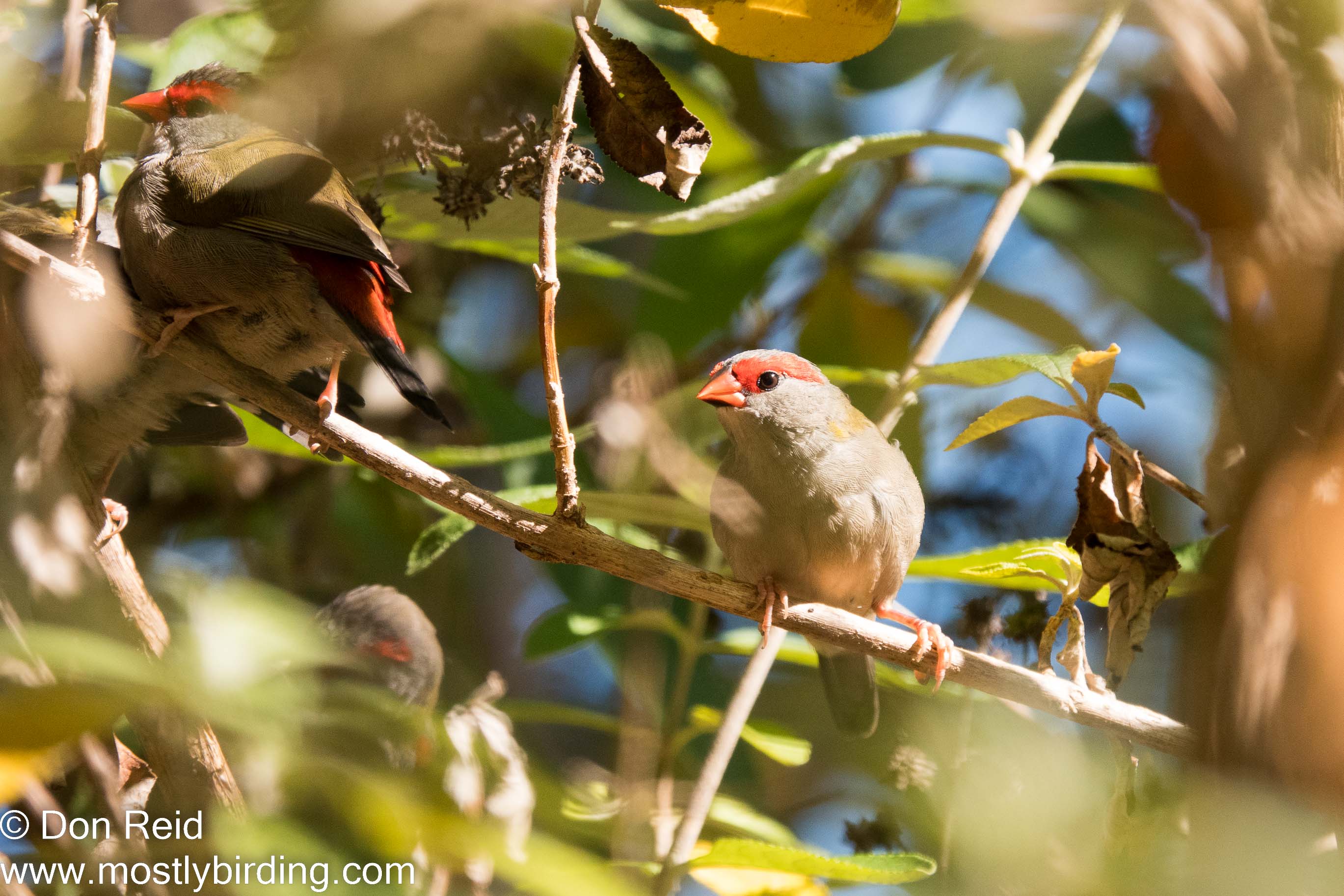
Next up was an unexpected sighting of two small birds that were both new to my Australia list – we were leaving a riverside spot where we had parked, when I spotted movement out of the corner of my eye. I braked, reversed and saw several small birds drinking at a puddle some distance from the road – too far to be certain what they were, even with my binoculars, as they were moving about and flitting back and forwards between the puddle and the nearby bushes.
So I did what I usually do in this situation – I grabbed my camera and rattled off a number of shots before the birds dispersed, which gave me a chance to study what I had “captured” and put a name to them.
As it turned out there were two species – both lifers for me :
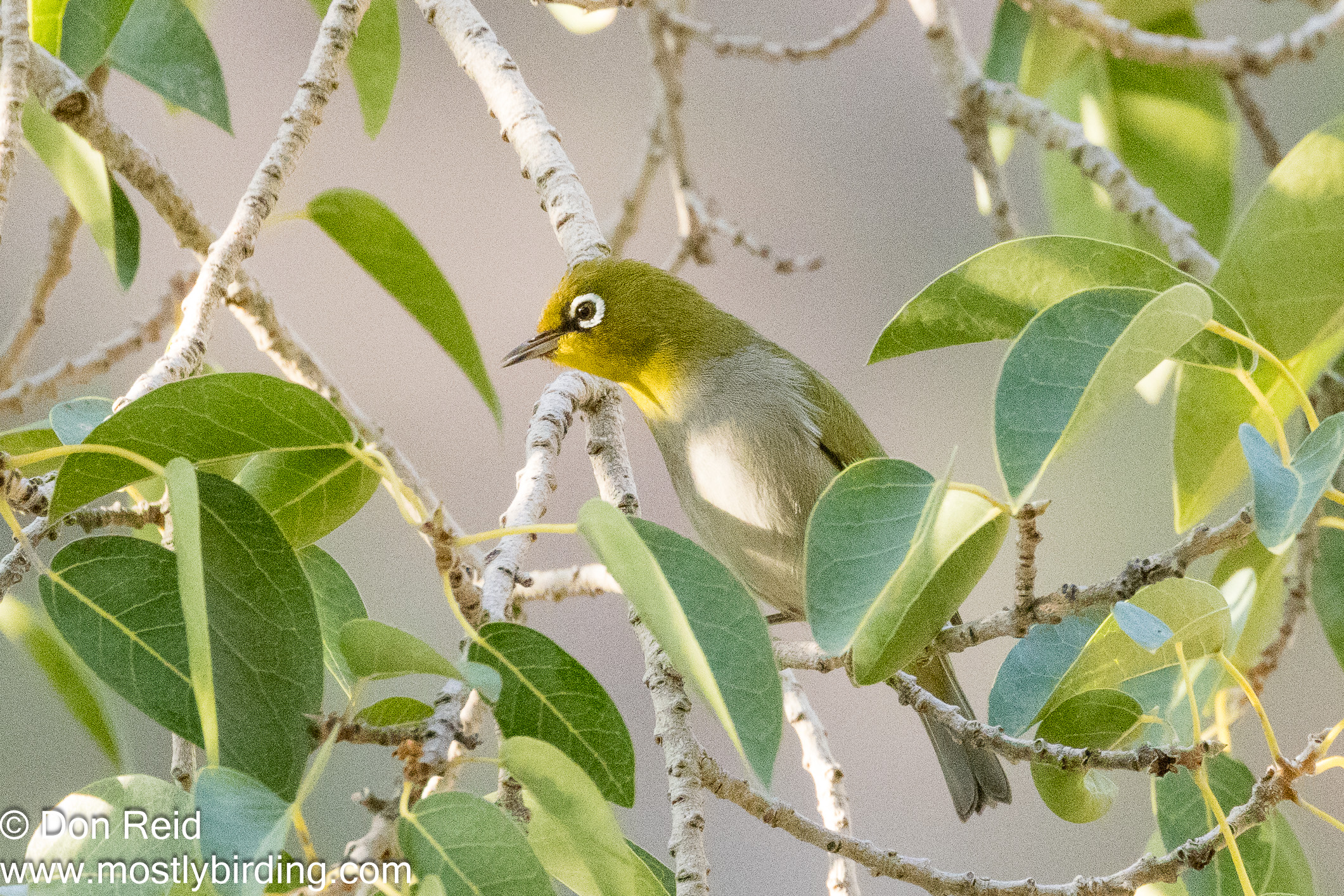
Red-browed Finch Neochmia temporalis, Bright VictoriaSilvereye Zosterops lateralis, Bright Victoria
And if you are a Saffer and think the Silvereye looks familiar, that’s because it is remarkably similar to the White-eyes found in Southern Africa, which carry the same genus name of Zosterops
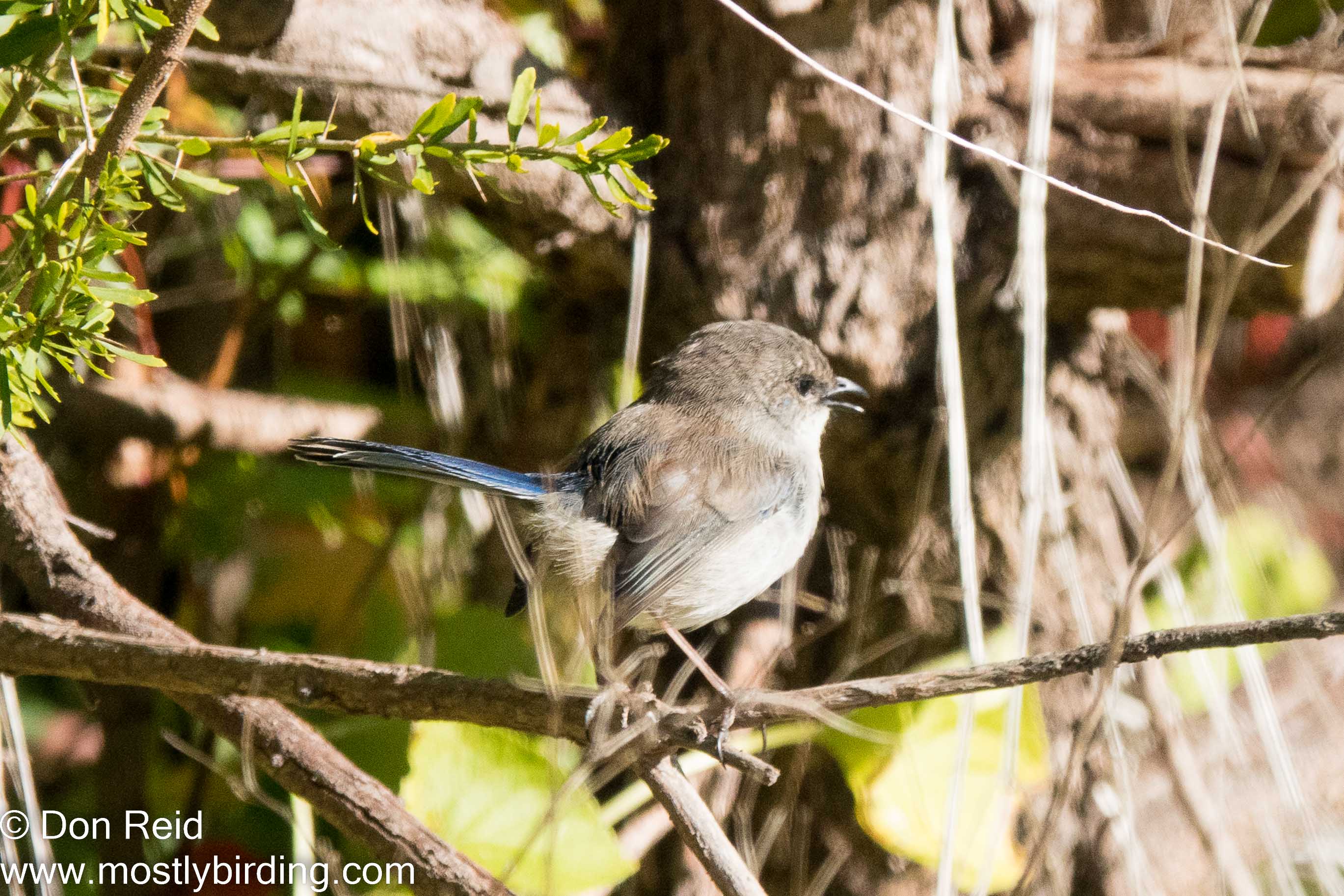
Just for good luck a Superb Fairywren popped up onto an exposed twig for a moment
Superb Fairywren Malurus cyaneus, Bright Victoria
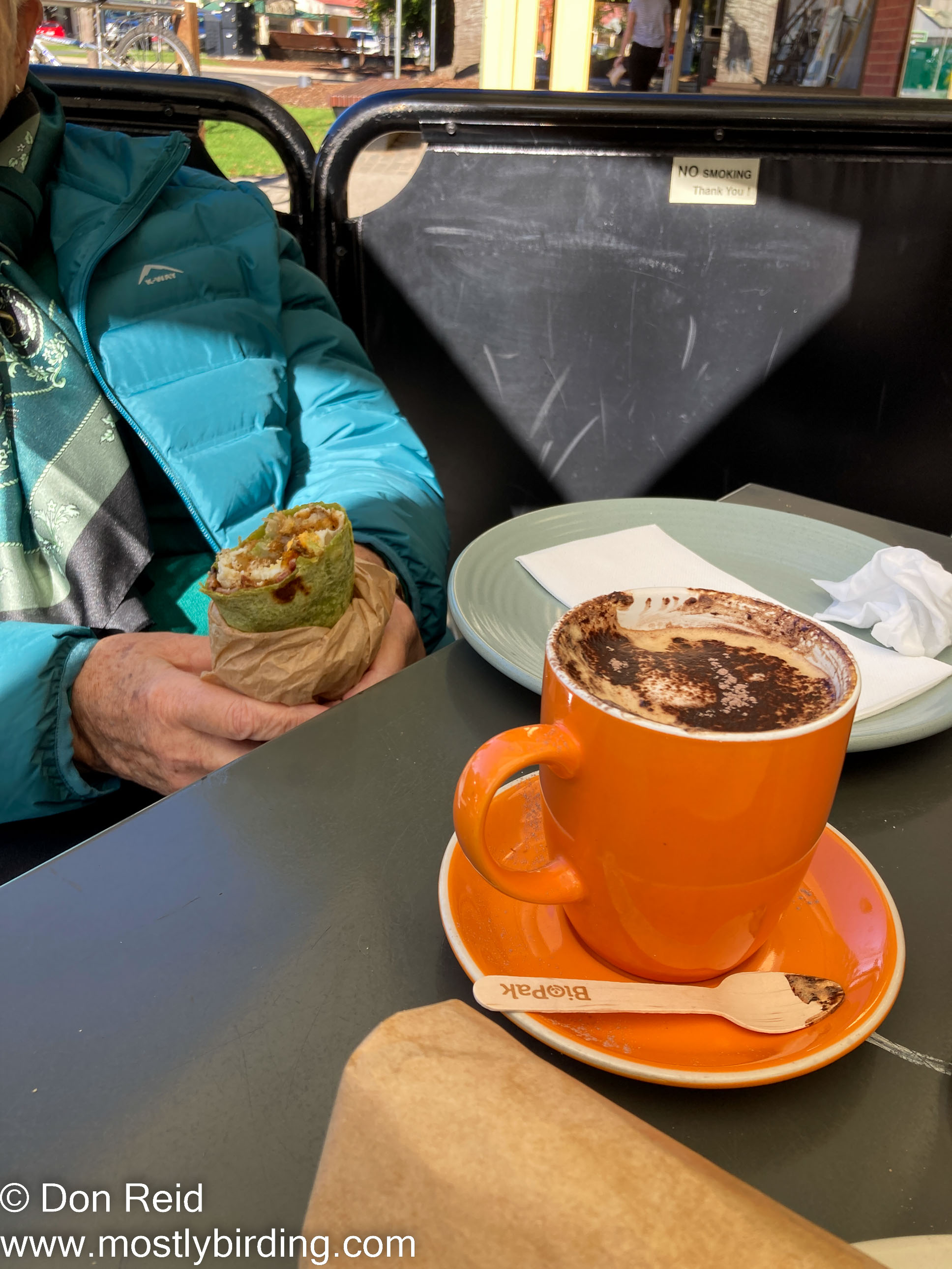
Our motel didn’t offer breakfast, so we got by on rusks and coffee in the room, but were by now feeling decidedly peckish, so we parked in a side street and walked through the village where we came across an ideal looking restaurant with tables set outside on the pavement and ordered their tasty bacon and egg wraps and cappuccinos.
Bright Victoria
That gave us an opportunity to decide what to do for the rest of the day and we chose to not try and cover too much of the surrounds, but to limit ourselves to a trip to a neighbouring area that looked interesting.
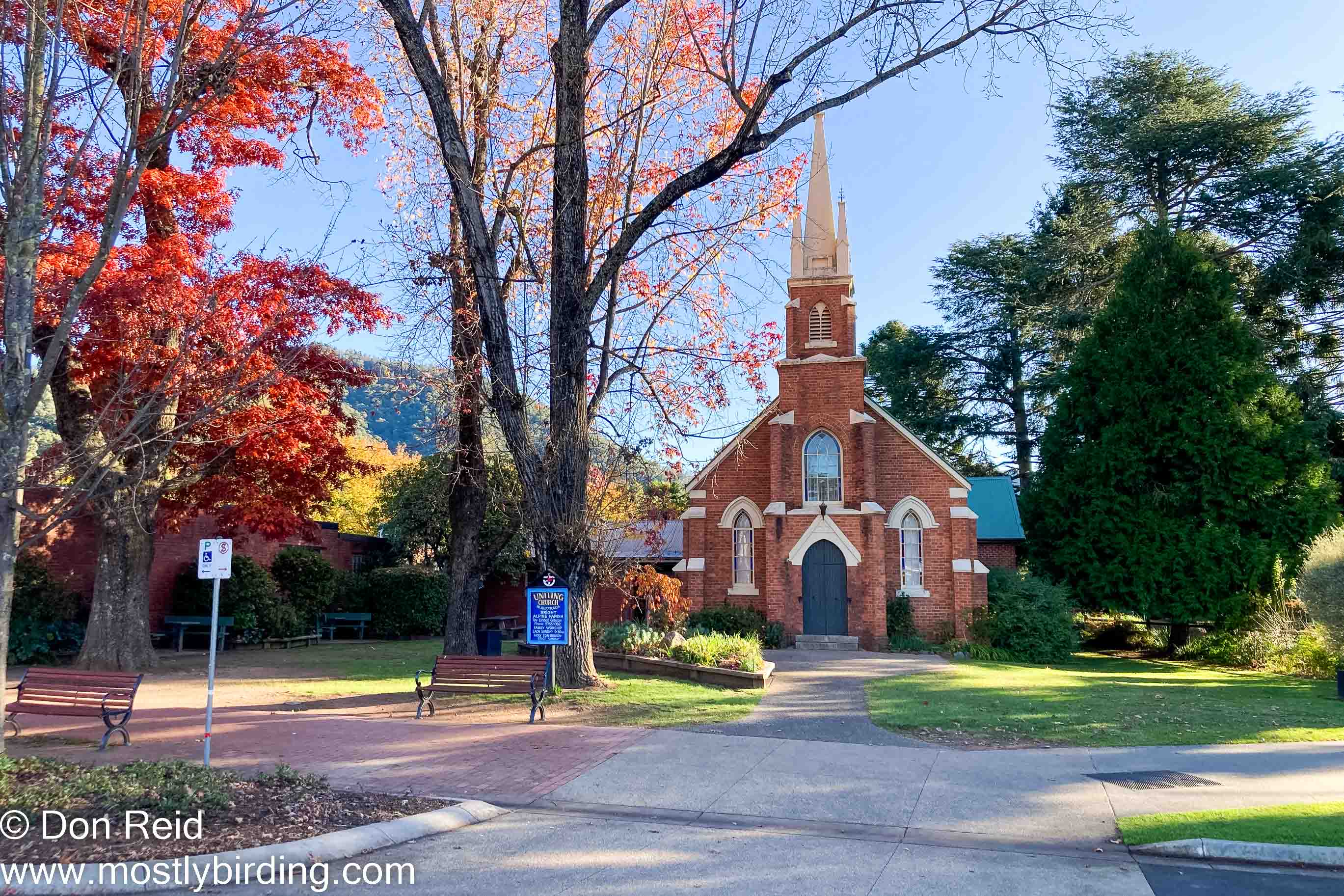
Before setting off again, we walked along the main street, admiring some of the well-kept older buildings and a church surrounded by handsome trees and popping into a couple of the shops for a quick browse (well, that was the idea, but Gerda’s browsing is a slightly lengthier affair which usually has me wandering about outside looking for birds)
Bright Victoria
Wandiligong
With most of the afternoon at our disposal, we drove around Bright a bit more, then visited the tourist info centre where a very helpful and friendly lady marked various spots on the map for us to explore.
One of them was Wandiligong, an old village where gold was mined in the mid 1800’s, which we thought was worth a visit and was literally just “down the road” from Bright – an easy 6 kms along country roads.
What we found was not a small village as such, but rather a sprinkling of houses and other buildings with a lot of character and heritage spread over an attractive landscape of forests and mountain ranges, set in a picturesque valley
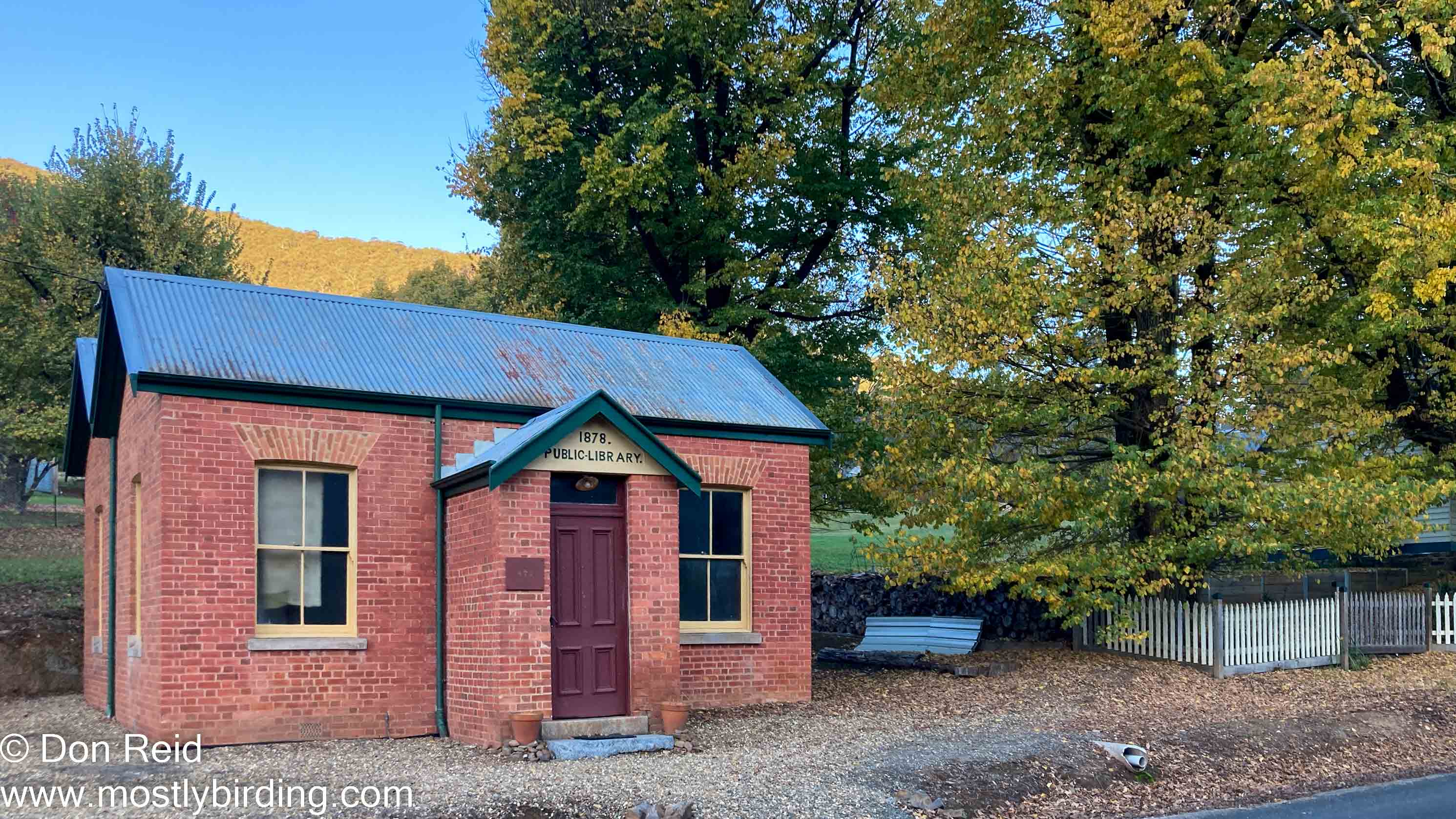
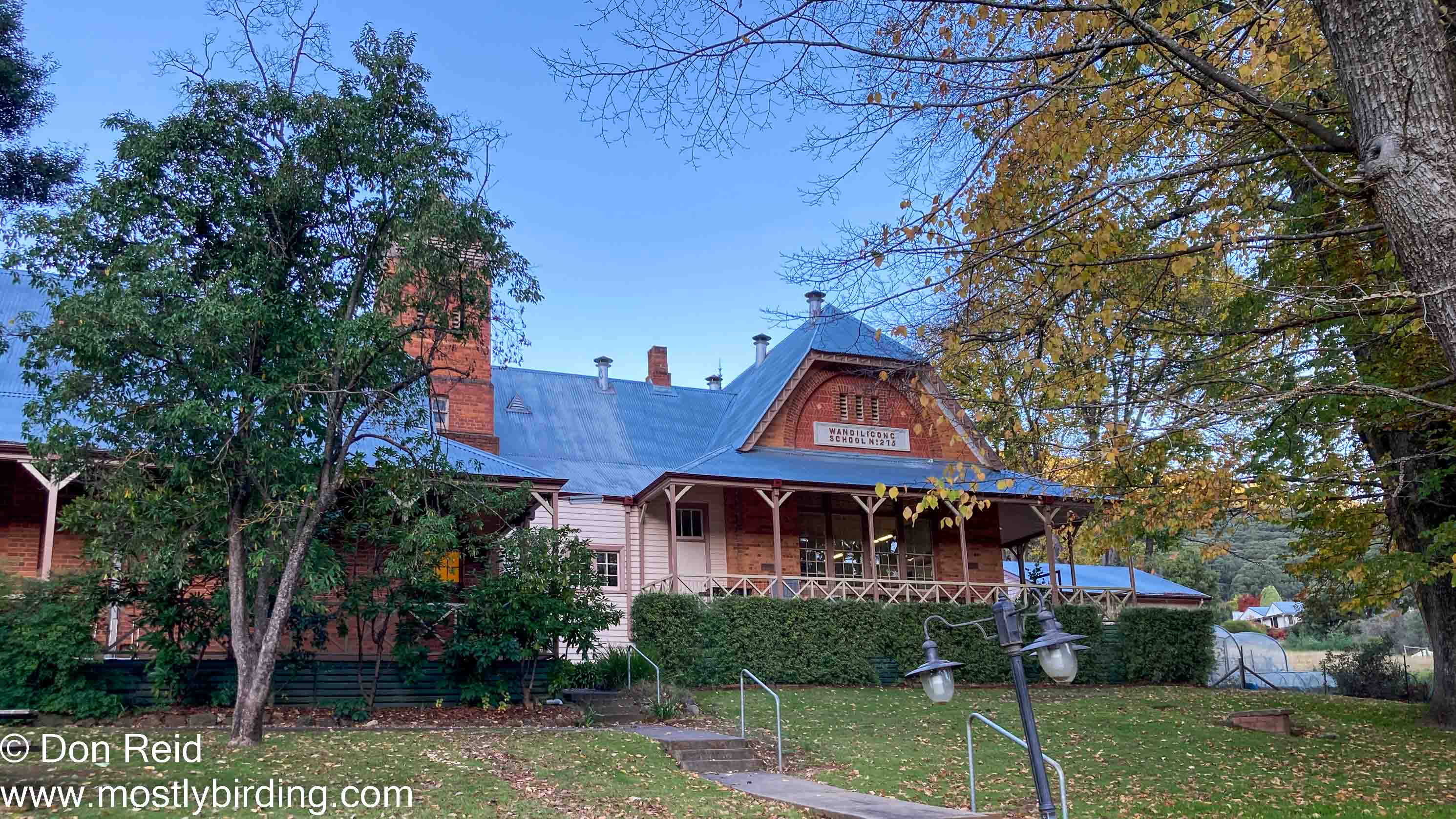
The whole town is now registered with the National Trust as a classified landscape and features historical buildings such as the Manchester Unity public hall (built in 1874), the general store, several churches and a number of quaint cottages. We spent a very pleasant hour or more meandering up and down the roads through the area, stopping to photograph some of the buildings that caught our eye.
The old Public Library in Wandiligong Wandiligong Public HallThe Primary school dates back to 1870Wandiligong Primary SchoolAn old church in Wandiligong, Victoria
It was heading to late afternoon so we returned to our Motel in Bright for a bit of relaxation at the end of an interesting day
Mount Beauty
The next day dawned sunny and we followed a similar pattern – after a light breakfast self-caterd in our room we heade back along the road to Harrietville, then turned off towards Mount Beauty. The road took us through yet another seriously twisty pass which topped out at 895 metres, which is where we had our own tea and a muffin, while enjoying the view down to the valley below and across to distant mountains topped with snow.
Once we had descended into the valley we entered Mount Beauty – driving around we were a little disappointed as it did not seem to live up to its name and came across as just another town. Driving around the town, it seemed to be ‘closed for lunch’ so we stopped at the info centre which suggested ‘The Bakery’ may be open. We had not seen it so followed their directions and found it tucked away in a side street – their pie and salad was just what we needed and the service friendly so things picked up again
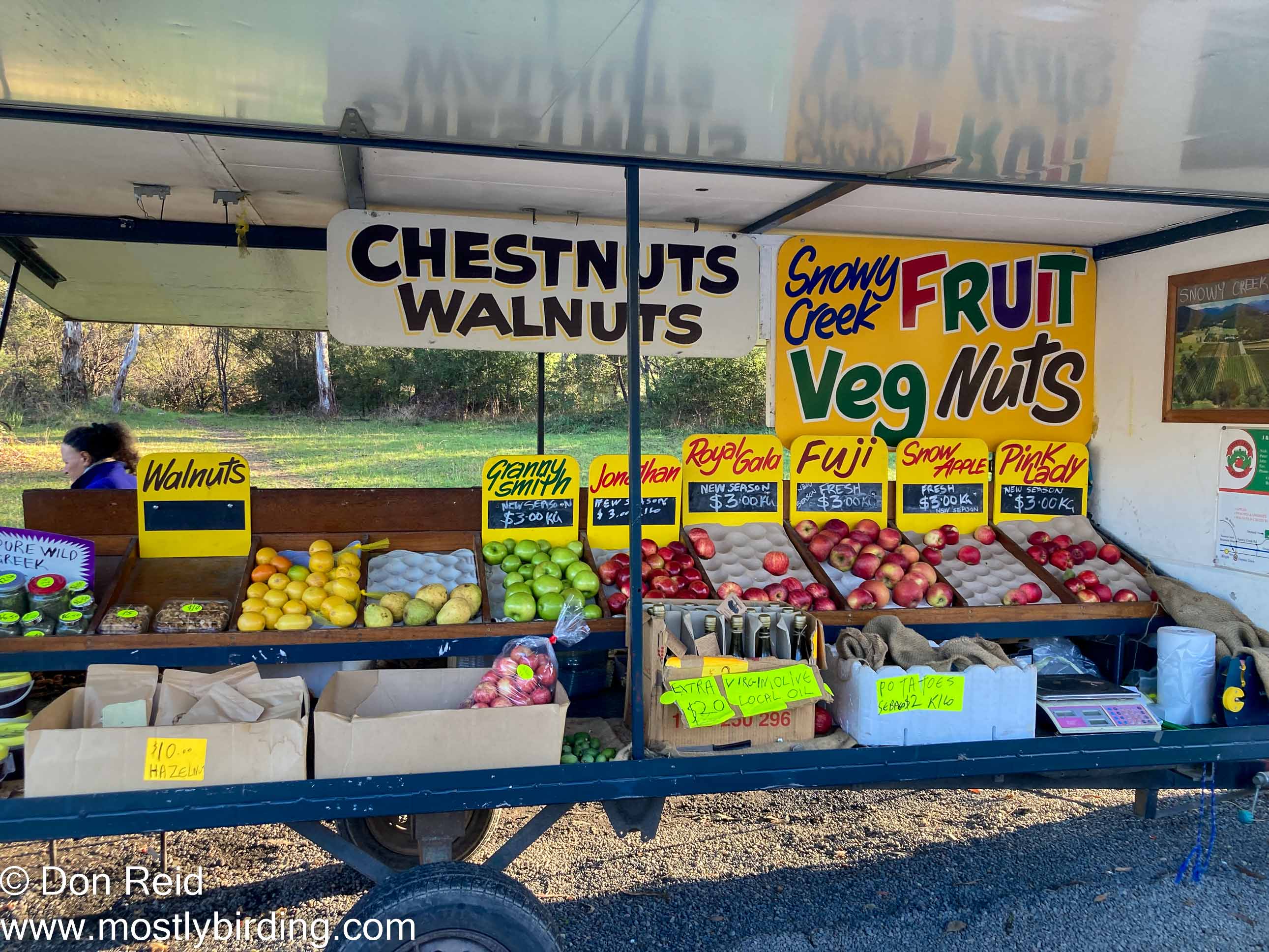
There was not much else to see so we headed back up the pass and down the other side towards Bright. At the T-junction with the main road a roadside stall had been set up – the first time we had come across such a thing in Australia – so we stopped to have a look at the farm produce on offer. The lady running the stall kept up a continuous stream of conversation, some of which we actually understood, and she offered us samples of strange (to us) fruit to taste. In the end we played safe and bought a bag of walnuts from her.
Roadside stall, Bright VictoriaRoadside stall, Bright Victoria
Canyon Trail
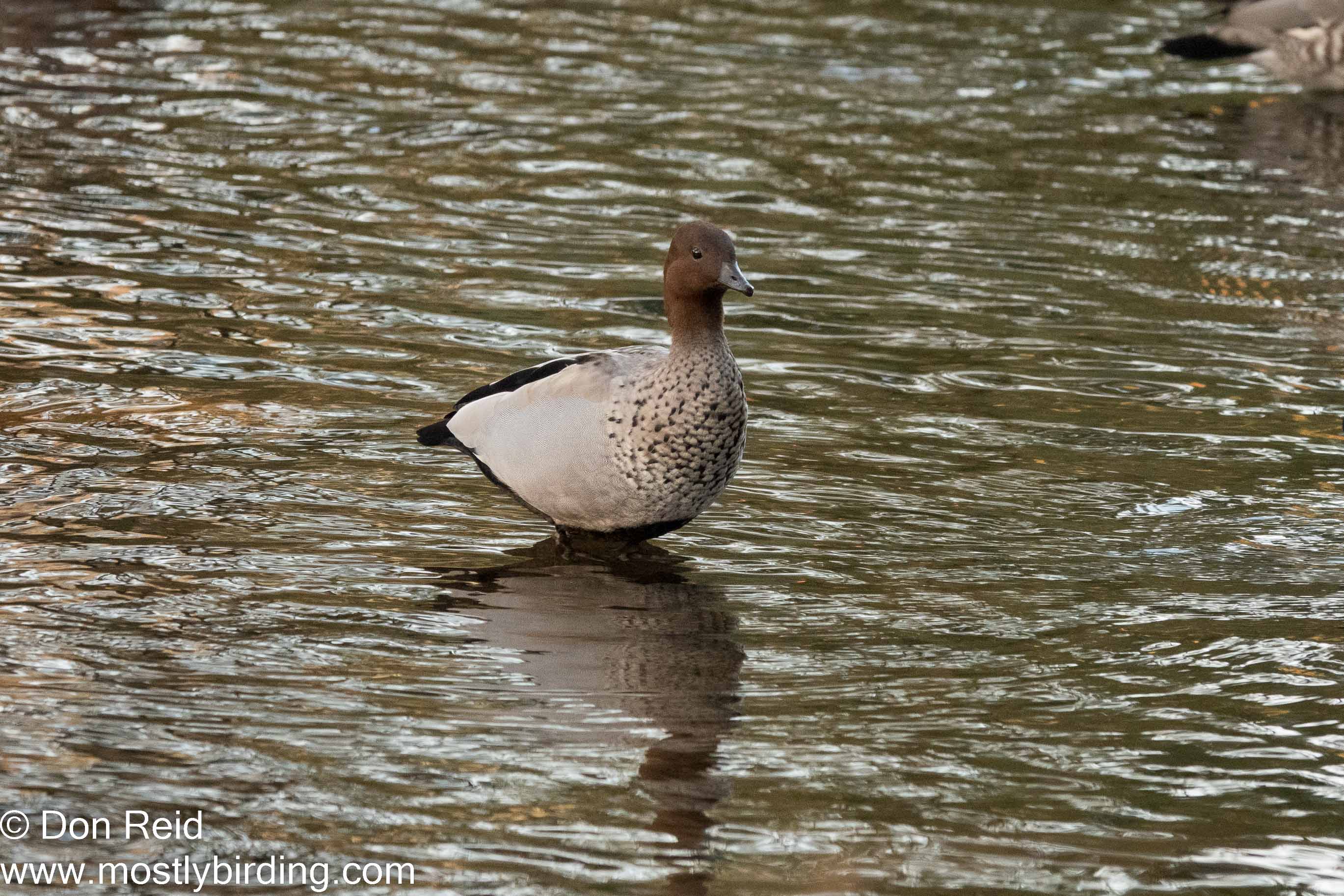
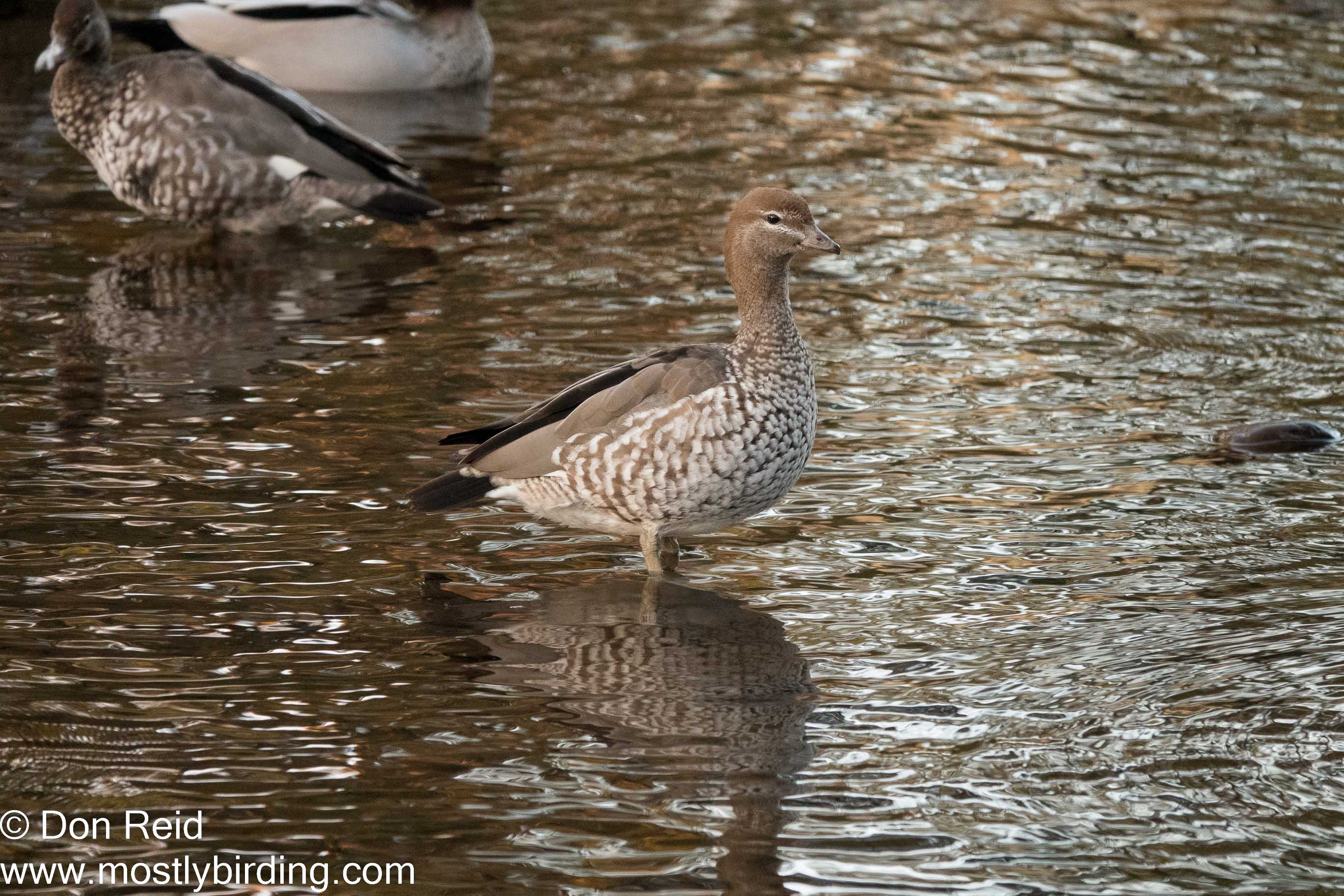
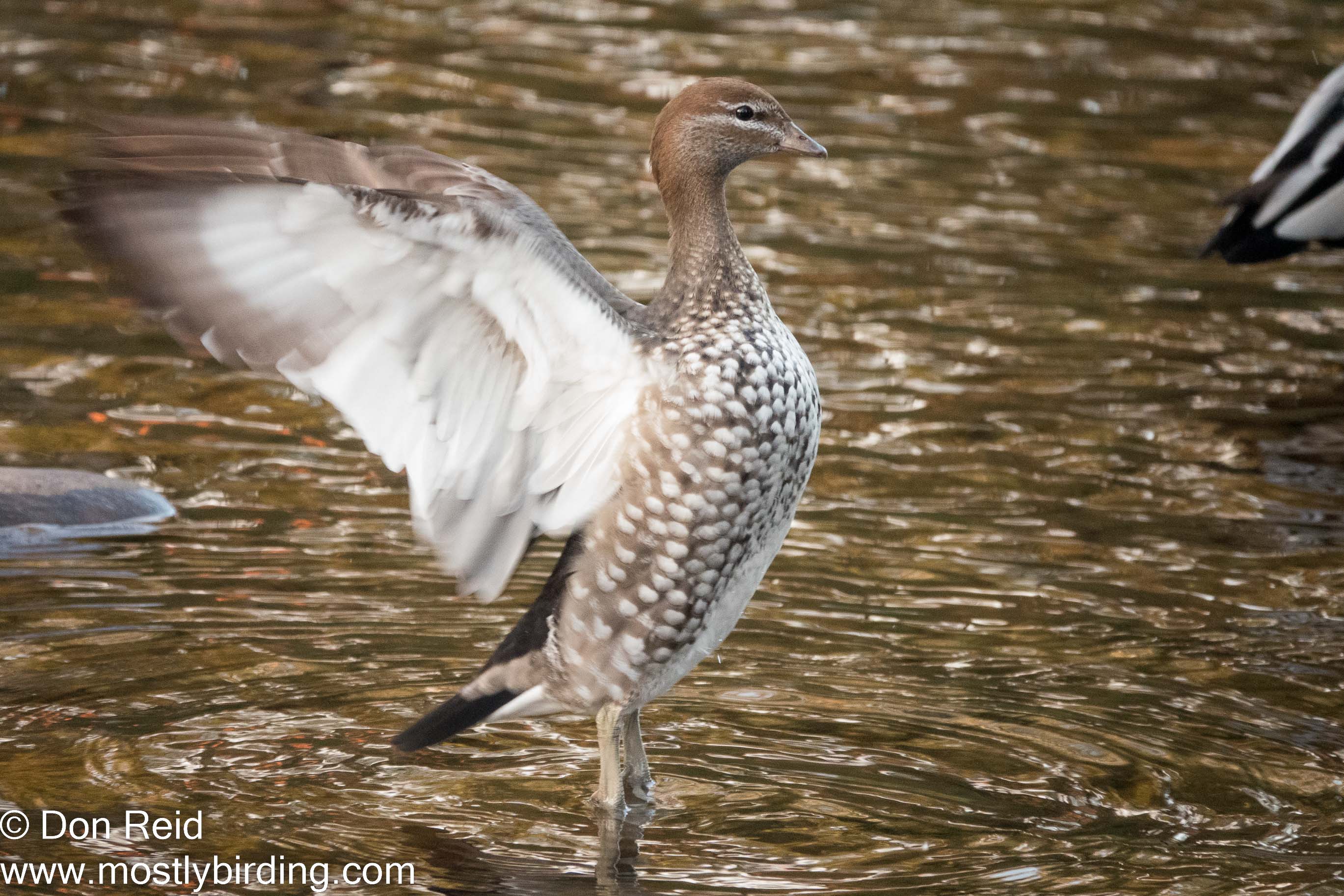
There was still time for another walk along the Canyon trail before the sun disappeared. There were many ducks on the river and the late afternoon shaded light made for some interesting photos.
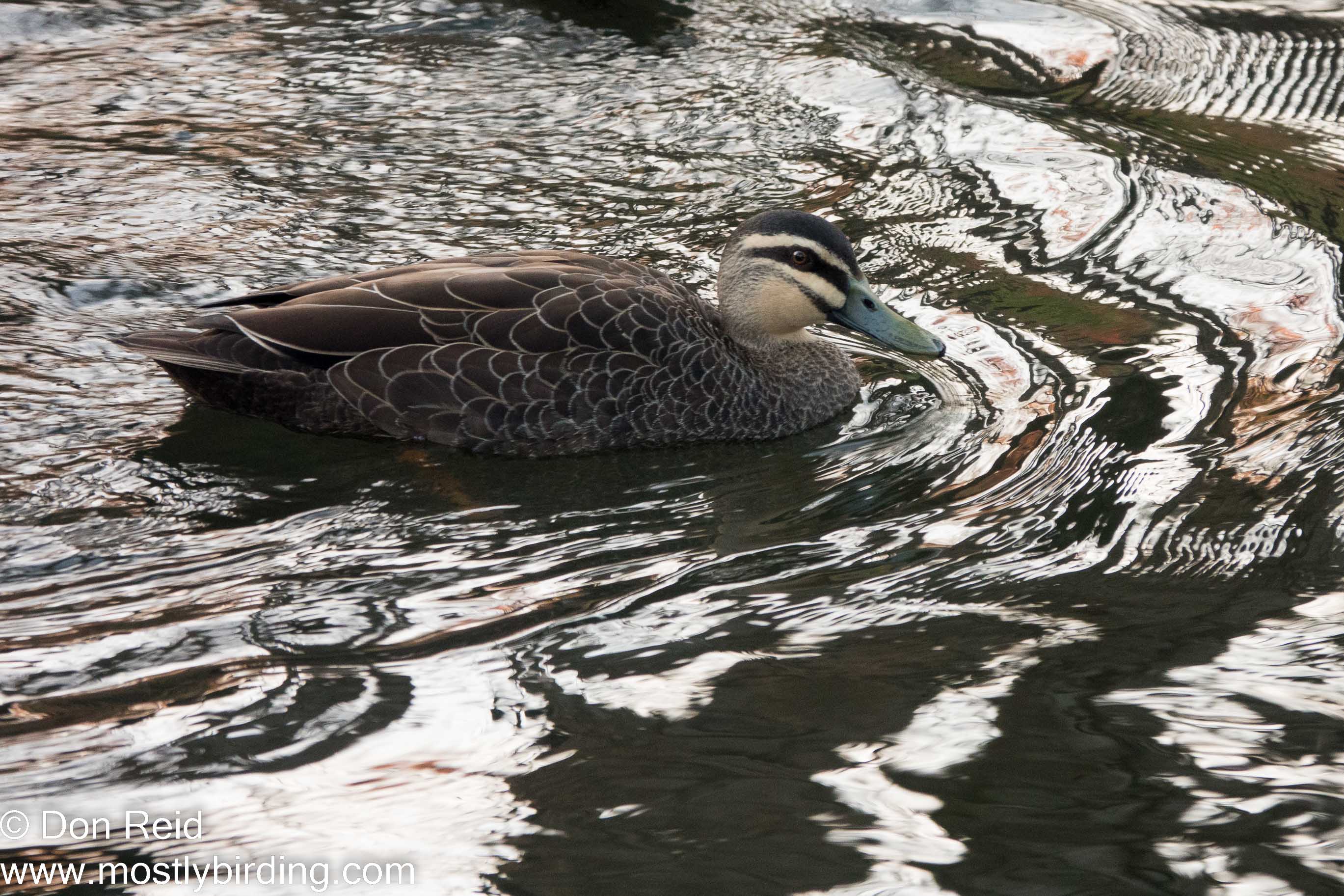
Canyon Walk, Bright VictoriaPacific Black Duck Anas superciliosa, Bright VictoriaManed Duck Chenonetta jubata (Male), Bright VictoriaManed Duck Chenonetta jubata (Female), Bright VictoriaManed Duck Chenonetta jubata (Female), Bright Victoria
That brought another most pleasant day in Bright to a close. I will be adding a further instalment on our road trip, covering the trip back to Sale – not nearly as epic as the initial trip to Bright but with a few interesting ‘sightings’, not necessarily birding related …
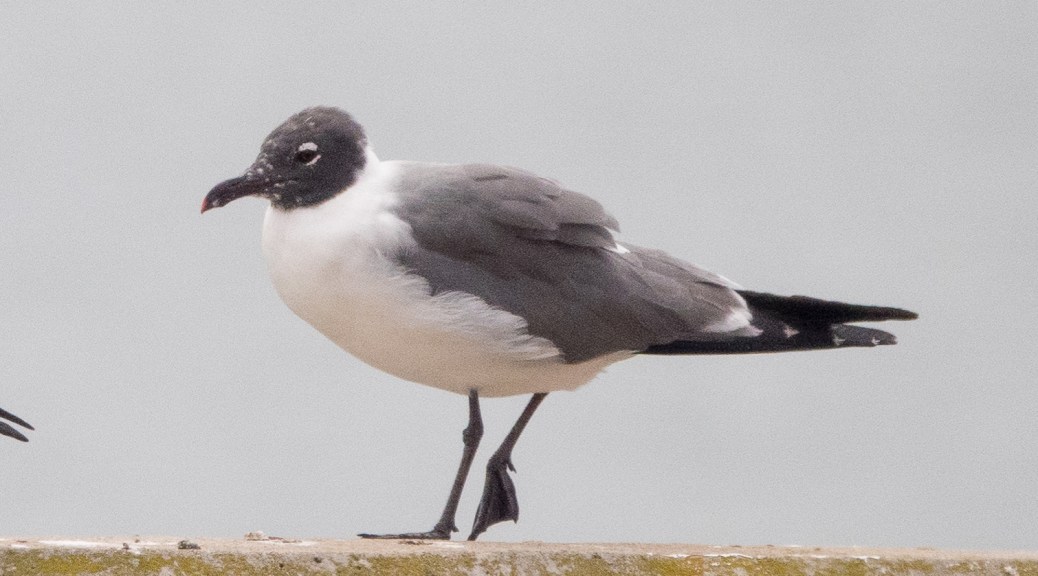
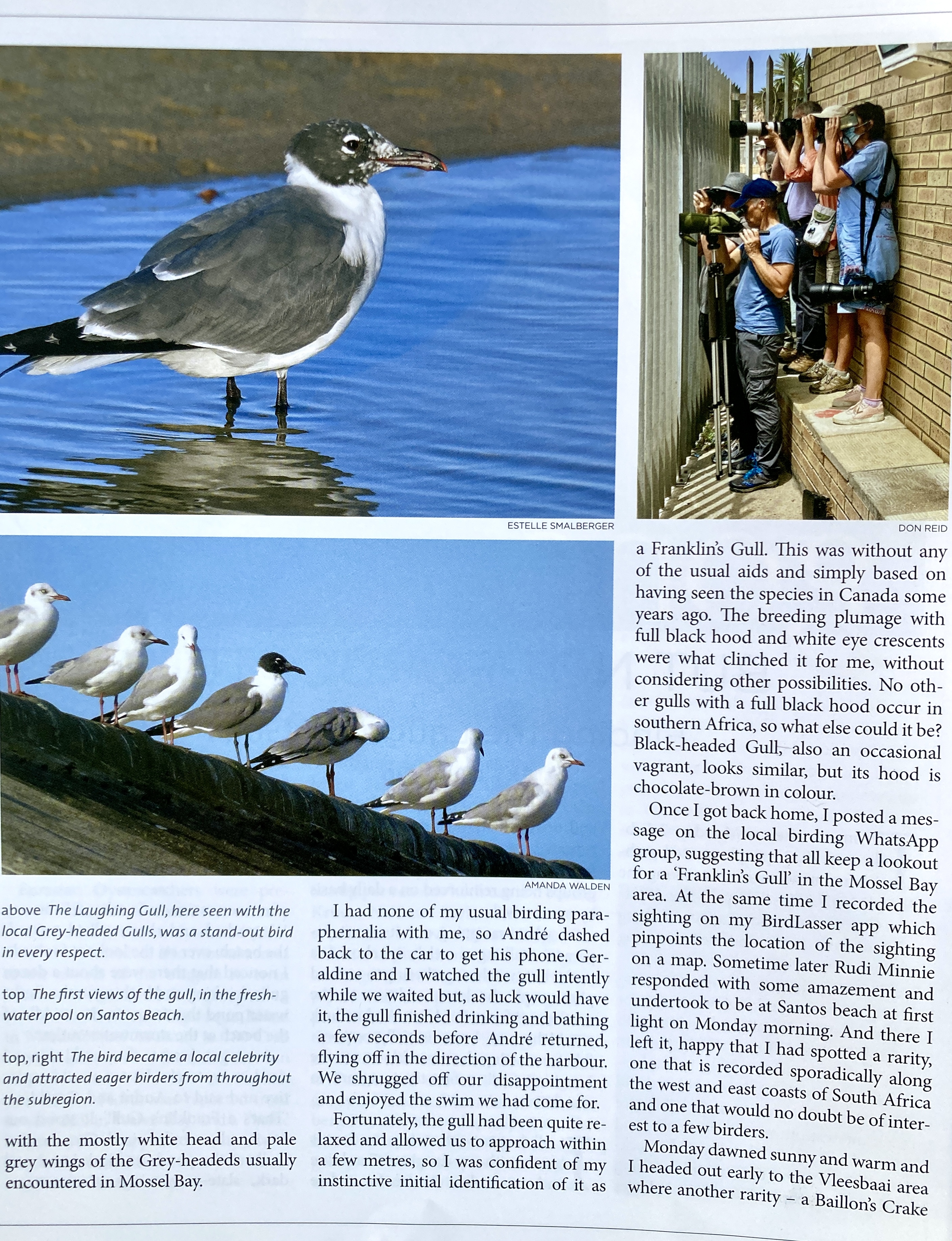
Earlier in the year I wrote about my “Once in a birder’s lifetime” experience of finding a new species for the Southern African region, namely a very far off course Laughing Gull which stayed in Mossel Bay for a week before disappearing again.
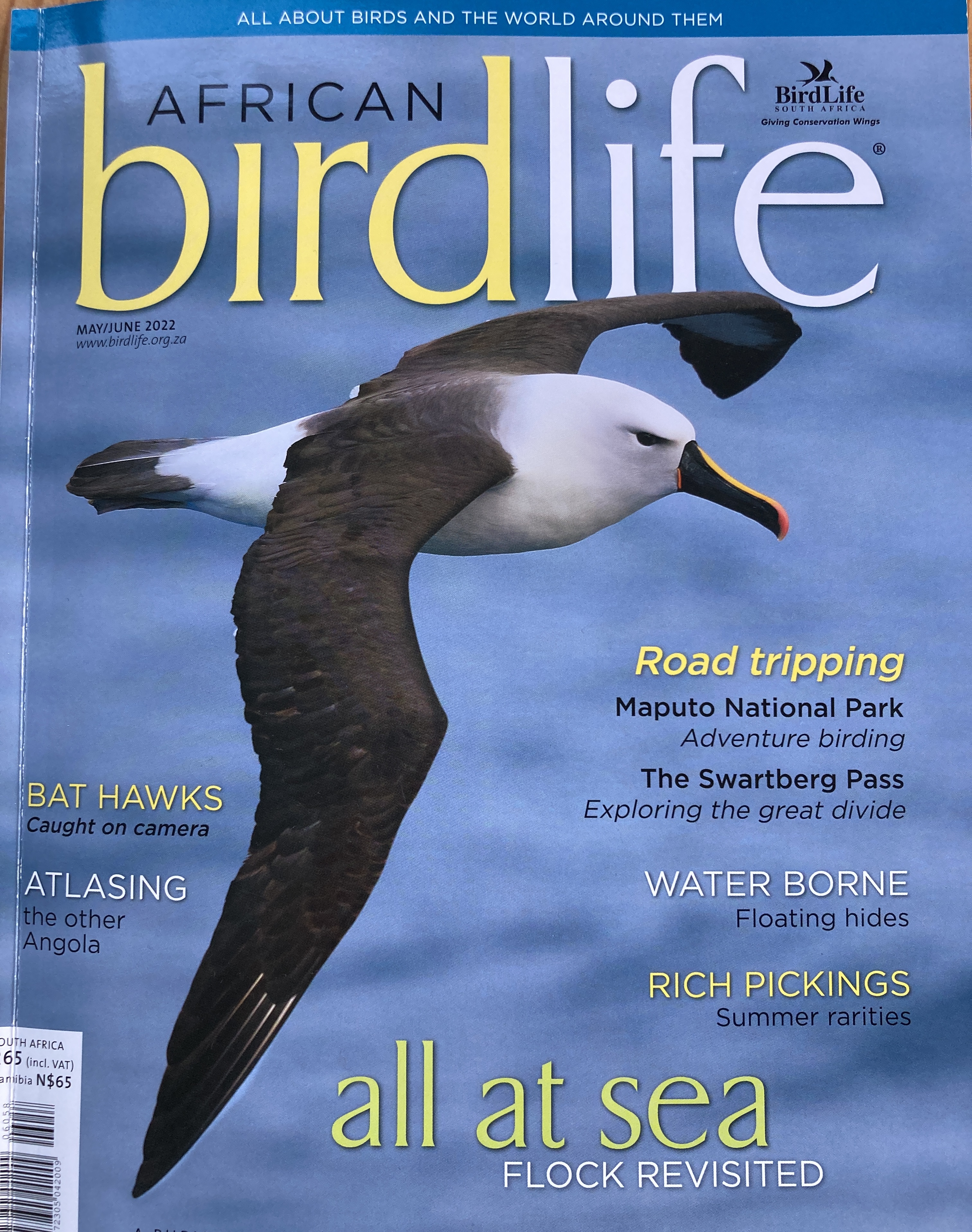
I’m pleased to say that my post, with some tweaks, has been recently published as an article in the May/June 2022 edition of African Birdlife magazine, reproduced below –
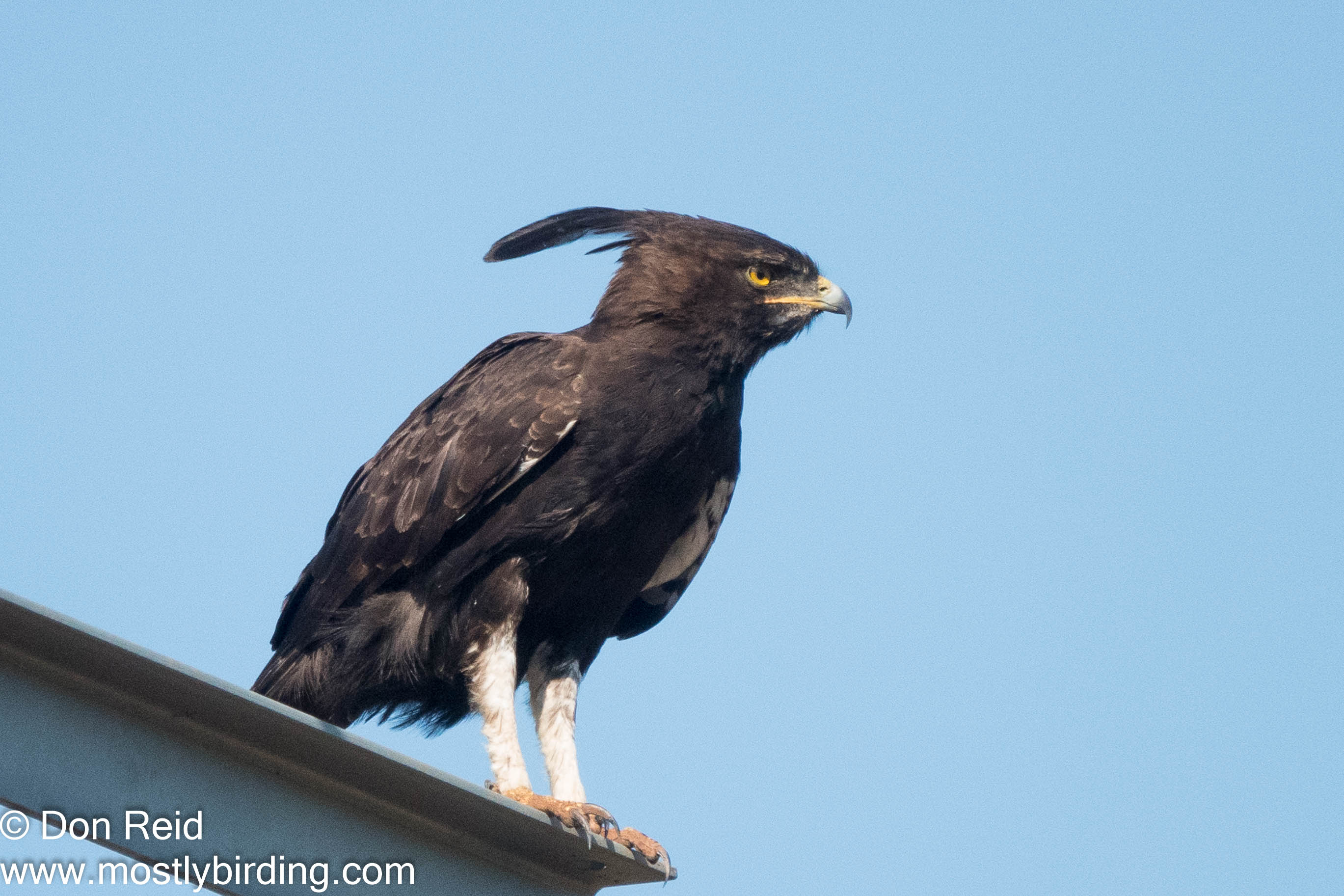
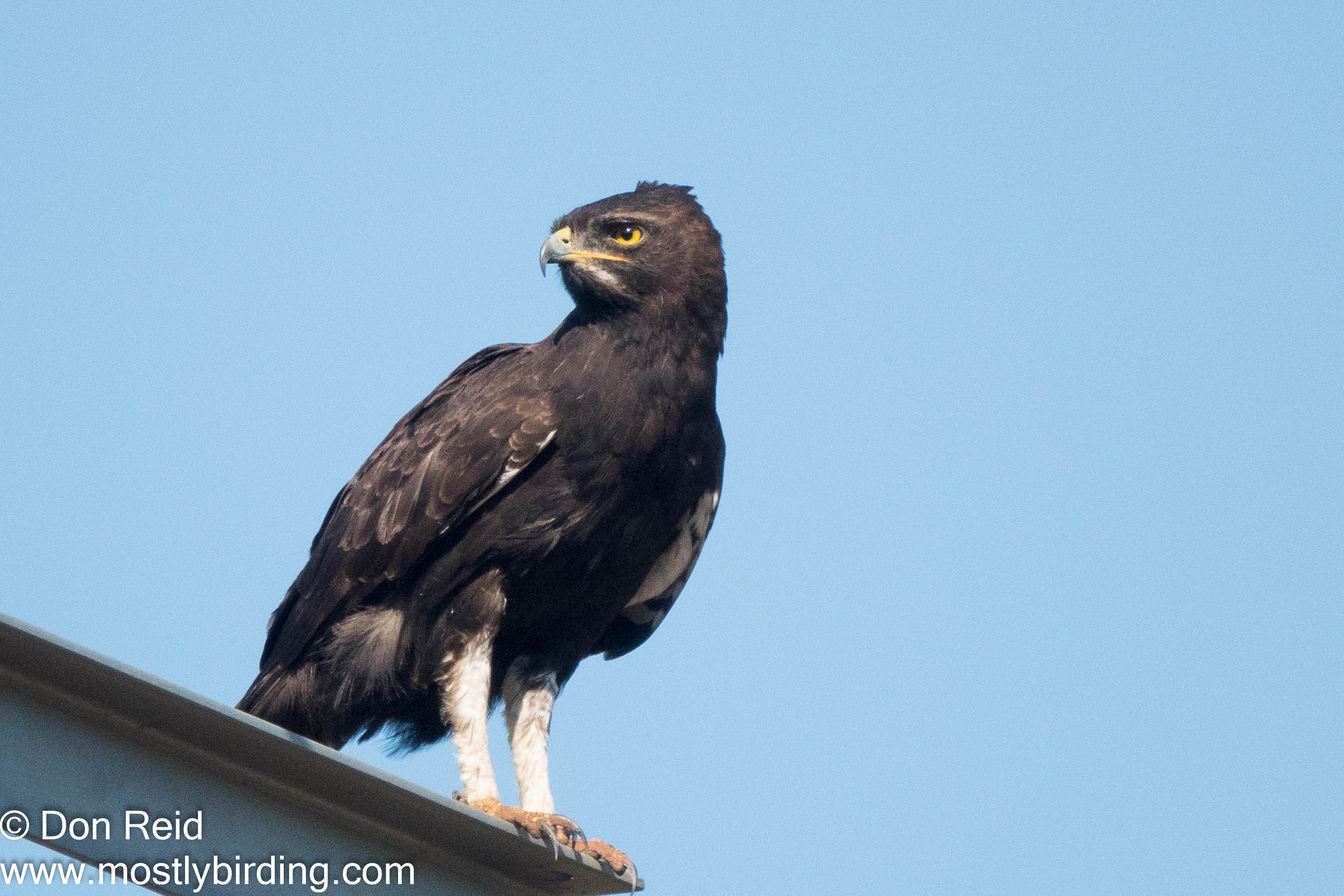
While atlasing not far from Pretoria on the 1st of April this year, I was pleasantly surprised to come across this handsome Long-crested Eagle perched on a utility pole at the roadside. It is always challenging to photograph a raptor perched high up as this one was, with a light background – far better to have them perched closer to eye level, but that would be too much to hope for.
In this case I was on a fairly busy regional road when I saw the eagle from a distance and slowed down as much as the traffic would allow, then pulled off onto the verge at a spot almost opposite where the eagle was perched and where the grass was not so long that it could be concealing puncture-producing sharp objects – just another of the hazards faced by atlasers.
Not wanting to spook the eagle by getting out of my car, I carefully lowered the driver’s window and prepared my camera for a few shots – I learnt a long time ago that one of the most important settings when photographing birds in the field is the exposure compensation.
Both the bird’s colouring and the amount of backlight need to be taken into consideration and, without getting too technical, I set the exposure at 1 full stop over-exposure to take into account the dark colouring of the eagle and the fairly bright background of blue sky.
I took a few shots then turned the car around and stopped on the same side as where the eagle was perched and very carefully got out, remaining partially concealed by the car. This worked and I was able to get closer shots but as soon as I moved from behind the car the eagle flew off, only to perch on the next pole.
This next image may look like a “dud” because the eye is not sharp and bright, but in fact it shows the “third eyelid” that many birds and especially raptors have – called a nictitating membrane. Unlike regular eyelids, it opens and closes horizontally across the eye and protects the eye when catching prey at speed and other hazards. It also helps keep the eye clean and moist – important when you are relying almost solely on your sharp vision for survival
I also took a couple of video clips including this one which shows the eagle seemingly watching a passing car go by – there is just something about large raptors that make them a favourite photographic subject – those eyes, that presence never fail to produce a dramatic image.
A fairly common resident of Southern Africa, the Long-crested Eagle is a personal favourite and we have stopped many times to view one at roadside, particularly in areas where pine and other plantations are the dominant habitat.
When perched it is unmistakeable with its long crest and dark colouring. In flight it is a tad more difficult but the large white wing patches and barred tail separate it from all other large raptors, although looking up at a bright sky and trying to see those sort of details is never easy.
Where to find it
The Long-crested Eagle has a scattered distribution across the eastern parts of southern Africa with concentrations along the escarpment of Limpopo Province and Mpumalanga and the KwaZulu-Natal Midlands. They occur as far south as the Garden Route area of the southern Cape coast
SABAP2 Distribution Map for Long-crested Eagle
My first sighting was in 1994 on a farm near Vryheid in KwaZulu-Natal.































































 Mostly Birding