Franschhoek, a small town some 90 minutes from Cape Town, is well known as the historical home of the French Huguenots, who settled in the area and turned it into a little piece of France.
We have been spending the last few days here at one of the many guest farms, surrounded by bare, gnarly vineyards in their mid-winter form and venturing out to explore the beautiful valley which lies between towering mountains.
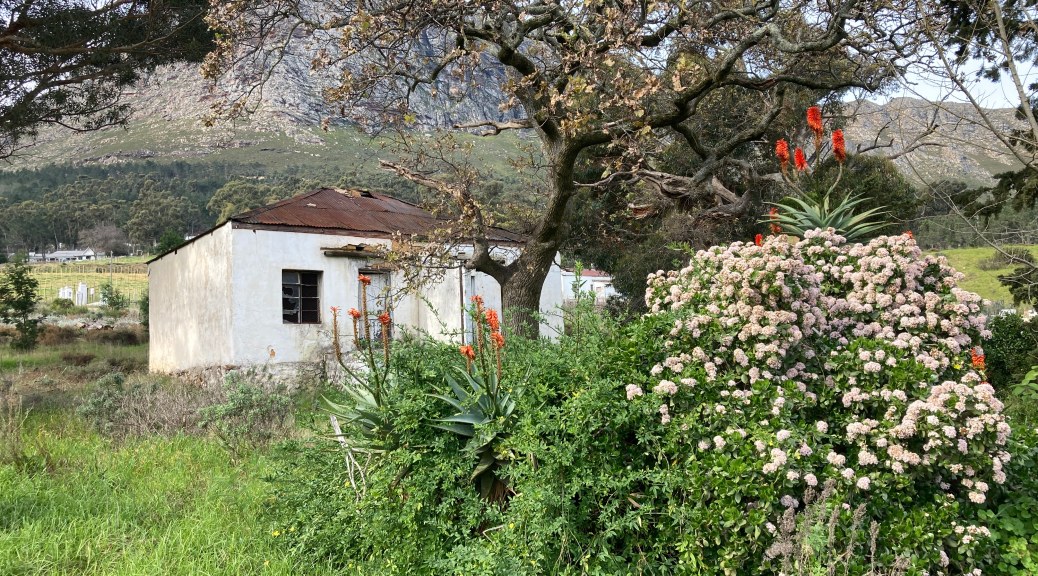
There are stunning landscapes around every corner and some of the best preserved Cape Dutch architecture in the Western Cape, but what really caught my eye was this abandoned cottage, with the remnants of a small garden still visible, just a stone’s throw away from the impressive Huguenot Monument
Abandoned buildings, especially such as this, always set my mind to wondering about the people who lived there and called it home, perhaps several different families over many decades, far removed from the elegant homes that are a feature of modern day Franschhoek
Birding comes in different forms, sometimes challenging, requiring a dedicated effort, extendedtravel, perhaps some serious physical exertion, often in the face of less than favourable weather conditions.
However, it’s not always that way – some of the most relaxing and enjoyable birding is to be found in your immediate surroundings, whether at home or a holiday destination.
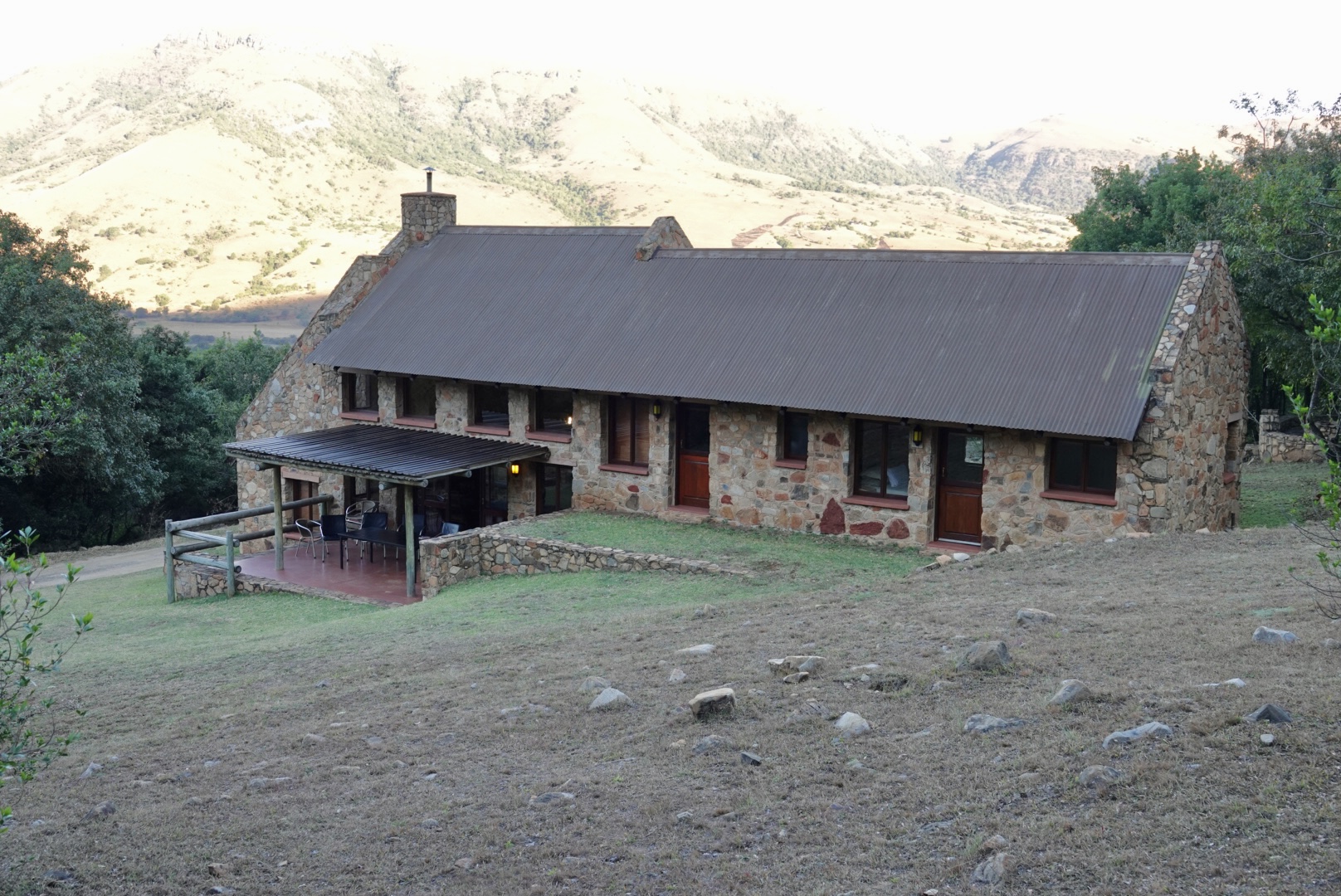
Which is precisely what we experienced during our recent visit to Verlorenkloof, a country resort that I have written about on a few occasions and one of our all-time favourite places to spend a breakaway week. We were fortunate to be invited by Koos and Rianda to join them in Croft No 3 (shown below) for the last week in May.
Croft No 3 Verlorenkloof
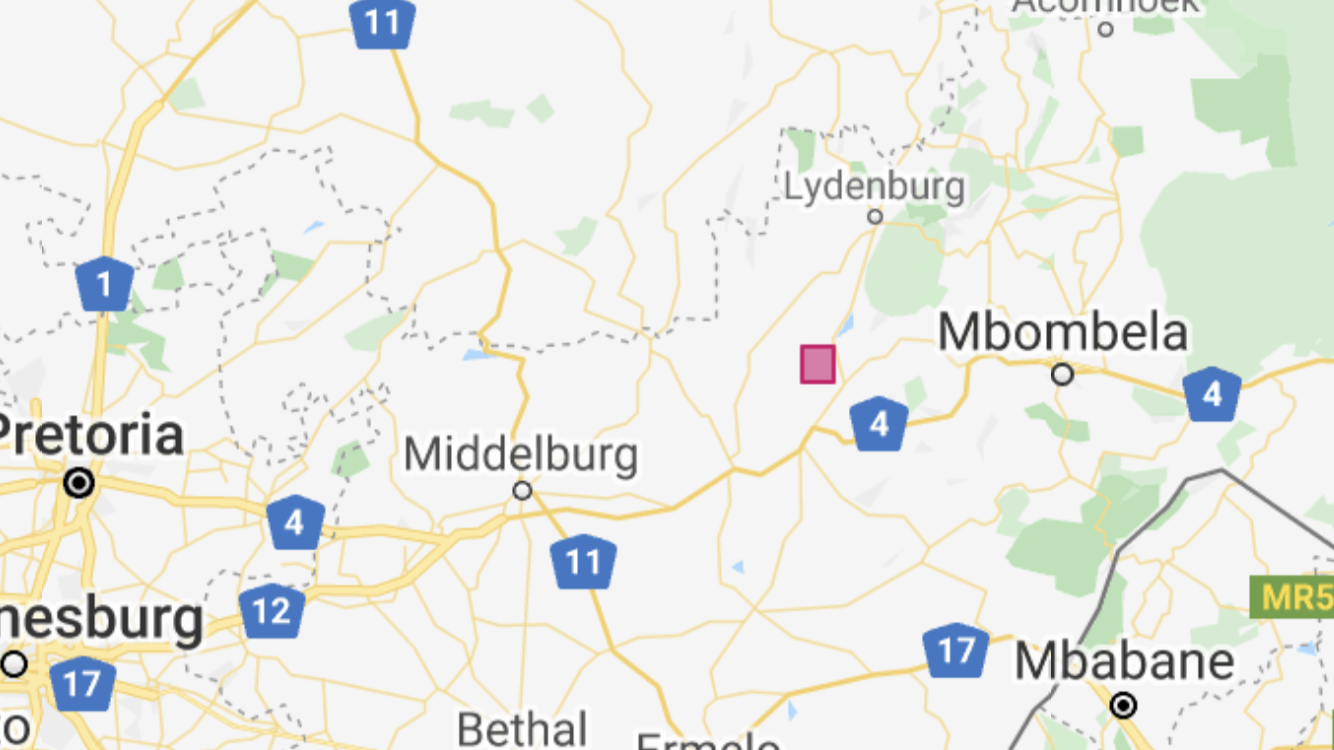
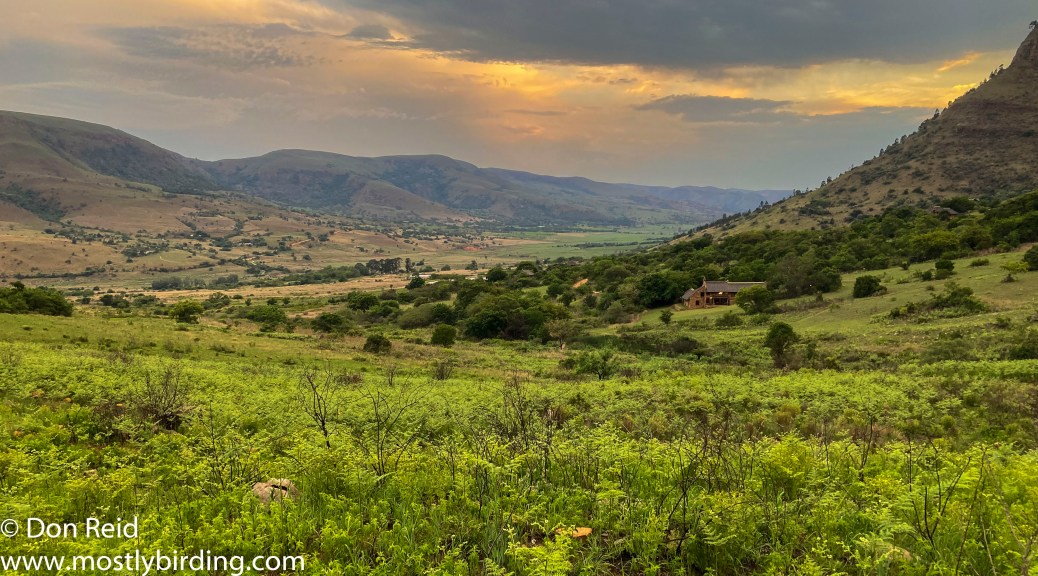
For those who don’t yet know, Verlorenkloof lies east of Dullstroom, but on the lower side of the escarpment which towers above the fertile valley in which the resort is situated. The red square on the map indicates the position of the pentad which includes Verlorenkloof resort.
The birding at Verlorenkloof is always exceptional, with my personal tally of species recorded in the area, after many visits over the last twelve years, standing at 195, so the expectations were high. These hopes were of course tempered by the knowledge that the last week in May is often a quiet time for birding, with none of the summer migrants present and many of the remaining species not in calling or displaying mode.
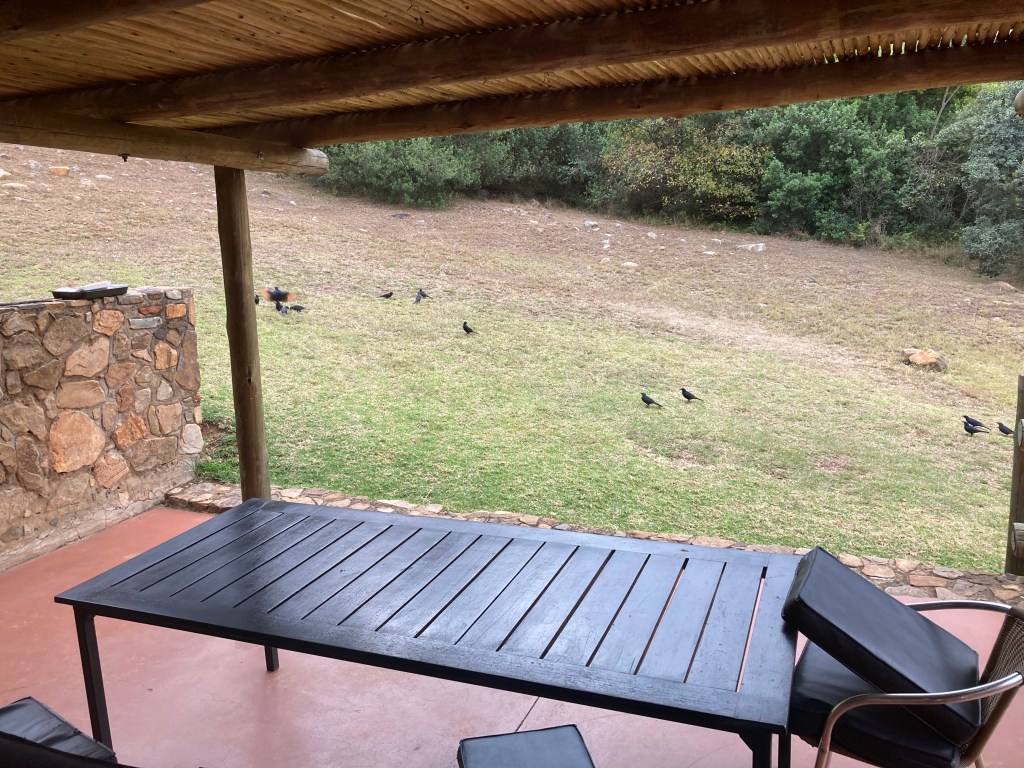
Oddly enough, for the first 3 or 4 days of our stay, the area around the Croft was very quiet with far fewer birds than we are used to, but over the last two days of our stay, following some light rain, the scene changed completely. Suddenly all of the usual visitors were there, searching the lawn for edible insects, worms and the like.
I was fascinated by the variety of mostly “ordinary” birds and their antics – each one displaying its own way of “raiding the lawn” and finding a tasty morsel while showing unique character traits and interacting with the other bird species doing more or less the same thing.
The ultimate “I’m not going to bother anyone” bird – demurely pottering about, occasionally finding something to its taste then carrying on as if it was nothing special
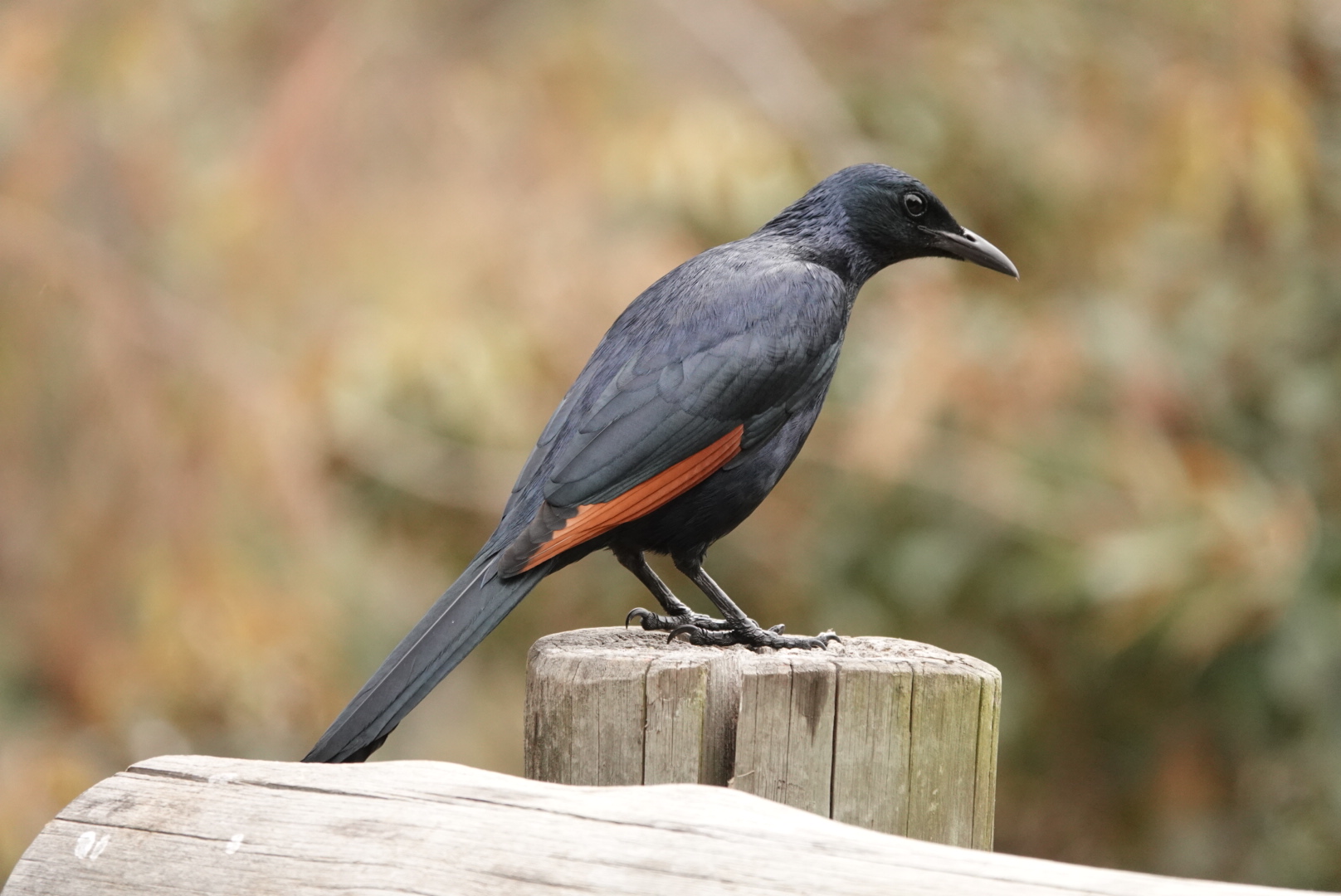
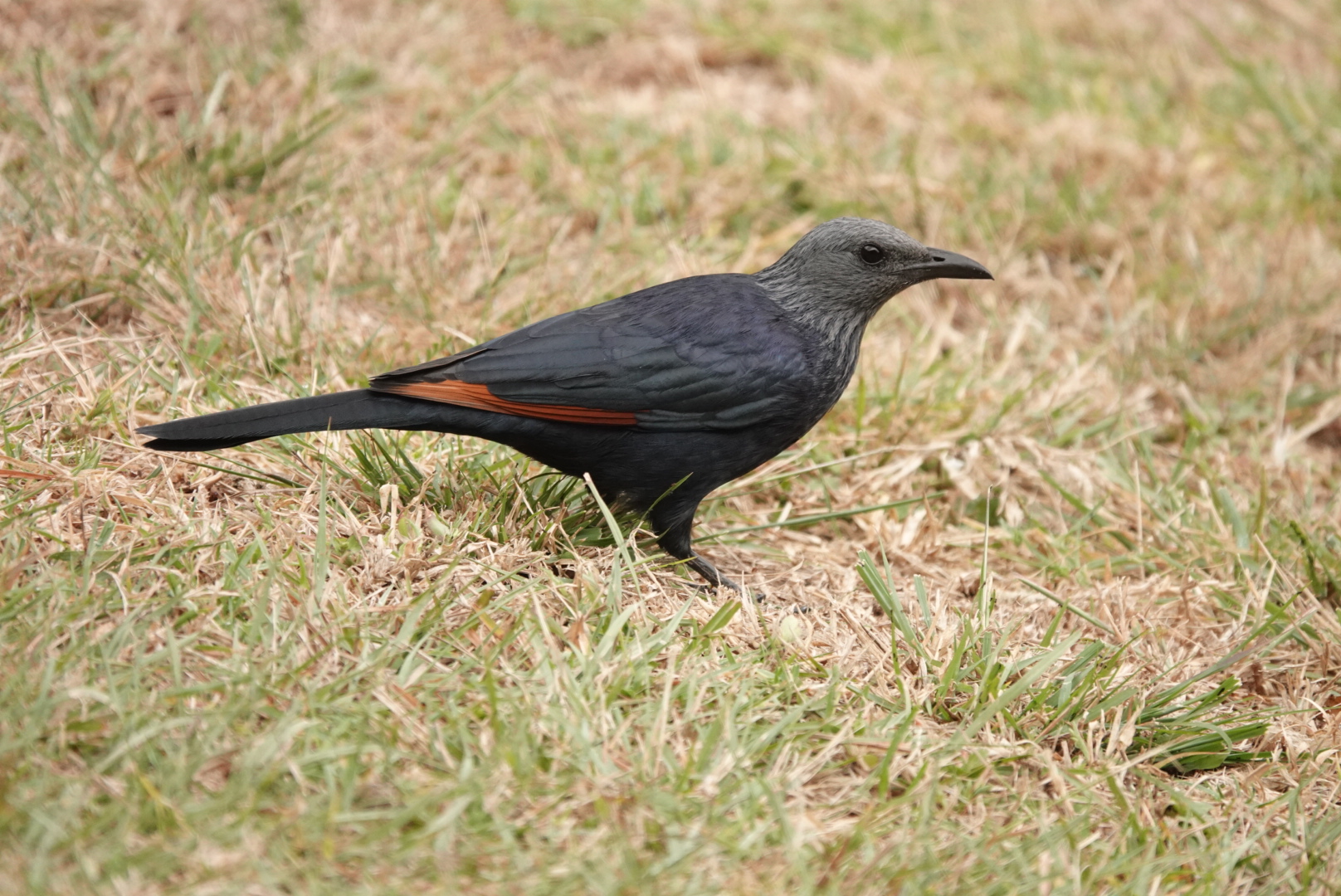
Enter the Darth Vader of the bird world – the menacing, glaring Red-winged Starling….. and they work in gangs, daring others to get in their way, descending en masse to grass level and prodding aggressively at the grass in search of a victim. But only after perching on the railing post in intimidating fashion.
The gang takes over ….
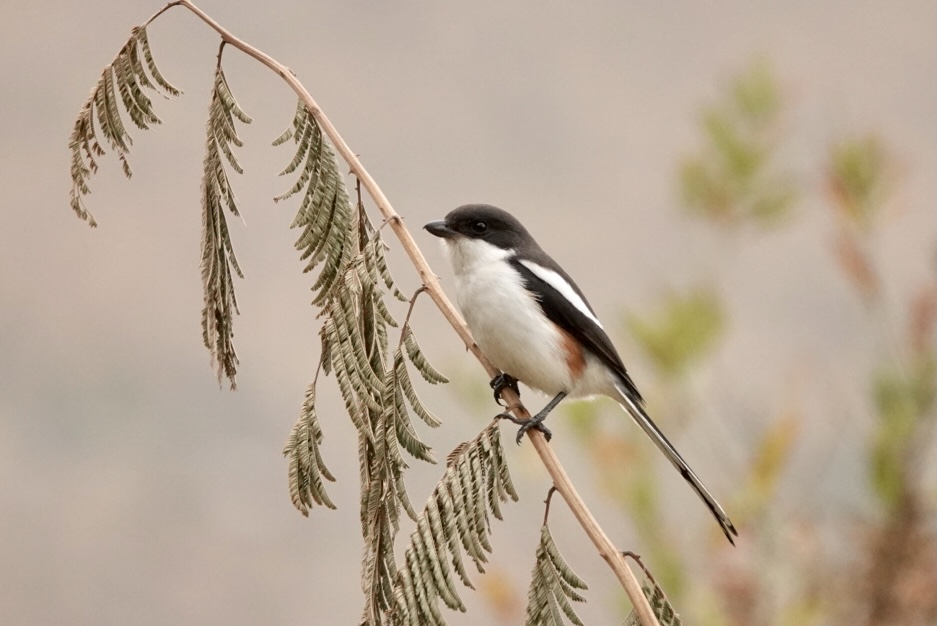
Common Fiscal (Fiskaallaksman / Lanius collaris)
Watching from a side tree, the Common Fiscal, aka Jacky Hangman aka the Butcherbird – what a reputation this small bird has, all because of its habit of impaling prey on a thorn or barbed wire! Its elegant appearance, as if dressed in formal attire, seems to project just the opposite impression.
Interestingly the Fiscal was quite composed, until the Fork-tailed Drongo arrived, when it flew from its perch and chased the Drongo until it retired to a far-off tree.
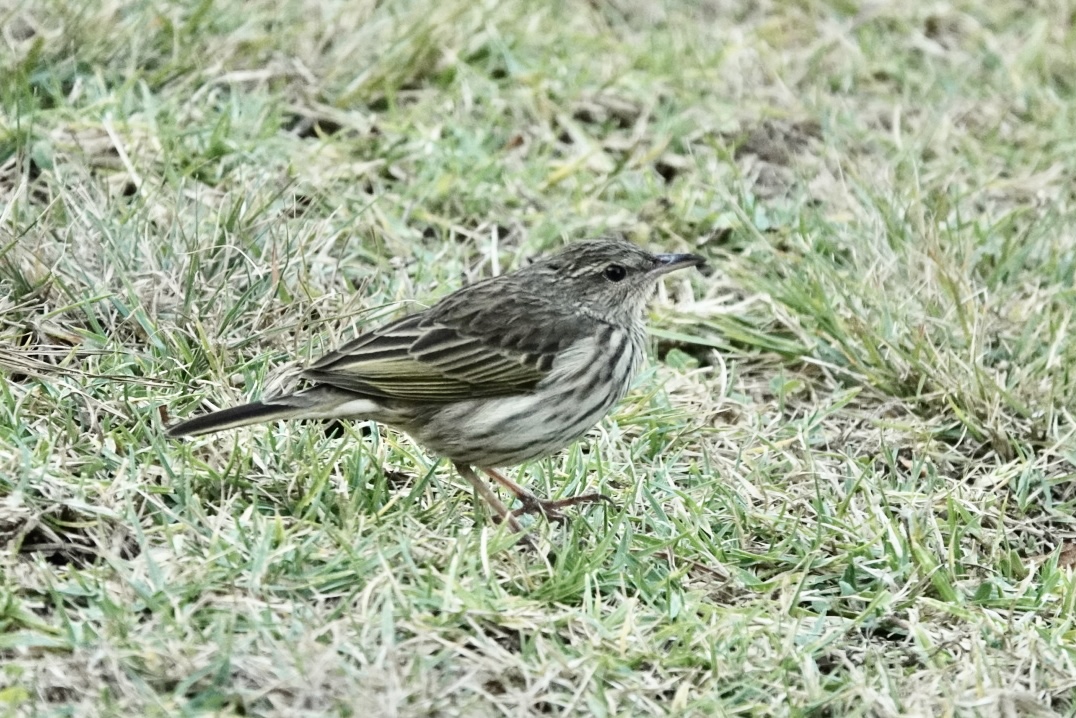
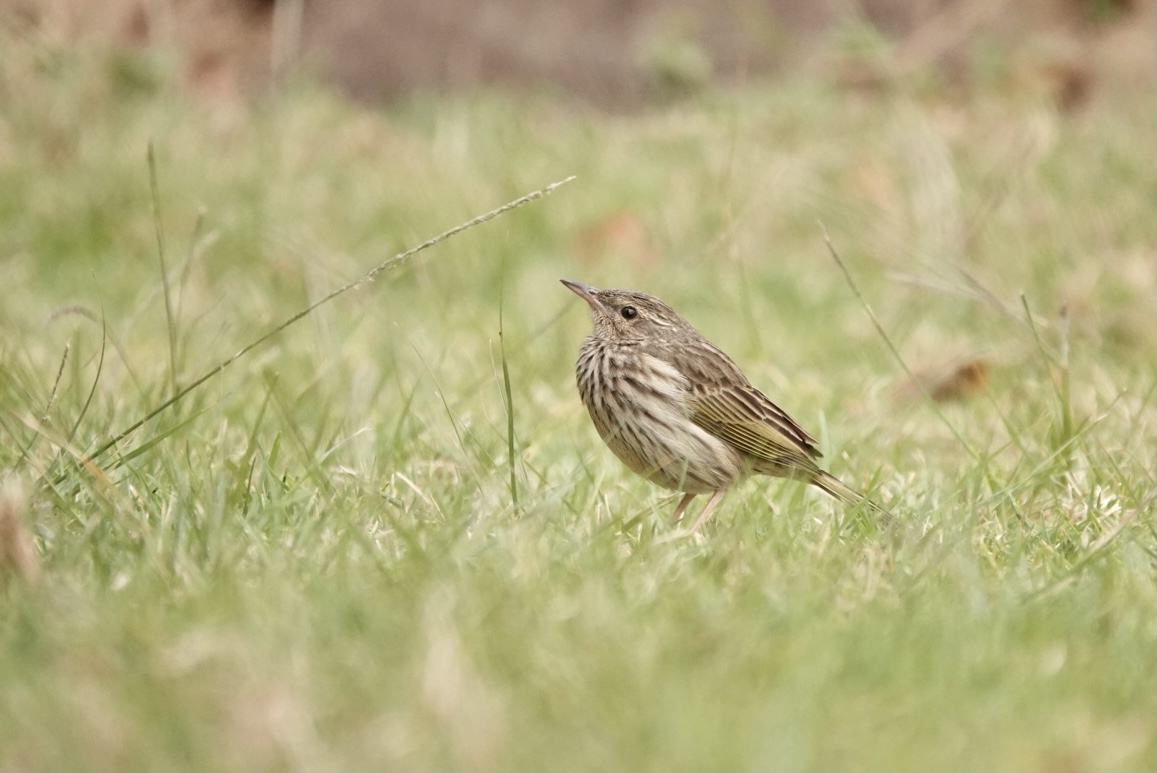
Another of the more timid birds, almost ever-present on the lawn, pottering about without bothering any of the others. But a bit of a celebrity nevertheless, being rated “uncommon to locally common” by Roberts – a regular at certain times at Verlorenkloof, but by no means guaranteed.
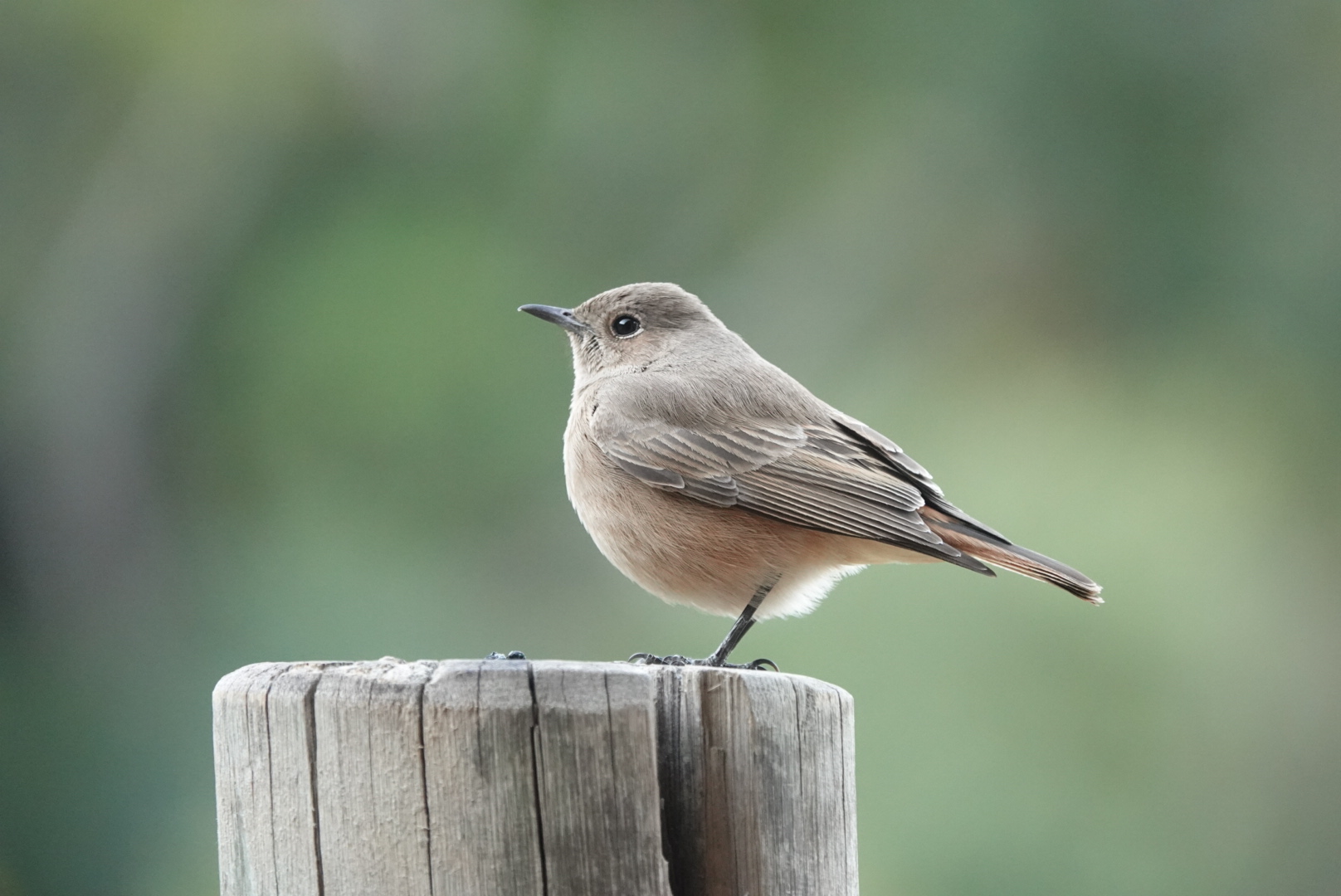
Familiar is the right name for this well-known species. Another bird that is present from dawn to dusk around the Croft, watching from its favourite post and “diving” down to catch its tiny prey in the matted grass, with each return to its perch marked by three wing-flicks. I wondered how a bird with such tiny eyes can spot its prey at up to 5 metres or more, pouncing on it unerringly and returning to its post to devour it.
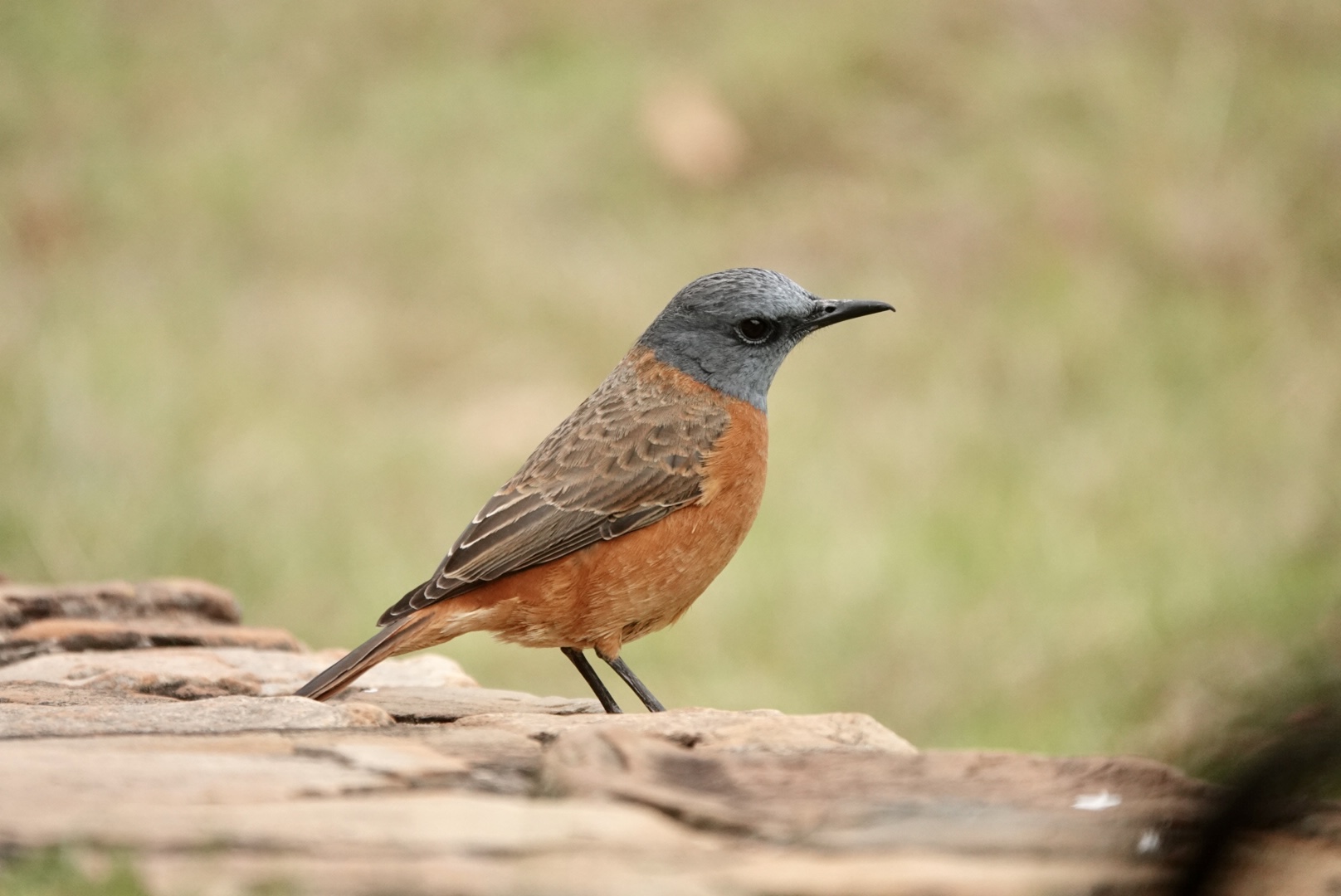
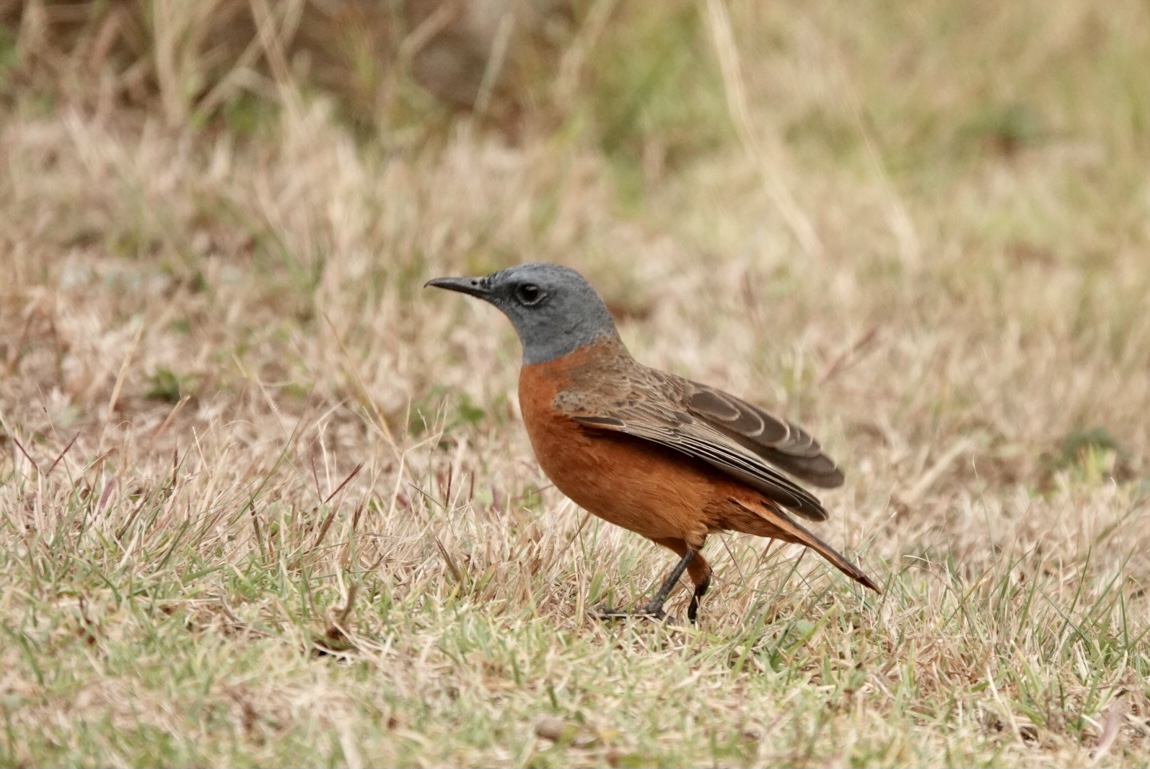
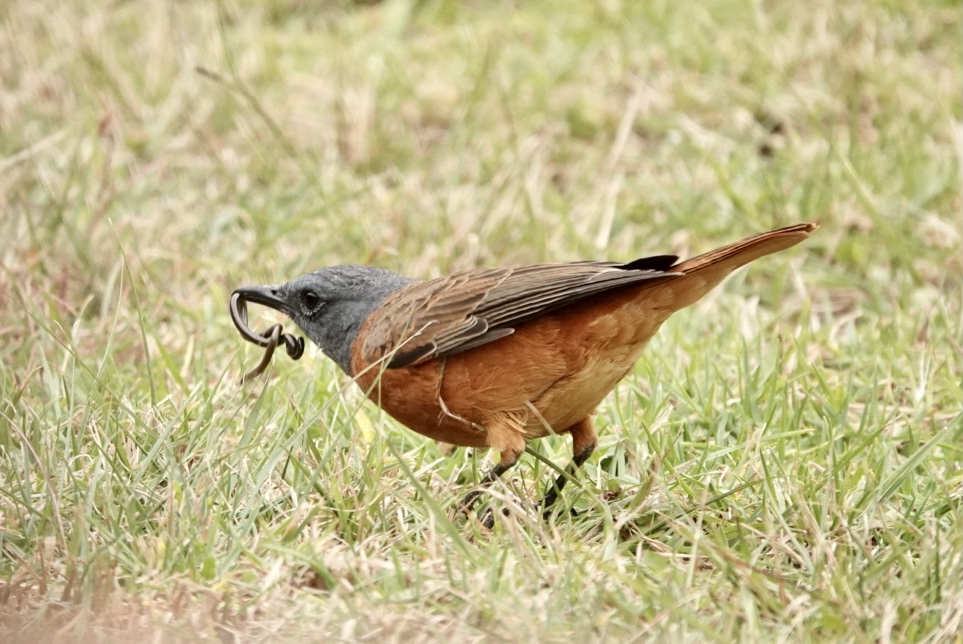
Cape Rock Thrush (Kaapse kliplyster / Monticella rupestris)
Bringing some class to the scene (did I mention I also originate from the Cape?) the Cape Rock Thrush has a way of dominating with its handsome looks and determined approach – they are not around constantly, but “pop in” from time to time, watching carefully from the roof edge or stone wall before pouncing on an unsuspecting prey.
Now here’s everyone’s favourite bit player – demure, quiet, unobtrusive (for a moment I thought I was describing myself), spending much of the day perched in the shade on a thin twig, flying down to the grass to catch some small prey.
The Bulbuls lie somewhere between the extremes shown by other species – not aggressive but certainly determined and not hesitating to pounce on prey before the competition gets to it
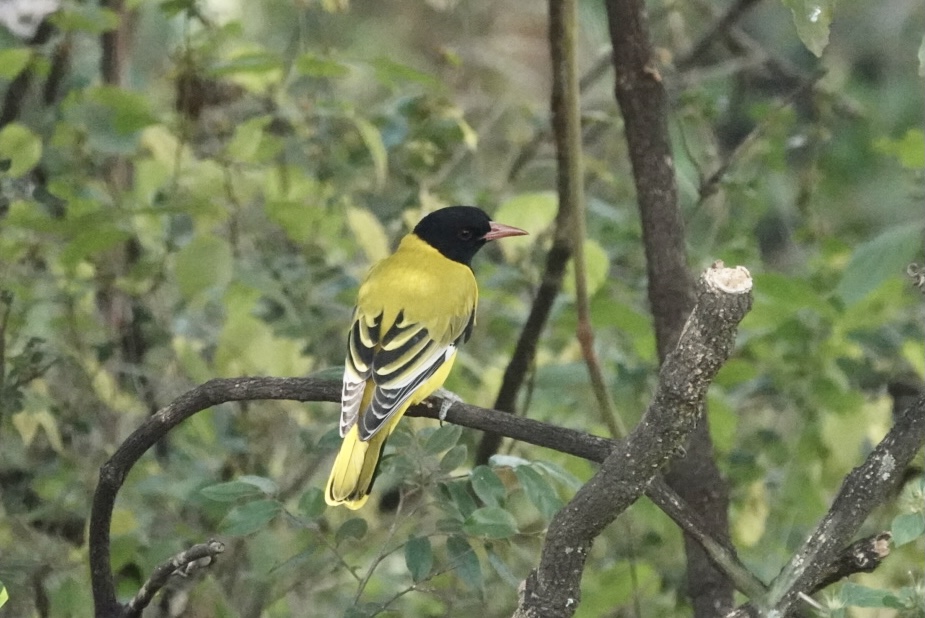
A somewhat unexpected visitor, trying its luck along with the regulars. Despite its bright colours, this is a bird more familiar due to its call, a far-carrying duet, than its appearance. It did not stay long but seemed to be drawn to the lawn by all the other bird activity.
Making just a single appearance, the Drongo had to put up with being chased by the Fiscal and ended up viewing the action from a distant tree, before flying in for a quick lawn raid then disappearing.
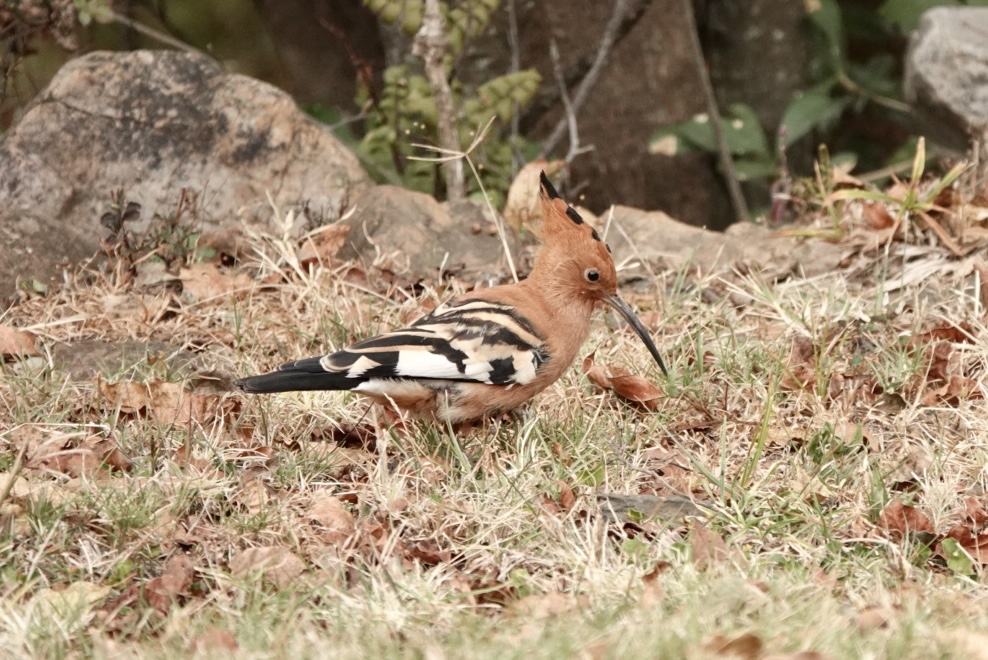
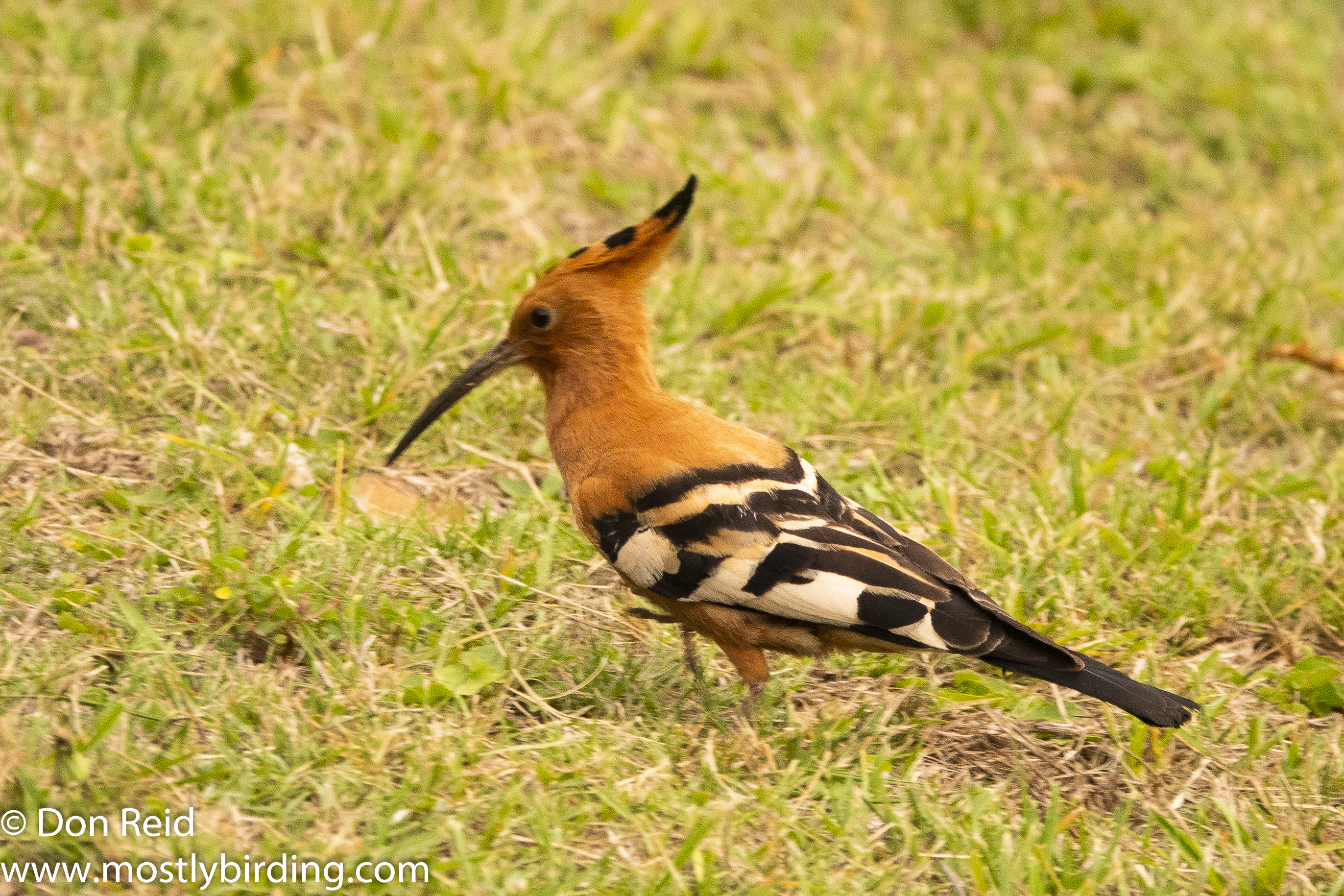
African Hoopoe (Hoephoep / Upupa Africana)
A real loner, the Hoopoe patrolled the quiet edges of the lawn, well out of the way of other species, head down and prodding with its long bill all the way.
Continuing the monthly look at where Atlasing, or Birdmapping as it is also known, took me in September 2020 – in this case using an overnight stop to make the most of the birding on offer…
Heading home – at last!
After more than 5 months in Mossel Bay – a lot longer than our initial plan of 3 to 4 weeks – we decided to return to our other “home” in Pretoria. Mossel Bay’s charm and many advantages had worked their way into our minds and it was with some reluctance that we headed northwards, but Covid-19 had kept us away from our main home for too long and we knew it was time to get back.
We set off on a Friday, fully loaded, around 9 am and travelled the familiar route via George, Graaf-Reinet and Colesberg to our overnight accommodation at Lushof Lodge, some 50 km beyond Colesberg. Along the way we enjoyed take-away coffee and a picnic lunch – all part of the “new normal” way of doing things.
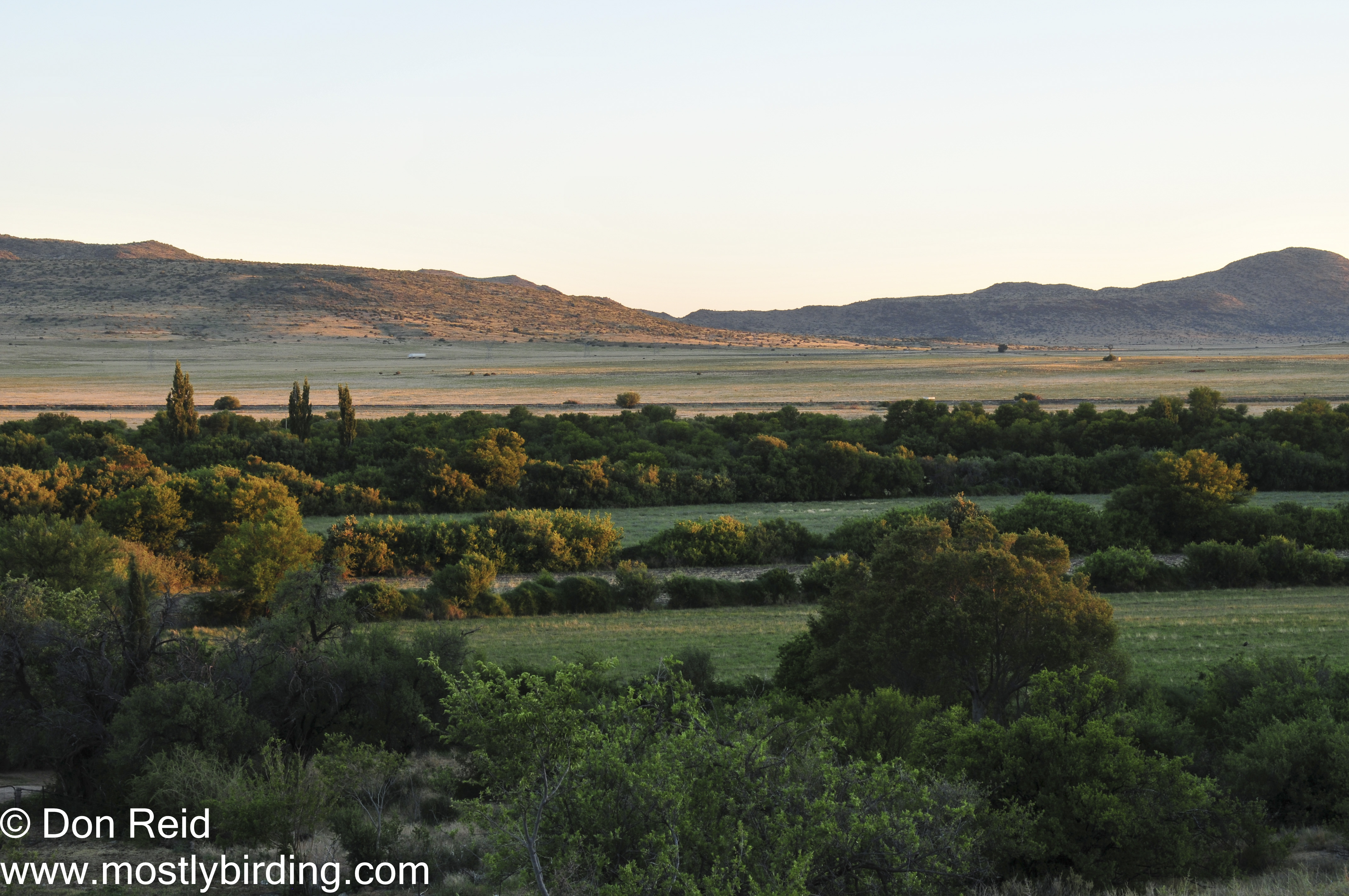
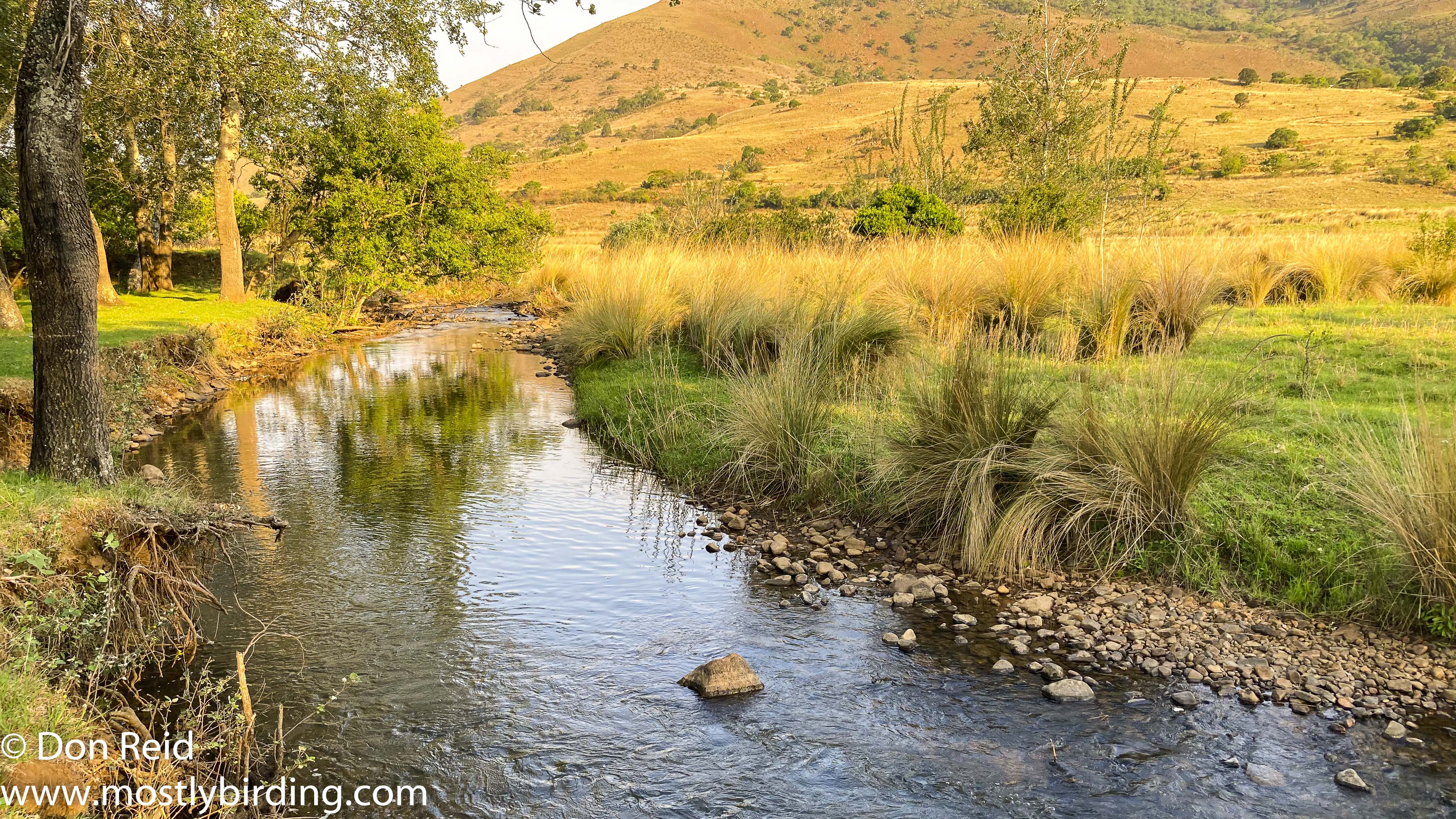
Lushof Lodge, which we last visited in January 2011, was as we remembered – set on a farm with a stream running through, lined with verdant growth. The accommodation was a comfortable cottage which we had all to ourselves, set on a hill overlooking an expanse of fields and veld and we were well looked after by Lise, the bright and friendly hostess and her staff.
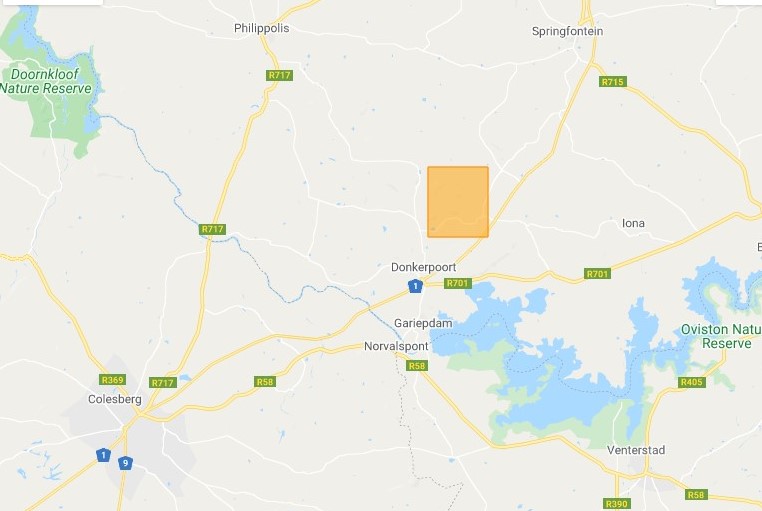
The orange block shows the location of the pentad which includes Lushof Lodge, about 50 kms north-east of Colesberg
Lushof Lodge (Pentad 3025_2530)
By the time we had settled in and acquainted ourselves with the cottage, it was 5.30 pm and there was just enough time for a birding walk down to the stream, which forms a small dam on one side of the entrance road and a wetland covered in reeds on the other.
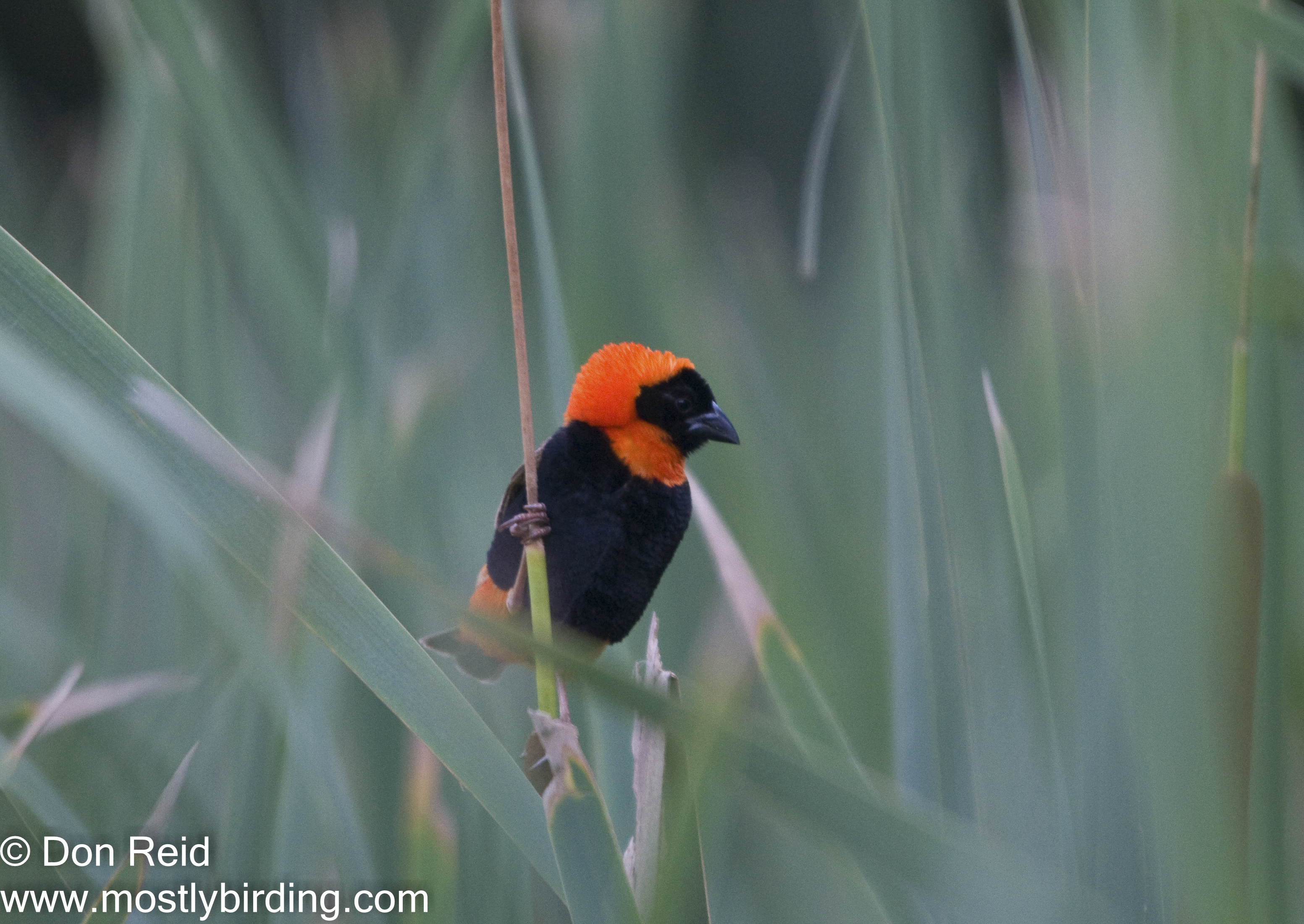
The dam was good for Common Moorhen while the wetland held a few African Reed Warblers, with Red Bishops occupying the reeds and a Kurrichane Thrush exploring the edges. The tall trees alongside were home to a Cardinal Woodpecker, which first revealed its presence with a soft tok-tok-tok as he poked at the branches in search of some protein.
Southern Red Bishop, Lushof Lodge
Returning up the short hill to the cottage I scanned the slopes of the hill above it and soon saw Speckled Mousebirds moving in straggling fashion from tree to bush, then heard a Grey-backed Cisticola and quickly picked it up as it flitted from one low bush to another. For good measure a Blue Crane called but I could not track it down in the gathering dusk.
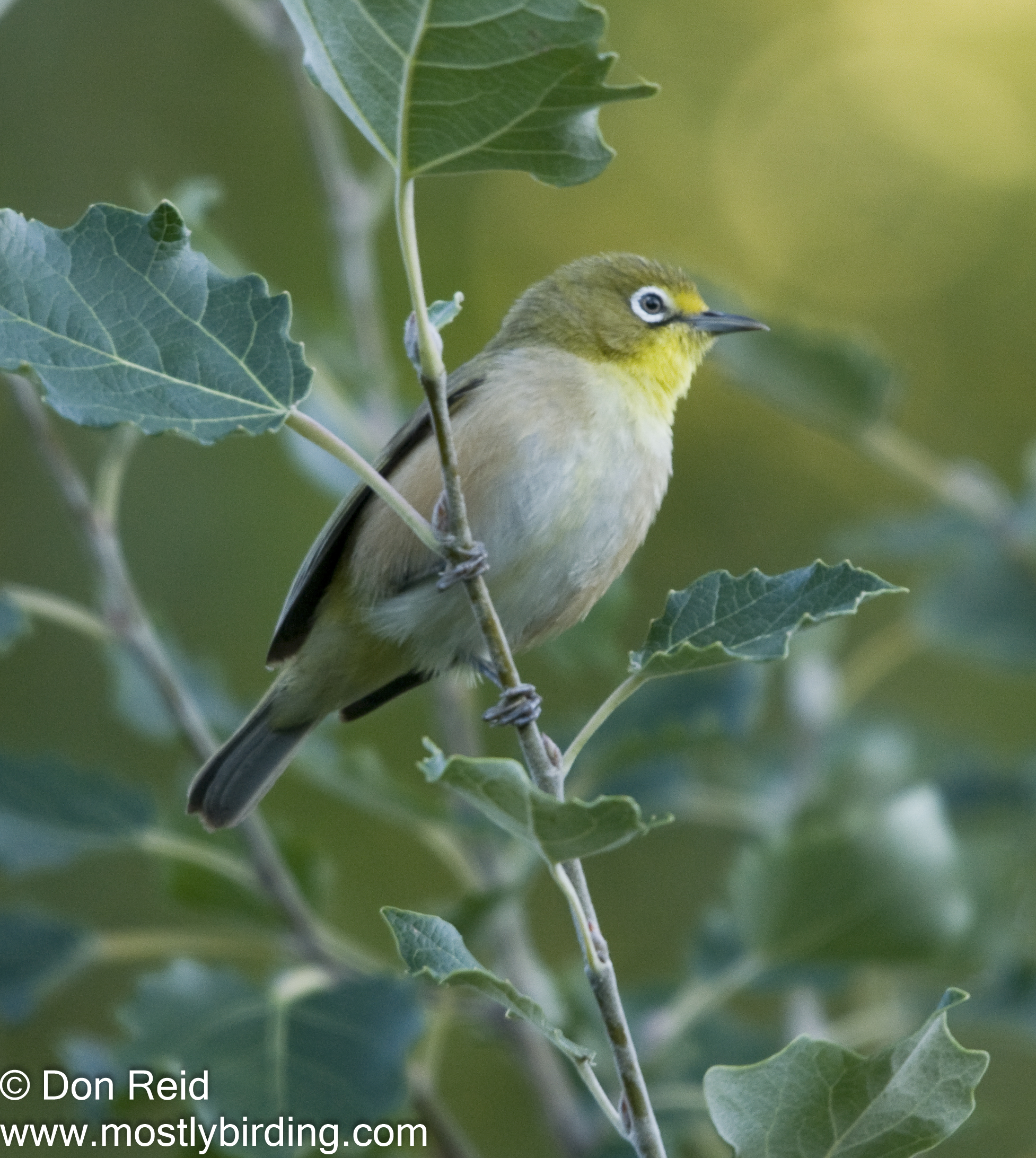
Orange River White-eye, Lushof Lodge
That seemed to be it for the day and a bit later we settled down to a hearty Karoo lamb meal, brought to the cottage by Lise and her daughter. But there was one more surprise later on – when I peered outside briefly just before going to bed, a Rock Martin roosting under the roof overhang stared back at me and became species 20 on my pentad list .
Saturday Morning 5 September
An early night meant I could get a good night’s rest and still be up at 6 am to have a coffee in the crisp morning air outside our cottage, while adding to the previous afternoon’s list.
View from Lushof lodge
I was able to add another 9 species before heading off on a lengthy walk around the farm, including Cape Bunting, Yellow Canary, a calling Brubru (also widely known as the “telephone bird” because of its trilling, repeated call) and a Familiar Chat doing its ‘familiar’ sequence of perch, fly down to the ground, catch something small and return to the perch with a couple of wing flicks straight after landing.
Familiar Chat
Venturing away from the farmstead, I followed a track along the stream and heard two very different birds – first a Lesser Swamp Warbler hidden somewhere in the dense riverine vegetation, then a Blue Korhaan greeting the new day from somewhere up ahead. From the latter call I guessed the habitat must open up further on to be suitable for the latter species – indeed it did a couple of hundred metres further, affording an expansive view across fields and plains, but there was no sign of the Korhaan, which had probably moved on or concealed itself in the grass (which they are masters at doing)
Lushof Lodge
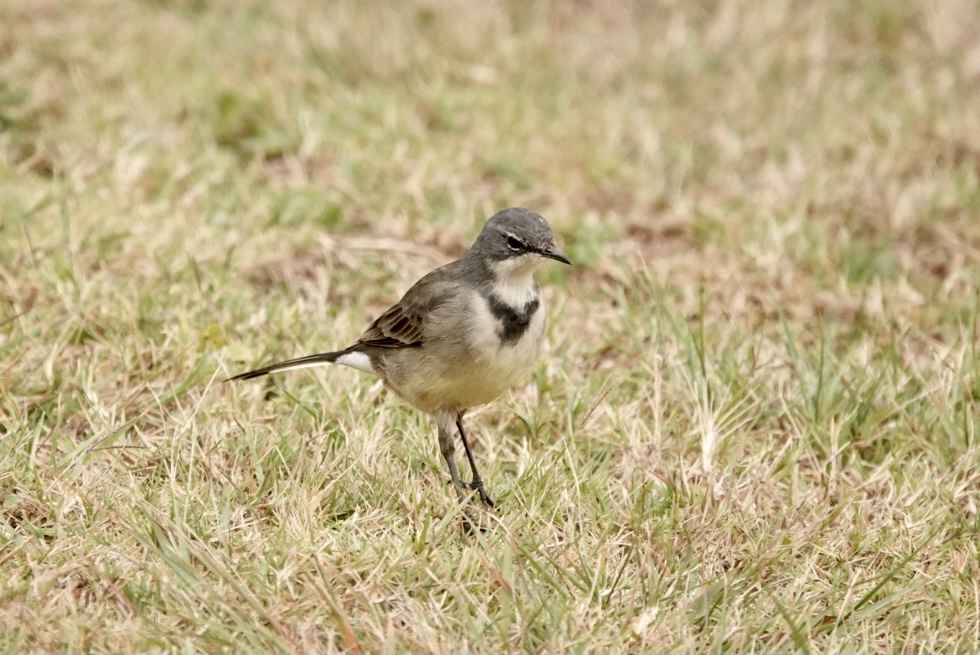
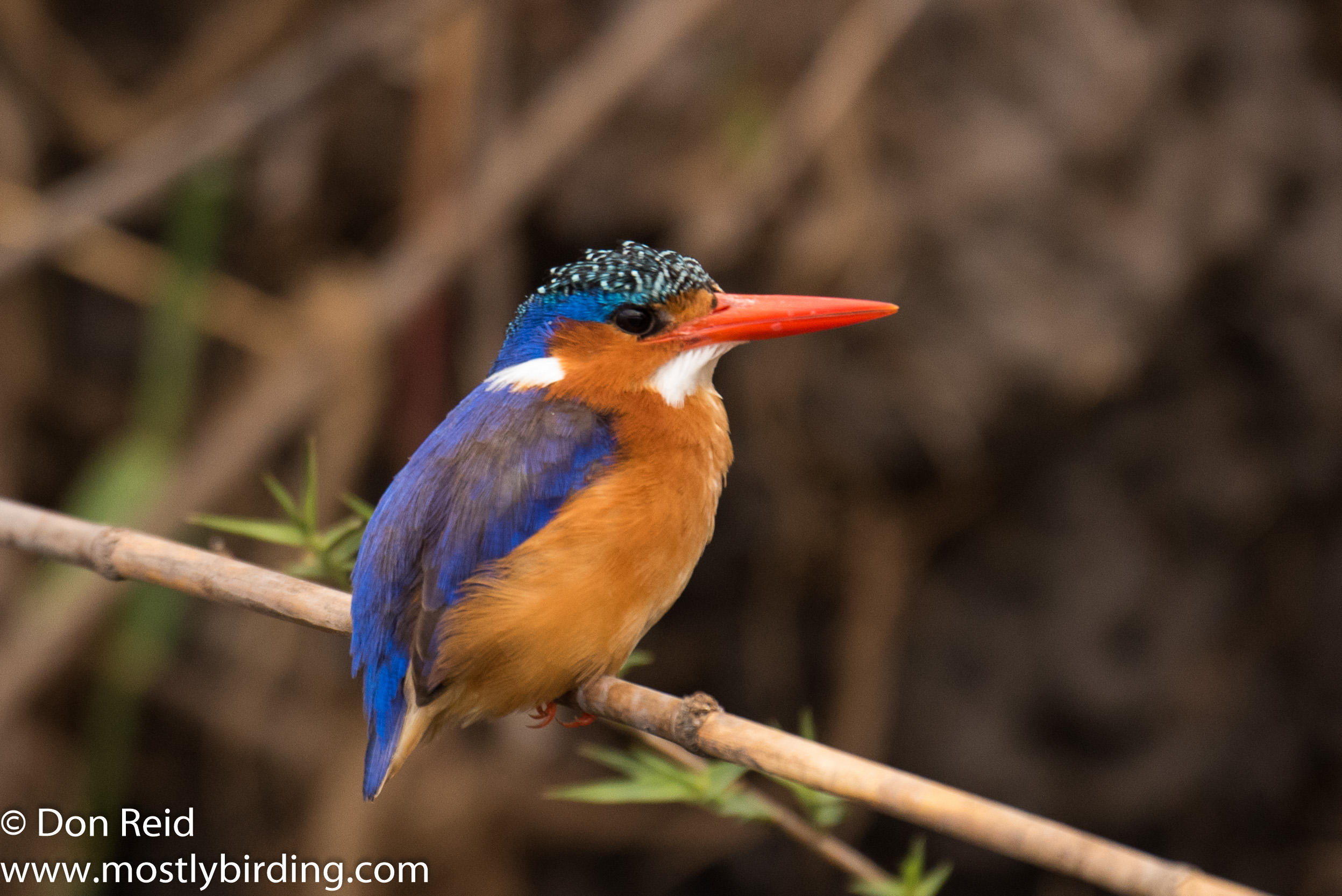
I headed back to spend some time in the lush area close to the farmhouse, with the river and wetland as focus points. Common Starlings and a Cape Wagtail caught my attention and then a flash of colour signaled the arrival of a Malachite Kingfisherin an overhanging tree, ready to spot and dive for a small fish, frog, crab or insect.
Malachite Kingfisher
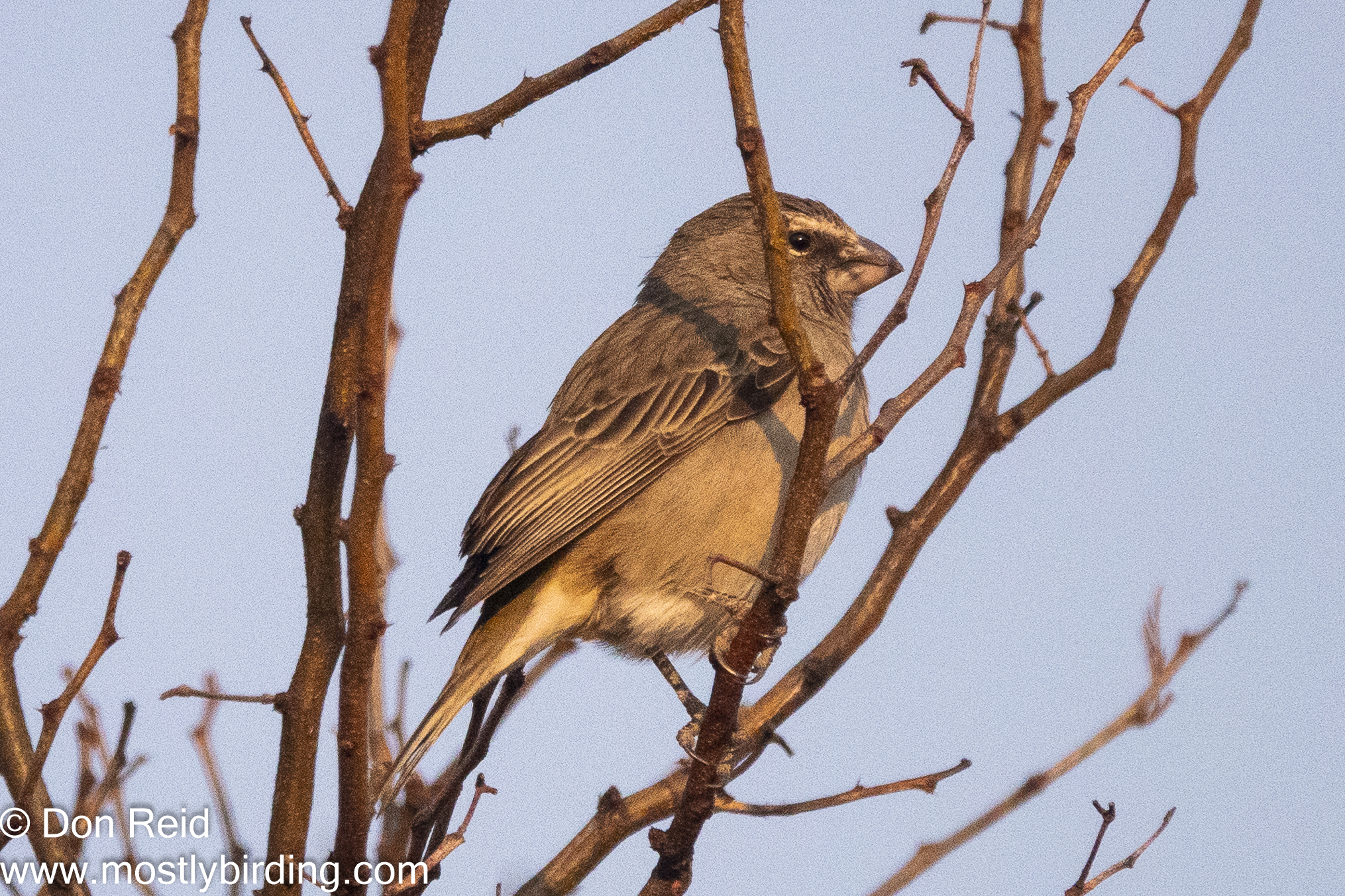
Before returning for breakfast, which we had arranged to be brought to the cottage at 8 am, I had a look around the area beyond the stream and soon added Chestnut-vented Warbler (Titbabbler) and White-throated Canary. I tried to capture the latter species on camera as I knew it was a different sub-species (orangensis) from those I am used to seeing in the Southern Cape. I had limited success getting a clear photo, but they were better than nothing.
By the way if you think it’s a bit extreme not being satisfied with photographing bird species but trying to photograph all the subspecies as well, I confess I have had this “collectors” affliction since a young age and it seems to be getting worse….
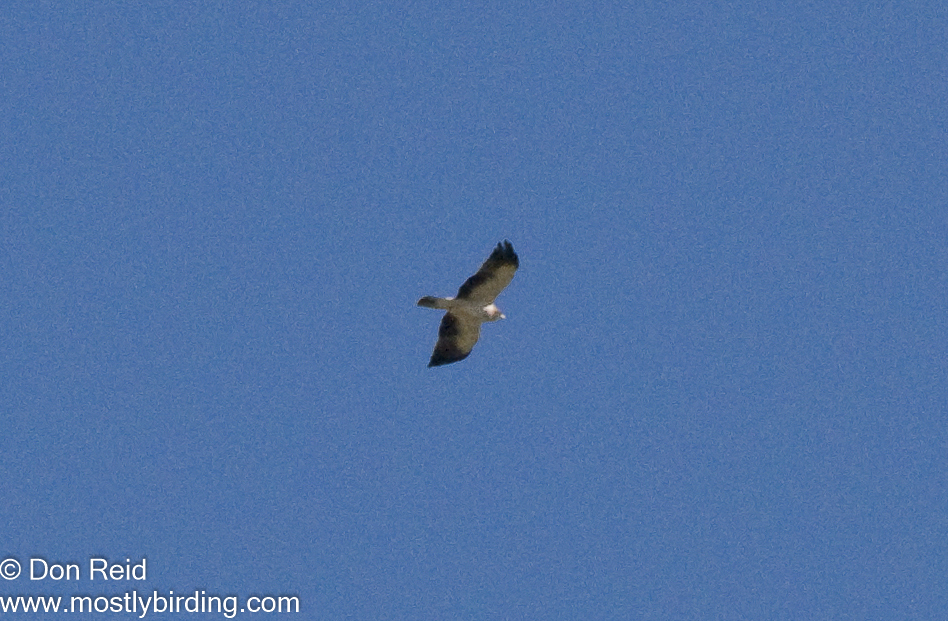
After a substantial breakfast (to see us through the last day’s driving, you know) it was time to pack the car one last time, while still keeping an eye out for any birds to add. Fortunately so, as a Booted Eagle and a pair of SA Shelducks flew overhead within minutes of each other.
Booted Eagle, Lushof Lodge
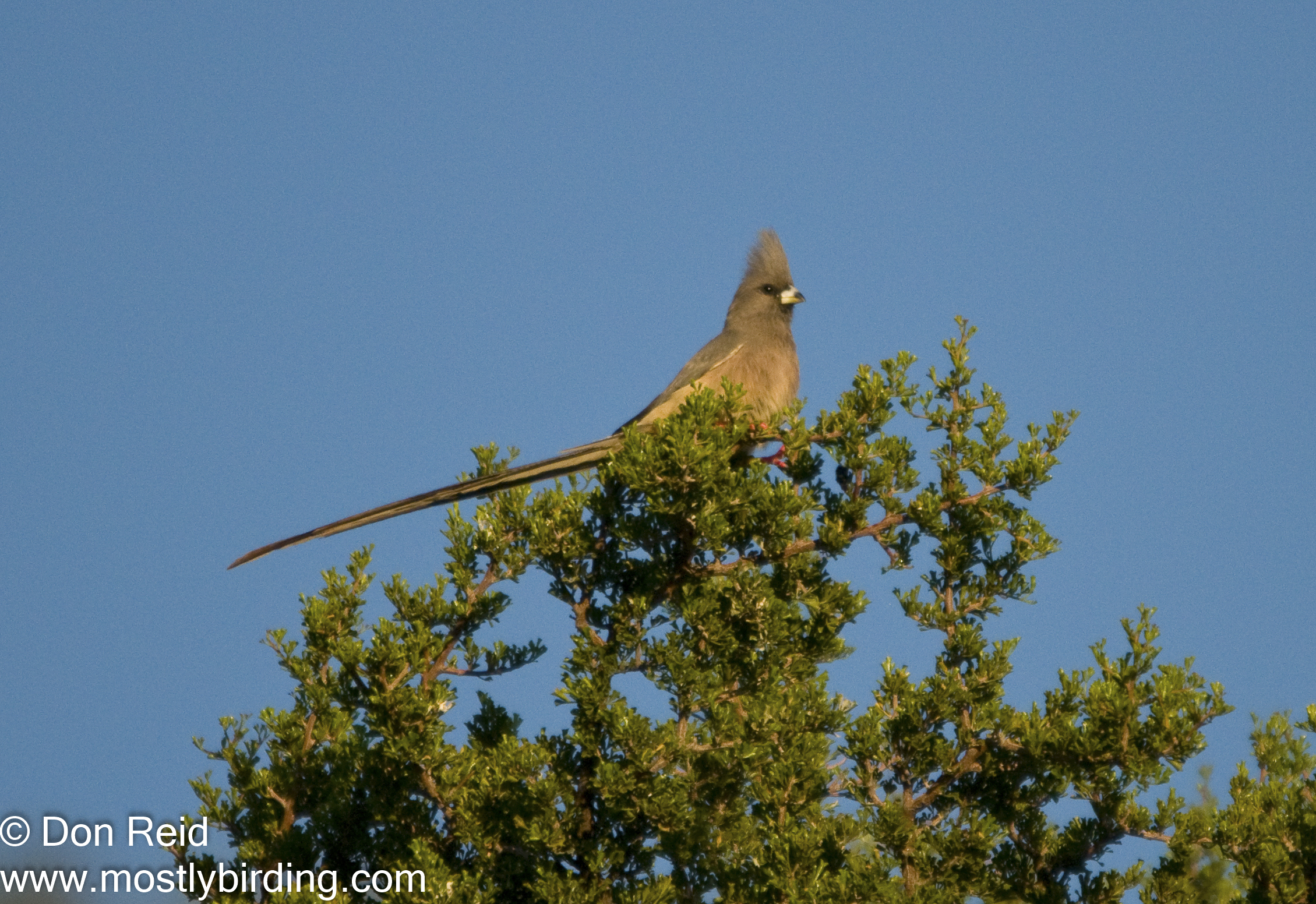
On the road out we picked up Namaqua Dove and White-backed Mousebird, the dam near the highway held Blacksmith Lapwing and the adjoining grass boasted an Eastern Clapper Lark, giving us its version of goodbye as it performed its display flight in the air.
White-backed Mousebird, Lushof Lodge
The Stats
We left with a total of 48 species recorded which, considering the time of year, is a good indication of the quality of Lushof Lodge as a birding spot.
Of special note – this was only the third full protocol card completed for this pentad in 10 years, the previous two having been done by myself and Koos Pauw in 2010/11. A very under-atlased pentad!
Verlorenkloof is our favourite destination for a get away from it all week in October each year, usually green from early summer rains and buzzing with bird life across all of the various habitats, from the river along the one boundary through wetlands and open grasslands to the forested kloofs of the surrounding mountains.
It’s all about relaxation while enjoying the beauty and superb birding of this secluded valley – so join us as we explore the estate and the surrounds, ever on the lookout for the special birds of the area.
Map showing location of Verlorenkloof (the blue circle)
Day 6 – Tuesday
After two days of very little birding, today was to be a serious birding day again and Verlorenkloof and the surrounds certainly delivered!
Koos had met a farmer on the opposite side of the valley, on one of his excursions, and had been invited by him to explore the trail that runs through the undeveloped part of his farm, up and along the foothills of the mountainside on the opposite side of the valley to the Verlorenkloof estate.
Up after 5 am, we set off soon after 6 am, heading slowly through the estate to the river, then on to the gravel “back road”.
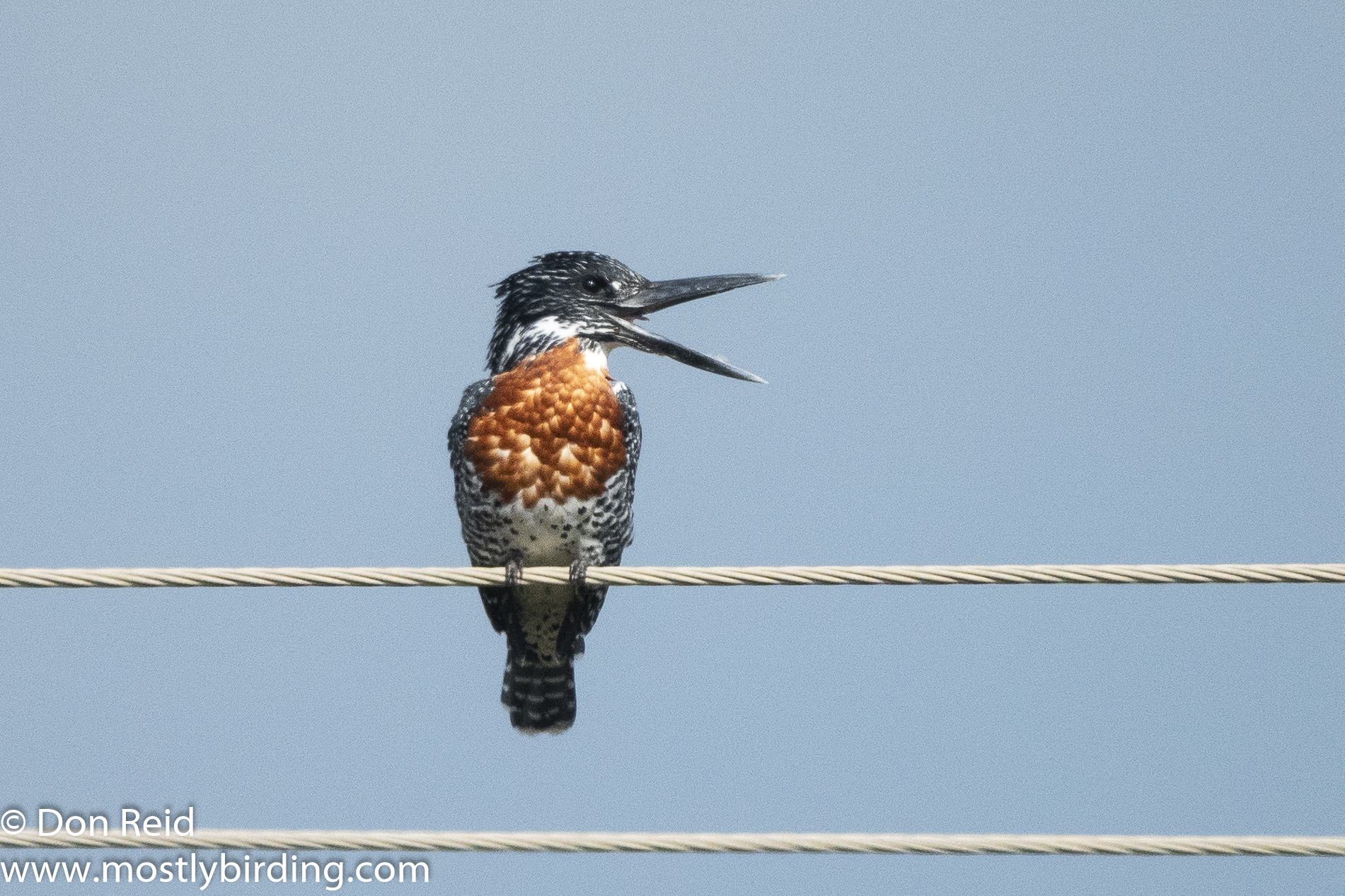
On the way the birding was very productive, as it often is in the early morning, and combined with the birds I had recorded at the croft while enjoying coffee and rusks, I had already built up a list of 42 birds by the time we got to the gate a couple of kms further, still only 7.15 am. Most were the regular Verlorenkloof species but I was pleased to add Giant Kingfisher, Greater Double-collared Sunbird and Rufous-naped Lark which are not always guaranteed to be seen.
Giant Kingfisher (Megaceryle maxima / Reusevisvanger) Verlorenkloof
Koos stopped at the gate and we proceeded on foot along the track, that initially disappeared among the trees then emerged at the bottom of the first long slope.
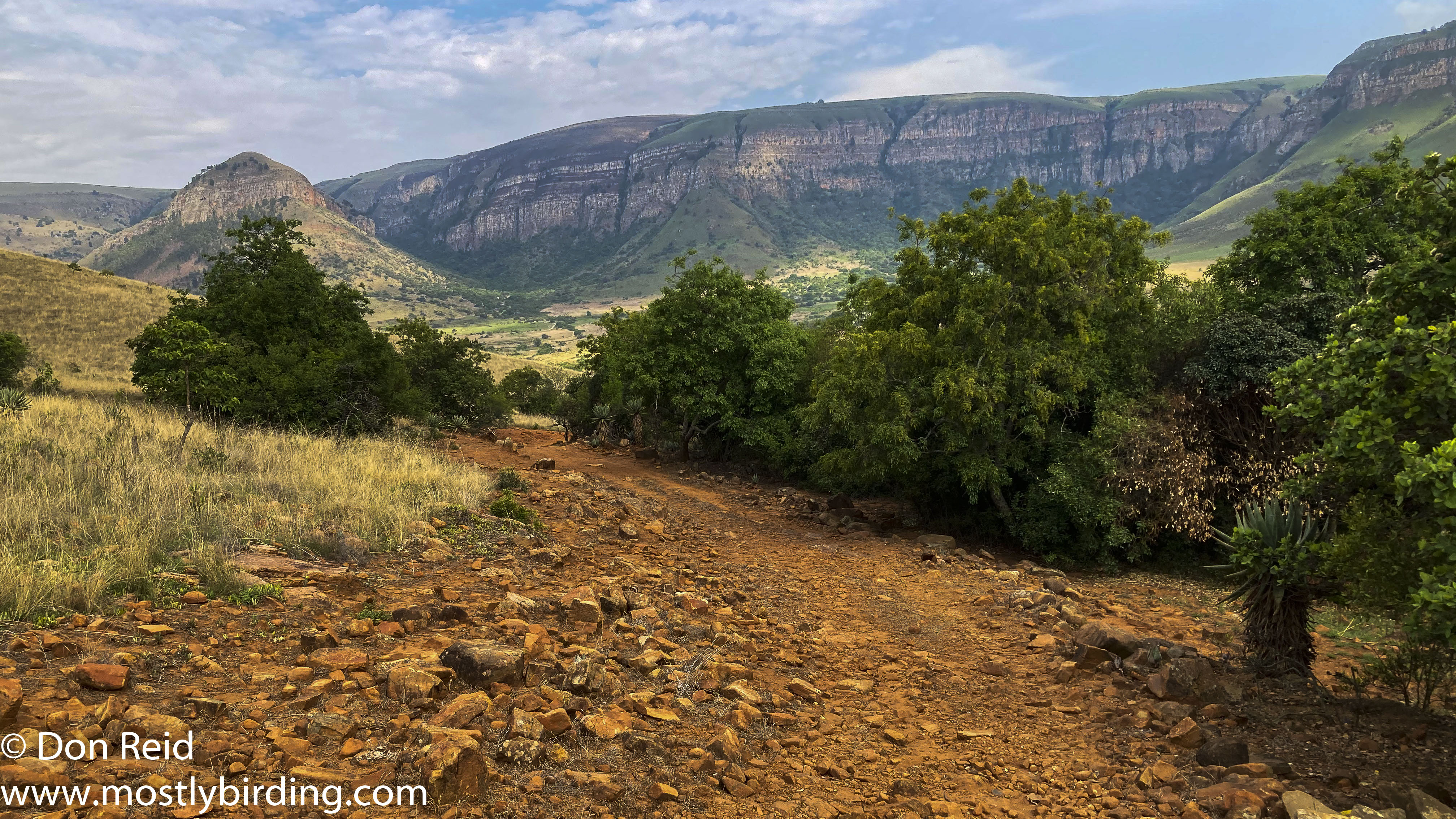
The landscape around us had an other-worldly feel to it – hundreds of tall aloes standing like alien creatures on the lightly grassed slopes, with bare patches and rocks in the open spaces between clumps of trees and bushes.
Ahlers farm, Verlorenkloof
We took it slow – not just because of the mild climb but to make sure we would pick up any bird movement. It paid off immediately as I spotted a Golden-breasted Bunting and the first of many White-fronted Bee-eaters.
Ahlers farm, Verlorenkloof
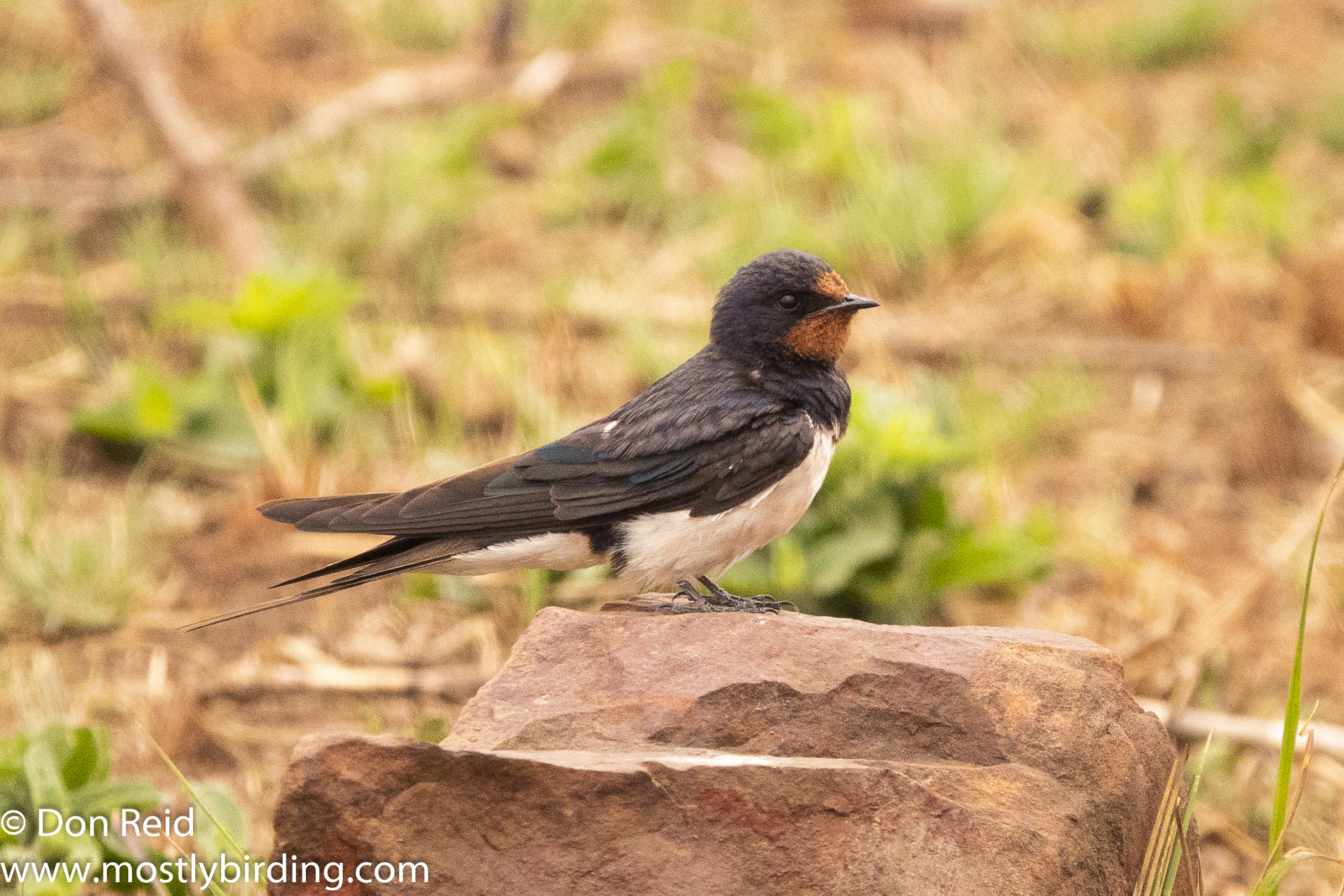
Puffback and Black Cuckoo called in their distinctive fashion and there were plenty of aerial birds – swallows and swifts – to keep us looking up every now and then. Barn Swallows tend to swoop lower down but others such as Palm Swift are generally higher up while the only Black Saw-wing weaved its way at a low height between the trees.
Barn Swallow (Hirundo rustica / Europese swael)
Southern Bald Ibis is one of the specials of this area and we saw a pair flying by on their way to their favourite field no doubt.
Southern Bald Ibis (Geronticus calvus) Kalkoenibis
At the top of the slope the track headed parallel to the road some way below us and the habitat became more bushy with birds to suit- Cape Batis, Long-billed Crombec, Bar-throated Apalis and Green-backed Camaroptera.
Ahlers farm, Verlorenkloof
By now we had been walking for about two hours and with no sign of the track heading back down to the road we turned around and retraced our steps back to where the car was parked.
Not yet done for the morning, we drove further along the gravel “back road” to a dam where we had found the White-faced Ducks a couple of days before – they were not there but Little grebe, Black-headed Heron, Red Bishop and Levaillant’s Cisticola made up for their lack.
Little Grebe
The rest of the day was spent in recovery mode (two and a half hour’s walking tends to require that at our age) which gave me a chance to catch up on my journal and blogging.
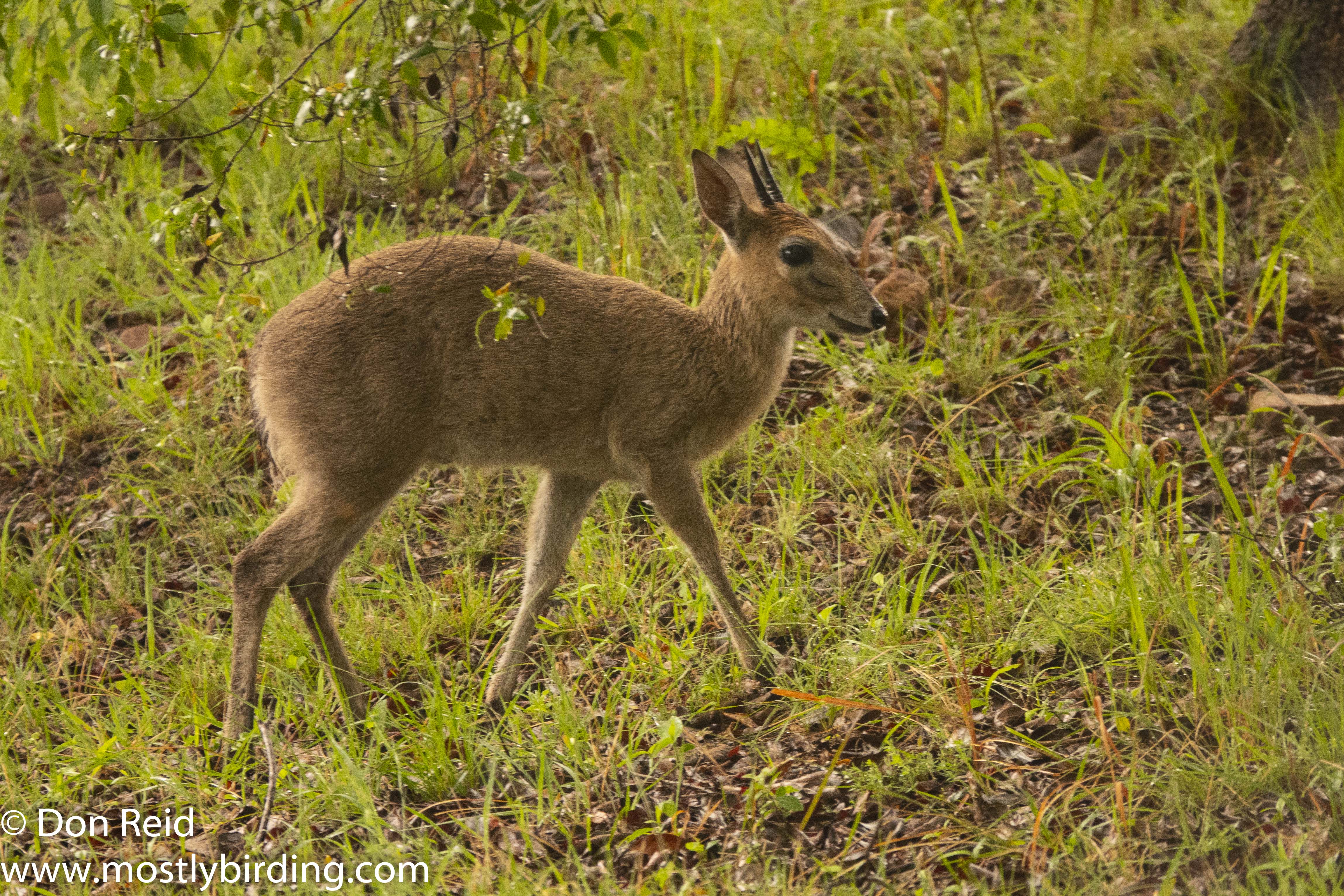
Duiker, Verlorenkloof
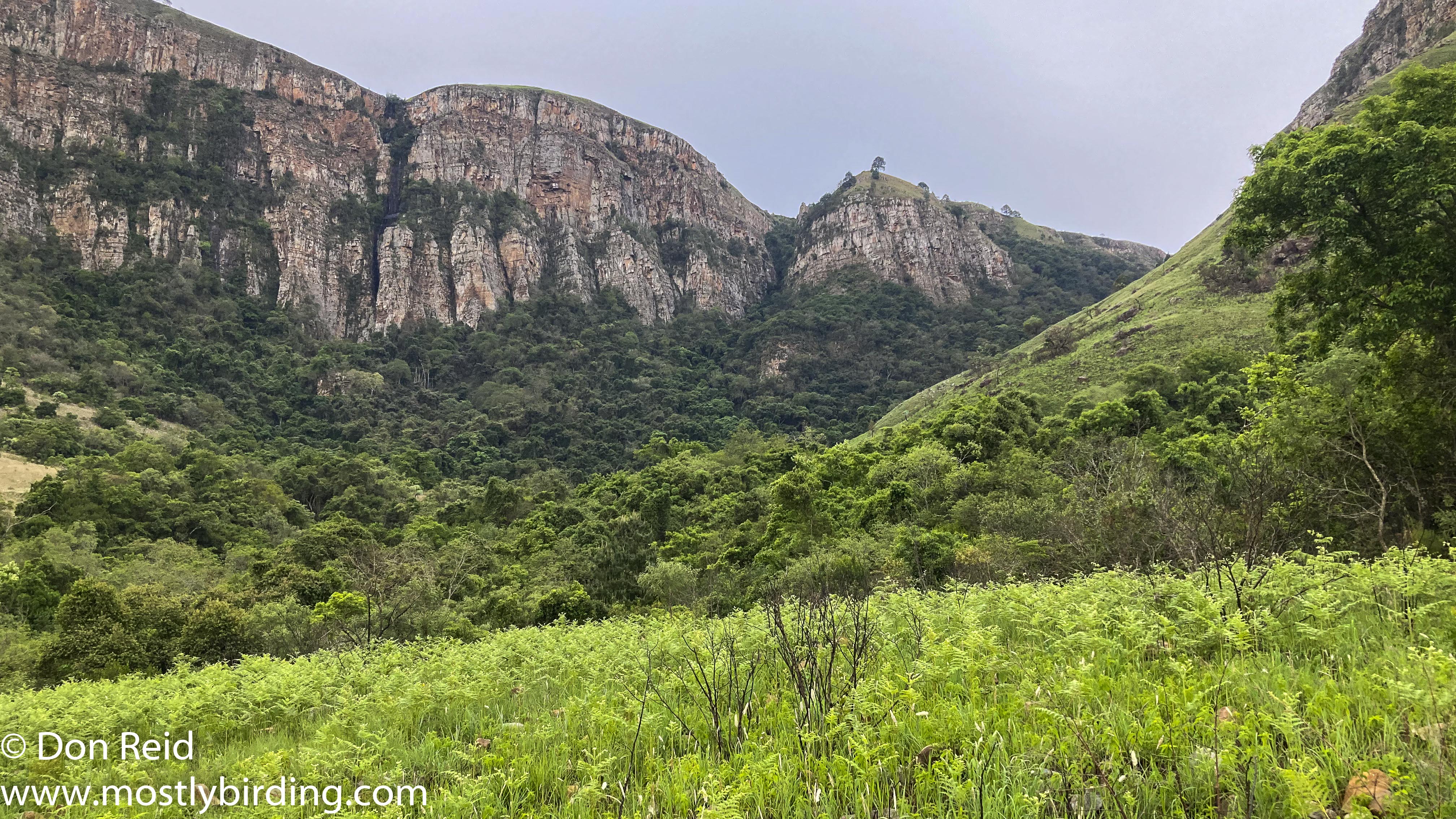
It started raining around midday, providing some welcome relief from the hot conditions and having a visible effect on the two waterfalls that drop from the escarpment, one of which feeds the stream near croft no 2.
After a rainstorm, Verlorenkloof
A late afternoon drive to the lodge produced a juvenile African Fish-Eagle and a Common (steppe) Buzzard to round off an excellent day’s birding. I was amazed to find that I had recorded 83 species during the day, having started a new atlasing list that morning (atlasing requires that a new list is started after 5 days)
Steppe (Common) Buzzard
Day 7 – Wednesday
Time to return home to Pretoria, but not before having a good brekkie at the lodge (thanks Koos and Rianda), then driving slowly along the gravel roads back to the newly completed R36 tar road which connects Verlorenkloof’s access road with the N4 national road. Well done to the authorities for rebuilding this road which for years was in poor shape and suffering continuous damage from the many coal-haulage trucks that use the route.
The final stats for the week : 128 species recorded on two atlasing cards.
Verlorenkloof is our favourite destination for a get away from it all week in October each year, usually green from early summer rains and buzzing with bird life across all of the various habitats, from the river along the one boundary through wetlands and open grasslands to the forested kloofs of the surrounding mountains.
It’s all about relaxation while enjoying the beauty and superb birding of this secluded valley – so join us as we explore the estate and the surrounds, ever on the lookout for the special birds of the area.
Map showing location of Verlorenkloof (the blue circle)
Day 4 – Sunday
Verlorenkloof is like a mild drug when it comes to birding – hard to stop when the birds are constant companions around the croft and wherever you walk or drive in the estate, But I do enjoy the opportunity to relax and that is what I did on day 4 and 5 of our visit, alternating between the verandah and the lounge.
Verlorenkloof
Nevertheless there were still plenty of interesting bird “happenings”, starting with an early wake up call – this time from a Natal Spurfowl on the lawn outside our bedroom window, calling at the top of his voice as only they can. This is not a sound that is easy to sleep through!
Not content with that, he (or could it have been a she?) then jumped up onto the window cill, about 1,5m from my resting head (obeying the social distancing rules in the process) and belted out another series of calls, ensuring that further rest was completely out of the question.
After coffee, Gerda called from the kitchen where several things bird-related were happening outside the window –
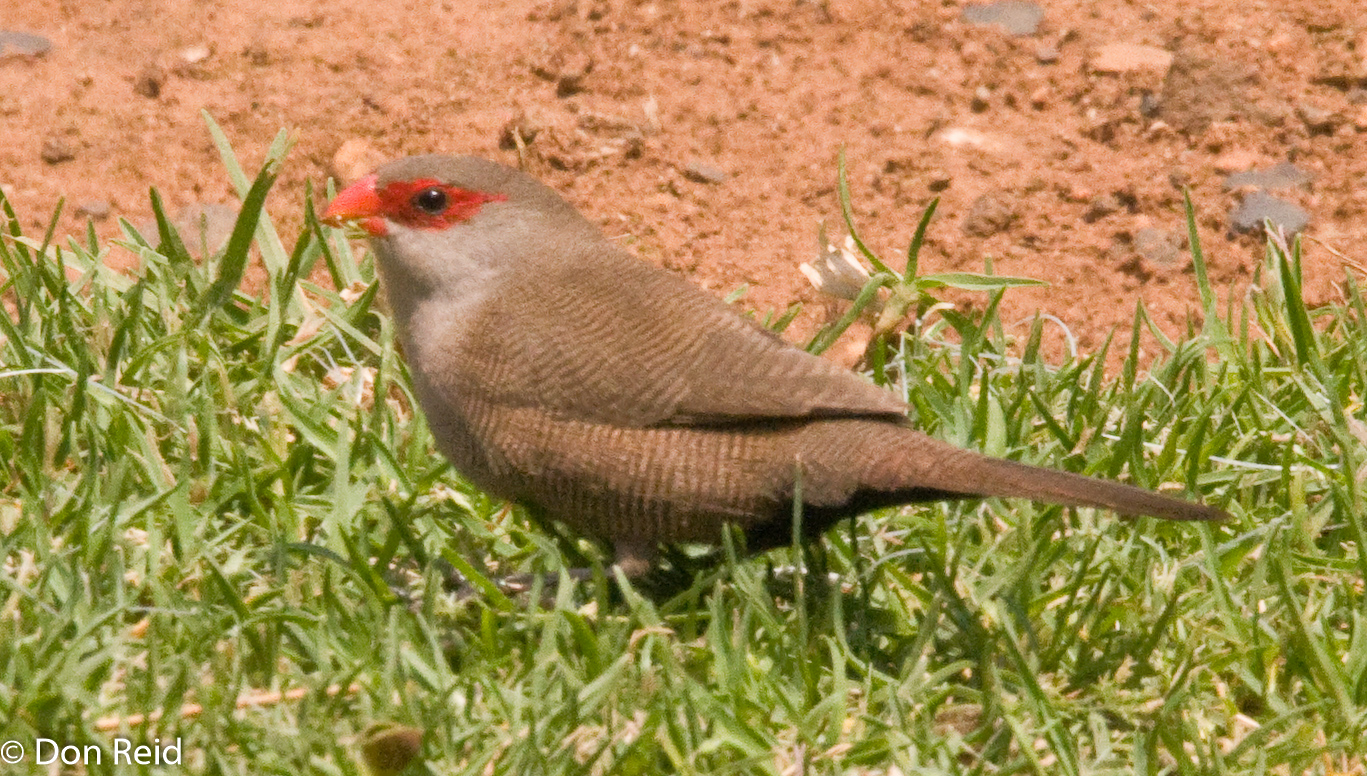
Waxbills feeding on grass seeds;
Common Waxbill
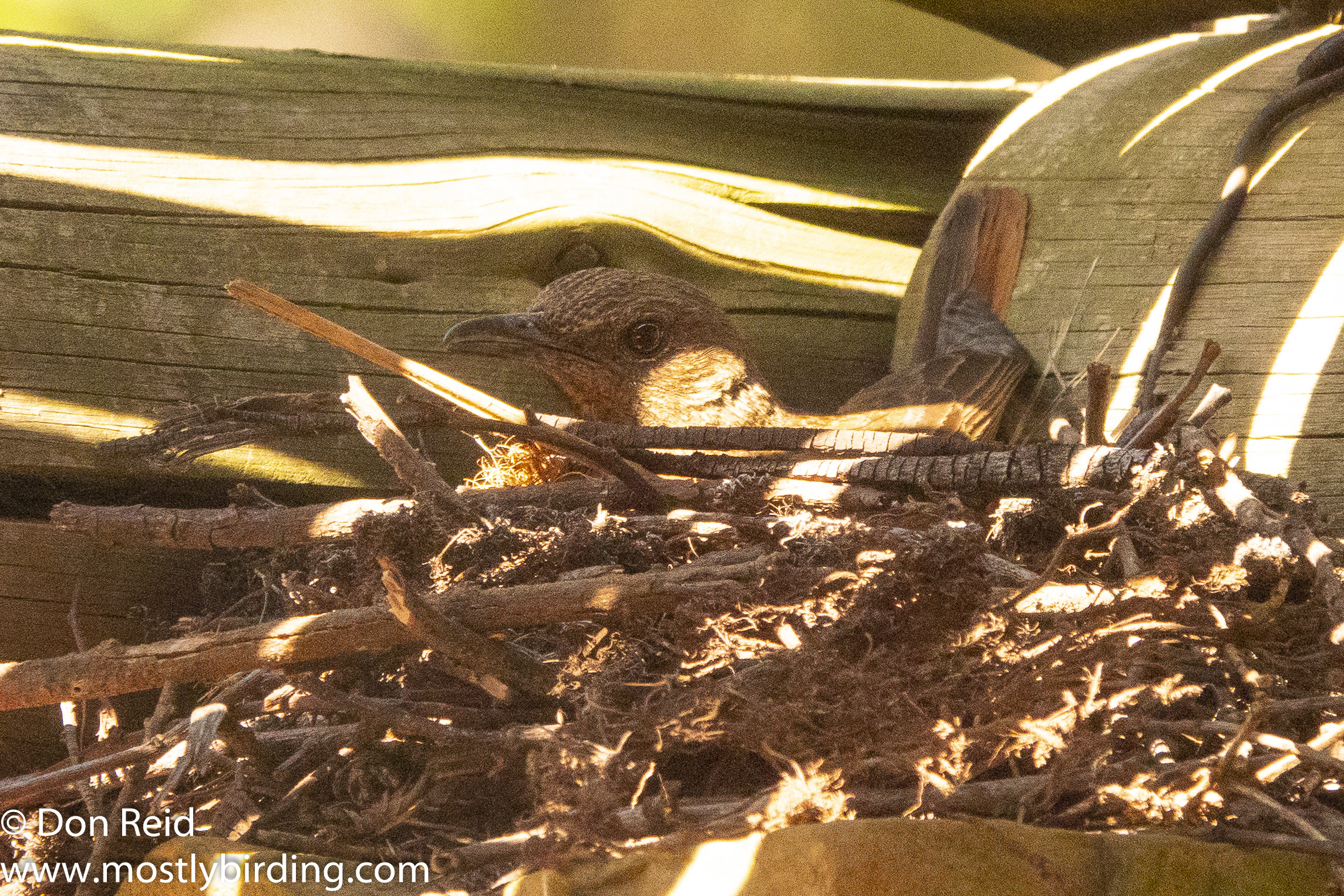
Female Cape Rock-Thrush coming and going to her nest constructed (which is a kind way to put it) on top of one of the carport’s stone columns. We watched as she arrived with a stick, small twigs, leaves etc and casually dumped them on the pile already there, then rather comically sat on top and wiggled her body about hoping, it seemed, to create a cup shaped depression in the unruly pile. Comical for us but serious business for the Rock-Thrush.
Cape Rock Thrush (Monticola rupestris / Kaapse kliplyster), Verlorenkloof
Cape Rock Thrush on nest, Verlorenkloof
Violet-backed Starling which flew in and perched on a branch for us to admire this colourful migrant – first of the summer for us and so striking.
Violet-backed Starling
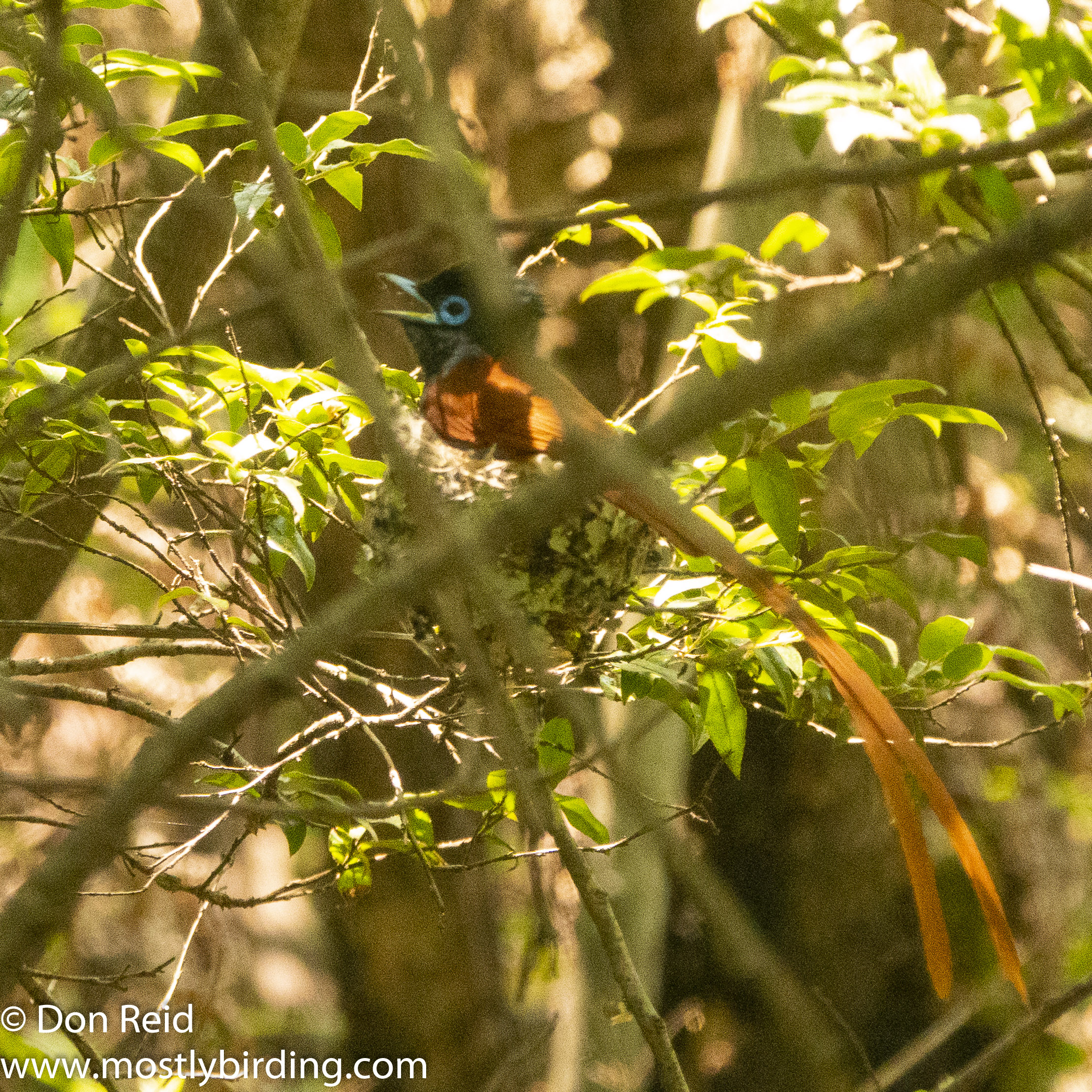
A bit later I walked to the rock pool and on the way saw an African Paradise Flycatcher flying into the copse of trees and bush that separates croft 2 from the pool. I peered through an opening in the bush and there the flycatcher was, sitting on a tiny lichen-decorated, cup-shaped nest, with its long tail draped over the side.
African Paradise Flycatcher at nest, Verlorenkloof
Photo conditions were tricky in the extreme – poor light, twigs and branches in the way making focusing a challenge and the flycatcher not hanging around for long, but with patience I eventually got a couple of shots.
African Paradise Flycatcher at nest, Verlorenkloof
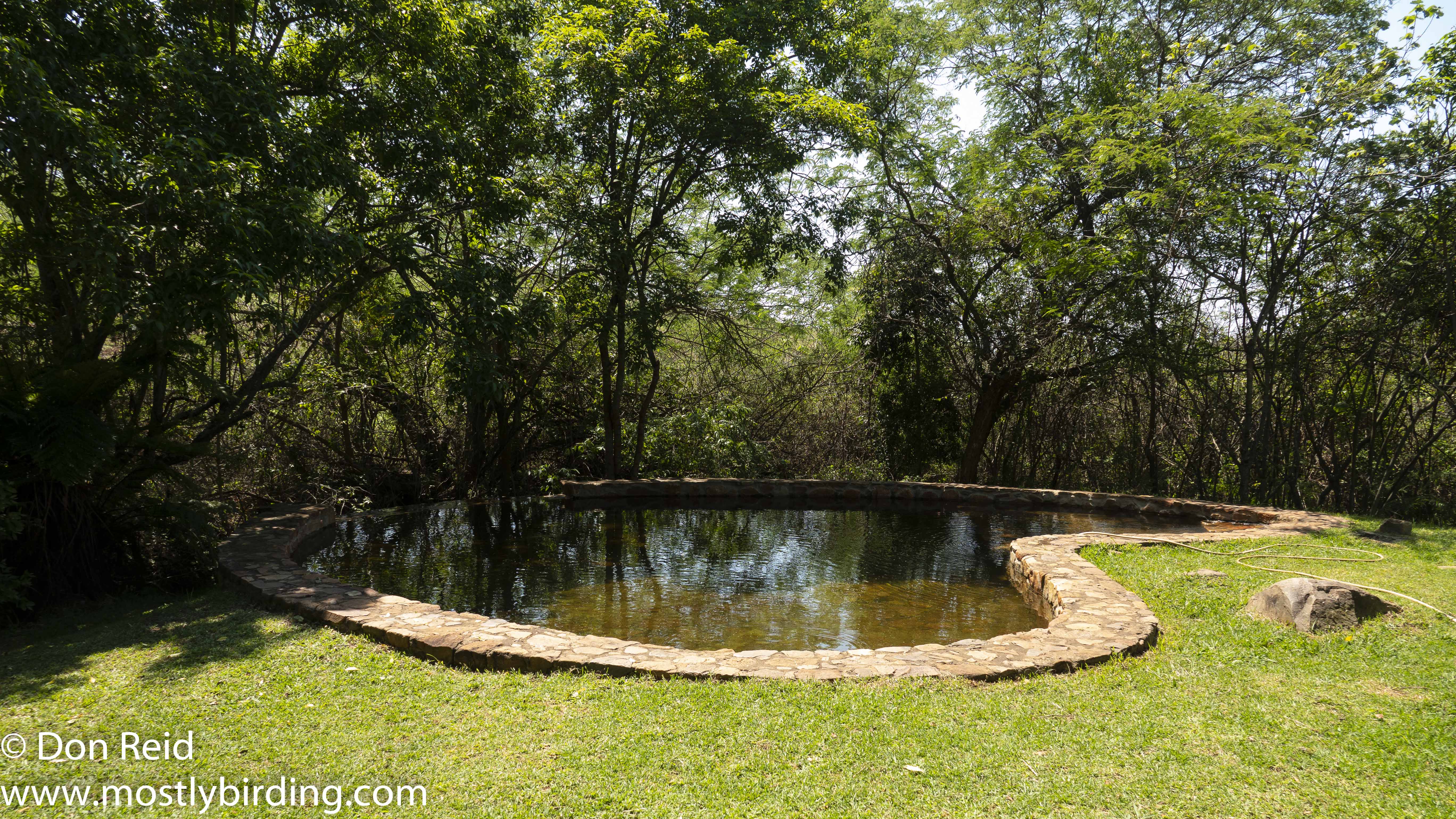
Later I went for a swim in the freshly filled pool – quite chilly but very refreshing and just the thing for an ageing birder!
Rock pool, Verlorenkloof
Day Five – Monday
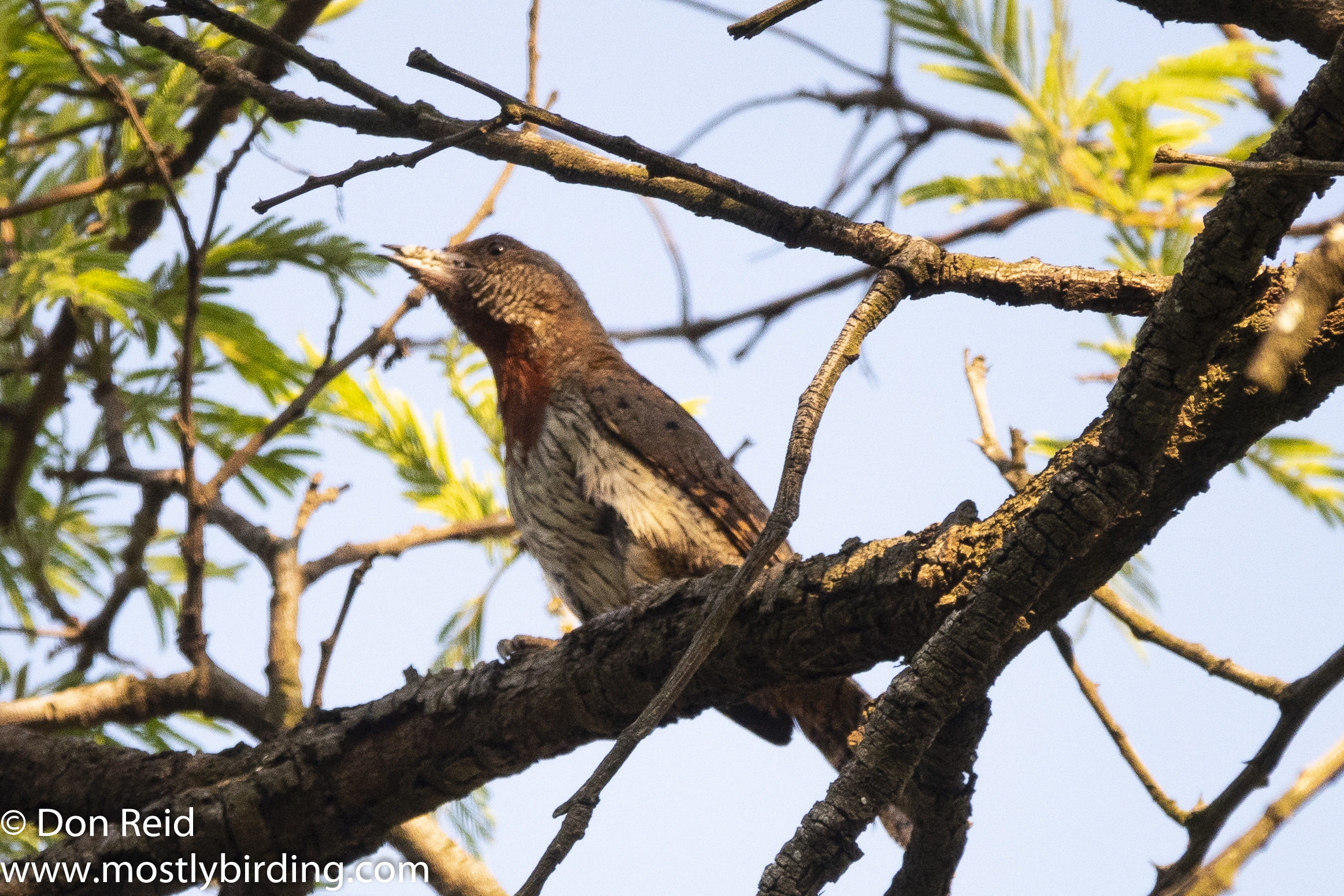
There always seems to be something of interest on awakening – this time it was an African Golden Weaver feeding on grass seeds right outside our window. This is one of the scarcer weavers so to see one close up is a treat – the key ID features of heavy black bill and yellow eyes were clearly visible.
Holub’s Golden Weaver (Ploceus xanthops / Goudwewer), Verlorenkloof
Much of the rest of the day passed quietly on the verandah with our own “theatre of birding” providing the entertainment in the usual impeccable fashion – constant calls and bird movements to and fro – such as this African Hoopoe and Familiar Chat.
Our late afternoon walk was down the old entrance road, or “cisticola alley” as I have come to imagine it (due to the number of cisticolas often present), Perhaps I need to re-imagine it as “grassbird alley” as both Grassbirds were calling – the newly renamed Fan-tailed Grassbird (or Broad-tailed Warbler) and the Cape Grassbird – both of which remained hidden in the long grass from which their contrasting calls emanated
Lazy Cisticola put up a sterling performance, clearly hoping he could persuade me to revert to my original name for this bird-rich “alley”. Then an African Yellow Warbler made Gerda’s day by showing nicely and enabling her to find it in her new bird book – Faansie’s Bird Book – an absolute delight for not only kids but adults as well, especially those who are not interested in all the detail facts that other books and apps provide.
Dark-capped Yellow Warbler
Just one day left of our stay – Koos has plans to make it another biggie…
Verlorenkloof is our favourite destination for a get away from it all week in October each year, usually green from early summer rains and buzzing with bird life across all of the various habitats, from the river along the one boundary through wetlands and open grasslands to the forested kloofs of the surrounding mountains.
It’s all about relaxation while enjoying the beauty and superb birding of this secluded valley – so join us as we explore the estate and the surrounds, ever on the lookout for the special birds of the area.
Map showing location of Verlorenkloof (the blue circle)
Day 3 – Saturday
Today was far more productive in terms of birding effort and we made up for yesterdays fairly relaxed day with some quality birding / atlasing while remaining within the boundaries of the pentad that includes Verlorenkloof resort. The pentad number is 2525_3015.
I was awake just after sunrise and decided to make the most of the perfect weather conditions with a walk along the foothills of the mountain that overlooks croft 2, following the mountain bike trail.
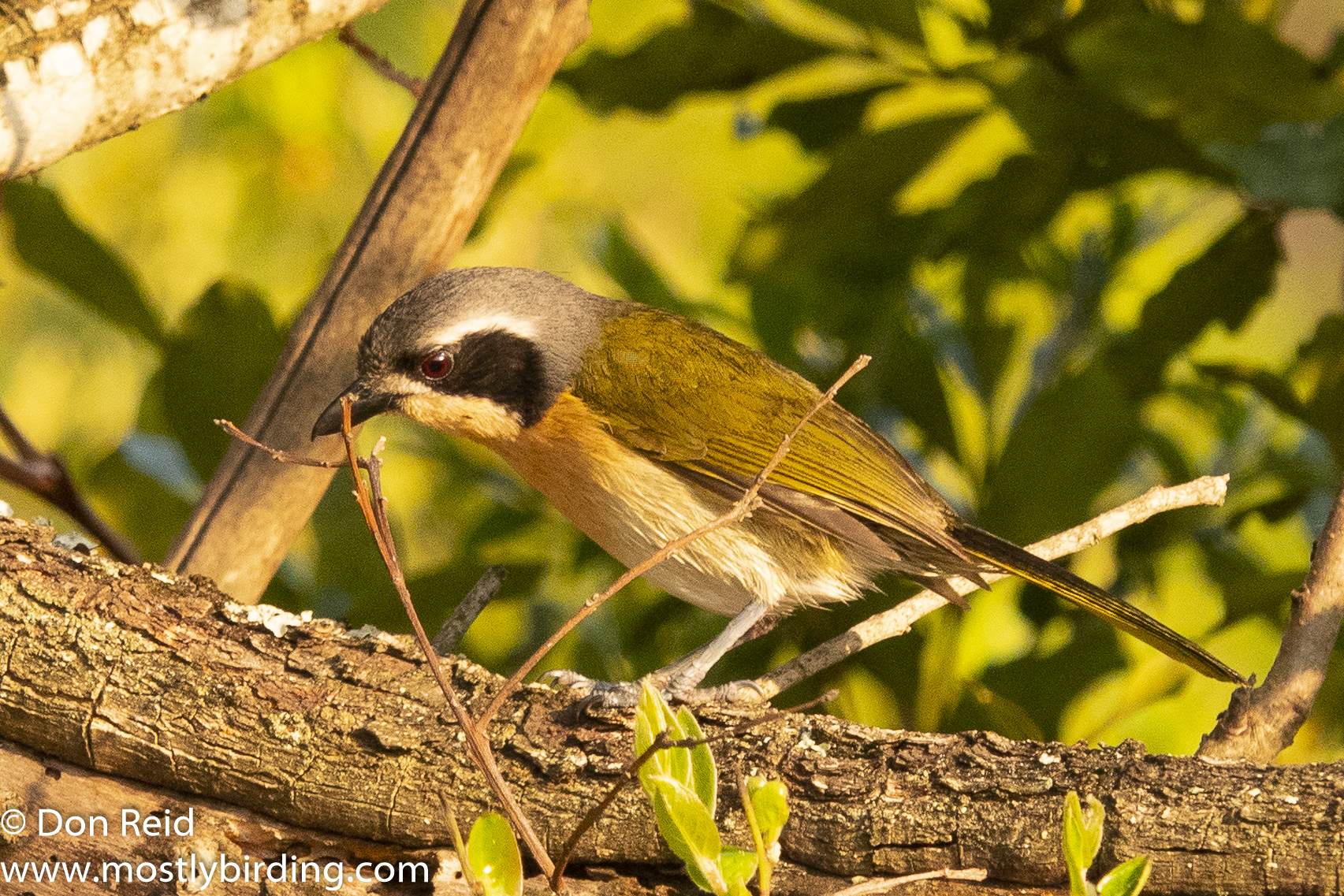
As I left the croft I spotted an Olive Bushshrike in the trees nearby and spent a while stalking it and “spishing” (that strange habit that birders have of making a sound akin to a bird’s alarm calls in the hope that the bird being sought will pop out of the bush to investigate). It seemed to work as the bush-shrike, usually very shy, did appear for a few seconds at a time, just long enough to rattle off a few photos and hope for the best.
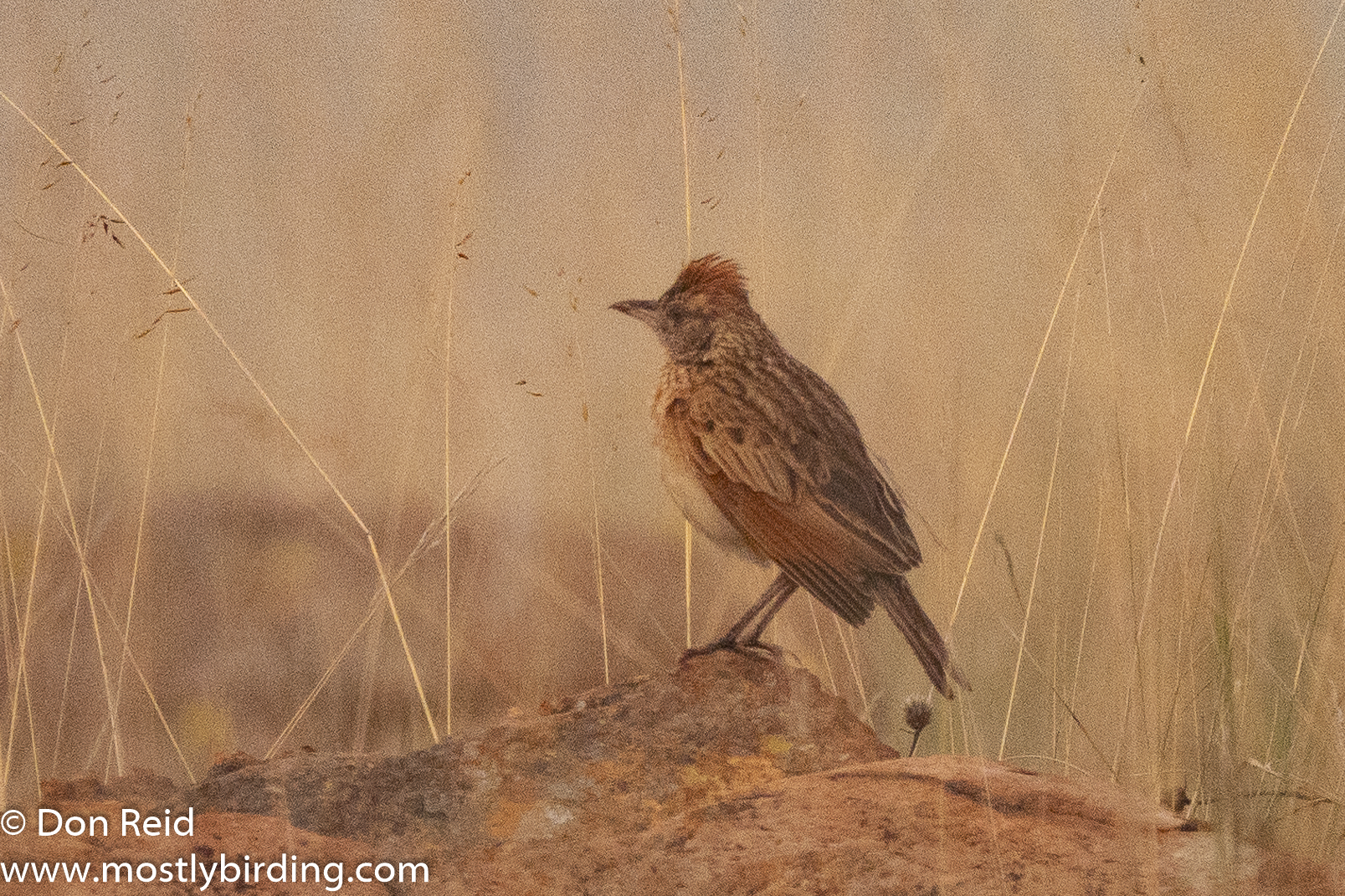
As I headed up the lower slopes of the mountain, mist descended rapidly and visibility reduced, but I could still make out several Rufous-naped Larks along the way, celebrating the new day with their familiar call.
Rufous-naped Lark (Mirafra africana / Rooineklewerik), Verlorenkloof – in the mist
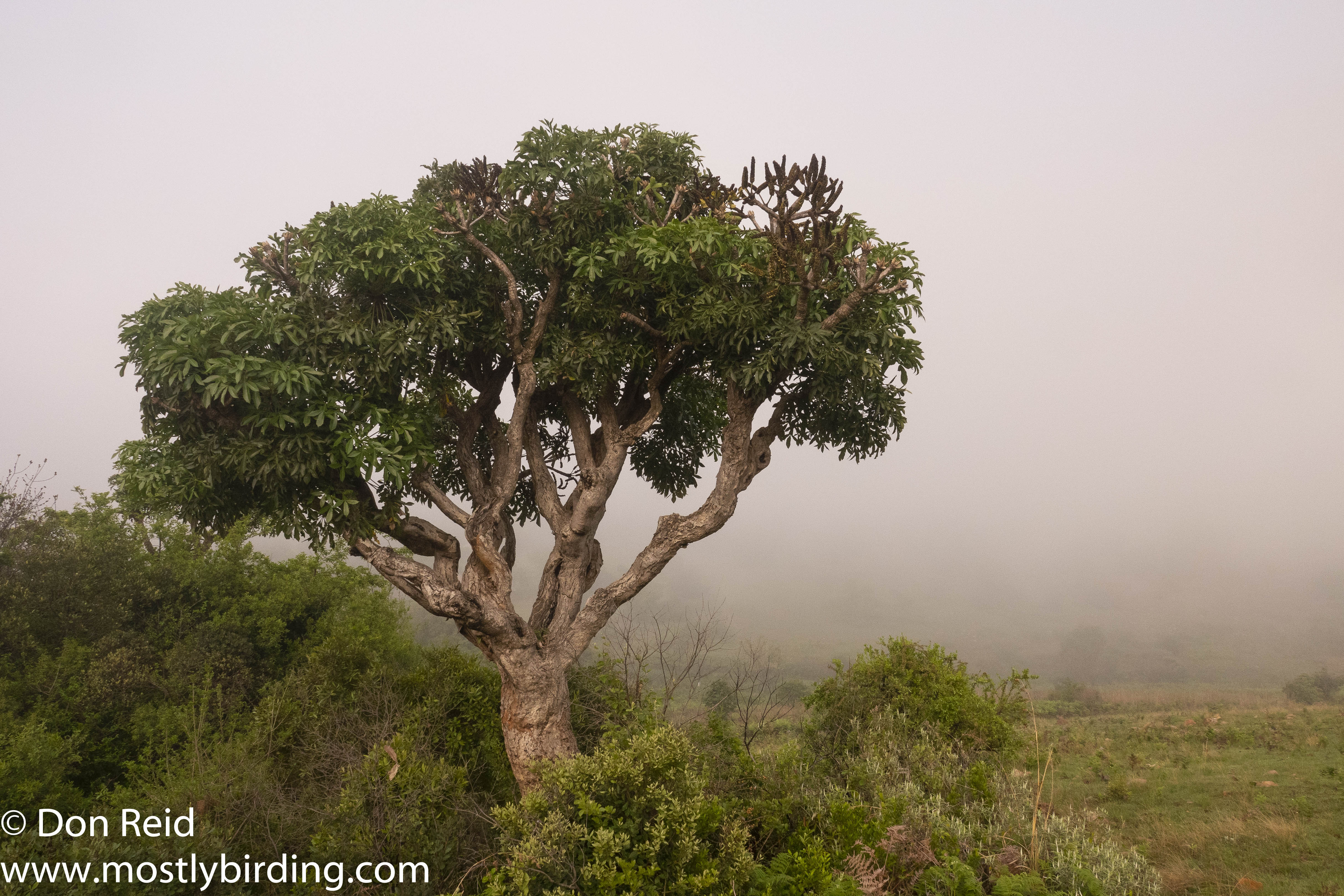
Kiepersol, Verlorenkloof
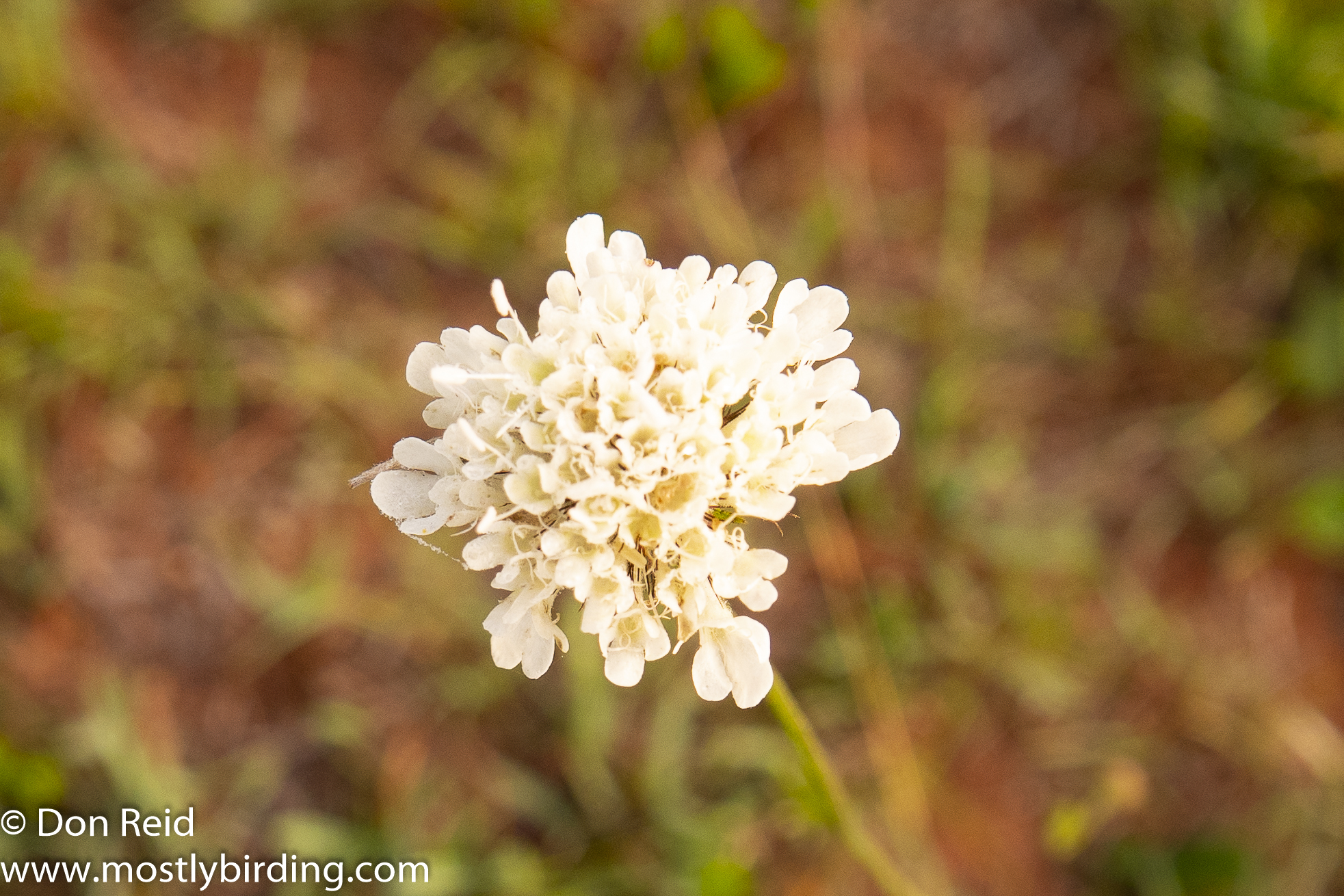
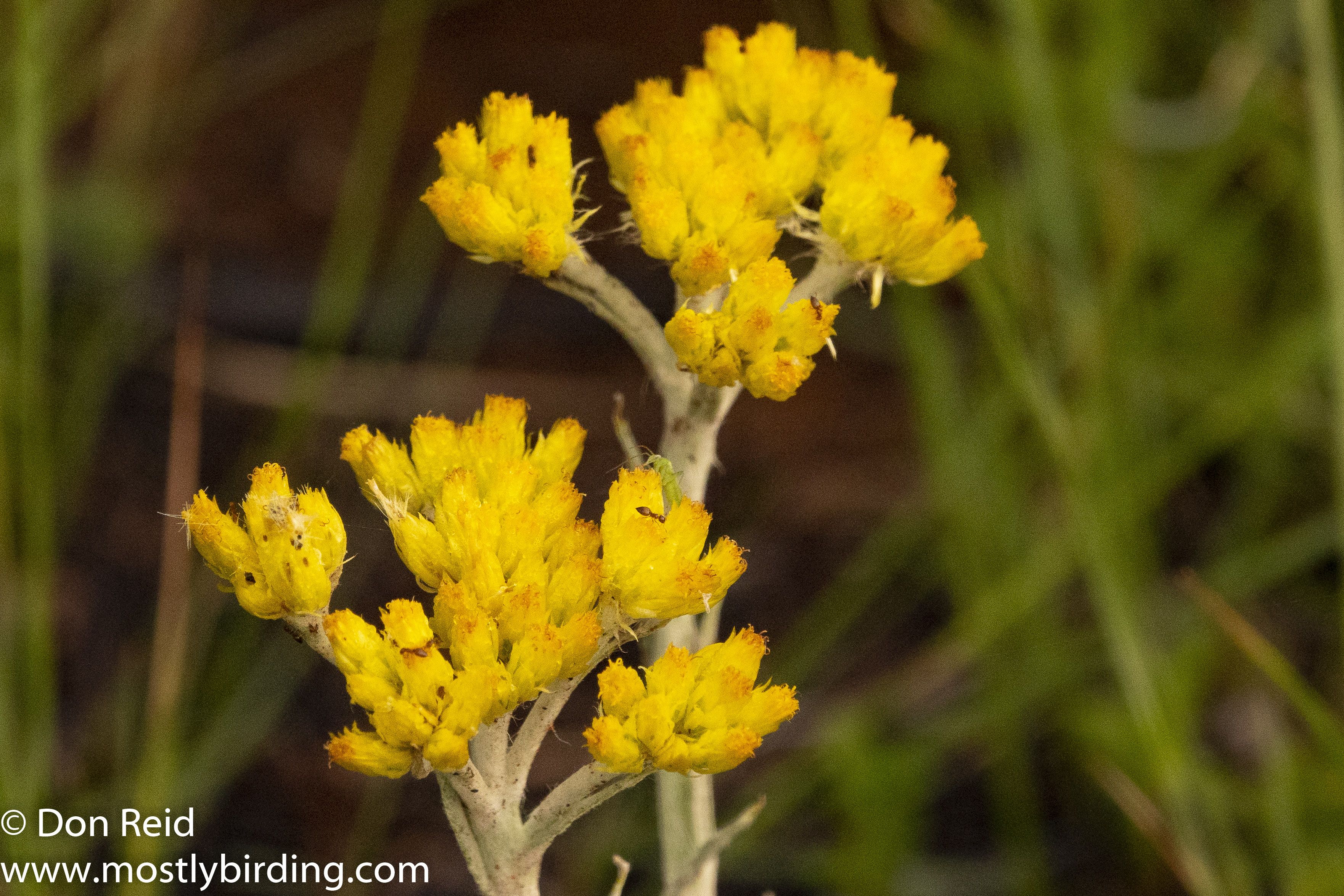
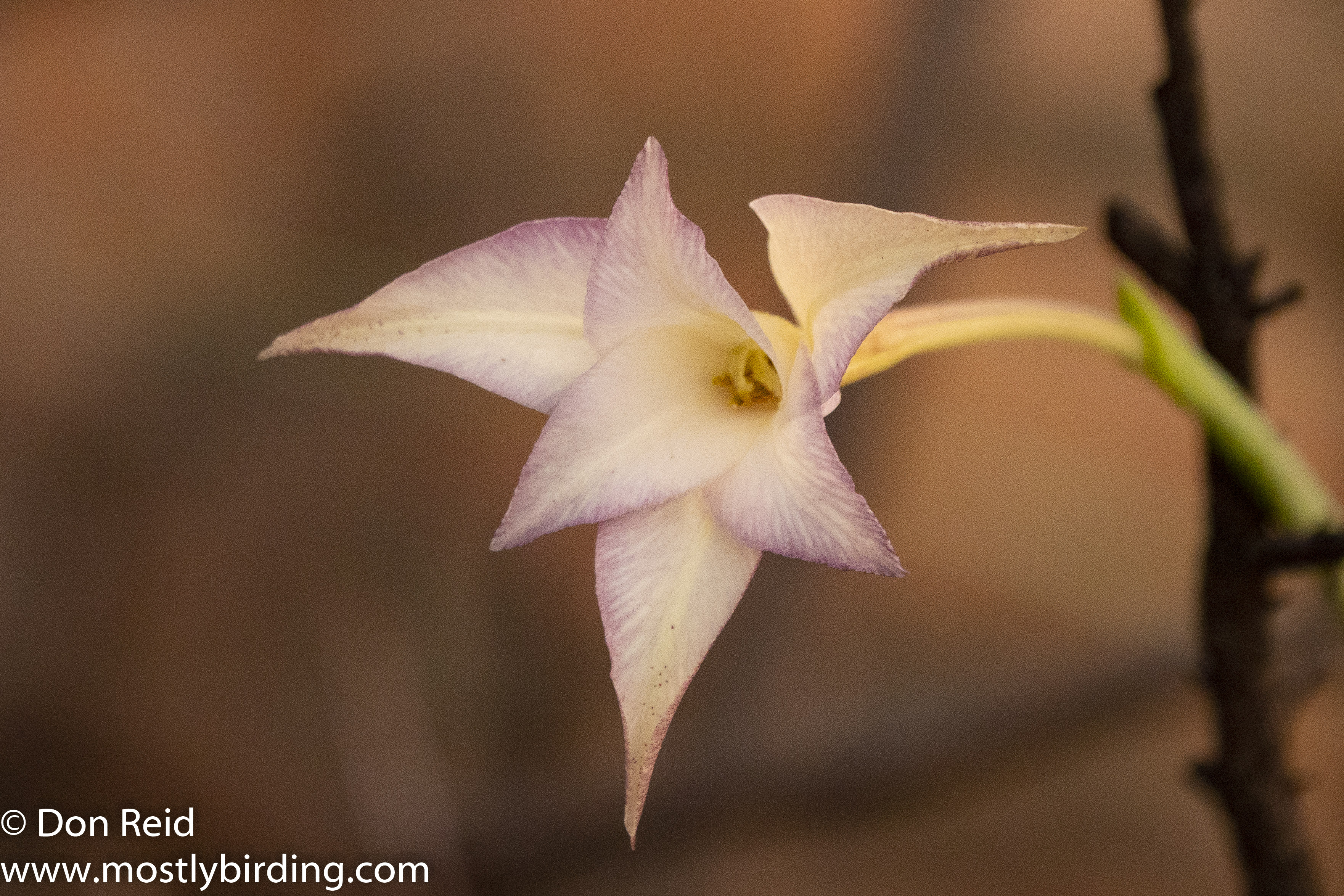
There was not much else in the way of bird life, so I focused on the different small flowers that were in bloom, standing out like beacons in the short green grass and scattered rocks and boulders.
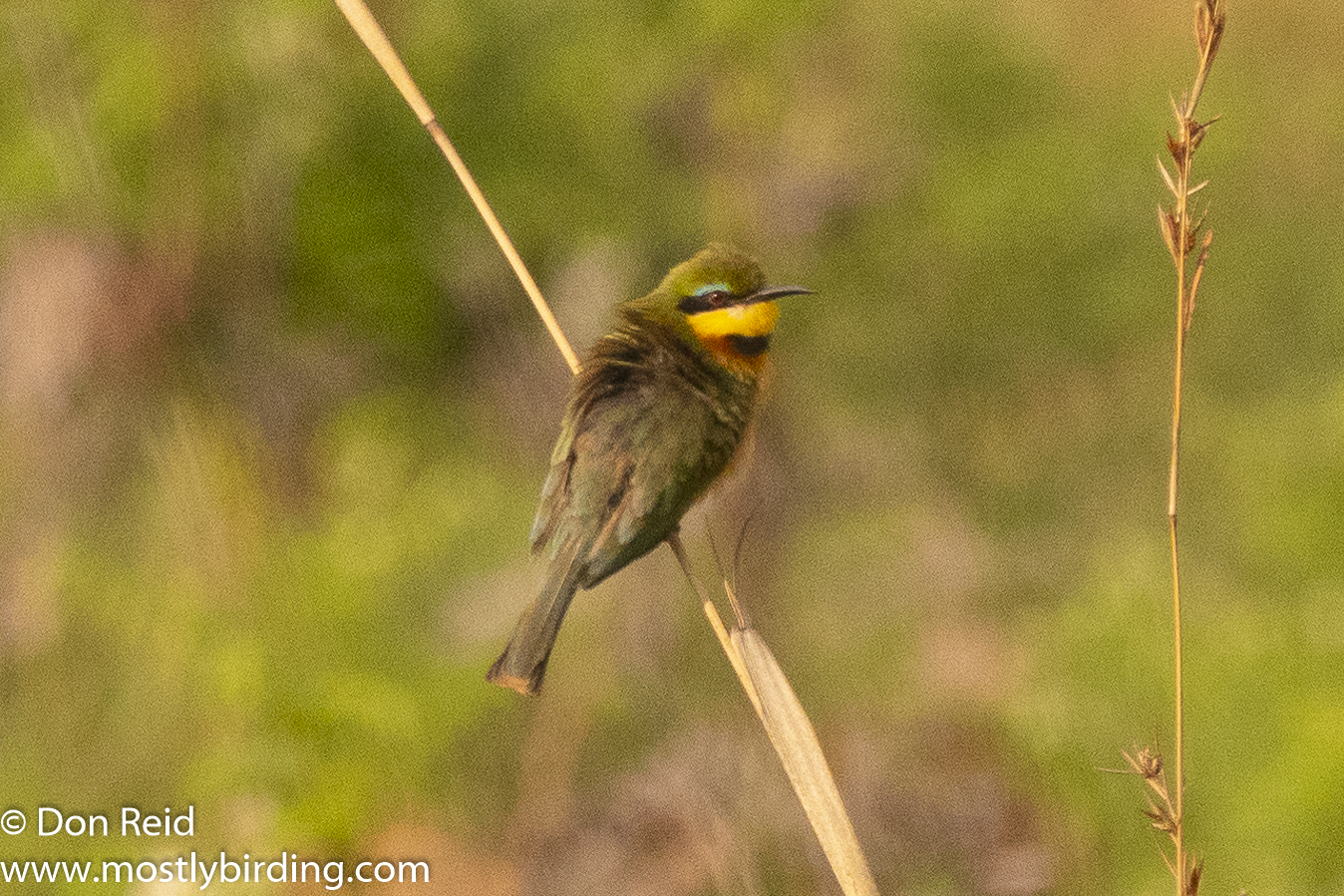
A Cape Longclaw flying off into the mist caught my eye and got me back into birding mode, followed by a Little Bee-eater hawking insects from a thin bush.
Little Bee-eater (Merops pusillus / Kleinbyvreter) (race Meridionalis), Verlorenkloof
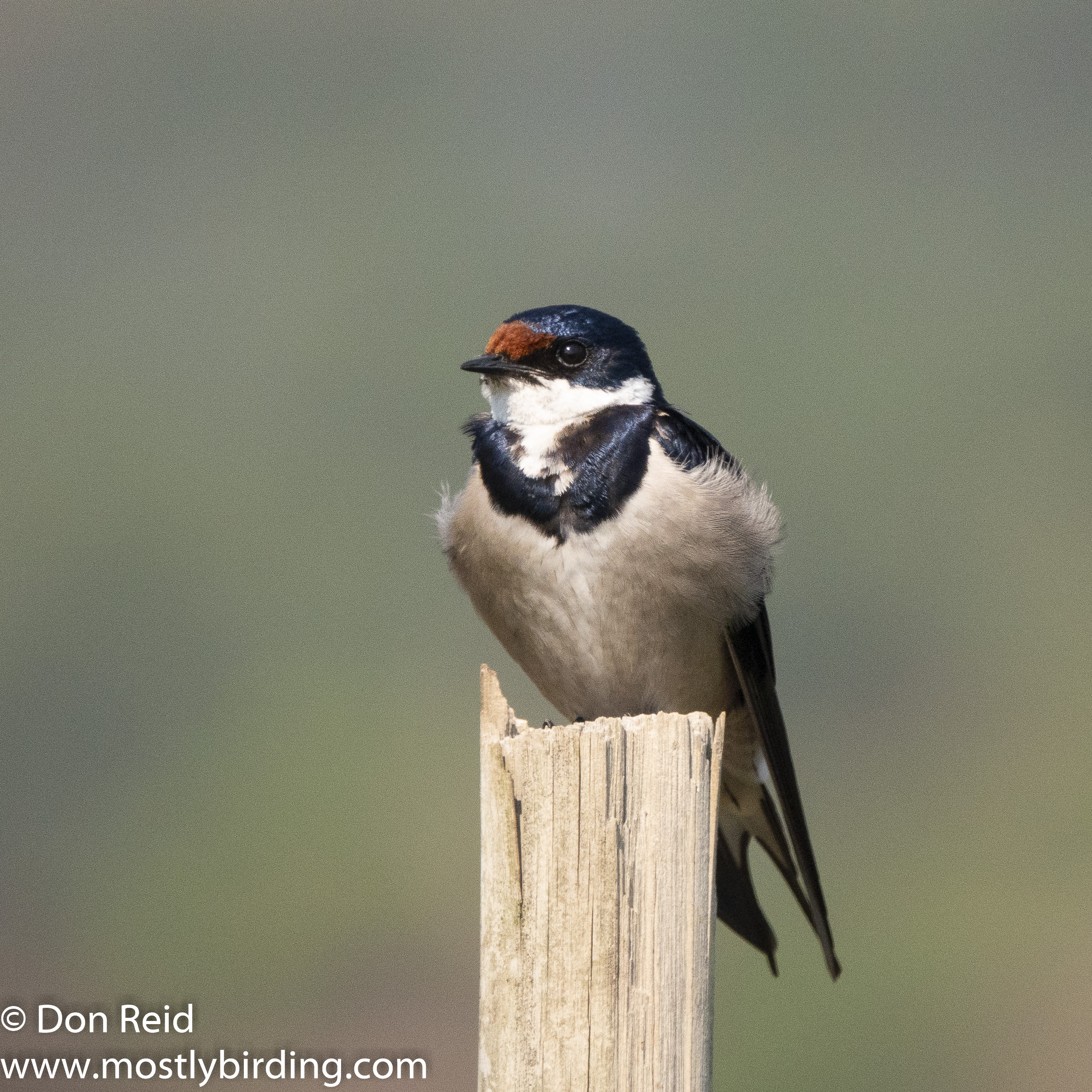
Back at the croft, I gathered my breath, had a quick breakfast and headed out with Koos for an extended drive mostly outside Verlorenkloof estate but within the pentad that surrounds it. Our route took us past the fishing dams, down to and across the bridge over the Crocodile river, where a White-throated Swallow was perched on a fence post.
Then we turned left onto the gravel road that runs east-west past several prosperous-looking farms which variously produce wheat, corn, lemons and livestock. The first stretch passes through natural habitat lined with trees and bush, always productive for those species which prefer this habitat, such as the Yellow-fronted Tinkerbird. The latter, a tiny bird, has the outsized voice and lungs that enable it to keep up a loud popping call for much of the day.
This habitat is also favoured by Weavers – Village, Southern Masked, and Spectacled Weavers were all present. Later a Cape Weaver made it 5 weavers for the day, having seen a Thick-billed weaver during my walk. Oh, and Koos later spotted a White-browed Sparrow Weaver on our way back later on, to make it 6!
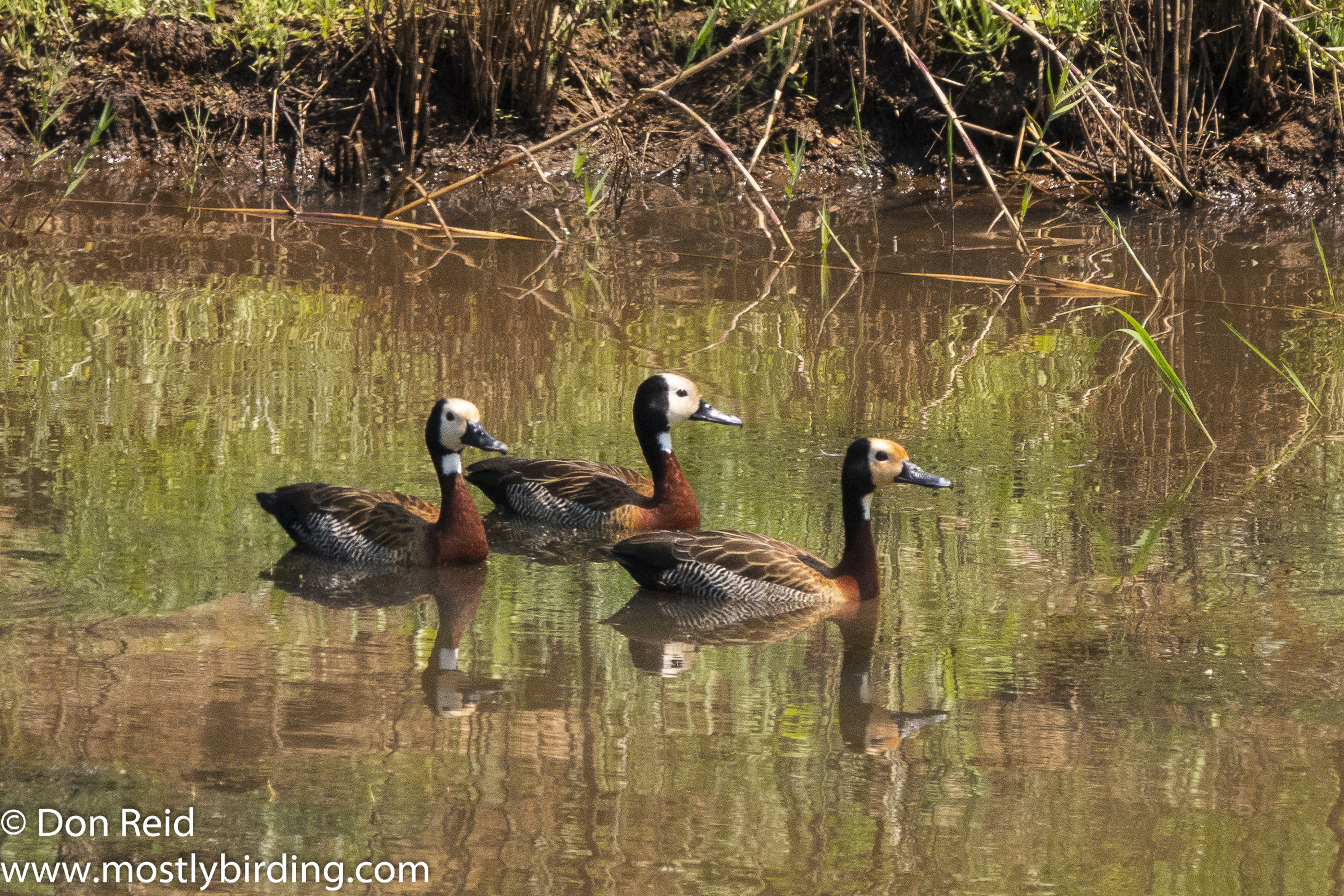
We stopped at every farm dam but only one had any water birds of note, with a flotilla of White-faced Whistling Ducks and a Little Grebe.
I was watching swallows and swifts overhead when I saw what for a moment looked like six planes in a tight formation – then I realised they were Blue Cranes at a considerable height, on their way to some distant field or wetland.
Blue Cranes, Verlorenkloof
As we watched, they started flying in a wide circle several times, no doubt using the thermals to go up even higher and catch an air stream, then continued on their way – spectacular!
The road ends at a T and we turned right along a poorly maintained, bumpy gravel road which passes more farms and a rural school, then skirts an upmarket looking game farm and winds up the pass to the highest point in the area (where a paragliding launch spot is located). This is also the southernmost boundary of the pentad and where we turned around.
While having coffee at this spot I noticed an LBJ and immediately hoped it was the Wailing Cisticola which I had found at this exact location a couple of years ago. It was and I followed it in the hope of getting a photo. With some patience I was able to photograph it from a distance – my first photographic record of the species.
That was the sum total of the species until a small black and white jet plane shot past – actually an Alpine Swift which was followed by a few more, quite appropriate at this elevation and mountainous habitat.
We returned slowly past the old farmhouse on Verlorenkloof (which served as the estate reception in years past) adding a White-fronted Bee-eater on the wire to complete a very productive drive.
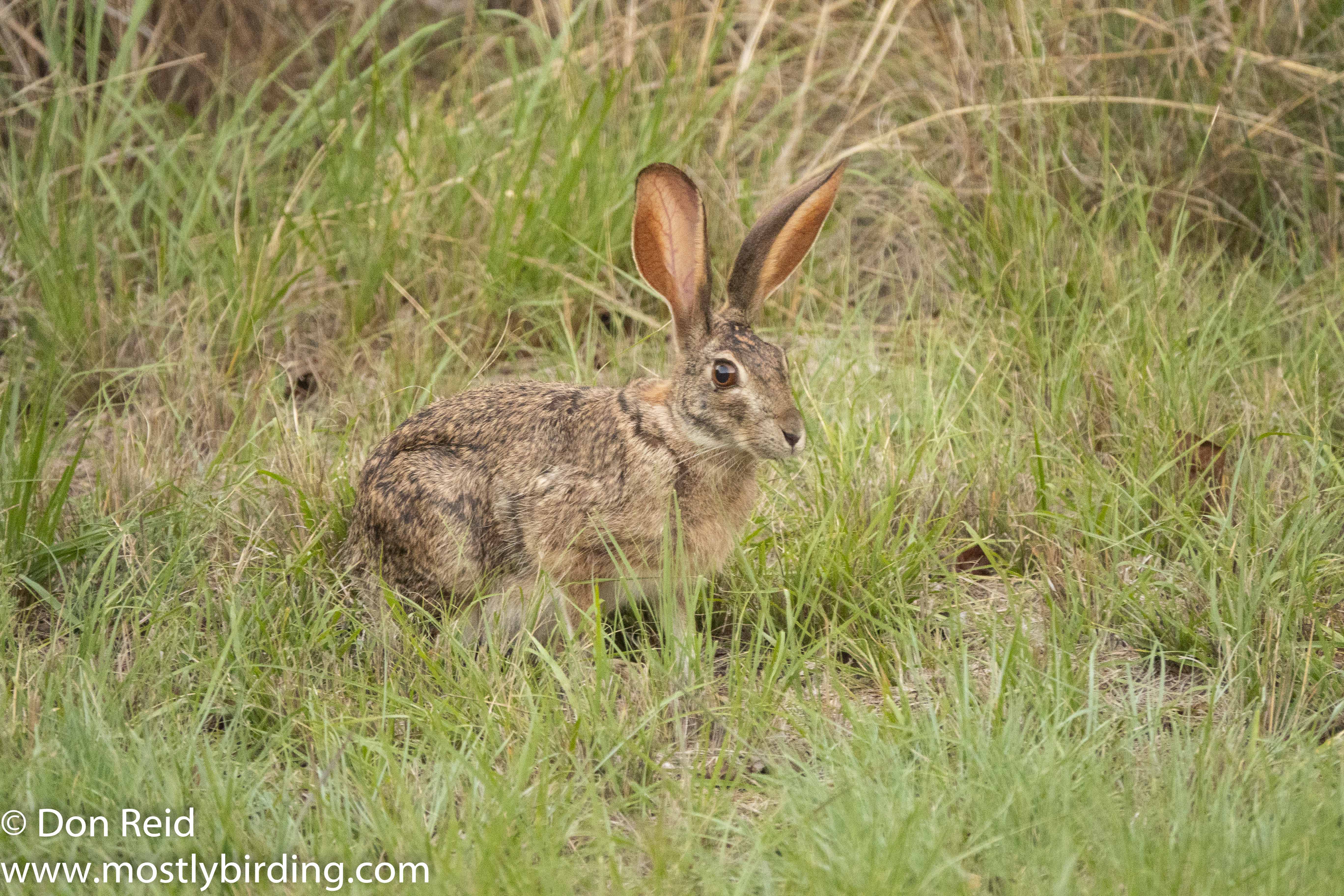
Scrub Hare (Lepus saxatillis), Verlorenkloof
A late afternoon walk produced an African Reed Warbler at one of the dams and at dusk a Fiery-necked Nightjar called to close out the birding for the day – 43 species added taking my week total to 104.
Verlorenkloof is our favourite destination for a get away from it all week in October each year, usually green from early summer rains and buzzing with bird life across all of the various habitats, from the river along the one boundary through wetlands and open grasslands to the forested kloofs of the surrounding mountains.
It’s all about relaxation while enjoying the beauty and superb birding of this secluded valley – so join us as we explore the estate and the surrounds, ever on the lookout for the special birds of the area.
Map showing location of Verlorenkloof (the blue circle)
Day 2 – Friday
Our second day started lazily, despite the Red-chested Cuckoo imploring us to “wake up now” over and over. Eventually we succumbed, made ourselves presentable and headed to the verandah for coffee.
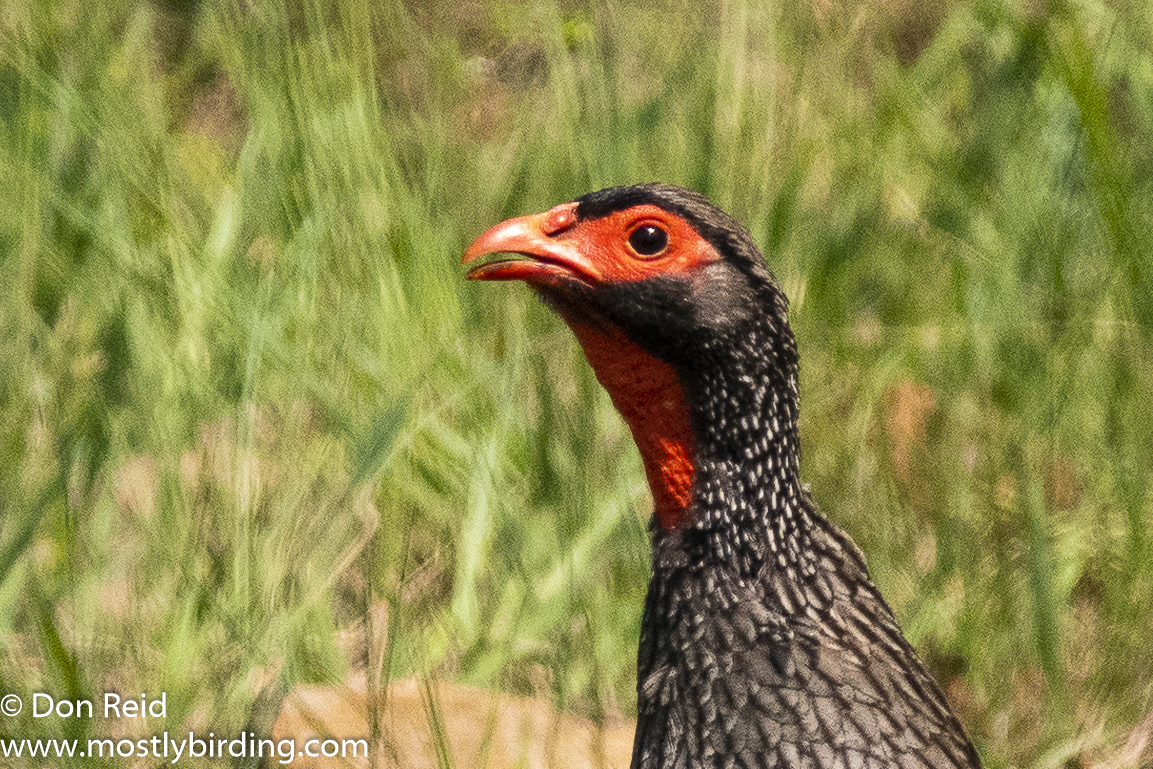
Before breakfast a Red-necked Spurfowl surprised us with a slow walk past the croft, until he spied us watching him and set off at a pace towards the long grass, leaving me with a snatched photo opportunity. I followed the Spurfowl hoping to get some better images of this shy species, but despite hearing it nearby I could not see any movement and had to abandon the stealthy chase.
Disappointed, I returned along the path through tall grass and reeds to the croft, only to be surprised once again by a second Spurfowl, in full throated voice, presenting a perfect photo opportunity and a highlight for the day.
From a distance the red of the neck and face is not all that striking, but close up it is immediately apparent why it was named the Red-necked Spurfowl
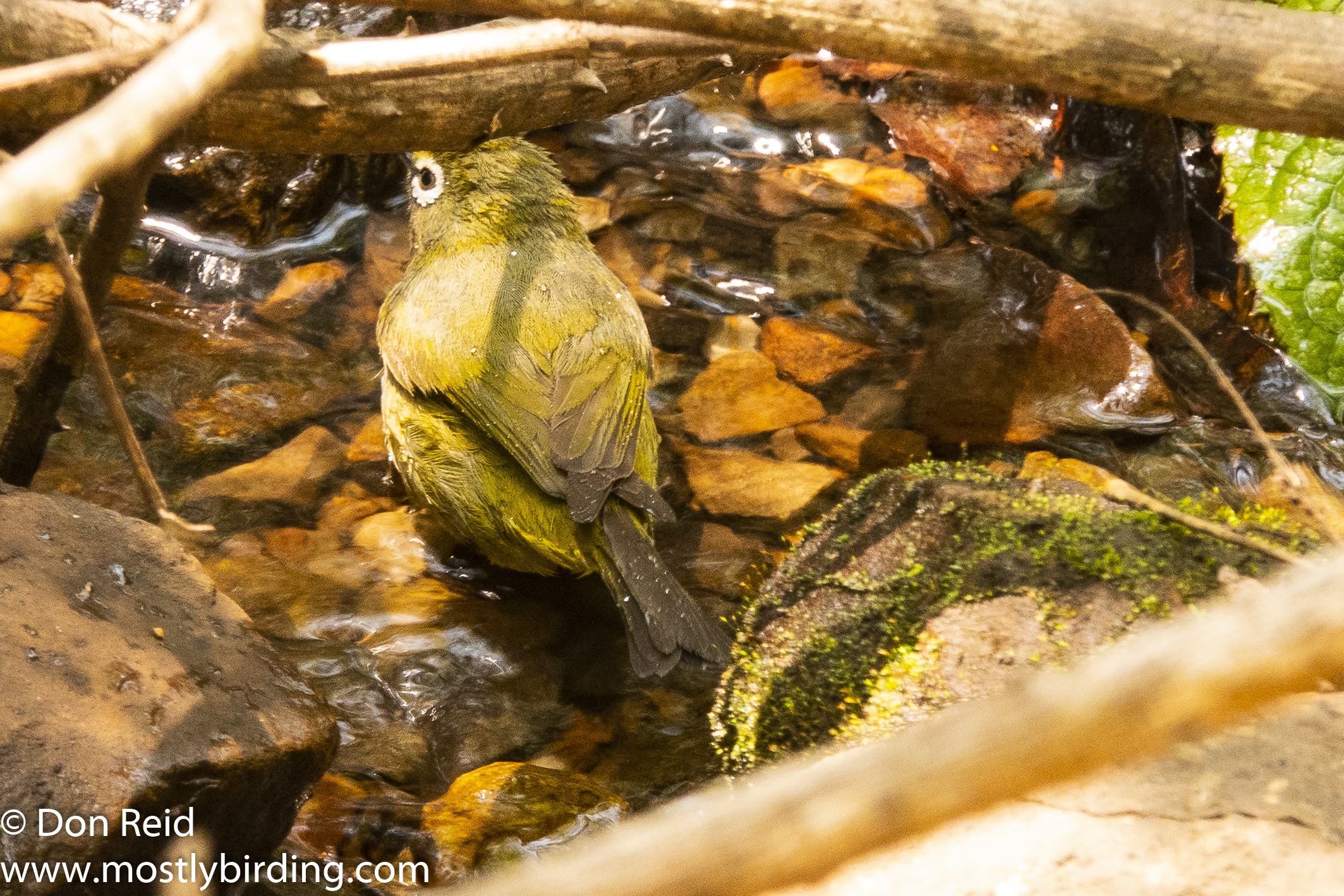
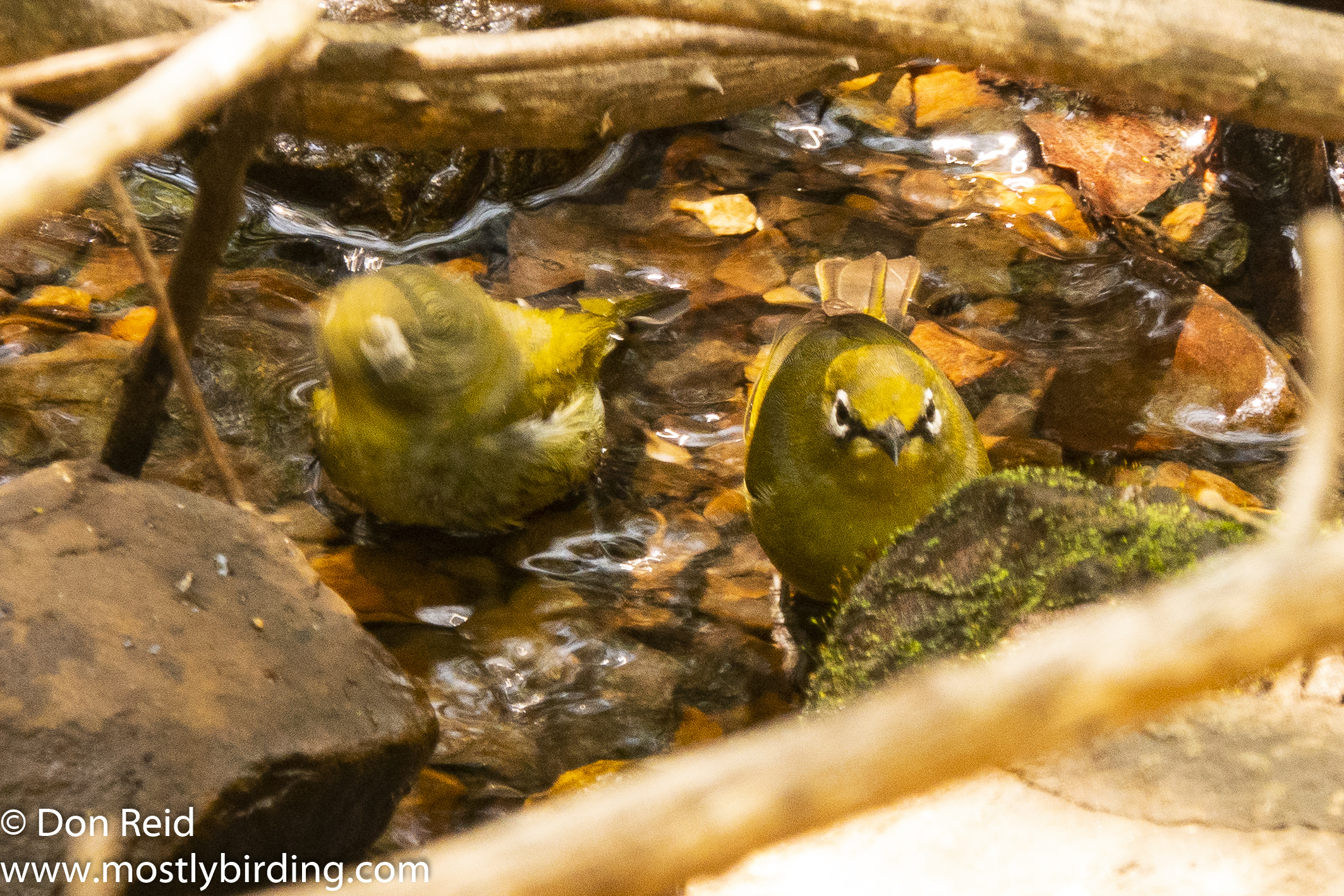
After breakfast I strolled down to the rock swimming pool near our croft, where I found an Olive Thrush in the small stream, hopping about in the shady undergrowth. The thrush eluded my photo attempts but a group of Cape White-eyes made up for it moments later by choosing a tiny pool amongst the rocks alongside to bathe – a charming sight.
Much of the rest of the day was spent relaxing on the verandah, watching the comings and goings of the regulars, with African Paradise Flycatcher flitting between the trees at regular intervals.
Mid afternoon we went for a drive around the estate and down towards the river, stopping frequently and adding :
– Village Weavers in large numbers
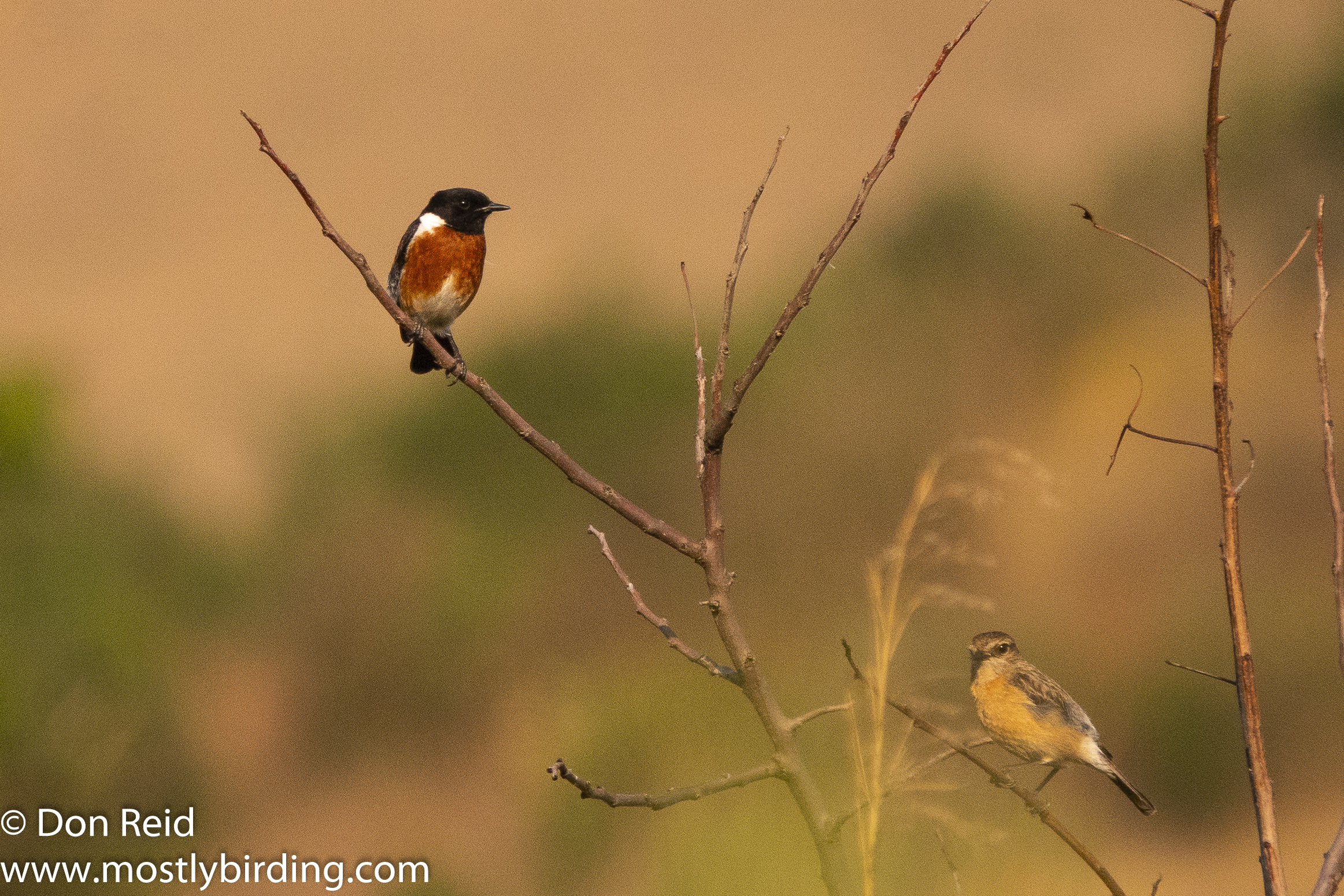
– Stonechat pair perched close together, showing the differences between male and female (left and right)
– Groundscraper Thrush strutting guardsman-like about the green lawns of the idyllic picnic spot next to the river
Crocodile River, Verlorenkloof
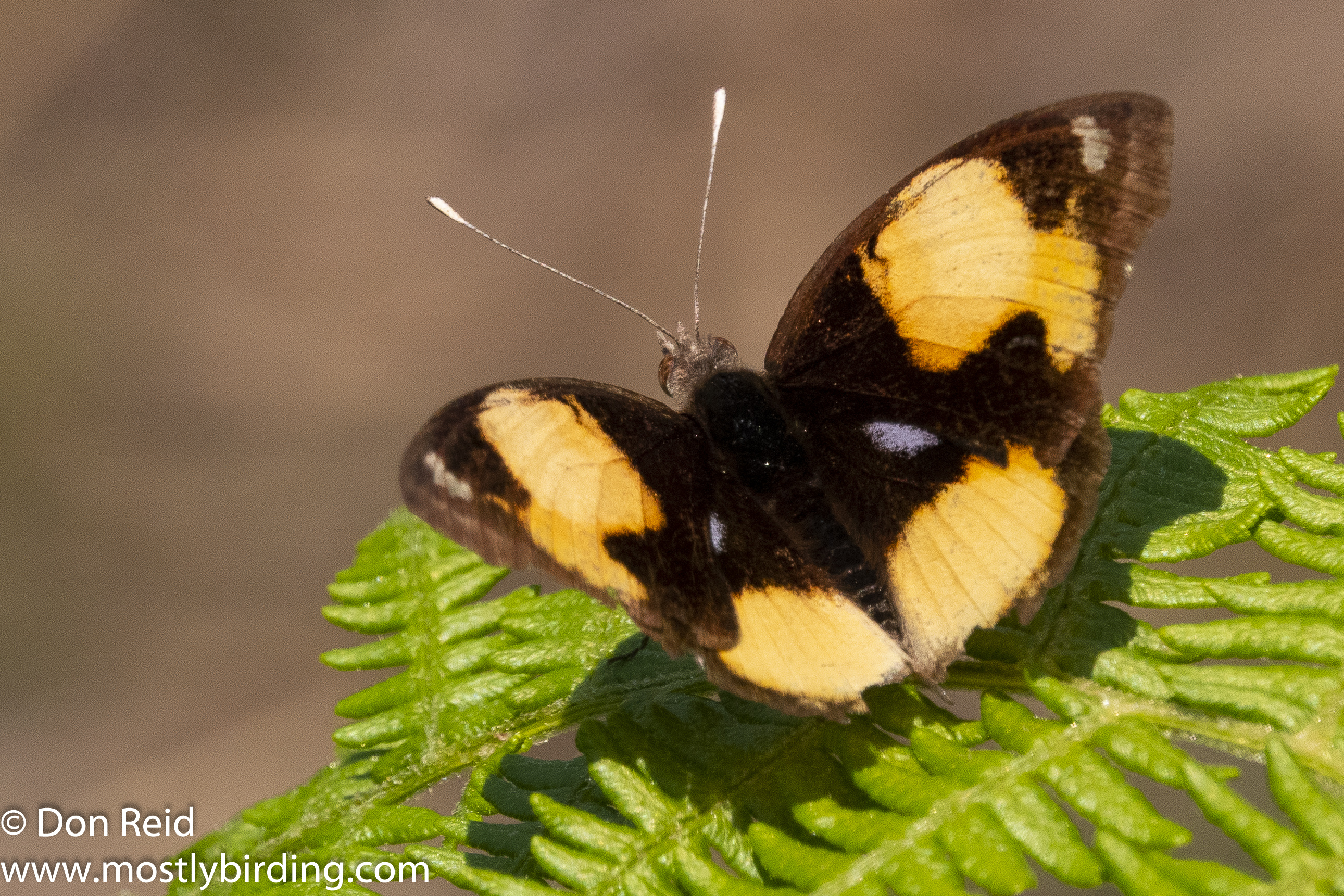
Butterfly, Verlorenkloof
Verlorenkloof
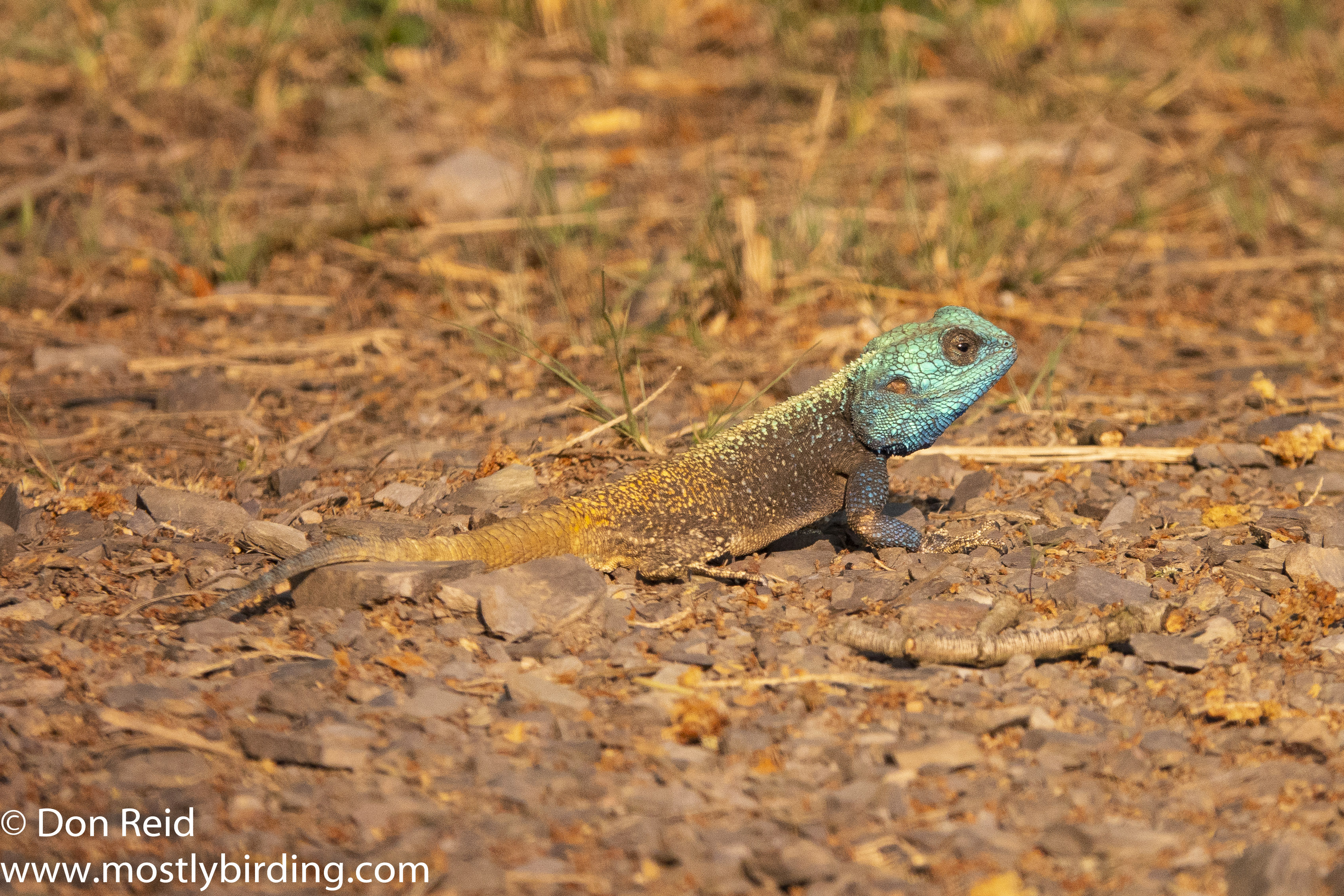
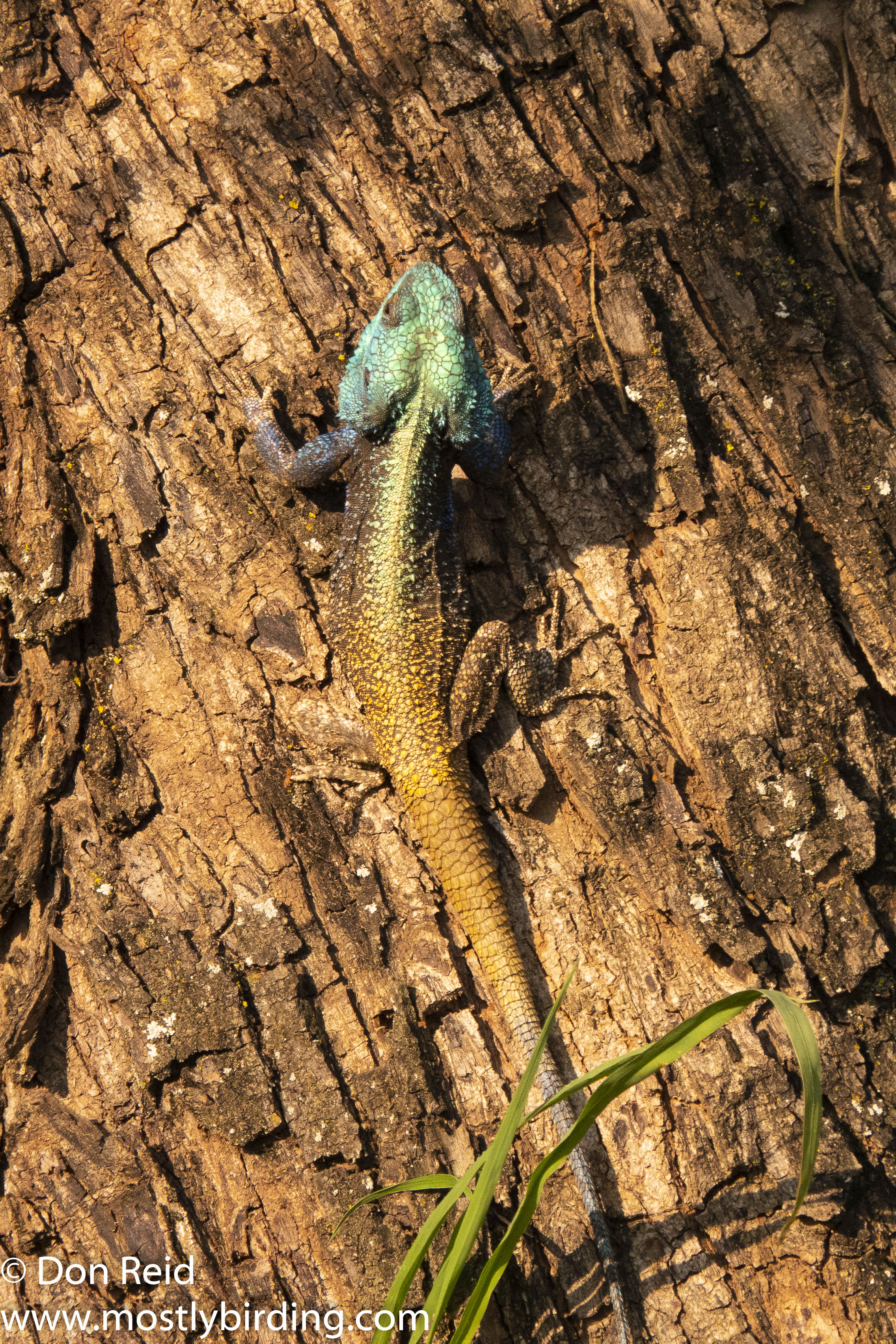
On the way back to the croft a Tree Agama sat next to the road, then climbed up the trunk of a nearby tree, pausing long enough for us to get a good look at its prehistoric form and bright blue head and neck
Southern Tree Agama (Acanthocercus atricollis / Bloukopkoggelmander), Verlorenkloof
The second day, a slow relaxed one, ended with a modest 11 new species added to the list for the week to take the total to 61
Our timeshare week at Verlorenkloof came at just the right time – travel restrictions are minimal and the local tourism industry is gradually returning to some sort of normality, although the lack of international visitors remains a massive problem for those elements of the industry that rely solely on them.
Verlorenkloof is our favourite destination for a get away from it all week in October each year, usually green from early summer rains and buzzing with bird life across all of the various habitats, from the river along the one boundary through wetlands and open grasslands to the forested kloofs of the surrounding mountains.
It’s all about relaxation while enjoying the beauty and superb birding of this secluded valley – so join us as we explore the estate and the surrounds, ever on the lookout for the special birds of the area.
Day 1 – Thursday
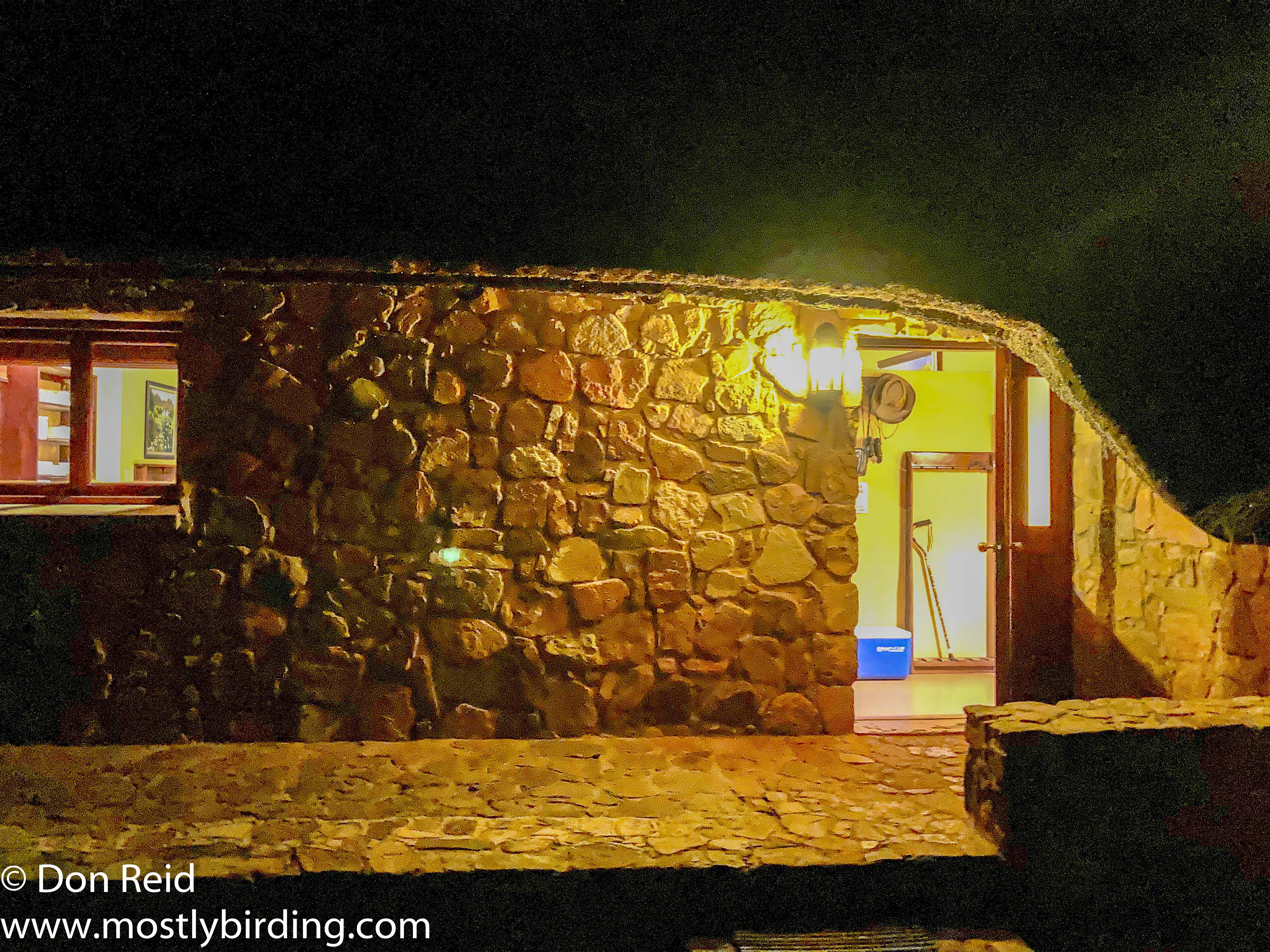
After a busy Wednesday of packing, family commitments and traveling, we arrived at Verlorenkloof after 7 pm to the welcoming sight of Croft No 2, brightly lit and with supper on the go, thanks to Koos and Rianda who had left Pretoria a couple of hours before us.
Croft No 2 at Verlorenkloof
It was wonderful to wake up the next morning to the different calls from the varied bird life at Verlorenkloof. Yellow-fronted Tinkerbird was first on the list – it’s clear ‘popping’ call unmistakable in the crisp morning air. Others followed in rapid succession and the first 12 species on my atlasing list were all based on calls, including Cape Grassbird repeatedly trilling from the nearby long grass, Olive Bushshrike with its descending teu-teu-teu-tu-tu and Brown-hooded Kingfisher adding an occasional strident Ki-ti-ti-ti to the mix.
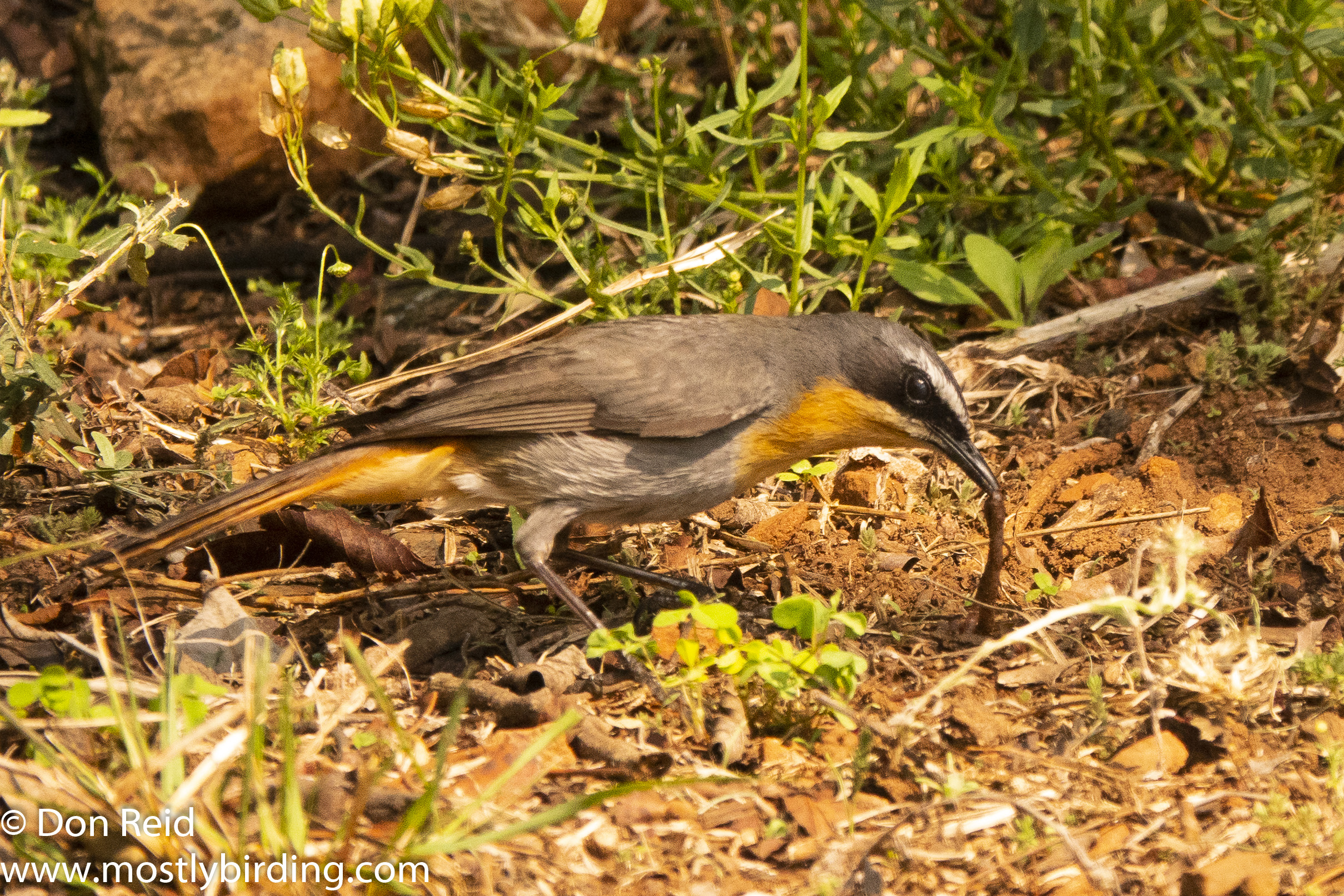
This Cape Robin-Chat found a nice juicy worm for breakfast
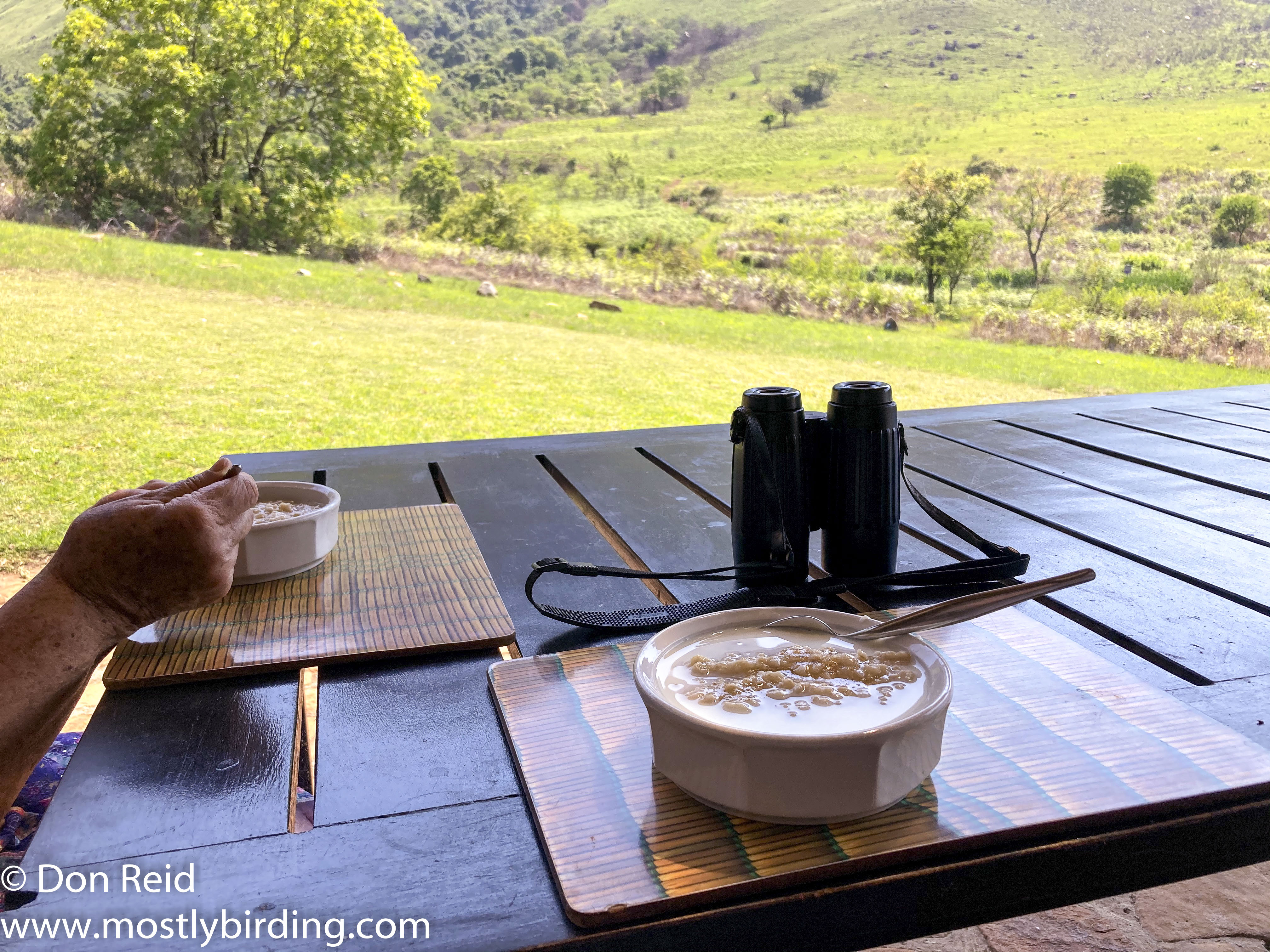
Our breakfast was our traditional oats porridge on the verandah, where we spend a large part of the day, accompanied by the Kor-kor-kor of Purple-crested Turacos in the surrounding trees and Greater striped Swallows and White-rumped Swifts swooping by in their constant search for flying insect prey. Both species seem to be vie-ing for occupational rights to the under-eaves nest.
A short walk to the lower slopes of the mountain took me past the stream where beautiful green ferns and reeds thrive on the water trickling down from the mountain top.
Verlorenkloof
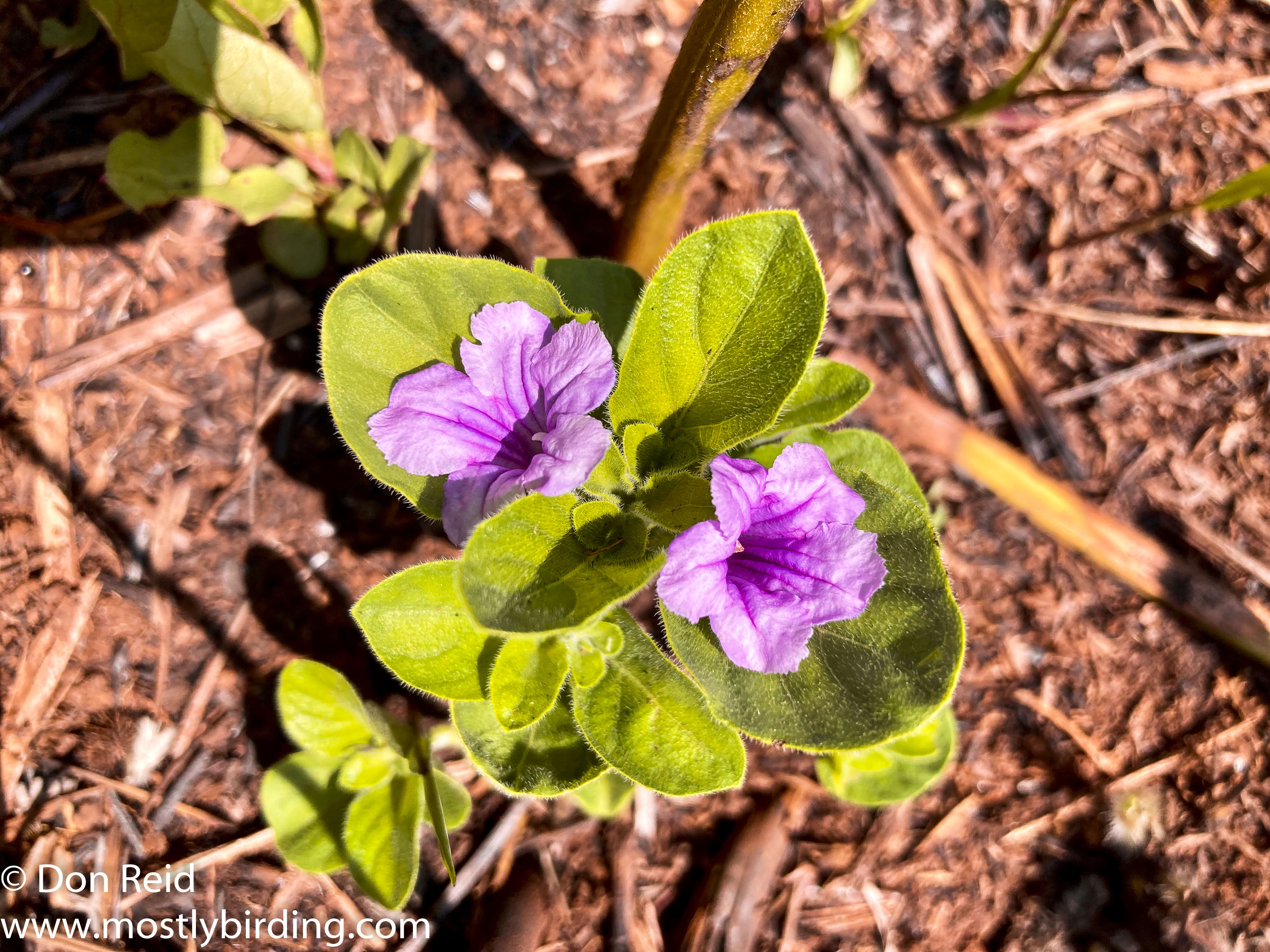
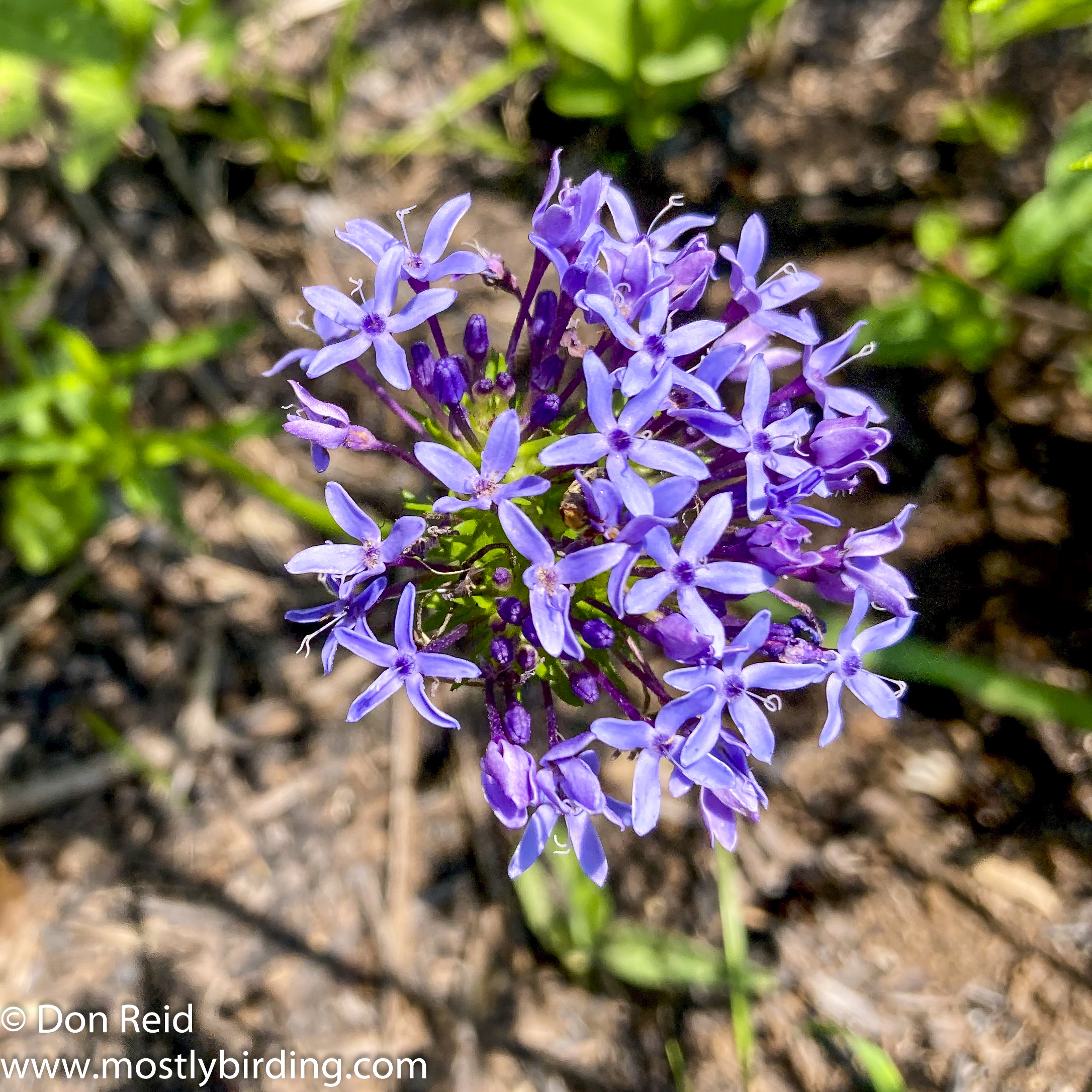
Here and there small flowers add a splash of colour to the shades of green. I spotted African Yellow Warbler and Red-collared Widowbird, both of which love this habitat.
Verlorenkloof
Verlorenkloof
The kitchen overlooks a patch of grass where small seedeaters often come –
Common Waxbill (Estrilda astrild / Rooibeksysie), Verlorenkloof
Our late afternoon walk took us further up the slopes to where the forested kloof starts – the forest specials were calling al around us and were not too difficult to identify even though non could be seen – Chorister Robin-Chat, Bar-throated Apalis, Sombre Greenbul and Blue-mantled Crested Flycatcher.
Koos spotted a small warbler, which was singing at full pitch in the forest canopy, which he identified as a Yellow-throated Woodland Warbler (such a long name for a tiny bird!) and we enjoyed good views of it for the next 5 minutes.
Yellow-throated Woodland-Warbler
Briefly out of the forest before turning back, I saw a bird in a distant tree which we eventually decided was a female Narina Trogon – a much sought after species which we have often heard in the kloof before but only seen a couple of times. That proved to be the last one for the day – taking my list to a nice round 50 species.
With the new year in its infancy, it’s time to select a few photos which best represent our 2019. In some cases, selection is based on the memory created, in others I just like how the photo turned out, technically and creatively.
If you have any favourites, do let me know by adding your comment!
The Places
The highlight of our travels during the past year was without doubt our trip to Australia to visit our son and family and to do a bit of touring through the State of Victoria. Other than that we did not venture far afield but managed to tame our travel itch with several local trips and extended visits to our second home town of Mossel Bay in the Southern Cape.
The year started and ended in our second home town of Mossel Bay. Walks along the seafront boardwalk are always a highlight with scenes like this to enrich the soul
The Wilge River Valley, about an hour’s drive from Pretoria, is a popular birding spot amongst Gautengers and delivers many species in summer as well as attractive landscapes
The Vlakfontein grasslands north-east of Pretoria are a favourite atlasing area for me – away from the hectic traffic of Gauteng
The Delmas area south-east of Pretoria is another favourite atlasing area, however traffic is a challenge – this early morning shot was taken in winter when the skies are a lot smokier – good for dense colour but nothing else
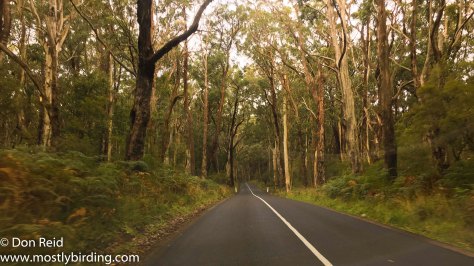
The road to Cape Otway Lighthouse in Victoria, Australia – we did not realise just how much forest Australia has – well the bit of Victoria that we saw anyway
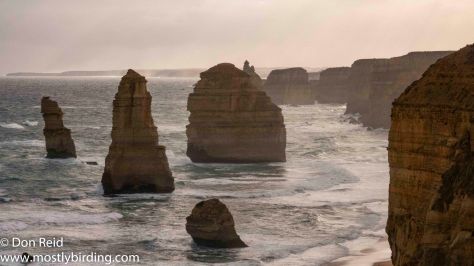
The very popular tourist spot called the Twelve Apostles along the Great Ocean Road to the west of Melbourne, Australia certainly lived up to its reputation as a “must see and photograph” – quite a dramatic scene created by weathered columns of rock
The beautiful beach at Cowes, Philip Island, just south of Melbourne
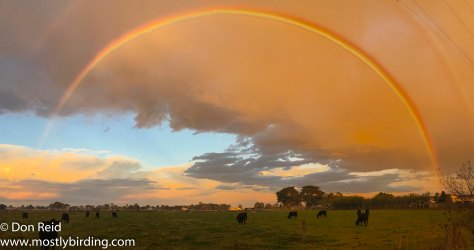
A special rainbow while walking in Sale, Victoria Australia
The early morning train approaches in mist to take us from Sale to Melbourne
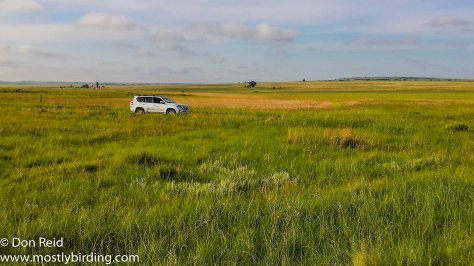
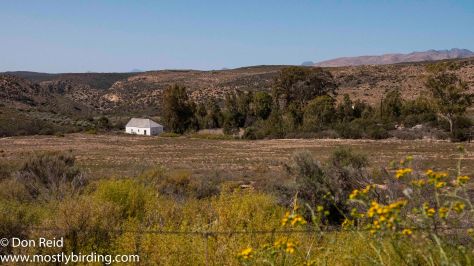
The Klein Karoo is another favourite atlasing area despite low bird numbers – it has a special attraction of its own. This photo was taken south of Oudtshoorn, Western Cape
The Wildlife
With visits to Kruger National Park and Karoo National Park, as well as our time in Australia, we enjoyed some usual and unusual wildlife sightings
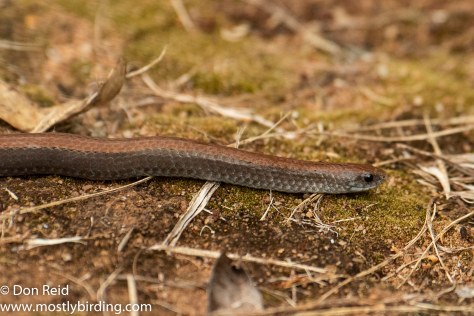
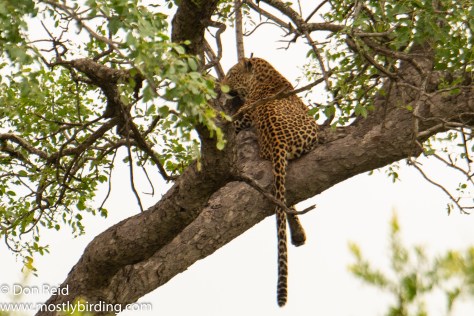
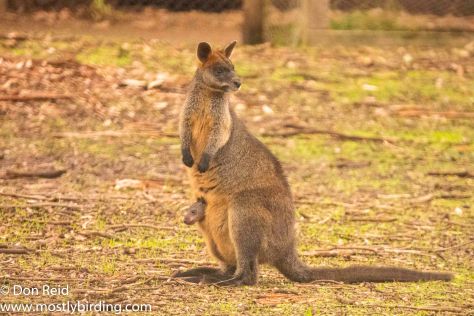
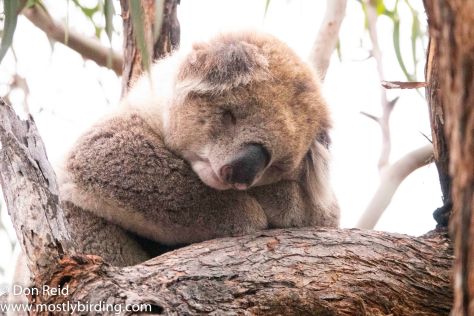
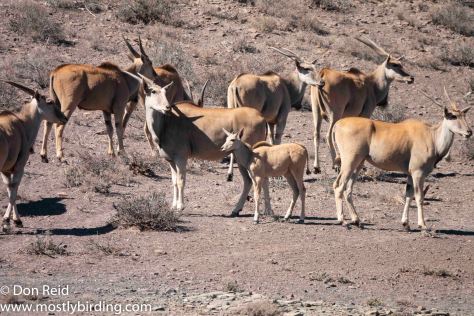
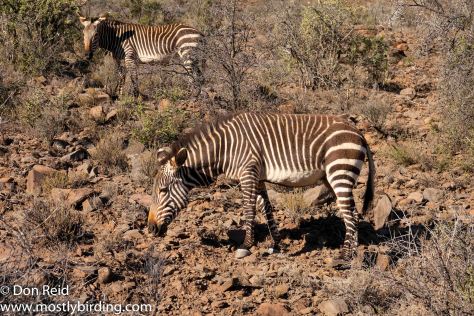
Spotted Hyena pups, Tshokwane area, Kruger ParkCommon Slug-eater / Tabakrolletjie (Duberria lutrix), Pine Lake Resort, White RiverLeopard, Kruger NATIONAL PARKPlains Zebra (equus burchelli), Olifants area, Kruger ParkBaboon, Olifants area, Kruger ParkSwamp Wallaby, Philip Island, AUSTRALIAKoala, Raymond Island, Victoria, AUSTRALIAELAND, KAROO NATIONAL PARKKLIPSPRINGER, KAROO NATIONAL PARKMOUNTAIN ZEBRA, KAROO NATIONAL PARK
The Other Stuff
I love to photograph just about anything that moves, within nature and outside it occasionally. Here’s a few examples
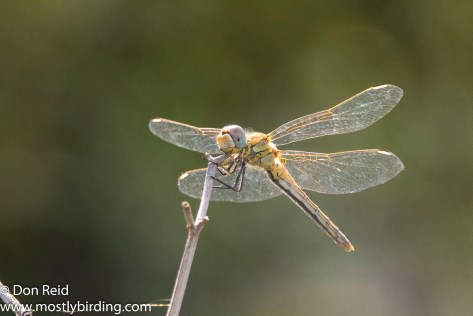
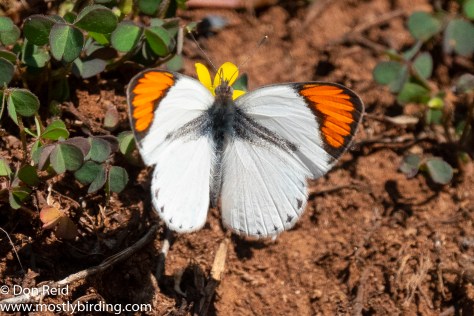
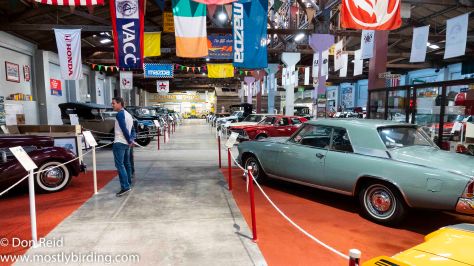
Colourful flyButterfly: Yellow Pansy (Junonia hierta cebrene / Geelgesiggie), Mossel BayDragonfly: Common Thorntail (Ceratogomphus pictus), CalitzdorpDragonfly : (NOT ID’D YET) Mabusa Nature ReserveButterfly: Common Orange Tip(Colotis evenina evenina), VerlorenkloofGippsland Vehicle Collection Maffra, Victoria Australia
And just for fun, a non-moving subject …..
Flowers and fruit
I have not included any of the many bird photos that I took during the year – they will be included in a separate “My Birding Year 2019” post
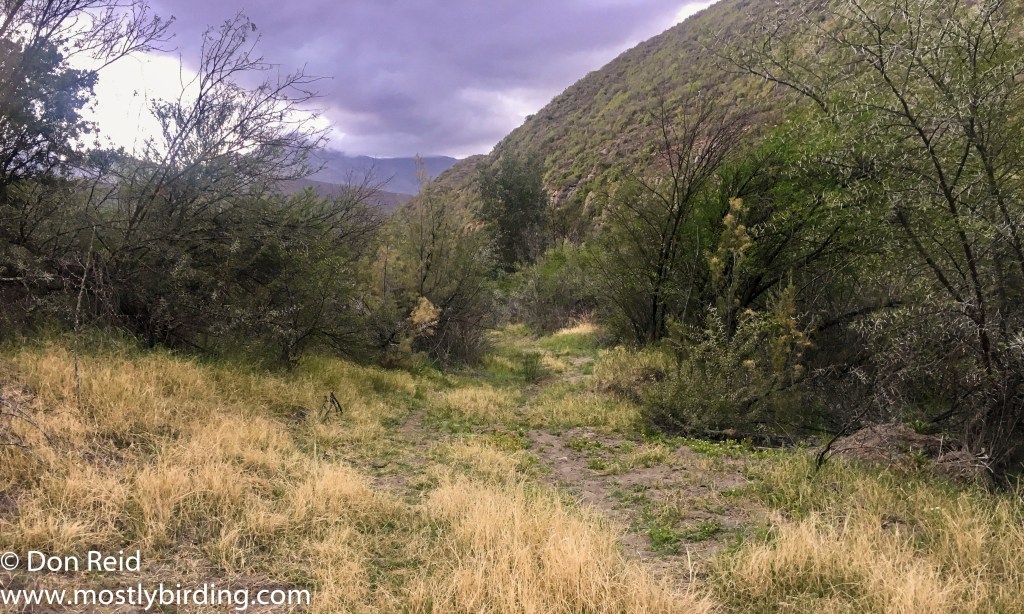
Sometimes less is more – less planning, less time away, definitely means less stress – our recent, unplanned visit to an eco-estate near Calitzdorp in the arid Klein Karoo falls into that category. Our daughter and son-in-law have a delightful cottage set on the slopes of the kloof that runs through the estate, which they use for getaway weekends and we were more than happy to join them on a weekend in September.
We were up at 5 am on the Saturday morning and left Mossel Bay before 7 am, reaching our roadside coffee spot on the Volmoed road about an hour later. No ordinary stop this – even along the road the Karoo invites you to relax, and relax we did with plunger coffee, boiled eggs and muffins while enjoying the Karoo landscape around us, watched over by Greater Striped Swallows perched nearby and with cool sunny weather adding to the pleasure of the moment.
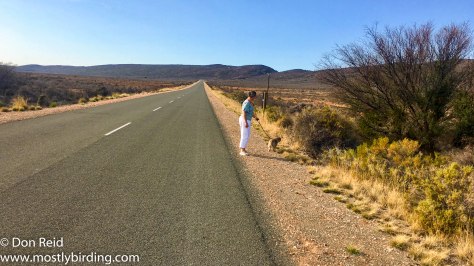
Coffee stopSaartjie, the family pet, gets a chance to explore the roadside bush
After a brief stop at Bella di Karoo padstal for some provisions, we carried on to Calitzdorp, which was hosting a succulent festival – a few side streets were closed off and filled with stalls selling all manner of succulents and filled with people meandering about enjoying the atmosphere.
It was lunchtime when we eventually got to the estate, just in time for a fine lunch of country bread, cheese and jam enjoyed on the covered stoep, after which we all relaxed for most of the afternoon in our various ways.
The cottage just after completion
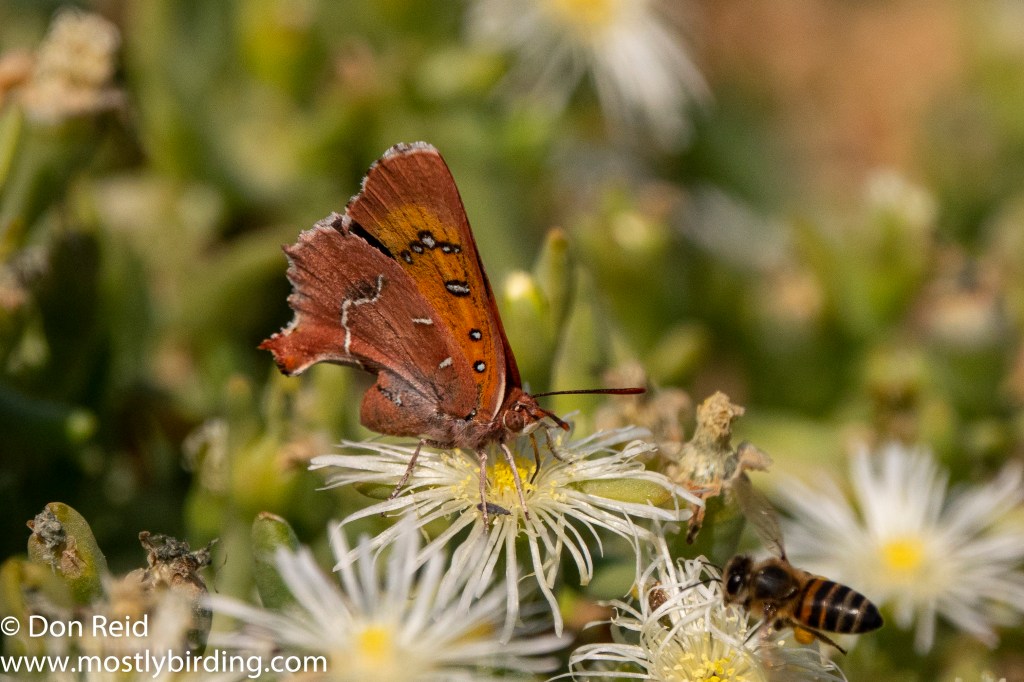
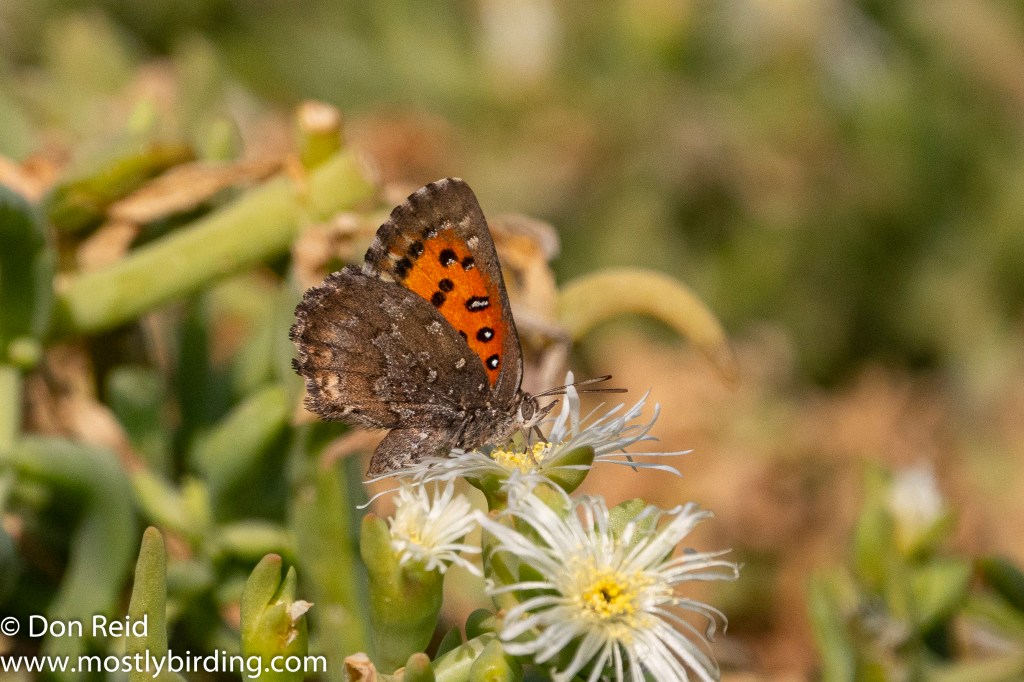
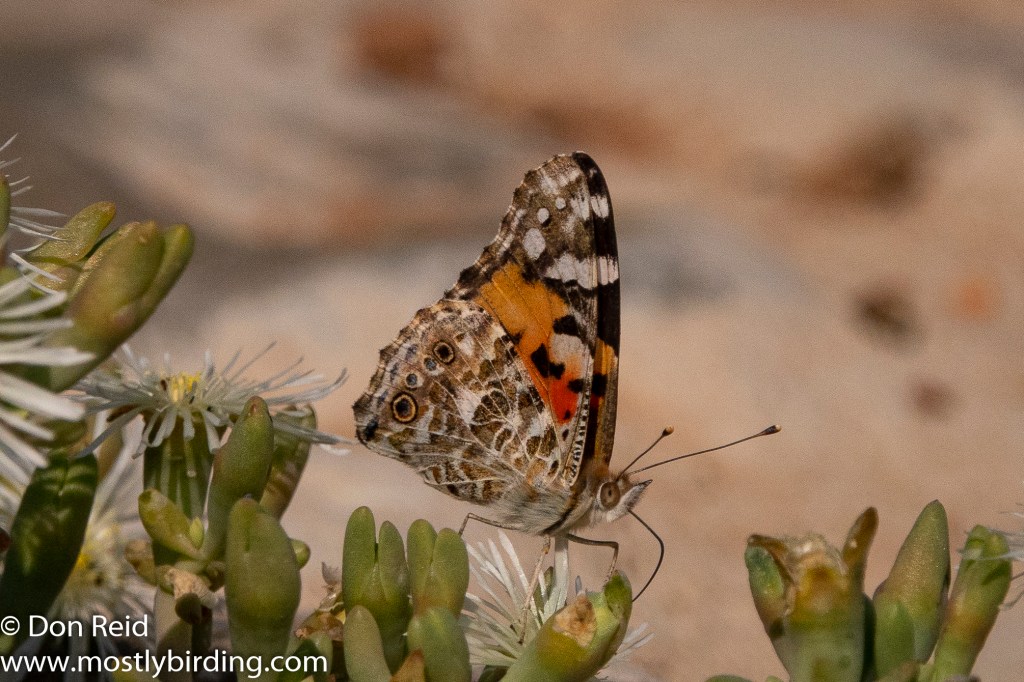
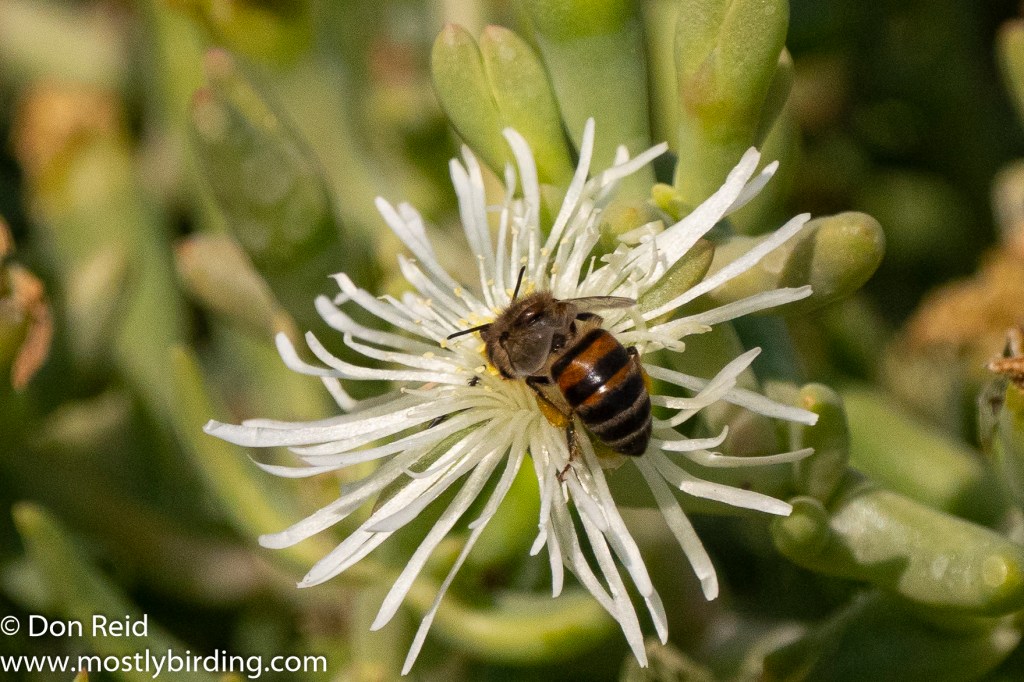
Andre and Geraldine have done wonders with the garden around their cottage, filling it with hardy plants that can survive the hot summers and cold winters in this arid part of the country and I noticed that one particular succulent ground cover was covered in small white flowers and was attracting a multitude of butterflies.
This was too good an opportunity to miss, so I promptly took my camera and positioned myself on the ground near the action and spent a happy half hour or so just watching the comings and goings of the butterflies, bees and other insects, capturing them on the camera where I could. I was very pleased with the results and with the help of my butterfly books was able to identify three species of butterfly.
Butterfly: King Copper (Tylopaedia sardonyx / Koningkopervlerkie)
Butterly: Painted Lady (Vanessa cardui / Sondagsrokkie)
Bees were also in on the action….
Not to mention the dragonflies that were active…
Dragonfly: Common Thorntail (Ceratogomphus pictus)
All of this action set me up nicely for a lengthy nap, followed by a walk along the river, which for a long time had been bone dry but now had a trickle of water after recent rains. I enjoyed the bird calls emanating from the riverine bush as I walked – a boost to my rather meagre list of birds for the visit.
Part of the trail along the river
Supper was wildswors (venison sausage) braai-ed over coals – simply delicious! Sunday morning was equally lazy and relaxed with light rain falling on and off – what a pleasure in these dry parts!
Come Sunday afternoon it was time to return home – the journey was marked by two highlights…..
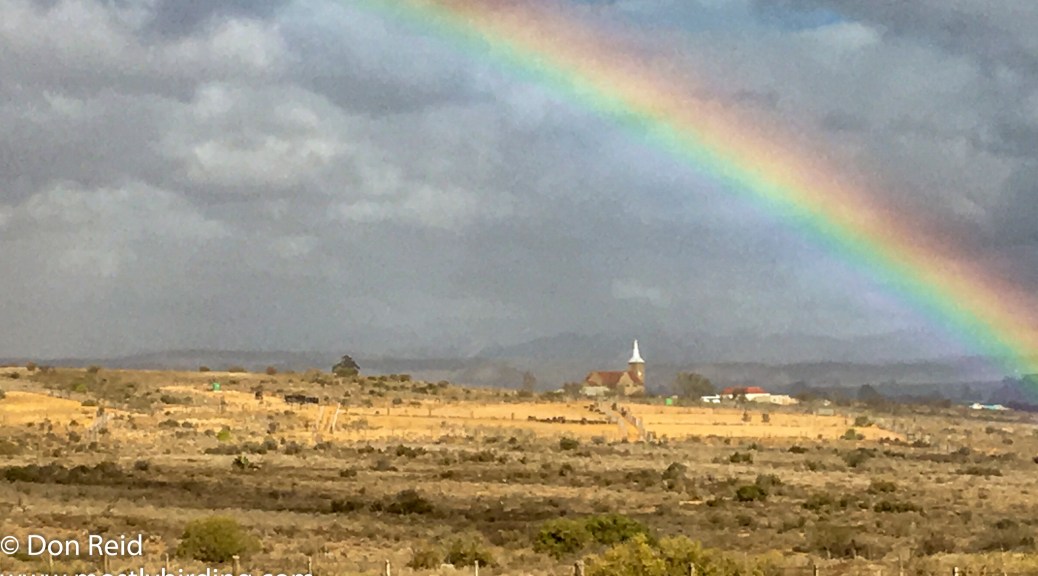
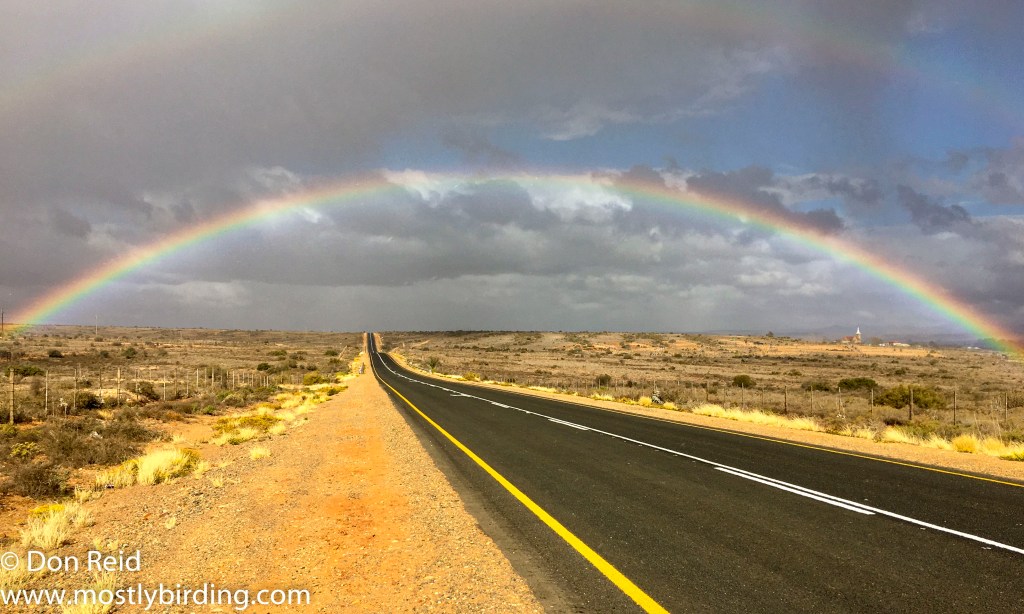
A spectacular, perfect rainbow framing the road ahead as we drove.
Rainbow, Calitzdorp trip
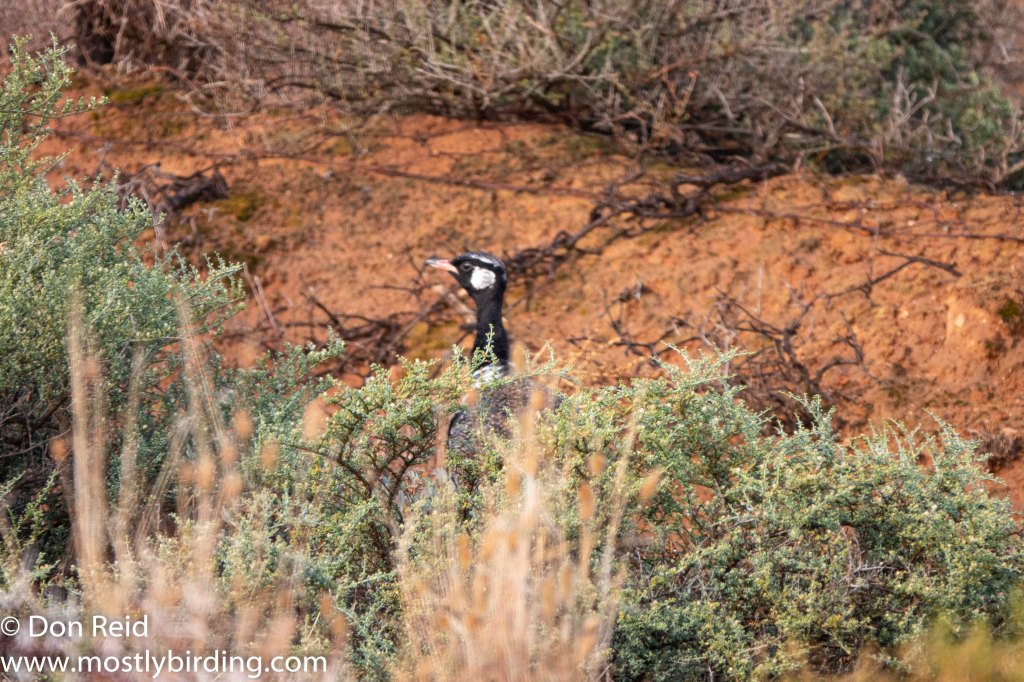
A Southern Black Korhaan alongside the road, causing me to brake sharply as I knew I had never been in a position to photograph this species. Before turning back, I retrieved my camera from its bag on the back seat and made sure the settings were correct, then turned the car and drove carefully and slowly to where I had seen the Korhaan, staying on the opposite side of the road so as not to spook it.
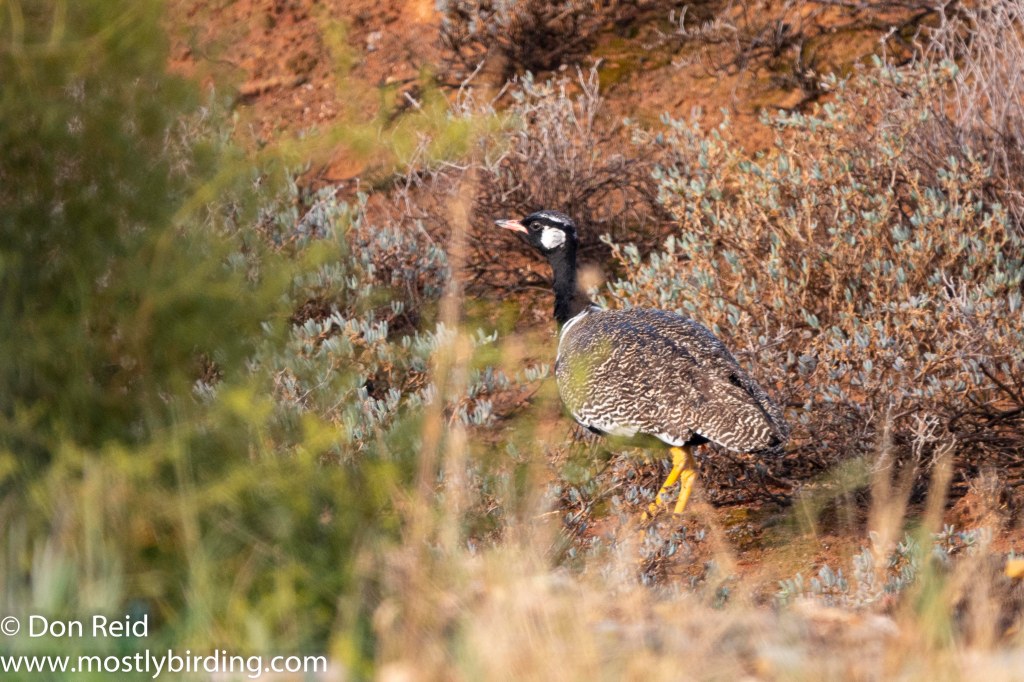
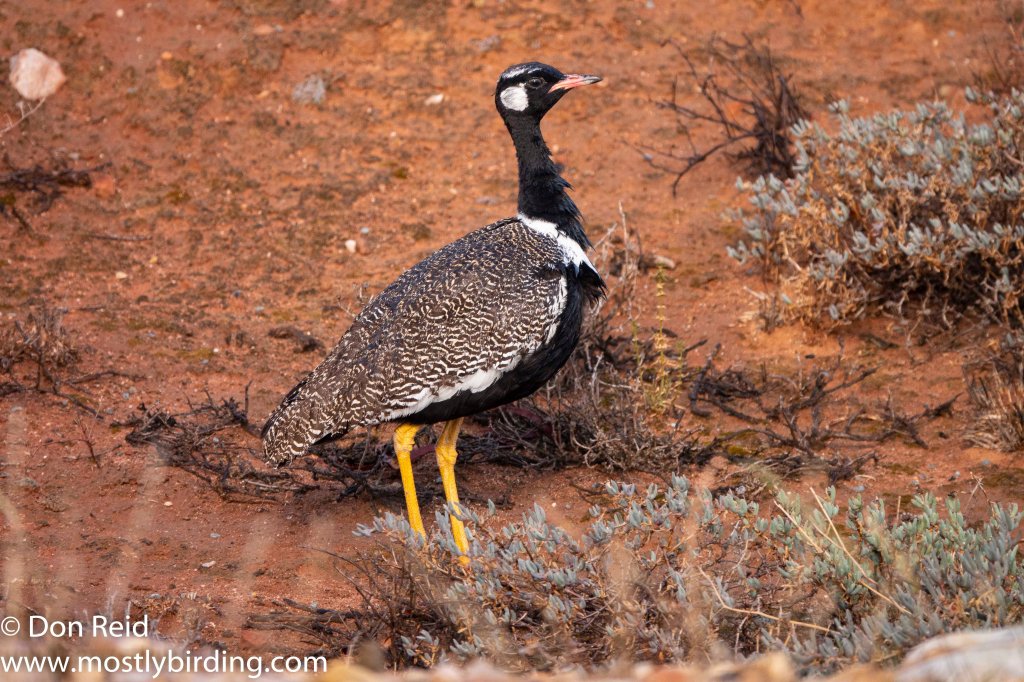
The Korhaan moved away quite quickly as I approached, using a roadside ditch and small bushes to keep itself concealed. I followed on the other side of the road, camera at the ready as I watched for approaching vehicles at the same time as keeping an eye on the bird, which showed briefly between bushes. This carried on for a while until the distance between bushes allowed some clear shots, with the Korhaan eyeing me with extreme suspicion.
Southern Black Korhaan (Afrotis afra / Swartvlerkkorhaan), playing hide and seek
Southern Black Korhaan – showing a bit better
Southern Black Korhaan – ah, at last a nice open shot
Mission accomplished and with a feeling of satisfaction at having “captured” this rather elusive species on camera, we continued to Mossel Bay.
Many years ago I read a report on a destination in the Free State that the writer described along the lines of – “a weekend in so-and-so is like a week in the country”. This description came back to me after our one-night weekend in the Klein Karoo – we all felt as if we had enjoyed a week in the country.





















































 Mostly Birding