I have to admit that I wasn’t planning another post on our Australia visit earlier this year, but when I reviewed the photos of our brief visit to Melbourne before taking the flight back to SA, I decided to add just one more – I hope you will agree it is a worthwhile addition.
There’s a lot to like about Melbourne, based on our two short visits so far – in 2019 and now in 2022. It has that pleasing mix of features that sets the great cities apart from the more mundane ones – nicely positioned at the sea and straddling a large river, modern architecture contrasting with some beautiful older buildings, a great transport system (where else can you ride for free on a central city tram), some charming parks and gardens and just a feeling of all-round cleanliness and efficiency.
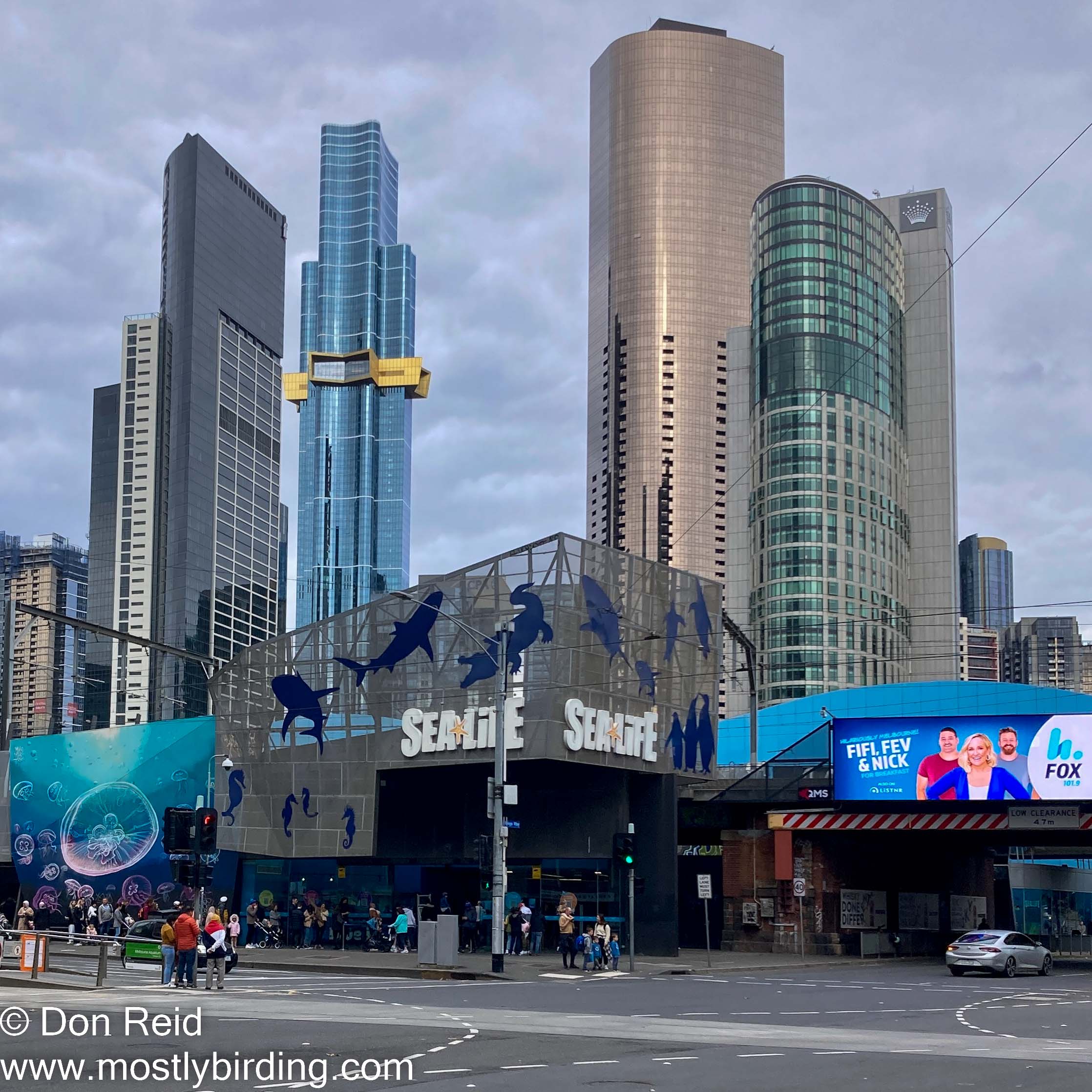
As with our previous visit, we decided to get to Melbourne a day before our flight back to SA to allow for some exploration. As it turned out Stephan and family accompanied us to Melbourne and we visited Sea Life Melbourne before they dropped us off late afternoon at our hotel in the city.
Sea Life Melbourne
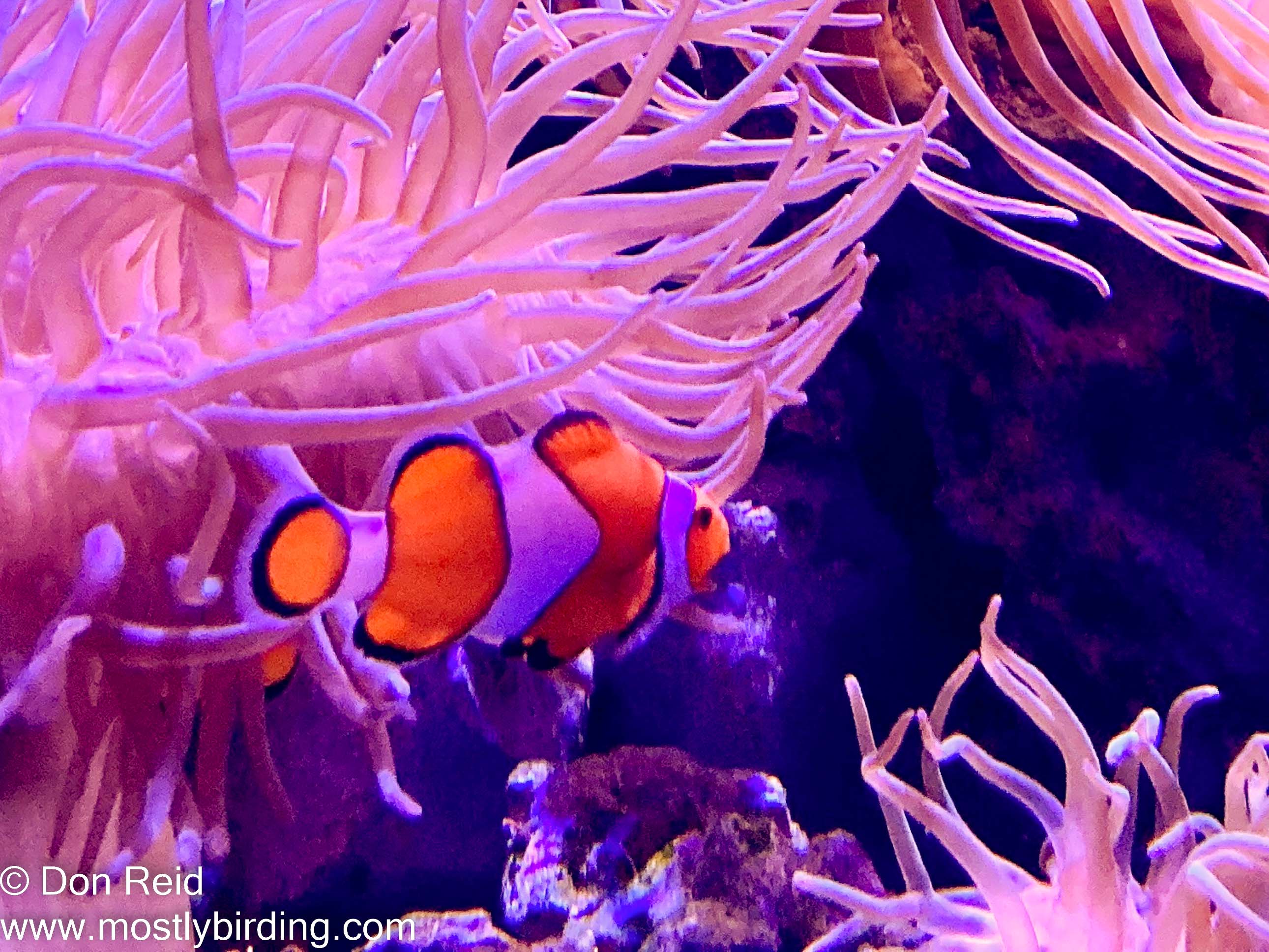
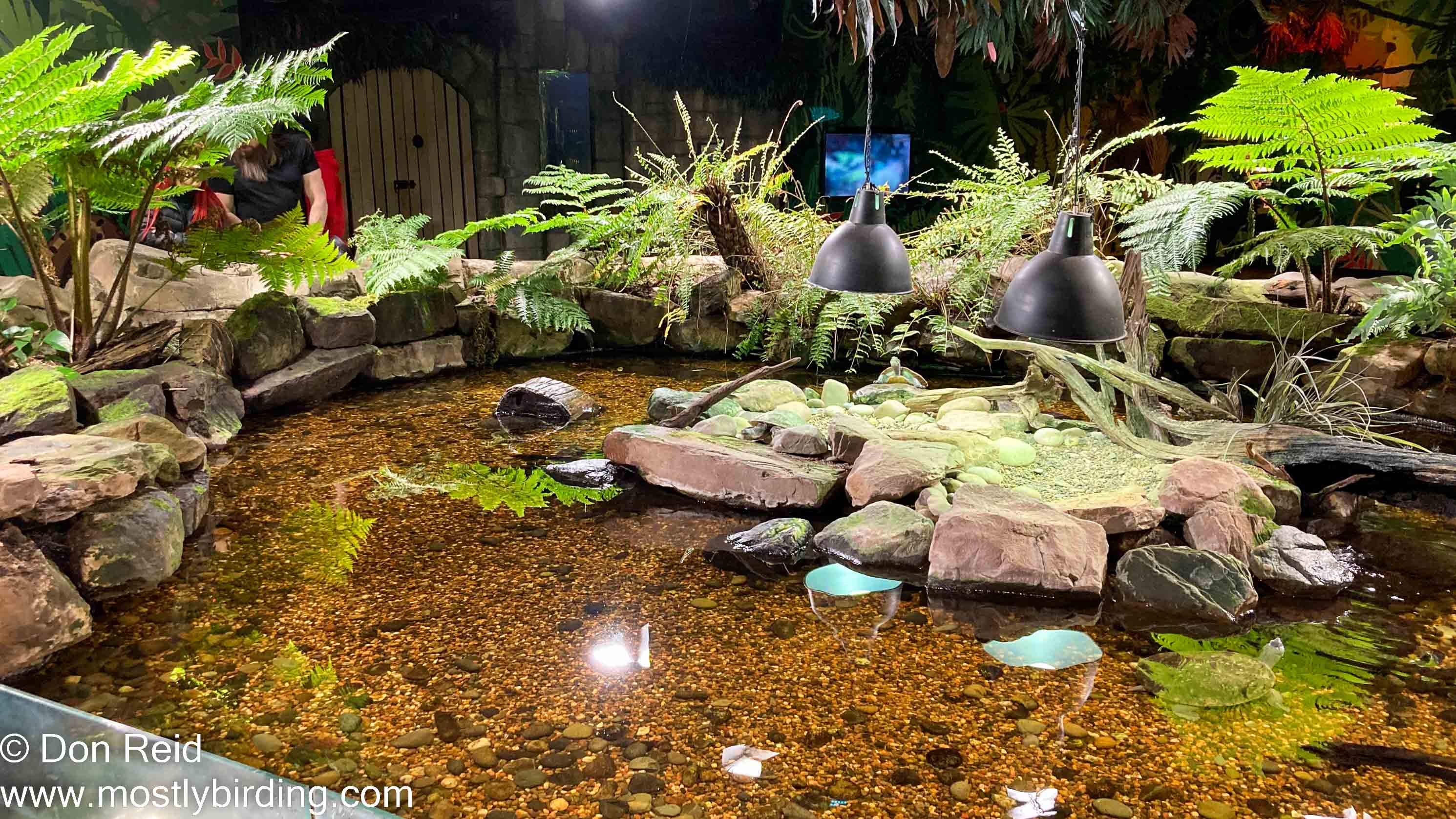
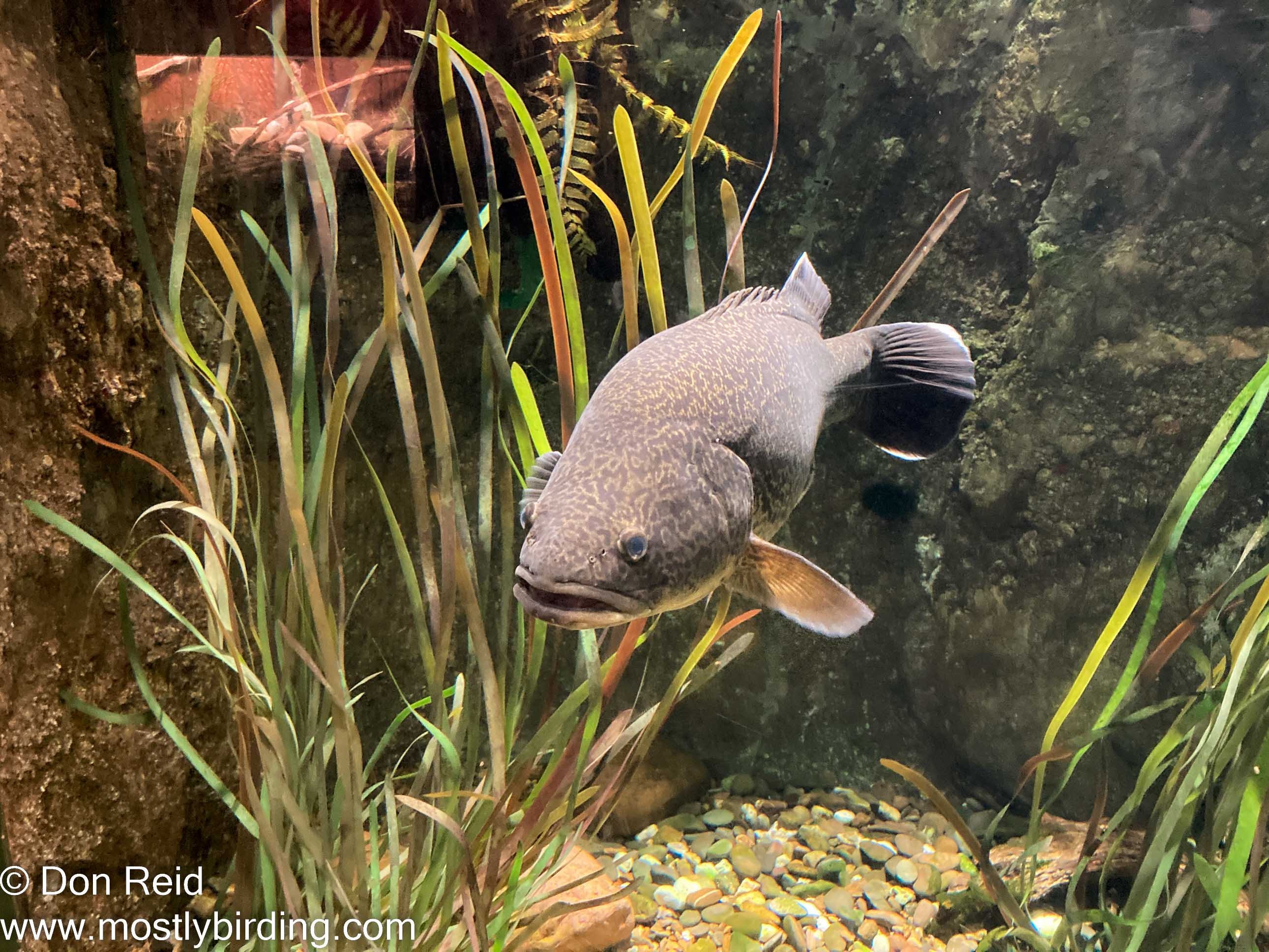
After walking for a couple of blocks in light rain from the parking garage we were in the aquarium – along with half the population of Melbourne it seemed. The aquarium is impressive and spreads over a few levels with brightly lit tanks contrasting with the darkish interior.
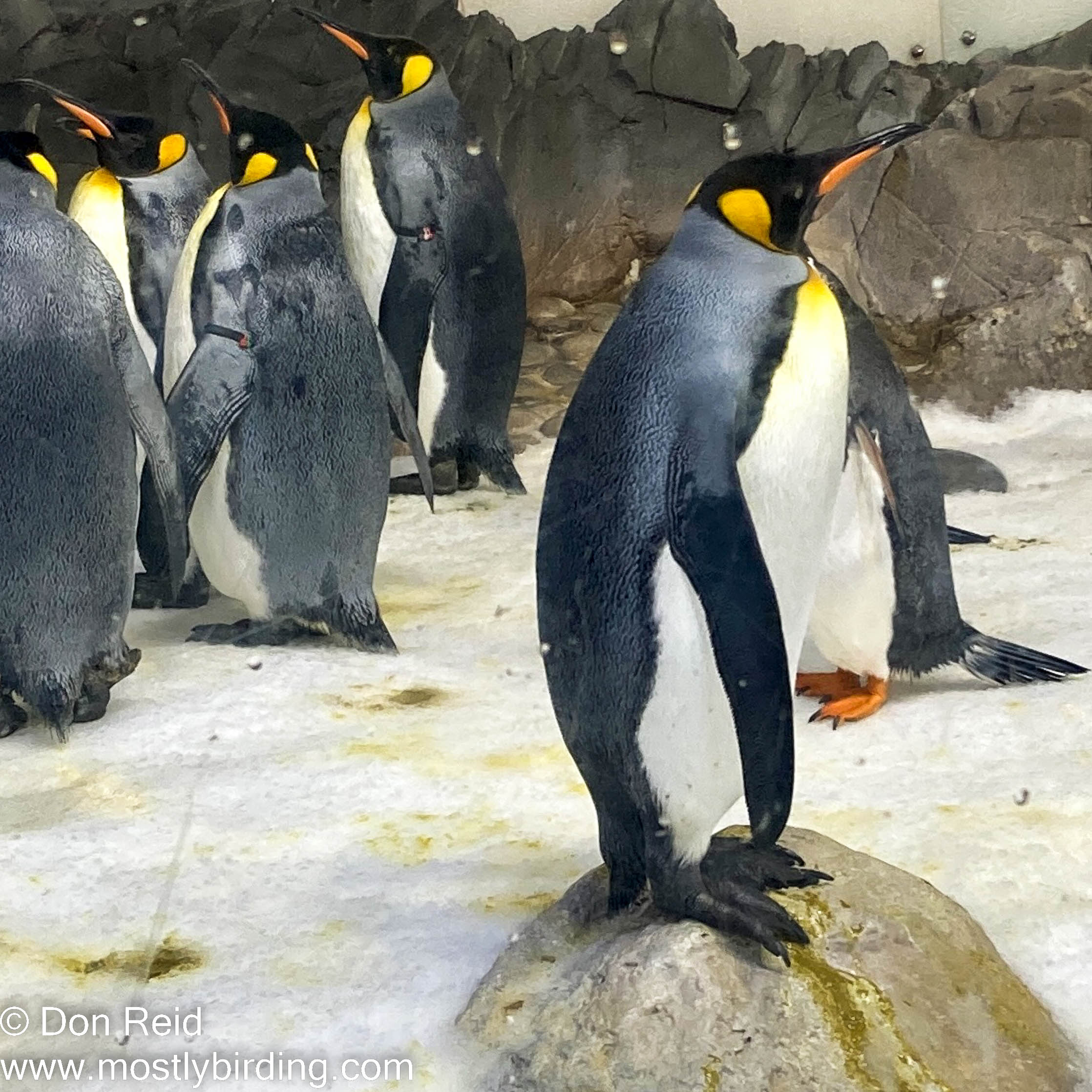
Here is a selection of the images I took with my Iphone (my camera was far less effective in these lighting conditions)
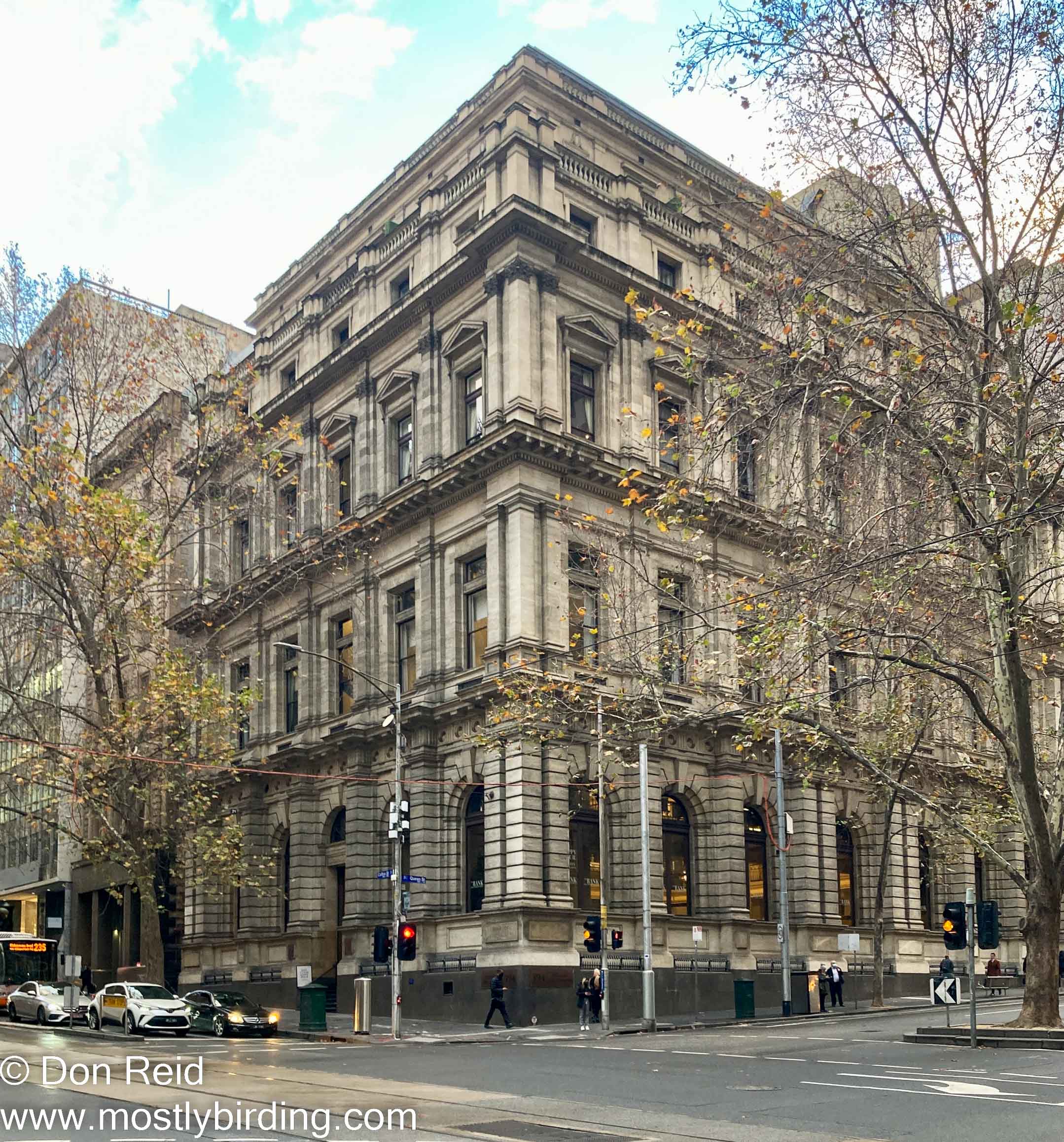
That left us with a full day in the centre of Melbourne, which we started with a breakfast in our hotel – Treasury on Collins, a beautifully maintained classical building with a long history as a banking institution, now serving as a boutique apartment hotel.
Treasury on Collins hotel, Melbourne
Later we ventured into the surrounding streets – destination the famous (among Aussies) Myer department store where we browsed the several levels (reminding me of Stuttafords from way back when in Cape Town) and ended up in the Brunetti restaurant for tea and a cake chosen from a long glass cabinet full of the biggest variety of tempting cakes that we’ve seen in a long time.
Myer Dept store, MelbourneBrunetti restaurant at Myer, Melbourne
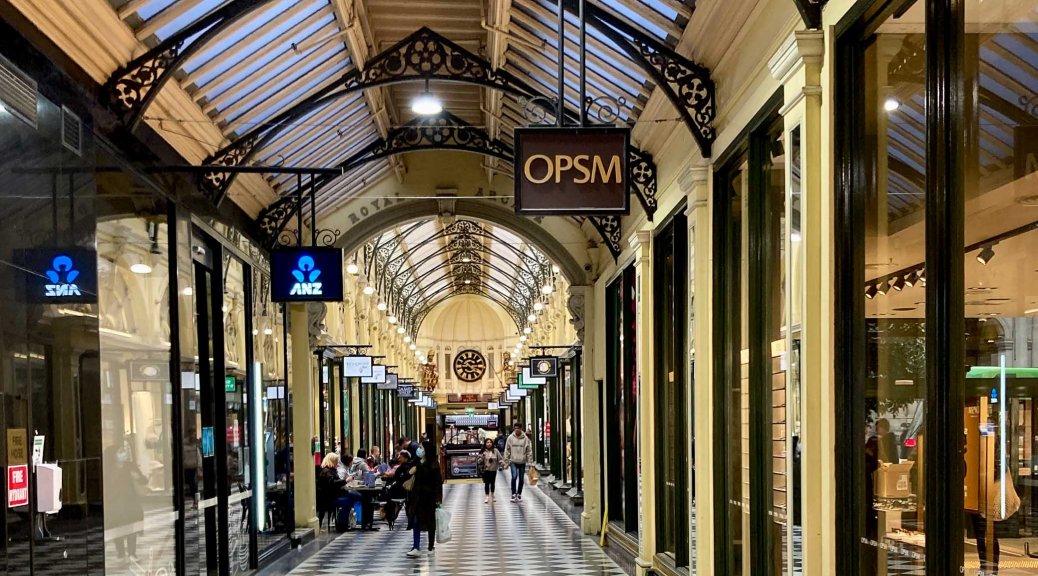
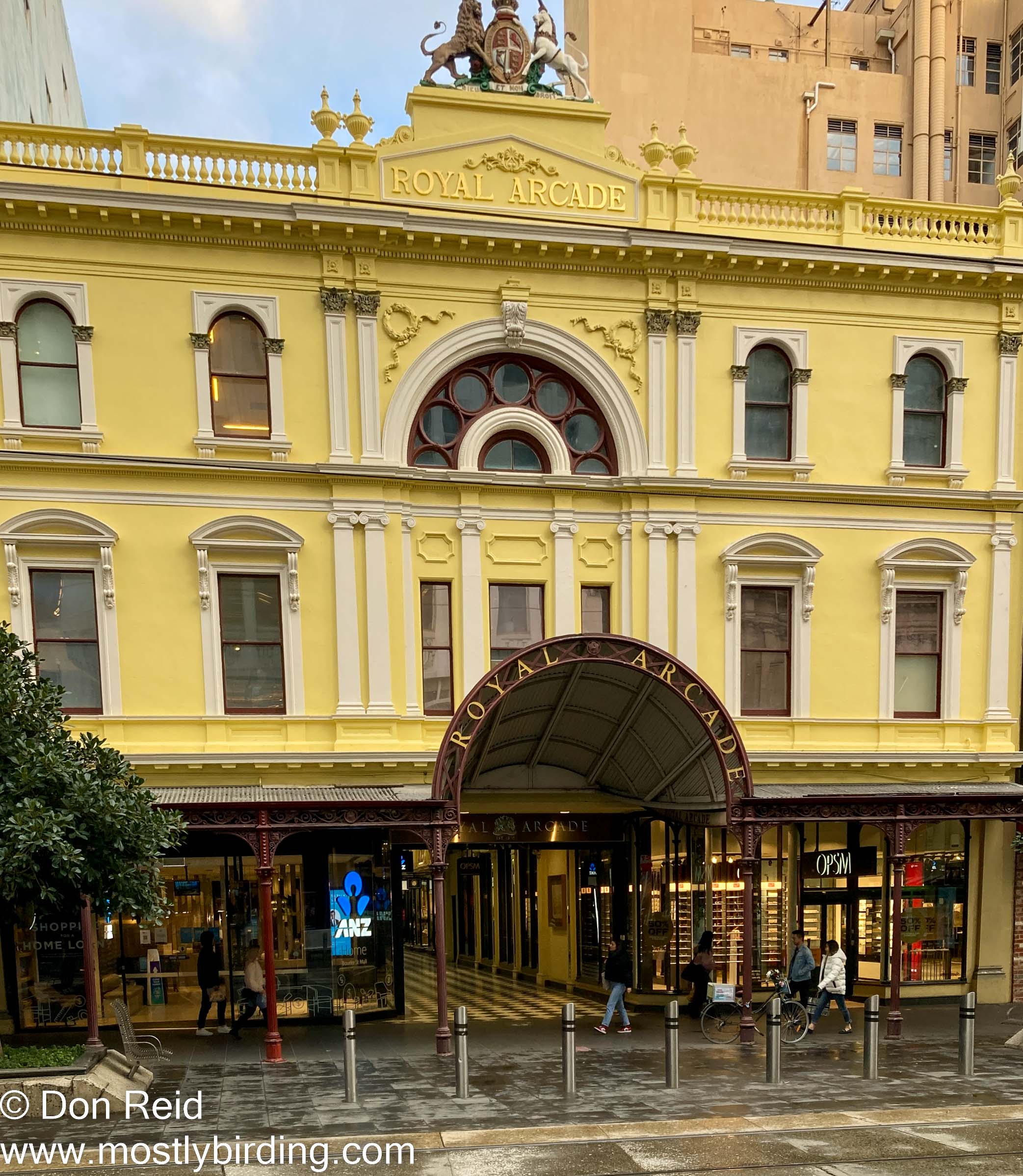
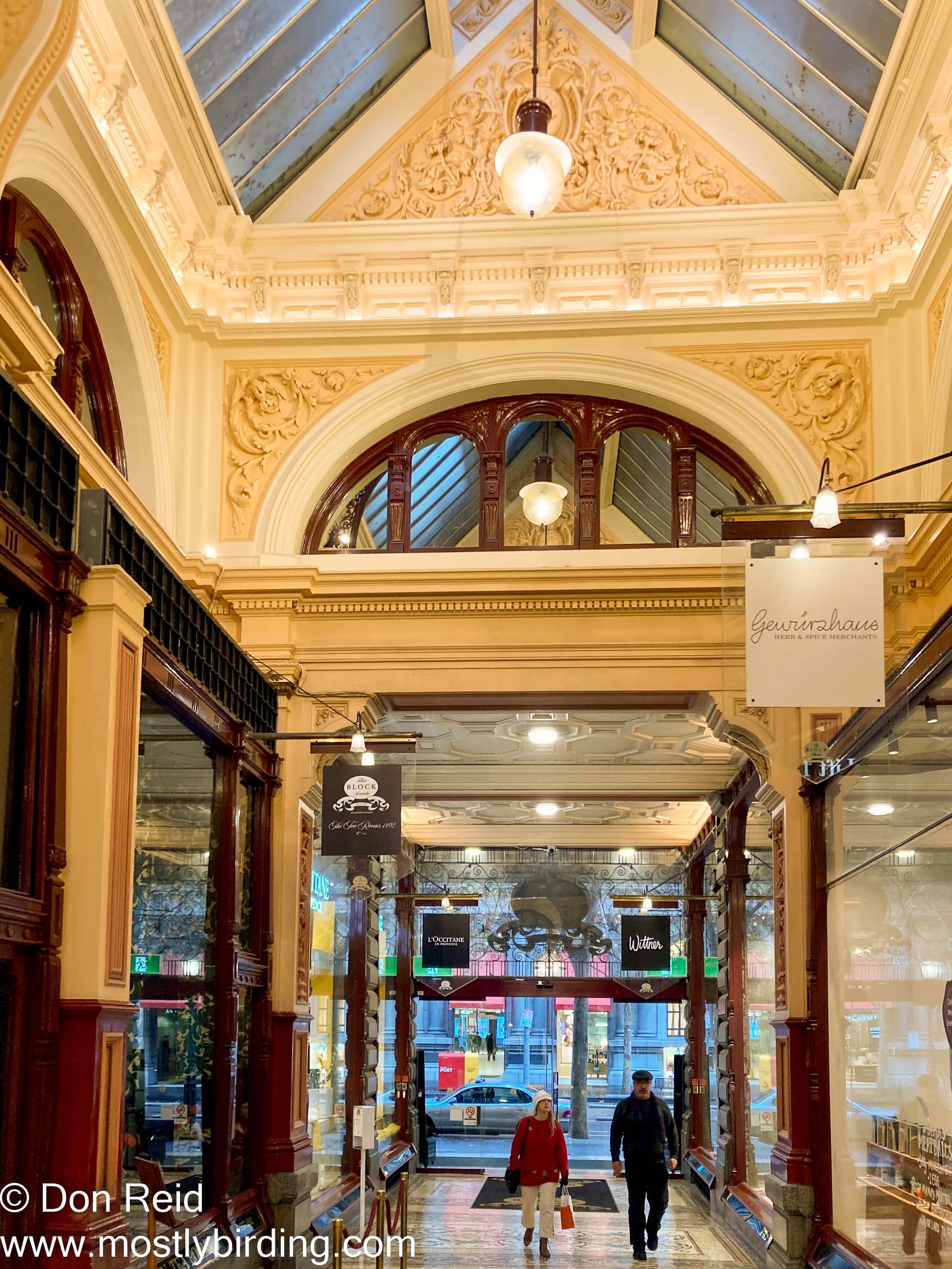
On the way back to the hotel we followed a route which took us through two of the arcades that Melbourne is known for – beautifully restored wide passages between the surrounding buildings.
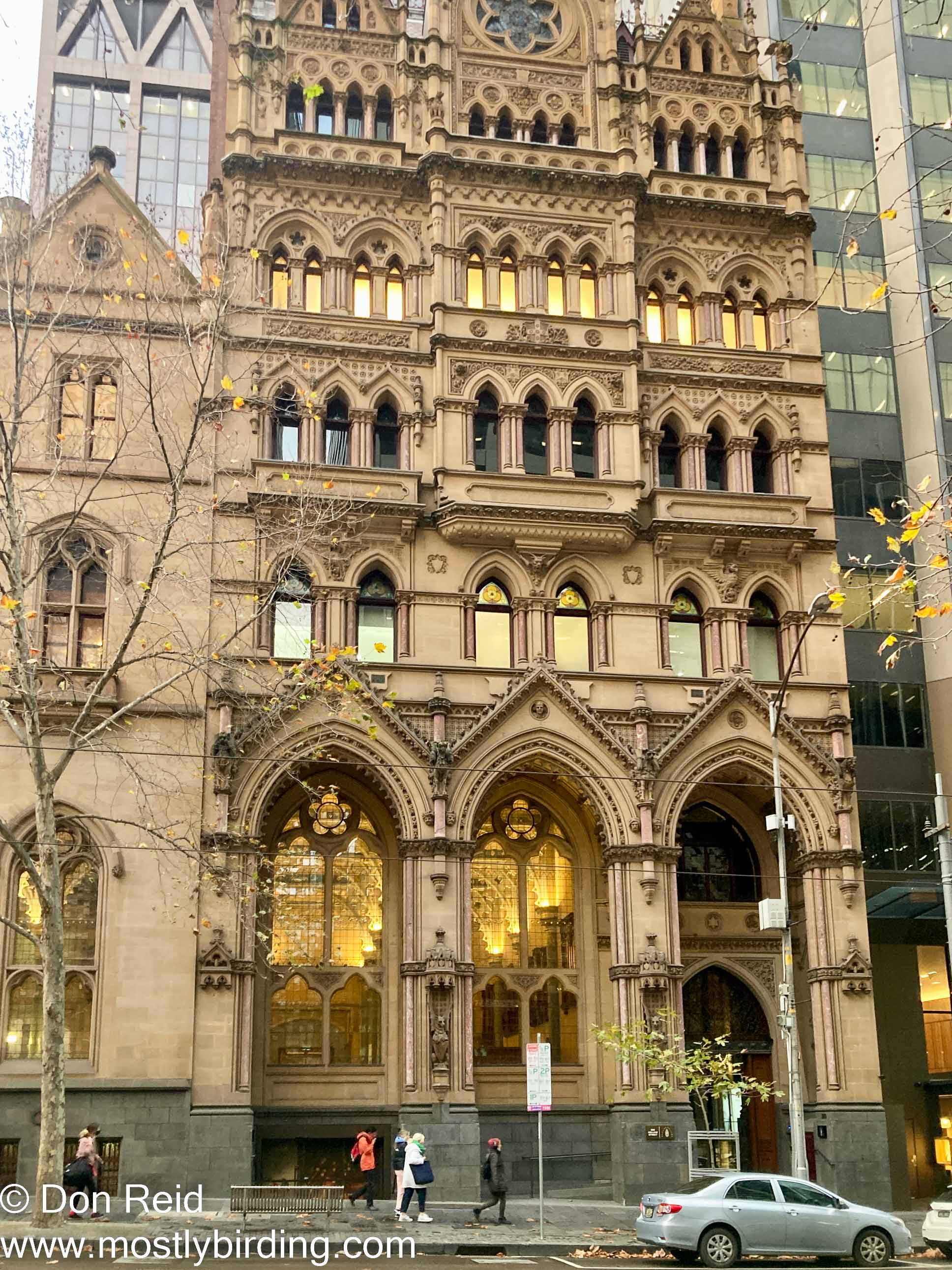
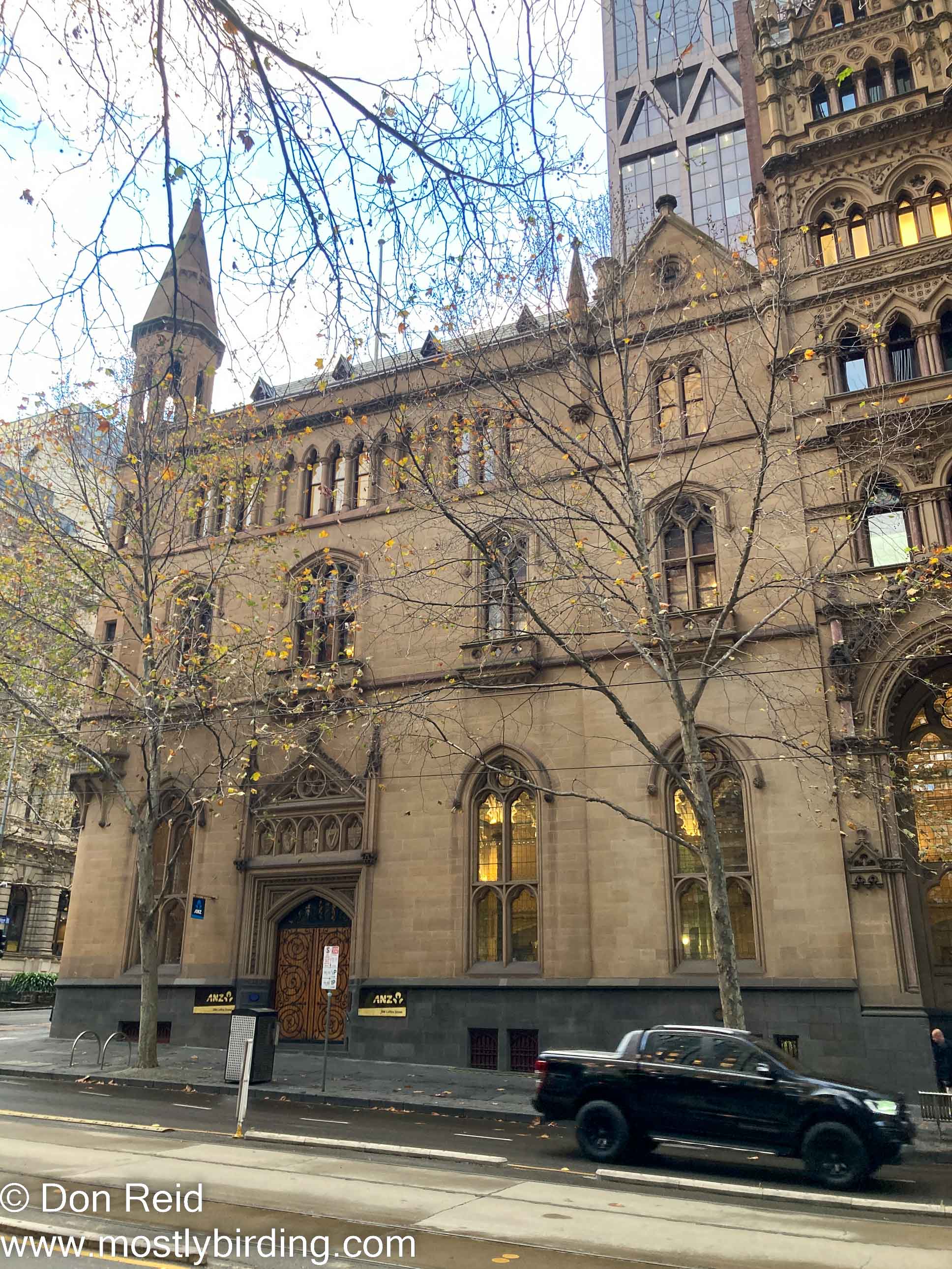
Back on the streets we passed a few stately older buildings that caught our eye with their attractive facades, symmetry and scale
MelbourneMelbourneMelbourne
Back at the hotel we relaxed and psyched ourselves up for the two long flights that lay ahead the next day, via Singapore to Jo’burg
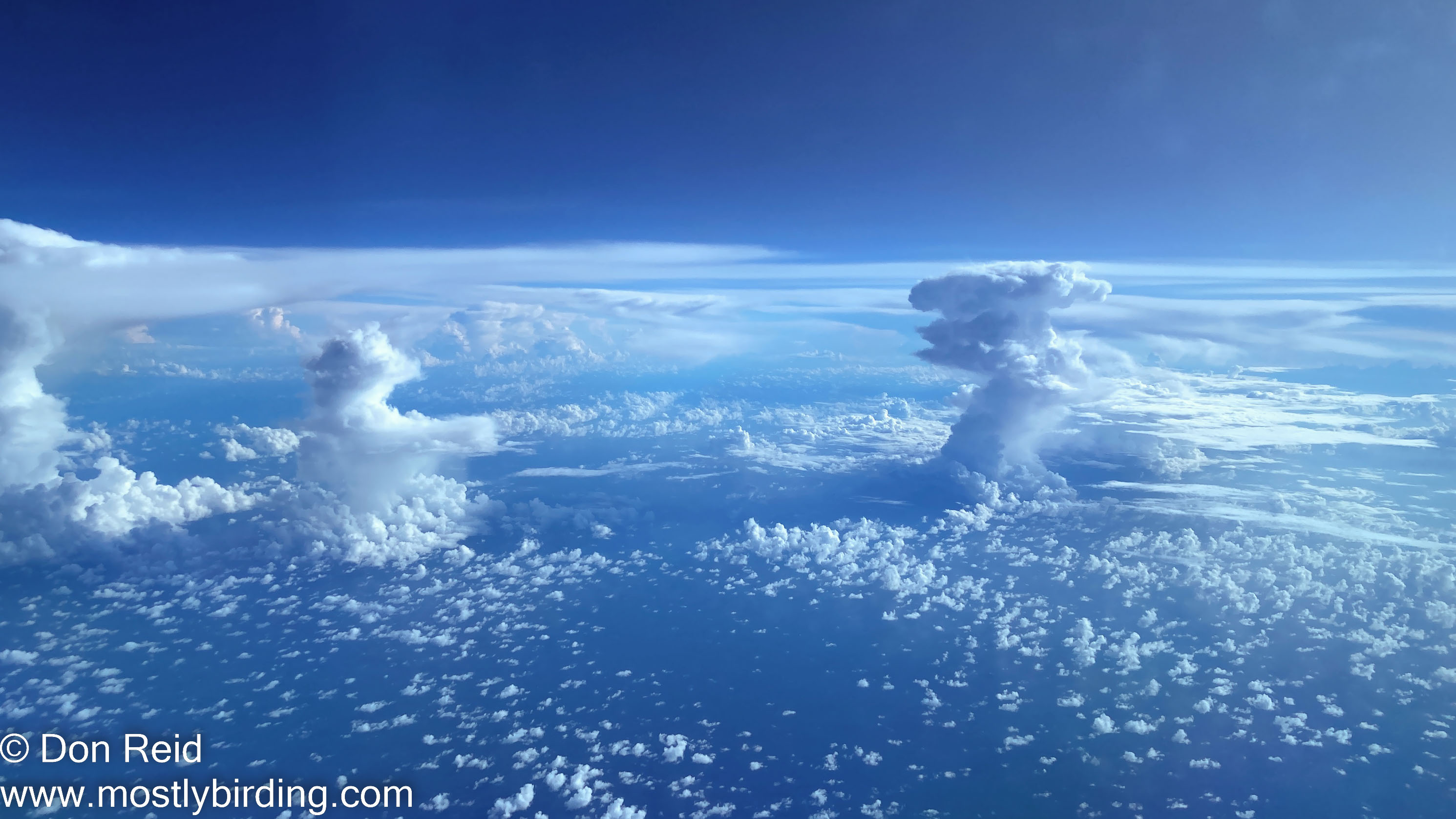
Cloud formations from 10,000 metres – taken from our seat during the flight from Melbourne to Singapore
Footnote : a special thanks to Sea Life Melbourne for including penguins in their displays – without that this post would have been devoid of any birds and I would have had to consider changing my Blog name to “HardlyAnyBirding” ….
It was our last weekend in Australia and we were more or less back to health after a second bout of flu, so were keen to get out and about before heading back to SA.
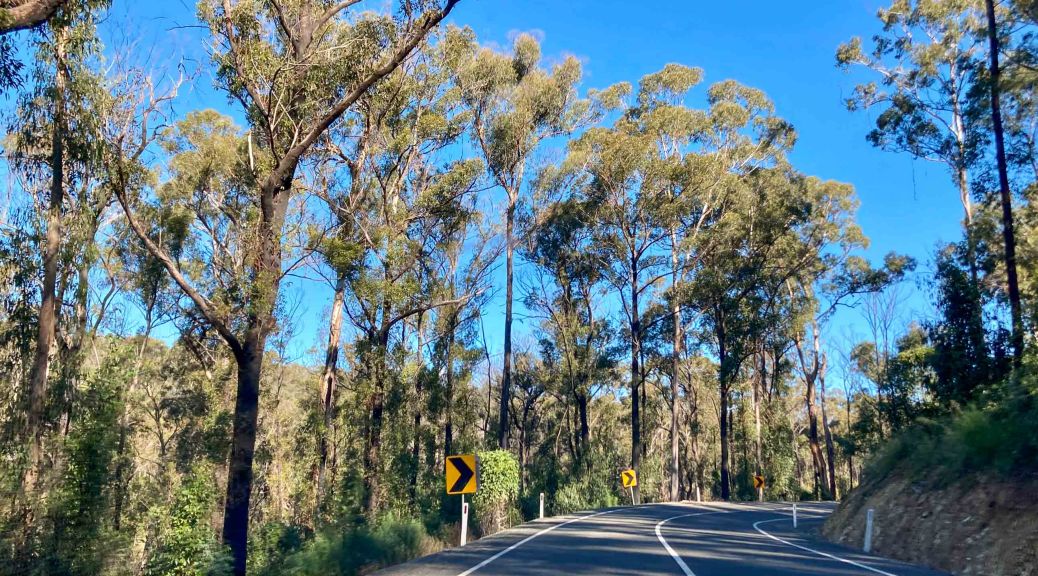
When Stephan suggested a day trip to Raymond Island we jumped at the chance and set off late morning along the very pleasant “back” road to Paynesville. The country roads in Victoria (and probably in other states) are often lined with mature eucalyptus trees which give them a particular character and form a stately ‘ tunnel’ as you drive through…
Road to Paynesville, Victoria
Along the way a couple of raptors caused some excitement – well, I got excited, the others in the car just smiled :
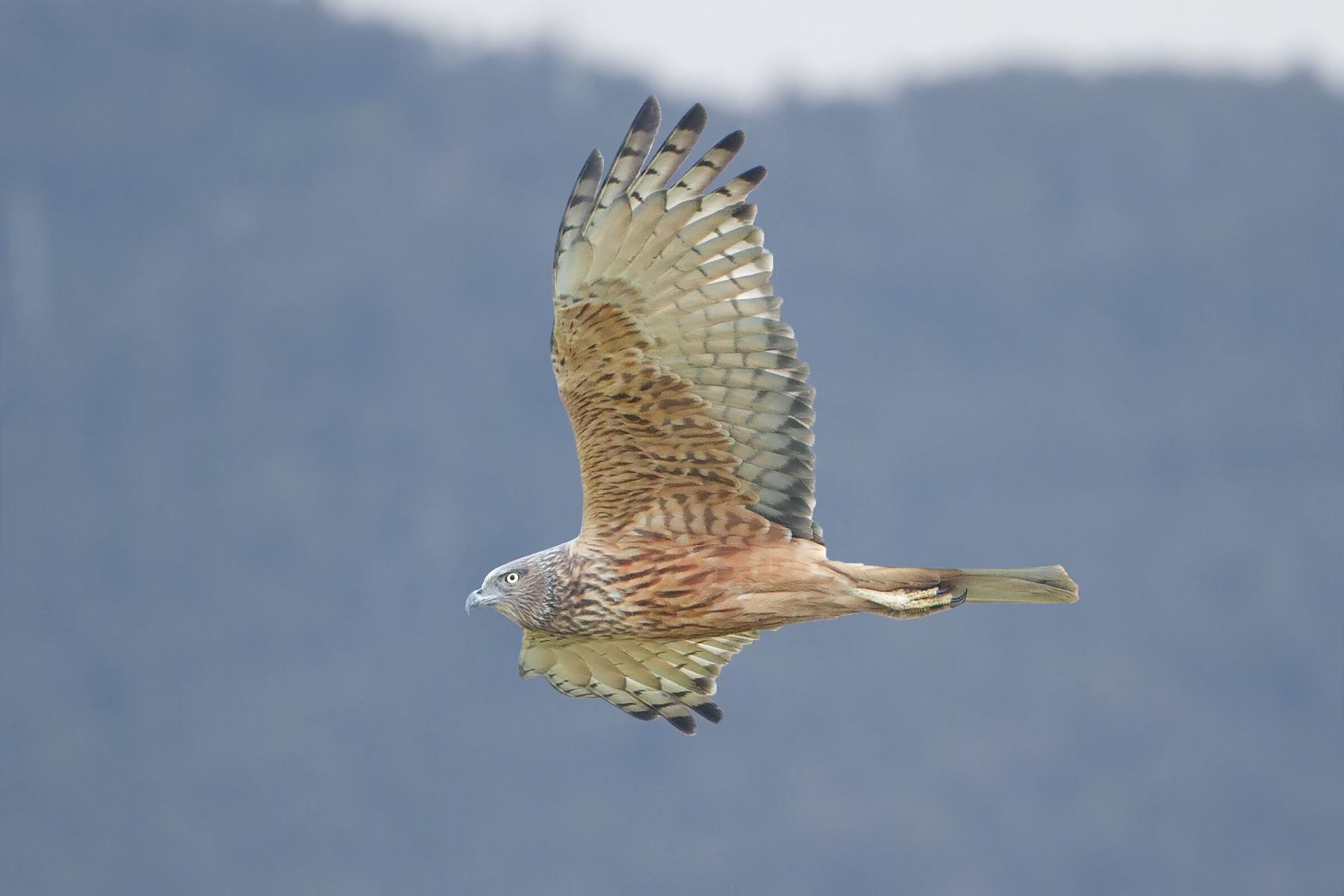
Swamp Harrier – a couple of seconds view as we swept past a wetland were enough to pick up the important clues – low flight, white rump, swamp habitat and of course the all-important ‘giss’ which convinced me that it was a Swamp Harrier – and a lifer to boot
There was no time to get a photo so I am posting this beautiful image courtesy of the photographer –
Black-shouldered Kite – almost an equally short view but the familiar giss in flight and black wing ‘shoulders’ were enough for a positive ID
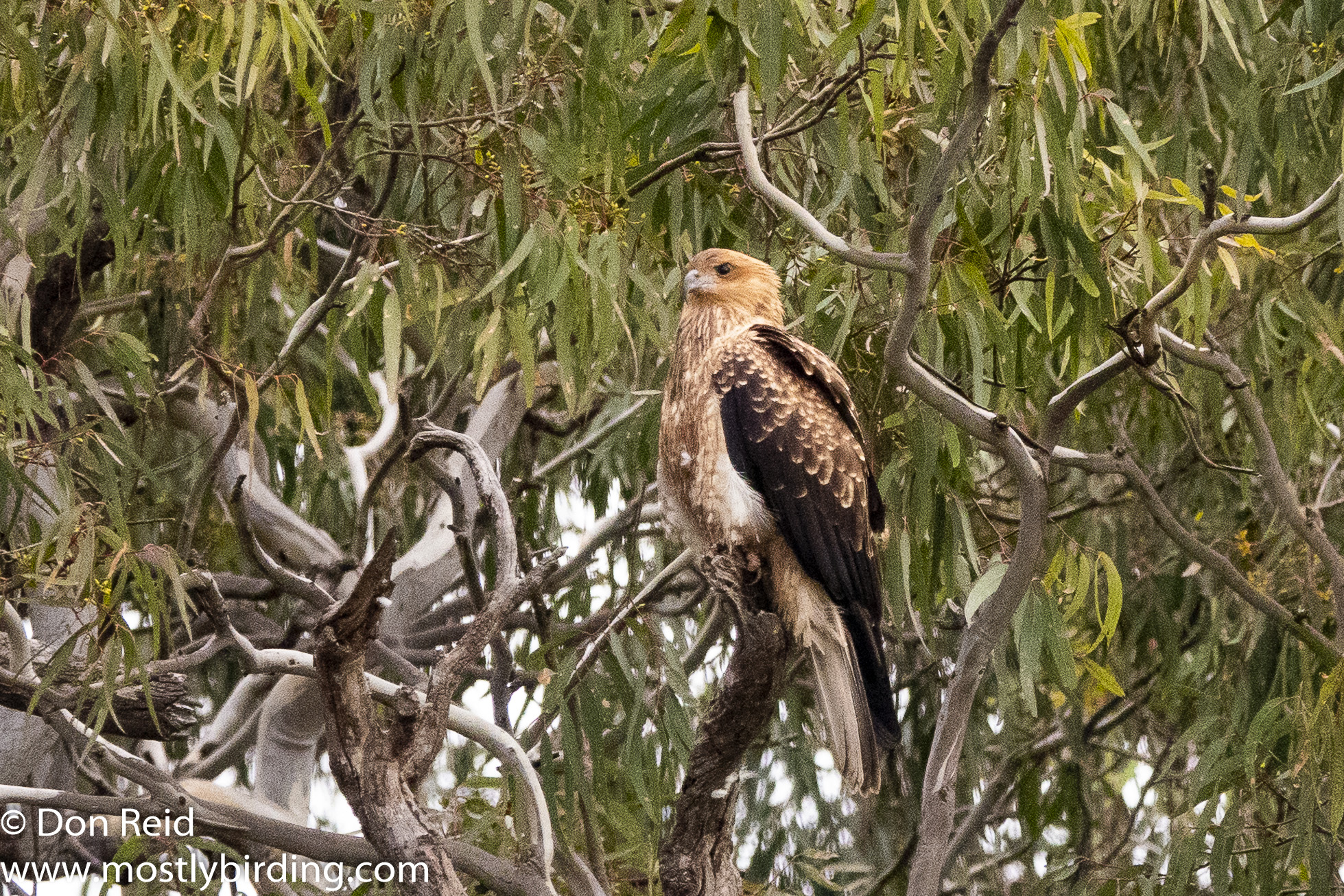
Whistling Kite – flying up from the roadside as we passed, this is a bird I have come to know quite well as they are regularly seen around Sale
Whistling Kite, (photo taken on Sale Common)
On reaching the waterfront at Paynesville, we parked and walked, looking for an open restaurant, and came upon Alma’s which turned out to be a good choice for the fish and chips we were thinking of – really tasty and served with a good salad.
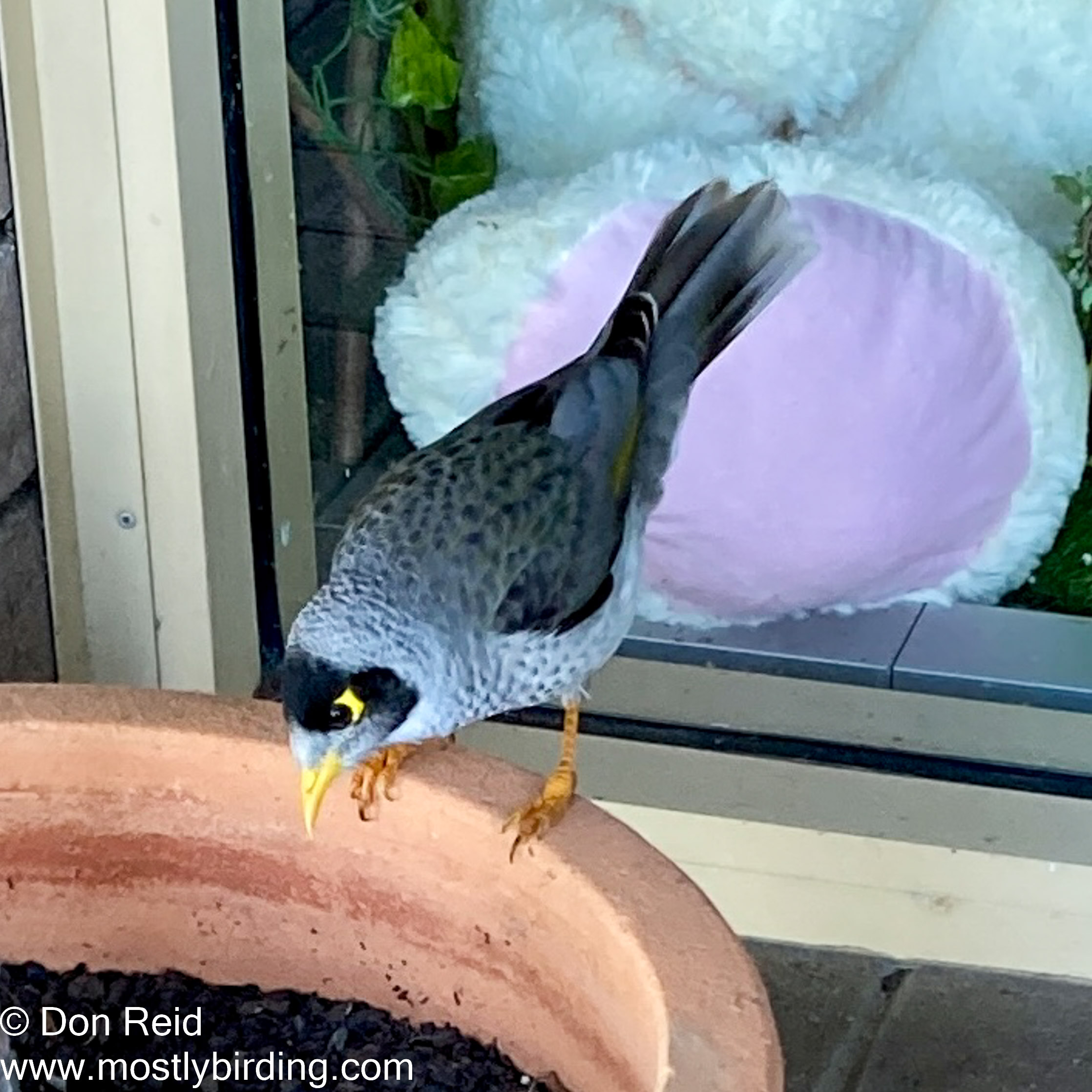
Outside the restaurant a Noisy Miner was going about its business pretty much ignoring the people passing by – so much so that I was able to get a close-up with my Iphone
Noisy Miner Manorina melanocephala, Paynesville, VictoriaRaymond Island Victoria
After lunch it was time to explore Raymond Island, so we joined the short queue for the ferry and were soon on the island, where we turned left along the shoreline then inland and right across the island to Gravelly Beach.
Raymond Island VictoriaRaymond Island VictoriaKangaroos, Raymond Island VictoriaRaymond Island Victoria
Some of the birds spotted along the way :
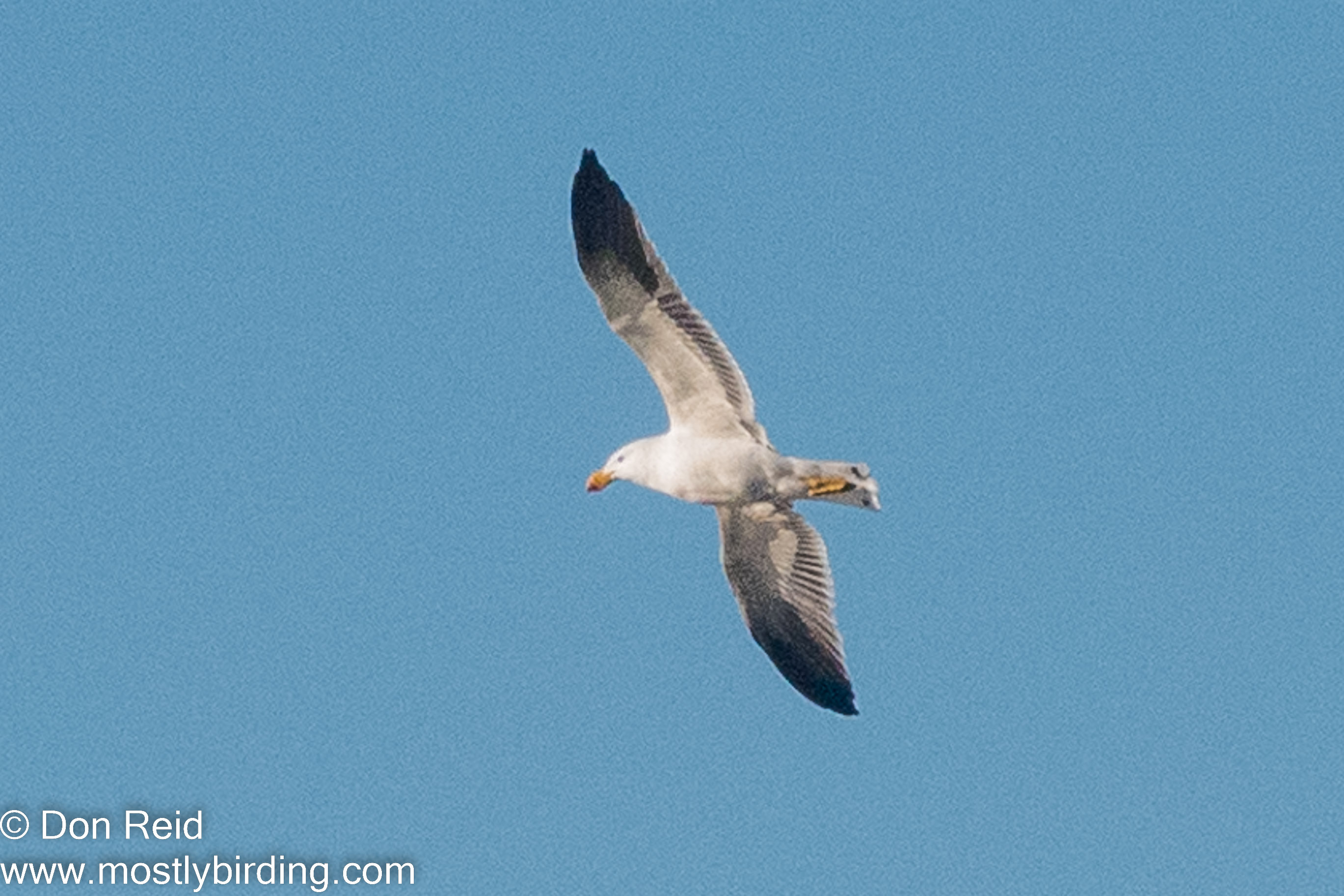
Pacific Gull – quite common but far outnumbered by the Silver Gulls
Pacific Gull, Raymond Island Victoria
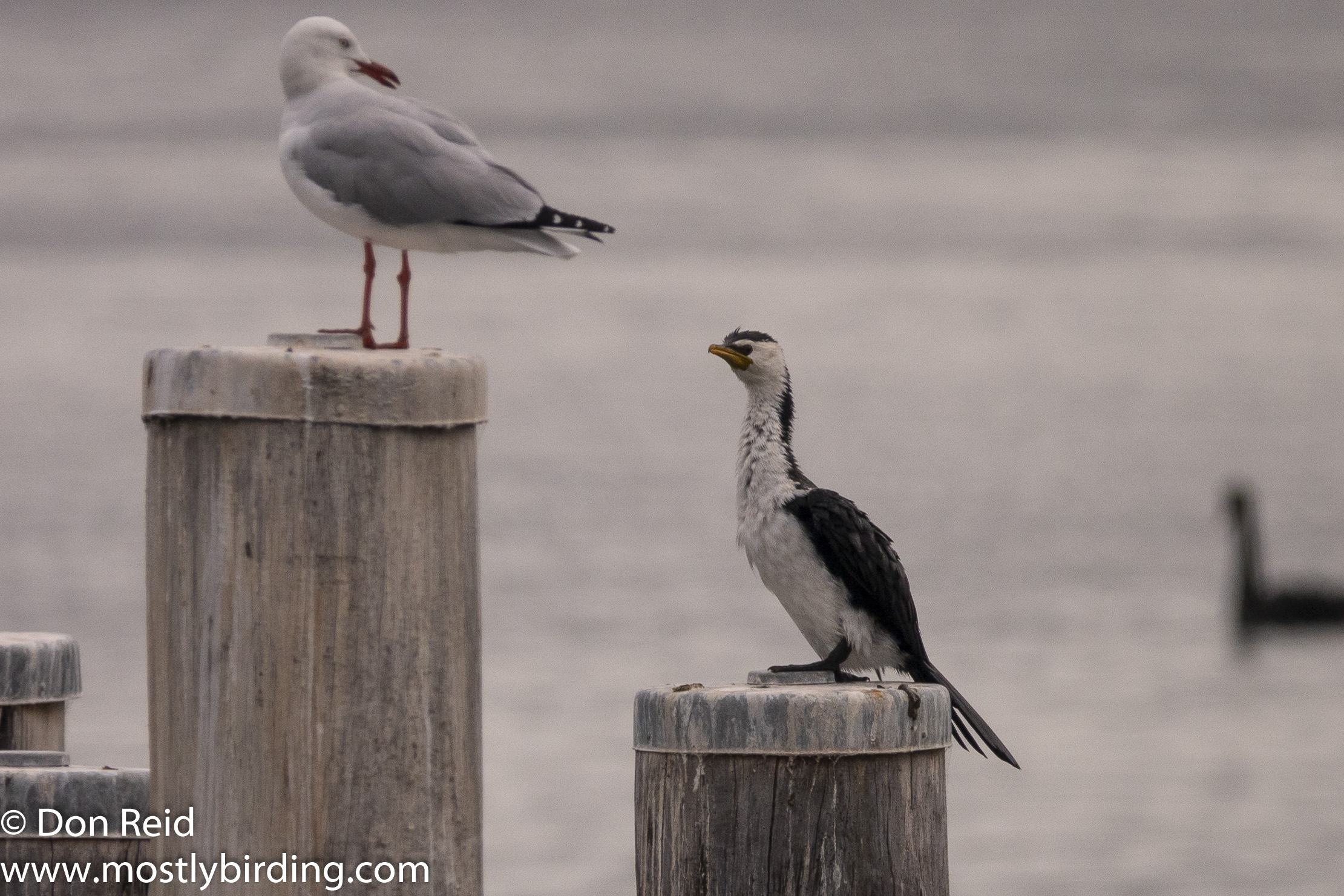
Little Pied Cormorant – a few perched on poles in or near the water
Little Pied Cormorant, Paynesville & Raymond Island, Victoria
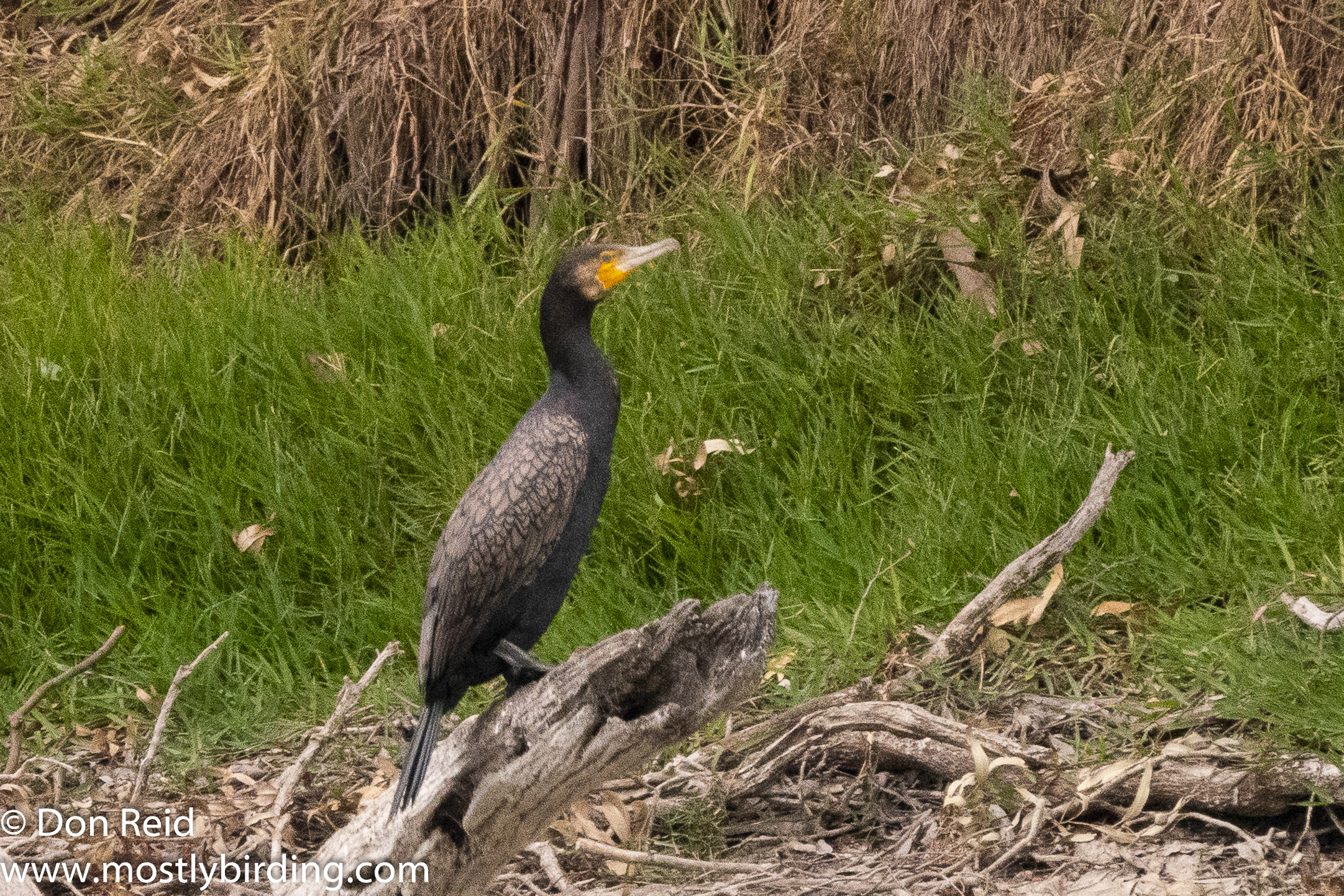
Great Cormorant – as the name suggests a much larger Cormorant
Great Cormorant, (photo taken on Sale Common)
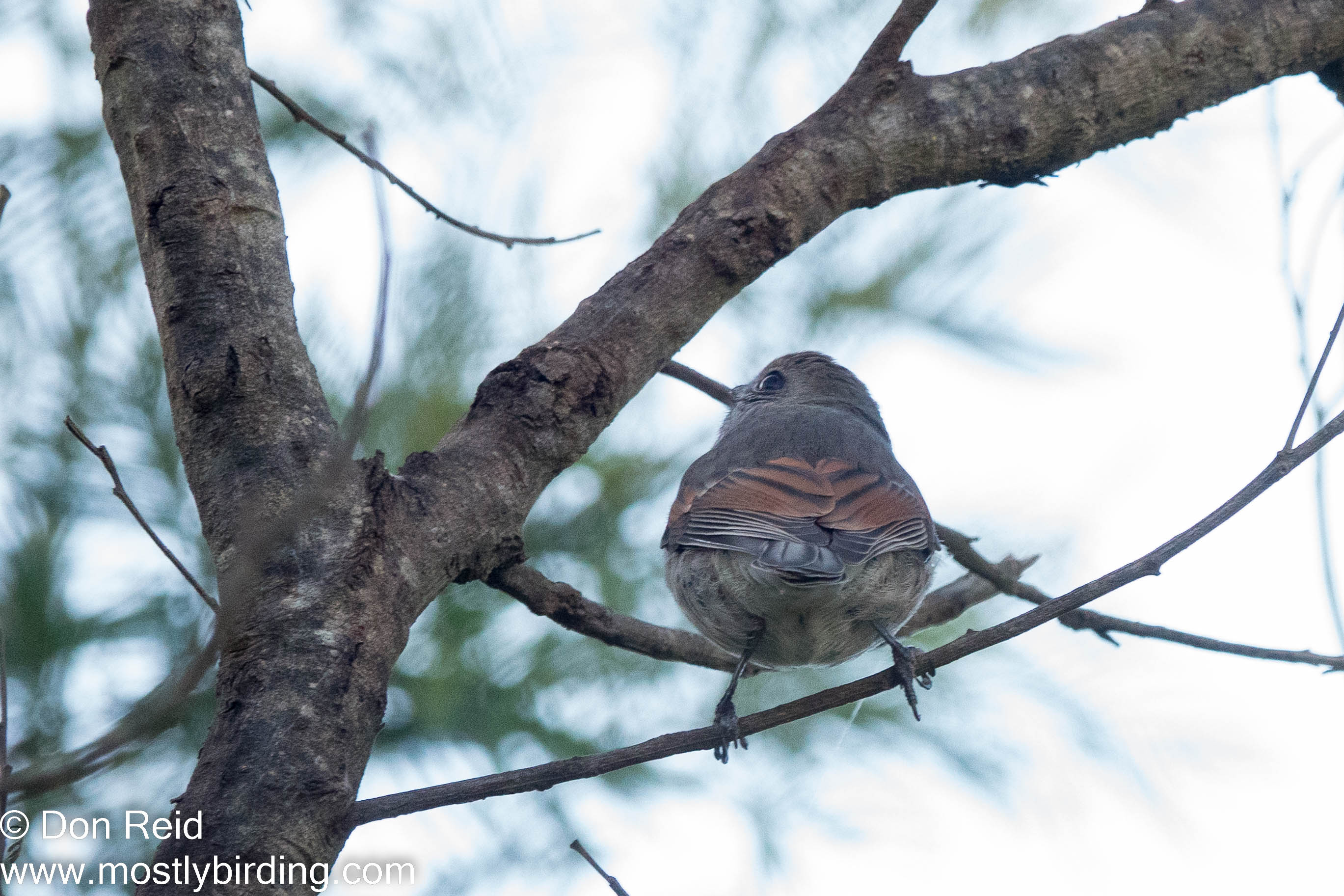
Australian Golden Whistler – with a name like that you would expect a colourful, spectacular bird, however this was the rather dull immature version of the species. I spotted it in a tree as we passed by and asked Stephan to stop – it looked a lot like the Grey-headed Sparrow that we are familiar with in SA and I was only able to identify it after some time spent paging through the bird book (which always takes me back to my early days of birding). The male would have been a lot more obvious with its bright yellow colouring…
This poor photo was all I came away with after almost pulling a muscle or two trying to get my aging body into a position in the car to get a decent view of the bird, which did its best to frustrate me … but – it was another Lifer!
Australian Golden Whistler Pachycephala pectoralis, (Immature) Raymond Island Victoria
At Gravelly Beach we walked about enjoying the view up and down the deserted beach
Gravelly Beach, Raymond Island Victoria
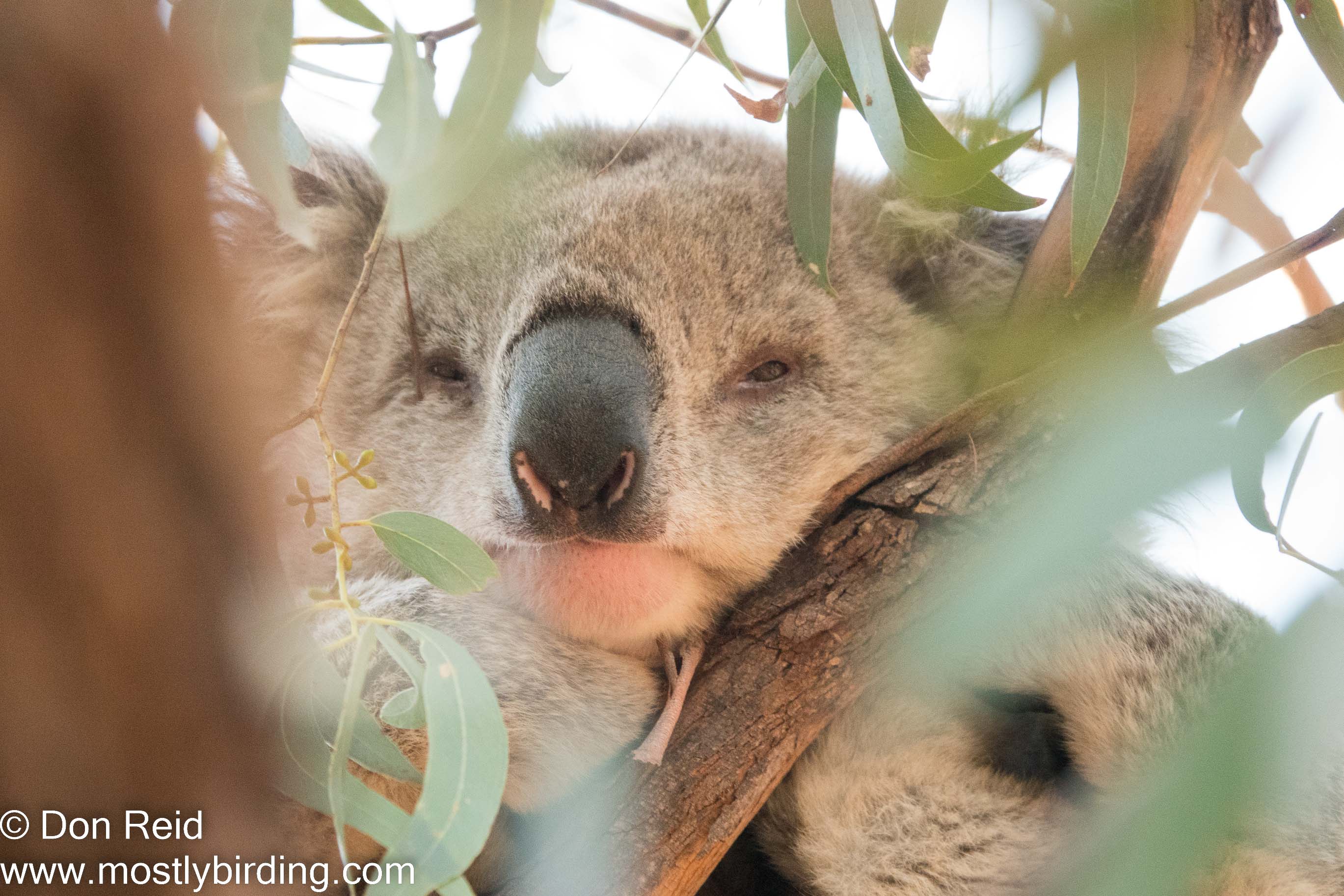
Another road took us back to the nature area where we parked again and walked a section of the Koala trail, coming across a few of these cute, sleepy creatures.
Koala, Raymond Island Victoria
Along the way we also found
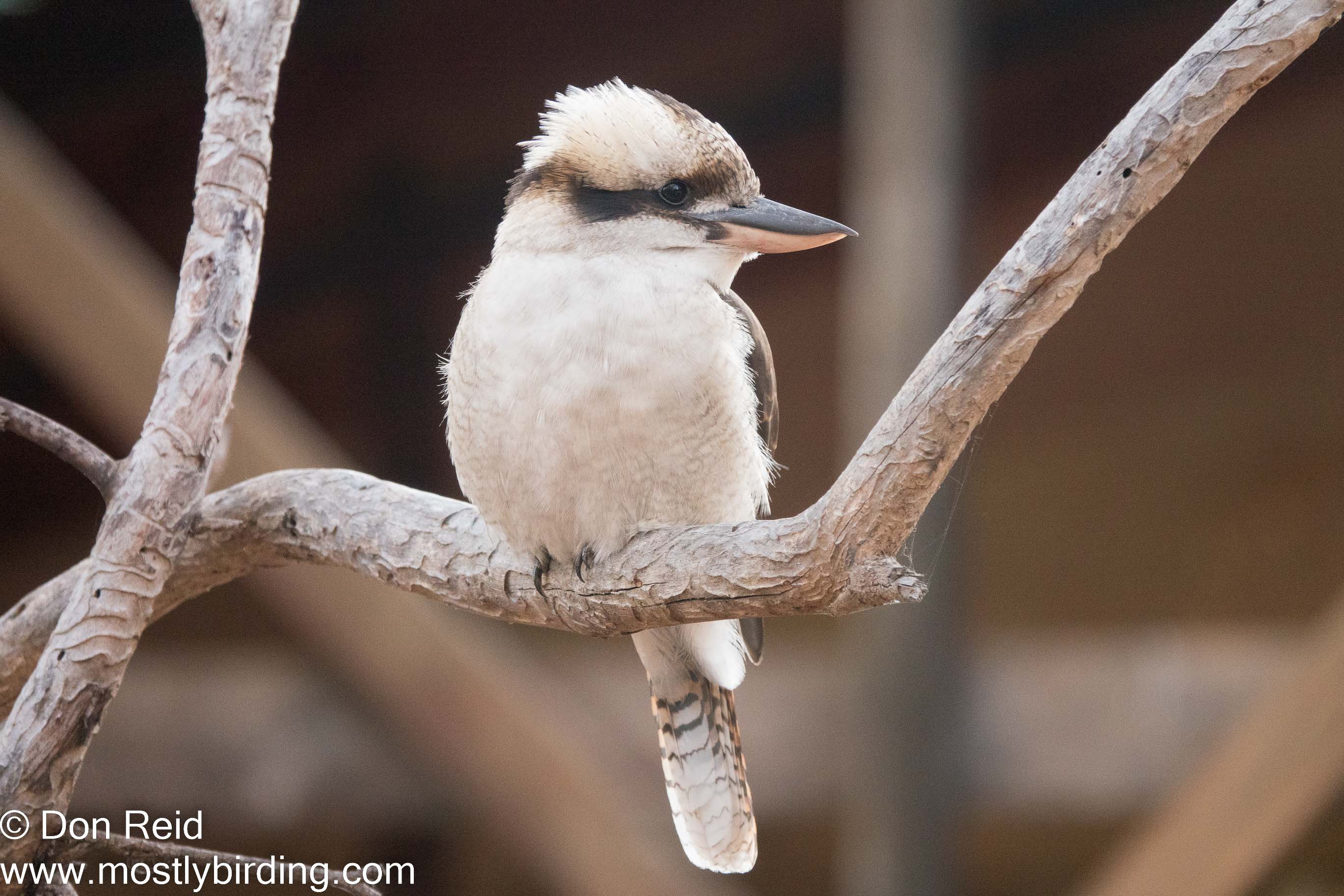
Laughing Kookaburra – very habituated to humans as they allowed us to approach to within a couple of metres of where they were perched
Laughing Kookaburra Dacelo novaeguineae, Raymond Island Victoria
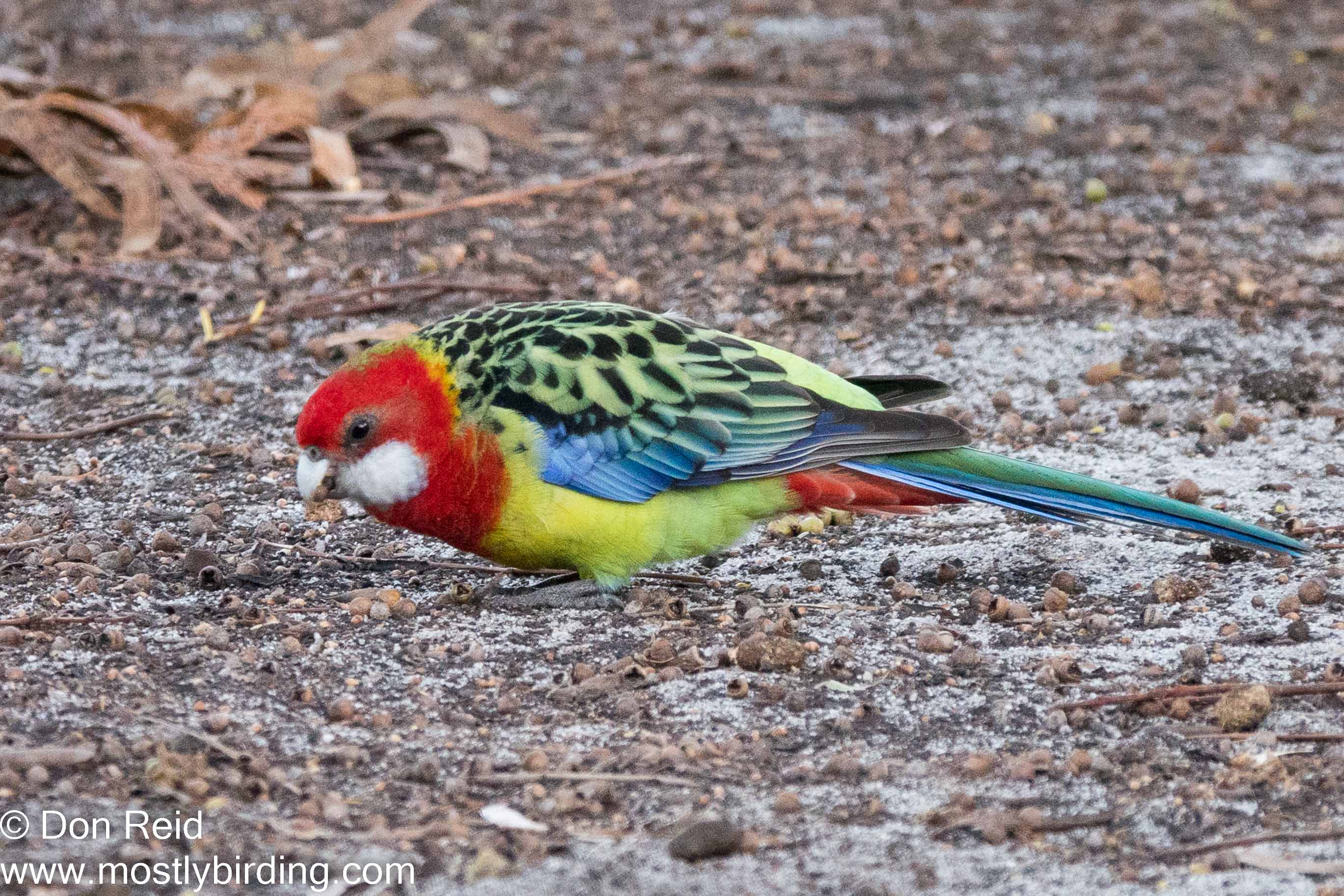
Eastern Rosellas – a flock feeding on the ground
Eastern Rosella platycercus eximius, Raymond Island Victoria
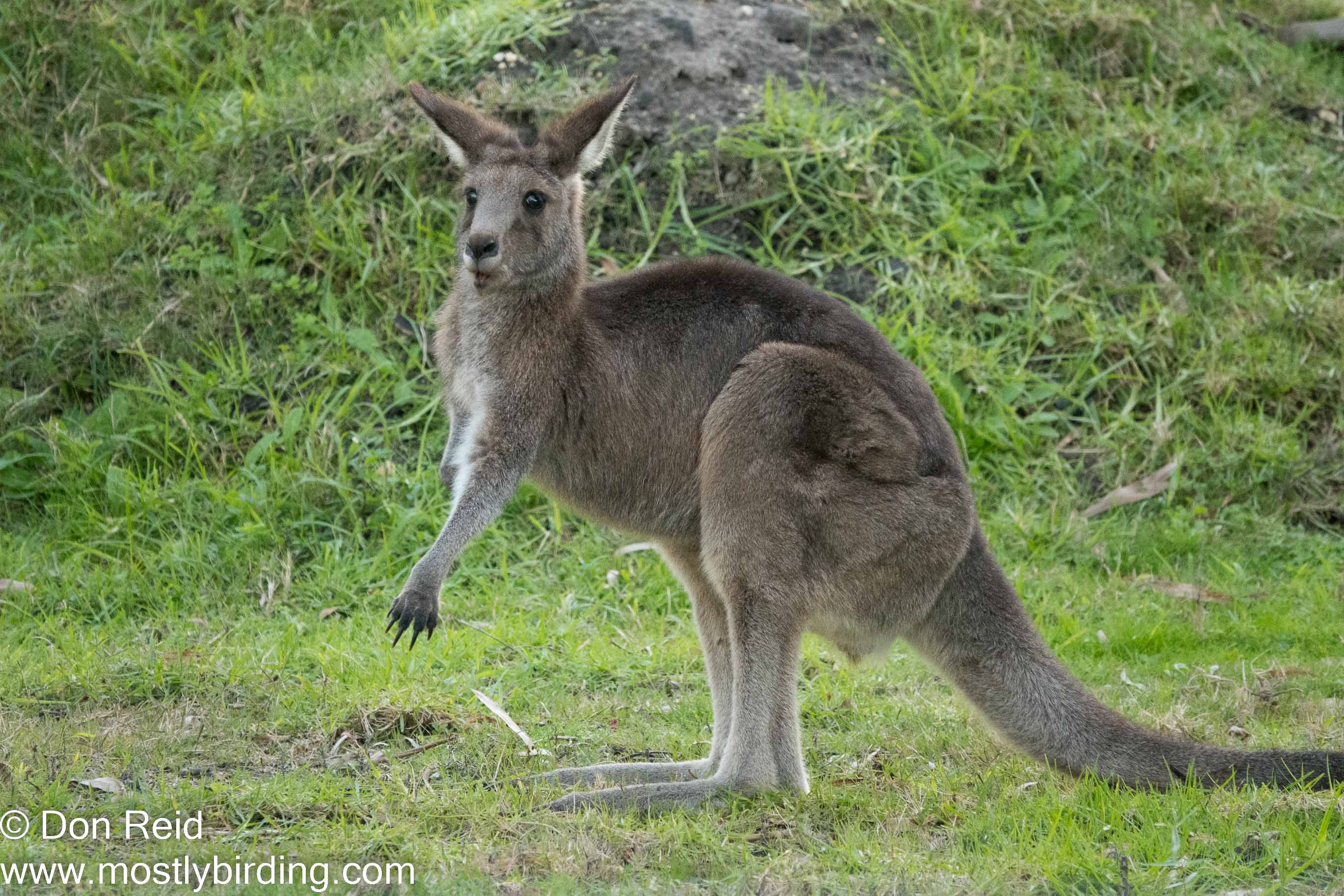
Wallabies – a pair in a garden – the wildlife and the people who live on the island seem to get on well with each other
Wallaby, Raymond Island VictoriaWallaby, Raymond Island Victoria
It was late afternoon by now so we headed back to the ferry and were soon on the road back to Sale, having spent a memorable day in a charming part of Victoria
With our time in Australia running out and having more or less recovered from the flu virus that had restricted our outings, I was keen to visit Sale Common for a nature walk.
So, one Friday towards the end of May, I borrowed the family car and drove to the parking area for the Common (full name is Sale Common State Game Refuge) where I parked next to one other car already there.
Sale Common NCR
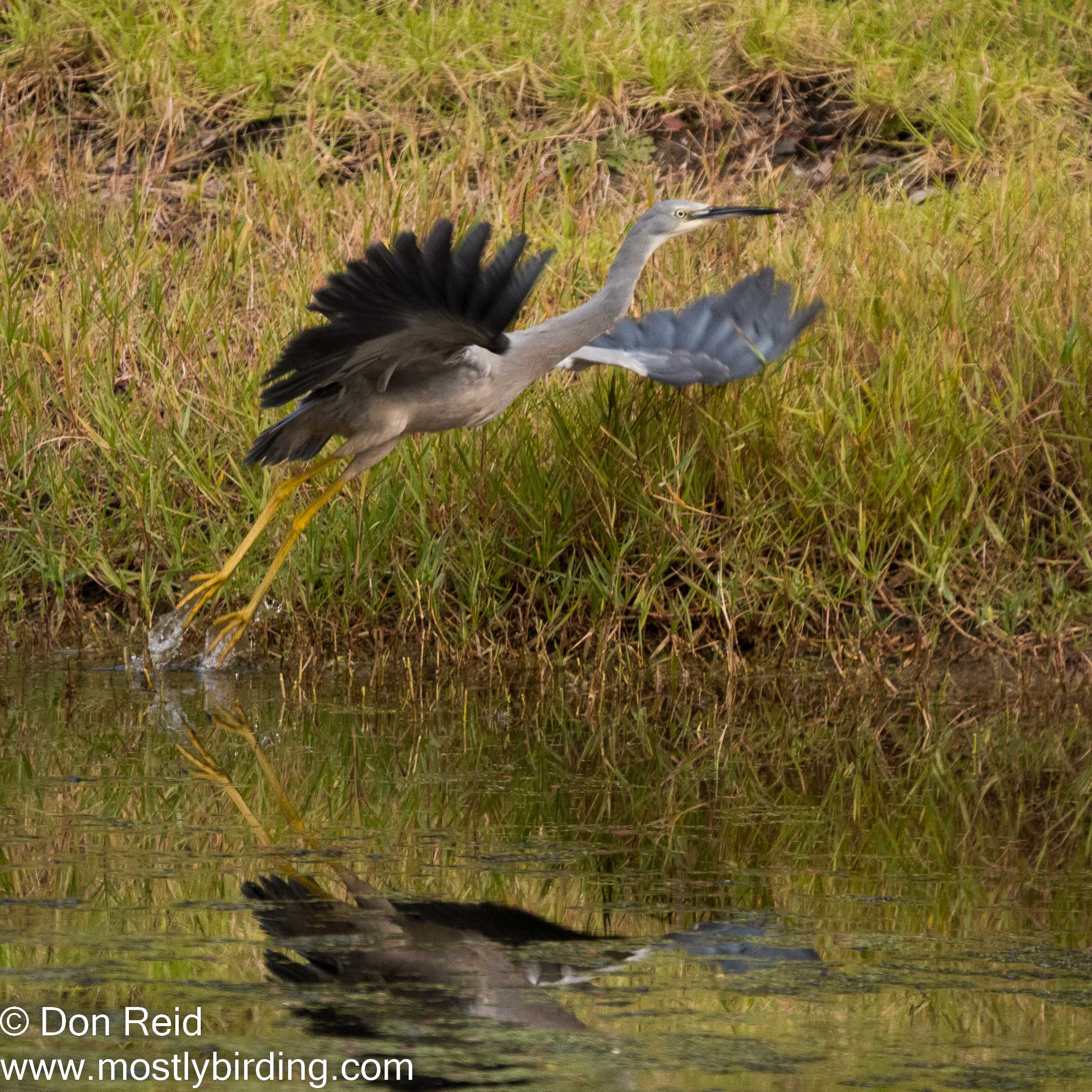
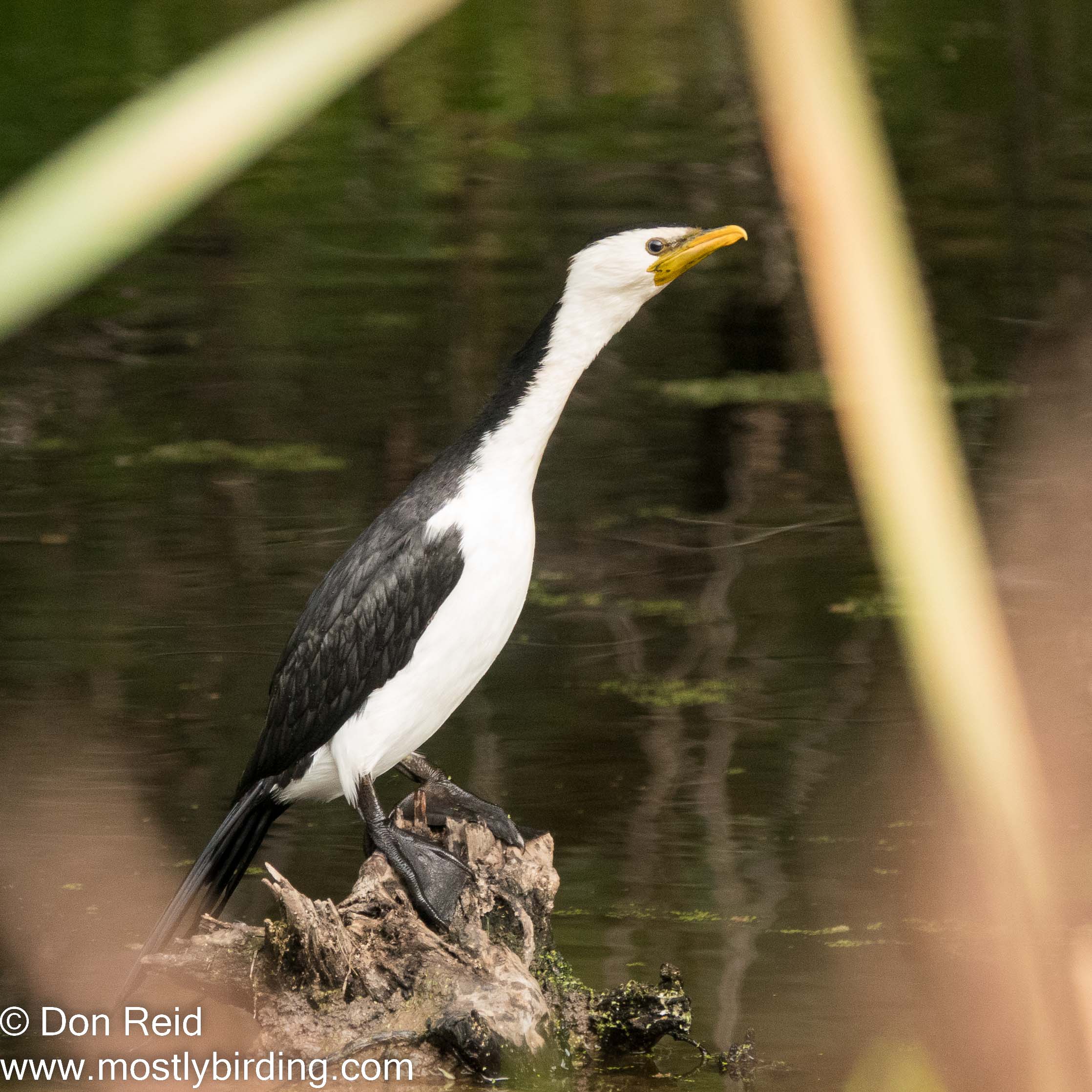
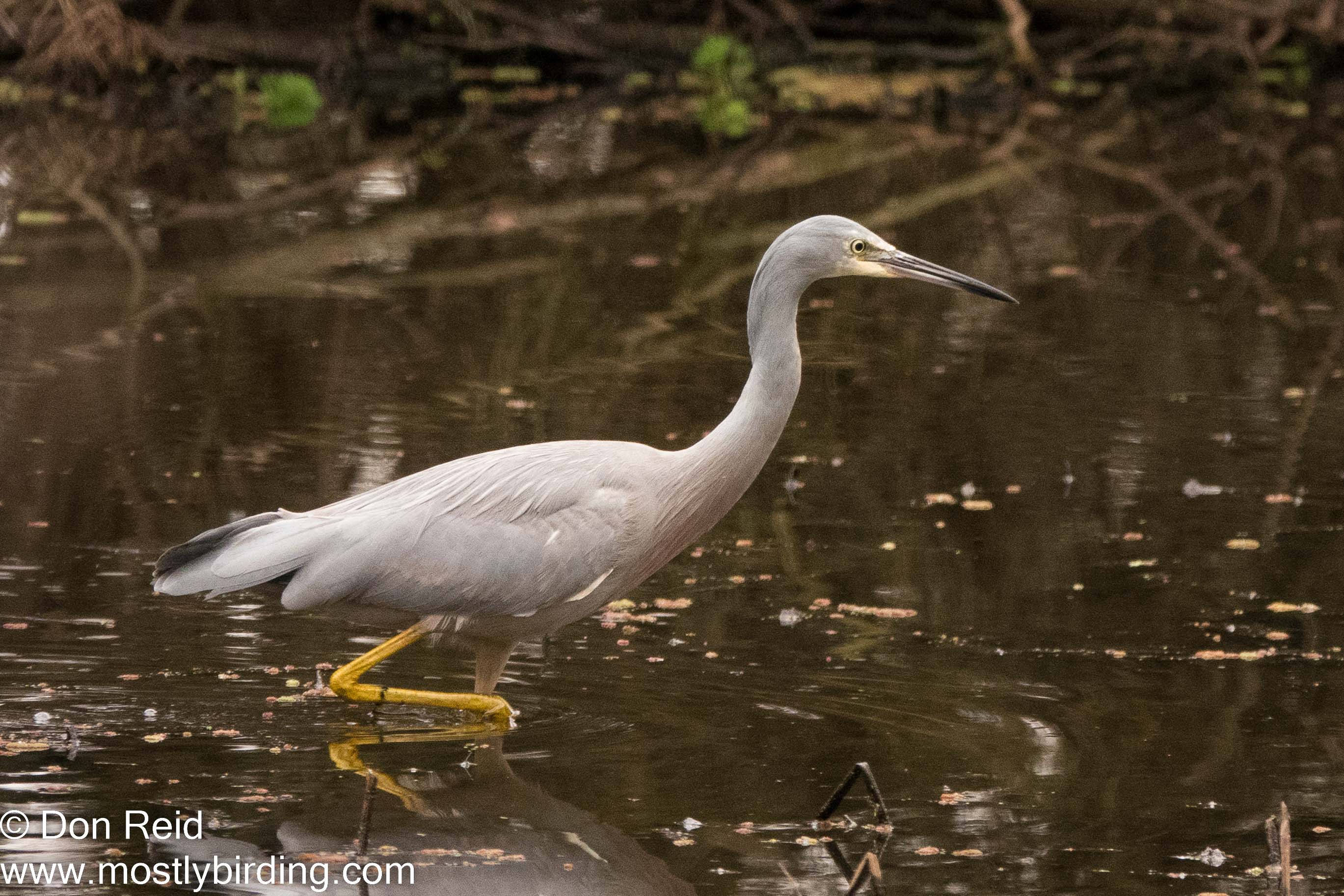
Before reaching the parking area I had passed a stretch of river which was occupied by two prominent birds – a White-faced Heron and a Little Pied Cormorant – both of which I was able to photograph before they moved off.
White-faced Heron Egretta novahollandiae, Sale Common NCRLittle Pied Cormorant Microcarbo melanoleucos, Sale Common NCR
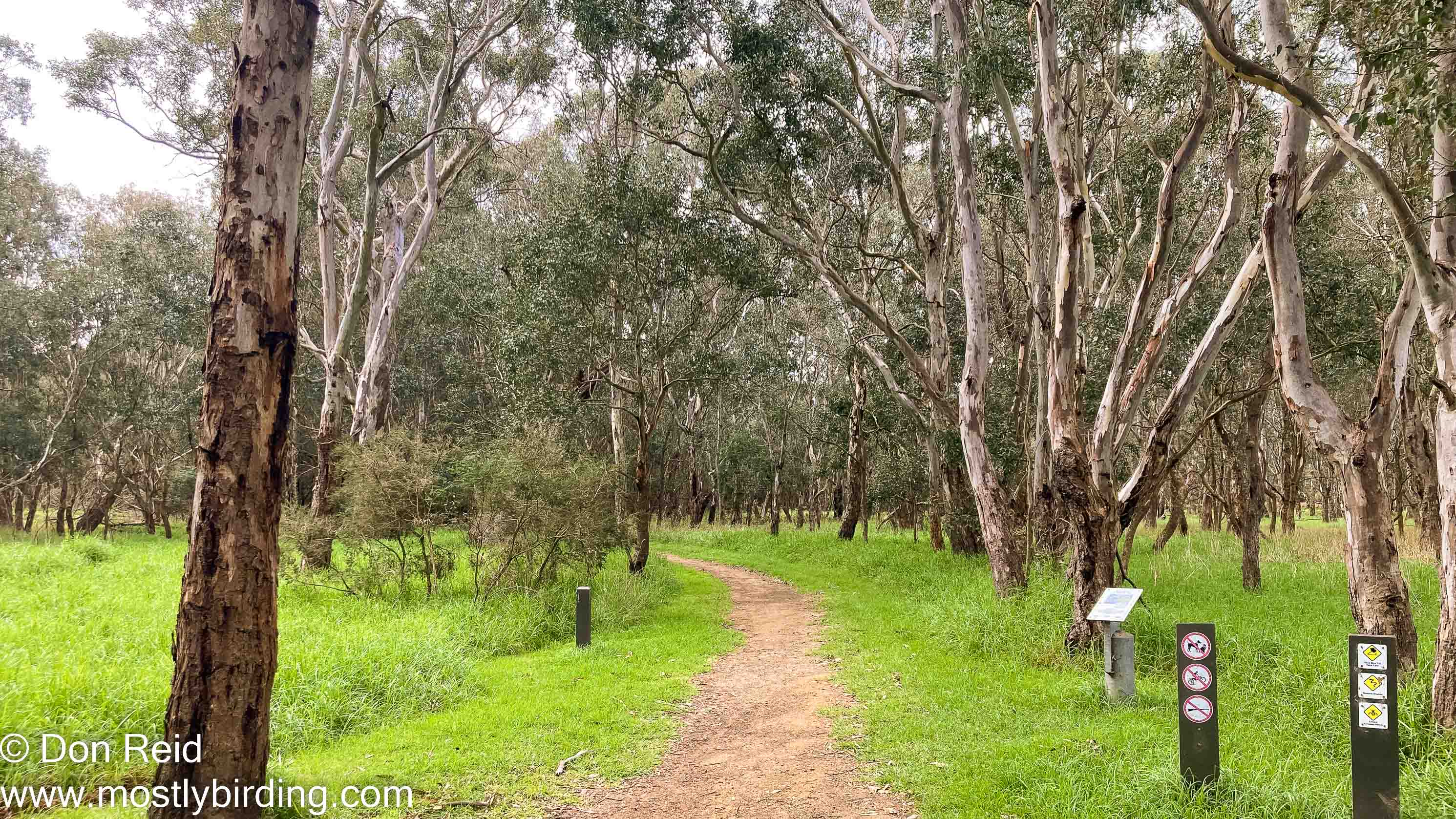
After parking I gathered my warm jacket, binos and camera and set off along the first stretch of pathway through Red Gum Woodlands with a carpet of greenery creating a beautifully peaceful scene.
Sale Common NCRSale Common NCR
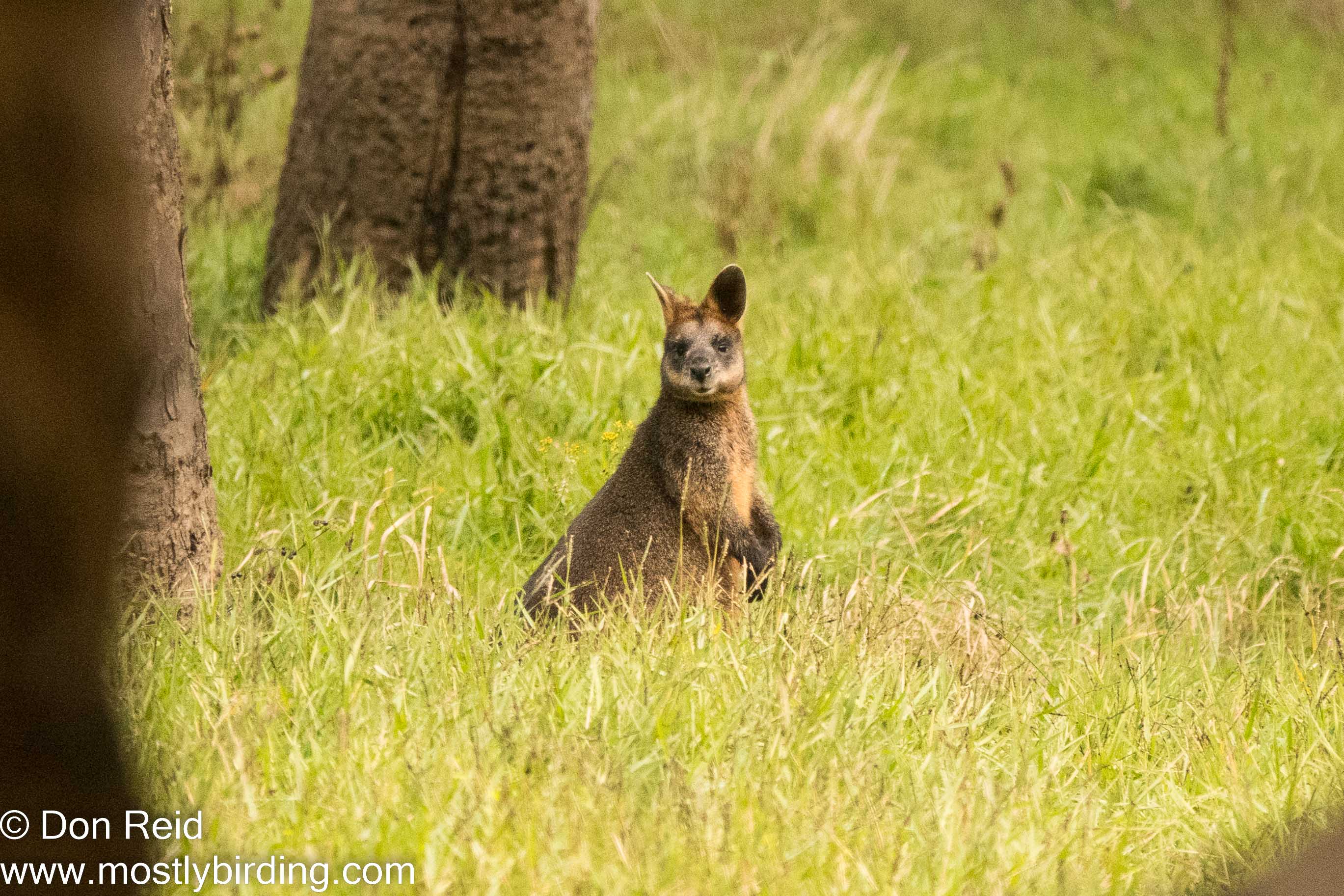
Shortly thereafter the pathway branched off towards the “lagoon” (as it was known to the early settlers) and I soon came across my first sighting – not a bird for a change but a Wallaby – who eyed me from a distance, cocked its ear then turned slowly and went bounding off through the long grass.
Wallaby, Sale Common NCR
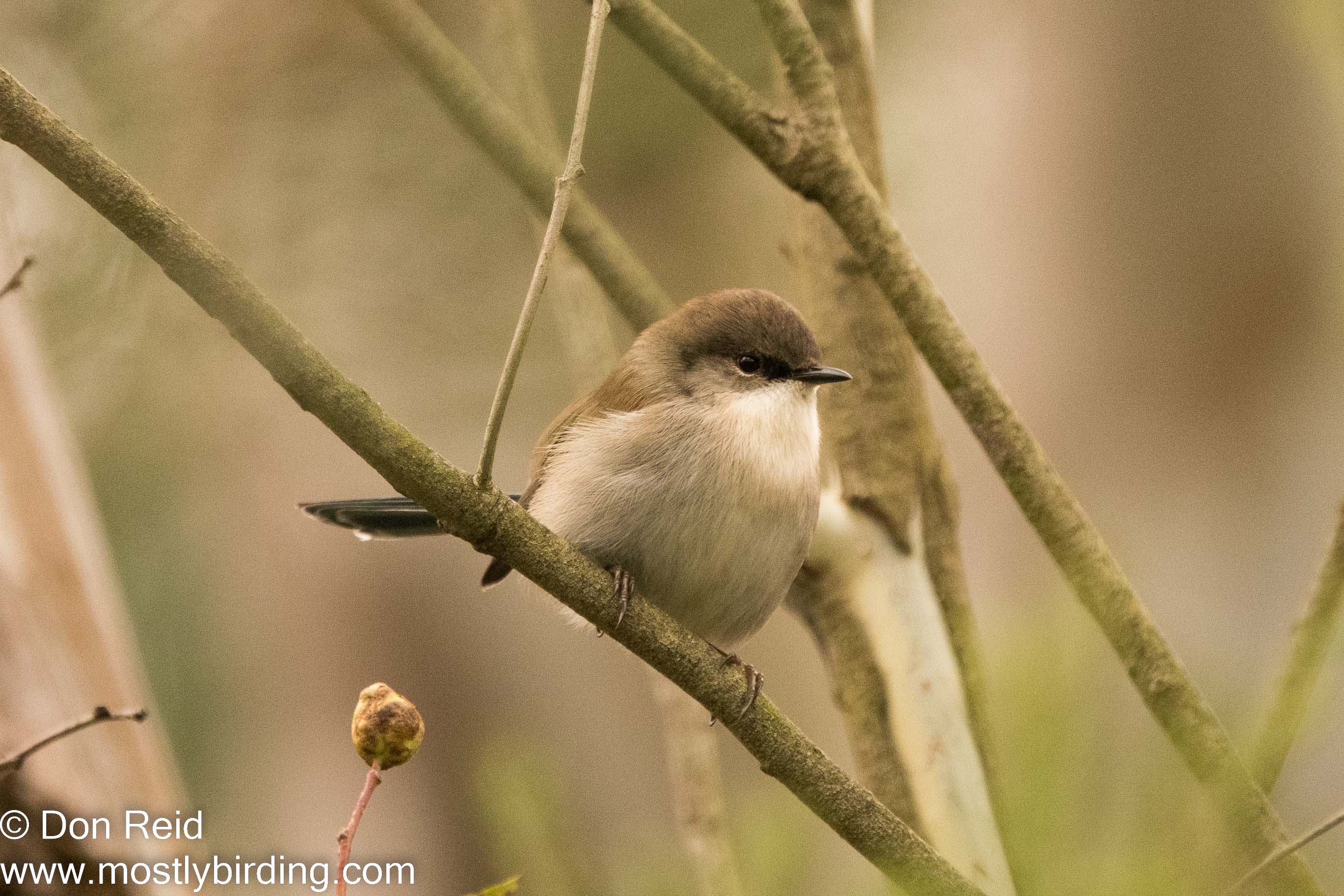
This was followed by close-up sightings of two small birds of the bush that I have become very familiar with in Australia – Superb Fairy-Wren and Grey Fantail, both emitting cheerful calls to liven up the forest.
Superb Fairywren Malurus cyaneus (Non-breeding plumage), Sale Common NCRGrey Fantail Rhipidura albiscapa, Sale Common NCR
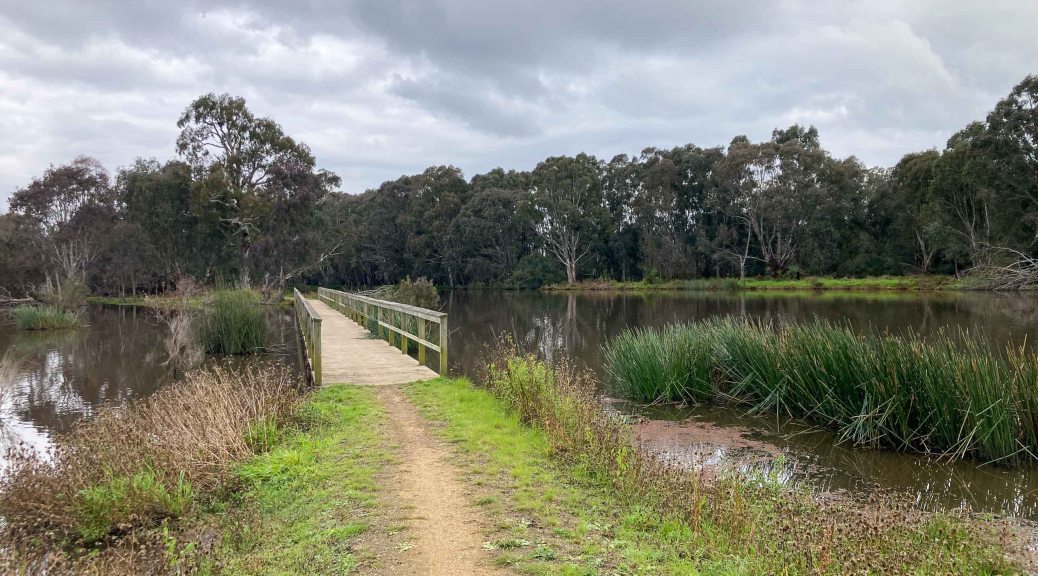
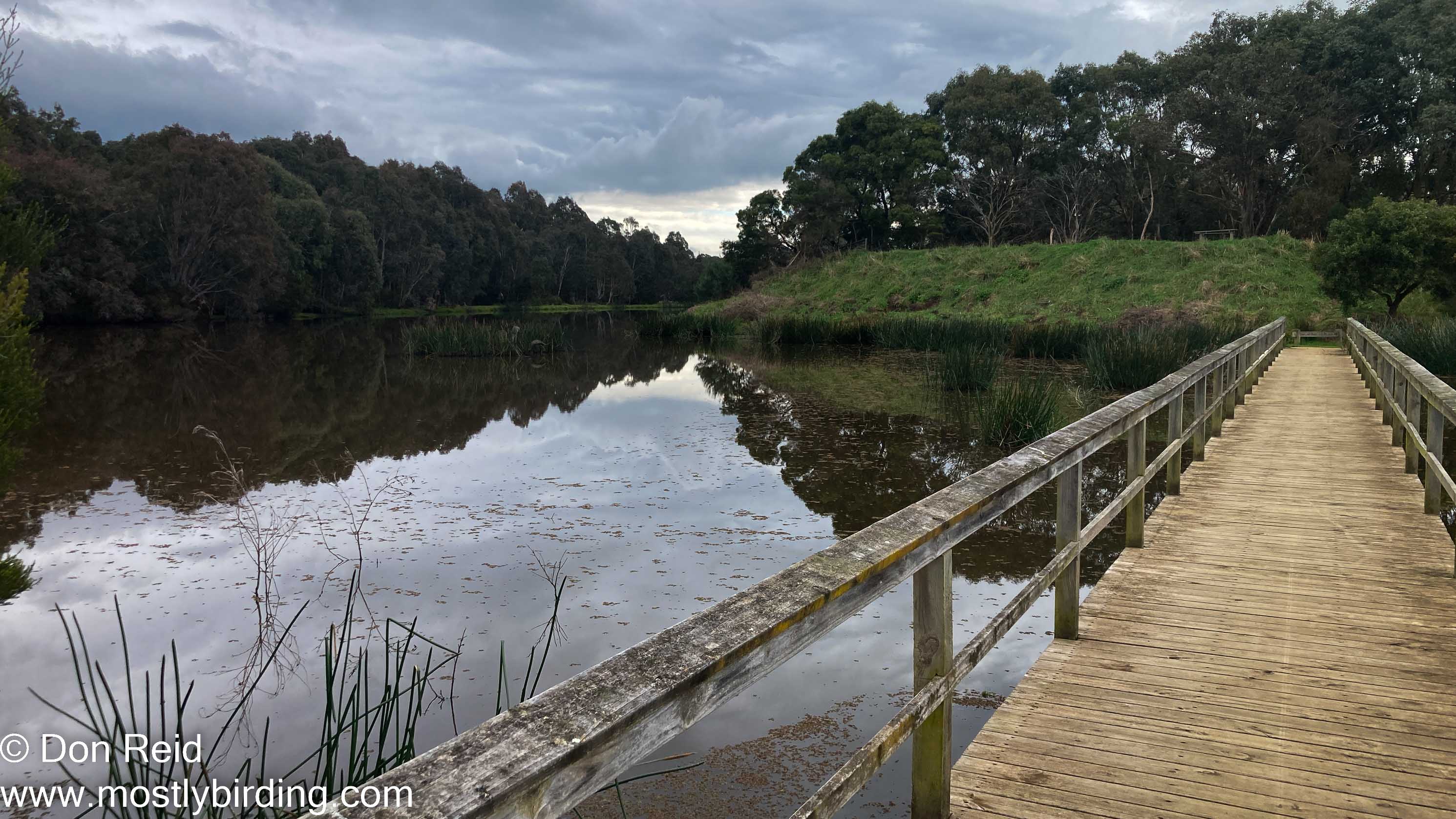
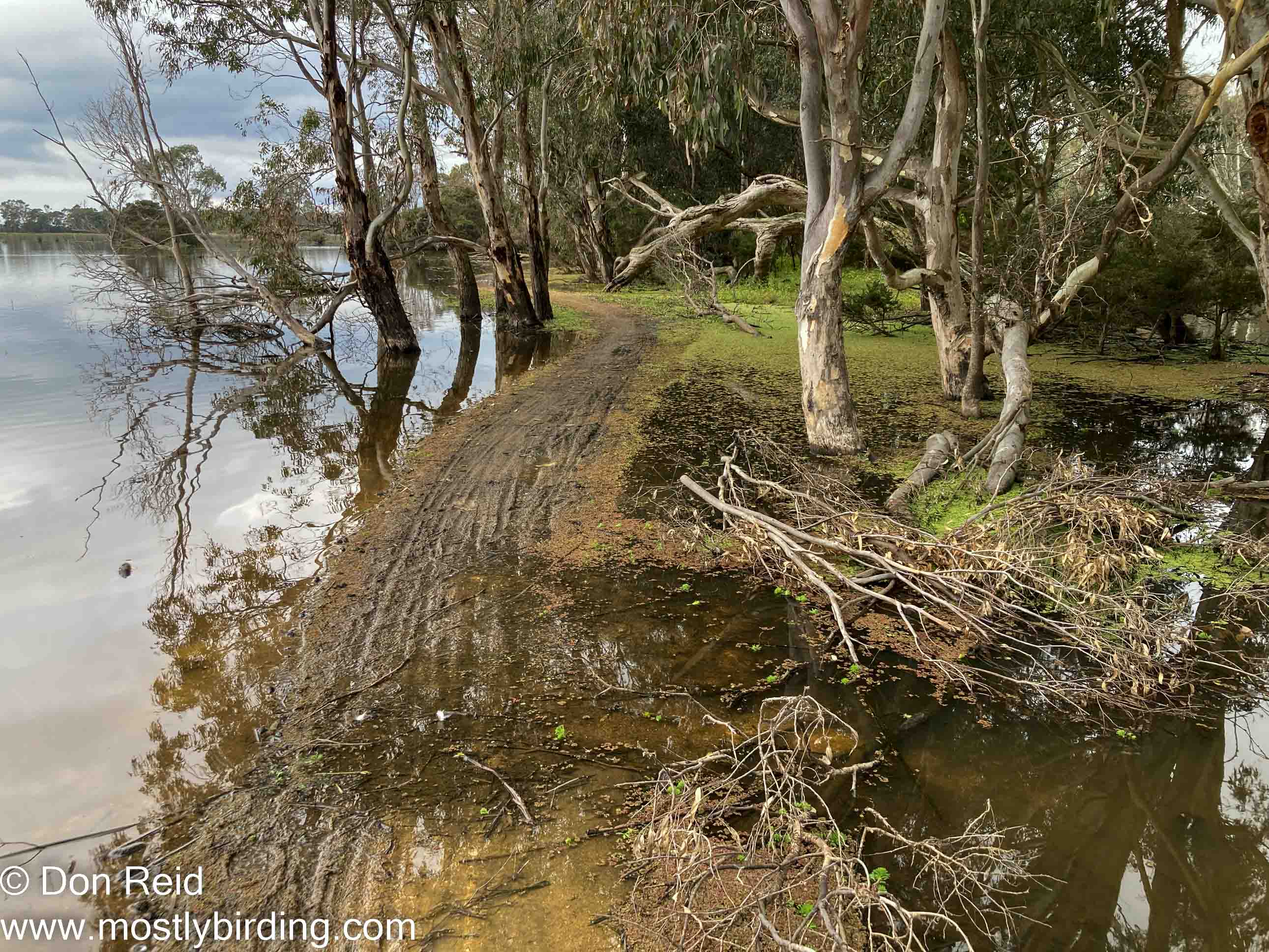
As I approached the first stretches of water it was obvious that water levels were very different from those in 2019 when I had last walked these routes, to the point that the pathway was close to being inundated in places.
Sale Common NCR
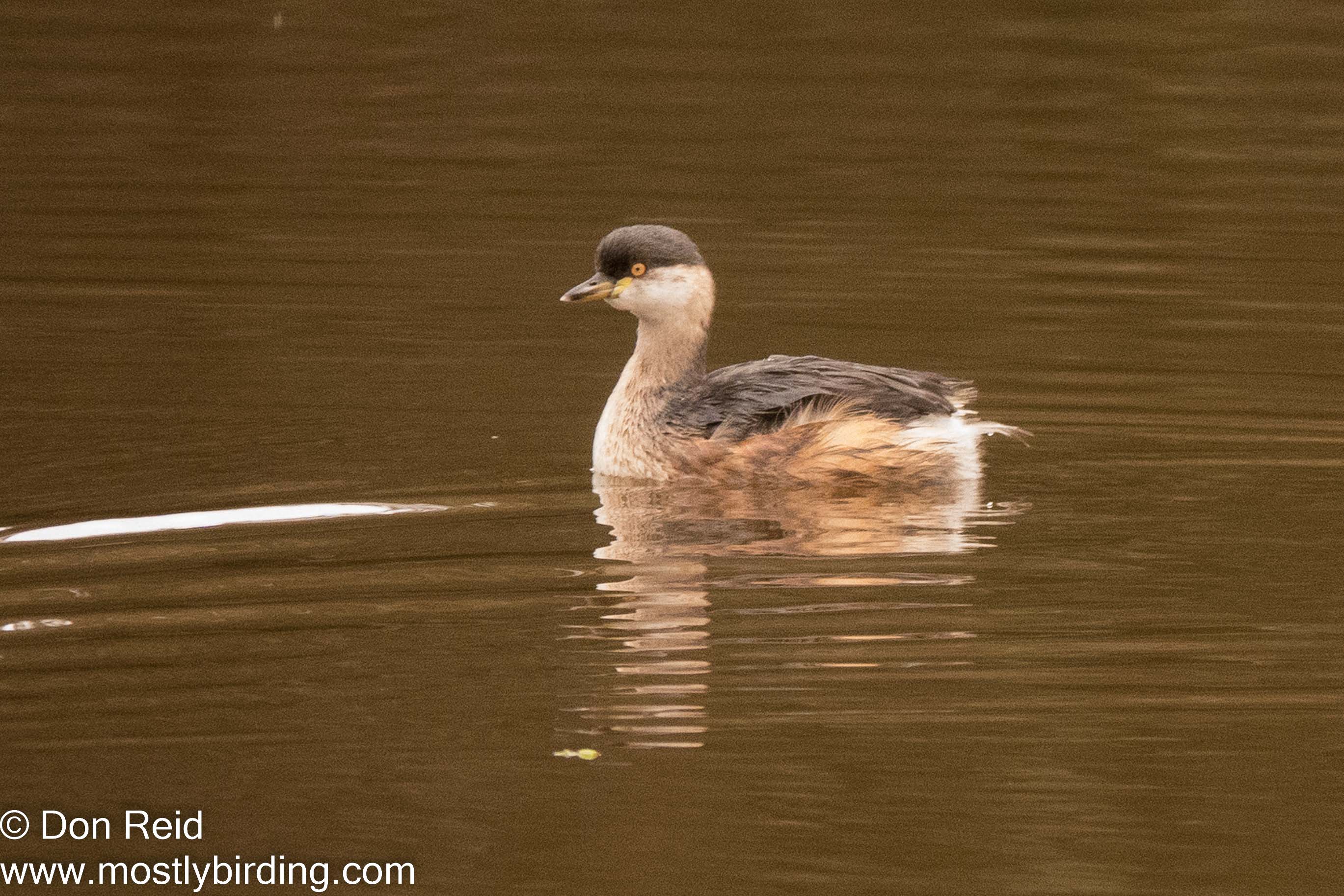
I could see waterfowl ahead, breaking from their waterside cover and heading out into the middle of the lagoon, looking back to eye me warily as I hastened to get a photo or two before they became too distant.
Australasian Grebe Tachybaptus novaehollandiae (Non-breeding plumage), Sale Common NCR
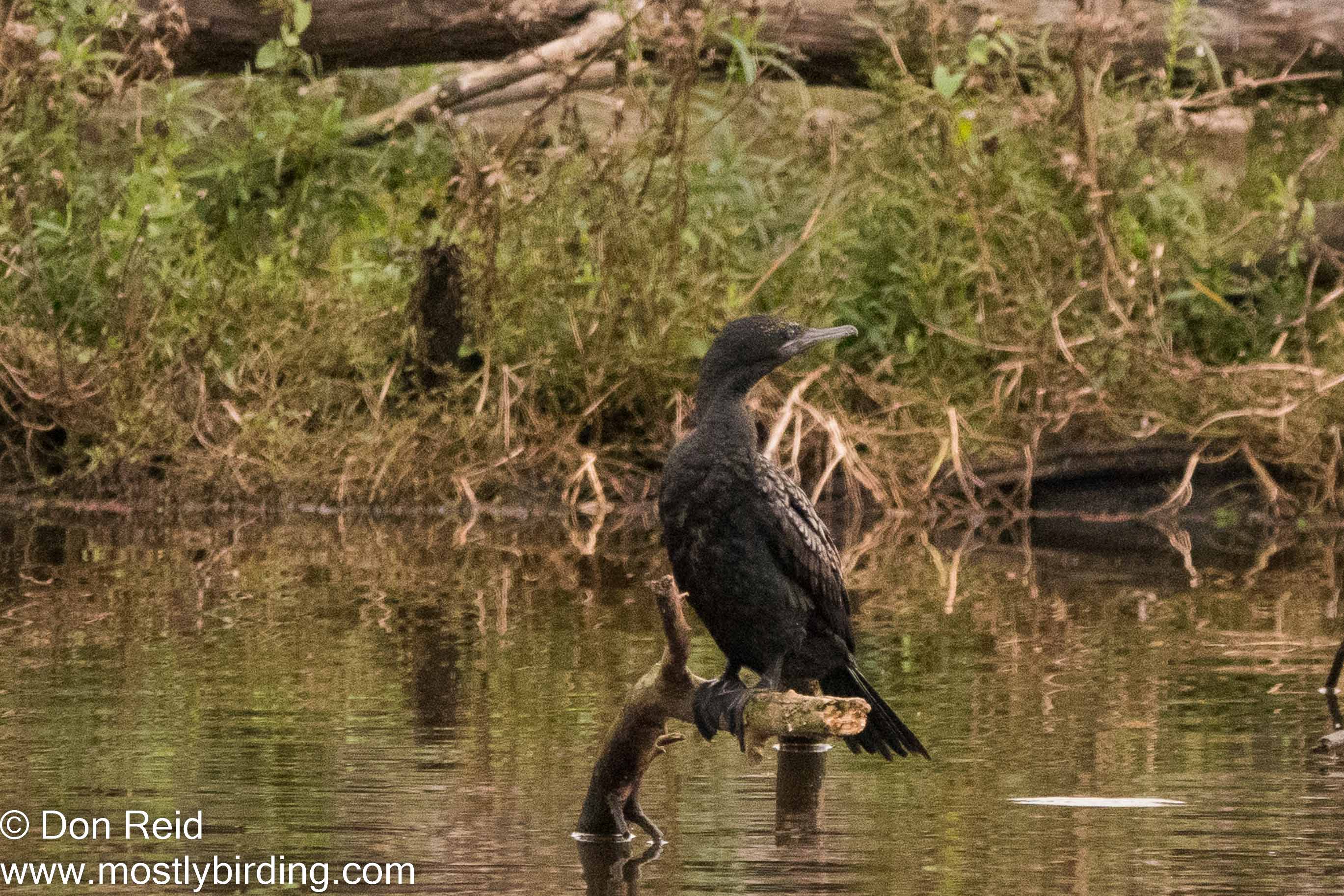
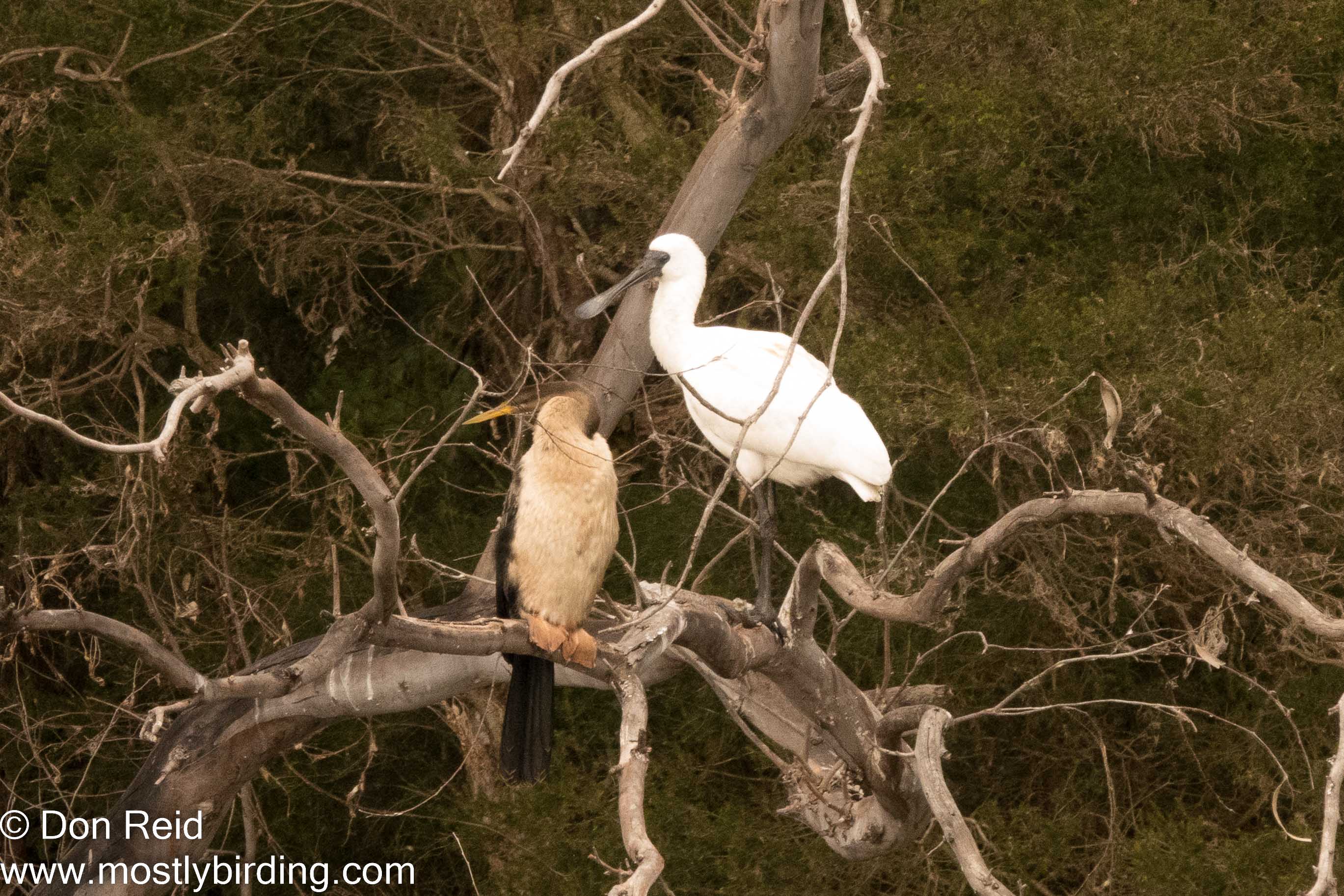
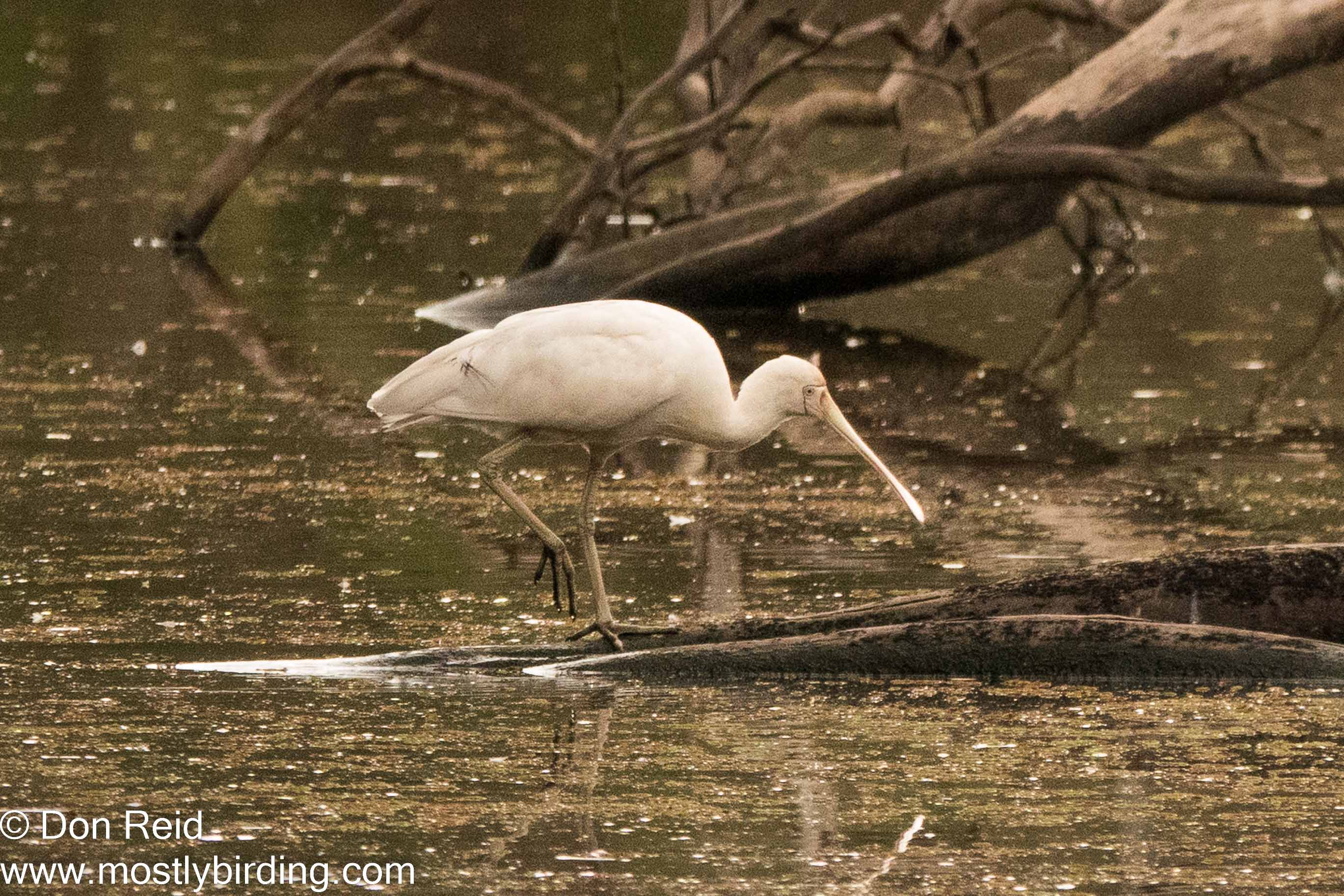
A short detour in the pathway led to the “Lookout” – a low hill with views over the lagoon and across to the opposite bank which was lined with trees. From this vantage point I could see a variety of birds perched in partially submerged trees, including Little Black Cormorants and Yellow-billed and Royal Spoonbills, the latter being a Lifer – my first for the morning.
Little Black Cormorant Phalacrocorax sulcirostris, Sale Common NCRRoyal Spoonbill Platalea regia, Sale Common NCR – Lifer!Yellow-billed Spoonbill Platalea flavipes, Sale Common NCR
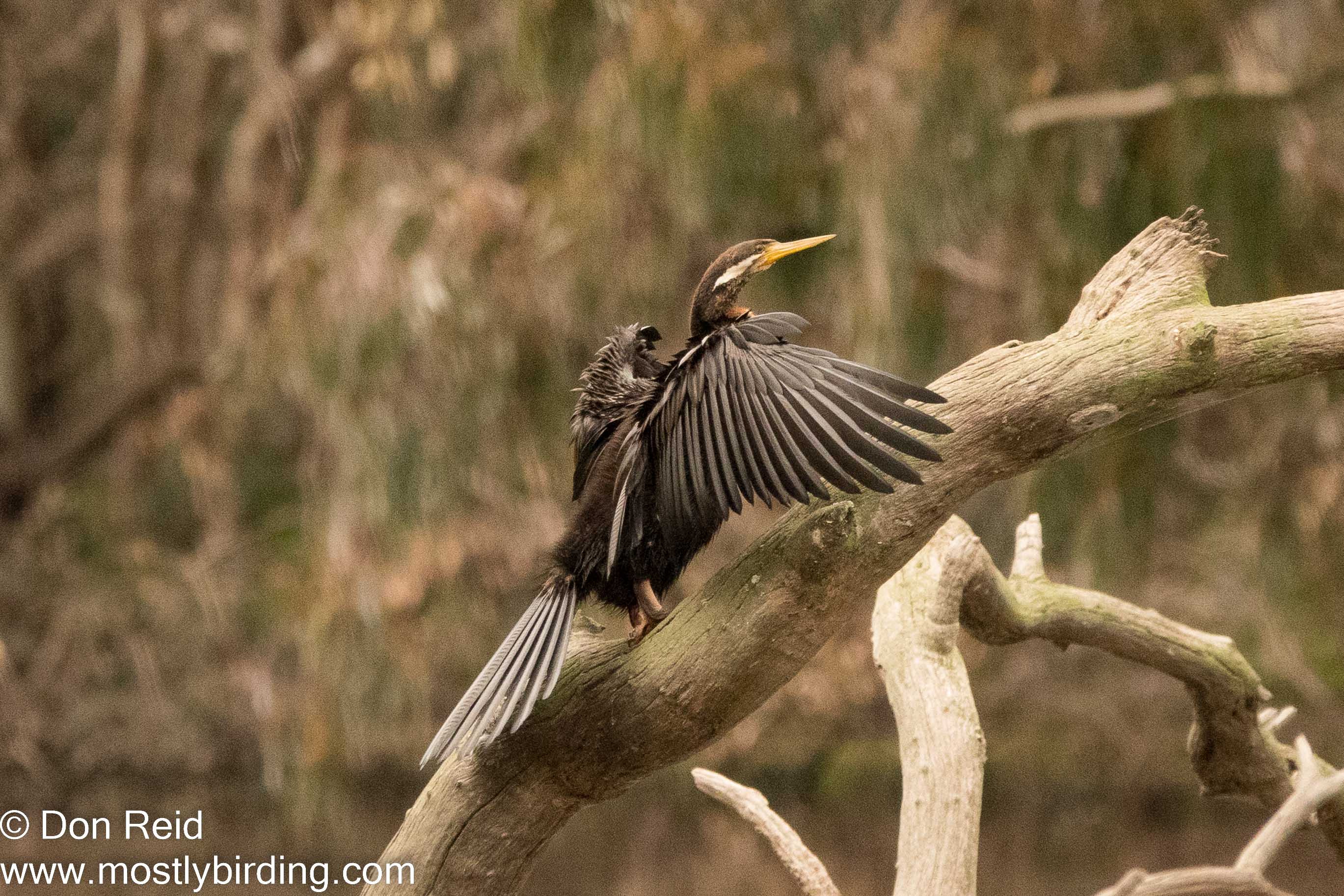
Nearby an Australian Darter was perched with wings spread, drying its feathers before its next fishing dive, and higher up in the tree above a Whistling Kite was partially concealed – I later discovered it was attending a nest with a young nestling.
Australasian Darter Anhinga novaehollandiae, Sale Common NCRAustralasian Darter Anhinga novaehollandiae, Sale Common NCR
I joined the main pathway again, alternating between natural track and boardwalks across the wetland sections, the latter providing a good vantage point for close views of White-faced Herons and Black Swans before reaching a stretch of track surrounded by water.
Sale Common NCRSale Common NCRBlack Swan Cygnus atratus, Sale Common NCRWhite-faced Heron Egretta novahollandiae, Sale Common NCR
A bench standing in water was a further indication that the water levels of the wetlands were substantially higher than May 2019 when I had last visited the Common and I didn’t need further persuasion to make this my turnaround point, having walked enough and seen enough for the morning.
Sale Common NCRSale Common NCR
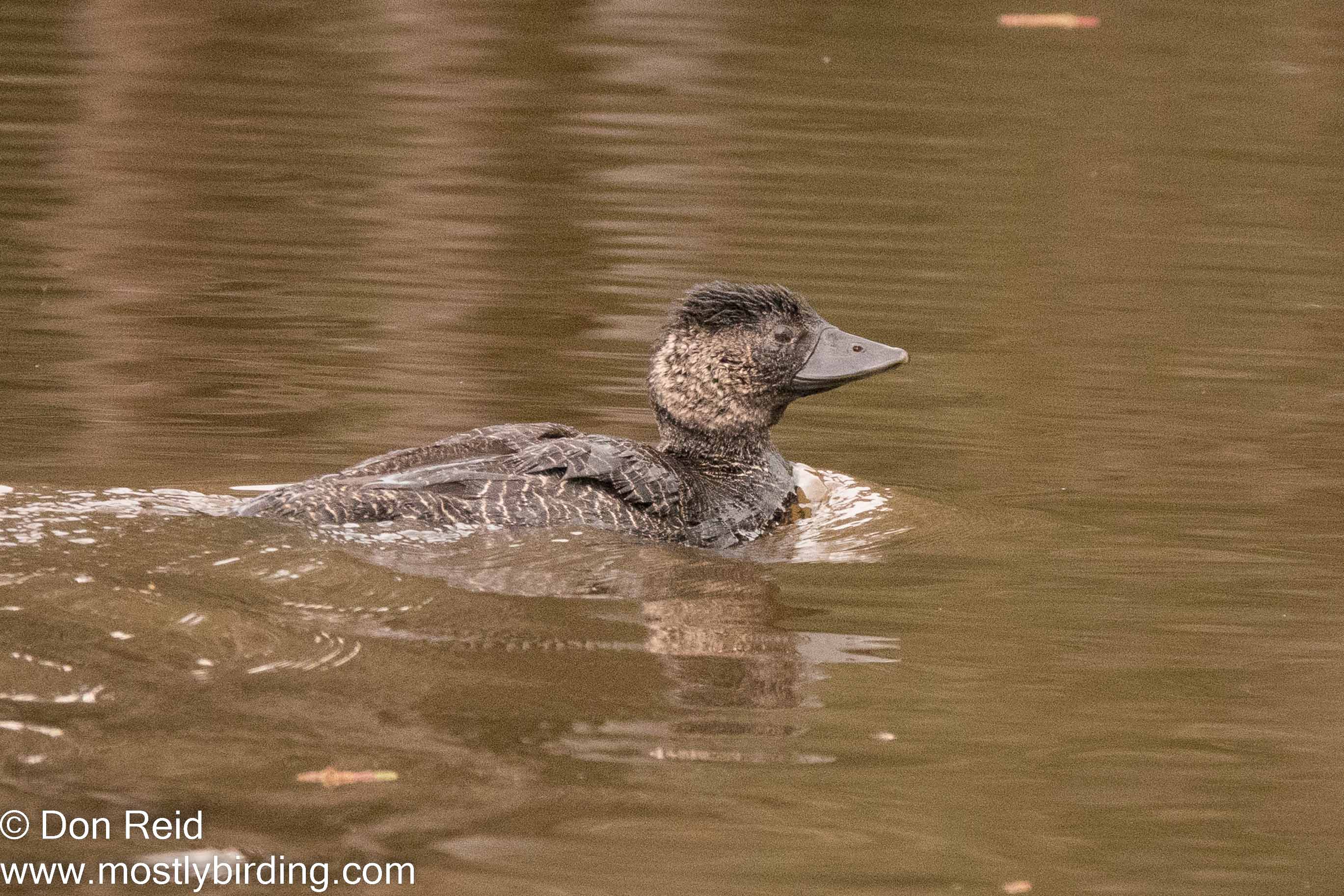
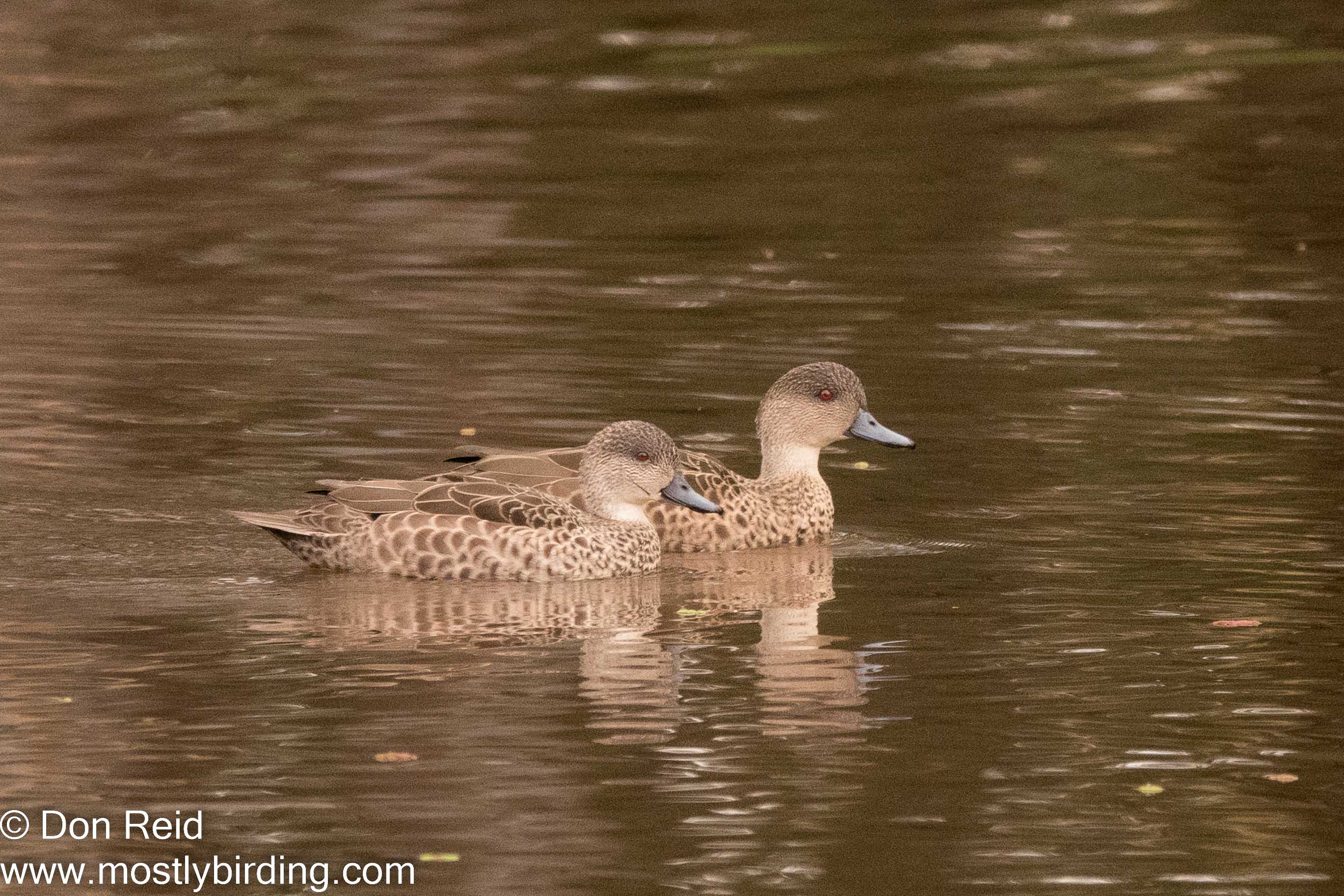
Time was moving on and the car would soon be needed for the school run so I headed back along the pathway, without rushing but with fewer meandering dawdles. Nevertheless, I spotted two ducks which I didn’t immediately recognise – with good reason as both turned out to be Lifers!
One was a Musk Duck with an unusual bill that reminded me of a Pygmy Goose, the other was a Grey Teal that looked remarkably like the Cape Teals we are used to in SA.
Musk Duck Biziura lobata, Sale Common NCRGrey Teal Anas gracilis, Sale Common NCR
Thrilled with my haul of three lifers for the morning and the absolute pleasure of walking in such an inspiring environment (which I virtually had to myself as well) I hastened to the parking area and found I was just in time to head straight to the schools to collect our grandson and granddaughter.
I wasn’t really planning to add another Part to this story, but there were enough interesting things on our trip back to Sale to make it worth another one – and it was a lot less stressful than the initial trip.
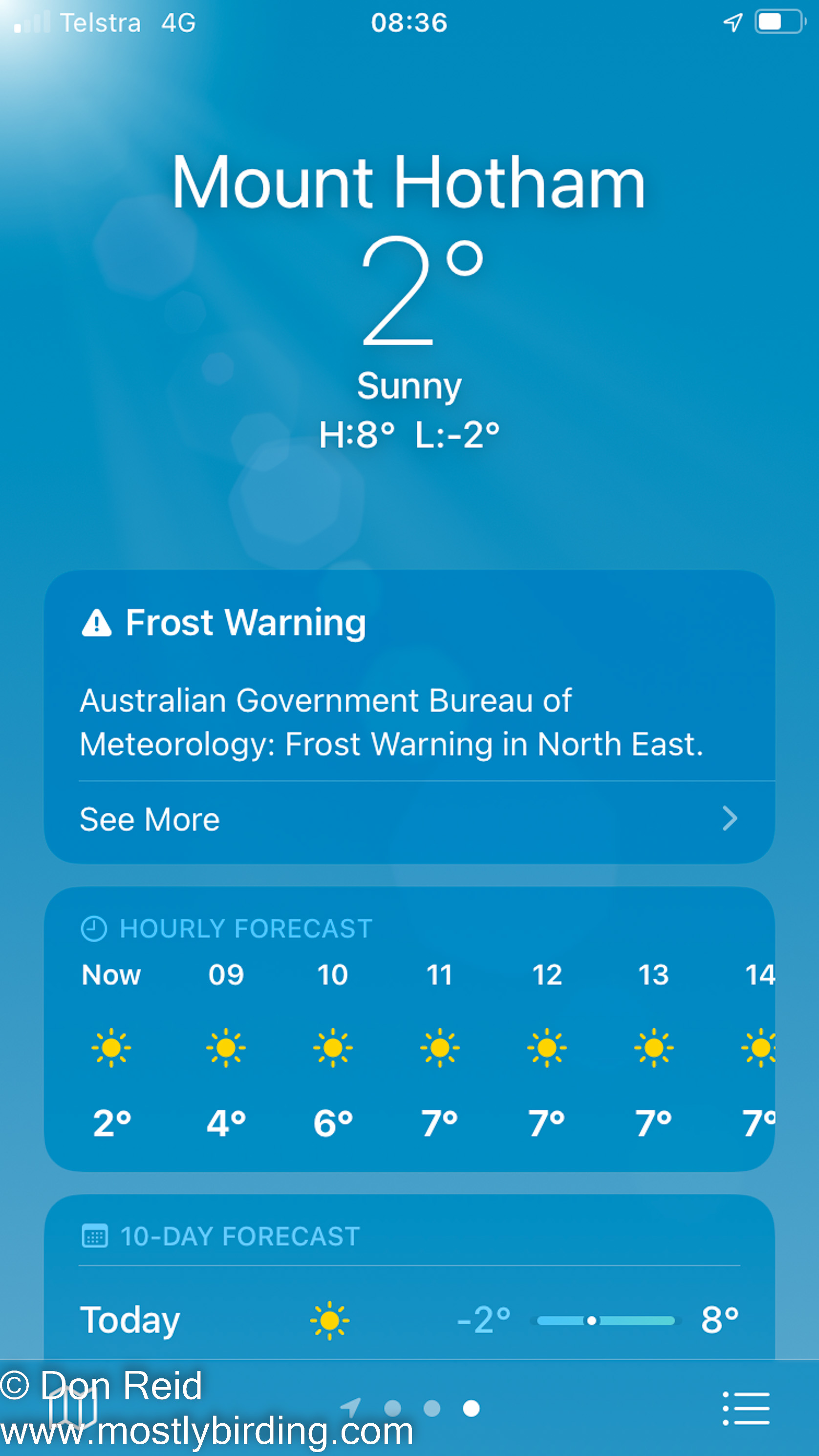
I had been checking the weather forecast for our return trip every day since we arrived in Bright and it seemed we were in for sunny skies most of the way, including through Mount Hotham which had caused us several types of panic on the way there with heavy snow falls.
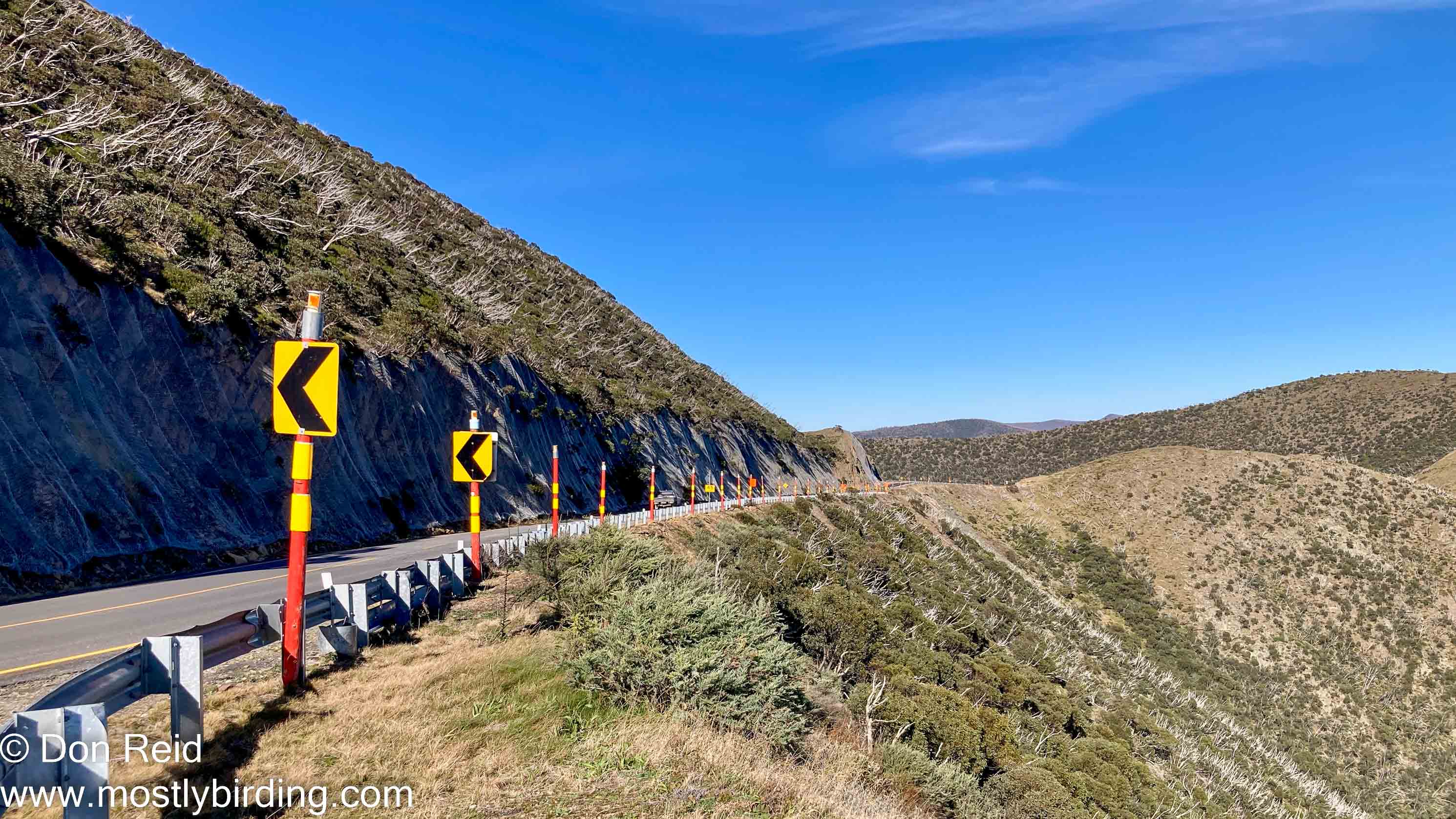
We left Bright at around 9.45 am and stopped in Mount Hotham an hour later, after negotiating what seemed like a 1000 turns in the road.
On the way to Mount Hotham, Victoria – those poles are there to indicate where the edge of the road is when the snow is deep!
Along the way we stopped at a viewpoint which gave spectacular views across the valley and to the mountains beyond
View across to Mount Hotham, Victoria
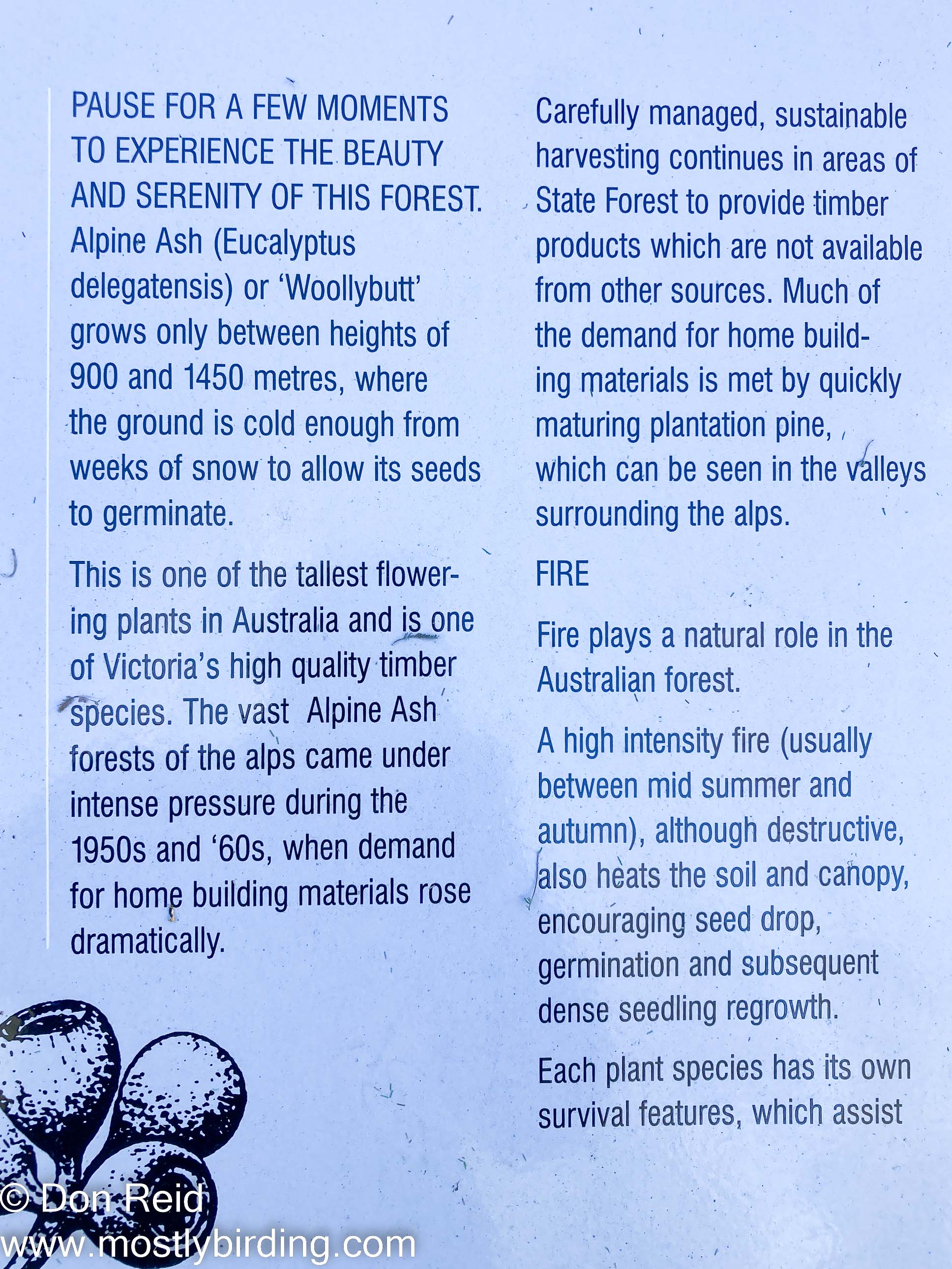
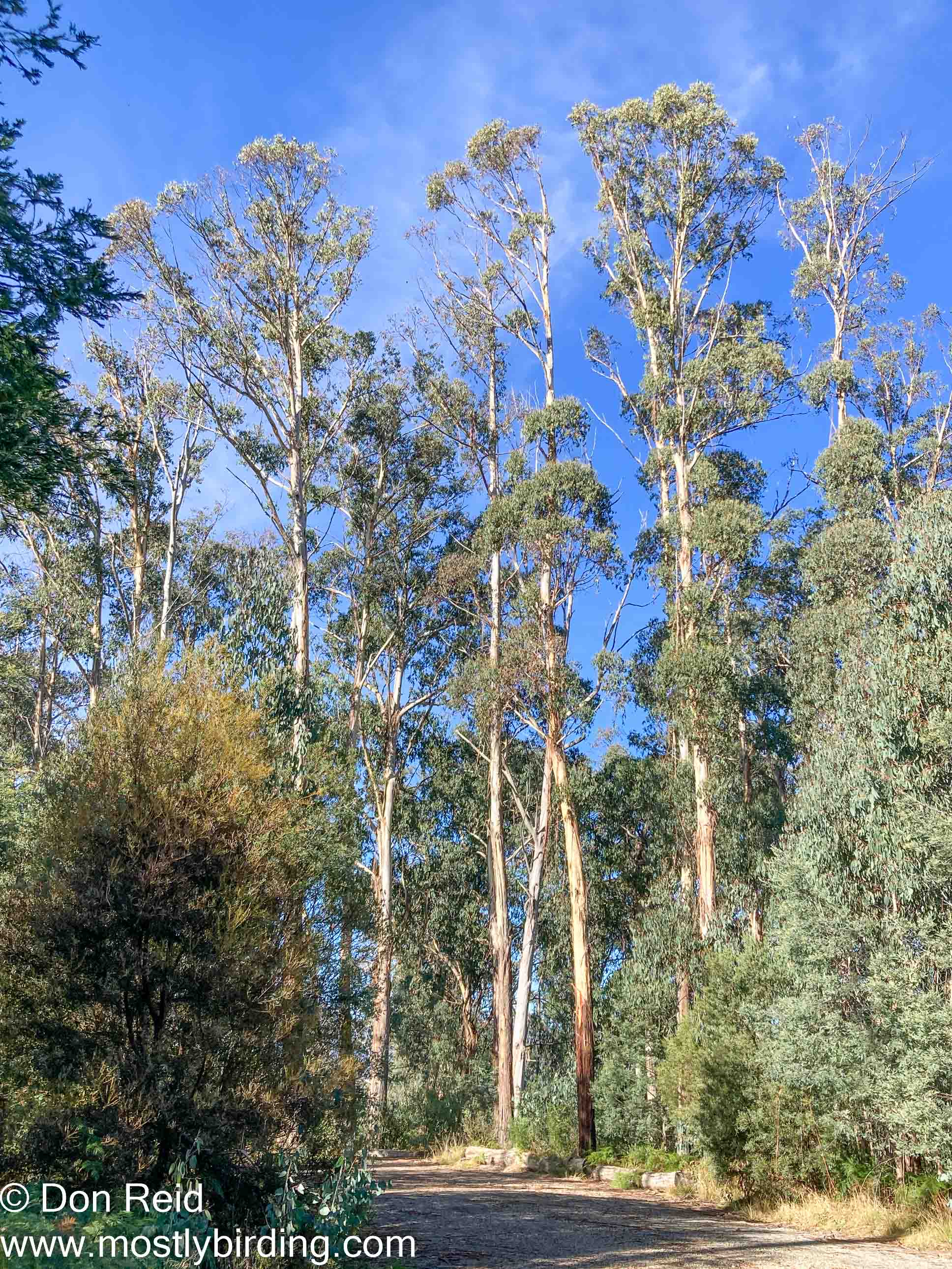
Some way down the road we stopped briefly to have a look at some trees – Oh No, we don’t need more trees, we thought – and more Eucalyptus at that. Well, yes but these particular trees were special – and just to confuse us we found they were called Alpine Ash. We had to admit they were handsome trees.
Alpine Ash trees, near Mt Hotham VictoriaAlpine Ash trees, near Mt Hotham Victoria
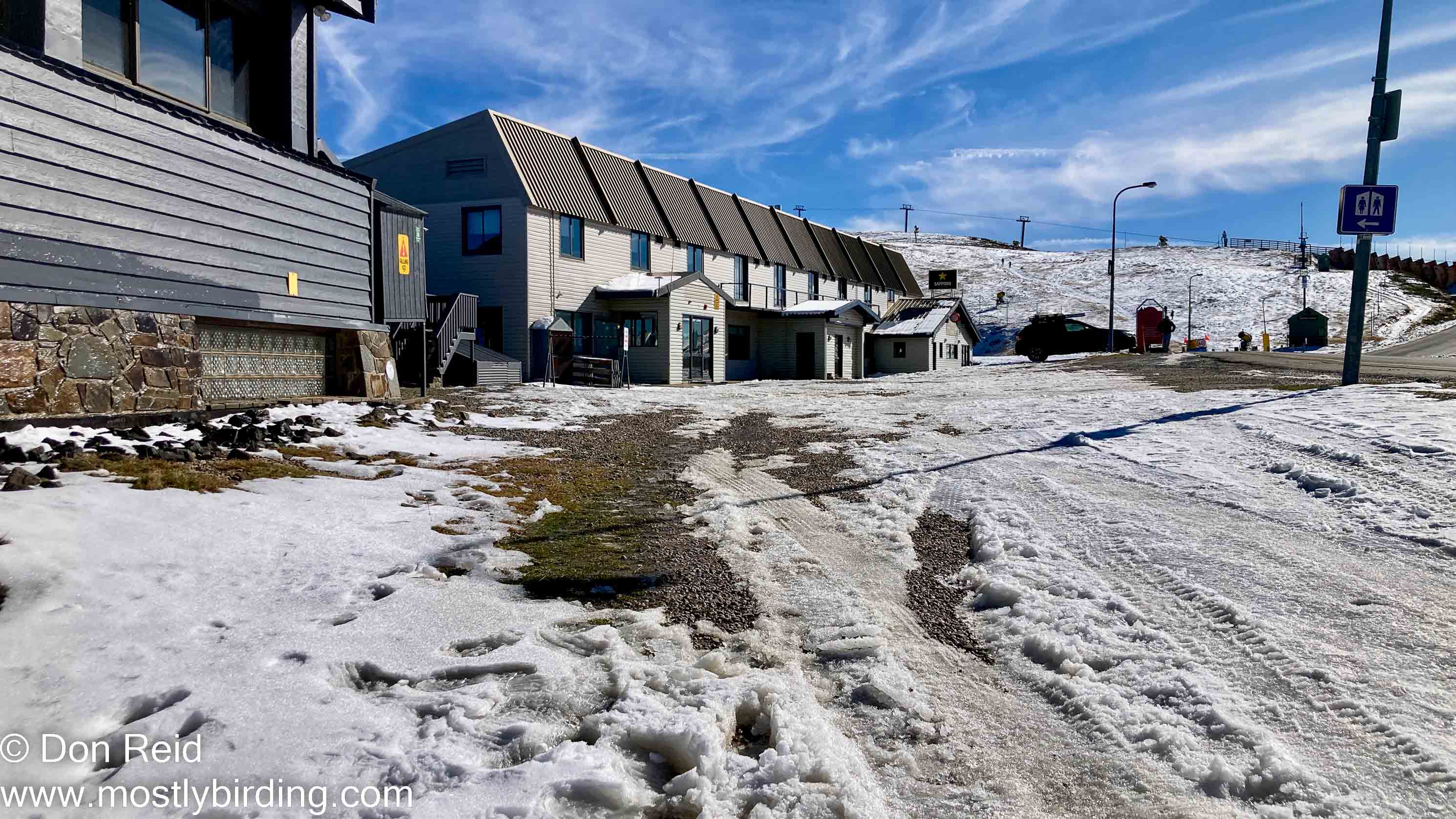
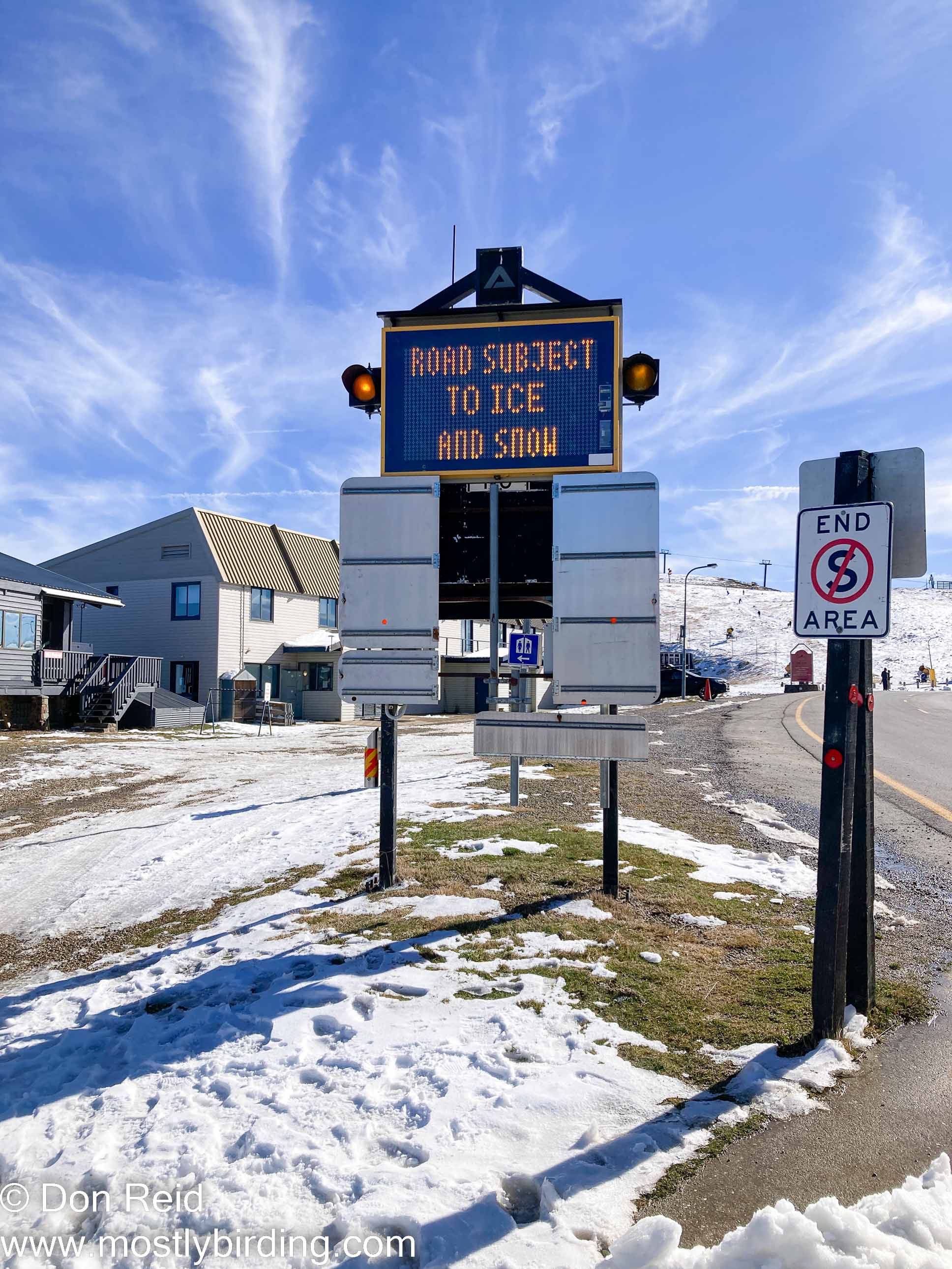
Although there were still remnants of snow around in Mt Hotham and even some hardy types tobogganing down one of the snow-covered hills adjoining the town, the bright, sunny (yet very chilly) weather was in complete contrast to when we had passed through a few days earlier.
Mount Hotham, VictoriaMount Hotham, VictoriaMount Hotham, Victoria
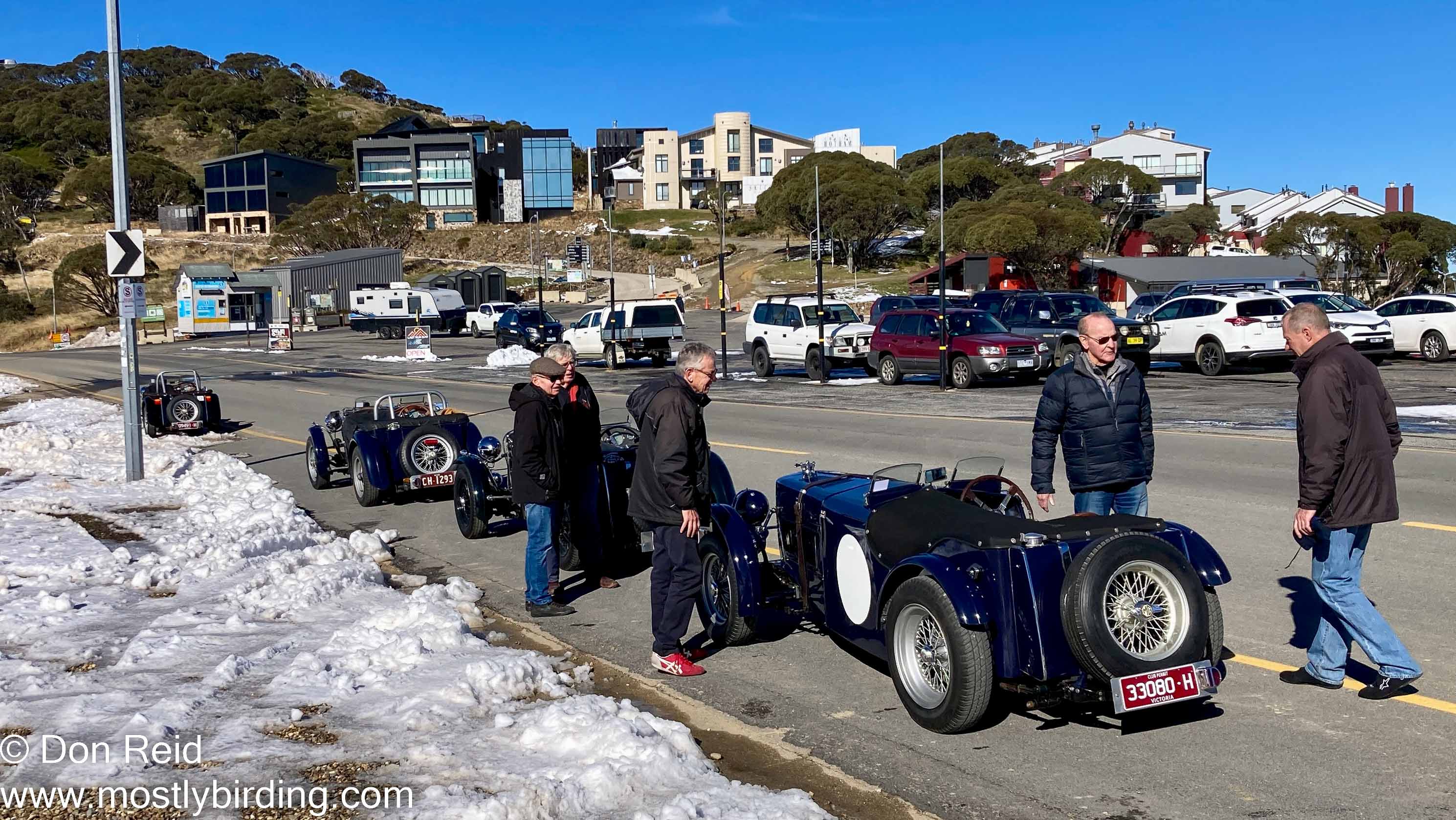
We pulled off the road to enjoy our tea and a muffin – and the sight of four vintage MG Sports cars from the early Fifties
MG Special, Mount Hotham, Victoria
Chatting to one of the owners he explained they were a group of enthusiasts who had all modified their old MG’s with uprated engines, suspension and wheels – which would explain why they went roaring past us on a couple of the last bends before Mt Hotham, after I pulled over to the left verge to let them through.
MG Special, Mount Hotham, Victoria
I could see them going slightly sideways through some of the bends thereafter, despite – or perhaps because of – the wettish surface of the tar. In any case I just love old cars and walked around these beauties having a good look and taking in that throaty roar when they started up.
It was a day for car club outings, as at our next brief stop in Omeo we came across a group of 6 or 7 lovely Citroen 2CV’s in the parking area.
Citroen 2CV, Omeo VictoriaCitroen 2CV, Omeo Victoria
And they’re off! But not very quickly……
Citroen 2CV, Omeo Victoria
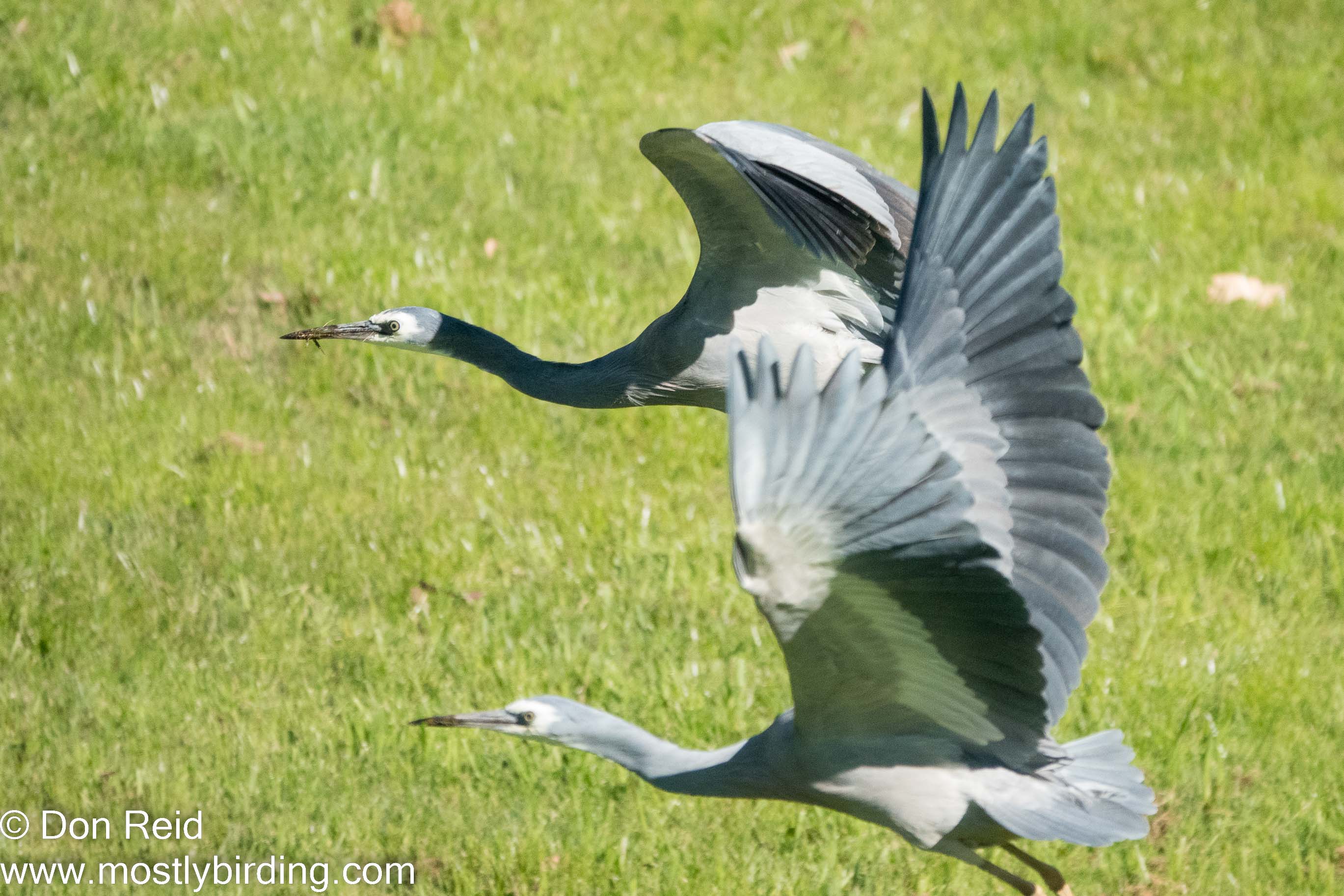
Leaving Omeo I spotted a pair of White-faced Herons in a roadside field and pulled off for a quick photo – I only just caught them as they took off almost straight away (and the sun was on the wrong side, hence the shadows)
White-faced Heron Egretta novahollandiae, Omeo Victoria
Another bird caught my eye some way further down the road, perched on a high branch so I couldn’t resist stopping for another quick shot
Laughing Kookaburra Dacelo novaguineae, Omeo Victoria
Apart from that the trip was uneventful but tiring as the continuous curves and ups and downs require utmost concentration.
Double Bridges, Victoria
For some reason the small towns we passed through after Omeo don’t have any restaurants or even coffee shops, so we had to wait to reach Bairnesdale where we had a late lunch of Hungry Jacks burgers, before tackling the last stretch to Sale.
We arrived back in Sale pleased that we had seen a bit more of Victoria, in particular the “Alpine” region and looking forward to our last two weeks in Australia
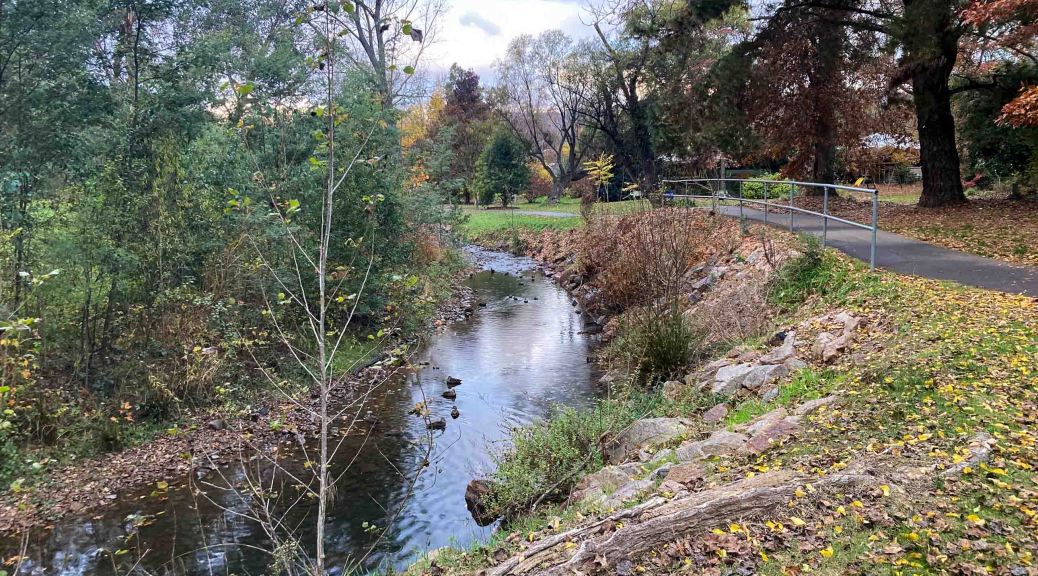
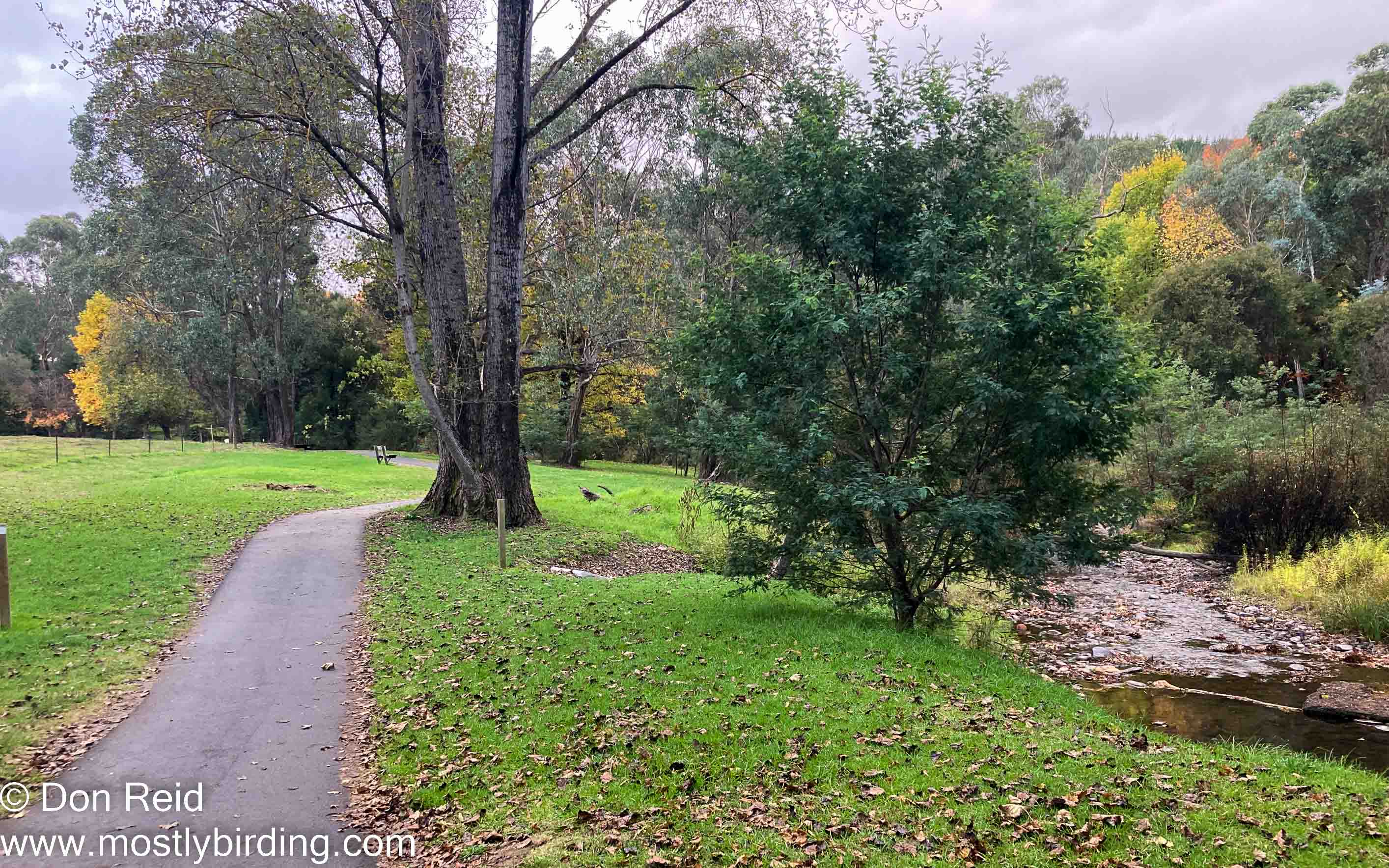
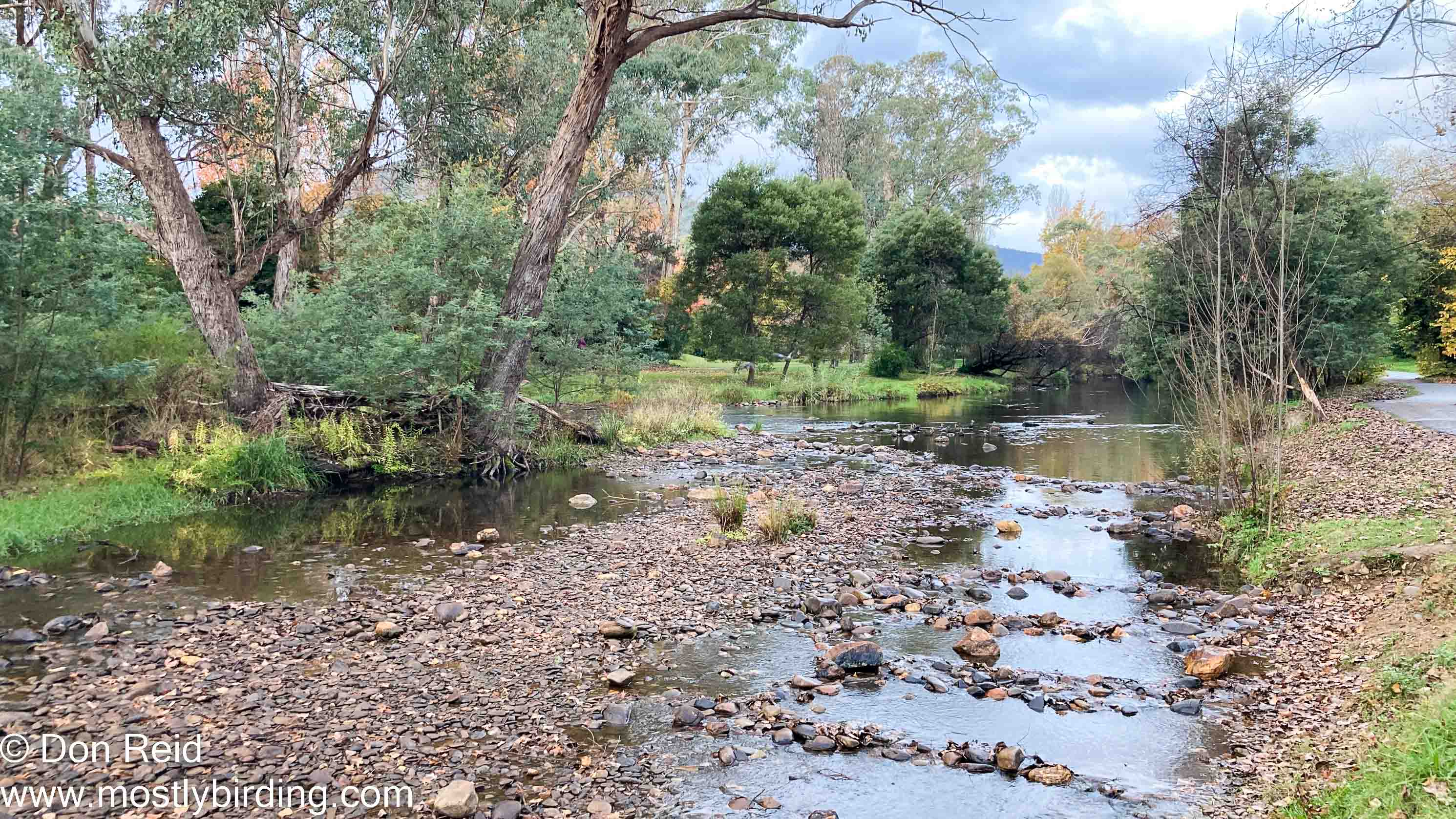
A late lie-in and a slow time getting ourselves ready meant we only started our Bright “discovery” around midday with a drive around the town to orientate ourselves, stopping at the river and the park to take in the scenery
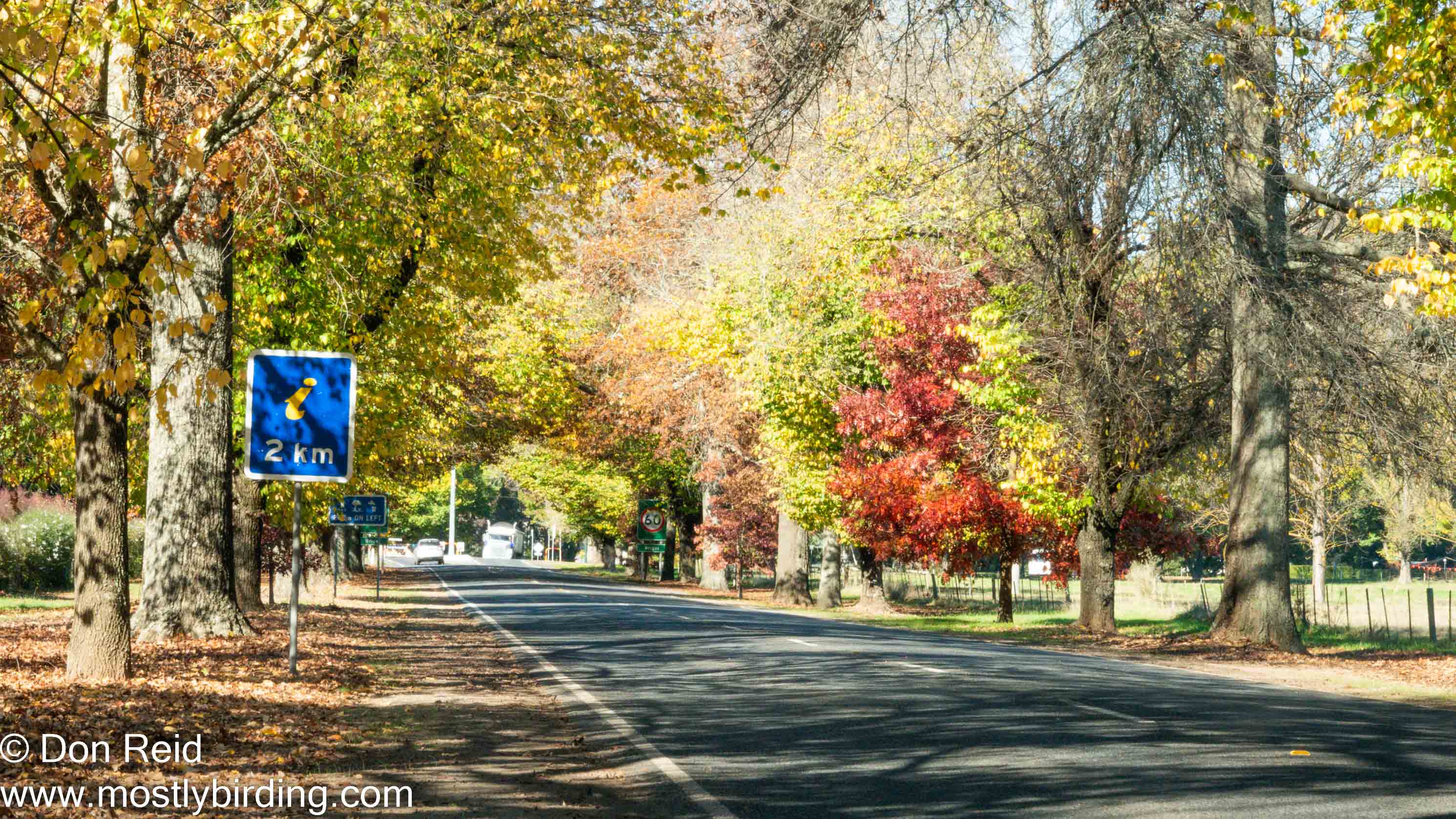
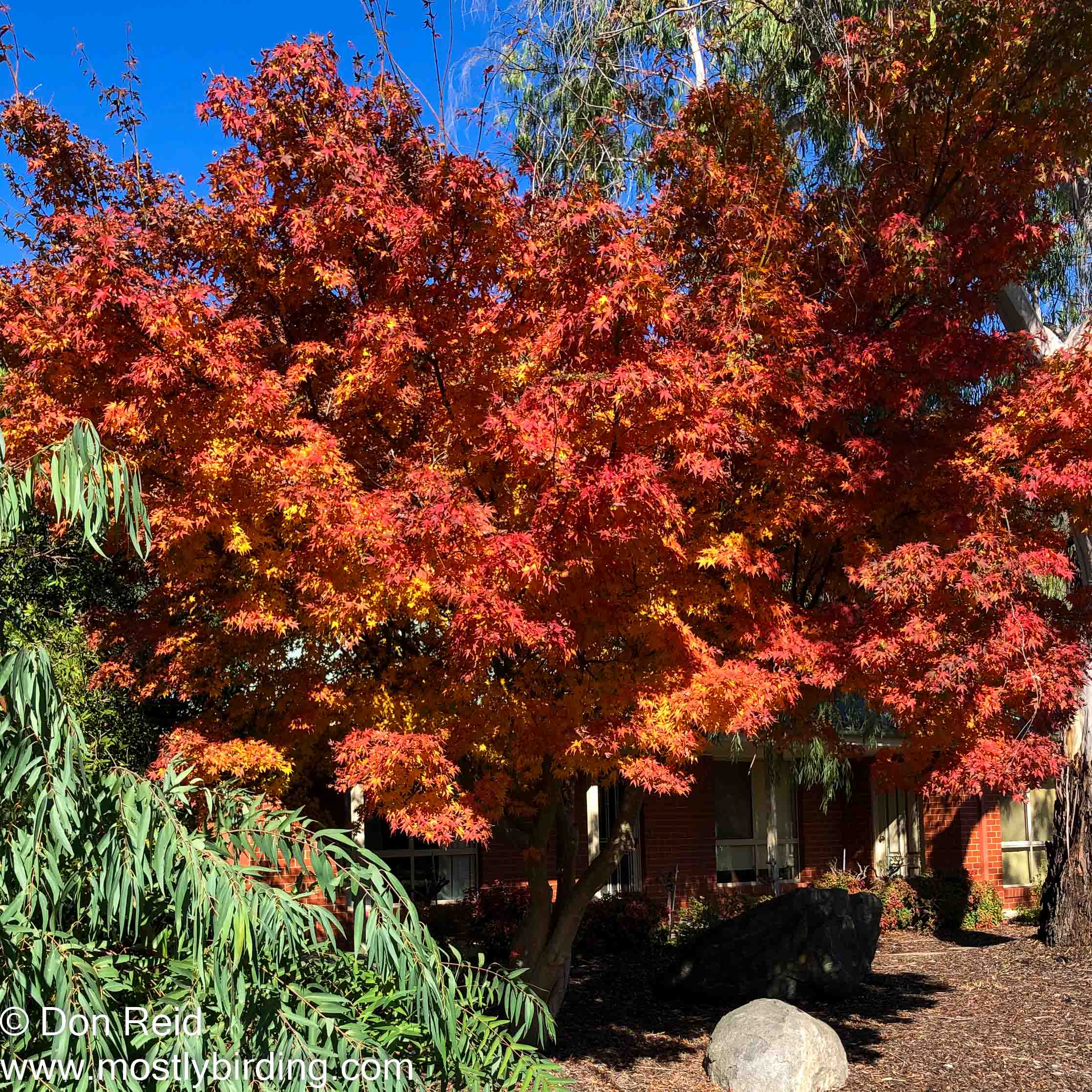
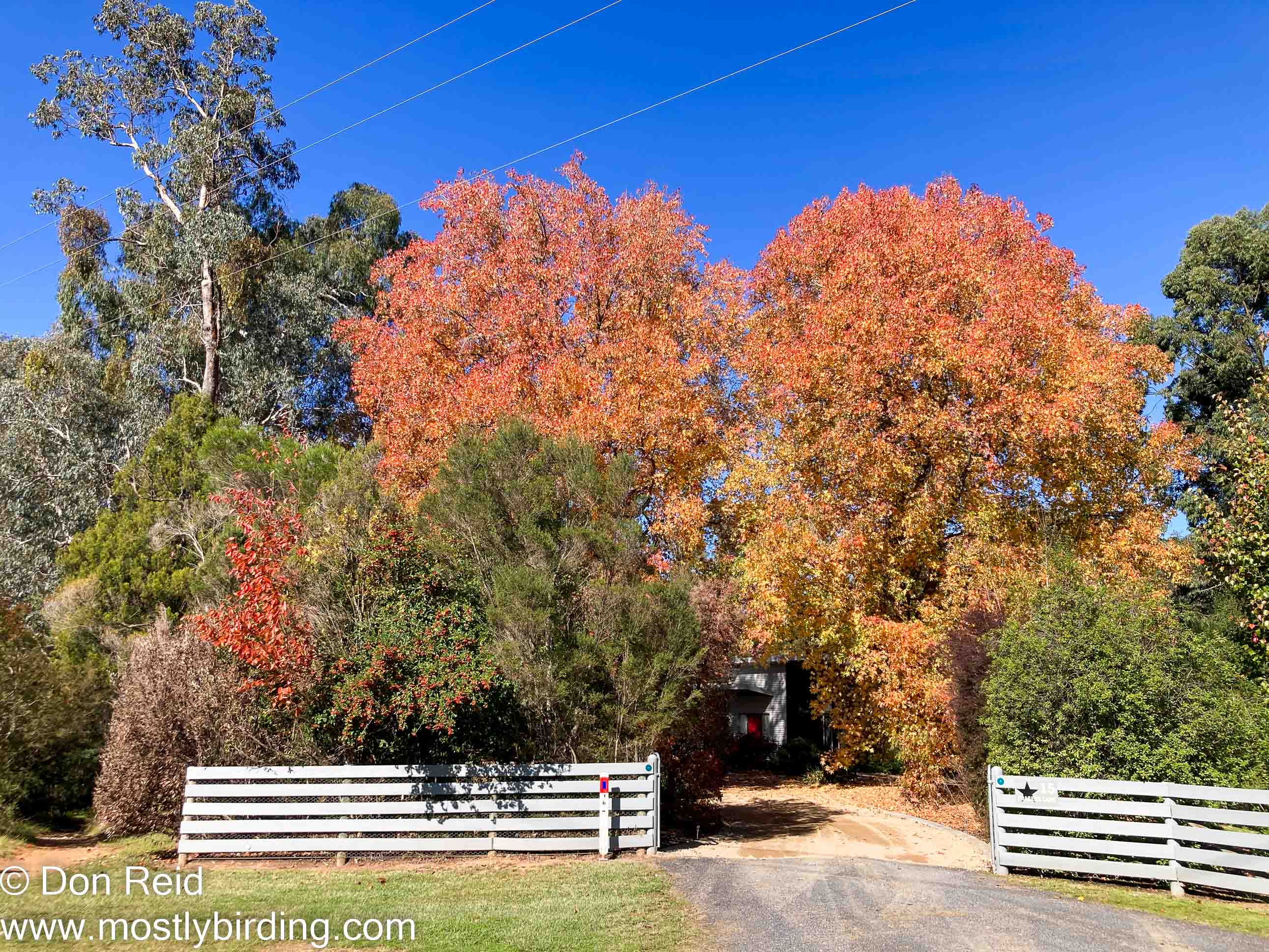
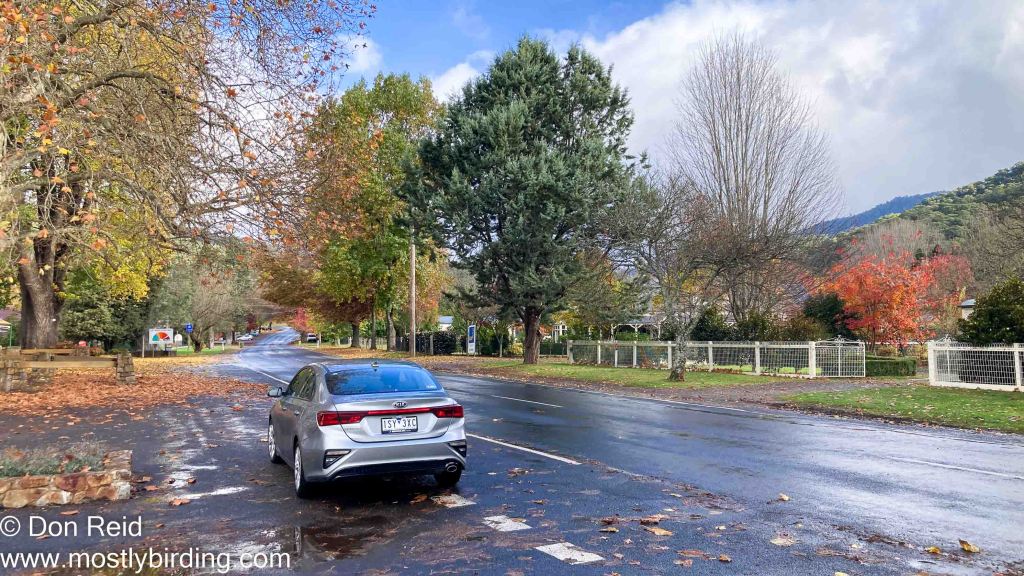
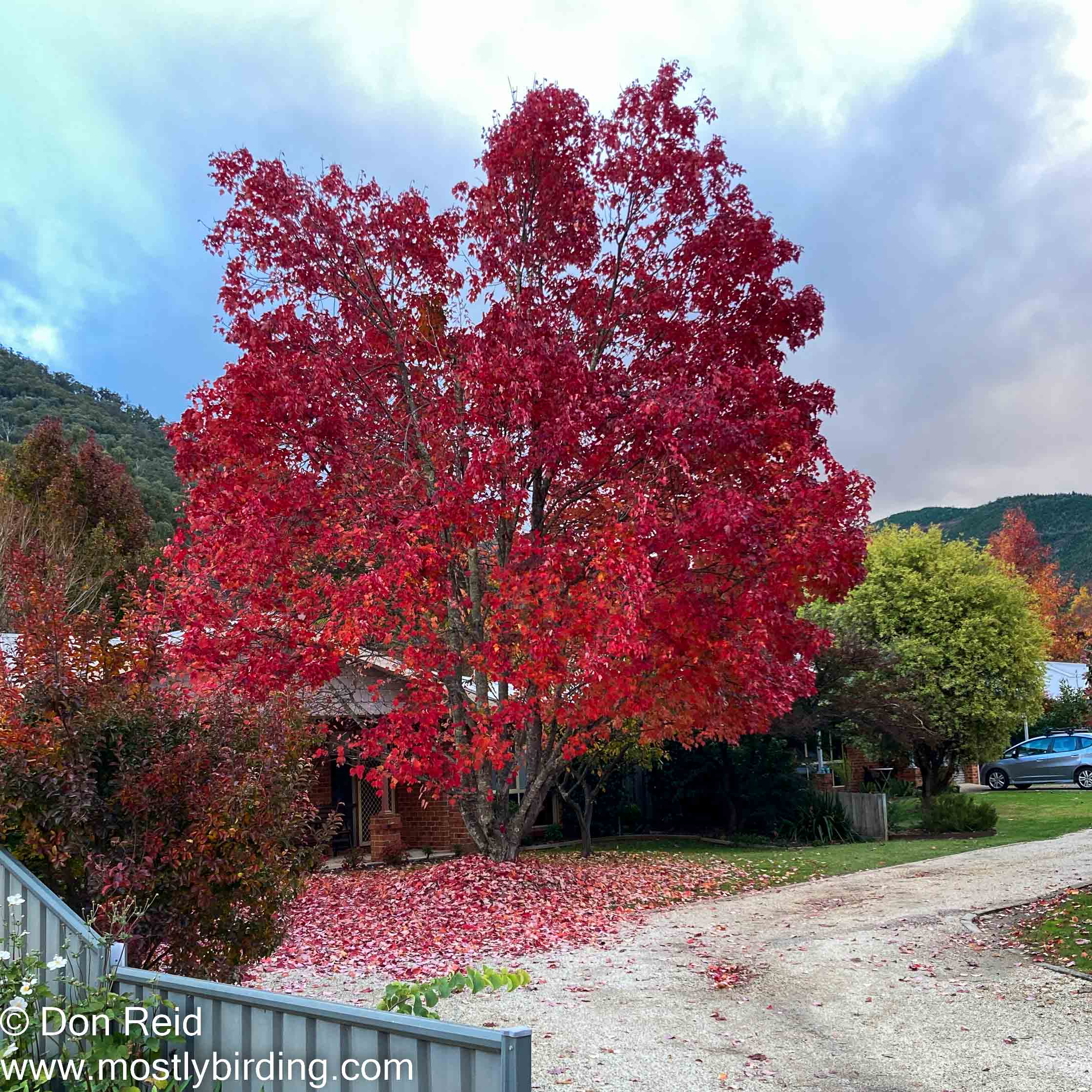
Bright is known as a tourist and holiday destination with a focus during autumn on the multitude of European trees that turn streets into multi-hued avenues and add a bright splash of colour to many gardens and parks.
Bright VictoriaAutumn colours, Bright VictoriaBright Victoria
We enjoyed driving slowly along some of the streets to take in the splendour and to add to the pleasure a few significant birds crossed our path.
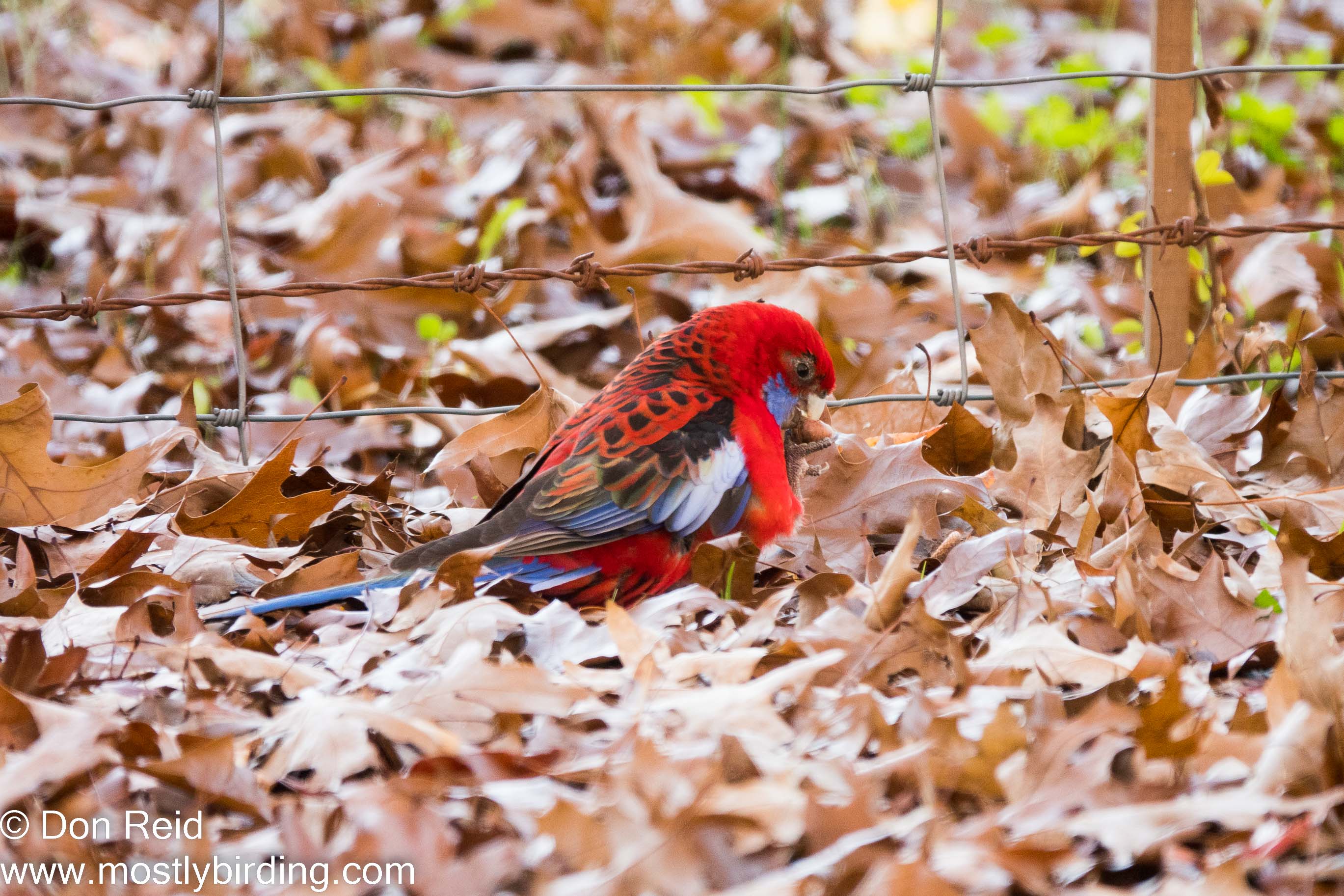
The first of these was a Crimson Rosella, scratching in leaf litter at the side of the road, coming up with what looked like acorns or nuts and holding them parrot fashion in its claws while consuming the “meat” of the nut.
Crimson Rosella Platycercus elegans, Bright Victoria
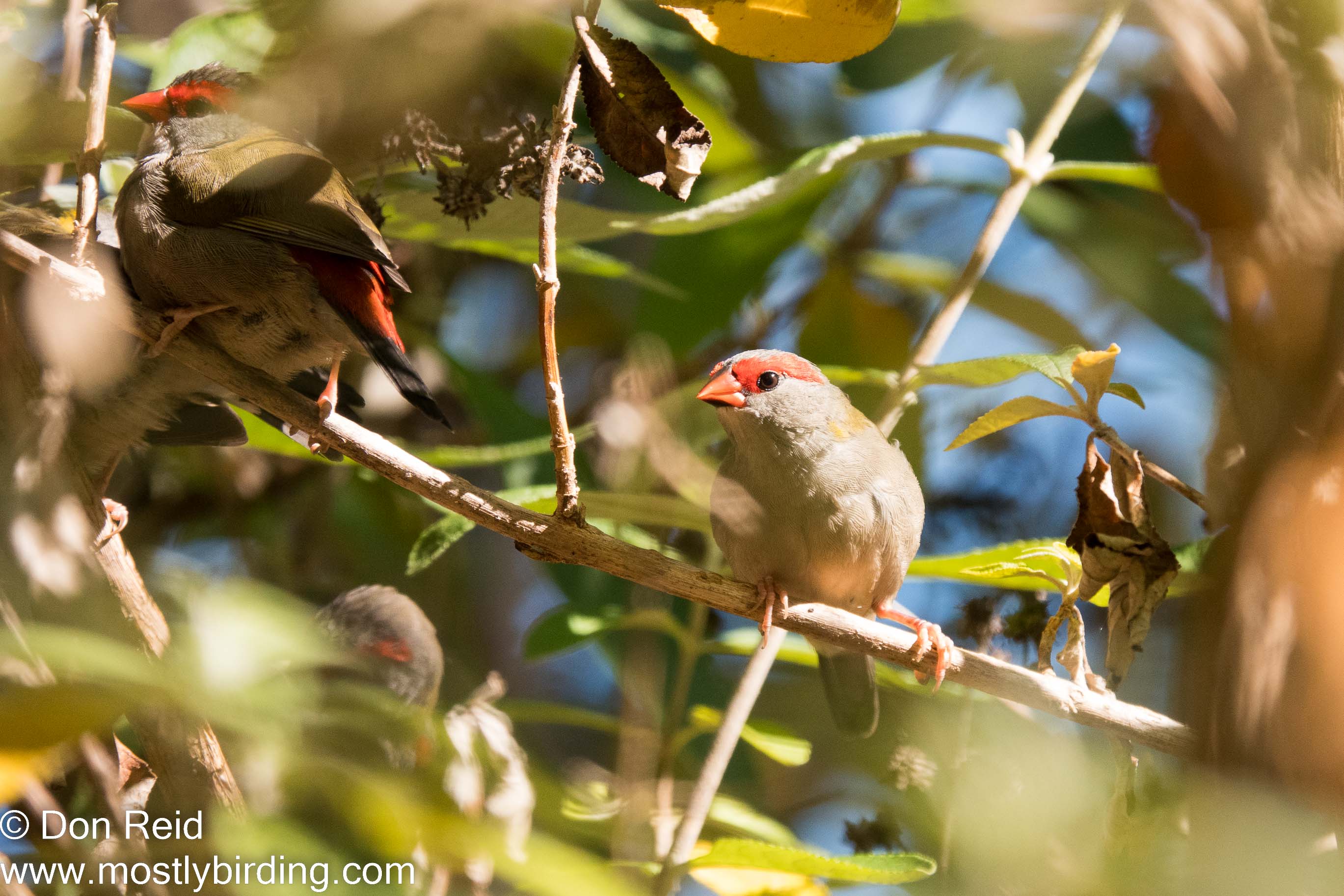
Next up was an unexpected sighting of two small birds that were both new to my Australia list – we were leaving a riverside spot where we had parked, when I spotted movement out of the corner of my eye. I braked, reversed and saw several small birds drinking at a puddle some distance from the road – too far to be certain what they were, even with my binoculars, as they were moving about and flitting back and forwards between the puddle and the nearby bushes.
So I did what I usually do in this situation – I grabbed my camera and rattled off a number of shots before the birds dispersed, which gave me a chance to study what I had “captured” and put a name to them.
As it turned out there were two species – both lifers for me :
Red-browed Finch Neochmia temporalis, Bright VictoriaSilvereye Zosterops lateralis, Bright Victoria
And if you are a Saffer and think the Silvereye looks familiar, that’s because it is remarkably similar to the White-eyes found in Southern Africa, which carry the same genus name of Zosterops
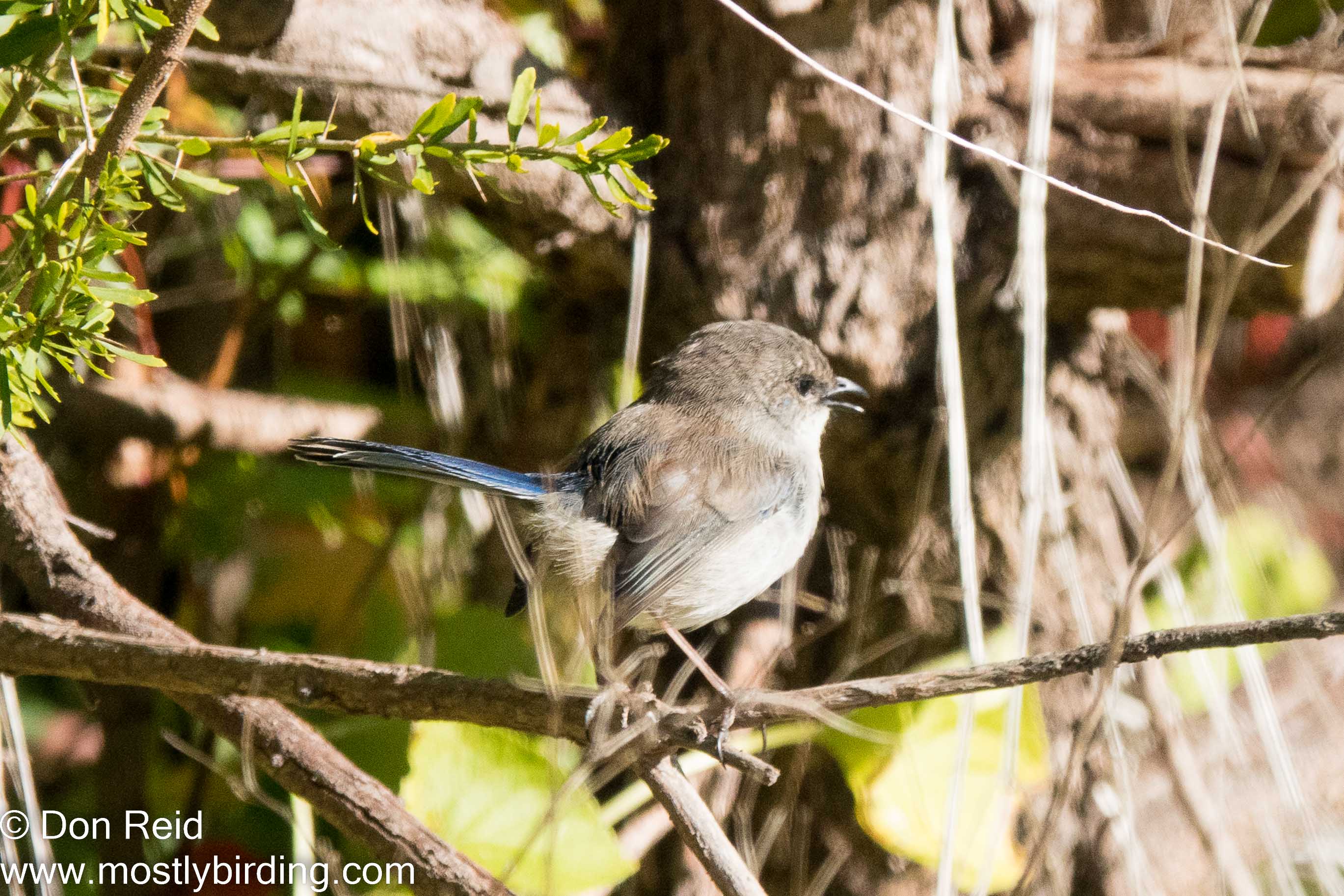
Just for good luck a Superb Fairywren popped up onto an exposed twig for a moment
Superb Fairywren Malurus cyaneus, Bright Victoria
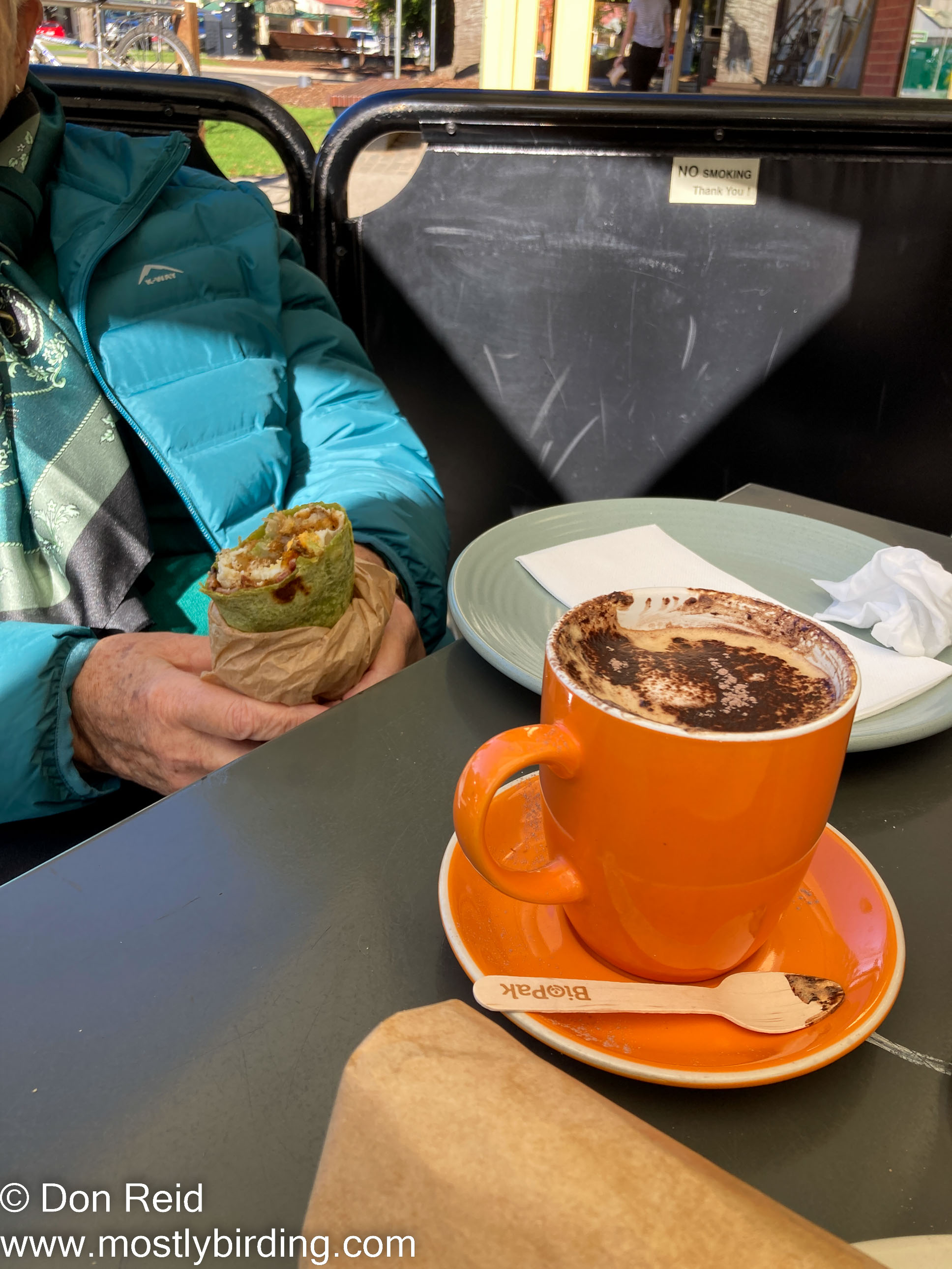
Our motel didn’t offer breakfast, so we got by on rusks and coffee in the room, but were by now feeling decidedly peckish, so we parked in a side street and walked through the village where we came across an ideal looking restaurant with tables set outside on the pavement and ordered their tasty bacon and egg wraps and cappuccinos.
Bright Victoria
That gave us an opportunity to decide what to do for the rest of the day and we chose to not try and cover too much of the surrounds, but to limit ourselves to a trip to a neighbouring area that looked interesting.
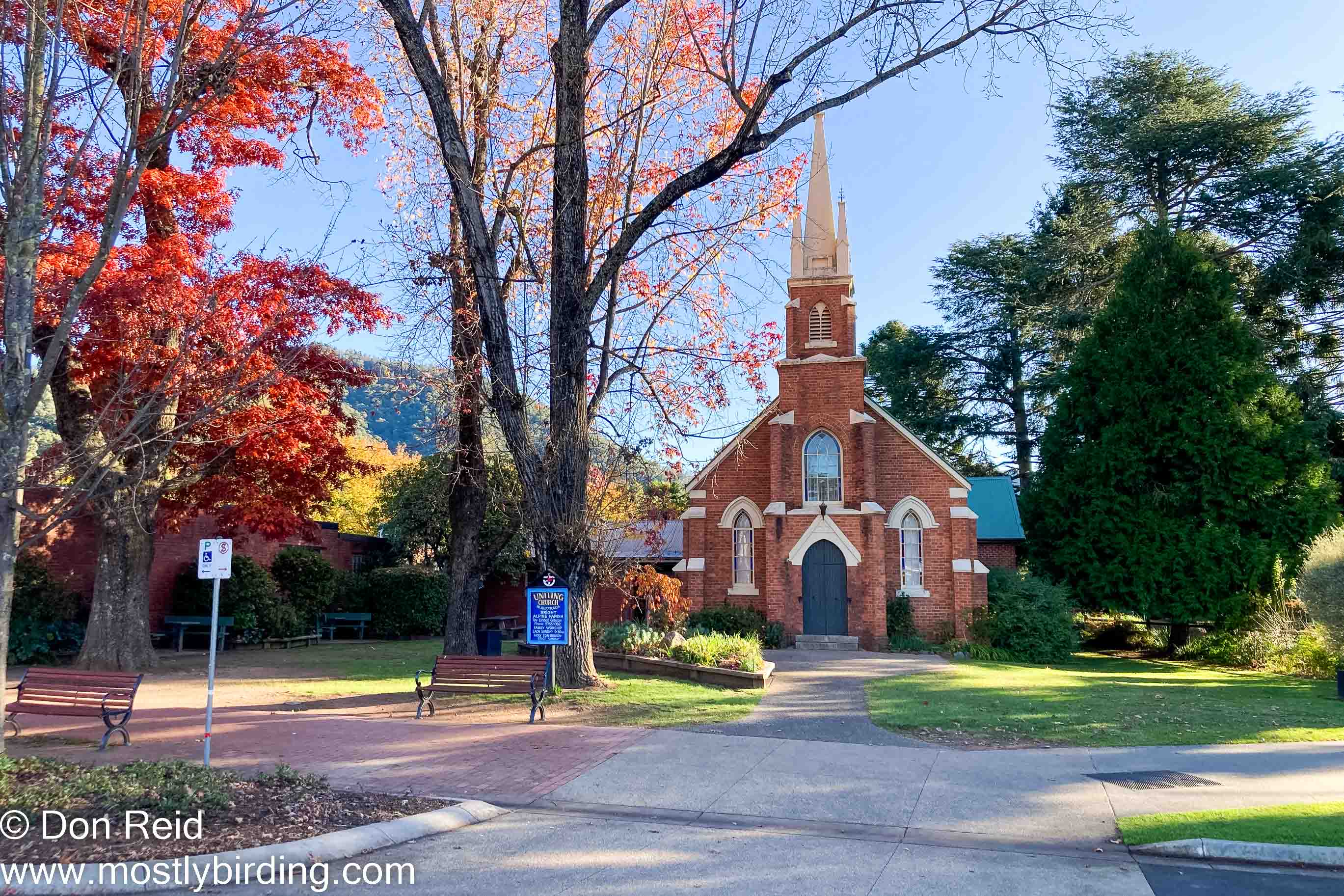
Before setting off again, we walked along the main street, admiring some of the well-kept older buildings and a church surrounded by handsome trees and popping into a couple of the shops for a quick browse (well, that was the idea, but Gerda’s browsing is a slightly lengthier affair which usually has me wandering about outside looking for birds)
Bright Victoria
Wandiligong
With most of the afternoon at our disposal, we drove around Bright a bit more, then visited the tourist info centre where a very helpful and friendly lady marked various spots on the map for us to explore.
One of them was Wandiligong, an old village where gold was mined in the mid 1800’s, which we thought was worth a visit and was literally just “down the road” from Bright – an easy 6 kms along country roads.
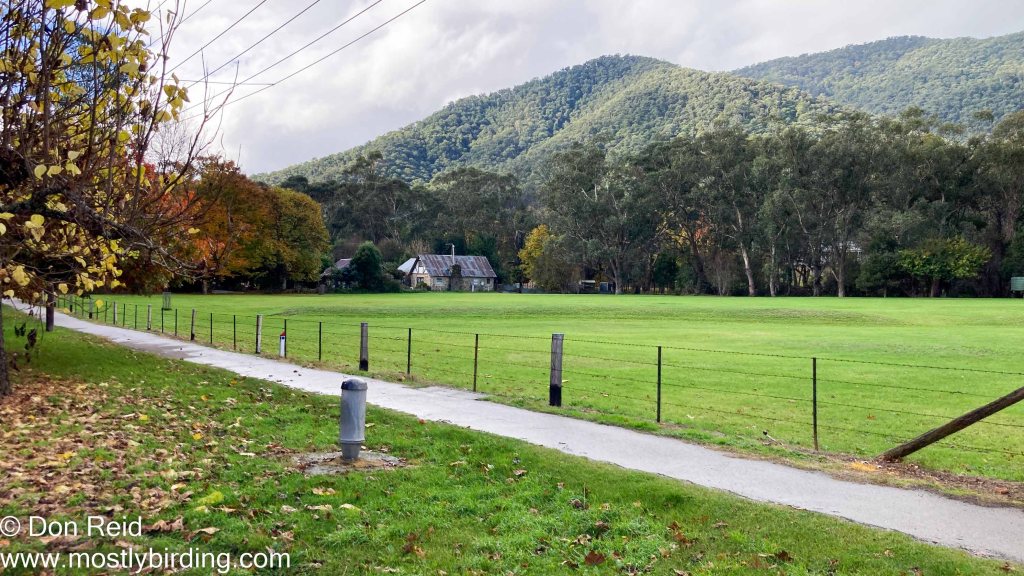
What we found was not a small village as such, but rather a sprinkling of houses and other buildings with a lot of character and heritage spread over an attractive landscape of forests and mountain ranges, set in a picturesque valley
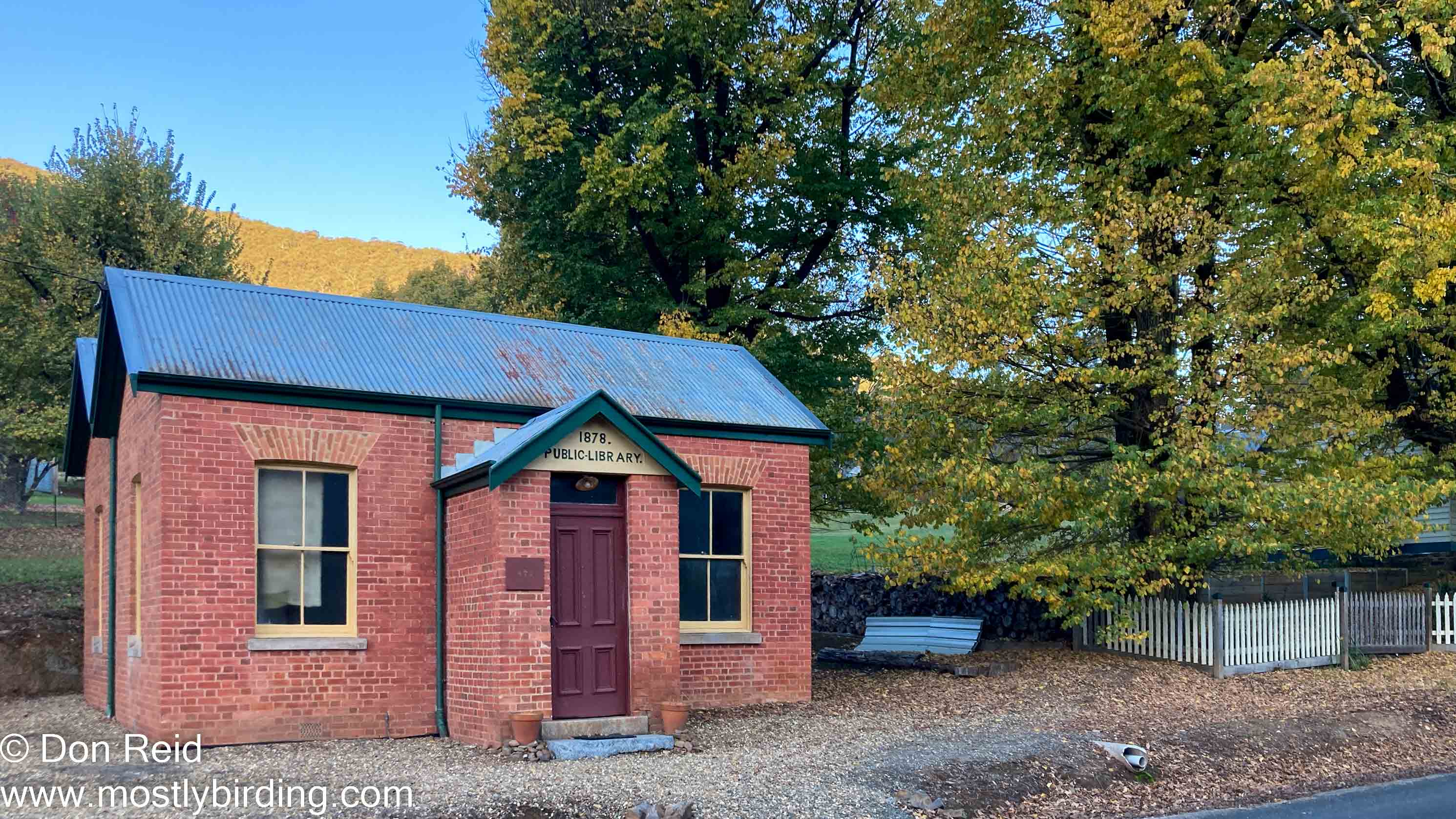
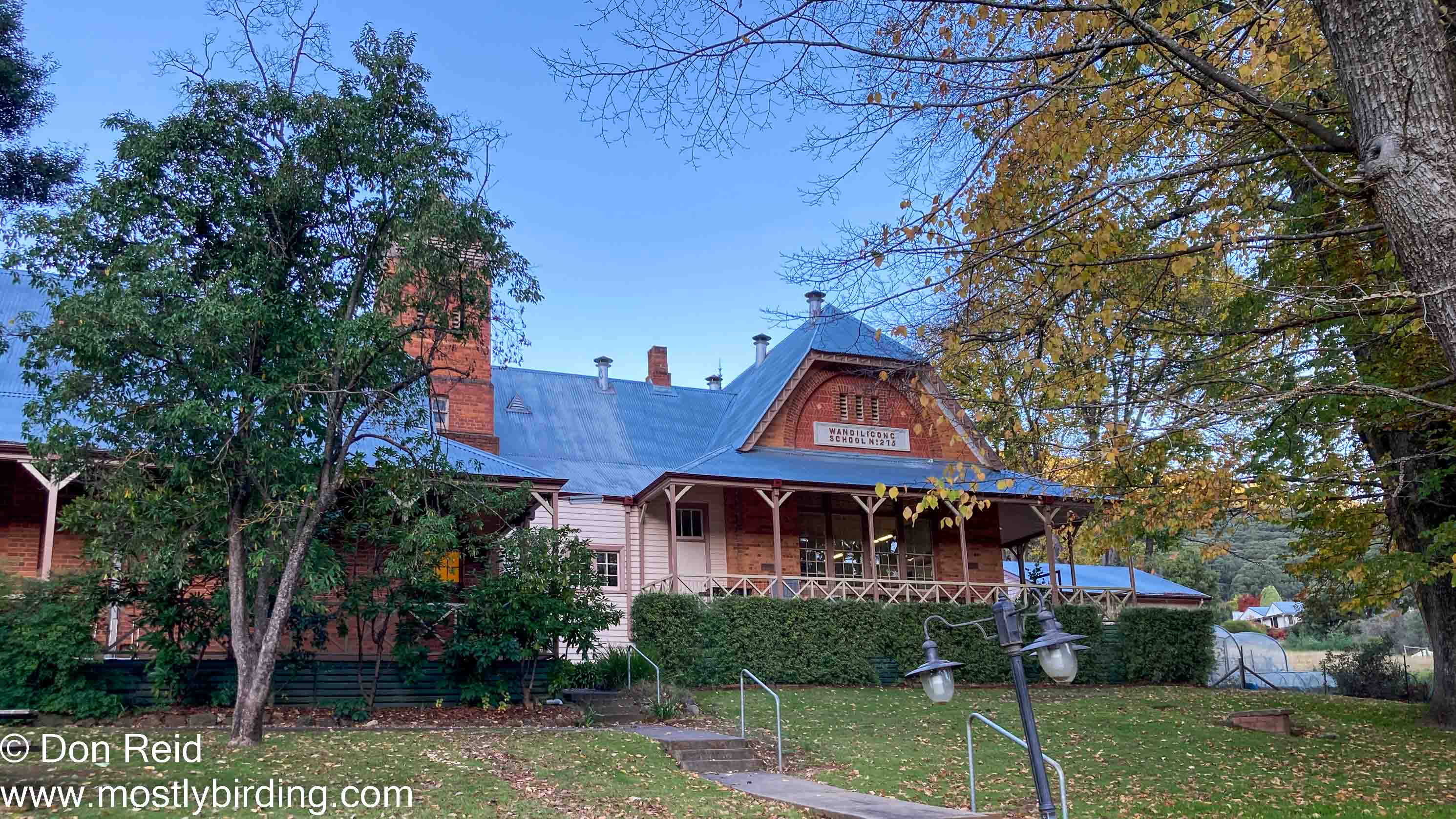
The whole town is now registered with the National Trust as a classified landscape and features historical buildings such as the Manchester Unity public hall (built in 1874), the general store, several churches and a number of quaint cottages. We spent a very pleasant hour or more meandering up and down the roads through the area, stopping to photograph some of the buildings that caught our eye.
The old Public Library in Wandiligong Wandiligong Public HallThe Primary school dates back to 1870Wandiligong Primary SchoolAn old church in Wandiligong, Victoria
It was heading to late afternoon so we returned to our Motel in Bright for a bit of relaxation at the end of an interesting day
Mount Beauty
The next day dawned sunny and we followed a similar pattern – after a light breakfast self-caterd in our room we heade back along the road to Harrietville, then turned off towards Mount Beauty. The road took us through yet another seriously twisty pass which topped out at 895 metres, which is where we had our own tea and a muffin, while enjoying the view down to the valley below and across to distant mountains topped with snow.
Once we had descended into the valley we entered Mount Beauty – driving around we were a little disappointed as it did not seem to live up to its name and came across as just another town. Driving around the town, it seemed to be ‘closed for lunch’ so we stopped at the info centre which suggested ‘The Bakery’ may be open. We had not seen it so followed their directions and found it tucked away in a side street – their pie and salad was just what we needed and the service friendly so things picked up again
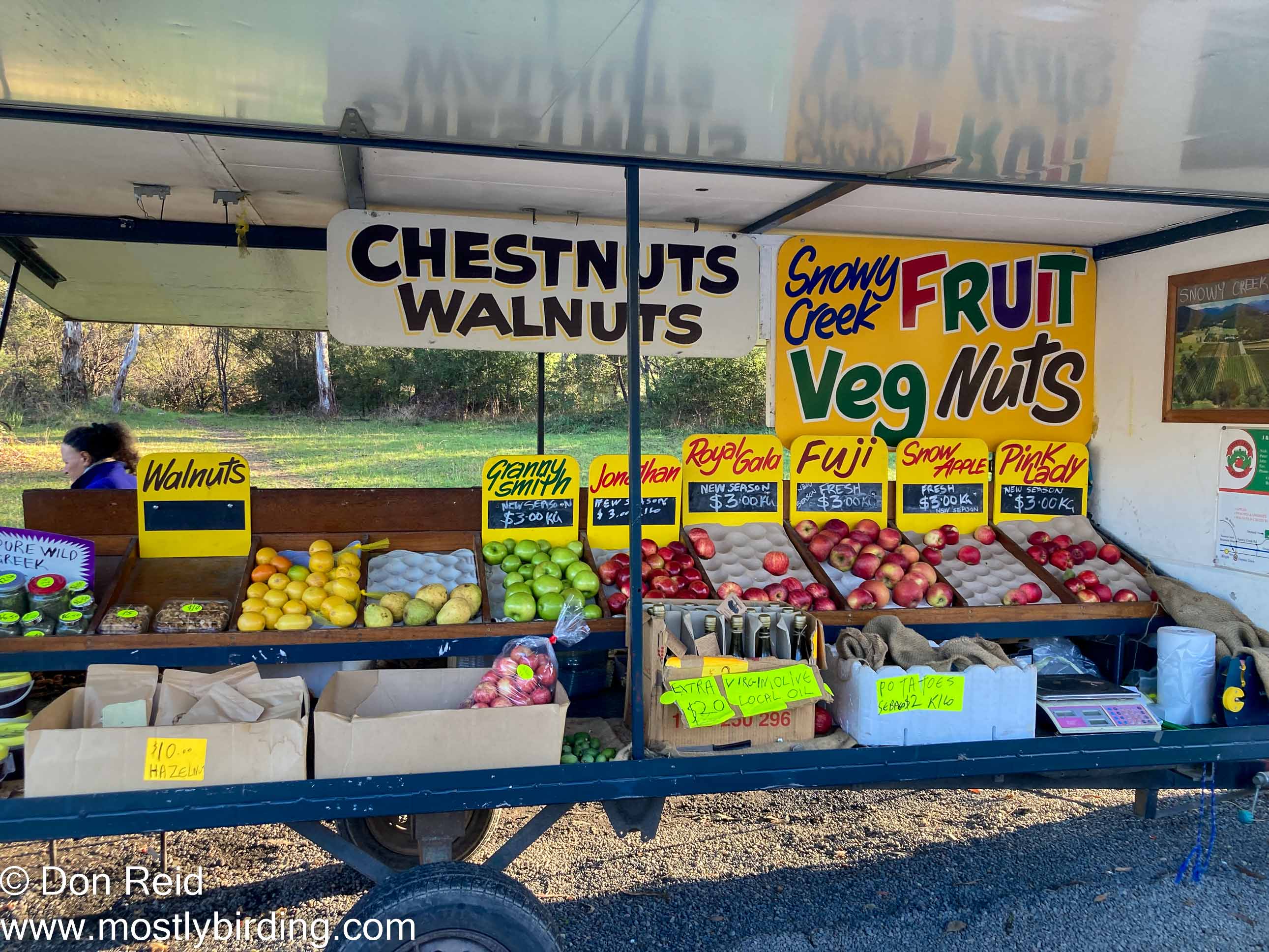
There was not much else to see so we headed back up the pass and down the other side towards Bright. At the T-junction with the main road a roadside stall had been set up – the first time we had come across such a thing in Australia – so we stopped to have a look at the farm produce on offer. The lady running the stall kept up a continuous stream of conversation, some of which we actually understood, and she offered us samples of strange (to us) fruit to taste. In the end we played safe and bought a bag of walnuts from her.
Roadside stall, Bright VictoriaRoadside stall, Bright Victoria
Canyon Trail
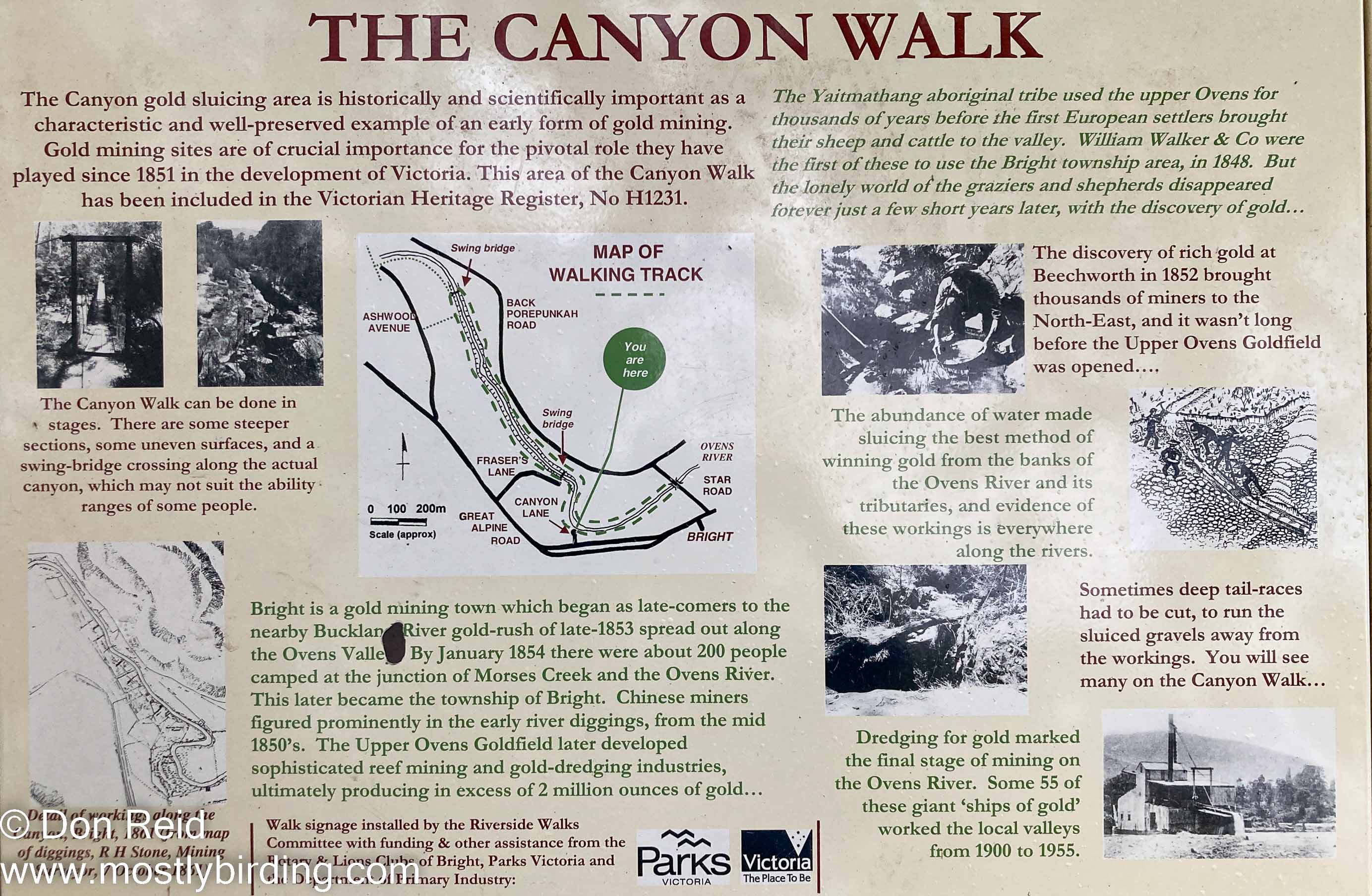
There was still time for another walk along the Canyon trail before the sun disappeared. There were many ducks on the river and the late afternoon shaded light made for some interesting photos.
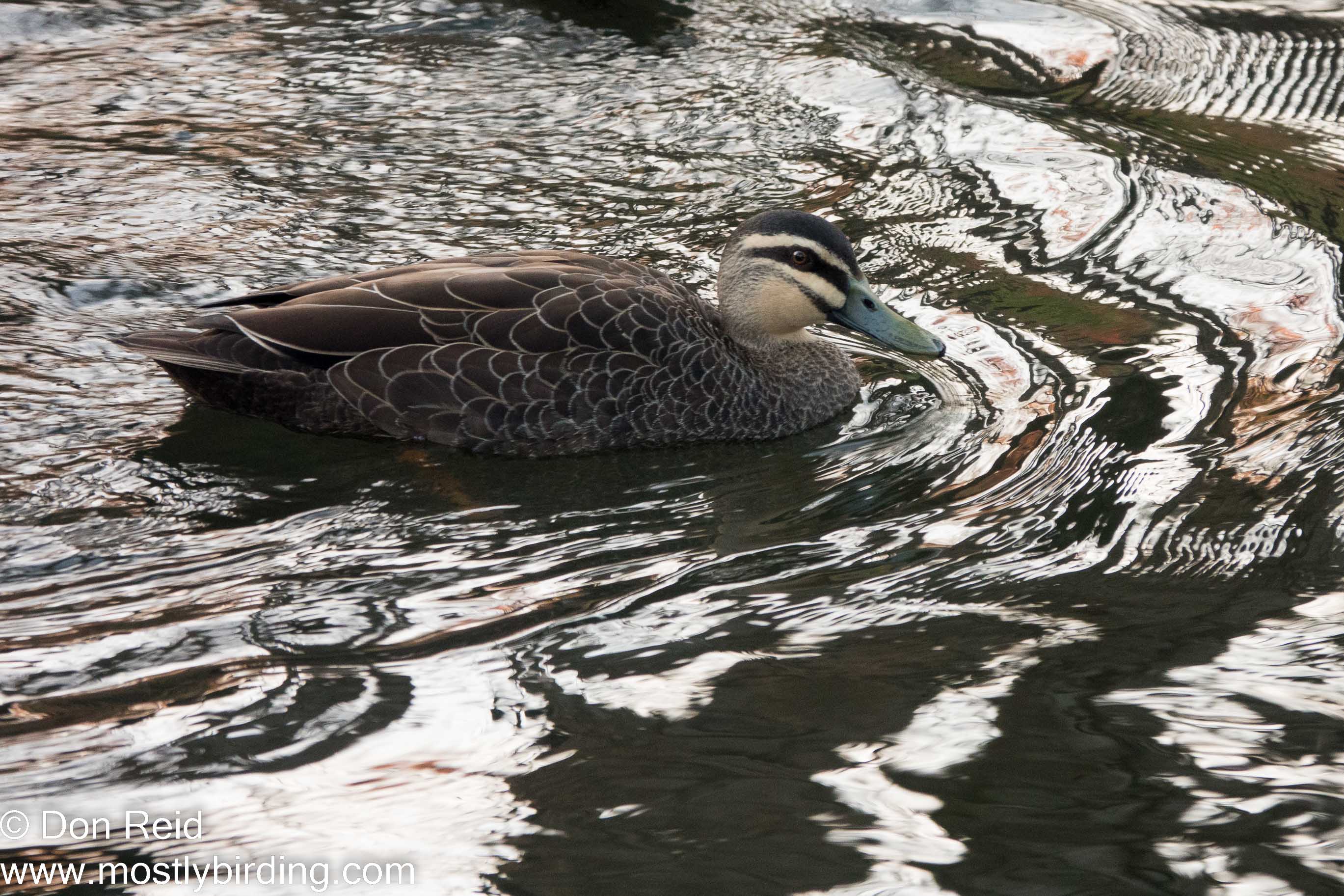
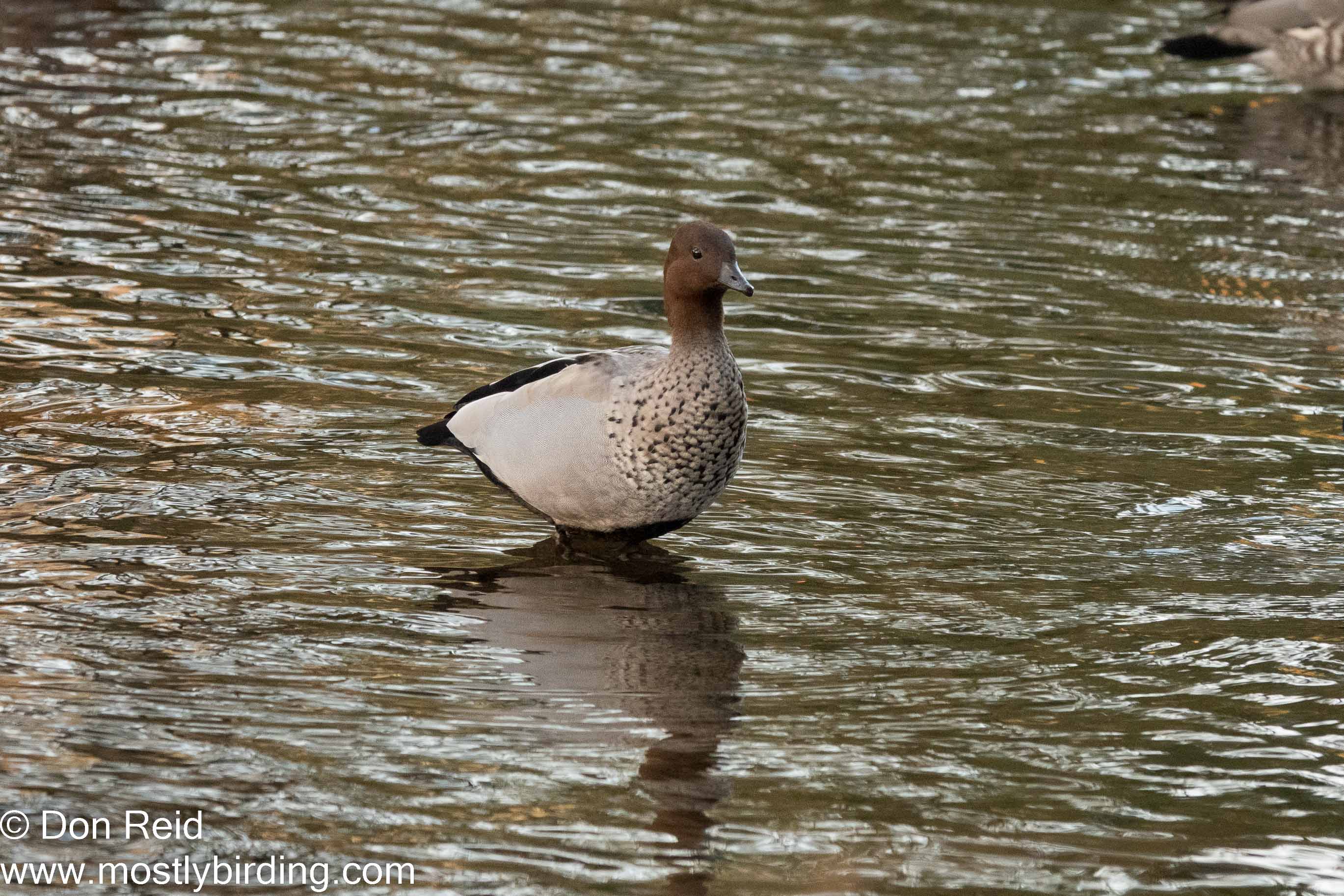
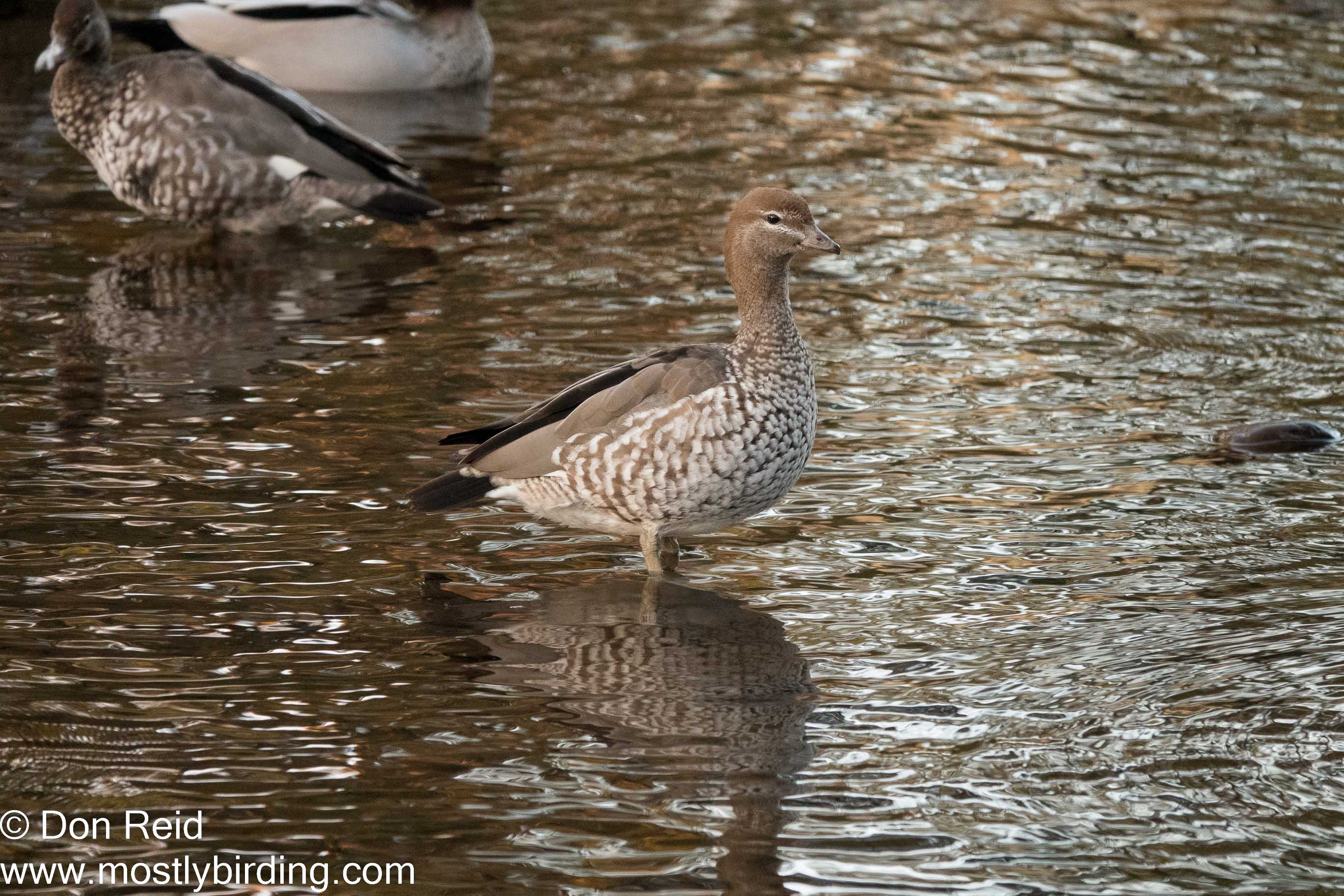
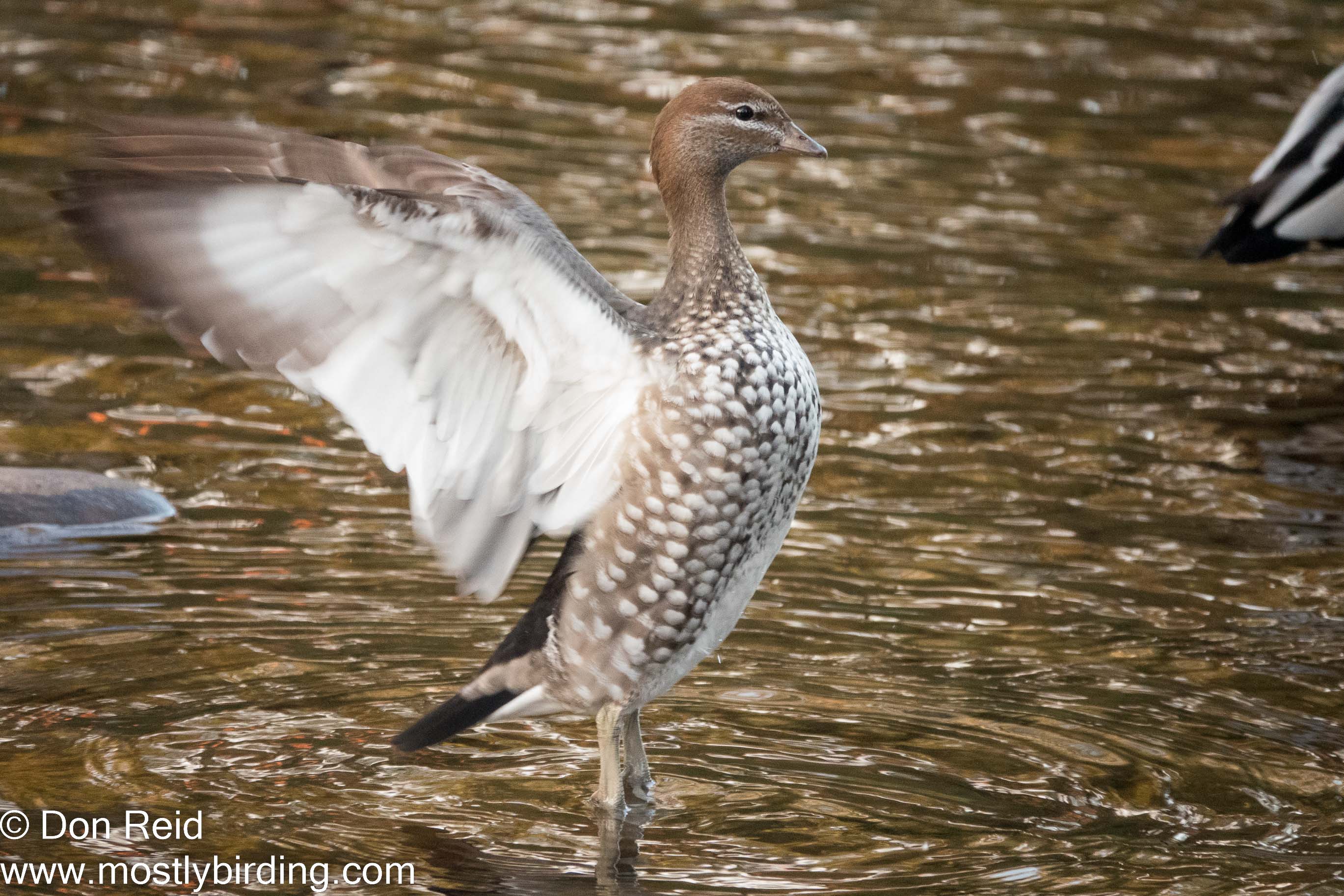
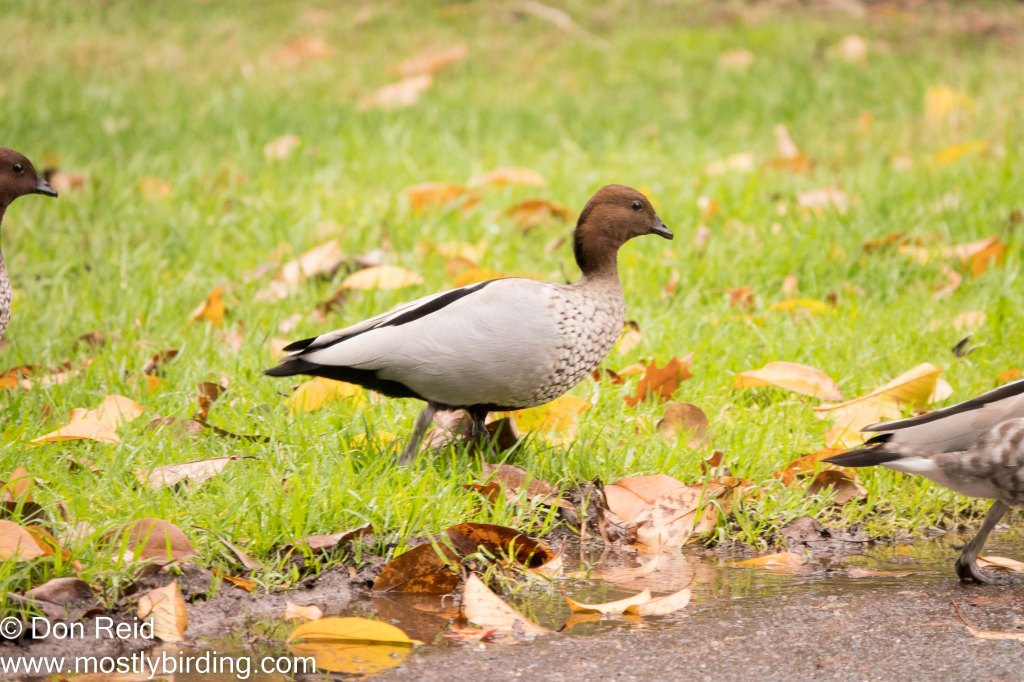
Canyon Walk, Bright VictoriaPacific Black Duck Anas superciliosa, Bright VictoriaManed Duck Chenonetta jubata (Male), Bright VictoriaManed Duck Chenonetta jubata (Female), Bright VictoriaManed Duck Chenonetta jubata (Female), Bright Victoria
That brought another most pleasant day in Bright to a close. I will be adding a further instalment on our road trip, covering the trip back to Sale – not nearly as epic as the initial trip to Bright but with a few interesting ‘sightings’, not necessarily birding related …
Just to set things straight, this is not the start of a washing powder commercial – how did it go ? “OM(E)O washes your clothes brighter than BRIGHT” or whatever the wording was..
In this second instalment of our road trip along the Great Alpine Road in Victoria, Australia we travel from the small town of Omeo where we spent our first night, to the town of Bright.
Now Bright is just 110 km from Omeo – piece of cake I hear you say – but 110 km has never felt so long – or so epic!
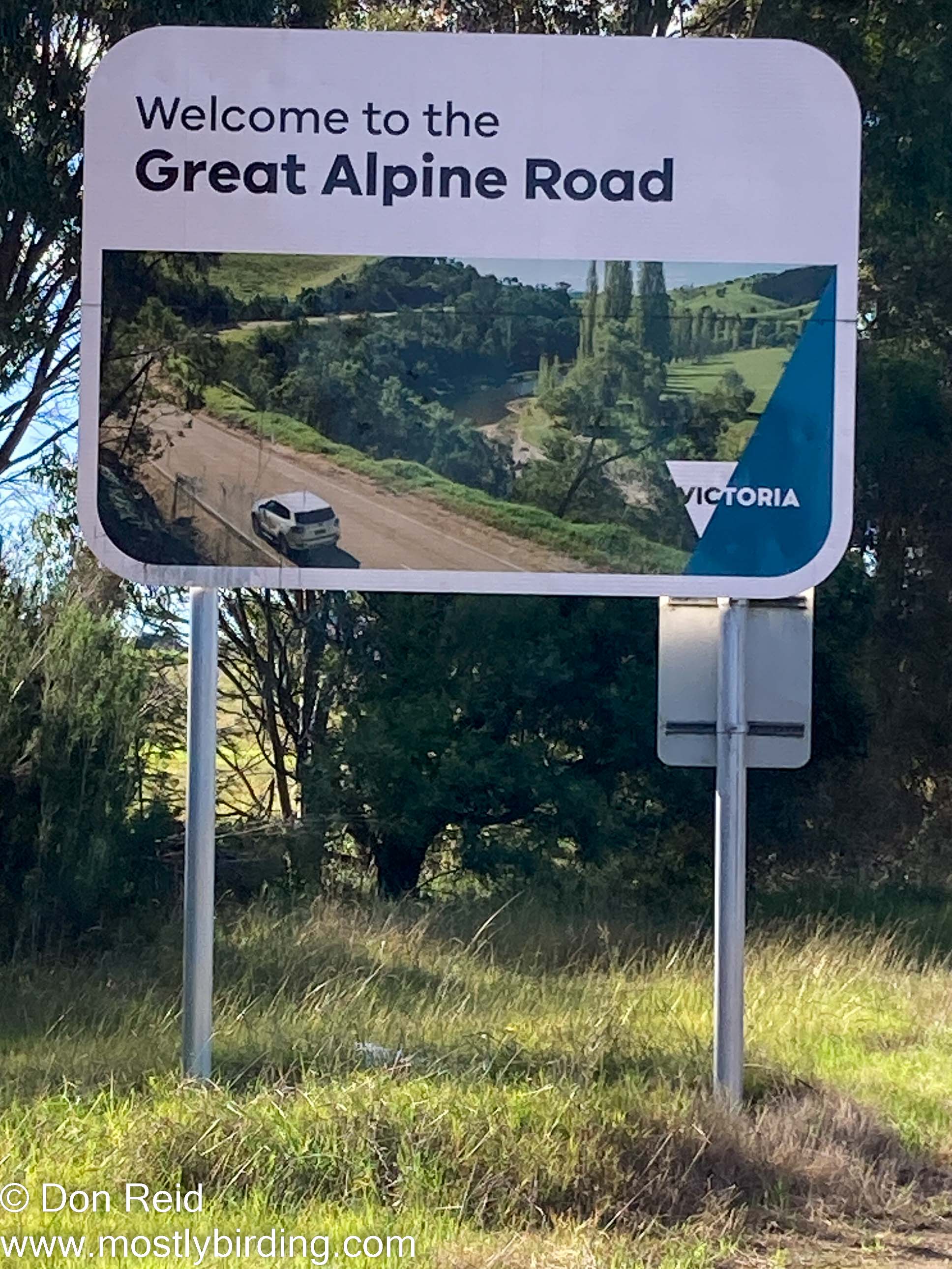
We left our rust-ic cottage in Omeo at 11am and ventured into the town for a brunch of toastie and coffee at the only restaurant that seemed to be open. Suitably fortified, we headed onto the main road, which the Aussies saw fit to call the Great Alpine Road, passing the first of many electronic warning signs about possible frosty conditions and ice on the road.
Omeo, Great Alpine Road
Here I must mention that, before our departure from Sale, we had asked around about the expectations of snow at this time of year along our route and the universal answer had been “no problems, mate” or words to that effect. I’ve learnt to take that expression with a pinch of salt so wasn’t really expecting “no problems”. Nevertheless, the regular warning signs caused a heart flutter or two as we proceeded along the road, but being halfway through May, snow did not seem a possibility…..
The road had again become seriously twisty for long stretches as we climbed into the mountains, with patches of wet road causing me to drive even slower, with those warning signs now firmly embedded in my mind.
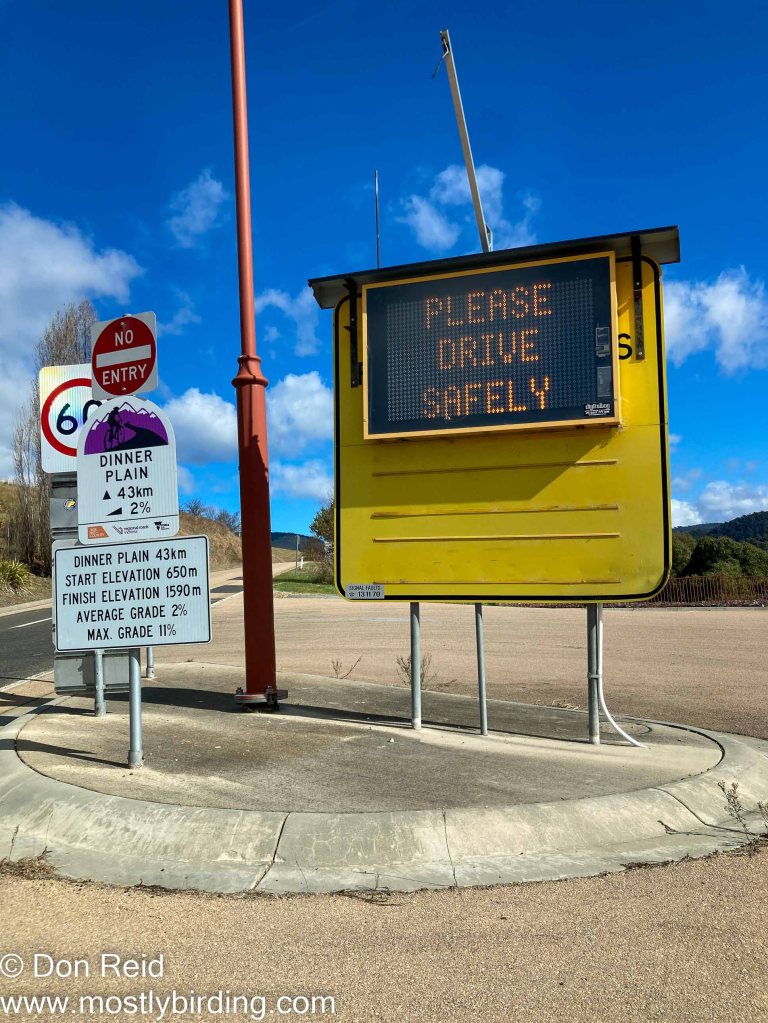
On our route was the curiously named Dinner Plain, a small town which turns into a busy ski resort in the winter months. Apparently in the late 1800’s a horse drawn coach service operated in the summer months along the newly opened road between Omeo and Bright. The coach would stop for a midday meal at this spot, which became known as the Dinner Plain.
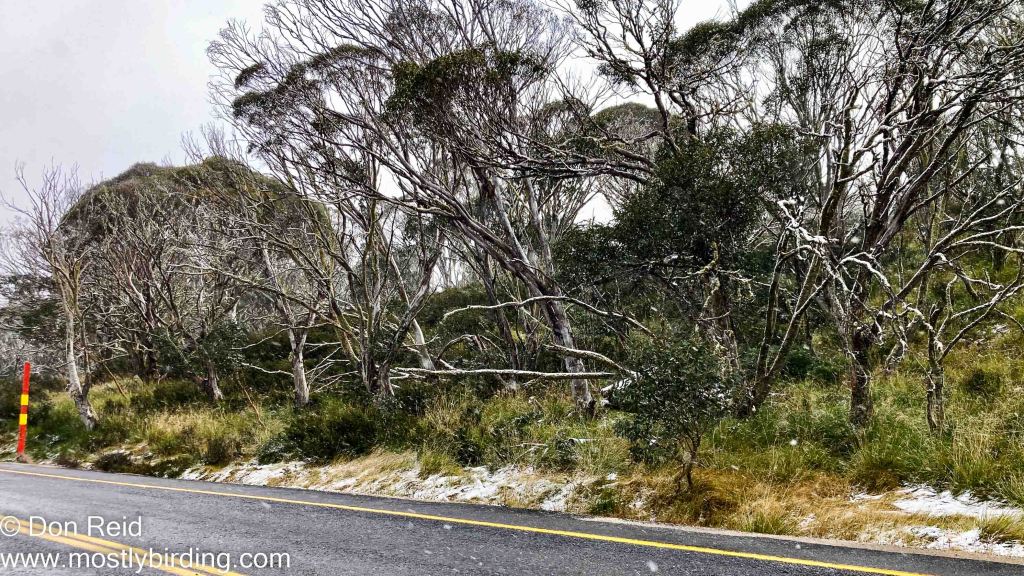
As we approached Dinner Plain, the first signs of recent snowfall appeared, with a layer on the road verge and lightly covering qthe bare branches of the roadside trees.
Great Alpine Road, Dinner Plain
Climbing higher still, the snow got more obvious, and we could now see the snow actually falling.
Great Alpine Road, Mt Hotham
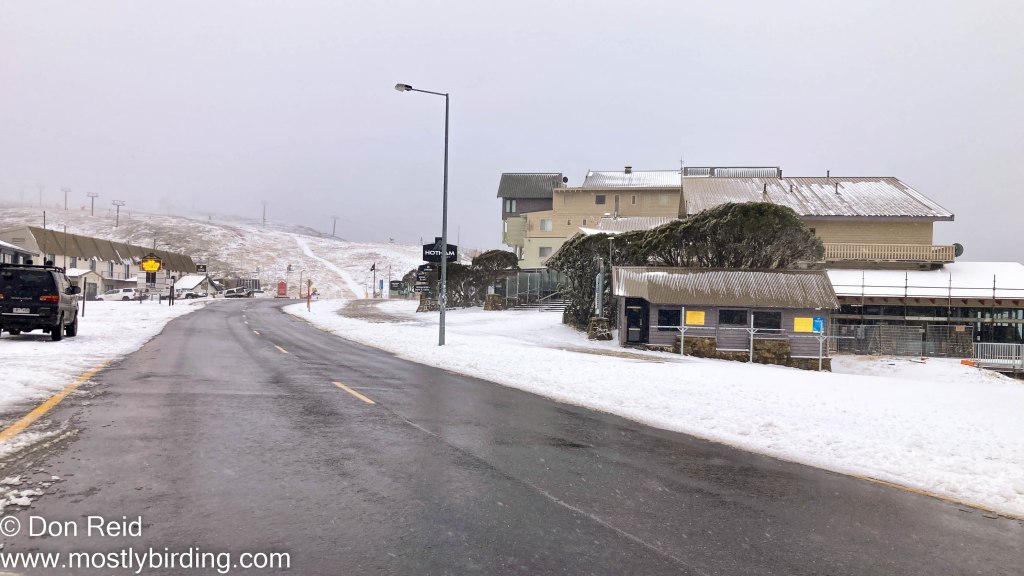
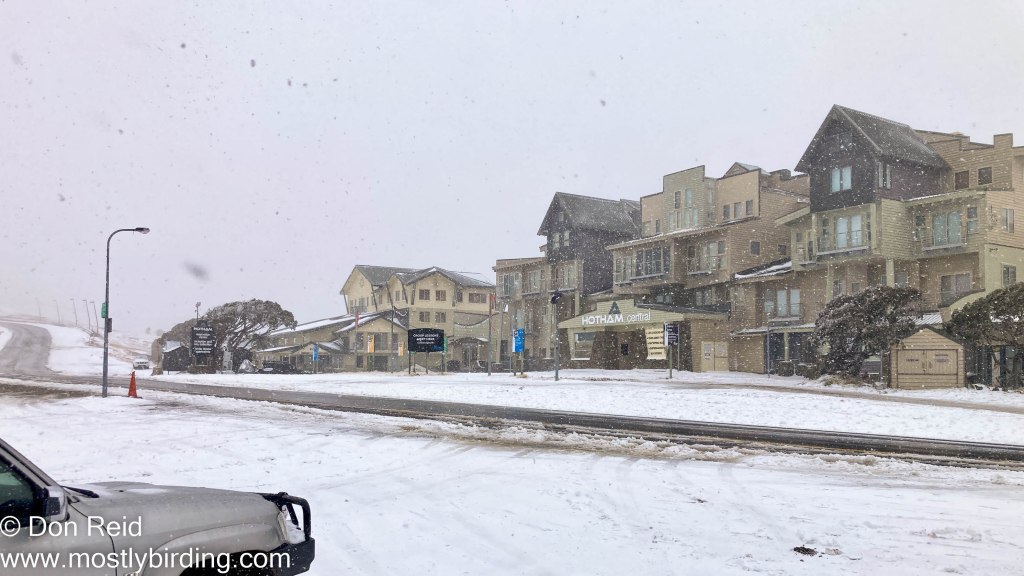
We were starting to get a little panicky by the time we headed into another ski-resort town called Mount Hotham, with heavy snow falling and a thick layer of snow everywhere except for the road itself.
Great Alpine Road, Mt Hotham
The electronic warning signs along the road were now stating “2WD vehicles to fit snow chains” which of course we didn’t have and even if we did, we wouldn’t have known how to fit them. Unsure about what to do, I stopped at what looked like a tourist information office, put on a waterproof jacket and got out of the car into snow which seemed to be blowing sideways into my face, then trudged through a thick layer of snow to a side door and eventually found a pleasant young lady to tell her our plight, ending with what probably came across as a mildly hysterical “I’ve never driven in snow before!!”
Great Alpine Road, Mt Hotham
She was a lot calmer than I was and phoned ‘someone who will know’ – soon coming back with the response that ‘no chains are required at the moment’ adding that we should just proceed very slowly, especially around bends as ice could easily be present on the road.
So, we continued on our way, very cautiously and very slowly on the wet roads, with low cloud both sides all but blotting out any view there may have been and reducing visibility to a short stretch of the road itself.
After what seemed like a long time, and with some relief, we realised that the road was now descending, and the snow was diminishing, until it was all clear again and we soon found ourselves approaching the next small town, a beautiful place called Harrietville with trees in autumnal colours and a coffee shop that turned out to be the perfect spot for a soothing cup of tea accompanied by a jam donut.
Harrietville, Great Alpine RoadHarrietville, Great Alpine RoadCoffee shop in Harrietville Victoria
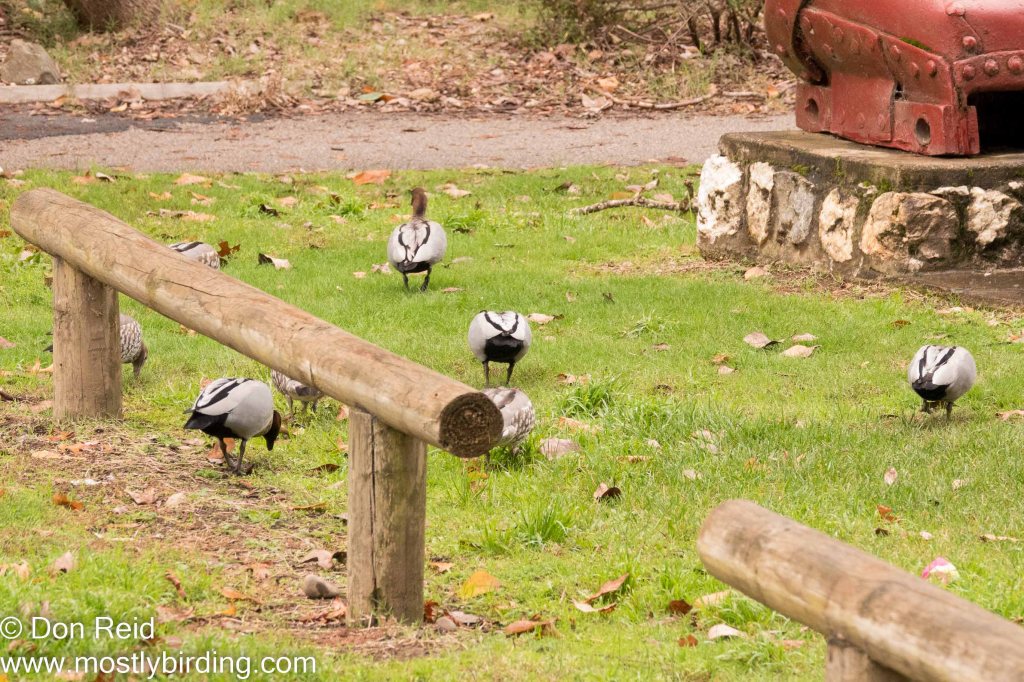
As we drove out of Harrietville a group of Maned Ducks crossed the road and pottered off into the surrounding grass.
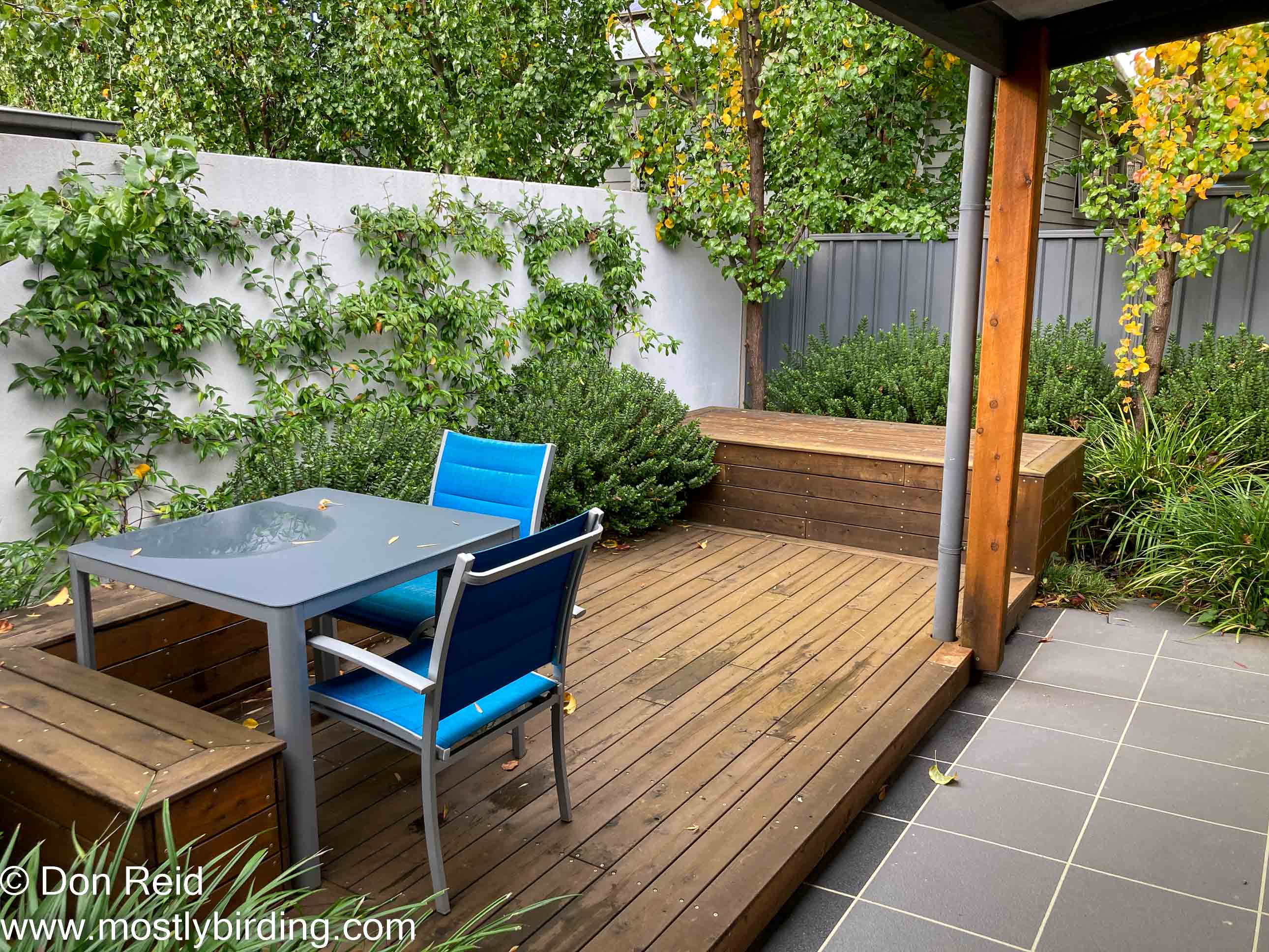
With more than enough excitement and tension for one day, we were thankful that the last 20 kms or so to Bright went smoothly and quickly and we headed to the Bright Colonial Motel, which I’m pleased to say was more in keeping with what we were expecting – a modern place with spacious rooms and a private courtyard all to ourselves.
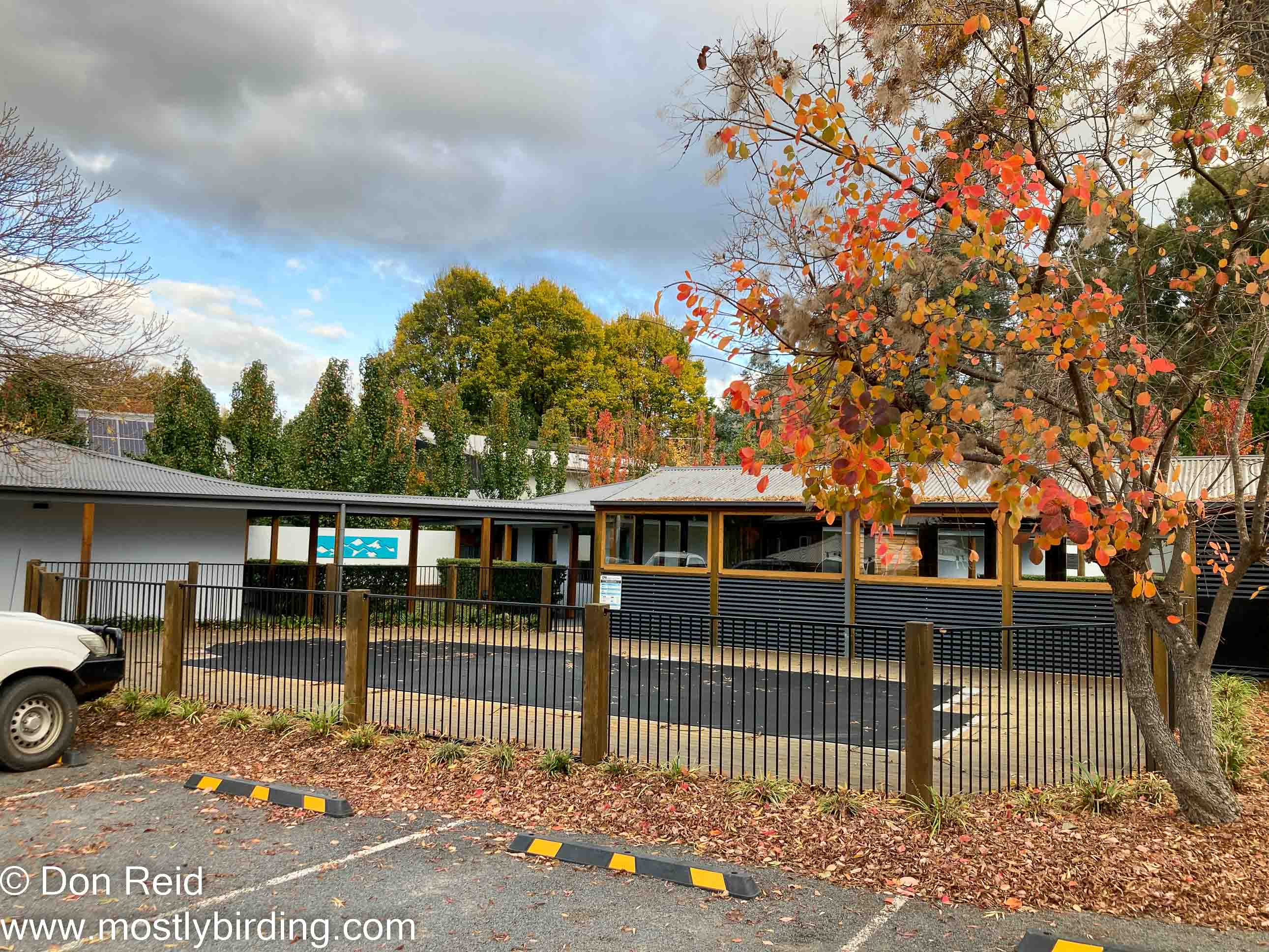
Bright Colonial MotelBright Colonial Motel
As is my habit when arriving in a new place, I went for an exploratory walk along the main road then down to the nearby river where I found a pathway called the Canyon Walk and proceeded along it, coming across lovely views and a small suspension bridge which I crossed to explore the other side. A number of ducks on the river added to the beauty of the spot.
What had struck us as we entered Bright, and something we had been told about, was the array of trees along the roads, all in a multitude of shades of autumn colours – our day had suddenly BRIGHTened up no end!
Autumn colours, Bright VictoriaBright Victoria
And on that rather corny note, I’ll be telling more about Bright and the surrounding towns in the third and final post on our road trip….
It was a very windy and nippy morning when we set off from Sale, Victoria on our 5 day road trip into the mountains north-east of Sale, with our main destination being the town with the charming name of Bright, situated on the scenic Great Alpine Road in the Ovens Valley.
The first leg of our trip was a comfortable 200 kms to the curiously named Omeo, a small town on the Great Alpine Road in the Shire (you have to love these old English terms still used in Australia) of East Gippsland. Omeo comes from an Aboriginal word for hills, which in the event was more than appropriate.
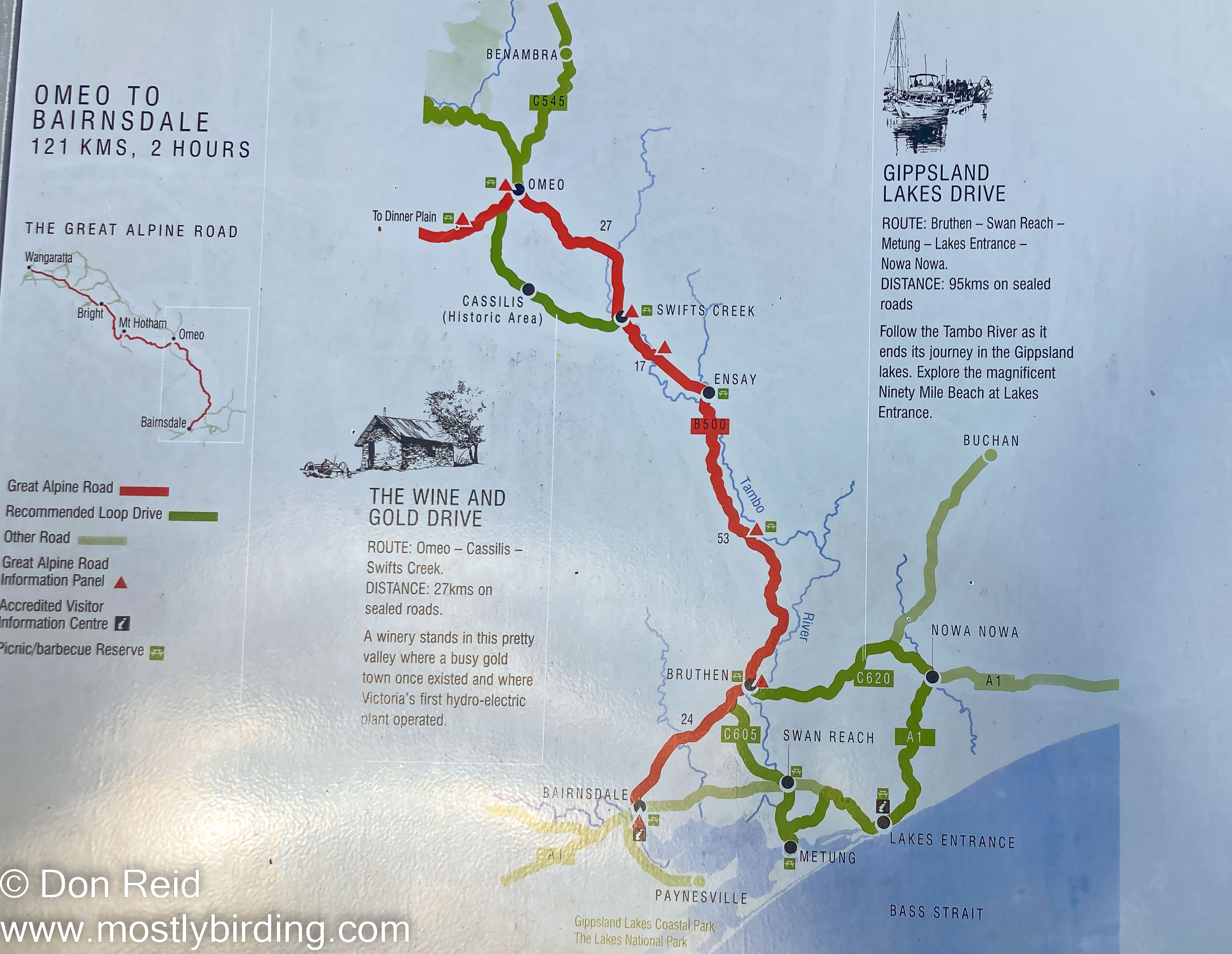
We eventually left Sale just after 12 pm and followed the A1 main road to Bairnesdale, where we had a burger and coffee lunch, then branched off on the B500 which took us onto the Great Alpine Road.
Bright trip
The road soon became twisty and slow as we approached the mountains and even more so the further we travelled, at times feeling like one of those funfair rides as my arms were constantly swinging the steering wheel back and forth through continuous bends. This alternated with stretches of more sedate road where we could admire the roadside scenery and make better progress.
Great Alpine Road map
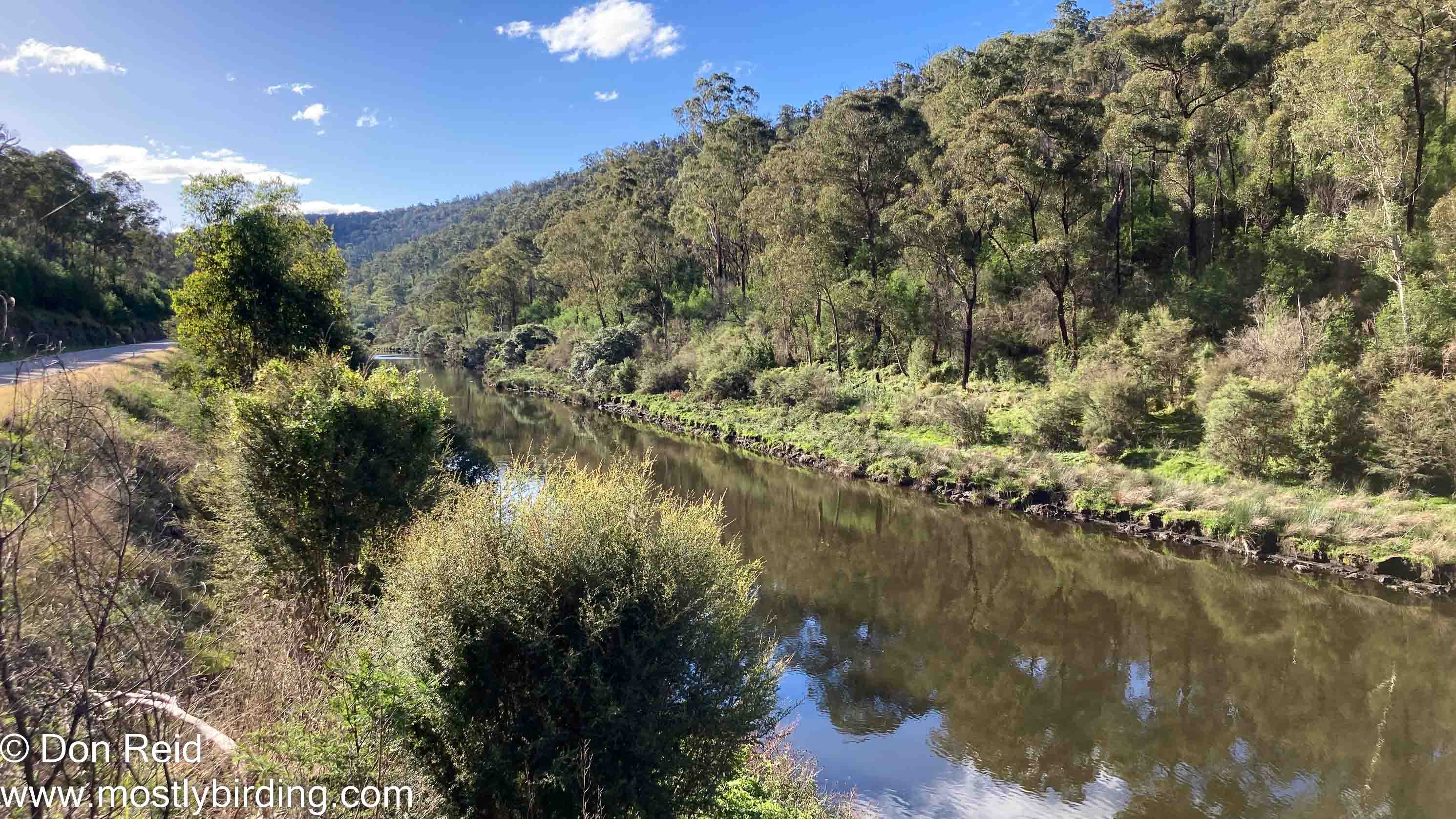
The road skirted a river for many kms and at one vantage point I stopped for a photo
Tambo River, Great Alpine Road
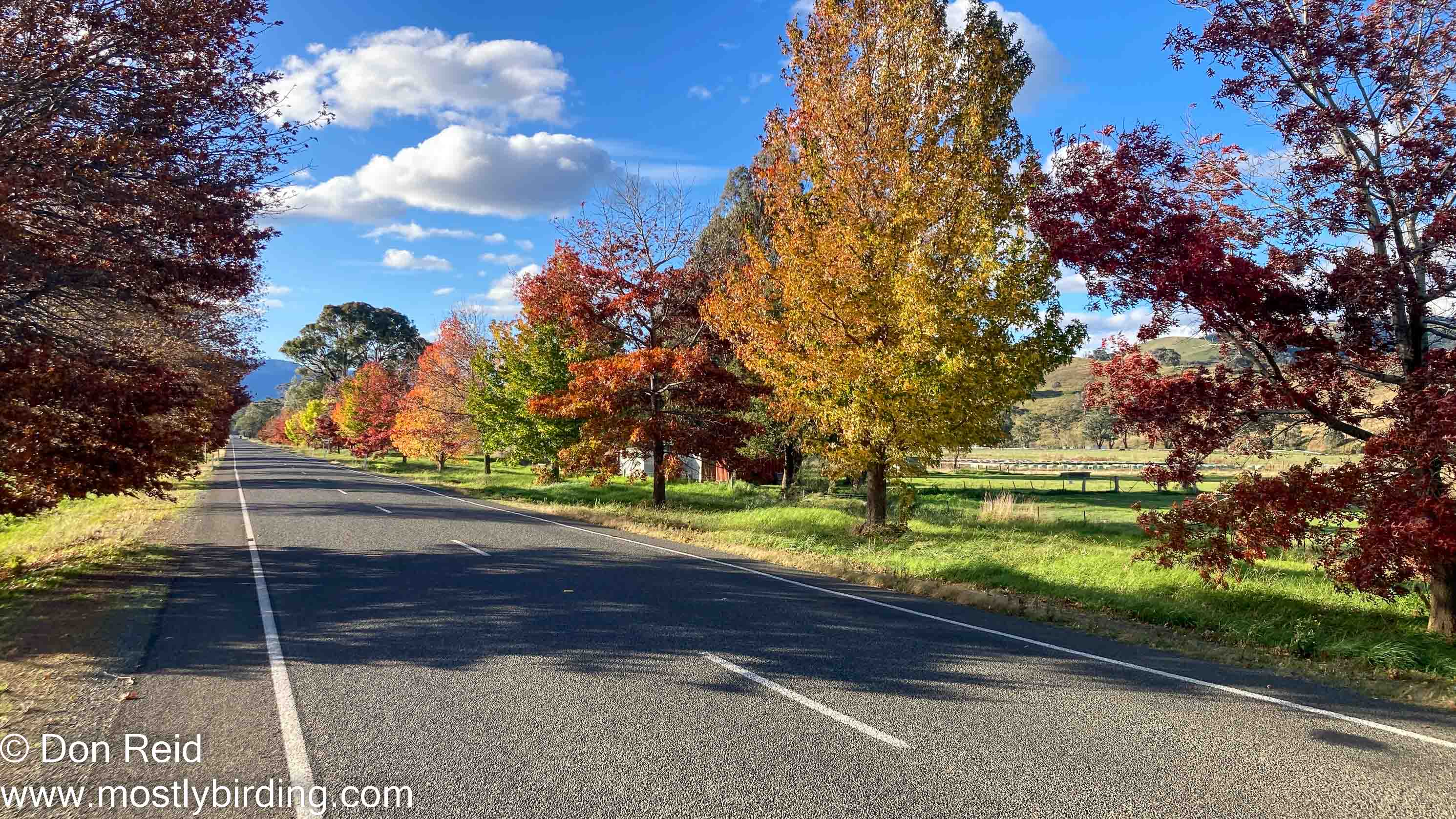
We passed through several small towns – Bruthen, Ensay and Swifts Creek – the latter town was lined with attractive trees showing their autumn colours and I could not resist another stop to take a photo or two.
Swifts Creek, Great Alpine Road
Omeo
We reached Omeo around 4 pm and took a short drive through the village before heading to Homeo Alpine Cottage which we had booked for the night through one of the booking sites. The name and description of the accommodation had conjured up a charming cottage set in a pretty garden in our minds, but the reality was just the opposite as we stopped outside and viewed our accommodation with some trepidation.
Homeo Alpine Cottage, Omeo, Great Alpime Road
From the road it looked more like a shack than a cottage, set in a garden that was bordering on unkempt. The word rust-ic came to mind and we wondered how we were going to ward off the chilly air in this cold looking place.
Rust-ic comes to mind….
Nevertheless, we found the inside old-fashioned yet quite comfortable, especially once I had lit the fire and switched on every available heater in the house and we started to relax and enjoy our latest “unexpected surprise”. Later we dined on bread rolls and cheese and watched a Netflix series while getting ourselves warm and comfortable under lots of blankets as the temperature dropped quickly.
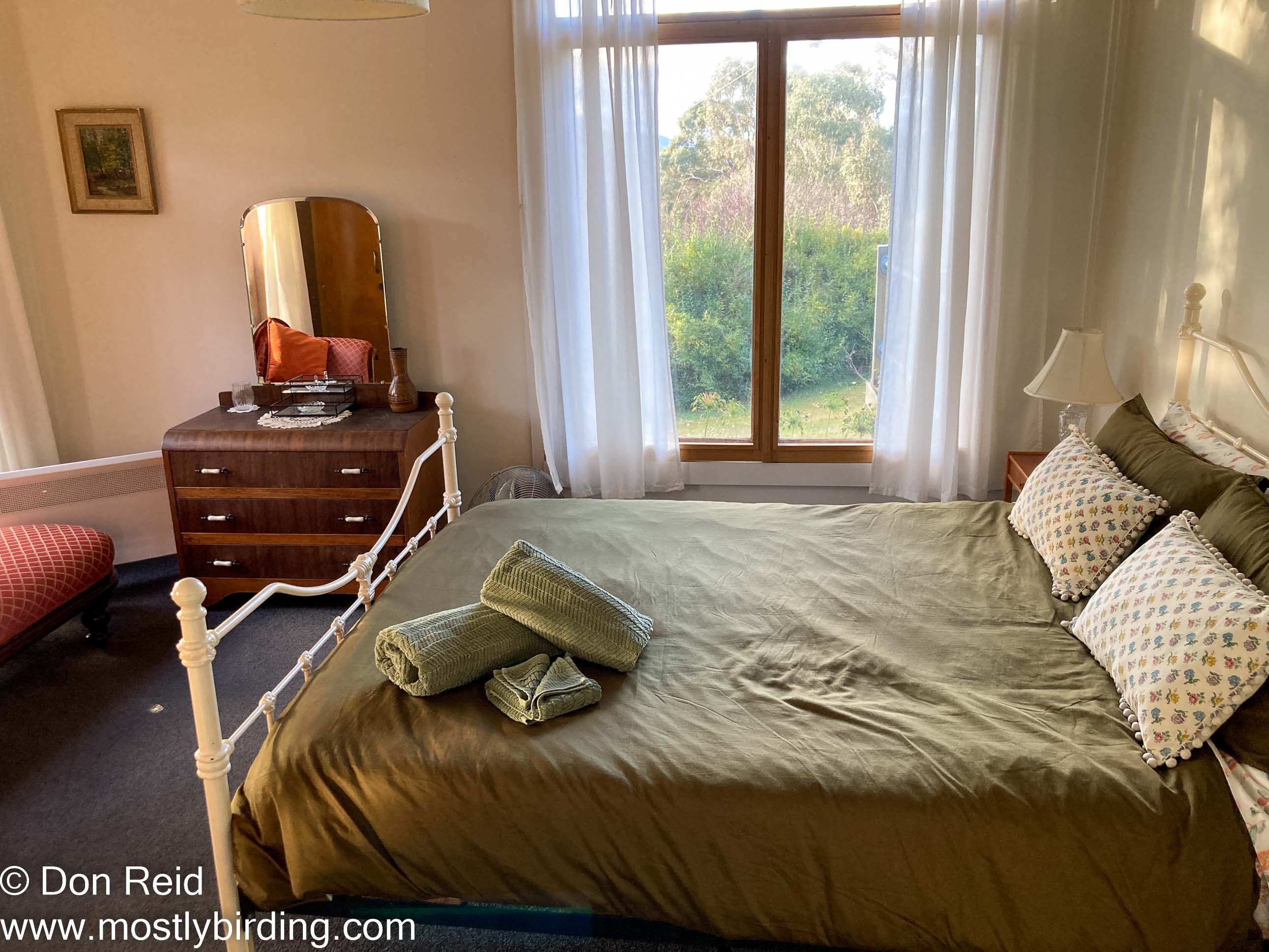
The lounge – Homeo Alpine CottageThe main bedroom
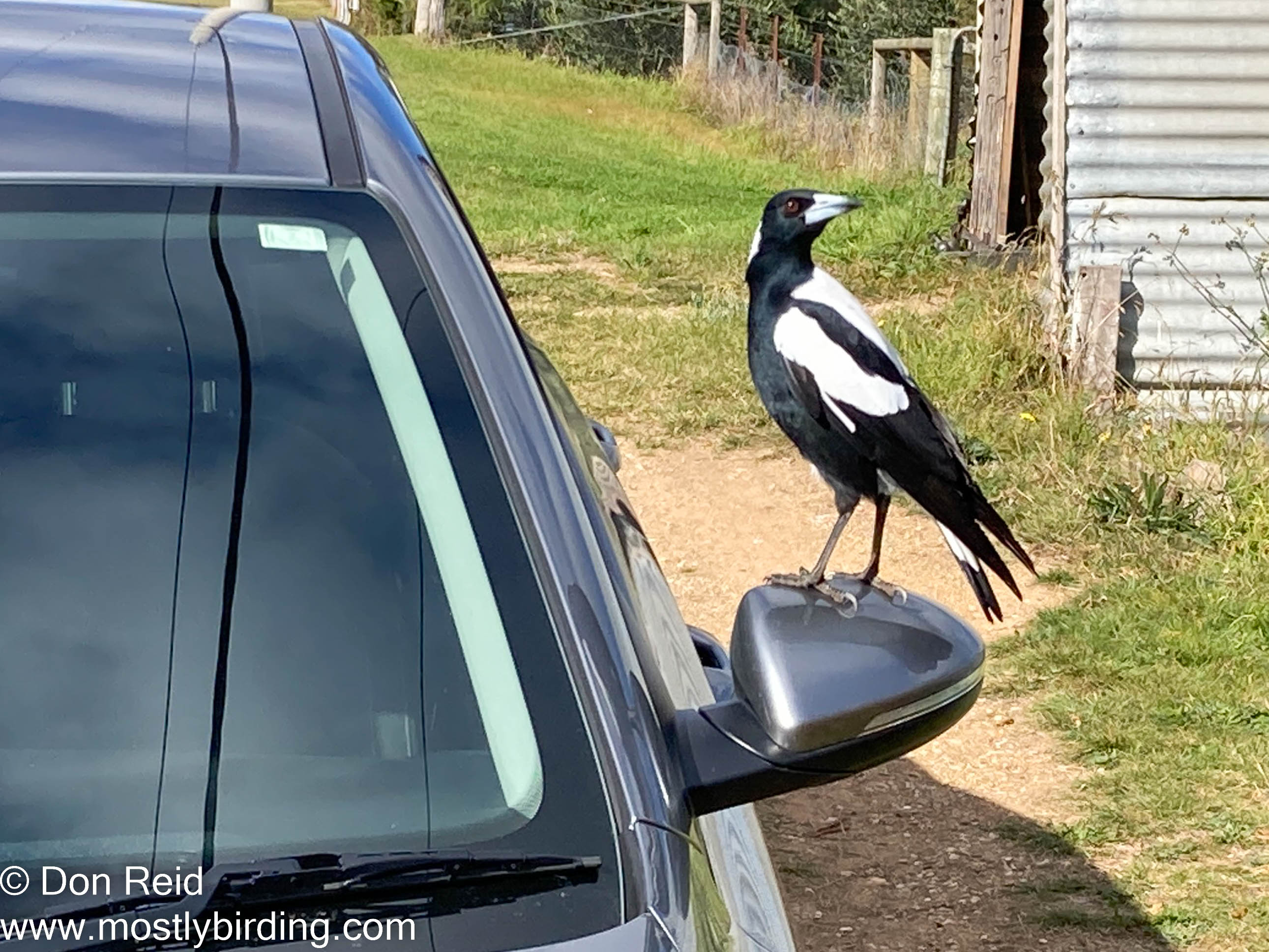
Next morning we left the cottage feeling more positive about it and ventured into Omeo for a brunch of a toastie and coffee at the only restaurant that seemed to be open. But not before being “challenged” by three Australian Magpies which seemed bent on blocking our way to the car and one even perched on the mirror in a pose that said “don’t mess with me”. I kept an eye on them while loading the car and we got away without further ado.
Australian Magpie Cracticus tibicen, Omeo Victoria
On the way to the village we came across a flock of Australian King Parrots at the roadside, apparently feeding on something and when I reversed to have a closer look, we found that there was a dead (probably roadkill) Sulphur-crested Cockatoo which was the centre of their attention. So it seems Aussie parrots are not averse to eating one of their kind!
Australian King Parrot Alisterus scapularis (female), Omeo Victoria
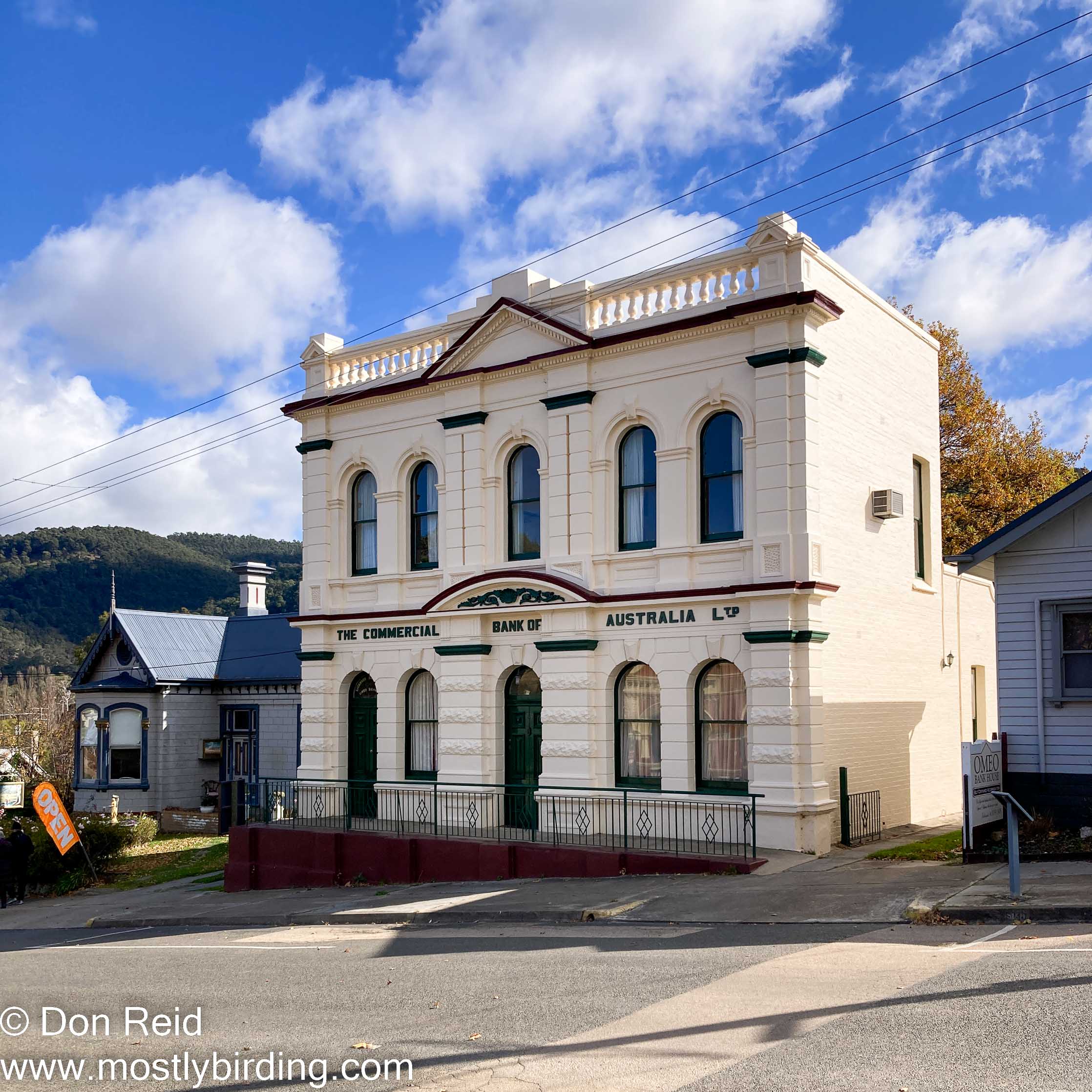
Omeo itself is a pleasant small town with some interesting old buildings, many of which were rebuilt after devastating bushfires
Omeo, Great Alpine RoadOmeo, Great Alpine RoadOmeo, Great Alpine Road
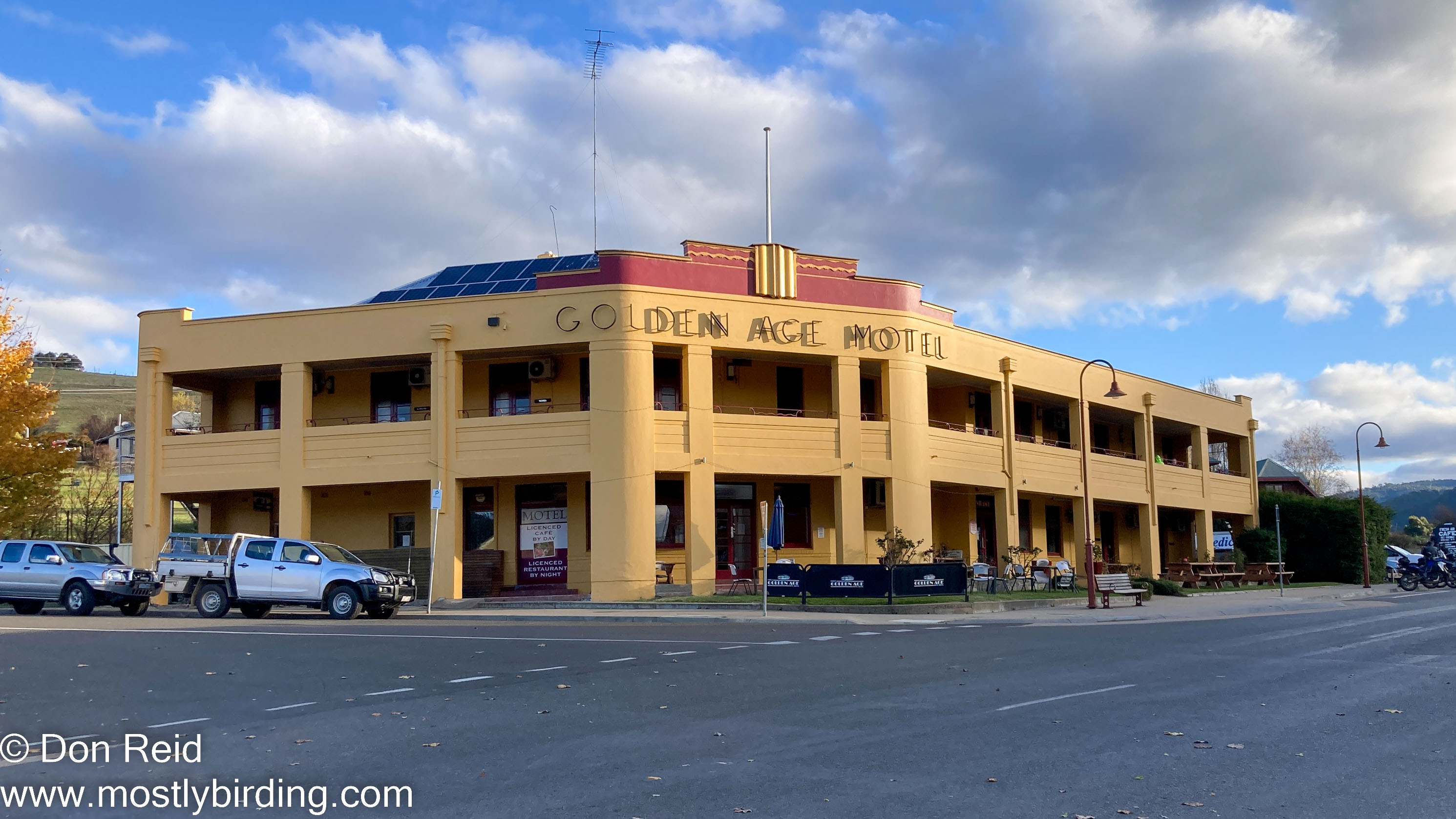
The Golden Age Hotel stands in the middle of town and has a long history involving fires
Omeo, Great Alpine RoadOmeo, Great Alpine Road
The next post will cover the next leg of our trip to Bright, Victoria – a memorable one indeed!
One of the benefits of reaching that age where they automatically give you a pensioner’s discount at the supermarket check-out without asking for an ID, is having the time – and the good sense – to turn a potentially mundane trip into a mini-holiday.
And this is exactly what we did when travelling between our Mossel Bay and Pretoria homes during March this year – instead of rushing to complete the 1250 kms road journey in 2 days with one overnight stop, we decided to stretch it out with a two night stay in Prince Albert, Western Cape and a further night in Springfontein, Free State, turning it into a four day, three night adventure.
Day 1 Thursday
After spending most of the morning packing, loading and preparing our Mossel Bay home for a lengthy hibernation, we left around lunchtime and set off on the familiar route to Prince Albert via the scenic Robinson Pass then through the town of Oudtshoorn and the winding road that takes you through the spectacular Meiringspoort. No matter how many times we drive this route, I still end up driving through Meiringspoort with my jaw in a dropped position – it is that special.
But this time there was a twist – just beyond the last of the 25 river crossings (it’s the same river each time) we encountered the first of many swarms of locusts that filled the air and pinged and ‘thunked’ against the grille, windscreen and roof of our SUV as we drove. The arid parts of South Africa have been plagued by swarms of biblical proportions through the summer, due to good rains after years of drought conditions.
This video was taken after stopping at the roadside and gives an idea of the numbers of locusts – a tiny fraction of what we drove through for tens of kilometres
Once we reached our destination I spent half an hour carefully prising locust bodies from every nook and cranny of our car, at the same time providing a veritable feast for an army of ants that descended on them as they dropped to the ground.
Our usual B&B in Prince Albert was fully booked so we had booked into one we had not tried before – De Bergkant Lodge – which turned out to be an excellent choice – lovely spacious room, good breakfast, efficient management and a super 15m pool which I immediately tried out as the temperature was hovering in the low 30’s (deg C)
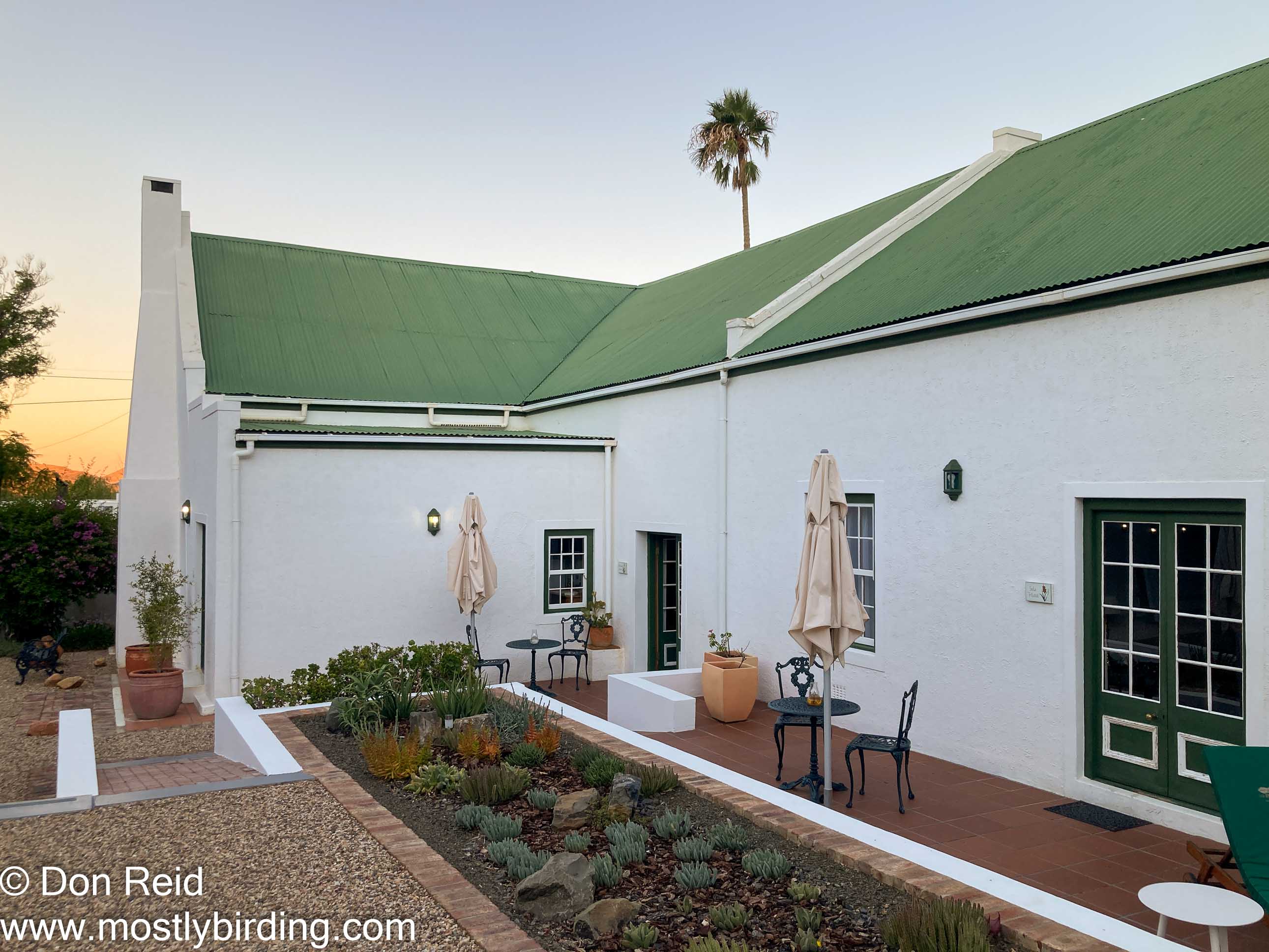
De Bergkant Lodge, Prince AlbertDe Bergkant Lodge, Prince Albert – our room was the one in the corner
After the swim and relaxing a while we had dinner at the Rude Chef (No – he/she wasn’t) restaurant. Prince Albert has always had an amazing selection of quality restaurants for a small Karoo town, but like so many other places Covid has had a devastating effect on the tourist industry which is only now recovering. So the choice of eating places has reduced but the quality is still there.
Day 2 Friday
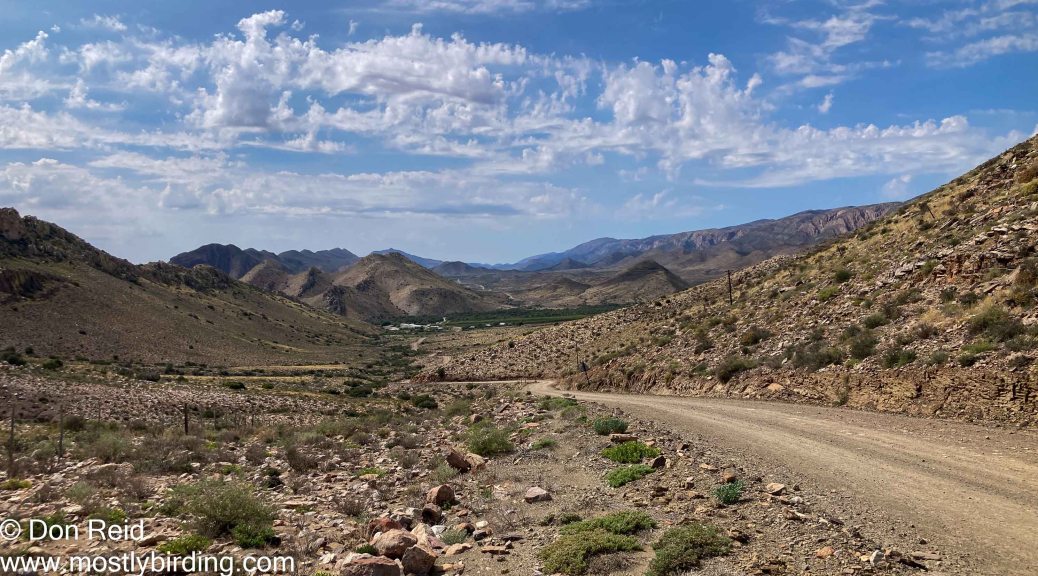
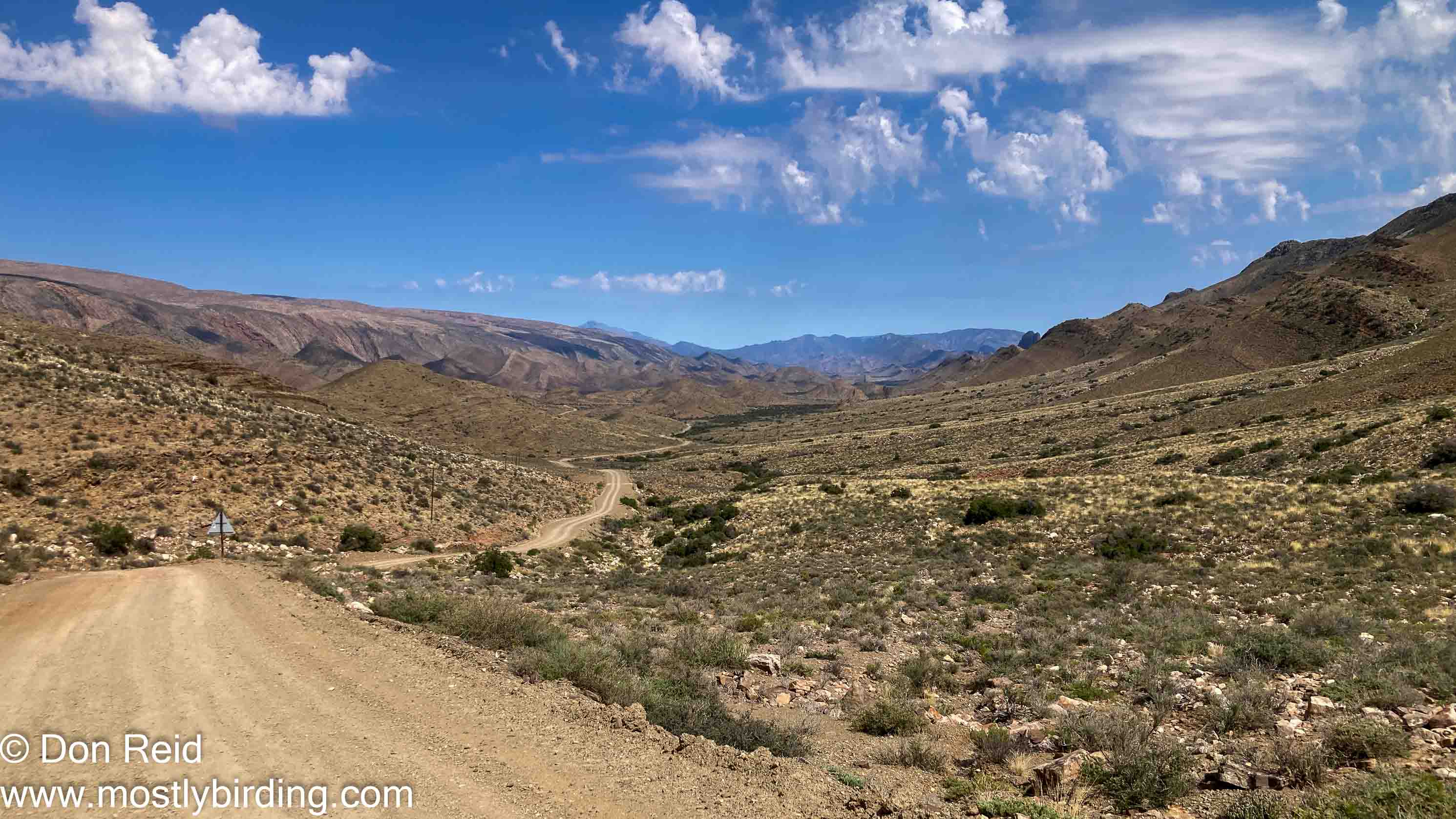
After breakfast at the pool we set off late morning to visit the Weltevrede Fig Farm about 30 kms outside Prince Albert, along a gravel road that made its way through the mountains in spectacular fashion providing beautiful views over every rise.
Road to Weltevrede Farm, near Prince Albert
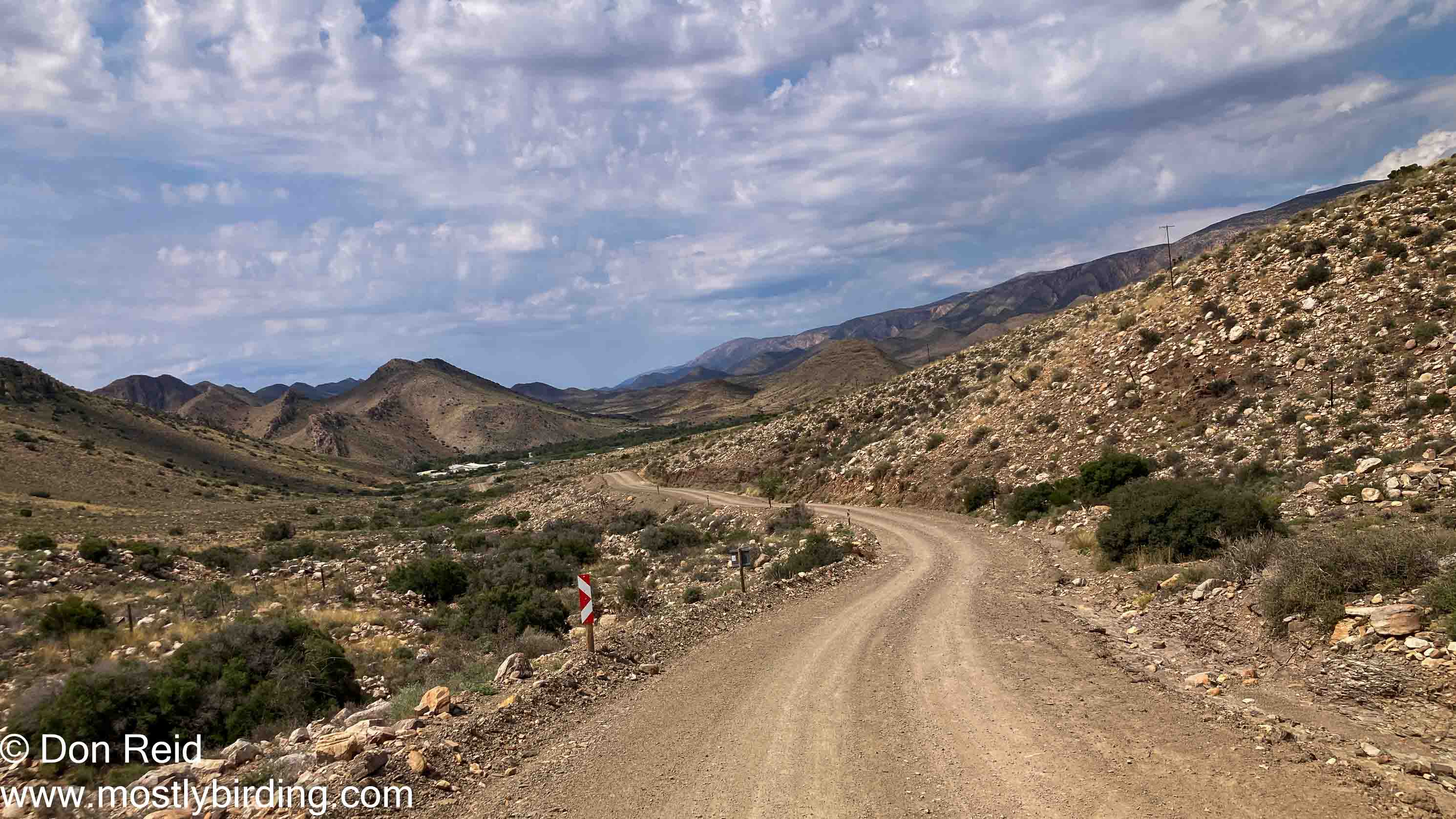
Weltevrede appeared at the end of the road, like an oasis in the arid countryside, the fig trees spreading up and down the valley in a broad green ribbon.
Road to Weltevrede Farm, near Prince Albert
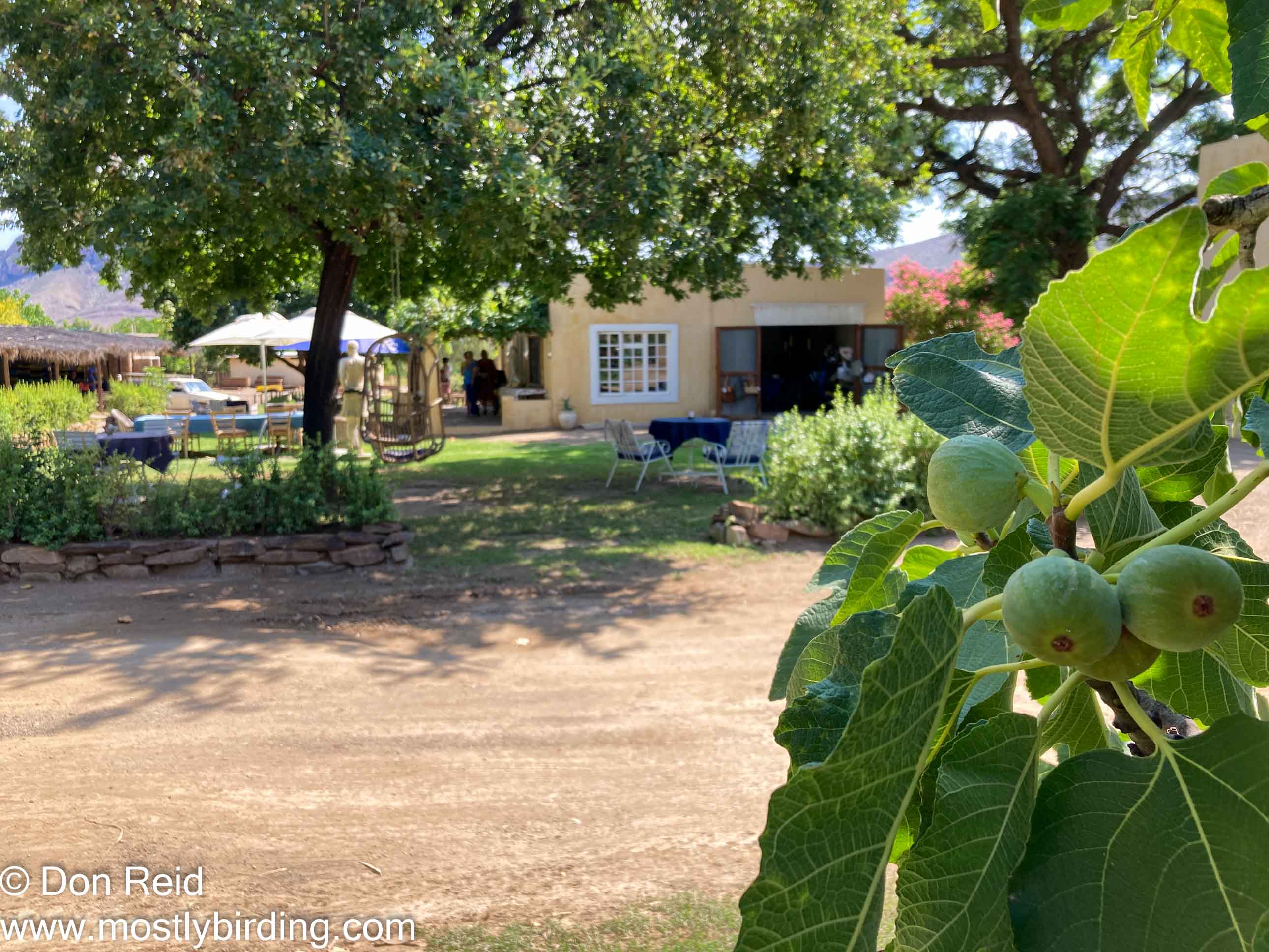
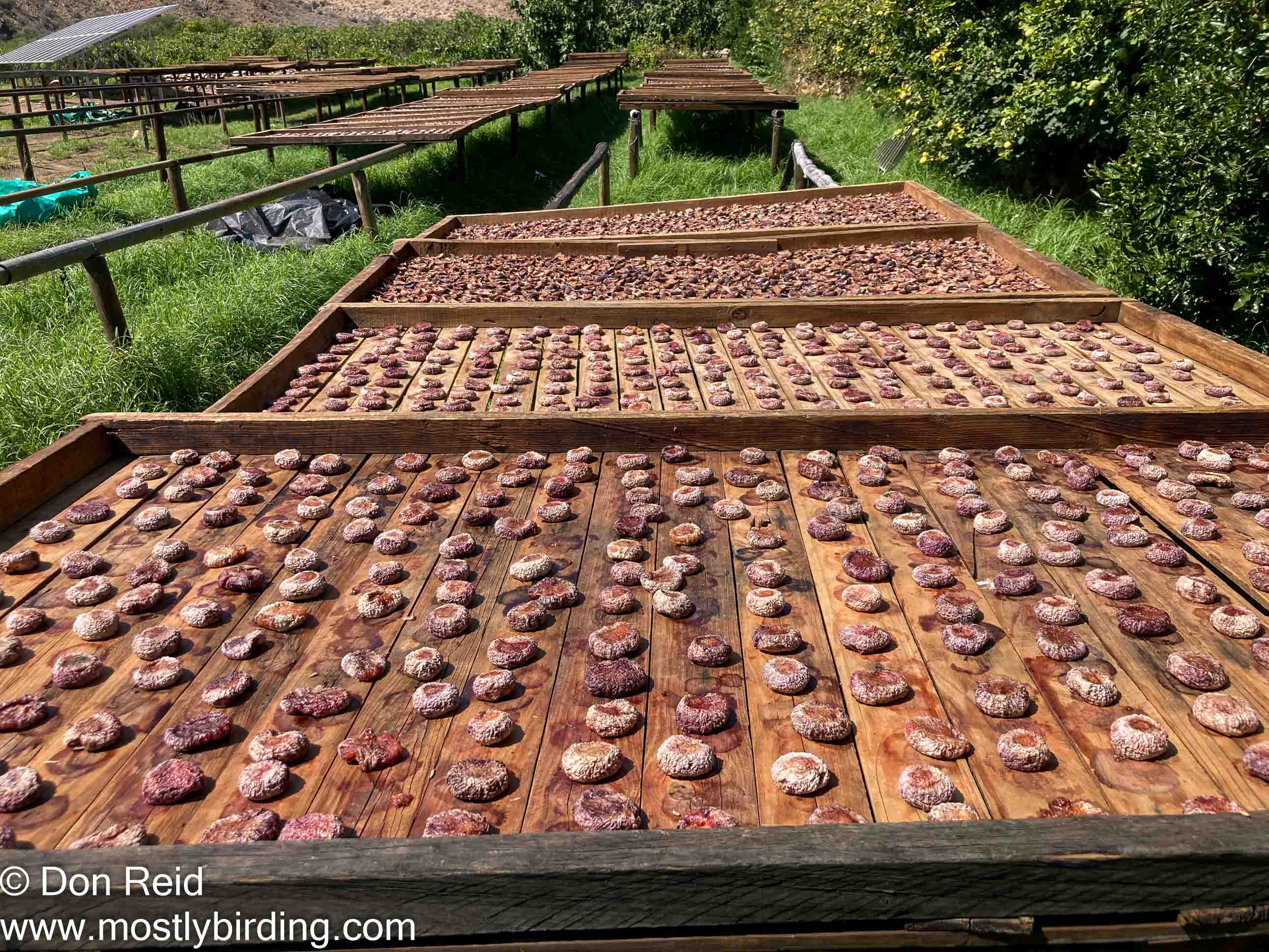
We had a look around then settled at a table under a tree and lingered over a light lunch and coffee, just enjoying the ambience while farm workers carried out tray after tray of prepared figs and set them out to dry in the pure Karoo sunshine, where the air is dry and devoid of any pollutants.
Weltevrede Farm Weltevrede Farm – prepared figs drying in the sunWeltevrede Farm – their Fig Tart is delicious!
We took our time travelling back to Prince Albert and relaxed for a while before I set out to add some species to the pentad list that I had begun the previous afternoon with mostly the species visiting the garden. Heading out of town in a northerly direction I soon found Pririt Batis, Namaqua Dove, Pied Barbet and White-necked Raven and a swing past the small Waste water treatment works added SA Shelduck to take my pentad list to a modest 30.
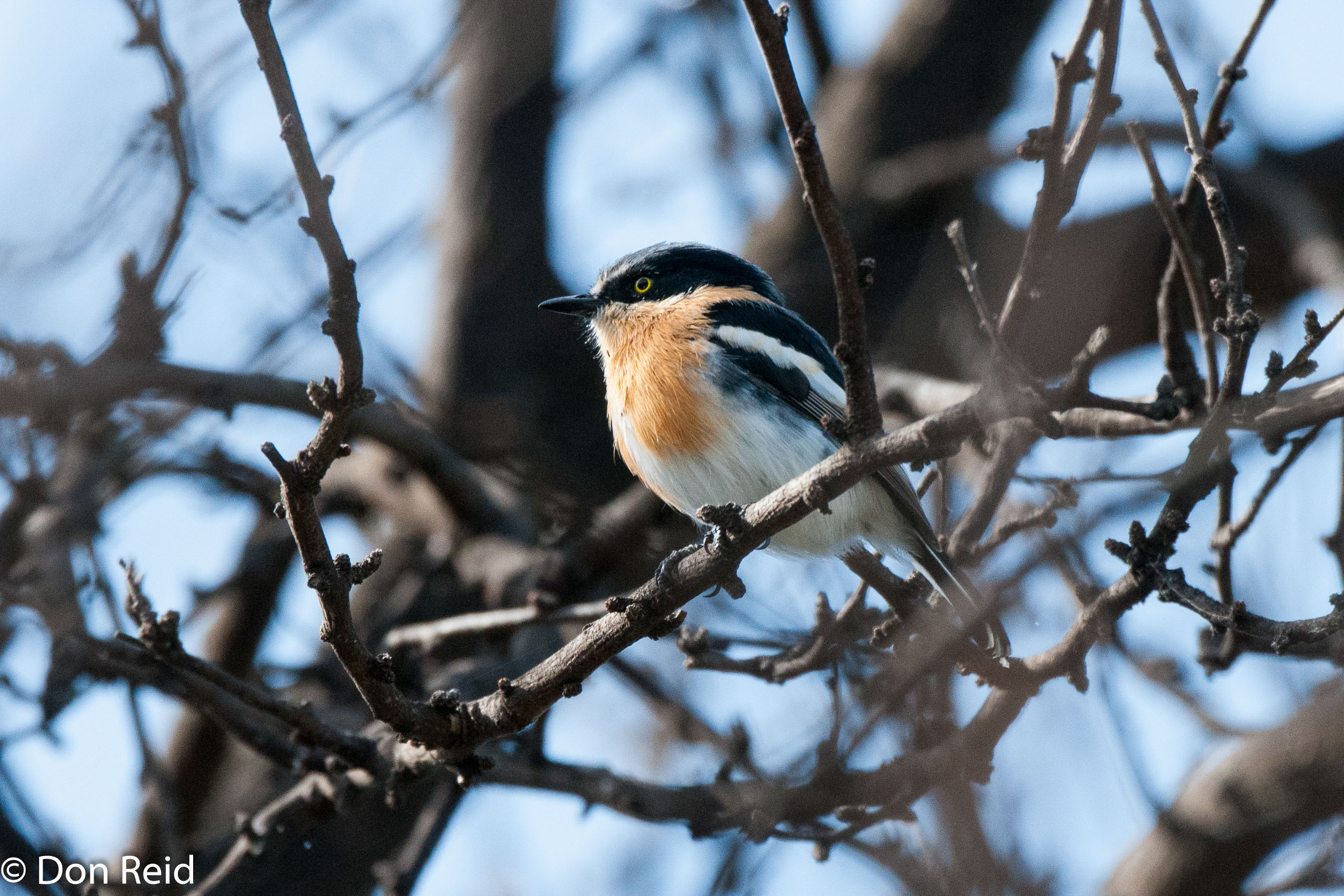
Pririt Batis / Priritbosbontrokkie
After another invigorating swim we walked across the road to La-di-dah restaurant for a meal – our first choice was grilled Karoo lamb chops but disappointingly they had just sold the last ones and we had to revert to other meat dishes.
Day 3 Saturday
A longish drive lay ahead so we left after breakfast and made good time via Prince Albert Road where we joined the N1 National road to Beaufort West, Richmond and Colesberg, with comfort and coffee stops at Three Sisters, Karoo Padstal and Chargo Farm Stall at Colesberg.
As we left Prince Albert a Booted Eagle flew over the road ahead and I quickly added this welcome raptor to my pentad list.
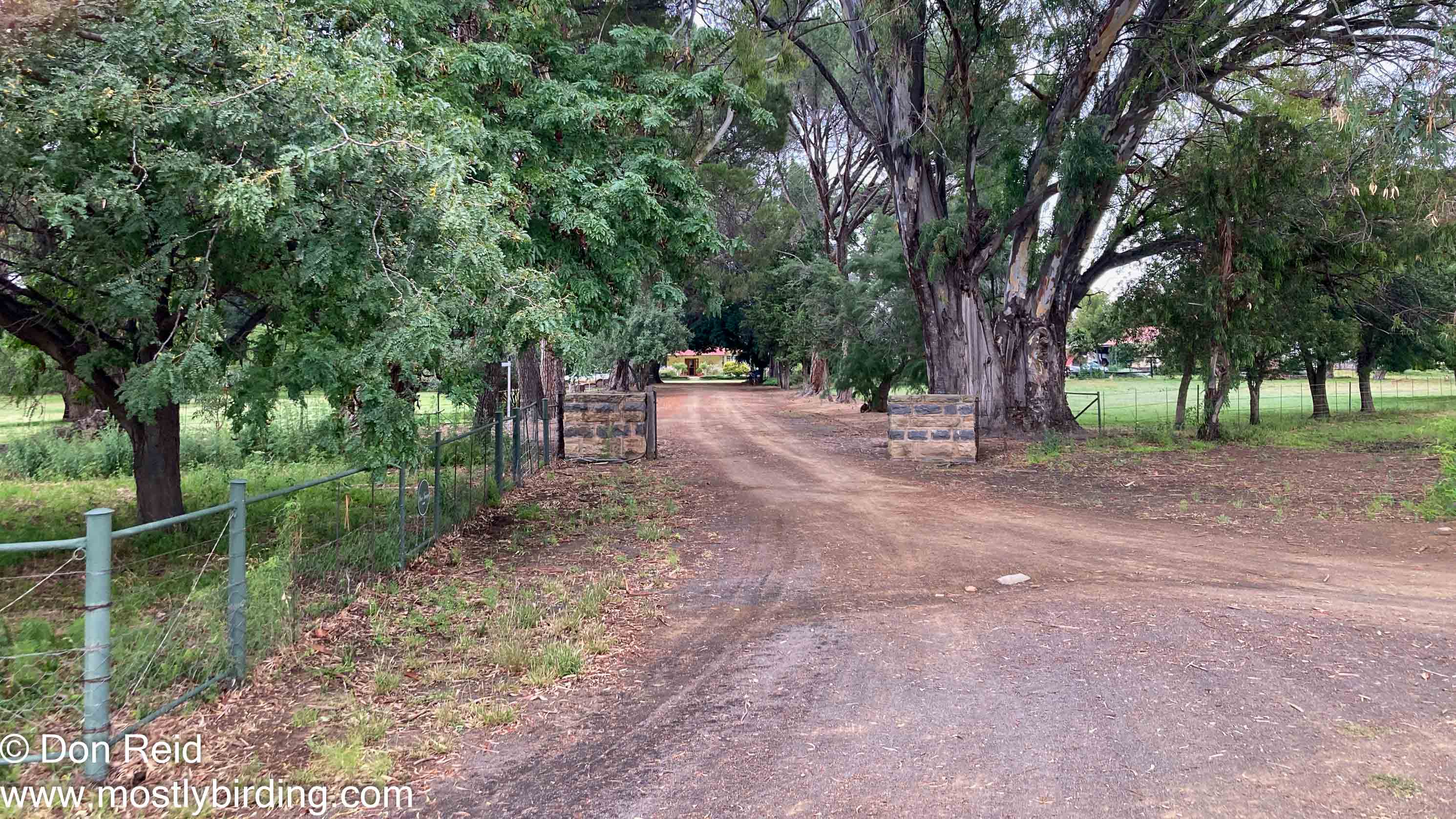
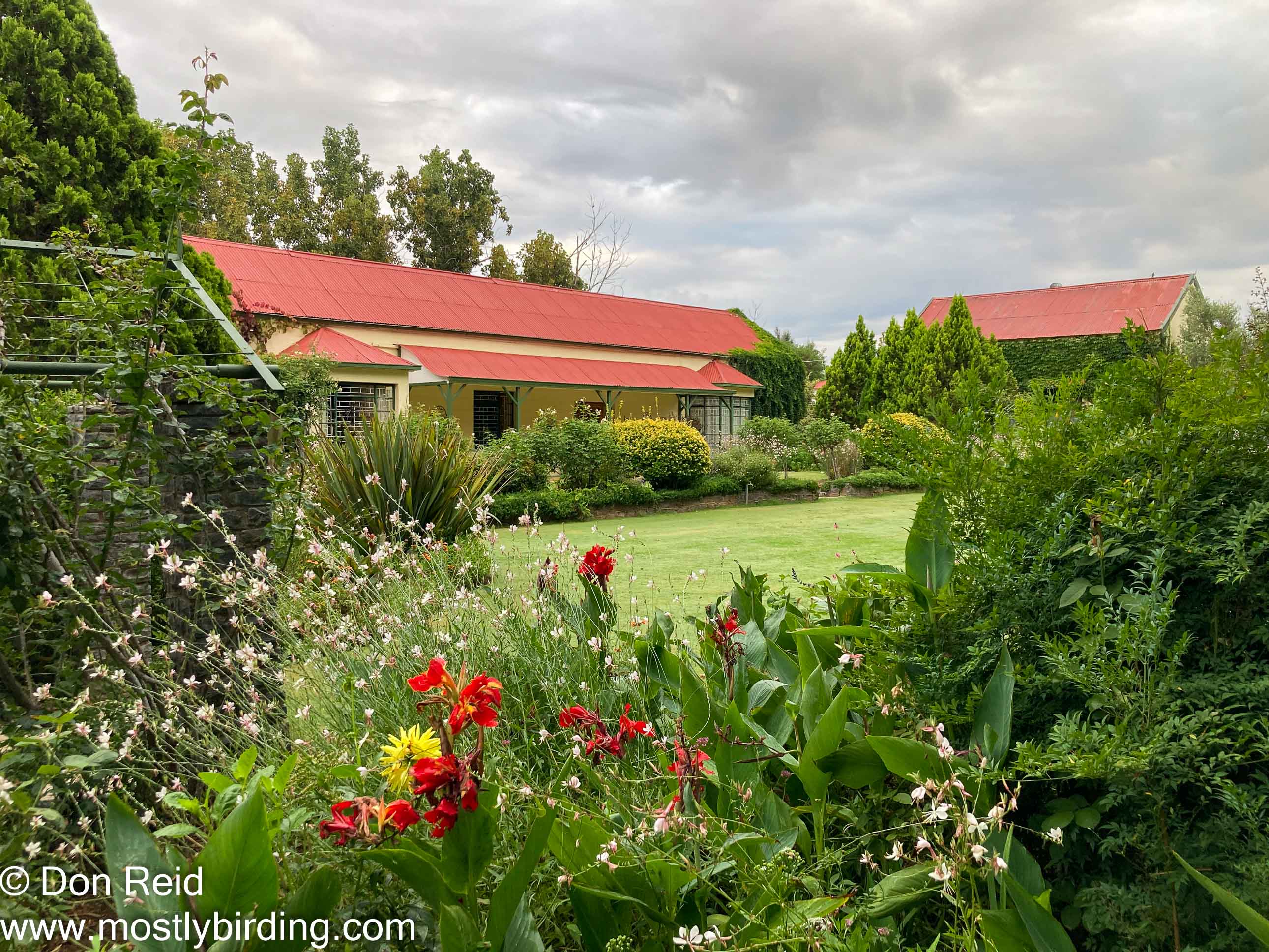
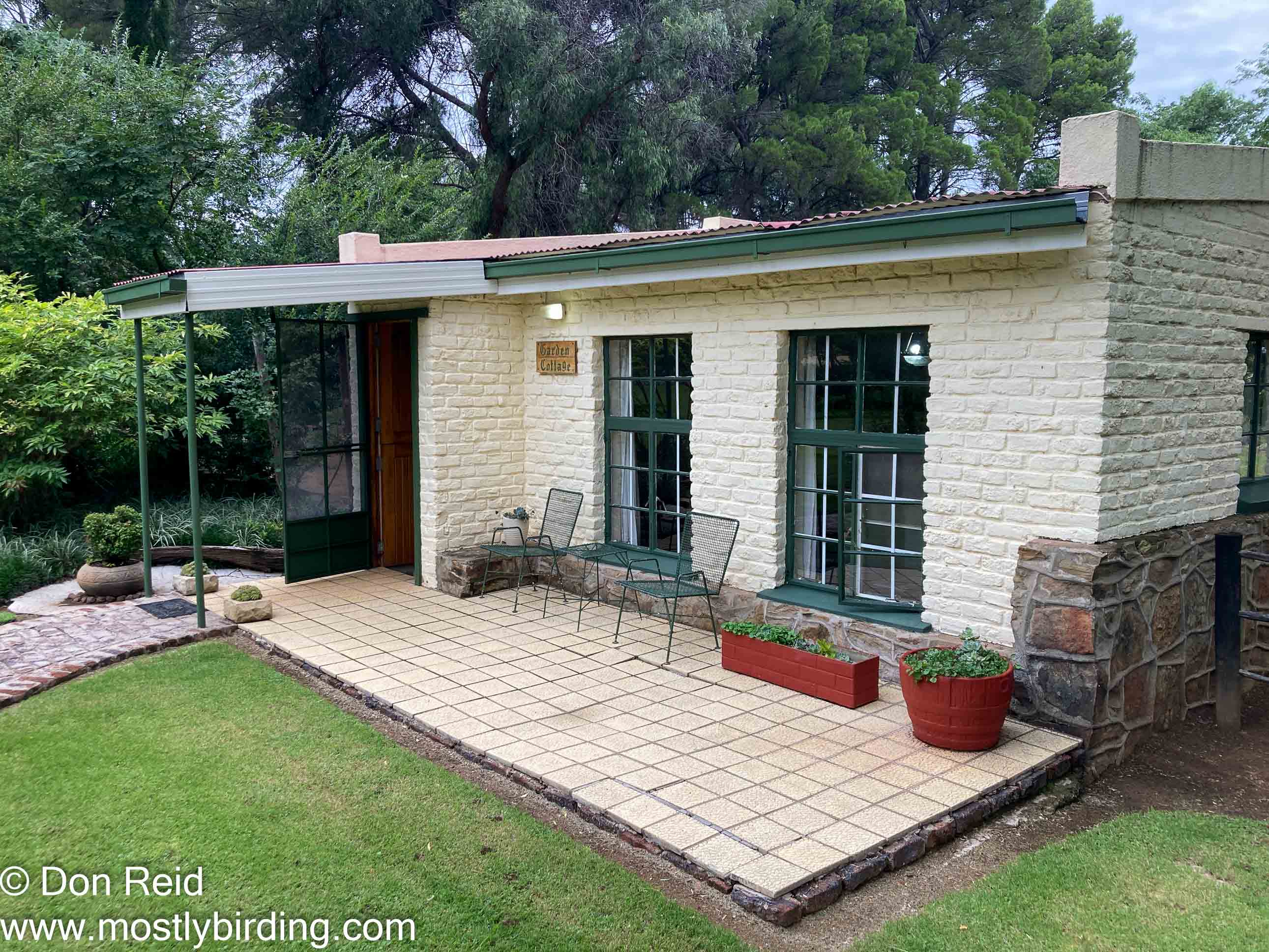
We reached our overnight stop – Prior Grange farm near Springfontein – just after 5 pm and settled in to the Garden Cottage.
Prior Grange near Springfontein Free StatePrior Grange – the main housePrior Grange – the Garden Cottage
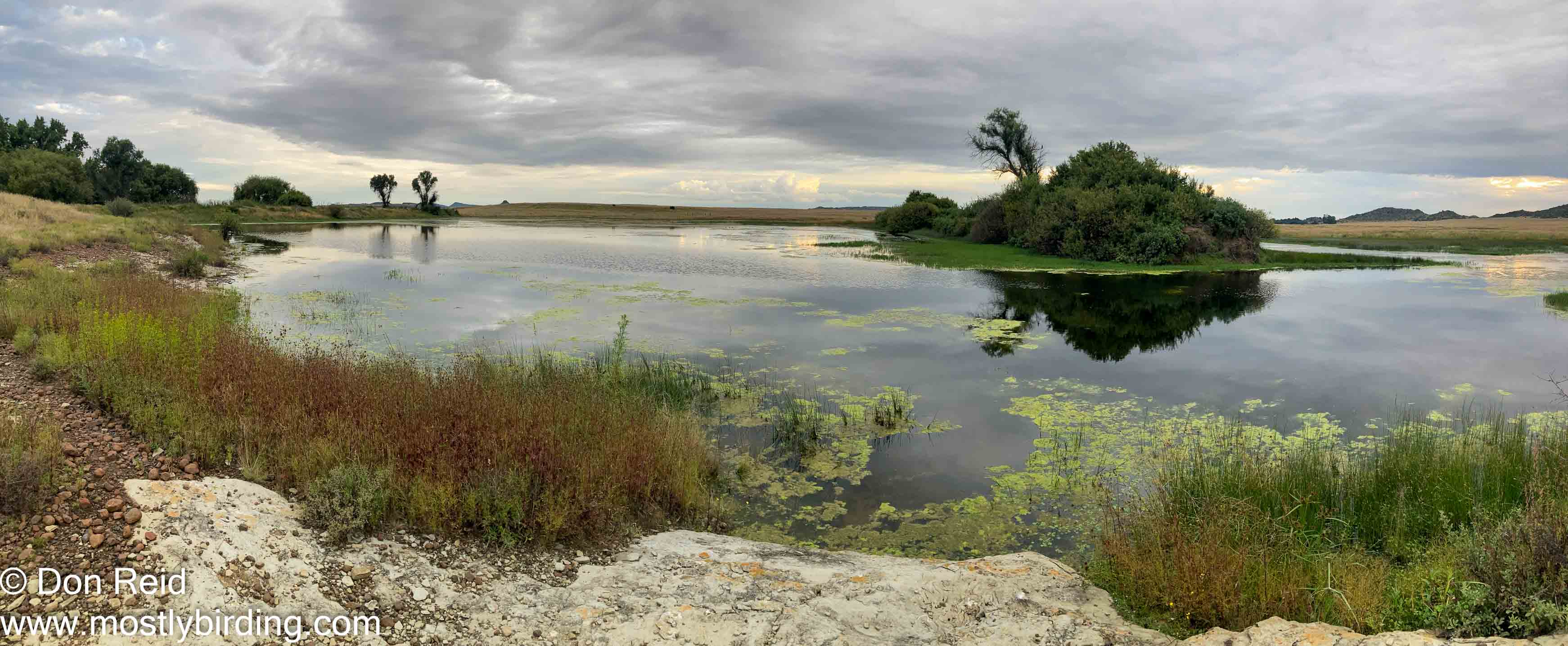
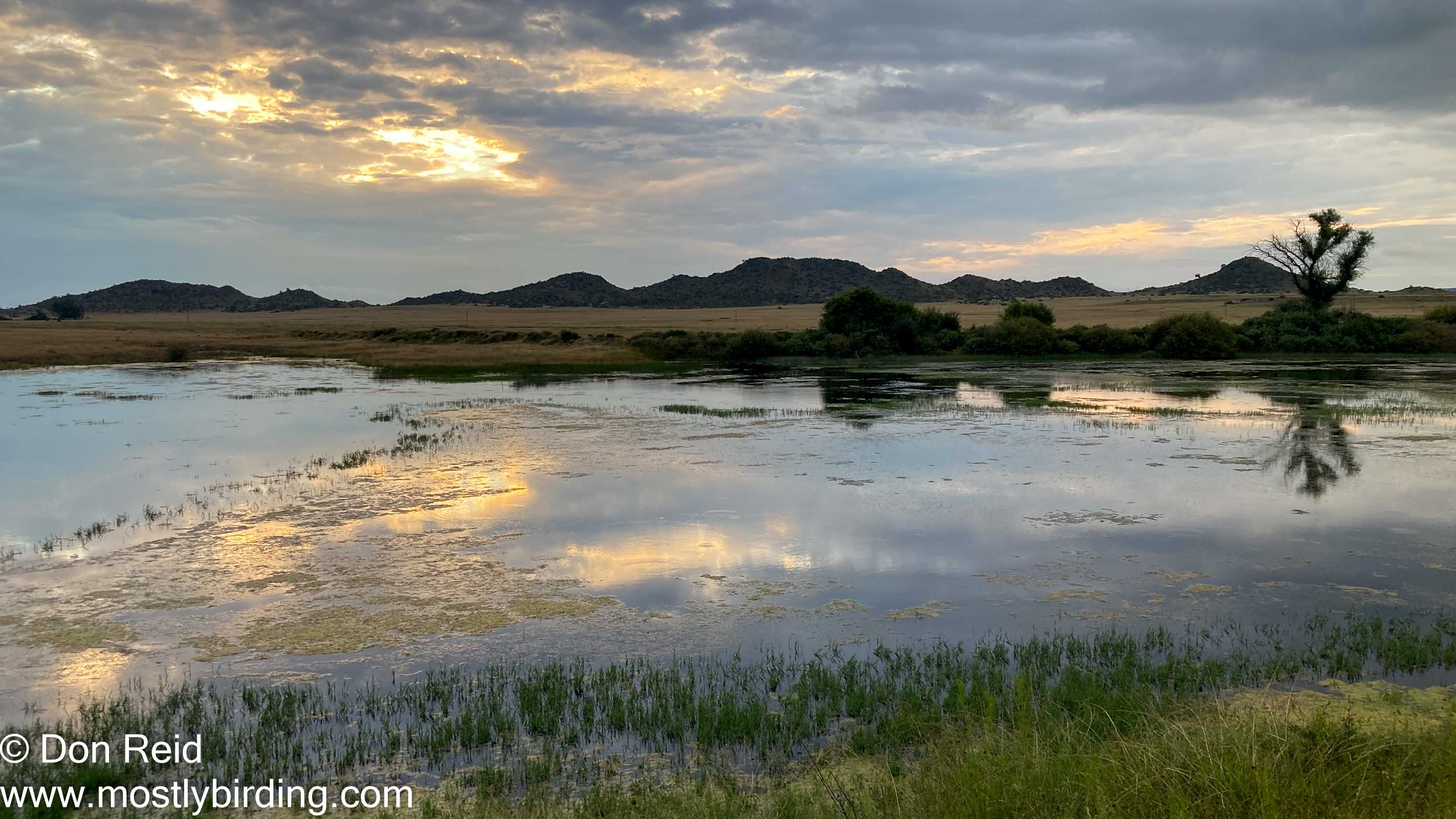
It was time for my birding/relaxing walk to stretch my legs and with not much daylight left I headed straight to the dam behind the farm house and found it fuller than I had ever seen it, in complete contrast to our last visit before Covid when it had held a fraction of the water it now had.
Prior Grange dam
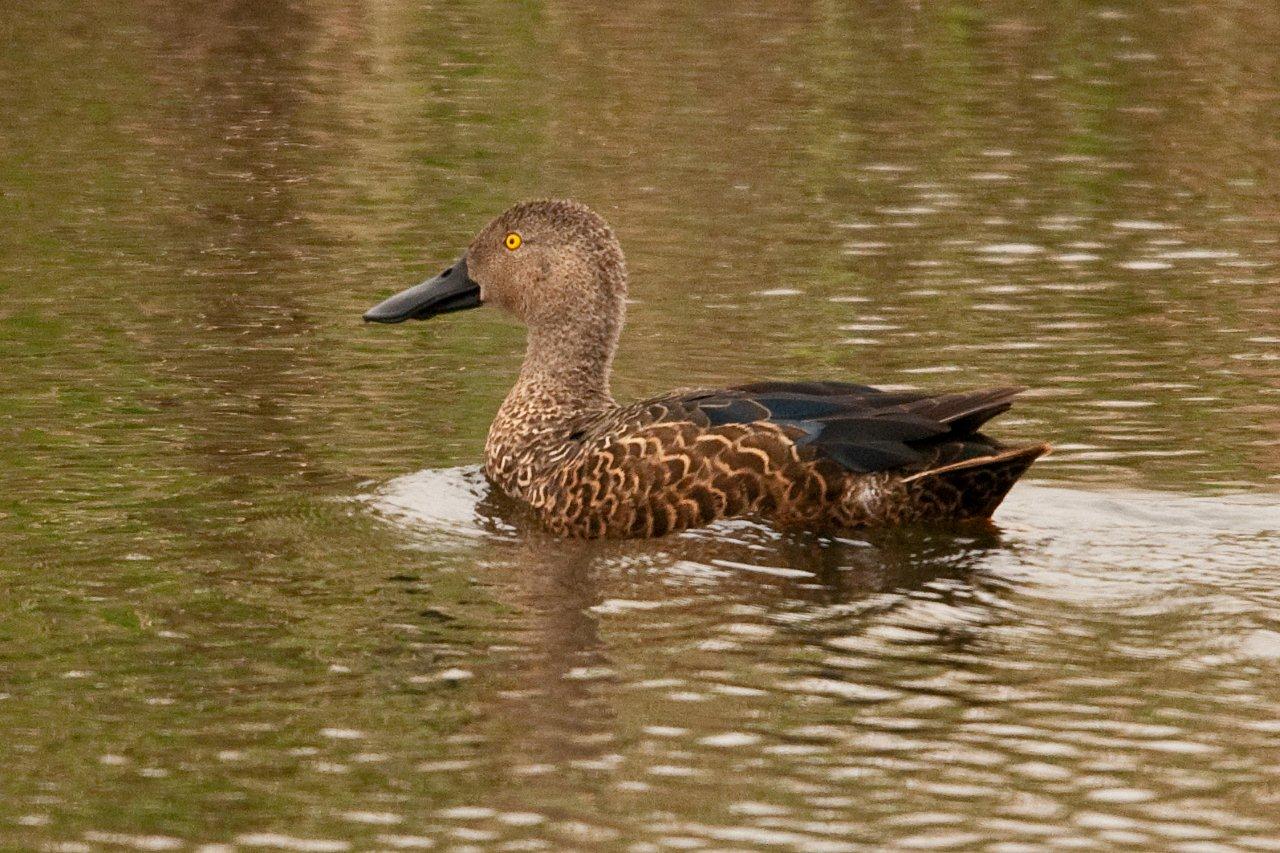
The dam had a single Grey Heron and small numbers of Red-knobbed Coots, Moorhens, Cape Shovelers, Yellow-billed Ducks, Red-billed Teals, Little Grebes and SA Shelducks, while the reeds were busy with Bishops and Weavers and a single African Reed Warbler which had me puzzled for a while as it was making an unusual sound (for me, probably not for him)
Prior Grange damCape Shoveler / Kaapse Slopeend
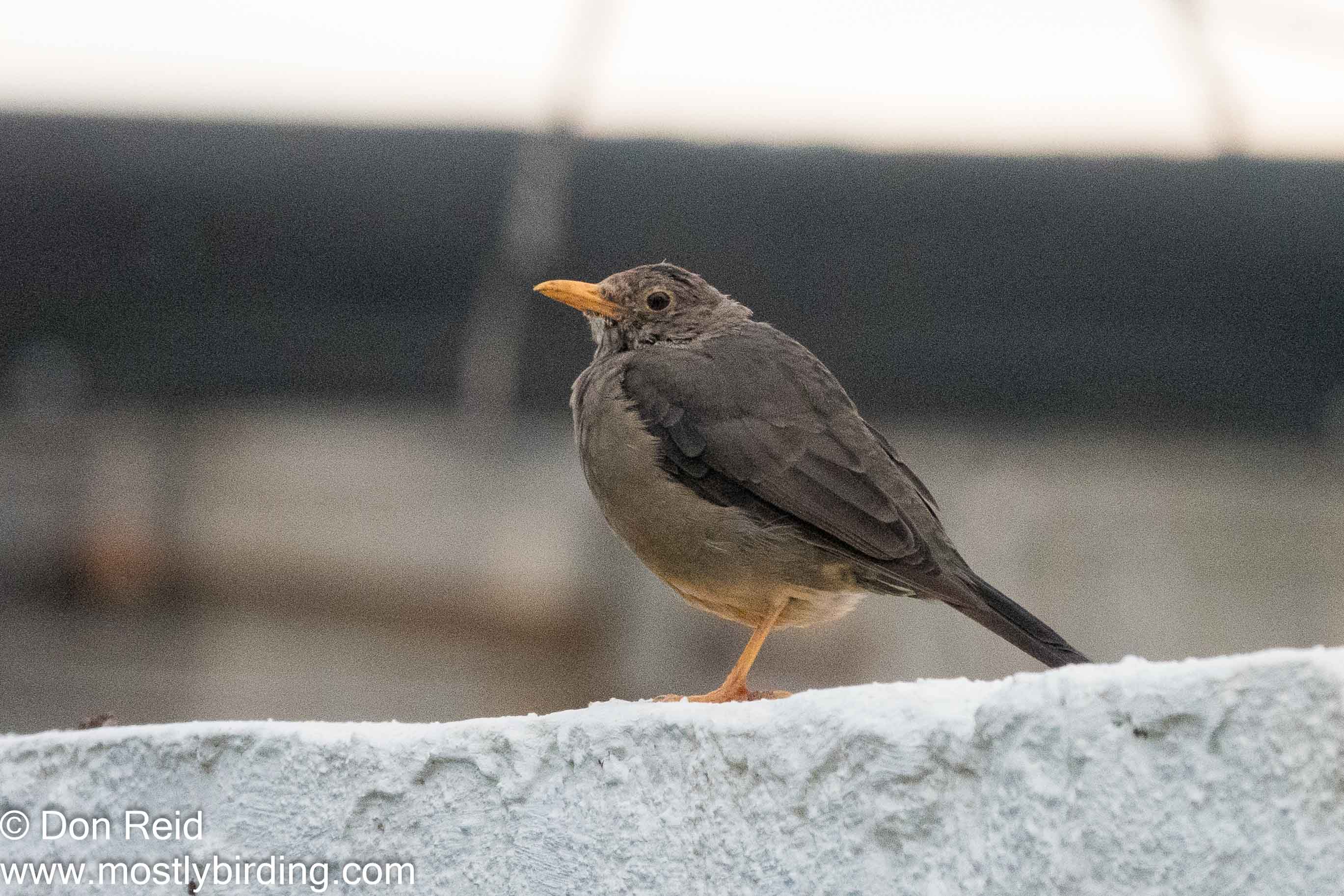
Heading back to the cottage I added Karoo Thrush, Pied Starling and Fiscal Flycatcher before dusk fell, taking my pentad list to 32 after an hour’s atlasing, leaving the next morning to complete the two hour minimum atlasing to count as a “Full Protocol” card. Dinner, served in the cottage, was roast lamb and veg – what else on a Karoo farm?
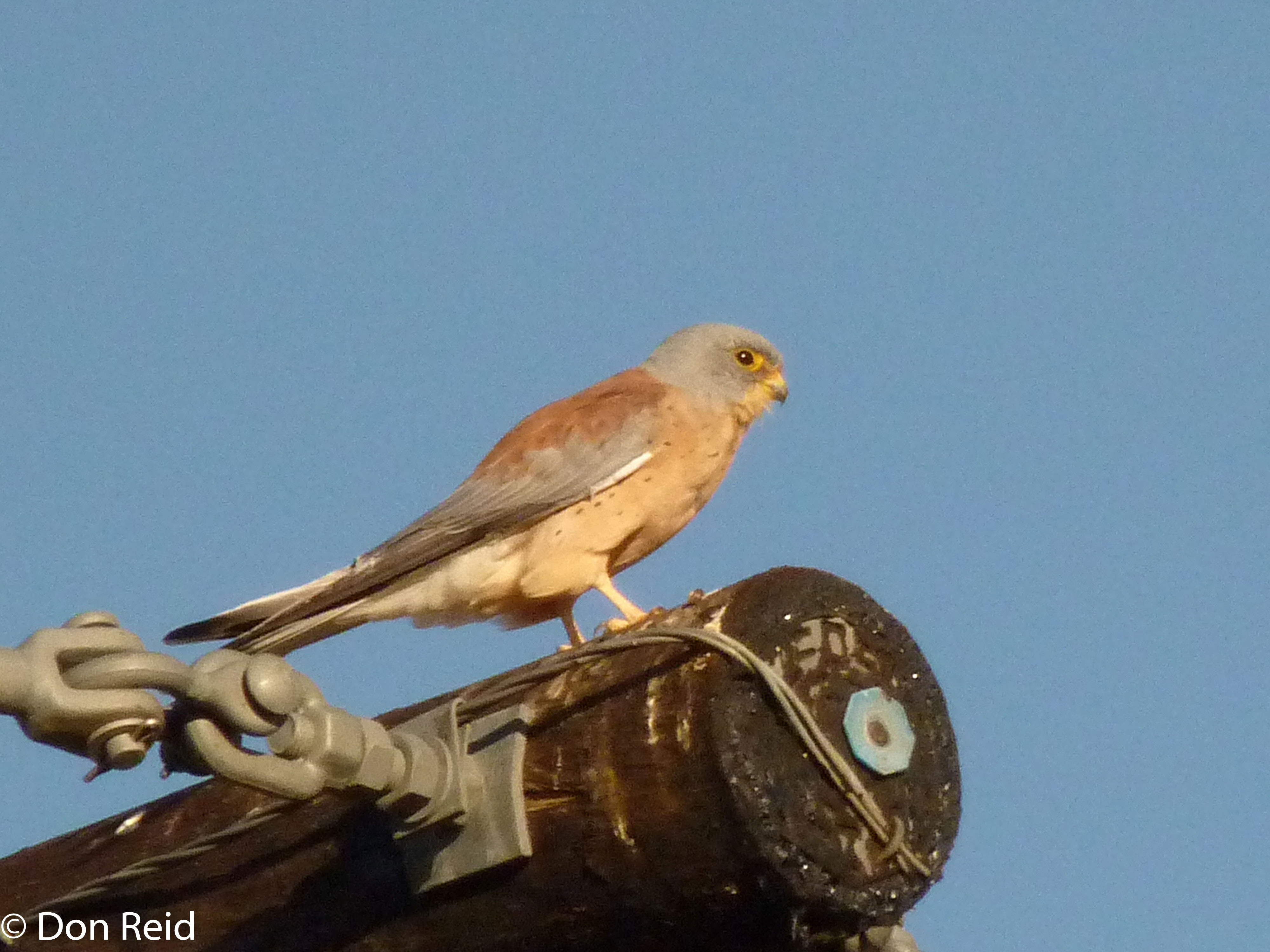
I was up early to complete the pentad card with a walk around the garden and along the road, adding Cloud Cisticola, Lesser Kestrel (on the same pole as I had seen it a few years ago), Cape Glossy Starling and Anteating Chat.
Lesser Kestrel / Kleinrooivalk
The grassland next to the road was waterlogged in places after substantial summer rains
On the road out after a full English breakfast I added a few more including a Black-headed Heron at a mini wetland in the town, taking the pentad total to 44 and raising my personal tally for the pentad to 98 species after completing 6 cards since 2014.
All that remained was a drive of around 550 kms to our home in Pretoria – we arrived just after 4 pm, glad to be ‘home’ (Pretoria version)
Continuing the story of our ‘Wild Flower Season’ trip to the West Coast town of Paternoster…..
Getting there
After breakfast we left Klein Welmoed Farm near Stellenbosch, dropped granddaughter Megan off at her university hostel, then headed to Paternoster via Wellington, Malmesbury and Vredenburg.
The road runs through the wheat belt of South Africa – almost endless fields of dark green wheat with smaller fields of canary yellow canola providing a dramatic contrast.
Occasional patches of ‘natural’ veld held colourful sprinklings of wild flowers to break the monotony of the cultivated fields and had me braking and reversing to get some photos.
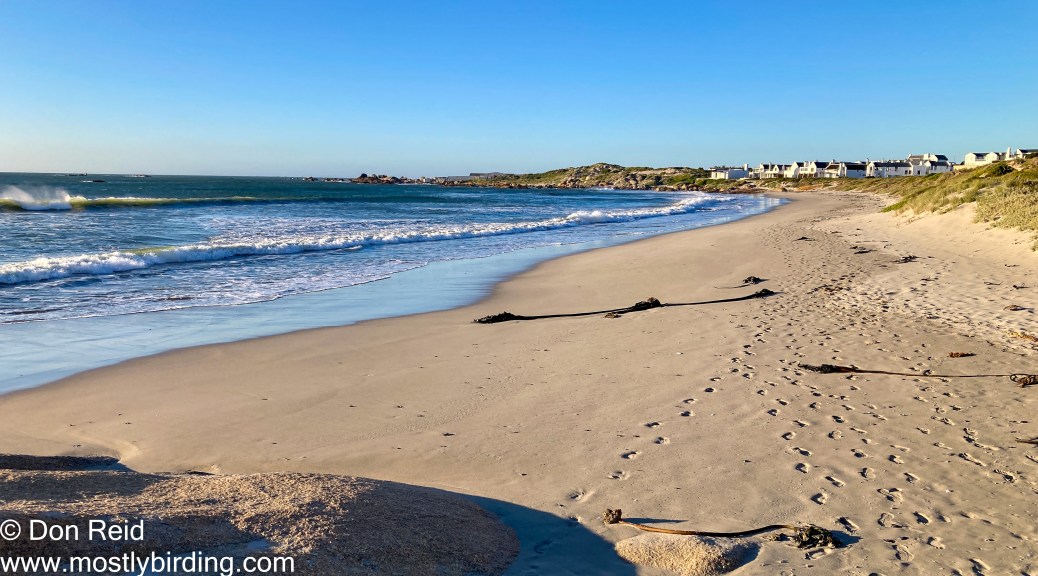
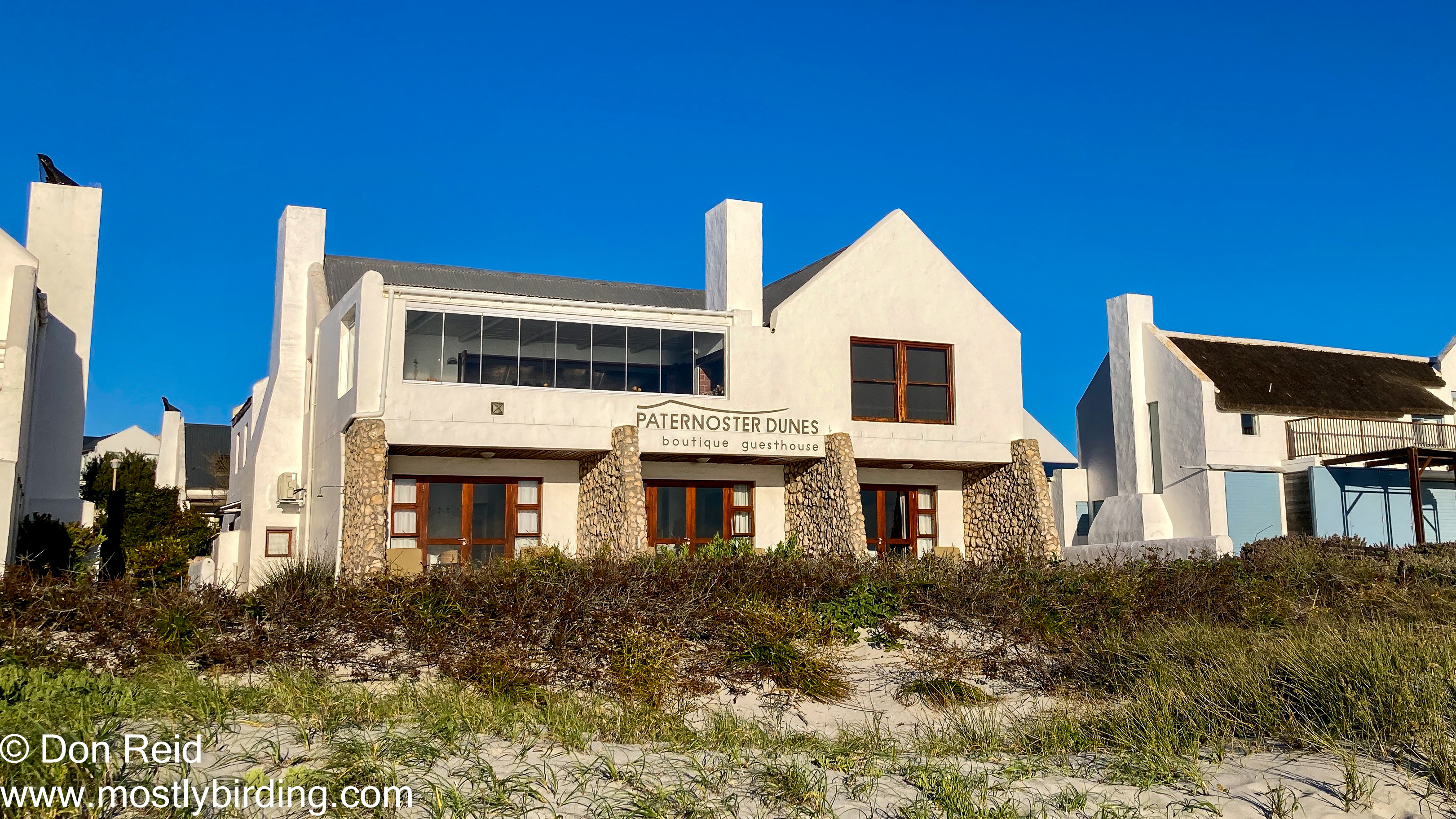
Then we were in Paternoster and soon found Paternoster Dunes Guesthouse which, as the name suggests, lies on the land side of the dunes overlooking a wide expanse of unspoilt beach
The view of the beachThe Guest House
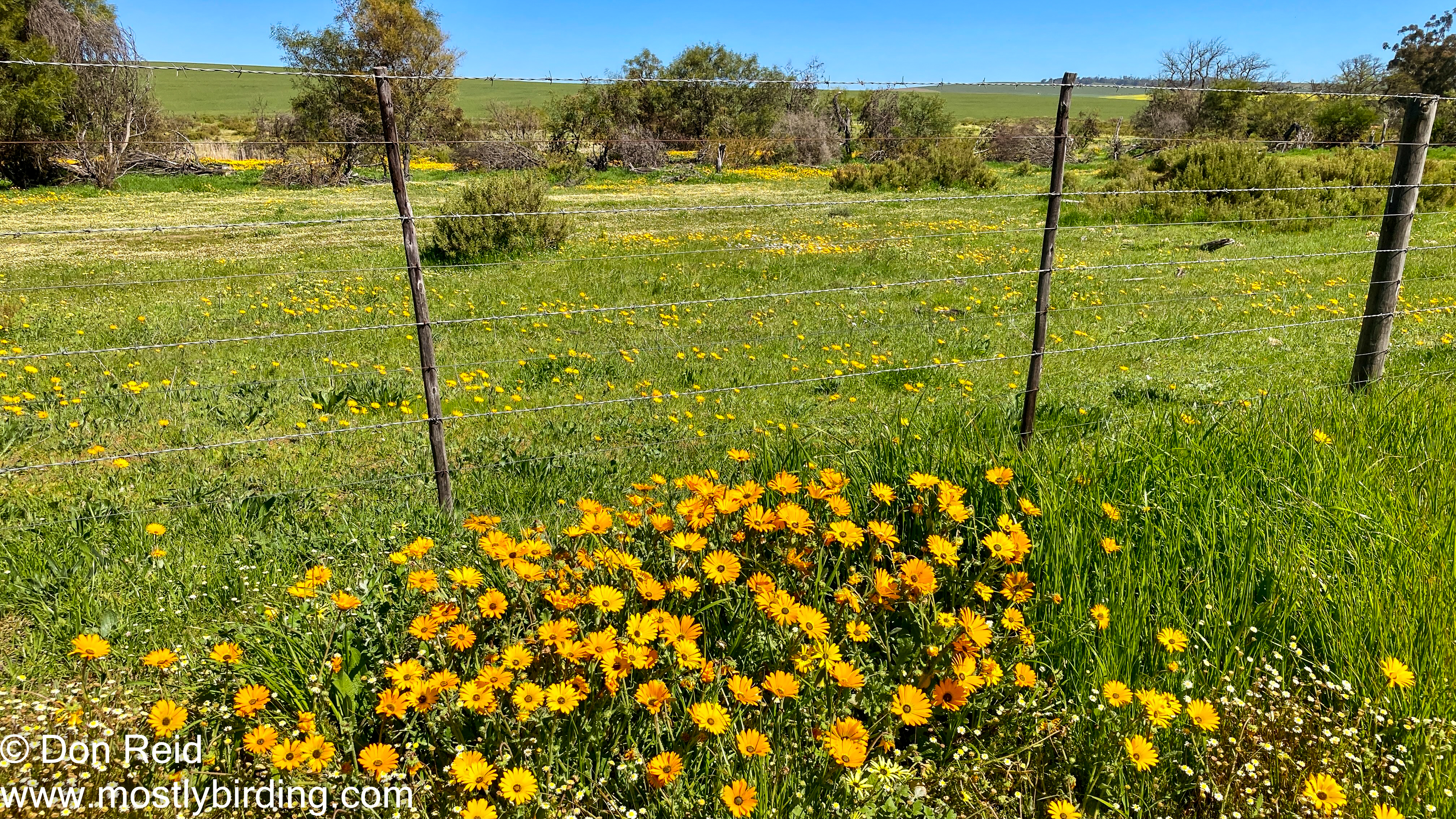
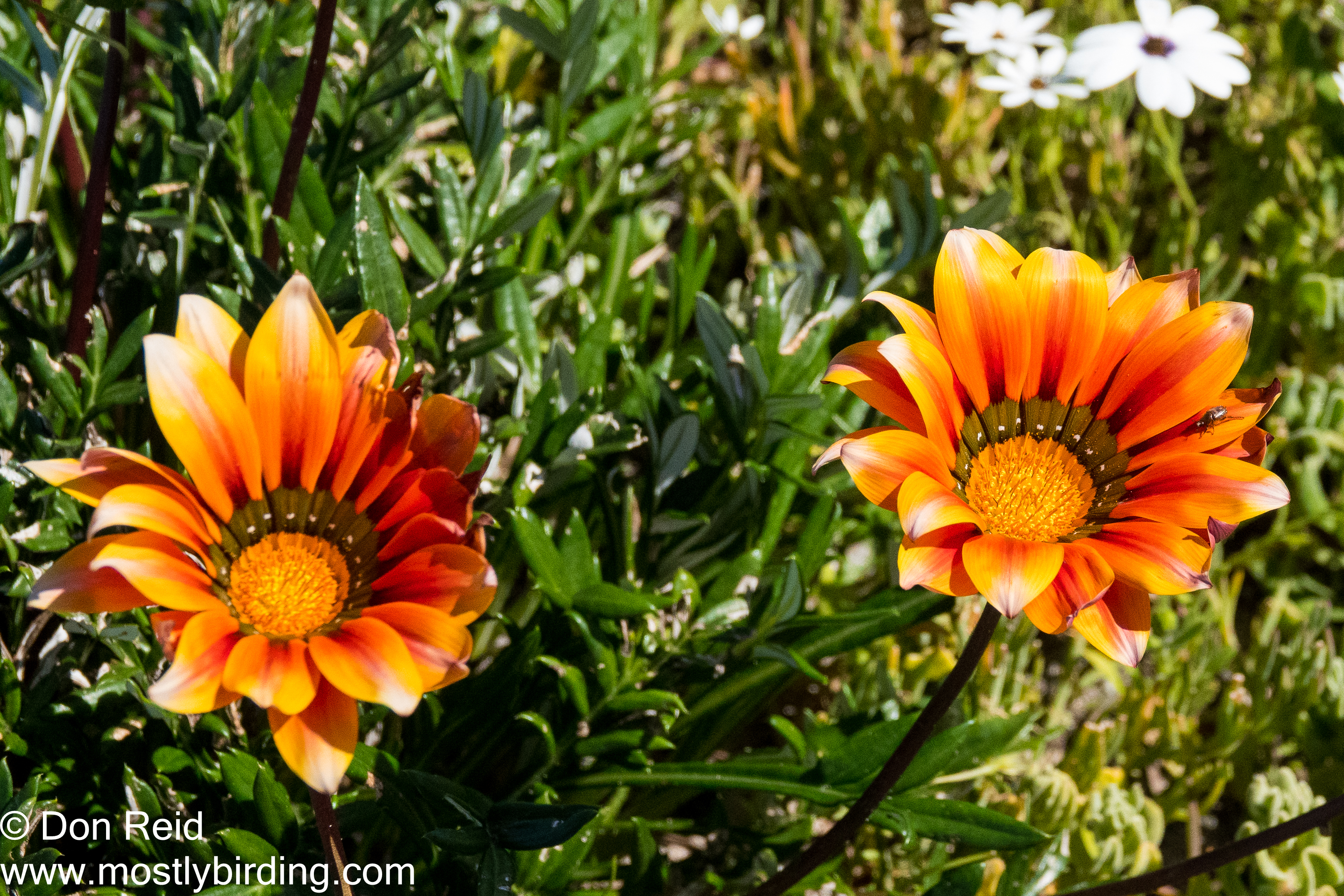
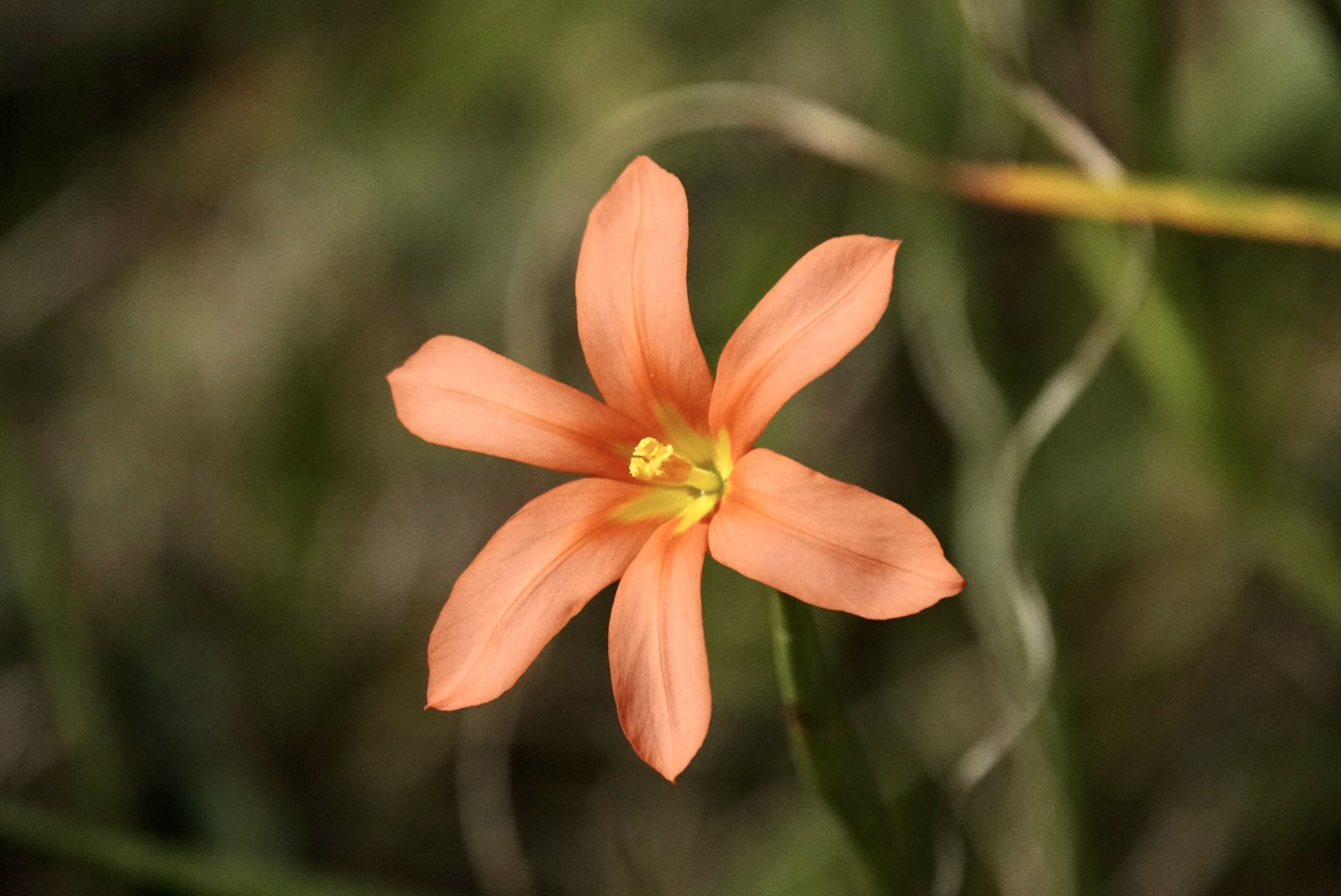
Just to get us further into flower appreciation mood, the patch in front of our room, the middle one in the image above, held some bright orange flowers
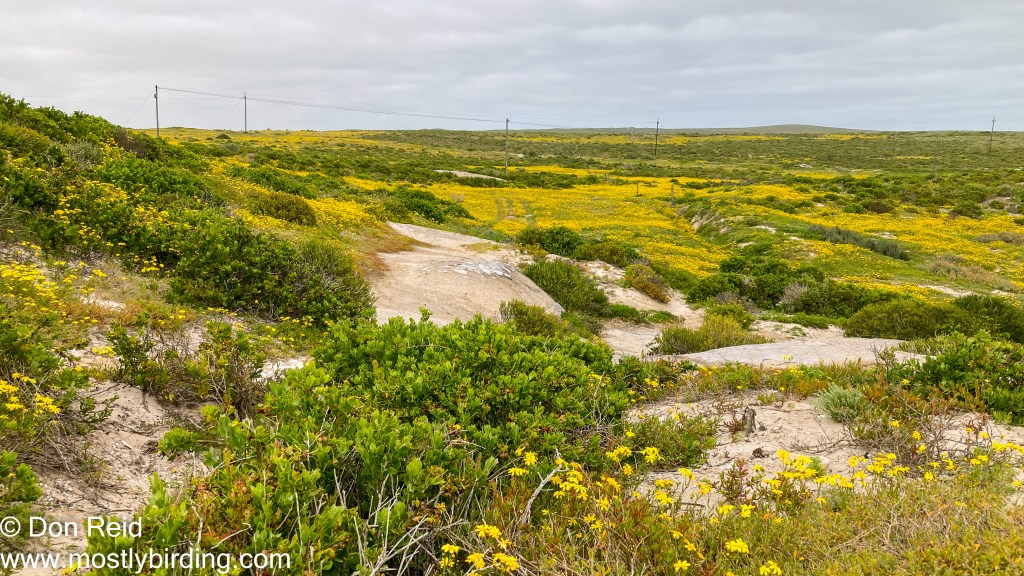
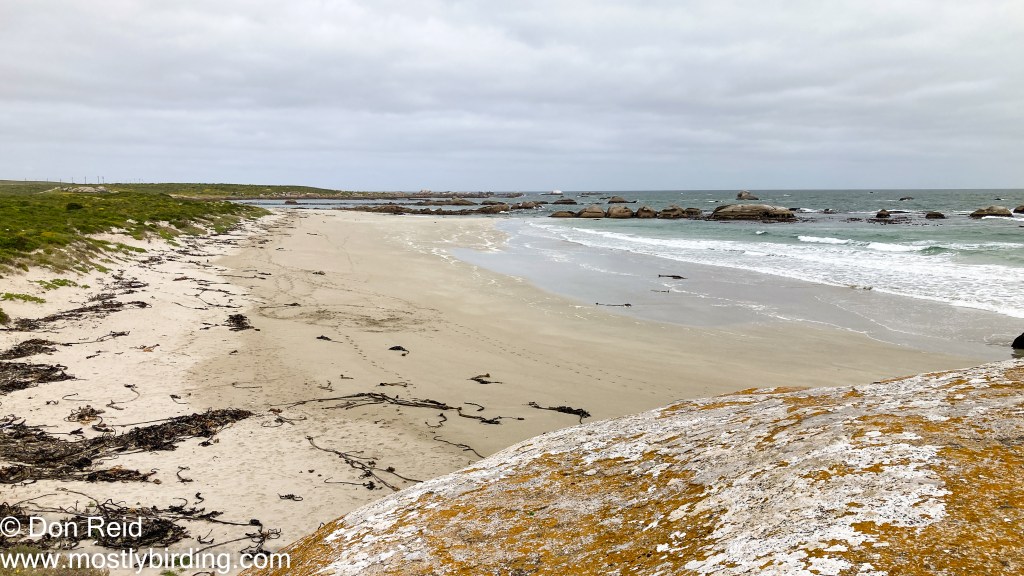
After a rest (we are pensioners after all) I took a walk along the beach to the end of the bay and looked up at the dunes which were covered in growth with a mass of yellow flowers
I climbed to the top of the dune and walked to where the houses stopped, finding a view into the distance with more yellow flowers in abundance
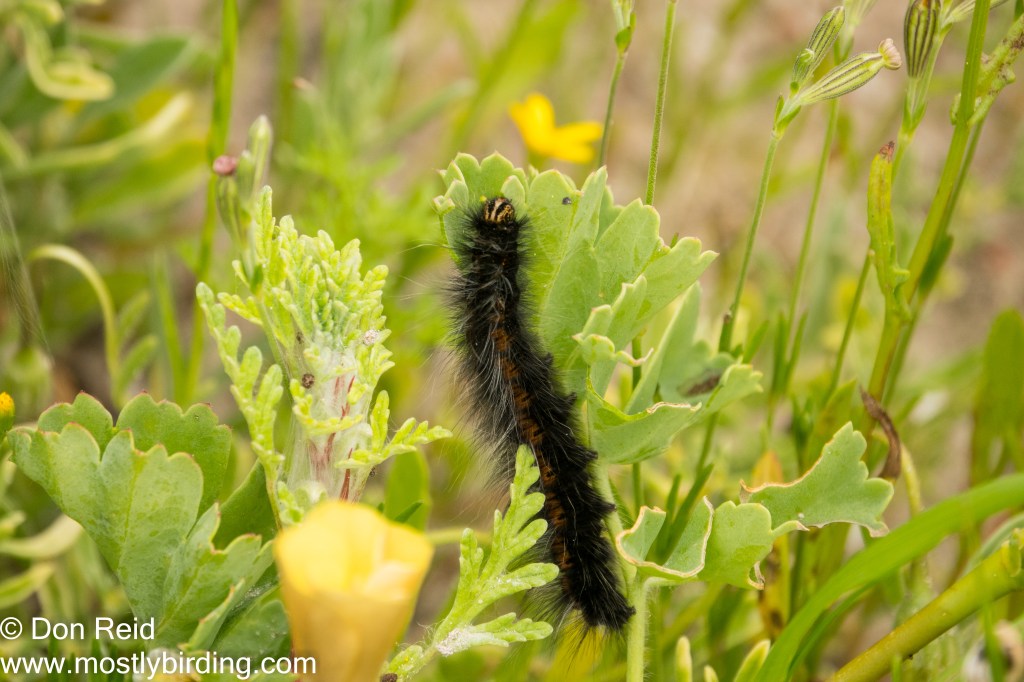
Caterpillar of unknown species, specific to the plant on which I found it by the looks of it as they were only in one small area
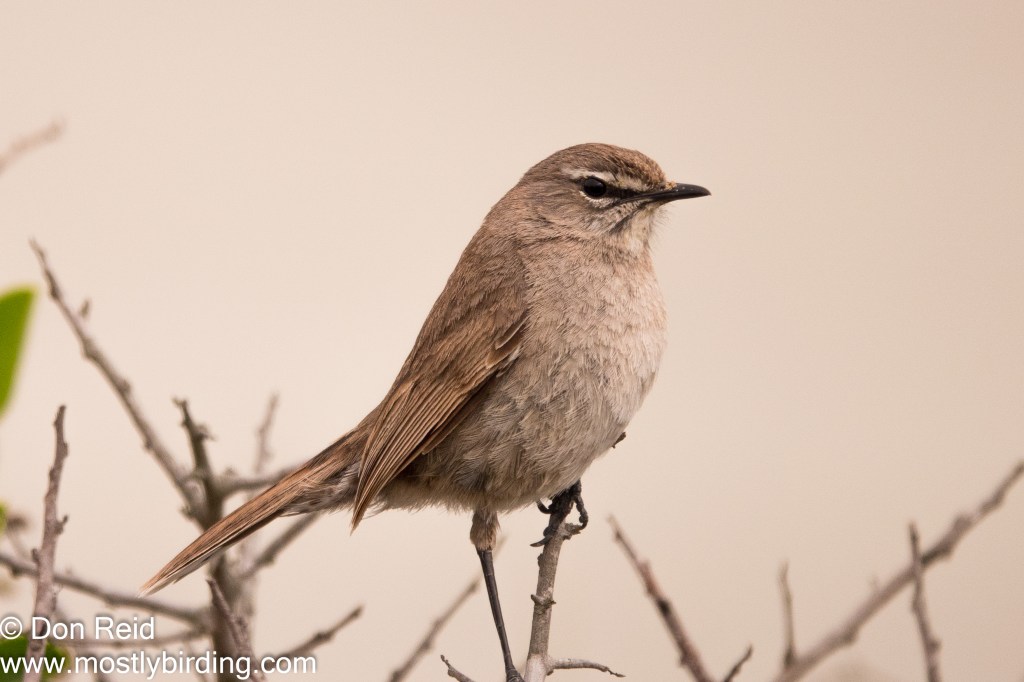
During our visit I discovered that there were a few bird species which found the patch in front of our room to their liking, including the Yellow Canaries and Karoo Scrub-Robin pictured below as well as Cape Bunting, Southern Double-collared Sunbird and many Common (European) Starlings
Yellow Canary (Geelkanarie) Crithagra flaviventris in full songKaroo Scrub-Robin (Slangverklikker) Erythropygia leucophrys scanning the surroundings from its favourite perch on a low bush
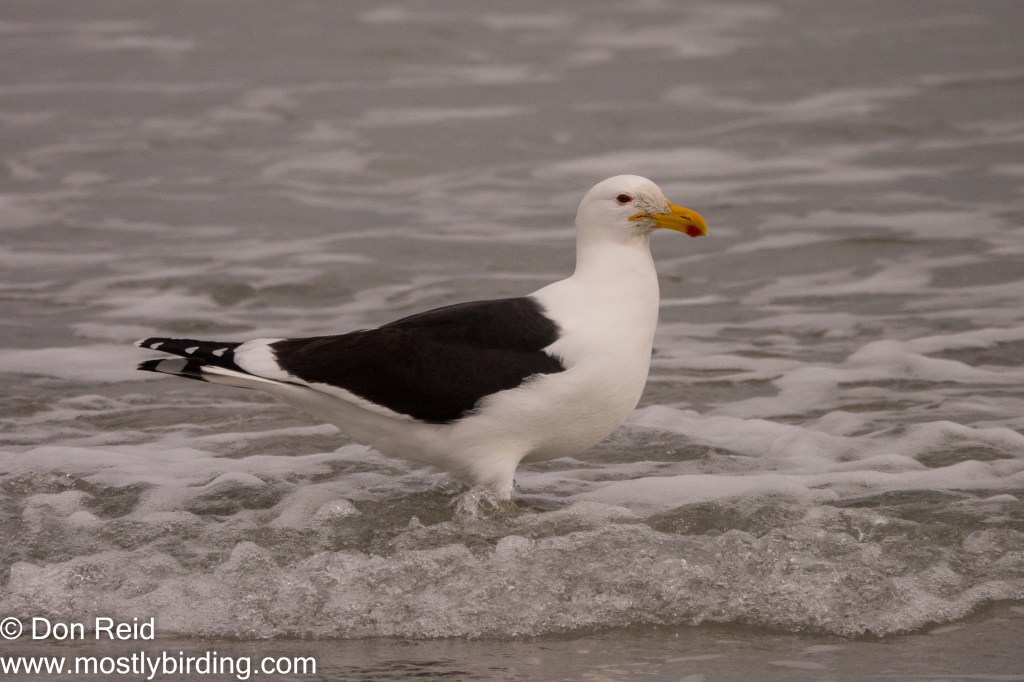
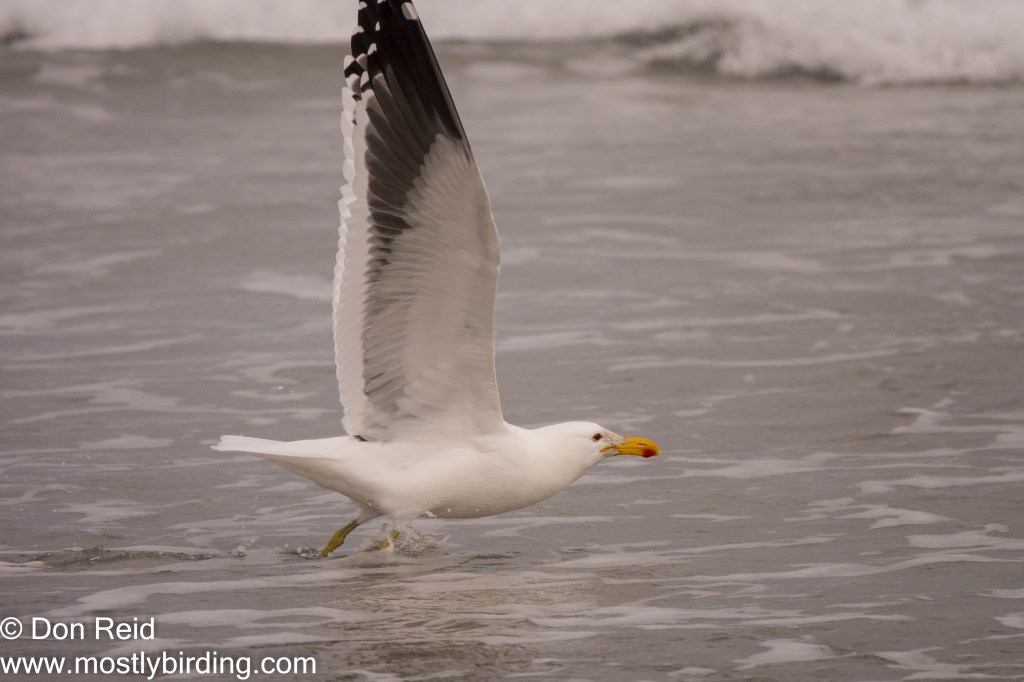
On a morning walk along the beach in front of the guesthouse, camera in hand, with the wind blowing the sea into a frothy jumble and overcast skies, several Kelp and Hartlaub’s Gulls wading in the shallows caught my eye and with some gentle persuasion lifted into the air, providing some nice photo opportunities in the soft, even light
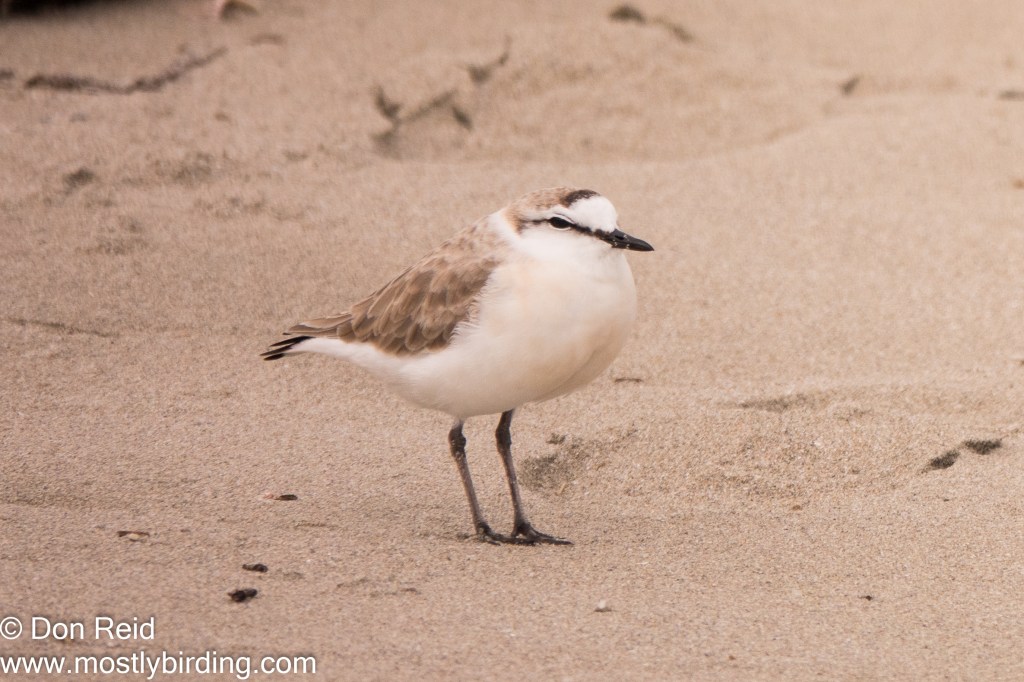
As I walked along the sand I spotted movement on the dry sand ahead and approached cautiously, knowing that the subject matter would race off if I got too near. Sure enough, three tiny White-fronted Plovers watched me carefully as I got closer, initially moving away in slow short bursts, then speeding off like top 100m sprinters, barely touching the sand between strides
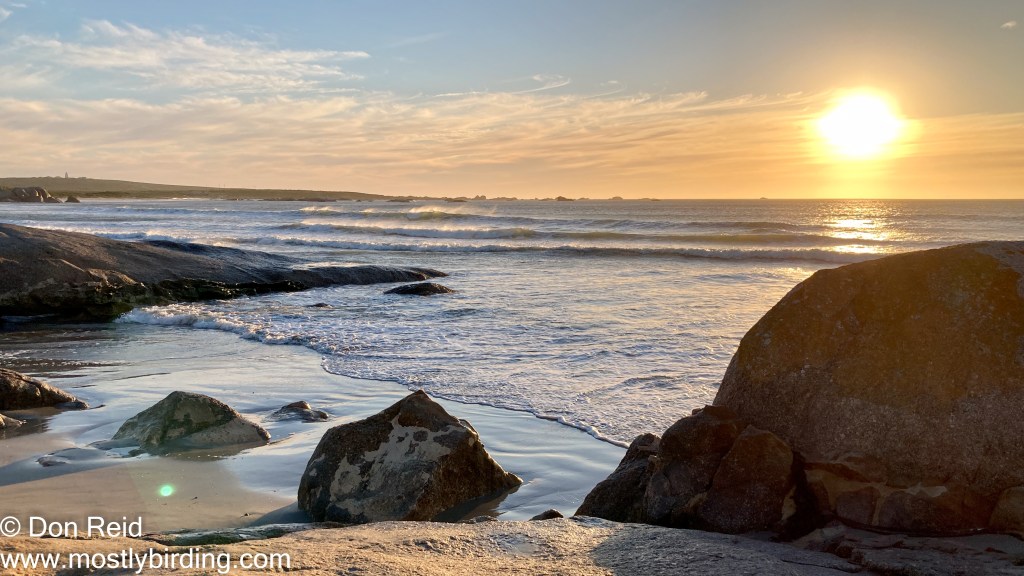
And a few more photos of Bek Bay at different times of the day
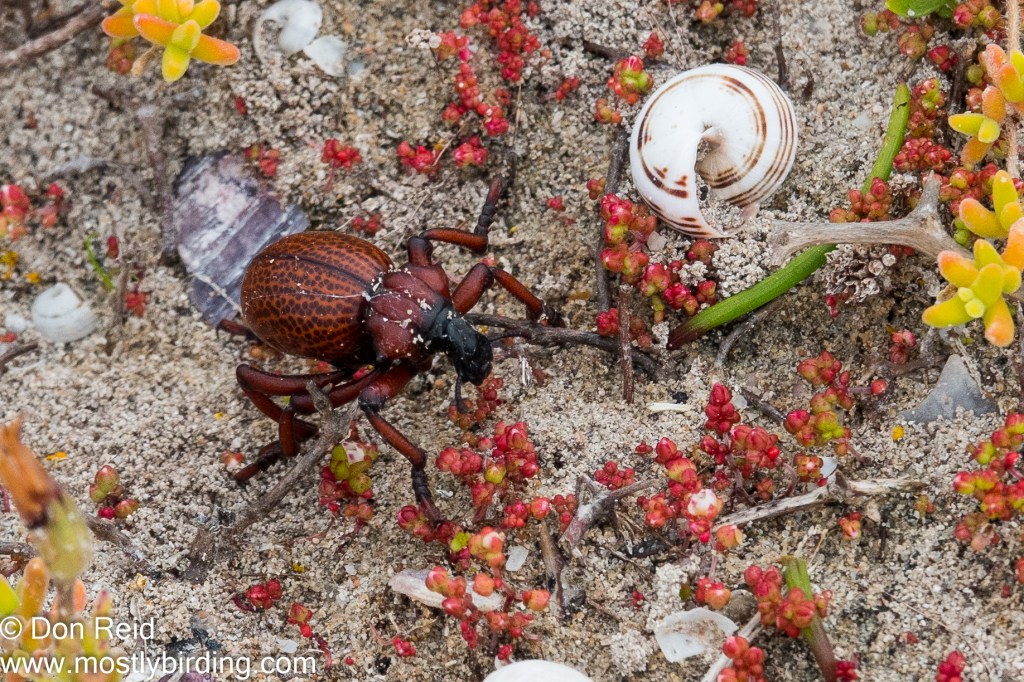
I came across this interesting beetle scavenging among the rocks
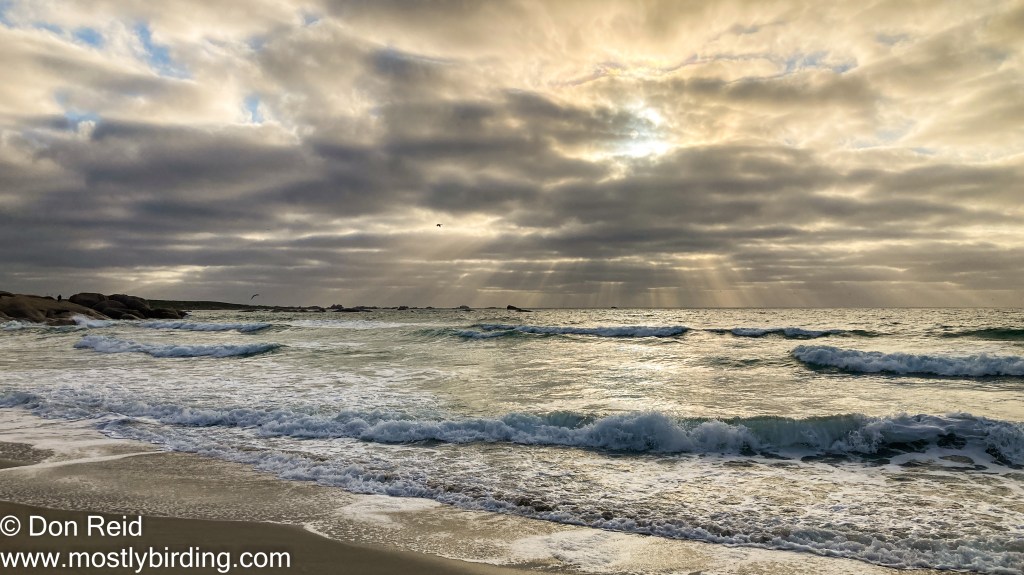
The last afternoon produced the most spectacular sunset of all as the cloud-filtered sun cast its rays on the choppy sea. Many Terns were plunging into the sea offshore – too far to differentiate between species until a Common Tern seemingly chased a much larger Caspian Tern so that they passed close to where I was watching from the beach
Paternoster turned out to be an excellent choice as our base for the short stay, being within an hour’s drive from West Coast National Park and literally next door to Cape Columbine Nature Reserve, both of which we visited – more about that in upcoming posts
We don’t like to let an opportunity pass us by and, with the severe travel limitations that the Covid pandemic has brought upon all of us over the past year or so, it was an easy decision to extend our recent essential trip from Mossel Bay to the Western Cape, to include a visit to the West Coast during the ‘flower season’
Our plan was to spend four nights in the Stellenbosch area, conclude the ‘business’ part of the trip, see some of the family and spend some time with our eldest granddaughter Megan who is at University there, then continue to the West Coast town of Paternoster for some flower season touring.
After looking at various options we chose to stay at Klein Welmoed Guest House which is located on a working farm that lies off the main road between Somerset West and Stellenbosch. This turned out to be a good choice as we had a large cottage which comfortably accommodated ourselves and granddaughter Megan (she was only too happy to ‘escape’ from the university hostel for a few days) and the surrounding farm area proved to be ideal for exploratory walks when the opportunity arose.
Getting there
We had to check in by 2.30 pm so we left Mossel Bay earlier than usual and arrived at Klein Welmoed on time, after a drive that was made comfortable and relaxed by the light traffic and good weather, which allowed us to enjoy the picturesque route lined with farmlands and with a constant backdrop of mountains.
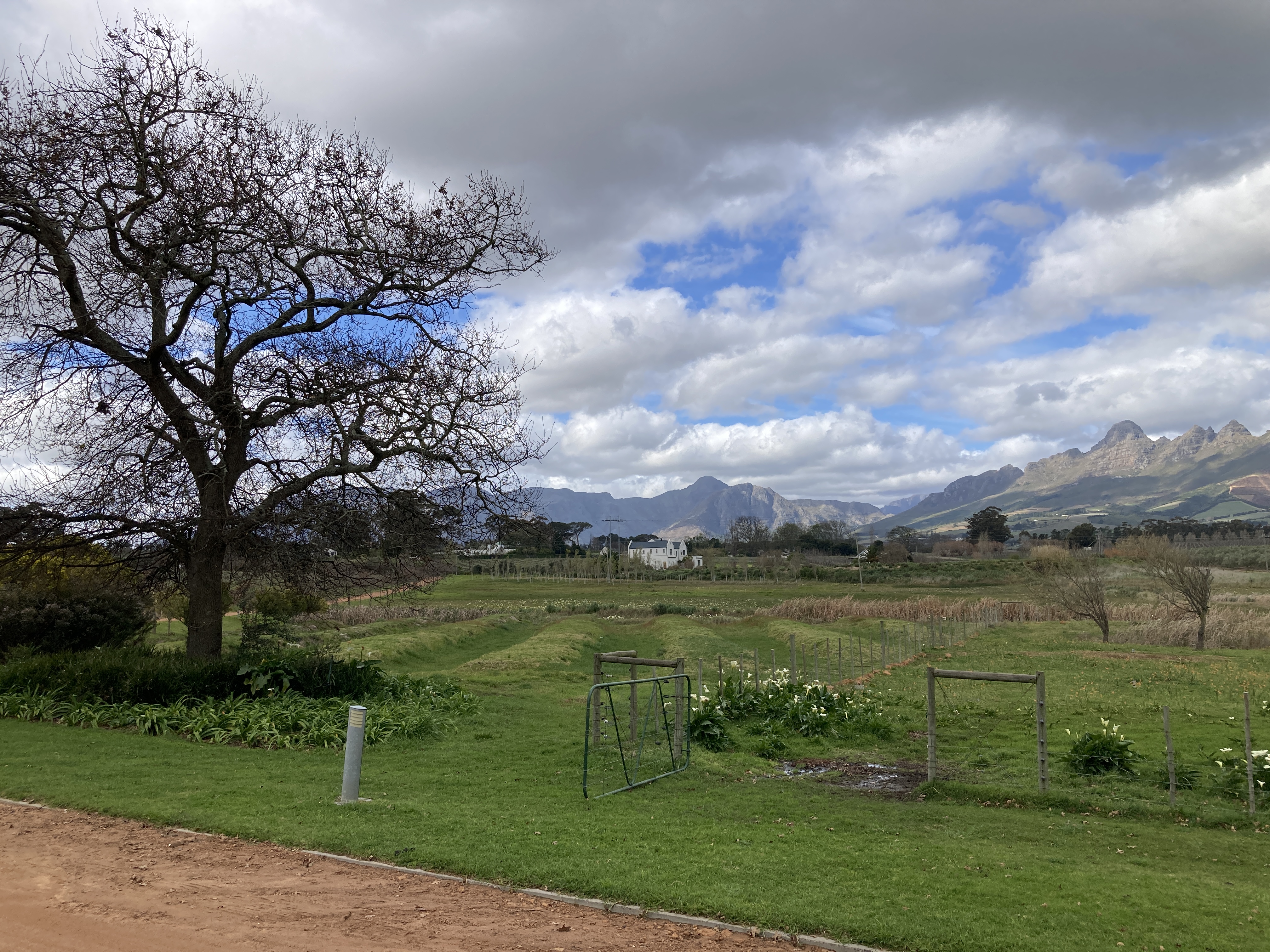
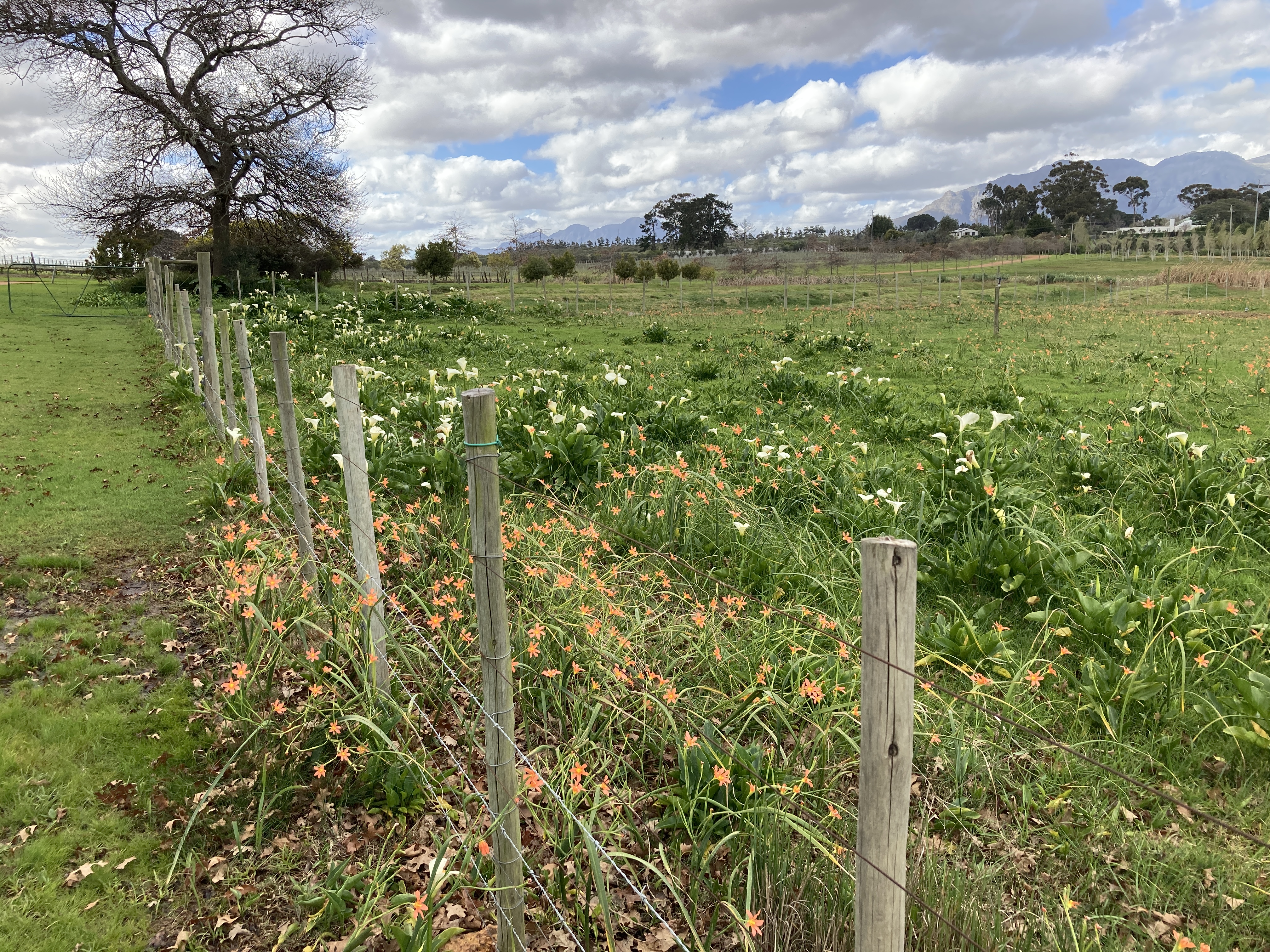
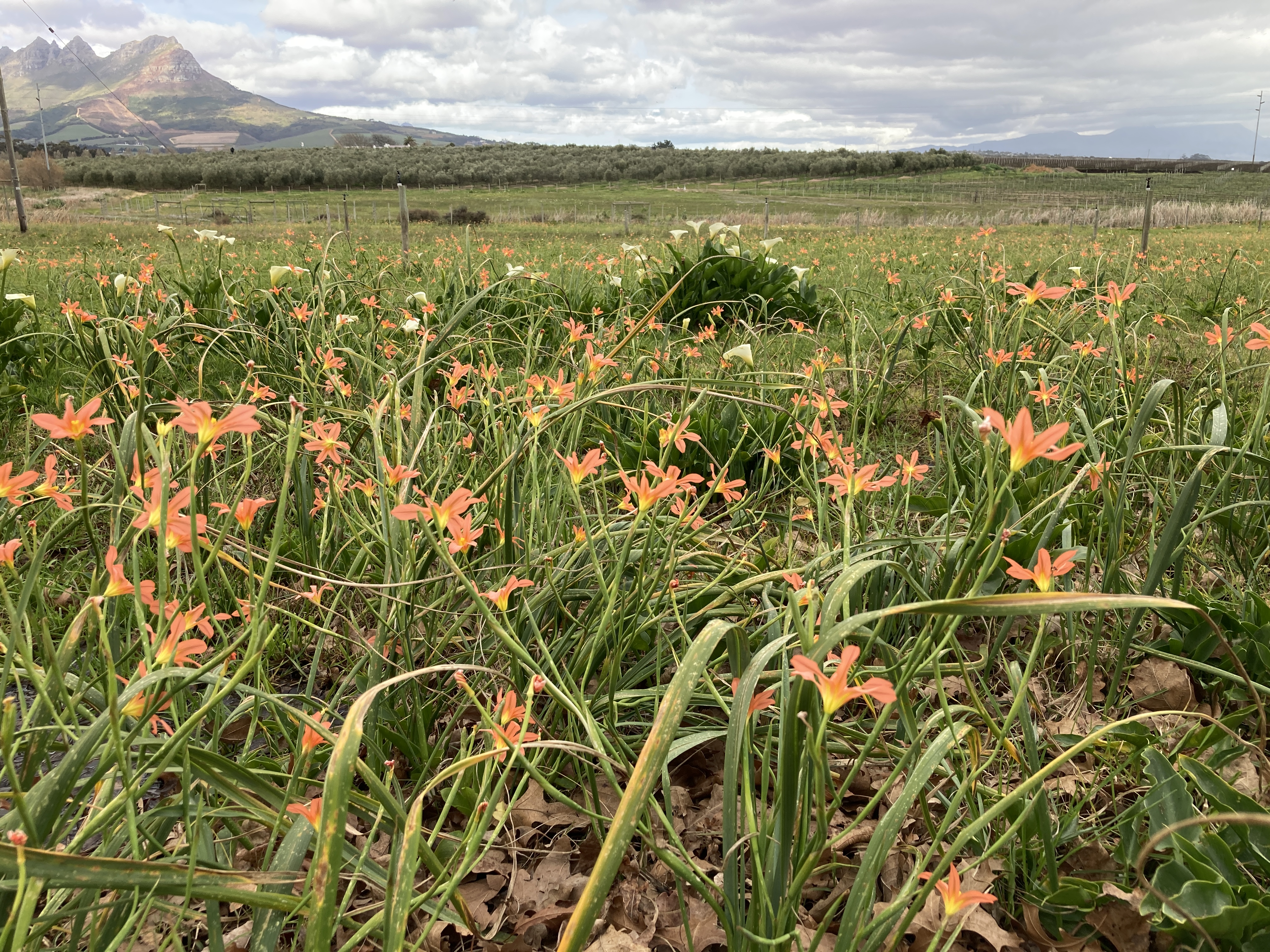
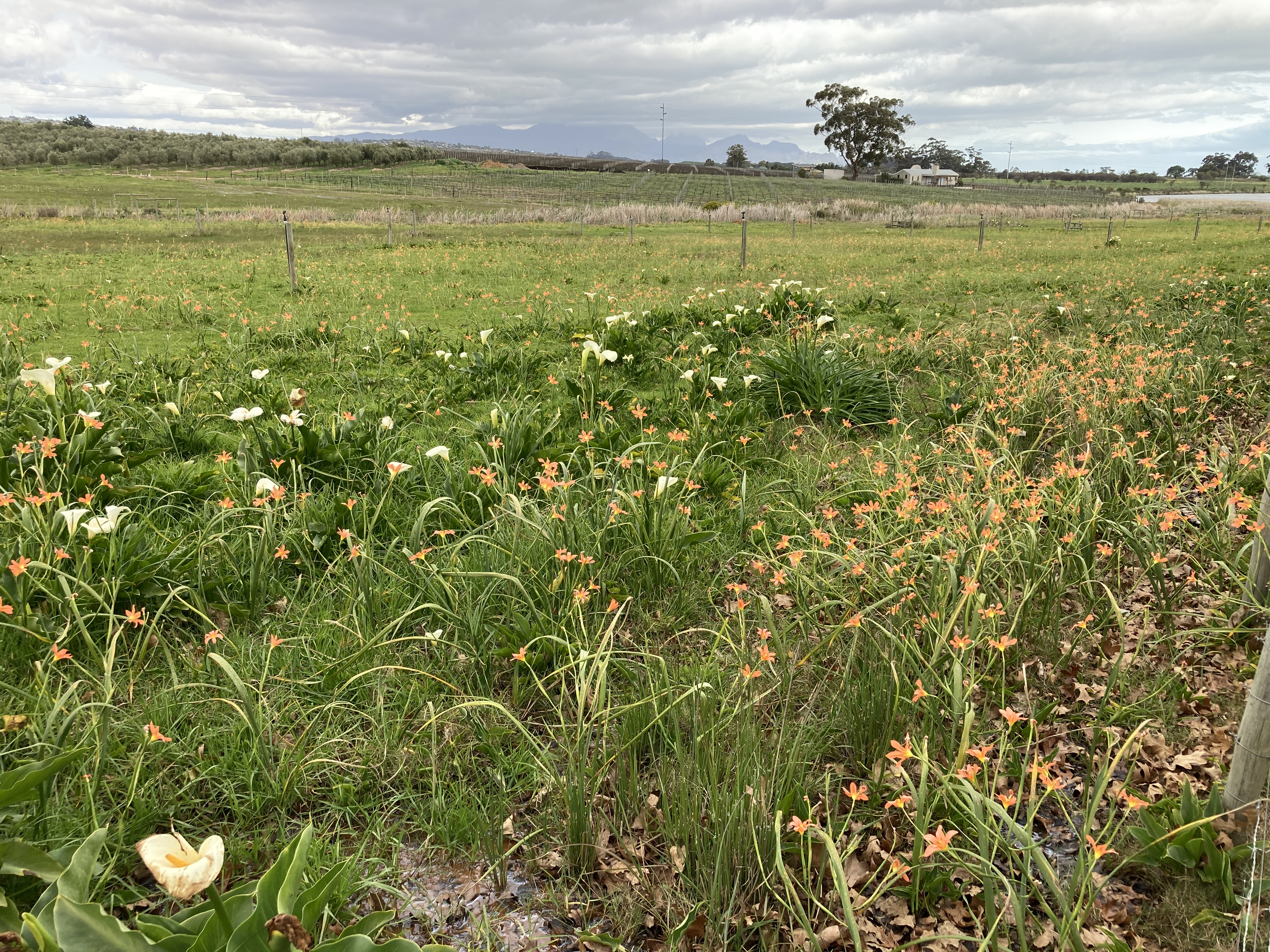
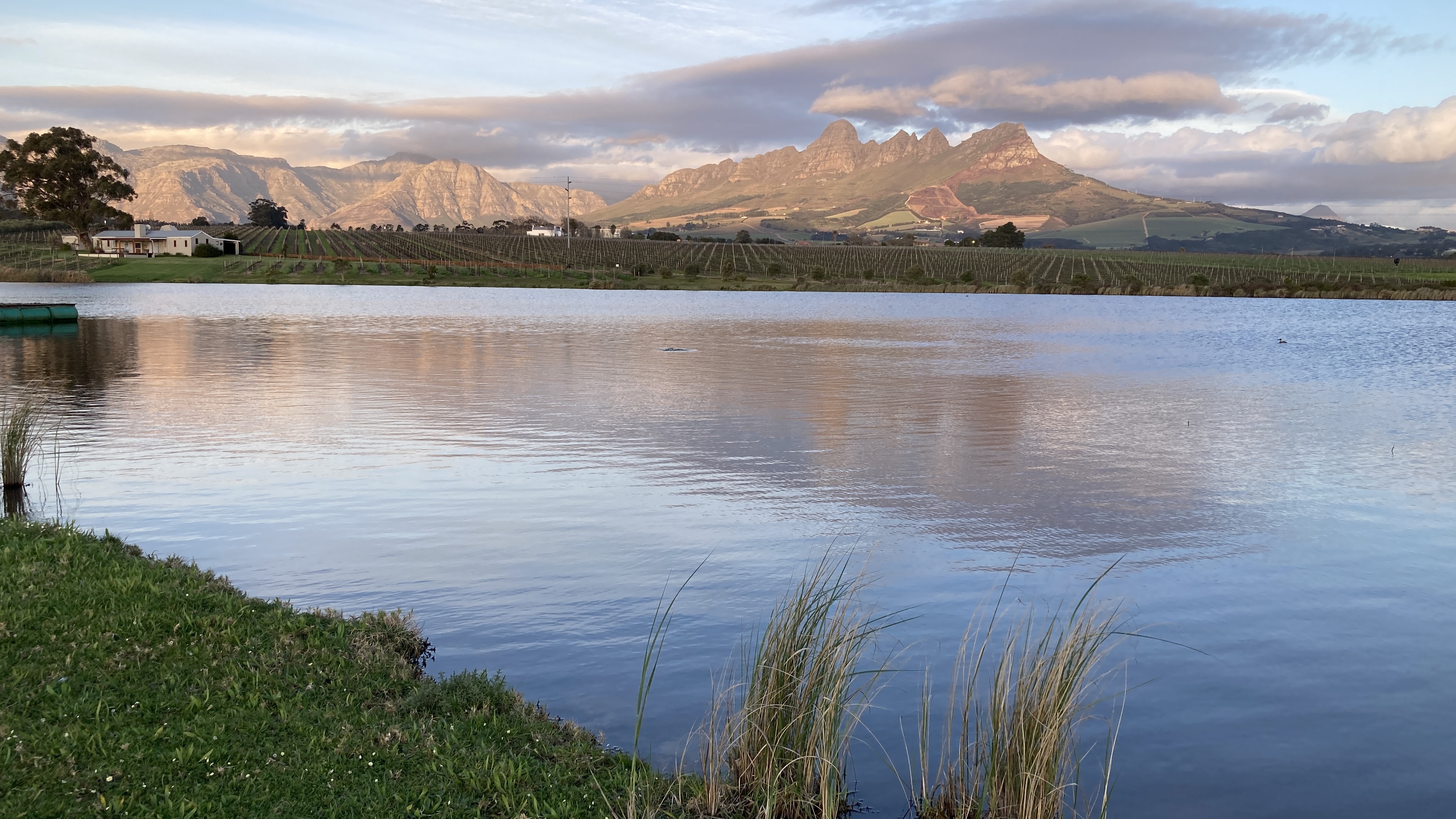
As soon as we were parked at the cottage and before unloading the luggage, I could not resist capturing some images of the beautiful view and the fields filled with arum lilies and other flowers.
The view from Klein WelmoedPastures filled with flowers
The Walks – Flowers, Birds …. and a few sheep
A late afternoon walk took me to the large dam along a pathway that was sodden in places – Cape Canaries were calling non-stop and Red and Yellow Bishops worked their way through the reeds, while on the dam Coots, Little Grebes and Cape Shovelers were busy making the most of the last light.
As I scanned the reeds on the other side a Purple Heron momentarily popped up and Little Rush Warbler called, ending the day on a high birding note
The dam at Klein WelmoedSouthern Red Bishop Euplectes orix RooivinkYellow Bishop Euplectes capensis Kaapse flap
After a filling breakfast, I set off for a lengthy walk with no set plan, just following paths that I came across. This initially took me past marshy areas with reeds, then skirted the orchards and vineyards that make up most of the farm.
View of Klein Welmoed from the pastures
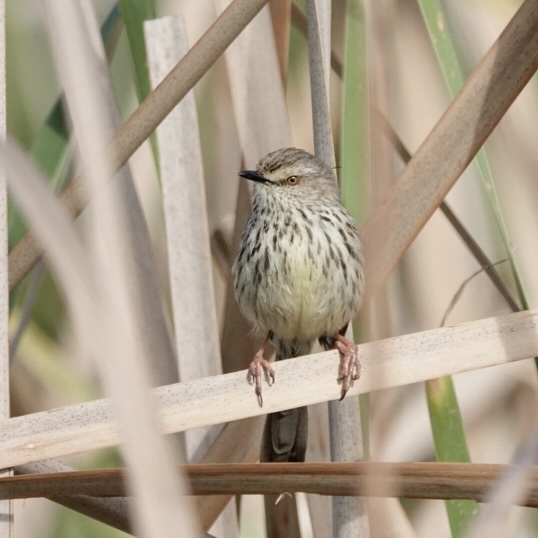
There was plenty of birdlife in the reeds including a Karoo Prinia flitting in and out of the reeds, pausing to look at me for an instant, and Levaillant’s Cisticola calling and popping out briefly, but not long enough to snatch a photo – these birds require a quick draw!
Karoo Prinia Prinia maculosa Karoolangstertjie
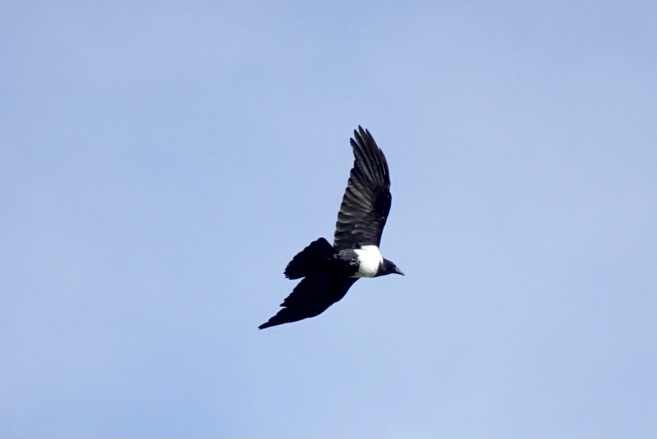
A Pied Crow in flight caught my eye and as it was not too high I attempted an in flight shot which turned out OK
Pied Crow Corvus albus Witborskraai
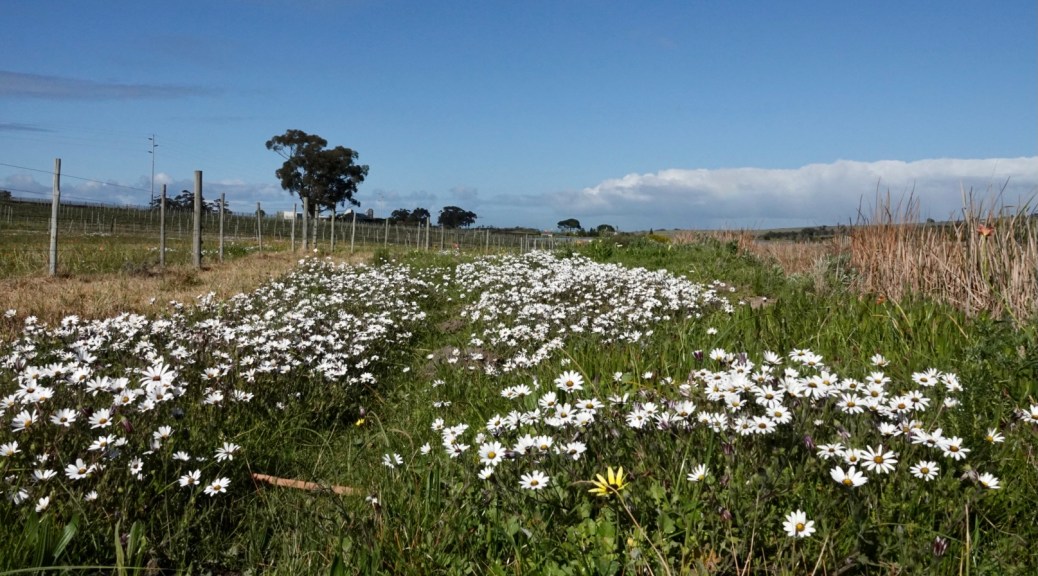
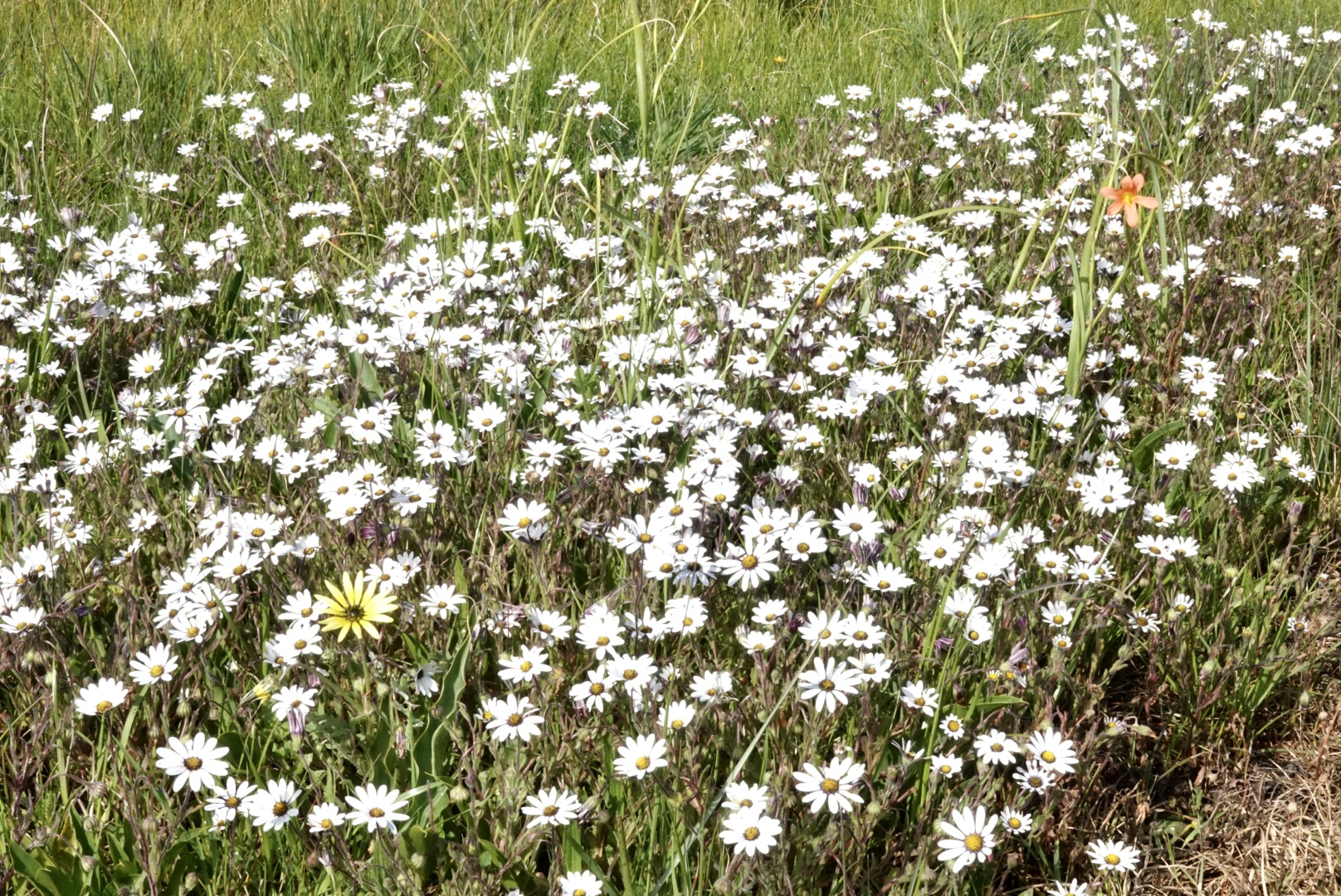
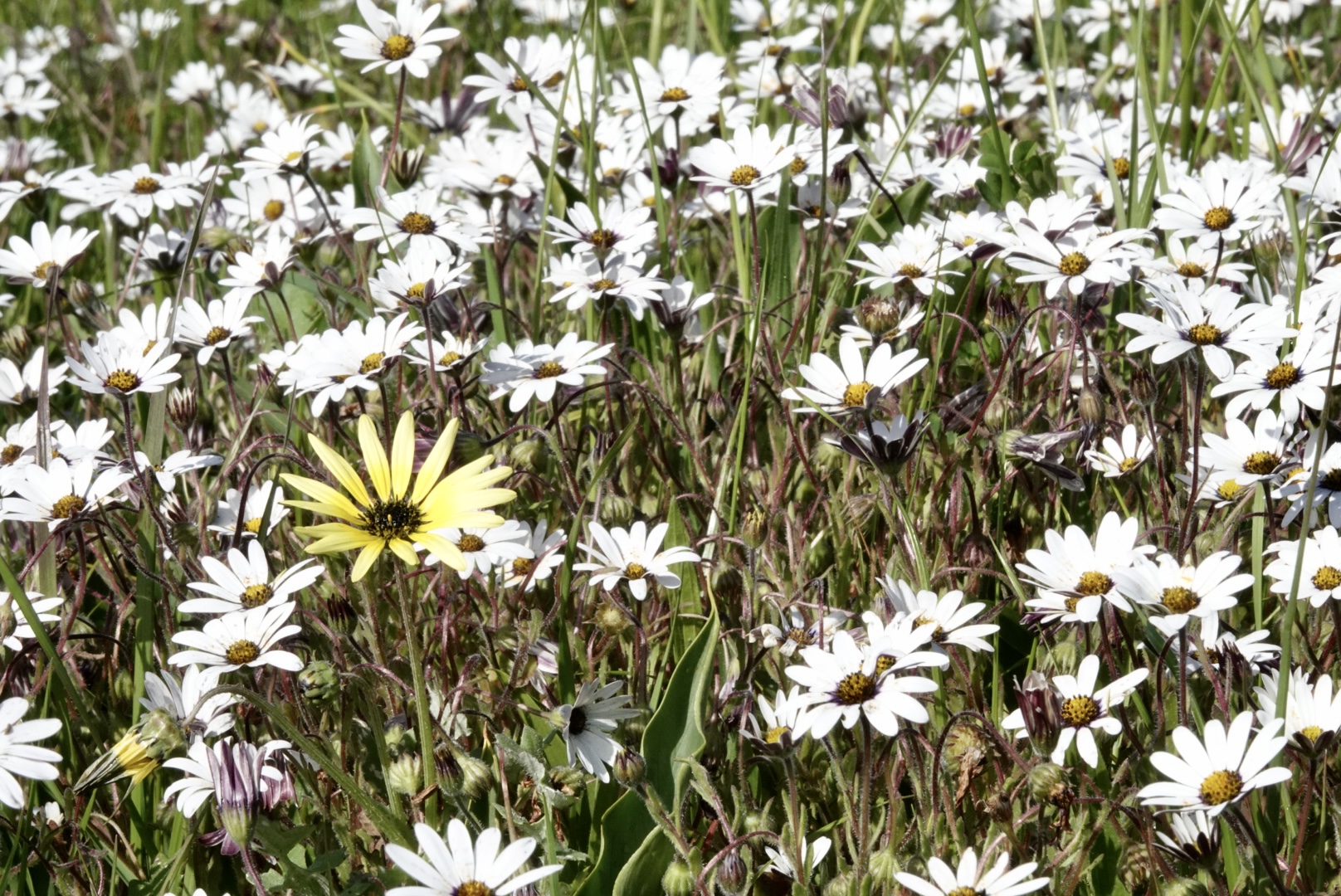
I was pleasantly surprised to find rafts of white and yellow flowers next to the pathways and between the lines of trees in the orchards – this augured well for the ‘real’ flower spots we would be visiting later in the week.
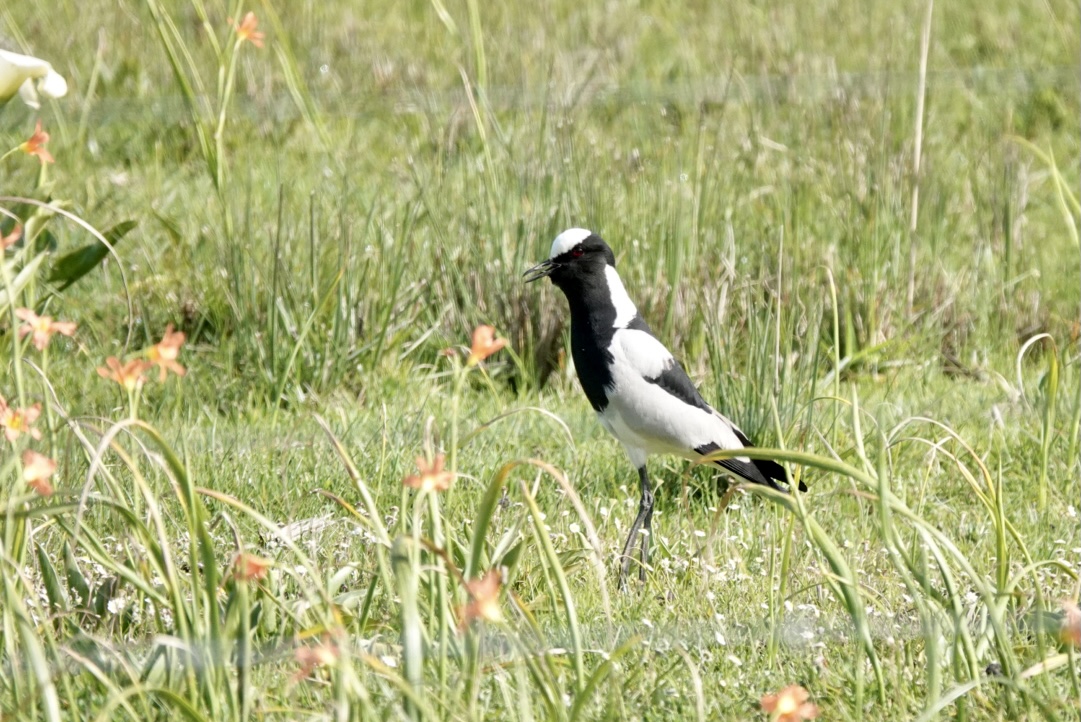
Rafts of flowers in placesBlacksmith Lapwing Vanellus armatus Bontkiewiet
The orchards attracted a different set of birds including Cape White-eyes (pictured below), Fiscal Flycatcher and Fork-tailed Drongo
Flowers between the rows of trees in the orchardsCape White-eye Zosterops capensis Kaapse glasogie
And the sheep ….. returning from my first late afternoon walk I noticed that one ewe had given birth to a lamb, which was still showing signs of the birth and I watched for a few minutes as the ewe prompted it to stand up on very wobbly legs. Just a day or so later the tiny lambs were eagerly following mommy
Dorper sheep (a South African breed developed by crossing Dorset Horn and Blackhead Persian sheep)




























































 Mostly Birding