Category Archives: Birding South Africa

Verlorenkloof – a Winter Visit

Our trip from our new home in Mossel Bay to our old home town of Pretoria for the last two weeks of May was for several reasons, one of which was to take up the offer of friends Koos and Rianda to join them at Verlorenkloof in Mpumulanga, a country resort that has been a favourite of ours for many years.

We had four days to get the most out of our visit, which offers a combination of relaxation, some walks and plenty of birding opportunities – here’s how it went –

Wednesday 22nd May 2024 – getting there

We had flown to Gauteng and were staying at our son James’s house in Pretoria, so did some shopping for supplies at Boma butchery and Woolies before departing just after 1pm and setting off along the N4 east.
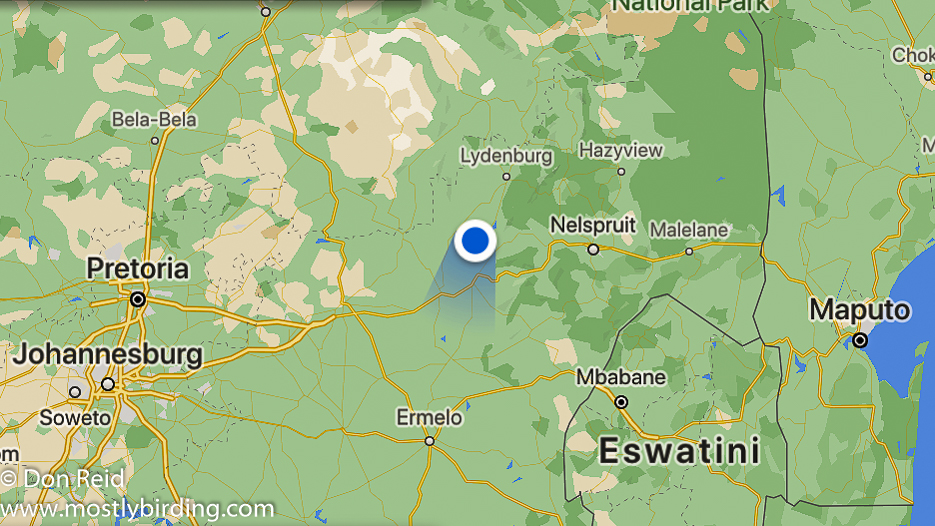
Map showing location of Verlorenkloof

Apart from our customary coffee and comfort stops, progress was slowed by the busy road and roadworks in places, and we eventually arrived at Verlorenkloof about quarter to five, just as Koos and Rianda were offloading at Croft no 3
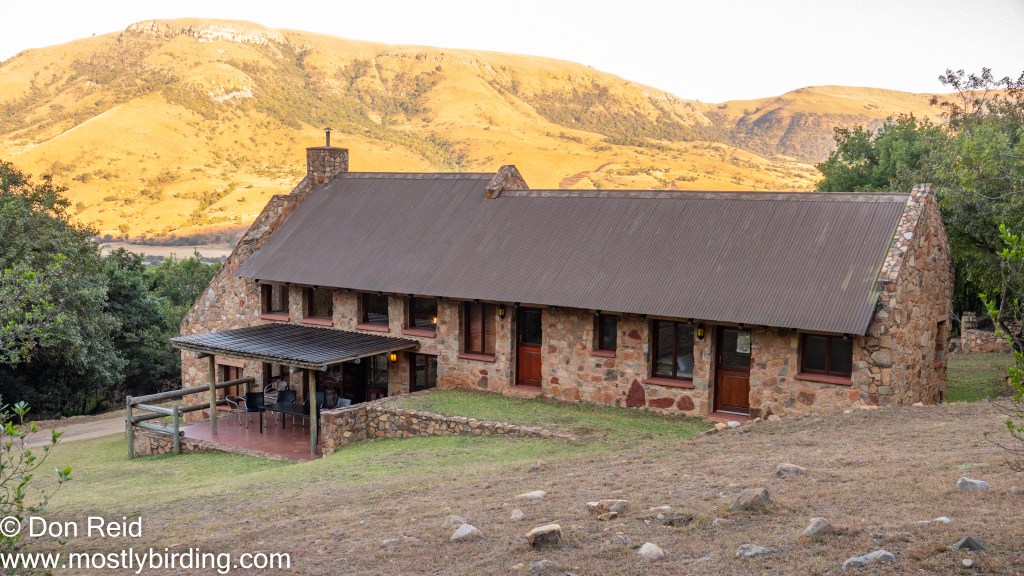
Croft 3, Verlorenkloof

Dinner was Milly’s trout pies and salads which went down well and after unpacking and tea we were ready for an early night.

Thursday 23rd May 2024

By popular demand our first day was a lazy one – after breakfast we enjoyed some quality “stoepsitting” and viewing the birds passing by which included a few of the familiar ones we have come to expect at Verlorenkloof –

  • Nicholson’s Pipit and
  • Striped Pipit on the grass
Striped Pipit Anthus lineiventris Gestreepte koester, Verlorenkloof
  • Rock Martins in the air, swirling around the stoep, resting at intervals on the higher walls
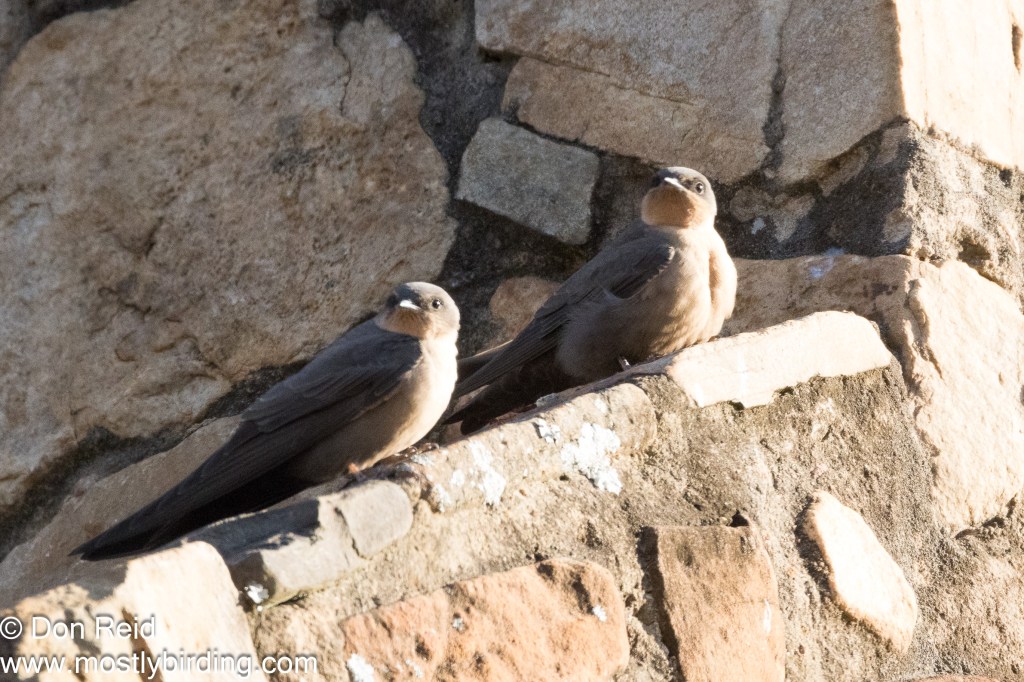
Rock Martin Ptyonoprogne fuligula Kransswael (race pretoriae), Verlorenkloof
  • The oh so familiar Familiar Chat flitting between low trees and the grass
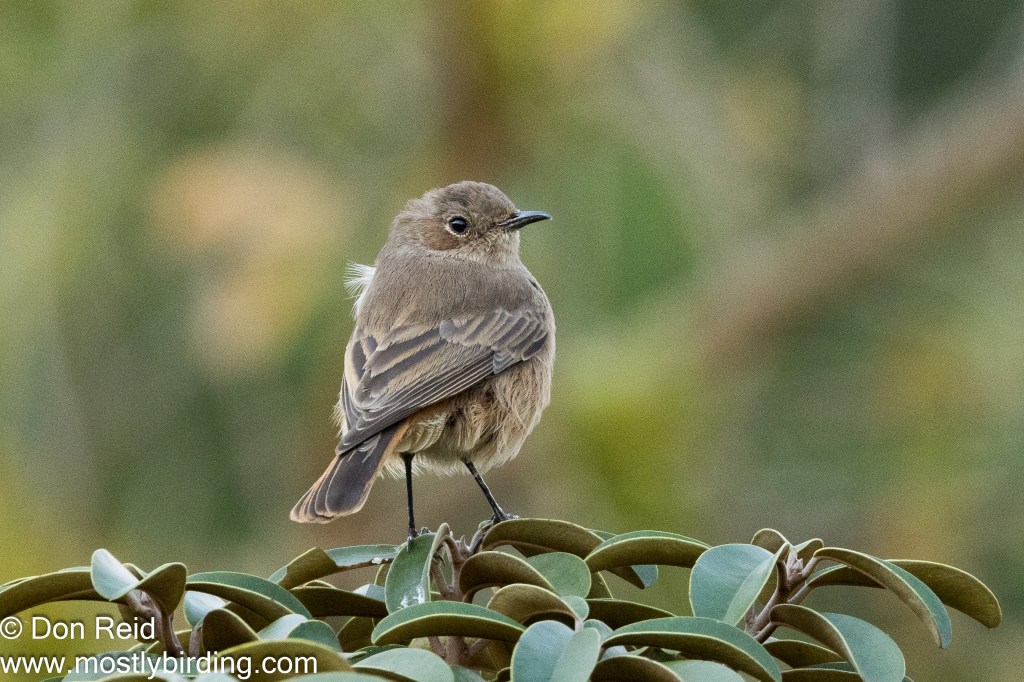
Familiar Chat Cercomela familiaris Gewone spekvreter (race hellmayri), Verlorenkloof
  • Cape White-eyes moving restlessly through the trees
  • Olive Bushshrike fleetingly showing in bush
  • Dusky Flycatcher demurely sitting on a thin branch then flying down to pounce on its prey and returning to the same vantage point
African Dusky Flycatcher Muscicapa adusta Donkervlieëvanger , Verlorenkloof

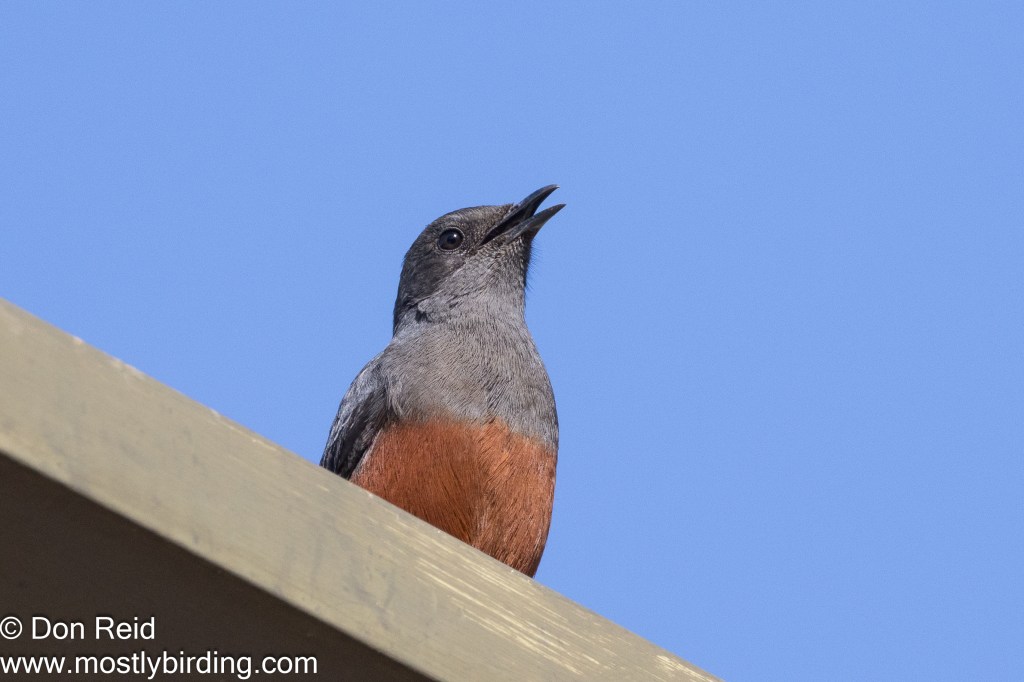
Around lunchtime we visited the lodge for coffee and a slice of cheesecake outside, while watching the antics of the Mocking Cliff-Chat pair and listening to their variety of calls. The striking difference between male and female plumage is always a fascination
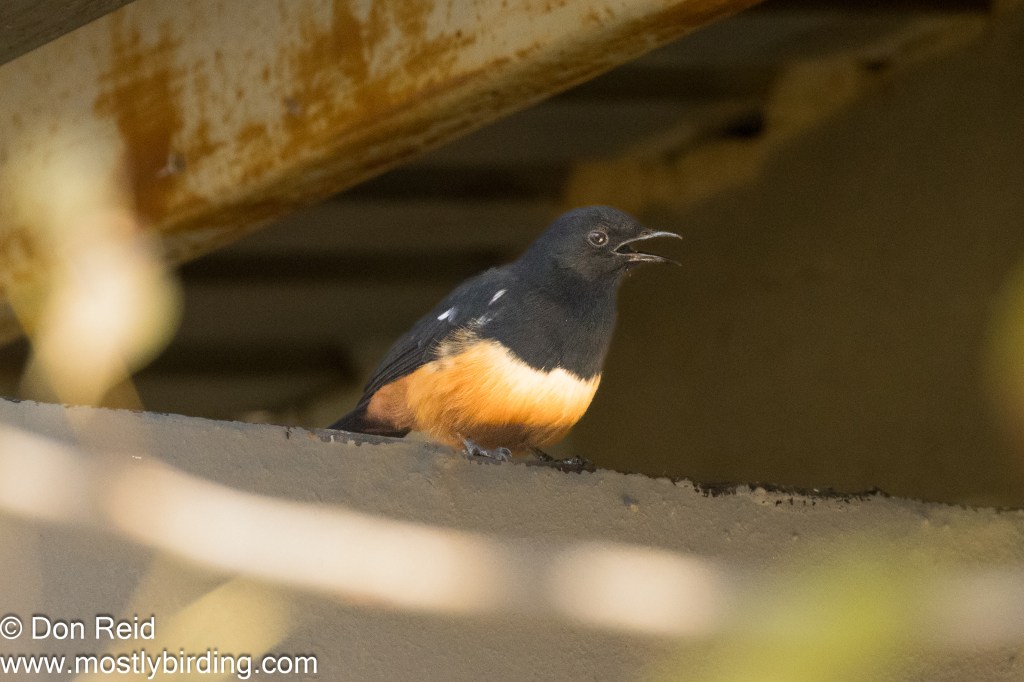
Mocking Cliff Chat Thamnolaea cinnamomeiventris Dassievoël (male), Verlorenkloof
Mocking Cliff Chat Thamnolaea cinnamomeiventris Dassievoël (female), Verlorenkloof

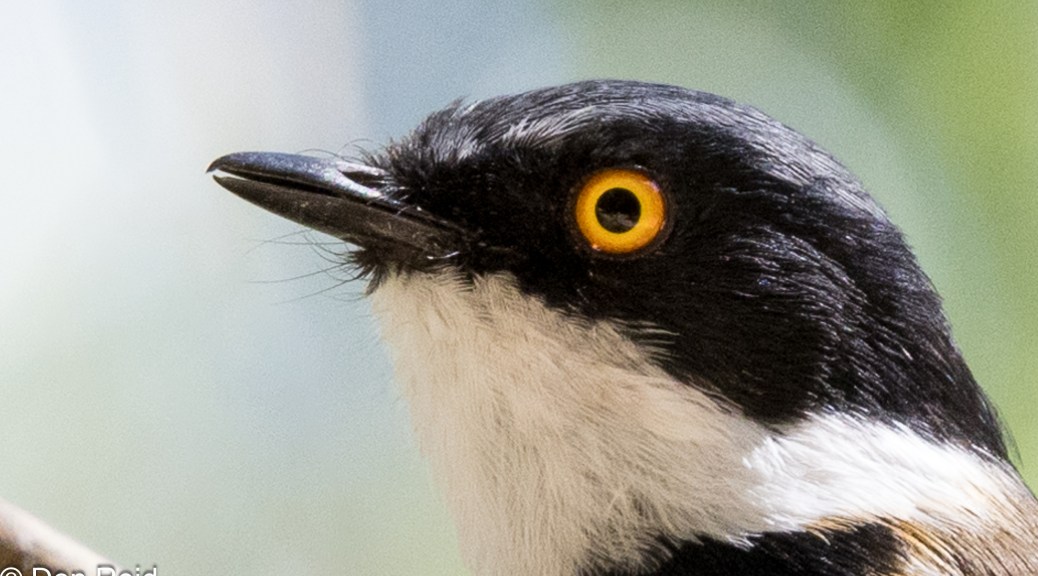
Black Flycatchers and Fork-tailed Drongos were also in attendance, confusing in their alikeness, while on the way back White-fronted Bee-eaters (heading image) and a pair of Yellow-breasted Apalises were added.

Southern Black Flycatcher Melaenornis pammelaina Swartvlieëvanger (race diabolicus), Verlorenkloof

Later Koos and I walked to the river and back (It seemed as if the last stretch of the return walk has been made steeper…..!) – all of 3 kms. Birds were few with just a handful added – Black-headed Oriole, Puffback and Bald Ibis among them.

Dinner was a tasty bobotie with salads

Friday 24th May 2024

Another lazy start to the day – beautiful sunny, warm weather with cold nights – we once again spent most of the morning on the stoep or nearby, building on the birdlist and just enjoying the ambience. Additions to the birdlist were –

  • Red-winged Starlings – some 30 on the lawn
  • Chorister Robin-Chat in the trees outside our bedroom – the image is a bit fuzzy but shows the bird’s striking colour well
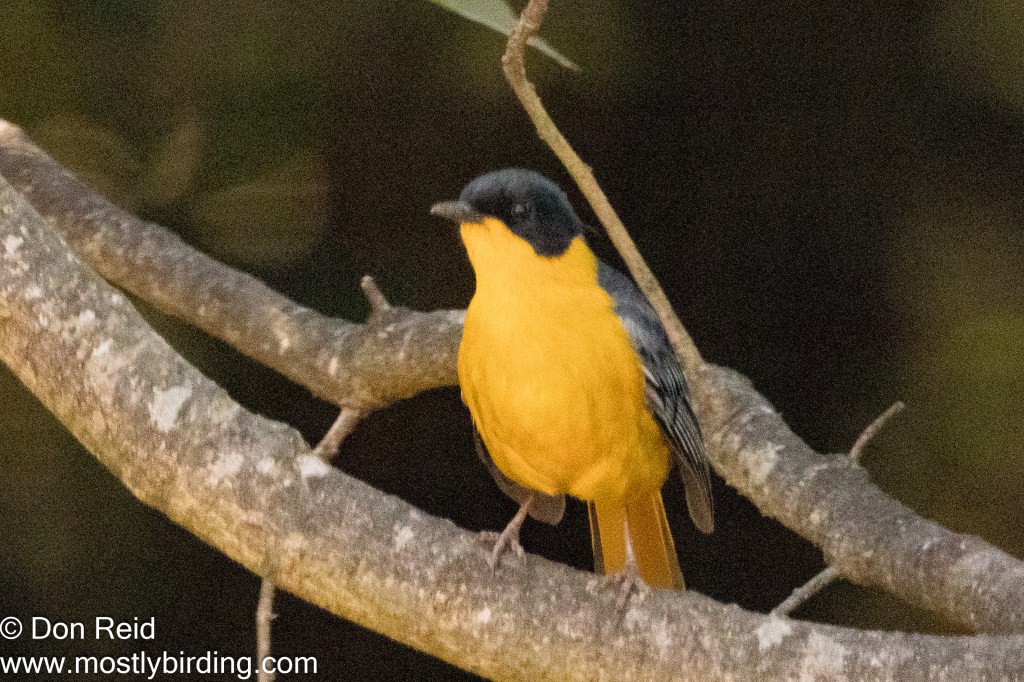
Chorister Robin-Chat Cossypha dichroa Lawaaimakerjanfrederik, Verlorenkloof
  • Bar-throated Apalis in the same trees
  • Cape Batis briefly in the bush near the stoep
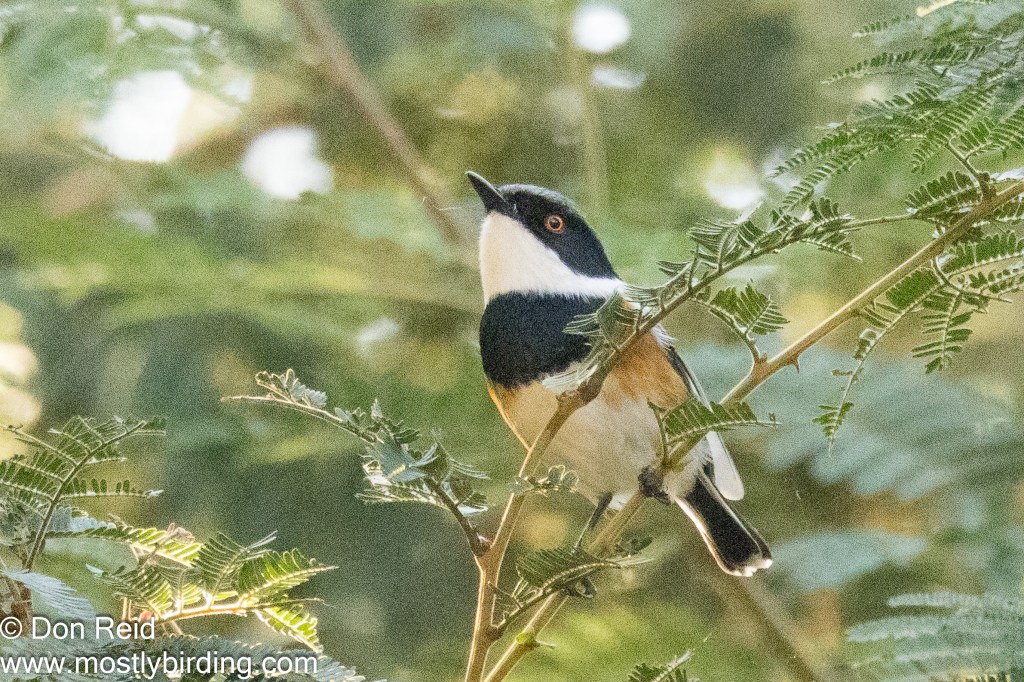
Cape Batis Batis capensis Kaapse bosbontrokkie (male, race hollidayi), Verlorenkloof

Koos wanted to go to the lodge to get charcoal so I joined him for the ride, which included stops at the dams on the way, where we found Little Grebes, Black Crakes and an Olive Thrush

After a lunch of patés and salads we all drove to the river for a short walk along the banks, admiring once again the pristine river against the backdrop of the surrounding mountains

At the bridge Brown-throated Martin and Grey-rumped Swallows were flying up and down river and over the adjoining grasslands, while a Brown-hooded Kingfisher sat on a branch watching for prey.
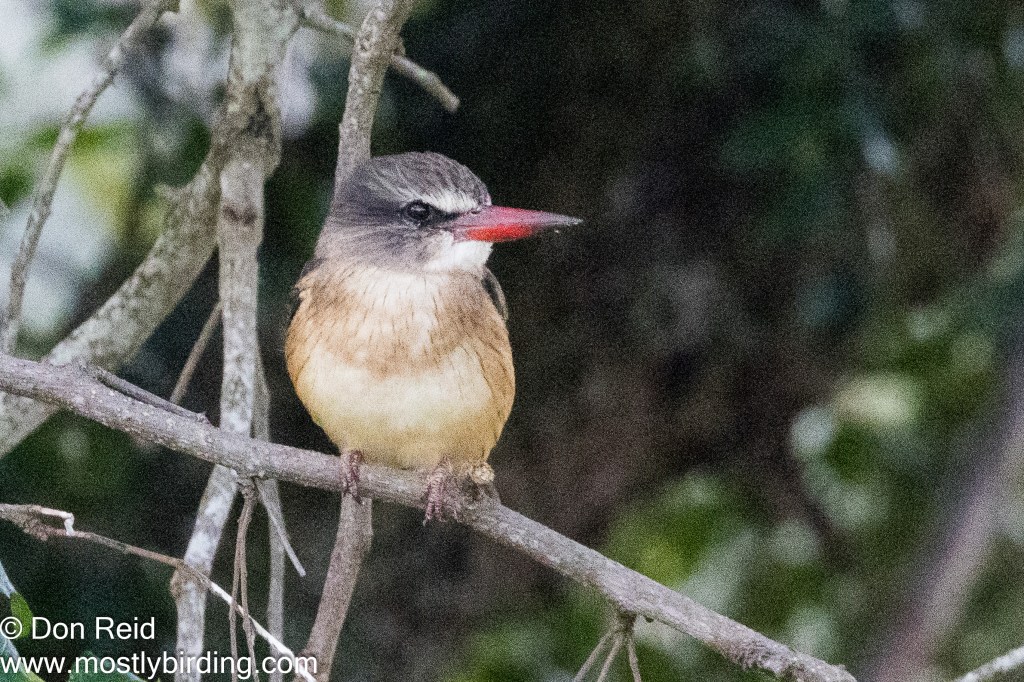
Brown-hooded Kingfisher Halcyon albiventris Bruinkopvisvanger (race vociferans), Verlorenkloof

Other birds encountered were Cape Grassbird and Tawny- flanked Prinia – both new for the pentad list

Back at the croft Koos got the braai going and we enjoyed wors, kebabs and pap with salad to round off the day.

As I write in my journal, the wood stove is burning and spreading its warmth around the living area – just the job for the cold evenings.

Saturday 25th May 2024

Yet another slow start saw us having brekkie outside on the stoep in pajamas, watching a flock of Rock Martins swirling about above the lawn, catching invisible prey in the air.
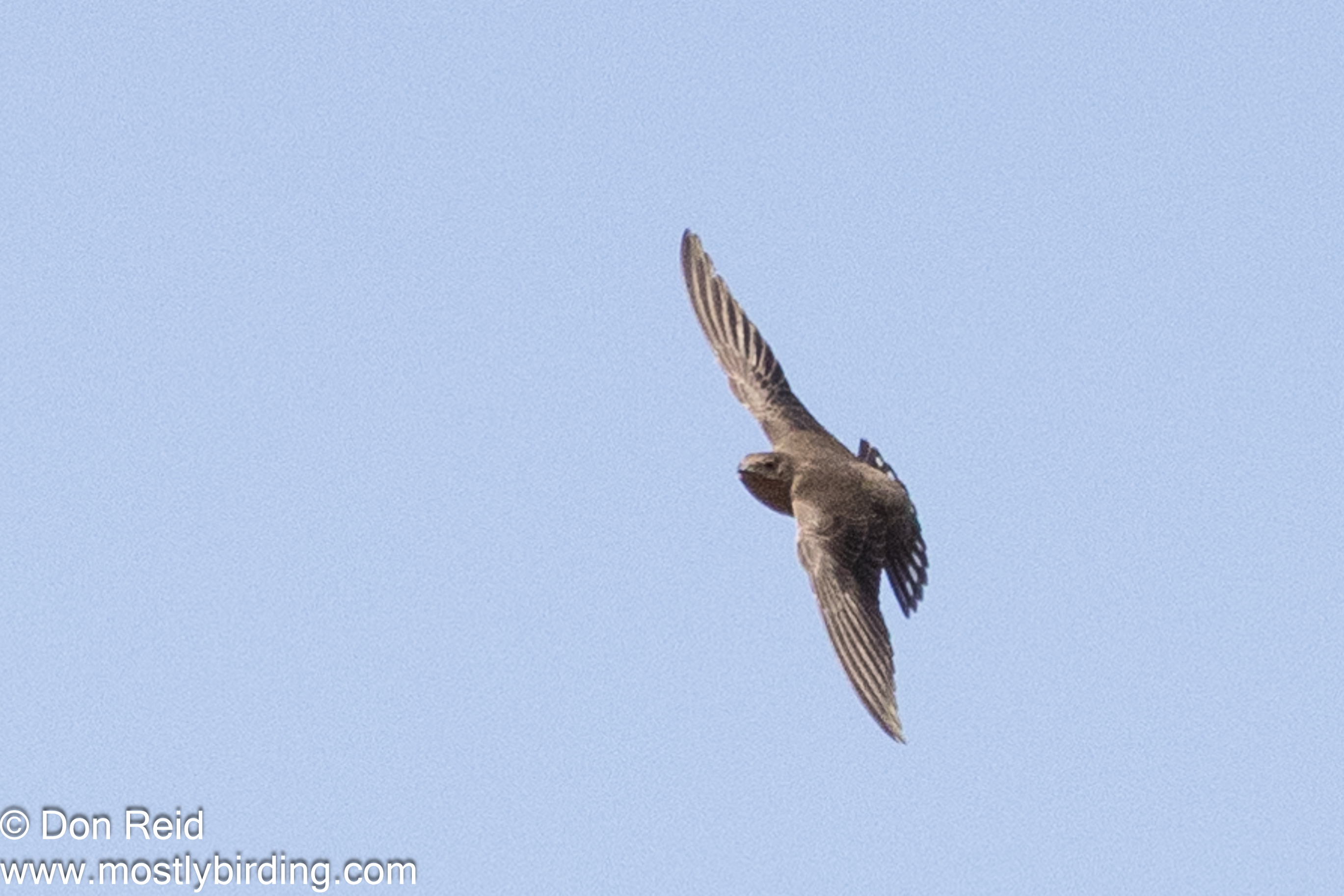
Rock Martin Ptyonoprogne fuligula Kransswael (race pretoriae), Verlorenkloof

A Natal Spurfowl calling in the night or very early morning (still dark) and a Brubru’s distinctive call which sounds like a telephone (remember them?) were the first additions to the list for the day.

Around midday we drove to the lodge for tea and cake – this time just half a portion each – after which we did the circular drive down past the river, left along the gravel road to the tee near the entrance road, then returning along the entrance road back to the croft.

The drive was a slow one with plenty of stops and pauses to look at birds, with Rianda and Gerda’s sharp eyes helping to find new species. Between the four of us we added a number of species to the pentad list including

  • White-bellied Sunbird
White-bellied Sunbird (Male, Cynniris talatala), Verlorenkloof
  • Cape Canary just after the bridge as Koos predicted
  • Greater Double-collared Sunbird
  • Common Waxbill
  • Yellow-billed Ducks at one of the small dams
  • White-winged Widowbirds at the roadside
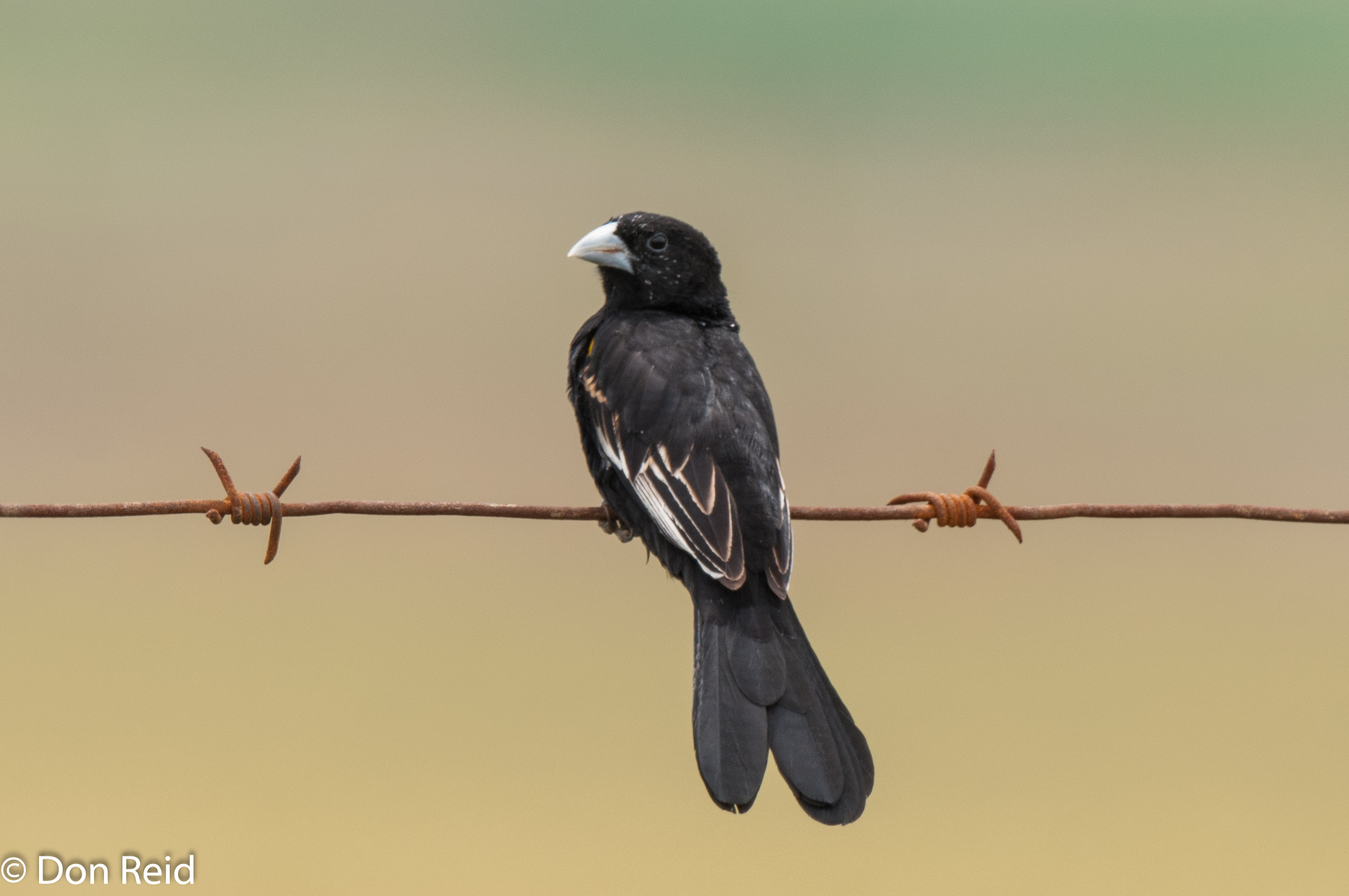
White-winged Widowbird (Euplectes albonatus) – Witvlerkflap
  • Several groups of Cape Crows in open fields (if a group of crows is called a murder of crows, do several groups get called a serial murder of crows?)

Heading back, we came across a few Southern Bald Ibises in a field, close enough for a photo shoot – how handsome they are ….. or perhaps it’s a matter of taste –

Southern Bald Ibis Geronticus calvus Kalkoenibis, Verlorenkloof

Here’s looking at you, kid

Southern Bald Ibis Geronticus calvus Kalkoenibis, Verlorenkloof

We returned to the croft after collecting the meals we had ordered for this evening, enjoying a late lunch of bread, patés and cheese with salads

Butterfly, Verlorenkloof

Koos and I took a short walk towards the lodge late afternoon, turning back when it became quite dark – Spurfowls were calling in fine fashion from various quarters, both Swainson’s and Natal.

A young angler we spoke to at the fishing dam assured us there were “Superfowls” around, which had us puzzled for a moment but led to some smiles when I realised he was referring to Spurfowls, but at least he was full of enthusiasm about the bird life.

The evening meal was what we picked up at the lodge earlier – a delicious lamb casserole with mash

Sunday 26th May 2024 – heading home

Brunch day! As in the past we looked forward to the traditional Sunday brunch and weren’t disappointed with a large spread presented to the delight of some 50 or so fellow brunchers

After that it was time to pack the car for the trip back to Pretoria – far too soon as usual! We arrived at James’ house around 5pm and started getting ready for our return trip by air to Mossel Bay the next day

In closing, Verlorenkloof has some wildlife in addition to the birds, as this Common Duiker showed us.
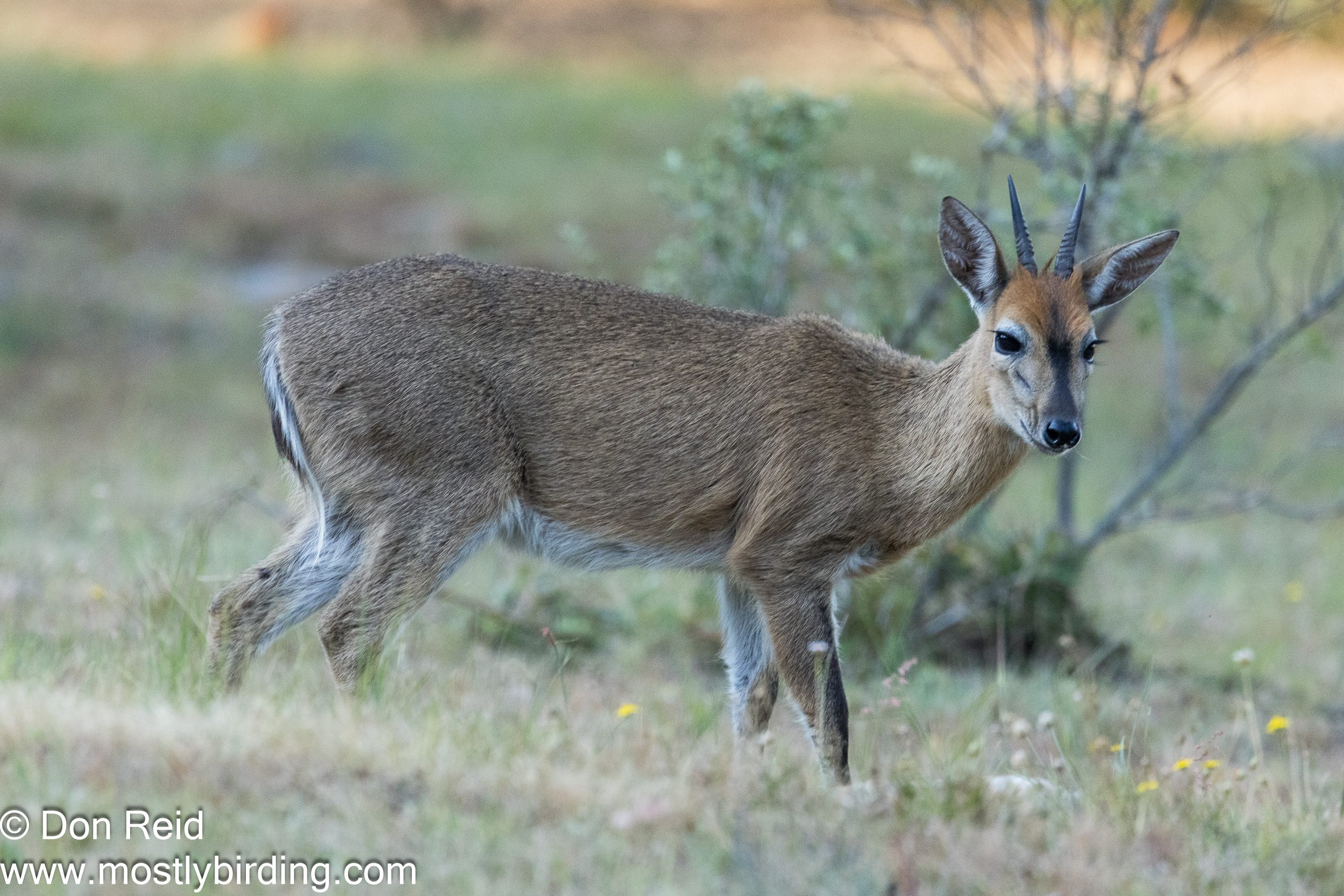
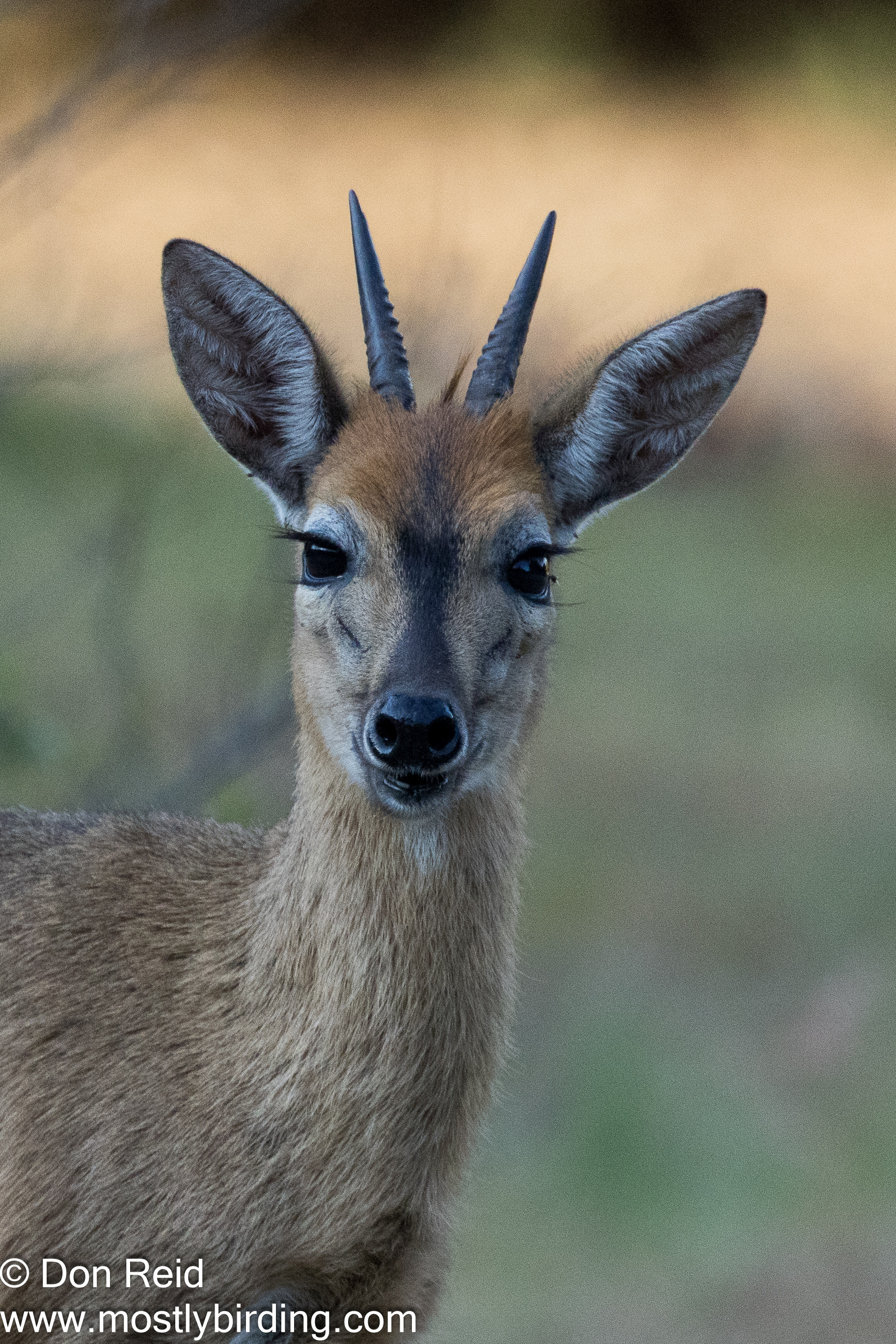
Common Duiker, Verlorenkloof
Verlorenkloof

Small Birds taking BIG Journeys : Part 2

Many of the migrant waders – or shorebirds as they are also known – display the most Jeckyll and Hyde characteristics of all birds, living two dramatically different lives and spending time in habitats which are as far removed from each other as can be imagined.

Separating these two lives are amazing journeys that take these small yet hardy birds halfway across the world – and back again.

The majority of South African based birders get to know migrant species during their stay in the southern hemisphere, typically during the months from October to April, so let’s find out a bit more about their ‘other’ lives by delving (again) into the typical annual life cycle of these waders.

This time it’s the –

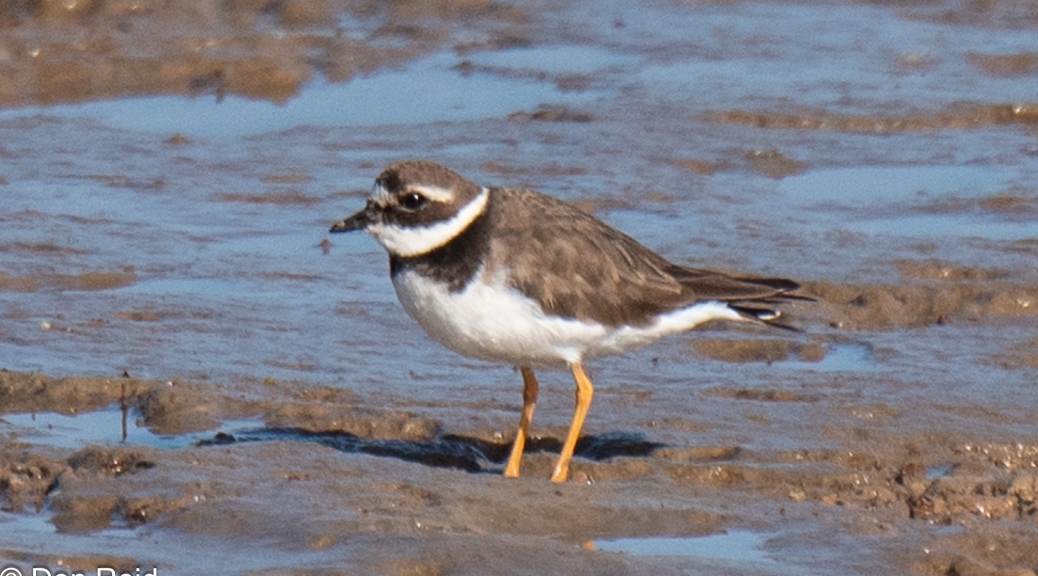
Common Ringed Plover

Ringnekstrandkiewiet

Charadrius hiaticula tundrae

The inclusion of the subspecies name tundrae above is because this is the particular subspecies (one of three in all) that makes its way to southern Africa in the non-breeding season

Hiaticula is Latin for cleft dweller, in reference to its habit of breeding among pebbles and rocks

Common Ringed Plover, Marievale Bird Sanctuary

Identification and Distribution

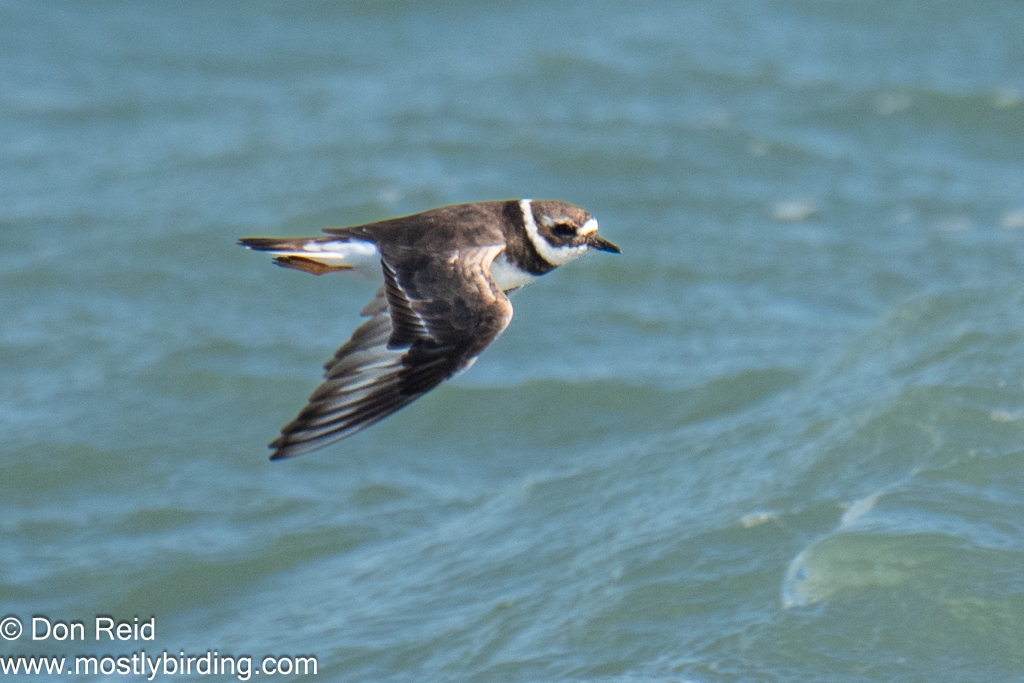
Key identification features of this petite (18 cm, 50g) wader are the size (similar to the Three-banded Plover) and the broad white collar above a blackish breast band, plus the distinctive orange legs

The differences between breeding and non-breeding birds are subtle – the main feature being the orange bill that changes to black, while the black collar and face mask become lighter – these illustrations from Birds of the World show the differences nicely

Clues to their very different lives lie in the global distribution map – the orange area is where breeding occurs in the Northern Hemisphere while the blue area, mostly in the Southern Hemisphere, is where they recuperate from all the rigours of the breeding season and build up strength for the next season.

Map from Birds of the World – Orange : Breeding; Blue : non-breeding; Yellow : Migration

The southern African distribution map shows the species presence across most of the region but absent from the Kalahari and arid interior

Map from Firefinch app

Life in the North

Breeding range is almost circumpolar – from north-eastern arctic-Canada, across Greenland, Iceland, Scandinavia and northern Russia. Their preferred habitat is spartan – along the coast on sandy or shingle beaches, sandbanks and mudflats, estuaries. They also occur on tundra and breed up to 1200m altitude in places such as Norway.
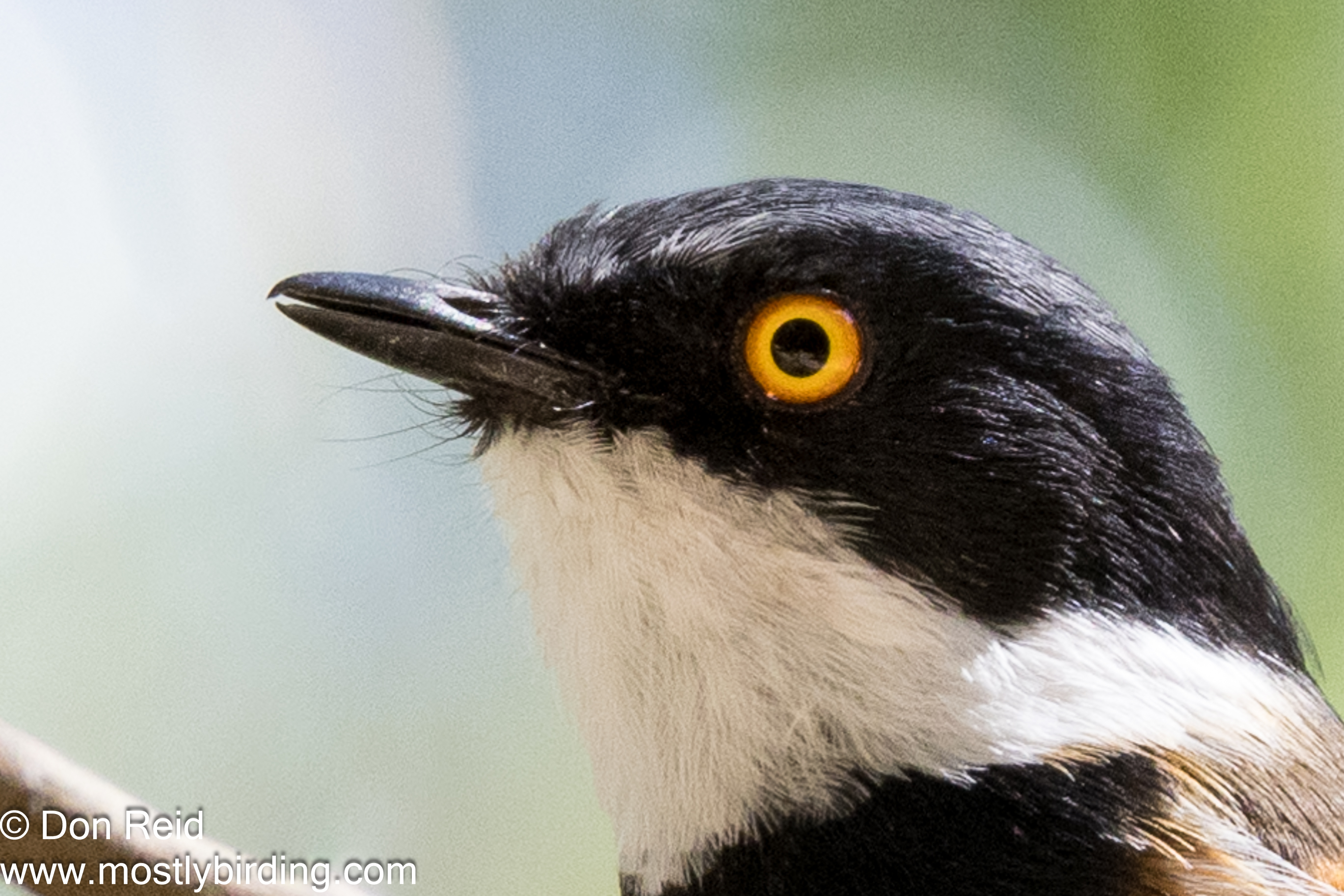
Foraging for their favoured food, which includes small crustaceans and molluscs, is done by day and night, taking advantage of the long days and short nights of the summer months in those far northern areas, typically in small flocks of up to 50 birds.

Breeding and Migration

Their nest is simple – a shallow scrape in the ground, lined with pebbles, debris and pieces of vegetation, sometimes in covered or shaded sites. Eggs (usually 4) are laid between April and mid-July and are incubated for 21 to 27 days by both parents.

Well camouflaged eggs amongst the shingles and pebbles (Photo by others)

If a potential predator approaches the nest, the adult will walk away from the scrape, calling and feigning injury by flopping along the ground as if its wing is broken. Once the intruder has been lured far enough away from the nest the plover will fly off.

I have witnessed this same behaviour by Kittliz’s Plover, where I was taken to be a threat to the nest by unwittingly approaching too close to it – much to my amusement and fascination at the time the plover repeatedly performed the broken wing routine until I left it in peace.

Fledging some 4 weeks later, the fledglings are independent soon thereafter, facing the many dangers that young birds are subject to.

Once the young have fledged and can look after themselves, they start migrating south, often after the adults have already departed. And this is where it gets interesting – those that breed the furthest north are also those that migrate the furthest south. On the other hand most of those that breed further south follow the shortest migration route to the northern parts of Africa.

So the Ringed Plovers that we see in southern Africa, the tundrae sub-species, originate from the far north of Scandinavia and Russia, travelling up to 18,000 kms before finding a suitable spot in our neighbourhood.

Common Ringed Plover, Strandfontein Sewage Works

In the process they “leapfrog” their slightly less adventurous cousins who have chosen a shorter migration route – a phenomenon known (unsurprisingly) as leapfrog migration.

As far as is known, the migration route to southern Africa crosses the Eurasian and African land masses in a broad front, possibly crossing the Sahara along the way, then heads to east and south Africa.

Common Ringed Plover, Gouritzmond

Migration south starts from July with the first adults arriving in southern Africa in September and the first juveniles in October, continuing to December

Life in the South

In southern Africa they seek out suitable habitat, mostly at the coast where they favour estuaries and lagoons, but also inland on mud- and sandbanks along rivers and at wetlands, favouring wide bare shorelines with little vegetation. They can often be found in the company of the more common Kittlitz’s and Three-banded Plovers.

Common Ringed Plover, Bronkhorstspruit Nature Reserve near Pretoria

Some time after arrival adults and juveniles have a complete moult over the next couple of months

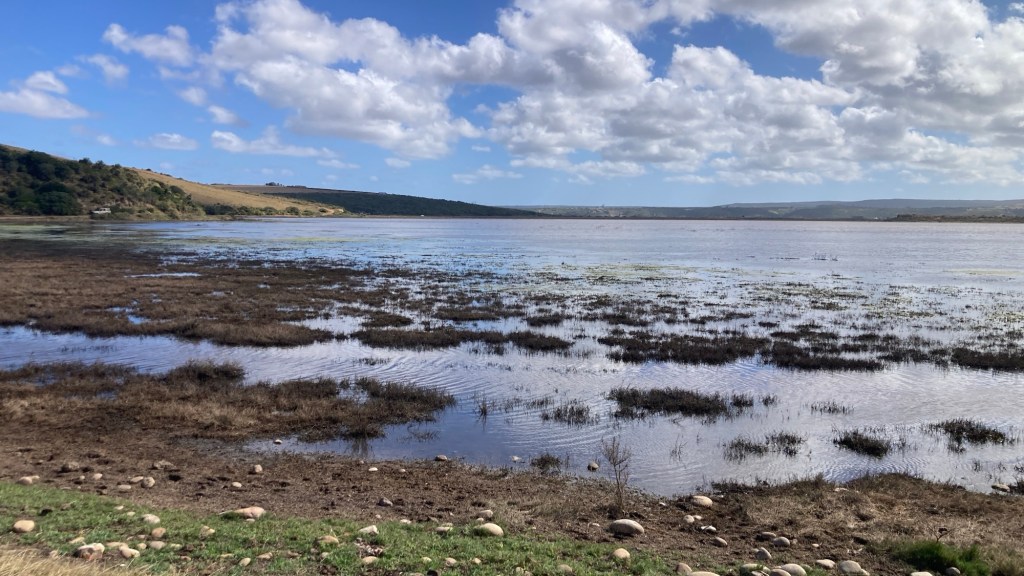
Voëlvlei, about 30 minutes’ drive from Mossel Bay, which had no water for many years until the good rains of last year, attracted its share of Ringed Plovers this past summer along with many other waders.

Common Ringed Plover, Voelvlei near Vleesbaai

Foraging is done in very shallow water or on wet mud, using the typical plover run-stop-search technique, locating prey visually and picking off the surface rather than probing as many waders with longer bills tend to do.

Common Ringed Plover Charadrius, Voelvlei
Common Ringed Plover, Great Brak River

The plovers start departing from late February with the majority having left by end April, heading north to their breeding grounds where the cycle will start all over again…

References : Cornell Lab of Ornithology Birds of the World; Roberts VII Birds of Southern Africa; Firefinch app

Small Birds taking BIG Journeys : Part 1

During my birding and atlasing trips I come across a variety of migrant species, some of which I manage to photograph in their local habitat – one in particular, the Little Stint, had me thinking for the umpteenth time how fascinating and amazing these annual migrations are.

Many of the migrant waders – or shorebirds as they are also known – display the most Jeckyll and Hyde characteristics of all birds, living two dramatically different lives and spending time in habitats which are as far removed from each other as can be imagined.

The majority of South African based birders get to know migrant species during their stay in the southern hemisphere, typically during the months from October to April, so let’s find out a bit more about their ‘other’ lives by delving into the typical annual life-cycle of these waders, starting with –

Little Stint

Calidris minuta (Kleinstrandloper)

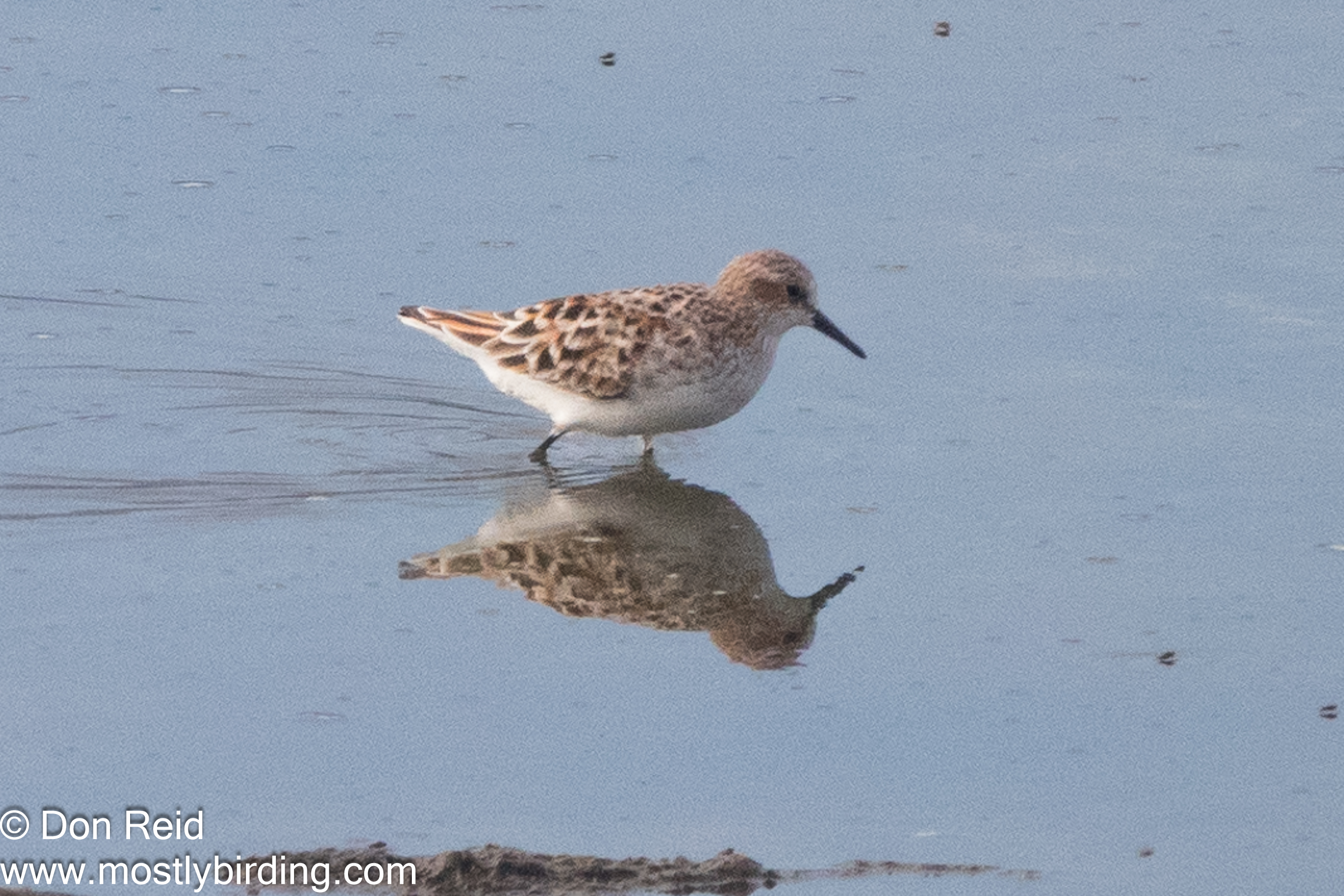
This is the tiny, compact (13 cm, 23 g) wader found across southern Africa, often in flocks and joining other waders at almost any coastal or inland habitat with shallow water, soft mud and not much vegetation.

Key identification features are the very small size, short black bill and wings that project beyond the tail – the latter is a common trait amongst migrant birds needing extra wing power for those ‘halfway across the world’ journeys that they undertake

Clues to their two very different lives lie in the distribution map (courtesy of Cornell Lab of Ornithology) – the orange area is where breeding occurs in the Northern Hemisphere while the blue area, mostly in the Southern Hemisphere, is where they go ‘on vacation’ to build up strength for the next breeding season

Life in the North

Birds are considered as “resident” in the area where they breed, which in the case of the Little Stint is situated within the Arctic Circle in a habitat known as Arctic Tundra, with temperatures well below zero for most of the year and a maximum of just 4 deg C in ‘summer’.

Tundra is known for large stretches of bare ground and rock and for patchy mantles of low vegetation and small shrubs – ‘barren’ and ‘frozen’ are about the kindest words to describe this habitat, yet these tiny waders thrive in this environment

Tundra in Siberia (Photo courtesy of Wikipedia)

They inhabit dry ground at lower altitudes, often near swampy areas or salt-marshes, avoiding areas with annual rainfall of more than 250mm (No, they don’t have a way of measuring it other than instinct)

Little Stint in breeding plumage (Photo courtesy of Cornell Birds of the World)

Breeding and Migration

Their nest is built on the ground, lined with leaves and grass but otherwise exposed. Eggs are laid starting late June to early July and are incubated by both parents.

Once the young have fledged and can look after themselves, they and the adult birds start migrating south, not necessarily together, heading across Europe before following a route via the Rift Valley lakes of eastern Africa then fanning out across southern Africa

According to estimates, up to 1 million Little Stints migrate to Africa, of which a relatively small proportion venture all the way south to southern Africa. Migration south starts from July with peak numbers arriving in southern Africa between October and December

Life in the South

On arrival in southern Africa (and just before departure) some of the stints will still be in partial breeding plumage with upper parts washed rufous, while others will have adopted their non-breeding plumage of brownish grey

Little Stint, Bloemhof Saltworks : taken in April so showing partial breeding plumage

In southern Africa they seek out suitable habitat, preferring coastal and inland wetlands, especially where wet mud is available. Temporary pans in the interior can often provide the abundant short-term food that is perfect for their requirements.

Voëlvlei, about 30 minutes drive from Mossel Bay, which had no water for many years until the good rains of last year, has attracted hundreds of Little Stints this past summer along with many other migrant waders.

Voëlvlei near Vleesbaai

Not only did Voëlvlei provide abundant food for the waders and others, it also provided an ongoing feast for local birders enjoying the abundance of birds along with a few rarities. (More about that in future posts)

Foraging is done in very shallow water or on wet mud, picking small invertebrates off the surface rather than probing as many waders with longer bills tend to do.

Little Stint Calidris minuta Kleinstrandloper, Great Brak River estuary

Stints are fairly easy to spot amongst other waders, not only because they are generally the smallest of the waders present but also due to their hunched appearance which always reminds me of a little old man pottering about

Little Stint, Strandfontein Sewage Works

The Stints start departing from mid-February with the majority having left by end April, heading north to their breeding grounds where the cycle will start all over again…

Little Stint Calidris minuta Kleinstrandloper, Voëlvlei near Vleesbaai

What a privilege it is to welcome these fascinating waders to our shores

References : Cornell Lab of Ornithology Birds of the World; Roberts VII Birds of Southern Africa

The Eyes Have it! (Part 5)

A while back I showcased a few species with striking eyes – continuing that theme, here’s a look at another species that has formidable eyes -although this is not immediately obvious but does become more so once you get up close and personal with it

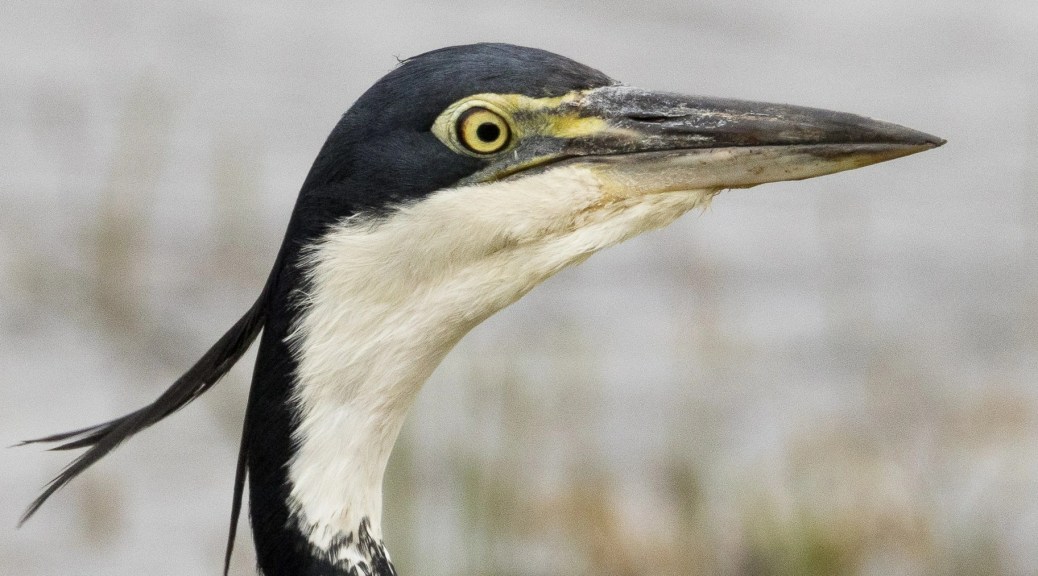
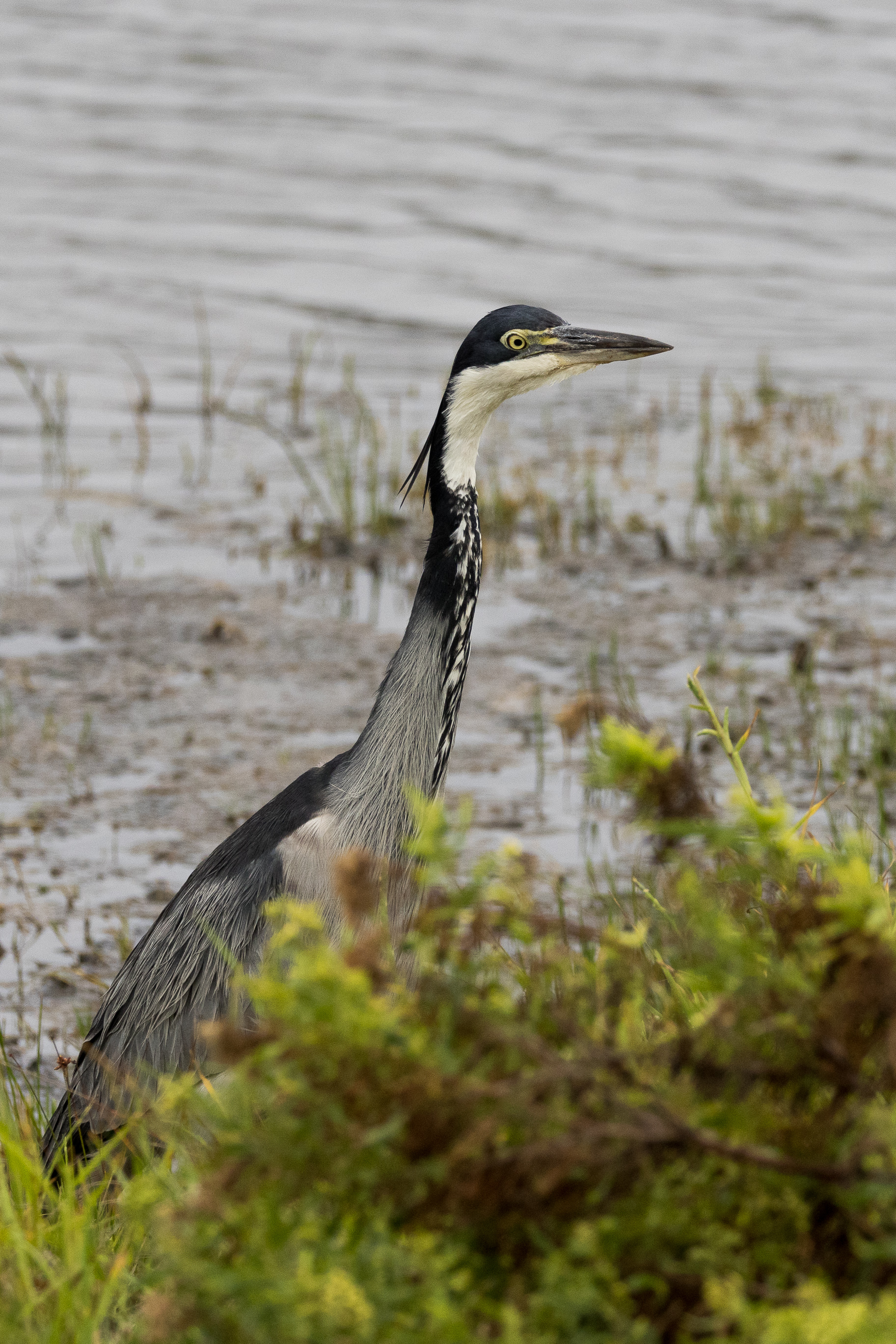
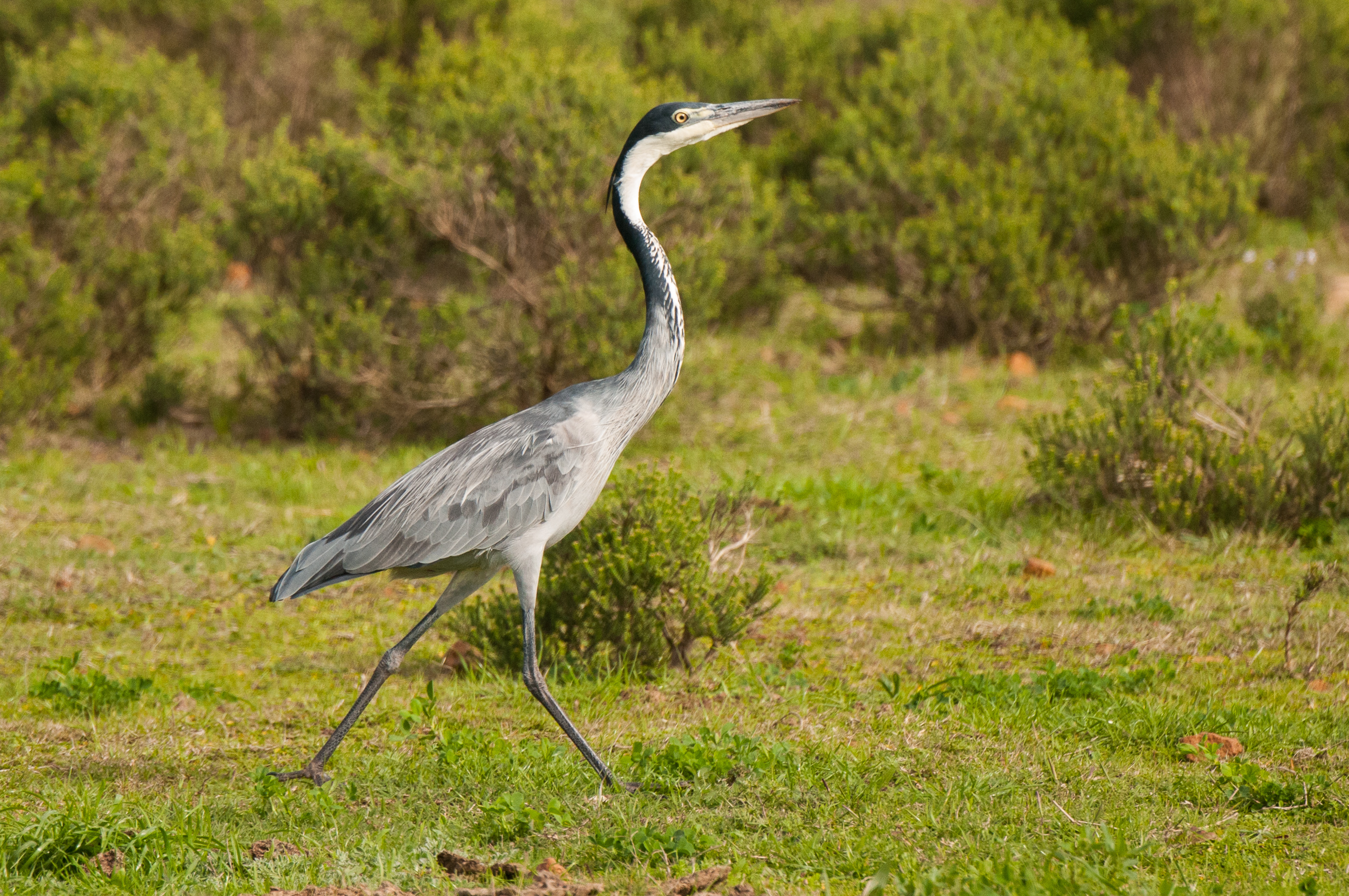
Black-headed Heron (Swartkopreier) Ardea melanocephala

Where in the world?

The distribution of this species is extensive across Sub-Saharan Africa, missing only from a few arid areas such as the Kalahari in southern Africa. It is the commonest of the large herons throughout Africa.

What to Look for

This is not a bird that is likely to be confused with any other, with the possible exception of the Grey Heron which is of similar size and, at a distance, of similar appearance. Non-birders (no disrespect, but you are missing out seriously) do mistake this species for the iconic Blue Crane, something I can vouch for from personal experience.

It’s a tall bird, up to 96 cm in height and weighing between 700 and 1650 g

Black-headed Heron Ardea melanocephala Swartkopreier, Great Brak River

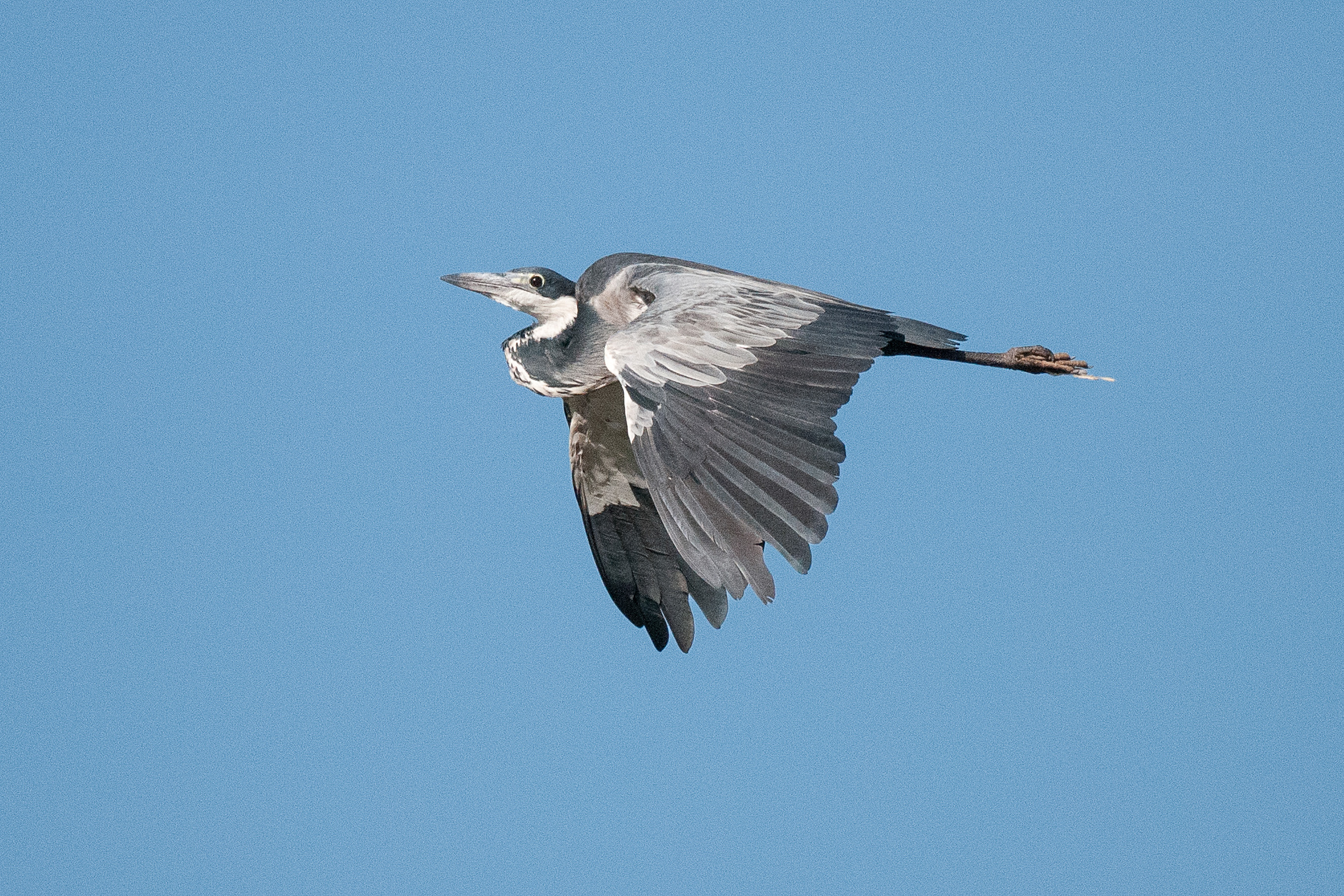
In flight it’s easier to confirm the identification due to the bi-coloured wings – black flight feathers, white underwing coverts

Black-headed Heron, De Hoop NR

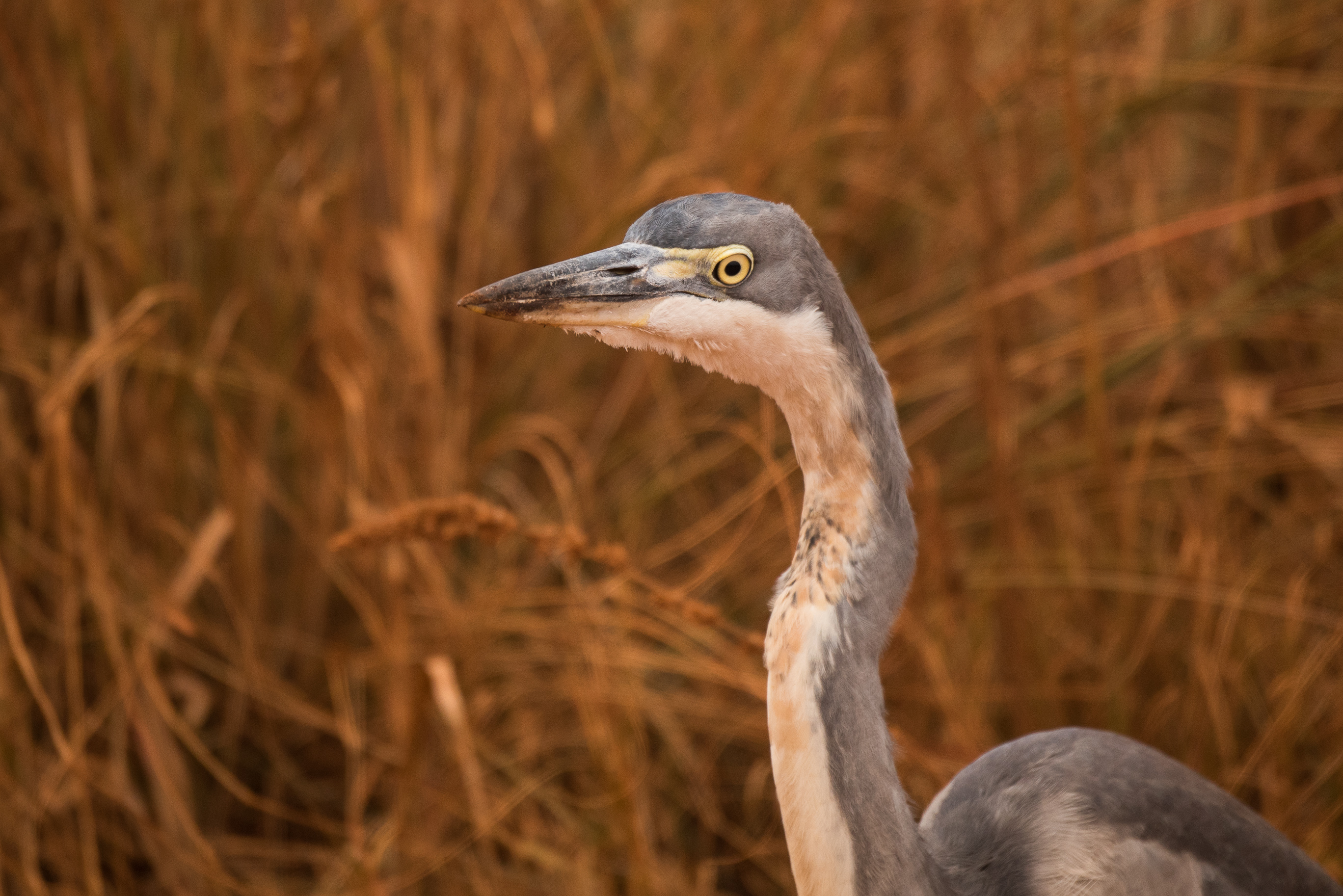
Eyes are yellow, but turn orange, then red during breeding

Black-headed Heron, Delmas area

Black-headed Heron is a terrestial species, not necessarily found near wetlands as with other herons, and is one of the few birds that benefit from human alteration to the environment such as irrigated areas, which suit their preference for damp pastureland

They will often be found striding through grass, hunting for prey

Black-headed Heron, Mossel Bay-Herbertsdale

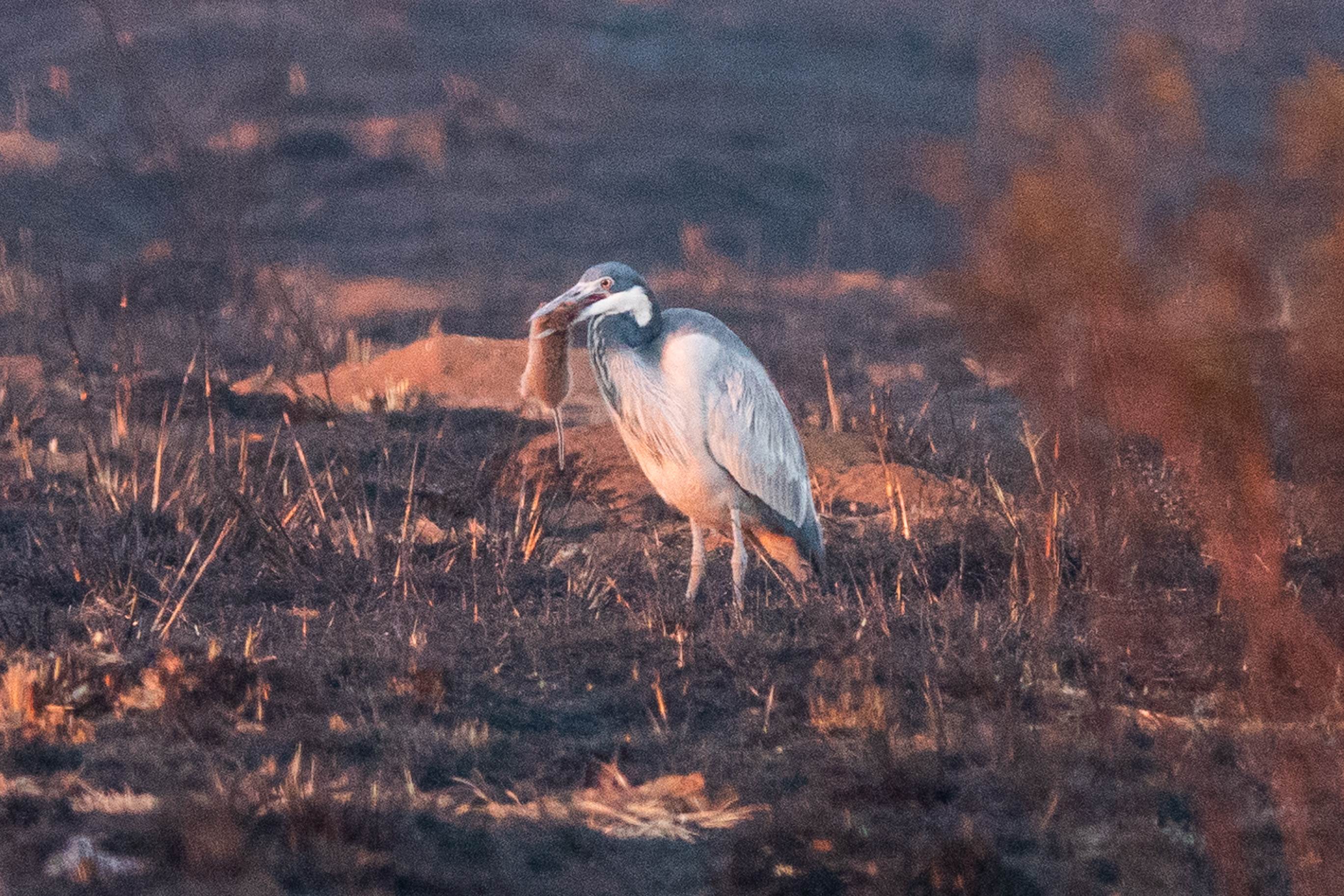
They eat a variety of rodents,insects, snakes, frogs, crabs, fish – in fact just about anything that crosses their path including small birds. This individual I came across early one morning in the Rayton area near Pretoria had caught a large rodent, possibly a vlei rat, and proceeded to swallow it whole, taking a few minutes to manoeuvre it into position for swallowing. I could see the progress of the prey moving down the bird’s long neck, which bulged as it gradually slipped down.

Black-headed Heron swallowing prey, Rayton-Culinan area

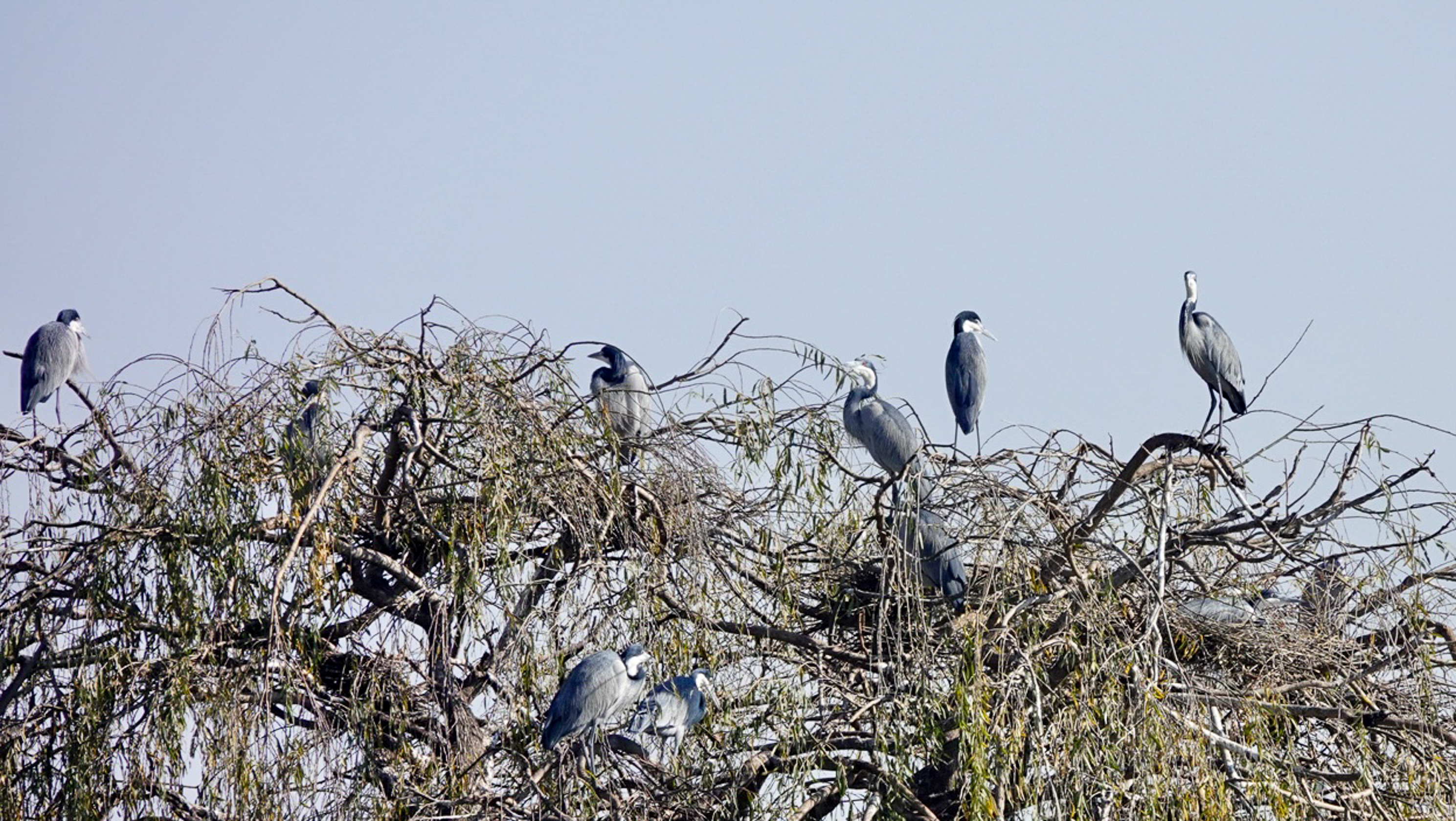
They often nest in or near towns – Great Brak River, just down the road from Mossel Bay, has a busy roost in a tall tree on the main road. The next photo was taken in a more rural area near Pretoria, where numbers of Black-headed Herons occupied a large tree next to a farm dam.

They make themselves known with their harsh squawking calls at all times of the day.

Black-headed Herons, Bapsfontein east

References: Roberts VII Birds of Southern Africa; Firefinch Birding App; Birds of the World – Cornell Lab of Ornithology

Eight Bells – Three Days

Breakaway

After the stress of packing up our Pretoria home of the last 21 years and getting our house contents and ourselves to Mossel Bay last September, we were looking for a short breakaway but without a long drive, so Eight Bells Inn seemed like the ideal spot – one of our favourite places for tea or lunch and just 40 minutes from home.

Day One

The packing was simple for just three days, and we arrived at the inn soon after 4pm, settled into the comfortable room and relaxed for a while.

Sitting outside and enjoying the lush gardens, I added a few birds to the pentad list I had started on the way there, including Knysna Turaco flying by and disappearing into a tall tree, Red-chested Cuckoo calling repeatedly, Black-headed Oriole flashing its yellow plumage in the trees and Amethyst Sunbird busily finding nectar high up in the flowering tree in front of our room

Amethyst Sunbird

Later, I set off on a walk down into the adjoining valley, passing horses grazing on the short grass and listening to the calls from the bushy areas.  I was pleasantly surprised to see a group of Olive Pigeons in the tall trees, as I have not seen them outside of the forests.

A number of other ‘specials’ were quickly added as I made my way down the slope into the valley– Cape Batis, Spotted Eagle Owl, Terrestial Brownbul and Greater Double-collared Sunbird.

Eight Bells Inn, Robinson Pass

Dinner time was approaching, which hastened my return to our room to neaten up for the hotel dinner in the cosy dining-room. The evening meal was pleasant and we were looked after by the staff, still as super-friendly as we have come to know them over the years.

Day Two

After a relaxed breakfast, we set off on a drive with the Rose farm situated between George and Oudtshoorn, as our destination, and a route that would take us through the back roads of the Klein Karoo

The first part was up the Robinson Pass with several stops along the way to listen and look for the specials without much luck. Beyond the pass we were amazed by the extensive displays of wildflowers, particularly the deep pink vygies that stretched as far as we could see in places.

Approaching Oudtshoorn from the south, we took the Mount Hope turn off onto a gravel road and into typical arid Karoo countryside for the next hour or two as we wound our way up and down hills and dales.

Mount Hope road near Oudtshoorn

This sign at a farmstead had us chuckling – covers just about everything!

Translation : Please drive slowly! Old people, farm workers, children, grandchildren, dogs and chickens

There were many attractive flowers that caught Gerda’s attention and we made numerous stops to look closer.

Birds were scarce, as is often the case in such arid areas but there were a few highlights –

  • Lesser Honeyguide in a group of gum trees near a farmstead– exactly where I had heard one during my previous atlas trip through the pentad some two years ago
  • Pale Chanting Goshawk juveniles – twice, one with small prey
  • Jackal Buzzard on utility pole
Pale Chanting Goshawk (Juvenile)

Dams along the route were mostly full, some verging on overflowing, but few had any birds except one large dam which held numbers of Shelducks, Yellow-billed Ducks and Red-billed Teals

SA Shelduck

At the Rose farm we enjoyed coffee and carrot cake / scone and Gerda spent a while buying roses for her planned small rose garden and two hanging baskets

Not wanting to return along the same road we headed over the Outeniqua pass, then through George to the N2 highway which took us to Great Brak River. From there we made our way via the Geelbeksvlei road back to the R328 and completed a full circuit once we reached Eight Bells.

After a while relaxing and a power nap, I took a walk around the paddock, adding Diderick Cuckoo, Paradise Flycatcher to my list. The evening dinner was a tasty chicken curry for me, bobotie for Gerda.

Day Three

We were looking forward to a day with less driving and more time to relax, so after another leisurely breakfast we set off with our tea and cookies to explore the road from nearby Ruiterbos to Leeukloof.

With light rain falling, we wound our way down into the valley, passing dense growth and broad stands of protea bush.

Passing through Ruiterbos village, we found Red-winged Starlings and Fork-tailed Drongo’s, while further on were Cape Canaries and Karoo Prinias. Heading into the lower part of the kloof the roadside vegetation became dense and colourful,with plenty of wildflowers, even some wild growing roses.

Leeukloof road

At its lowest point the road through Leeukloof crosses a river and we chose this spot to have our tea – we couldn’t have wished for a better spot – then carried on up the hill and back towards the tar road.

Heading back I took the next turn off left along the road to Bonnievale with limited birding success until a Black Harrier floated across the road in front of us

Black Harrier Circus maurus Witkruisvleivalk

Back at the Inn we relaxed while light rain fell outside, only raising ourselves in time for the dinner.

Heading Home

Rain fell heavily overnight and continued to fall in the morning, and the garden was sodden when we made our way to breakfast in the dining room, sheltering from the rain under large umbrellas

A flowering Bottlebrush tree with raindrops covering the bright red flowers caught my eye and demanded a quick photo with my iphone

After a full breakfast we headed back home in lighter rain. I had received a whatsapp reporting on the rain and mentioning three roads in the area that were closed due to flooding – Geelbeksvlei, Leeukloof and Haelkraal roads, all of which we had driven over the last two days, so fortune was on our side.

We could see the effects of the rain when we crossed the bridge over Brandwag River and when we paused to look at the Geelbeksvlei road, which we had driven just two days prior, now impassable due to the high level of the river.

Brandwag River in flood
Geelbeksvlei road under water

Such is nature!

My Photo Pick for 2023

Moving home from Pretoria to Mossel Bay during the year took a lot of our energy and meant we travelled less than usual – so much so that we didn’t even manage to fit in a trip to one of our national parks, the first time this has happened in many years!

Nevertheless my photo library increased by some 1500 images, and for this retrospective I have selected 50 images which appeal to me for various reasons.

An unexpected mid-year trip to Scotland for a week was a wonderful opportunity to boost my photo library and try out my new mirrorless camera to its full extent – my verdict is it met all my expectations once I had mastered the myriad settings available.

The brief comments tell a bit of the story of each image. So to start with ….

The Places

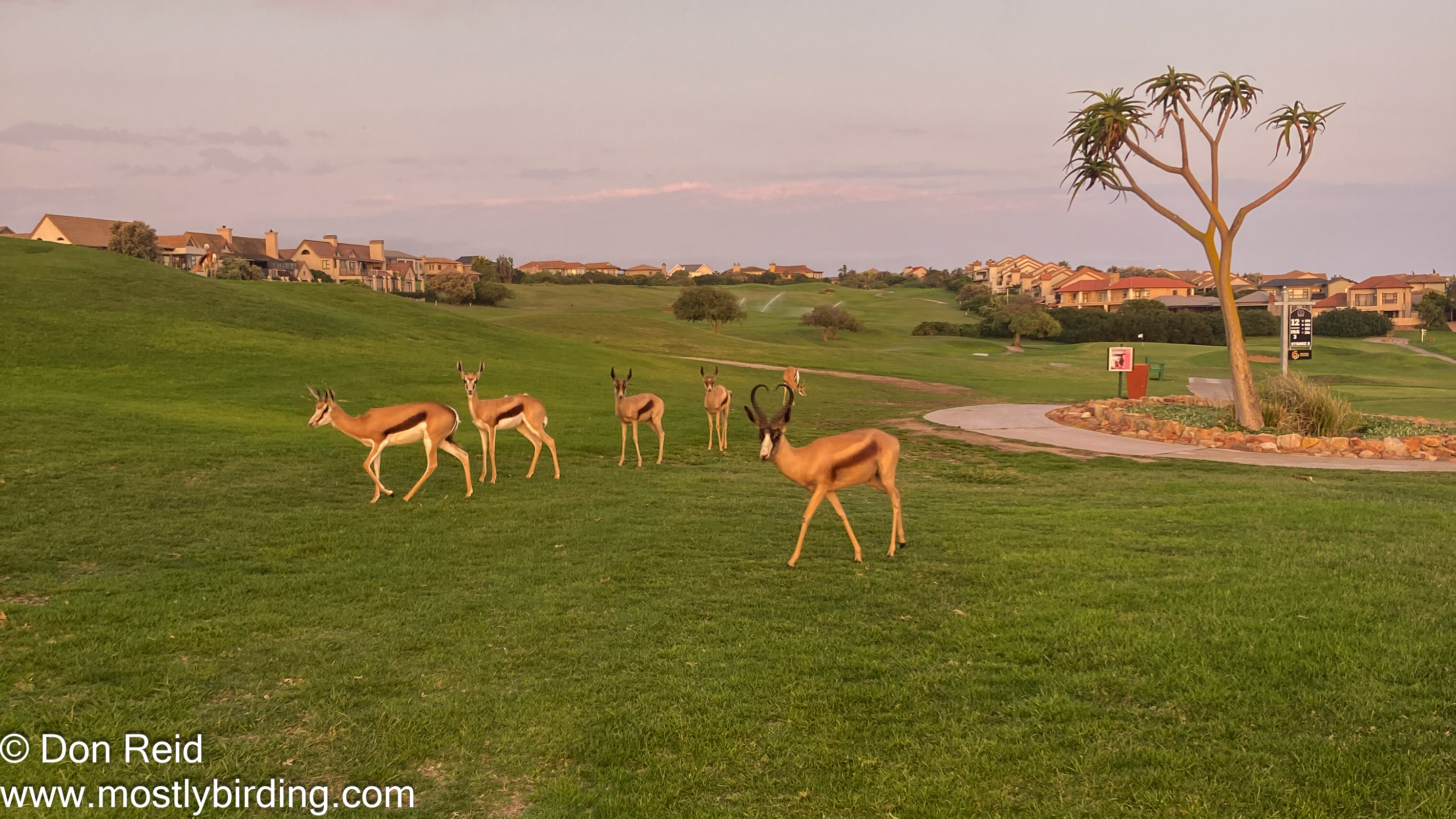
Starting at home – one of the pleasures of living on a golf estate is having the golf course to yourself after the last golfers have left – it’s ideal for long walks and an added bonus is the small herd of Springboks that also enjoy the peace and quiet without golf balls flying about

Mossel Bay Golf Estate

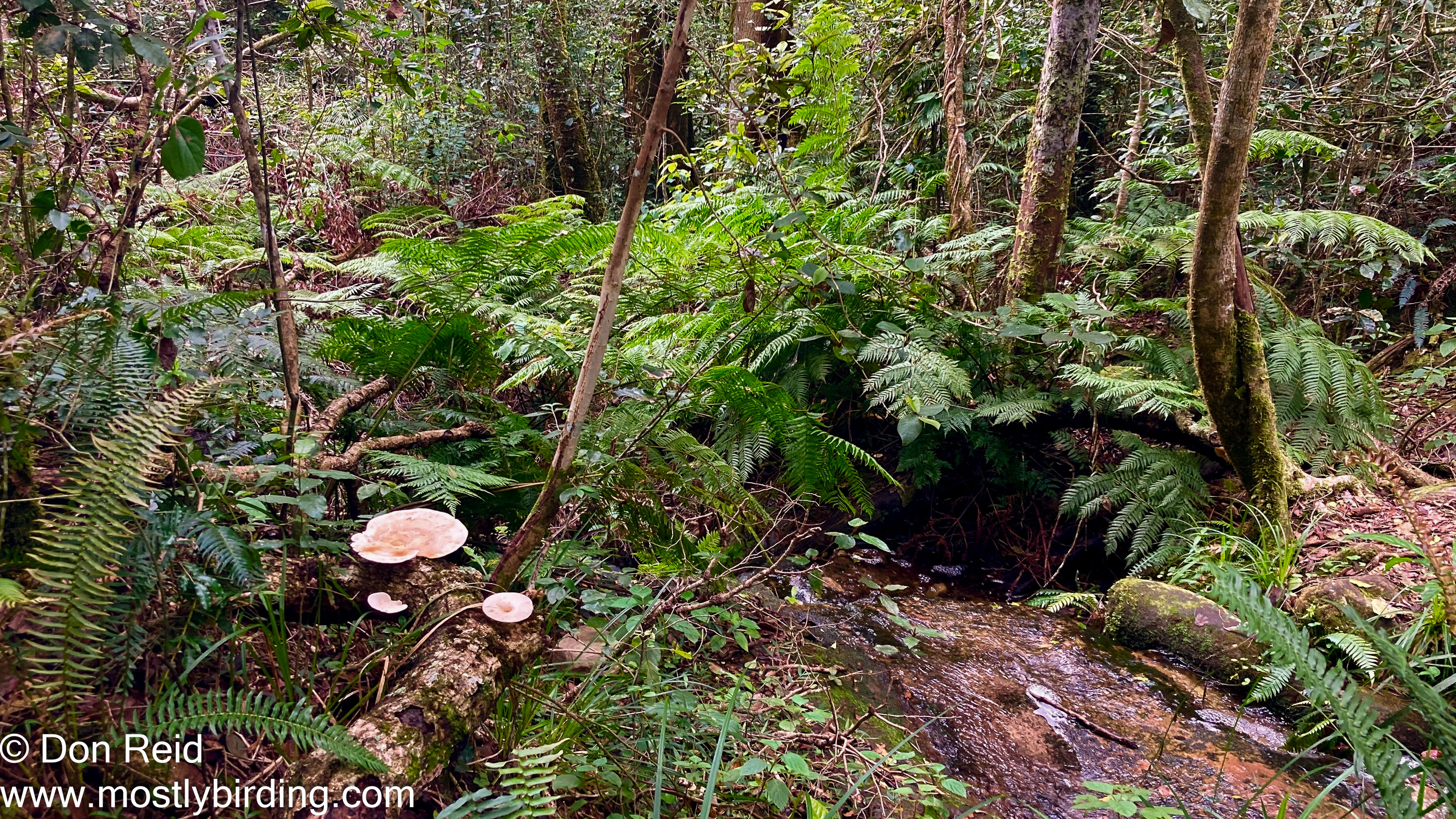
Hoekwil Forest near Wilderness, also known as Big Tree Forest, is one of my favourite spots for forest walks and birding, presenting scenes like this along the trail

Hoekwil Forest

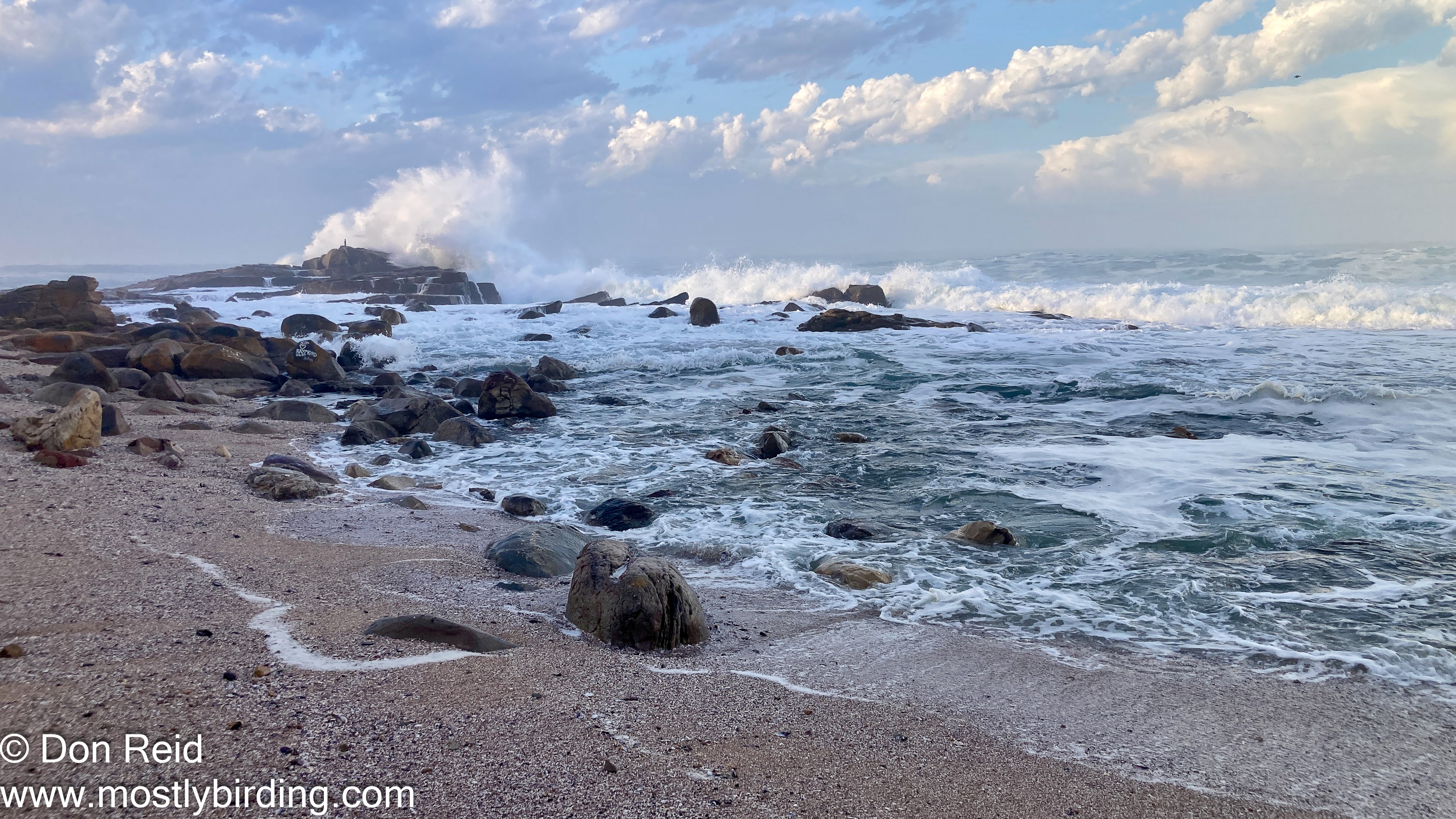
A trip to Fransmanshoek (“Frenchman’s Corner”) just a half hour’s drive from Mossel Bay is always worth it – the rugged coastline and big waves make for spectacular coastal scenery on a windy day

Fransmanshoek

It’s impossible to go through a year without taking photos at The Point in Mossel Bay on a day of high seas, capturing (hopefully) the drama of the sand, sea and sky that such days produce

Mossel Bay Point

Back in March, Gerda’s relative Anlia sent us this photo taken early morning on their farm near Vryheid in Kwazulu Natal – I was immediately blown away by the colours and texture of the scene – almost akin to a Monet Impressionist painting, don’t you think?

Vryheid farm

A short breakaway trip to Plettenberg Bay (Plett for short) was an opportunity to explore another part of the beautiful Garden Route and stop at scenes like this

Keurbooms River Plett

While in Pretoria for our final packing I went out atlasing with friend Koos (the lone figure in the photo) – this was taken as the sun rose on a cold winter morning over the grassland east of Pretoria

Bronkhorstspruit

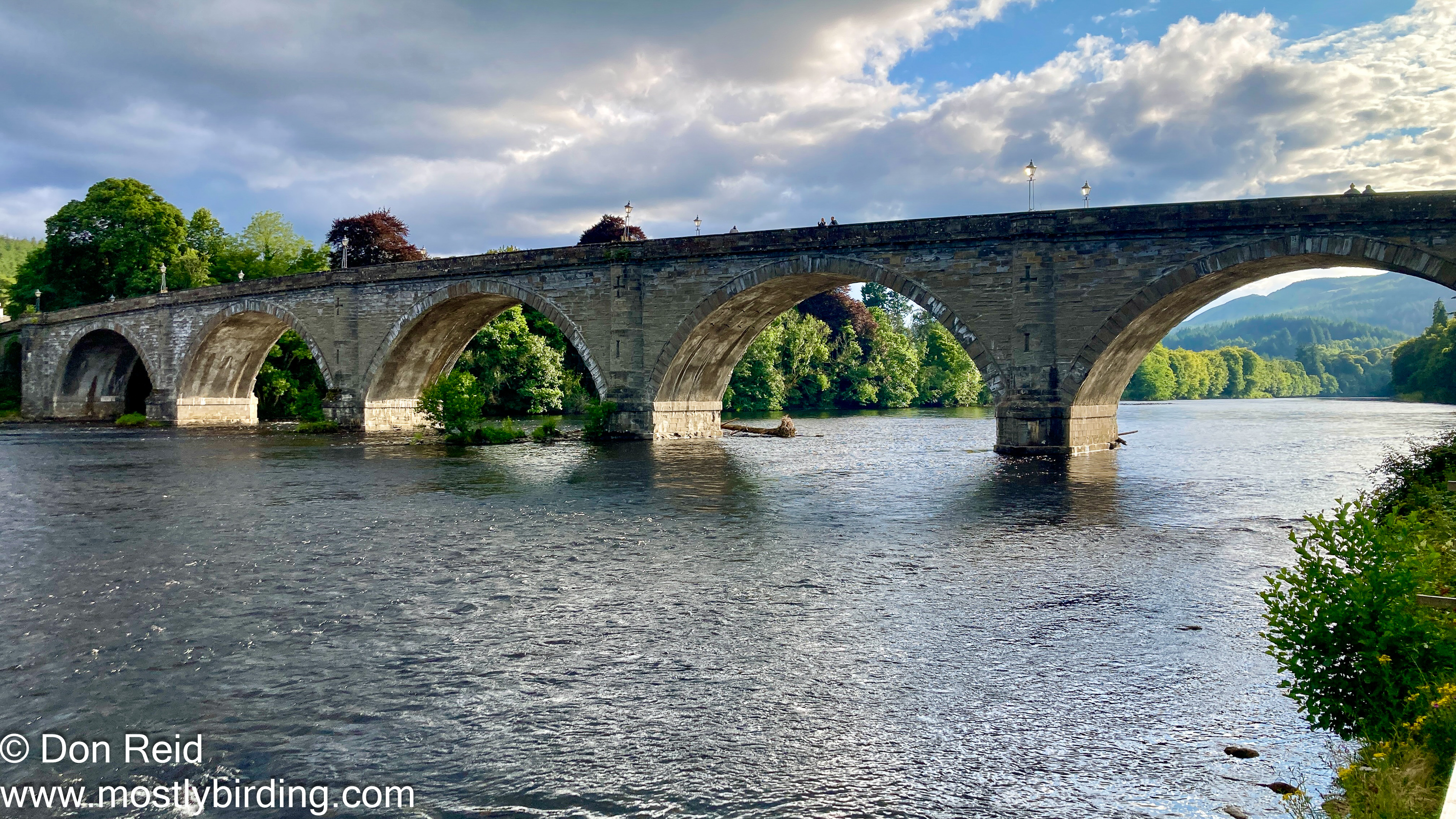
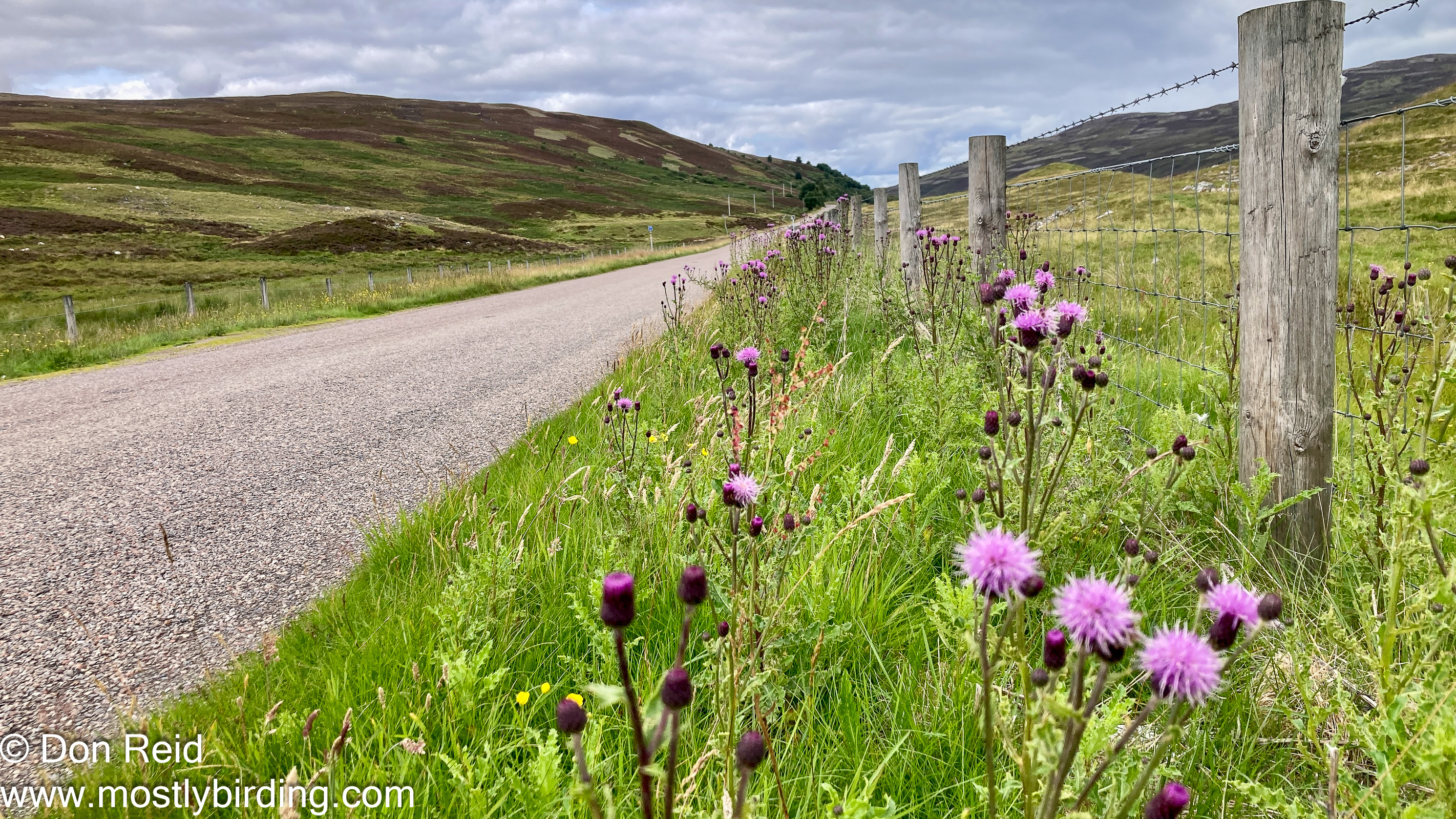
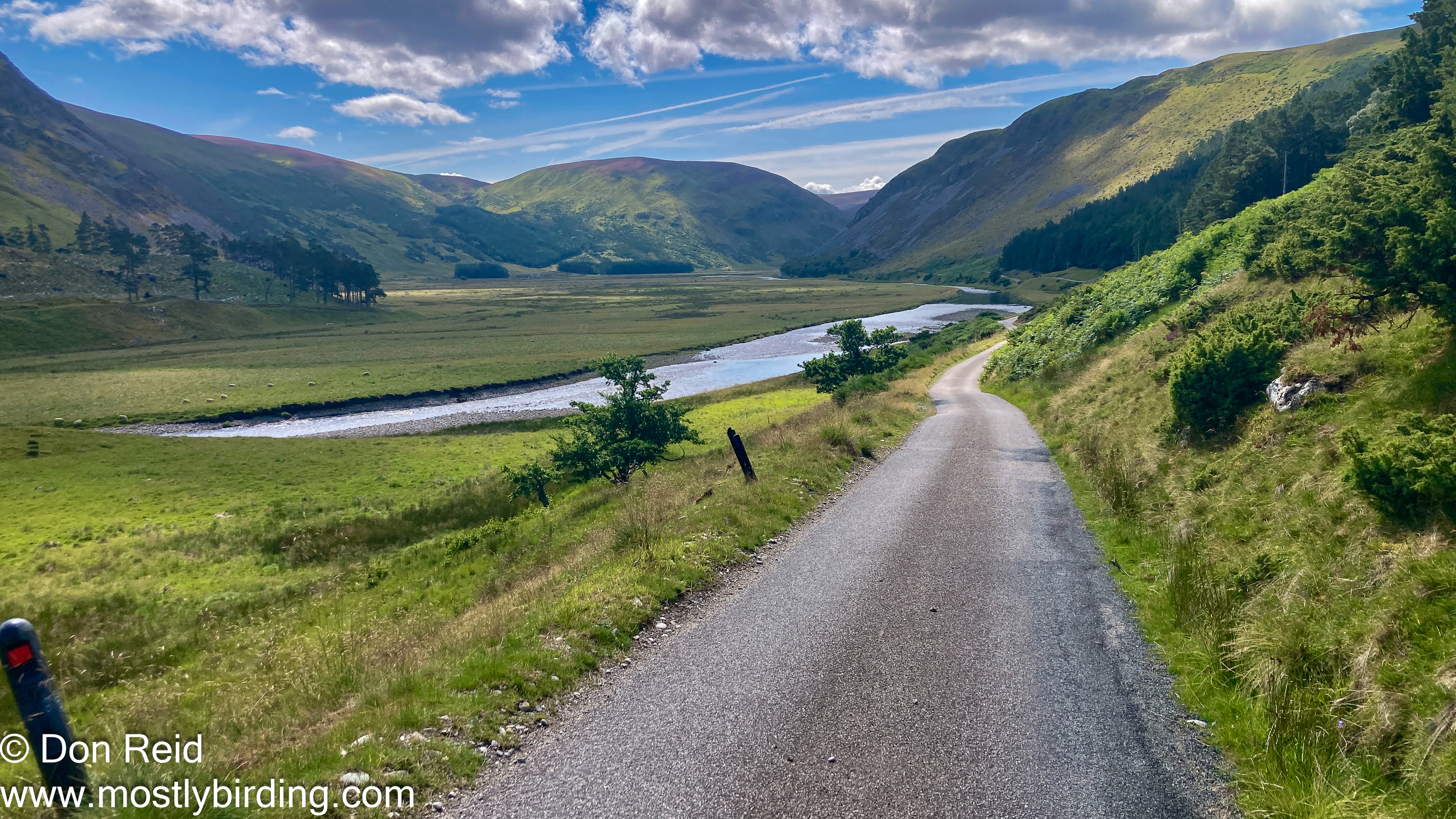
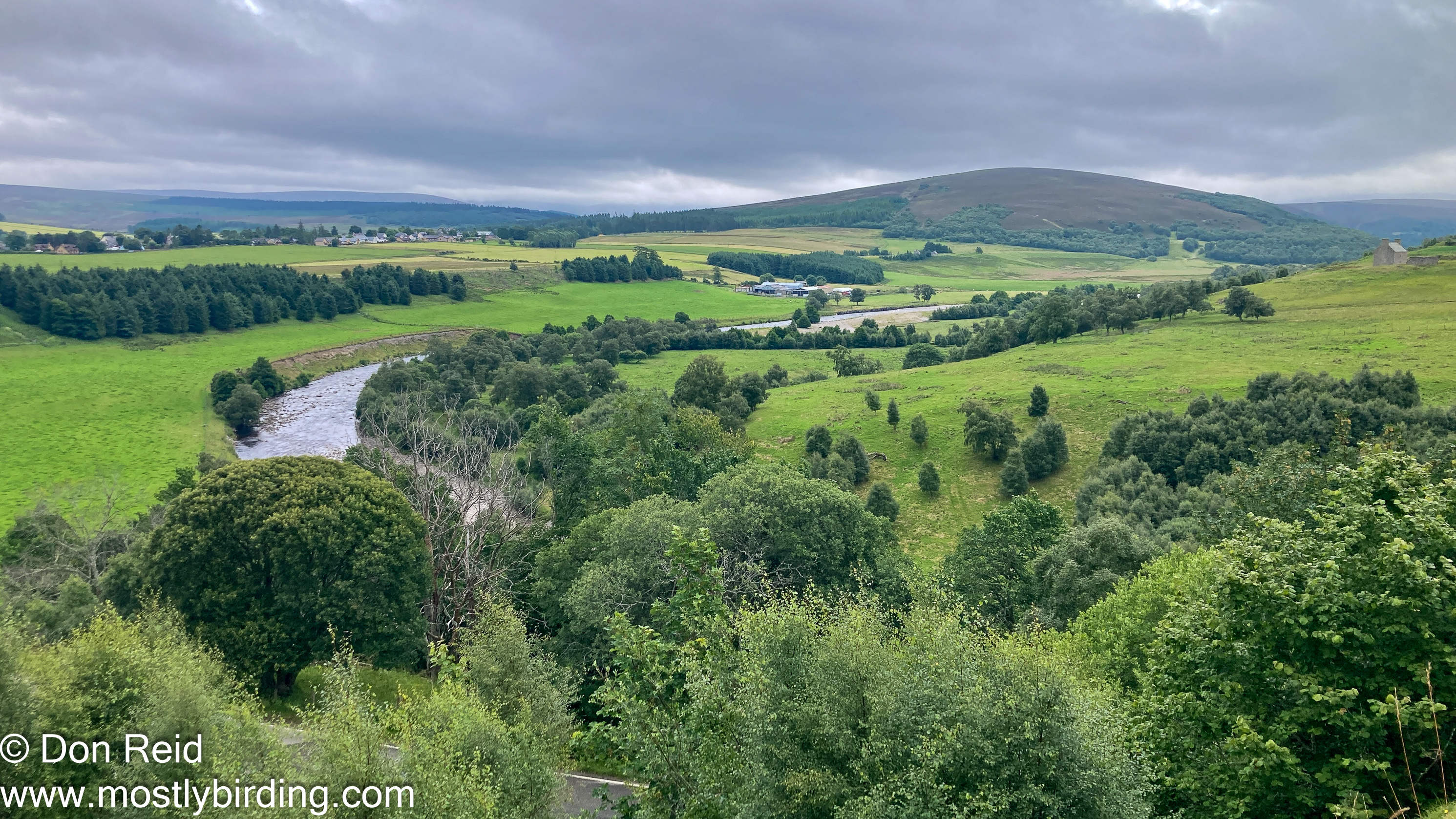
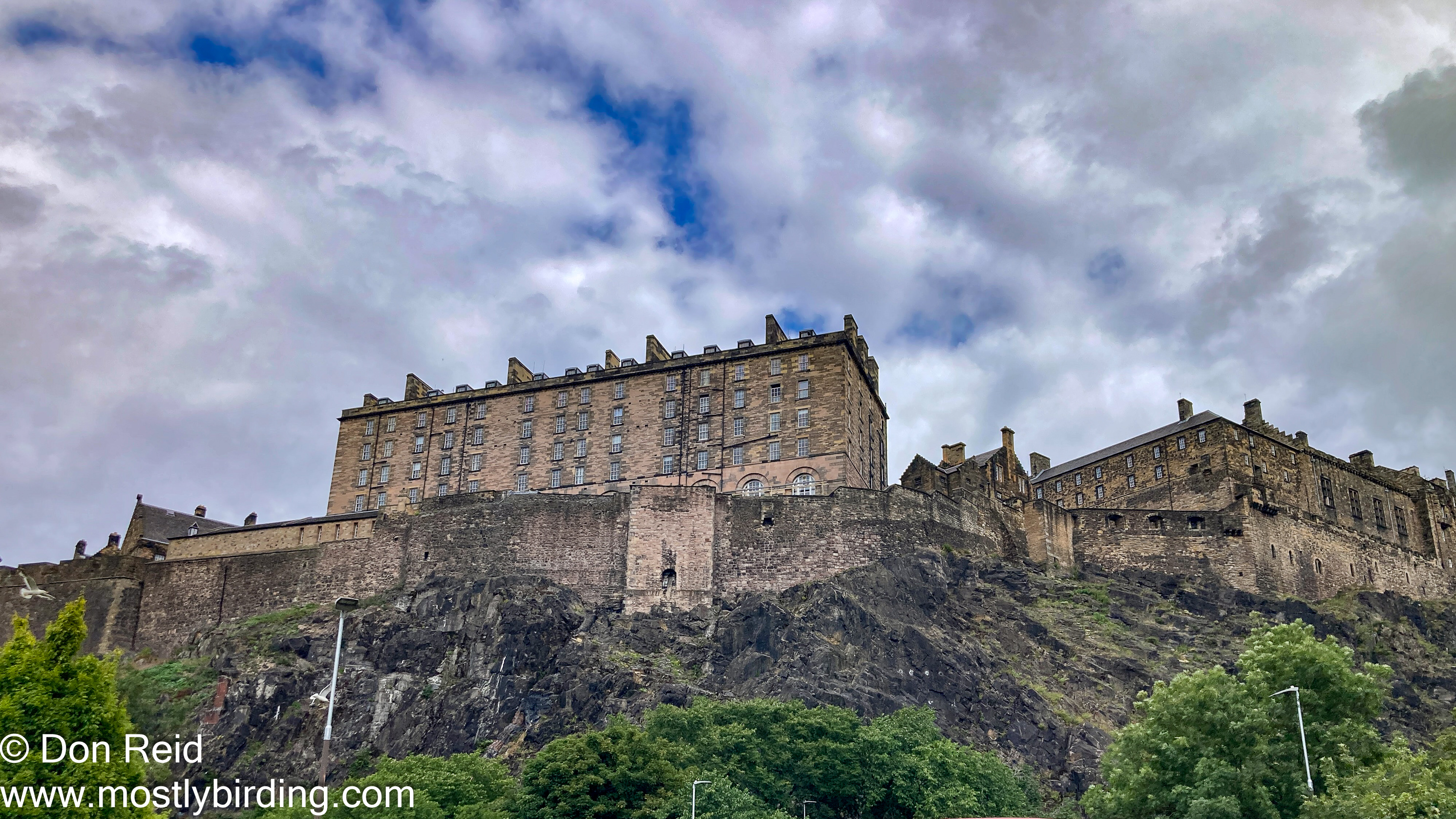
And then came the Scotland trip where I was spoilt for choice when it came to striking scenery – here is a selection of the places I visited or simply stopped to admire

River Tay, Dunkeld
Genl Wade’s Military Road, Dalwhinnie
River Feshie, Feshiebridge
Findhorn River Valley
River Avon, Highland Tourist Route
Edinburgh

The Birds

I spend a lot of my photographic energies on capturing images of birds, often with mixed results. These are some of the better ones

Speckled Mousebird Colius striatus Gevlekte muisvoël, Mossel Bay Golf Estate
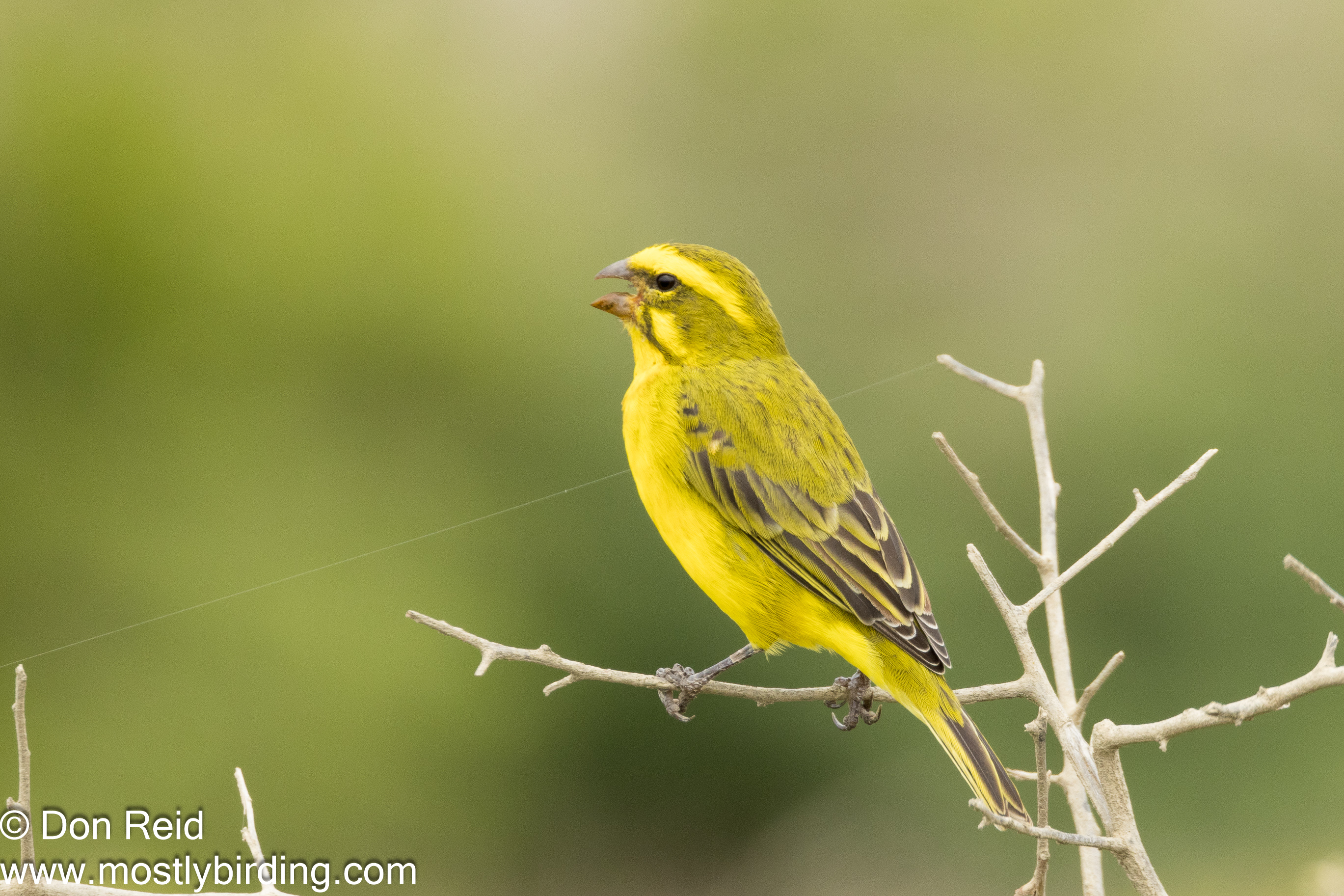
Yellow Canary Crithagra flaviventris Geelkanarie (race flaviventris), Gouritzmond
African Stonechat Saxicola torquatus Gewone bontrokkie (race torquatus), Great Brak Inland
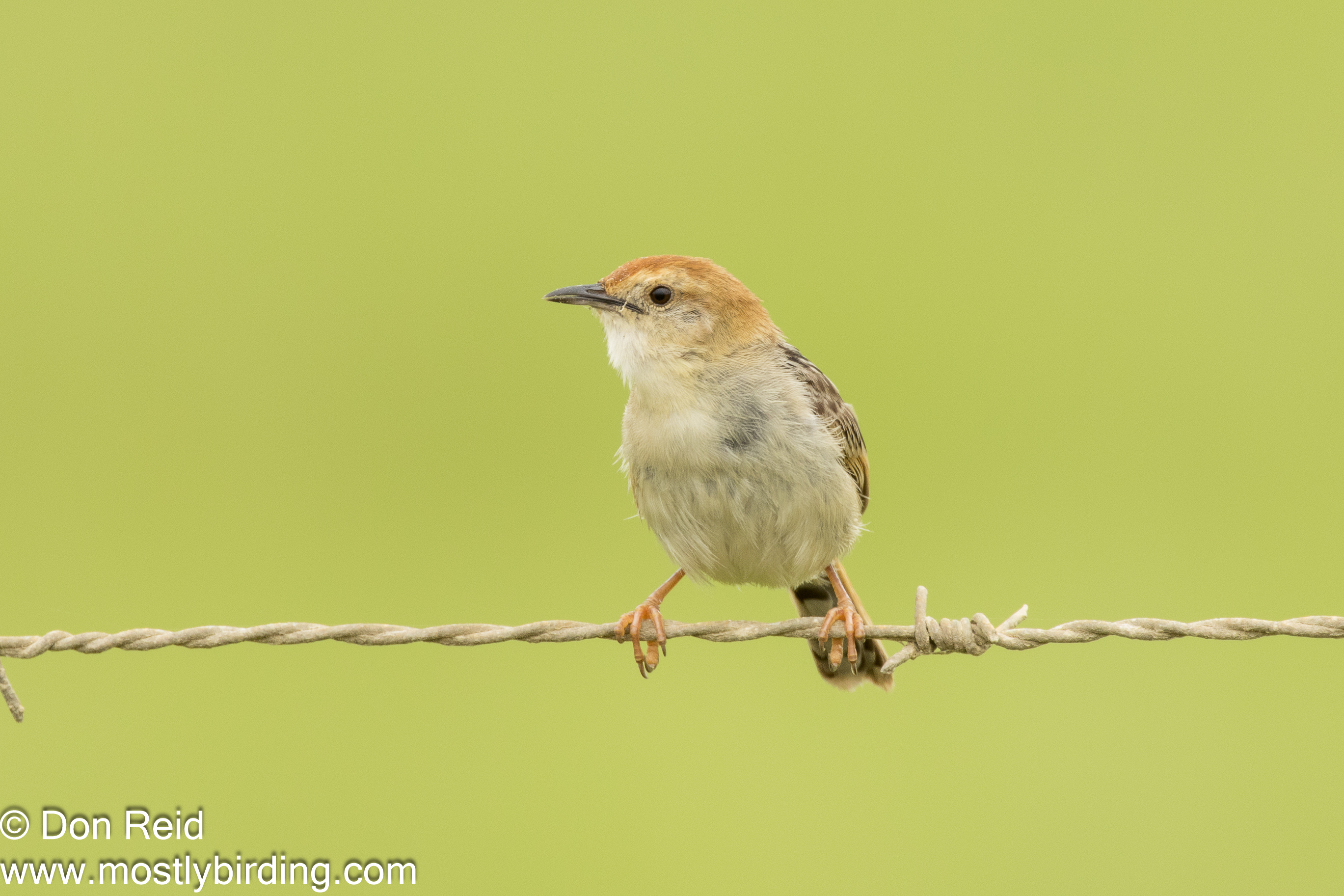
Levaillant’s Cisticola Cisticola tinniens Vleitinktinkie (race brookei), Great Brak Inland
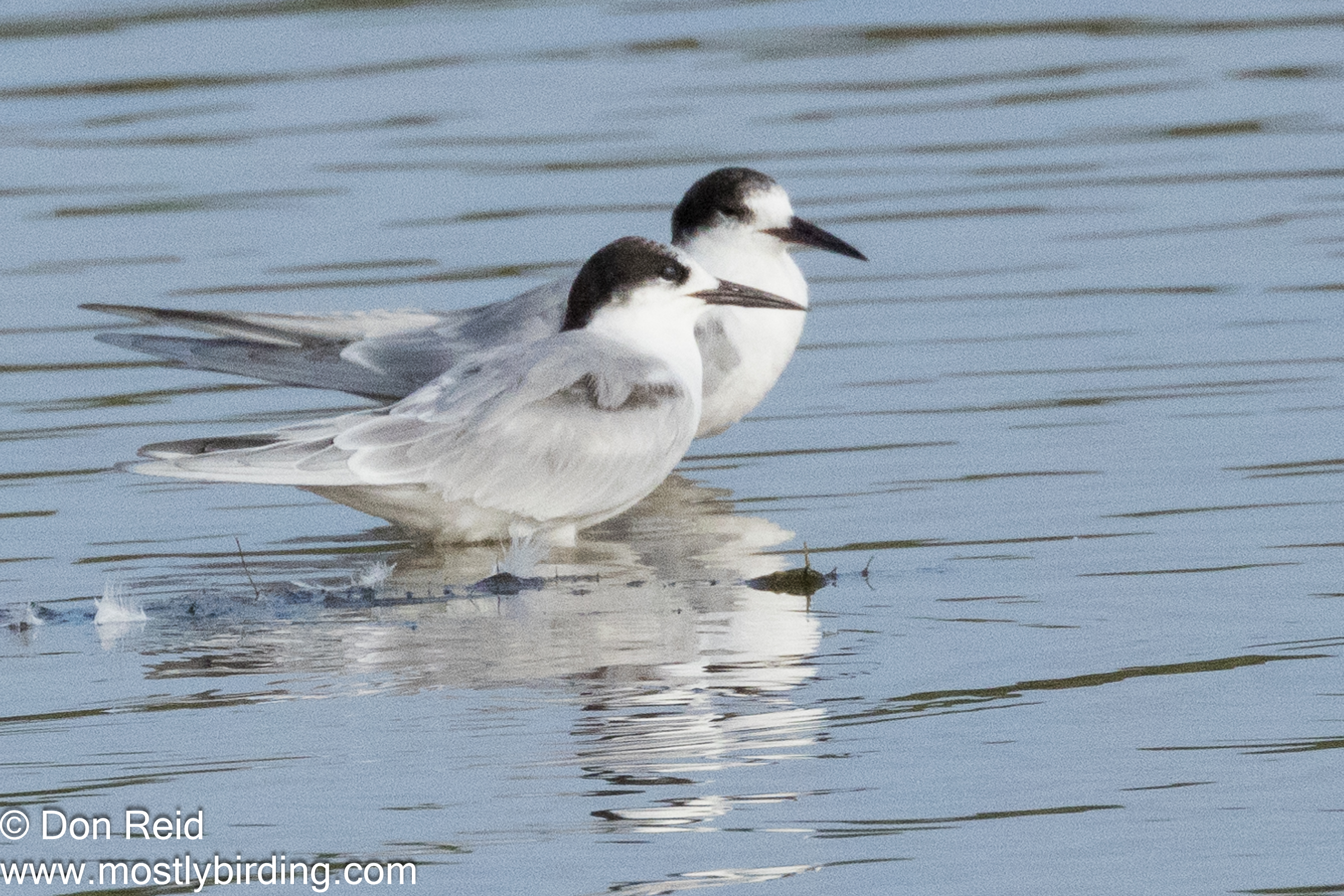
Common Tern Sterna hirundo Gewone sterretjie, Hartenbos River mouth
Common Greenshank Tringa nebularia Groenpootruiter, Hartenbos River mouth
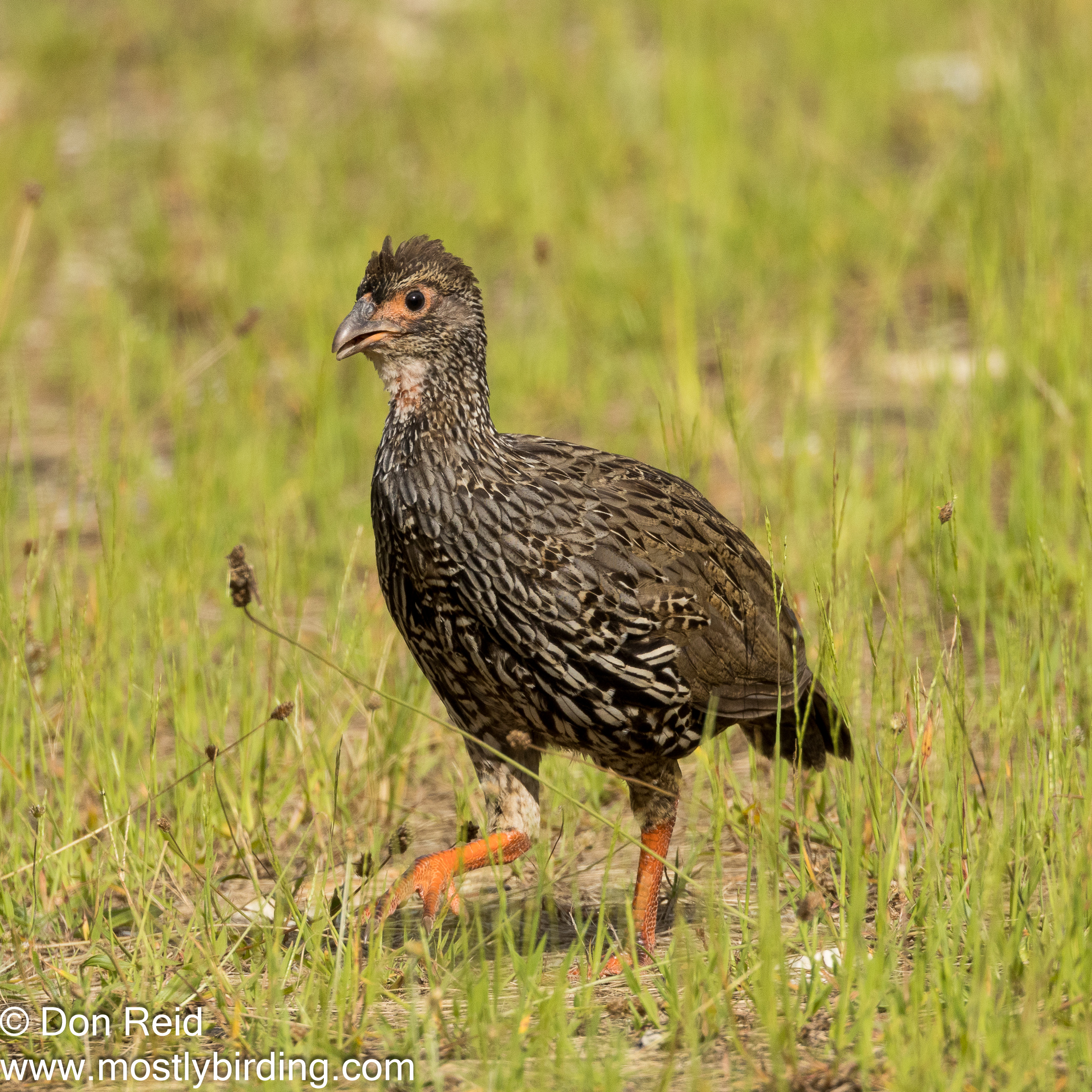
Red-necked Spurfowl Pternistis afer Rooikeelfisant (race castaneiventer) (Juvenile), Robinson Pass
Malachite Kingfisher Alcedo cristata Kuifkopvisvanger, Great Brak inland
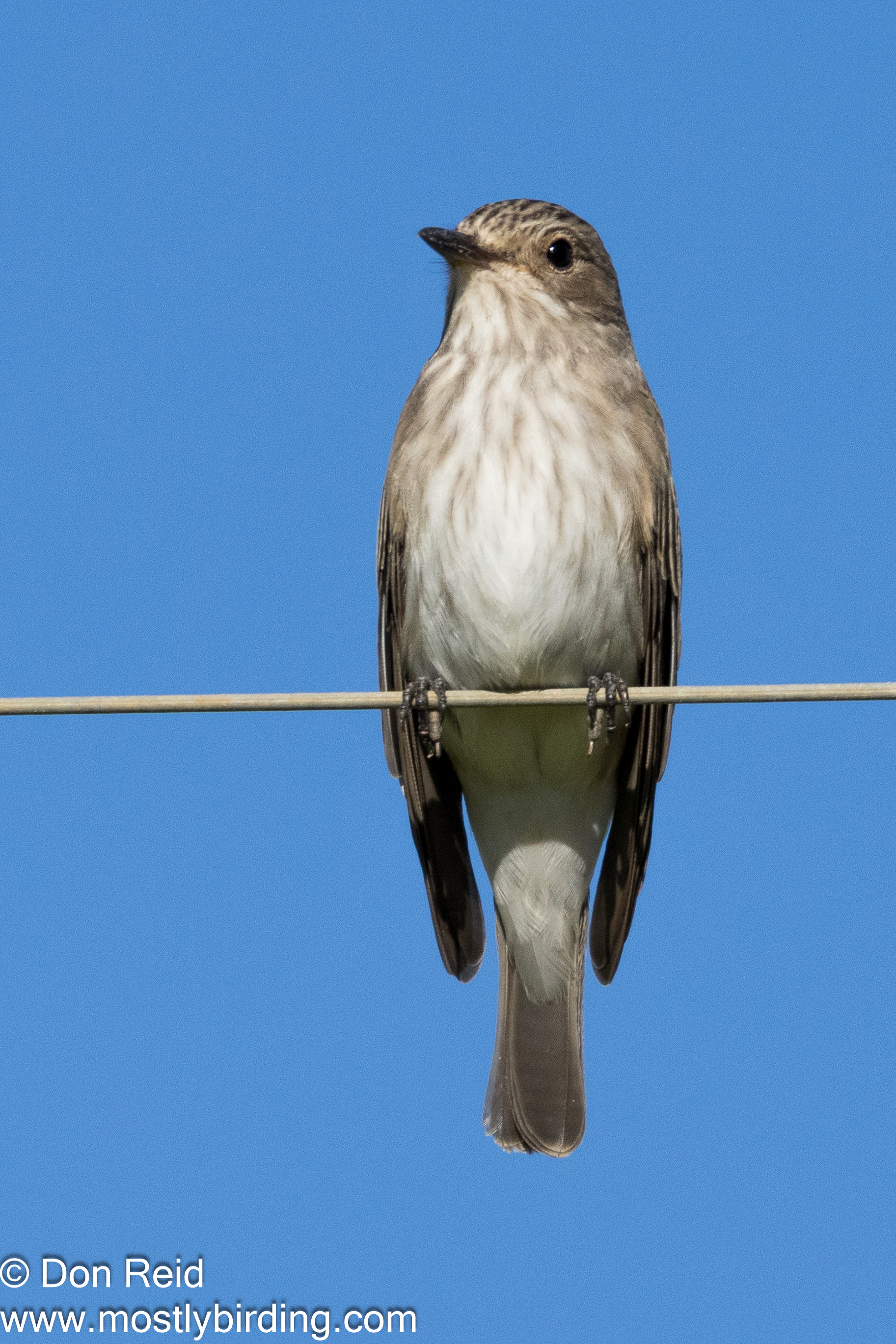
Spotted Flycatcher Muscicapa striata Europese vlieëvanger, Friemersheim area
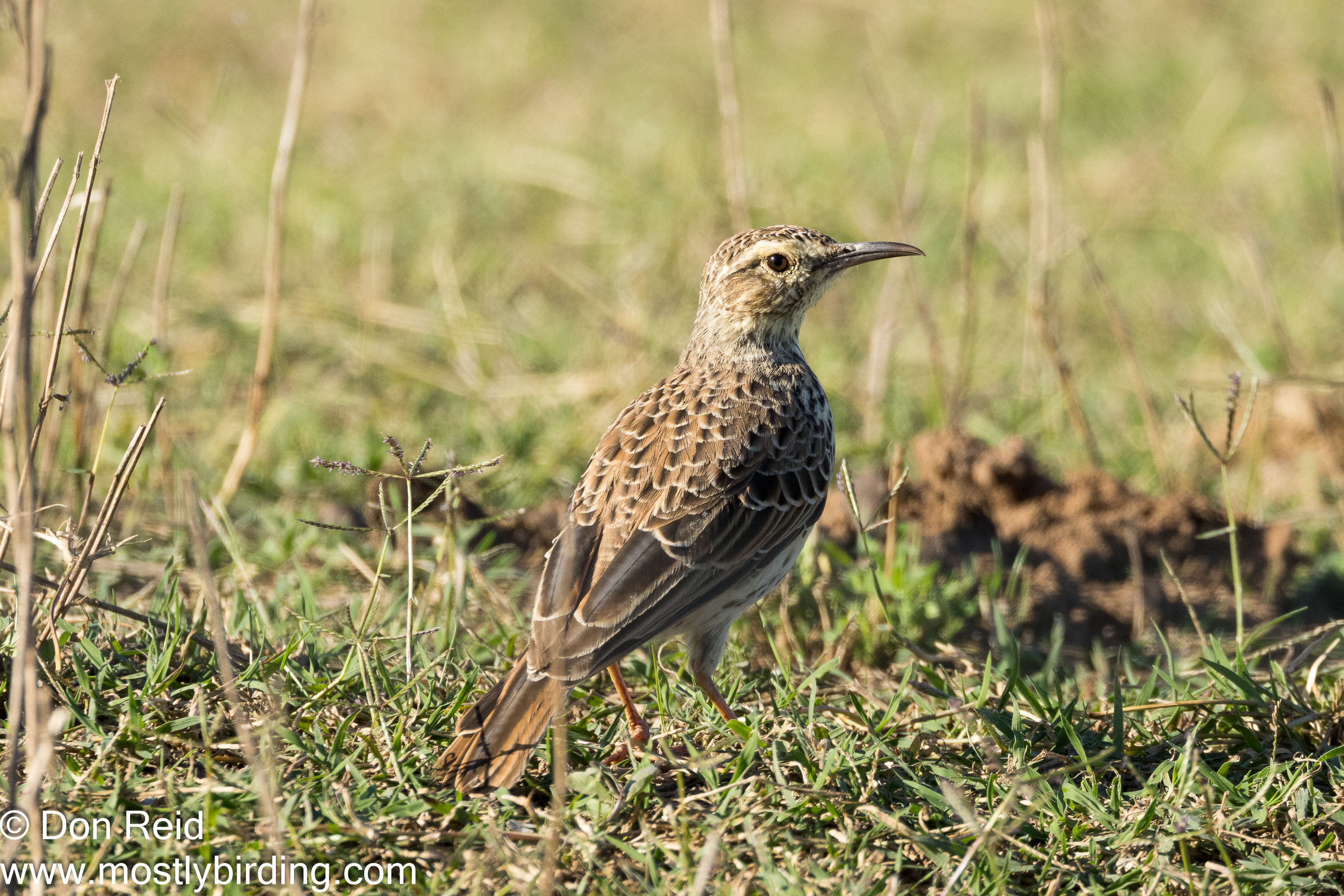
Agulhas Long-billed Lark Certhilauda brevirostris Overberglangbeklewerik, Vleesbaai area
Cape Teal Anas capensis Teeleend, Great Brak
Kittlitz’s Plover Charadrius pecuarius Geelborsstrandkiewiet, Voelvlei near Vleesbaai

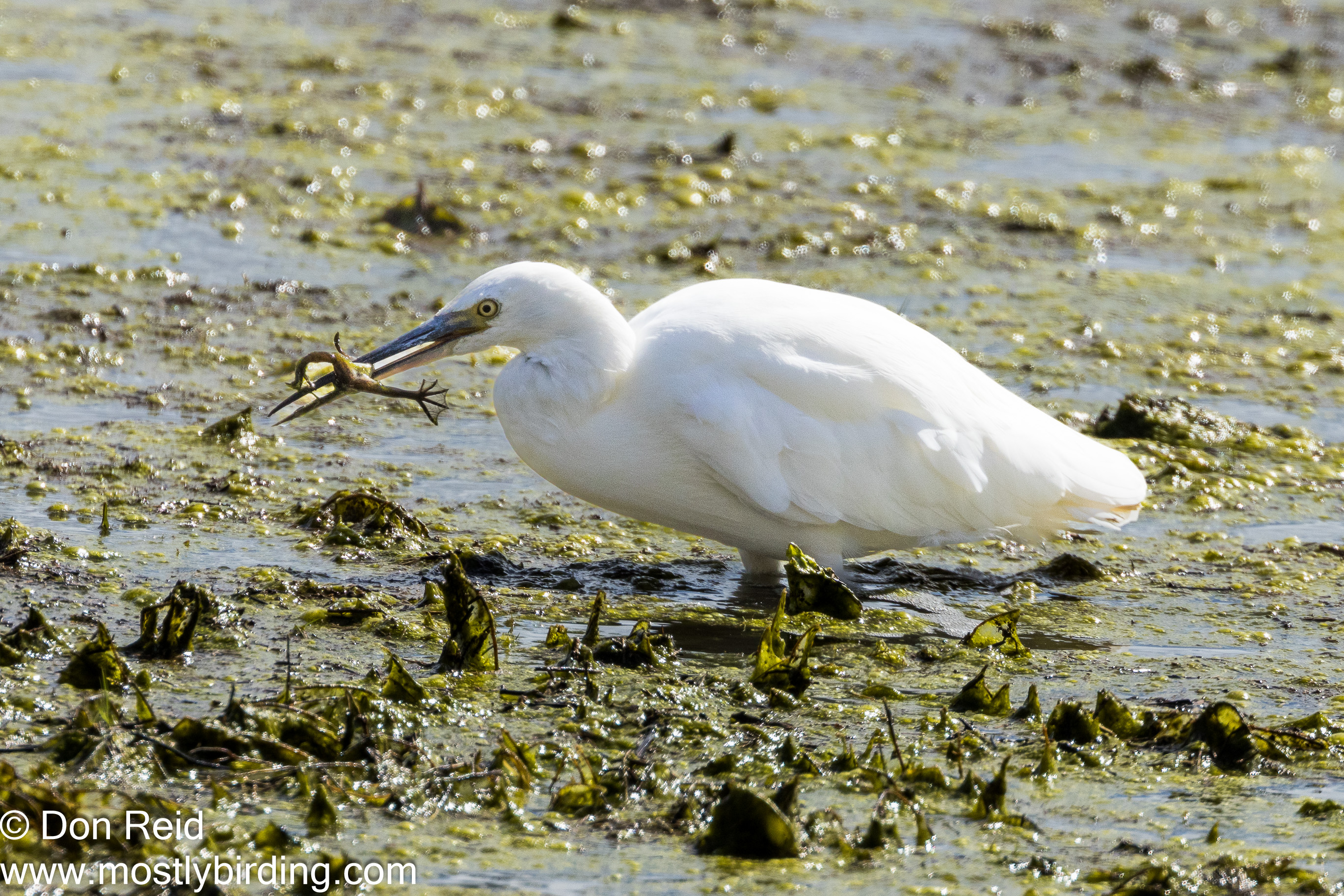
Have a closer look at what this Little Egret has caught

Little Egret Egretta garzetta Kleinwitreier, Voelvlei near Vleesbaai

On one of my last atlasing outings for the year I came across this delightful pair of protective Blue Cranes looking after junior

North of Herbertsdale

My trip to Scotland was a great opportunity for some birding in a different environment and I grabbed the chance with both hands

Chaffinch Fringilla coelebs Loch of the Lowes

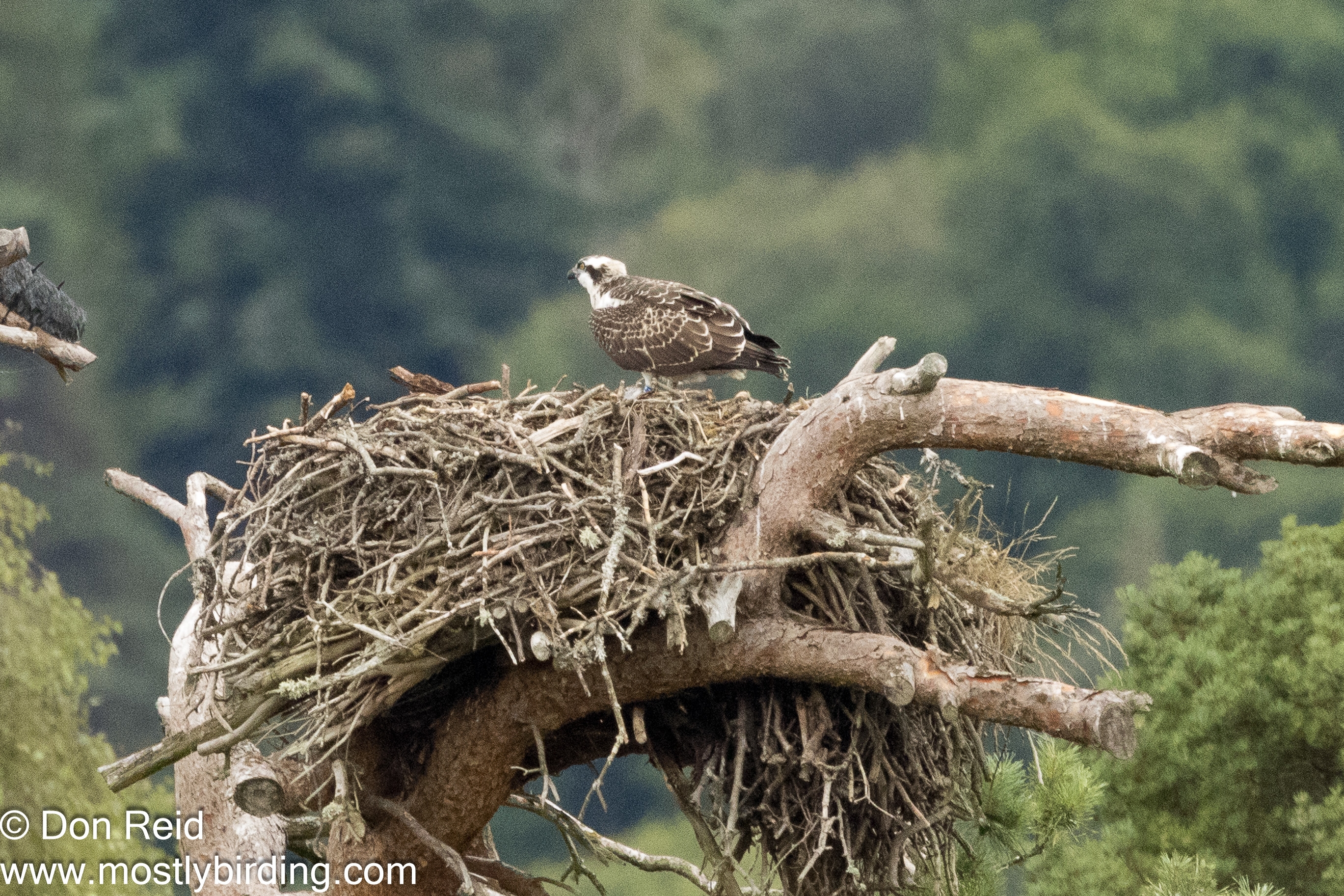
This is a sight we don’t get to see in southern Africa – a juvenile Osprey at the nest, waiting to be fed

Osprey (Juvenile) Pandion haliaetus Loch of the Lowes

This cheeky Robin hopped onto the table at a roadside service centre where I stopped for coffee

European Robin Erithacus rubecula Lunch stop on A9
Common Goldeneye Bucephala clangula Avielochan
Little Egret Egretta gazetta River Eden Estuary
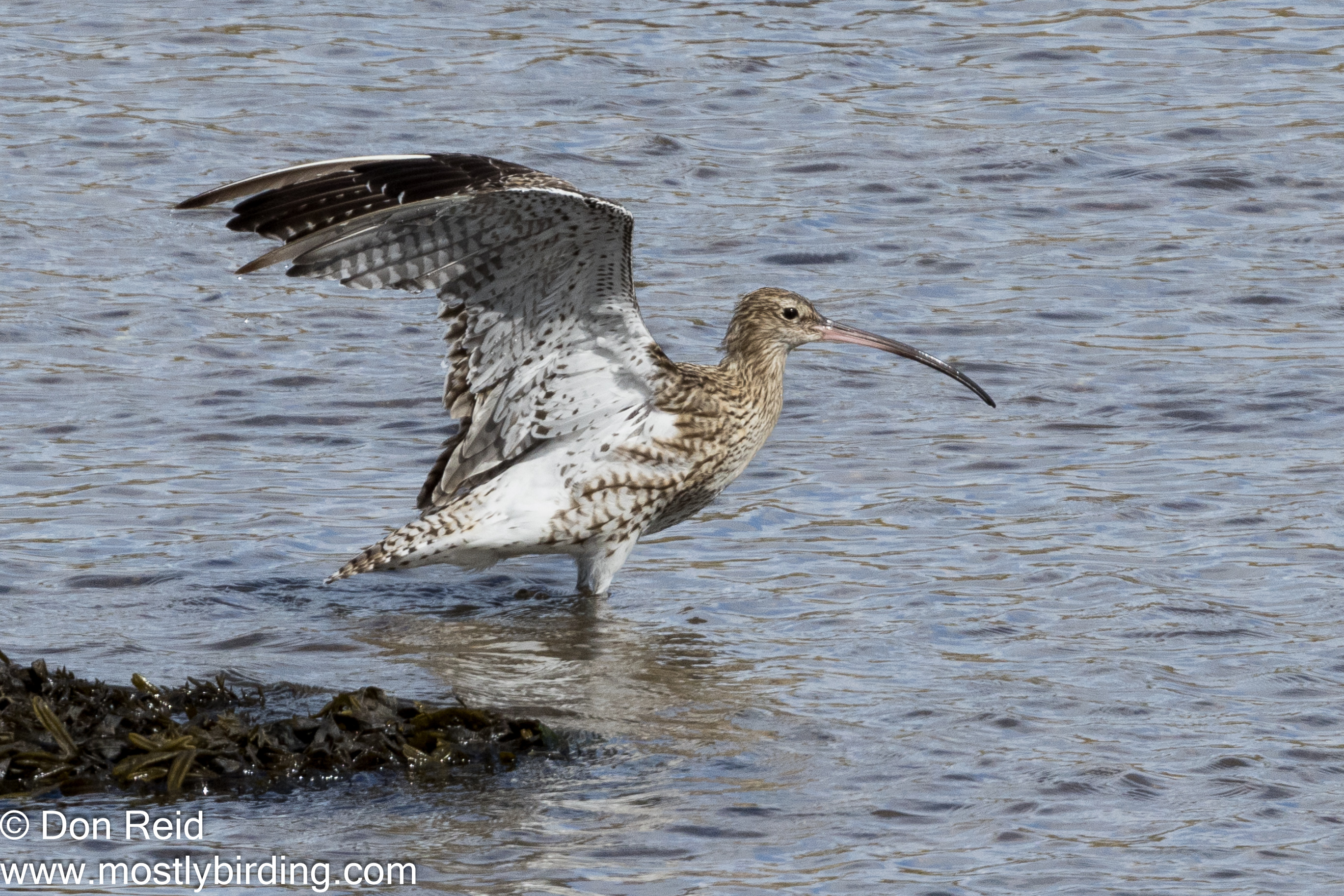
Eurasian Curlew Numenius arquata River Eden Estuary

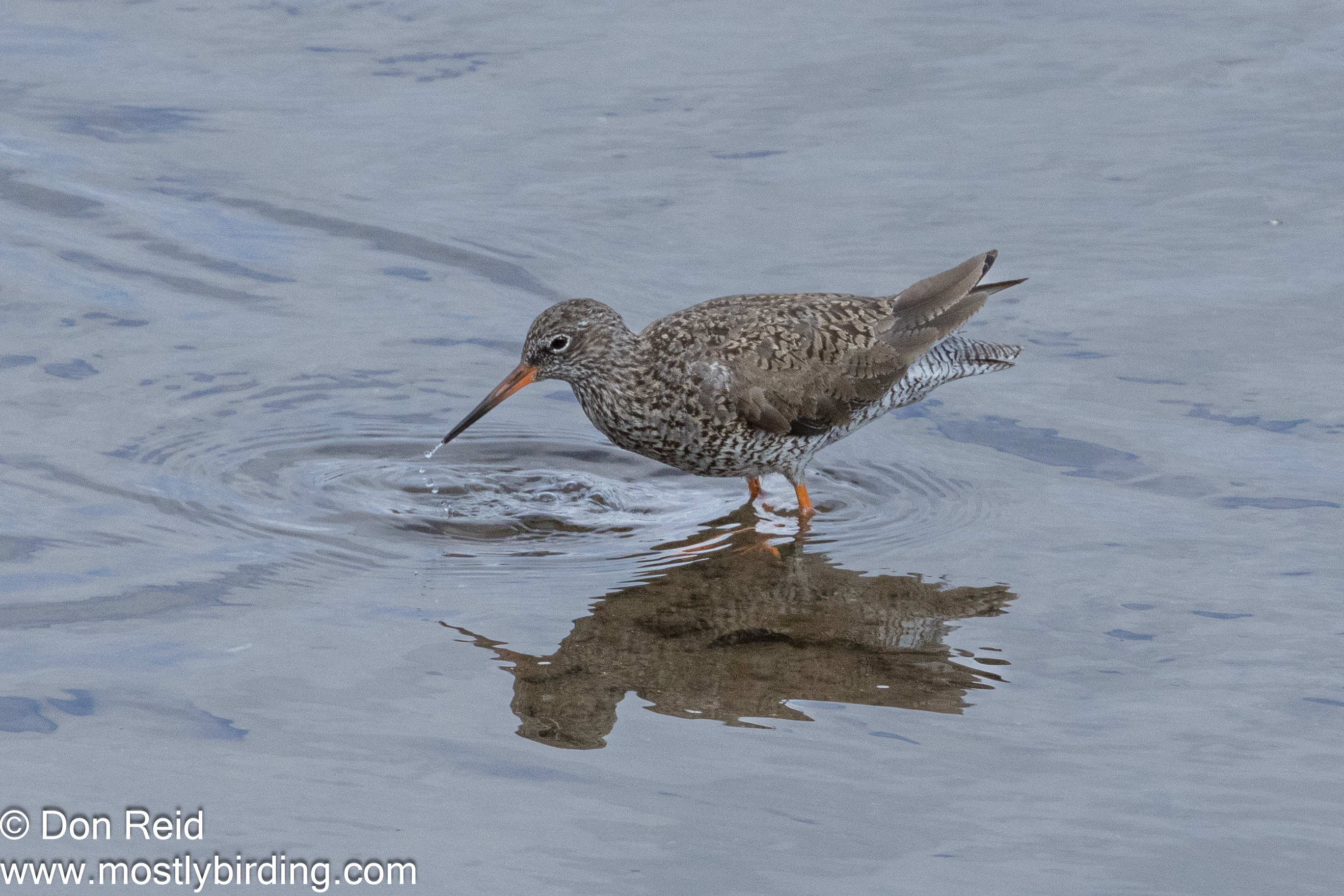
It was a special treat to see Common Redshanks by the hundred at River Eden Estuary – this is a bird rarely seen in southern Africa

Common Redshank Tringa totanus River Eden Estuary

The Mossel Bay area attracted a few rare vagrants during the year and I was happy to be able to see them and get some reasonable photos

Lesser Sand Plover Charadrius mongolus Mongoolse strandkiewiet, Klein Brak vlei
Buff-breasted Sandpiper Tryngites subruficollis Taanborsstrandloper, Voelvlei near Vleesbaai

Birds in Flight

Birds in flight – or BIF as it’s known – is the most challenging aspect of bird photography, with a success rate of about 1 usable image for every 30 taken, based on my experience. In the same way as golfers seek the perfect shot and surfers the perfect wave, so are bird photographers always on the look out for a better photo.

Here are some of the year’s BIF images that worked

Hartlaub’s Gull Chroicocephalus hartlaubii Hartlaubse meeu, Hartenbos River mouth
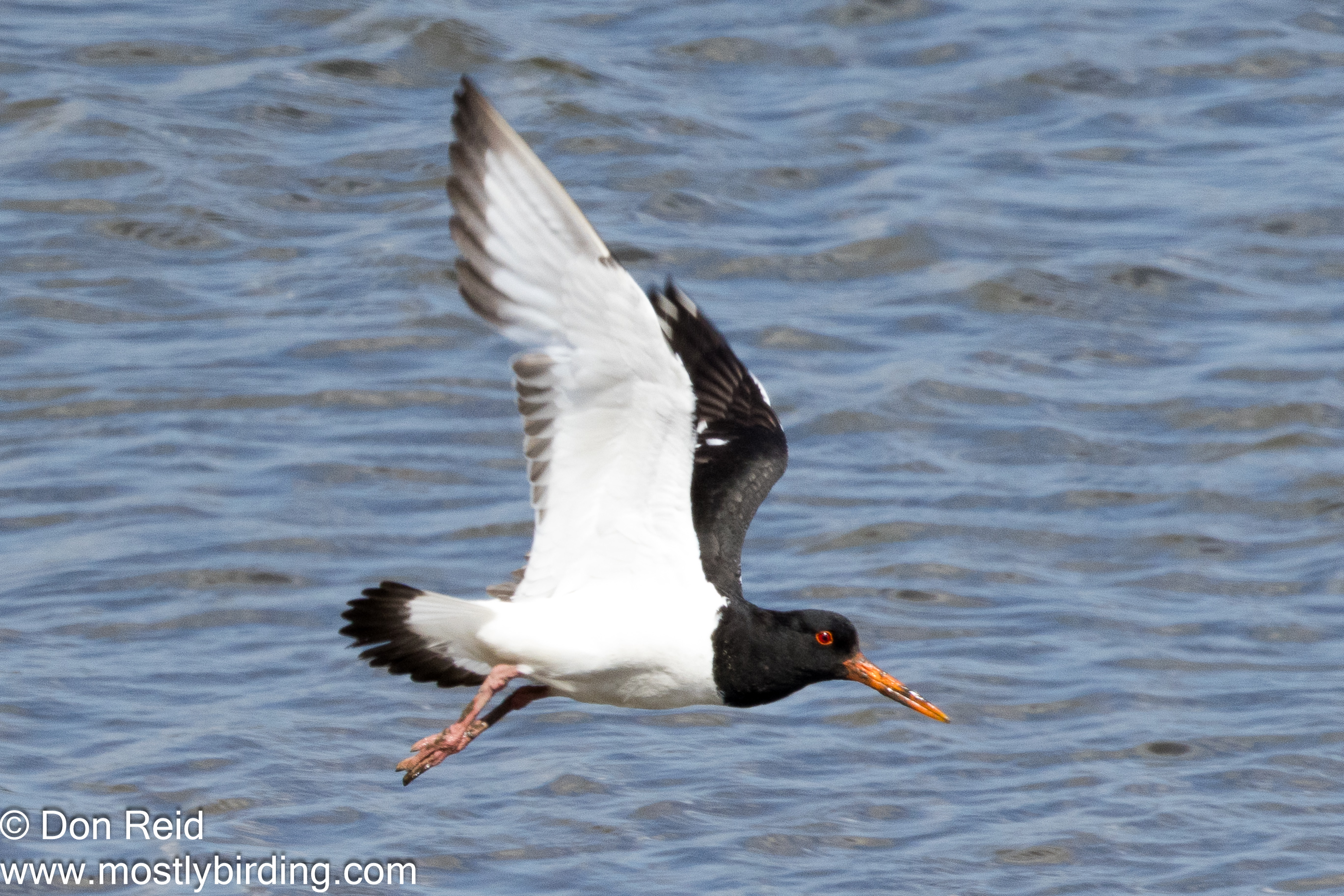
Eurasian Oystercatcher Haematopus ostralegus River Eden Estuary
Common Redshank Tringa totanus River Eden Estuary
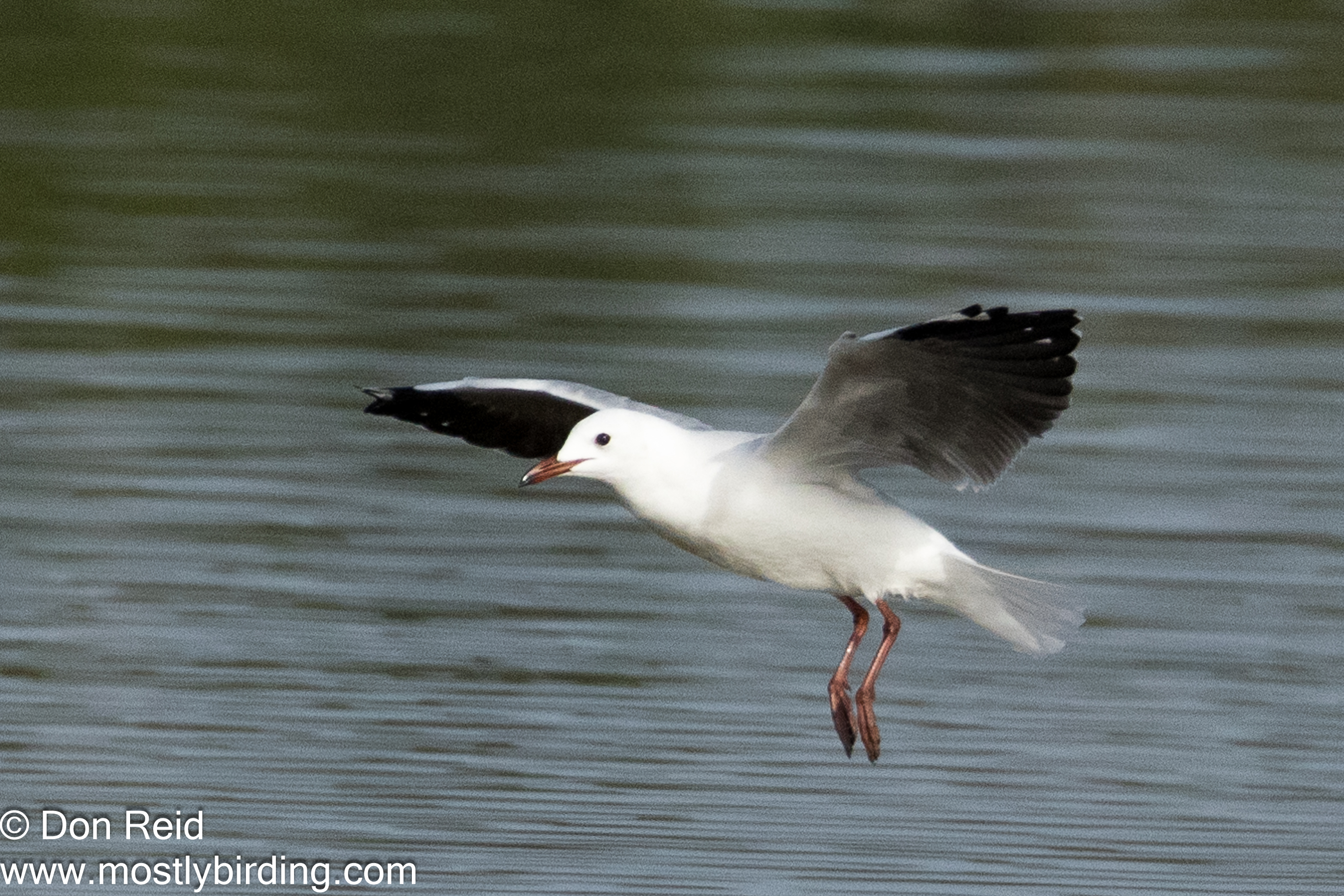
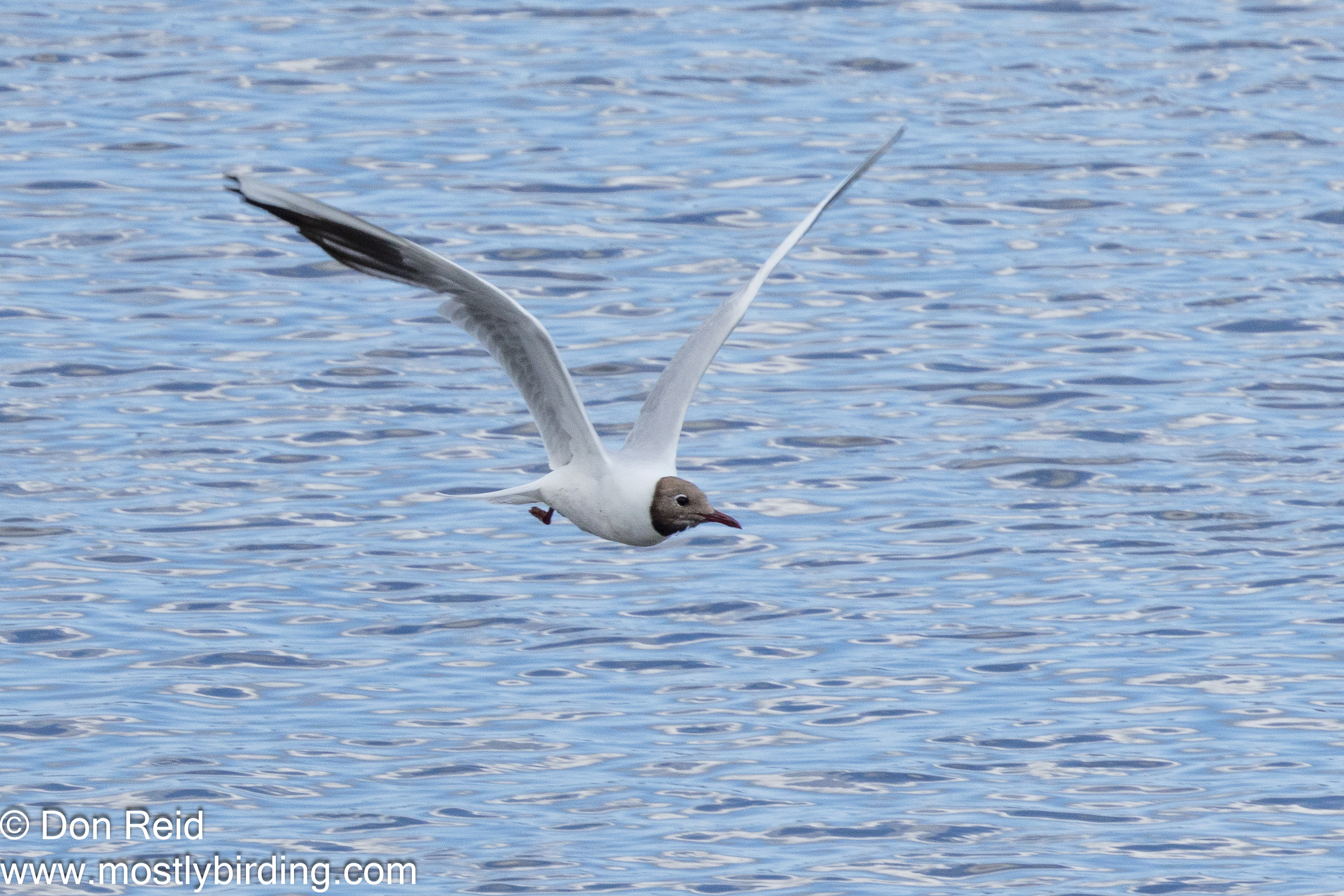
Black-headed Gull Chroicocephalus ridibundus River Eden Estuary
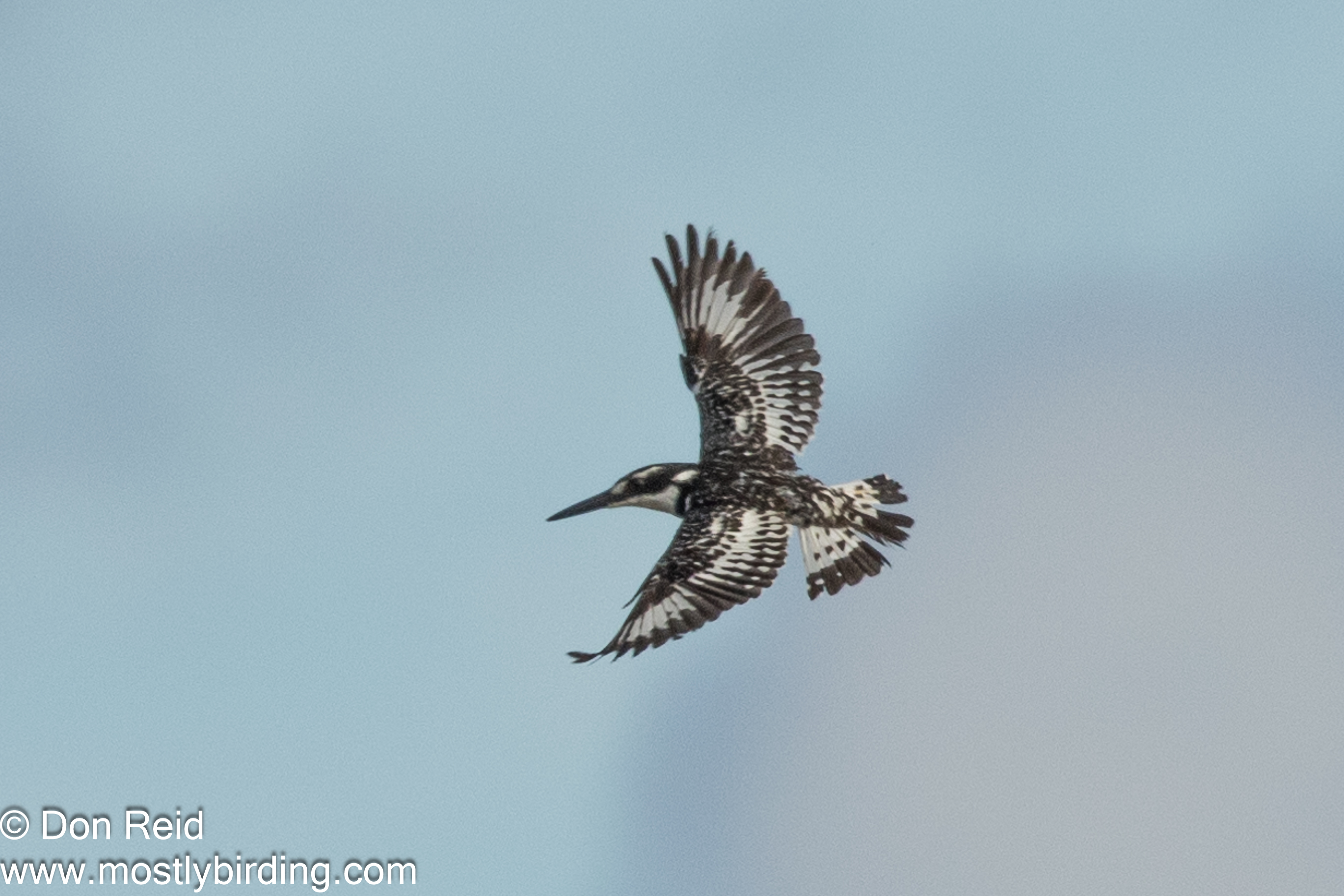
Pied Kingfisher Ceryle rudis Bontvisvanger, Gouritzmond

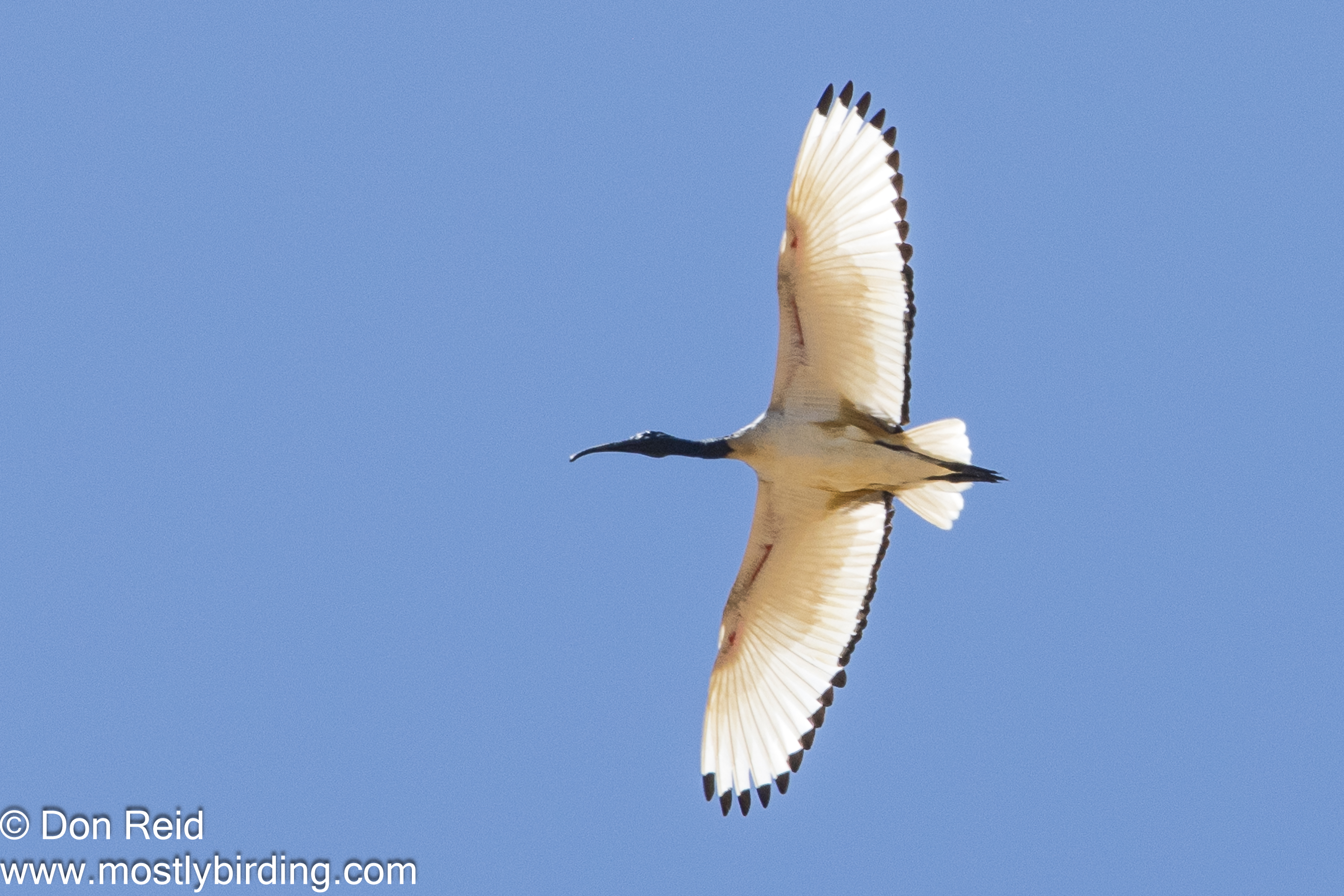
A different view of a Sacred Ibis – it was soaring like an eagle

African Sacred Ibis Threskiornis aethiopicus Heilige ibis, Arniston-Bredasdorp
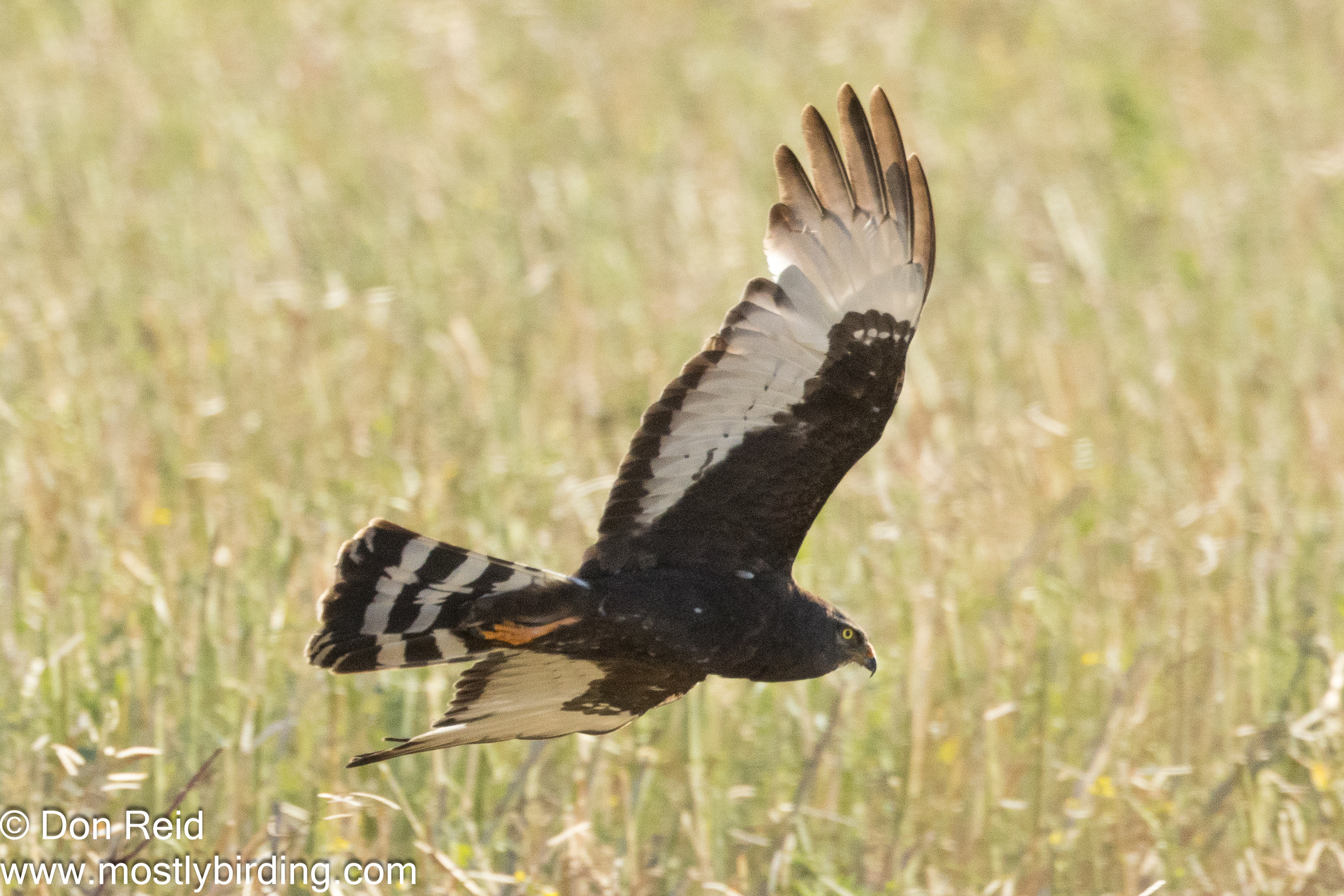
Black Harrier Circus maurus Witkruisvleivalk, Vleesbaai area

The Wildlife

As I mentioned we did not get to visit a single national park during the year so I had to be content with some not-so-wildlife ….

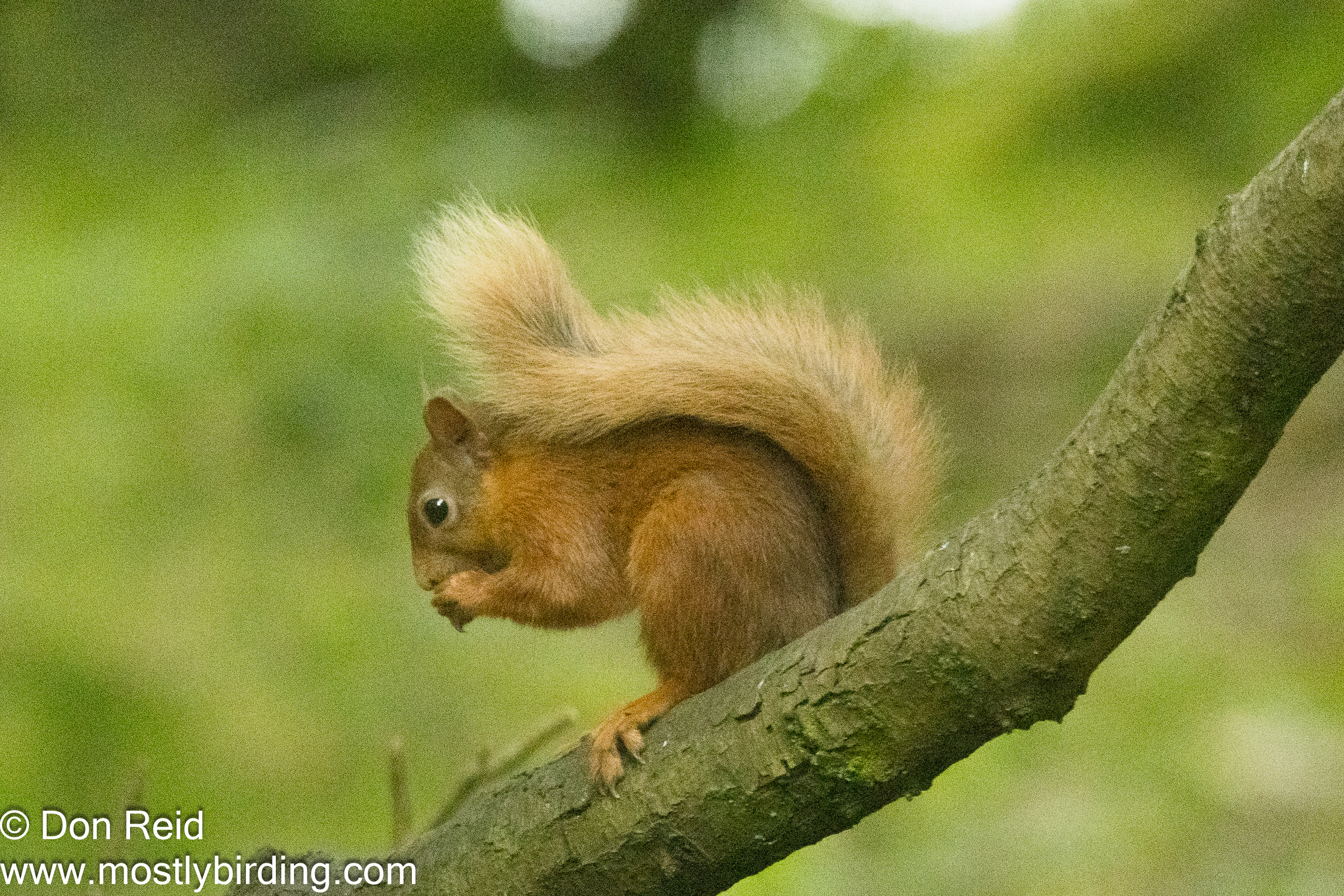
Red Sqirrel Sciurus vulgaris Loch of the Lowes
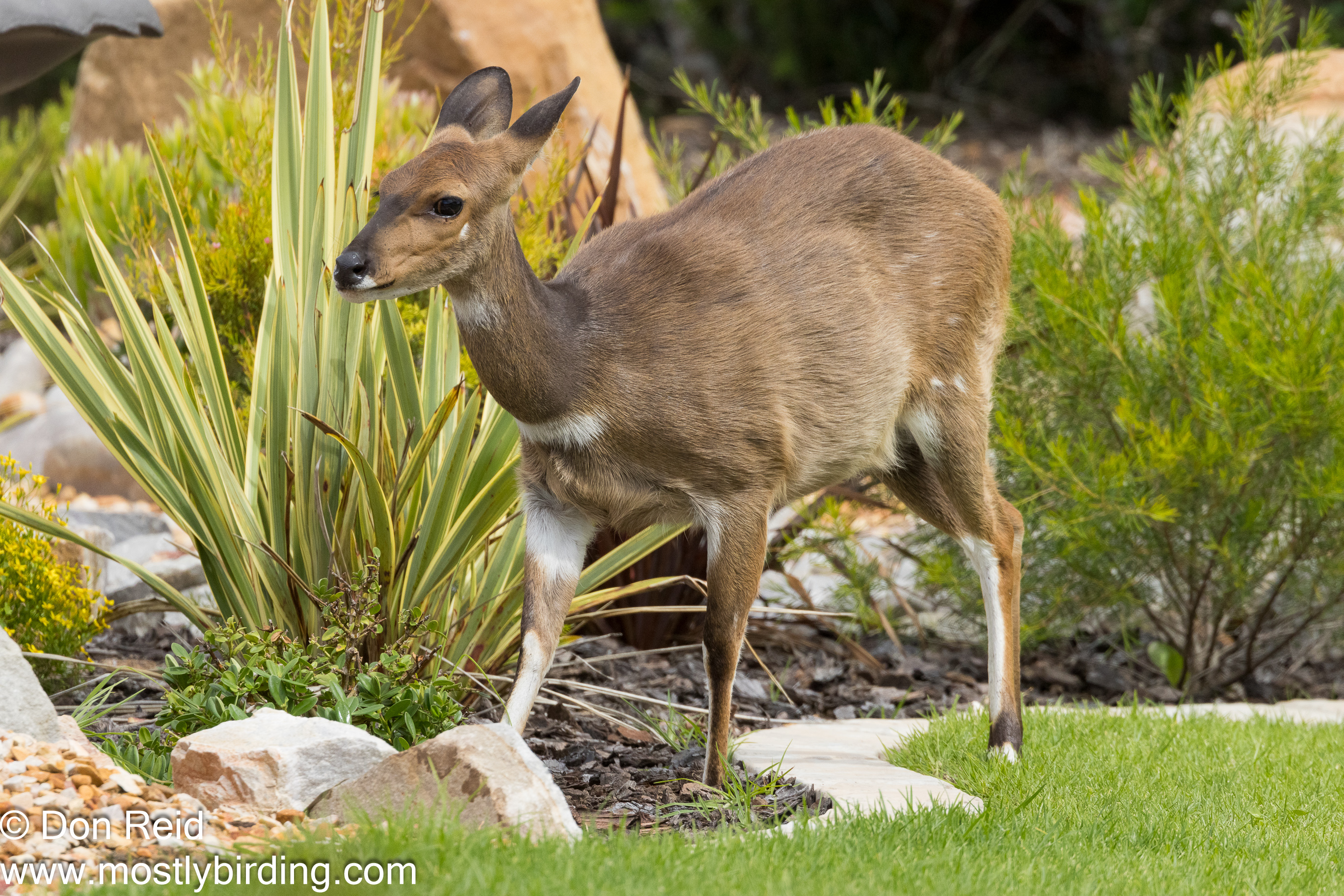
Bush buck, Mossel Bay Golf Estate

The Other Stuff

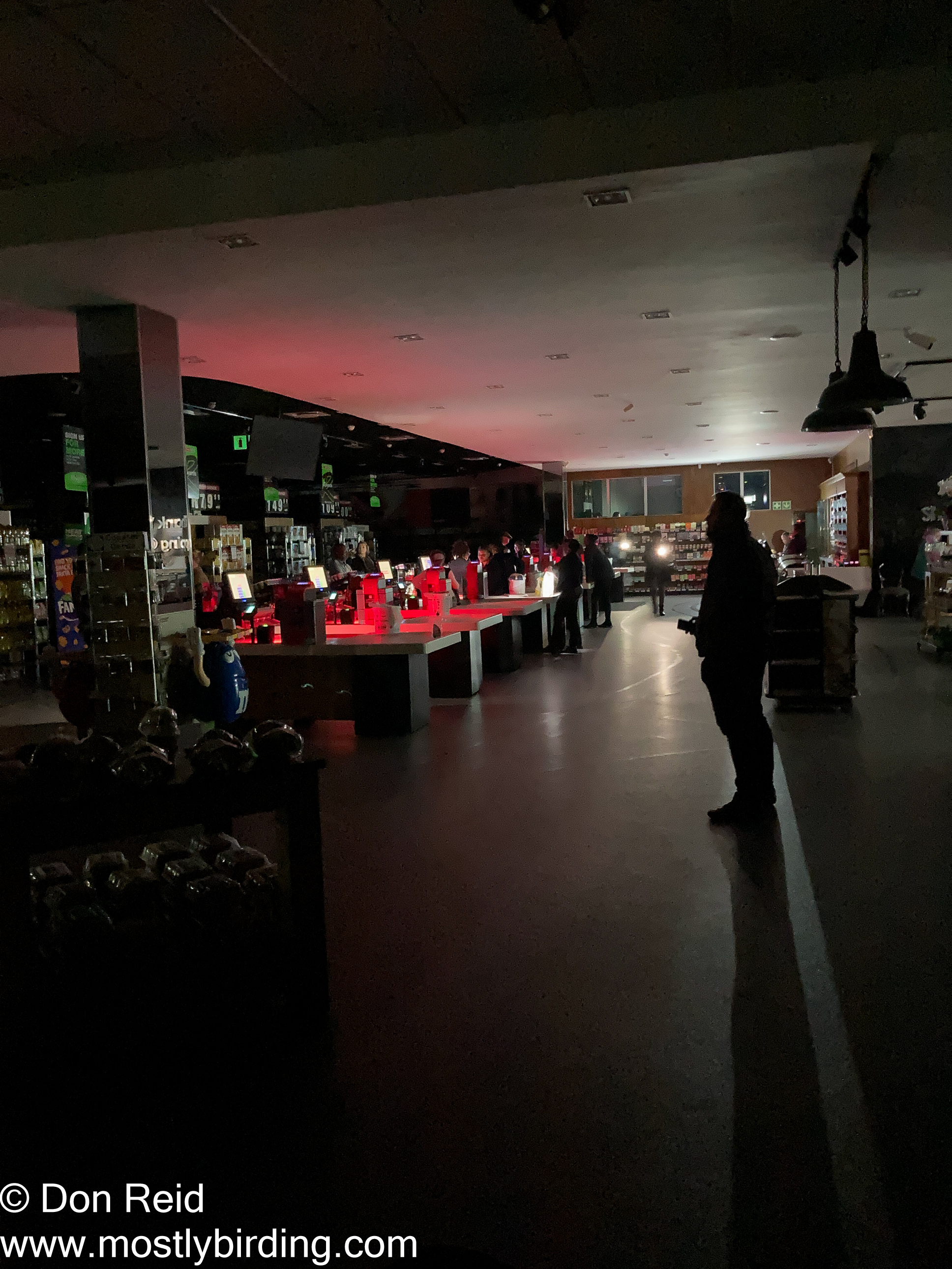
South Africa’s infamous load shedding (electricity cuts) got worse this past year – I took this photo in our local supermarket just after the main lights went off, before the generators kicked in

Pretoria

This unusual image was taken in a local nature reserve after a heavy rainstorm, which swept a variety of debris down the stream that runs through the reserve ….

Faerie Glen NR

And finally, a quirky decorative topping to the post box in a Scottish village

Upper Largo

I can’t imagine a life without photography .. or birding of course

300 Up! And a special bird to celebrate

My 300th post is a short one with just one photo of one bird – but I have reason to celebrate both…

The bird in question is a Common Quail – so what’s the big deal I hear you think. Well if I tell you that I’ve heard this bird calling a few hundred times during my birding and atlasing travels over 35 years or so, but have seen it just once before, so briefly that there was no chance to get a photo, then you may appreciate my excitement about my experience last week.

I was out atlasing in the early morning not far from our new home in Mossel Bay and heard the familiar call of Common Quail almost every time I stopped. There were numbers of Larks and other birds in the gravel road and along the verges, then I noticed something different up ahead and raised my binos once more – it was a Common Quail, in fact a pair that were walking along the edge of the gravel amongst grass tufts.

With my heart pumping I grabbed my camera, checked settings and fired away even though the Quails were not ideally positioned and not close enough to achieve sharpness, but I was ecstatic that I had at last seen this bird clearly and at least had a reasonable record photo.

The Eyes Have it! (Part 4)

Another species that fits the description of birds with striking eyes is the diminutive Cape Batis

Cape Batis (Kaapse bosbontrokkie) Batis capensis

Where to find them

The Cape Batis occurs mainly, but not exclusively, in forest habitat – I have come across them in bushy areas not 200m from our Mossel Bay home and in various other locations outside ‘proper’ forests.

Distribution is confined to southern Africa as shown on the map below – courtesy of Birds of the World.

What to Look for

Batises can be confusingly similar in appearance, but the Cape Batis is the only one with orange flanks and wing bar, while the male is told by the broad black band across its chest.

Cape Batis Batis capensis Kaapse bosbontrokkie (male), Friemersheim area

The Firefinch app refers to this species as the “standard” forest bird – common, bold, noisy and striking. It is an active bird, flitting between bushes with a ‘fripping’ sound caused by rapid beating of its tiny wings and can often be found at the centre of bird parties.

Cape Batis Batis capensis Kaapse bosbontrokkie (male), Friemersheim area

Getting the Photo

The images above were taken while atlasing in the Friemersheim area not far from George – I stopped to scan a forested patch next to the road when I noticed movement among the branches not far from where I was standing, and pointed the camera in the general direction just as a Cape Batis popped into view, posing in sunlight just long enough to get a few shots.

The Eyes Have it! (Part 3)

As a follow up to the previous posts on the subject of birds with striking eyes – here’s a look at another species, familiar to South African birders, with eyes that beg your attention –

Burchell’s Coucal (Vleiloerie)

Centropus burchellii

This is a species best known for its bubbling call from the depths of dense bush or trees – a call which Roberts VII describes as “like water being poured from a bottle”.


And that may be the only clue you get to its existence until, one day, you actually get a glimpse of the bird as it flies heavily from one bush then crashes clumsily into the next one and disappears again. This is a bird that does not crave attention as it goes about its daily routine of searching on the ground and in bushes for just about anything it can lay its claws on – rodents, reptiles, other birds, nestlings, frogs, snails, insects … etc

Distribution

Birds of the World (see footnote) – lumps two species together with a combined distribution across Africa and a narrow stretch of Arabia as per the map below.

Southern African birdlists separate the two species into :

Burchell’s Coucal — Centropus burchelli – with distribution from south-east Tanzania through Mozambique to the Western Cape in South Africa and including south-east Botswana

White-browed Coucal – Centropus superciliosus – with distribution from Yemen, south-west Arabia, Ethiopia south to Zambia, Angola and southern Africa

Getting the Photo

As mentioned above, this is a fairly secretive species so when the opportunity arises one has to be quick off the mark to get a decent photo

I was fortunate enough to have such an opportunity recently while atlasing in the area east of Friemersheim in the southern Cape. I was driving slowly along a dirt road and had just passed a small stream when I spotted movement in the long grass at the roadside and stopped to look further.

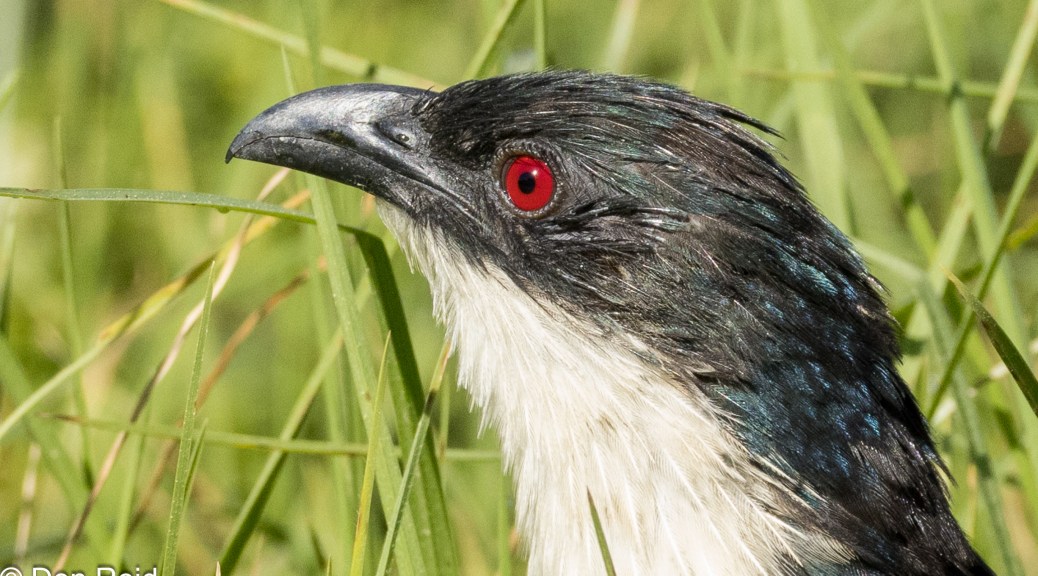
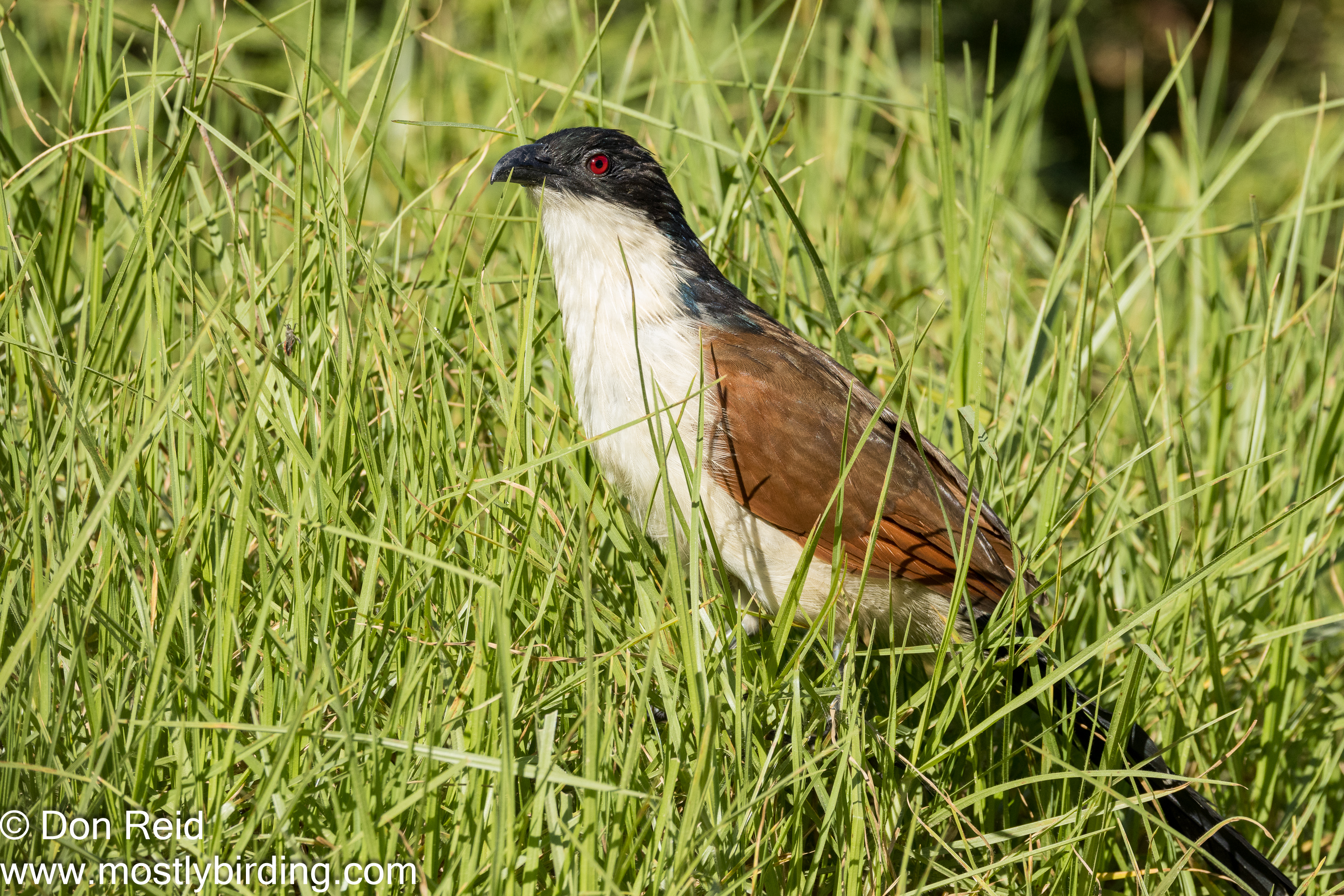
I soon saw what had attracted my attention – a Burchell’s Coucal making its way through the lush grass and close enough to the road for a reasonably close-up photo. That sighting had me grabbing my camera and reversing at the same time to get into a position where I could aim the camera through the passenger side window, which I was busy opening while doing all of the above (this just shows men CAN multi-task – provided the motivation is there of course).

Suffice to say I believe my efforts paid off and I was very pleased with the results!

Burchell’s Coucal Centropus burchellii Gewone vleiloerie, Friemersheim area

What does Faansie say?

The Firefinch app produced by the incomparable Faansie Peacock always has interesting facts about birds and in this case it mentions that Coucals have stiff, spiky breast feathers – which can be seen in the above photo.

Also that they are known as ‘rainbirds’ because they sing just before, during and after rain

Footnote : The website Birds of the World published by the Cornell Lab of Ornithology provides a wealth of information on birds worldwide and the good news is that access to the website is free for Southern African residents – all that is required is to create an account which can be done at : https://birdsoftheworld.org/bow/home

The Eyes Have it! (Part 2)

As a follow up to the previous post on the subject of birds with striking eyes – which showcased Southern African Cormorants – here’s a look at another species that fits that description to the full

Black-winged Kite (Blouvalk)

Elanus caeruleus

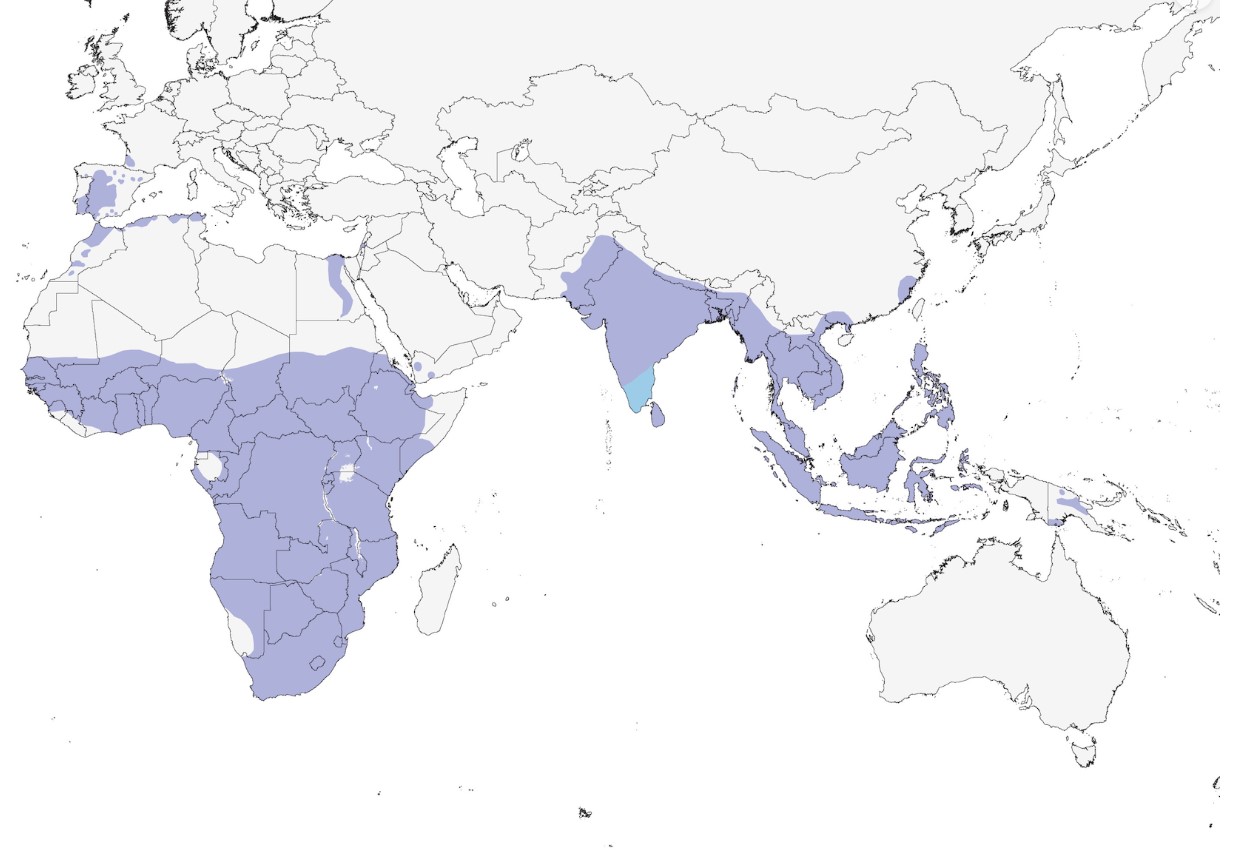
This well-known, small raptor is without doubt the most common raptor to be found across all of Southern Africa – and beyond as you will see from the global distribution map reproduced below courtesy of Birds of the World

Global distribution of Black-winged Kite

It is also the raptor you are most likely to see on any road trip through southern Africa, as their preferred hunting ground is along the road verges and adjoining fields.

They are most often seen perched on roadside powerlines, which provide the ideal vantage point for their hunt for the next small rodent.

However, it’s just as easy to overlook this species, which is similar in size to the many doves which also like to perch on powerlines. The good news is that the flatter pose and habit of slowly wagging its tail up and down will confirm that it’s a Black-winged Kite, even from a good distance, and once it takes to the air there is no doubt about the ID as it hovers, then ‘parachutes’ down to grab its prey.

The images that follow were taken during a recent atlasing trip north of George, on the way to Oudtshoorn – once I had spotted the bird up ahead I approached very slowly, using roadside bush to conceal my approach until I was close enough to quickly take a few photos through the open passenger window.

Black-winged Kite Elanus caeruleus Blouvalk, George-Oudtshoorn Area

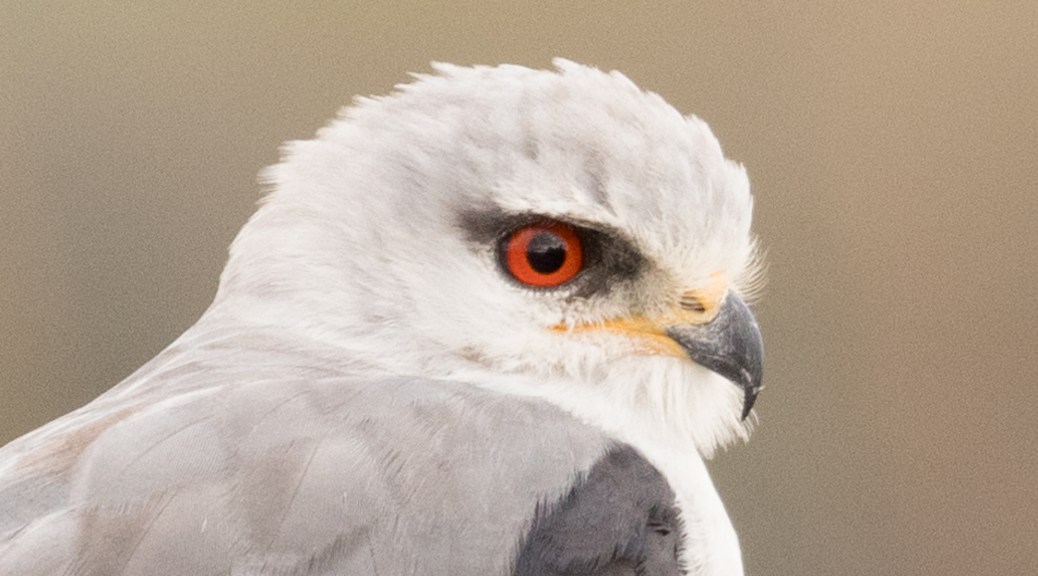
And just look at that eye colour! Beyond striking and ready to take you on in a staring competition

Black-winged Kite Elanus caeruleus Blouvalk, George-Oudtshoorn Area

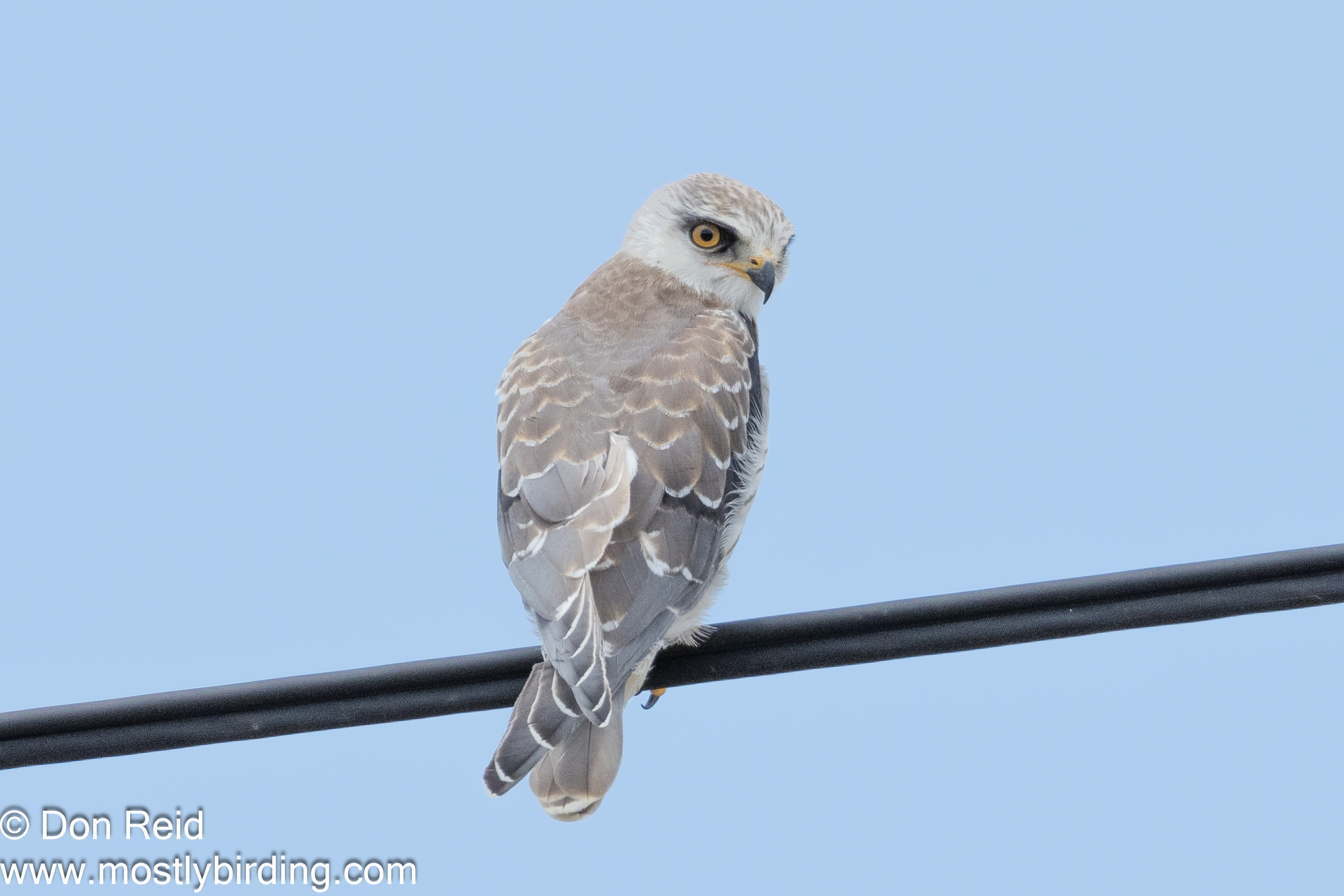
On another atlasing trip earlier this year in the Gouritsmond area just south-west of Mossel Bay, I came across another Black-winged Kite, this time a juvenile without the black ‘shoulder’ and with yellow eyes – still fierce looking, mind you, but not yet up to adult standard

Black-winged Kite Elanus caeruleus Blouvalk (Juvenile), Gouritzmond

Footnote:

I would like to mention a birding website that has helped me to broaden my birding info horizons and opened up a world of new knowledge (literally) to add to and enhance that which I have gathered during many years of birding.

The website is Birds of the World published by the Cornell Lab of Ornithology and the good news is that access to the website is free for Southern African residents – all that is required is to create an account which can be done at

https://birdsoftheworld.org/bow/home