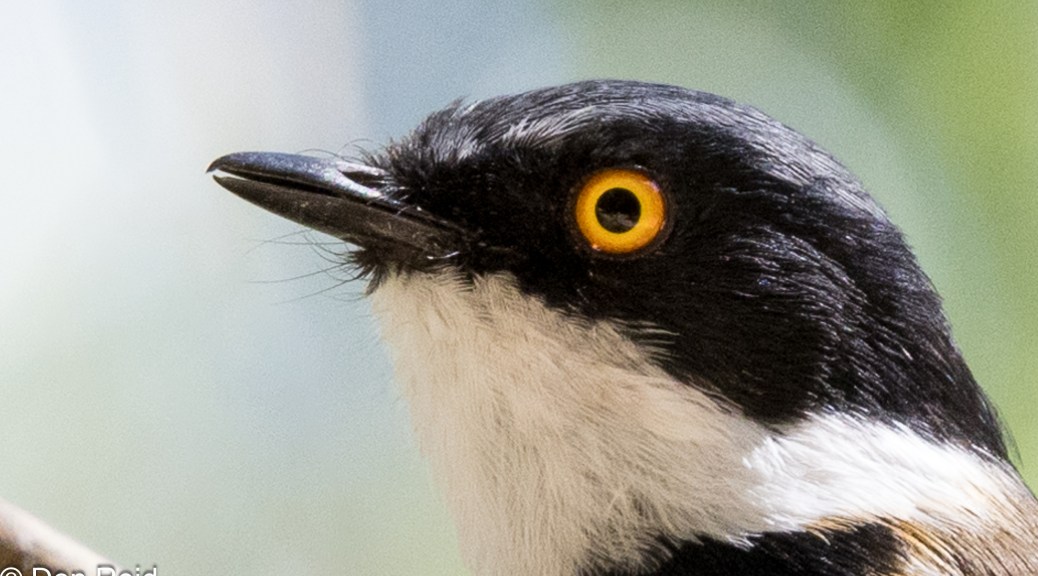
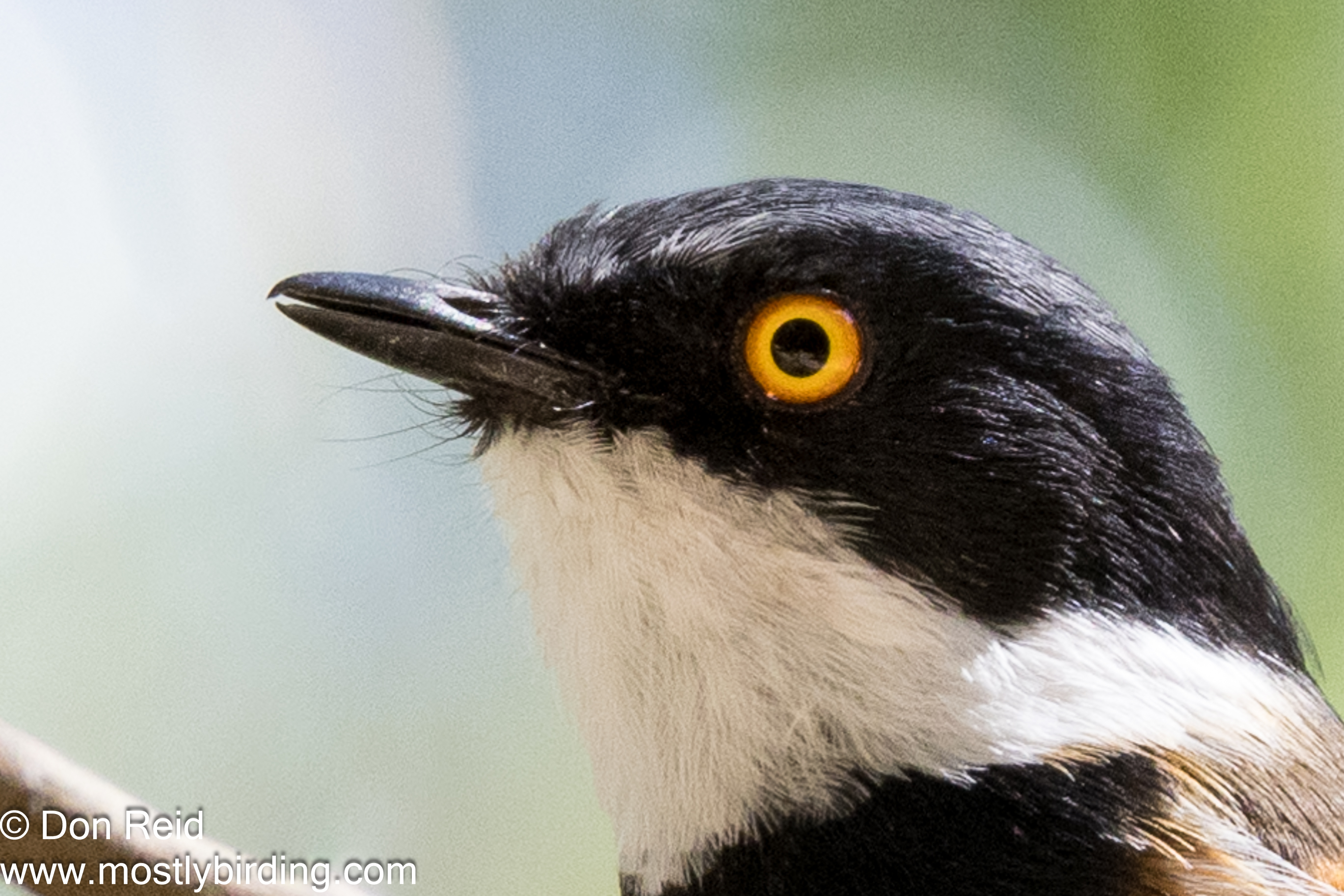
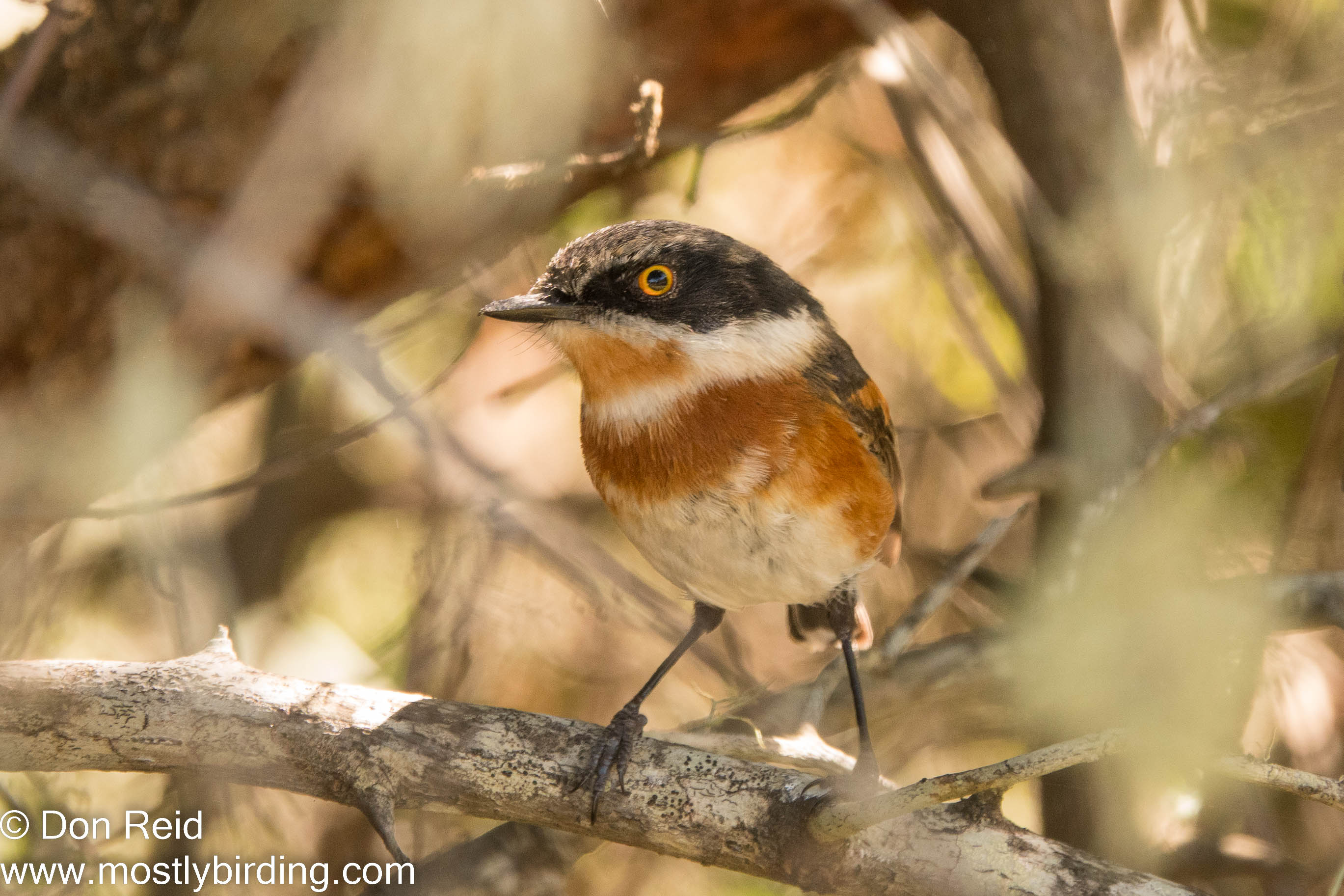
Another species that fits the description of birds with striking eyes is the diminutive Cape Batis
Cape Batis (Kaapse bosbontrokkie) Batis capensis
Where to find them
The Cape Batis occurs mainly, but not exclusively, in forest habitat – I have come across them in bushy areas not 200m from our Mossel Bay home and in various other locations outside ‘proper’ forests.
Distribution is confined to southern Africa as shown on the map below – courtesy of Birds of the World.
What to Look for
Batises can be confusingly similar in appearance, but the Cape Batis is the only one with orange flanks and wing bar, while the male is told by the broad black band across its chest.
Cape Batis Batis capensis Kaapse bosbontrokkie (male), Friemersheim area
The Firefinch app refers to this species as the “standard” forest bird – common, bold, noisy and striking. It is an active bird, flitting between bushes with a ‘fripping’ sound caused by rapid beating of its tiny wings and can often be found at the centre of bird parties.
Cape Batis Batis capensis Kaapse bosbontrokkie (male), Friemersheim area
Getting the Photo
The images above were taken while atlasing in the Friemersheim area not far from George – I stopped to scan a forested patch next to the road when I noticed movement among the branches not far from where I was standing, and pointed the camera in the general direction just as a Cape Batis popped into view, posing in sunlight just long enough to get a few shots.
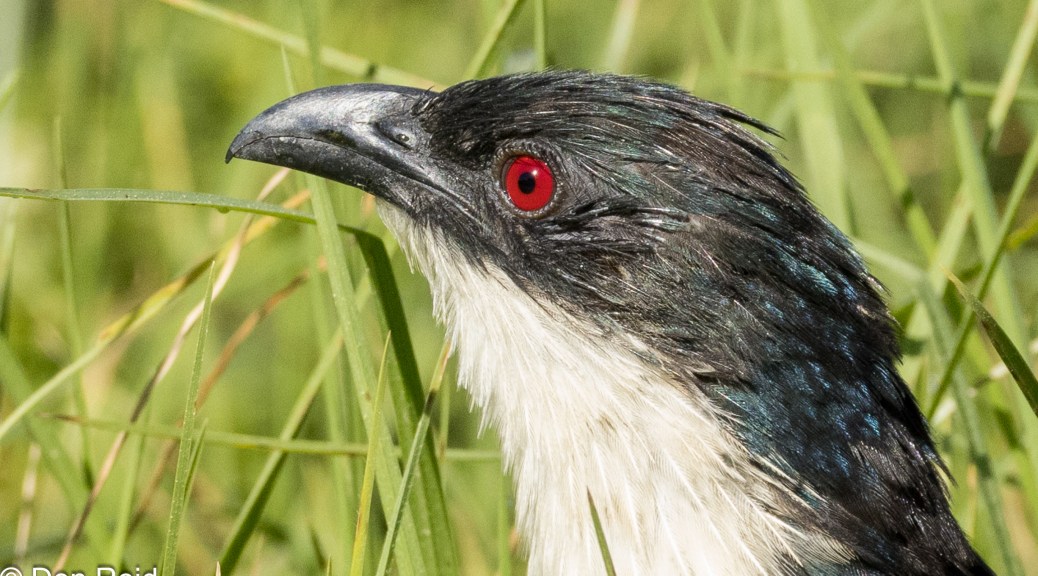
As a follow up to the previous posts on the subject of birds with striking eyes – here’s a look at another species, familiar to South African birders, with eyes that beg your attention –
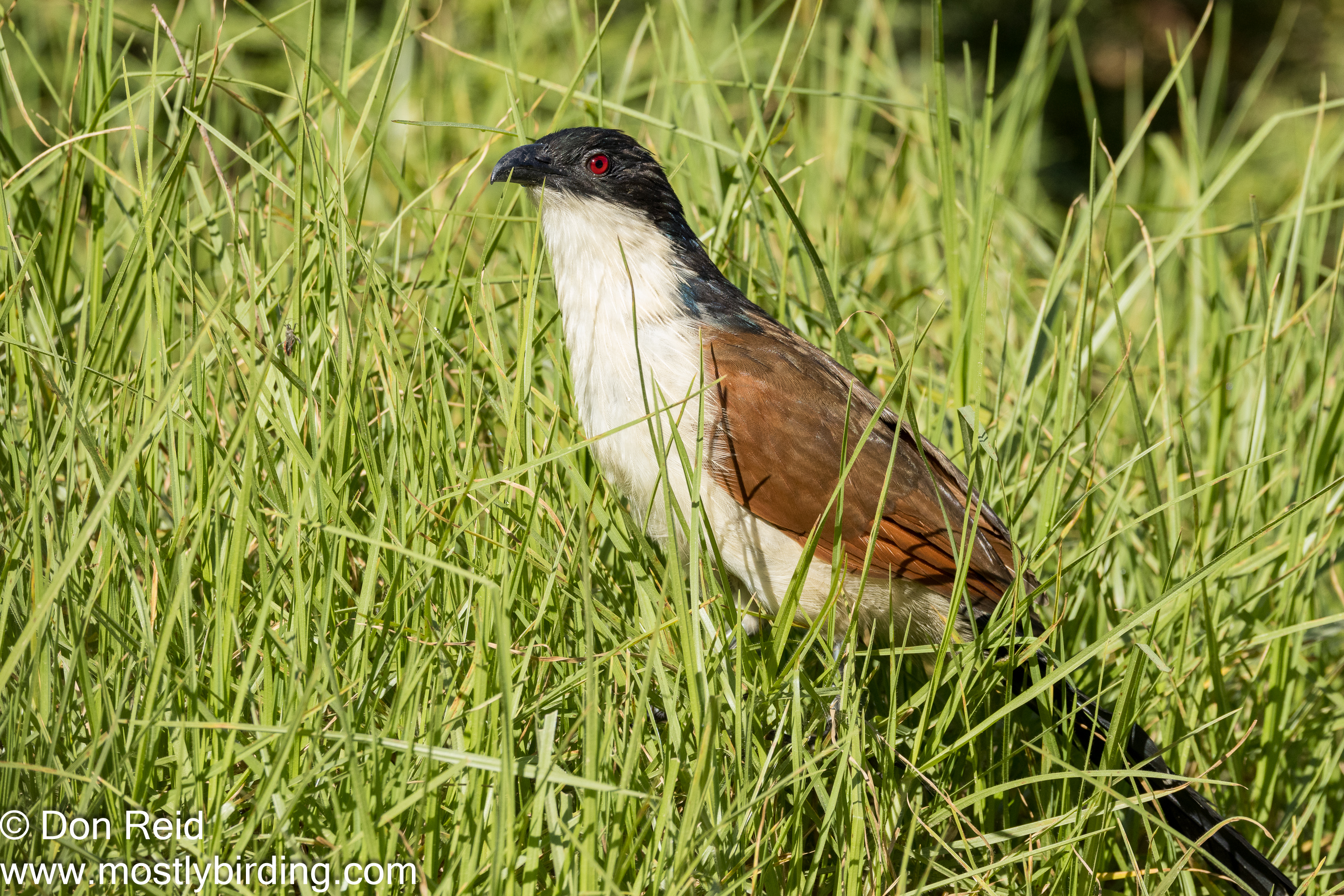
Burchell’s Coucal (Vleiloerie)
Centropus burchellii
This is a species best known for its bubbling call from the depths of dense bush or trees – a call which Roberts VII describes as “like water being poured from a bottle”.
And that may be the only clue you get to its existence until, one day, you actually get a glimpse of the bird as it flies heavily from one bush then crashes clumsily into the next one and disappears again. This is a bird that does not crave attention as it goes about its daily routine of searching on the ground and in bushes for just about anything it can lay its claws on – rodents, reptiles, other birds, nestlings, frogs, snails, insects … etc
Distribution
Birds of the World (see footnote) – lumps two species together with a combined distribution across Africa and a narrow stretch of Arabia as per the map below.
Southern African birdlists separate the two species into :
Burchell’s Coucal — Centropus burchelli – with distribution from south-east Tanzania through Mozambique to the Western Cape in South Africa and including south-east Botswana
White-browed Coucal – Centropus superciliosus – with distribution from Yemen, south-west Arabia, Ethiopia south to Zambia, Angola and southern Africa
Getting the Photo
As mentioned above, this is a fairly secretive species so when the opportunity arises one has to be quick off the mark to get a decent photo
I was fortunate enough to have such an opportunity recently while atlasing in the area east of Friemersheim in the southern Cape. I was driving slowly along a dirt road and had just passed a small stream when I spotted movement in the long grass at the roadside and stopped to look further.
I soon saw what had attracted my attention – a Burchell’s Coucal making its way through the lush grass and close enough to the road for a reasonably close-up photo. That sighting had me grabbing my camera and reversing at the same time to get into a position where I could aim the camera through the passenger side window, which I was busy opening while doing all of the above (this just shows men CAN multi-task – provided the motivation is there of course).
Suffice to say I believe my efforts paid off and I was very pleased with the results!
The Firefinch app produced by the incomparable Faansie Peacock always has interesting facts about birds and in this case it mentions that Coucals have stiff, spiky breast feathers – which can be seen in the above photo.
Also that they are known as ‘rainbirds’ because they sing just before, during and after rain
Footnote : The website Birds of the World published by the Cornell Lab of Ornithology provides a wealth of information on birds worldwide and the good news is that access to the website is free for Southern African residents – all that is required is to create an account which can be done at : https://birdsoftheworld.org/bow/home
As a follow up to the previous post on the subject of birds with striking eyes – which showcased Southern African Cormorants – here’s a look at another species that fits that description to the full
Black-winged Kite (Blouvalk)
Elanus caeruleus
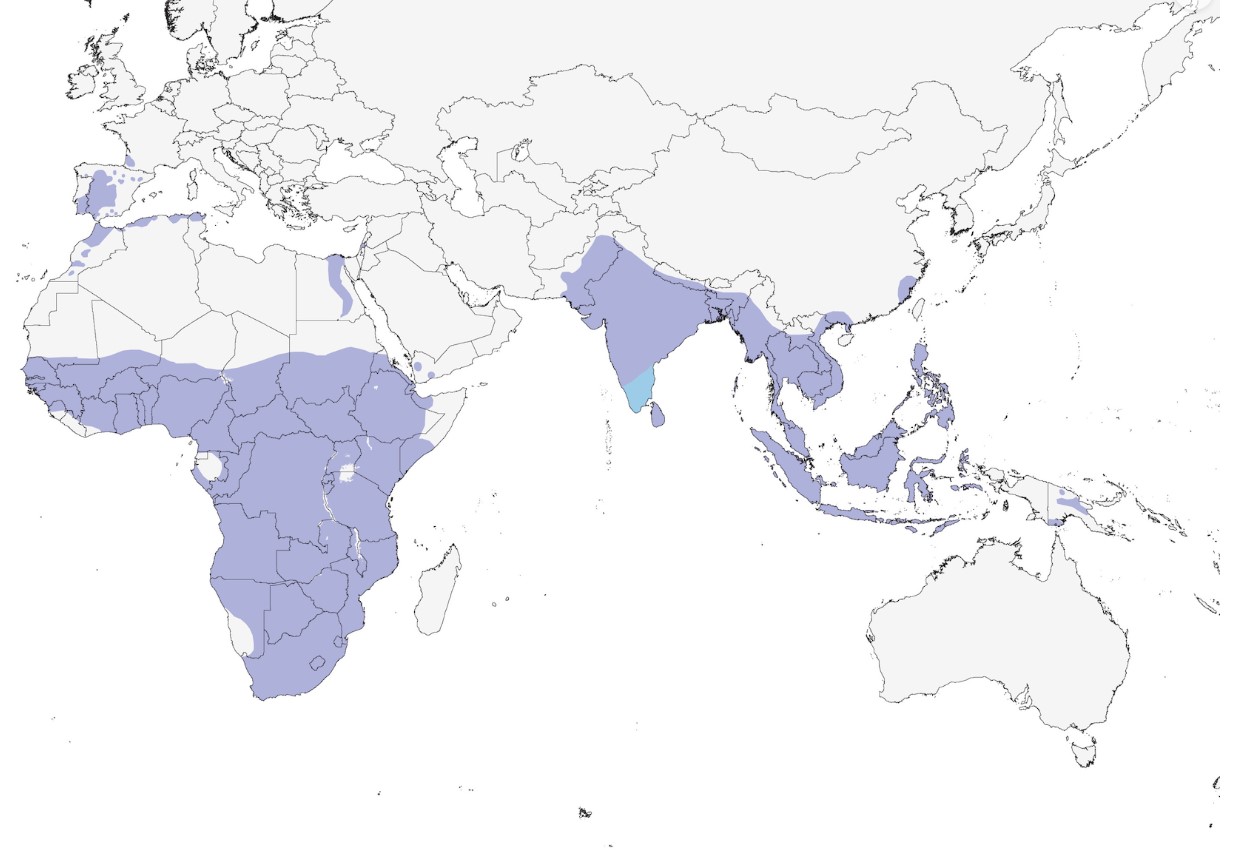
This well-known, small raptor is without doubt the most common raptor to be found across all of Southern Africa – and beyond as you will see from the global distribution map reproduced below courtesy of Birds of the World
Global distribution of Black-winged Kite
It is also the raptor you are most likely to see on any road trip through southern Africa, as their preferred hunting ground is along the road verges and adjoining fields.
They are most often seen perched on roadside powerlines, which provide the ideal vantage point for their hunt for the next small rodent.
However, it’s just as easy to overlook this species, which is similar in size to the many doves which also like to perch on powerlines. The good news is that the flatter pose and habit of slowly wagging its tail up and down will confirm that it’s a Black-winged Kite, even from a good distance, and once it takes to the air there is no doubt about the ID as it hovers, then ‘parachutes’ down to grab its prey.
The images that follow were taken during a recent atlasing trip north of George, on the way to Oudtshoorn – once I had spotted the bird up ahead I approached very slowly, using roadside bush to conceal my approach until I was close enough to quickly take a few photos through the open passenger window.
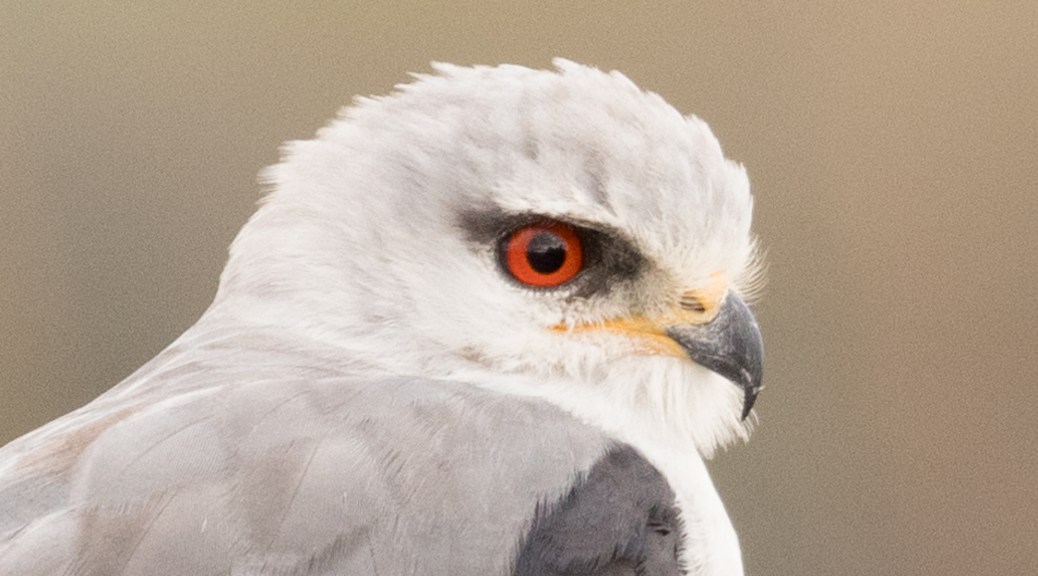
Black-winged Kite Elanus caeruleus Blouvalk, George-Oudtshoorn Area
And just look at that eye colour! Beyond striking and ready to take you on in a staring competition
Black-winged Kite Elanus caeruleus Blouvalk, George-Oudtshoorn Area
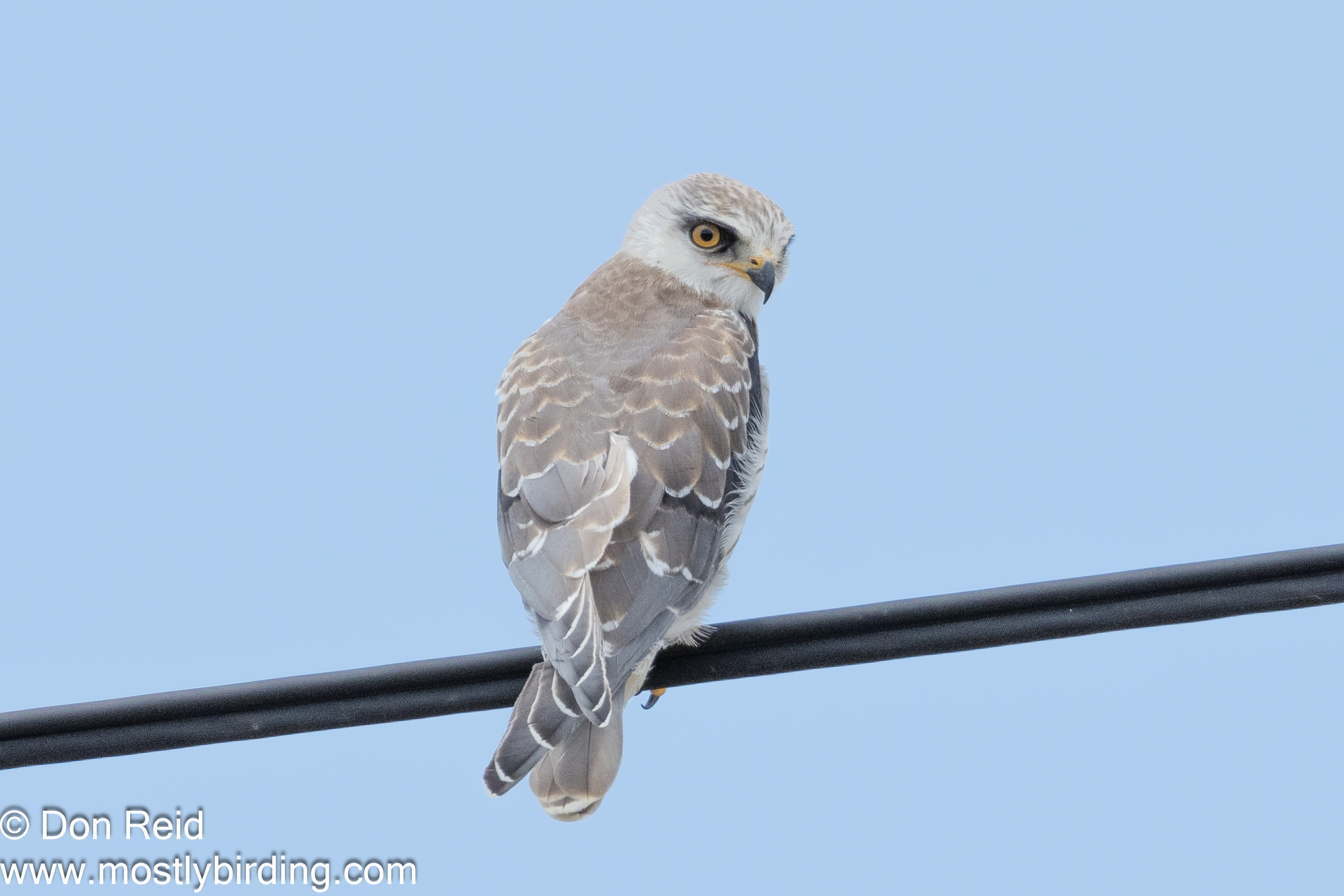
On another atlasing trip earlier this year in the Gouritsmond area just south-west of Mossel Bay, I came across another Black-winged Kite, this time a juvenile without the black ‘shoulder’ and with yellow eyes – still fierce looking, mind you, but not yet up to adult standard
I would like to mention a birding website that has helped me to broaden my birding info horizons and opened up a world of new knowledge (literally) to add to and enhance that which I have gathered during many years of birding.
The website is Birds of the World published by the Cornell Lab of Ornithology and the good news is that access to the website is free for Southern African residents – all that is required is to create an account which can be done at
Cormorants are not generally regarded as birds that are high on the list of desirable birds to see – unless it’s a potential lifer of course. When you’ve been ‘into’ birding for a while the most that a cormorant is likely to elicit is a slightly off-hand “Oh, there’s another Reed Cormorant” or “Hey, have a look at that Little Grebe just to the right of that White-breasted Cormorant”.
But there’s more to cormorants than meets the eye – or eyes in this case …..
During one recent day trip, I found an opportunity to visit the area which we know as “The Vlei’s”, to the east of the small town of Wilderness, and spent a pleasant hour or so in the bird hide at Langvlei.
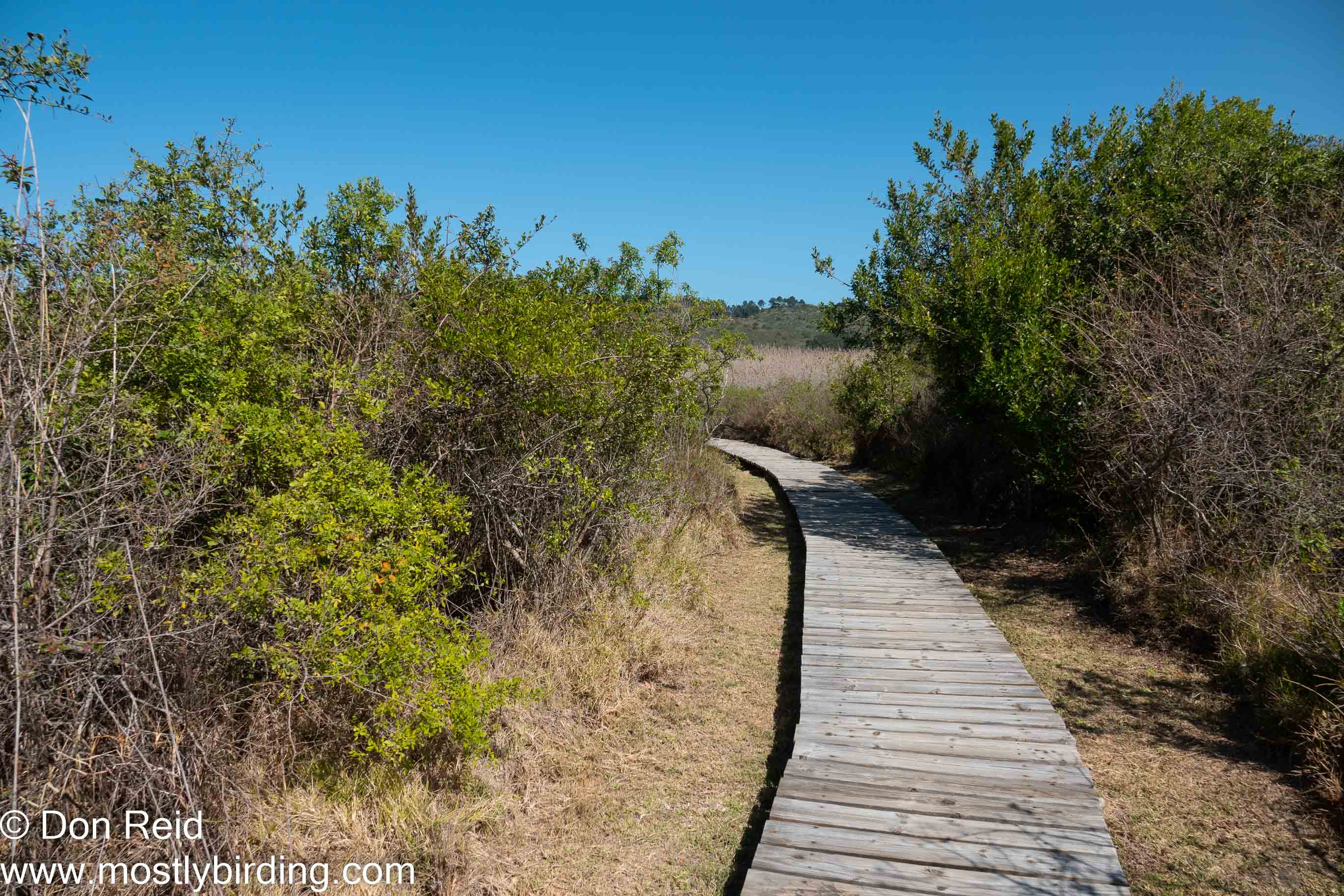
Boardwalk to the hide at Langvlei Wilderness
There were numerous waterbirds on the vlei, mostly Coots but also significant numbers of Grebes, more than I can recall seeing in any location before and including all three southern African species – Little Grebes, Great Crested Grebes and a few Black-necked Grebes. However, they were too distant for photography.
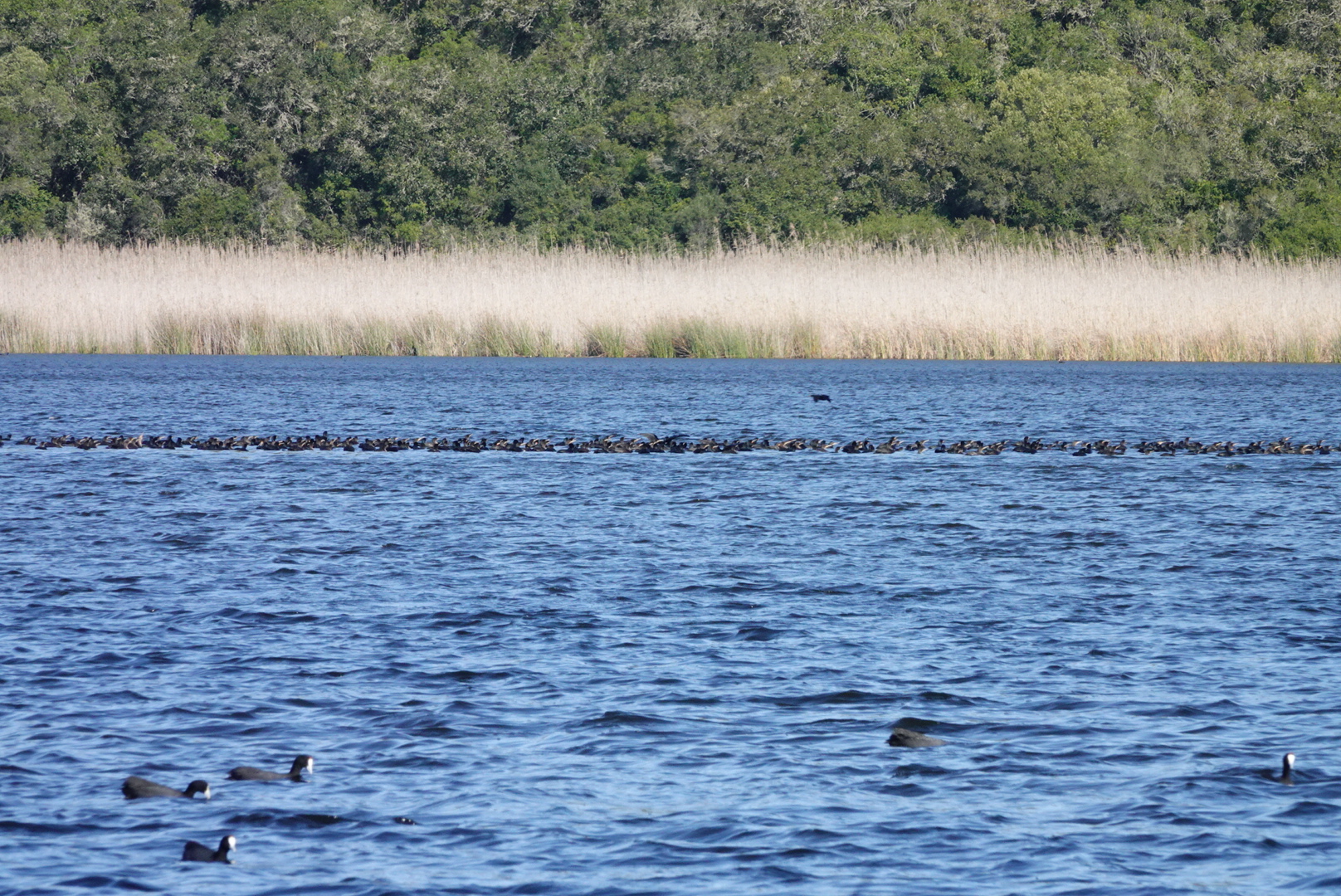
Also distant was a long line of dark birds on the water, as the image below shows, and once I had the scope in position, I could see that it consisted of a few hundred Reed Cormorants, again more than I can recall seeing in one location before. As I watched the line, a few of the foremost swimmers flew up out of the water and circled back to the rear of the “queue” where they settled down in line again. I can only assume they were performing some kind of feeding strategy.
Close to the hide a dead tree stump has been strategically placed and perched on it were two cormorants – the larger White-breasted Cormorant and the somewhat smaller Reed Cormorant.
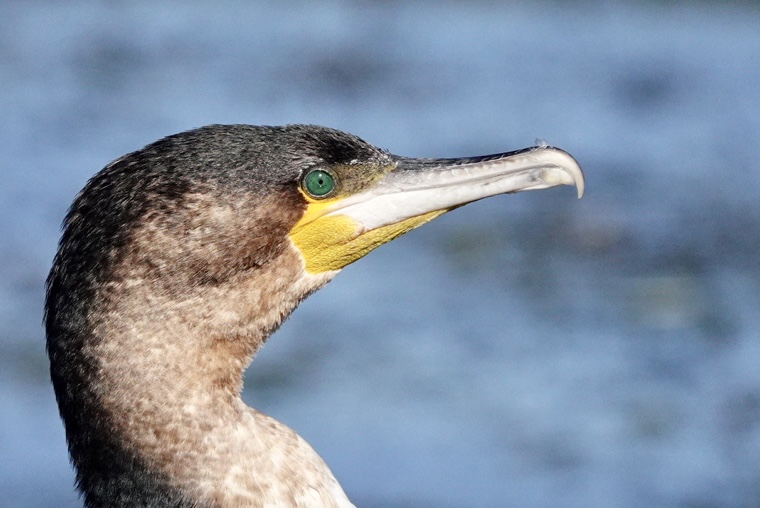
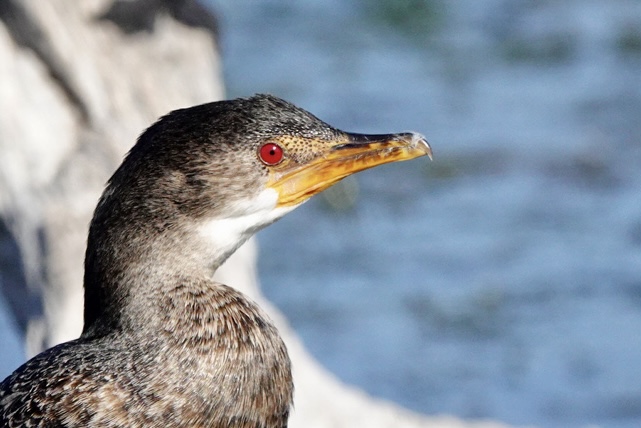
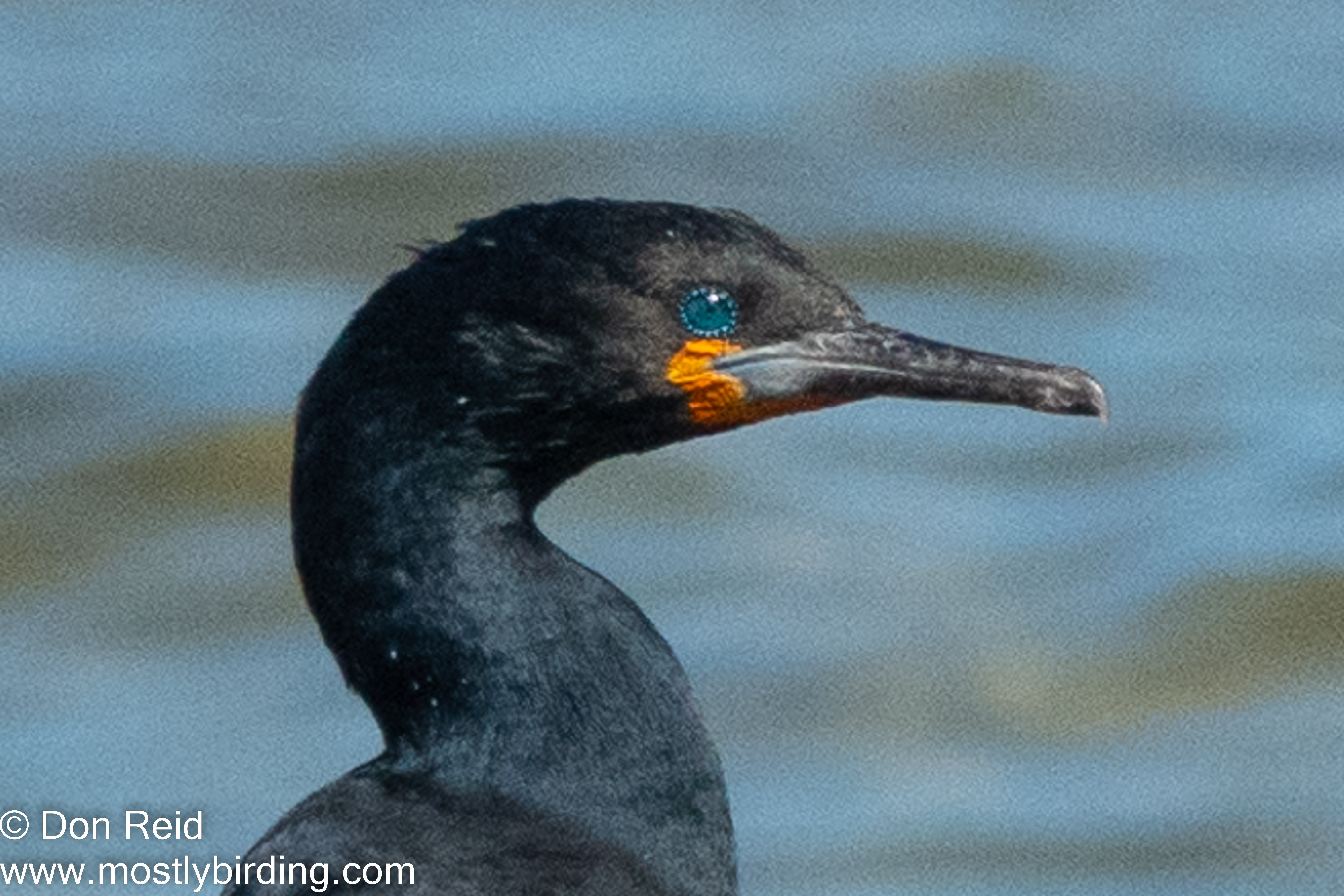
The light was favourable, so I took a few shots then zoomed in on their heads and took a few more. And that’s where the magic came in! In contrast to their rather dull appearance and less than comely shape, the cormorants have some of the most stunning eye colours of the bird world.
White-breasted Cormorant (Witborsduiker) (E-bird : Great Cormorant)
Phalacrocorax lucidus
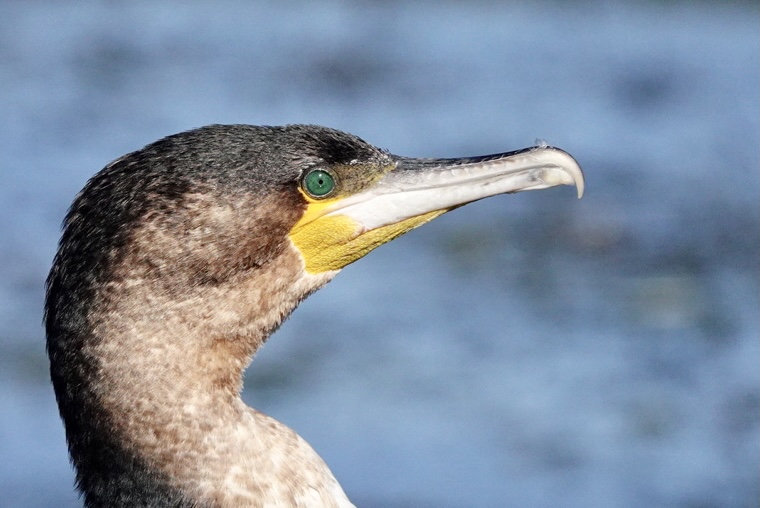
Starting with the brilliant green eyes of the largest cormorant in our region, commonly found in saltwater and freshwater habitats across southern Africa
Now this species is somewhat ungainly on land, but once in the water it will outswim Michael Phelps by a long way – that’s if you can get it to swim in a straight line and stay within its lane. And all it uses are its feet which have four toes connected by webbing, which it uses to propel itself most effectively through the water when chasing prey
It uses that hooked bill to secure small fish, which are eaten underwater, while bigger fish are brought to the surface to juggle into a head-first swallowing position.
Worldwide this species is often referred to as Great Cormorant and occurs across 6 continents – I have seen Great Cormorants in Australia, Canada, UK and Europe during our travels abroad
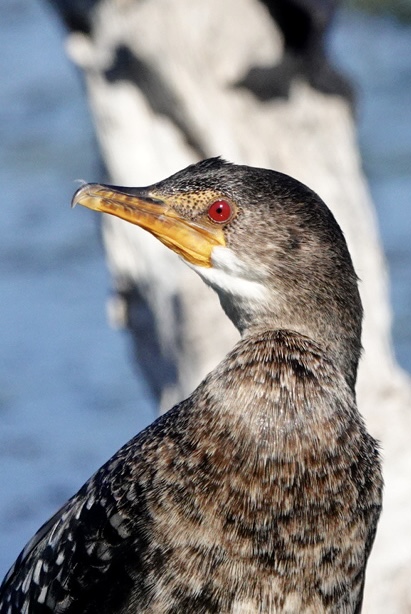
The Reed Cormorant is substantially smaller than the previous species and has a similar distribution across our region, but unlike the White-breasted (Great) Cormorant it is restricted to the African continent, occurring in most of sub-Saharan Africa
And the eyes? Red instead of green, but just as striking!
Reed Cormorant, Langvlei Wilderness
A surprising fact (courtesy of Faansie Peacock’s wonderful birding app called Firefinch) is that the feathers of cormorants are less waterproof than those of other birds – the reason is that this makes them less buoyant and allows them to sink when hunting underwater. This also explains why they spend much of their time out of the water with wings spread to dry. It is also believed that they swallow stones for additional weight, much like scuba divers wearing lead weights on their belts.
Cape Cormorant (Trekduiker)
Phalacrocorax capensis
I wasn’t expecting to find a Cape Cormorant alongside the other two species at Langvlei, as they are generally known as an exclusively marine species, but this one clearly thought a day away from the rough seas would be to its liking
Mossel Bay’s Point is a wonderful place to watch seabirds and Cape Cormorants are regular passers-by (or more appropriately flyers-by) flying low and fast over the ocean, singly or in pairs or in long skeins of up to a couple of dozen at a time.
This is usually late afternoon when we like to get a take-away coffee and sit and watch the sea and its inhabitants, which can be anything from humans surfing and snorkelling to seals, dolphins or whales (in season), while yachts and boats of various types and sizes make their way to and from the small harbour nearby.
I haven’t been able to establish where these passing Cape Cormorants roost, but it is probably one of the quieter stretches of beach further east towards Great Brak River and beyond.
We relocated to Mossel Bay towards the end of last year – somewhat unexpectedly, although it was always part of our medium-term planning. So you can expect the emphasis of my blog to shift towards the Southern Cape and away from the northern parts of our country, where we have lived for some 50 years.
However the Southern Cape, and in particular Mossel Bay are very familiar to us, having spent ever-increasing periods in our house here over the last 12 years and is the perfect place to spend our retirement years.
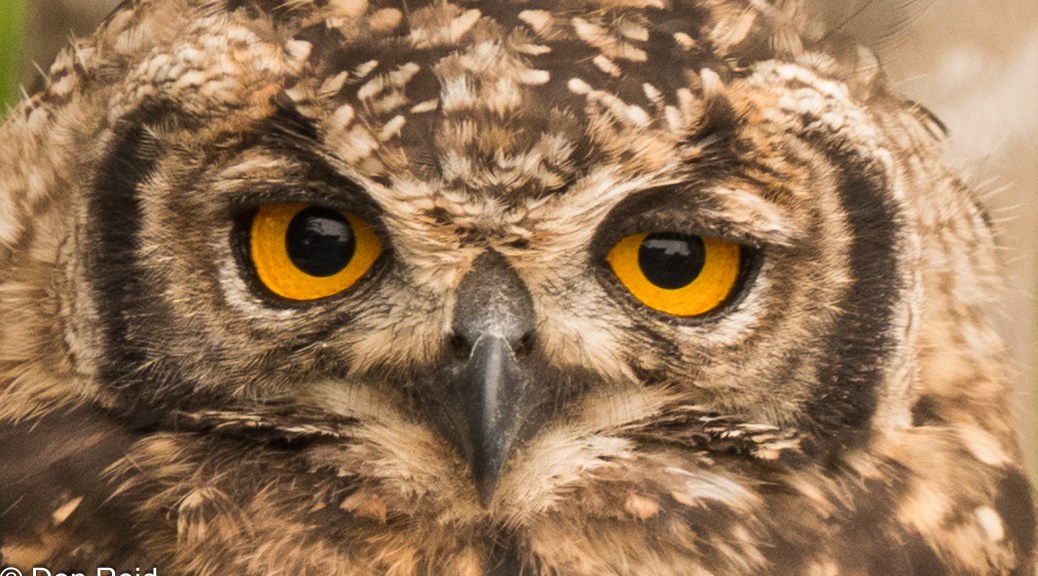
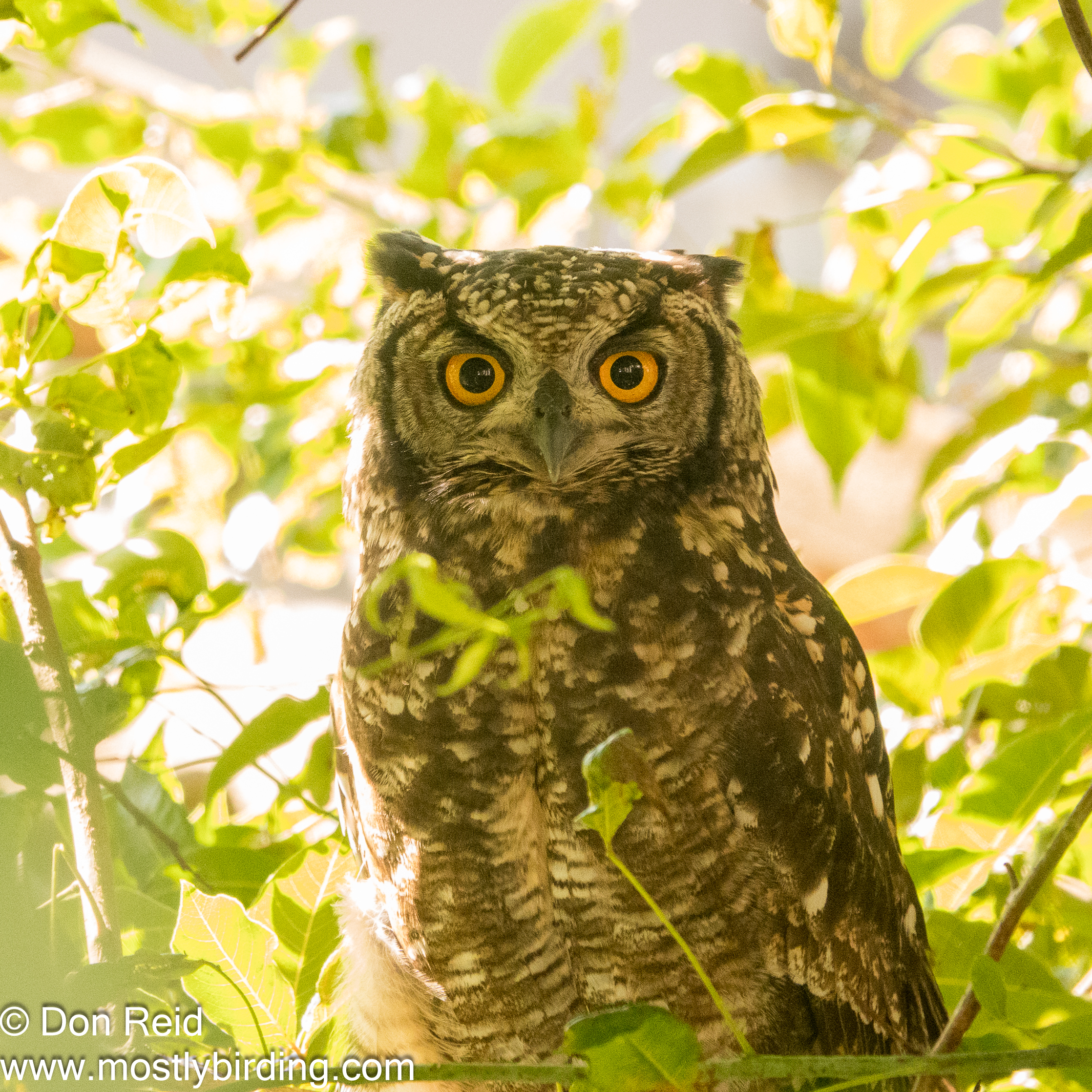
Our home in Mossel Bay is situated in the Mossel Bay Golf Estate which has a variety of habitats and gardens which attract many species of birds and this brings me to the subject of this post – the Spotted Eagle-Owl, which “put its hand up” (figuratively) to become the focus of a post by popping up in a number of places around the Golf Estate over the past few weeks.
It also seemed like a good opportunity to get back to the essence of my blog, which after all is called “Mostly Birding” for a reason ……
Here are some images of Spotted Eagle-Owls taken over the last while around our home and on my walks in the estate and adjoining nature areas:
Spotted Eagle-Owl bubo africanus Gevlekte Ooruil
Neighbour Catherine, knowing my interest in all things birding, popped over in the middle of the day to say there was an Owl in her garden, so I went to have a look, taking my camera of course. There it was perched on the garden wall and I surmised it was a juvenile, based on the lack of the “ears” (not really ears but protuding tufts of feathers for camouflage, not for hearing) which are a feature of the adults
‘Goodness, but it’s tiring being awake all night – am I ever going to get used to this …’
‘Hmmm – suppose I should keep a watch out even though I’m still young’
Spotted Eagle-Owl Bubo africanus Gevlekte ooruil, Mossel Bay
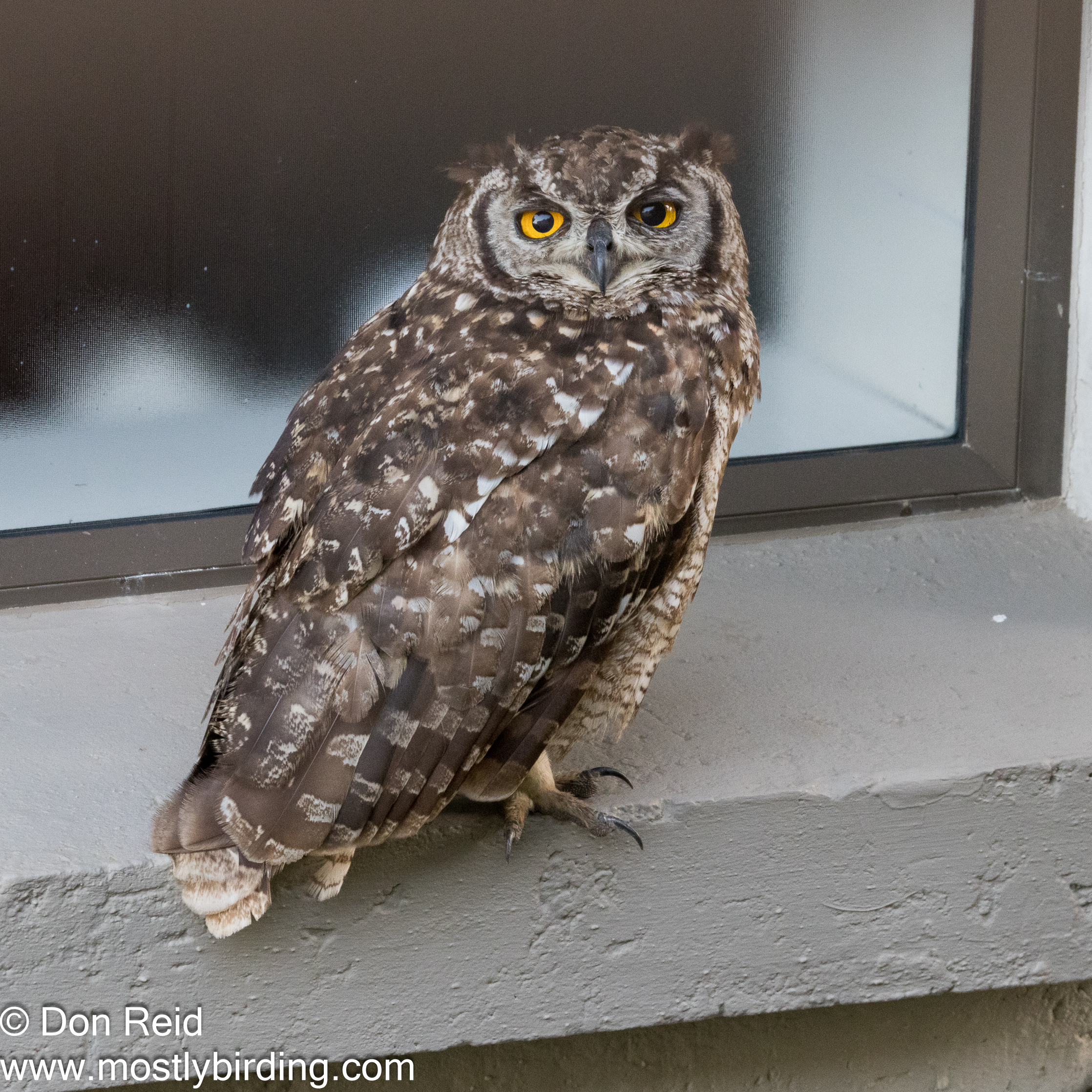
A few days later I noticed another Owl, this time an adult, sitting on the window cill of the neighbour’s house in broad daylight. More than likely the parent of the above juvenile.
Spotted Eagle-Owl Bubo africanus Gevlekte ooruil, Mossel Bay Golf Estate
A week or so later again, neighbour Jan, phoned to say there was an owl in the trees in his back garden, between our two properties. I could not see it from our balcony which is a level higher than Jan’s house so I went downstairs to our garden and quickly spotted the owl on a branch partly concealed by foliage. I positioned myself as best I could without disturbing the owl and took a few shots against the strong backlight of the morning sun.
Spotted Eagle-Owl, Mossel Bay Golf Estate
My daily late afternoon walks take me all over the golf estate – my favourite walk being the one that takes in the nature area to the south and west of the estate as there is always something of interest.
One of my walks included an unusual encounter with an owl, which stood in the middle of the track as I approached and didn’t seem intent on flying away. I waited for a while to see what it would do, concerned that it was ill or injured, but after some 10-15 minutes I walked slowly past it as it moved to one side, eyeing me all the way but seemingly relaxed.
I kept a look out for this owl on my later walks as I was concerned about its health – I believe it was the same owl I spotted twice on the golf course itself, flying about without a problem so assumed it had recovered from any problem it may have had.
This species is well-known in the suburbs of our cities and towns and is often heard calling softly – wooo, hooo – and perched on roofs and streetlights from where it hunts insects, reptiles, rodents and the like.
Oh, and it’s good to have neighbours who keep you informed about birdlife in the garden ….
I have taken a bit of a sabbatical from blogging so far this year, so to get things going again I thought I should take a belated look back at 2022 …..
During 2022 my photo library increased by some 2000 images and for this retrospective (Yes! I’ve always wanted to use that word) I have limited my Photo Pick to the 40 images which appeal to me the most, often for different reasons – some are technically good (well, I think so anyway) others are reminders of a particular moment or place or special sighting – the very brief comments tell a bit of the story of each image. So to start with ….
The Places
One of the first places we visited in 2022 was the Hemel-en-Aarde Valley near Hermanus – the evening light was magical
Hemel en Aarde valley
I love the moodiness that overcast skies bring to a scene and this one had the benefit of a sunlit foreground and overcast background
Botlierskop road
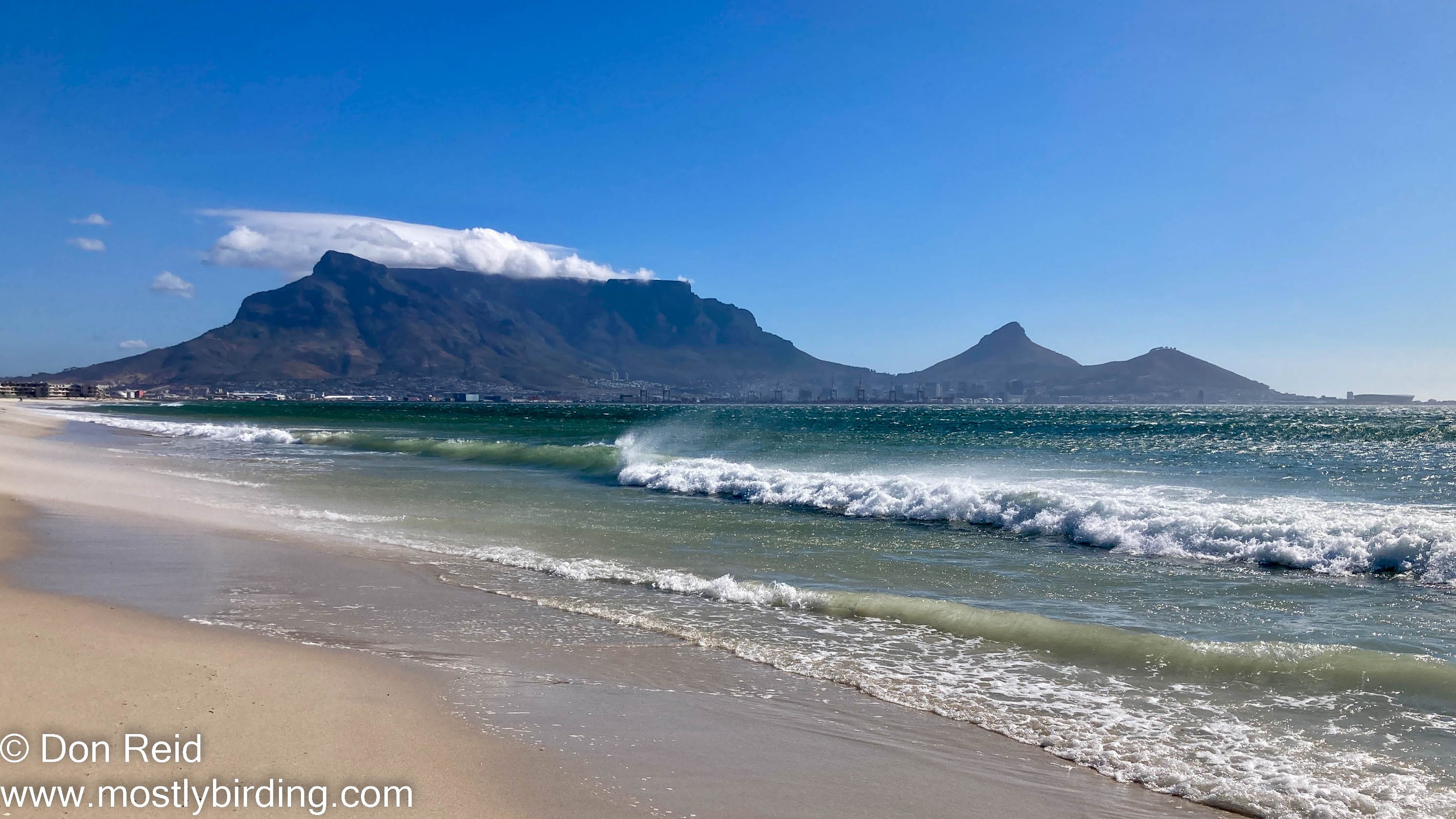
The classic view of Table Mountain from Milnerton beach, a stone’s throw from where I was born
Milnerton beach
This unusual view of the southern Cape coast was taken from my seat in a plane on its way to land at George
Coastal views from plane
A double rainbow over Mossel Bay just begged to be photographed
Mossel Bay Point
Our drive to Weltevrede farm near Prince Albert was an absolute delight with views like this around every bend
Road to Weltevrede Farm, near Prince Albert
Evening tranquility at the dam on the farm Prior Grange near Springfontein, Free State
Prior Grange near Springfontein Free State
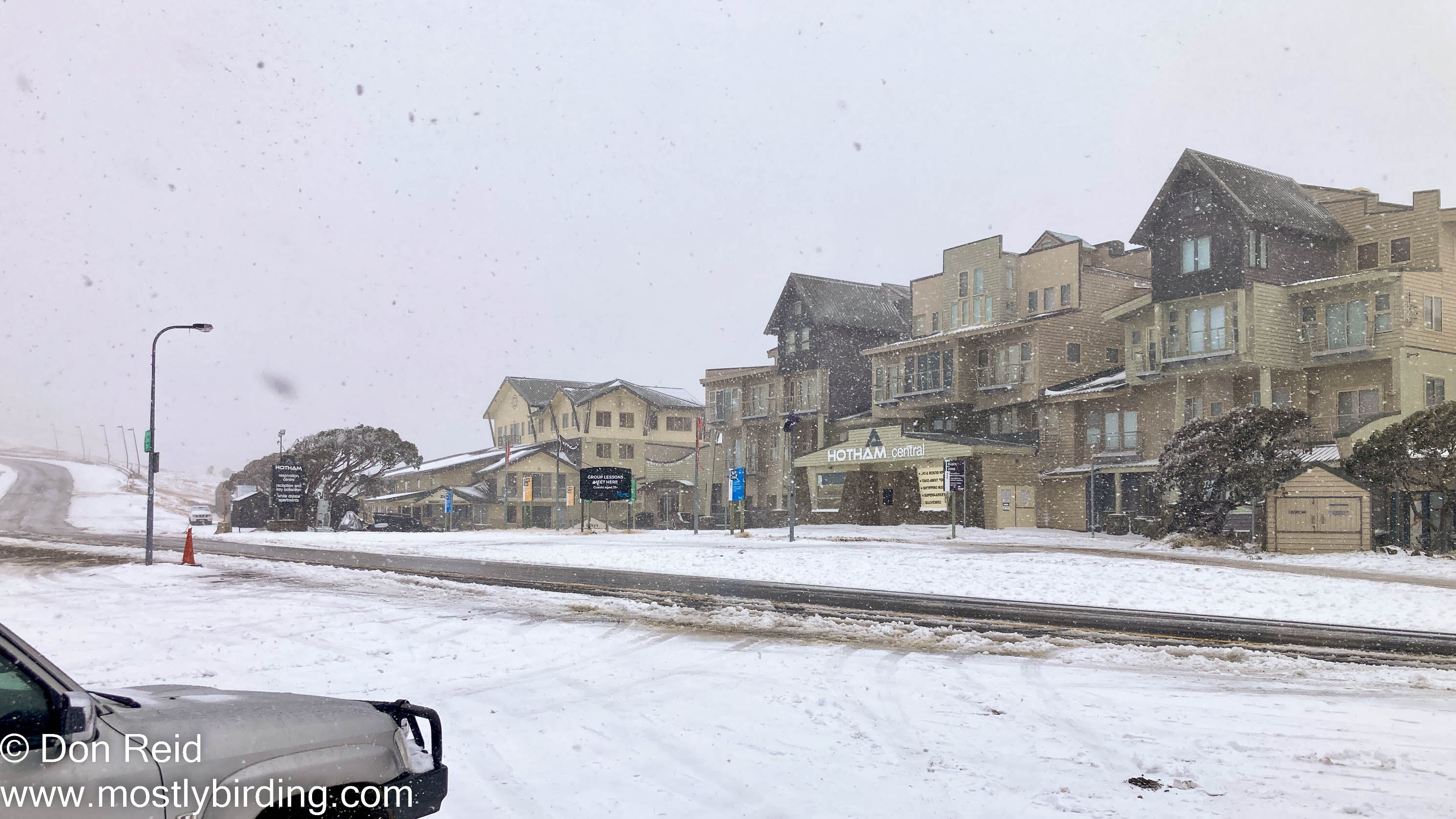
Our stay in Victoria, Australia provided widely contrasting experiences
Farmlands, Wurruk, Sale VictoriaGreat Alpine Road, Mt Hotham
Atlasing in the southern Cape around Herbertsdale provided this beautiful early-morning scene along the winding road
Herbertsdale Area
Another moody scene, this time with fishermen providing the focal point
Mossel Bay Point
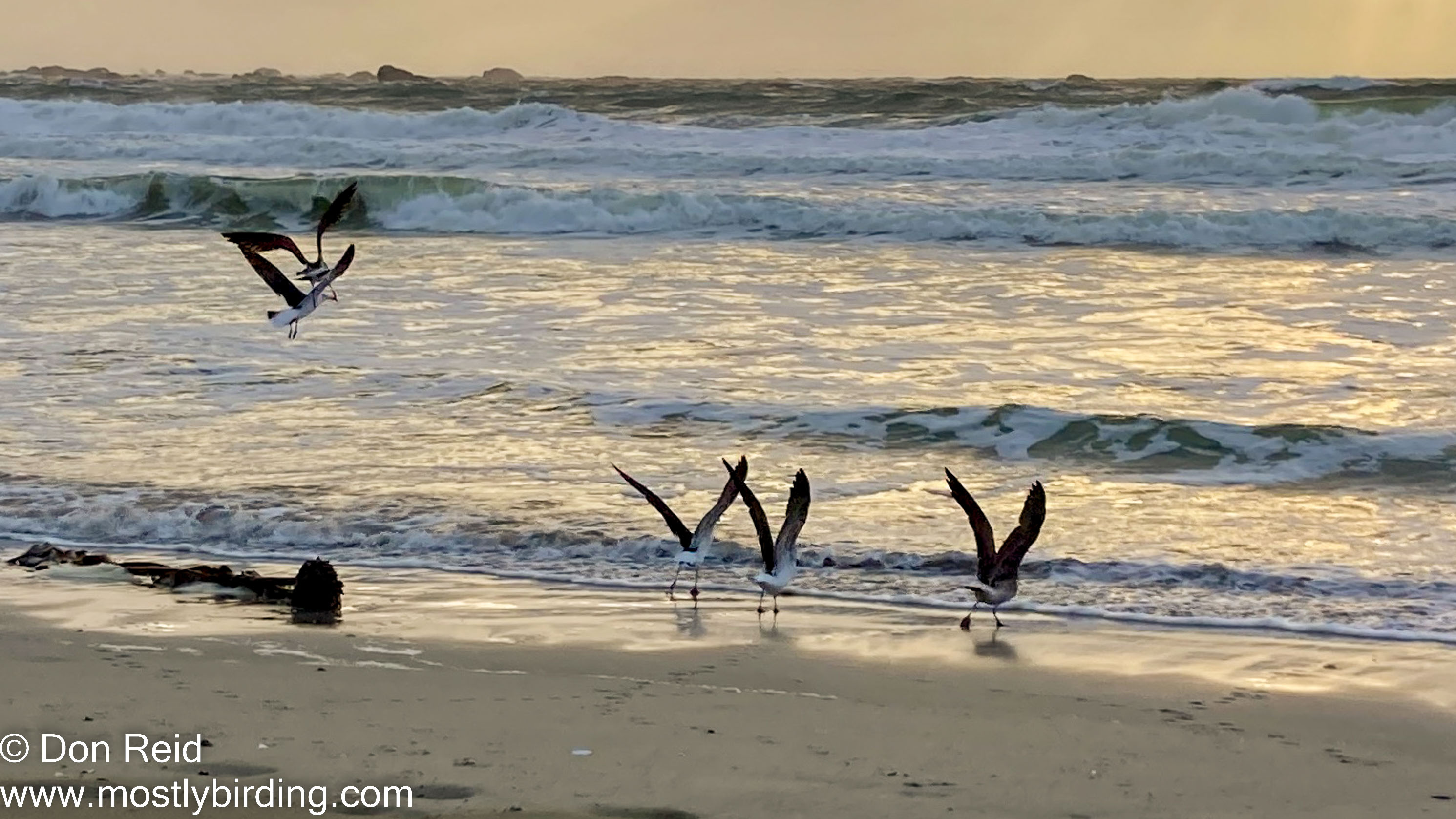
Paternoster beach was another excellent spot for sunset photography, with gulls adding that extra punch
Paternoster
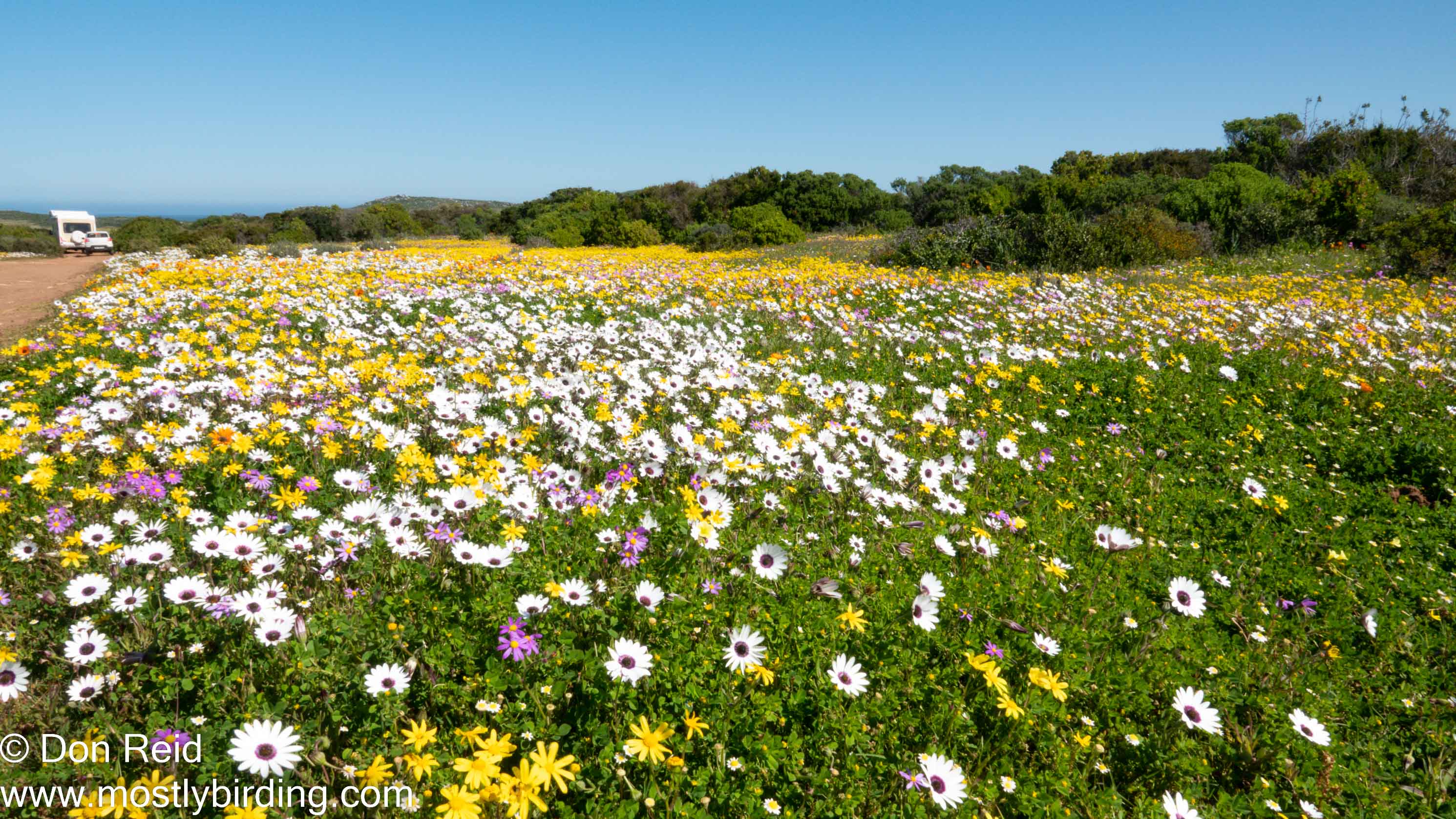
The flowers in the Postberg section of the West Coast National Park were spectacular (a separate post on this still to come)
West Coast NP
Another view of the iconic mountain that I grew up with, this time from the waterfront at Cape Town
CT Waterfront
The Birds
I spend most of my photographic energies on capturing images of birds, not always successfully. These are some of the better ones
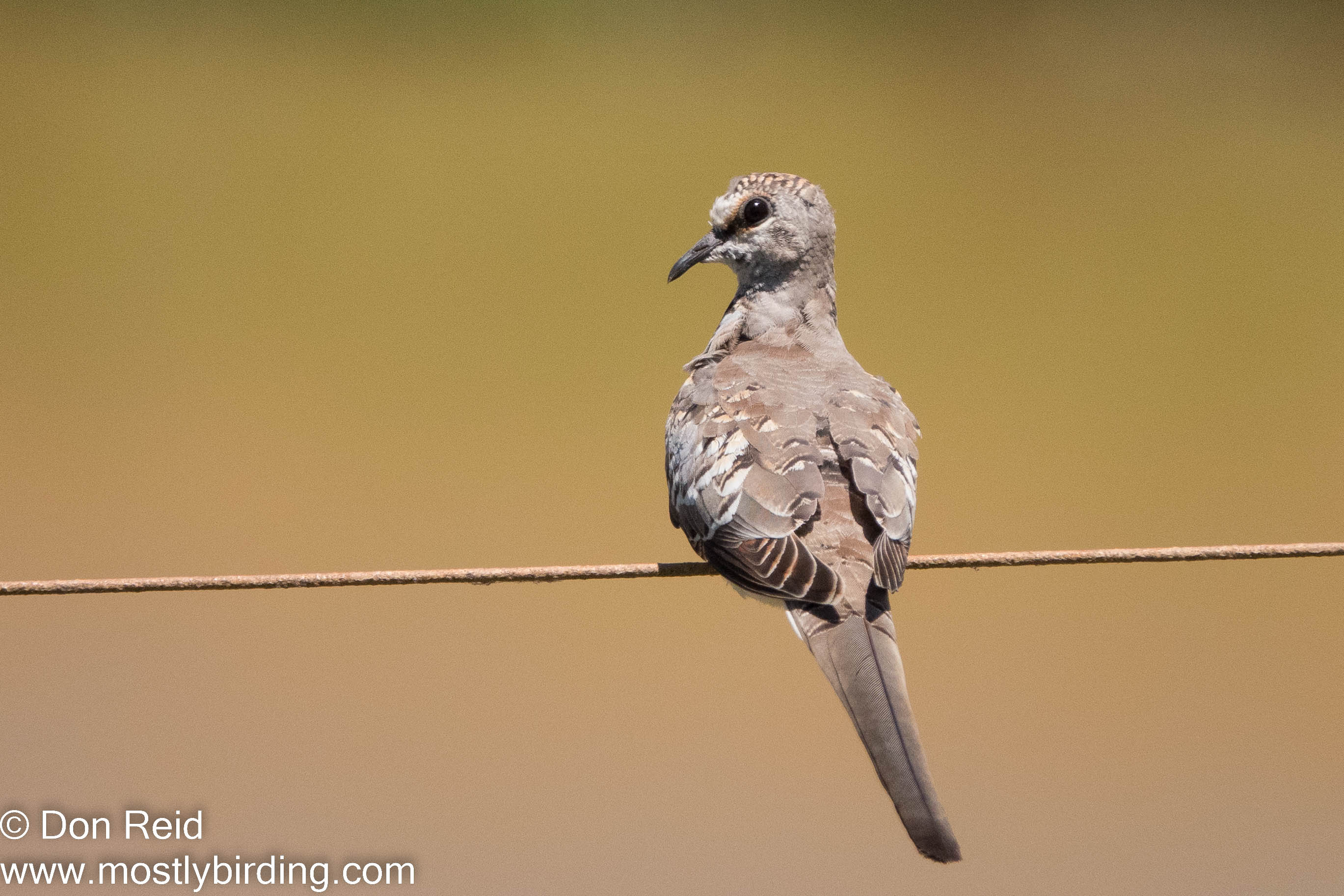
Namaqua Dove Oena capensis Namakwaduifie, (Juvenile) Kleinberg area
The photo of a Cape Longclaw shows why it was given that name
Cape Longclaw Macronyx capensis Oranjekeelkalkoentjie, Klein Brak
This is a photo by Estelle Smalberger who kindly allowed me to use her images. What a privilege it was for me to be the one to first find this species – never before recorded in southern Africa!
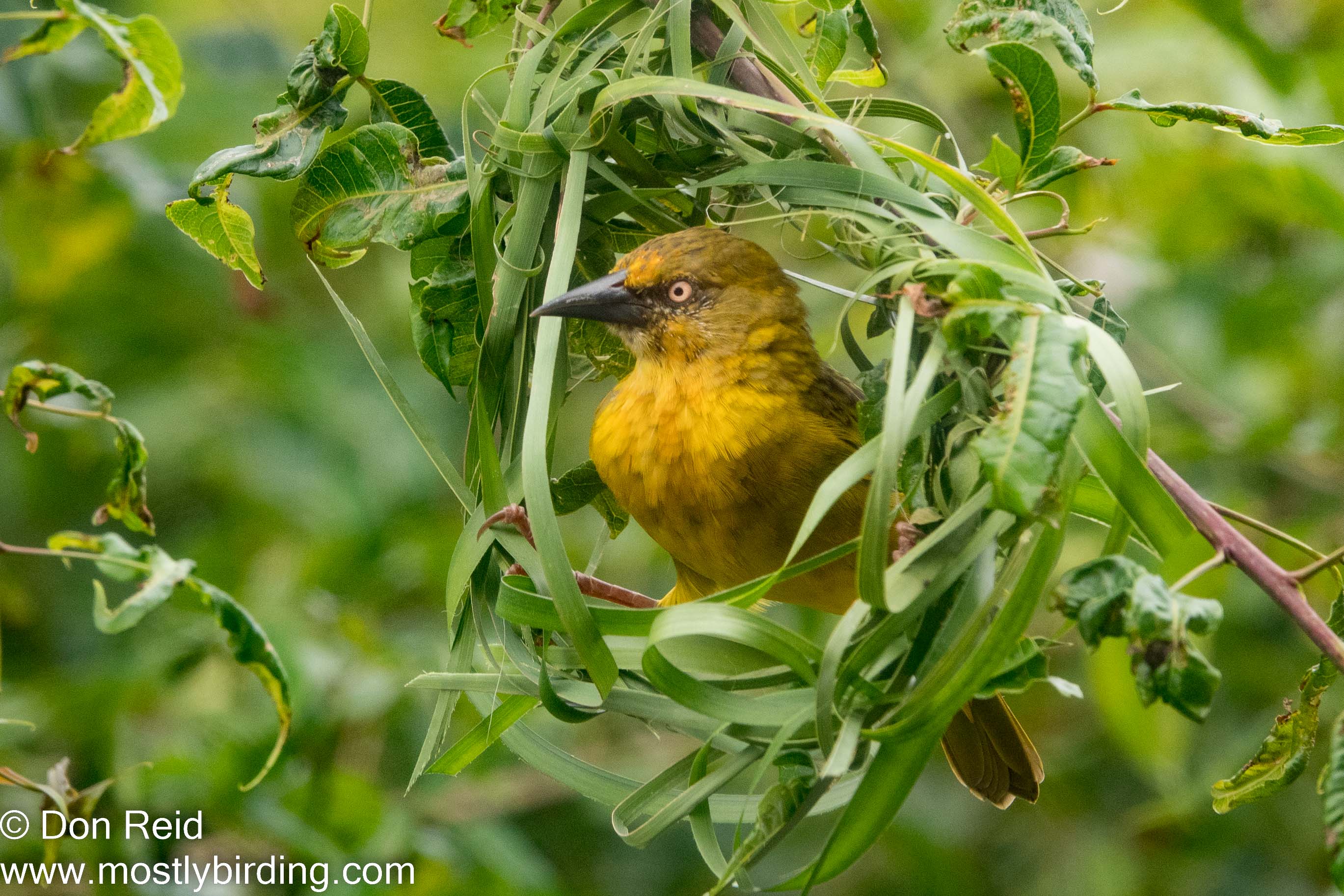
Cape Weavers treated us to a show while building their nests in front of our patio
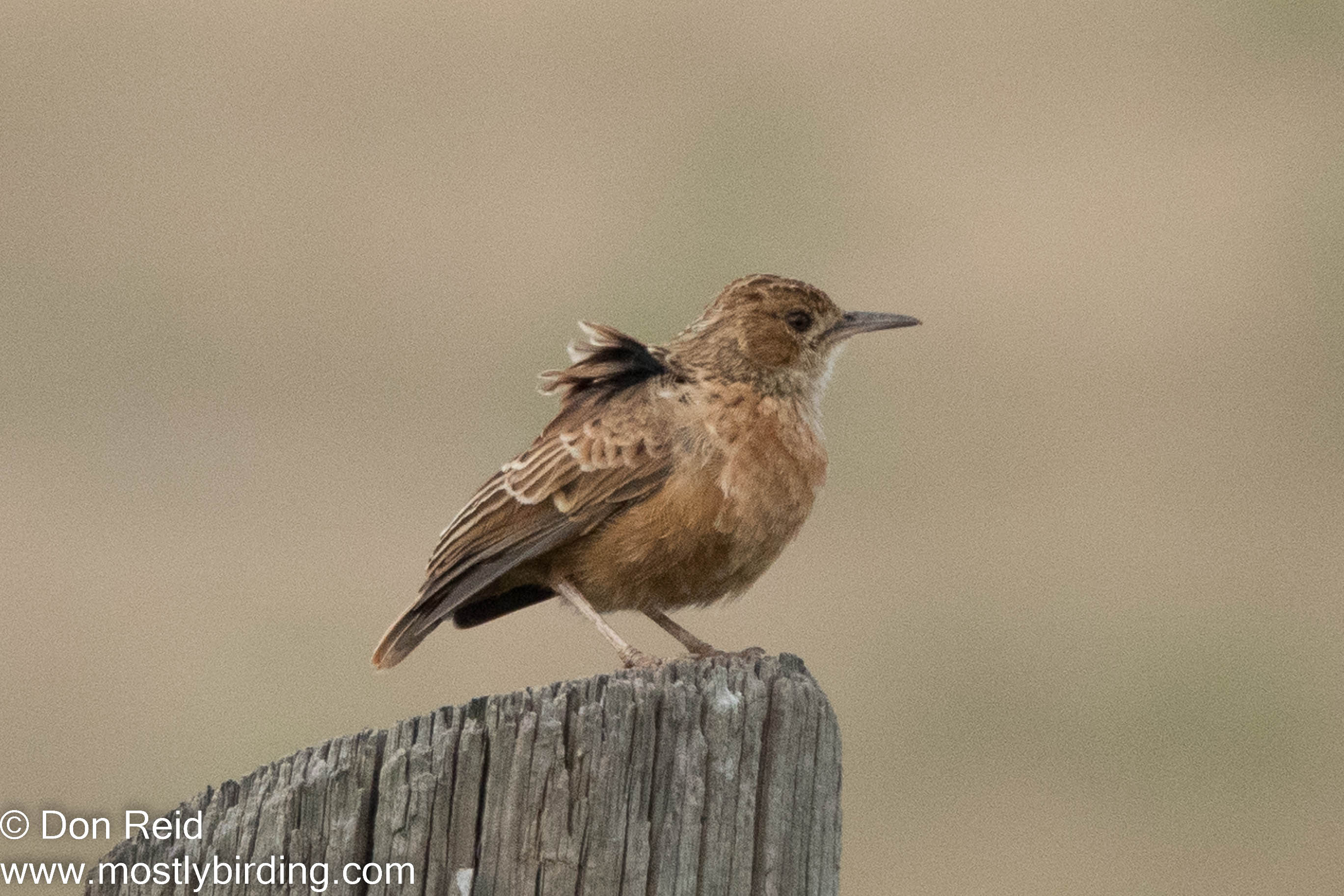
Cape Weaver, Mossel Bay Golf EstateSpike-heeled Lark Chersomanes albofasciata Vlaktelewerik, (race alticola) Balmoral area
Some of the birds seen during our Australia visit
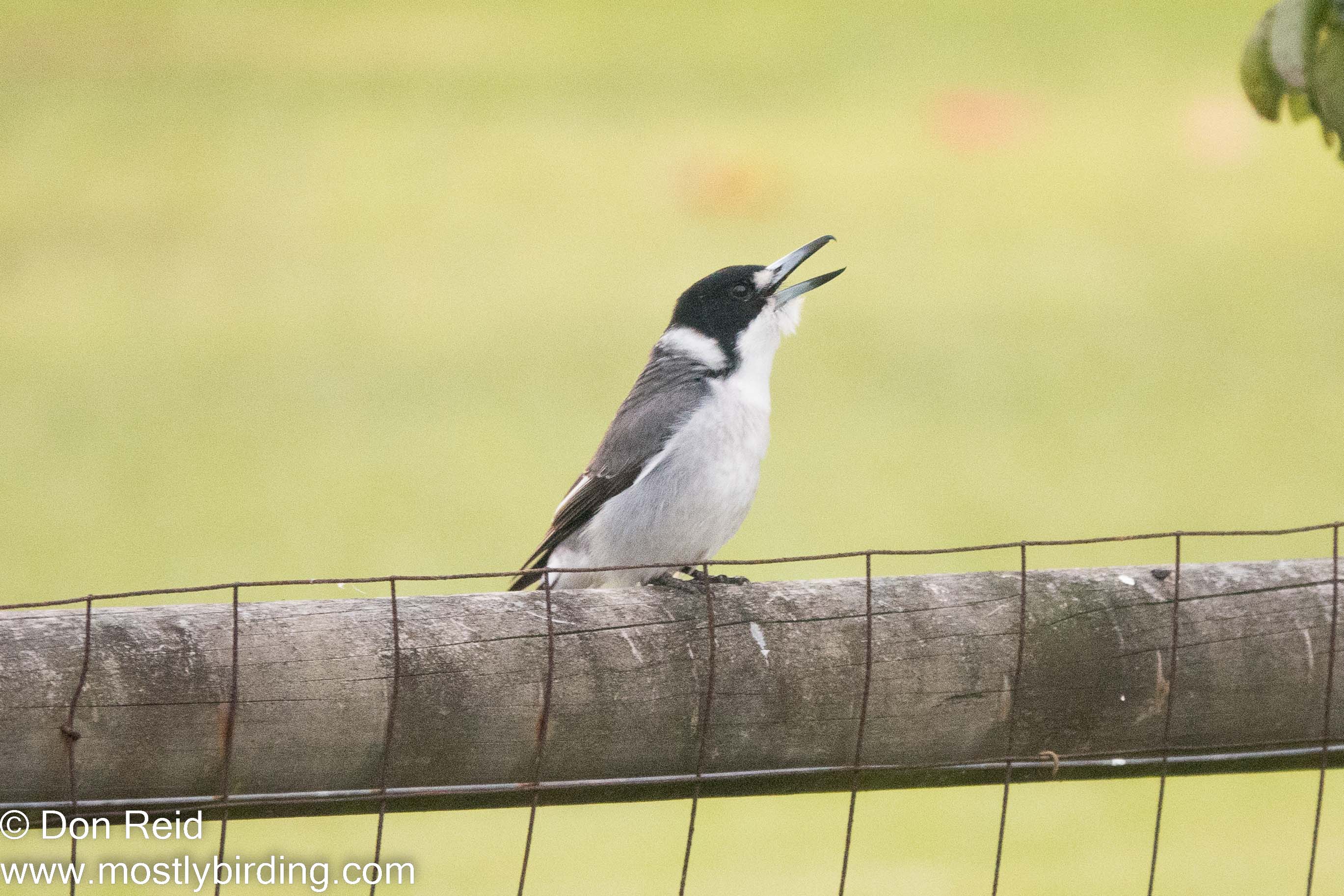
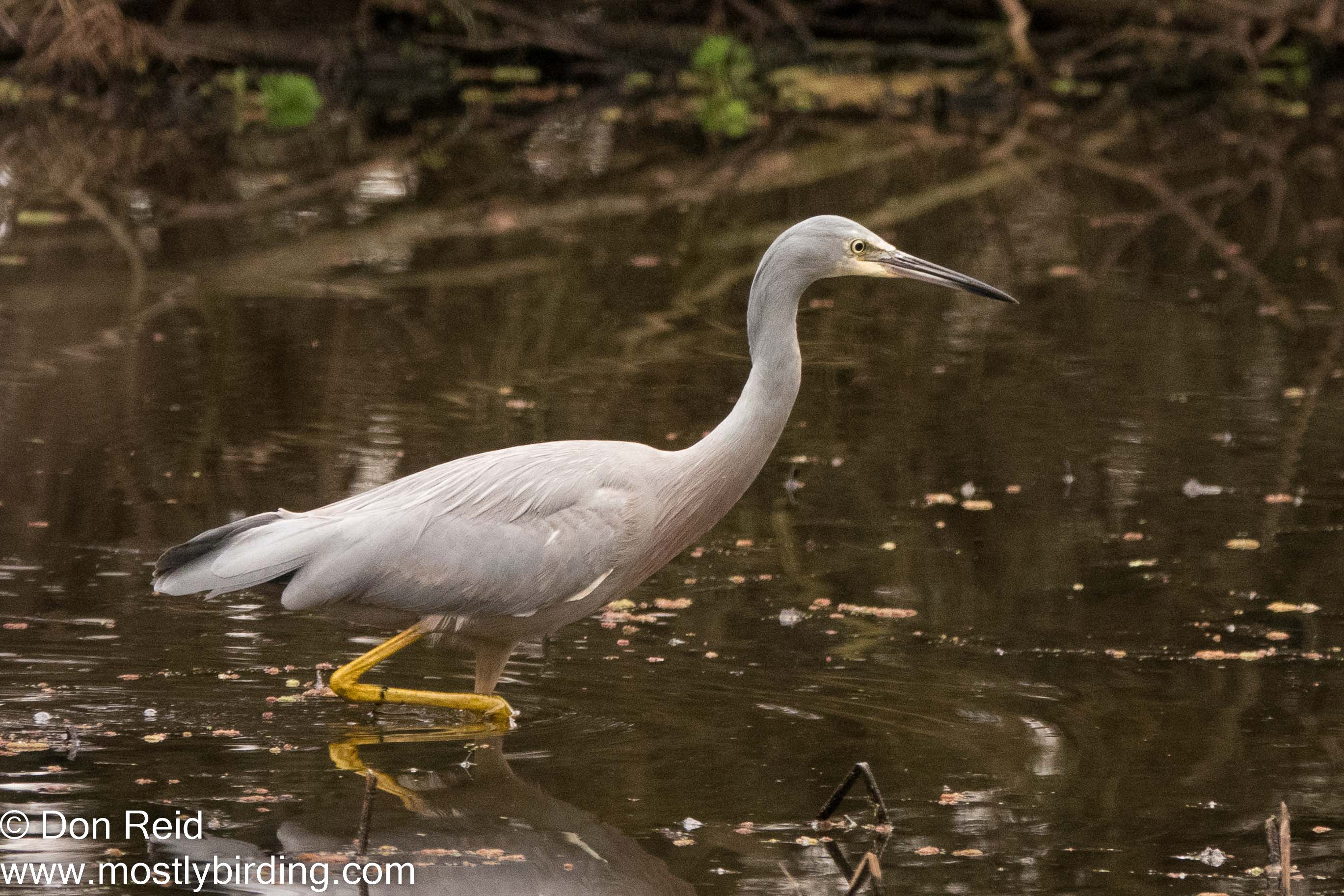
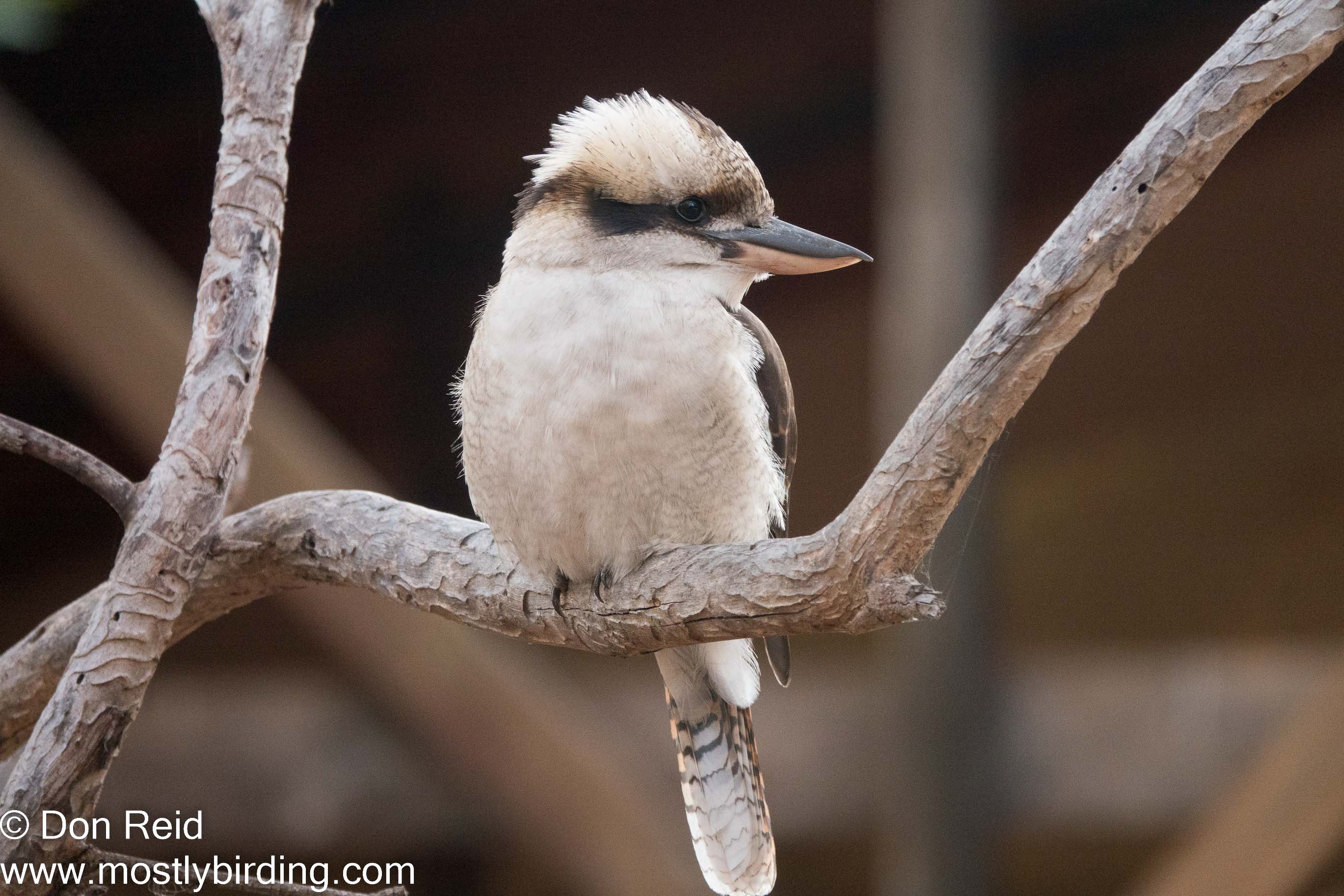
Grey Butcherbird Cracticus torquatus, Sale VictoriaManed Duck Chenonetta jubata (Male), Bright VictoriaWhite-faced Heron Egretta novahollandiae, Sale Common NCRLaughing Kookaburra Dacelo novaeguineae, Raymond Island Victoria
My favourite bird photo of the year! Just seeing this scarce bird is a treat, capturing an image in flight from one bush to the next is a bonus
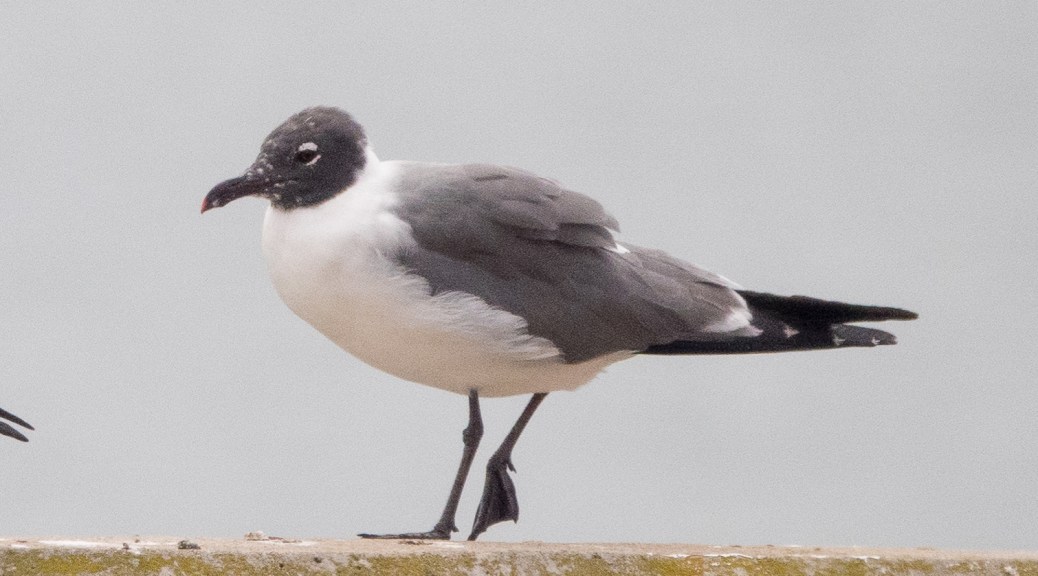
Earlier in the year I wrote about my “Once in a birder’s lifetime” experience of finding a new species for the Southern African region, namely a very far off course Laughing Gull which stayed in Mossel Bay for a week before disappearing again.
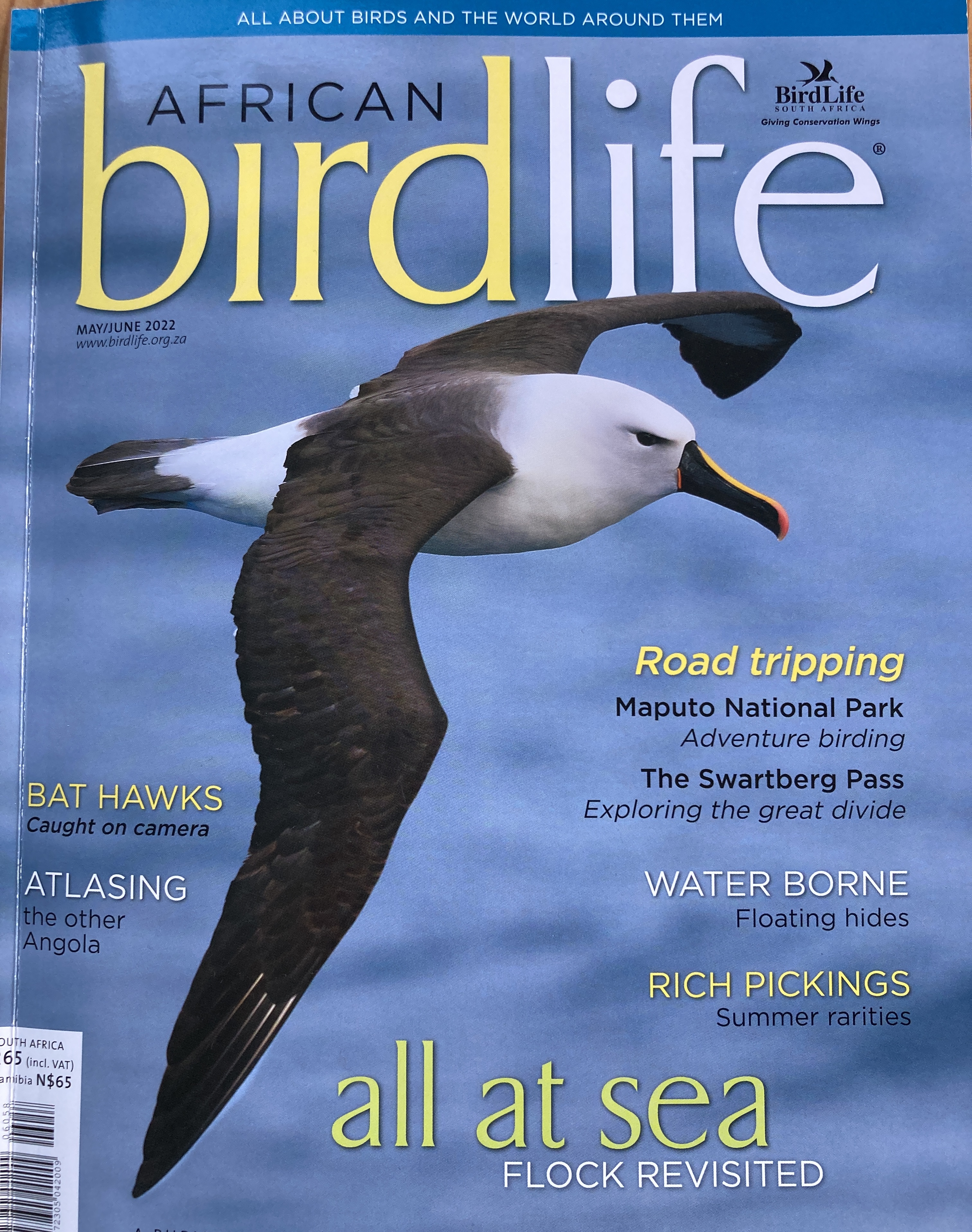
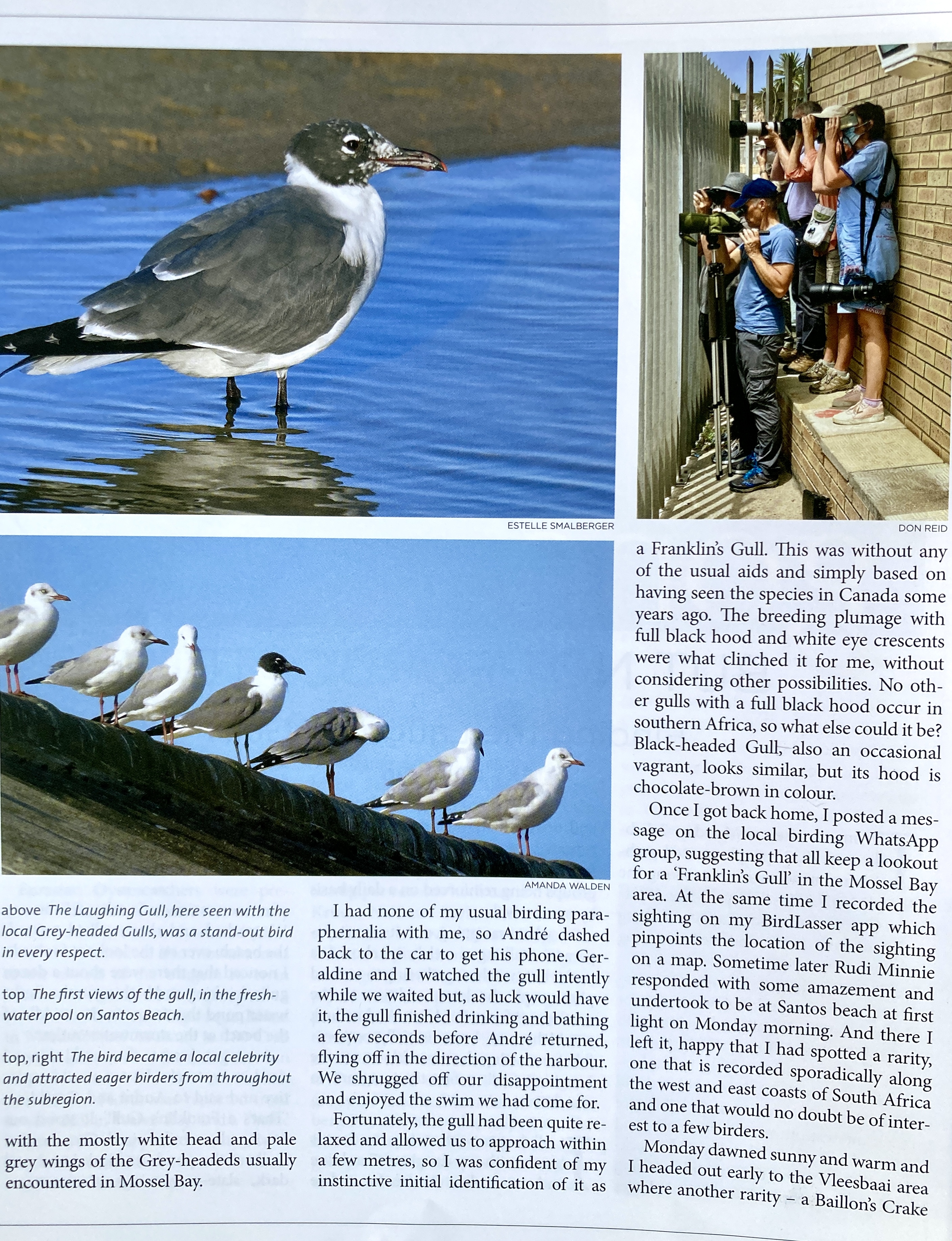
I’m pleased to say that my post, with some tweaks, has been recently published as an article in the May/June 2022 edition of African Birdlife magazine, reproduced below –
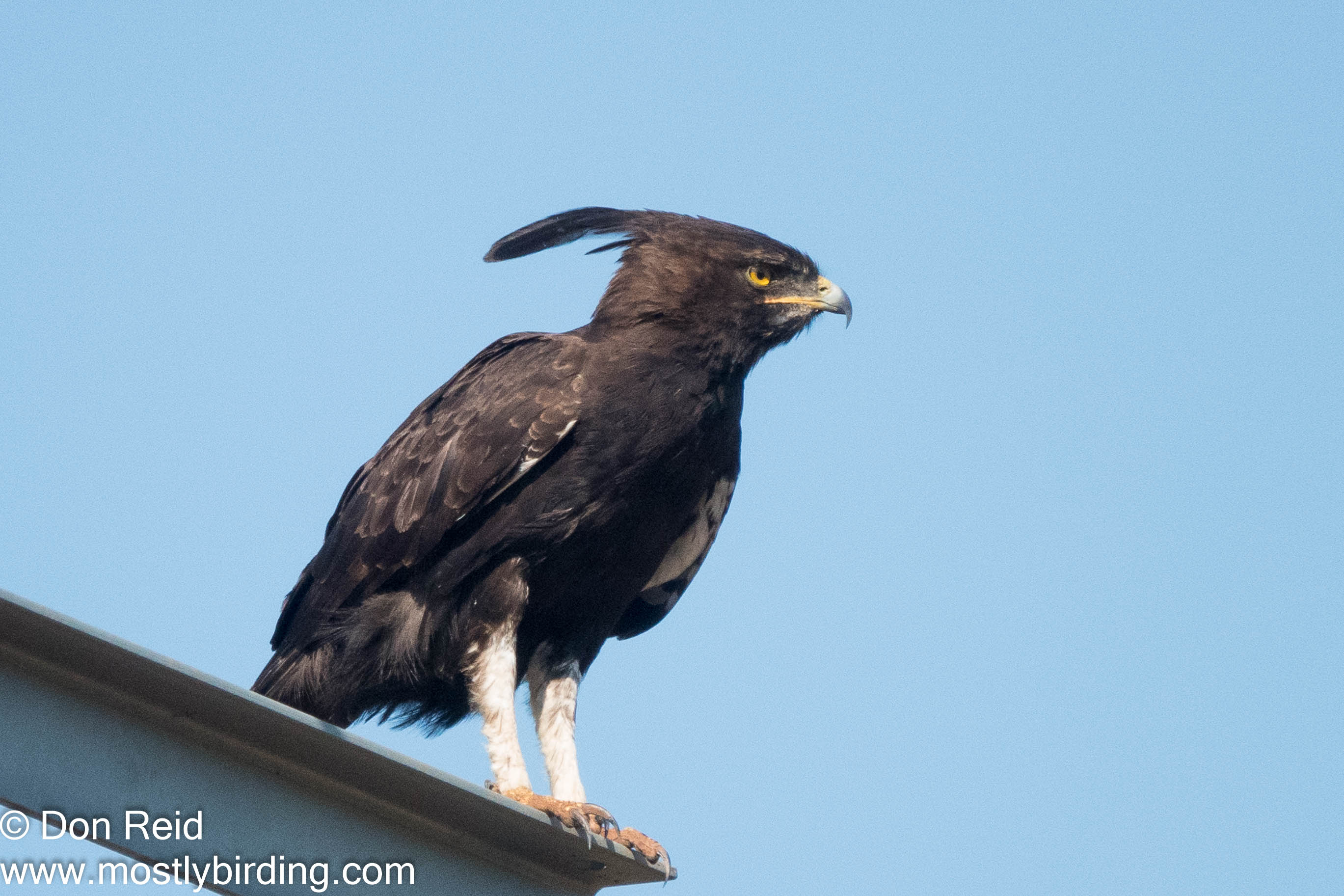
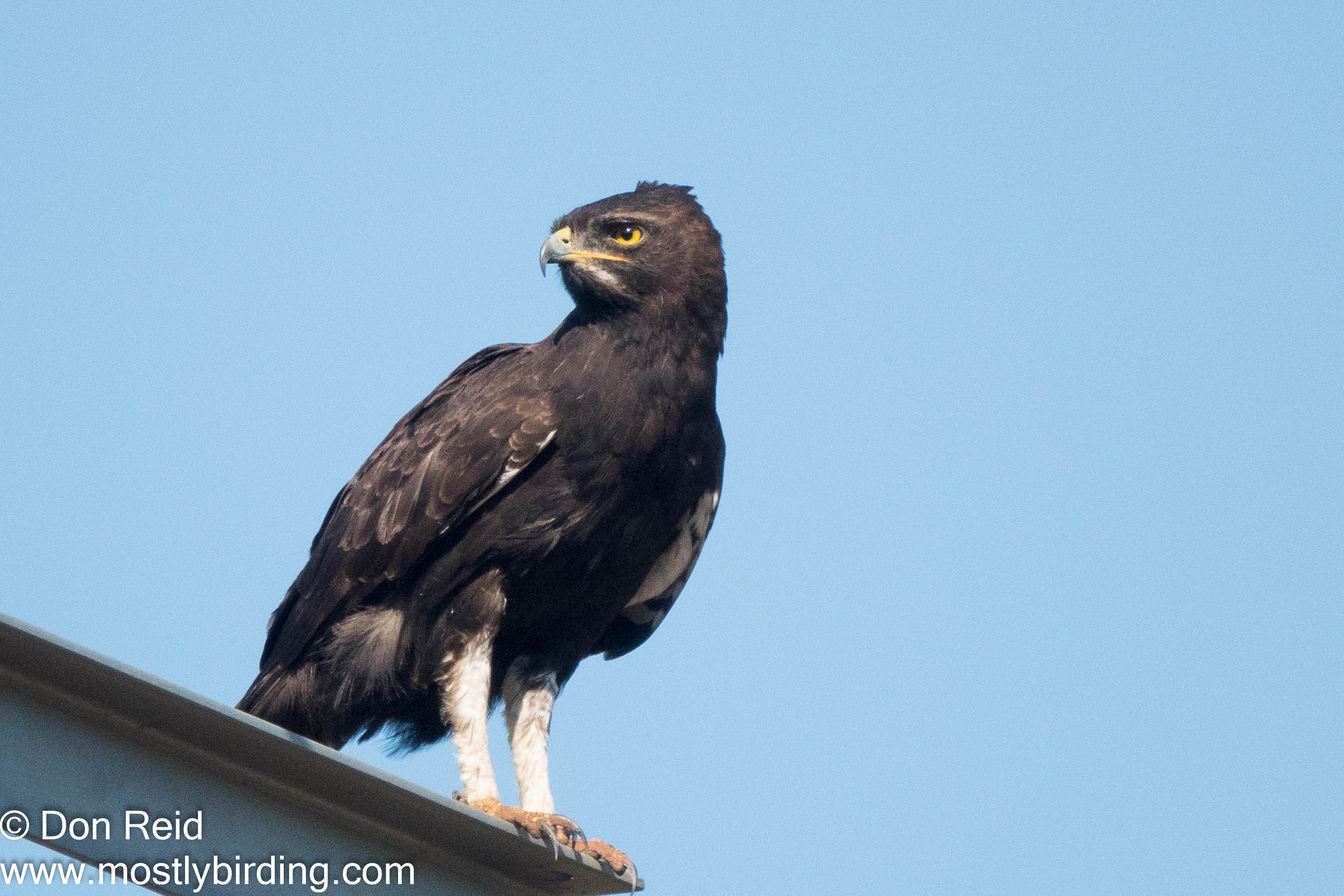
While atlasing not far from Pretoria on the 1st of April this year, I was pleasantly surprised to come across this handsome Long-crested Eagle perched on a utility pole at the roadside. It is always challenging to photograph a raptor perched high up as this one was, with a light background – far better to have them perched closer to eye level, but that would be too much to hope for.
In this case I was on a fairly busy regional road when I saw the eagle from a distance and slowed down as much as the traffic would allow, then pulled off onto the verge at a spot almost opposite where the eagle was perched and where the grass was not so long that it could be concealing puncture-producing sharp objects – just another of the hazards faced by atlasers.
Not wanting to spook the eagle by getting out of my car, I carefully lowered the driver’s window and prepared my camera for a few shots – I learnt a long time ago that one of the most important settings when photographing birds in the field is the exposure compensation.
Both the bird’s colouring and the amount of backlight need to be taken into consideration and, without getting too technical, I set the exposure at 1 full stop over-exposure to take into account the dark colouring of the eagle and the fairly bright background of blue sky.
I took a few shots then turned the car around and stopped on the same side as where the eagle was perched and very carefully got out, remaining partially concealed by the car. This worked and I was able to get closer shots but as soon as I moved from behind the car the eagle flew off, only to perch on the next pole.
This next image may look like a “dud” because the eye is not sharp and bright, but in fact it shows the “third eyelid” that many birds and especially raptors have – called a nictitating membrane. Unlike regular eyelids, it opens and closes horizontally across the eye and protects the eye when catching prey at speed and other hazards. It also helps keep the eye clean and moist – important when you are relying almost solely on your sharp vision for survival
I also took a couple of video clips including this one which shows the eagle seemingly watching a passing car go by – there is just something about large raptors that make them a favourite photographic subject – those eyes, that presence never fail to produce a dramatic image.
A fairly common resident of Southern Africa, the Long-crested Eagle is a personal favourite and we have stopped many times to view one at roadside, particularly in areas where pine and other plantations are the dominant habitat.
When perched it is unmistakeable with its long crest and dark colouring. In flight it is a tad more difficult but the large white wing patches and barred tail separate it from all other large raptors, although looking up at a bright sky and trying to see those sort of details is never easy.
Where to find it
The Long-crested Eagle has a scattered distribution across the eastern parts of southern Africa with concentrations along the escarpment of Limpopo Province and Mpumalanga and the KwaZulu-Natal Midlands. They occur as far south as the Garden Route area of the southern Cape coast
SABAP2 Distribution Map for Long-crested Eagle
My first sighting was in 1994 on a farm near Vryheid in KwaZulu-Natal.
If I have touched your curiosity button and you are wondering why I seem to have changed the theme of my blog to culinary matters, let me set things straight right away. I was looking for some background information about the bird which is the subject of my recent twitch of a rarity and my extensive research (OK, I just googled a bit) came up with something unexpected……
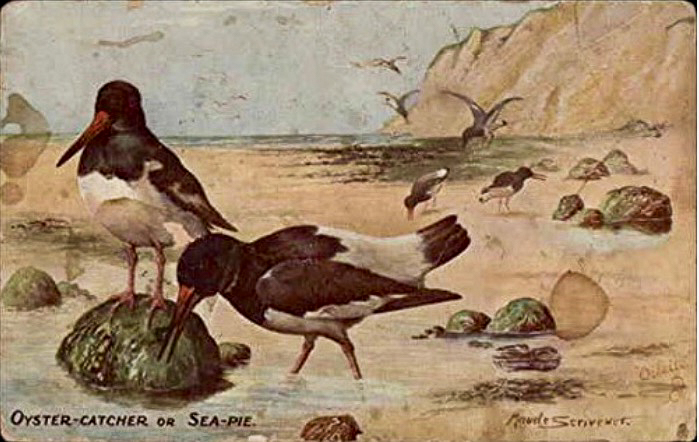
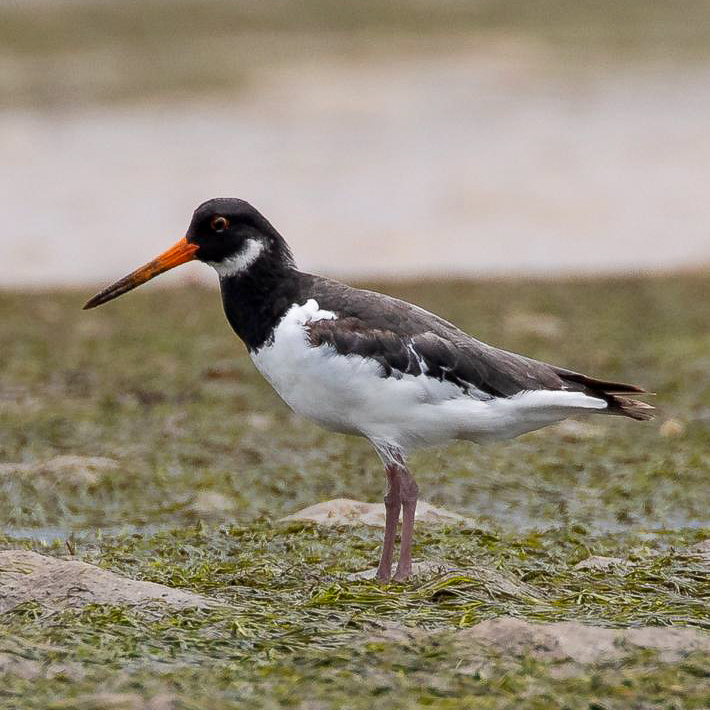
The bird in question is the Eurasian Oystercatcher, the unexpected fact is that the Oystercatcher was originally known as the “Sea Pie” but was renamed in the 1730 ‘s when a naturalist observed one eating oysters. The name “sea pie” seems to be a shortened form of Sea Magpie, due to its pied (black and white) appearance, (not applicable to our better known African Black Oystercatcher which has all black plumage).
An old illustration of the Sea-Pie
Just a little background
At the risk of boring those who already know my approach to twitching (the chasing of rarities no matter what it entails) let me repeat my criteria : if the rarity in question is within maximum 2 hours travel time by car from where I happen to be, I will consider going for it.
Once again the trigger came from the SA Rare Bird News report (SARBN) which is published by Trevor Hardaker twice a week – in this case it was the report of 3rd December 2021 that piqued my interest with a report of an Eurasian Oystercatcher on the Keurbooms River estuary at Plettenberg Bay in the southern Cape.
We were still in Pretoria at the time but were readying ourselves for a mid December road trip to our other home in Mossel Bay, so if the bird hung around long enough, there may be a chance to twitch it…..
I kept an eye on the reports coming through and as our departure date got closer, and the Oystercatcher remained in the same area, my hopes of being able to twitch the species started rising.
Now I should mention that I had in fact seen this species in Europe a number of years ago, but the circumstances were rather bizarre and the sighting somewhat unsatisfactory so I was keen to get a better sighting and of course to be able to add it to my list of Southern African birds seen.
At the time we were travelling to the UK via Amsterdam Schiphol airport and while taxi-ing after landing at Schiphol early morning I spotted, from my window seat, an Eurasian Oystercatcher at the edge of a concrete water channel along the perimeter of the airport – the sighting was brief but there was no mistaking the bird with its black and white plumage and distinctive bill
As I said, a somewhat unusual way to add a lifer and not what I consider fulfilling…..
Time to Twitch
We arrived in Mossel Bay on Wednesday 15 December 2021 after a road trip spread over 3 days and, once settled in to our ”Southern Cape” routine, my thoughts returned to the Eurasian Oystercatcher, which was still hanging around in the same area on the Saturday, so we decided to do the trip to Plettenberg Bay (or Plett for short) on the Sunday.
Now, 150 kms doesn’t usually sound like a challenging distance to drive for a day but Google Maps put it into perspective by estimating that a 2 hour drive awaited us, fortunately just making it into my (admittedly arbitrary) 2 hour drive time limit for a twitch.
With time to prepare I made a note of the instructions provided about the location, where to park and how to access the estuary and the recommendation that any attempt to find the bird be done at low tide. The tide tables indicated a low tide around 10 am for the Sunday so it seemed quite reasonable to leave home at about 8 am.
Another recommendation was to have a scope handy if available as the bird was likely to be a fair distance from the closest viewing spot so my Swarovski scope was the first item to be loaded into the car. I had recently purchased a new ball head for the scope to replace an old one that had become difficult to manoeuvre and I was looking forward to see how it functioned in the field (I’m glad to say it performed perfectly)
We duly got to the pin-drop spot at the small parking area, which had a full complement of cars but fortunately one was just pulling out and I slotted the Prado into place and set off down the narrow track, scope and tripod slung over my shoulder, leaving Gerda to enjoy the peace and quiet with her knitting.
The track initially wound its way through bush, then over a narrow wooden foot bridge and onto the sands of the estuary. A birder heading the other way turned out to be Rudi, another Mossel Bay birder and after greeting each other he pointed me in the general direction of where he had just seen the Oystercatcher.
The pathway to the Estuary
Armed with that knowledge, I found a spot to set up the scope, taking care to avoid the softer sands which would have swallowed my sandals if I wasn’t wary (all proof of how hazardous twitching can be). I scanned the distant river close to a Tern roost and within a minute had found the Oystercatcher and locked onto it with the scope. I allowed myself a little victory punch in my imagination – success!
For the next 40 minutes I tried getting closer to where the bird was hanging out, with some success although the soft mud of the estuary at low tide thwarted my attempt constantly as I picked my way across the drier parts to a better vantage point.
Satisfied with the views I had enjoyed, I made my way in hopscotch fashion to the main pathway back to the car, passing a group of birders who had just arrived but were less fortunate as a passing helicopter had caused the Tern roost and surrounding birds to rise up and fly off.
My only regret was not having my camera, which I left in the car as the scope and tripod was quite a burden without a camera dangling from my shoulder as well. Plenty of excellent photos have been posted on various birding groups and the superb image below was taken by a birder who rented a canoe so as to get closer to the bird – included here with the photographer’s kind permission.
This species is a rare but annual visitor from its breeding grounds across the Palearctic region from Iceland to China. Those found in southern Africa are thought to originate from Siberia and prefer to feed by probing for invertebrates on mudflats, having a longer bill than the African Black Oystercatcher which generally feeds on mussels.
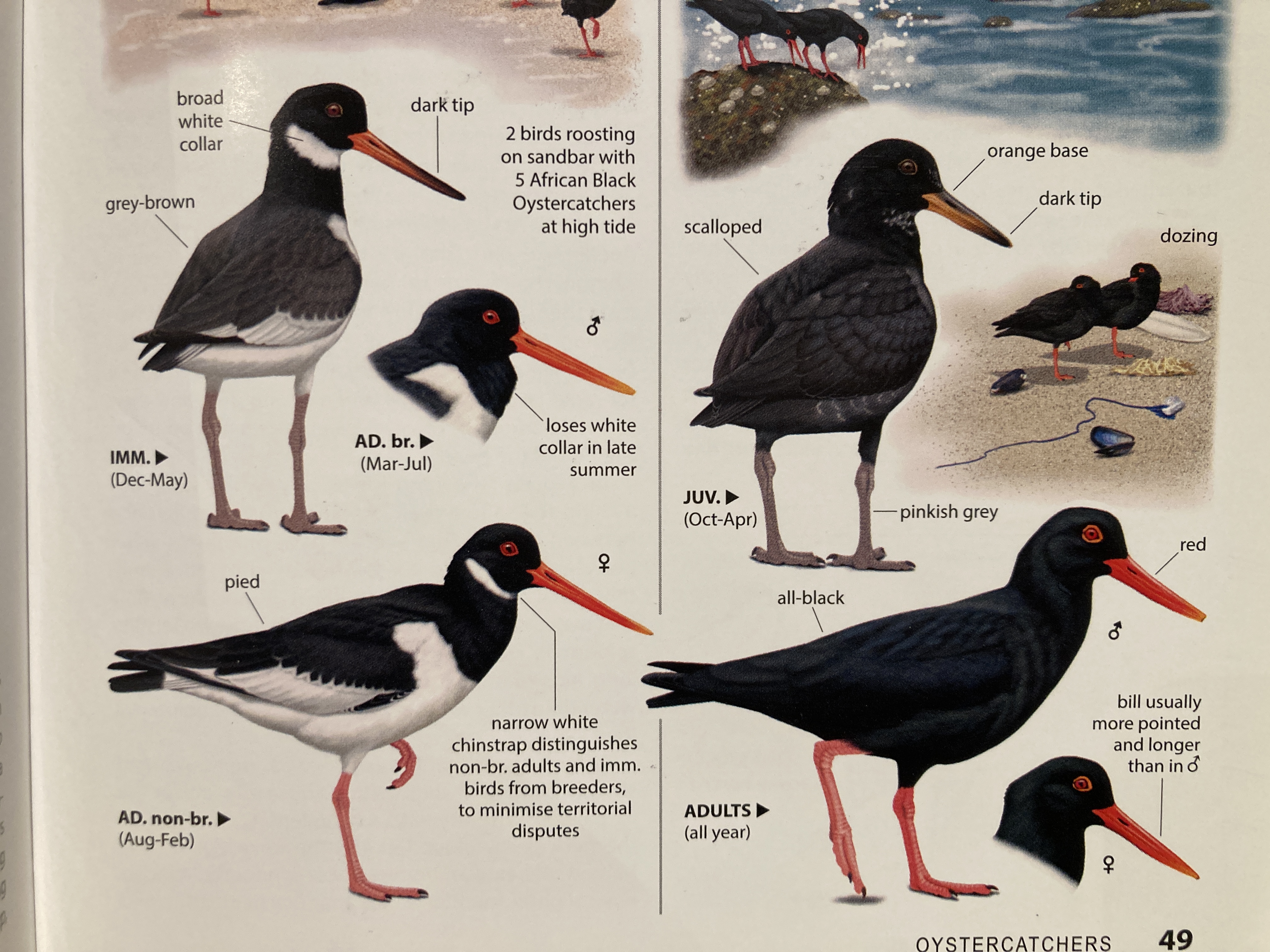
The illustrations below are from Chamberlain’s Waders, written and illustrated by Faansie Peacock and show the unmistakeable pied appearance of the Eurasian Oystercatcher compared to the all black plumage of the African Black Oystercatcher.
On our way back home we stopped at a roadside restaurant for a light lunch of their home-made pie and salads – it crossed my mind that I had seen a Sea Pie in Plett and eaten a Pie near the Sea in Plett, all in the same morning……..
Google “Abbotsbury” and it comes up with a Wikipedia article about a village in the English county of Dorset, about a mile from the English Channel coast.
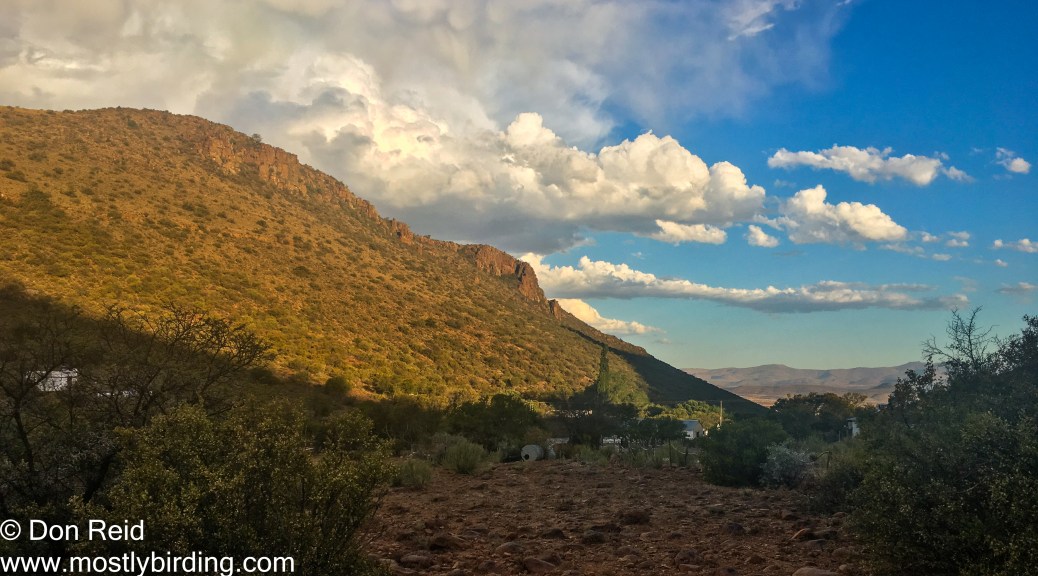
The Abbotsbury we like to visit couldn’t be further from that description – it is a Guest Farm deep in the Karoo, some 27 kms north of the historic South African town of Graaff-Reinet, and is one of our favourite stopovers on the long road between our homes in Pretoria and Mossel Bay.
Location of Abbotsbury
In 2021 we had the pleasure of two stopovers at this peaceful and hospitable guest farm, on our way to Mossel Bay for our winter and summer stays, and we were once again enchanted by the setting and the comfortable Garden Cottage which has become a brief “home away from home” for a number of years.
The Garden Cottage
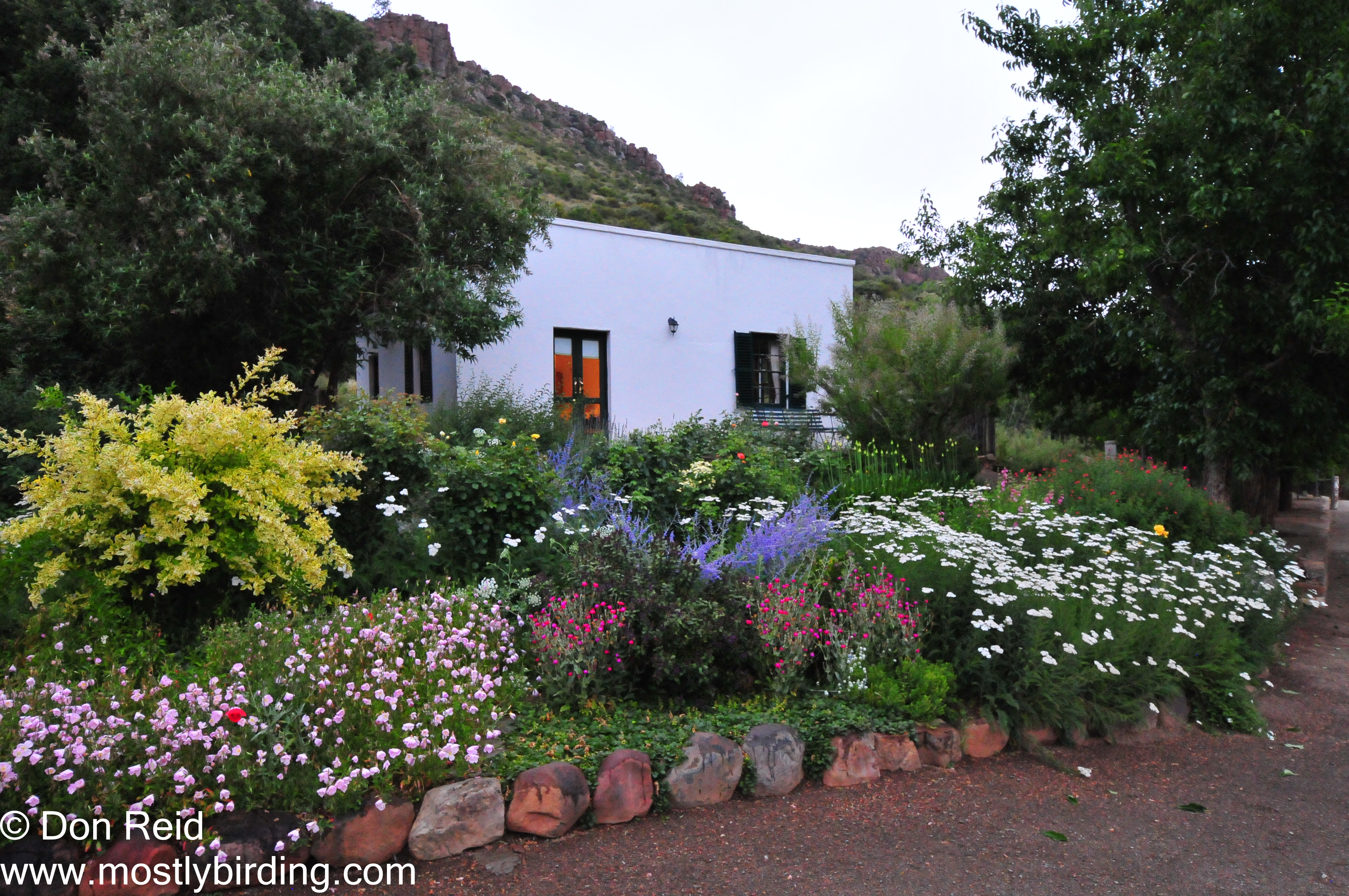
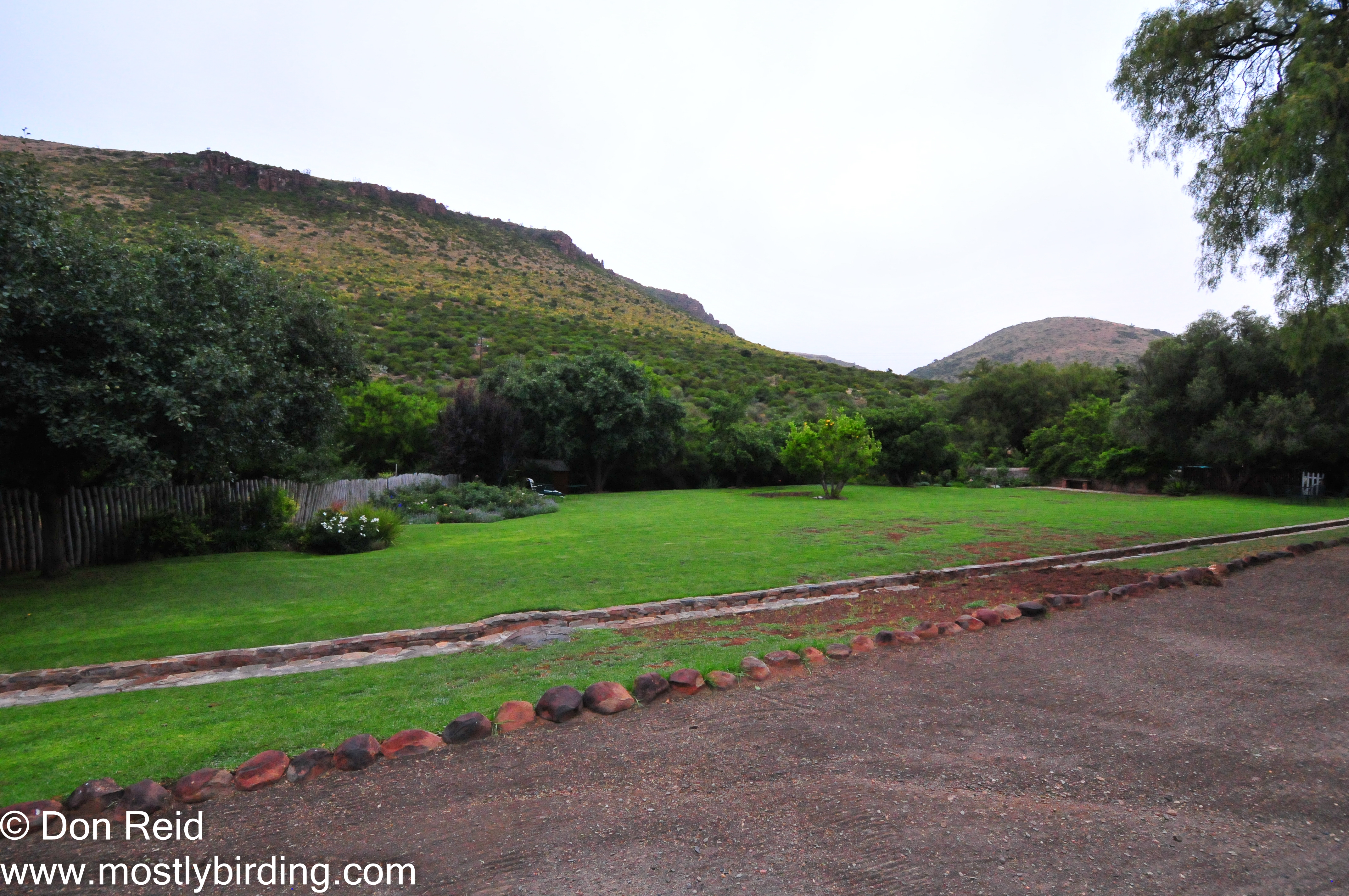
The setting is sublime – set among a cheerful garden which is in complete contrast to the surrounding arid conditions, yet fits the purpose perfectly
Abbotsbury guest farm – the Garden Cottage
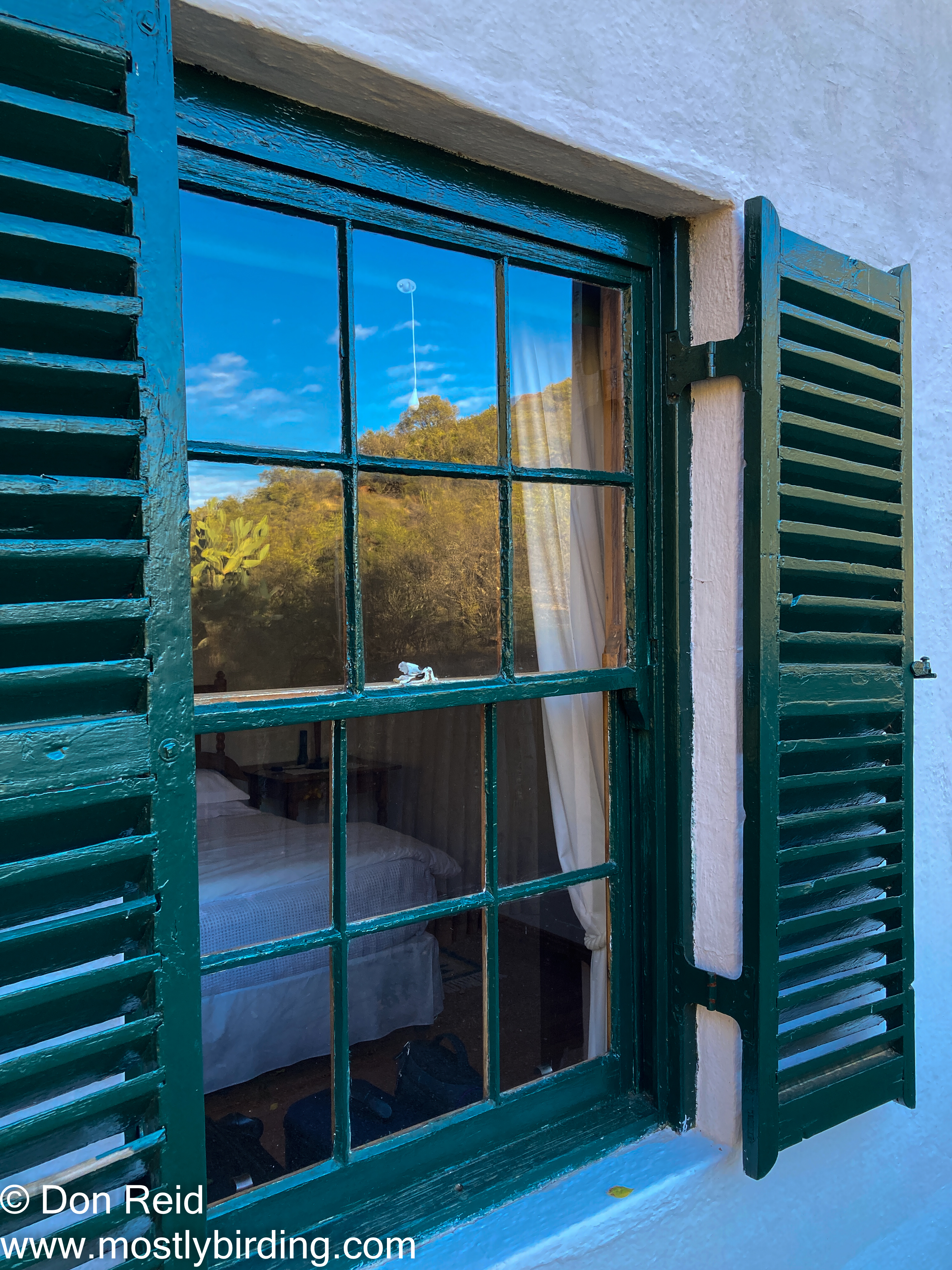
And the interior is just as charming with that homey feeling that has you instantly relaxed
Abbotsbury guest farm – the living roomAbbotsbury guest farm – the lawnsAbbotsbury guest farm – time to relax on the stoepAbbotsbury guest farm
Getting there
We have done the road trip between Pretoria and Mossel Bay or vice-versa many times and usually travel on the N1 National Road between Pretoria and Colesberg, then choose between the route via Beaufort-West/Meiringspoort/Oudtshoorn or via Graaff-Reinet/ George.
The latter route is the one that takes us past Abbotsbury, which lies a few kms off the N9 National Road and as soon as we turn off and pass through the entrance gate I feel a sense of relief at escaping, for a while, from the main road. It’s also a signal to open the car window, breathe in the fresh Karoo air and listen for the calls of the birds that favour this arid habitat.
Abbotsbury Graaff-Reinet
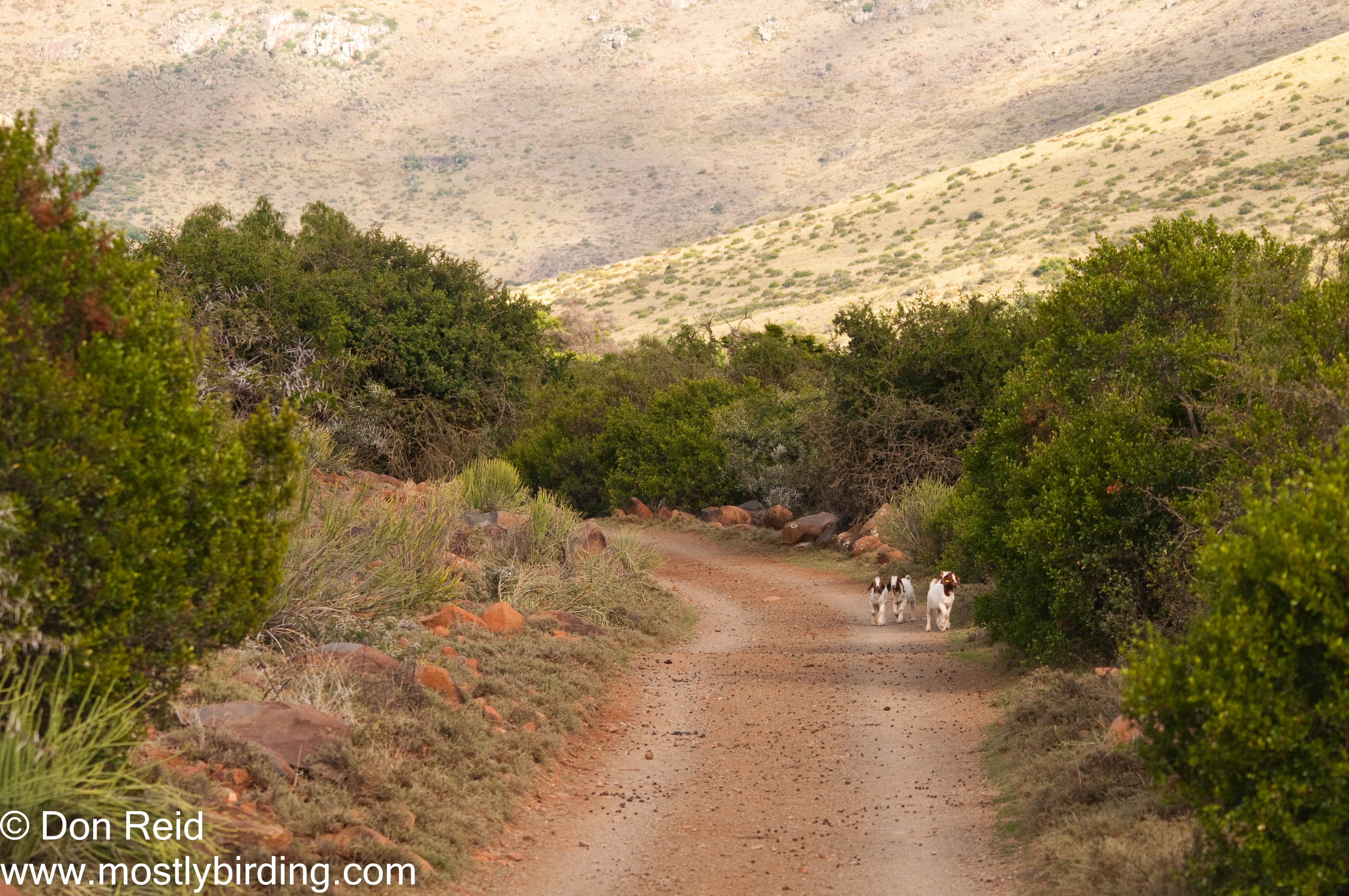
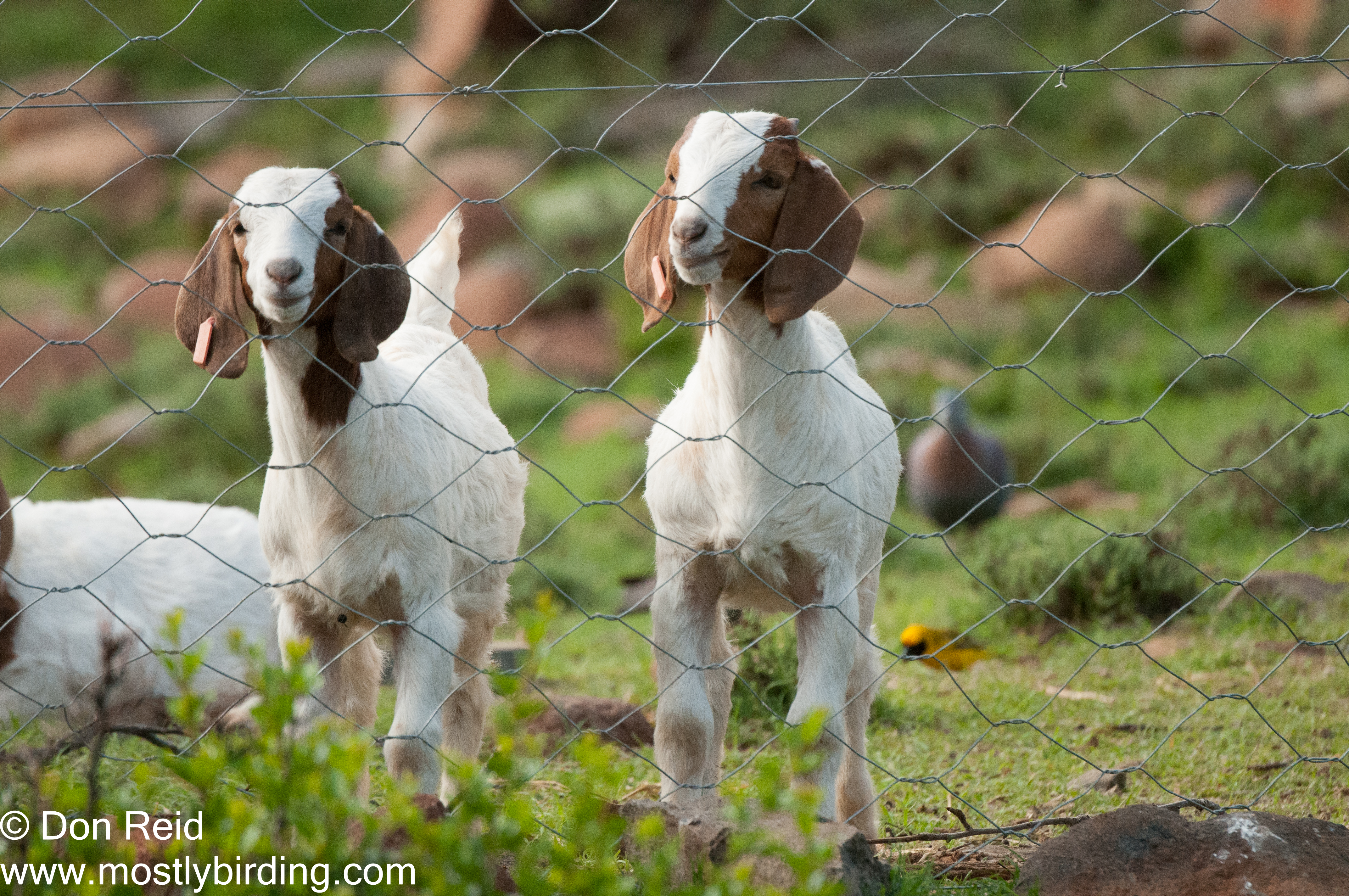
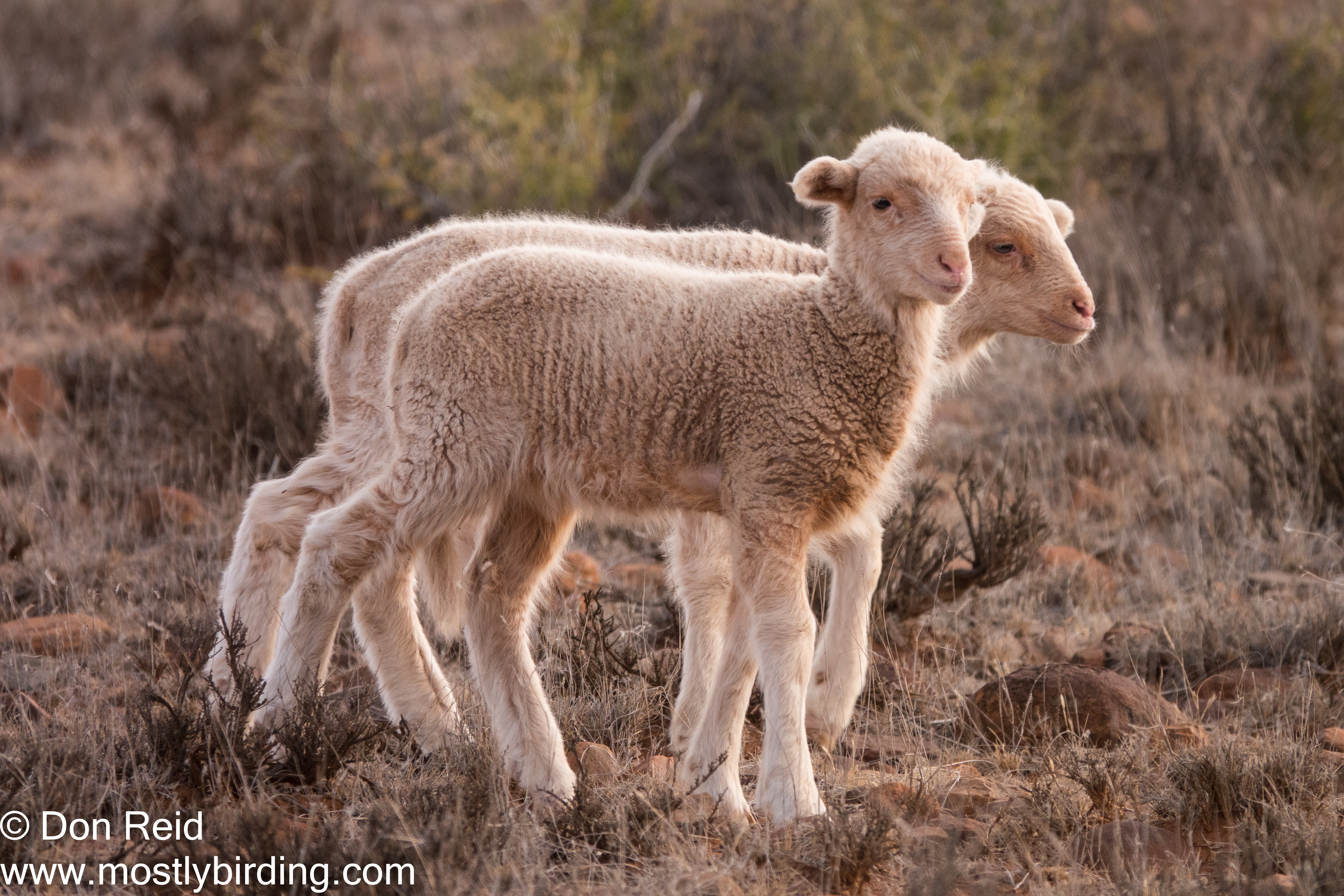
It’s a short drive from the road up to the farmstead along a dusty farm track that passes kraals with sheep and goats, keeping a lookout for birds in the scrubby Karoo habitat
Abbotsbury guest farmAbbotsbury guest farm – even the goats are good lookingAbbotsbury Guest Farm
Once we have greeted owner Graham and settled into the cottage, we relax for the rest of the afternoon on the stoep overlooking the garden and lawn – by now Angus, the friendly Scottish Terrier, has come to “greet” us and persuade us to throw his old tennis ball so that he can scurry after it and bring it back for the next throw.
Angus, Abbotsbury’s friendly Scottish Terrier
Time for a Walk
For the last hour or so of driving before we reach our overnight stop, I start looking forward to the walk I will take once we are settled in – firstly to stretch legs and body that have been unnaturally dormant while driving for several hours and secondly to fit in at least an hour’s quality atlasing in a pentad that has limited coverage.
The farm has a character all its own and around every bend there is something photogenic to admire
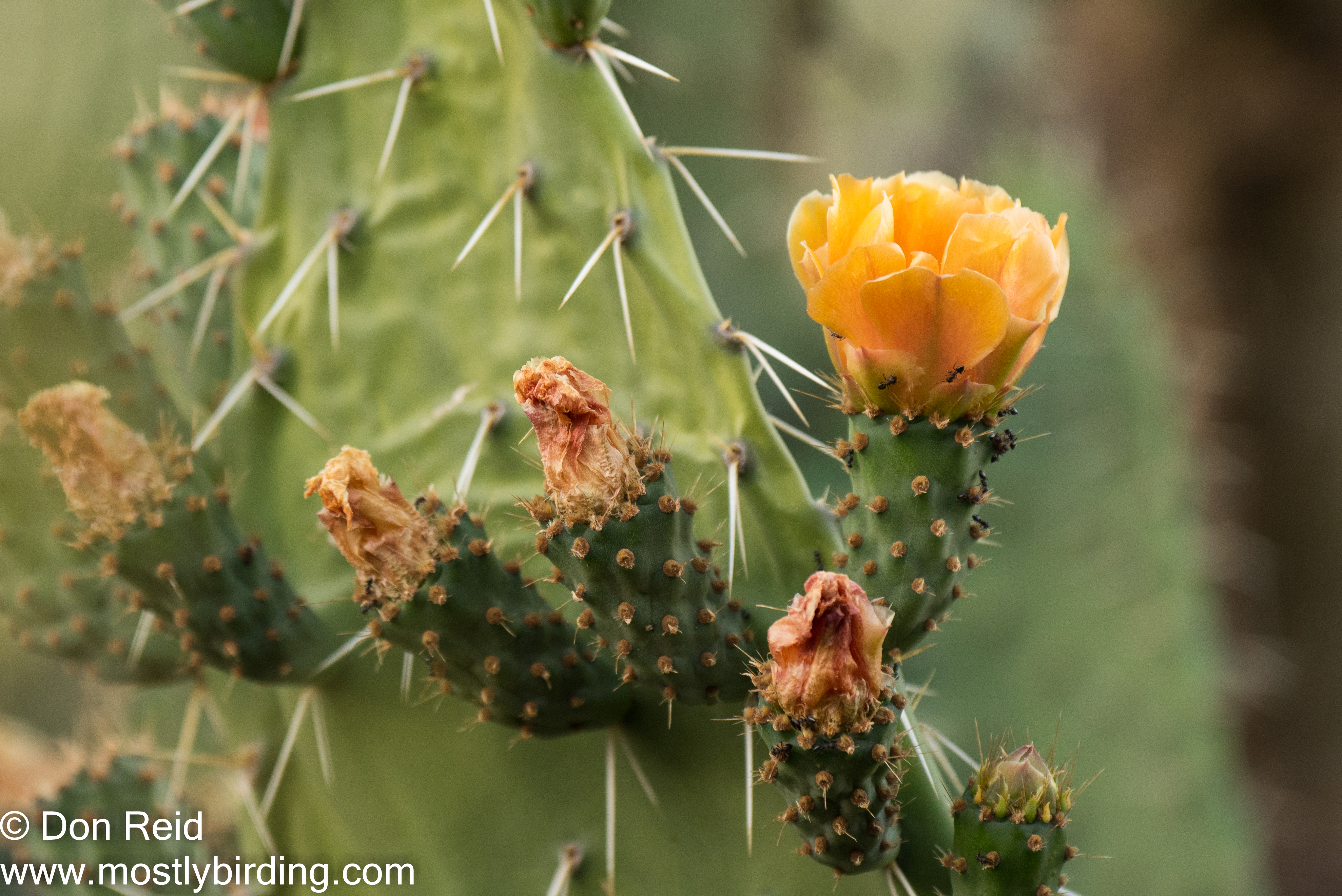
Abbotsbury guest farmFlower amongst the thorns, Abbotsbury guest farm
And the Birds
Atlasing statistics show that the pentad in which Abbotsbury lies has a total of 100 species after 13 full protocol cards, with my contribution being 65 species from 7 cards. I usually expect to find 30 to 40 species during a visit and the images below are a selection of some of those I have come across and been able to photograph –
The Pied Barbet is one of those birds that are heard before they are seen, alternating between their two calls – one a soft descending hoop hoop hoop, the other a loud nasal pehp pehp pehp – very much a feature of this arid habitat
The best part about my afternoon and morning walks of an hour or so each around the farm is knowing a delicious dinner or breakfast will be served when I get back to the cottage