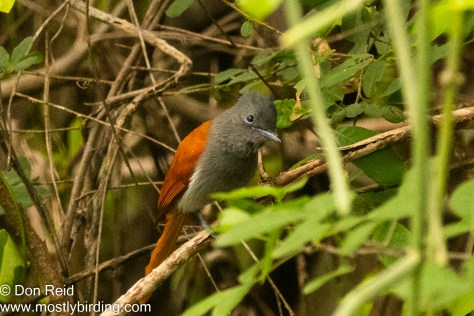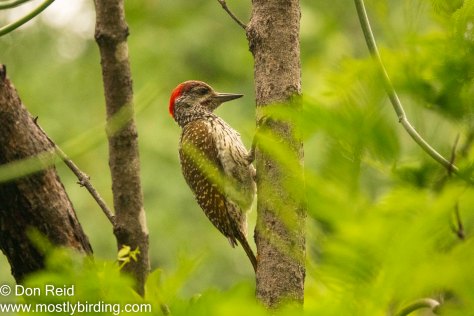
Category Archives: Bird in the Lens

My Photo Pick for 2024 – the Birds

This is the second part of my photo pick for 2024 – a selection of bird photos that appealed to me for various reasons, not just the quality of the photo but also for the memory it left with me. I hope you enjoy scrolling through them as much as I have enjoyed taking, editing and selecting them.

If you have already glanced at the ‘categories’ I have placed them under and are wondering how I arrived at these – well, I didn’t but I did ‘borrow’ them from Firefinch which is the excellent birding app produced by Faansie Peacock (his real name!) and his team.

Faansie has a way of making birding interesting and fun and the way he categorises bird species in his app is a good example of his practical approach.

Raptors

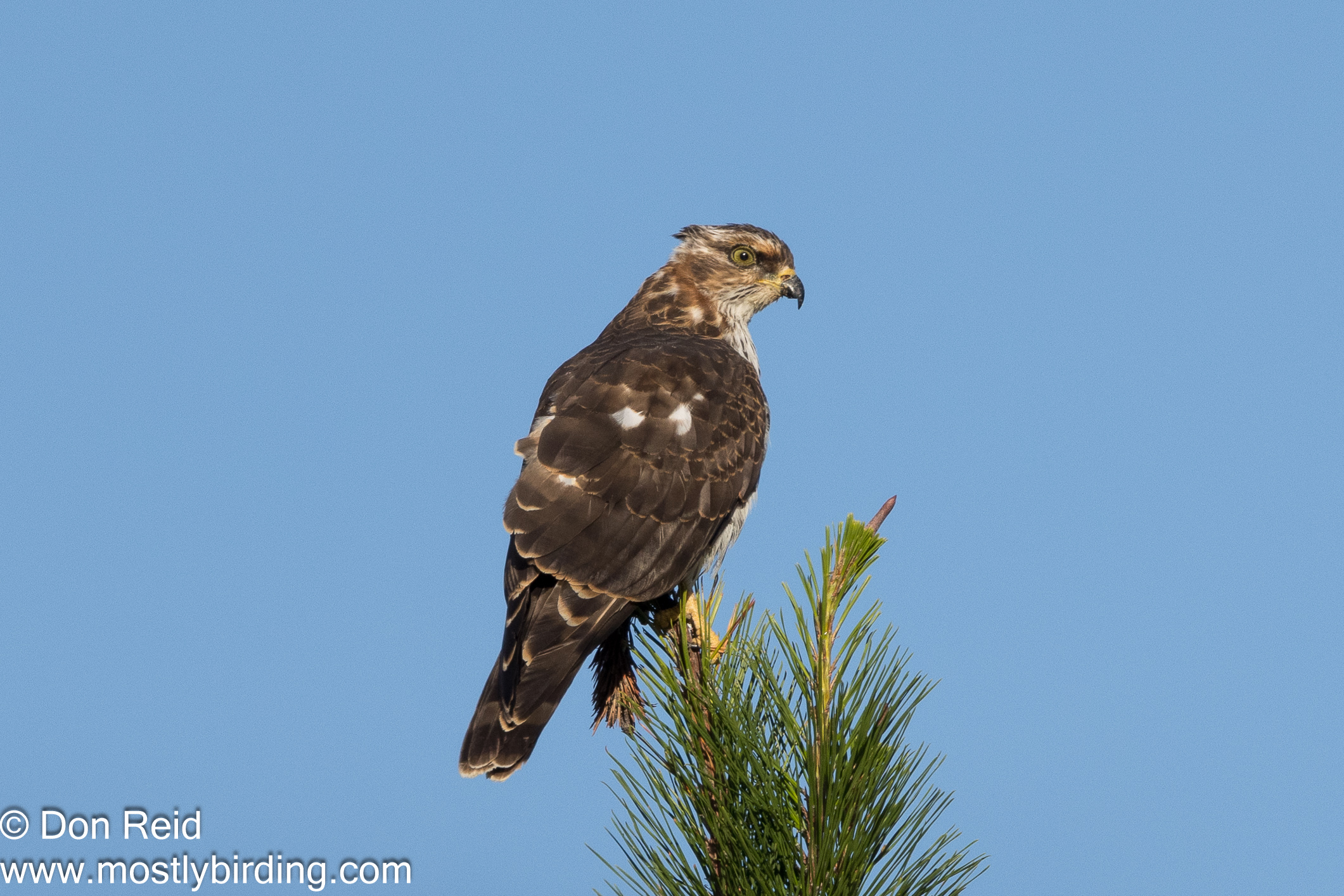
Seeing a raptor at the roadside is always exciting and a reason to stop and have a better look – most will fly off the moment you stop, so it requires a bit of stealth to keep the car moving slowly while approaching the target and to have the camera at the ready for the moment you come to a standstill

Long-crested Eagle Lophaetus occipitalis Langkuifarend, Kleinberg area
African Cuckoo Hawk Aviceda cuculoides Koekoekvalk (Juvenile), Friemersheim area

Black-winged Kites are widespread in SA but finding this one about to feed on its prey was a first for me

Black-winged Kite Elanus caeruleus Blouvalk, Vleesbaai inland

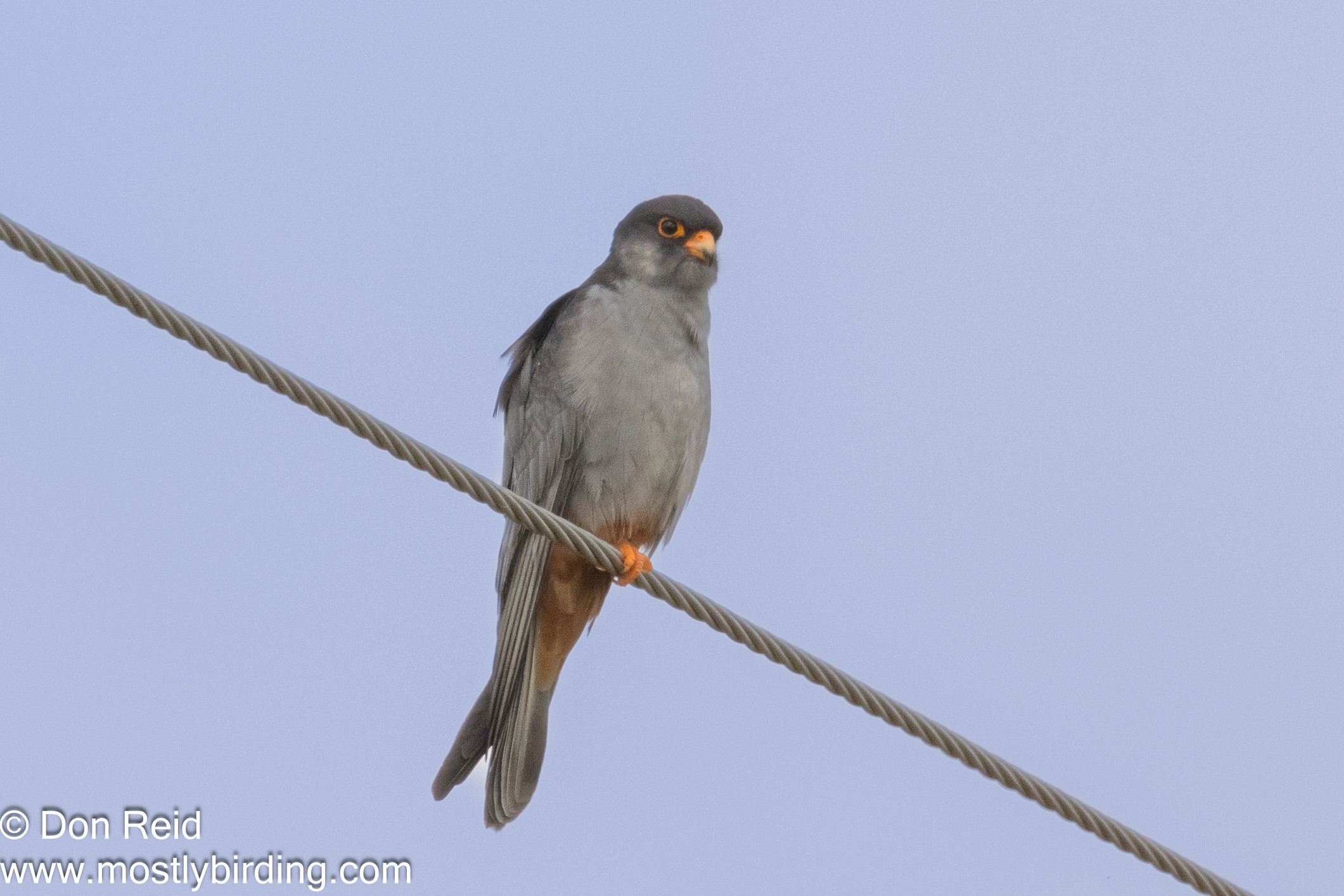
This is not a particularly good photo of an Amur Falcon that I came across but I include it only because it is a scarce sighting in the Southern Cape

Amur Falcon Falco amurensis Oostelike rooipootvalk (male), Kleinberg area

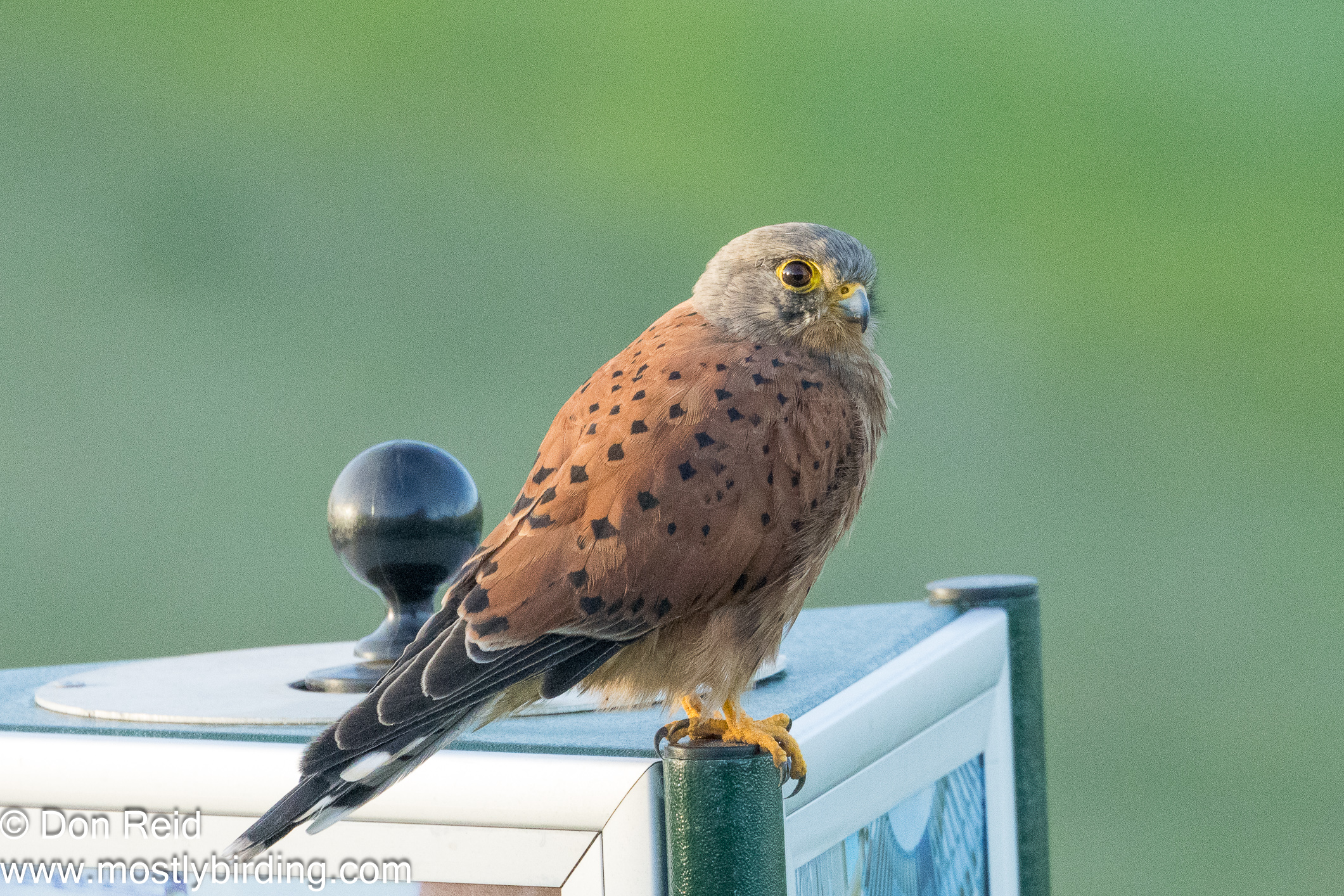
Rock Kestrel is a regular species in the estate where we live. This one chose the 15th tee, just 100m from our house, as a convenient spot for some hunting one morning

Rock Kestrel Falco rupicolus Kransvalk, Mossel Bay Golf Estate

Perchers

This category covers a variety of birds normally seen perched on a tree or bush or other suitable spot

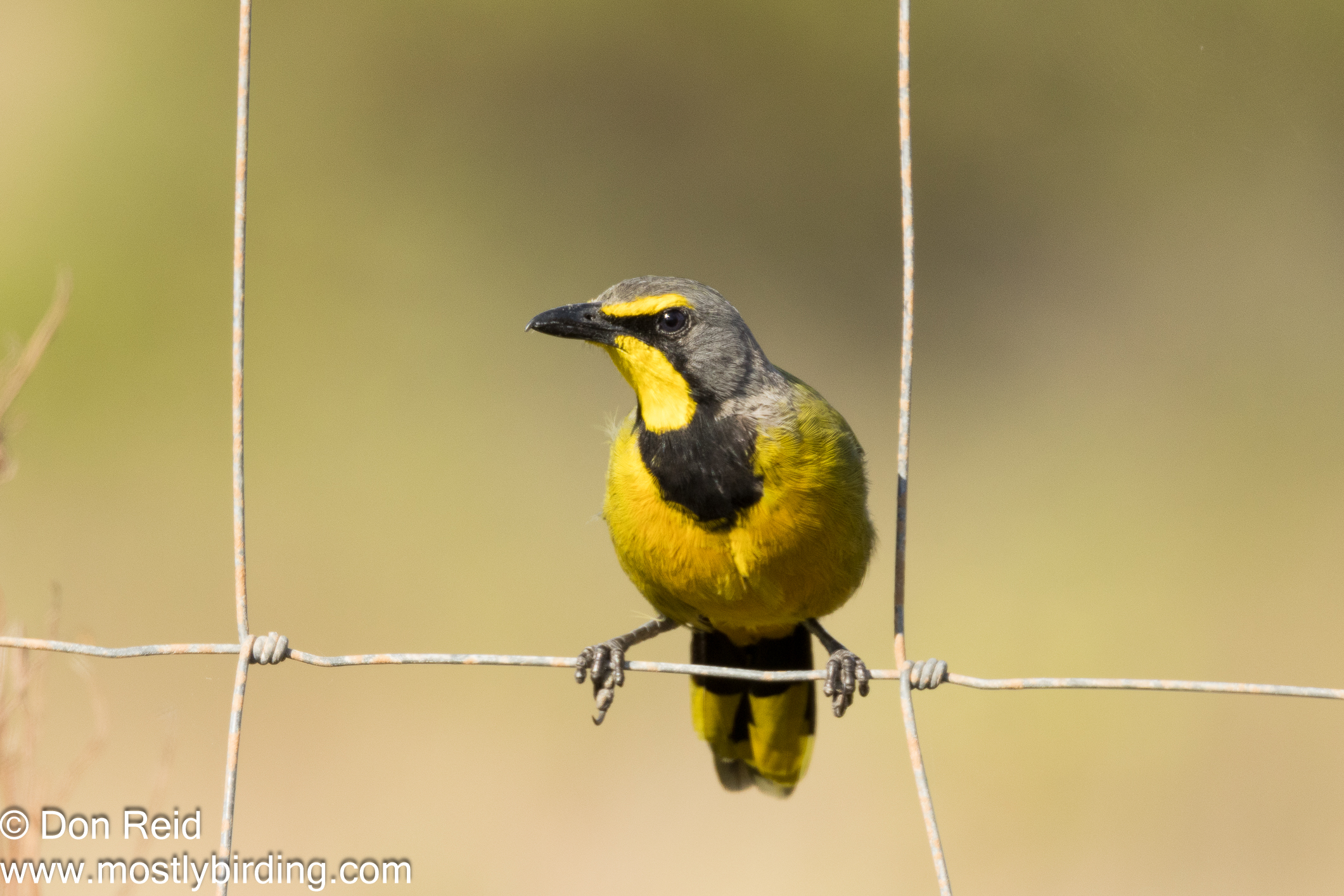
Bokmakieries are often one of the first species to be encountered when atlasing in the Southern Cape, as they greet the new day with vigourous calls. Getting them to pose is not always easy but this one eyed me from a wire fence, inviting me to take its photo

Bokmakierie Telophorus zeylonus Bokmakierie, Brandwag south

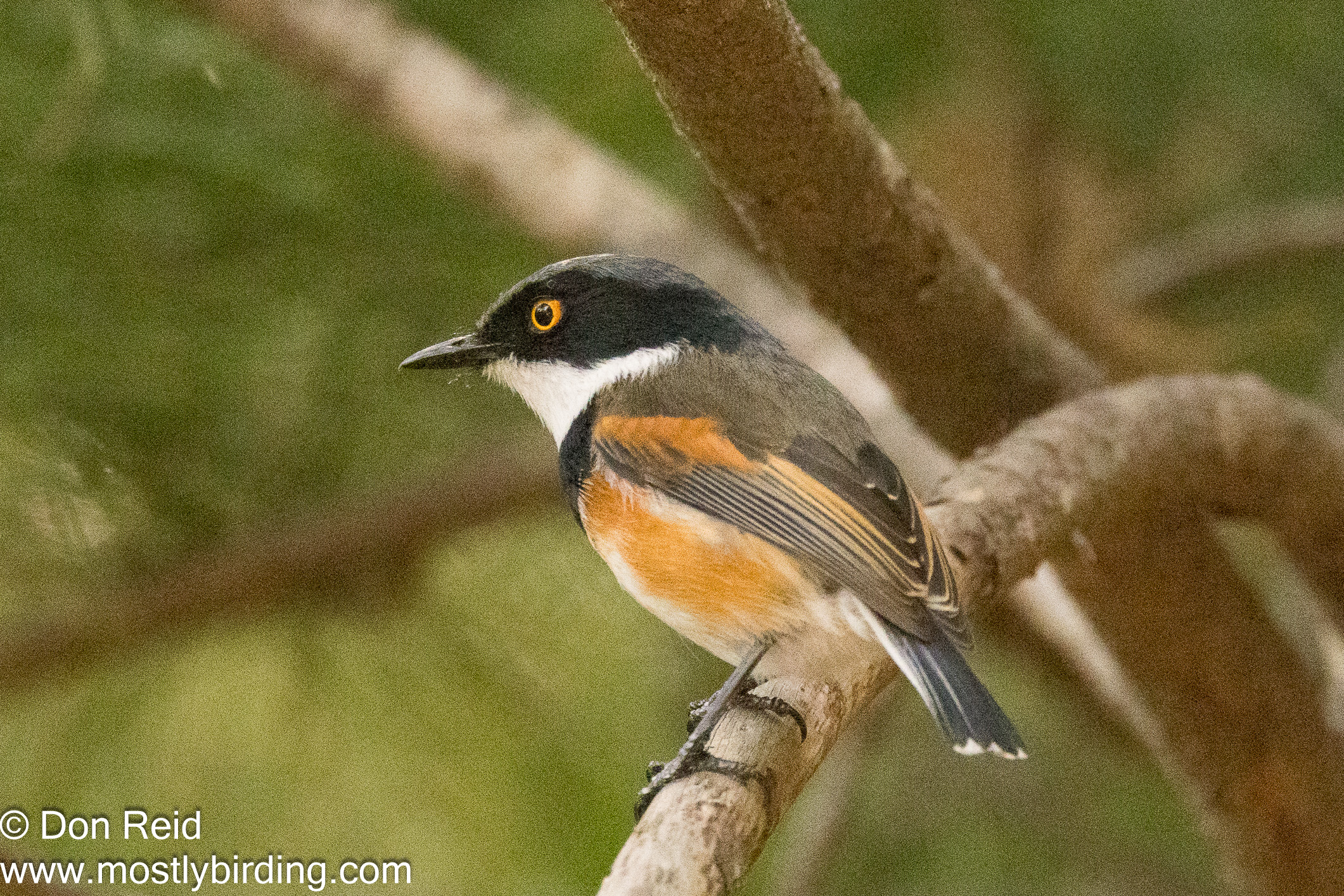
Cape Batis is a common forest bird – parts of the Bonniedale road heading west from the R328 are heavily forested and that’s where I found this one

Cape Batis Batis capensis Kaapse bosbontrokkie (male), Bonniedale road

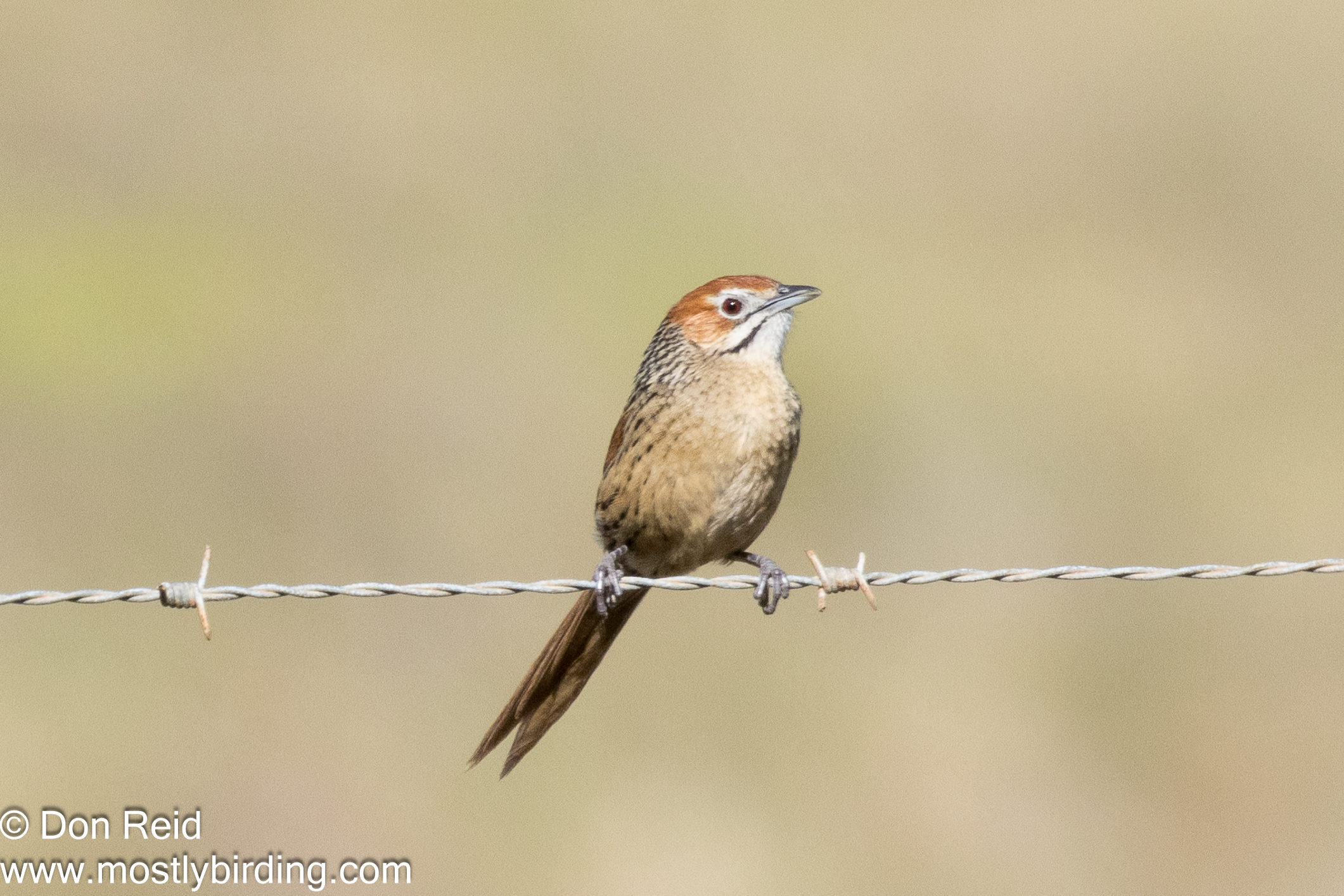
I had stopped in the mountains beyond Herbertsdale to check for birds when this Grassbird – or perhaps it’s better to call it a Fencebird in this case – drew my attention with its familiar trilling call

Cape Grassbird Sphenoeacus afer Grasvoël, Herbertsdale north

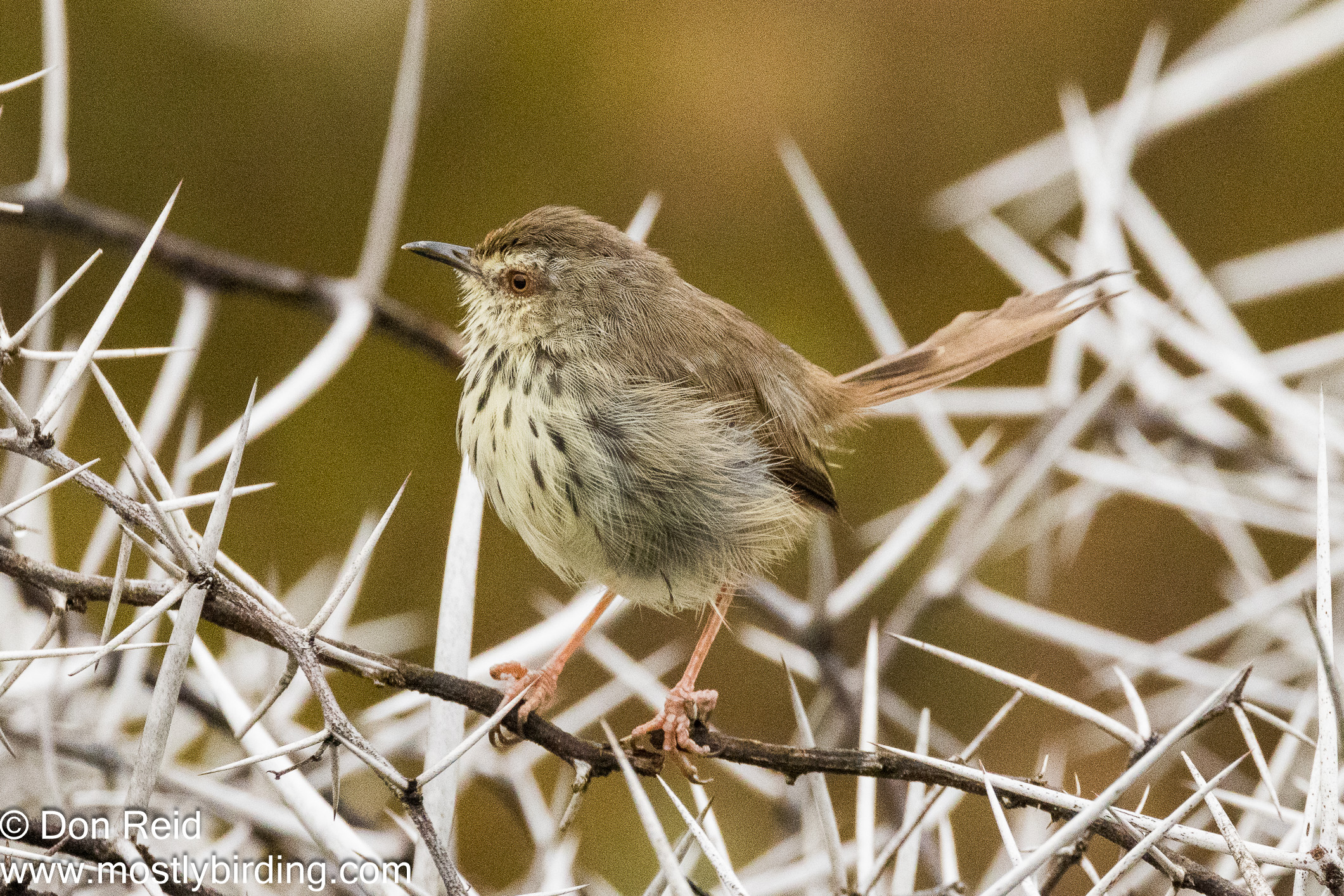
Karoo Prinia is common in suitable habitat across its distribution range. I saw one while stoepsitting in the Addo NP and stalked it until it settled in a thorny bush for long enough to get this image

Karoo Prinia Prinia maculosa Karoolangstertjie (race exultans), Addo Elephant NP

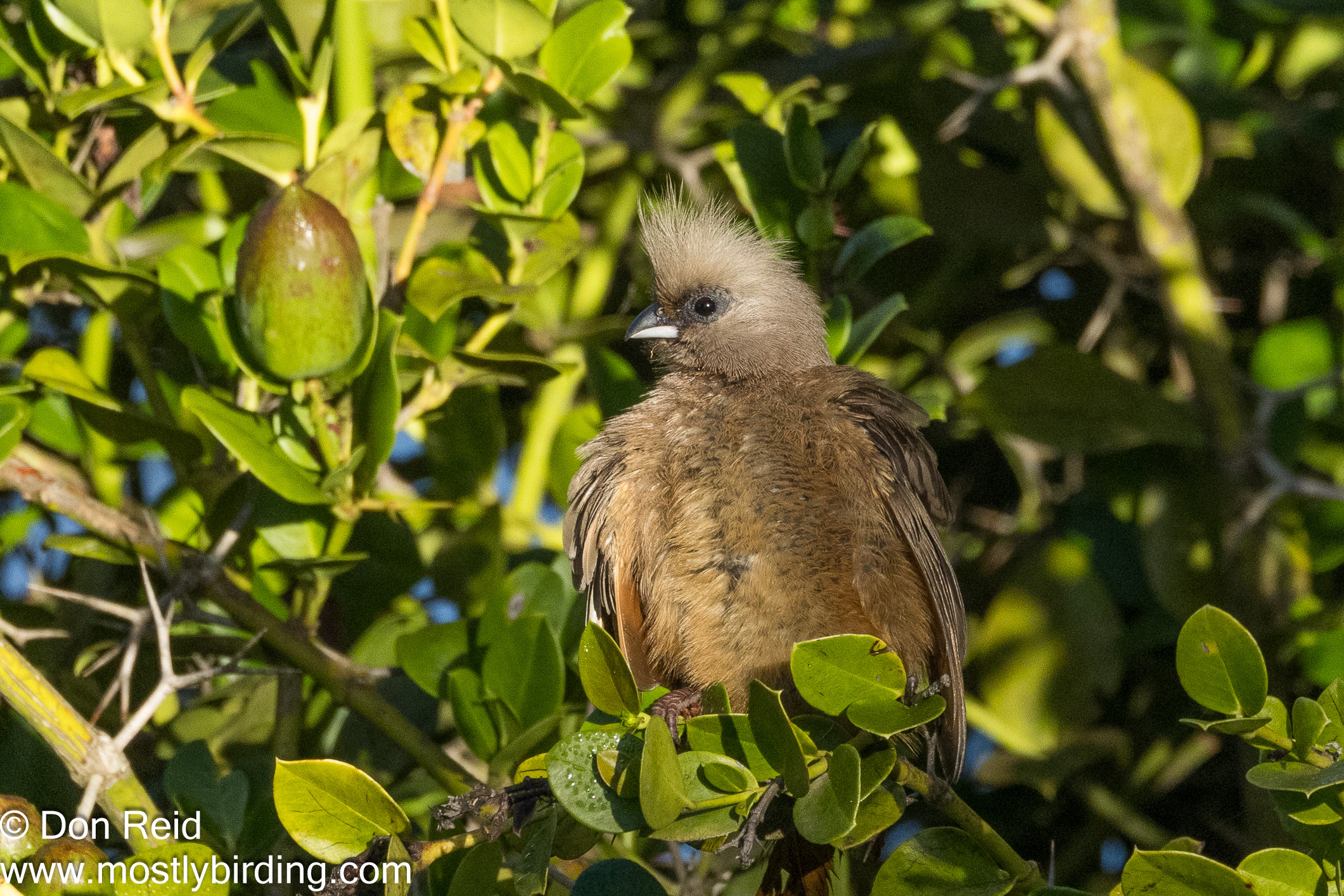
The familiar Speckled Mousebird is fond of disappearing into foliage but will usually pop up to check out the surroundings, which is what this one did

Speckled Mousebird Colius striatus Gevlekte muisvoël, Wilderness

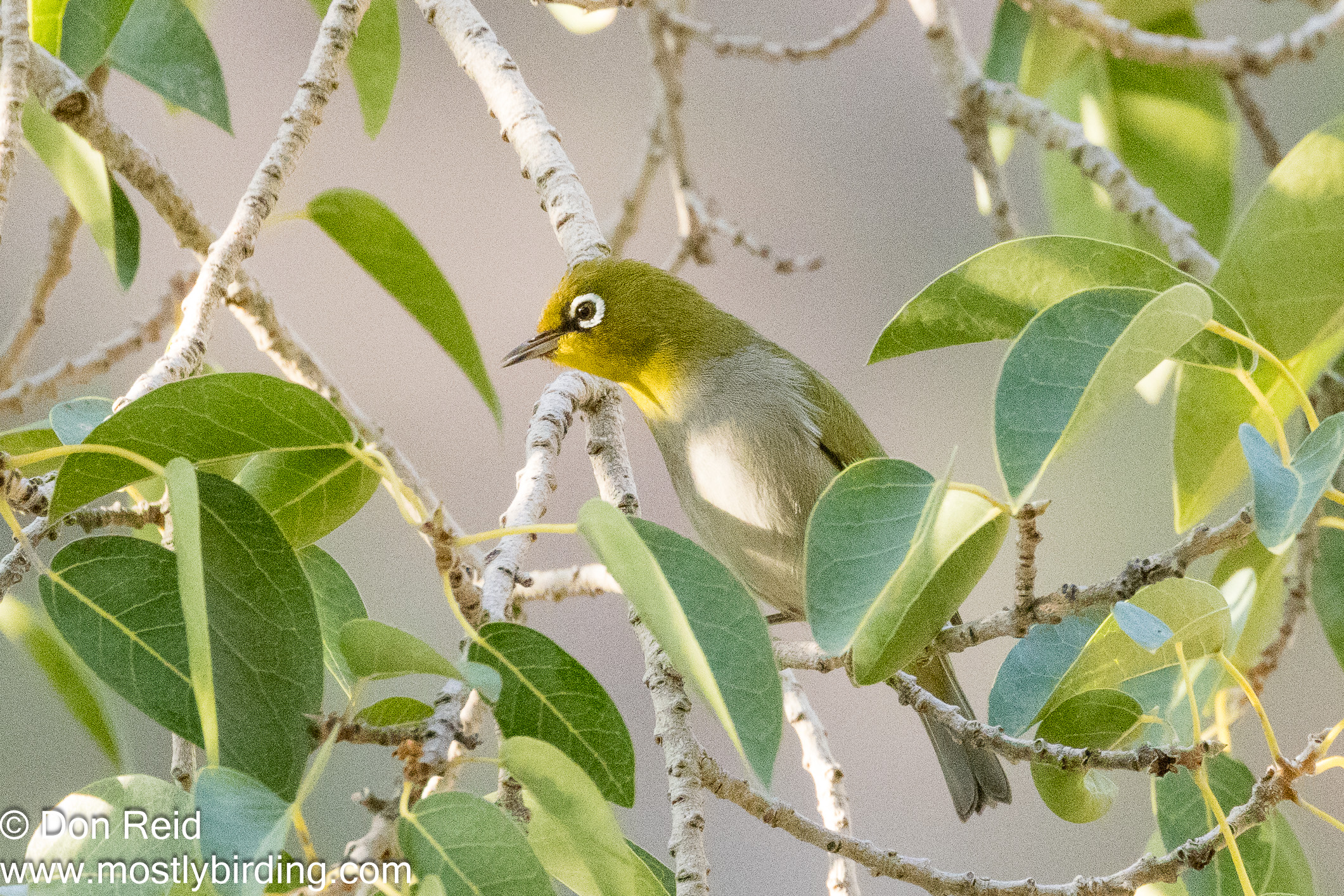
Another very familiar bird, the Cape White-eye, visited us frequently during our stay at The Baths near Citrusdal

Cape White-eye Zosterops capensis Kaapse glasogie, (race capensis), The Baths Citrusdal

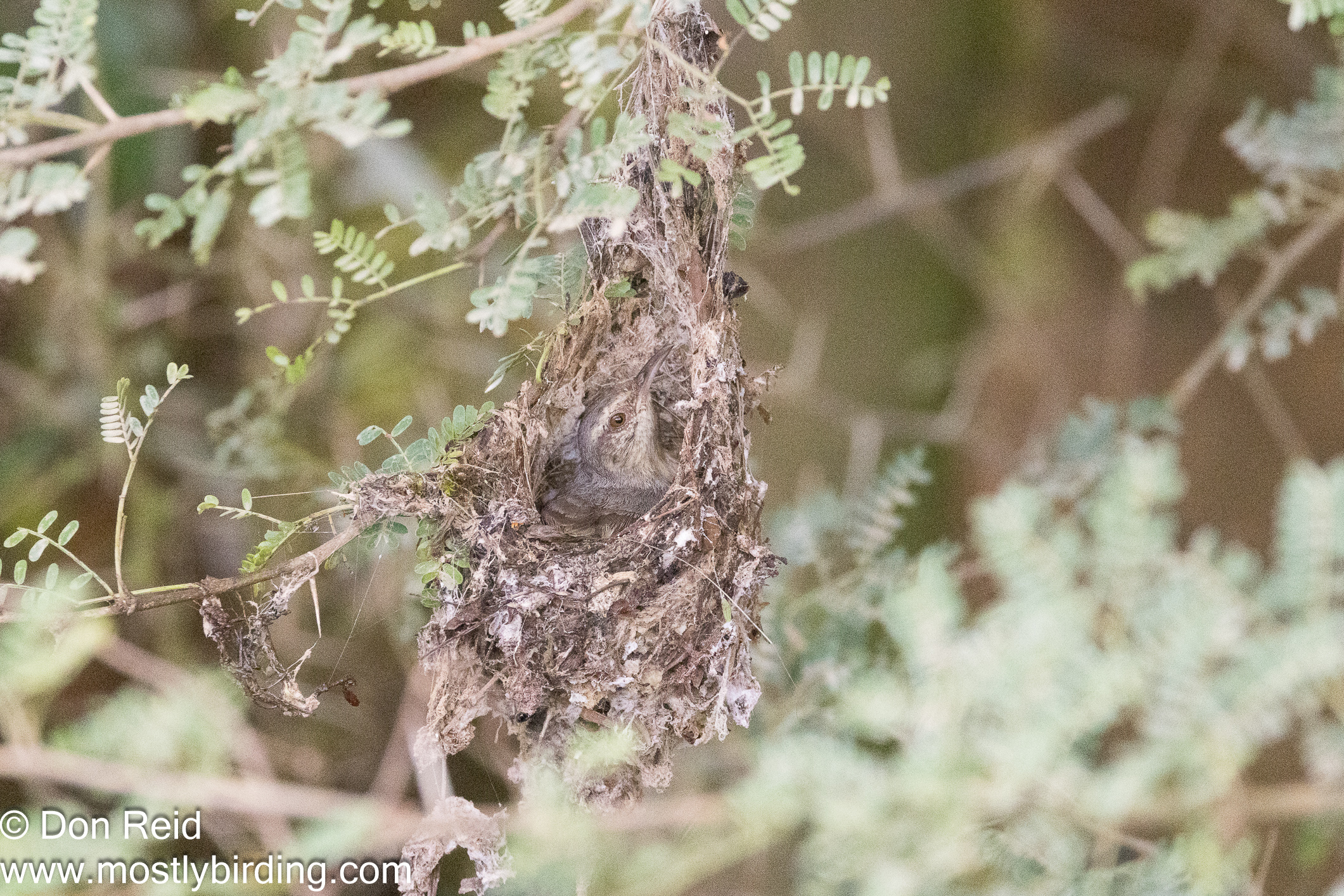
One of my favourite photos of the year, I came across this Long-billed-Crombec while atlasing and was thrilled to see it drop down and take up position in the mouth of the nest low in the tree, which I had not noticed

Long-billed Crombec Sylvietta rufescens Bosveldstompstert (race diverga), Herbertsdale north east

Suckers

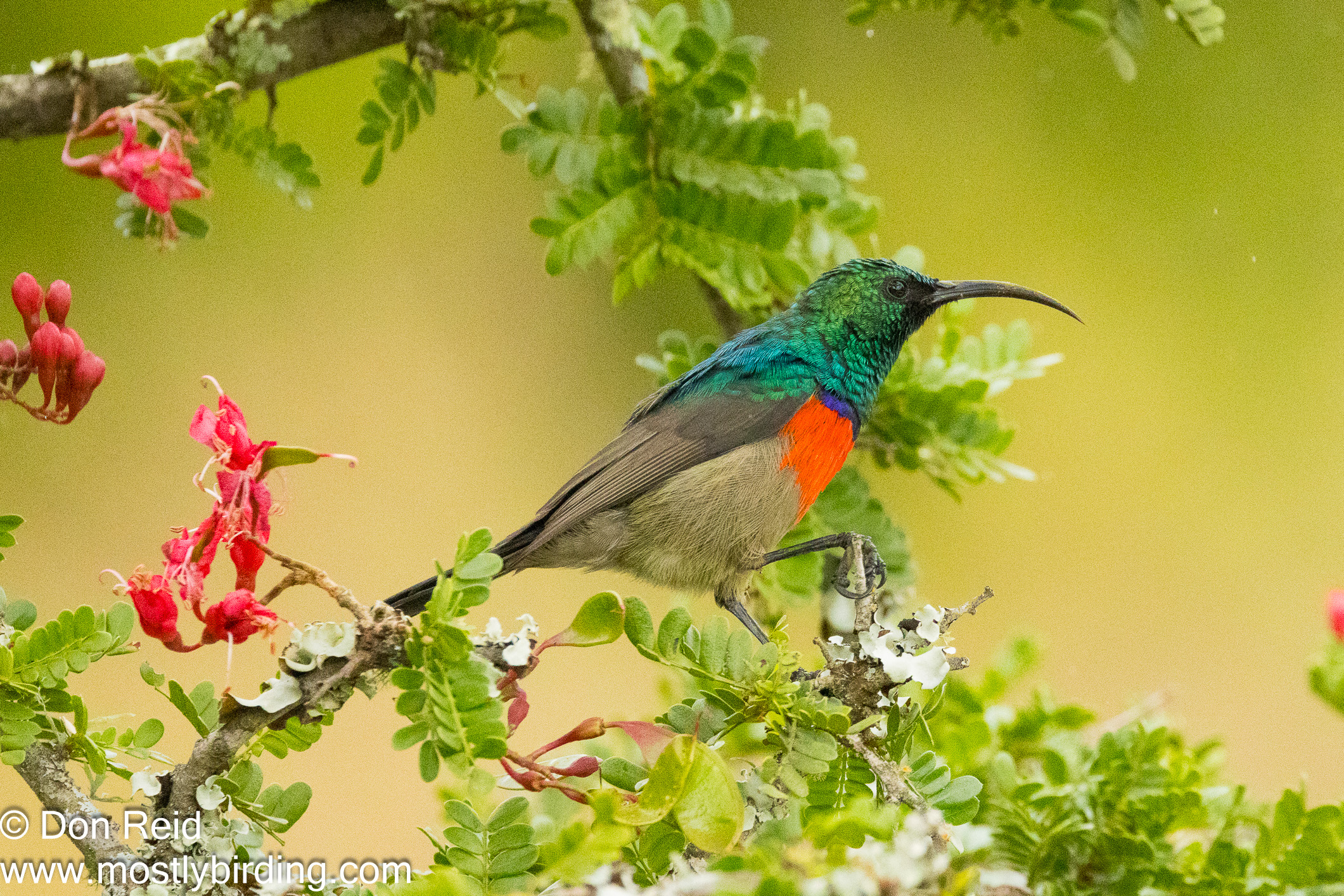
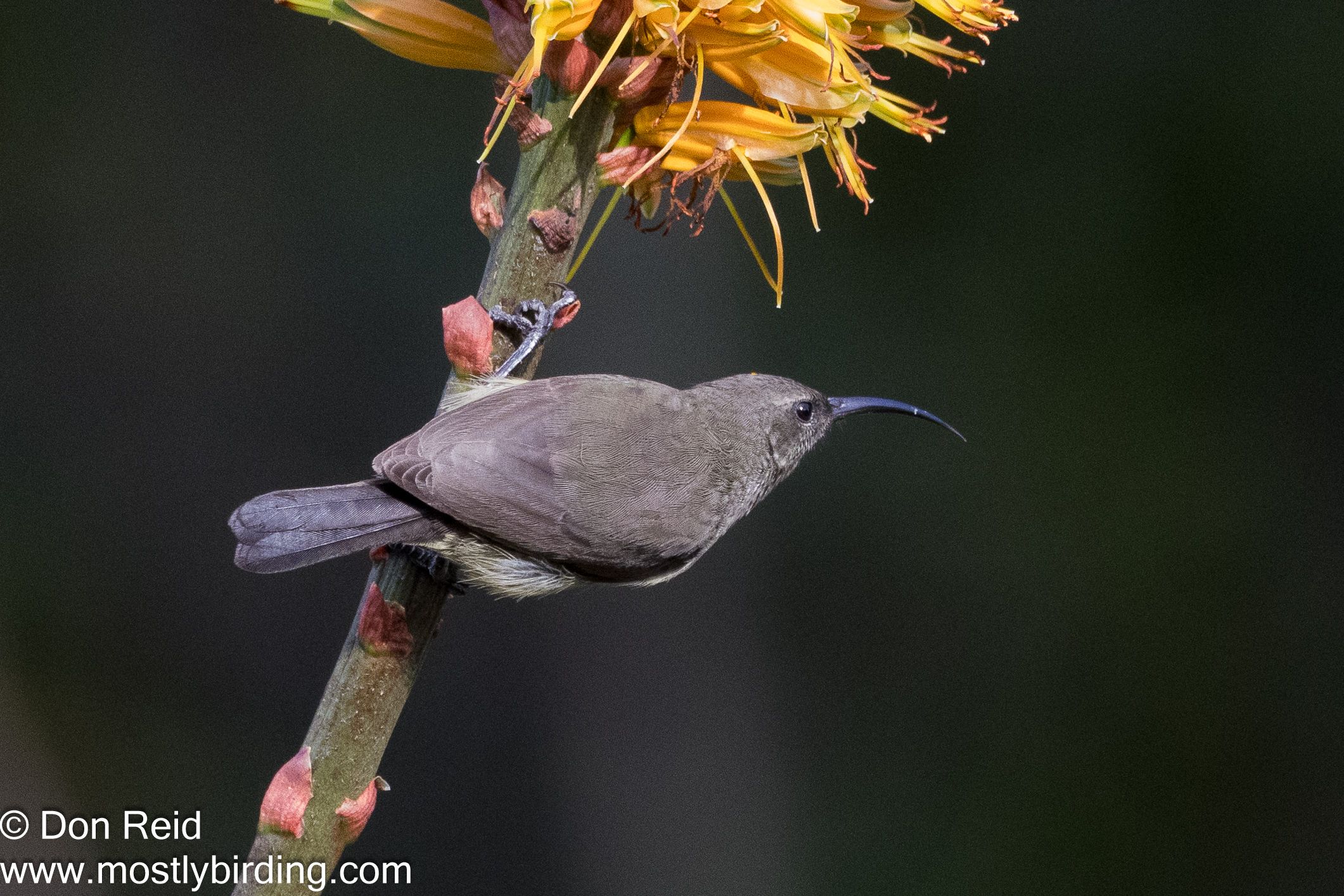
The curve-billed nectar-suckers

The photos illustrate the colourful male and the rather drab female of the species that I often come across while atlasing, and at home

Greater Double-collared Sunbird Cinnyris afer Groot-rooibandsuikerbekkie, Addo Elephant NP
Greater Double-collared Sunbird Cinnyris afer Groot-rooibandsuikerbekkie (female), Friemersheim area

Seed-eaters

All have short, strong triangular bills suited to their main diet of seeds.

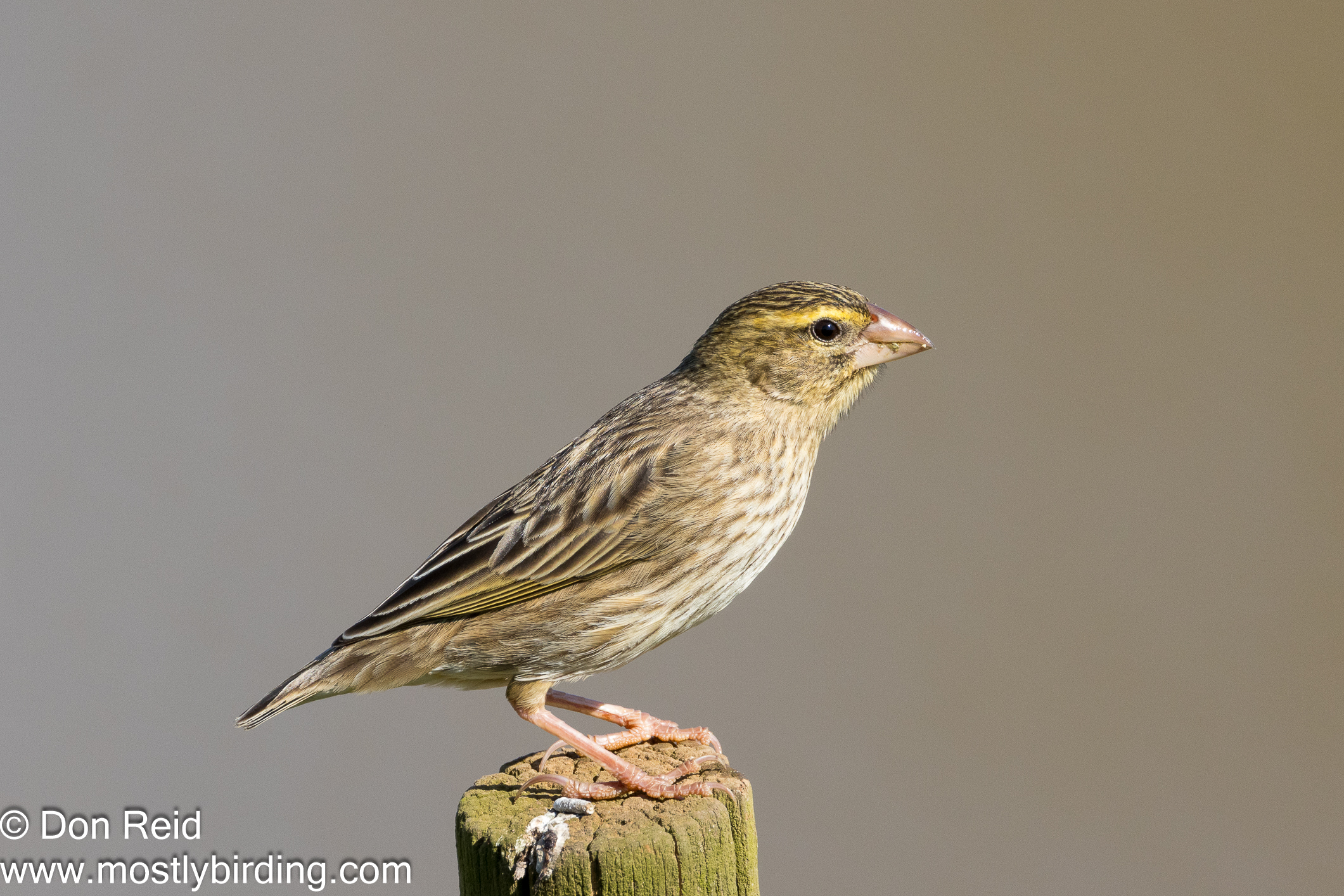
The Bishops were both photographed in winter non-breeding plumage.

Yellow Bishop Euplectes capensis Kaapse flap (non-breeding male), Klein Brak area
Southern Red Bishop Euplectes orix Rooivink (non-breeding), Bland’s Drift
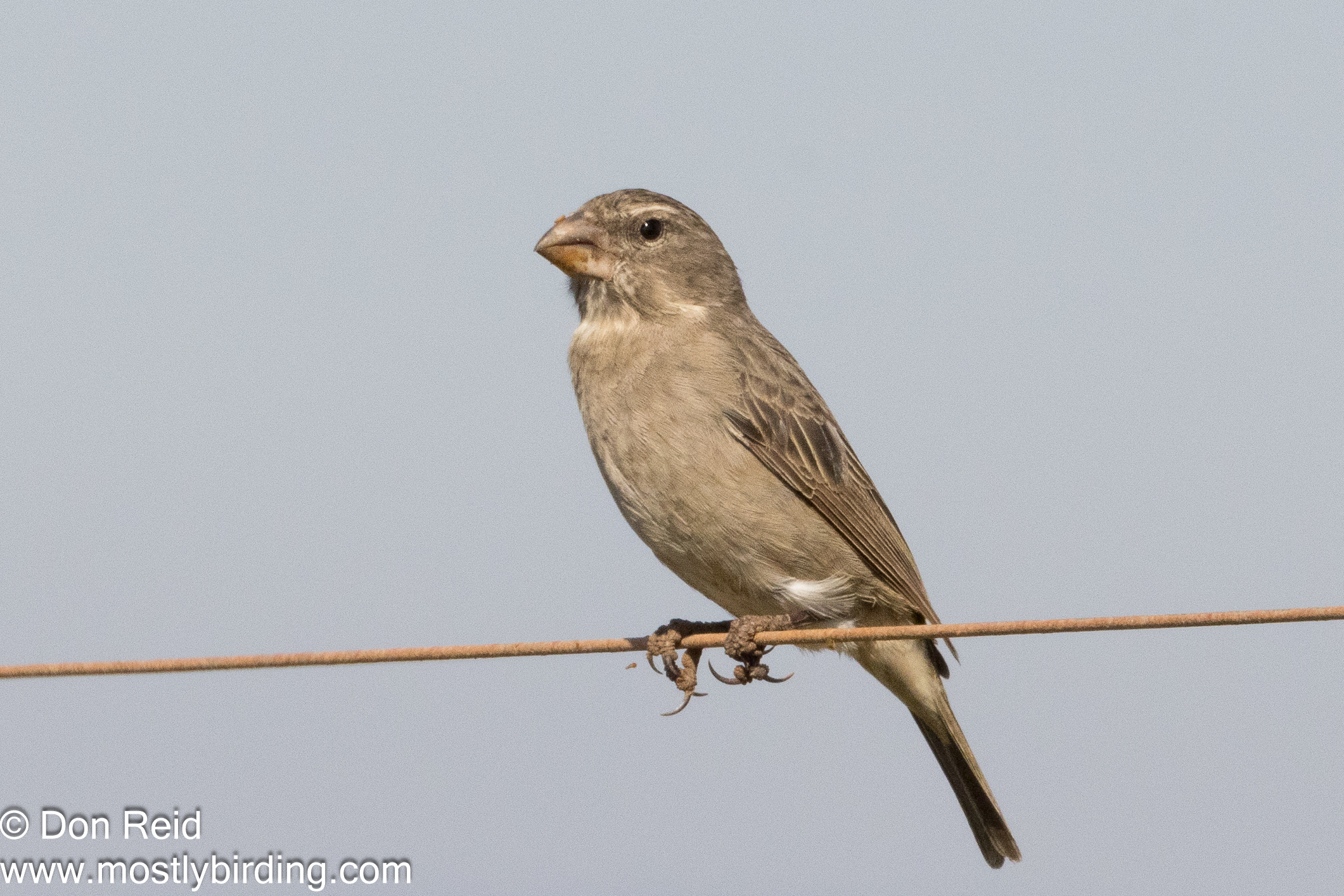
White-throated Canary Crithagra albogularis Witkeelkanarie, Herbertsdale area

Cape Canaries always seem to be on the go, not waiting for an anxious bird photographer to get his act together, so I was happy that this one hung around a bit.

Cape Canary Serinus canicollis Kaapse kanarie (race canicollis), Herbertsdale north
Cape Bunting Emberiza capensis Rooivlerkstreepkoppie (race capensis), Herbertsdale north

Favourites

A random mix of familiar birds, often colourful and with well-known calls

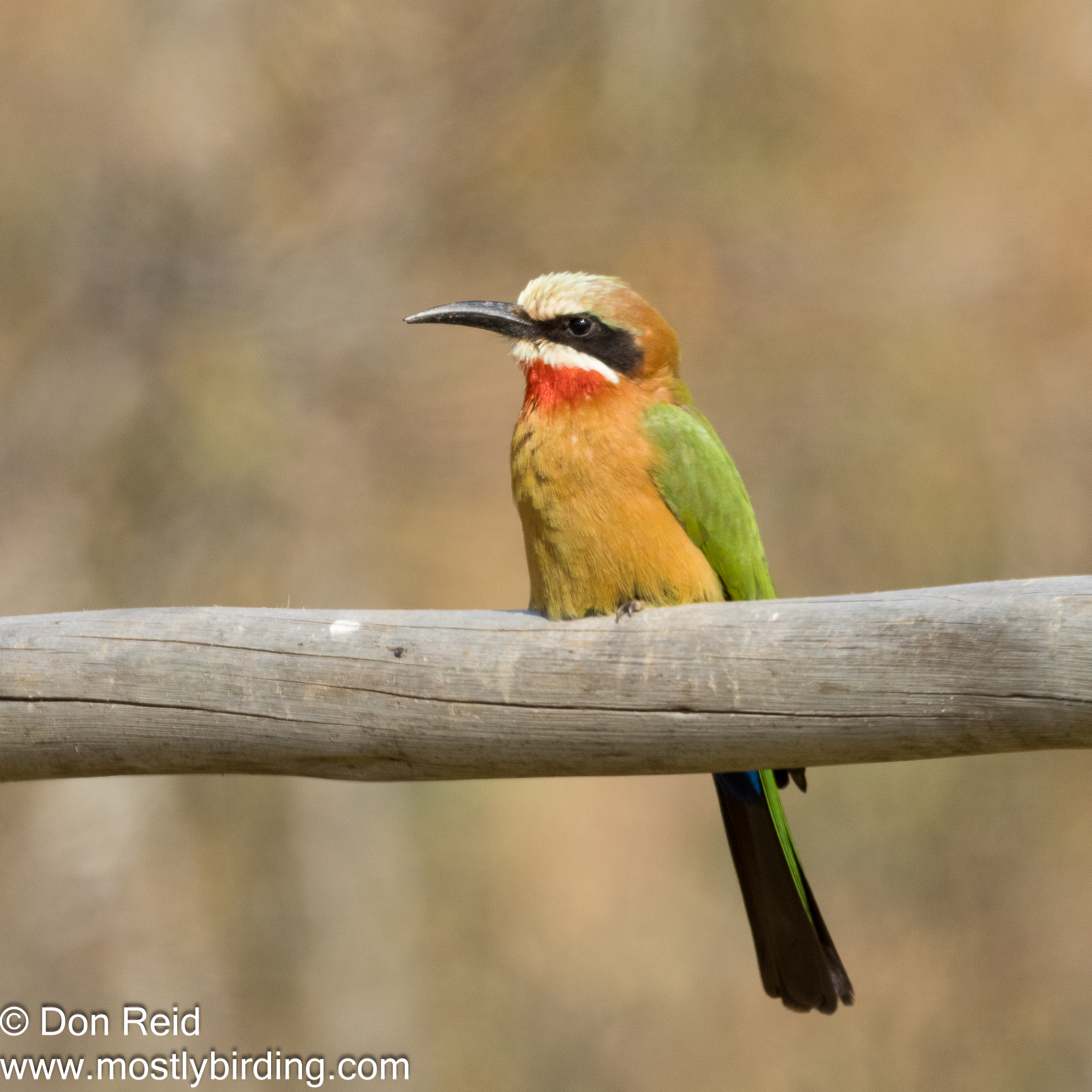
White-fronted Bee-eater Merops bullockoides Rooikeelbyvreter, Verlorenkloof

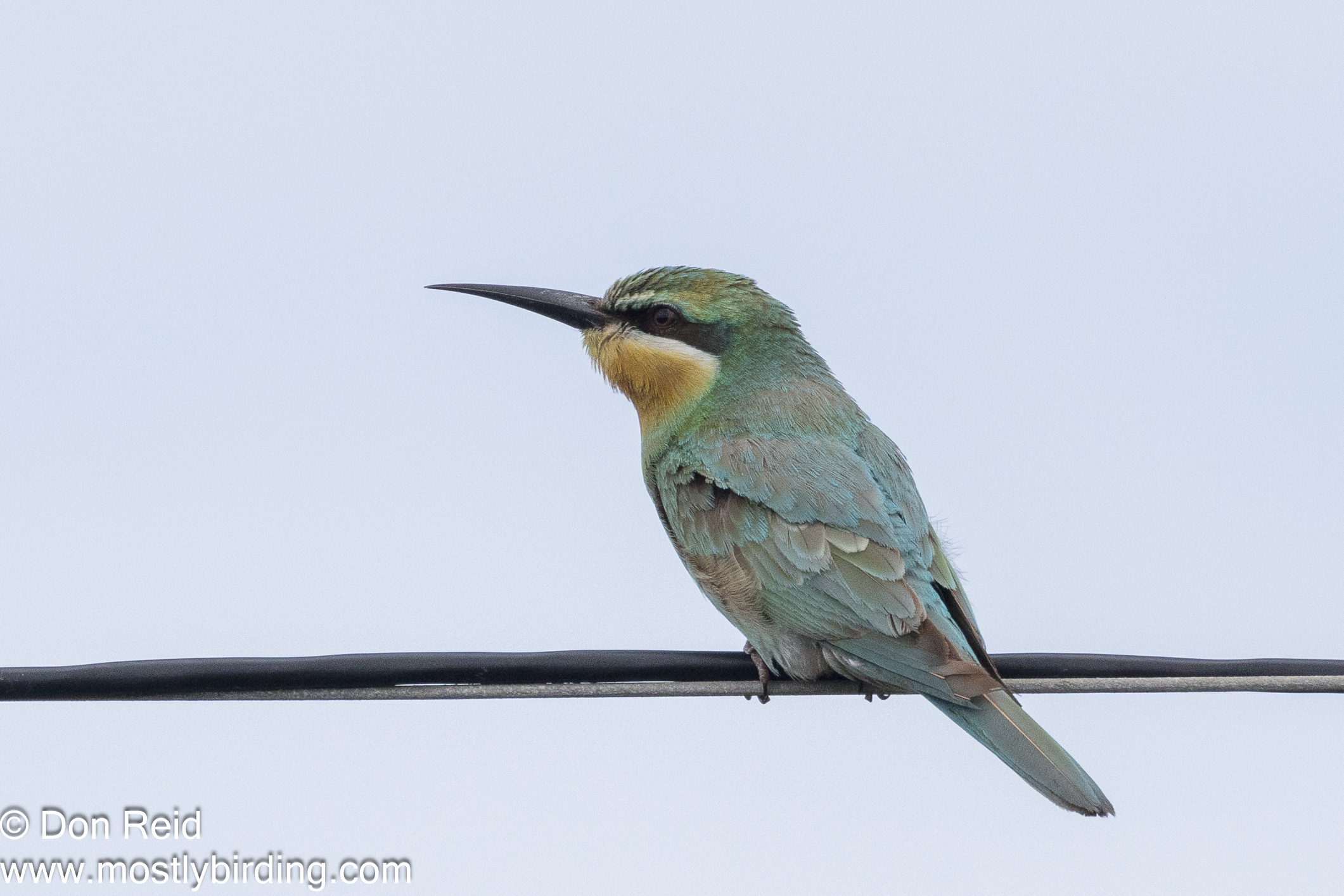
The Blue-cheeked Bee-eater is a Palearctic migrant, regarded as a rarity in the Western Cape, which is why I have included it in my pick. However they have been seen during summer near Gouritzmond for a few years now.

Blue-cheeked Bee-eater Merops persicus Blouwangbyvreter (Juvenile), Gouritzmond road
African Hoopoe Upupa africana Hoephoep, Brandwag area
Brown-hooded Kingfisher Halcyon albiventris Bruinkopvisvanger (race vociferans), Verlorenkloof

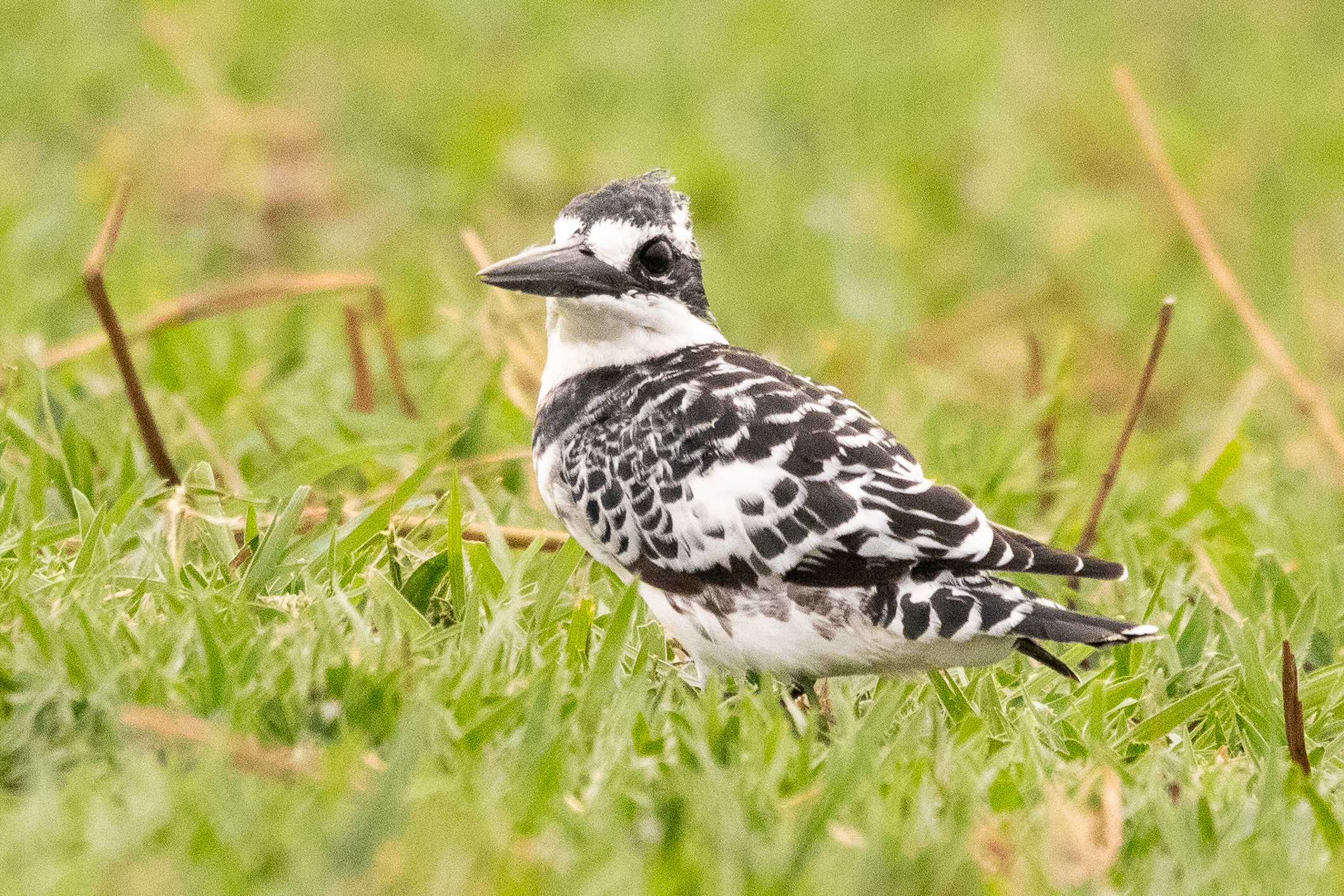
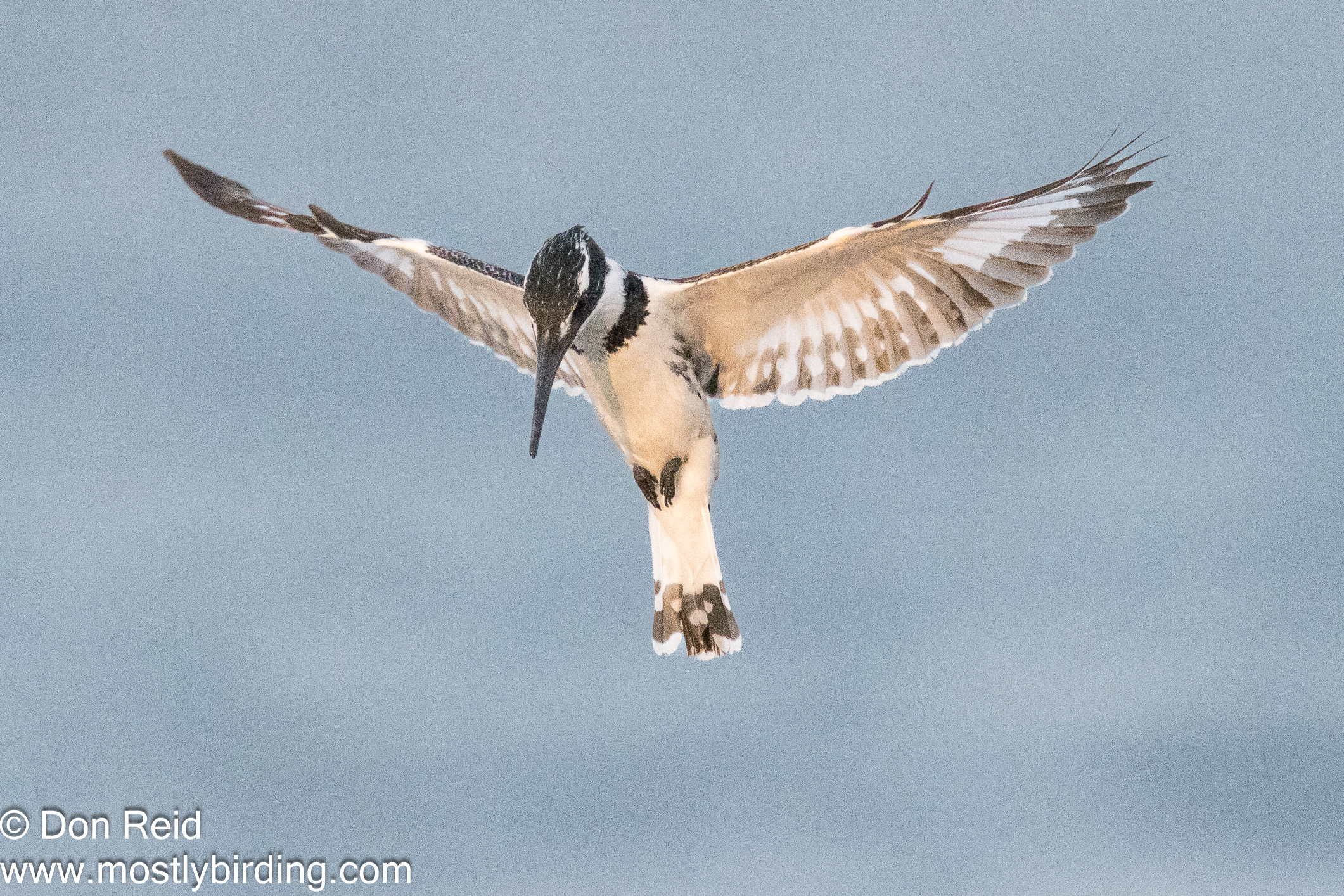
Pied Kingfishers are known for their habit of hover-hunting – this one did so at The Point in Mossel Bay while we were parked there enjoying our customary coffee one late afternoon just before sunset, with perfect lighting to enhance the beauty of the bird.

Pied Kingfisher Ceryle rudis Bontvisvanger (female), Mossel Bay Point

Flyers

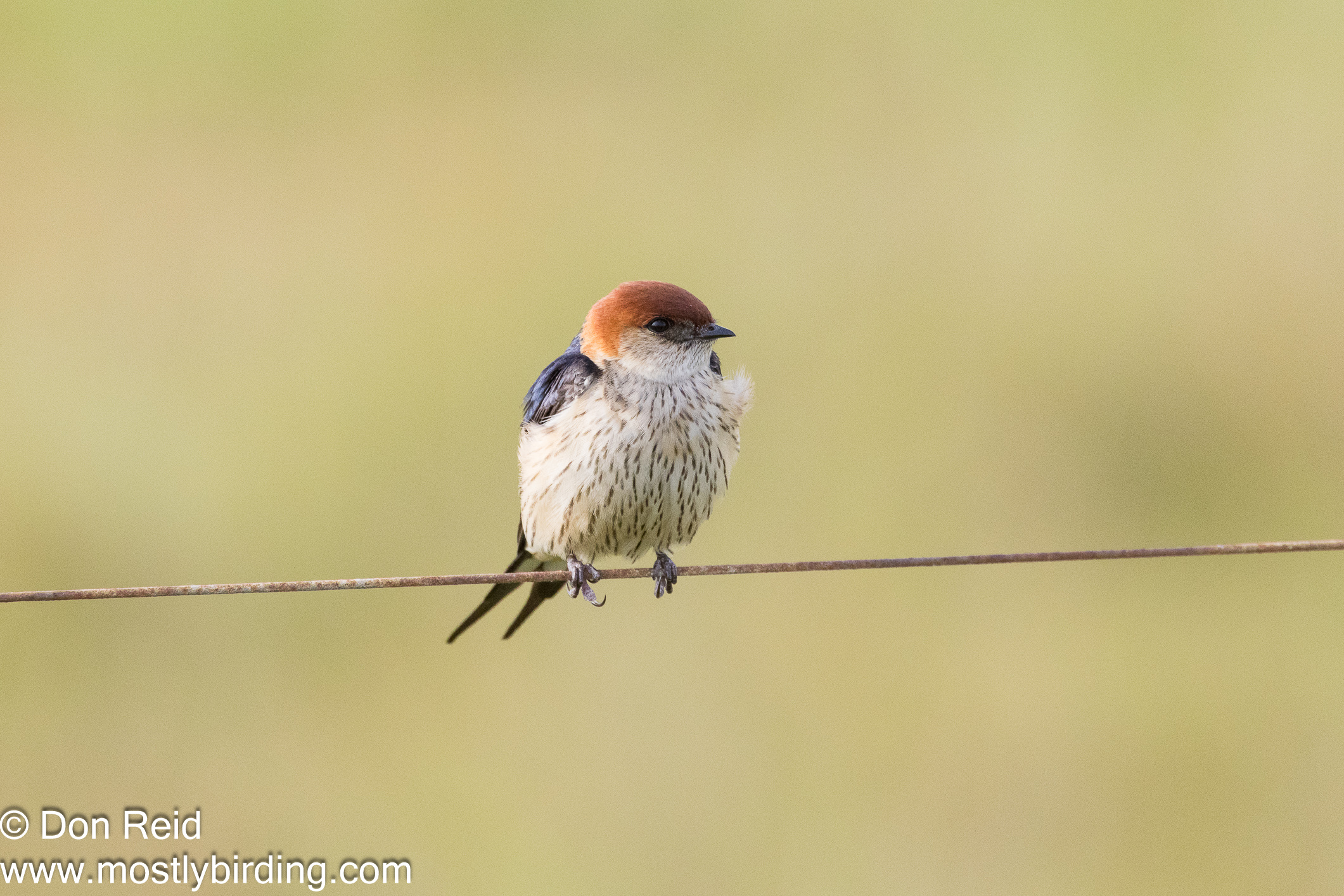
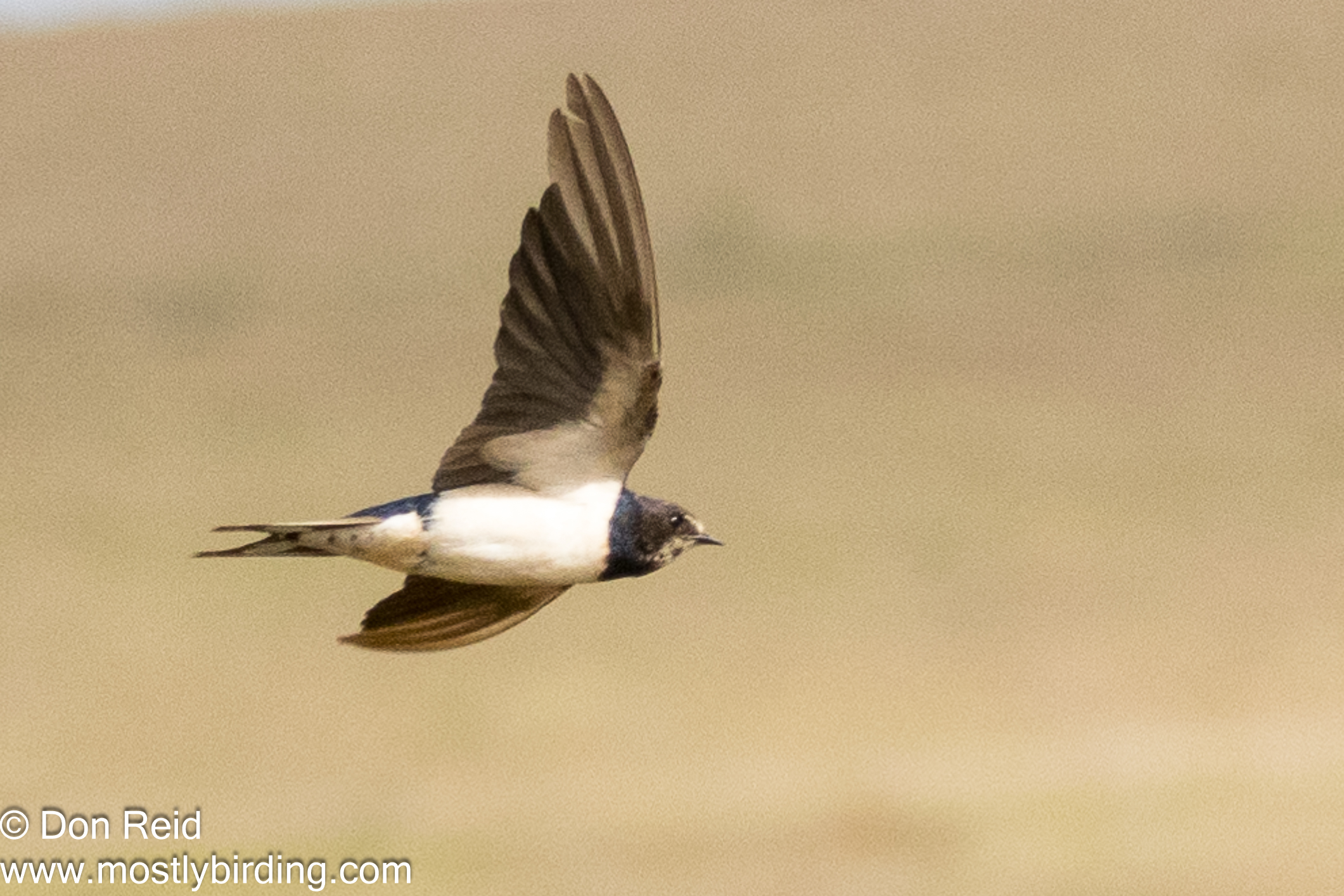
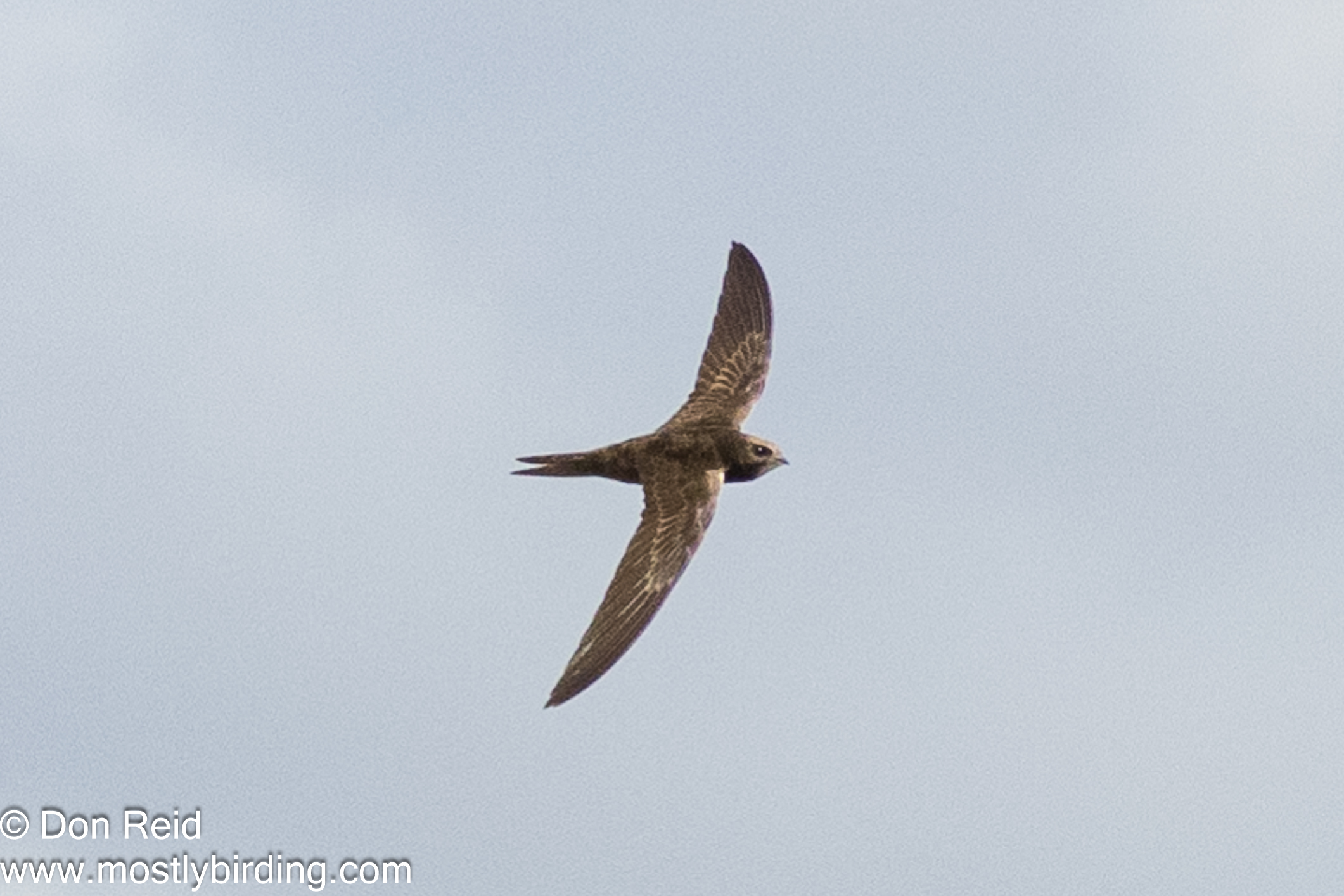
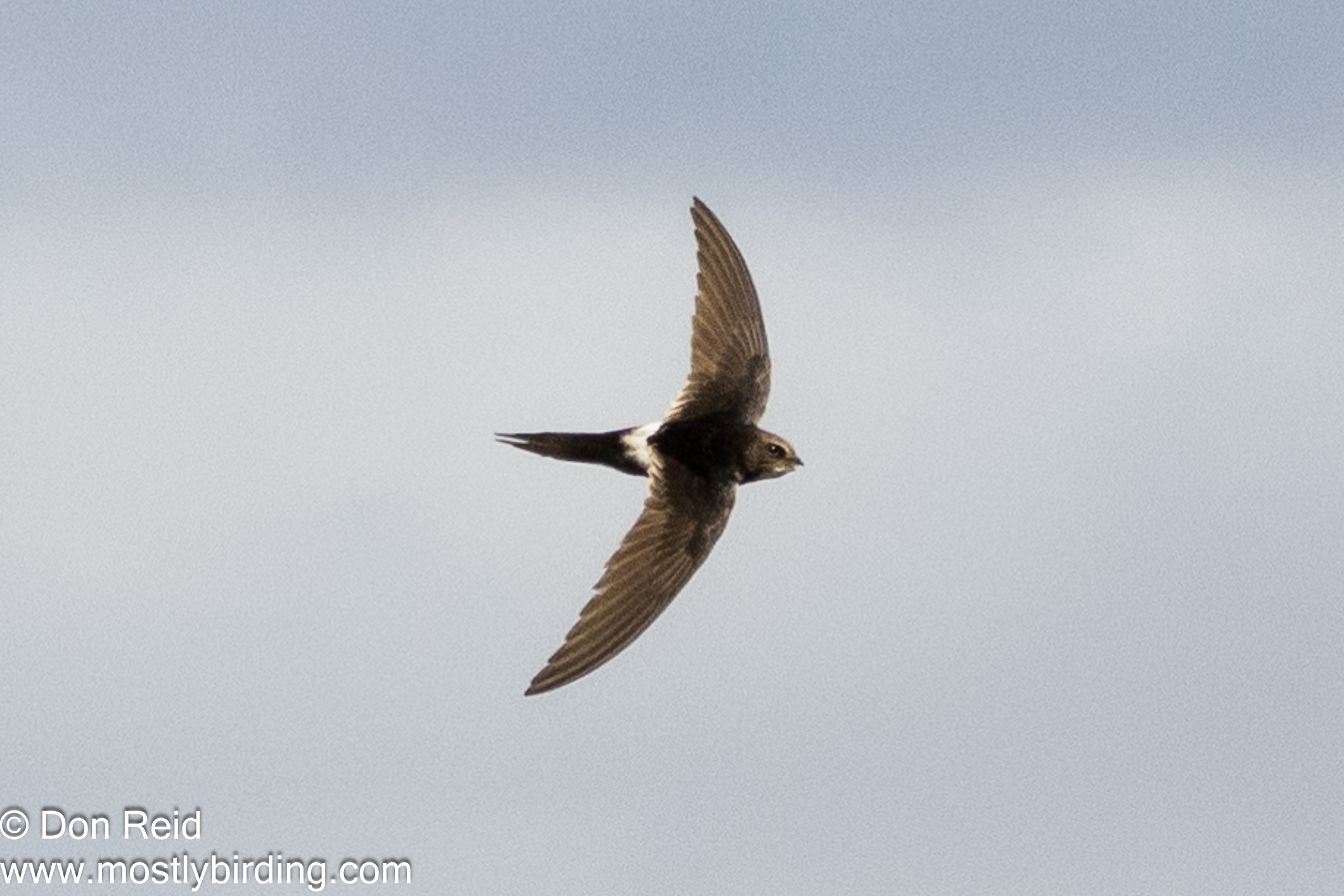
Swifts and swallows – the aerial feeders – also the most challenging to photograph unless they are resting between sorties

Greater Striped Swallow Cecropis cucullata Grootstreepswael, Kleinberg area
Barn Swallow Hirundo rustica Europese swael, Kleinberg area
Common Swift Apus apus Europese windswael (race pekinensis), Kleinberg area
White-rumped Swift Apus caffer Witkruiswindswael, Kleinberg area
Brown-throated Martin Riparia paludicola Afrikaanse oewerswael, at nest burrow, Maalgate area

Plungers

Mainly seabirds that forage over water – and under water

At irregular times during the year terns roost in numbers at The Point in Mossel Bay, providing good photo opportunities as the rocks are relatively close to the viewing area

Sandwich Tern Thalasseus sandvicensis Grootsterretjie, Mossel Bay Point

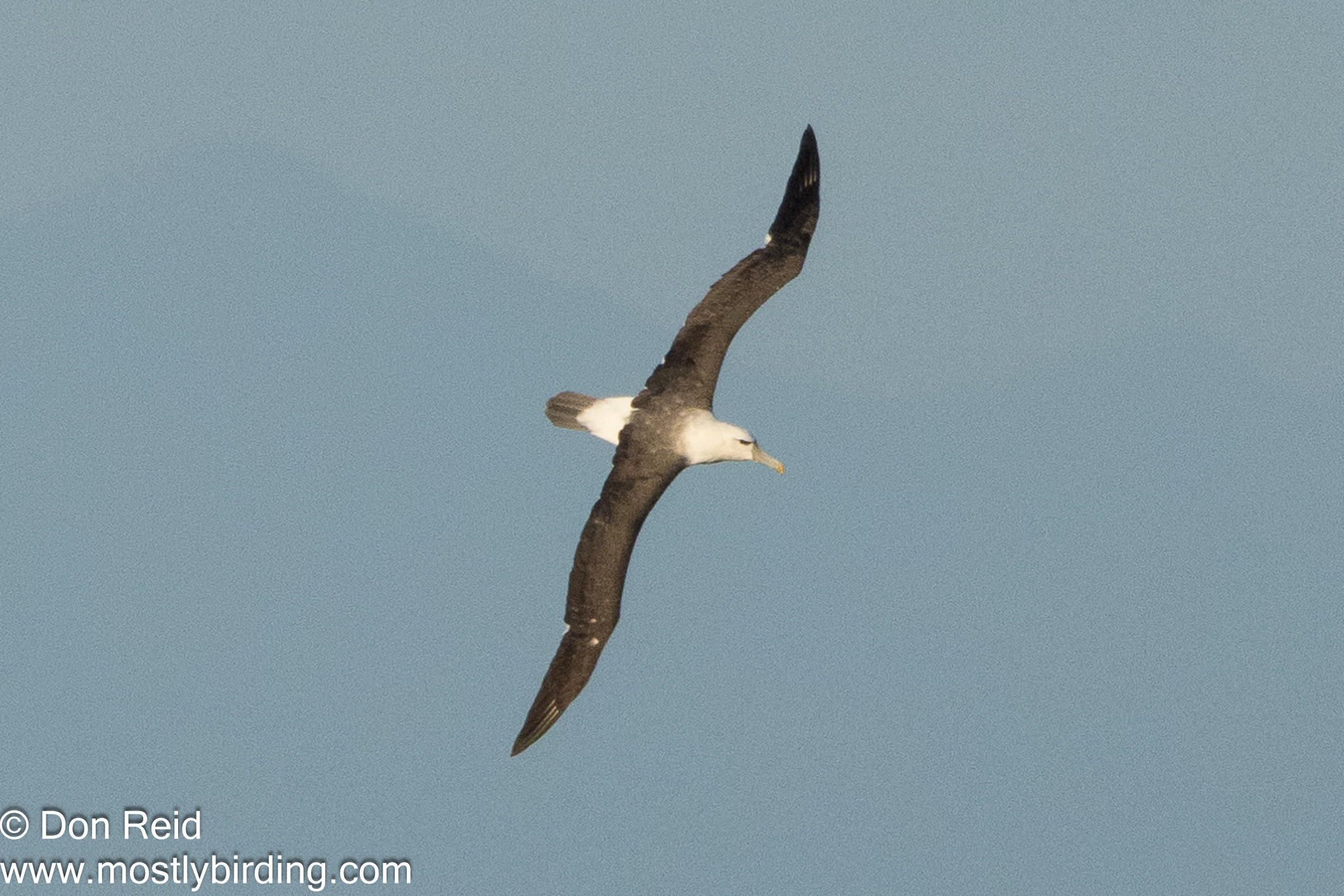
The Point is also a great spot for seabird watching when the winds are strong and in the right direction. One such day I was fortunate to be there when the seabirds were closer than usual and I was able to capture this image of a magnificent Shy Albatross – one of more than a dozen that passed by while we were there.

Shy Albatross Thalassarche cauta Bloubekalbatros, Mossel Bay Point

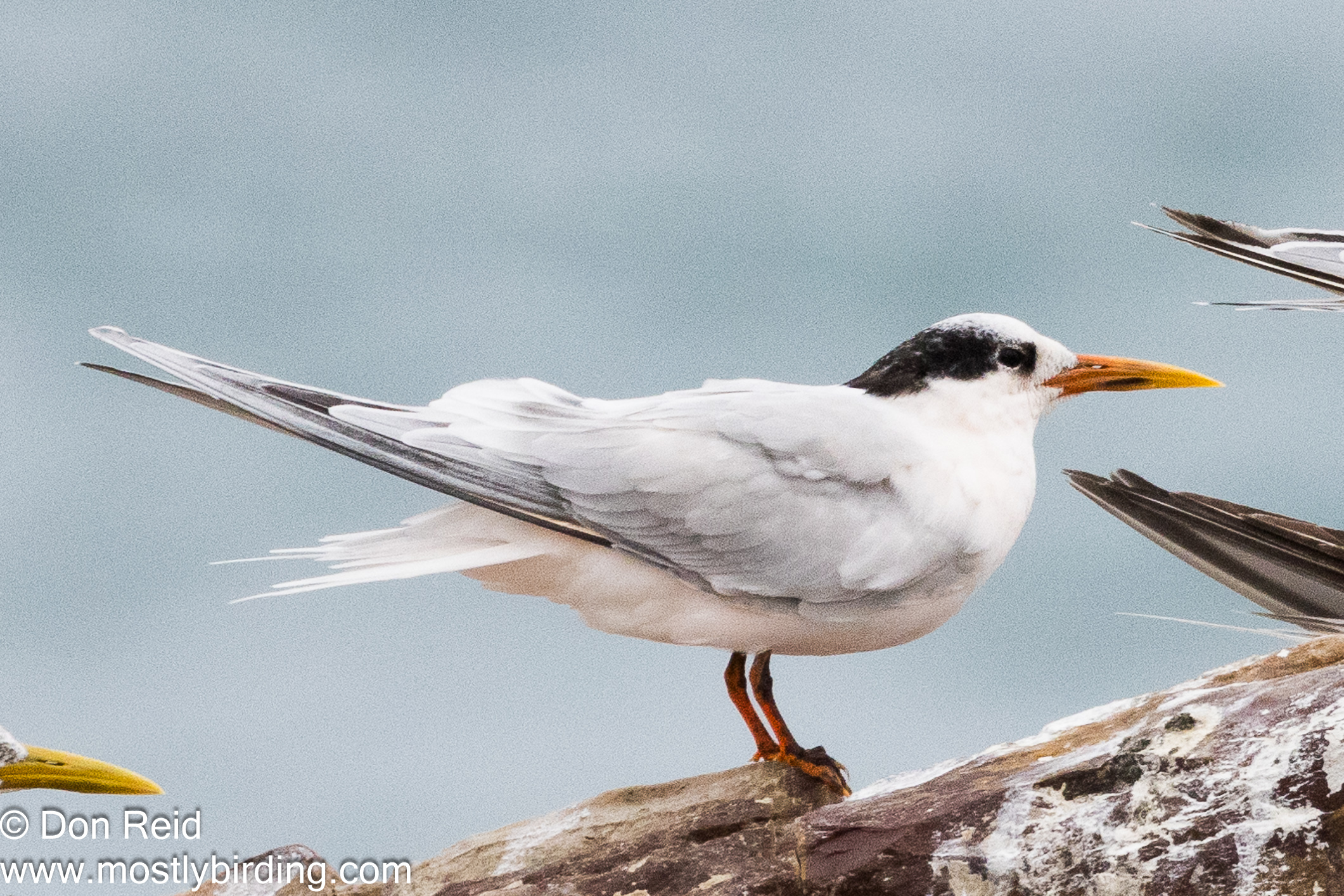
Another Tern that visited The Point was this rare hybrid – not a separately countable species but interesting nevertheless

Hybrid Elegant / Sandwich Tern, Mossel Bay Point

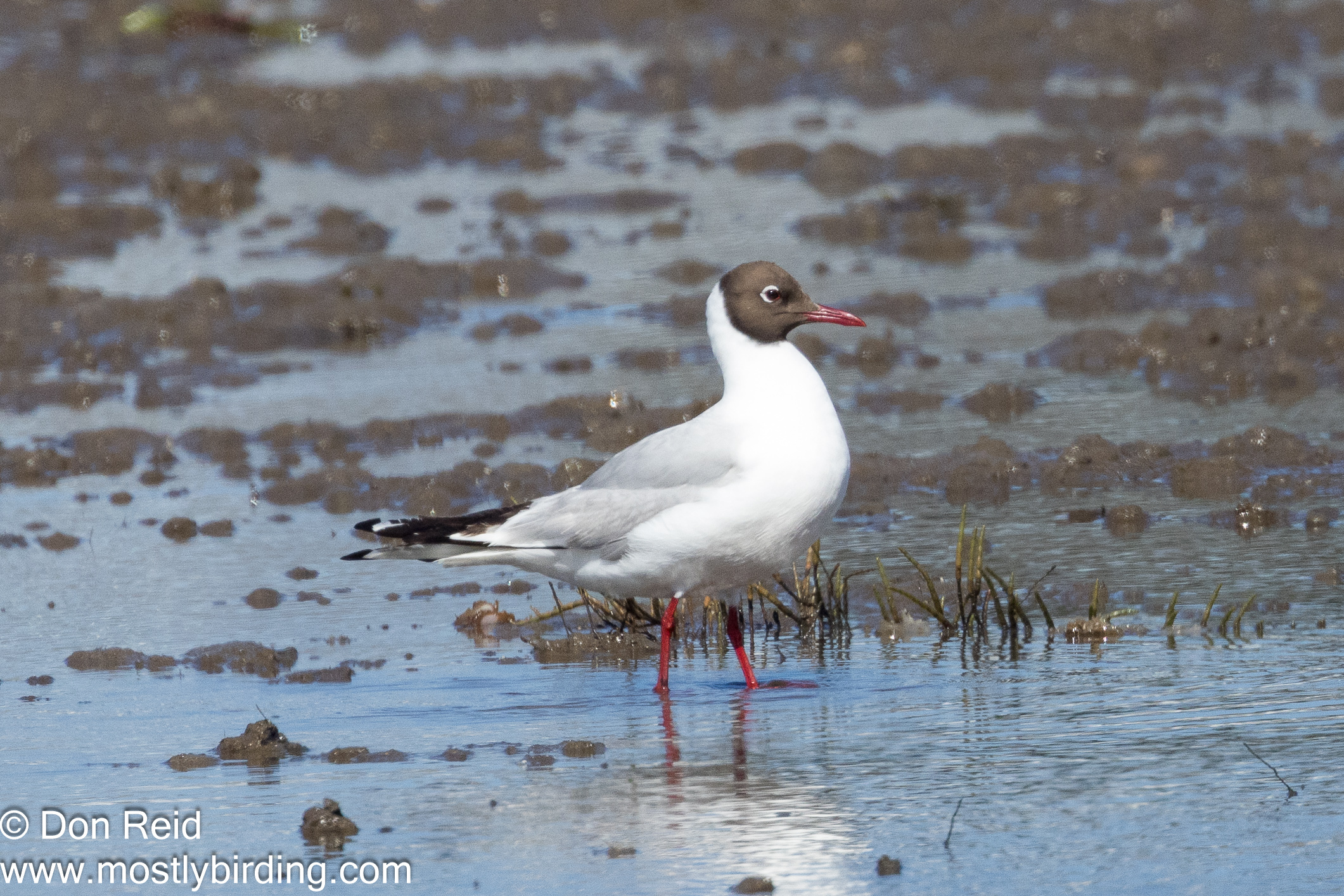
I was pleased when keen birder Estelle called me from Klein Brak to inform me about a Black-headed Gull that was present. I couldn’t resist heading out and was lucky enough to capture some images of this rarity, which I have seen in Europe and elsewhere but never in Southern Africa

Black-headed Gull Chroicocephalus ridibundus Swartkopmeeu (Breeding plumage), Klein Brak estuary

Runners

Small to medium-sized birds that forage on the ground

Cape Robin-Chat Cossypha caffra Gewone janfrederik, Addo Elephant NP
Wattled Starling Creatophora cinerea Lelspreeu (non-breeding), Herbertsdale area
Olive Thrush Turdus olivaceus Olyflyster, The Baths Citrusdal
Familiar Chat Cercomela familiaris Gewone spekvreter, The Baths Citrusdal
Capped Wheatear Oenanthe pileata Hoëveldskaapwagter, Voelvlei
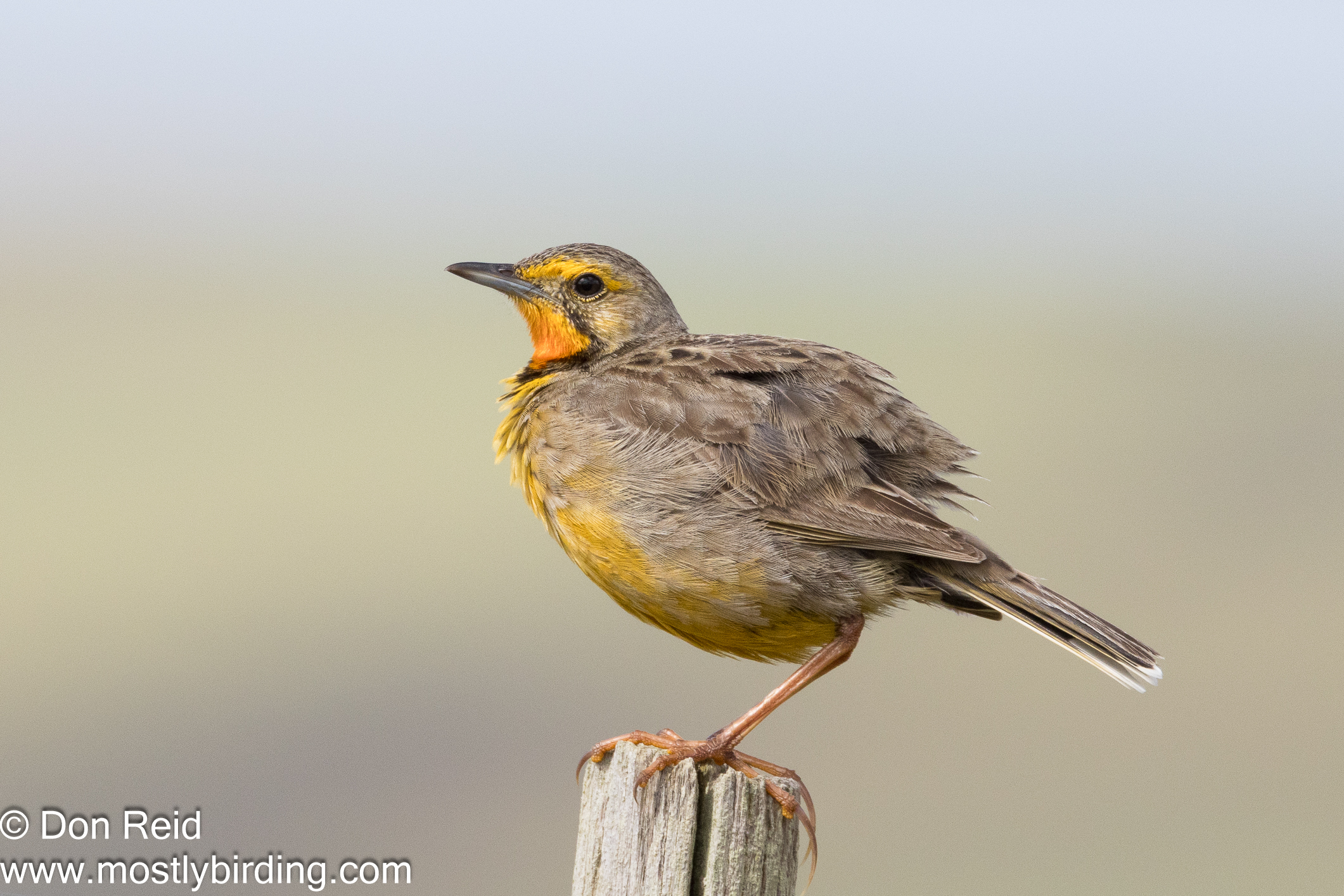
Cape Longclaw Macronyx capensis Oranjekeelkalkoentjie, Jakkalsvlei area
Cape Longclaw Macronyx capensis Oranjekeelkalkoentjie, Herbertsdale north east

Swimmers

Birds with webbed or lobed toes for swimming

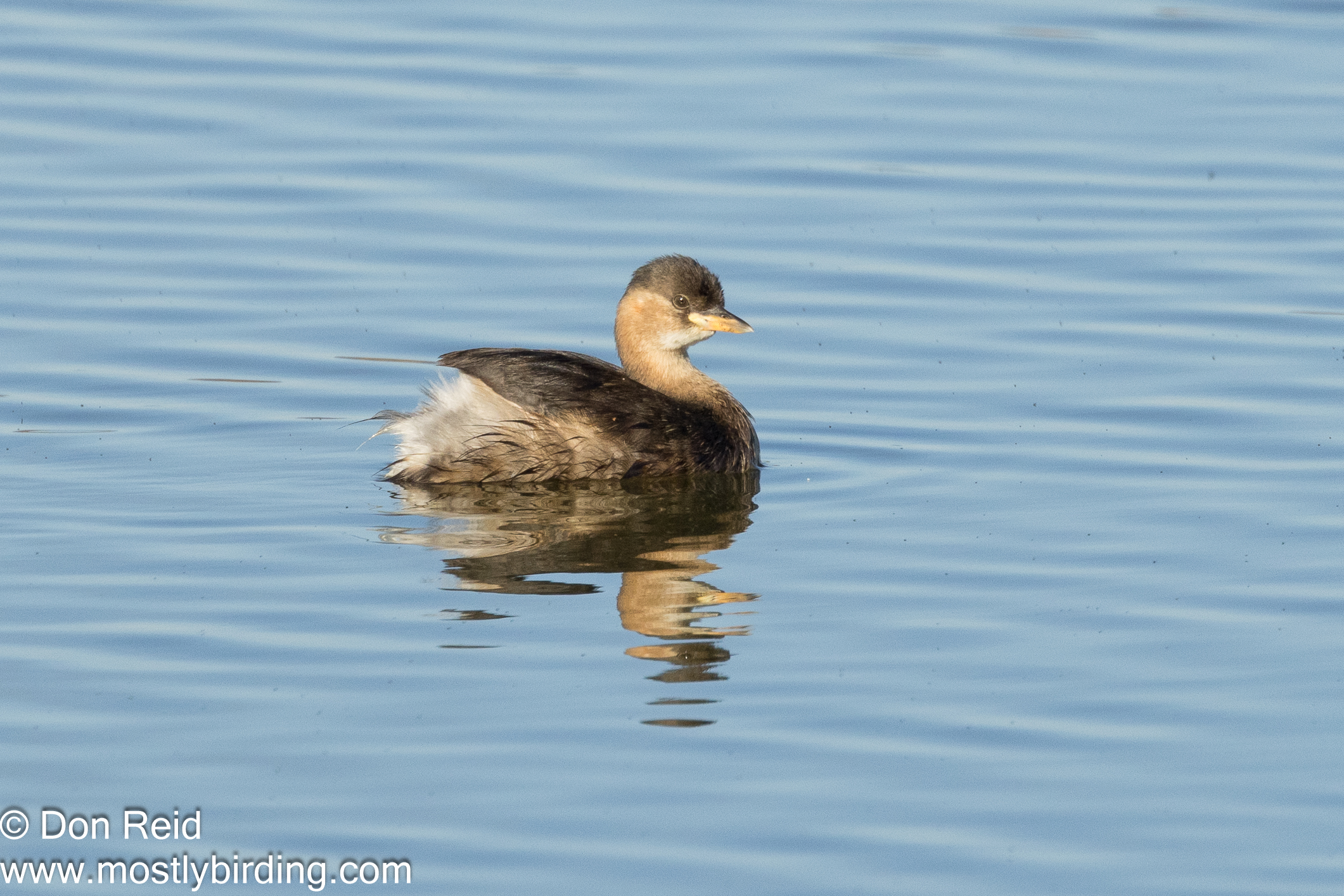
Little Grebe Tachybaptus ruficollis Kleindobbertjie, Voelvlei
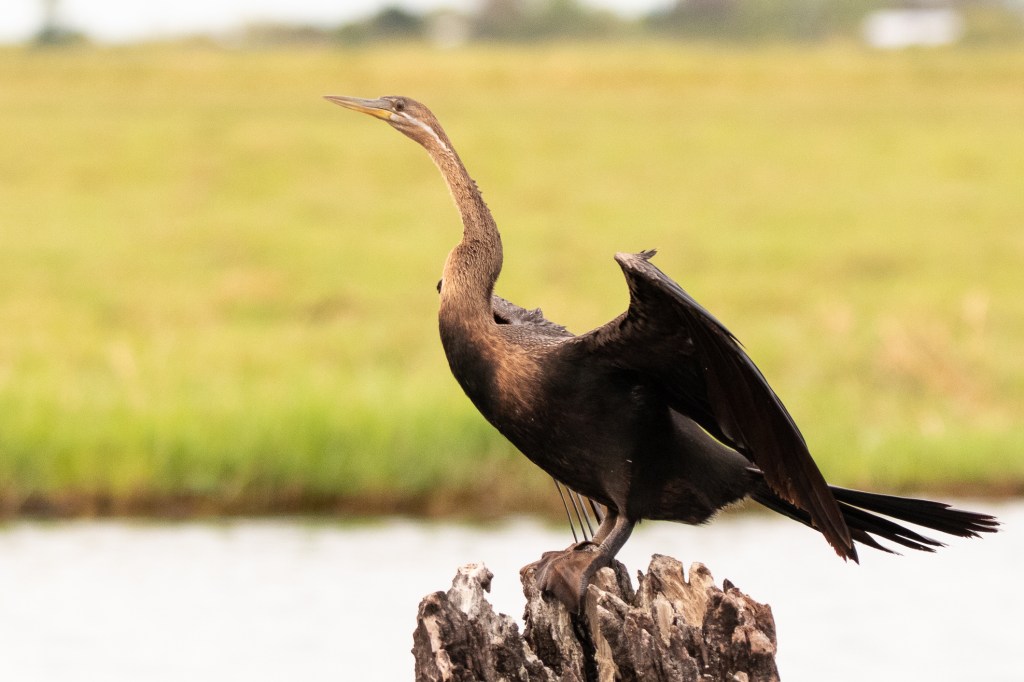
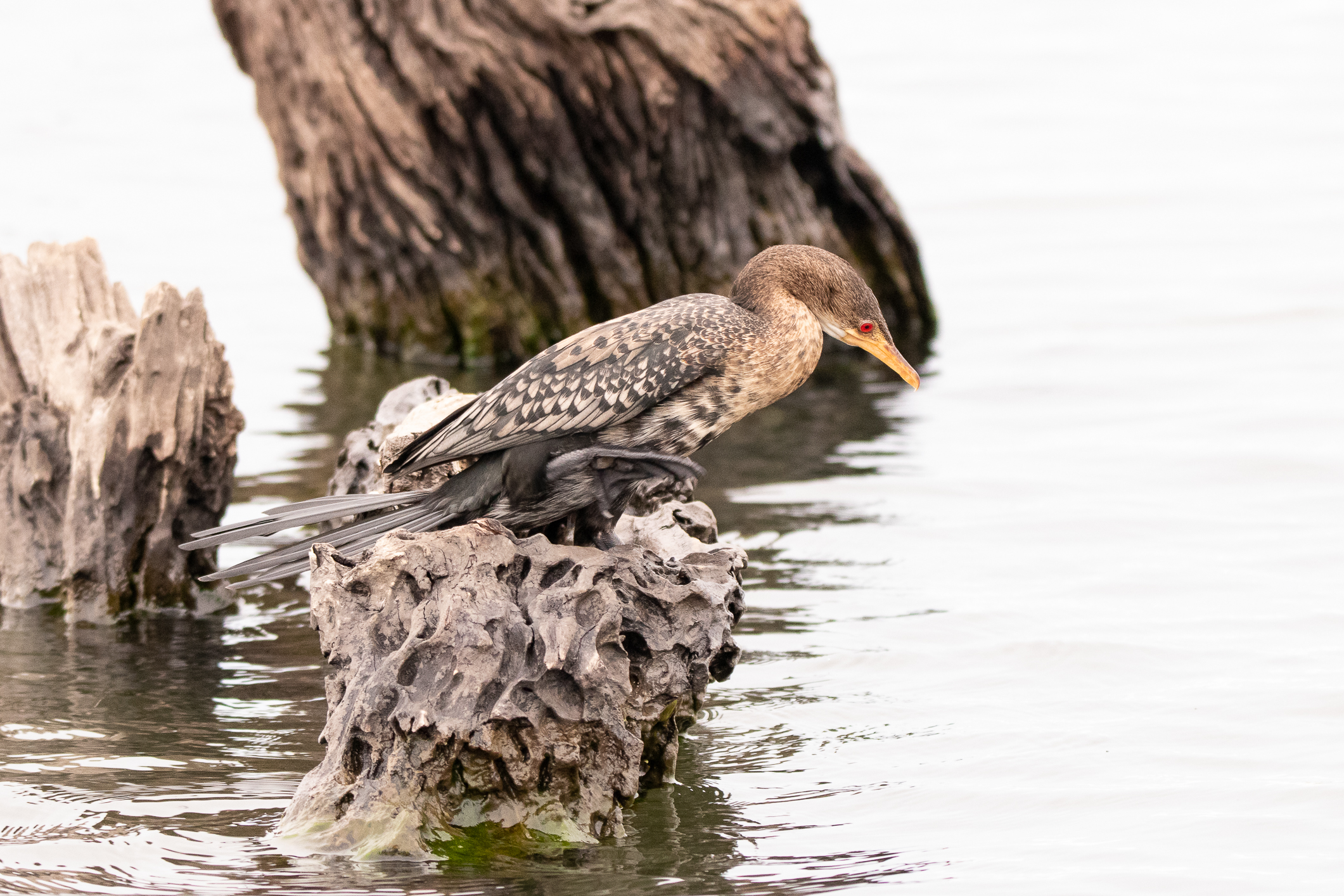
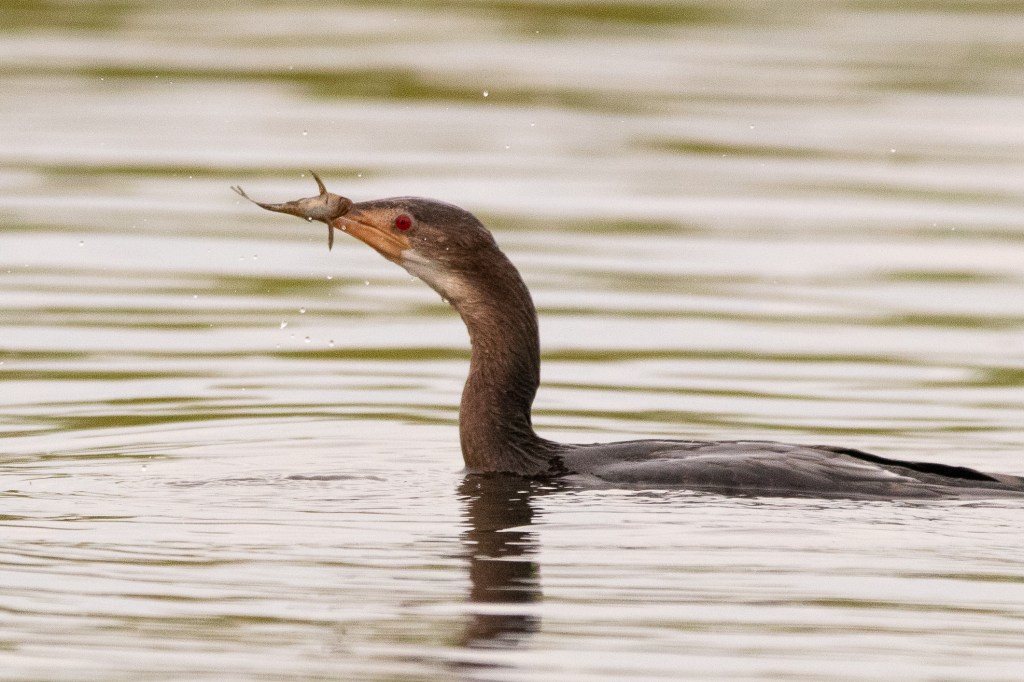
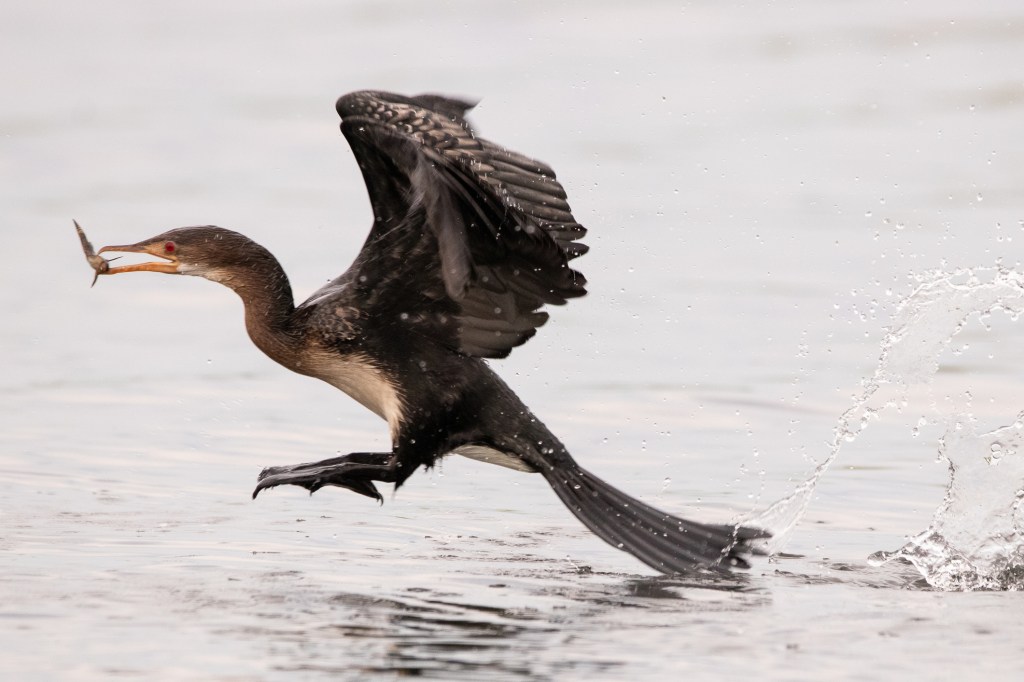
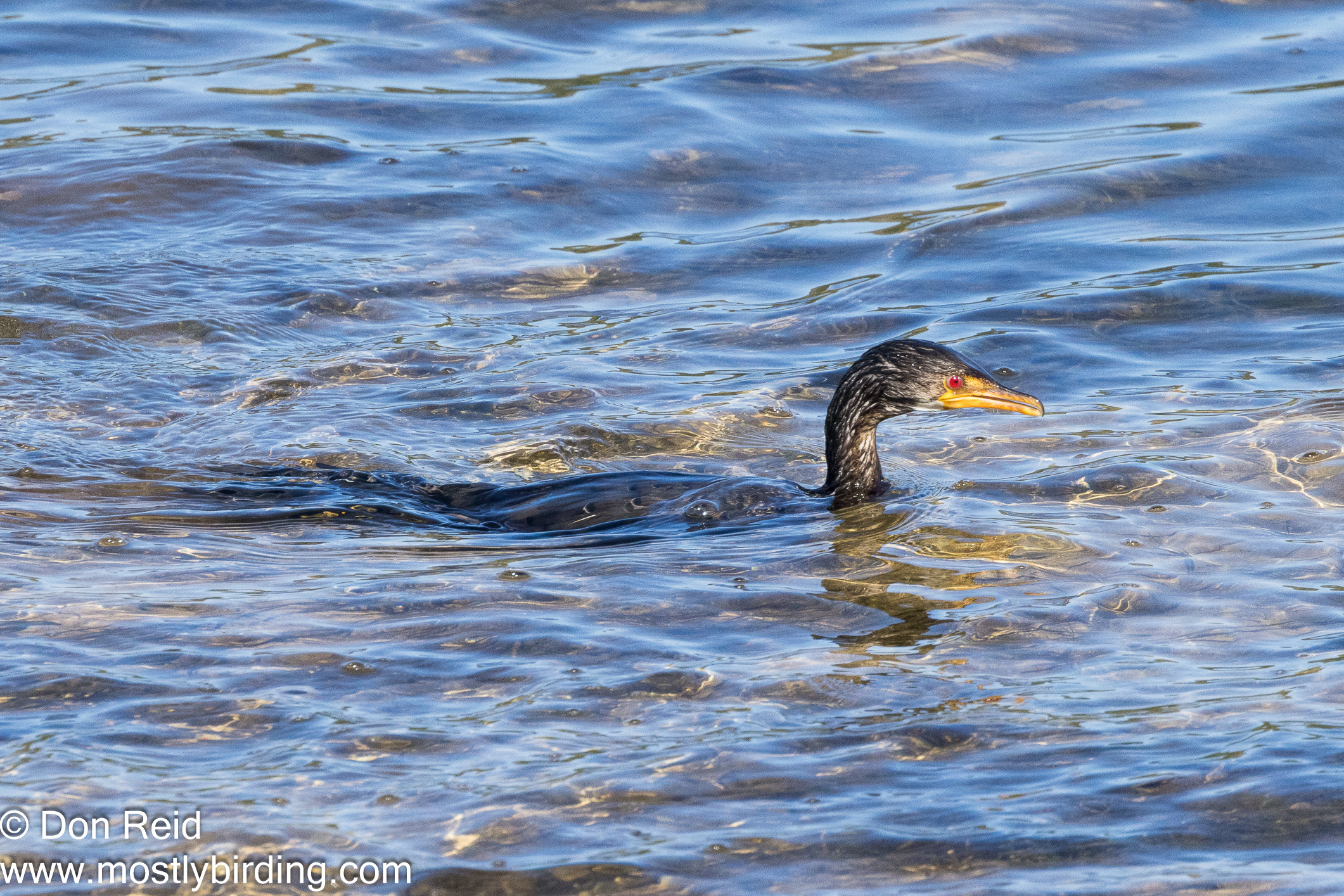
Reed Cormorant Microcarbo africanus Rietkormorant, Sedgefield
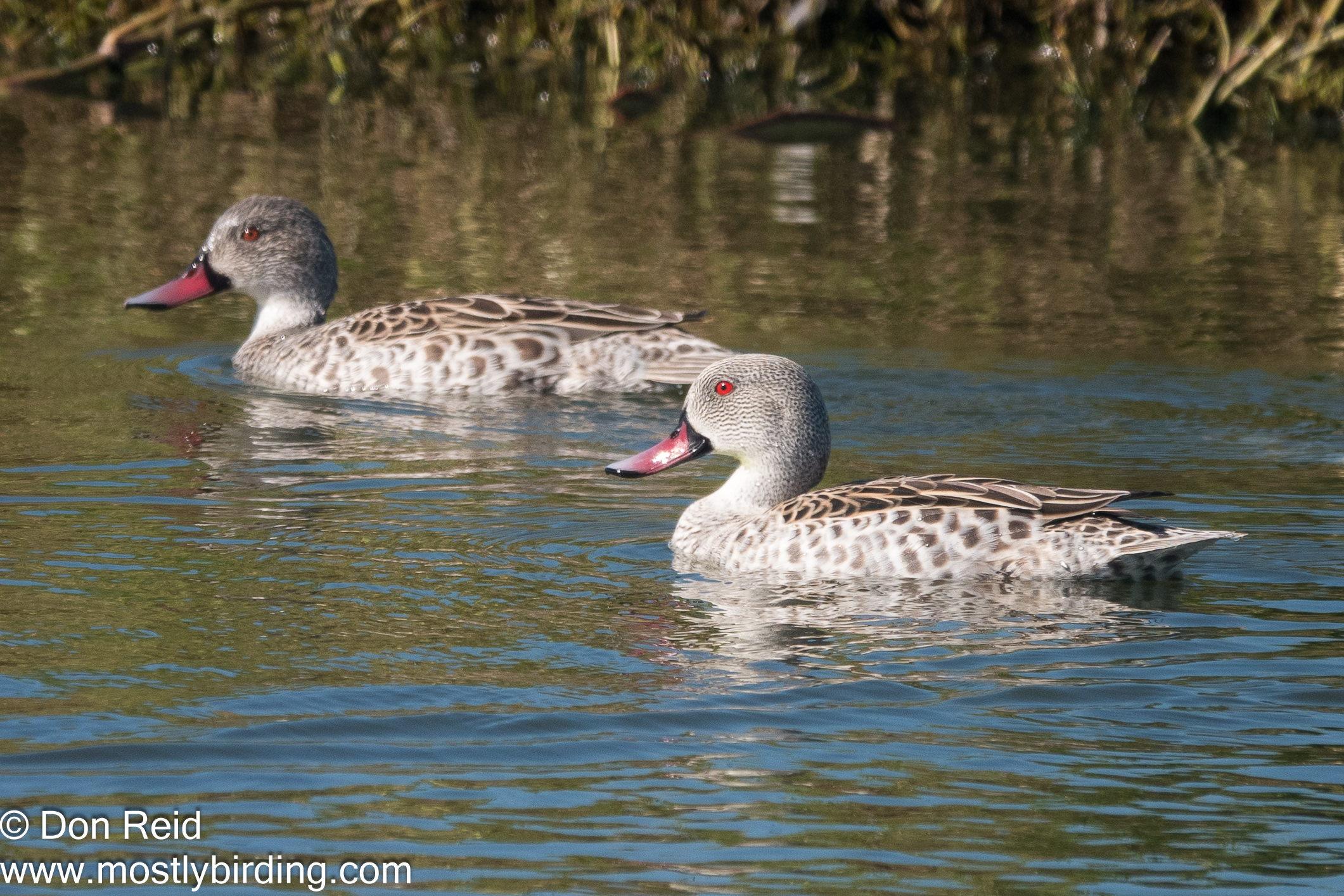
Cape Teal Anas capensis Teeleend, Strandfontein sewage works

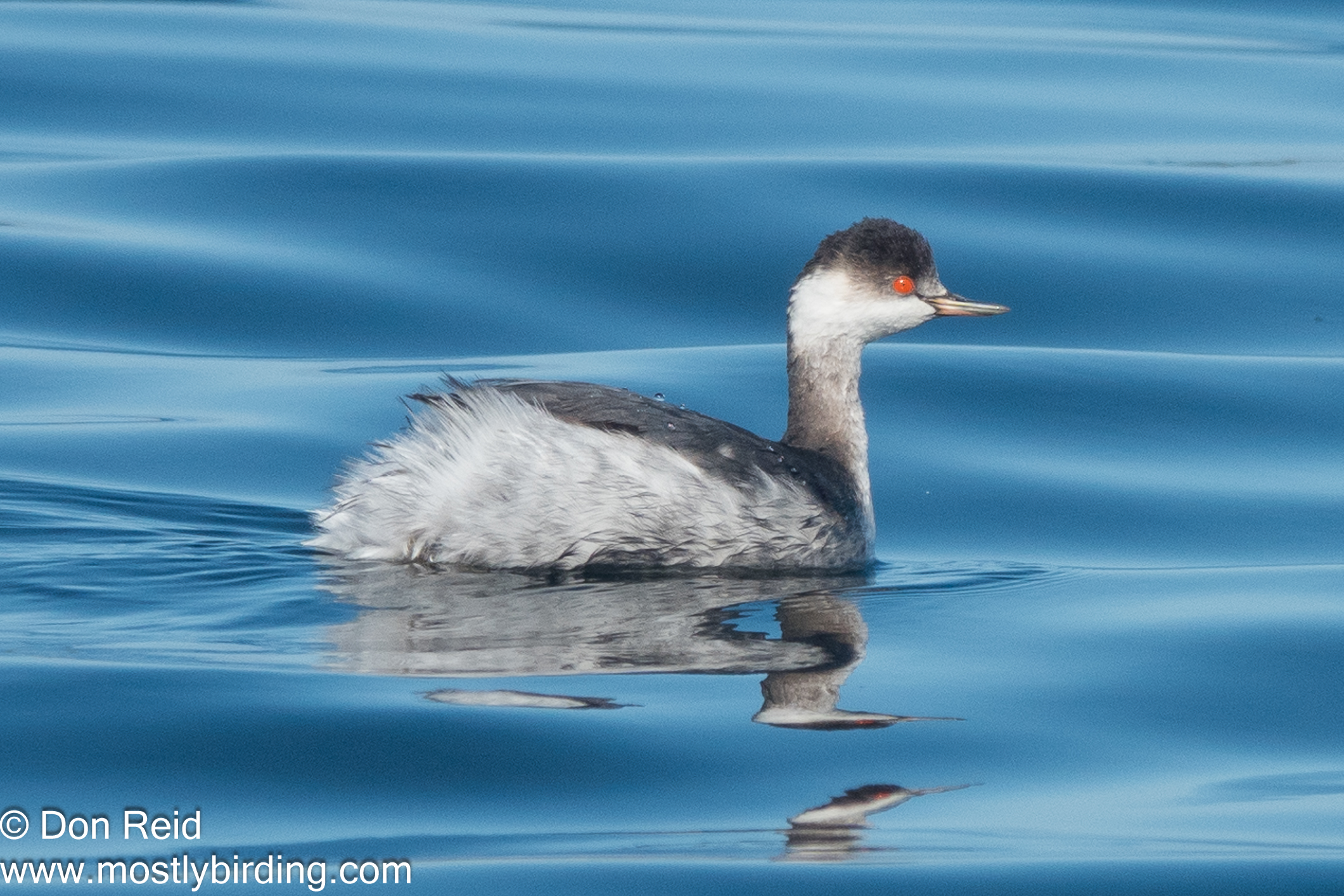
I was particularly pleased to photograph this Black-necked Grebe at reasonably close quarters during a visit to Strandfontein sewage works as my previous photos were all too far off to achieve any sort of detail of this striking swimmer

Black-necked Grebe Podiceps nigricollis Swartnekdobbertjie, Strandfontein sewage works

Waders

Those attractive waterbirds that don’t dive or swim but forage by wading in suitable shallow water

Also challenging to photograph at the best of times – often moving constantly, hiding behind vegetation, dipping into the mud and generally frustrating attempts to get a clear shot

Sanderling Calidris alba Drietoonstrandloper, Hartenbos River Estuary
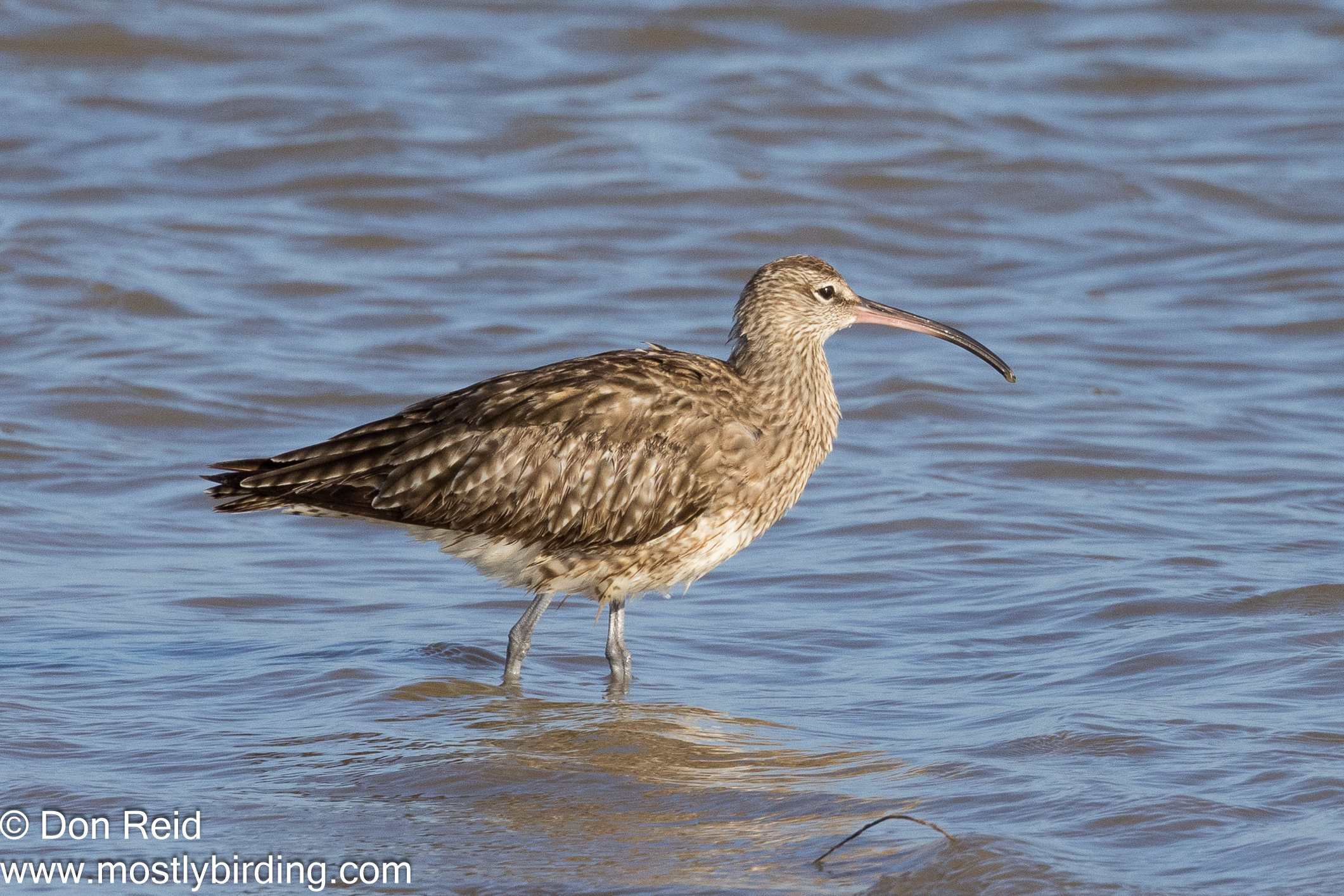
Whimbrel Numenius phaeopus Kleinwulp, Gouritsmond
Black-winged Stilt Himantopus himantopus Rooipootelsie, Hartenbos vleis
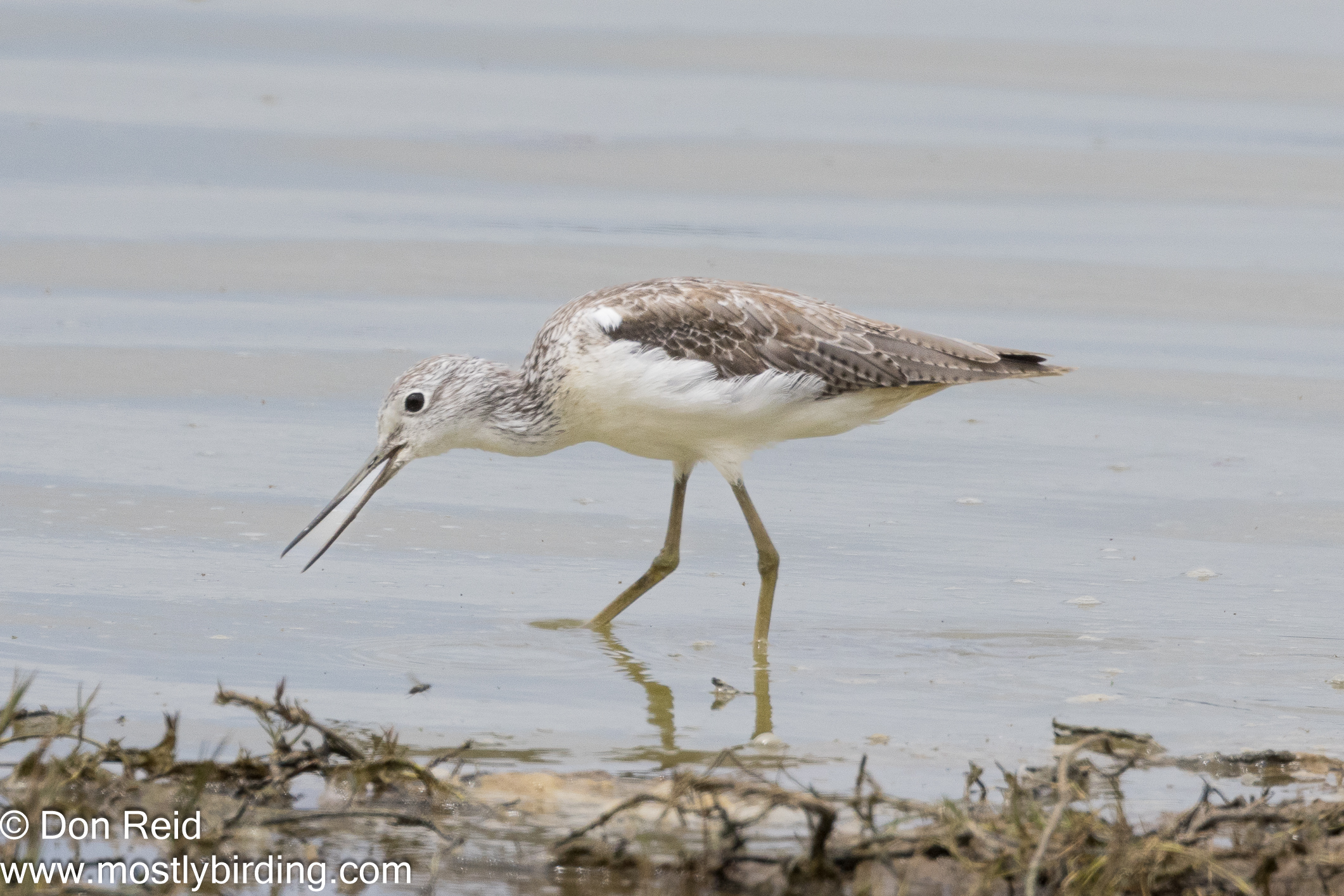
Common Greenshank Tringa nebularia Groenpootruiter, Voelvlei

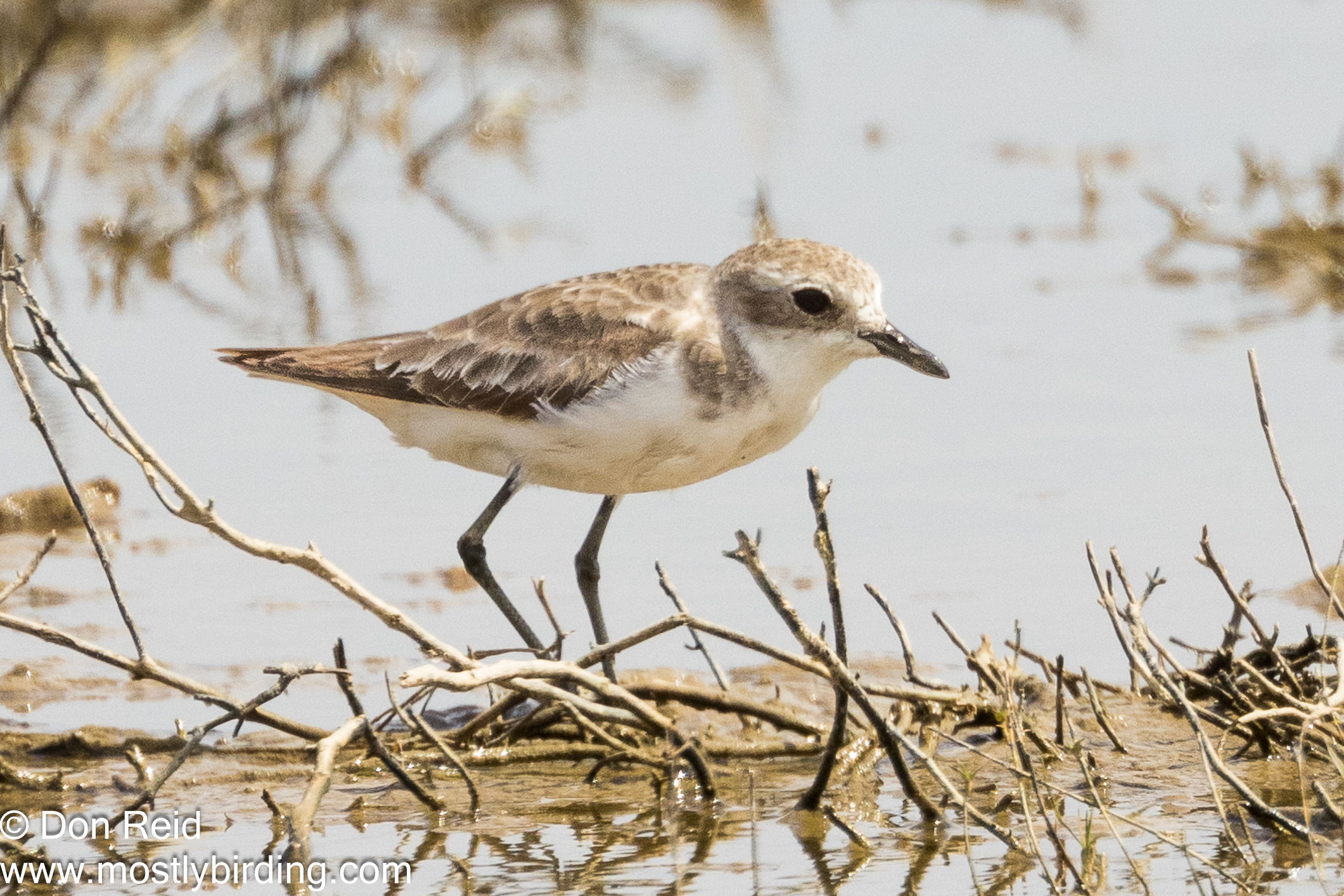
One of the rarities that visited Voëlvlei near Vleesbaai during the summer of 2023/24 was this Greater Sand Plover.

Greater Sand Plover Charadrius leschenaultii Grootstrandkiewiet, Voelvlei

Walkers

And to end off – the largest bird in the world with its offspring made for a lovely sight in Addo Elephant National Park

Common Ostrich Struthio camelus Volstruis (female with juveniles), Addo Elephant NP

The Eyes Have it! (Part 5)

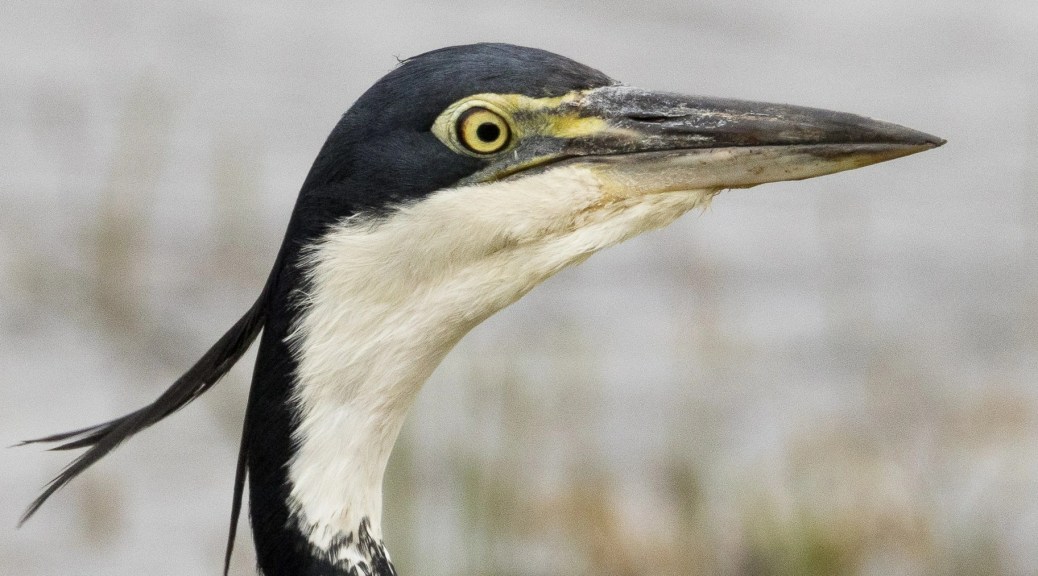
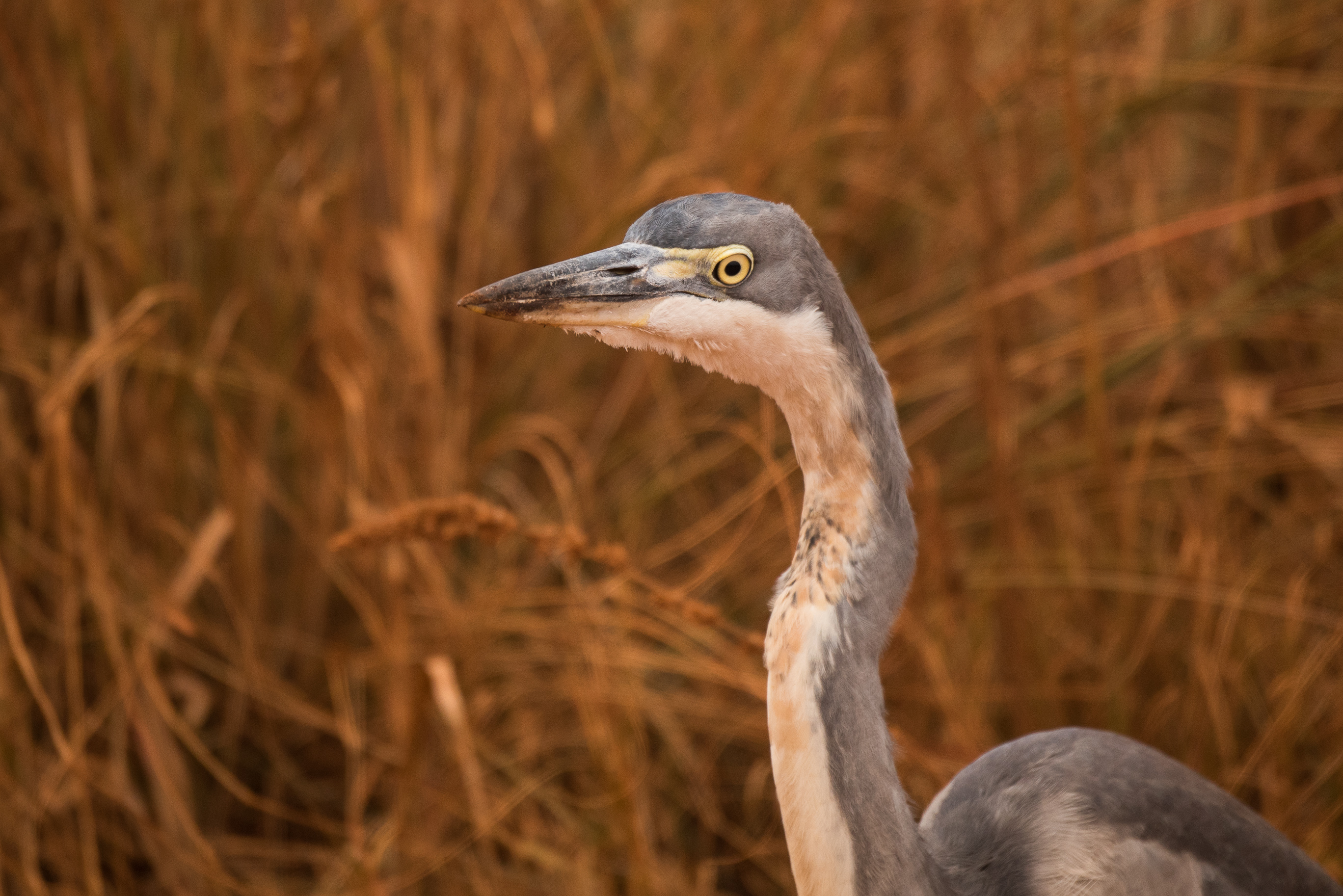
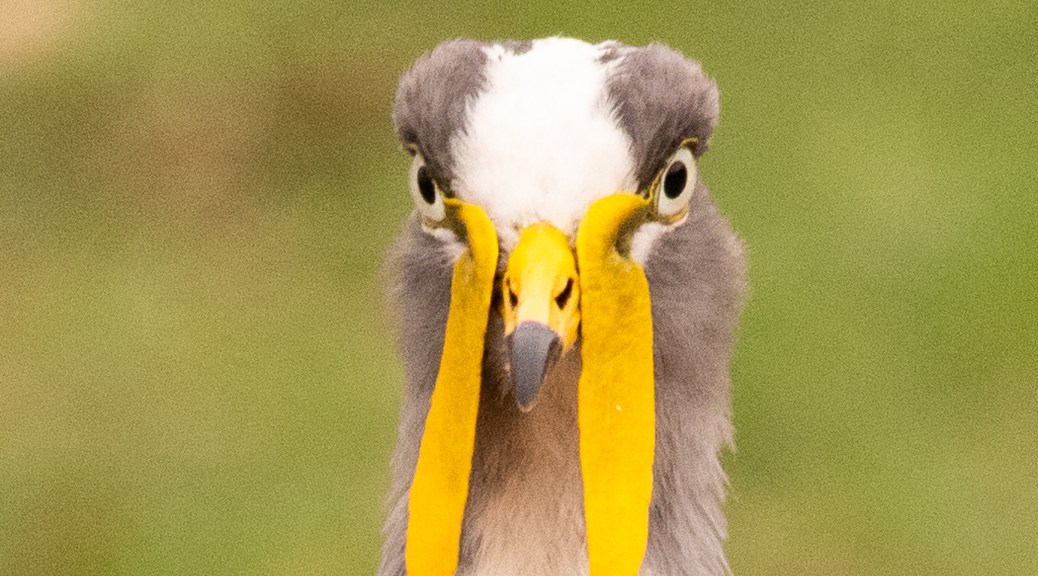
A while back I showcased a few species with striking eyes – continuing that theme, here’s a look at another species that has formidable eyes -although this is not immediately obvious but does become more so once you get up close and personal with it

Black-headed Heron (Swartkopreier) Ardea melanocephala

Where in the world?

The distribution of this species is extensive across Sub-Saharan Africa, missing only from a few arid areas such as the Kalahari in southern Africa. It is the commonest of the large herons throughout Africa.

What to Look for

This is not a bird that is likely to be confused with any other, with the possible exception of the Grey Heron which is of similar size and, at a distance, of similar appearance. Non-birders (no disrespect, but you are missing out seriously) do mistake this species for the iconic Blue Crane, something I can vouch for from personal experience.

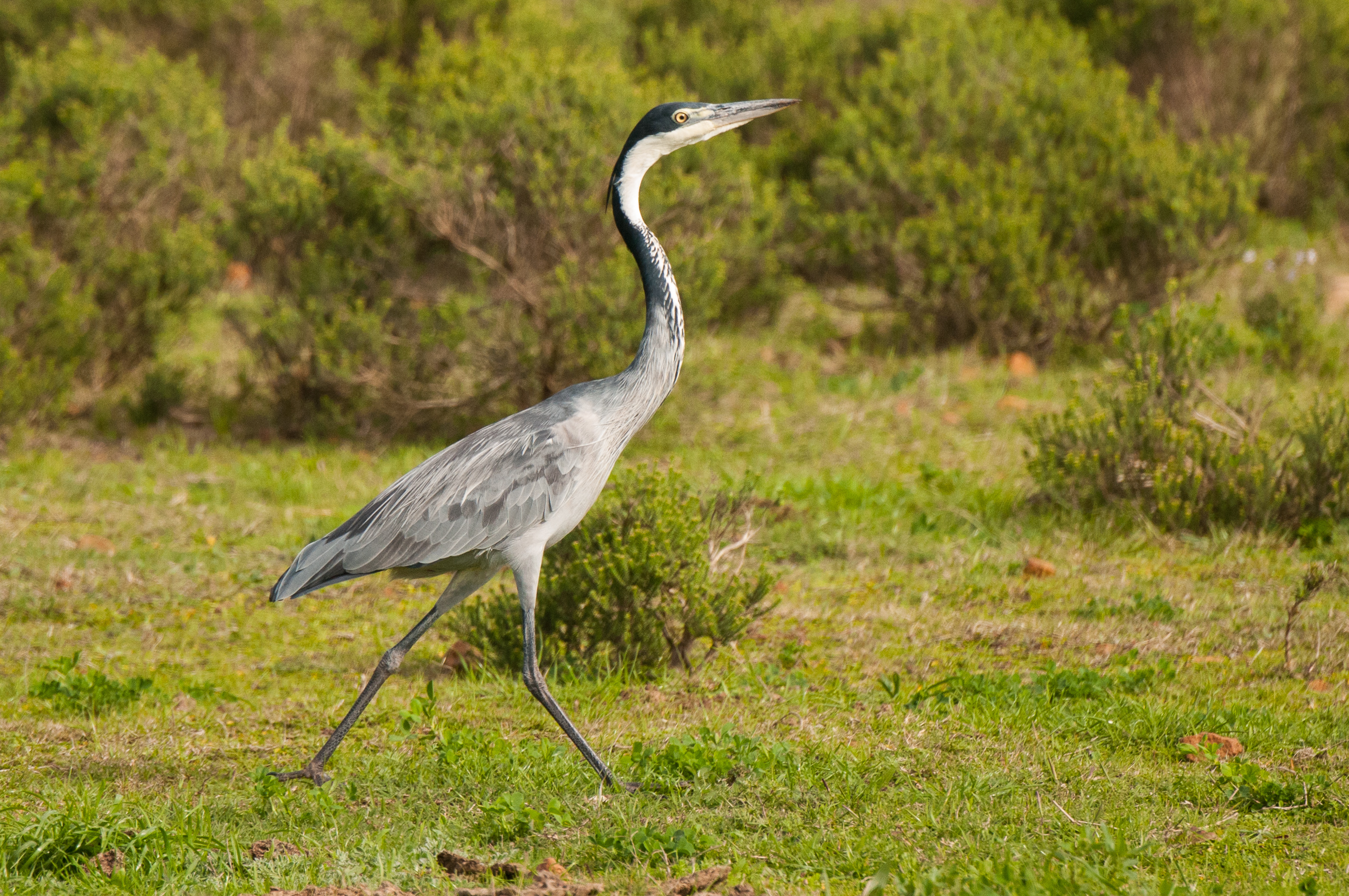
It’s a tall bird, up to 96 cm in height and weighing between 700 and 1650 g

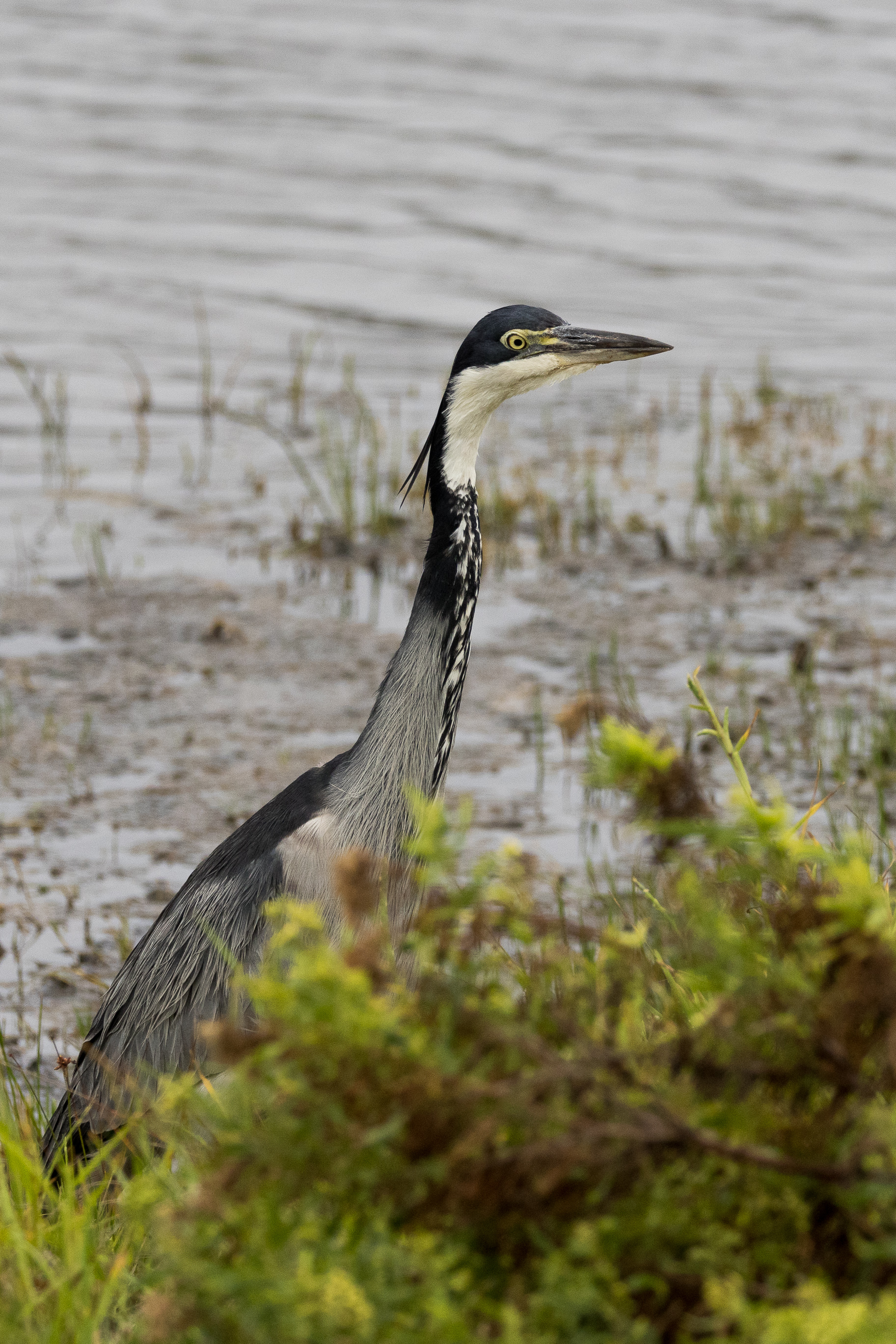
Black-headed Heron Ardea melanocephala Swartkopreier, Great Brak River

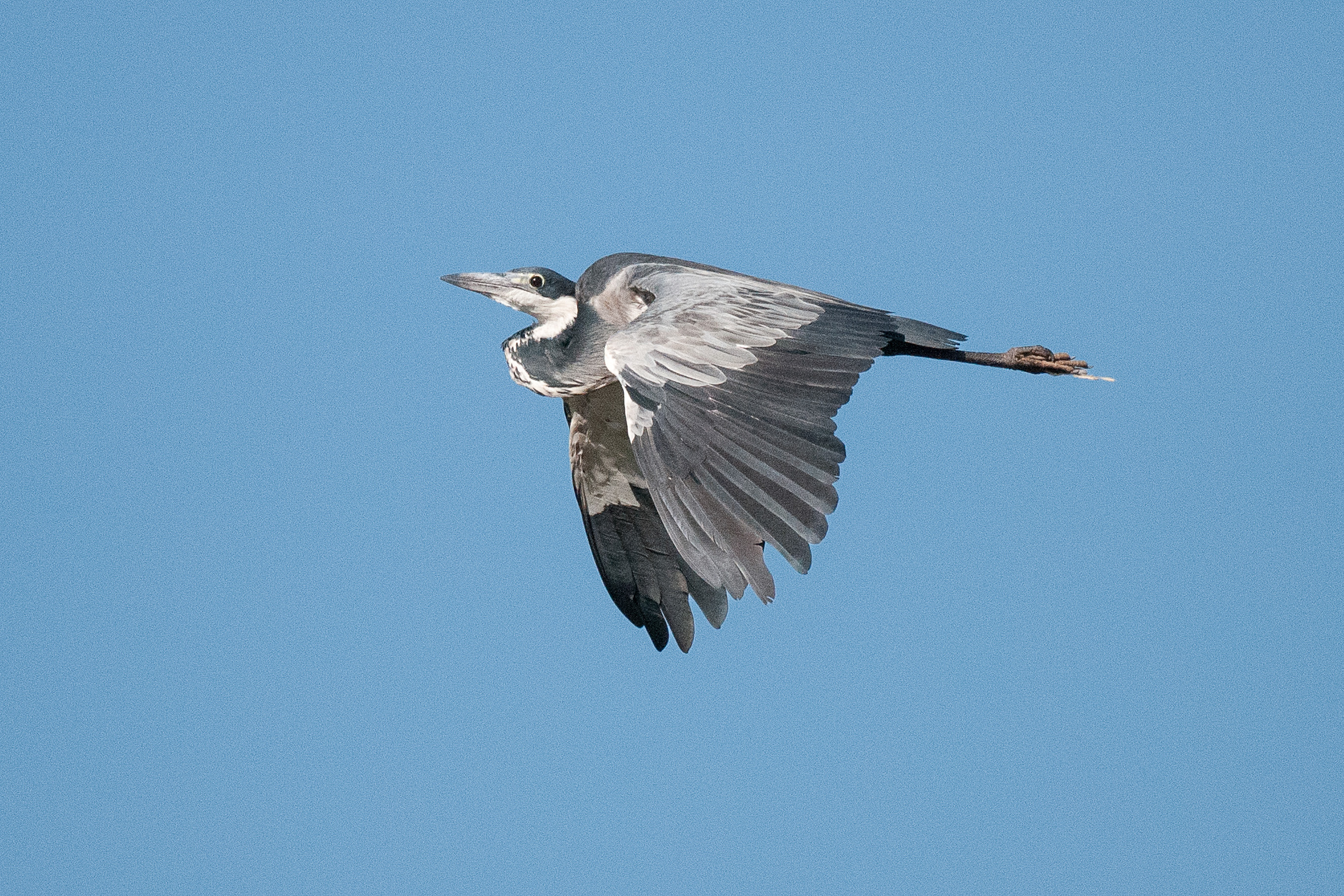
In flight it’s easier to confirm the identification due to the bi-coloured wings – black flight feathers, white underwing coverts

Black-headed Heron, De Hoop NR

Eyes are yellow, but turn orange, then red during breeding

Black-headed Heron, Delmas area

Black-headed Heron is a terrestial species, not necessarily found near wetlands as with other herons, and is one of the few birds that benefit from human alteration to the environment such as irrigated areas, which suit their preference for damp pastureland

They will often be found striding through grass, hunting for prey

Black-headed Heron, Mossel Bay-Herbertsdale

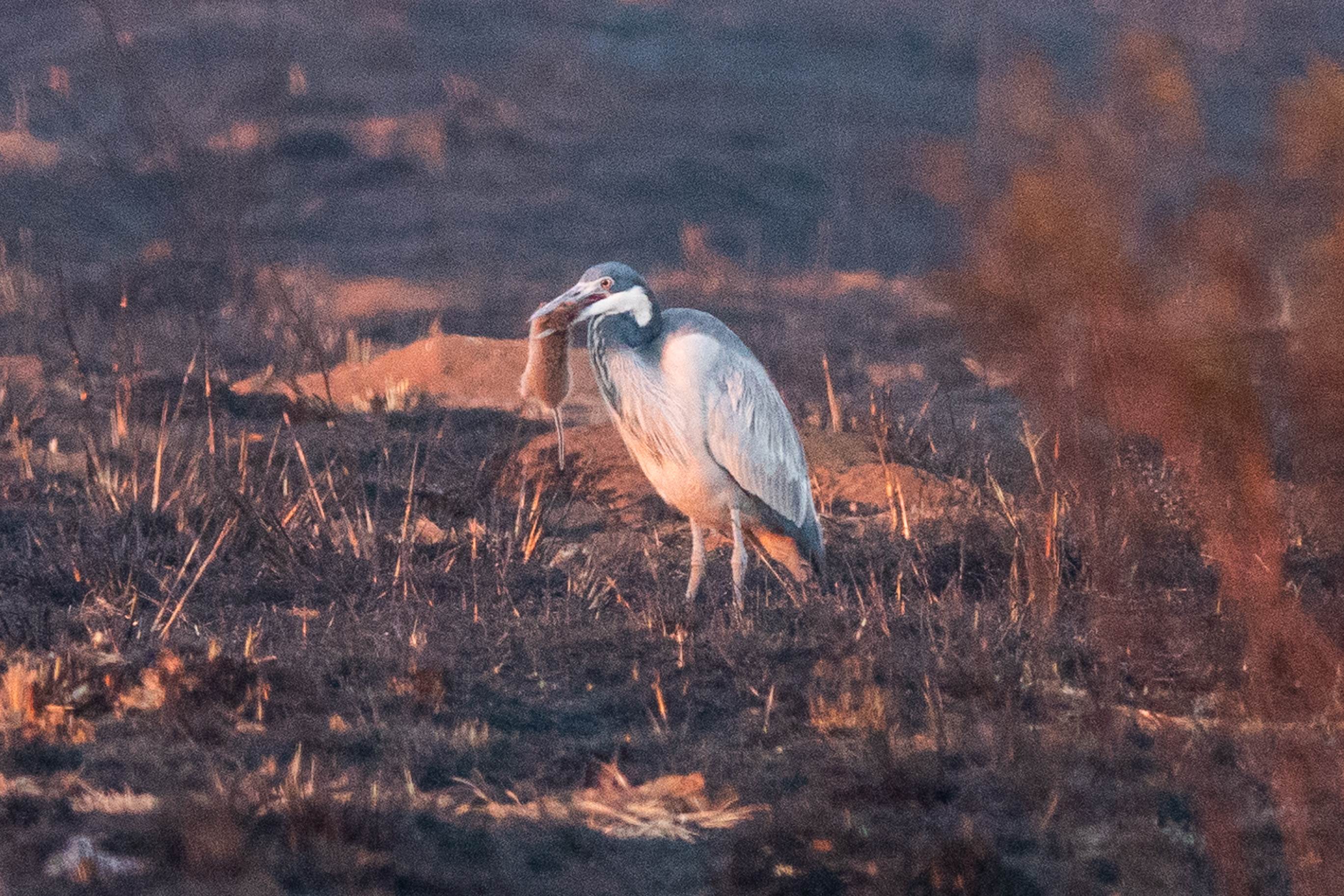
They eat a variety of rodents,insects, snakes, frogs, crabs, fish – in fact just about anything that crosses their path including small birds. This individual I came across early one morning in the Rayton area near Pretoria had caught a large rodent, possibly a vlei rat, and proceeded to swallow it whole, taking a few minutes to manoeuvre it into position for swallowing. I could see the progress of the prey moving down the bird’s long neck, which bulged as it gradually slipped down.

Black-headed Heron swallowing prey, Rayton-Culinan area

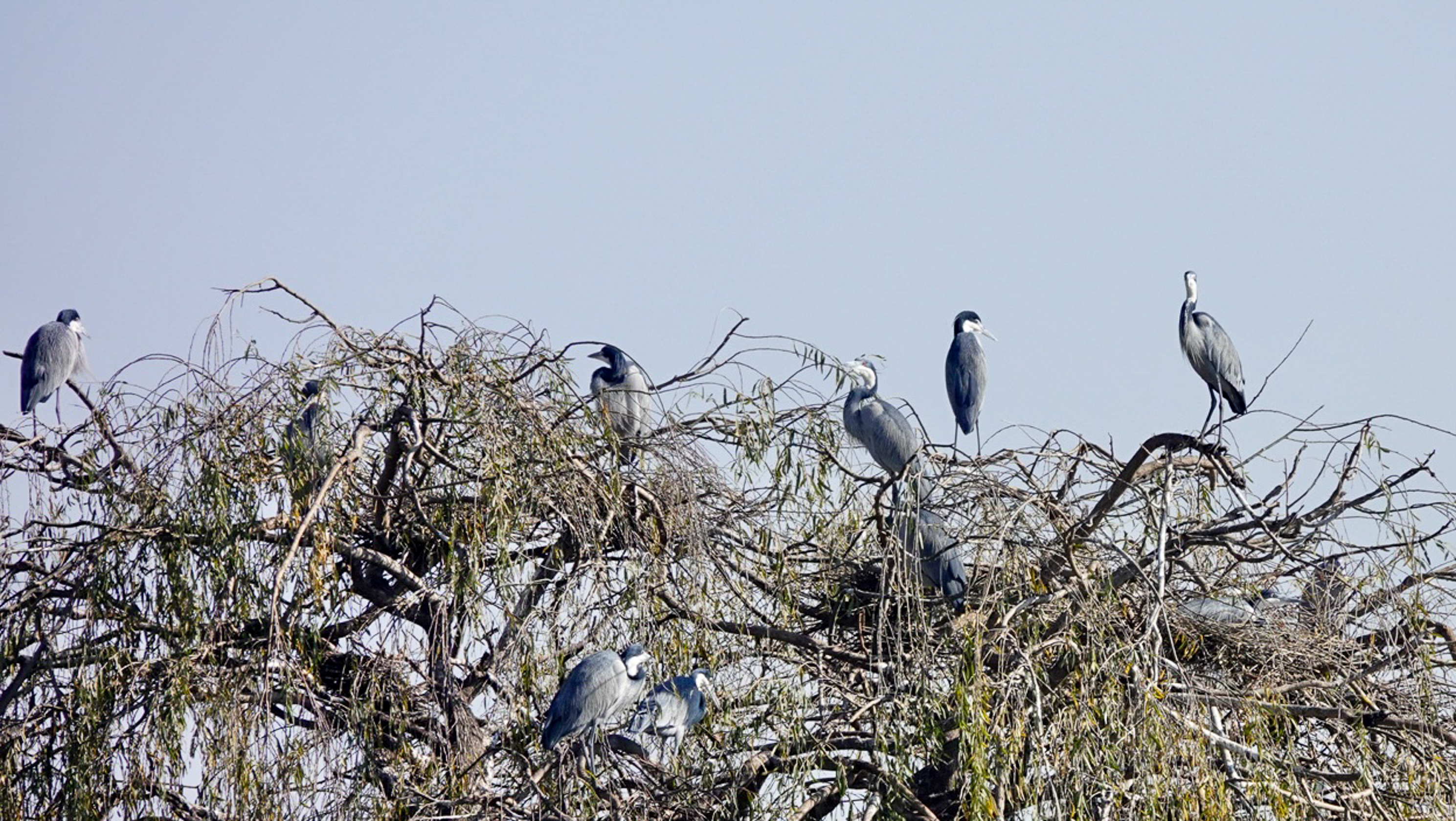
They often nest in or near towns – Great Brak River, just down the road from Mossel Bay, has a busy roost in a tall tree on the main road. The next photo was taken in a more rural area near Pretoria, where numbers of Black-headed Herons occupied a large tree next to a farm dam.

They make themselves known with their harsh squawking calls at all times of the day.

Black-headed Herons, Bapsfontein east

References: Roberts VII Birds of Southern Africa; Firefinch Birding App; Birds of the World – Cornell Lab of Ornithology

The Eyes Have it! (Part 4)

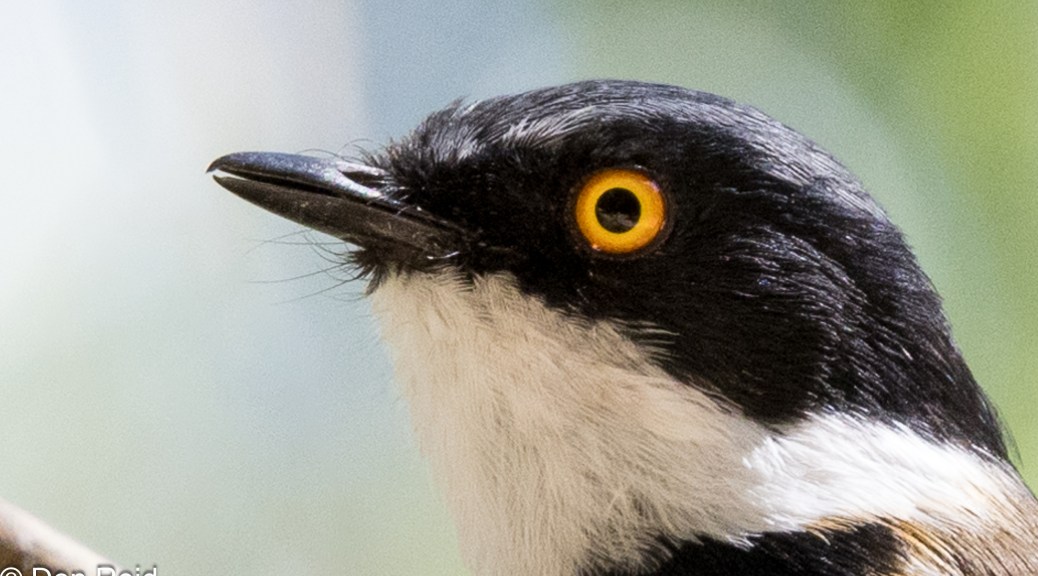
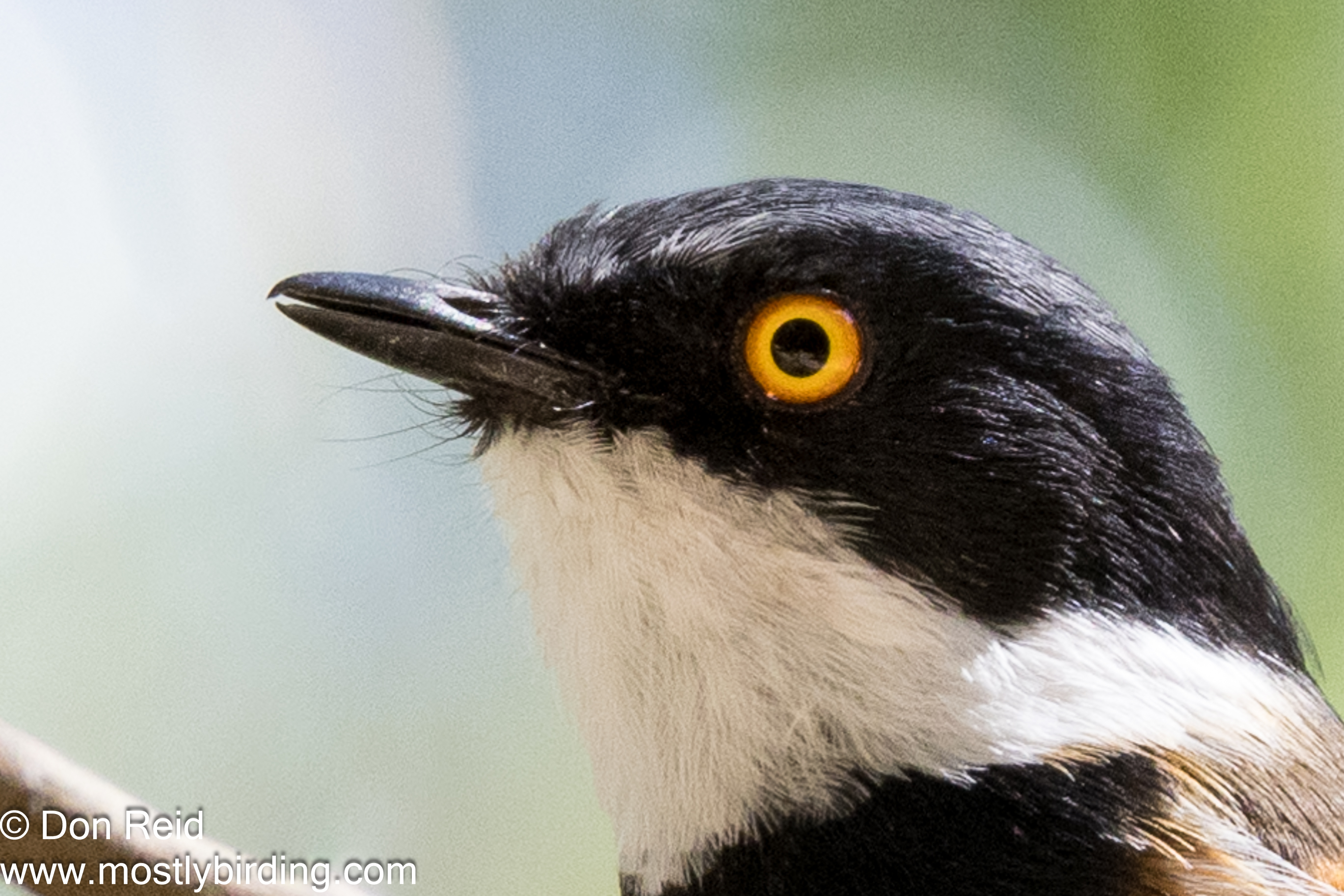
Another species that fits the description of birds with striking eyes is the diminutive Cape Batis

Cape Batis (Kaapse bosbontrokkie) Batis capensis

Where to find them

The Cape Batis occurs mainly, but not exclusively, in forest habitat – I have come across them in bushy areas not 200m from our Mossel Bay home and in various other locations outside ‘proper’ forests.

Distribution is confined to southern Africa as shown on the map below – courtesy of Birds of the World.

What to Look for

Batises can be confusingly similar in appearance, but the Cape Batis is the only one with orange flanks and wing bar, while the male is told by the broad black band across its chest.

Cape Batis Batis capensis Kaapse bosbontrokkie (male), Friemersheim area

The Firefinch app refers to this species as the “standard” forest bird – common, bold, noisy and striking. It is an active bird, flitting between bushes with a ‘fripping’ sound caused by rapid beating of its tiny wings and can often be found at the centre of bird parties.

Cape Batis Batis capensis Kaapse bosbontrokkie (male), Friemersheim area

Getting the Photo

The images above were taken while atlasing in the Friemersheim area not far from George – I stopped to scan a forested patch next to the road when I noticed movement among the branches not far from where I was standing, and pointed the camera in the general direction just as a Cape Batis popped into view, posing in sunlight just long enough to get a few shots.

The Eyes Have it! (Part 3)

As a follow up to the previous posts on the subject of birds with striking eyes – here’s a look at another species, familiar to South African birders, with eyes that beg your attention –

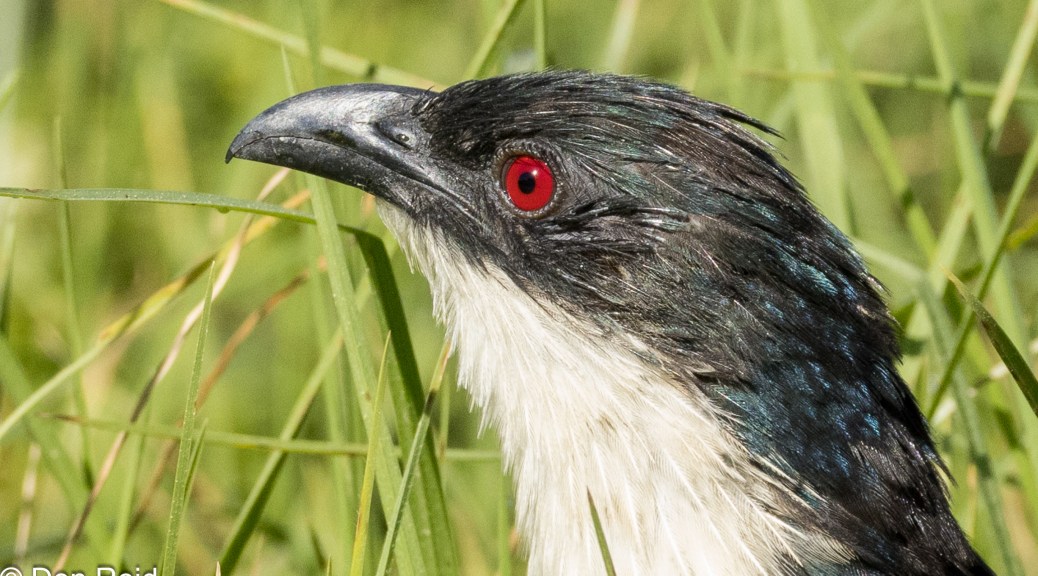
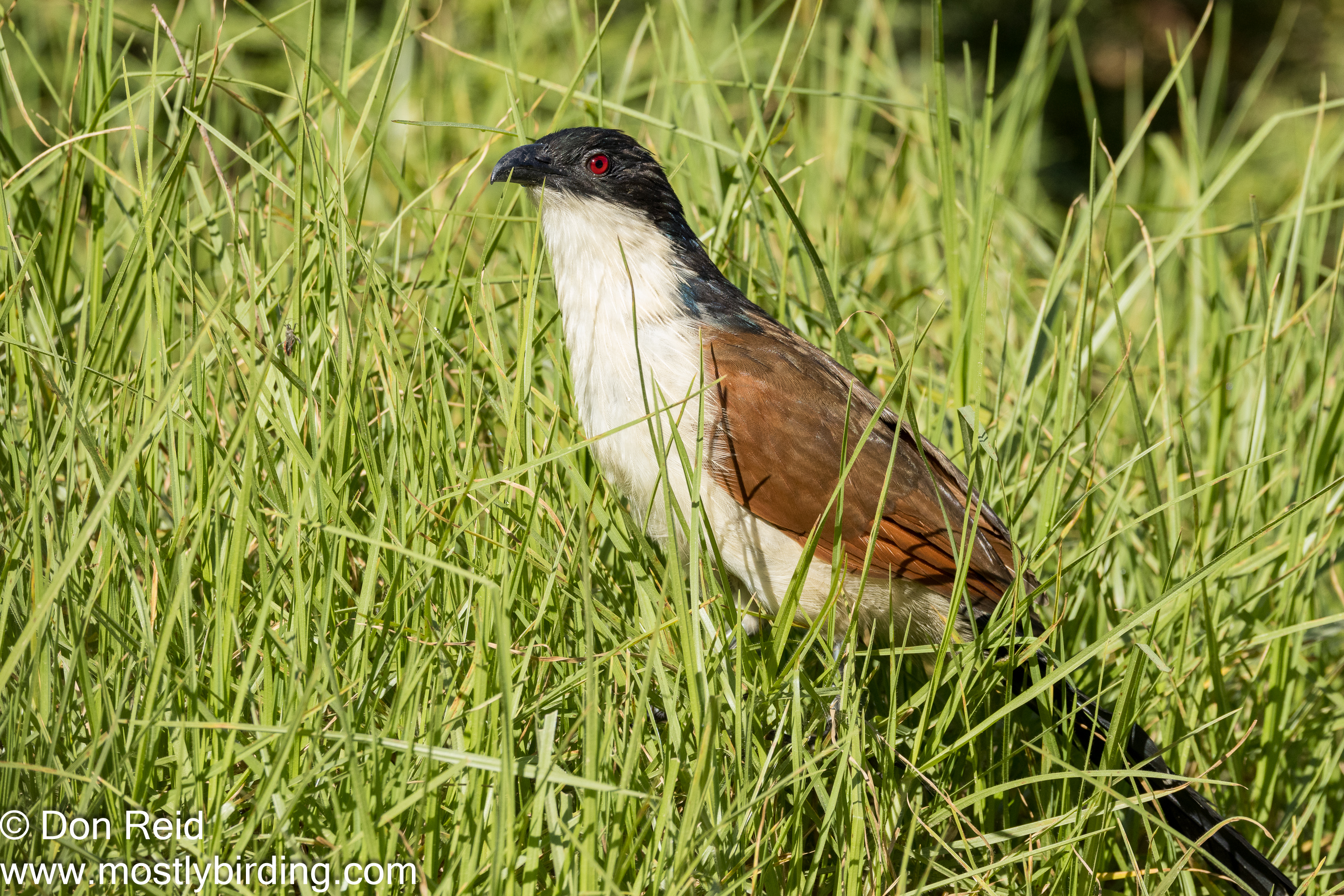
Burchell’s Coucal (Vleiloerie)

Centropus burchellii

This is a species best known for its bubbling call from the depths of dense bush or trees – a call which Roberts VII describes as “like water being poured from a bottle”.


And that may be the only clue you get to its existence until, one day, you actually get a glimpse of the bird as it flies heavily from one bush then crashes clumsily into the next one and disappears again. This is a bird that does not crave attention as it goes about its daily routine of searching on the ground and in bushes for just about anything it can lay its claws on – rodents, reptiles, other birds, nestlings, frogs, snails, insects … etc
Distribution

Birds of the World (see footnote) – lumps two species together with a combined distribution across Africa and a narrow stretch of Arabia as per the map below.

Southern African birdlists separate the two species into :

Burchell’s Coucal — Centropus burchelli – with distribution from south-east Tanzania through Mozambique to the Western Cape in South Africa and including south-east Botswana

White-browed Coucal – Centropus superciliosus – with distribution from Yemen, south-west Arabia, Ethiopia south to Zambia, Angola and southern Africa

Getting the Photo

As mentioned above, this is a fairly secretive species so when the opportunity arises one has to be quick off the mark to get a decent photo

I was fortunate enough to have such an opportunity recently while atlasing in the area east of Friemersheim in the southern Cape. I was driving slowly along a dirt road and had just passed a small stream when I spotted movement in the long grass at the roadside and stopped to look further.

I soon saw what had attracted my attention – a Burchell’s Coucal making its way through the lush grass and close enough to the road for a reasonably close-up photo. That sighting had me grabbing my camera and reversing at the same time to get into a position where I could aim the camera through the passenger side window, which I was busy opening while doing all of the above (this just shows men CAN multi-task – provided the motivation is there of course).

Suffice to say I believe my efforts paid off and I was very pleased with the results!

Burchell’s Coucal Centropus burchellii Gewone vleiloerie, Friemersheim area

What does Faansie say?

The Firefinch app produced by the incomparable Faansie Peacock always has interesting facts about birds and in this case it mentions that Coucals have stiff, spiky breast feathers – which can be seen in the above photo.

Also that they are known as ‘rainbirds’ because they sing just before, during and after rain

Footnote : The website Birds of the World published by the Cornell Lab of Ornithology provides a wealth of information on birds worldwide and the good news is that access to the website is free for Southern African residents – all that is required is to create an account which can be done at : https://birdsoftheworld.org/bow/home

The Eyes Have it! (Part 2)

As a follow up to the previous post on the subject of birds with striking eyes – which showcased Southern African Cormorants – here’s a look at another species that fits that description to the full

Black-winged Kite (Blouvalk)

Elanus caeruleus

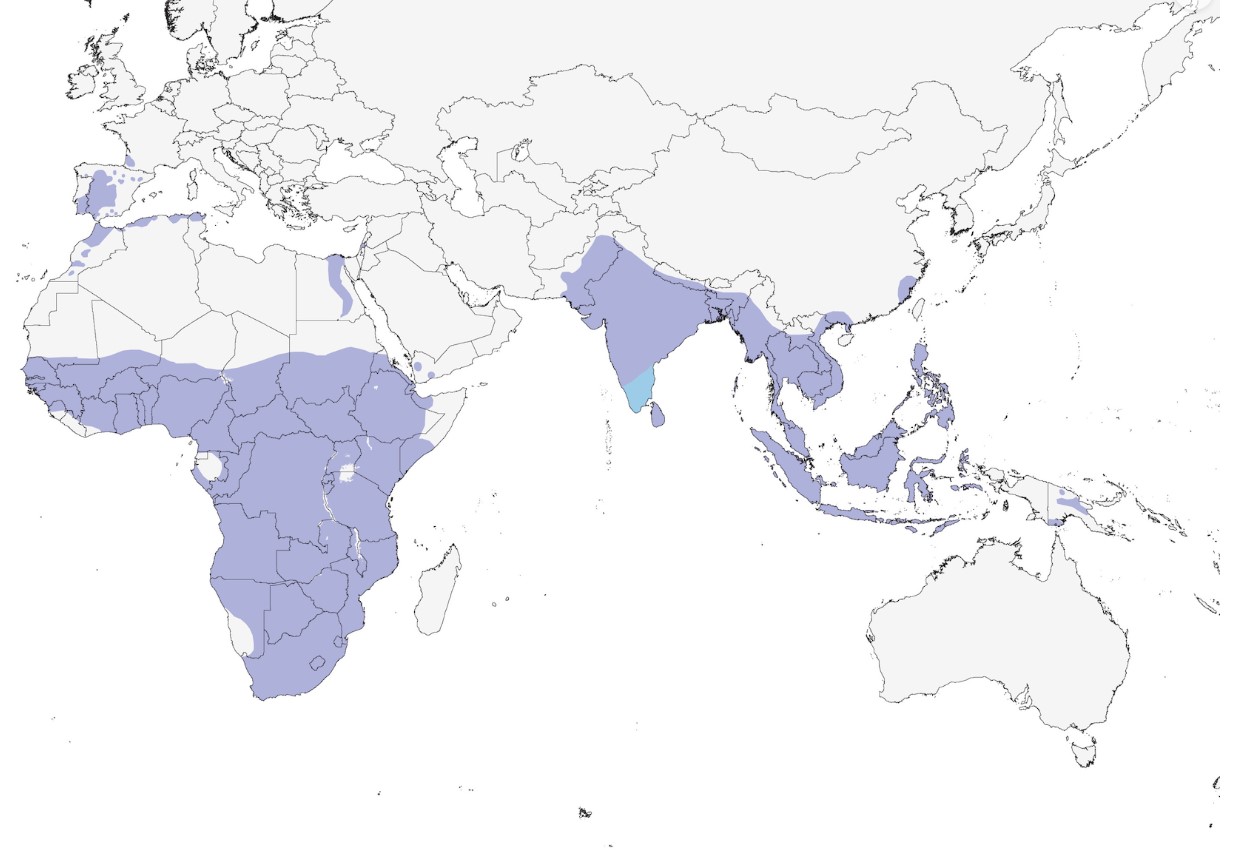
This well-known, small raptor is without doubt the most common raptor to be found across all of Southern Africa – and beyond as you will see from the global distribution map reproduced below courtesy of Birds of the World

Global distribution of Black-winged Kite

It is also the raptor you are most likely to see on any road trip through southern Africa, as their preferred hunting ground is along the road verges and adjoining fields.

They are most often seen perched on roadside powerlines, which provide the ideal vantage point for their hunt for the next small rodent.

However, it’s just as easy to overlook this species, which is similar in size to the many doves which also like to perch on powerlines. The good news is that the flatter pose and habit of slowly wagging its tail up and down will confirm that it’s a Black-winged Kite, even from a good distance, and once it takes to the air there is no doubt about the ID as it hovers, then ‘parachutes’ down to grab its prey.

The images that follow were taken during a recent atlasing trip north of George, on the way to Oudtshoorn – once I had spotted the bird up ahead I approached very slowly, using roadside bush to conceal my approach until I was close enough to quickly take a few photos through the open passenger window.

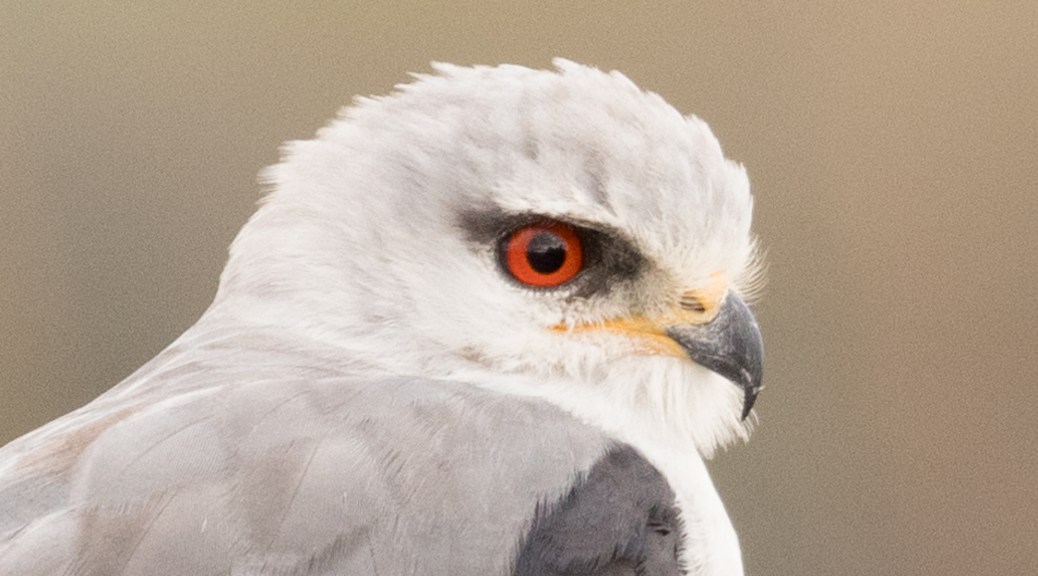
Black-winged Kite Elanus caeruleus Blouvalk, George-Oudtshoorn Area

And just look at that eye colour! Beyond striking and ready to take you on in a staring competition

Black-winged Kite Elanus caeruleus Blouvalk, George-Oudtshoorn Area

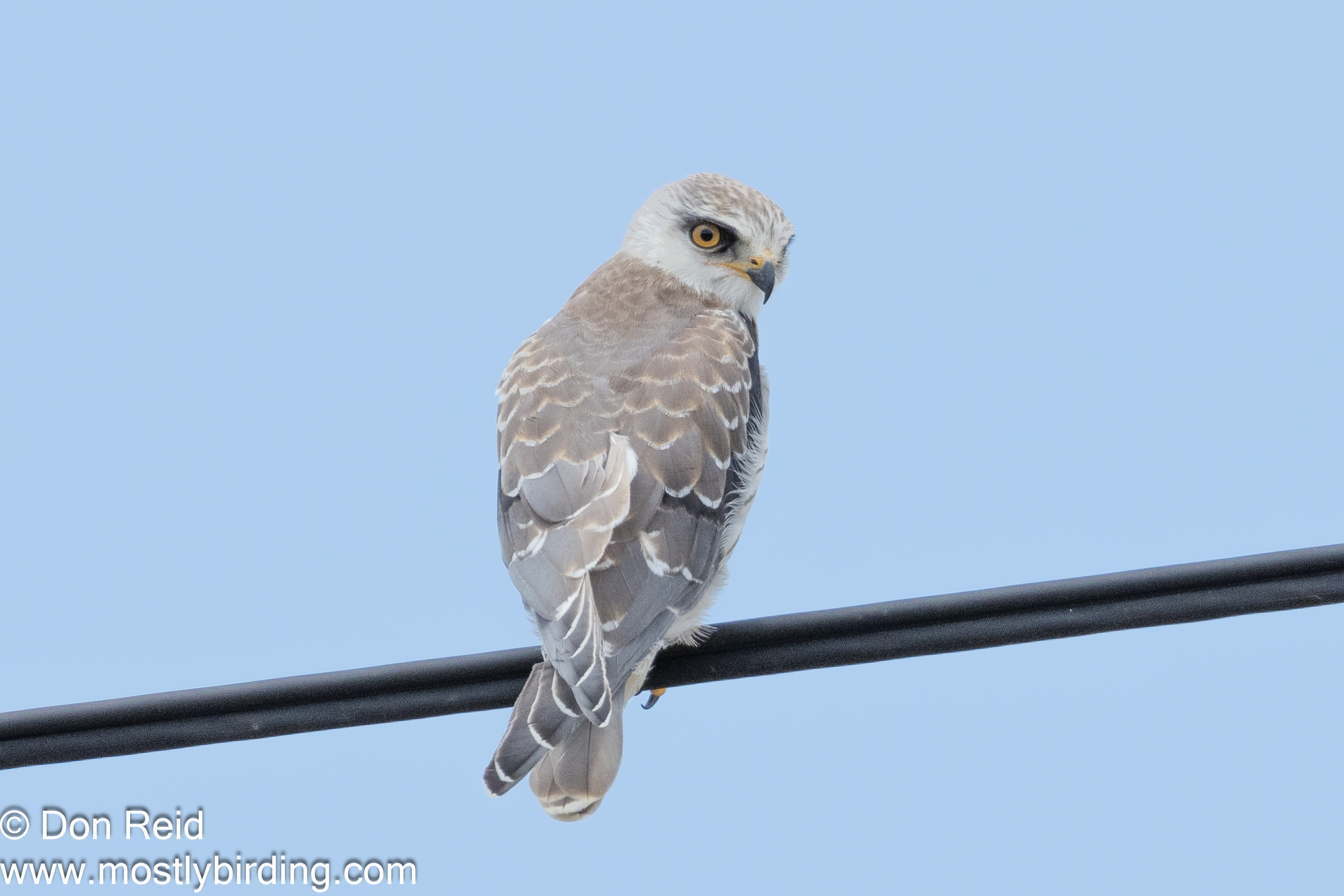
On another atlasing trip earlier this year in the Gouritsmond area just south-west of Mossel Bay, I came across another Black-winged Kite, this time a juvenile without the black ‘shoulder’ and with yellow eyes – still fierce looking, mind you, but not yet up to adult standard

Black-winged Kite Elanus caeruleus Blouvalk (Juvenile), Gouritzmond

Footnote:

I would like to mention a birding website that has helped me to broaden my birding info horizons and opened up a world of new knowledge (literally) to add to and enhance that which I have gathered during many years of birding.

The website is Birds of the World published by the Cornell Lab of Ornithology and the good news is that access to the website is free for Southern African residents – all that is required is to create an account which can be done at

https://birdsoftheworld.org/bow/home

The Eyes Have it! (Part 1)

Cormorants

Cormorants are not generally regarded as birds that are high on the list of desirable birds to see – unless it’s a potential lifer of course. When you’ve been ‘into’ birding for a while the most that a cormorant is likely to elicit is a slightly off-hand “Oh, there’s another Reed Cormorant” or “Hey, have a look at that Little Grebe just to the right of that White-breasted Cormorant”.

But there’s more to cormorants than meets the eye – or eyes in this case …..

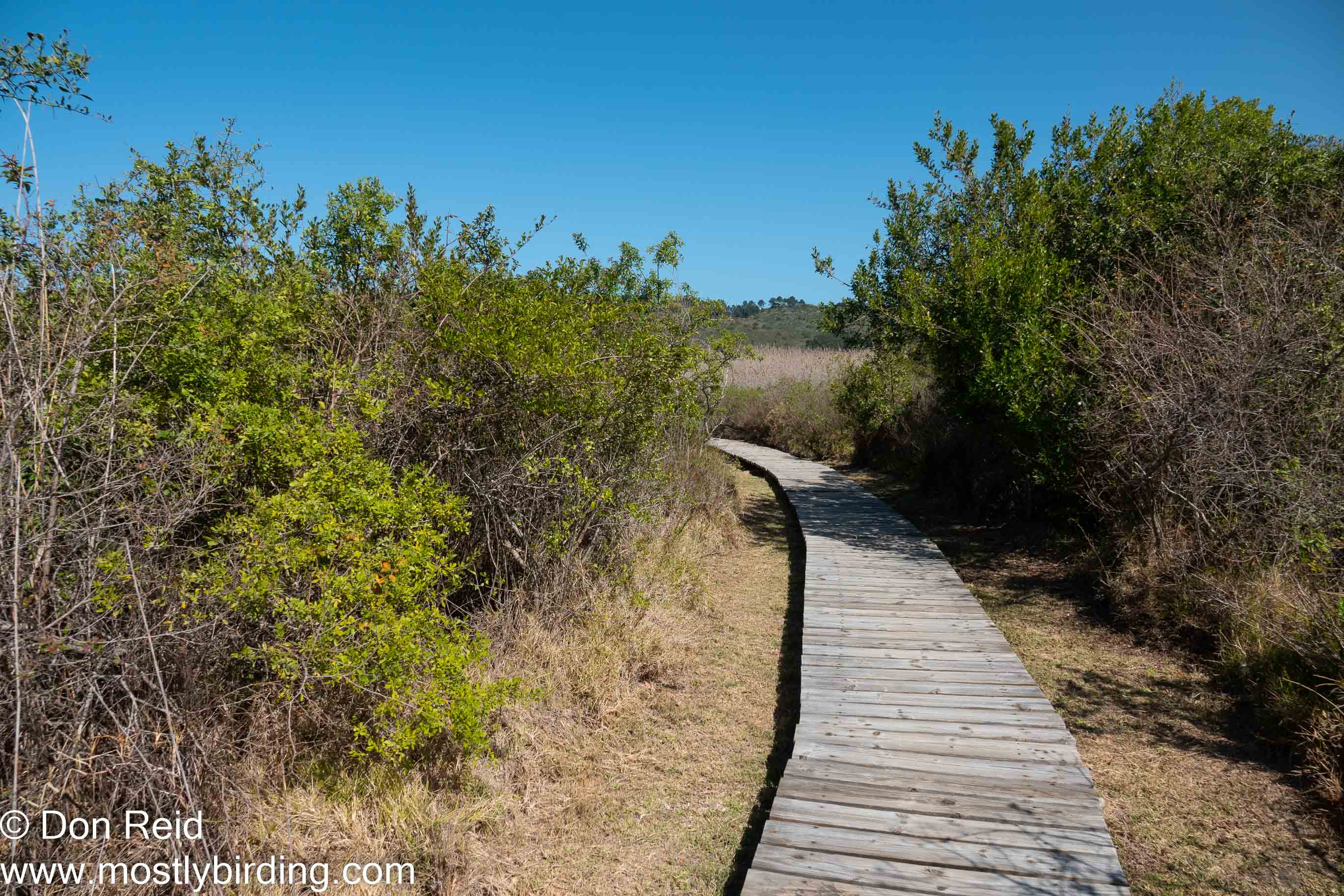
During one recent day trip, I found an opportunity to visit the area which we know as “The Vlei’s”, to the east of the small town of Wilderness, and spent a pleasant hour or so in the bird hide at Langvlei.

Boardwalk to the hide at Langvlei Wilderness

There were numerous waterbirds on the vlei, mostly Coots but also significant numbers of Grebes, more than I can recall seeing in any location before and including all three southern African species – Little Grebes, Great Crested Grebes and a few Black-necked Grebes. However, they were too distant for photography.

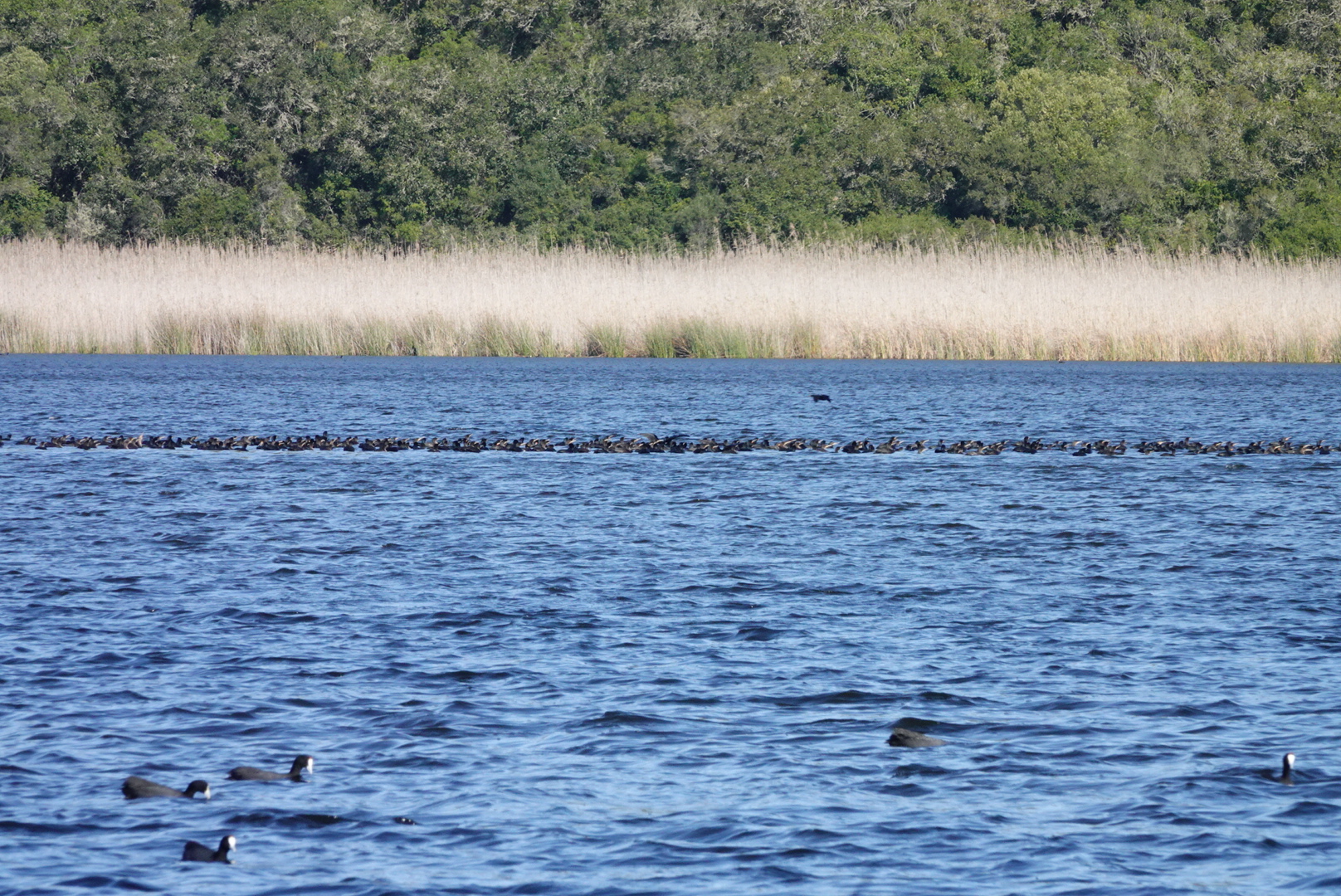
Also distant was a long line of dark birds on the water, as the image below shows, and once I had the scope in position, I could see that it consisted of a few hundred Reed Cormorants, again more than I can recall seeing in one location before. As I watched the line, a few of the foremost swimmers flew up out of the water and circled back to the rear of the “queue” where they settled down in line again. I can only assume they were performing some kind of feeding strategy.

Close to the hide a dead tree stump has been strategically placed and perched on it were two cormorants – the larger White-breasted Cormorant and the somewhat smaller Reed Cormorant.

White-breasted Cormorant above, Reed Cormorant below

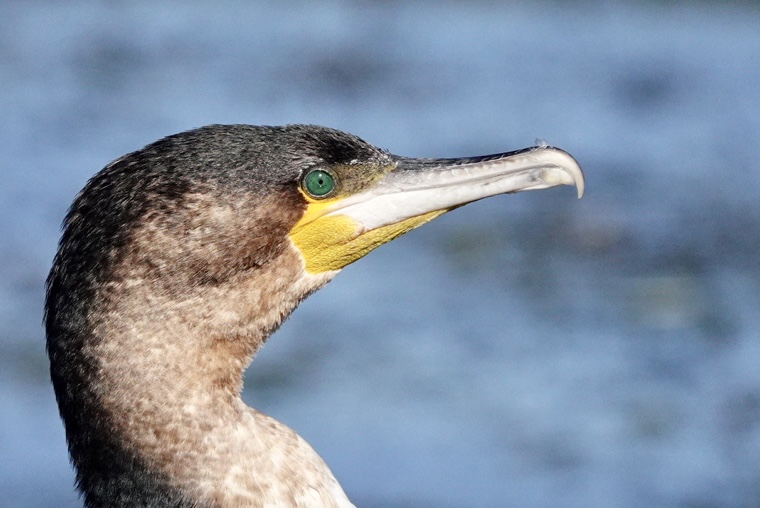
The light was favourable, so I took a few shots then zoomed in on their heads and took a few more. And that’s where the magic came in! In contrast to their rather dull appearance and less than comely shape, the cormorants have some of the most stunning eye colours of the bird world.

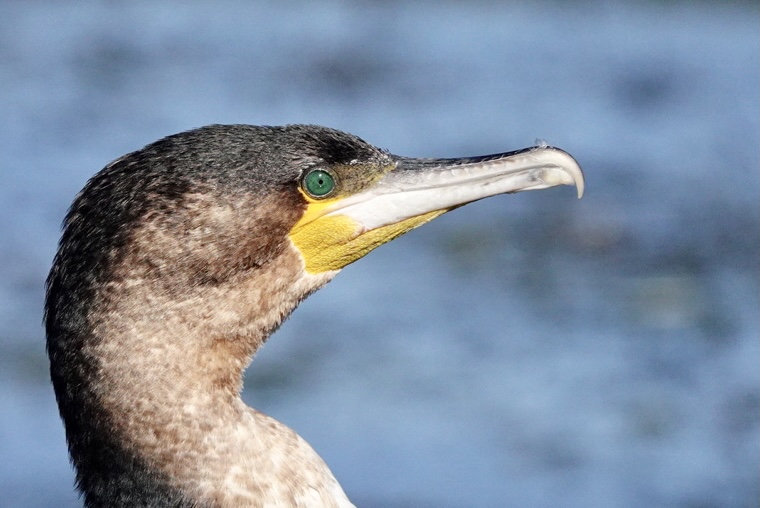
White-breasted Cormorant (Witborsduiker) (E-bird : Great Cormorant)

Phalacrocorax lucidus

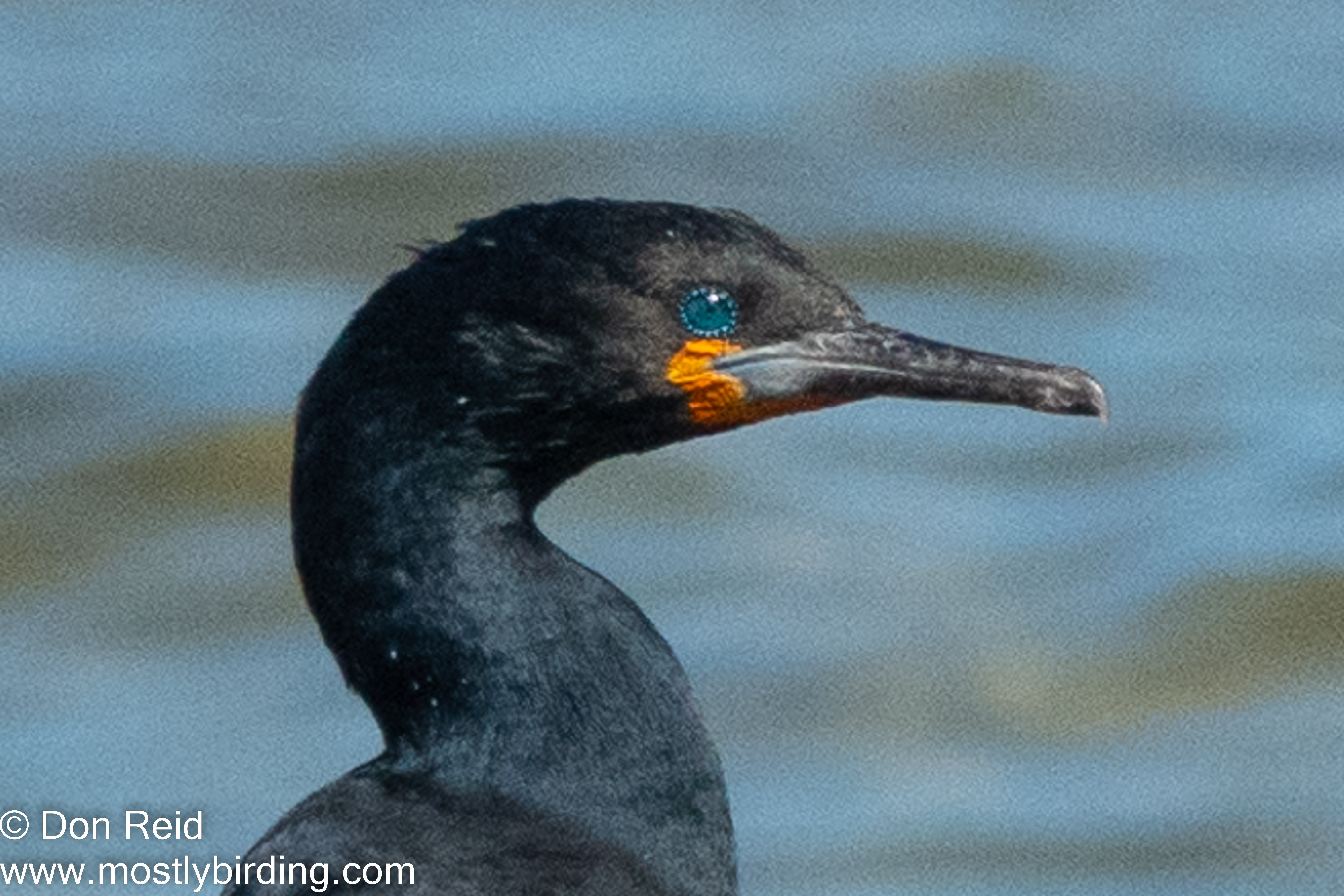
Starting with the brilliant green eyes of the largest cormorant in our region, commonly found in saltwater and freshwater habitats across southern Africa

Now this species is somewhat ungainly on land, but once in the water it will outswim Michael Phelps by a long way – that’s if you can get it to swim in a straight line and stay within its lane. And all it uses are its feet which have four toes connected by webbing, which it uses to propel itself most effectively through the water when chasing prey

It uses that hooked bill to secure small fish, which are eaten underwater, while bigger fish are brought to the surface to juggle into a head-first swallowing position.

Worldwide this species is often referred to as Great Cormorant and occurs across 6 continents – I have seen Great Cormorants in Australia, Canada, UK and Europe during our travels abroad

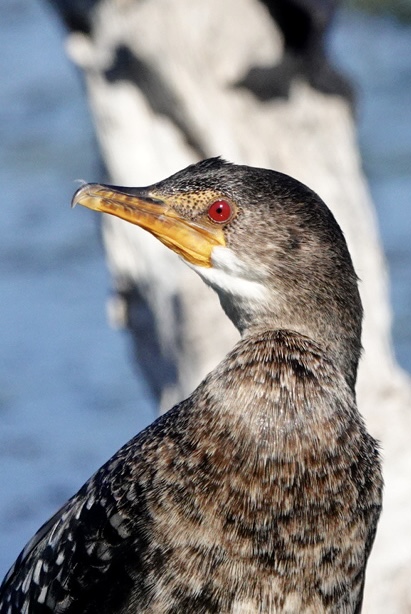
Reed Cormorant (Rietduiker) (E-bird : Long-tailed Cormorant)

Microcarbo africanus

The Reed Cormorant is substantially smaller than the previous species and has a similar distribution across our region, but unlike the White-breasted (Great) Cormorant it is restricted to the African continent, occurring in most of sub-Saharan Africa

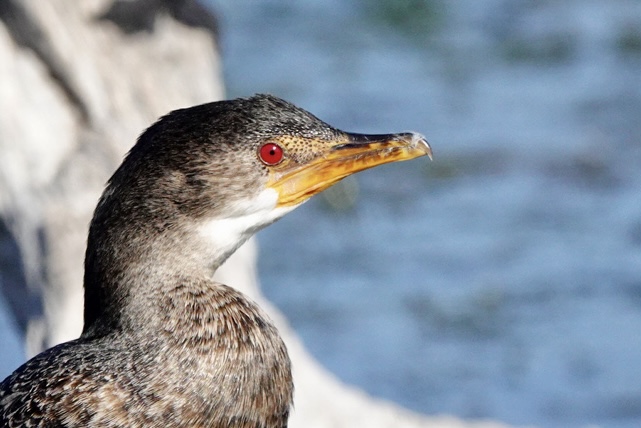
And the eyes? Red instead of green, but just as striking!

Reed Cormorant, Langvlei Wilderness

A surprising fact (courtesy of Faansie Peacock’s wonderful birding app called Firefinch) is that the feathers of cormorants are less waterproof than those of other birds – the reason is that this makes them less buoyant and allows them to sink when hunting underwater. This also explains why they spend much of their time out of the water with wings spread to dry. It is also believed that they swallow stones for additional weight, much like scuba divers wearing lead weights on their belts.

Cape Cormorant (Trekduiker)

Phalacrocorax capensis

I wasn’t expecting to find a Cape Cormorant alongside the other two species at Langvlei, as they are generally known as an exclusively marine species, but this one clearly thought a day away from the rough seas would be to its liking

Cape Cormorant (Phalacrocorax capensis / Trekkormorant), Rondevlei Wilderness

Mossel Bay’s Point is a wonderful place to watch seabirds and Cape Cormorants are regular passers-by (or more appropriately flyers-by) flying low and fast over the ocean, singly or in pairs or in long skeins of up to a couple of dozen at a time.

This is usually late afternoon when we like to get a take-away coffee and sit and watch the sea and its inhabitants, which can be anything from humans surfing and snorkelling to seals, dolphins or whales (in season), while yachts and boats of various types and sizes make their way to and from the small harbour nearby.

I haven’t been able to establish where these passing Cape Cormorants roost, but it is probably one of the quieter stretches of beach further east towards Great Brak River and beyond.

Never mind, just look at those turquoise eyes!

Cape Cormorant (Phalacrocorax capensis / Trekkormorant), Rondevlei Wilderness

This marine species is distributed along the coastline of South Africa, Namibia and Angola

Weaver at work (Update)

When we returned to our Mossel Bay home recently we were thrilled to find the Cape Weavers (Ploceus capensis/ Kaapse wewer) hard at work building nests right outside our upper floor living area. They provide endless entertainment with their constant activity, never stopping from dawn to dusk.

The post has been updated to include an image of the chicks being fed – they are growing fast

Male – just starting on the nest
Male – initial nest frame in progress
Male building nest – at an advanced stage
Female feeding two chicks

We are watching their progress with interest….

Christmas in Kruger : Dinner for One

Our Christmas dinner

Our main Christmas dinner was enjoyed on Christmas Eve in Mopani Camp, with the cooler weather brought on by constant light summer rain during the day making it a most pleasant evening. We joined Andre and Geraldine and daughters at their large family chalet, and their friends who were also in Mopani made up a jolly group, with each family contributing a dish or two to turn it into a really delightful dinner.

We had not made any specific arrangements for Christmas day itself, other than the inevitable leftovers (just as delicious) for the evening meal. We started the day in lazy mode, sitting on the stoep and observing the passing show of birds and other small wildlife.

Shingwedzi Christmas Picnic

When Andre and Geraldine suggested that we drive to Shingwedzi Camp, some 62 kms to the north, for a braai (barbeque) at the day visitor’s area, it seemed like the ideal way to spend the day in relaxed, yet active, fashion. We quickly got ourselves ready, packed a picnic basket and set off in mild weather, reaching Shingwedzi just after 1 pm.

We didn’t dawdle, but still found plenty of game to view in passing along the way

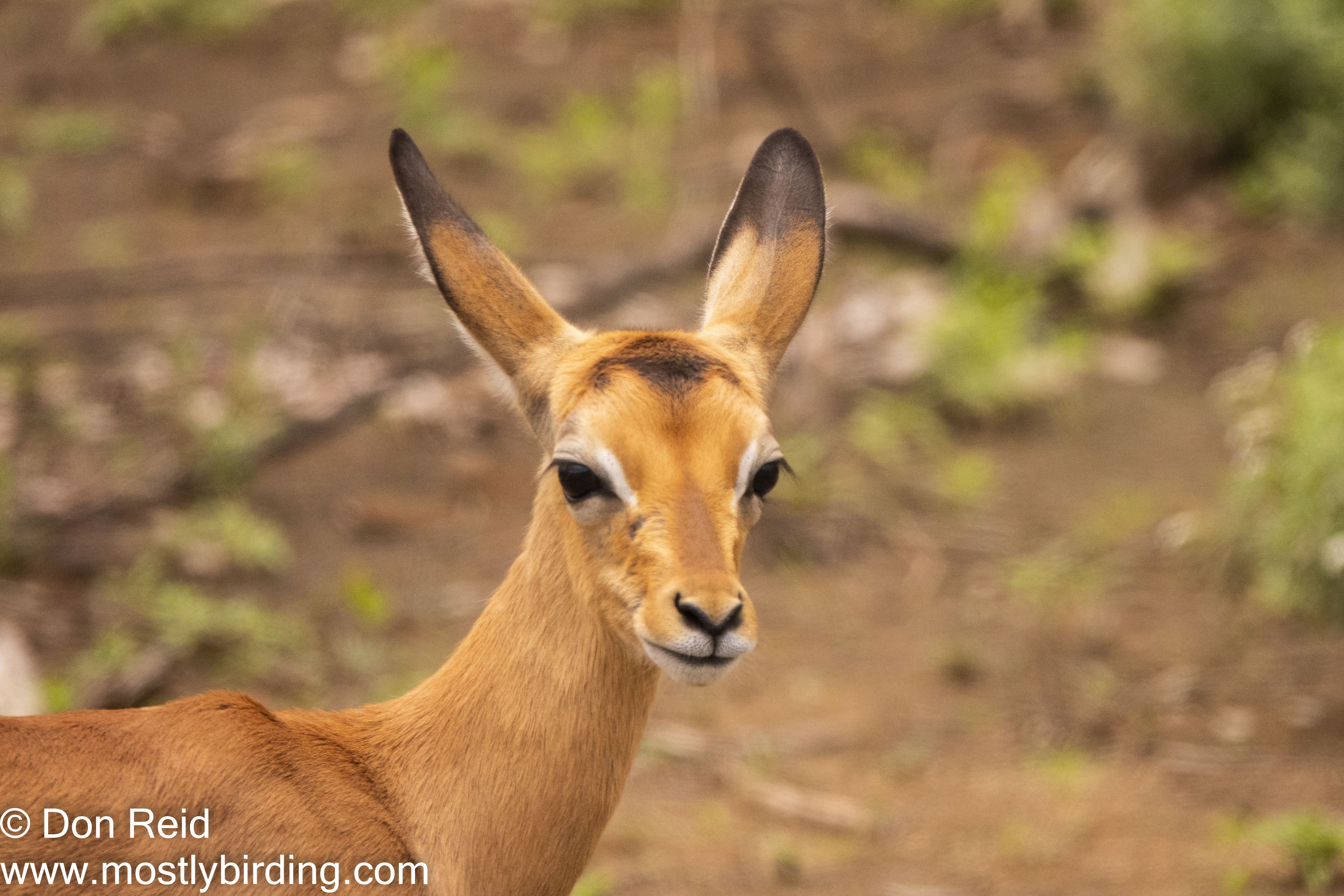
Impala, KNP – Mopani – Shingwedzi

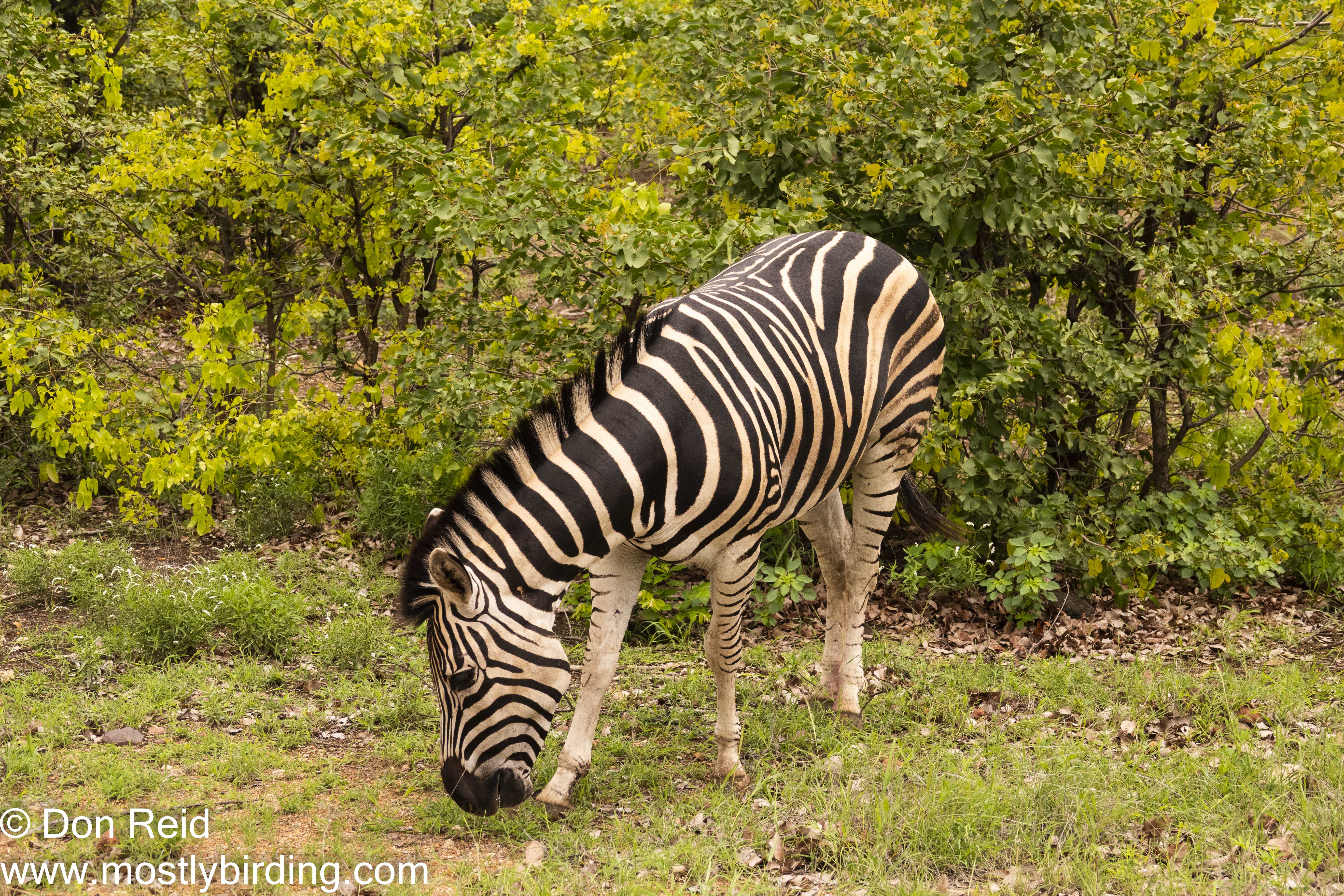
Zebra, KNP – Mopani – Shingwedzi

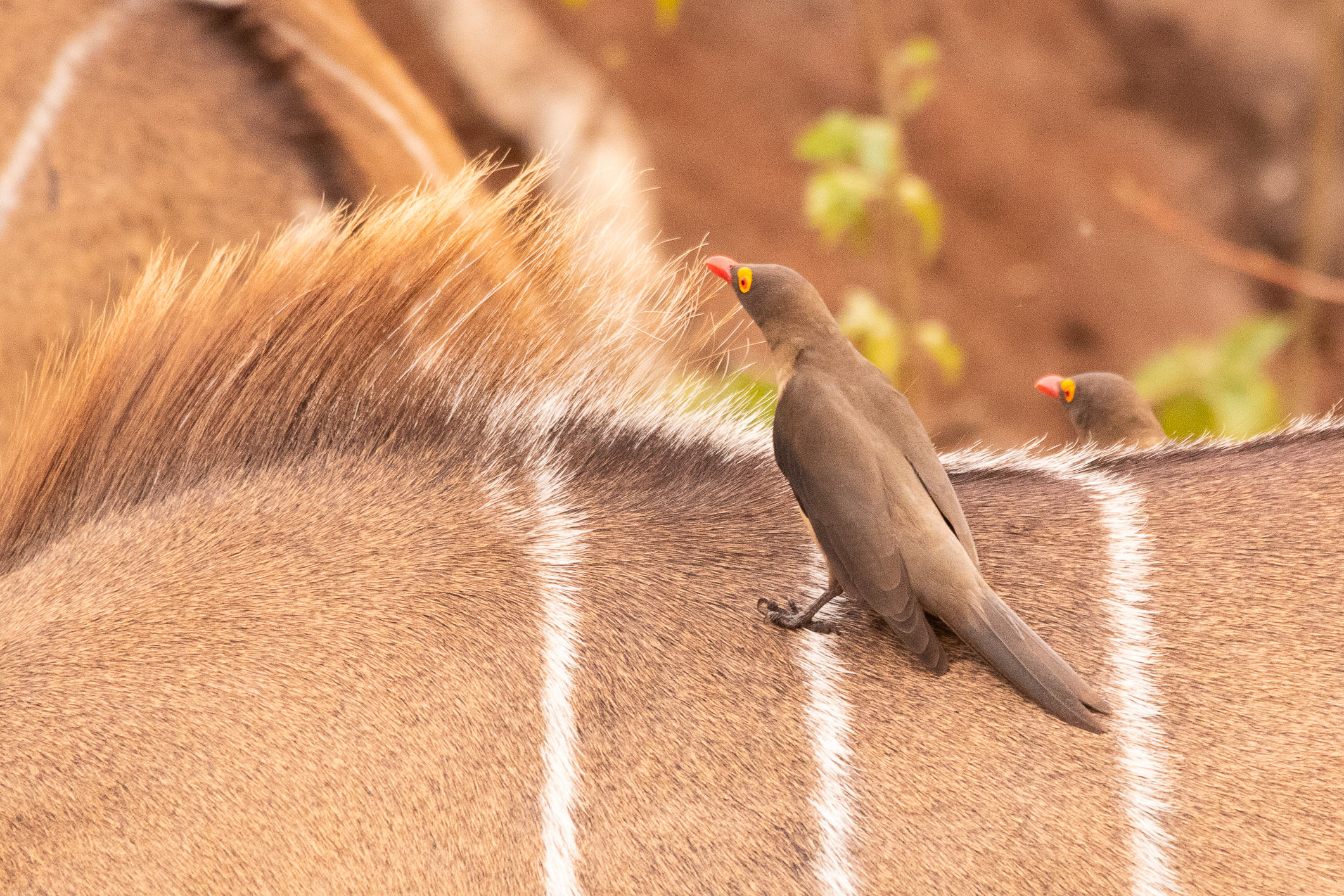
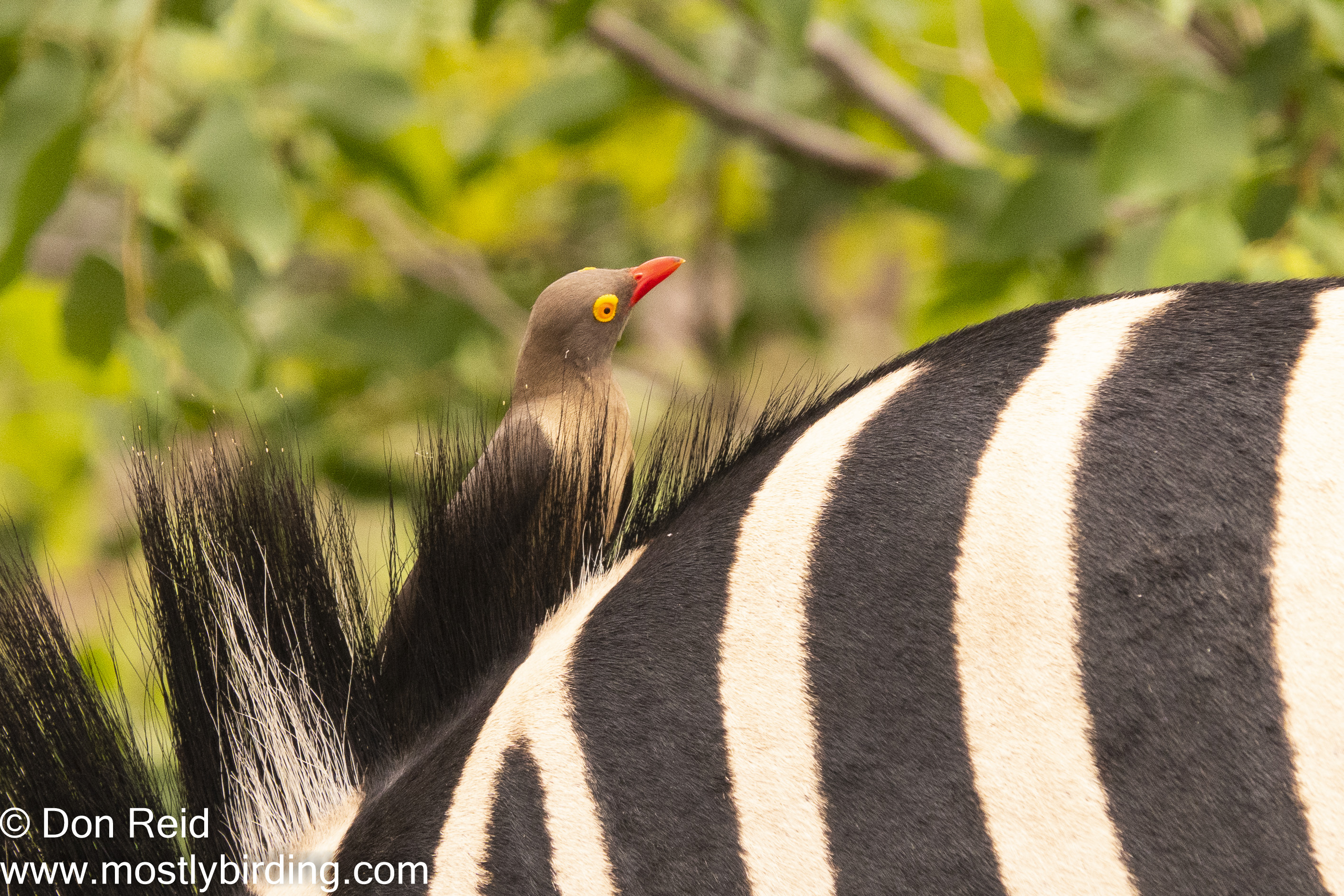
Red-billed Oxpecker (Buphagus erythrorhynchus / Rooibekrenostervoël), KNP – Mopani – Shingwedzi

We found the day visitor’s area already crowded (yet socially distanced), but were fortunate to find one empty picnic table and the camp personnel helpfully brought a portable braai to our table. Andre got stuck in and braai-ed burger patties while a large leguaan moved between the tables looking for scraps, waddling along and flicking its tongue in true serpent fashion. Soon the buns were buttered and loaded with tomato, lettuce, onions and sauce, ready to receive the patties and we tucked into our simple but delicious meal

All in all a very unique Christmas Day lunch for us!

An ice cream on a stick from the small shop was our dessert, after which we set off on the road back to Mopani, taking our time.

Dinner for One ….. Martial Eagle

We were hardly out of Shingwedzi, driving next to the lightly flowing, broad river, when I spotted a commotion amongst a small flock of Starlings gathered in and around one of the large trees that line this stretch of the river.

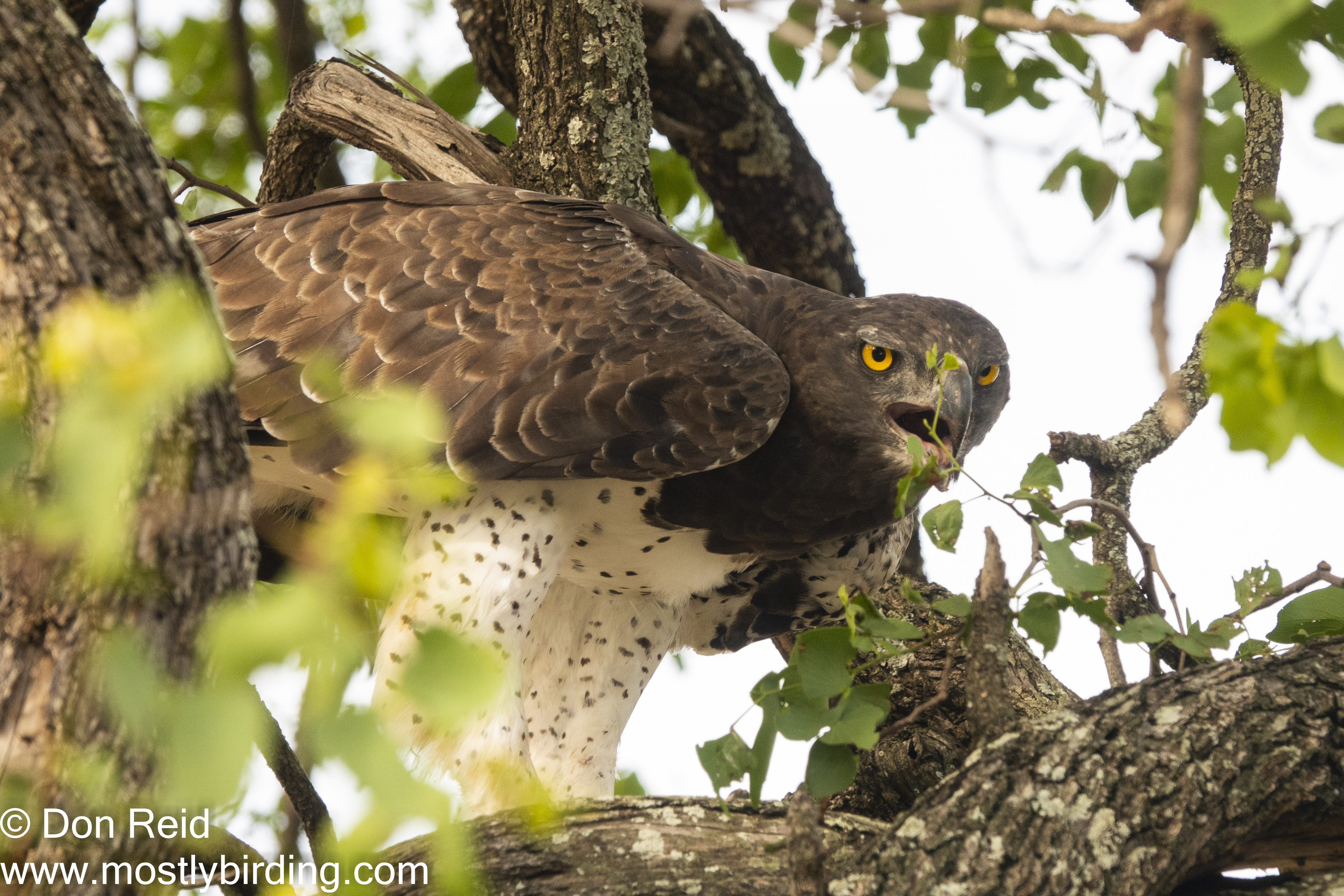
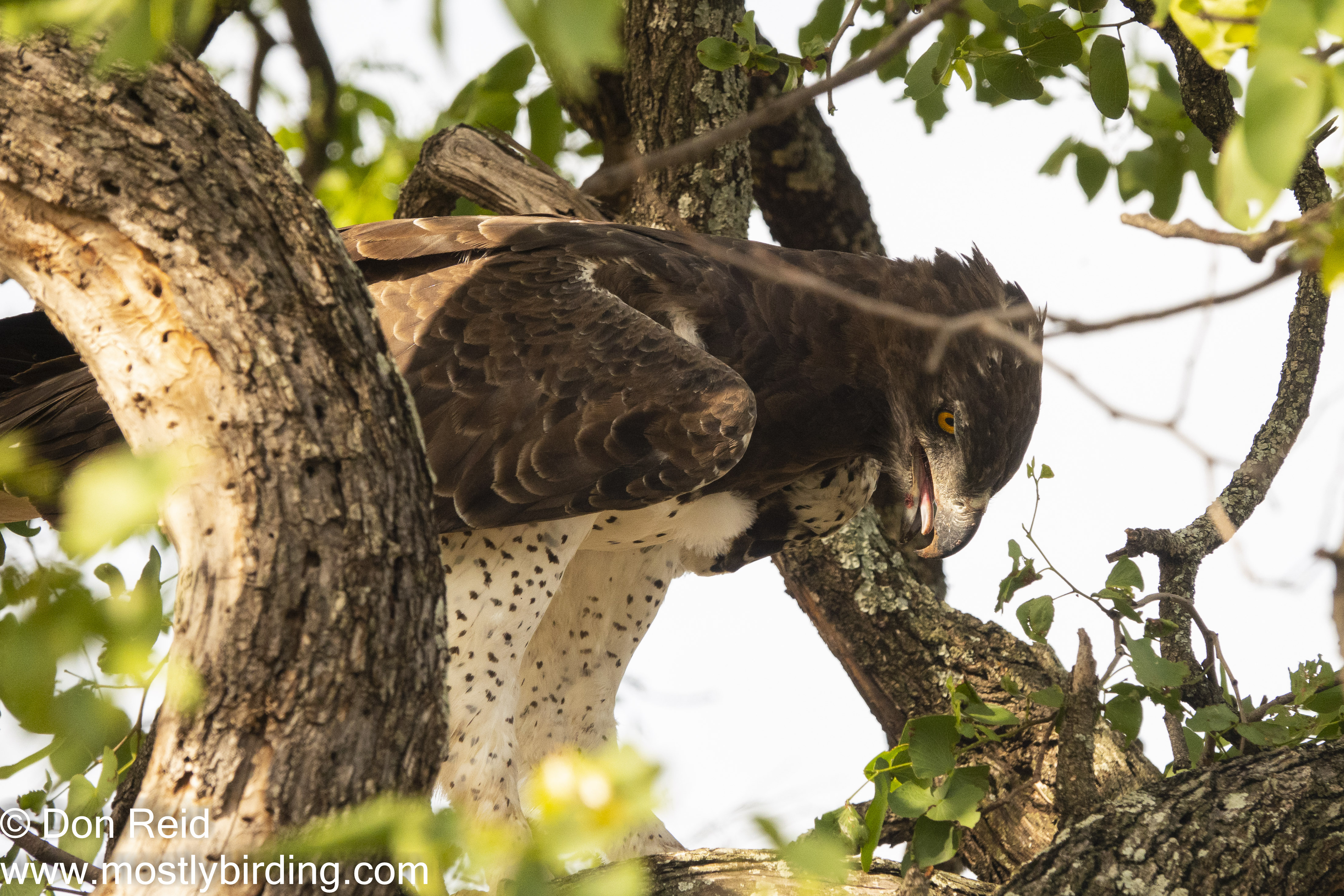
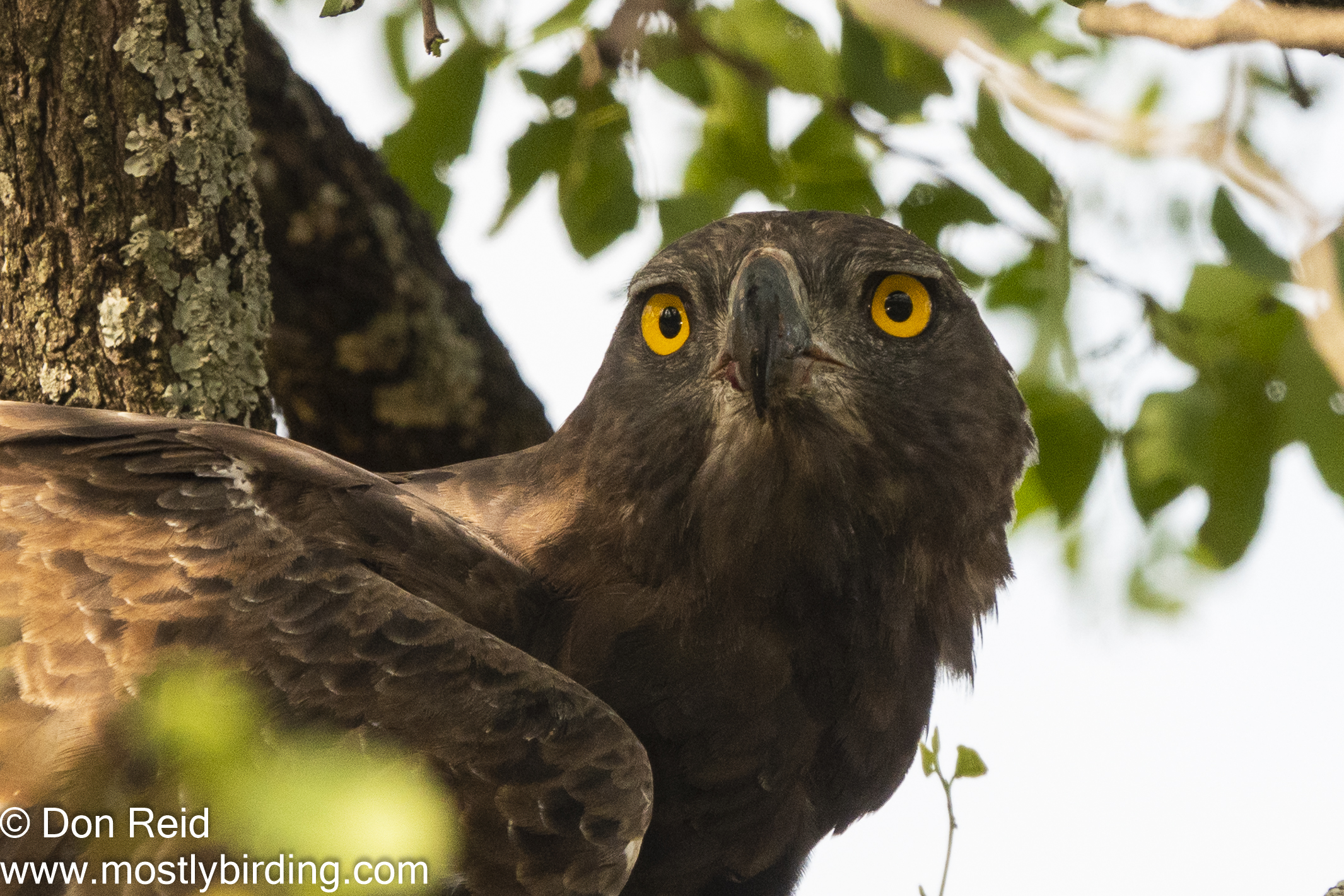
I pulled off the road and stopped under the tree to have a look at what may be causing their agitation – glancing up I looked straight into the piercing eyes of a Martial Eagle, which was engrossed in the task of devouring an unidentifiable, partly hidden prey from which he was ripping chunks of meat.

Martial Eagle (Polemaetus bellicosus / Breëkoparend), KNP – Shingwedzi

Apart from an occasional withering stare, the Eagle ignored us, despite us being a few metres away, and carried on with its festive meal while we enjoyed the luxury of being able to observe this magnificent raptor at close quarters

The road back to Mopani had a few further interesting sightings….

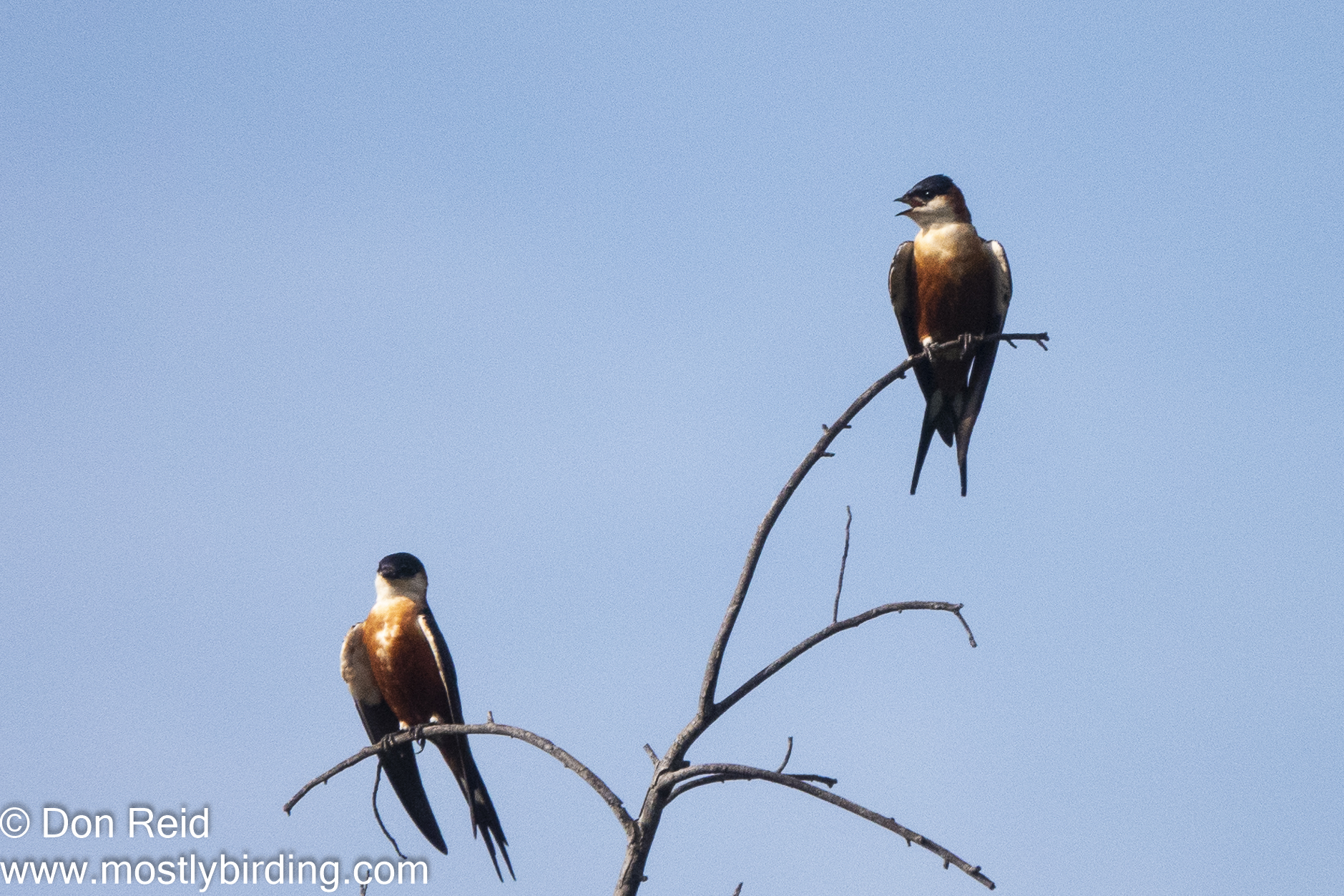
Mosque Swallow (Cecropis senegalensis / Moskeeswael), KNP – Shingwedzi
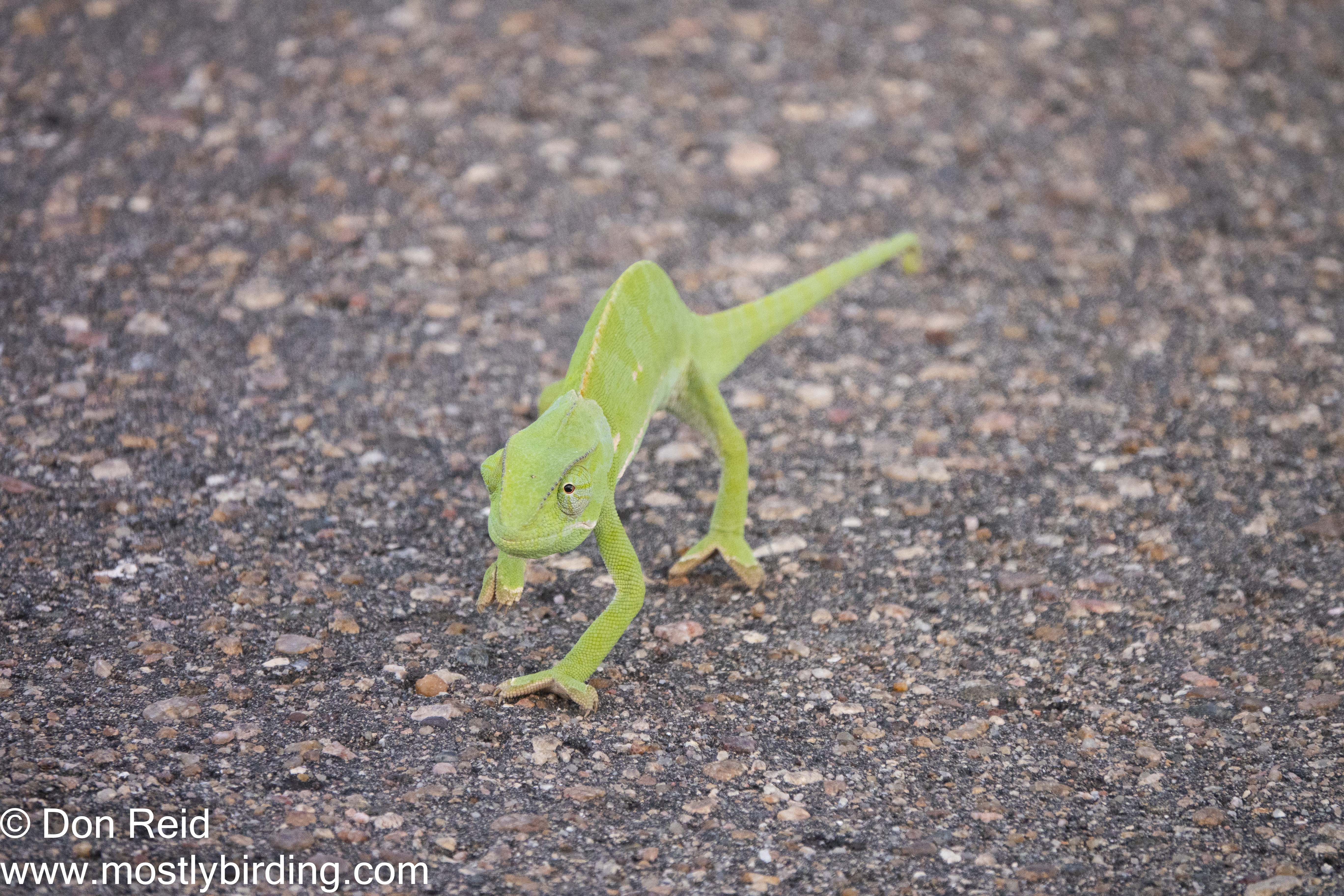
Chameleon, KNP – Mopani – Shingwedzi
Lesser Spotted Eagle (Aquila pomarina / Gevlekte arend), KNP – Mopani – Shingwedzi

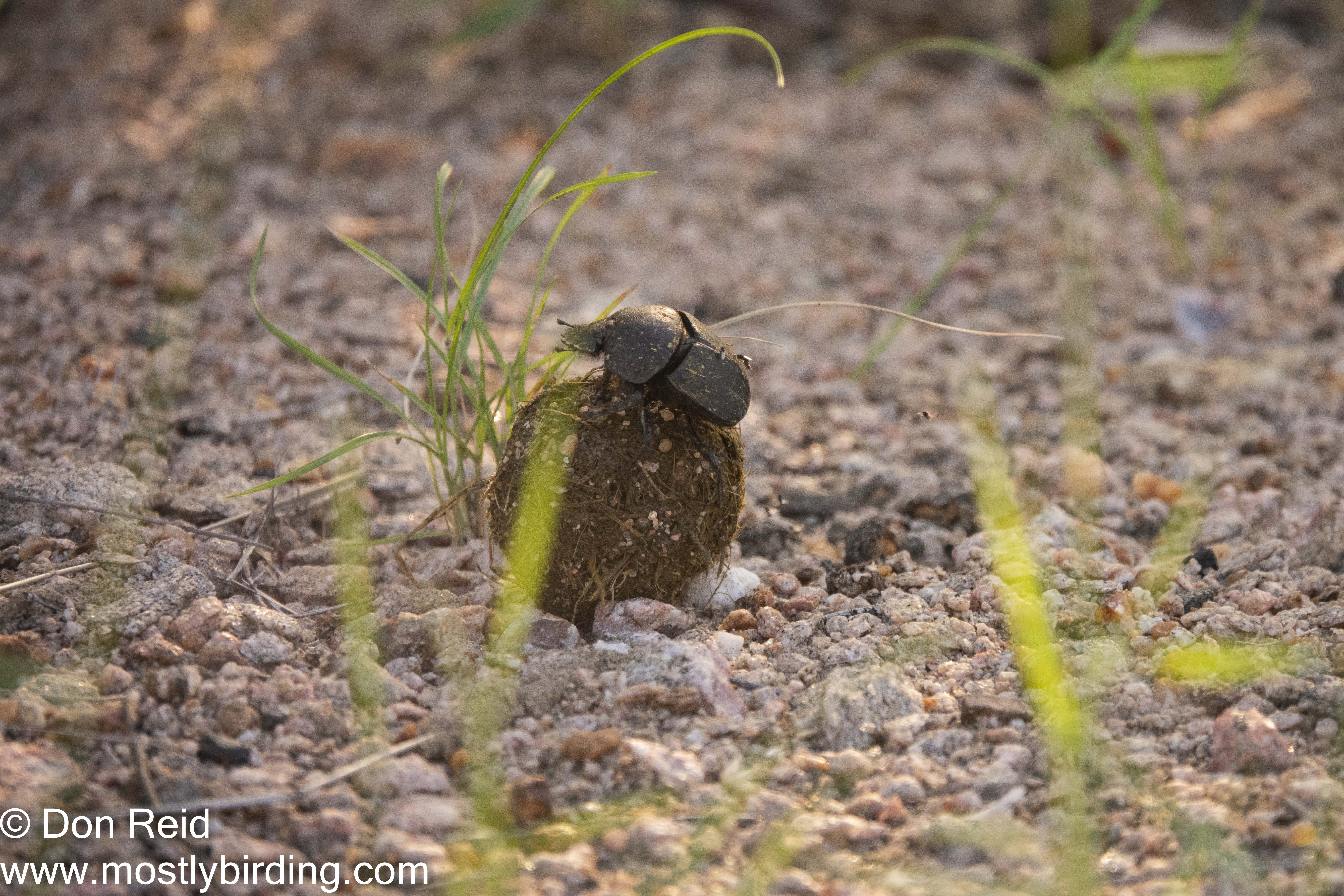
And last but not least ….. well actually it is the least in terms of size –

Dung Beetle, KNP – Mopani – Shingwedzi

This is one Christmas day that we will fondly remember

Mongolian take-away

Long-distance Migration

Thousands of Amur Falcons grace Southern Africa with their presence from around late November each year, departing during April/May. The journey it undertakes to escape the harsh winter of its breeding grounds in Mongolia, northern China and North Korea is astounding, beginning with an initial migration to northeast India where they gather in staging areas before commencing the long flight to Africa. They can cover up to 1000 kms per day during this stage.

The map below shows the route followed by one individual with a 5 gram tracking device attached :

amur falcon migration

Familiar Summer Visitors

Amur Falcons are a familiar sight when birding/atlasing in the north-eastern parts of South Africa, particularly in the grassland areas, where they regularly perch on power lines and telephone lines in numbers, ever on the lookout for their favoured prey – termite alates and grasshoppers. Less common in the southern parts although I have come across them in the Southern Cape not far from our second home in Mossel Bay.

During March this year I had been out atlasing in the grasslands south of Delmas and had seen a few Amur Falcons along the way. Heading homewards around midday along a gravel back road, the Amur Falcons were suddenly numerous, probably drawn by a good supply of insect food – most were perched on low fences and posts due to the lack of overhead power and other lines along the road.

This seemed like too good a photographic opportunity to pass up, with the Falcons being more or less level with my line of sight and with fairly good light conditions for the time of day – the cloud cover served to soften the harsh sunlight.

The only problem was the skittish nature of these small raptors – as soon as I slowed and stopped they would fly off, only to tease me by perching on the fence a short distance further. I was on the verge of giving up when a female Amur flew down and perched on a fence post just ahead, clearly with some sort of prey in her talons.

I crawled my SUV closer, hoping its diesel engine would not scare the falcon away, but she was so pre-occupied with her catch that she just gave me a glance and carried on pecking at the grasshopper she had just caught – this gave me the opportunity to rattle off a series of shots, including a few as she flew off.

Amur Falcon – lunch is ready

Looks tasty

Let’s try this

Not sure I like being watched

By this time the Amur was clearly a bit uncomfortable with my attention and she flew off, gaining height rapidly while still clutching the grasshopper until I could barely see her. The photos revealed the magnificent patterns of feathers on the upper- and under side.

Amur Falcon showing off her fine wing and tail feathers

Amur Falcon – under-wing and tail patterns just as impressive

And off she goes, still giving me a wary look, still clutching the grasshopper

It’s encounters such as this that make birding the amazing pastime it is.


Nest building 101 – Cape Weaver does his thing

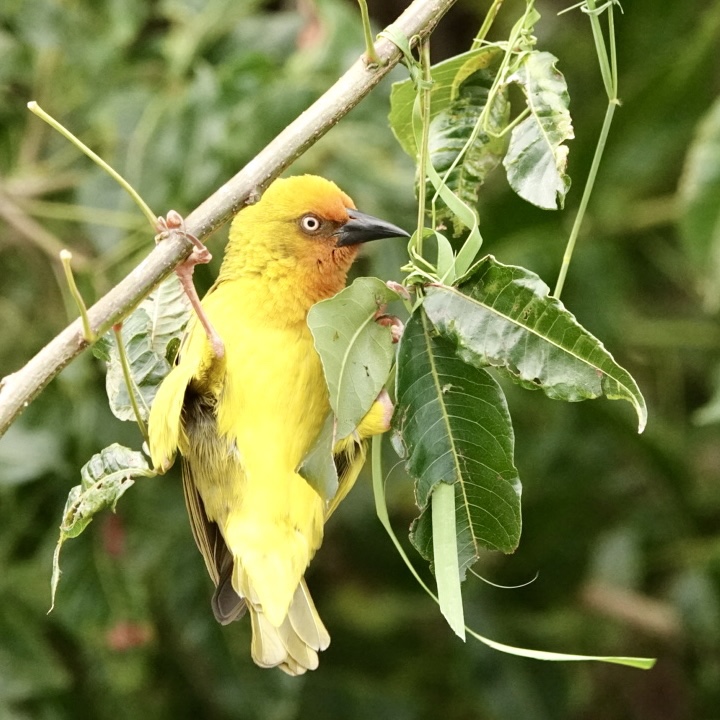
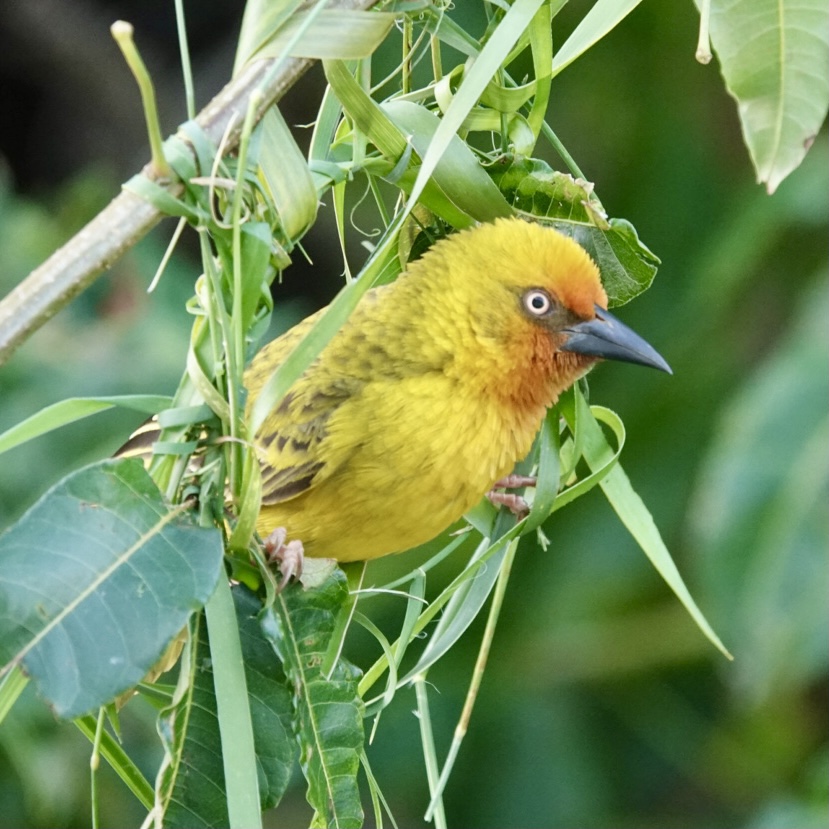
Our recent short ‘end-of-winter’ visit to Mossel Bay was made interesting by a Cape Weaver (Kaapse Wewer / Ploceus capensis) who had chosen the neighbour’s tree for his nest for the new breeding season. Although not in our garden, the tree overhangs our small lawn and as luck would have it the branch that was chosen by the Weaver was no more than 2 m from our bedroom window and marginally more from our balcony.

By the time we spotted it, the initial ring had already been woven by the busy Weaver and I promptly set up my camera at our bedroom window, linked it to my iphone (using the clever Nikon app and the built-in wifi connection of my Nikon camera), then sat in the lounge where I would not be seen by the bird and clicked away whenever the Weaver appeared on my iphone screen. I love it when technology comes together!

This technique produced some clear shots of it arriving at the partial nest with a length of grass or piece of leaf and as it set about the intricate task of weaving it into the growing structure. Fascinating to watch as the nest slowly grew and took shape. Once the nest was more or less complete and well-shaped the Weaver shifted his attention to the thin branch to which it was attached, stripping it of leaves – we could only guess this was a strategy to prevent unwanted “visitors” from using the foliage to conceal their approach.

After a couple of days of frenetic activity the bird seemed satisfied – except nothing happened, no female took occupation and the nest just hung there, unoccupied. A very windy day tested the nest structure to the limit and it seemed to withstand the battering without damage.

Then a day before we were to leave, a second ring frame appeared, attached to the outer wall of the first nest and we once again watched fascinated as the same Weaver set about building a “semi-detached” extension to the nest. This is not something I have seen before although Weavers are known to build more than one nest, often several, usually in different locations in the same tree, before the female of the species indicates her acceptance and takes occupation. (Right now I am resisting the temptation to make some further comment about this behaviour, relating to the female of another species that I am familiar with….)

Unfortunately we could not stay to see the outcome of this new development – perhaps there will be some evidence of the outcome when we return in November.

Anyway, here is a selection of the photos I took surreptitiously of the Weaver

Monday

Arriving at the nest with fresh grass strand

Starter ring being constructed

Friday

Finishing off

Busy Weaver

A bit of displaying might impress her

Saturday, one week later

You think semi-detached will work better? – Yes, of course dear!

Now where does this one go again?

I really don’t like being watched while I’m weaving

Wonder if this one is going to be good enough?

Can’t wait to see what happened!