Category Archives: Atlasing

The Magic of Voëlvlei (After the Rains)

Voëlvlei

View of Voëlvlei after substantial rains (photo from whatsapp group)

Firstly, a few facts about this well-known birding spot near Mossel Bay – well-known if you are a birder that is, particularly one who has explored the birding delights of the southern Cape.

  • ‘Voëlvlei’ can be directly translated from Afrikaans as “Bird wetland (or pan)”, although no one would ever call it that in South Africa. ‘Voël’ is of course the Afrikaans term for ‘Bird’ and ‘Vlei’ is a widely used term for any shallow body of water such as a seasonal wetland, shallow pan or marshy depression where water collects during the wet season.
  • The pan at Voëlvlei only retains water during very wet years, which can be anything from 7 to 15 years apart, so when the vlei has water it very quickly becomes a magnet for waterbirds and waders, followed closely by many a keen birder out to find a variety of birds, with a strong possibility of a rare migrant wader or two during the summer months.
  • Voëlvlei lies about 35km south-west of Mossel Bay and is on privately owned farming ground – the owners have generously allowed access to the vlei for birders as long as they behave in a respectful way.
Voëlvlei straddles three pentads
  • A track skirts the vlei on one side with entry possible from two farm gates at the northern and southern extremes (after entering or exiting it is good form to close the gate again).

My Atlasing Visits to Voëlvlei

SABAP2 Records

The table above shows all my atlasing records since my first visit in December 2015 – green indicates that it was a “Full Protocol” card, which requires a minimum of two hours of intensive atlasing, the grey is for “Ad hoc” cards.

The good (or bad news depending on your inclination) is that I still have my journal records of all of the “green” cards, so join me as I return to those journals and select some of the highlights of the visits. You can, of course, skip the words and just look at the pictures, but I believe my readers are made of sterner stuff than that and are not afraid to plough through the verbiage.

14 and 18 December 2015

My first visit was 10 years ago, long before we moved permanently to Mossel Bay…

I had long read about the vlei as being a top birding spot when conditions were right. With reports trickling through of favourable water levels after good winter and early summer rains, I stopped at Voëlvlei on my way back from atlasing Gouritsmond, to find that it indeed had plenty of water and what appeared to be thousands of birds.

I did a quick list of some of the obvious birds, without going through the gate into the vlei area itself. A few days later Gerda joined me for a late afternoon visit to the vlei, when we entered Voëlvlei proper and followed the track around the east flank, then returned along the same route. The atlasing protocol allows a maximum of five days for one ‘card’ so I could add to the short list I had started on the 14th.

Birding was excellent and plentiful, the only downside being the sun in the west which created a sharp glare, making it difficult to see the birds clearly. We added 36 species to the initial 10 taking the total to 46, including ..

  • Pied Avocet – notable for being a ‘Year bird’ for me (Birders are such nerds)
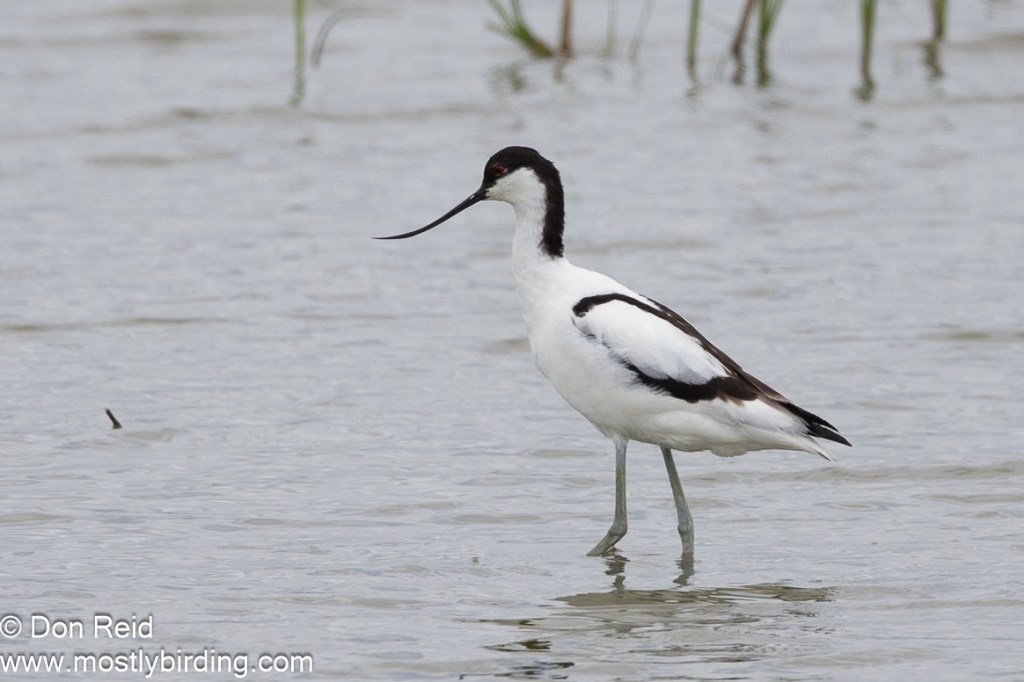
Pied Avocet Recurvirostra avosetta Bontelsie, Voëlvlei
  • Hundreds of Whiskered Terns
Whiskered Tern Chlidonias hybrida Witbaardsterretjie, Voëlvlei
  • Waders such as Little Stint, Black-winged Stilt, Wood Sandpiper, Three-banded Plover, African Spoonbill and Greenshank
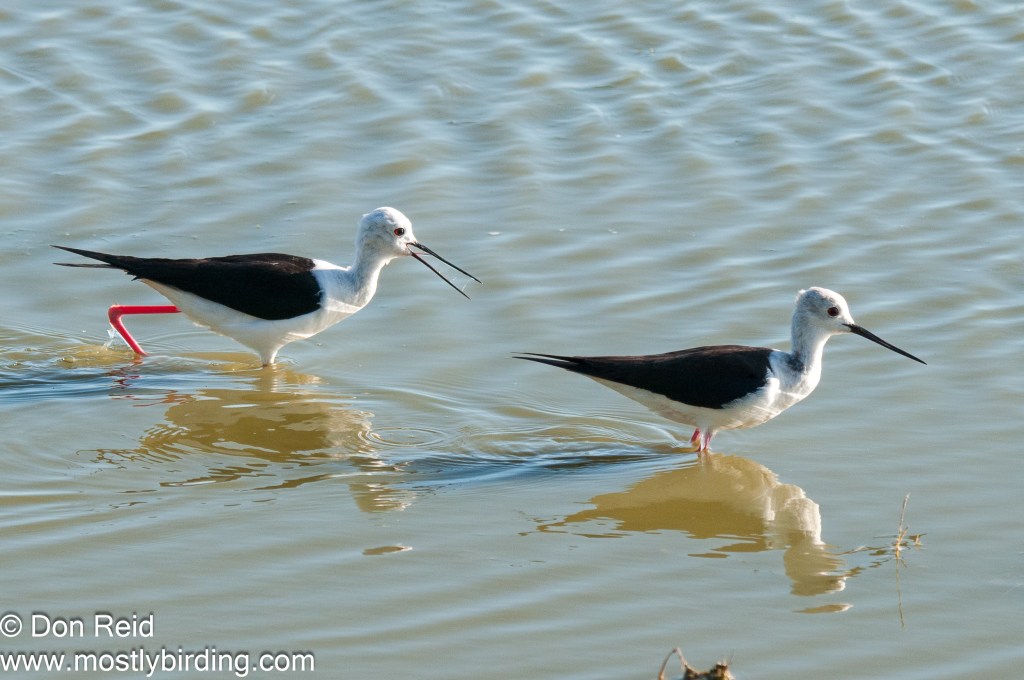
Black-winged Stilt Himantopus himantopus Rooipootelsie, Voëlvlei
Wood Sandpiper Tringa glareola Bosruiter, Voëlvlei
African Spoonbill Platelea alba Lepelaar, Voëlvlei
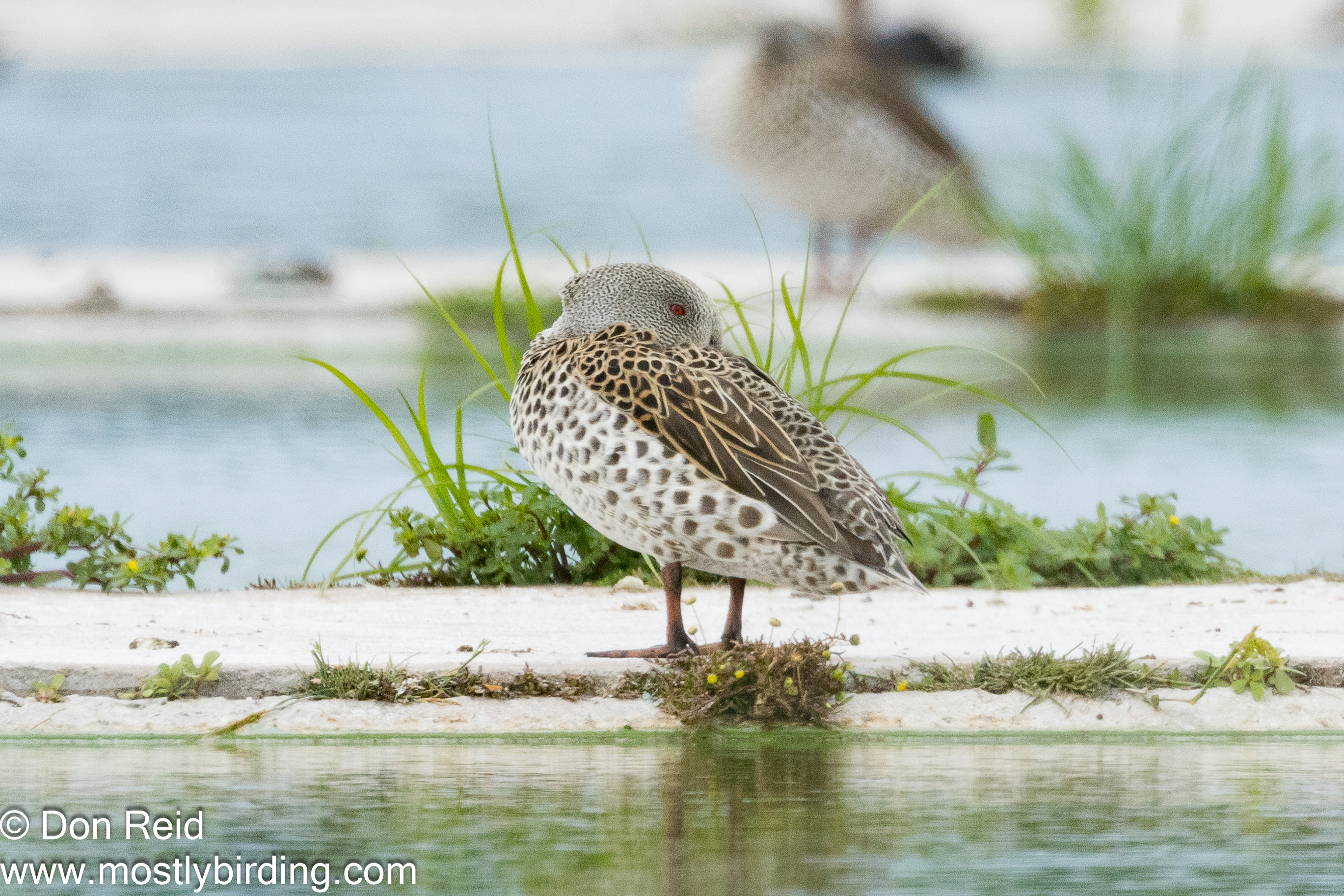
  • Swimmers – Yellow-billed Duck, Red-billed Teal, Cape Teal, Southern Pochard, Cape Shoveler and Great Crested Grebe
Southern Pochard (female) Netta erythrophthalma Bruineend, Voëlvlei
  • Booted Eagle soaring overhead
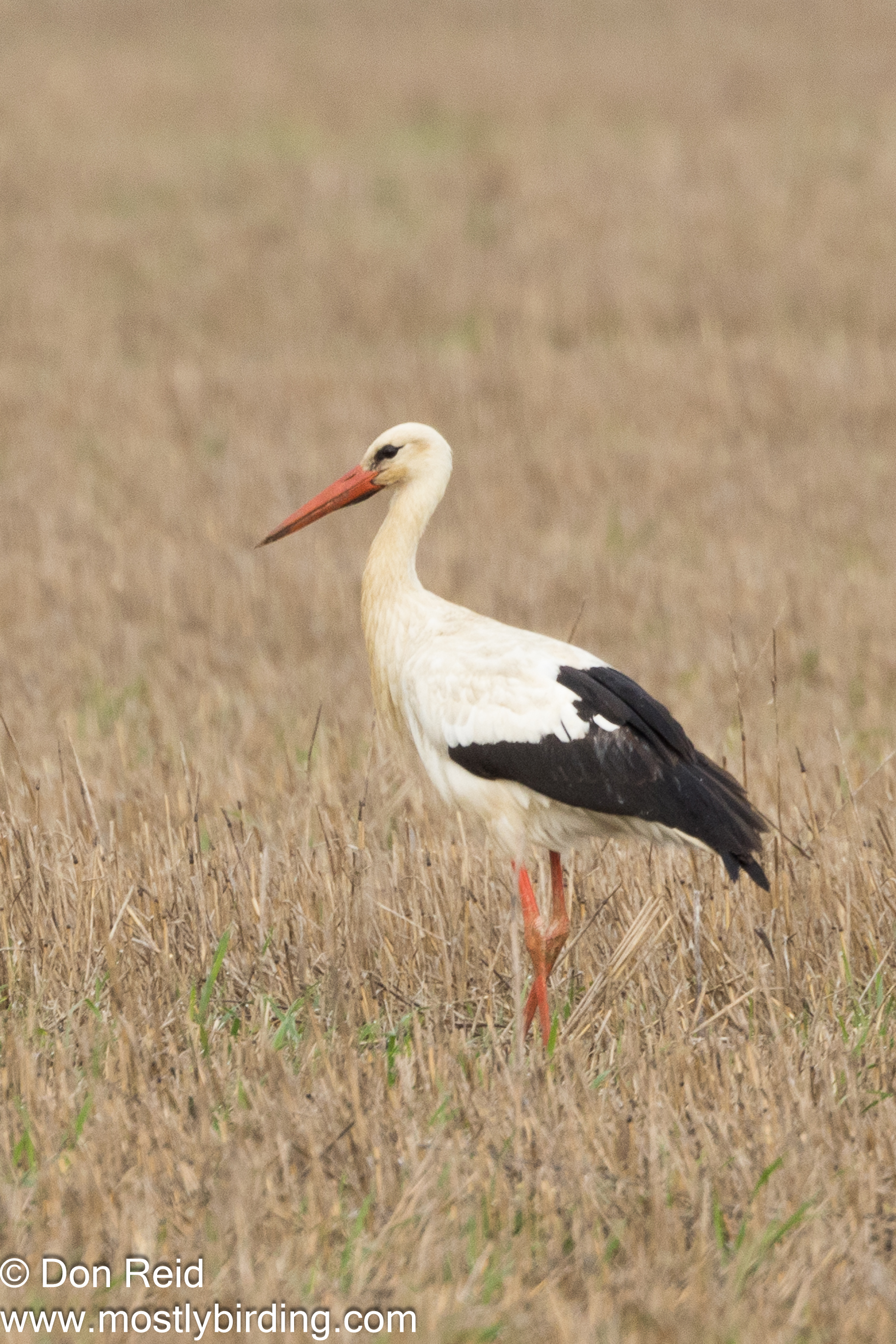
  • White Stork

This first visit was particularly memorable – little did I know it would be eight years before I would experience something similar at Voëlvlei…

I did atlas the pentad in the intervening years but did not include Voëlvlei itself as it had dried up completely

30th November and 2nd December 2023

Having moved to Mossel Bay in October 2023 and seeing the reports of increasing water and bird presence at Voëlvlei, I was keen to visit the spot and see for myself. Reports of rarities made it even more imperative so I set off on the last Thursday of November, the day in the week that I have tried to keep open for atlasing.

I started my pentad list along the road past Vleesbaai with a Black Harrier which I chased down the road to try and get level with it as it hunted low over the fields in true Harrier fashion, stopped quickly and rattled off a few shots – with limited success but lovely to see it in hunting mode.
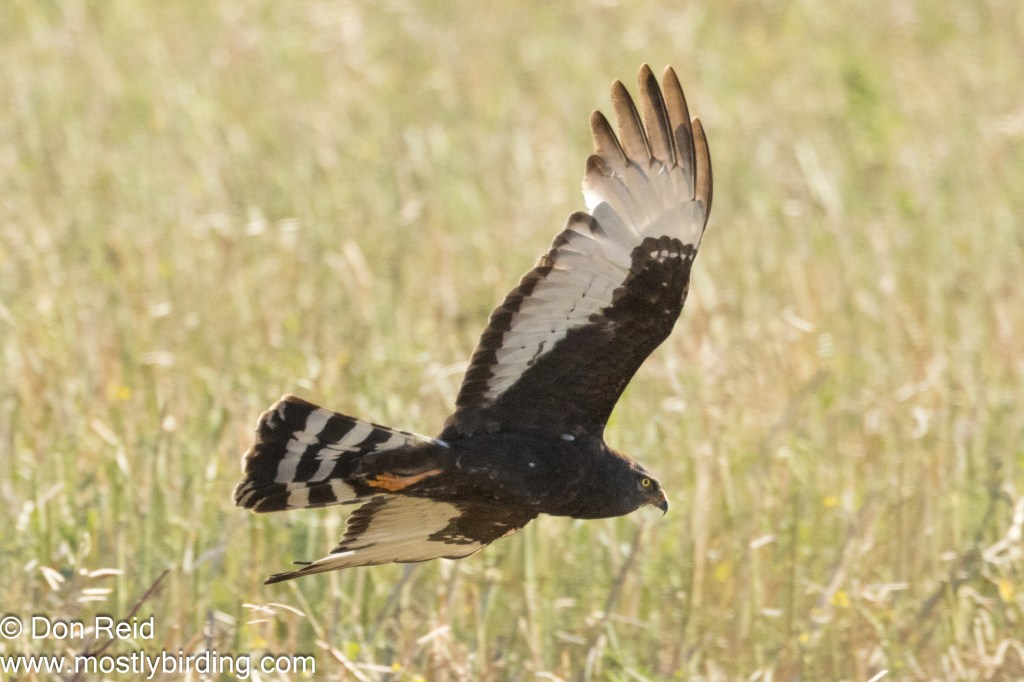
Black Harrier Circus maurus Witkruisvleivalk, Vleesbaai area

Further on I took the turnoff to Voëlvlei and after passing through the gate I spent the next three hours carefully scanning the vlei from the track along the east flank, particularly the muddy margins which were teeming with birds.

The open waters towards the middle of the vlei as well as the surrounding dry land were equally busy with their particular species all enjoying a cornucopia of edible life.

Once again the waterbirds dominated my list …

  • Waders – Black-winged Stilt, Three-banded, Kittlitz’s and Common Ringed Plovers, Little Stint (lots), Ruff, Wood Sandpiper, Grey Plover, Pied Avocet, Greenshank, Blacksmith Lapwing, Grey Heron, African Spoonbill and Little Egret
Three-banded Plover Charadrius tricollaris Driebandstrandkiewiet, Voëlvlei
Kittlitz’s Plover Charadrius pecuarius Geelborsstrandkiewiet, Voëlvlei
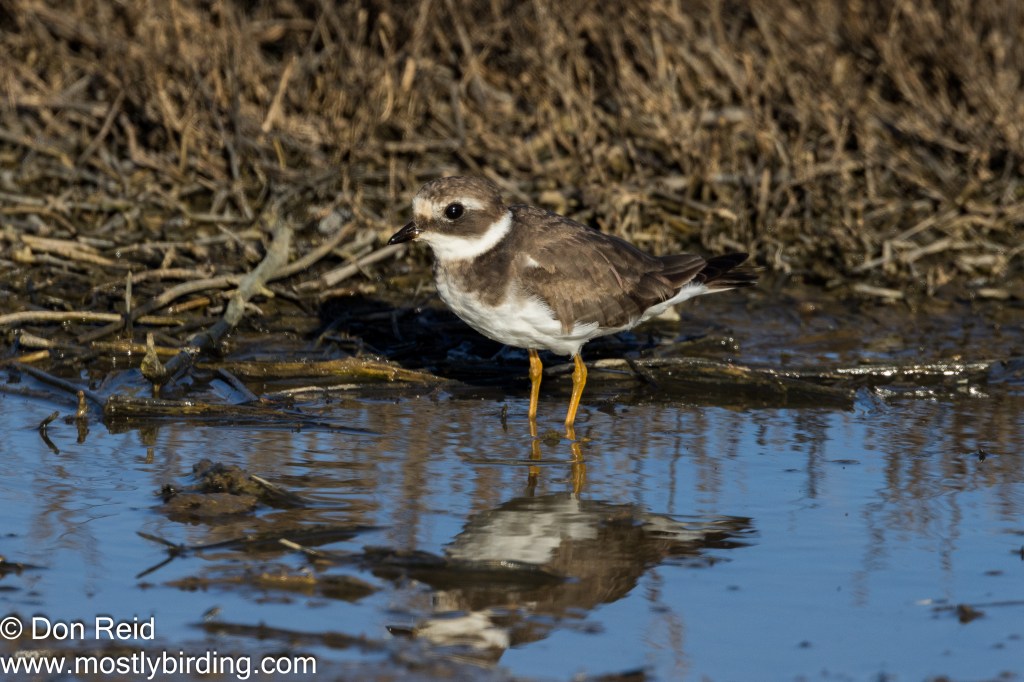
Common Ringed Plover Charadrius hiaticula Ringnekstrandkiewiet, Voëlvlei
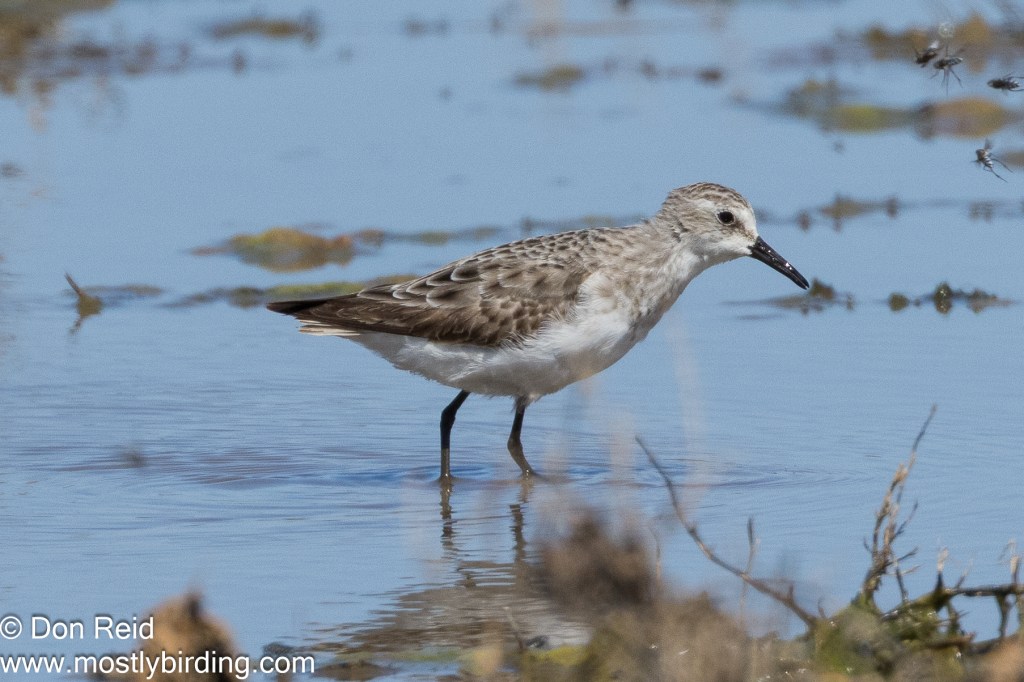
Little Stint Calidris minuta Kleinstrandloper, Voëlvlei
Ruff Philomachus pugnax Kemphaan, Voëlvlei
Grey Plover Pluvialis squatarola Grysstrandkiewiet, Voëlvlei
Pied Avocet Recurvirostra avosetta Bontelsie, Voëlvlei
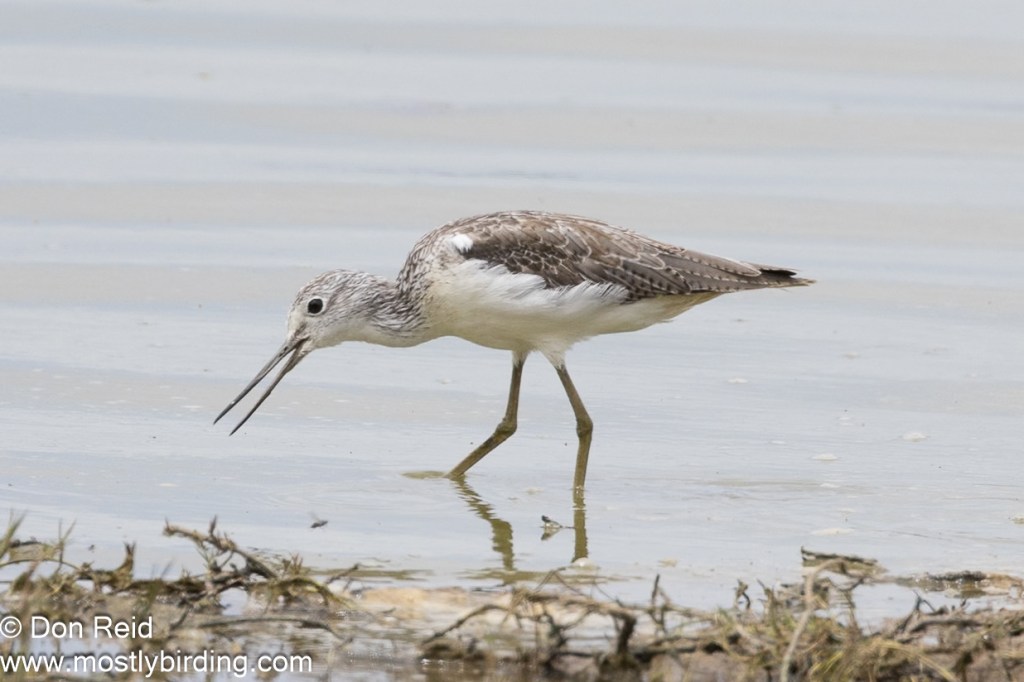
Common Greenshank Tringa nebularia Groenpootruiter, Voëlvlei
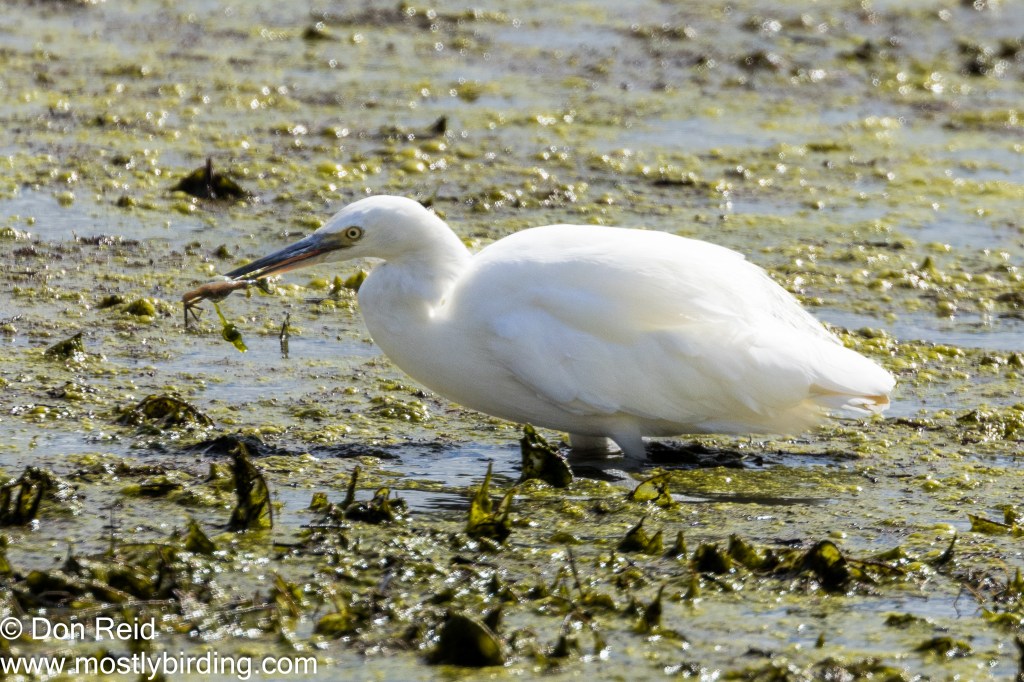
Little Egret Egretta garzetta Kleinwitreier, Voëlvlei
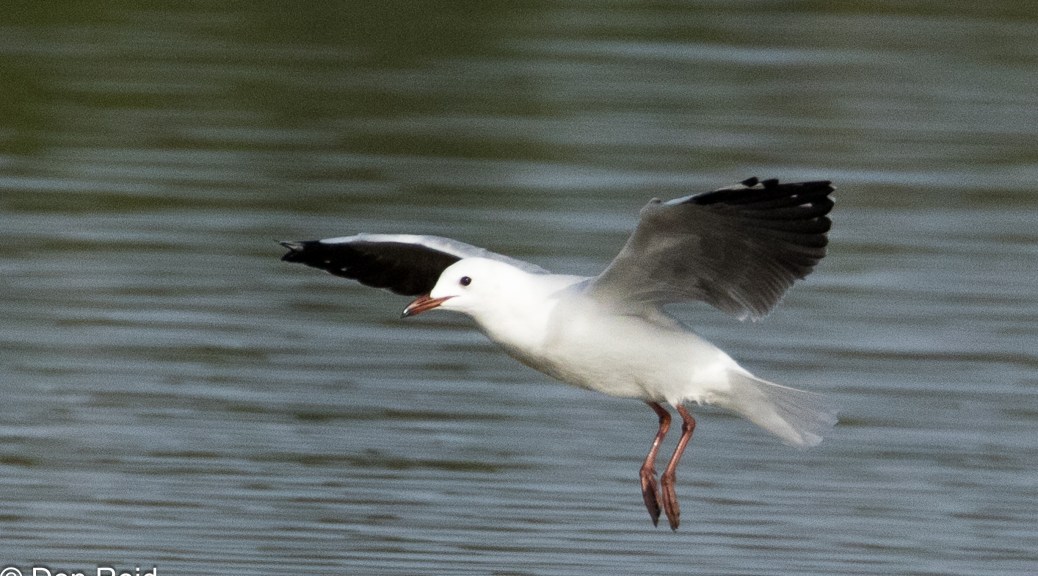
  • Swimmers – Red- billed Teal, Red-knobbed Coot, Grey-headed and Hartlaub’s Gull, Cape Shoveler, Little Grebe and South African Shelduck.
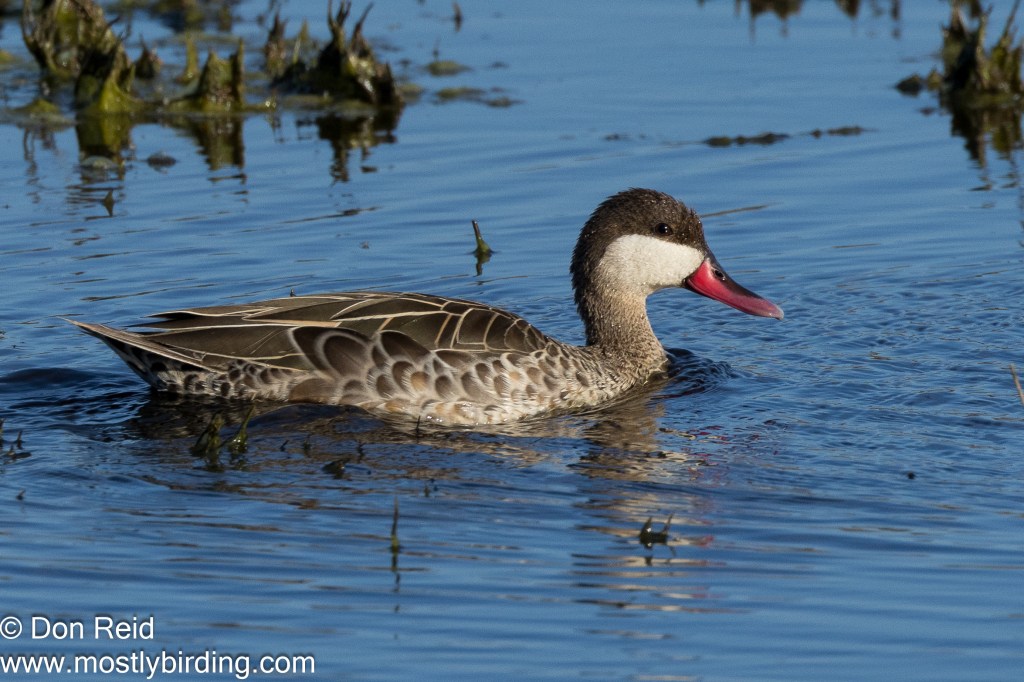
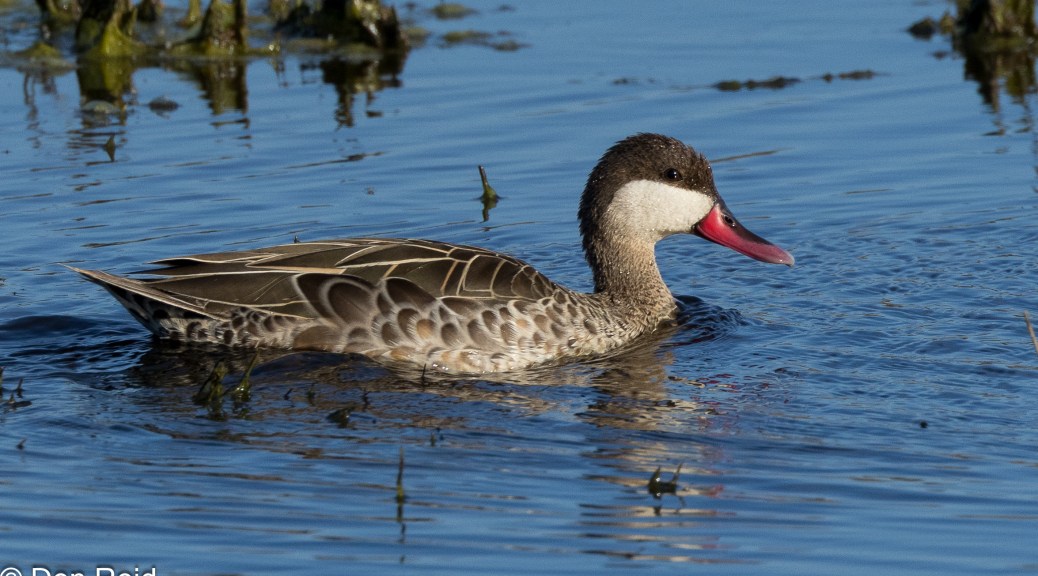
Red-billed Teal Anas erythrorhyncha Rooibekeend, Voëlvlei
Red-knobbed Coot Fulica cristata Bleshoender, Voëlvlei
Little Grebe Tachybaptus ruficollis Kleindobbertjie, Voëlvlei
  • Rarities – This visit was excellent preparation for the annual Birding Big Day just two days later when many of the same birds were recorded by our team. An added thrill was seeing two rarities which had been spotted by some of the keen birders already present –
  • White-rumped Sandpiper – a low-slung, longish-winged sandpiper, difficult to distinguish among the many small waders except when close to the many Little Stints present
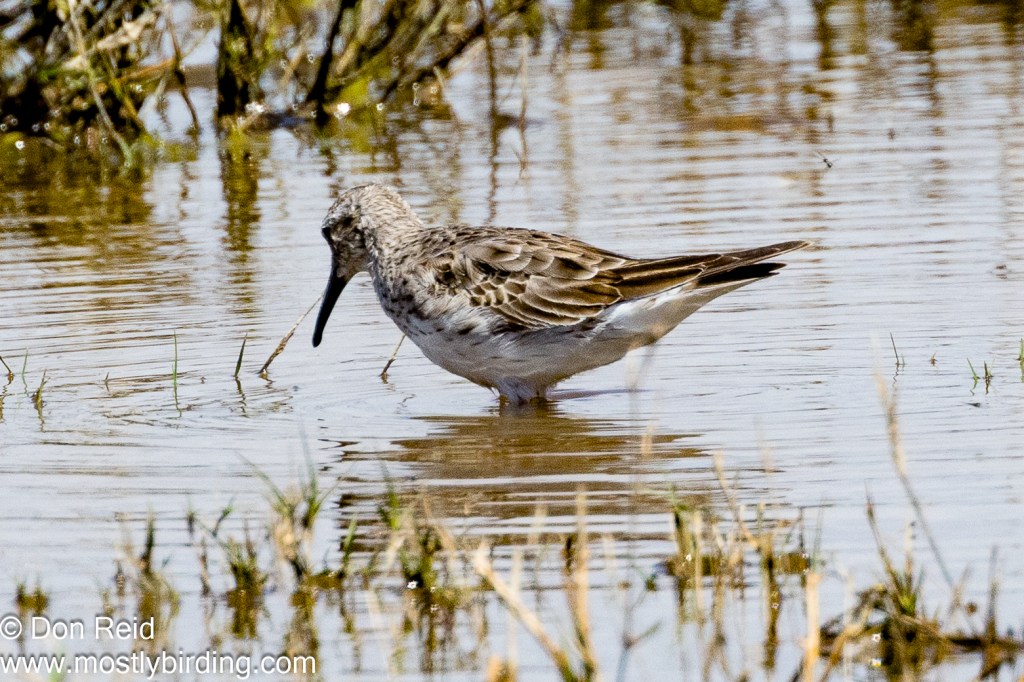
White-rumped Sandpiper Calidris fuscicollis Witrugstrandloper, Voëlvlei
  • Western Yellow Wagtail – courtesy of one of the other teams who had it in their scope view and allowed us a quick look but it was too far for photos

An added pleasure was seeing a large flock of Greater Flamingos on the far side of the water –

Greater Flamingos Phoenicopterus roseus Grootflamink, Voëlvlei

10th to 13th December 2023

With Voëlvlei still attracting a lot of attention from birders and with reports of another rarity – Buff-breasted Sandpiper – being seen there, I couldn’t resist another visit just a week later.

It was a Sunday and Gerda agreed to join me, so after a traditional Sunday lunch at a country restaurant on the way (meat and three veg with rice plus a pudding) for not much money, we headed to Voëlvlei and joined several vehicles and birders with the same idea.

The Buff-breasted Sandpiper was quickly pointed out by those already present – on its own foraging in the dry, lightly grassed area away from the water – clearly a loner not interested in mingling with the many other waders in the vlei itself.

I spent a while scoping the sandpiper and taking photos of it from a distance, while recording all the other species present as they came into view.

We headed home with 34 species recorded. Feeling that the list needed boosting, I decided to include Voëlvlei in my next atlasing session on the following Wednesday, which would fall in the allowed 5 days for a “Full Protocol” card.

I arrived at the vlei mid-morning and spent three more enjoyable hours viewing the multitude of birds, adding a further 16 species to take my total to a nice round 50 for the pentad.

The White- rumped Sandpiper was still present and I spent some time trying to get better photos of this rarity – with limited success. It was difficult to get close enough to the bird, which remained among short grass tufts in the shallows of the vlei, intermingling with other waders and probing the mud constantly so that it was nigh on impossible to isolate it for a decent photo.

  • Waders – Black-winged Stilt, Kittlitz’s and Common Ringed Plovers, Little Stint (lots), Ruff, Pied Avocet, Blacksmith Lapwing, Grey Heron, African Spoonbill, Little Egret, Cattle Egret, Glossy Ibis and Sacred Ibis
Kittlitz’s Plover Charadrius pecuarius Geelborsstrandkiewiet (Juvenile), Voëlvlei
  • Rarities – Buff-breasted Sandpiper, White-rumped Sandpiper
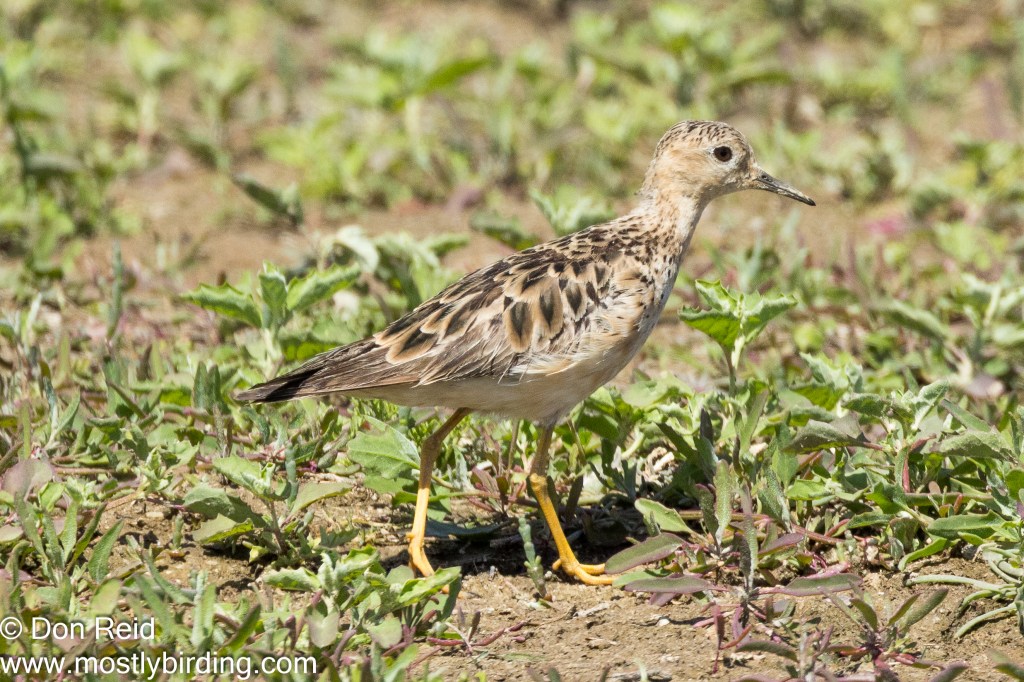
Buff-breasted Sandpiper Tryngites subruficollis Taanborsstrandloper, Voëlvlei
  • Swimmers – Red-knobbed Coot, Red-billed Teal, Cape Teal, Cape Shoveler, South African Shelduck
  • Others – Brown-throated Martin, Barn Swallow, Large-billed Lark, Red-capped Lark, Agulhas Long-billed Lark, Grey-backed Cisticola, Blue Crane, African Pipit, Capped Wheatear
Capped Wheatear Oenanthe pileata Hoëveldskaapwagter, Voëlvlei
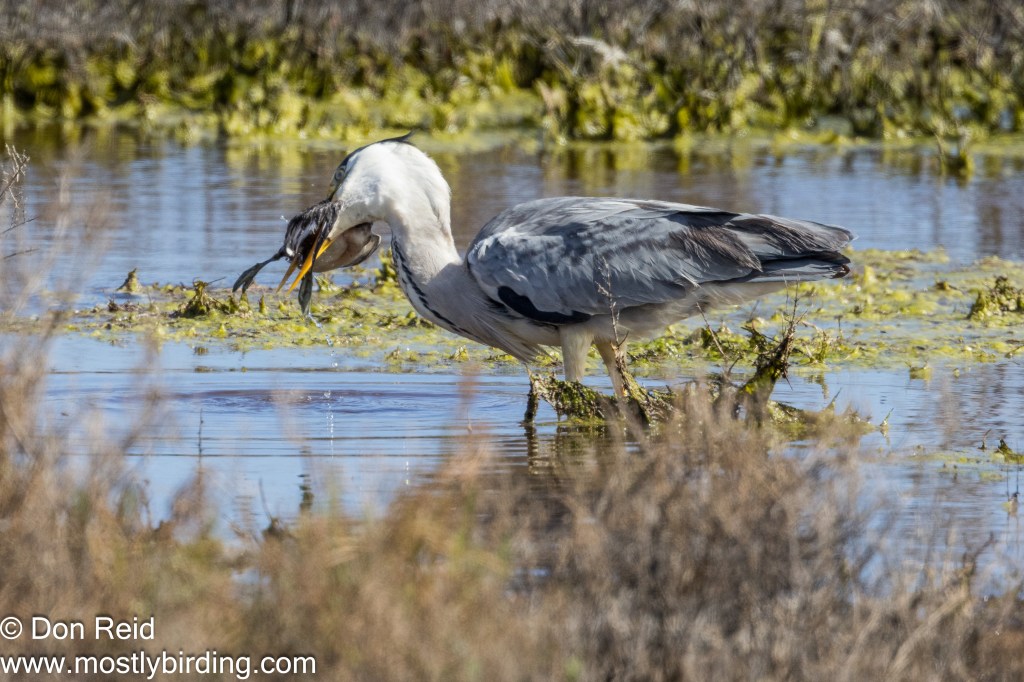
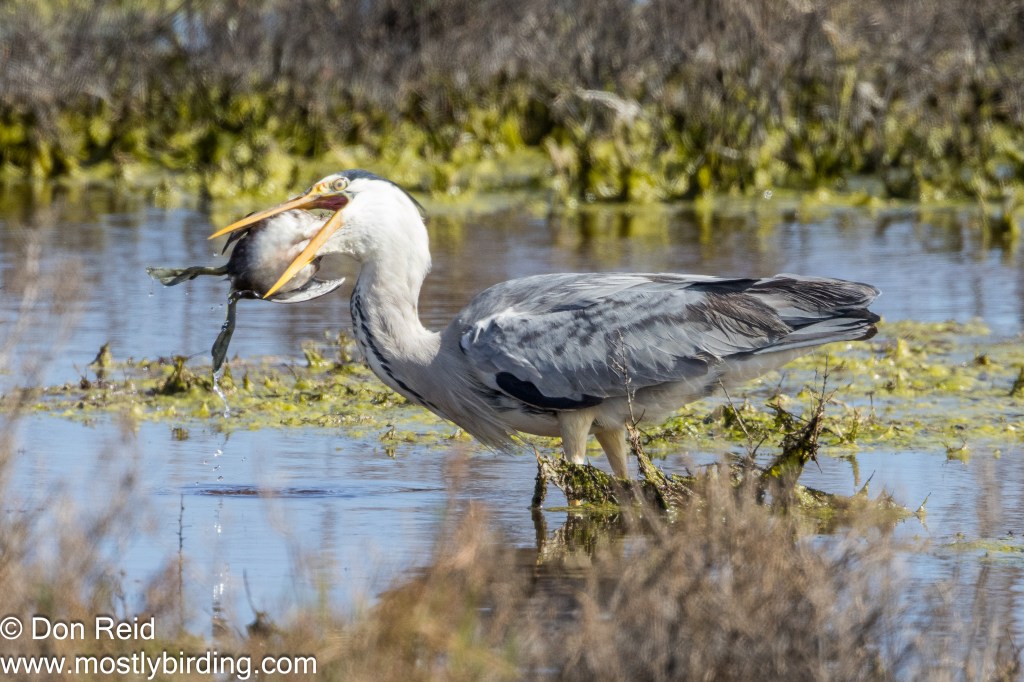
  • Most Surprising Sighting? – most certainly seeing a Grey Heron with what looked like a Reed Cormorant (possibly a juvenile) in its bill, which it proceeded to manoeuvre into position and swallow whole! I wasn’t able to capture the final swallow as the Heron moved behind some reeds.
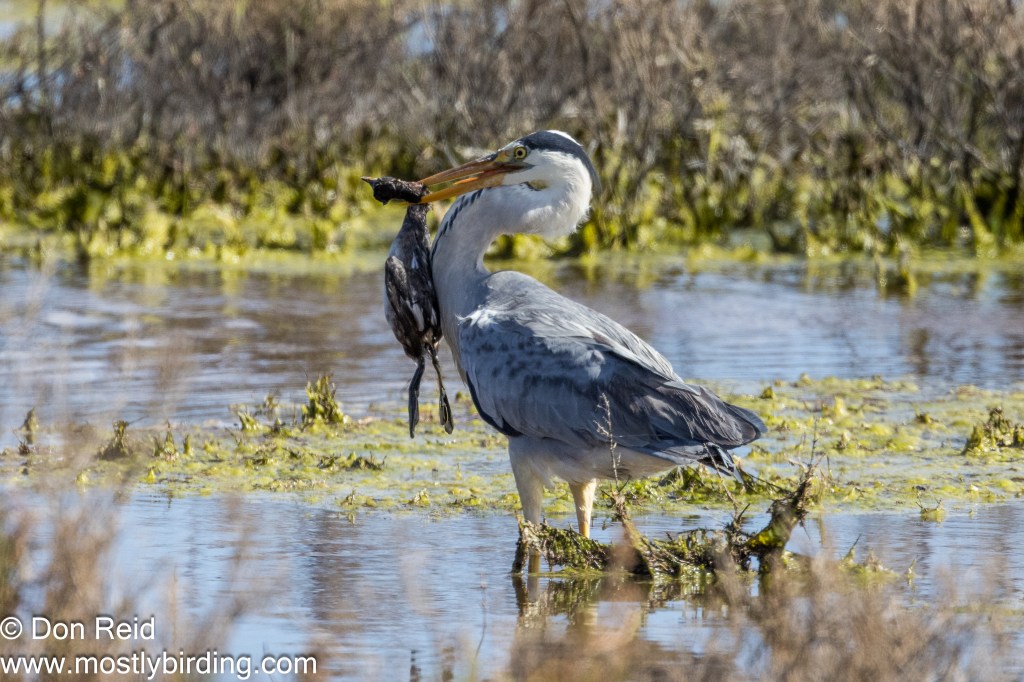
Grey Heron Ardea cinerea Bloureier, (with Reed Cormorant prey) Voëlvlei

February 2024

The vlei remained partly inundated during the most of 2024, with water levels gradually decreasing as inflow dried up.

During February reports appeared on the local birding groups of a Greater Sand Plover at Voëlvlei – I had seen this species before but just once, so at the end of my next atlasing trip I took a detour to the vlei to see if I could find it.

At Voëlvlei I was able to find and photograph the Greater Sand Plover without too much effort and to record numbers of other waders which were still plentiful.
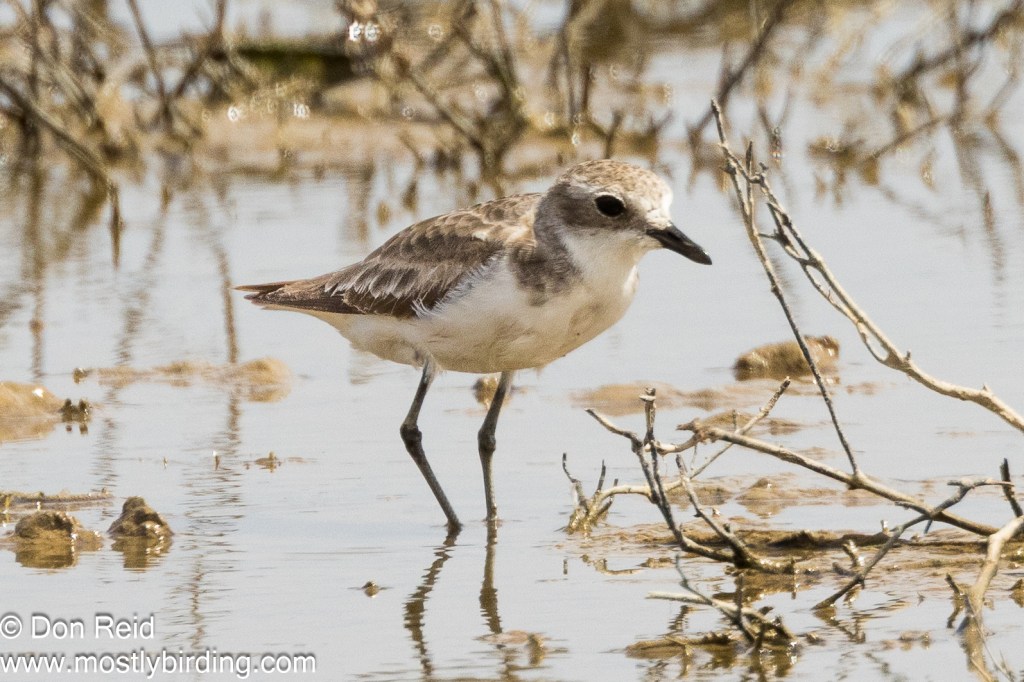
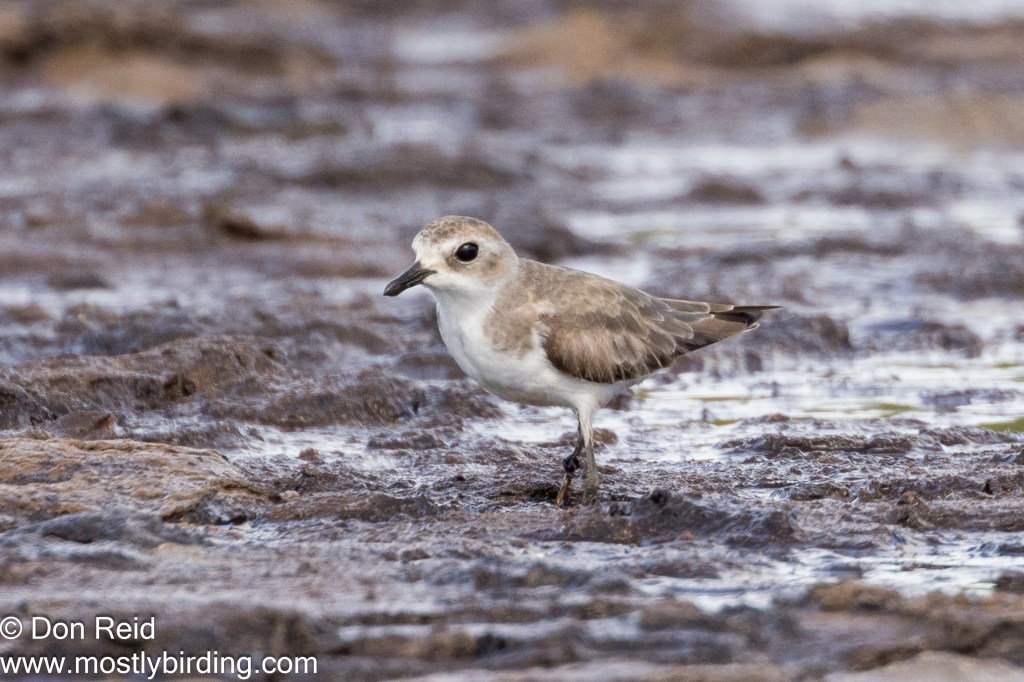
Greater Sand Plover Charadrius leschenaultii Grootstrandkiewiet, Voëlvlei

Thereafter the vlei gradually dried up, leaving ever wider margins. This did not come as a surprise for those living in the Southern Cape as it has been a particularly dry year for the area.

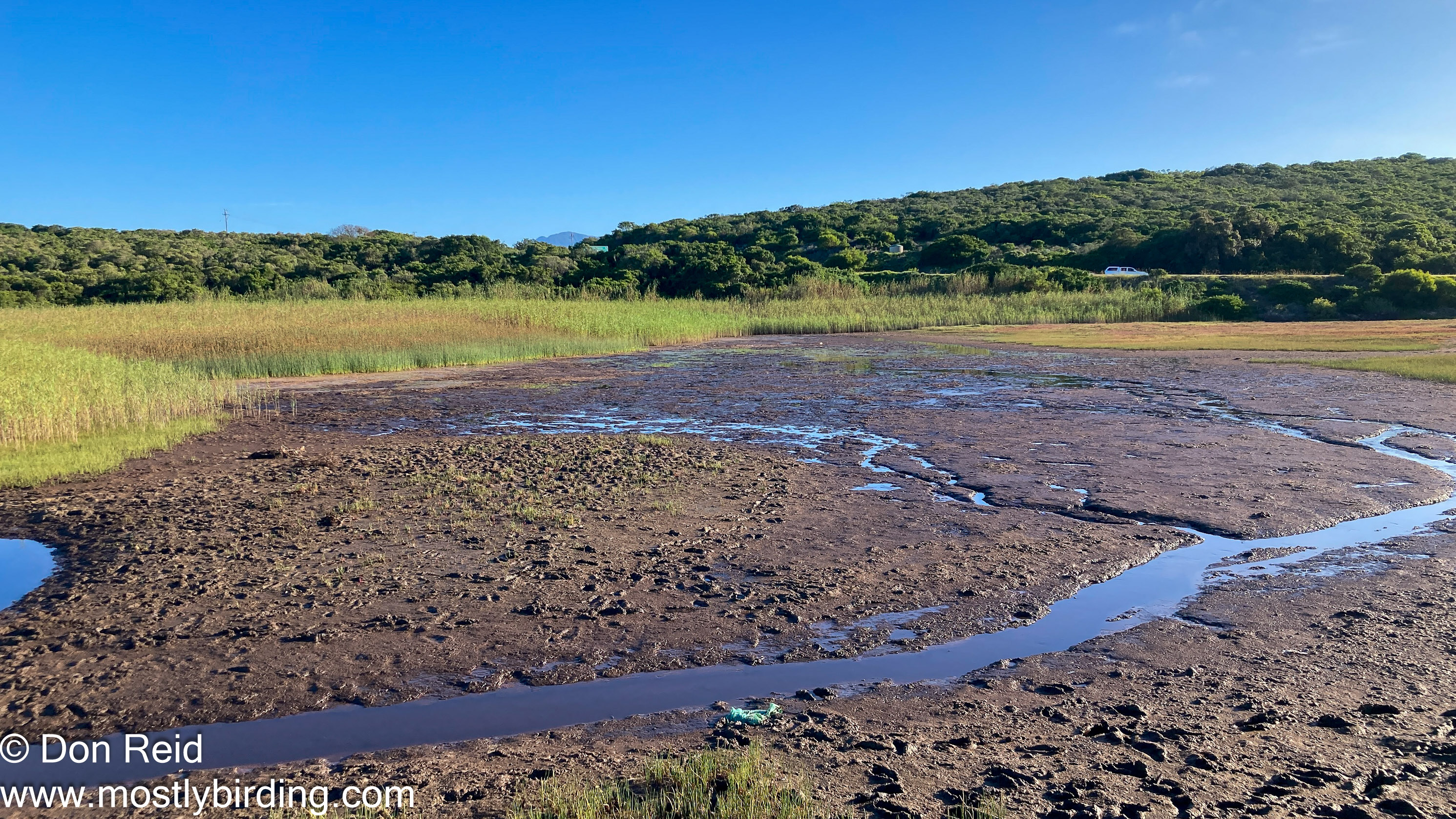
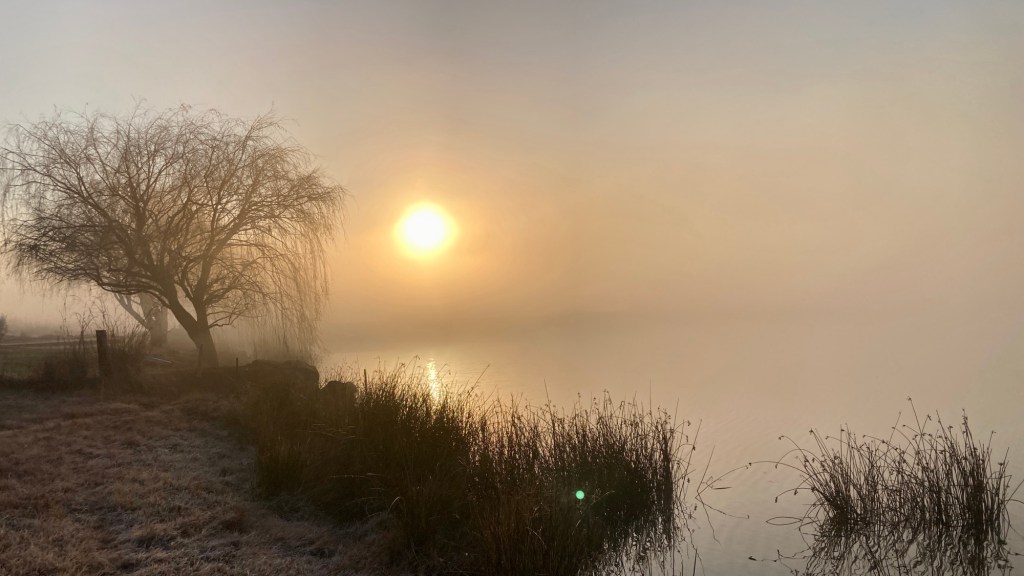
The photo below was taken in July this year, with just the northern section having any water – a couple of weeks after this photo the vlei was bone dry.

That just raises the question that is impossible to answer – when will Voëlvlei have water again? If average statistics are anything to go by it may be 7 or more years before that happens, a sobering thought at my age, I have to say, but I am thankful to have enjoyed two bountiful birding seasons during the last 10 years.

Atlasing Tales 12 – North and South, Winter and Spring

These tales record some of the more memorable experiences while atlasing – in this case two atlasing outings 4 months apart in time and 1250 kms apart in distance –

And in case you’ve forgotten or have not heard of Atlasing, there’s a brief synopsis at the end of the post

North in Winter

One of my last atlasing trips in Gauteng, before our move to Mossel Bay in October 2023, was a mid-winter outing to the farming area about 30kms south-east of Pretoria, not far from the town of Bapsfontein.

Good friend Koos, also an avid atlaser, had suggested the outing and he picked me up around 6.15 am with 40 minutes to go before sunrise. We headed east along Lynnwood road extension, which was already busy with Saturday morning commuters and keen cyclists heading out along their favourite route.

At the T-junction with the R25, we turned southwards towards Bapsfontein, then east again at the Witpoort road. The road changed to gravel and heavy mist enveloped the car, slowing our progress considerably until we reached the northern boundary of our target Pentad

Pentad 2600_2830

A side road signposted “Knoppiesdam“ invited exploration and after turning off we came to a ‘gate’ – one of those unique rural designs consisting of strands of barbed wire attached to thin poles each side, one side fixed, the other side secured by loops of strong wire (known in Afrikaans as ‘bloudraad’ or “bluewire”) which allow the gate to be detached and secured as needed. The ‘gate’ has no frame so you have to pull it over to the side and lay it flat on the ground while the vehicle drives through, then attach it again before moving on.

While I was opening the gate to let Koos drive through and closing it again, an Ostrich (of the farm variety, so not recorded) approached and started doing a mating dance of sorts – this is not the first time I have experienced this when stopping near Ostriches – Koos reckoned it was my woollen beanie that caused the unwanted attention this time around!

A short distance after the gate we came to the dam where we found a group of fishermen setting up for the day and a substantial body of water largely hidden by the heavy morning mist.

As usual the first birds listed were those calling in the early morning, some visible others not – Swainson’s Spurfowl has a particularly raucous call that carries a long way in the relative peace and quiet of the countryside and was my first record of the day. That was followed quickly by several other species – Kurrichane Thrush, Red-eyed and Laughing Dove, good old Hadada Ibis and a few others.

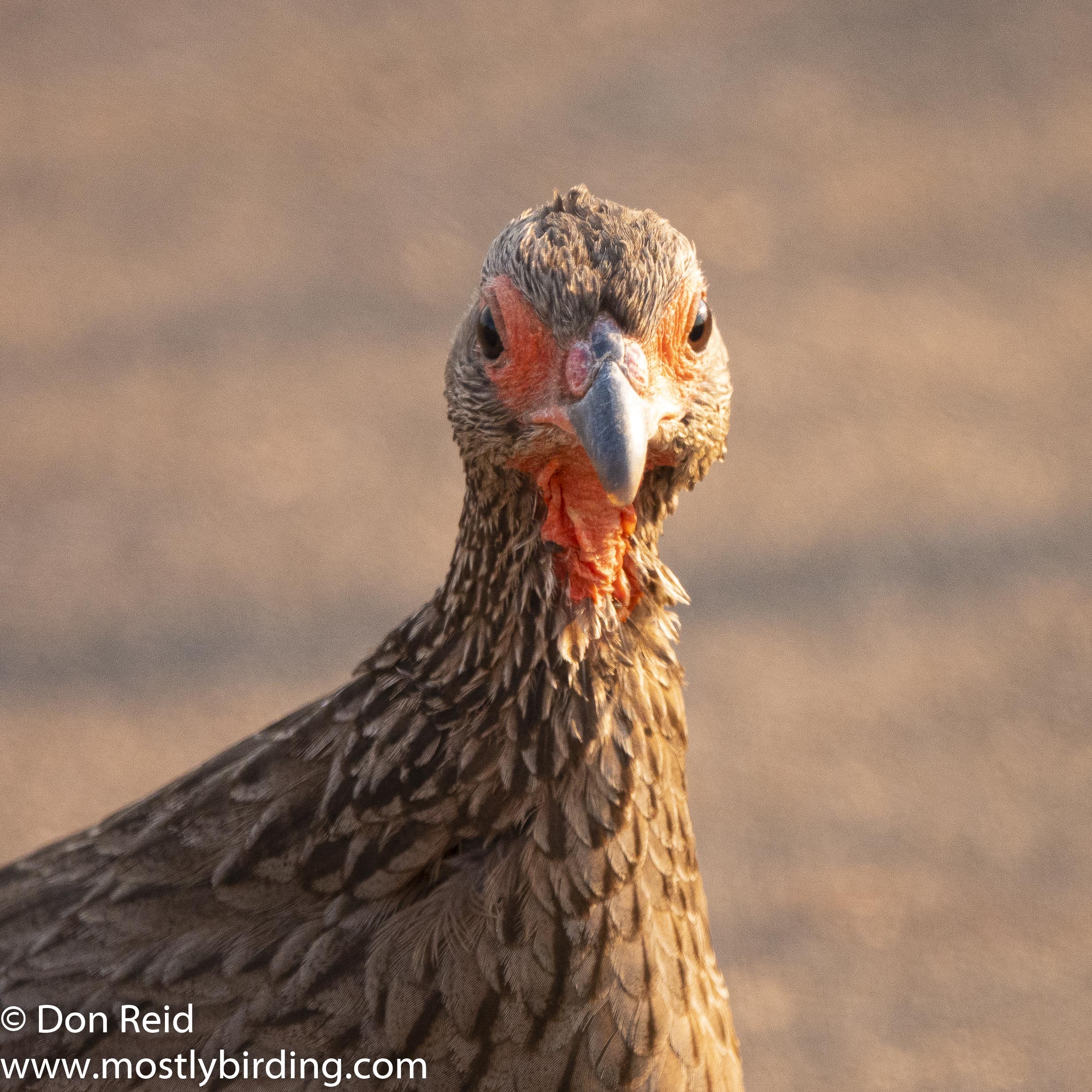
Swainson’s Spurfowl Pternistis swainsonii Bosveldfisant), (taken in Kruger Park)

We lingered and listened intently while walking the shoreline of the dam as the mist slowly dissipated, revealing a few Red-knobbed Coots and Common Moorhen as well as a Little Grebe.

Little Grebe Tachybaptus ruficollis Kleindobbertjie

As we headed to the car Koos spotted a pair of large birds flying overhead but away from us – clearly Flamingoes! But which species – Greater or Lesser ? Fortunately they changed direction while still visible and gave us a view of their large bills, which were light coloured compared to the dark colour of the Lesser Flamingo, confirming that they were indeed Greater Flamingoes.

On the way back to the main road, more fine spotting from Koos produced two Little Bee-eaters high up in the trees.

Little Bee-eater Merops pusillus Kleinbyvreter, (taken in Kruger Park)

Back on the main road, the habitat of open fields with short grass and stones prompted me to comment that ‘this is Wheatear territory’ – my words were barely cold when the first Capped Wheatear was spotted, along with Red-capped Lark, Crowned Lapwing, Wattled Lapwing and African Pipit – all species that share a fondness for this habitat.

Capped Wheatear Oenanthe pileata Hoëveldskaapwagter

The road left the pentad so we headed quickly southwards to join up with the R50 Delmas road which took us back to the pentad. The R50 is a busy road with heavy trucks that rumble back and forward constantly, making it awkward, even dangerous to try and pull off onto the verge to check for birds. At the first opportunity we turned off onto a gravel side road to escape the traffic and were soon back into a more relaxed atlasing mode.

Long-tailed Widowbirds (almost unrecognisable in their drab winter non-breeding plumage) were next up – the males lose their long tails and most of their black colouring (summer plumage shown in the first photo below), but retain their colourful ‘epaulettes’ to differentiate them from the all-brown females (the second photo below)

Long-tailed Widowbird Euplectes progne Langstertflap – male in full breeding plumage
Long-tailed Widowbird Euplectes progne Langstertflap – female

White-winged Widowbirds (equally drab females and non-breeding males) were encountered .

White-winged Widowbird Euplectes albonotatus Witvlerkflap (Female)

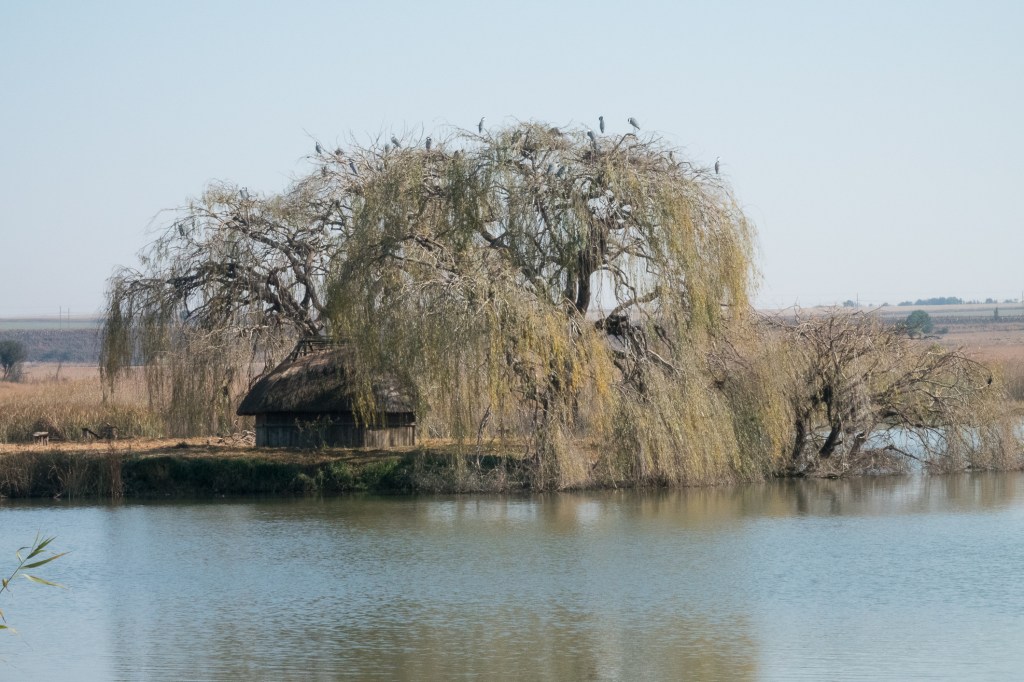
Just after finding a Namaqua Dove, always a pleasing species to encounter, we saw a large dam some distance from the road and found a track leading to it. Hoping that we were not intruding on someone’s farm we headed a short distance down the track to the dam only to find that a few large trees had been chosen as a roost by numbers of Black-headed Herons. We watched their comings and goings for a while and picked up a few other species before heading back to the road.

Black-headed Herons at heronry, Bapsfontein Area
Black-headed Heron Ardea melanocephala Swartkopreier

Smaller roadside pans and dams that we stopped at further along the road held a few species such as Reed Cormorant, Malachite Kingfisher, African Snipe and Lesser Swamp Warbler, to close out the morning’s atlasing with a total of 39 species recorded in the pentad

African Snipe Gallinago nigripennis Afrikaanse snip

South in Spring

For my first atlasing trip proper since arriving in Mossel Bay permanently, I chose a pentad in the area between the Oudtshoorn and Herbertsdale roads.

Pentad 3405_2155

Bang on 6am I stopped in lovely rolling country with a few small farm dams and with many birds calling and I spent the next half hour listing those I could identify along with some that showed themselves.

Most prominent were the first of dozens of Common Quail that I was to hear (and encounter as described below) throughout the morning, along with Cape Spurfowl, Little Rush Warbler calling from the reeds of one of the dams and Common Moorhen.

Cape Spurfowl Pternistis capensis Kaapse Fisant

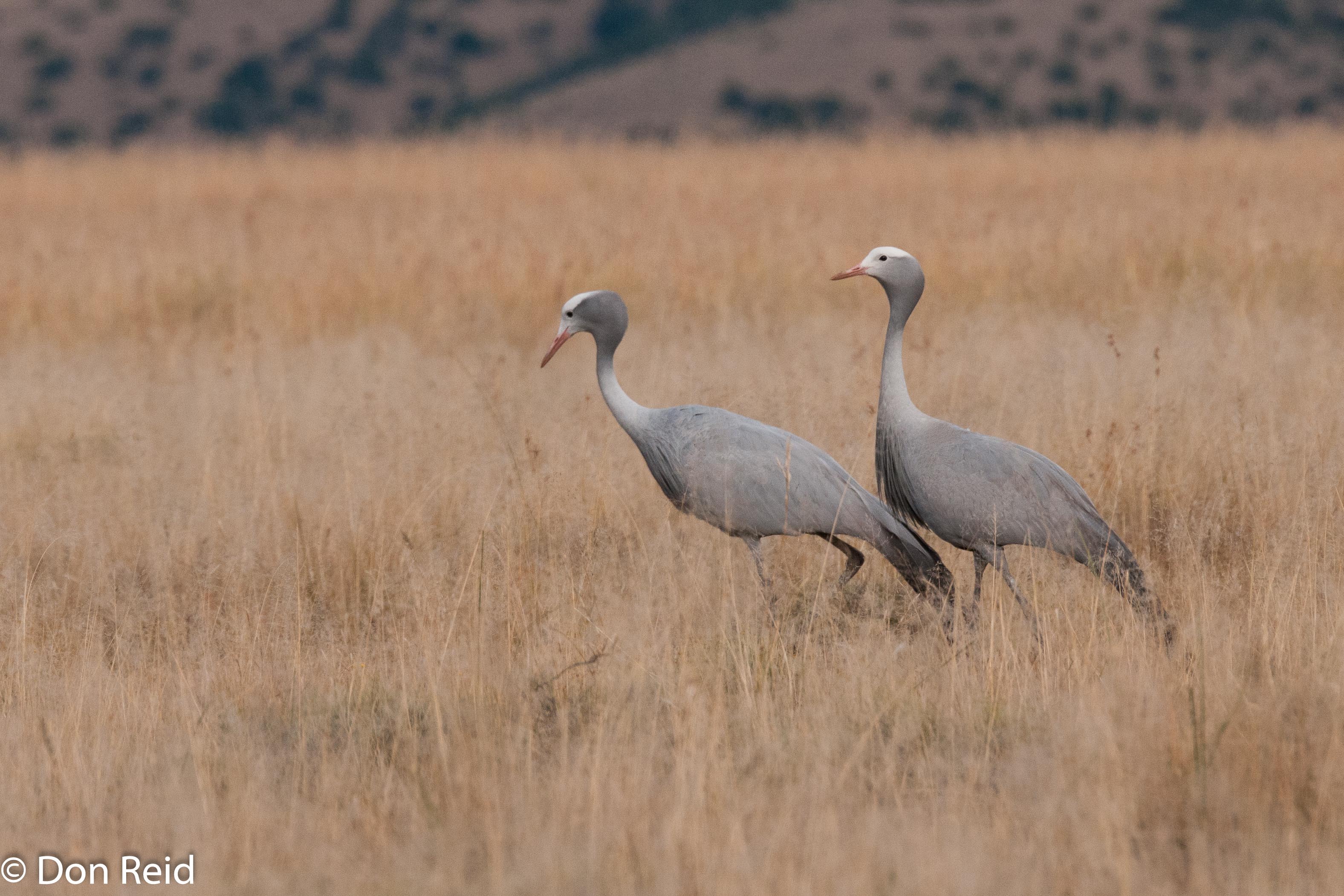
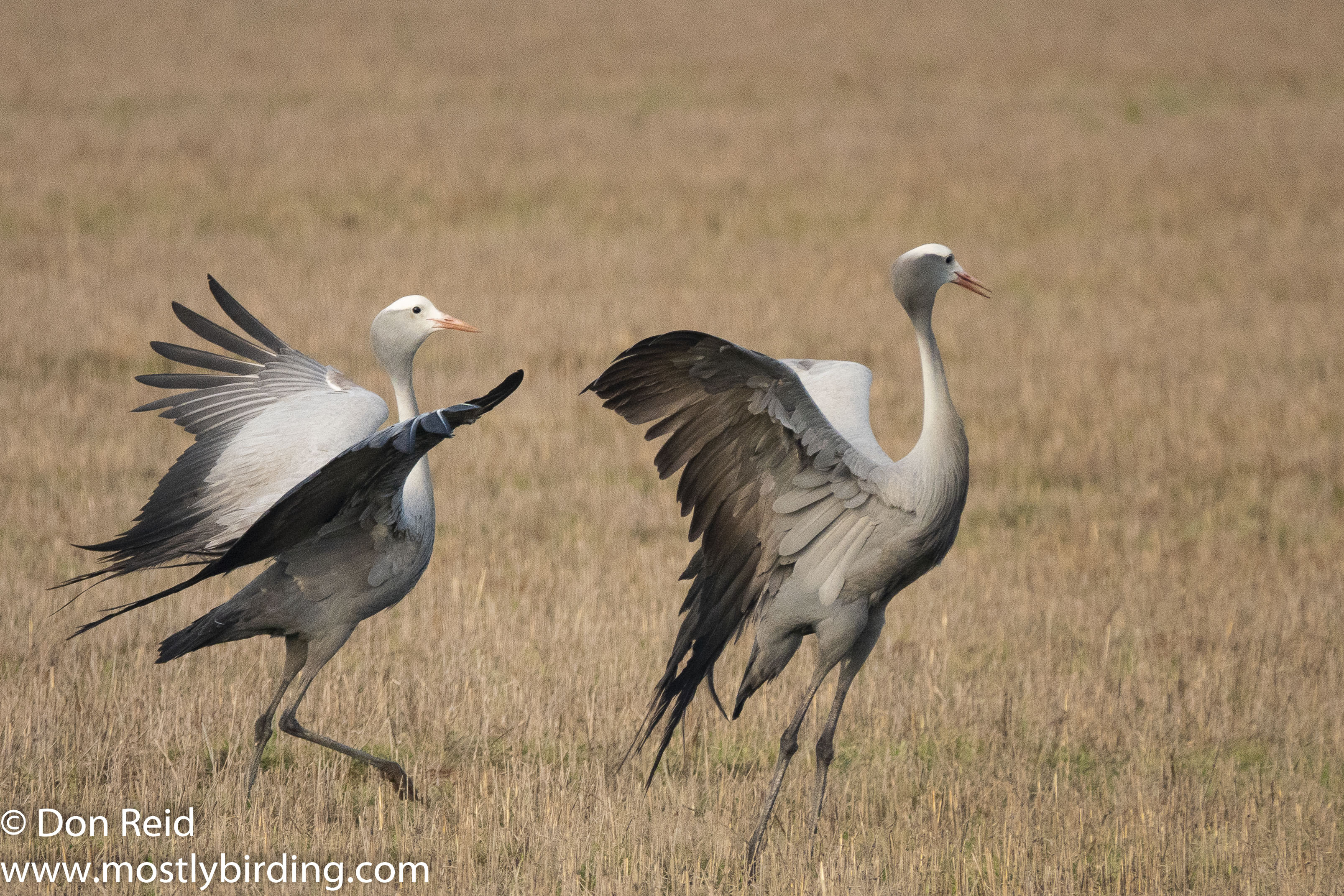
I could pick out Blue Cranes in a distant field – a common bird in the southern Cape but always a pleasure to see.

Blue Crane Anthopoides paradiseus Bloukraanvoel

Knysna Warbler calling from dense bush – I didn’t bother to try and see it as it hardly ever shows – was species number 22 after as many minutes of atlasing, after which the pace slowed somewhat, nevertheless I kept adding new species regularly.

Moving on from my first stop, the habitat changed from farming land to short grassveld, which produced three Larks in quick succession – Long-billed Lark, Large billed Lark and Cape Clapper Lark, the latter calling and displaying beautifully.

Large-billed Lark Galerida magnirostris Dikbeklewerik

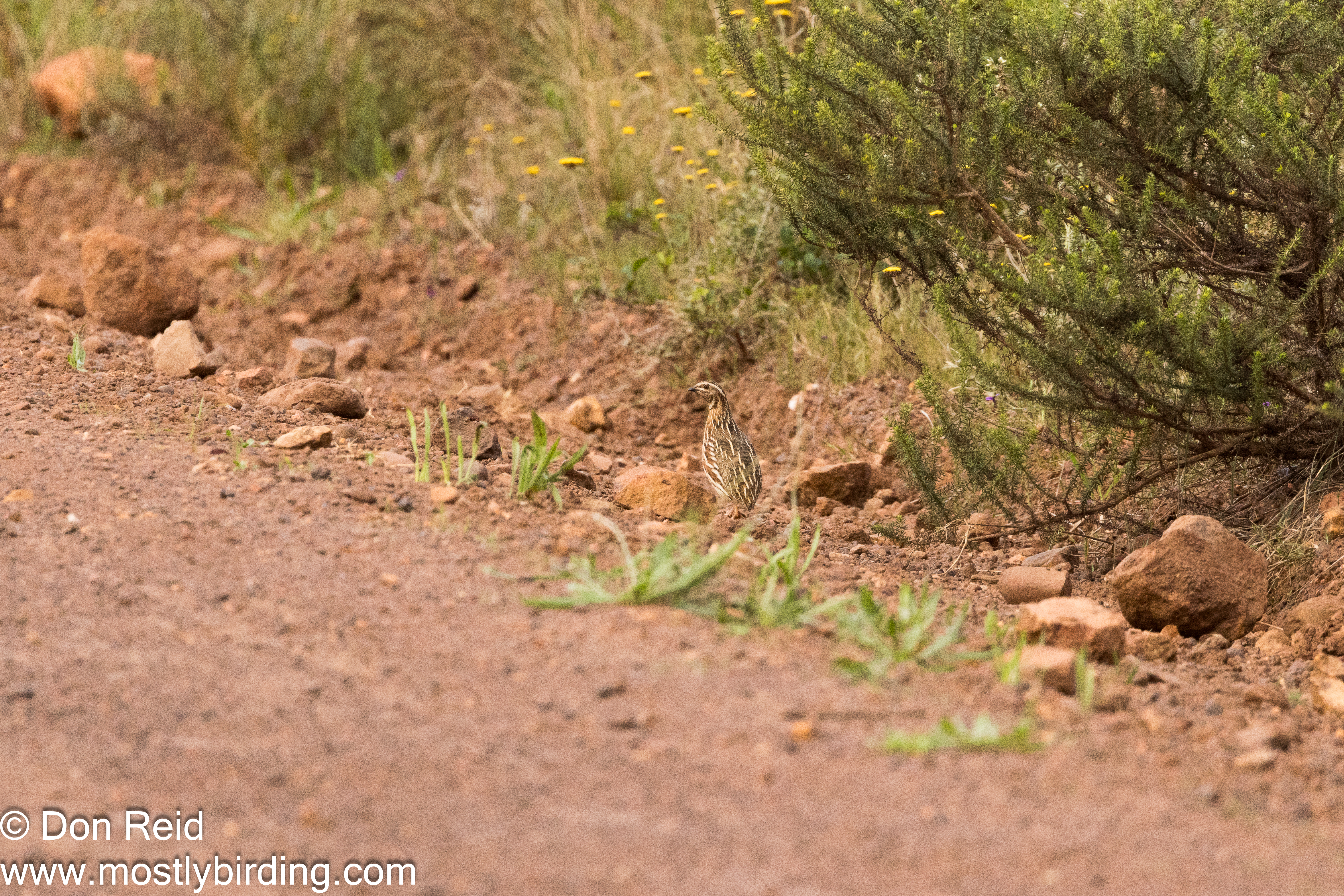
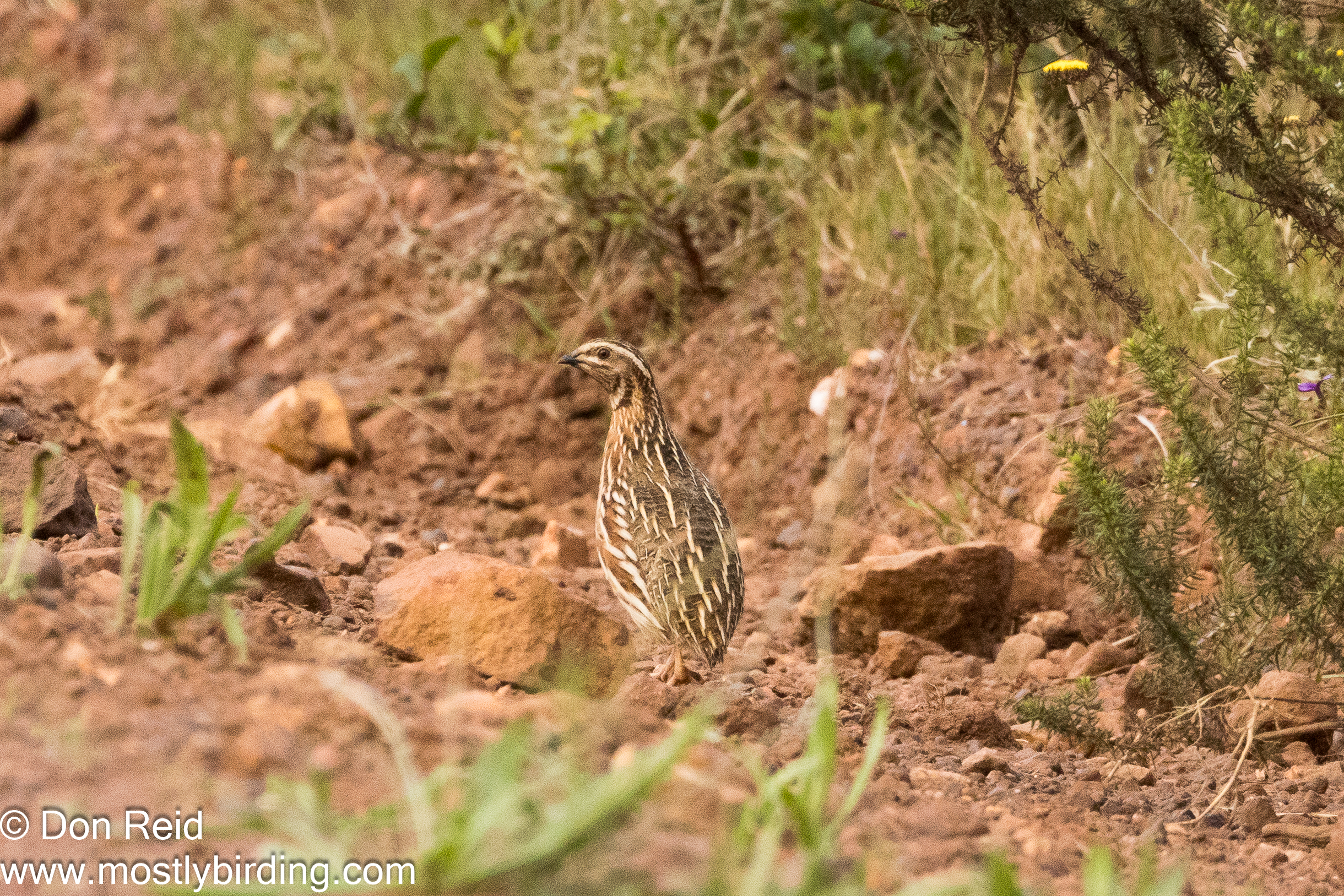
Up ahead small birds at the edge of the road attracted my attention and a look through the binos had me grabbing my camera – there were two Common Quails pottering about in the grass tufts at roadside! This is a species which I have heard dozens of times but have only had one short glimpse in all the years of atlasing, so this was an opportunity not to miss.

Common Quail Coturnix coturnix Afrikaanse kwartel

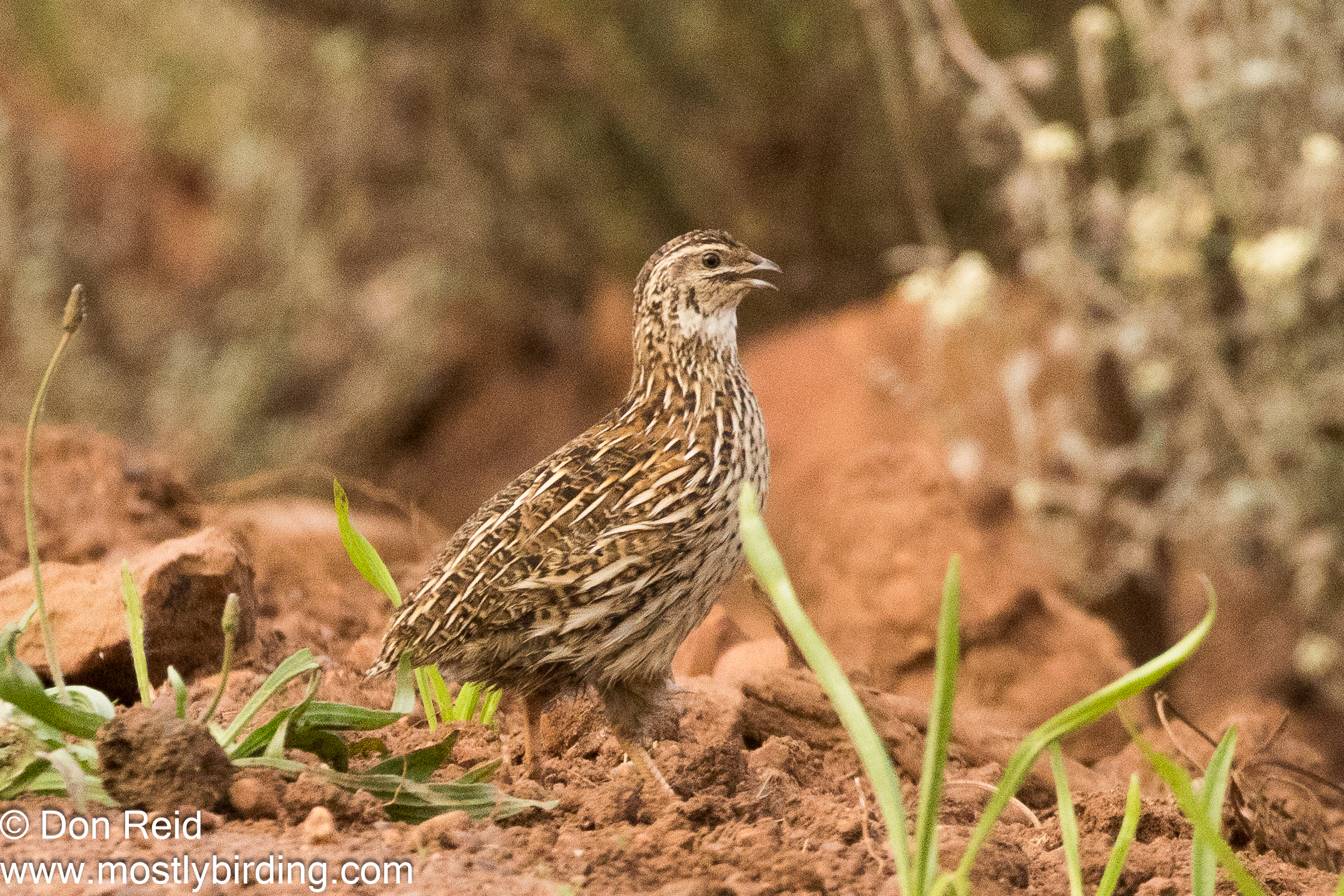
I was still some distance from the quail, which is a small bird about the size of a Lark, so I tried to edge the car closer for a better photo opportunity. However they were on to me and moved further along at the same pace as the car, so I turned the car slightly sideways to get a view with the camera and took as many shots as I could. Fortunately, I managed to get a few reasonable shots – my first ever photos of this species in the bag!

Common Quail Coturnix coturnix Afrikaanse kwartel

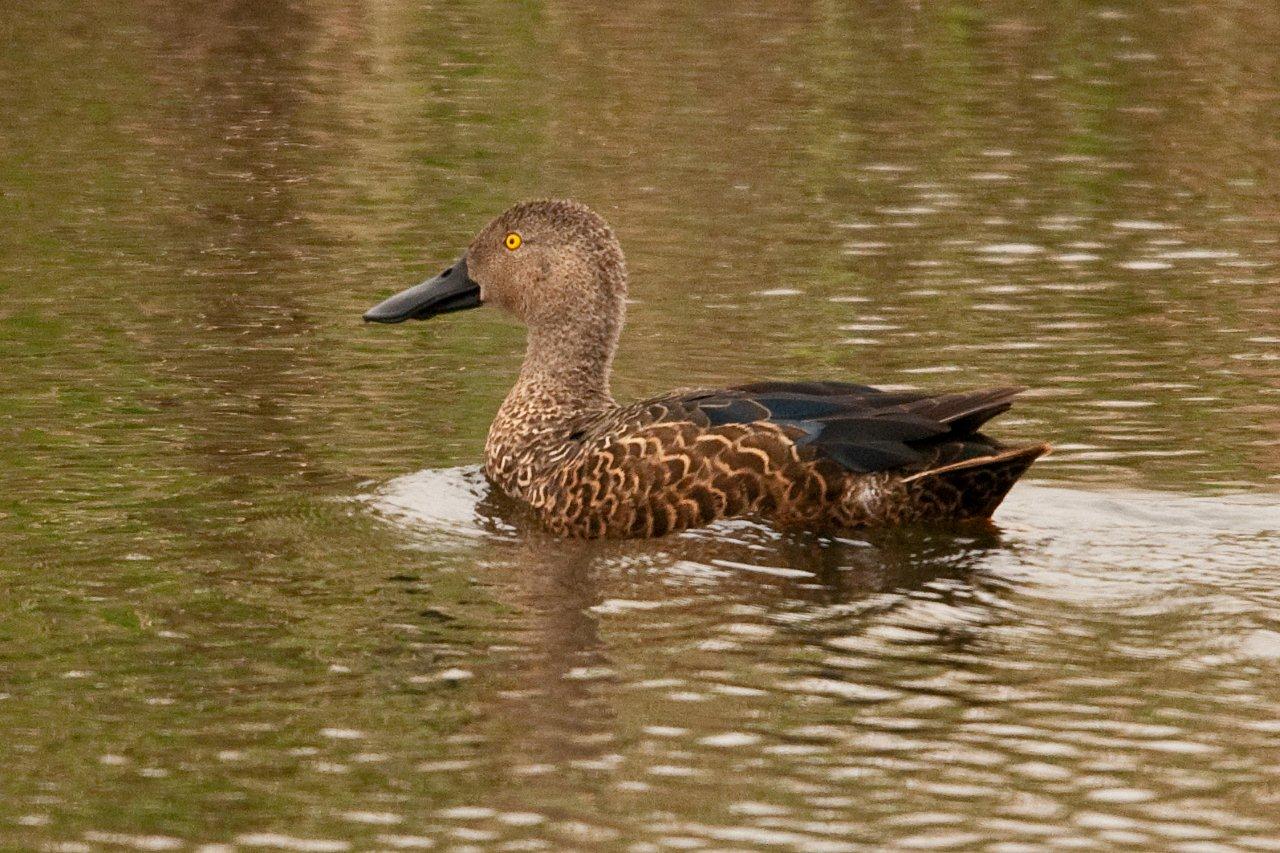
After crossing over the R327 I proceeded on the Kleinberg Road and soon stopped to scan a large farm dam which lies some distance from the road. I set up my spotting scope and used the maximum zoom (60 X) to identify the many waterfowl on the dam, which included Red-knobbed Coot, Cape Shoveler and Little Grebe – all common in the area.

Cape Shoveler Anas smithii Kaapse Slopeend

Less common, in fact it turned out to be a new species for the pentad, was a pair of Black-necked Grebes, swimming in the middle of the dam. I have only ever found them further east at the lakes beyond the village of Wilderness so was really pleased to record them so close to Mossel Bay. They were way beyond my camera’s reach so the photo below is from a visit to Strandfontein near Cape Town.

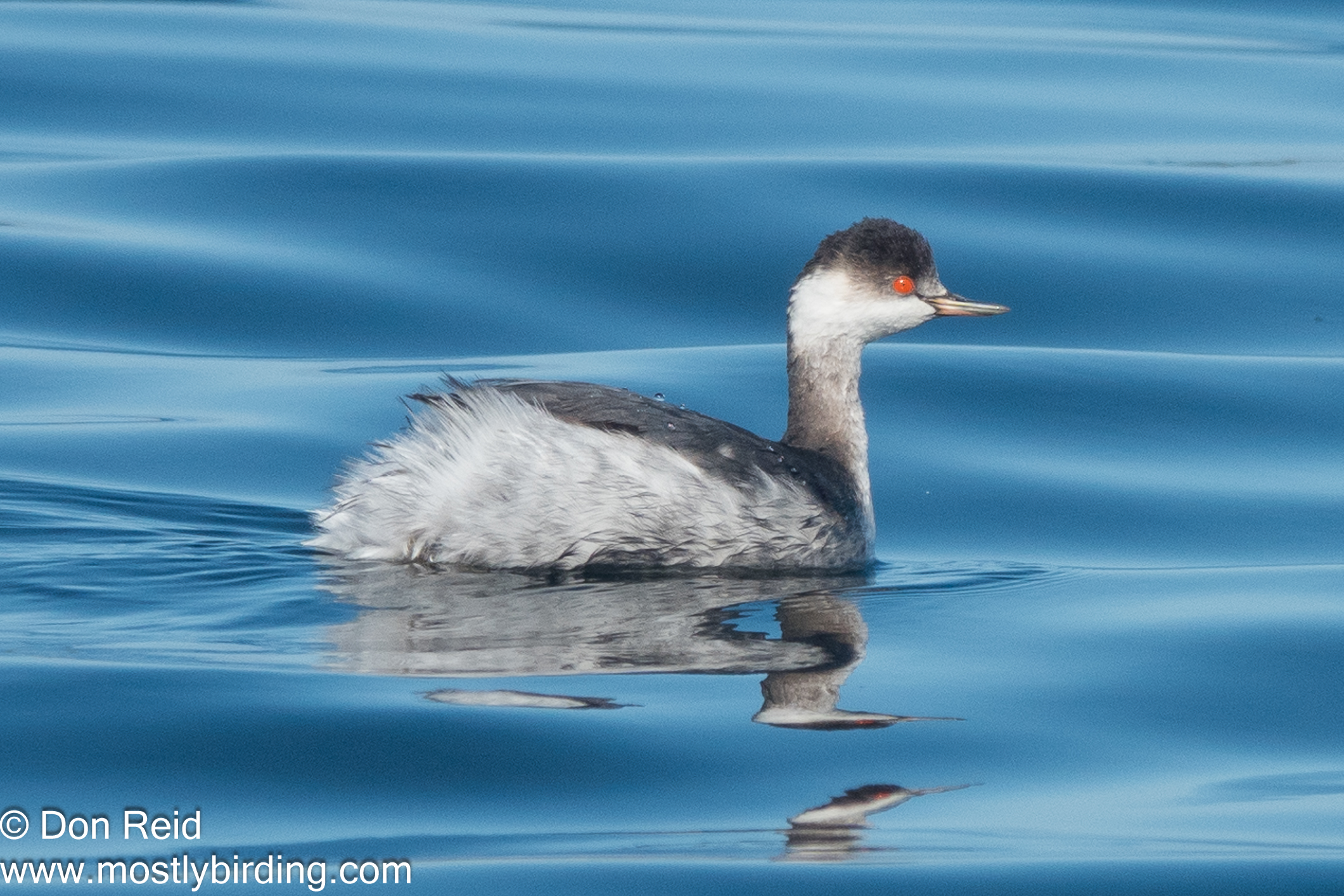
Black-necked Grebe Podiceps nigricollis Swartnekdobbertjie

The dam edges had both fresh water Cormorants present – White-breasted and Reed Cormorant as well as Blacksmith Lapwing.

I continued along the road adding Red-capped Lark and Capped Wheatear before entering the next pentad, which signalled the close of the atlasing of the pentad with a total of 53 species.

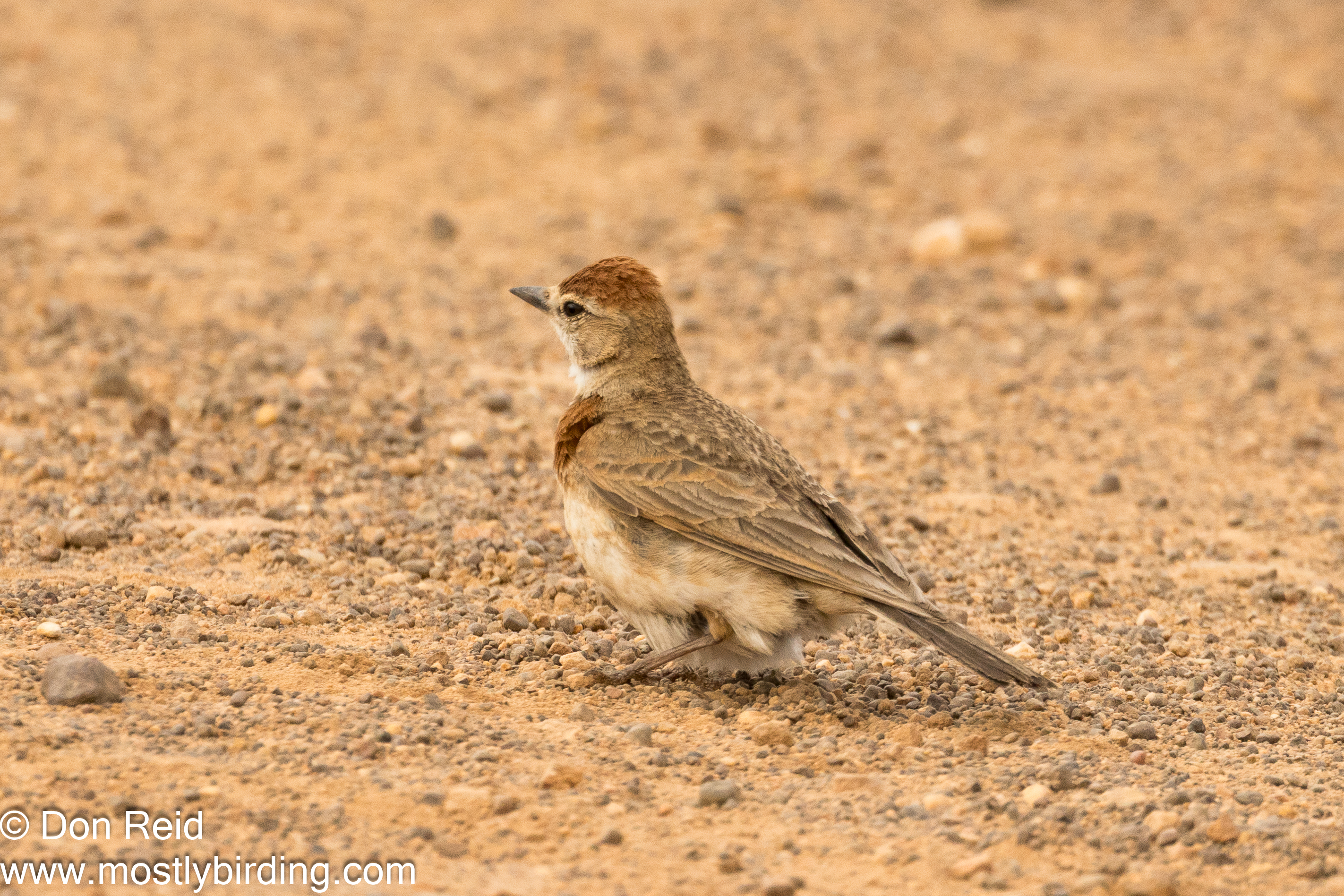
Red-capped Lark Calandrella cinerea Rooikoplewerik

Atlasing?

Atlasing is the regular mapping of bird species in a specific area called a “pentad”. Each pentad has a unique number, based on its geographical position according to a 5 minute x 5 minute grid of co-ordinates of latitude and longitude, which translates into a square of our planet roughly 8 x 8 kms in extent.

As a registered observer / Citizen scientist under the SABAP2 program (SA Bird Atlas Project 2), I record all of the species I see or hear in a particular pentad over a period which can be anything between 2 hours and 5 days, for submission to the project database at the ADU (Animal Demography Unit) based in Cape Town.

Atlasing Tales 11 – Friemersheim and George Area

These tales record some of the more memorable experiences while atlasing – in this case during March 2023 while we were at our ‘other’ home in Mossel Bay (where we now reside permanently)

And in case you’ve forgotten or have not heard of Atlasing, here’s a brief synopsis –

Atlasing is the regular mapping of bird species in a specific area called a “pentad”. Each pentad has a unique number, based on its geographical position according to a 5 minute x 5 minute grid of co-ordinates of latitude and longitude, which translates into a square of our planet roughly 8 x 8 kms in extent.

As a registered observer / Citizen scientist under the SABAP2 program (SA Bird Atlas Project 2), I record all of the species I see or hear in a particular pentad over a period which can be anything between 2 hours and 5 days, for submission to the project database at the ADU (Animal Demography Unit) based in Cape Town.

George – Country roads west of town

Gerda’s last treatment, taking up most of the day at the clinic in George, meant I had a chance to do some atlasing in the area once again. I didn’t want to travel too far from George so chose a pentad directly west of the town.

Pentad 3355_2215

I headed west out of George, taking Charles street which winds through country farmland and hills before descending into Great Brak. Just after the start of the pentad the road – which is gravel most of the way – descends to the single lane bridge over the Maalgate River

Bridge over Maalgate River

There I spent some time on both sides of the river, recording Fork-tailed Drongo, Black Saw-wing, Common Quail, Little Rush Warbler and several Swallows and Swifts.

Add to that a number of waterfowl at a large dam further along the same road and I had recorded a quick 25 species in as many minutes, including a lone Purple Heron at the dam.

Purple Heron Ardea purpurea Rooireier

One of the ‘hazards’ of atlasing the country roads is encountering the occasional ‘road block’ – fortunately not of the policed kind, rather one that adds to the experience as gentle farm animals pass by the car.

Great Brak inland

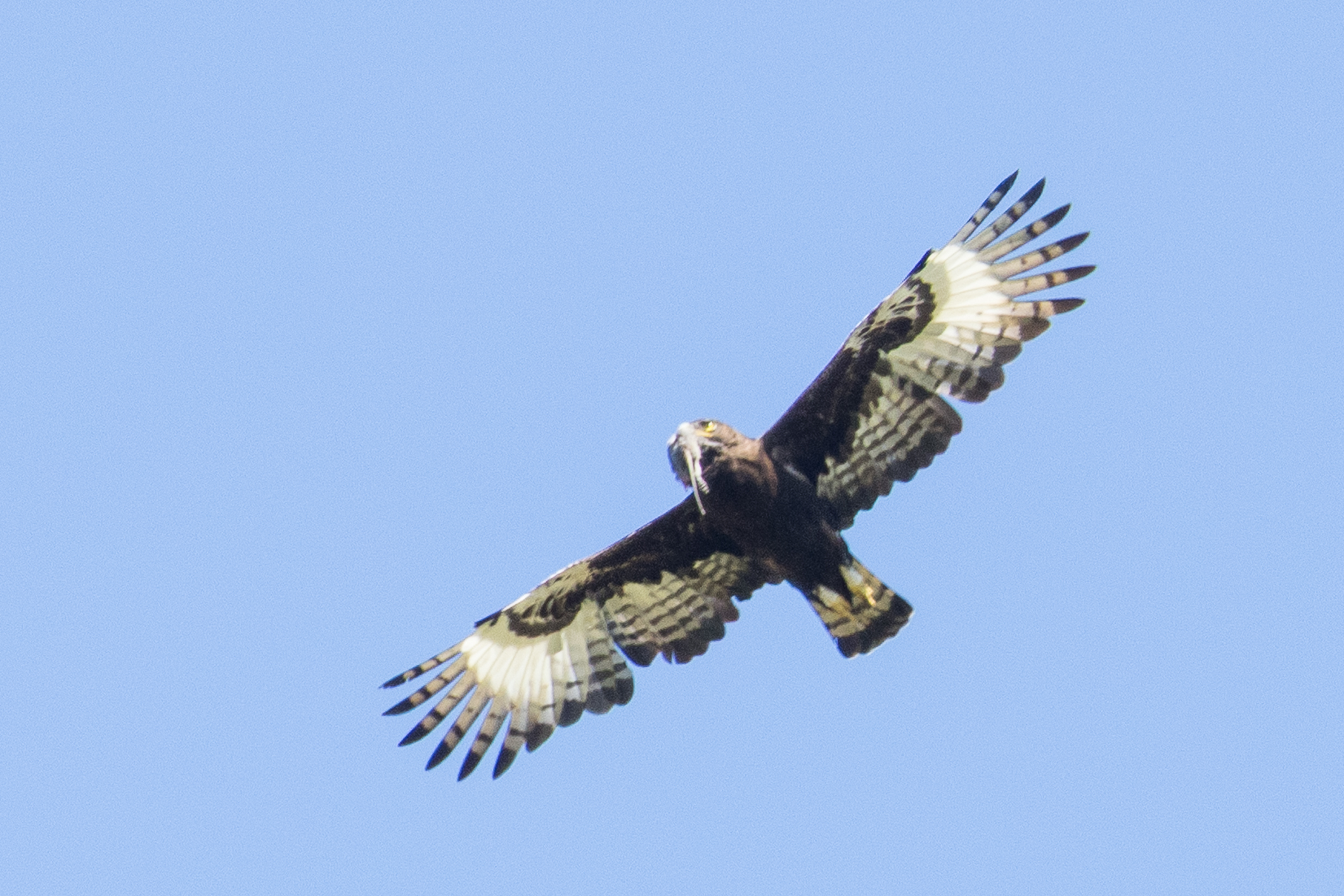
After crossing the river again, a Long-crested Eagle flew over to fill my heart with pleasure – later in the adjacent pentad another (or possibly the same one) soared high above with some sort of prey gripped in its beak – this time I had my camera handy for a quick photo as it passed over me

Long-crested Eagle Lophaetus occipitalis Langkuifarend

After that great start, the birding slowed somewhat as I followed the road through farmlands, then headed back in the direction of George along roads that took me through the adjacent pentad.

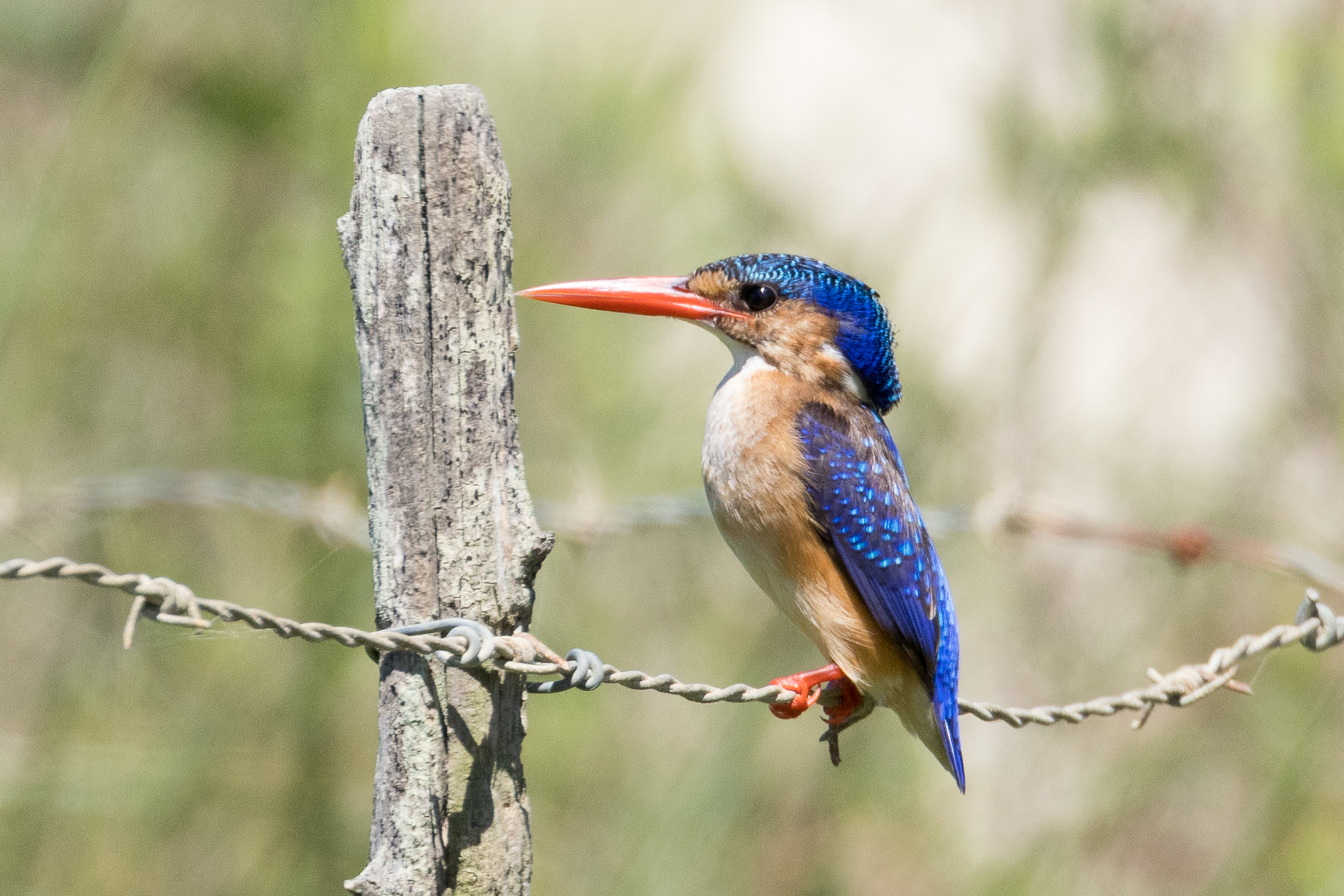
That led to an unusual encounter with a Malachite Kingfisher, which flew across the road in front of the car, then settled on a fence – unusual because there were no dams or rivers in the vicinity. It perched long enough to allow me to take a few photos in this out of character environment.

Malachite Kingfisher Alcedo cristata Kuifkopvisvanger

Pentad Species total : 41

Friemersheim Area

Looking to further ‘fill in’ my MBMA Project block of pentads for the year (MBMA is my acronym for Mossel Bay Municipal Area which covers 42 pentads over a wide swathe of the southern Cape from Gouritz River in the west to Glentana in the east and northwards up to the Klein Karoo), I decided to tackle the pentads covering the village of Friemersheim itself and to the west and east of it.

Pentad 3355_2210

I started in the pentad to the east of Friemersheim at 7am on the dot, travelling along Amy Searle Street northwards out of the town of Great Brak River, initially through farmland with a sprinkling of small dams on either side of the road.

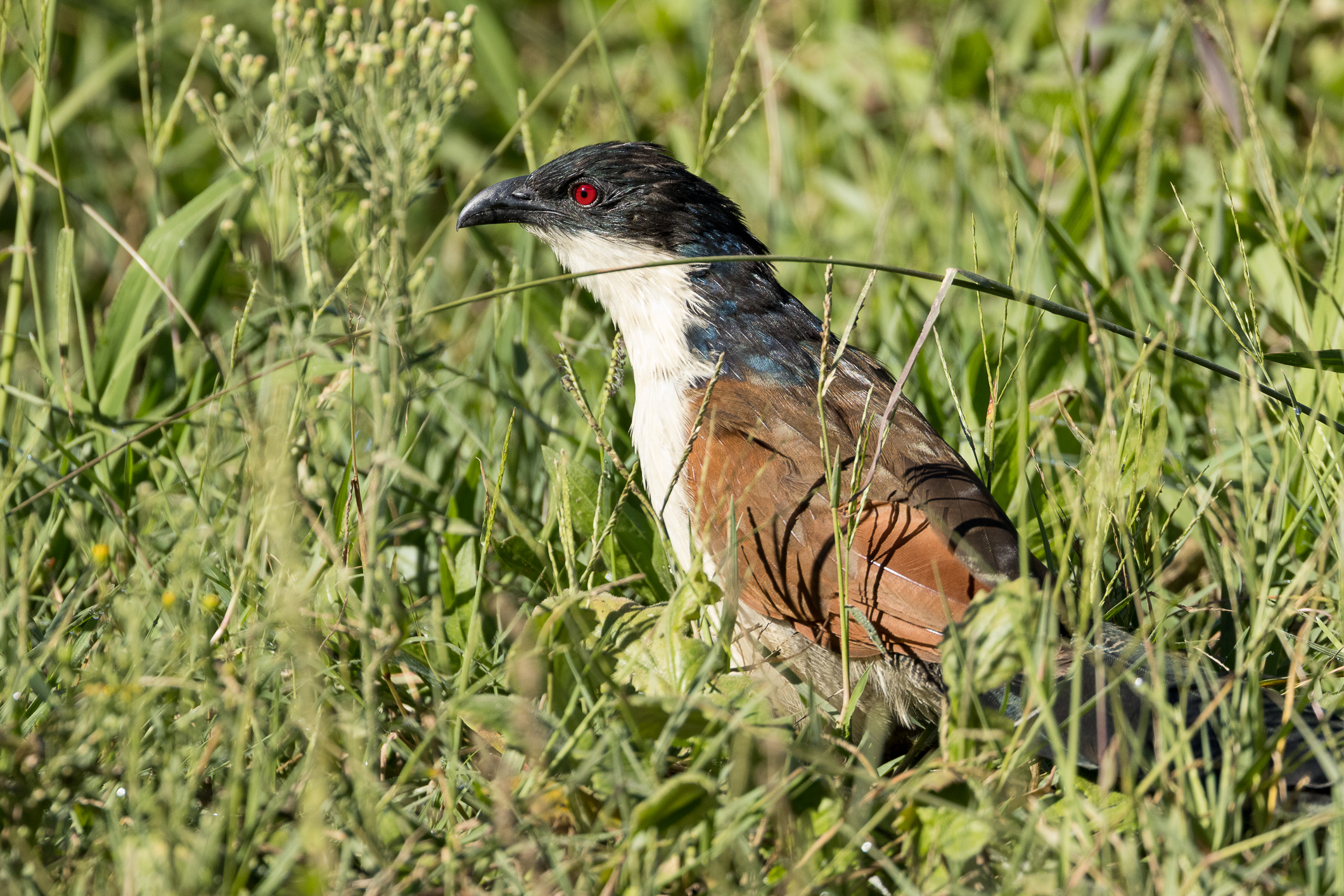
First bird was a calling Burchell’s Coucal – their soft bubbling call often advertises their presence long before they show themselves – later I had a surprise close encounter with the species.

I spent some time at the first roadside dams, looking with some difficulty into the low morning sun – a Malachite Kingfisher was already active, perched on a convenient branch and plunging to catch small prey.

Several waterfowl were present, such as the ubiquitous Yellow-billed Duck, a few Red-billed Teals and a Little Grebe.

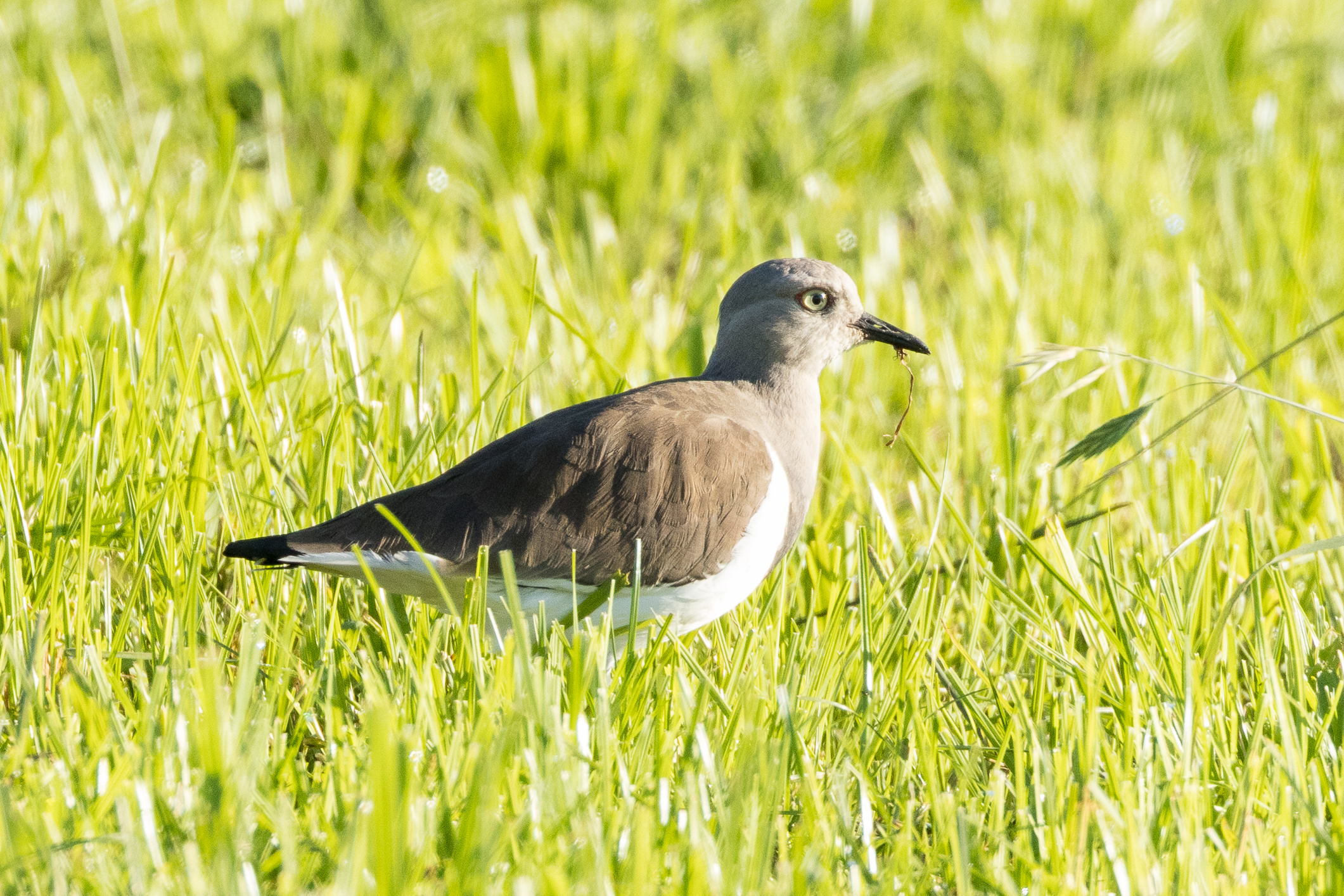
Carrying on, a field with shortish grass was the right habitat for Lapwings and produced the similar looking Black-winged Lapwings and Crowned Lapwings, the former a scarcer, sought after species, the latter far more common.

Black-winged Lapwing Vanellus melanopterus Grootswartvlerkkiewiet, Friemersheim area
Crowned Lapwing Vanellus coronatus / Kroonkiewiet

I turned off the tar road eastwards along a nondescript gravel side road, but one I had previously explored with some success. The first stretch travels through more farmland with shortish grass, which was good for Zitting Cisticola and Cape Longclaw, plus many Barn Swallows flying low and scooping flying insects out of the air.

Thereafter the road turns steeply downhill into a wooded valley with a strong river flowing at the lowest point. Halfway down I stopped for coffee and rusks and added 8 species in the 15 to 20 minutes spent listening and looking out for birds, including several forest species –

  • Knysna Turaco calling
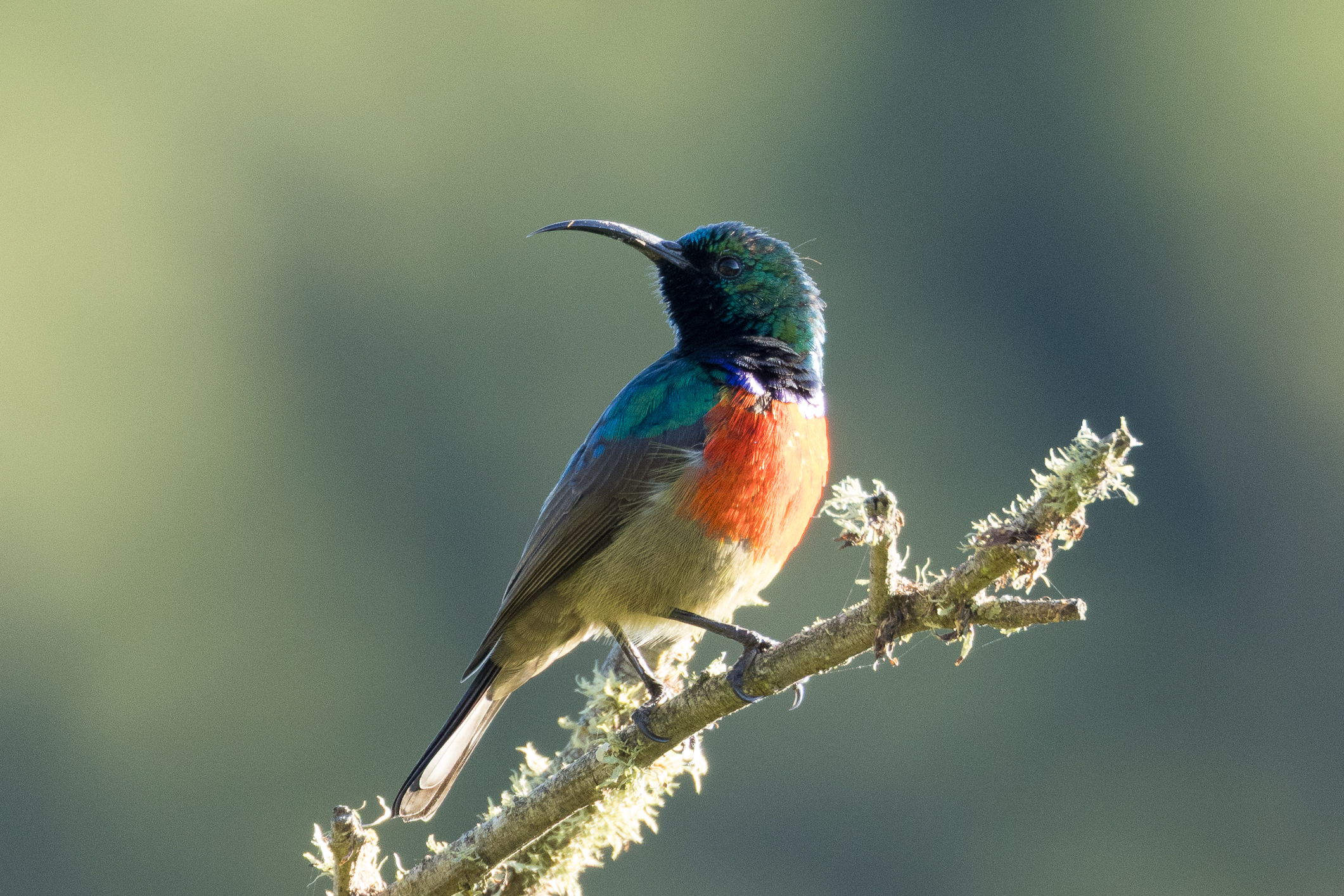
  • Greater Double-collared Sunbird
Greater Double-collared Sunbird Cinnyris afer Groot-rooibandsuikerbekkie
  • Collared Sunbird – my first record of the species for the Western Cape
  • Dusky Flycatcher
  • Fork-tailed Drongo
  • Olive Bushshrike

Emerging from the valley, I continued along the road through more farmlands and rolling hills, steadily adding species to the card, which included a few more special sightings –

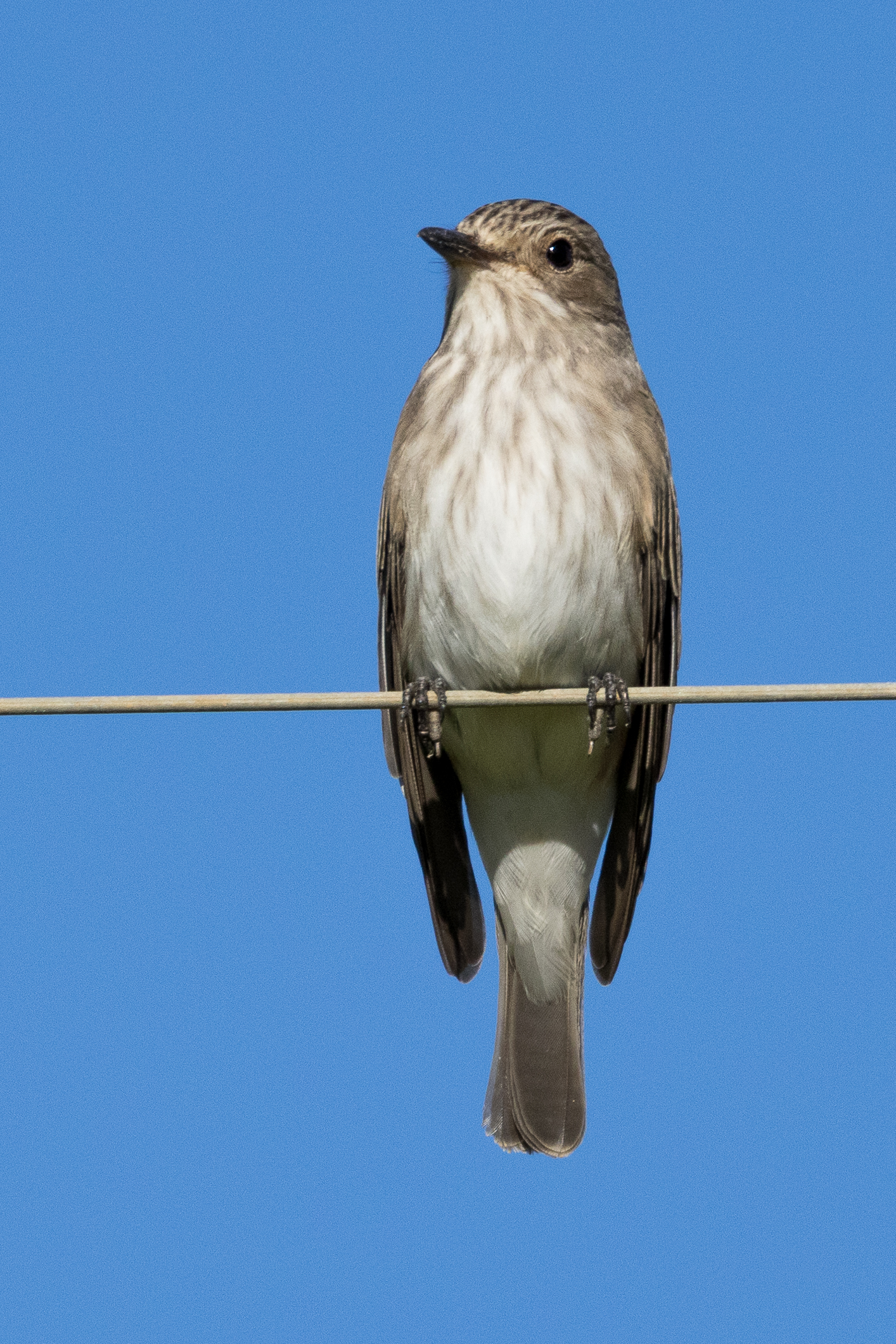
  • Spotted Flycatcher perched on a fence, allowing me to take several photos (another first record for my Western Cape list)
Spotted Flycatcher Muscicapa striata Europese vlieëvanger
  • Terrestrial Brownbul calling from dense bush – krrr – krrr – krrr is the best way I can describe this secretive species’ call
  • The close encounter with a Burchell’s Coucal mentioned above – I followed its progress through a tangle of long grass and bushes
Burchell’s Coucal Centropus burchellii Gewone vleiloerie
  • Cape Batis
  • White-faced Ducks at yet another roadside dam
  • Jackal Buzzard on a pole just before exiting the pentad
Jackal Buzzard Buteo rufofuscus Rooiborsjakkalsvoël

Total species for the pentad : 58

Pentad 3355_2210

The second pentad for the morning was far less productive, probably because it was close to midday when birds tend to be temporarily absent until the late afternoon ‘rush hour’ starts

My route was through Friemersheim (which has been the subject of several of my posts about the mural artwork that is a feature of this interesting village) then a circular route on the northern side of the village.

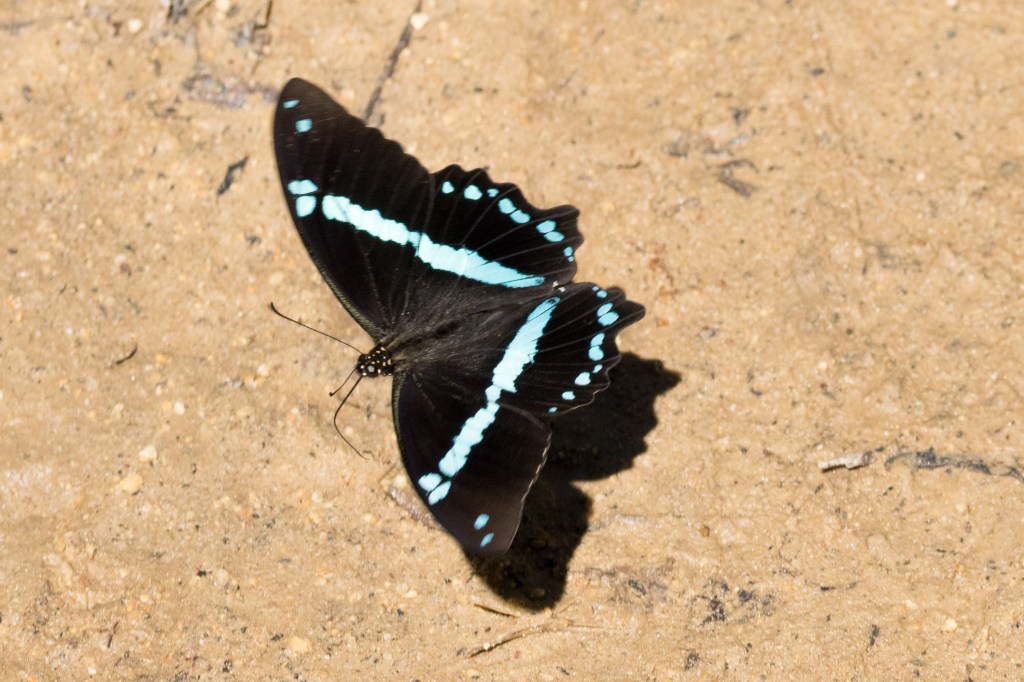
There were few highlights, but I found hundreds of Barn Swallows feeding over the fields. My last stop in the forested section produced several Cape Batises and a Butterfly gathering moisture from a puddle in the road

Cape Batis Batis capensis Kaapse bosbontrokkie (male)

Total species for the pentad : 23

Other stuff

The focus is on the birds while atlasing but there are always other things to divert the attention….

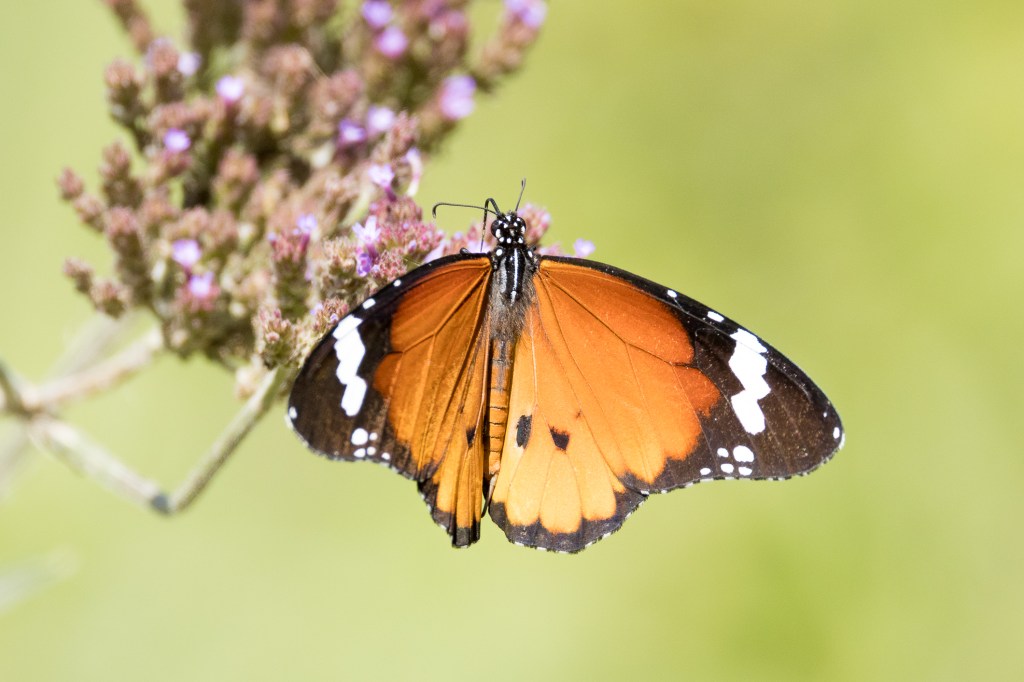
Monarch Butterfly, Friemersheim area
African Blue-banded Swallowtail / Papilio nireus
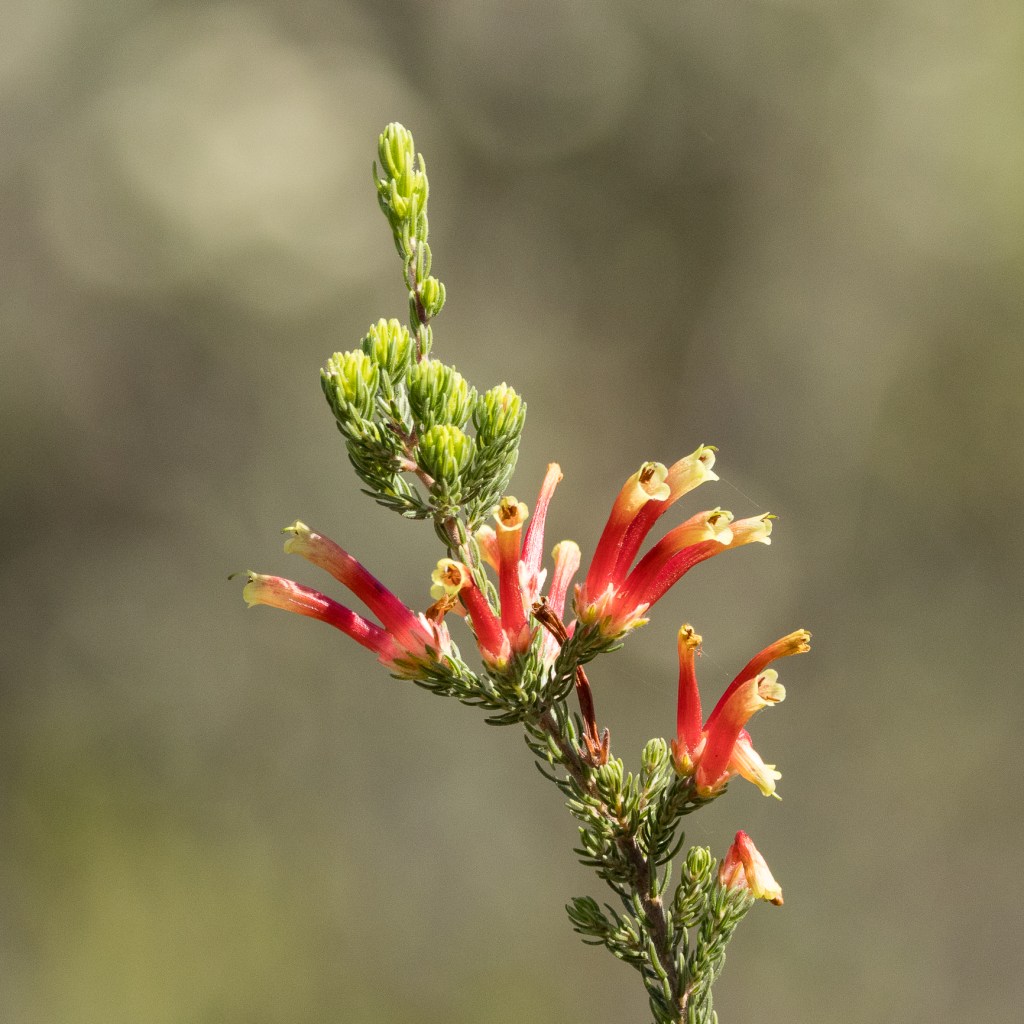
Erica, Friemersheim area

Atlasing and Twitching Tales 10 – February 2023

These tales record some of the more memorable experiences while atlasing – in this case during February 2023 while we were at our ‘other’ home in Mossel Bay.

Klein Brak 2 to 4 February

Pentad 3405_2205

Reports of a Lesser Sand Plover seen at a vlei near Klein Brak River piqued my interest for two reasons – I have only seen the species once before in Mozambique, so it was a potential addition to my South African list, and Klein Brak is about 20 minutes from our front door.

So I headed out early-ish on a Tuesday morning to the vlei which is located near the old power station, as described by Amanda, keen Mossel Bay birder and the finder of this rarity. Once parked on the road next to the vlei, I scanned the shallow water and soon found the plover on its own, but distant and difficult to see against the brownish surface and the low sun in my face.

Lesser Sand Plover Charadrius mongolus Mongoolse strandkiewiet, Klein Brak vlei

Once I had my scope set up I had better views of the plover as it pottered about in a small area, after initially standing dead still. I was soon joined by a few other birders, two known from previous twitches, the other a young birder from George.

Lesser Sand Plover Charadrius mongolus Mongoolse strandkiewiet, Klein Brak vlei

Then it was a question of getting a reasonable photo, as is the norm for many birders nowadays – I had taken some from my position on the road but the distance and backlight meant that they were less than satisfactory – oh, it’s hard to please us bird photographers!

After hanging around for a while, the young birder set off to find a path down to the verge of the vlei on the opposite side and we watched his progress with interest…. he was soon in a much closer position and on firm ground it seemed, so we followed suit.

The plover was relaxed so we carefully edged closer, and I got on one knee (which is not as easy as it used to be) to take some shots closer to ground level, which made for some far better images of this scarce wader, as you can see above and below.

Lesser Sand Plover Charadrius mongolus Mongoolse strandkiewiet, Klein Brak vlei

I left soon after, with 12 species recorded including the Lesser Sand Plover (which would generate a Rarity form to be completed online)

Two days later I returned to the pentad to complete a ‘Full Protocol’ card (which requires a minimum of two hours of atlasing), starting in the northern part of Mossel Bay and heading through Hartenbos to the river mouth.

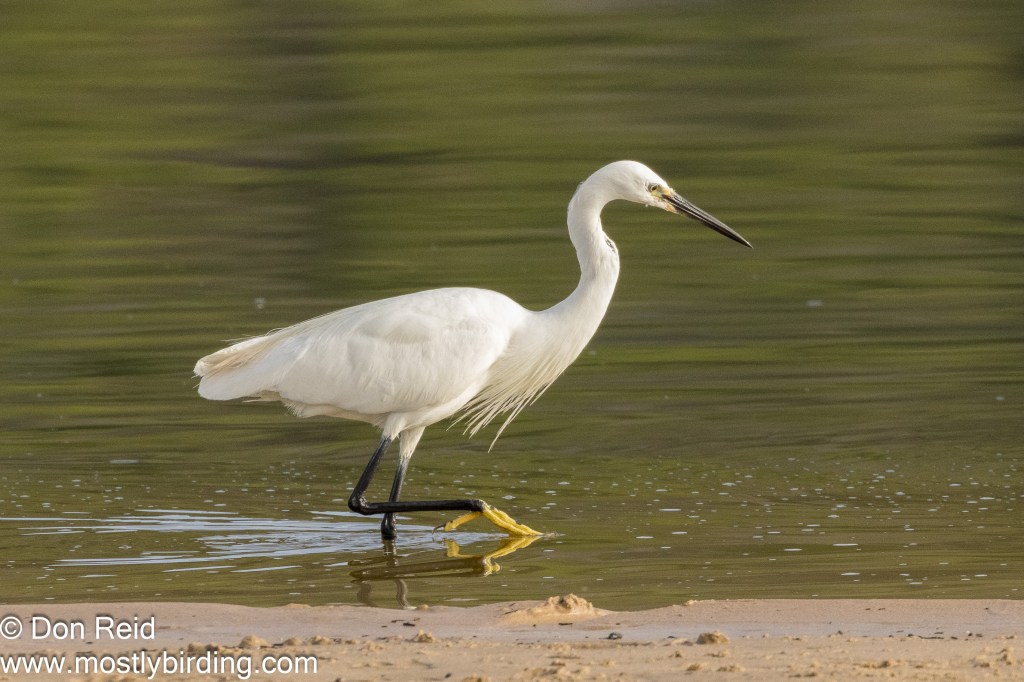
There was plenty of birdlife (and people, being Saturday) enjoying the fine weather, so I set up my scope and scanned the estuary back- and forwards, adding several species in a short time, including a Little Egret patrolling the water’s edge and displaying its bright yellow feet with every step.

Little Egret Egretta garzetta Kleinwitreier, Hartenbos

Further stops at the weir upriver and at the vleis adjoining the water treatment works were productive, with a quick return trip to the Lesser Sand Plover spot adding a few more species to take my pentad total to 63 species

Other highlights –

  • Common Ringed Plover at the same spot as the Sand Plover
  • Pied Kingfisher ‘fishing’ at the river mouth
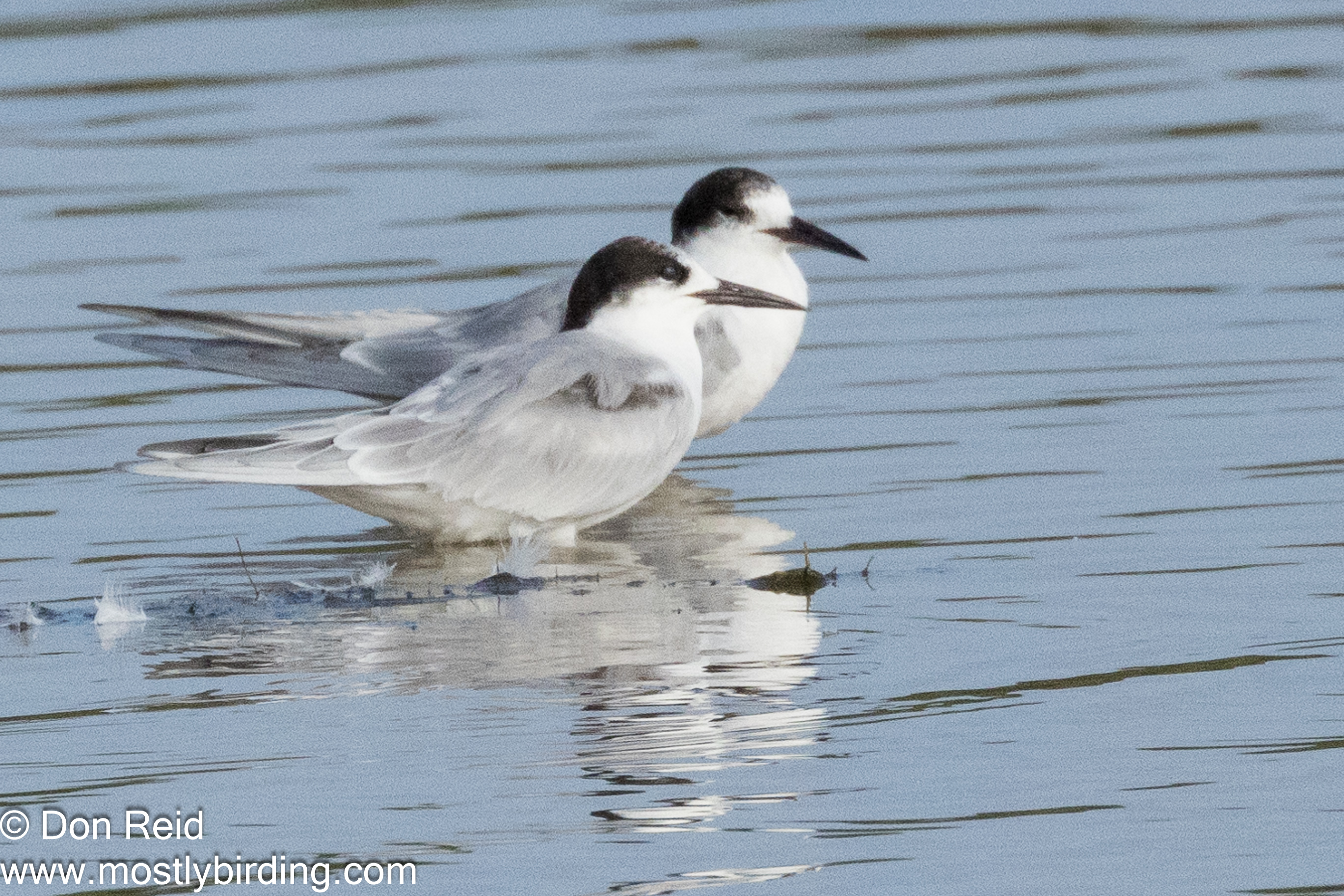
  • Three Tern species at the river mouth – Swift, Common and Sandwich Terns
Common Tern Sterna hirundo Gewone sterretjie, Hartenbos River mouth

  • Wood Sandpiper at the water works vleis

Day Trip to Robinson Pass – 11 February

We were keen to get out after being confined to home for most of the week and decided to have a late lunch at Eight Bells Inn followed by our customary nature drive up the Robinson Pass and back again.

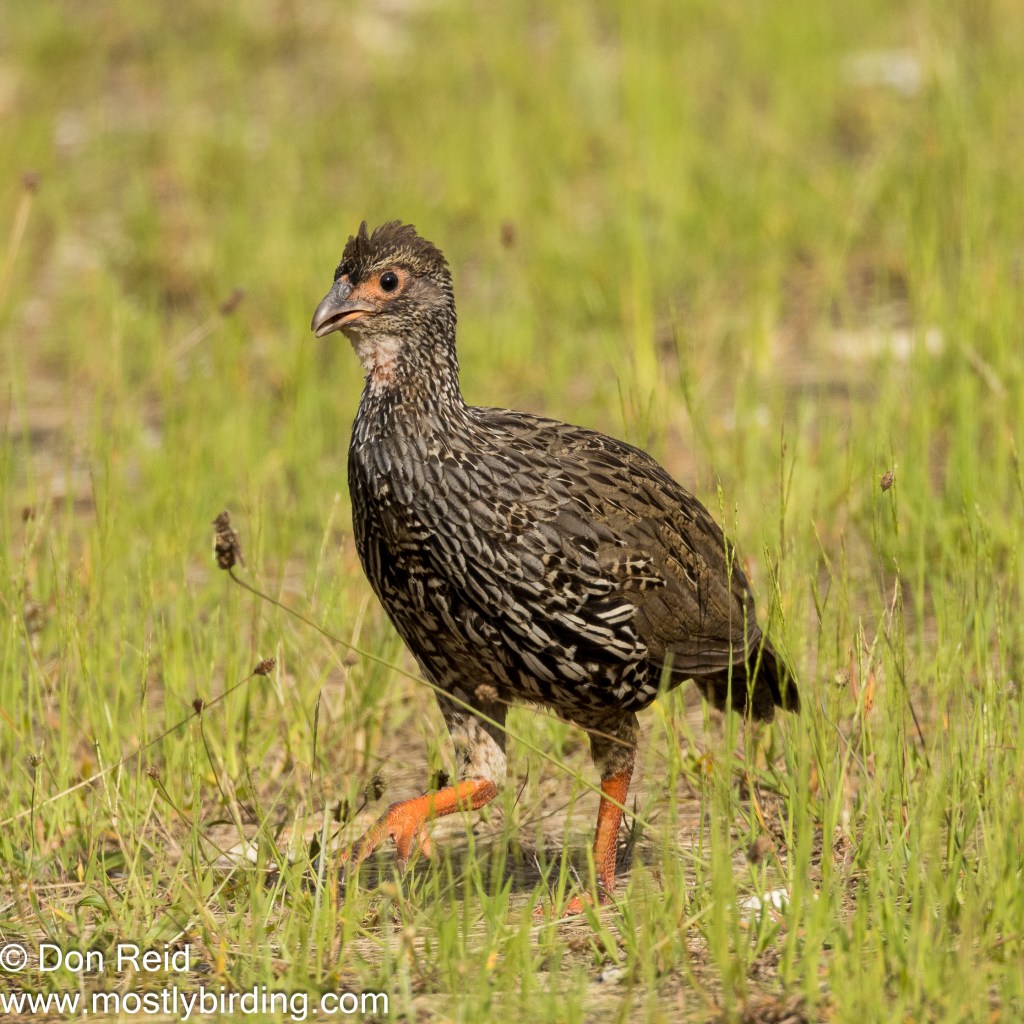
On the way down the pass I spotted a few Red-necked Spurfowl on the grassy verge ahead and pulled off to see what they were up to. One juvenile ventured cautiously onto the tar road and another followed, until a passing vehicle chased them back – I couldn’t help wondering – why did the Spurfowl try to cross the road?

Red-necked Spurfowl Pternistis afer Rooikeelfisant (race castaneiventer) (Juvenile), Robinson Pass

Looking for an Osprey at Great Brak – 16 February

Reports by Rudi, another of the keen birders based in Mossel Bay, of an Osprey at Great Brak river estuary had us heading there mid-afternoon to see if it was still around – and just as an excuse to get out to a pleasant birding spot.

30 minutes after leaving we were at the river, driving slowly along the Suiderkruis road as we are accustomed to doing – there were plenty of the usual waterbirds and waders visible, although no immediate sign of the Osprey.

The tern roost near the mouth was busy with Swift, Sandwich and Common Terns all present.

Moving around to the opposite side of the estuary, we stopped at the restaurant parking next to the old railway station and got out to scan the surrounds – a large bird in the sky caught my eye and Gerda’s at the same time and we both shouted excitedly. It was the Osprey!

Pleased, we headed homewards.

Fransmanshoek – Quick Trip 18 February

Andre suggested a late Saturday afternoon visit to Fransmanshoek, near Vleesbaai for a simple ‘picnic’ of coffee and biscuits at this lovely spot with its rugged rocky scenery and pathways among the rocks.

Swift Tern Thalasseus bergii Geelbeksterretjie, Fransmanshoek

Distant seabirds and closer birds among the undergrowth added up to a modest 13 species during the hour or so we spent there, nevertheless it is one of those ‘off the beaten track’ unspoilt spots that is worth a visit for the scenery alone.

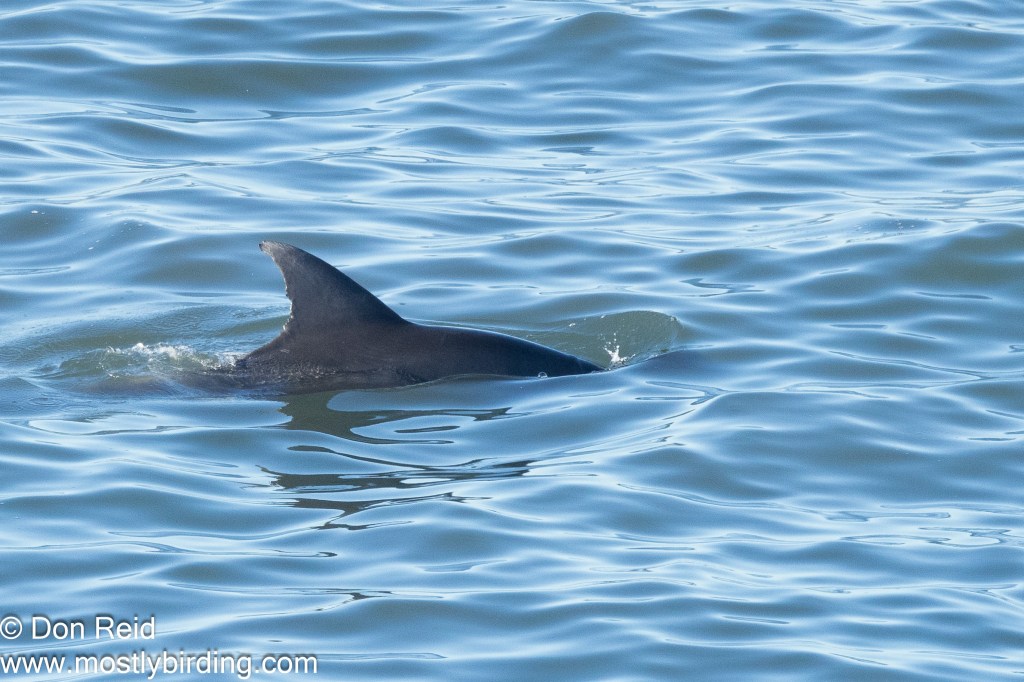
Dolphin, Fransmanshoek
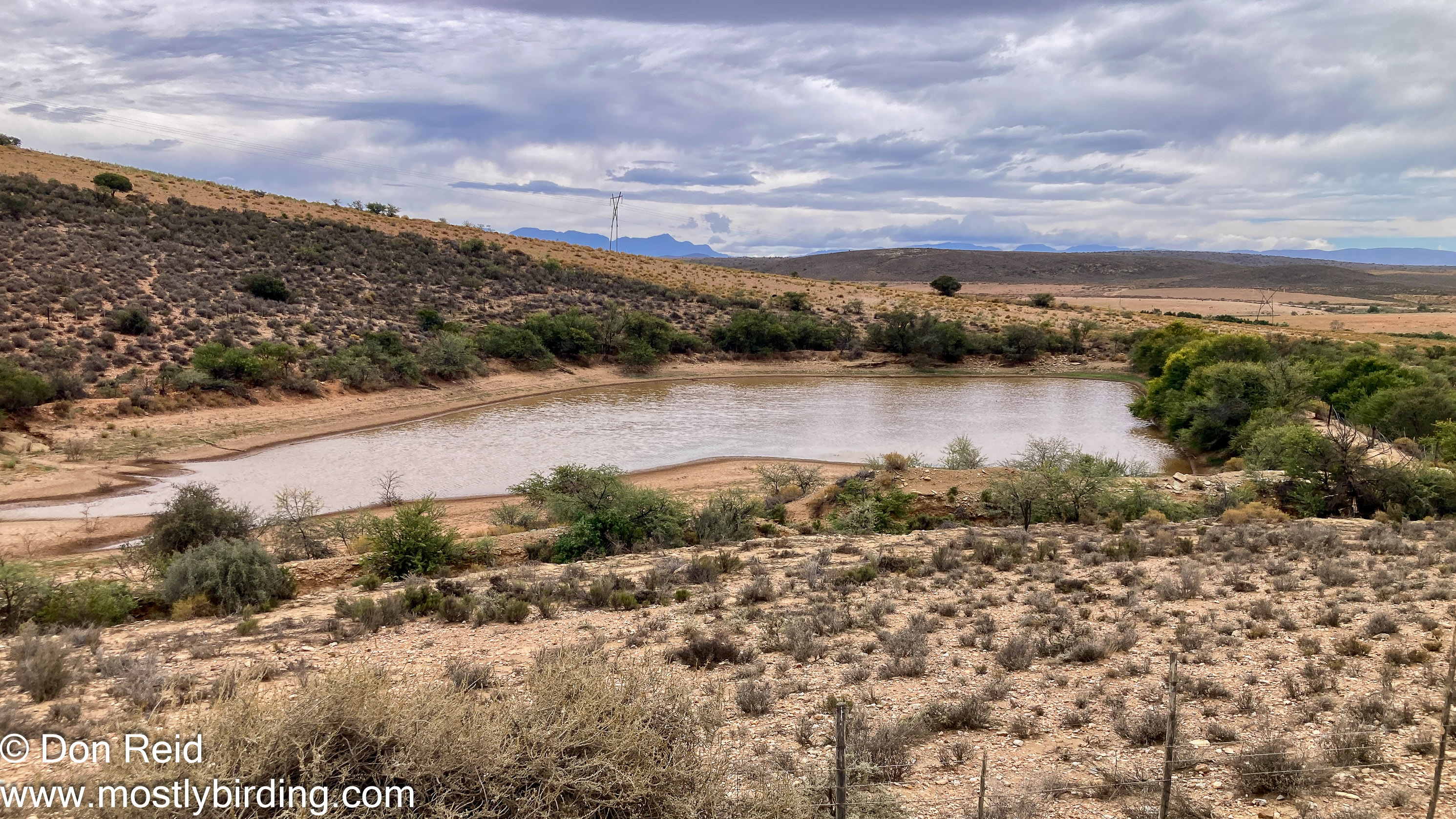
Fransmanshoek
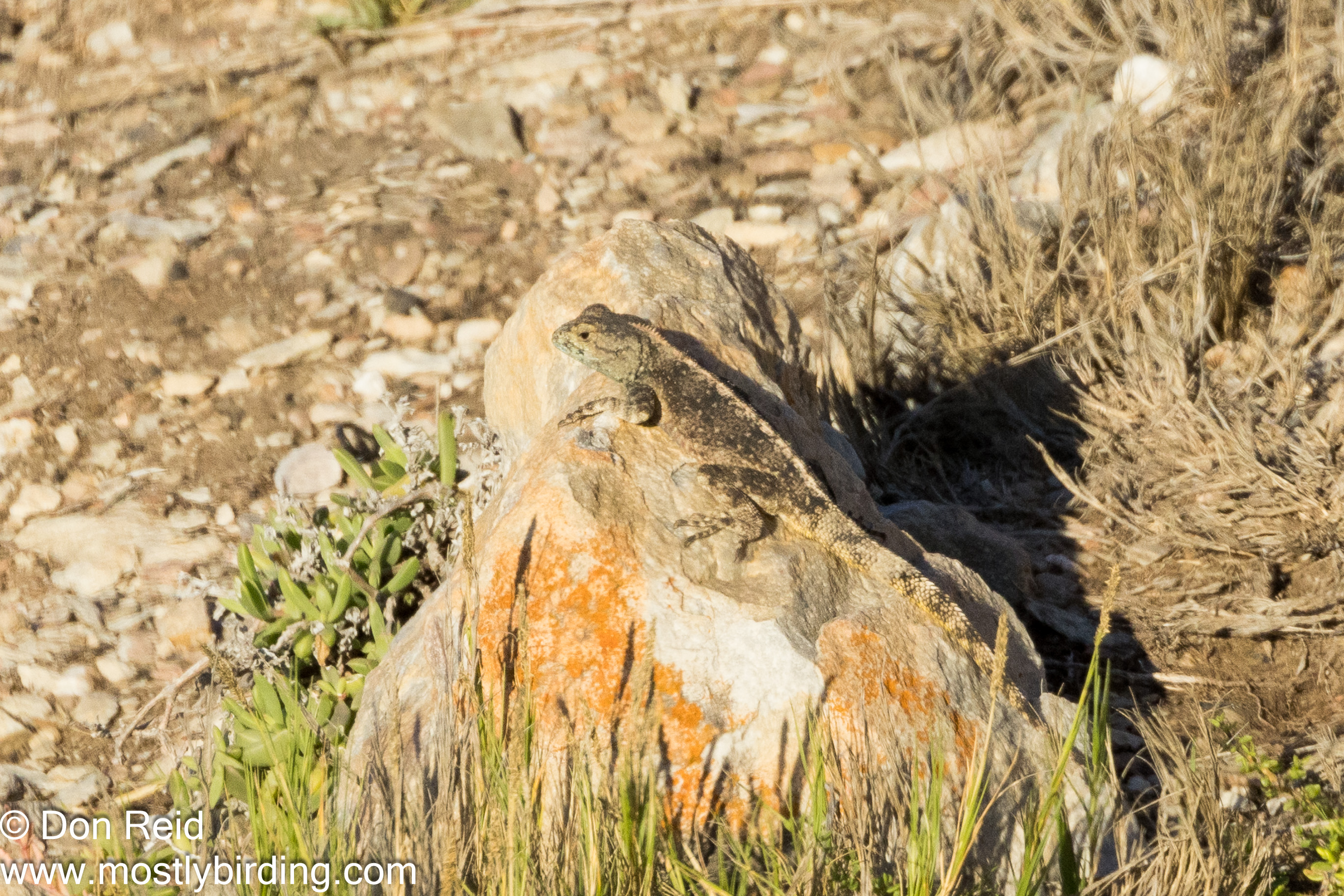
Lizard, Fransmanshoek

Heimersrivier Road – 20 February

Pentad 3345_2220

Another lengthy treatment in George for Gerda meant another opportunity for some atlasing not too far from George. I decided to head ‘over the mountain’ into the Klein Karoo towards Oudtshoorn and selected a pentad which, on the face of it, was lacking in many features with a single road – signposted Heimersrivier – running west to east through the middle of the pentad. It did not promise a large total of species and that’s pretty much how it turned out.

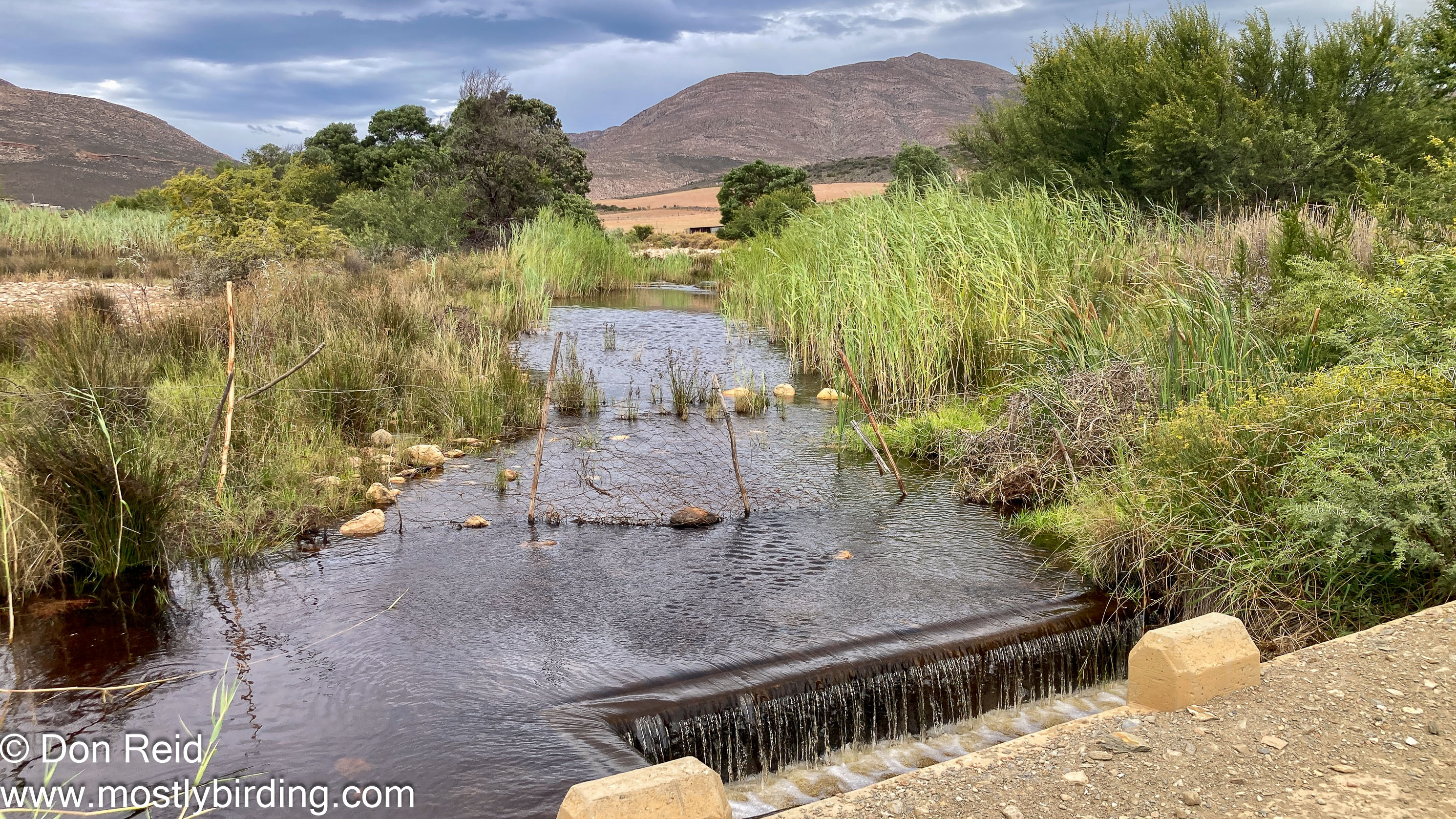
Heimersrivier

In fact, the first hour of atlasing produced just 7 species, 6 of which were only added after 50 minutes of careful driving and scanning for movement in the arid landscape both sides of the gravel road.

Heimersrivier

A dam just short of the eastern pentad boundary provided the boost with White-breasted Cormorant, SA Shelduck and African Black Duck and a small river soon after kept the momentum going.

Heimersrivier
African Black Duck Anas sparsa Swarteend, George-Oudtshoorn Area

The return drive along the same road was far more productive and easier for spotting as I now had the sun at my back instead of in my face and took me to 26 species in 2 and a half hours.

Heimersrivier
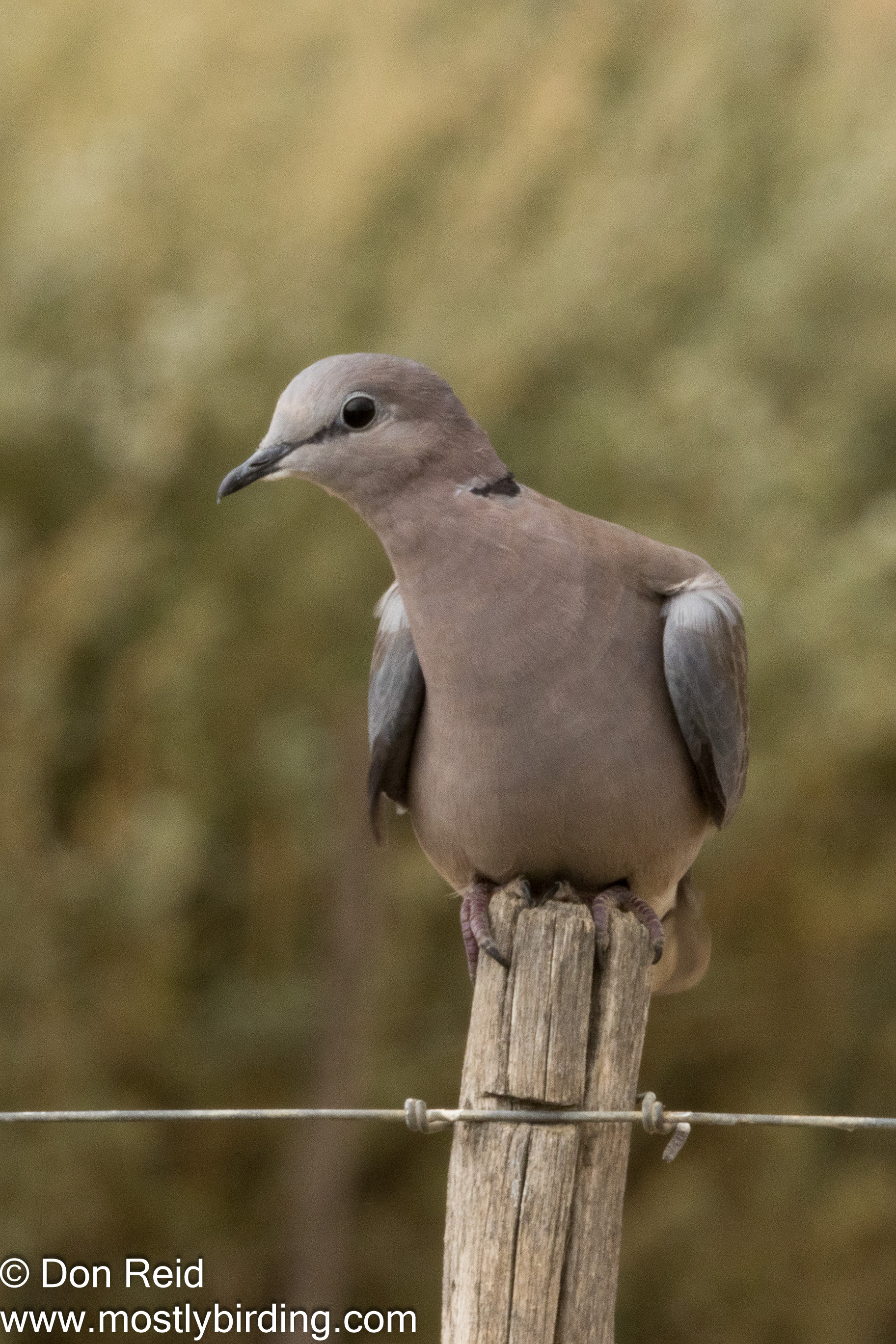
Ring-necked Dove Streptopelia capicola Gewone tortelduif, George-Oudtshoorn Area
Familiar Chat Cercomela familiaris Gewone spekvreter (race familiaris), George-Oudtshoorn Area

Other highlights –

  • Namaqua Doves
  • Red-capped Larks
  • Black-winged Kite in a photogenic position
Black-winged Kite Elanus caeruleus Blouvalk, George-Oudtshoorn Area

Gondwana Area / Broad-billed Roller Twitch – 28 February and 4 March

Pentad 3400_2150

Now I’m not a ‘serious’ twitcher (defined as a birder who goes to extreme lengths to add a rarity to his/her lifelist) but when a report came through on the Monday afternoon of a Broad-billed Roller not far from Mossel Bay, I was sorely tempted. Broad-billed Rollers occur in the far north-east of South Africa, so this one was at least 1500 kms from its usual range – probably a case of reverse migration ie heading south when it was supposed to head north to central Africa

Come Tuesday and messages showed a few birders looking for the Roller, so far without success – I was not keen to leave Gerda alone at home as she was still in recovery mode, but she urged me to go and with Geraldine’s encouragement and support the twitch was on!

By mid-morning I was on my way to the area adjoining the Gondwana Game Reserve and reached the pentad just after 11 am, birding as I went. I got impatient and sped up to get to the pin drop provided by the original spotter, meeting the Waldens along the way going in the opposite direction – they had not found the Roller after a couple of hours looking for it, so I gave them the pin drop and continued along the gravel road.

I soon passed another couple – Simon Fogarty and Jenny, both from Cape town – who had also not had any luck finding the rarity. They had driven 400 kms from Cape Town to look for it, so were understandably keen to carry on until they did.

I carried on to the spot where an open field with low fence posts seemed to fit the photos posted on the Whatsapp Rarities group. I spent an hour in the vicinity, searching up and down the stretch of road where it had supposedly been seen. The Waldens returned and we chatted at length – about birding, naturally. Simon and Jenny also turned up and we all carried on the search.

Eventually I left them to it and headed homewards, only to pull up sharply about two kms down the road when I glanced towards a farmhouse and a rufous bird caught my eye, momentarily thinking it was a Rock Kestrel which are fairly common in these parts, then realising it was the Roller – Bingo!

Broad-billed Roller Eurystomus glaucurus Geelbektroupant, Gondwana Area

After taking a few photos I rushed back to where the two couples were still searching and happily informed them of the find. Back at the spot, we all admired the colourful Roller, took photos and just enjoyed the moment, then said au revoirs and returned home.

I had not done enough atlasing to justify a ‘Full Protocol’ card but was keen to get back to Gerda. Subsequently an opportunity arose on the Saturday, within the 5 day period allowed to complete an atlas card, to venture out to the same area and take the card from 15 to 42 species including some pleasing sightings –

  • Tambourine Dove calling – oh so mournfully
  • Secretary Bird in a distant tree, probably guarding a nest
  • Black Cuckooshrike near the Roller spot
  • Blue Cranes in an open field
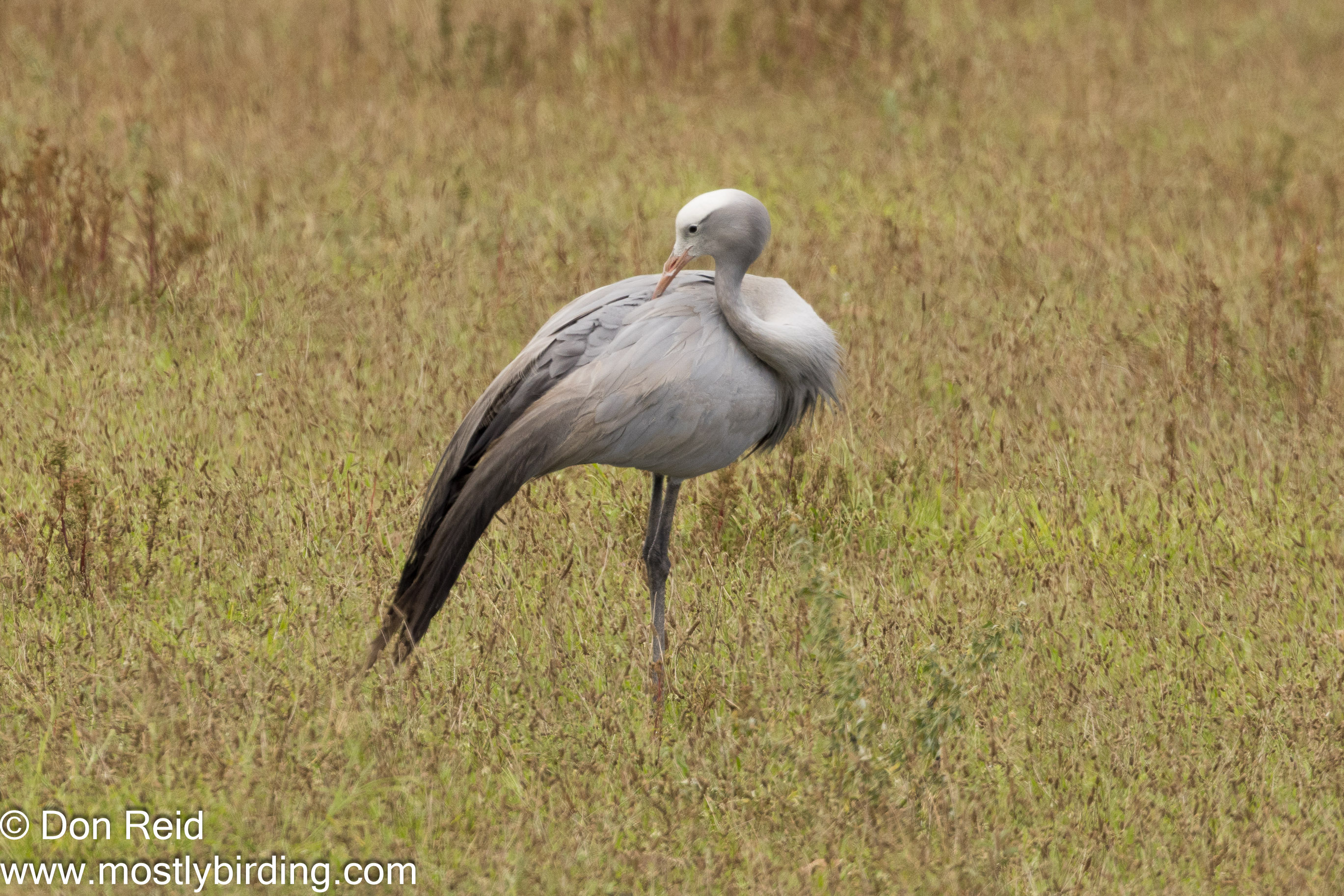
Blue Crane Anthropoides paradiseus Bloukraanvoël, Gondwana Area

Meanwhile back at the ranch …

As usual I atlased my ‘home’ pentad several times during the month and was rewarded with a number of good sightings –

  • Buff-spotted Flufftail calling from its favourite spot along the nature trail (such an eerie sound)
  • Fiery-necked Nightjar heard for the first time since November
  • Knysna Warbler heard from our balcony for the first time
  • Black Sparrowhawk flying over the golf course
  • Ruddy Turnstone at the Point
  • Spotted Eagle-Owl seen on the nature trail and around our home
Spotted Eagle-Owl Bubo africanus Gevlekte ooruil, Mossel Bay Golf Estate

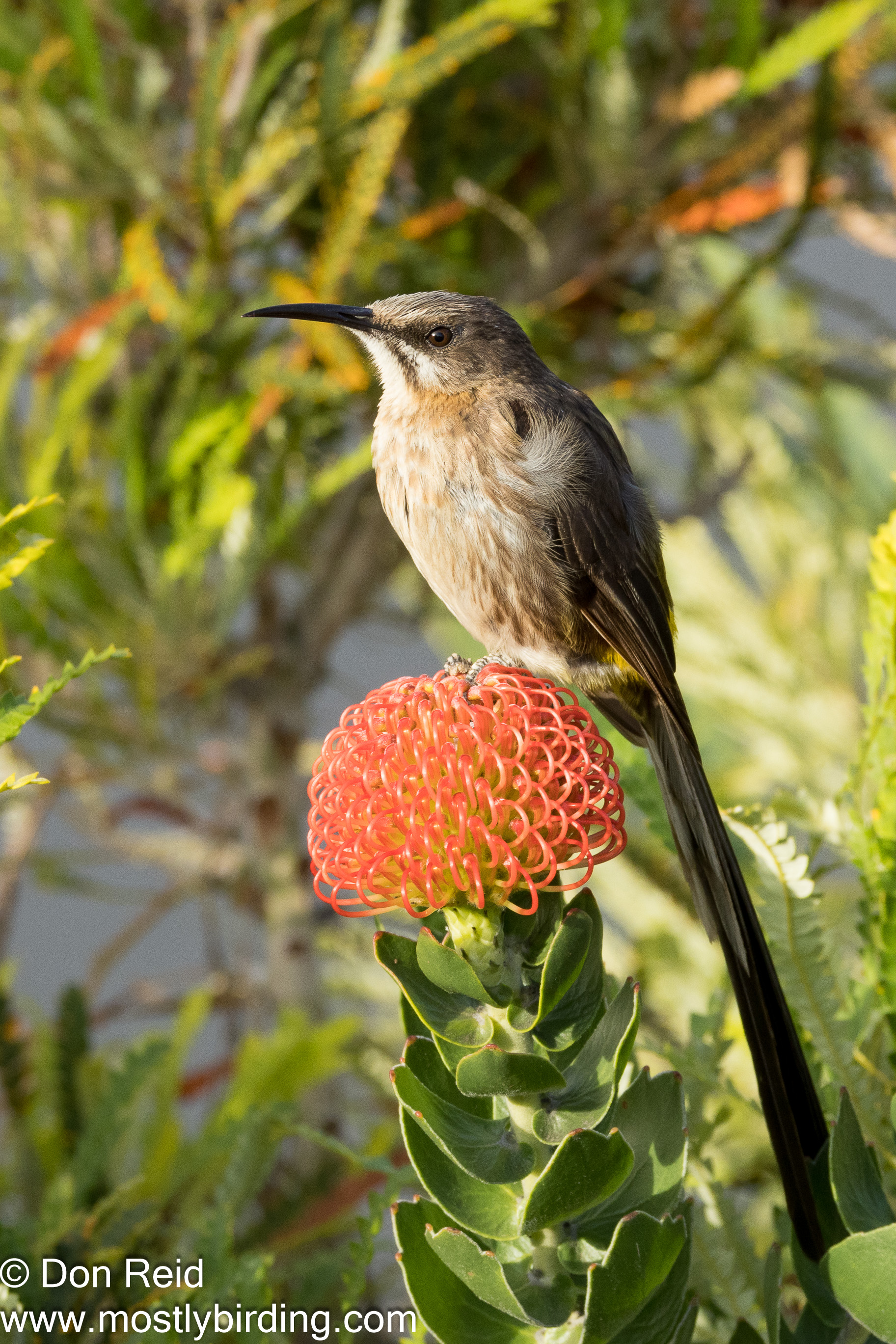
Cape Sugarbirds still enjoying the profusely flowering Pincushions in our garden

Cape Sugarbird Promerops cafer Kaapse suikervoël, Mossel Bay Golf Estate

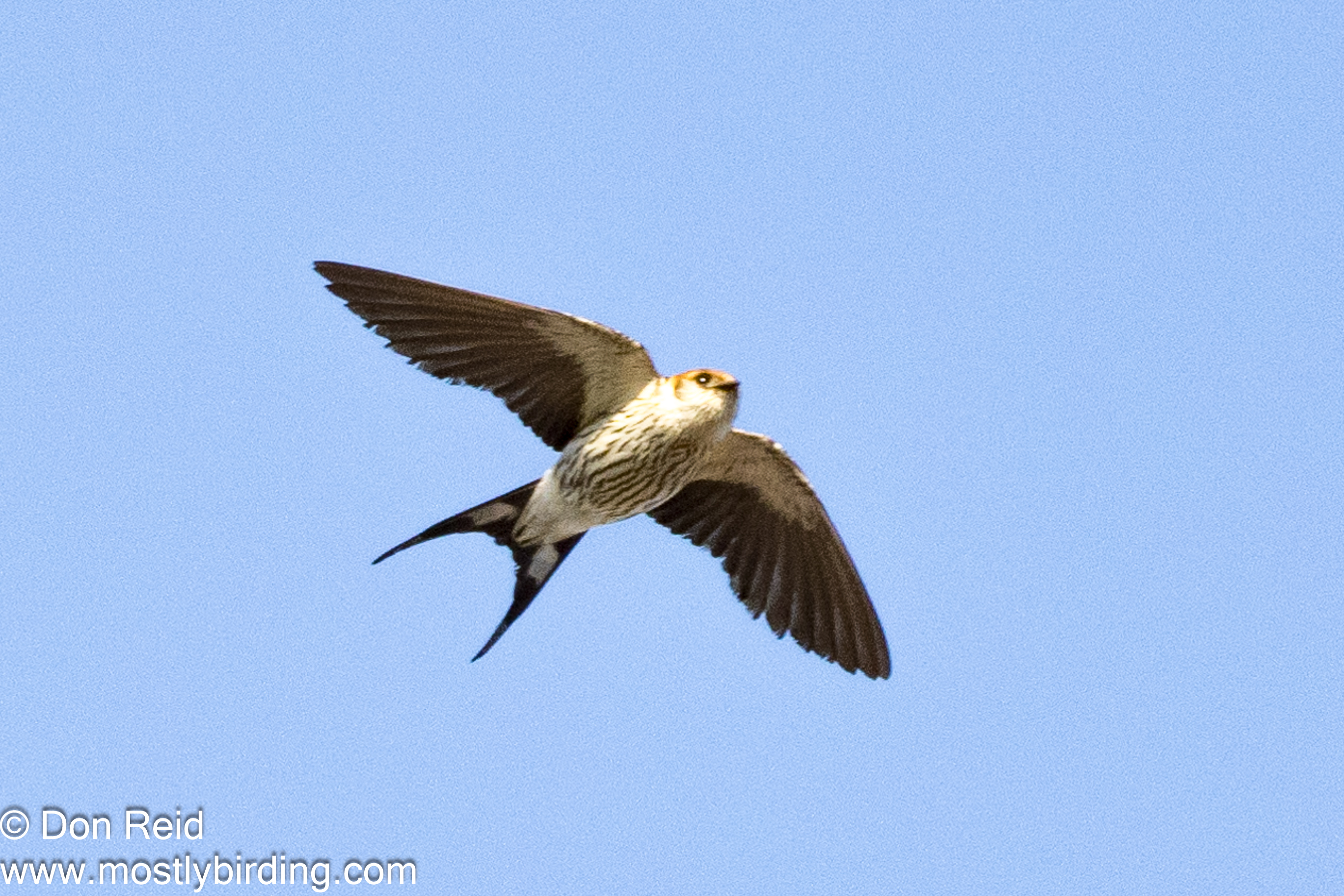
My attempts to capture a Greater striped Swallow in the air produced a couple of decent shots among hundreds of discards

Greater Striped Swallow Cecropis cucullata Grootstreepswael, Mossel Bay Golf Estate

Atlasing Tales 9 – January 2023 (Part 2)

These tales record some of the more memorable experiences while atlasing – in this case during January 2023 while we were at our ‘other’ home in Mossel Bay. (which we now call our only home after moving permanently in October 2023)

Continuing where I left off in Part 1 ….

Great Brak and Glentana 21 January 2023

Another Saturday ‘off duty’ from patient care (thanks to daughter Geraldine) meant I could plan an atlasing trip and decided to atlas a favourite area – Great Brak River and the adjoining Glentana.

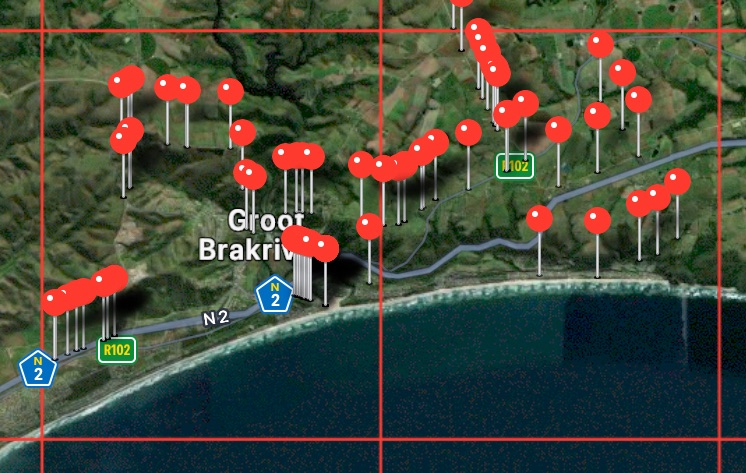
I use the outstanding Birdlasser app for recording the species as I go, as most atlasers do, one of its features being a record of each sighting’s coordinates, among other details. The map below is the result, with each ‘balloon’ representing a species recorded as I criss-crossed the pentads along the available roads.

Pentad 3400_2210

So, to put the map into words, I started at 6.45 am along the N2 heading to Great Brak, pulling off the already busy National road at a spot which gave me a view of the fields and dams to the north. After 30 minutes I had 22 species logged which is par for a ‘good’ pentad.

Next stop after taking the Great Brak turnoff was the Suiderkruis road which adjoins the estuary all the way to the river mouth and is a great vantage point for viewing waterbirds.

During summer, when the water level in the estuary is favourable, it’s a magnet for waders and that was the case today with the ‘usual suspects’ present – White-fronted and Common Ringed Plovers, Greenshank, Little Stint and Oystercatchers.

Common Greenshank Tringa nebularia Groenpootruiter

Near the mouth the tern roost was busy with terns coming and going constantly – the three regular species were all there – Swift, Sandwich and Common Terns

That took me to 41 species and it was looking good for a high total (which is not the main point of atlasing but does inspire you to give it your best).

Inevitably the birding slowed from there as I headed inland towards the village, then up into the hills to complete a circular route through the countryside and back into town.

African Stonechat Saxicola torquatus Gewone bontrokkie (race torquatus), Great Brak Inland

Next up was a road I had not explored before – Voorbrug Way which heads uphill again but eastwards and I soon found myself passing homes (mansions in some cases) on large properties built on “the heights”. It was not long before I reached the boundary of the pentad, as indicated on the car’s GPS, with a total of 62 species recorded after some two and a half hours.

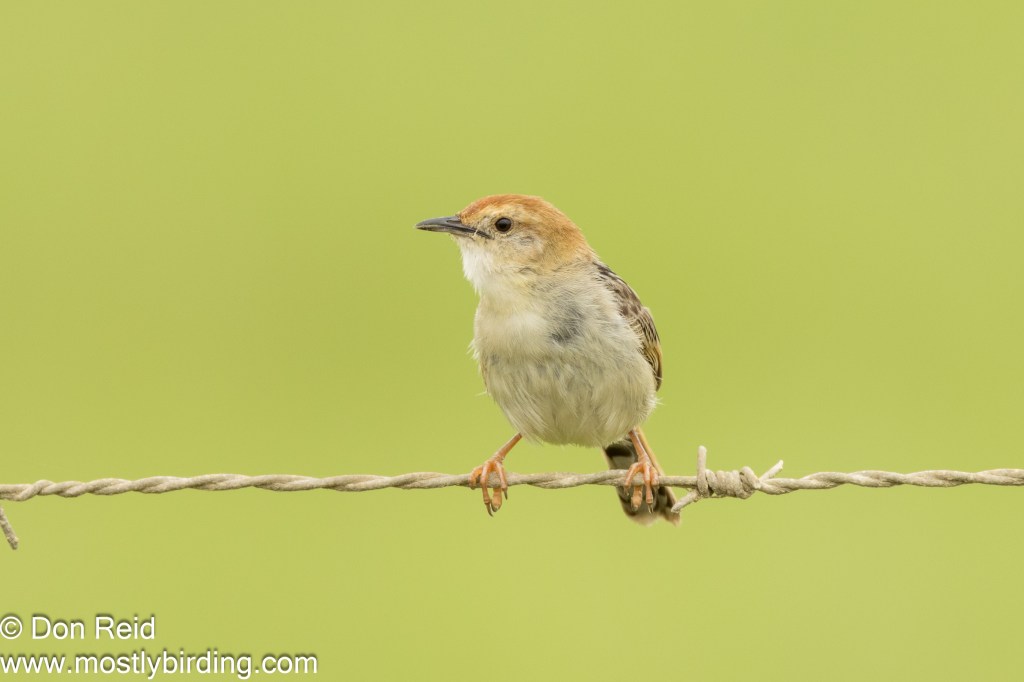
Levaillant’s Cisticola Cisticola tinniens Vleitinktinkie (race brookei), Great Brak Inland

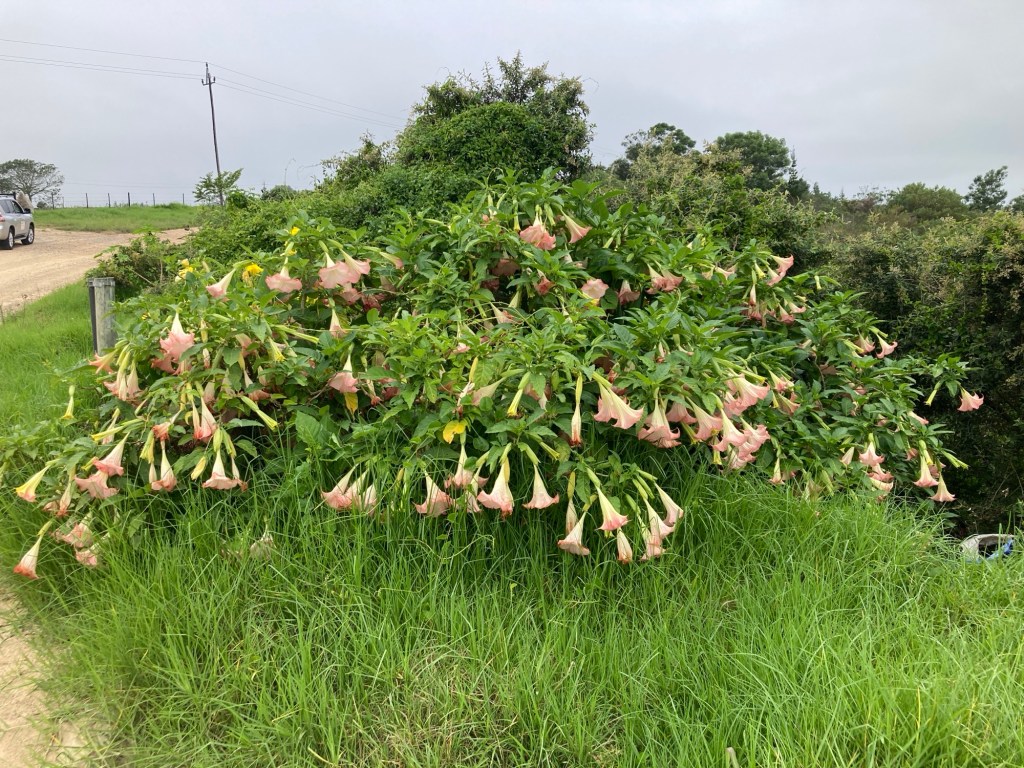
Driving along the back roads I just had to stop and inspect this spectacular flowering plant with flowers the size of dinner plates – turns out it is an introduced garden species native to certain South American countries and has a reputation for being poisonous although the sources say it is no more poisonous than the humble tomato plant

Moonflower – Brugmansia (introduced species), Great Brak Inland

Pentad 3400_2215

I carried on along Voorbrug Way, which took me back to the R102 main road before heading northwards on the Jonkersberg Road. This road passes several farms and small dams – ideal countryside for a good variety of species as it serves the needs of both terrestial and water-based birds. The latter included Red-billed and Cape Teals, Cape Shovelers, White-faced and Yellow-billed Ducks and Little Grebe, in addition to the usual Coots, Moorhens and Cormorants – standard fare for the southern Cape but not often all seen in a pentad without a significant vlei or two.

Returning on the same road I then turned back to the coast and drove the length of the seaside town of Glentana, which did not add much to my list, but I managed a total of 49 species for the pentad.

Other highlights of the pentad were several –

  • Four raptors in all – Black-winged Kite, Yellow-billed Kite (migrant), African Harrier-Hawk and Forest Buzzard
Yellow-billed Kite, (photo taken in Chobe Game Reserve)
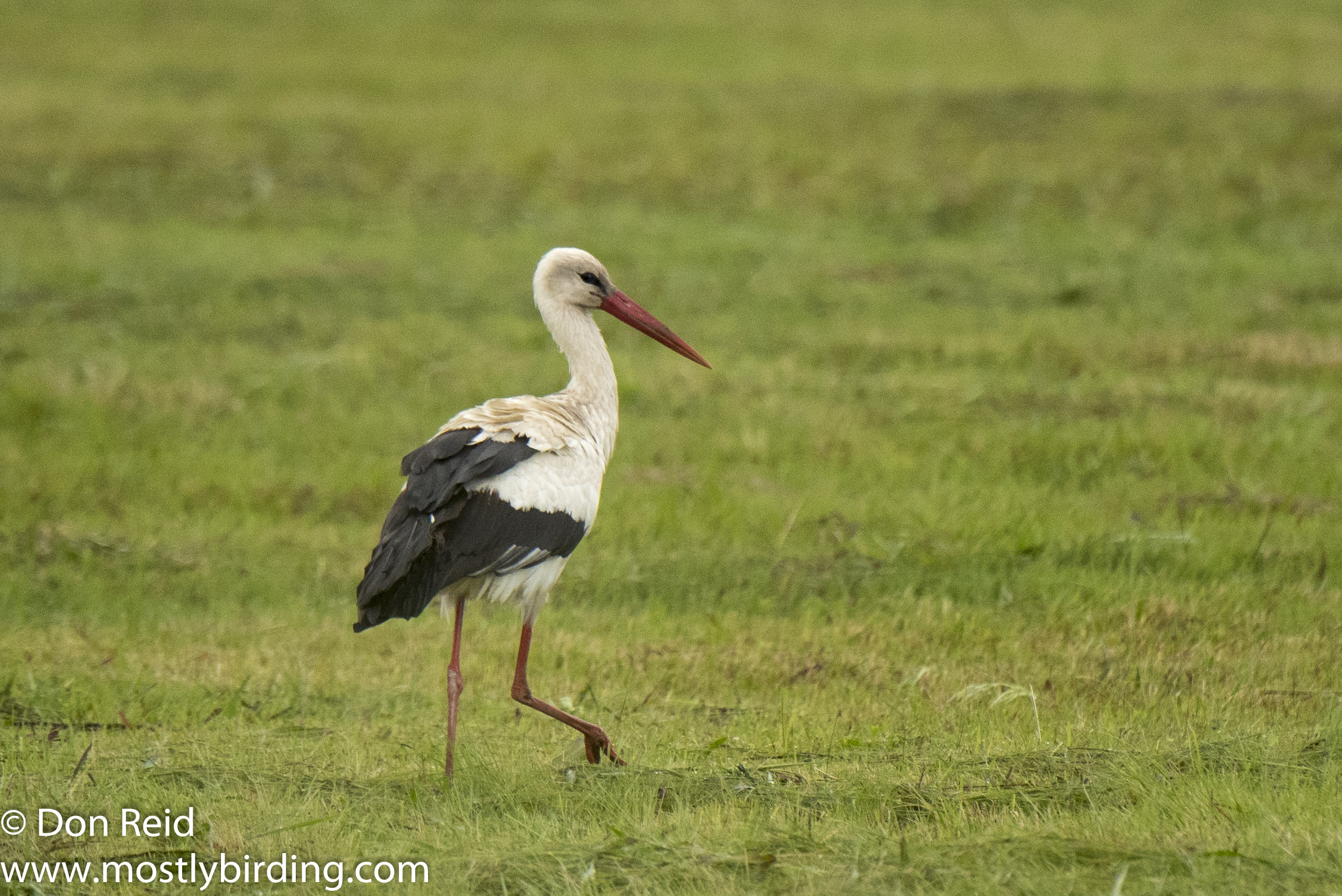
  • White Storks sharing a field with many Egrets and Ibises
White Stork, (photo taken near Delmas in Gauteng)
  • Common Quail calling from longish grass but as usual remaining hidden

Hoekwil 30 January 2024

My last atlasing outing for the month was a short one while Gerda was having her next treatment in George.

After some essential shopping I headed to the pentad which incorporates the “Big Tree” forest near Hoekwil village. Starting in Waterside Road in Wilderness I proceeded east to Bo-Langvlei road then up the Hoekwil road.

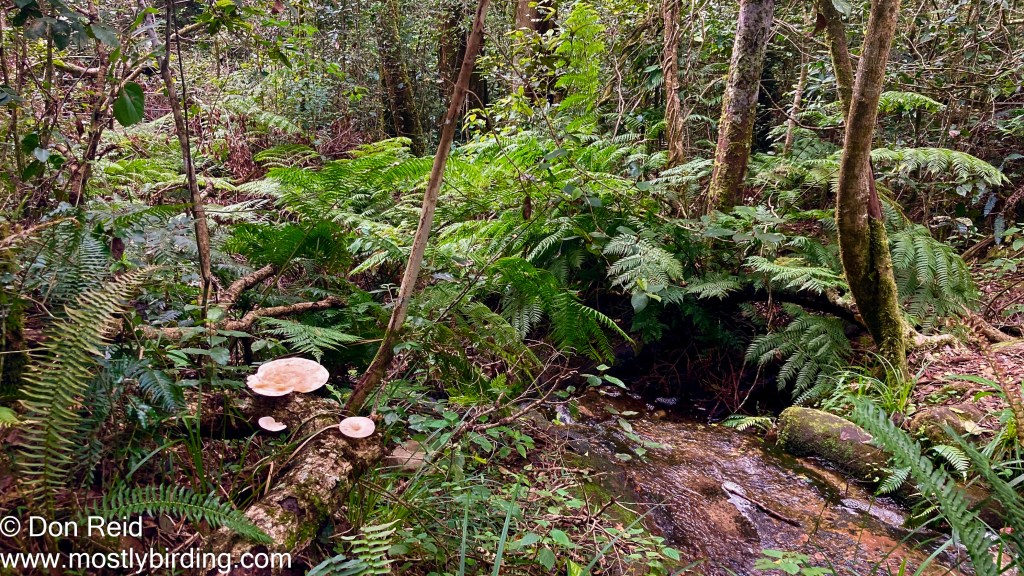
A windy day meant birds were few and far between, so I made my way to the forest parking area for a quick picnic lunch and spent the next hour walking the quiet trail where birds are more often heard than seen and lovely forest scenes lie around every bend in the trail.

Hoekwil Forest

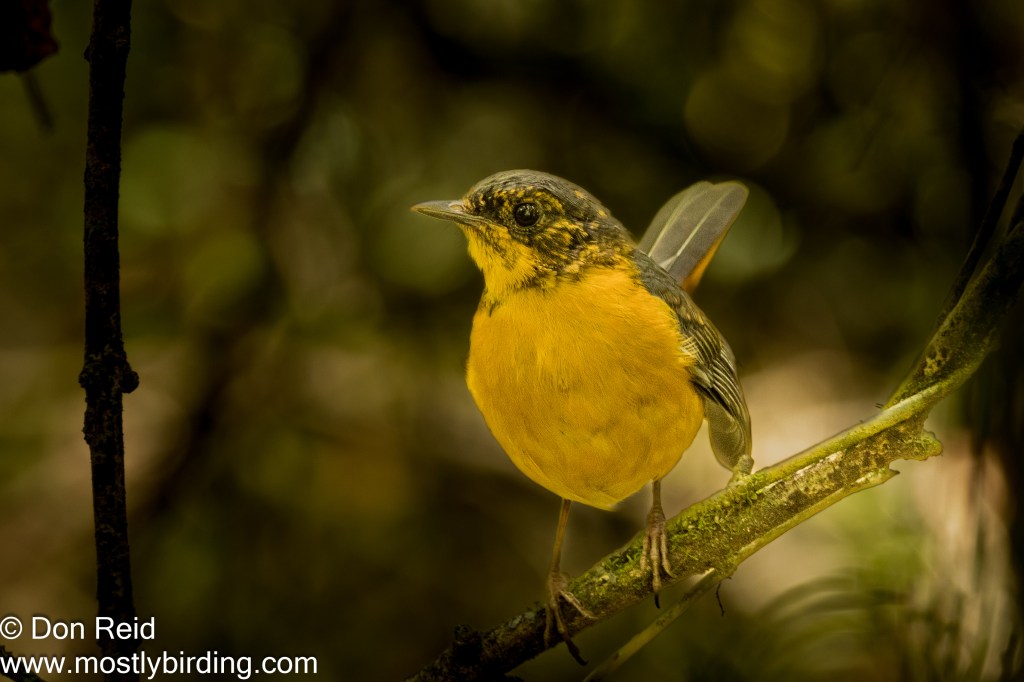
This juvenile Chorister Robin-Chat was curious enough to allow for a photo in the dark forest

Chorister Robin-Chat Cossypha dichroa Lawaaimakerjanfrederik (Juvenile), Hoekwil Forest

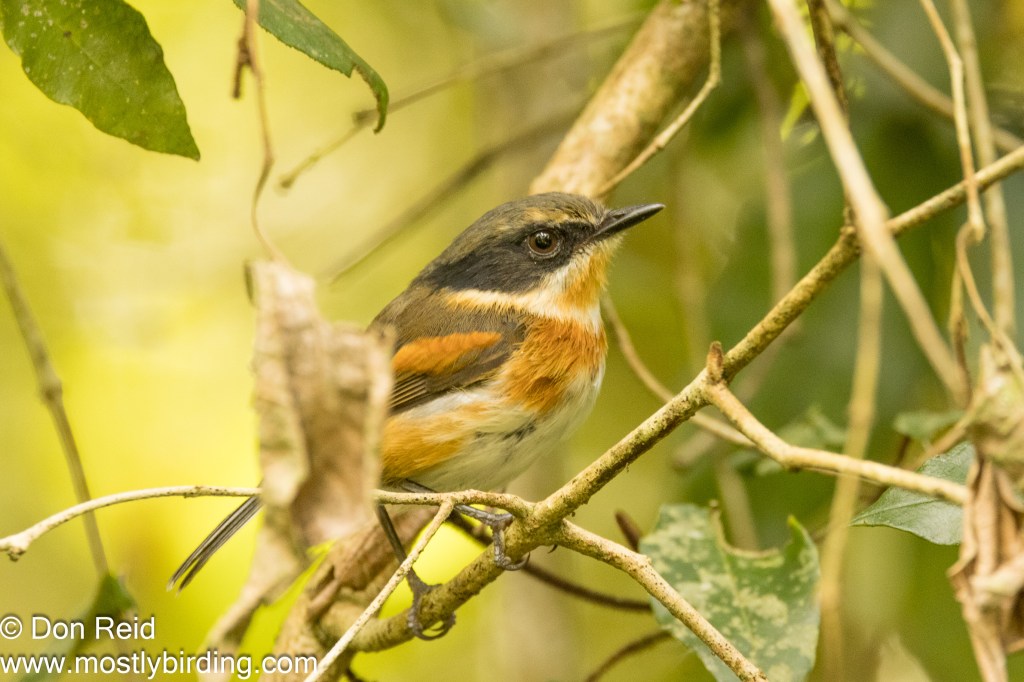
Cape Batis are quite common in the forest although not always easy to see – this was one of several sightings during my walk

Cape Batis Batis capensis Kaapse bosbontrokkie (Female, race capensis), Hoekwil Forest

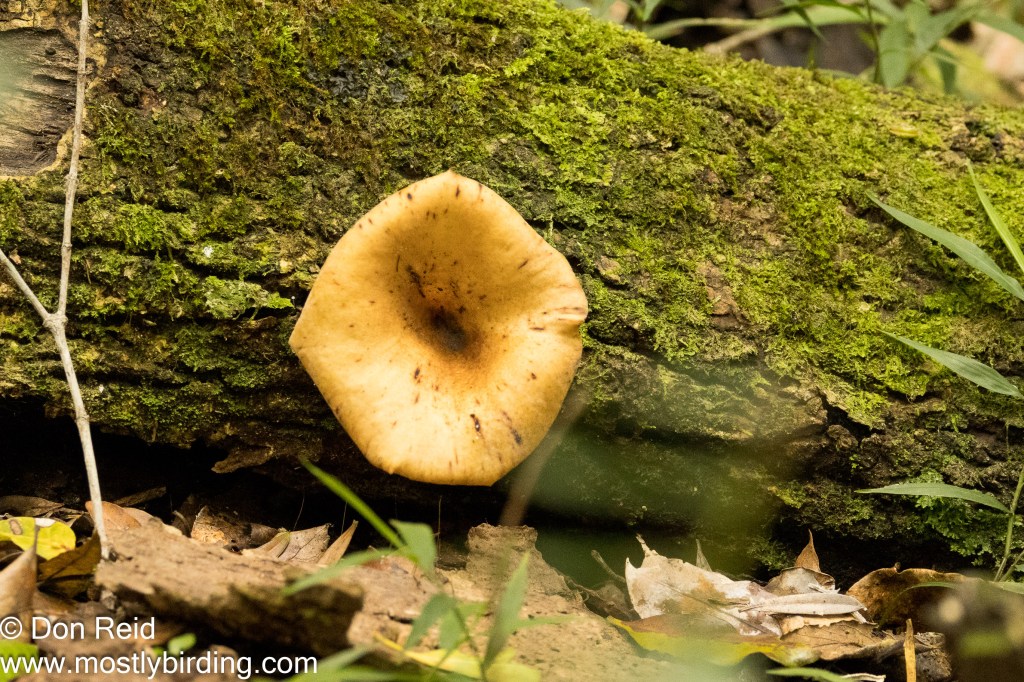
As with most forests, Hoekwil has many natural delights, apart from the birdlife, which tend to distract you from the task at hand and I found myself stopping to admire the bounty

Spider, Hoekwil Forest
Fungus, Hoekwil Forest
Butterfly : Bush Brown, Hoekwil Forest

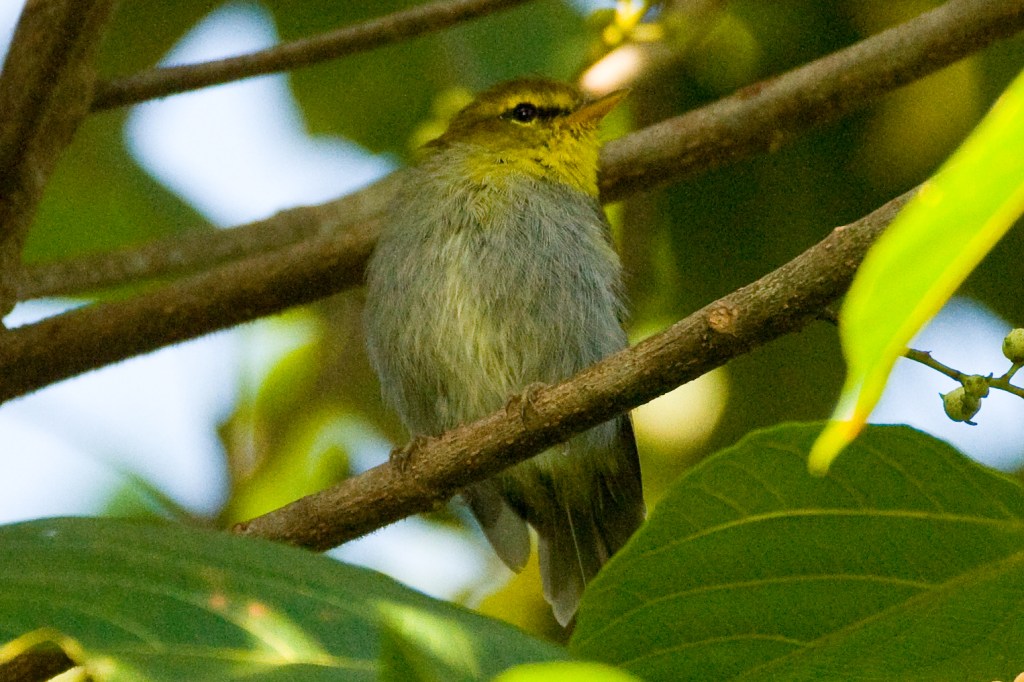
Bird of the day was a charming little Yellow-throated Woodland-Warbler – not having seen one for a few years it was a special sighting

Yellow-throated Woodland-Warbler

It had been a good month with a total of 167 species atlased and many special sightings among them

Atlasing Tales 8 – January 2023 (Part 1)

It’s time to resurrect a theme I last posted about a couple of years ago – the atlasing of bird species that lies at the heart of my birding activities as it has done for the last 10 years or more.

These tales record some of the more memorable experiences while atlasing – in this case during January 2023 while we were at our ‘other’ home in Mossel Bay. (which we now call our only home after moving permanently in October 2023)

Atlasing? 

It’s worth repeating: Atlasing is the regular mapping of bird species in a specific area called a “pentad”. Each pentad has a unique number, based on its geographical position according to a 5 minute x 5 minute grid of co-ordinates of latitude and longitude, which translates into a square of our planet roughly 8 x 8 kms in extent.

As a registered observer / Citizen scientist under the SABAP2 program (SA Bird Atlas Project 2), I record all of the species I see or hear in a particular pentad over a period which can be anything between 2 hours and 5 days, for submission to the project database at the ADU (Animal Demography Unit) based in Cape Town.

‘Home’ Pentad – Mossel Bay

Mossel Bay serves as my home pentad when we spend extended periods there and always produces a few notable sightings – this peak summer month was no different, coming up with several good sightings –

  • Spotted Eagle-Owl – a regular on the Golf Estate, sometimes spending the day on a nearby garden wall as this one did
Spotted Eagle-Owl Bubo africanus Gevlekte ooruil, Mossel Bay
  • Buff-spotted Flufftail, unlike obedient children, always heard but seldom seen
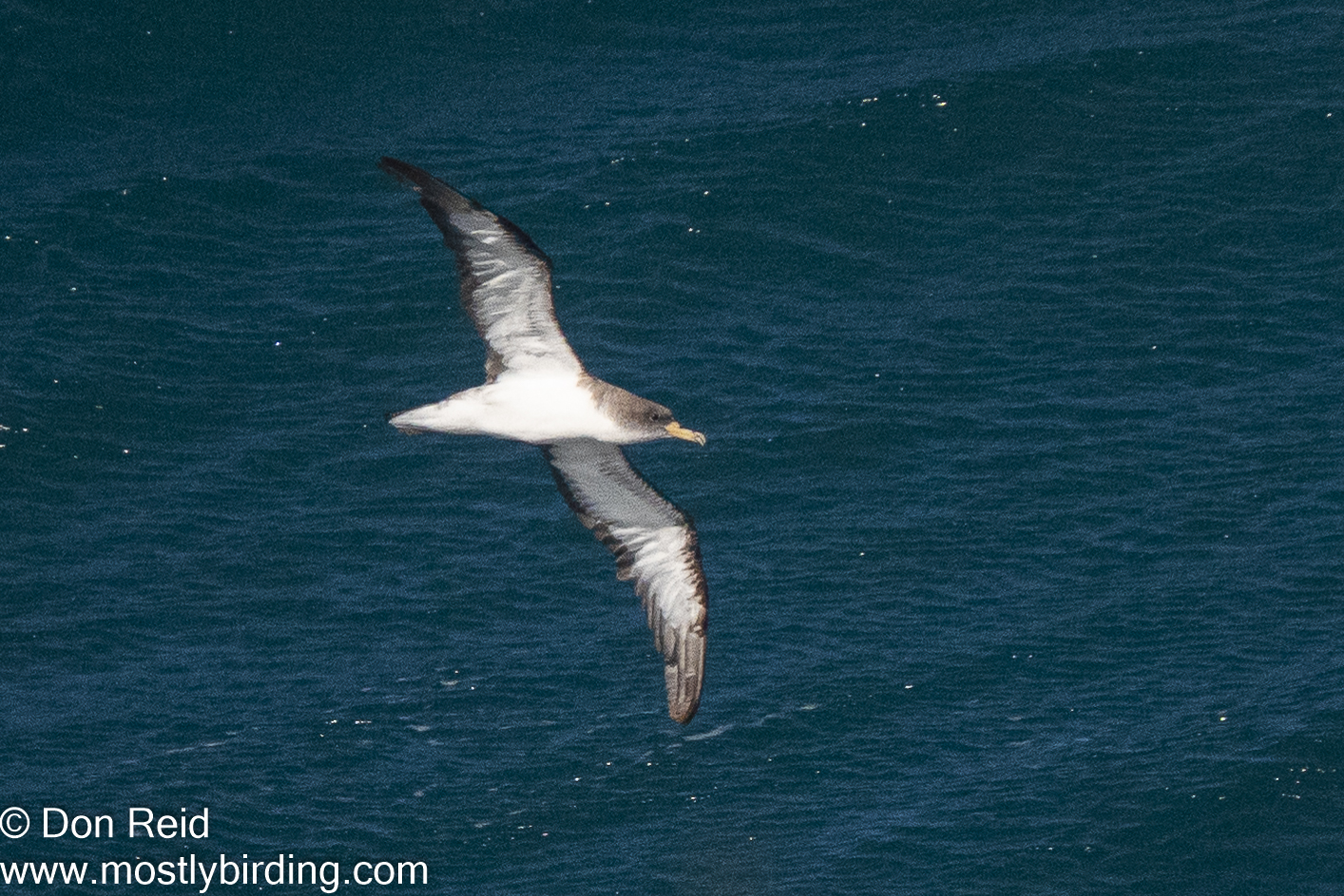
  • Cory’s Shearwater, a regular summer visitor along the coast, seen several times at The Point, often in numbers, especially on the days when the south-easter is blowing strongly
Cory’s Shearwater / Calonectris diomedea / Geelbekpylstormvoël, Mossel Bay Point
  • African Paradise Flycatcher along the nature trail
  • Black Sparrowhawk over the nature trail
  • Rock Kestrel over the fairways
  • Cape Batis in dense bush along the nature trail
  • And the easiest of the lot – this African Hoopoe perched on my neighbour’s roof for long enough to allow a few photos from our balcony
African Hoopoe Upupa africana Hoephoep, Mossel Bay Golf Estate

Rondevlei near Wilderness – 9 January

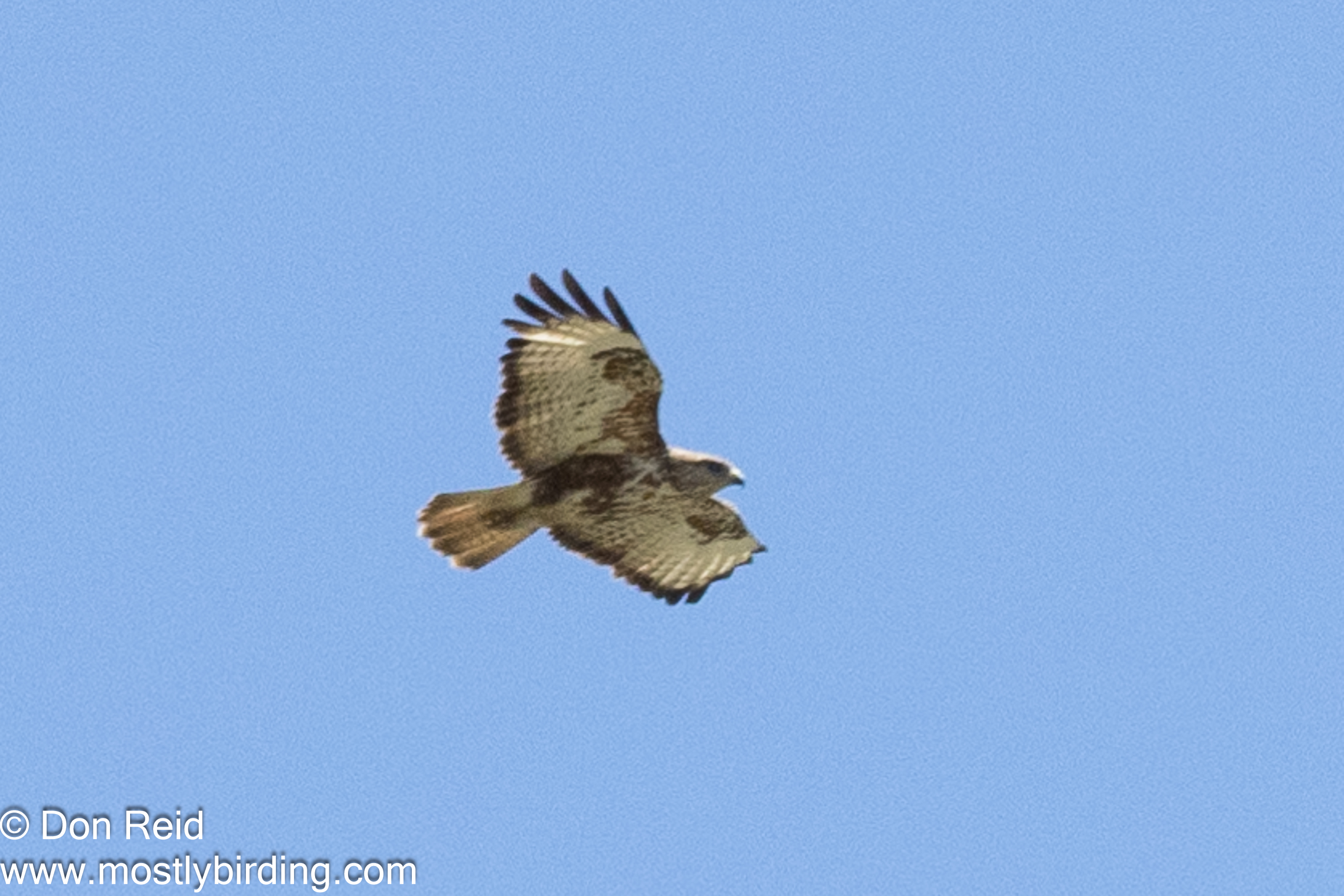
After dropping Gerda off for her 3rd chemo treatment in George and making sure she was well looked after, I had several hours of free time so bought a coffee and sandwich and headed to ‘Die Vleie’ just beyond the nearby town of Wilderness. Leaving the coffee shop, I spotted a raptor overhead which I was later able to ID as a Forest Buzzard from the hurried photos I took.

Forest Buzzard Buteo trizonatus Bosjakkalsvoël, George

After turning off from the N2 beyond Wilderness onto the dusty access road to the vleis, I found the hot conditions were not ideal but occasional birds at the roadside got my pentad list going as I headed for the hide at Rondevlei.

I spent an hour at the hide, trying out my new Canon mirrorless camera – it still needed some tweaking of settings and getting familiar with the control buttons before I would feel comfortable with it, nevertheless I was happy with the nice sharp images it was already producing. A trio of Reed Cormorants and a handsome White-throated Swallow provided good practice

Reed Cormorant Microcarbo africanus Rietkormorant, Rondevlei Wilderness
White-throated Swallow Hirundo albigularis Witkeelswael, Rondevlei Wilderness

Out on the expansive waters of the vlei I could spot Great Crested Grebes among the hundreds of Coots and Cormorants, as well as a single Maccoa Duck – a first for my Western Cape list.

Closer to the hide a couple of Black-winged Stilts went about their feeding routine and as I was about to leave the hide a Black Crake emerged from the waterside reeds.

Black-winged Stilt Himantopus himantopus Rooipootelsie, Rondevlei Wilderness

From Rondevlei I headed north to the Seven Passes Road and stopped at several ponds and dams, one of which held both White-faced and Yellow-billed Ducks.

Gouritsmond – 14 January

On my ‘day off’ from patient care I headed out along the N2 westwards then turned off towards Gouritsmond. Just after the turnoff the fallow fields were buzzing with birds and within 15 minutes I had logged 14 species, among them –

  • White Storks
White Stork Ciconia ciconia Witooievaar, Vleesbaai area
  • Spur-winged Goose
  • Kelp Gulls
  • Sacred Ibis
  • Blue Cranes
Blue Cranes, Vleesbaai area
  • Yellow-billed Ducks (in the field with no water nearby!)
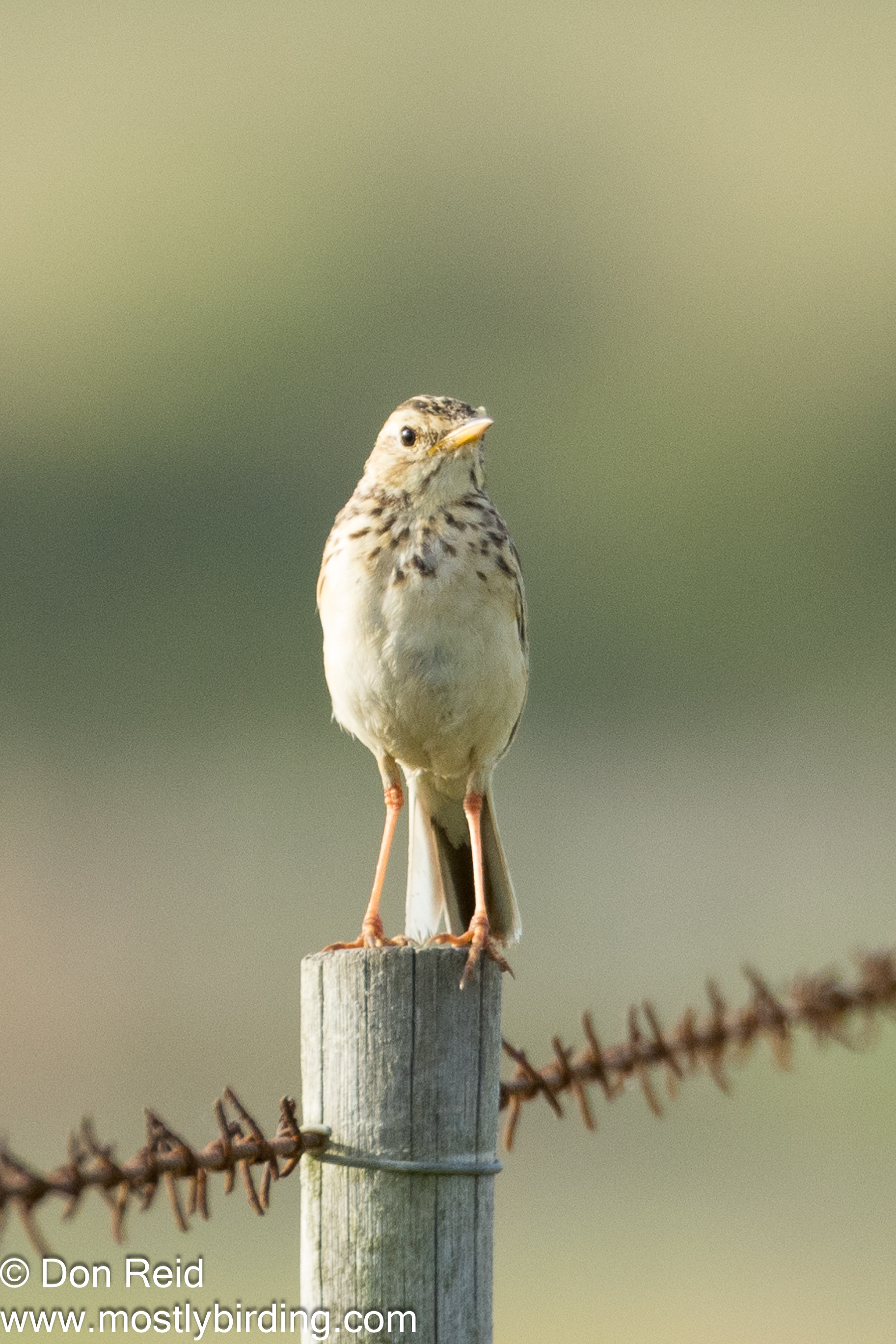
  • African Pipits displaying in the air before returning to their fence perch
African Pipit Anthus cinnamomeus Gewone koester, Vleesbaai area
  • Agulhas Long-billed Lark calling

What a bonanza of birding!

Continuing along the road I soon added some of the other ‘field with short grass’ specials such as Cape Longclaw, Red-capped Lark and Capped Wheatear

After stretching my stay in the pentad to complete the minimum two hours for a ‘Full Protocol’ card I had a pleasing 40 species logged, so it was time to proceed to the next pentad, which includes Gouritsmond, a small town of mostly holiday homes and retirees which lies at the mouth of the Gourits River (the town’s name being the Afrikaans translation of Gourits Mouth of course).

Gouritzmond

The atlasing started in earnest once I turned off at the Boat Launch sign, along a dirt road which passes the town’s Wastewater treatment works on the way to the river edge. The treatment works attract a variety of waterbirds and in no time I had added 20 species to my pentad list, including –

  • Yellow Canary
Yellow Canary Crithagra flaviventris Geelkanarie (race flaviventris), Gouritzmond
  • Several ‘swimmers’ such as Cape Shoveler, Cape Teal, SA Shelduck, Red-billed Teal, Yellow-billed Duck
Cape Teal Anas capensis Teeleend, Gouritzmond

  • Water Thick Knee

Then came the highlight of my day ….

Carrying on to the boat launch at the river, I parked near the jetty and was about to walk along the river edge when two gents approached to ask what I was doing (they had spotted my SABAP2 magnetic stickers which I attach to my car’s doors).

After giving them a short description of atlasing they invited me onto their small boat for a trip upriver where, they assured me, birds were plentiful. And so, off we went, three men in a boat, my fellow sailors introducing themselves as Chris Spies (as in Rice Krispies he said) and Johan van Rensburg.

3 Men in a boat, Gouritzmond

It didn’t take long to get to where numbers of birds were resting on a sand bank and I was thrilled to spot Caspian Terns, Whimbrels – about 15 in number, Common Ringed Plover and Grey Plover, none of which I would otherwise have found.

On the way back a dead tree in the water was being used as a springboard by a pair of Pied Kingfishers, hovering above then diving into the water and returning to the perch with their catch

Pied Kingfisher

In conversation with Chris, it turned out we had met each other many years ago when he was an Honorary Ranger involved in Kruger Park Birding weekends, which I attended back in the 90’s – we swopped stories from those memorable weekends.

Once we were back at the jetty, I thanked Chris and Johan profusely and set off to complete the pentad along the coastal road heading west. It was less fruitful than usual, but I added African Oystercatcher, White-throated Canary and Rock Kestrel to take the card total to 41

Road Block – Again!

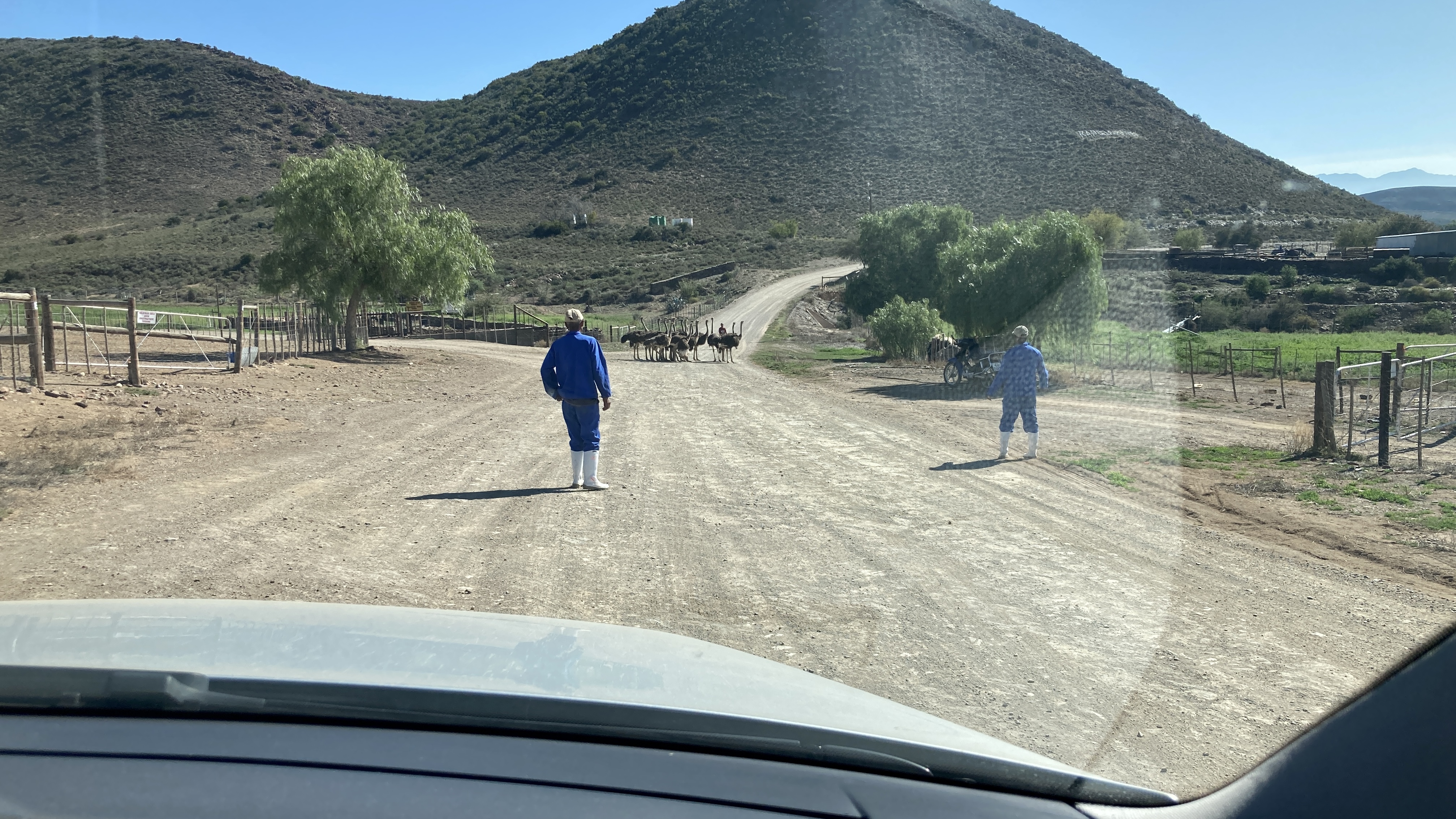
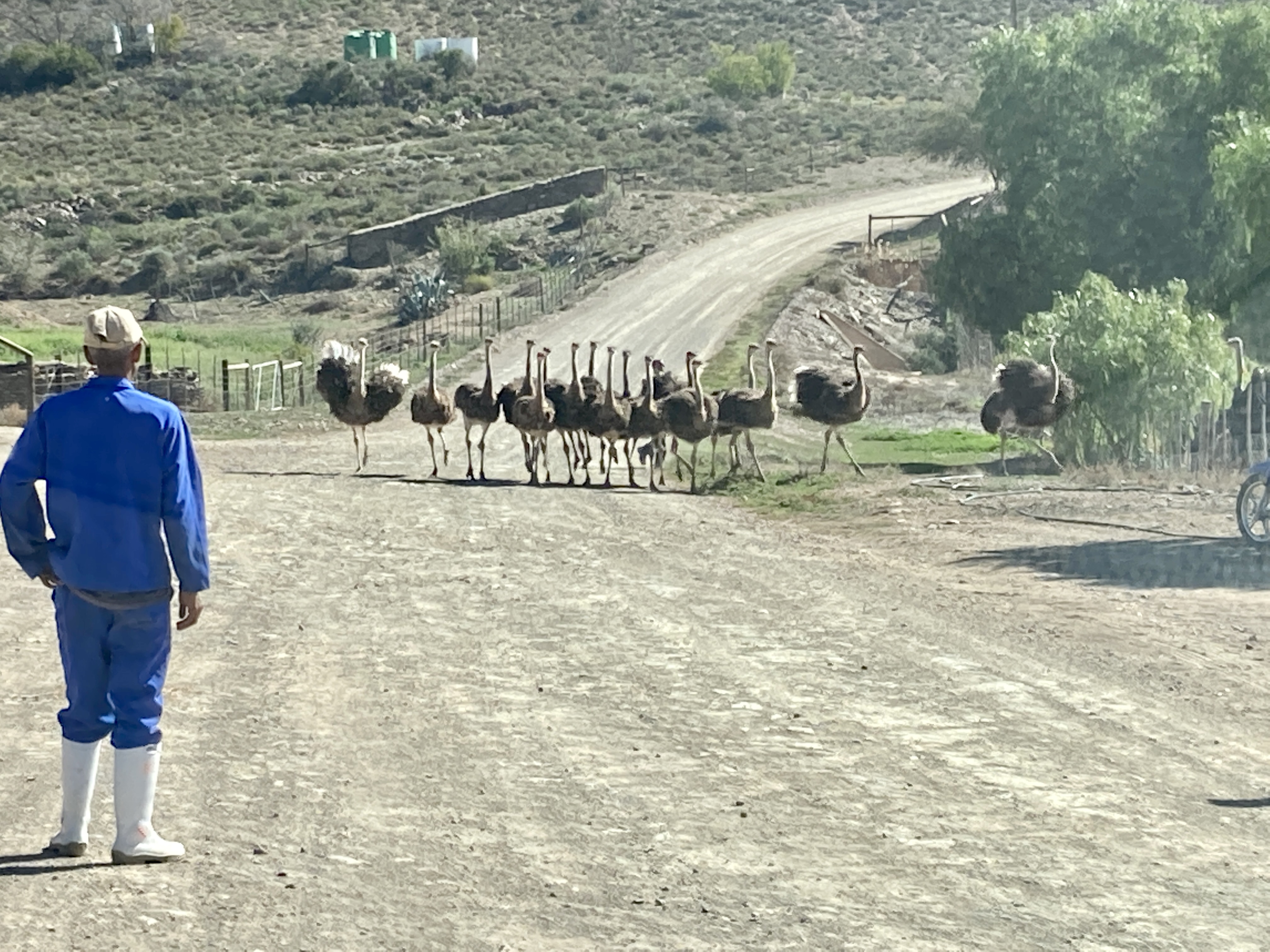
When I go out on an atlasing trip, as I did as usual last week, the whole point of the exercise is to see (or hear) as many birds as possible. I was coming to the end of my survey in a pentad a few kms south of Oudtshoorn, known for its ostrich farming, and was feeling quite relaxed after a successful morning’s atlasing with 64 species recorded in two separate pentads – a reasonable total for late winter in the Klein Karoo

As I rounded a bend in the gravel road, I saw two farm hands in the road ahead of me and they gesticulated in a way that persuaded me to come to an immediate stop. Only then did I see what their concern was, as a third farm hand came down the road towards me, “guiding” a small group of young ostriches. I watched as the three corralled the trotting birds towards an open gate just in front of me and the ostriches followed instructions and headed into the field.

Now I’ve experienced “road blocks” caused by various farm and wild animals, even large birds on occasion, but this was definitely a first, being blocked by a flock of the largest bird in the world, albeit of the tame farmed variety. Such is atlasing – always a surprise!

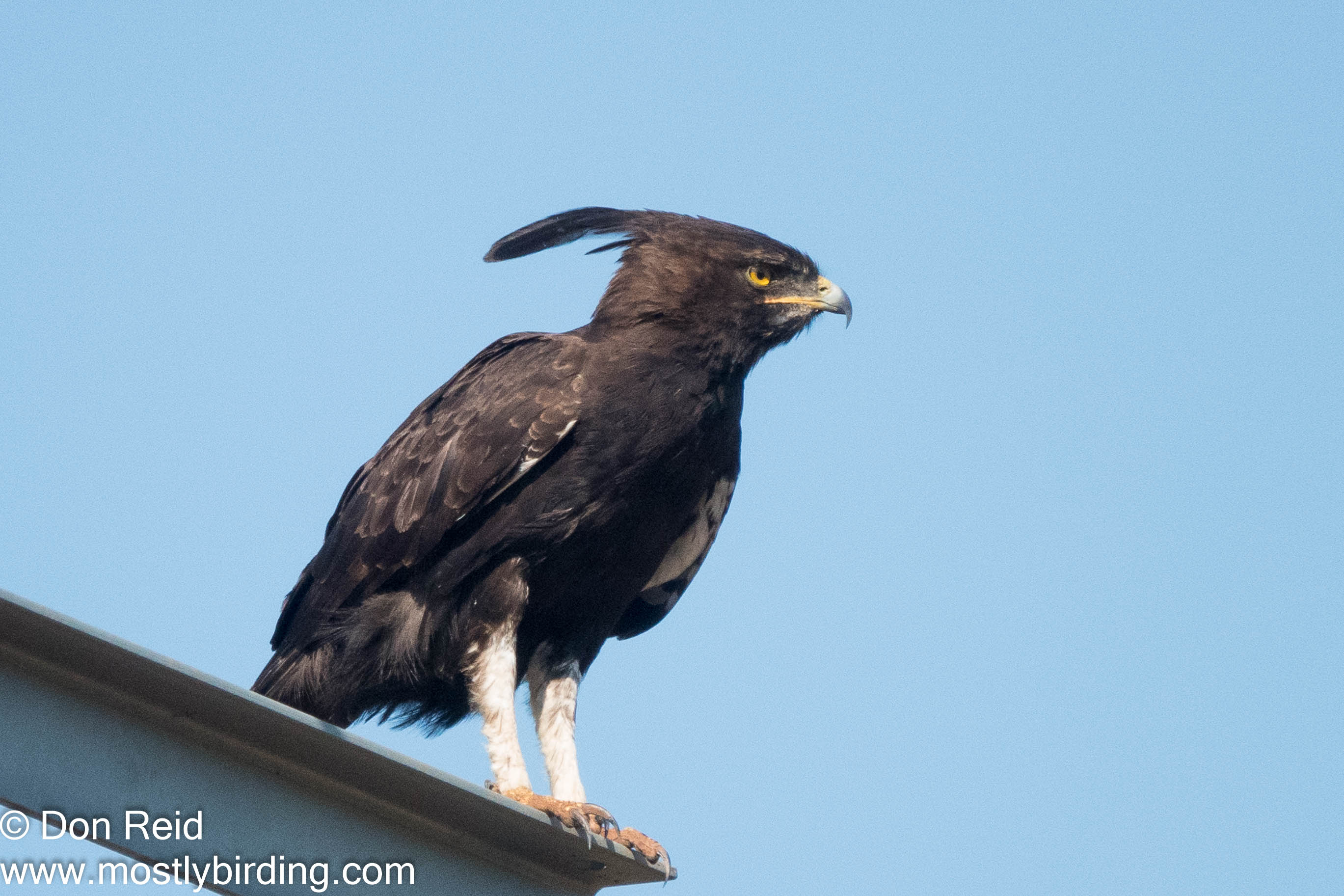
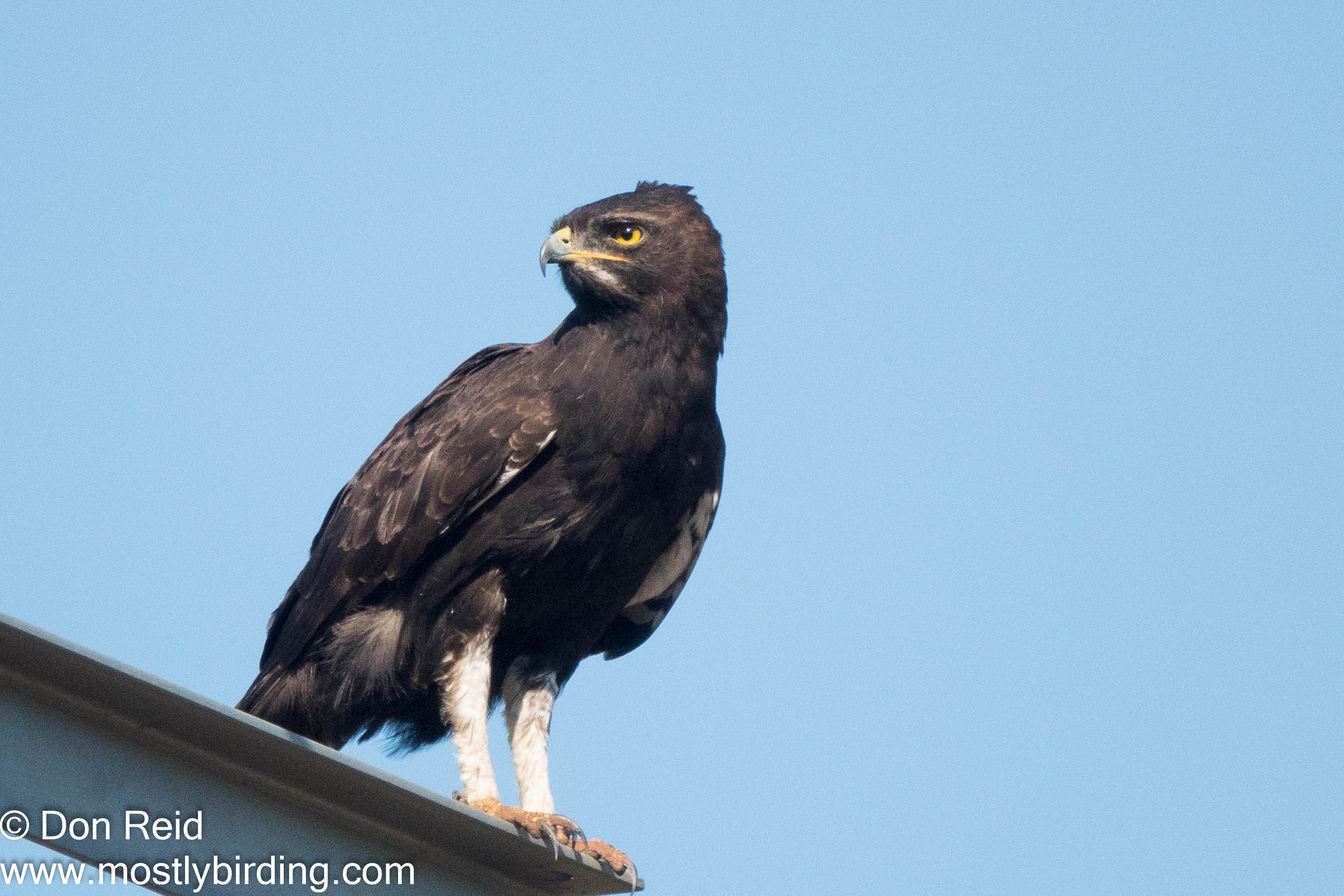
Long-crested Eagle – at the roadside

While atlasing not far from Pretoria on the 1st of April this year, I was pleasantly surprised to come across this handsome Long-crested Eagle perched on a utility pole at the roadside. It is always challenging to photograph a raptor perched high up as this one was, with a light background – far better to have them perched closer to eye level, but that would be too much to hope for.

In this case I was on a fairly busy regional road when I saw the eagle from a distance and slowed down as much as the traffic would allow, then pulled off onto the verge at a spot almost opposite where the eagle was perched and where the grass was not so long that it could be concealing puncture-producing sharp objects – just another of the hazards faced by atlasers.

Not wanting to spook the eagle by getting out of my car, I carefully lowered the driver’s window and prepared my camera for a few shots – I learnt a long time ago that one of the most important settings when photographing birds in the field is the exposure compensation.

Both the bird’s colouring and the amount of backlight need to be taken into consideration and, without getting too technical, I set the exposure at 1 full stop over-exposure to take into account the dark colouring of the eagle and the fairly bright background of blue sky.

I took a few shots then turned the car around and stopped on the same side as where the eagle was perched and very carefully got out, remaining partially concealed by the car. This worked and I was able to get closer shots but as soon as I moved from behind the car the eagle flew off, only to perch on the next pole.

This next image may look like a “dud” because the eye is not sharp and bright, but in fact it shows the “third eyelid” that many birds and especially raptors have – called a nictitating membrane. Unlike regular eyelids, it opens and closes horizontally across the eye and protects the eye when catching prey at speed and other hazards. It also helps keep the eye clean and moist – important when you are relying almost solely on your sharp vision for survival

I also took a couple of video clips including this one which shows the eagle seemingly watching a passing car go by – there is just something about large raptors that make them a favourite photographic subject – those eyes, that presence never fail to produce a dramatic image.

Long-crested Eagle Lophaetus occipitalis (Langkuifarend)

A fairly common resident of Southern Africa, the Long-crested Eagle is a personal favourite and we have stopped many times to view one at roadside, particularly in areas where pine and other plantations are the dominant habitat.

When perched it is unmistakeable with its long crest and dark colouring. In flight it is a tad more difficult but the large white wing patches and barred tail separate it from all other large raptors, although looking up at a bright sky and trying to see those sort of details is never easy.

Where to find it

The Long-crested Eagle has a scattered distribution across the eastern parts of southern Africa with concentrations along the escarpment of Limpopo Province and Mpumalanga and the KwaZulu-Natal Midlands. They occur as far south as the Garden Route area of the southern Cape coast

SABAP2 Distribution Map for Long-crested Eagle

My first sighting was in 1994 on a farm near Vryheid in KwaZulu-Natal.

Mossel Bay to Pretoria – not just a Journey

One of the benefits of reaching that age where they automatically give you a pensioner’s discount at the supermarket check-out without asking for an ID, is having the time – and the good sense – to turn a potentially mundane trip into a mini-holiday.

And this is exactly what we did when travelling between our Mossel Bay and Pretoria homes during March this year – instead of rushing to complete the 1250 kms road journey in 2 days with one overnight stop, we decided to stretch it out with a two night stay in Prince Albert, Western Cape and a further night in Springfontein, Free State, turning it into a four day, three night adventure.

Day 1 Thursday

After spending most of the morning packing, loading and preparing our Mossel Bay home for a lengthy hibernation, we left around lunchtime and set off on the familiar route to Prince Albert via the scenic Robinson Pass then through the town of Oudtshoorn and the winding road that takes you through the spectacular Meiringspoort. No matter how many times we drive this route, I still end up driving through Meiringspoort with my jaw in a dropped position – it is that special.

But this time there was a twist – just beyond the last of the 25 river crossings (it’s the same river each time) we encountered the first of many swarms of locusts that filled the air and pinged and ‘thunked’ against the grille, windscreen and roof of our SUV as we drove. The arid parts of South Africa have been plagued by swarms of biblical proportions through the summer, due to good rains after years of drought conditions.

This video was taken after stopping at the roadside and gives an idea of the numbers of locusts – a tiny fraction of what we drove through for tens of kilometres

Once we reached our destination I spent half an hour carefully prising locust bodies from every nook and cranny of our car, at the same time providing a veritable feast for an army of ants that descended on them as they dropped to the ground.

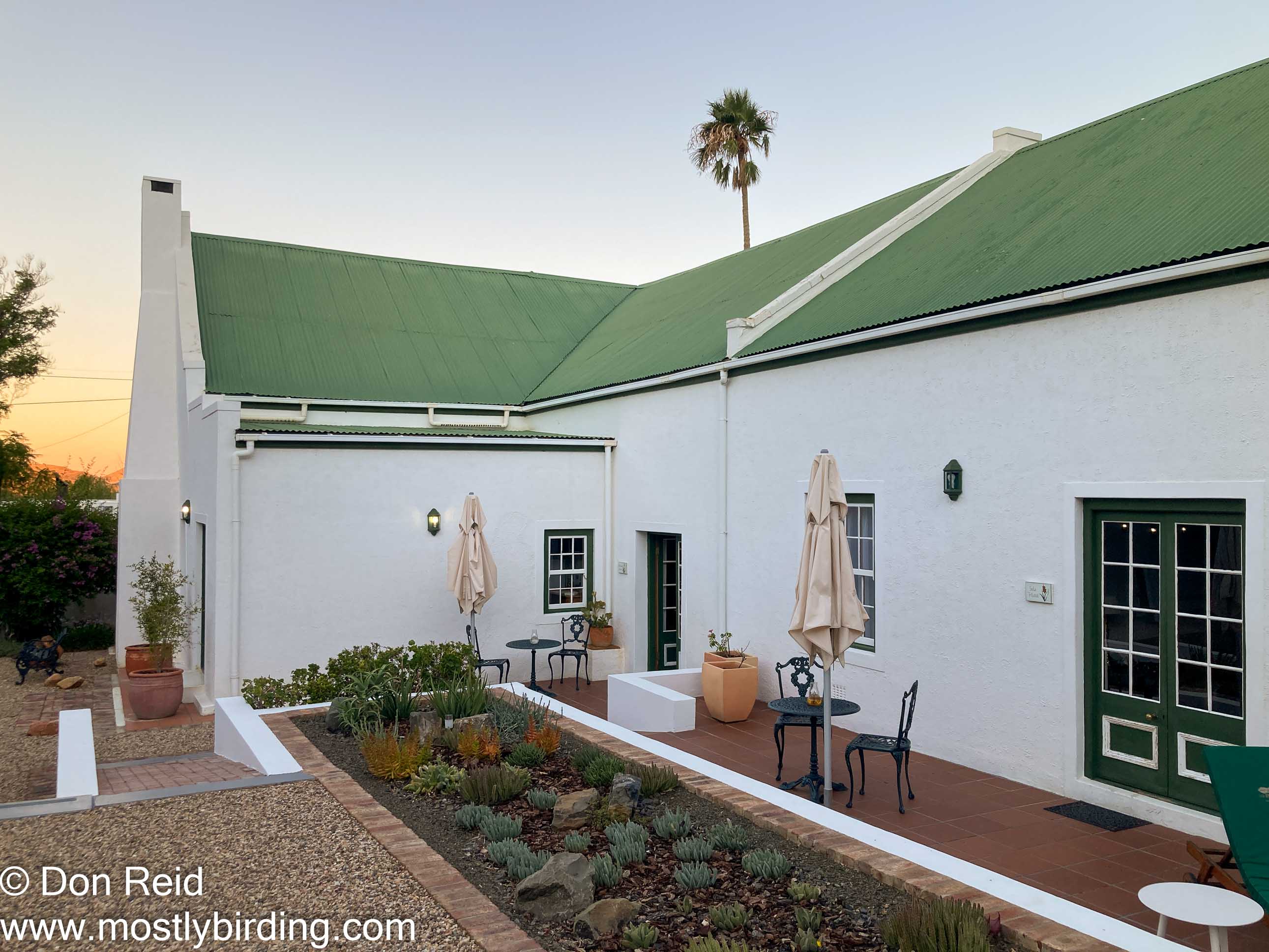
Our usual B&B in Prince Albert was fully booked so we had booked into one we had not tried before – De Bergkant Lodge – which turned out to be an excellent choice – lovely spacious room, good breakfast, efficient management and a super 15m pool which I immediately tried out as the temperature was hovering in the low 30’s (deg C)

De Bergkant Lodge, Prince Albert
De Bergkant Lodge, Prince Albert – our room was the one in the corner

After the swim and relaxing a while we had dinner at the Rude Chef (No – he/she wasn’t) restaurant. Prince Albert has always had an amazing selection of quality restaurants for a small Karoo town, but like so many other places Covid has had a devastating effect on the tourist industry which is only now recovering. So the choice of eating places has reduced but the quality is still there.

Day 2 Friday

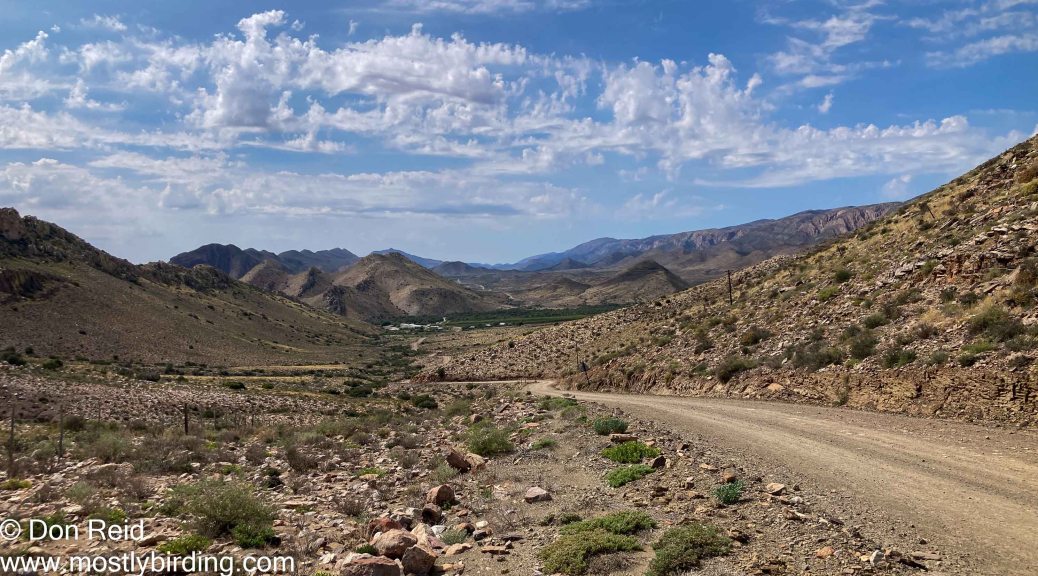
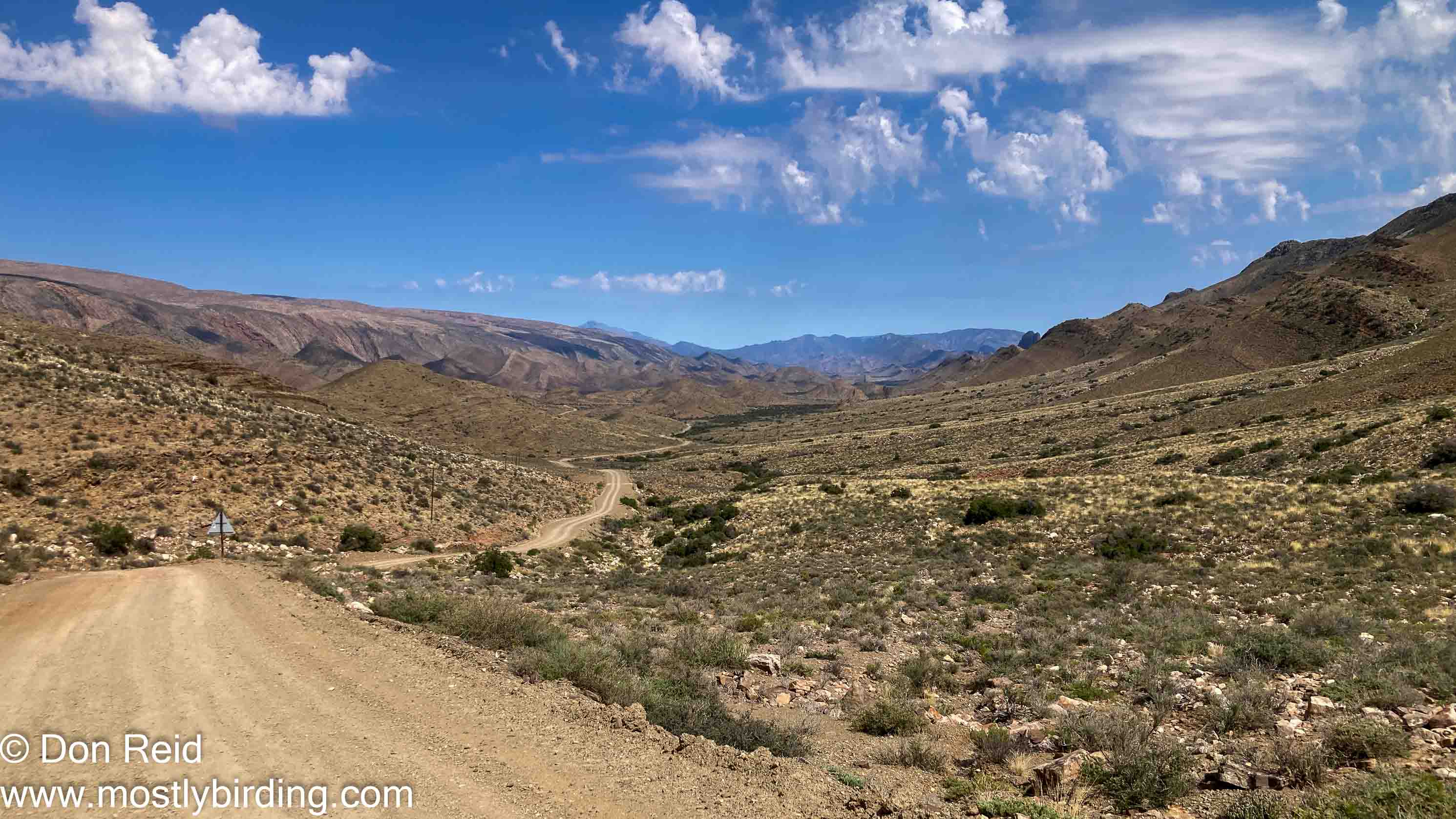
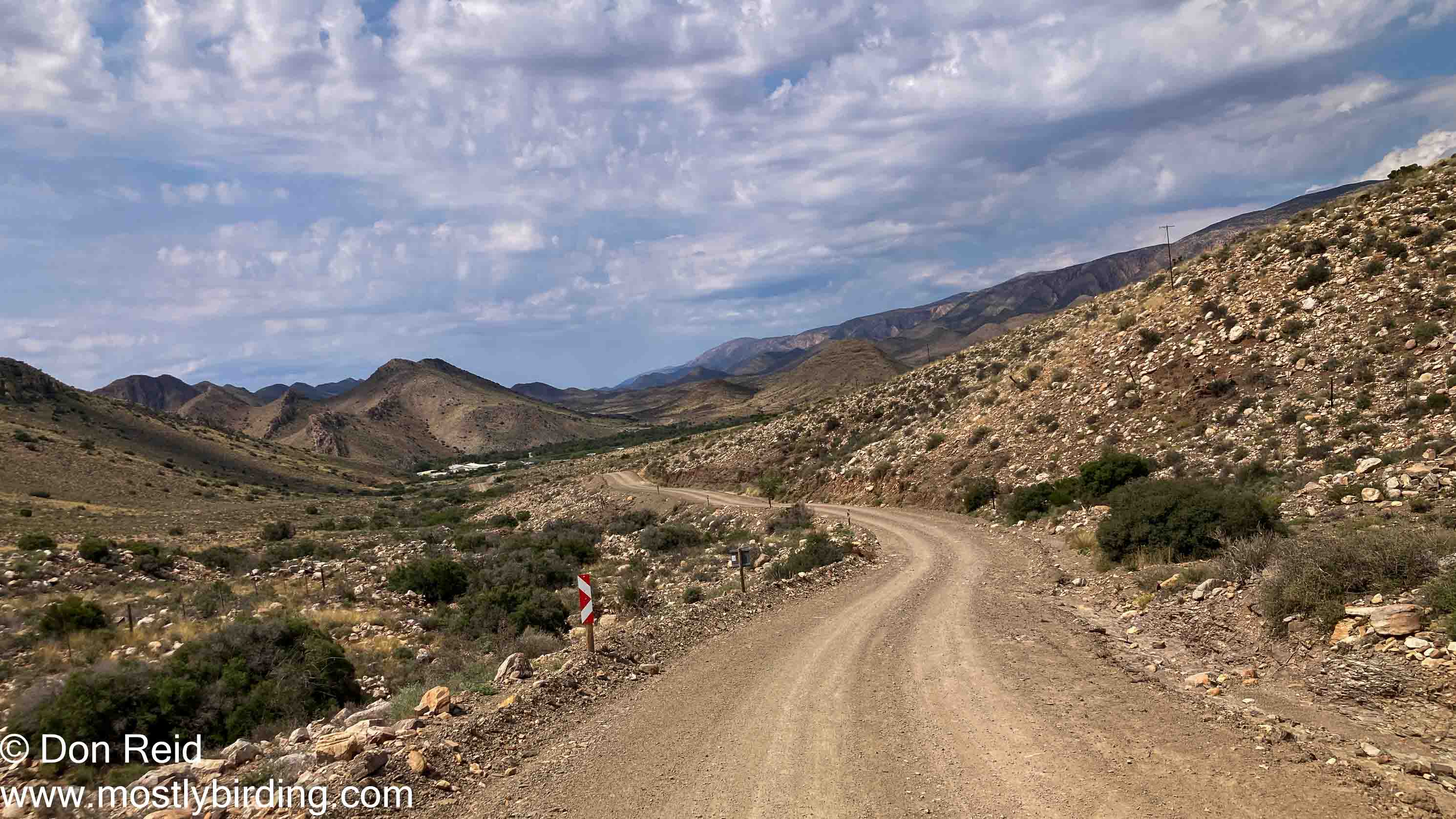
After breakfast at the pool we set off late morning to visit the Weltevrede Fig Farm about 30 kms outside Prince Albert, along a gravel road that made its way through the mountains in spectacular fashion providing beautiful views over every rise.

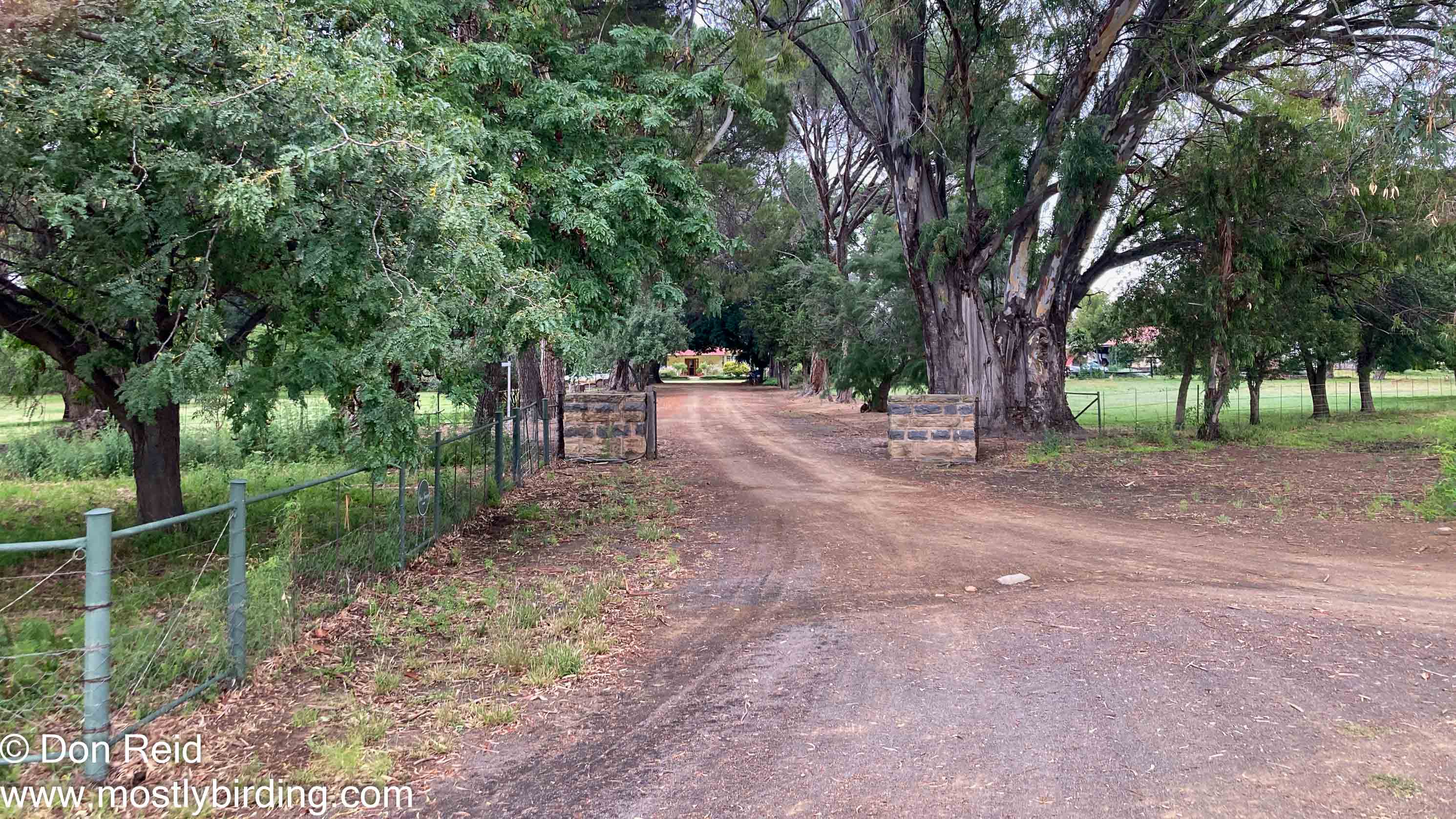
Road to Weltevrede Farm, near Prince Albert

Weltevrede appeared at the end of the road, like an oasis in the arid countryside, the fig trees spreading up and down the valley in a broad green ribbon.

Road to Weltevrede Farm, near Prince Albert

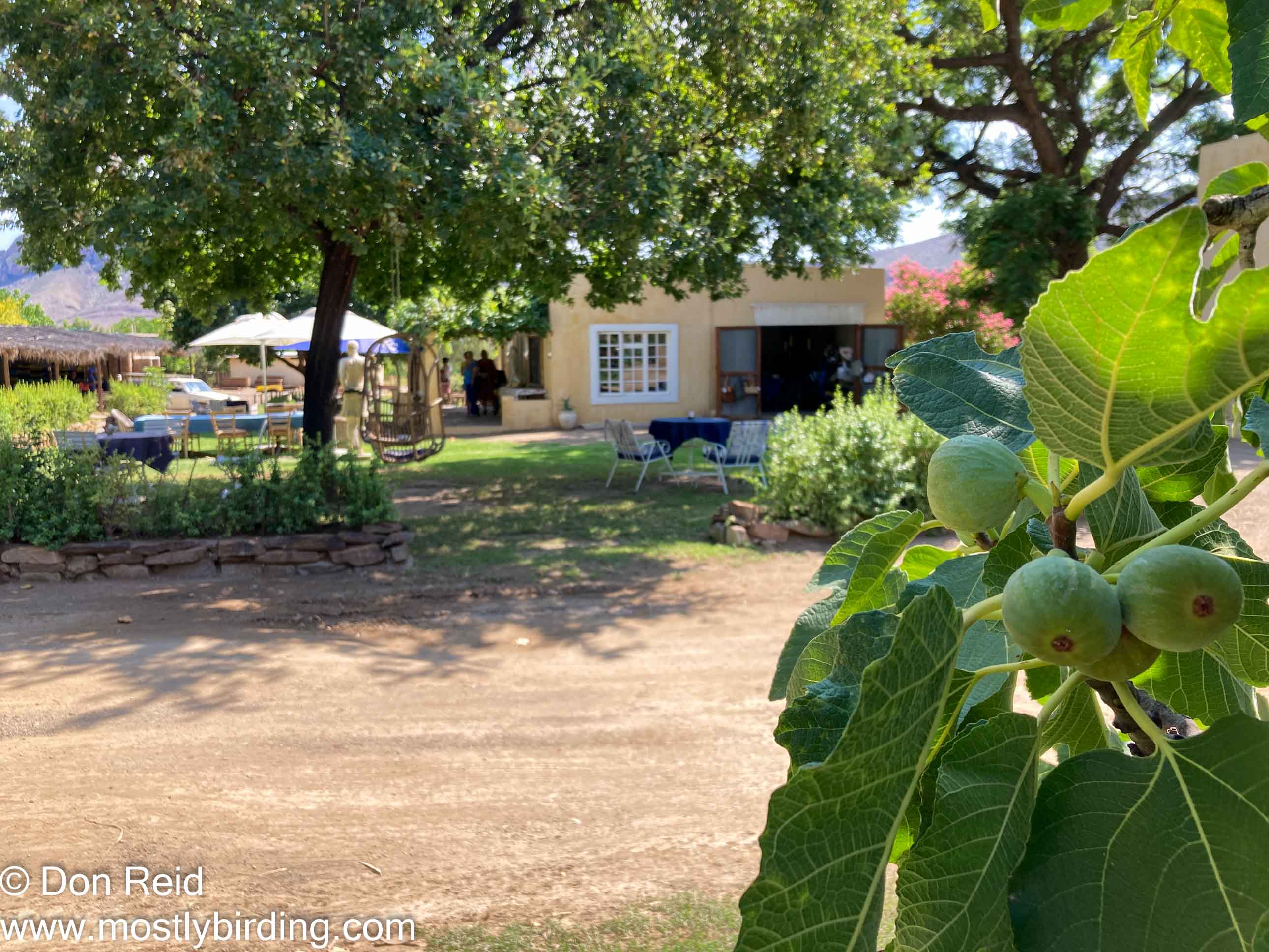
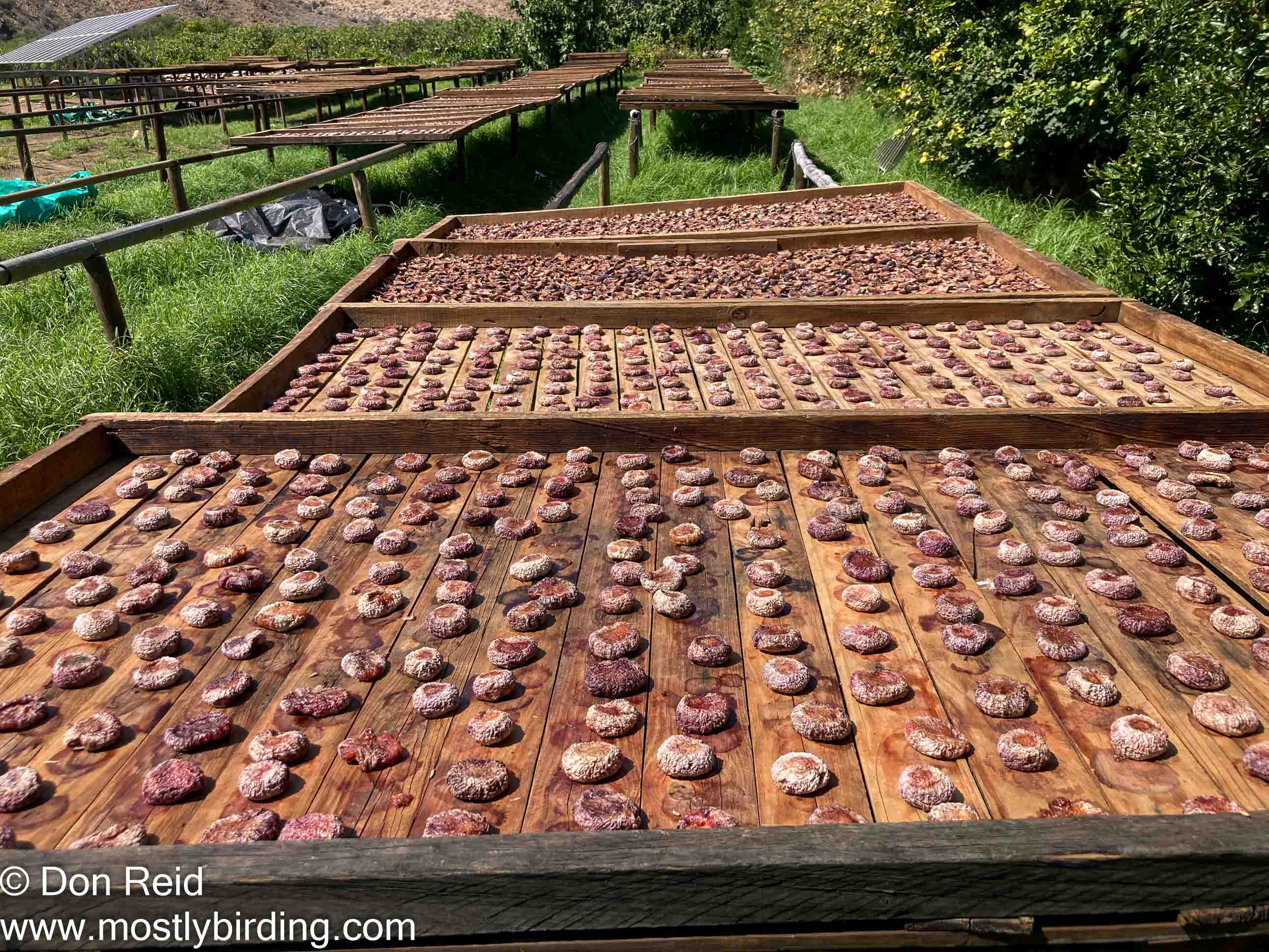
We had a look around then settled at a table under a tree and lingered over a light lunch and coffee, just enjoying the ambience while farm workers carried out tray after tray of prepared figs and set them out to dry in the pure Karoo sunshine, where the air is dry and devoid of any pollutants.

Weltevrede Farm
Weltevrede Farm – prepared figs drying in the sun
Weltevrede Farm – their Fig Tart is delicious!

We took our time travelling back to Prince Albert and relaxed for a while before I set out to add some species to the pentad list that I had begun the previous afternoon with mostly the species visiting the garden. Heading out of town in a northerly direction I soon found Pririt Batis, Namaqua Dove, Pied Barbet and White-necked Raven and a swing past the small Waste water treatment works added SA Shelduck to take my pentad list to a modest 30.

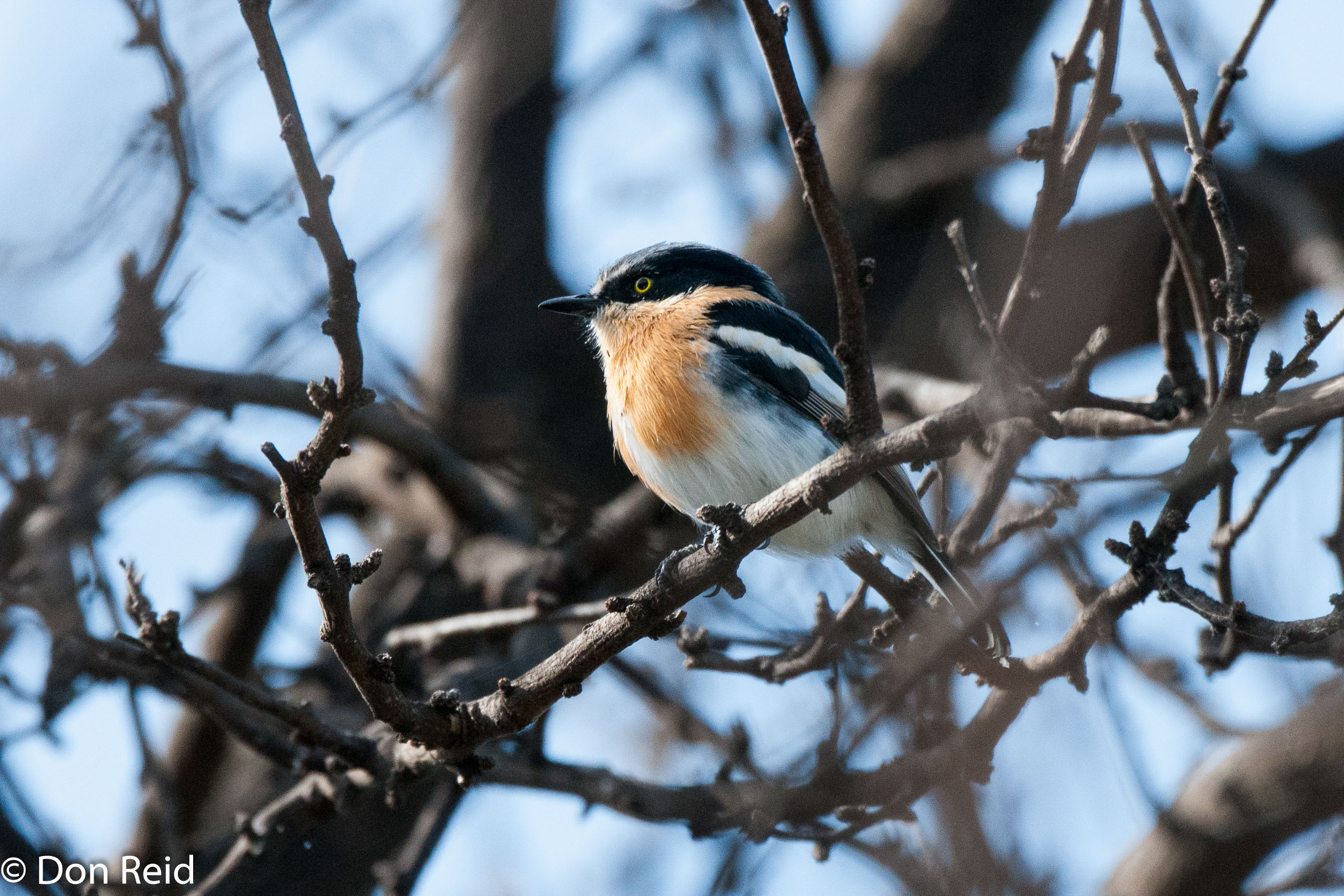
Pririt Batis / Priritbosbontrokkie

After another invigorating swim we walked across the road to La-di-dah restaurant for a meal – our first choice was grilled Karoo lamb chops but disappointingly they had just sold the last ones and we had to revert to other meat dishes.

Day 3 Saturday

A longish drive lay ahead so we left after breakfast and made good time via Prince Albert Road where we joined the N1 National road to Beaufort West, Richmond and Colesberg, with comfort and coffee stops at Three Sisters, Karoo Padstal and Chargo Farm Stall at Colesberg.

As we left Prince Albert a Booted Eagle flew over the road ahead and I quickly added this welcome raptor to my pentad list.

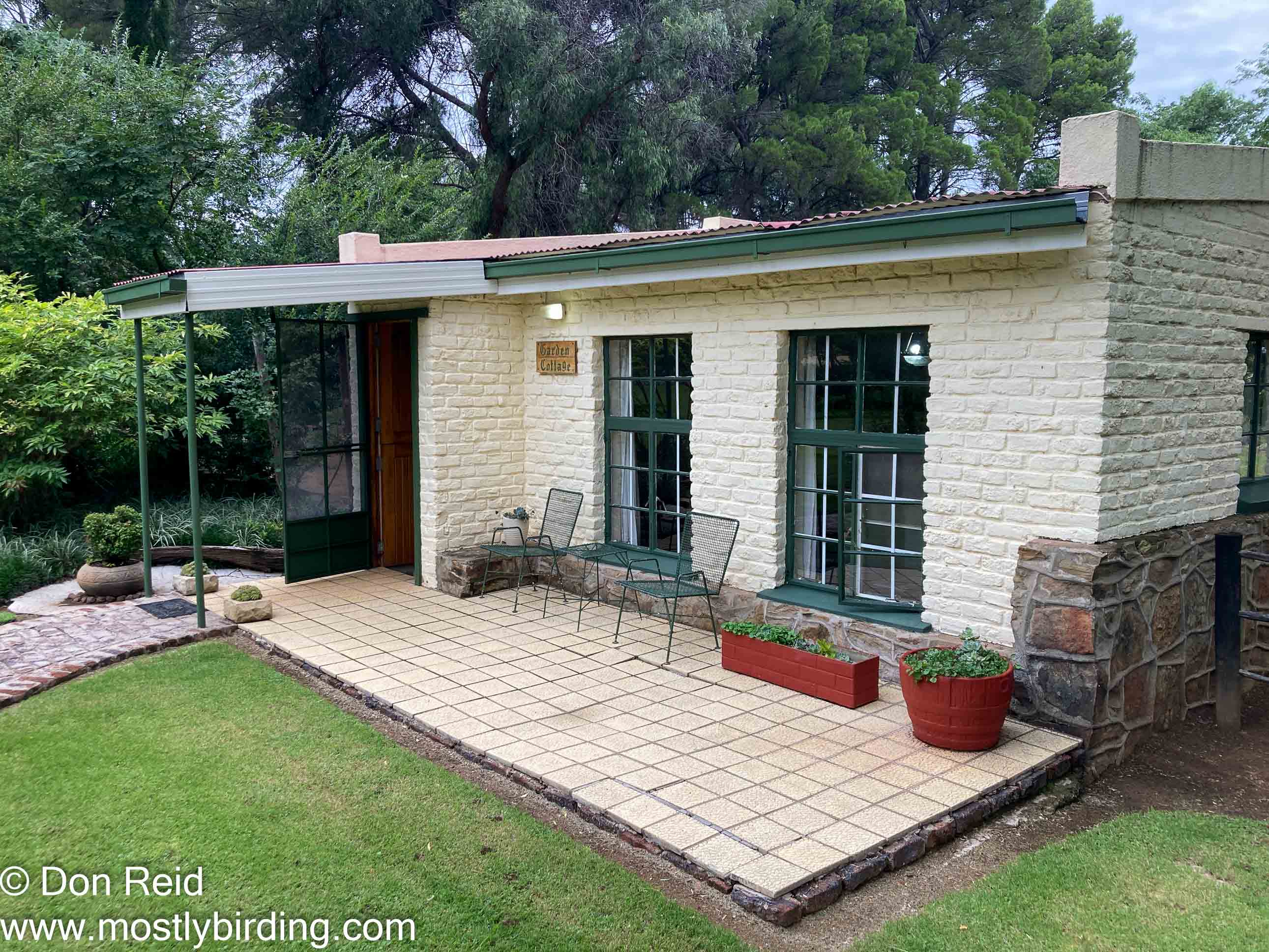
We reached our overnight stop – Prior Grange farm near Springfontein – just after 5 pm and settled in to the Garden Cottage.

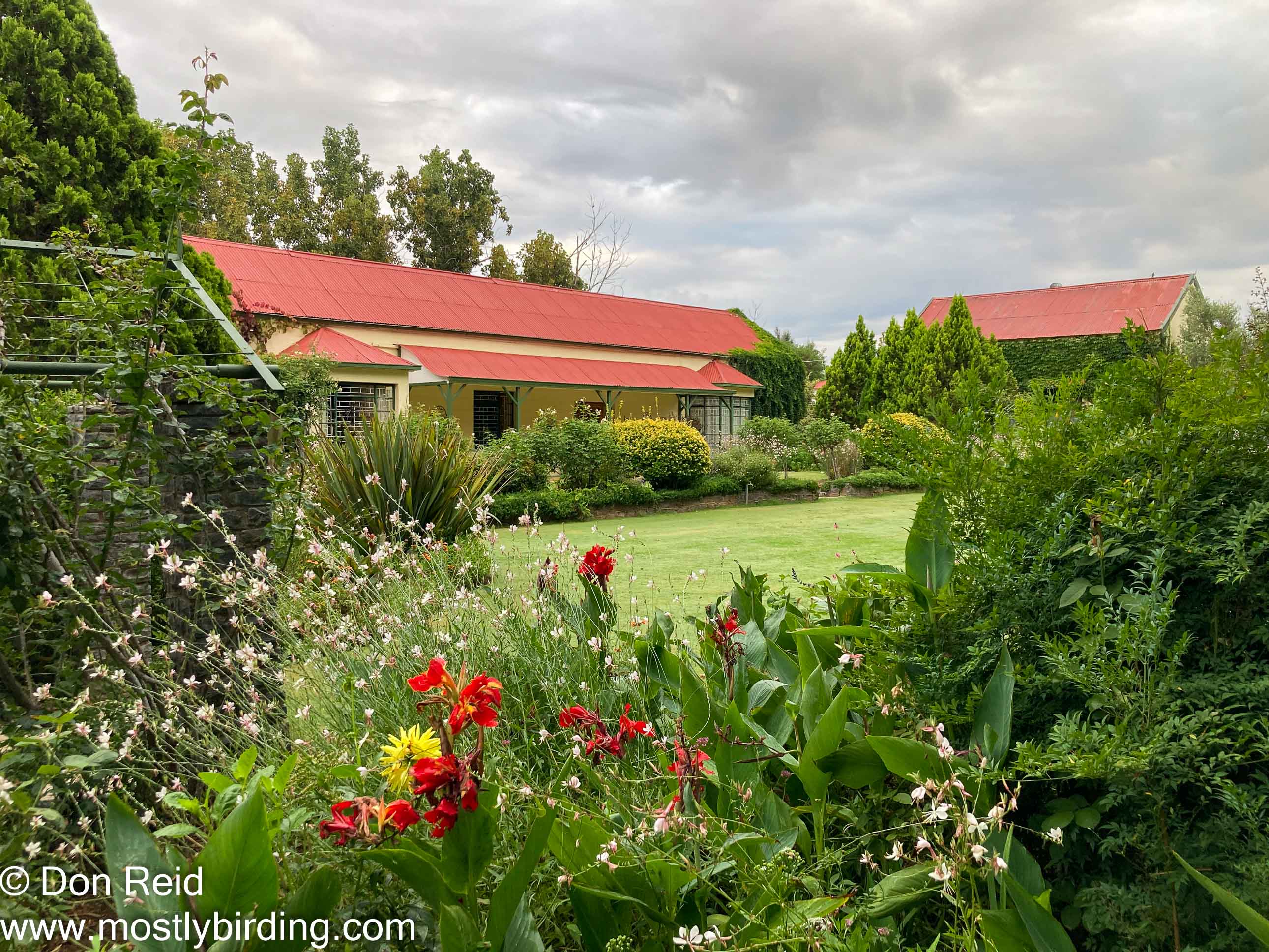
Prior Grange near Springfontein Free State
Prior Grange – the main house
Prior Grange – the Garden Cottage

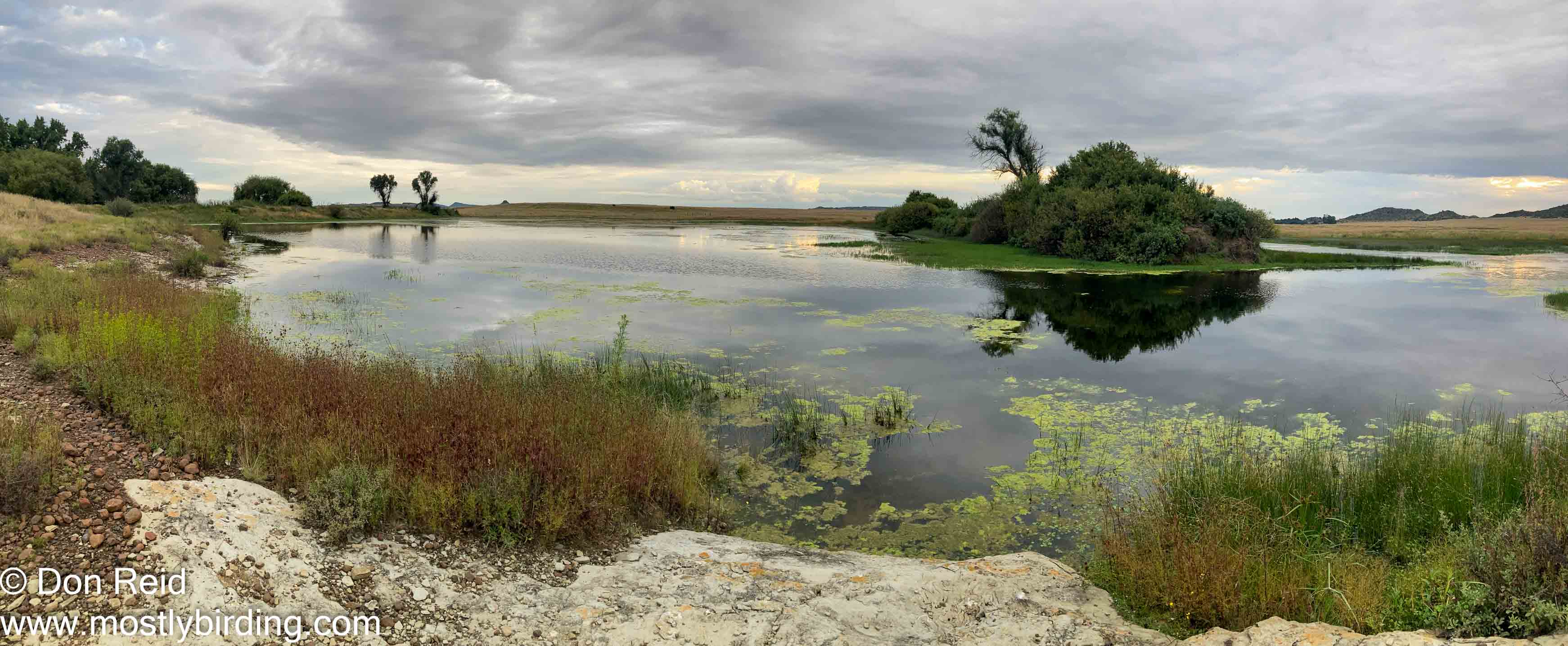
It was time for my birding/relaxing walk to stretch my legs and with not much daylight left I headed straight to the dam behind the farm house and found it fuller than I had ever seen it, in complete contrast to our last visit before Covid when it had held a fraction of the water it now had.

Prior Grange dam

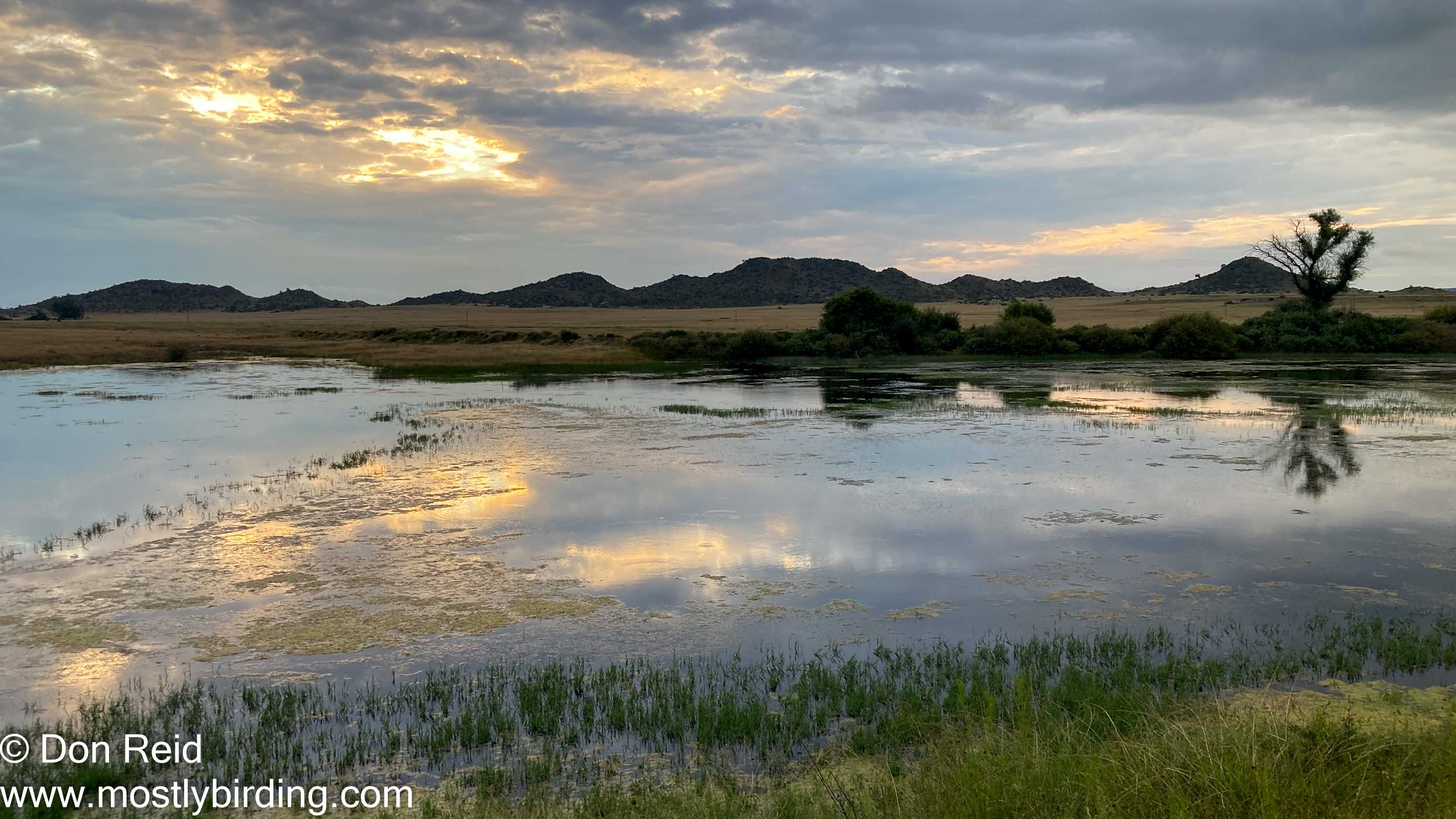
The dam had a single Grey Heron and small numbers of Red-knobbed Coots, Moorhens, Cape Shovelers, Yellow-billed Ducks, Red-billed Teals, Little Grebes and SA Shelducks, while the reeds were busy with Bishops and Weavers and a single African Reed Warbler which had me puzzled for a while as it was making an unusual sound (for me, probably not for him)

Prior Grange dam
Cape Shoveler / Kaapse Slopeend

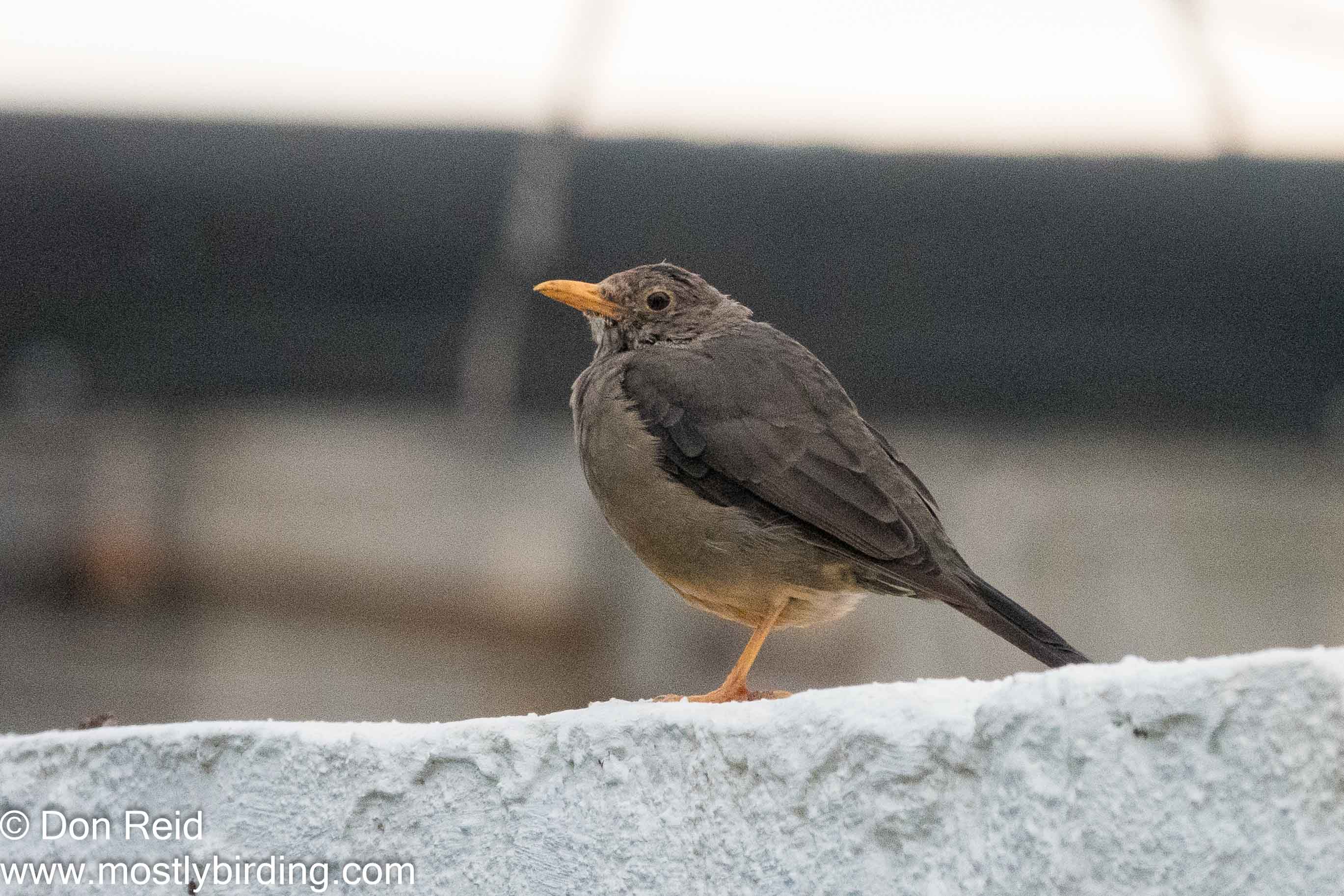
Heading back to the cottage I added Karoo Thrush, Pied Starling and Fiscal Flycatcher before dusk fell, taking my pentad list to 32 after an hour’s atlasing, leaving the next morning to complete the two hour minimum atlasing to count as a “Full Protocol” card. Dinner, served in the cottage, was roast lamb and veg – what else on a Karoo farm?

Karoo Thrush Turdus smithii Geelbeklyster, Prior Grange
Pied Starling Lamprotornis bicolor Witgatspreeu, Prior Grange

Day 4 Sunday

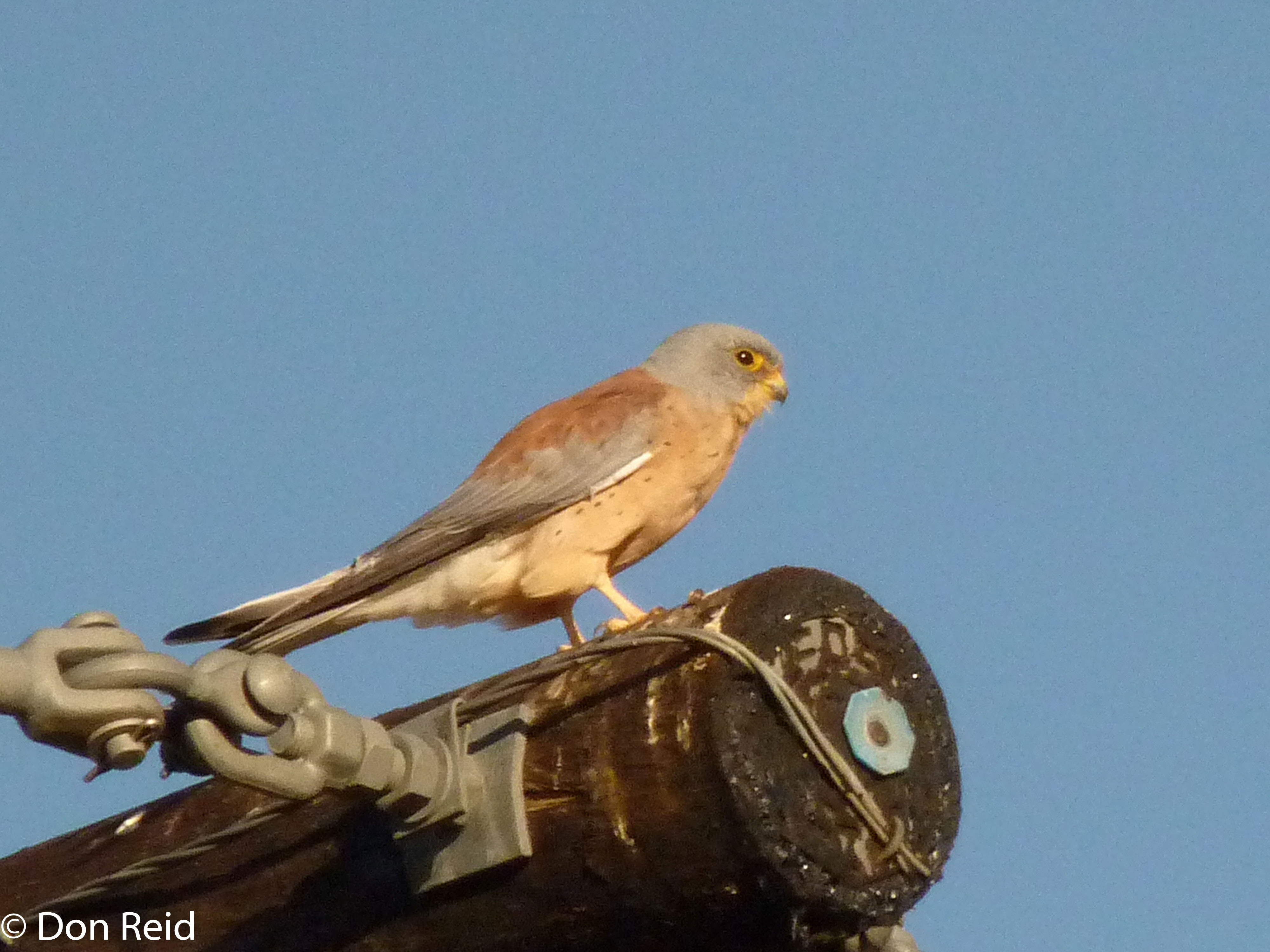
I was up early to complete the pentad card with a walk around the garden and along the road, adding Cloud Cisticola, Lesser Kestrel (on the same pole as I had seen it a few years ago), Cape Glossy Starling and Anteating Chat.

Lesser Kestrel / Kleinrooivalk

The grassland next to the road was waterlogged in places after substantial summer rains

On the road out after a full English breakfast I added a few more including a Black-headed Heron at a mini wetland in the town, taking the pentad total to 44 and raising my personal tally for the pentad to 98 species after completing 6 cards since 2014.

All that remained was a drive of around 550 kms to our home in Pretoria – we arrived just after 4 pm, glad to be ‘home’ (Pretoria version)

Overnighting in the Karoo – Abbotsbury is a delight

Google “Abbotsbury” and it comes up with a Wikipedia article about a village in the English county of Dorset, about a mile from the English Channel coast.

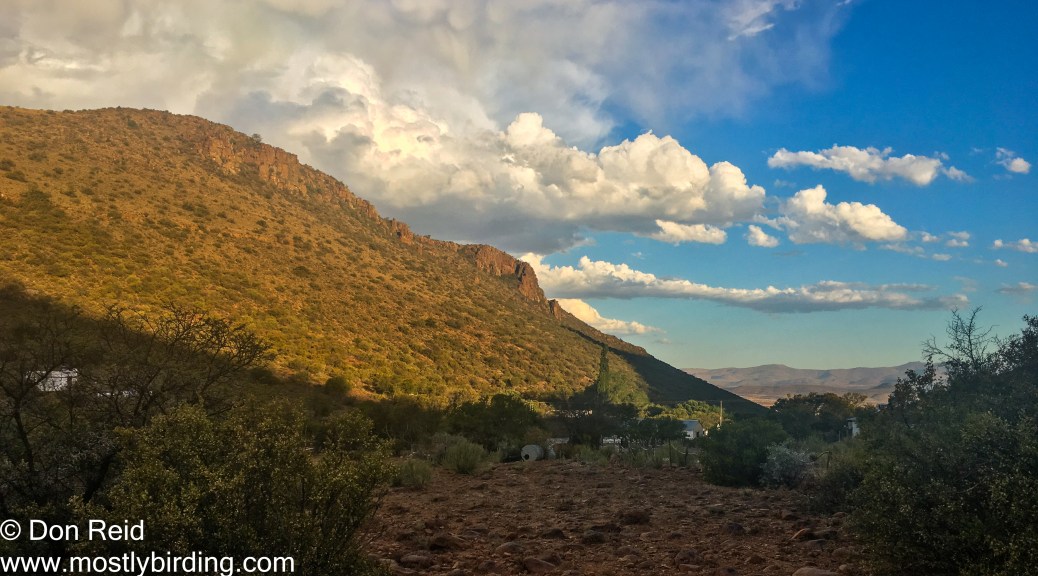
The Abbotsbury we like to visit couldn’t be further from that description – it is a Guest Farm deep in the Karoo, some 27 kms north of the historic South African town of Graaff-Reinet, and is one of our favourite stopovers on the long road between our homes in Pretoria and Mossel Bay.

Location of Abbotsbury

In 2021 we had the pleasure of two stopovers at this peaceful and hospitable guest farm, on our way to Mossel Bay for our winter and summer stays, and we were once again enchanted by the setting and the comfortable Garden Cottage which has become a brief “home away from home” for a number of years.
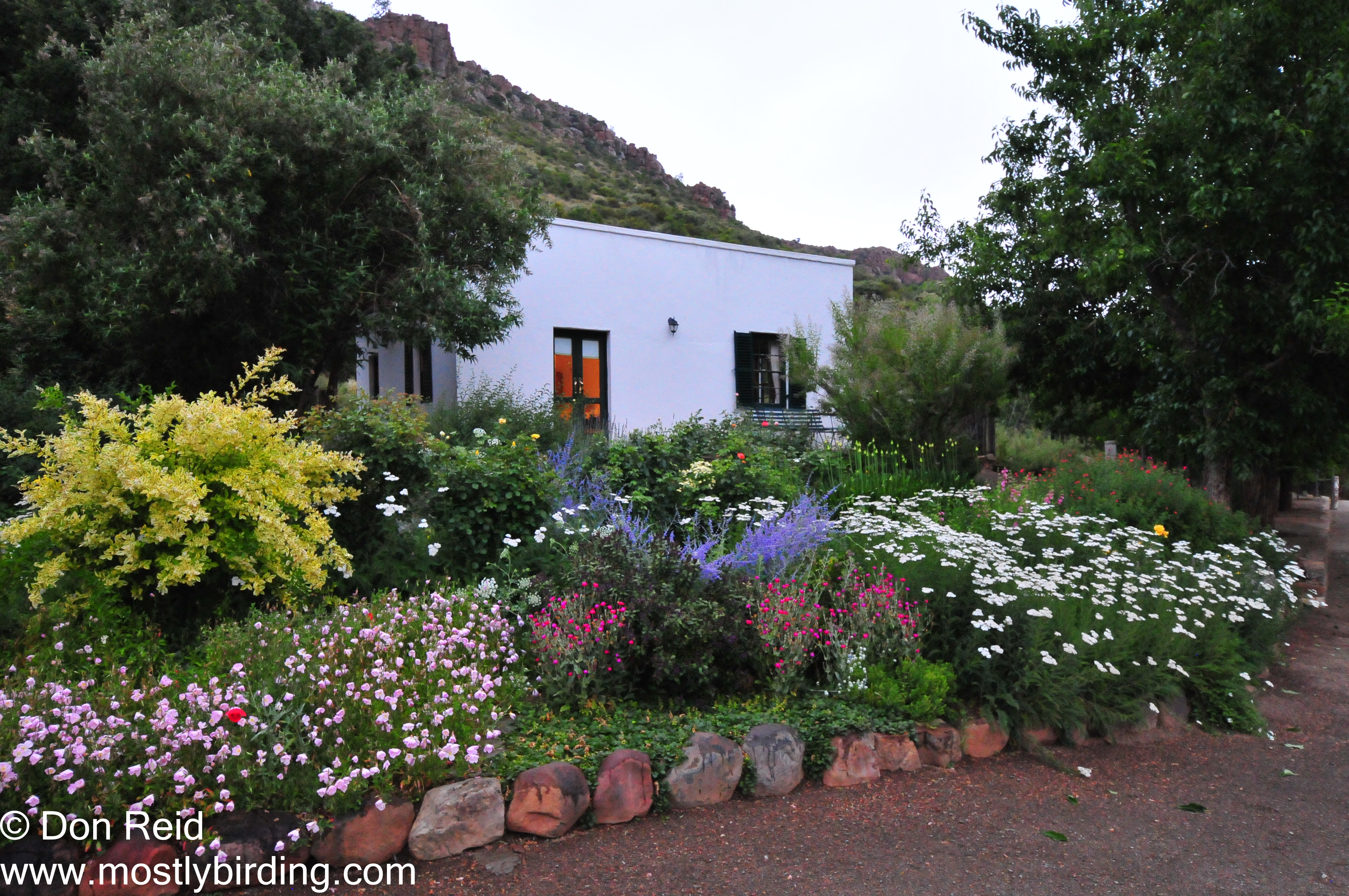
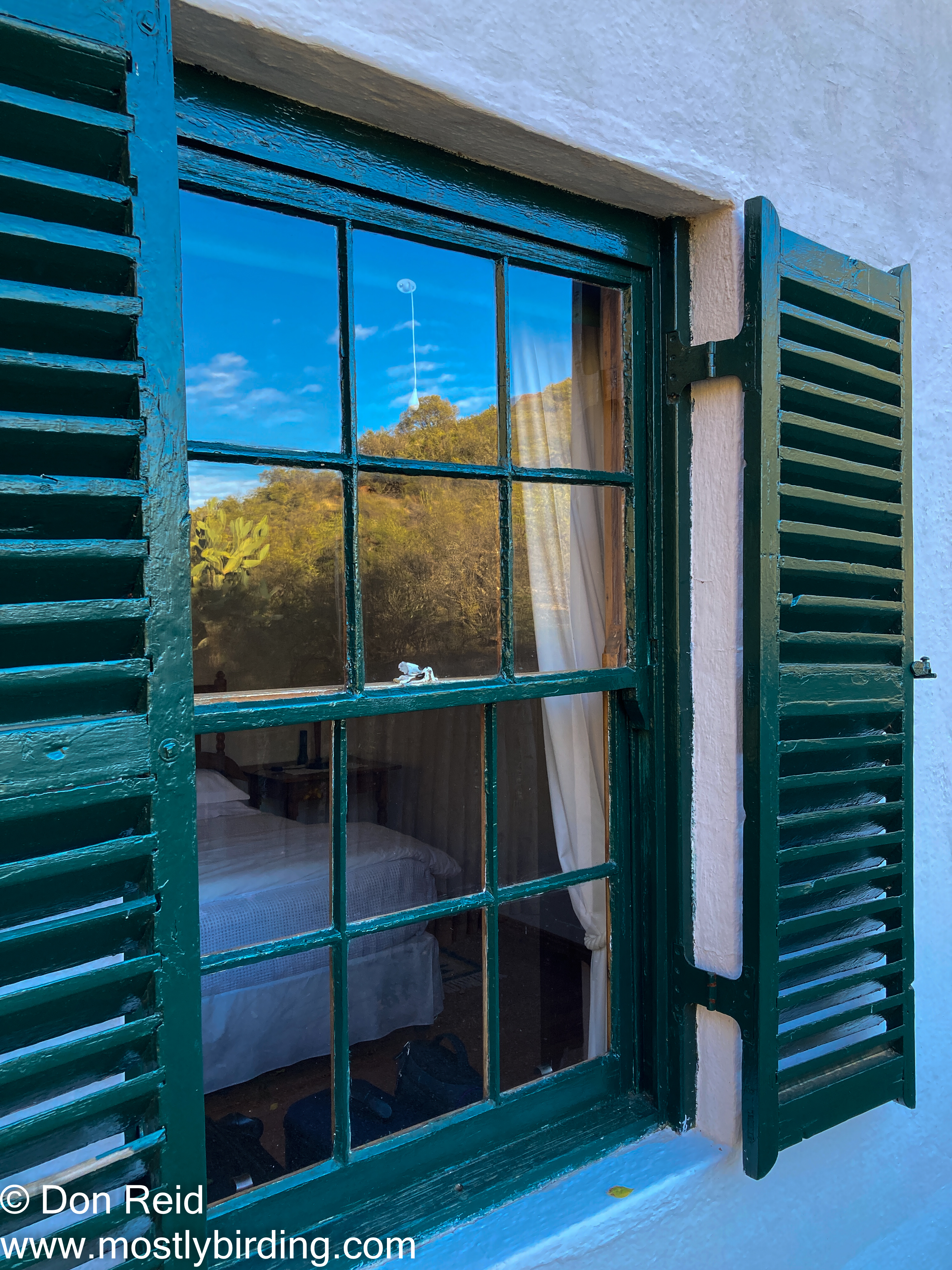
The Garden Cottage

The setting is sublime – set among a cheerful garden which is in complete contrast to the surrounding arid conditions, yet fits the purpose perfectly

Abbotsbury guest farm – the Garden Cottage

And the interior is just as charming with that homey feeling that has you instantly relaxed

Abbotsbury guest farm – the living room
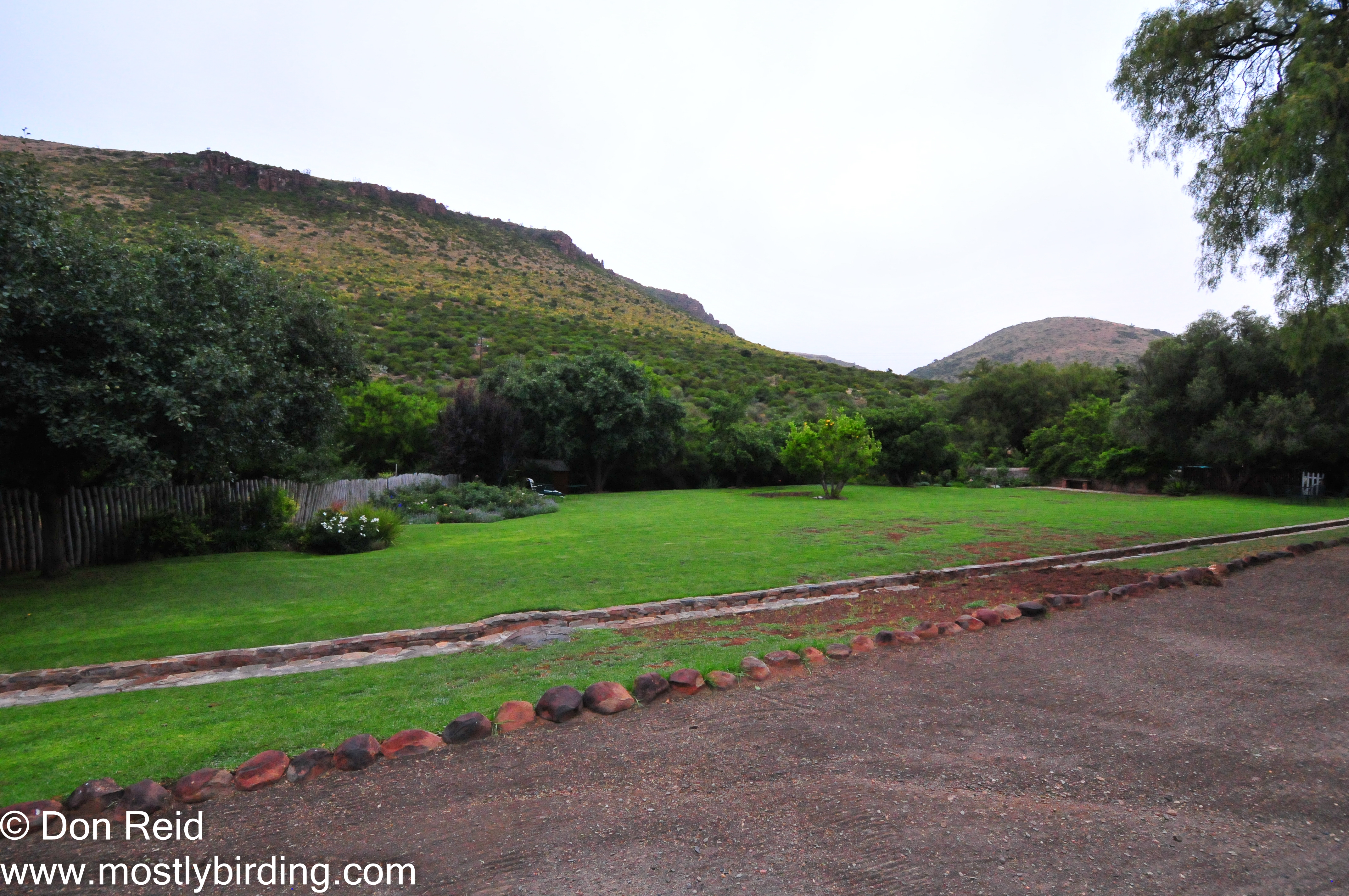
Abbotsbury guest farm – the lawns
Abbotsbury guest farm – time to relax on the stoep
Abbotsbury guest farm

Getting there

We have done the road trip between Pretoria and Mossel Bay or vice-versa many times and usually travel on the N1 National Road between Pretoria and Colesberg, then choose between the route via Beaufort-West/Meiringspoort/Oudtshoorn or via Graaff-Reinet/ George.

The latter route is the one that takes us past Abbotsbury, which lies a few kms off the N9 National Road and as soon as we turn off and pass through the entrance gate I feel a sense of relief at escaping, for a while, from the main road. It’s also a signal to open the car window, breathe in the fresh Karoo air and listen for the calls of the birds that favour this arid habitat.

Abbotsbury Graaff-Reinet

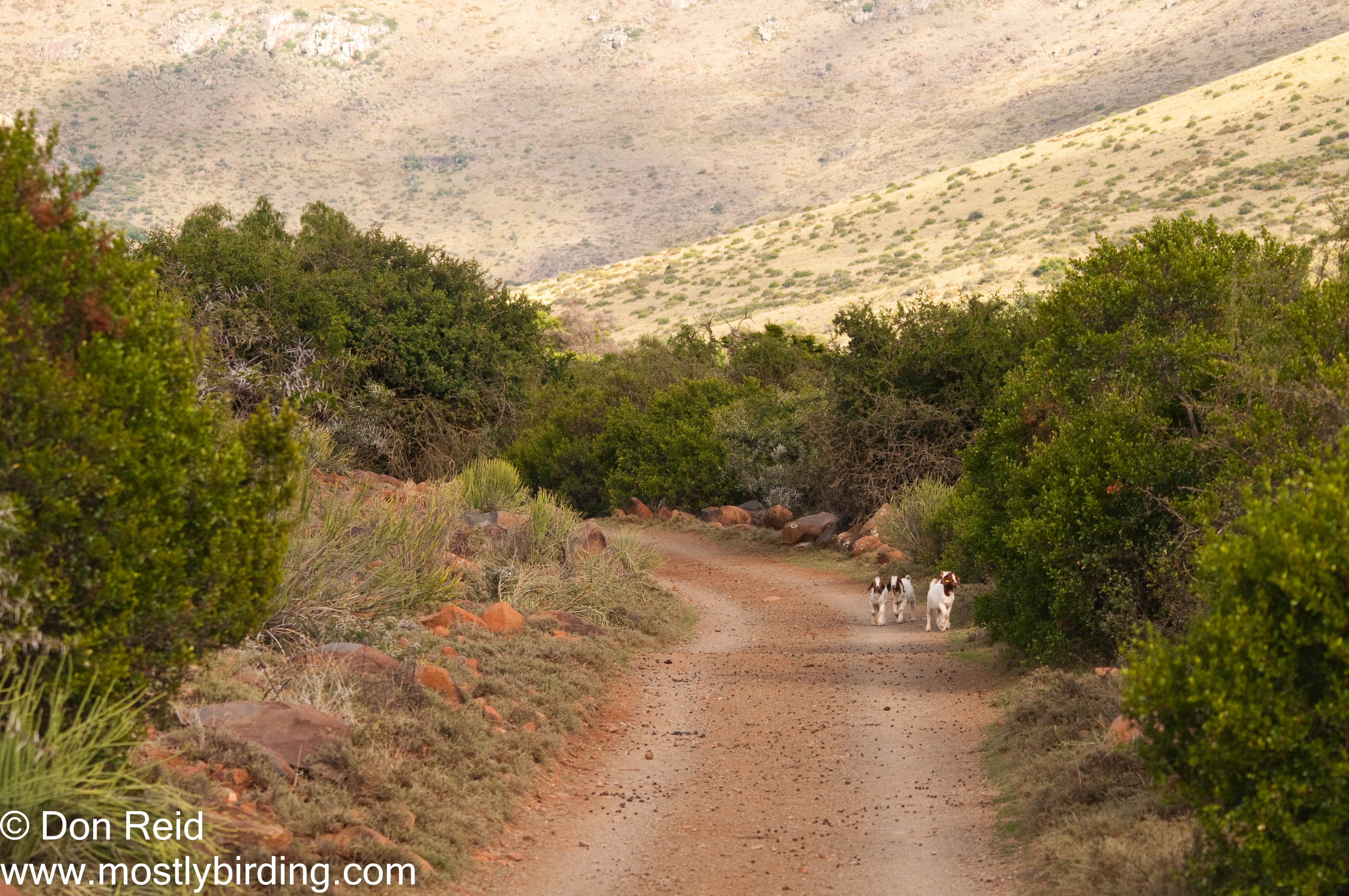
It’s a short drive from the road up to the farmstead along a dusty farm track that passes kraals with sheep and goats, keeping a lookout for birds in the scrubby Karoo habitat

Abbotsbury guest farm
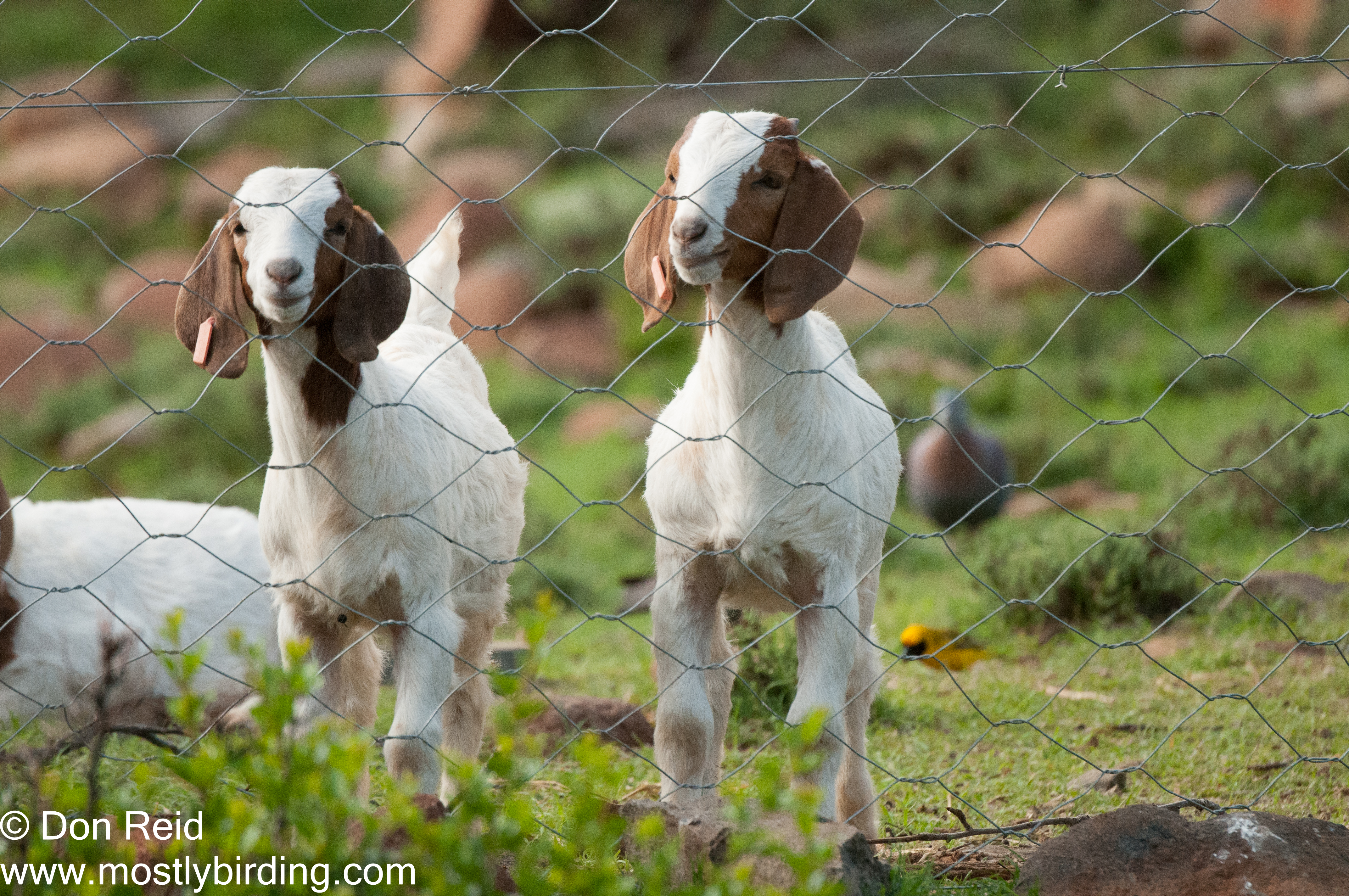
Abbotsbury guest farm – even the goats are good looking
Abbotsbury Guest Farm

Once we have greeted owner Graham and settled into the cottage, we relax for the rest of the afternoon on the stoep overlooking the garden and lawn – by now Angus, the friendly Scottish Terrier, has come to “greet” us and persuade us to throw his old tennis ball so that he can scurry after it and bring it back for the next throw.

Angus, Abbotsbury’s friendly Scottish Terrier

Time for a Walk

For the last hour or so of driving before we reach our overnight stop, I start looking forward to the walk I will take once we are settled in – firstly to stretch legs and body that have been unnaturally dormant while driving for several hours and secondly to fit in at least an hour’s quality atlasing in a pentad that has limited coverage.

The farm has a character all its own and around every bend there is something photogenic to admire

Abbotsbury Guest Farm
Abbotsbury guest farm

There are some quirky plants along the way

Abbotsbury guest farm
Flower amongst the thorns, Abbotsbury guest farm

And the Birds

Atlasing statistics show that the pentad in which Abbotsbury lies has a total of 100 species after 13 full protocol cards, with my contribution being 65 species from 7 cards. I usually expect to find 30 to 40 species during a visit and the images below are a selection of some of those I have come across and been able to photograph –
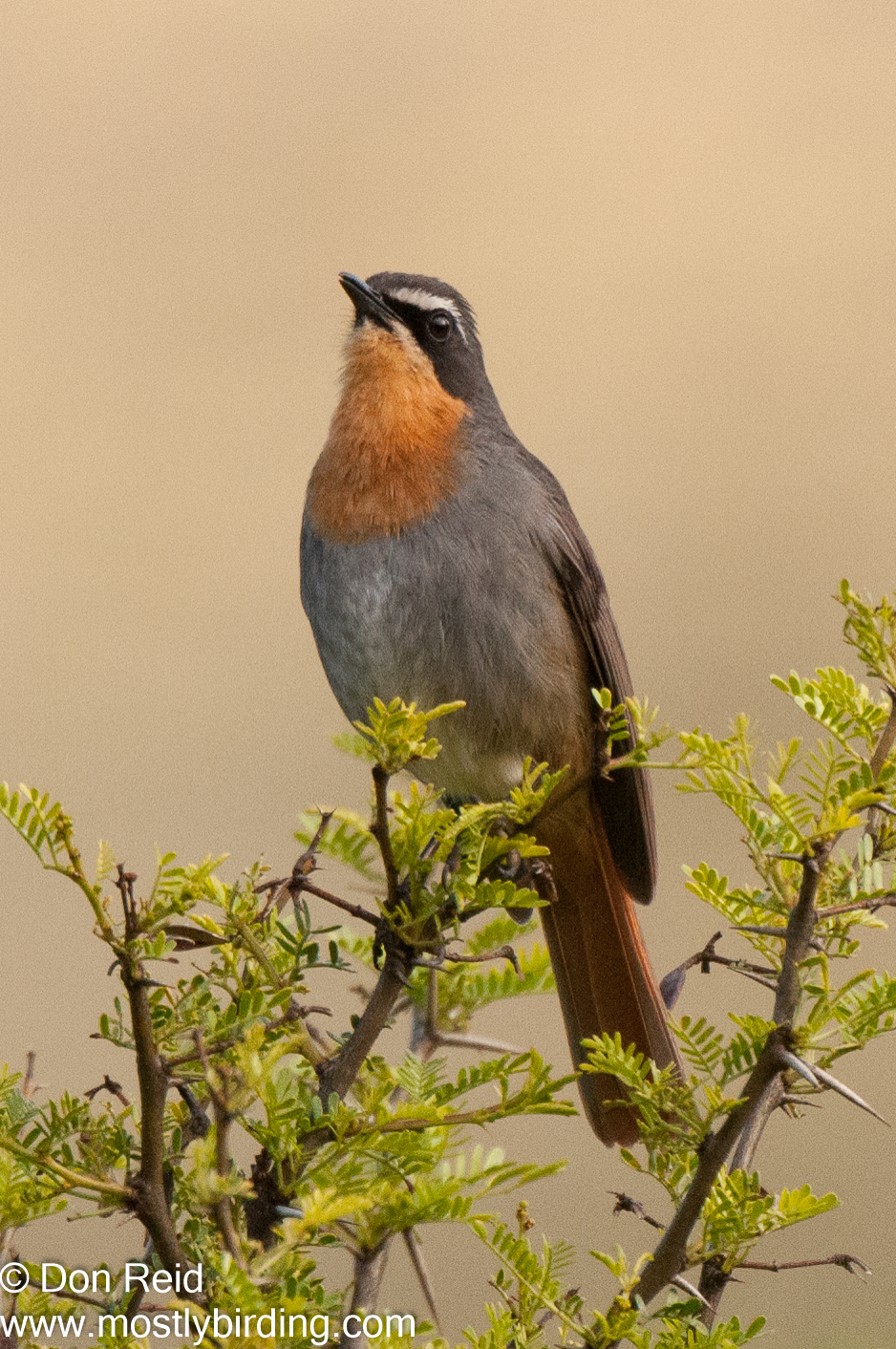
Karoo Scrub-Robin Erythropygia coryphaeus  (Slangverklikker), Abbotsbury guest farm
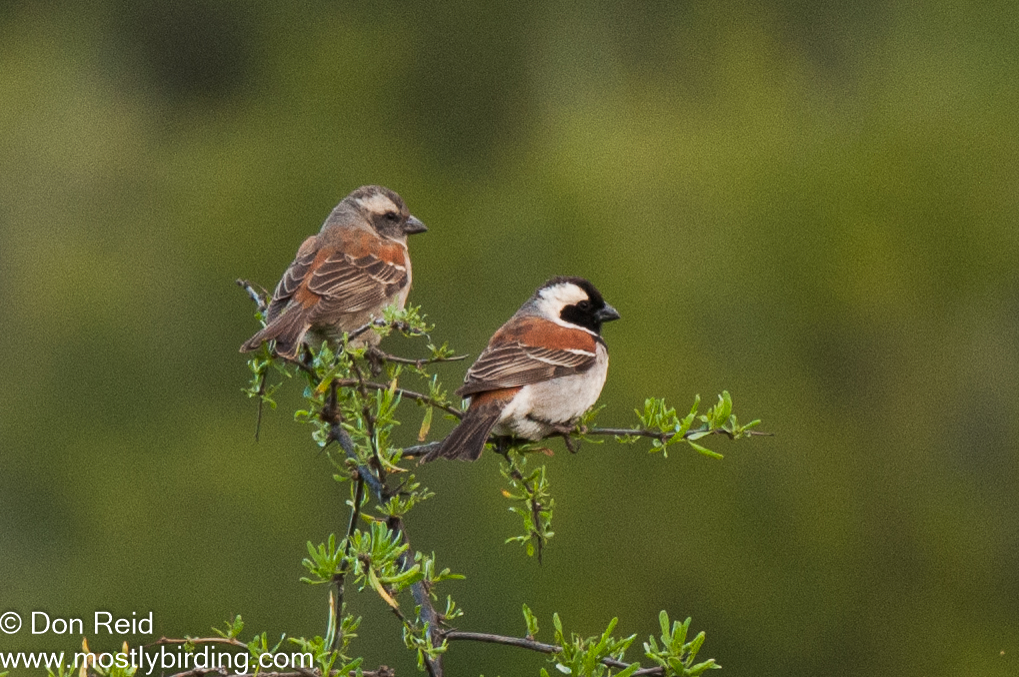
Cape Sparrow Passer melanurus  (Gewone mossie), Abbotsbury guest farm

The Pied Barbet is one of those birds that are heard before they are seen, alternating between their two calls – one a soft descending hoop hoop hoop, the other a loud nasal pehp pehp pehp – very much a feature of this arid habitat

Acacia Pied Barbet Tricholaema leucomelas  (Bonthoutkapper), Abbotsbury guest farm
Cape Robin-Chat Cossypha caffra  (Gewone janfrederik) , Abbotsbury guest farm
Greater Striped Swallow Cecropis cucullata  (Grootstreepswael)
, Abbotsbury guest farm
Cape Bunting Emberiza capensis  (Rooivlerkstreepkoppie)
, Abbotsbury guest farm
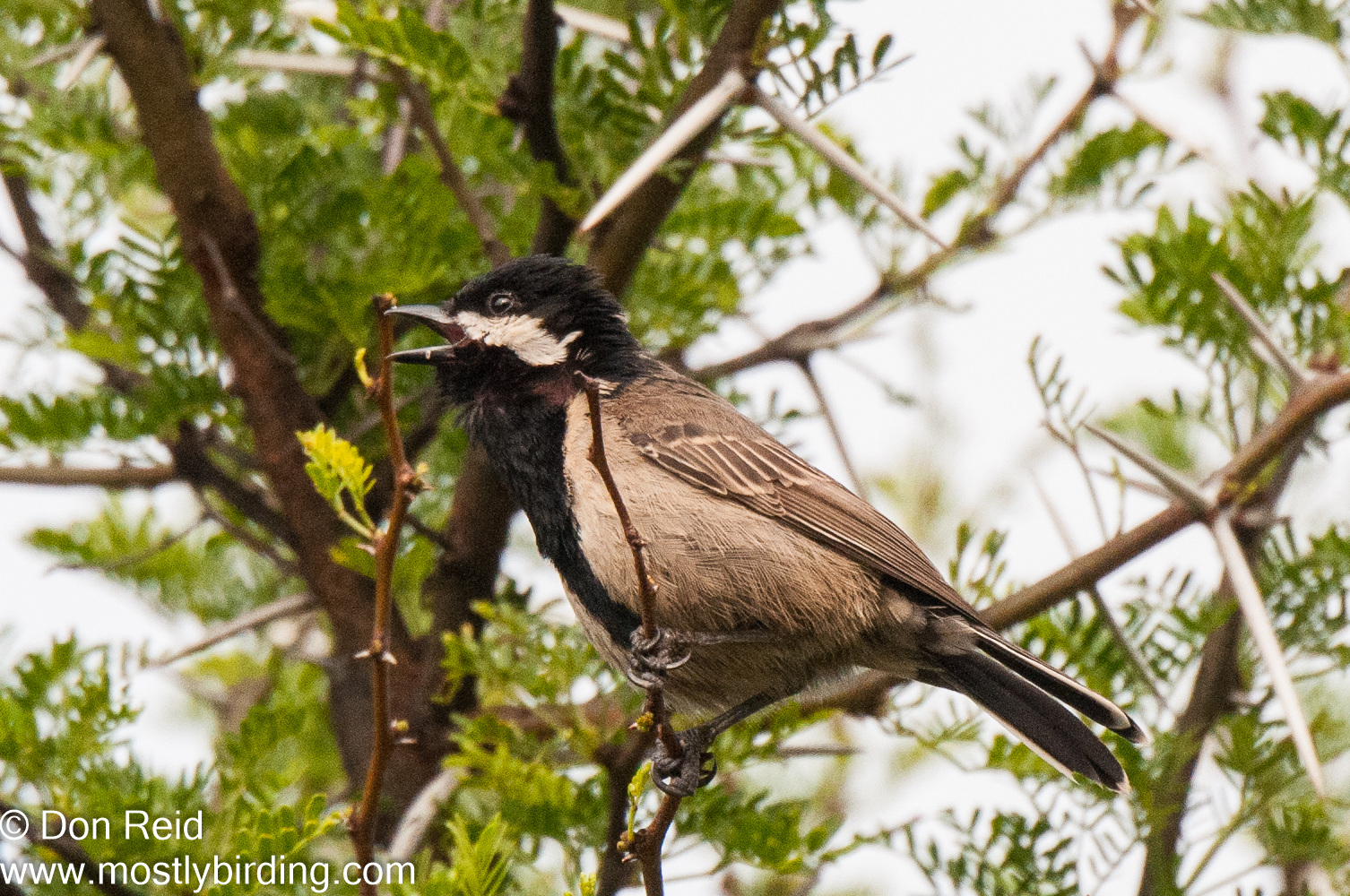
Grey Tit Parus afer  (Piet-tjou-tjou-grysmees) , Abbotsbury guest farm
Southern Masked-Weaver Ploceus velatus  (Swartkeelgeelvink) , Abbotsbury
African Red-eyed Bulbul Pycnonotus nigricans  (Rooioogtiptol), Abbotsbury

The best part about my afternoon and morning walks of an hour or so each around the farm is knowing a delicious dinner or breakfast will be served when I get back to the cottage