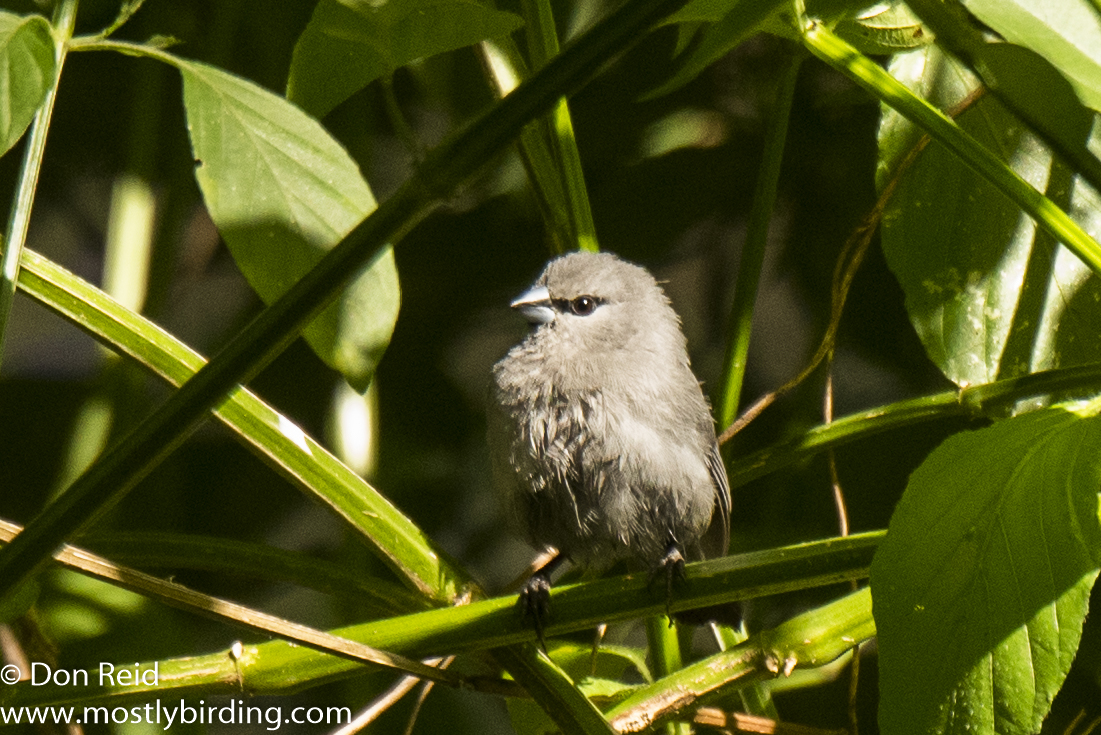
All posts by Don Reid

South African nature enthusiast with a passion for Birding, Photography and Travelling to interesting places to discover more about Southern Africa and the World

Central Drakensberg – Champagne Valley

For no other reason than to utilise our expiring RCI points, we booked a long weekend getaway from 9th to 12 th February this year at Champagne Valley Resort near Winterton in the area known as the Central Drakensberg.

Friday

We departed from home in Pretoria at around 9.30 am, late enough to avoid the peak hour traffic as we made our way through Johannesburg’s eastern side and headed south on the N3 towards Harrismith, where we had arranged to meet up with Koos and Rianda for a “padkos” brunch of hard-boiled eggs, frikadels (courtesy of Woolies) and jam sandwiches. Padkos is long-standing South African tradition, translating literally to “food for the road” and tastes even better when you stop at one of the large roadside service centres where there are umpteen choices of take-away and sit-down fast food restaurants – a nose-thumbing at conventional practices. (Just to show we’re flexible we stopped at the same spot for a Wimpy breakfast on the way back)

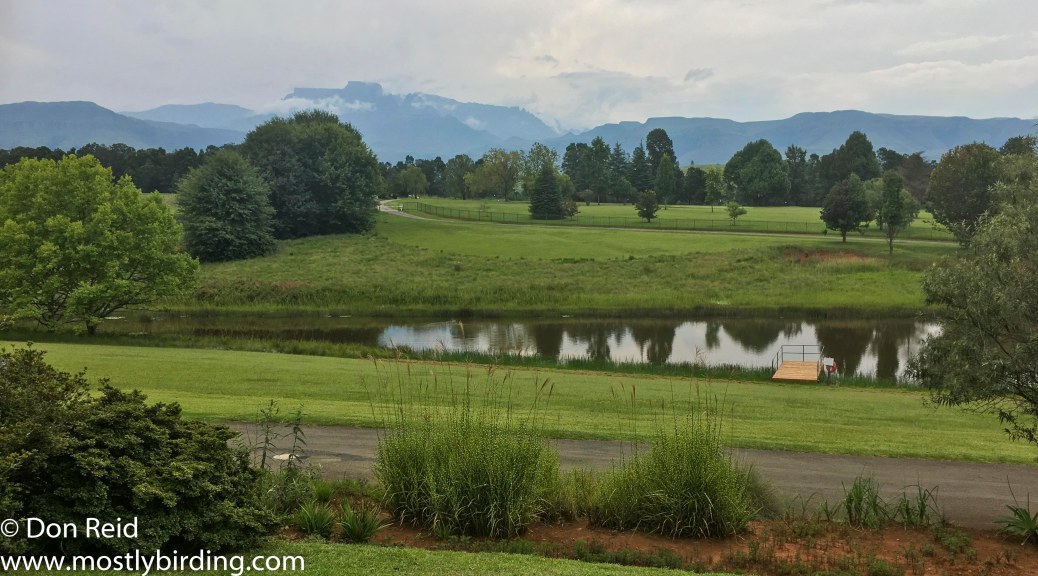
We reached Champagne Valley by 3.30 pm after a fairly relaxed drive from Harrismith, the scenery progressively becoming greener and prettier as we got closer to the central Berg area. On checking in we were allocated a chalet overlooking the dam with pleasing views of the Drakensberg range in the background and we quickly settled in. I had a refreshing swim in the crystal clear pool then joined the others on the stoep for beverages as we all spotted a few birds to get our list going in true keen birder/atlaser fashion.

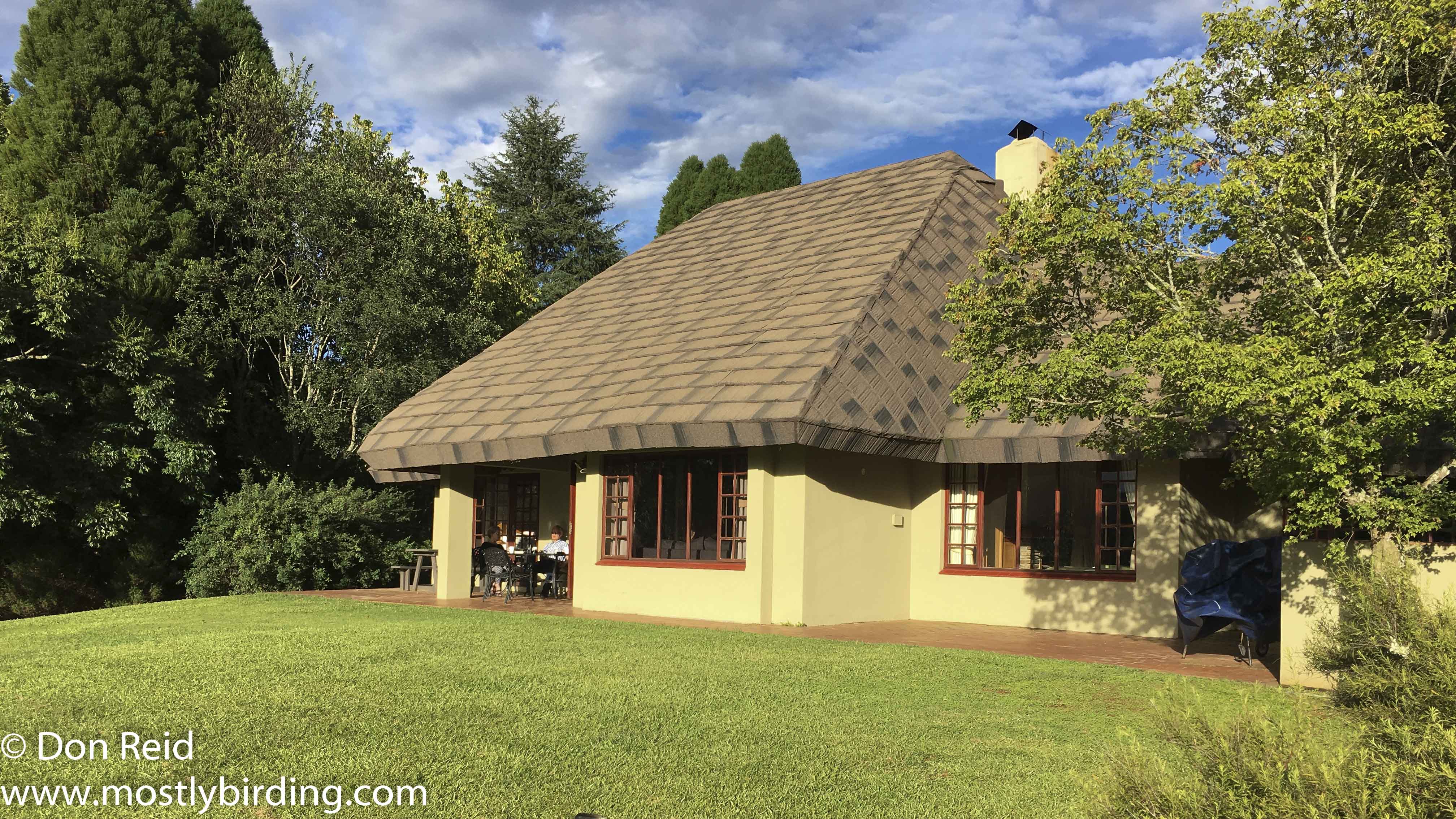
Champagne Valley chalet

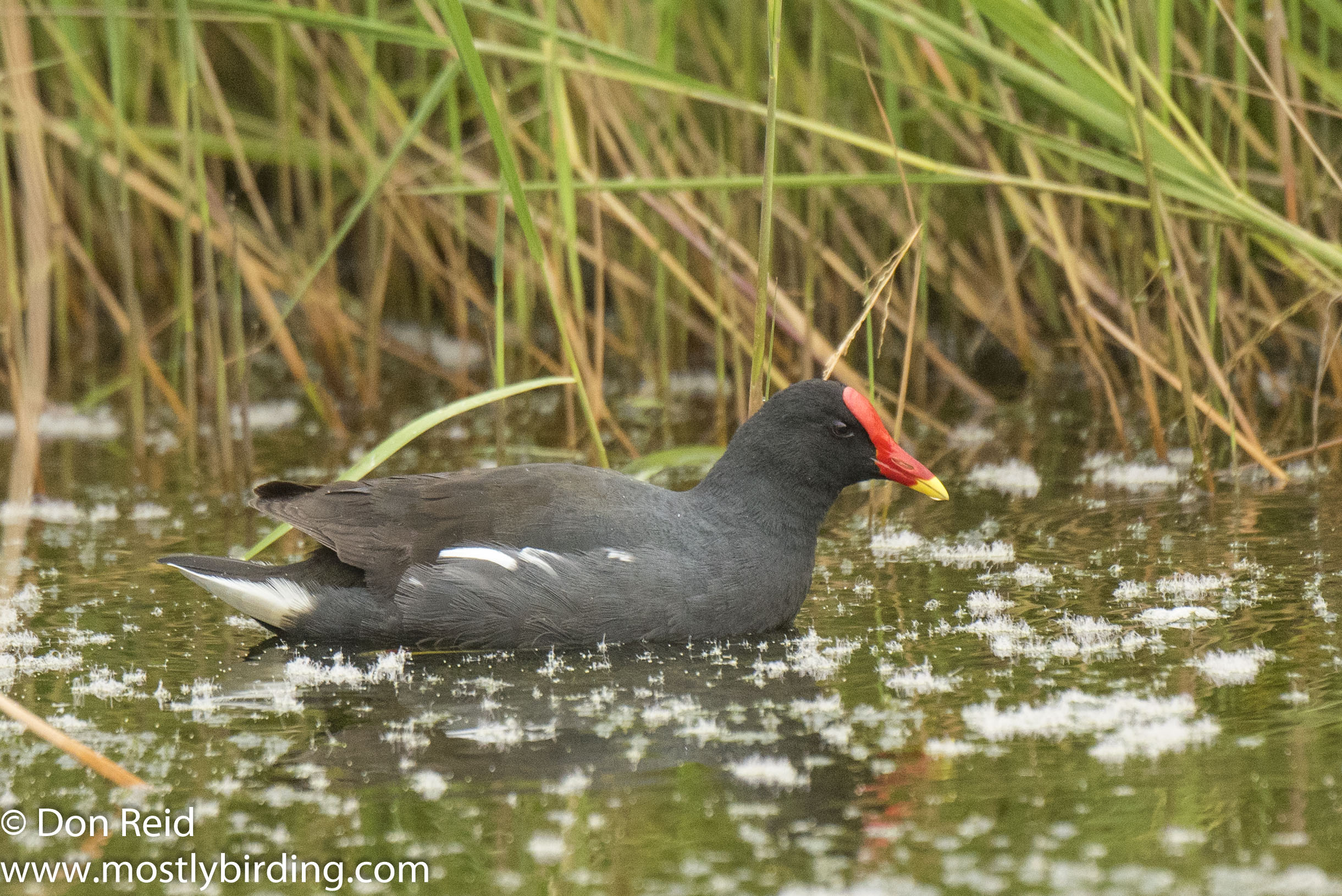
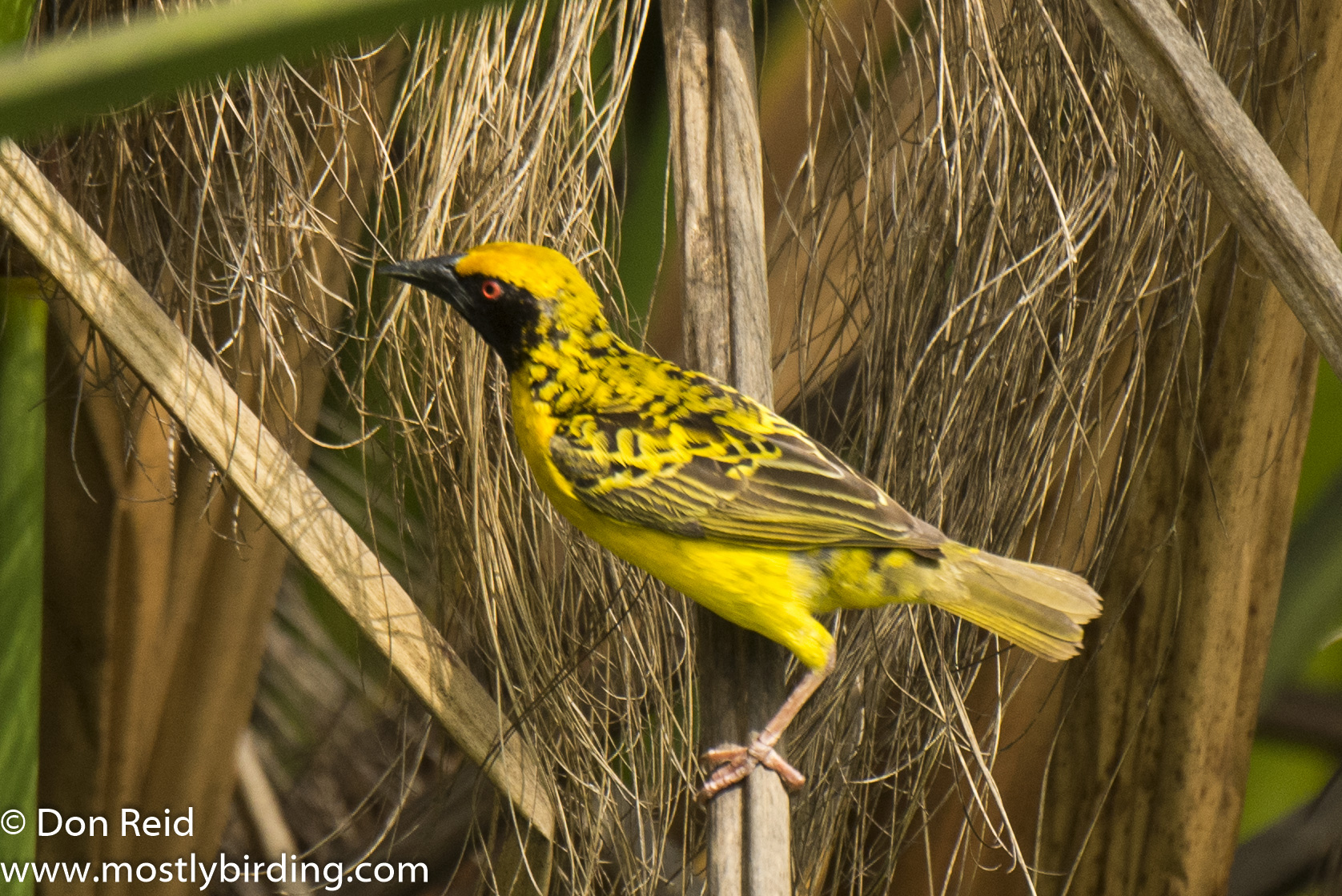
By sundown there were 18 species on my list including a Black-headed Oriole calling sweetly, Cape and Village Weavers busying themselves on the lawns, as well as Common Moorhen, Red-knobbed Coot and White-faced Duck on the dam.

Village Weaver (Male)
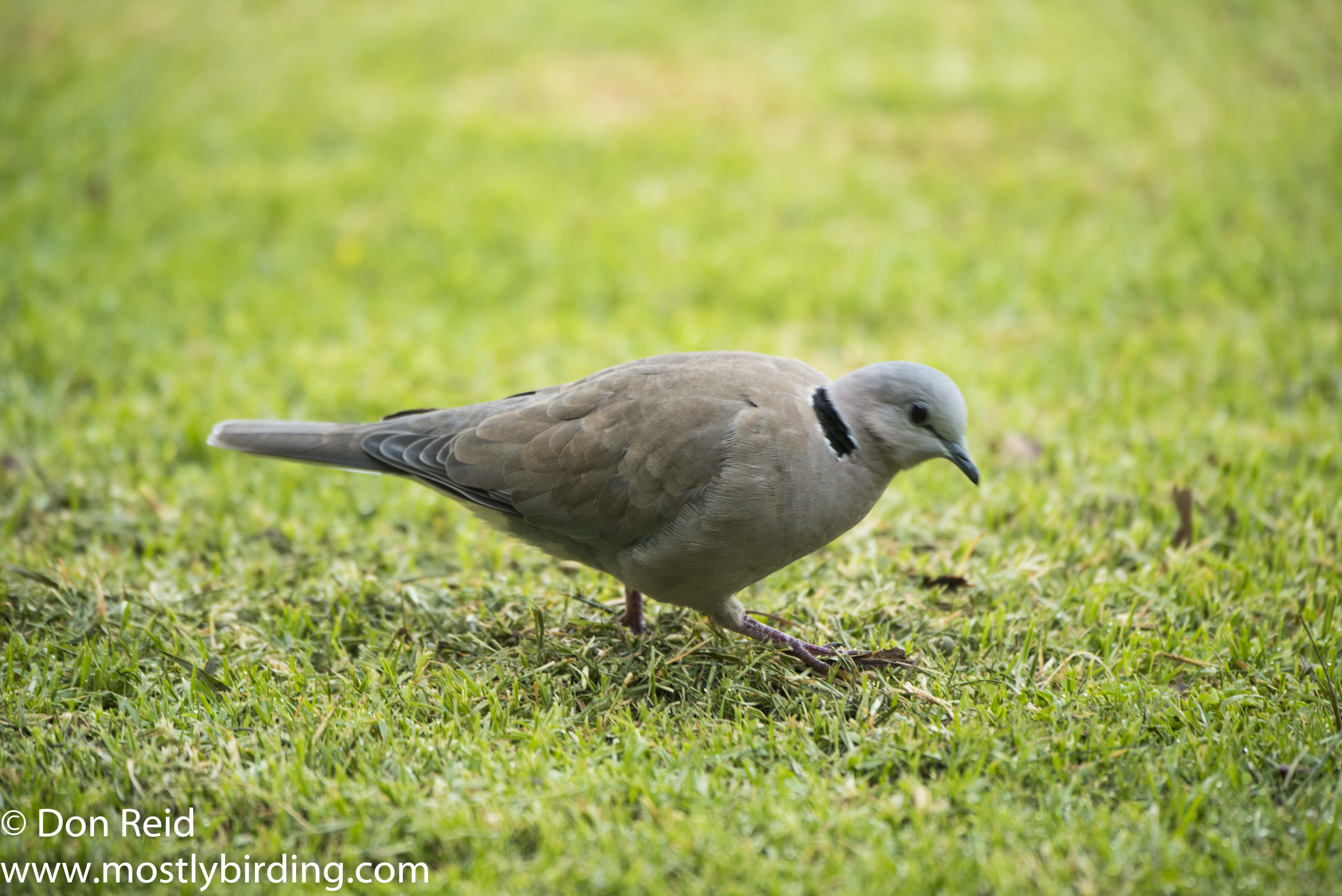
Cape Turtle-Dove

Saturday

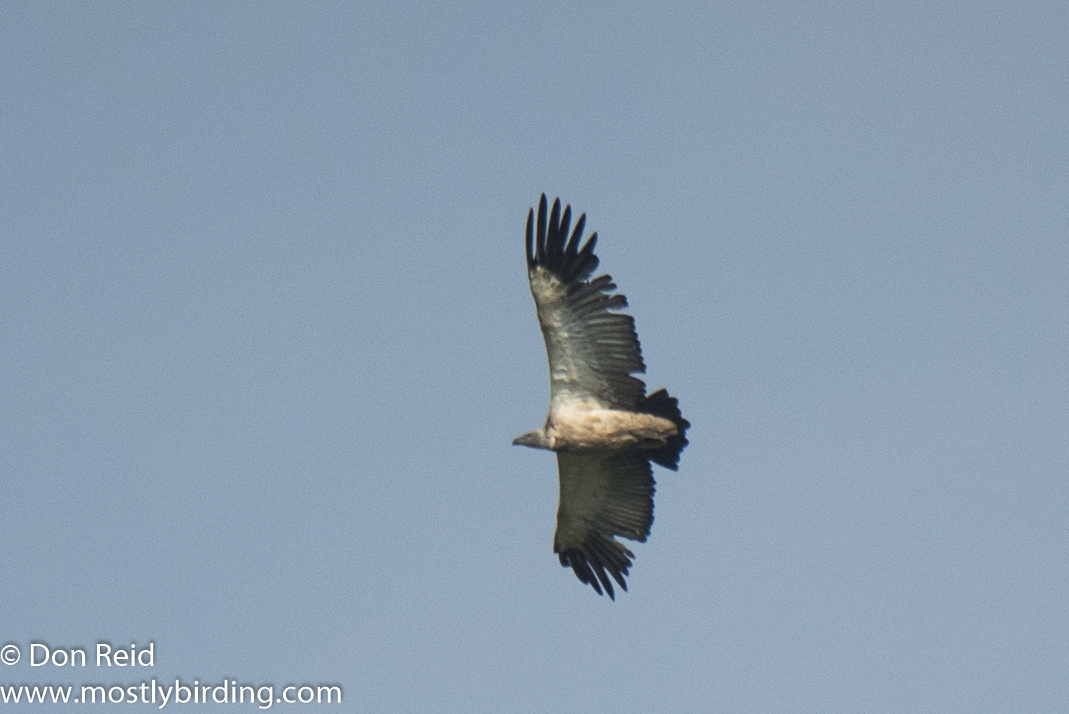
After a late rise (after all we were there to relax and are of the age where a crack of dawn start is not always first choice) we were back on the stoep in pleasant but humid weather to savour our first coffee along with Gerda’s health rusks. Before long we were entertained by no less than 3 different raptors – Cape Vulture at high altitude soaring majestically in wide circles, a Yellow-billed Kite cruising just above the tree tops delicately adjusting its flight path with twists of its distinctive broad V-shaped tail and a Bearded Vulture so high that I could only ID it from a magnified photo. They were joined by a group of White-necked Ravens calling from aloft in their croaky fashion.

Cape Vulture

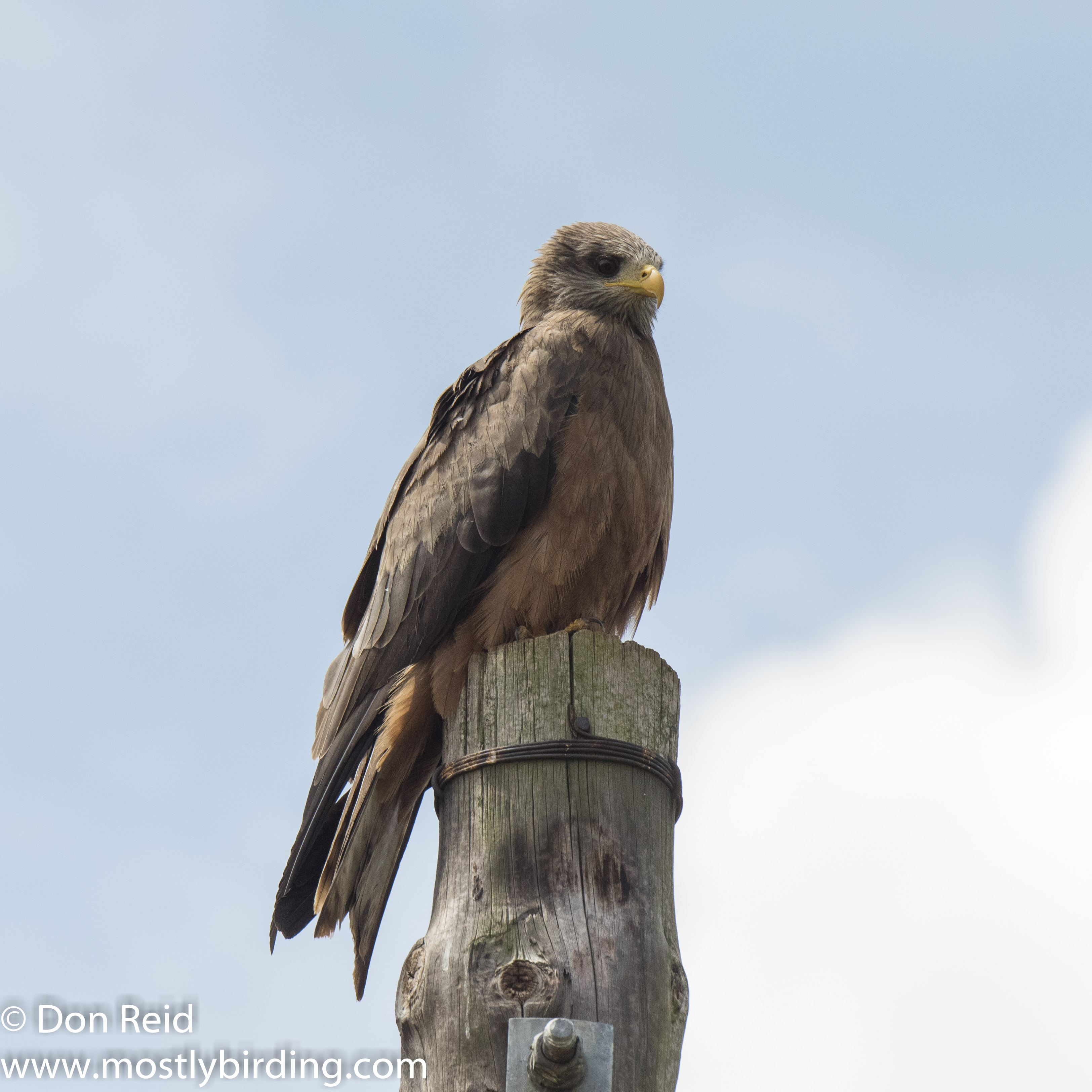
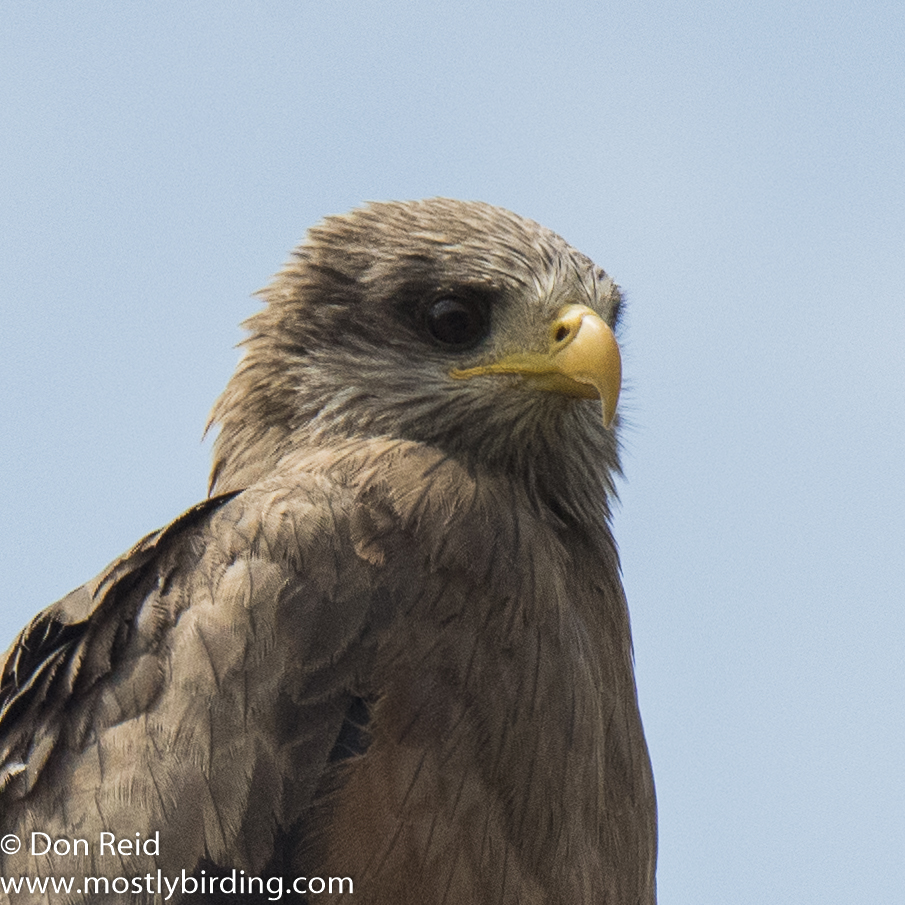
Yellow-billed Kites were a feature of the weekend as we came across them several times in different localities. What struck me when looking at the photos I had taken of one individual was its rather un-fierce look which I deduced was because of its dark eyes and fluffy feathers on the head, creating a look unlike most large raptors with their piercing eyes.

Yellow-billed Kite
Close-up of the Yellow-billed Kite – a less than fierce look unlike most raptors

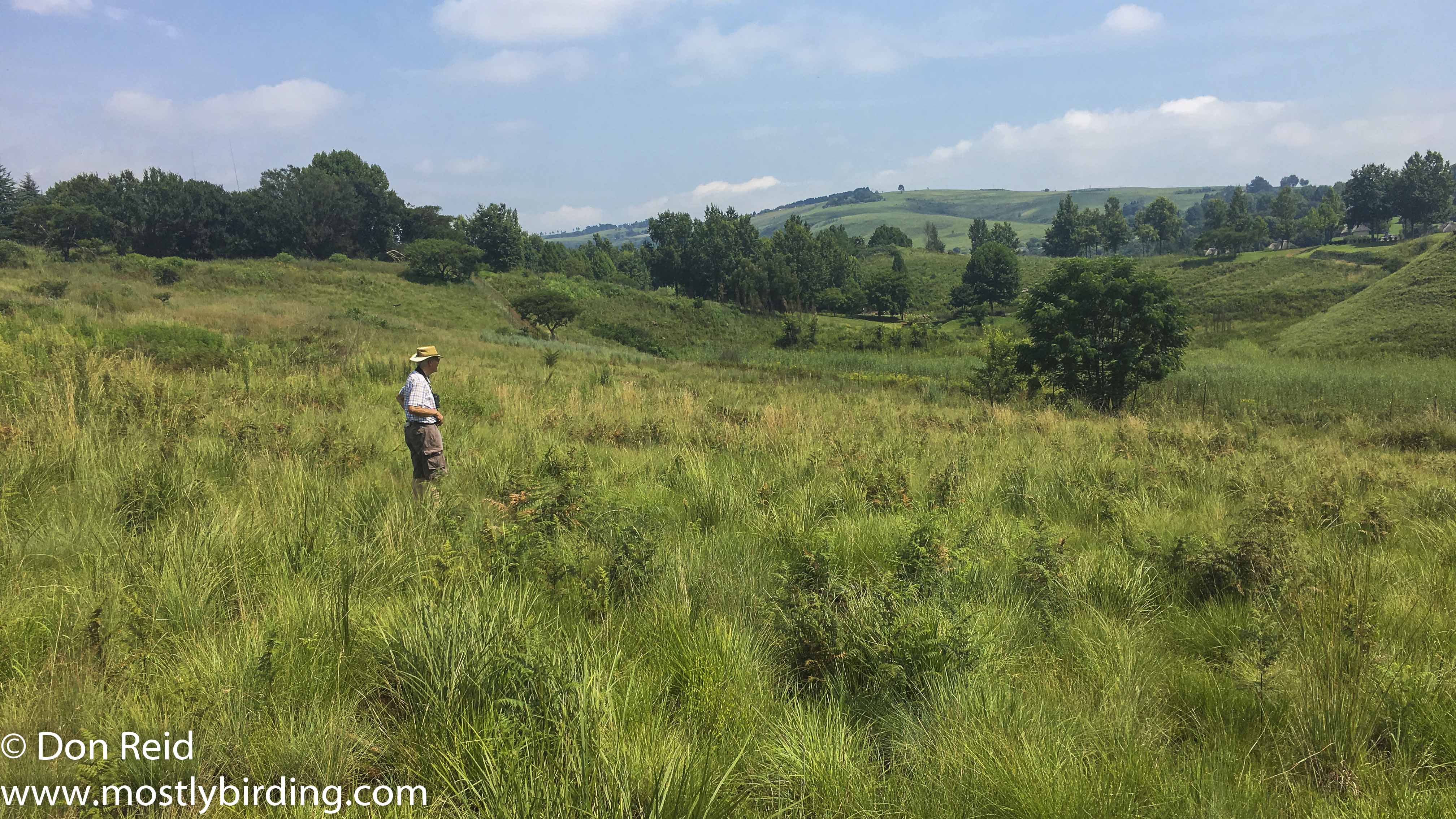
Mid-morning Koos and I braved the humid weather for a walk around the resort, starting with a walk through the grassland area along a mown path then wading through knee-high grass pods down the gentle slope until we found another path to take us back to the resort proper.

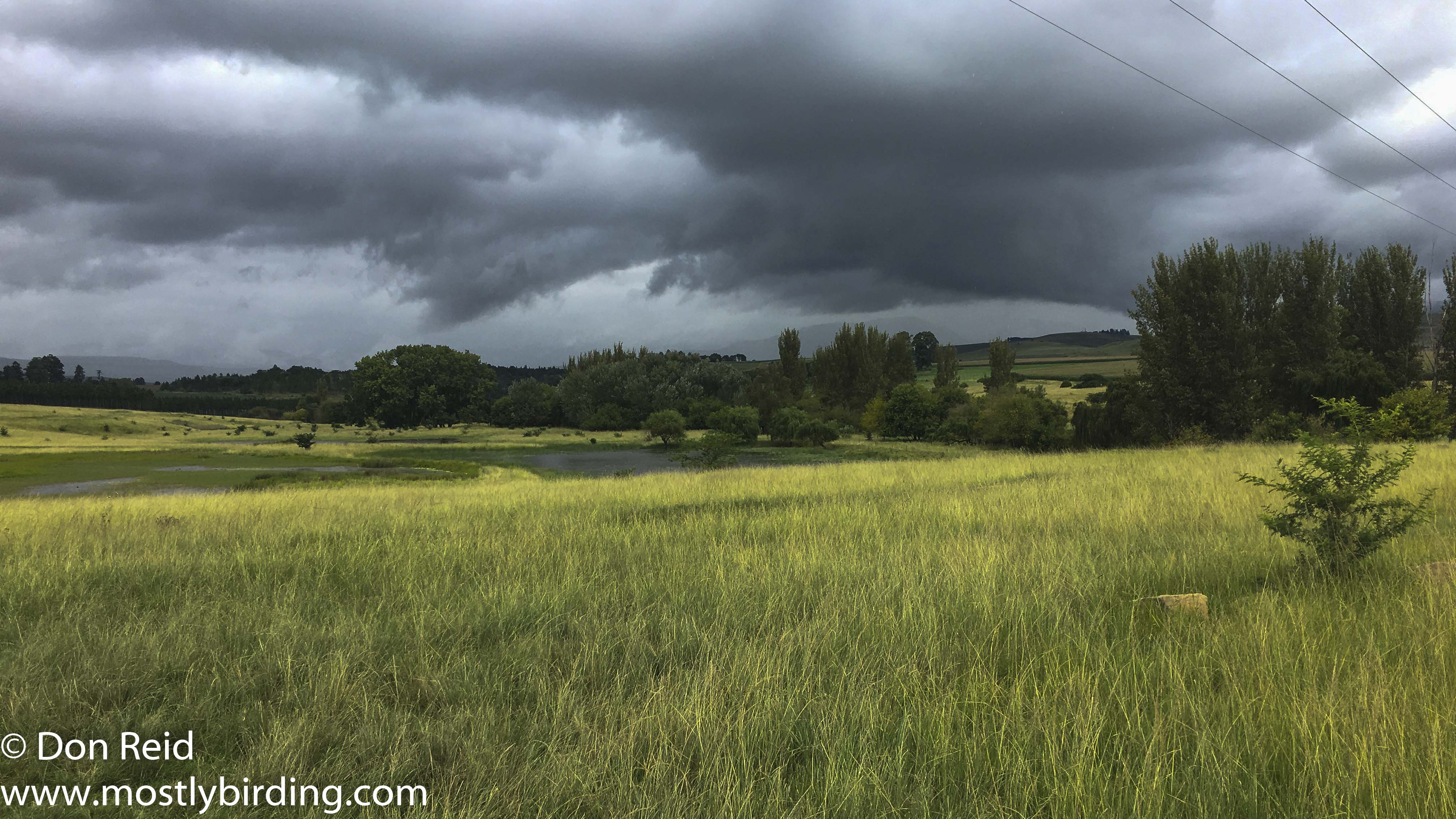
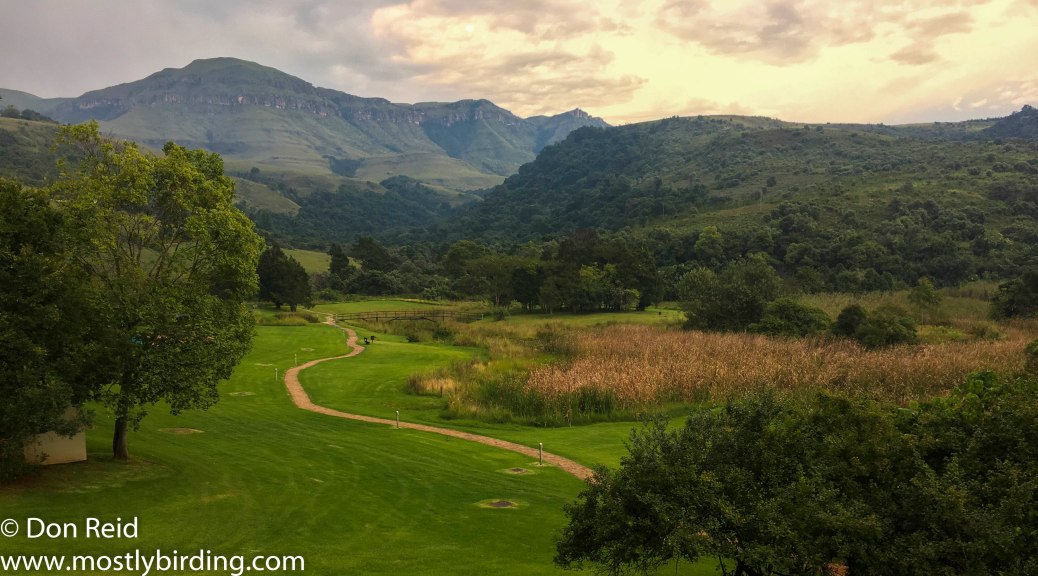
Champagne Valley grassland

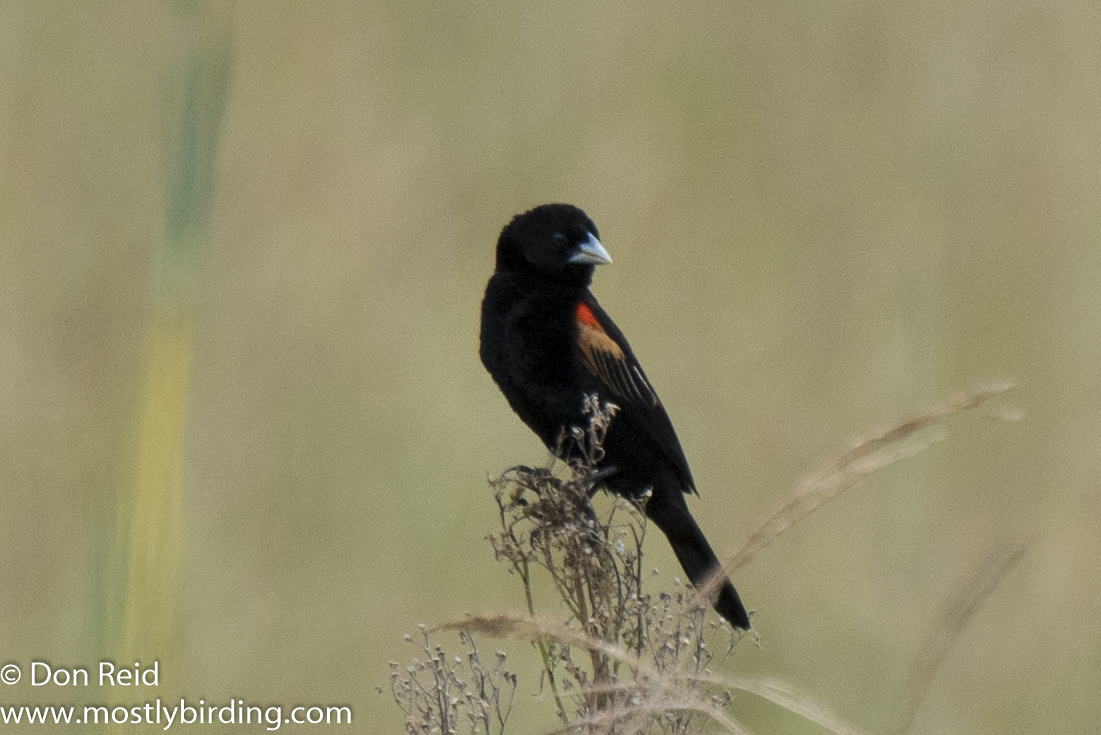
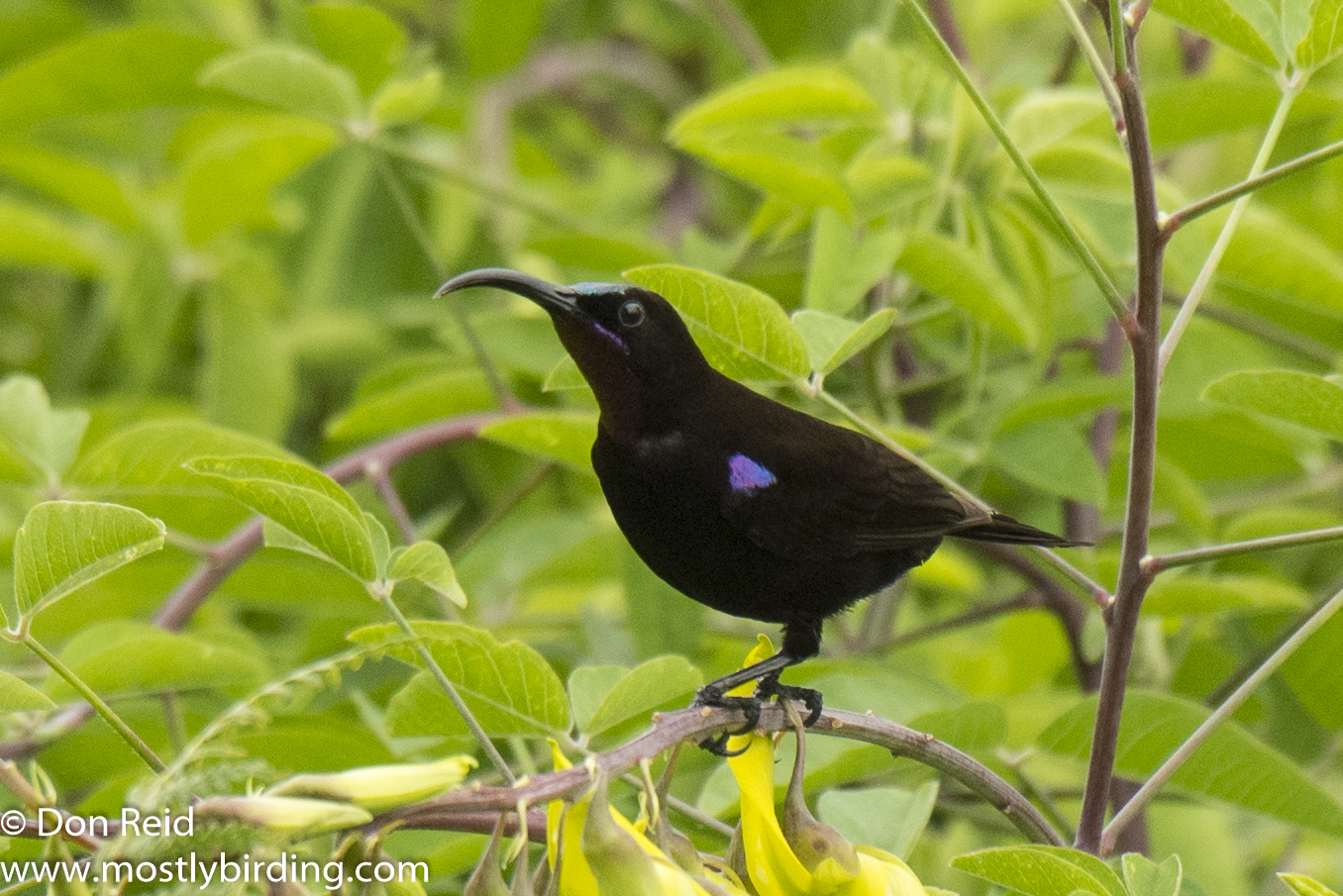
Grassland species such as Fan-tailed and Red-collared Widowbirds, Zitting Cisticola and Streaky-headed Seedeater were active and visible, while an unusual “chip-chu” call had us puzzled until we discovered an Amethyst Sunbird calling from a tree – not the call we are used to, so something new added to our birding knowledge.

Fan-tailed Widowbird
Amethyst Sunbird

A passing Martin caught my eye and the white rump said Common House-Martin – one of those birds seen infrequently, although we came across a few more in flocks of Swallows during the weekend.

By the time we got back to the chalet I was drenched in sweat from the humidity and mild exertion – a cold drink was most welcome and stoep-based birding became the order of the day.

Late afternoon we drove to Monk’s Cowl camp, stopping  on the way to see if we could coax a Bush Blackcap to show itself, but to no avail. Nevertheless we had good sightings of Steppe Buzzards and Yellow-billed Kites, a Dusky Indigobird and a Black-backed Puffback with a Juvenile in tow.

Dusky Indigobird
Black-backed Puffback (Juvenile)

Sunday

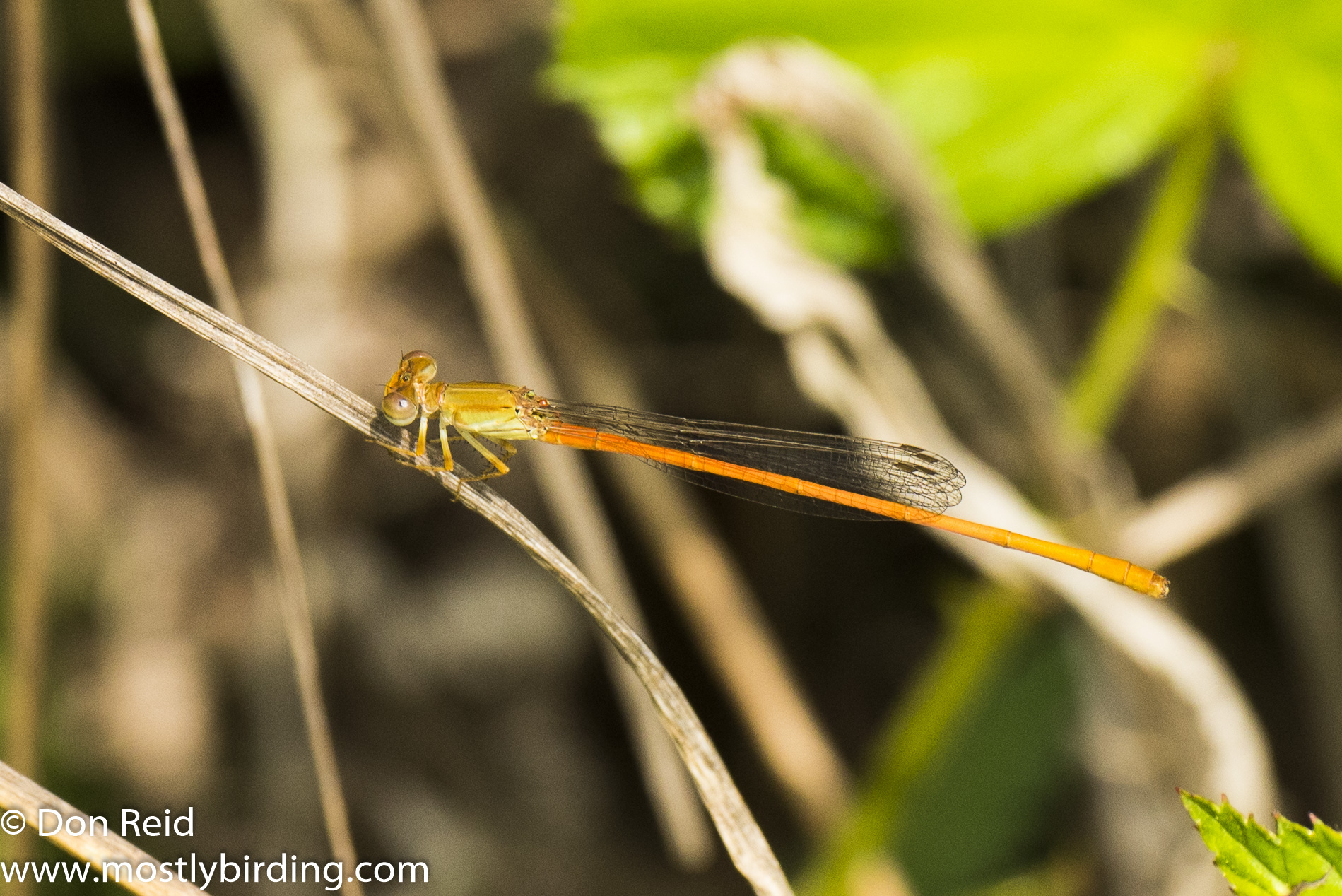
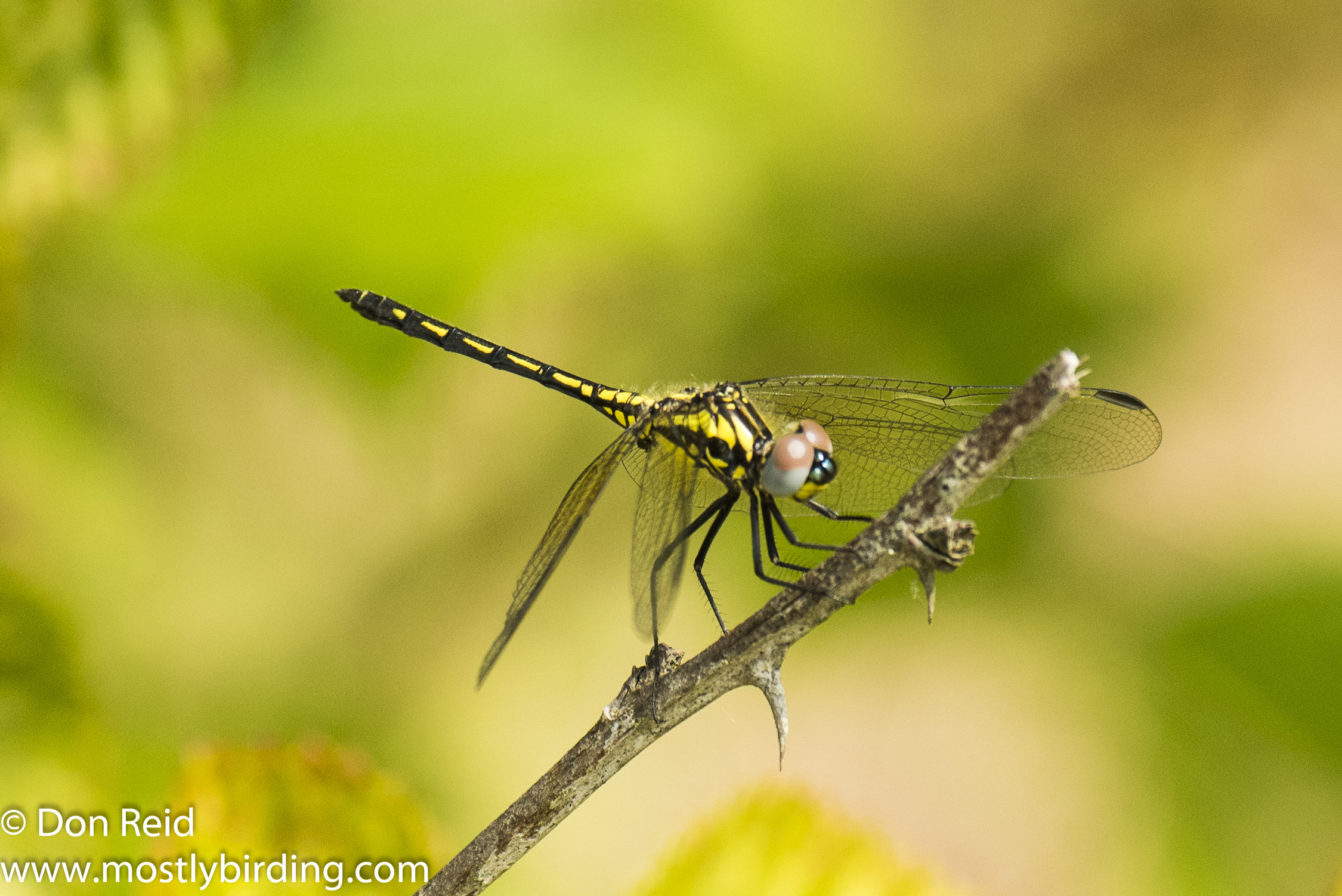
Another relaxed morning for me starting with a quiet walk along the edge of the dam where odonata (dragonflies and damselflies) were almost more numerous than the avifauna so I spent a pleasant hour or so chasing them down and taking a few photos.

Dragonfly
Dragonfly

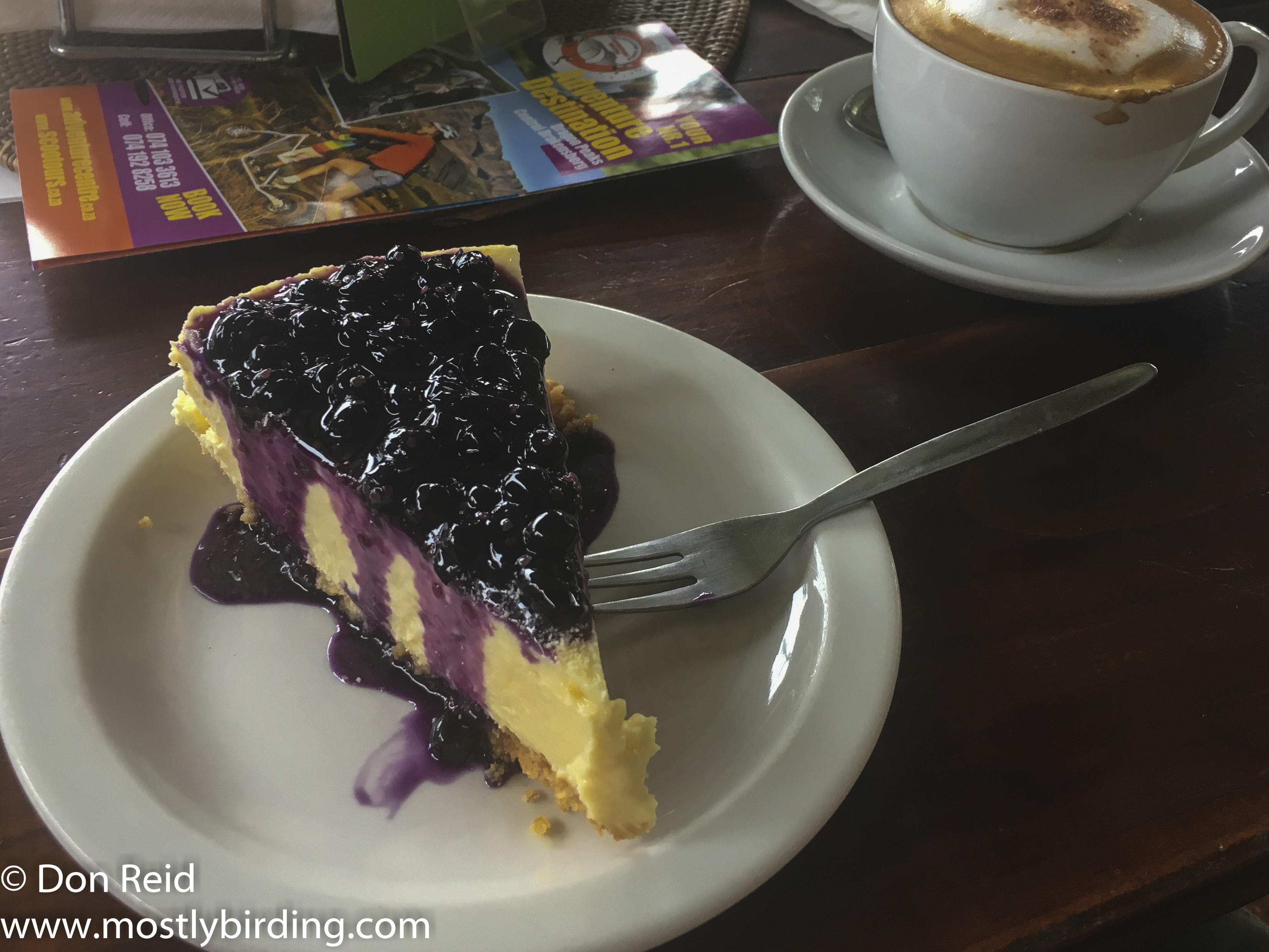
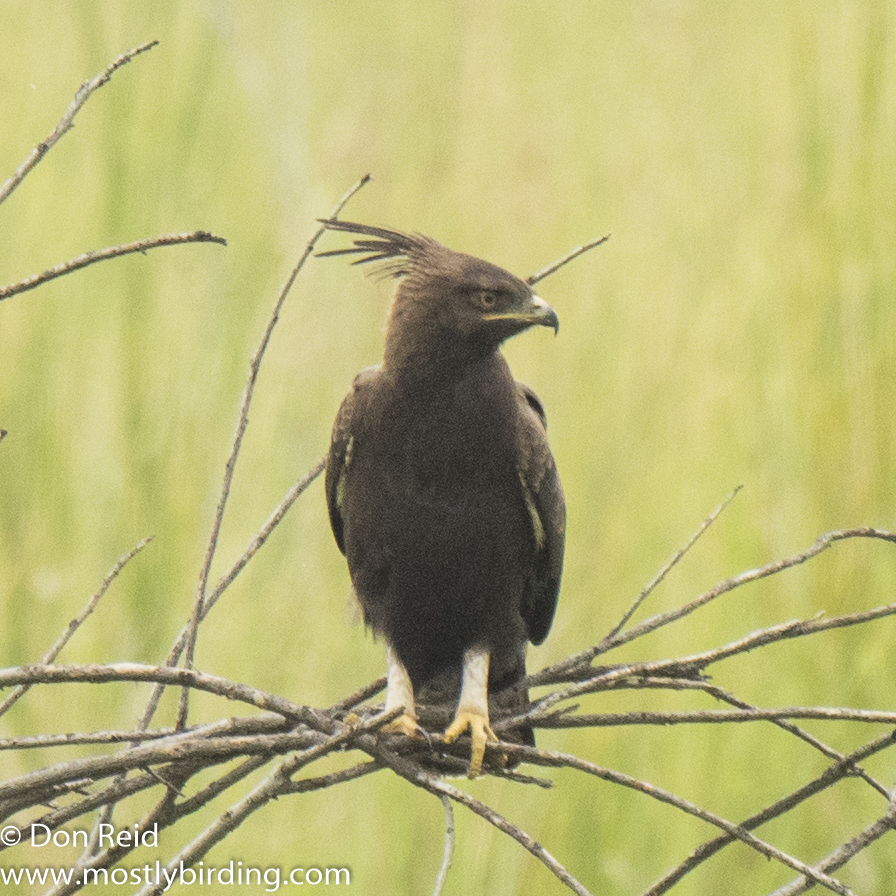
Late morning we set off on a drive along the R600 towards Winterton with the main purpose of popping into Scrumpy Jacks for coffee and a taste of their recommended cheesecake. On the way Koos pointed out the Long-crested Eagle he had seen on his earlier walk, perched in the open for all to see.

Long-crested Eagle

Soon after we arrived at the small farmstall with a few tables outside, a parking area fairly muddy from earlier rains and a notice on the flimsy gate to “please close the gate to protect the dog”. The only visible animal in the garden was a large pig with an even larger pot belly dragging on the ground – presumably the “dog” referred to in the notice. It seemed a strange pet to allow near guests – such as us – coming for coffee and honey-baked cheesecake, however we did not let it detract from the treat.

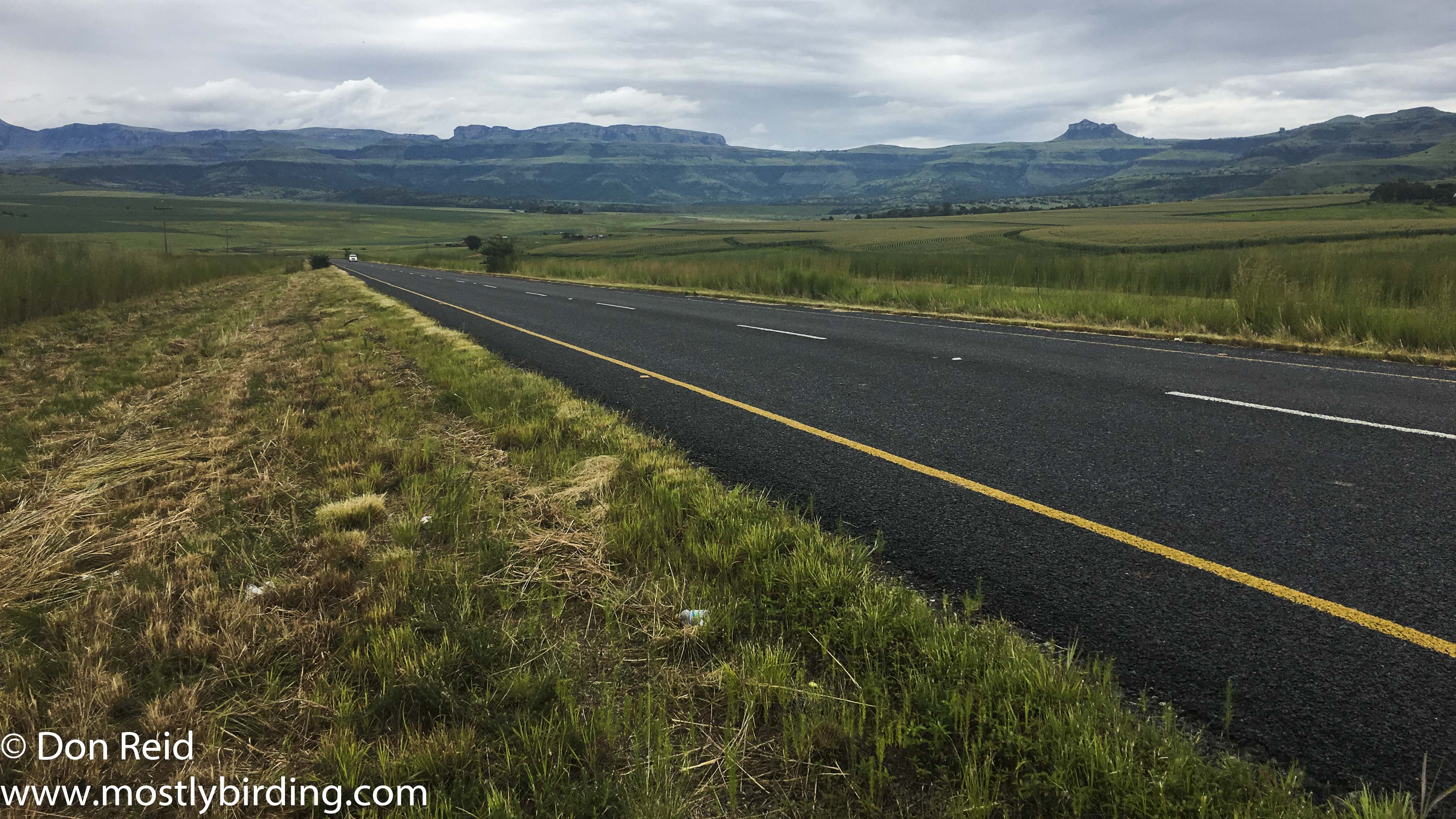
Said coffee and cheesecake did the trick of turning on the switch in the brain that says “I am contented with life” and we ventured further down the R600 with the intent of doing a “bit of birding”. At the signpost indicating “Bell Park Dam 8 km ” we turned left – this was a route Koos and I had explored a year ago and it turned out to be a good choice again as we were soon into rolling grasslands and farms planted with tall green mielies (corn). Amur Falcons were numerous, perched at regular intervals on the roadside wires, sometimes in small groups, scanning the fields for their next grasshopper or termite alate meal.

The attractive farm dam where we had seen Grey-crowned Cranes landing the year before, was occupied by various waterfowl including SA Shelduck, Spur-winged Goose and a complement of the usual Egyptian Geese and Red-knobbed Coots plus a lone Grey Heron.

Farm dam in the distance

We continued in the same slow fashion past the Bell Park dam wall with cascading overflow creating a nice picture, then turned off onto the road leading to the dam’s entrance gate. After a brief leg-stretch accompanied by yet another Yellow-billed Kite eyeing us from his perch on top of a pole, we decided to turn back and head for the resort.

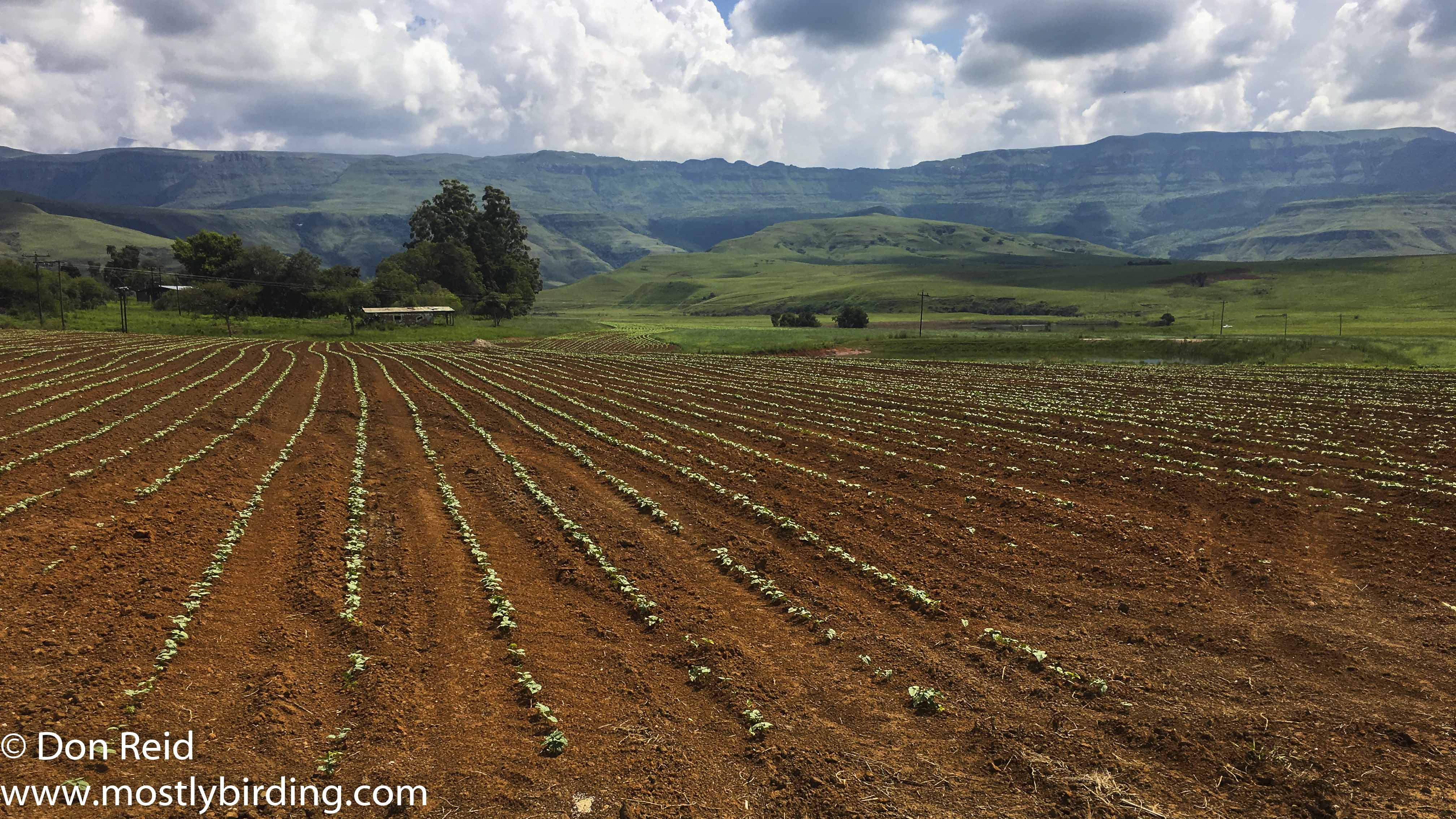
Farmlands with mountains in the background
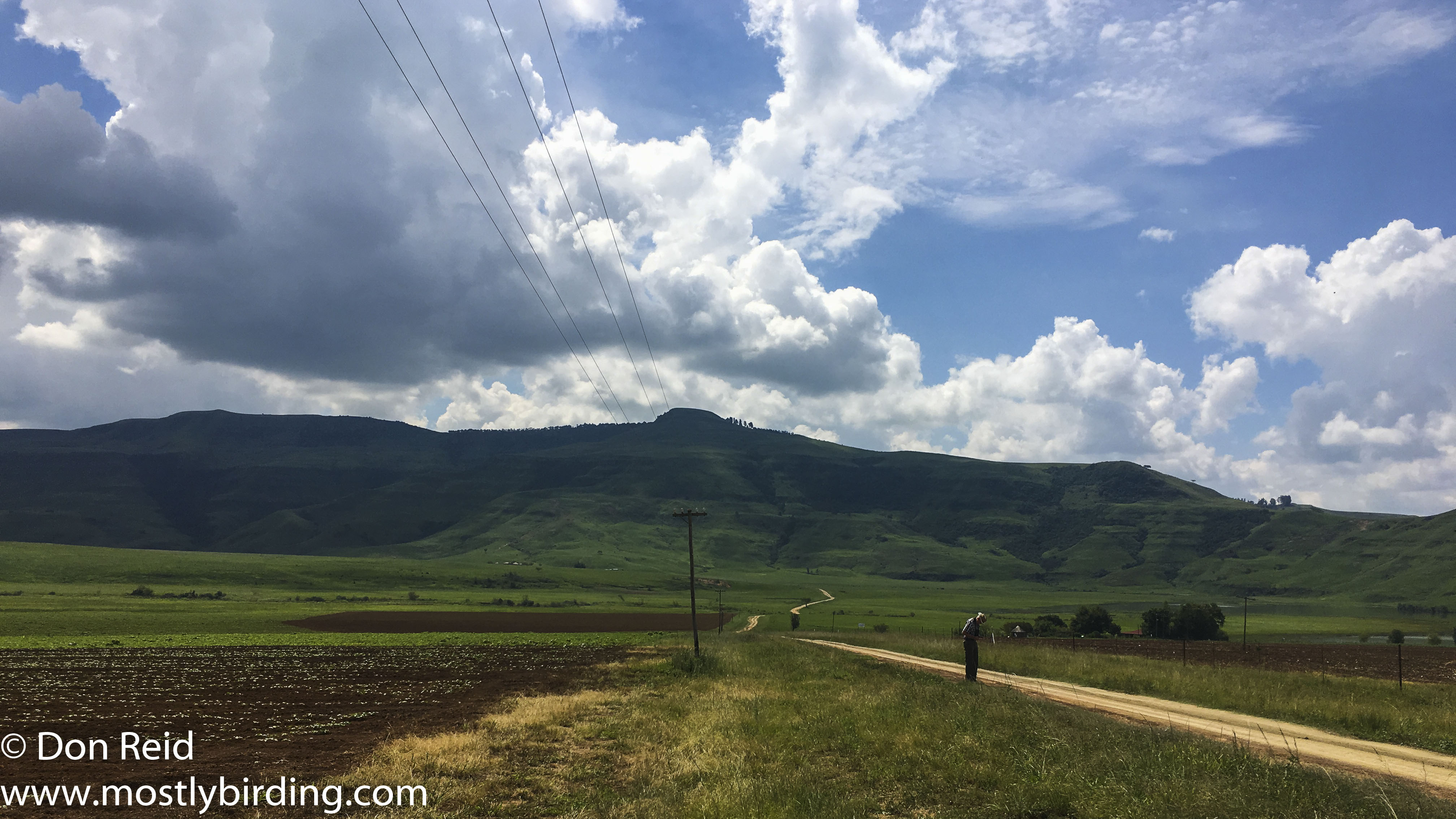
The road to Bell Park dam

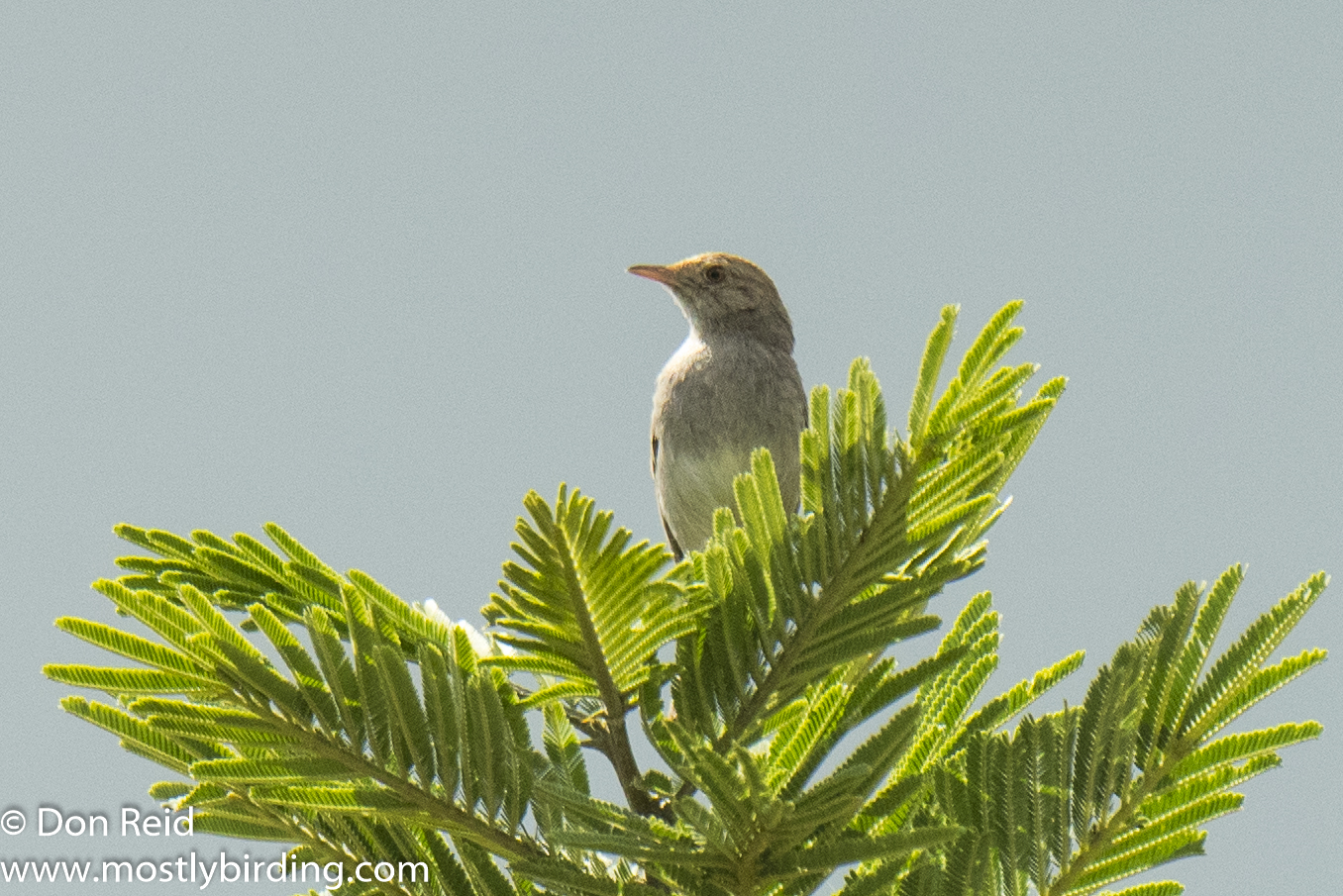
On the way back Koos spotted a flock of Geese and was elated when he found two Grey-crowned Cranes amongst them. A small Cisticola like bird in the top of a tree had us puzzled for a while with its grey breast and white belly, until we decided it was a form of Neddicky – later reference to Roberts showed that there are no less than 7 subspecies of Neddicky in southern Africa so I deduced that a wide variance in appearance can be expected. (another snippet of added knowledge).

Neddicky

Amazingly our “bit of birding” had been so absorbing that we found we had spent the required 2 hours in the pentad for a “Full protocol” card – and we all had an enjoyable afternoon of birding in a beautiful environment along a quiet road – what more can one ask for?

Monday

Time to return to Pretoria – Arrow-marked Babblers visited the chalet while packing and I couldn’t resist a quick photo…..

Arrow-marked Babbler

By 9 am we were on our way, this time choosing the scenic route via Winterton and Bergville then via the spectacular Oliviershoek pass to Harrismith. What a good choice it turned out to be – the scenery was quite stunning for most of the way, certainly the greenest we have ever seen this part of our country, both cornfields and grasslands alike, stretching into the distance in checkered patterns.

We’ll be back! Sooner than you can imagine – in a couple of weeks we return to the same area but a different resort when my brother visits from the UK.

Into the Wilderness – A Forest, A Big Tree and a Ghostly Dove

Forest Magic

There’s nothing like a walk in a natural forest to heighten the senses – once you have walked a short distance into the forest, the background sounds of daily life are gradually reduced and eventually all you can hear are the sounds of the forest itself. The bird calls become prominent and even the rustle of leaves as a bird or small creature moves through the canopy or the forest floor can suddenly be heard.

If you are lucky enough to have a patch of forest to yourself, you can almost feel a bubble forming around you as you enter a private world with just the forest sounds, the smell of the trees and the soft feel of the leaf-strewn pathway for company.

This was my experience during a recent visit to the Woodville “Big Tree” forest near Hoekwil in the Southern Cape. The forest lies beyond the Wilderness (not the actual kind, this is a village near George much favoured for holiday homes and as a retirement spot) just off the old George – Knysna road with the main attraction being the massive Yellowwood tree a stone’s throw from the parking area and picnic spot. Estimated to be over 800 years old and standing 31m tall it is more than impressive and one can only wonder how pristine our country was when it was a mere sapling, long before any human interference.

How we came to be there

Gerda and I had decided to explore the Garden Route beyond George for the day and she was the one who suggested we head for the Wilderness  for lunch at one of the popular restaurants in the small village centre, followed by a drive through the countryside east of Wilderness.

We set off in perfect weather, sunny and warm with just a whisper of wind and enjoyed a pleasant light lunch of tapas – chunks of hake and calamari with tasty side sauces. From there we took  a slow drive to Woodville forest  via Hoekwil and we were soon at the parking area. I found a shady parking spot and left Gerda contentedly knitting (making sure there were picnic goers and a forest warden nearby – you always have to be wary in our beloved country) while I explored the forest trail beyond the Big Tree.

The Trail

The trail is fairly easy and an hour is more than enough time for a slow walk while stopping to listen and look around. In the back of my mind was the thought that I still had not seen a Lemon Dove, despite being very close to them on a few occasions – so I stopped a few times to play their call, initially with no response.

By this time I had seen a number of forest specials such as Yellow-throated Woodland Warbler (Geelkeelsanger), Chorister Robin-Chat (Lawaaimakerjanfrederik), African Paradise Flycatcher (Paradysvlieëvanger) and Cape Batis (Kaapse Bosbontrokkie)

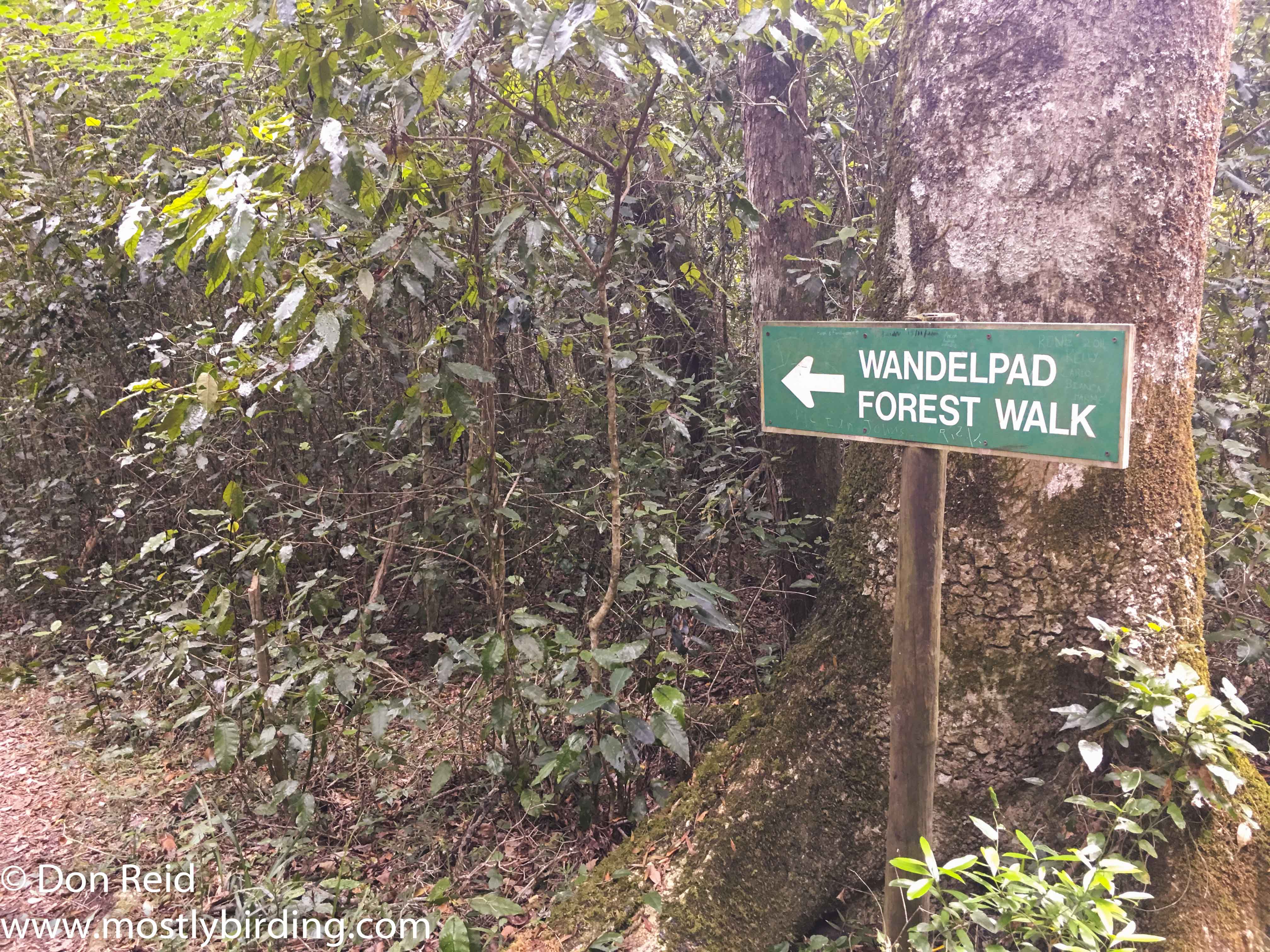
Woodville Big Tree Forest Walk
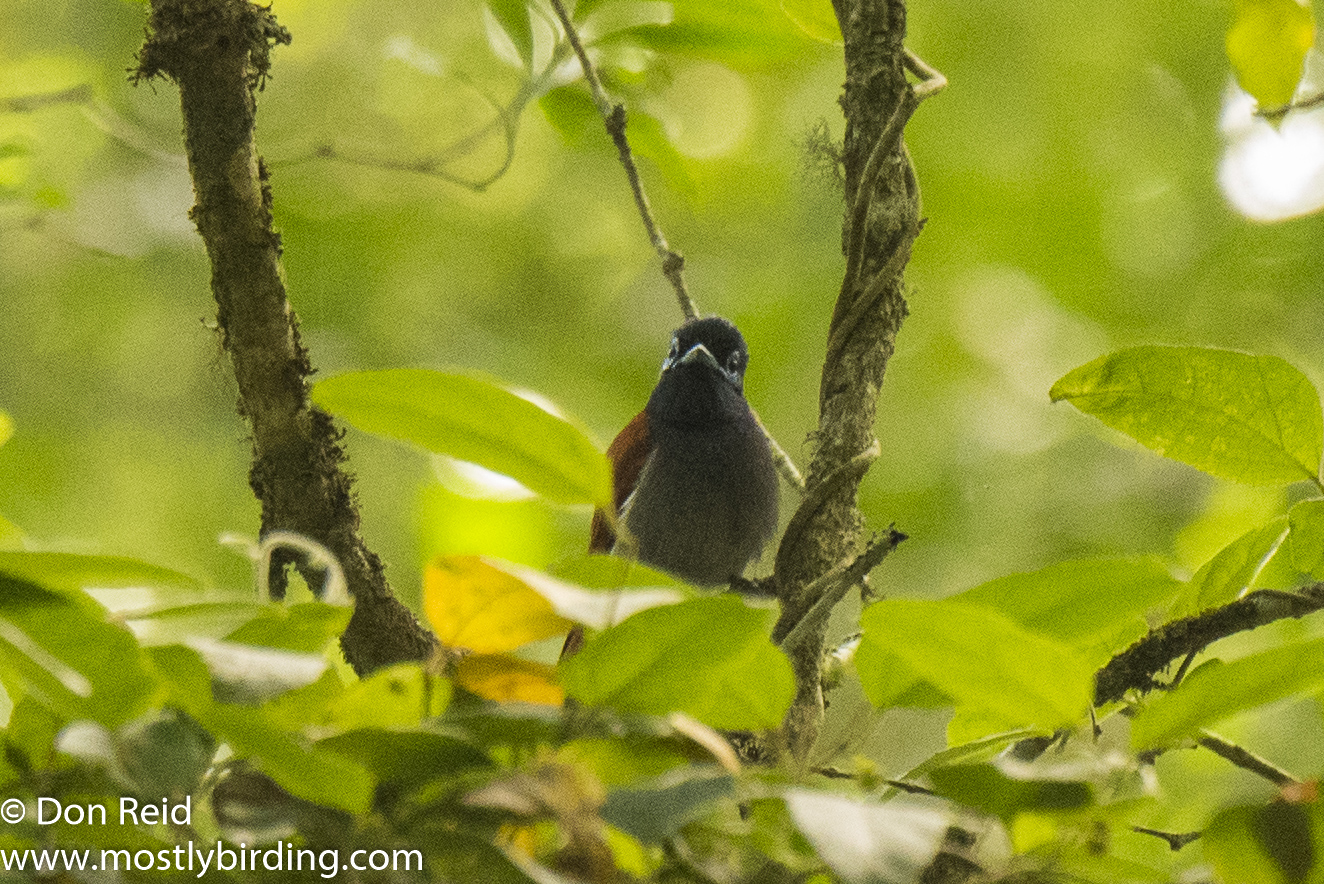
African Paradise Flycatcher, Woodville
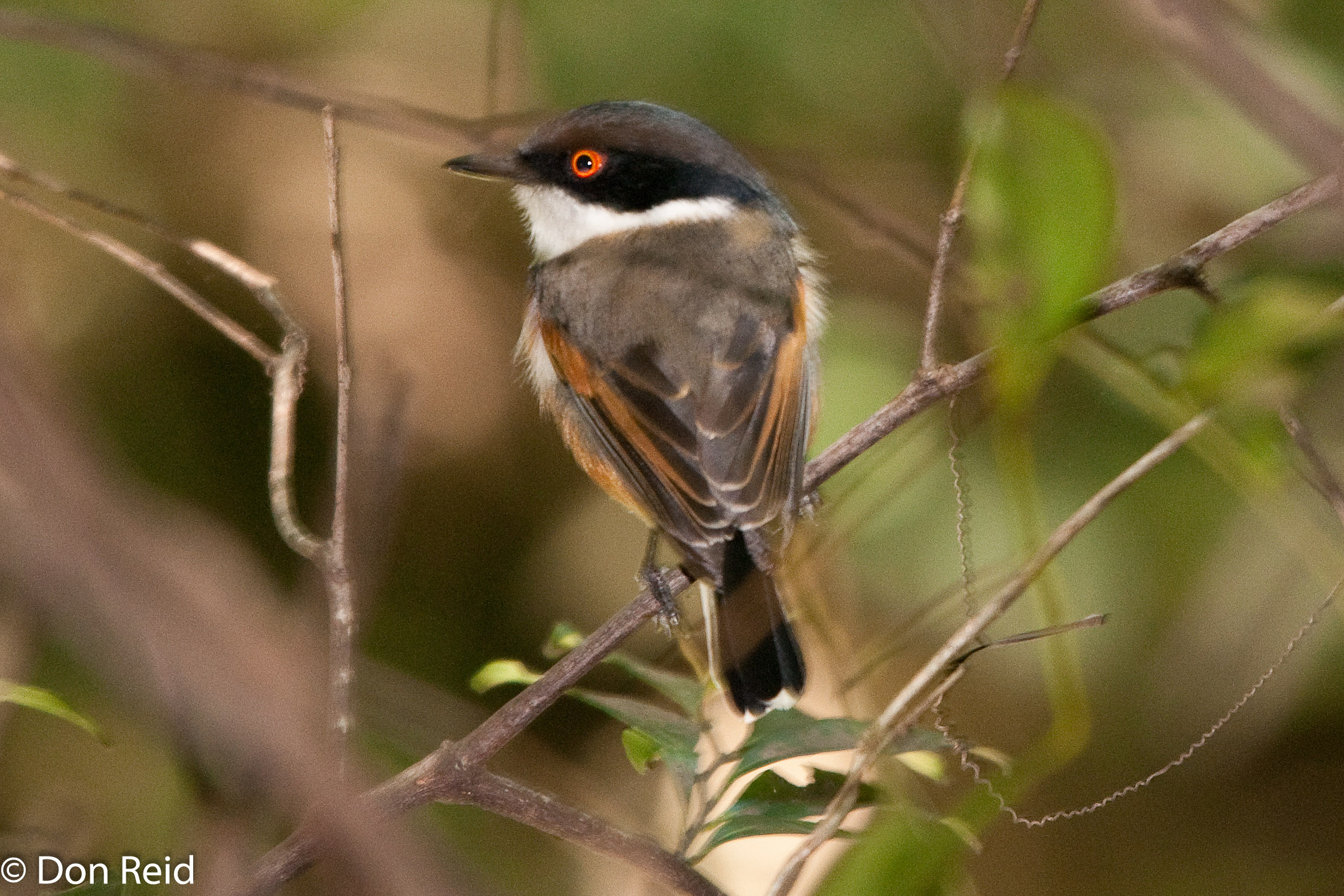
Cape Batis

About a third of the way along the trail, I was near a large fallen tree when I heard a rustle behind me. Turning, I saw a dove-like bird fleetingly as it flew across the trail and my heart skipped a beat or two – could this be the one I had hoped for?

I crept back as quietly as possible until suddenly a bird flew out of the leaf litter right next to the trail and for a few seconds perched on an open branch, not 3m away.  It was a Lemon Dove (Kaneelduifie) and I may have let slip an expletive in my excitement as we eyed each other face to face. Desperate for a photo of this beauty I slowly went to lift my camera but at that moment the dove decided to vanish, literally, and flew back across the trail. I was convinced it had not gone far and stood at the point where I expected to find it again, scanning the forest floor and trees for several minutes but to no avail – it had disappeared like a ghost in the night.

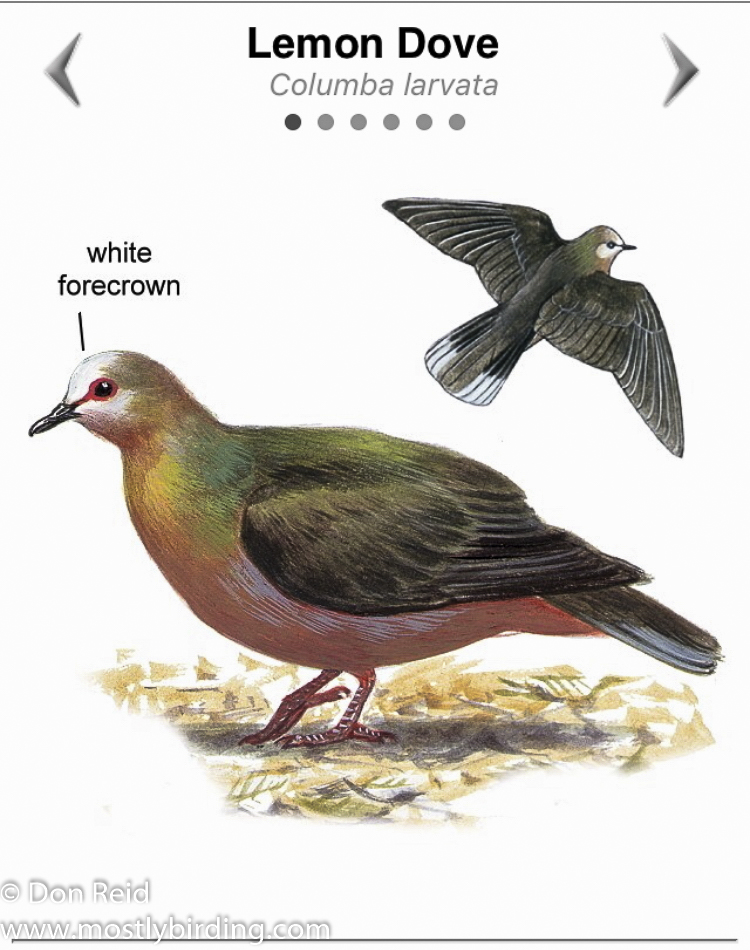
Lemon Dove (Roberts Bird Guide app)
Lemon Dove Distribution (Roberts app)

Roberts Bird Guide describes the Lemon Dove as “Secretive and difficult to see, especially when it freezes to avoid detection”, which I can verify from this experience.

Buoyed by this sighting, I walked along the rest of the trail in a state of happiness, taking in all the various sights and sounds right down to the interesting fungi growing on trees and stumps. A rustle in the undergrowth and a harsh churring call drew my attention and after some chasing of shadows amongst the dense foliage I was pleased to track down a Terrestial Brownbul (Boskrapper).

Terrestial Brownbul

Towards the end of the trail another call, like an owl hooting while being shaken, had me wondering until I dredged my memory cells and came up with Olive Pigeon (Geelbekbosduif) – a quick play of its call on my Roberts app confirmed the ID. I left the forest to the repeated call of a Red-capped Robin-Chat, which I later suspected was a Chorister Robin-Chat mimicking its cousin, but who knows?

So my short walk produced one lifer that I had long hoped for as well as a pleasing selection of forest specials, all of which left me with a big smile and something to share with Gerda, patiently waiting in the car.

My Birding Year 2017 (Part 2) – Atlasing, Twitching, An Island and more


Following on Part 1 of My Birding Year for 2017  ………  guess what, here’s Part 2!

So here’s a synopsis of my birding activities during the second half of 2017 along with photos of a few of the species encountered and places visited.

July

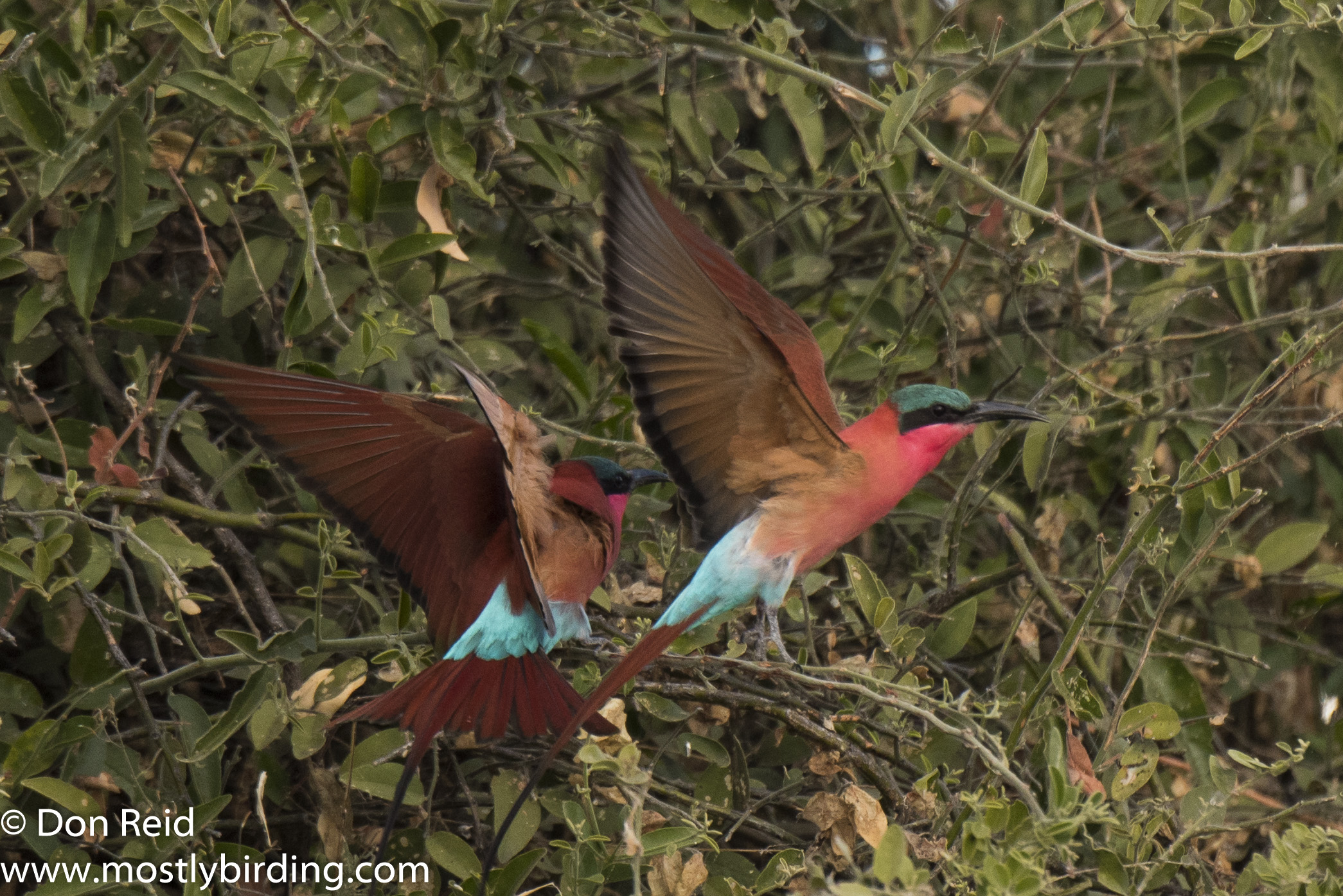
The first week saw me back in Kasane for a project visit and we managed to fit in a memorable drive through Chobe Riverfront where the game viewing took precedence, but the birdlife was hard to ignore, particularly the Carmine Bee-eaters

Southern Carmine Bee-eater, Chobe Riverfront
Greater Blue-eared Starling, Chobe Riverfront

Later on in the month I was back to atlasing in the area south of Bronkhorstspruit, some 50 km east of Pretoria, dominated by the drab midwinter “browns” of the highveld and providing some challenging birding in the form of very similar looking small birds in their winter plumage.

Southern Red Bishop (winter plumage), Bronkhorstspruit area
White-winged Widow (winter plumage), Bronkhorstspruit area

August

Another visit to Kasane, Botswana in the first week included a spectacular boat safari on the Chobe river with Pangolin Safaris in a specially equipped boat kitted out with swivel seats and pliable camera mounts. One of the owners of Pangolin Safaris, who goes by the nickname of “Guts”,  accompanied us and made sure we had some amazing photo opportunities of the wildlife and birds to be found along the river.

Six species in one frame (1 only just) – can you spot them? (see end of post for answer)
Glossy Ibis, Chobe River
Doing it in style with Pangolin Safaris on the Chobe River

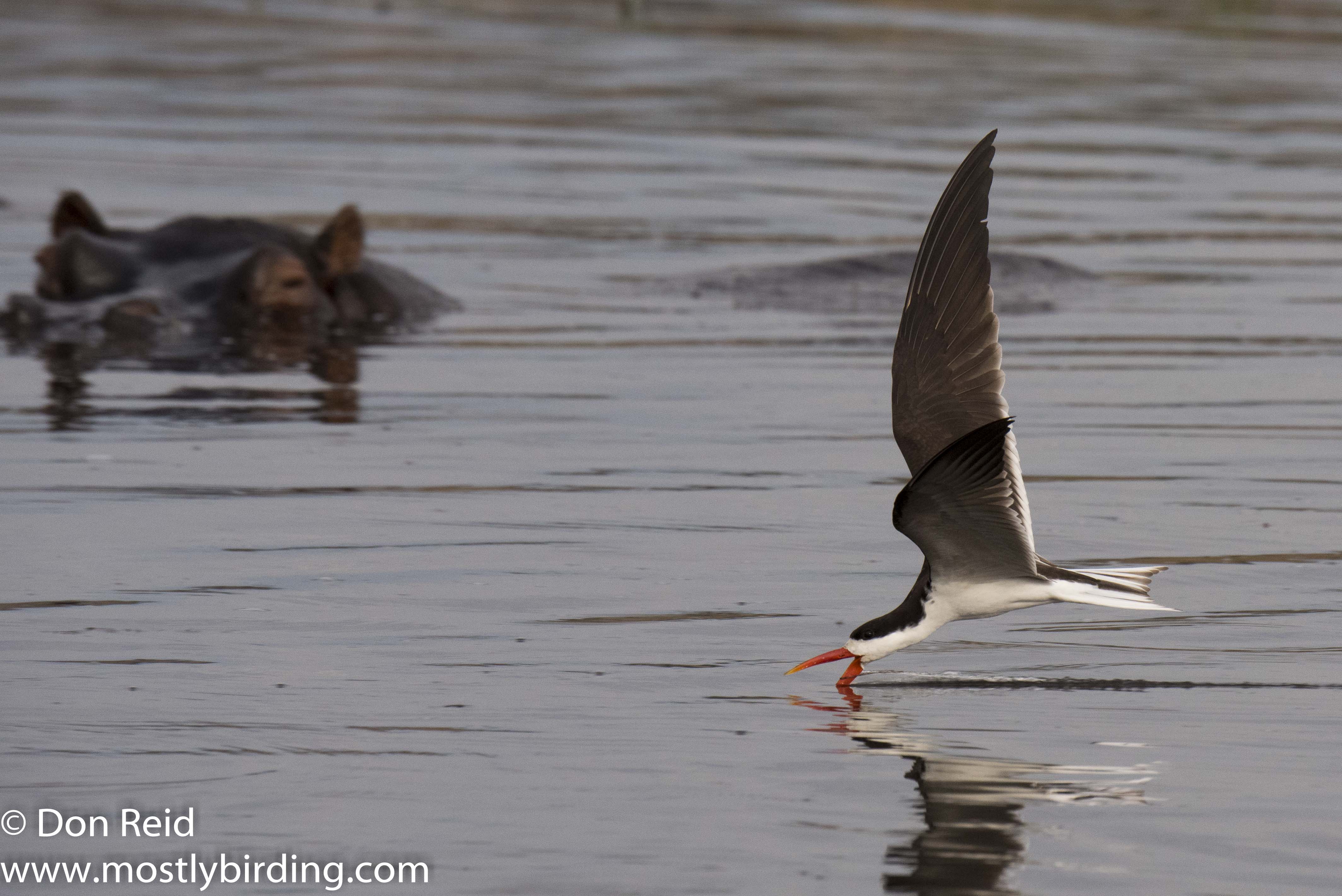
One moment of sheer photographic magic came my way in the form of a lone African Skimmer passing by and showing how it got its name.

African Skimmer, Chobe River

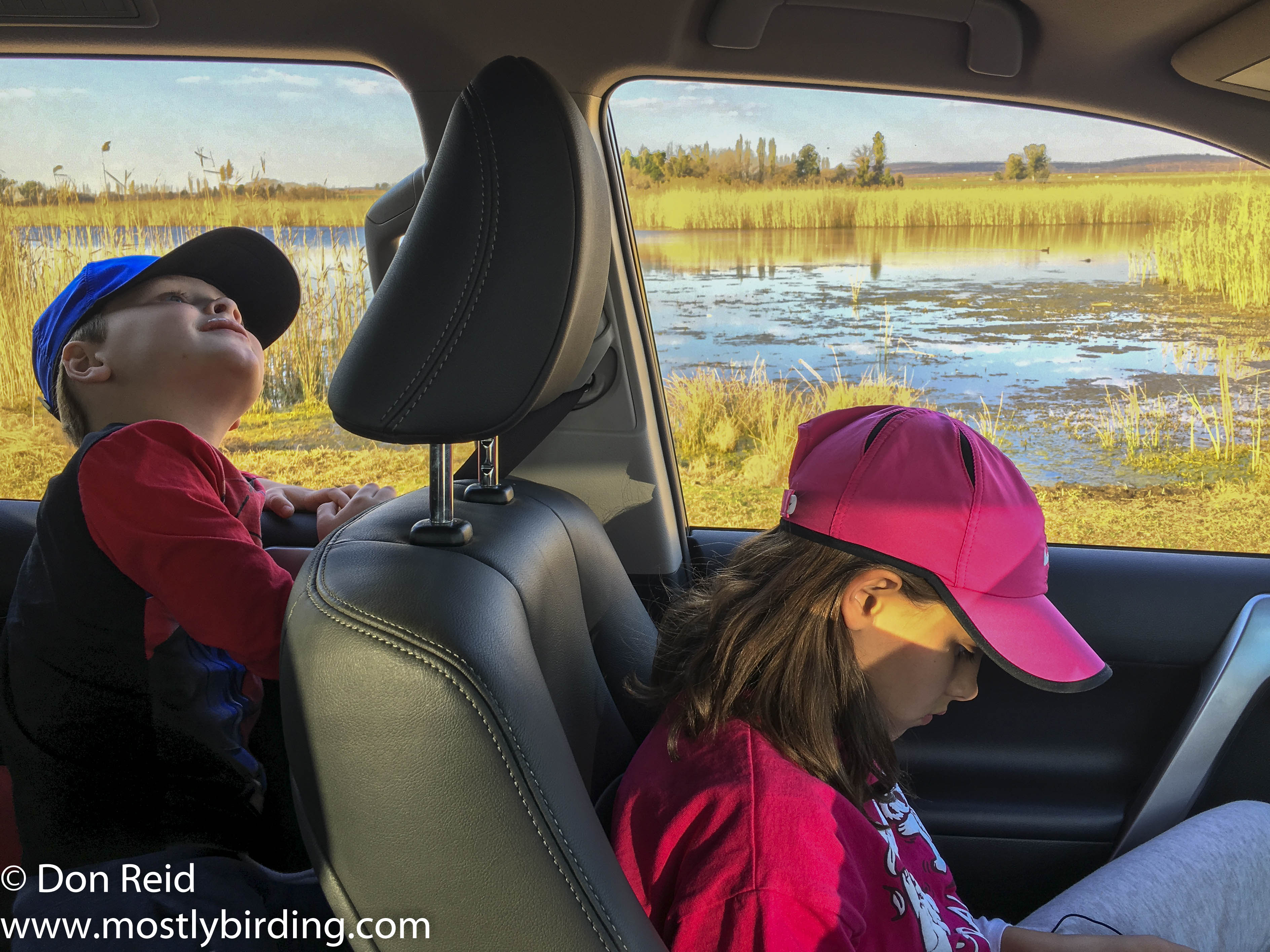
The following weekend saw us visiting family in Potchefstroom once again – I took the two grandkids for a birding outing to nearby Boschkop dam and was again very pleased with the quality of birding at this venue, which is also quiet and safe for the kids to roam about a bit.

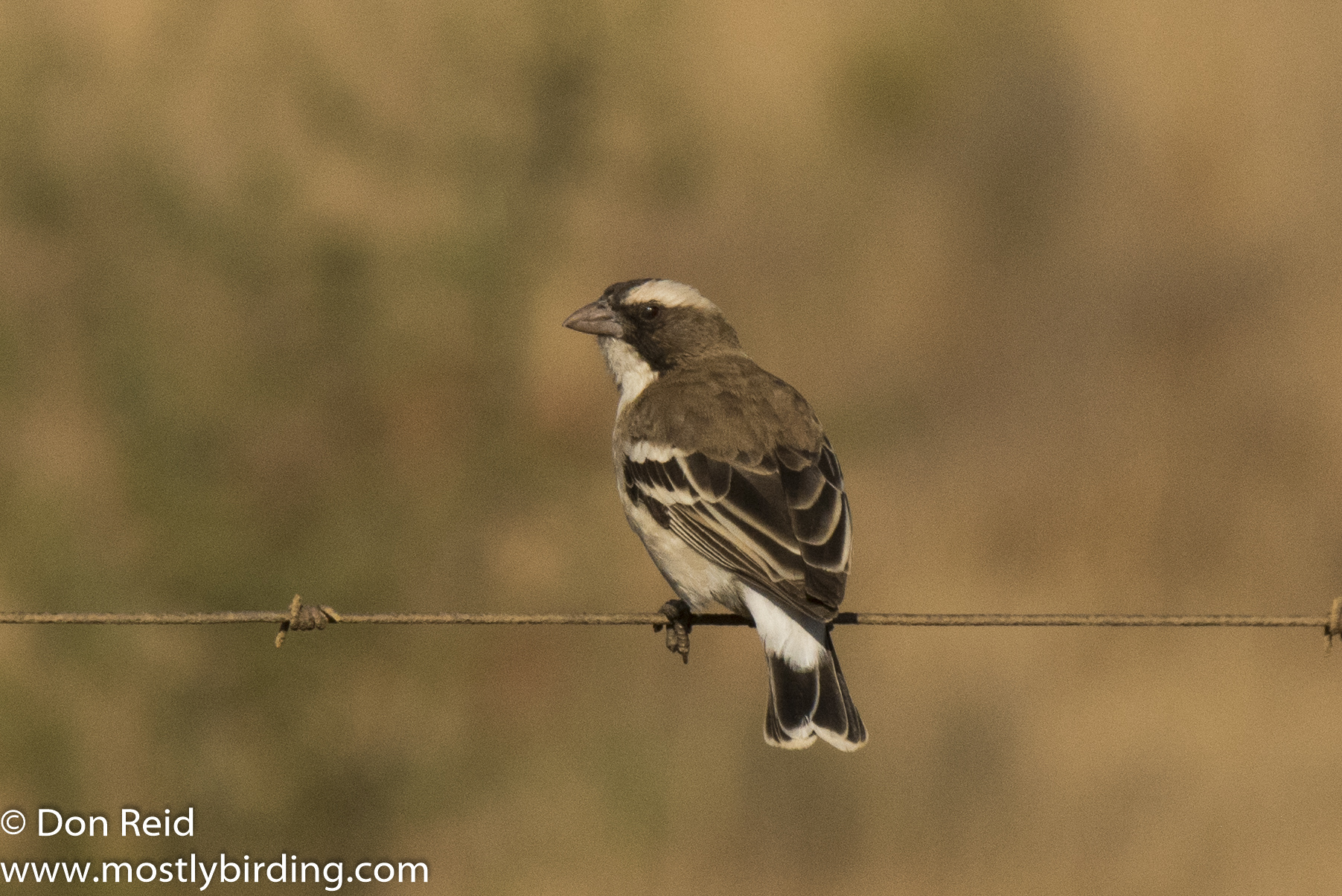
White-browed Sparrow-Weaver, Boschkop dam, Potchefstroom
The birding team
Three-banded Plover, Boschkop dam, Potchefstroom

Next up was some atlasing in the grasslands north east of Pretoria – known as Vlaklaagte, which was good for birding but the gravel roads at this time of year are very dusty and the passing mining lorries tend to make it quite difficult to bird in peace – nevertheless a successful day’s atlasing.

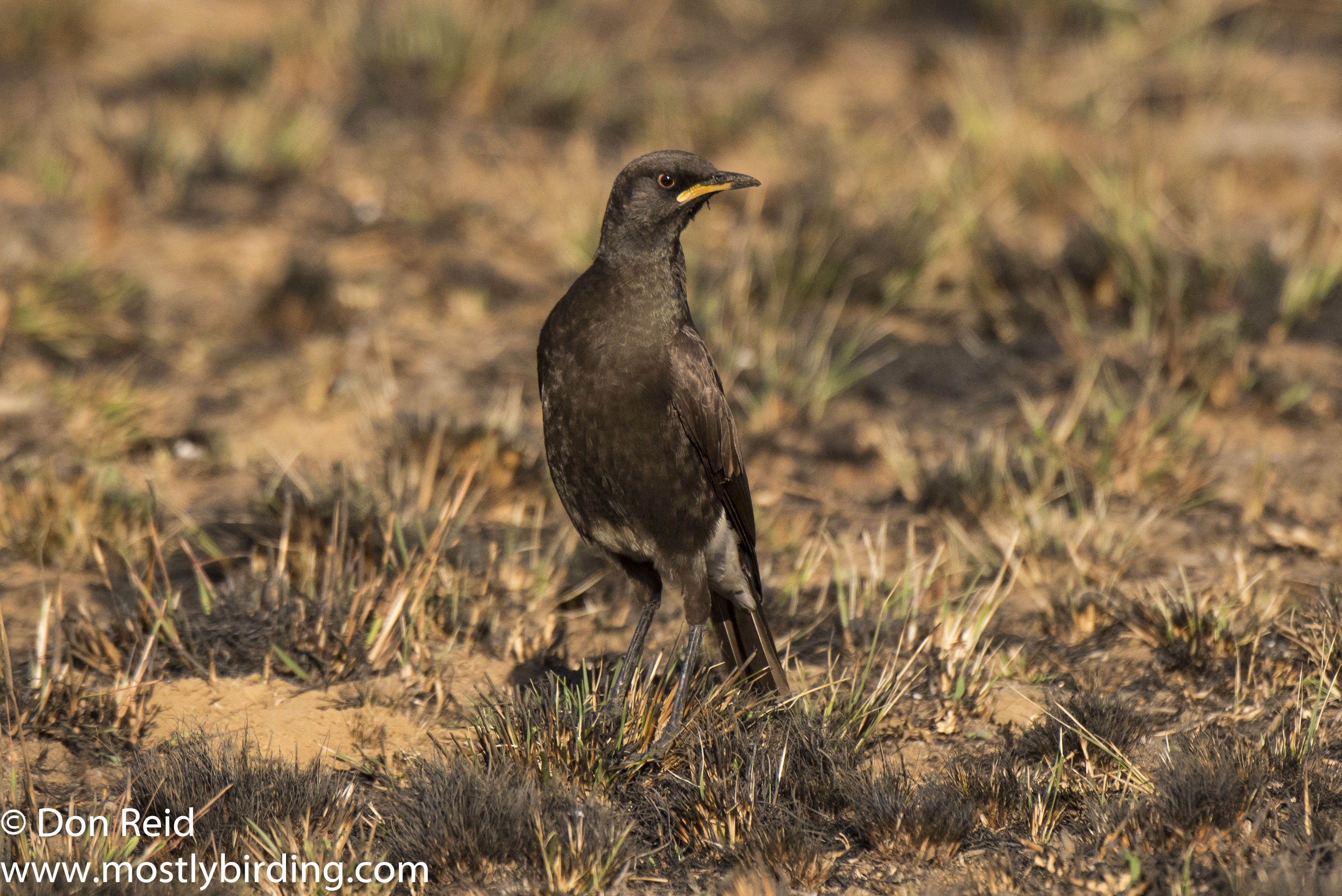
Pied Starling, Vlaklaagte area
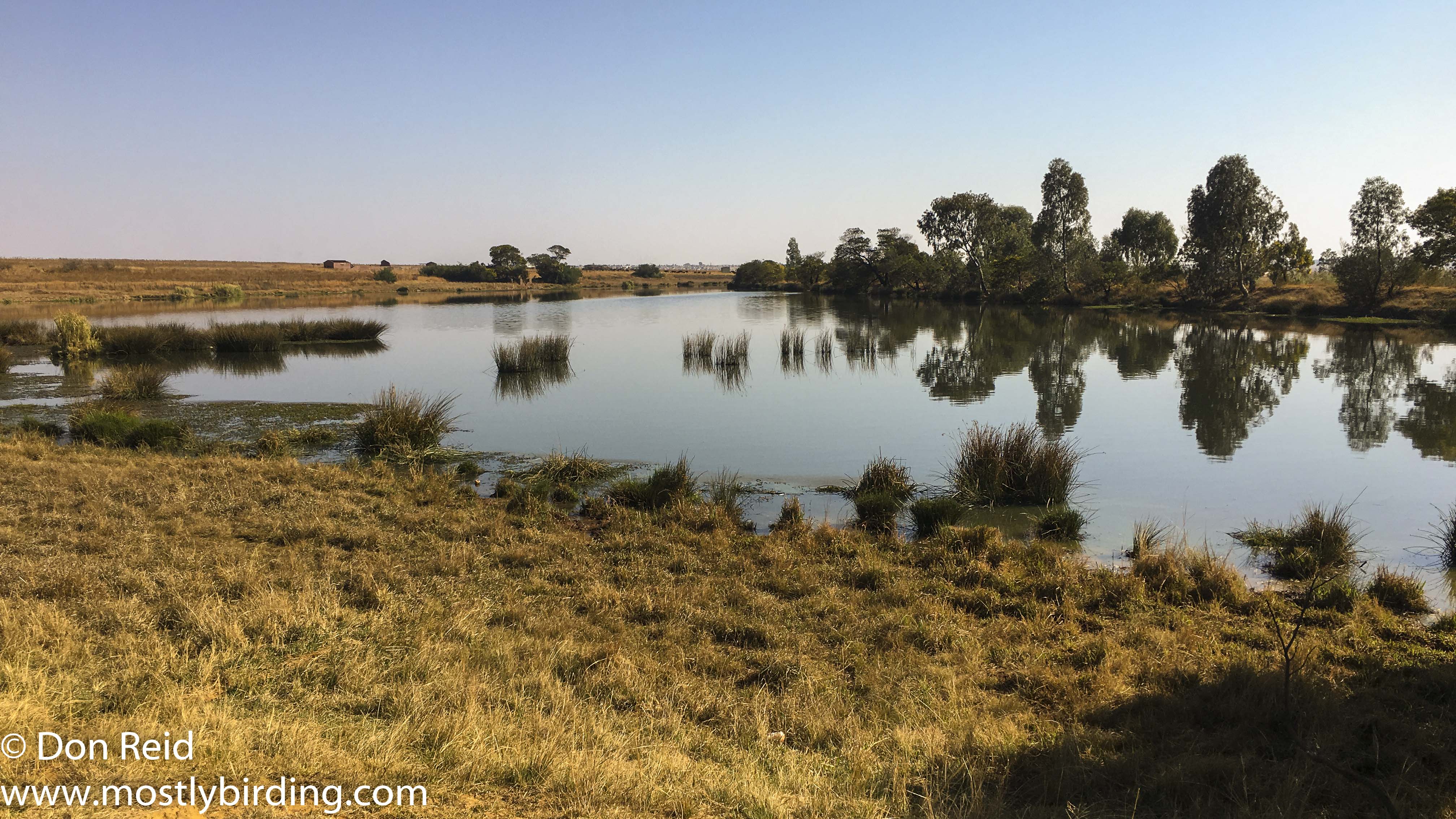
Dam, Vlaklaagte area
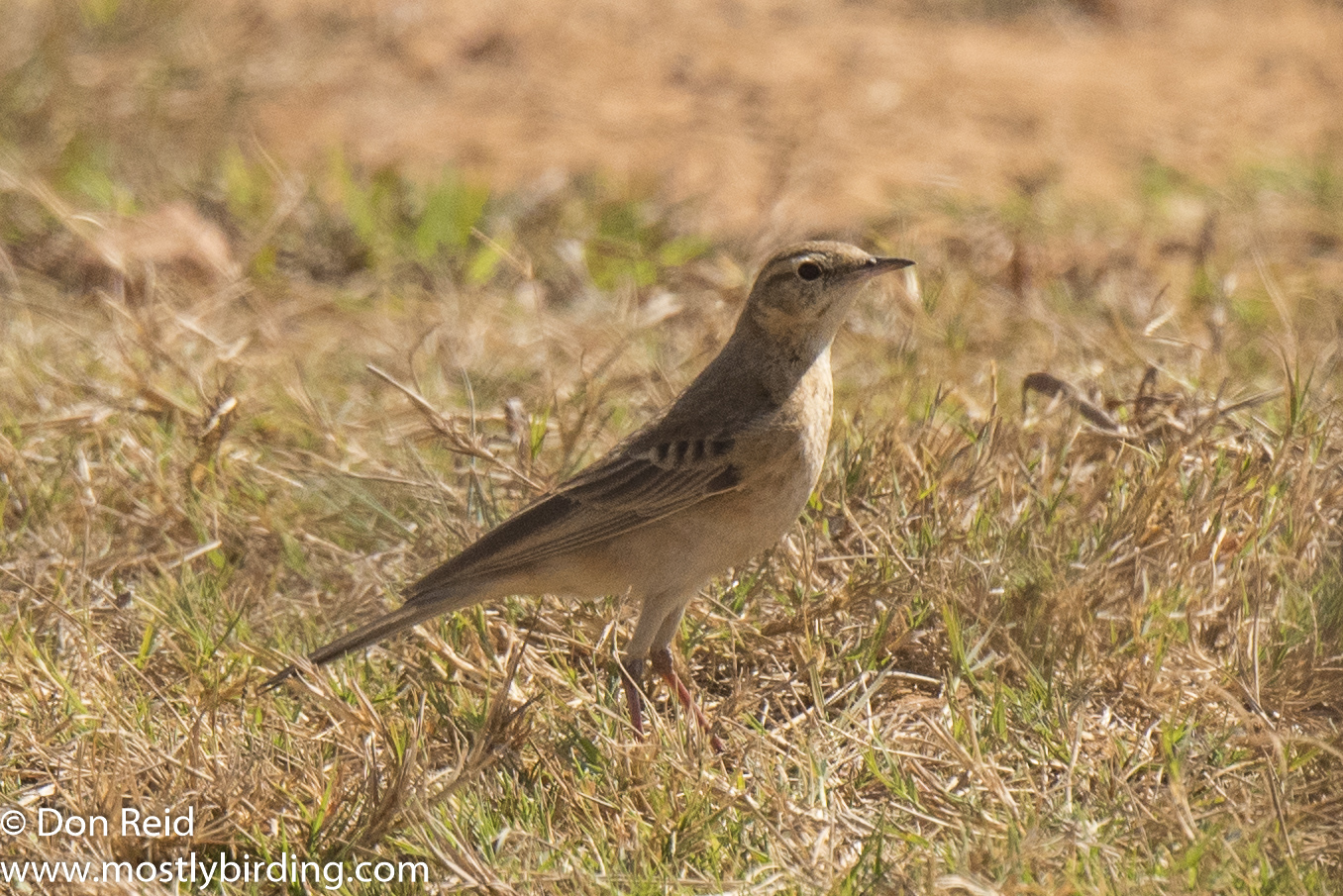
Buffy Pipit, Vlaklaagte area

A short winter visit to Mossel Bay in the second half of August provided the opportunity to explore the Karoo south of Oudtshoorn on a cold day – I added several species to my year list and atlased in areas not regularly covered so well worthwhile.

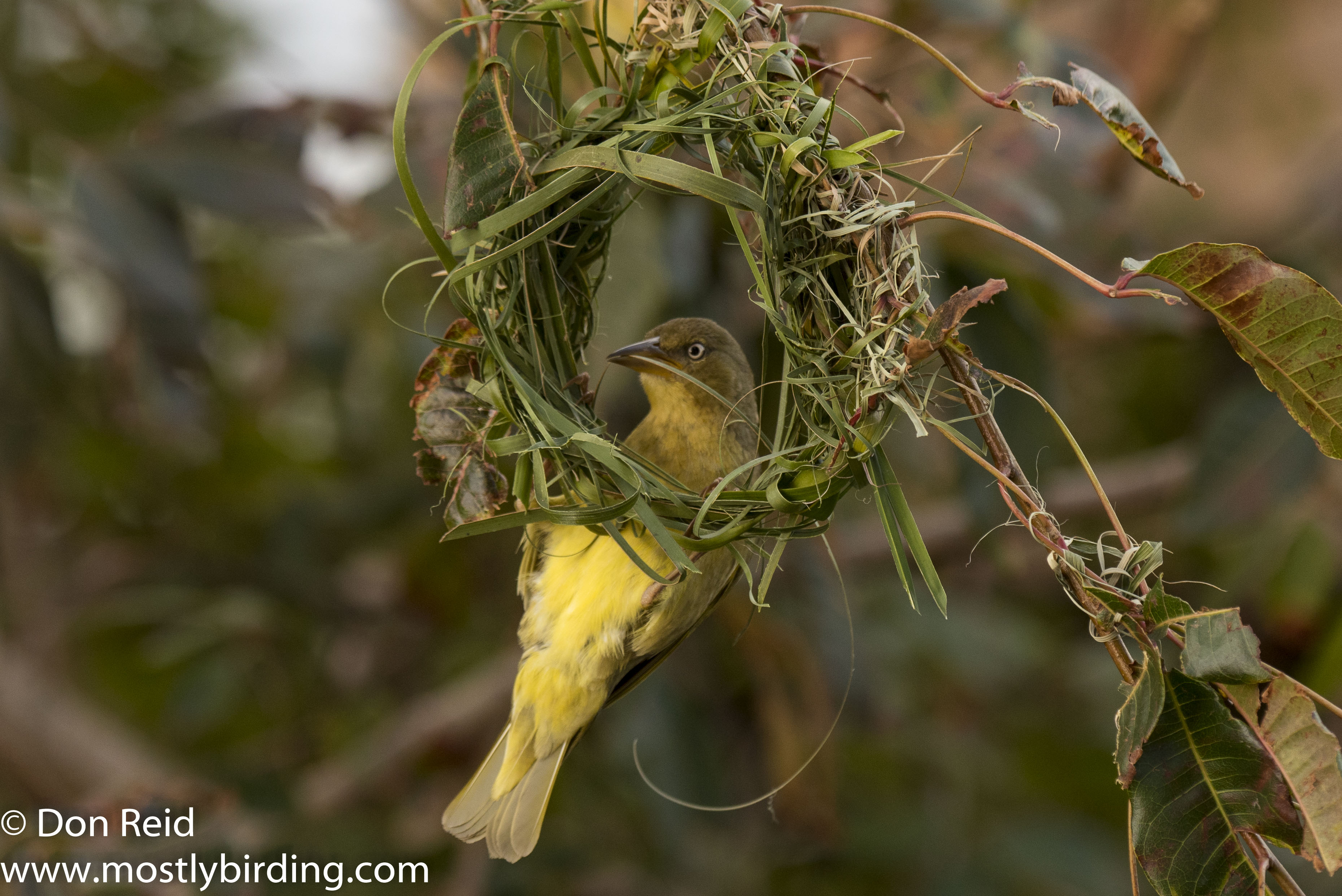
Cape Weaver, Mossel Bay
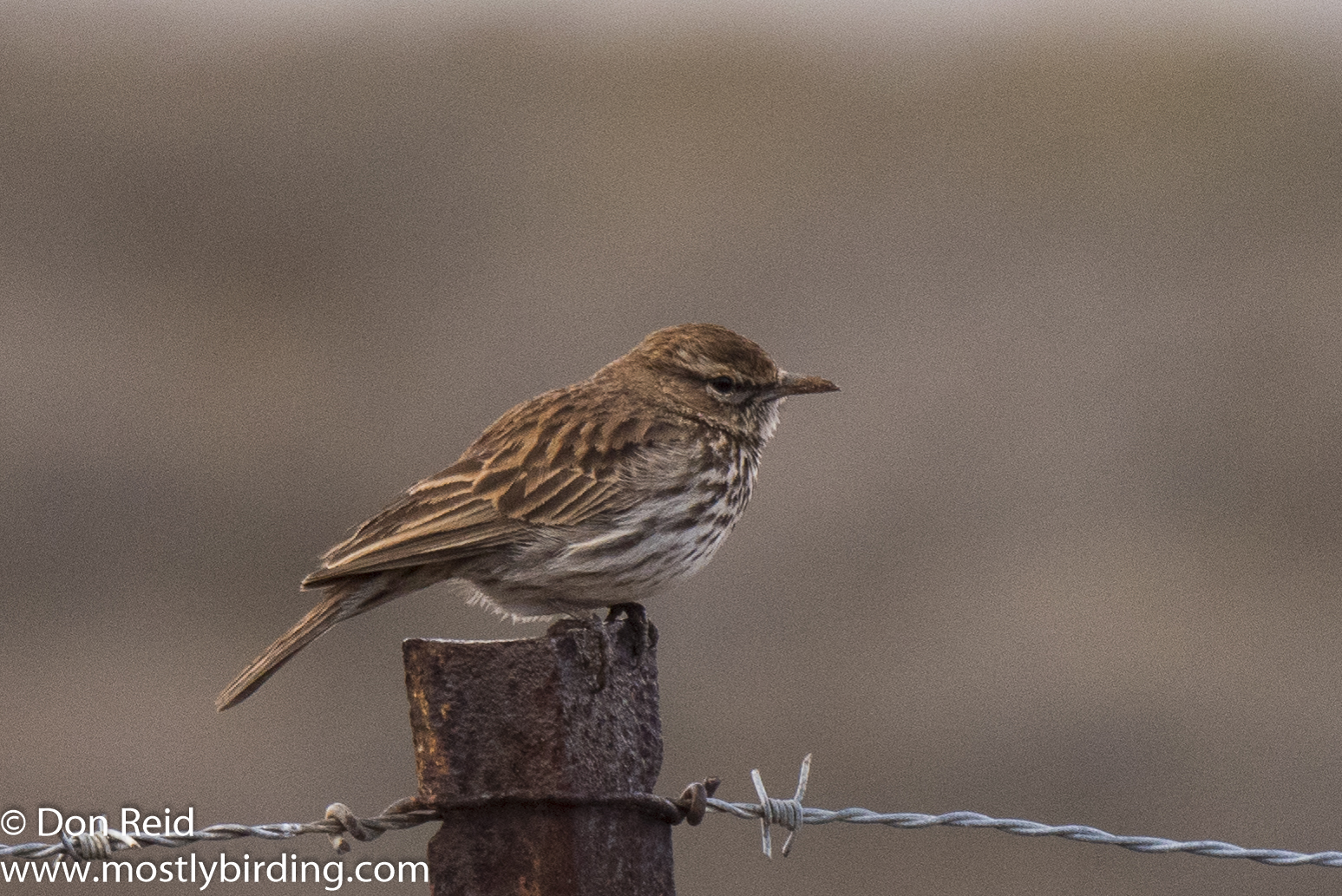
Karoo Lark, Oudtshoorn south
White-throated Canary, Oudtshoorn south

On Robinson Pass, my patience was rewarded when a Victorin’s Warbler posed briefly for a photo – a very difficult species to photograph so a nice bonus.

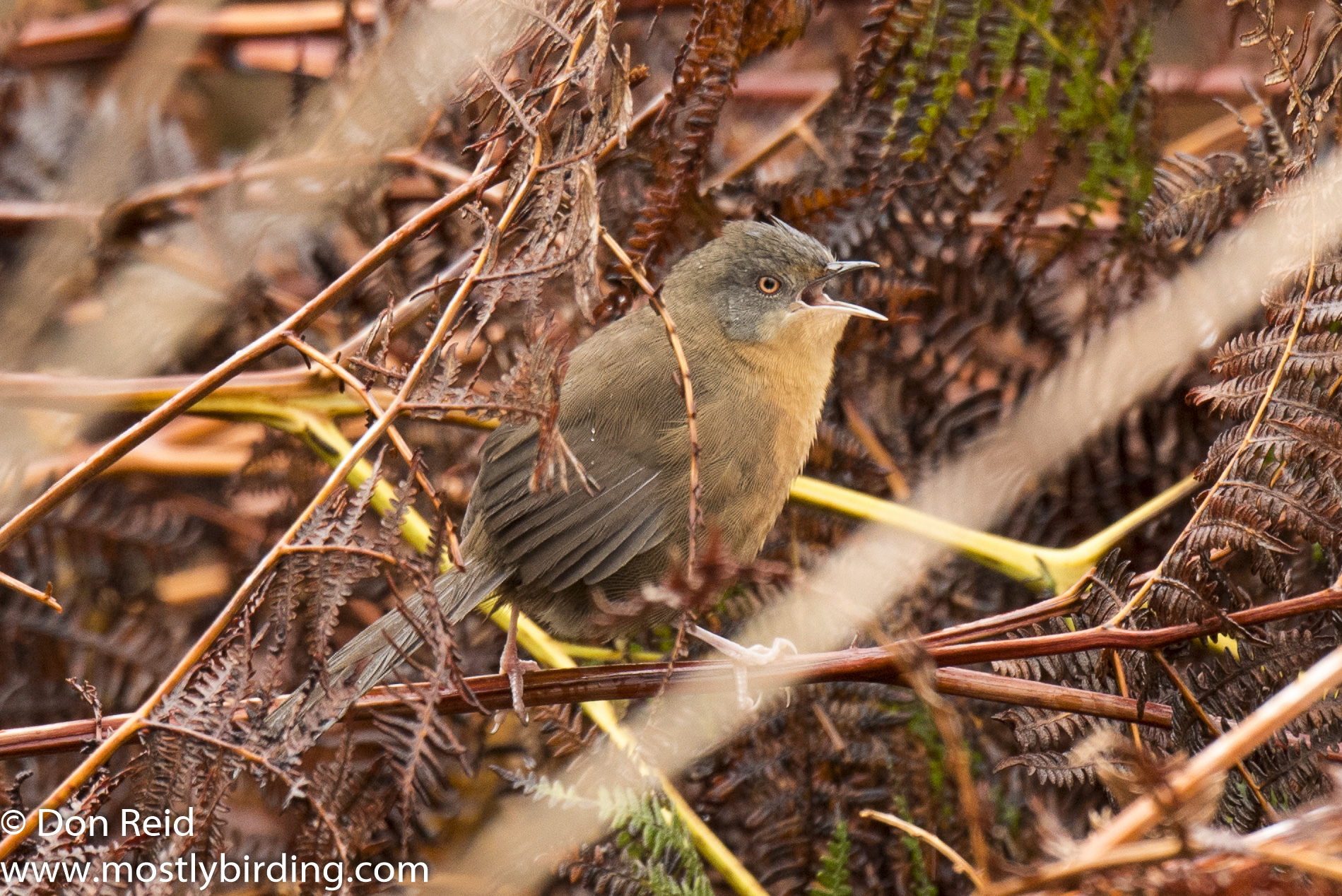
Victorin’s Warbler, Robinson Pass

September

My monthly visit to Kasane was likely to be one of my last as the project was heading to completion, so I made the most of the 3 days there and fitted in birding at every opportunity. The airport precinct and perimeter were particularly lively with up to 200 bee-eaters present along the fences.

Swallow-tailed Bee-eater, Kasane Airport area

An early morning drive through the Chobe Riverfront was as good as ever with some unusual species showing.

Burchell’s Sandgrouse, Chobe GR
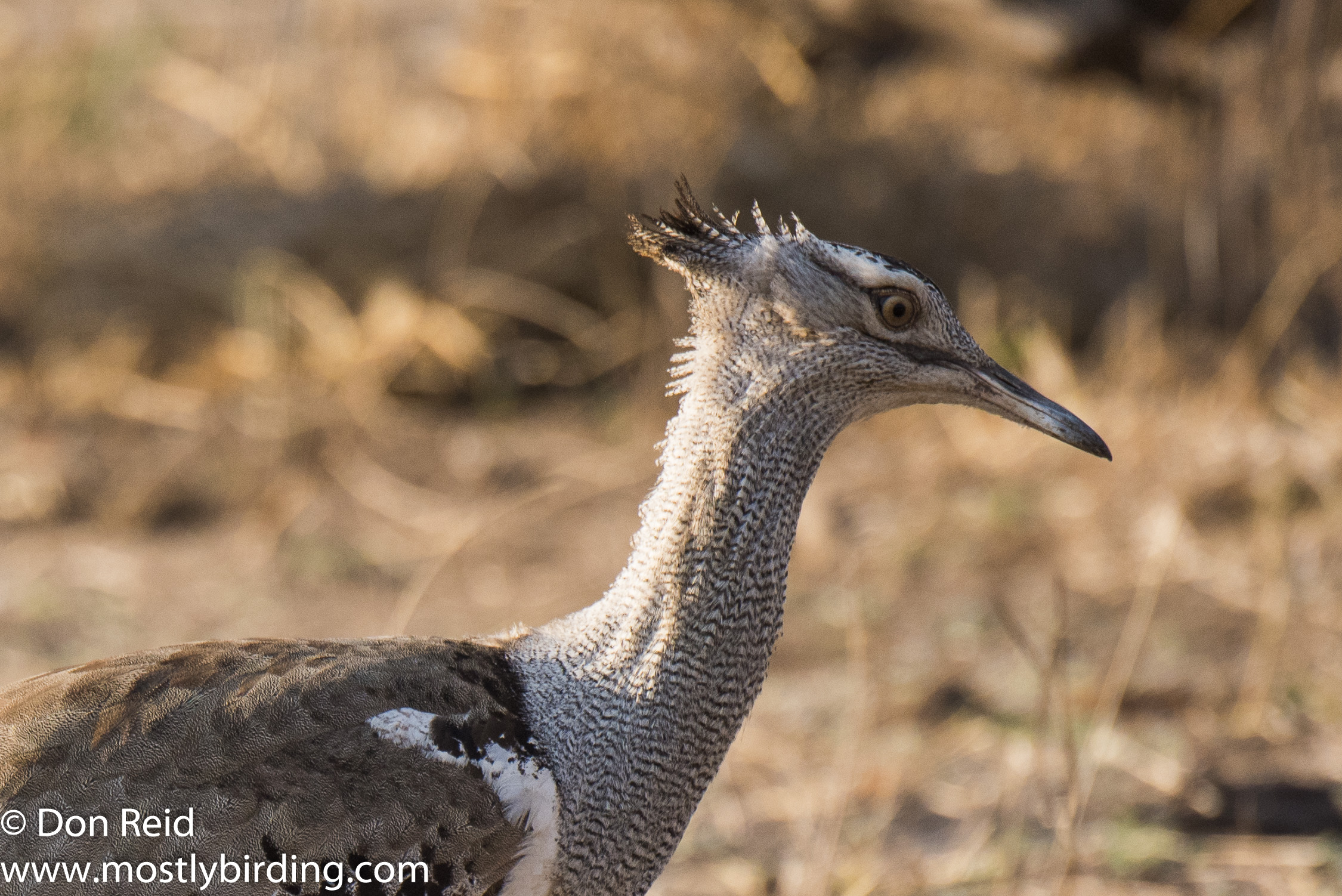
Kori Bustard, Chobe GR

During the rest of the month I targeted some of the more remote areas of north-east Gauteng to do some atlasing, selecting pentads not yet atlased in 2017.

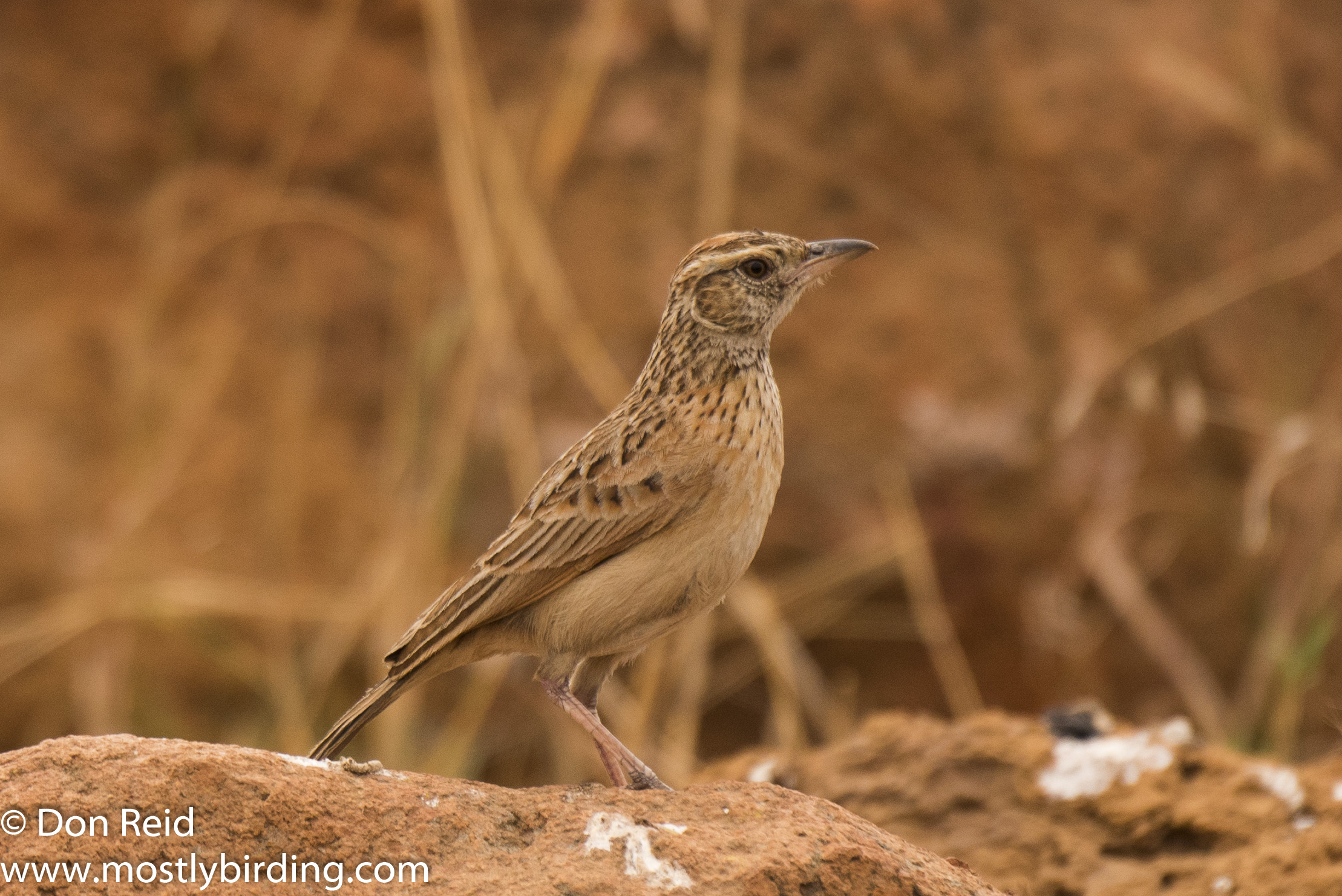
Rufous-naped Lark (Mirafra africana – subspecies transvaalensis, Vlaklaagte area
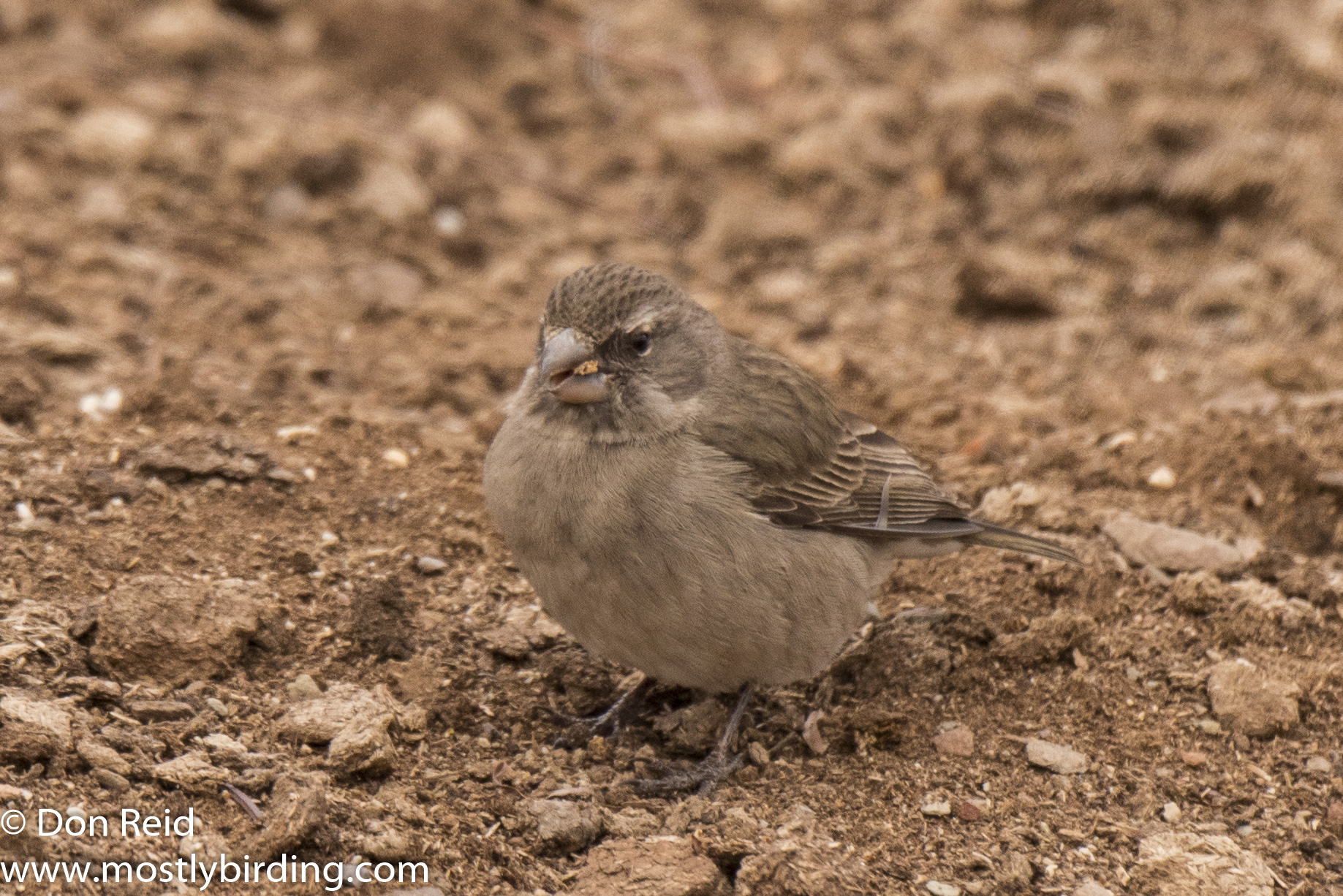
Spike-heeled Lark, Balmoral area

October

Our much anticipated trip to Mauritius to celebrate our “milestone” birthdays with the family was a highlight of the year from all points of view – the sheer joy of having our 3 children, their spouses and our 7 grandchildren with us in such a beautiful setting for a whole week was awesome (as they say).

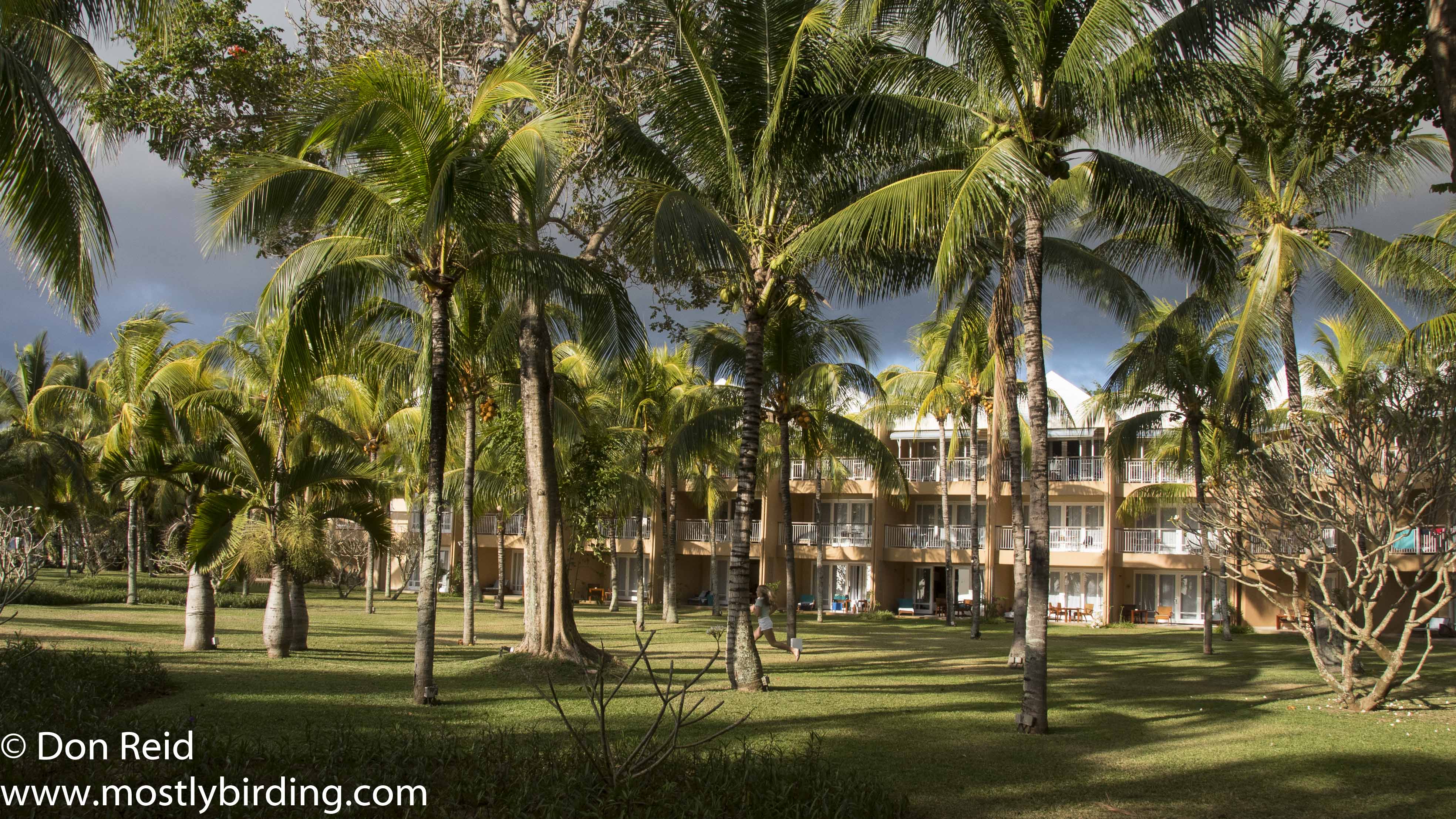
Le Victoria hotel, Mauritius

I didn’t do any serious birding but the hotel gardens were good for a total of just 11 species, of which 6 were lifers to add to my world list (yes I’m a “lister”!)

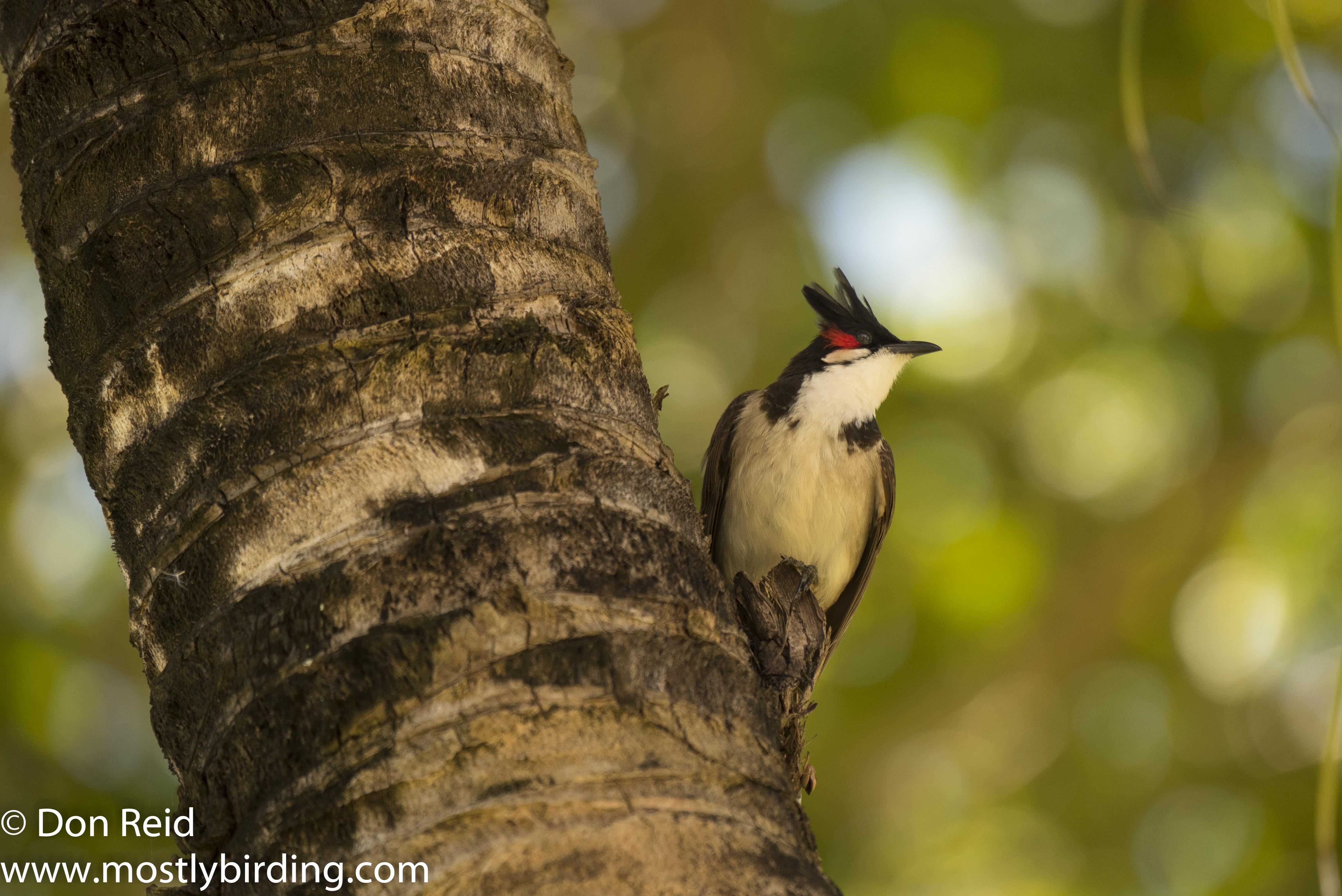
Red-whiskered Bulbul (Pycnonotus jocosus), Le Victoria hotel, Mauritius
Red Fody (Foudia madagascarensis), Le Victoria hotel, Mauritius
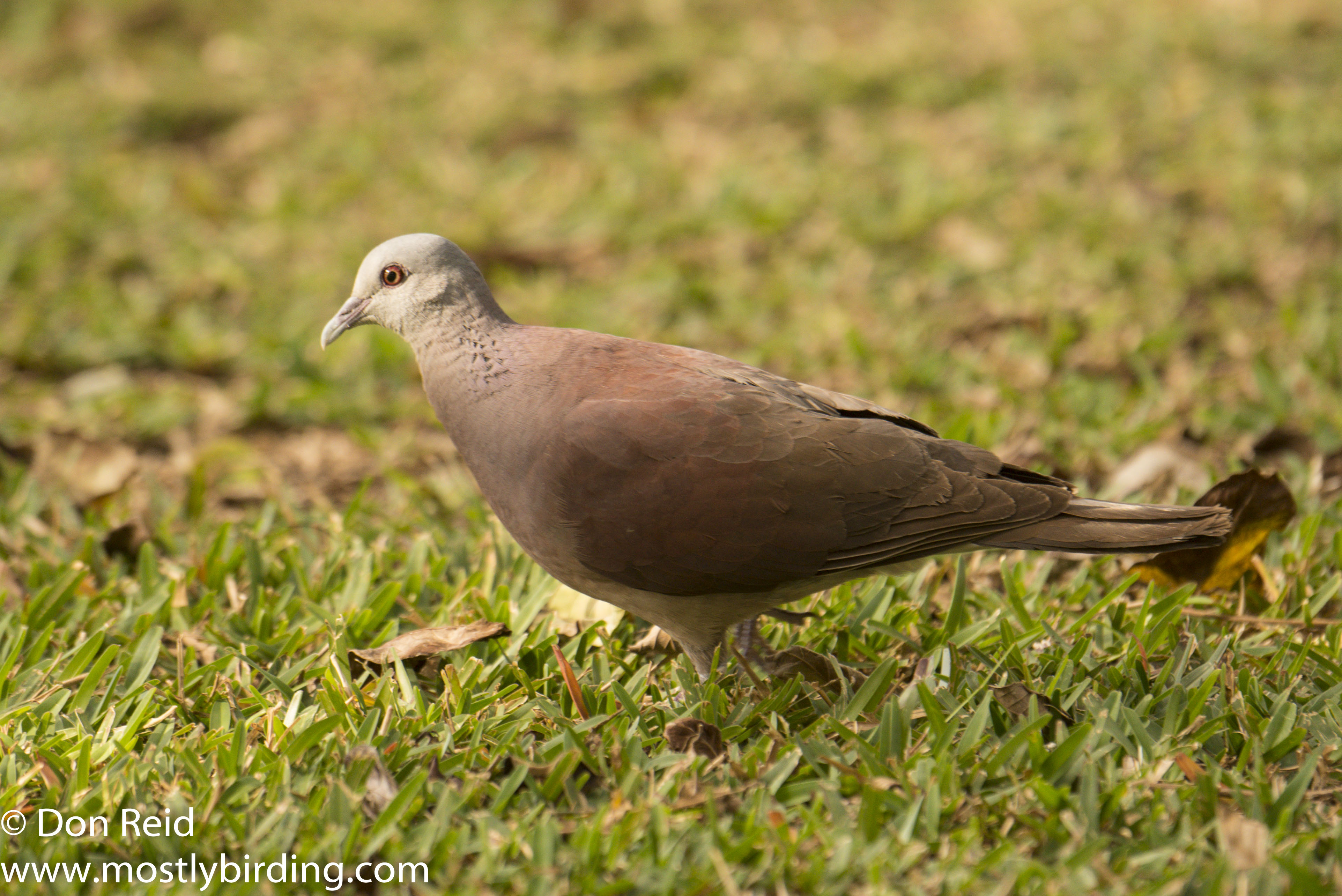
Malagasy Turtle Dove (Nesoenas picturatus), Le Victoria hotel, Mauritius
Zebra Dove / Barred Ground Dove (Geopelia striata), Le Victoria hotel, Mauritius

In any case I was so busy enjoying the ambience, the family, the great meals and the snorkelling that birding was relegated to about 10th place (just for that week, mind)

Later in the month I visited Marievale Bird Sanctuary near Nigel in Gauteng for a superb morning of birding in this prime waterbird location.

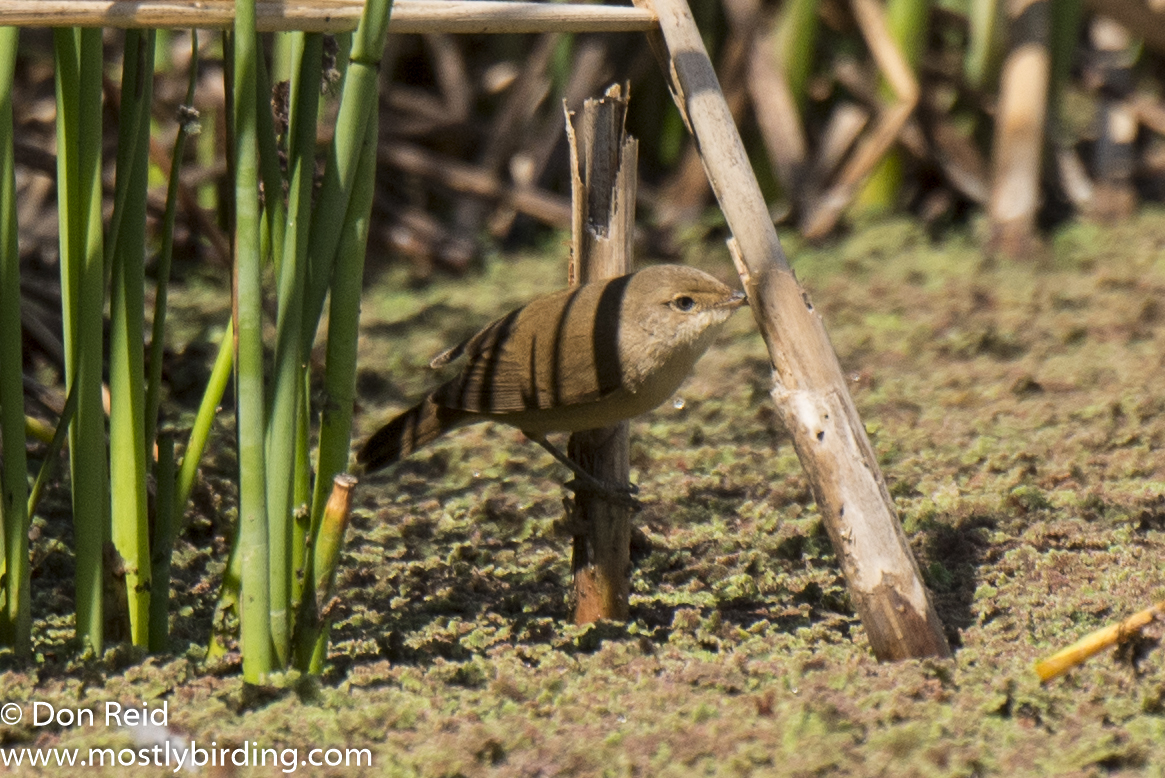
Lesser Swamp-Warbler, Marievale
White-backed Duck, Marievale

An unexpected atlasing trip with Koos on the 21st in the pentad covering the north-east corner of Pretoria was a delight, covering all areas from industrial to country estates.

November

My last visit to Kasane was also a busy one work-wise so not much opportunity for birding other than snatched moments in between other commitments – how I’m going to miss this place!

A weekend in Potchefstroom presented another chance to take Christopher (6) with me for some atlasing at Boschkop dam – plenty of highlights to make it interesting for both of us.

Marievale was my destination for the second time in 4 weeks when reports came through of Baillon’s Crake seen there. I dipped on the crake but still had a wonderful morning’s atlasing.

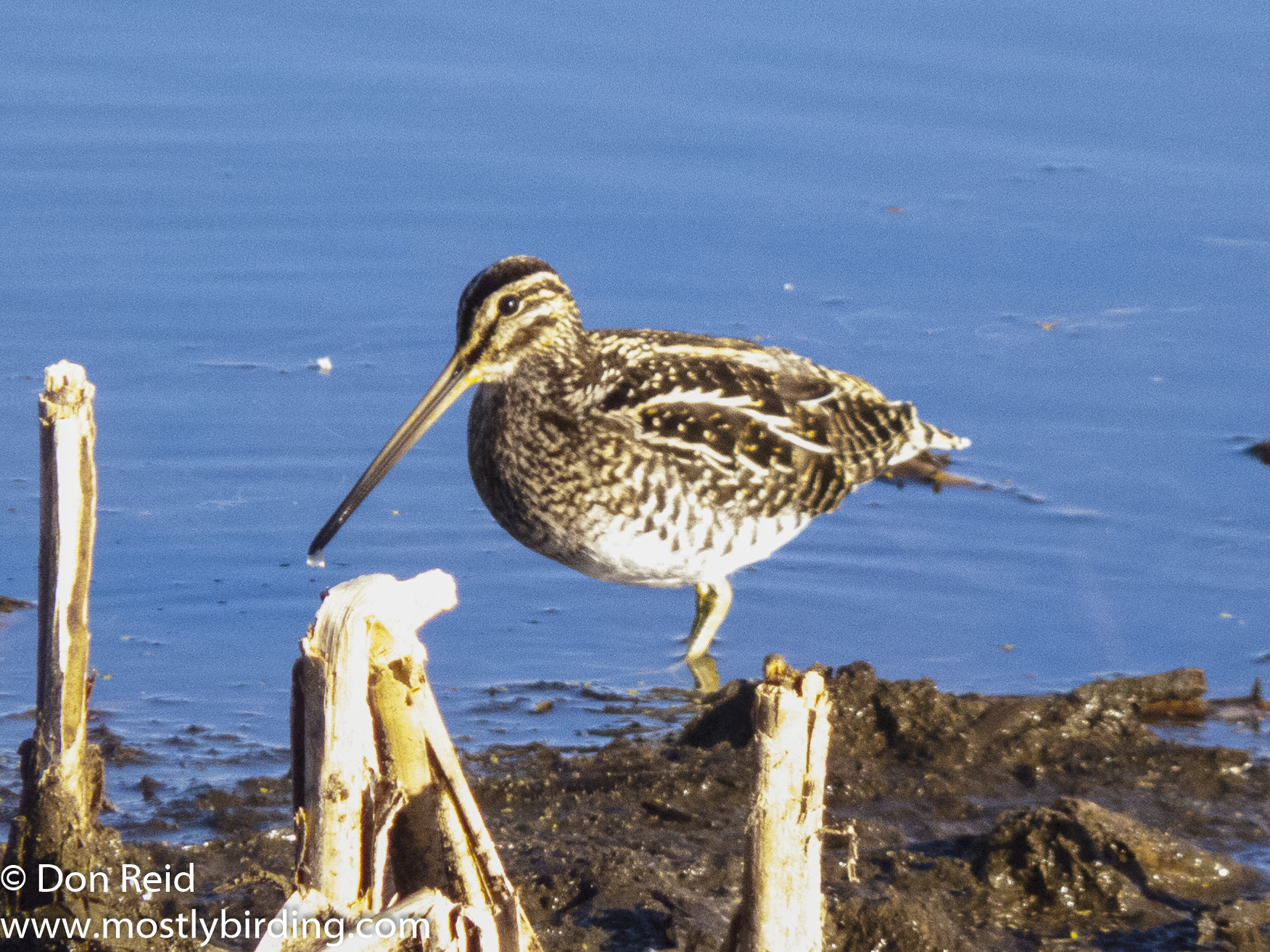
African Snipe, Marievale
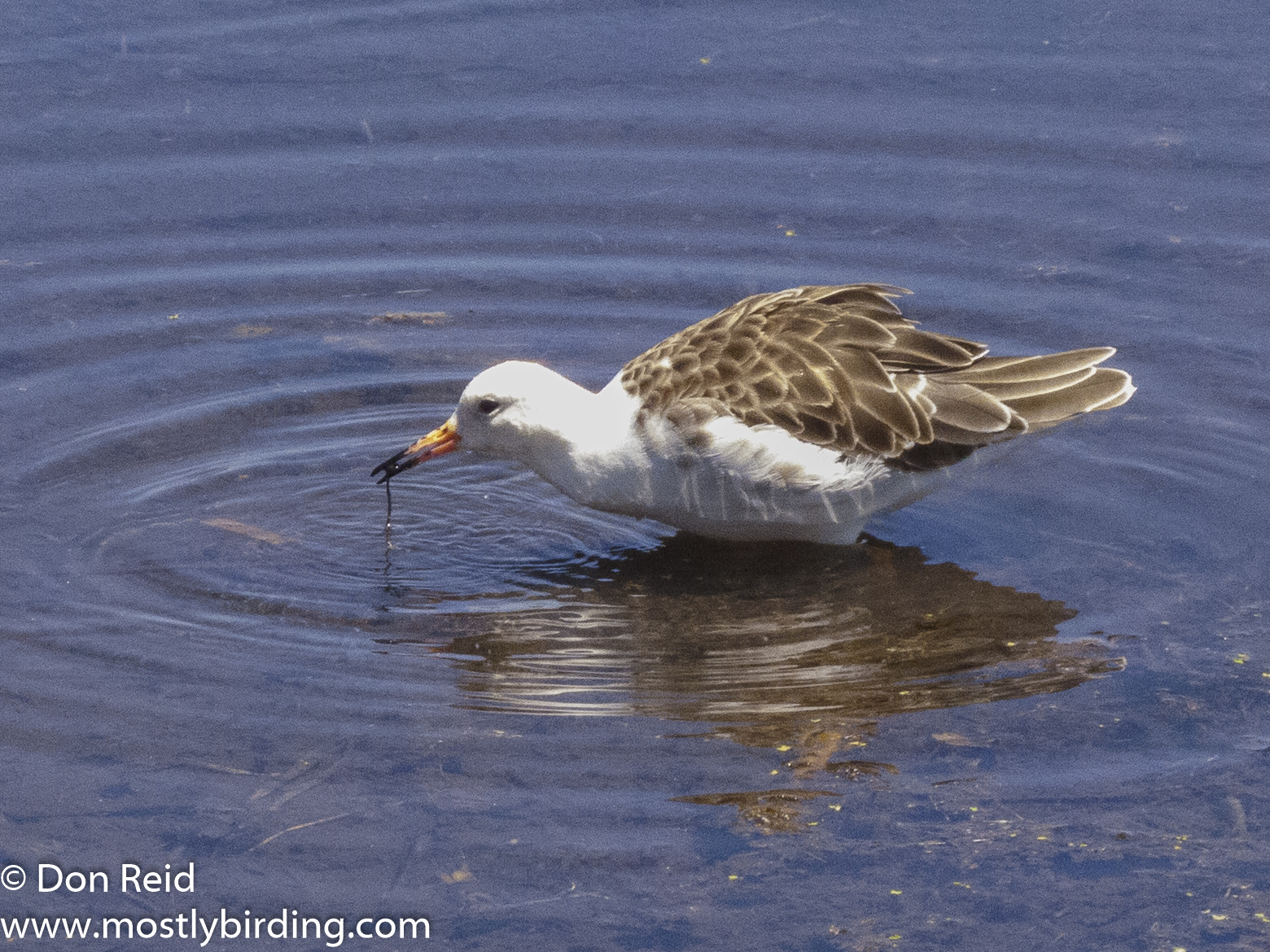
Ruff (white headed form), Marievale

On the 22nd it was time to head south (how time flies!) to our Mossel Bay home – a two day road trip with an overnight stop at Kuilfontein guest farm near Colesberg, which provided some great birding and relief from the long driving sessions.

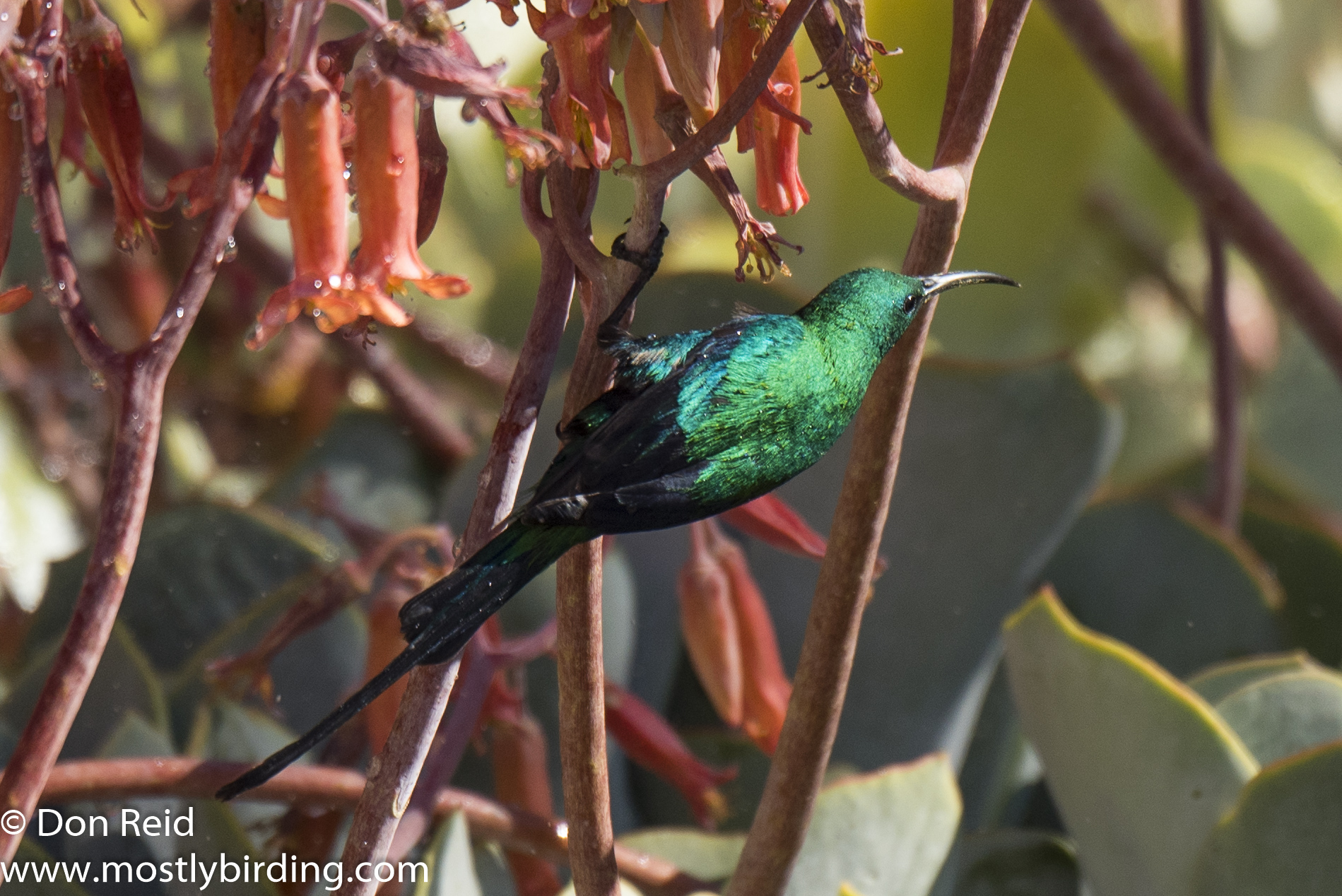
Malachite Sunbird, Kuilfontein near Colesberg

I hardly had time to recover in Mossel Bay when Birding Big Day was upon us and I invited Willie to join me for a long but fruitful day’s birding along some of the back roads of the surrounding countryside. We ended the day quite happy with 124 species and something like 120th place in the national challenge.

Common Ringed Plover, Klein Brak, BBD 2017
Red-necked Spurfowl, Brandwag area, BBD 2017

December

December as usual was given over to family matters with  a bit of atlasing squeezed in here and there. Apart from the good birding that Mossel Bay offers, most of my trips were in the direction of Herbertsdale, some 50 kms north-west of Mossel Bay, where the countryside is attractive and the roads quiet.

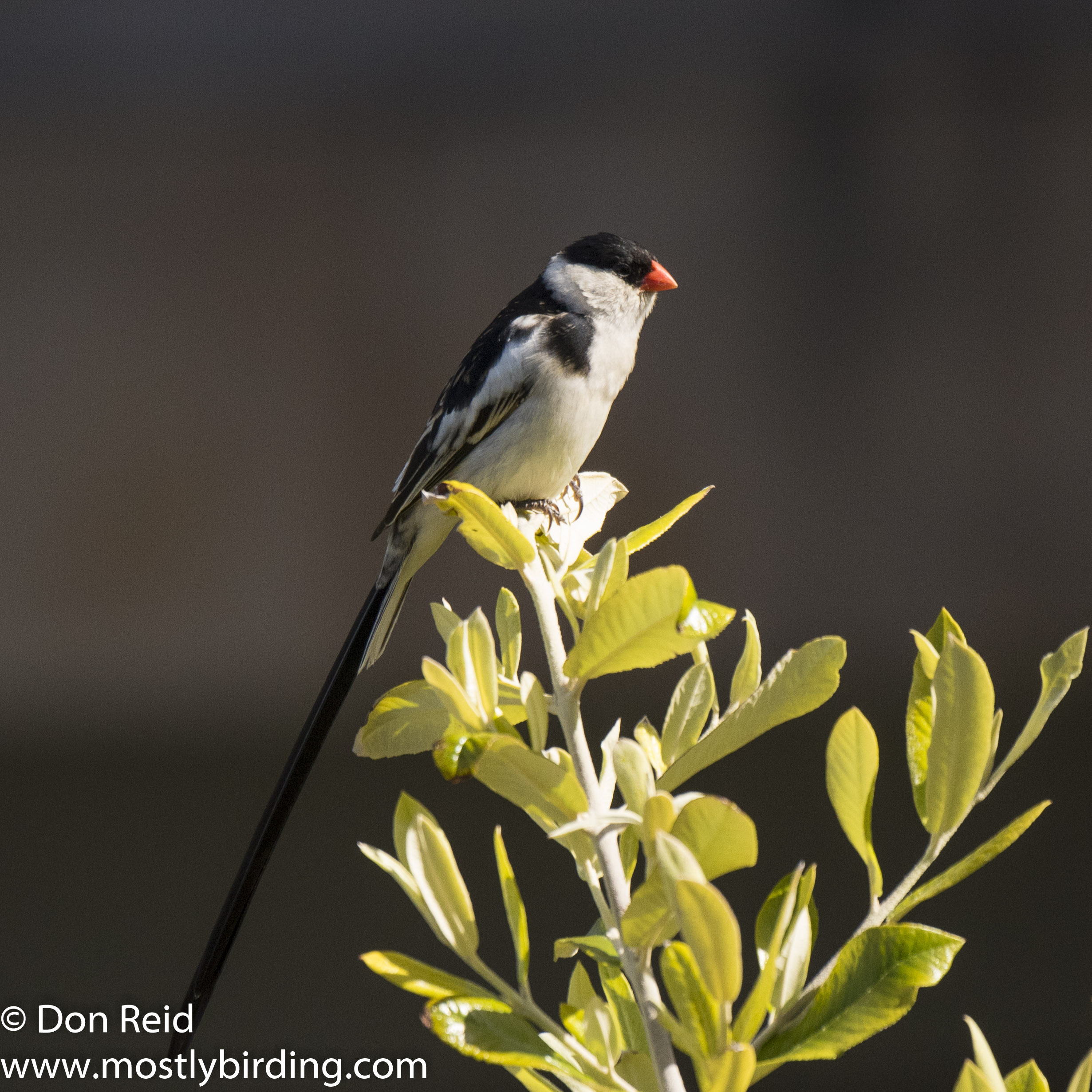
Pin-tailed Whydah (Male), Mossel Bay
Booted Eagle, Mossel Bay
White-rumped Swift, Mossel Bay
Steppe (Common) Buzzard, Mossel Bay area
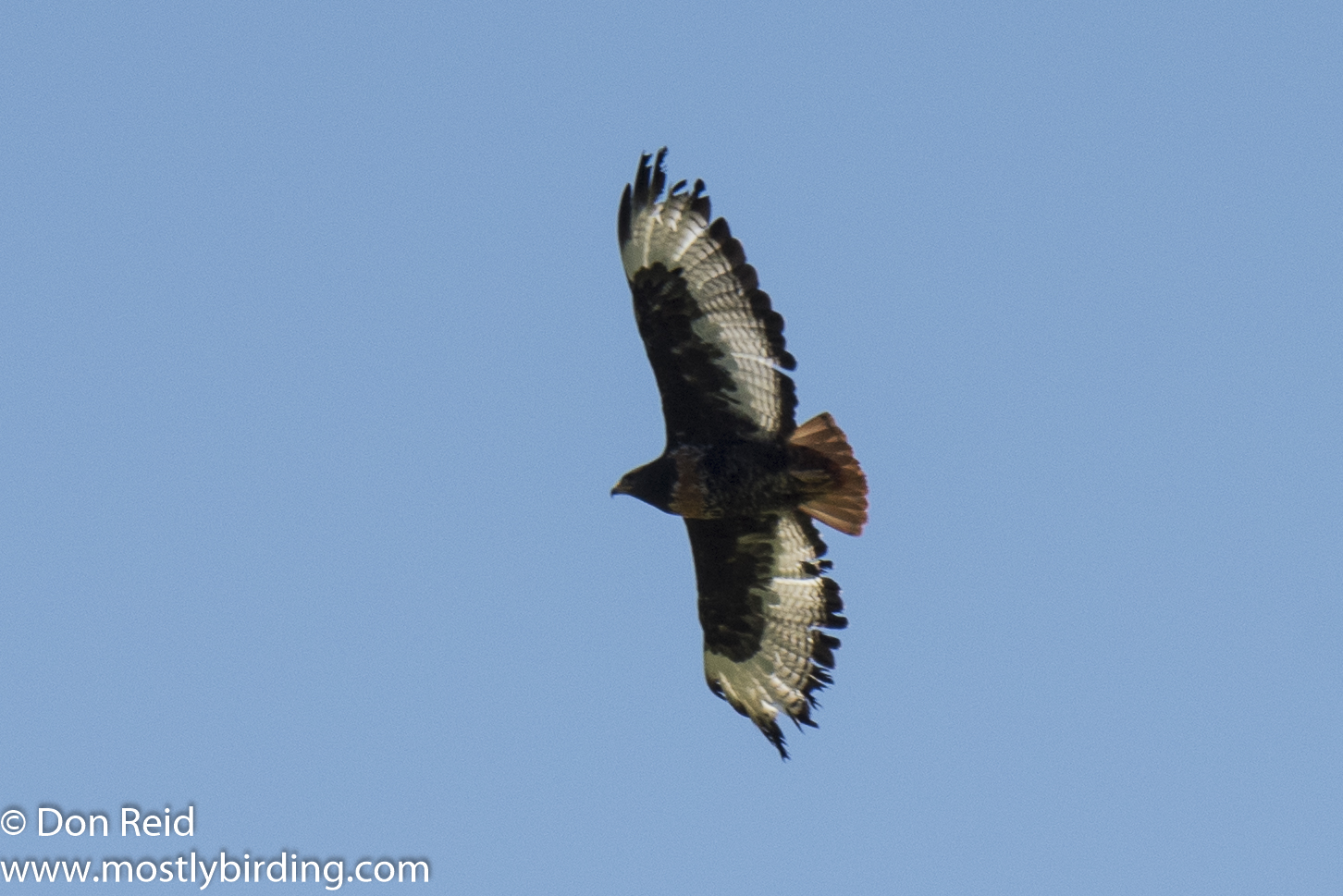
Jackal Buzzard, Mossel Bay
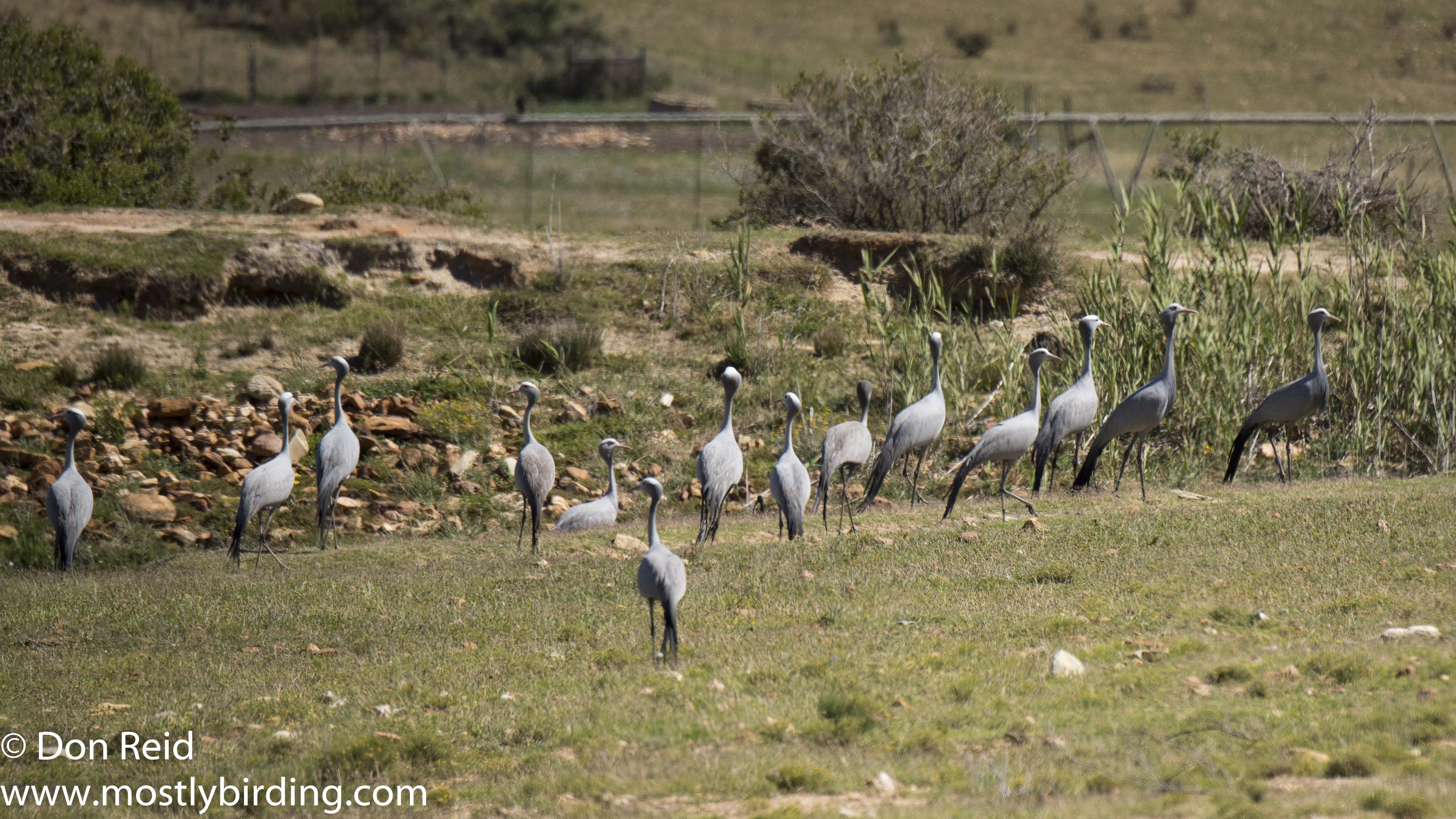
Blue Cranes, north of Herbertsdale
Cape Sugarbird, Mossel Bay
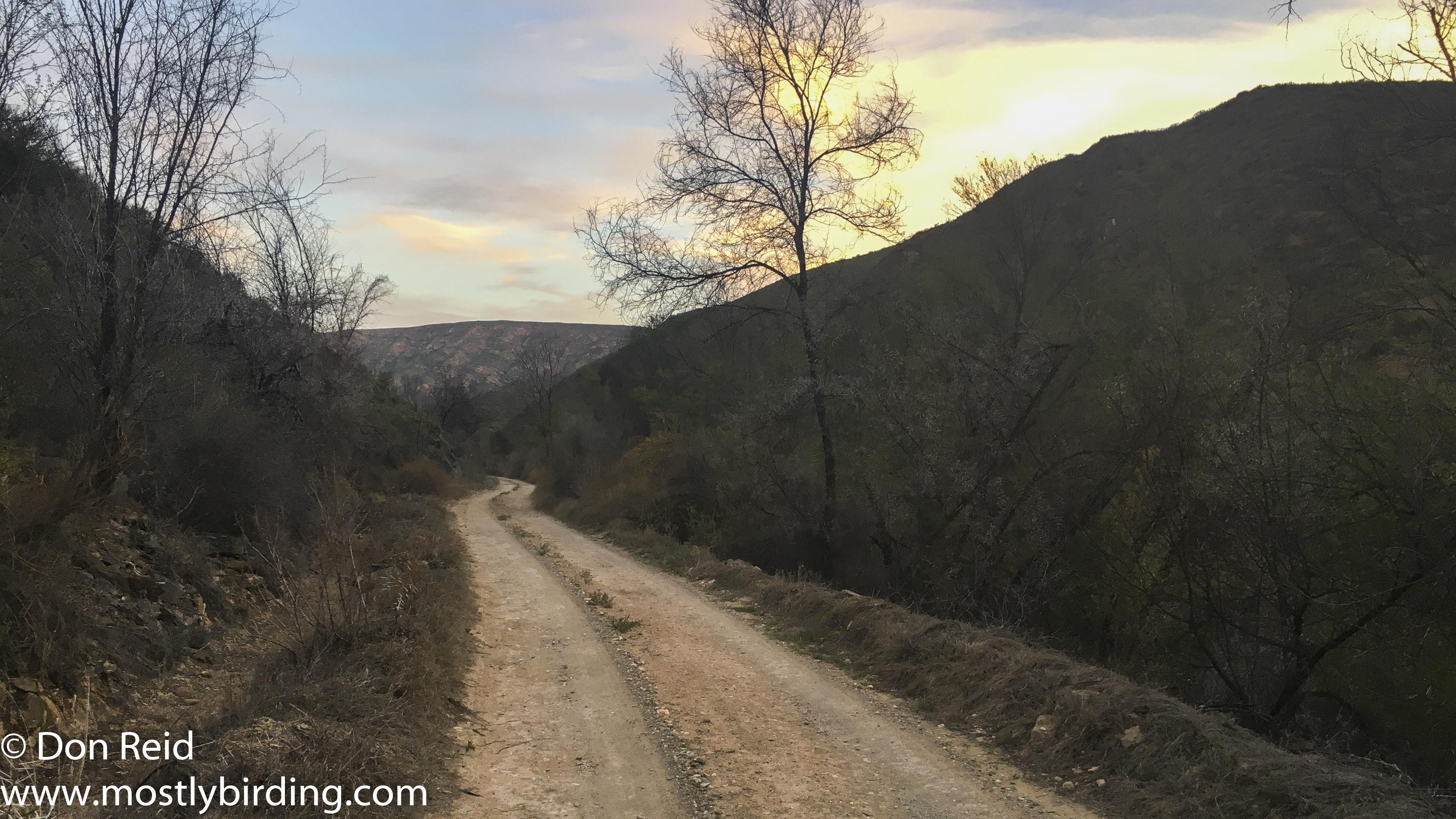
Scenery north of Herbertsdale

The last 3 days of the year were spent at a cottage in the hills beyond Calitzdorp, serious Little Karoo country and good for some of the Karoo specials. The cottage was Andre and Geraldine’s dream that became real, through a lot of hard work on their part.

Evening walk, Calitzdorp
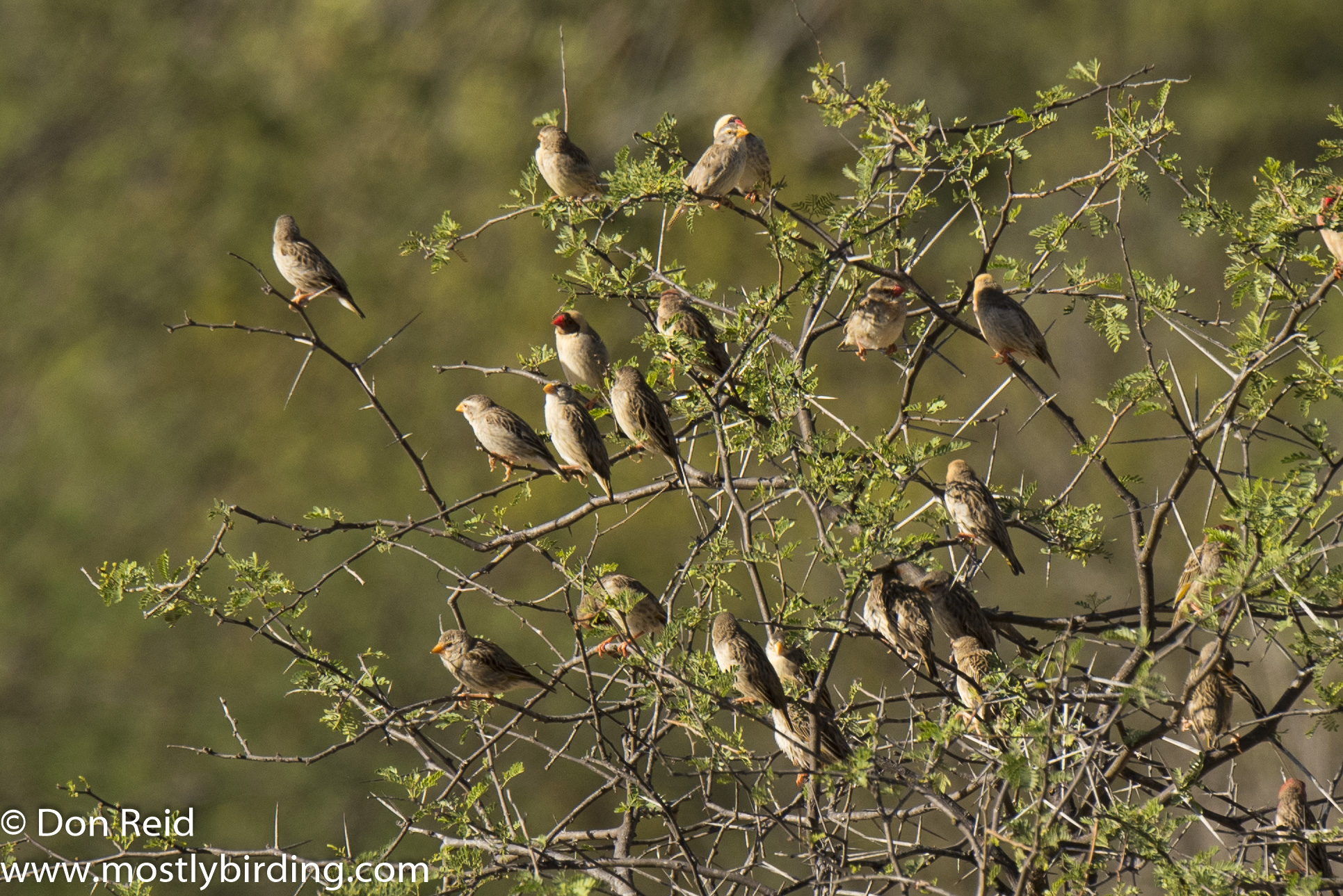
Red-billed Queleas, Calitzdorp

Answer to “6 Species in one frame” – left to right :

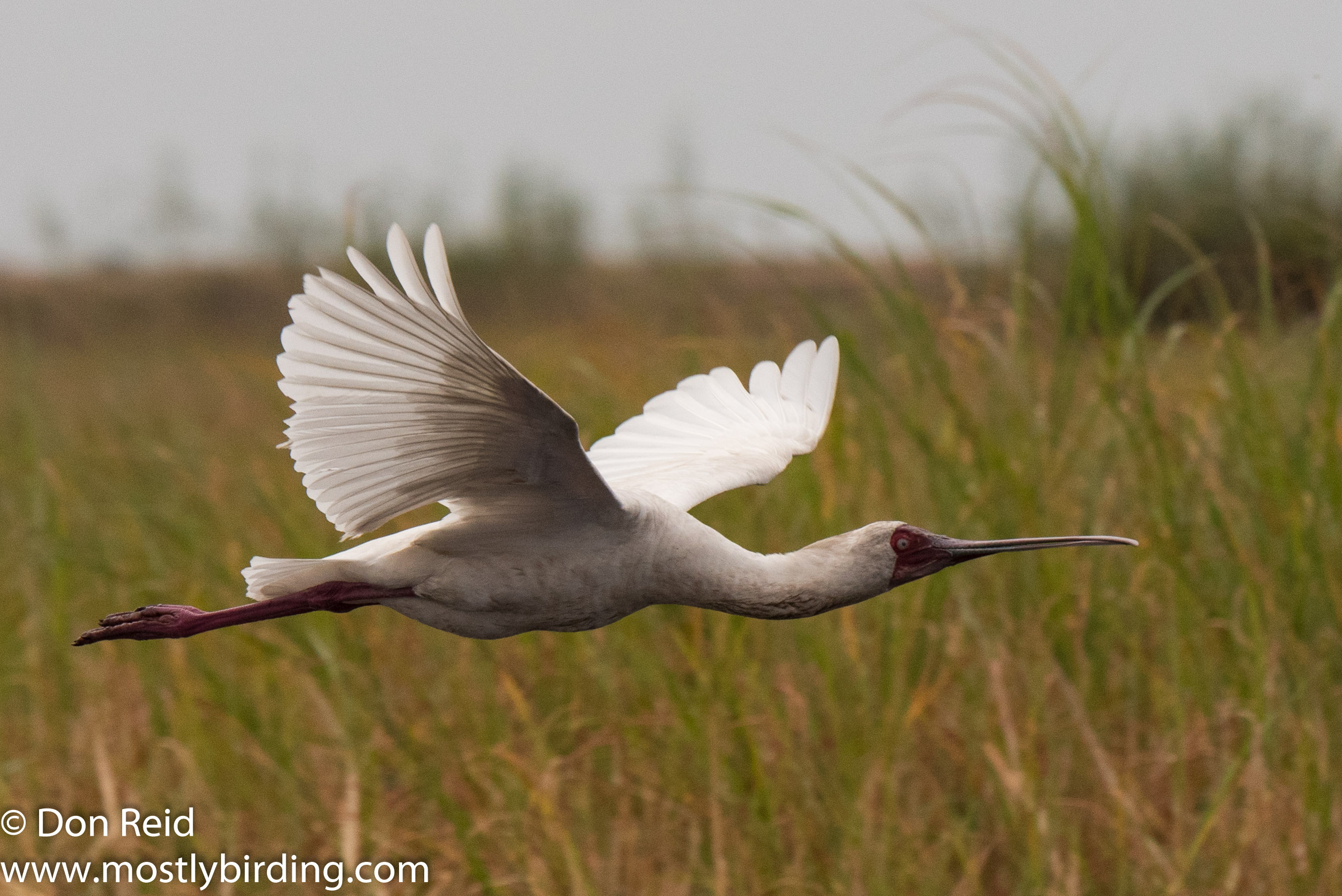
Glossy Ibis (left, just in frame), Squacco Heron, African Darter (in front), African Spoonbill (rear, twice), Little Egret, Long-toed Lapwing

Phew glad I got that post out in January (only just) – a Birding Year story is no good whatsoever in February


My Birding Year 2017 (Part 1) – Atlasing, Twitching, Cruising and more


Another memorable Birding Year has come and gone – a year filled once again with travelling to many familiar places and some exciting new ones, atlasing at every opportunity, a number of new birds seen and enough experiences to fill my journal to the brim.

So here’s a synopsis of my birding activities during the year along with photos of a few of the species encountered and places visited. Some of the trips are covered in separate posts in a lot more detail.

January

Our year kicked off in Mossel Bay, our home town for some of the year and I took the opportunity to do some atlasing / birdmapping in the area – Hartenbos and the adjoining inland in particular.

Agulhas Long-billed Lark in full song

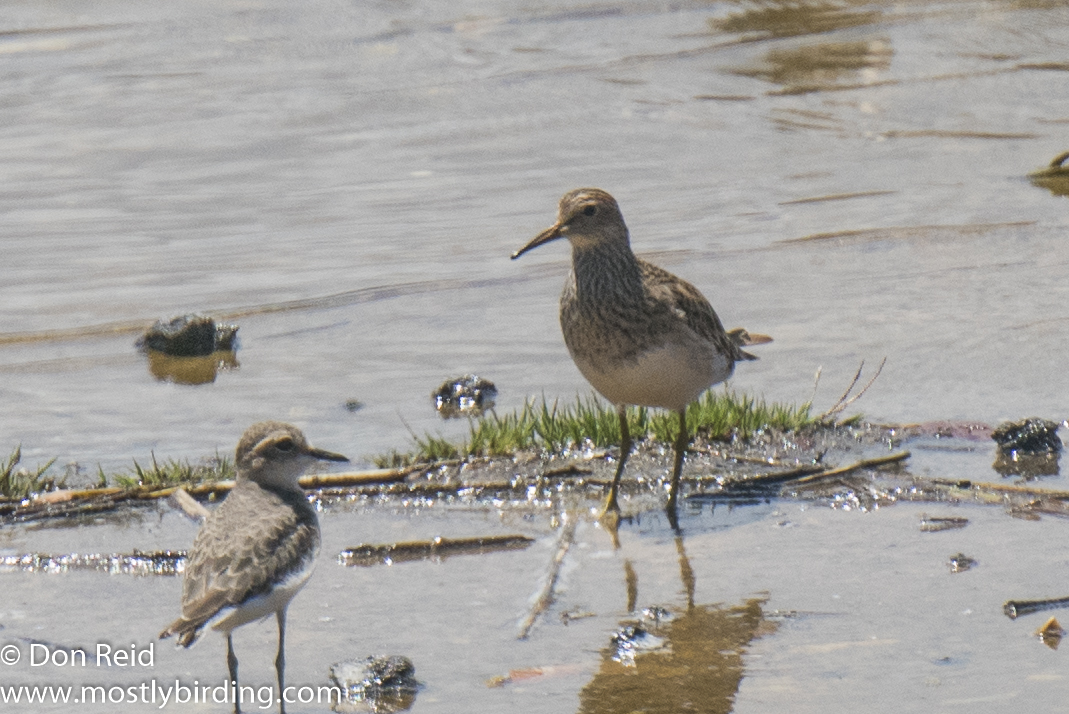
On the 9th I had the unexpected thrill of finding a Pectoral Sandpiper, classed as a national rarity, which I duly reported to Trevor Hardaker who sent out a note to all subscribers to the SA Rare Bird News network – what a memorable day!

Pectoral Sandpiper, Hartenbos River weir
SA Rare Bird News report

We started our journey back to Gauteng on the 13th, first stopping over in charming Prince Albert for two nights. I managed to fit in some atlasing in the area including a pleasant trip along the Damascus road.

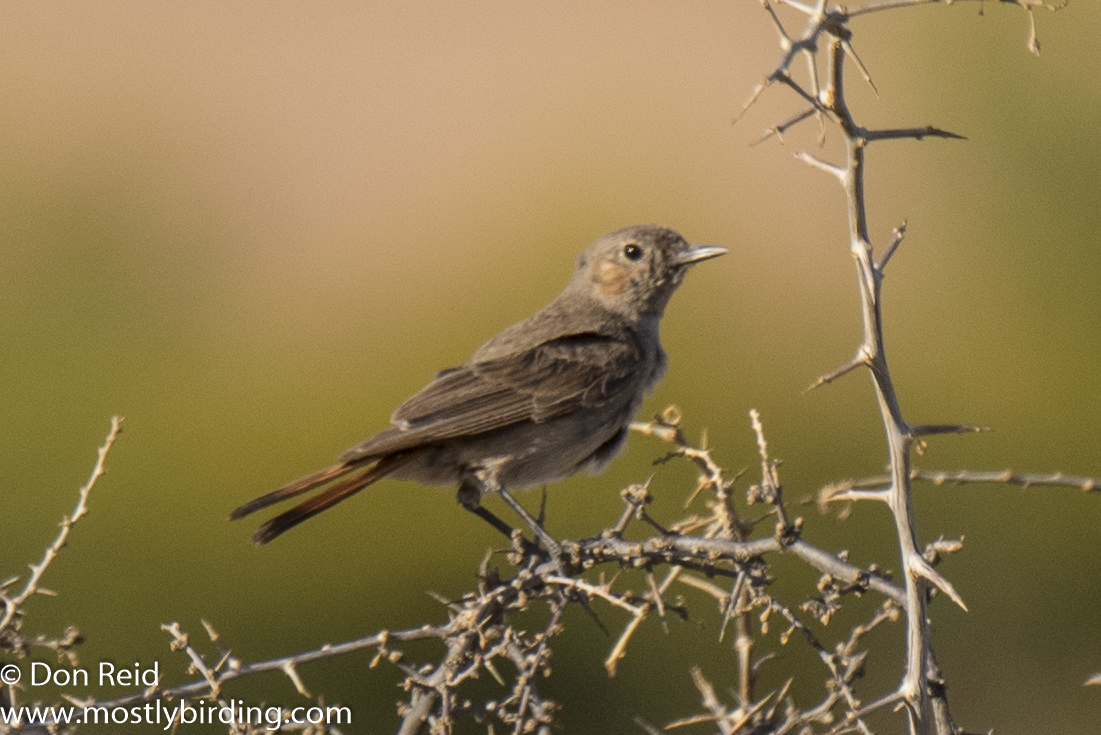
Familiar Chat, Prince Albert (Damascus road)

Our next stop for one night was at Garingboom guest farm near Springfontein in the Free State which also proved to be an interesting birding destination.

Amur Falcon, Garingboom Guest farm, Springfontein
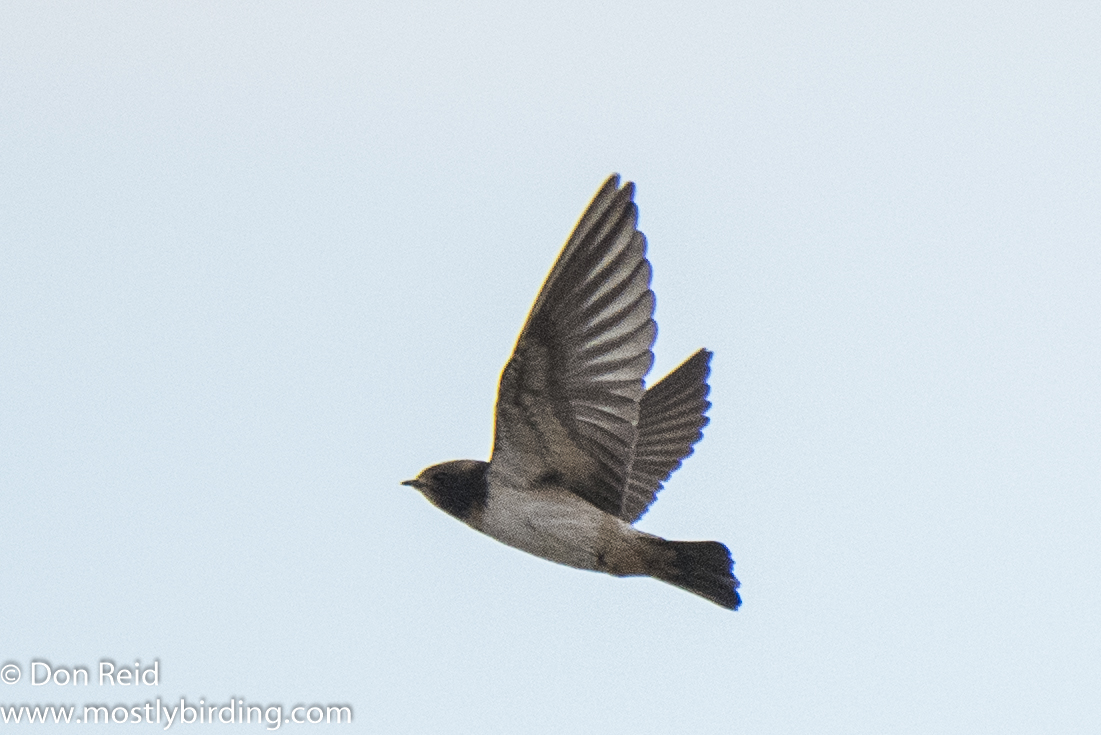
SA Cliff Swallow, Garingboom Guest farm, Springfontein

Back in Pretoria, my first atlasing was centred around Mabusa Nature Reserve some 100 km north east of Pretoria which was a most enjoyable spot with some challenging roads and good birding

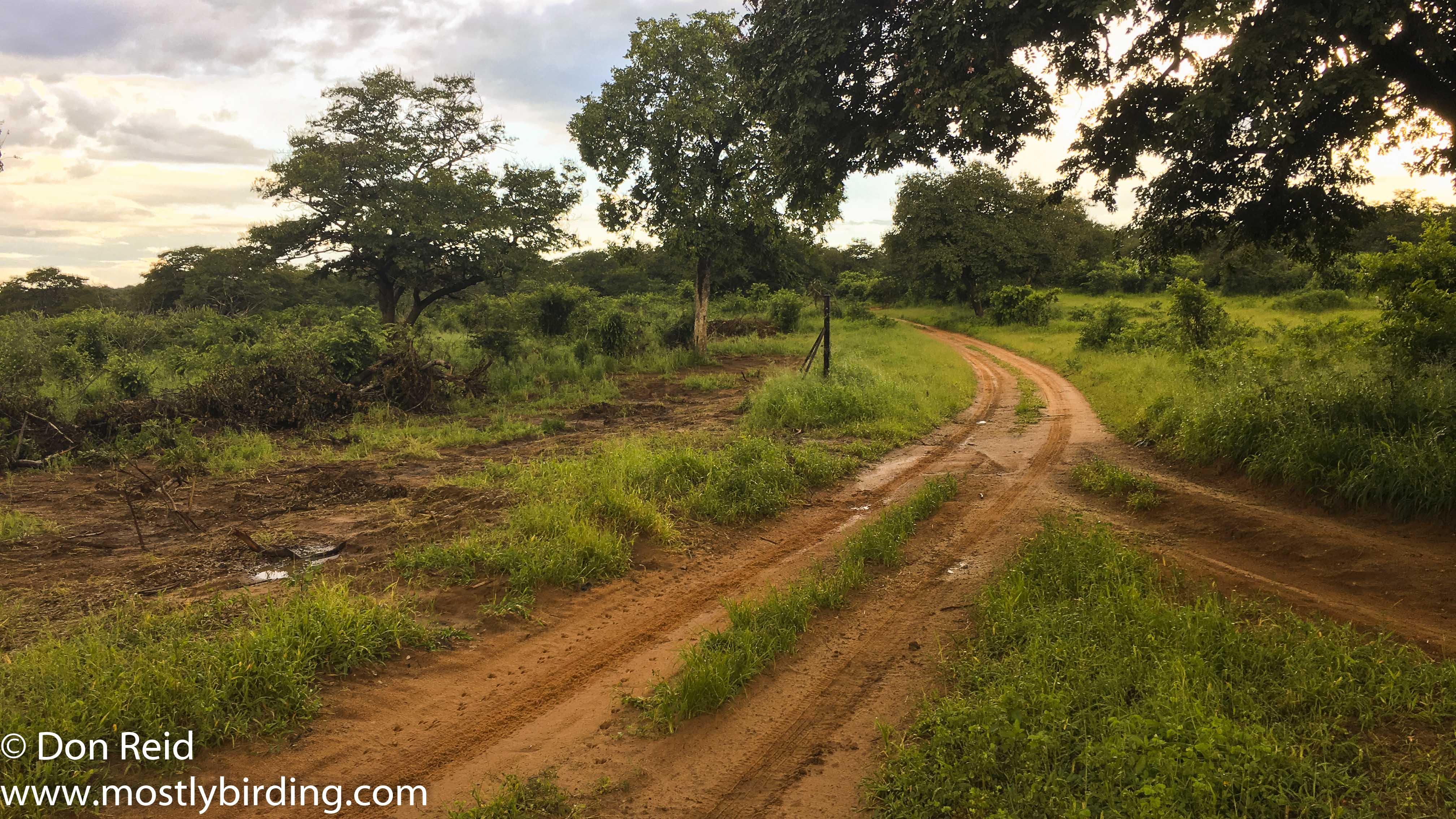
Mabusa Nature Reserve
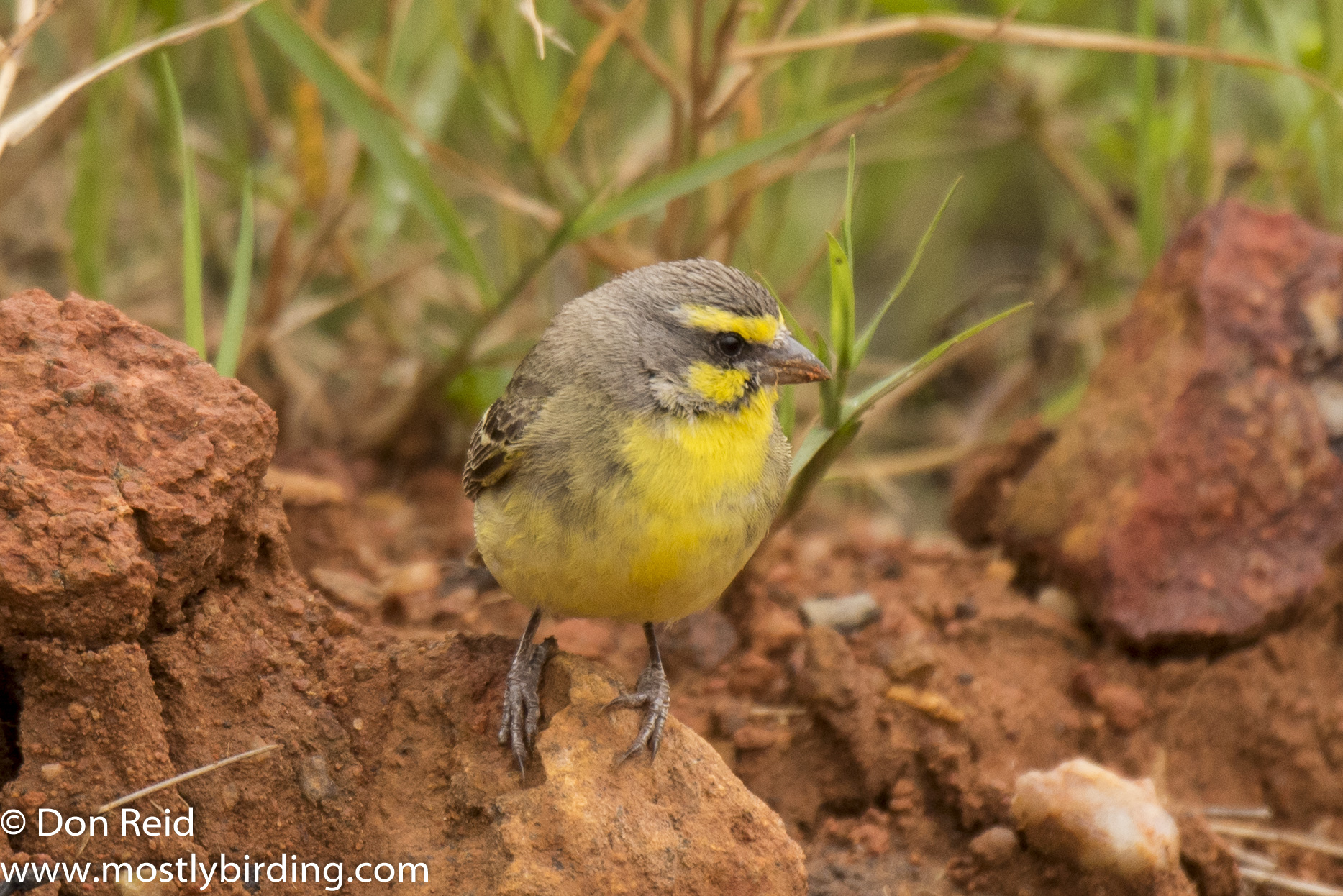
Yellow-fronted Canary, Mabusa Nature Reserve
Bushveld Pipit, Mabusa Nature Reserve
Mabusa Nature Reserve

February

My first trip of the year to Kasane presented some great birding and atlasing opportunities in the summer lushness of Chobe Game Reserve.

Kasane Forest Reserve
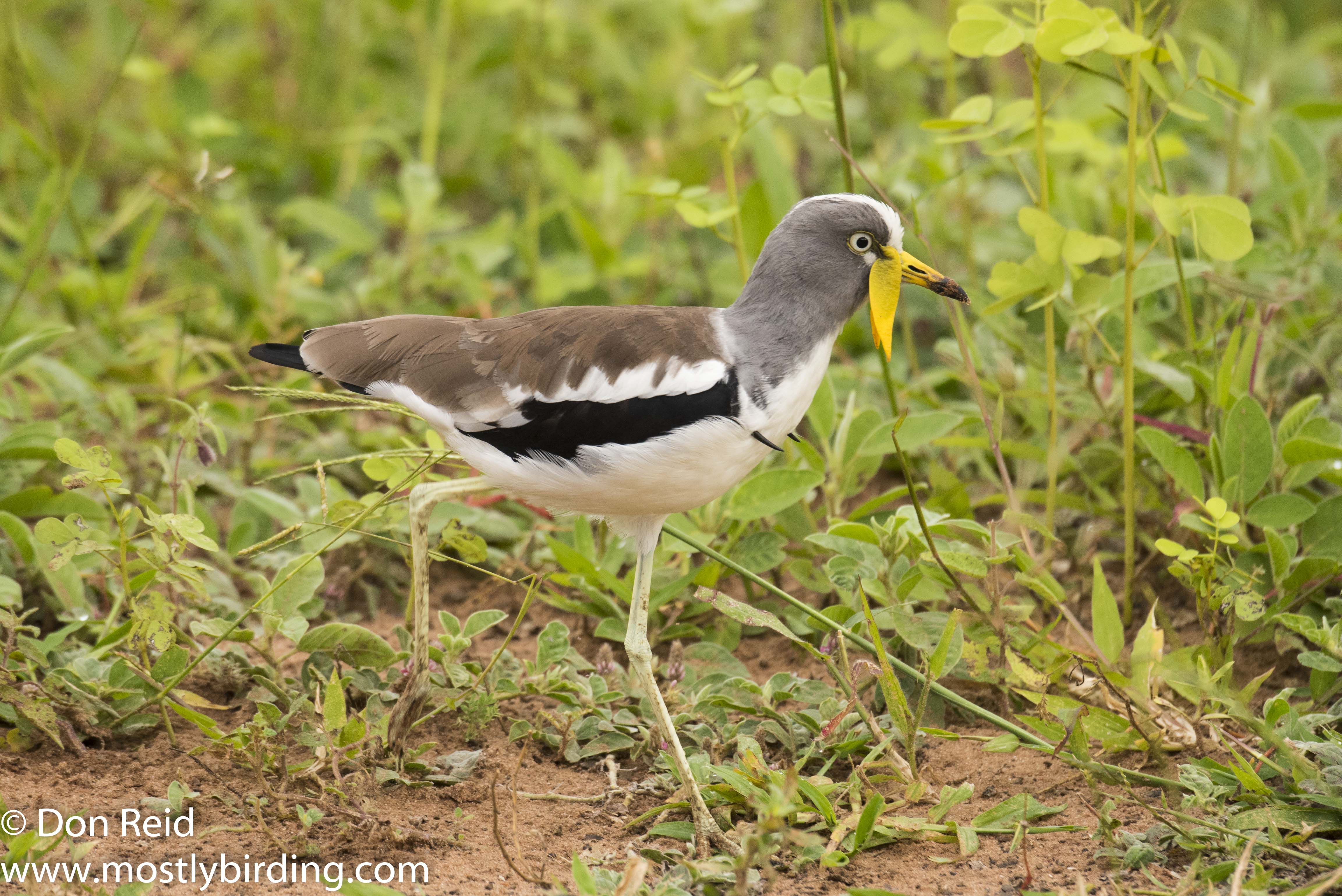
White-crowned Lapwing, Chobe Game Reserve
Chobe Game Reserve
Double-banded Sandgrouse, Chobe Game Reserve

Back in Pretoria I did further atlasing in the Delmas area

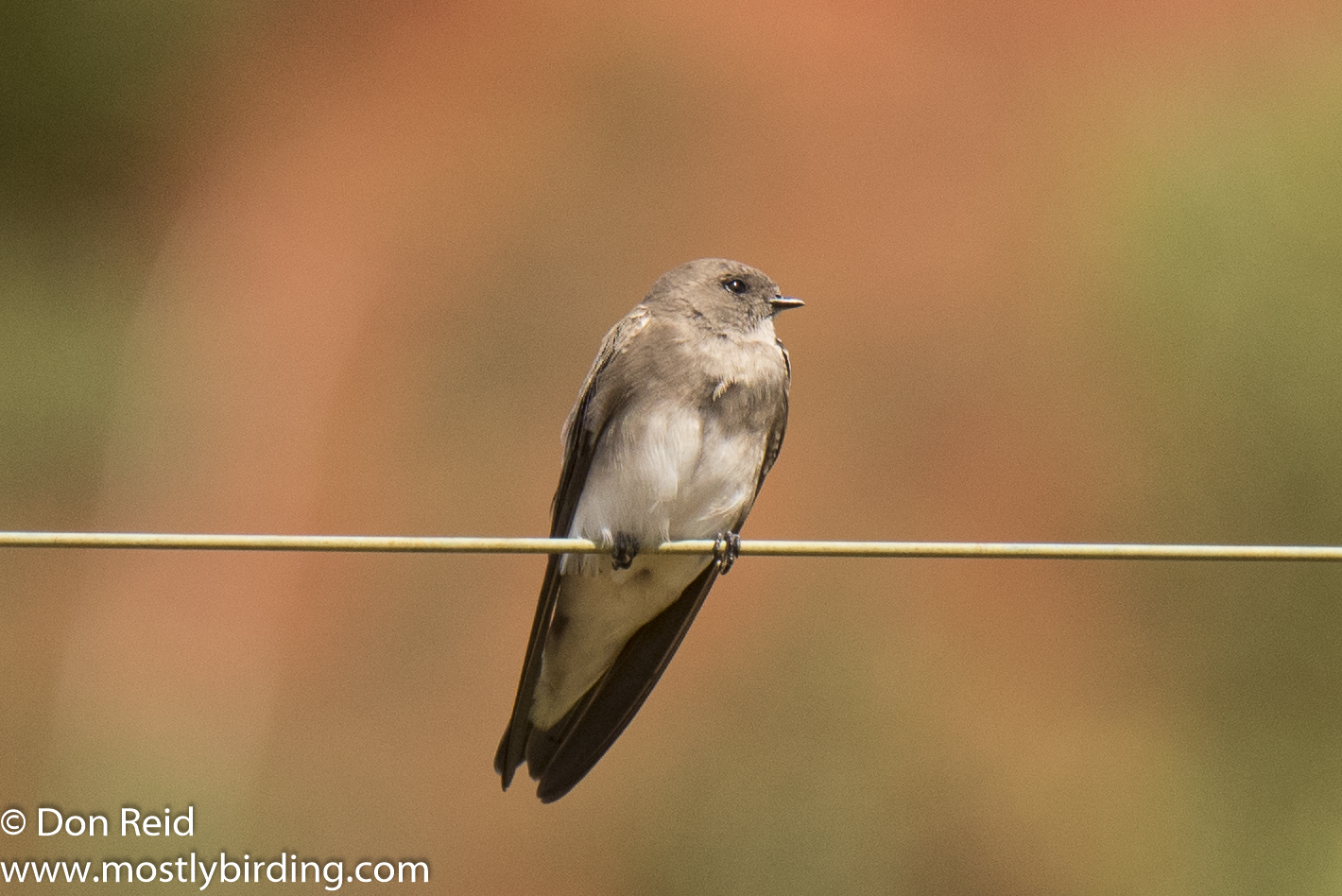
Brown-throated Martin, Delmas area

We used our timeshare points for a weekend at Champagne Valley in the Drakensberg, which provided an opportunity for some atlasing in the area

Grey-crowned Crane, Drakensberg south
Drakensberg south
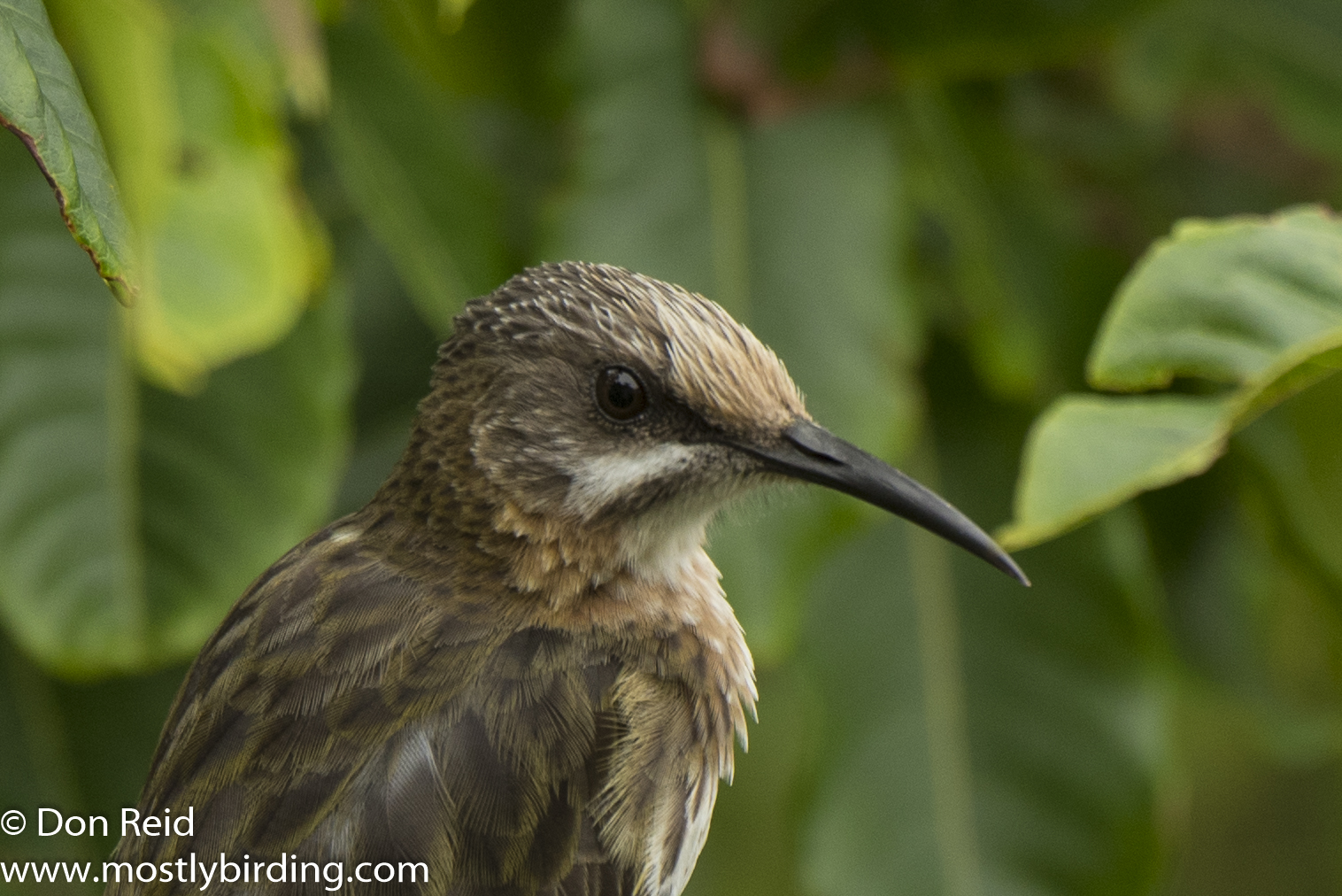
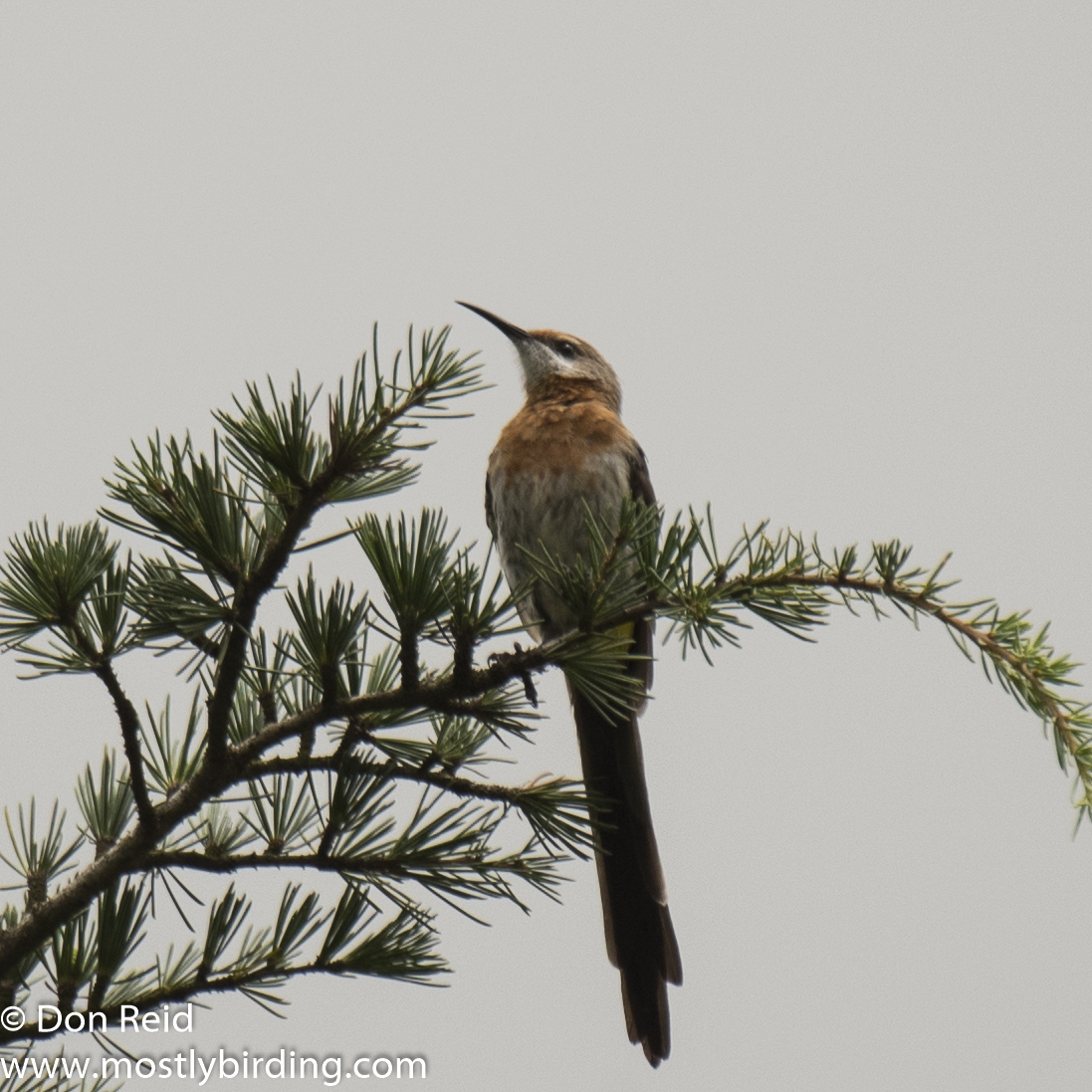
Gurney’s Sugarbird, Drakensberg south

March

Our Canadian family arrived on the 6th for a two week visit which included a Kruger Park visit and a trip to Vic Falls and Chobe Game Reserve

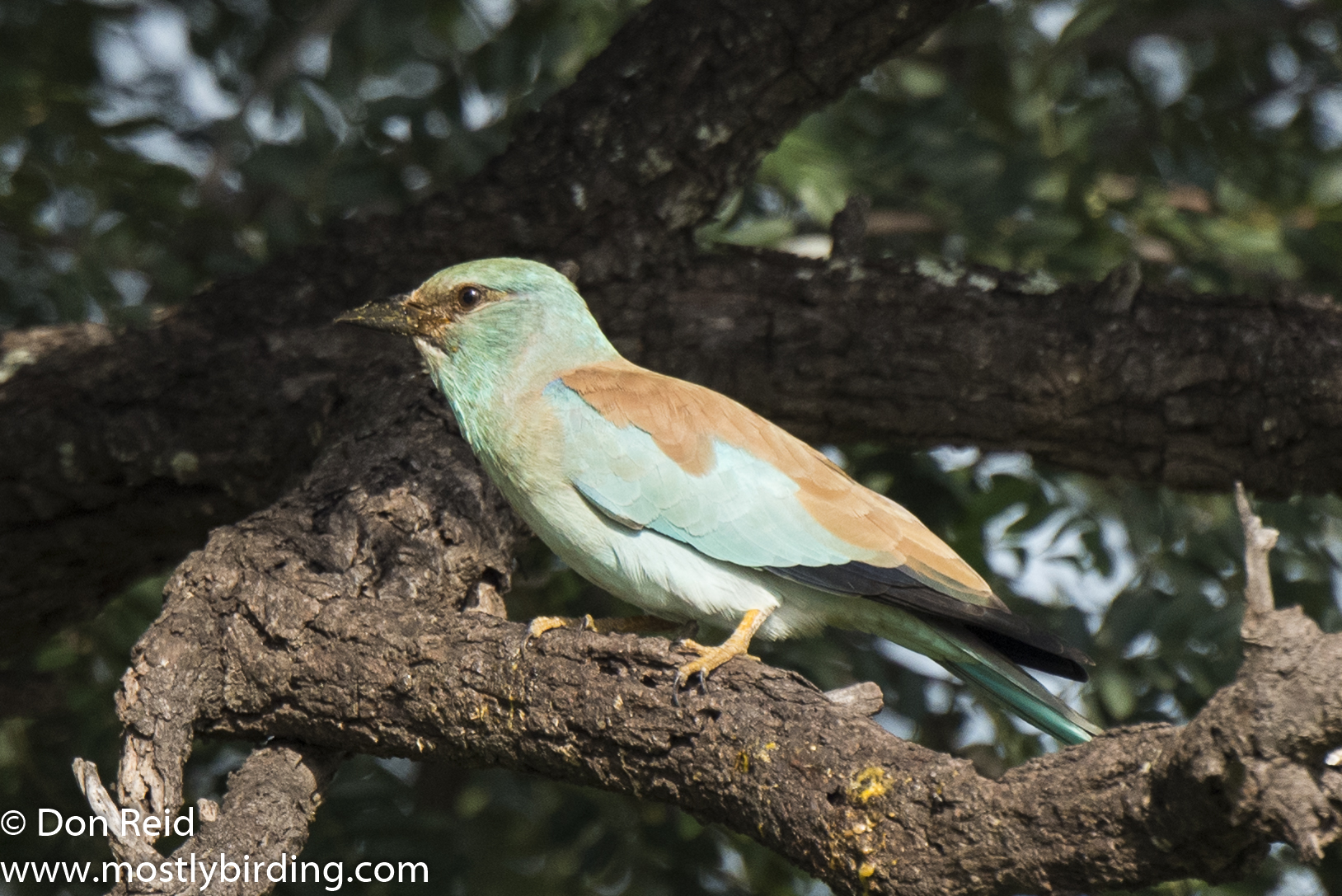
European Roller, Kruger Park
Green-backed Heron (Juvenile), Lake Panic in Kruger Park
White-fronted Bee-eater, Zambezi Cruise
Little Sparrowhawk (Juvenile), Chobe Safari Lodge

Getting back to normal after the excitement of touring with the family, we visited Potchefstroom, and I was happy to take grandson Christopher (6) with me for some birding at the local dam – I think he was more interested in my Prado’s little fridge filled with cold-drinks, but you have to start somewhere!

April

My monthly visit to Kasane, Botswana afforded another opportunity for some birding around Kasane and in Chobe Game Reserve – such a great destination which I try not to spoil with too much work….

Bronze-winged Courser, Kasane Airport perimeter
Western Yellow Wagtail, Kasane Sewage Works

Then it was time for our much anticipated “Flock at Sea” cruise from the 24th to 28th  arranged by Birdlife SA

Flock at Sea Cruise
Flock at Sea Cruise
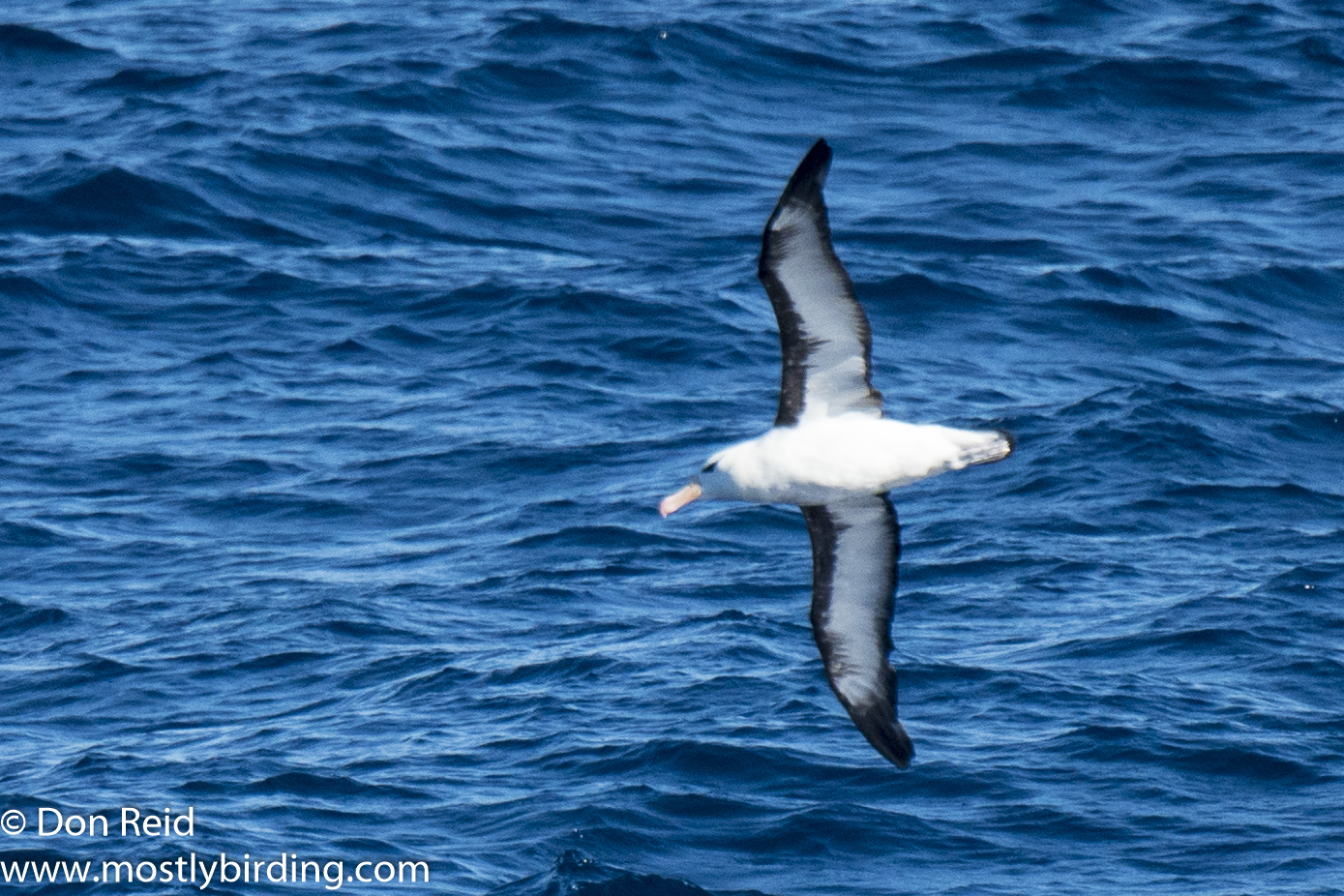
Black-browed Albatross, Flock at Sea Cruise
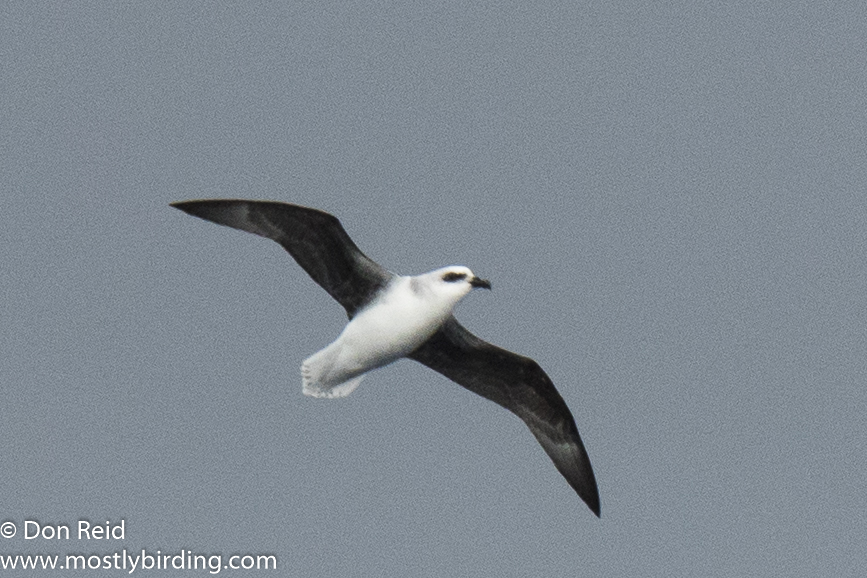
White-headed Petrel, Flock at Sea Cruise
Flock at Sea Cruise

May

Another short autumn visit to Mossel Bay meant I could fit in some further atlasing in the Southern Cape

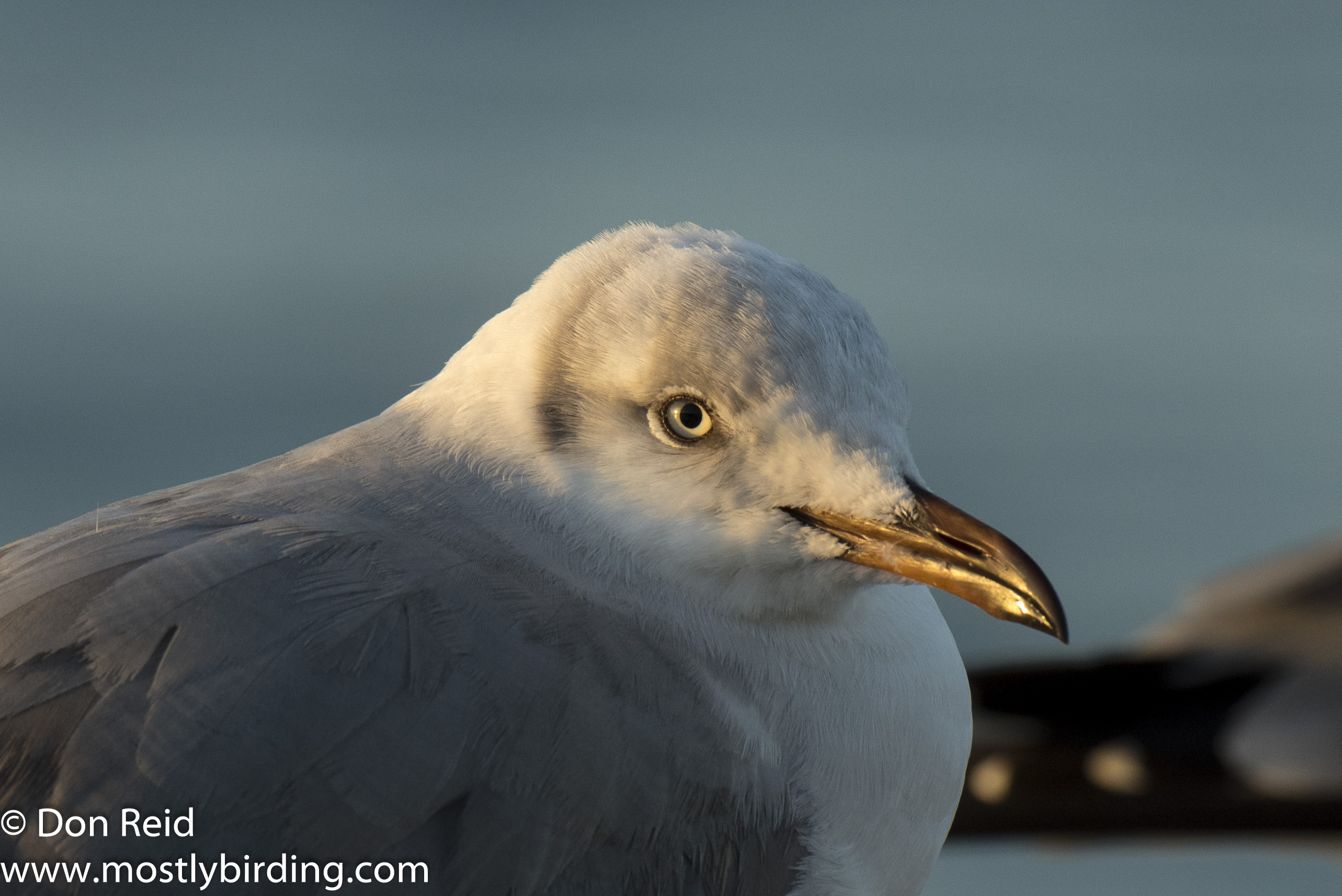
Grey-headed Gull, Mossel Bay
Cape Rock-Thrush (Male), Victoria Bay
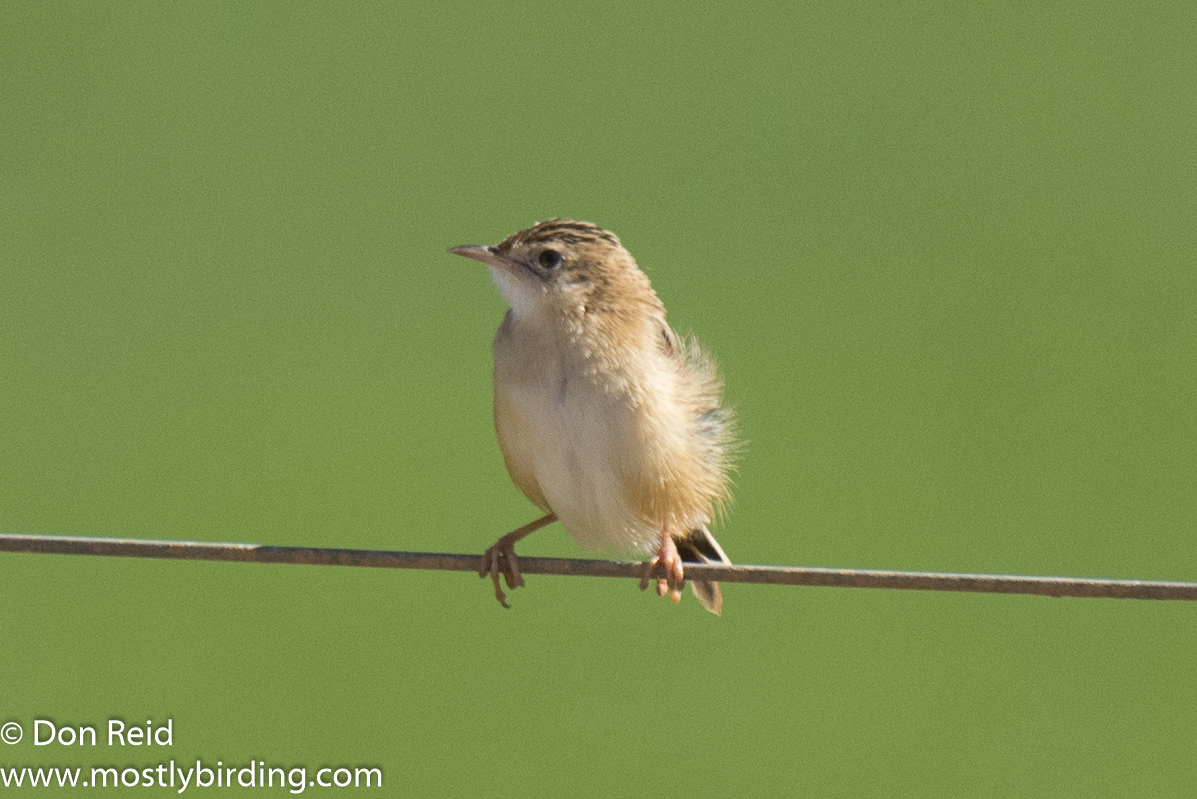
Zitting Cisticola, Herbertsdale area

Later in the month Koos and I headed to Bushfellows Lodge near Marble Hall in Mpumulanga for a day’s atlasing (and some snake watching)

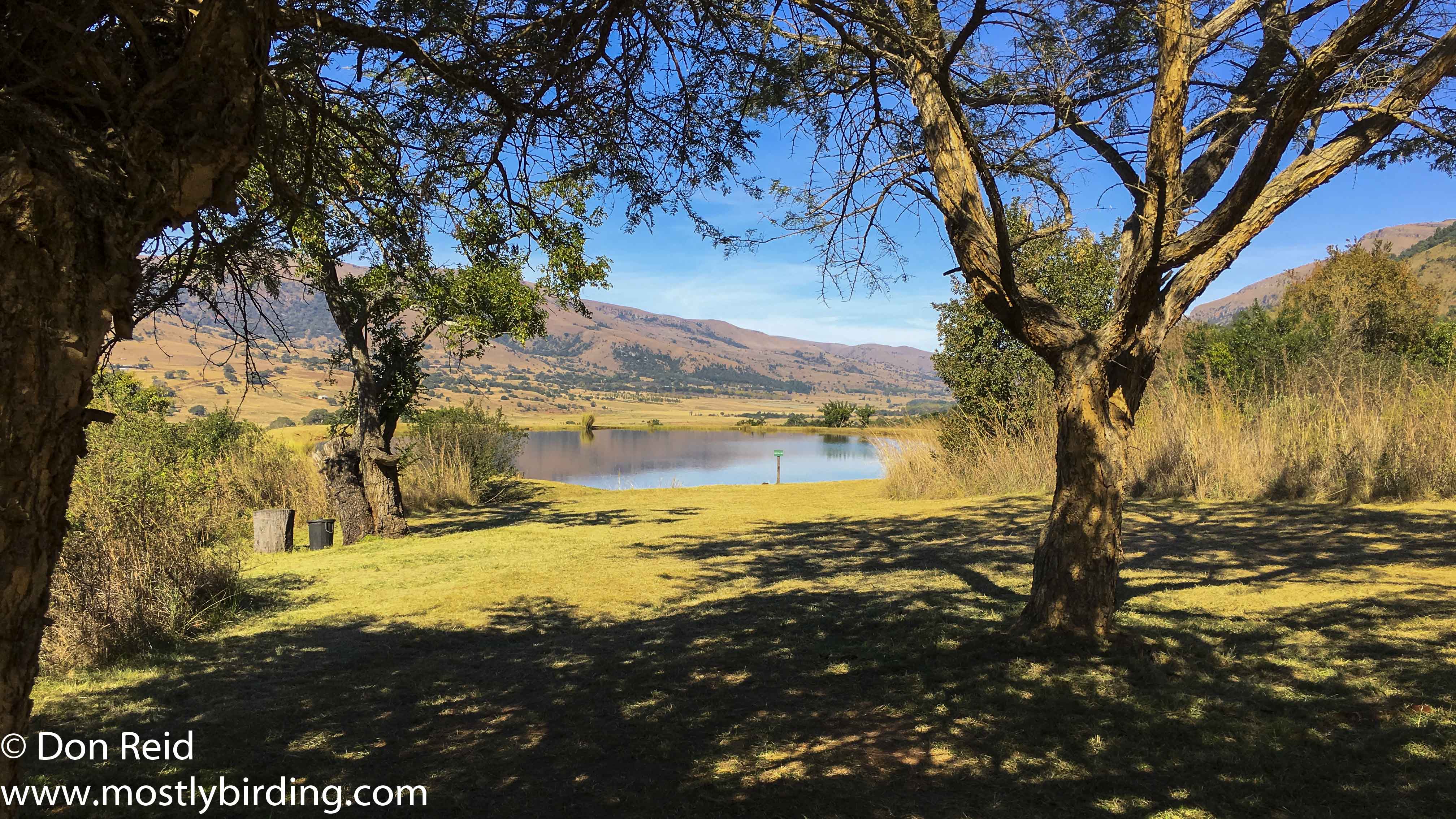
Just a week later we spent 4 days at Verlorenkloof also in Mpumulanga with Koos and Rianda, one of our favourite spots for relaxing and blessed with a variety of birding opportunities

Chinspot Batis, Verlorenkloof
Lower dam, Verlorenkloof
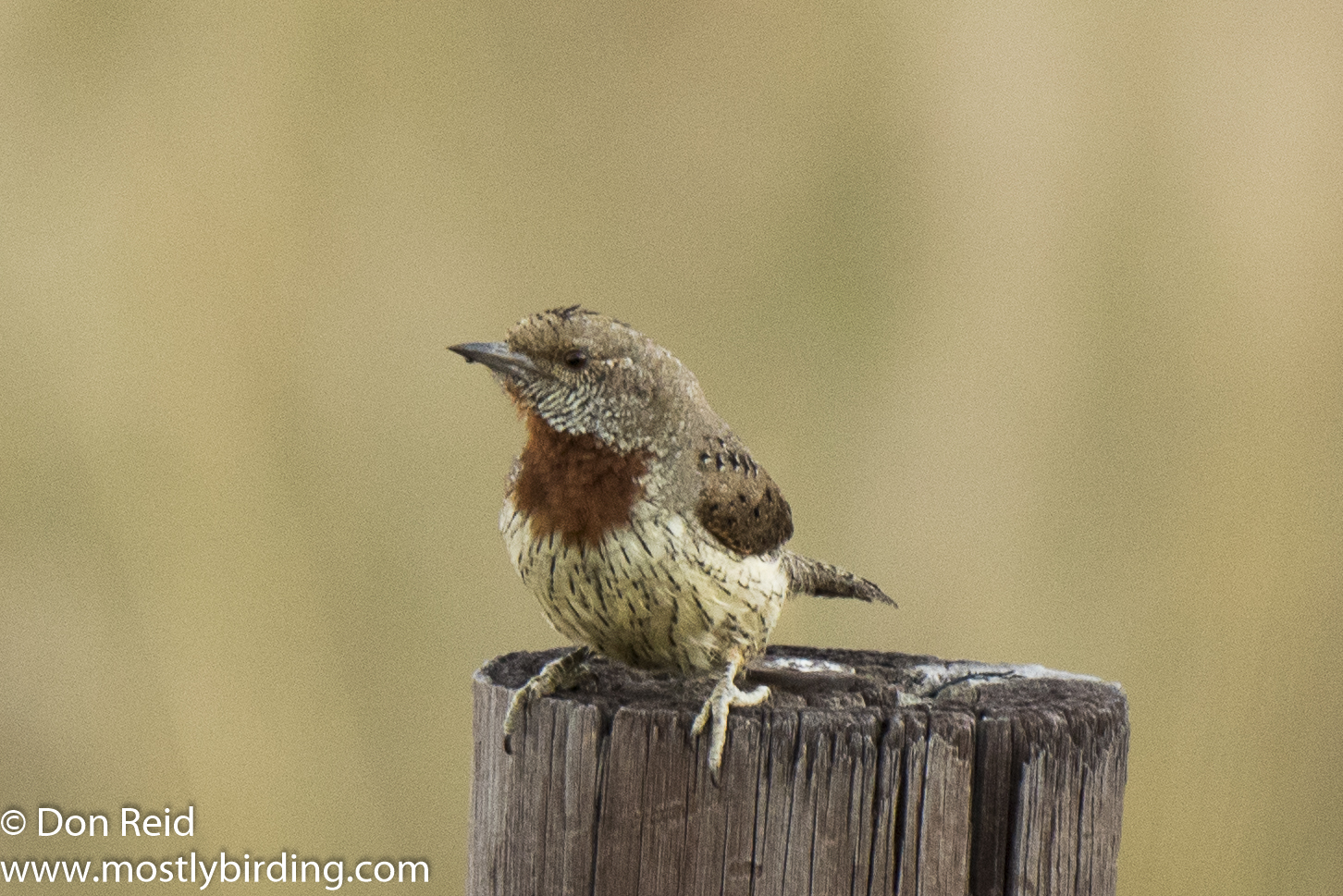
Red-throated Wryneck, Verlorenkloof

June

The month kicked off with a visit to Kasane but this time my birding was limited to a rather hurried morning trip into Chobe Riverfront

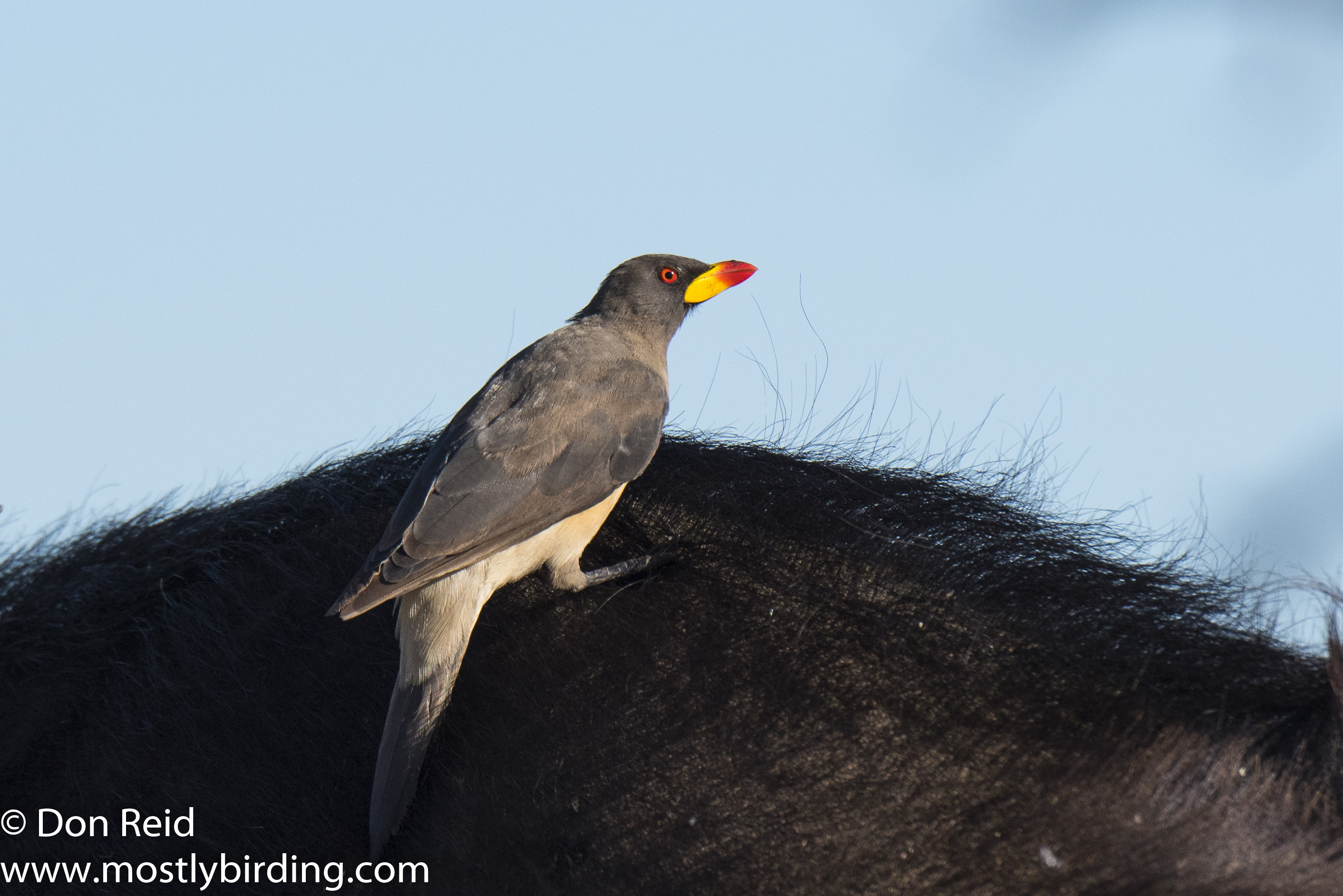
Yellow-billed Oxpecker, Chobe Game Reserve
Brown Snake Eagle, Chobe Game Reserve

On the 10th Koos and I braved the mid-winter cold and the notoriously dangerous Moloto road north of Pretoria to do some atlasing in NE Gauteng

Marico Sunbird, far north east 4DG

We closed out the half year with our “get away from it all” break in La Lucia near Durban at our timeshare resort – this was interrupted by a breakaway to northern Zululand to view a Malagasy Pond-Heron that had taken up residence at Phinda Game Reserve.

Phinda North KZN
Malagasy Pond-Heron, Mziki dam, Phinda North KZN
Long-tailed Paradise Whydah, Phinda North KZN

In the latter part of the week I visited Pigeon Valley for some superb forest birding

Spotted Ground Thrush, Pigeon Valley Durban
Pigeon Valley Durban
Grey Waxbill, Pigeon Valley Durban

July to December will be covered in the next post – watch this space!


My Photo Picks for 2017 – Part 2

Here’s a further selection of my favourite photos taken during 2017 – from our travels, holidays and birding trips 

If you have any favourites, do let me know by adding your comment!

The Birds (Continued)

Southern Ground Hornbill, Chobe Game Reserve, Botswana
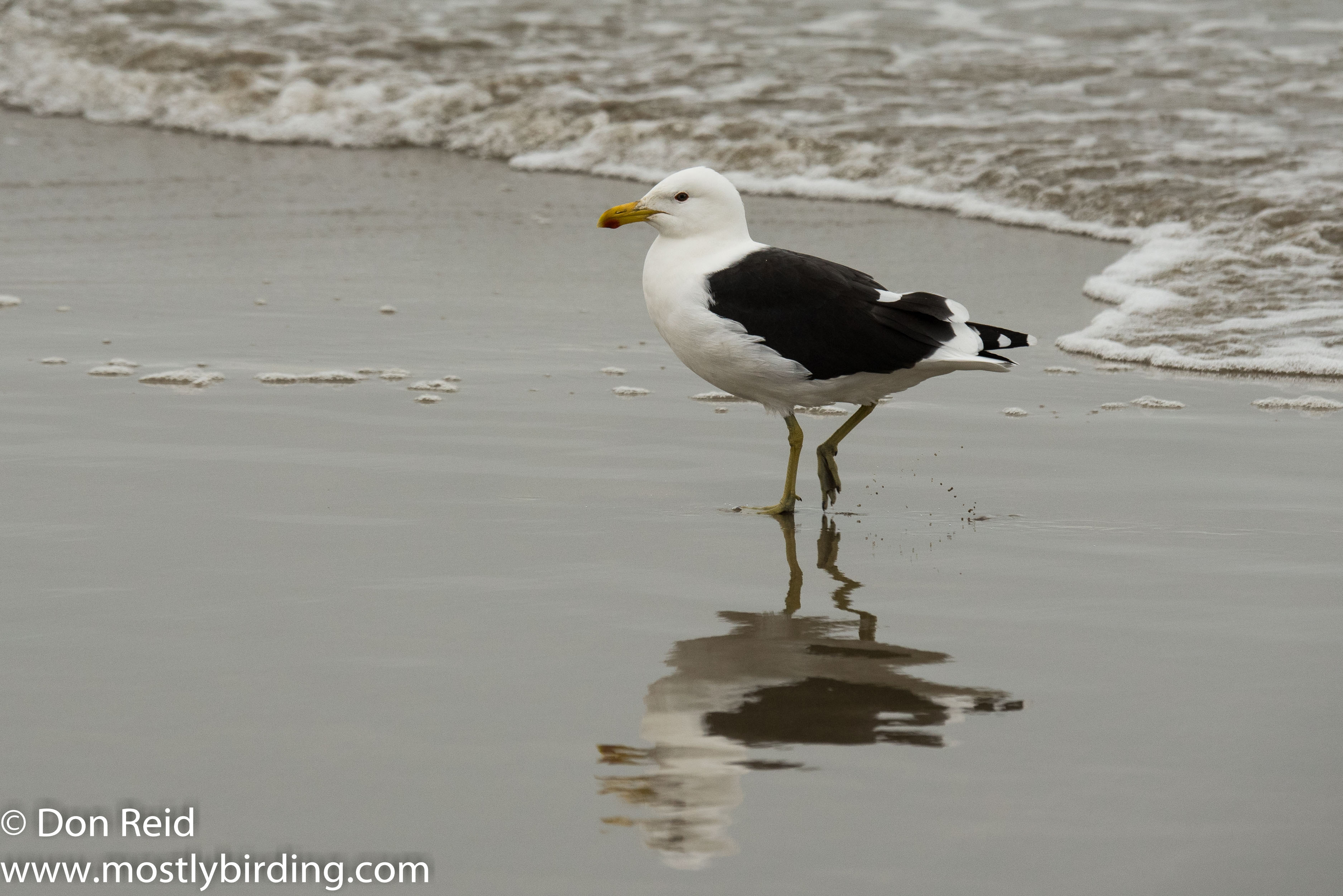
Kelp Gull, Vleesbaai, Western Cape
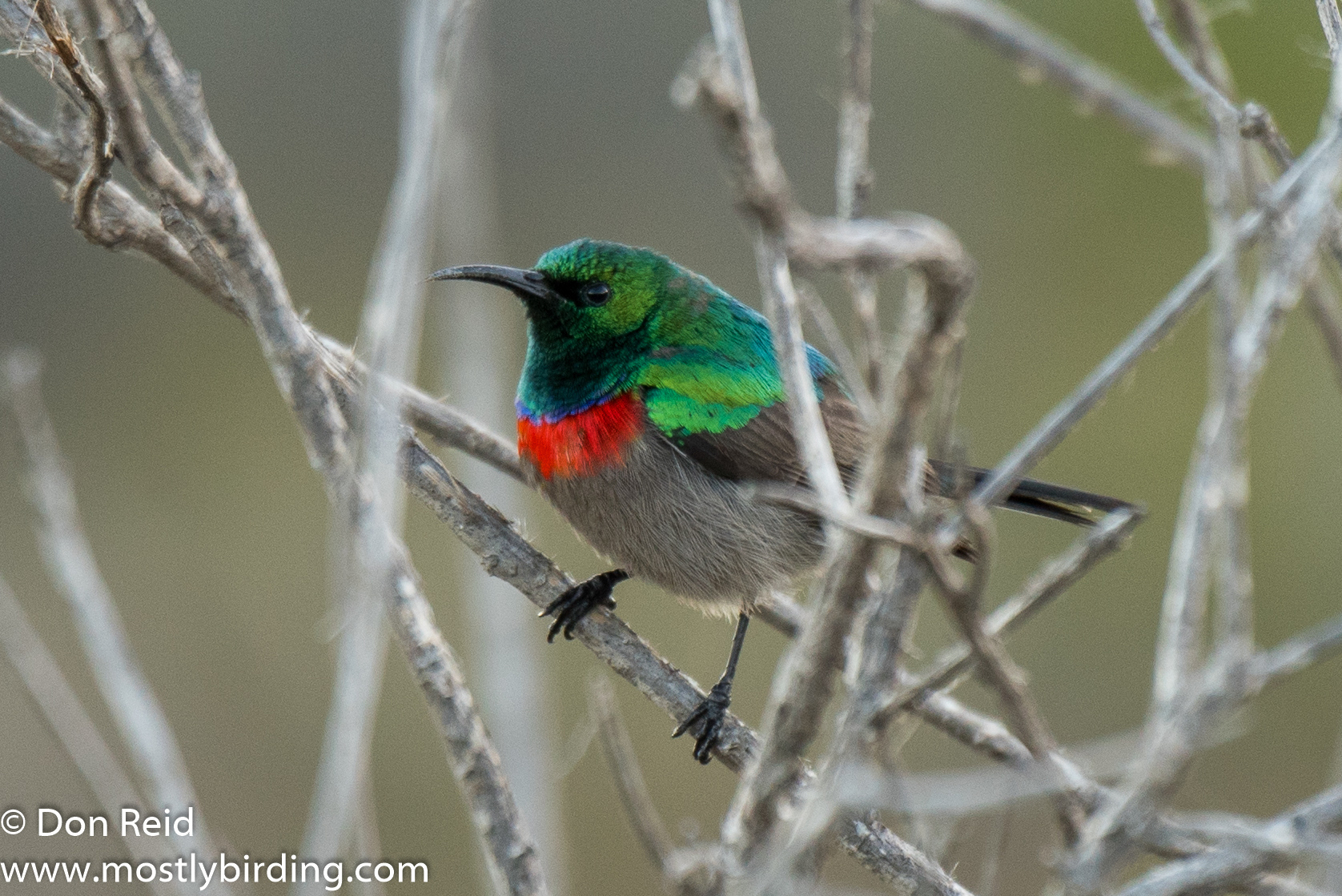
Southern Double-collared Sunbird, Mossel Bay
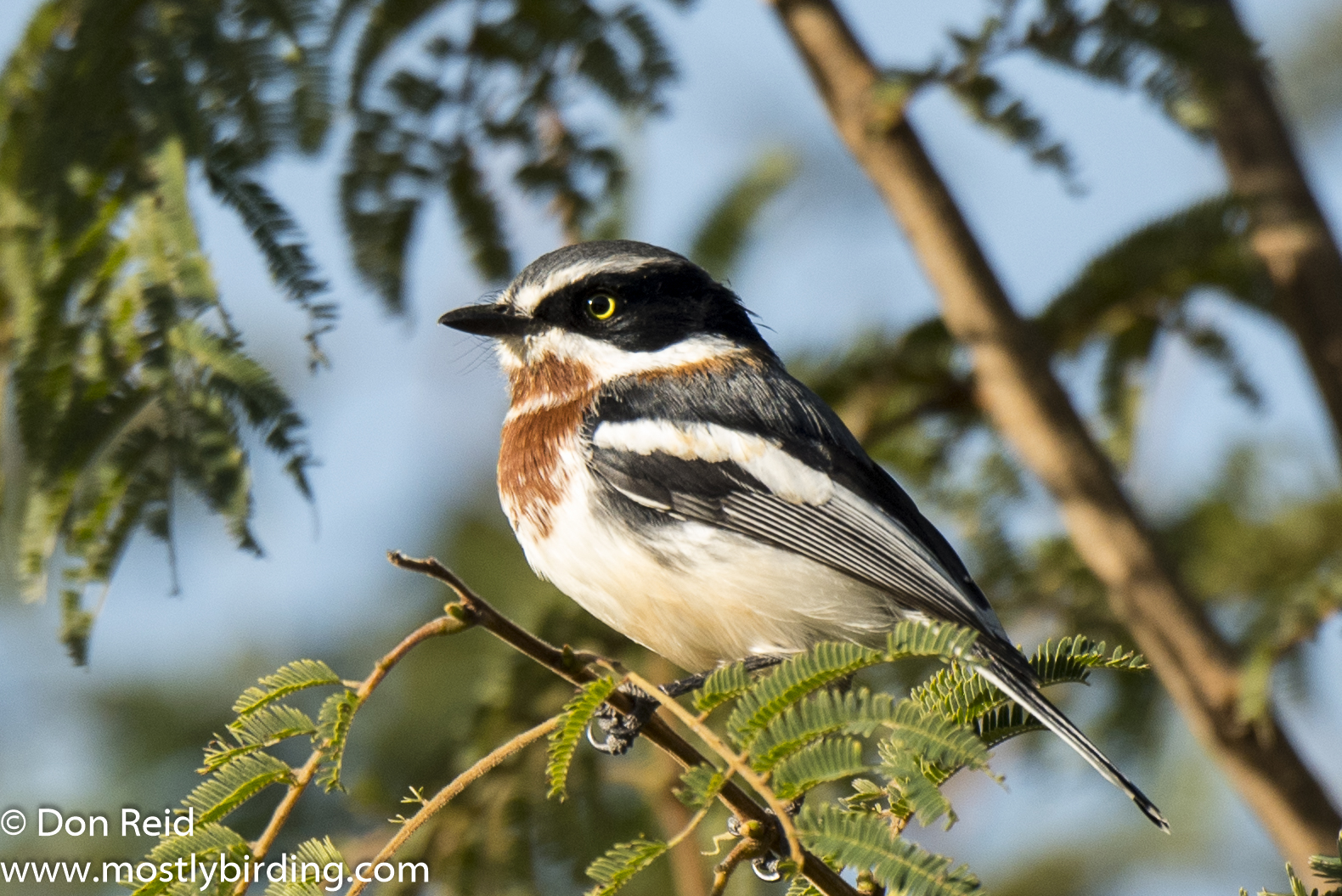
Chinspot Batis, Verlorenkloof in Mpumulanga
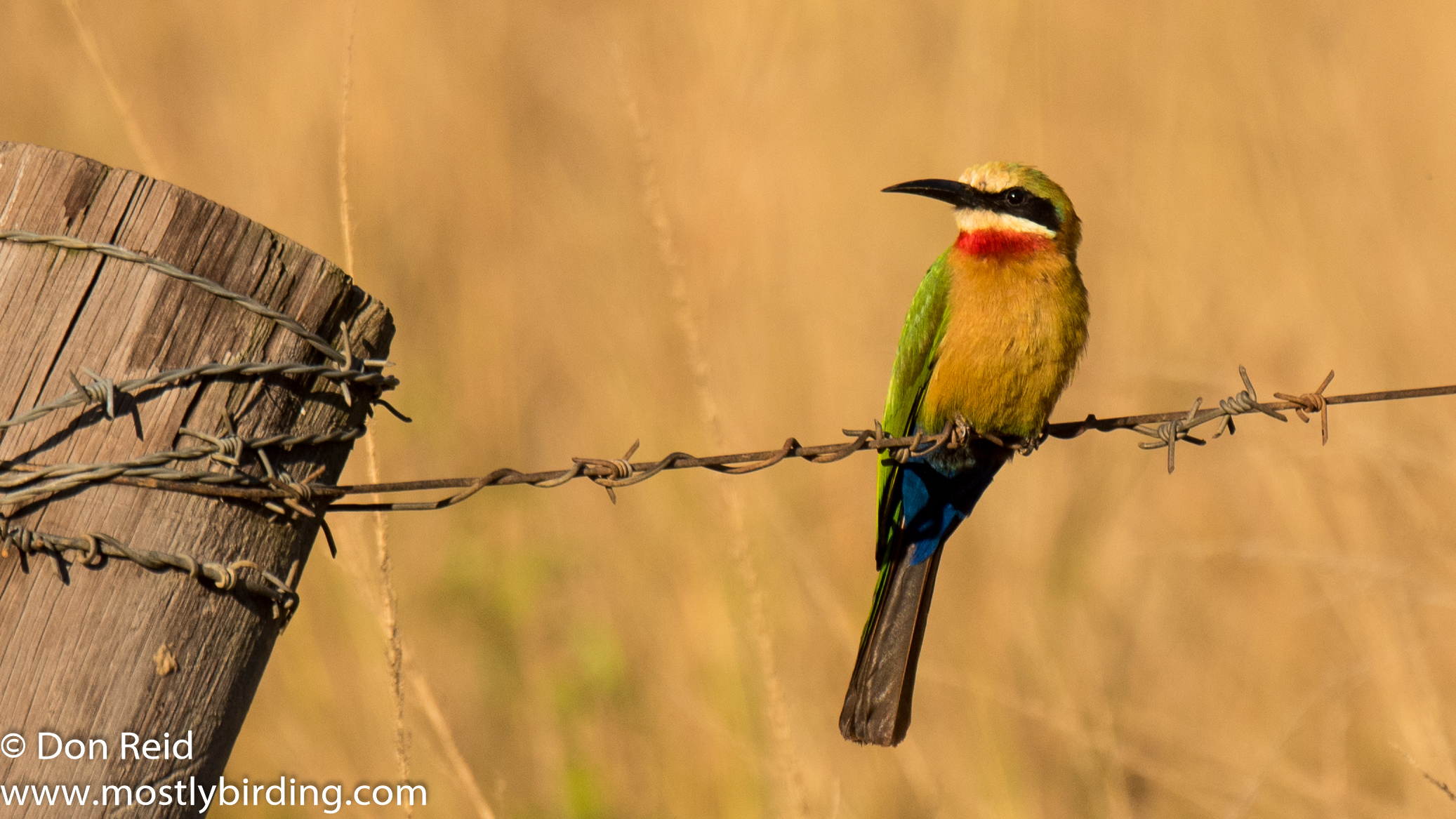
White-fronted Bee-eater, Verlorenkloof
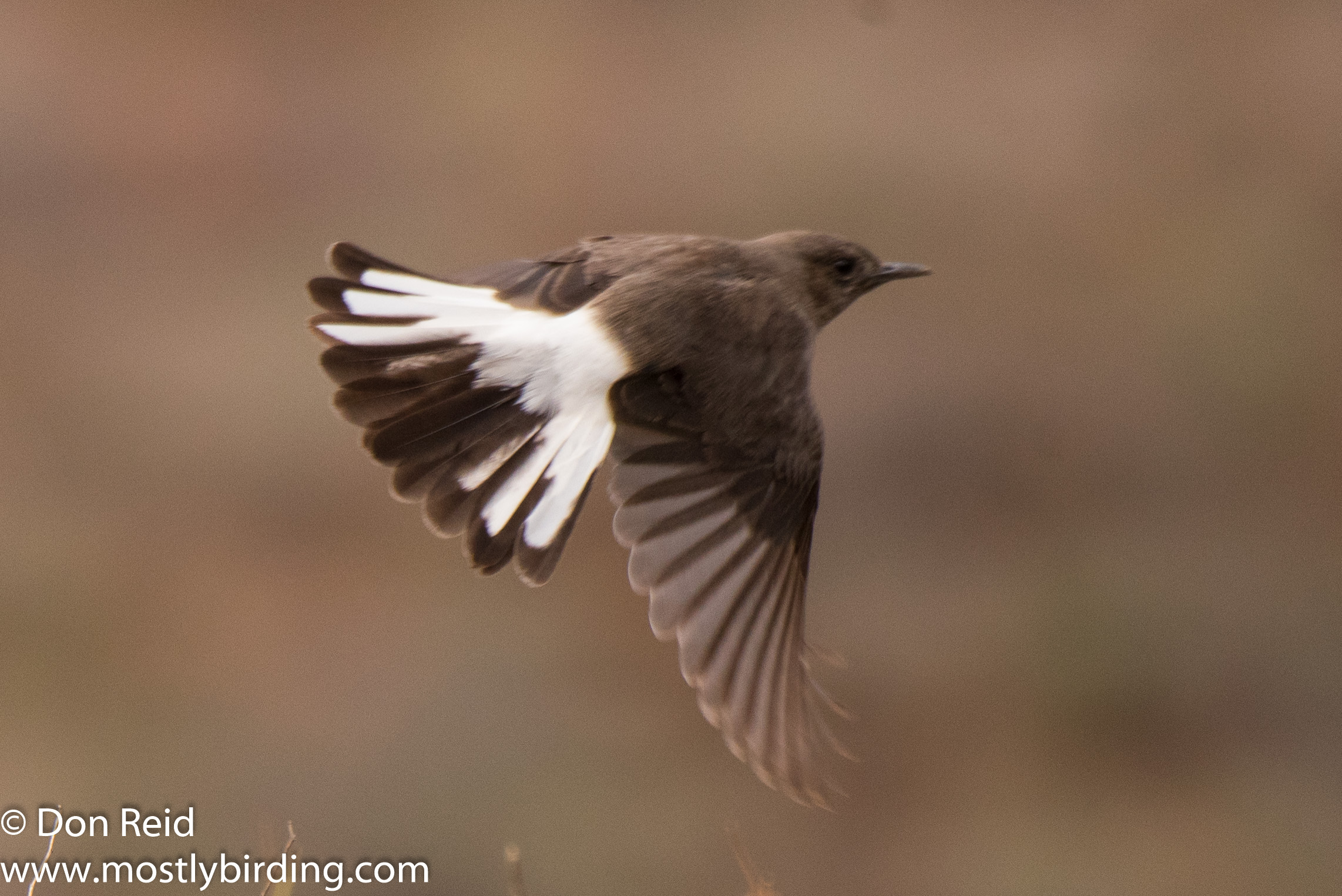
Capped Wheatear, Chobe Riverfront
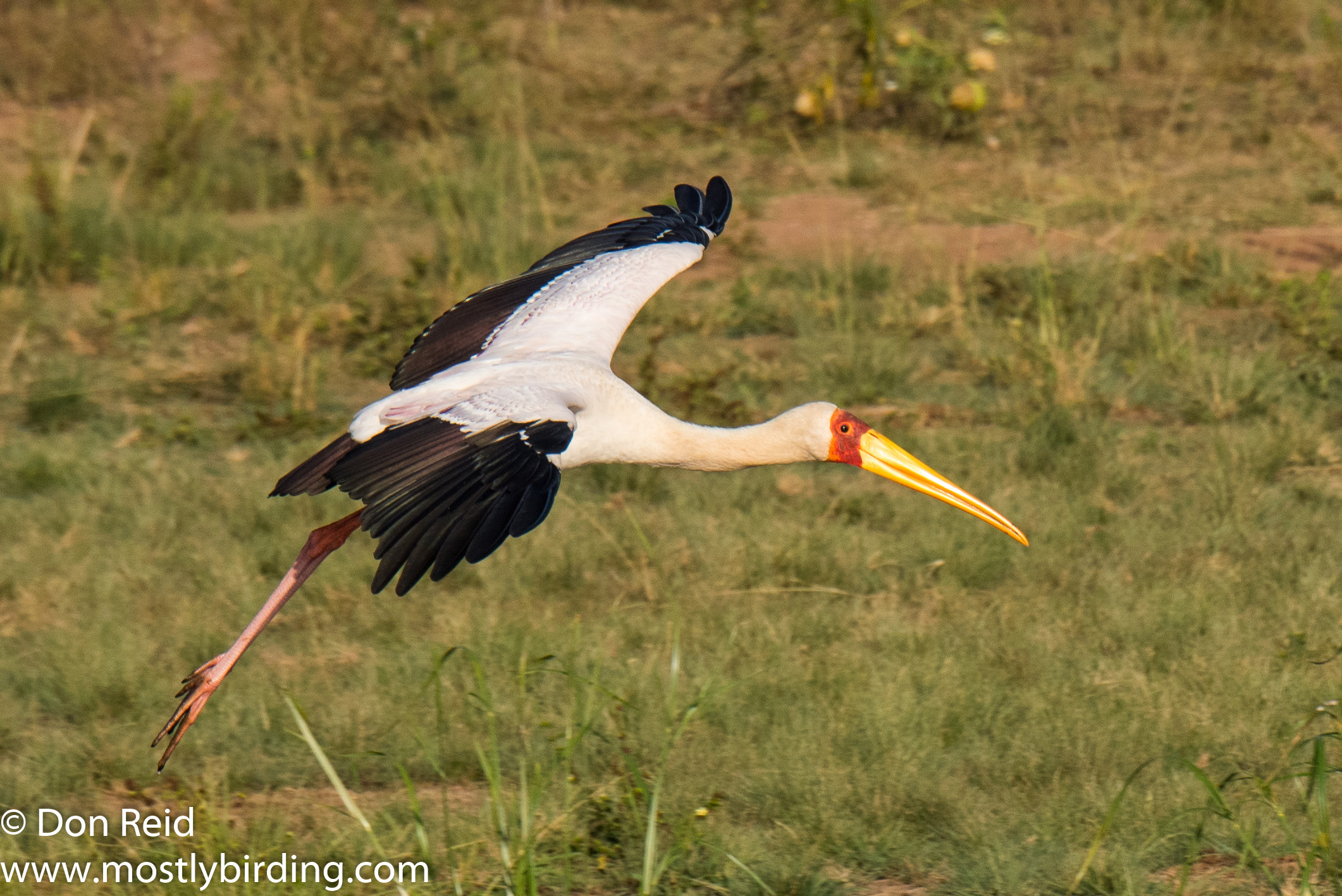
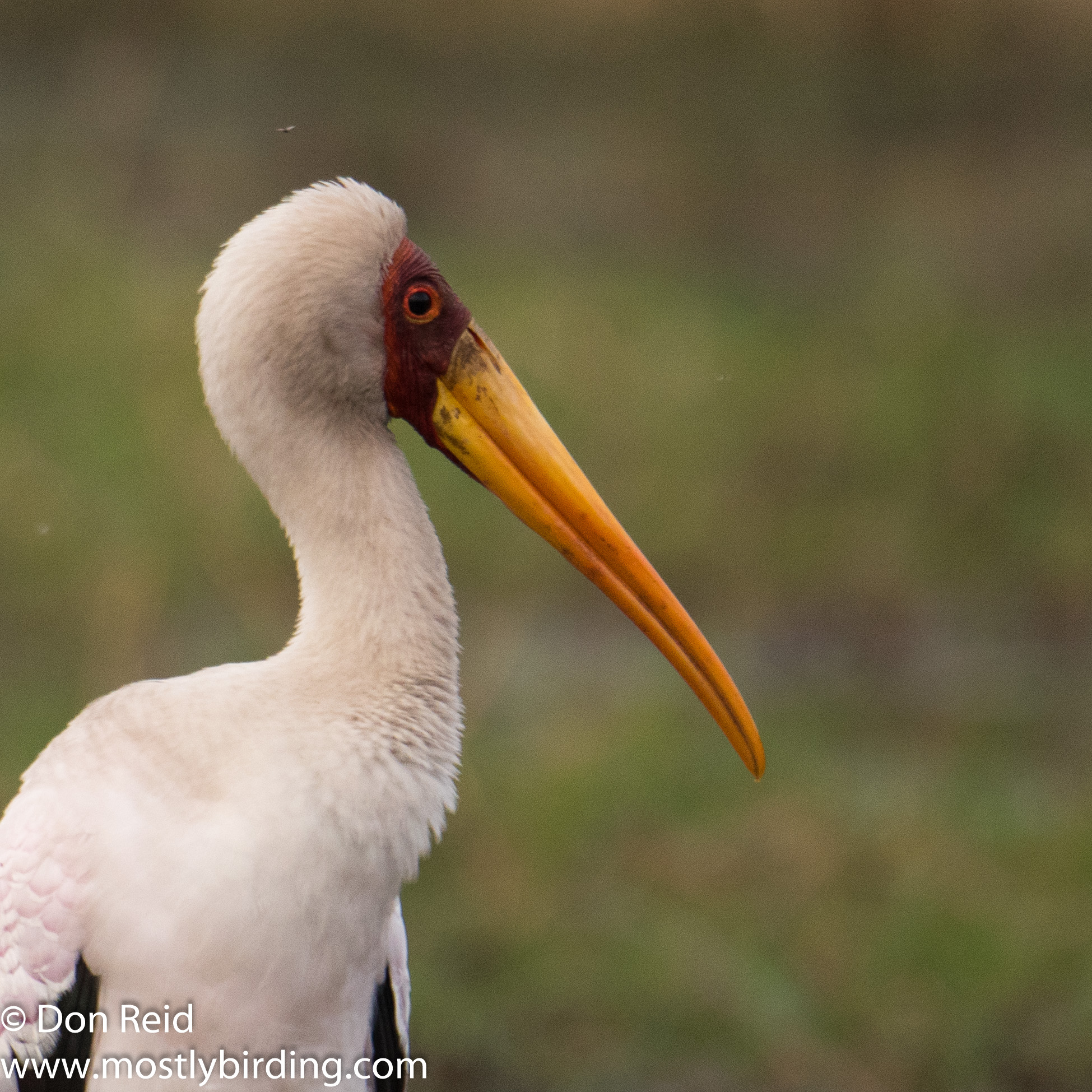
Yellow-billed Stork, Phinda Game Reserve in North Kwazulu-Natal
Pied Kingfisher, Phinda
Red-capped Robin-Chat, Pigeon Valley Durban
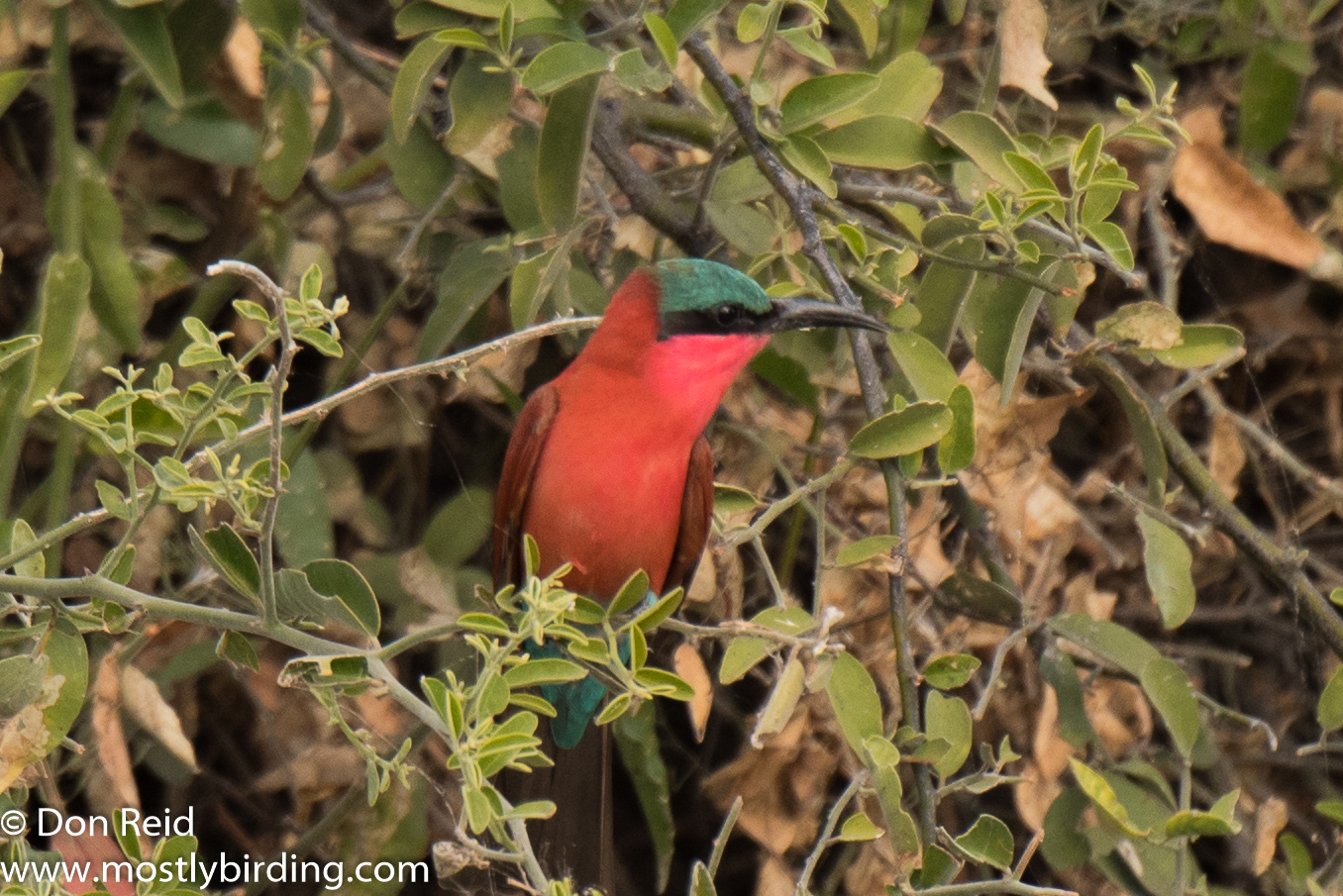
Southern Carmine Bee-eater, Chobe Riverfront
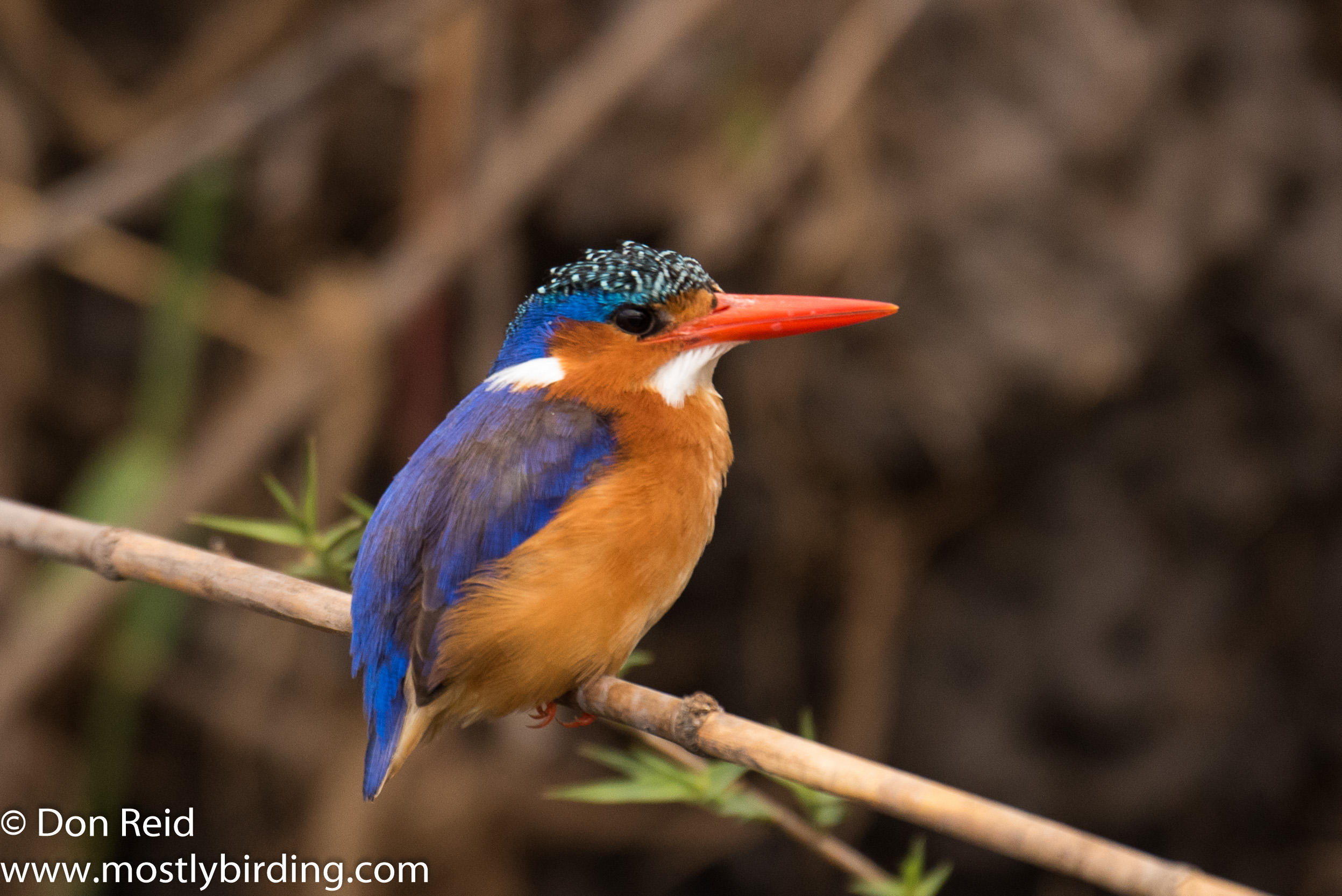
Malachite Kingfisher, Chobe River
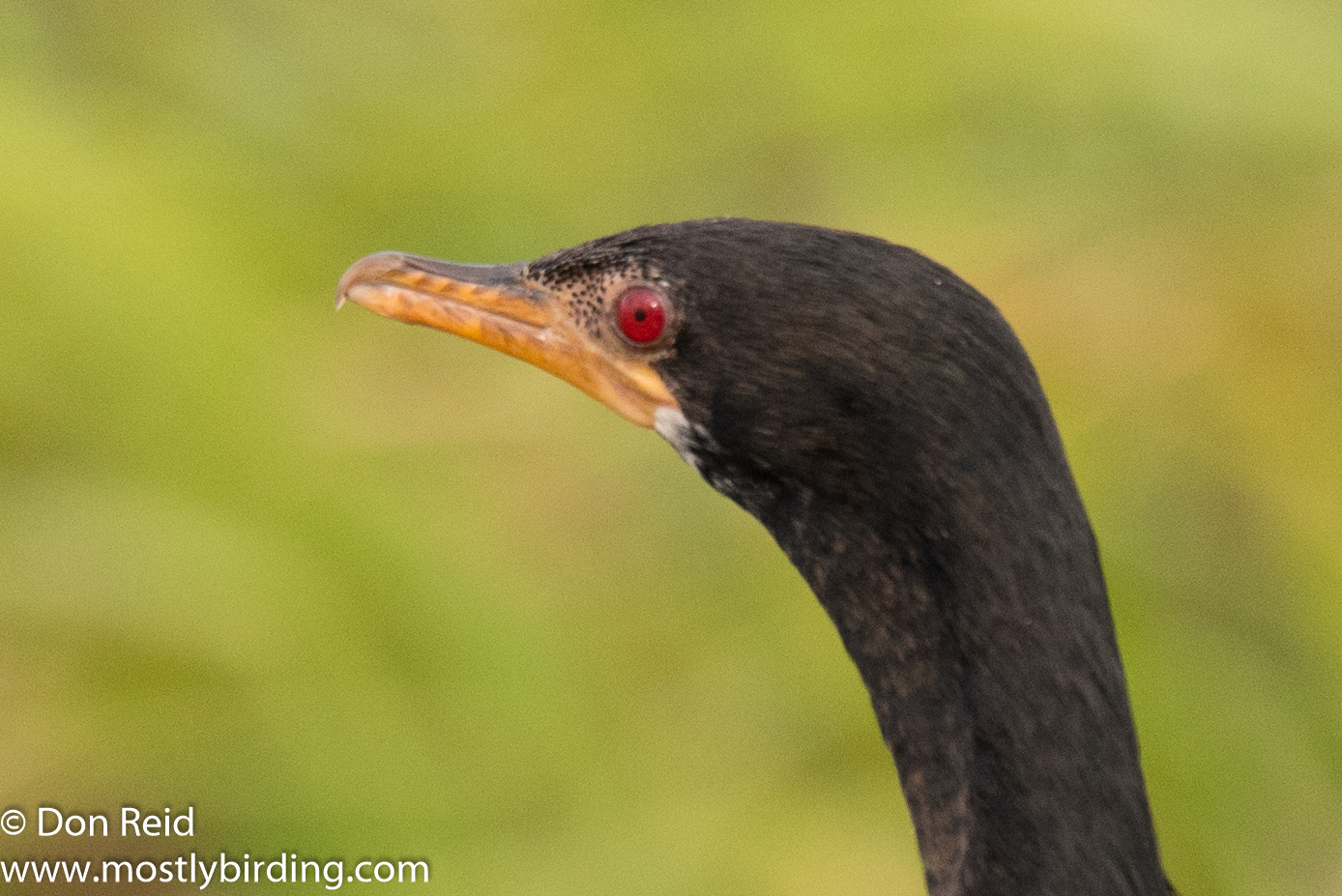
Reed Cormorant, Chobe River
Little Egret, Chobe River
African Spoonbill, Chobe River
Yellow-billed Oxpecker, Chobe River
Long-toed Lapwing, Chobe River
Yellow-billed Stork, Chobe River
Pied Starling, Vlaklaagte near Bronkhorstspruit, Gauteng
Mountain Wheatear (female), near Oudtshoorn
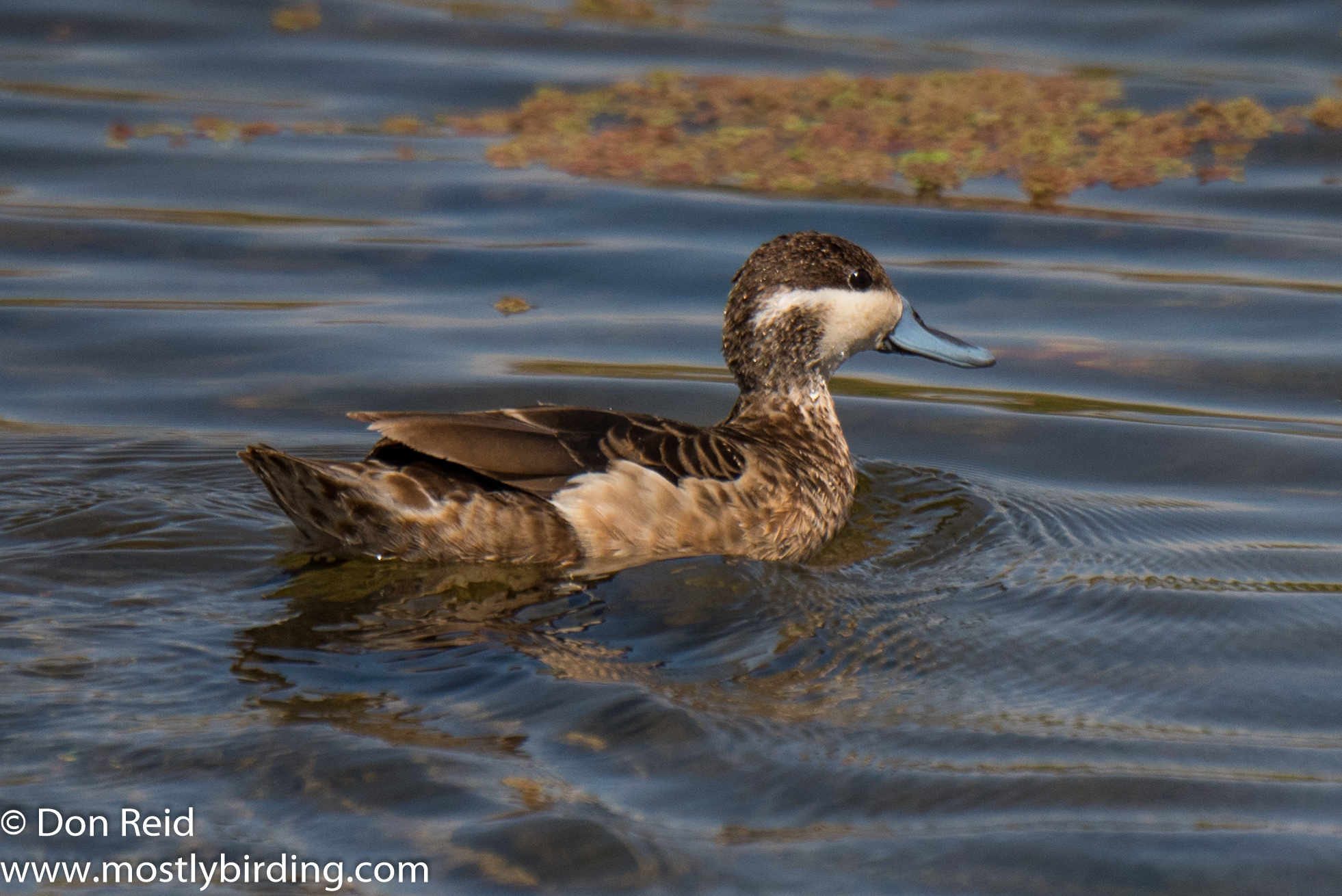
Hottentot Teal, Marievale Gauteng
Booted Eagle, Mossel Bay
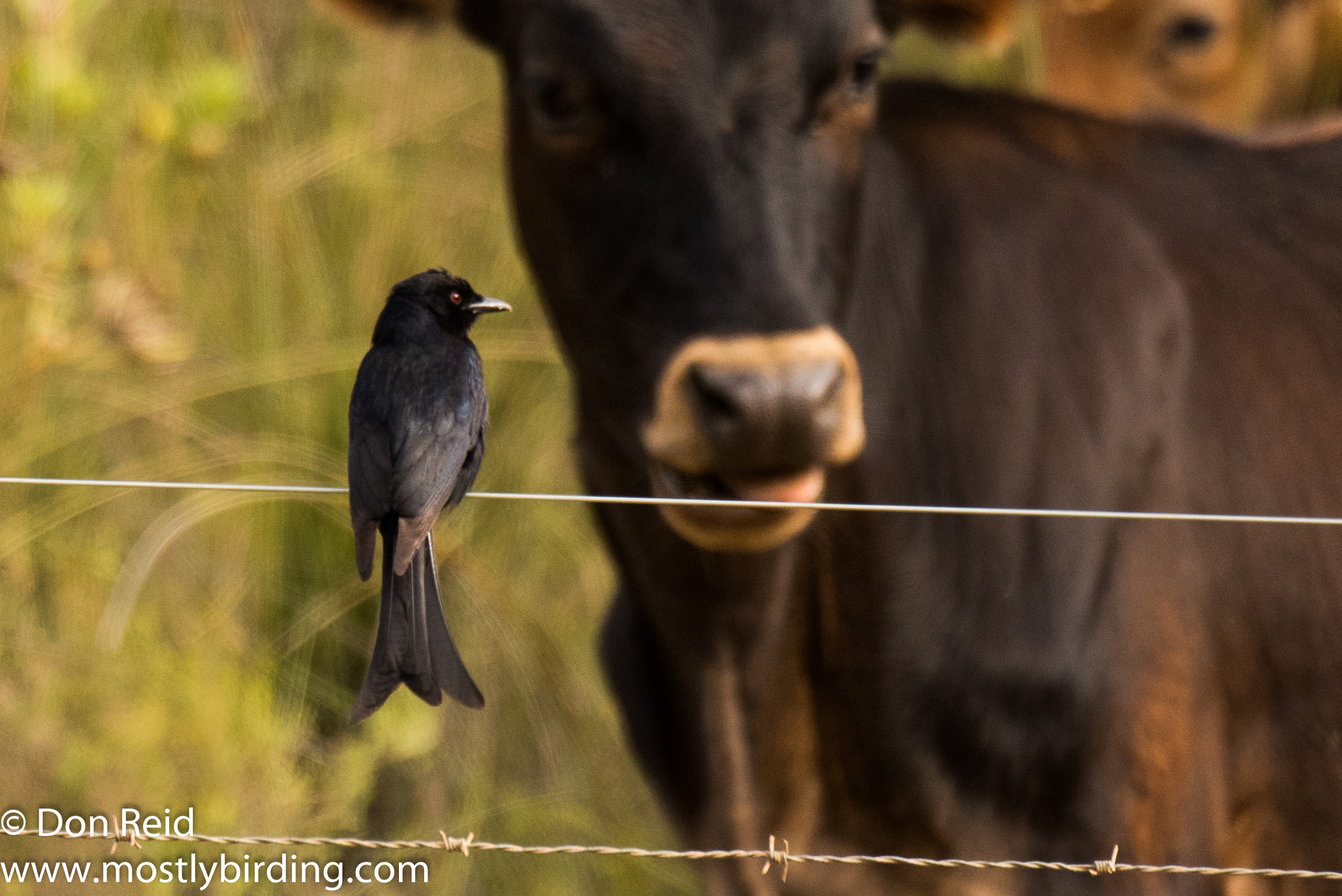
Fork-tailed Drongo, north of Herbertsdale, Western Cape

The Reptiles

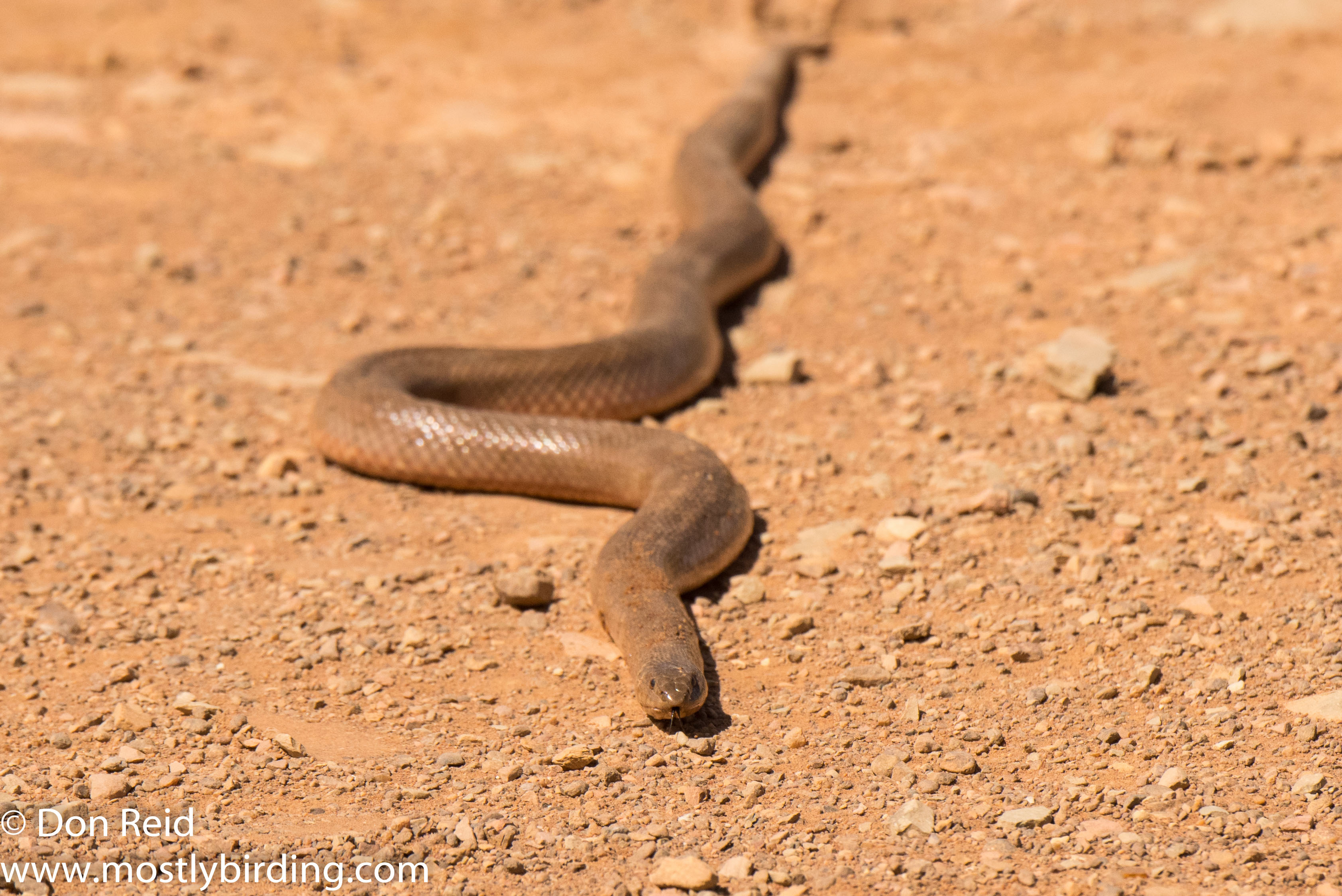
Mole snake, Delmas area
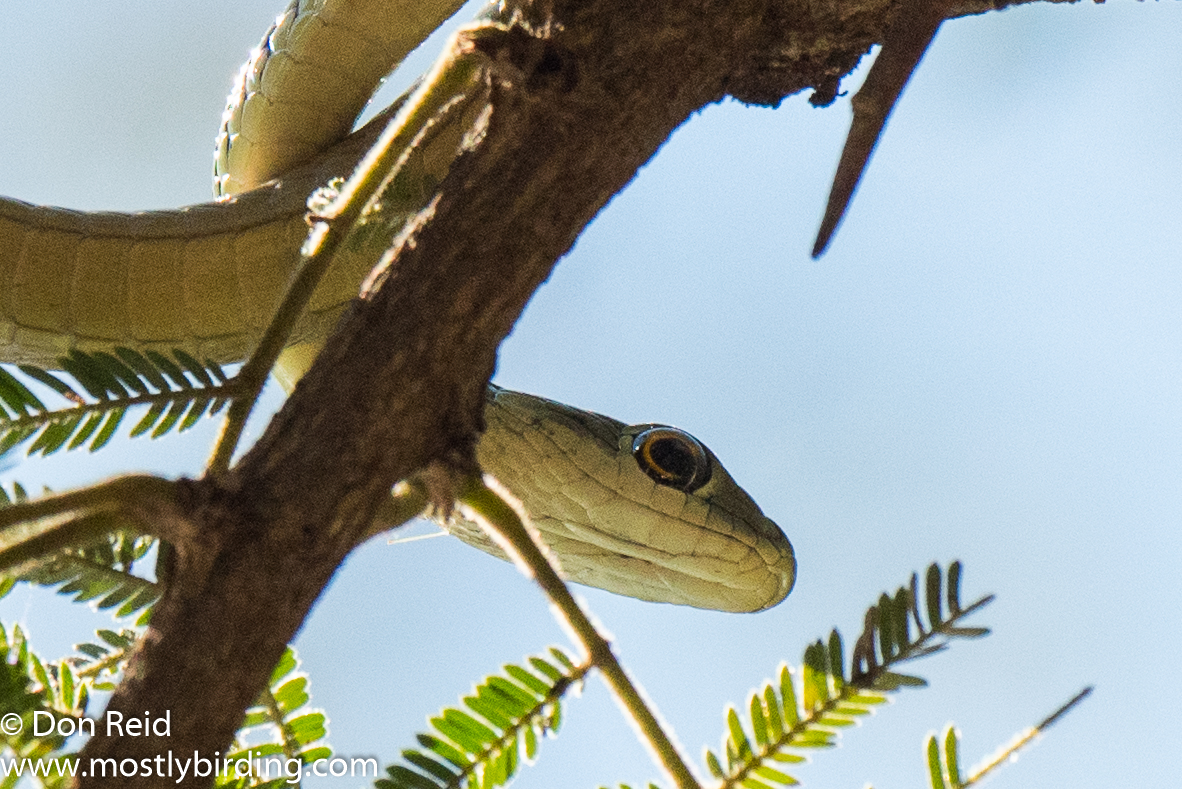
Boomslang, Bushfellows Game Lodge near Marble Hall
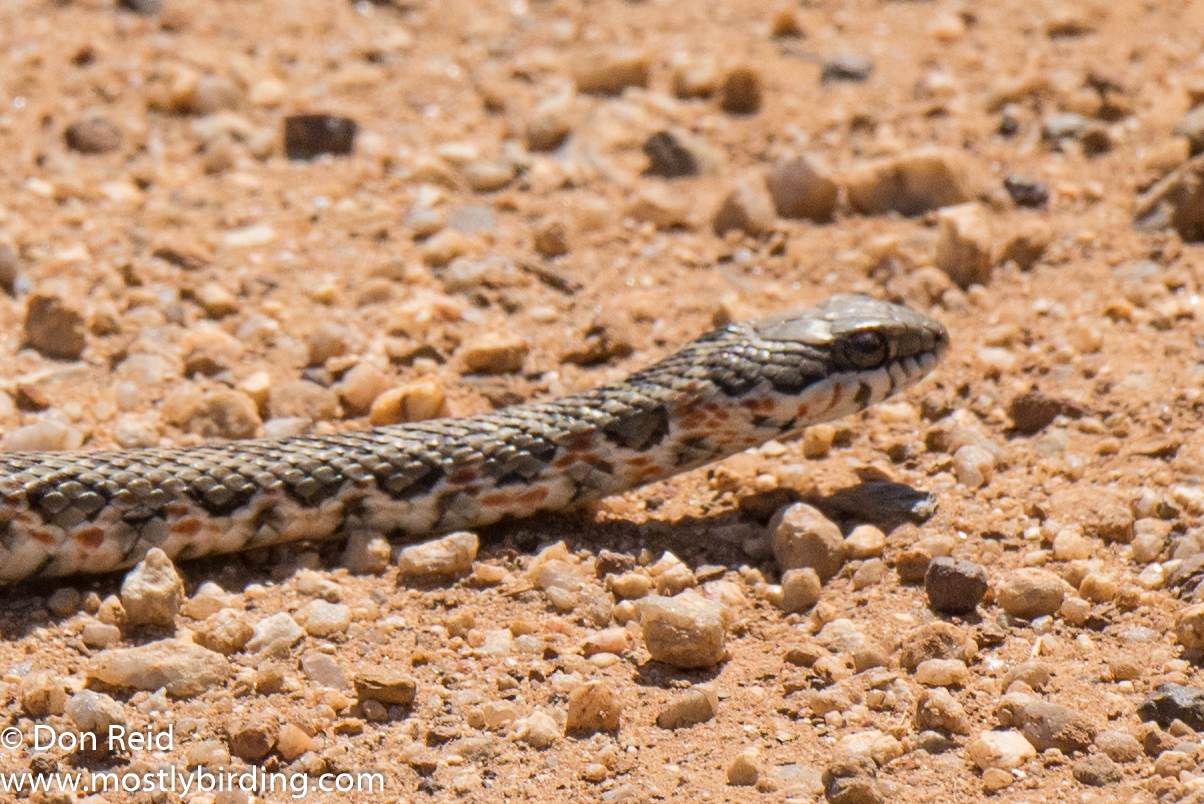
Skaapsteker (?) near Mossel Bay
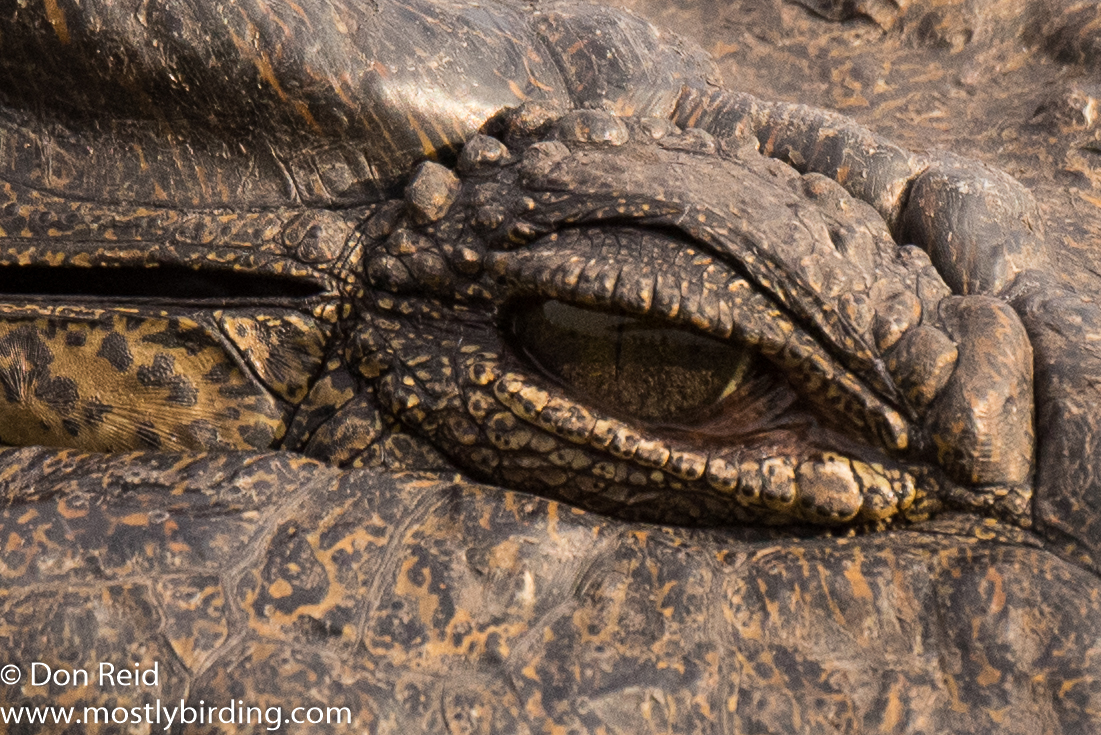
African Crocodile, Chobe River

The Butterflies

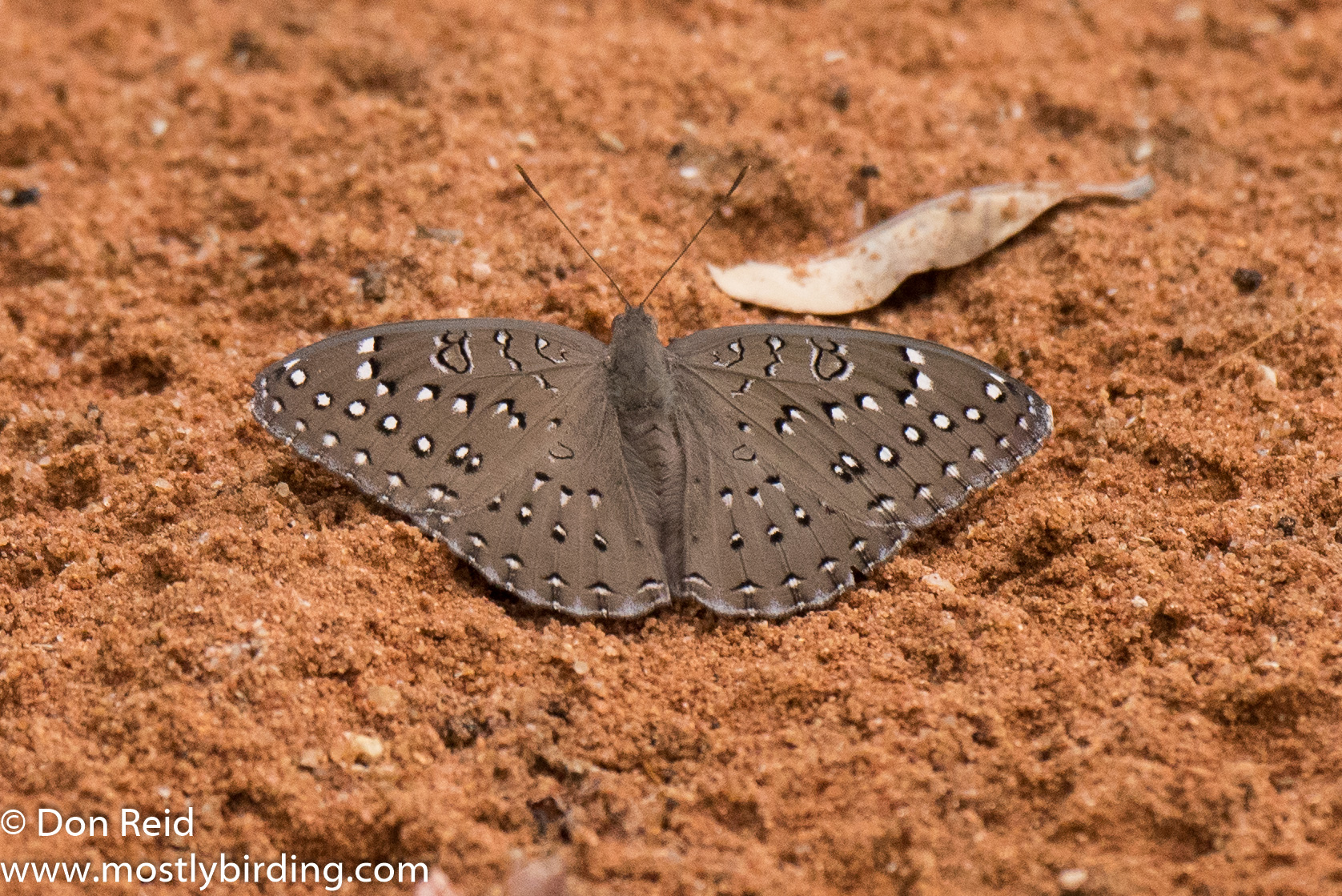
Guineafowl (Hamanumida daedalus), Mabusa Nature Reserve in Mpumulanga
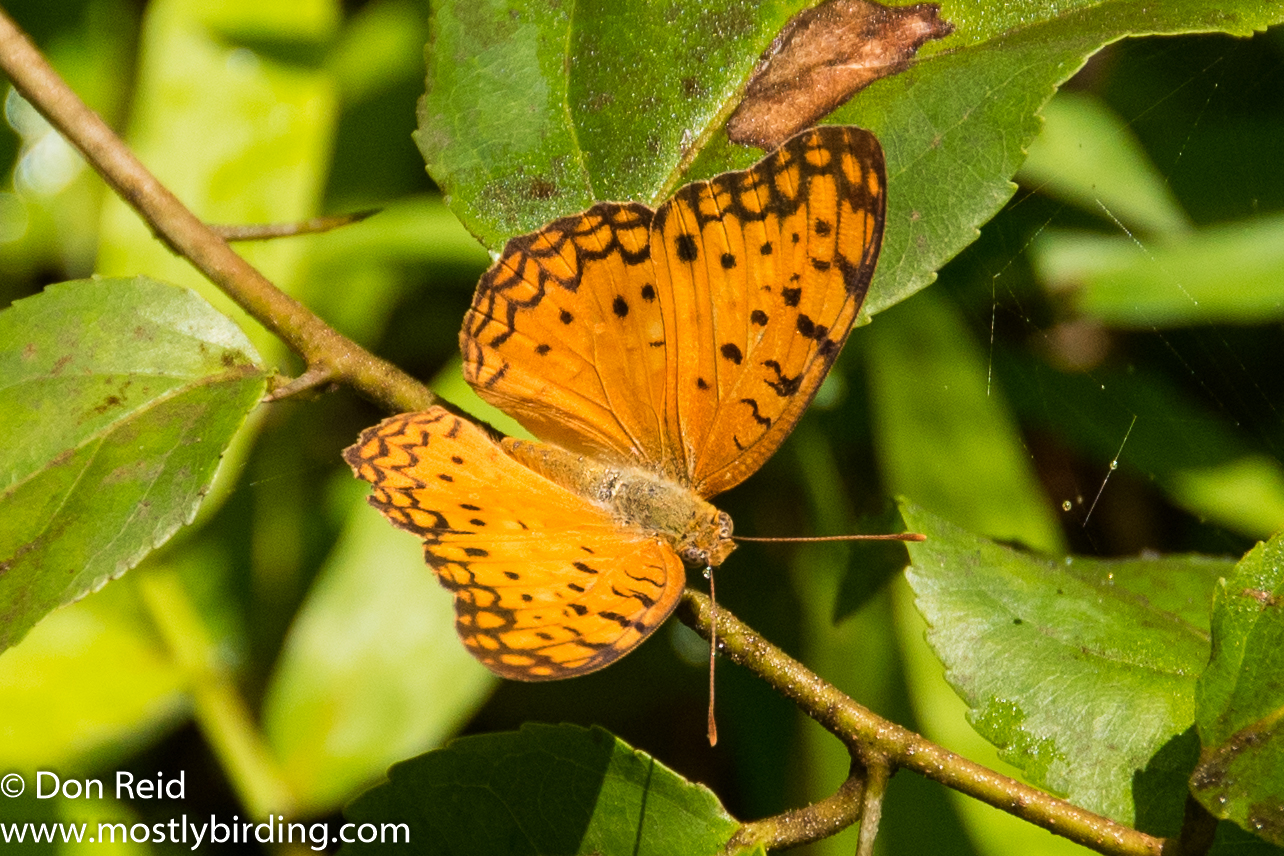
Poplar leopard butterfly (Phalanta phalanta aethiopica), Vic Falls NationalPark
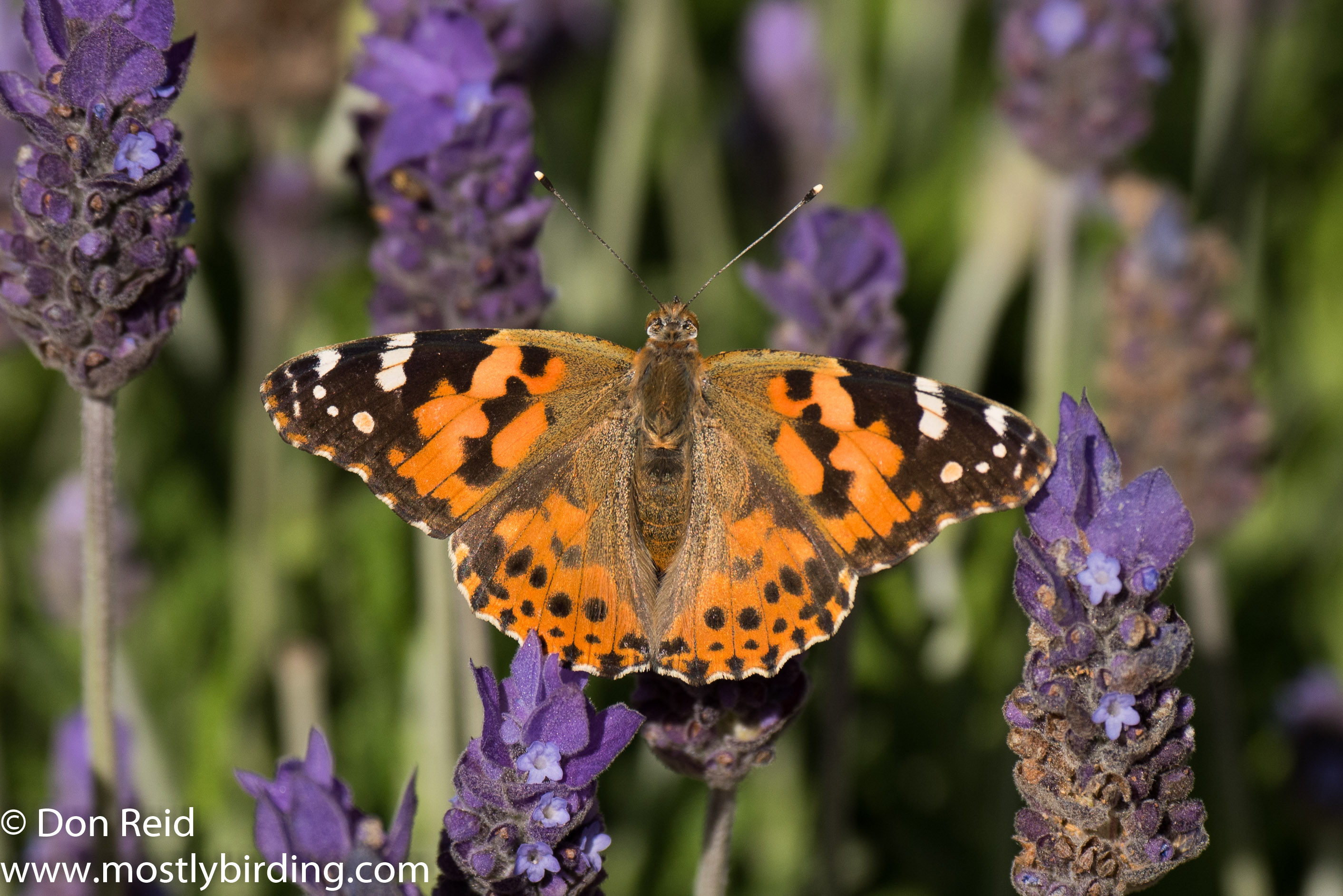
Butterfly, Mossel Bay (No ID yet – can’t find it in the book)

Mauritius

Air Mauritius sunset
Snorkeling – Geraldine
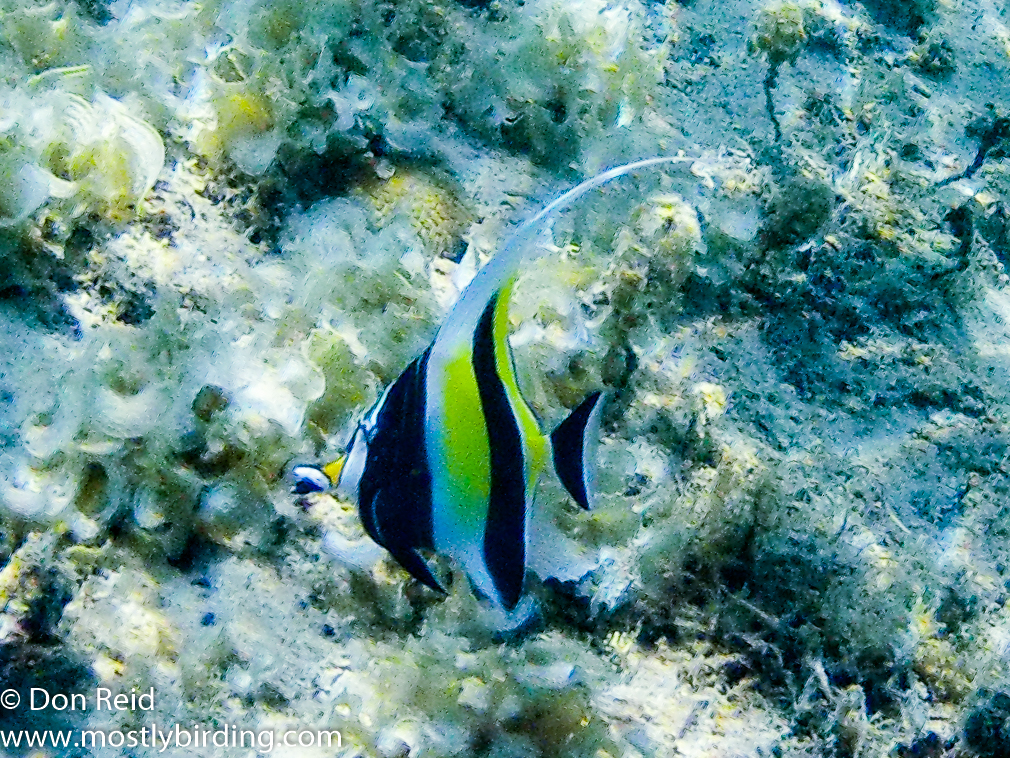
Snorkeling – Moorish idol
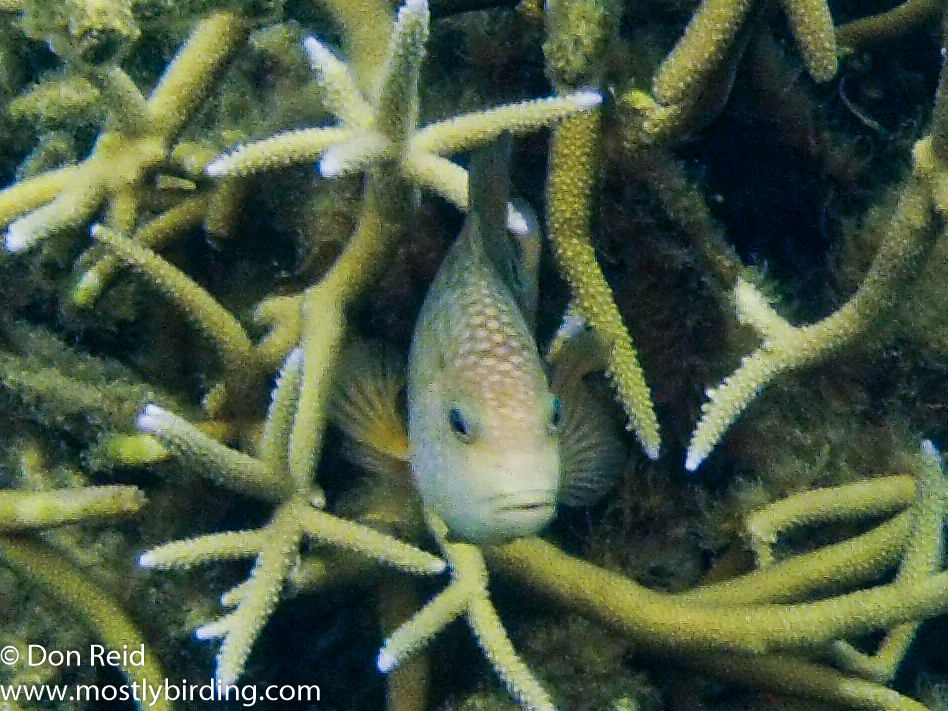
Snorkeling
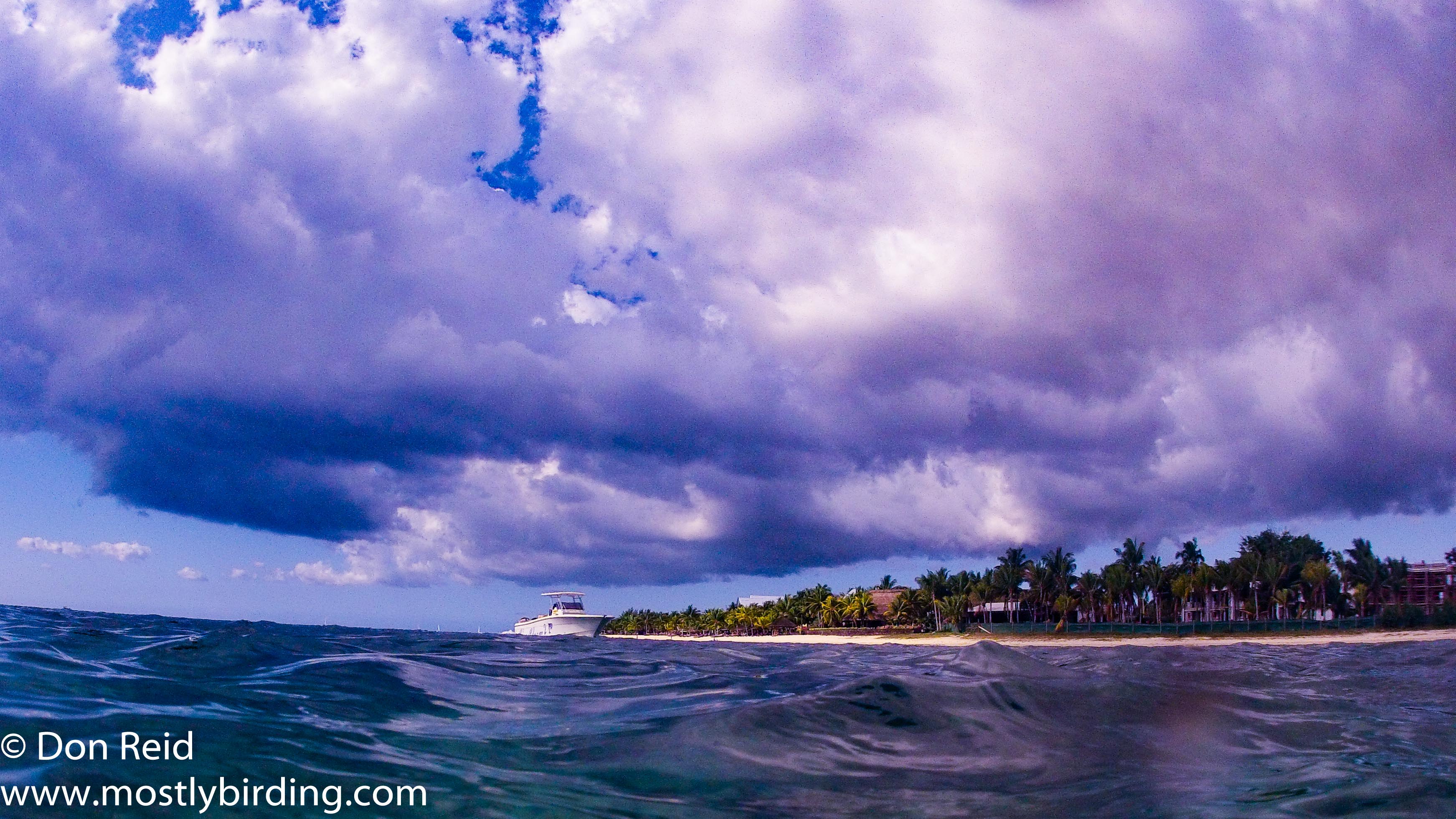
Snorkeling – the view from the sea
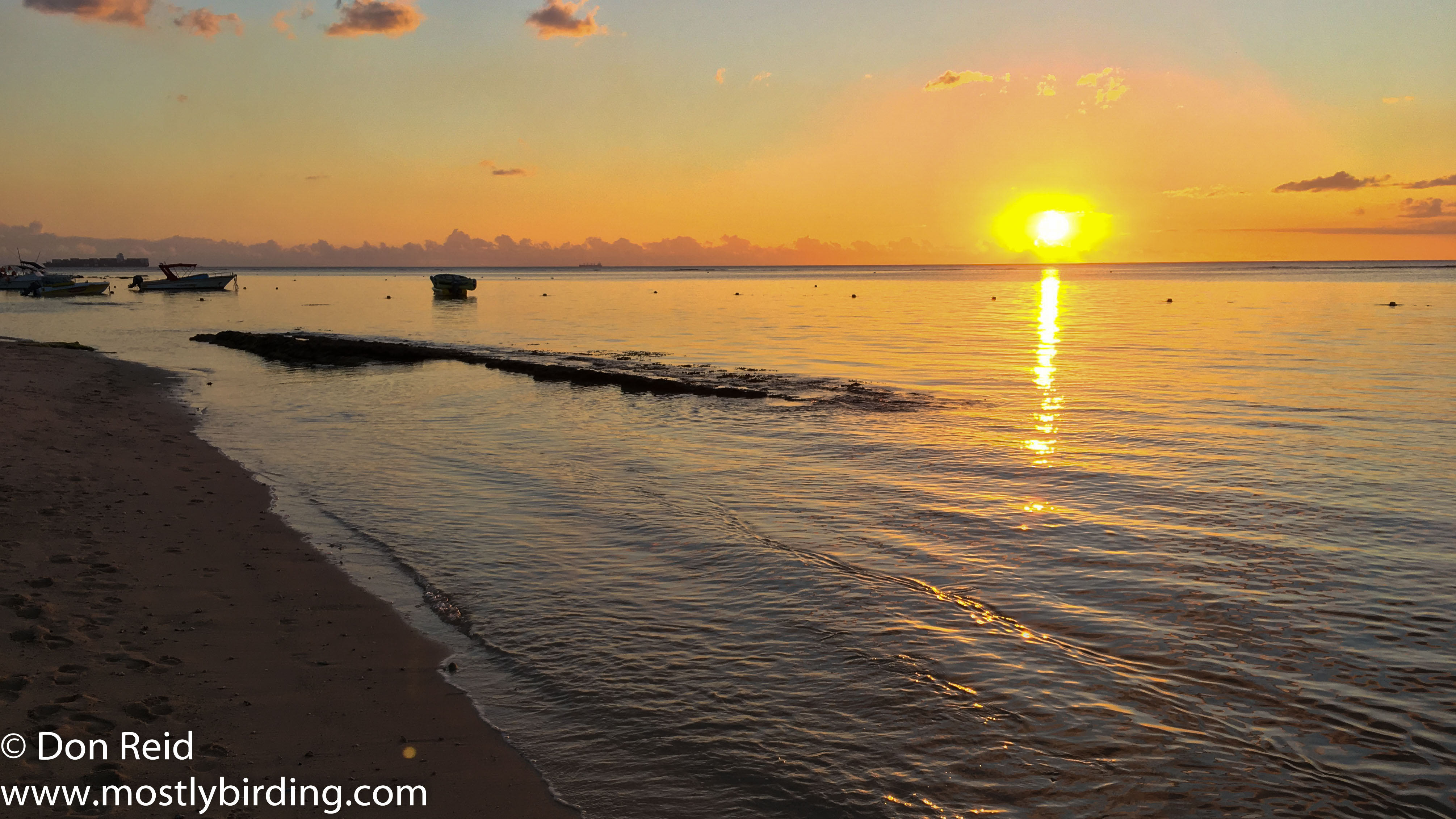
Sunset, Le Victoria hotel, Mauritius
Le Victoria hotel, Mauritius -early morning

Flock at sea cruise

Flock at Sea Cruise
Flock at Sea Cruise
Flock at Sea Cruise
Flock at Sea Cruise
Flock at Sea Cruise
Cape Town harbour early morning

Other stuff

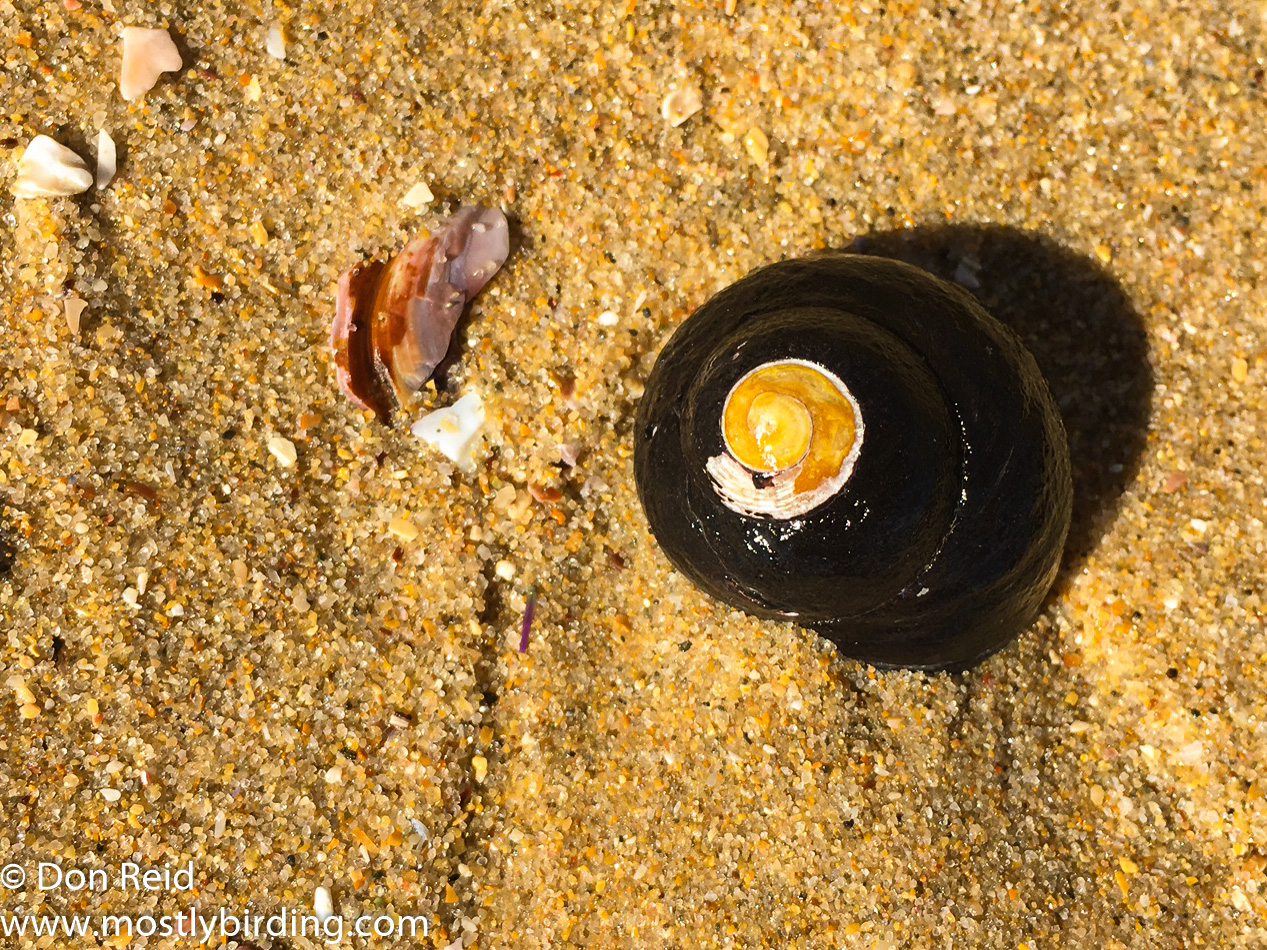
Snail, Boschkop Dam near Potchefstroom
Fine flowers, Verlorenkloof
Sea shell, Mossel Bay

Wishing all who may read this a 2018 that meets all of your expectations!

My Photo Picks for 2017 – Part 1

Here’s a selection of my favourite photos taken during 2017 – from our travels, holidays and birding trips – chosen from my collection of over 2500 photos for the year. Each one has a story attached which I have tried to capture in a few words………..

If you have any favourites, do let me know by adding your comment!

The Places

Kasane Forest Reserve – lush after good summer rains
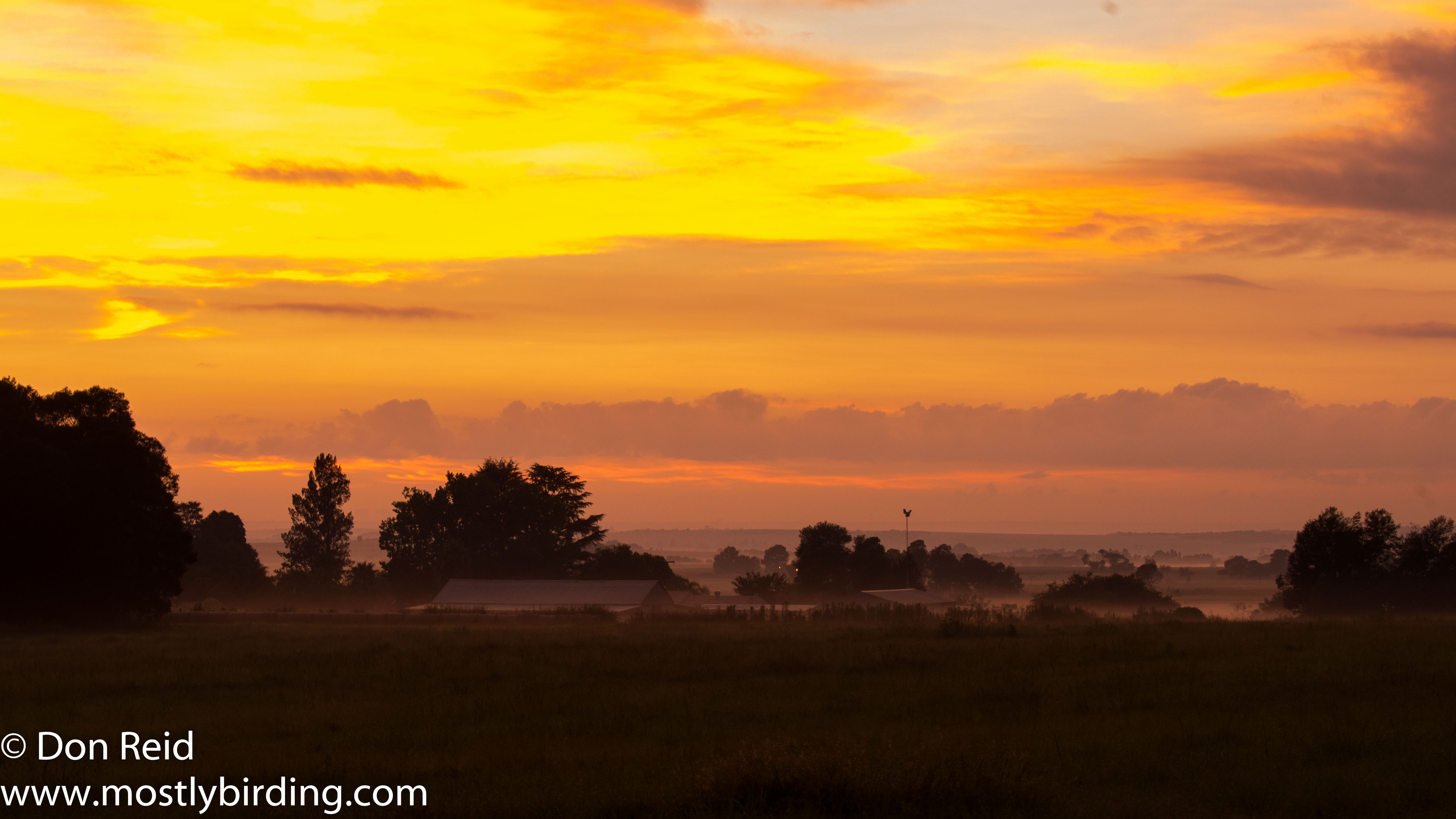
Early morning, Delmas area – on my way to do some bird atalsing
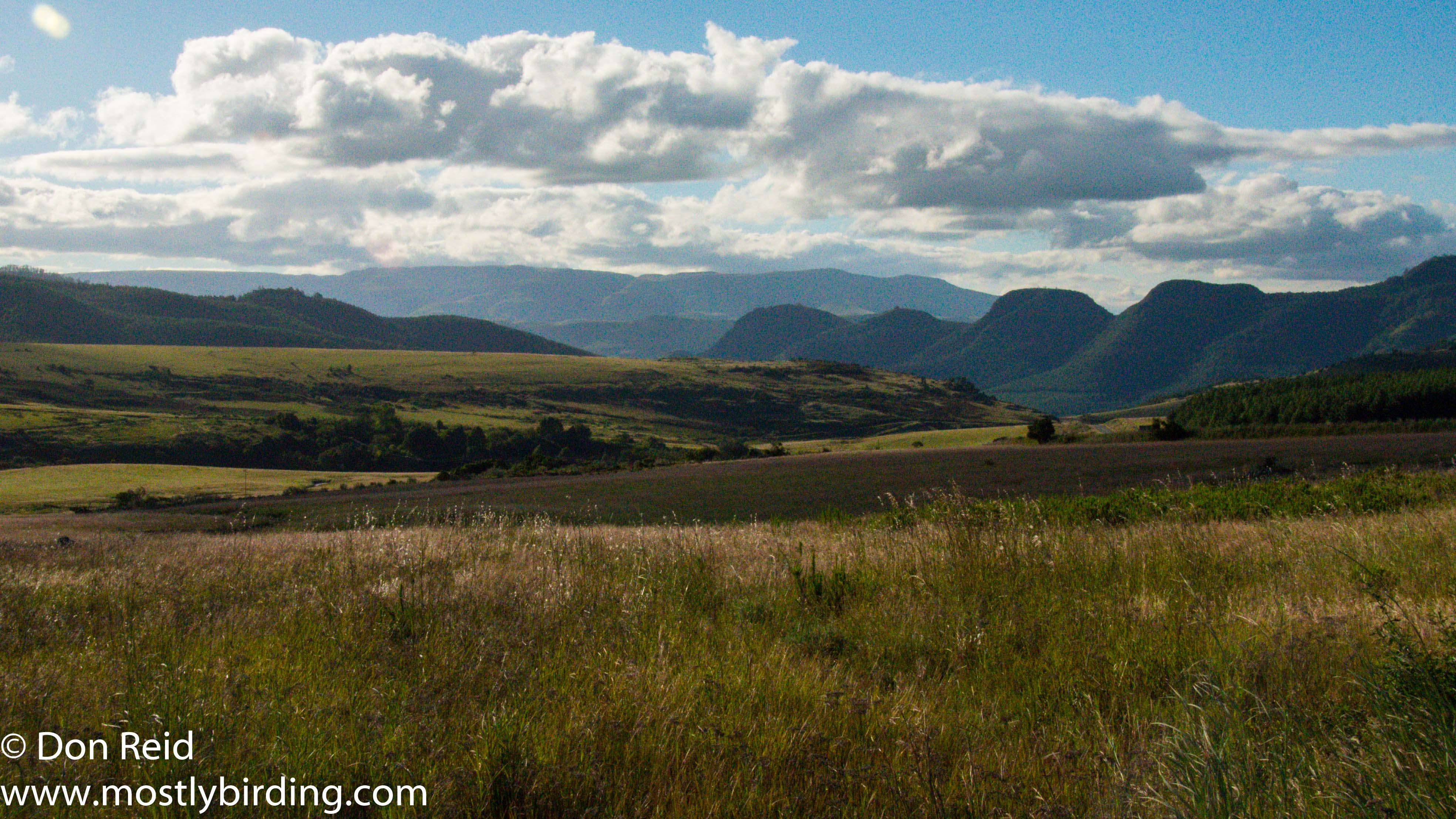
Champagne Valley – a weekend in the Drakensberg
Drakensberg grassland
Bourkes Luck Potholes – on tour with our Canadian family
Thaba Tsweni lodge – near Sabie, Mpumulanga
Victoria Falls National Park – more touring with the canadians
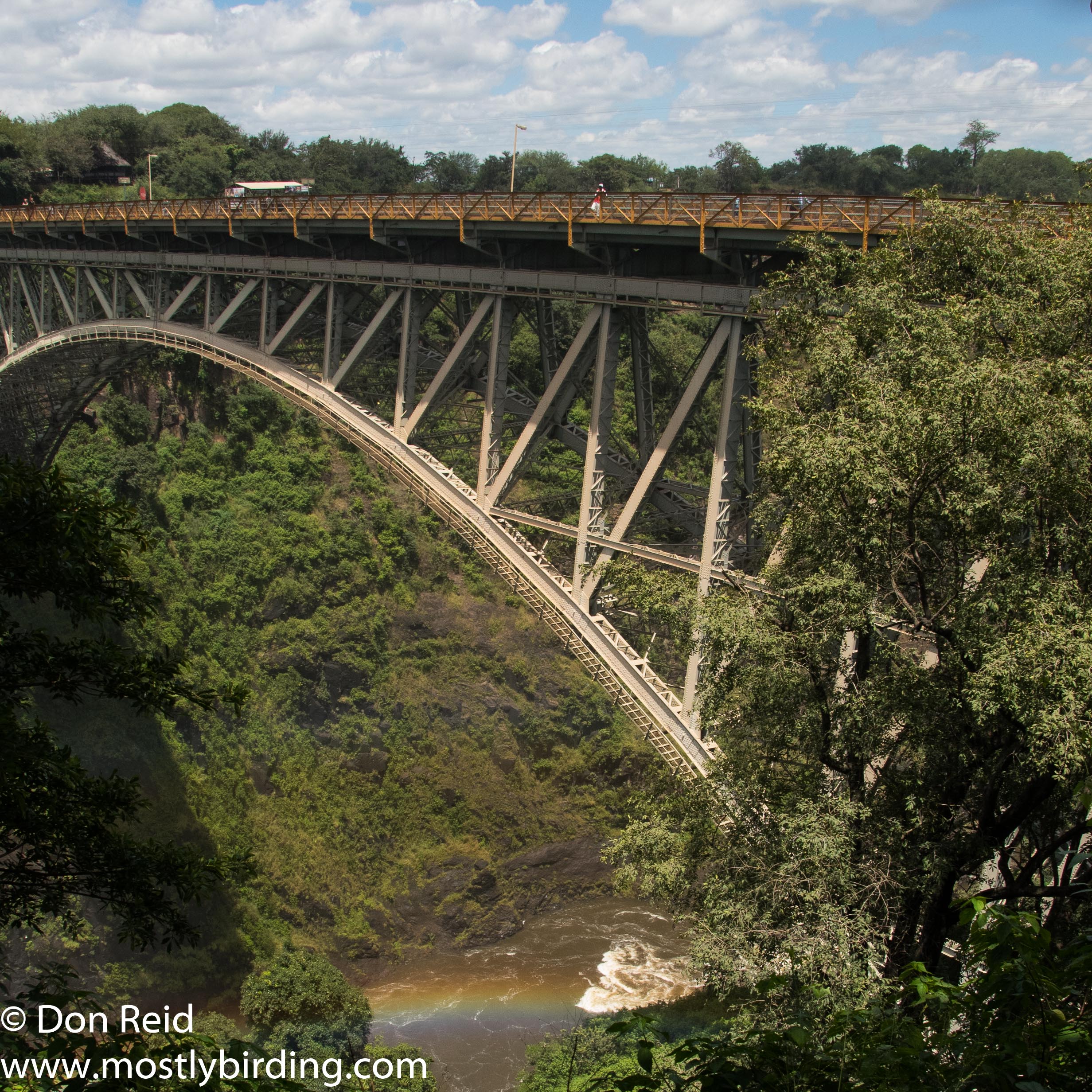
The bridge at Vic Falls National Park
Kingdom Hotel Vic Falls
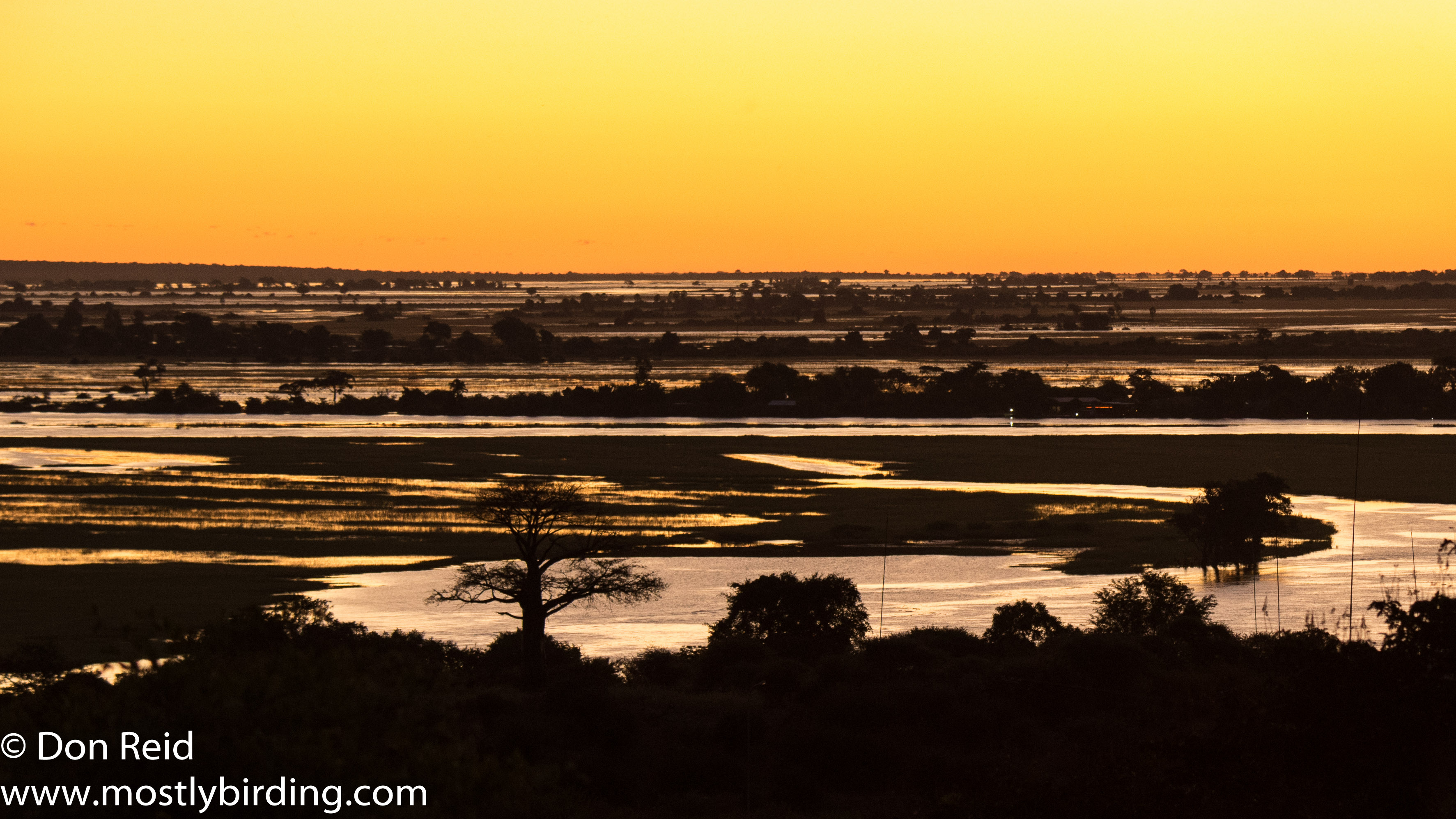
Chobe sunset, Kasane – incomparable
Flock at Sea Cruise – back in Cape Town Harbour early morning
Sandbaai near Hermanus
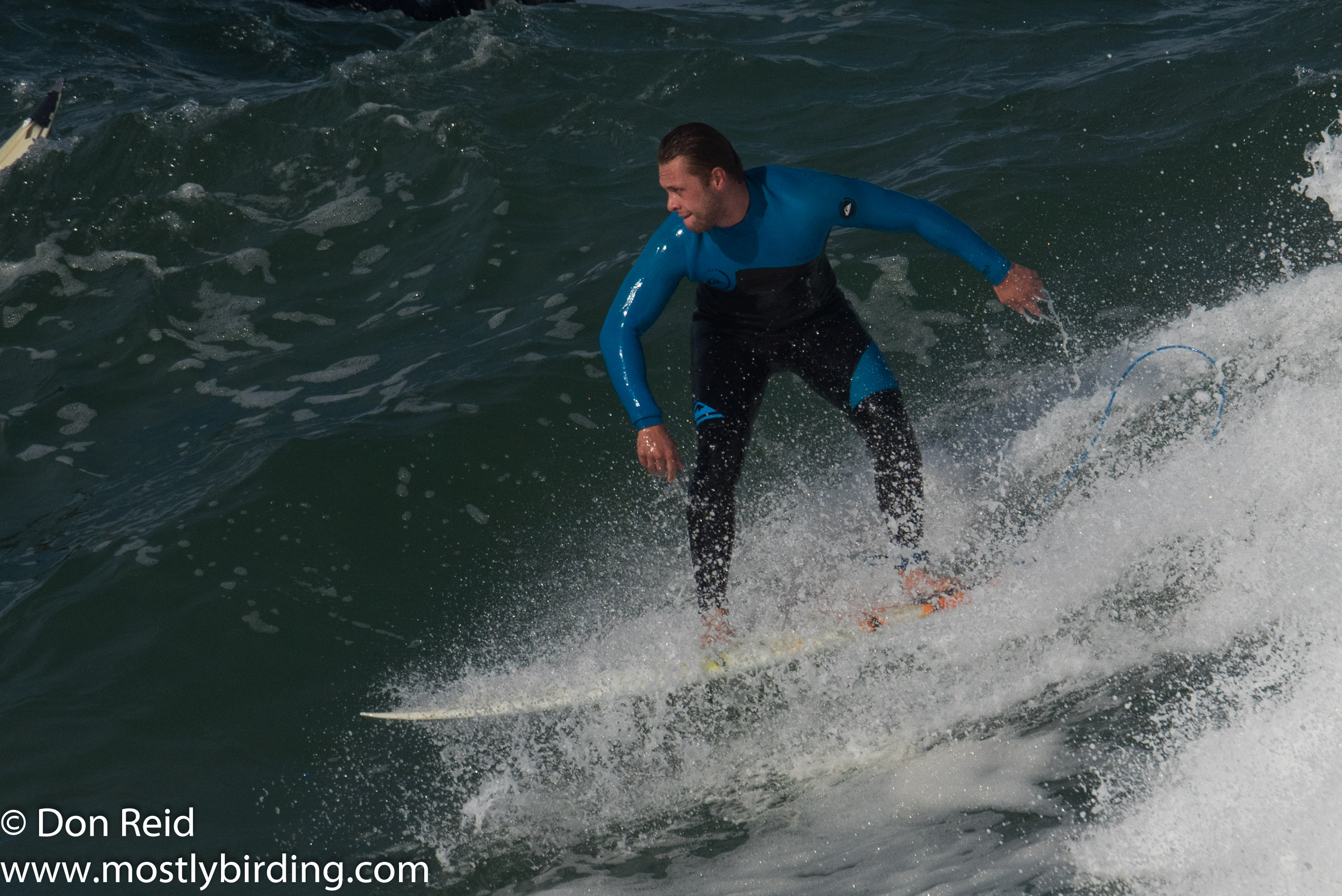
Victoria Bay surfer action
Top dam, Verlorenkloof – our favourite breakaway spot
Kasane, Sundowner spot
Bronkhorstspruit area – another early morning of bird atlasing
Spring Day in Mossel Bay
Kuilfontein near Colesberg
Atlasing north of Herbertsdale, near Mossel Bay
Mossel Bay golf estate – our home for part of the year
Gamkakloof near Calitzdorp – Klein Karoo
North of  Herbertsdale

The Wildlife

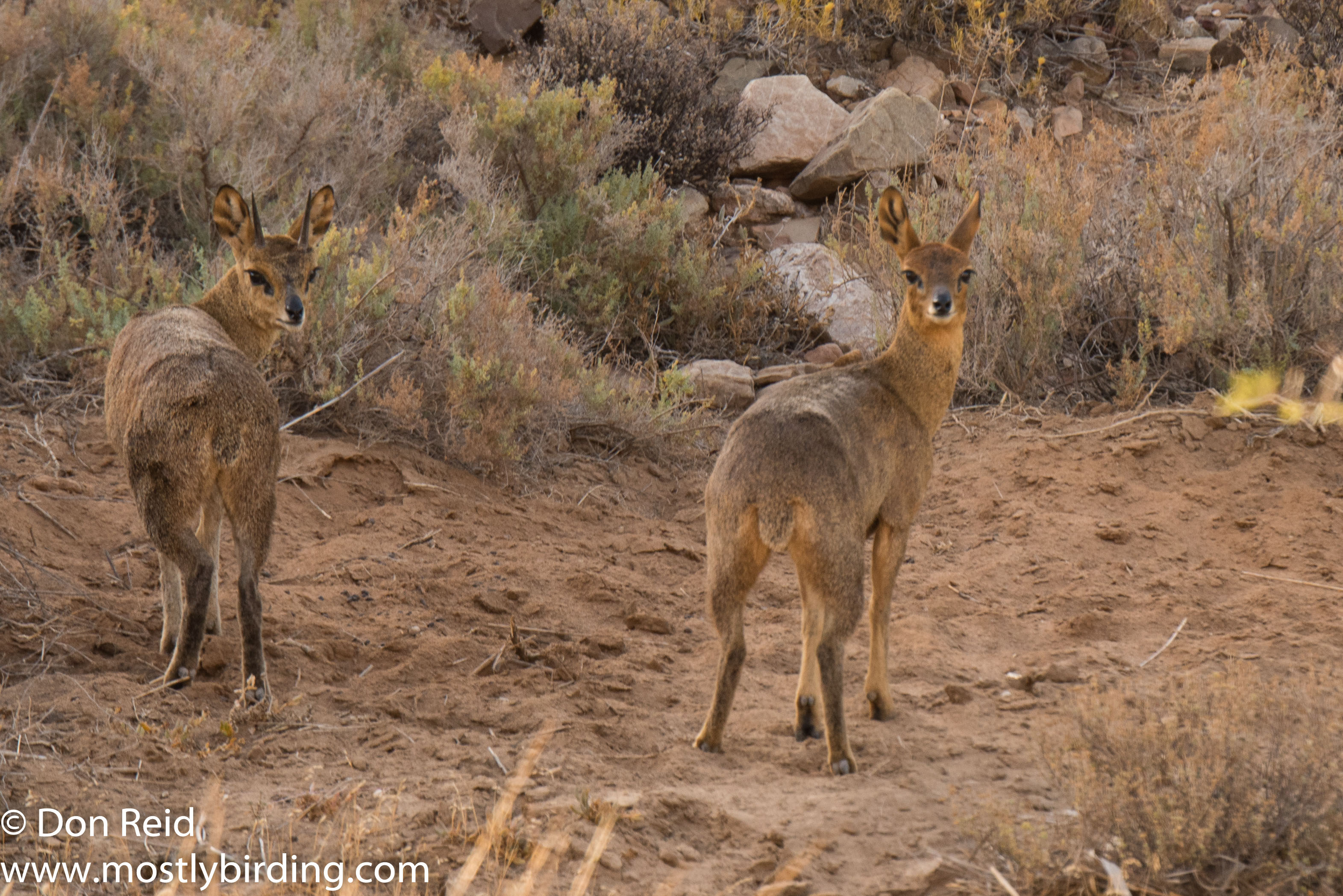
Klipspringer, Prince Albert
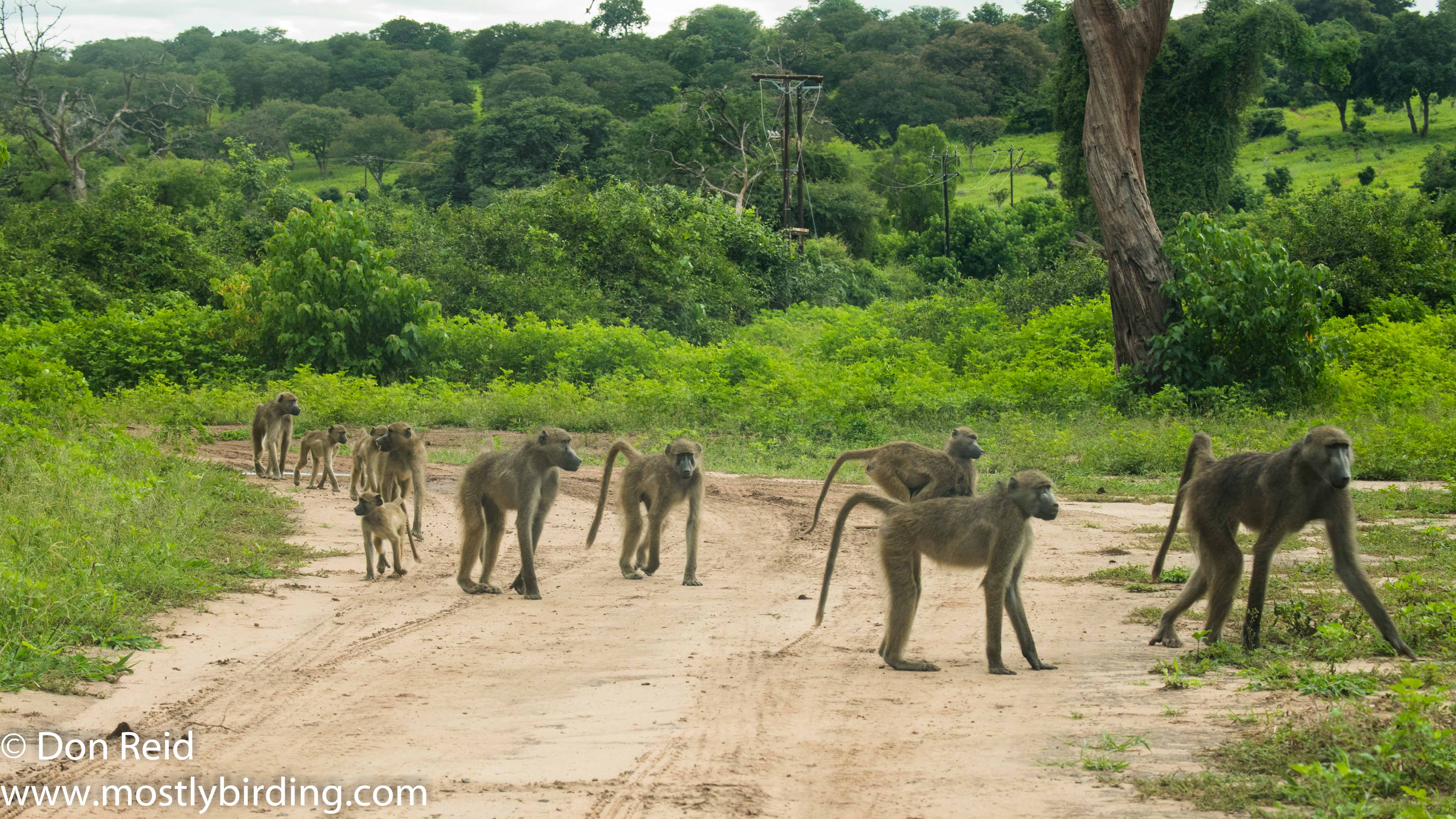
Chacma Baboons, Chobe Game Reserve
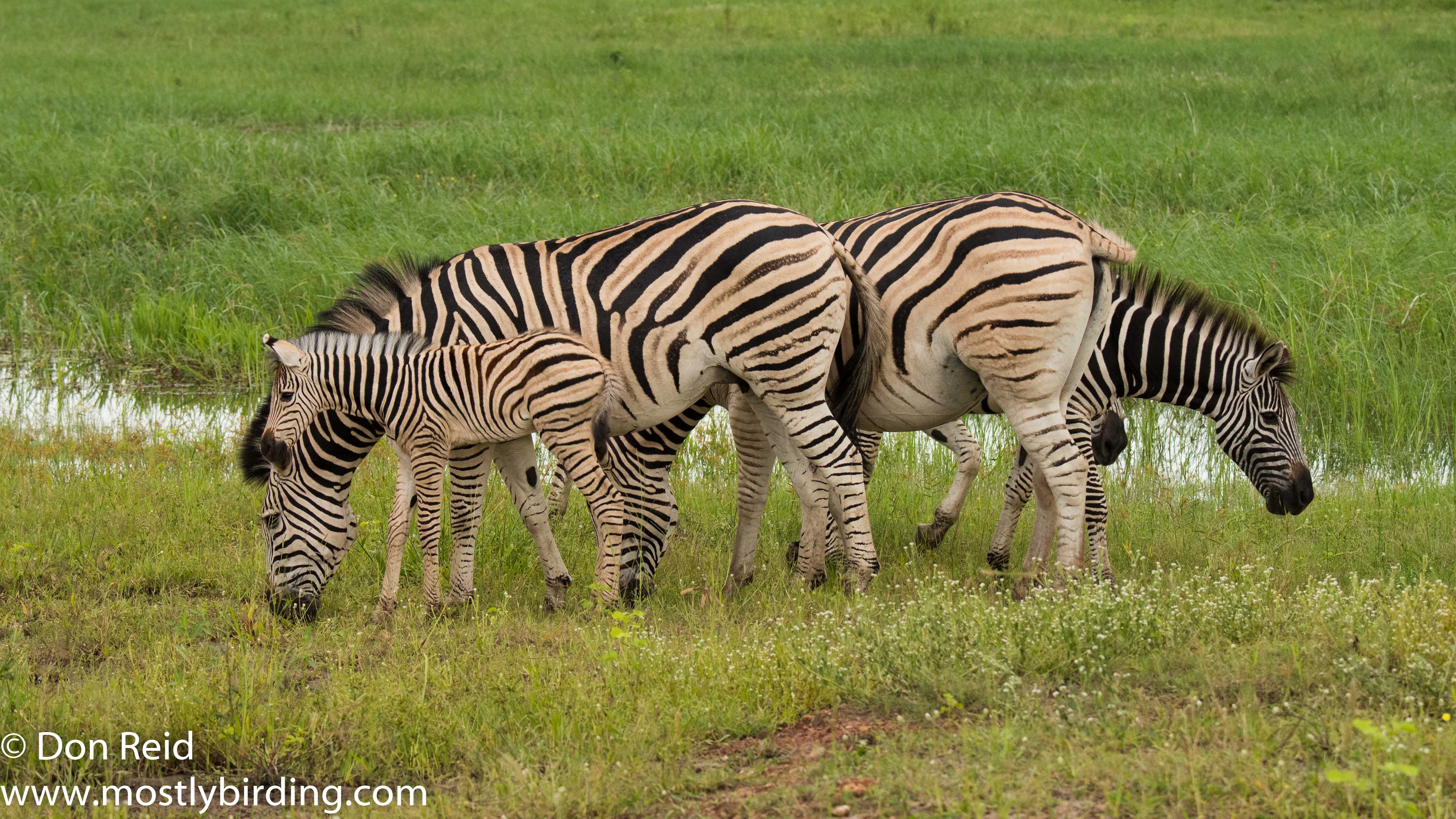
Zebra, Chobe Game Reserve
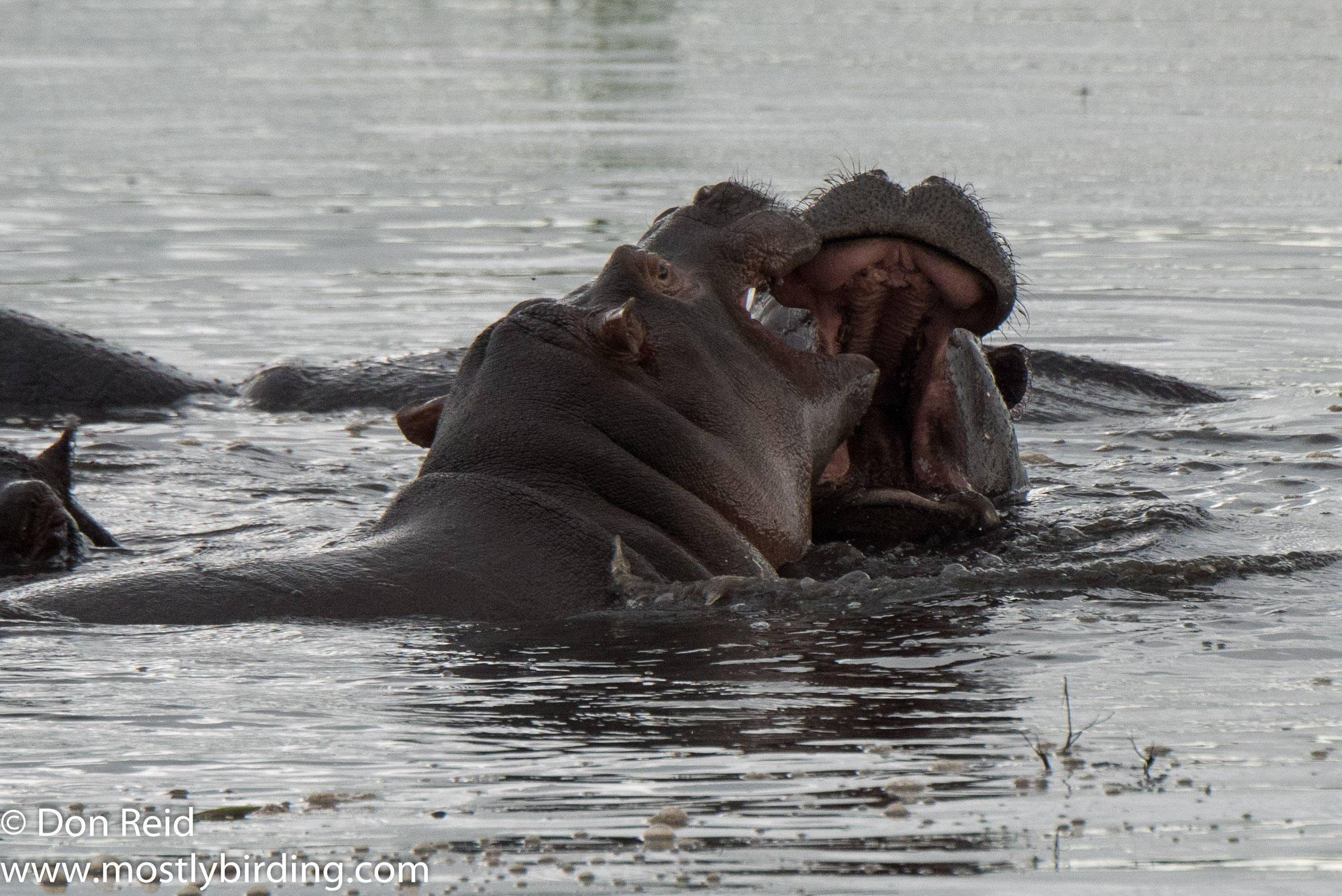
Hippo, Chobe Game Reserve
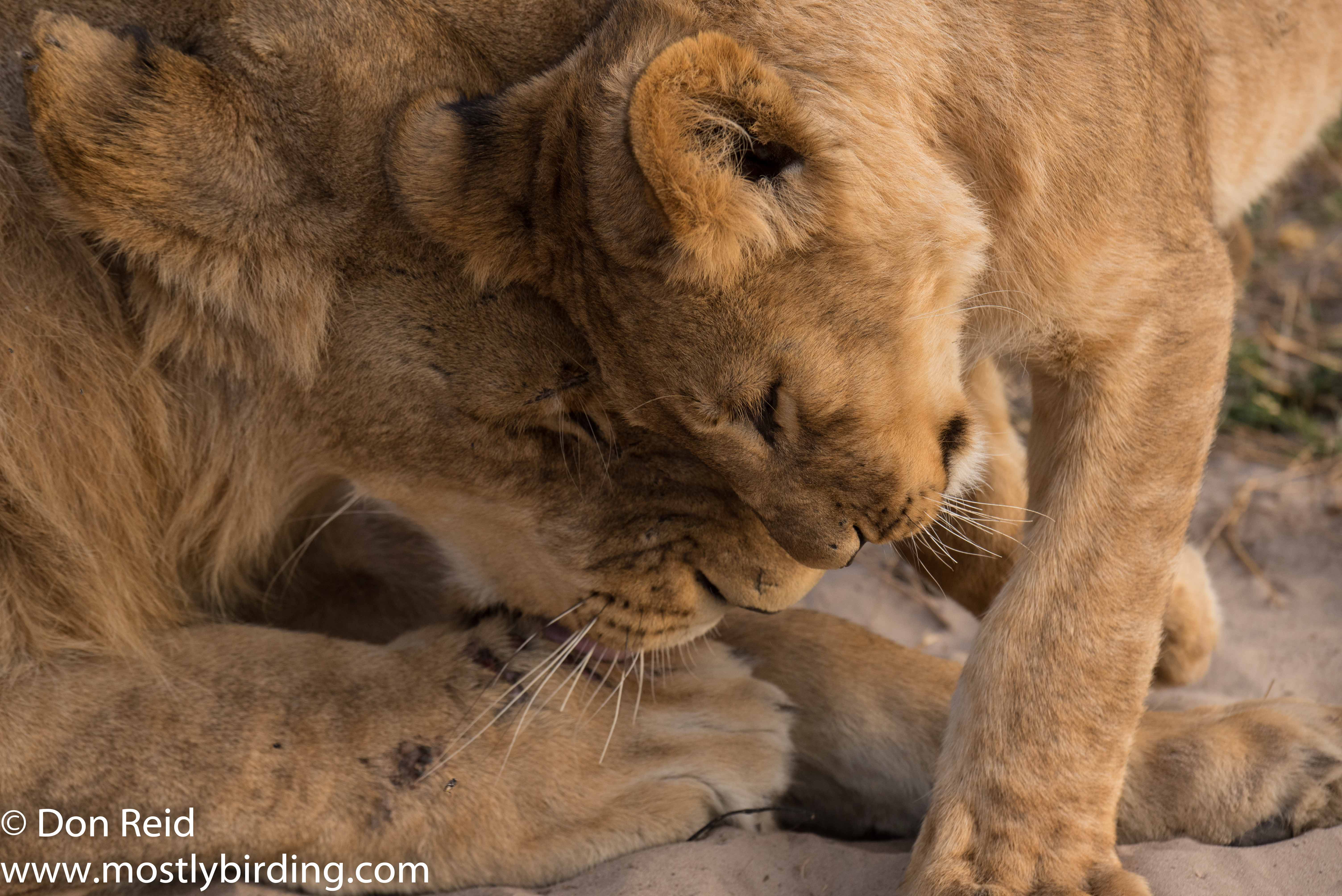
Lions, Phabeni area, Kruger National Park
Hippo, Zambezi Cruise
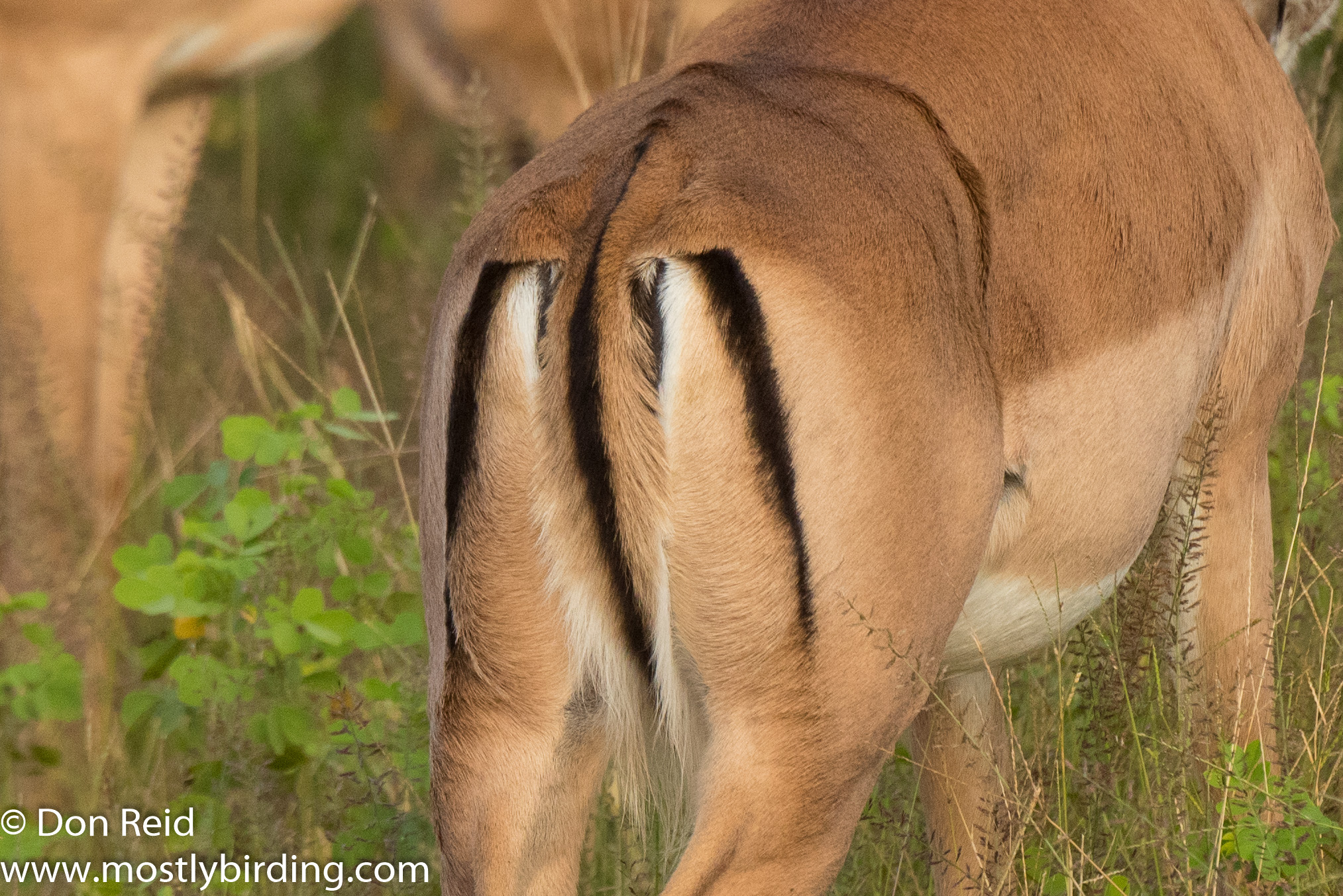
Impala, Chobe game drive – M for McDonalds
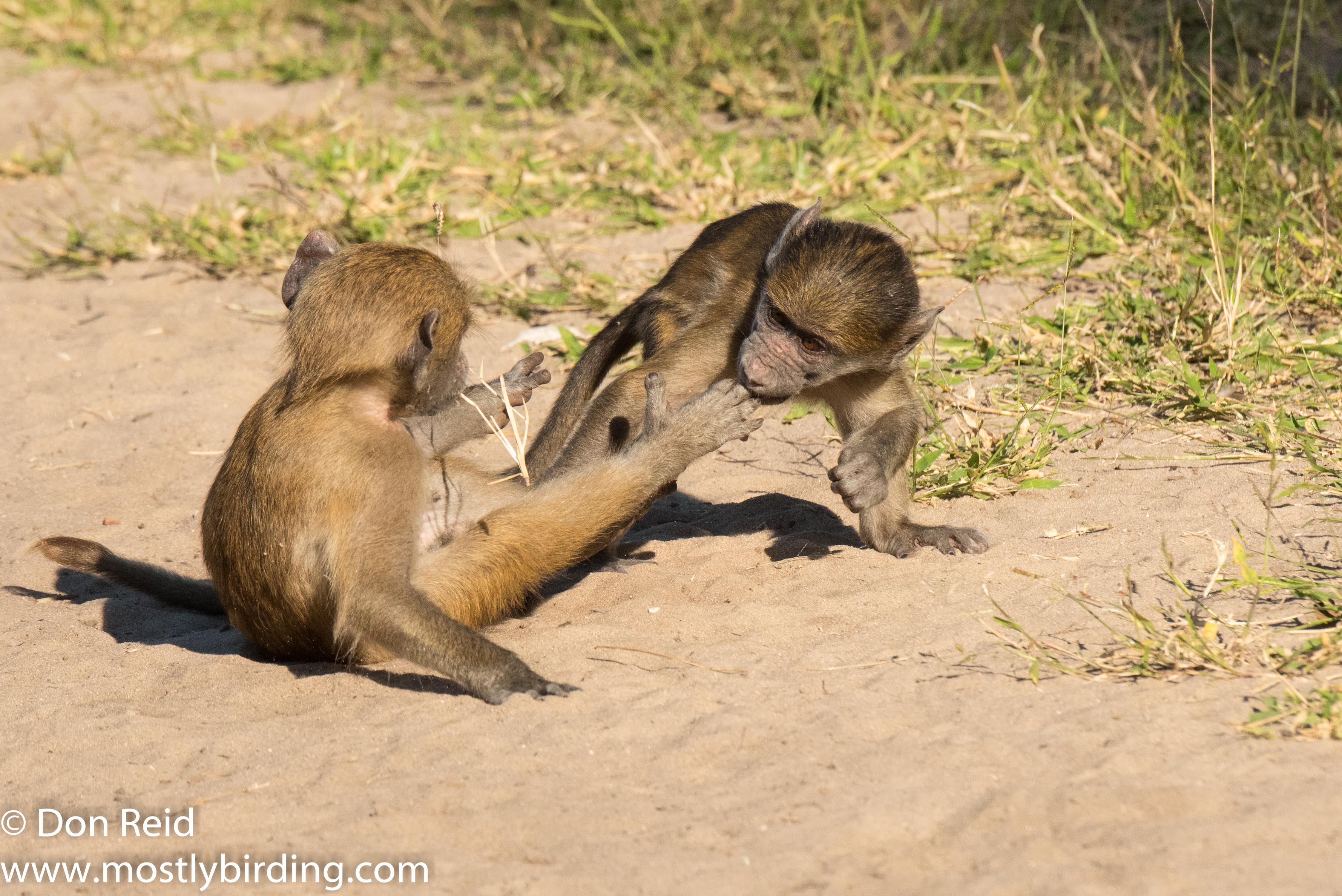
Chacma Baboon (Juvenile), Chobe game drive
African Elephant greeting, Game cruise Chobe
Lion, Chobe Riverfront
Chobe Riverfront
Black-backed Jackal, Chobe Riverfront
Hippo, Chobe River
Cape Buffalo, Chobe River
African Elephant, Chobe River

The Birds

Familiar Chat, Prince Albert
Amur Falcon, Garingboom Guest farm, Springfontein
Long-tailed Widow, Mabusa Nature Reserve
Double-banded Sandgrouse, Chobe Game Reserve
Common Sandpiper, Delmas area
European Roller, Satara-Nwanetsi
White-fronted Bee-eater, Zambezi Cruise
African Fish-Eagle, Game cruise Chobe
Bronze-winged Courser, Kasane Airport perimeter
Lilac breasted Roller, Chobe Game Reserve
Yellow-billed Oxpecker, Chobe Game Reserve

Part Two includes more birds, the reptiles, butterflies and other stuff


Wishing all who may read this a 2018 that meets all of your expectations!

Knysna Warbler – at last!

24 December 2017 – 7.42 pm : Knysna Warbler / Bradypterus sylvaticus (Knysnaruigtesanger) becomes my latest lifer – number 765 on my Southern Africa life list and the 9th addition to my life list for 2017. Location : Mossel Bay Golf Estate

Those are the bare facts and as I was not able to get a photo of this elusive bird, the post could end right here………    but there is more to the story than that of how I came to find this bird.

Firstly, some information on this species, starting with an extract from Roberts Birds of Southern Africa :

Status – Uncommon to rare and localised endemic; regarded as vulnerable

Habitat – Dense tangled thickets on edge of forests and along watercourses

General Habits – Very secretive; presence usually revealed only when calling

The Eskom Red Data Book of Birds of South Africa adds to this :

The Knysna Warbler is endemic to the region and has a highly restricted and fragmented distribution….

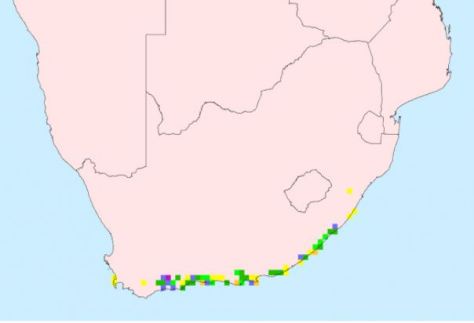
The SABAP2 distribution map below shows the current distribution of the Knysna Warbler, spread along the southern coastal regions of SA :

Knysna Warbler 1

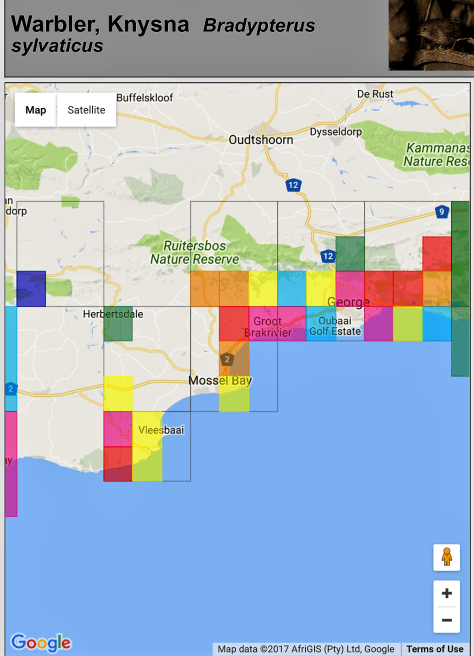
Going into more detail the map below is of the pentads in the Mossel Bay area, the coloured ones showing where Knysna Warbler has been recorded during the 10 years that records have been gathered – yellow, orange and green indicate a lower number of sightings, while blue, pink, red and purple indicate more frequent sightings. Uncoloured pentads are where the species has not been recorded yet. So for example there has been only one previous record in Mossel Bay (the yellow block) in 10 years

Knysna Warbler Map

Estimates put the total population at less than 2500 individuals with a status of Vulnerable

None of which explains why this species, which occurs in areas I have visited frequently during the 30 or so years that I have been birding, has eluded me until now. That’s birding – no certainties, lots of surprises.

I can only recall one occasion some years ago, during a visit to the Big Tree near Knysna, when I heard the distinctive trilling call from deep in the surrounding forest bush, but was unable to locate the bird at all

I have been very aware of this gap in my birding life list for some time and was determined to put in a special effort to fill this gap during our current December 2017 / January 2018 visit to Mossel Bay. A local birder offered to show me some spots known to be reliable for Knysna Warbler but I had not yet got around to taking up the offer.

The story of my unexpected find starts with a family walk around the golf estate on Christmas eve, around 7 pm in the evening and still light. Gerda and I set off with daughter Geraldine and Andre as well as the two granddaughters – first to leave the group was Megan who had her running shoes on and with the abundant energy of youth went running off like an Impala.

At the top of the hill Gerda and Geraldine returned home to put the final touches to the Christmas eve dinner, leaving myself, Andre and Maia to continue, heading for the clubhouse with the intention of doing a full circuit of the estate. A little further along the road it started drizzling lightly and with dark-ish clouds chasing in from the sea, I suggested a shortcut over the golf course to get home – problem was Maia was barefoot and with access to the golf course being across a stretch of veld with the possibility of thorns, she and Andre decided to turn around and walk back along the paved road we had just come on. This left me to continue on my own with the weather threatening and dusk approaching ….

Knysna Warbler 2

I increased my pace a tad and at the bottom of the next hill I took a path on to the golf course and headed towards the edge of the 14th fairway and the path homewards. The rain had stopped and the dark clouds seemed to be moving away from me so I slowed my pace and listened to the birds calling from the dense bush that lines this part of the estate – the usual Mousebirds,  Apalises and others were still active.

Knysna Warbler 3
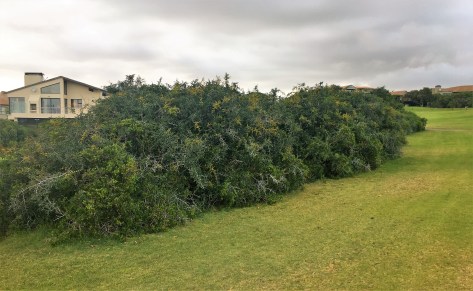
The dense bush lining the fairway, from where the Knysna Warbler was calling

Then a different call attracted my attention and had me wondering out loud what it could be – my auditory memory kicked into overdrive and I just knew this was a call that I needed to get a handle on, familiar yet strange at the same time and certainly one I had not heard on the estate before.

The warbler like call started slowly then sped up into a drawn-out rapid trilling conclusion, with the clarity of a whistle with a pea in it – after some deep thought I went to the Roberts app on my iphone and looked up western cape then warblers. As soon as I saw Knysna Warbler it hit me like a wet snoek and I pressed the play on the bird’s  call – bingo, that’s what it was!

This illustration is from Roberts Birds of Southern Africa :

Knysna Warbler

Next challenge was to try and see it, so I got as close as I could to the bush from where it seemed to be calling and searched in the fading light. It sounded so close I felt I should be able to reach out and touch it, but it is a master at remaining hidden, not even stirring a leaf to give a clue to its position.

After spending 20 minutes or so searching, the best sighting I could get was of a small drab bird flitting from one dense bush to the next, but I decided this was the best I was going to do and left it calling non-stop, even though it was by now almost dark.

In any case this is an example of a bird whose call is much prettier than the bird itself, so I was quite content with my sighting / hearing and very happy to be able to add it to my life list at last.

So after agonising about where I should go to find this species, it popped up virtually on my doorstep – considering the circumstances that led to my finding it, I was left with the feeling  that this was how it was meant to be.

An early Christmas present that I won’t forget!


Kuilfontein near Colesberg – Long-legged Tortoises and Doctor No

After a long day’s driving, there is nothing I look forward to more than going walkabout and doing some birding. When travelling from Pretoria to our “other home town” of Mossel Bay, we like to make at least one overnight stop, and during our recent trip we decided to try a new (for us – it’s been there a long time) guest farm near Colesberg called Kuilfontein, just 11 kms beyond the town and close to the N1 national road.

Our route included a slight detour to allow for a mid-morning stop at son Stephan’s house in Potchefstroom in the North West Province. He was at work but Liesl was on hand to refresh us with coffee and banana bread before we pressed on. This part of the trip left me with mixed emotions as we passed through several small towns along the R30 route, which traverses the farmlands and goldfields at the heart of South Africa. The summer rains had not yet come and the wind was whipping up the fallow farmlands creating small dust storms, while the mining areas were equally dusty but from the mine dumps being scoured by those same winds.

This is not unusual after the winter and before the rains come (which they did subsequently) so one accepts that the landscape is not particularly attractive at this time of year. What really got to me was when we approached the towns along the way and on the way out again – the plastic bag litter strewn across the fields seems to be the norm nowadays (not just confined to these parts but more noticeable here) – very disheartening  and with a bit of effort so simple to rectify you can’t help wondering why nothing seems to be done about it.

Anyway enough complaining and back to the pleasant part of the day.

We reached Kuilfontein farm at 5.30 pm after driving some 760 kms and by 6 pm we were settled in our charming cottage room.

Entrance to Kuilfontein – an encouraging sign
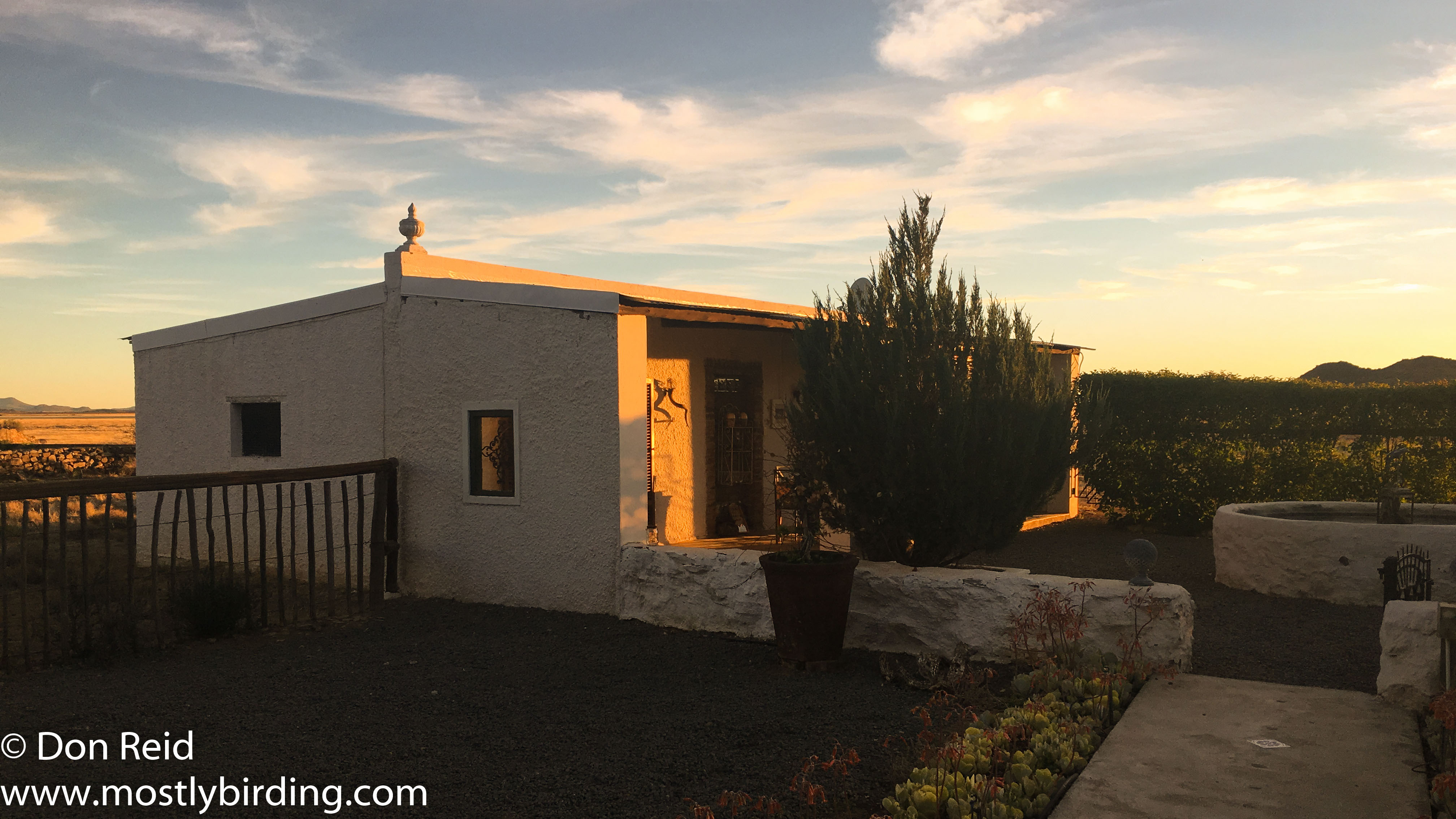
Our cottage room for the night
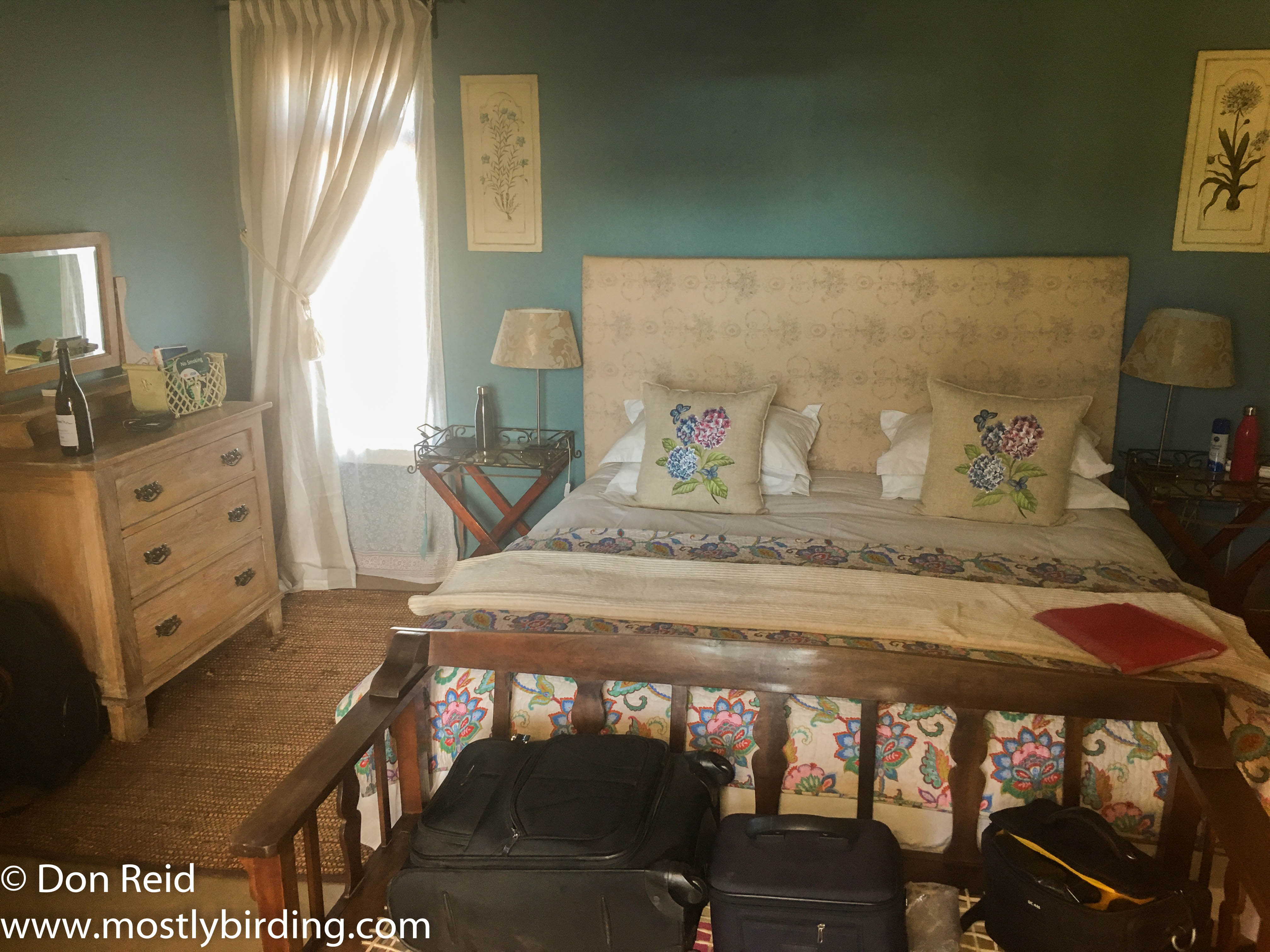
Comfortable room

With the prospect of a good one and a half hours of daylight available, I set off with a spring in my step to explore the farm, wondering what I would find.

Starting around the main house, I followed the entrance road which is like a long verdant tunnel with trees both sides almost meeting overhead. There were Sparrows and Doves aplenty, joined by Starlings (Pied, Cape Glossy and Red-winged) and several Cape Robin-Chats to make the walk interesting.

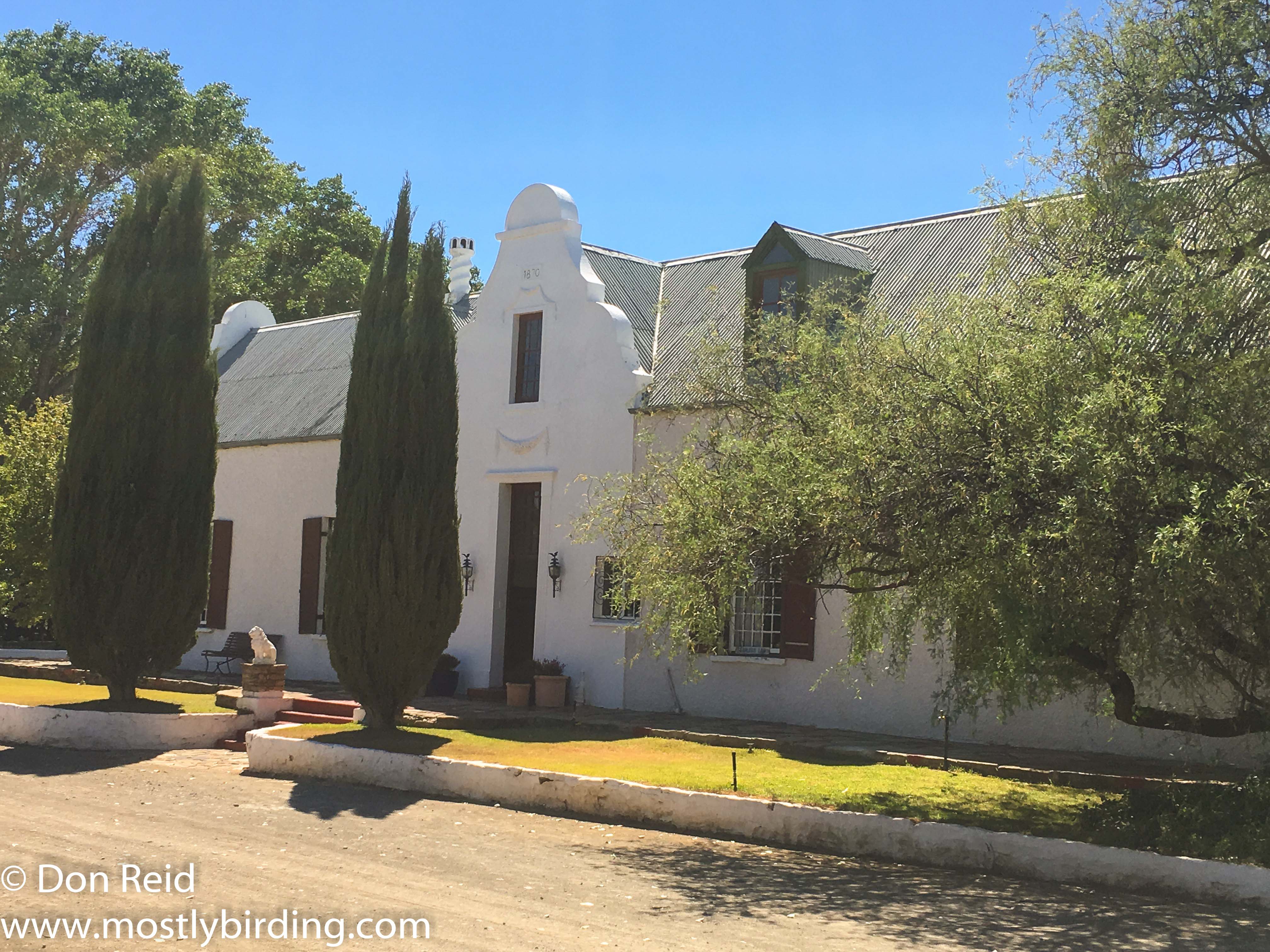
Kuilfontein – the manor house
Kuilfontein – entrance road

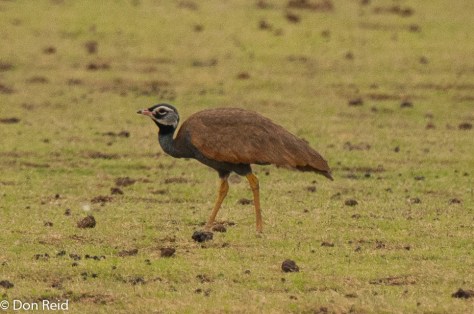
A group of three Korhaans caught my eye in the fields and turned out to be Blue Korhaans – they have a curious way of walking, crouching so that when they are in longish grass, just their rounded backs and the top of their heads are visible, giving them the appearance of fast-moving tortoises as they move about.

Blue Korhaan, New Holme Guest Farm, Hanover
Blue Korhaan (photo taken not far from Kuilfontein on a previous trip)

By dinner time I had recorded 25 species and called it a day – can’t be late for the Lamb pie!

After an early night and a good rest I was up before 6 am the next morning and was soon out for part two of my Kuilfontein birding, this time covering some new ground which soon delivered with Bokmakierie, Pied Barbet and Cape Clapper Lark amongst others.

Bokmakierie

From a vantage point on the top of the earth dam wall (bone dry) I could see far across the Karoo scrub – in the background the distant hills were washed blue / pink by the early morning rays. Two elegant Blue Cranes were just discernible in a distant field and as I scanned the horizon three Korhaans flushed about a 100 m away and flew off while calling what sounded to my ears like a very guttural “doctor no, doctor no, doctor no”. I couldn’t help chuckling at the thoughts that my interpretation of their call brought to my head.

It turned out That they were Karoo Korhaans and replaced the Blue Korhaans from the previous evening as my favourite sighting of the short stay.

Kuilfontein farm

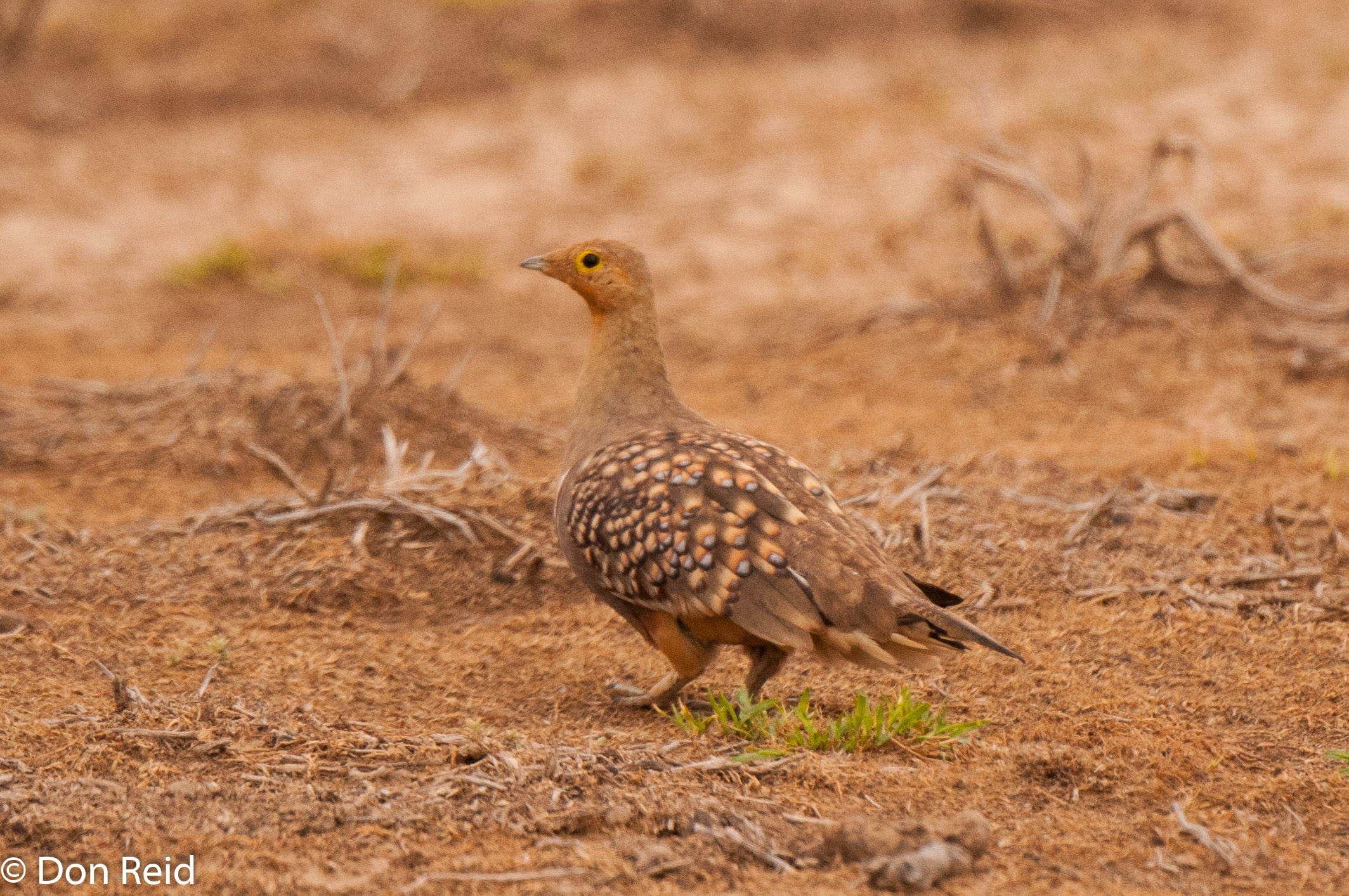
Soon after, near the entrance gate at the end of the long entrance driveway, another call drew my attention and looking upwards I saw three Namaqua Sandgrouse flying by while calling “kelkiewyn” (pronounced “kelkyvane”) which is also their Afrikaans name. As I watched them they turned in a wide circle in the sky, almost as if acknowledging my presence, then carried on flying into the distance.

Namaqua Sandgrouse, (this photo is also from a nearby farm on a previous trip)

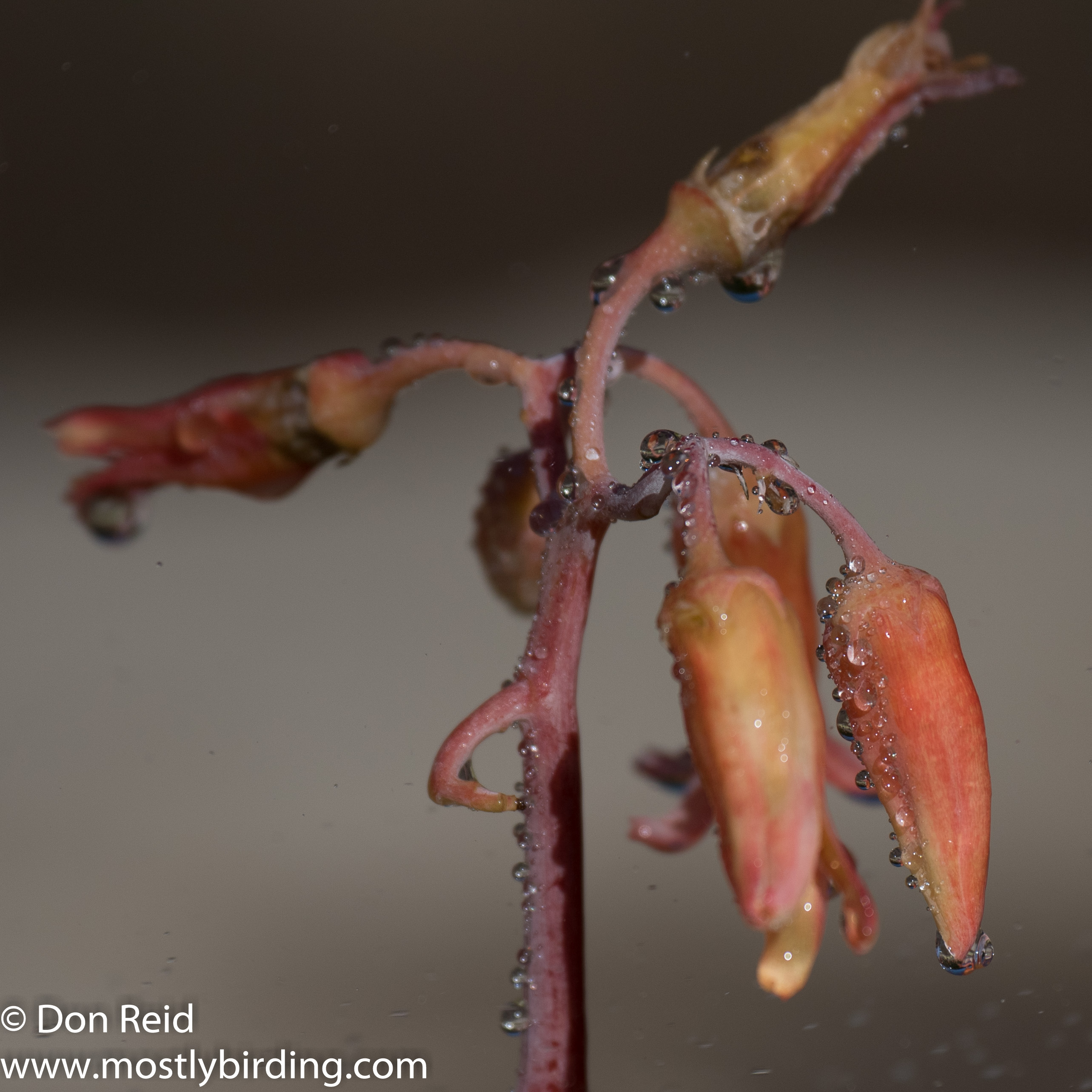
Time had also flown by and I headed back for breakfast, adding White-throated Swallow, Wattled Starling, Red-winged Starling and Fiscal Flycatcher on the way back. At the cottage a Malachite Sunbird was moving about amongst the Aloes lining the pathway, the emerald sheen of its feathers glinting in the sun. The garden sprinklers were on so the aloes had drops of water

Aloe
Malachite Sunbird enjoying the Aloes

After breakfast we greeted host Penny, who has the knack of making you feel like part of the family, and headed off on the next leg of our trip, but not before adding Steppe (Common) Buzzard and Red Bishop on the way to the N1.

As always I was atlasing (recording the bird species for submission to the database at the University of Cape Town)  and was surprised and very pleased when I discovered that my “full protocol card” (minimum two hours of atlasing) was only the fourth one for the pentad, “turning it green” in atlasing parlance – this is a way of tracking how many times a pentad has been atlased, green indicating that at least four cards have been submitted to provide a statistical base.

Atlasing Statistics

Pentad : 3045_2455

Full protocol cards : fourth for the pentad.

Total species recorded : 45 – out of 86 for the pentad to date which equates to a coverage of 53% of the species recorded to date

Pentad location :

New species recorded for the first time in the pentad :

Greater striped Swallow; Karoo Thrush; African Hoopoe; Cape Wagtail; Black-shouldered Kite; Cape Clapper Lark; House Sparrow; Karoo Scrub-Robin; Common Starling; Egyptian Goose; White-throated Swallow; Wattled Starling; Fiscal Flycatcher: Malachite Sunbird; Steppe (Common) Buzzard

Birding Big Day 2017

We had been planning Birding Big Day (BBD) – which took place on 25 November 2017 – for months, working out a route with stops planned to the minute and covering as much of the allowed 50 km radius as possible while making sure we included as many habitats as we could in the 24 hours ……….. Well that’s what we should have done to do any justice to the day; in fact our planning consisted of my jotting down a few “must visit” spots that I knew of close to Mossel Bay, the day before BBD.  These included the Golf Estate, the harbour and Point, Herbertsdale road, Hartenbos waste water treatment works, Klein Brak area and the Hartenbos river. Any others would be added on a “play it by ear” basis as the day progressed.

Having only arrived in Mossel Bay from Pretoria the day before, there was not much time to gather ourselves but the prospect of a full day’s birding was enough to motivate me and I looked forward to having Willie Boylan, old friend and occasional birder, join me as the other half of our two man team – the Harried Hawks.

I had set the alarm for 4.15 am having suggested that Willie join me at 5 am, which he duly did and we immediately started our birding big day with a slow walk down the hill to the belt of coastal fynbos that lies between the residential area of the estate and the cliffs that drop away to the sea below

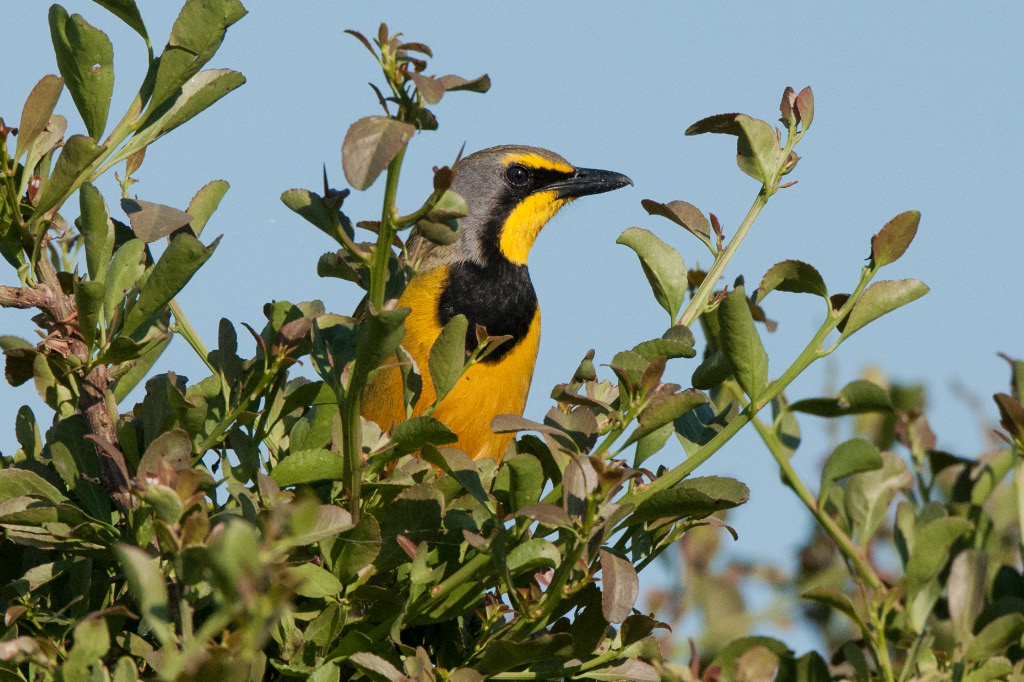
The weather was perfect and remained that way throughout the day – sunny yet cool with no cloud to speak of and a light wind. Doves were already vocal while the drawn out trilling call of Cape Grassbirds greeted the first rays of the sun. Yellow Canaries were active and plentiful along with Yellow Bishops with their standout black and yellow colouring.

Yellow Bishop (Male)
Cape Robin-Chat

The African Black Swifts that roost along the cliffs were up and about, joined by a lone Kelp Gull on its way to the sea. After scanning the bush for quite a while we felt we had exhausted the coastal fynbos possibilities, so we set off by car and exited the estate with 31 species, just about a quarter of our target of 125 for the day, with one hour down. As can be expected this was by far the best hour of the day.

Streaky-headed Seedeater
Southern Boubou

We took it slow along the road bordering the St Blaize trail and soon spotted a Tern roost on the rocks far below – I set up the scope and was mildly disappointed to find they were all Swift Terns as I had been hoping for one or two other Tern species. Early morning joggers were curious and when told what we were up to they wished us luck. As we were packing up the scope a Southern Tchagra, always a difficult species to spot, showed briefly in the bush just below the road.

Olive Thrush

On to Church street and the harbour area where we quickly added Grey-headed and Hartlaub’s Gulls as well as Mallard, but the Point was a disappointment being very quiet – none of the usual Cormorants or Terns – were we too early for them?

Hartlaub’s Gull

By 7 am with two hours done and a total of 46 we headed through town and out on to the Cape road, deviating briefly to explore the bush along the outskirts of town at the small industrial area which turned out to be quite lively with Bokmakierie, Red Bishop, African Pipit and Pied Starling.

The light traffic meant we reached the Herbertsdale turnoff not long after where we almost immediately found some of the expected species. Large-billed Lark was first up with its “squeaky hinge needs oil” sounding call, but for a change wasn’t joined by Agulhas Long-billed Lark – hopefully we would get it later.

Southern Red Bishop

We added the likes of Karoo Prinia, Diderick Cuckoo, Grey-backed and  Cloud Cisticola before reaching the small farm dam alongside the road which had just a few Yellow-billed Ducks and a couple of Common Moorhens.

By now we were in need of coffee and rusks, so we turned off onto the quieter (we thought) Klipkop road to find a peaceful spot but we were harried by 4 x 4 enthusiasts heading to an off-road event along the same road so in the end we had to venture further beyond the venue entrance before stopping. While enjoying the caffeine boost a Rock Kestrel came to greet us as did a Brimstone Canary on the nearby fence, while in the distance we could just make out some cattle with Cattle Egrets in attendance.

This is where the “play it by ear” factor kicked in for the first time as we decided to carry on with Klipkop road rather than head back to the tar road and soon we had Steppe Buzzard and White-necked Raven on our list,  but not much else as we passed through the undulating hills and headed towards Hartenbos,

Our first stop at the Hartenbos river produced Black-winged Stilt, Red-billed Teal and White-faced Duck before continuing to the Waste water treatment works which we hoped would give our list a nice boost. It delivered as hoped and we added 9 species including Cape Teal, Cape Shoveler, Little grebe on the ponds, a Lesser Swamp Warbler calling and a couple of aerial birds in Brown-throated Martin and Pearl-breasted Swallow. By now it was 10.30 am and we had recorded 88 species, pleasing enough but I imagined it was going to be much slower going from there on.

Little Grebe

In fact the next two hours produced just 10 species as we covered both Klein Brak and Great Brak river mouths, nevertheless including some less common birds such as  African Black Oystercatcher, Little Egret, Greenshank, White-fronted and Common Ringed Plovers as well as a soaring Jackal Buzzard.

Common Ringed Plover

Time for our next route decision – this time we decided to make our way through Great Brak village and turn off west onto the road which would take us back to Klein Brak, but along the secondary road north of the N2.  Our first stop along this stretch was at another waste water treatment works, the ponds visible from the road, which produced Pied Avocet, Three-banded Plover and a calling Little Rush Warbler.

Before reaching Klein Brak we turned right and took the Botlierskop road, just after spotting a Spoonbill in a marshy area before the bridge. Two “Olive” birds were our reward along this road – Olive Pigeon and Olive Bush-Shrike. As we passed a small obscure track we noticed another group of birders higher up on the embankment – turned out this was the “202 Ostriches” team who set a new Western Cape BBD record that day. We decided not to disturb them but to take a look later on our way back (the road was closed further on). In fact we discovered later on that the embankment was the wall of a large dam which held White-backed Duck and a lone African Darter – nice one to know about for future reference.

The 202 Ostriches passed us and stopped to say hi but were clearly hyped up and we didn’t want to hold them up – at that point they were on 160 species compared to our 101. Our next target was the Geelbeksvlei road – the vleis mostly dry but with a few water channels which held Hamerkop, Little Stint and Pied Kingfisher. Greater Honeyguide was calling “Victorrrrr” in the same spot I had heard it before while cycling the road.

The next hour was the longest of the day as we headed back into the undulating hills from the Brandwag turnoff, only finding our next species at the end of the hour after stopping at a farmstead near the road with a large Jacaranda tree in full bloom, which was alive with sunbirds including Amethyst and Greater Double-collared. They came as a timely boost to our pensioner aged team as our energy was being rapidly sapped although spirits were still high as we headed back towards Mossel Bay along the Gondwana road.

Southern Double-collared Sunbird

Almost simultaneously we spotted Denham’s Bustard followed a minute later by Red-necked Spurfowl crossing the gravel road, raising our spirits a notch or two again. A Forest Buzzard on a dry tree was worth turning off for but flew off before I could position the car for a photo.

Red-necked Spurfowl

At the next junction with the R327 tar road we crossed over and carried on towards Kleinberg and the N2 national road – this road was also quiet until we reached the mill where we found Red-capped Larks in the road and a few House Sparrows on the fence, the latter having eluded us all day despite popping into a couple of filling stations en route, often their preferred hangout.

Heading towards Mossel Bay along the N2, another bird that had eluded us – Agulhas Long-billed Lark – caught my ear and a quick stop confirmed the ID. Black-shouldered Kite was the last to be added on the road and we headed back to the estate, tired but happy with our total standing on 123, just two short of our target. It was 5.30 pm and there would still be daylight for an hour and a half at least, but we both agreed to call it a day, although Willie was happy to accept any further species I may spot once he left.

Black-shouldered Kite

After a short recovery, I felt somehow compelled to find two more birds and took another short walk which happily produced a Cape Rock-Thrush, then while I was relaxing on the balcony with the light fading and a celebratory glass of wine in hand, still keeping an eye on passing birds, a Peregrine Falcon of all things obliged by flying past – 125 done!

Next day I checked the BBD Birdlasser page which showed 124 against our team’s name – the difference turned out to be the Domestic Goose which we had recorded at Great Brak estuary but which had been disallowed. Makes sense although when atlasing it is a recordable species. So 124 was our final total. All in all it was a great day’s birding with some slow progress in the middle third of the day – better planning and ranging wider to cover more habitats would have improved our total – good thing there’s a next time to look forward to!

Czech it out – Prague : the Old Town

We had heard good things about Prague and wanted to go and see for ourselves, so when planning a Danube river cruise in April 2016 (read about it in my earlier post Danube River Cruise – A Taster), we decided to precede it with a visit to this city and to make it worthwhile we thought a 4 night stay would give us enough time to explore at a relaxed pace and have time for a day tour out of Prague.

On the advice of a friend who had visited Prague a couple of times, we chose the Old Town Square Hotel right in the centre of the historic part of town, which is also the focus of most visitors to the city. This turned out to be an excellent choice as many of Prague’s attractions were within walking distance, while others could be reached after a short ride on the city’s user-friendly tram system. A bonus was being upgraded to a suite with a view of the square, the room being so spacious we could have swung a cat if we had brought one with us, with room to spare.

Prague - Old Town Square - north side
Prague – Old Town Square – north side as seen from our hotel room

Our first full day in Prague was the chance to explore the Old Town, so after a lazy in-room breakfast we set off on an extended walk.  By this time the Old Town Square was filled with visitors and buskers, as it was for the rest of our stay, and proved to be a constant source of entertainment.

Prague - bubble makers on Square
Prague – bubble makers on Square

A swing band was playing from early on in great style, elsewhere jugglers, fire-eaters and “living statues” were doing their thing, the latter rather comically taking a regular smoke break, while Segway riders and tour groups with pennant-waving leaders weaved their way through the throngs.

Prague - Dancing in the Square
Dancing in the Square to the swing band
Prague - Living statues
Prague – “Living statue” checking the takings during a break from posing (note the cigarette in hand)
Prague - Old Town Square
Prague – Old Town Square crowds
Prague - Old Town Square
Carriages are the only vehicles allowed in the square

The Old Town Square (Staromestske namesti) dates back to the tenth century, when it served as the market place for the thriving town, is traffic free except for horse drawn carriages and is ringed with historic buildings. It is one of the finest public spaces of any city we’ve seen and has a constant buzz of activity starting early morning and extending deep into the night.

Prague Old Town-2
Rococo stucco work on Kinsky Palace now used by National Gallery for art exhibitions
Prague Old Town-3
Kinsky Palace window detail
Prague Old Town-4
Old Town Square  – Art Nouveau building from 1898 now houses a ministry
prague - Old Town Square : Church of St Nicholas
Old Town Square : Church of St Nicholas dominates one corner
Prague - Old Town Square - facade dates from 1696
Old Town Square – facade dates from 1696

Most famous of the buildings is the Old Town Hall with its impressive astronomical clock which draws a crowd every hour, when the mechanical figures representing the twelve apostles become animated and “walk past” two small windows in a fascinating mini performance.

prague - Old Town Square with Town Hall
Old Town Square with Town Hall
Prague - Astronomical Clock
Prague – Astronomical Clock
Prague - Astronomical Clock
Prague – Astronomical Clock

We started our walking tour by making our way slowly along the Old Town route shown in our guide book, but ended up following our nose, drawn into side streets by interesting buildings and features.

Prague - street scenes
Prague – street scenes
Prague - street scenes
Flowers on the sidewalk
Prague - street scenes
An interesting facade
Prague - street scenes
Prague – street scenes

The older streets of Prague have rows of intensely handsome buildings, the like of which we have never before encountered in our many travels, aligned for uniformity of line and height but each one adorned with mouldings and decorative elements to make them unique.  We wondered if there is another city in the world with such beautiful classical architecture. No wonder Prague is known as the “Paris of the East”.
Prague - street scenes
Prague – street scenes
Prague - street scenes
Prague – a handsome building
Prague - street scenes
Unusual decoration on this building

Every now and then a noteworthy building caught our eye – religious buildings in particular such as cathedrals and churches. Particularly interesting was the Jewish Quarter with several synagogues which seemed to be drawing groups of tourists who were clearly of Jewish origin.

Prague - Maisel Synagogue
 Maisel Synagogue
Prague - old Synagogue
The old Synagogue

The old Jewish cemetery was crowded with tombstones, commemorating individuals buried in layers of up to 12 deep over the centuries past, apparently due to severe restrictions on the area that was allowed for burial in the Quarter.

Prague - old Jewish cemetery
The old Jewish cemetery

Shops along the way varied from tourist kitsch to exclusive and expensive – Gucci, Burberry, Prada and the like – no prices on display, probably based on the old adage that says “if you need to ask, you can’t afford it”.

Prague
Upmarket shopping street

Cars outside these shops were equally exclusive – Bentley (ooh, I want one), Lamborghini and the like.
Prague - Bentley coupe
Bentley coupe

Come lunchtime we were in need of something light to eat – Gerda had spotted an interesting restaurant, U Gomela, so we retraced our steps for a couple of blocks and popped inside. We decided to try their potato soup (Plolevka nabidka den) accompanied by a pilsner and finished off with the coffee and apfelstrudel special (Jablecny zavin) we had seen advertised on the board outside – a very tasty choice as it turned out.
Refreshed, we continued our meander, coming across all manner of interesting sights.

Prague - shop windows
Puppets in a shop window
Prague - Spring blossoms
Spring blossoms
Prague - making the local speciality
Making the local speciality pastry which gets filled with your choice of ice cream or whatever
Prague - Church of the Holy Spirit
Church of the Holy Spirit
Prague - street scenes
Old gent on a bike

There was even an opportunity for some birding – Chaffinch, European Jay and Blackbird all drew attention to themselves with their song and we were able to track them down in the trees lining some of the avenues – signs of approaching Spring.

By mid afternoon we felt we had done enough walking and found our way back to the hotel, having been out and about for the best part of the day, stopping only to check out the food stall offerings around the Square and settling for a giant pancake (palacinka)  which was so large we shared one.

Later, after a good rest, we decided to dine in the restaurant attached to our hotel – called the White Horse and located on an enclosed “outside area” with views of the square and all its activities and heated by large gas heaters to ward off the evening chill. The food was good without being special, but rather expensive, probably due to the prime location.

Prague - White Horse Restaurant
White Horse Restaurant on the Square

With day one in this glorious city behind us we looked forward to discovering more of it – day two turned into a mild adventure of sorts, but more of that in the follow up post.