South African nature enthusiast with a passion for Birding, Photography and Travelling to interesting places to discover more about Southern Africa and the World
One of the highlights of our visits to Annasrust Farm, near Hoopstad in the Free State, is the river cruise that Pieter likes to lay on for us. During our April 2018 weekend visit to their beautiful farm, Pieter and Marietjie once again arranged to take us out on a late afternoon cruise and we duly set off around 4.30 pm from the riverside landing spot and headed out onto the smooth waters of the Vaal River on their purpose-built raft – basically a large platform on pontoons with a roof over, driven by a large outboard motor.
The Vaal River forms part of the Bloemhof dam at this point – Wikipedia has the following to say on the dam : The dam was commissioned in 1970, has a capacity of 1,269,000,000 cubic metres and has an area of 223 square kilometres, the wall is 33 metres high. It is fed with the outflow from the Vaal Dam (located upstream in Gauteng) as well as rain collected in the Vaal, Vet, Vals and Sand River catchment areas.
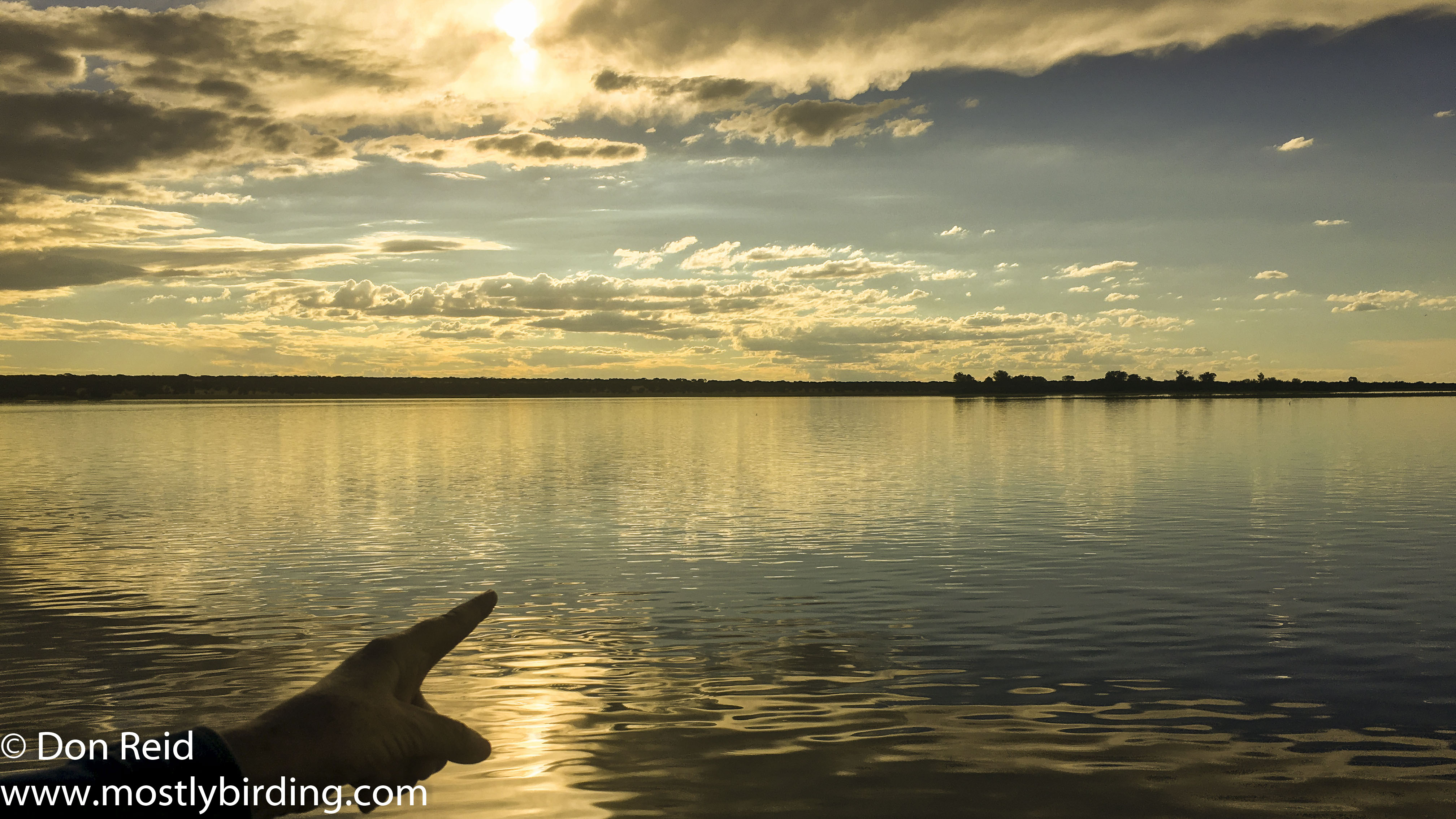
Gerda and I sat right in front with glorious views of the river, the slowly setting sun and the varied bird life already into their end of day activities – flying about restlessly, perhaps watching the other birds to see where they’re heading, possibly even wondering what this bunch of humans on the raft are up to… that sort of thing.
Sundowner cruise – enjoying the viewDoing it in style
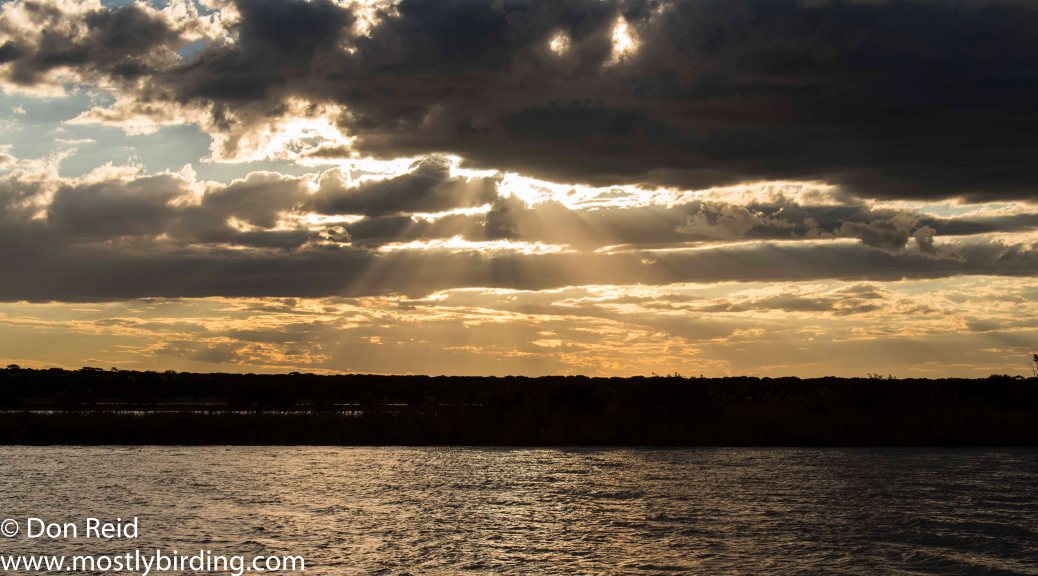
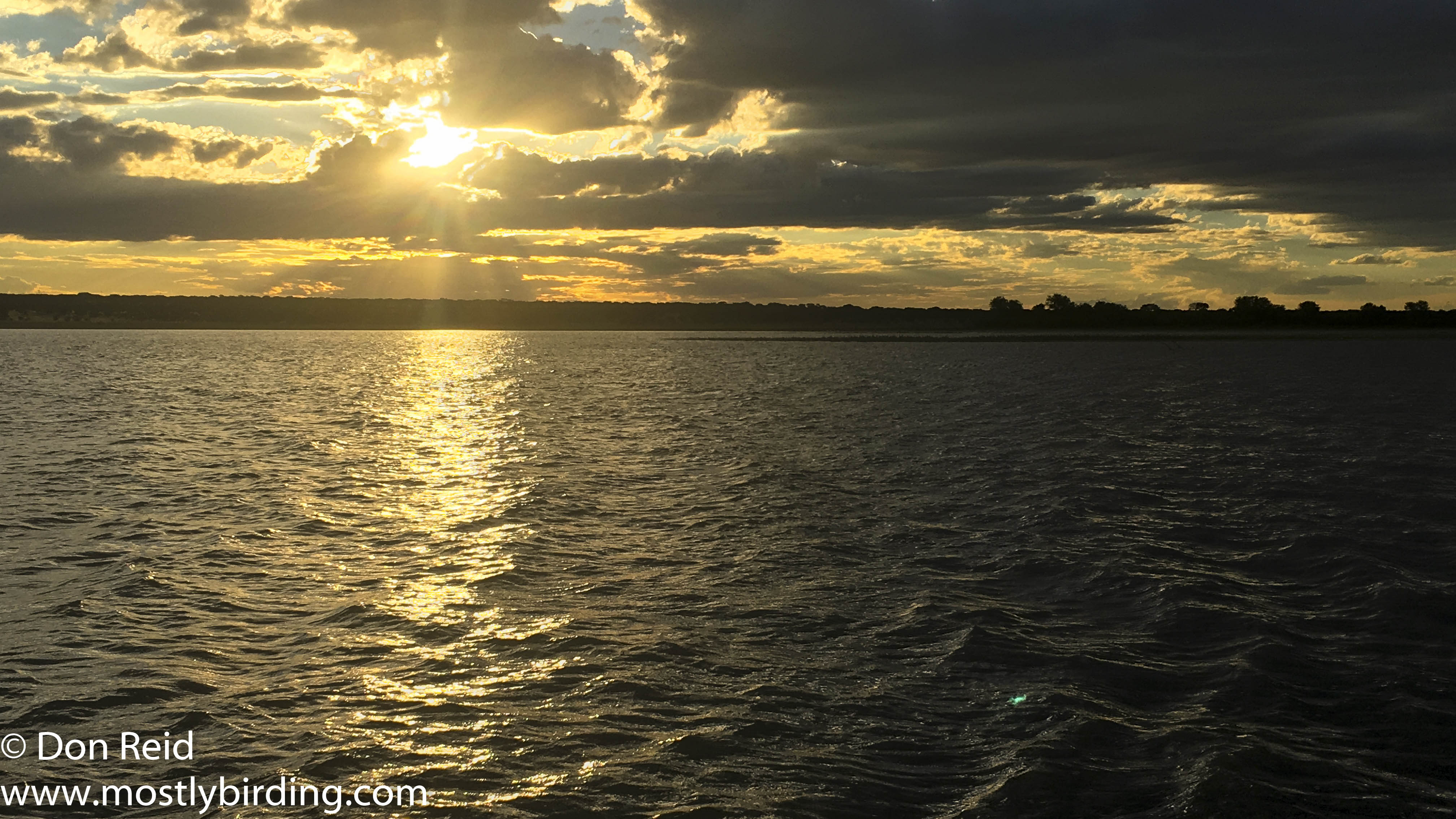
Some of this activity was along the shoreline – Cormorants aplenty, groups of Spur-winged Geese and solitary Goliath Herons standing sentry at regular intervals as we cruised smoothly along. The setting sun made for picture-perfect scenes as the rays created multi-coloured patterns from behind the clouds lining the horizon.
Sundown approaching as we glide out onto the mighty river
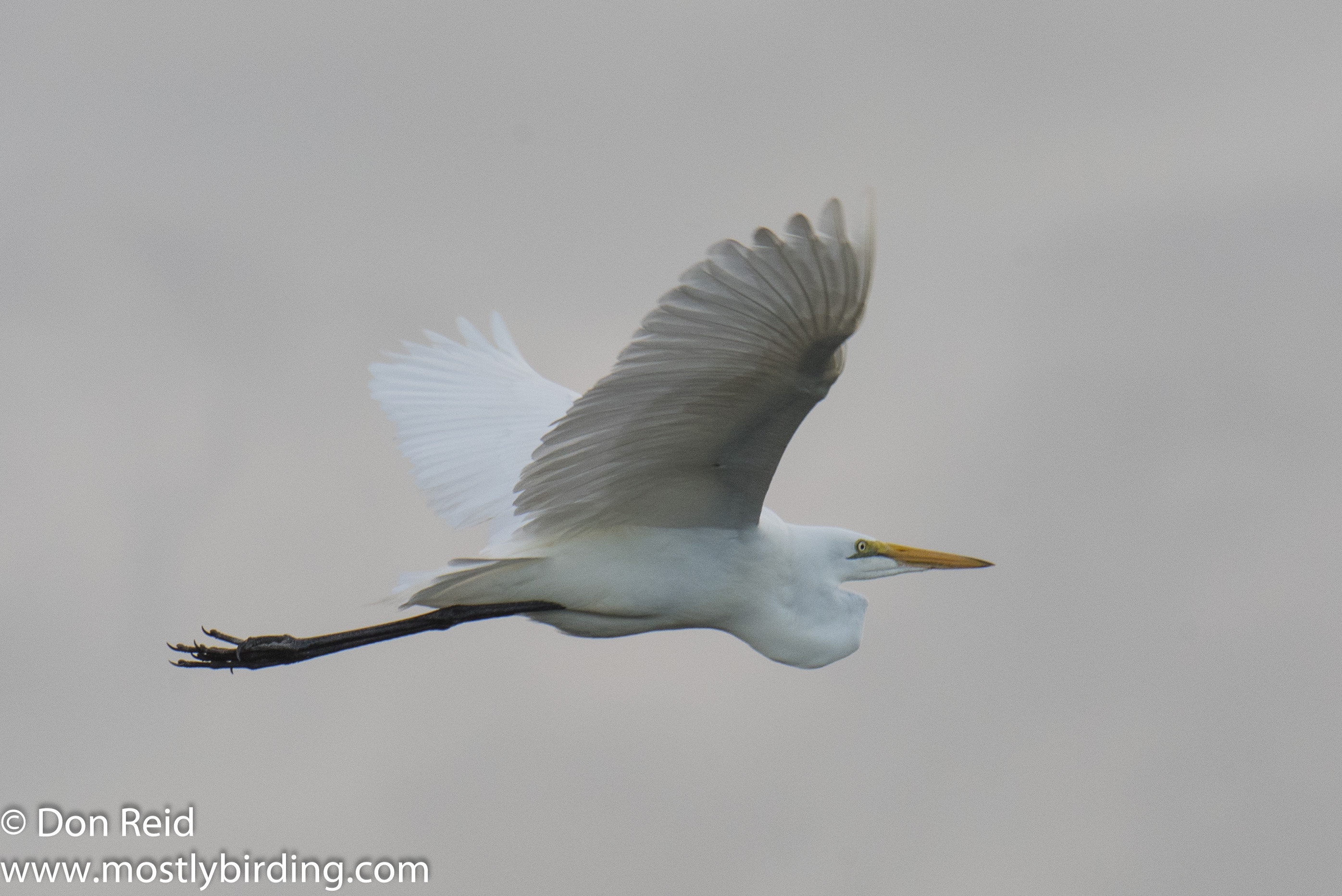
Several birds passed the boat in graceful flight
Great EgretWhite-breasted Cormorant skimming the waterWhite-winged Tern (Transitional plumage)
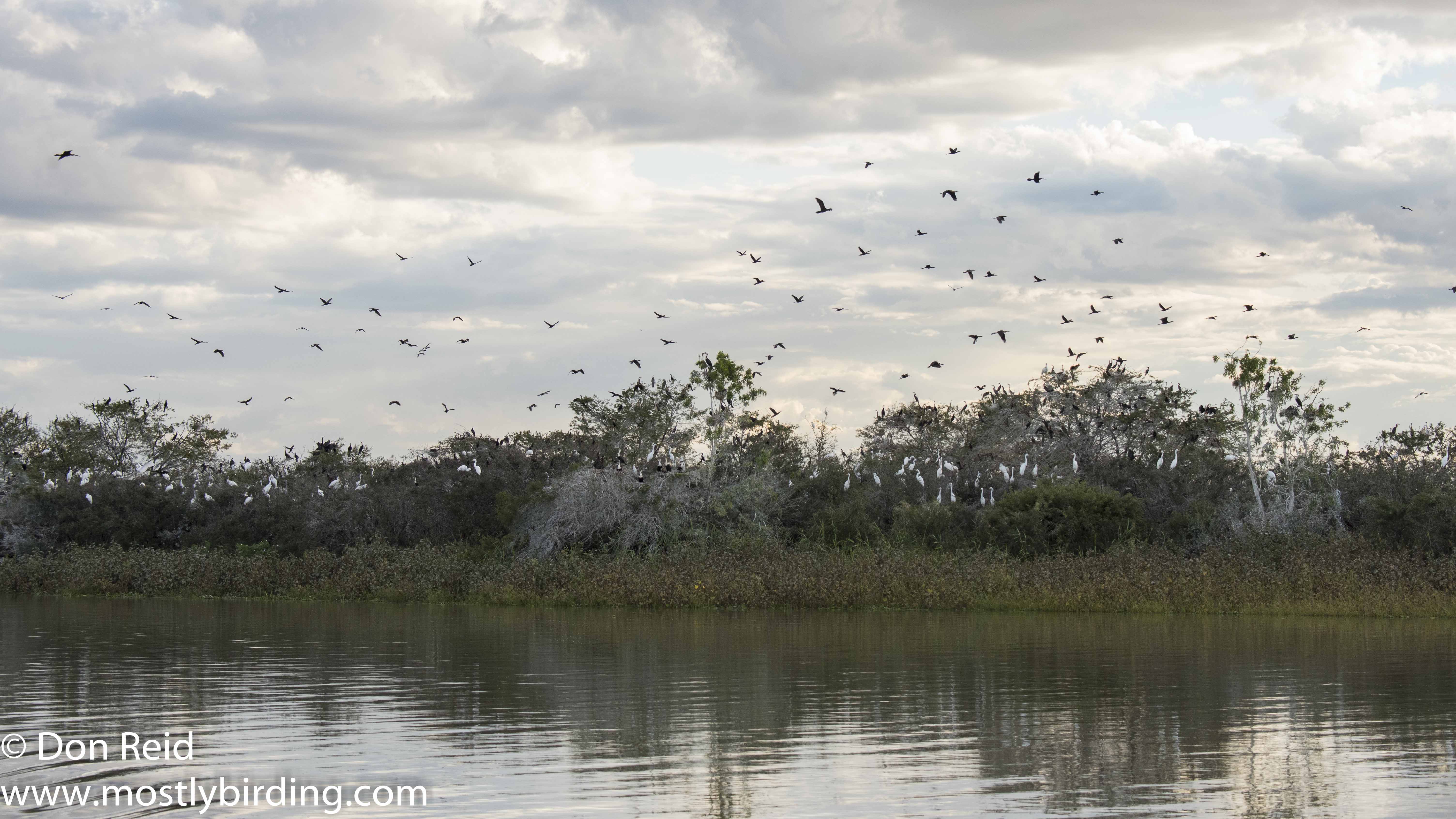
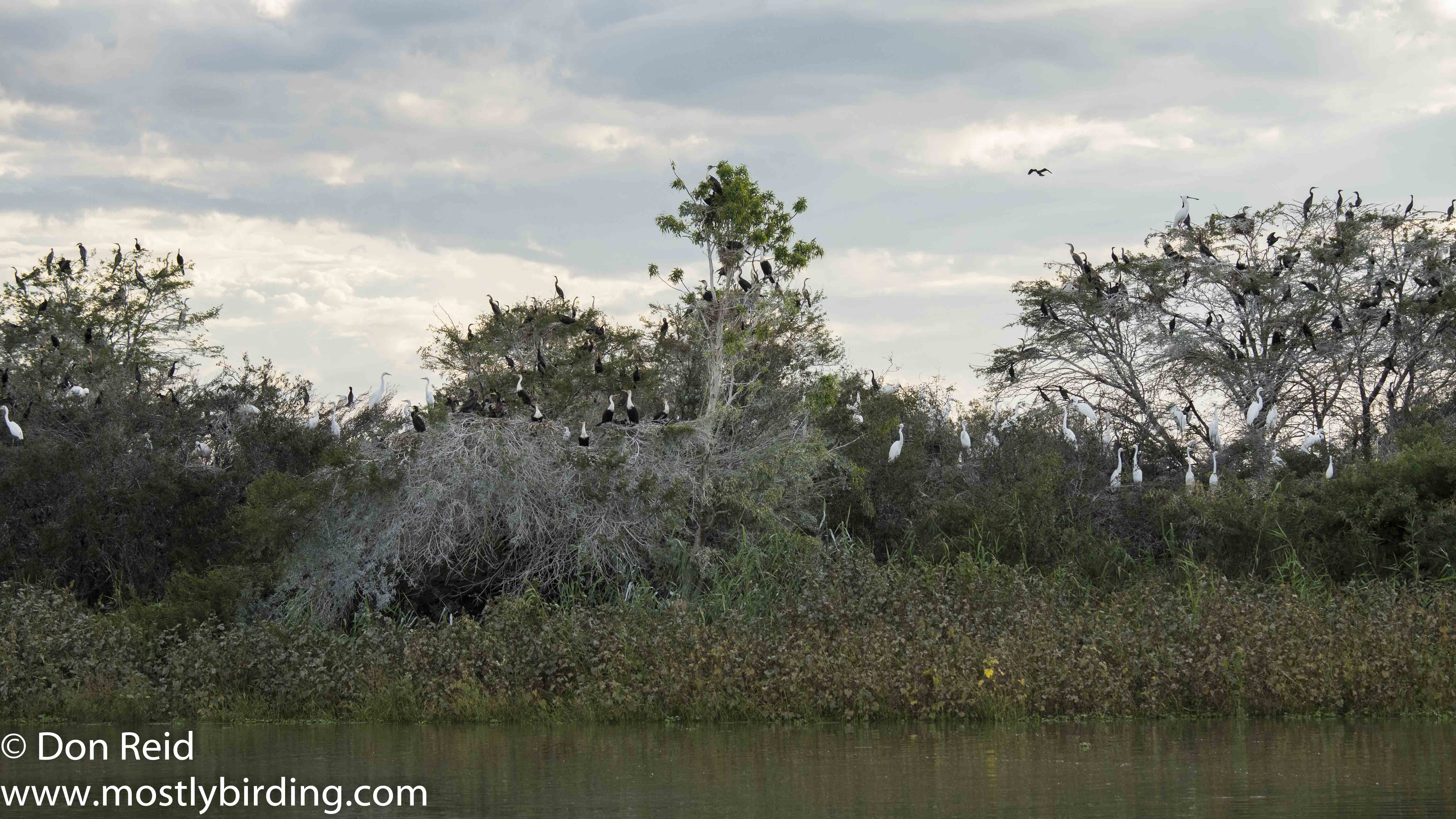
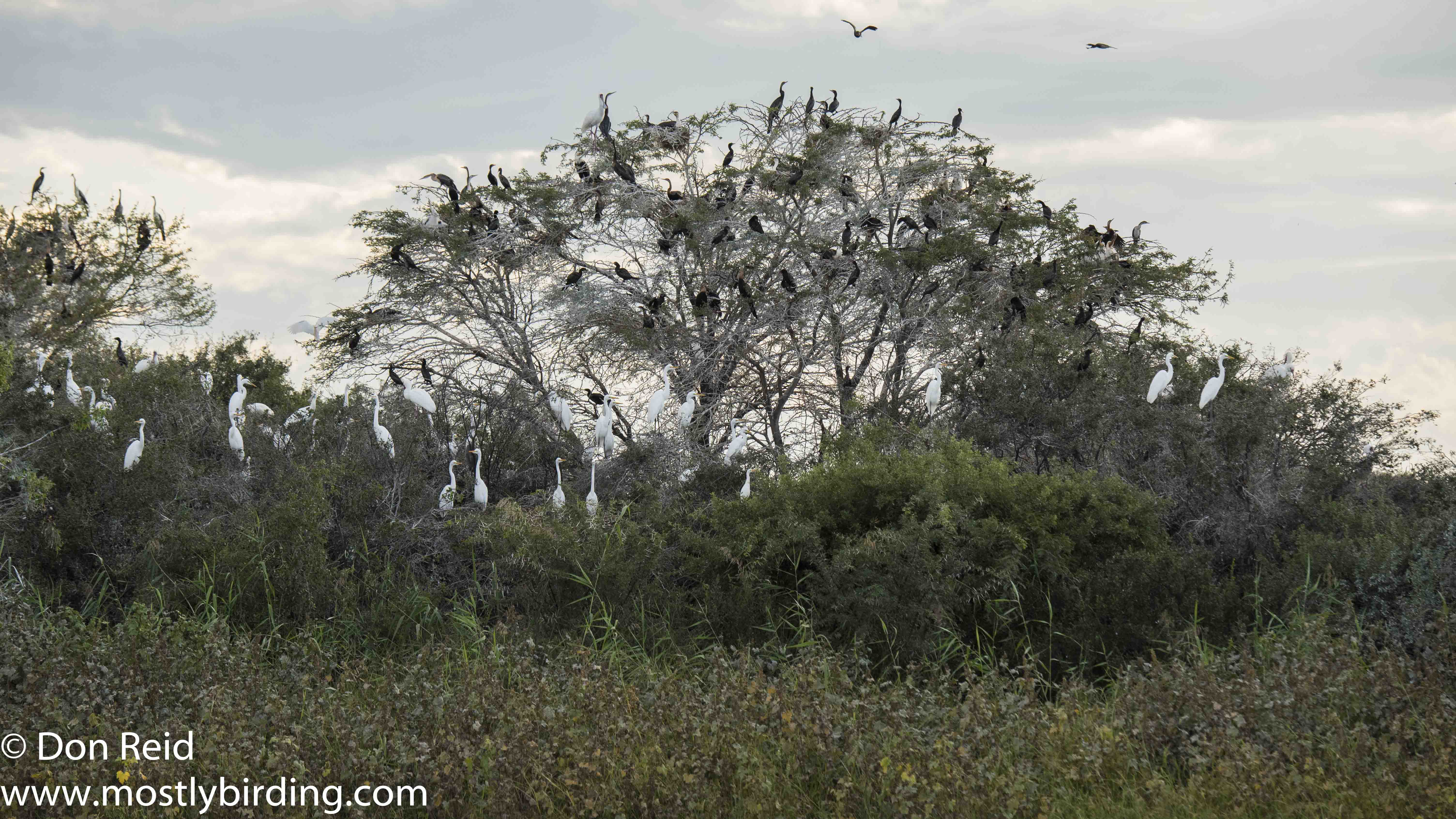
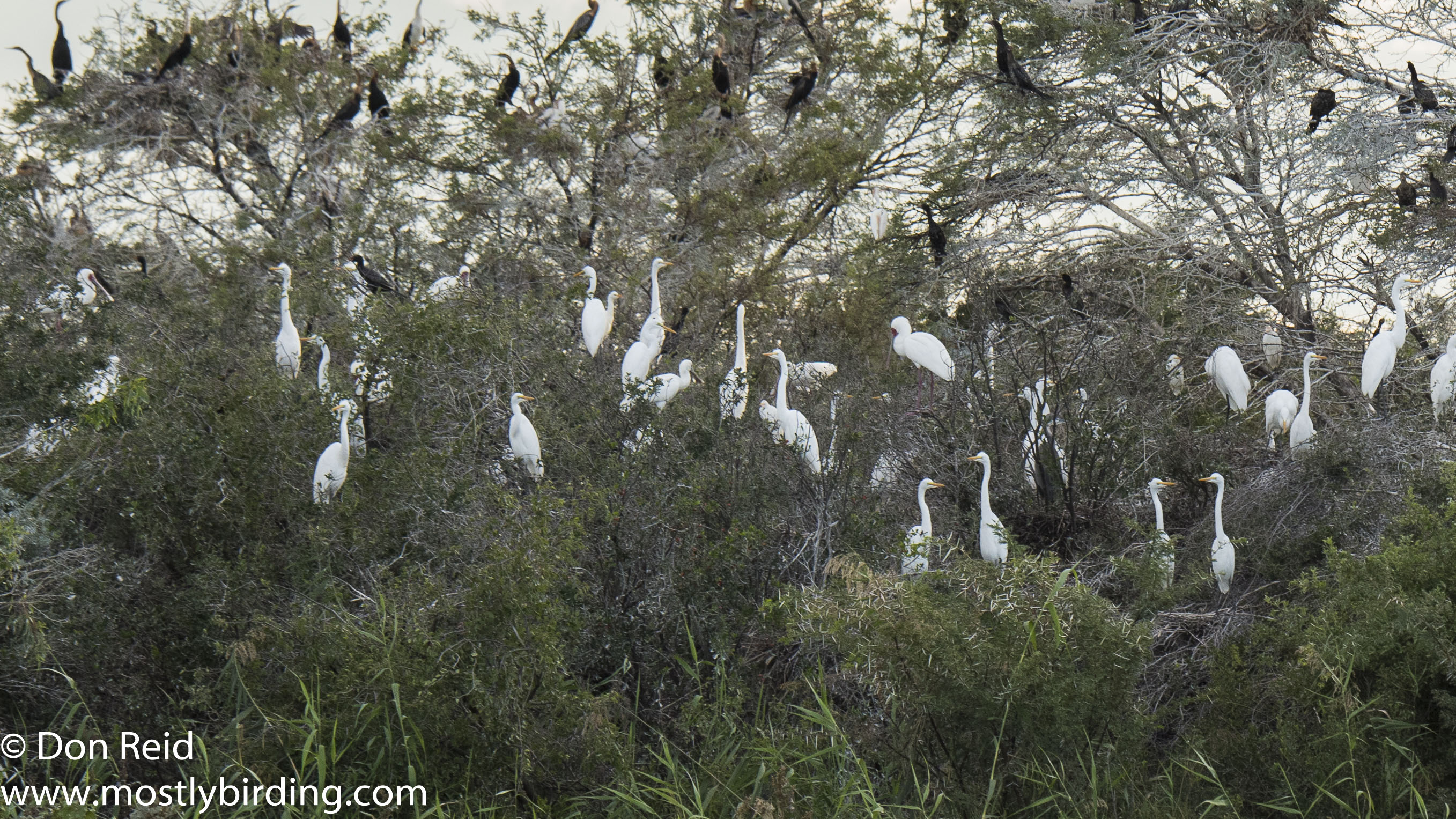
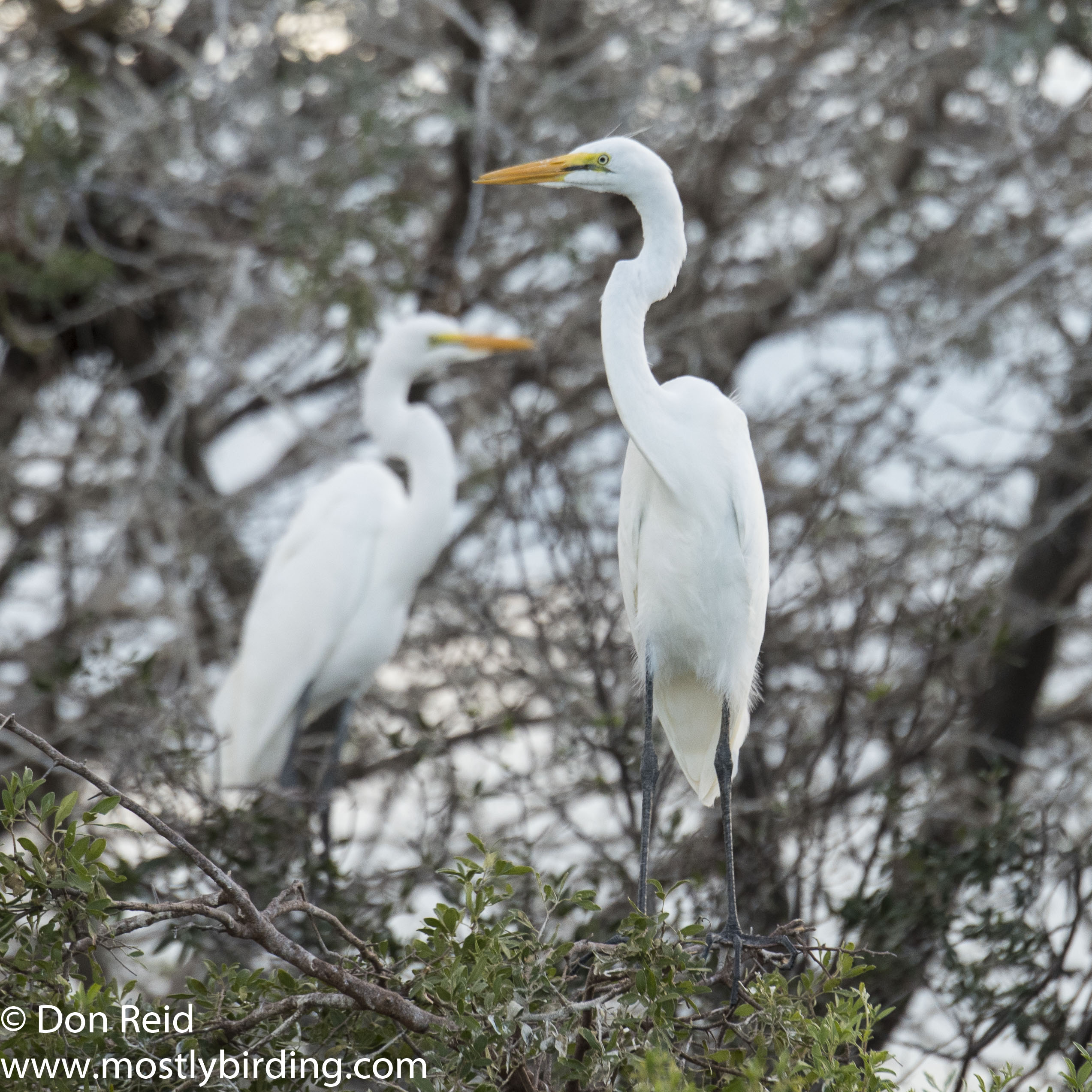
Passing a mid-river island, we saw signs of large colonies of various roosting and breeding bird species along its length. Approaching the colonies, the numbers of birds present were amazing – Darters, Cormorants, Spoonbills, Grey Herons, Yellow-billed Storks and, almost more than all the rest, Great Egrets.
Approaching a part of the massive mixed roostMixed roostMixed roost
I have seen individual colonies of most of these species at one time or another in the past, but never this variety in one place. The trees that made up the roosts were stained white from the bird’s presence and every available perch seemed to be occupied while numbers wheeled overhead, then dove down and pushed and shoved their way in with flailing wings and legs. Quite a sight to behold!
These photos give an idea of the extent of the colonies – just imagine the racket generated by all these birds to get an inkling of the full experience.
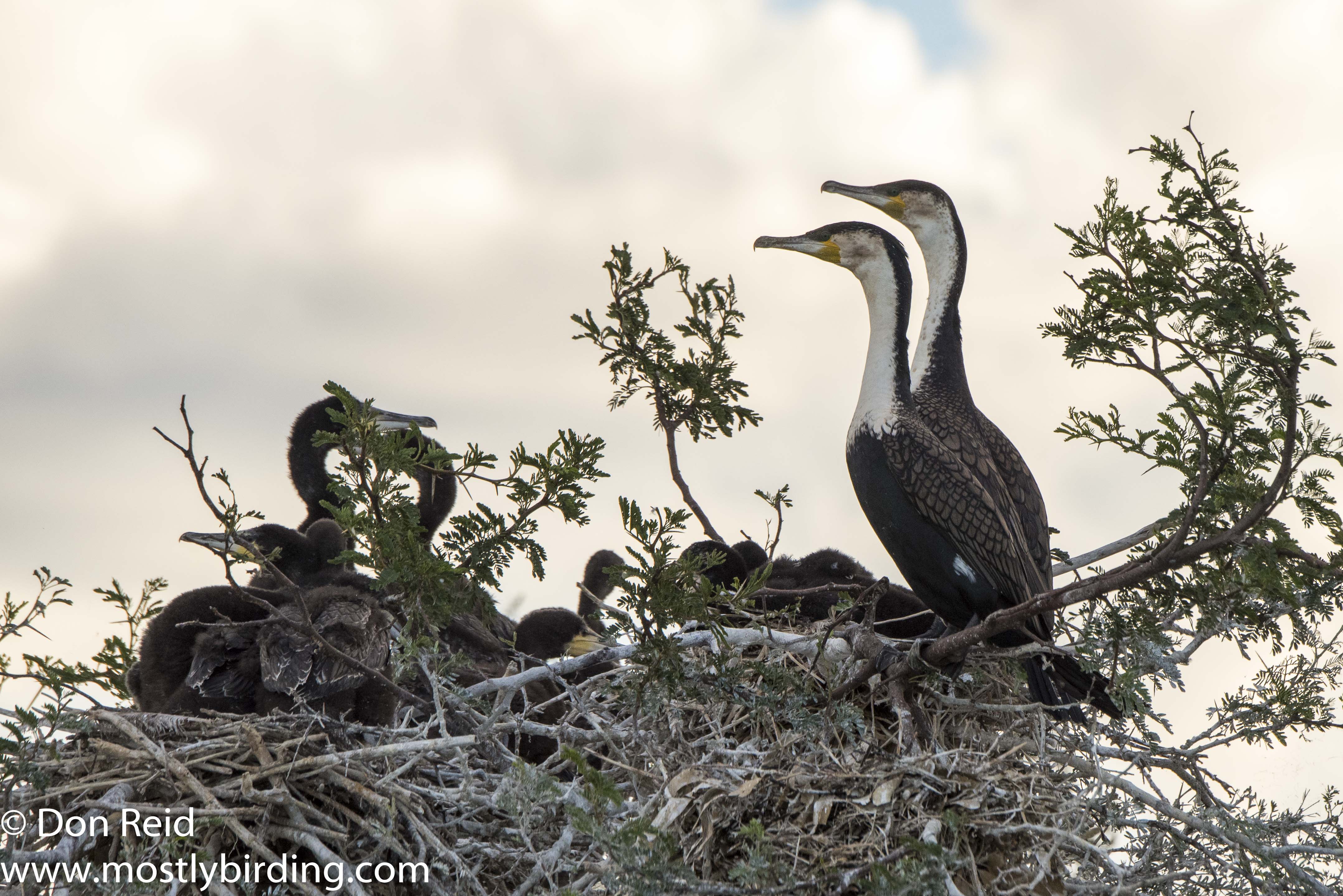
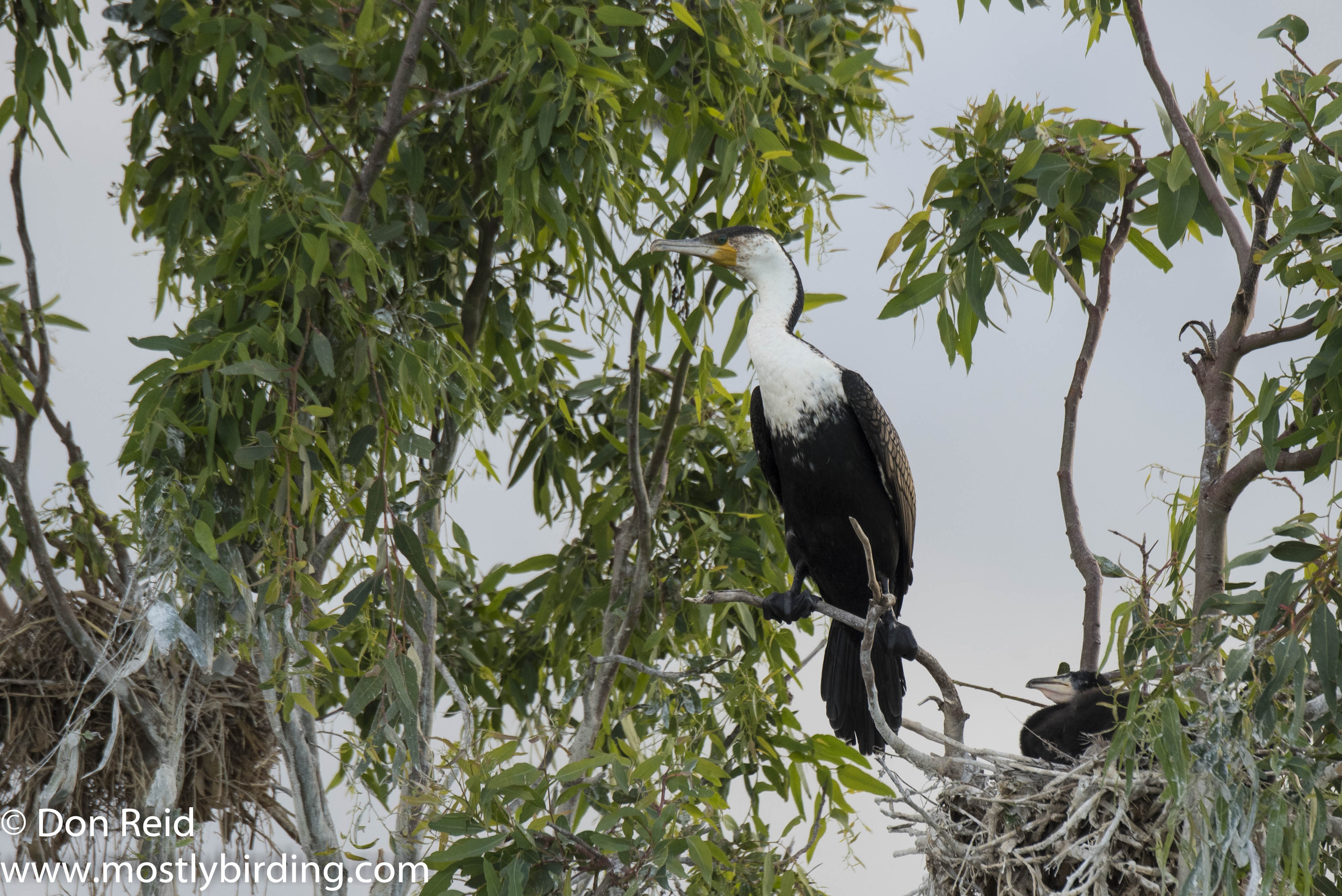
White-breasted Cormorants
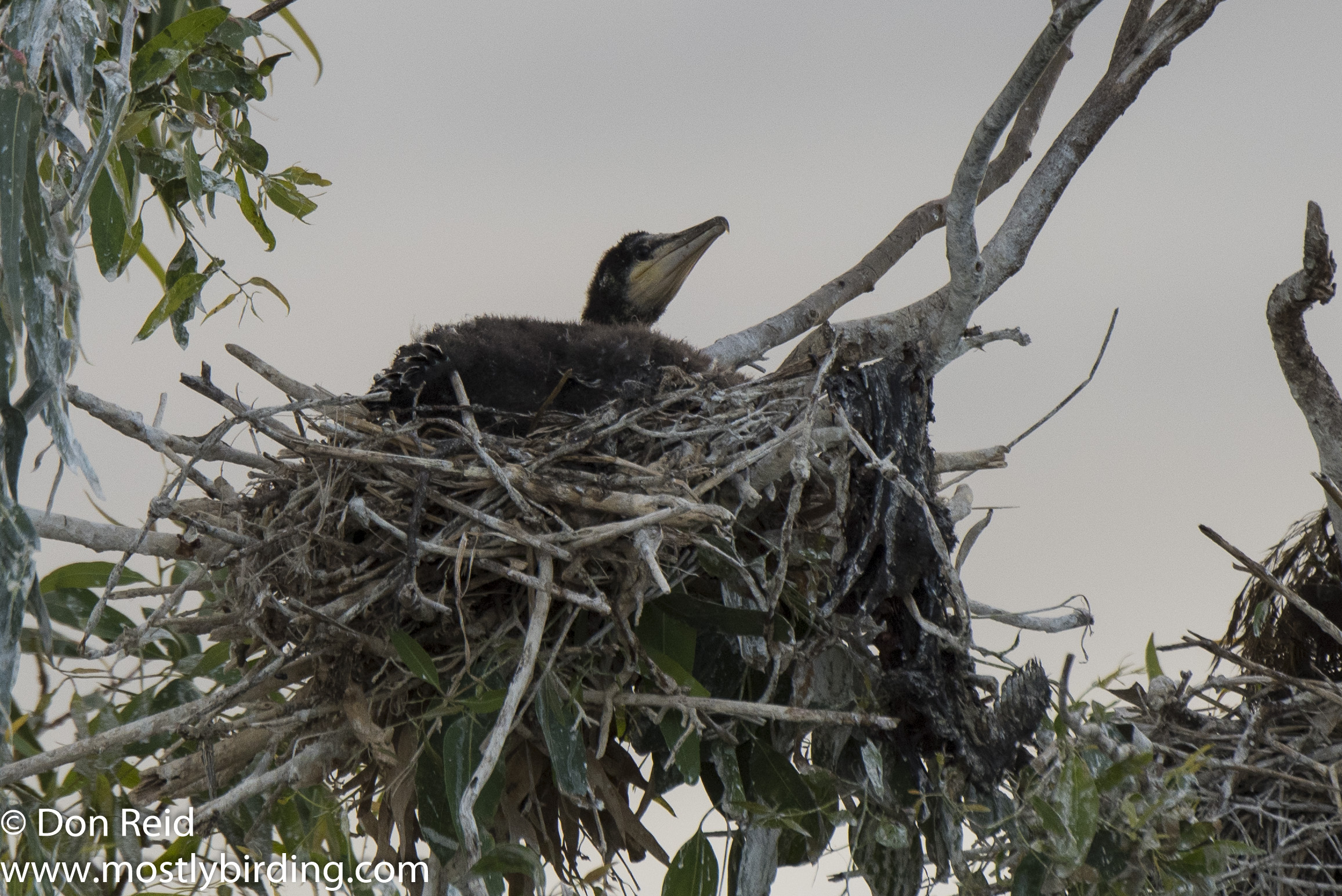
At roostWhite-breasted Cormorant With young at nestYoungster at nestWhite-breasted Cormorant
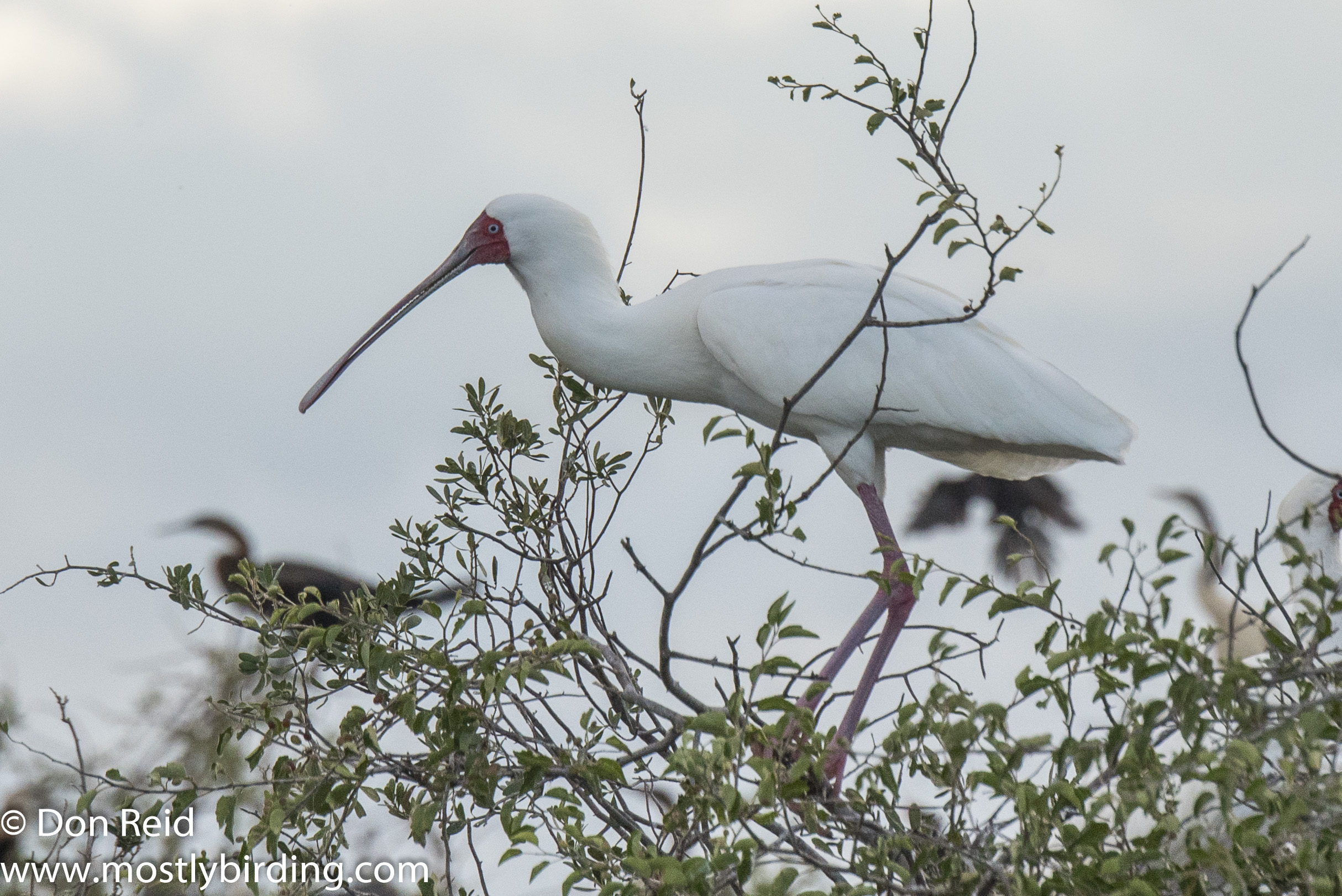
African Spoonbills
African SpoonbillAfrican Spoonbill (Juvenile)
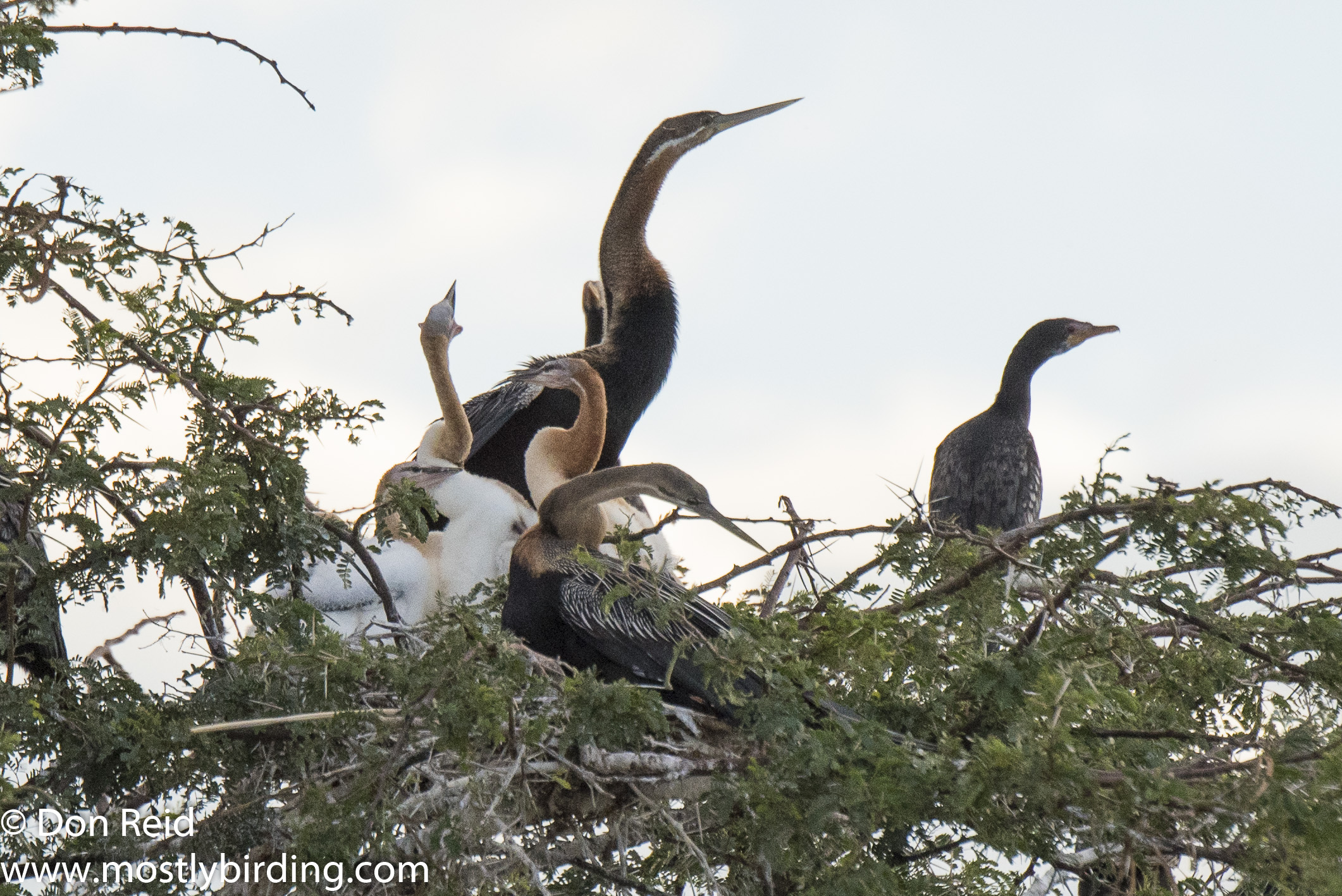
African Darters
African Darter (with young)
Great Egrets
Mixed roostGreat EgretsGreat Egret
By now the sun was heading inexorably to its meeting with the horizon and Pieter took us back along the river to the spot where we had departed from (ooh, there I’ve done it again – the worst of english grammar crimes, ending a sentence with a preposition – but then, I love living on the edge)
Sundowner cruise
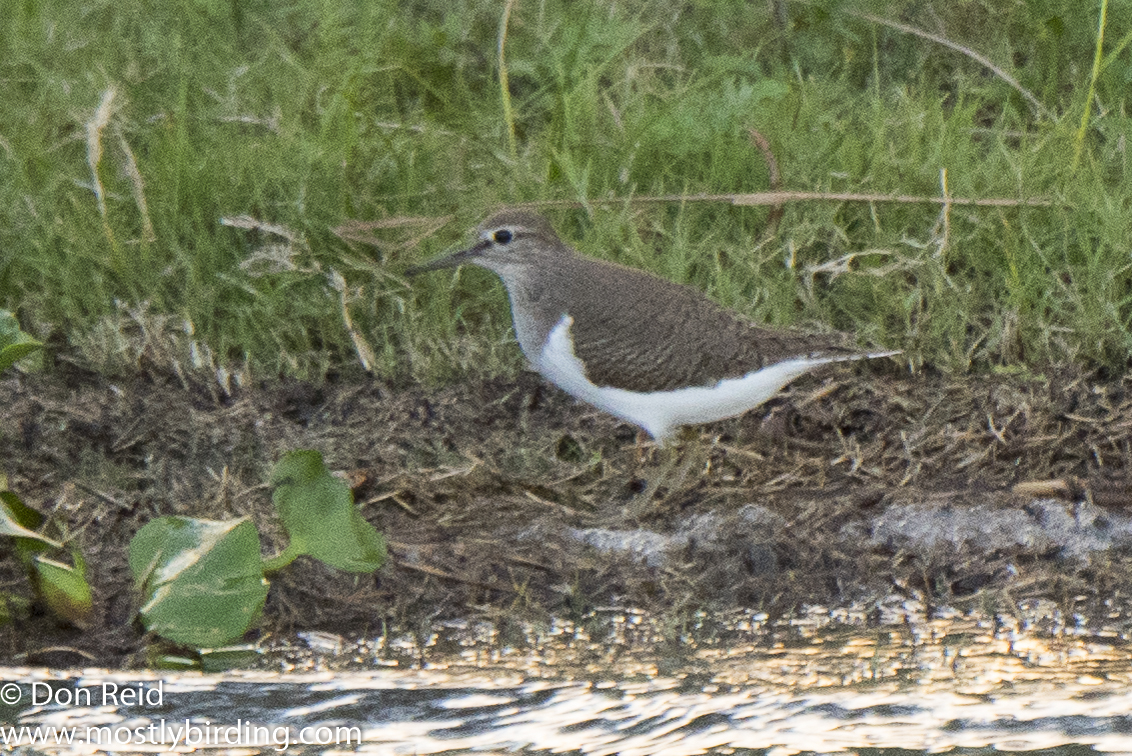
Close to the berth I spotted a Common Sandpiper at the water’s edge………
Common Sandpiper
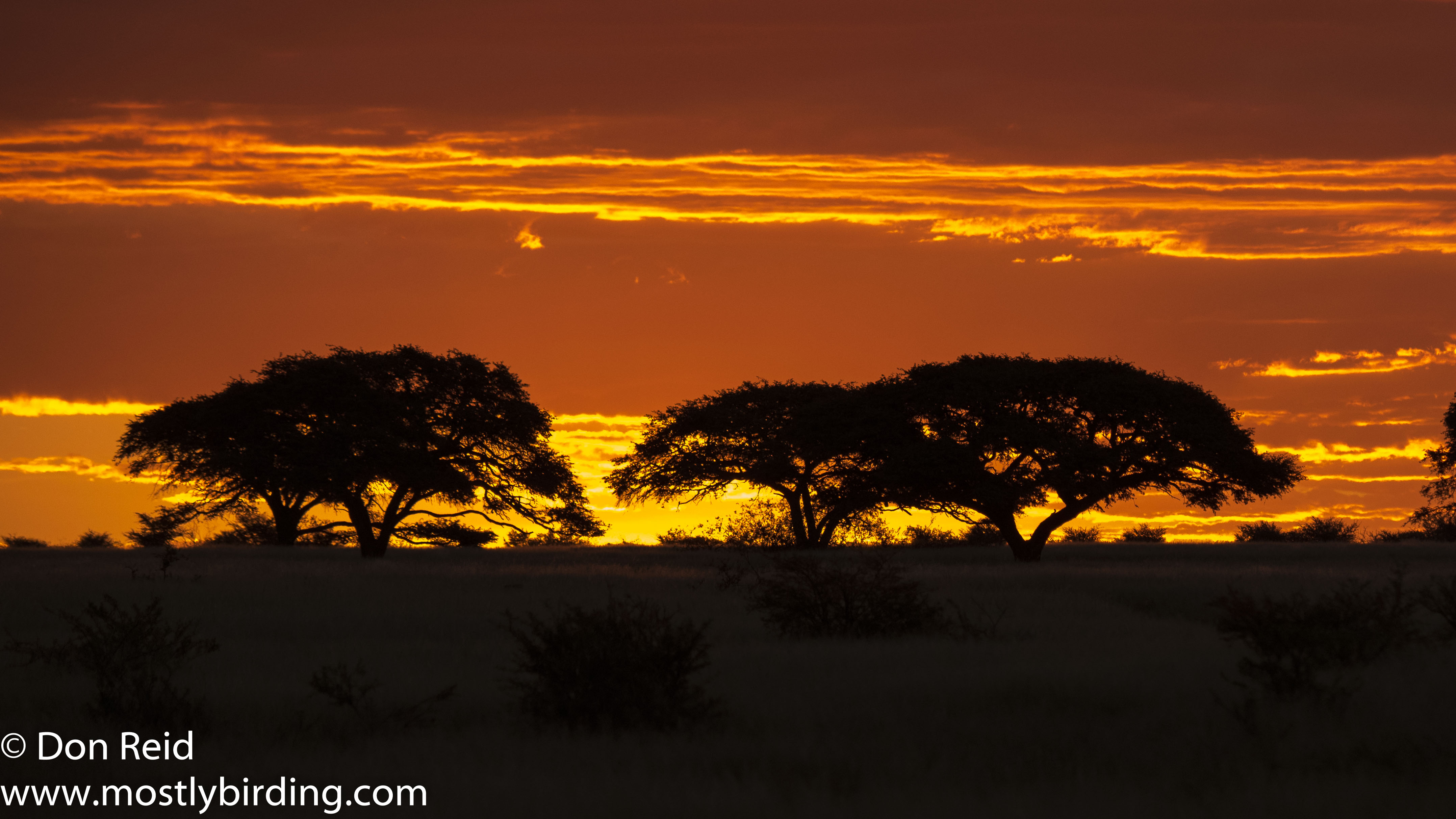
Just to round off a magnificent outing, Pieter took a detour on the way back to the farm-house to show us the deep orange sunset against a backdrop of some picturesque trees. Only in Africa ……
Sunset, Annasrust farm Hoopstad
Now, if only I can get a job as game ranger on the farm……….
I would not have known it if National Geographic hadn’t sent an email notice, but it’s worth mentioning that today is World Lion Day!
In their words…….
“Today is World Lion Day, a day of celebrating the fearsome roars, handsome manes, and adorable cubs of one of the most iconic animals in the world. Lions are incredible creatures: athletic powerhouses and apex predators.
They’re also facing dizzying declines in their population that they are powerless to stop.
Even one lion killed can destabilize an entire region’s prides. And these days, poaching, retaliatory killings, and habitat loss are killing off lion after lion.”
So in our brittle world even the king of beasts is under threat.
The north-eastern part of Free State Province is known as one of the major maize, sunflower and wheat farming areas with its deep sandy soils and seemingly endless vistas across the flat landscape.
By kind invitation of Pieter and Marietjie, part of Gerda’s extended family, we spent a glorious weekend on their farm Annasrust near Hoopstad in April this year, together with our son Stephan and family – pretty much the perfect venue for a relaxing yet stimulating stay, raised to an even higher level by the company, it has to be said.
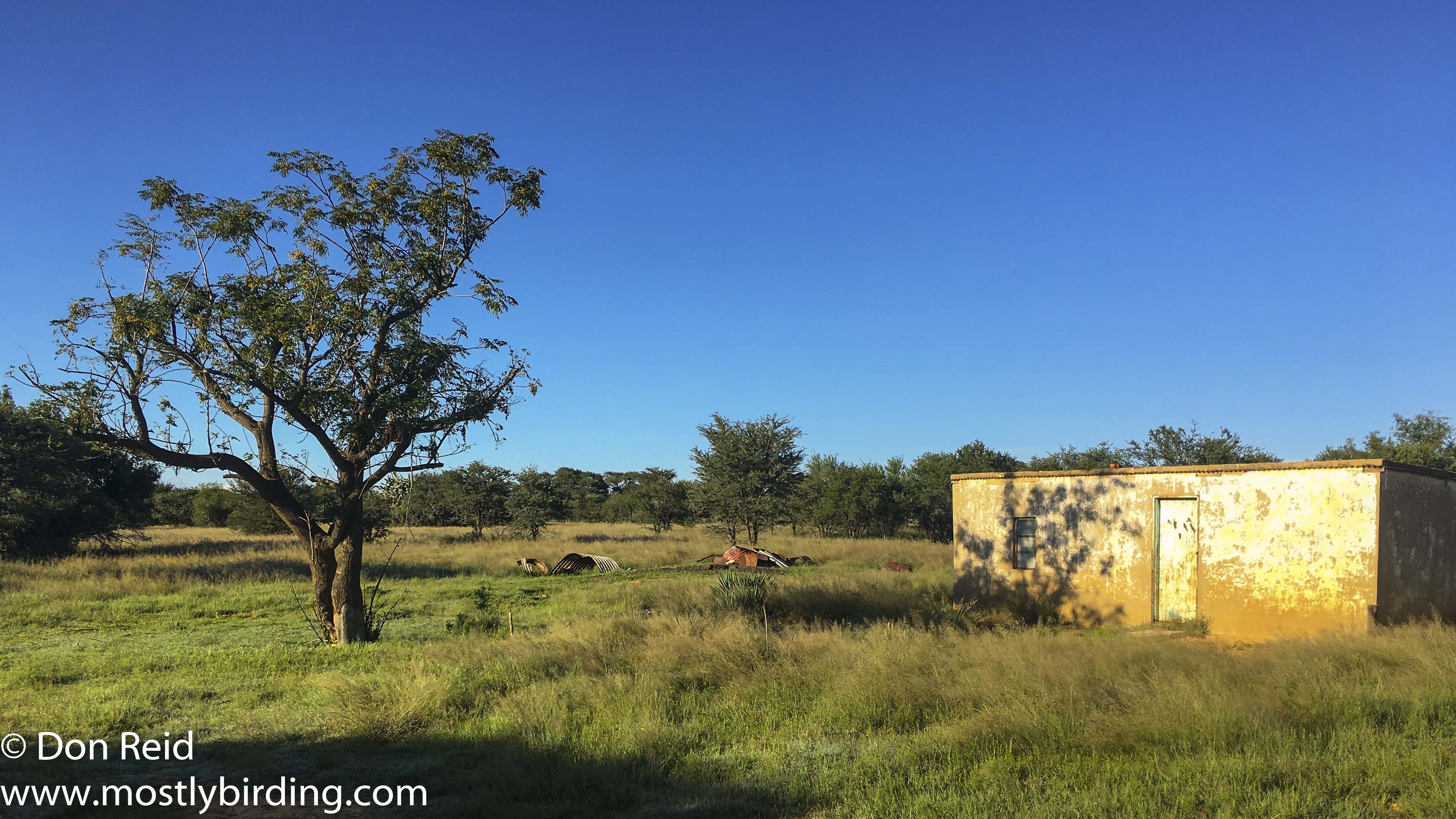
Annasrust farm is not your average Free State farm, lying as it does on the southern shores of the Vaal River (which forms part of the Bloemhof dam at that point) and stocked with a variety of game which enjoy the largely undisturbed plains, making it more of a mini Game Reserve than a farm.
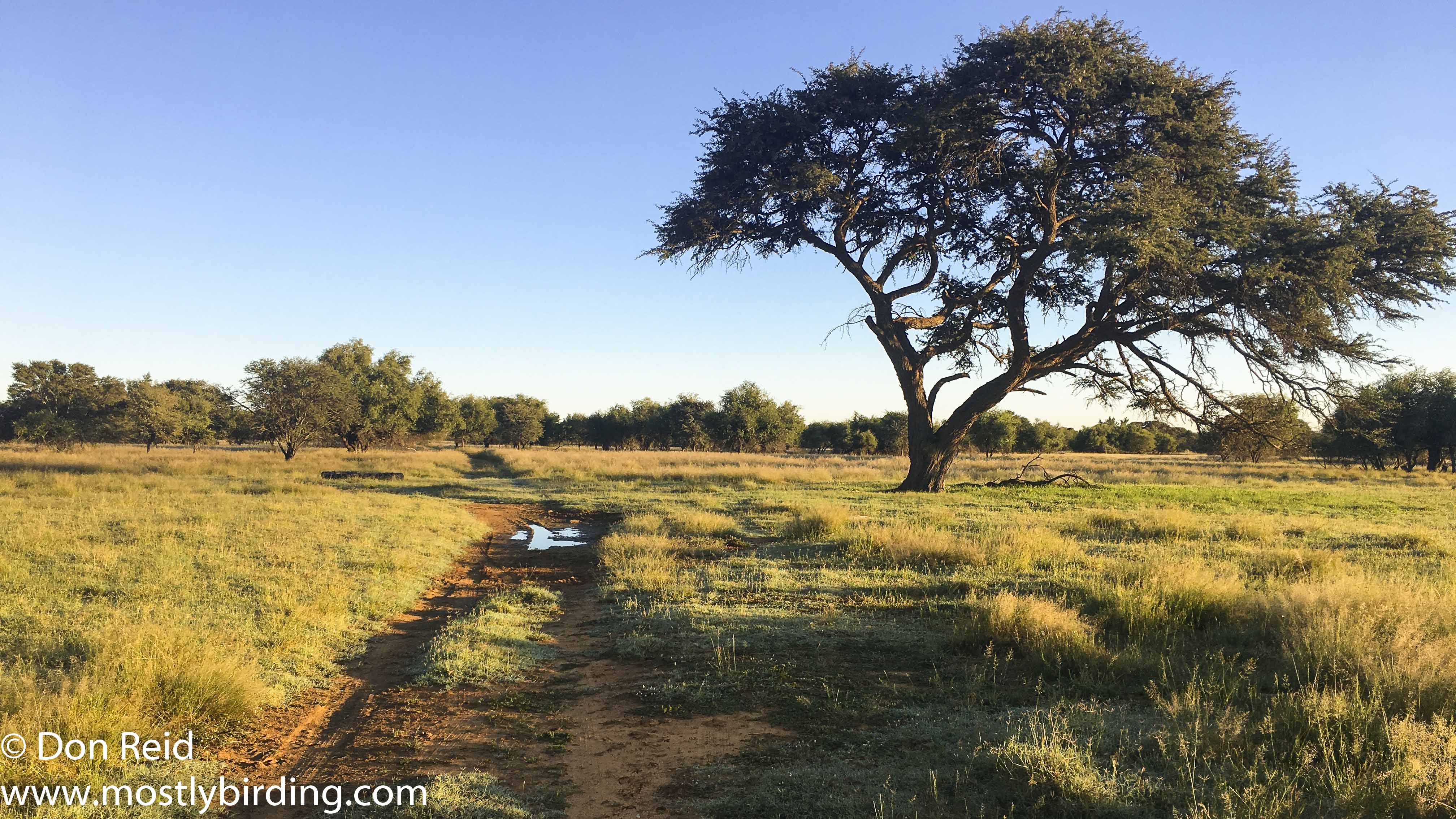
Morning walk, Annasrust farm Hoopstad
With its varied habitats, the farm presents plenty of exciting birding opportunities, which started as we drove from the entrance gate to the farmstead through grasslands interspersed with patches of woodland. Once we had greeted our hosts Pieter and Marietjie and had settled in our house – did I mention we had a house to ourselves? – I recorded the species seen on the way in –
several Northern Black Korhaan rising up out of the long grass and flying off in a wide circle, croaking their objection to being disturbed
Northern Black Korhaan
Ant-eating Chat perched on a termite mound
Sociable Weavers at their enormous communal nest (more fully described in my earlier post Sociable Weaver)
Sociable Weaver, Annasrust farm
the usual doves and Helmeted Guineafowl and a Spotted Thick-knee which seemed to be awaiting our arrival in the middle of the road, only giving way at the last moment
My plan was to do some early morning birding over the two-day stay, leaving the rest of the day for family activities and any ad hoc birding opportunities that may arise. The only decision needed was whether to head out on foot, limiting the area I could cover, or to take the Prado and explore further and wider. In the end I chose the walking option, one of my favourite forms of exercise and one that trumps any other way of getting close to nature in such beautiful surroundings
Saturday morning
Early morning at the farm houseHeading out for a morning walk
Sunrise was at 6.30 am and I was on my way a few minutes later – almost immediately I heard a soft piping call – vaguely familiar and I scanned the tall blue gum trees near the house. I soon found the responsible bird – a Gabar Goshawk which was seemingly agitated by a group of cackling Green Woodhoopoes who had dared to trespass in his territory.
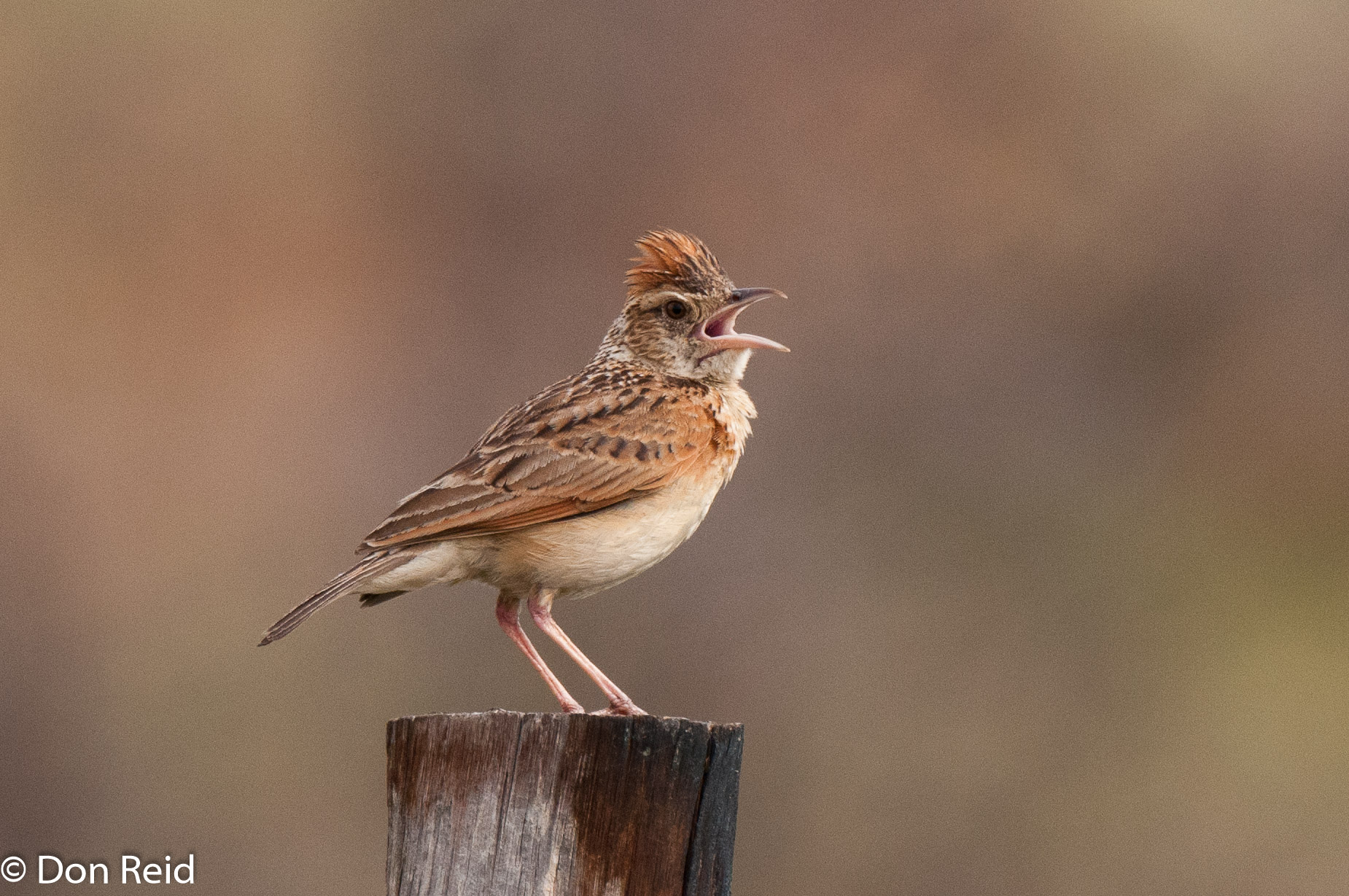
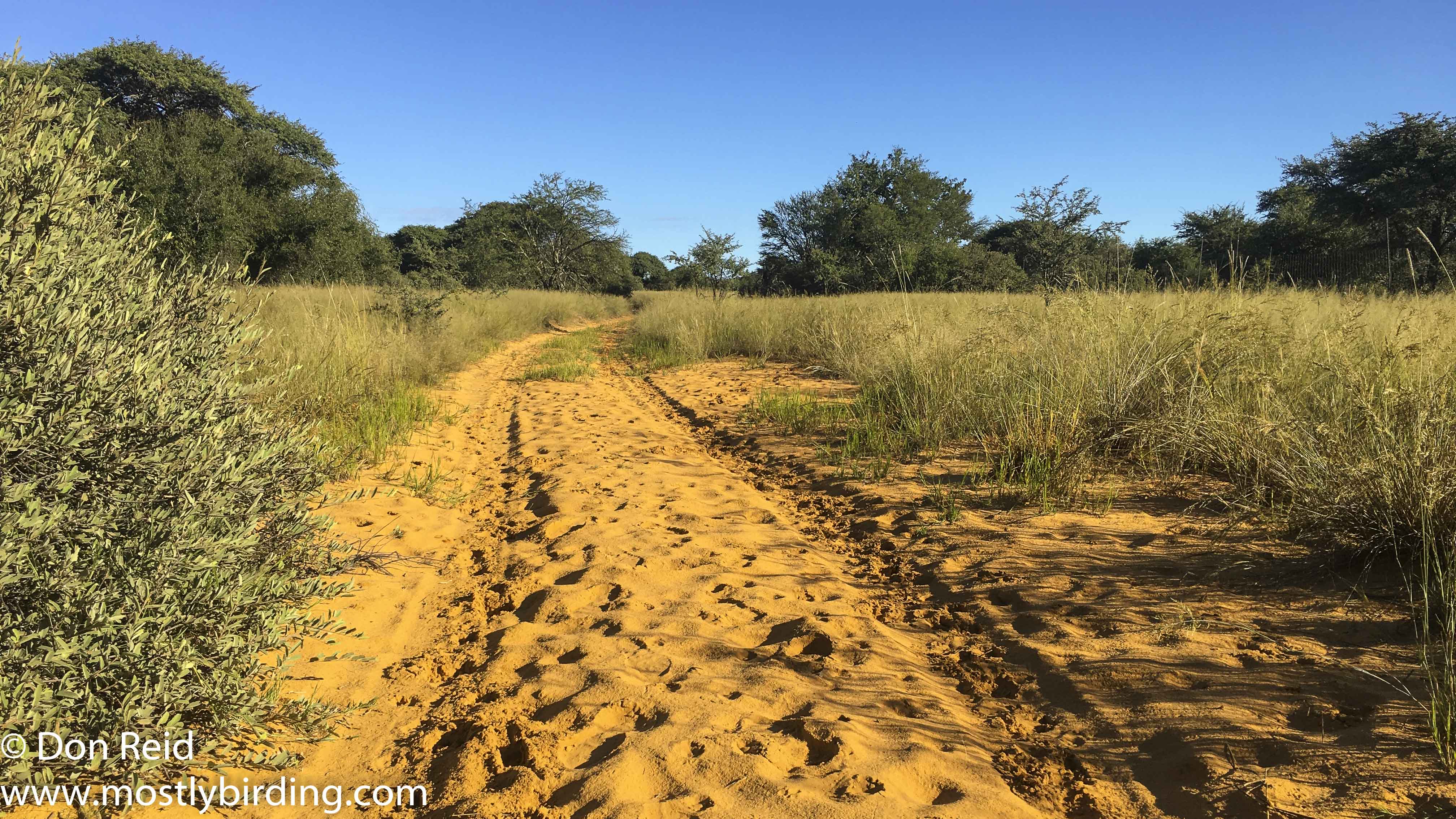
The more familiar call of Rufous-naped Lark – a clear, plaintive “tswee – twooo” – accompanied me as I walked along the sandy track lined with long grass both sides, wet with morning dew.
Rufous-naped Lark
A bushy tree some way ahead drew my attention – the whitish blob did not fit the pattern of the rest of the tree and through my binos it turned almost magically into none other than a Pearl-spotted Owlet – I had scarcely begun my walk and already had a highlight of the morning. I cursed the fact that I hadn’t taken my camera and turned to go and get it, just as the Owlet disappeared.
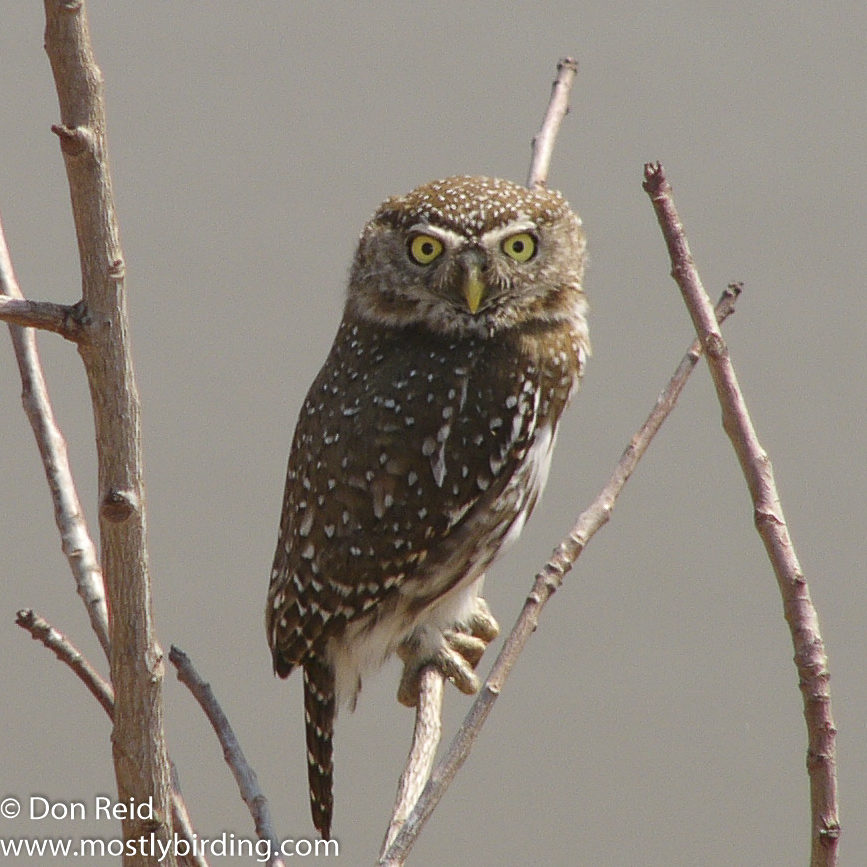
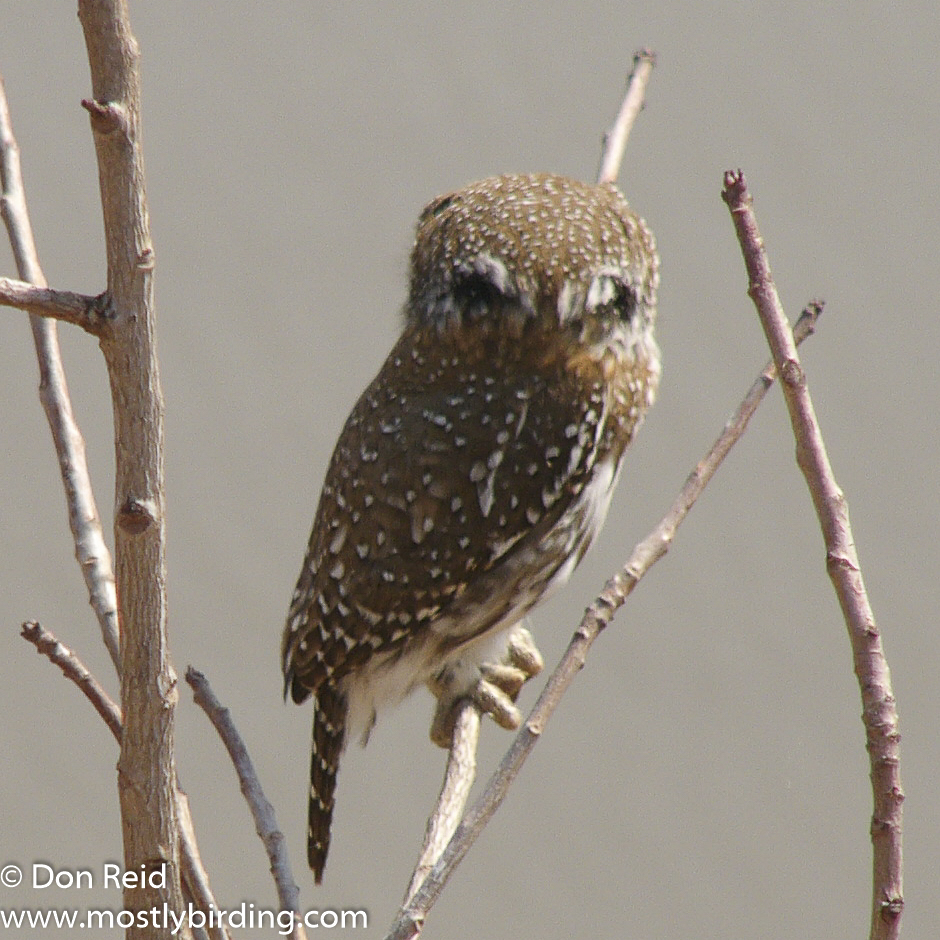
This tiny member of the Owl family has to rate as one of the cutest birds around – all fluffy and round with those penetrating yellow eyes and if you’re lucky it will perform its party trick of turning its head 180 degrees to show you the back of its head, complete with false “eyes”.
I found these photos in my archive from 2007 which show the front and back “eyes”
Pearl-spotted OwlPearl-spotted Owl
The walk continued with regular sightings of some less common arid bushveld species –
Kalahari Scrub-Robins calling, but difficult to spot amongst the foliage
Barred Wren-Warbler emitting its trilling call that can be heard at a distance despite its small size
Groundscraper Thrush perched high up in a tree and calling melodically for minutes on end
Pririt Batis with its descending, drawn out series of short whistles, heard initially then seen later
An isolated outbuilding which seemed not to be in use, had attracted a pair of Ashy Tits, not seen by me in a few years, while Scaly-feathered Finches occupied a nearby tree along with an excited pair of Neddickys.
Morning walk, Annasrust farm
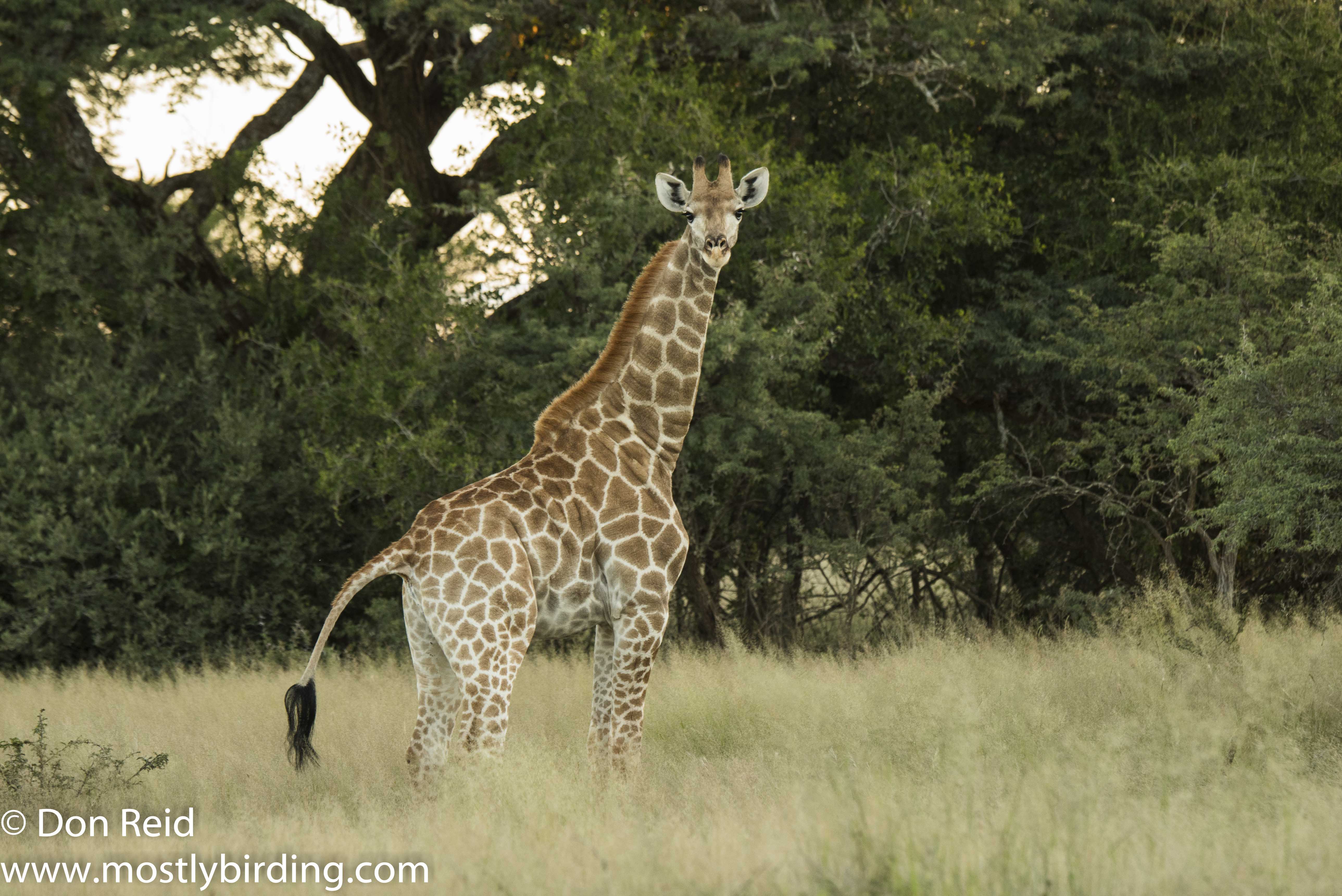
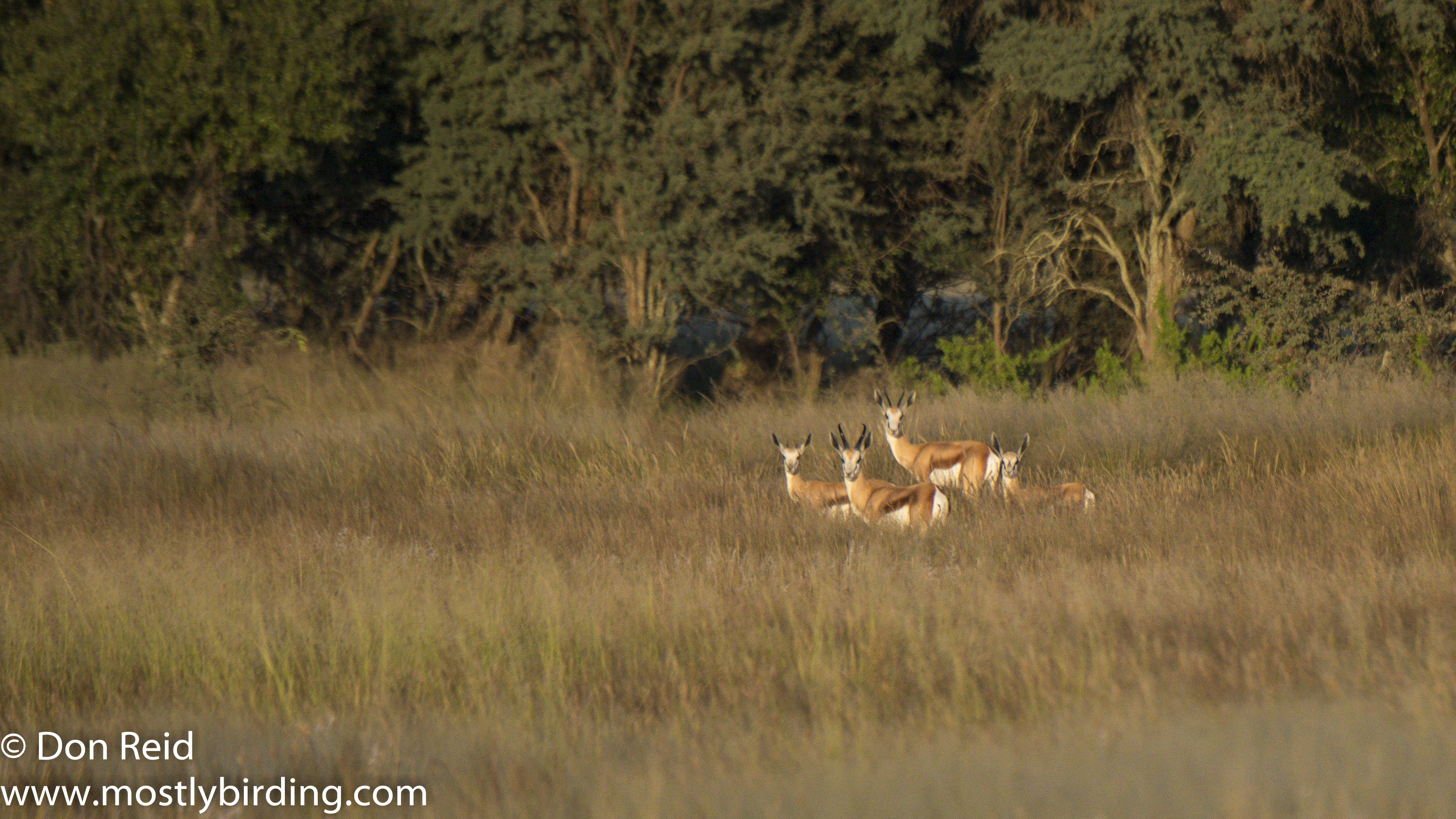
And being a game farm there were other sightings of a few of the animals that roam the grasslands ………….
By now I had been walking for an hour and a half and could feel breakfast and coffee beckoning so turned back and headed for the farmstead, where I took off my shoes which were wet through from the dew and caked with the sand from the tracks and left them in the sun to dry out.
Breakfast was duly enjoyed with the family – a feast of fruit platters conjured up by Gerda and Liesl, followed by a baked egg and bacon dish which really hit the spot. The rest of the day was given over to long chats, a midday snooze and a stunning late afternoon river cruise (more about that in the next post)
Sunday morning
I was up early and out again for another extended walk, this time my plan was to do a circular route past the old house, down to the river and back along the riverside fence where I would look for the most direct route homewards.
Morning walk, Annasrust farm HoopstadCamelthorns – they make good toothpicksSpot the butterfly!
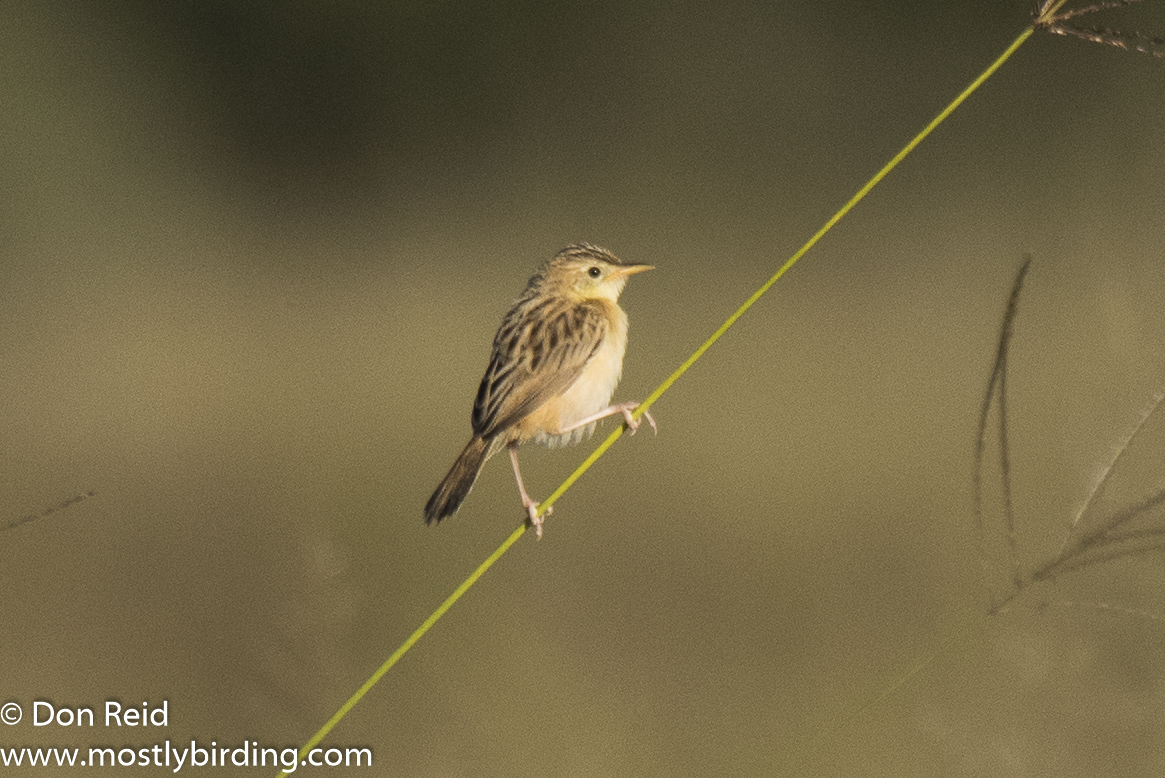
Initially the birds I encountered were mostly the same as the previous morning, then Zitting Cisticola showed, fluttering over the long grass and Cape Penduline Tit made a welcome appearance, moving restlessly among the bushes.
Zitting Cisticola, Annasrust farm
Before reaching the river I added White-browed Sparrow-Weavers to the list and at the river the shallow flats were a moving feast of birds with Yellow-billed and Little Egrets and Cape Teals prominent amongst many others and White-winged Terns flying in elegant fashion just above the water, turning and retracing their path every 50 metres or so.
The river, Annasrust farmDragonfly, Annasrust farm
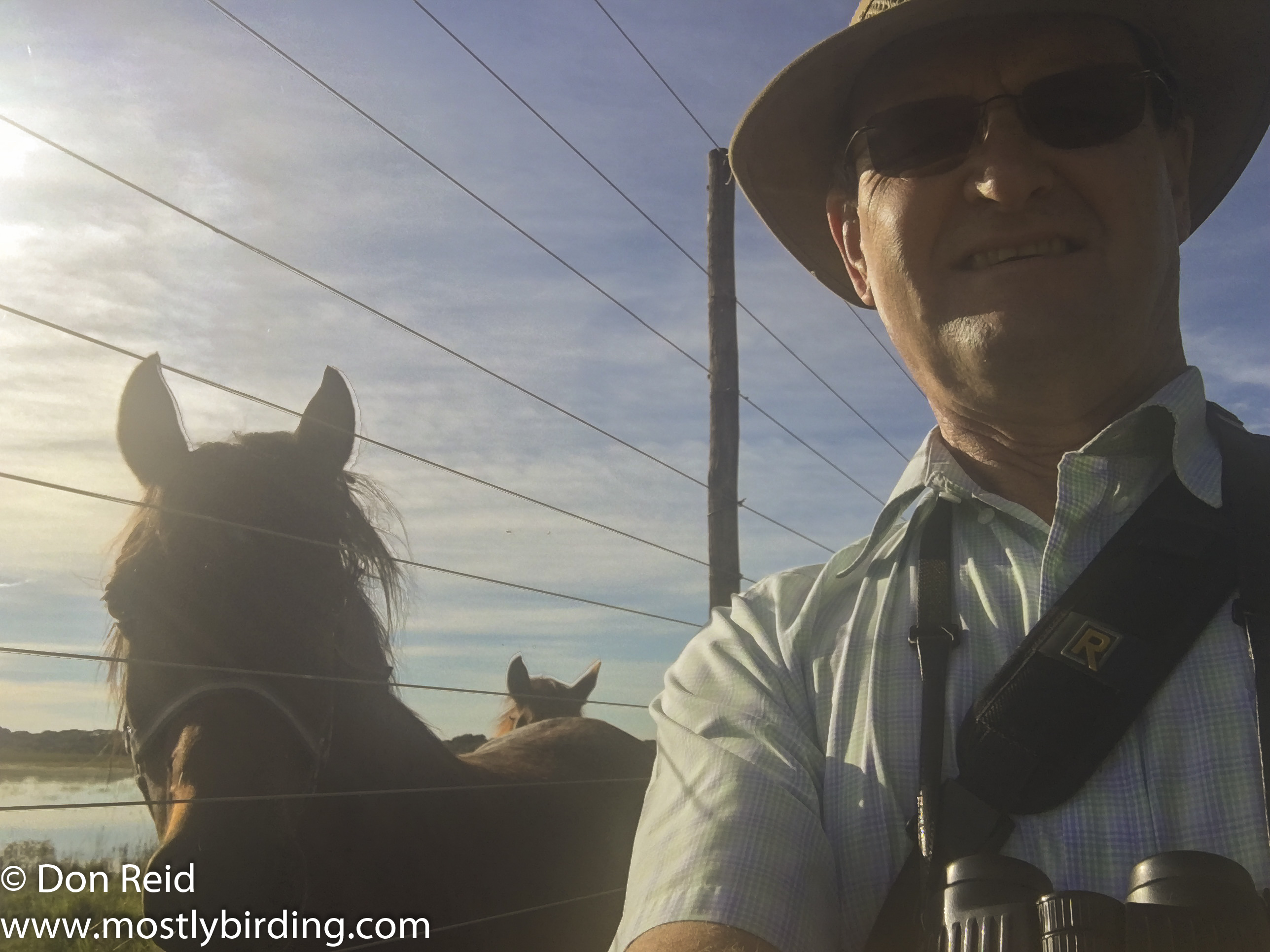
Walking along the fence, two grazing horses followed me on the other side – hoping for a treat perhaps? I don’t usually have an affinity for horses, so tried to ignore them but they followed me all the way to where I turned for home.
Reluctant Horse whisperer!
Two hours of walking had left me quite weary and caffeine deprived, so I took the shortest route back to the house where the family were slowly emerging and I was in good time to join them for much-needed coffee.
Later that day we reluctantly left this bit of paradise and headed back to Pretoria – the slow drive out of the farm and along the first stretch of road past Hoopstad was good for a few interesting species to round out a memorable weekend –
Shaft-tailed Whydah
Long-tailed Paradise Whydah
Lesser Kestrels in numbers on the overhead wires
Namaqua Doves
A lone White Stork
I can recall reading an article many years ago on a visit to the Free State in which the writer suggested a weekend in the Free State is like a week in the country – I would tend to agree.
Work and other commitments had kept me from any regular atlasing, other than our Drakensberg escapes, since January 2018, so I welcomed the Human Rights holiday on 21st March, bang in the middle of the working week and I just had to get out and do some atlasing.
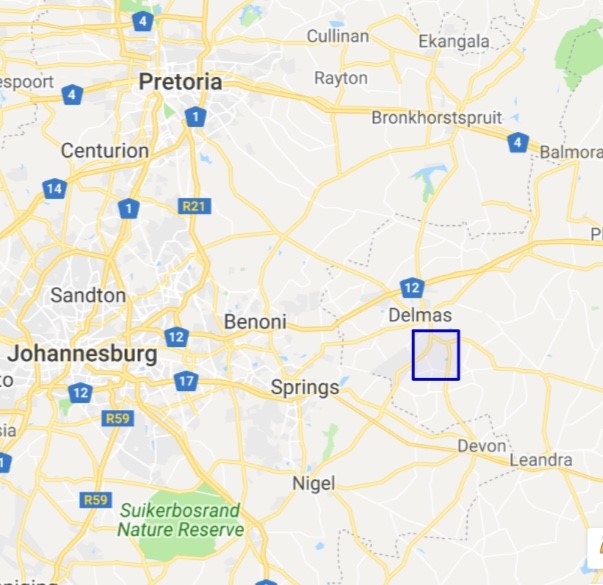
Looking at the 2018 pentad map for Gauteng the previous evening, the closest pentads that met my criteria (not atlased in the current year) and fell south of the N4 highway (my arbitrary dividing line when deciding whether to venture north or south from Pretoria) were in an area south of Delmas and I selected two as my target for the next day. The first was :
Pentad 2610_2840
Indicated by the blue rectangle on the map –
Pentad 2610_2840 south of Delmas, about 70 Km from Pretoria
I set off from our home in Pretoria in light rain at about 5.30 am, hoping the rain would dissipate, which it fortunately did, and was into the first target pentad an hour later. I initially stayed on the R50 main road which was quite busy with coal-hauling lorries despite the holiday (the coal mines and the power stations they feed obviously don’t get to close down) so whenever the opportunity presented itself I pulled off onto the gravel margin and drove slowly but bumpily along to keep out of their way.
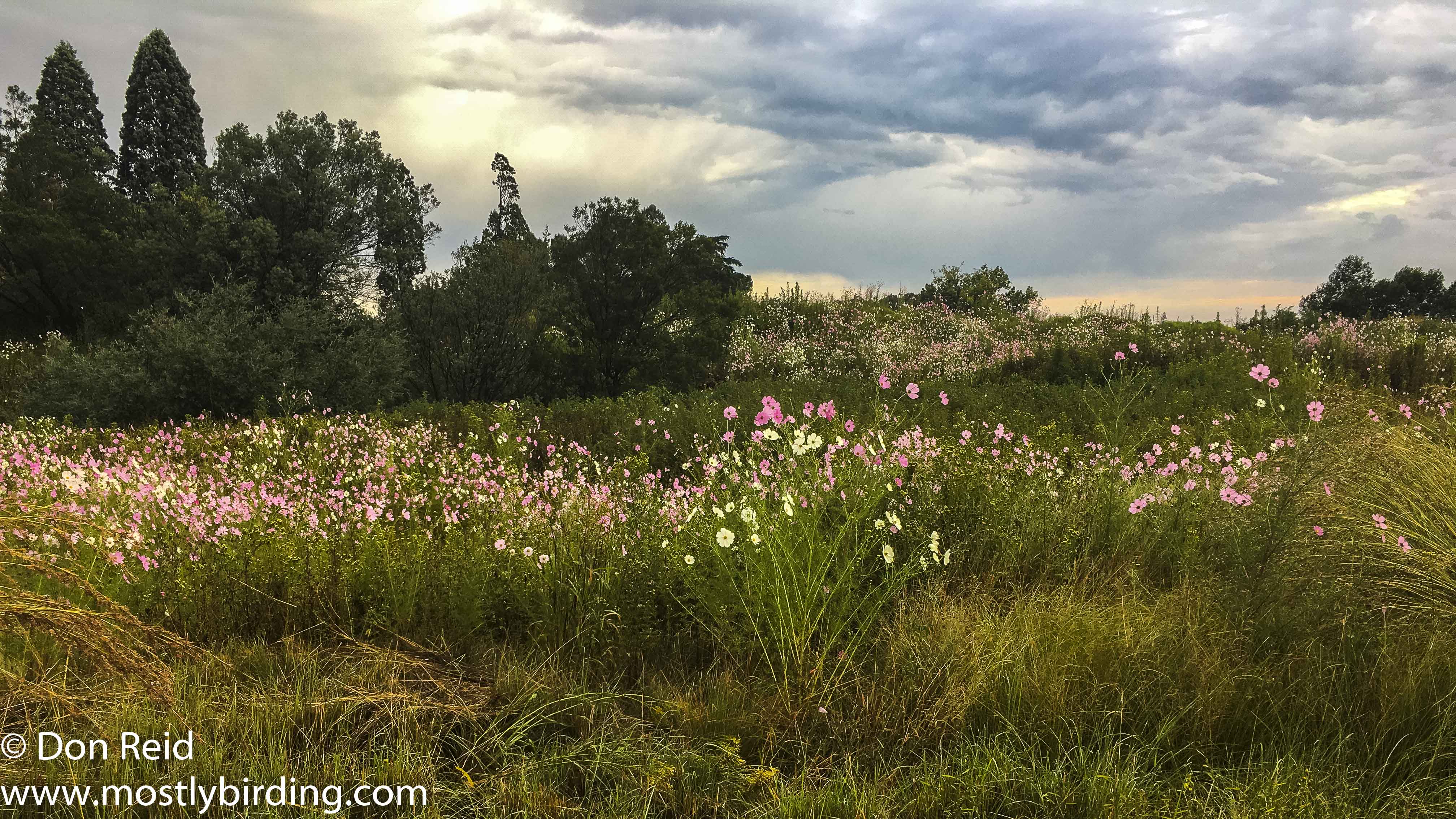
The Cosmos flowers along the road verges made for an attractive background, interrupted by the coal mining activities that have despoiled large tracts of land in this part of SA. For more on the Cosmos flowers go to my earlier post – Cosmos time
Cosmos time, Delmas south Not exactly a warm welcome – coal mining and roadworks ahead!
After recording what I could in the first few kms, I was glad to reach the R548 turn-off and proceed south along this far quieter road. I soon passed Leeuwpan, a large pan which in previous years was filled with water and teeming with water birds, but was now bone dry with no visible birds other than a few Spur-winged Geese (Wildemakou / Plectropterus gambensis) half hidden by the long grass. Good rains had fallen in Gauteng over the last few weeks to make up for the relatively dry summer, but clearly not enough to make much of an impact on these pans.
My pentad list grew slowly with species mostly typical of the limited habitats – grassveld patches between cultivated lands with near fully grown maize and soya crops, elsewhere restricted mining areas blocked any thoughts of exploring further.
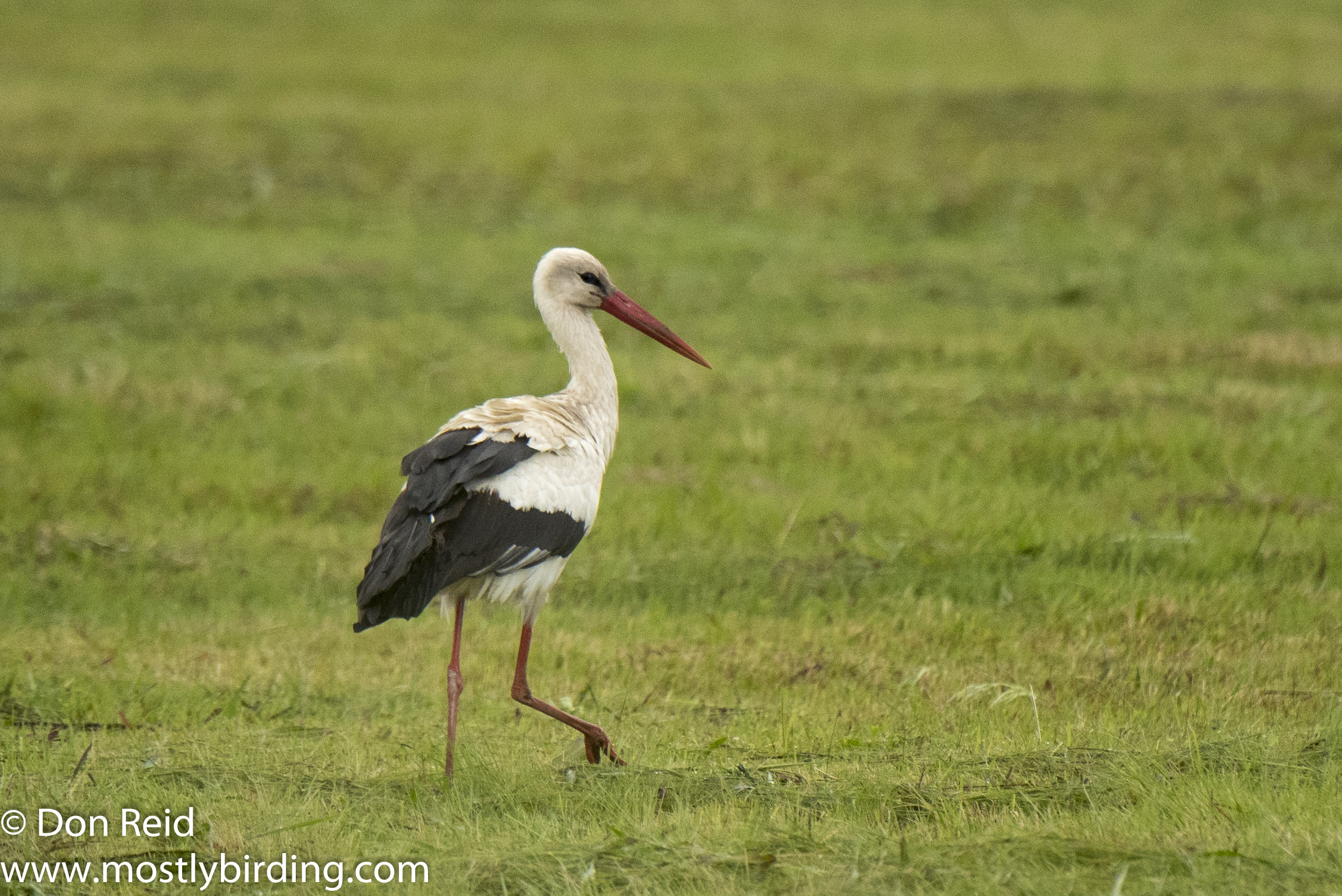
My first surprise sighting of the morning came in the form of a lone White Stork (Witooievaar / Ciconia ciconia).
White Stork, Delmas south
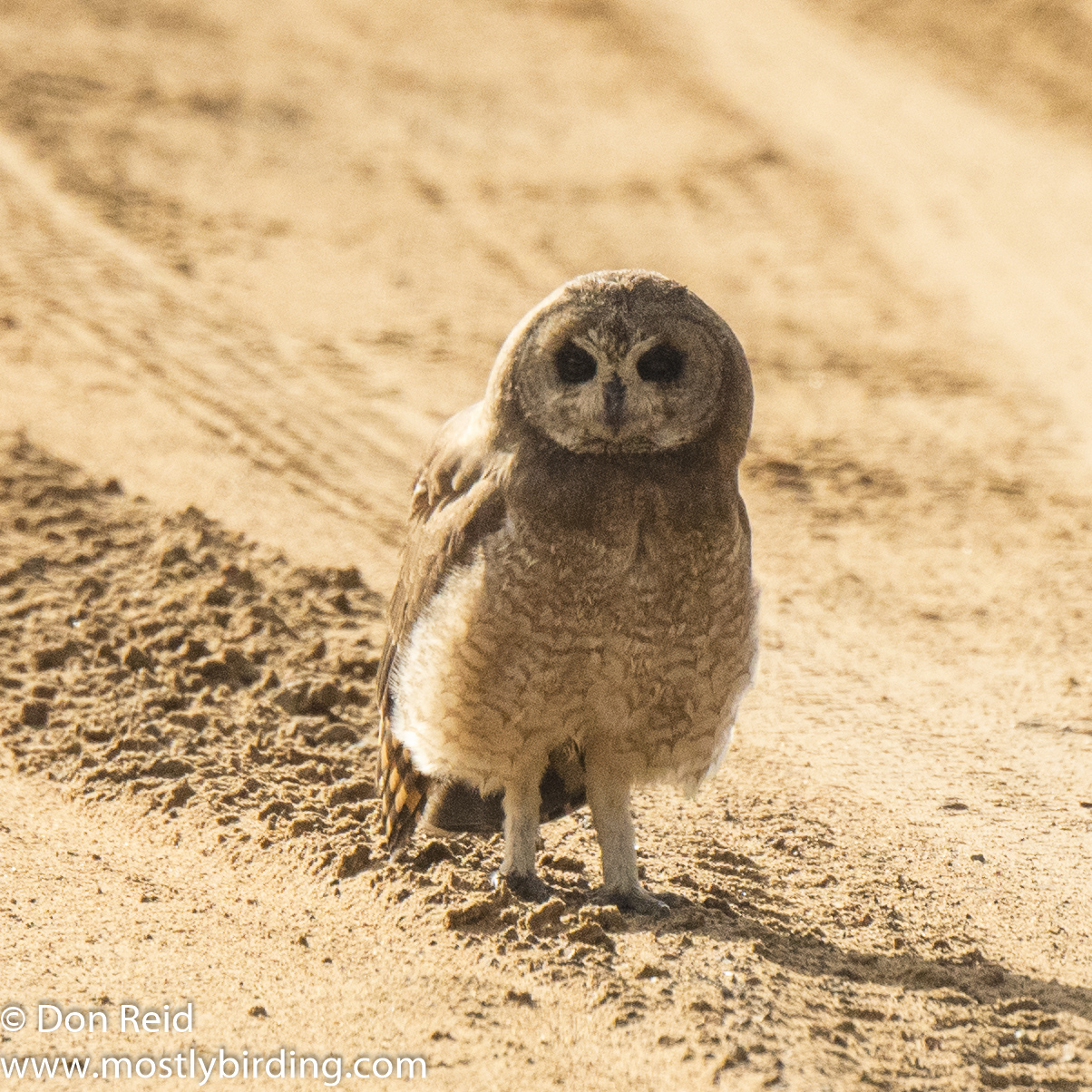
This was followed soon thereafter by an even bigger surprise when I explored a sandy side road and spotted something in the middle of the road far ahead, which turned into an owl as I raised my binoculars to my eyes. I approached as quietly and cautiously as my vehicle would allow and was able to confirm my initial thought that it was a Marsh Owl (Vlei-uil / Asio capensis) – on the basis of it being the most likely owl in the area and the moist grassland habitat surrounding us at that point.
Marsh Owl
Thankfully no other traffic came by to interfere with my attempt to photograph this species – contrary to other species which are usually easier to photograph at rest than in flight, the only photos I have of Marsh Owl are in flight, so I was pleased to add these photos to my collection.
Unfortunately their habit of sitting in the road, especially after dark, can be this owl’s undoing – they are often victims when the lights of an oncoming vehicle blind them and they don’t fly off in time. Many are killed in this way, particularly during harvesting of the maize when they tend to feed on spilled corn kernels along the roads in the maize areas. It’s pleasing to see signs erected on some of the busier roads warning against this danger (to the owls) – if only more people would respond by being more vigilant while driving at night.
Reaching the southern boundary of the pentad with some time still left to atlas before reaching the two hour minimum time required for “Full Protocol” status, I decided to carry on along the same road into the adjoining pentad and complete the first one later on my way back. This pentad was directly south of the first one and numbered :
Pentad 2615_2840
Indicated by the red rectangle on the map –
Pentad 2615_2840
Being of similar habitat, the species mix in the second pentad was mostly similar for the first stretch, however I soon added Orange-breasted Waxbill (Rooiassie / Amandava subflava) and Wattled Lapwing (Lelkiewiet / Vanellus senegallus) to the morning’s list.
Then I came across the first decent body of water for the morning in the form of a farm dam some distance from the road and with the help of my scope was able to spot Greater Flamingo (Grootflamink / Phoenicopterus roseus) , SA Shelduck (Kopereend / Tadorna cana), a flock of Spur-winged Geese and a sprinkling of Yellow-billed Ducks ( Geelbekeend / Anas undulata). Another dam further on was closer to the road and held a single Goliath Heron (Reusereier / Ardea goliath).
Greater Flamingo
I completed a circuit of the pentad by heading west near its southernmost boundary, then north again – not much was added until I reached a bridge I had visited years before and which had what seemed like the same large flock of White-rumped Swifts (Witkruiswindswael / Apus caffer) circling above it. Stopping, I peered over the edge of the low bridge and immediately an African Spoonbill (Lepelaar / Platalea alba) flew up and away, followed a second later by a Green-backed Heron (Groenrugreier / Butorides striata) (first record for the pentad). Across the road I spotted a Malachite Kingfisher (Kuifkopvisvanger / Alcedo cristata) (2nd record) before it too flew off and disappeared into the reeds.
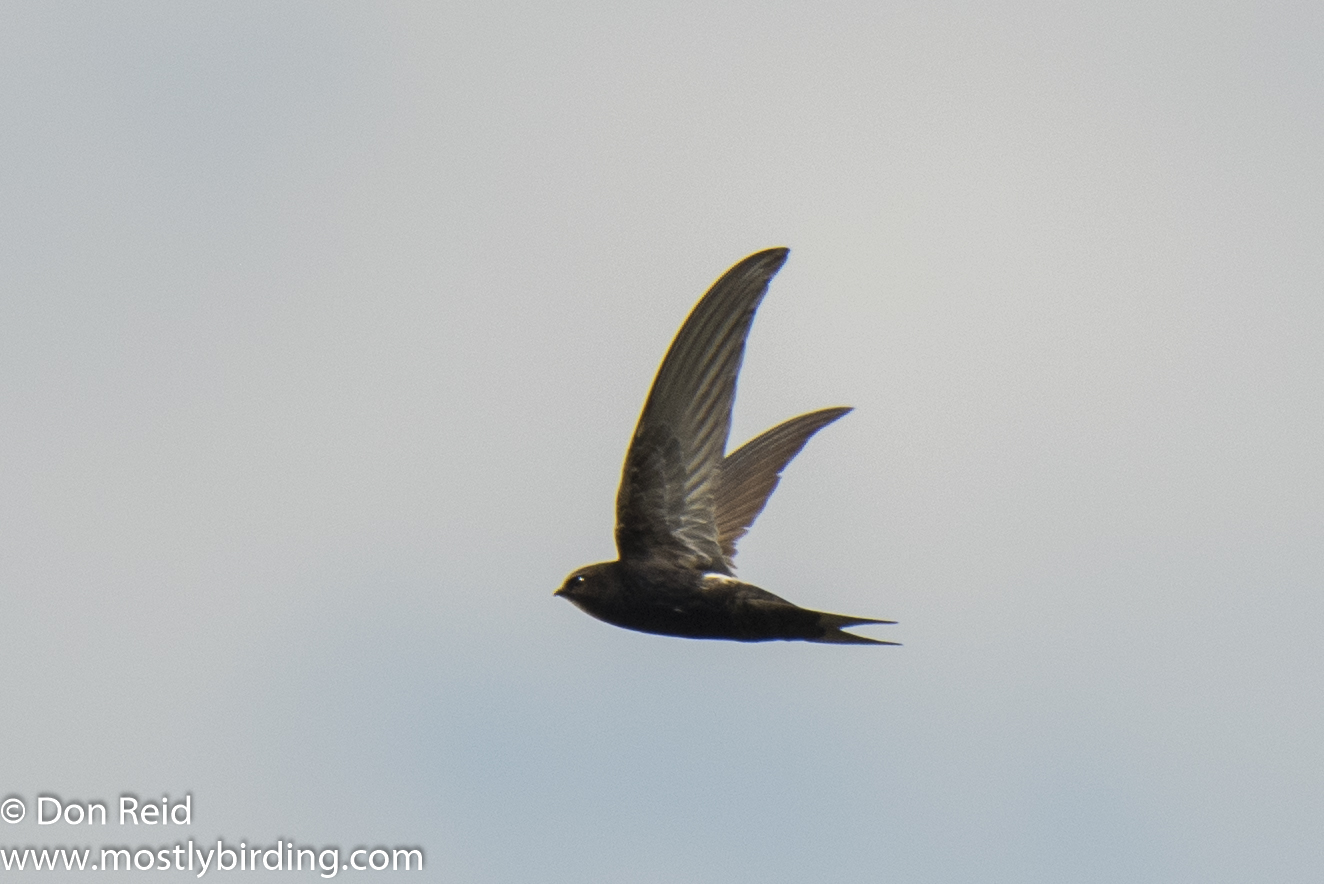
White-rumped Swift
I spent a while trying to photograph some of the fast-flying Swifts with some success – what I found later on scanning through my attempts was that one swift had a full crop, evidenced by the bulging white throat patch.
White-rumped Swift – with very full crop
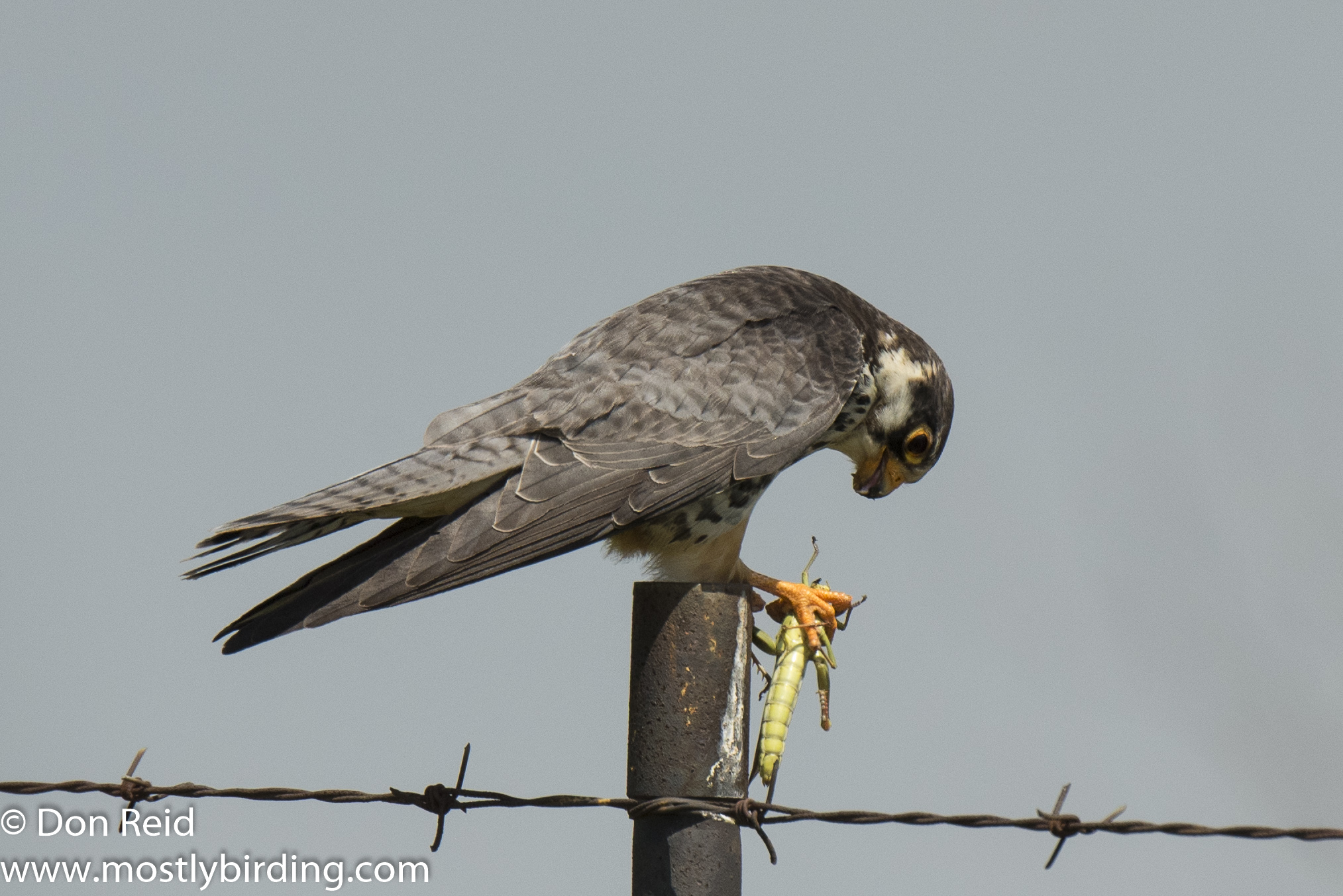
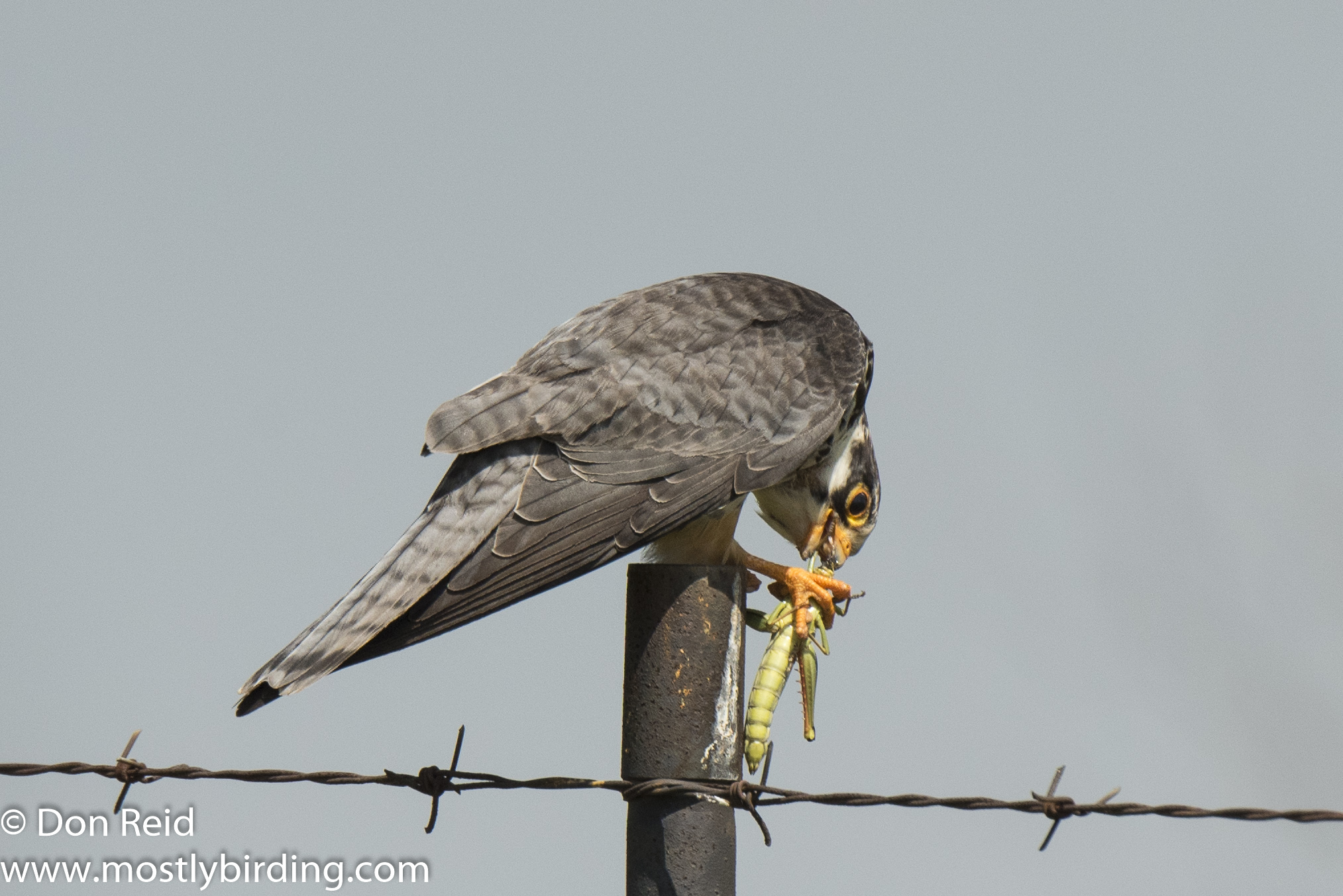
It was time to head home – along the way I came across a rare photo opportunity in the form of a female Amur Falcon so engrossed in her grasshopper meal that I was able to approach much closer than usual. To see the photos I took, go to my earlier post titled Mongolian take-away
The Atlasing statistics
Pentads 2610_2840 and 2615_2840
I added the 19th and 26th Full Protocol cards overall and the 1st and 3rd for 2018 for the respective pentads, The combined tally for the morning was 51 species of which 2 were new records. Total species for the pentad now 156 and 157
Some of the new/notable species added:
Green-backed Heron
Red-faced Mousebird
Goliath Heron
SA Shelduck
White Stork
Malachite Kingfisher
* Atlasing :
Simply put, it is the regular mapping of bird species in a defined area called a “pentad”. Each pentad has a unique number based on its geographical position according to a 5 minute x 5 minute grid of co-ordinates of latitude and longitude, which translates into a square of our planet roughly 8 x 8 kms in extent.
As a registered observer / Citizen scientist under the SABAP2 program (SA Bird Atlas Project 2), all of the birding I do nowadays includes recording the species for submission to the project database at the ADU (Animal Demography Unit) based in Cape Town.
Atlasing has brought a new dimension and meaning to my birding as it has to many other birders. The introduction a couple of years ago of the “Birdlasser” App has greatly simplified the recording and submission of the data collected.
This series of “Atlasing Tales” posts sets out to record some of the memorable experiences and special moments that I have enjoyed while atlasing.
On a cold May morning in 2017 we set off from Pretoria, making our way to the R573, known as the “Moloto Road” and one with a reputation for heavy traffic during the commuting hours and many accidents, often due to the irresponsible driving habits of a minority. Koos was driving his new vehicle and being very careful, so it took us close to 2 hours to get to our destination – Bushfellows game lodge, near Marble Hall – where he had arranged with the owner Gary and manager Mandy for us to spend some time atlasing.
The day turned into a tale of interaction between avian and reptilian species with very different endings….. and we got to see a couple of animals that were unexpected.
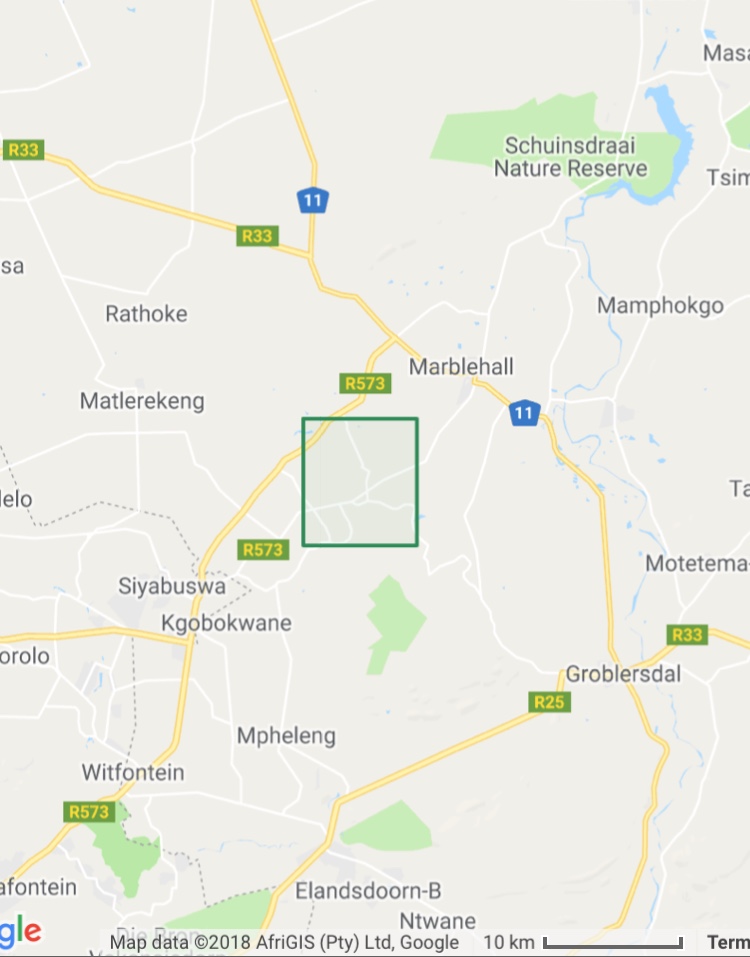
Pentad 2500_2910 (the rectangle on the map below) :
The atlasing* started slowly with a few species recorded along the road as we made our way through the pentad to the lodge, including several Brown-hooded Kingfishers (Bruinkopvisvanger / halcyon albiventris) hunting insects from fence posts along a concrete irrigation canal.
Approaching the lodge, the birdlife increased in numbers and we headed to the office to announce ourselves and meet Mandy. Introductions done, we walked the lodge gardens in separate directions to make sure our atlasing records would not be duplicated, ending up at the small dam where we enjoyed the coffee and snacks we had brought with us.
Snake encounter No 1
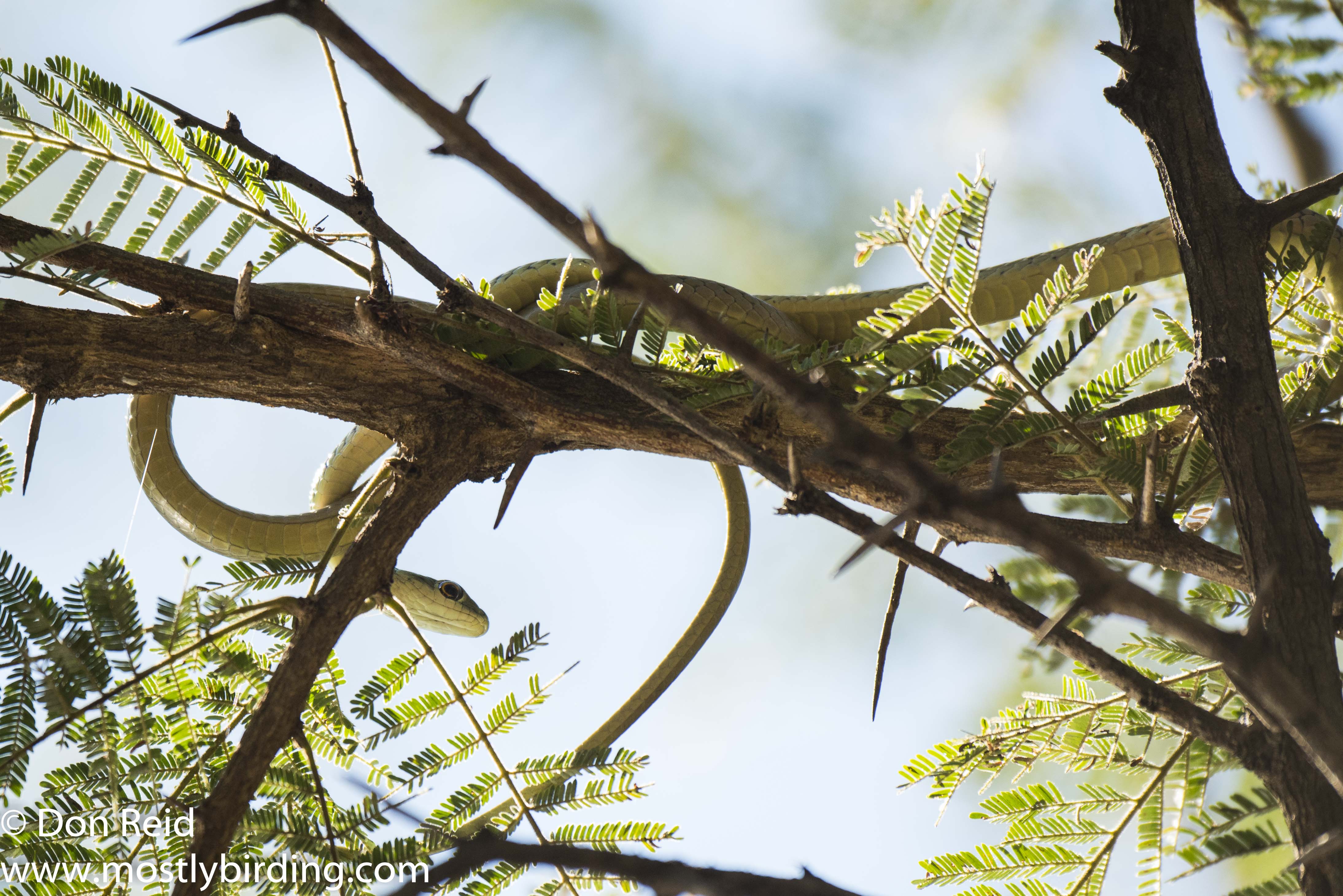
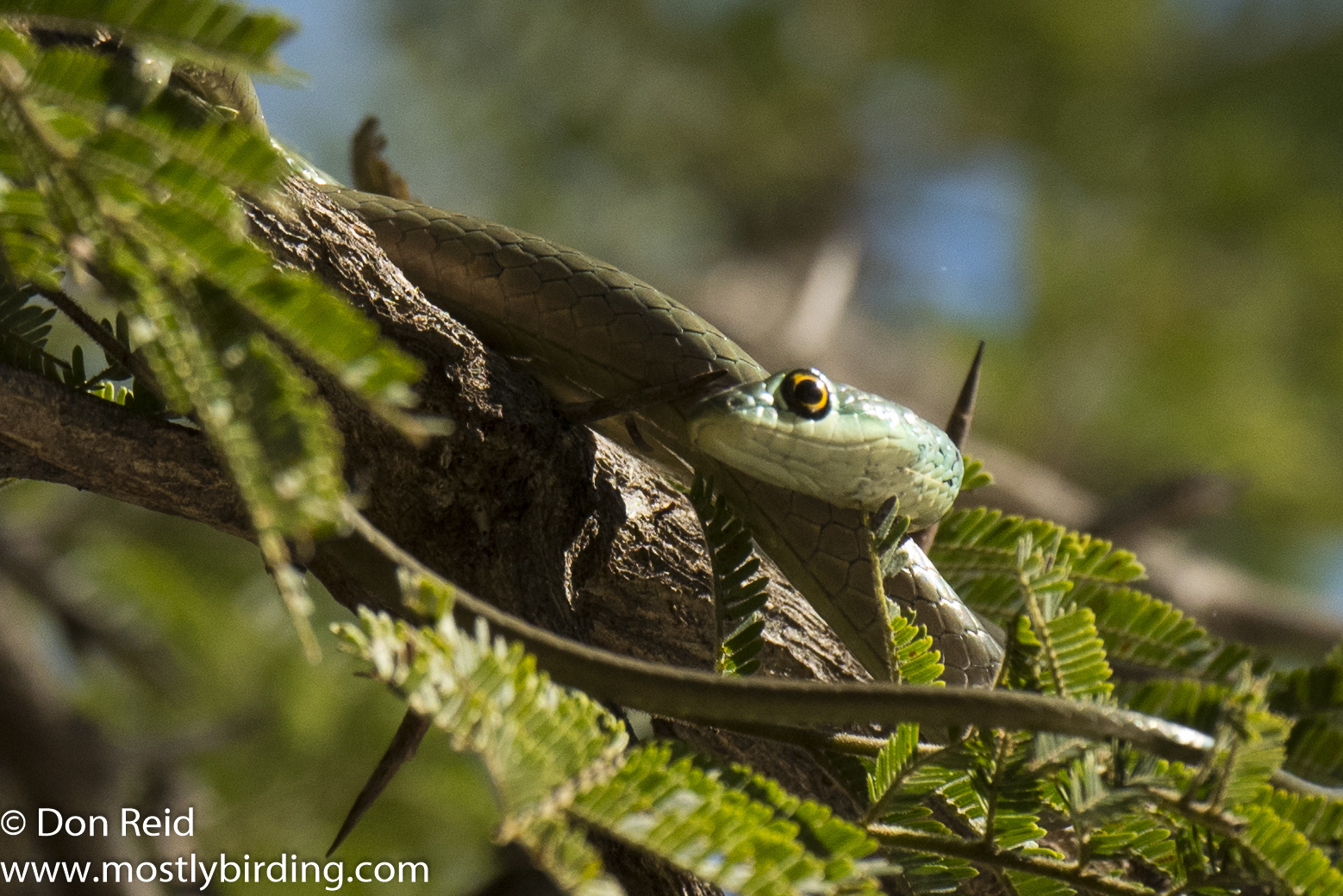
A commotion from a medium-sized tree drew my attention and I soon found the source – Long-billed Crombecs (Bosveldstompstert / Sylvietta rufescens) and Cape White-eyes (Kaapse glasogie / Zosterops capensis) were clustered in the canopy and were clearly agitated. Previous experience of this phenomenon had me searching for the reason – sure enough, a Boomslang lay twisted around the branches.
BoomslangBoomslangBoomslang – the large eye is typical
The snake was bobbing its head back and forwards in a curious fashion as the birds got closer and braver – I later checked my reference book regarding this behavior and found that this is a ploy of the boomslang to draw birds closer and so have a better chance of nabbing one. Interestingly, I also discovered that although the boomslang is highly venomous, very few boomslang bites on humans have been recorded due to its less aggressive nature.
In this instance there was no sign of an impending small bird meal for the snake and I left them to carry on with their natural instincts.
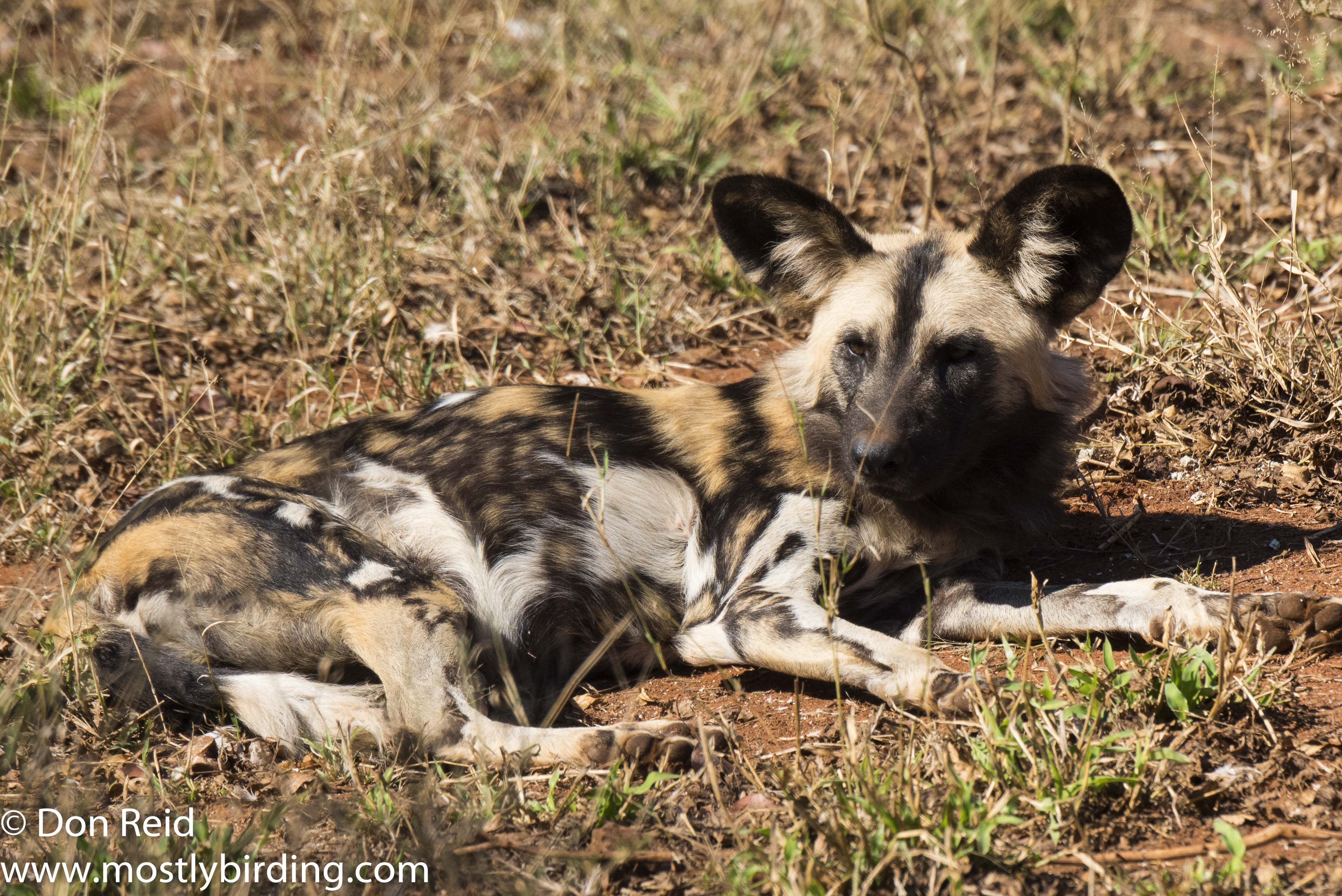
This was followed by a viewing of the resident Lion, Wild Dogs and Rooikat in their separate enclosures, all animals rescued from a worse fate than their current captivity and undergoing rehabilitation.
Wild Dog (captive), Bushfellows Game Lodge
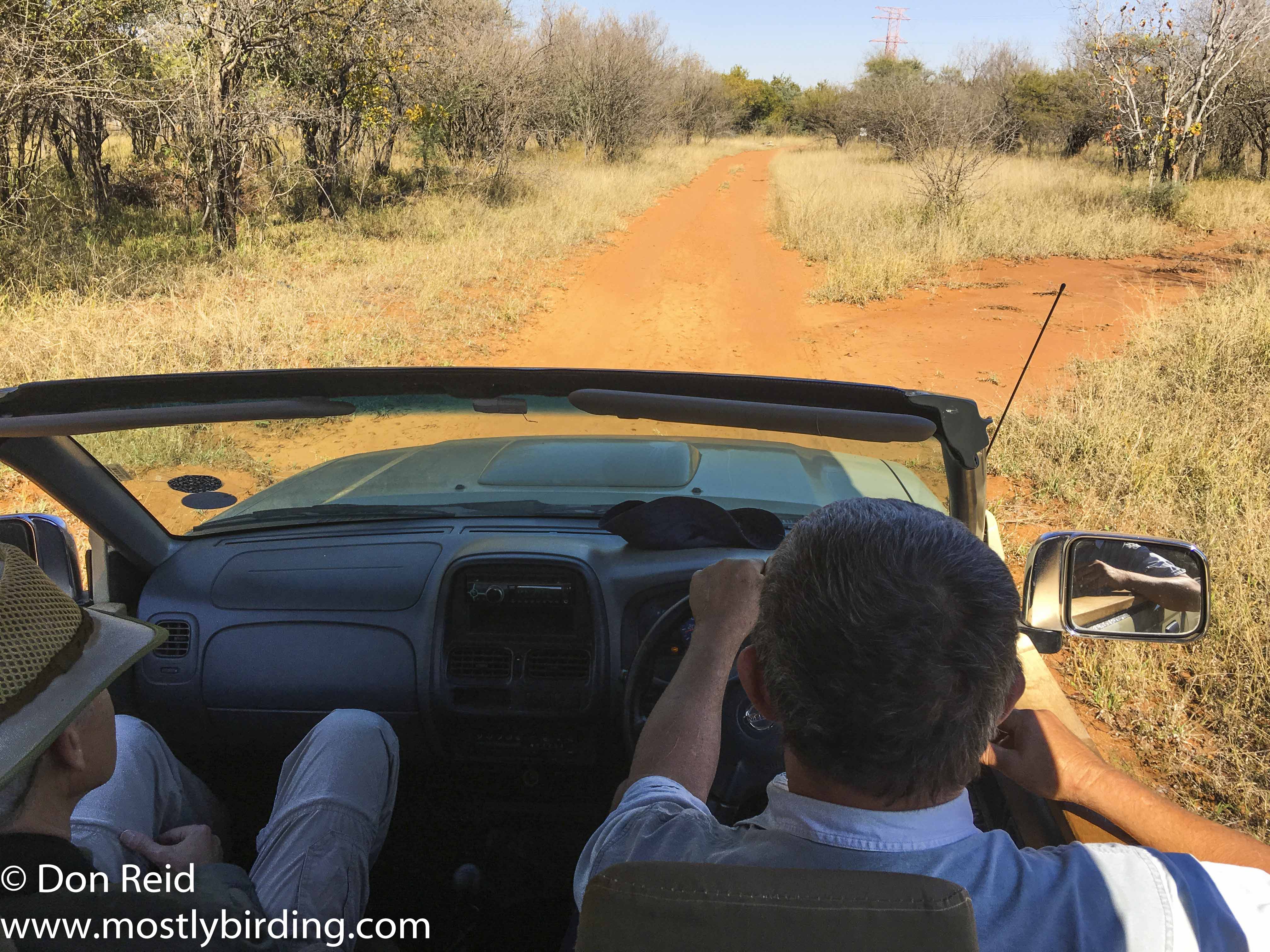
Mandy offered to have a ranger drive us through the game farm area which we accepted with alacrity and we spent the next hour and a half birding in style from the back of an open game-drive vehicle.
Ranger taking us for drive, Bushfellows Game Lodge
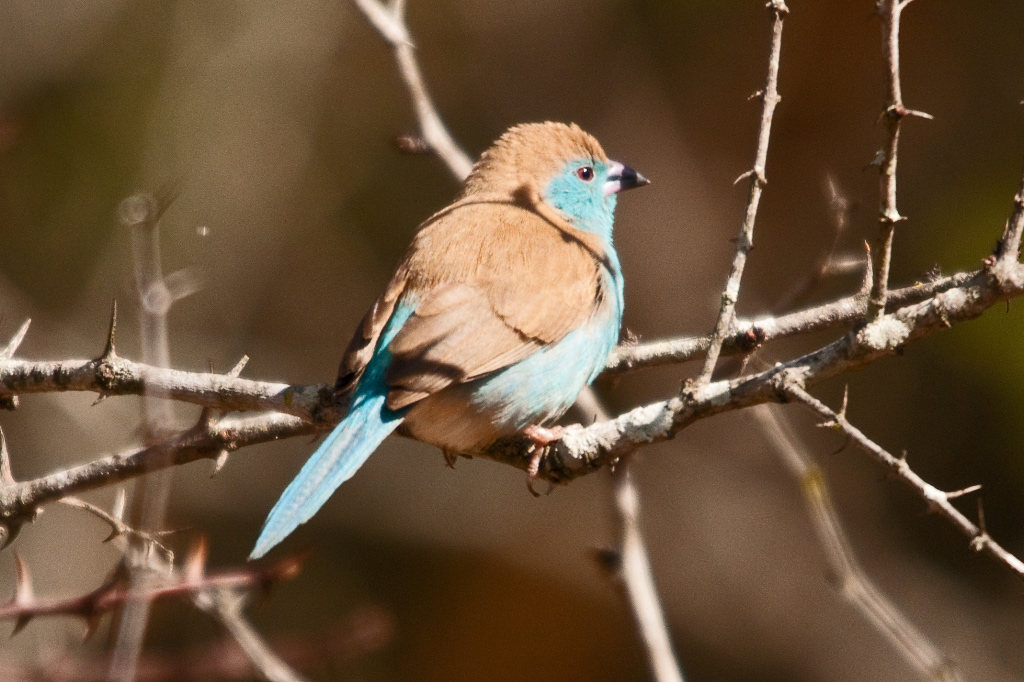
The arid bushveld was pleasingly productive as we spotted several of the species typical of this habitat – Crested Francolin (Bospatrys / Dendroperdix sephaena), Chestnut-vented Titbabbler (Bosveldtjeriktik / Sylvia subcaerulea), Kalahari Scrub-Robin (Kalahariwipstert / Erythropygia paena), Common Scimitarbill (Swartbekkakelaar / Rhinopomastus cyanomelas) and Blue Waxbill (Gewone Blousysie / Uraeginthus angolensis).
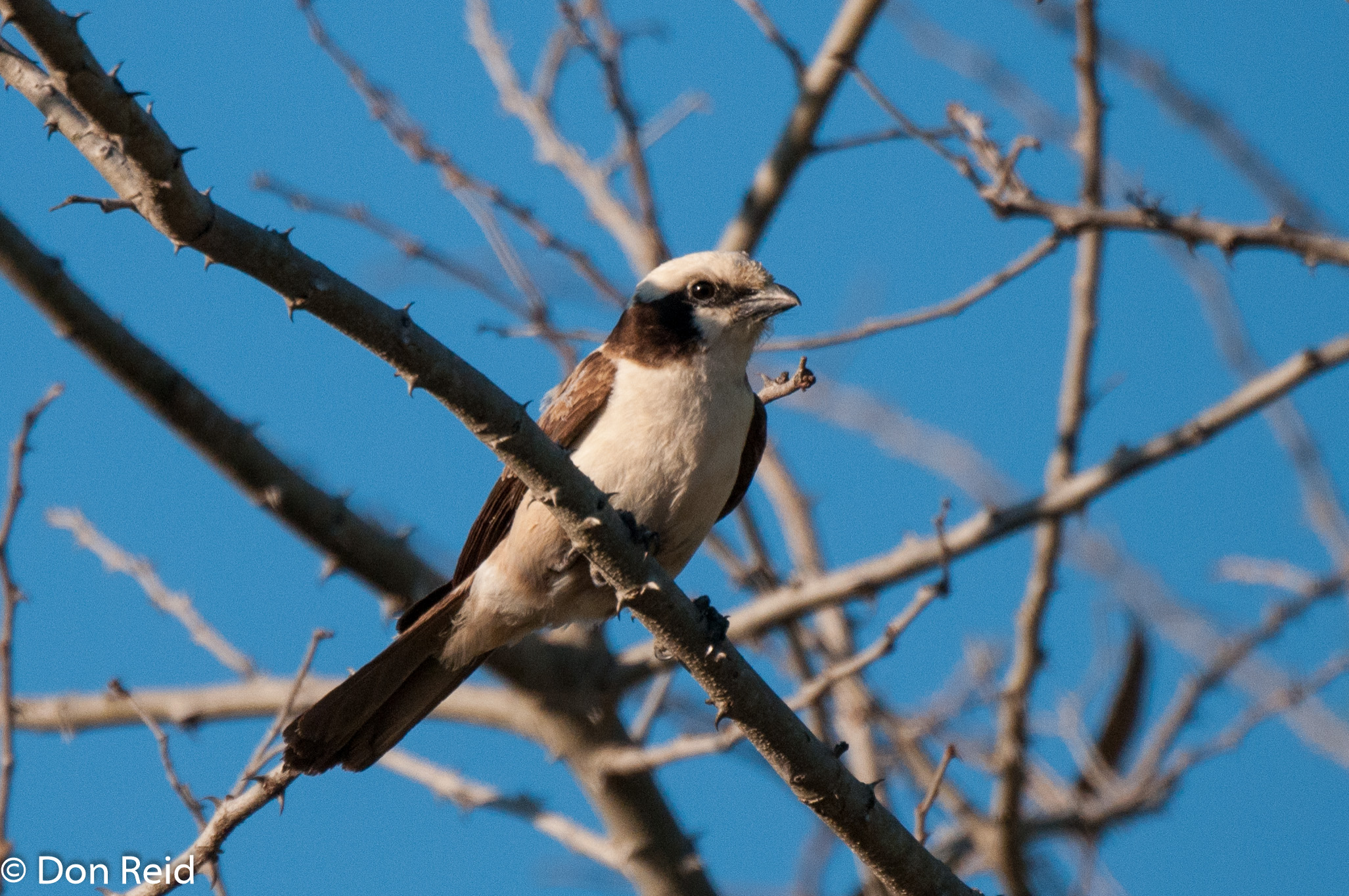
Species that are less common as a rule, but true to the habitat were Bushveld Pipit (Bosveldkoester / Anthus caffer),Southern Pied Babbler (Witkatlagter / Turdoides bicolor), White-crowned Shrike (Kremetartlaksman / Eurocephalus anguitimens ) and Cape Penduline Tit (Kaapse kapokvoël / Anthoscopus minutus).
On our way out, about halfway down the long entrance road to the lodge, we spotted a Brown Snake-Eagle perched on a tall dry tree, which they typically use to scan the surrounding veld for potential prey. Always an exciting species to come across, we approached cautiously but the Snake-Eagle was having none of it and flew off into the distance, more or less in the direction we were heading.
Brown Snake-Eagle
Fortunately we encountered it again as we approached the main entrance gate to the lodge, this time flying up from an adjacent field clutching a long snake in its claws and landing on top of a utility pole. As we watched in fascination, it grabbed the limp snake’s head, popped it into his mouth and proceeded to swallow it whole, looking for all the world like a connoisseur sucking in a long strand of thick spaghetti. Within a few seconds the snake had disappeared and I’m almost sure I saw the eagle burp in satisfaction.
The Atlasing statistics
Pentad 2500_2910
We added the 3rd and 4th Full Protocol cards for the pentad, turning its status to light green in the process. Our combined tally for the day was 78 species of which no less than 28 were new records for the pentad. Total species for the pentad now 128
Some of the new/notable species added:
Glossy Ibis
Bushveld Pipit
Common Scimitarbill
Sabota Lark
Jameson’s Firefinch
Southern Pied Babbler
Bearded Woodpecker
* Atlasing :
Simply put, it is the regular mapping of bird species in a defined area called a “pentad”. Each pentad has a unique number based on its geographical position according to a 5 minute x 5 minute grid of co-ordinates of latitude and longitude, which translates into a square of our planet roughly 8 x 8 kms in extent.
As a registered observer / Citizen scientist under the SABAP2 program (SA Bird Atlas Project 2), all of the birding I do nowadays includes recording the species for submission to the project database at the ADU (Animal Demography Unit) based in Cape Town.
Atlasing has brought a new dimension and meaning to my birding as it has to many other birders. The introduction a couple of years ago of the “Birdlasser” App has greatly simplified the recording and submission of the data collected.
This series of “Atlasing Tales” posts sets out to record some of the memorable experiences and special moments that I have enjoyed while atlasing.
My birding travels have taken me to many places over the years, places that no ordinary person (read non-birder) would consider visiting.
Yesterday’s outing was not meant to be a birding outing but turned into a very interesting day, full of surprises……
We are spending this week at our timeshare apartment in La Lucia near Durban and Gerda was keen to visit a wool shop she has ordered wool from via internet from time to time. Cleverly, she threw in an enticement for me to take her to Kloof, where the shop is located, by suggesting we could visit a birding spot after the wool shop stop, knowing I could hardly resist such an offer.
I already had a place in mind – Shongweni Nature Reserve – which I have been curious about since first reading the Roberts write-up on this birding spot many years ago. Described as “one of the better birding spots in Durban” and located about 30 km from Durban off the N3, it seemed to fit the bill for an exploratory visit – the further note that “the reserve is spoilt slightly by the surrounding tribal land and access route” had me equally curious.
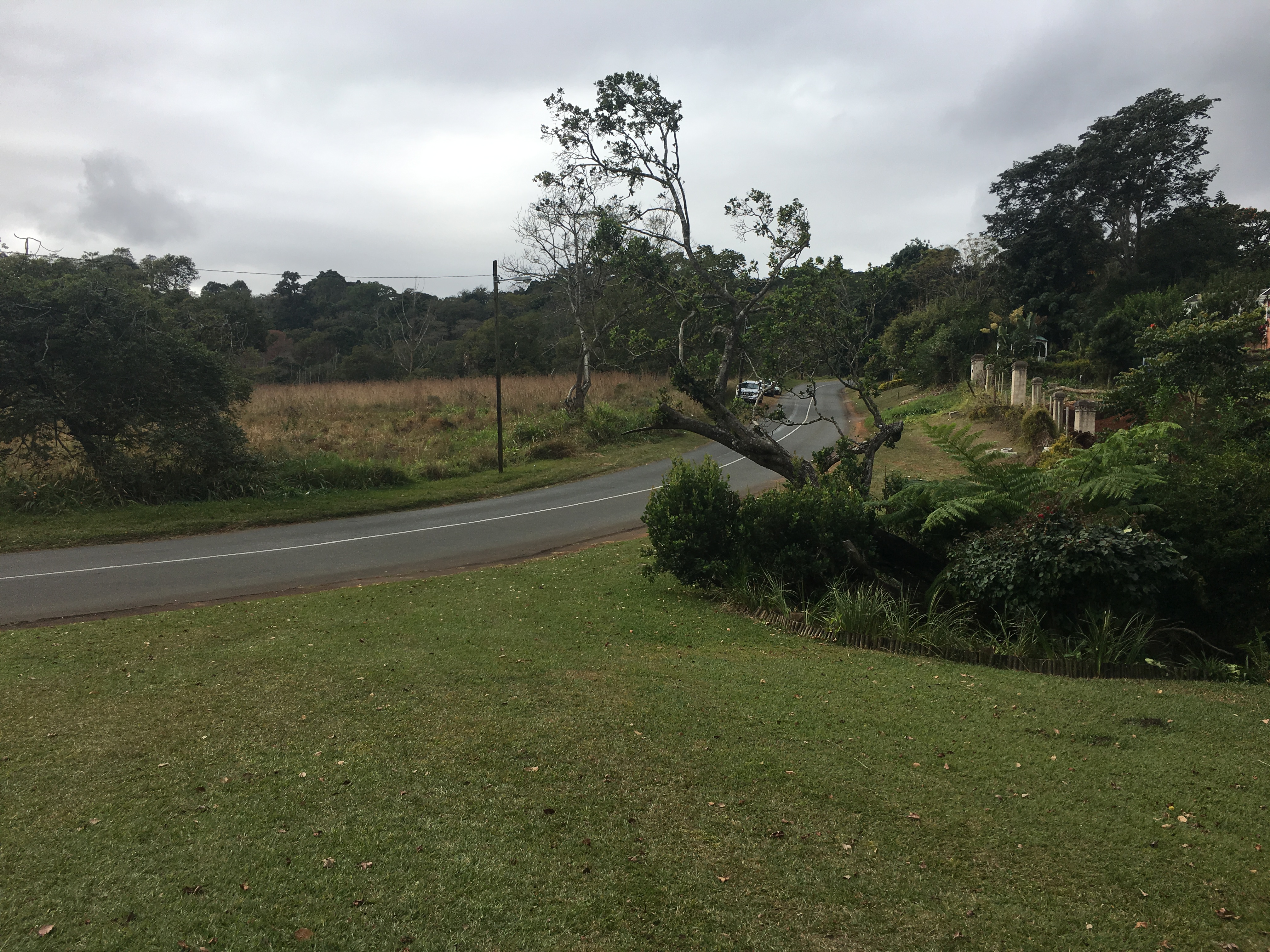
The wool shop turned out to be at the owner’s house in the upmarket suburb of Kloof and we found it with the help of google maps. I had brought along a book to read while waiting but when I saw the surroundings, my spirits lifted – across the road from the house was a grassy, bushy conservancy area, cared for by the neighbourhood and looking very promising.
The conservancy area in KloofLush gardens with conservancy area across the road
The variety of bird life I discovered there and in the surrounding gardens with their well-developed trees and tropical gardens was nothing short of amazing. In just 45 minutes I had recorded 24 species of a variety I could hardly have guessed at, including several that would please all but the most blasé birders –
Purple-crested Turaco calling regularly
Bronze Mannikins – literally by the dozen on the lawns, flying up into low bushes when disturbed
Yellow-fronted Canaries in full song
A Black-headed Oriole pair with their familiar liquid calls
Dark-capped Yellow Warbler amongst the long grasses
Trumpeter Hornbill high up in the trees (not many suburbs can boast this bird)
White-eared Barbets
Collared Sunbird in a palm tree
Spectacled Weavers
Southern Black Flycatchers hawking insects
As I said, an amazing list for suburbia! The bubbling bird life left me, well, bubbling (not my normal state by any means)
Oh and did I mention the Verraux’s Eagle that soared gracefully overhead?
Gerda appeared almost too soon and feeling coffee deprived we set off and stopped at the first coffee shop we came across, then reset the gps to take us to Shongweni – the route took us further north until we turned off at Assagay and shortly after onto a side road through hills covered with green sugar cane fields. This attractive landscape stopped abruptly as we passed through a rural village along with the customary roaming goats, dogs, chickens and cattle, not to mention the residents treating the road as an extension of their living area, wandering about with no regard for passing vehicles.
I had slowed to a crawl for the couple of kms through the village, until at the end of the village the reserve’s gate suddenly appeared. The surprised look on the gate man’s face as we approached seemed to suggest they did not get many visitors and the casual attitude towards the small entrance fee made me insist on a receipt.
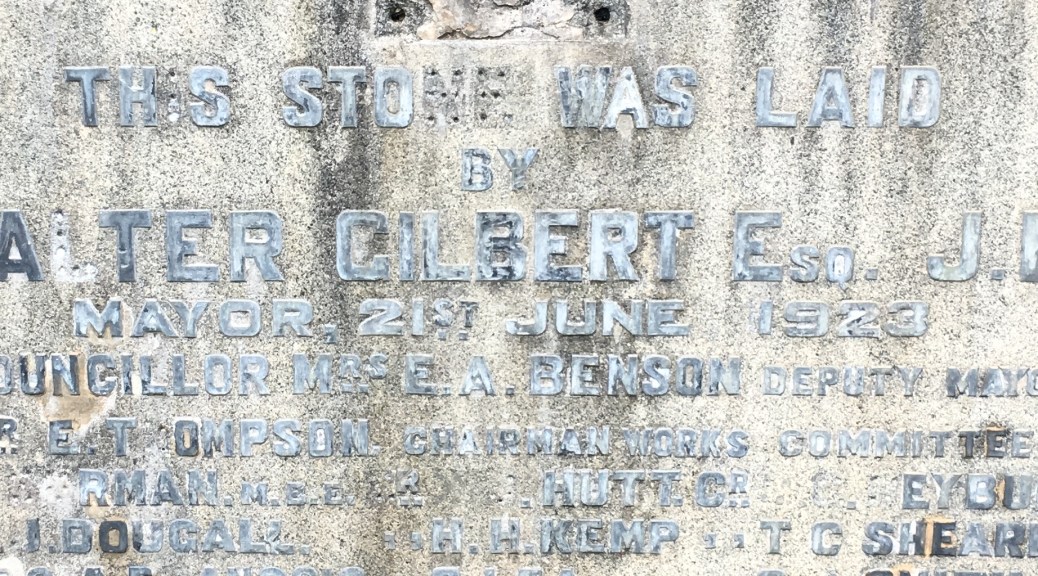
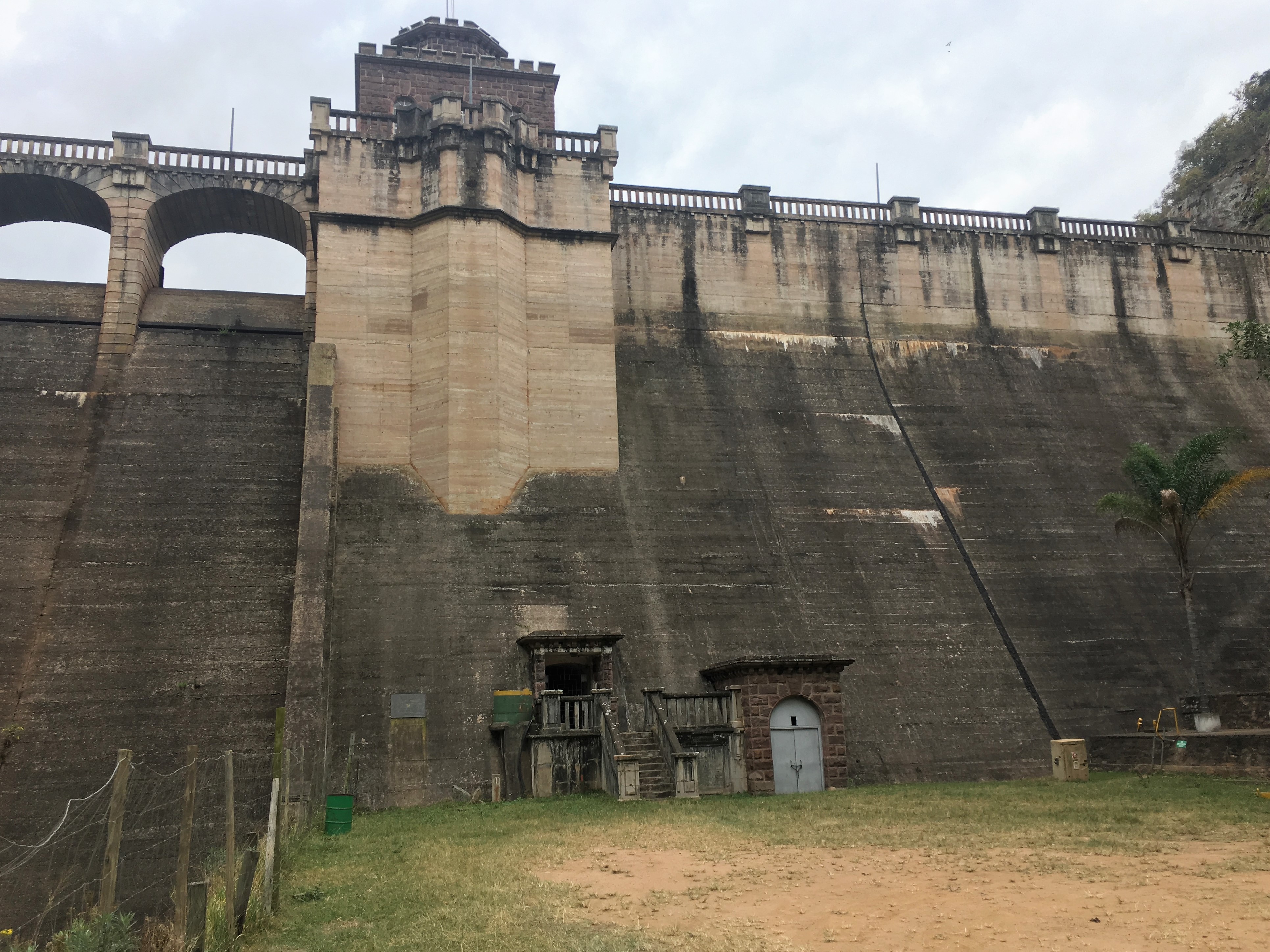
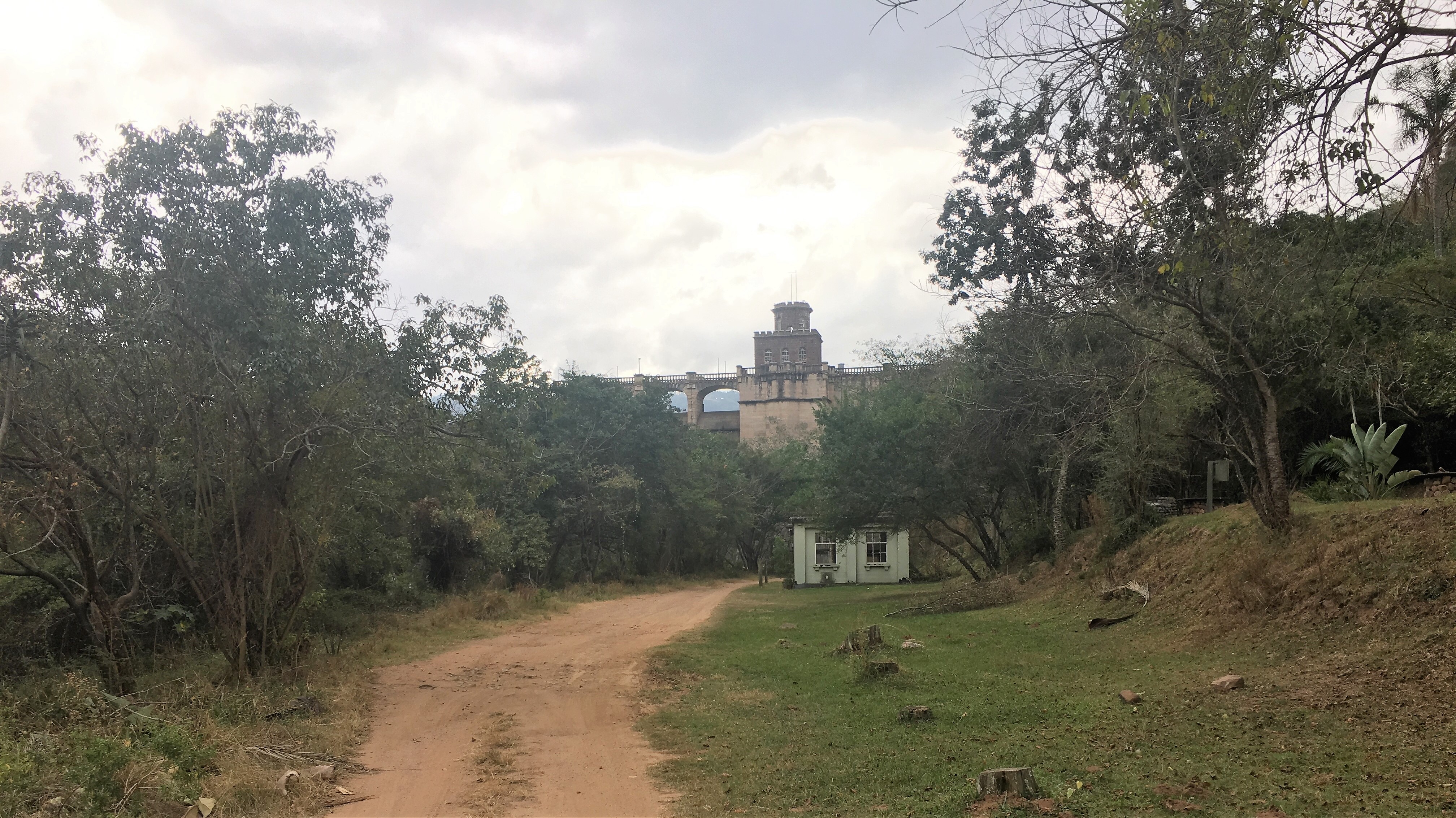
From the gate we wound downhill on a badly potholed road with not much sign of the bird life described in the write-up. As it turned out the birding became secondary as we got closer to the dam wall and discovered it dated back to 1923 – in fact by coincidence it was inaugurated on 21 June 1923, exactly 95 years ago today.
Plaque commemorating the inauguration on 21 June 1923The wall with turreted structureAn old entrance at the bottom of the wal
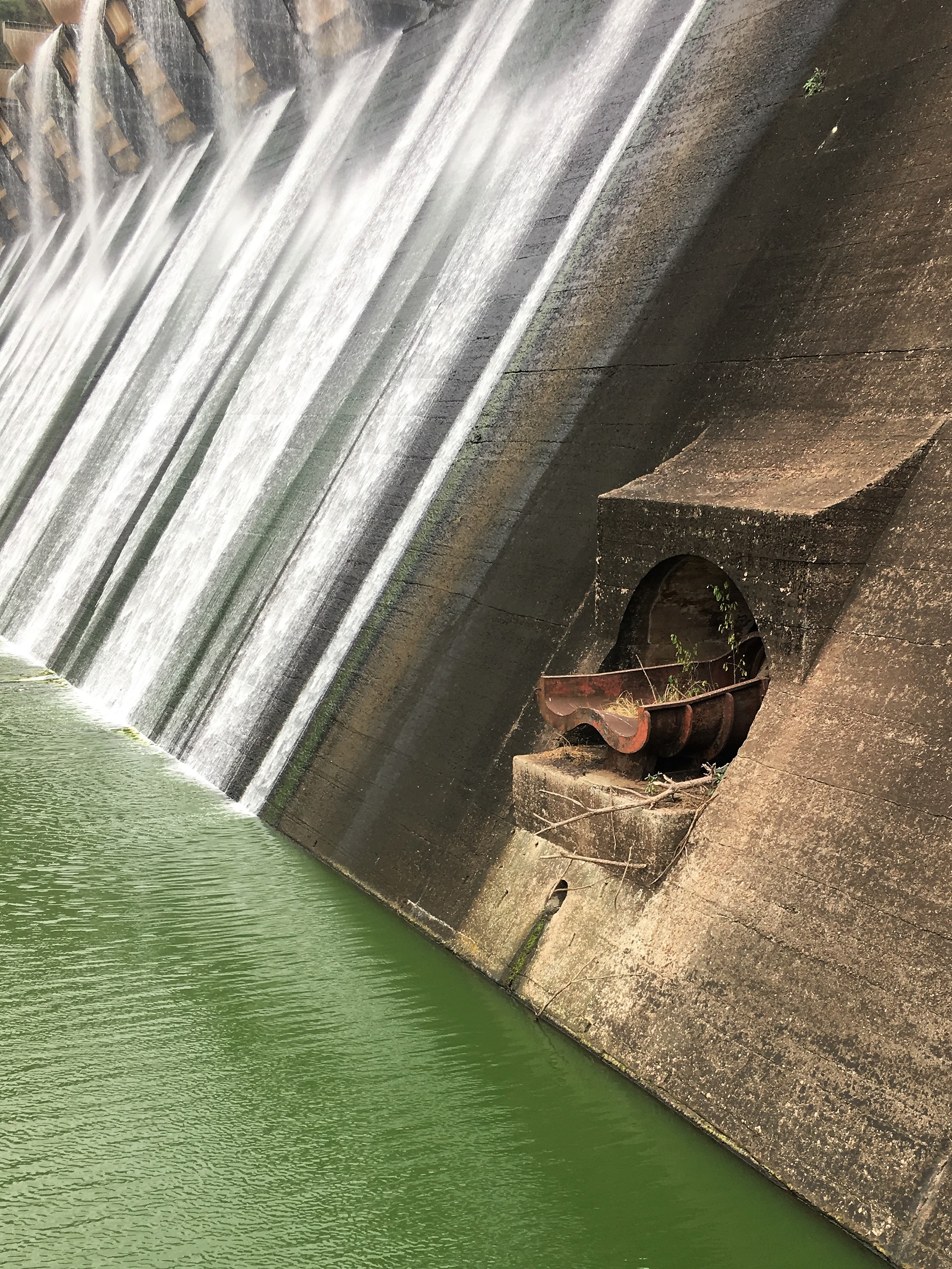
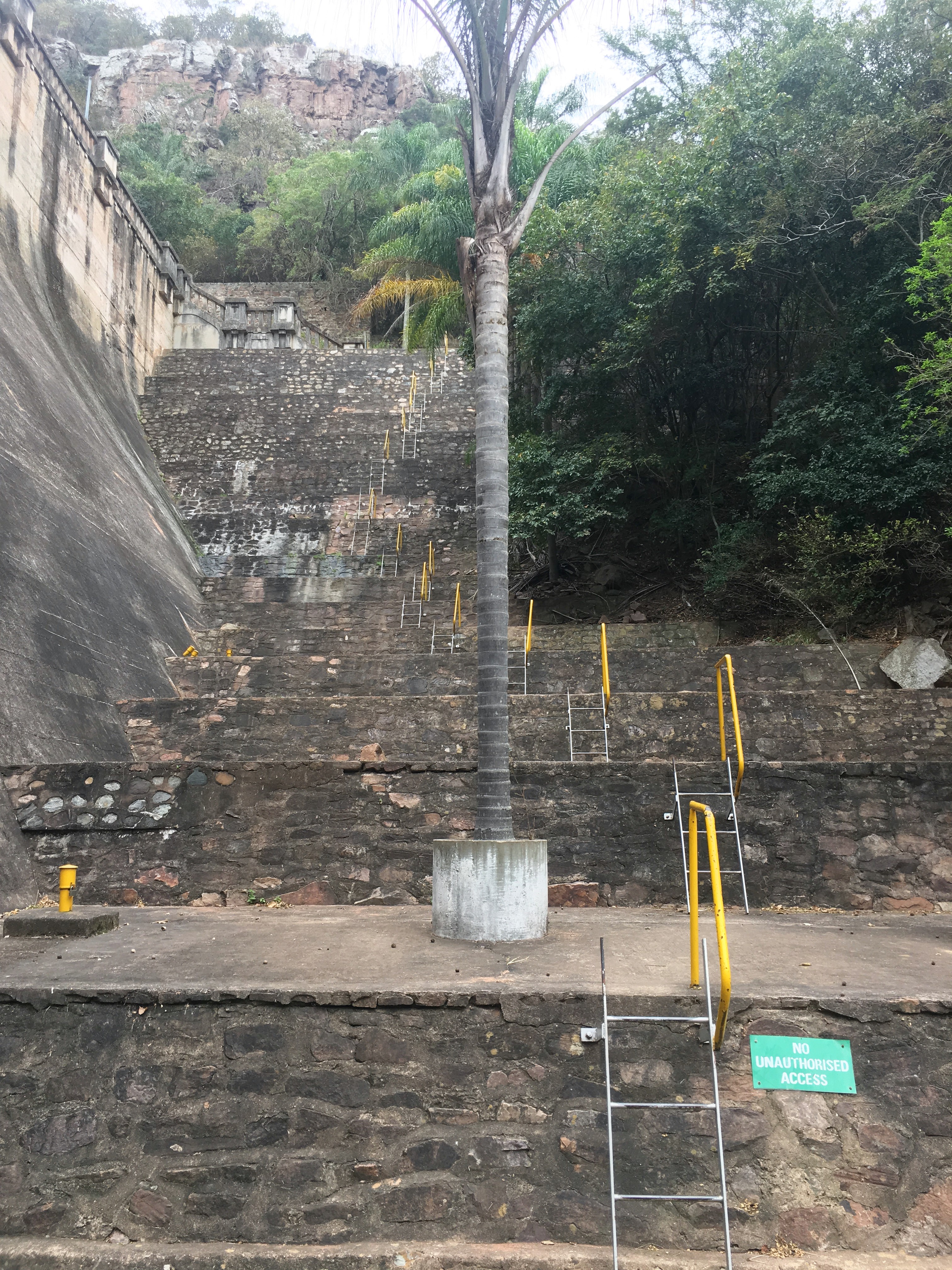
With birding all but forgotten, I spent time taking a few photos of the unique dam structures and surrounds. The pictures speak for themselves – suffice to say we were both fascinated by the old-fashioned look of the dam wall, with stone turrets rounding it all off in grand style.
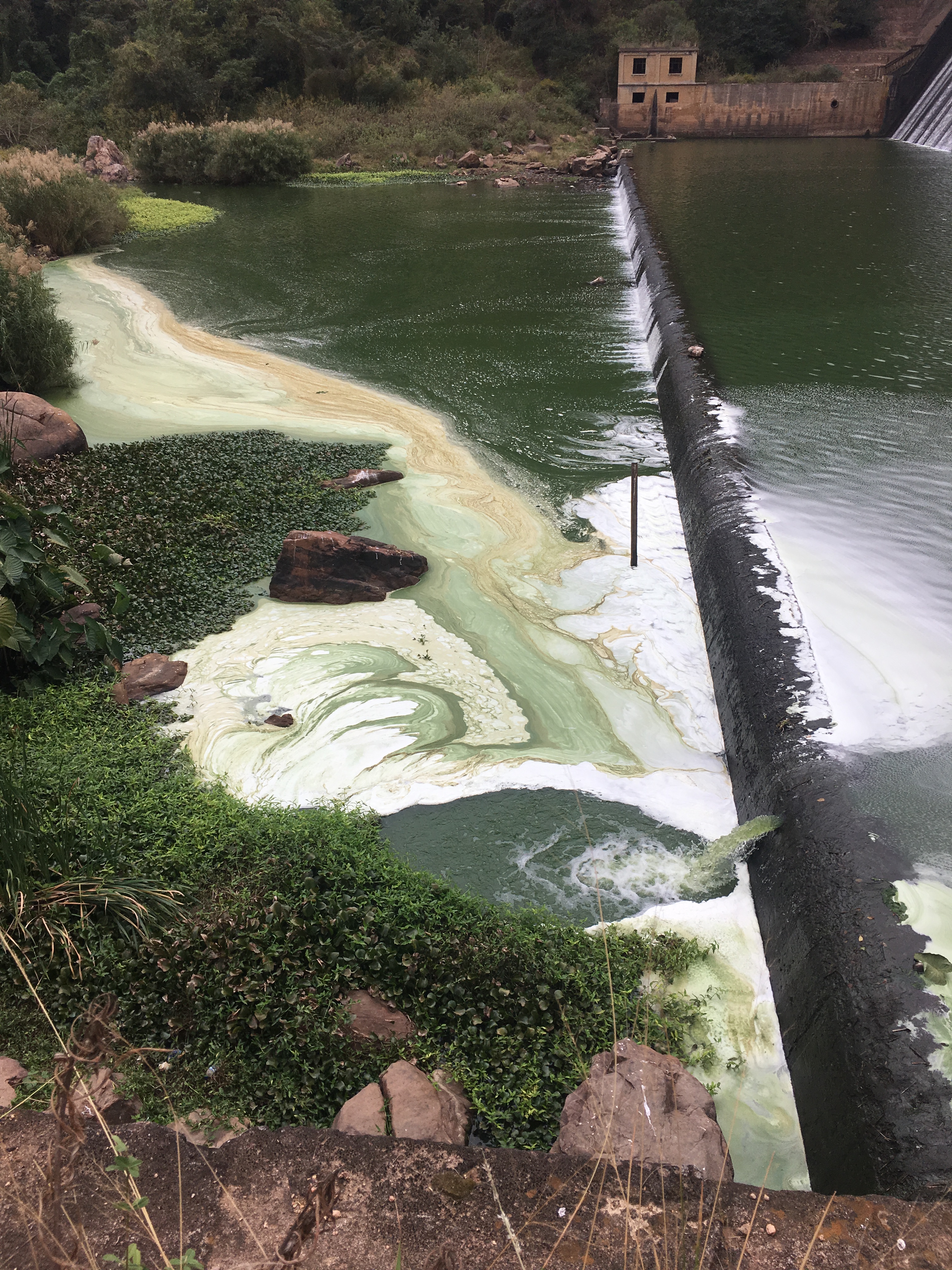
The main wall, overflowing gentlyThe sluice valves have not been used in a long timeThe buttressed end of the wallThe water quality leaves a lot to be desired
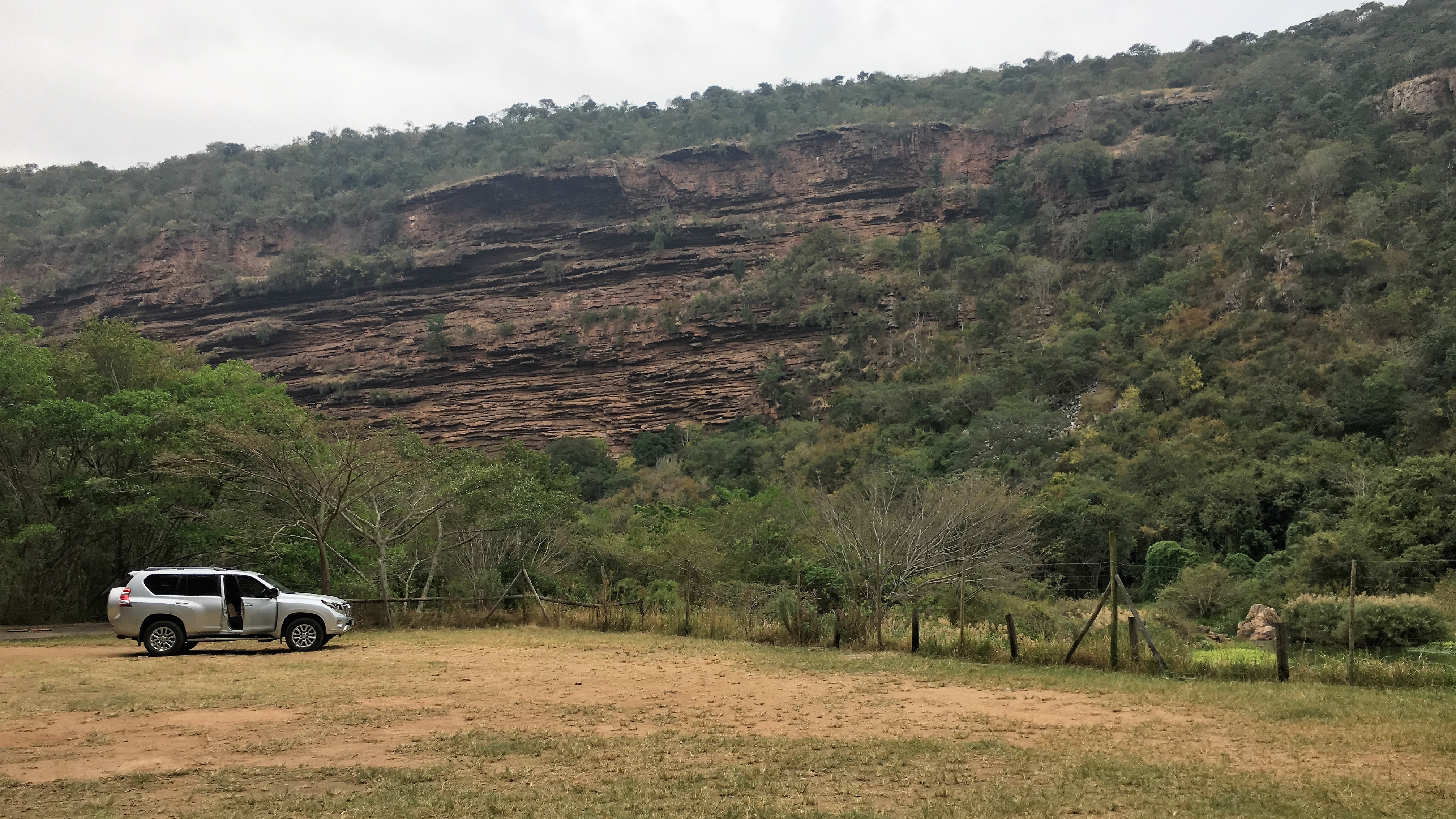
The area below the wall felt like something out of Jurassic Park with abandoned buildings and heavy undergrowth.
Below the wallCraggy cliffs opposite the wallAbandoned ” Chemical Mixing” houseInside the Chemical Mixing house
By the way, all photos were taken on my pocket Apple camera (which I sometimes find useful for phoning and other tasks)
On our way out the gate man advised us that he would not be working there for long – hadn’t we heard the dam was the subject of a land claim and would soon be handed back to “the community”? – we explained we were from Pretoria and had not heard this, but were not necessarily encouraged by this news.
Continuing the story of my Father’s day birding treat while on holiday in La Lucia near Durban a couple of years ago ……..
Umlalazi Nature Reserve
With two hours of superb forest birding at Ongoye Forest Reserve behind us and Green Barbet duly seen and photographed, the next stop on bird guide Sakhamuzi’s itinerary was the Umlalazi Nature Reserve adjacent to the town of Mtunzimi.
We drove straight to the riverside along a winding sandy road and parked at the picnic spot where we enjoyed the all-important first cup of coffee accompanied by rusks while keeping an eye out for interesting bird life in the vicinity.
Umlalazi
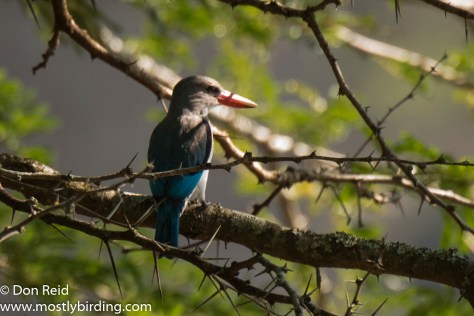
Top spot went to a Mangrove Kingfisher perched on a low branch overhanging the water – a bird I had tried for a few times in various locations near Durban without success, then saw my first one the year before in the forests of Mozambique.
Mangrove Kingfisher, Umlalazi NR
Curiously, the Mangrove Kingfisher occupies two quite different habitats – during the non-breeding season, from March to September, they inhabit mangroves while October to March sees them moving to forests to breed, estuarine forests in the Eastern Cape in the case of the Kwazulu-Natal population and lowland forests in the case of the Mozambique population, often far from water.
This is one of the Mangrove Kingfishers we came across in the forests of Mozambique
Their diet is equally curious, ranging from crabs – seawater crab in winter and freshwater crab in breeding season – to fish and even insects and lizards when crabs are not available. They are not averse to snatching the odd fish from ornamental ponds, a habit they share with other Kingfishers, much to the frustration of pond owners. Mind you, installing an ornamental pond and expecting a Kingfisher not to feed off your ornamental fish is like putting a fillet steak on the lawn and hoping your dog won’t eat it.
Noisy Black-bellied Starlings drew our attention to the tree which held several of them, as well as Yellow Weavers.
Black-bellied Starling, Umlalazi NR
Little Swifts and Palm Swifts swirled overhead, while a “big and small” act of Kingfishers played out on the lagoon as a Giant Kingfisher (364 g) made a large splash in pursuit of its prey while its diminutive cousin Malachite Kingfisher (just 17 g – ie one twentieth of the weight of the Giant) hardly created a ripple as he dove in at the water’s edge. All part of the magic and variety of birding.
After a half hour or so of absorbing the beauty and avian treasures of the surroundings, we headed slowly back to the entrance, stopping for a couple of special species along the way – Rufous-winged Cisticola in a patch of grassland and a handsome, posing Yellow-throated Longclaw on top of a nearby bush.
Yellow-throated Longclaw, Umlalazi NR
Amatigulu Nature Reserve
Last but by no means least on Sakhamuzi’s itinerary of nature reserves was another small reserve – Amatigulu, not far from where I had picked him up earlier and a stone’s throw from his house just outside the reserve. Once through the gate and the formalities of signing in etc, which Sakhamuzi took care of, we drove through grassland and coastal forest on an ever-deteriorating track down to the lagoon and found a parking spot at the picnic site.
I had mentioned to Sakhamuzi the fact that Green Twinspot was on my wish list for the day and he made a special effort to find this species which has somehow eluded me to date. He took us along a slightly overgrown path through the dense forest in search of it, but other than a brief glimpse of what he said was a Green Twinspot flying across the track and disappearing into dense bush, it remained elusive. Oh well, something to look for another day.
Amitigulu Nature Reserve – forest
A Scaly-throated Honeyguide made up partly for the dip on the Twinspot and was good enough to pose for some record photos – a lot better than previous ones I had managed to take.
White-eared Barbets were plentiful, as they were at the other reserves, and a Black-throated Wattle-Eye made a brief but welcome showing. Others we came across were Olive Sunbird, Spectacled Weaver, Yellow-rumped Tinkerbird and Blue-mantled Crested Flycatcher – all desirable species for any keen birder.
By this time we were heading into the afternoon and it was time to say goodbye to Sakhamuzi who had shown me a lot during the course of the morning.
Sappi Mill at Stanger/Kwadukuza
Back on the N3 highway, I pointed the Prado southwards but seeing I had some time in hand, decided to have a “look-in” at Sappi Mill wetlands, adjacent to the paper mill near Stanger/Kwadukuza, a spot I last visited perhaps 10 years ago. It was a worthwhile stop with a neat hide and good views for 180 degrees and more over the wetlands.
Sappi Mill Stanger / Kwadukuza
Immediately in front of the hide is a small island with trees which serves as a roost for many Cormorants, accompanied by a variety of waterfowl.
Sappi Mill Stanger / Kwadukuza
All 3 common Teals were present – Cape, Hottentot and Red-billed Teals – as well as a few African Swamphens, a flock of White-faced Ducks, Wooly-necked Storks (which are particularly common in Kwazulu-Natal), African Spoonbills and a calling African Rail.
Cape and Hottentot Teal, Sappi Mill KwaDakuza
A Yellow Wagtail had been reported from this site in the last week and I looked out specially for this scarce bird, but to no avail.
The rest of the drive back to La Lucia was uneventful but full of good thoughts about my memorable day.
While holidaying in La Lucia near Durban a couple of years ago, atlasing of the surrounding pentad kept me comfortably in touch with my birding passion – nothing spectacular, although the walks along the long stretch of beach immediately in front of the resort, where we have had a timeshare unit for many years, are always interesting with a mix of Gulls, Terns and Cormorants being the main source of birding entertainment. When the seas are high and stormy there’s even a chance of spotting an Albatross far out to sea, but identifying them at that distance is very difficult unless you can pick up one of the features that separate the species.
La Lucia beach
Father’s Day Treat
I suspect Gerda saw the signs of me itching for some more exciting birding and with Father’s day coming up she suggested I “take a day off” and do a day trip to Ongoye Forest, knowing that there was a special bird or two to be ticked there (my subtle prompts worked like a charm). I didn’t need much encouragement and soon contacted a local guide, Sakhamuzi Mhlongo and arranged the trip for the upcoming Father’s Day.
Setting out in the dark before dawn, a couple of minor calamities delayed my departure, the first of which was a leaking hot water flask which sent me back to the apartment to get a refill of the essential hot water for my coffee later on, then I managed to miss a turn-off in the dark while trying to get to the highway and ended up in Verulam before I could find a place to turn around.
With my nerves somewhat on edge (it’s hard being a control freak) it took the beauty of a rosy dawn appearing over the lush green hills as I drove northwards and Louis Armstrong doing ” Rock my Soul” on the I-pod plugged into the sound system to bring me back to a semblance of my normal calm self and ready for the day ahead. By 7 am I reached the rendezvous, picked up Sakhamuzi and headed further up the N3 before taking the turn-off at Mtunzimi and heading west towards Ongoye.
Ongoye Forest Reserve
Soon we were at the entrance which, unlike the often impressive ones of many of the larger reserves, was just an open gate in the fence.
Ongoye Forest
By now the road was a track which wound through grassland covered hills towards the forest area, where we parked and ventured on foot into the forest itself.
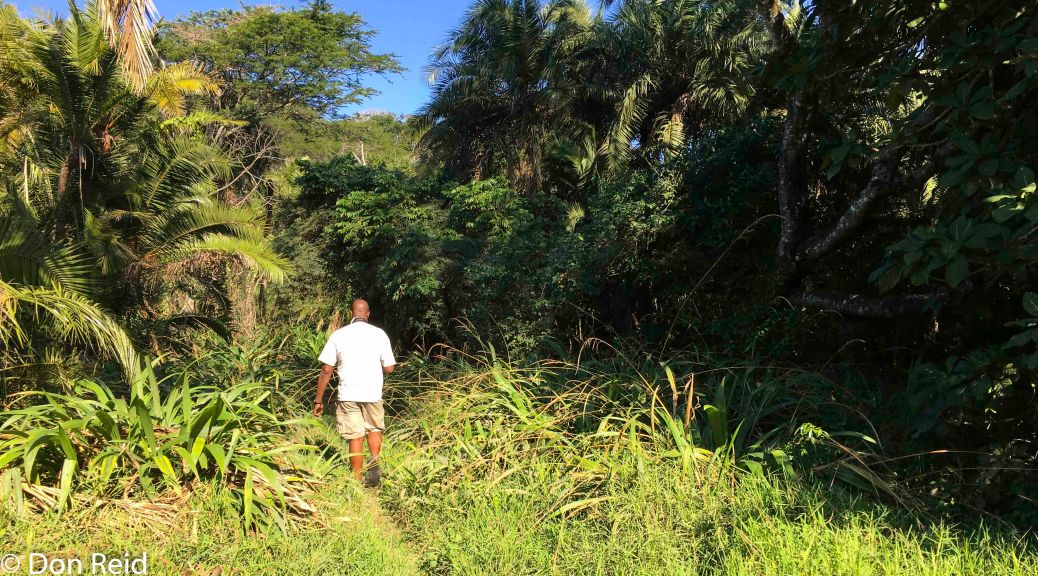
Sakhamuzi leading the way into Ongoye Forest
I soon realised that Sakhamuzi has a real talent for bird call imitations, as he repeatedly did a near perfect Green Barbet call – no app necessary when you have him at your side! At least one bird responded, but it was still well concealed as we craned our necks and scanned the canopy to find it. However it didn’t take long to trace the call and locate a pair of Green Barbets feeding high up in the canopy, showing themselves briefly now and again.
The Green Barbet has the unenviable distinction of having probably the smallest distribution of any bird in Southern Africa, found only in the 3200 ha Ongoye forest, so any keen birder wanting to see it has only one choice of where to go, unless you happen to be in Tanzania.
It also means that this species is extremely vulnerable, being dependant on this relatively small patch of forest for its continuing existence in Southern Africa – a habitat the size of a typical mid-size farm. It is classified as Endangered in the 2015 Eskom Red Data Book of Birds published by Birdlife SA.
Ongoye Forest
Once I was happy with my sighting (which happened to be my 750th species in Southern Africa) I tried to get a photo, which is always a challenge in the forest against a strong back light, made doubly so by the Barbet’s habit of remaining high in the canopy and not sitting still for longer than a second or two. I eventually had a few photos in the bag which I hoped to be able to edit into something vaguely recognisable and we decided to move on after two hours in this unique birding locality.
Green Barbet, Ongoye Forest Reserve
Of course there is much more to Ongoye than this species as the forest and surrounding grasslands and bush are rich in several other desirable species, amongst them the distinctive Brown Scrub Robin, White-eared Barbet, Trumpeter Hornbill, Grey Cuckooshrike, Yellow-throated Longclaw and others. Striped Pipit on the way out was a surprise bonus.
Trumpeter Hornbill, Ongoye Forest Reserve
Forest birding is quite different from any other habitat – it’s more about audibility of the birds than their visibility. The canopy dwellers are often particularly vocal and the forest rings with multiple calls from the raucous wail of Trumpeter Hornbill to the gentle chop ….. chop of the Green Barbet and the quicker popping of the Yellow-rumped Tinkerbird.
They are joined intermittently by Square-tailed Drongo (strident tweets), Purple-crested Turaco (loud kor-kor-kor), Olive Sunbird (liquid tip-tip-tip), Black-bellied Starling (harsh jumble), Collared Sunbird and others. Seeing them clearly is tricky as mentioned above.
Square-tailed Drongo, Ongoye Forest Reserve
Next stop was Mtunzimi …….. but more about that and the rest of the trip in Part two
Formal bird atlasing * (see end of post) has become my priority when planning a birding outing and I was looking forward to completing my 500 th “Full Protocol” atlasing card, having completed 499 by the end of March this year.
With Monday 2 April this year being a public holiday, it seemed the ideal time to reach this milestone and I targeted two pentads to the west of Mkhombo dam, a little more than an hour’s drive north of Pretoria, which I suspected would provide good birding in attractive surroundings and should be lush and green after the recent good rains in the area north of Pretoria.
I was up at 4.20 am (after hitting the snooze button twice without even realizing it), collected good friend and equally keen atlaser Koos Pauw and headed north on the N1 highway, already busy on the homeward side with returning holiday and Moria pilgrimage traffic. The Rust der Winter turnoff soon loomed and before long we were on quiet country roads as the light grew stronger – a detour took us in the wrong direction initially but we were soon into the first pentad for the day.
Pentad 2505_2840
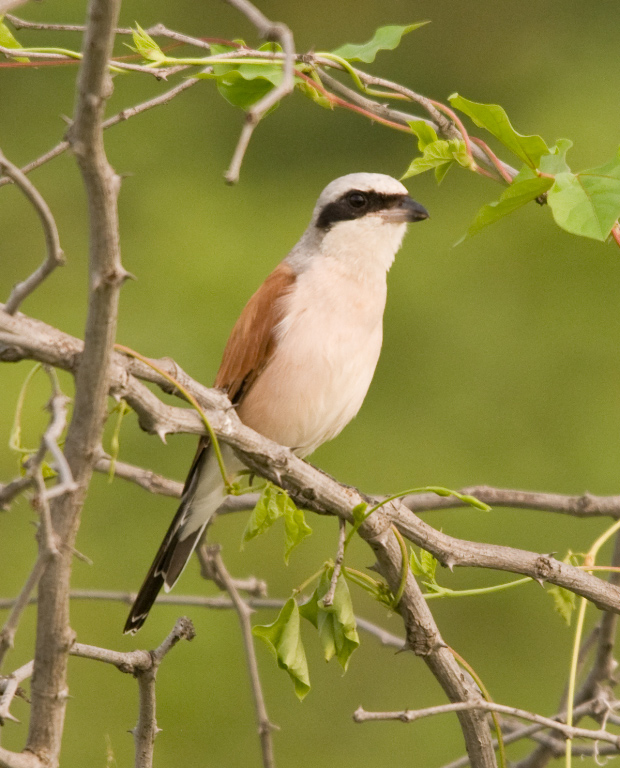
The dusty rural village we had entered was not very inspiring as a place to start our atlasing but just outside the village the habitat changed to patches of arid bushveld which, once we had stopped to investigate, proved irresistible for atlasing. All it took was to hang around at a selected spot long enough to allow the species to show – and show they did – all the species that favour the drier bushveld habitat : Yellow-billed Hornbills flying in their ponderous fashion from tree to tree, Crimson-breasted Shrikes with their redder than red breast colouring contrasting with jet black uppers. This area rates as excellent for Shrikes judging by the variety we encountered, with White-crowned Shrikes, Red-backed Shrikes, Lesser Grey Shrikes and even Magpie Shrikes all easily seen during the morning.
White-crowned ShrikeRed-backed Shrike
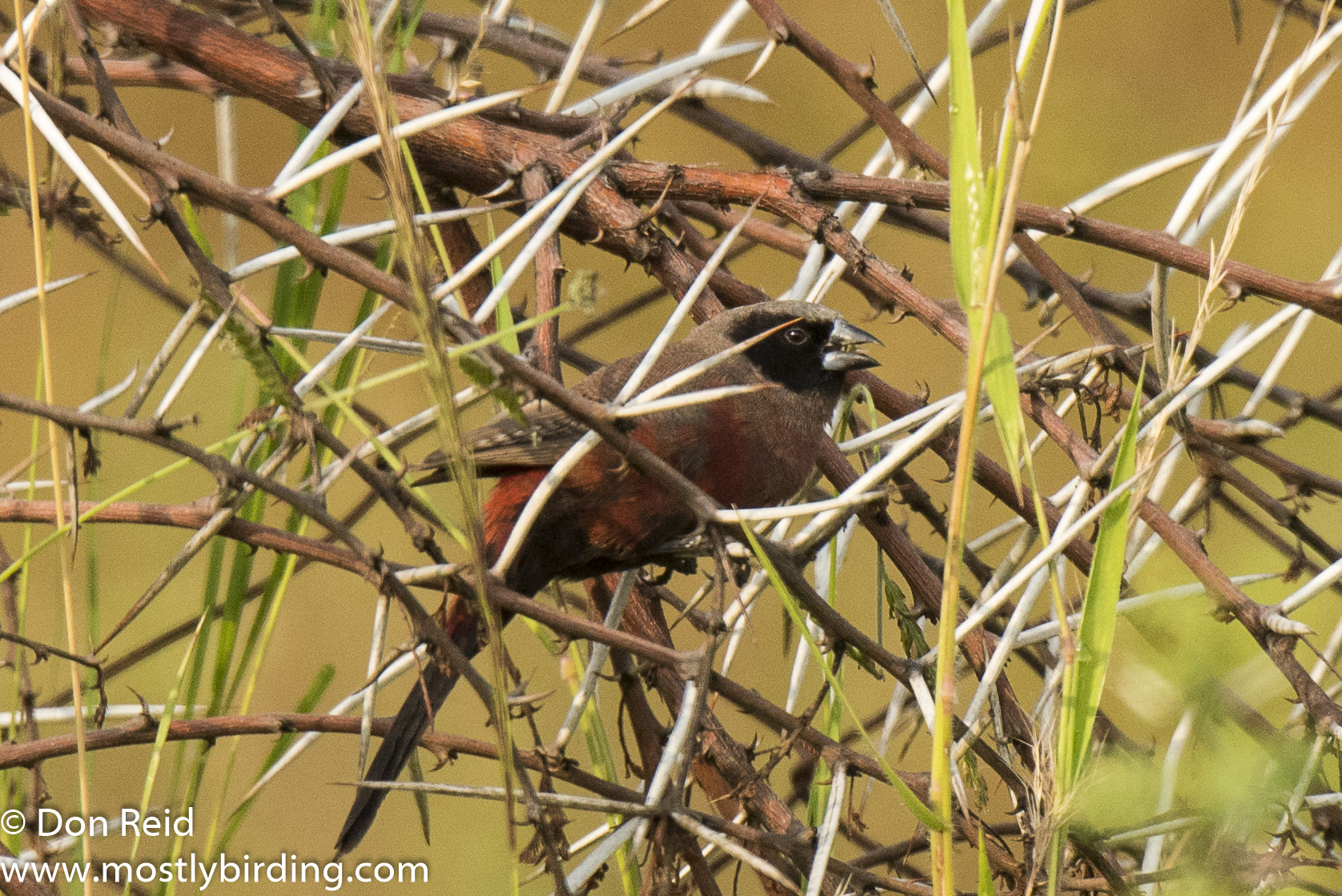
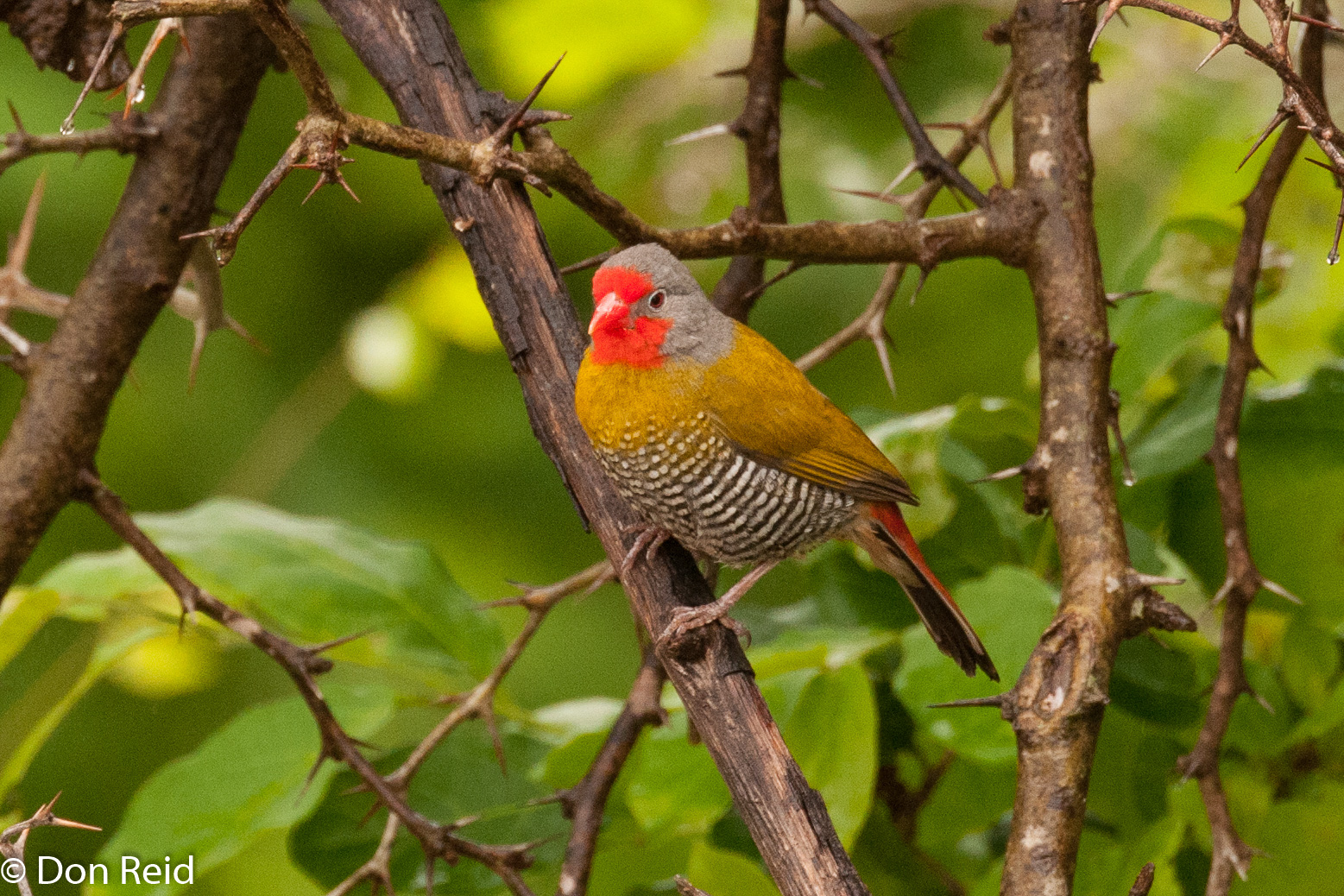
In between sightings we were able to identify several birds on their calls, familiar ones such as Acacia Pied Barbet, Chestnut-vented Titbabbler, Rattling Cisticola and the ubiquitous Go-Away Bird uttering its nasal “go away” call at every opportunity. With the obvious birds recorded on our list we started picking up the smaller, “passer-by” species – Amethyst Sunbird, Chinspot Batis, White-bellied Sunbird, Black-faced Waxbill and Green-winged Pytilia (Melba).
Chinspot BatisBlack-faced Waxbill – amongst the thornsGreen-winged Pytilia
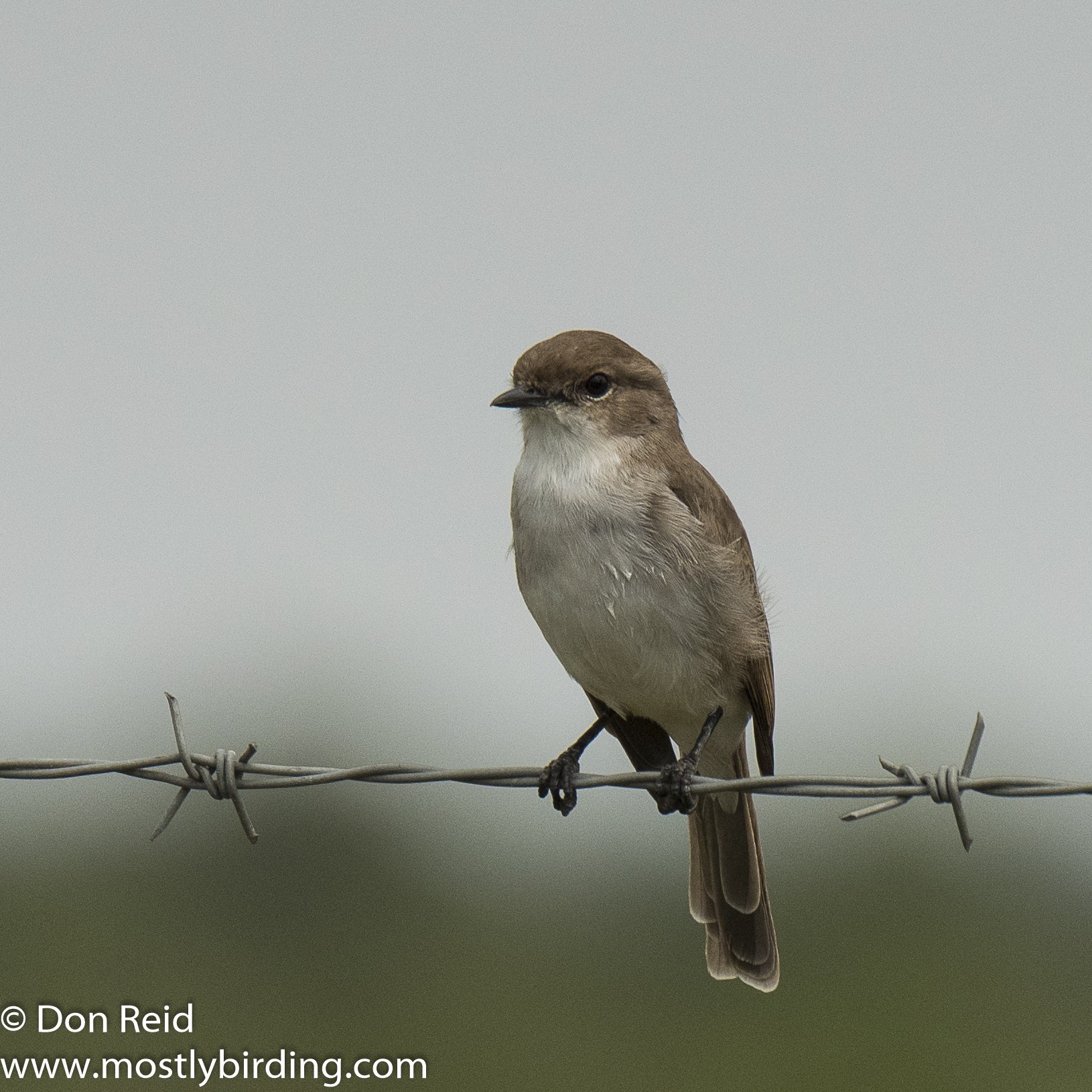
The species we came across most frequently were Marico Flycatcher and Scaly-feathered Finch (love its Afrikaans name Baardmannetjie – literally small bearded man, alternatively Koos calls it Fu-man-chu). In the villages Pearl-breasted Swallows dominate amongst the swallows for reasons unknown – perhaps they just like being around humans like many other bird species.
Marico Flycatcher
The village we drove through looking for the species that seem to favour this habitat, was suffering from some “land-grabbing”, but not the sort that dominates our news from time to time – here the only tar road bisecting the village was slowly being “grabbed” by the surrounding sandy earth and undergrowth, so much so that there was barely a single lane width of the two-lane tar road still visible – so much for maintenance.
With our two hours of atlasing done (the minimum for a “Full Protocol” card), we headed to the main target for the morning, being Mkhombo Nature Reserve which lies to the west of the main dam.
Pentad 2505_2845
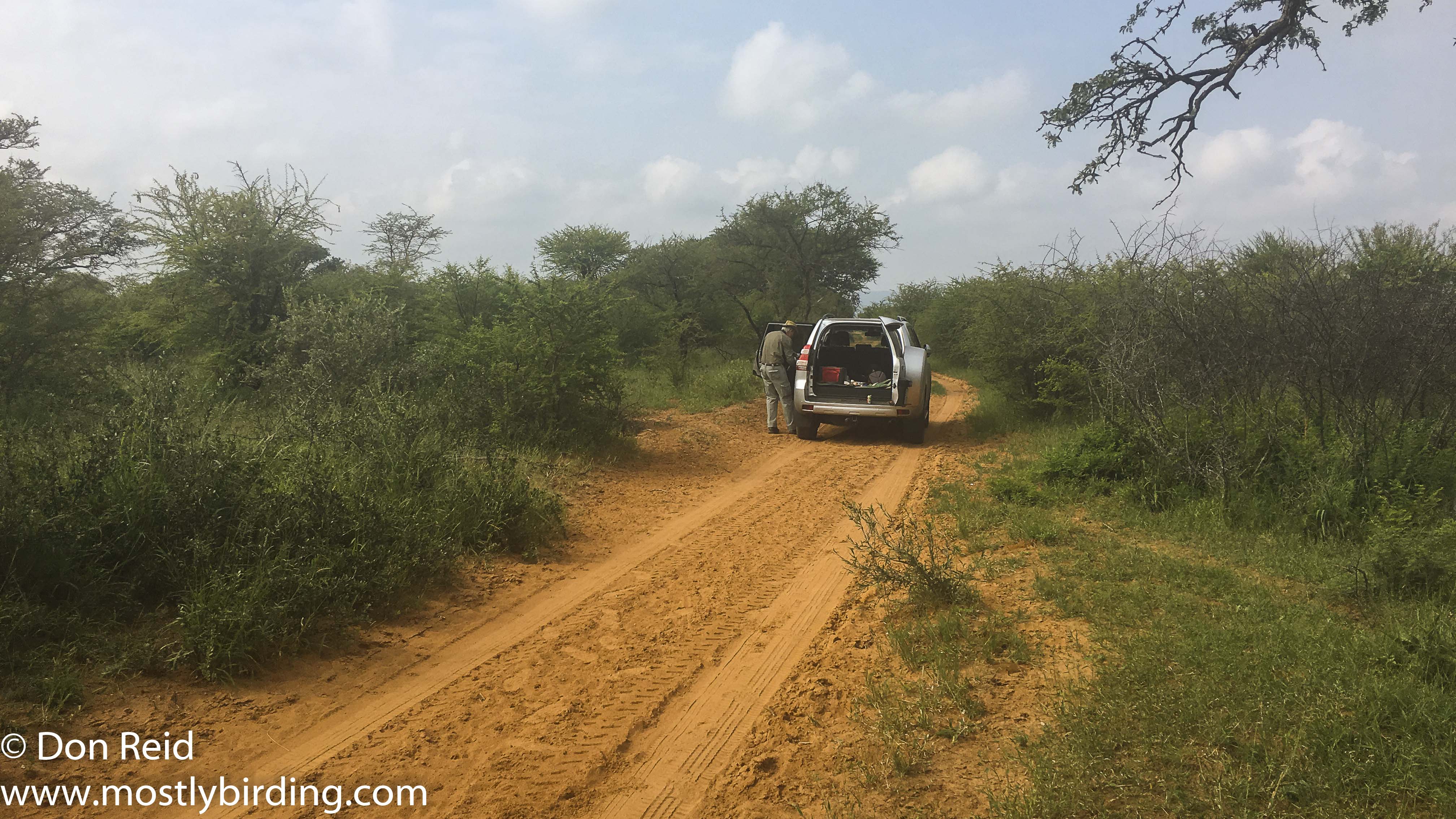
Entering the reserve’s gate, which lies a distance off the main road and is not signposted, we were met by the hoped-for pristine bushveld and sandy tracks with some thorny bushes encroaching in places – a tad worrying when the first screeches of thorn against duco rattled the control-freak side of my nature, but after some initial teeth-clenching I decided to ignore it – after all, why have a bush-capable SUV if you don’t want to go into the bush with it.
Mkhombo Nature reserveMkhombo Nature Reserve
We had the place to ourselves and enjoyed Koos’s hard-boiled eggs (well actually a chicken produced them, he just boiled them) and coffee in the tranquil surroundings while continuing with atlasing, then proceeded slowly along the sandy roads, branching off here and there for a view of the dam, which was pretty much non-existent other than a small pond or two. No other water was visible, just a vast expanse of green vlei grass covering the muddy plain as far as the eye could see, confirming how little rain the area had experienced over the last couple of years since we were last there.
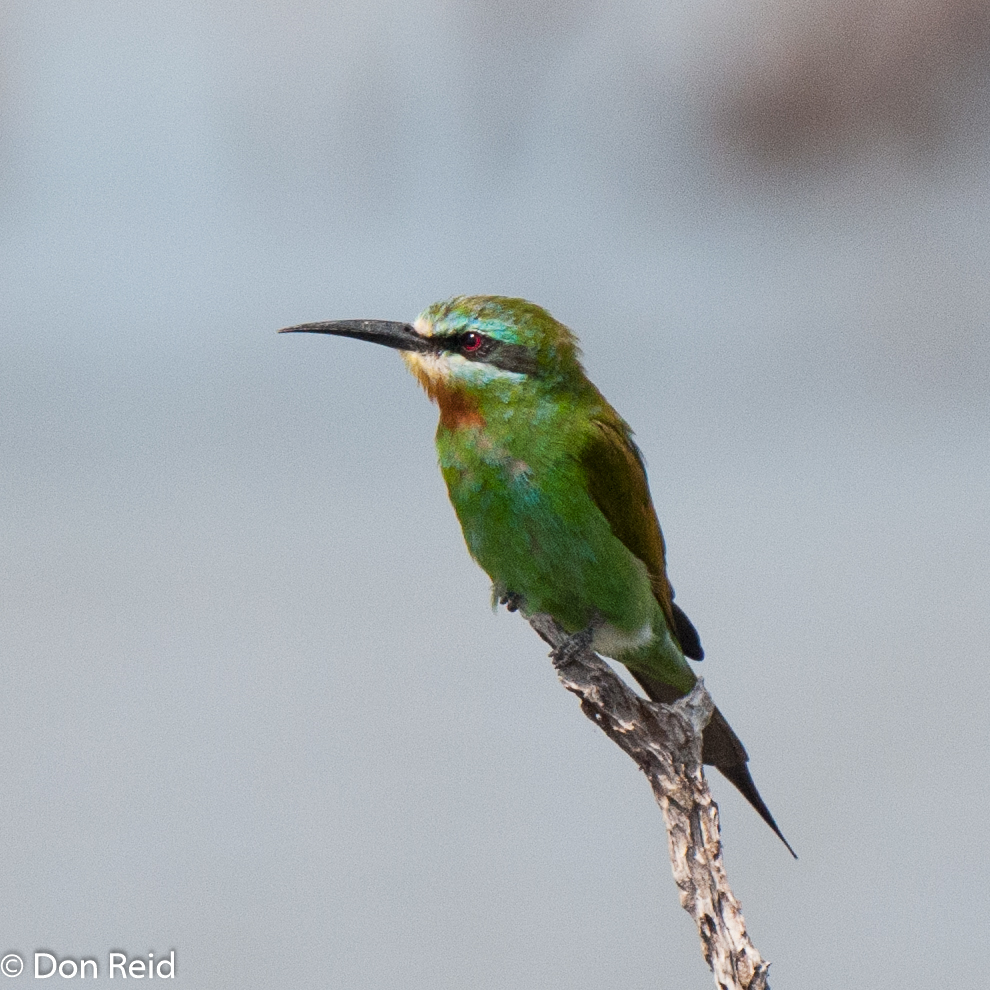
We were rewarded with Blue-cheeked Bee-eaters in a nearby tree, while Great and Yellow-billed Egret as well as Grey Heron were ID-able once I had the scope up and focused on the distant scattered birds. All three local Lapwings – Crowned, Blacksmith and Wattled – were visible, in separate groups but mingling where they overlapped, then I spotted a mixed flock of large birds in flight, morphing into Spurwinged Geese and Knob-billed Ducks as they landed in a hidden patch of water, with just their top halves showing.
Blue-cheeked Bee-eater
We had completed two hours and made our way back to the gate then homewards, which took a lot longer than planned as we encountered heavy holiday traffic all the way back.
I basked in the pleasure of a milestone reached – here’s to the next 500!
* Atlasing :
Simply put, it is the regular mapping of bird species in a defined area called a “pentad”. Each pentad has a unique number based on its geographical position according to a 5 minute x 5 minute grid of co-ordinates of latitude and longitude, which translates into a square of our planet roughly 8 x 8 kms in extent.
As a registered observer / Citizen scientist under the SABAP2 program (SA Bird Atlas Project 2), all of the birding I do nowadays includes recording the species for submission to the project database at the ADU (Animal Demography Unit) based in Cape Town.
Atlasing has brought a new dimension and meaning to my birding as it has to many other birders. The introduction a couple of years ago of the “Birdlasser” App has greatly simplified the recording and submission of the data collected.
This series of “Atlasing Tales” posts sets out to record some of the memorable experiences and special moments that I have enjoyed while atlasing.
Thousands of Amur Falcons grace Southern Africa with their presence from around late November each year, departing during April/May. The journey it undertakes to escape the harsh winter of its breeding grounds in Mongolia, northern China and North Korea is astounding, beginning with an initial migration to northeast India where they gather in staging areas before commencing the long flight to Africa. They can cover up to 1000 kms per day during this stage.
The map below shows the route followed by one individual with a 5 gram tracking device attached :
Familiar Summer Visitors
Amur Falcons are a familiar sight when birding/atlasing in the north-eastern parts of South Africa, particularly in the grassland areas, where they regularly perch on power lines and telephone lines in numbers, ever on the lookout for their favoured prey – termite alates and grasshoppers. Less common in the southern parts although I have come across them in the Southern Cape not far from our second home in Mossel Bay.
During March this year I had been out atlasing in the grasslands south of Delmas and had seen a few Amur Falcons along the way. Heading homewards around midday along a gravel back road, the Amur Falcons were suddenly numerous, probably drawn by a good supply of insect food – most were perched on low fences and posts due to the lack of overhead power and other lines along the road.
This seemed like too good a photographic opportunity to pass up, with the Falcons being more or less level with my line of sight and with fairly good light conditions for the time of day – the cloud cover served to soften the harsh sunlight.
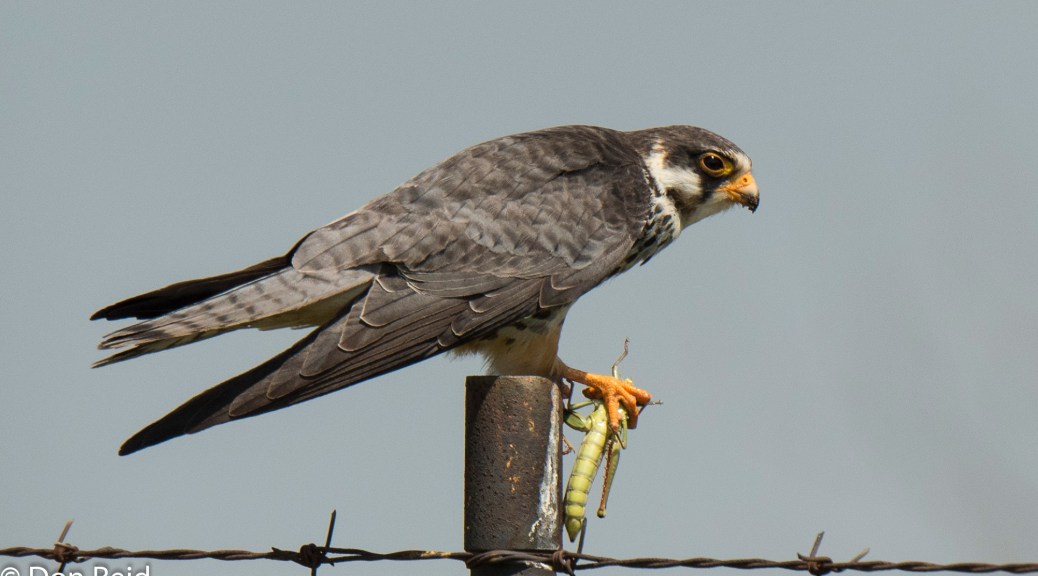
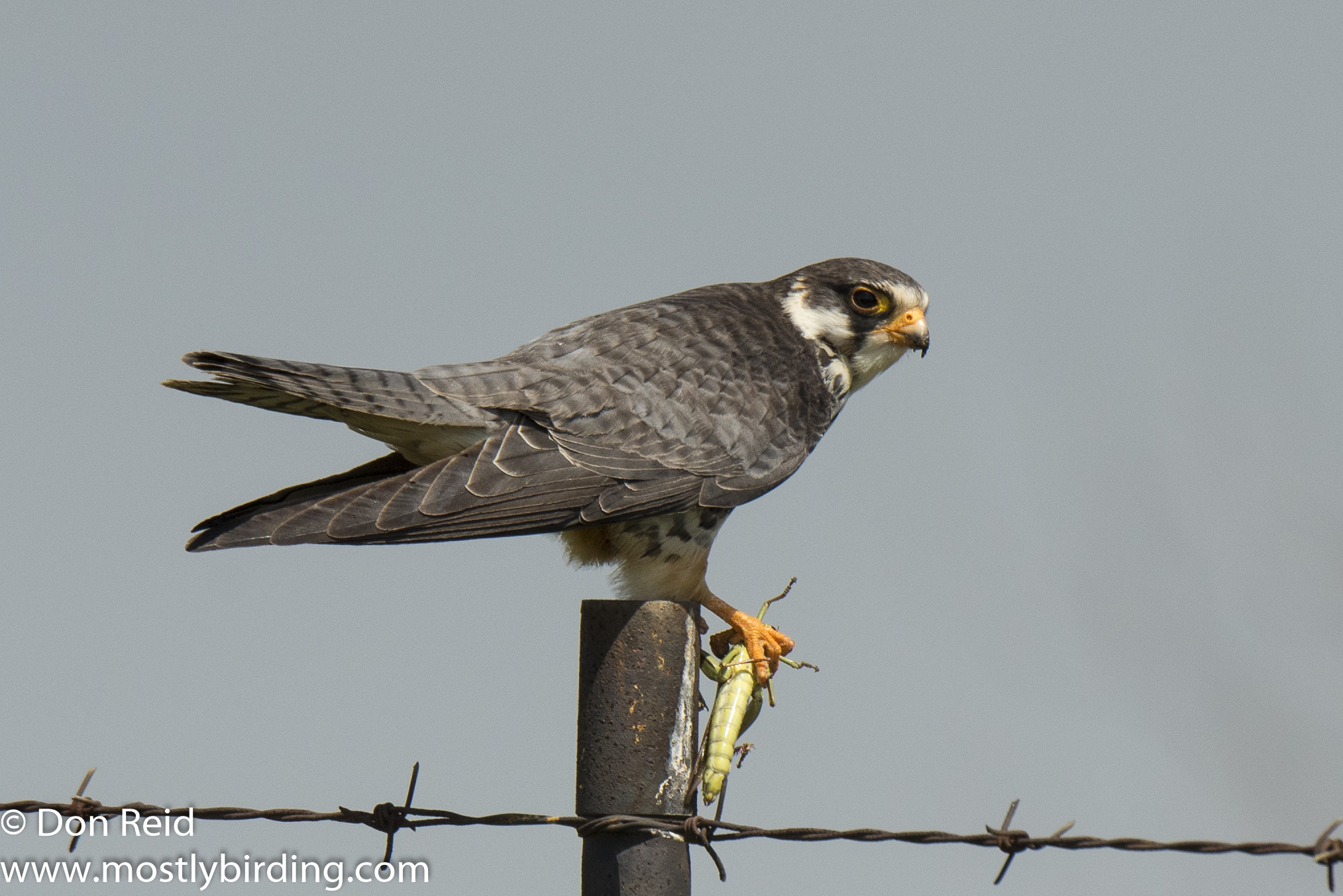
The only problem was the skittish nature of these small raptors – as soon as I slowed and stopped they would fly off, only to tease me by perching on the fence a short distance further. I was on the verge of giving up when a female Amur flew down and perched on a fence post just ahead, clearly with some sort of prey in her talons.
I crawled my SUV closer, hoping its diesel engine would not scare the falcon away, but she was so pre-occupied with her catch that she just gave me a glance and carried on pecking at the grasshopper she had just caught – this gave me the opportunity to rattle off a series of shots, including a few as she flew off.
Amur Falcon – lunch is readyLooks tastyLet’s try thisNot sure I like being watched
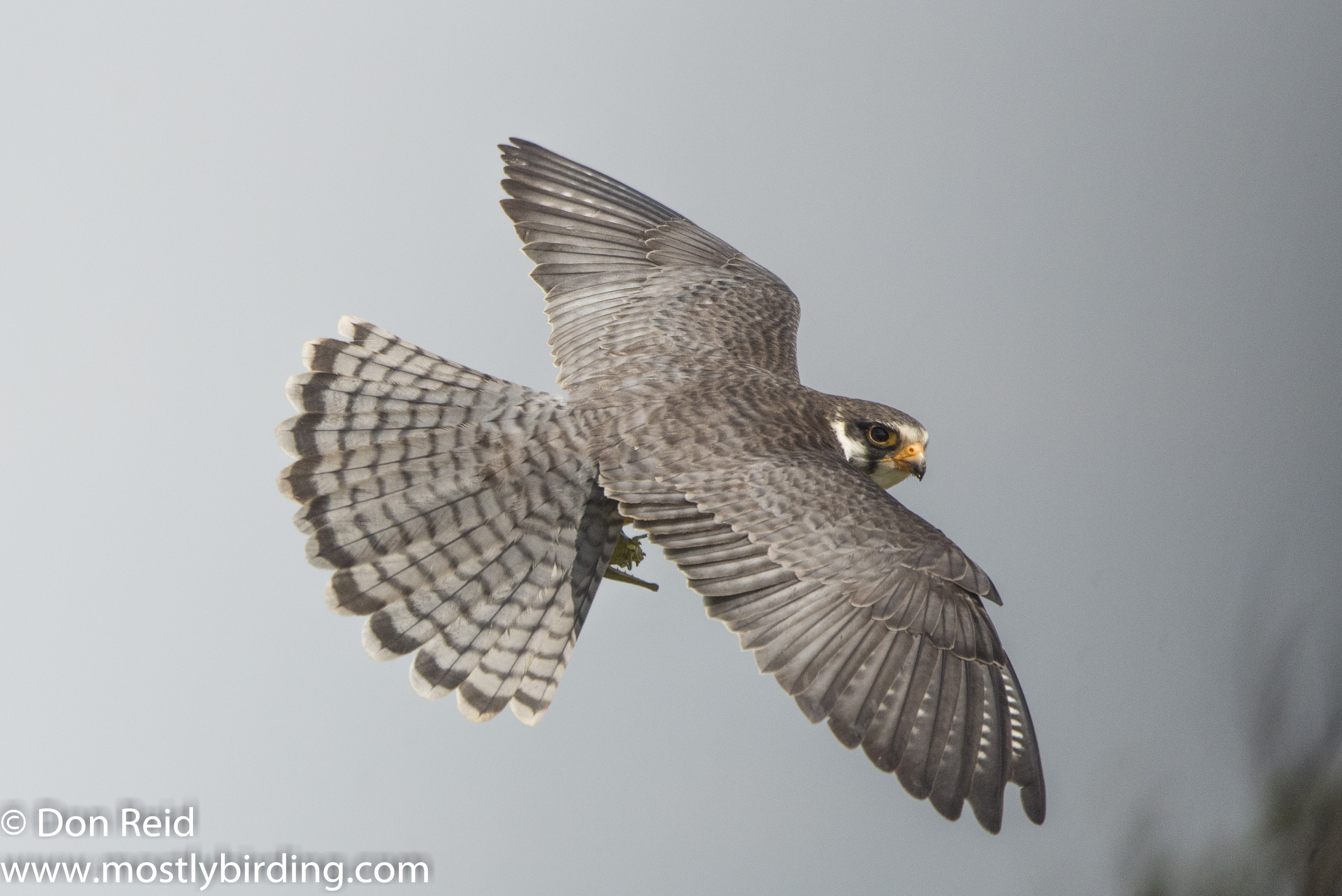
By this time the Amur was clearly a bit uncomfortable with my attention and she flew off, gaining height rapidly while still clutching the grasshopper until I could barely see her. The photos revealed the magnificent patterns of feathers on the upper- and under side.
Amur Falcon showing off her fine wing and tail feathersAmur Falcon – under-wing and tail patterns just as impressiveAnd off she goes, still giving me a wary look, still clutching the grasshopper
It’s encounters such as this that make birding the amazing pastime it is.











































 Mostly Birding