All posts by Don Reid

South African nature enthusiast with a passion for Birding, Photography and Travelling to interesting places to discover more about Southern Africa and the World

A Crane Safari

Onverwacht Farm

During our September 2020 visit to the farm of Pieter and Anlia, described in my previous post, the opportunity arose for a very unique birding experience, all thanks to Pieter’s efforts in setting it up.

Pieter had arranged with friend Trevor, retired professional hunter and nature expert of note, to pick him up from a nearby farm so that he could guide us to a bird sanctuary on a farm south-west of Vryheid – Trevor had already given the outing a name – “Crane Safari” which was an obvious hint of what we were likely to see but not of the exceptional numbers we would encounter.

Firstly though, there were various urgent farm matters to attend to – amongst them, counting the cattle to make sure none had been ‘appropriated’ overnight, checking fences for signs of any further ‘recycling’ operations and taking the bakkie to town for some repairs to the suspension (damaged during a fruitless hunt for fence ‘recyclers’ who had struck during the night and removed a few hundred metres of fencing) – such is the existence of a farmer in these parts.

Pentad 2745_3035

We picked up Trevor, who I had met before several years ago, drove to Vryheid and then proceeded along the R33 towards Dundee for about 15 kms before turning off onto farm roads and arrived at the farm around 1.30pm. Trevor knows many of the farmers in the area and had arranged access to the farm and bird sanctuary.

From then on, for the next two hours, the birding was hectic as Trevor and Pieter spotted birds in quick succession while I tried to record them on the Birdlasser app and verify the ID.

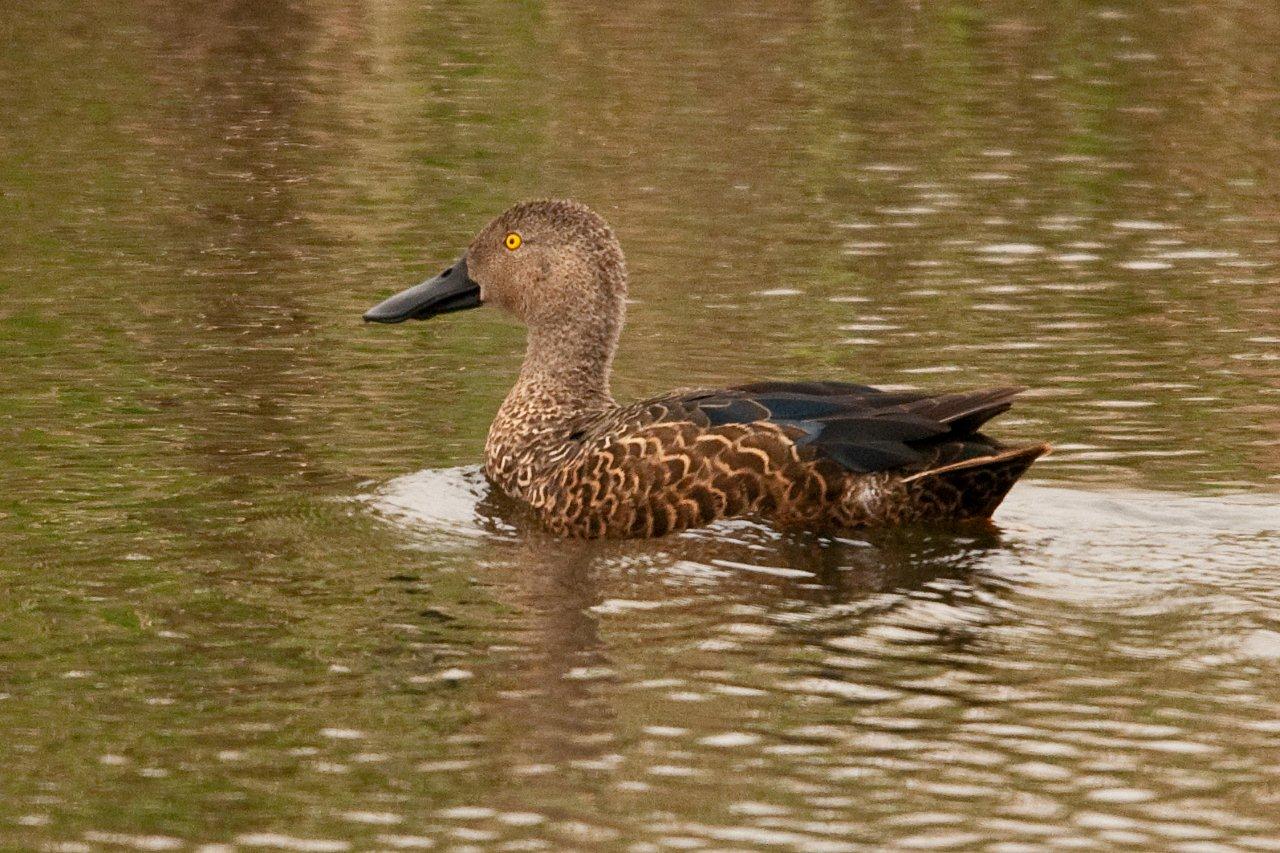
We drove along the earth wall of the first dam, which was filled with hundreds of waterfowl, including a group of White-backed Ducks (new record for the pentad) and others of Greater Flamingos, Southern Pochards and Cape Shovelers (which I like to call “Sloppy Ducks” based on their Afrikaans name of Slopeende).

White-backed Duck (Thalassornis leuconotus / Witrugeend)
Cape Shoveler (Anas smithii / Kaapse Slopeend)

Several Black-winged Stilts patrolled the dam fringes and Trevor called an African Marsh Harrier which was flying low over the grassy verges.

Moving on, the large vlei lower down came into view and at the same time a huge flock of perhaps 150 Grey Crowned Cranes rose up in unison, creating a birding spectacle that few people can have witnessed. The flock circled the vlei then settled for a while, but as soon as our vehicle edged closer they rose as one again, repeating the spectacle over and over.

Grey Crowned Cranes, Crane Safari near Vryheid

I would guess that most experienced birders have seen a pair or perhaps a small group of Grey Crowned Cranes at some time, but to see such a large flock of this endangered species is truly remarkable.

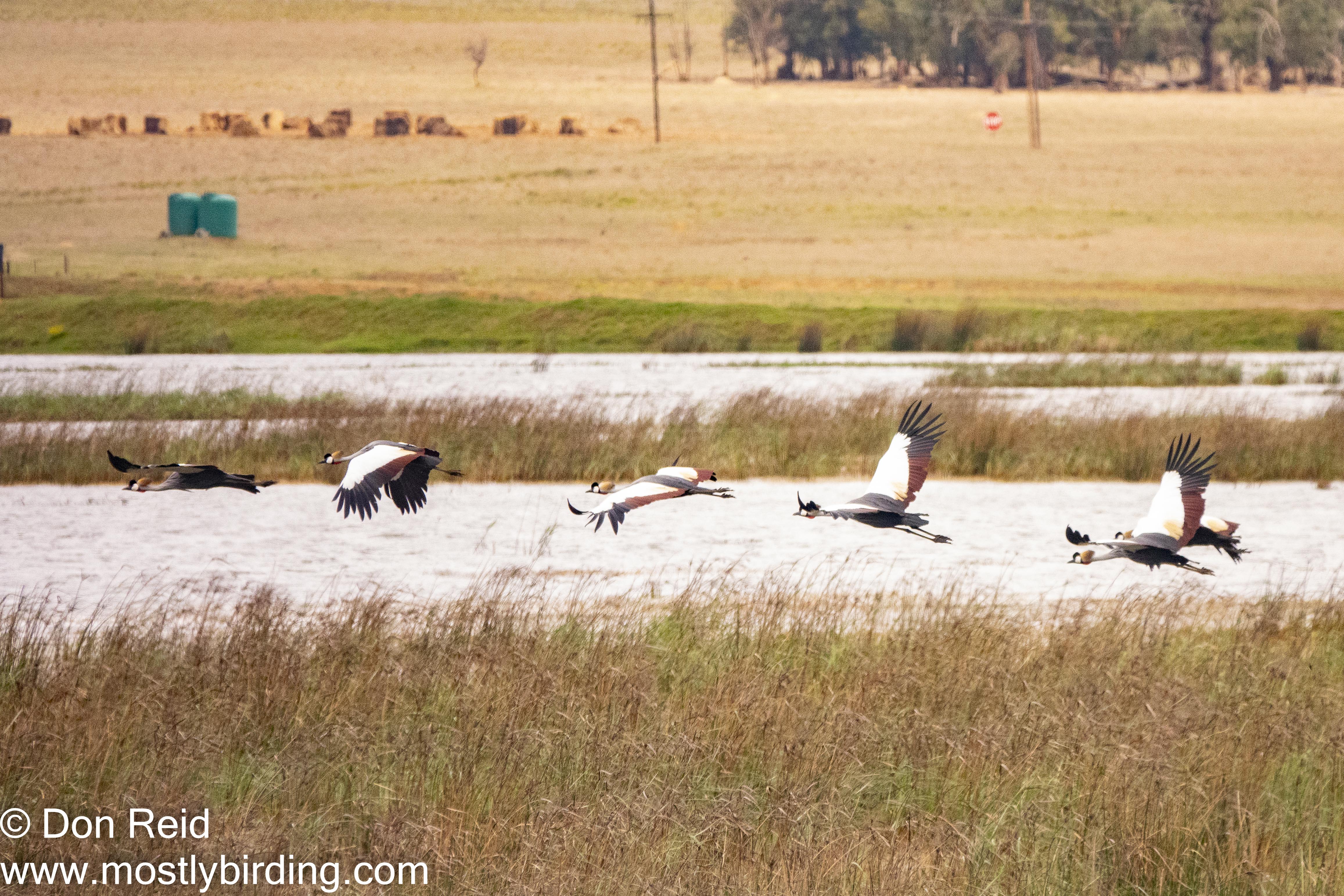
Grey Crowned Cranes, Crane Safari near Vryheid

Once we were closer to the vlei, with the Crowned Cranes now settled on the opposite side, we could see a few Glossy Ibises along the fringe and a superior looking Goliath Heron right in the middle. Shortly after, a lone Squacco Heron flew in and a Purple Heron rose up out of the reeds to complete the trio of “scarcer Herons”.
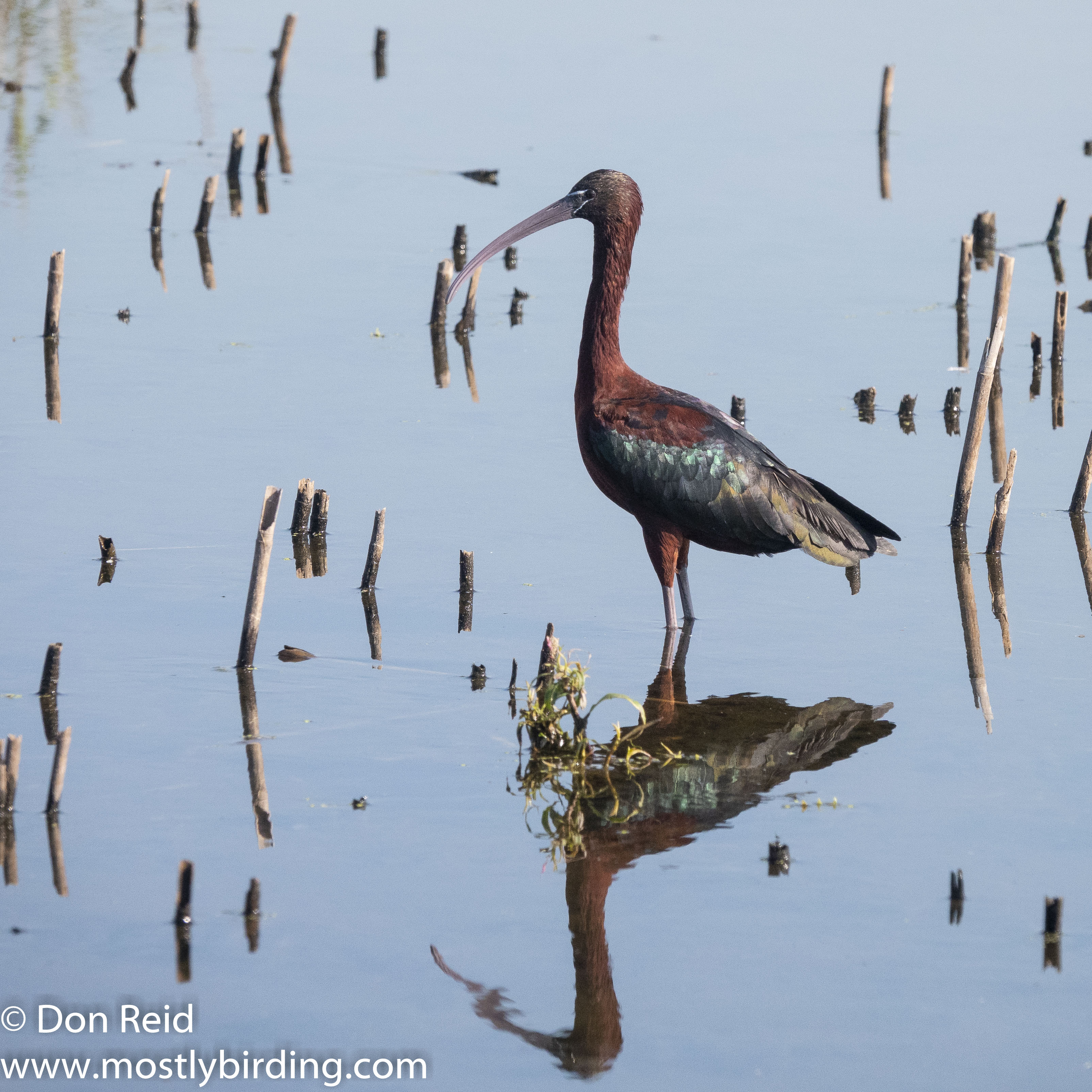
Glossy Ibis (Plegadis falcinellus / Glansibis)
Vlei, Crane Safari near Vryheid

Between the dam and the vlei, lush grassland was good for Cape Longclaw, Spike-heeled and Red-capped Larks and African Stonechat.
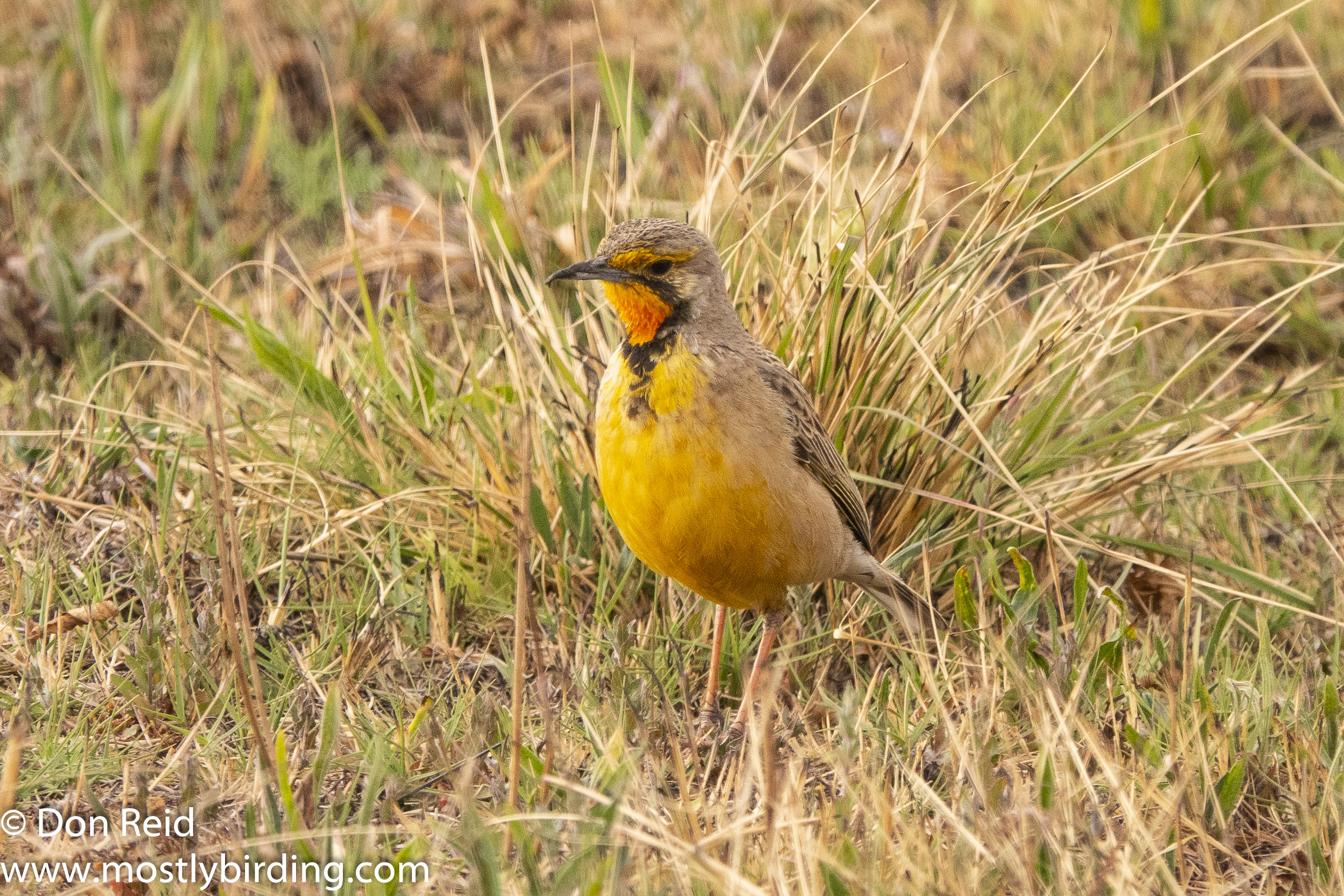
Cape Longclaw (Macronyx capensis / Oranjekeelkalkoentjie)
Spike-heeled Lark (Chersomanes albofasciata/ Vlaktelewerik) – showing its main identifying features of short white-tipped tail and long slightly curved bill

Soon it was time for a lunch break – sandwiches of home made bread and last night’s leg of lamb leftovers along with coffee which went down a treat in the cold windy conditions. The lee side of the bakkie provided some shelter from the wind but we didn’t dawdle and were soon on our way again.

While we were enjoying lunch, a flock of Blue Cranes, some 100 strong, flew over the vlei and settled briefly before moving on – so we had seen large numbers of both of the Crane species found in these parts – mission accomplished, thanks to Trevor!

Later, we found a small group of Blue Cranes in a field, this time close enough for some photos …..
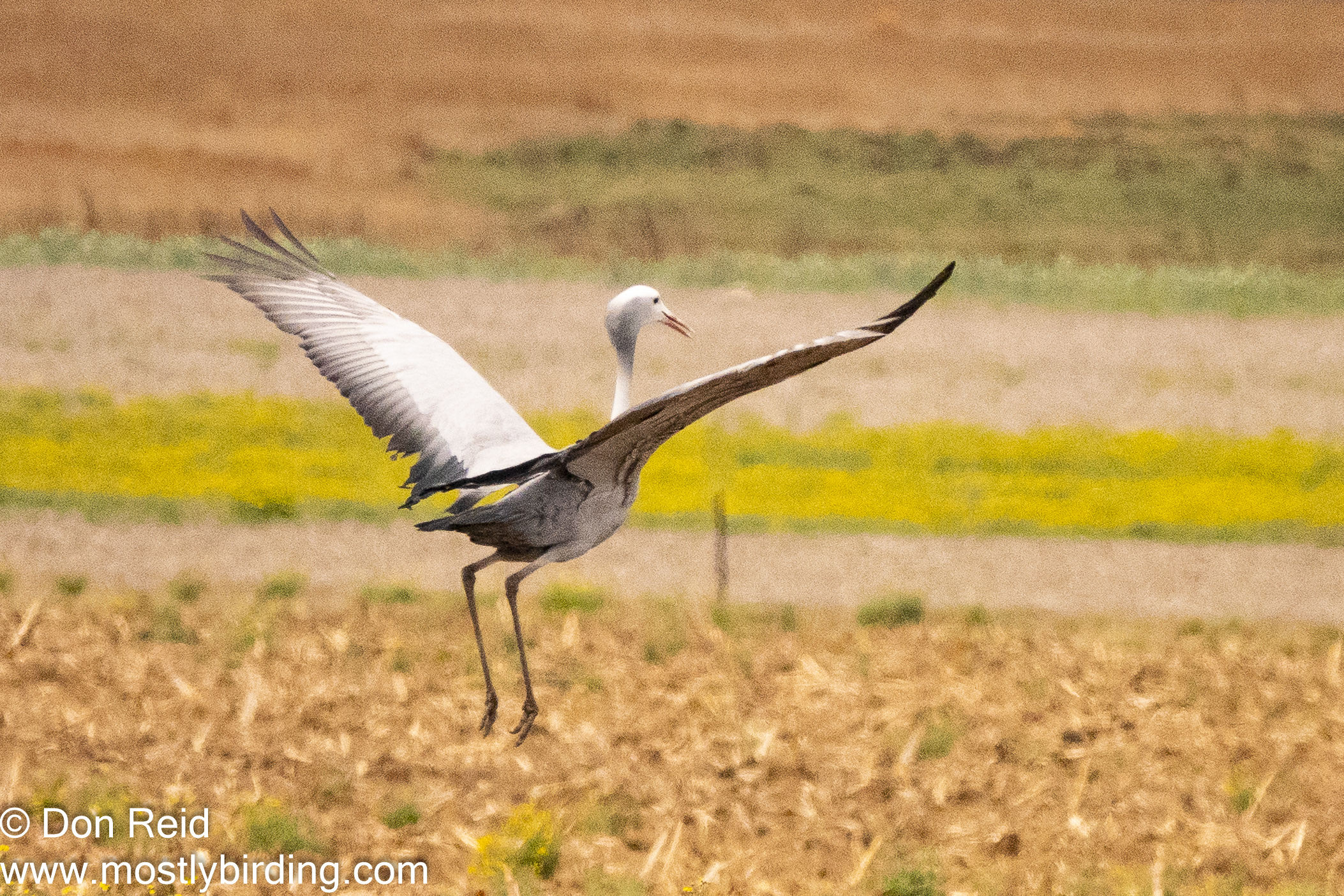
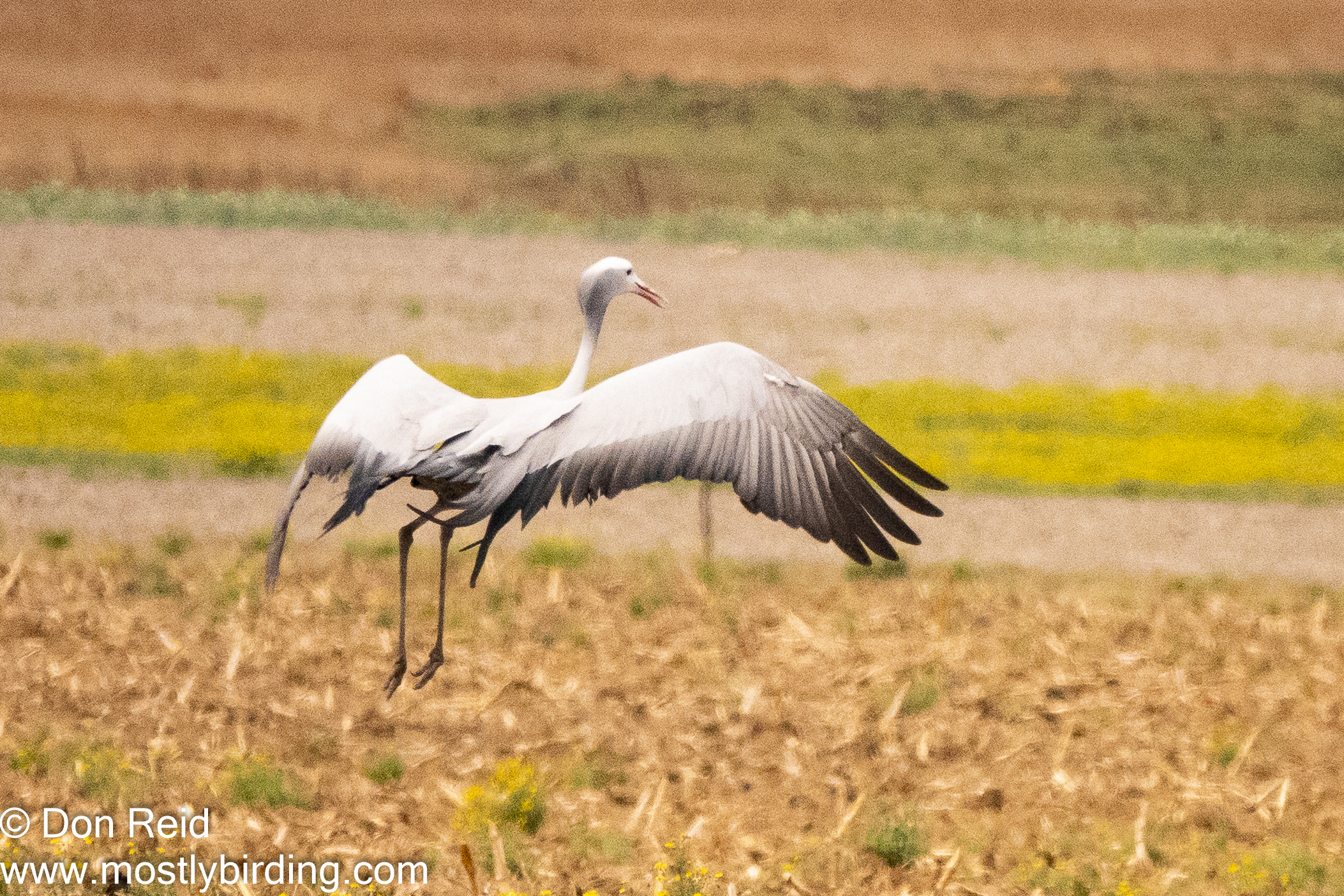
Blue Crane, Crane Safari near Vryheid
Blue Cranes, Crane Safari near Vryheid

At the last dam before leaving this incredible birding spot, we saw a few waders at the water’s edge and approached carefully so as to get close enough to identify these sometimes difficult species. Fortunately they were all species that I have got to know well and I was able to record Ruff, Curlew Sandpiper (New record for the pentad), Little Stint and Kittlitz’s Plover – a real bonus after such a variety of waterfowl.

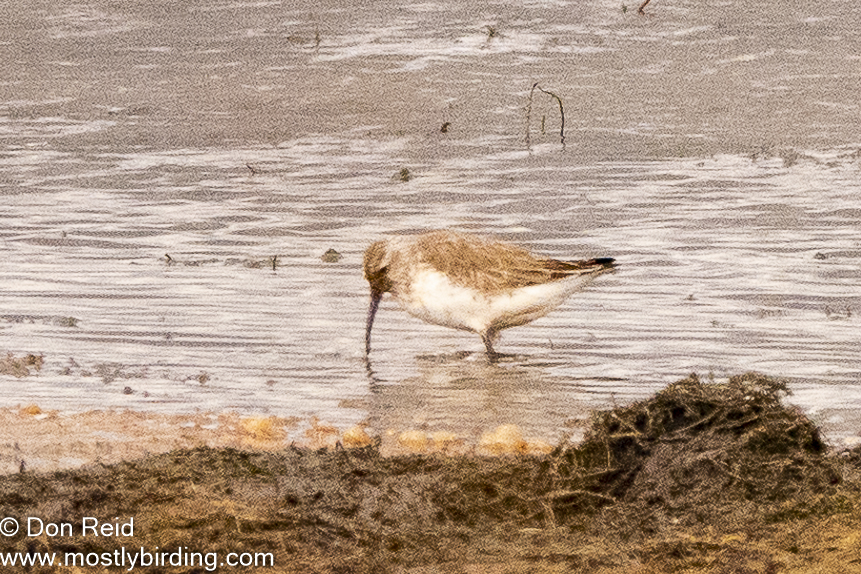
Ruff (Philomachus pugnax / Kemphaan), near Vryheid
Curlew Sandpiper (Calidris ferruginea / Krombekstrandloper), near Vryheid

I hadn’t planned to do a “Full Protocol” (FP) card for the pentad in which the dams and vleis fell, but as it turned out the last bird recorded on the way out – a Southern Masked Weaver at a small stream – was precisely two hours after the first bird and I was more than happy to submit my list as FP (which requires a minimum two hours of survey time in a pentad).

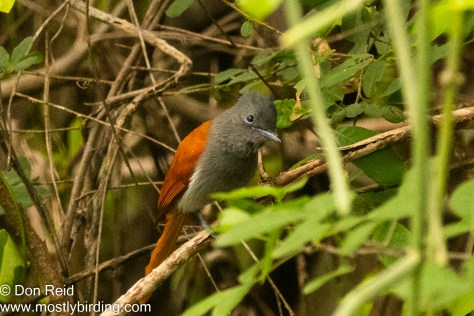
Back at the ranch – well, the farmstead where Trevor and Collette live – we sipped warming Milo while Trevor pointed out a few of the garden species including Paradise Flycatcher and a flock of Olive Pigeons that swooped by.

It had been a memorable day’s birding and I was very pleased to have been able to complete a Full Protocol Atlas card. I recorded 40 species in the two hours, the seventh card for the pentad, and added two new species
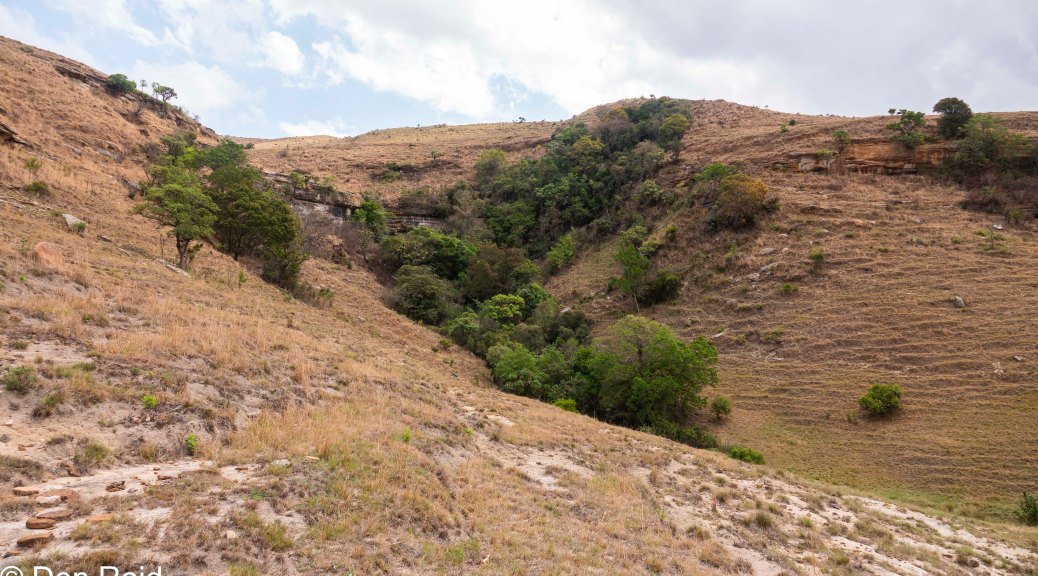
Atlasing – September 2020 : Onverwacht, Vryheid

I haven’t posted about my bird atlasing travels for a while so now I’m …..

Catching up on the monthly look at where Atlasing took me in September 2020 ….. in this case to the farm of Pieter and Anlia, part of Gerda’s wide family and one of our favourite places to visit and enjoy traditional farm hospitality –

Onverwacht Farm – 26 to 30 September 2020

Getting there

We had been back in Gauteng for three weeks after an extended stay in Mossel Bay and with lockdown eased to Level 1 our thoughts, as they are wont to do, turned to travel. With a long weekend coming up, it was the ideal time to pay a visit to Pieter and Anlia on Onverwacht Farm, not far from Vryheid in central Kwazulu-Natal.

We had done most of the preparatory packing the day before, so were up at a reasonable hour and left mid-morning, travelling via Witbank, Hendrina, Ermelo and Piet Retief with tea and lunch breaks taken at the roadside, our ‘new normal’ way of doing longish road trips.

The drive was made somewhat taxing by the combination of many slow, large lorries encountered, the poor condition of the roads once we turned off the N4 and the depressing state of some of the towns along the way. However, our spirits were lifted when we reached the farm, saw the braai fire being prepared and the friendly greetings of the family.

The Pentad

I was not expecting to atlas outside the pentad in which the farm lies, but thanks to Pieter there was an opportunity to visit an adjoining pentad on a “Crane Safari” which turned into an exciting atlasing trip of its own. More about that in a follow-up post….

Pentad 2740_3035

My atlasing on the farm was spread over the four days of our stay, but was limited to short bouts of birding in between all of the other activities.

Saturday, late afternoon

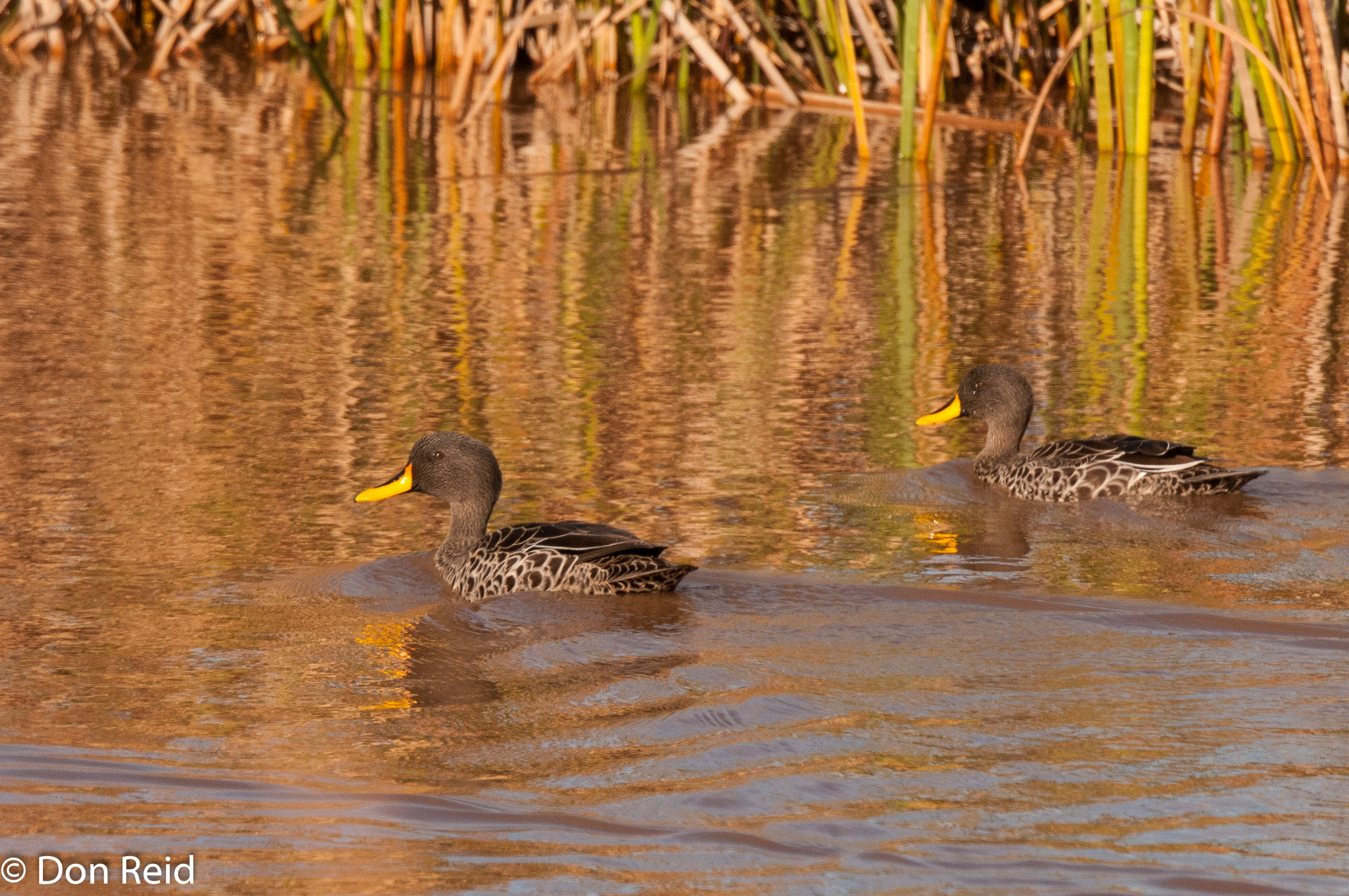
On arrival and after settling in, I got the pentad list going with the birds on and around the dam, which lies a couple of hundred metres down the gentle slope in front of the house – all the usual suspects such as Cattle Egret, Egyptian Goose, Yellow-billed Duck, Coots and White-breasted Cormorant.

Onverwacht farm Vryheid
Yellow-billed Duck

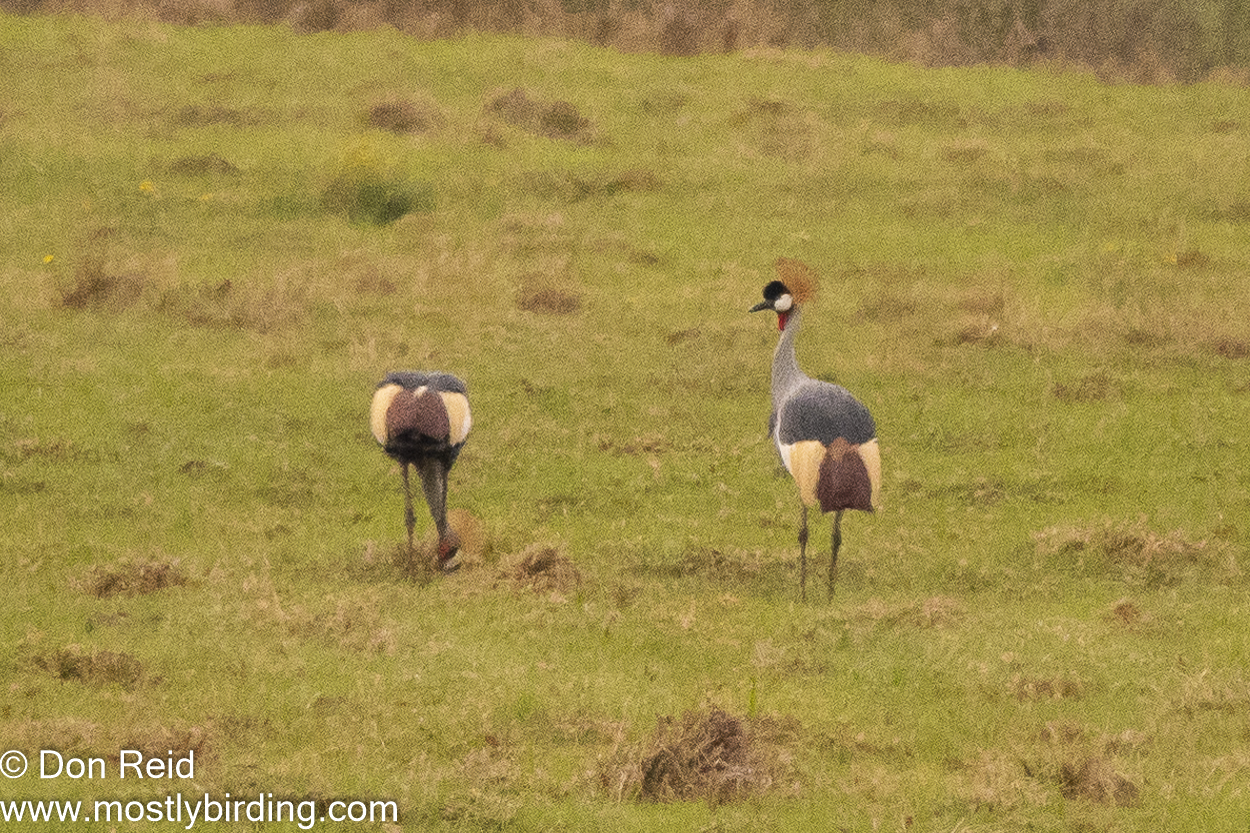
Pieter pointed out a couple of large birds on a distant grassy slope and with my binos I could verify their ID – Grey Crowned Crane – a quite magnificent and stunning bird that I never tire of seeing and one of the specials of the area.

Grey Crowned Crane (Balearica regulorum / Mahem), Onverwacht farm Vryheid

The warm weather was rapidly dissipating in the face of a cold front that had arrived, so the braai fire was a warming spot to spend the last of the day, still on the lookout for new species. A chorus of cackling calls announced the presence of Green Woodhoopoes (Not recorded in the pentad before) in the tall pine trees next to the house and we soon saw them in the fading light, moving among the branches in a loose group of 6 or more.

Pleased with this new species for the pentad, I then heard the whoo – hooo of a Spotted Eagle-Owl (33%) and down at the dam a group of 3 Wattled Lapwings (22%) flew in and settled near the water in the fading light

Spotted Eagle-Owl
Sunday

The day was cold – even more so than the forecast 10 deg C due to the icy wind, so my birding was limited to a couple of short sorties into the large garden and surrounding farmstead, the wind chasing me back to the warmth of the house after 15 to 20 minutes.

Onverwacht farm Vryheid

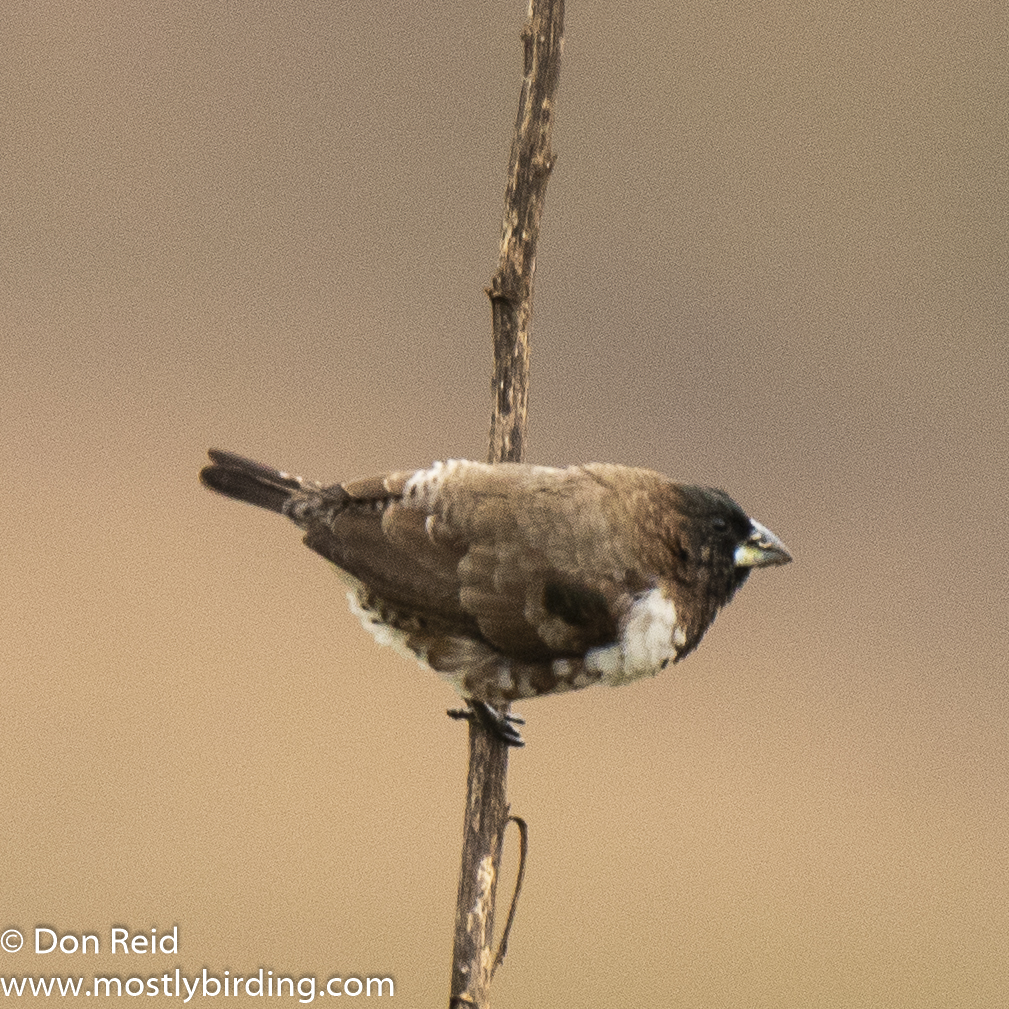
Highlights were Southern Bald Ibis at the dam edge, Black Sawwings (44%) swooping by in their shiny black plumage with long forked tail streaming behind, Bronze Mannikins and Pied Starlings perched in trees and on poles.

Bronze Mannikin (Lonchura cucullata)

By day’s end my pentad total was a modest 31 without having ventured beyond the garden and surrounds.

Onverwacht farm Vryheid
Monday

Monday was devoted to the “Crane Safari” in an adjoining pentad, which I will cover in a separate post as it was such a special birding experience, but in the evening I heard the unmistakable, eerie call of a Barn Owl somewhere near the house.

Tuesday

And the surprises kept coming! Despite all sorts of challenges that Pieter had to attend to – stolen fencing and a broken torsion bar on the bakkie (utility vehicle) which left it standing at a crazy angle – Pieter still had time to arrange for son Janneman to take me to a nearby kloof on the farm, where he had seen signs of Bald Ibis breeding.

After another farm breakfast (my favourite ‘krummelpap’ again – a sort of crumbed porridge unique to SA) Jan and I set off on a birding tour of the farm, with our first stop some way up the lower slopes of the mountain escarpment that looms over the farm. There we clambered through a fence, then walked along a sloping ridge to a point where we could get a view of the krans (cliff face).

It didn’t take long to spot a Bald Ibis on a nest set back in the horizontal split in the rock face. A small waterfall trickled water down the face and Kiepersols, Aloes and other natural growth completed the handsome picture.

Bald Ibis breeding spot, Onverwacht farm Vryheid

Bald Ibis breeding spot, Onverwacht farm Vryheid

Nearby a Sombre Greenbul called and an African Olive Pigeon (not recorded in the pentad before) showed itself among the green tops of the trees. However the show of the day belonged to Bald Ibises and White-necked Ravens (also a new record for the pentad) chasing each other aerially, the Ravens seeming to harass the Ibises for unknown reasons until they retreated to the depths of the rock crevices.

The rest of the farm tour provided several other sightings of Rufous-naped Lark (33%), Buff-streaked Chat (55%), Yellow-fronted Canary and a pleasing Giant Kingfisher (22%) to round off my atlasing efforts for the visit.

My total species recorded in the pentad during the visit stood at 46 with 4 new species added to the pentad list and my total species after 6 cards completed over several years was now 132
Footnote : Where I show percentages in brackets, these refer to the relative scarcity of the species according to the pentad surveys completed to date over the ten years that the project has been running. So if 100 pentad surveys have been done to date and a species has been recorded 5 times by the observers, it will be shown as 5%. Notable species in my book are those with a % of less than 10%
Ostriches at a Waterhole

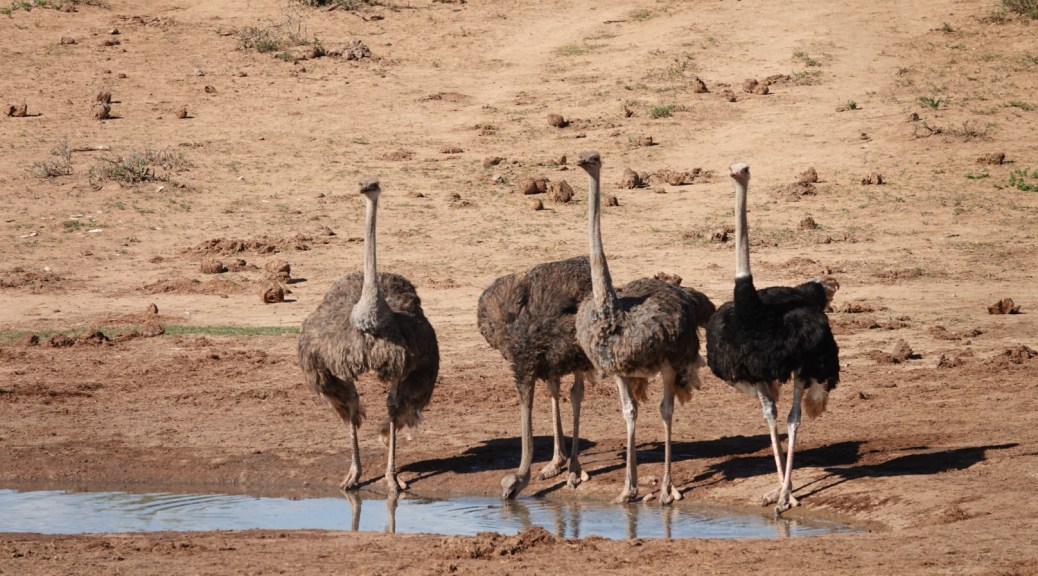
The wonderful thing about visiting South Africa’s National Parks is that there is just about always something new to see. This was the case during our recent trip to visit two of the Eastern Cape’s gems – Addo Elephant National Park and Mountain Zebra National Park – I will be posting more about our trip but thought I would share this video which I took while on a late afternoon game drive in Addo.

I had never seen Ostriches drinking at a waterhole and it didn’t occur to me that they cannot slurp it up like an elephant, so have to first scoop the water into their mouth, then lift their long neck and swallow.

I think you will agree it is a fascinating sight …. the one on the left was initially rather aloof, but deigned to join in briefly towards the end

What it lacks is some appropriate music to accompany the video as those elegant necks go up and down – I am open to suggestions …..

Mossel Bay – The Point

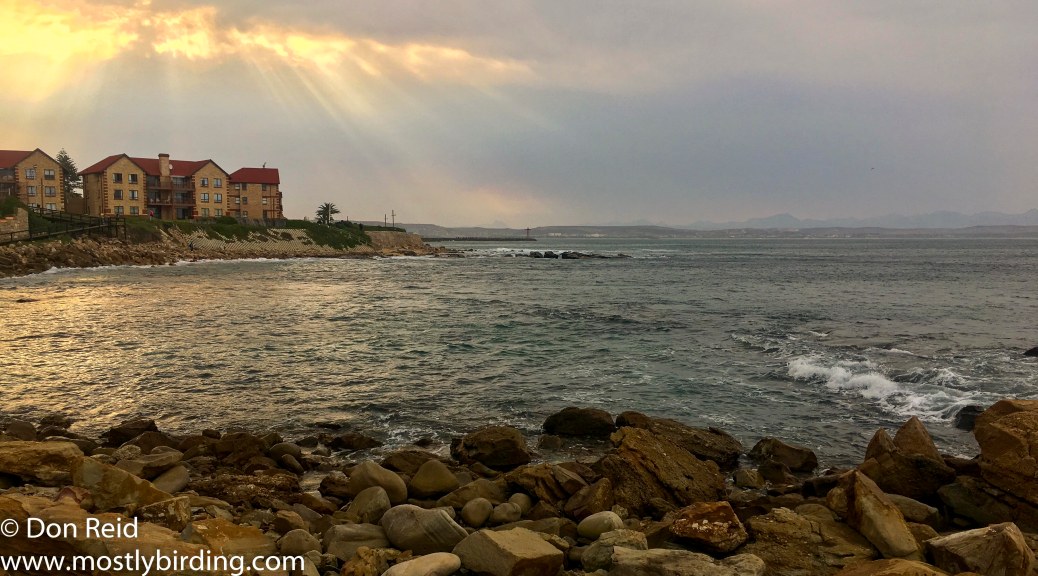
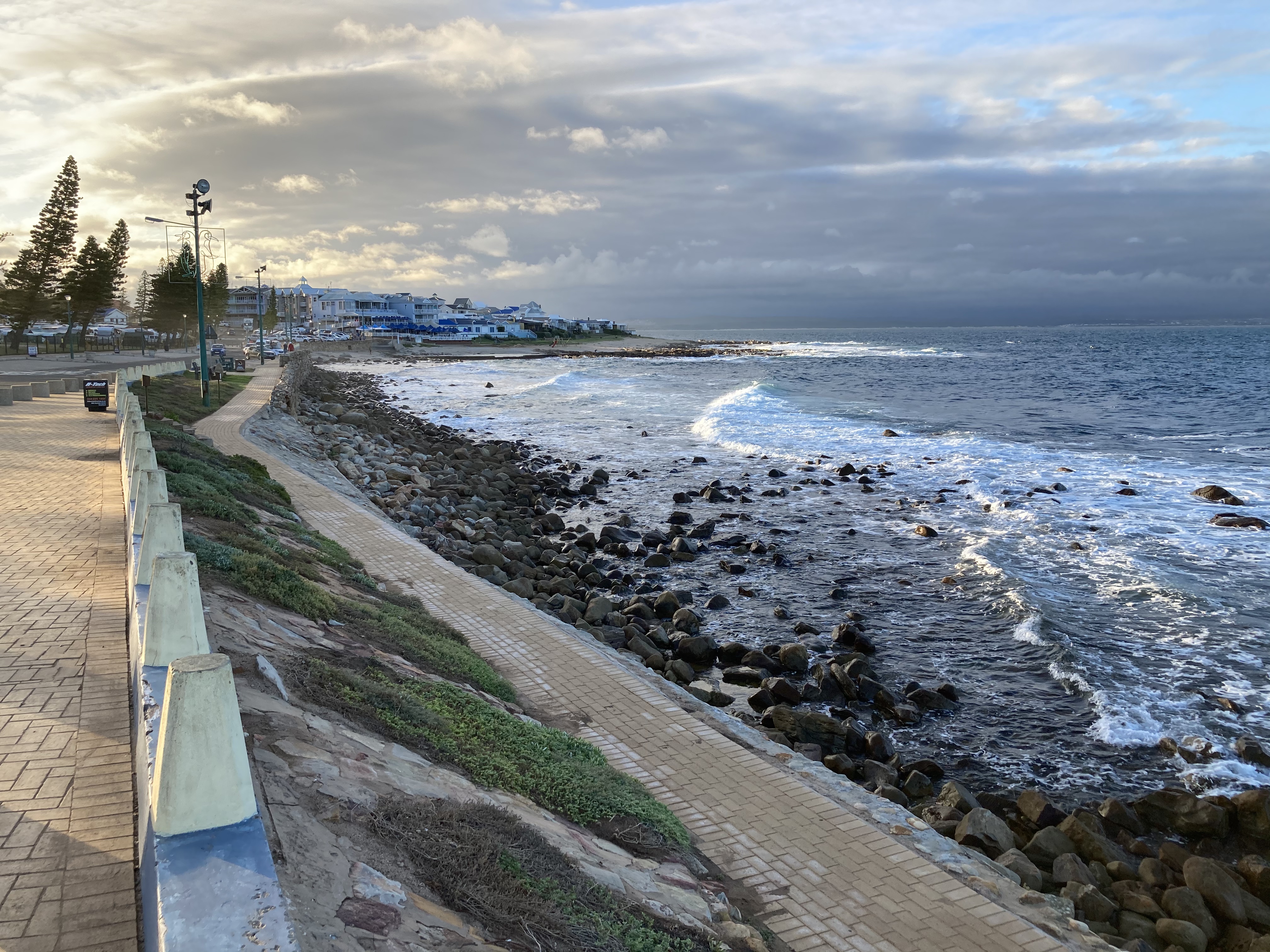
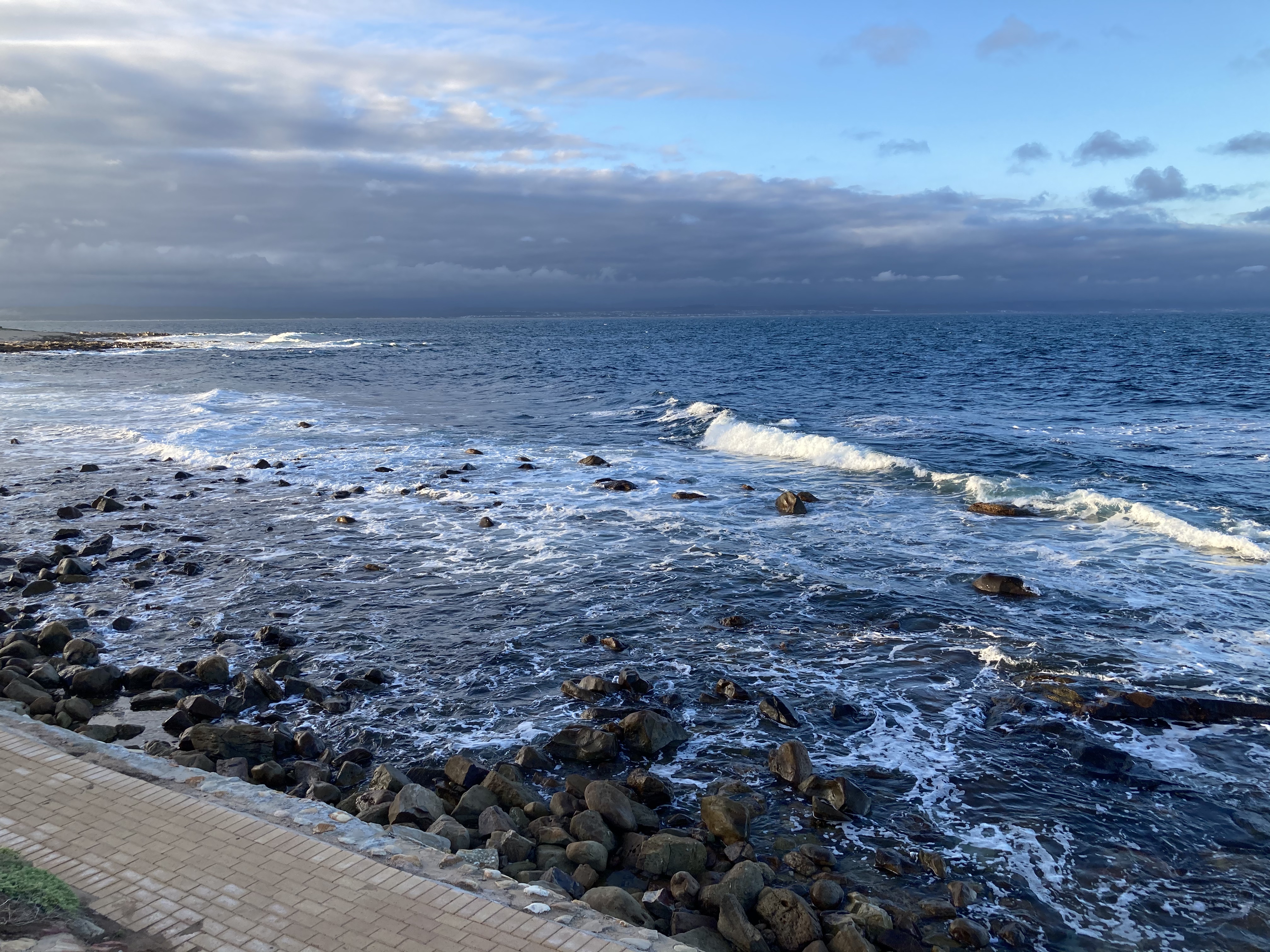
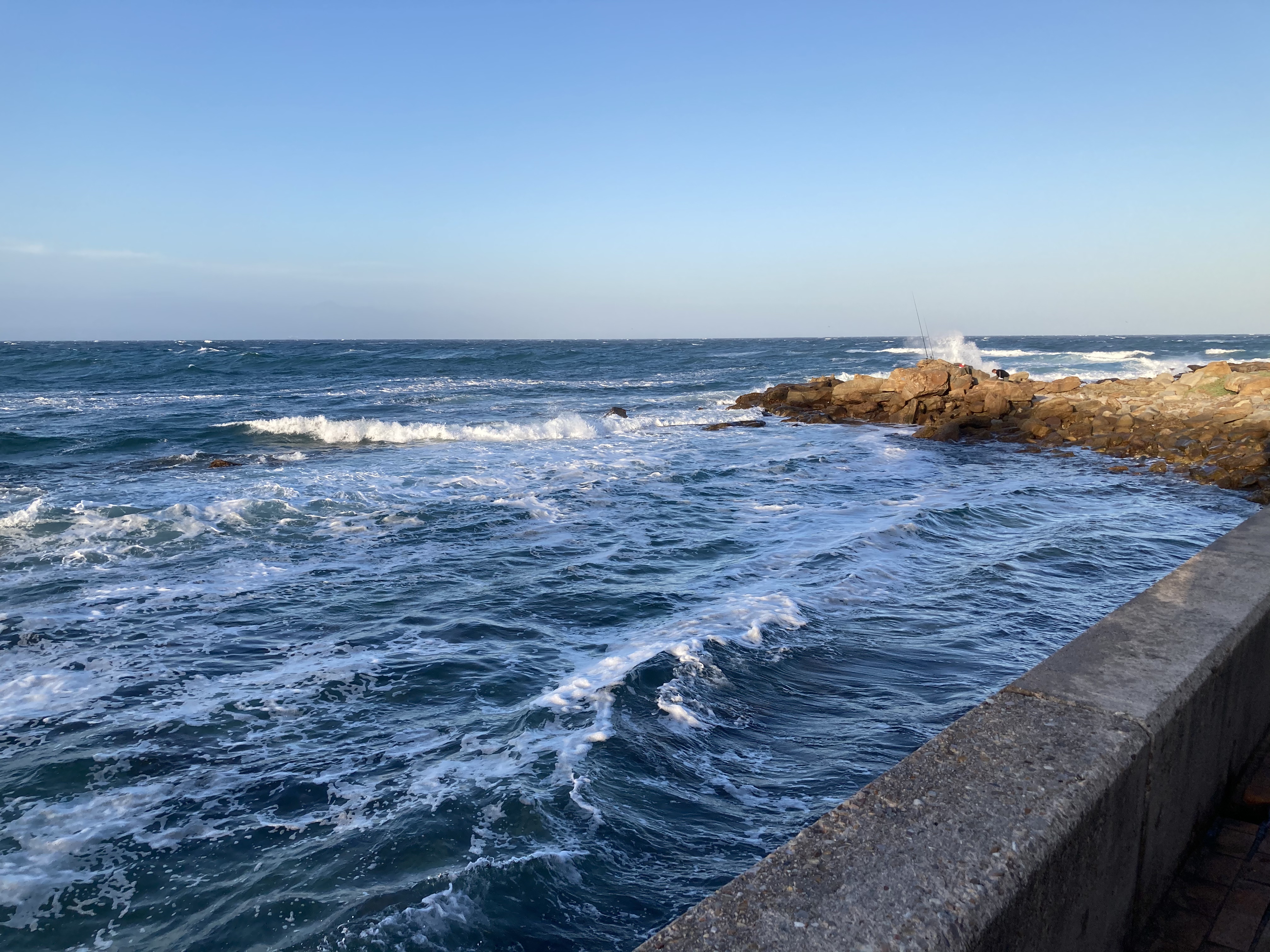
Mossel Bay, like most coastal towns, has many weather moods, from sunny and bright to overcast and stormy

These photos were taken during one of our regular visits to The Point at the western end of the bay, our favourite place for a take-away coffee which we enjoy while sitting in the car and soaking up the calm that the scene brings to us. It also happens to be a great spot for seabird watching, which is dependent on the prevailing winds, ocean currents and tides as to what may pass by, but that is a subject for another day…

These photos are straight from my iphone without any cropping or editing

Christmas in Kruger : Come on in – the Water’s Fine!

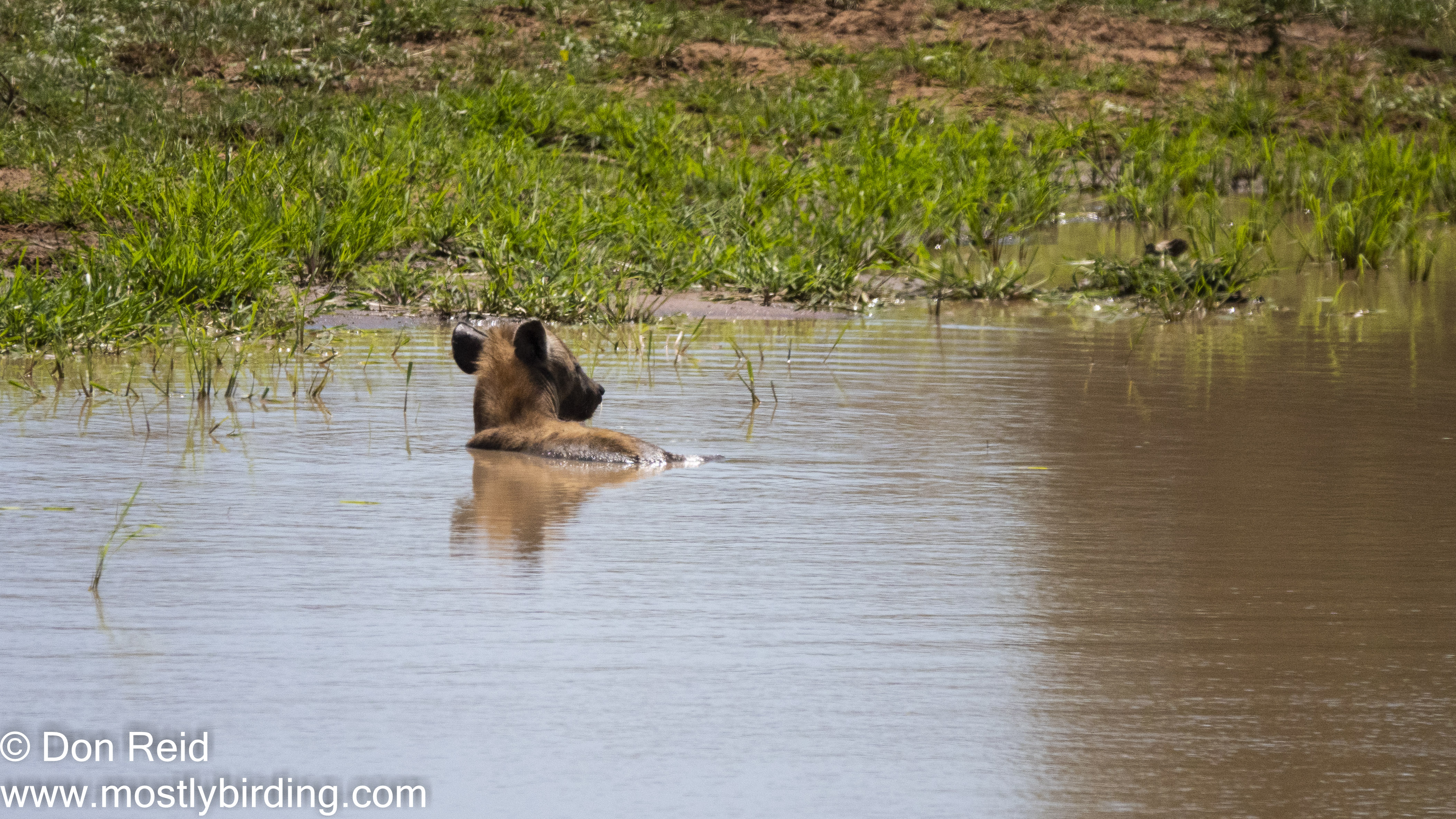
One very unexpected sighting during our Christmas week in Kruger, was this Hyena enjoying a swim in a shallow waterhole not far from the road

Hyenas are not natural swimmers but are known to take to water to cool off in very hot conditions – so we could not blame this one for seeking refuge from the extremely hot weather that we experienced during our visit

I was actually envious of the Hyena and was tempted to join it in the water – such a pity Kruger regulations don’t allow you to get out of your vehicle except at designated spots….. (See footnote)

It seemed quite content and had no inclination to leave the waterhole so we continued with our drive. Perhaps he was taking a summer holiday break from all those things Hyenas have to do – fighting Lions, chasing Vultures away from carcasses, etc

Footnote : Actually on second thoughts, the swimming pool at Mopani camp is a better option all round for me – no chance of a Crocodile or other creature surprising you

Christmas in Kruger : Down by the Bridge …..

A Watery morning around Mopani ….

KNP – Mopani

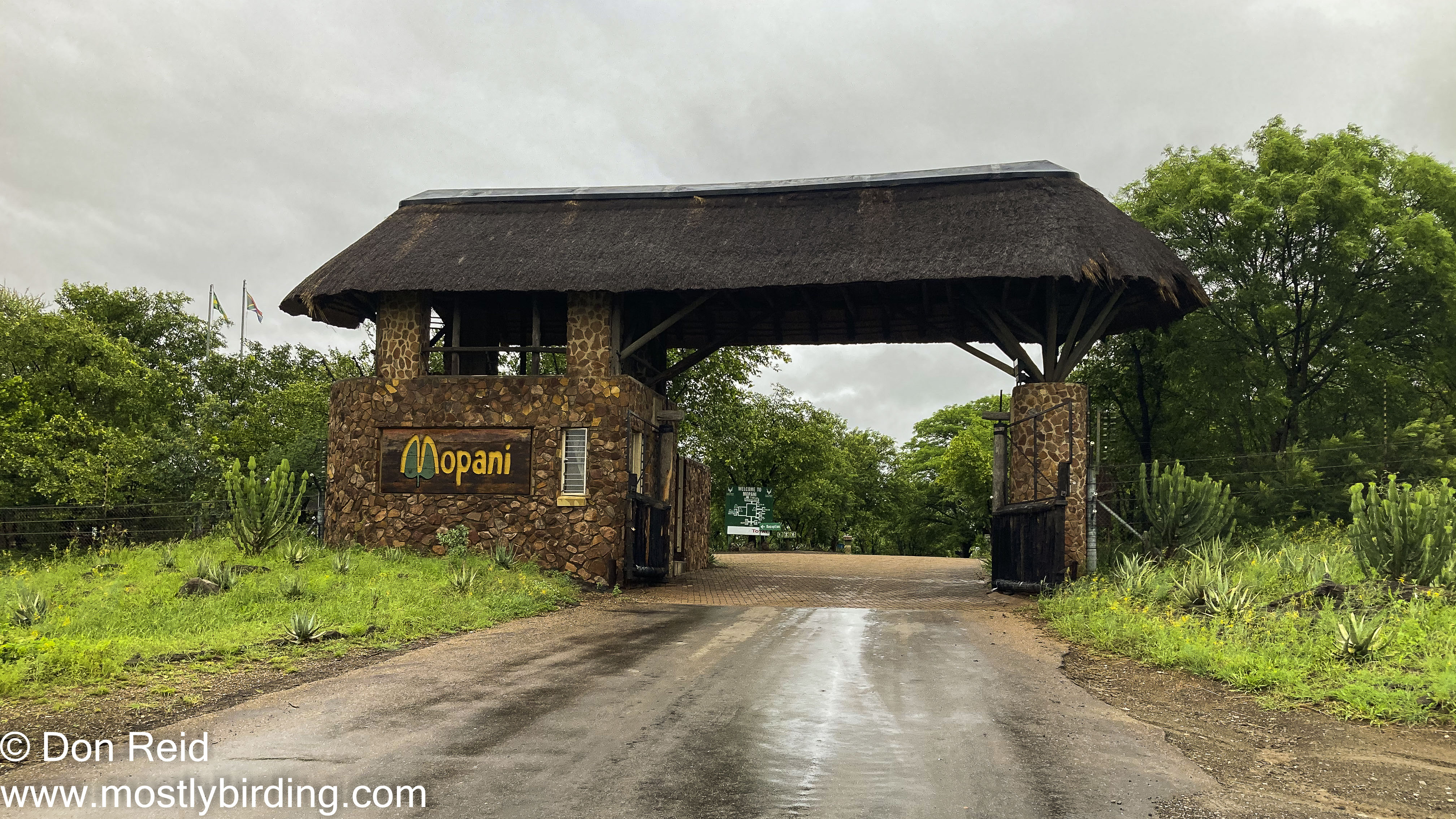
It was the start of our Christmas in Kruger week and we were nicely settled in our rondavel in Mopani Camp, so much so that we chose to spend most of the first day in camp, enjoying the shady stoep with its theatre-like patch of bush and rocks directly in front which attracted all sorts of bird and other species. The stifling heat also played a role in keeping us in the camp for the day in a state of semi-stupor.

Come the second day and I was keen to do some exploring of the surrounding areas, particularly as I had started to record the birds in that particular pentad and wanted to maximise the birding and atlasing experience by surveying as much of the surrounding areas as Kruger’s roads would allow

Gerda was content to enjoy the restful atmosphere of the camp, so I set off on my own, binoculars at the ready and keyed up for those surprises that await the intrepid Kruger explorer (actually tourist but explorer sounds more exciting)

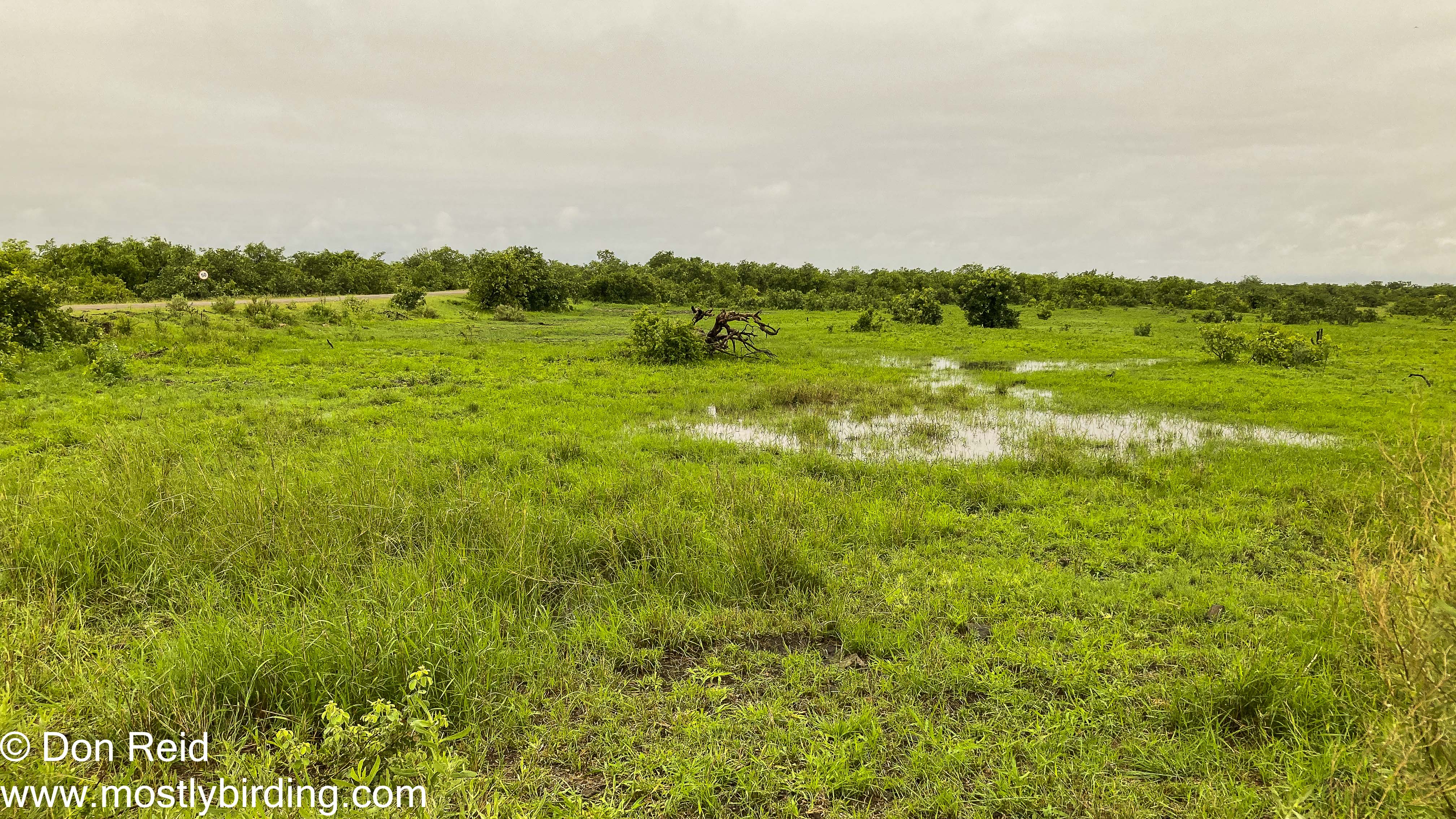
Overnight thunderstorms had kept us awake at times, with some of the lightning strikes feeling very close, loud enough to have us jerking upright in bed. There was plenty of standing water in the countryside around the camp as I made my way slowly to the main road and headed south.

After heavy rains, KNP – Mopani
KNP – Mopani (Shongololo Loop)

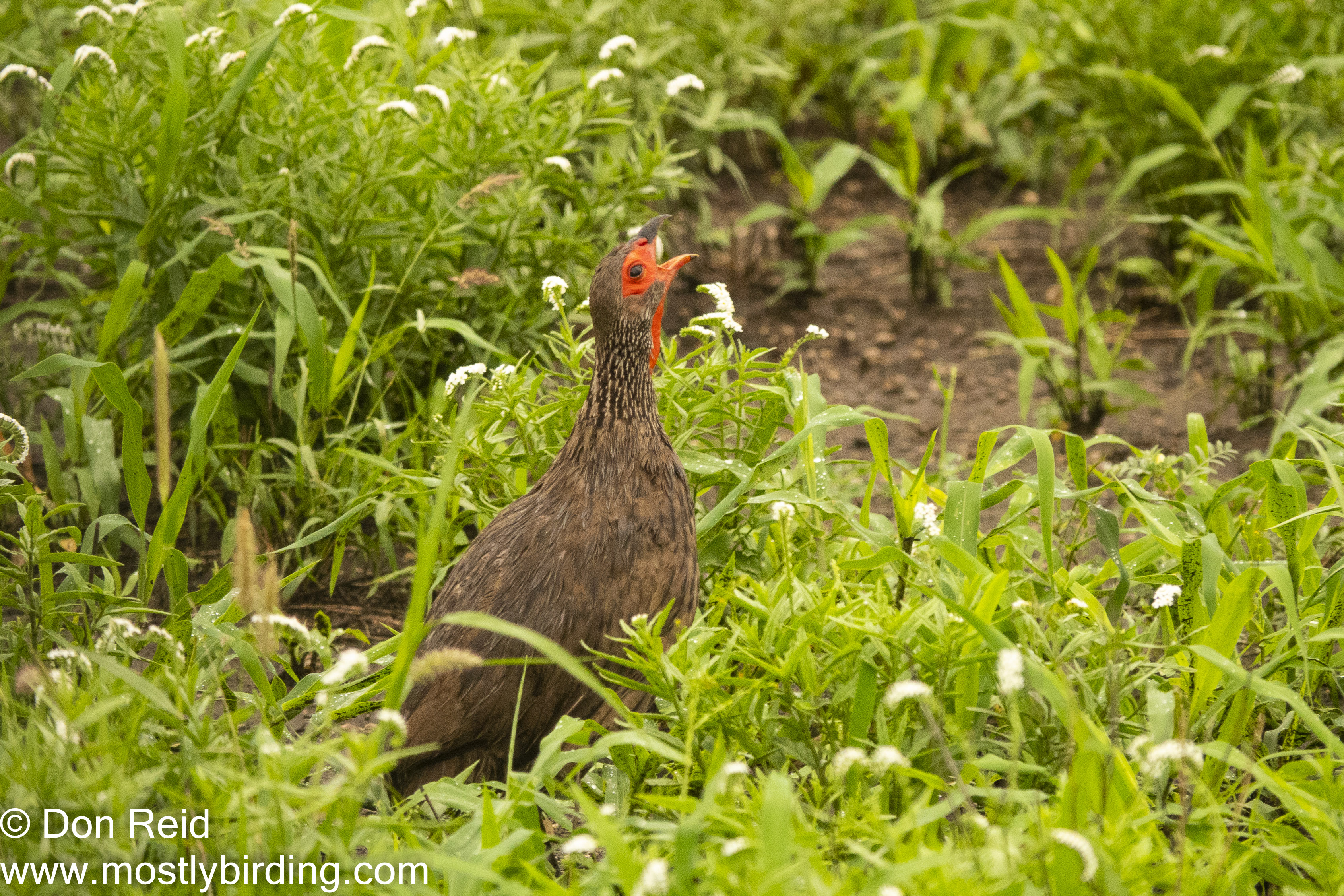
I stopped to view a Swainson’s Spurfowl near the road, which was in full voice at this early hour. They have a raucous call, akin to someone being murdered, I’ve heard it said, a call which carries long distances on a quiet morning and this one was giving its all.
Swainson’s Spurfowl (Pternistis swainsonii / Bosveldfisant), KNP – Mopani

After about 2 kms on the road towards Letaba, a road known as the Shongololo Loop branches off to the right and this was the road I was hoping to explore – I was glad to see the gravel road was still open despite the heavy rains, which can quickly turn such roads into a muddy quagmire. Nevertheless I had a good look down the road before turning off and, not seeing anything other than some deep looking standing water, set off feeling a tad adventurous but confident in my SUV’s ability to handle such conditions

KNP – Mopani (Shongololo Loop)

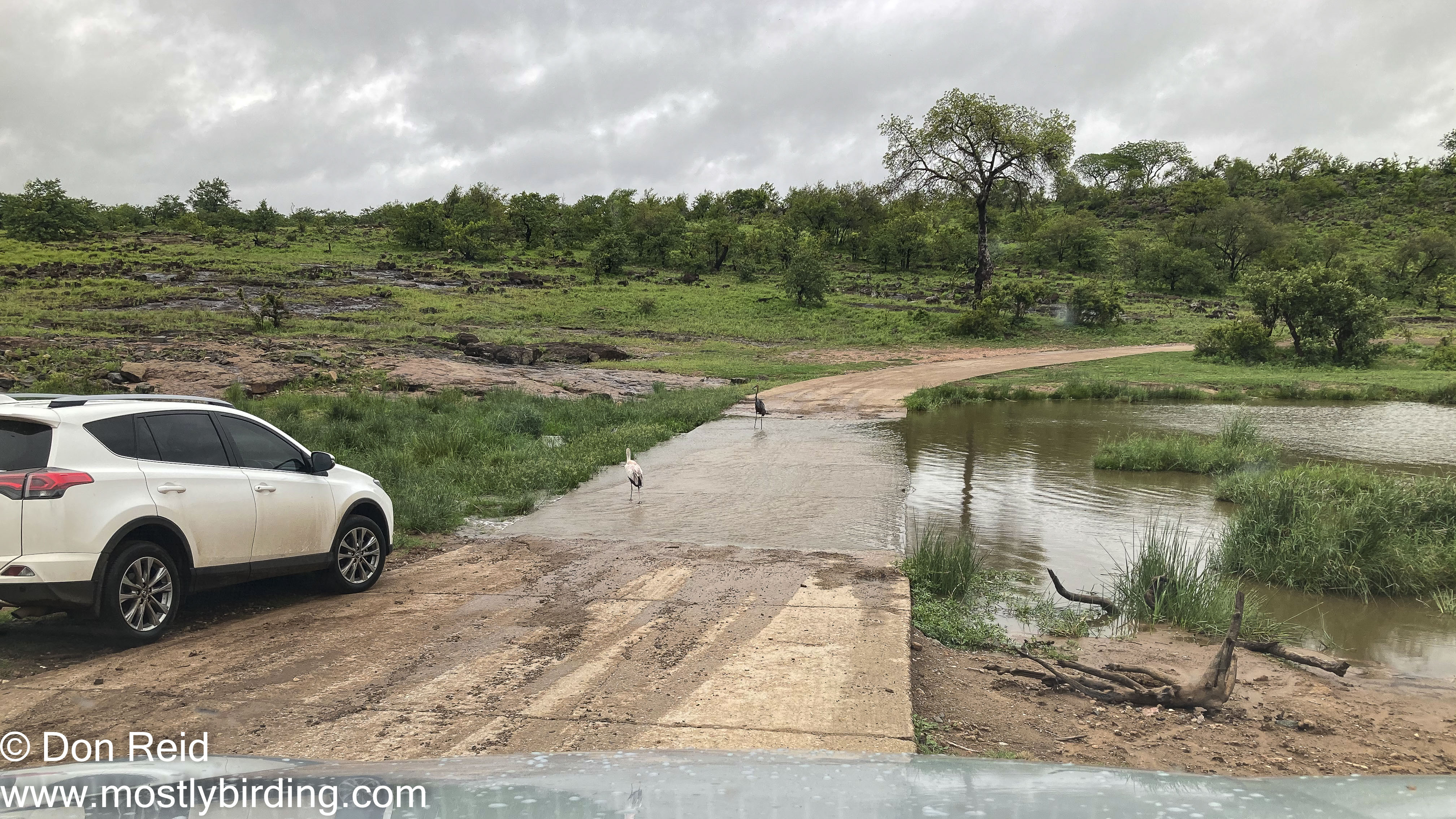
The first stretch was quiet, then I crested a rise and around the next bend came across a low water bridge with water flowing across and what looked like several large birds that had taken up position on the concrete bridge.

Birds on a bridge

KNP – Mopani (Low water bridge – Shongololo Loop)

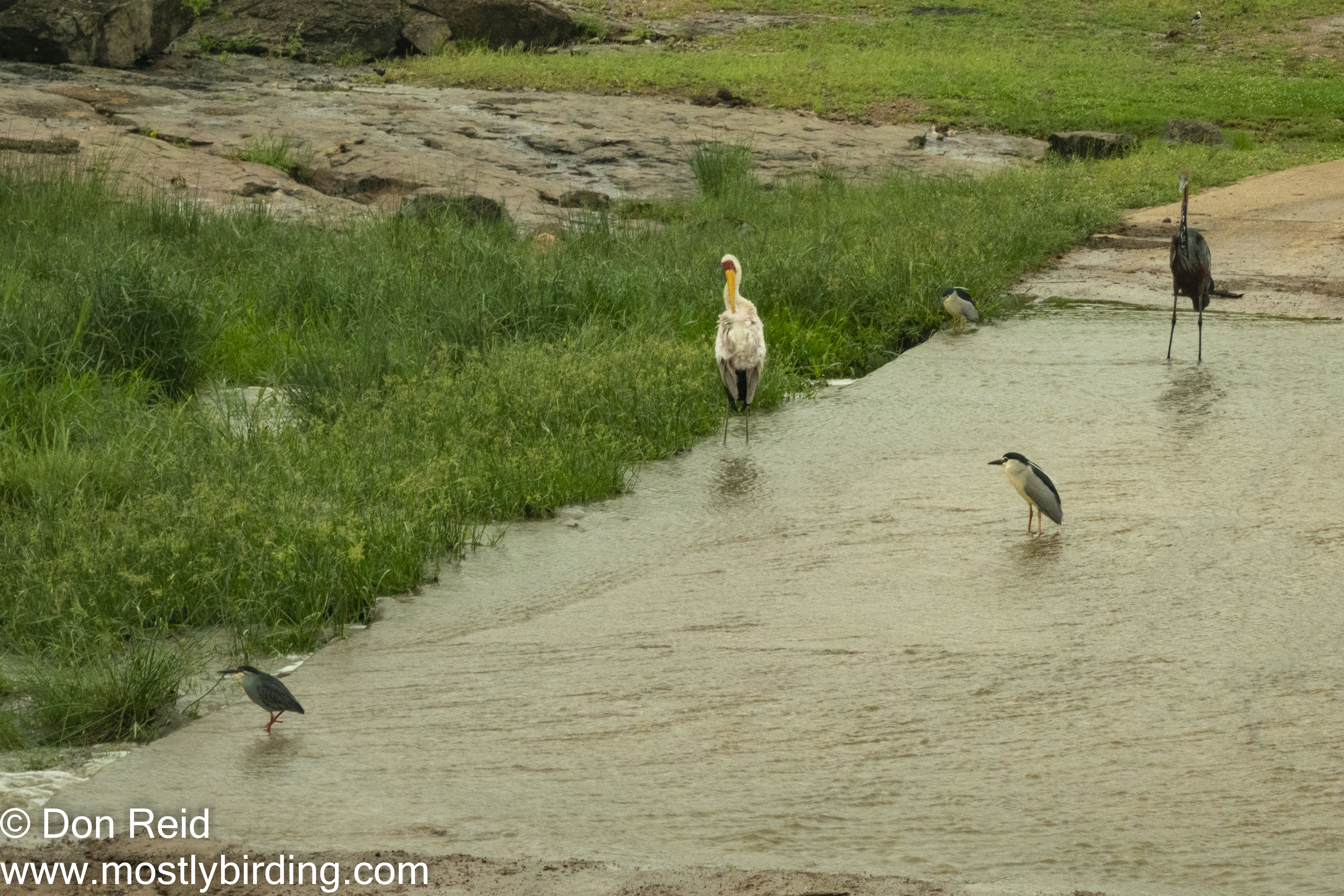
I stopped opposite one vehicle that was already there and had a look through the binos at the birds on the bridge – it was obvious that the herons, storks and thick-knees were using the conditions to do a bit of effortless fishing for a change – no stalking or stealth involved. The water flowing over the bridge was clearly bringing with it fish and other aquatic life, creating an easy “take-away” opportunity for the birds waiting in the ankle deep flow.

KNP – Mopani (Low water bridge – Shongololo Loop)

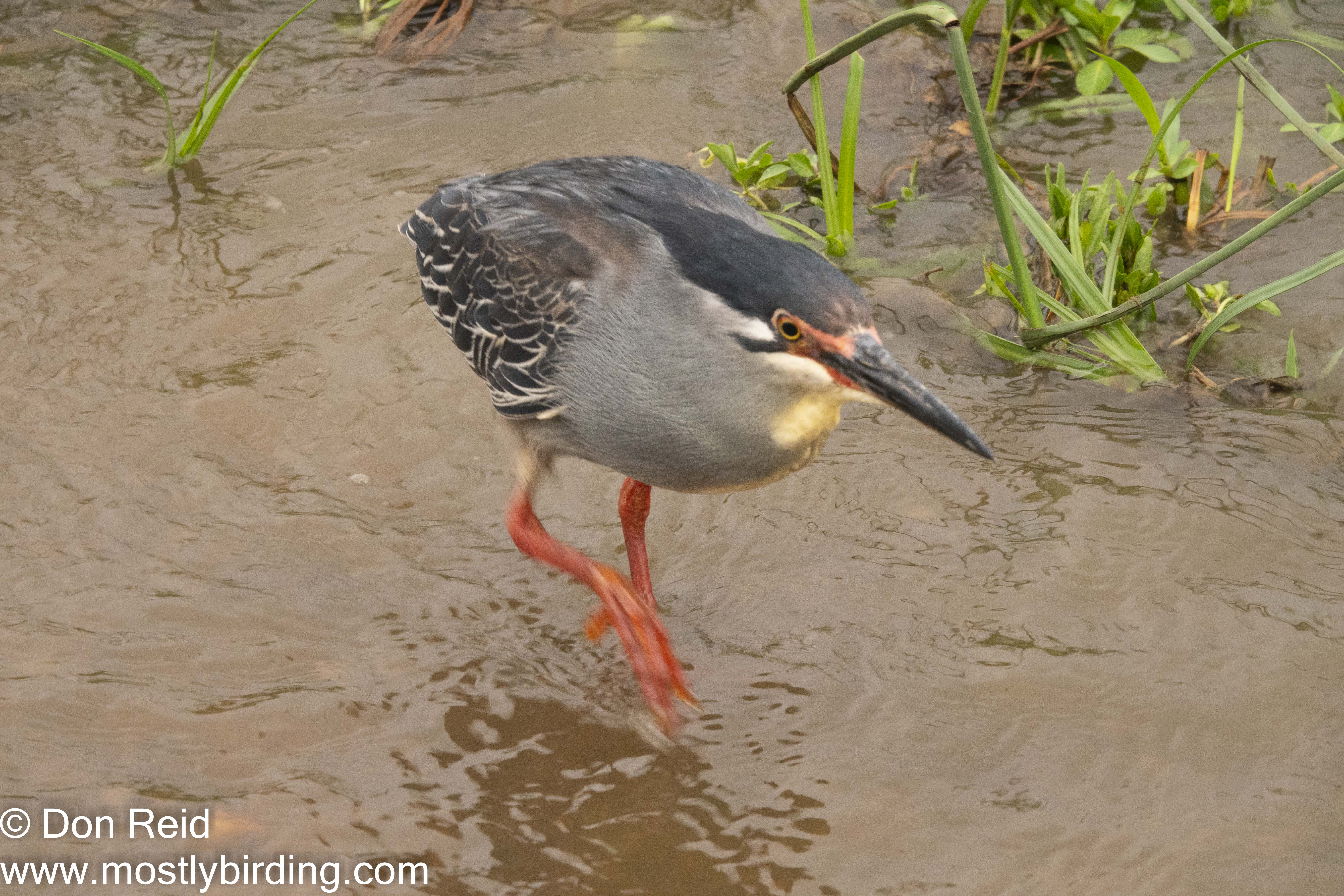
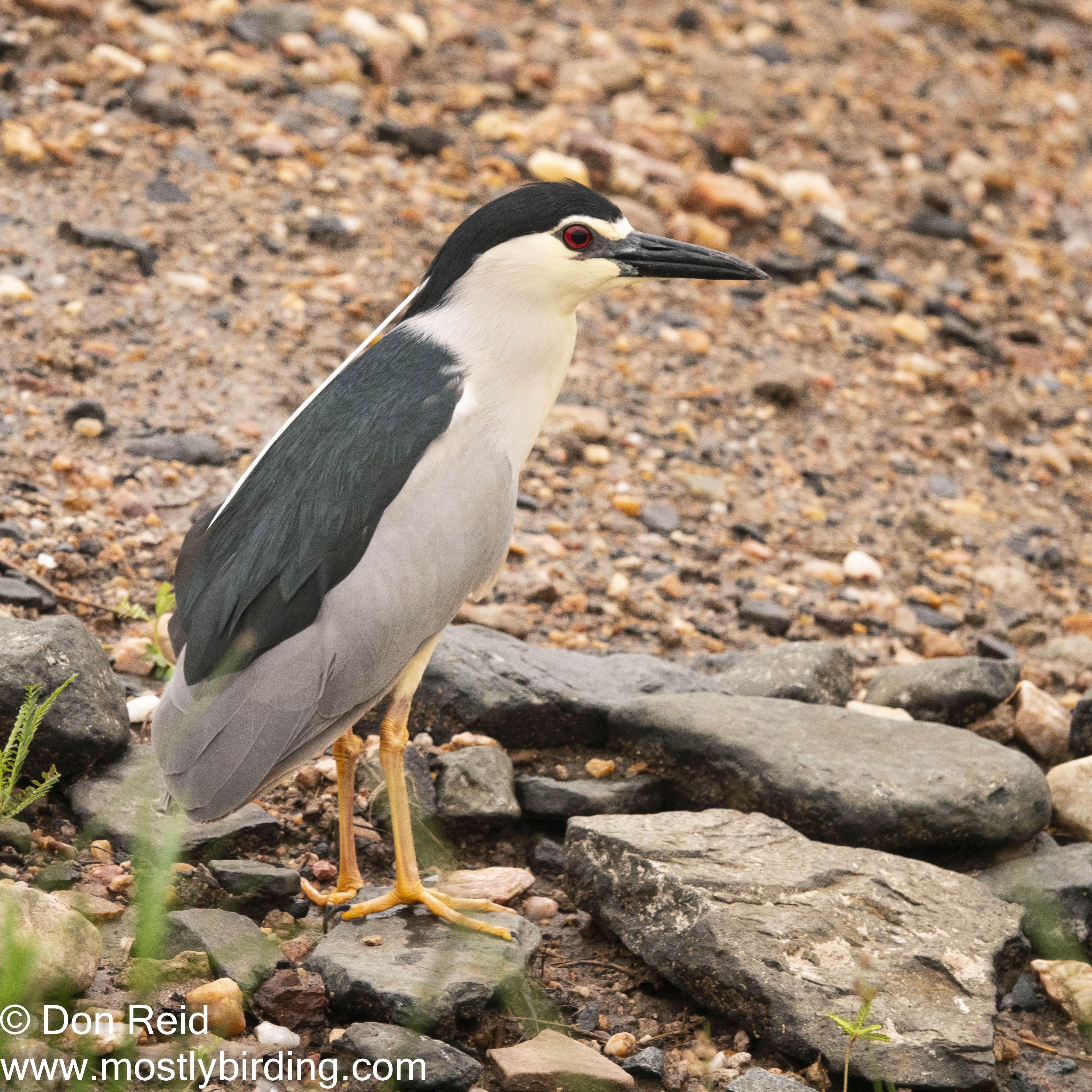
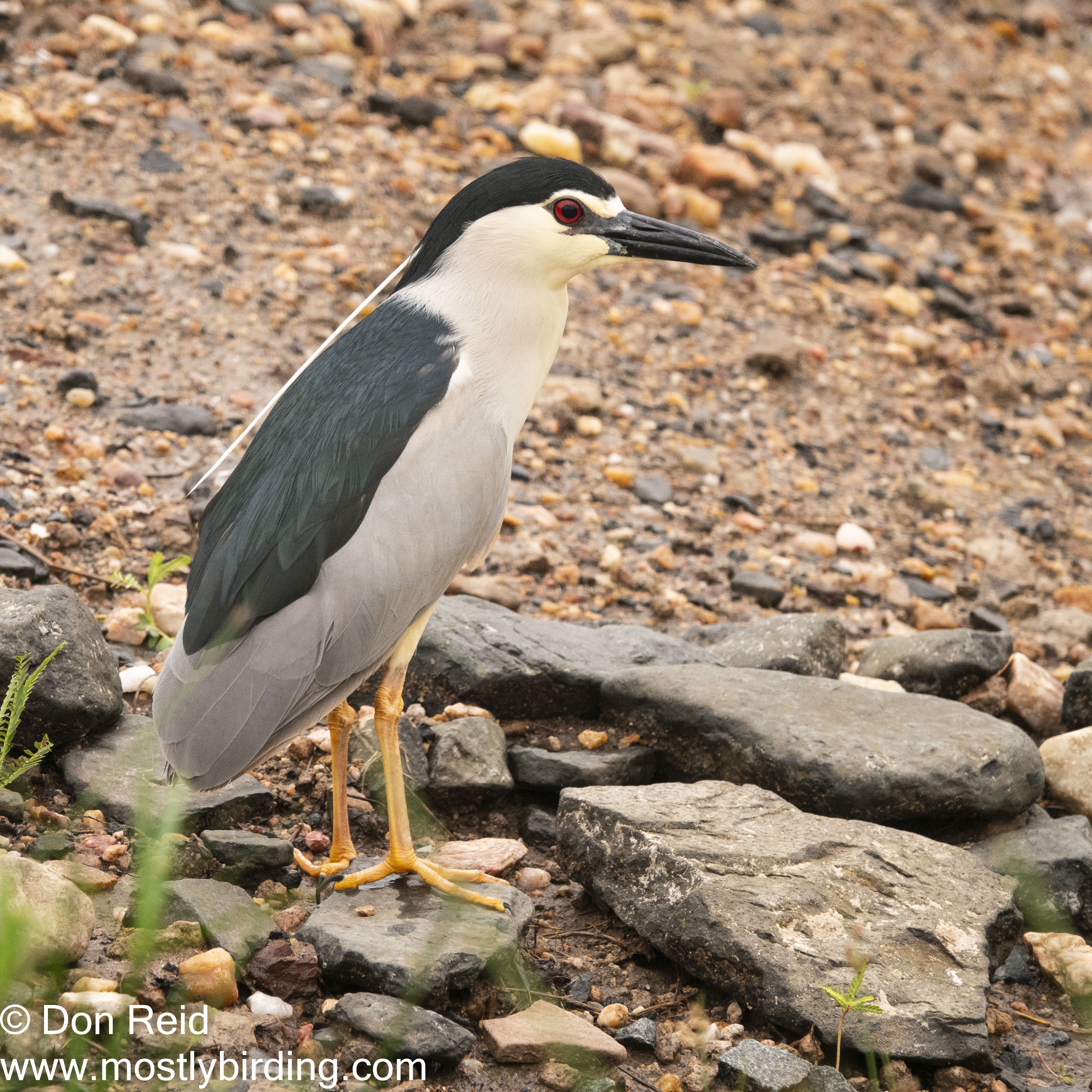
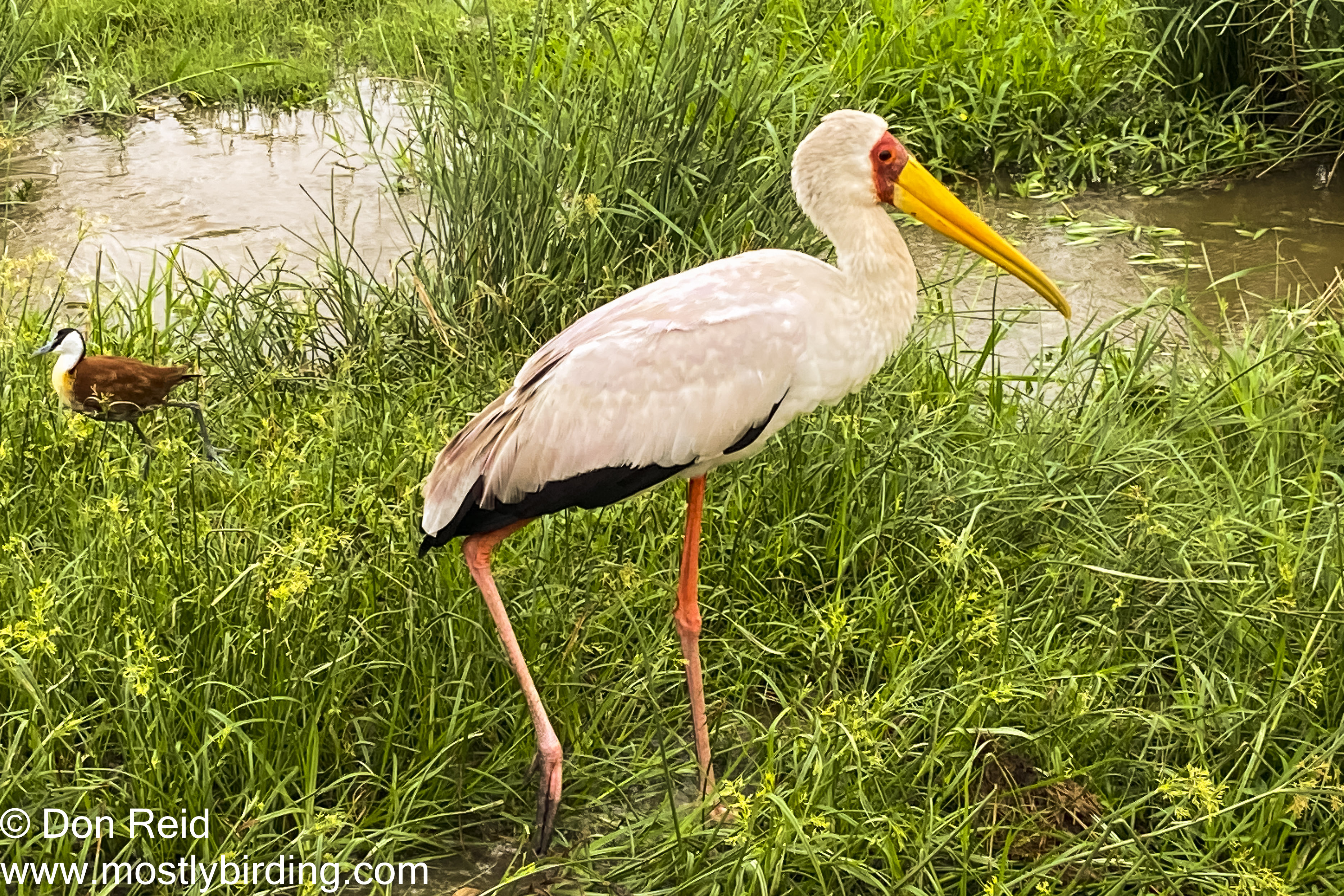
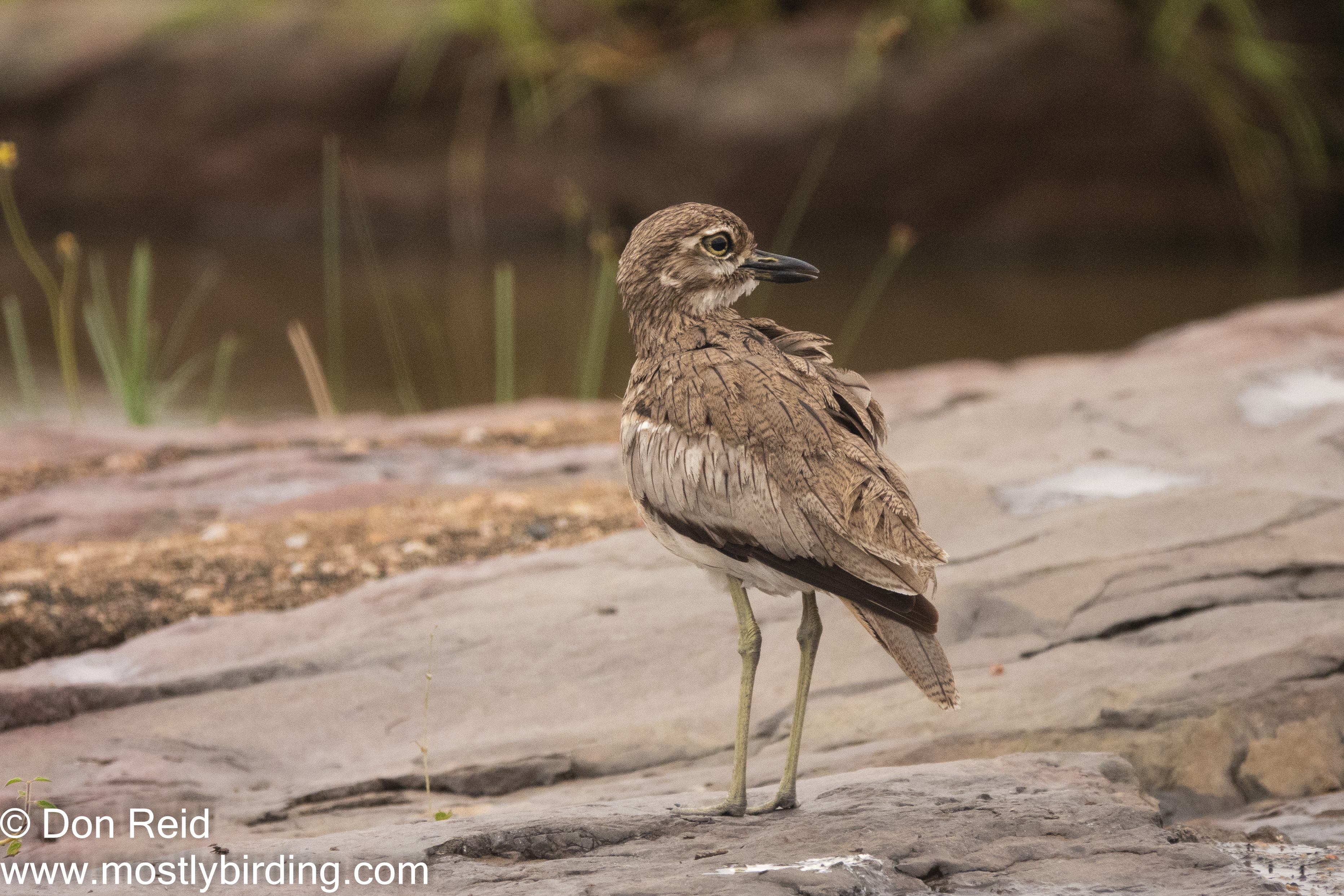
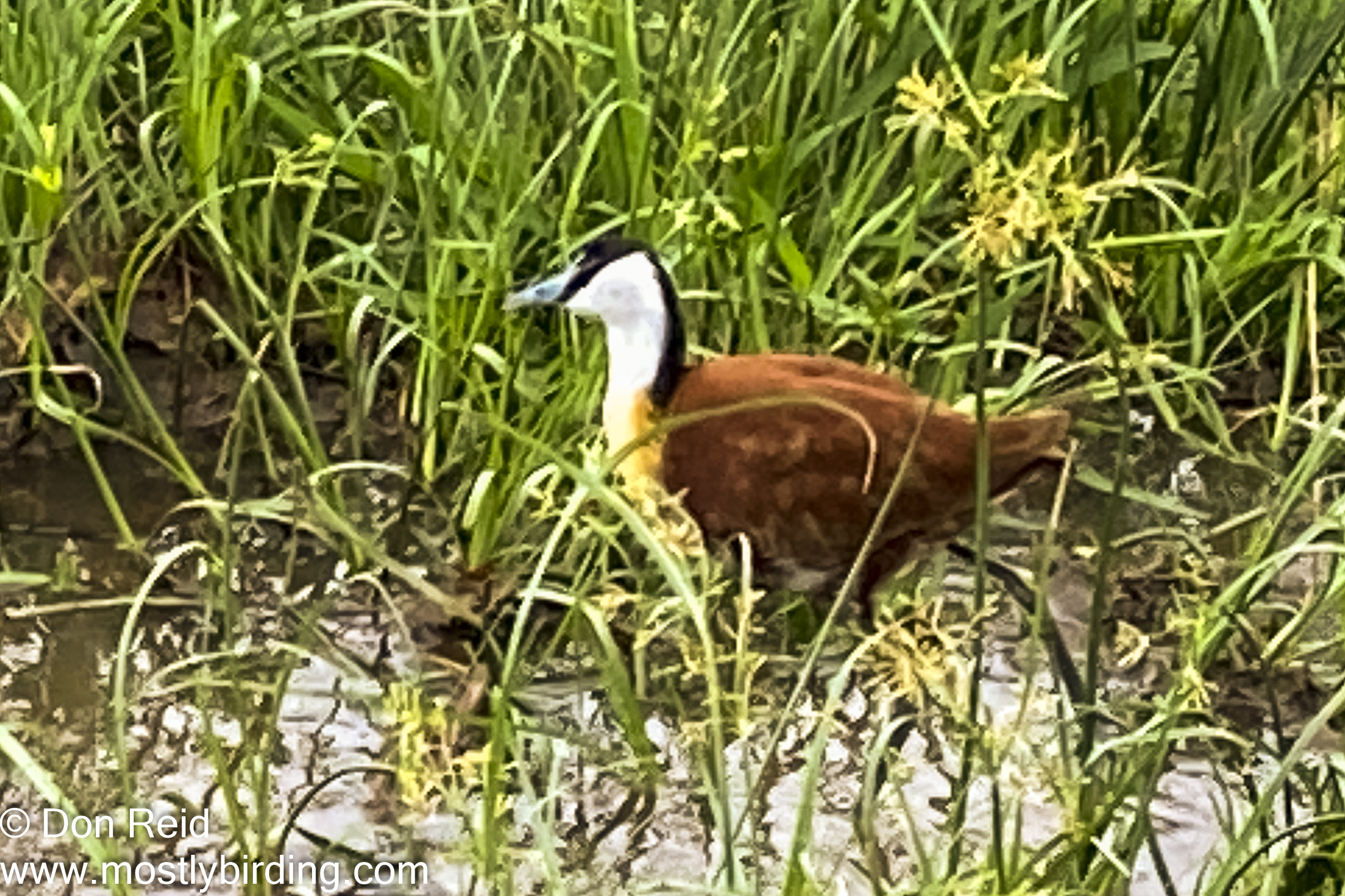
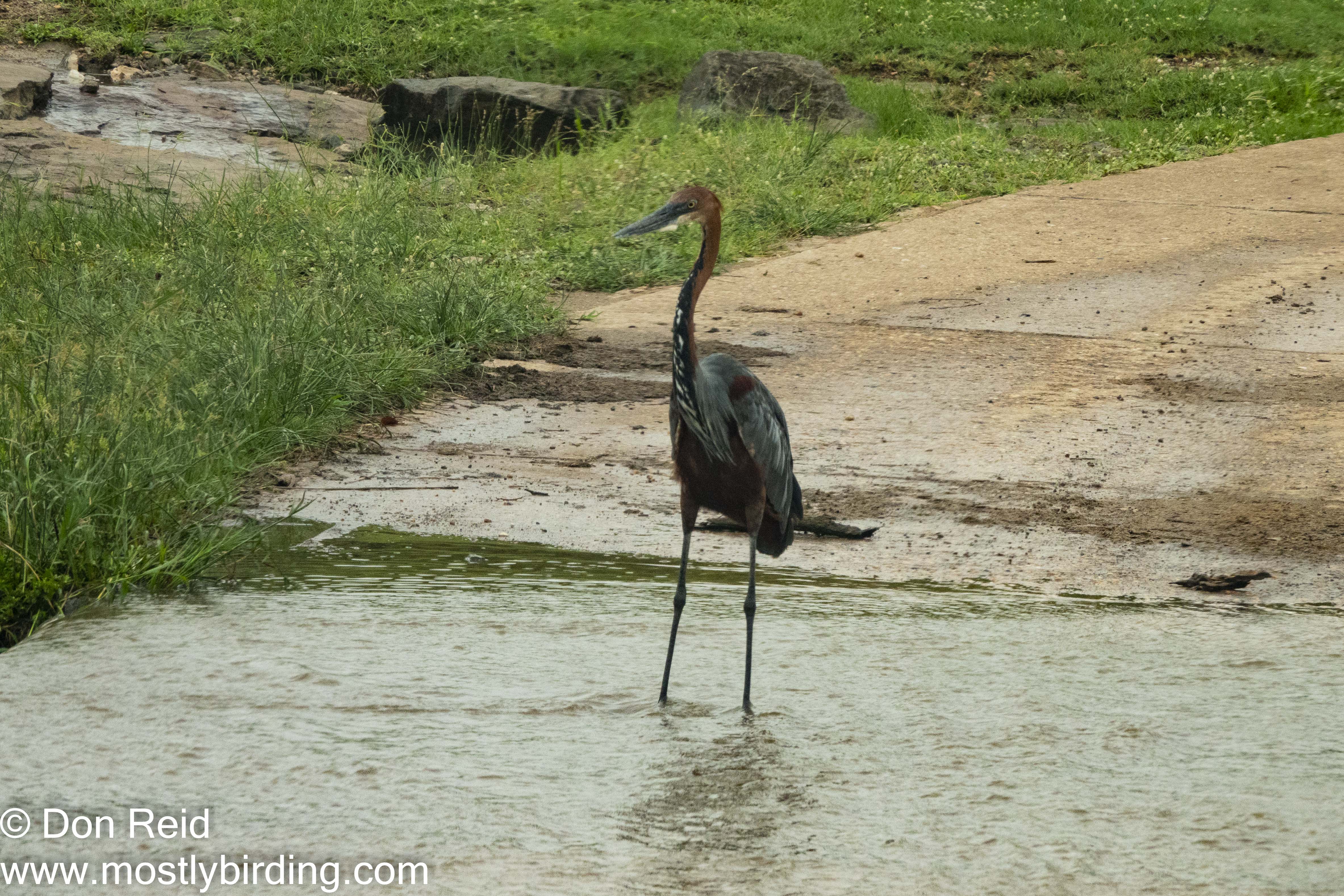
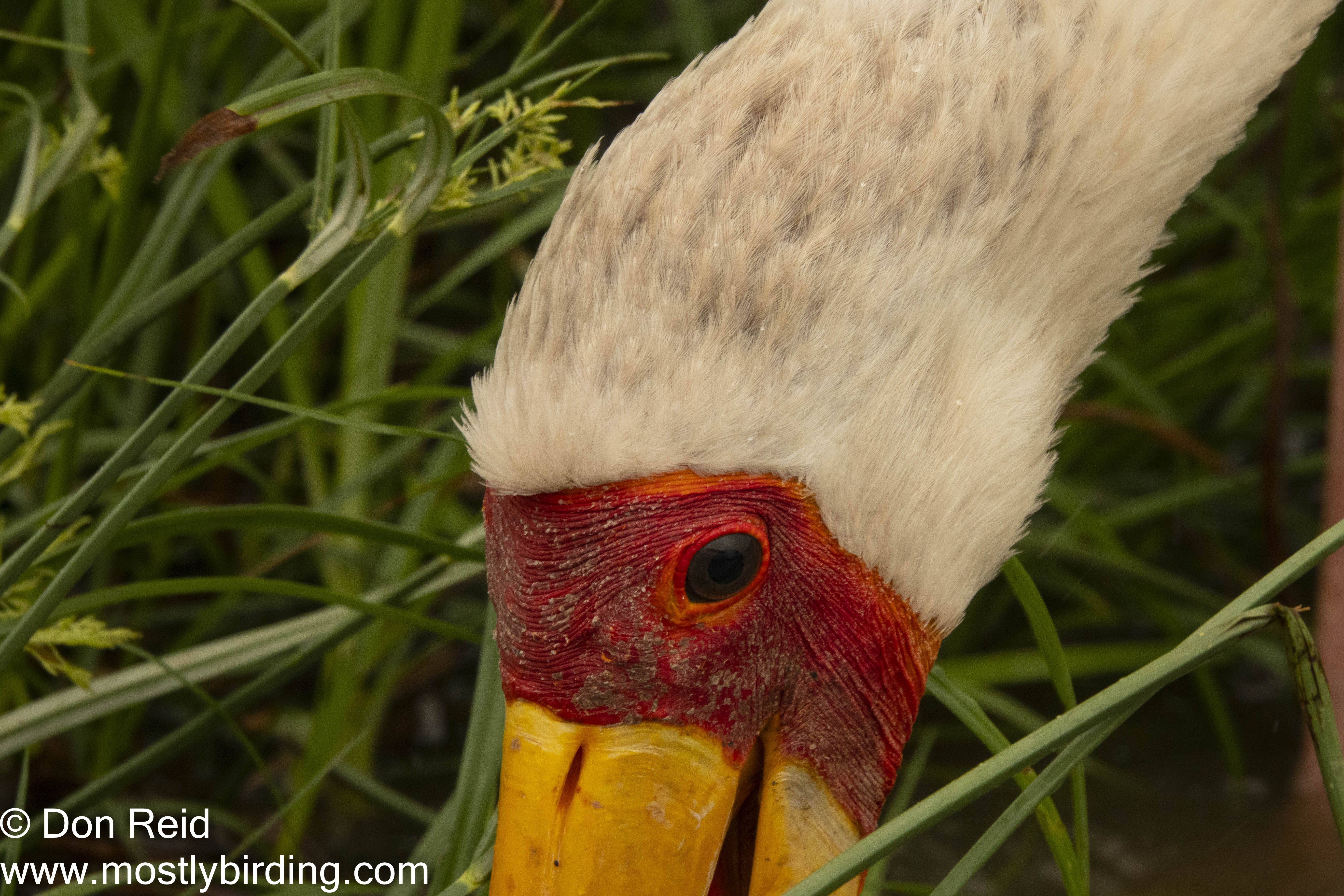
Over the next 15 minutes or so, various birds took up position on the bridge then moved off to the river itself, including Yellow-billed Stork, Green-backed (Striated) Heron, Black-crowned Night-Heron, Water Thick-knee, African Jacana, Black Crake and even a Goliath Heron.

Yellow-billed Stork (Mycteria ibis / Geelbekooievaar), KNP – Mopani (Shongololo Loop – Low water bridge)
Yellow-billed Stork (Mycteria ibis / Geelbekooievaar), KNP – Mopani (Low water bridge – Shongololo Loop)
Striated Heron (Butorides striata / Groenrugreier), KNP – Mopani (Low water bridge – Shongololo Loop)
Black-crowned Night Heron (Nycticorax nycticorax / Gewone nagreier), KNP – Mopani (Low water bridge – Shongololo Loop)

Water Thick-knee (Burhinus vermiculatus / Waterdikkop), KNP – Mopani (Low water bridge – Shongololo Loop)
African Jacana (Actophilornis africanus / Grootlangtoon), KNP – Mopani (Low water bridge – Shongololo Loop)

I drove across the bridge and parked on the opposite side where I enjoyed coffee and rusks while continuing to watch the interaction, then carried on along the Loop to the bird hide at the Pioneer dam a little way further, which was overflowing and causing the bridge to be under water.

Goliath Heron (Ardea goliath / Reusereier), KNP – Mopani (Shongololo Loop – Low water bridge)
Yellow-billed Stork (Mycteria ibis / Geelbekooievaar), KNP – Mopani (Low water bridge – Shongololo Loop)

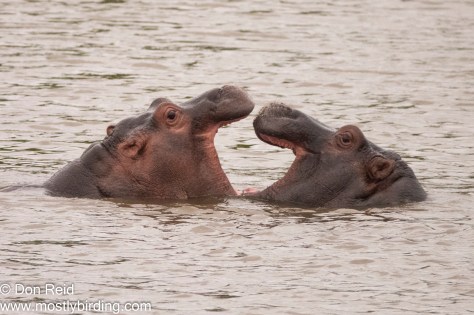
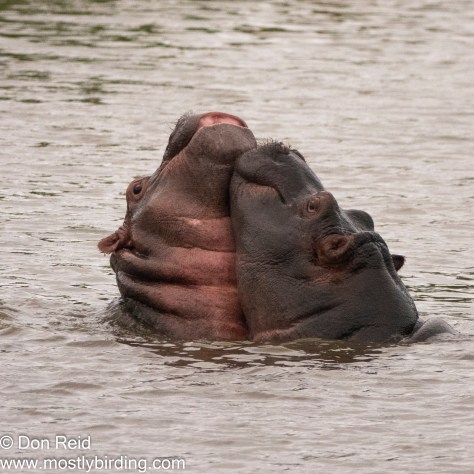
Hippo antics

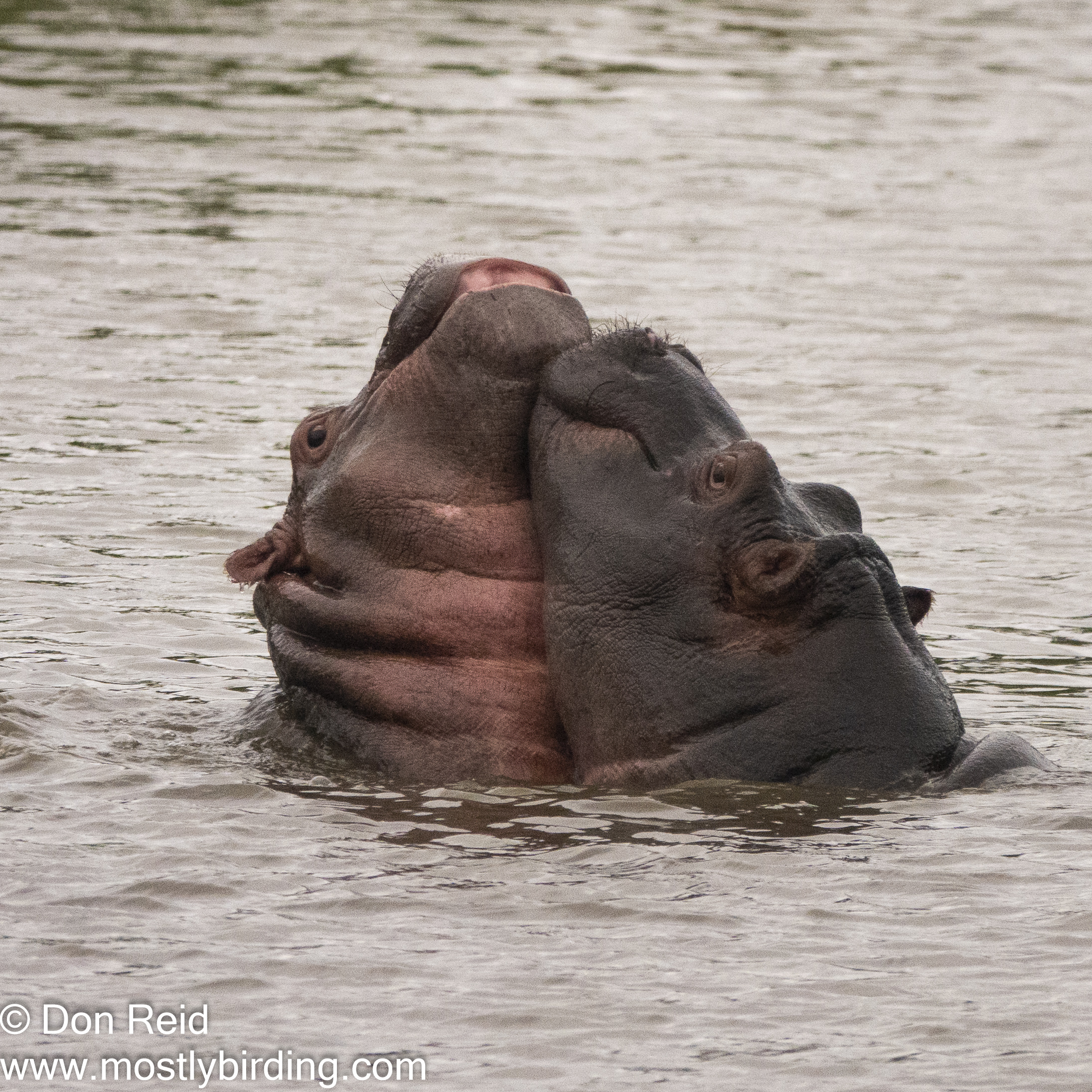
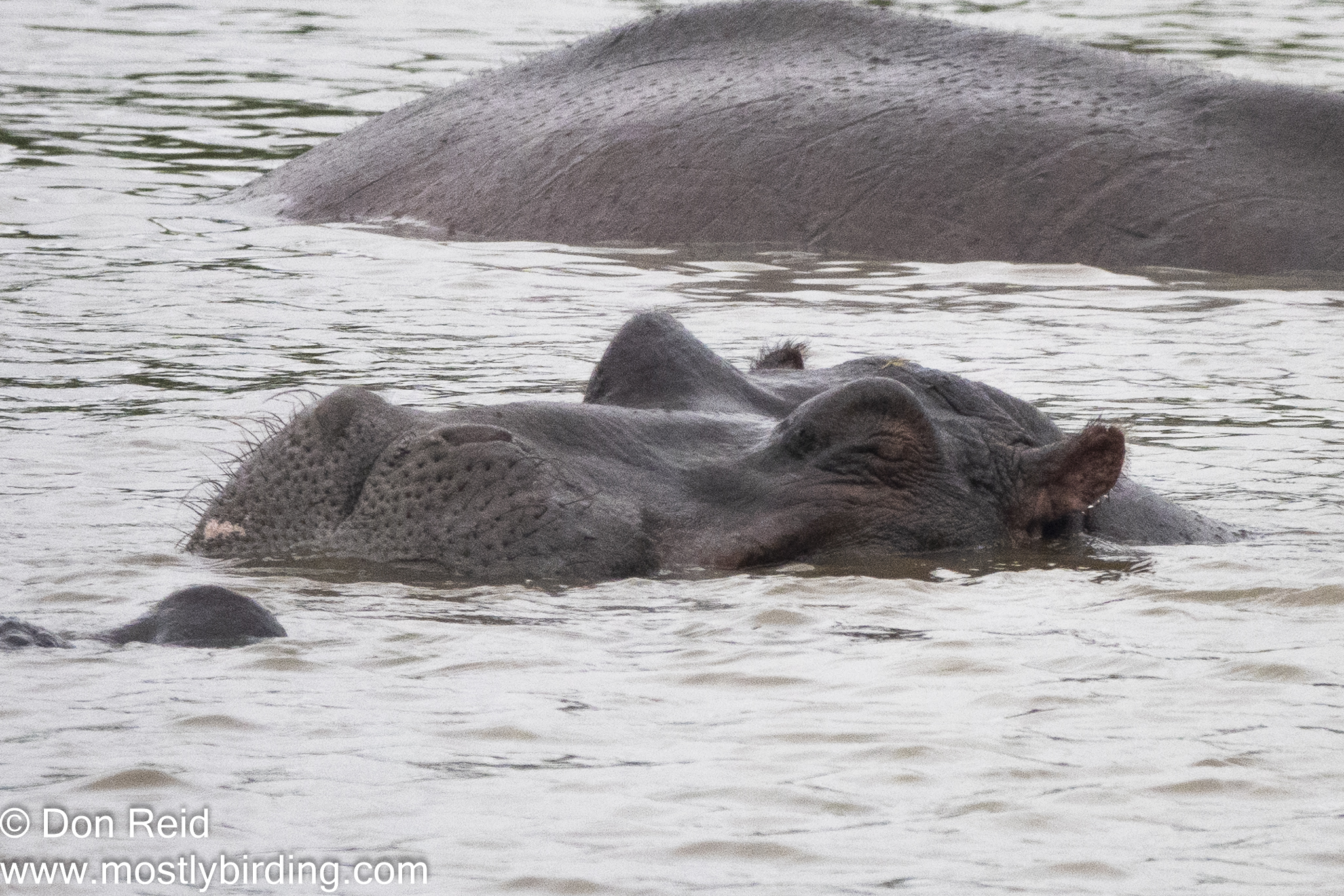
In the deeper water on one side of the bridge, a pair of Hippos were doing their best to draw my attention away from the birds with some typical hippo antics

Croc gets in on the action too

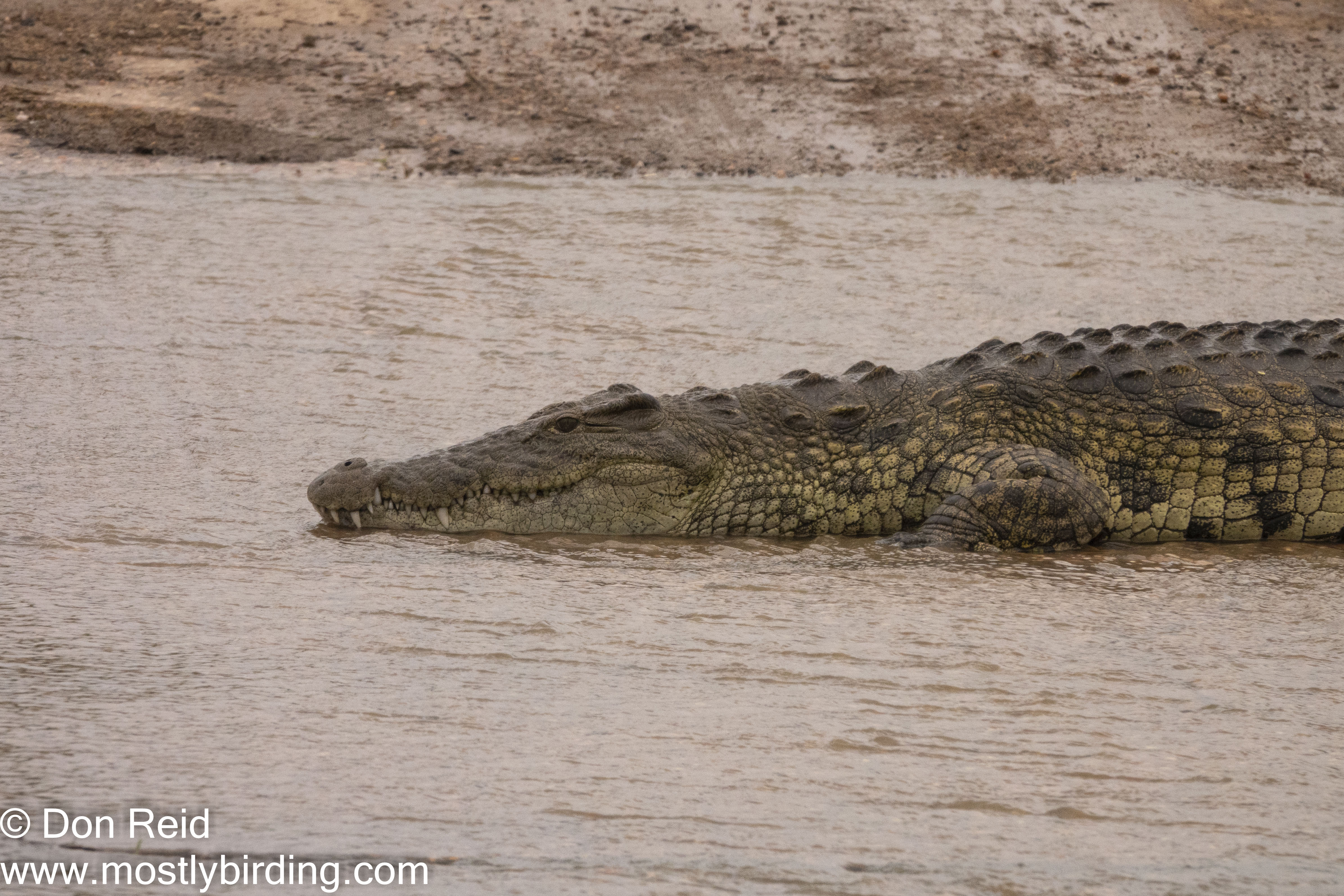
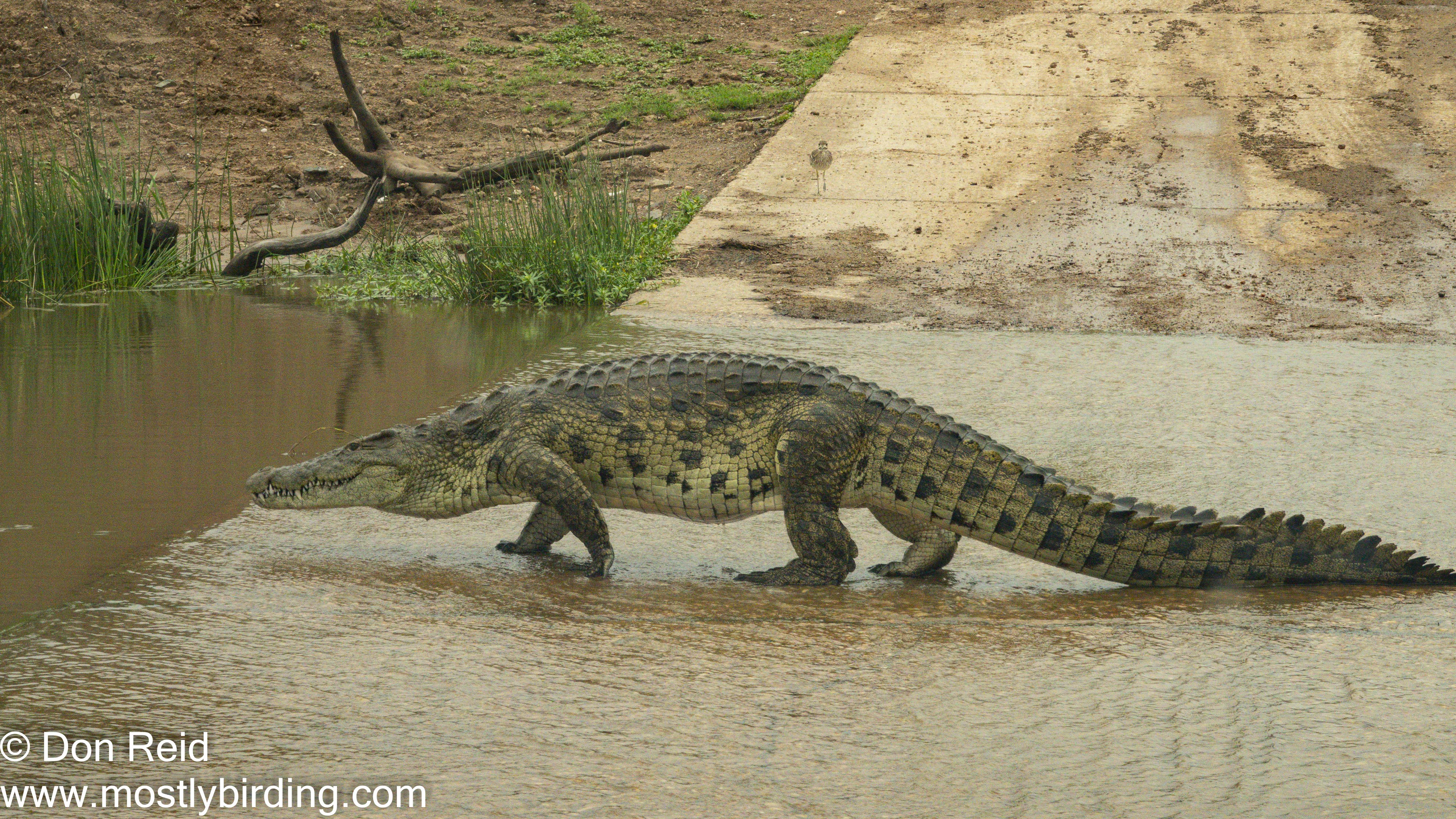
Returning along the same road, I came to the bridge again, only to find that a sizeable Crocodile had taken up position on the bridge – bang in the middle, jaws at the ready and just waiting for a fish or two to be drawn in by the fast flowing water. I had seen this before where a croc lay in wait on one side of a low water bridge but this was the first time I had found one on the bridge itself.

Crocodile, KNP – Mopani (Low water bridge – Shongololo Loop)

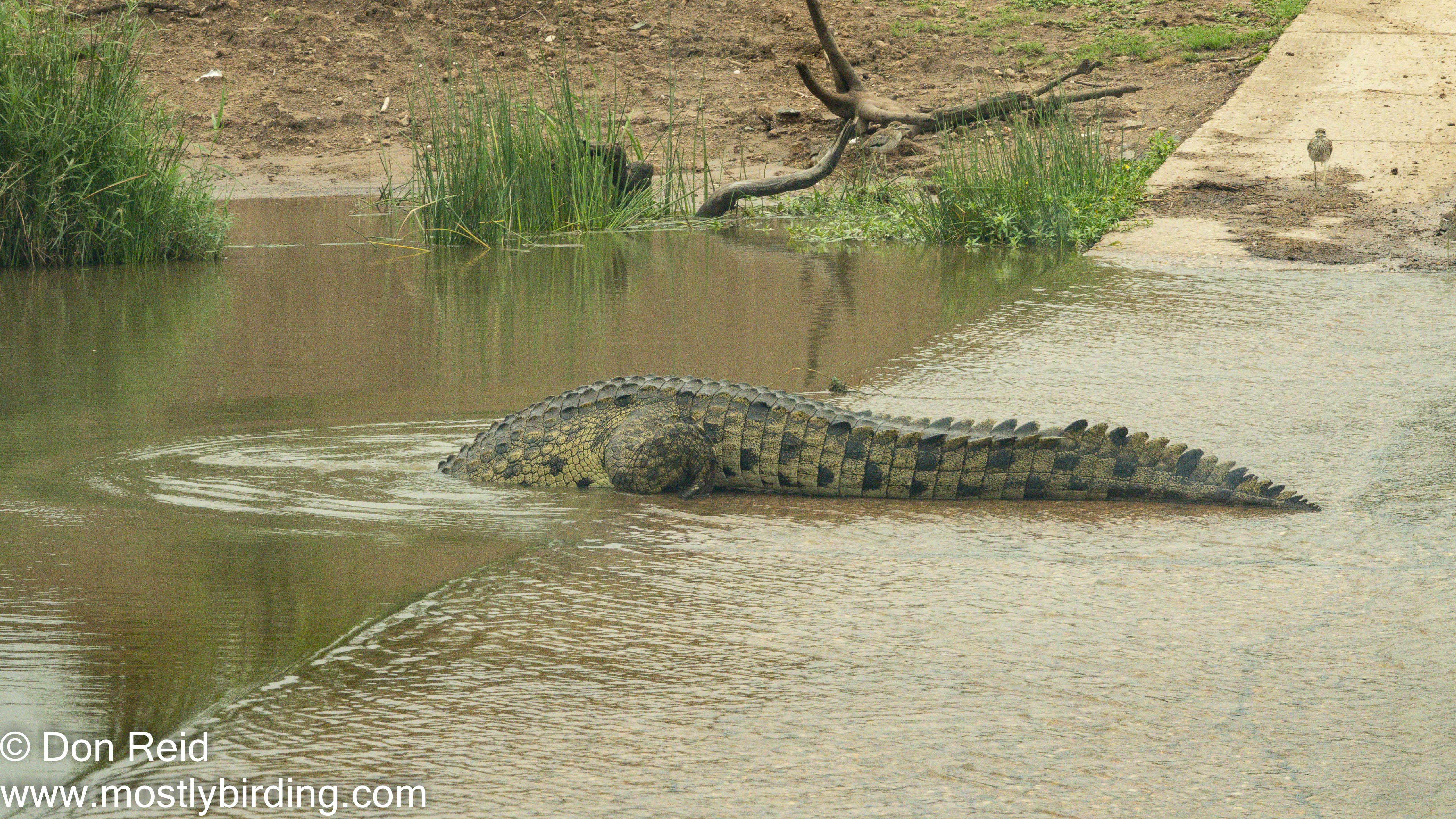
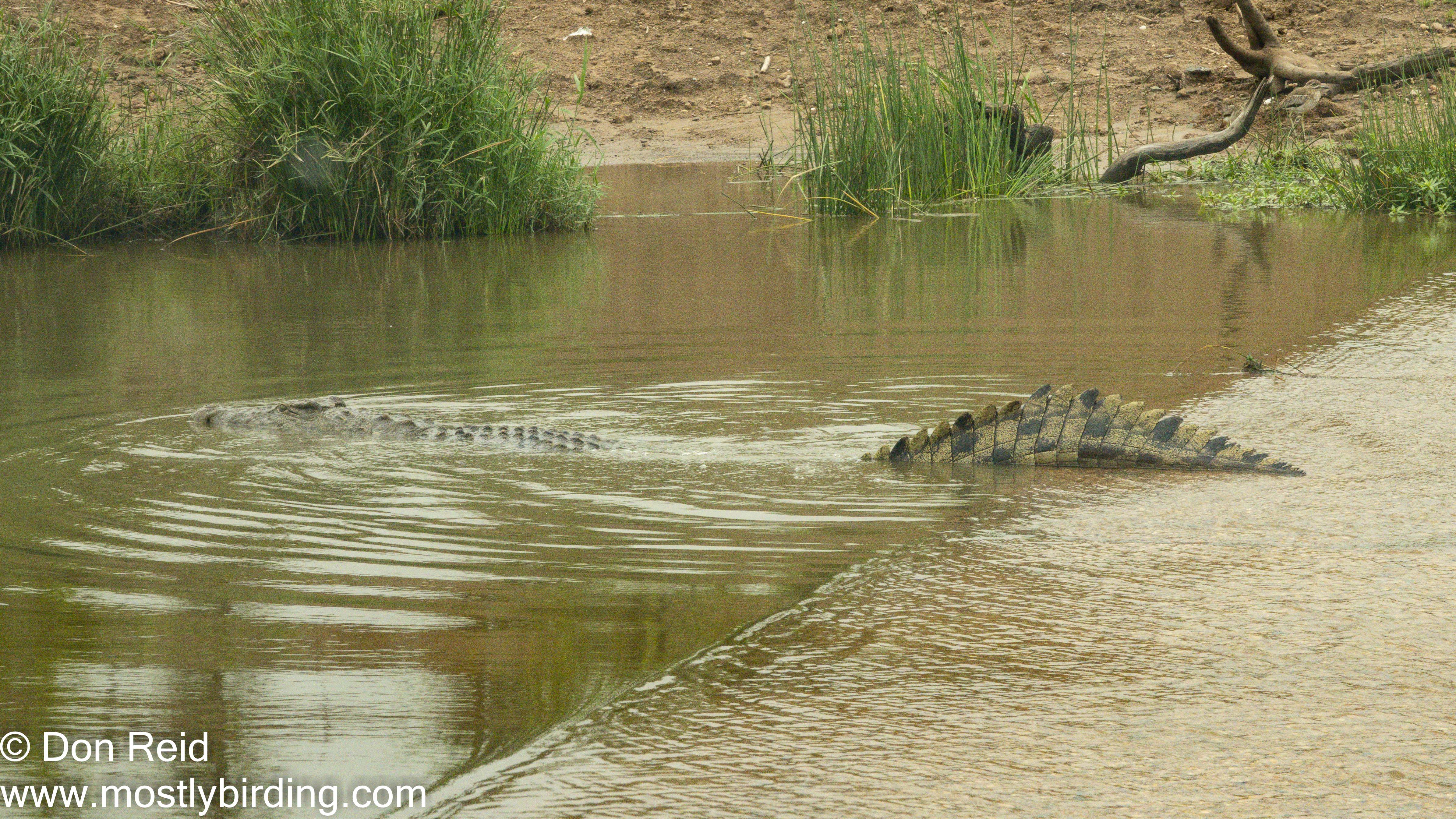
After a while I edged the car forward and the croc dutifully stood up and walked to the edge where he slid into the river and swam off slowly, no doubt intending to return to the same convenient fishing spot once I had gone.

Crocodile, KNP – Mopani (Low water bridge – Shongololo Loop)

That was enough excitement for the morning so I headed back to Mopani camp with stories to relate to the family.

Christmas in Kruger : A Bit(tern) of a Surprise

“Christmas in Kruger – it’s going to be very hot!”

Well that was more or less everyone’s reaction when we mentioned our plans for a Christmas break in Kruger National Park. “Yes, we know” was our standard answer, followed by “but the chalets have air-conditioning and so does our car” – this served only to raise a sceptical look or two and we tried hard to convince ourselves that it would all be fine.
As it turned out, we managed to survive the sometimes extreme heat and humidity for which the lowveld is renowned at this time of year – midsummer in South Africa – by spending as much time as possible in air-conditioned areas or shady spots with a cooling breeze and only venturing out during the cooler parts of the day. In fact we elected to stay in camp a lot more than we usually do during visits to Kruger.

Kruger’s Surprises

Kruger always has a surprise or two and I thought I would highlight some of the surprise encounters, starting with what, for me at least, was the highlight of the week. As so often happens with birding, the encounter was dependent on a series of events which were impossible to foresee – here’s how it happened ………

After spending a night in the Magoebaskloof Hotel, where we rendezvoused with daughter Geraldine and family, we made our way the next morning to the entrance gate at Phalaborwa, passing through Tzaneen on the way and stopping at one of the many farm stalls to stock up on some of the locally grown tropical fruit – bananas, paw-paws, mangoes (not for me, can’t stand the taste) and litchies.

The Road to Mopani

At the Phalaborwa gate we dealt with the formalities and proceeded to Mopani Rest Camp – Kruger had it’s summer clothes on – green and lush as far as we could see. We didn’t dawdle. wanting to get to Mopani and settle in, but a report on SA Rare Birds the previous evening of a Striped Crake near Letaba meant I could not resist doing a detour of about 50 kms which would take me past the spot and I would be able to try for this potential rarity / lifer.

There were 3 or 4 vehicles at the small seasonal pan just south of Letaba and we joined them, asking if any had seen this secretive bird – it turned out that none had, despite spending some time there, but we decided to spend a half an hour or so, scanning the shallow water and vegetation along its edges for any sign of the Striped Crake.

Seasonal Pan outside Letaba

It refused to show and we were about to leave when I spotted a crake-like bird on a log above the water, partially hidden by foliage – success! Or was it? I tried desperately to get some photos to help confirm the ID of the crake, but the results were poor due to the interference of foliage and the shady conditions under the trees.

Later I was able to confirm that it was a Crake by downloading the images onto my laptop and zooming in on the detail, but not the rarity I had hoped for – nevertheless it was an African Crake, also a ‘lifer’ for me so I was more than satisfied.

But that wasn’t the last of the seasonal pan near Letaba ……

Mopani to Satara

After 4 nights in Mopani, it was time to move on – to Satara Rest Camp some 140 kms south – not very far by normal standards but in Kruger it translates into a 4 to 5 hour drive, so we planned a stop for lunch at Olifants camp.

Along the route we enjoyed sightings of some of Kruger’s iconic creatures –

Elephant, KNP – Mopani – Satara
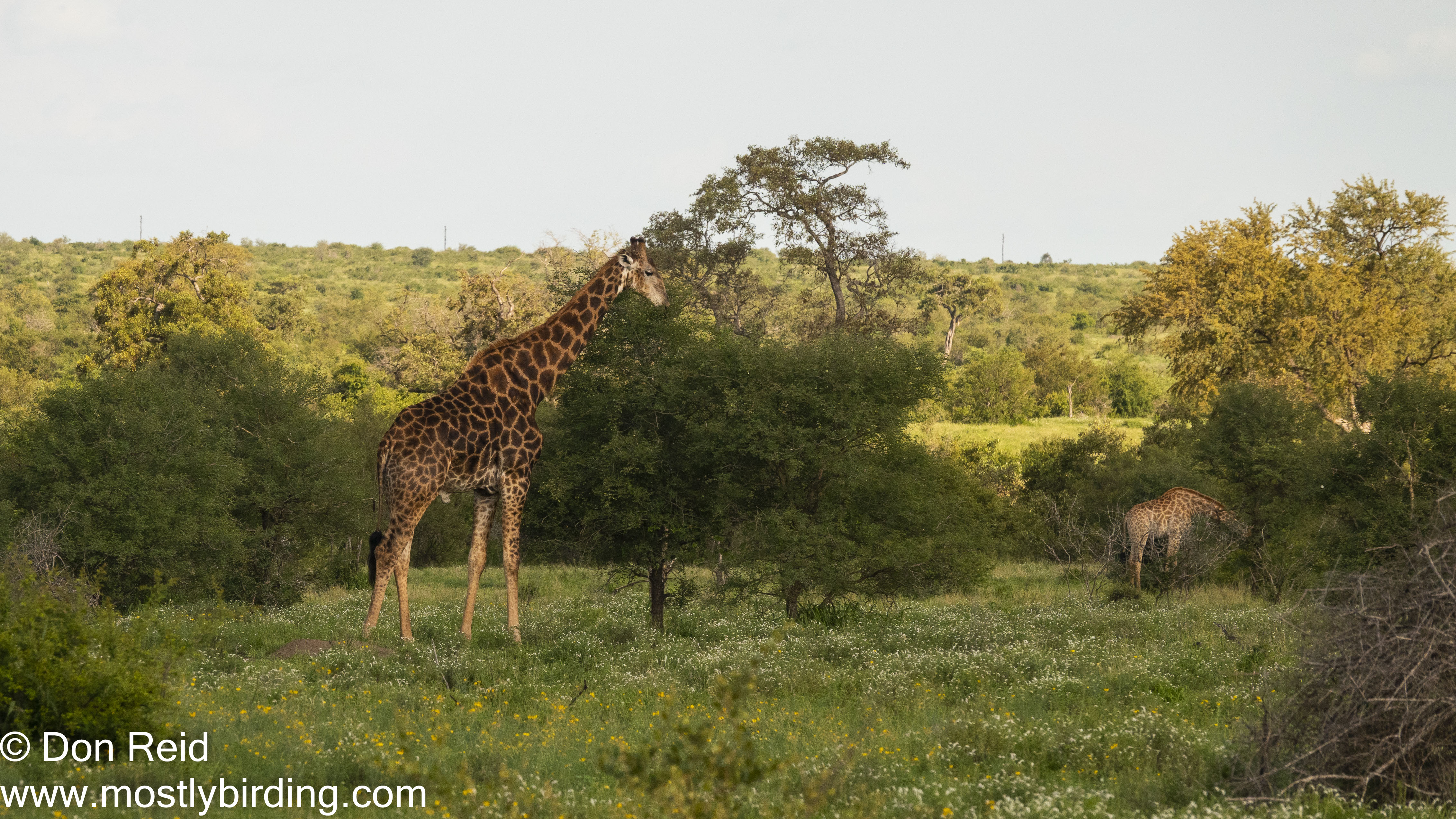
Giraffe, KNP – Mopani – Satara
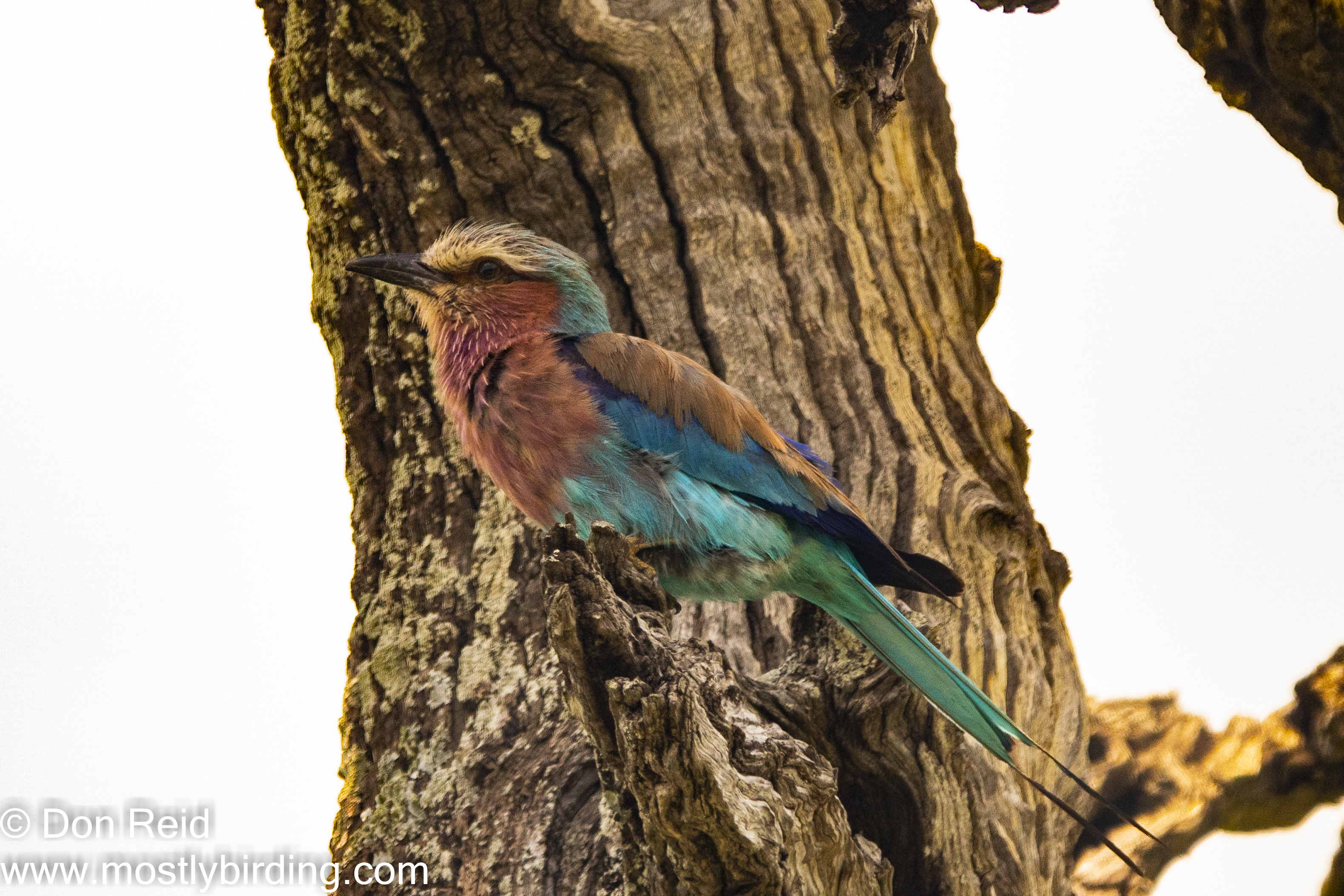
Lilac-breasted Roller (Coracias caudatus / Gewone troupant), KNP – Mopani – Satara
Southern Ground-Hornbill (Bucorvus leadbeateri / Bromvoël), KNP – Mopani – Satara

We also stopped briefly at Letaba for coffee and a ‘comfort break’ and on the way from there to Olifants, we decided to make a brief stop at the seasonal pan we had visited on the first day, just south of Letaba, despite their being not a single other car there – well, you never know, do you?

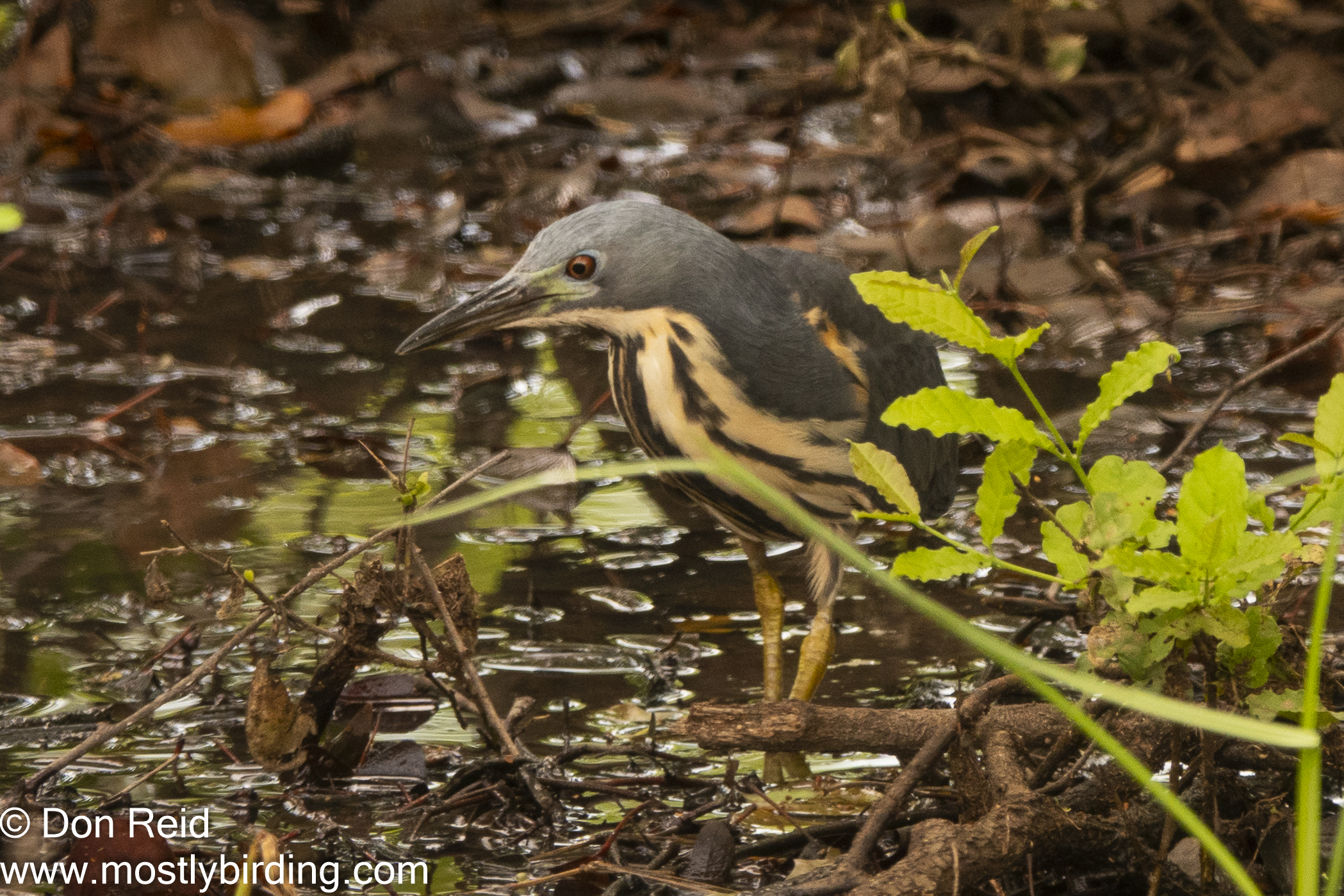
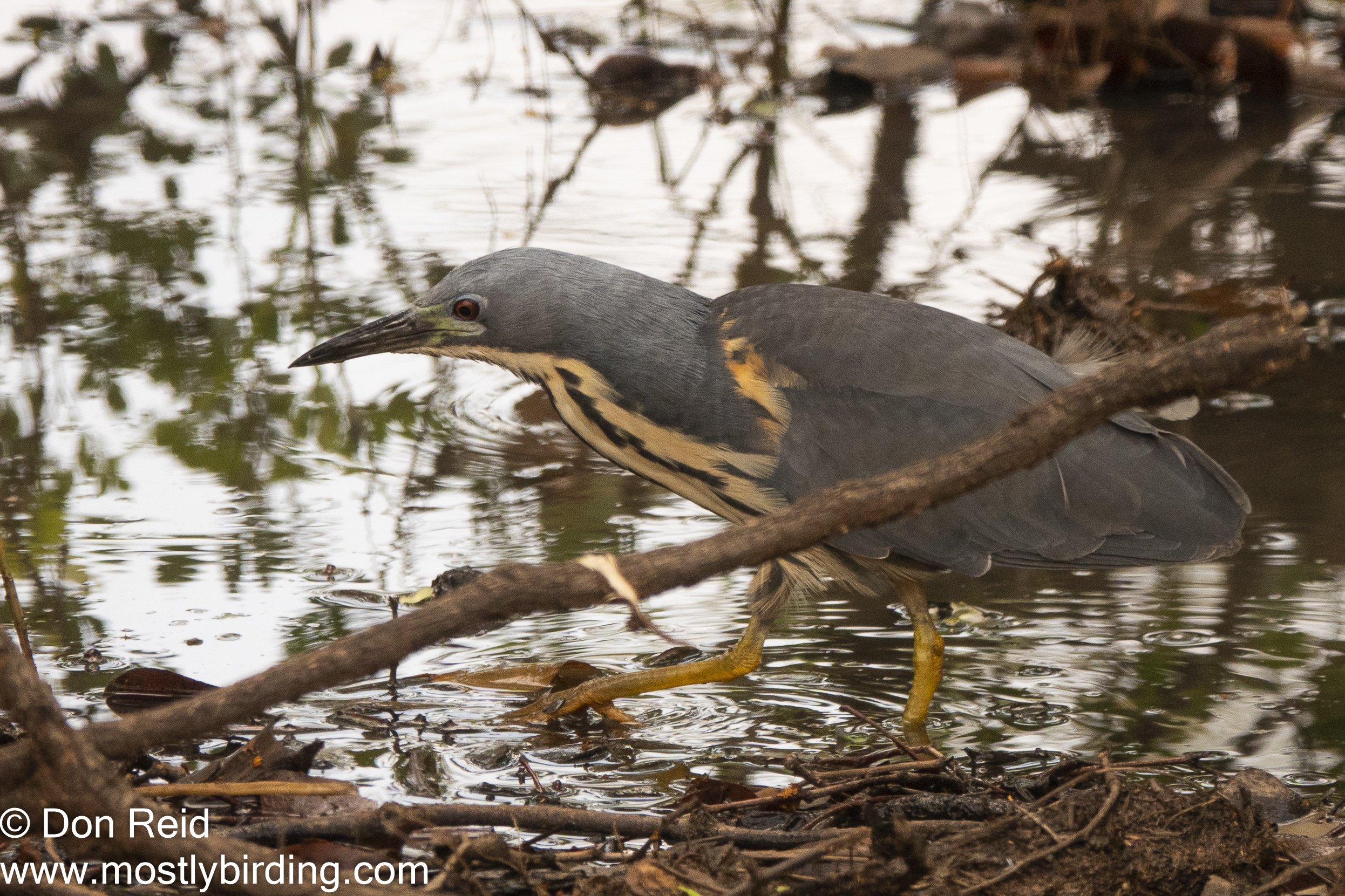
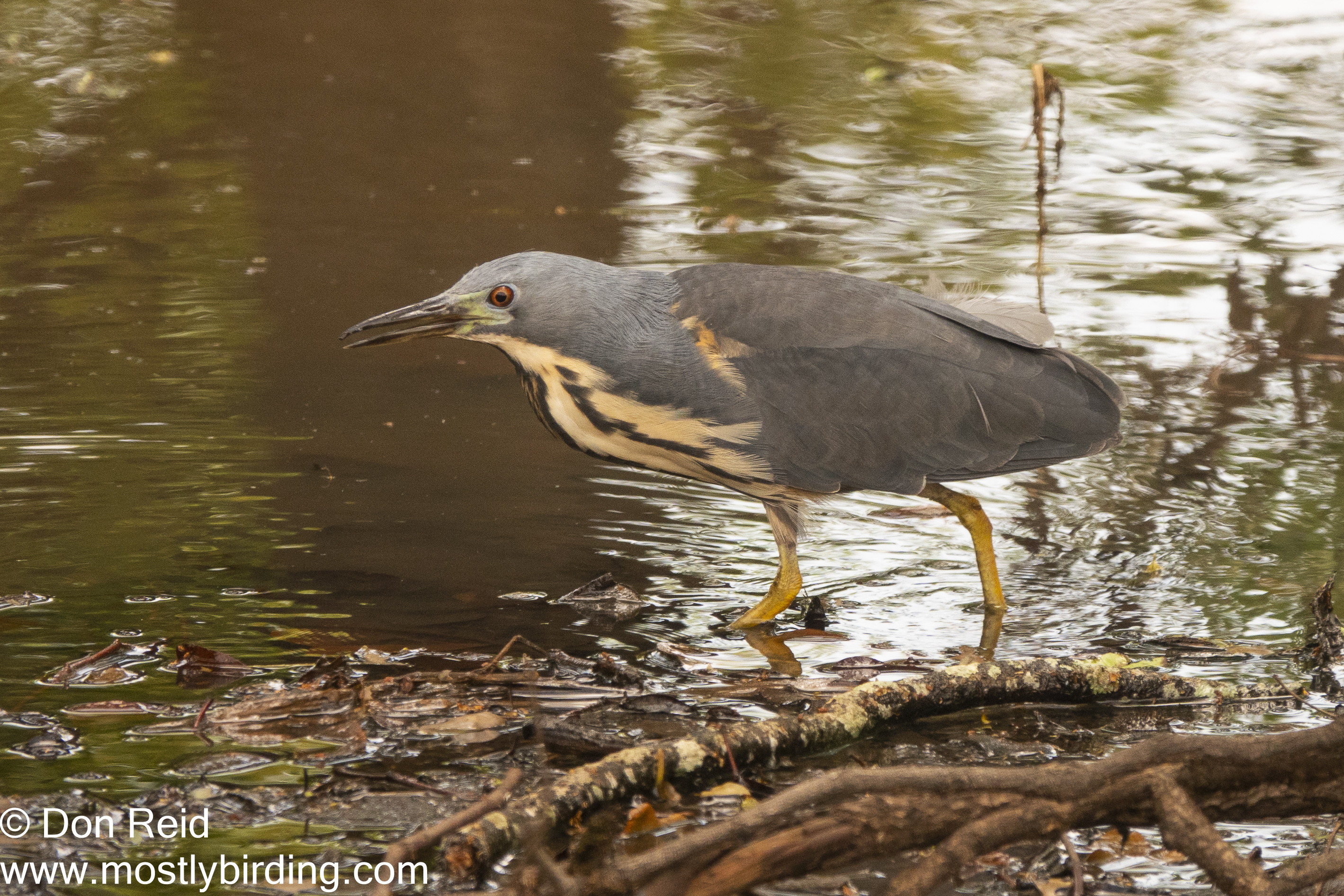
We had hardly stopped, still had the engine running, when my heart skipped a beat – a small, unfamiliar crake-like bird was no more than 5m away from me in the shallow water, among the tree roots and tangled vegetation! No, not the Striped Crake but just as good in my book – it was a Dwarf Bittern, a lifer and a bird that I have wanted to find for a long time.

I was ecstatic and spent the next 10 minutes or so watching as it moved slowly and stealthily, foraging in the shallows for its next meal – the sequence of photos says it all.

Dwarf Bittern (Ixobrychus sturmii / Dwergrietreier), KNP – Pan outside Letaba

Dwarf Bittern
Dwarf Bittern (Ixobrychus sturmii / Dwergrietreier), KNP – Pan outside Letaba
Dwarf Bittern
Dwarf Bittern (Ixobrychus sturmii / Dwergrietreier), KNP – Pan outside Letaba
Dwarf Bittern
Dwarf Bittern (Ixobrychus sturmii / Dwergrietreier), KNP – Pan outside Letaba

After two years of not adding a singe lifer to my Southern Africa list, I had found two in the space of four days – what a nice Christmas present!

Christmas in Kruger : Dinner for One

Our Christmas dinner

Our main Christmas dinner was enjoyed on Christmas Eve in Mopani Camp, with the cooler weather brought on by constant light summer rain during the day making it a most pleasant evening. We joined Andre and Geraldine and daughters at their large family chalet, and their friends who were also in Mopani made up a jolly group, with each family contributing a dish or two to turn it into a really delightful dinner.

We had not made any specific arrangements for Christmas day itself, other than the inevitable leftovers (just as delicious) for the evening meal. We started the day in lazy mode, sitting on the stoep and observing the passing show of birds and other small wildlife.

Shingwedzi Christmas Picnic

When Andre and Geraldine suggested that we drive to Shingwedzi Camp, some 62 kms to the north, for a braai (barbeque) at the day visitor’s area, it seemed like the ideal way to spend the day in relaxed, yet active, fashion. We quickly got ourselves ready, packed a picnic basket and set off in mild weather, reaching Shingwedzi just after 1 pm.

We didn’t dawdle, but still found plenty of game to view in passing along the way

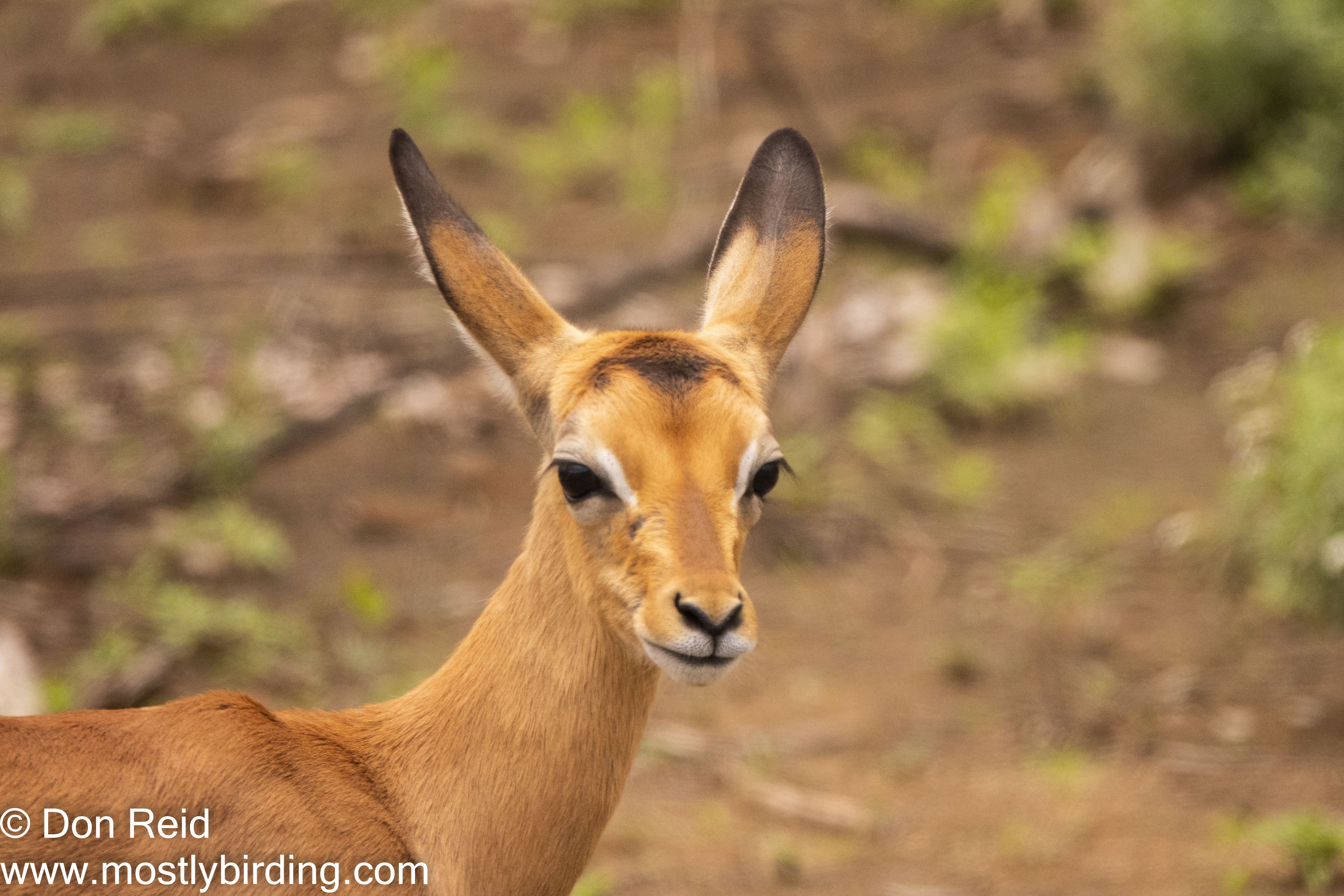
Impala, KNP – Mopani – Shingwedzi

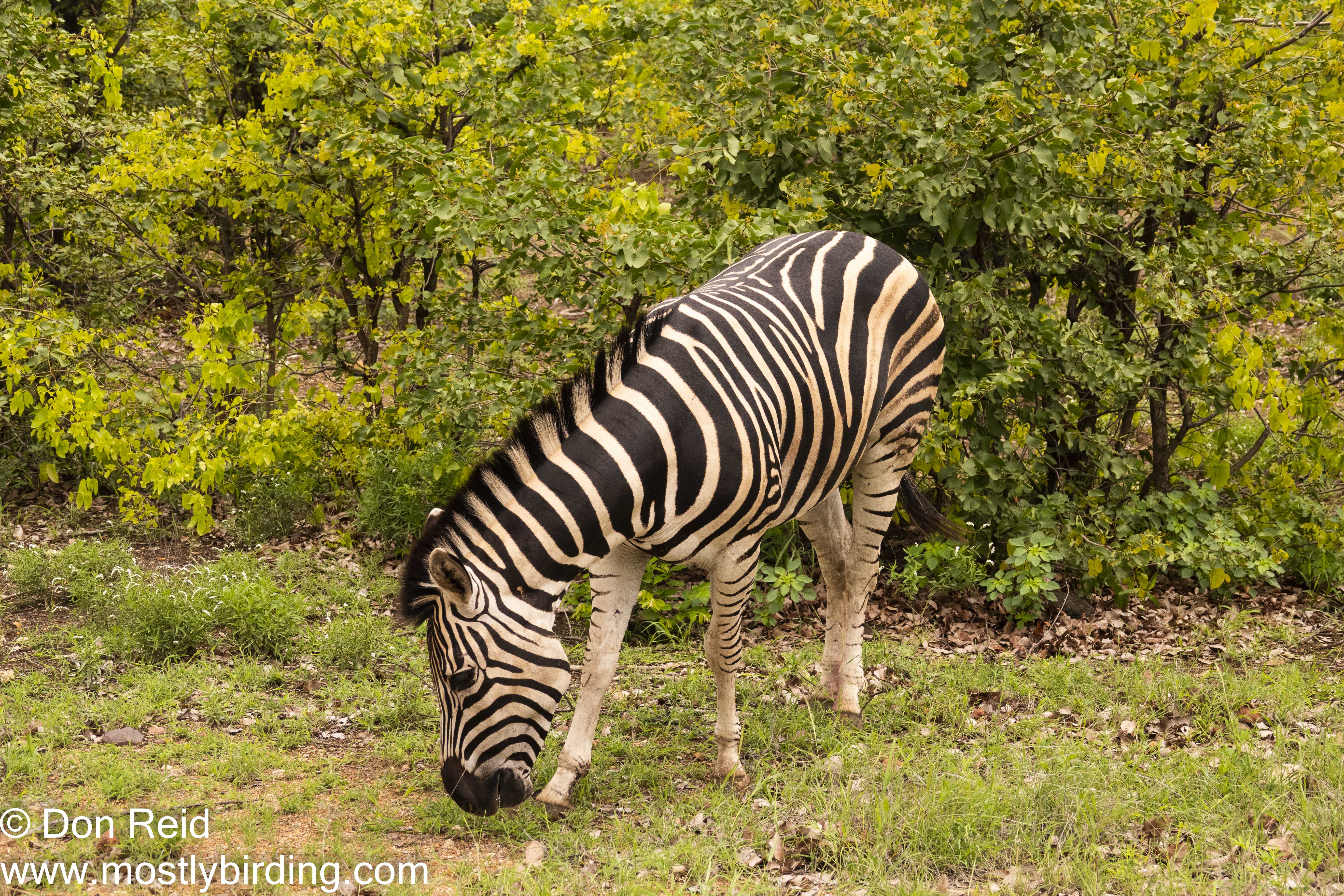
Zebra, KNP – Mopani – Shingwedzi

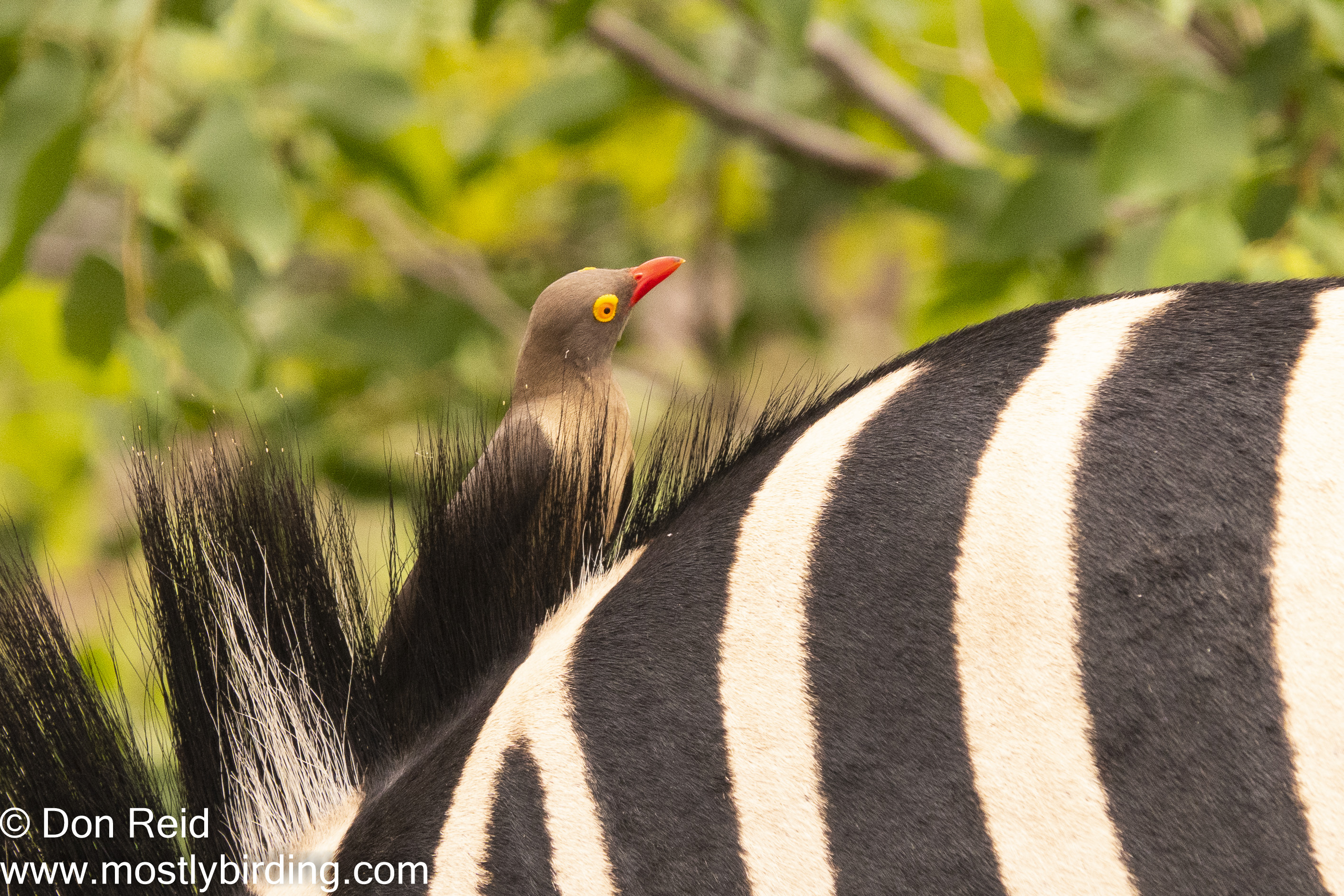
Red-billed Oxpecker (Buphagus erythrorhynchus / Rooibekrenostervoël), KNP – Mopani – Shingwedzi

We found the day visitor’s area already crowded (yet socially distanced), but were fortunate to find one empty picnic table and the camp personnel helpfully brought a portable braai to our table. Andre got stuck in and braai-ed burger patties while a large leguaan moved between the tables looking for scraps, waddling along and flicking its tongue in true serpent fashion. Soon the buns were buttered and loaded with tomato, lettuce, onions and sauce, ready to receive the patties and we tucked into our simple but delicious meal

All in all a very unique Christmas Day lunch for us!

An ice cream on a stick from the small shop was our dessert, after which we set off on the road back to Mopani, taking our time.

Dinner for One ….. Martial Eagle

We were hardly out of Shingwedzi, driving next to the lightly flowing, broad river, when I spotted a commotion amongst a small flock of Starlings gathered in and around one of the large trees that line this stretch of the river.

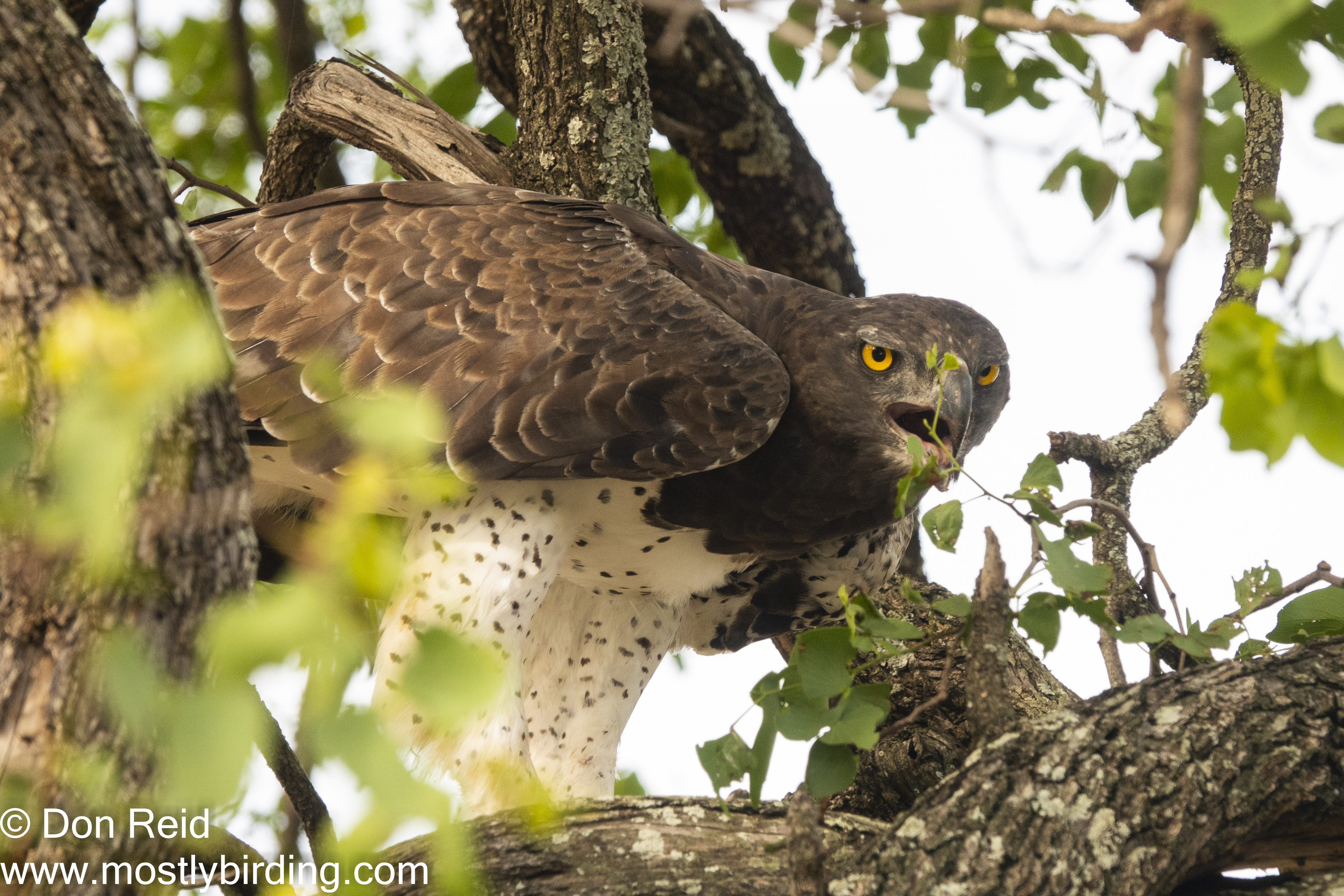
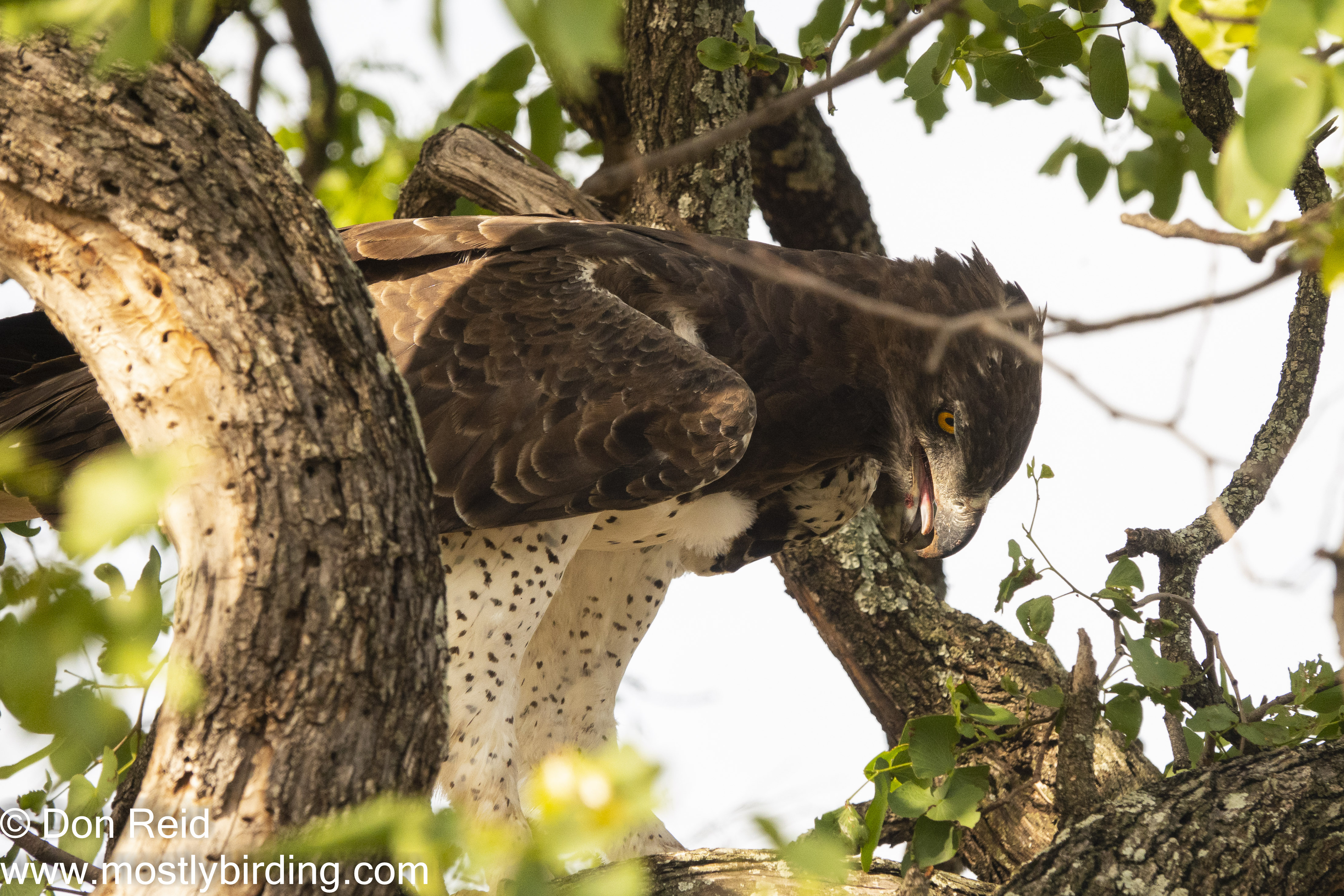
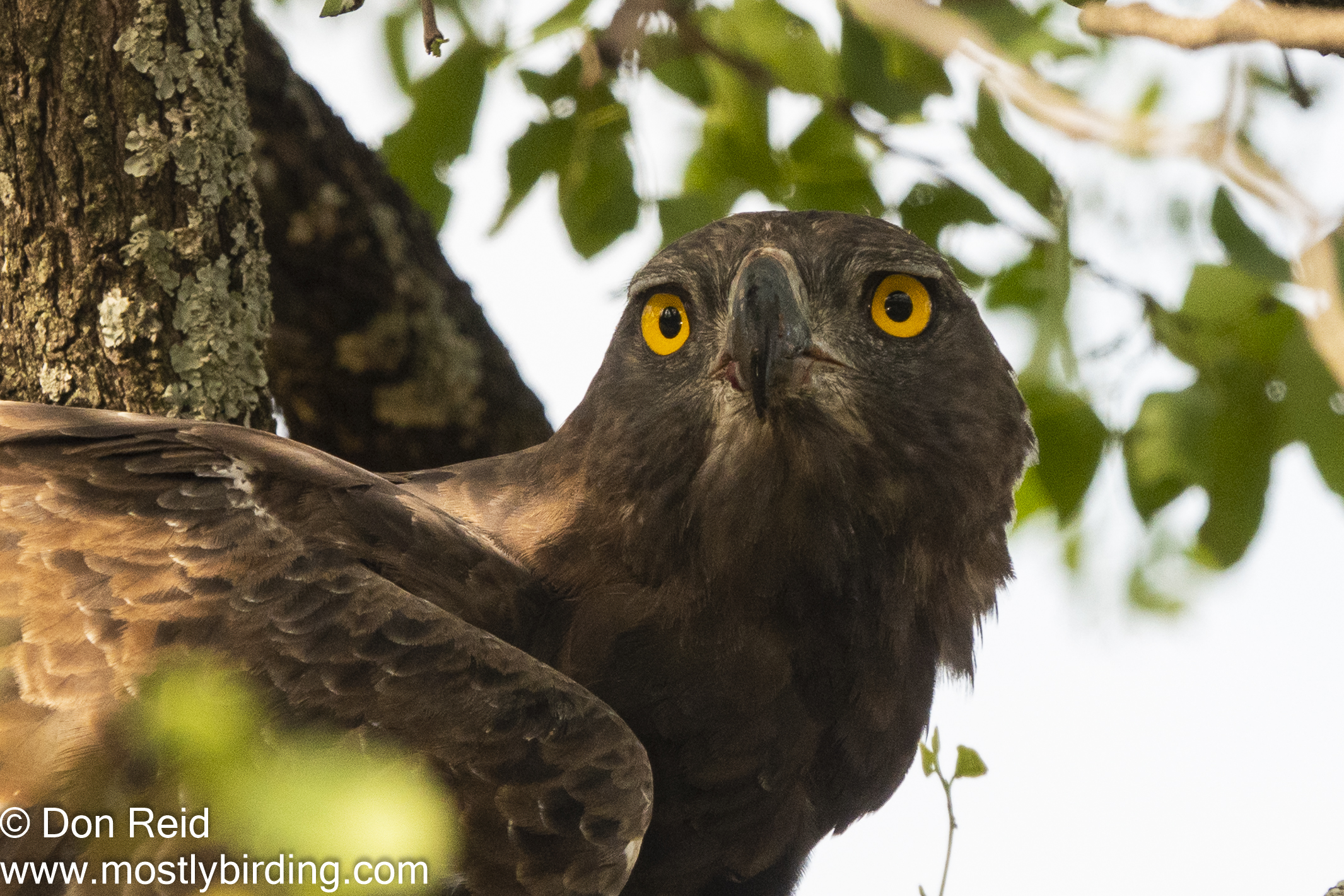
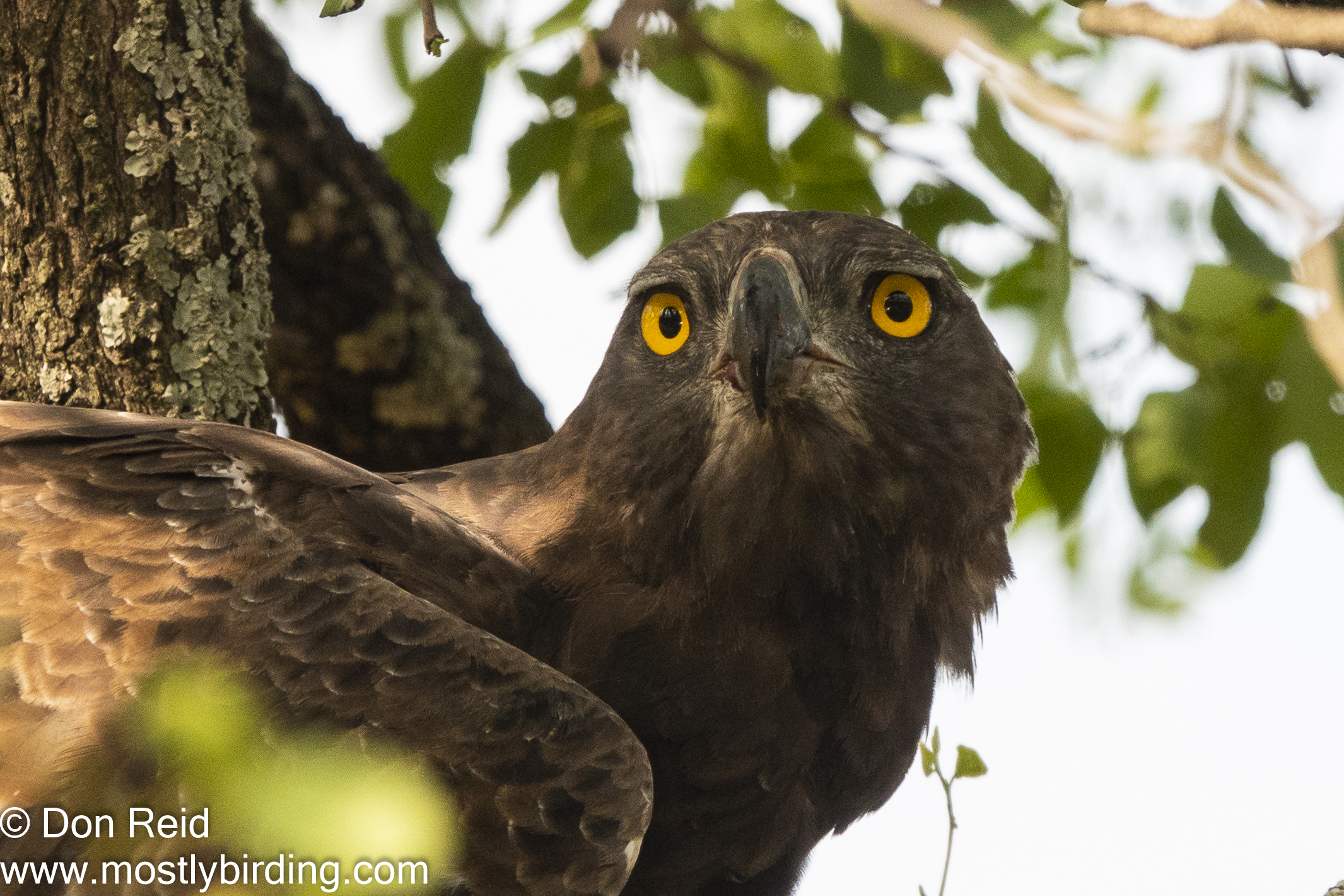
I pulled off the road and stopped under the tree to have a look at what may be causing their agitation – glancing up I looked straight into the piercing eyes of a Martial Eagle, which was engrossed in the task of devouring an unidentifiable, partly hidden prey from which he was ripping chunks of meat.

Martial Eagle (Polemaetus bellicosus / Breëkoparend), KNP – Shingwedzi

Apart from an occasional withering stare, the Eagle ignored us, despite us being a few metres away, and carried on with its festive meal while we enjoyed the luxury of being able to observe this magnificent raptor at close quarters

The road back to Mopani had a few further interesting sightings….

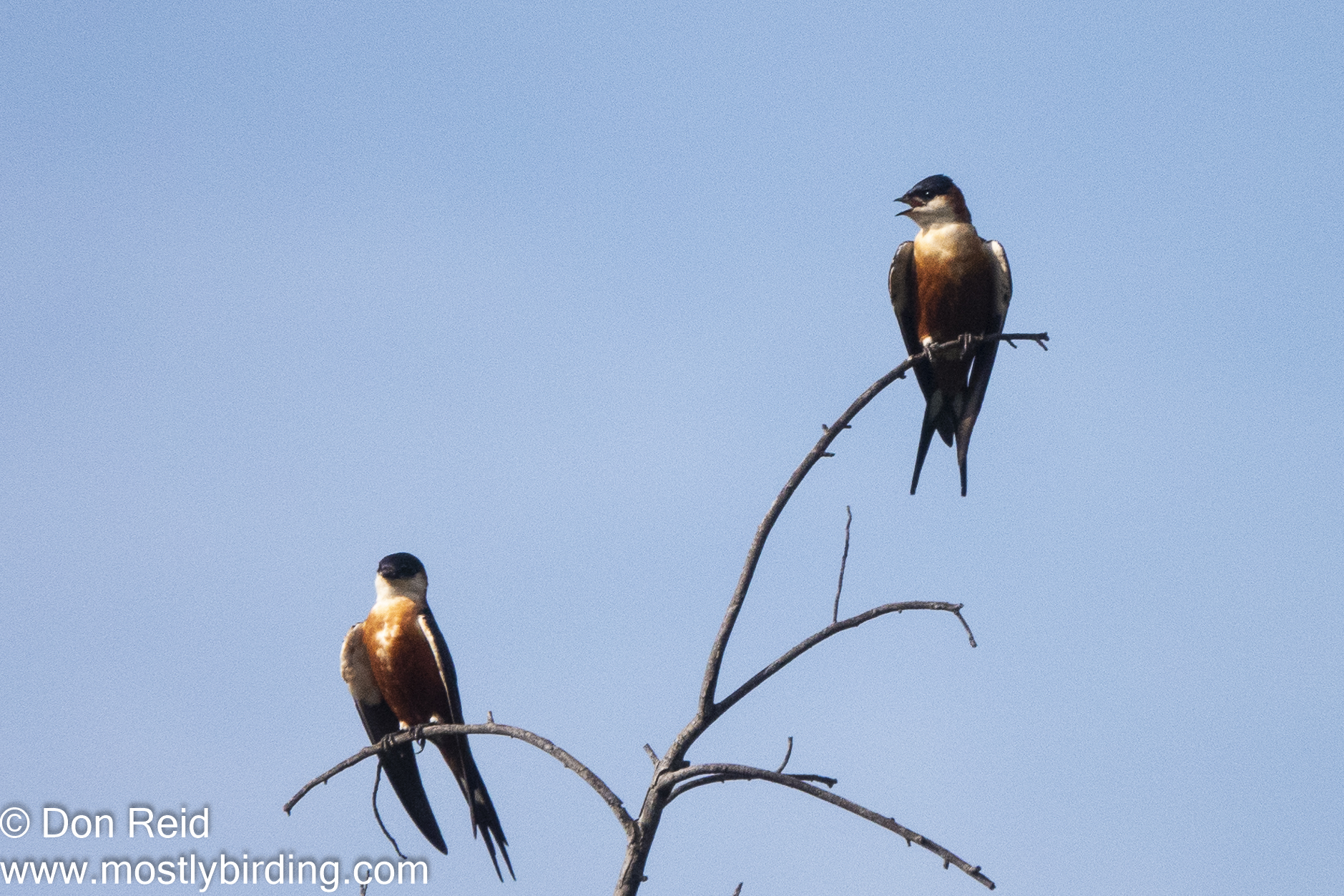
Mosque Swallow (Cecropis senegalensis / Moskeeswael), KNP – Shingwedzi
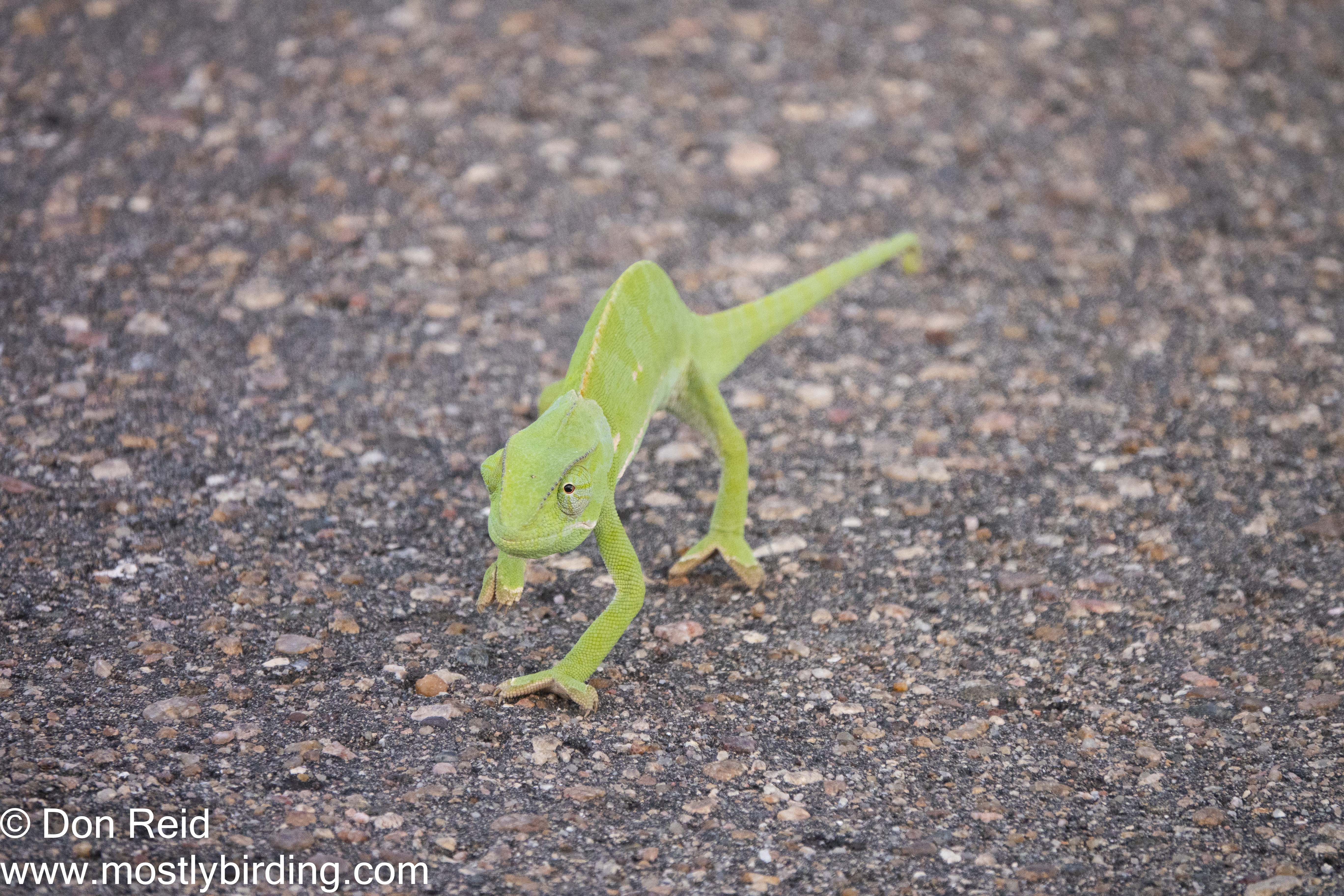
Chameleon, KNP – Mopani – Shingwedzi
Lesser Spotted Eagle (Aquila pomarina / Gevlekte arend), KNP – Mopani – Shingwedzi

And last but not least ….. well actually it is the least in terms of size –

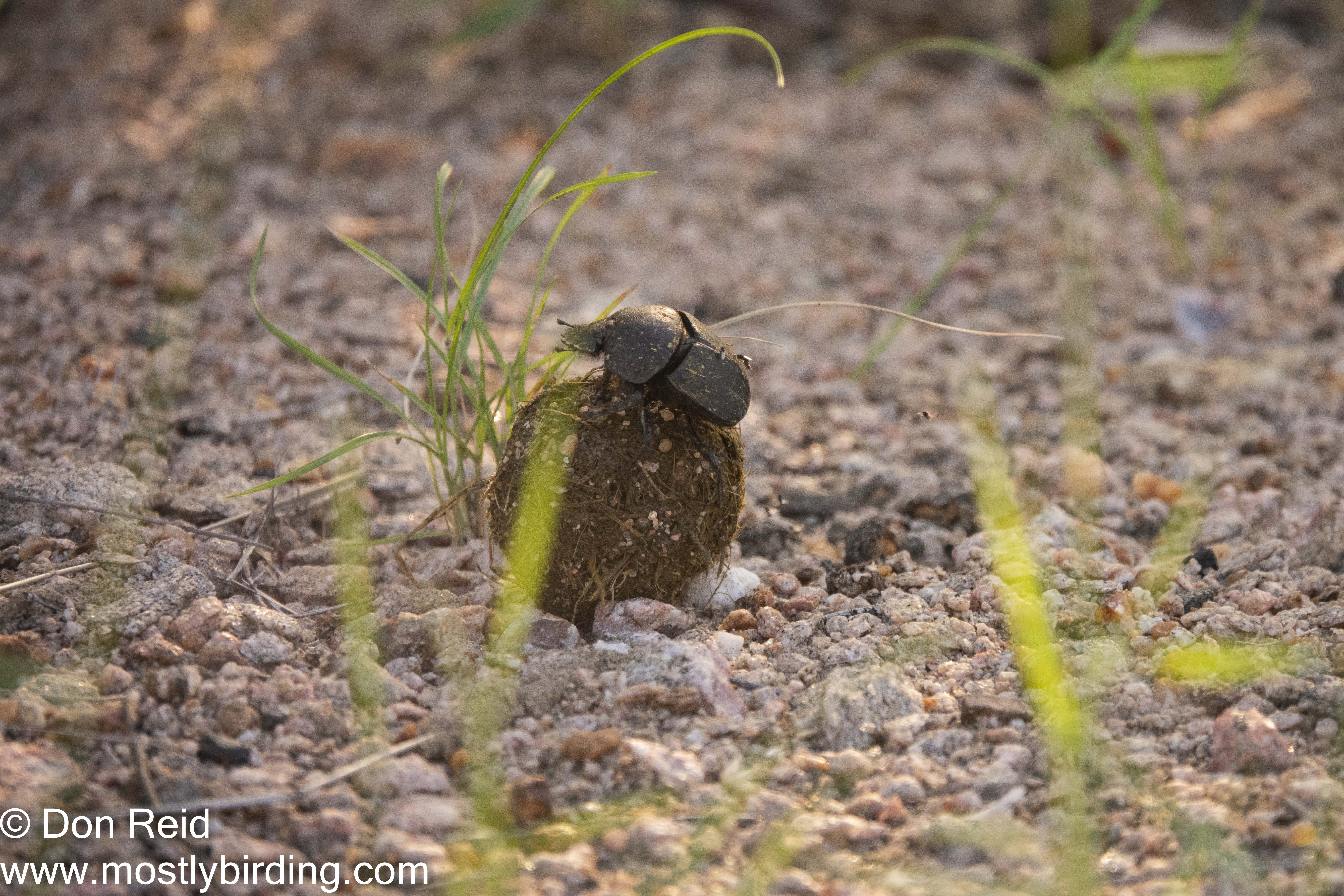
Dung Beetle, KNP – Mopani – Shingwedzi

This is one Christmas day that we will fondly remember

My Photo Picks for 2020

With the new year in its infancy, it’s time to select a few photos which best represent our 2020. In some cases, selection is based on the memory created, in others I just like how the photo turned out, technically and creatively. Despite the restrictions brought upon all of us by Covid 19, we still managed to travel, although it was limited to the borders of South Africa. 

The Places

Birding and bird atlasing takes me to many places that would not otherwise feature on our travel map – here’s a selection ….

Balmoral area – The new Kusile Power Station early morning

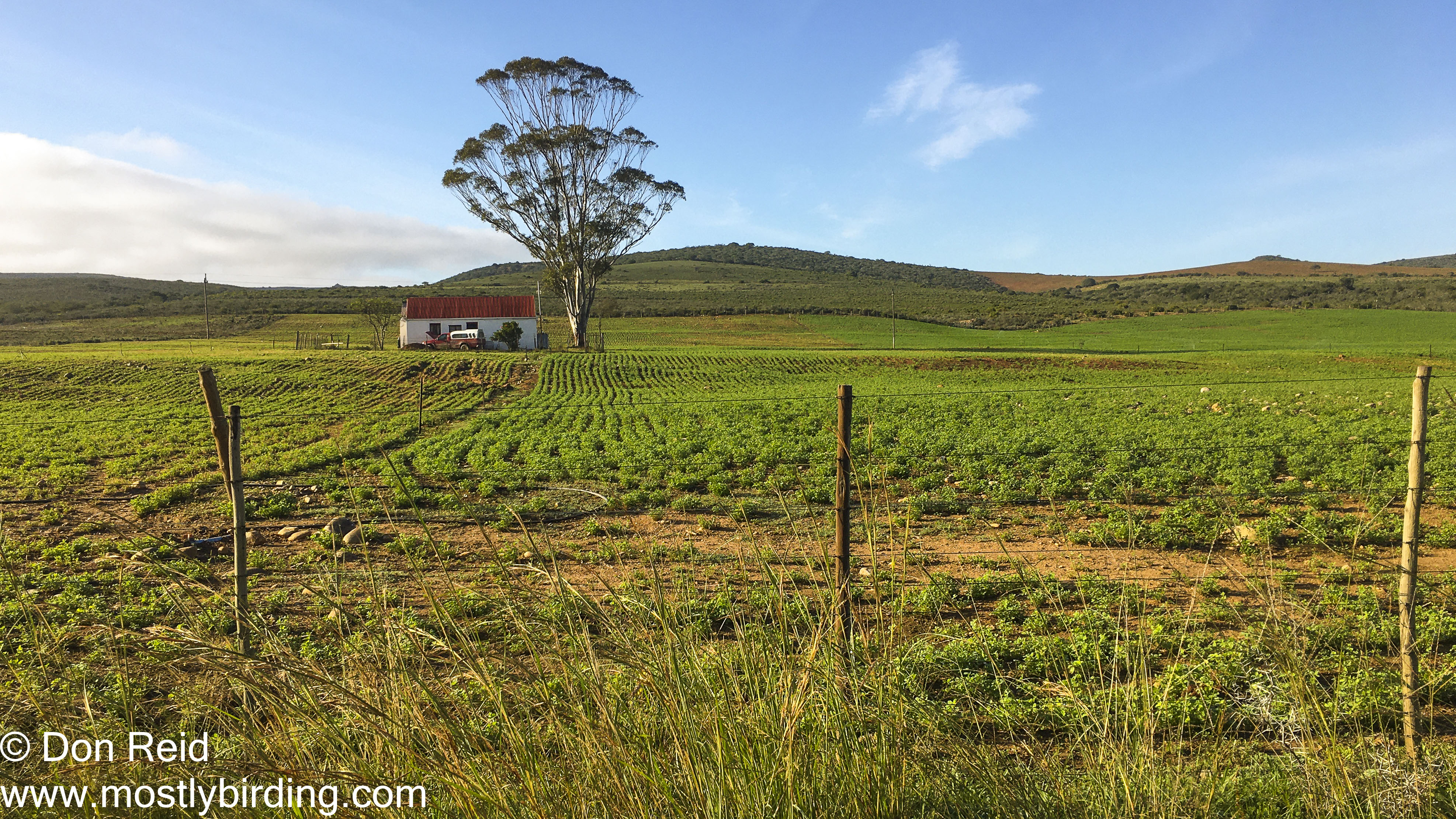
Herbertsdale area near Mossel Bay

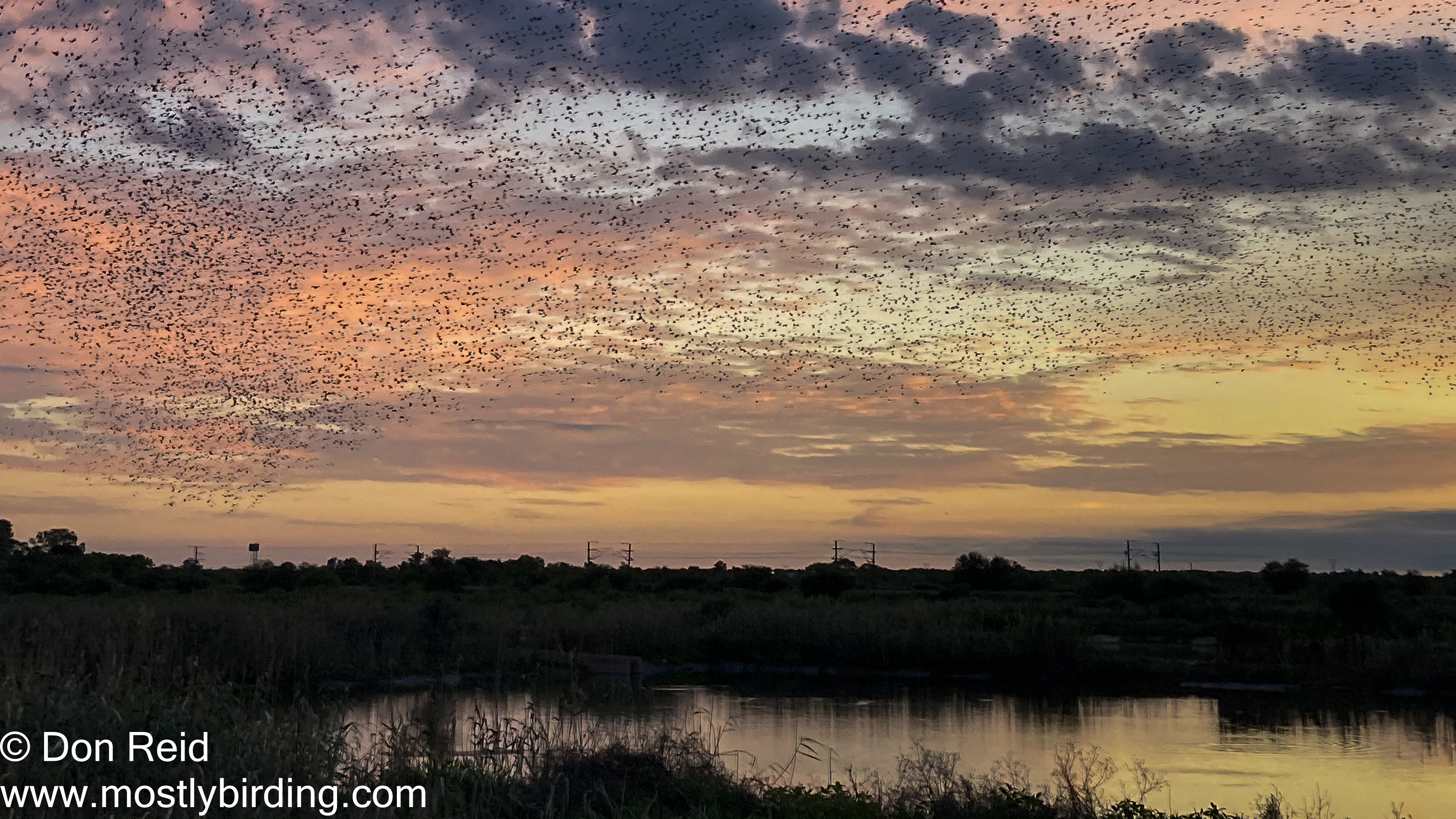
Irrigation Dams near Pienaarsrivier, Birding Big Day 2020 – thousands of Queleas rising into the air

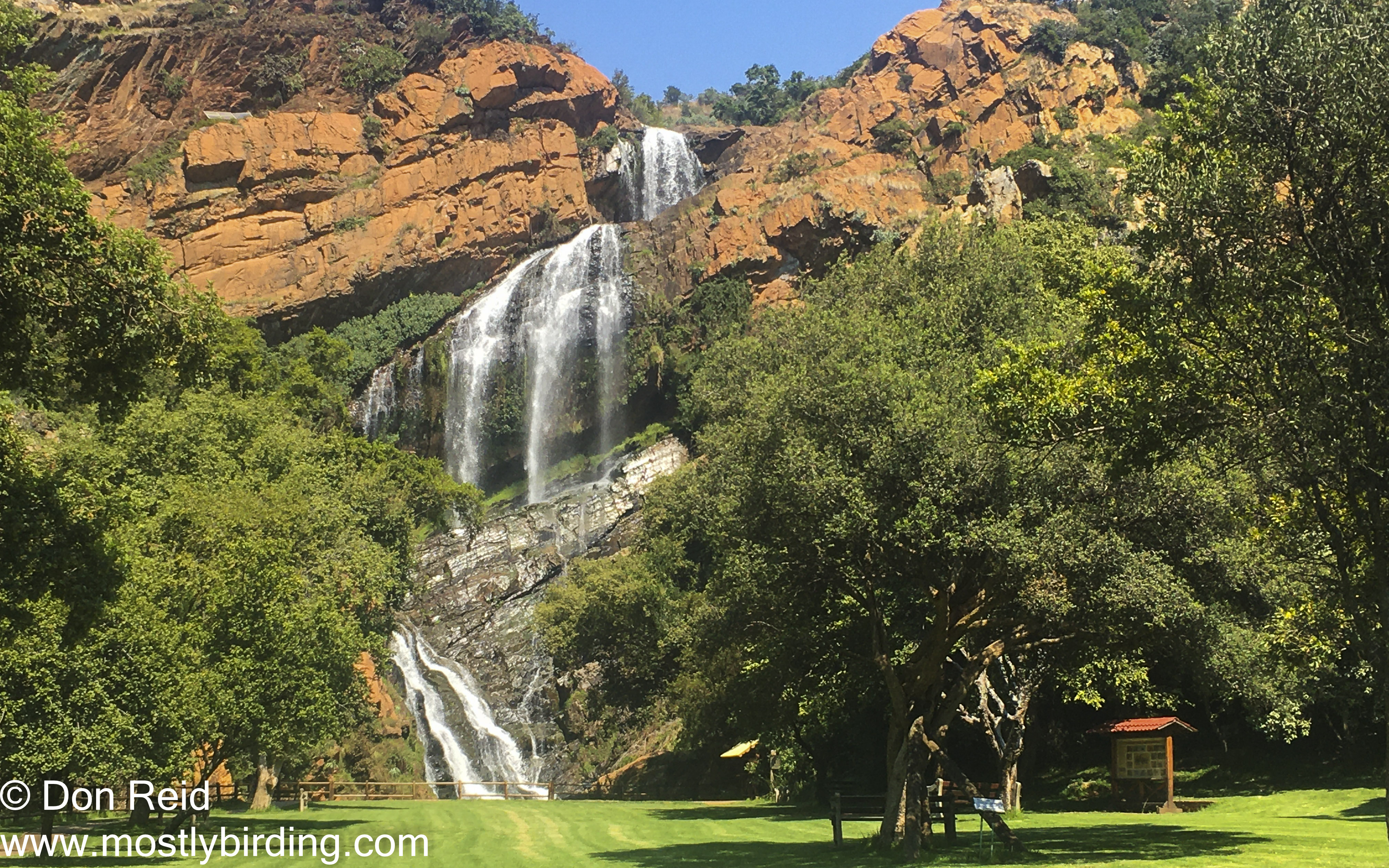
Walter Sisulu Botanical Gardens, Johannesburg – I fitted in a visit while Gerda was attending a class nearby

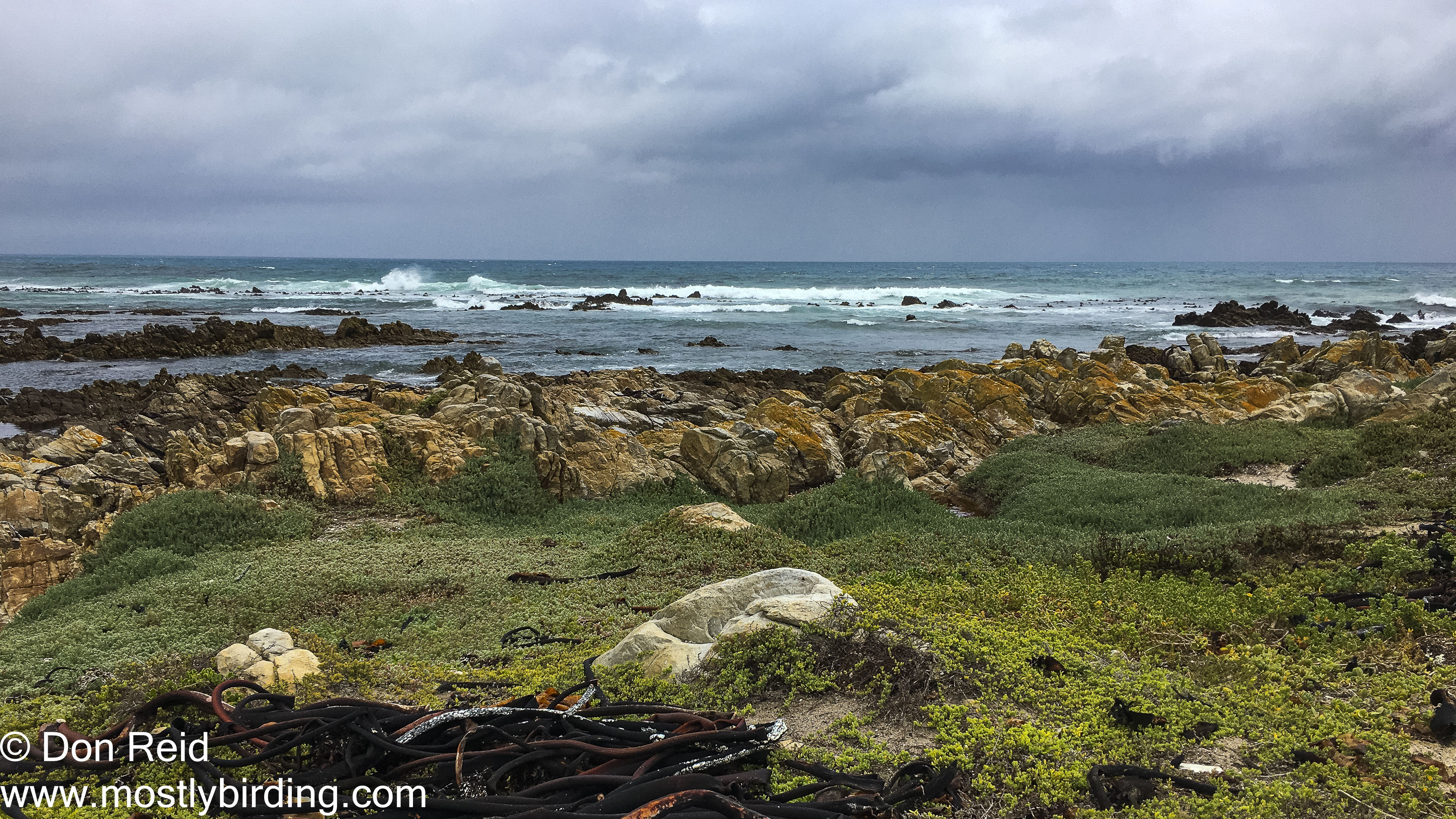
Voelklip beach, Hermanus on an overcast, rainy day

Pearly Beach, beyond Gansbaai

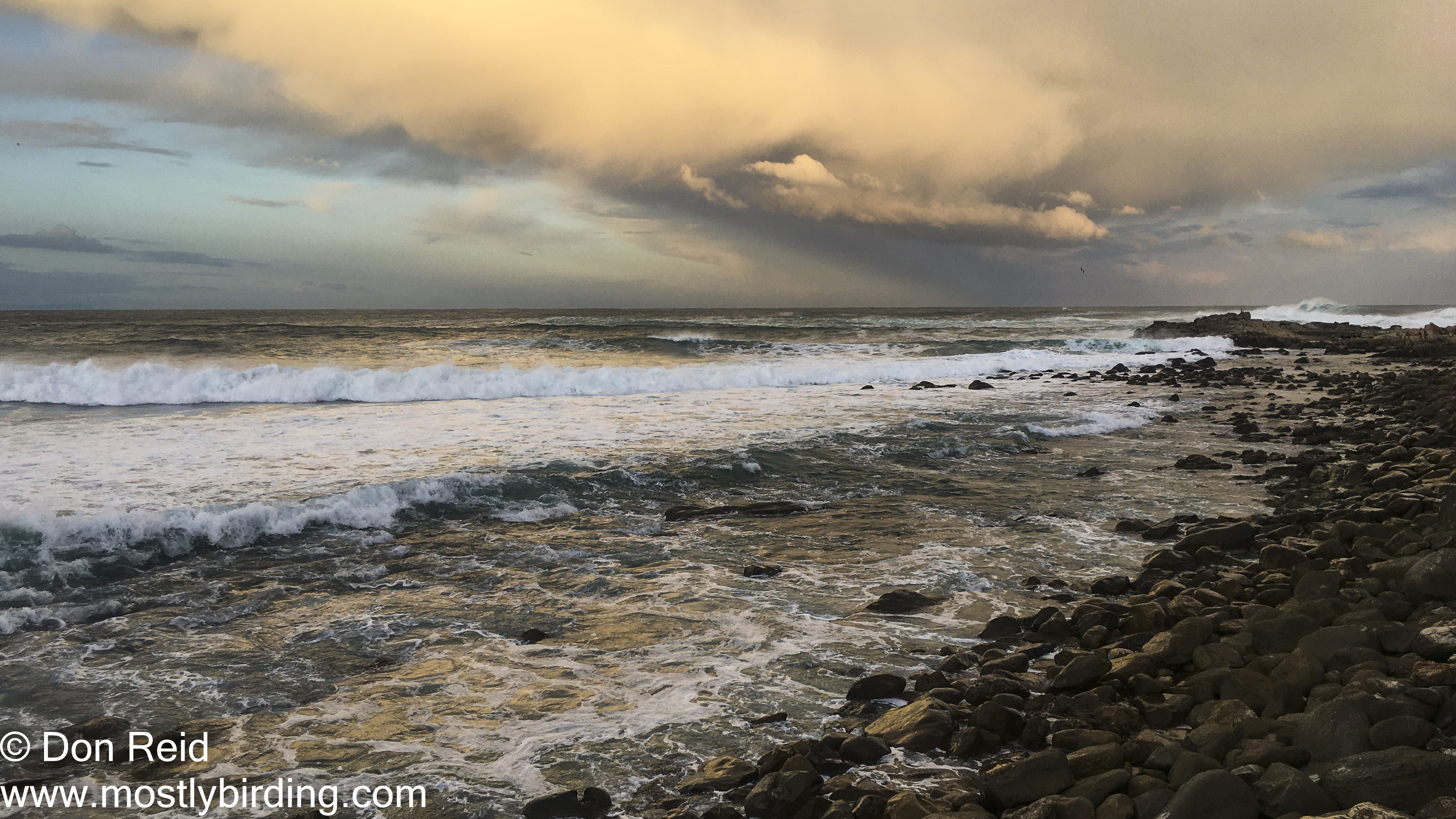
The Point, Mossel Bay on a moody winter’s day

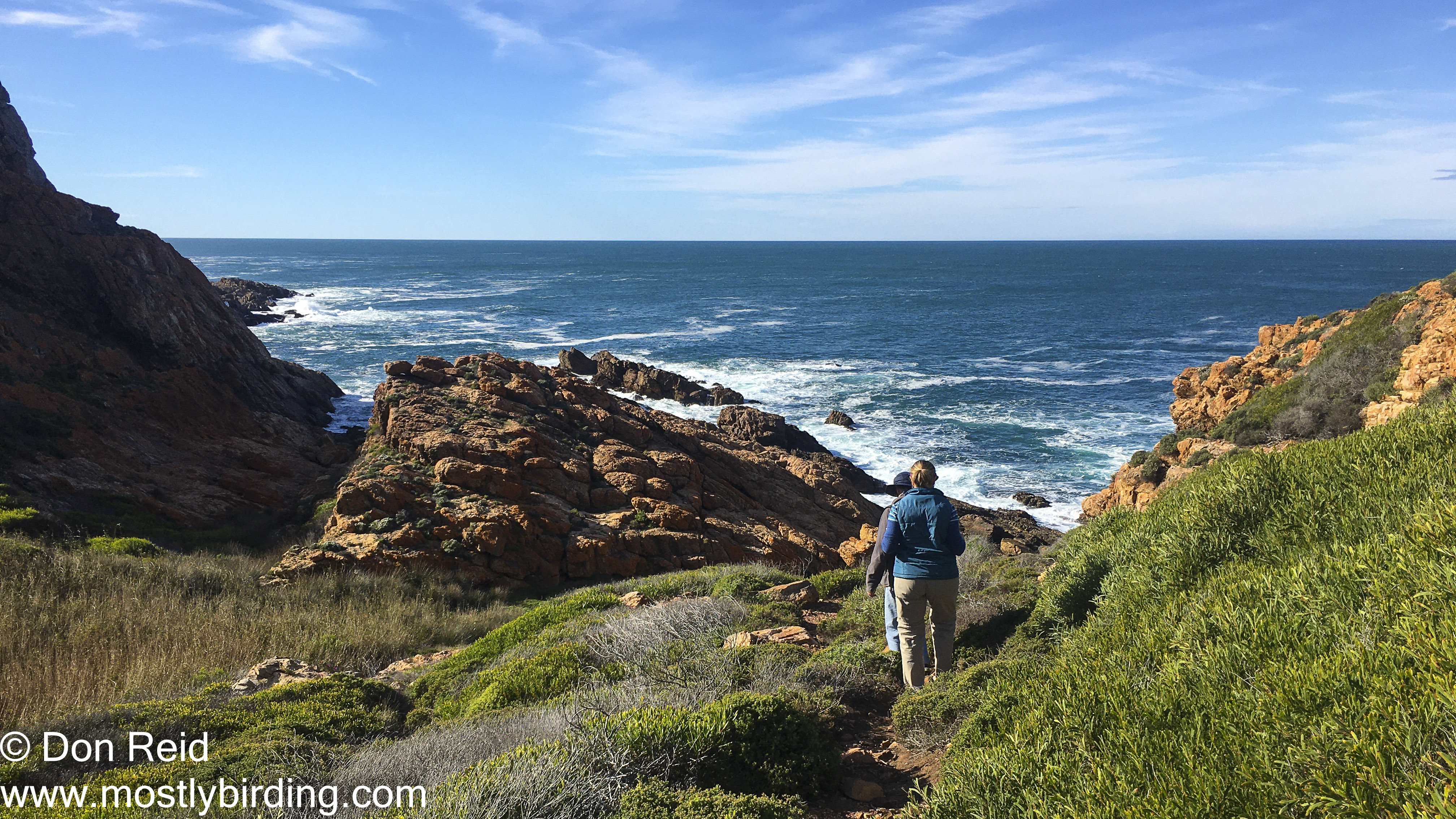
Early morning walk to a secluded cliffside spot for coffee on the rocks, Mossel Bay

Mossel Bay at dusk – from the boardwalk

Onverwacht farm Vryheid

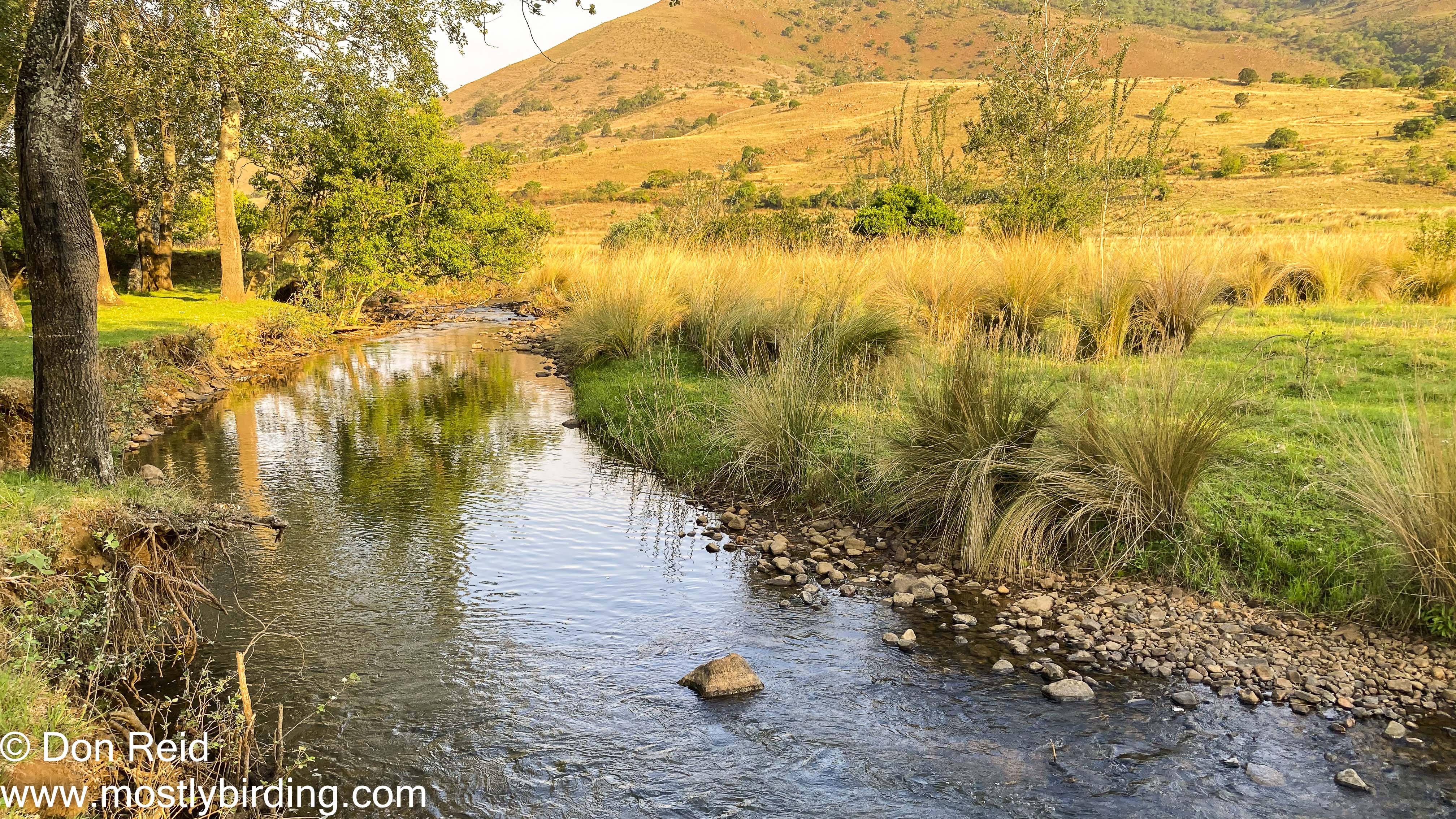
Crocodile River, Verlorenkloof

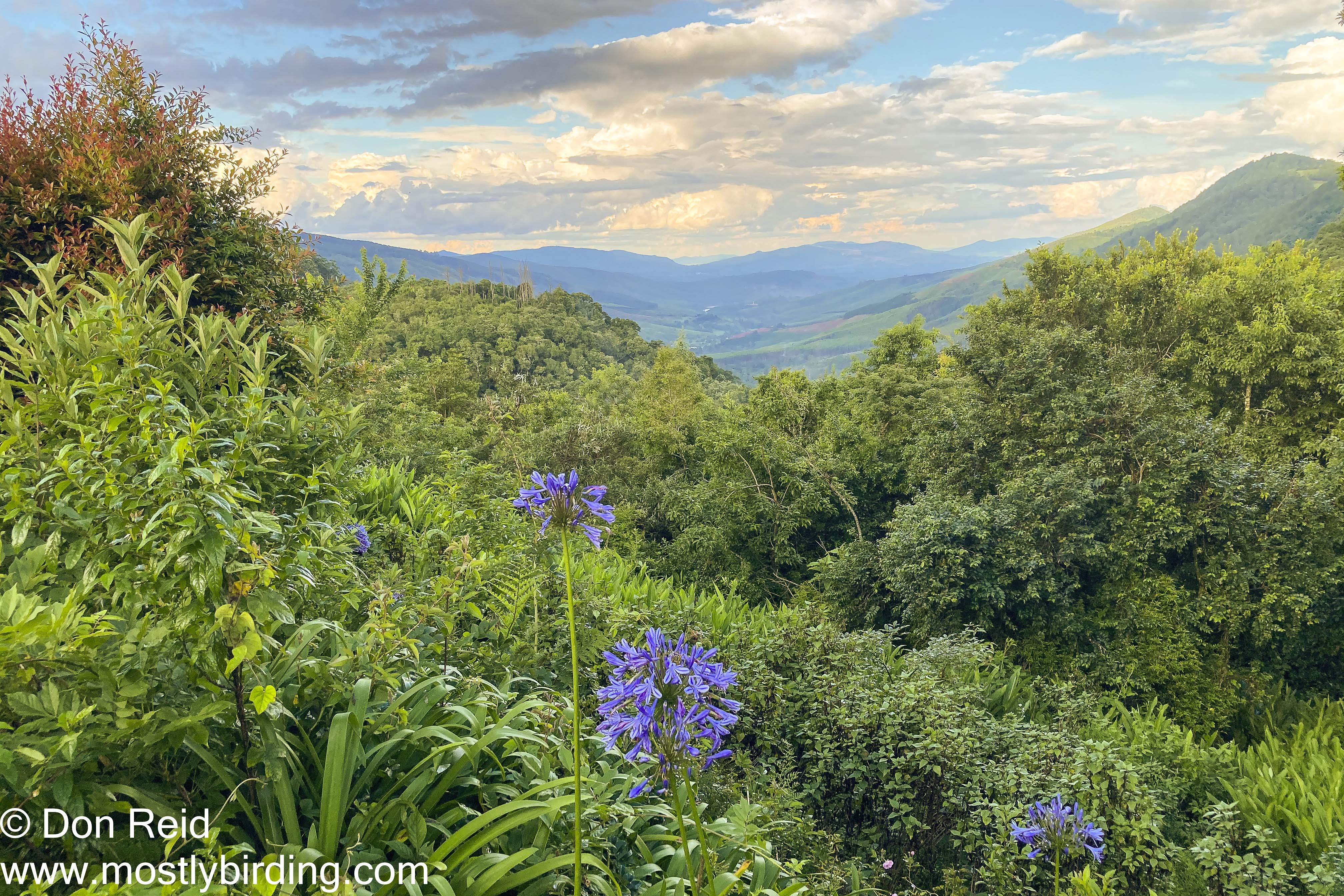
Magoebaskloof

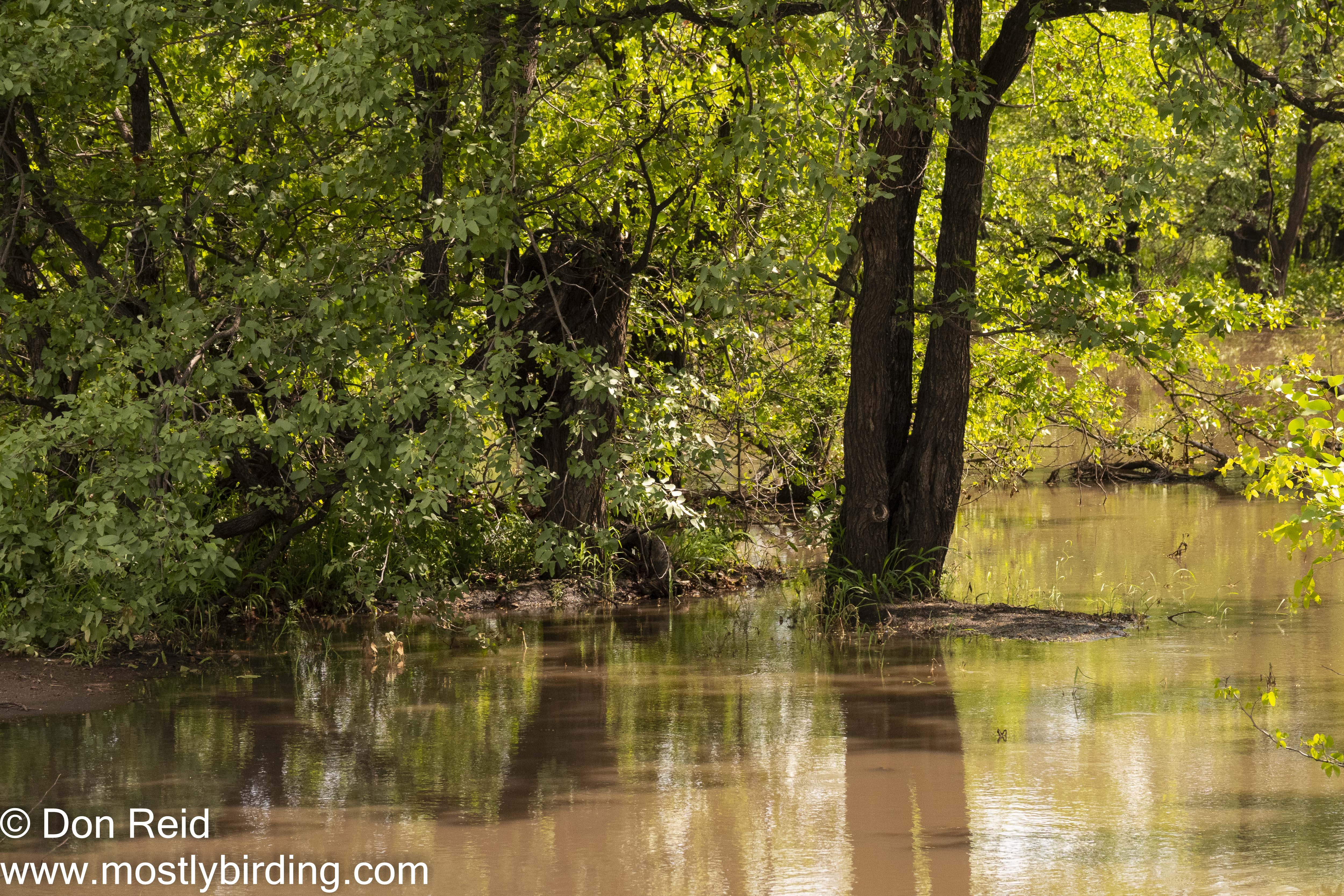
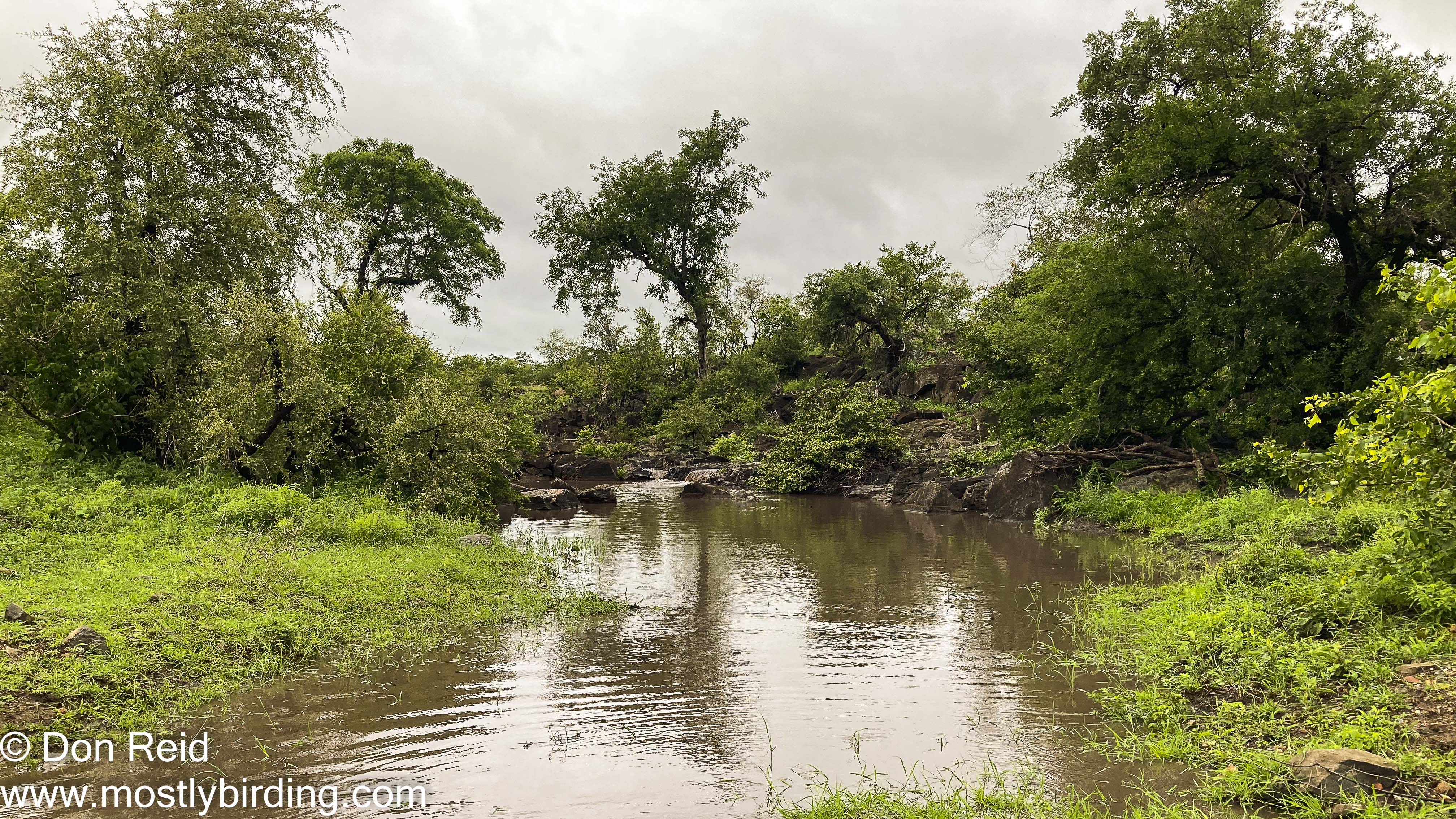
Kruger National Park – Mopani (Shongololo Loop)

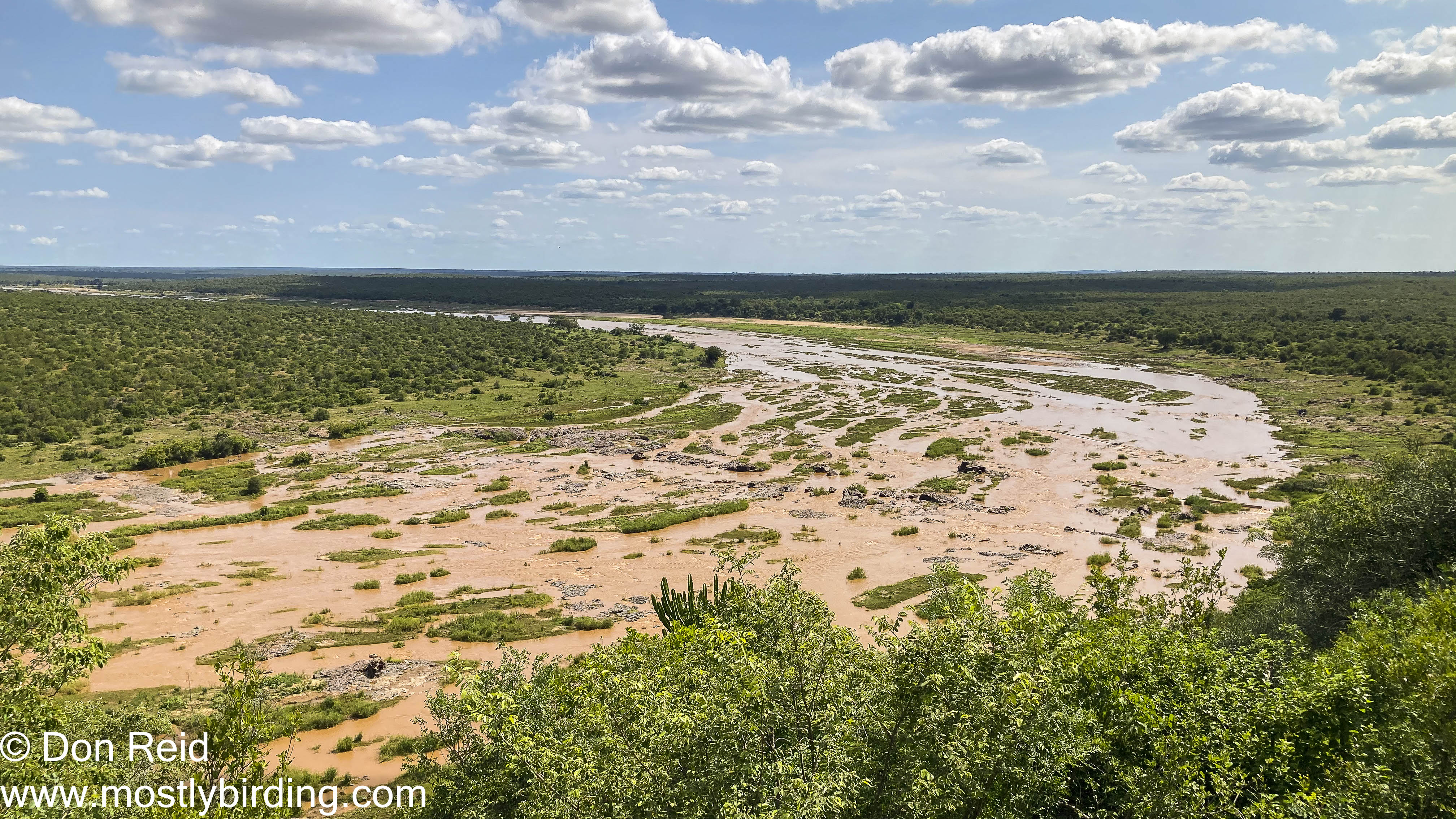
Kruger National Park – Olifants River

The Birds

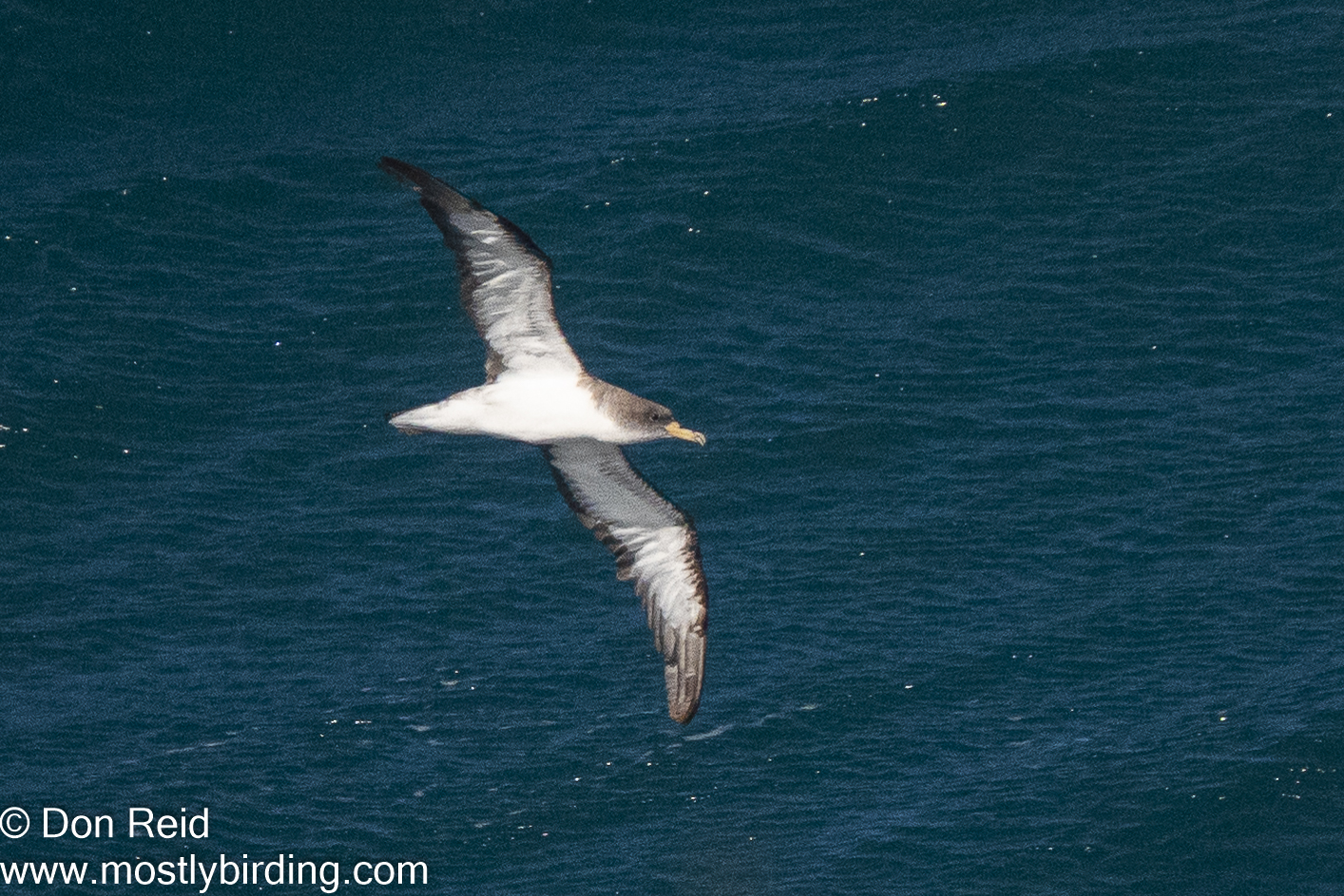
Cory’s Shearwater / Calonectris diomedea / Geelbekpylstormvoël, Mossel Bay Point

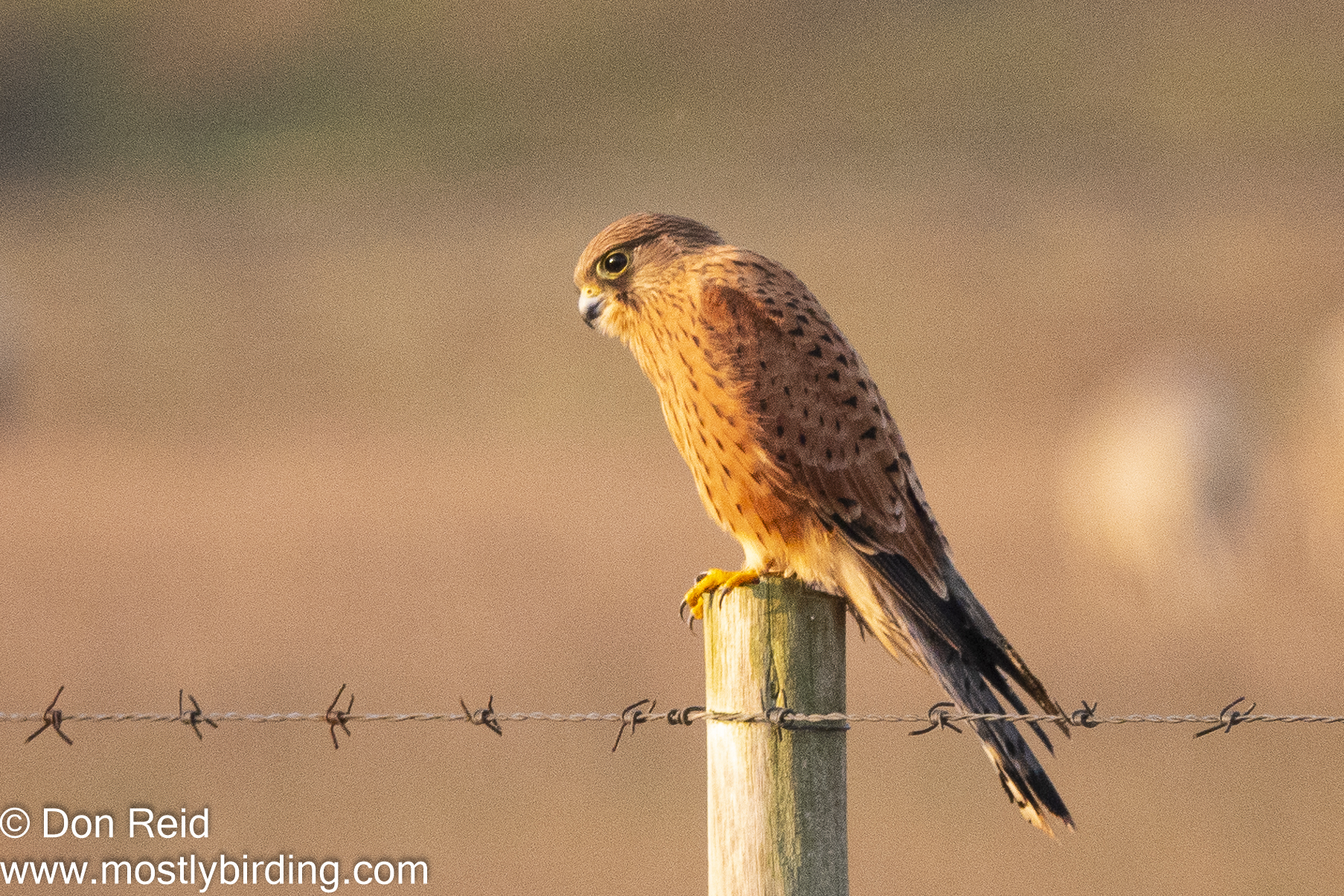
Rock Kestrel / Falco rupicolus / Kransvalk, Gouritsmond

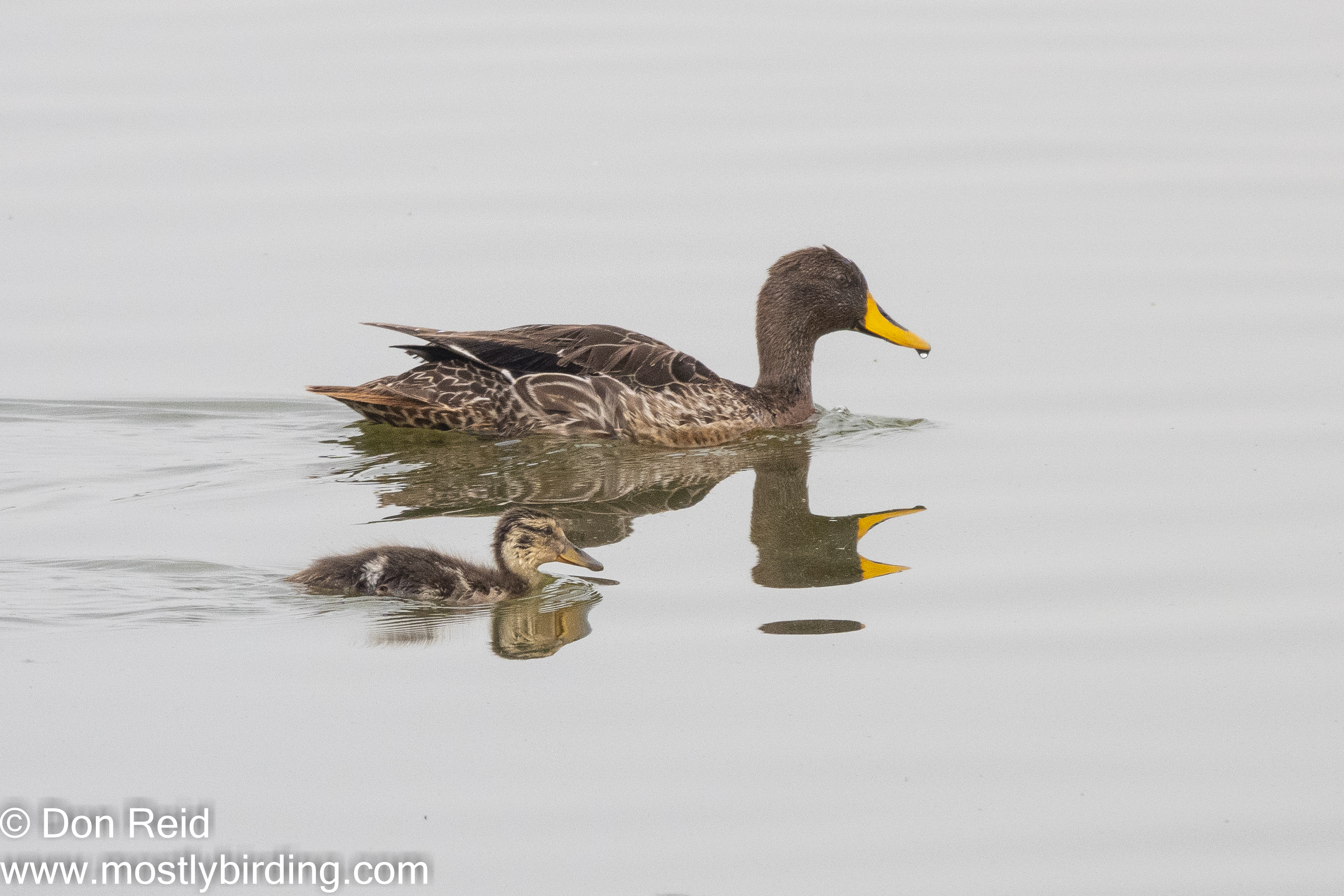
Yellow-billed Duck (Anas undulata / Geelbekeend) (Adult with Juvenile), Bronkhorstspruit Dam

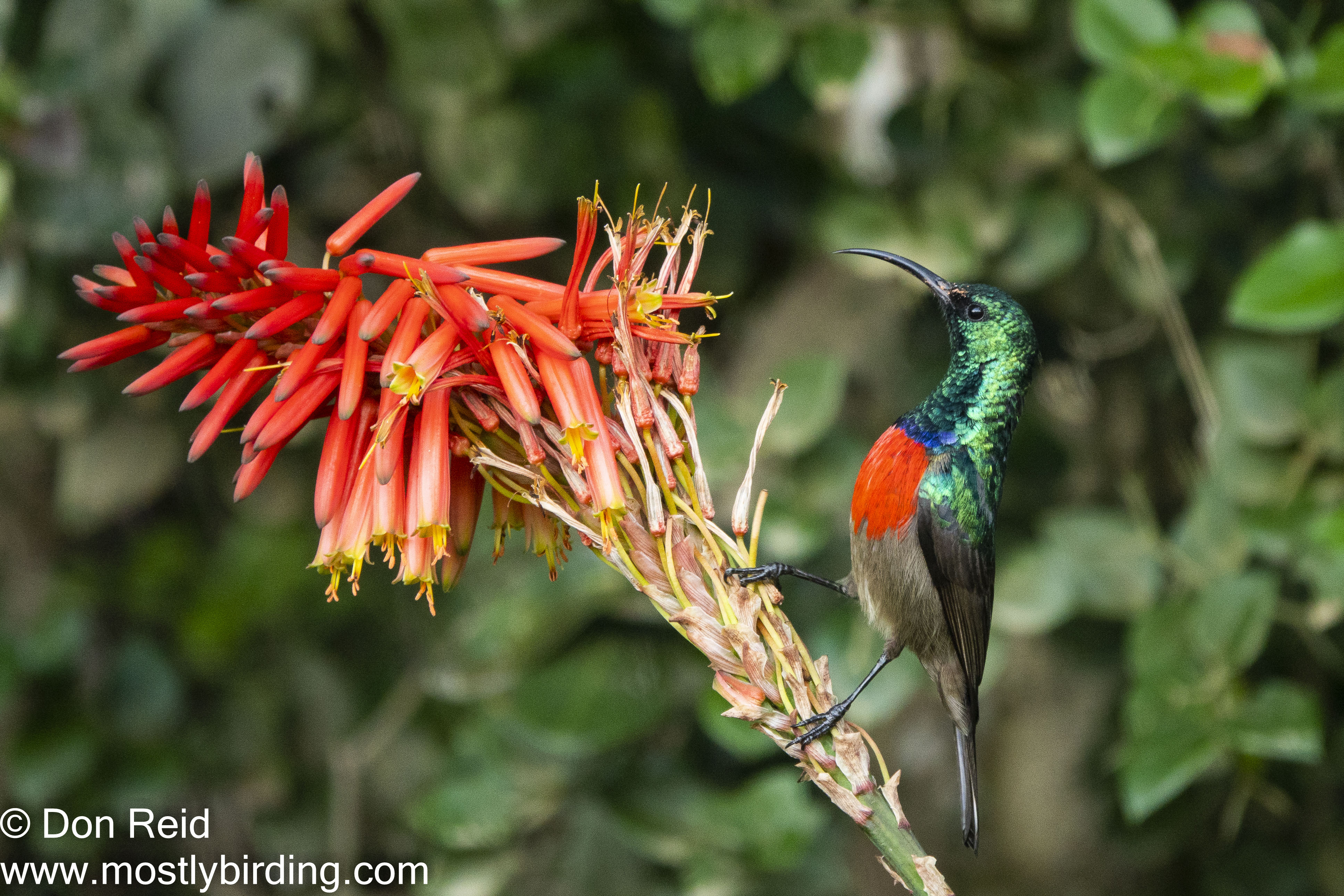
Greater Double-collared Sunbird (Cinnyris afer / Groot-rooibandsuikerbekkie), Great Brak River

Fork-tailed Drongo (Dicrurus adsimilis / Mikstertbyvanger), Albertinia

Reed Cormorant (Microcarbo africanus / Rietkormorant), Rondevlei Wilderness

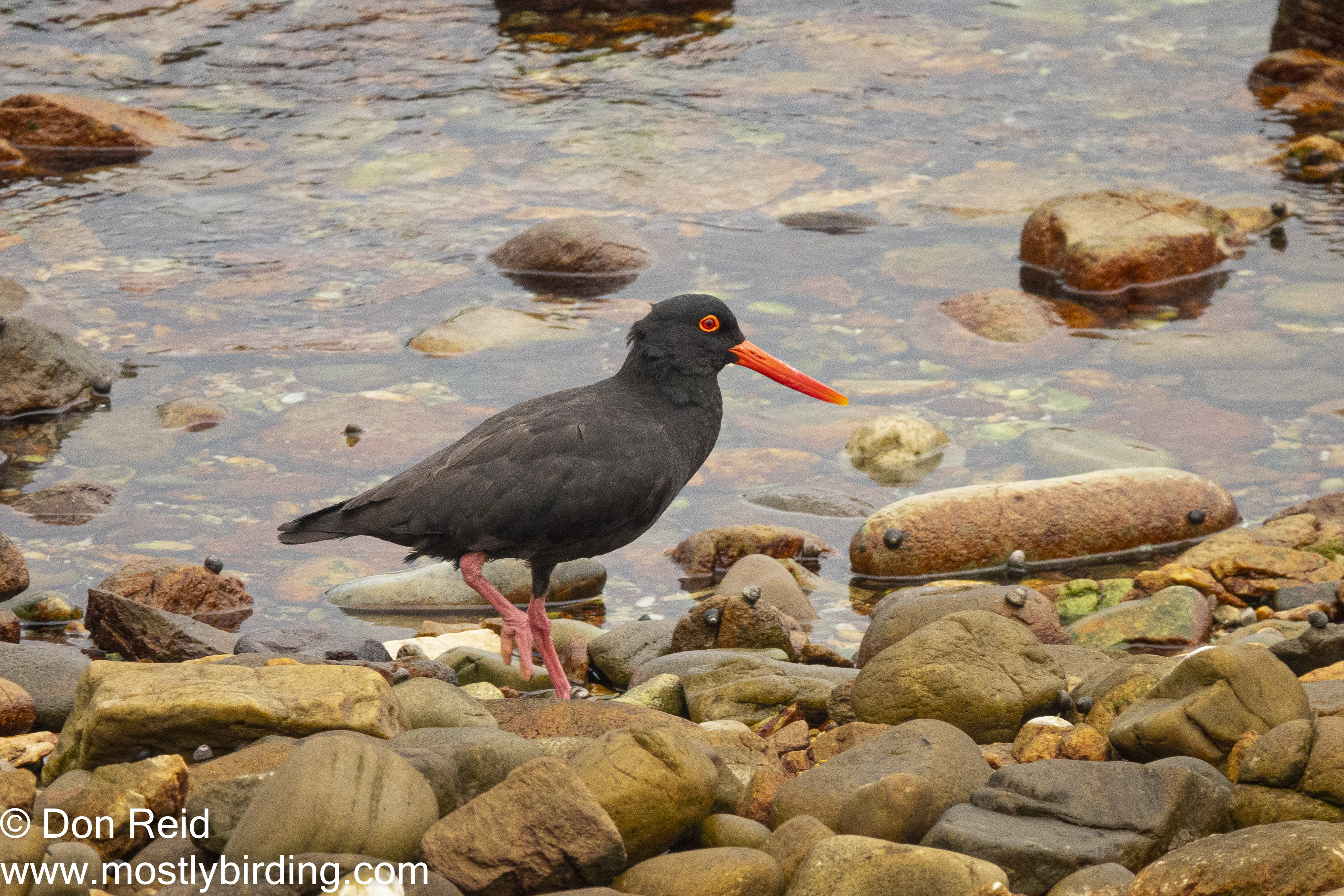
African Oystercatcher / Haematopus moquini / Swarttobie, Franskraal

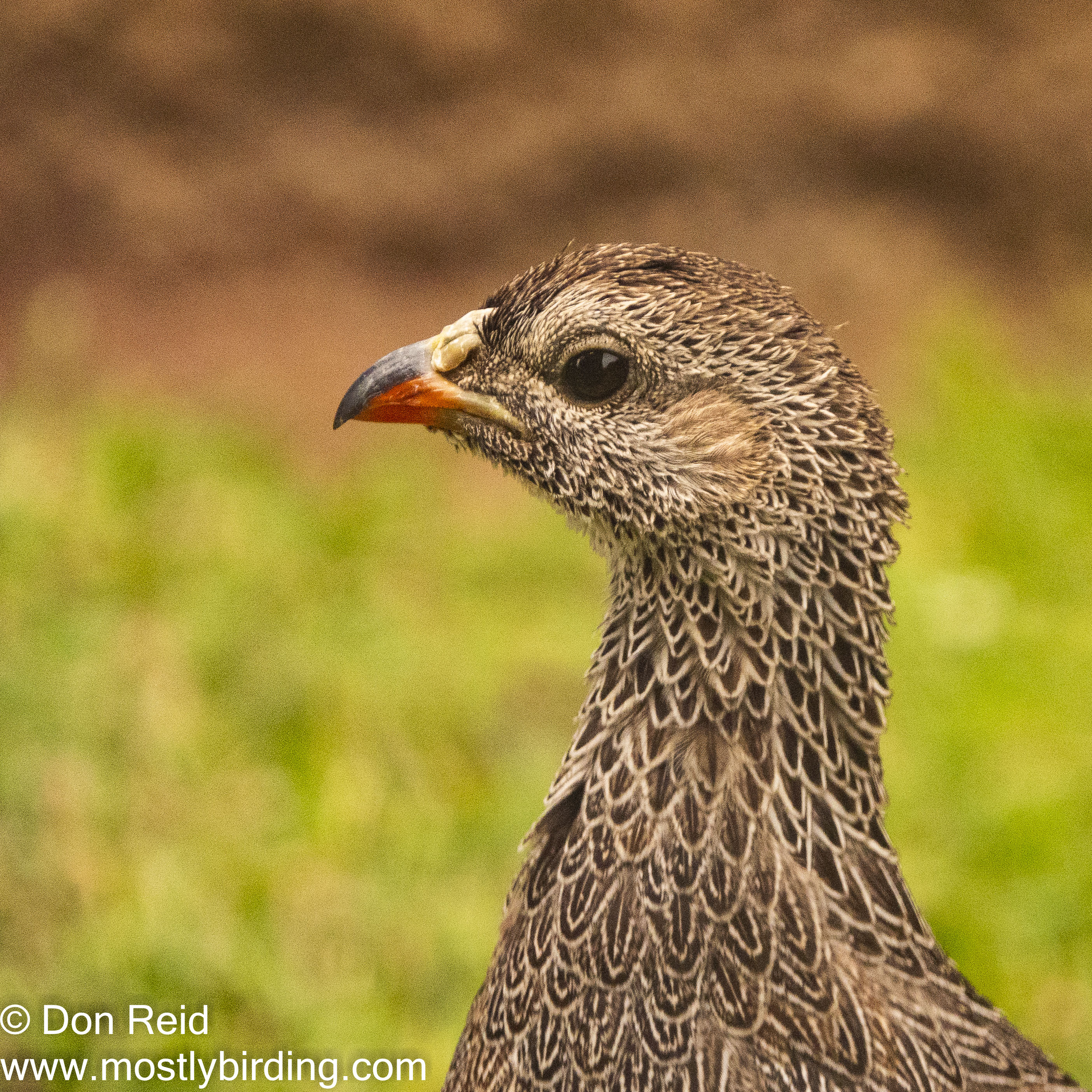
Cape Spurfowl ( Pternistis capensis / Kaapse fisant), Mossel Bay

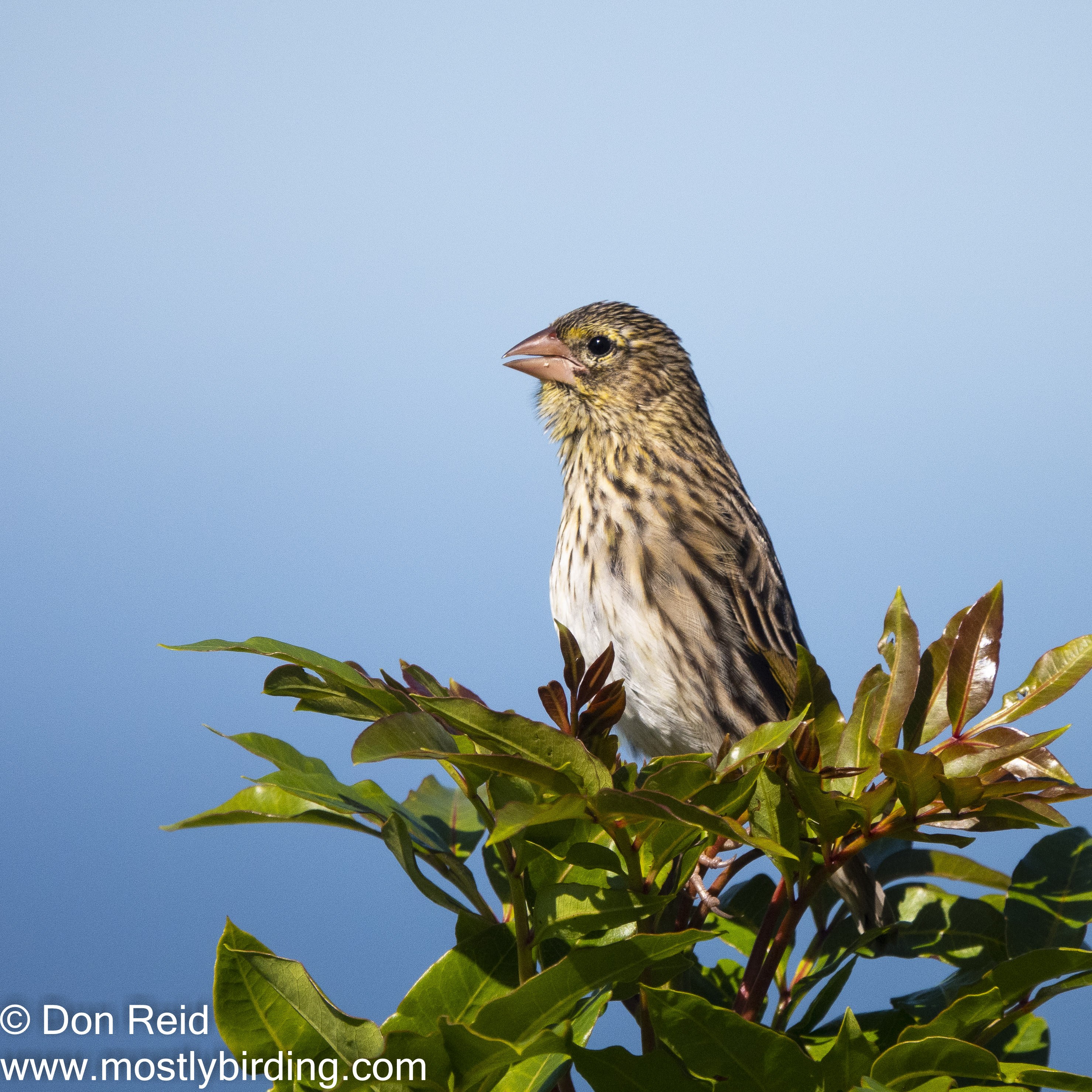
Yellow Bishop (Euplectes capensis / Kaapse flap) (Female), Mossel Bay

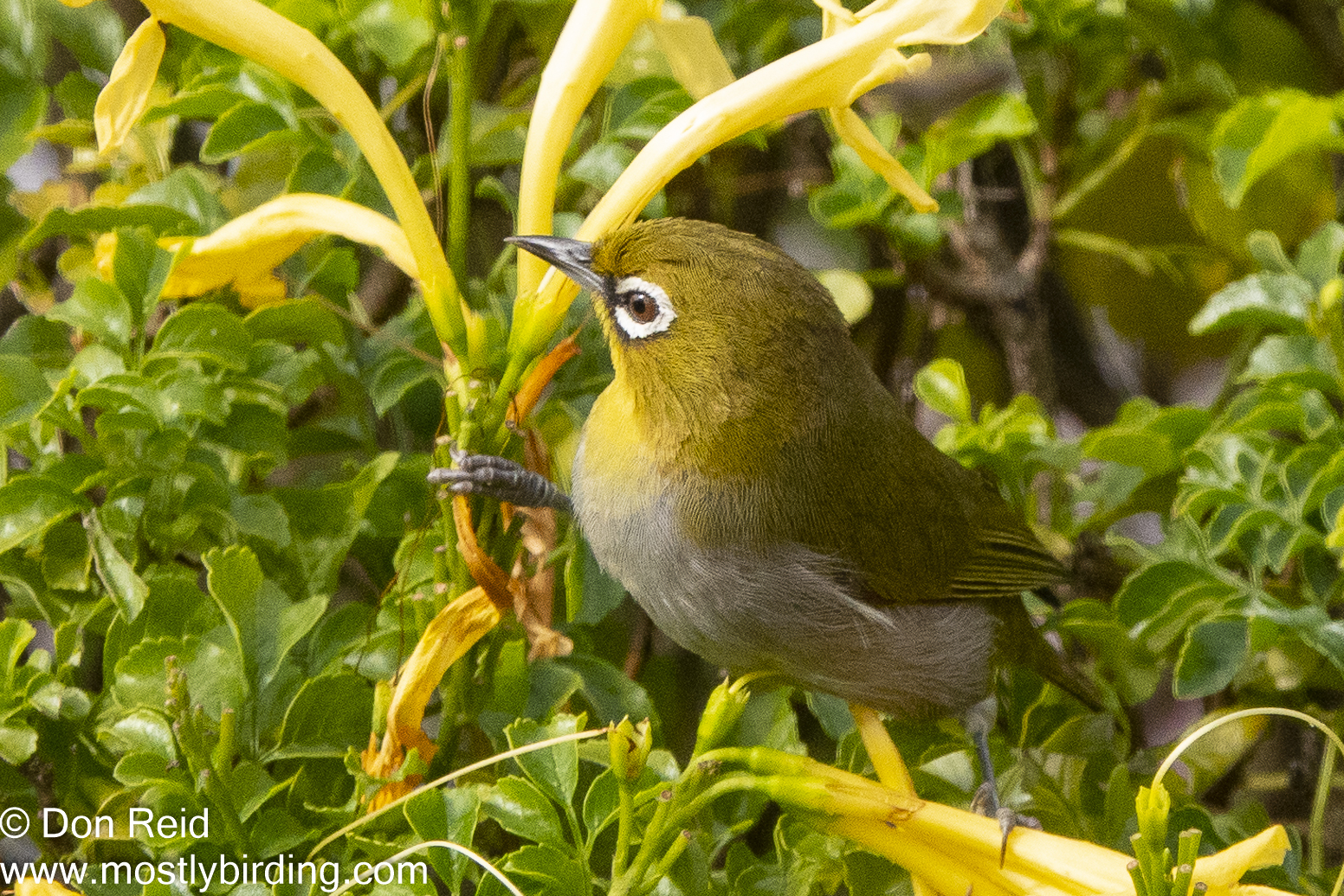
Cape White-eye (Zosterops capensis / Kaapse glasogie) (Race virens capensis), Mossel Bay

Common Starling (Sturnus vulgaris / Europese spreeu), Mossel Bay

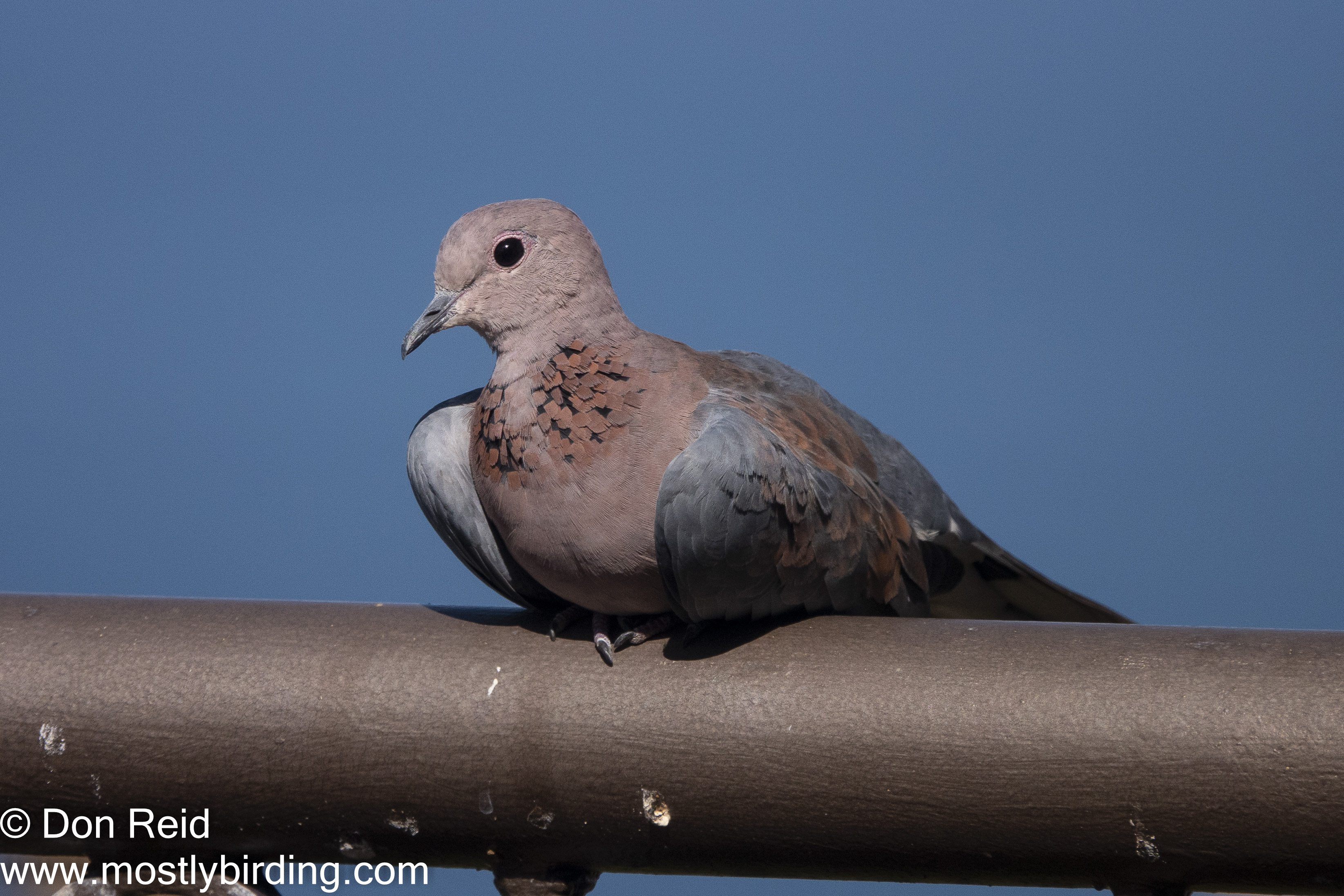
Laughing Dove Spilopelia senegalensis Lemoenduif, Mossel Bay

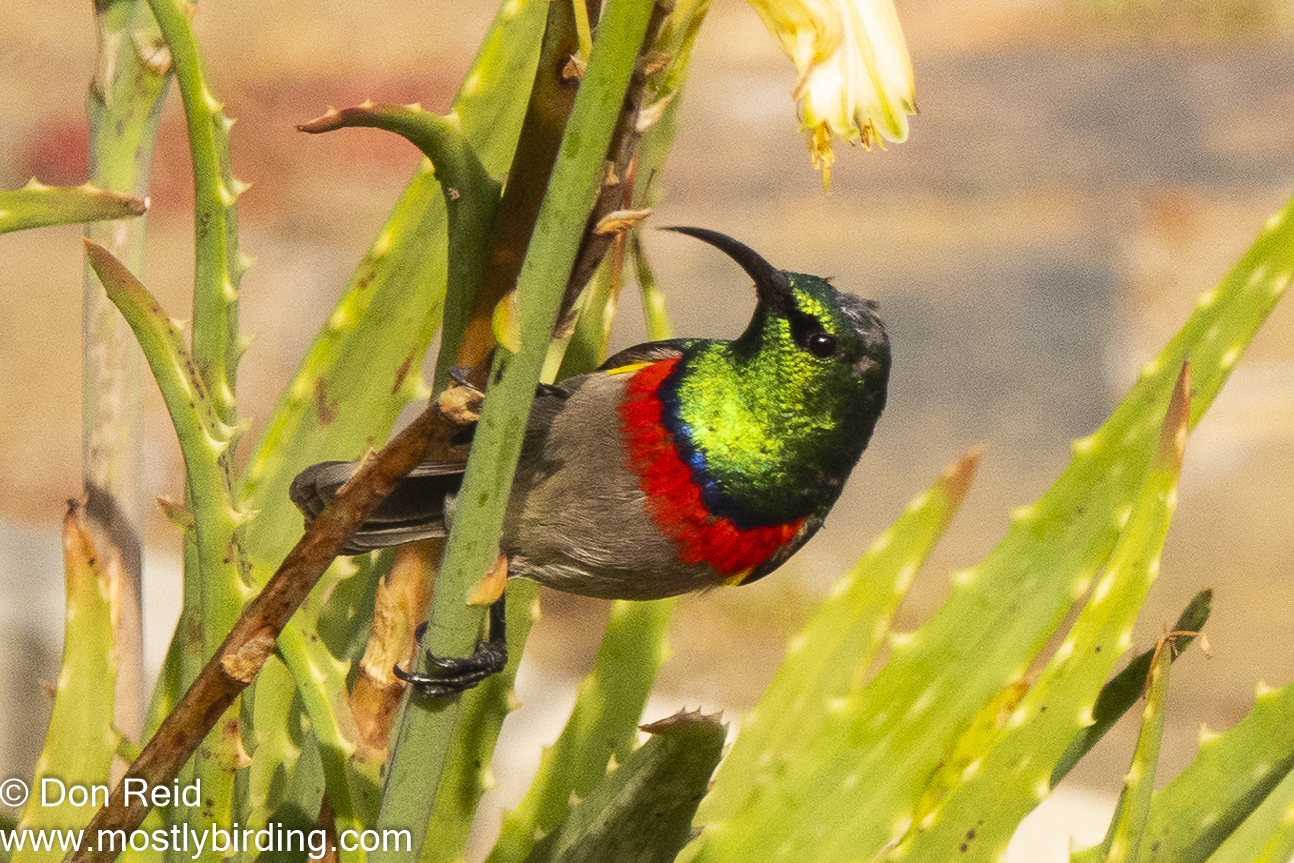
Southern Double-collared Sunbird Cinnyris chalybeus Klein-rooibandsuikerbekkie (Male), Mossel Bay

Cape Sugarbird (Promerops cafer / Kaapse suikervoël), Mossel Bay

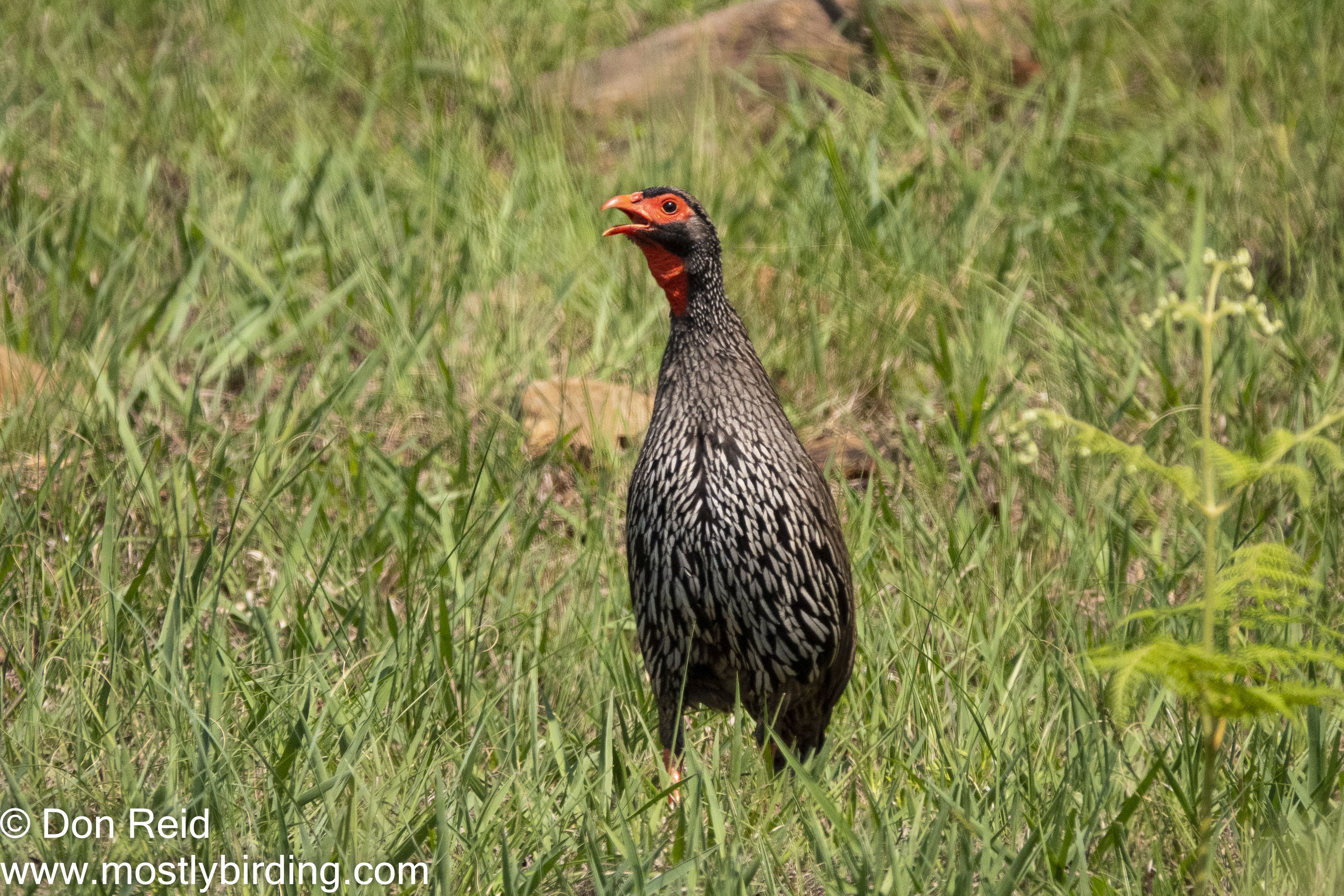
Red-necked Spurfowl (Pternistis afer / Rooikeelfisant) (race castaneiventer), Verlorenkloof

Olive Bushshrike (Chlorophoneus olivaceus / Olyfboslaksman), Verlorenkloof

White-throated Swallow (Hirundo albigularis / Witkeelswael), Verlorenkloof

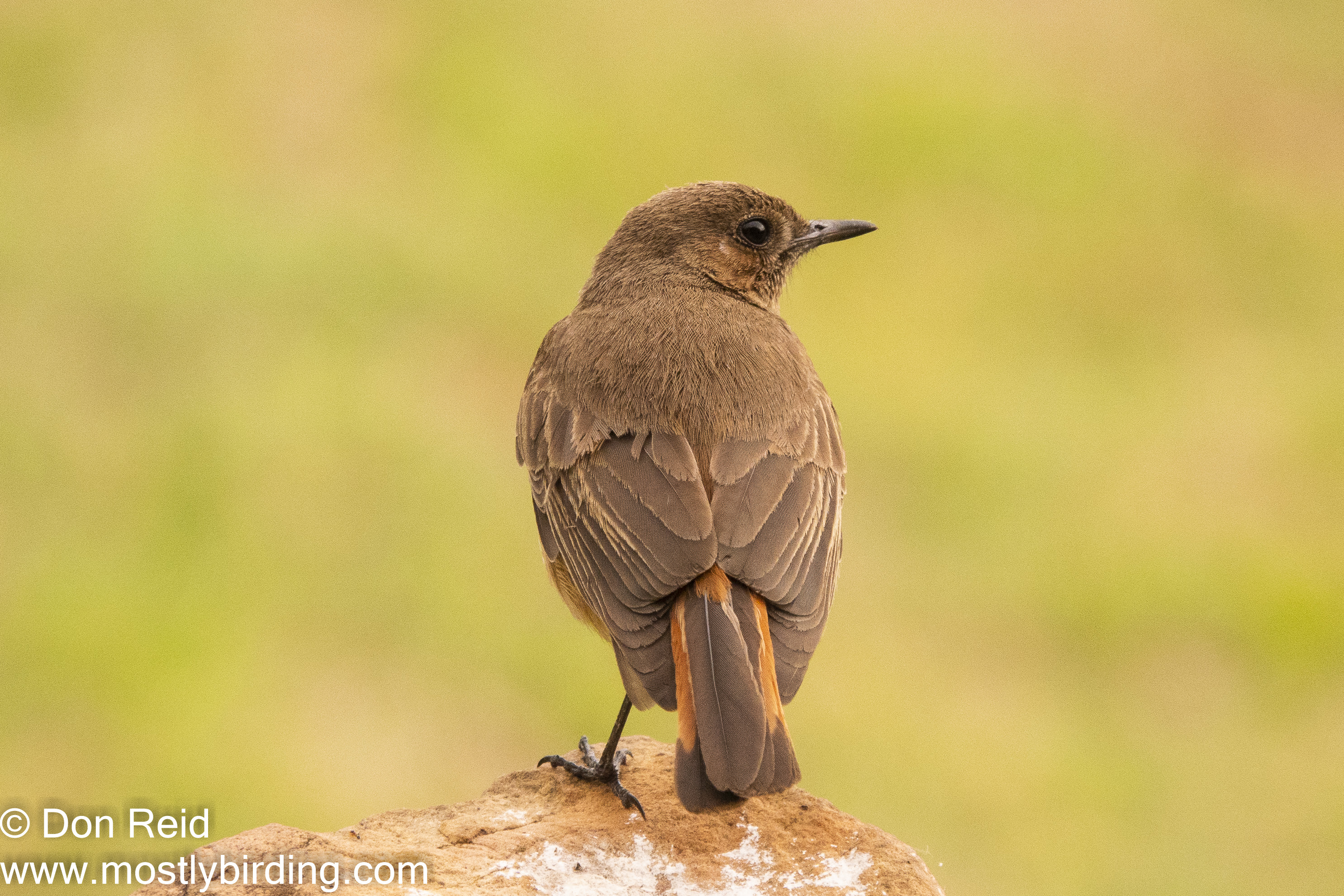
Familiar Chat (Cercomela familiaris / Gewone spekvreter) (race hellmayri), Verlorenkloof

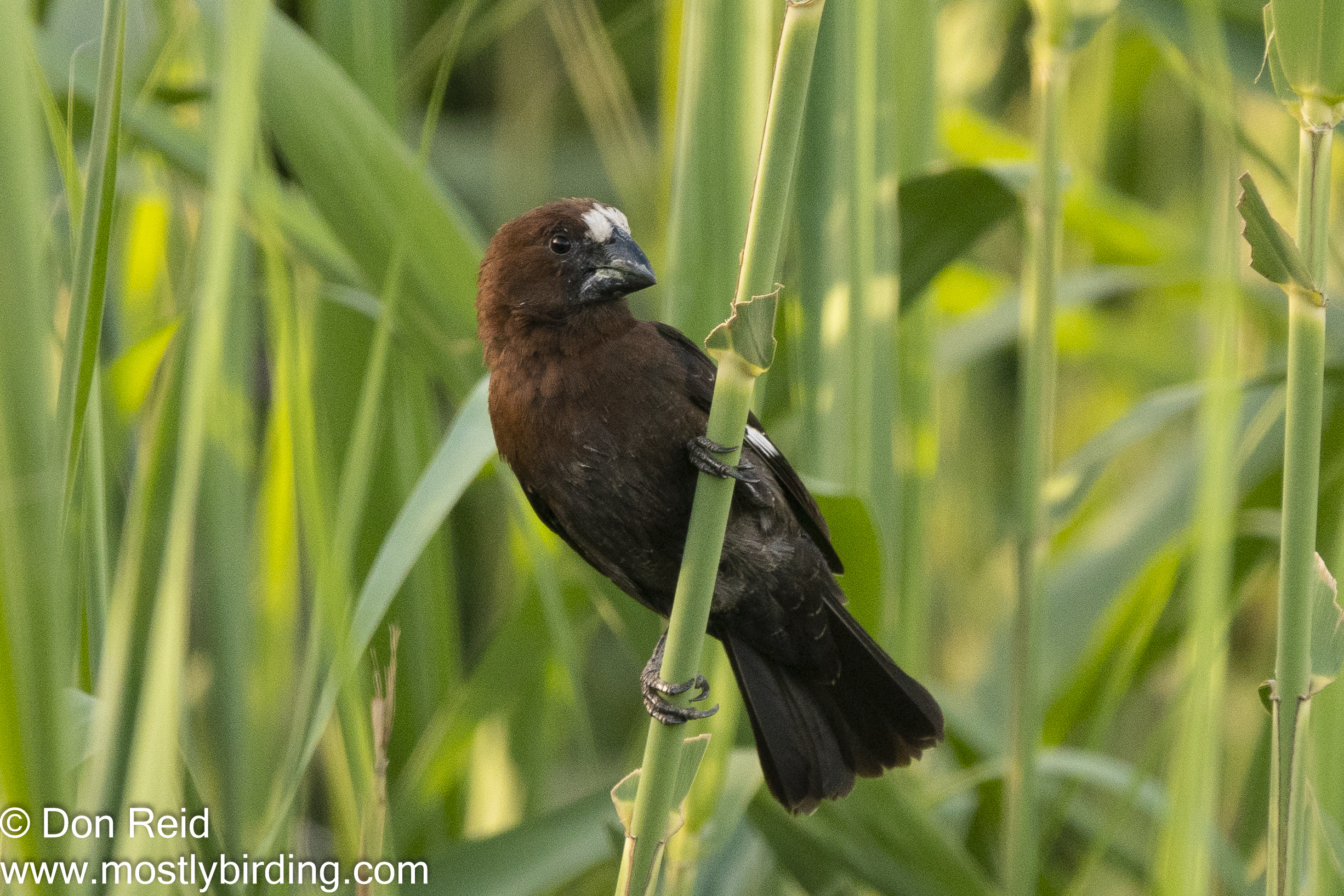
Thick-billed Weaver (Amblyospiza albifrons / Dikbekwewer) (Male) (race woltersi), Pretoria

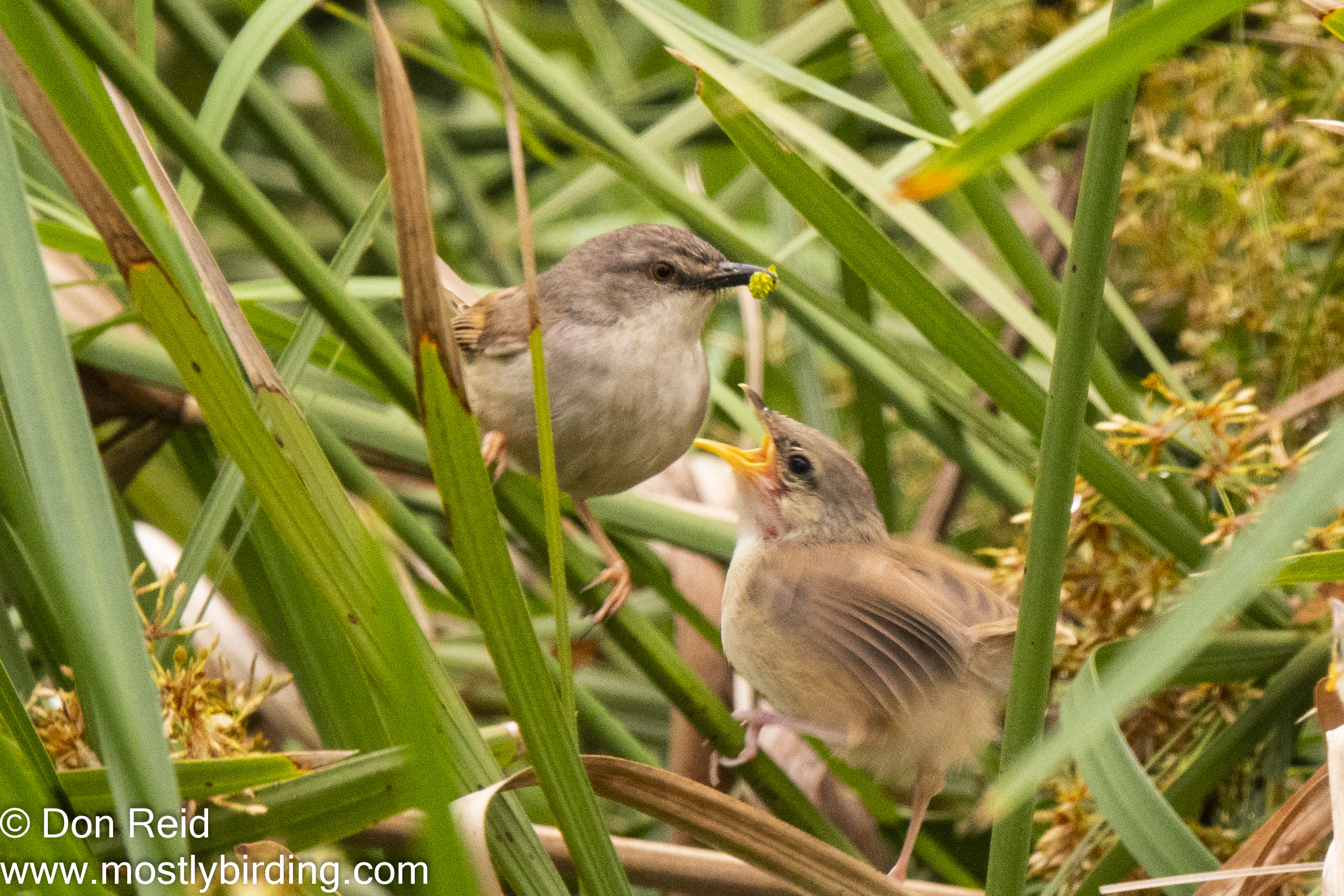
Tawny-flanked Prinia (Prinia subflava / Bruinsylangstertjie) (Adult feeding Juveniles), Pretoria

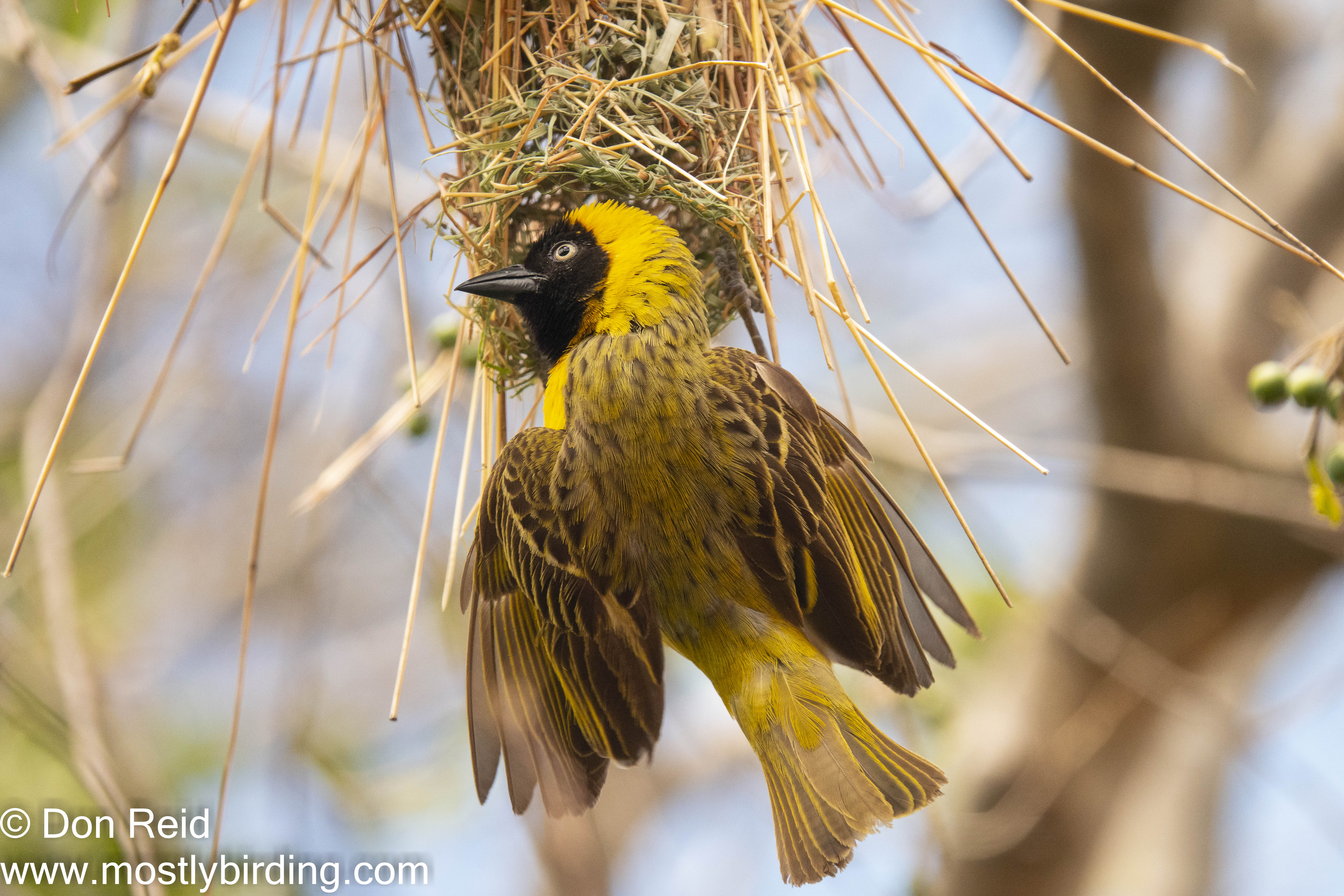
Lesser Masked Weaver, Limpopo

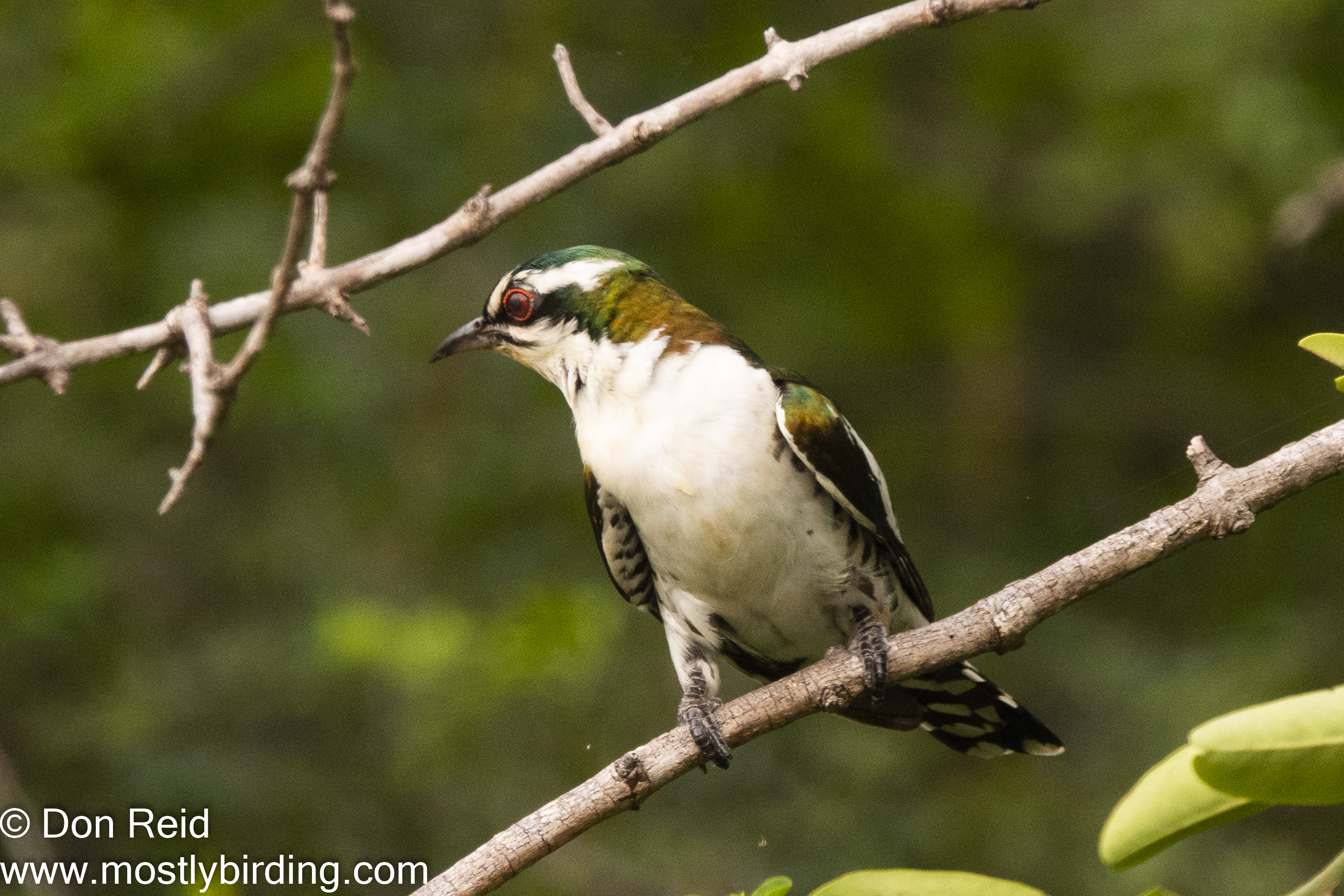
Diderick Cuckoo, Kruger – Mopani

Black-crowned Night-Heron, Kruger – Mopani area

Yellow-billed Stork, Kruger – Mopani area

Red-billed Oxpecker, Kruger – Mopani area

Martial Eagle, Kruger – Shingwedzi River

Dwarf Bittern, Kruger – Pan outside Letaba

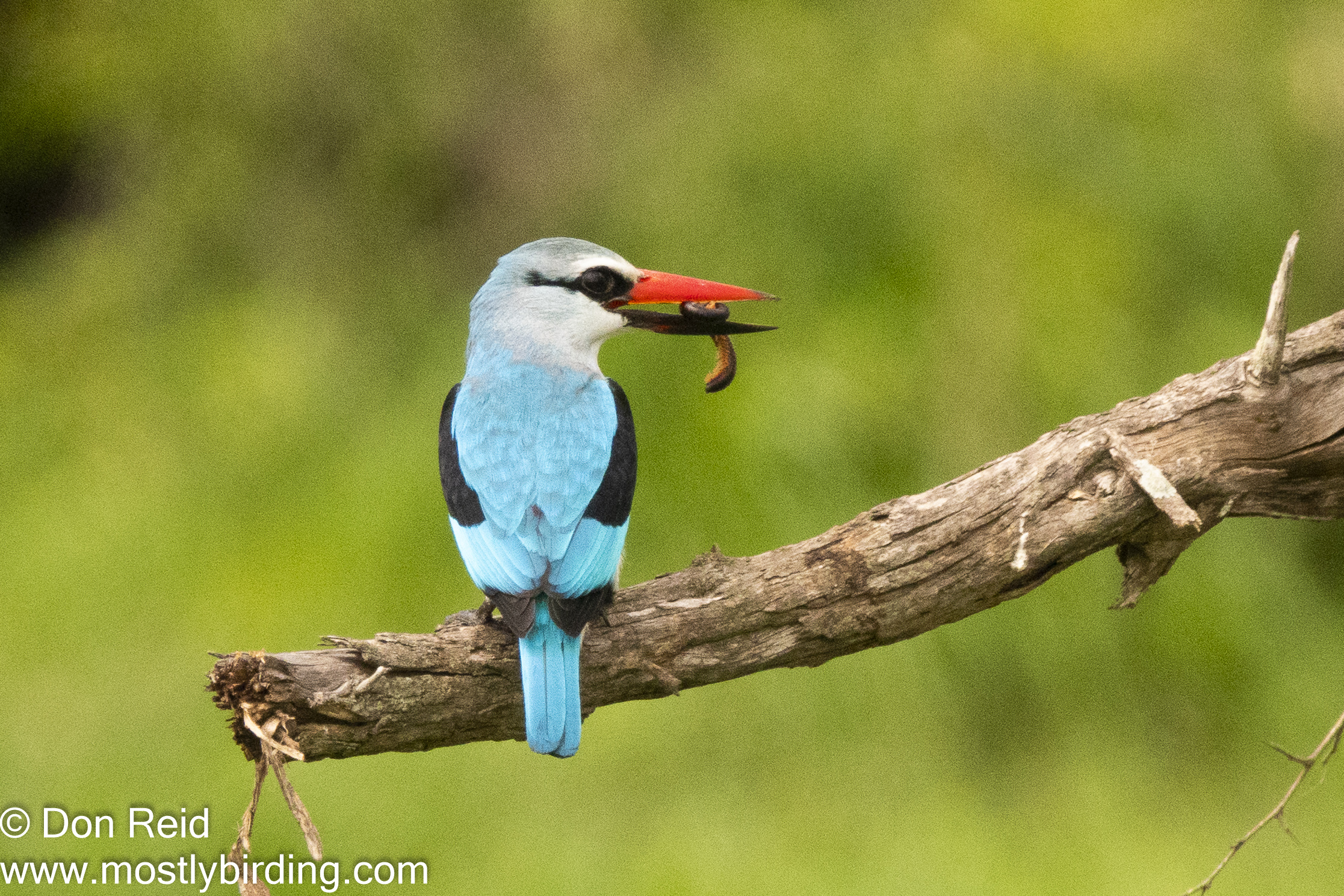
Woodland KIngfisher, Kruger – Muzandzeni

The Wildlife

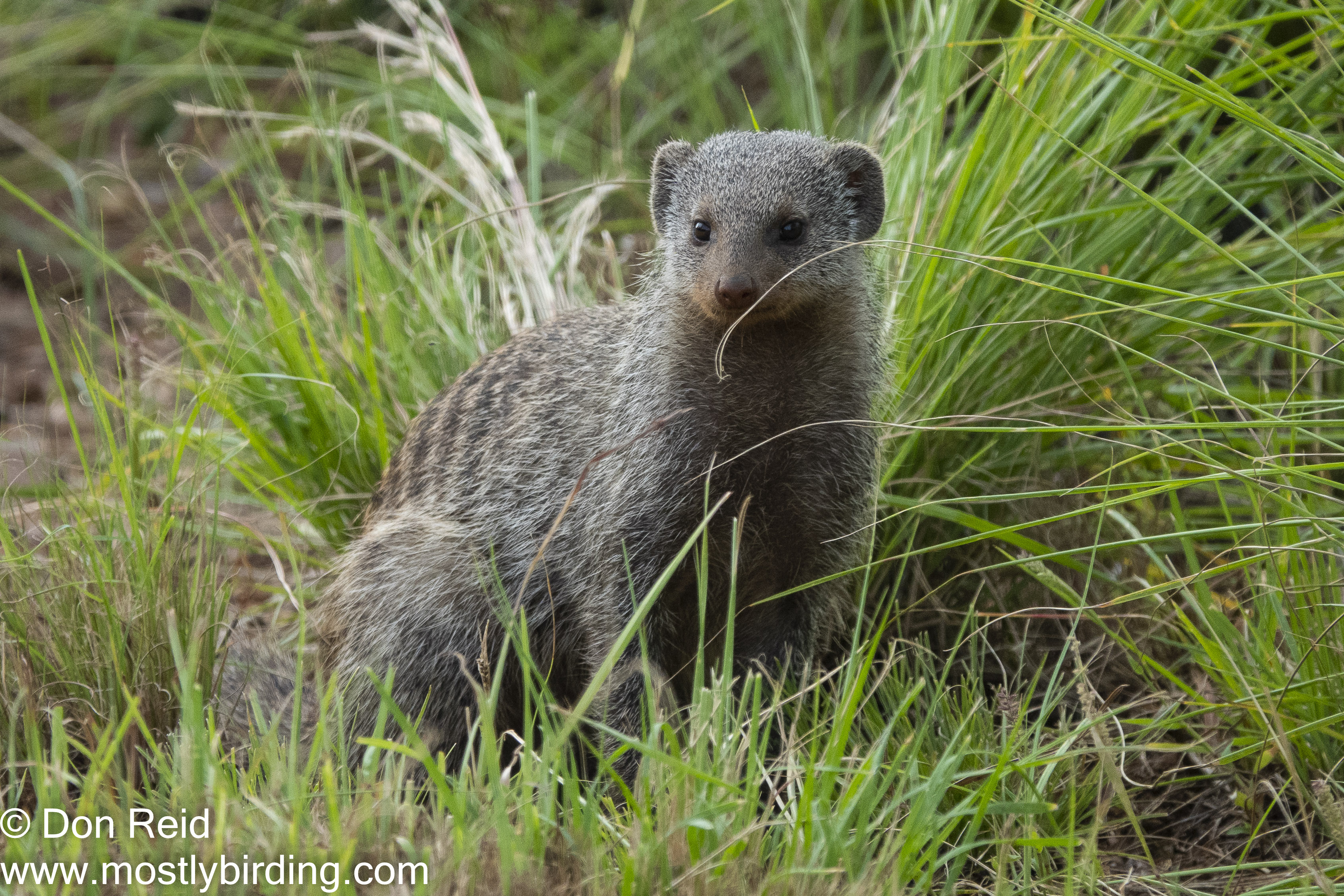
Banded Mongoose, Roodeplaat dam Nature Reserve

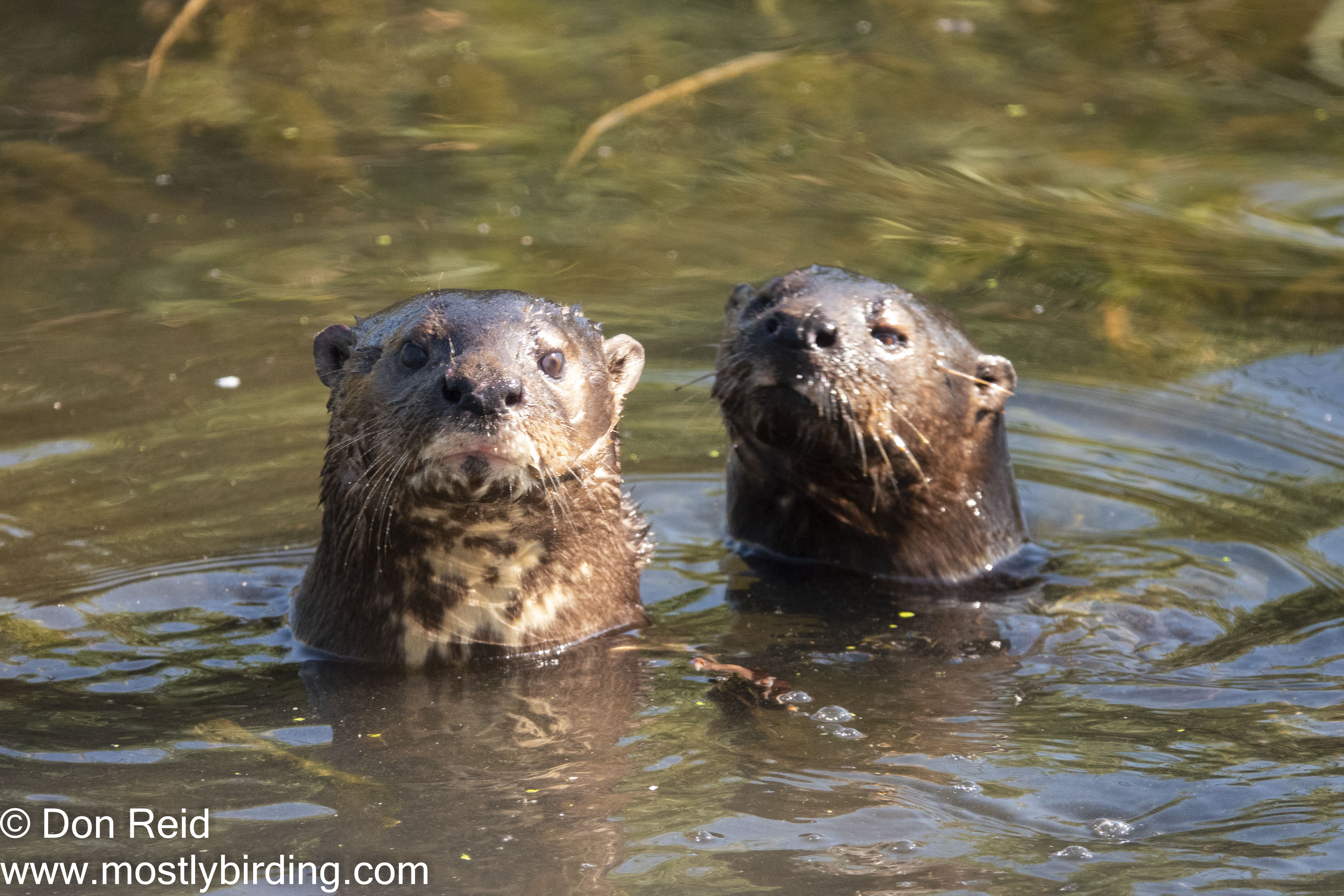
Spotted-necked Otter (Hydrictis maculicollis) , Marievale Bird Sanctuary

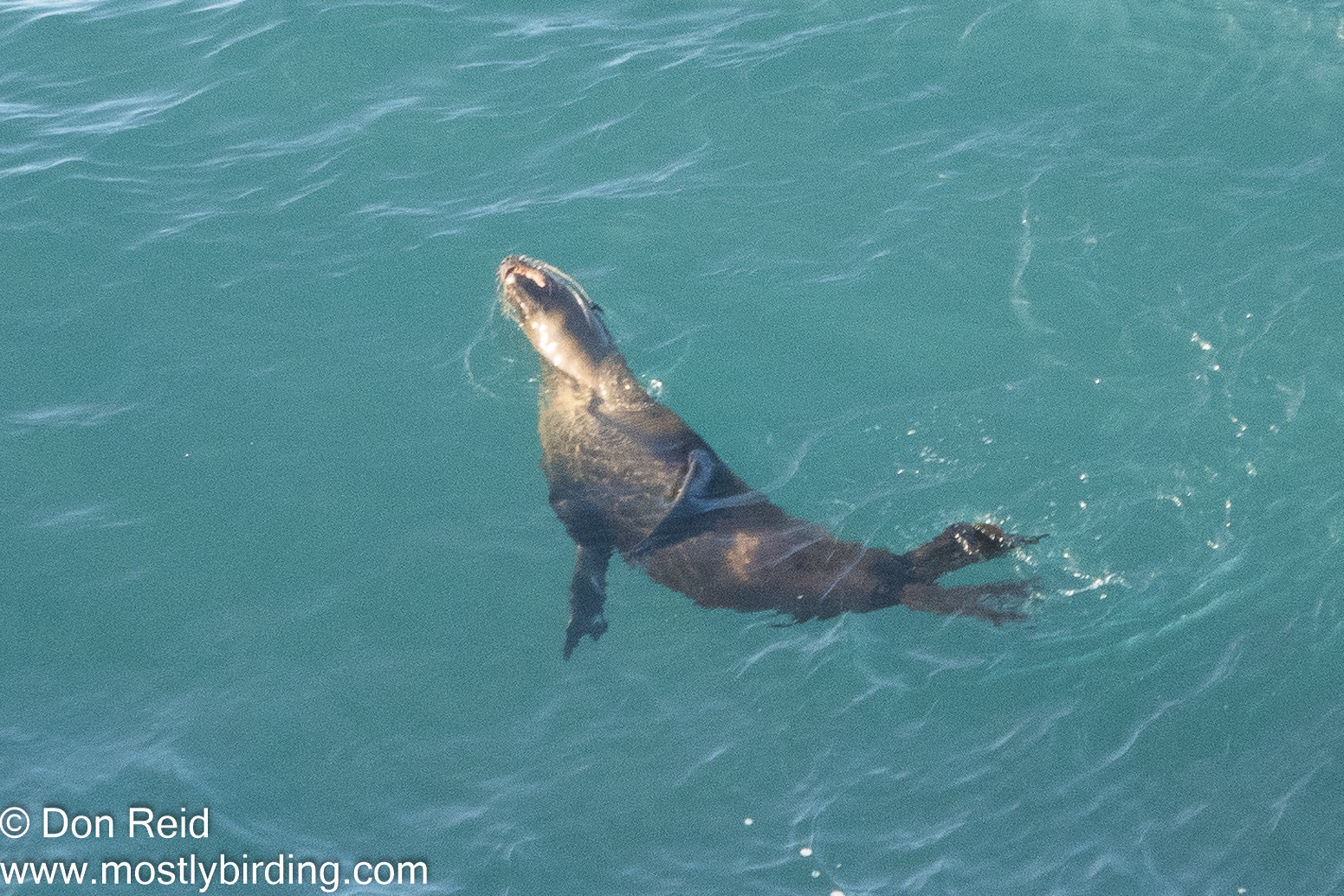
Cape Fur Seal, Cliffside walk, Mossel Bay

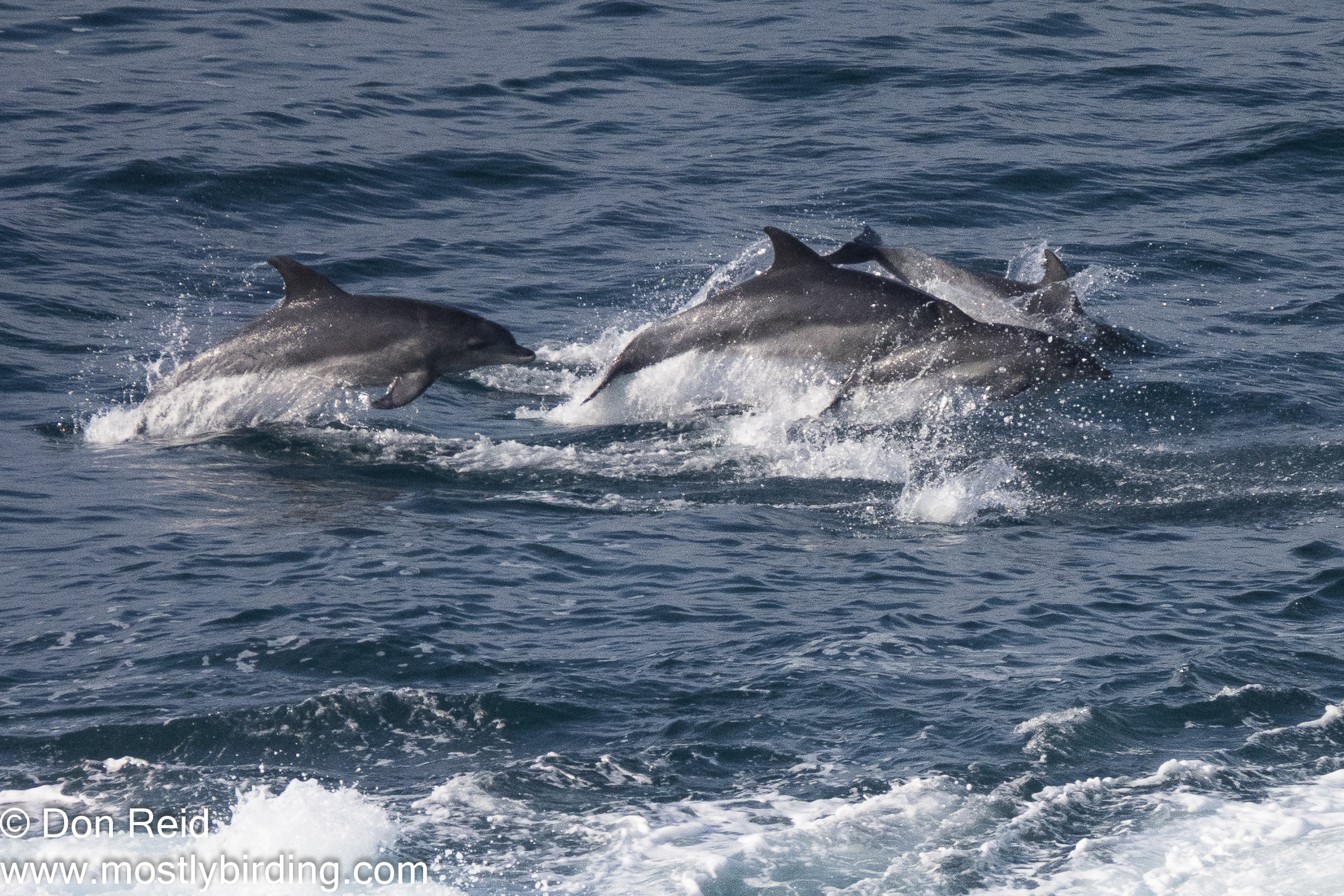
Bottlenose Dolphin, Cliffside walk, Mossel Bay

Rock Hyrax, Cliffside walk, Mossel Bay

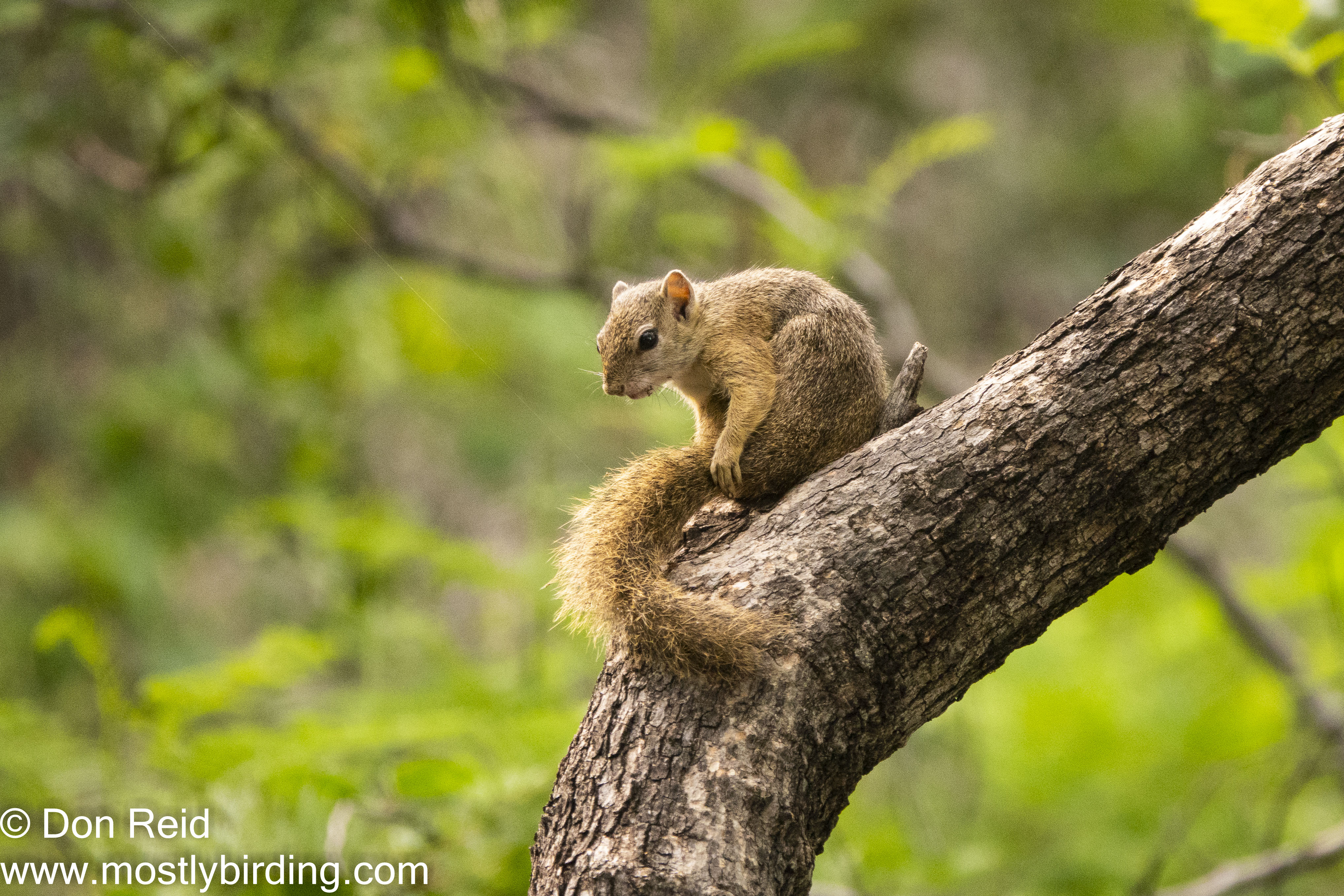
Tree Squirrel, Kruger – Mopani

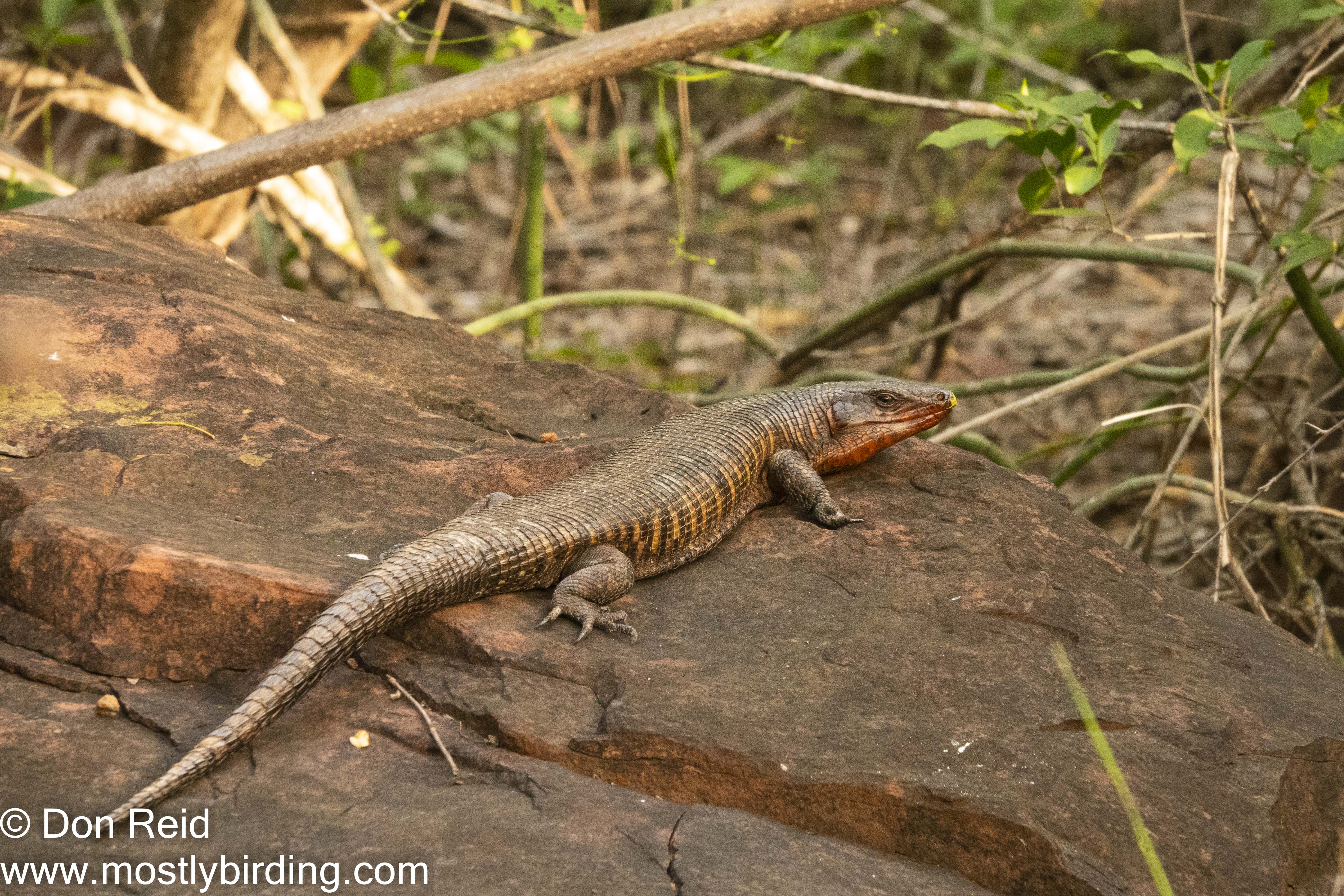
Giant Plated Lizard, Kruger – Mopani (the photo does not give an idea of scale – this lizard is a veritable giant at over 1m long!)

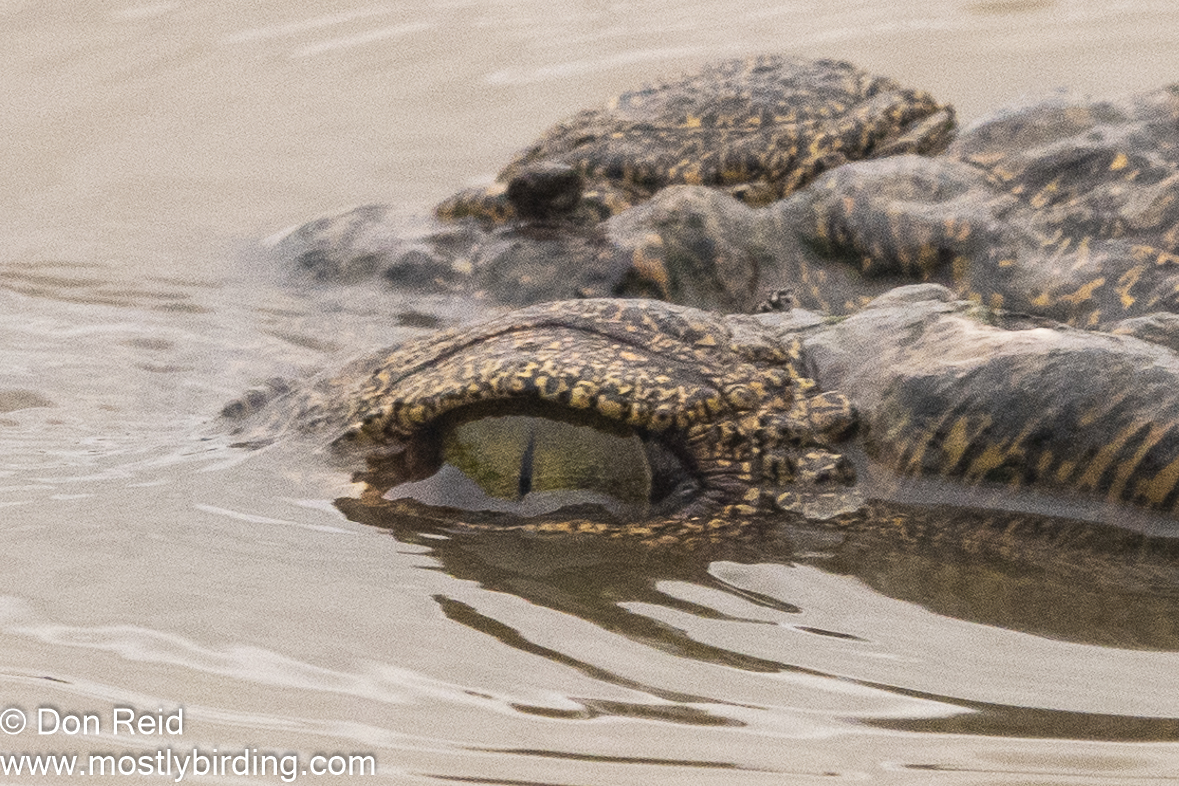
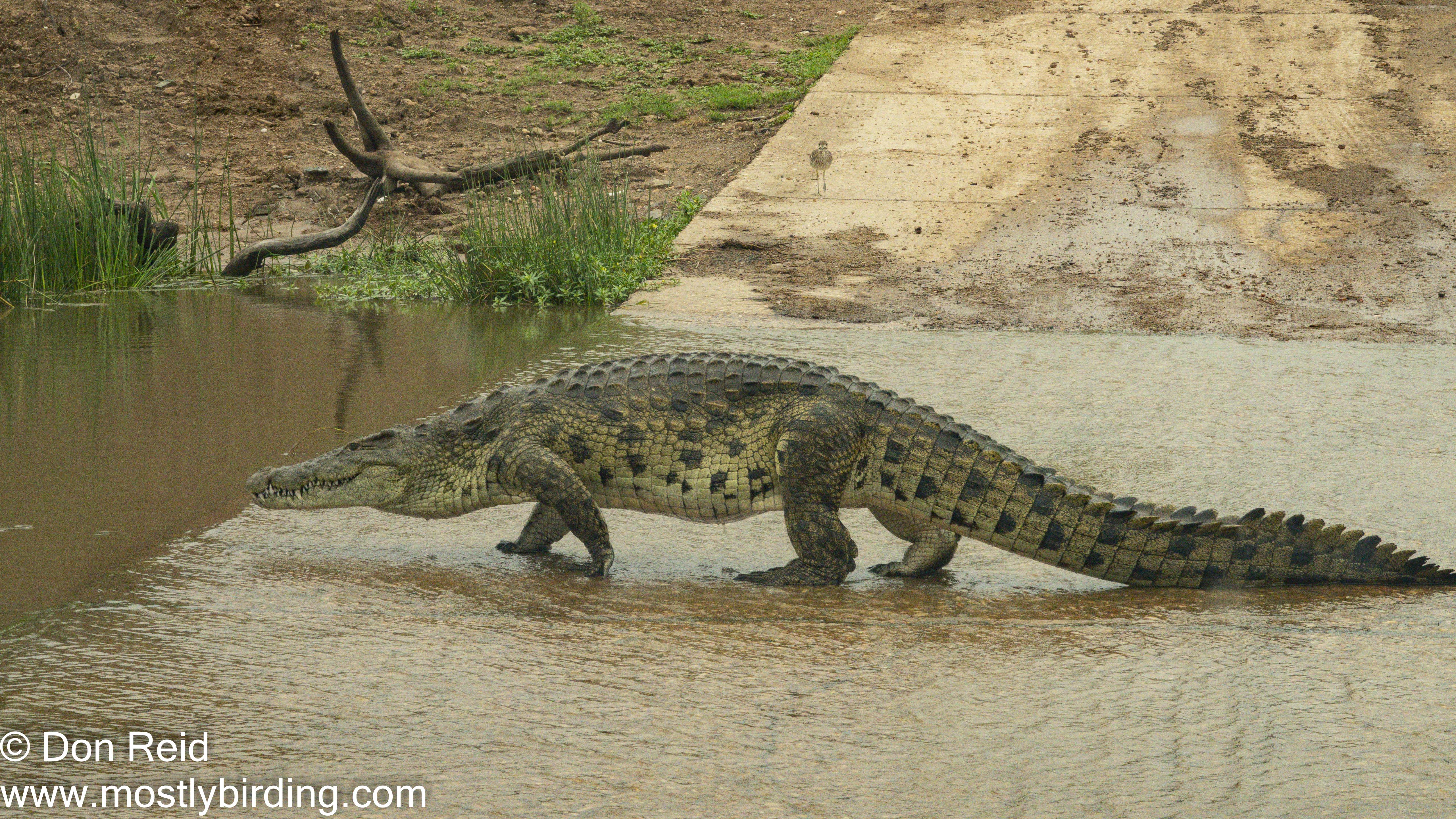
Crocodile, Kruger – Mopani (Shongololo Loop)

Wildebeest adult with youngsters, Kruger – Nwanetsi Road

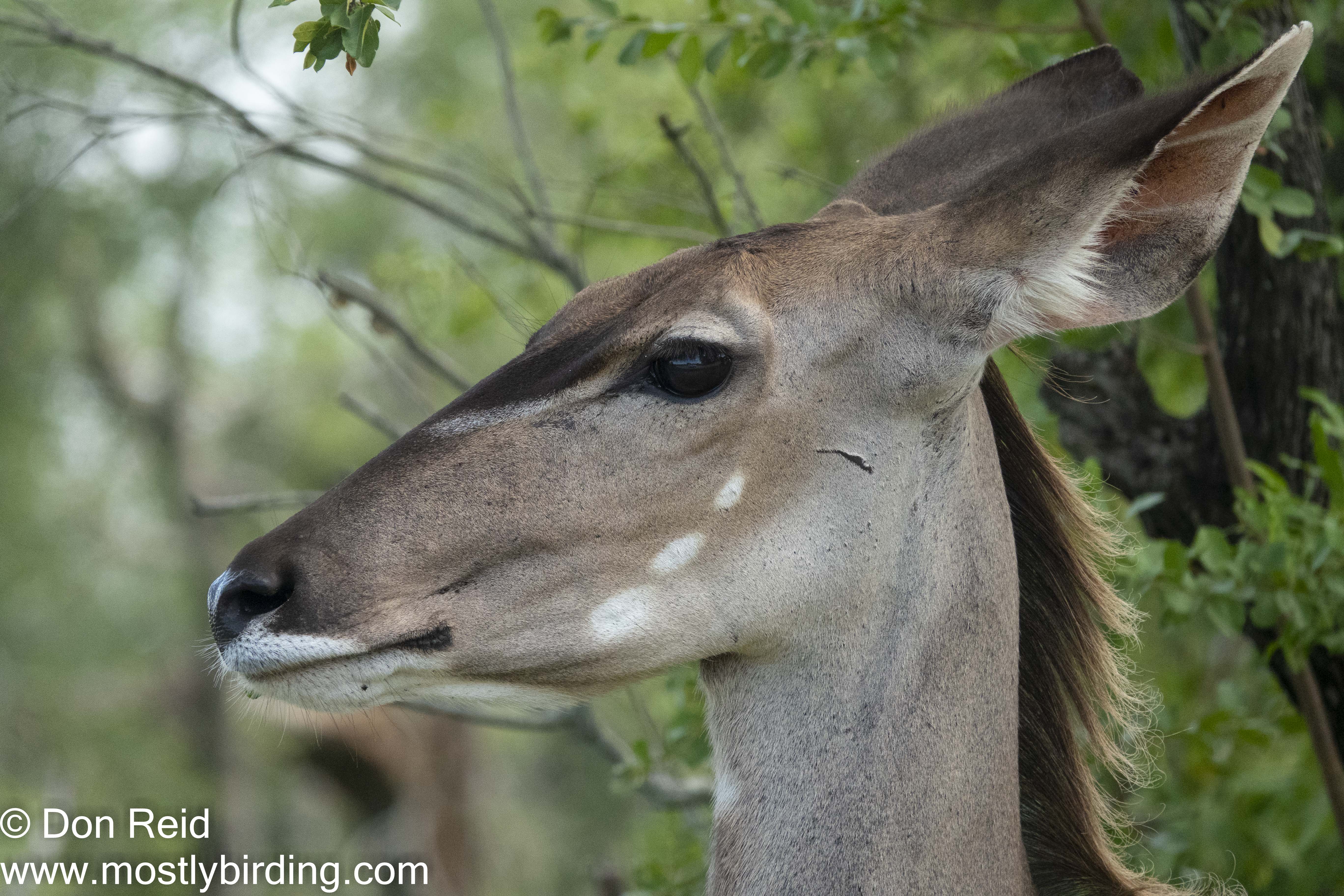
Kudu, Kruger – Satara area

The Other Stuff

Monkey beetle, Mossel Bay

Butterfly : Garden Inspector (Junonia archesia / rotsblaarvlerk), ,Langvlei Wilderness

Tree Agama, Rooiwal area near Pretoria

Moon over Verlorenkloof (image taken with Iphone magnified through Swarovski scope)

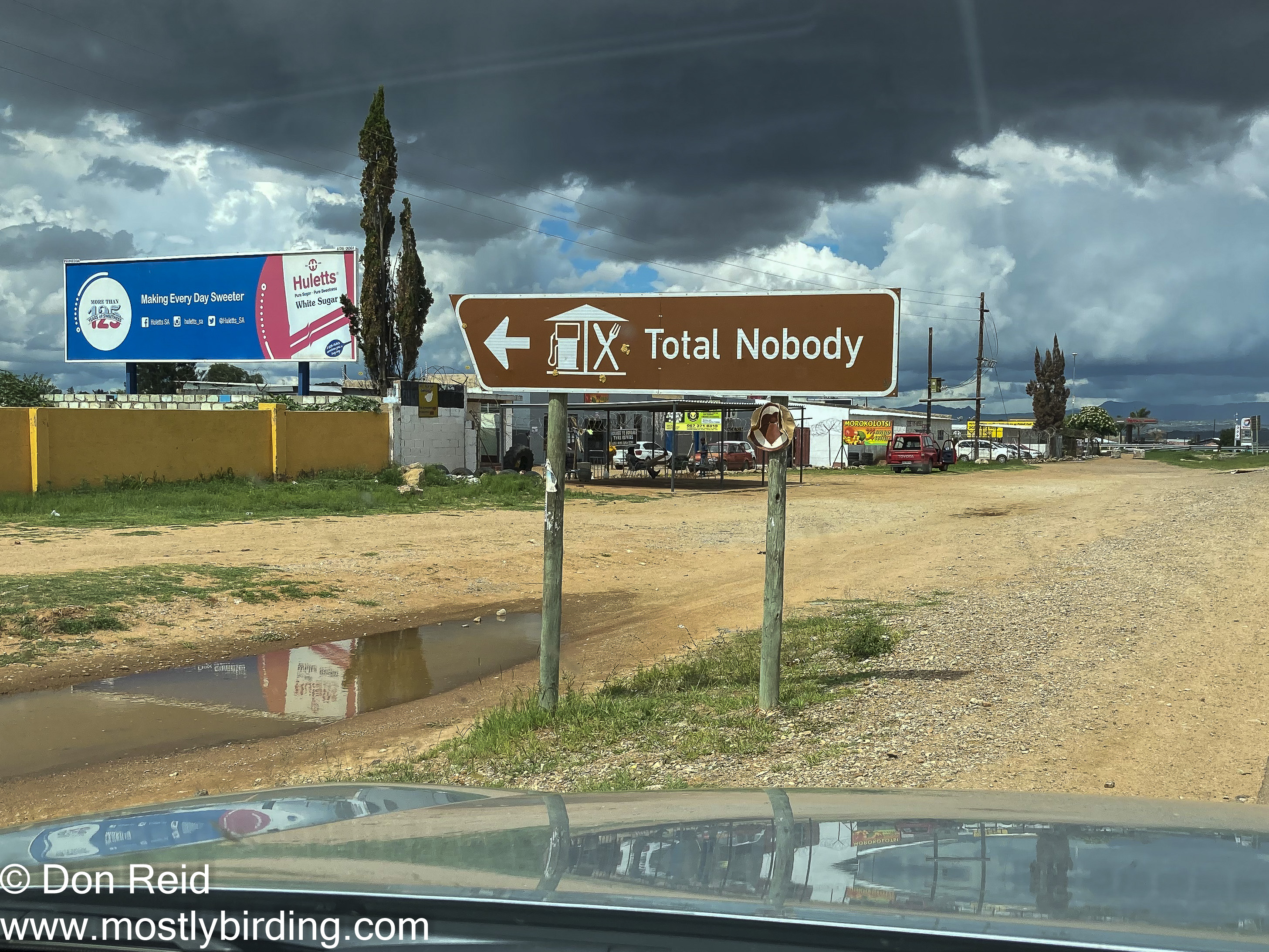
Confusing, provocative road sign – until you realise the village’s name is Nobody and the sign is directing to the Total filling station!

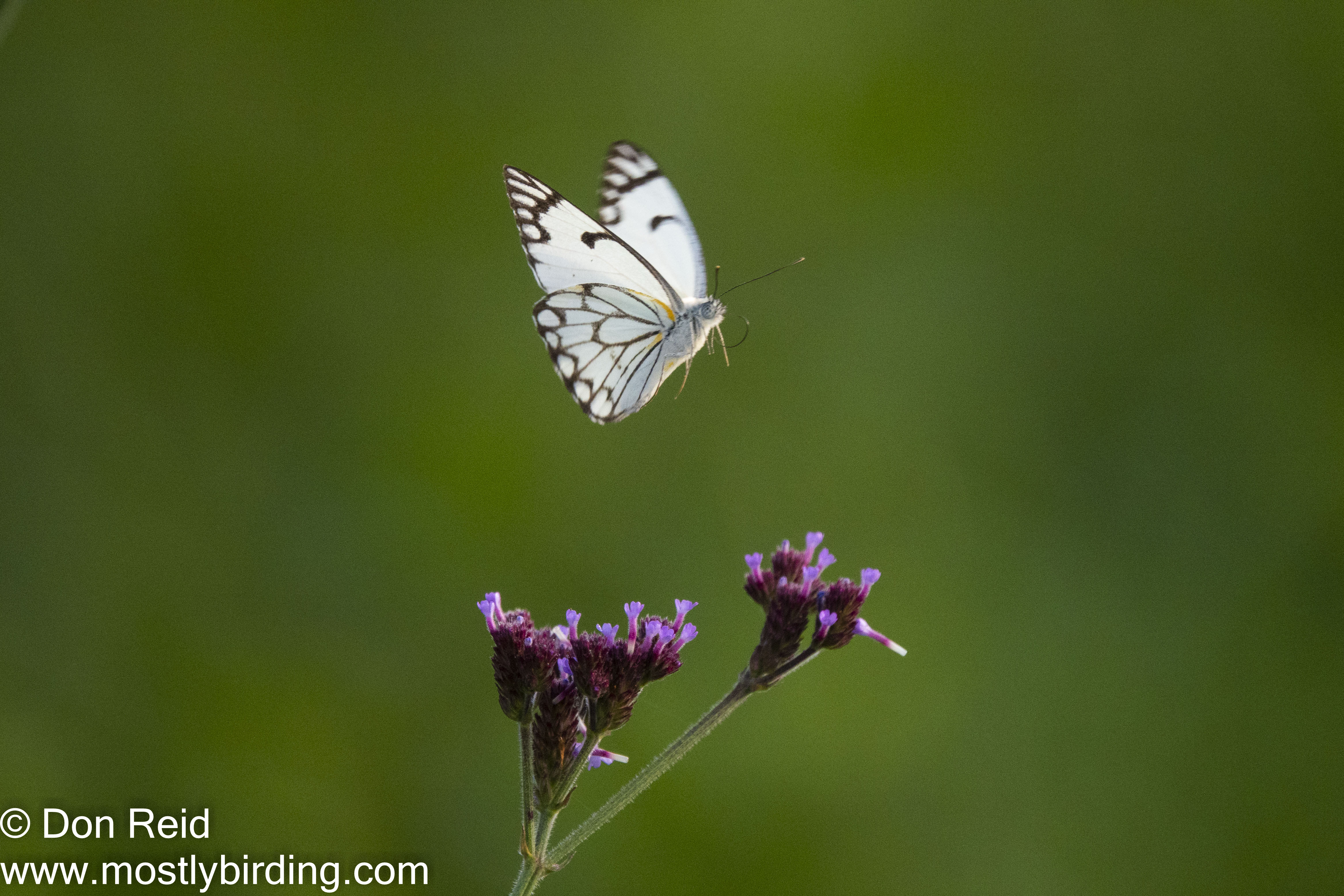
Butterfly in flight – Magoebaskloof

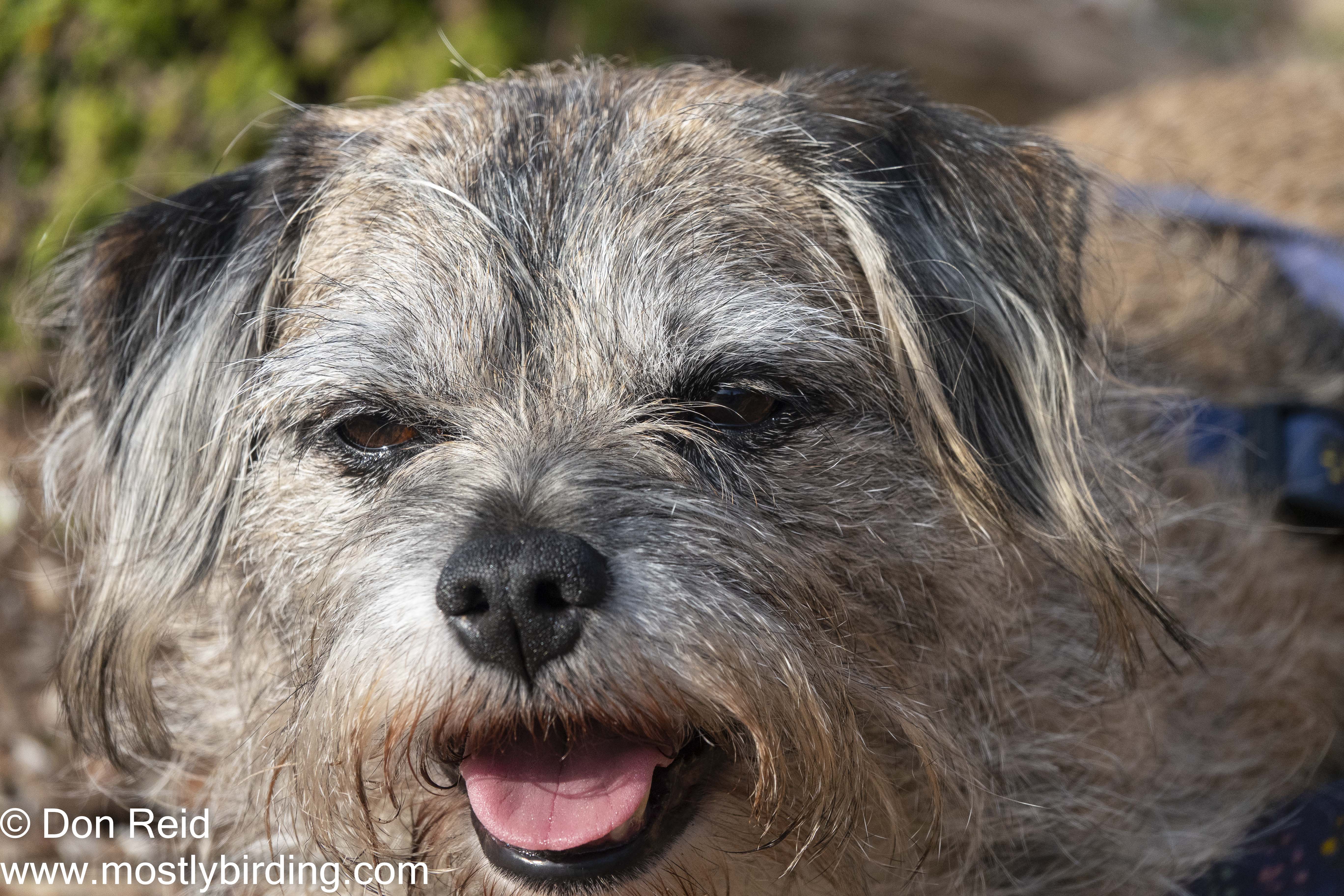
And to end off …… me and my pal Saartjie (who belongs to the Leonards but I get to borrow her now and again)

Mossel Bay Cliffside walk

Here’s a close-up of the better looking one….

Cliffside walk, Mossel Bay