
These tales record some of the more memorable experiences while atlasing – in this case during March 2023 while we were at our ‘other’ home in Mossel Bay (where we now reside permanently)
And in case you’ve forgotten or have not heard of Atlasing, here’s a brief synopsis –
Atlasing is the regular mapping of bird species in a specific area called a “pentad”. Each pentad has a unique number, based on its geographical position according to a 5 minute x 5 minute grid of co-ordinates of latitude and longitude, which translates into a square of our planet roughly 8 x 8 kms in extent.
As a registered observer / Citizen scientist under the SABAP2 program (SA Bird Atlas Project 2), I record all of the species I see or hear in a particular pentad over a period which can be anything between 2 hours and 5 days, for submission to the project database at the ADU (Animal Demography Unit) based in Cape Town.
George – Country roads west of town
Gerda’s last treatment, taking up most of the day at the clinic in George, meant I had a chance to do some atlasing in the area once again. I didn’t want to travel too far from George so chose a pentad directly west of the town.
Pentad 3355_2215
I headed west out of George, taking Charles street which winds through country farmland and hills before descending into Great Brak. Just after the start of the pentad the road – which is gravel most of the way – descends to the single lane bridge over the Maalgate River

There I spent some time on both sides of the river, recording Fork-tailed Drongo, Black Saw-wing, Common Quail, Little Rush Warbler and several Swallows and Swifts.
Add to that a number of waterfowl at a large dam further along the same road and I had recorded a quick 25 species in as many minutes, including a lone Purple Heron at the dam.

One of the ‘hazards’ of atlasing the country roads is encountering the occasional ‘road block’ – fortunately not of the policed kind, rather one that adds to the experience as gentle farm animals pass by the car.

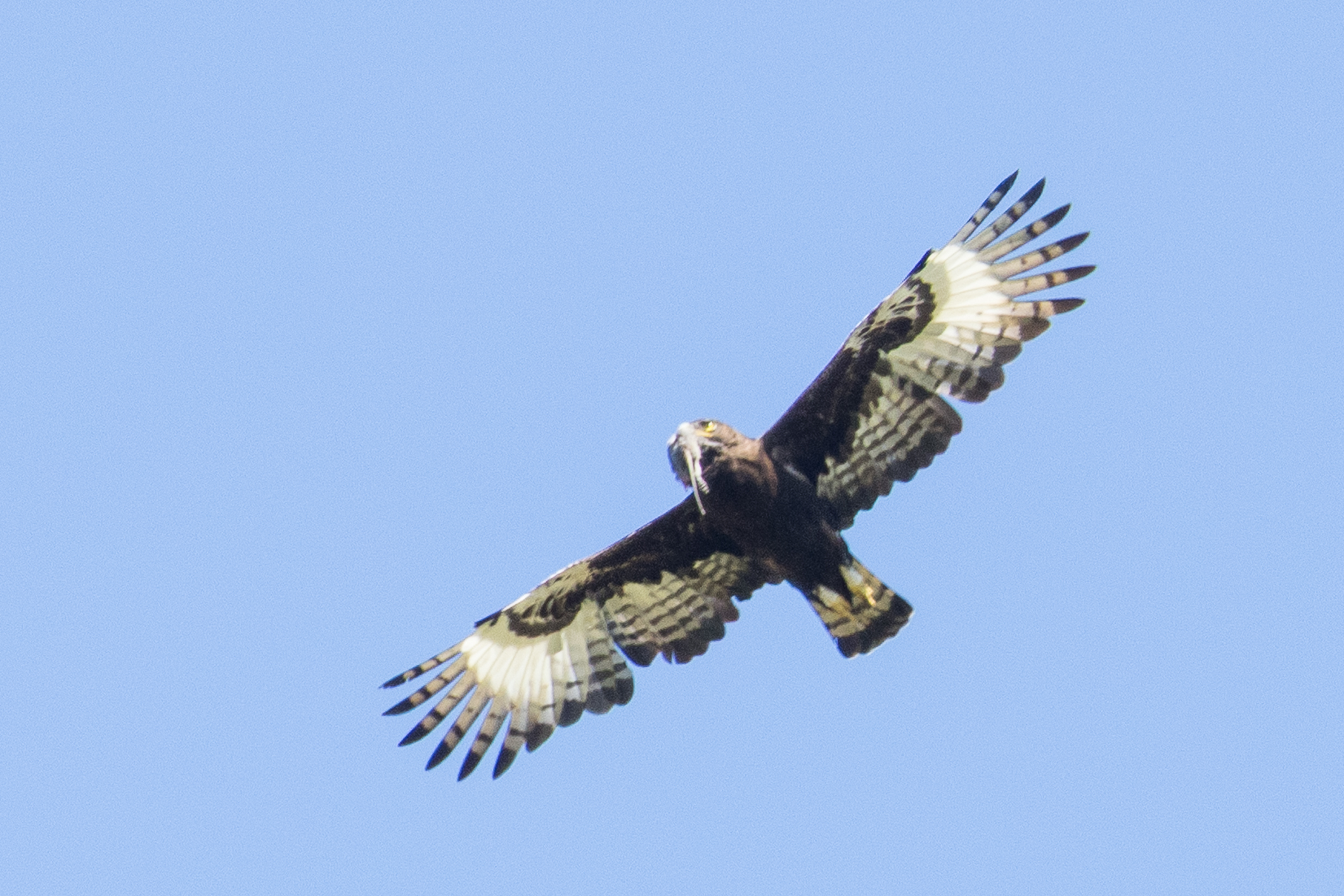
After crossing the river again, a Long-crested Eagle flew over to fill my heart with pleasure – later in the adjacent pentad another (or possibly the same one) soared high above with some sort of prey gripped in its beak – this time I had my camera handy for a quick photo as it passed over me
After that great start, the birding slowed somewhat as I followed the road through farmlands, then headed back in the direction of George along roads that took me through the adjacent pentad.
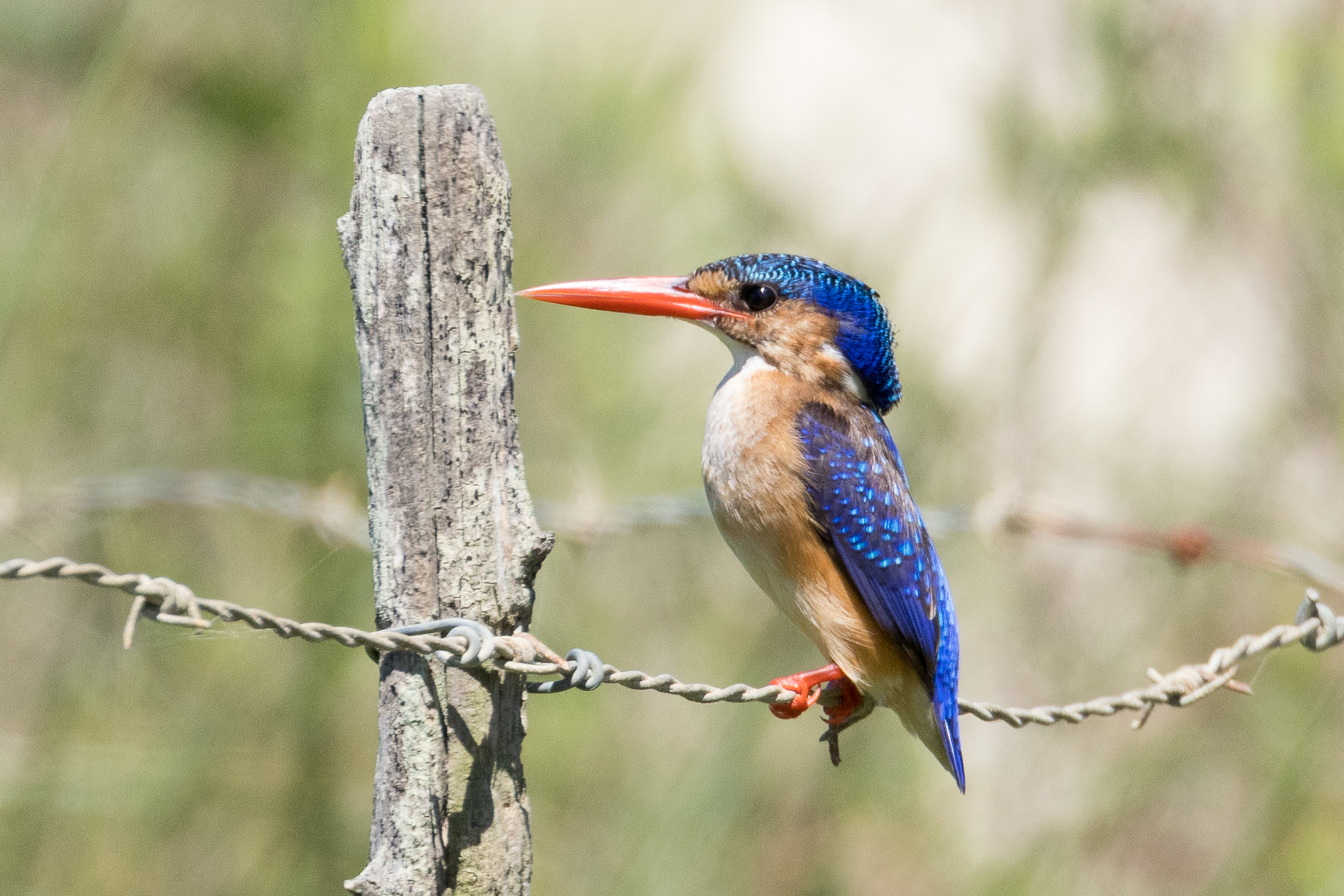
That led to an unusual encounter with a Malachite Kingfisher, which flew across the road in front of the car, then settled on a fence – unusual because there were no dams or rivers in the vicinity. It perched long enough to allow me to take a few photos in this out of character environment.
Pentad Species total : 41
Friemersheim Area
Looking to further ‘fill in’ my MBMA Project block of pentads for the year (MBMA is my acronym for Mossel Bay Municipal Area which covers 42 pentads over a wide swathe of the southern Cape from Gouritz River in the west to Glentana in the east and northwards up to the Klein Karoo), I decided to tackle the pentads covering the village of Friemersheim itself and to the west and east of it.
Pentad 3355_2210
I started in the pentad to the east of Friemersheim at 7am on the dot, travelling along Amy Searle Street northwards out of the town of Great Brak River, initially through farmland with a sprinkling of small dams on either side of the road.
First bird was a calling Burchell’s Coucal – their soft bubbling call often advertises their presence long before they show themselves – later I had a surprise close encounter with the species.
I spent some time at the first roadside dams, looking with some difficulty into the low morning sun – a Malachite Kingfisher was already active, perched on a convenient branch and plunging to catch small prey.
Several waterfowl were present, such as the ubiquitous Yellow-billed Duck, a few Red-billed Teals and a Little Grebe.
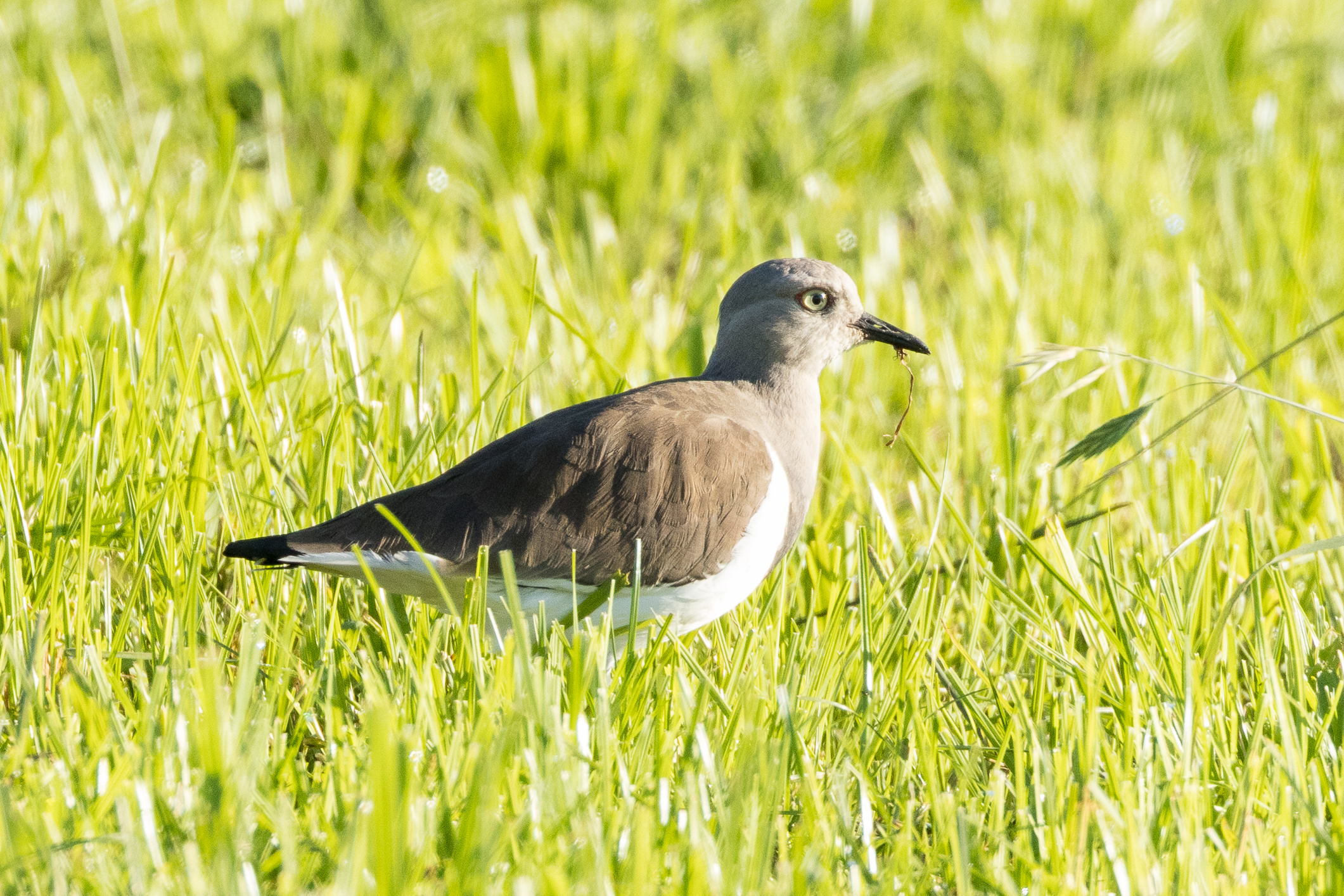
Carrying on, a field with shortish grass was the right habitat for Lapwings and produced the similar looking Black-winged Lapwings and Crowned Lapwings, the former a scarcer, sought after species, the latter far more common.

I turned off the tar road eastwards along a nondescript gravel side road, but one I had previously explored with some success. The first stretch travels through more farmland with shortish grass, which was good for Zitting Cisticola and Cape Longclaw, plus many Barn Swallows flying low and scooping flying insects out of the air.
Thereafter the road turns steeply downhill into a wooded valley with a strong river flowing at the lowest point. Halfway down I stopped for coffee and rusks and added 8 species in the 15 to 20 minutes spent listening and looking out for birds, including several forest species –
- Knysna Turaco calling
- Greater Double-collared Sunbird
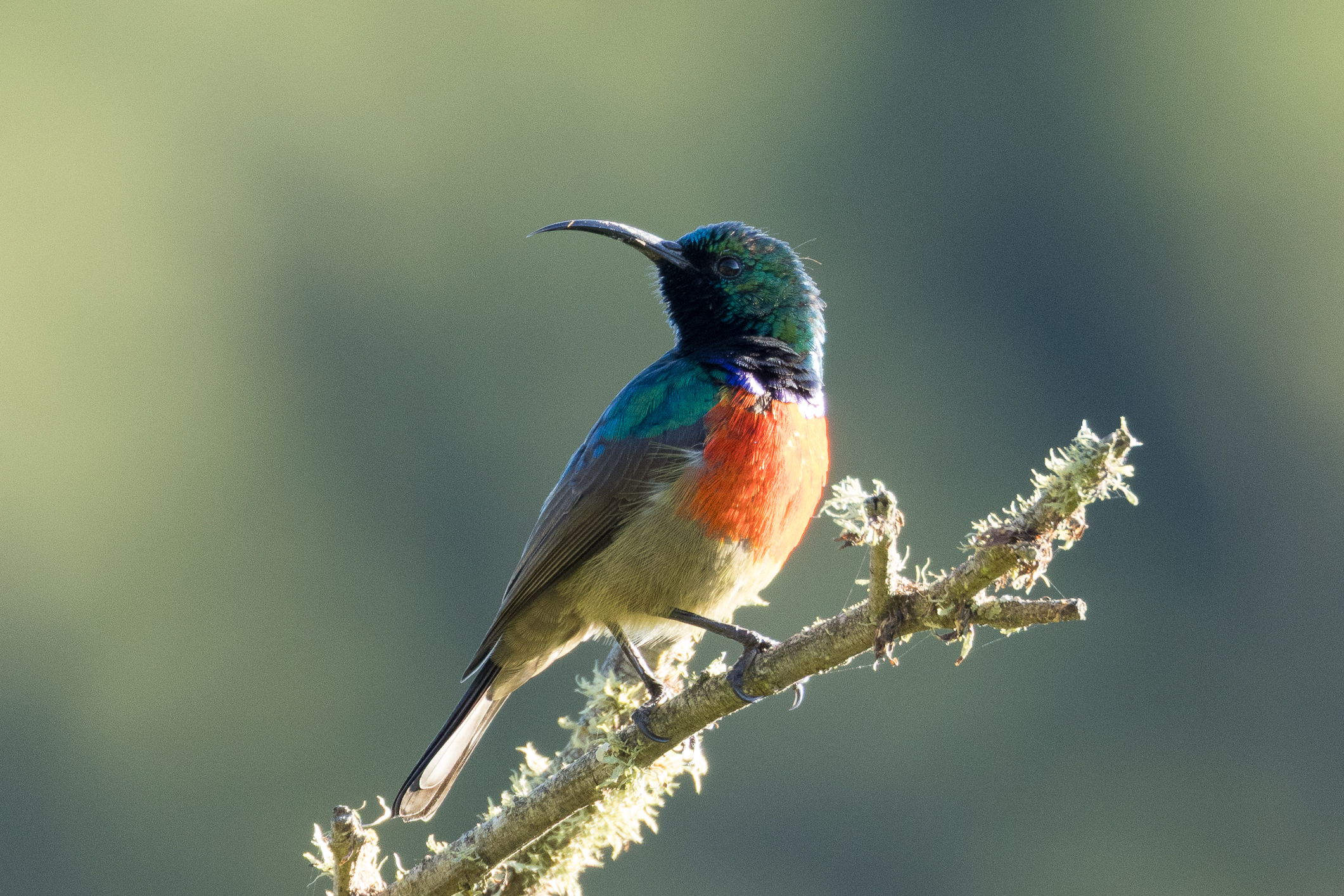
- Collared Sunbird – my first record of the species for the Western Cape
- Dusky Flycatcher
- Fork-tailed Drongo
- Olive Bushshrike
Emerging from the valley, I continued along the road through more farmlands and rolling hills, steadily adding species to the card, which included a few more special sightings –
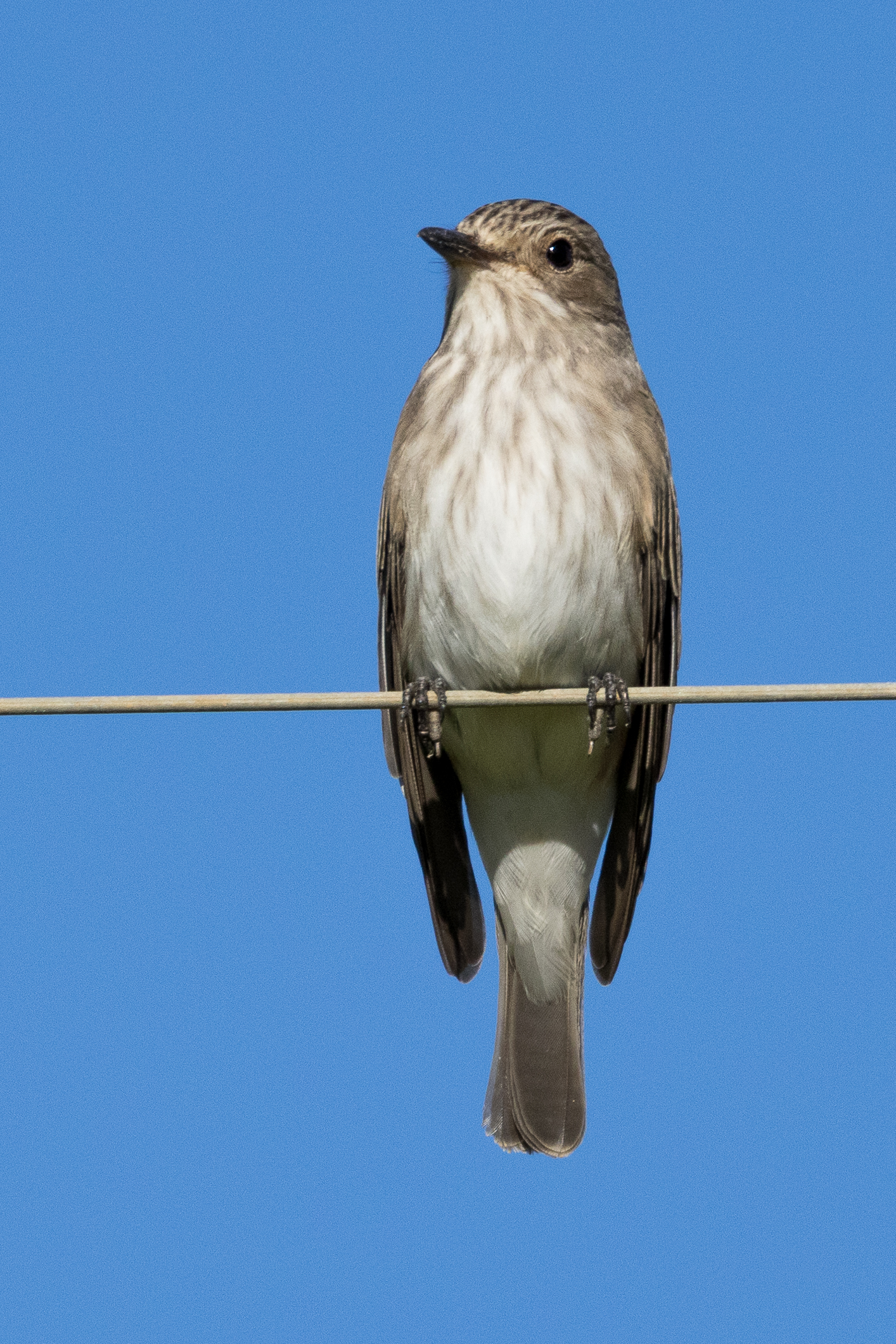
- Spotted Flycatcher perched on a fence, allowing me to take several photos (another first record for my Western Cape list)
- Terrestrial Brownbul calling from dense bush – krrr – krrr – krrr is the best way I can describe this secretive species’ call
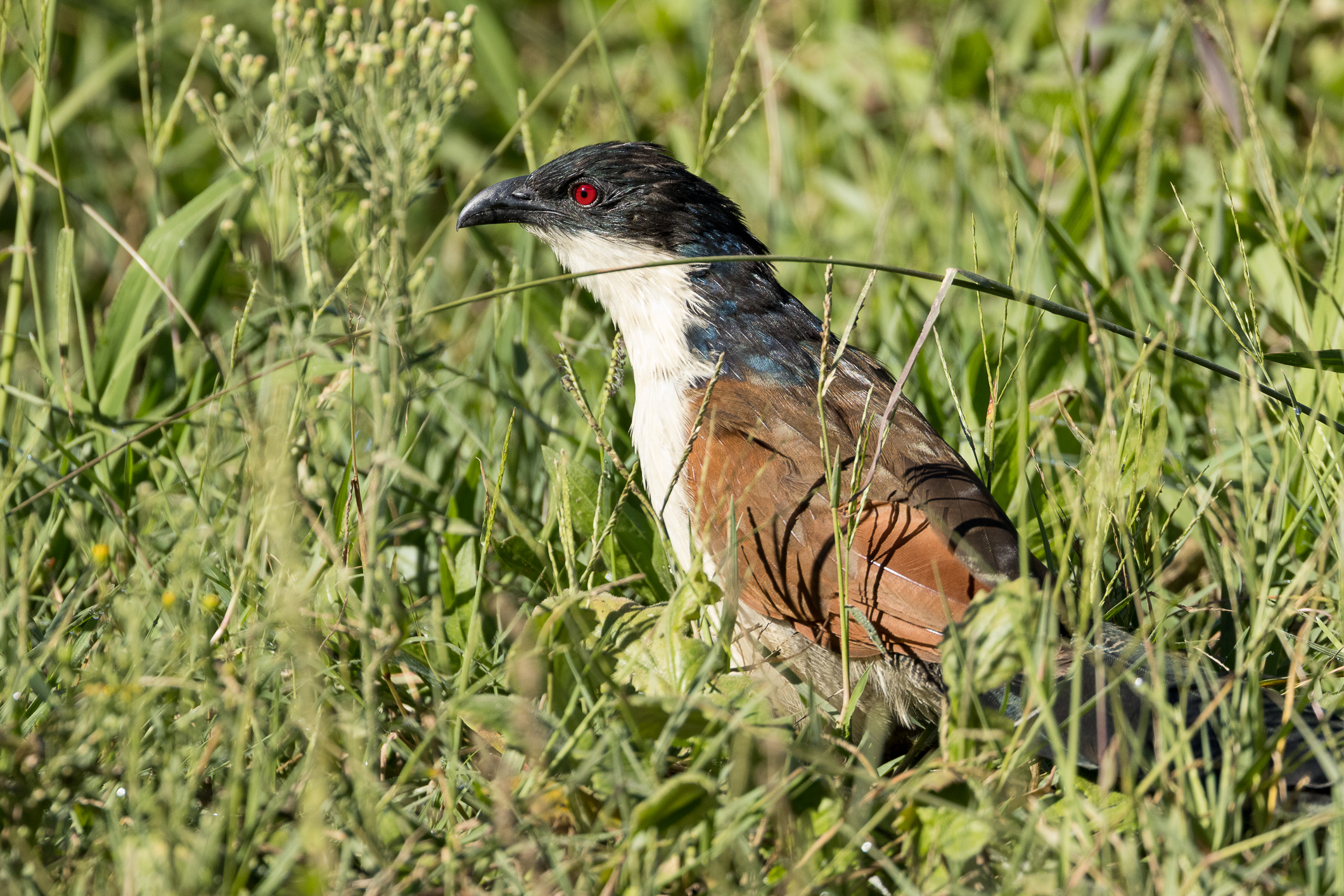
- The close encounter with a Burchell’s Coucal mentioned above – I followed its progress through a tangle of long grass and bushes

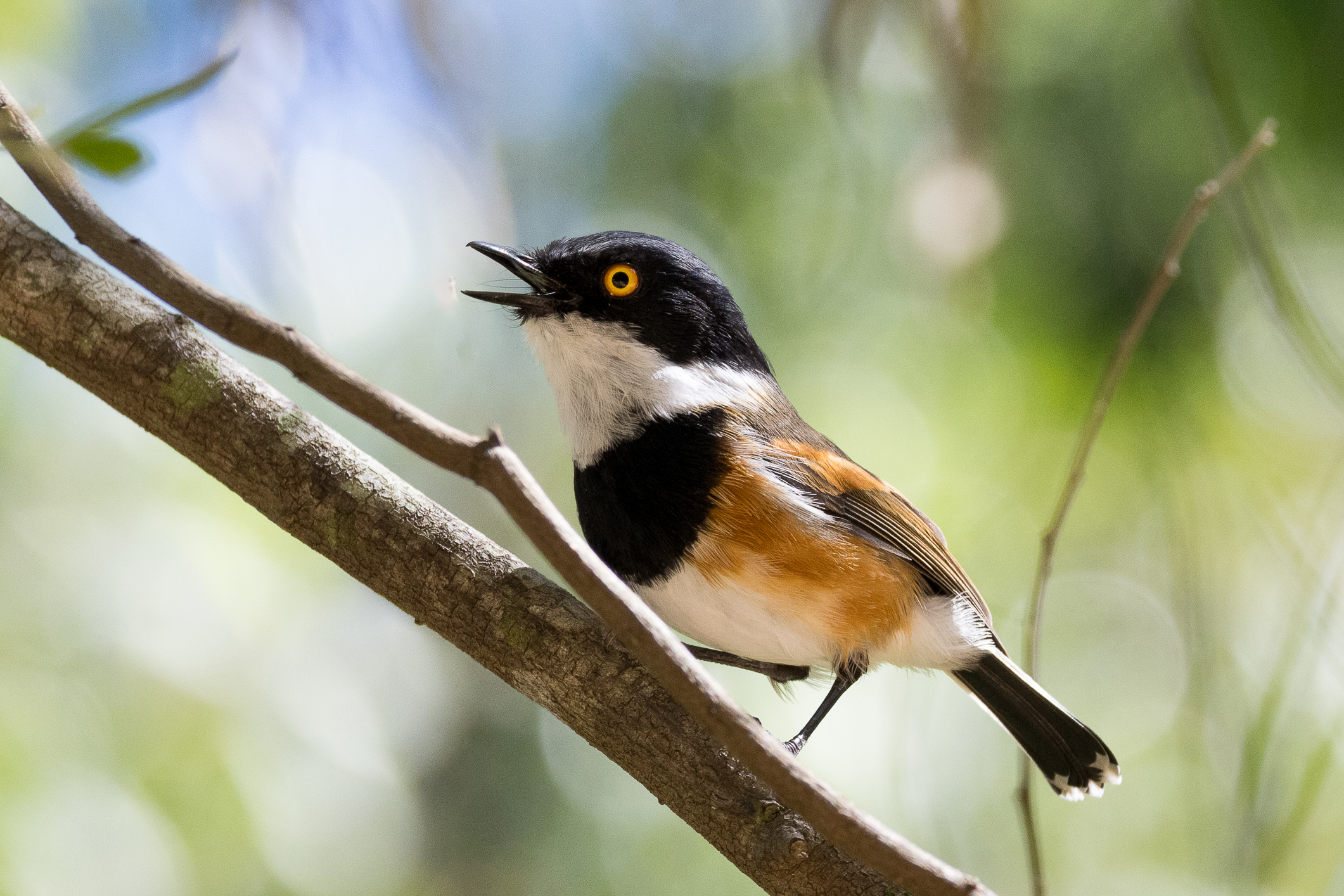
- Cape Batis
- White-faced Ducks at yet another roadside dam
- Jackal Buzzard on a pole just before exiting the pentad

Total species for the pentad : 58
Pentad 3355_2210
The second pentad for the morning was far less productive, probably because it was close to midday when birds tend to be temporarily absent until the late afternoon ‘rush hour’ starts
My route was through Friemersheim (which has been the subject of several of my posts about the mural artwork that is a feature of this interesting village) then a circular route on the northern side of the village.
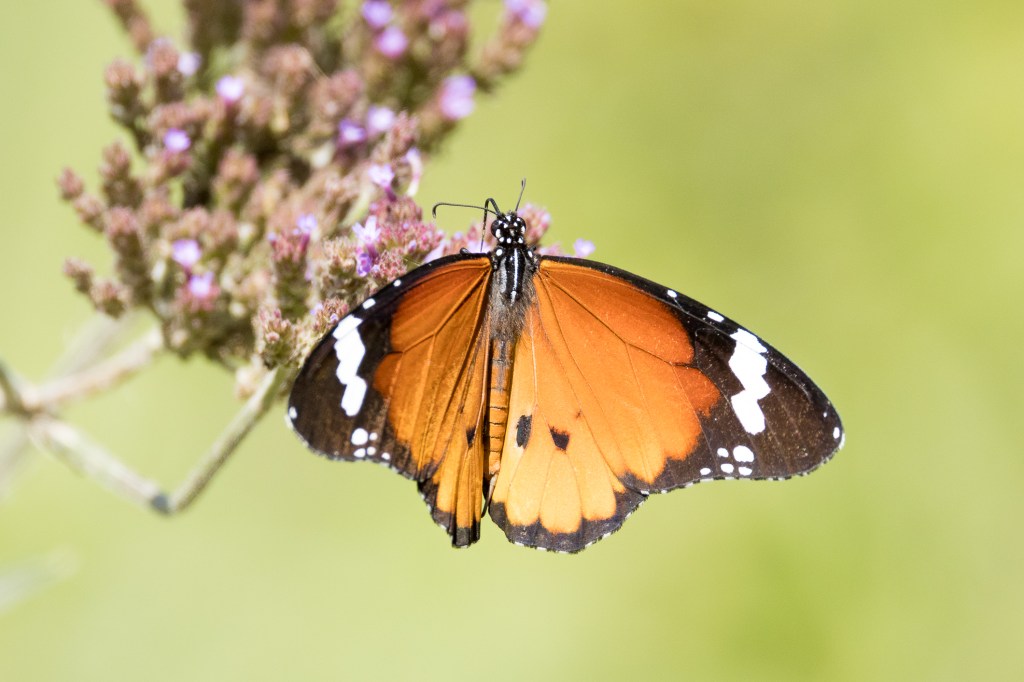
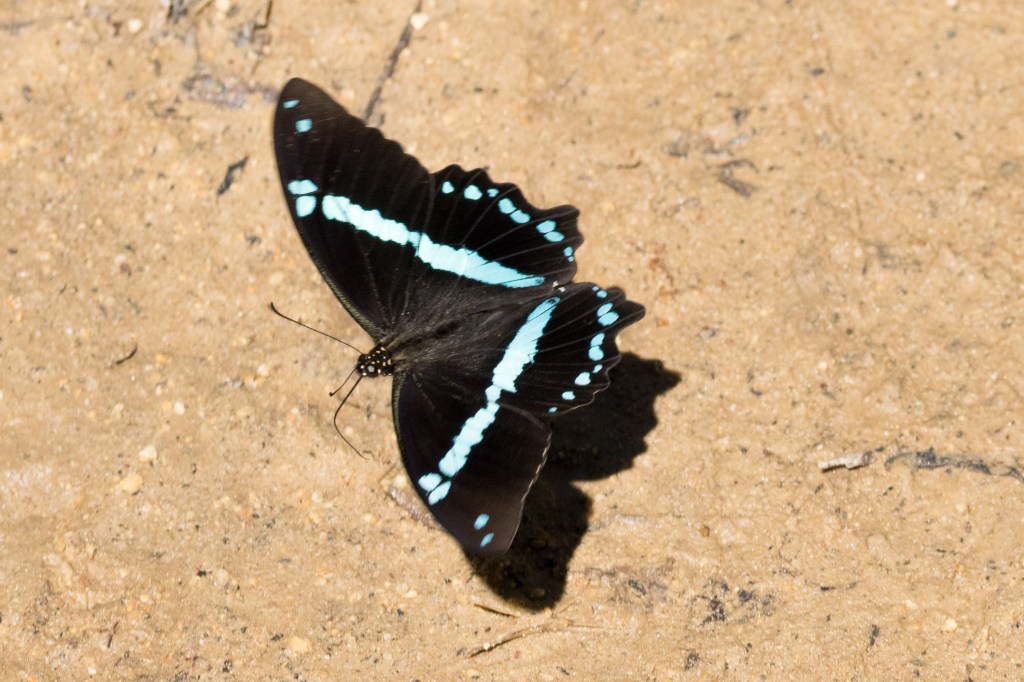
There were few highlights, but I found hundreds of Barn Swallows feeding over the fields. My last stop in the forested section produced several Cape Batises and a Butterfly gathering moisture from a puddle in the road
Total species for the pentad : 23
Other stuff
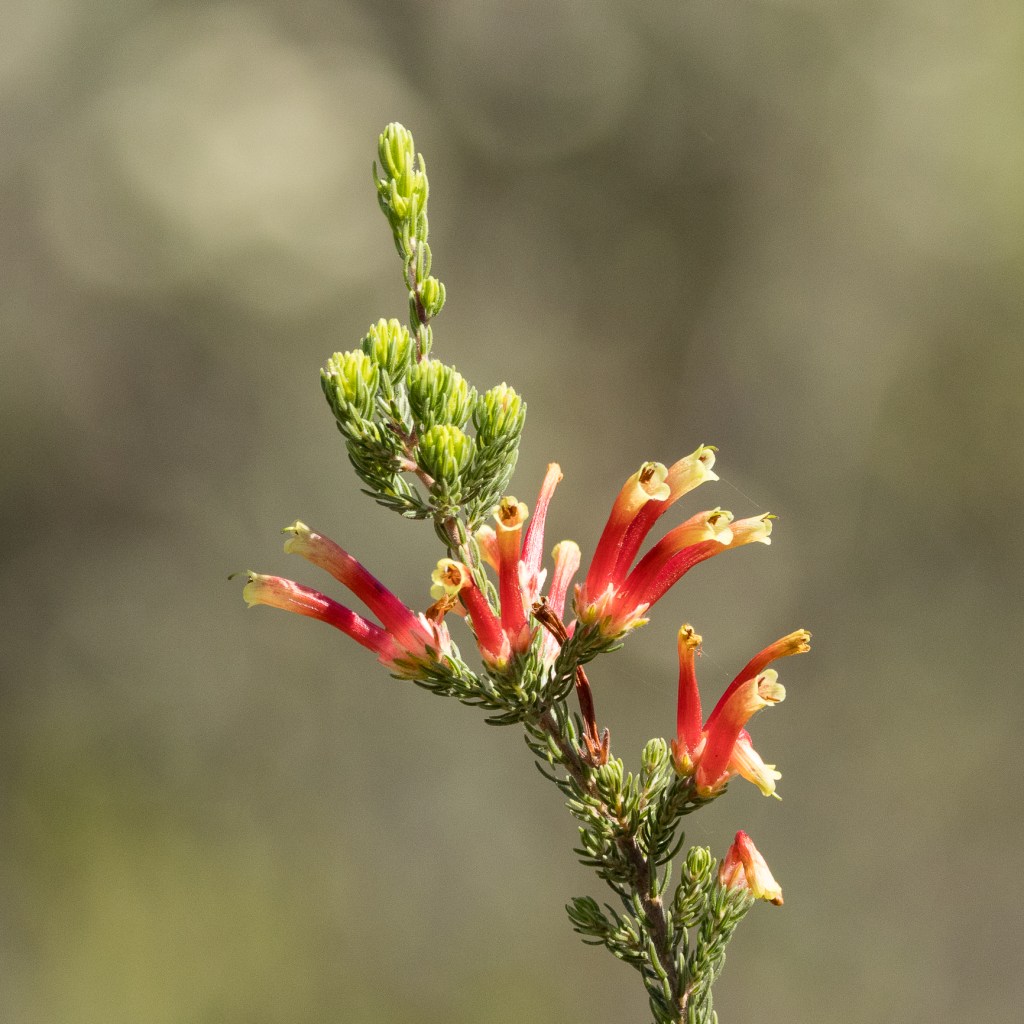
The focus is on the birds while atlasing but there are always other things to divert the attention….




 Mostly Birding