Birding Big Day – November 2020 – The Finish

What’s it all about ?

Continuing the story of Birding Big Day (BBD), which is held every year on the last Saturday in November – the event is all about seeing how many bird species can be identified in a 24 hour period from midnight to midnight. Teams are allowed a maximum of 4 participants, of which a majority must agree on each species identification, whether by sight or call.

Birdlasser, the amazing birdlisting and atlasing app developed in South Africa, keeps track of every sighting of every team and can be easily accessed during the day to see where the team stands in comparison with the other 300 plus teams across the country.

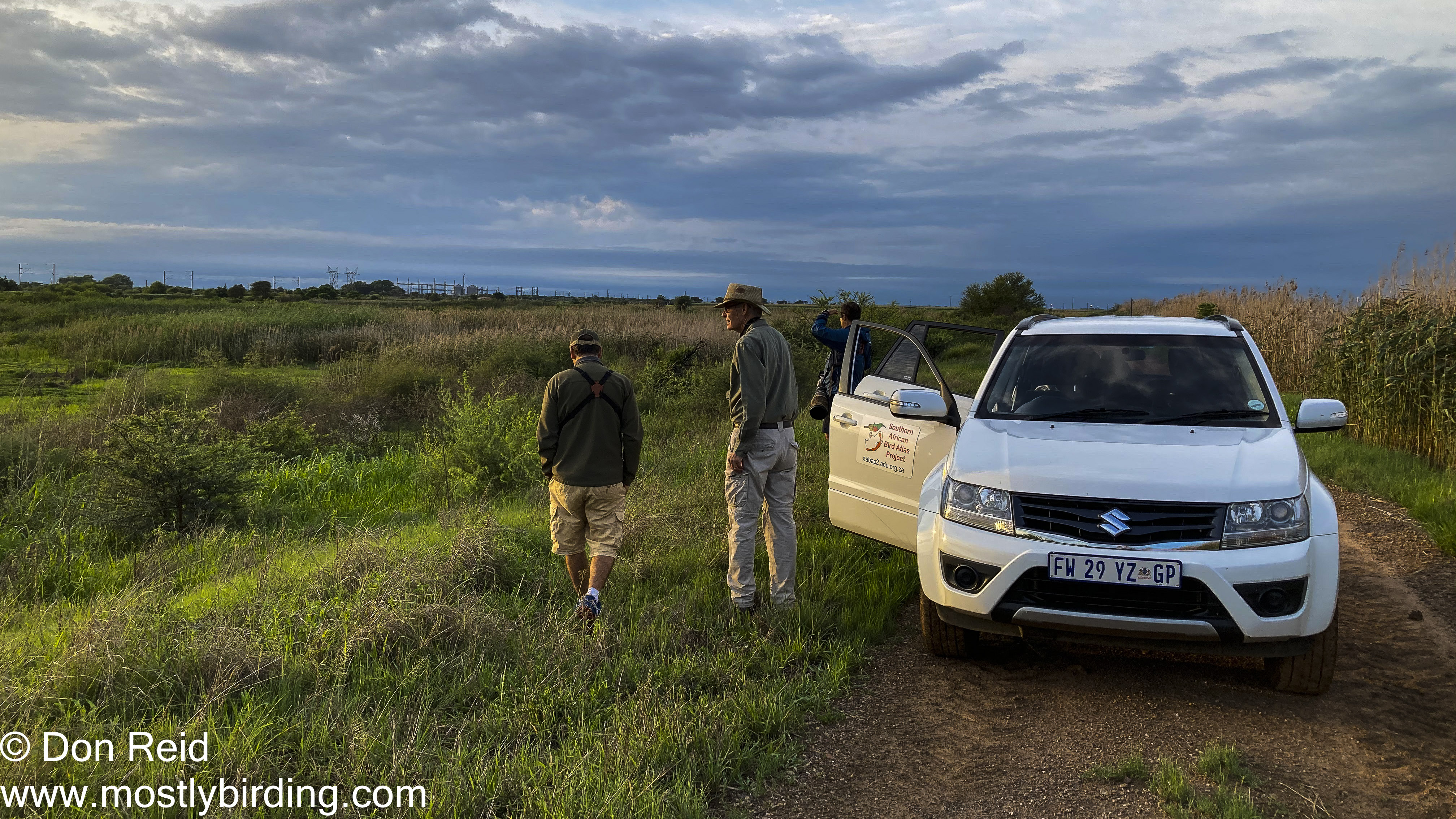
Our team was set up by Koos Pauw and included myself, Martin Slabbert and Thinus van Staden to make up our team of four. A target of 200 species was decided upon by the team – only time would tell if this was achievable on the day.

Weather forecasts were looking promising and we hoped they would prove to be accurate, however at this time of year on the highveld extreme heat and afternoon thundershowers are the norm so we weren’t assured of a full day’s uninterrupted birding

This turned into quite a lengthy story so to keep it manageable I have split it into 3 stages – The Start, The Middle and The Finish.

Borakolalo to Rooiwal (Hour 12 and 13)

A testing time lay ahead as we headed away from Borakolalo towards our final target spot – Rooiwal Waste Water Treatment Works. Slow traffic, substandard roads and many rural villages along the way, clogged with random traffic, pedestrians and animals, proved frustrating as the minutes and hours ticked away, eating into the remaining daylight hours.

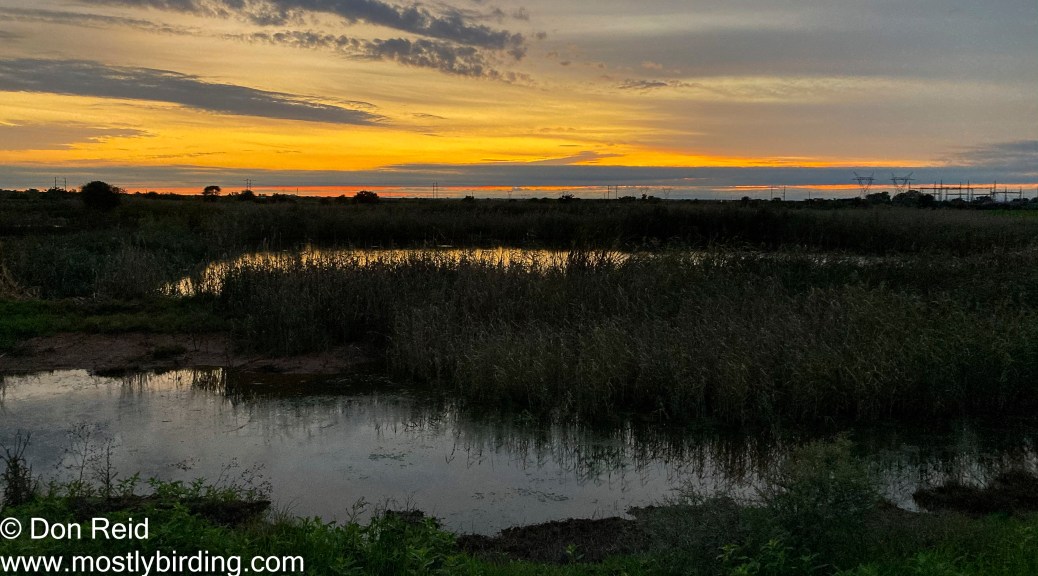
Koos remained calm and patient behind the wheel, despite very little to raise our spirits, until an unexpected wetland near the road was cause for a rapid stop. Shouts of Abdim’s Stork went up, followed by White Stork and finally a Black Heron was spotted.
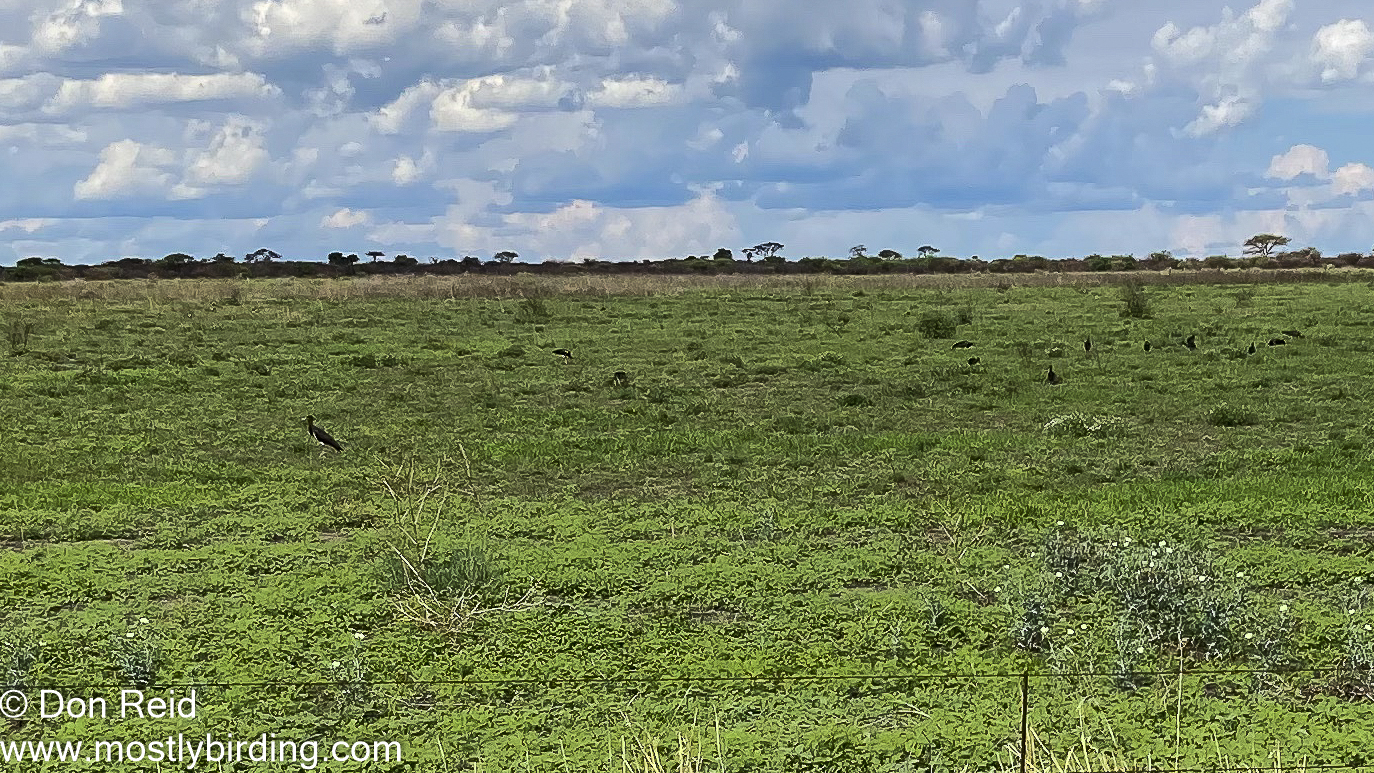
Moretele area, Birding Big Day 2020 (Look carefully – Abdim’s Storks just visible)

With renewed enthusiasm we carried on and another hour later found the road which would take us to Rooiwal

Highlights (apart from the wetland specials mentioned above) :

Ashy Tit seen just after leaving Borakolalo

White-rumped Swift (at last!)

Rock Dove – yes even this mundane species which is fond of people becomes a highlight when you are getting anxious

Total Species : 183 after 13 hours – our slowest rate of the day, adding just 7 species in two hours

Rooiwal Waste Water Treatment Works (Hour 14)

At last, we turned off the slow road and found ourselves on Piet-my-Vrou Street, which augured well as it is the Afrikaans name for Red-chested Cuckoo.

Koos was right in his assessment that this road would take us through a stretch of highveld habitat, differing from any of the other habitats we had encountered so far – Long-tailed Widowbird in longish grass provided the proof.

Long-tailed Widowbird

30 minutes later we arived at Rooiwal, initially driving the rough track that runs through the adjoining open veld with pans, then entering the treatment works for a rapid ‘whip around’ to see what we could add to our already substantial (by our standards) list.

Highlights :

African Stonechat in the open grasslands

African Stonechat (male)

Many Grey-headed Gulls enjoying the several ponds of the treatment works

Cape Teals equally at home on the ponds
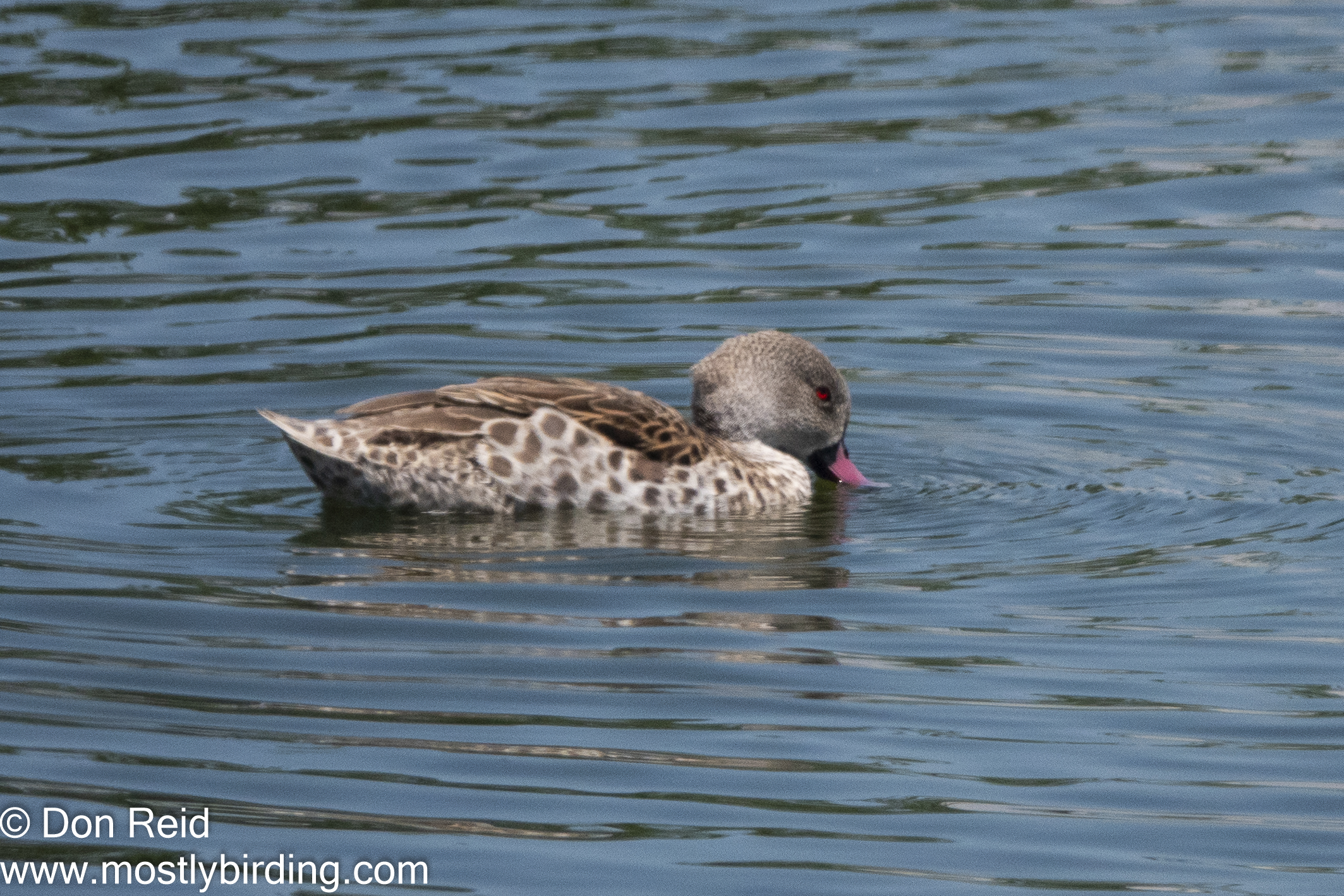
Cape Teal (Anas capensis / Teeleend), Rooiwal

White-fronted Bee-eaters – first of the day at the treatment works

Red-collared Widowbirds as we drove away from Rooiwal

Total species : 194 after 14 hours – getting closer to our target but with time running out we still had some work to do

Back to Pretoria for the Final Push (Hour 15 and 16)

With just 6 species to go, we left Rooiwal and were soon back on the N1 heading to Pretoria, our last hope for a grand finish!

The consensus was that we still had not picked up some of the typical ‘suburban’ birds that are common in the leafy suburbs that we know so well. So we made our way first to Meyerspark to the east of the city and explored some of the open spaces between the houses and local businesses

This proved to be a good strategy as we slowly added to our total and excitement mounted with each new species.

Every bird added was a highlight :

195 – Red-winged Starling perched on a tall building

196 – Violet-backed Starling in tall trees adjoining a small business complex

197 – Cape White-eye in the same trees
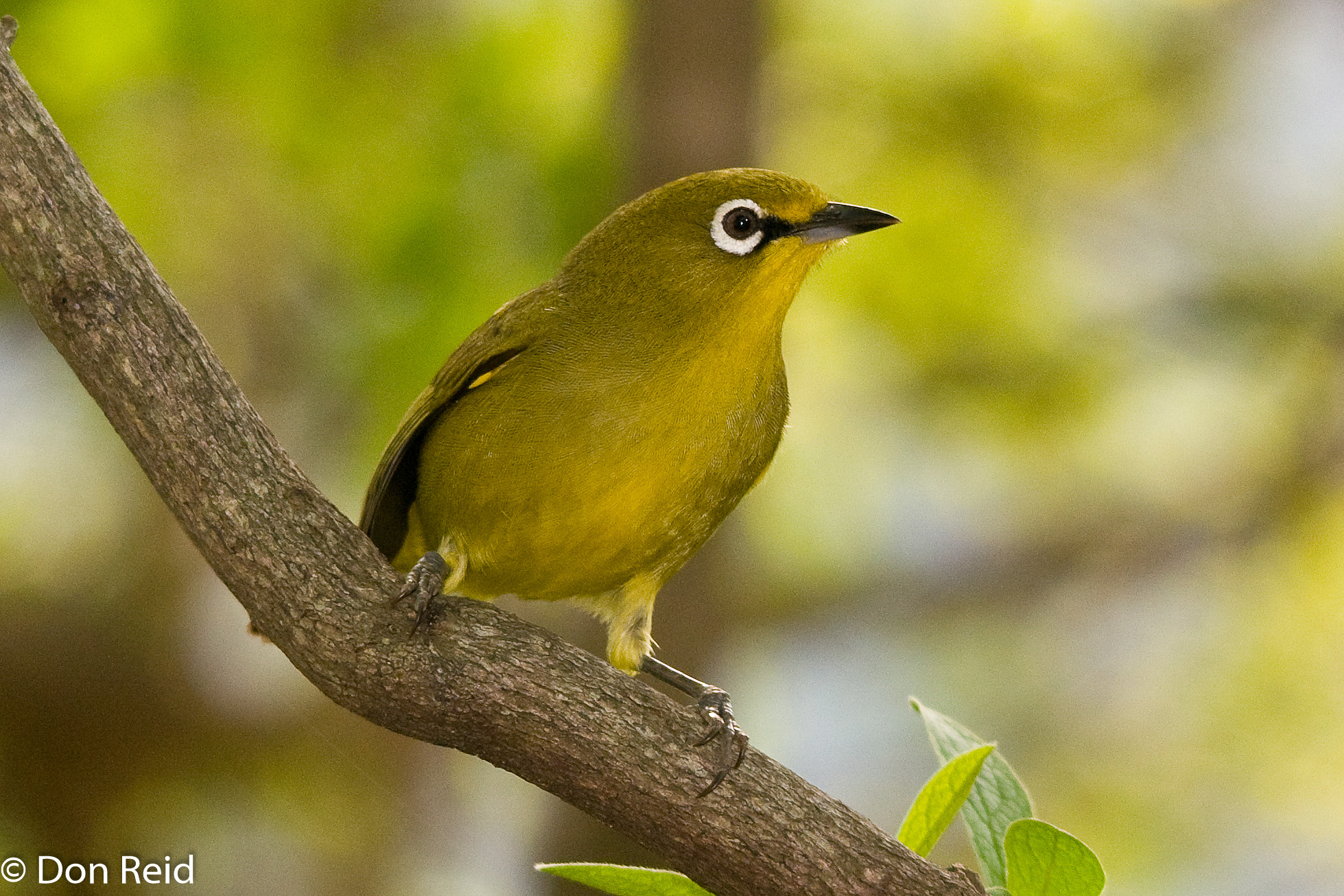
Cape White-eye

198 – Bronze Mannikins feeding on a sidewalk lawn

199 – Crested Barbet feeding on an adjoining lawn

The light was fading fast as we headed up a hill past a block of flats with lush gardens – as we stopped to listen, a Kurrichane Thrush appeared in the lower branches of a tree – 200 up !!!

In high spirits we headed through the adjoining suburb of Murrayfield where we added 2 more for luck – Cut-throat Finch and Fiscal Flycatcher – then back to where it had all started in The Glades. There was just time to stop at the dam where we had started some 16 hours earlier and find the Cape Weaver that I know nests there – sure enough it was present and became our last bird of the day.

These photos were taken in The Glades, but not on the day
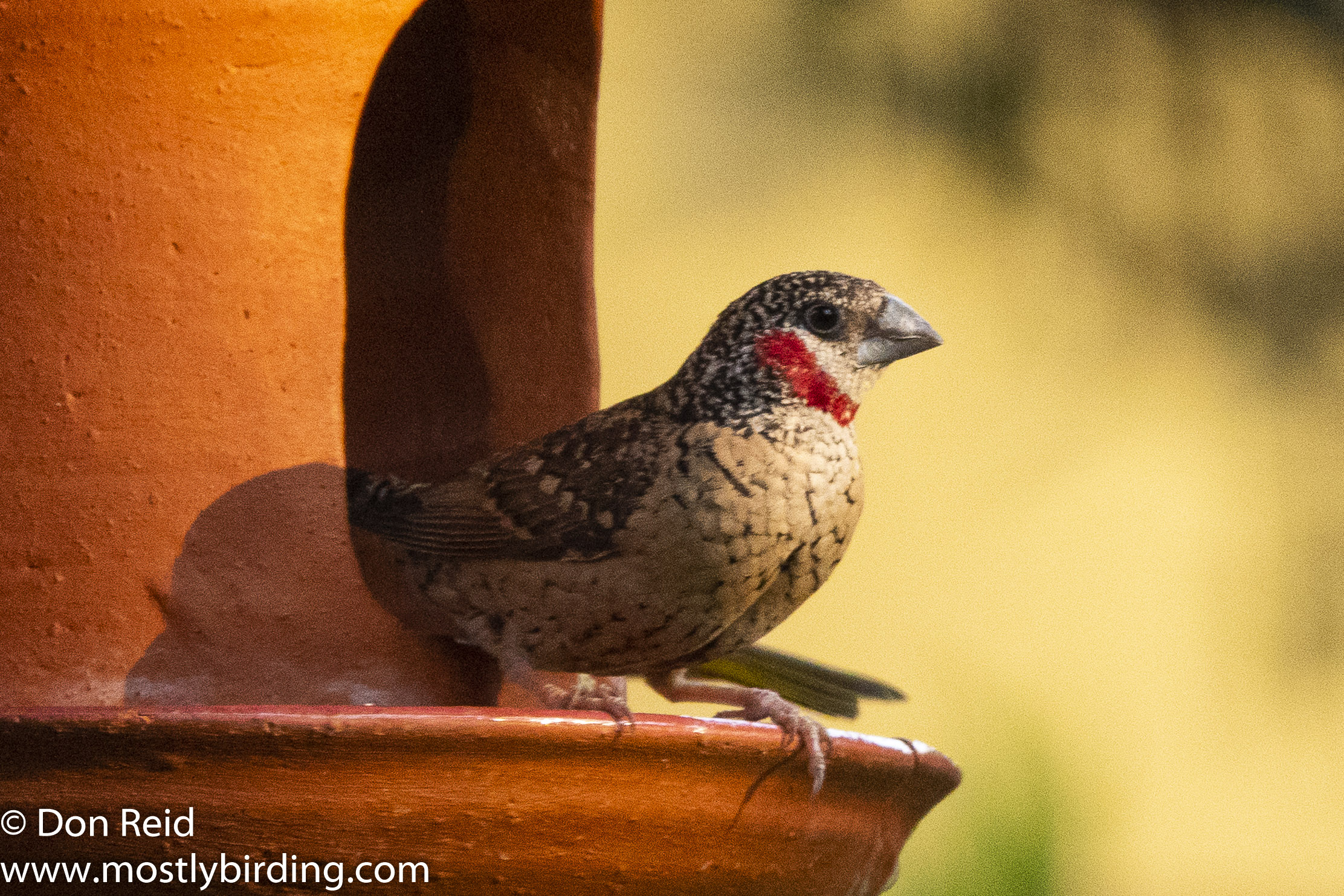
Cut-throat Finch (Male) (Amadina fasciata / Bandkeelvink), Wapadrand Pretoria
Cape Weaver (Ploceus capensis / Kaapse wewer), The Glades

A final separate count the next day showed just one species had been seen but not recorded, so our final count was 204. This was good enough for 40th position out of over 300 teams, so we were extremely pleased with our effort

The results, Birding Big Day 2020

Phew, what a day!
Birding Big Day – November 2020 – The Middle

What’s it all about ?

Continuing the story of Birding Big Day (BBD), which is held every year on the last Saturday in November – the event is all about seeing how many bird species can be identified in a 24 hour period from midnight to midnight. Teams are allowed a maximum of 4 participants, of which a majority must agree on each species identification, whether by sight or call.

Birdlasser, the amazing birdlisting and atlasing app developed in South Africa, keeps track of every sighting of every team and can be easily accessed during the day to see where the team stands in comparison with the other 300 plus teams across the country.

Our team was set up by Koos Pauw and included myself, Martin Slabbert and Thinus van Staden to make up our team of four. A target of 200 species was decided upon by the team – only time would tell if this was achievable on the day.

Weather forecasts were looking promising and we hoped they would prove to be accurate, however at this time of year on the highveld extreme heat and afternoon thundershowers are the norm so we weren’t assured of a full day’s uninterrupted birding

This turned into quite a lengthy story so to keep it manageable I have split it into 3 stages – The Start, The Middle and The Finish.

Kgomo-Kgomo (Hour 7)

This was our status at 9.58 am after 6.5 hours – 26th position and looking strong (Team Tuis-Bes)

9.58 am Birding Big Day 2020

As we approached the village of Kgomo-Kgomo at the end of the Zaagkuildrift road, the habitat changed to more open, dry countryside. We turned east towards the bridge over the wetlands, which had received a fair amount of water during recent rains. Some time was spent on the bridge scanning the wetlands, while passing locals from the village greeted us in friendly fashion – no doubt used to seeing birders in action at this well-known birding spot.

Highlights :

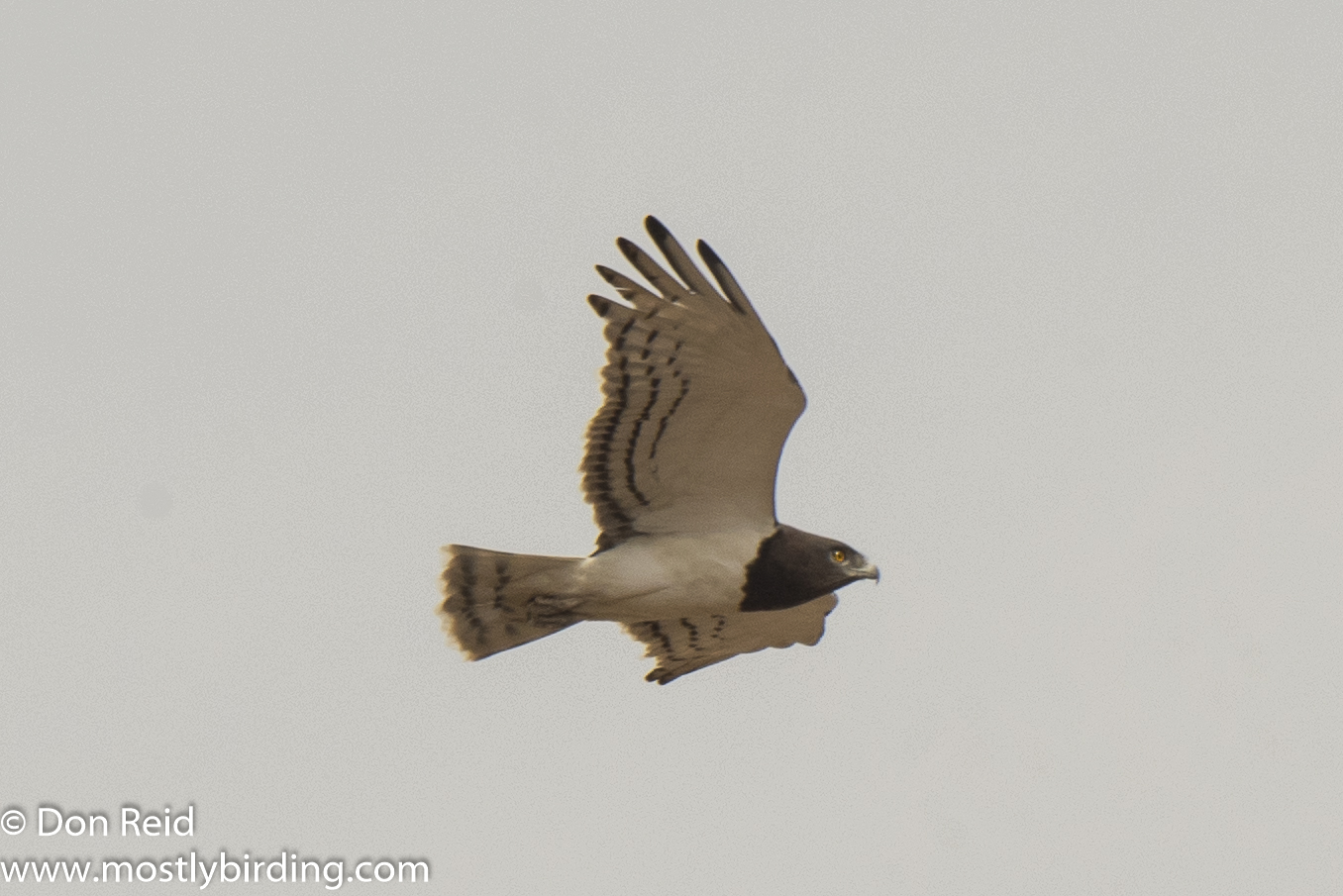
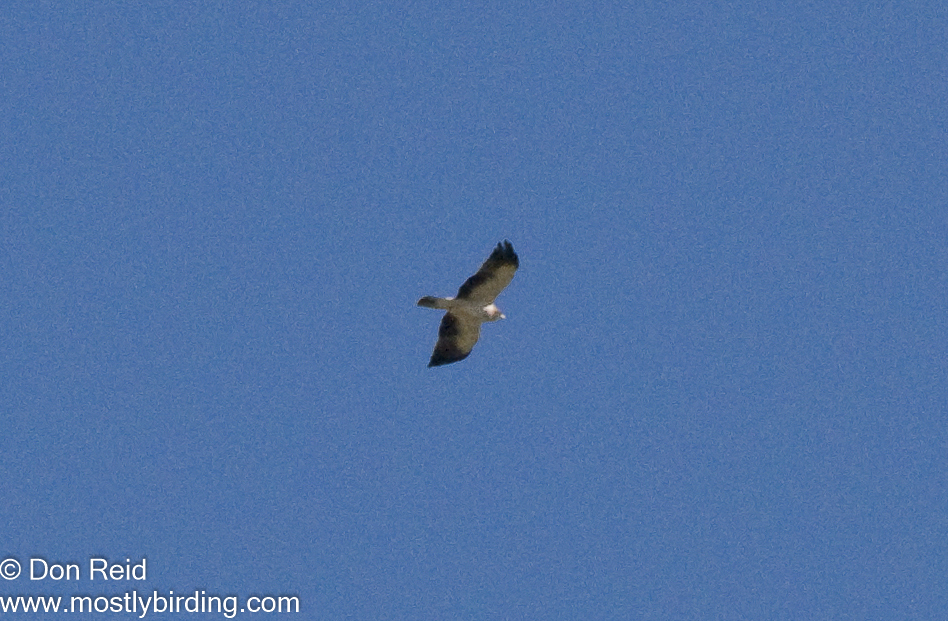
The somewhat drier habitat near the village produced Cape Penduline Tit and Scaly-feathered Weaver (Finch), while high overhead a soaring Black-chested Snake-Eagle caught our attention and was quickly ID’d.

Black-chested Snake=Eagle

Great Sparrow also made it onto our list – a scarce bird and one of our birds of the day. We wondered again why this particular sparrow is so scarce, while sparrows in general are such common birds

The wetlands held numerous waders and swimmers such as Black-winged Stilt, Wood Sandpiper, Little Egret, Cape Shoveler and Little Grebe and we added Blue-cheeked Bee-eater and Brown-throated Martin.

Black-winged Stilt

Total species : 152 after 7 hours – still looking good for our target

Borakolalo (Hour 8 to 11)

It was 10.25 am when we left Kgomo-Kgomo, full of confidence for a good total, but we knew we were approaching the dreaded “middle of the day” lull when birds seem to go into hiding. New species were becoming more difficult to find, so we used the time to get to our next target spot of Borakolalo Nature Reserve as quickly as possible, stopping only when a potential new species was spotted and to spend about ten minutes at the one dam that we passed

We arrived at Borakolalo Nature Reserve 45 minutes later and spent the next two and a half hours exploring the tracks through the bushveld area and along the shoreline of the dam. Our first glimpse of the dam itself confirmed our one fear – the water level was exceptionally high and not at all suitable for the many waders that usually frequent the muddy shores. This was emphasized when we later passed by the dam wall which was overflowing and sending a surge of water down the sloping wall into the river below

Borakolalo NP, Birding Big Day 2020

So that left us with the ‘swimmers’, many of which we had already logged – our only chance of adding new species was to cover the bushveld habitat as thoroughly as possible. It was slow going, using the strategy of stopping every couple of hundred metres or so and scanning the bush and sky for birds. We continued with this until we had exhausted most possibilities and headed back to the main entrance to assess our strategy for the rest of the day.

Highlights :

At this stage of the day just about every sighting becomes a highlight and there was no shortage of desirable birds that made it onto our list

African Cuckoo, calling hauntingly as we stopped at a roadside dam, quickly traced to a nearby tree

Sabota Lark, as always, singing from the very top of a tree

Sabota Lark (Calendulauda sabota / Sabotalewerik)

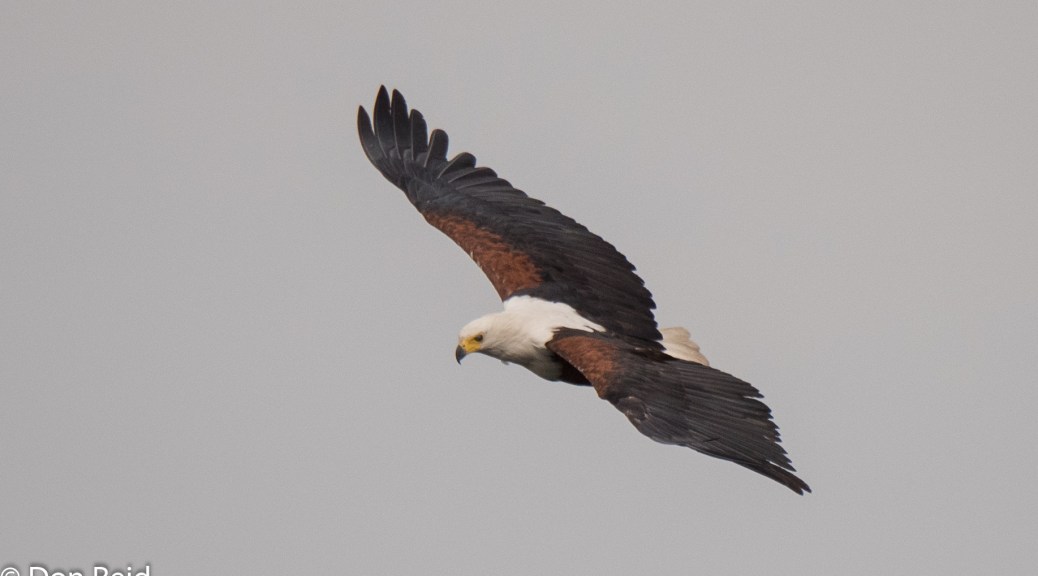
African Fish-Eagles for – um – Africa,,,,, We saw up to 5 of this iconic species at a time, soaring above the dam looking for their next meal no doubt.

Red-crested Korhaan calling, several times at different spots in the reserve – the unmistakeable, loud kyip-kyip-kyip that they emit at regular intervals.

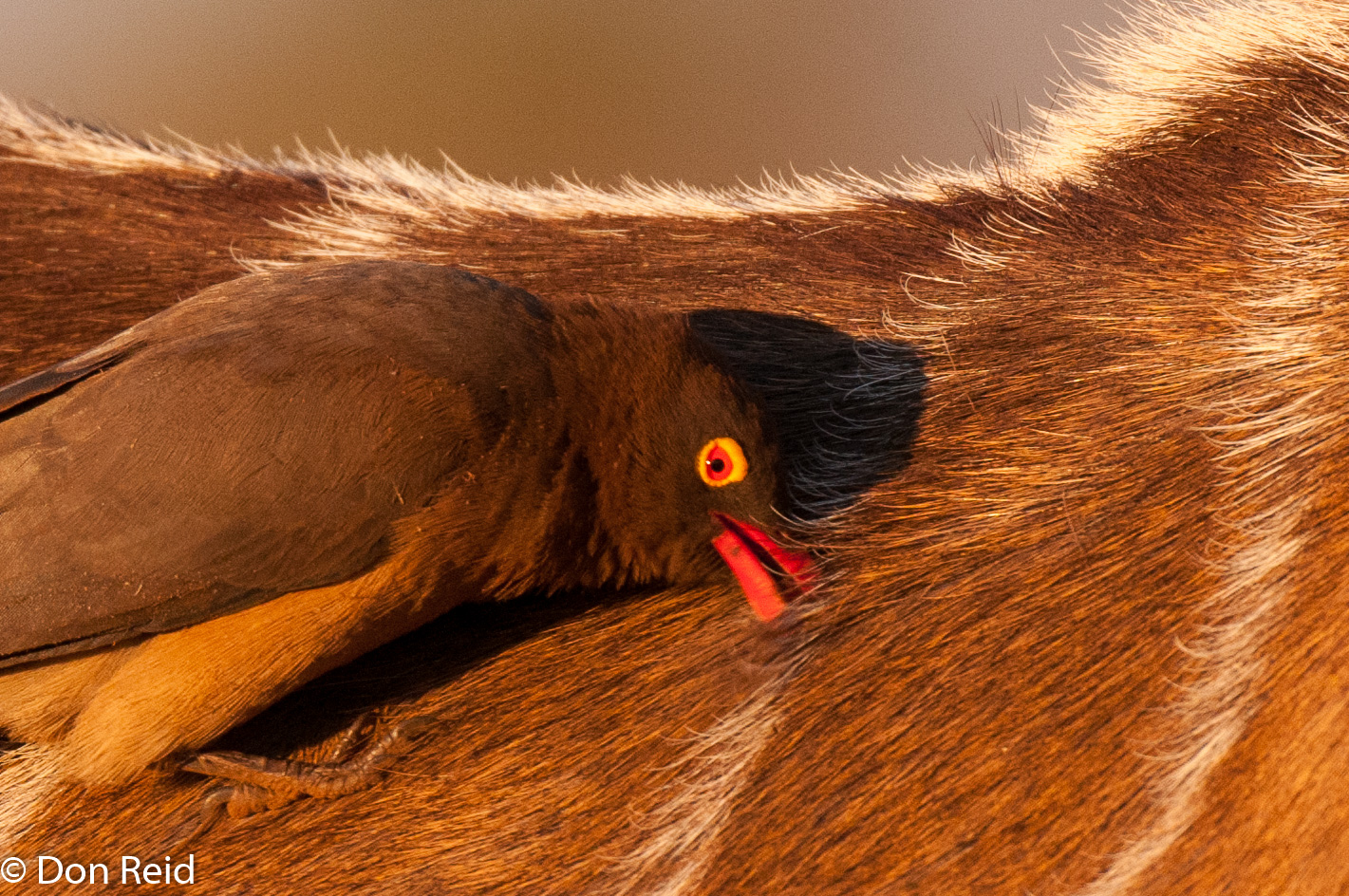
We did not encounter many animals but a Giraffe was good enough to cross the road ahead of us and as a bonus had some Red-billed Oxpeckers in attendance

Red-billed Oxpecker

A raptor flew off low just ahead of us and we leapt out to ID it – not too difficult to see that it was a Wahlberg’s Eagle, with a longish, squared-off tail

One of our frequent stops produced a small bird party with Southern Black Tit, White-crowned Helmet-Shrike and Yellow-fronted Canary in the nearby trees

Just after hearing a Pearl-spotted Owlet at one stop, a large bird flew at speed between the trees and we were able to track it to a distant tree – it was a Great Spotted Cuckoo

Great Spotted Cuckoo

Heading out of the reserve, we picked up Golden-tailed Woodpecker and Red-headed Weaver before leaving Borakolalo

Our rate of new species had slowed down drastically to between 5 and 8 per hour, to be expected during the middle of the day lull, nevertheless disappointing as we had envisaged more waterbirds to help us get to our target.

Total species : 177 after 11 hours – so near yet so far from our target of 200…..

Our next planned spot was Rooiwal – a Waste Water Treatment Works about 40 kms north of Pretoria, where we hoped to find the balance of the species to take us to our target

Birding Big Day – November 2020 – The Start

What’s it all about ?

“In the Spring a young man’s fancy lightly turns to thoughts of love” (Alfred Lord Tennyson) – ummmm, well, actually in my case it’s birding and specifically Birding Big Day (BBD), which is held every year on the last Saturday in November – an event not to be missed by keen, occasionally competitive birders such as myself and fellow atlaser Koos Pauw. Oh, and that bit about a young man’s fancy – well that’s stretching the truth to be honest….

The annual event is all about seeing how many bird species can be identified in a 24 hour period from midnight to midnight. Teams are allowed a maximum of 4 participants, of which a majority must agree on each species identification, whether by sight or call.

Birdlasser, the amazing birdlisting and atlasing app developed in South Africa, keeps track of every sighting of every team and can be easily accessed during the day to see where the team stands in comparison with the other 300 plus teams across the country.

And so it was that Koos set up the team, inviting Martin Slabbert and Thinus van Staden, two younger, keen birders to make up the team of four. We met in the week prior to the event to discuss the route and an indicative timeline we would follow – vital to the success of the day’s endeavours, but we knew we should have some flexibility on the day to cater for the unexpected …

A target of 200 species was decided upon by the team – do-able but seemingly optimistic, considering Koos and I had never done more than 185 species in a day over many previous BBD’s. But I was hopeful, even confident that the introduction of two younger members to the team would take us to the 200 mark …. only time would tell. Koos and I refined the route during the last week and we were all set for Saturday 28th November.

Weather forecasts were looking promising and we hoped they would prove to be accurate, however at this time of year on the highveld extreme heat and afternoon thundershowers are the norm so we weren’t assured of a full day’s uninterrupted birding

This turned into quite a lengthy story so to keep it manageable (and hopefully readable) I have split it into 3 stages – The Start, The Middle and The Finish. So here goes with the Start of the day…..

Pre-dawn Pretoria (Hour 1)

I was up at 2.15 am to prepare for the day and was ready when Koos arrived at 3.20 am, having picked up Martin and Thinus on the way. A short drive through The Glades (the estate where our home is located), stopping at the two small dams to shine our torches on the water, got our list going before heading out.

A short detour through Murrayfield on the way to the highway saw us stopping at a bridge to check for Finfoot (seen recently at that spot) without success, then we were speeding north on the N1 highway to our “dawn chorus” spot.

Highlights :

Thick-billed Weaver revealed by torchlight in the reeds at the Glades dam (Glades photos were taken a few days earlier in daylight)

Thick-billed Weaver (Amblyospiza albifrons / Dikbekwewer) (Male) (race woltersi), The Glades

Red-chested Cuckoo calling monotonously from 2.30 am

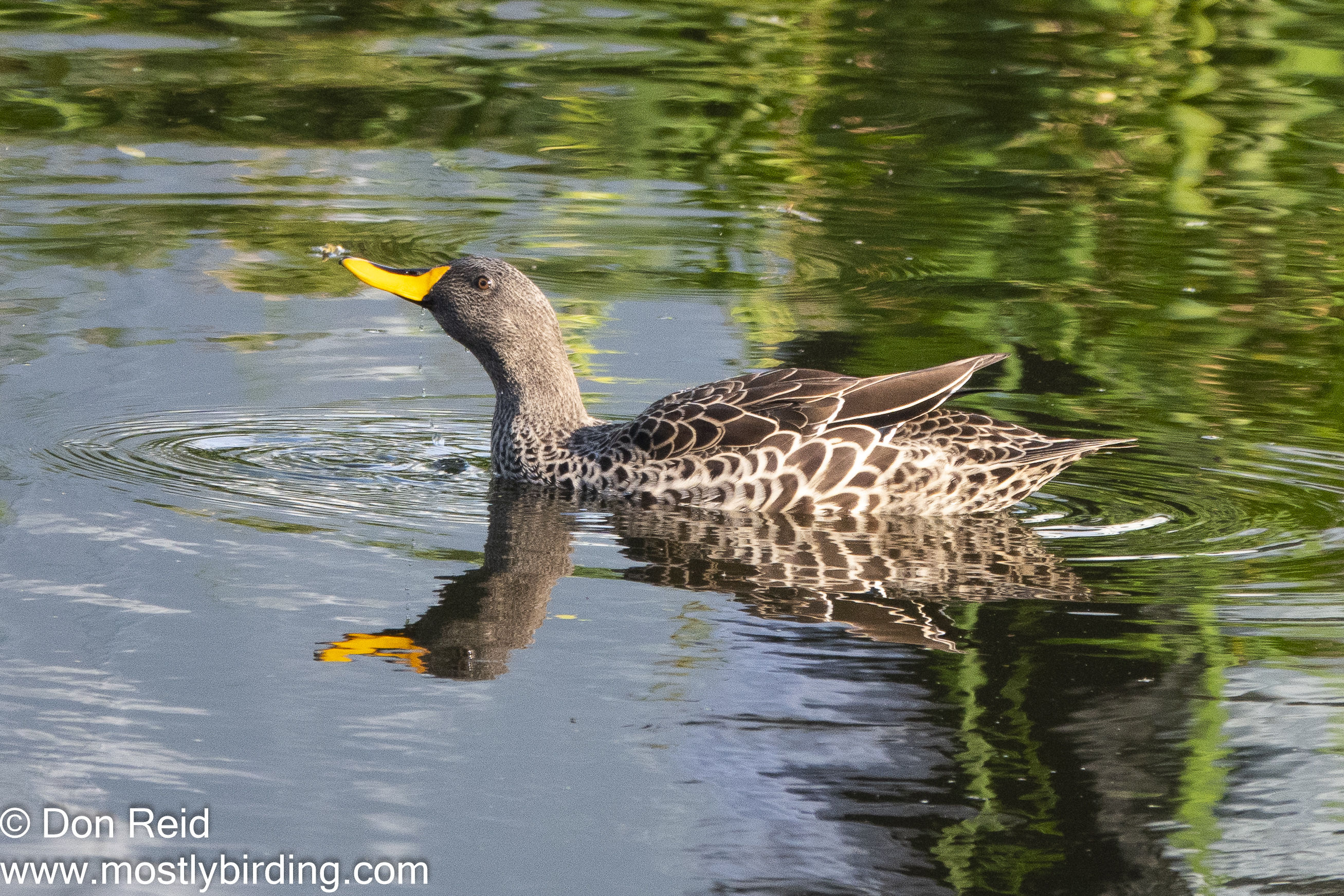
Mallard and Yellow-billed Duck out and about on the Glades dam, visible by torchlight

Mallard (Anas platyrhynchos / Groenkopeend), The Glades
Yellow-billed Duck (Anas undulata / Geelbekeend), The Glades

Total species : 11

Pienaarsrivier Irrigation Dams (Hour 2 &3)

It took 45 minutes to travel the 70 kms to Pienaarsrivier and the irrigation dams that Thinus had suggested as our dawn starting point. Once we arrived at the dams and the surrounding wetlands, it was already light enough to see that this would prove to be an excellent spot to start the day in earnest – the pre-dawn sky was filling with birds on the move and the wetlands were busy with waders and swimmers.

Irrigation Dams near Pienaarsrivier, Birding Big Day 2020

Parked on the main dam’s earthen wall we had a good view of the action all around and birds were added rapidly – so much so that I struggled to keep pace logging them on the BIrdlasser app as they got called out, at the same time scanning the wetlands with binos and scope to verify ID’s and search for new ones.

This action kept us busy for the best part of two hours as we progressed slowly around the main dam and the adjoining wetlands and fields. This was the most productive part of the day and highlights were many –

Highlights :

The call of a Great Reed Warbler (probably newly arrived from its European breeding grounds) emanating from dense reeds

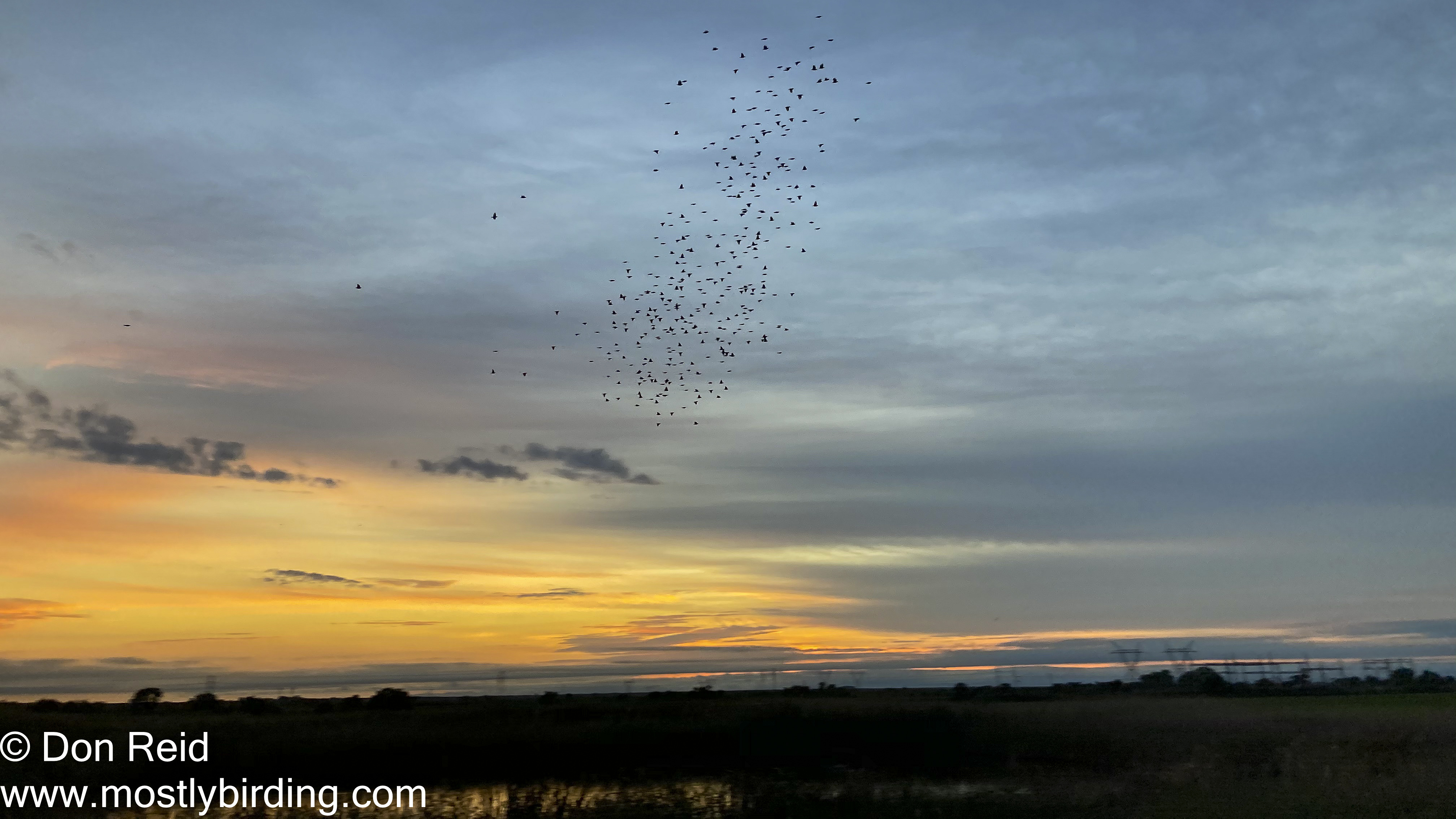
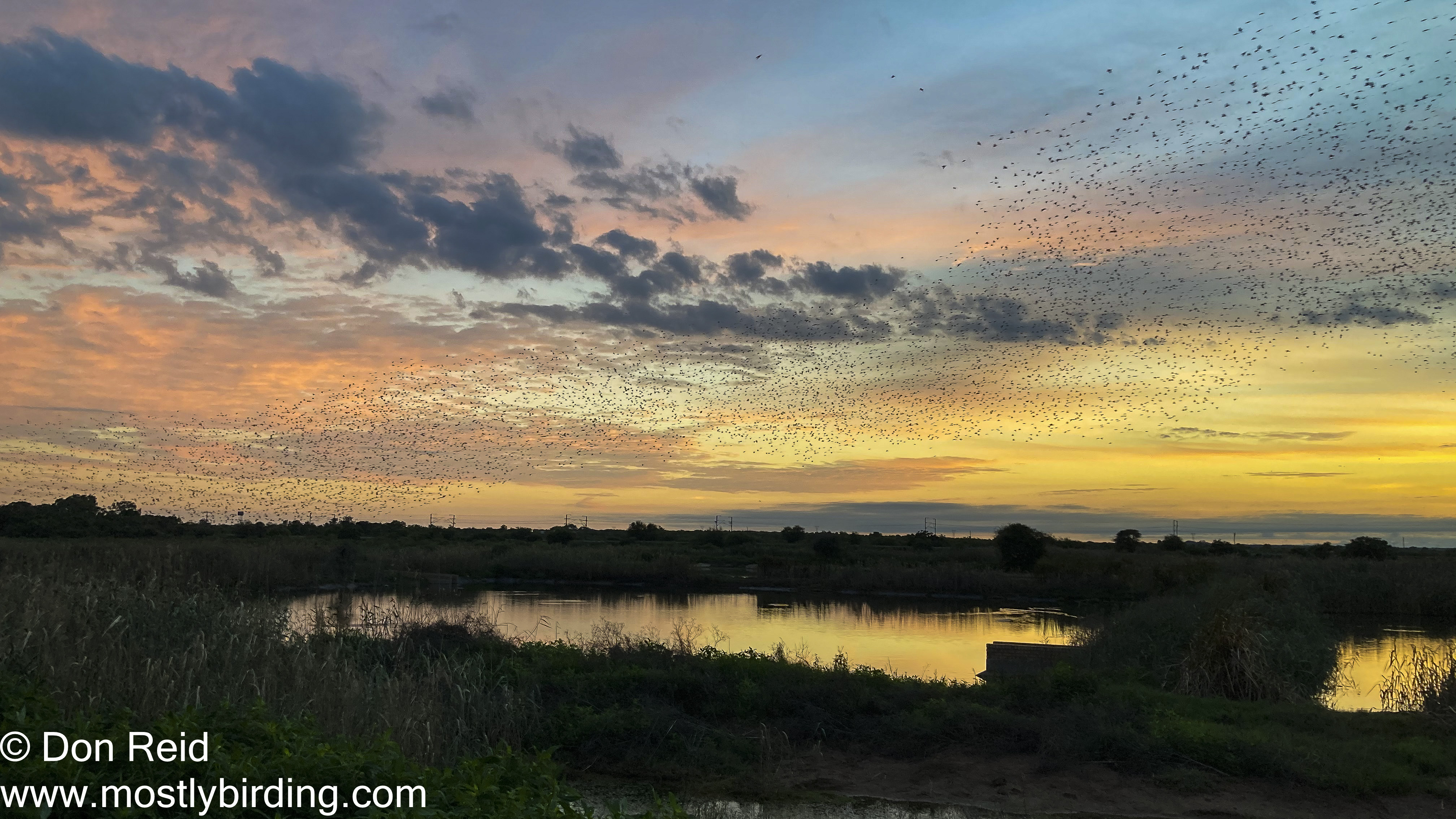
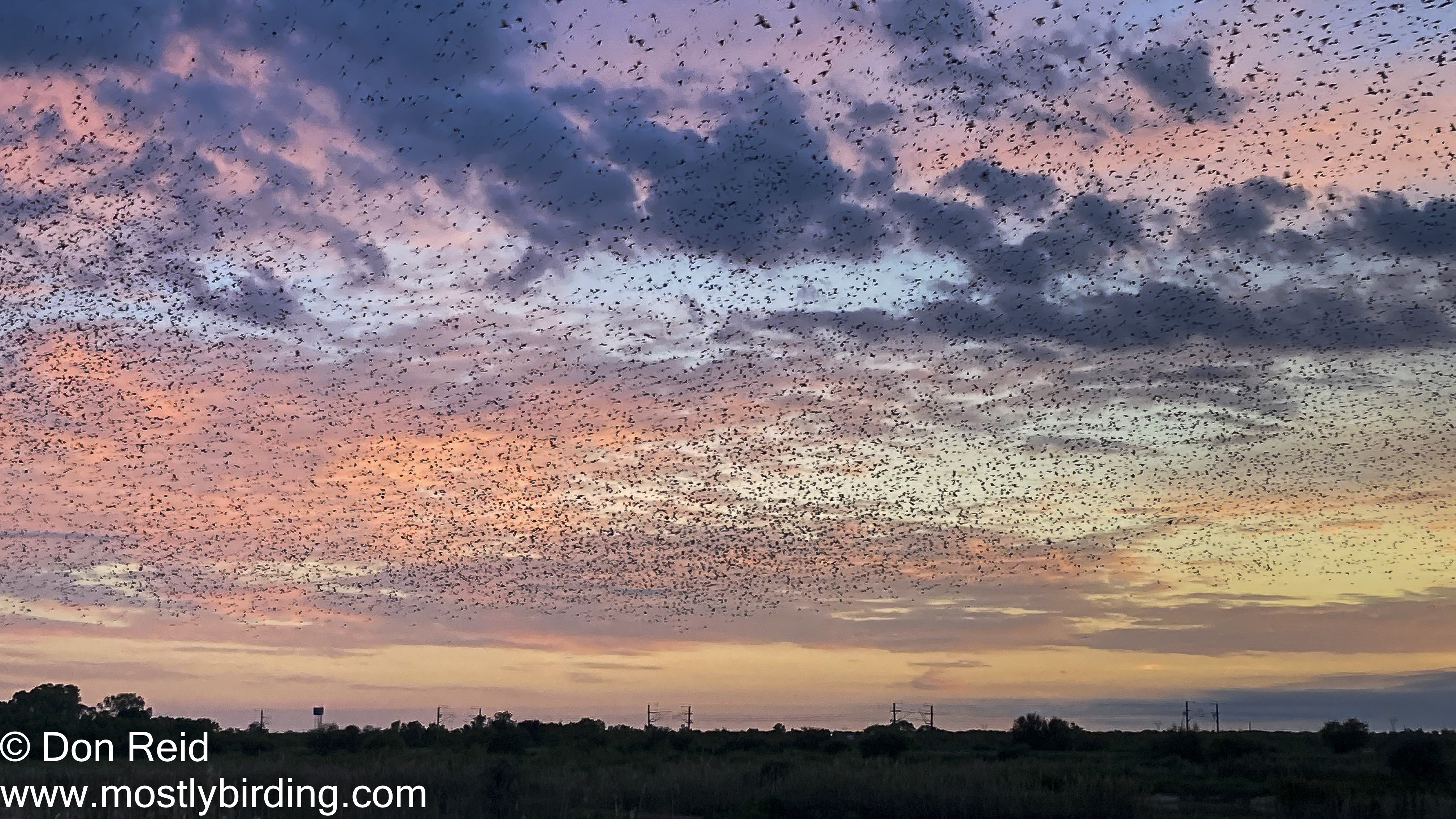
At 5 am, thousands of Red-billed Queleas rising up out of the adjoining fields and covering the dawn sky. Wave after wave of Queleas followed – a few hundred thousand at a guess – off to feed in the surrounding areas

A tiny sandbank in the middle of one pond held a variety of waders of differing size just too far to be certain of their ID but the scope views confirmed them – Little Stint, Marsh Sandpiper, Common Sandpiper, with an African Black Duck on the side

As the skies lightened, terns appeared – both of the regular fresh water species – Whiskered and White-winged Terns

The unusual sight of a flock of 12 Black-crowned Night-Herons flying overhead – none of us had seen so many at one time of this mostly solitary species

Three Kingfishers spotted within 4 minutes as we circled the dam – Woodland, Pied and Brown-hooded Kingfishers all presented themselves to be counted

Cries of “bumblebee” from the younger half of the team had me puzzled for a second until I realised they were referring to the Yellow-crowned Bishops buzzing around the long grass, looking a lot like giant bumblebees with their black and yellow colouring and manner of flight

Yellow-crowned Bishop (Euplectes afer / Goudgeelvink)

Total species : 79 after 3 hours

Irrigation Dams to Zaagkuildrift (Hour 4)

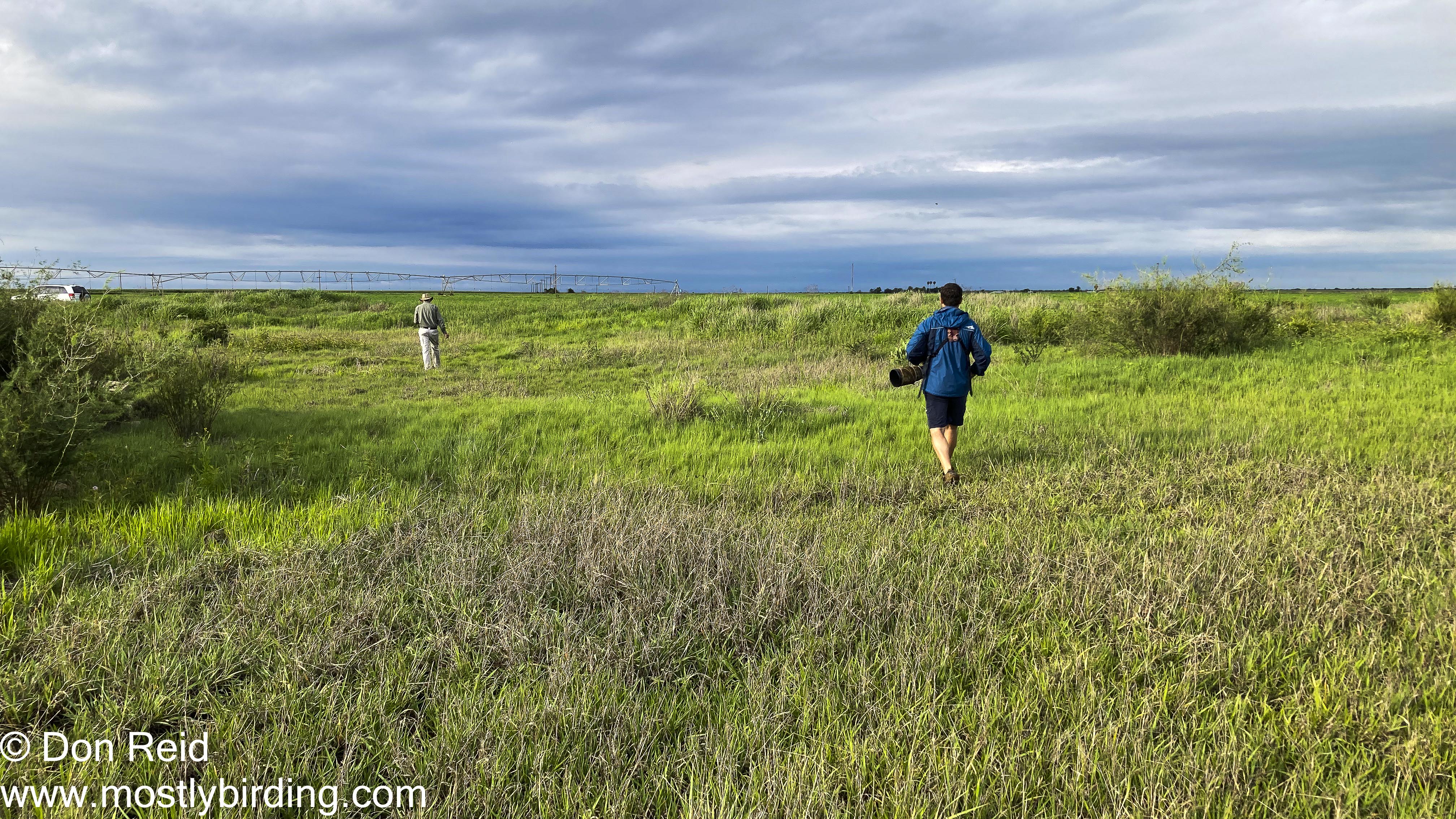
Before leaving the irrigation dams, Thinus suggested a walk through longish grass to a wetland area not accessible by vehicle. What a good idea it turned out to be as we added one very special wader and a handful of other species before heading to the start of our second major focus area – the famous (among birders) Zaagkuildrift Road that starts just outside the village of Pienaarsrivier and meanders west to the Kgomo-Kgomo floodplain

Irrigation Dams near Pienaarsrivier, Birding Big Day 2020
Wetlands at Irrigation Dams near Pienaarsrivier, Birding Big Day 2020
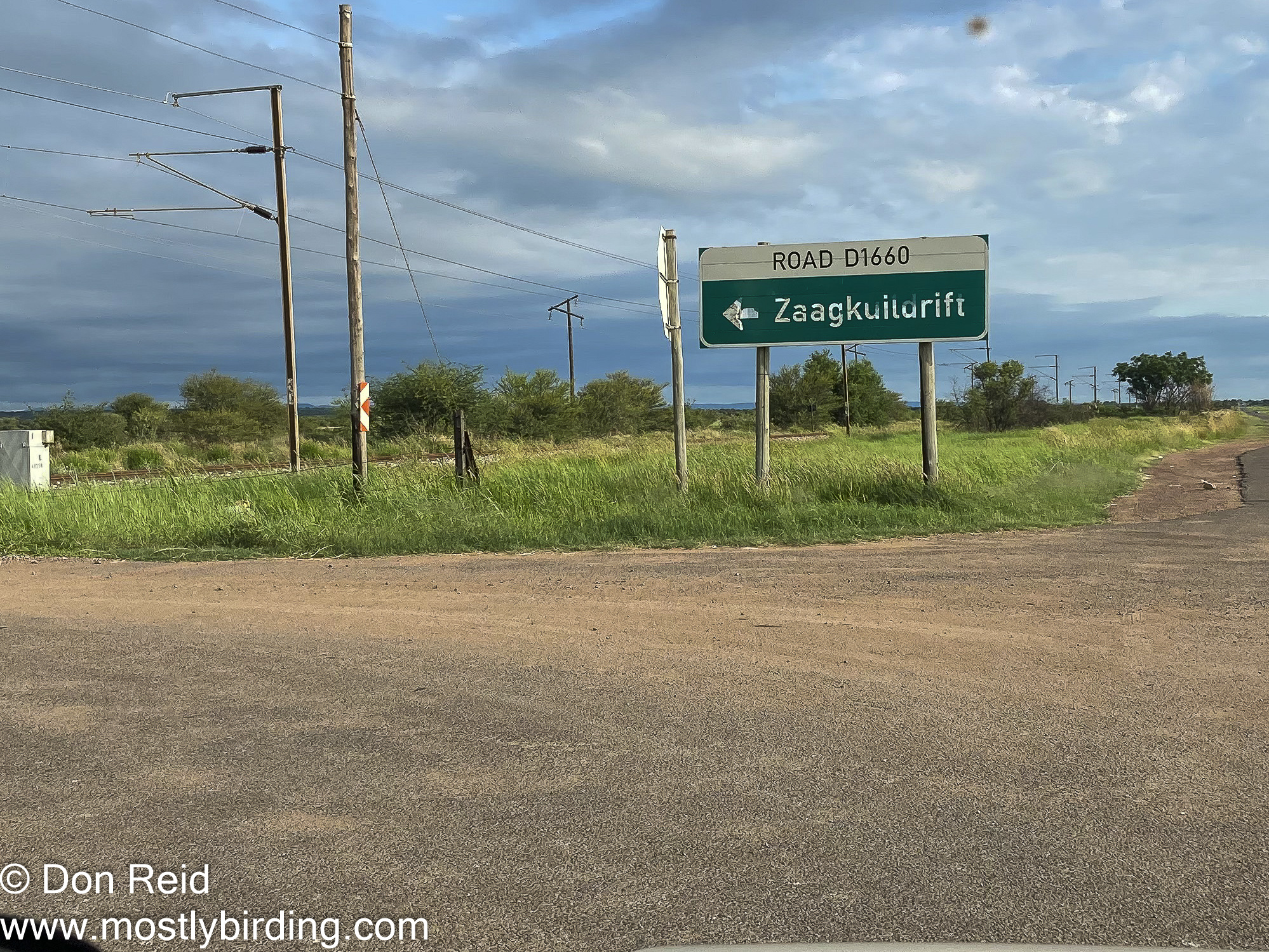
Start of Zaagkuildrift, Birding Big Day 2020

Highlights :

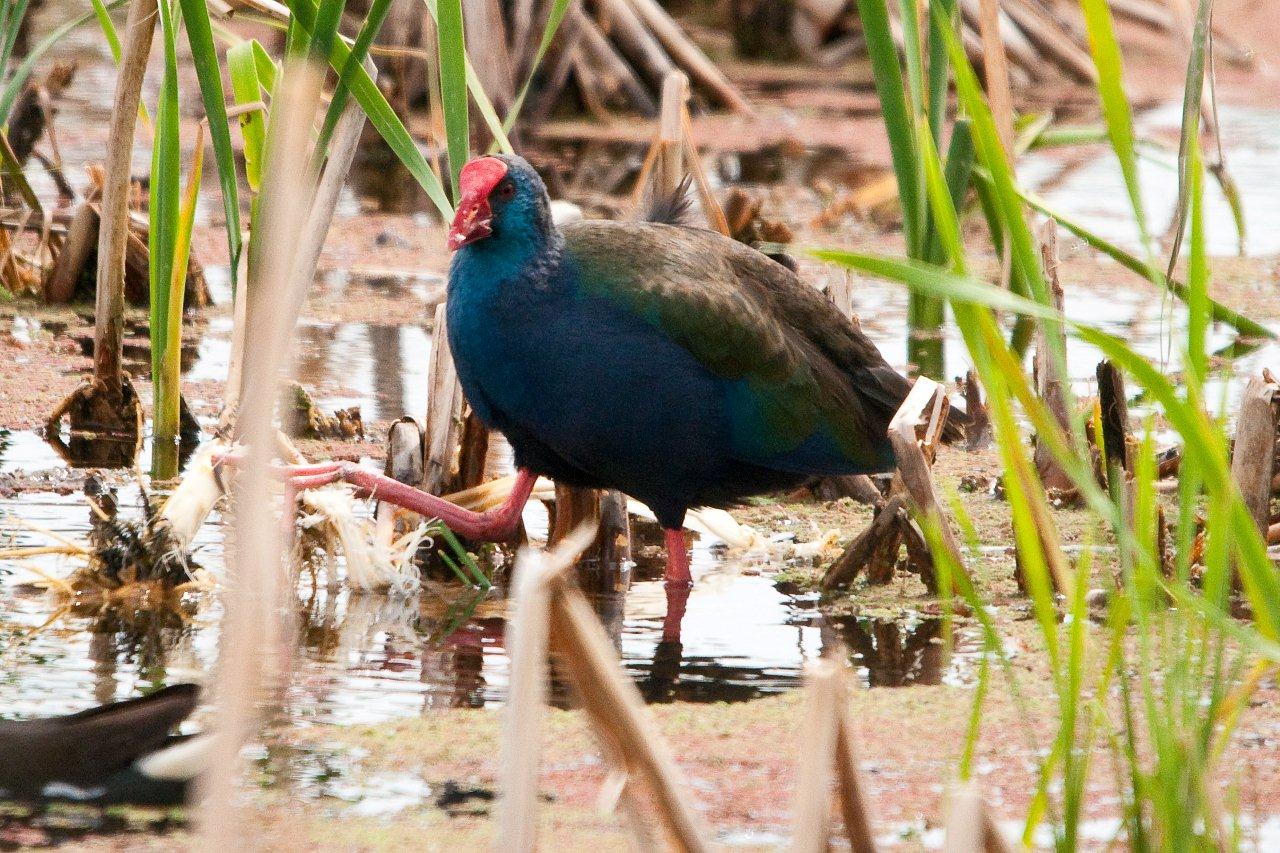
Exploring the wetlands on foot we found African Swamphen and then the ‘bird of the day’ – Lesser Moorhen

African Purple Swamphen

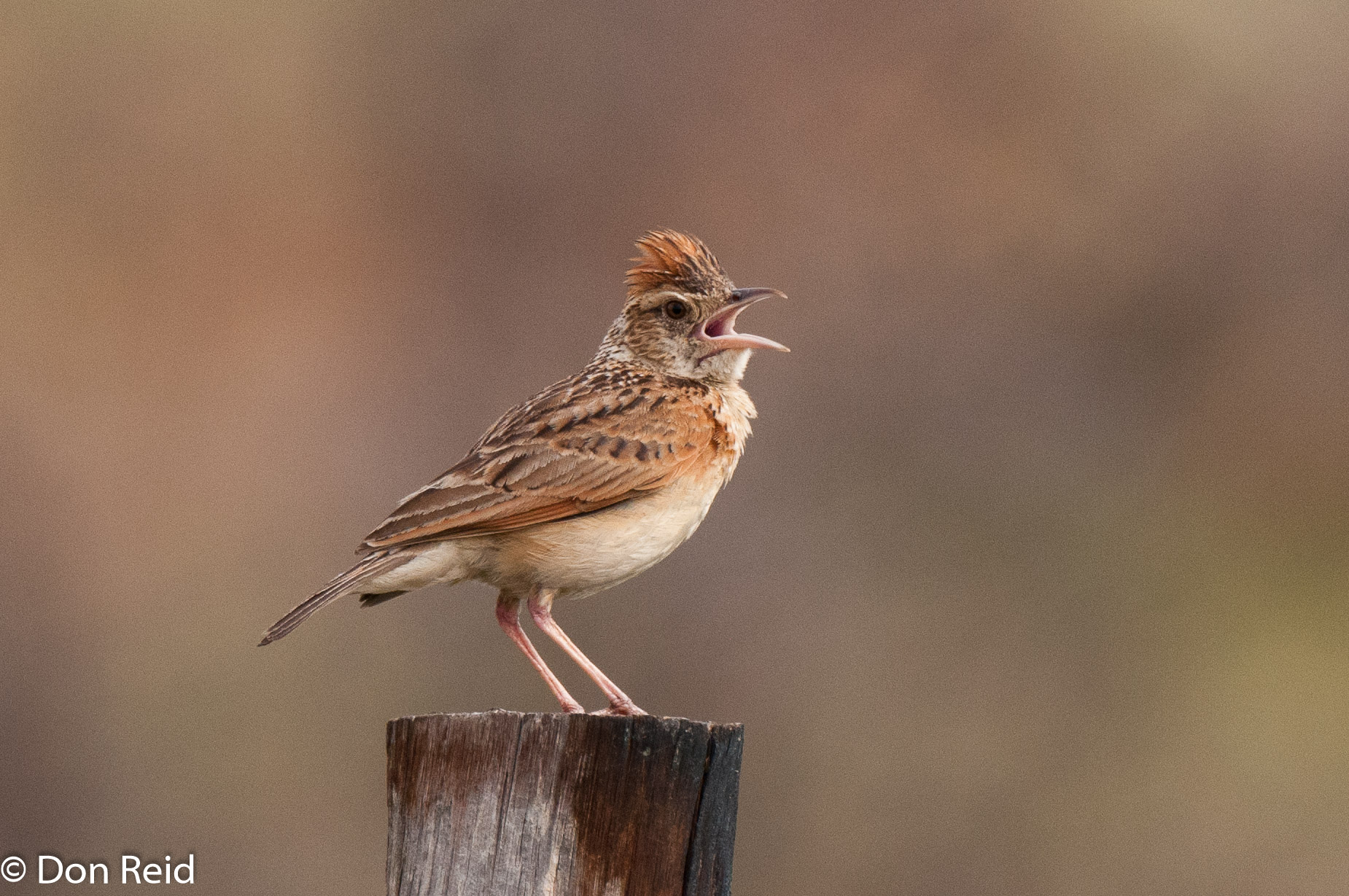
Zaagkuildrift road starts with grasslands on both sides and we quickly picked up Rufous-naped Lark, Northern Black Korhaan and Desert Cisticola, followed by Wing-snapping Cisticola, which performed a display flight in front of us.

Rufous-naped Lark

Total species : 98 after 4 hours

Zaagkuildrift Road to Kgomo-Kgomo (Hour 5 & 6)

Zaagkuildrift road requires slow progress to make the most of the birding on offer, which is plentiful and to be found in the road, at puddles, in the roadside bush and trees, on the fences, in adjoining fields and even in the air.

It was still just 7.36 am when we passed 100 species and our spirits were high. But we had seen many of the common species by now, so the tempo of adding new species was bound to slow down, evidenced by the rate of new species per hour slowing from our initial 35 per hour to 23 in hour 5 and then just 10 in hour 6.

We stuck to the ‘main’ road which despite being a gravel surface is in good condition, our only deviation being the side road which birders know as “Crake Road” – we had progressed about half a km along this road when we came upon a bakkie (utility vehicle) standing in the middle of the narrow road with some agitated looking farm personnel peering underneath. Clearly it was going nowhere for an indeterminate time so we had to abandon any further exploration of the road and reversed out (no room to turn) and continued along the main route.

Highlights :

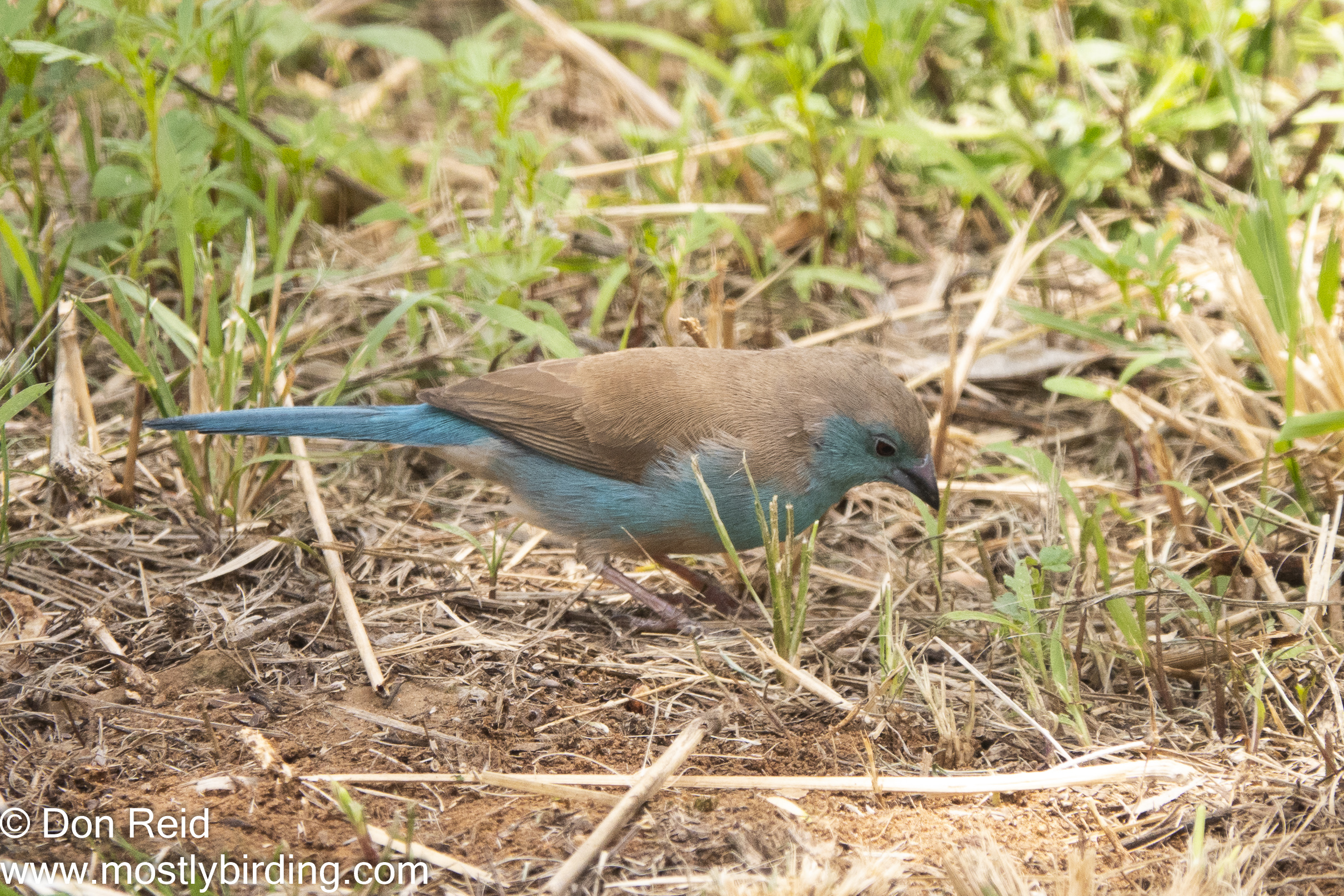
Plenty of the typical “bushveld” species were present, including 3 species of Waxbill (Blue, Black-faced and Violet-eared) plus a few similarly small birds such as Green-winged Pytilia, Burnt-necked Eremomela, Jameson’s Firefinch and Neddicky

Blue Waxbill (Uraeginthus angolensis / Gewone blousysie)

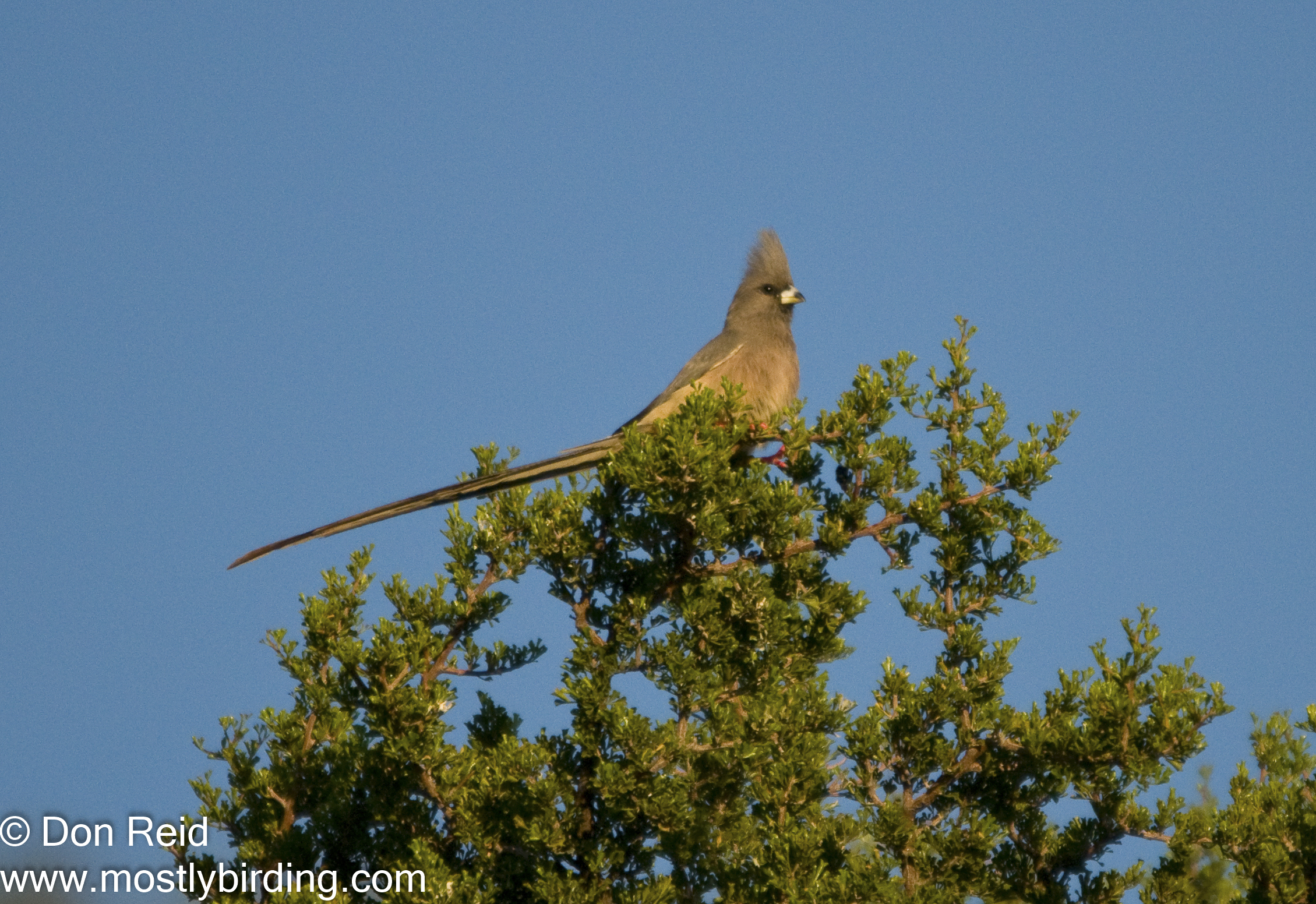
Marico and White-bellied Sunbirds seen within minutes of each other

Marico Sunbird

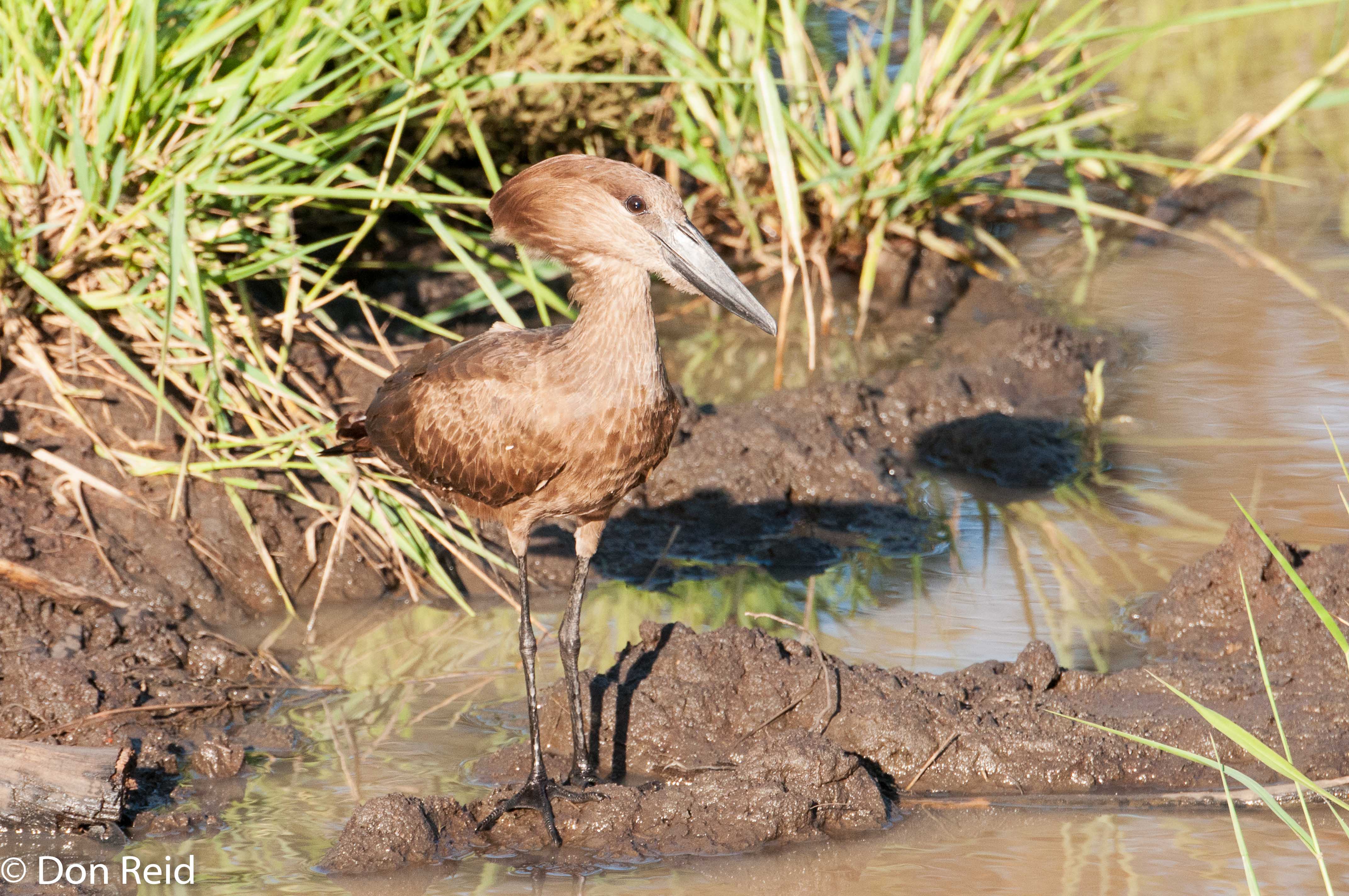
Hamerkop at the spruit on Crake Road – the only species we added on this road

Hamerkop patiently waiting for prey

Total species : 131 after 6 hours

It was still only 9.30 am with a lot of day left, so we were feeling optimistic about reaching our target. However we knew that the dreaded “middle of the day” lull lay ahead and weren’t going to count our chickens – or birds – before they hatched, as it were.

More about that in the next post!

Atlasing – September 2020 : Lushof Lodge

Continuing the monthly look at where Atlasing, or Birdmapping as it is also known, took me in September 2020 – in this case using an overnight stop to make the most of the birding on offer…

Heading home – at last!

After more than 5 months in Mossel Bay – a lot longer than our initial plan of 3 to 4 weeks – we decided to return to our other “home” in Pretoria. Mossel Bay’s charm and many advantages had worked their way into our minds and it was with some reluctance that we headed northwards, but Covid-19 had kept us away from our main home for too long and we knew it was time to get back.

We set off on a Friday, fully loaded, around 9 am and travelled the familiar route via George, Graaf-Reinet and Colesberg to our overnight accommodation at Lushof Lodge, some 50 km beyond Colesberg. Along the way we enjoyed take-away coffee and a picnic lunch – all part of the “new normal” way of doing things.

Lushof Lodge, which we last visited in January 2011, was as we remembered – set on a farm with a stream running through, lined with verdant growth. The accommodation was a comfortable cottage which we had all to ourselves, set on a hill overlooking an expanse of fields and veld and we were well looked after by Lise, the bright and friendly hostess and her staff.

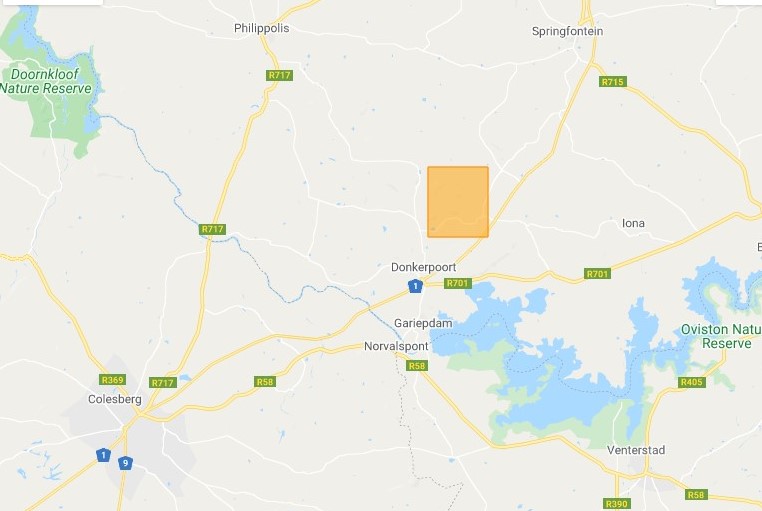
The orange block shows the location of the pentad which includes Lushof Lodge, about 50 kms north-east of Colesberg

Lushof Lodge (Pentad 3025_2530)

By the time we had settled in and acquainted ourselves with the cottage, it was 5.30 pm and there was just enough time for a birding walk down to the stream, which forms a small dam on one side of the entrance road and a wetland covered in reeds on the other.

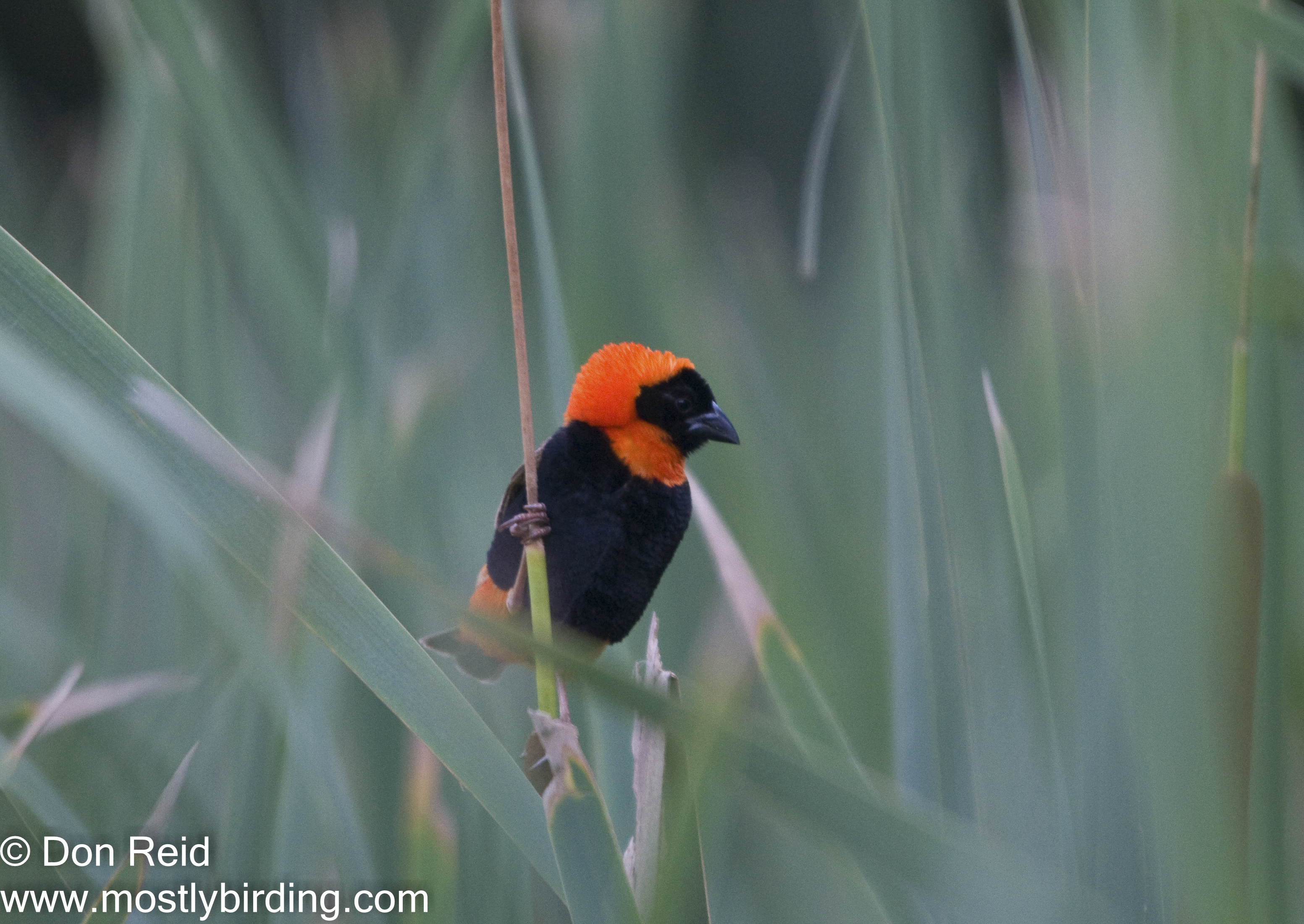
The dam was good for Common Moorhen while the wetland held a few African Reed Warblers, with Red Bishops occupying the reeds and a Kurrichane Thrush exploring the edges. The tall trees alongside were home to a Cardinal Woodpecker, which first revealed its presence with a soft tok-tok-tok as he poked at the branches in search of some protein.

Southern Red Bishop, Lushof Lodge

Returning up the short hill to the cottage I scanned the slopes of the hill above it and soon saw Speckled Mousebirds moving in straggling fashion from tree to bush, then heard a Grey-backed Cisticola and quickly picked it up as it flitted from one low bush to another. For good measure a Blue Crane called but I could not track it down in the gathering dusk.

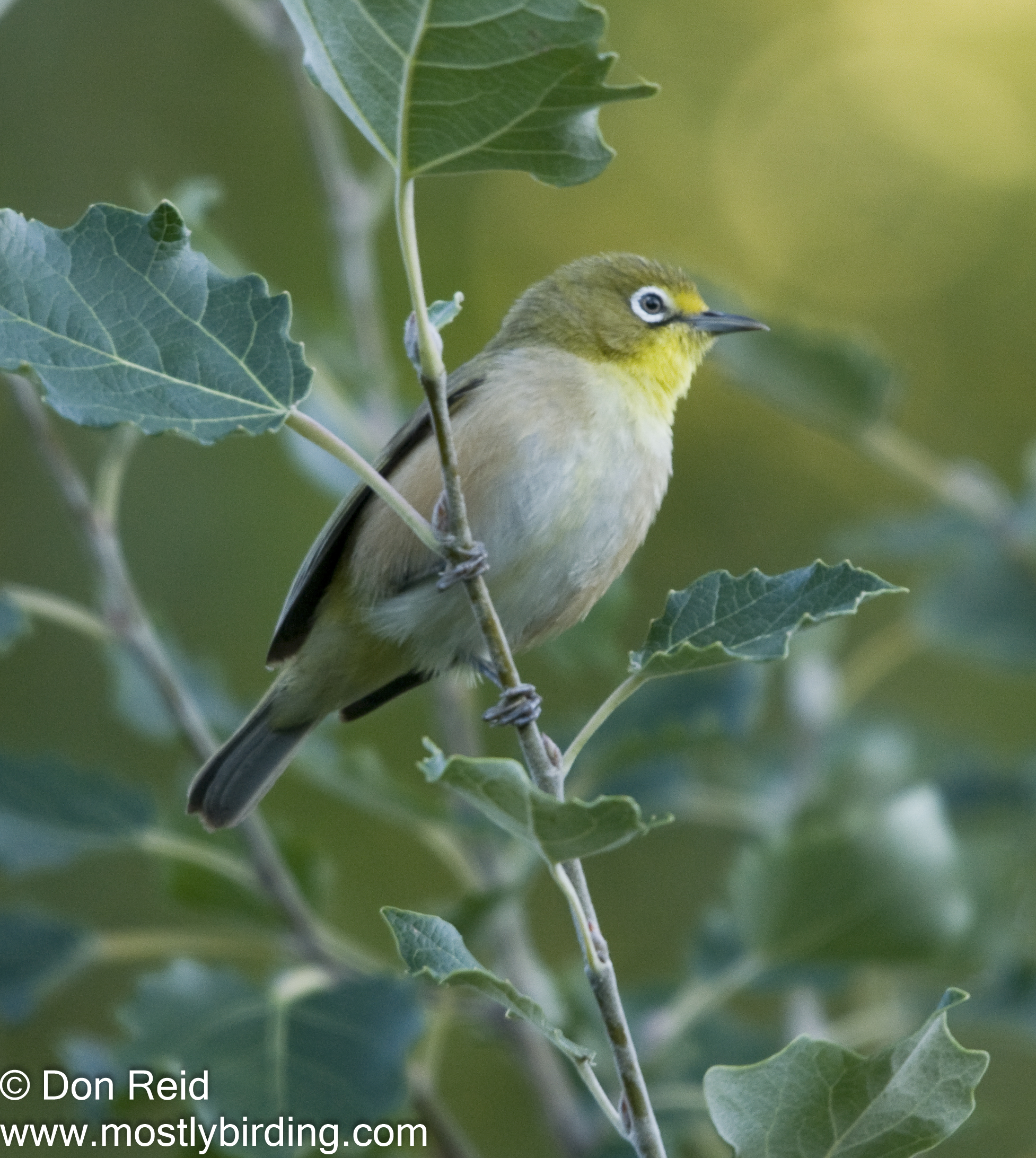
Orange River White-eye, Lushof Lodge

That seemed to be it for the day and a bit later we settled down to a hearty Karoo lamb meal, brought to the cottage by Lise and her daughter. But there was one more surprise later on – when I peered outside briefly just before going to bed, a Rock Martin roosting under the roof overhang stared back at me and became species 20 on my pentad list .

Saturday Morning 5 September

An early night meant I could get a good night’s rest and still be up at 6 am to have a coffee in the crisp morning air outside our cottage, while adding to the previous afternoon’s list.

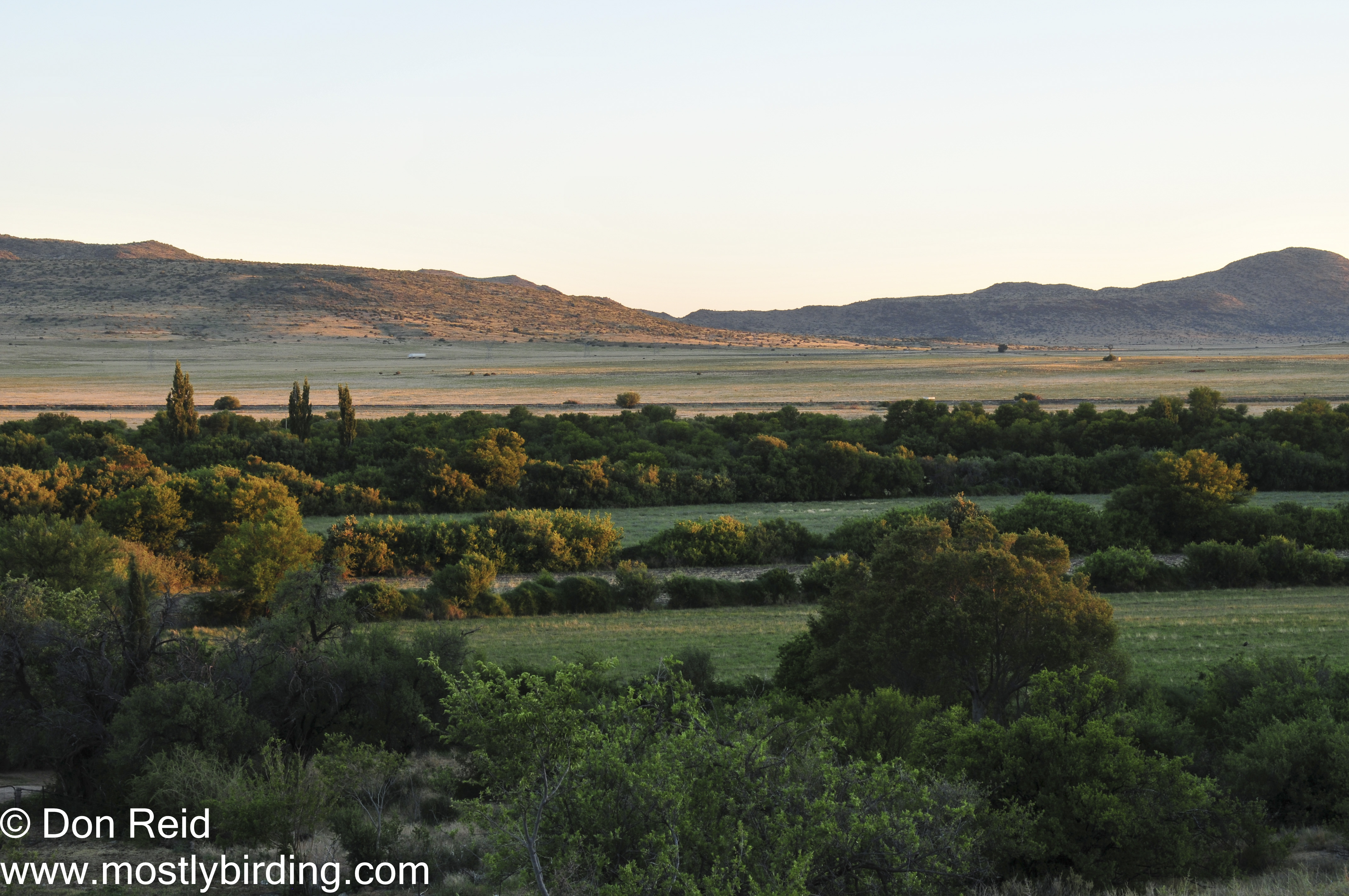
View from Lushof lodge

I was able to add another 9 species before heading off on a lengthy walk around the farm, including Cape Bunting, Yellow Canary, a calling Brubru (also widely known as the “telephone bird” because of its trilling, repeated call) and a Familiar Chat doing its ‘familiar’ sequence of perch, fly down to the ground, catch something small and return to the perch with a couple of wing flicks straight after landing.

Familiar Chat

Venturing away from the farmstead, I followed a track along the stream and heard two very different birds – first a Lesser Swamp Warbler hidden somewhere in the dense riverine vegetation, then a Blue Korhaan greeting the new day from somewhere up ahead. From the latter call I guessed the habitat must open up further on to be suitable for the latter species – indeed it did a couple of hundred metres further, affording an expansive view across fields and plains, but there was no sign of the Korhaan, which had probably moved on or concealed itself in the grass (which they are masters at doing)

Lushof Lodge

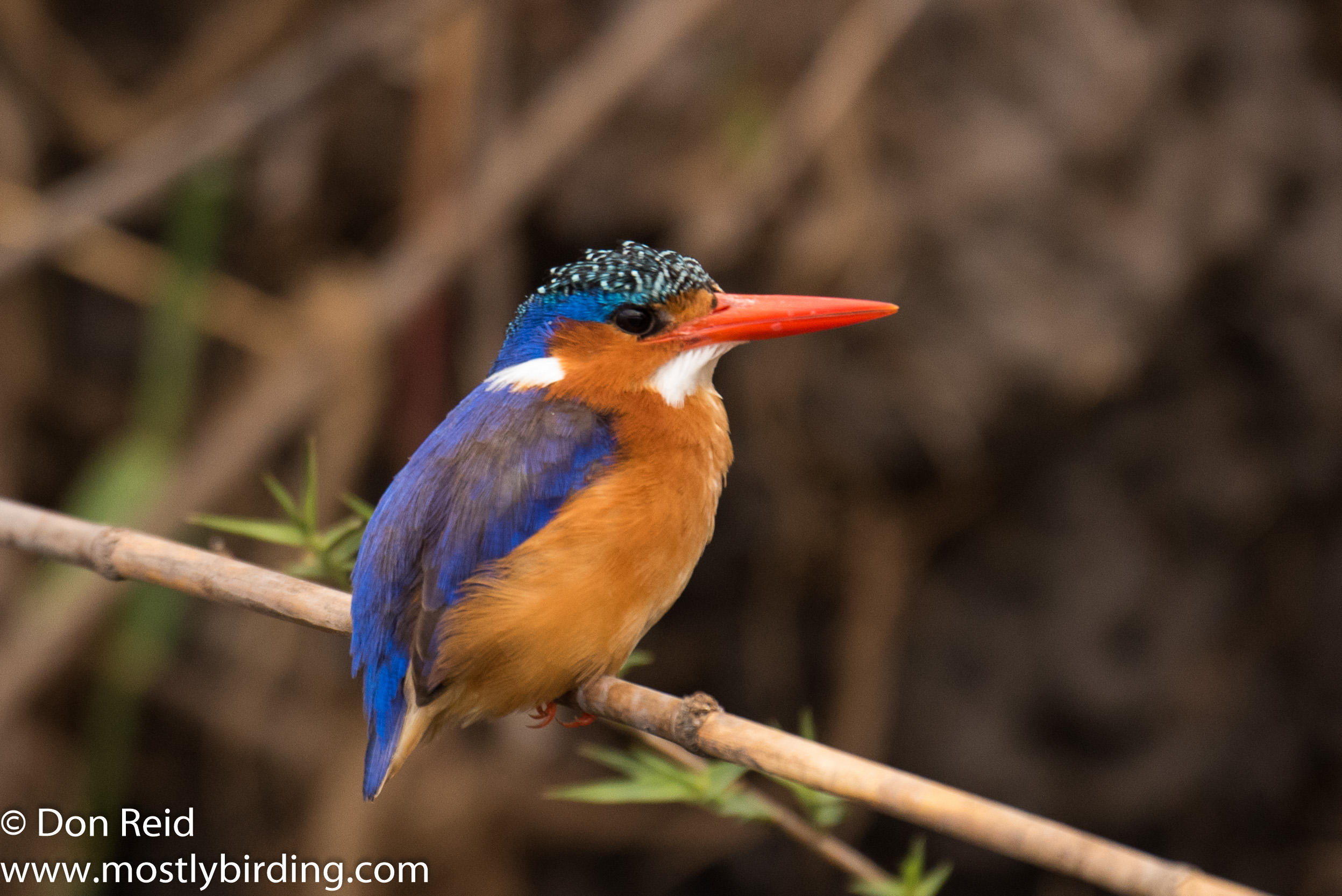
I headed back to spend some time in the lush area close to the farmhouse, with the river and wetland as focus points. Common Starlings and a Cape Wagtail caught my attention and then a flash of colour signaled the arrival of a Malachite Kingfisherin an overhanging tree, ready to spot and dive for a small fish, frog, crab or insect.

Malachite Kingfisher

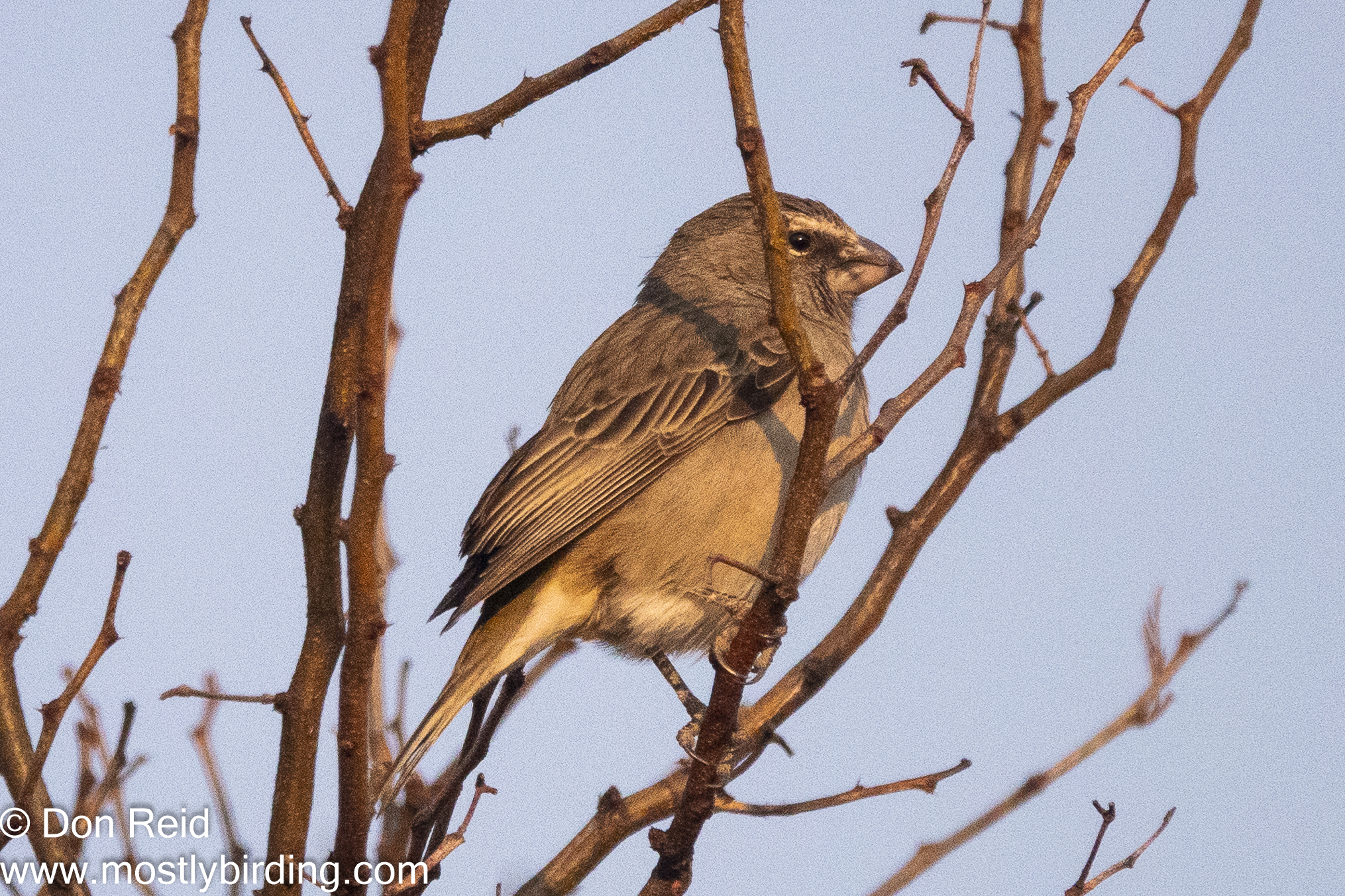
Before returning for breakfast, which we had arranged to be brought to the cottage at 8 am, I had a look around the area beyond the stream and soon added Chestnut-vented Warbler (Titbabbler) and White-throated Canary. I tried to capture the latter species on camera as I knew it was a different sub-species (orangensis) from those I am used to seeing in the Southern Cape. I had limited success getting a clear photo, but they were better than nothing.

White-throated Canary (Crithagra albogularis / Witkeelkanarie) (race orangensis), Lushof Lodge

By the way if you think it’s a bit extreme not being satisfied with photographing bird species but trying to photograph all the subspecies as well, I confess I have had this “collectors” affliction since a young age and it seems to be getting worse….

After a substantial breakfast (to see us through the last day’s driving, you know) it was time to pack the car one last time, while still keeping an eye out for any birds to add. Fortunately so, as a Booted Eagle and a pair of SA Shelducks flew overhead within minutes of each other.

Booted Eagle, Lushof Lodge

On the road out we picked up Namaqua Dove and White-backed Mousebird, the dam near the highway held Blacksmith Lapwing and the adjoining grass boasted an Eastern Clapper Lark, giving us its version of goodbye as it performed its display flight in the air.

White-backed Mousebird, Lushof Lodge

The Stats

We left with a total of 48 species recorded which, considering the time of year, is a good indication of the quality of Lushof Lodge as a birding spot.

Of special note – this was only the third full protocol card completed for this pentad in 10 years, the previous two having been done by myself and Koos Pauw in 2010/11. A very under-atlased pentad!

11 new species were added to the pentad records –

  1. Brubru
  2. Cape Bunting
  3. Grey-backed Cisticola
  4. Blue Crane
  5. African Hoopoe
  6. Malachite Kingfisher
  7. Blue Korhaan
  8. Karoo Prinia
  9. South African Shelduck
  10. House Sparrow
  11. Chestnut-vented Warbler (Titbabbler)