Tag Archives: nature-photography

West Coast Wanderlust – Flowers, Birding and Small Towns (Part 2)

The Plan (Repeat from Part 1)

“Let’s do the flowers again” – I can’t recall whether it was me or Gerda that raised the thought earlier this year, but the immediate answer was “Yes!”

Translated, that means we were both keen to “do” the famed Spring flowers that bloom during August and September in parts of South Africa, in particular the West Coast and Namaqualand areas of our country.

With that decision made, we set about planning and booking a 14-night trip for the last two weeks of August, which would take us to some of the prime flower spots of the West Coast and Namaqualand during what we hoped would be the peak of the flower season

The plan we came up with looked like this –

  • 2 nights in Welbedacht Nature Reserve near Tulbagh (Covered in Part 1) – not part of a recognised flower route, but a convenient stopover before heading northwards to Namaqualand
  • 3 nights in Nieuwoudtville, Northern Cape, with the prospect of visiting several interesting spots that we had missed during our only previous visit in 2013
  • 3 nights in Clanwilliam with attractions such as the Cederberg and Biedouw Valley nearby, as well as Lambert’s Bay within an hour’s drive
  • 3 nights in Darling, not part of our previous itineraries, brimming with possibilities, and finally..
  • 3 nights in Paternoster on the coast, a place that we have got to know from a couple of previous visits and not far from the West Coast National Park

Day 3 – Welbedacht Nature Reserve to Nieuwoudtville

With a 290 km journey ahead, we did not have to rush and left at the “check out by” time of 11 am, sad to leave this piece of paradise with its constant birdsong and not another soul seen except a glimpse of the people in the neighbouring cottage on our way in.
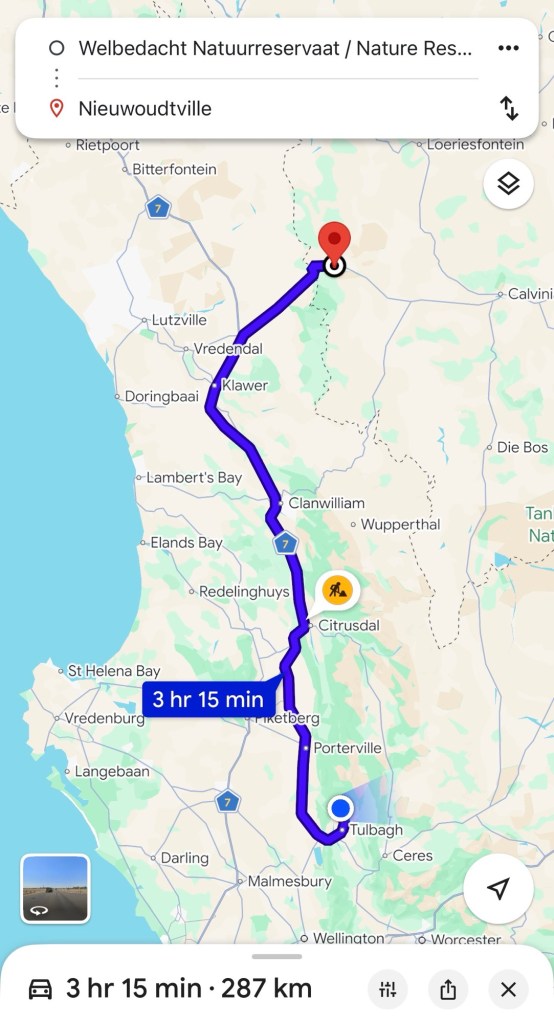
The route

The weather was fine and warm, the roads quiet, so we had a relaxed drive and time to stop a few times. The route took us through farming areas of the Swartland and small towns such as Gouda and Porterville, then onto the N7 national road northwards all the way to Vanrhynsdorp.
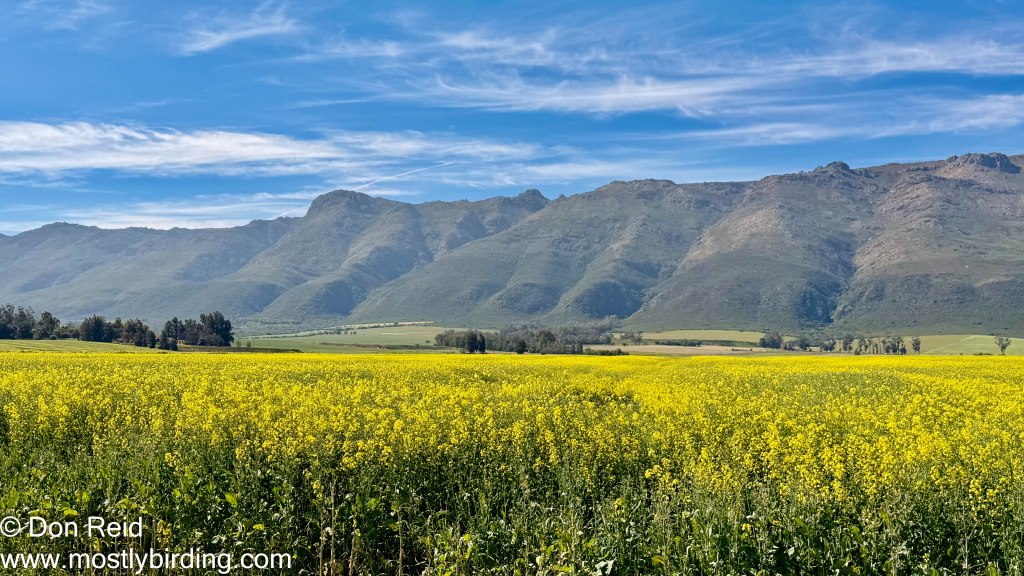
Canola fields near Porterville

Our stops along the route were –

  • Kole & Deeg Coffee shop in Tulbagh – for take away coffees and four of the superb Pasteia de natas we knew from an earlier visit
  • Kardoesie Padstal in the Piekenierskloof Pass for quiches (tonight’s supper) and some other goodies including Weskus Pinotage and Rose wines.

At Vanrhynsdorp we branched off the N7 towards Nieuwoudtville (the locals pronounce it Nee-oat-ville) and for the next 40 kms drove the road across the flat semi-arid landscape known as the Knersvlakte – which translates literally to “gnashing plain”.

The Afrikaans name describes the loud crunching sound that early wagon wheels made when grinding over the hard white quartz gravel that covers the region’s terrain.
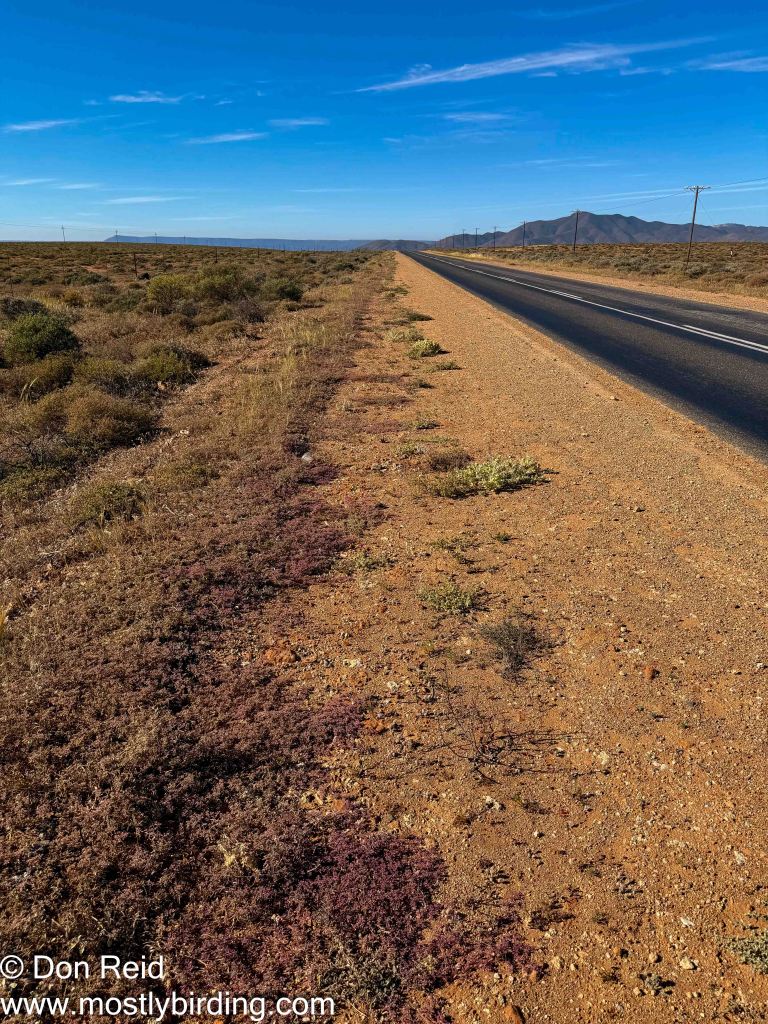
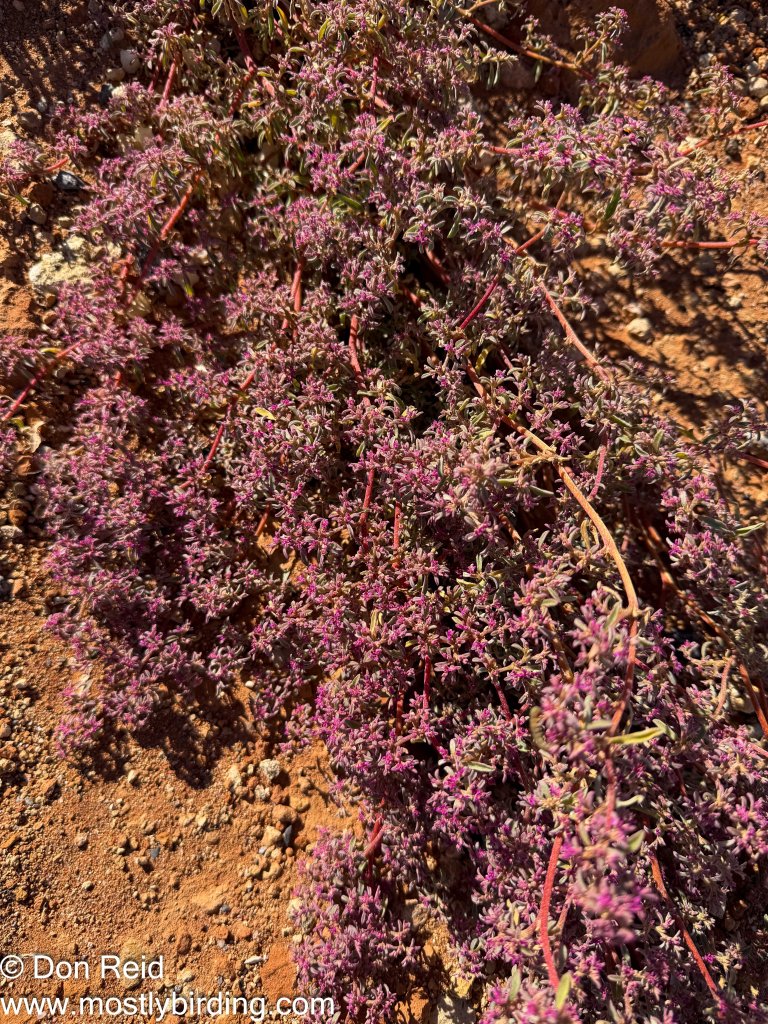
Vanrhynsdorp – Nieuwoudtville road
Vygies, Vanrhynsdorp – Nieuwoudtville road
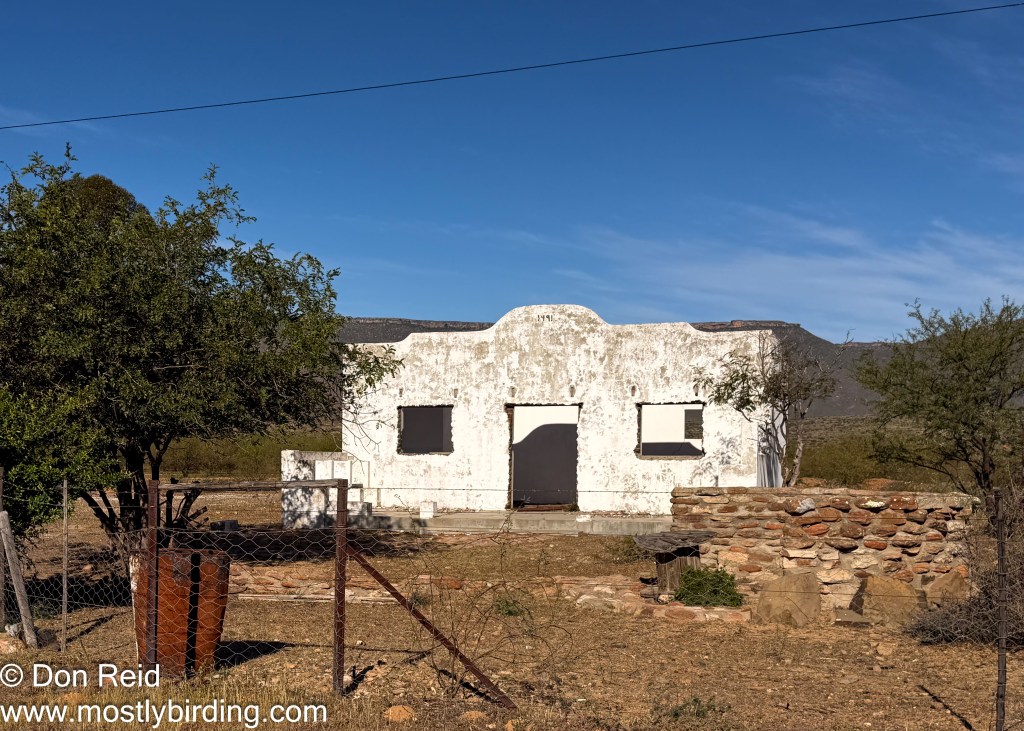
Abandoned farmhouse, Vanrhynsdorp – Nieuwoudtville road

Van Rhyns Pass, which connects the Knersvlakte with Nieuwoudtville, can be seen a long way off, presenting as a long rising gash across the face of the mountainside.
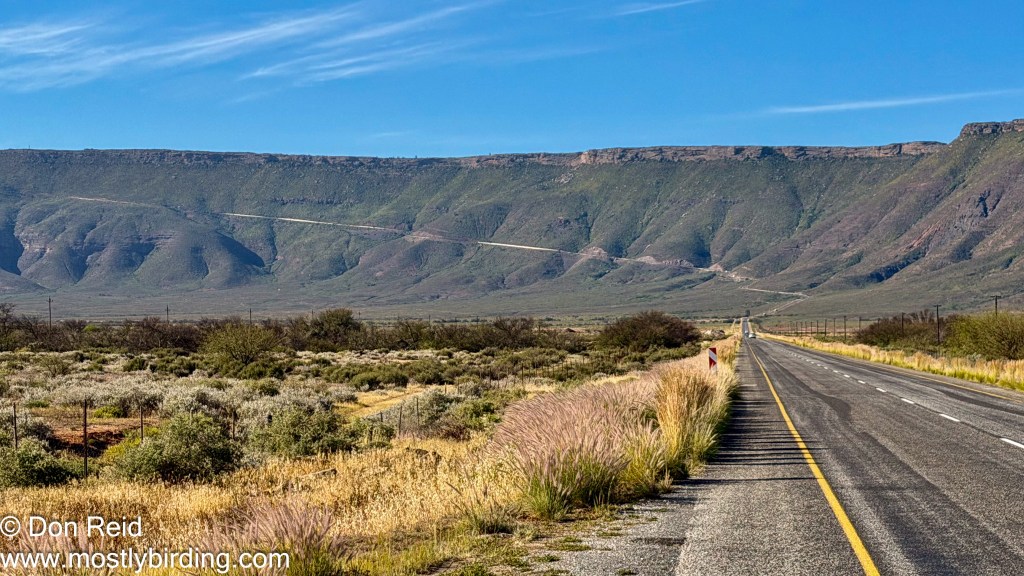
Van Rhyns Pass in the distance

We arrived at the curiously named Linda se Dop, the guesthouse we had booked for our three night stay in Nieuwoudtville, at 4.30 pm and were soon settled in after having to get our suitcases and bags, etc up a longish flight of stairs.
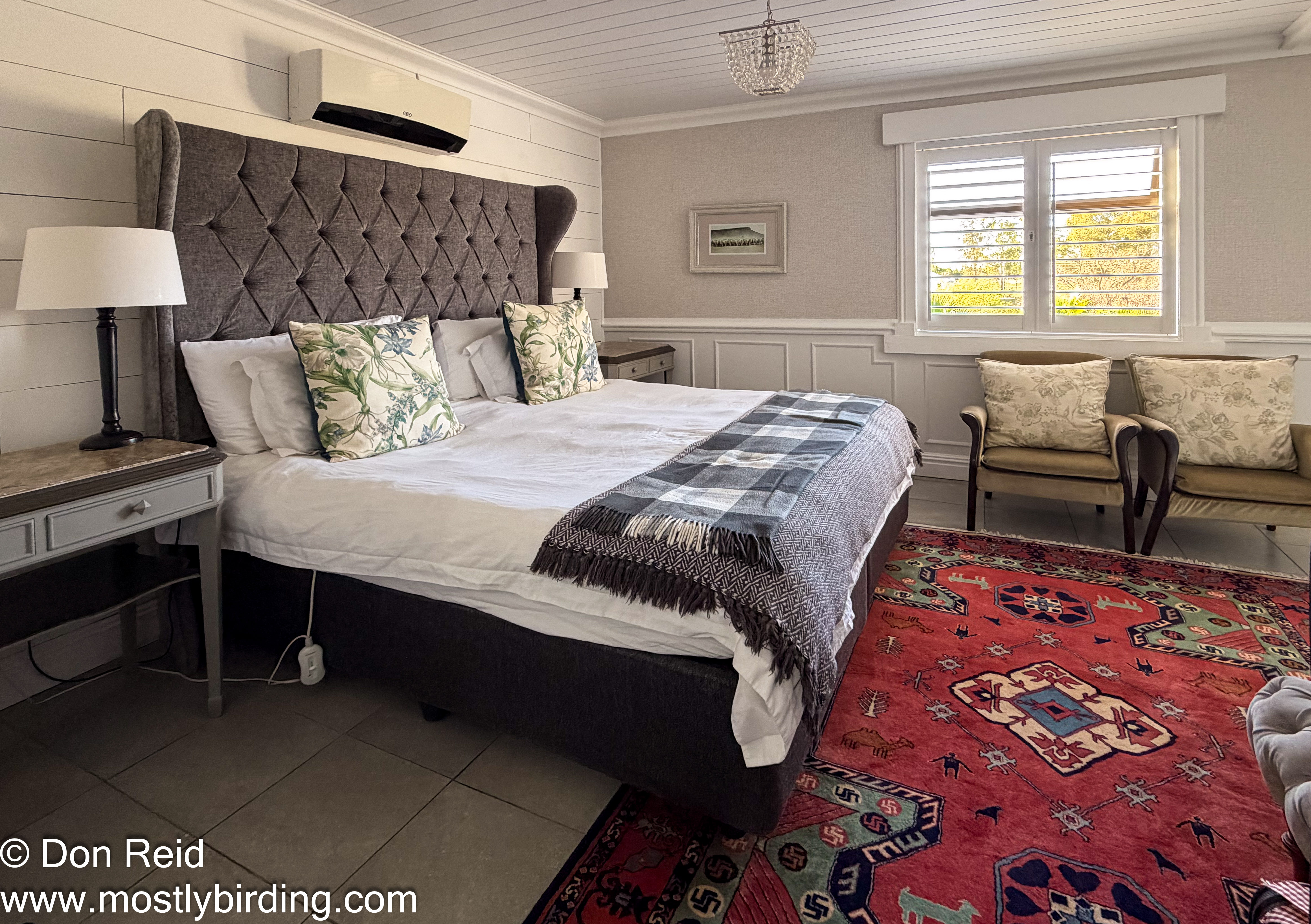
Linda se Dop Guesthouse, Nieuwoudtville

It was still warm, and I was feeling the exertion of getting our baggage to the room – what better way to cool down than a swim in the inviting pool. No other guests seemed interested and I soon found out why – the water was icy cold and it took a while before I was fully immersed. After a few lengths I climbed slowly out, my limbs feeling quite numb, yet it had the invigorating effect I had hoped for.

Following that, I went for a short walk in the vicinity of the guesthouse, which is located in a sparsely populated part of the town with large stands, and I was soon admiring the flowers I came across – mostly different from those we had found so far.
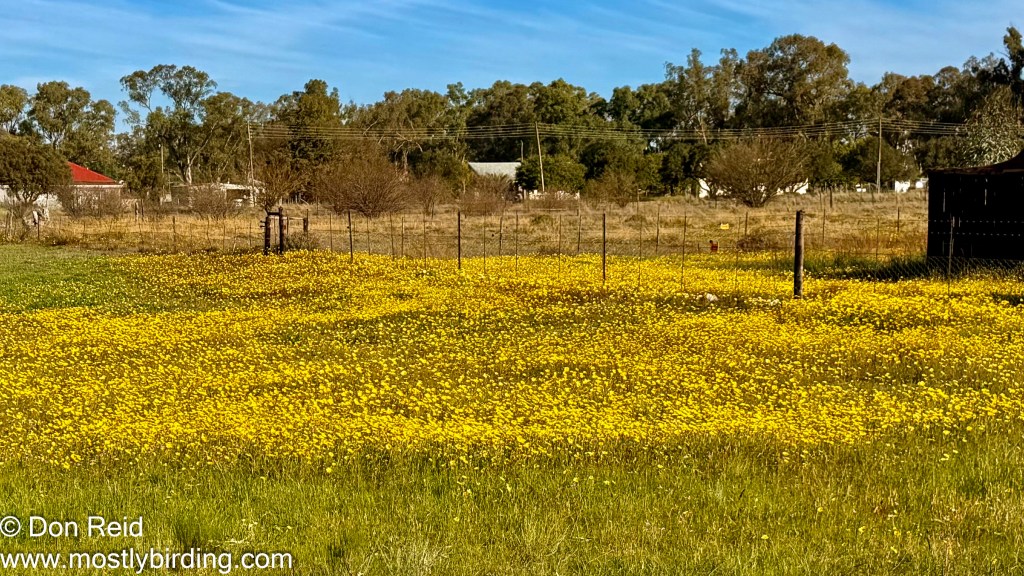
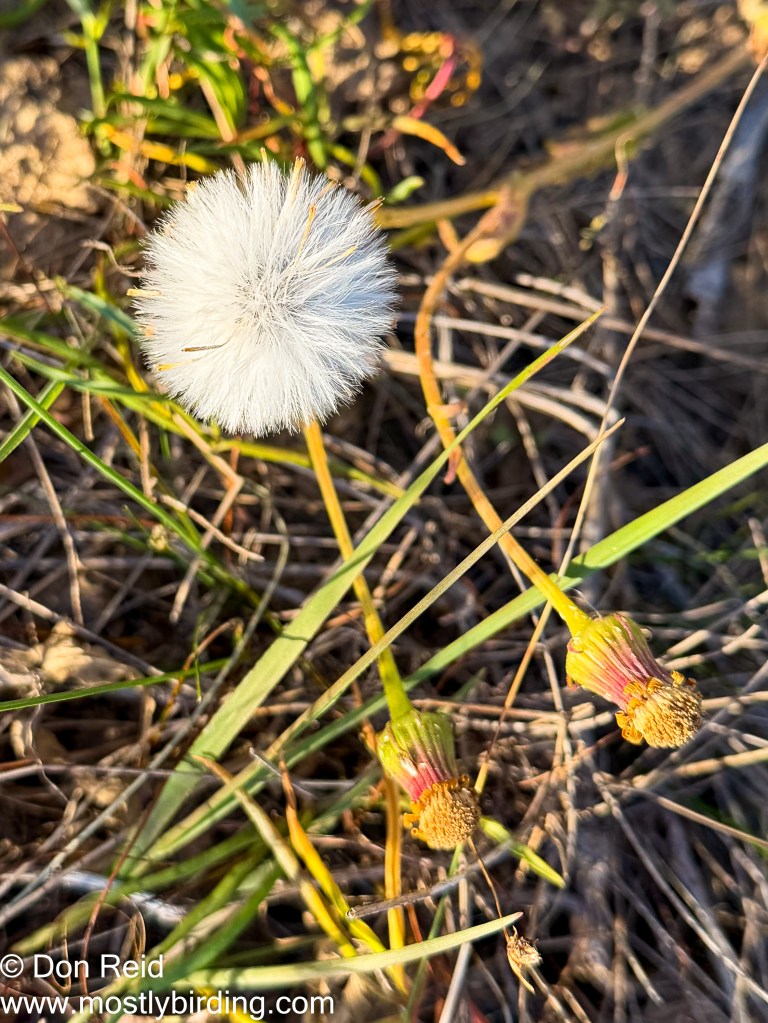
Nieuwoudtville flowers
Groundsel , Nieuwoudtville
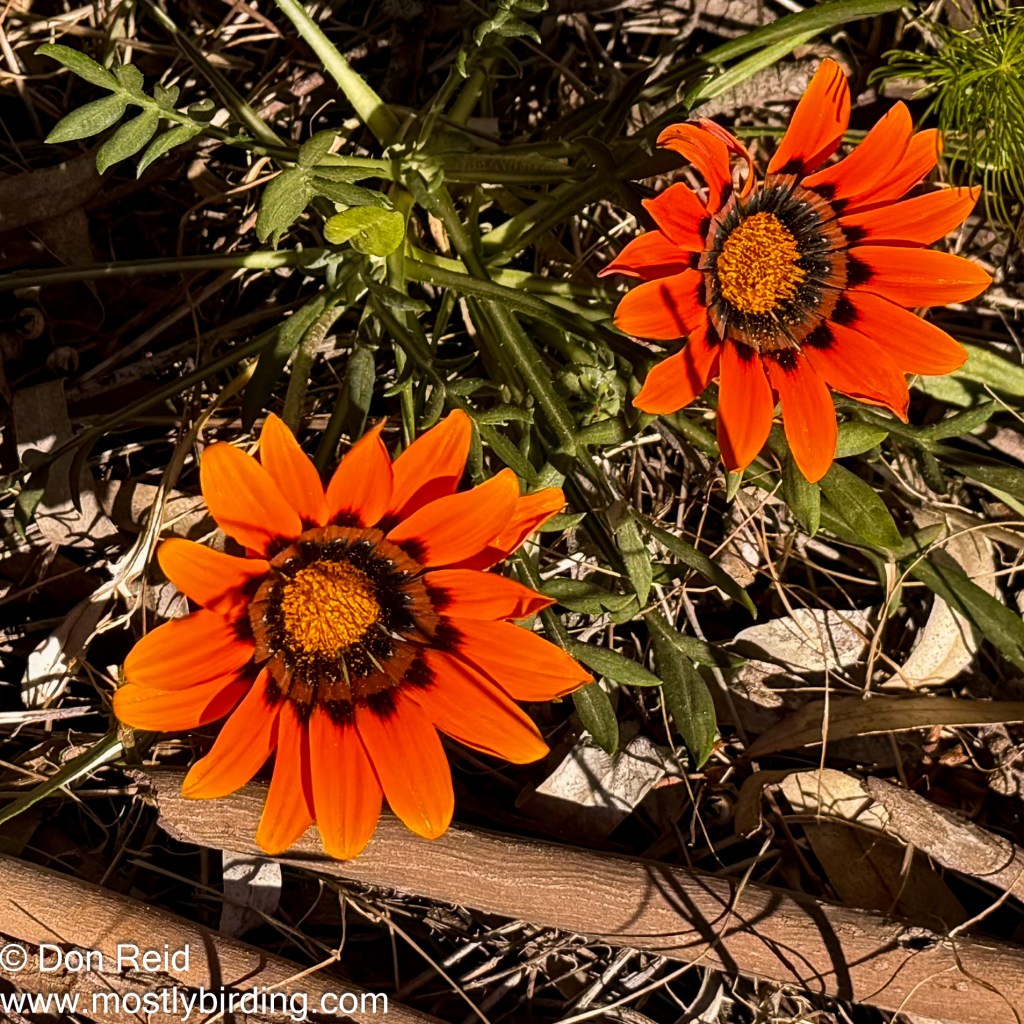
Gazanias, Nieuwoudtville

Supper was the quiche from Kardoesie padstal accompanied by the Weskus Pinotage which proved to be a good buy at R95.

Birding highlights

  • Birding highlight of the day was when Gerda shouted “STOP” just after Vanrhynsdorp – the reason for her urgency turned out to be a pair of Ludwig’s Bustards walking in the low scrub. This was only my second ever sighting of this species, the first was back in 2012 in the same area while touring the flower spots for the first time.

Day 4 – Nieuwoudtville: Quiver Trees, Flowers and a Waterfall

Our first full day in Nieuwoudtville was fine and warm, even hot at times, and presented an opportunity to see some of the sights that we had missed during our short visit in 2012.

Guesthouse owner Linda gave us a rundown of the recommended places to visit after a “gentleman’s hour” continental breakfast.

One of the pleasures of ‘doing’ the flowers is that the blooms are best viewed between 10 to 11 am and 4 to 5 pm, as they are fully open during those hours, providing it is not overcast. So there is no need to rush and relaxed breakfasts are the norm, followed by a slow drive along the day’s route.

Accordingly, we left the guesthouse after 11am and headed through town, then north along the road to Loeriesfontein, driving slowly enough to be able to spot flowers and birds, both of which were not plentiful at first, but every stop produced something of interest.
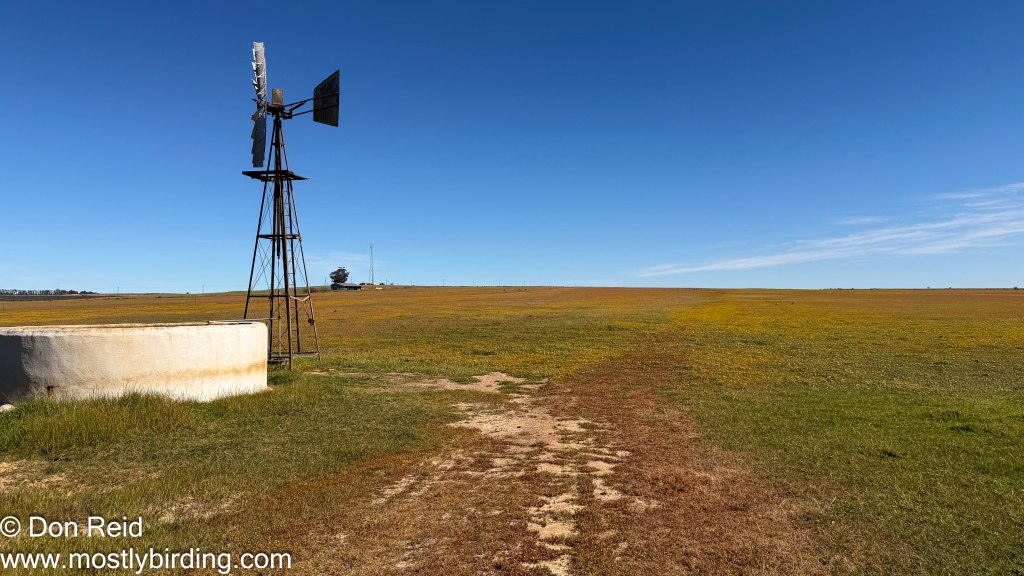
Farm alongside the Loeriesfontein road

The habitat changed from open farmland to Karoo scrubland and after about 20km we reached the turnoff to our first destination of Gannabos and, a few kms down a bumpy gravel road, the gate to the Quiver Tree Forest.
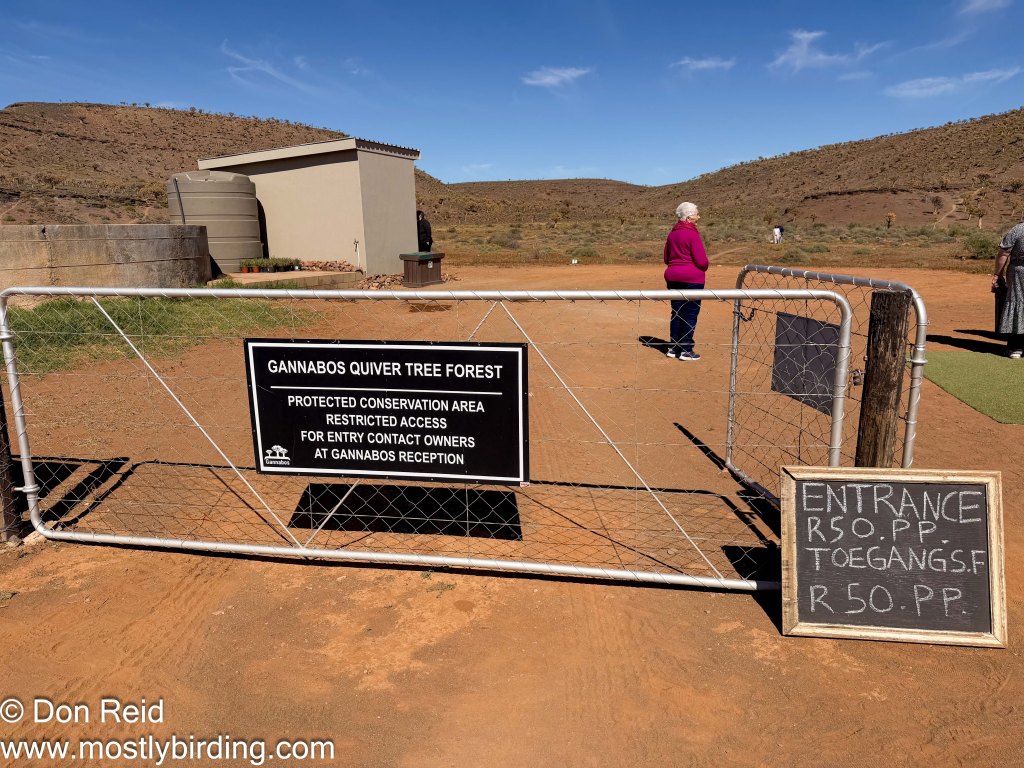
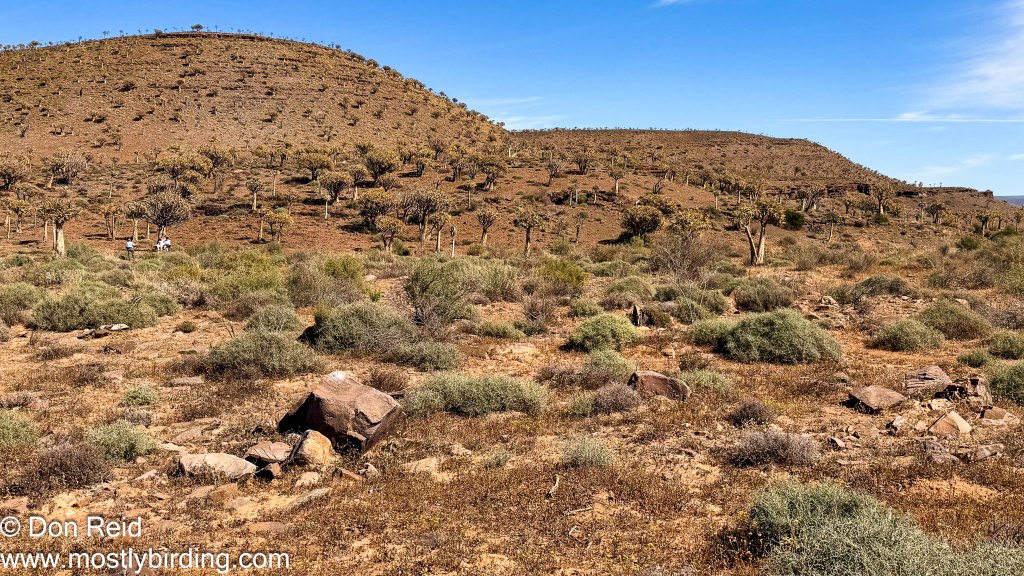
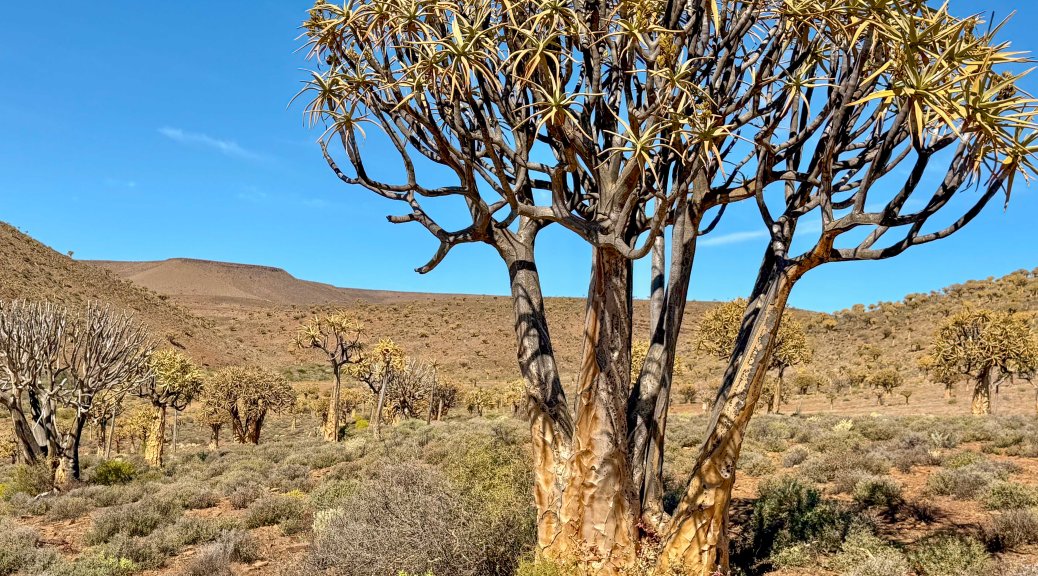
Gannabos – Quiver Tree Forest
Quiver Tree Forest, Gannabos

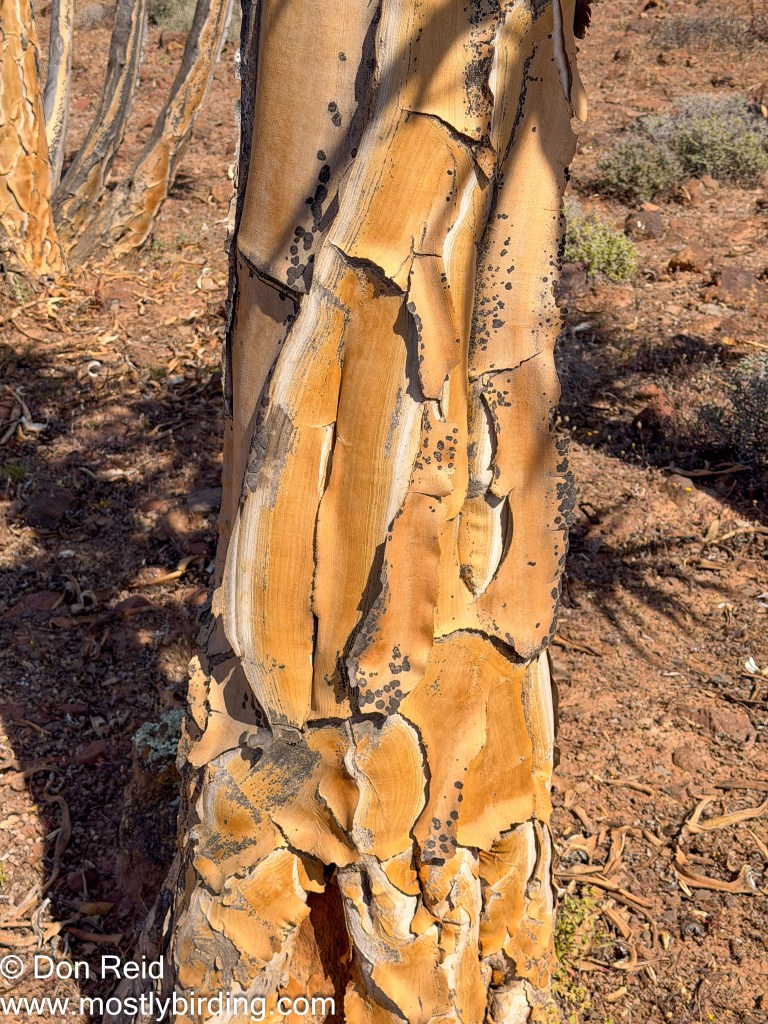
Gerda explored the area near the gate while I walked the narrow track to where the Quiver trees started and further to where groups of trees spread across the stony, hilly terrain, displaying their other-worldly form and bark.
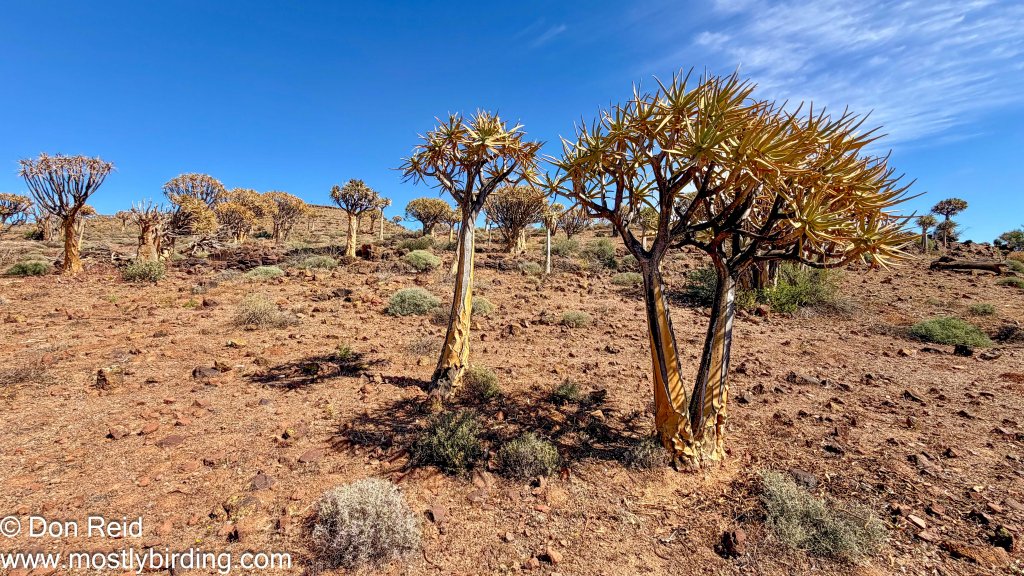
Quiver Tree Forest, Gannabos
Quiver Tree bark

Quiver trees clearly do not need much soil to grow -this one was clinging to the rock face like a professional rock climber
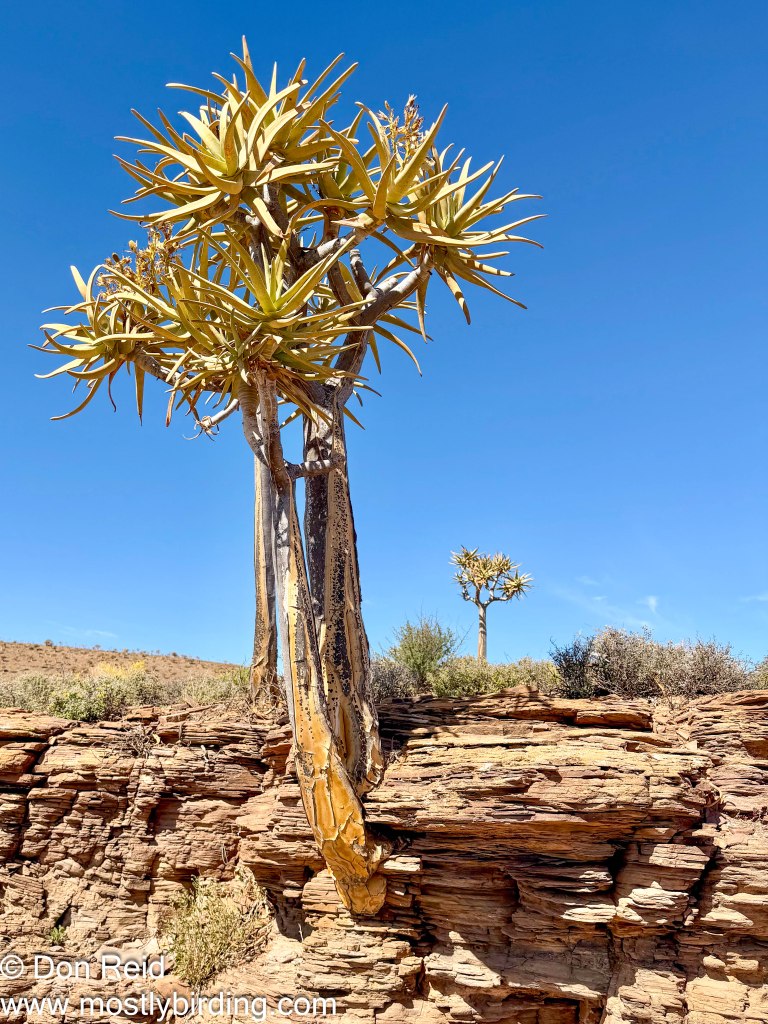
Quiver Tree Forest, Gannabos

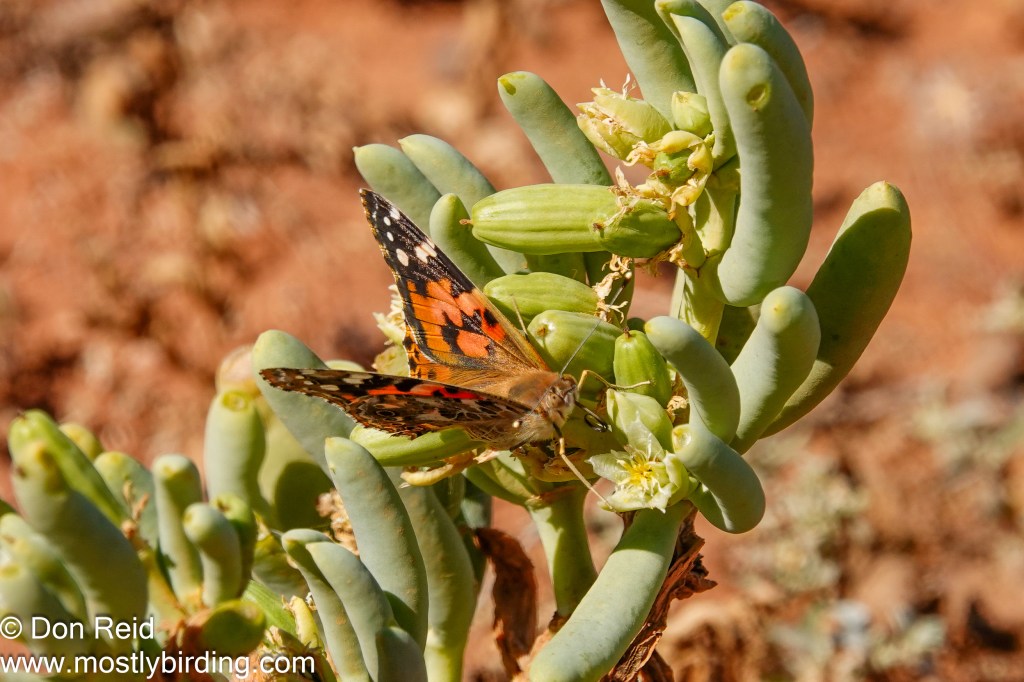
In between, the ground was sparsely covered with mostly nondescript plants but here and there were unusual succulents and vygies, some of which attracted butterflies coloured white, orange, and deep blue.

The most unusual succulent was the oddly named Willybush – now what prompted them to call it that?
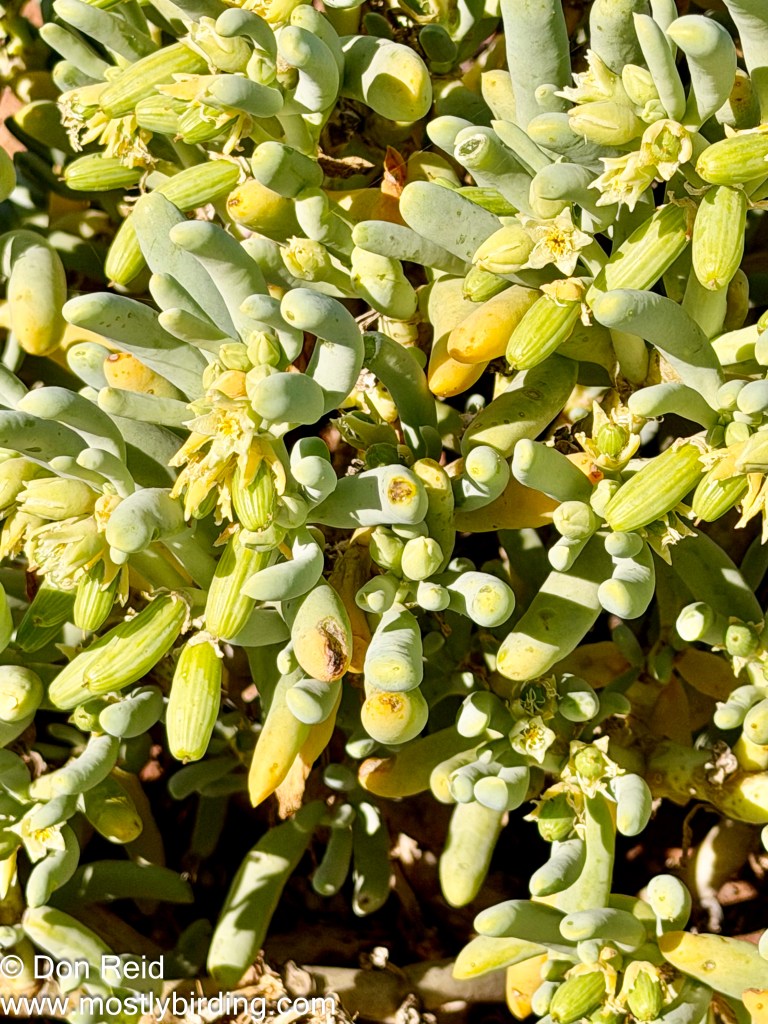
Willybush Augea capensis , Gannabos
Painted Lady butterfly vanessa cardui , Gannabos
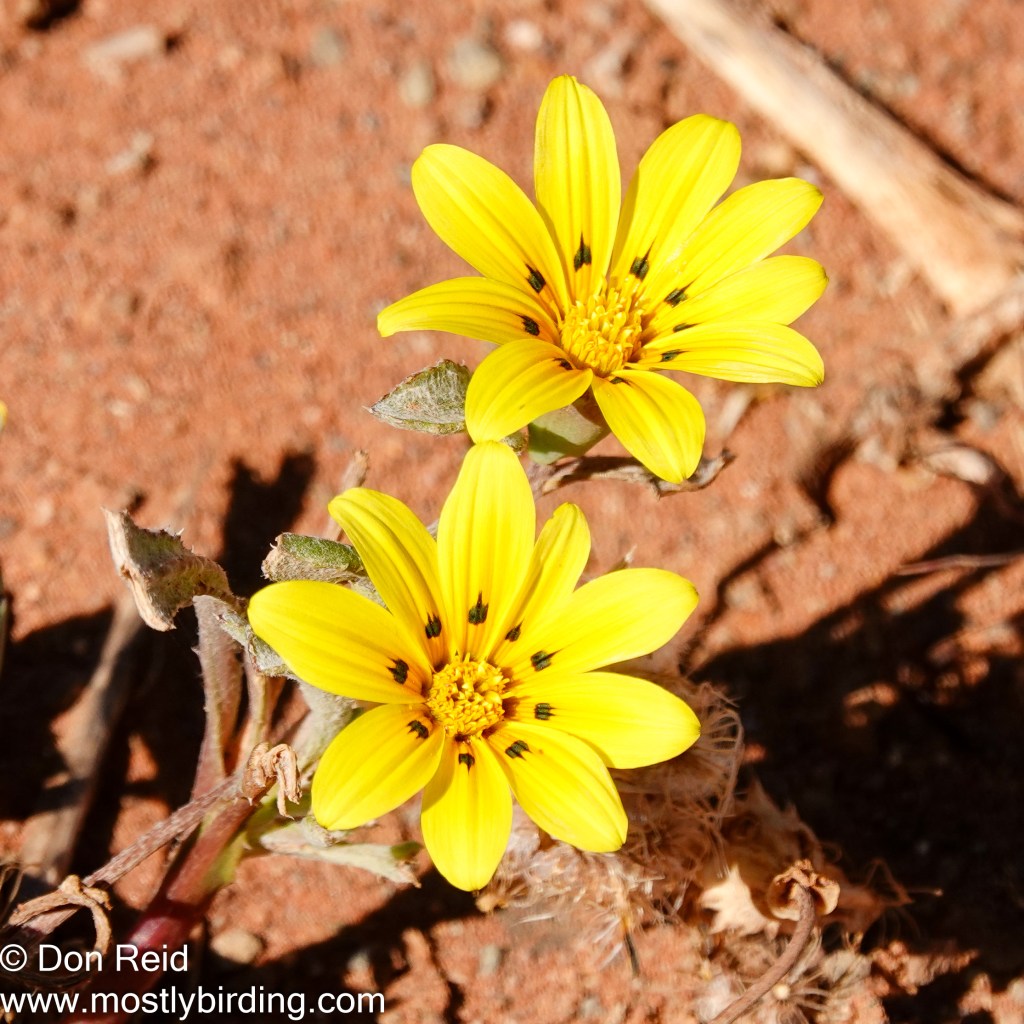
Yellow Gazania Gazania lichtensteinii, Gannabos
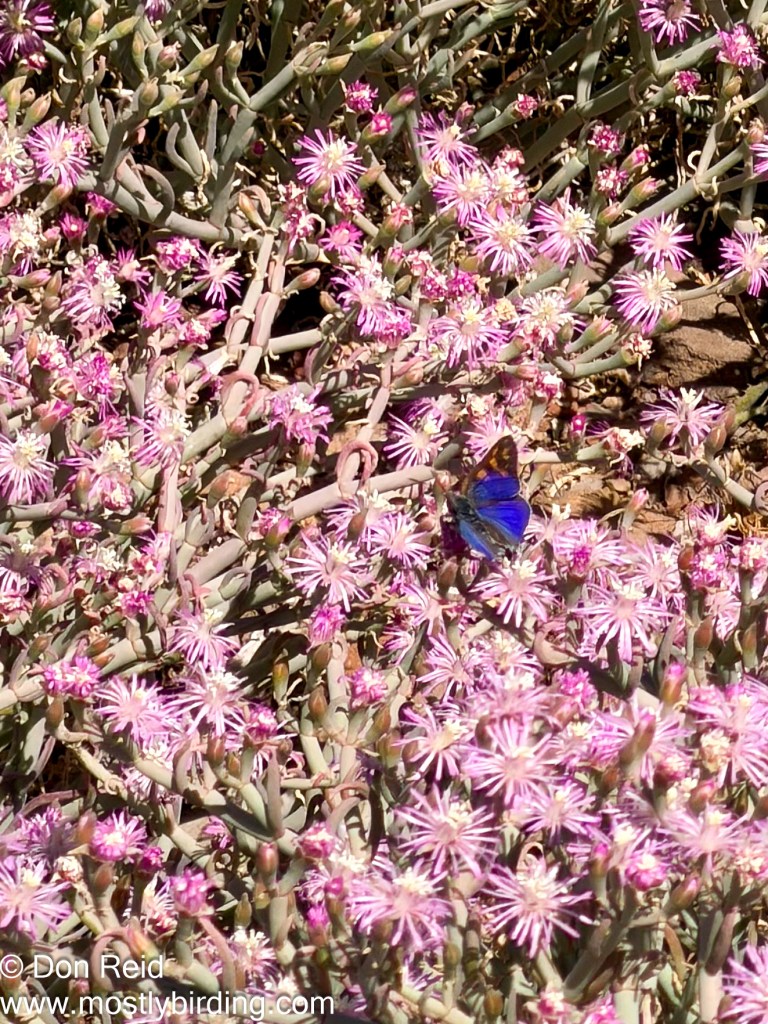
Vygies and a butterfly (possibly a Blue Pansy) Gannabos
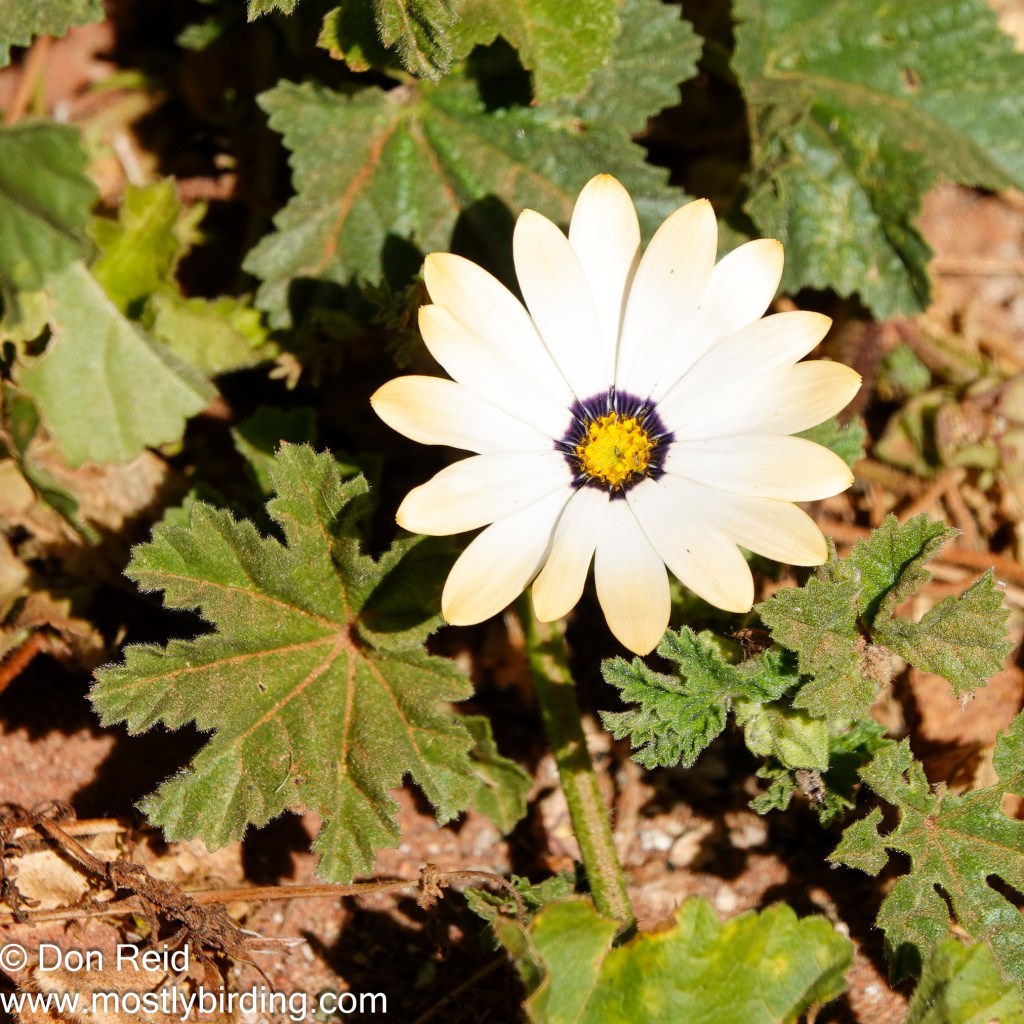
Rain Daisy Genus Dimorphotheca , Gannabos

Our next stop, on the way back, was at the Nieuwoudtville Waterfall reserve entrance, where a couple of locals were selling their wares from tables shaded by open tents – we succumbed to temptation and bought pancakes which we had straight away, plus home made iced rooibos tea and chocolate cookies for later.

The waterfall viewing point was a short walk along a track into the reserve, lined with interesting plants and flowers which attracted their share of insects and birds.
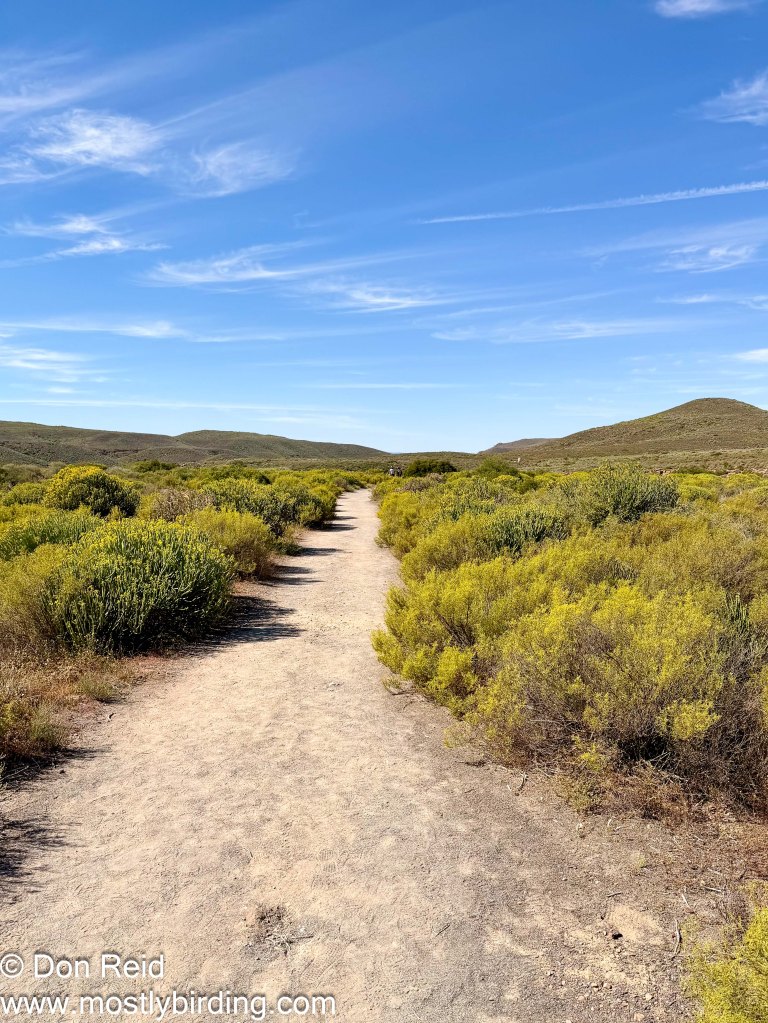
Pathway to the viewing point, Nieuwoudtville Waterfall, Klippe Rivier
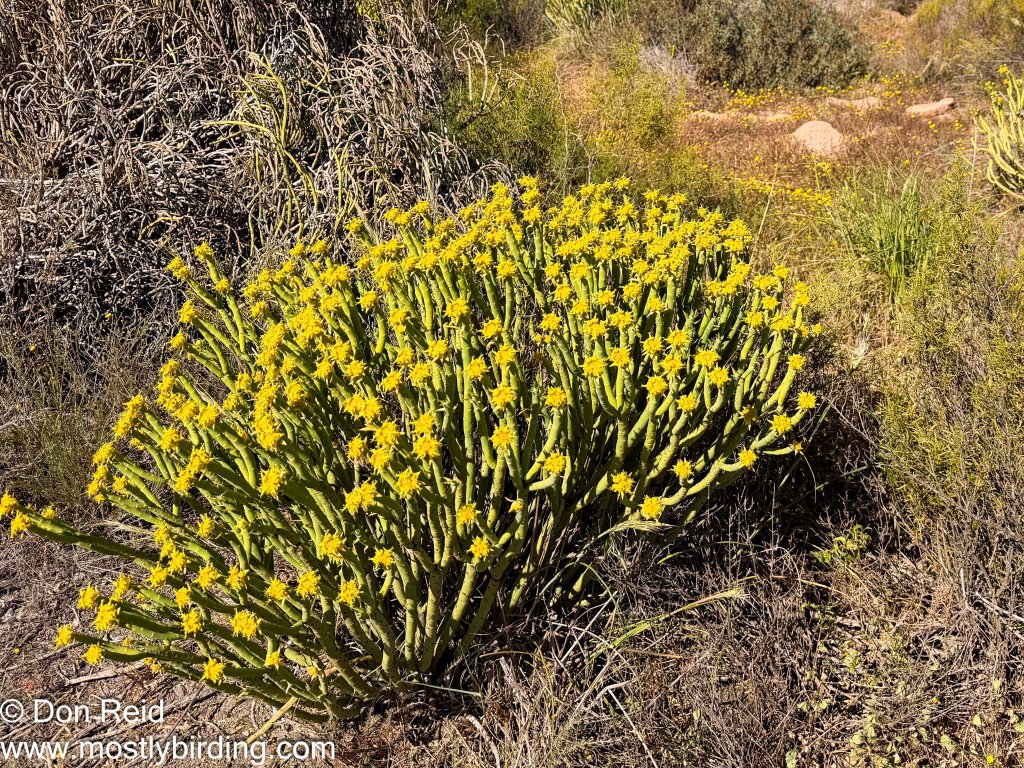
Yellow Milkbush Euphorbia mauritanica Geelmelkbos, Nieuwoudtville Waterfall, Klippe Rivier

The waterfall came into view as we approached the rocky platform at the edge of the gorge and was quite spectacular despite the low water flow – the height of 90m made it special.
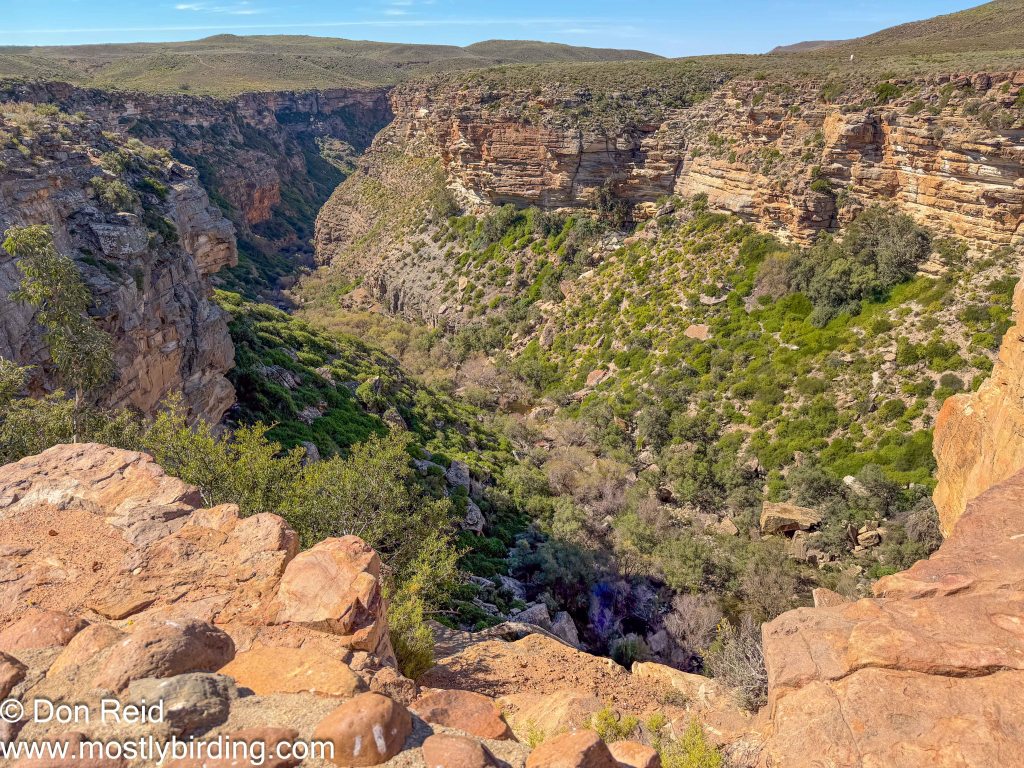
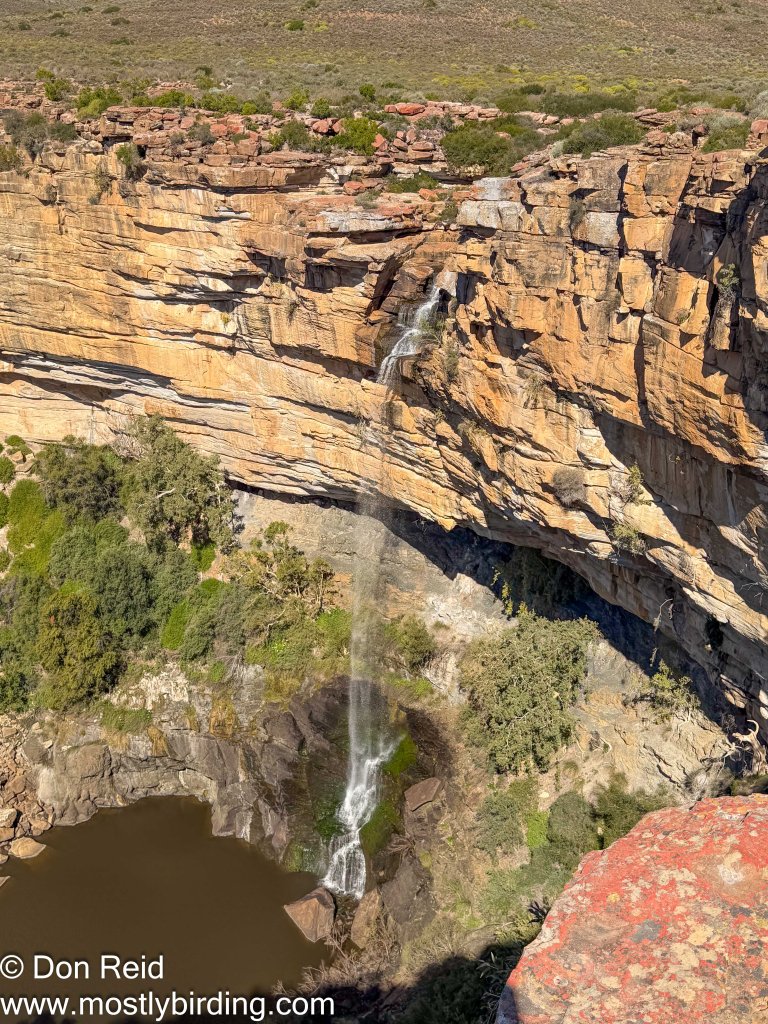
Nieuwoudtville Waterfall, Klippe Rivier

On the way out another stall run by a pair of local ladies attracted our attention, and we left with raw honey and dried peaches, pleased that we could support these entrepreneurs in a small way.
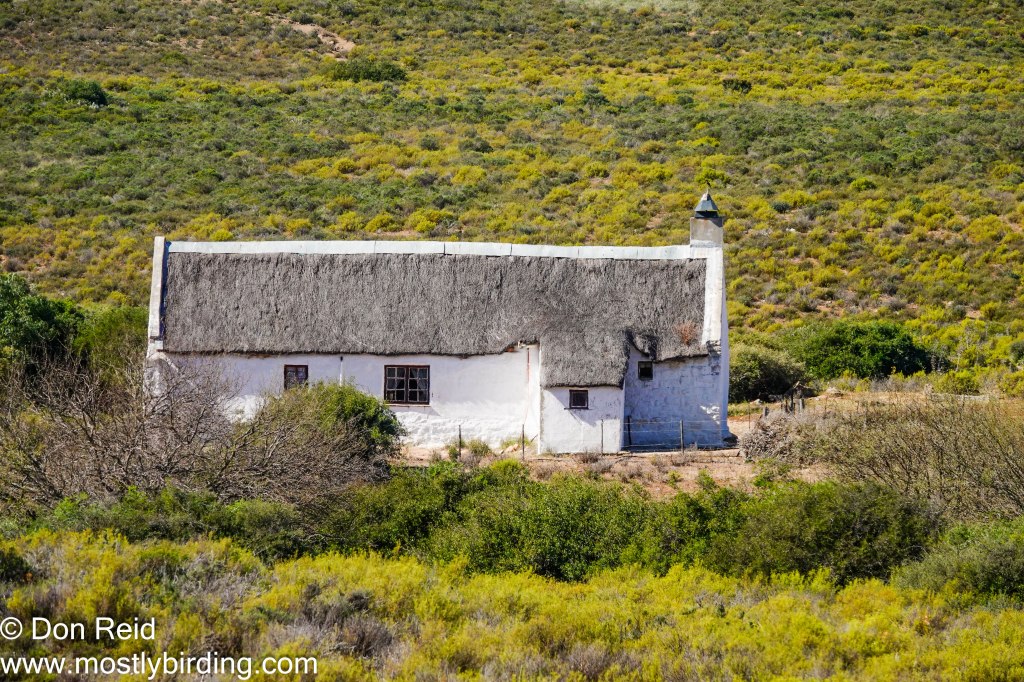
Old homestead Near Waterfall

By this time, we were happy to return to the guesthouse, however on the way back our curiosity got the better of us and we turned off onto another gravel track closer to town to find the flowers that Linda had told us we would find at Willemsrivier.
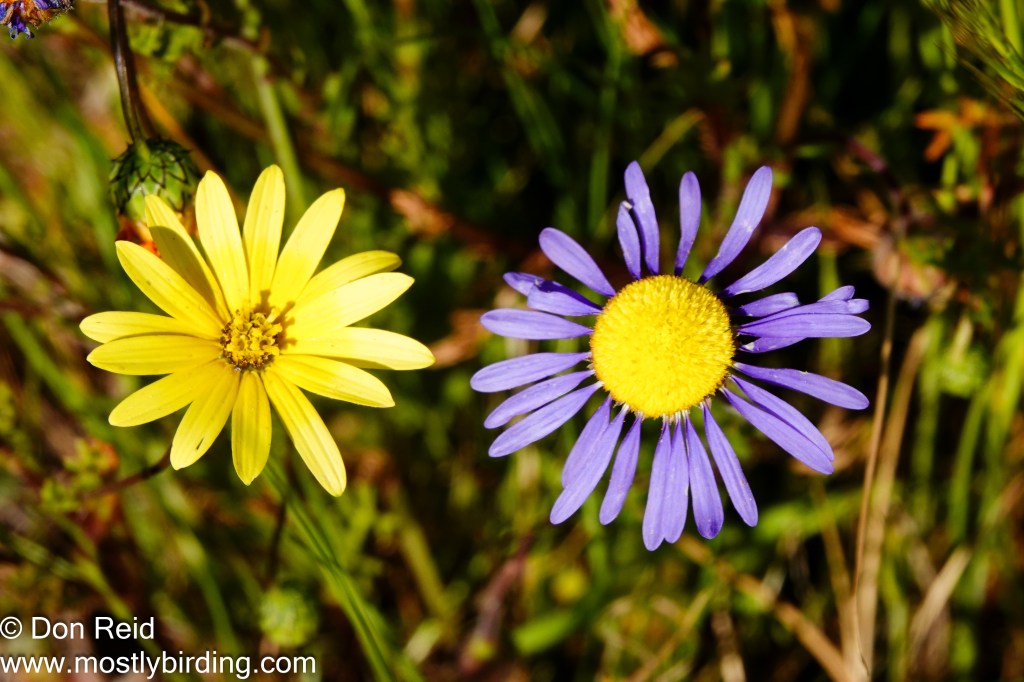
Daisies, Willemsrivier near Nieuwoudtville

We were rewarded with a short drive through fields of mostly yellow flowers, dominated by Katstertjies (Cat’s tails) and I spent some time taking photos of this beautiful spread of colour.
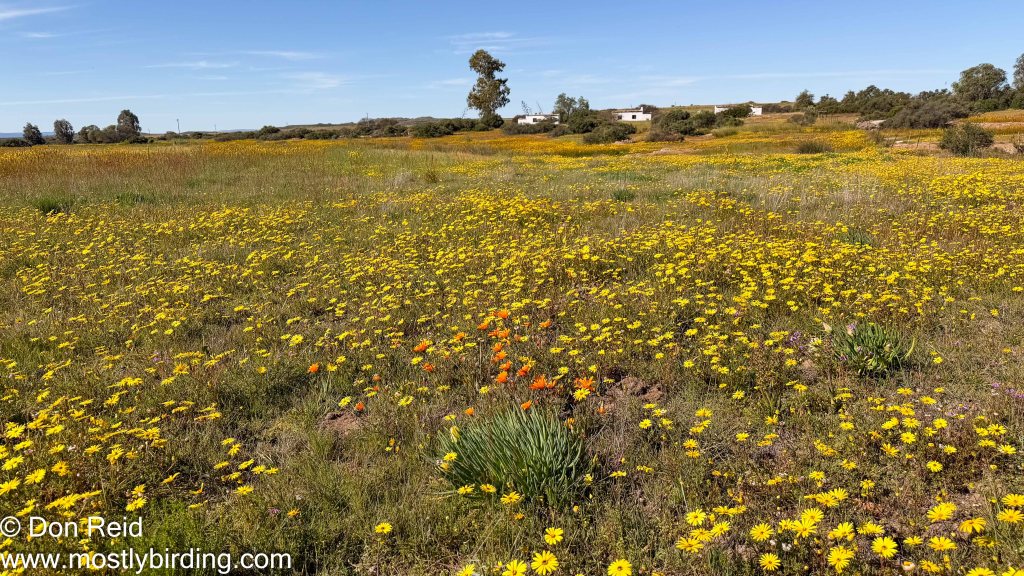
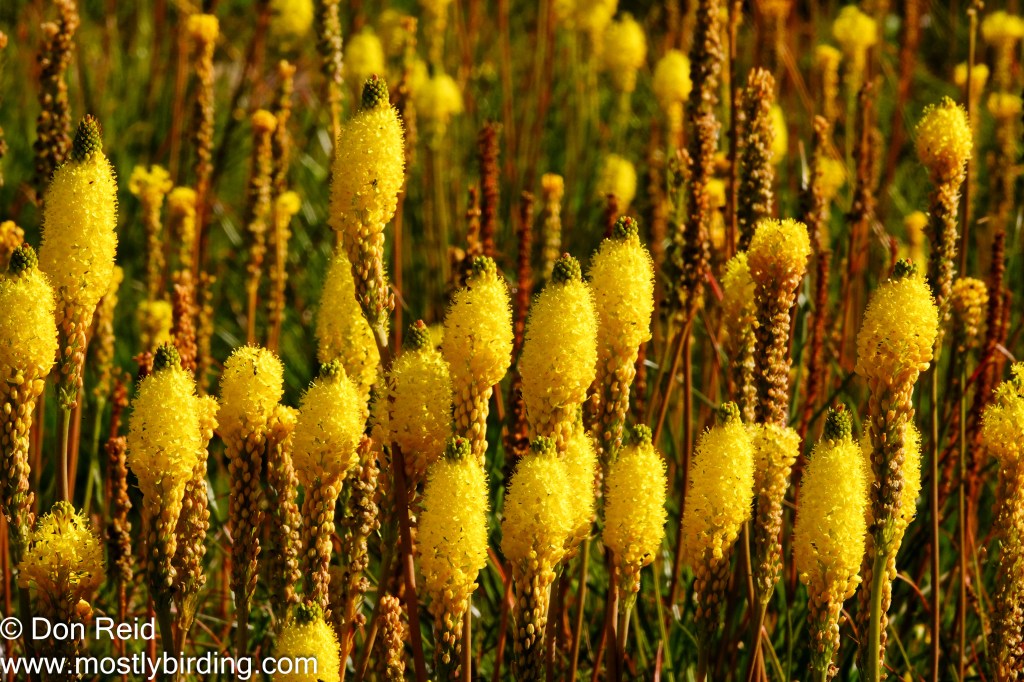
Willemsrivier near Nieuwoudtville
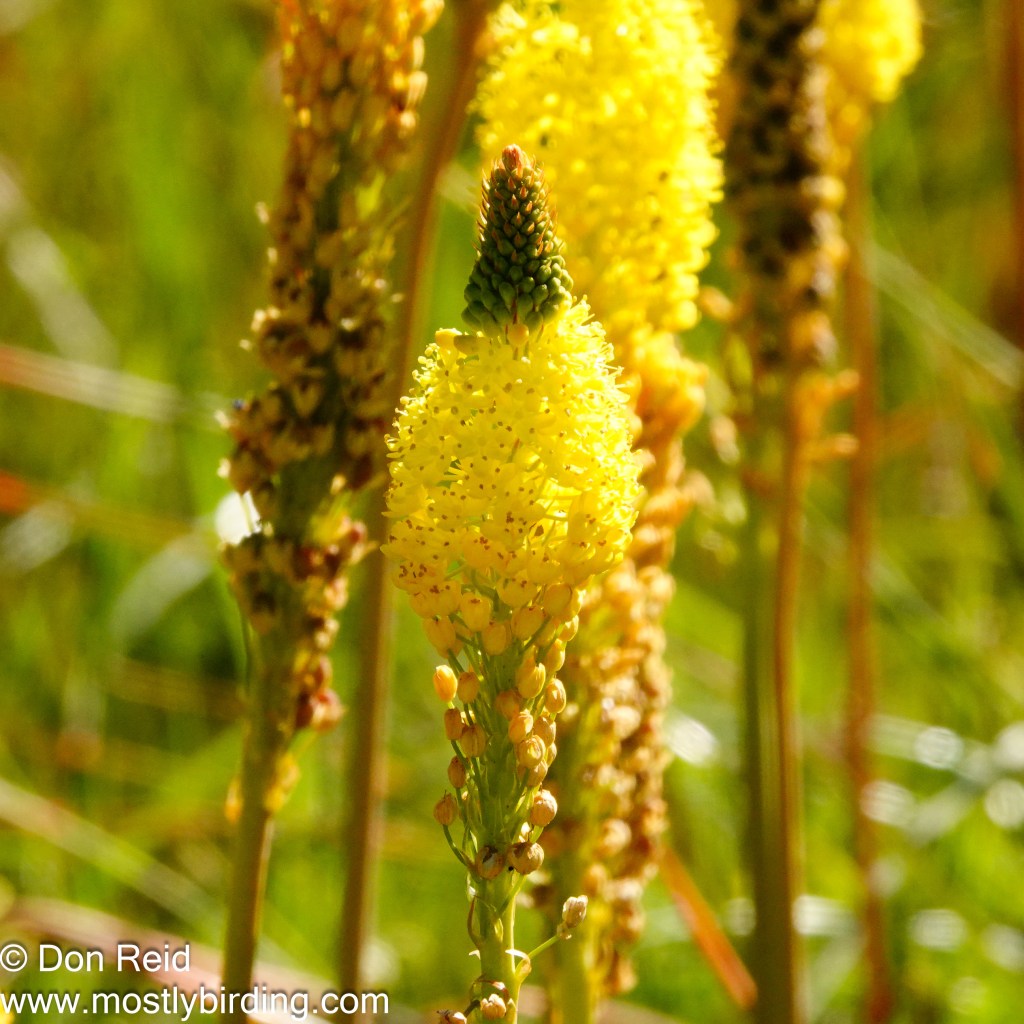
Water Catstails Bulbinella nutans Geelkatsterte, Willemsrivier near Nieuwoudtville
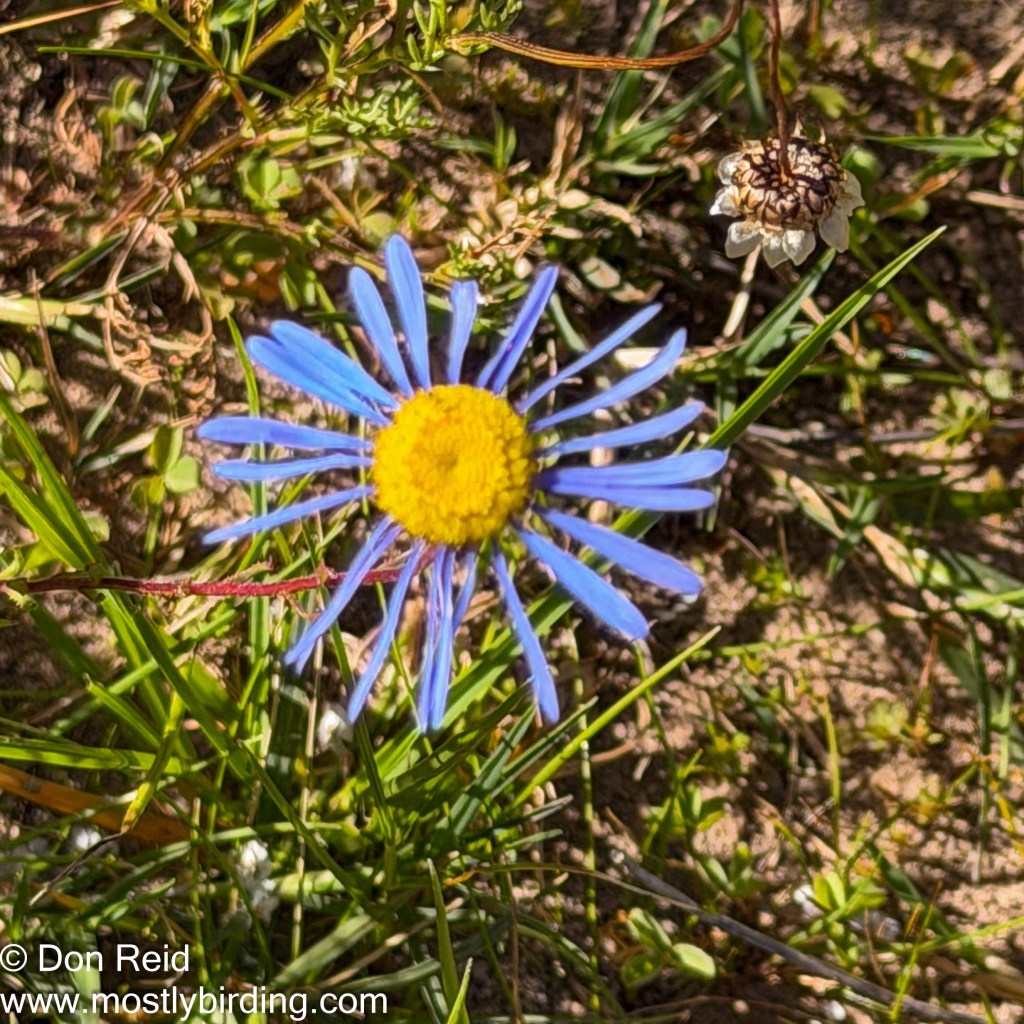
Soft Felicia Felicia amoena Bloumagriet, Willemsrivier near Nieuwoudtville
Water Catstails Bulbinella nutans Geelkatsterte, Willemsrivier near Nieuwoudtville

After that we made our way back for a welcome rest before enjoying a dinner at the guesthouse, with bobotie prepared by Linda and chatty table neighbours from Ogies, not far from our old hometown of Pretoria, who turned out to be large scale mielieboere (maize farmers)

Birding highlights :

  • Pale Chanting Goshawk on the road to Gannabos
  • White-throated Canary at the Quiver Tree Forest
  • Capped Wheatear calling from a bush-top at the Quiver Forest
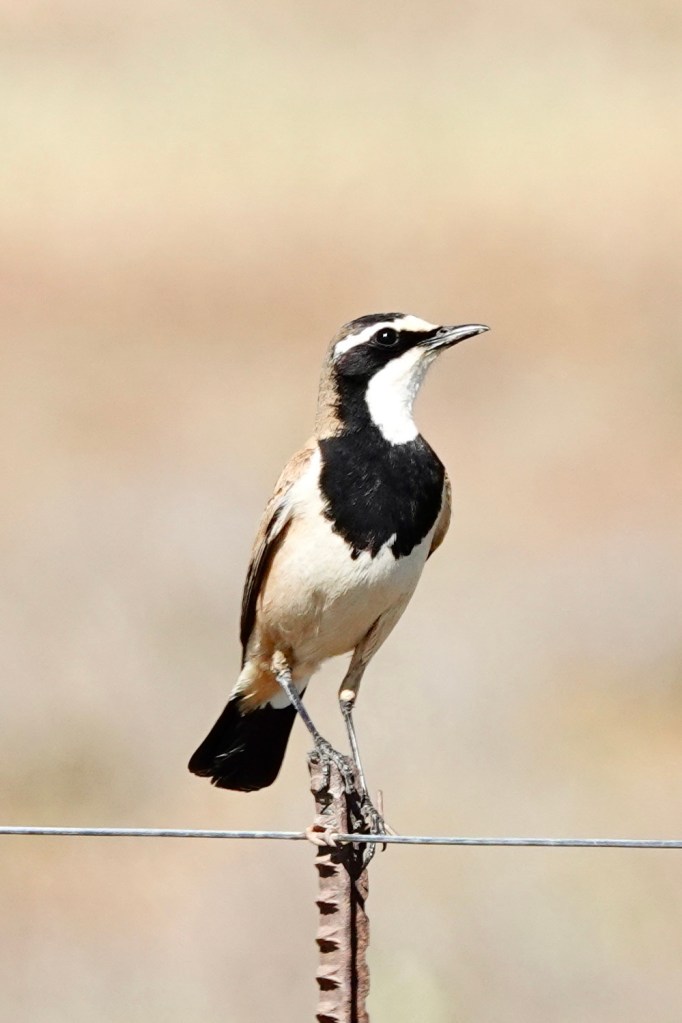
Capped Wheatear. Oenanthe pilesta. Hoëveldskaapwagter
  • Mountain Wheatear among the Quiver trees
  • Cape Bunting, Karoo Scrub-Robin and Familiar Chat on the pathway to the waterfall
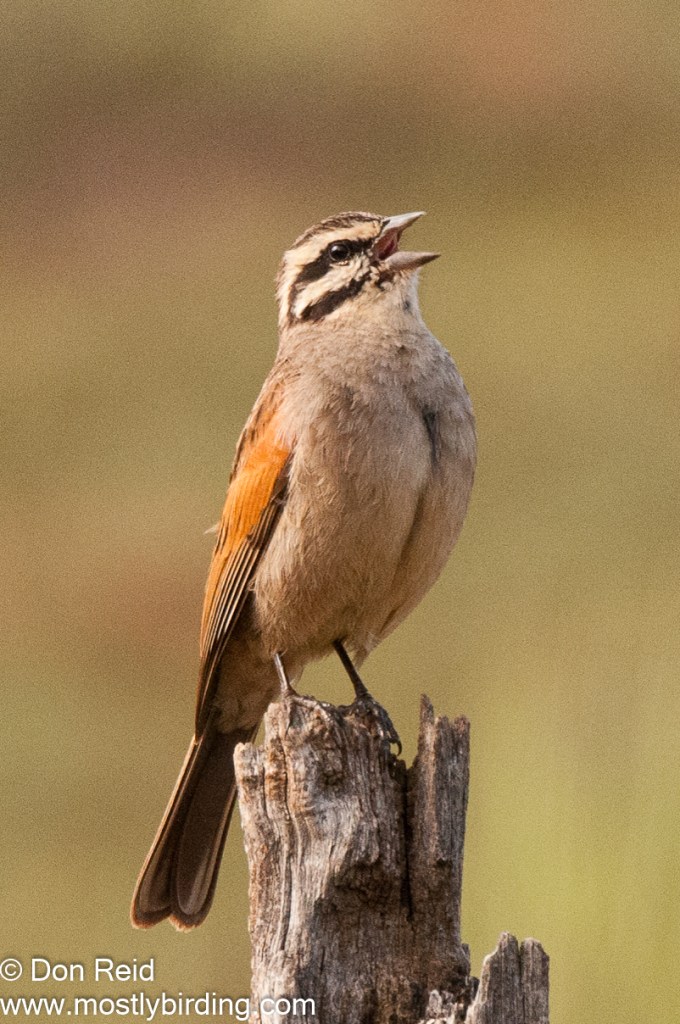
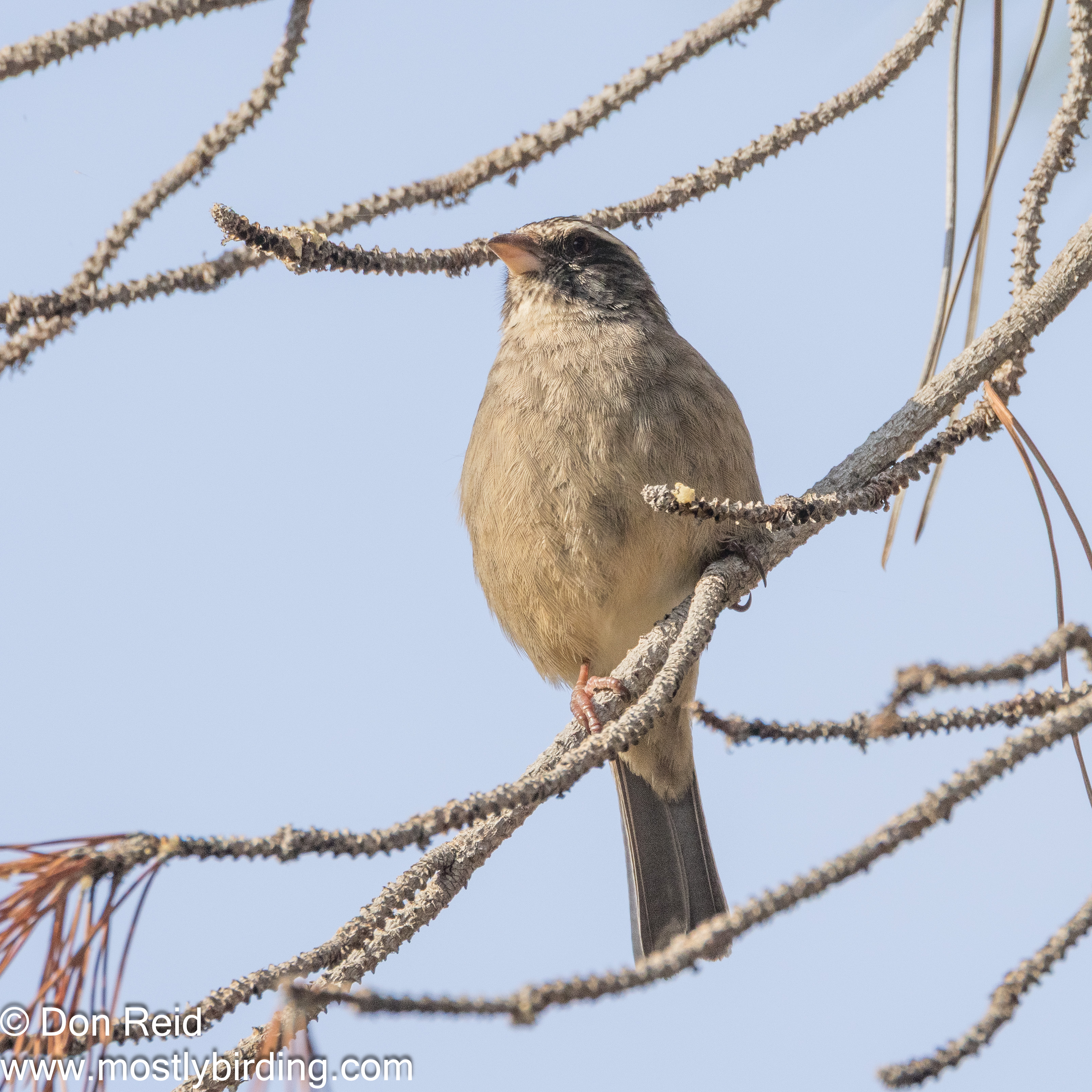
Cape Bunting Emberiza capensis. Rooivlerkstreepkoppie
  • Large-billed Lark (several) in the open fields
  • Pale-winged Starlings at the waterfall
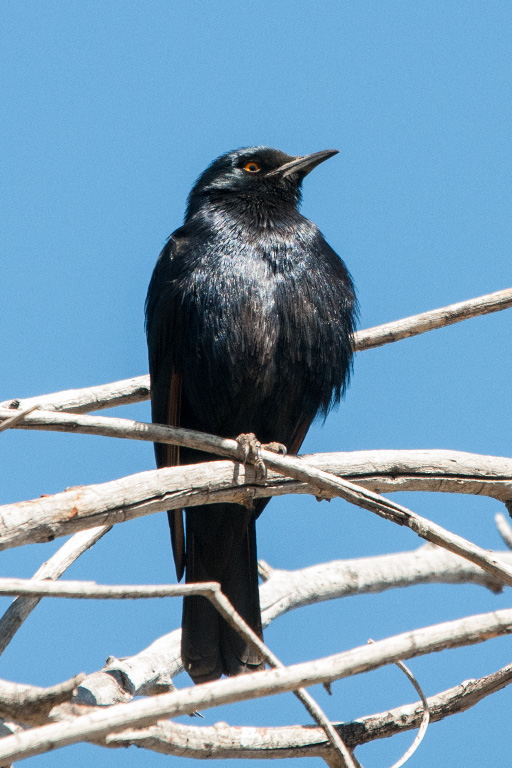
Pale-winged Starling onychognatus nabouroup. Bleekvlerkspreeu
  • Spoonbill at the vleis at Willemsrivier
West Coast Wanderlust – Flowers, Birding and Small Towns (Part 1)

The Plan

“Let’s do the flowers again” – I can’t recall whether it was me or Gerda that raised the thought earlier this year, but the immediate answer was “Yes!”

Translated, that means we were both keen to “do” the famed Spring flowers that bloom during August and September in parts of South Africa, in particular the West Coast and Namaqualand areas of our country.

With that decision made, we set about planning and booking a 14-night trip for the last two weeks of August, which would take us to some of the prime flower spots of the West Coast and Namaqualand during what we hoped would be the peak of the flower season

There are many aspects of an extended road trip that appeal to Gerda and myself – chief among them is the freedom of not being bound to a rigid itinerary, but rather deciding day by day what we will be doing …. or not doing.

Having said that, my organised nature still demands a degree of planning that takes care of accommodation and ensures a relaxed trip with comfortable distances between stopovers.

The plan we came up with looked like this –

  • 2 nights in Welbedacht Nature Reserve near Tulbagh – not part of a recognised flower route, but a convenient stopover before heading northwards to Namaqualand
  • 3 nights in Nieuwoudtville, Northern Cape, with the prospect of visiting several interesting spots that we had missed during our only previous visit in 2013
  • 3 nights in Clanwilliam with attractions such as the Cederberg and Biedouw Valley nearby, as well as Lambert’s Bay within an hour’s drive
  • 3 nights in Darling, not part of our previous itineraries, brimming with possibilities, and finally..
  • 3 nights in Paternoster on the coast, a place that we have got to know from a couple of previous visits and not far from the West Coast National Park

Day 1 – Getting there

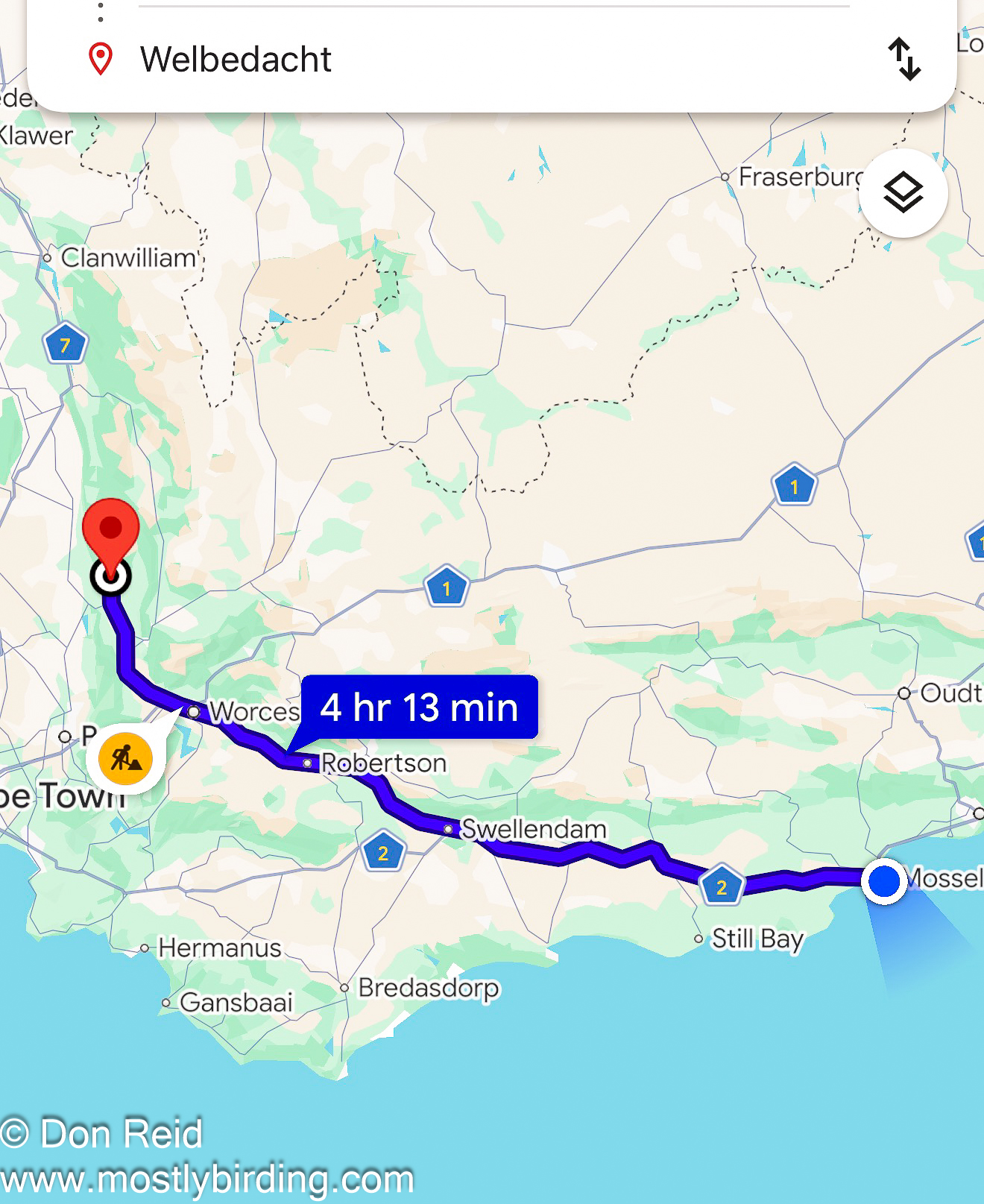
Mossel Bay to Welbedacht near Tulbagh

Final preparations for our departure started the day before – choosing the catering items we would need, packing most of our clothing requirements, sorting out the medical kit (essential at our age) and the paraphernalia that accompanies me on our road trips (cameras, binos, laptop, ipad) together with all the various batteries, cables and plugs to keep all of it working smoothly.

I was excited to try out my newest acquisition – an Iphone 17 – in the field as it were – more camera than phone, it has many of the features of my ‘fancy’ cameras, all packed into an unbelievably small package. I have made do for several years with a now outdated iphone SE – heck, even our Son-in-law said I deserved a better phone!

We left home at 10.30 am and travelled at our usual relaxed pace, which included stops at –

  • Oumeul outside Riversdale for coffee and one of the nicest savoury muffins ever – they call it a Four-cheese muffin, I call it a delight. We bought two more to take away after eating the first one at an outside table.
  • Nuy on the hill near Worcester for a late-ish lunch of Chicken mayo roosterkoek (a large bun baked over coals) – too much to complete so we doggy-bagged the rest for later in the evening
View from Nuy Restaurant near Worcester

Traffic was light for most of the trip and there was time to check out the verges and fields which had small patches of colourful flowers.

I pulled off the road at a couple of places, between Swellendam and Ashton and again between Robertson and Worcester, when I thought the concentration of flowers deserved a closer look.

Roadside near Ashton

That proved to be a good tactic as there were several different flowers at each stop, even though the area is not regarded as part of a flower route.

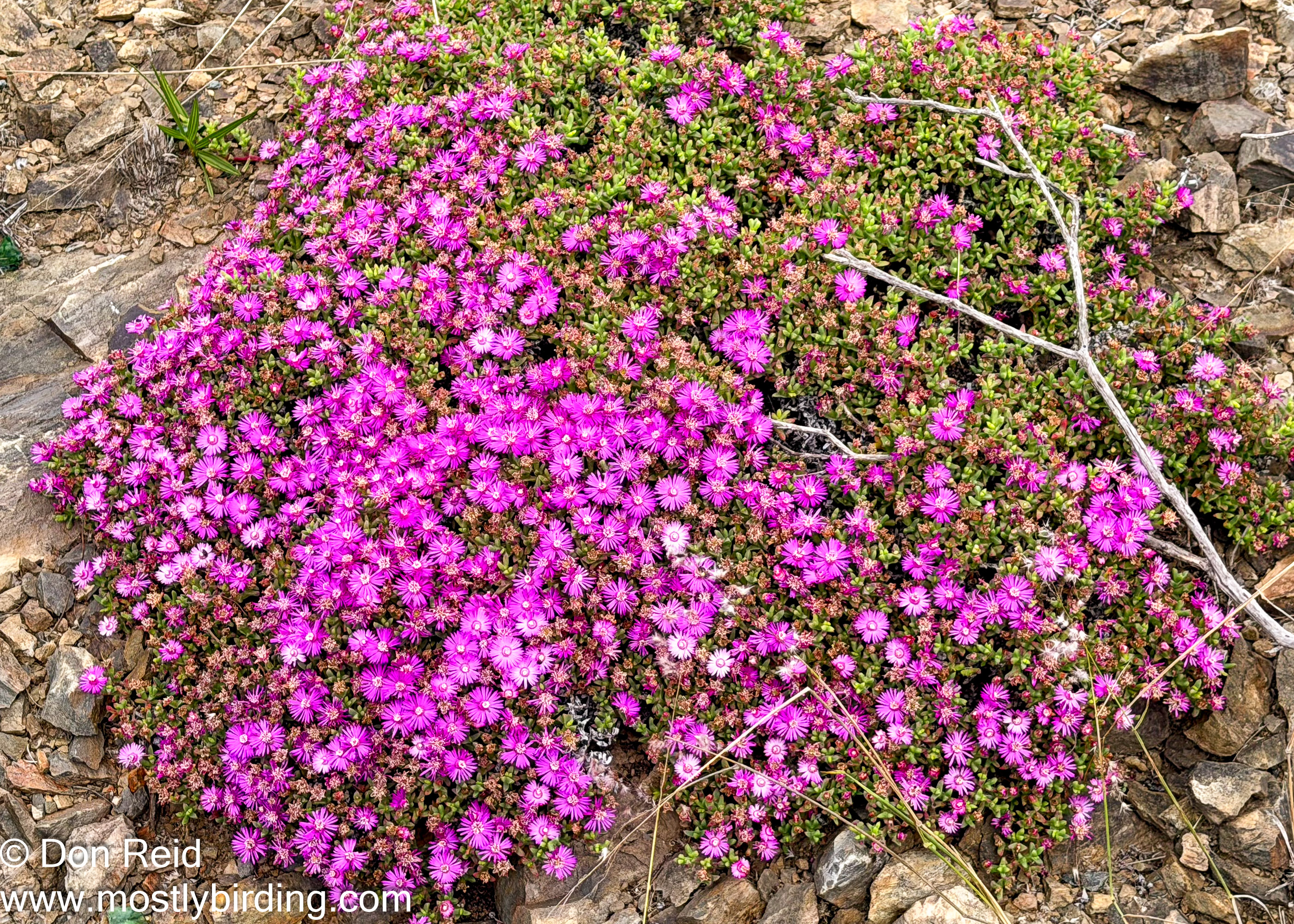
Brightfig (Vygies), roadside near Ashton

My new phone proved to be up to the task of photographing the flowers from different angles and producing nice crisp images.

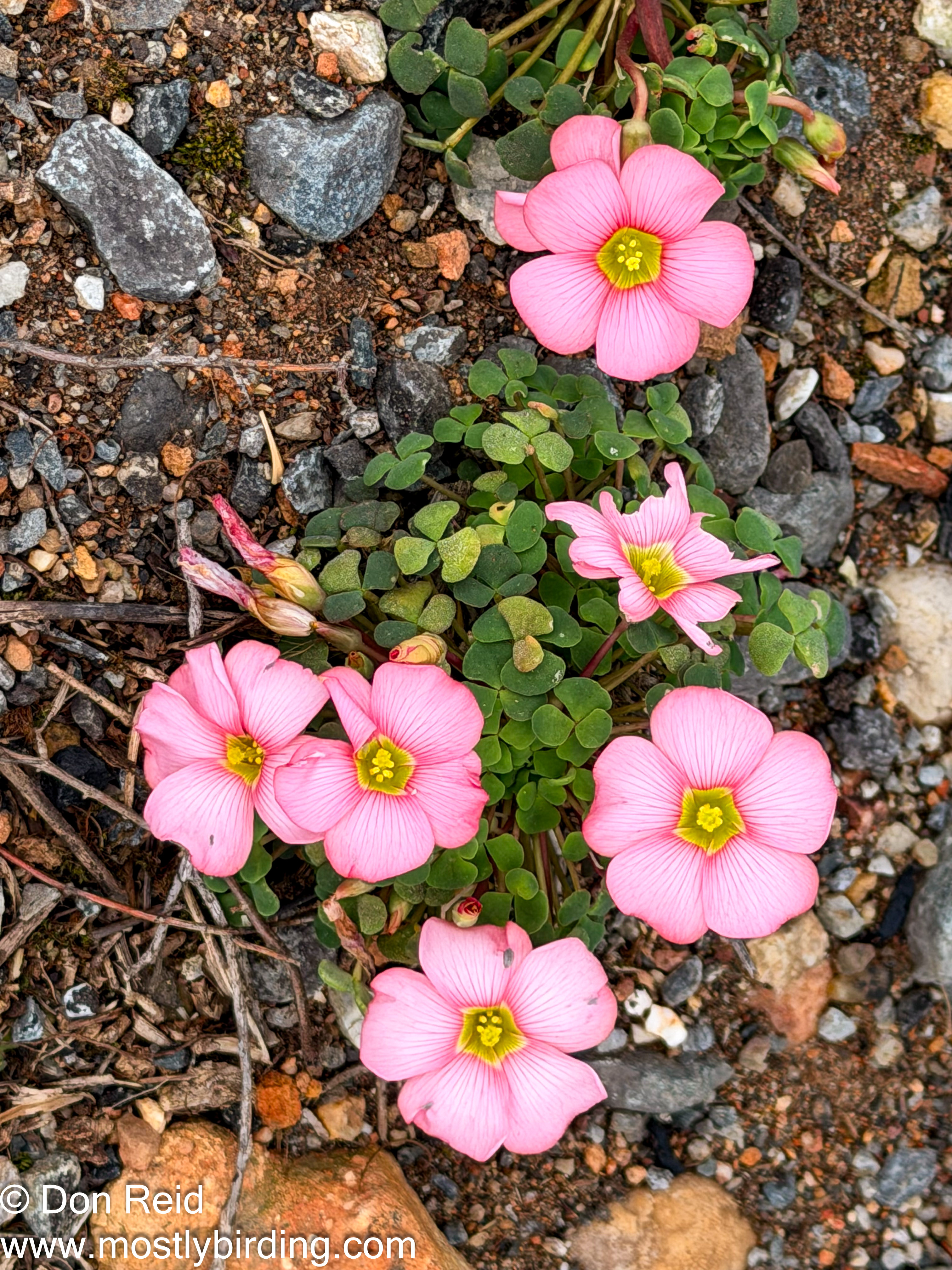
Cushion Sorrel Oxalis convexula (Suring), roadside near Ashton
Velvet Storksbill Pelargonium candicans (Malva), roadside near Ashton
Mouse Dewfig Drosanthemum hispidum (Doublaarvygie), roadside between Robertson – Worcester
Gazania (Gousblom), roadside between Robertson – Worcester
Capeweed Arctotheca calendula (Botterblom), roadside between Robertson – Worcester

Welbedacht Nature Reserve

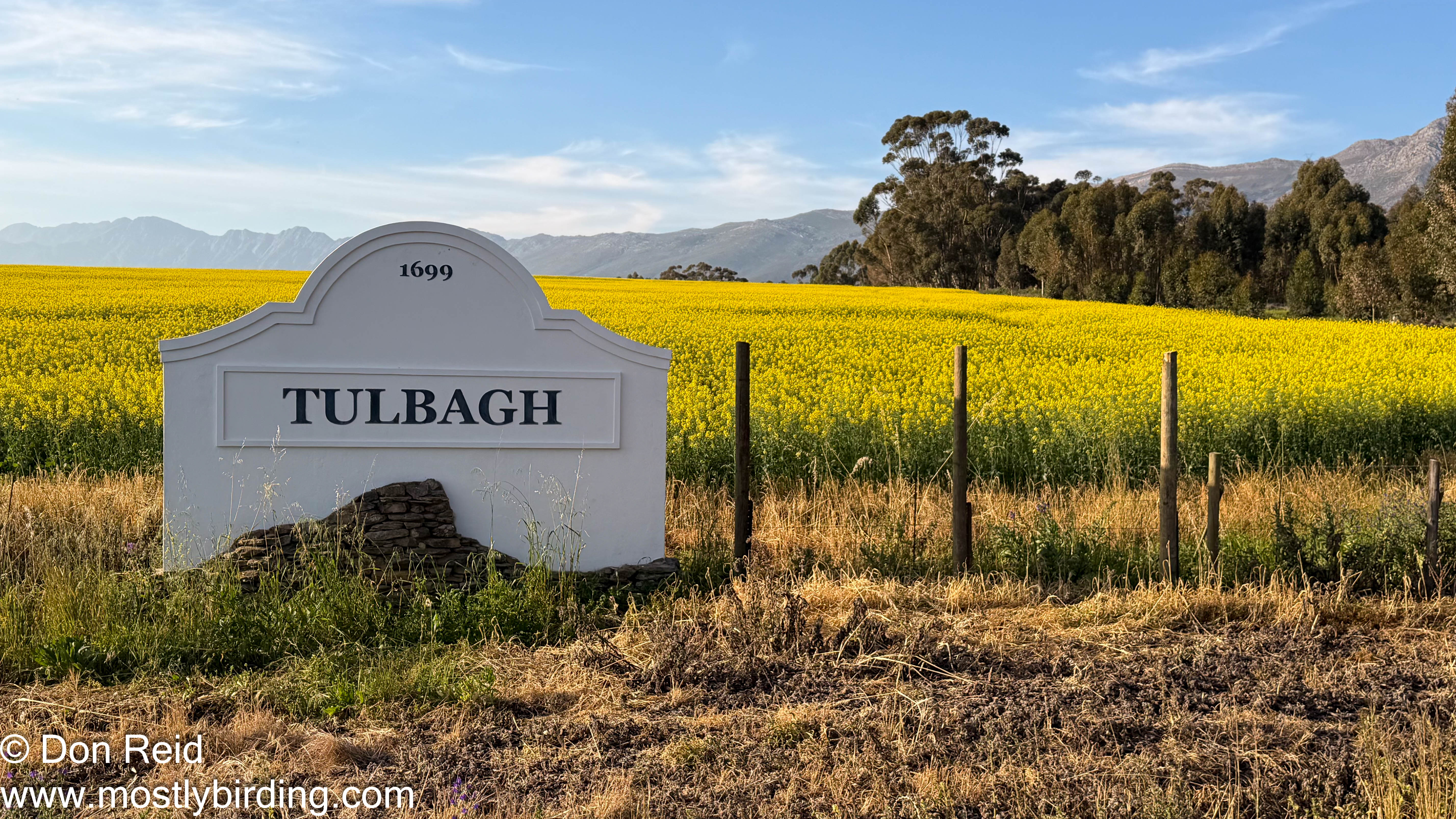
The outskirts of Tulbagh

After passing through Tulbagh, it was a short drive to the nature reserve, which we reached at 5pm on the dot and followed the whatsapp instructions to access the reserve, find our key in a box at the main complex and follow the track to our cottage set amongst trees well away from the other cottages. The last few kms were through the reserve itself and we were pleased to see a few animals such as antelope and Zebra.

We found it unusual that there was no one to welcome us and provide information about the cottage and reserve, as we are used to – in fact we did not see or meet any staff during our two night stay and simply dropped the key off in the same box on the way out. However, that didn’t detract from the stay, and we enjoyed the peace and quiet along with no disturbances whatsoever.

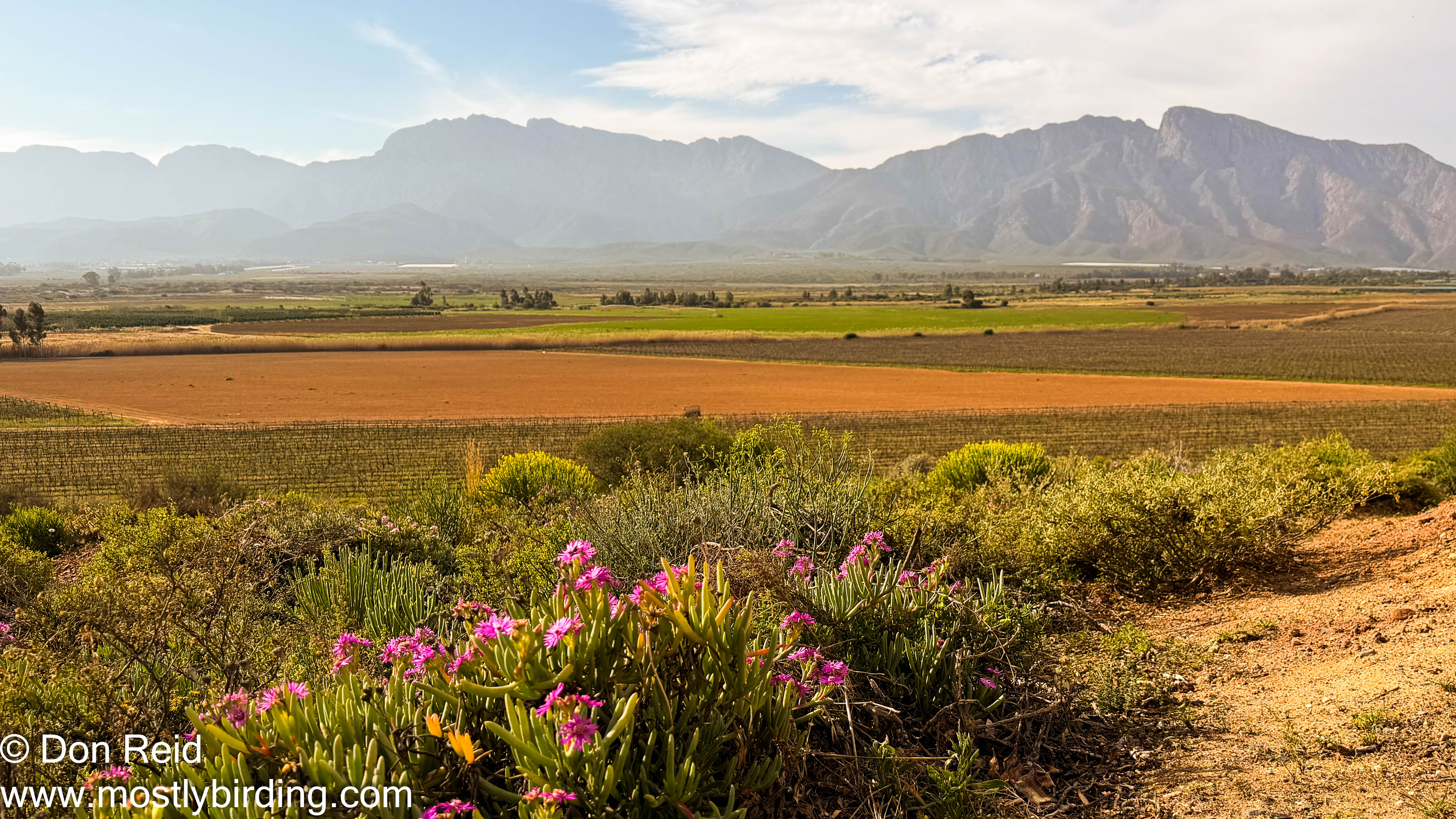
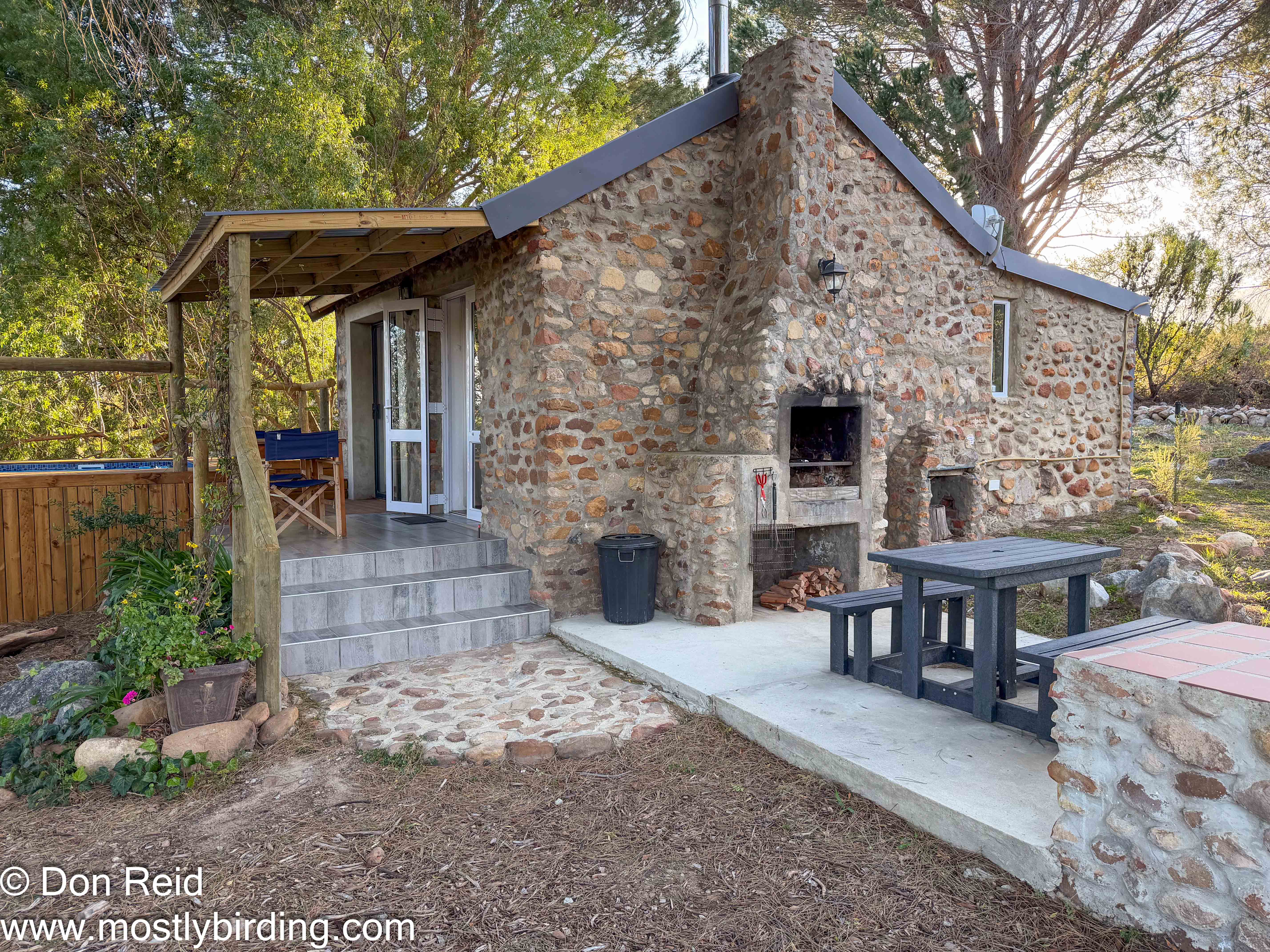
The cottage is compact with bedroom, living area and kitchen forming one space and a separate bathroom. What makes it special is the feeling of solitude and peace in natural surroundings, featuring fynbos and fields of flowers.

Cottage at Welbedacht Nature Resrerve near Tulbagh

Outside a small stoep looks out over the reserve and there is a small plunge pool adjacent to it, which I tried out later. (It’s heated so not as brave as it may sound)

Our evening meal was light – the rest of our roosterkoek with sides of sliced banana and tomato!

Birding highlights

My initial impression was that birdlife around the cottage was plentiful, with calls of Olive Thrush, Cape Grassbird, Bokmakierie and Blue Crane heard as the day ran out.

Evening brought the calls of the big three nighttime birds – Fiery-necked Nightjar, Spotted Thick-Knee and Spotted Eagle-Owl

Day 2 – Chilling in Welbedacht Nature Reserve

We awoke to a warm sunny day and decided to make it a ‘rest’ day and just stay at our cosy cottage all day. That was a good decision as we were feeling the effects of a particularly busy time of late.

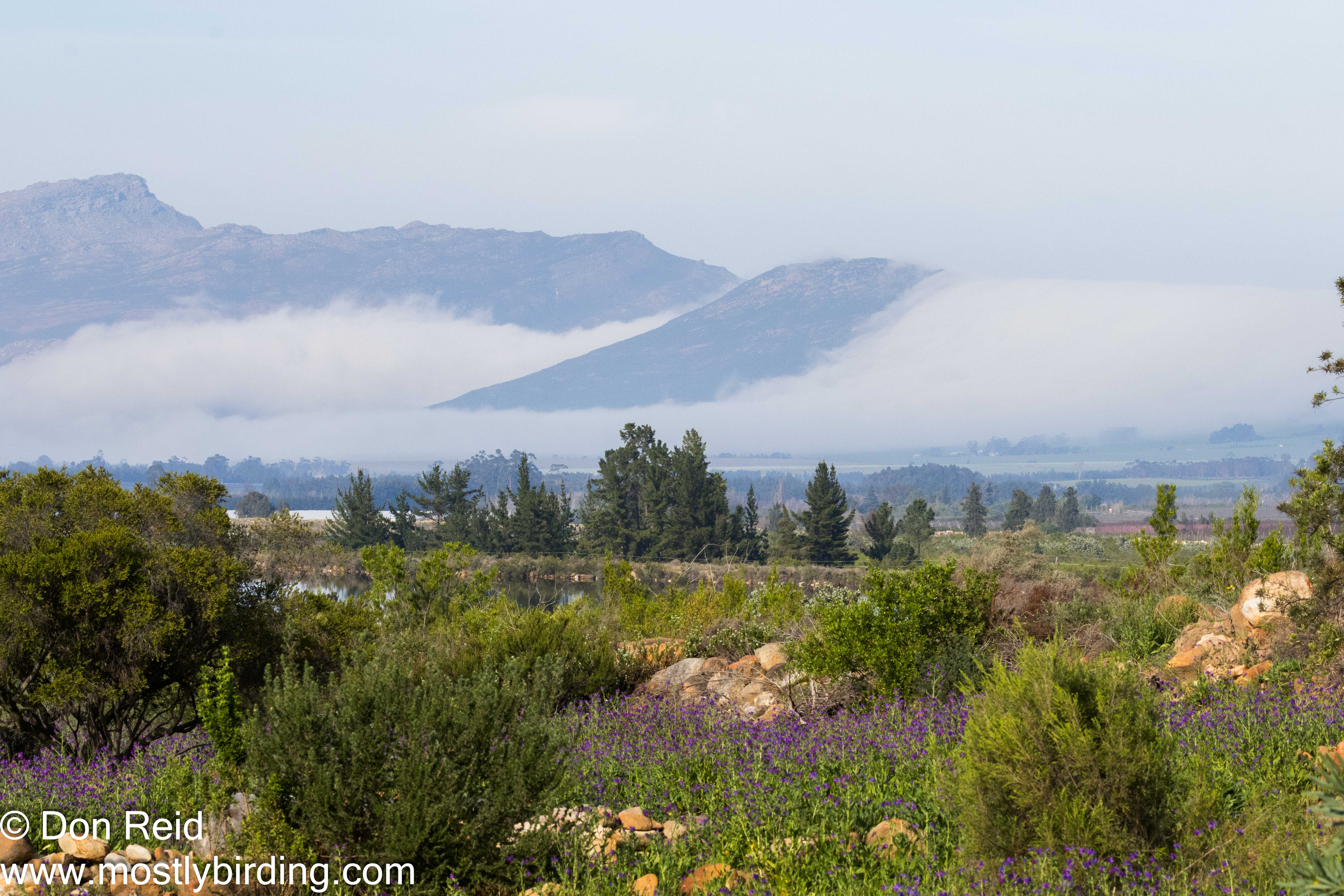
The view of the reserve from the cottage

After a late lie in and breakfast, I spent time on the stoep boosting my bird list, then scouted around the cottage for interesting flowers. I followed that with a short walk along the track leading to the other cottages.

There were plenty of flowers – and birds – to keep me occupied, the birds are typical of those I know so well from the Mossel Bay fynbos habitat, with Yellow and Cape Canaries and Streaky-headed Seedeaters visible and audible throughout the day.

Streaky-headed Seedeater Crithagra gularis (Streepkopkanarie), Welbedacht Nature Resrerve near Tulbagh

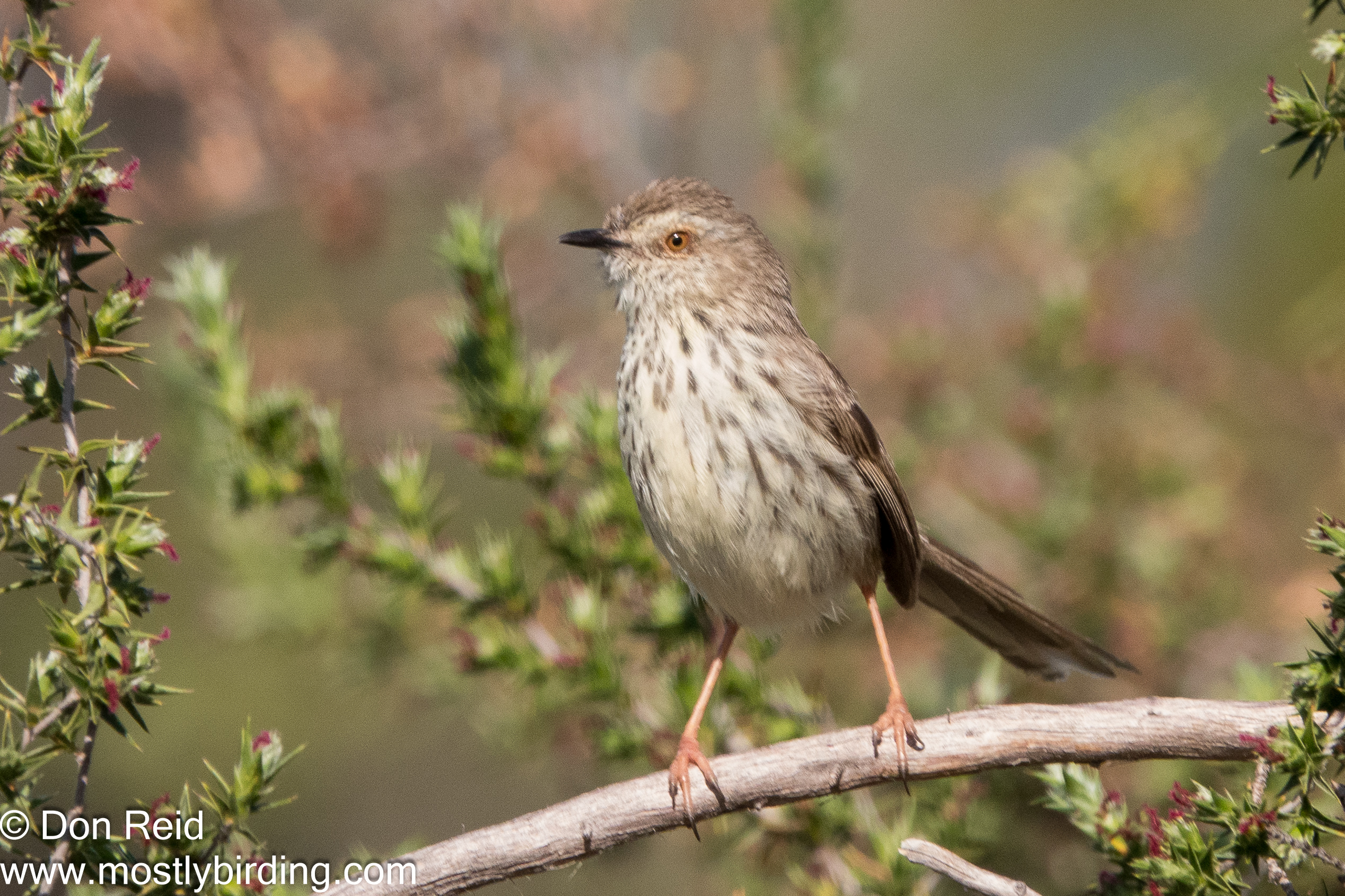
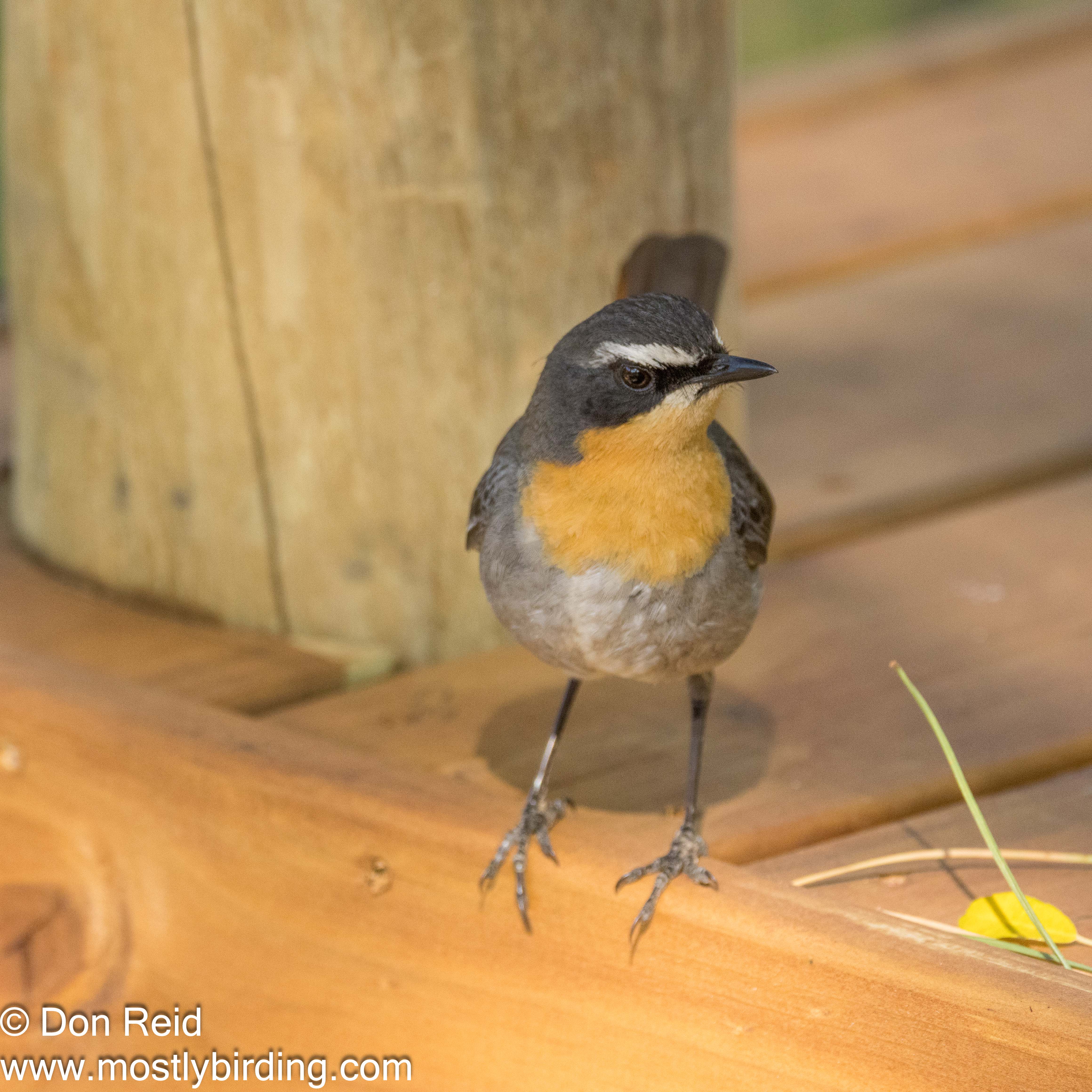
Karoo Prinias were not far behind, and Cape Robin-Chats made regular visits to the patio in the hope of picking up crumbs from our breakfast rusks.

Karoo Prinia Prinia maculosa (Karoolangstertjie), Welbedacht Nature Reserve
Cape Robin-Chat Cossypha caffra (Gewone janfrederik), Welbedacht Nature Reserve

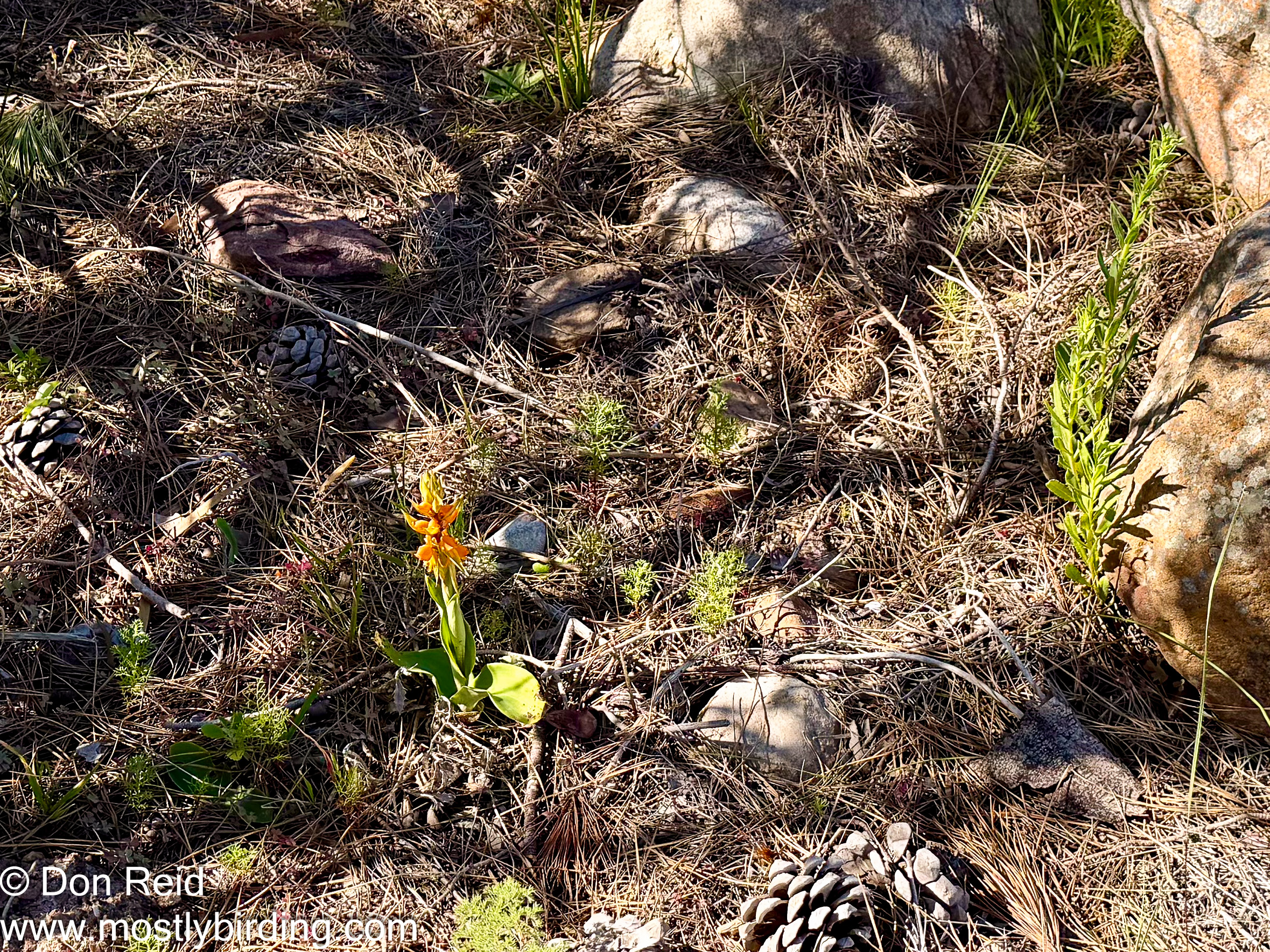
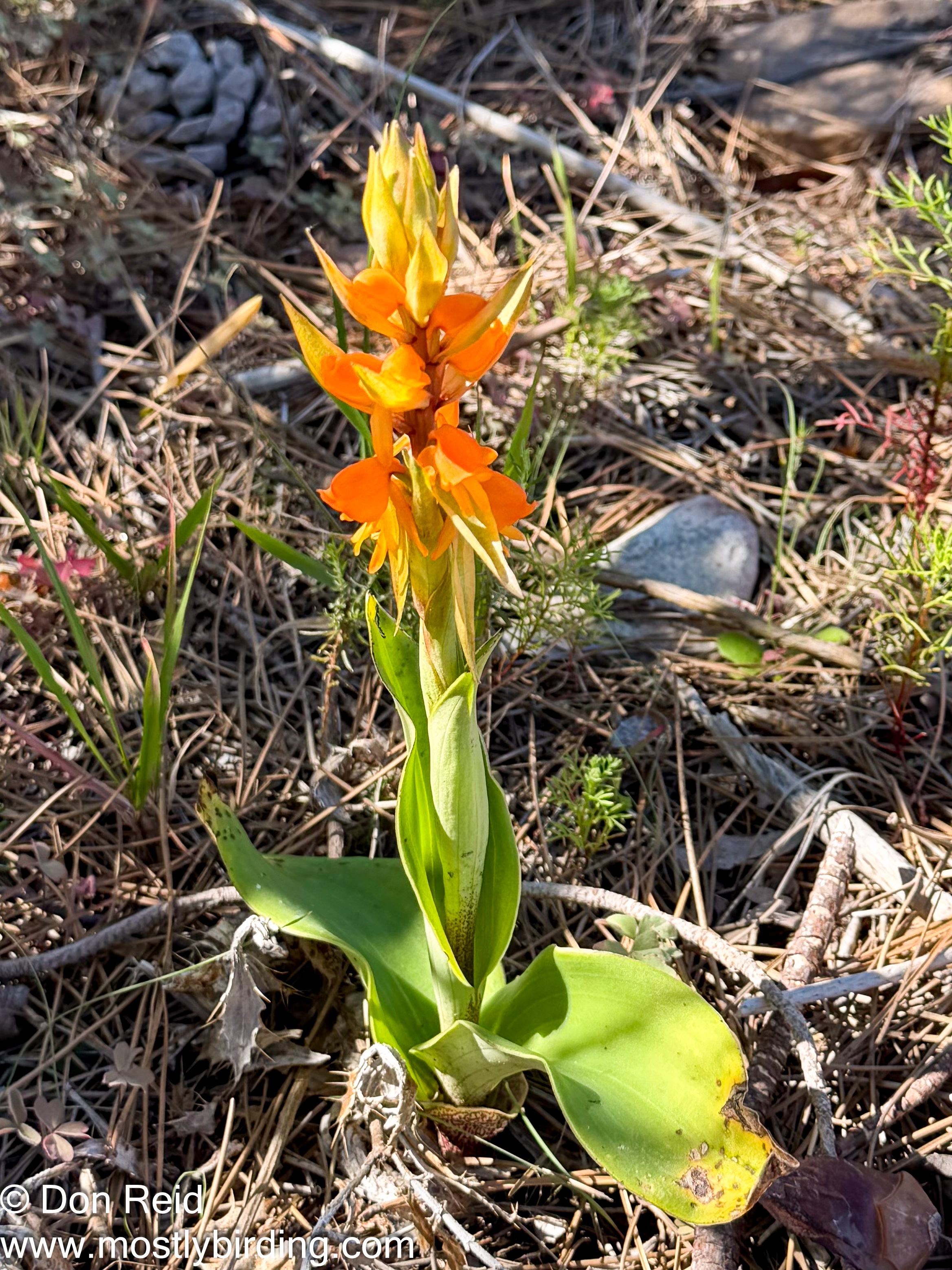
Flowers were colourful and varied, with two that were growing close to the cottage stimulating our curiosity, until Gerda matched the photos with illustrations in her wildflowers book and found that both were a type of wild Orchid.

It’s easy to overlook a flower when it is surrounded by undergrowth and in the shade, appearing quite nondescript ….

Orange Satyre Satyrium coriifolium (Ewwa-trewwa), Welbedacht Nature Reserve

Get closer – on your knees if necessary – and the flower reveals its special beauty

Orange Satyre Satyrium coriifolium (Ewwa-trewwa), Welbedacht Nature Reserve
Welbedacht Nature Reserve near Tulbagh

We took a late afternoon drive to see what else the nature reserve had to offer and explored the tarred road beyond the reserve turn off to the foothills of the mountains. Fruit trees – dormant and pruned skeletons at this time of year – cover every available piece of arable land and seem to be managed by a couple of large estates.

And off we go on our drive….
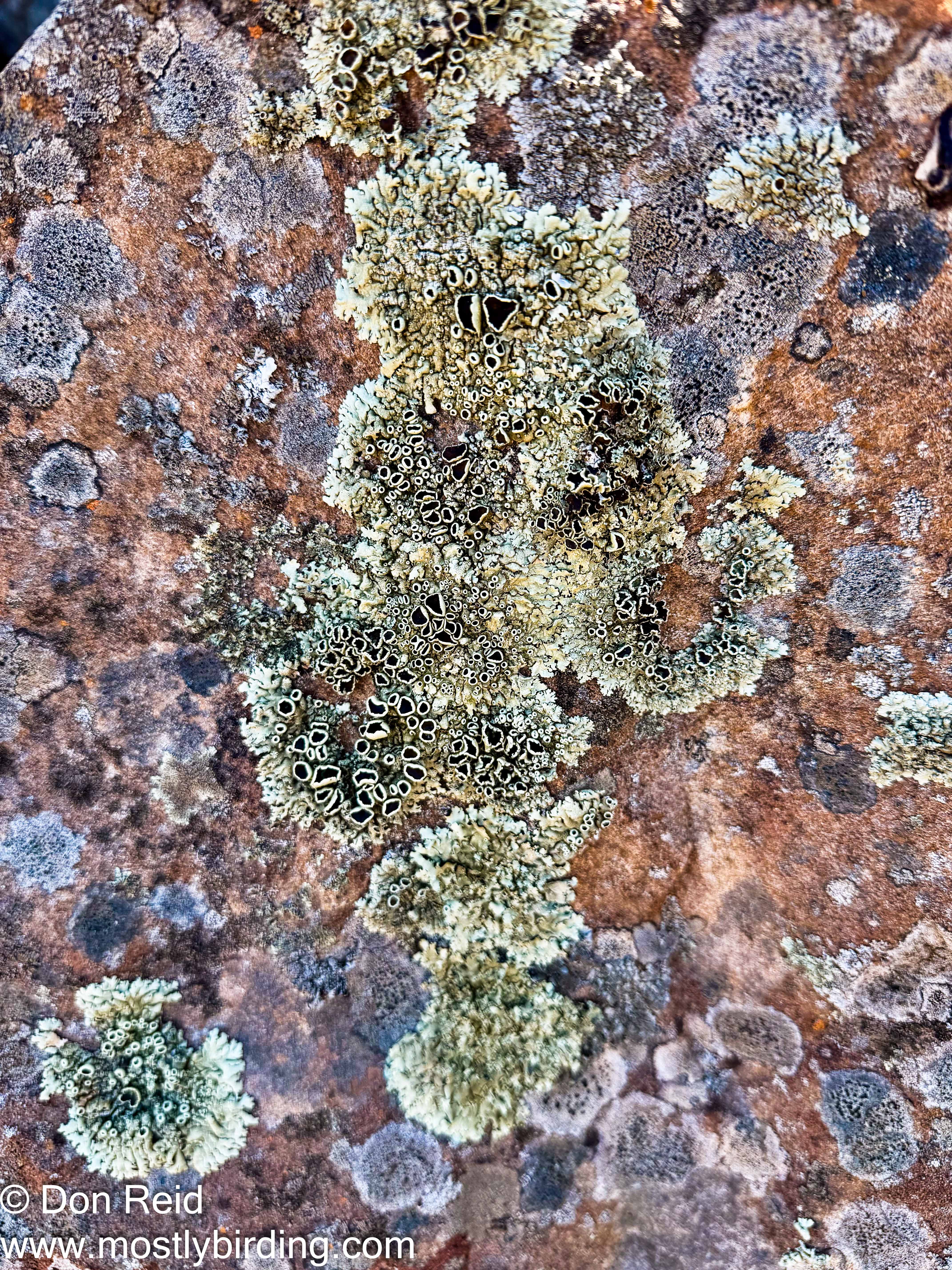
Lichens on a rock, Welbedacht Nature Reserve near Tulbagh
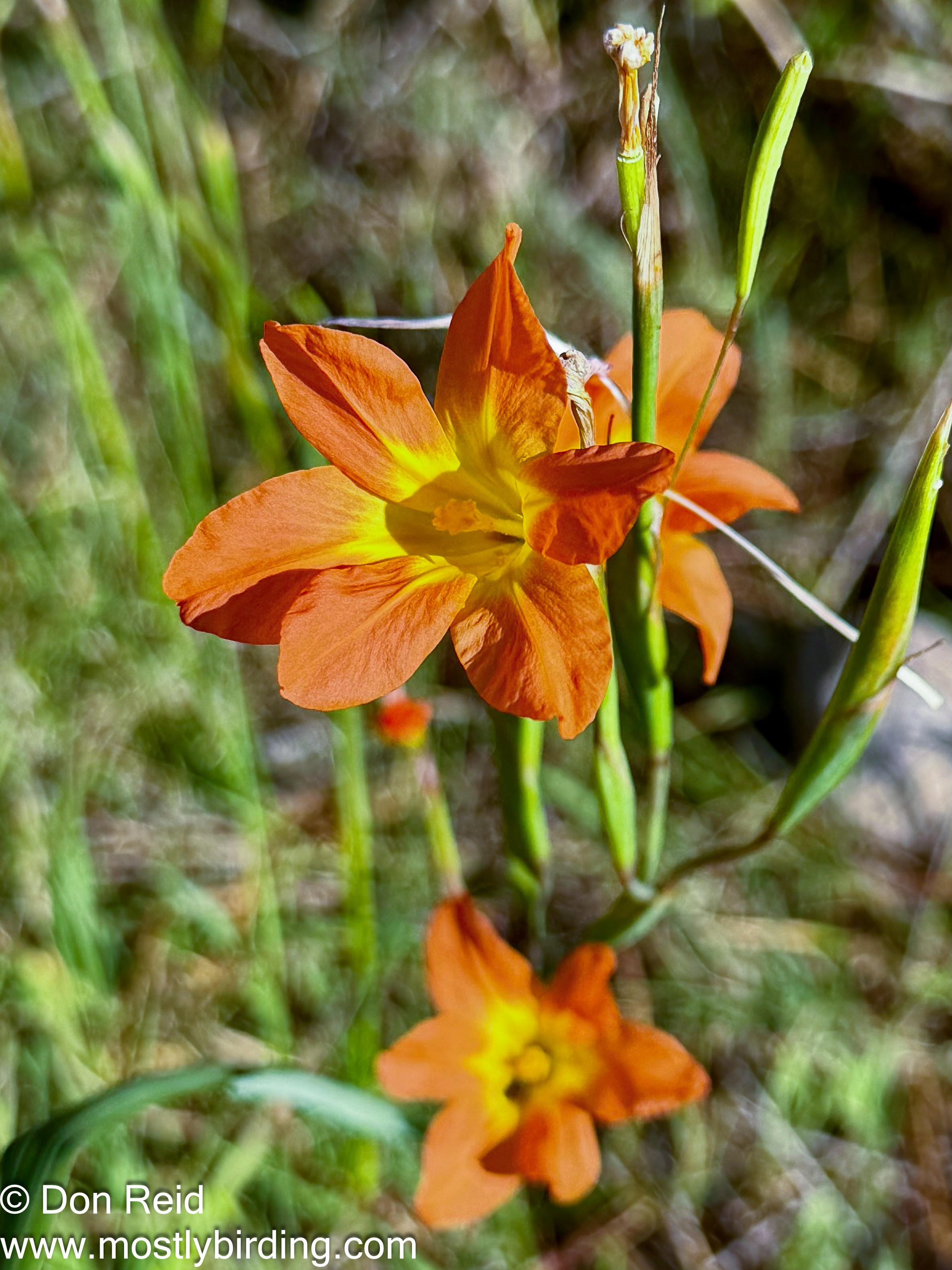
Apricot Tulp Moraea ochroleuca , Welbedacht Nature Reserve near Tulbagh

Birding highlights

  • Klaas’s Cuckoo calling in the morning
  • Cape Batis briefly in the trees in front of the stoep
Cape Batis Batis capensis (Kaapse bosbontrokkie)
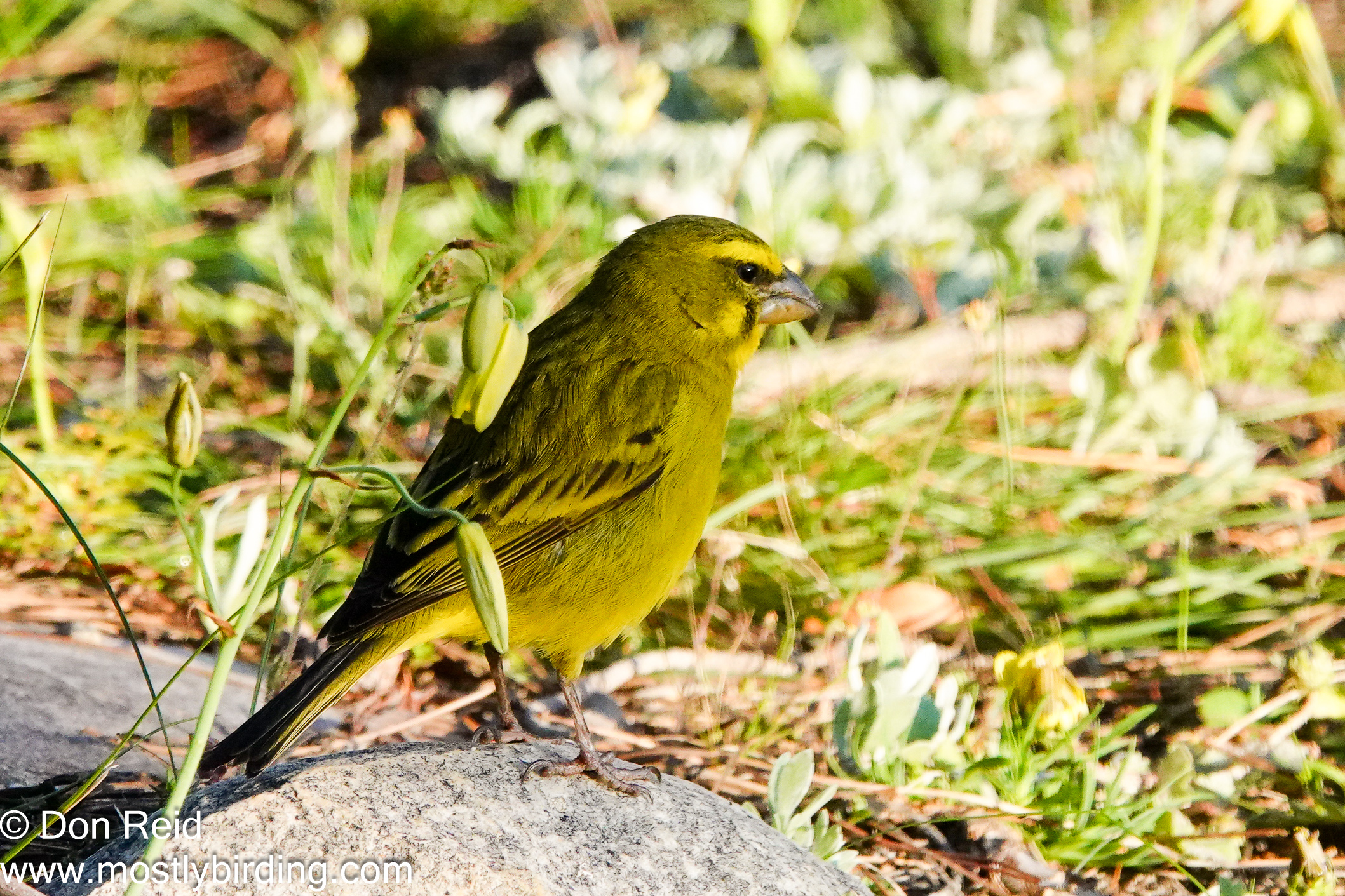
  • Brimstone Canary visited during the day
Brimstone Canary Crithagra sulphurata (Dikbekkanarie), Welbedacht Nature Reserve
  • 34 added to the pentad list during the day, taking the total to 52 species