Tag Archives: Great Brak River birding

Atlasing Tales 9 – January 2023 (Part 2)

These tales record some of the more memorable experiences while atlasing – in this case during January 2023 while we were at our ‘other’ home in Mossel Bay. (which we now call our only home after moving permanently in October 2023)

Continuing where I left off in Part 1 ….

Great Brak and Glentana 21 January 2023

Another Saturday ‘off duty’ from patient care (thanks to daughter Geraldine) meant I could plan an atlasing trip and decided to atlas a favourite area – Great Brak River and the adjoining Glentana.

I use the outstanding Birdlasser app for recording the species as I go, as most atlasers do, one of its features being a record of each sighting’s coordinates, among other details. The map below is the result, with each ‘balloon’ representing a species recorded as I criss-crossed the pentads along the available roads.
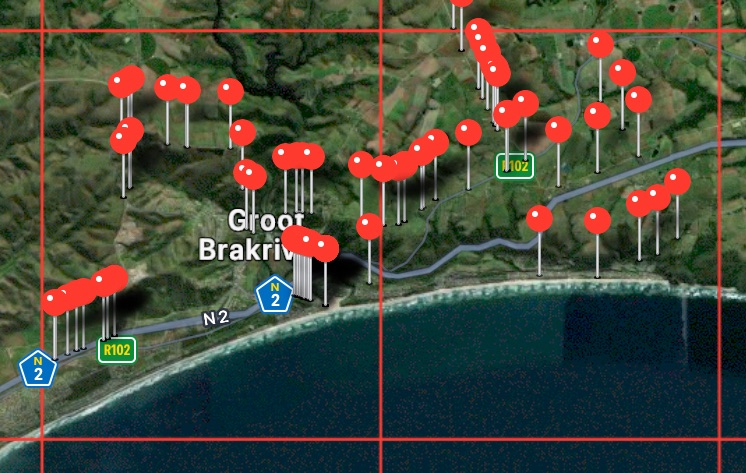
Pentad 3400_2210

So, to put the map into words, I started at 6.45 am along the N2 heading to Great Brak, pulling off the already busy National road at a spot which gave me a view of the fields and dams to the north. After 30 minutes I had 22 species logged which is par for a ‘good’ pentad.

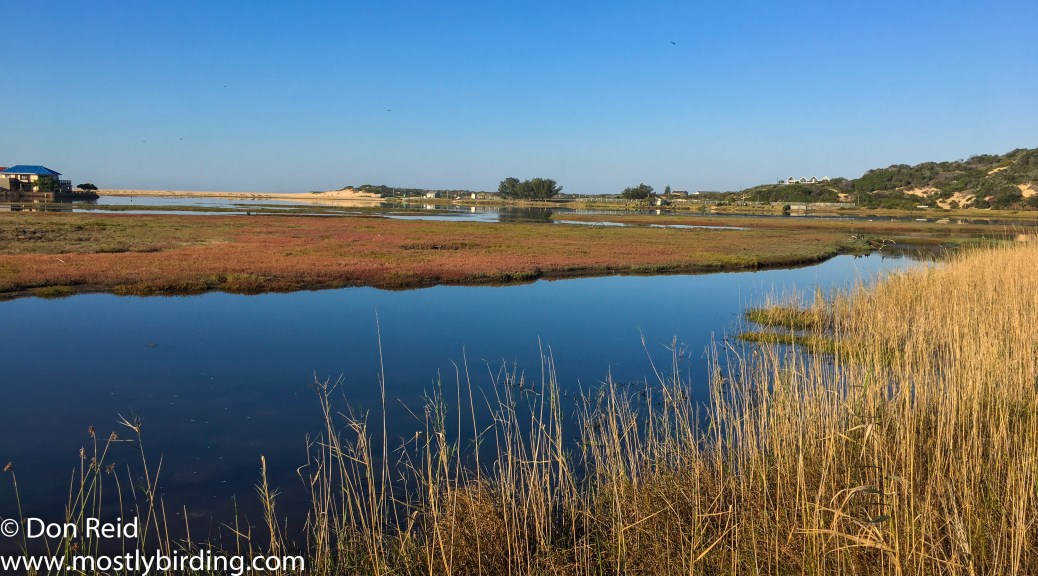
Next stop after taking the Great Brak turnoff was the Suiderkruis road which adjoins the estuary all the way to the river mouth and is a great vantage point for viewing waterbirds.

During summer, when the water level in the estuary is favourable, it’s a magnet for waders and that was the case today with the ‘usual suspects’ present – White-fronted and Common Ringed Plovers, Greenshank, Little Stint and Oystercatchers.

Common Greenshank Tringa nebularia Groenpootruiter

Near the mouth the tern roost was busy with terns coming and going constantly – the three regular species were all there – Swift, Sandwich and Common Terns

That took me to 41 species and it was looking good for a high total (which is not the main point of atlasing but does inspire you to give it your best).

Inevitably the birding slowed from there as I headed inland towards the village, then up into the hills to complete a circular route through the countryside and back into town.

African Stonechat Saxicola torquatus Gewone bontrokkie (race torquatus), Great Brak Inland

Next up was a road I had not explored before – Voorbrug Way which heads uphill again but eastwards and I soon found myself passing homes (mansions in some cases) on large properties built on “the heights”. It was not long before I reached the boundary of the pentad, as indicated on the car’s GPS, with a total of 62 species recorded after some two and a half hours.
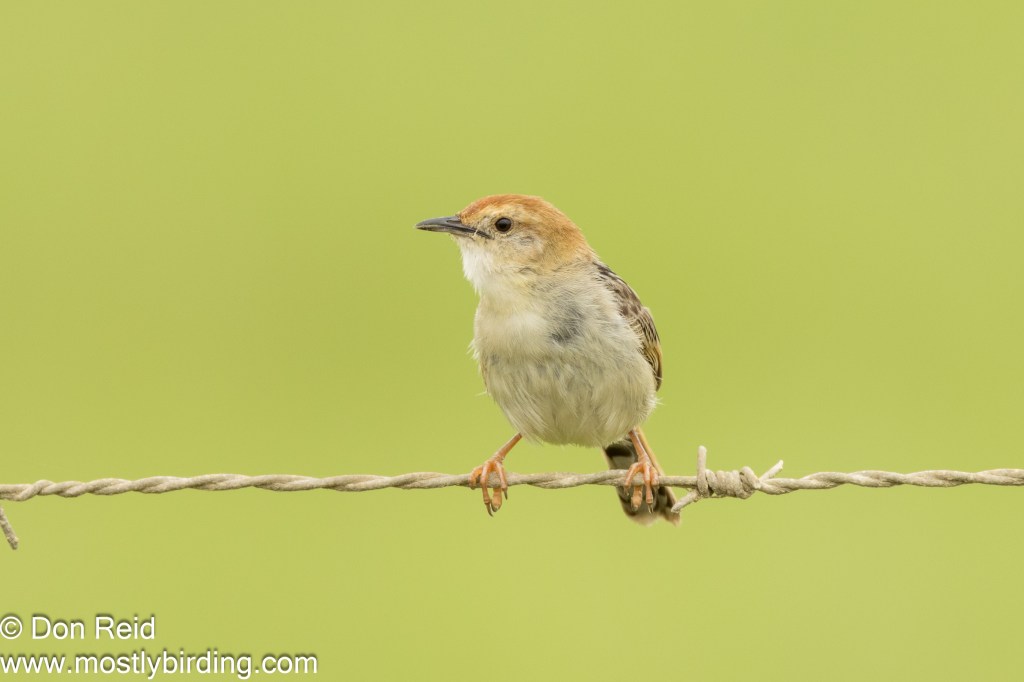
Levaillant’s Cisticola Cisticola tinniens Vleitinktinkie (race brookei), Great Brak Inland

Driving along the back roads I just had to stop and inspect this spectacular flowering plant with flowers the size of dinner plates – turns out it is an introduced garden species native to certain South American countries and has a reputation for being poisonous although the sources say it is no more poisonous than the humble tomato plant
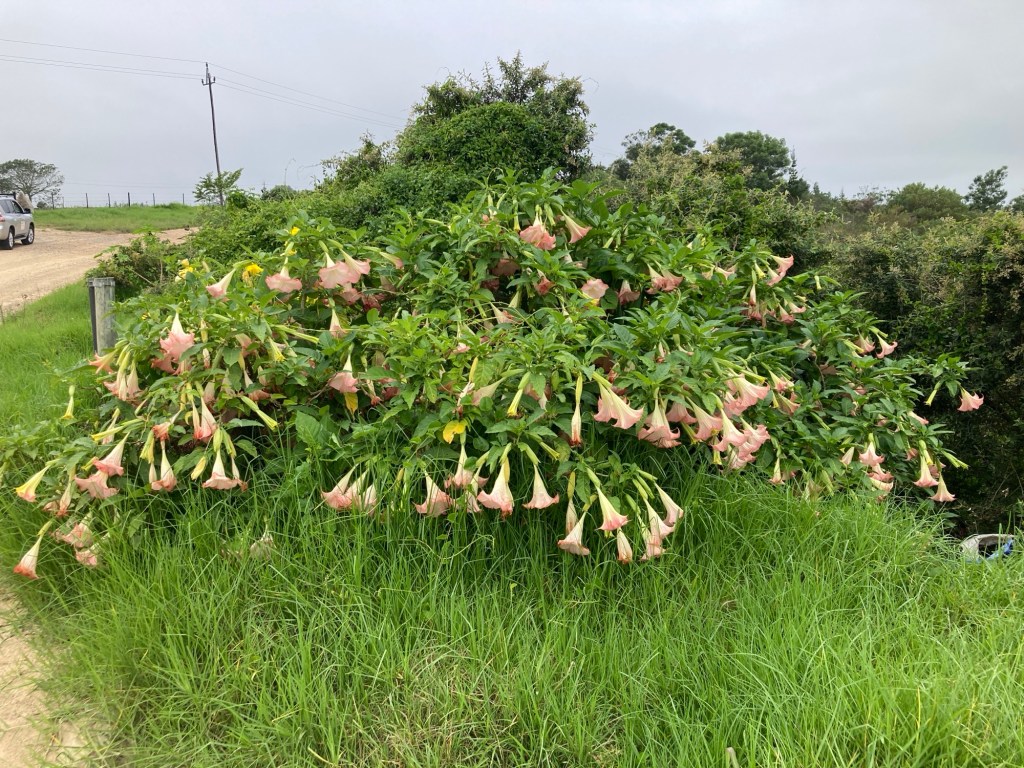
Moonflower – Brugmansia (introduced species), Great Brak Inland

Pentad 3400_2215

I carried on along Voorbrug Way, which took me back to the R102 main road before heading northwards on the Jonkersberg Road. This road passes several farms and small dams – ideal countryside for a good variety of species as it serves the needs of both terrestial and water-based birds. The latter included Red-billed and Cape Teals, Cape Shovelers, White-faced and Yellow-billed Ducks and Little Grebe, in addition to the usual Coots, Moorhens and Cormorants – standard fare for the southern Cape but not often all seen in a pentad without a significant vlei or two.

Returning on the same road I then turned back to the coast and drove the length of the seaside town of Glentana, which did not add much to my list, but I managed a total of 49 species for the pentad.

Other highlights of the pentad were several –

  • Four raptors in all – Black-winged Kite, Yellow-billed Kite (migrant), African Harrier-Hawk and Forest Buzzard
Yellow-billed Kite, (photo taken in Chobe Game Reserve)
  • White Storks sharing a field with many Egrets and Ibises
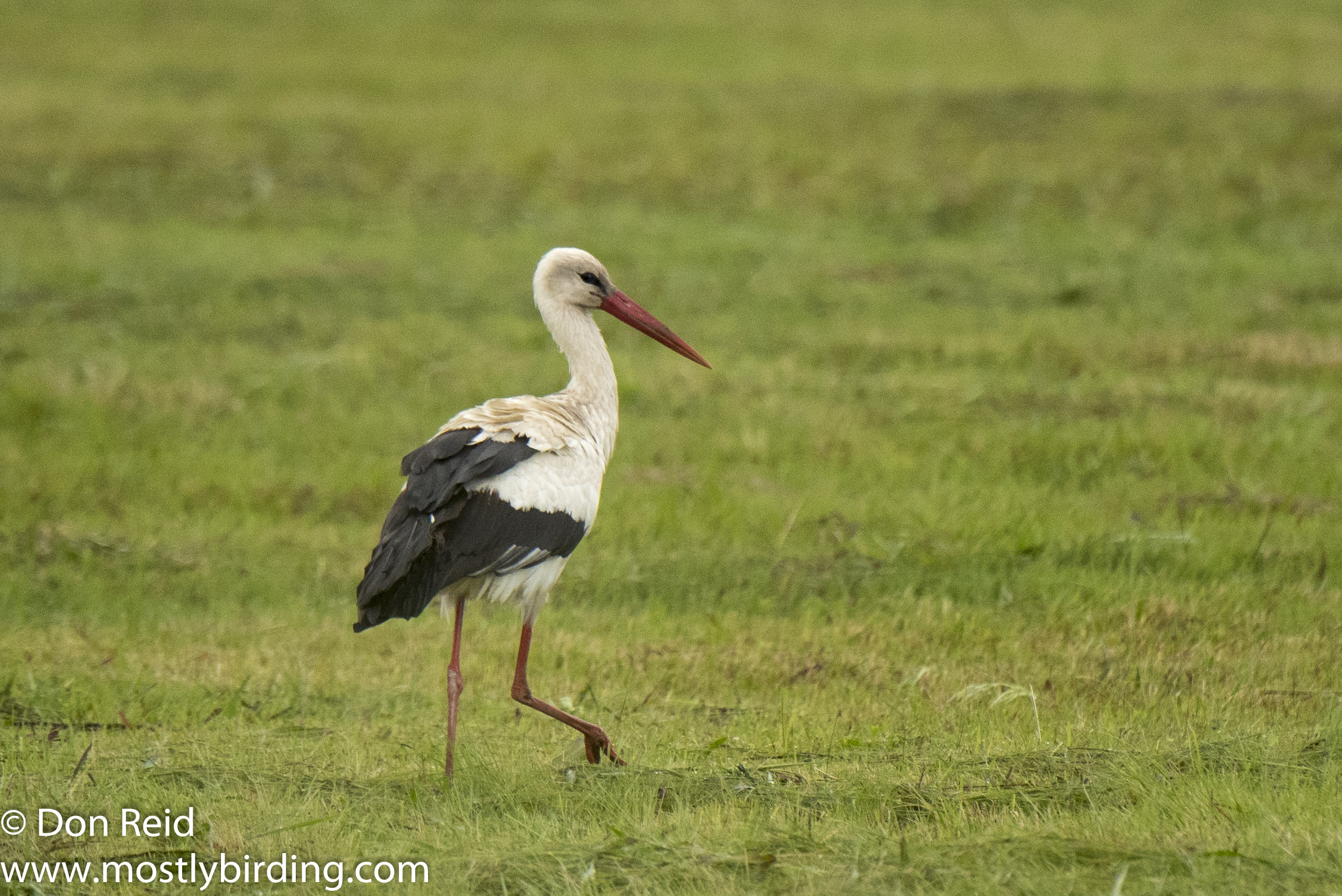
White Stork, (photo taken near Delmas in Gauteng)
  • Common Quail calling from longish grass but as usual remaining hidden

Hoekwil 30 January 2024

My last atlasing outing for the month was a short one while Gerda was having her next treatment in George.

After some essential shopping I headed to the pentad which incorporates the “Big Tree” forest near Hoekwil village. Starting in Waterside Road in Wilderness I proceeded east to Bo-Langvlei road then up the Hoekwil road.

A windy day meant birds were few and far between, so I made my way to the forest parking area for a quick picnic lunch and spent the next hour walking the quiet trail where birds are more often heard than seen and lovely forest scenes lie around every bend in the trail.
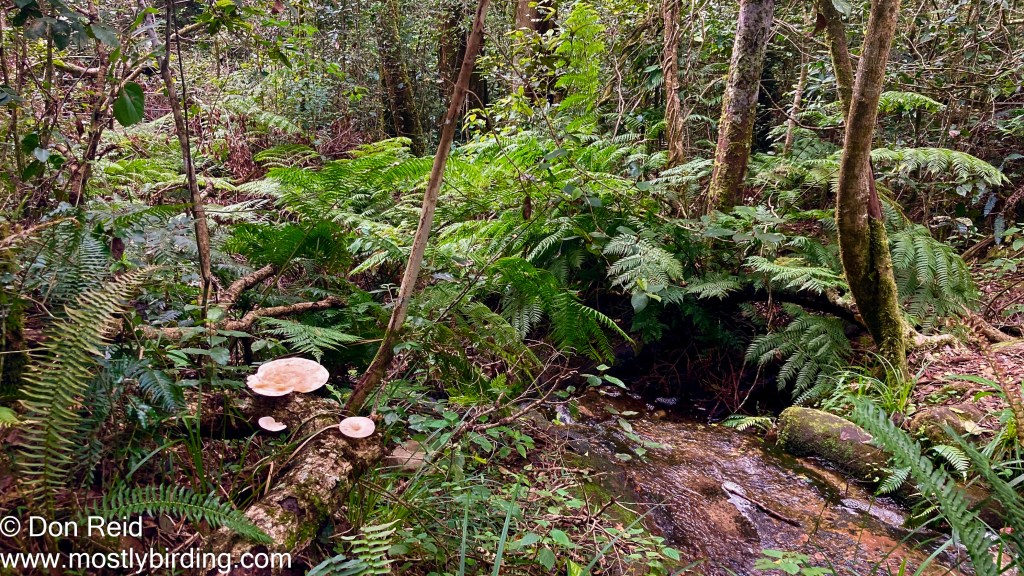
Hoekwil Forest

This juvenile Chorister Robin-Chat was curious enough to allow for a photo in the dark forest
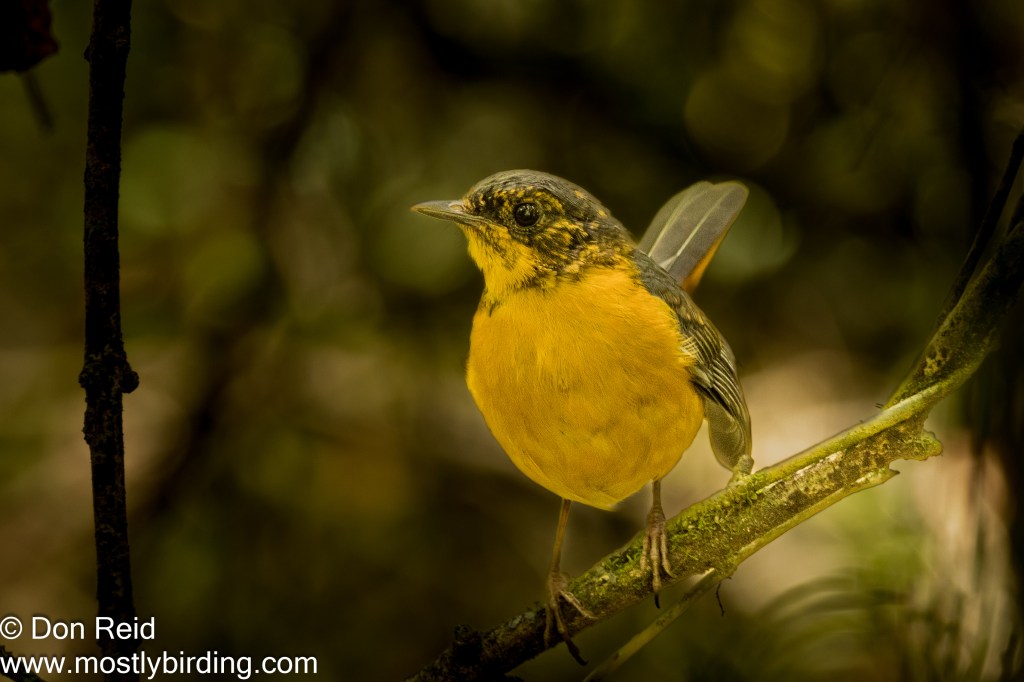
Chorister Robin-Chat Cossypha dichroa Lawaaimakerjanfrederik (Juvenile), Hoekwil Forest

Cape Batis are quite common in the forest although not always easy to see – this was one of several sightings during my walk
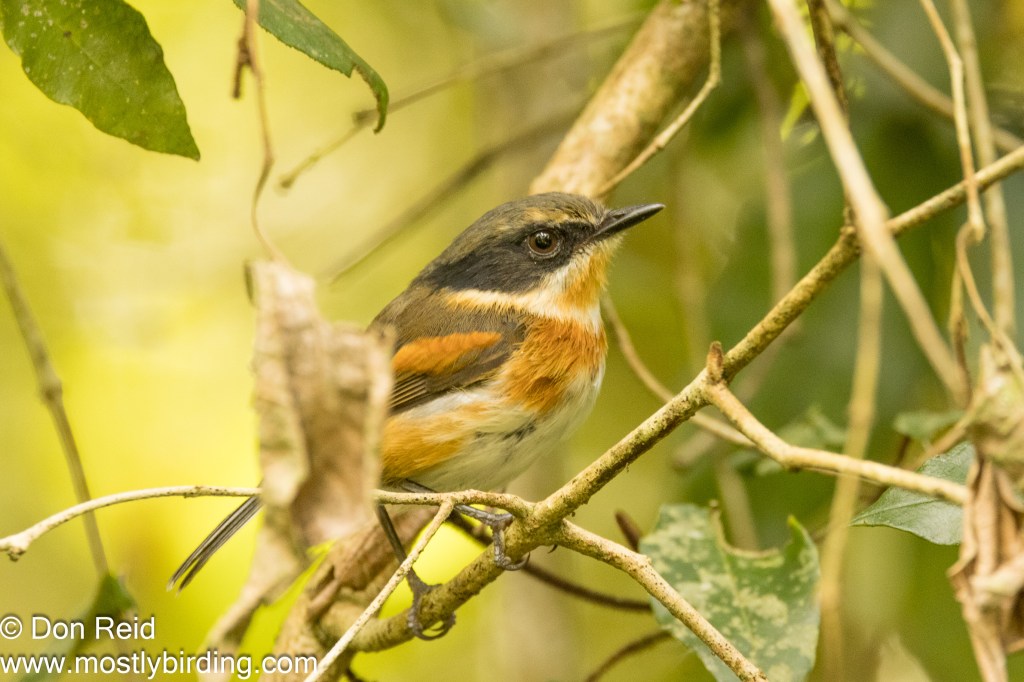
Cape Batis Batis capensis Kaapse bosbontrokkie (Female, race capensis), Hoekwil Forest

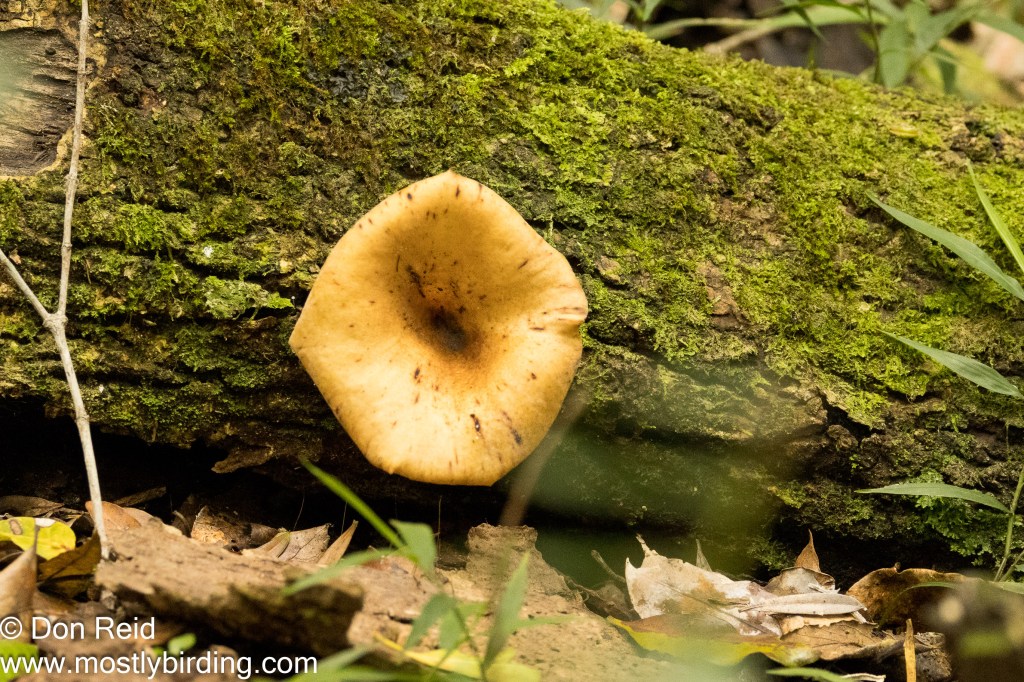
As with most forests, Hoekwil has many natural delights, apart from the birdlife, which tend to distract you from the task at hand and I found myself stopping to admire the bounty

Spider, Hoekwil Forest
Fungus, Hoekwil Forest
Butterfly : Bush Brown, Hoekwil Forest

Bird of the day was a charming little Yellow-throated Woodland-Warbler – not having seen one for a few years it was a special sighting
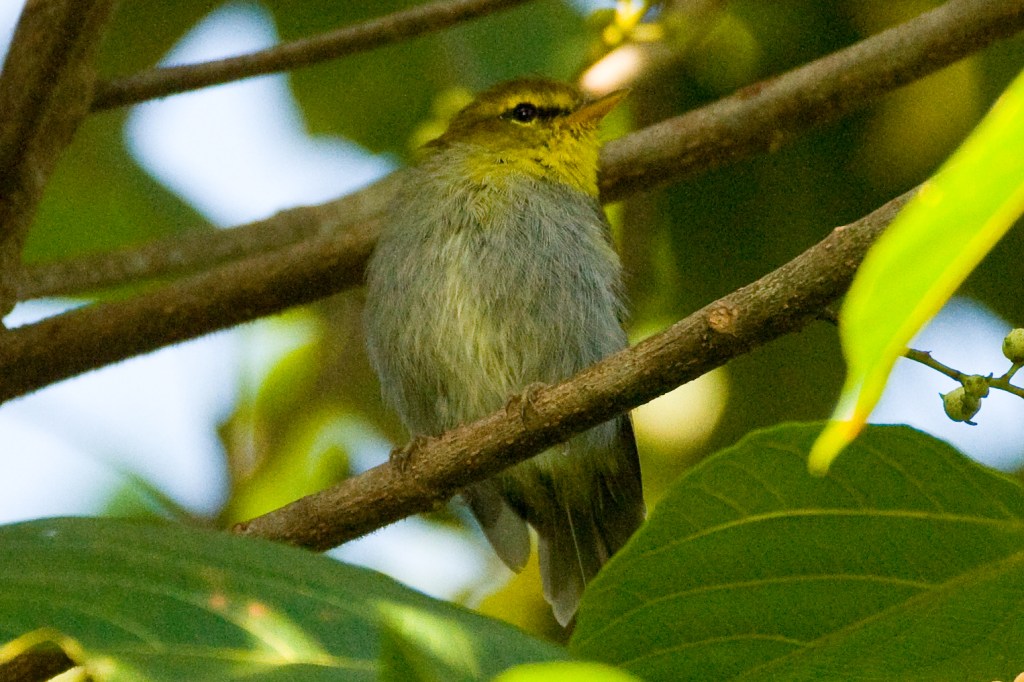
Yellow-throated Woodland-Warbler

It had been a good month with a total of 167 species atlased and many special sightings among them
My Atlasing Month – July 2020 (Part 3 )

Continuing the monthly look at where Atlasing, or Birdmapping as it is also known, took me in July 2020 …..

Great Brak and Mount Hope – 24 July

I chose two pentads quite far from each other – only because I had started atlasing Great Brak River a few days prior and was within the 5 day maximum atlas period, so I was keen to complete this pentad. The choice for the second pentad was one not yet atlased in 2020 and the most appealing one was located on the other side of the Outeniqua Pass, on the way to Oudtshoorn.

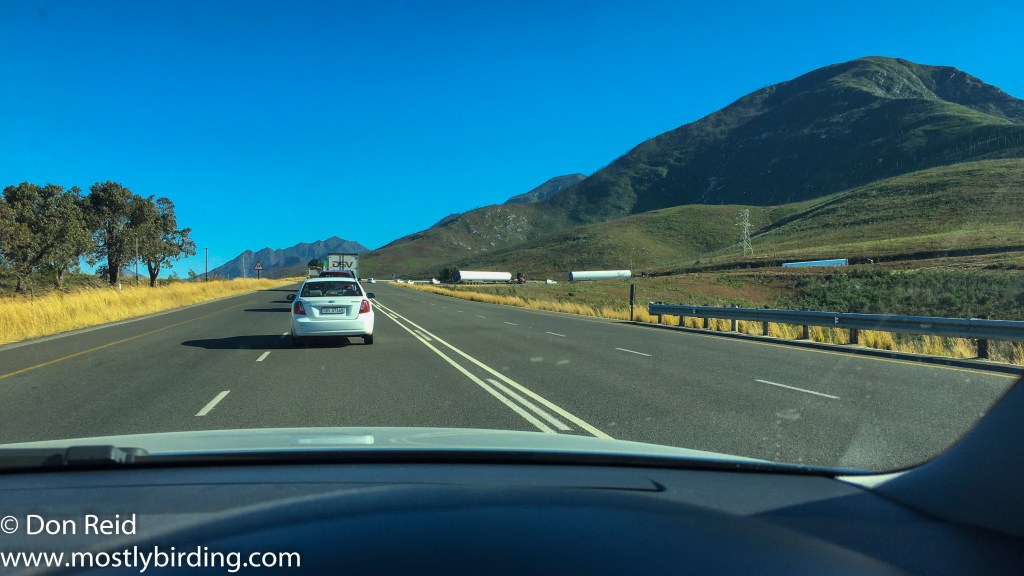
This meant a lengthy drive to get there, which on the day was made a lot longer by the convoy of 3 “Abnormal Load” vehicles trundling up the pass at a snail’s pace, with no chance of overtaking on this single lane, twisty road. Even a stop for coffee halfway up the pass to let the long queue of cars get ahead of me, did not help much as I quickly caught up with them again, but at least I wasn’t stewing in the queue all that time, but could enjoy a relaxed cup of coffee and an egg (forgetting of course that it was a bird that produced it)

Outeniqua pass with abnormal load vehicles in the distance, heading right

Pentad 3400_2210

Great Brak is always a pleasurable spot to atlas, particularly the part that lies around the river estuary, which is a local waterbird hotspot. I had started atlasing during a brief 15 minute stop the previous Tuesday, on the way back from a day trip to Knysna.

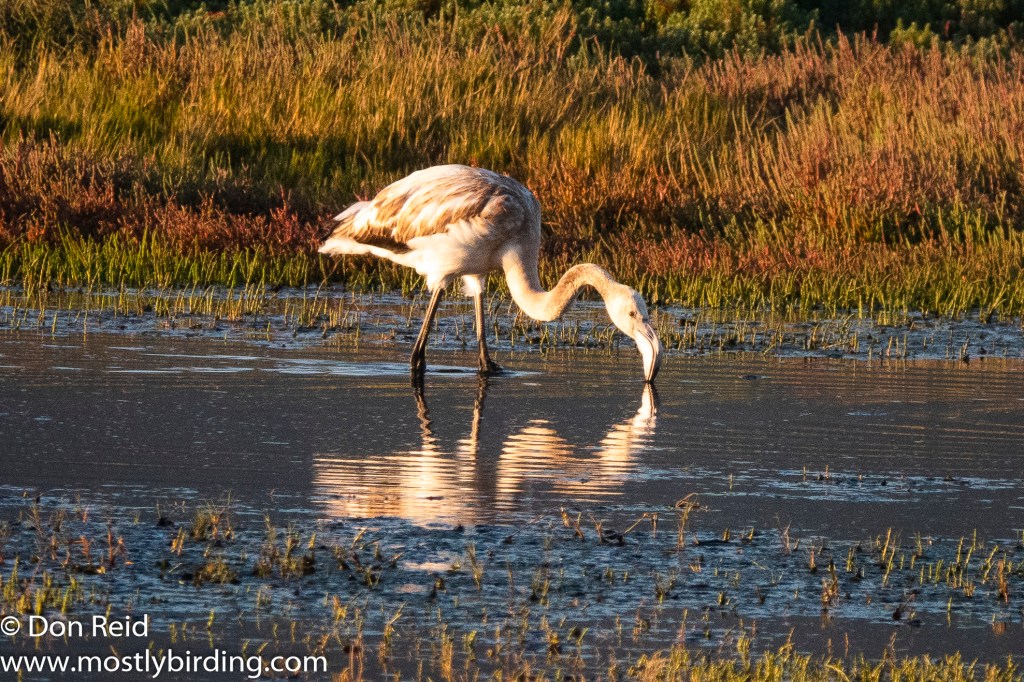
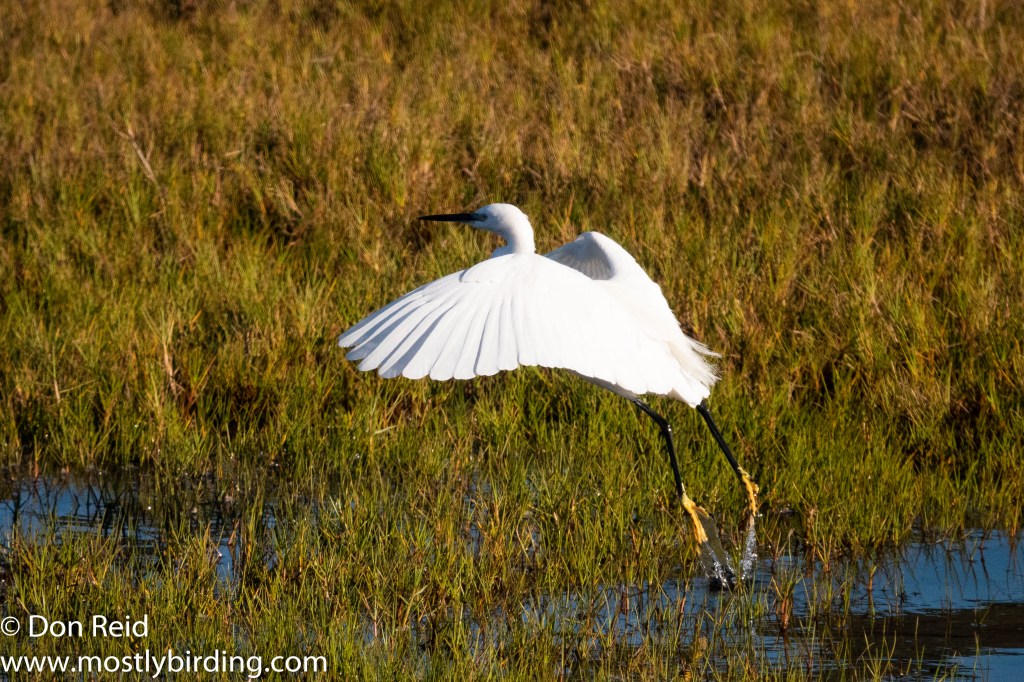
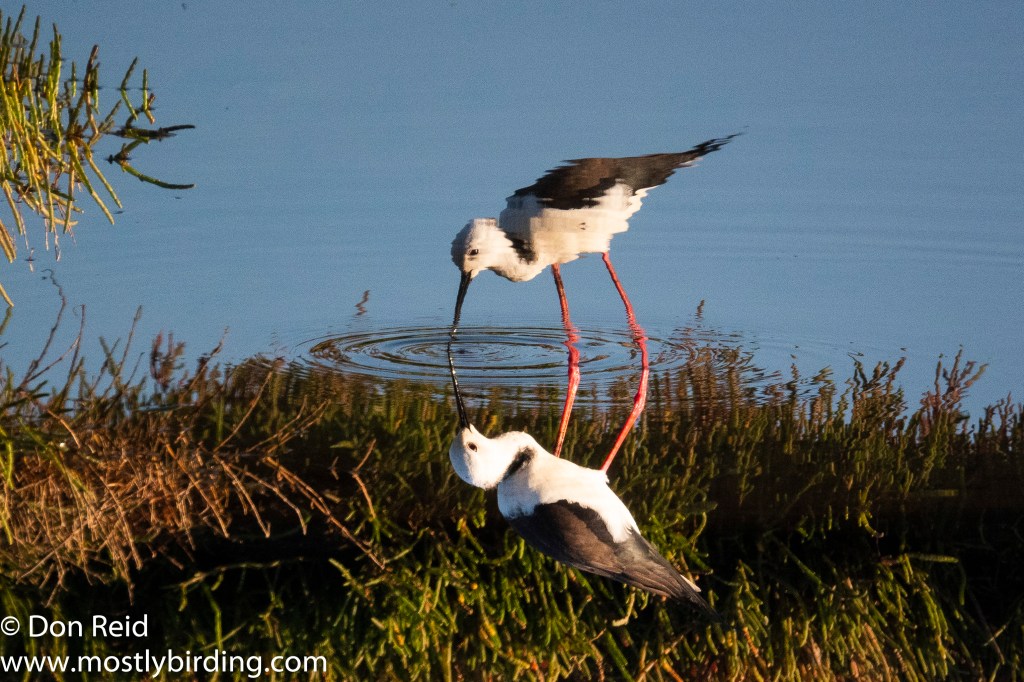
It was an hour before sunset and with the setting sun behind us as we drove slowly along the Suiderkruis road on the western side of the estuary, we had perfect light for viewing and photography for those 15 minutes. It was enough time to record 17 species including Greater Flamingo (with 3 juveniles nearby), Little Grebe, Black-winged Stilt, Little Egret, African Spoonbill and Cape Teal.

Greater Flamingo (Phoenicopterus roseus / Grootflamink) (Juvenile), Great Brak
Little Egret (Egretta garzetta / Kleinwitreier), Great Brak
Black-winged Stilt (Himantopus himantopus / Rooipootelsie), Great Brak

When editing the images I played around with the above photo – can you see what I did in this next photo ? Answer at end of Post….

Black-winged Stilt (Himantopus himantopus / Rooipootelsie), Great Brak

On the Friday morning I set out to continue atlasing at 7.30 am – sunrise in midwinter – along the gravel road that runs between Klein Brak and Great Brak just north of the N2 national road. The first birds were fairly mundane – Doves, Hadeda, Egyptian Goose – then I stopped to scan the settling ponds of the waste water treatment works and heard Little Rush Warbler and Cape Grassbird, both very distinctive calls, and saw White-faced Ducks on the opposite side of one of the ponds. An encouraging start to the morning!

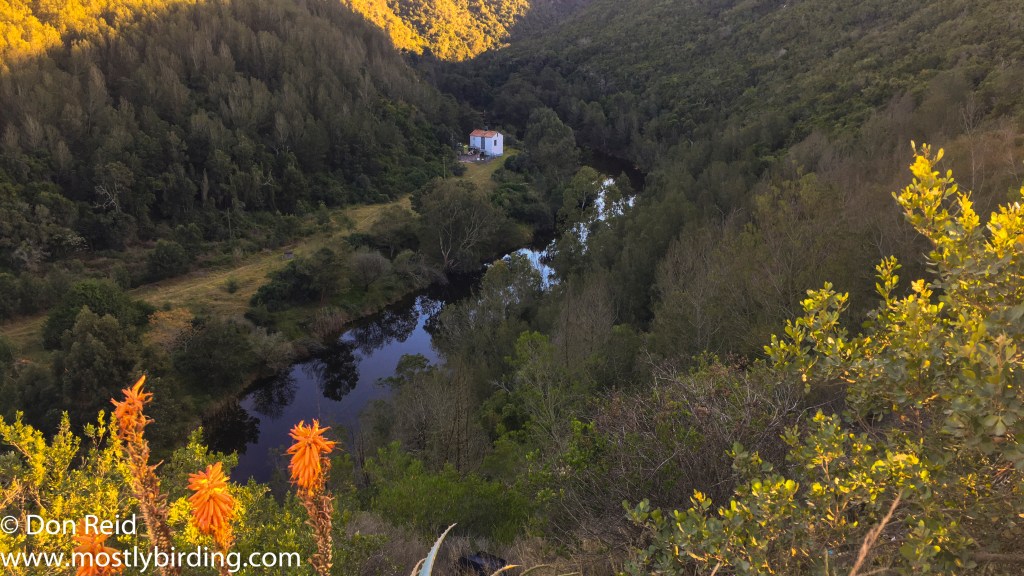
Roadworks in progress over the next stretch of road, including a “stop and go” one way system, meant a short delay followed by a forced rush until I was through the village of Great Brak and heading northwards into hilly country, along a twisting gravel road lined with bush both sides and steeply sloping ground falling away to one side.

Great Brak River

Several stops along the way, but only along the longer straight parts of the road so that approaching cars would be able to see me in time, added both Southern and Greater Double-collared Sunbird, Bar-throated Apalis, Cape White-eye, Sombre Greenbul and Southern Boubou. When I reached the plateau the habitat changed quickly to farmland and I soon came to the northern boundary of the pentad, so it was time to turn back.

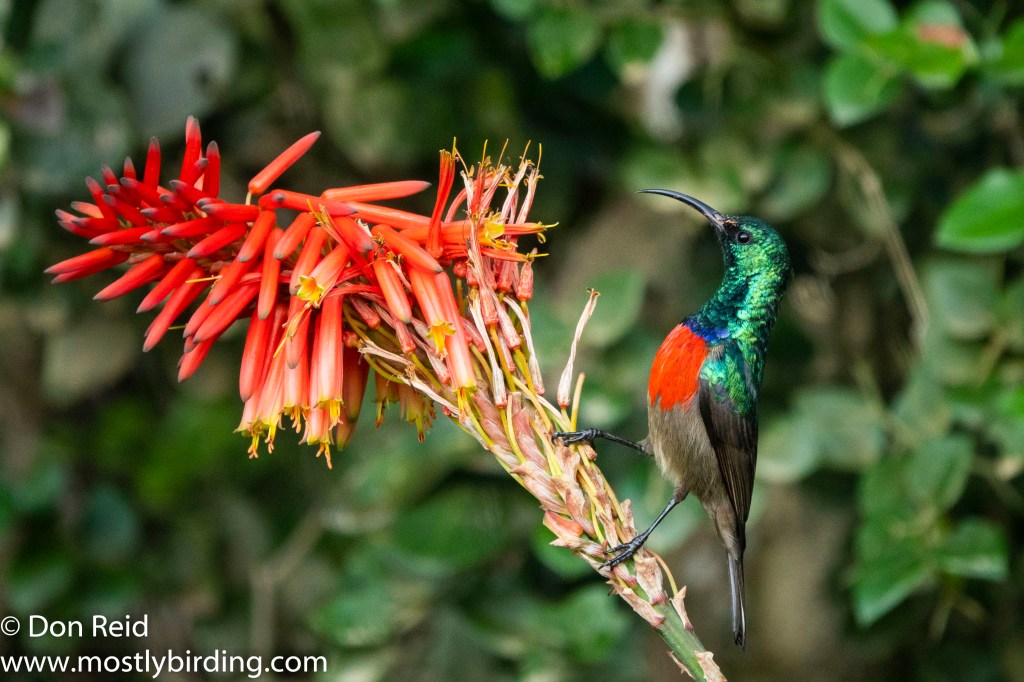
Greater Double-collared Sunbird, Great Brak River
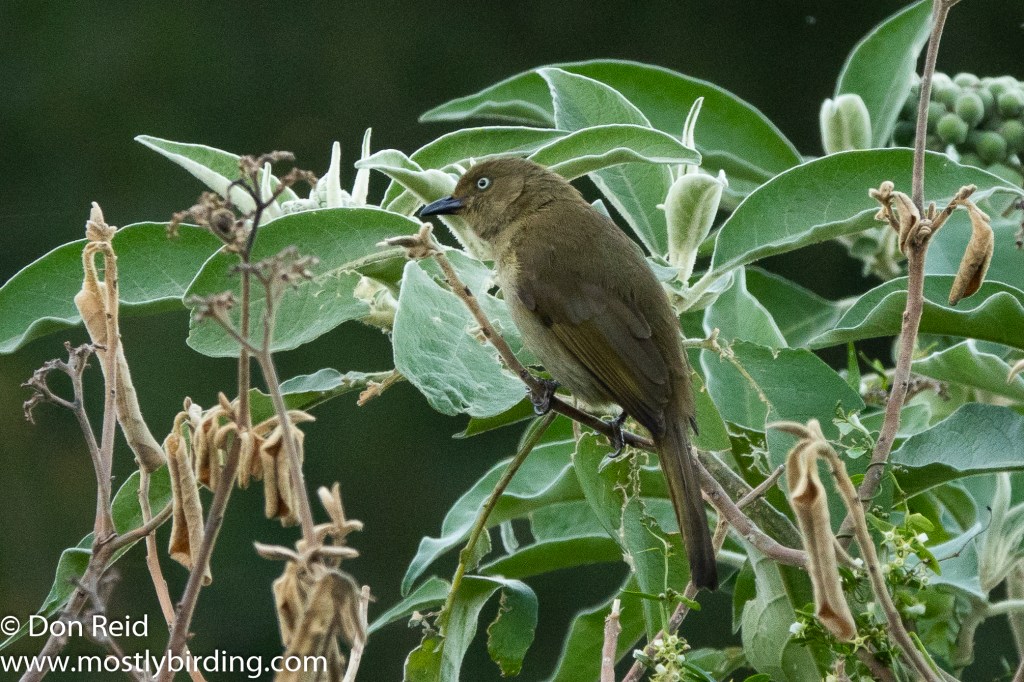
Sombre Greenbul, Great Brak River

I wanted to hit the estuary again before moving on to the next pentad and I headed for the eastern side to avoid having the sun in my eyes. I was rewarded with Mallard, a couple of Pied Avocets (5% – so quite scarce), Grey Heron, plenty of Greater Crested (Swift) Terns and a Common Sandpiper, the latter surely one of the first arrivals from European Russia – heck it’s still winter here and the migrants are already arriving!

Common Sandpiper, Great Brak River

While scanning the waters for other waterbirds a Klaas’s Cuckoo (9%) called “Meitjie” (it’s Afrikaans name, pronounced “maykie”) to confirm its presence. As I left this superb birding spot a single Cape Sugarbird (10%) flew between bushes to take my total for the first pentad to 54, after some 2.5 hours of atlasing.

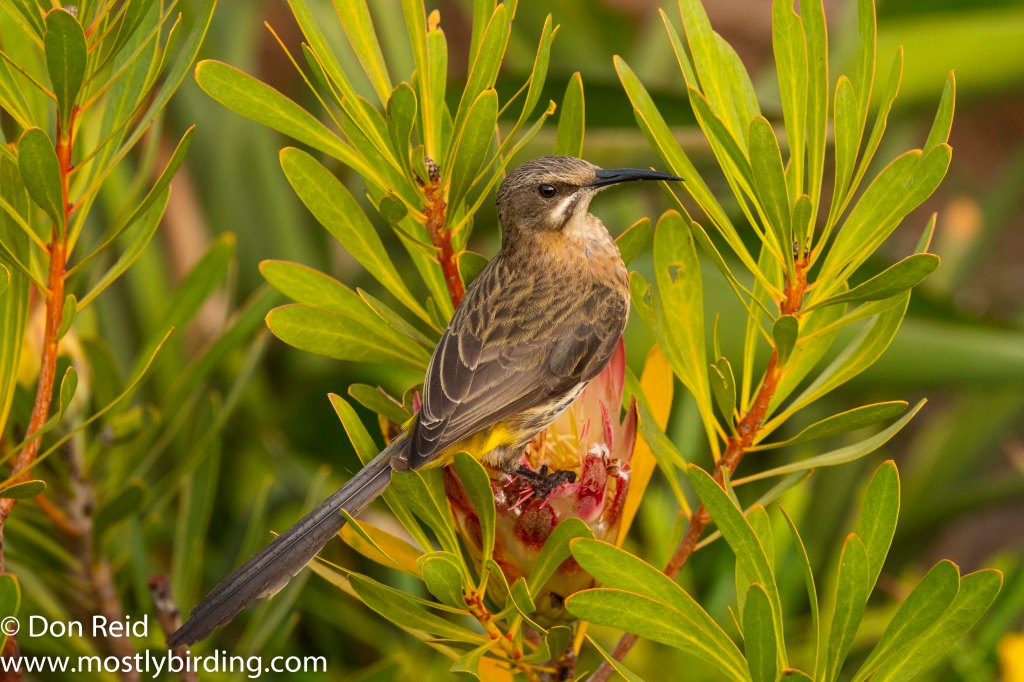
Cape Sugarbird

Pentad 3345_2215

In hindsight I should have chosen a second pentad closer to the first – my trip between the pentads took over an hour including the “abnormal load” induced delay and coffee stopheading up and over the Outeniqua Pass which takes you from sea level to an elevation of 800 metres – not all that high but enough to bring the temperature down substantially until I was into Klein Karoo country on the way to Oudtshoorn.

It meant that I only started the second pentad at 11 am – hardly the ideal time for birding, especially in the Klein Karoo where the birds tend to disappear during the middle of the day. Nonetheless the first half hour was quite lively as I passed through mainly farmland and found Ibises (Sacred and Hadeda), Egyptian Geese and Black-headed Heron – all species that prefer open fields.

That was followed by the bird of the day as I came across a flock of Black-headed Canaries (15%) – a species that I have seen few enough times to count on one hand.

I continued past several more farms and a small stream until I came across the next exciting find when I spotted a flock of Swifts in the air – way too early for returning migrants I thought. As it turned out they were Alpine Swifts (6%) which are partial intra-African migrants so probably hadn’t come far by Swallow / Swift standards but always a joy to see with their speedy flight and white belly making them one of the easier swifts to call.

Alpine Swift, (taken in Augrabies NP)

A large farm dam disappointingly produced not a single bird and thereafter birding became really slow as I headed into more arid countryside with almost no signs of visible farming. Just when my birding spirits were flagging I came across a Mountain Wheatear (New record) and shortly after that excitement another smaller dam was more productive with both SA Shelducks and Yellow-billed Ducks in residence.

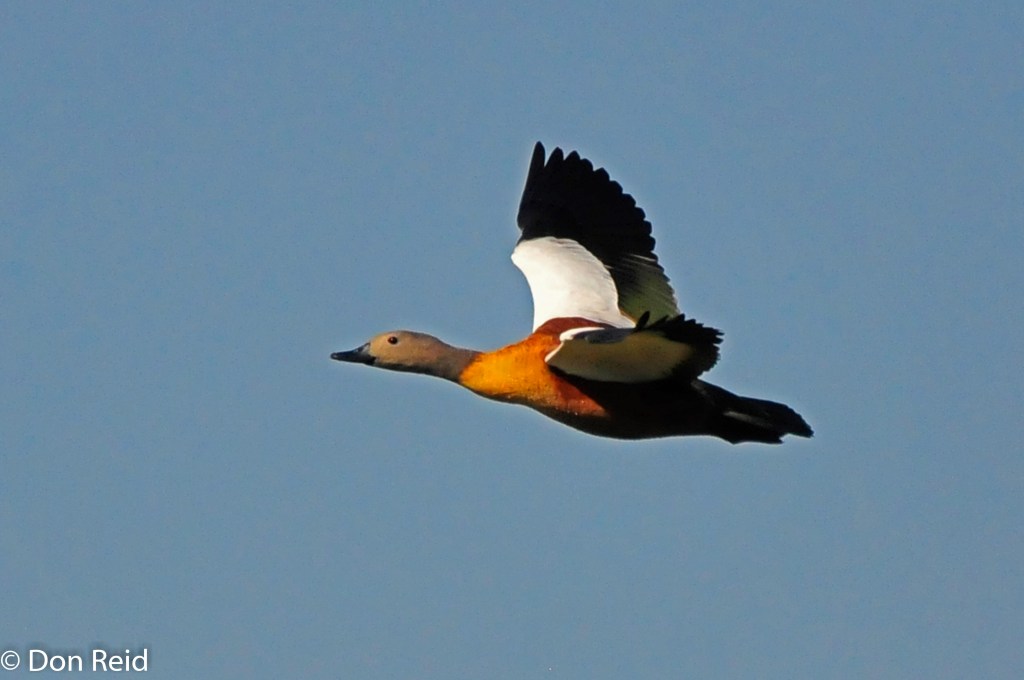
SA Shelduck

In the surrounding bush I found a Bar-throated Apalis, as feisty as always, and in a tall tree a Pale Chanting Goshawk provided a pleasing conclusion to the pentad, which stood at a total of 34 species – not at all bad considering the time of day. I took the shortest route back to Mossel Bay, eventually getting back on to tar at the R328 and completed the long circular route home.

The Answer ……..

If you guessed that the second Black-winged Stilt photo is a copy of the first but inverted, you win this week’s prize, which is a genuine “well done” from me!

Footnote : Where I show percentages in brackets, these refer to the relative scarcity of the species according to the pentad surveys completed to date over the ten years that the project has been running. So if 100 pentad surveys have been done to date and a species has been recorded 5 times by the observers, it will be shown as 5%. Notable species in my book are those with a % of less than 10%

Terek Sandpiper at Great Brak ….

Terek Sandpiper (Terekruiter / Xenus cinereus)

An easily identified wader or shorebird compared to others of its ilk, darn difficult to find in Southern Africa if my experience is anything to go by.

It’s been on my list of “birds to get” for far too long and I have tried to find it on a couple of occasions, without success. So, when a message appeared on the Mossel Bay Birding WhatsApp group – Terek Sandpiper at Great Brak – I made a quick decision to see if I could find it.

Being a summer migrant and occasional winter migrant (non-breeding) to the southern Cape town of Mossel Bay from our home in Pretoria, I was just a half hour’s drive from Great Brak River, so that would make it an easy decision, you would think. However, I had been bird atlasing since 5.30 am that morning in the Oudtshoorn area, returning home at 2.30 pm, so I already had 9 hours of driving/atlasing under my belt. This was followed by some domestic chores and a trip to the shops so by the time I read the message I was ready to put my feet up and relax for the rest of the late afternoon and evening.

The Terek Sandpiper message changed all that and after a quick reviving coffee I was off to beat the sunset, which was still an hour and a half away, but light was fading…..

By 6.30 pm I was at the spot along the Suiderkruis road which skirts the Great Brak river mouth and ends at a parking area adjoining a picnic spot where several groups seemed to be celebrating the end of their working year in loud style – not quite the accompaniment you want when searching for a lifer but I did my best to ignore the raucous goings on and remain focused on my mission.

Once parked, I got out to scan the sand banks in the middle of the river and could immediately see dozens of Terns and Gulls, but more importantly many smaller shapes moving about in the subdued light. Checking these with my binos made my heart sink momentarily as all I could make out were many groups of small shorebirds which all looked pretty much the same in the less than ideal light.

Even at full zoom, there was not much to be seen

I had to get closer, so I set off along the sandy edge of the river until I could get a better view of the sand banks – this turned out to be the right move and I carefully scanned the gathered hordes of small shorebirds, mostly Common Ringed Plovers, for something different.

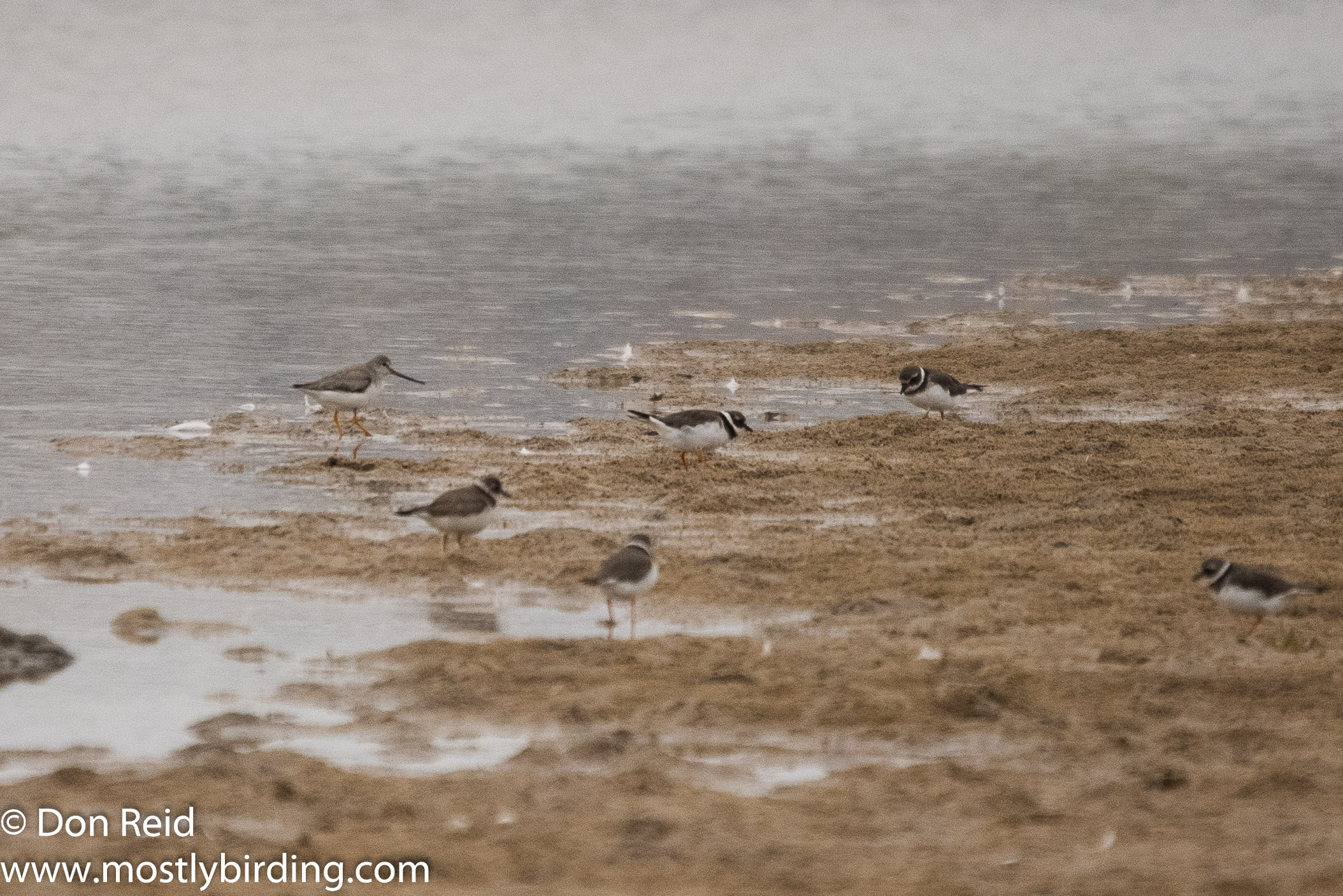
Full zoom and cropped as far as I could push it, at least separated the Terek Sandpiper from the Plovers

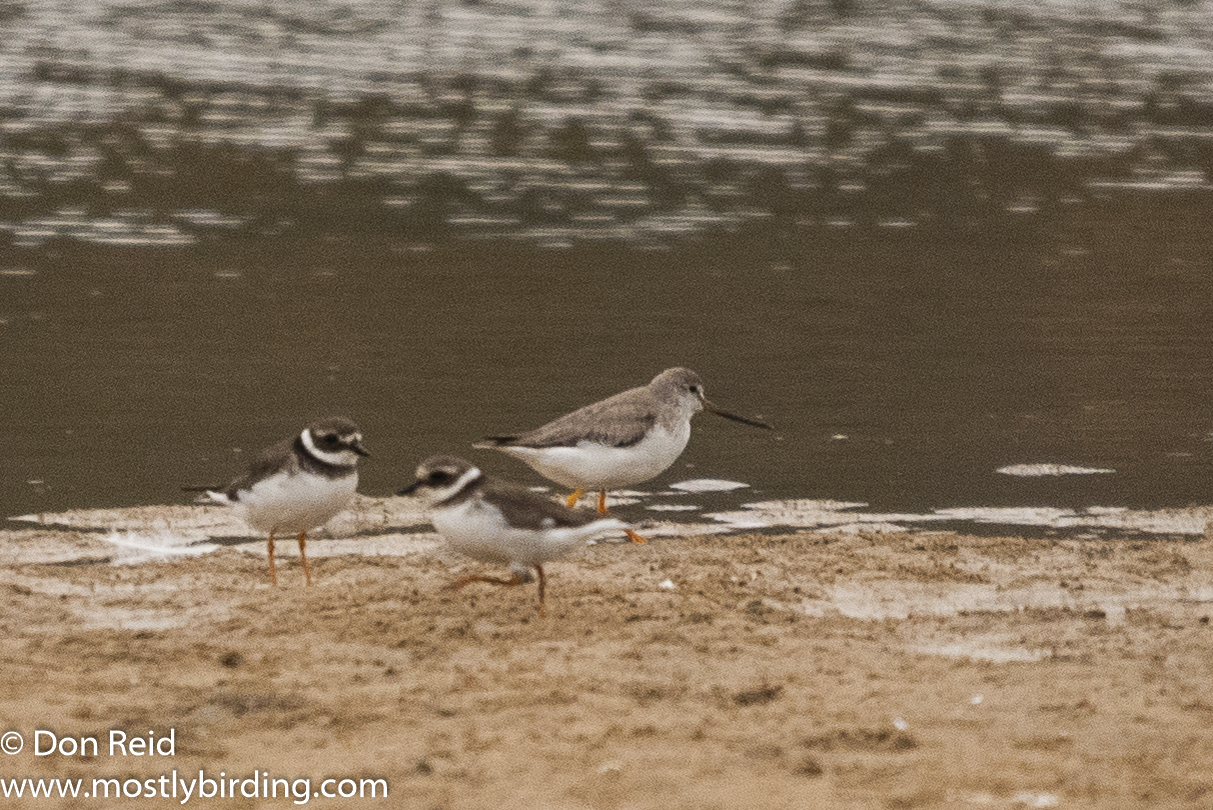
I gasped audibly when I spotted it – the low-slung body on short, bright orange legs and with a long slightly upturned bill stood out like a beacon amongst the more rounded, upright Ringed Plovers with short bills.

Savouring the moment, I waded cautiously into the shallow, wide stream separating the sand bank from the shoreline to try to get a little closer for a photo, but the birds were on to me and promptly moved further away.

So I had to be content with a long-distance photo, which was quite a challenge in itself. The Terek was moving in unison with groups of Ringed Plovers and just getting it vaguely into the camera viewfinder was all but impossible at the distance I was.

So I resorted to getting a lock on its position through my binos then quickly swopping over to the camera, pointing it at the same spot and rattling off a few shots. This worked up to a point but the best of the shots was well below my usual standard, so I crept a bit closer and repeated the process.

At one point the Terek moved slightly away from the Plovers and I rapidly got in some shots while it was more or less isolated –

This was the closest I was going to get so I had to be content with a “record shot”

Deciding that this was about the best I could do and with the light conditions now very poor I trudged back to the car and set off homewards, very pleased with this long-awaited sighting.