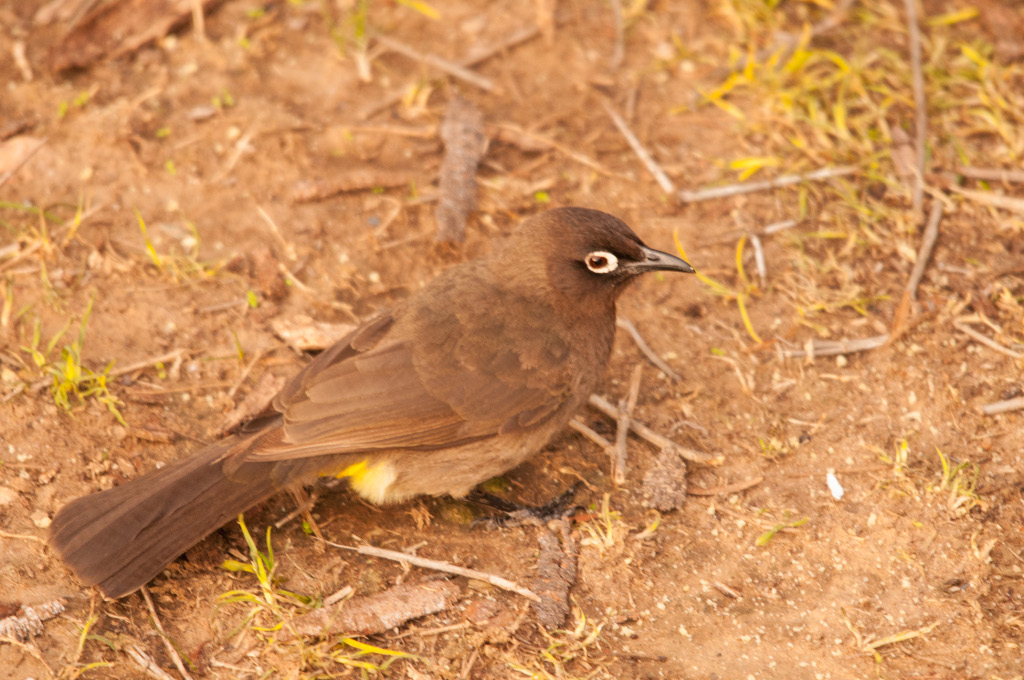
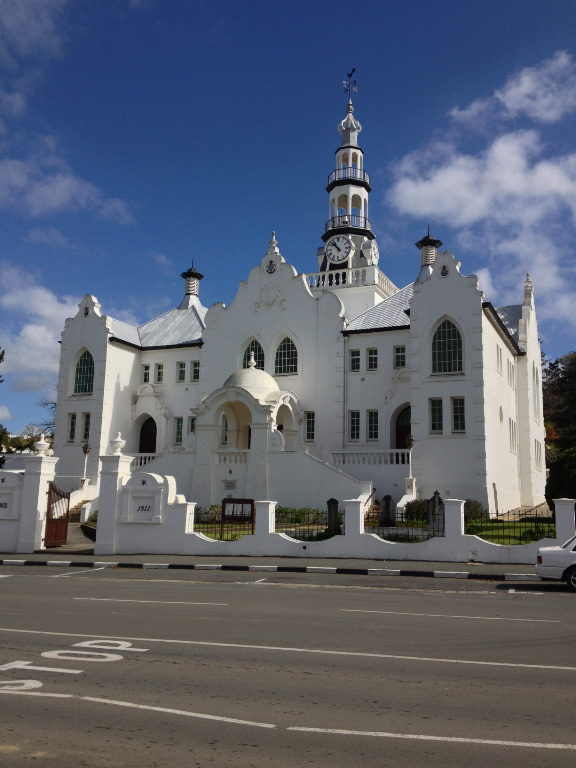
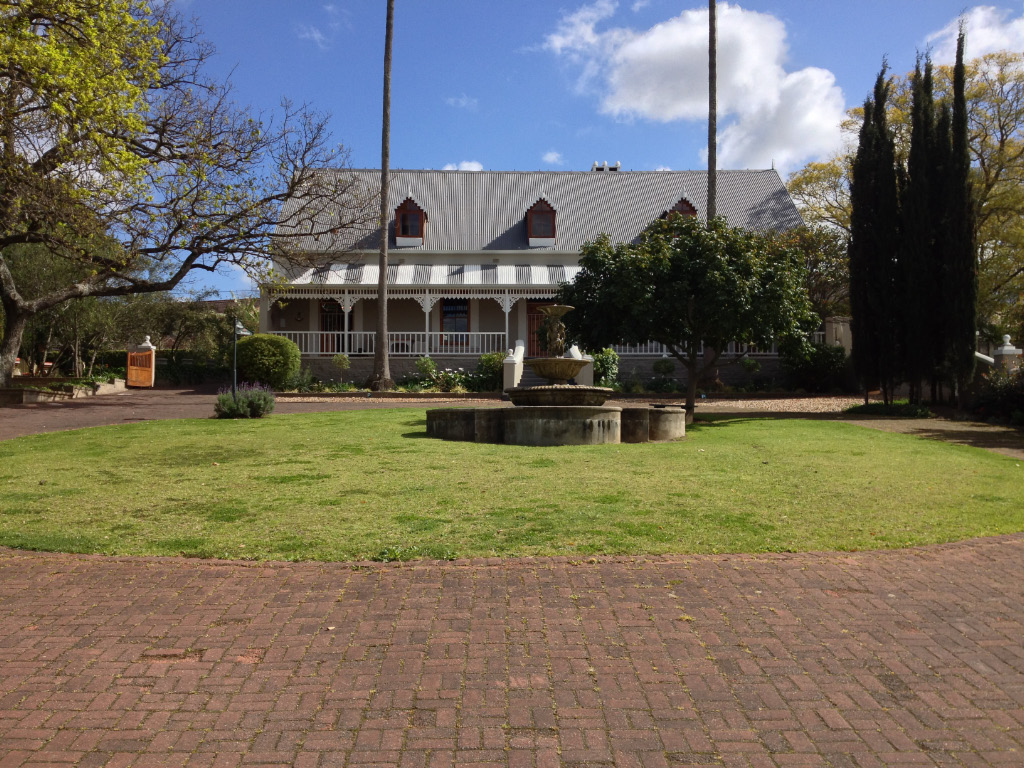
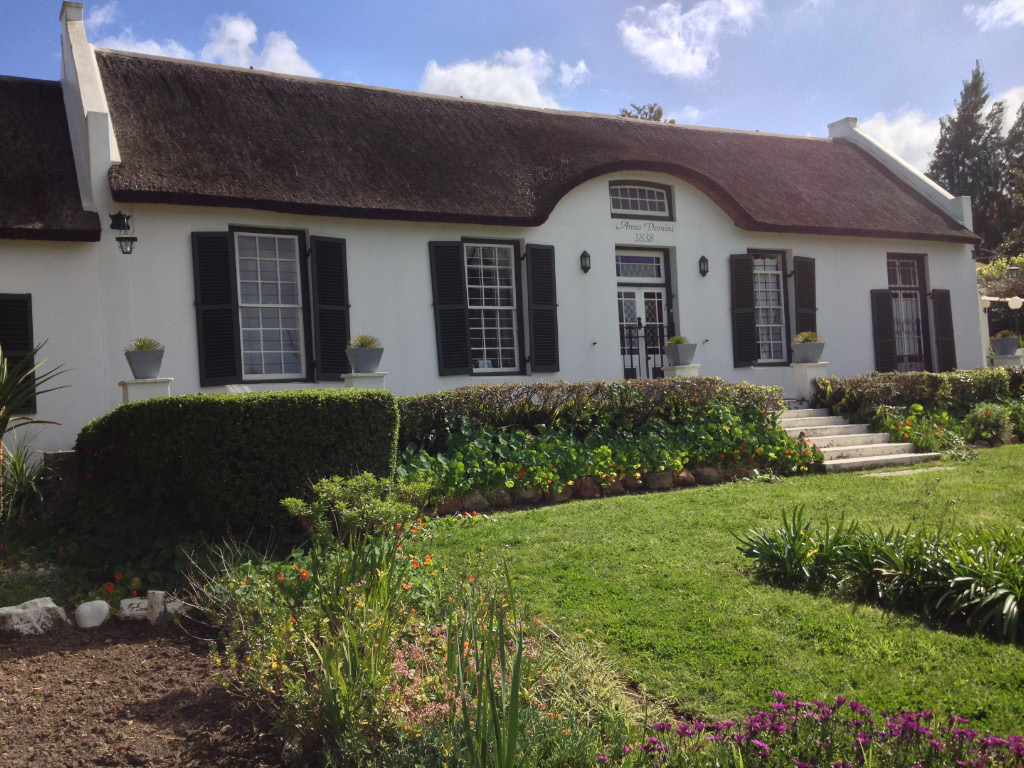
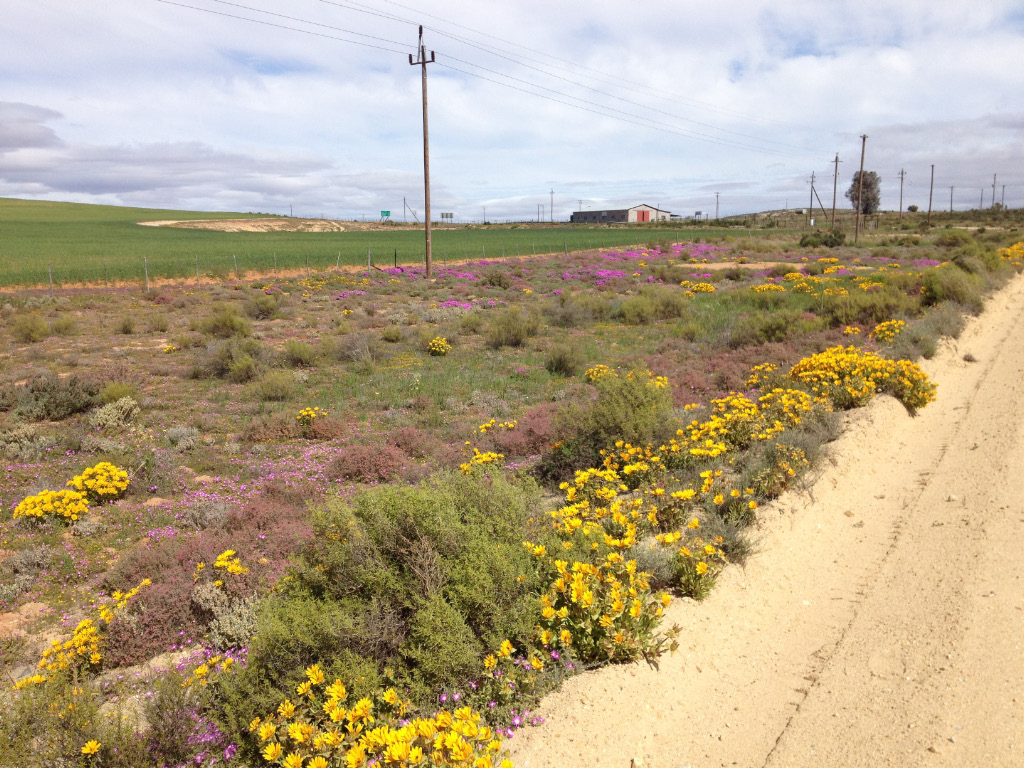
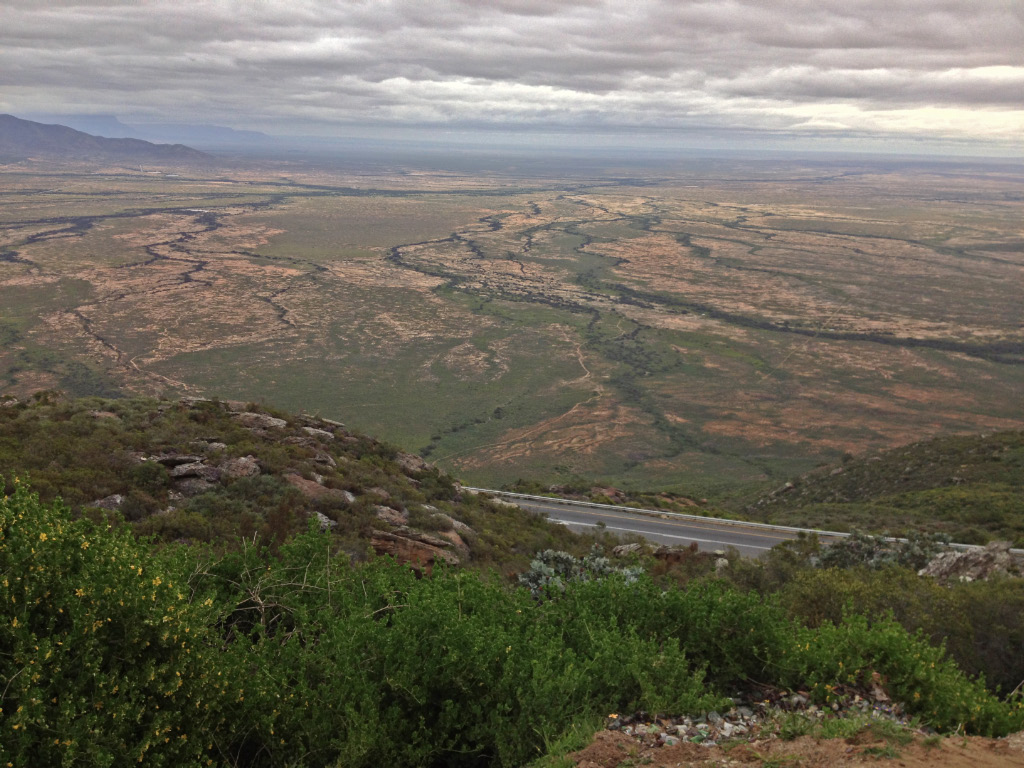
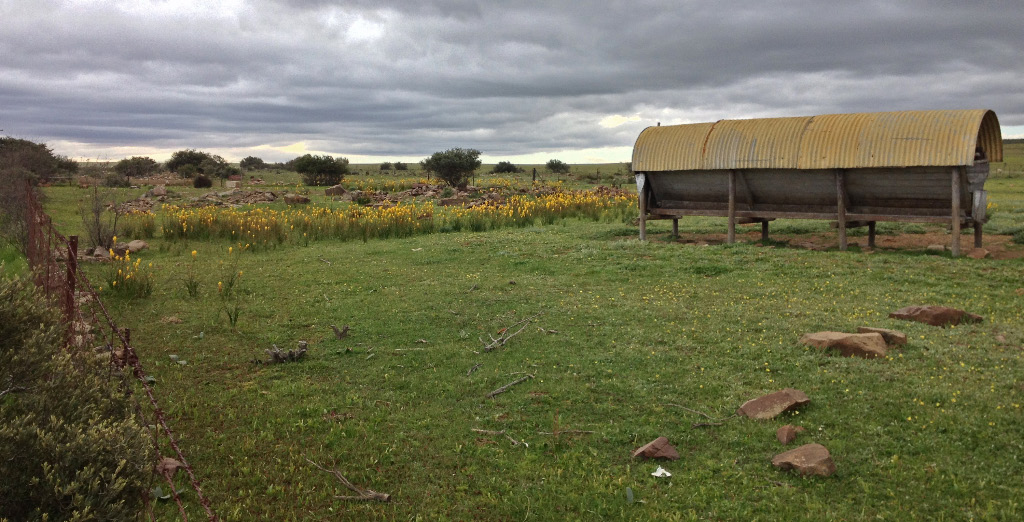
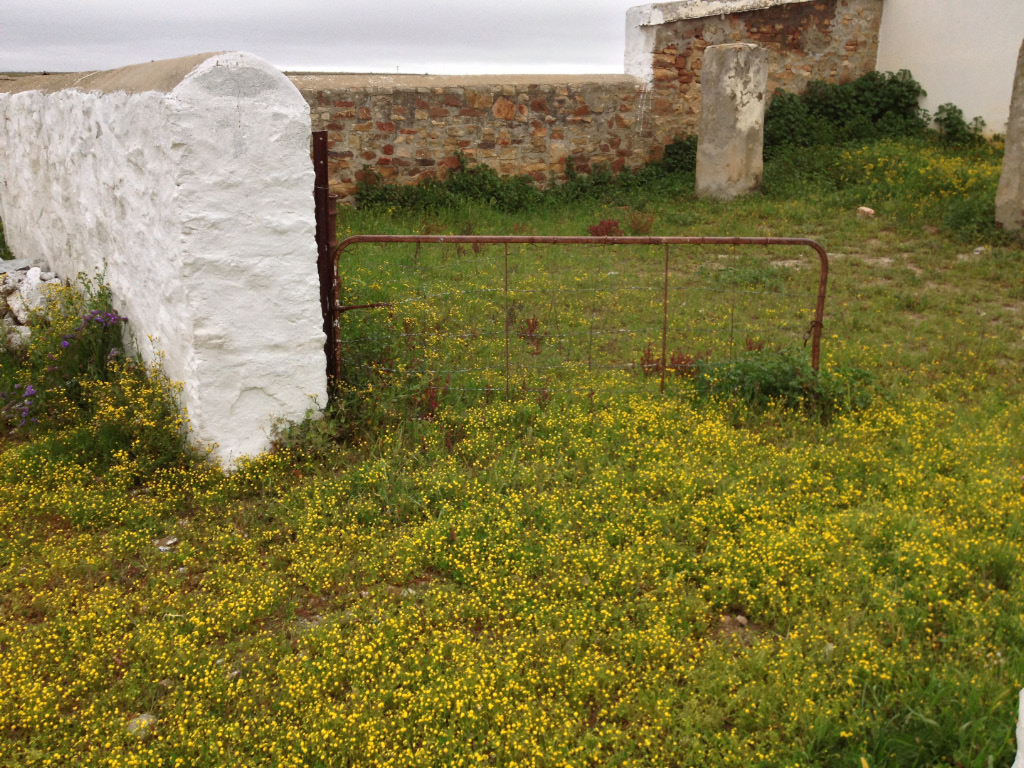
Tag Archives: Birding

Atlasing Tales 12 – North and South, Winter and Spring

These tales record some of the more memorable experiences while atlasing – in this case two atlasing outings 4 months apart in time and 1250 kms apart in distance –

And in case you’ve forgotten or have not heard of Atlasing, there’s a brief synopsis at the end of the post

North in Winter

One of my last atlasing trips in Gauteng, before our move to Mossel Bay in October 2023, was a mid-winter outing to the farming area about 30kms south-east of Pretoria, not far from the town of Bapsfontein.

Good friend Koos, also an avid atlaser, had suggested the outing and he picked me up around 6.15 am with 40 minutes to go before sunrise. We headed east along Lynnwood road extension, which was already busy with Saturday morning commuters and keen cyclists heading out along their favourite route.

At the T-junction with the R25, we turned southwards towards Bapsfontein, then east again at the Witpoort road. The road changed to gravel and heavy mist enveloped the car, slowing our progress considerably until we reached the northern boundary of our target Pentad

Pentad 2600_2830

A side road signposted “Knoppiesdam“ invited exploration and after turning off we came to a ‘gate’ – one of those unique rural designs consisting of strands of barbed wire attached to thin poles each side, one side fixed, the other side secured by loops of strong wire (known in Afrikaans as ‘bloudraad’ or “bluewire”) which allow the gate to be detached and secured as needed. The ‘gate’ has no frame so you have to pull it over to the side and lay it flat on the ground while the vehicle drives through, then attach it again before moving on.

While I was opening the gate to let Koos drive through and closing it again, an Ostrich (of the farm variety, so not recorded) approached and started doing a mating dance of sorts – this is not the first time I have experienced this when stopping near Ostriches – Koos reckoned it was my woollen beanie that caused the unwanted attention this time around!

A short distance after the gate we came to the dam where we found a group of fishermen setting up for the day and a substantial body of water largely hidden by the heavy morning mist.
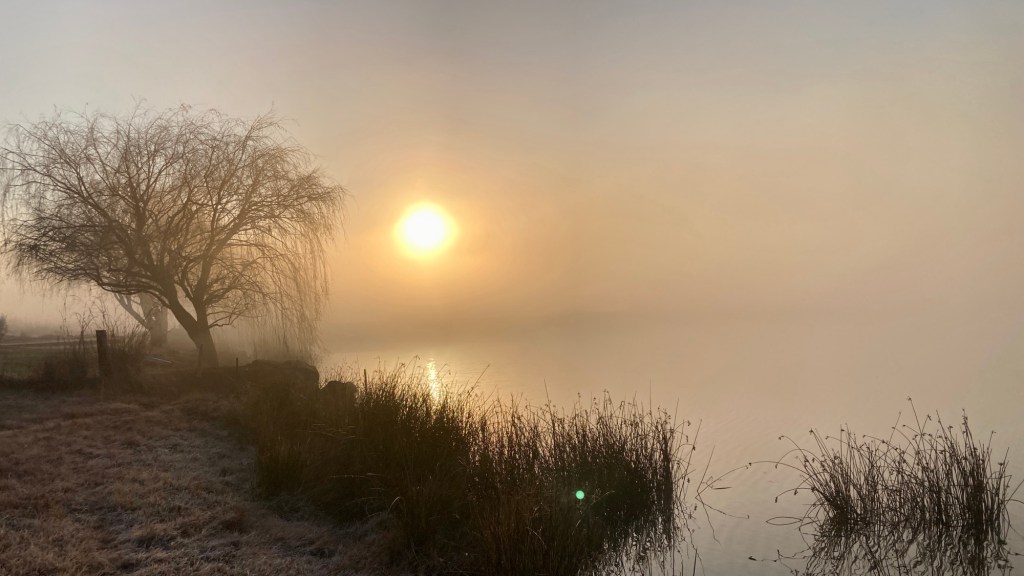
As usual the first birds listed were those calling in the early morning, some visible others not – Swainson’s Spurfowl has a particularly raucous call that carries a long way in the relative peace and quiet of the countryside and was my first record of the day. That was followed quickly by several other species – Kurrichane Thrush, Red-eyed and Laughing Dove, good old Hadada Ibis and a few others.
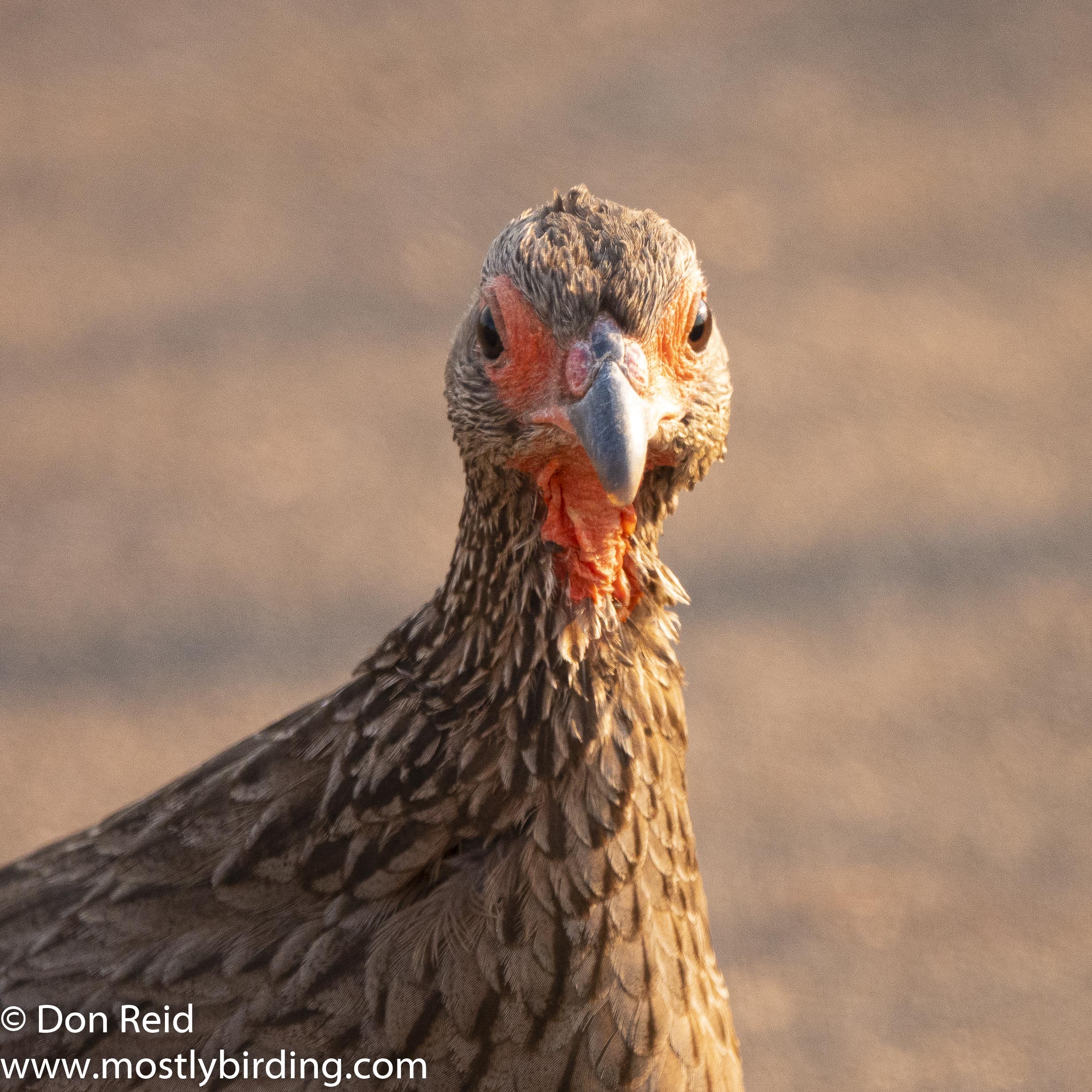
Swainson’s Spurfowl Pternistis swainsonii Bosveldfisant), (taken in Kruger Park)

We lingered and listened intently while walking the shoreline of the dam as the mist slowly dissipated, revealing a few Red-knobbed Coots and Common Moorhen as well as a Little Grebe.

Little Grebe Tachybaptus ruficollis Kleindobbertjie

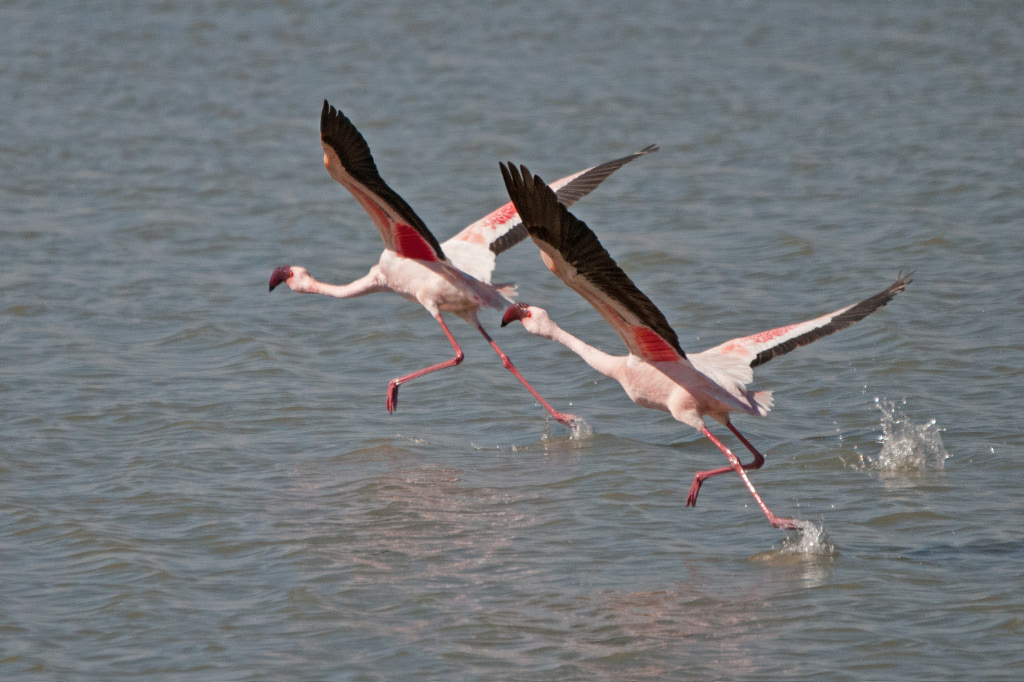
As we headed to the car Koos spotted a pair of large birds flying overhead but away from us – clearly Flamingoes! But which species – Greater or Lesser ? Fortunately they changed direction while still visible and gave us a view of their large bills, which were light coloured compared to the dark colour of the Lesser Flamingo, confirming that they were indeed Greater Flamingoes.

On the way back to the main road, more fine spotting from Koos produced two Little Bee-eaters high up in the trees.

Little Bee-eater Merops pusillus Kleinbyvreter, (taken in Kruger Park)

Back on the main road, the habitat of open fields with short grass and stones prompted me to comment that ‘this is Wheatear territory’ – my words were barely cold when the first Capped Wheatear was spotted, along with Red-capped Lark, Crowned Lapwing, Wattled Lapwing and African Pipit – all species that share a fondness for this habitat.

Capped Wheatear Oenanthe pileata Hoëveldskaapwagter

The road left the pentad so we headed quickly southwards to join up with the R50 Delmas road which took us back to the pentad. The R50 is a busy road with heavy trucks that rumble back and forward constantly, making it awkward, even dangerous to try and pull off onto the verge to check for birds. At the first opportunity we turned off onto a gravel side road to escape the traffic and were soon back into a more relaxed atlasing mode.

Long-tailed Widowbirds (almost unrecognisable in their drab winter non-breeding plumage) were next up – the males lose their long tails and most of their black colouring (summer plumage shown in the first photo below), but retain their colourful ‘epaulettes’ to differentiate them from the all-brown females (the second photo below)

Long-tailed Widowbird Euplectes progne Langstertflap – male in full breeding plumage
Long-tailed Widowbird Euplectes progne Langstertflap – female

White-winged Widowbirds (equally drab females and non-breeding males) were encountered .
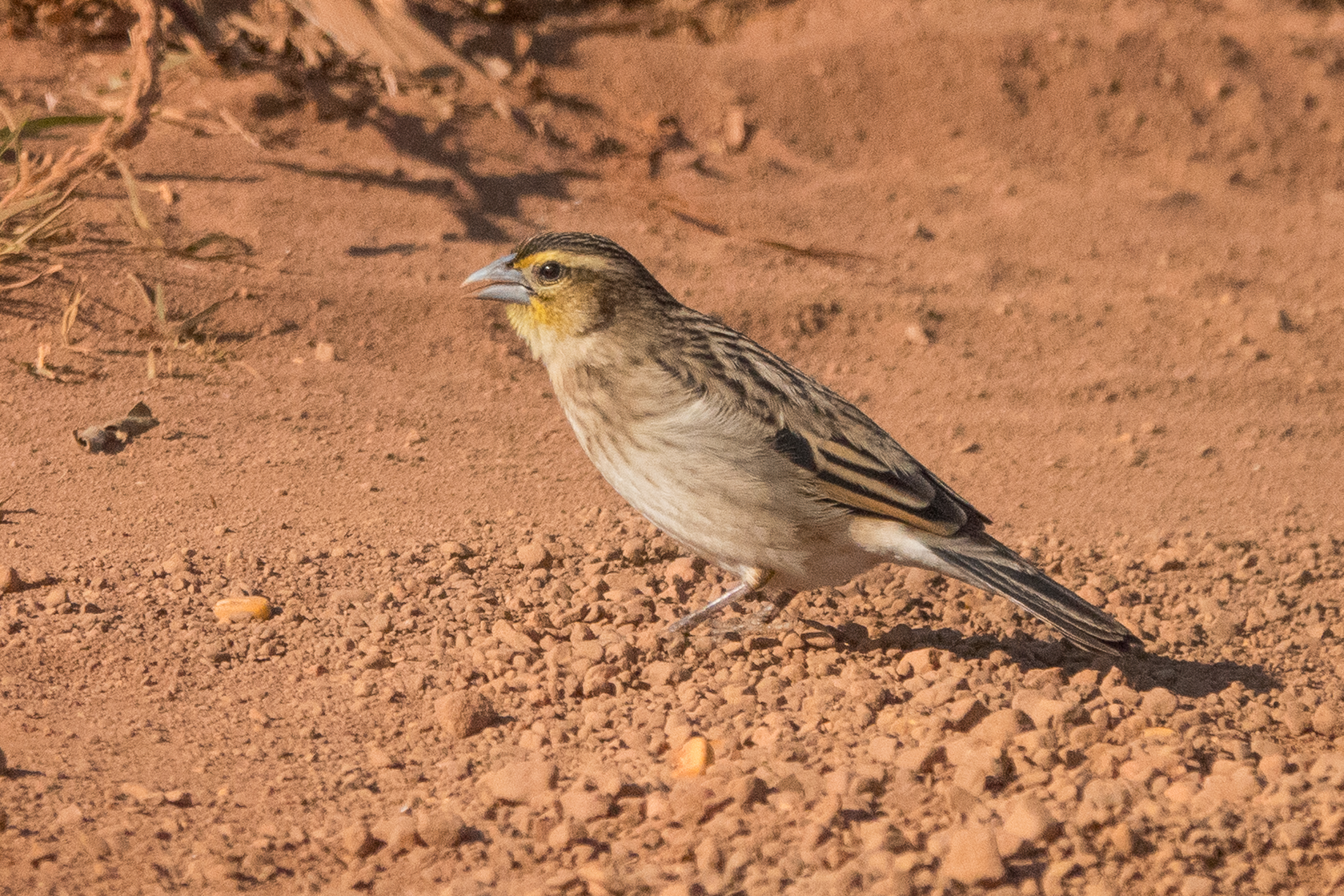
White-winged Widowbird Euplectes albonotatus Witvlerkflap (Female)

Just after finding a Namaqua Dove, always a pleasing species to encounter, we saw a large dam some distance from the road and found a track leading to it. Hoping that we were not intruding on someone’s farm we headed a short distance down the track to the dam only to find that a few large trees had been chosen as a roost by numbers of Black-headed Herons. We watched their comings and goings for a while and picked up a few other species before heading back to the road.
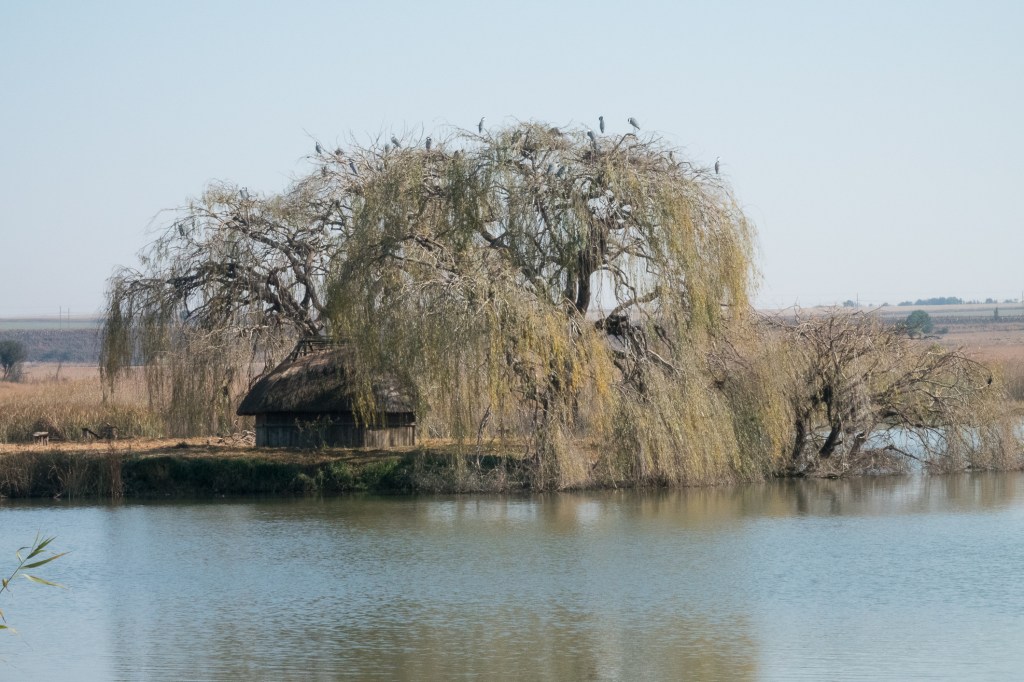
Black-headed Herons at heronry, Bapsfontein Area
Black-headed Heron Ardea melanocephala Swartkopreier

Smaller roadside pans and dams that we stopped at further along the road held a few species such as Reed Cormorant, Malachite Kingfisher, African Snipe and Lesser Swamp Warbler, to close out the morning’s atlasing with a total of 39 species recorded in the pentad

African Snipe Gallinago nigripennis Afrikaanse snip

South in Spring

For my first atlasing trip proper since arriving in Mossel Bay permanently, I chose a pentad in the area between the Oudtshoorn and Herbertsdale roads.

Pentad 3405_2155

Bang on 6am I stopped in lovely rolling country with a few small farm dams and with many birds calling and I spent the next half hour listing those I could identify along with some that showed themselves.
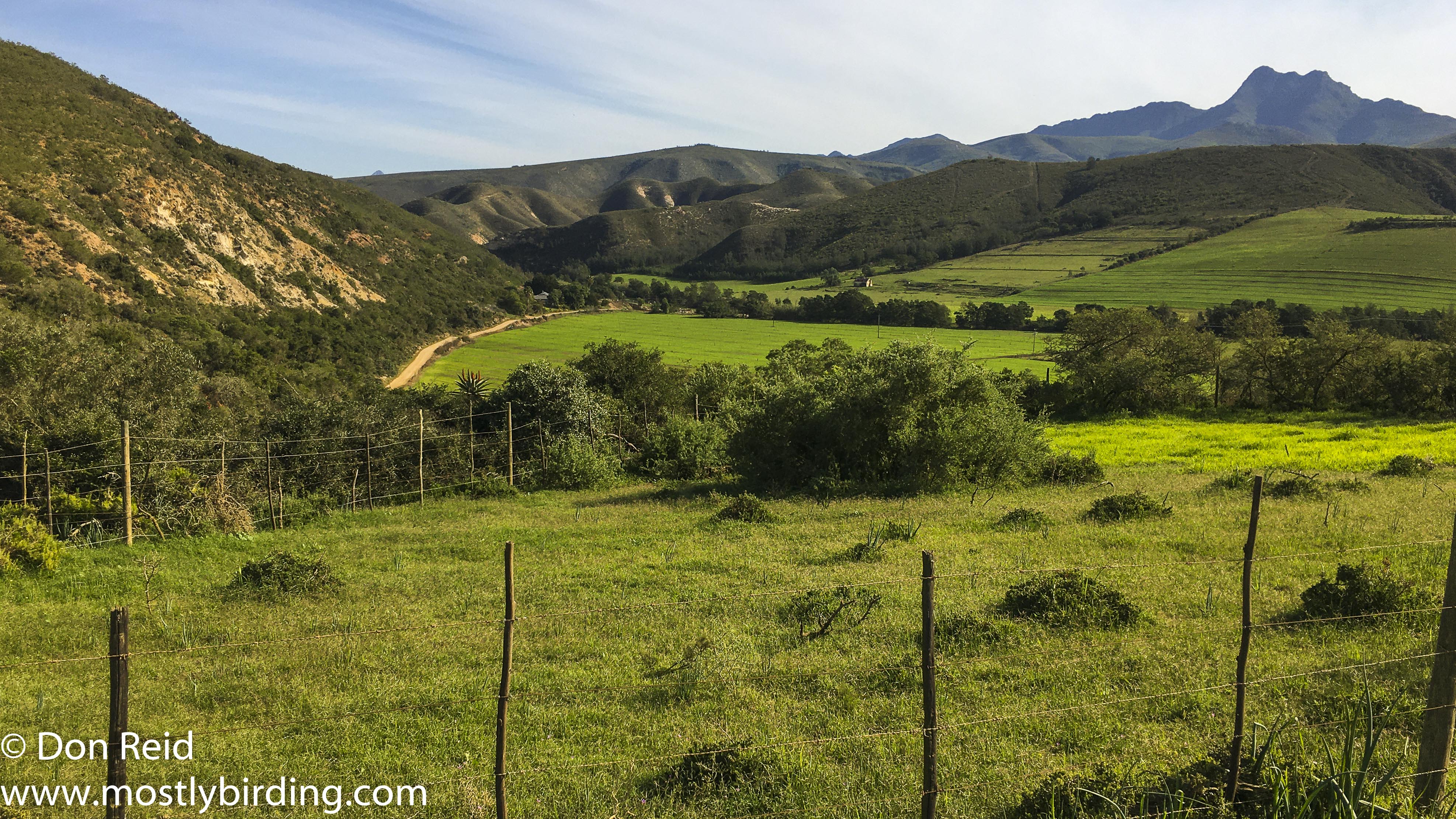
Most prominent were the first of dozens of Common Quail that I was to hear (and encounter as described below) throughout the morning, along with Cape Spurfowl, Little Rush Warbler calling from the reeds of one of the dams and Common Moorhen.

Cape Spurfowl Pternistis capensis Kaapse Fisant

I could pick out Blue Cranes in a distant field – a common bird in the southern Cape but always a pleasure to see.
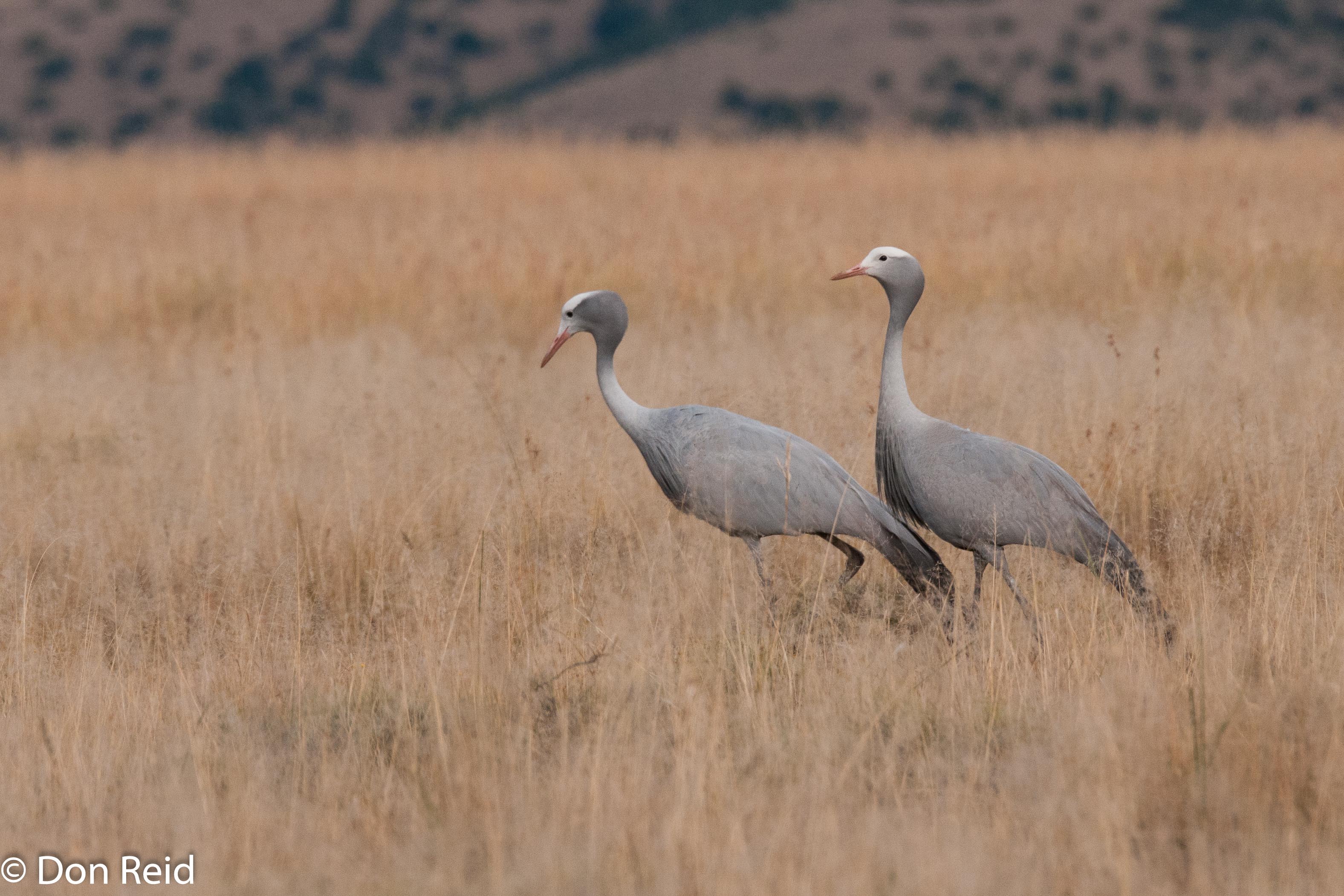
Blue Crane Anthopoides paradiseus Bloukraanvoel

Knysna Warbler calling from dense bush – I didn’t bother to try and see it as it hardly ever shows – was species number 22 after as many minutes of atlasing, after which the pace slowed somewhat, nevertheless I kept adding new species regularly.

Moving on from my first stop, the habitat changed from farming land to short grassveld, which produced three Larks in quick succession – Long-billed Lark, Large billed Lark and Cape Clapper Lark, the latter calling and displaying beautifully.

Large-billed Lark Galerida magnirostris Dikbeklewerik

Up ahead small birds at the edge of the road attracted my attention and a look through the binos had me grabbing my camera – there were two Common Quails pottering about in the grass tufts at roadside! This is a species which I have heard dozens of times but have only had one short glimpse in all the years of atlasing, so this was an opportunity not to miss.
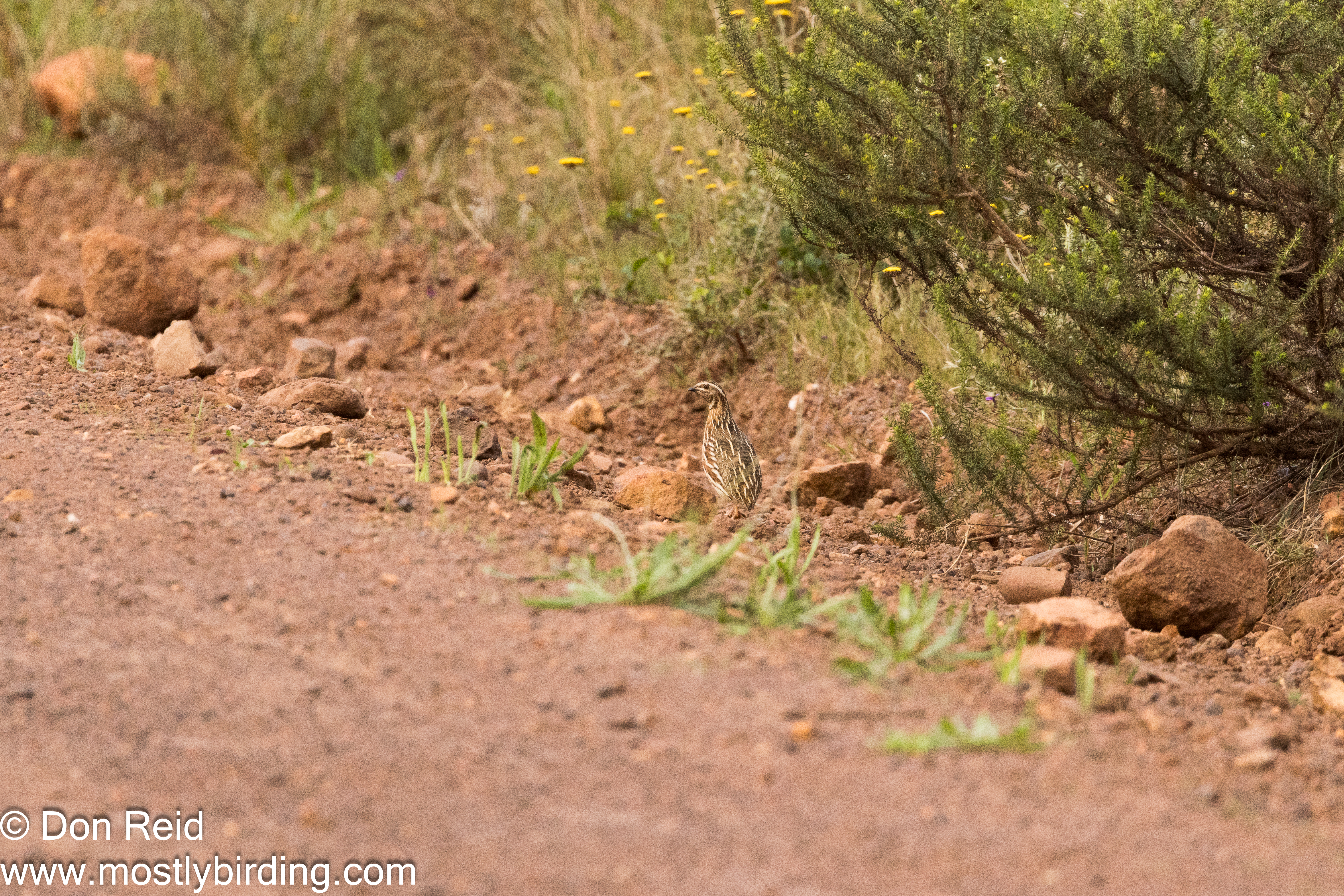
Common Quail Coturnix coturnix Afrikaanse kwartel

I was still some distance from the quail, which is a small bird about the size of a Lark, so I tried to edge the car closer for a better photo opportunity. However they were on to me and moved further along at the same pace as the car, so I turned the car slightly sideways to get a view with the camera and took as many shots as I could. Fortunately, I managed to get a few reasonable shots – my first ever photos of this species in the bag!
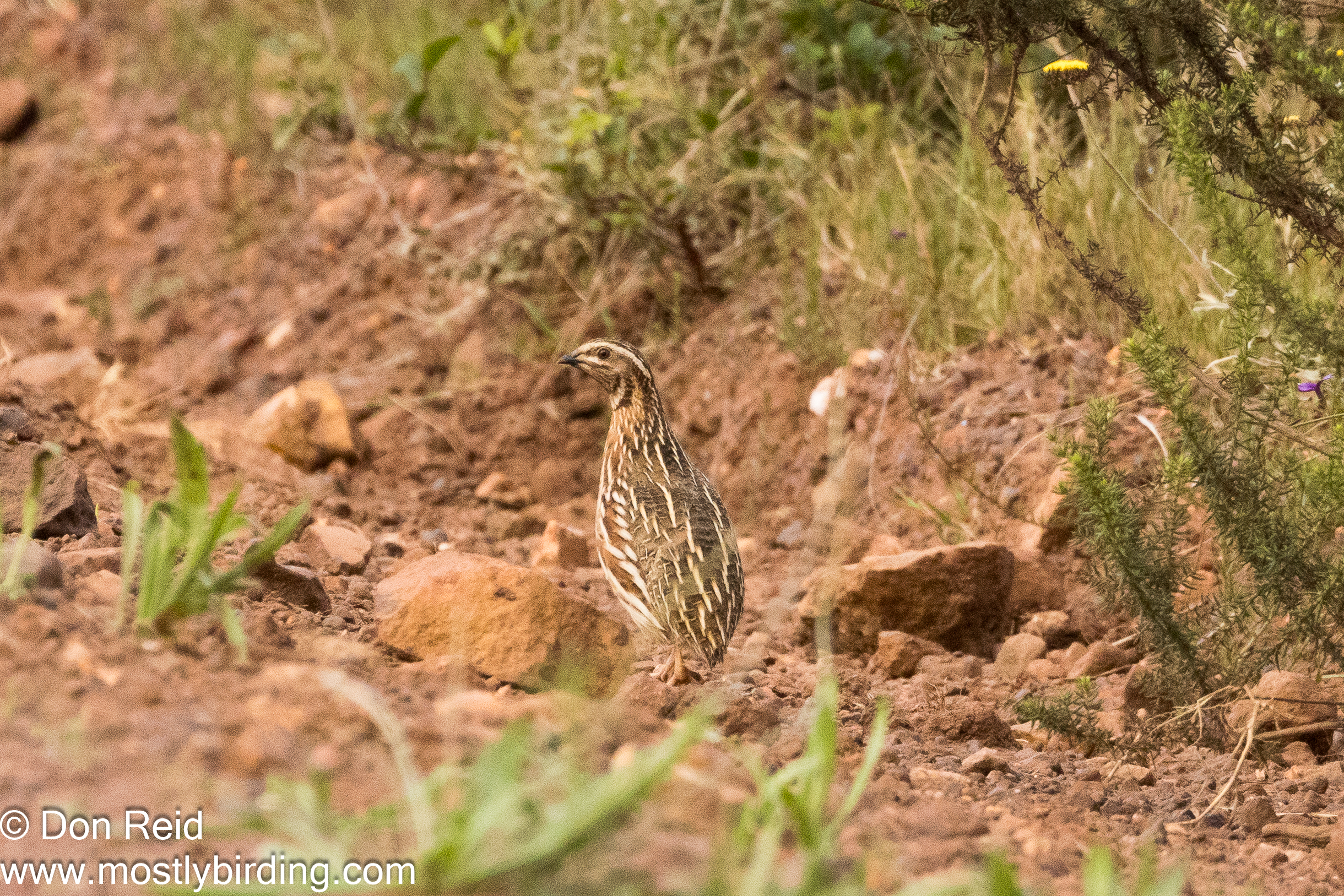
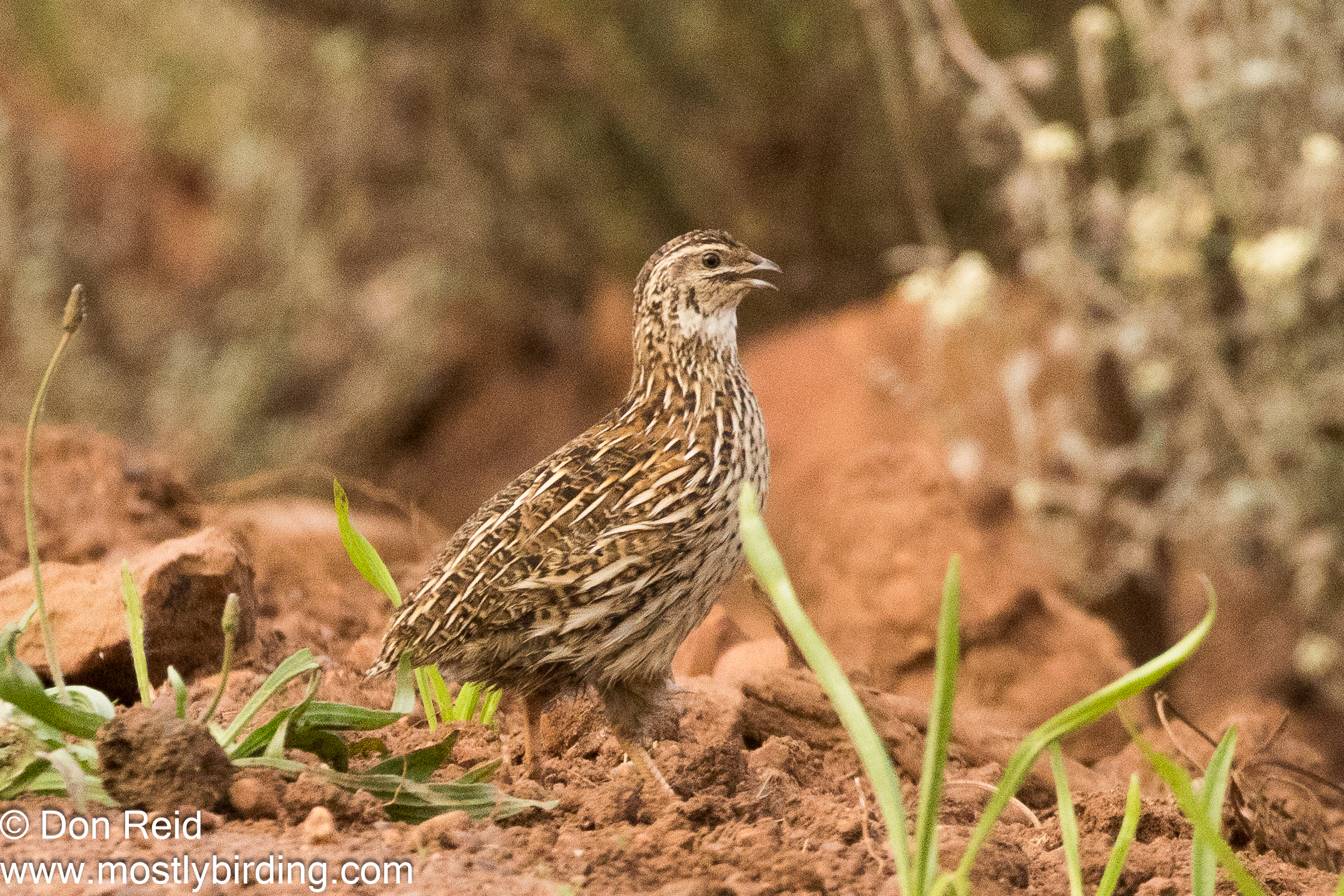
Common Quail Coturnix coturnix Afrikaanse kwartel

After crossing over the R327 I proceeded on the Kleinberg Road and soon stopped to scan a large farm dam which lies some distance from the road. I set up my spotting scope and used the maximum zoom (60 X) to identify the many waterfowl on the dam, which included Red-knobbed Coot, Cape Shoveler and Little Grebe – all common in the area.
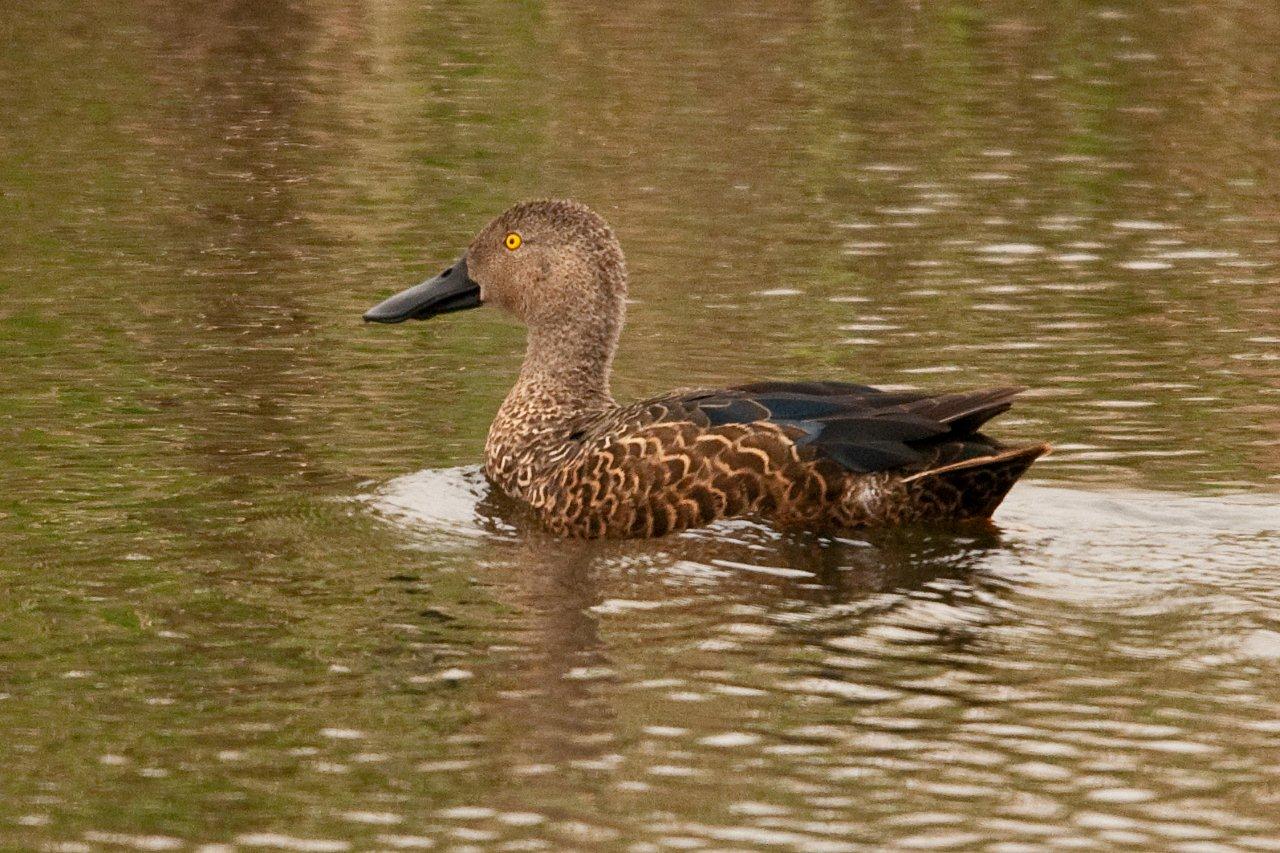
Cape Shoveler Anas smithii Kaapse Slopeend

Less common, in fact it turned out to be a new species for the pentad, was a pair of Black-necked Grebes, swimming in the middle of the dam. I have only ever found them further east at the lakes beyond the village of Wilderness so was really pleased to record them so close to Mossel Bay. They were way beyond my camera’s reach so the photo below is from a visit to Strandfontein near Cape Town.
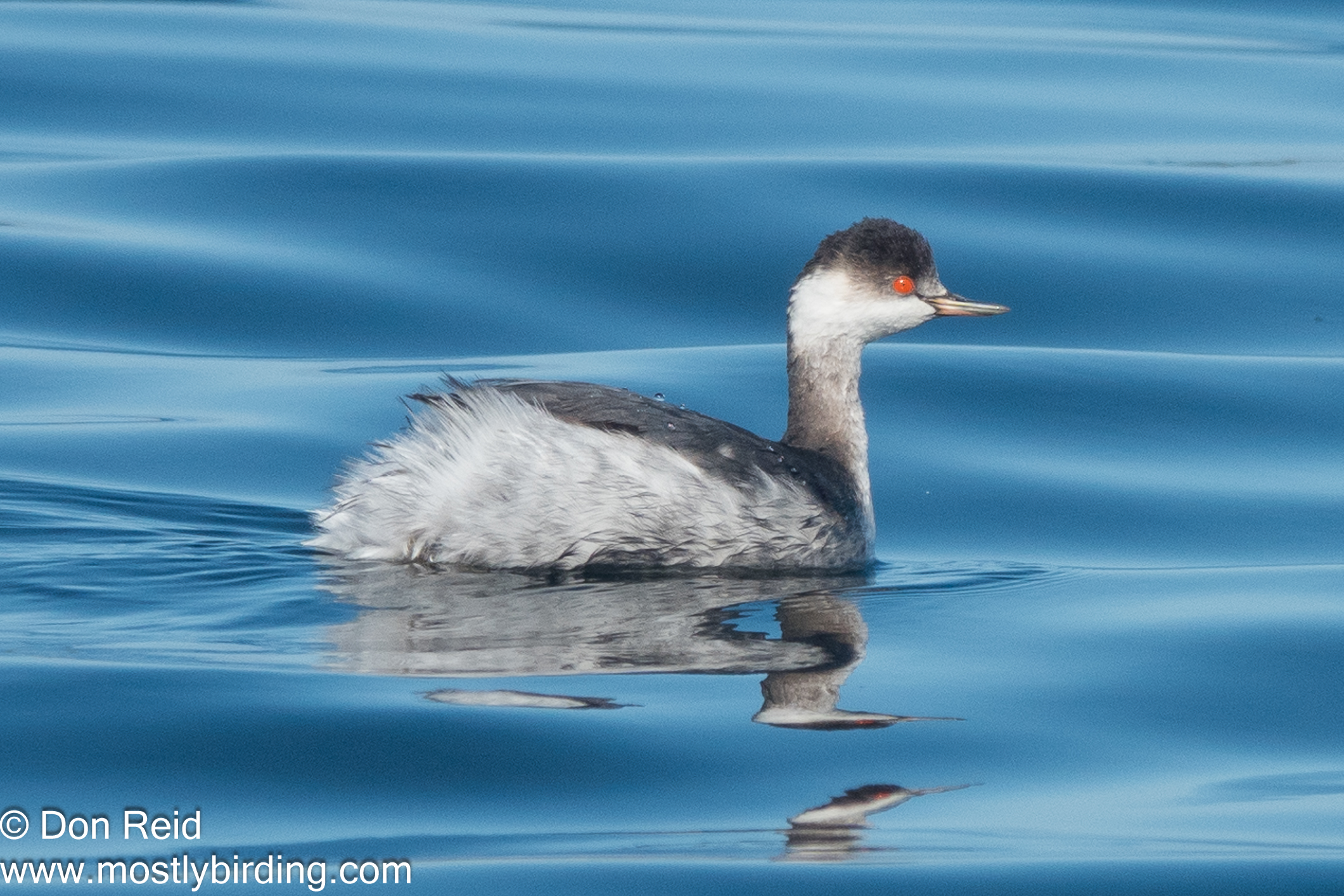
Black-necked Grebe Podiceps nigricollis Swartnekdobbertjie

The dam edges had both fresh water Cormorants present – White-breasted and Reed Cormorant as well as Blacksmith Lapwing.

I continued along the road adding Red-capped Lark and Capped Wheatear before entering the next pentad, which signalled the close of the atlasing of the pentad with a total of 53 species.
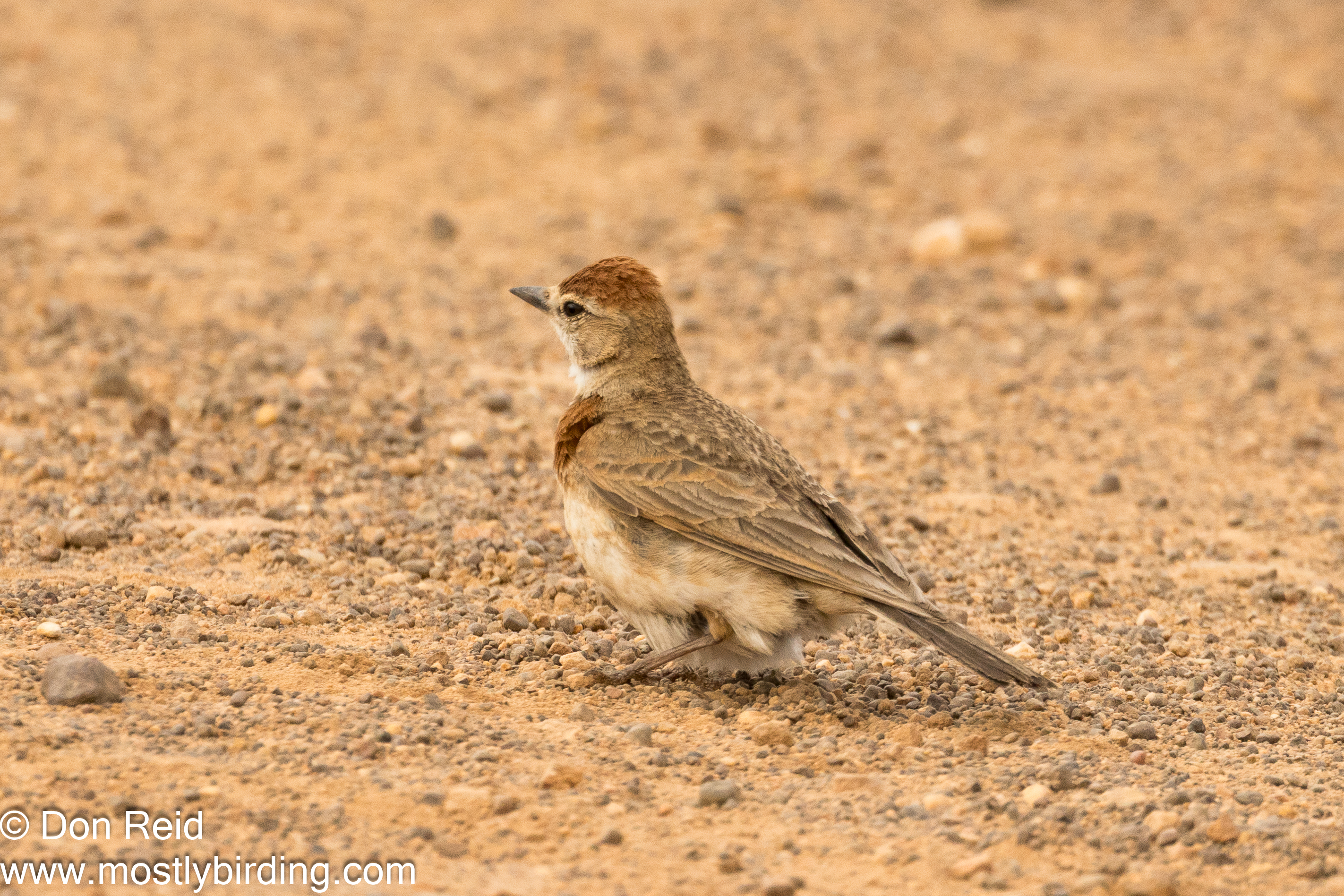
Red-capped Lark Calandrella cinerea Rooikoplewerik

Atlasing?

Atlasing is the regular mapping of bird species in a specific area called a “pentad”. Each pentad has a unique number, based on its geographical position according to a 5 minute x 5 minute grid of co-ordinates of latitude and longitude, which translates into a square of our planet roughly 8 x 8 kms in extent.

As a registered observer / Citizen scientist under the SABAP2 program (SA Bird Atlas Project 2), I record all of the species I see or hear in a particular pentad over a period which can be anything between 2 hours and 5 days, for submission to the project database at the ADU (Animal Demography Unit) based in Cape Town.

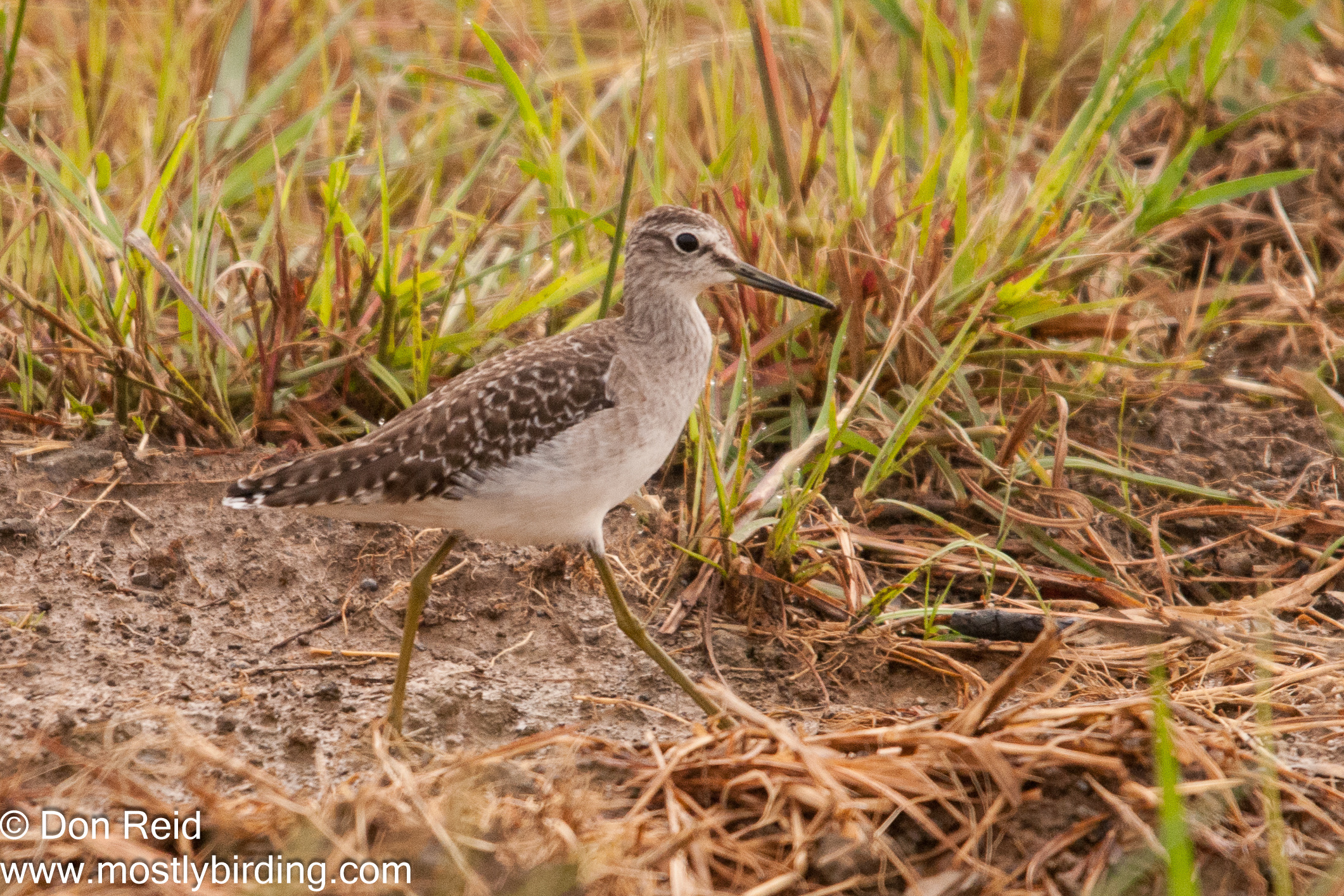
Small Birds taking BIG Journeys : Part 4

To repeat the intro to my previous posts on this subject …. Many of the migrant waders – or shorebirds as they are also known – display the most Jeckyll and Hyde characteristics of all birds, living two dramatically different lives and spending time in habitats which are far removed from each other.

Separating these two lives are amazing journeys that take these small yet hardy birds halfway across the world – and back again.

South African birders get to know migrant species during their stay in the southern hemisphere, typically during the months from October to April, so let’s find out a bit more about their ‘other’ lives by delving (again) into the typical annual life cycle of these waders.

This time it’s the –

Wood Sandpiper (Bosruiter) Tringa glareola

Affectionately called ‘Woodies’, this species is so named because they breed on swamps and peat bogs in the coniferous taiga forests of the Northern Hemisphere – who would have thought this is also a ‘Forest bird’ !

Identification and Distribution

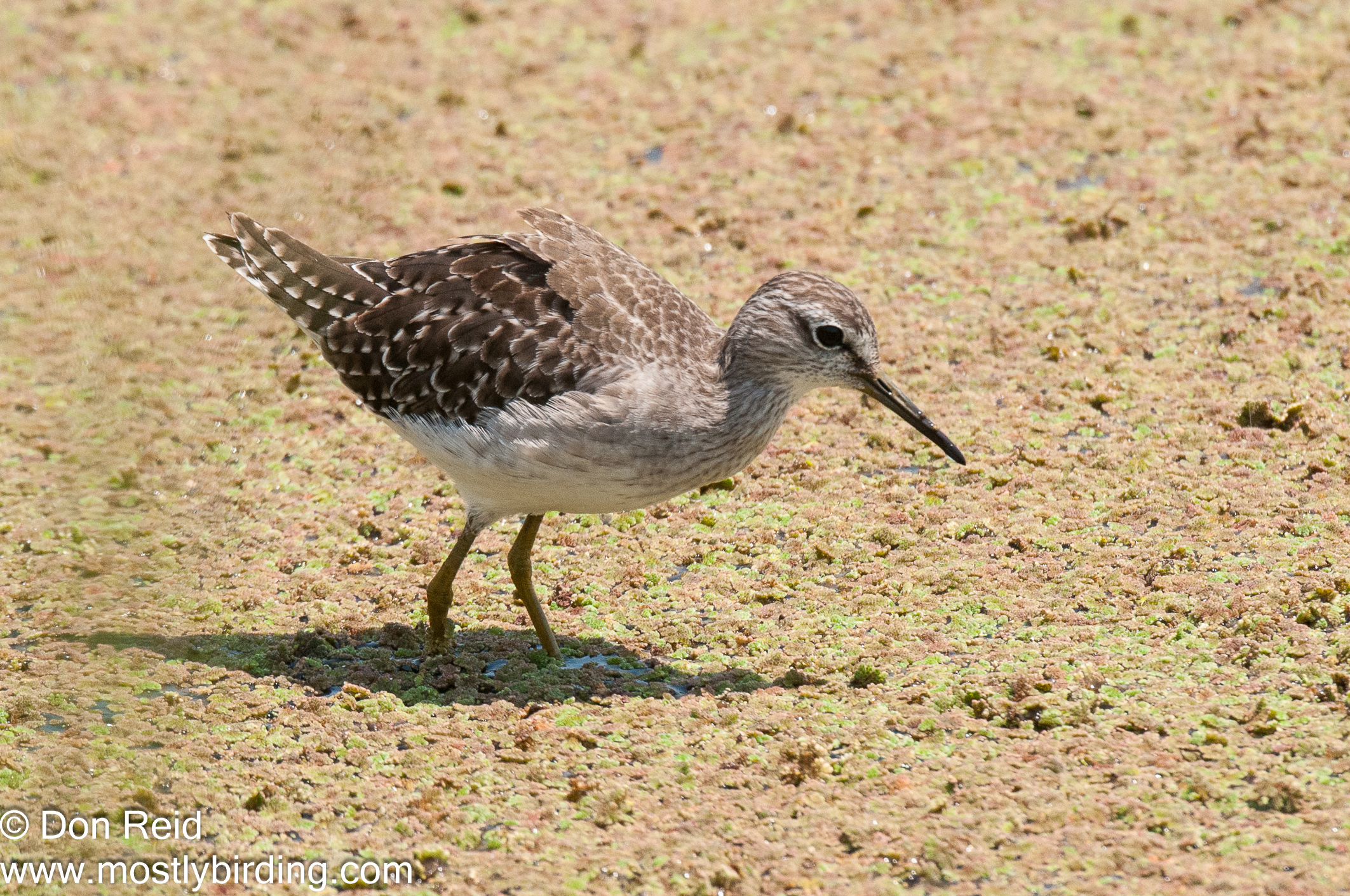
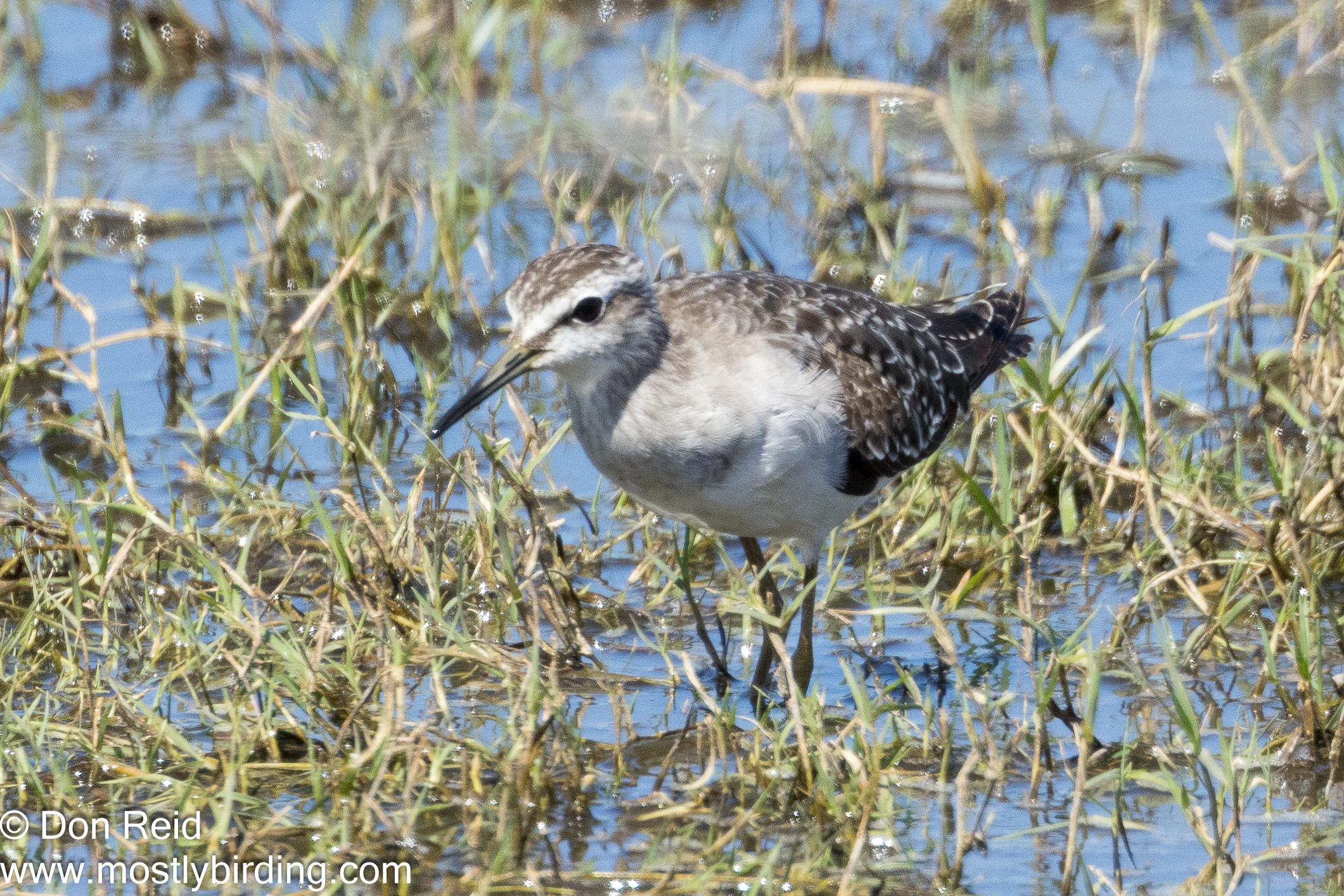
Identification of the Wood Sandpiper is relatively easy – compared to some of the other LBW’s (Little brown waders) – and is often the first wader that novice birders will get to know as it is one of the most common freshwater waders

What to look out for

  • medium size (19 – 21cm; 55 – 65g) slim, fairly long-legged, graceful
  • straight bill about the same length as the head, white brow extends behind eye
  • grey-brown above with eye-catching white ‘spotting’ , grey below
Wood Sandpiper, Devon

Distribution

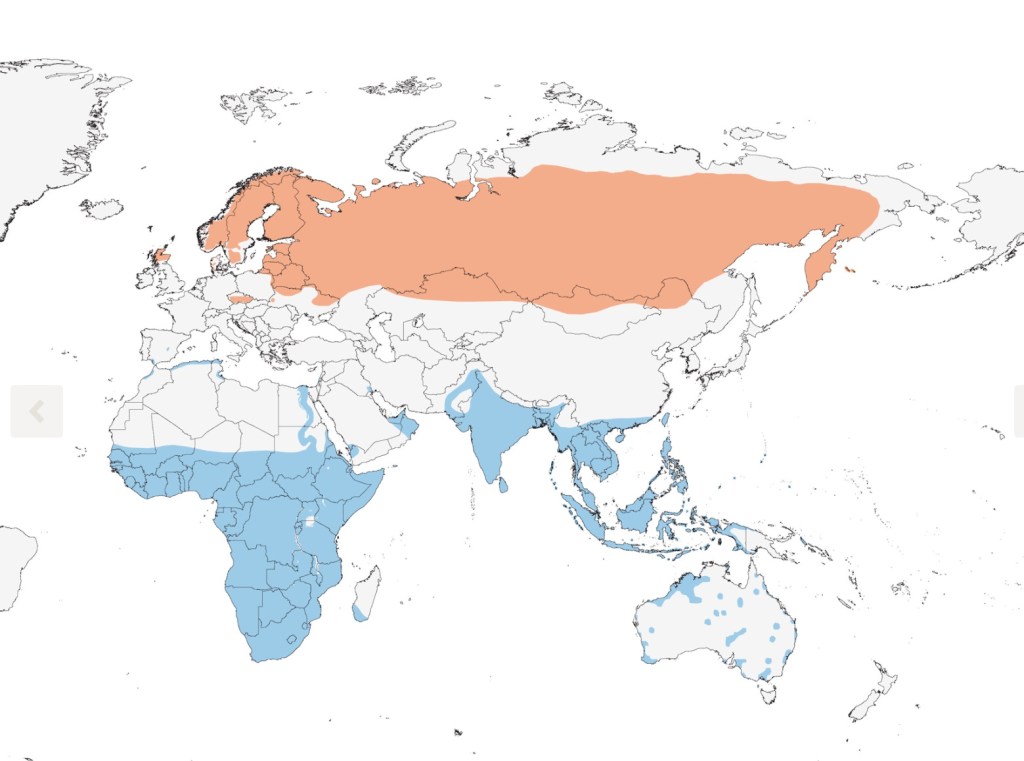
The orange area on the global distribution map (from Cornell Birds of the World) shows where breeding occurs in the Northern Hemisphere while the blue area, mostly in the Southern Hemisphere, is where they go to ‘get away from it all’ and prepare themselves for the next round of raising a family.

Wood Sandpiper, Marievale

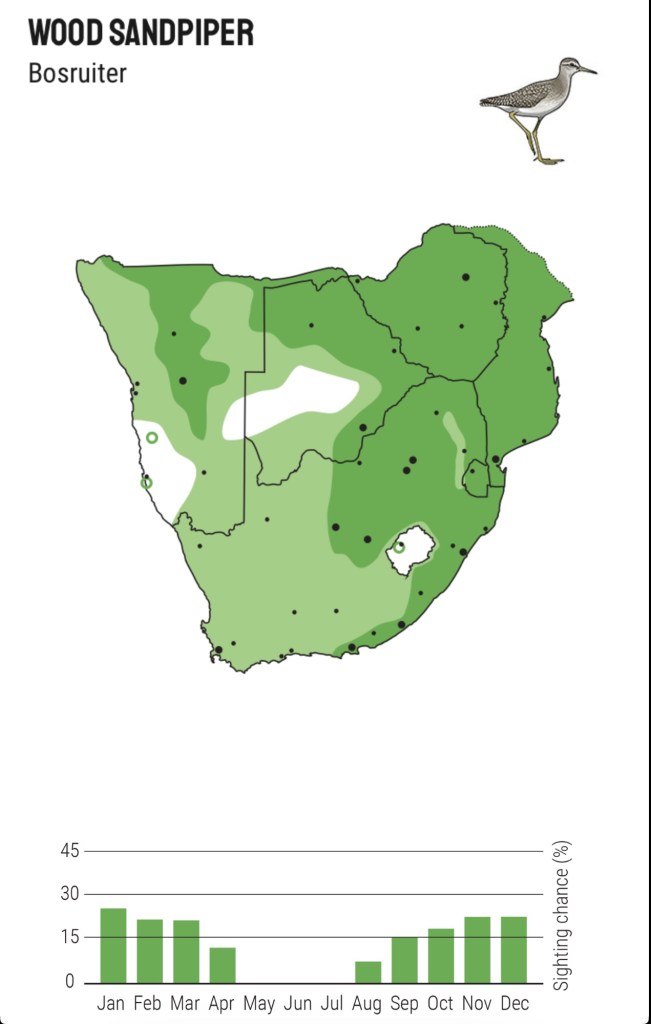
The southern African distribution map (from The Firefinch Birding app) shows the species presence across most of the region but absent from the Kalahari and arid west.

Life in the North

The preferred breeding habitat is the open swampy area and peat bogs in coniferous forests, scrubland between those forests and tundra

Their diet is mainly small aquatic insects, caught by pecking or probing while walking in shallow water

Wood Sandpiper, Marievale Bird Sanctuary

Breeding

The nest is usually a small scrape on the ground lined with moss, stems and leaves, in dense vegetation, but also frequently in trees in old nests of other species

Eggs (usually 4) are laid and incubated for about 3 weeks – from 7 to 10 days after hatching the male cares for the young on its own

Fledging some 3 to 4 weeks later, the fledglings are independent soon thereafter, facing the many dangers that young birds are subject to.

Wood Sandpiper, Kasane Botswana

Migration

The birds we see in Southern Africa are thought to originate from Russia, first adults leave early July, arriving in the south from late July / August with juveniles following mainly in September and October.

Migration is undertaken at night with birds capable of single flights of up to 4000km. Overland routes are followed by small flocks or singly, mainly via the Rift Valley

Wood Sandpiper, Kasane Botswana

Life in the South

Of the 3 million+ Woodies that head to Africa, some 50 – 100,000 end up in southern Africa, where they seek out suitable freshwater habitats. These can be anything from shallow sewage ponds to marshes, flood plains and muddy edges of streams and rivers, down to the size of a puddle.

Wood Sandpiper, Punda Maria

Sometime after arrival, adults start a post-breeding moult which continues for up to 4 months, during which time all feathers are replaced with new ones.

Generally, a solitary bird except where food is abundant when they may gather in loose groups

Wood Sandpiper with Little Stint, Leeuwfontein Pan near Belfast

They start departing from late February with the majority having left by end April, heading north to their breeding grounds where the cycle will start all over again…

Wood Sandpiper, Bredasdorp

References : Cornell Lab of Ornithology Birds of the World; Roberts VII Birds of Southern Africa; Firefinch app, Collins Bird Guide; Waders of Southern Africa

Prince Albert – Birding and other Delights

Always on the lookout for a chance to get away for a few days, Gerda’s birthday seemed like a good excuse and Prince Albert a good option being just a couple of hours away yet much more in terms of “a change being as good as a holiday”

Wednesday 11th September 2024

Packing was left to the morning of our departure and went smoothly albeit slowly and by midday we were heading to our first stop – no prizes for guessing – our favourite Eight Bells Inn for a light lunch in the enclosed patio (bit too windy and cool for outside) with the familiar views and friendly staff.

On the way to the R328 we stopped at the Hartenbos Vleis for a quick scan of the birdlife and came up with an African Jacana – still a Western Cape Rarity – and African Swamphen among the usual Teals and Ducks. A Ruff was an interesting sight being one of the early palearctic migrant arrivals.

African Jacana (Western Cape rarity), Hartenbos Vlei

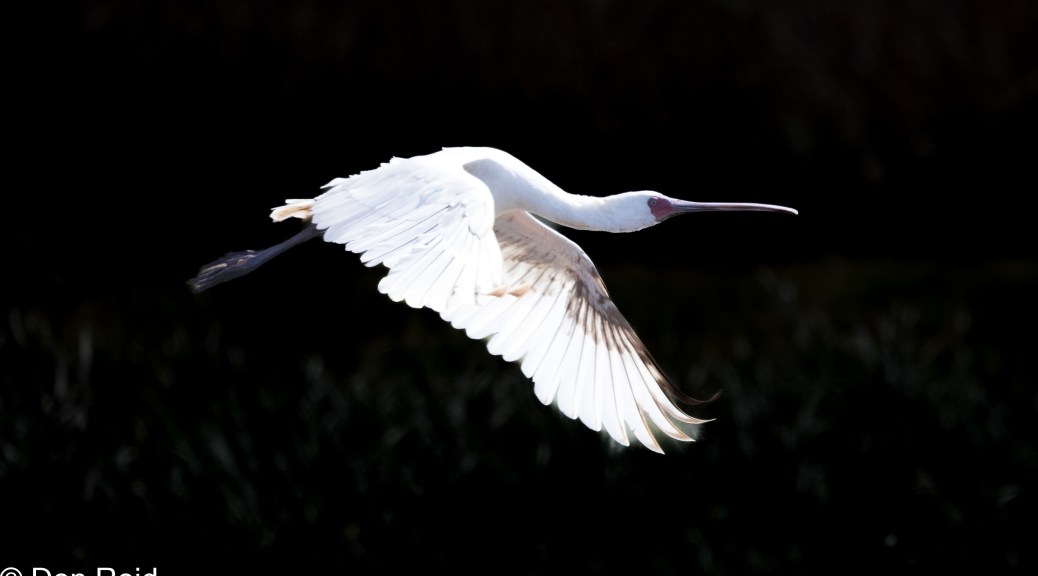
A number of Spoonbills on the far side of the vlei took to the air, providing an opportunity for some in flight photos, one of which I used for the heading image above after tweaking it to darken the background.

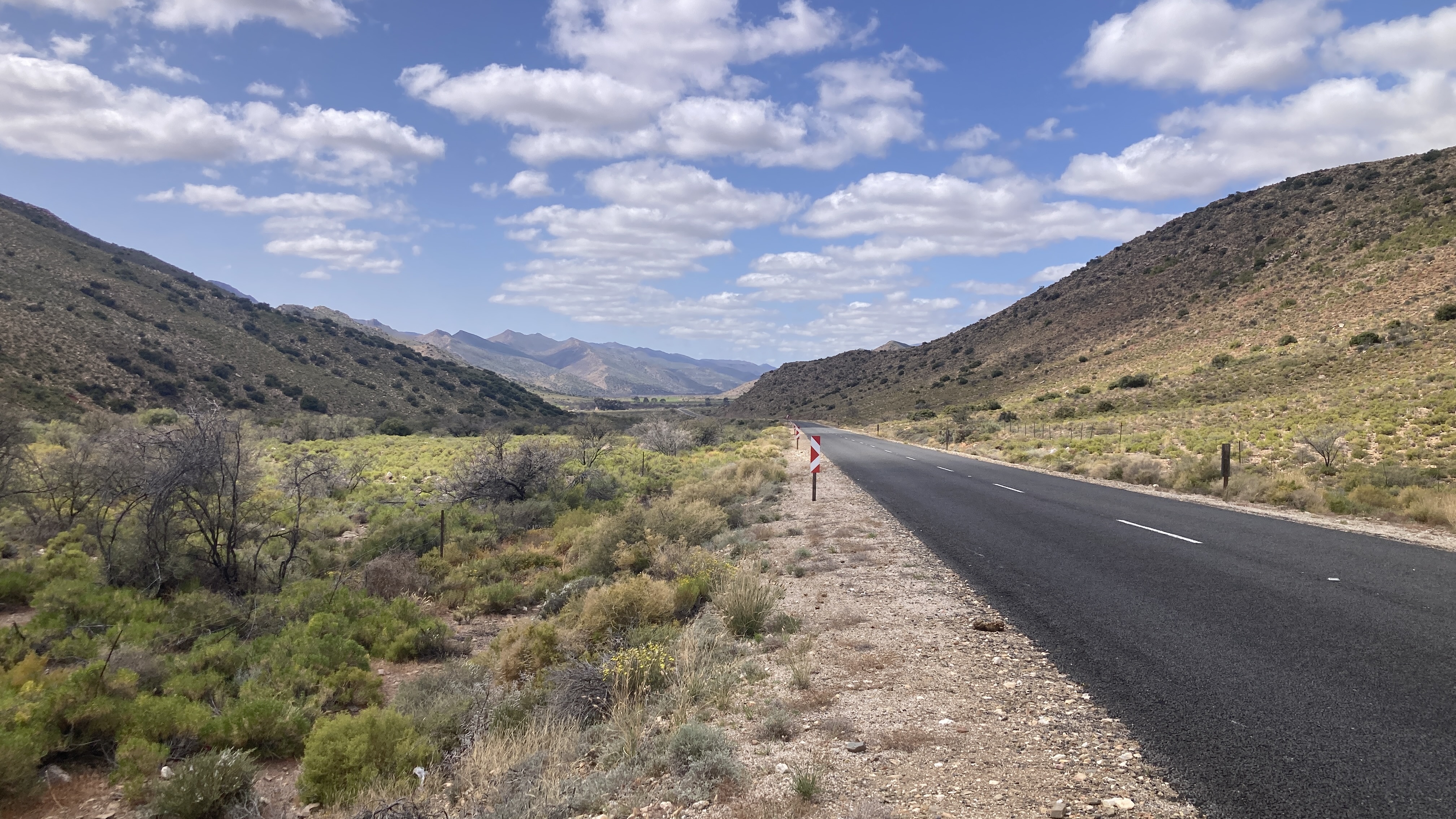
Back on the road after Eight Bells, we enjoyed the rest of the classic road trip through the Robinson Pass and Meiringspoort then along the hills and dales of the beautiful stretch of road heading to Prince Albert through the Kredouw Pass and the Prince Albert Valley

Prince Albert Valley

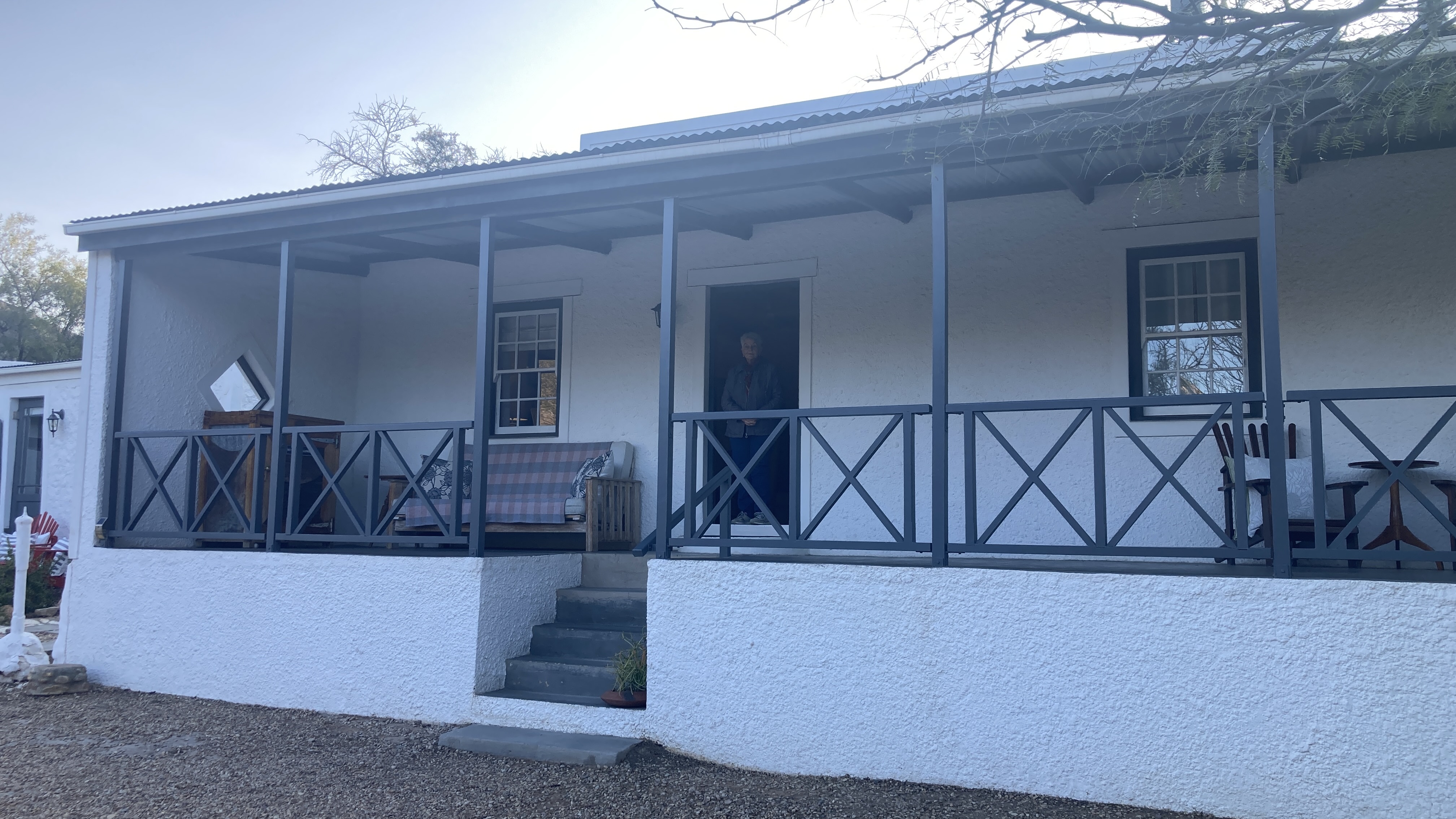
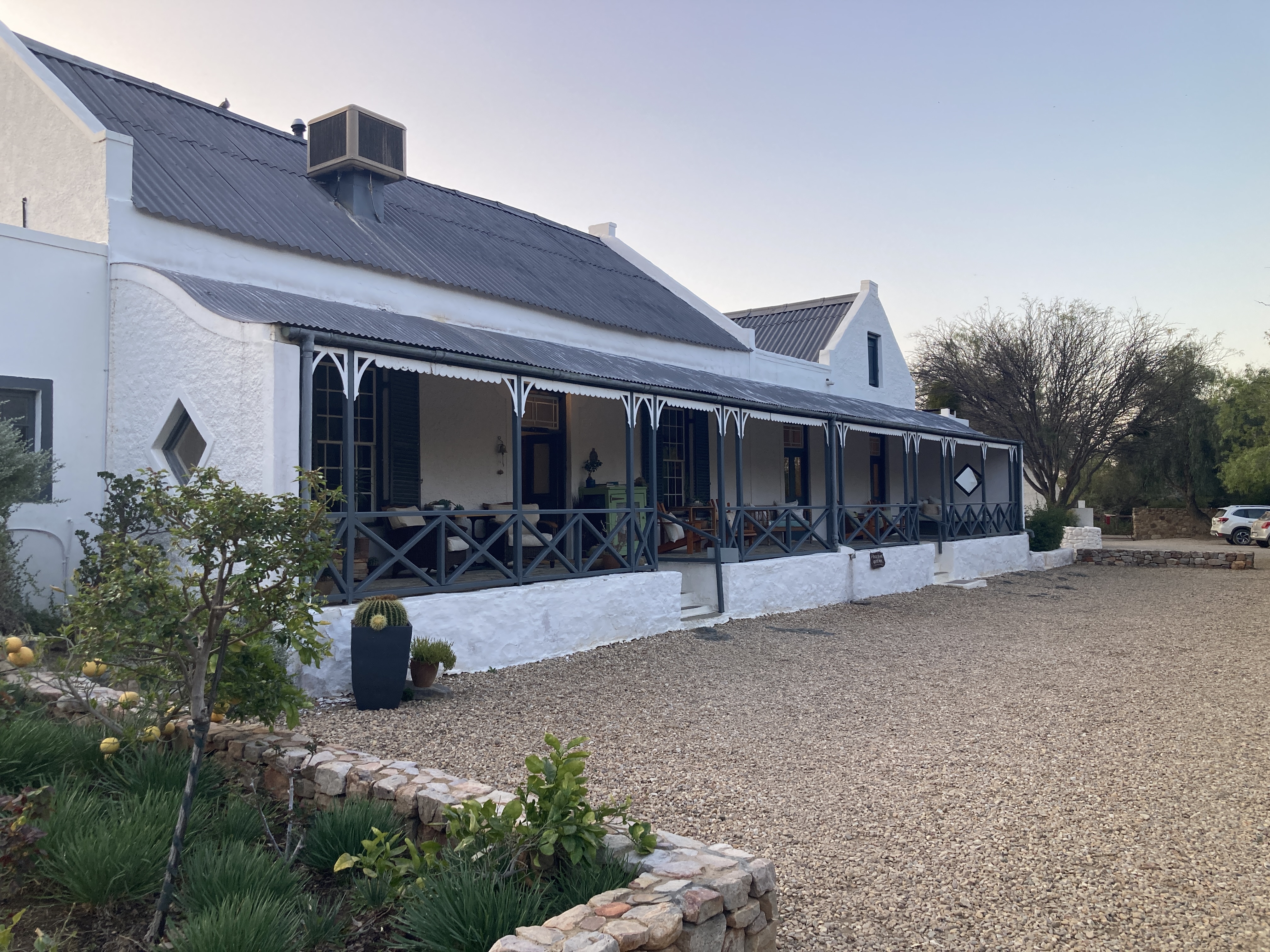
We hadn’t been to Dennehof Guesthouse before, but it was easy to find on the main road just before reaching the town proper and we were met by Albert (not the Prince) who showed us the room and provided info on dining options and things to do.

Dennehof – our room

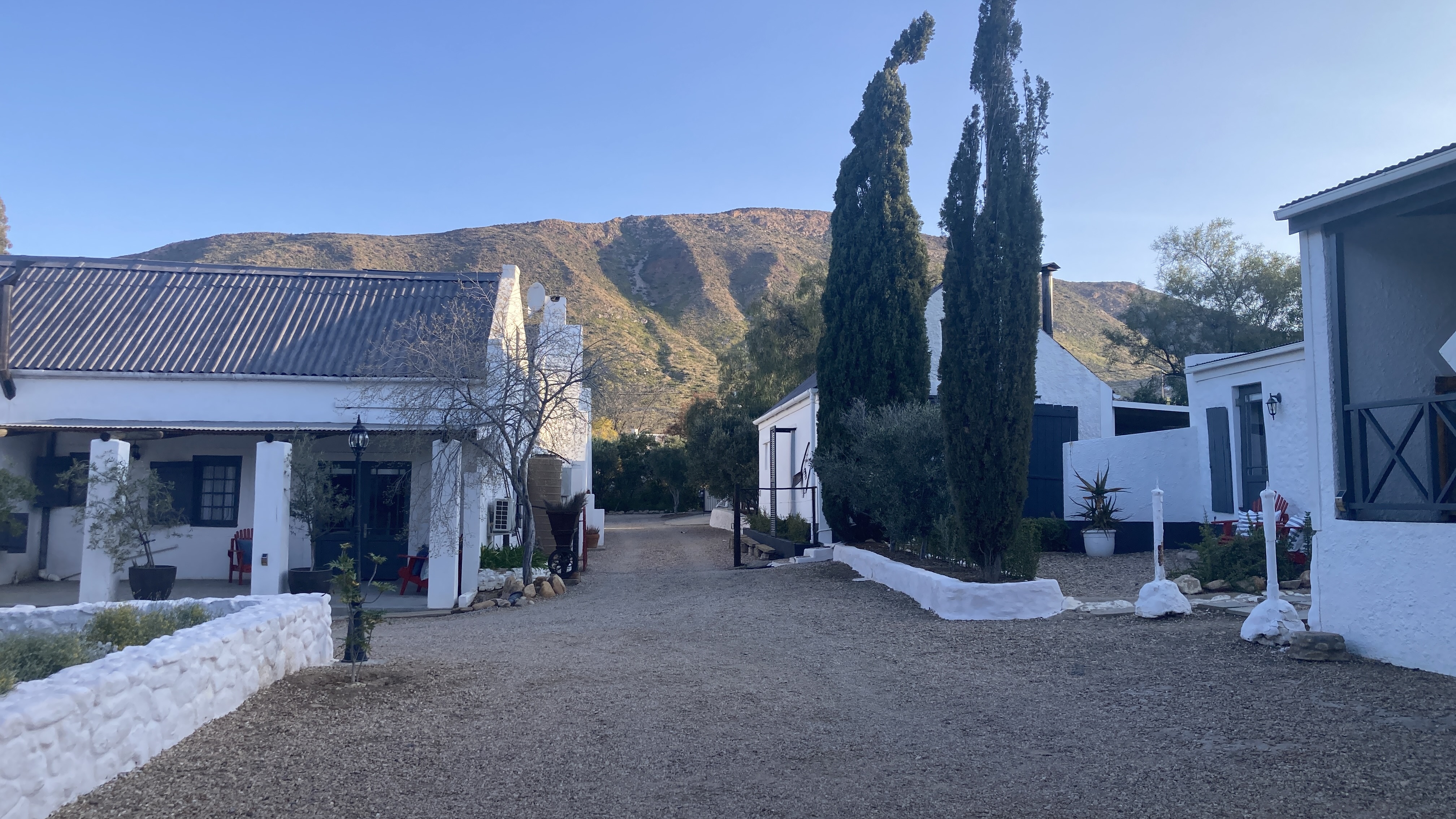
We have been to Prince Albert many times but there are always new places and eateries to hear about in this quiet yet dynamic Karoo dorp. Dennehof has a nice feel to it – not too pretentious with a mix of simple whitewashed buildings in the Karoo style making up a pleasant complex.

Dennehof

There was time before dusk to sit on the stoep and soak up the atmosphere, watched by the resident Spotted Eagle-Owl

Spotted Eagle-Owl, Prince Albert

The passing bird life included –

  • White-backed Mousebird
  • Purple Heron flying overhead probably to its roost
  • Sparrows, Cape and House, flitting about energetically
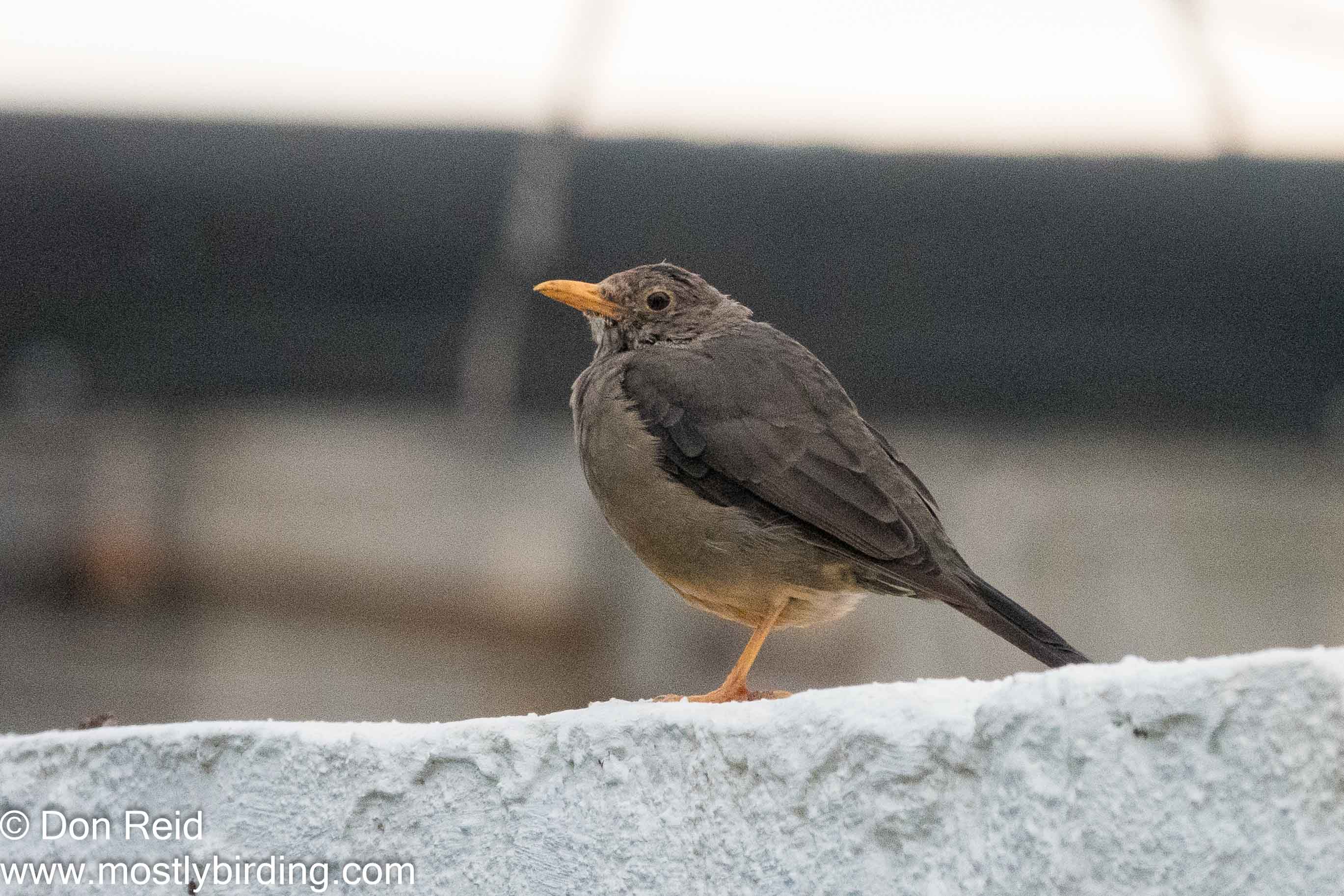
  • Karoo Thrush singing its cheerful song at close of day
Karoo Thrush
  • Pied Barbet calling plaintively

Dinner was chicken and salads that we brought with us.

Thursday 12th September 2024

Albert had said we could arrive for breakfast up to 9.30 am so being Gerda’s birthday we did exactly that. The setting is a delight – out in the garden in a glazed conservatory (where so many murders happen apparently) with a view of the adjoining wetland busy with Red Bishops and Masked Weavers doing their thing.

Dennehof Main house
Dennehof – the breakfast Conservatory

 The breakfast was above average and imaginative with a fruit and muesli mix that had us licking the bowl, followed by a herby omelette as good as they get – if for nothing else, I will return for that omelette. The coffee wasn’t half bad either.

That set us up nicely for the day which we planned as we went, starting with a slow drive down the main street of Prince Albert, followed by a short trip to the Olive farm north of the town which took us through some of the greenest Karoo countryside we have ever seen.

Along the way we stopped at the sewage works (as birders are wont to do) and at the low water bridges which, for the first time in our experience, had water flowing over them. The first of the two was productive for my atlasing list, adding half a dozen species in quick time –

  • Chestnut-vented Titbabbler
  • Karoo Scrub-Robin
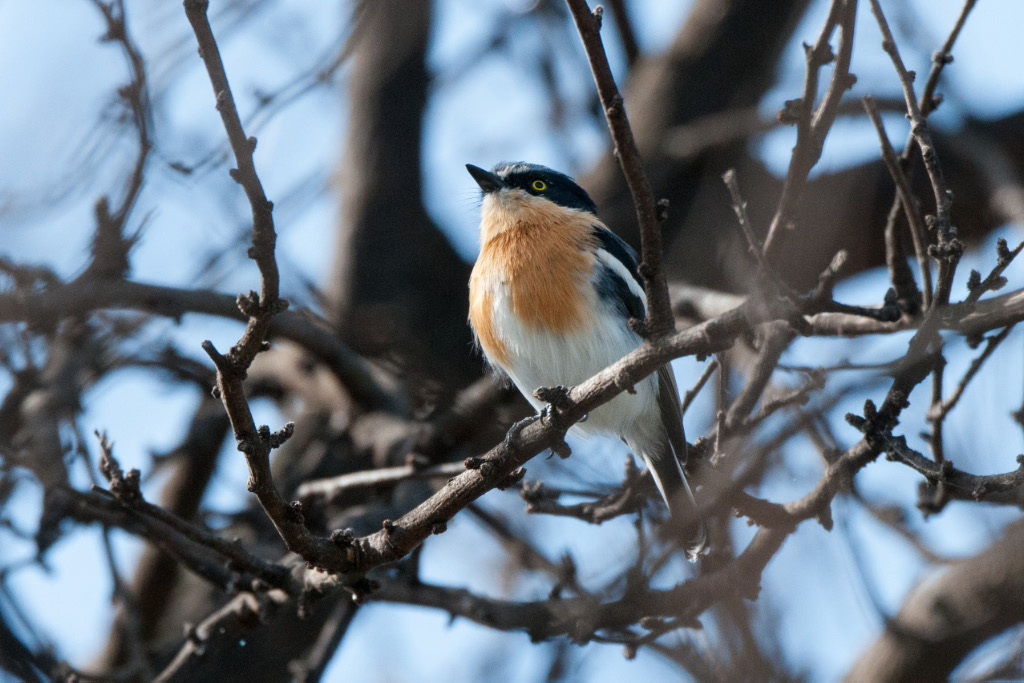
  • Pririt Batis
Pririt Batis
  • Fiscal Flycatcher
  • White-throated Canary that came to drink from the shallow stream
White-throated Canary
  • Even a Three-banded Plover unexpectedly dropping in for a wade

We were treated to the unusual sight (for this arid part of SA) of water flowing over the low water bridges on the outskirts of the town

Just after the second bridge we turned into the Olive farm and, as it was lunchtime, we ordered tea and a waffle which we enjoyed outside under the trees (all part of the birthday celebration of course).

View from the Olive Farm

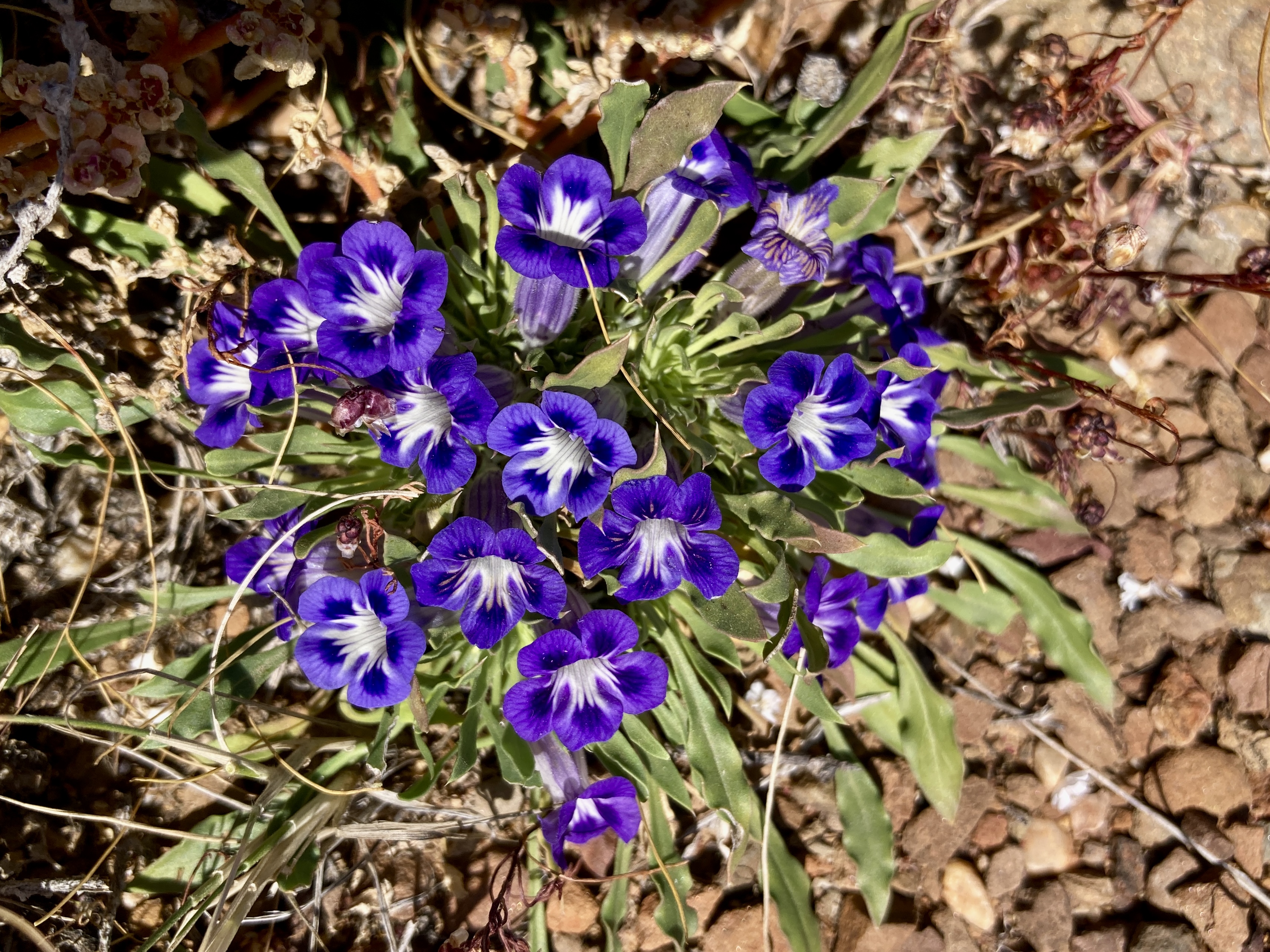
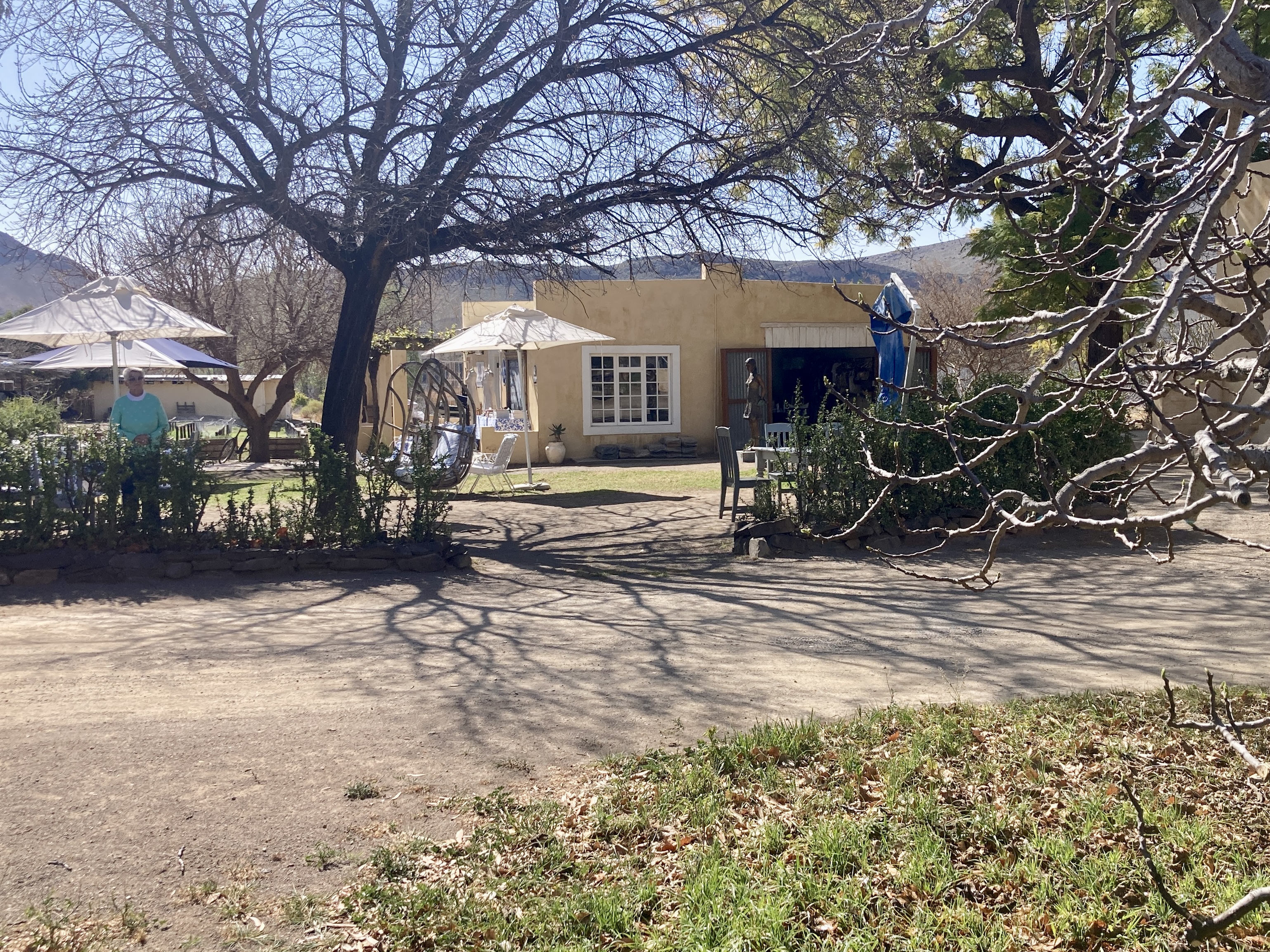
On the way back we turned off at the Karoo View signpost and drove a few kms to see the remnants of the flowers still in the open veld, then made a short stop at Karoo Souk which is a small group of craft shops, before heading back to Dennehof for a welcome rest.

Later, still in celebratory mode, we ventured out for a meal at the Yellow House restaurant which was up to the occasion and provided a nice ending to a very pleasant day.

Friday 13th September 2024

Another nice breakfast although we didn’t go for the full monty after last night’s big meal. After breakfast I added a few species to the atlas card including Alpine Swifts and Palm Swifts flying by and a Long-billed Crombec moving through the garden. That made four Swifts in all after seeing Little and White-rumped Swifts on the first day.

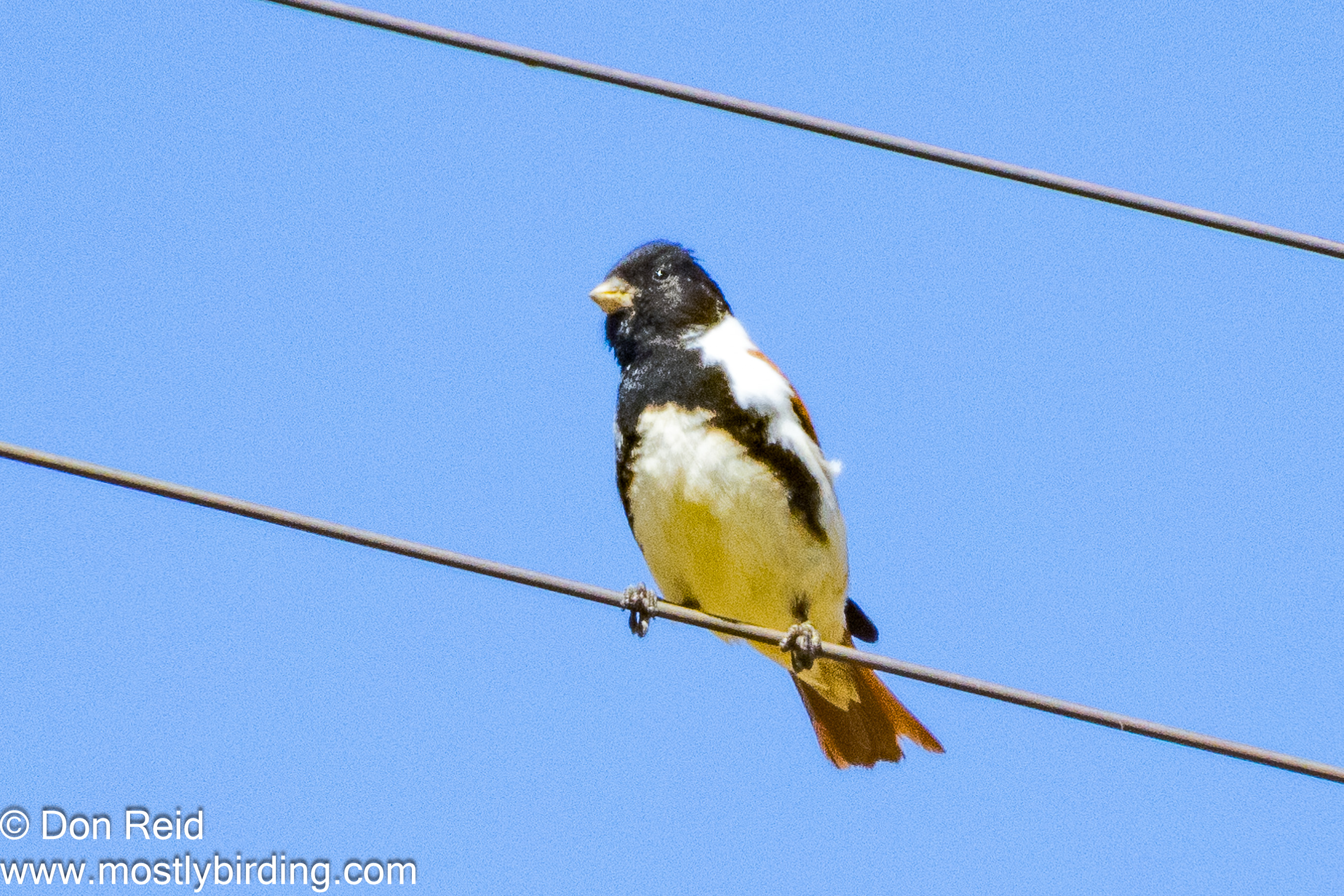
We had decided to drive to the fig farm at Weltevrede but first followed Albert’s suggestion of a drive along the ‘Bush pub’ road in search of a Karoo Eremomela. The bird eluded us but we did see a few other area specials such as –

 Mountain Wheatear

Mountain Wheatear, Prince Albert
  • Lark-like Bunting
  • Dusky Sunbird
  • Rufous-eared Warbler
Rufous-eared Warbler

And no less than three species of Canary –

  • White-throated Canary
  • Black-throated Canary
  • Black-headed Canary

It was time to head to the fig farm, so we turned back to town and took the road past the cemetery signposted ‘Weltevrede 25 km’.

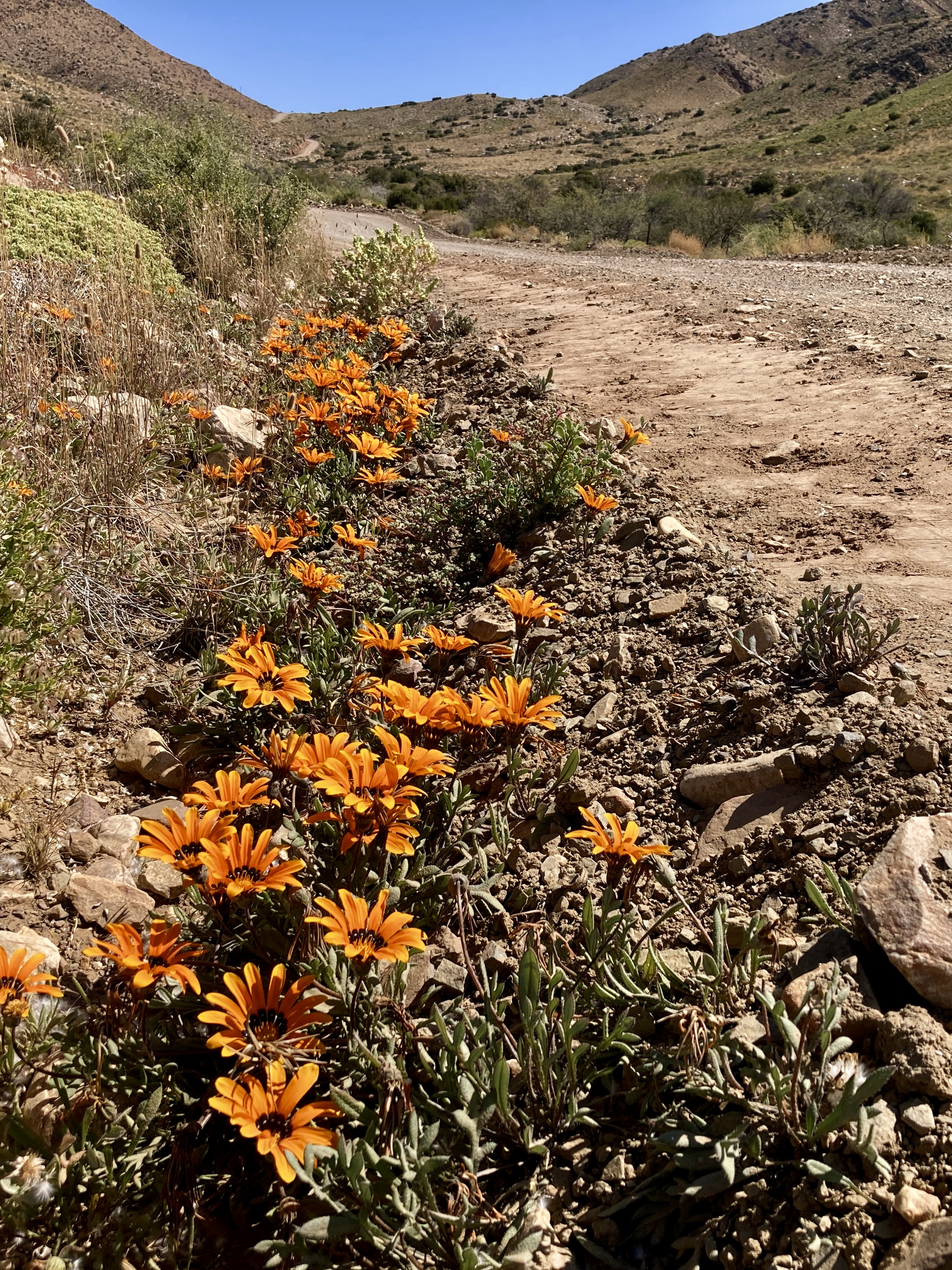
We took it slow, stopping for birds – and flowers – and there were plenty of both to attract our attention.

At around 6 kms the road passes between tall rocky cliff faces which, according to Albert and Inge, is a site where Ground Woodpecker has been seen.

We spent some time stopping to scan the rocks carefully for any sign of the Woodpecker and even more so on the way back, to no avail. The spectacular drive made up for that mild disappointment and we arrived at the farm where we found we were the only visitors – very different from our previous visit which was during the peak of fig picking and drying.

Weltevrede Fig Farm

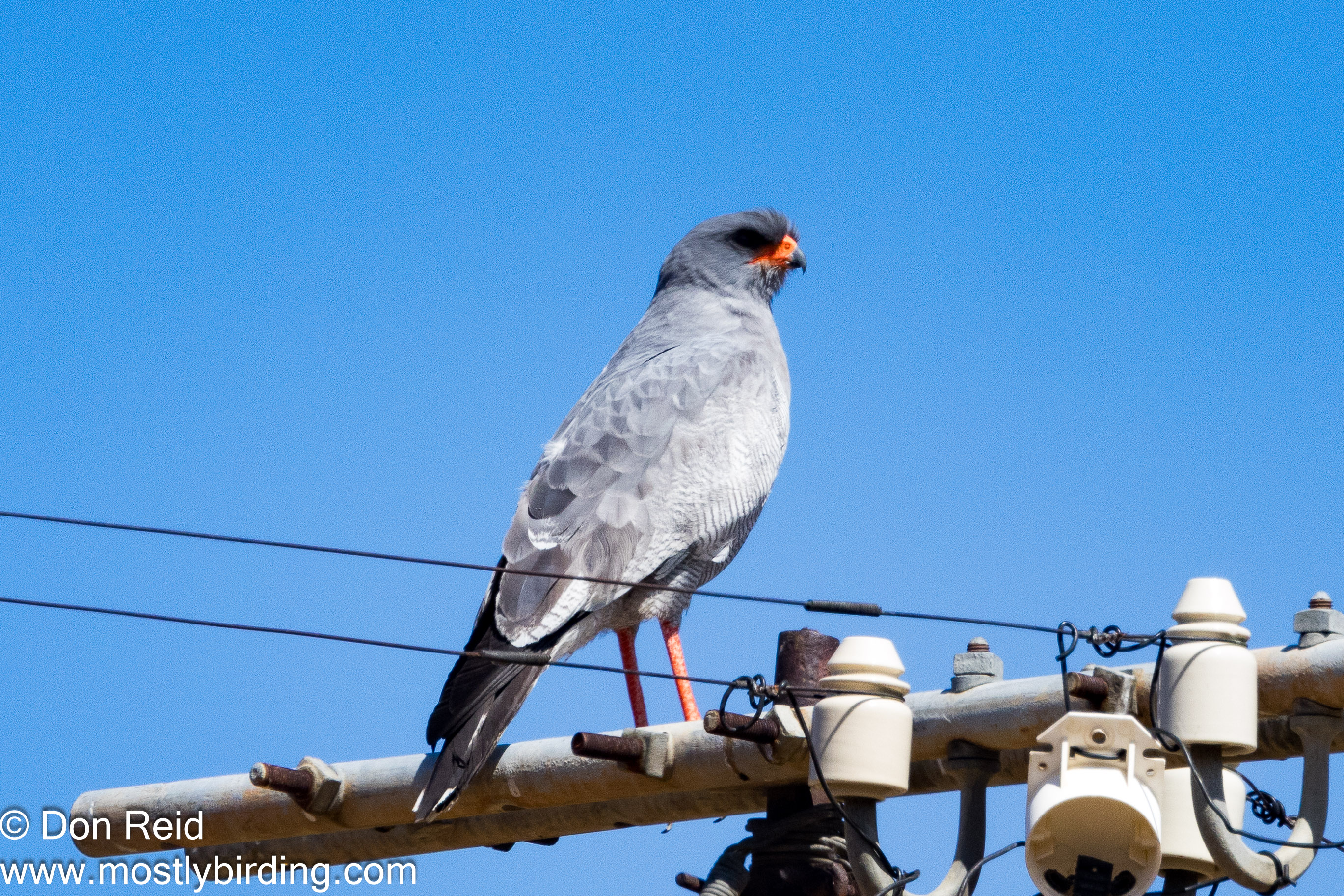
After treating ourselves to fig tart we headed slowly back – Black-headed Canaries were the most frequent sightings along with Pale Chanting Goshawk and Karoo Chat.

Black-headed Canary, near Prince Albert
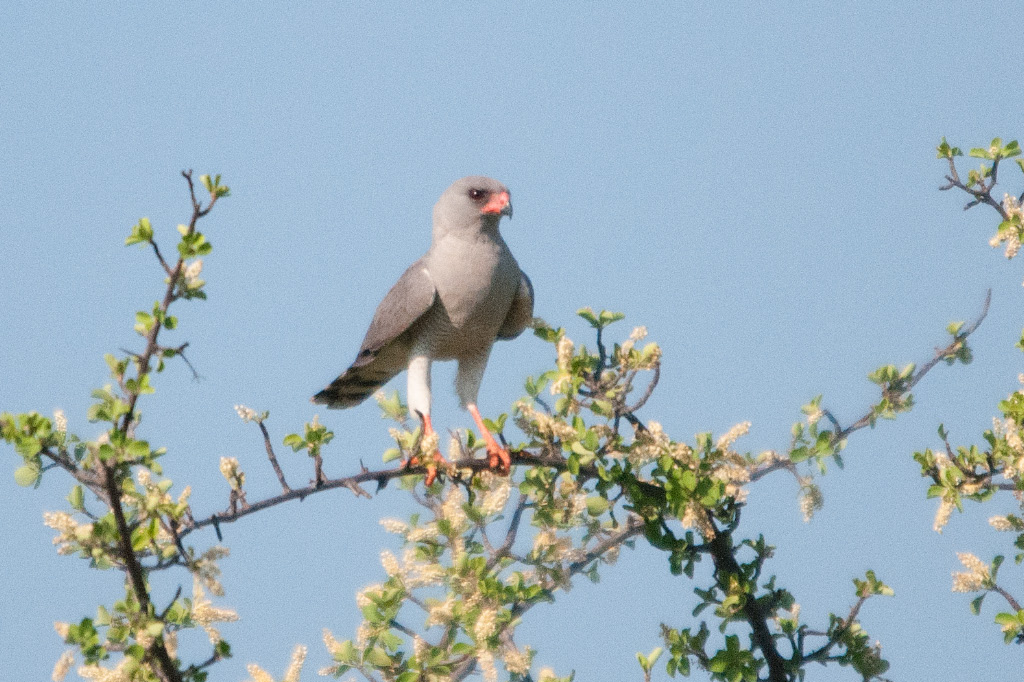
Pale Chanting Goshawk, near Prince Albert

We weren’t particularly keen to go out that evening but after a relaxing time at the room we had a bit more energy and ‘lus’ for Jeremy’s Restaurant which was a great choice and suited to our reduced appetite. We both had Taglietelle puttanesca not having ever had it and it was wonderfully simple and delicious, cooked by Jeremy himself. We treated ourselves to Spekboom ice cream which was different but not overly so and we left in a good frame of mind.

Saturday 14th September 2024

Up a bit earlier to fit in packing and breakfast before checkout time, we enjoyed the fruit and omelette once again, then greeted Inge and Albert like family and set off through town to Gays dairy for some of their lovely cheeses before heading out on the road back. This time we had time to stop and savour the flowers and birds – often both at the same spot.

Lunch venues are limited on this route so we looked for a place in De Rust, ending up at Herries which is the local pub and turned out to be a good choice even though we just had tea and a sandwich in a venue that almost demands you have at least a beer or two if not a klippies and coke.

The rest of the trip was uneventful with stops in George at the nurseries and a ‘koffie vir oulaas’ at Elvis Brew, a favourite coffee spot near the George Airport, before heading homewards, well satisfied yet again with our choice of Prince Albert for a short breakaway.


Punda Mania 2013 – Sizzling Hot Birding

About Punda Mania

Billed as a Team Birding Challenge, this is a special event for birders keen to spend time in one of the top birding spots in South Africa, at a time of year when the majority of migrants are present. Under the direction of Joe Grosel and with the assistance of the SANParks Honorary Rangers (HR’s) from the West Rand Region as well as guides from SANParks, the group of some 40 people is taken through a series of challenges which focus on birding but also include other aspects of nature such as mammals, trees, insects and the odd reptile. This was the 3rd such event and the second that I have attended and “knowing the ropes” helped to make this version even more enjoyable (for me anyway) than the previous one.

Getting There

Our group of 4 (Myself, George Skinner, Pieter Rossouw and Pieter Lombaard) left Pretoria early-ish to make sure we would be in time for the start of activities at 15h00 on Thursday 14 November 2013, with enough time for a hearty brunch at our usual stop near Polokwane, after which we turned off towards Giyani and reached Punda Maria gate by 13h30. In our air-conditioned cocoon we had noticed the temperature rising as we traveled north but only felt the 37º C  heat when we got out to stretch our legs at the gate, much  like the blanket of hot air in your face when you open a hot oven door except it envelops your whole body. From there we drove slowly to Punda Maria camp, arriving just in time for the rendezvous with the rest of our team for the weekend and the vehicle to take us to the Visitor Centre for the briefing. We joined up with 2 other couples  – Brian and Joy Falconer-Smith and Elouise and Christo Kalmer – to make up our team, the Shrewd Shrikes, and were pleased to see that Jobe, our guide from last year, was again allocated to our vehicle. William Dunn, our HR representative completed the team line-up.

The birding from the gate to the camp was slow, being the hottest time of day and we were wilting along with the animals and panting bird life that was to be seen. An African Firefinch in the low bushes, Red-billed Oxpeckers on a group of Impalas and Yellow-fronted Canary in the upper branches of a tree kept us interested.

The Challenge and first Activity

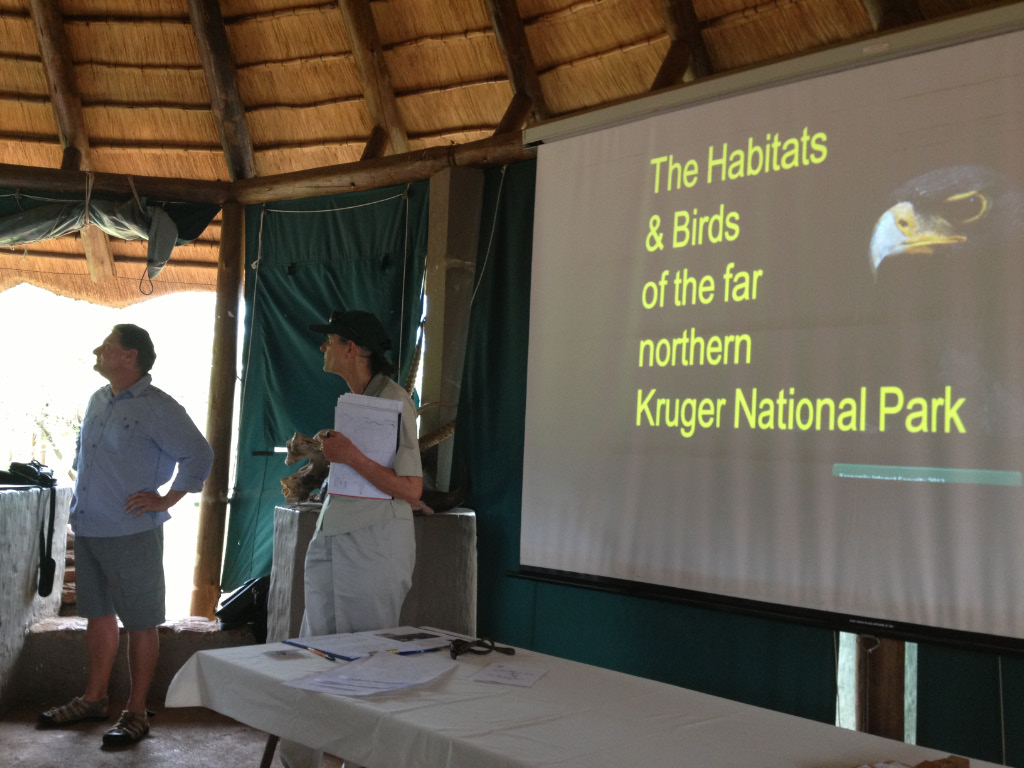
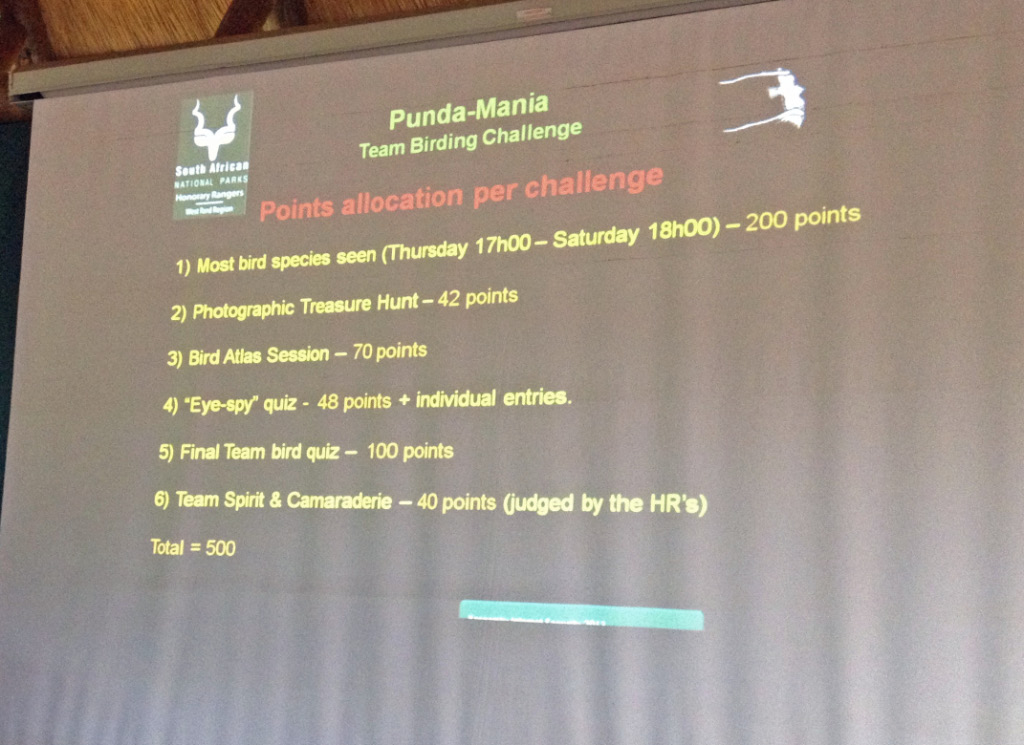
At the initial briefing, Monika O’Leary, organiser of the weekend, introduced the proceedings, then Andy Branfield described what the HR’s do with the funds generated by these events and finally Joe Grosel took us through the various habitats in this northern part of Kruger and the animal and bird species that find these habitats to their liking. The Challenge details were spelt out and, as before, points would be awarded for bird species ID’d, mammal species seen (which our team only discovered at the final dinner!) plus the treasure hunts and quizzes as well as the atlasing  and team spirit.

Visitor Centre, Punda Maria

Joe and Monika at the introduction

The Challenge
The Challenge

The drive to the Visitor Centre had produced Tawny Eagle as the bird life started to liven up. During the talks the continuous calls of Monotonous Larks and Woodland Kingfishers competed with the speakers, as if beckoning us all to “come have a look”.

Tawny Eagle
Tawny Eagle

Monotonous Lark, Punda Maria

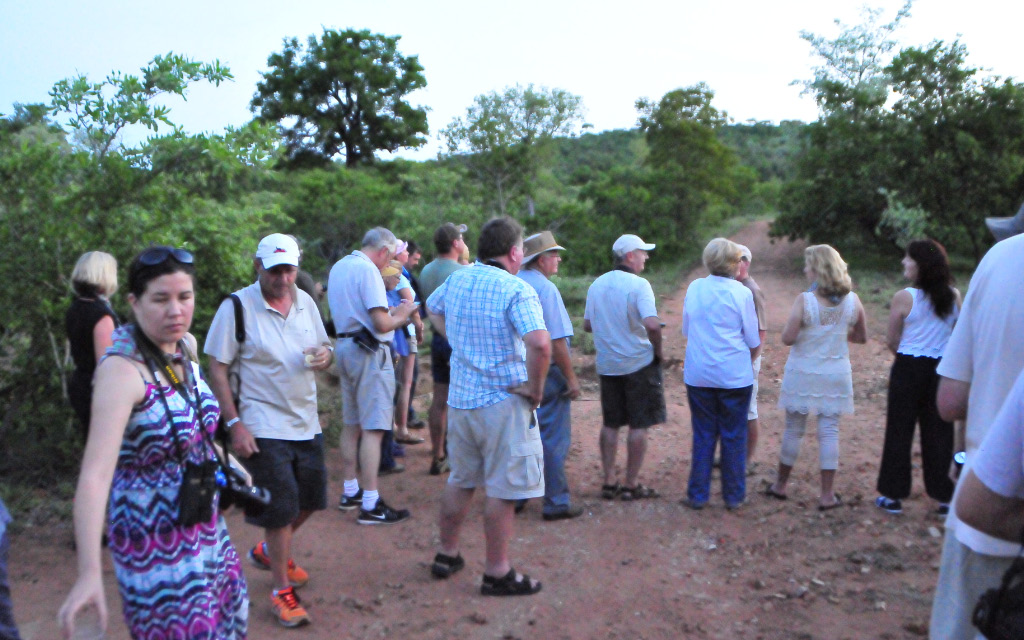
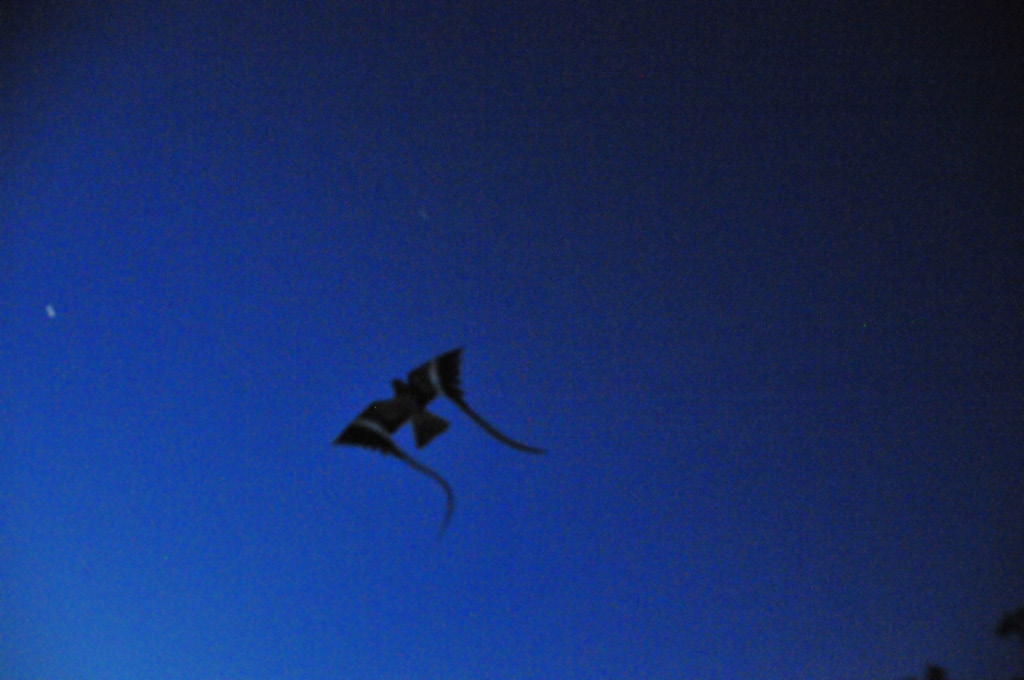
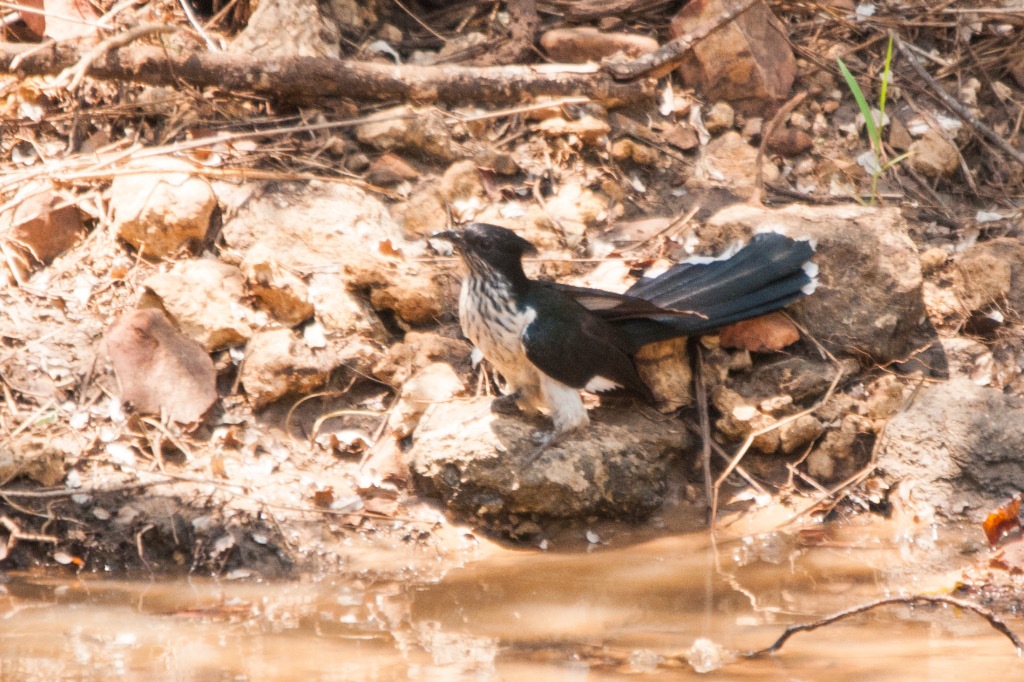
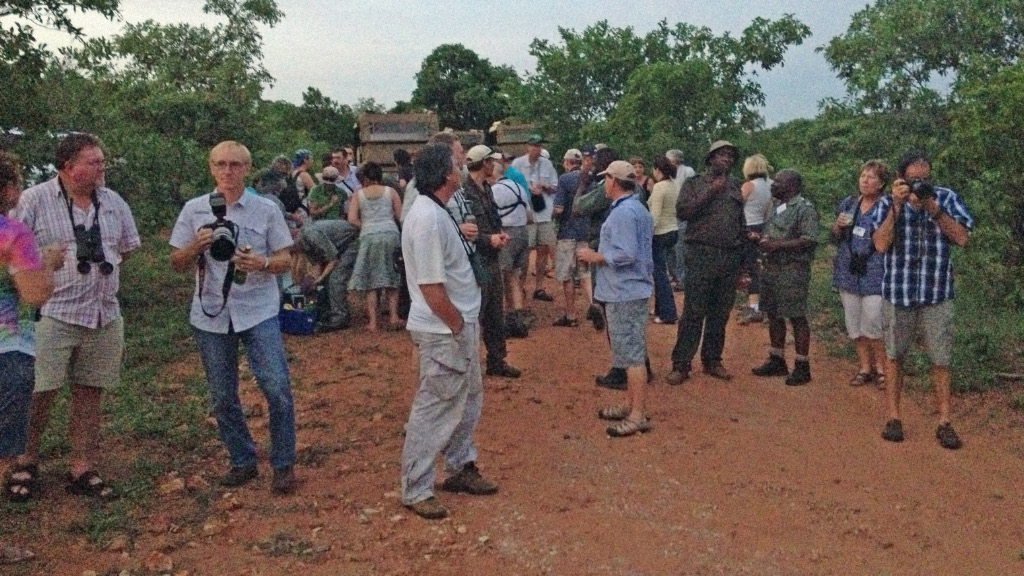
Then it was time for the first sunset drive with the main destination being the ‘lek’ frequented by Pennant-winged Nightjars in the early summer months – we had enjoyed them on 2 occasions during the previous Punda Mania but this is not the sort of sighting you are likely to tire of. The drive was punctuated by a few good sightings such as European Golden Oriole and Great Spotted Cuckoo, a  pair of African Hawk Eagles in a treetop and a Pale Flycatcher almost hidden amongst the bushy undergrowth and trees. The only negative was the road chosen to get to the lek, supposedly a short-cut but which can best be described as abominable as we bounced over endless rocks, taking so long that we arrived with minutes to spare for the Pennant-winged Nightjar display, which was nevertheless as magical as before. Apart from the main attraction, an African Scops-Owl and Red-chested Cuckoo made themselves heard from nearby trees. A bring-and-braai back at the camp closed out the day.

Waiting for a view of Pennant-winged Nightjar

Pennant-winged Nightjar at the lek

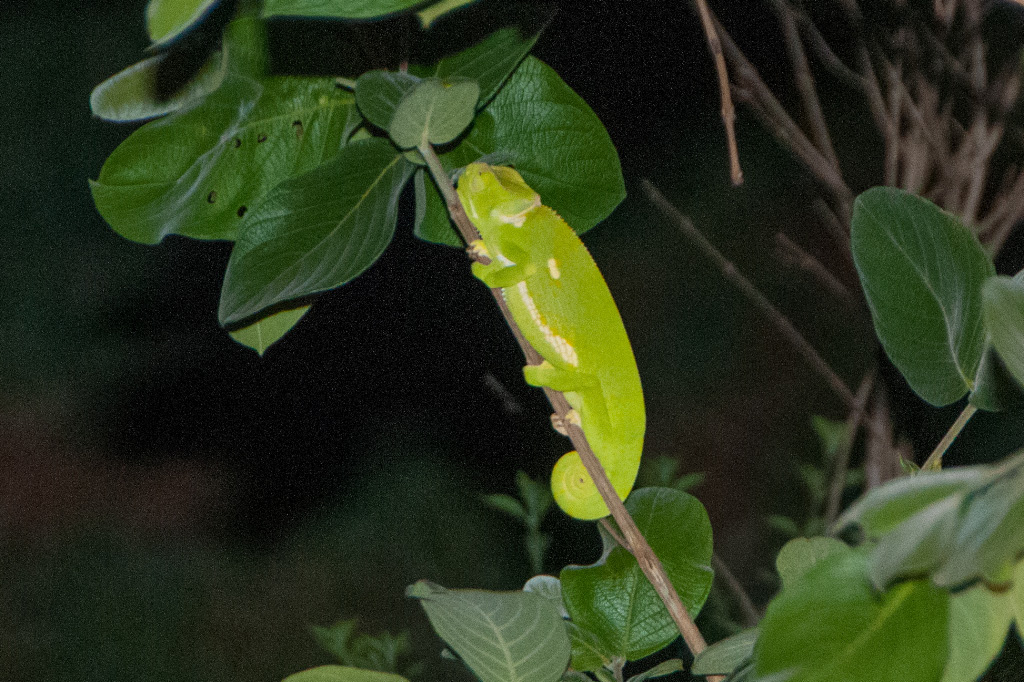
Flap-necked Chameleon, Punda Maria

Friday 15 November 2013

An enthusiastic Red-chested Cuckoo was already calling when our alarm went off at 03h45 and we left the camp at 04h30 as the first light of dawn approached, heading north to Pafuri in the northernmost section of Kruger. We were soon adding birds at a steady pace, but were also working at the cryptic clues for the Treasure Hunt part of the weekend, which involves taking photos of birds, animals and trees, based on solving the clues put together by Joe. At least I now have a reason for doing those cryptic crosswords, apart from keeping the mind active. It didn’t take long to resolve the clues which boiled down to 2 mammals (Nyala, Elephant) 2 Trees (Nyala Tree, Ironwood Tree) and 11 birds (from memory they were White-fronted Bee-eater, Mosque Swallow, Red-crested Korhaan, Water Thick-Knee, Meve’s Starling, Emerald-spotted Wood-Dove, Any Red Data species, Bateleur, Sabota Lark, Crested Francolin, Goliath Heron, but correct me if any are wrong) so from there on it was just a matter of finding the actual species to photograph.

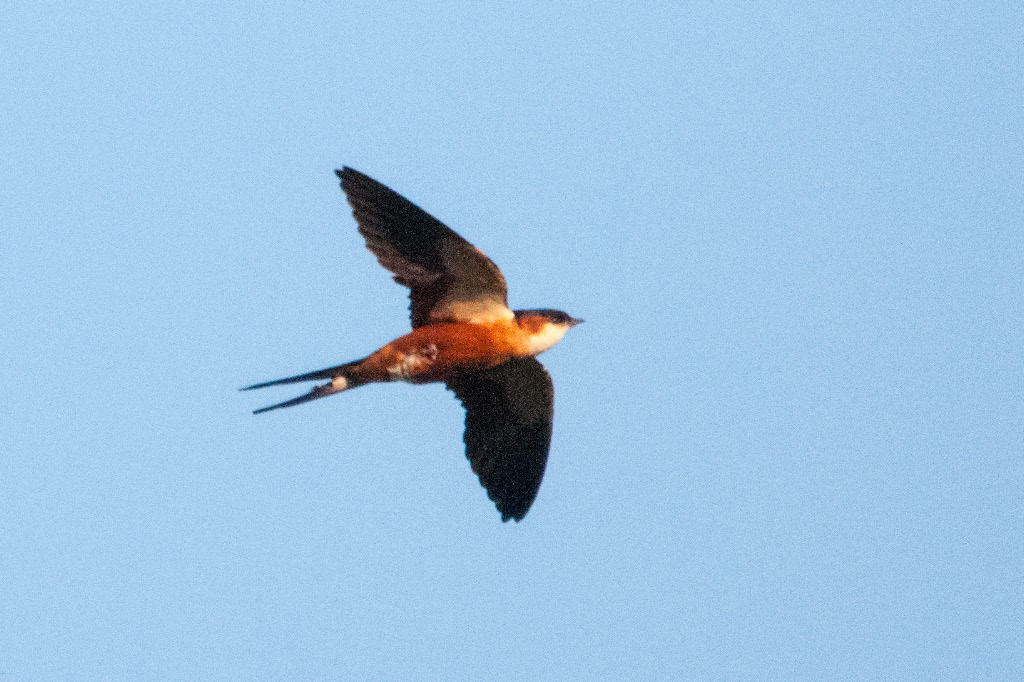
Treasure hunt : Mosque Swallow, Punda Maria

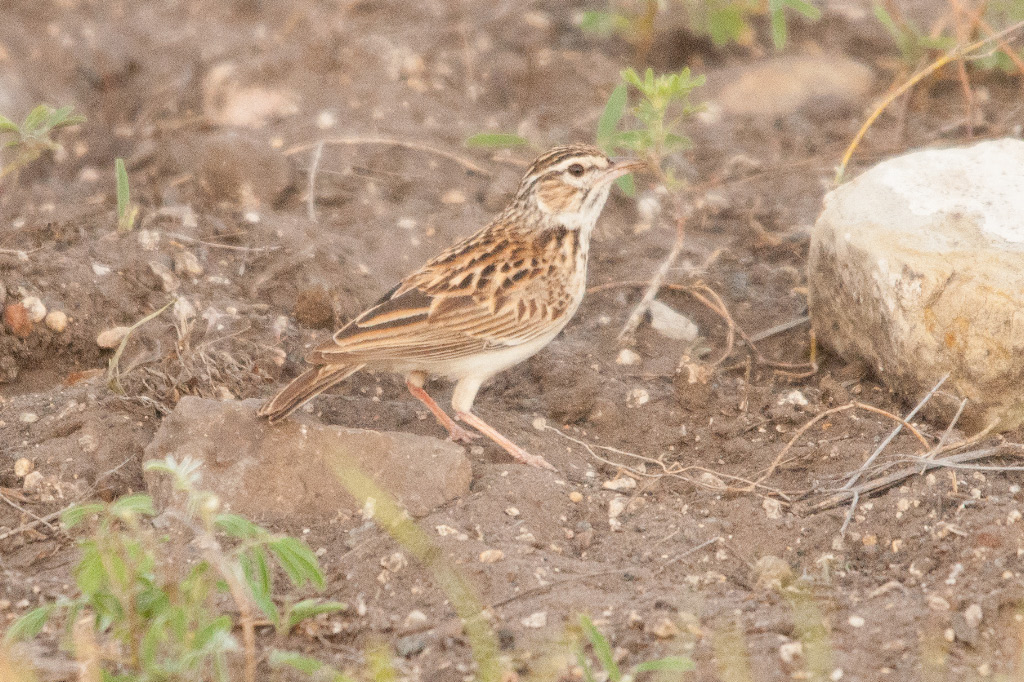
Treasure hunt : Sabota Lark, Punda Maria

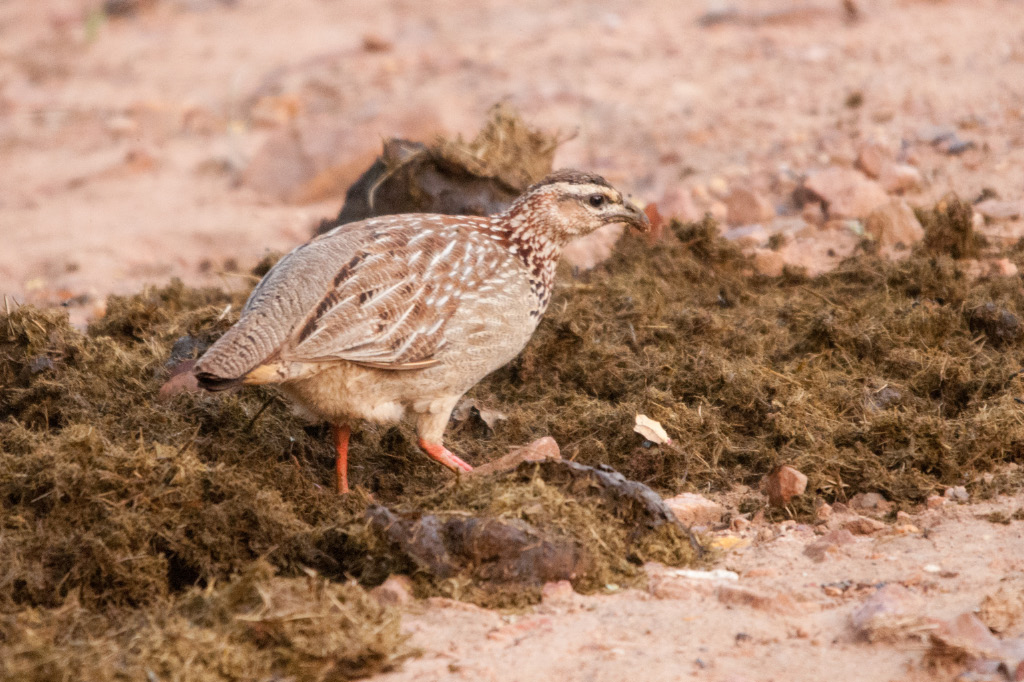
Crested Francolin, Punda Maria

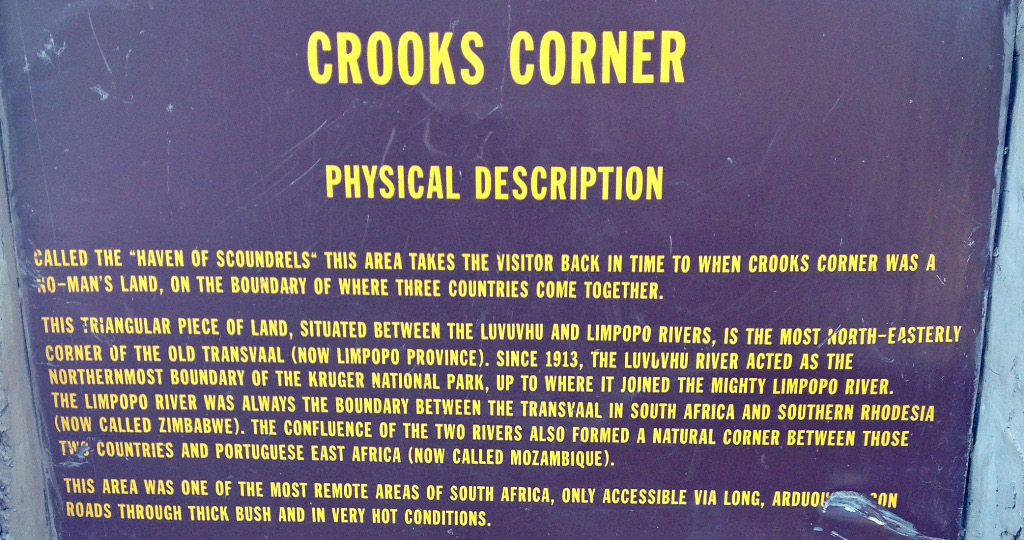
The drive took us to the far north-east corner known as Crook’s Corner, where we spent some time enjoying the bird life in the Limpopo river and surrounding bush. On the way we spent quality time at Klopperfontein dams where we were able to stretch our legs and enjoy coffee, while watching the myriad Swallows, Martins and Swifts including many House Martins and a few Grey-rumped Swallows. Lark-like Buntings were moving about busily near the water and a Shaft-tailed Whydah made a brief fly-past, while Water Thick-Knees flew across low over the water. In the Pafuri area we saw our first Meve’s Starling moving amongst the low branches and higher up a Burnt-necked Eremomela worked his way through the foliage.

Klopperfontein KNP
Klopperfontein KNP

Treasure hunt : Water Thick-knee, Klopperfontein KNP

A surprise ‘sighting’ was the 4 ‘illegals’ from Mozambique that we came across near Pafuri, making their way through the Kruger on foot (one was barefoot) – they looked quite weary and despondent at being found and our guide contacted the camp to pick them up but we didn’t find out what happened to them.

'Illegals' near Pafuri
‘Illegals’ near Pafuri

The Limpopo River at Crook’s Corner had enough water to support Green-backed Heron and Pied Kingfisher as they hunted in their particular ways, while White-fronted Bee-eaters hawked insects from an overhanging dead branch. From the surrounding bush the regular calls of Orange-breasted and Grey-headed Bush-Shrikes could be heard, a Tropical Boubou made a brief appearance and Chinspot Batis, Red-billed Firefinch and Purple-crested Turaco were all welcome sightings. Overhead numbers of White-backed Vultures circled lazily and an African Cuckoo-Hawk appeared from nowhere and disappeared just as quickly

Coffe stop
Coffe stop

Crook's Corner KNP
Crook’s Corner KNP

Crook's Corner KNP
Crook’s Corner KNP

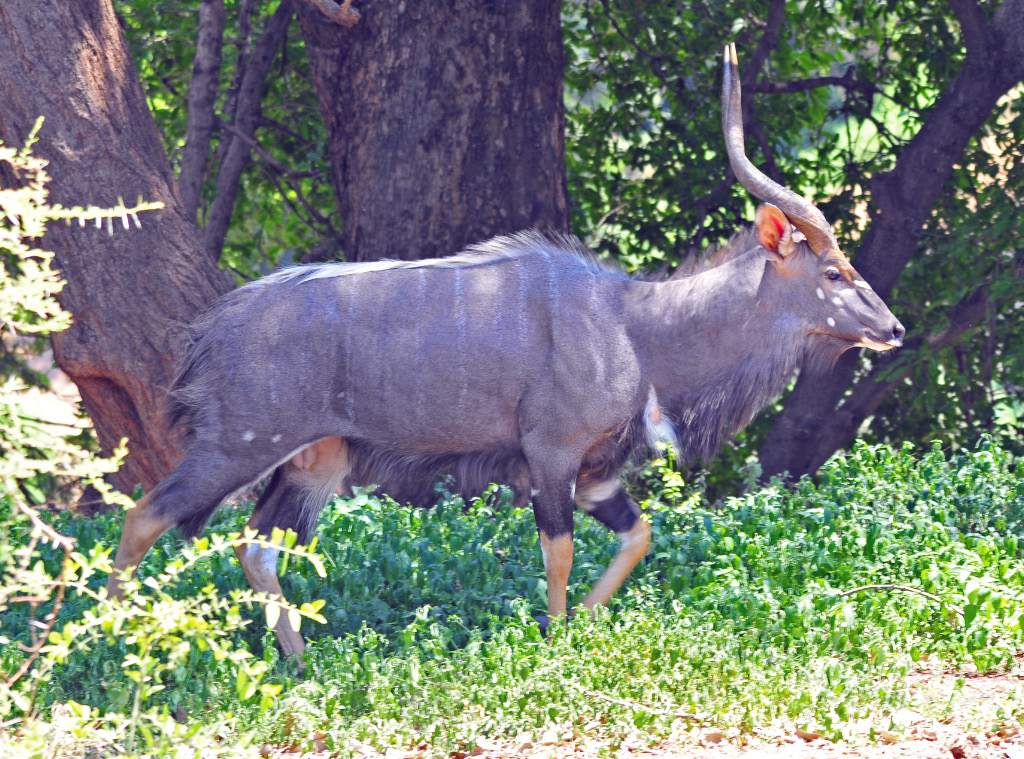
Treasure hunt : Nyala, Pafuri KNP

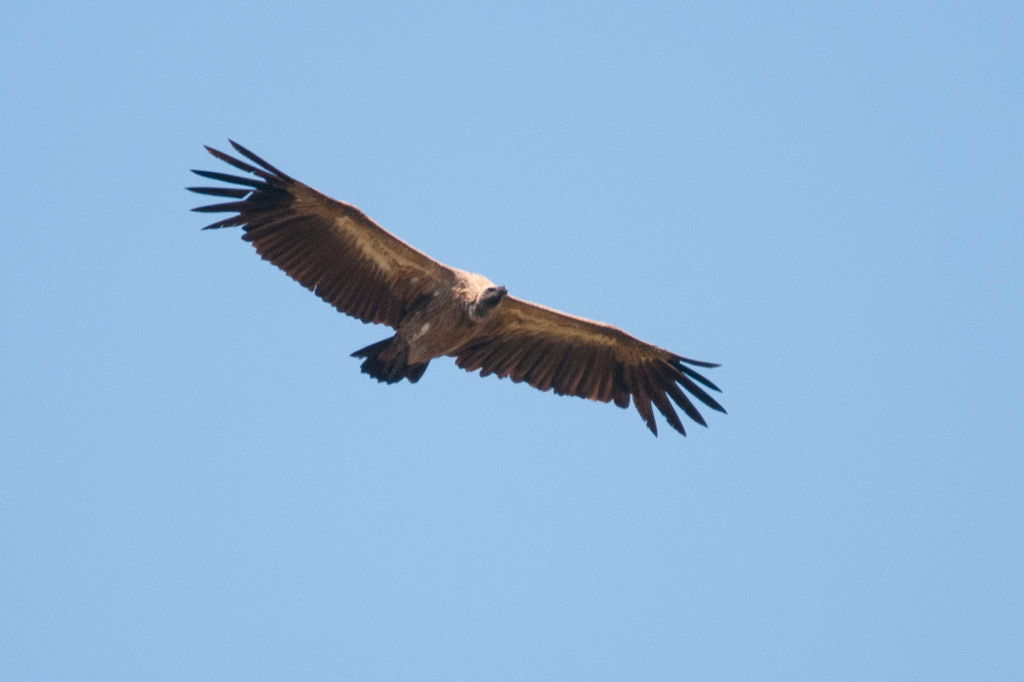
White-backed Vulture, Pafuri KNP

Our next stop was the Pafuri picnic spot, one of my favourite spots in Kruger, where a brunch had been set up by the busy HR’s. This was also the chance to add more species, with White-crowned Lapwing being an easy sighting in the river, Red-faced Cisticola calling from the riverine bush and an obliging Emerald-spotted Wood-Dove posing for photos meant we could tick off another on the treasure hunt list.

Back on the road we came across a lone Secretary Bird before heading back to Punda Maria – just a pity we didn’t have enough time to visit the bridge over the Luvuvhu which usually delivers a plethora of bird species, but a special sighting on the way back made up for this. Joe led us to a spot along the road, lined by tall Mopane trees, where Arnot’s Chat were known by him to breed and a brief playing of their call brought a male and female to investigate and eye us from a roadside tree, affording magical views of this sought-after bird.

Arnot's Chat (Male), Punda Maria
Arnot’s Chat (Male), Punda Maria

Arnot's Chat (Female), Punda Maria
Arnot’s Chat (Female), Punda Maria

African Buffalo, Punda Maria

Levaillant's Cuckoo, Punda Maria
Levaillant’s Cuckoo, Punda Maria

Then it was back to the camp to report back on our photos taken for the treasure hunt, for which we managed to get a full house. A short while later we were at it again, this time following more cryptic clues to items around the camp itself, which we completed successfully except for Passer Domesticus (House Sparrow) which we could not decipher. The Cicada was easy enough to unravel but quite difficult to find, camouflaged as it was against the bark of the Mopane trees in the camping area.

During the pursuit of the items we came across Bearded Scrub-Robin along the Flycatcher trail and spent some time at the hide overlooking a water hole just outside the camp fence, popular with everything from Elephants to Eremomelas. A Broad-billed Roller was showing off his skills as he swooped down from a nearby tree and skimmed the surface, as if showing the Bee-eaters present that he could do it just as well as them.

Burchell's Zebra, Punda Maria
Burchell’s Zebra, Punda Maria

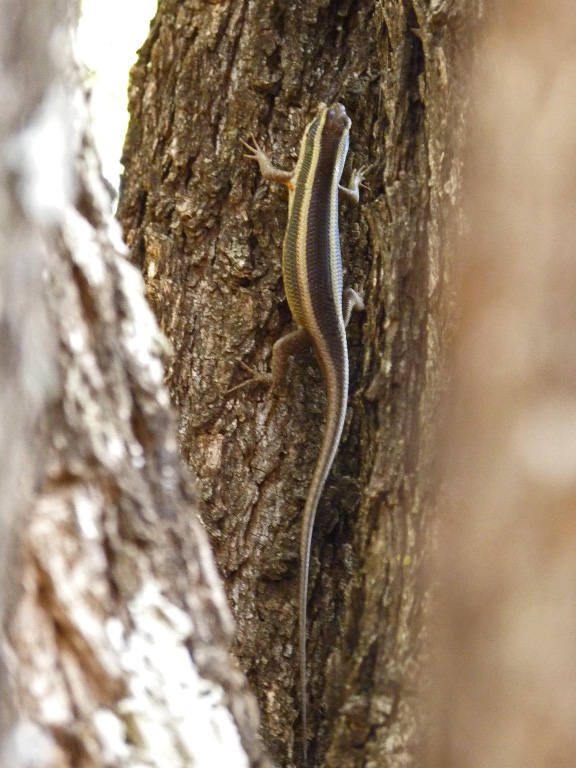
Treasure hunt : Striped Skink, Punda Maria

After the report back, dinner was served followed by a short night drive, during which we added Fiery-necked Nightjar and Barred Owlet to our list.

Saturday 16 November 2013

An early start again – advisable in the extremely hot conditions. By this time we were getting accustomed to the extreme heat and the prospect of atlasing some remote areas of Kruger was something I was looking forward to – the area we were allocated to atlas turned out to be located in a little visited but beautiful part of Kruger, covering lush bushveld and riverine habitats. This, for me, was the highlight of the weekend – going down those usually forbidden roads with those no-entry signs and knowing there will be no other vehicles is part of what makes these events really special. Bird life was plentiful and the pentad list was rapidly added to in the allotted time.

The pentad list kicked off with an Eastern Nicator which made an exciting change from my usual atlasing, followed by some other specials such as Tawny Eagle, Wahlberg’s Eagle cruising above us, Green Pigeons in the taller trees and both Little and European Bee-Eaters hawking insects at low level.

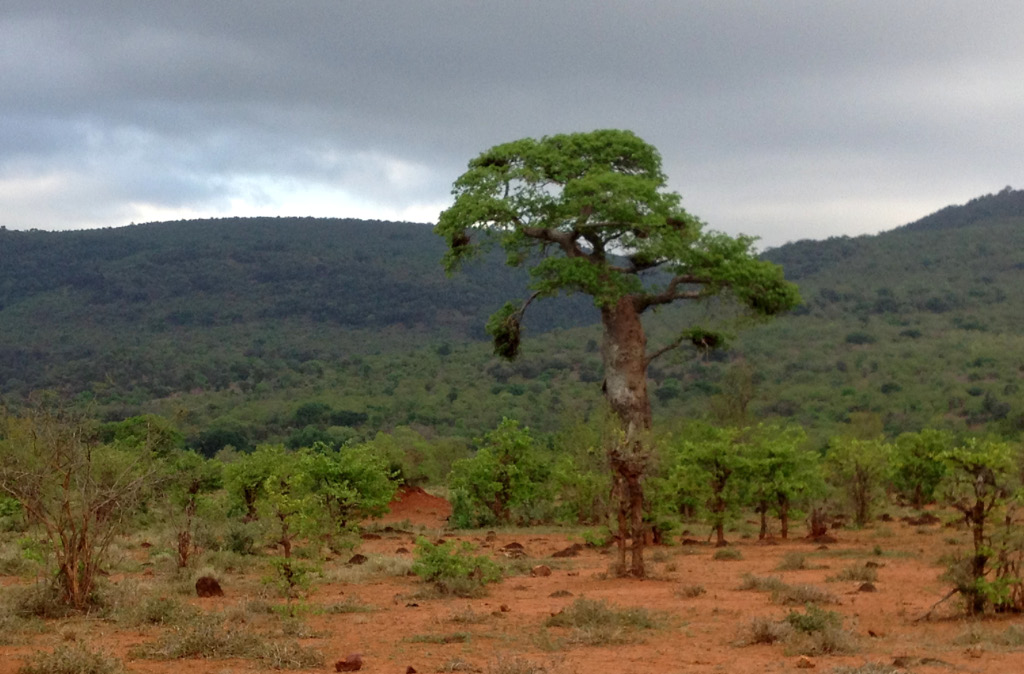
A magnificent Baobab tree full of greenery was alive with birds, having a number of Red-billed Buffalo-Weavers and Red-headed Weavers using it as a nesting base. Even the arrival of a couple of Common Mynas could not spoil this classic scene.

Baobab with nests, Punda Maria

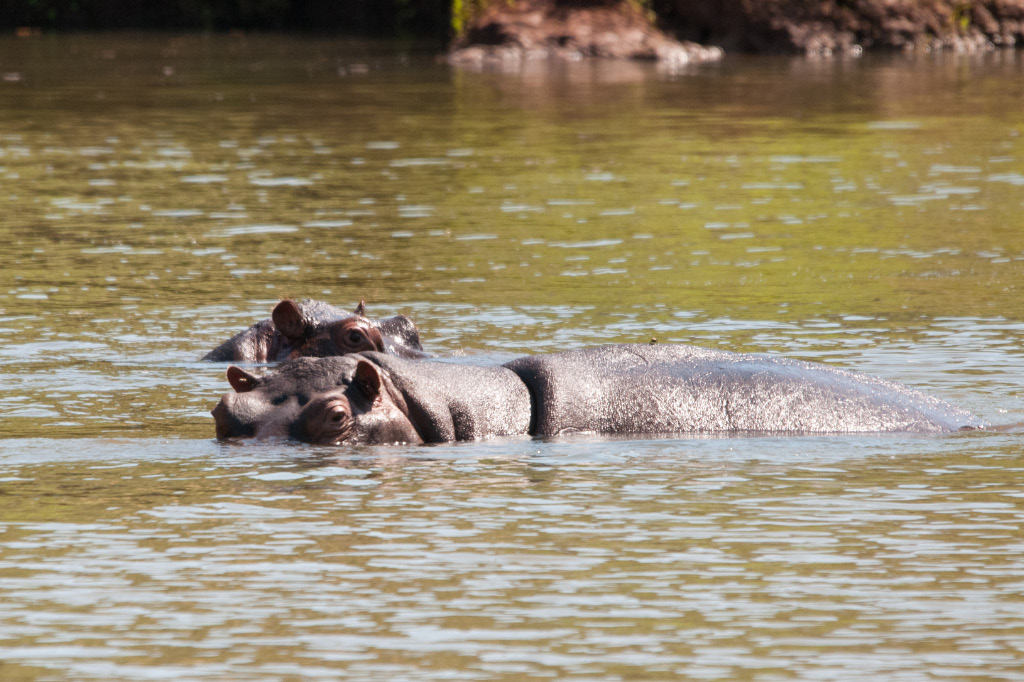
The area atlased included stretches of the Levuvhu River and we made a few stops at convenient spots for walks along the river, watched by pods of Hippo in the cool waters and disturbing Green-backed Herons and Water Thick-Knees which took off and flew across to the opposite side as we progressed along the bank.

White-crowned Lapwing, Luvuvhu River

Hippo, Luvuvhu River

Acacia, Luvuvhu River
Sekelbos flowers, Luvuvhu River

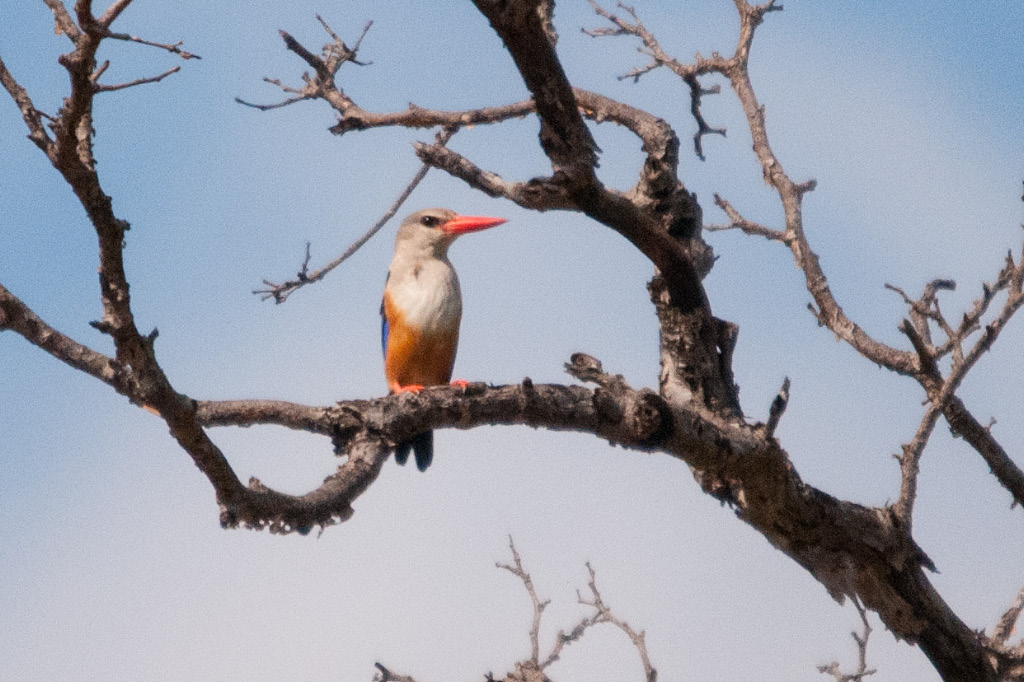
One stop was at the temporary Nyalaland Trail camp, located at an ideal spot above the river while the flood-damaged permanent camp is under reconstruction. The river walks added Pale Flycatcher, Grey-headed Kingfisher, Malachite Kingfisher and White-crowned Lapwings amongst others, the latter calling excitedly and flying up and down the river. The bush away from the river was equally rewarding with Bennett’s Woodpecker, Striped Kingfisher and Black Cuckooshrike being some of the more notable sightings.

Allasing along the river

Levuvhu River
Levuvhu River

Gabar Goshawk, Pafuri KNP

Striped Kingfisher, Punda Maria

Grey-headed Kingfisher, Luvuvhu River

On the way back we heard what we thought to be Southern Hyliota calling and excitedly searched for this uncommon bird, only to find a White-browed Scrub-Robin imitating its call!

Back at the camp it was time to recharge with a nap, followed by a repeat of the late afternoon drive to the Pennant-winged Nightjar lek which was a lot more relaxed this time around.

Pennant-winged Nightjar site

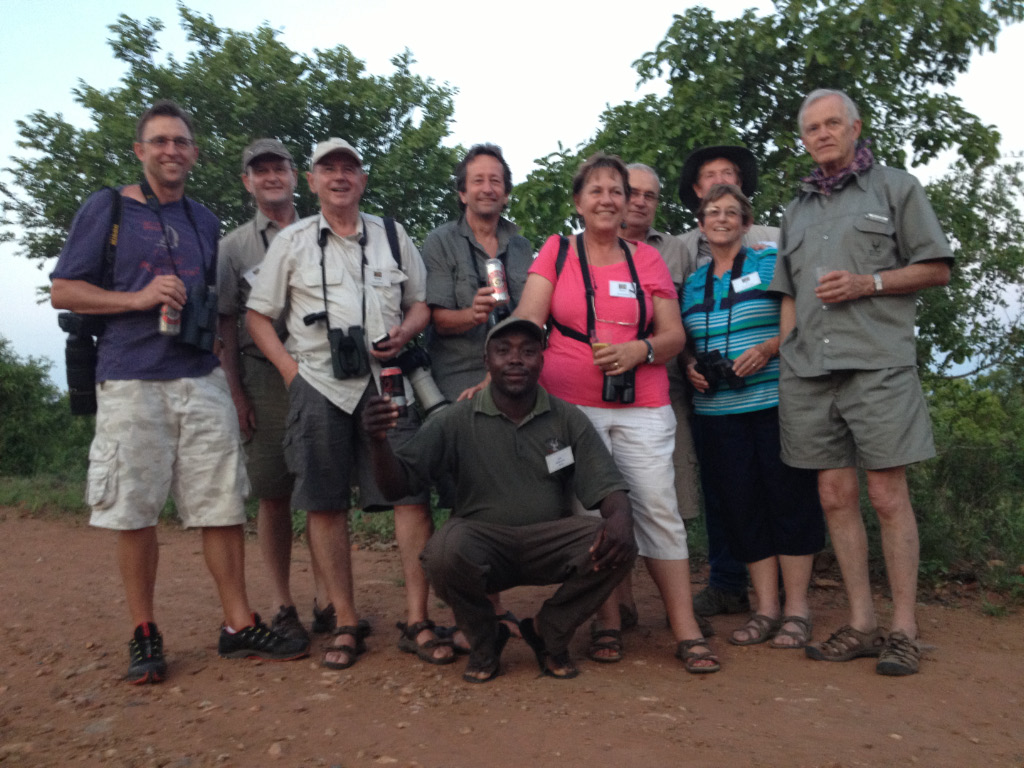
Shrewd Shrikes
Shrewd Shrikes

Then all that remained was the dreaded Team Quiz (which again proved to be our downfall) and the final dinner and prize-giving. Oh well, there’s always the hope that the HR’s will present this event next year again, in which case the Shrewd Shrikes can have another go at improving our score.

Congrats to the West-Rand Honorary Rangers once again for presenting a really interesting and worthwhile event – long may they continue!

Thanks to Dr PeteZac Zacharias for providing the correct name for the Sekelbos (Dichrostachys cinerea) with its beautiful flowers, which I had wrong in the photo caption

Ngwenya Lodge November 2013 : Warm-up for a wedding

Background

Our good friend’s daughter, Jessie van Dyk, now resident in Toronto, Canada, was to get married on Saturday 9th November and she and a group of her Canadian friends and new family had come to South Africa the week before to spend a few days at Ngwenya Lodge near Komatipoort, prior to the wedding. We were invited to join the group from Monday to Thursday and it wasn’t a difficult decision to accept with the hope that we could provide some support to Jacobus and Lynette van Dyk. Having Canadian family myself (a sister and brother-in-law plus 2 nieces) we were looking forward to meeting some of their compatriots and we had the pleasure of meeting most of them on the Sunday that they arrived, before leaving for Ngwenya the next day.

The big disappointment is that not one of them wore a red-checked woolly shirt or a Mountie style hat – in fact they all looked quite decent and civilized, just like us!

Getting there

While the excited group of some 20-plus went by bus, we made our way separately by car, with our customary stop at Millies near Machadadorp for trout pie and coffee. The trip of just over 400 Kms was uneventful but the “stop-and-go” between Nelspruit and Komatipoort delayed us by a good 40 minutes.

Ngwenya Lodge

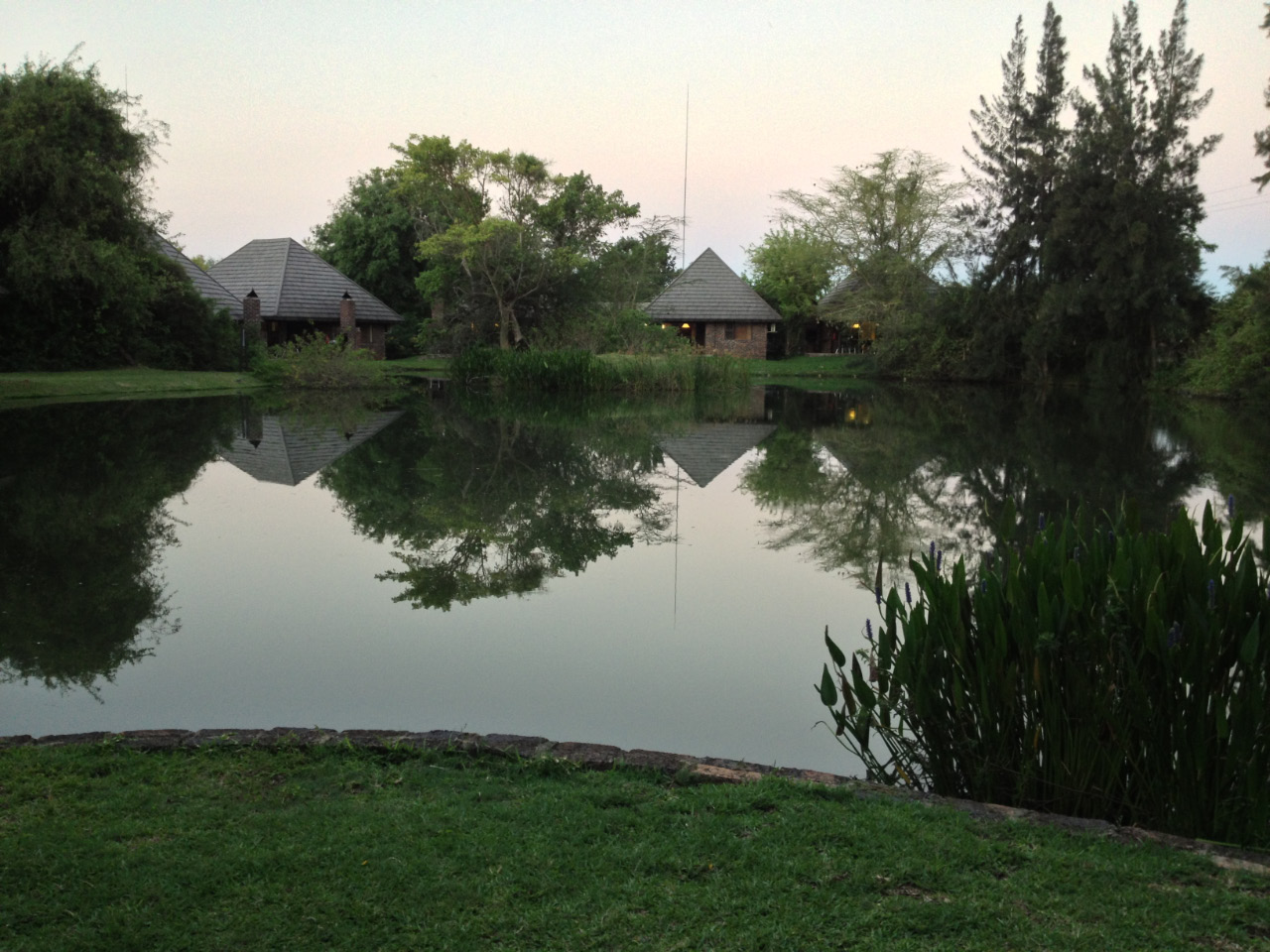
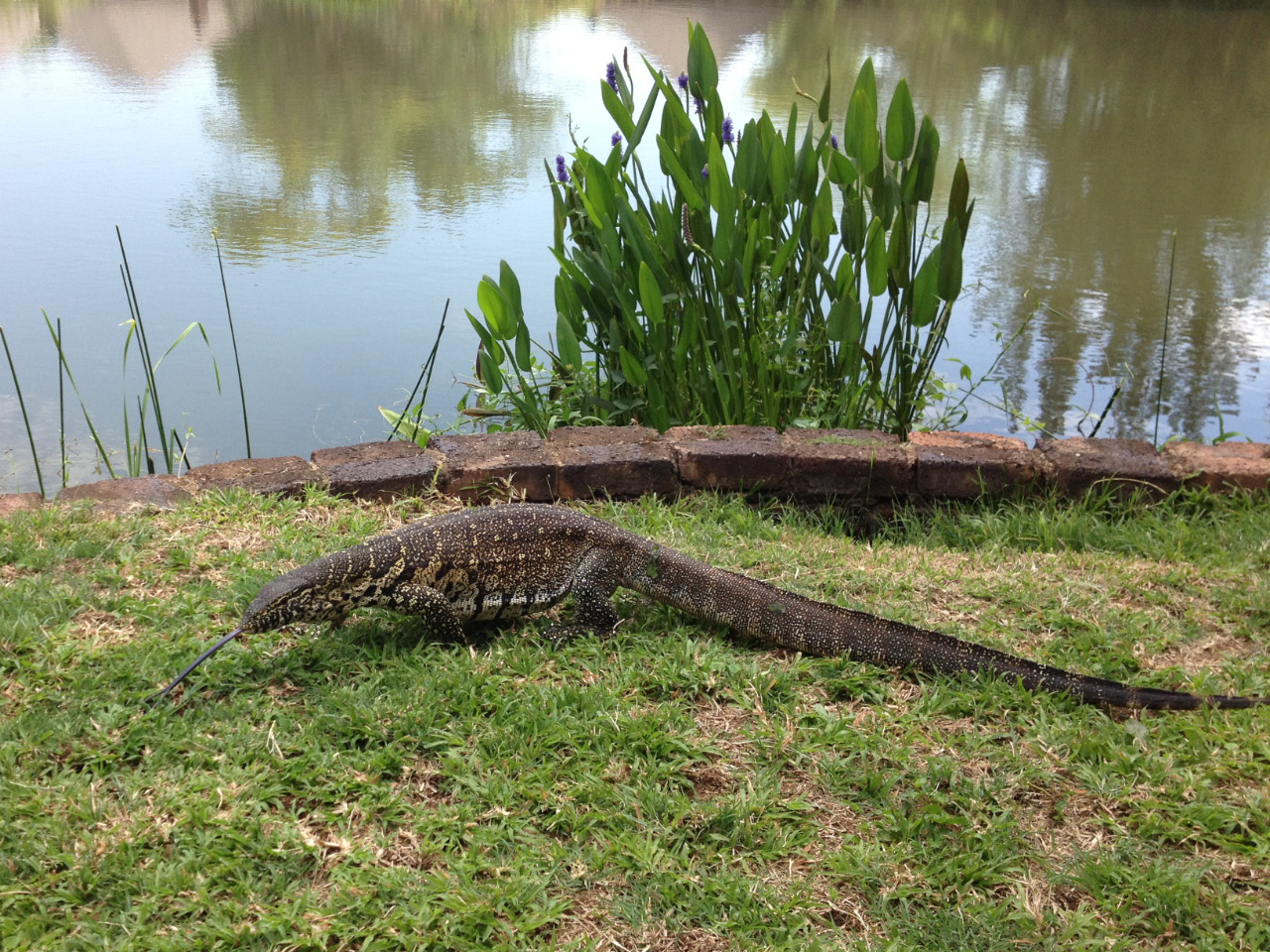
The chalets we were allocated are set around calm dams, while other chalets overlook the Crocodile River, which also forms the southern boundary of Kruger National Park. Water Monitors frequent the bush around the dams and are quite habituated to people, loping around the chalets in the hope of picking up morsels of food. Much smaller in size but just as reptilian are the colourful lizards in the gardens and around the chalets.

Ngwenya Lodge, Komatipoort

Ngwenya Lodge - View from chalet
Ngwenya Lodge – View from chalet

Water Monitor, Ngwenya lodge

Lizard, Ngwenya lodge

Lizard, Ngwenya lodge

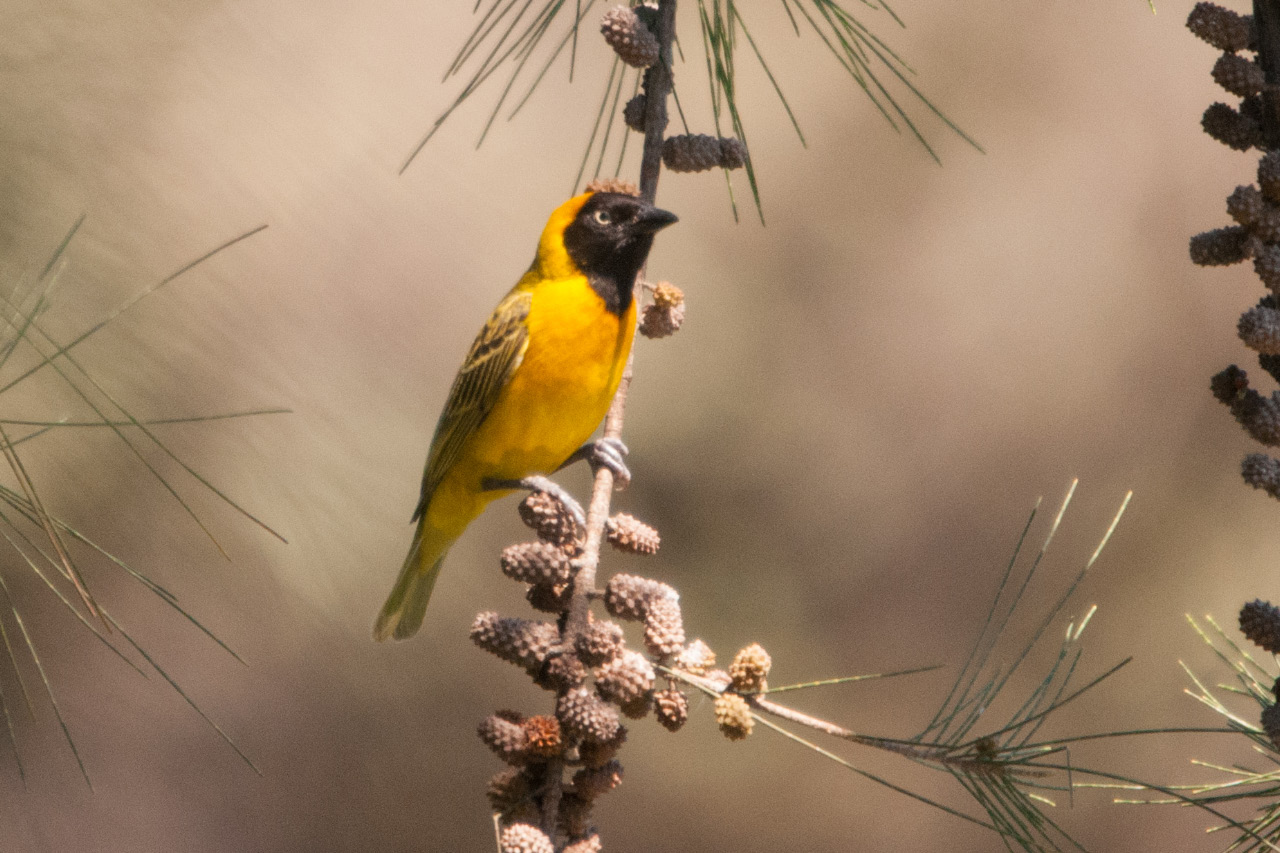
Bird life is plentiful and I was able to list 70 species during our stay, including a few in Kruger itself, despite not having much birding time in between the social activities. Bright yellow Village Weavers and Lesser Masked-Weavers are most prominent in front of the chalets where a number of the trees next to the water are bedecked with their carefully woven nests.  The calls of Dark-capped Bulbuls, White-browed Robin-Chats, Green-backed Camaropteras and Sombre Bulbuls are heard throughout the day and act as a gentle wake-up call in the mornings.

Lesser Masked-Weaver

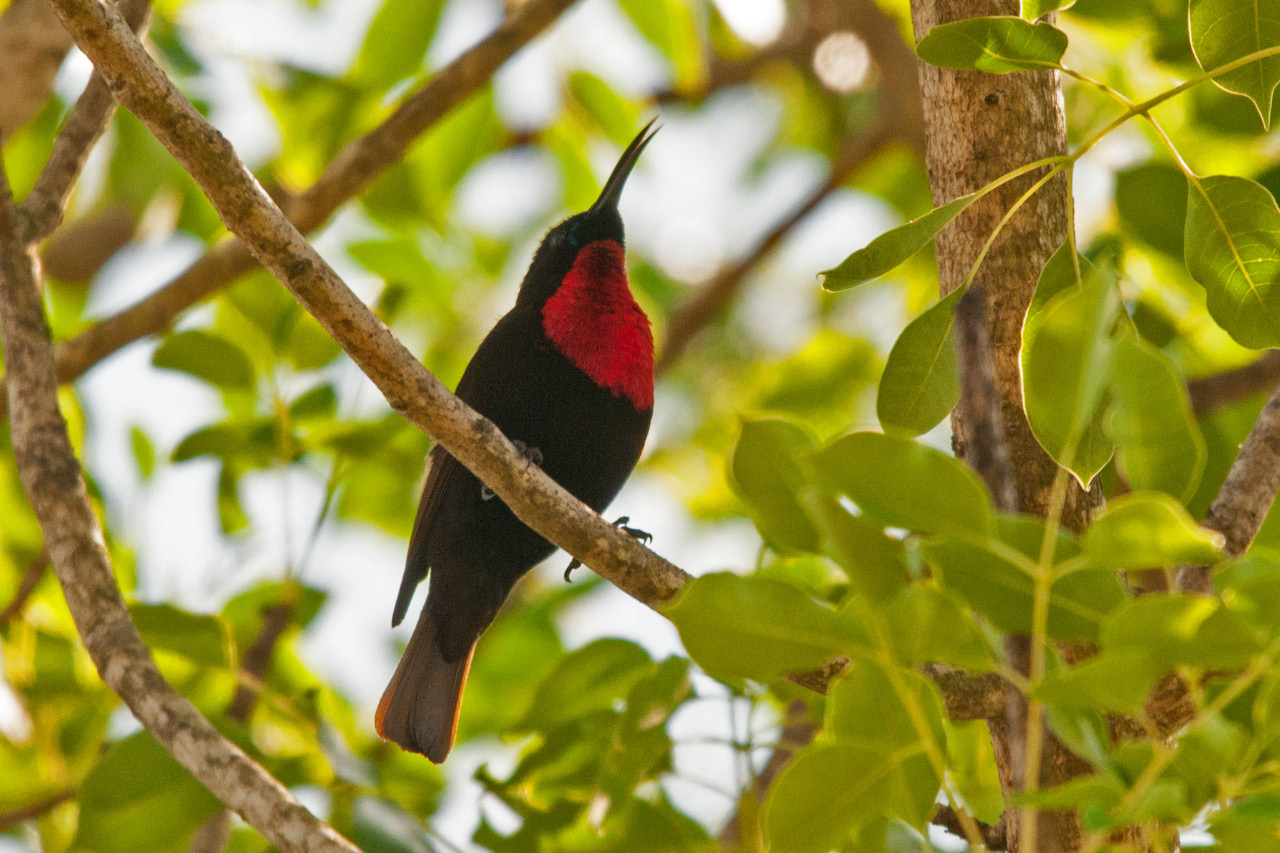
Scarlet-chested Sunbird, Ngwenya lodge

White-browed Robin-chat

A walk around the lodge gardens mid-morning added many birds to the list with Violet-backed Starlings showing their spectacular colouring in the top of the trees and the sound of African Reed-Warblers emanating from the waterside bushes. Trees are a mix of indigenous and exotic with Fever trees being quite prominent. At the hide overlooking the river it was fairly quiet on the mammal front, with just a lone African Buffalo wading in the river.

Violet-backed Starling

Numerous birds in the water and riverside bush boosted my list by a dozen in 20 minutes with specials such as Lappet-faced Vulture circling above, Water Thick-Knee patrolling the water’s edge in search of a meal and a Black Crake showing briefly among the exposed rocks.

Black Crake
Black Crake

A Taste of Kruger

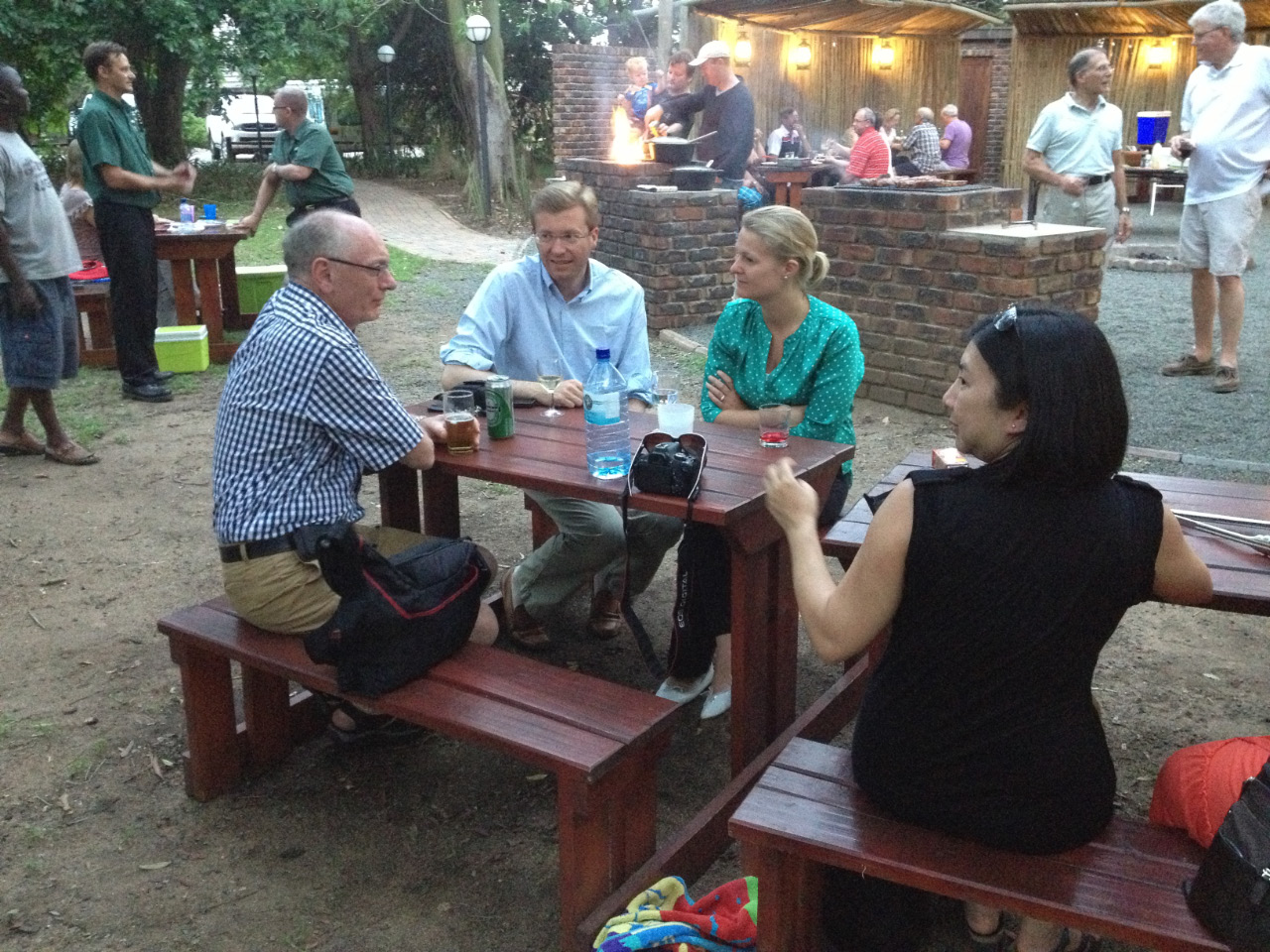
Social interaction with the Van Dyks and their guests from Canada and Belgium took place over brunch and dinner and gave us all the chance to find out a little about them, their homes and family. They were all keen to see some of Kruger Park, being so close to the Crocodile Bridge gate, and I offered to do a game drive on the Tuesday afternoon from 3 pm which was taken up by some of the group, knowing that we were all due to do an organised game drive the following morning in Safari vehicles with guides. Between the 2 drives we were lucky enough to see all of the “Big 5” – in fact the Wednesday morning game drive accomplished that on its own with the help of the guides who communicate with each other and share special sightings. The Tuesday afternoon drive was almost as successful, chalking up 4 of the Big 5.

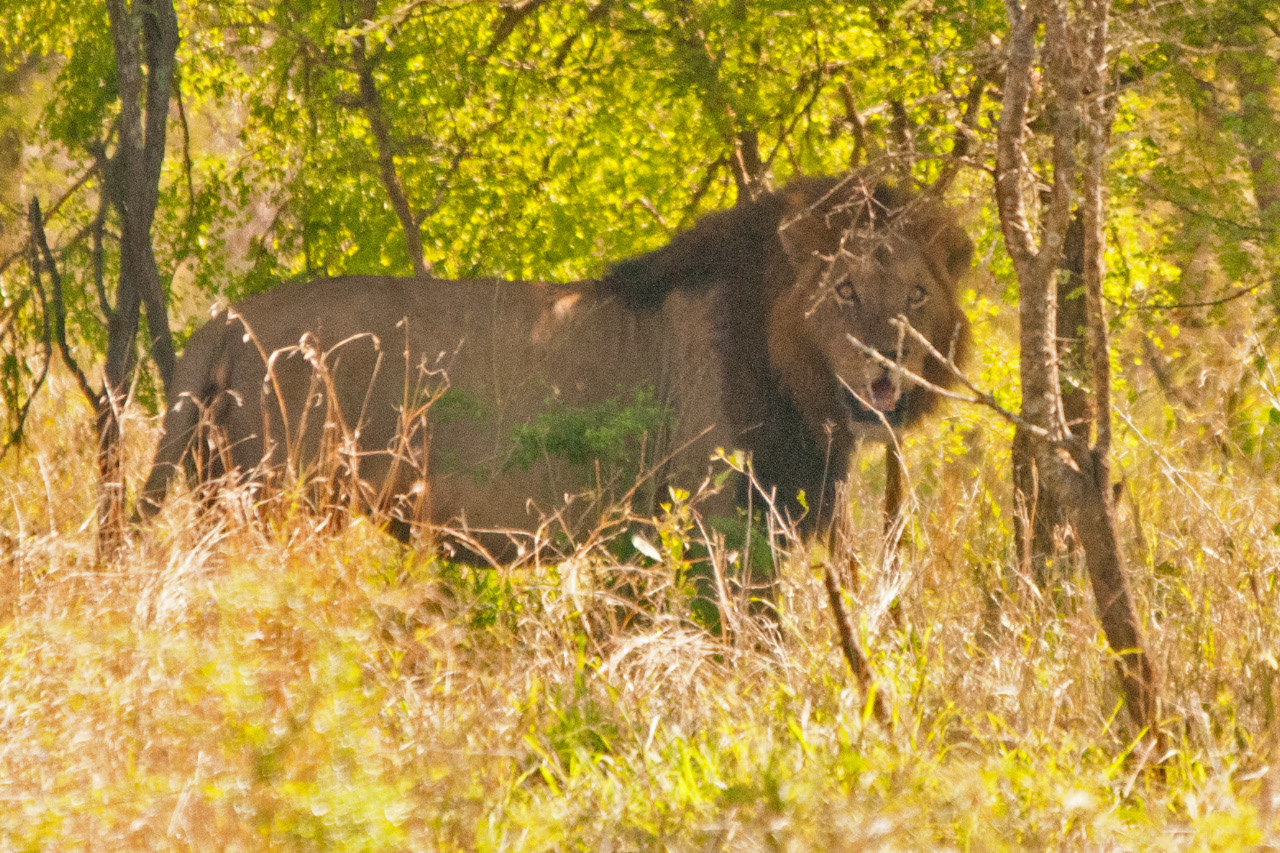
African Lion, Kruger NP

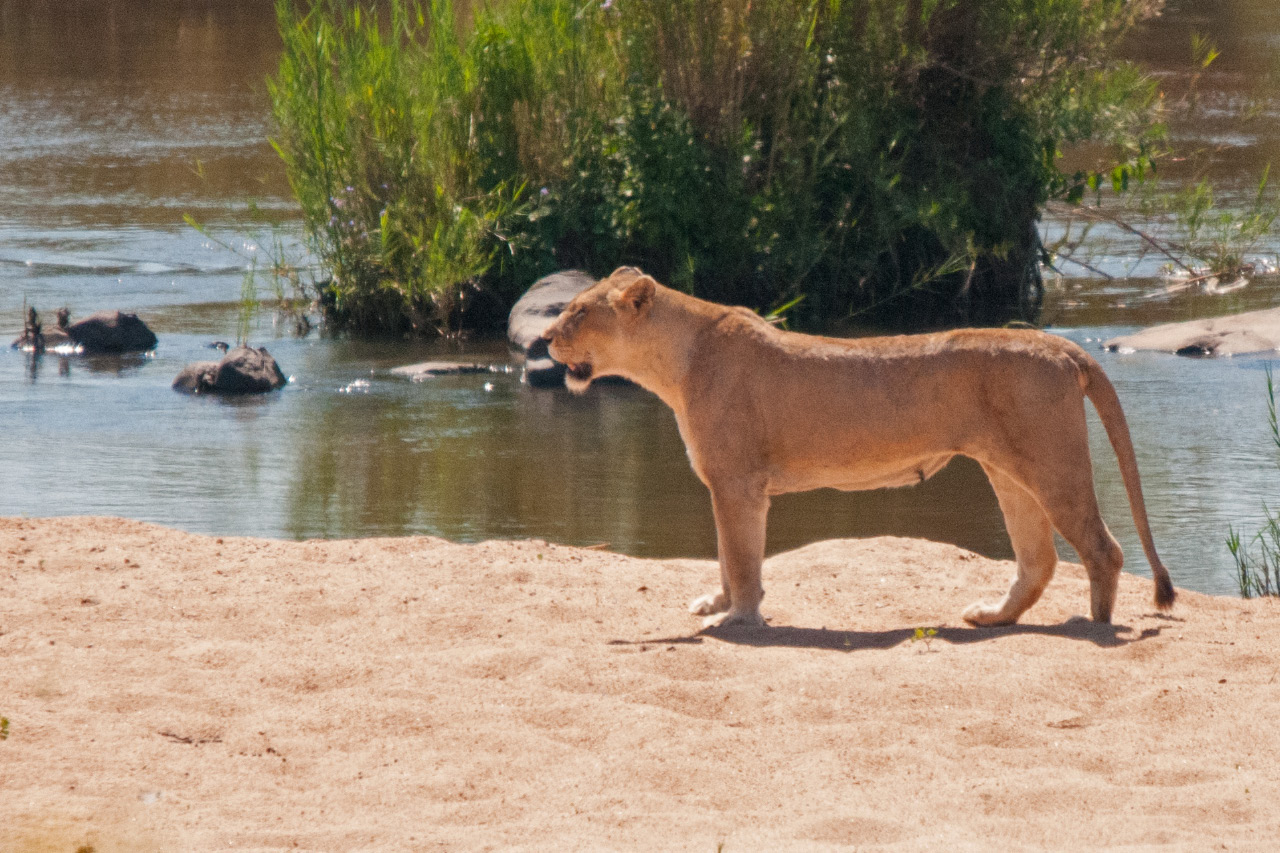
African Lioness, Kruger NP

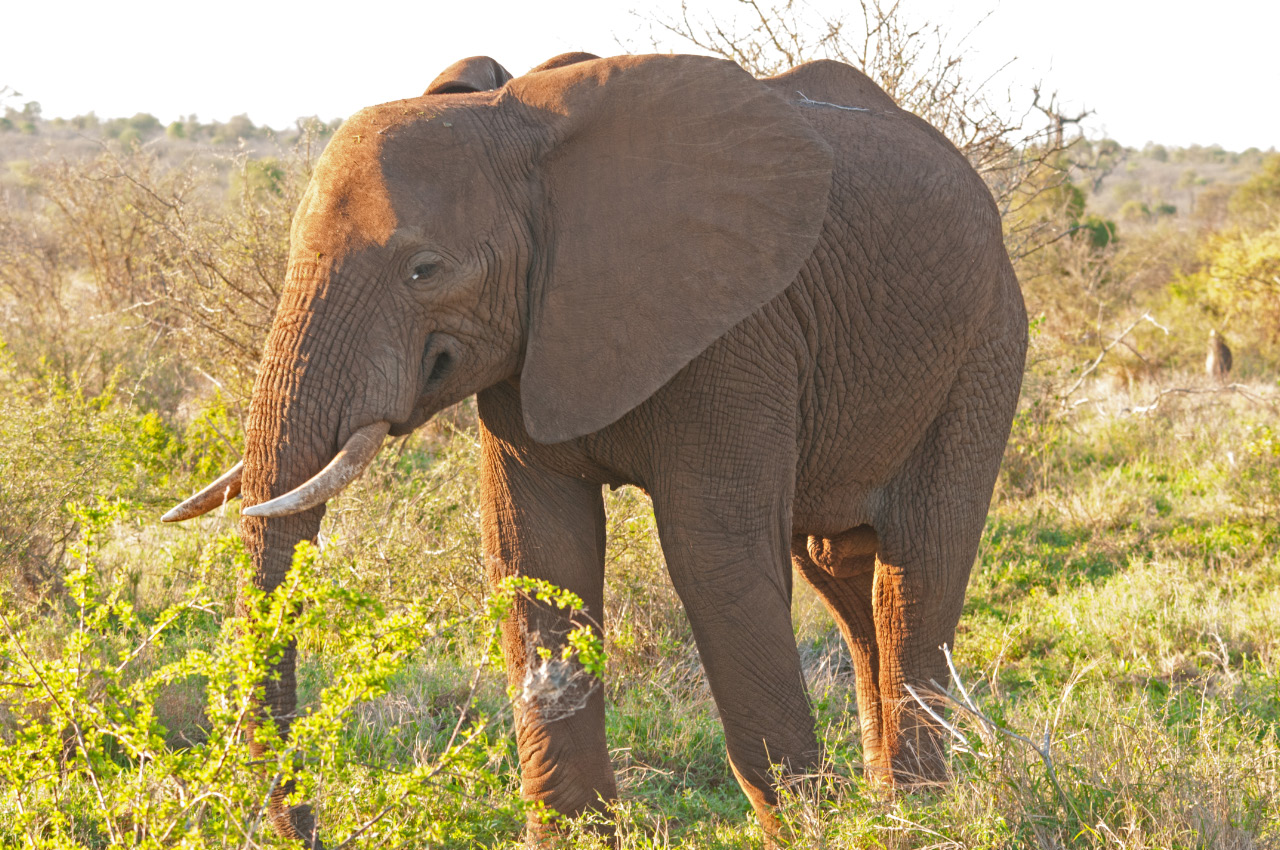
African Elephant, Kruger NP

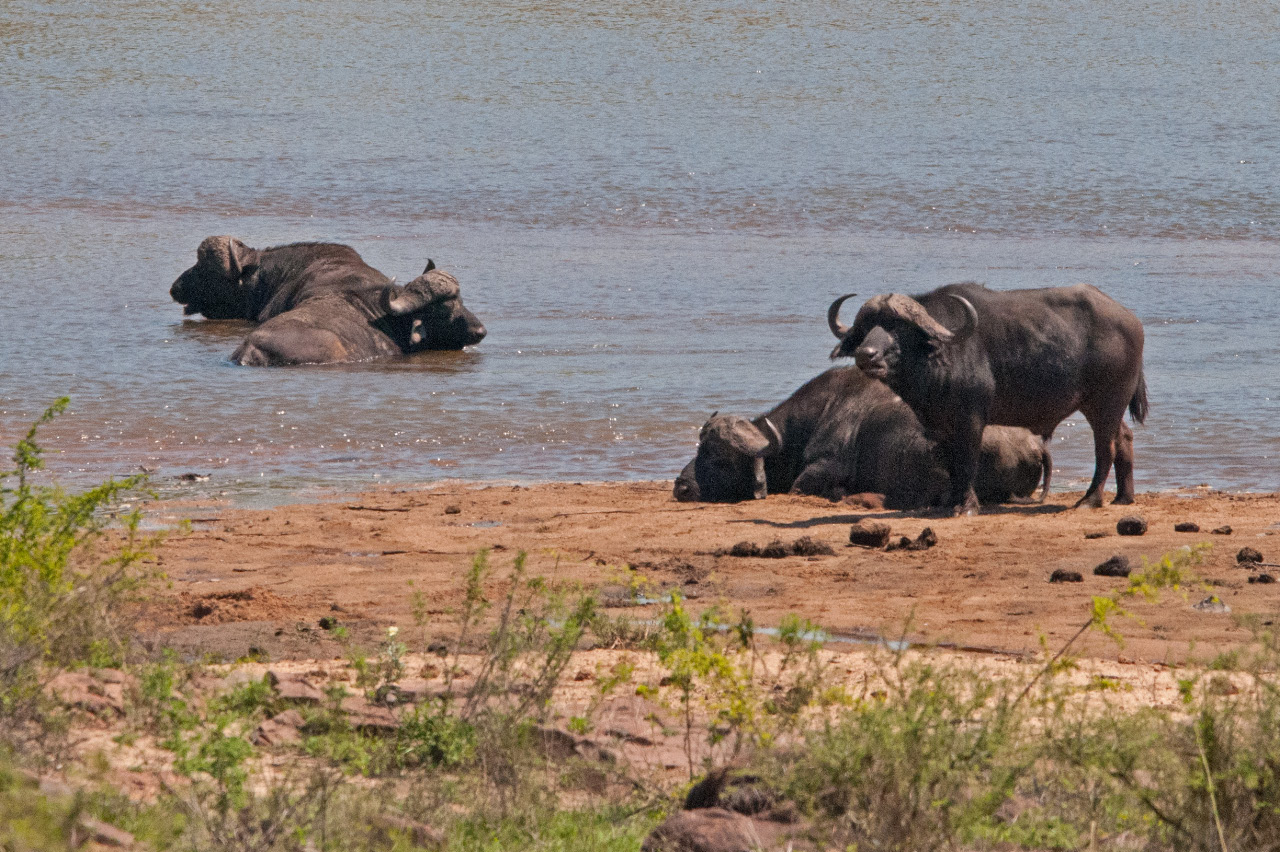
African Buffalo, Kruger NP

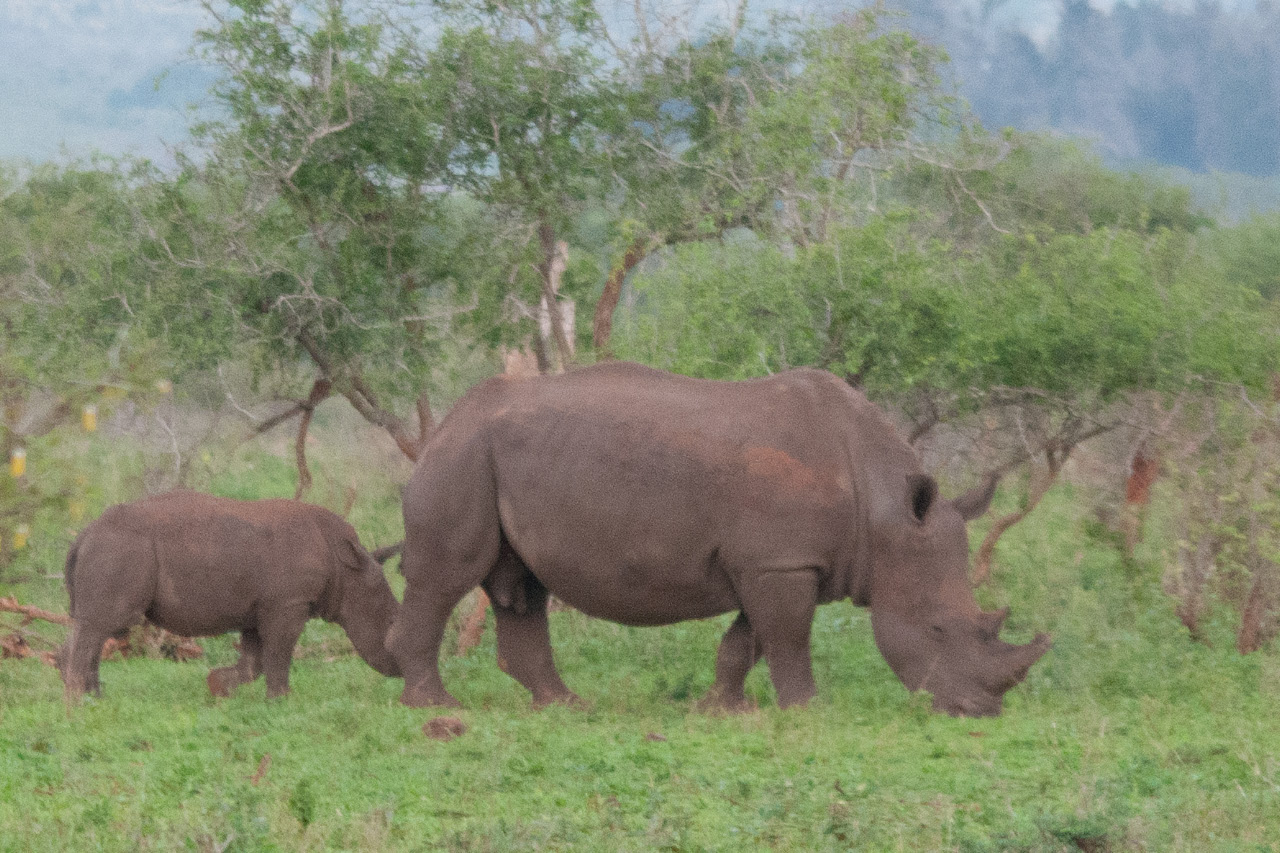
White Rhino, Kruger NP

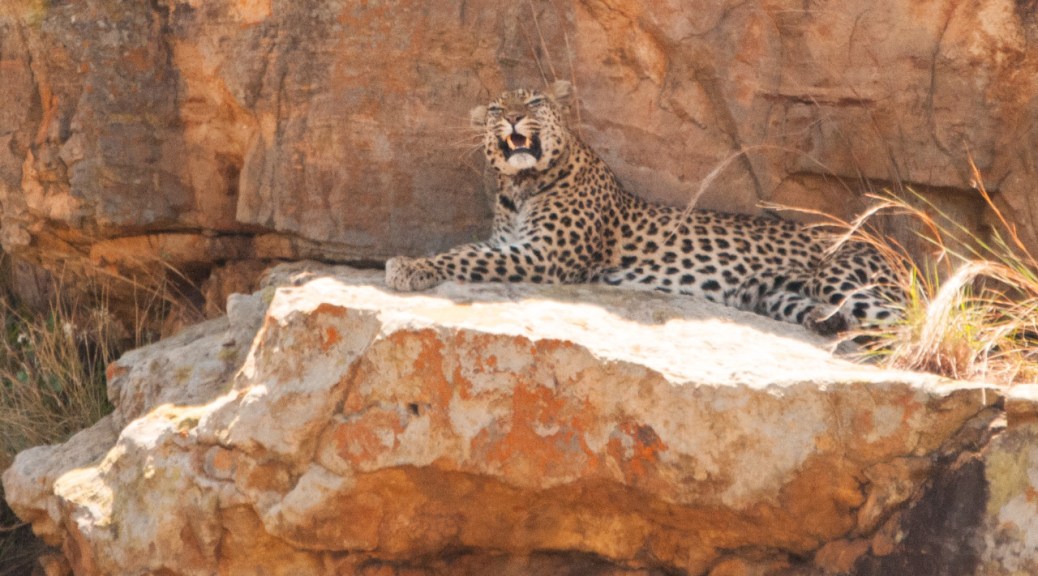
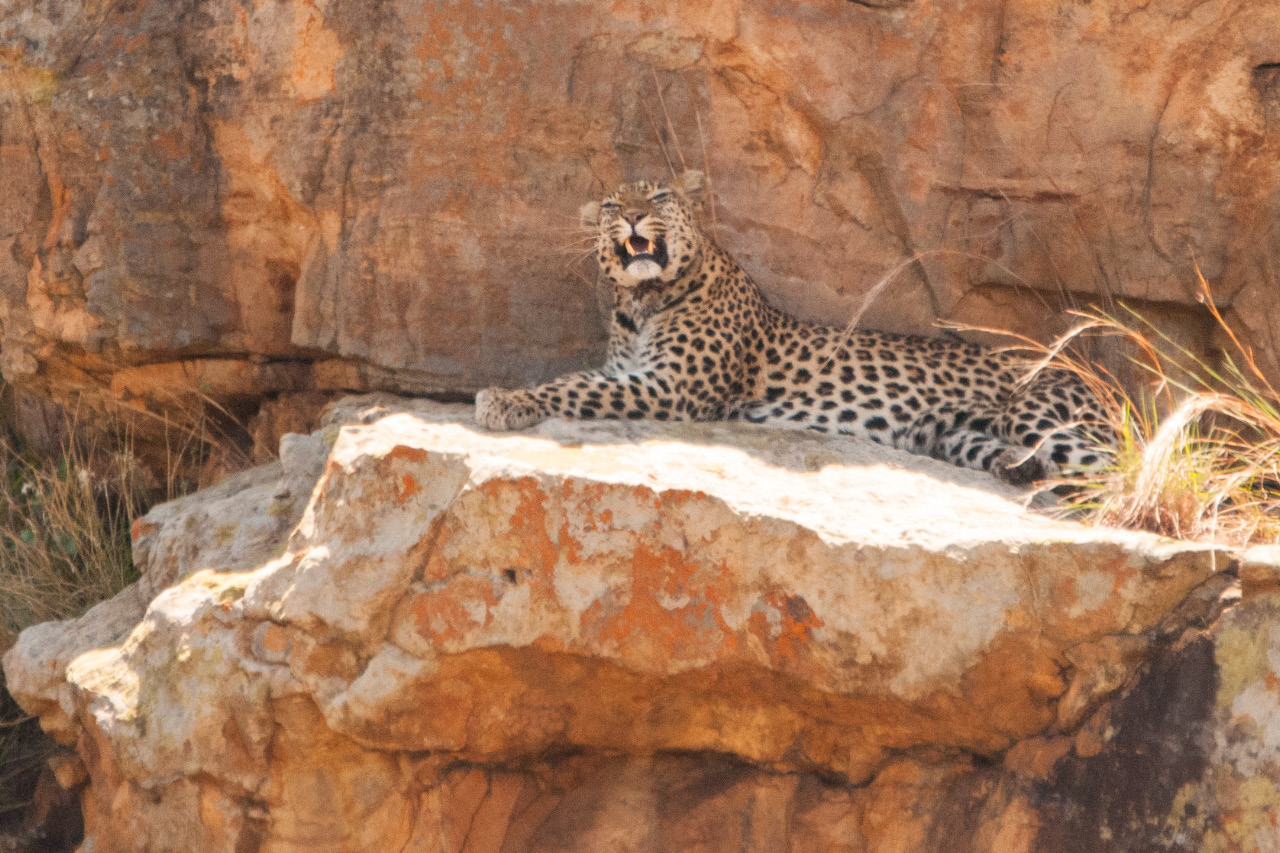
Two separate sightings of Lion, plenty of Elephants, a large herd of Buffalo and Rhino spotted at a distance, kept everyone on the edge of their seats during the drive and just as we were due to turn around and head back to Ngwenya our guide had a radio call during which I heard the word “Ingwe” and immediately knew we were in for a special sighting. Our guide didn’t say a word but headed at speed in the direction of Lower Sabie camp then past it to the bridge over the Sabie river where a magnificent Leopard was lazing on a rocky ledge, unconcerned by the many vehicles jostling for a good view of this most impressive of the big cats. After moving into a good viewing position, we spent some time watching him rolling around and yawning, then we headed to Lower Sabie for a comfort break and from there back to Ngwenya.

Leopard, Kruger NP
Leopard, Kruger NP

Leopard, Kruger NP
Leopard, Kruger NP

Hippo, Kruger NP
Hippo, Kruger NP

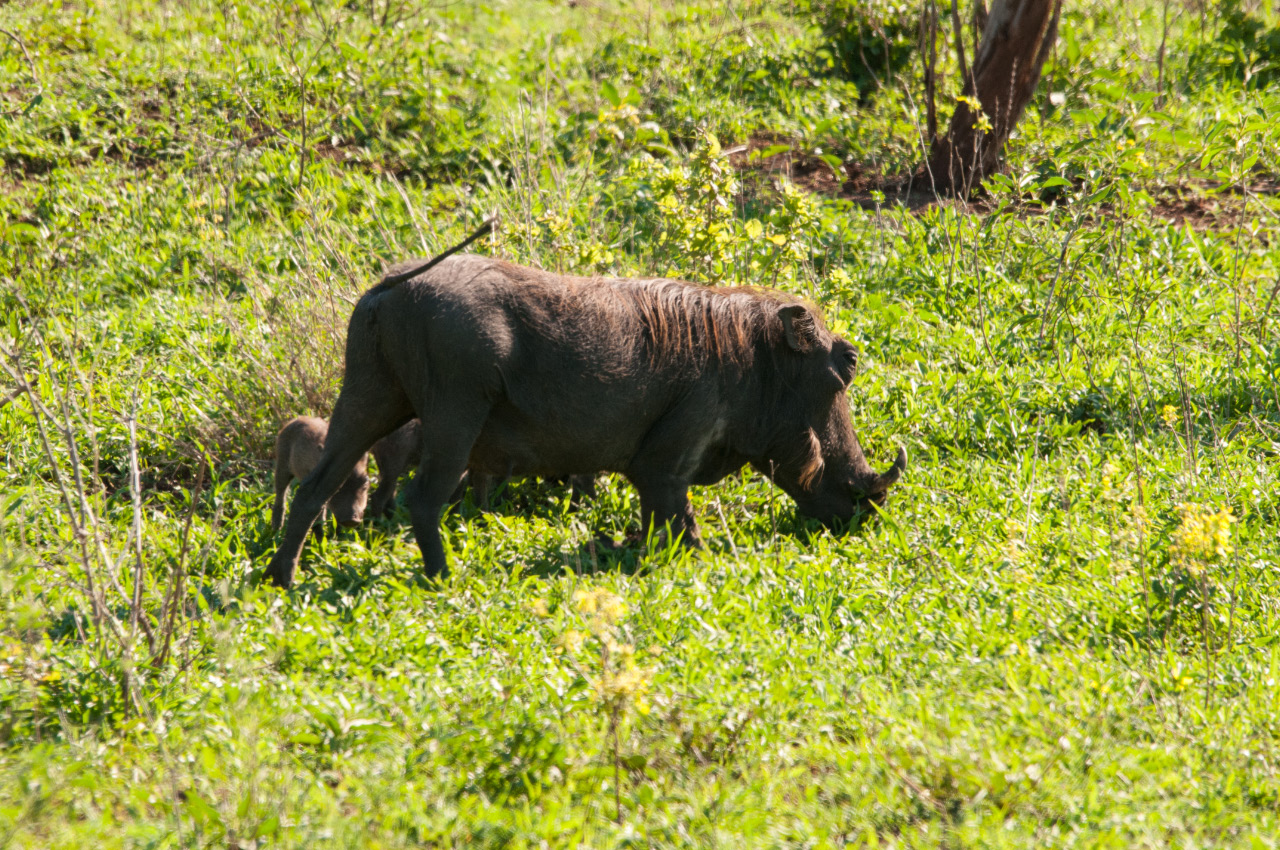
Plenty of other game was seen on the drives, including the ubiquitous Impala but also numbers of Giraffe, Zebra, Wildebeest, Warthogs, Kudus and a few Waterbuck with their distinctive white ring on the backside – many had youngsters in their group especially the Warthogs which seemed to have had a good crop of babies, which looked a bit like very large rodents. The bush and veld were looking beautiful after the first summer rains, but the dense bush does make it more difficult to spot animals even when close to the road. The game drives were thoroughly enjoyed by all, even ourselves who have done so many drives in Kruger, never tiring of visiting this special part of South Africa.

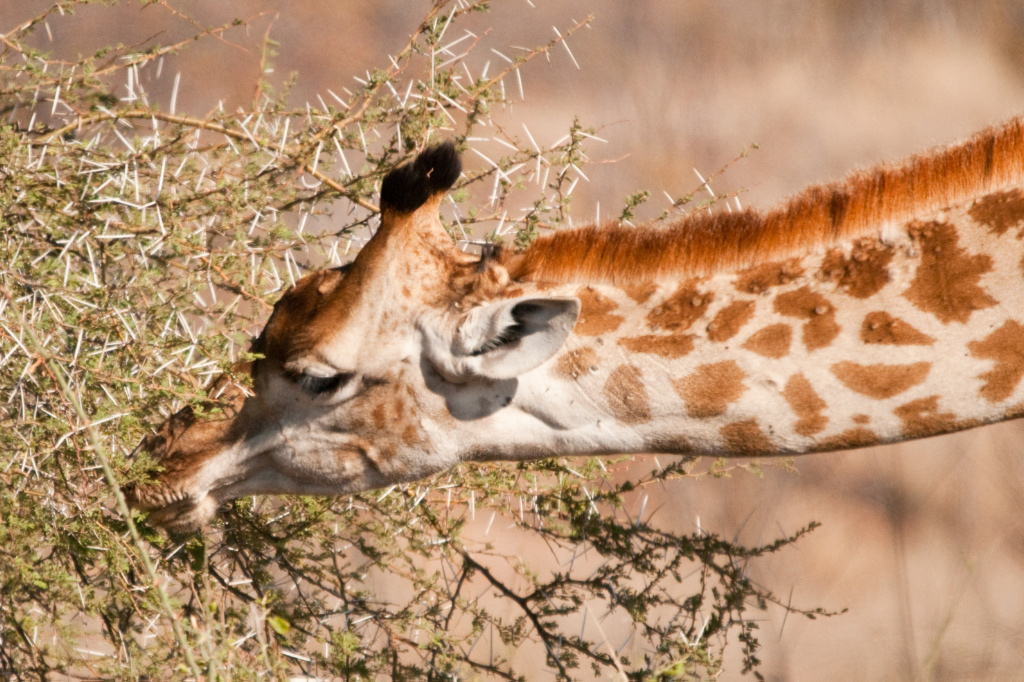
Giraffe
Giraffe

African Warthog, Kruger NP

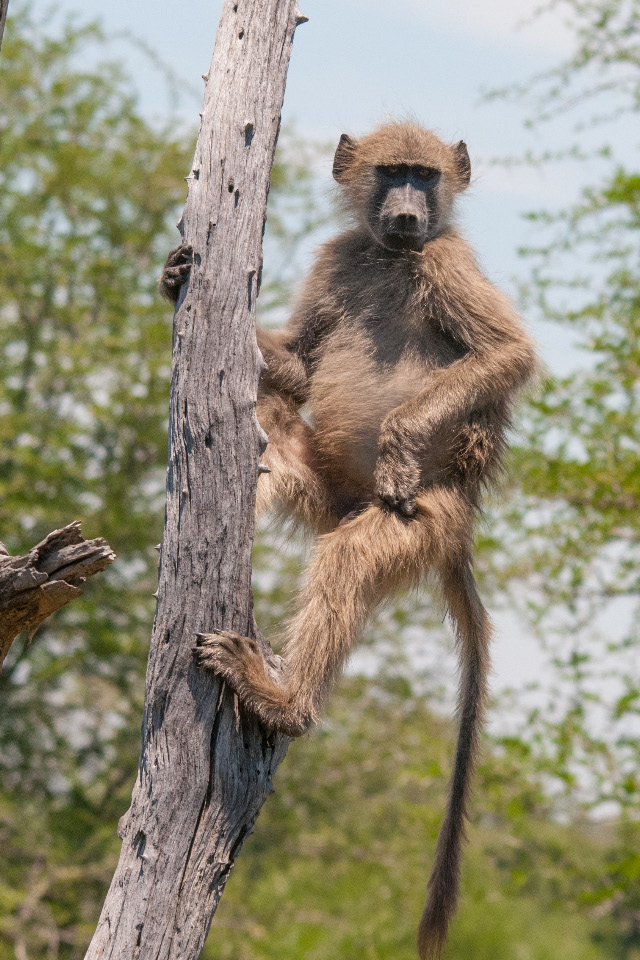
Chacma Baboon, Kruger NP

Burchell's Zebra, Kruger NP
Burchell’s Zebra, Kruger NP

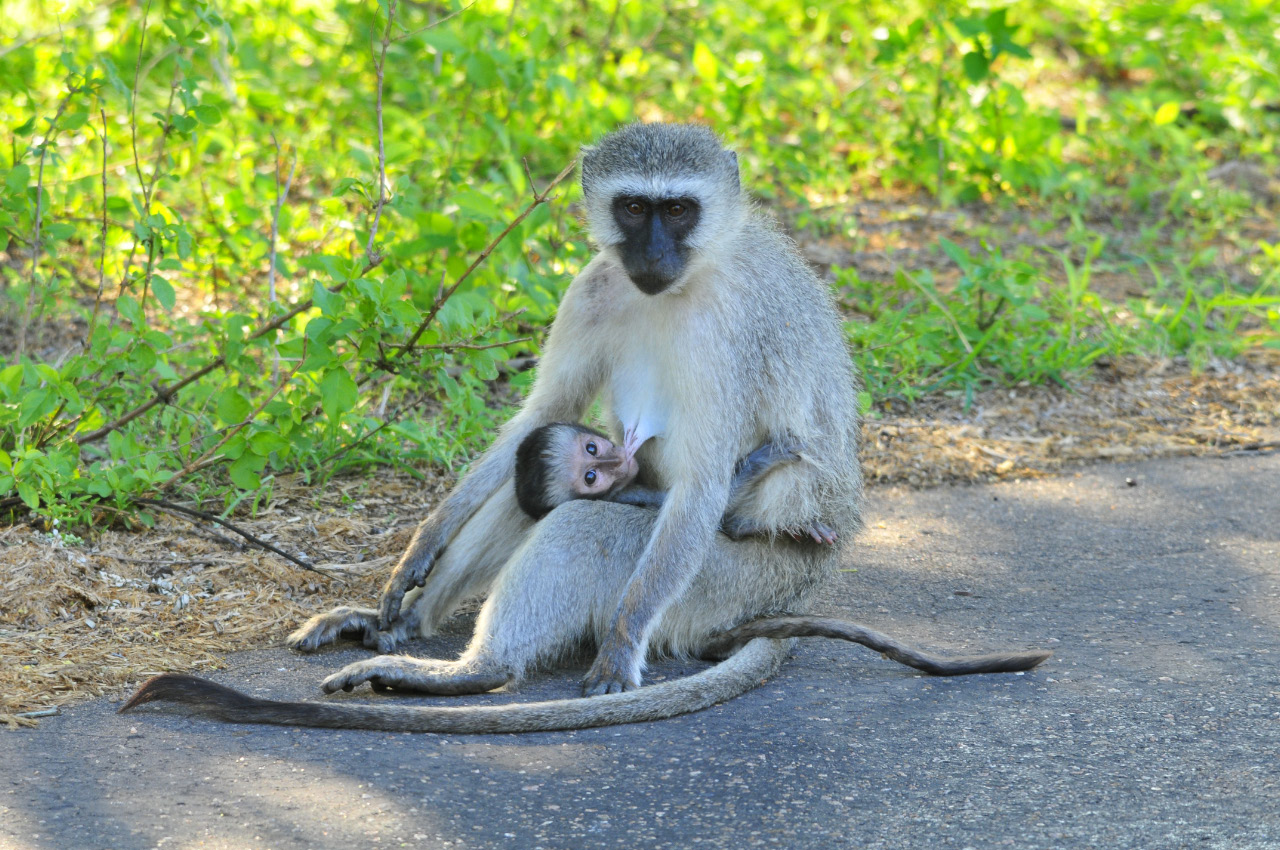
Vervet Monkey, Kruger NP

With the focus on game, the birding took a back seat, but I managed to keep the list ticking over with some of the typical Kruger Park birds that did not need stopping to ID them – Pin-tailed Whydahs were active near the gate and Rattling Cisticolas were making themselves heard at regular intervals, while Bateleurs and White-backed Vultures soared overhead. Francolins and Spurfowl occupied the road edge and scattered as we approached, their features distinct enough to easily make out Swainson’s and Natal Spurfowl as well as Crested Francolin as we passed by.

Yellow-billed Hornbill

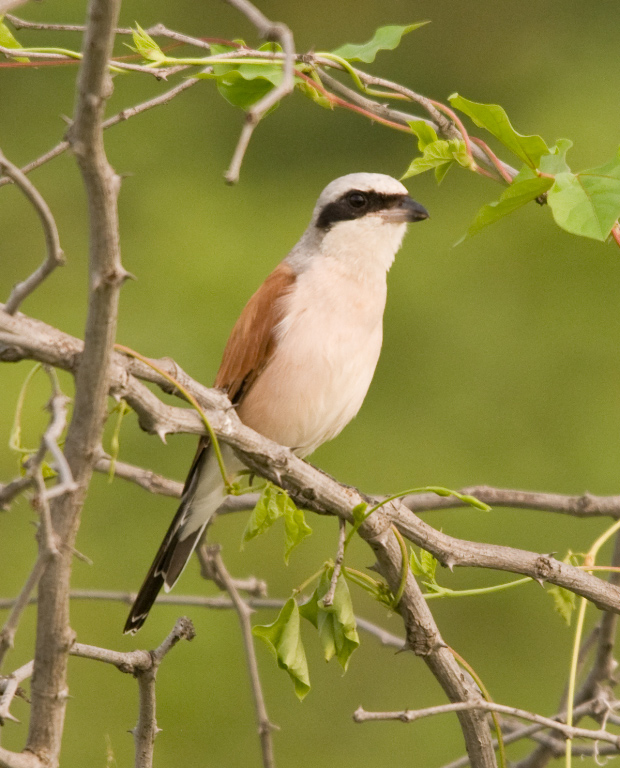
Red-backed Shrike
Red-backed Shrike

Canadians do the Braai

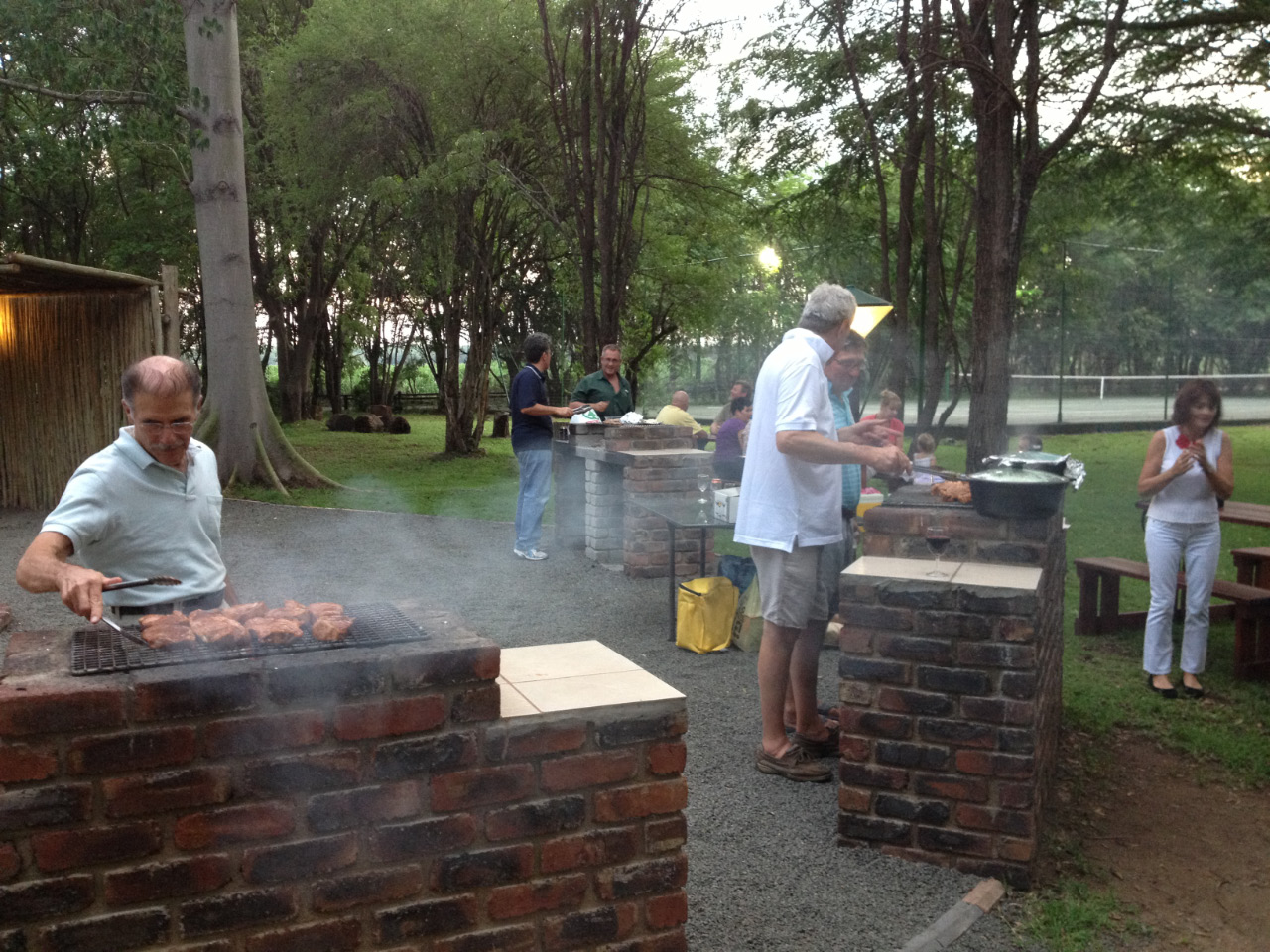
Come Wednesday evening and the visitors decided they would do the braai – this time at the lodge’s boma. We had to admit as proud South Africans  that they did a great job and we enjoyed juicy steaks with salads and traditional pap – now if only we can get them to pronounce “pap” correctly (as in “pup”)

Canada shows us how to braai!
Barry, Frank and Jan show off their braai skills

The braai
The braai

The braai
The braai

Last advice from Father of the Bride?

Then it was time to say goodbye for the time being, until the big event on Saturday.

Birding and Flowers Trip – Part 3 : Namaqualand and the Western Cape

The Trip (continued)

This is the follow-on to Parts 1 and 2 , which covered the first 10 days of the road trip. In this Part 3, we (Don & Gerda Reid and Koos & Rianda Pauw) tackle the last stretch of our Birding and Flowers trip, taking in more of the prime flower-spotting areas of Namaqualand and heading south to Cape Town, from where we were to start the return journey via Bontebok National Park to Mossel Bay for a longer stay at our home there, before returning to Pretoria and completing the full circle.

Day 11 (29th August 2013) :

We had arrived at De Lande guest farm, not far from Niewoudtville, the previous day and were nicely settled in the “Sinkhuisie” just a stone’s throw from the main house. After a hearty breakfast in the main house we wondered whether to venture out into the rainy weather, but having come all the way to this part of South Africa, did not want to waste the opportunity and so we set off for Papkuilsfontein some 10Km further down the gravel road. By this time it had been raining for 12 hours and the road, which unfortunately had just been scraped and leveled by the local authorities, had turned to slush and it became an anxious trip as my vehicle, a VW Touareg, slipped and slid in all directions on the greasy surface, despite being in 4 x 4 mode – something like a fried egg in a non-stick frying pan.  Mud splatter from the unavoidable pools of water obscured the windscreen and it was a battle to see where we were heading. Amazingly there were still some hardy birds about to keep our list going and make something of our bird atlasing efforts, with Southern Red Bishops , Yellow Bishops, Cape and Yellow Canaries carrying on their activities alongside the road. Under the circumstances the Touareg handled the conditions well but looked quite bedraggled when we stopped at Papkuilsfontein farm.

Papkuilsfontein, near Niewoudtville

Touareg after a mudbath (find the number plate)

The rain had by this time abated and we had a chance to bird around the gardens, while Gerda and Rianda explored the gift shop, followed by tea and delicious cake in the “Waenhuis” restaurant where a welcome fire was blazing in the hearth.

Waenhuis restaurant at Papkuilsfontein
Rianda, Koos & Gerda at the Waenhuis restaurant at Papkuilsfontein

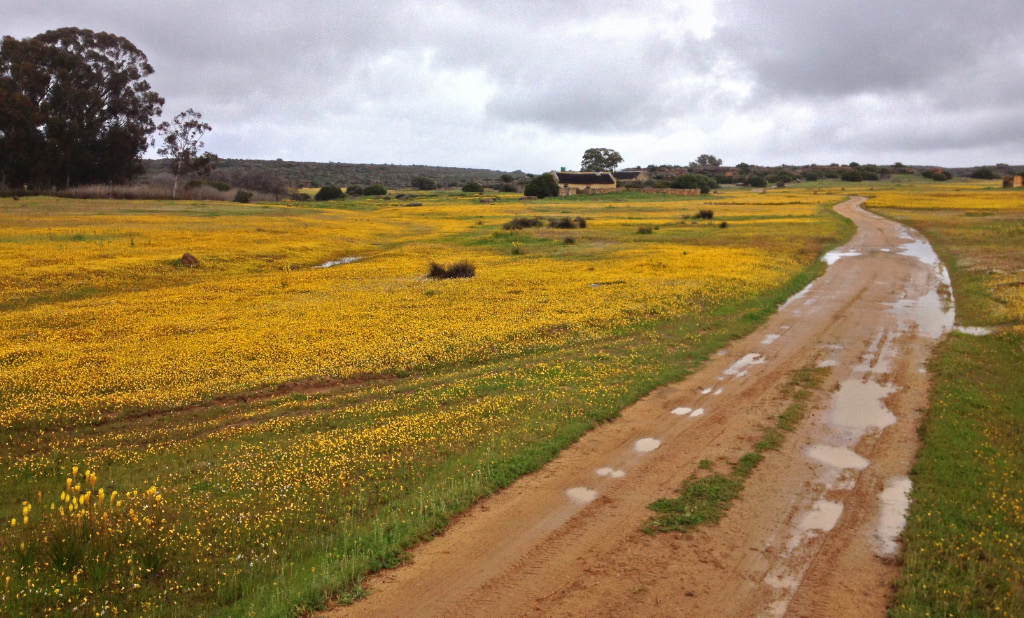
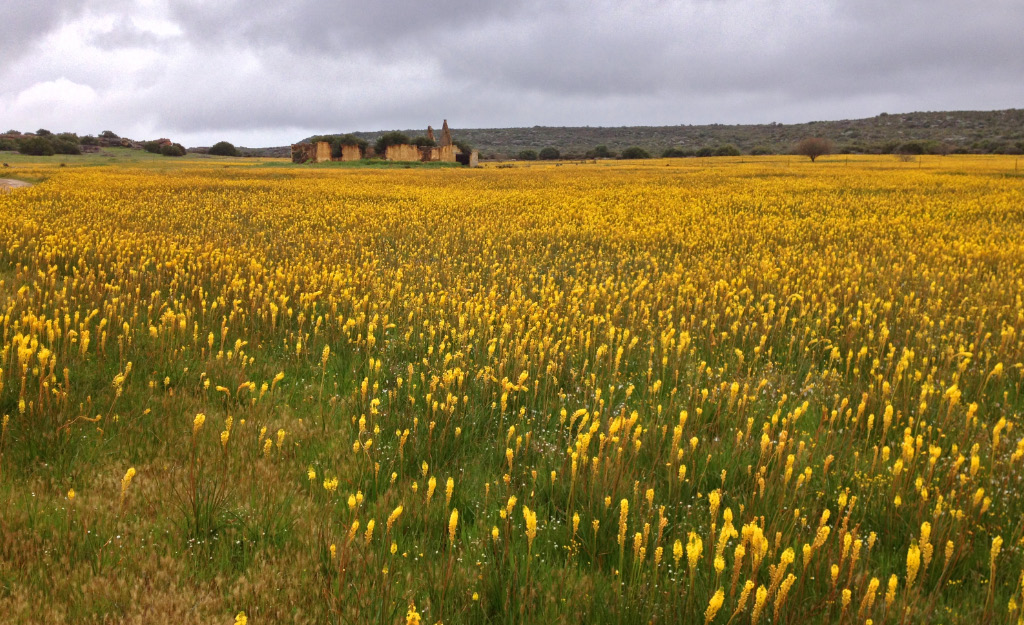
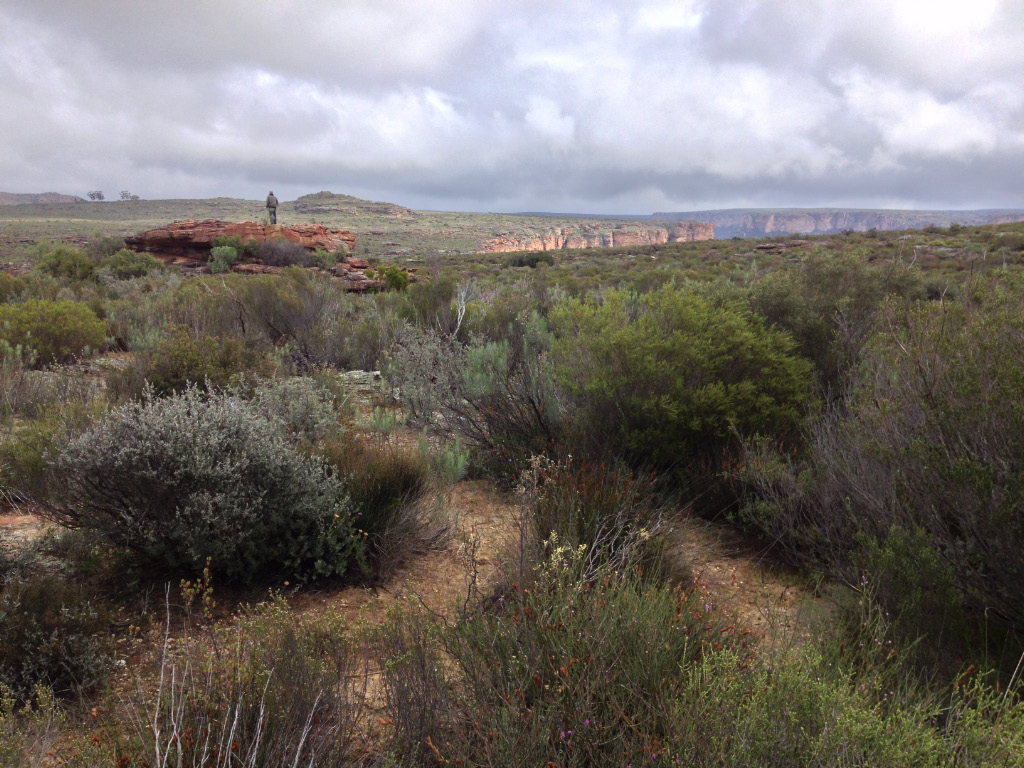
After some consultation with the farm owners, Willem and Mariette van Wyk, we followed their suggested route, which traverses the farm down towards the river, past the cottages which they rent out. Approaching the cottages, we were rewarded with a wonderful sight of yellow “cat’s tail”  flowers carpeting the fields, with the backdrop of the stone cottages and the ruins of an old homestead giving the scene a feeling of being in the middle of a beautiful landscape painting. Tearing ourselves away, we carried on for a few Kms into more rocky countryside with a variety of natural flowers and plants vying for attention with their range of colours and forms.

Cat's Tails flowering at Papkuilsfontein
Cat’s Tails flowering at Papkuilsfontein

Cat's Tails flowering at Papkuilsfontein
Cat’s Tails flowering at Papkuilsfontein

Papkuilsfontein
Papkuilsfontein

Flowering bush at Papkuilsfontein

The road is aptly named when it's muddy ("Hope Lost")
The road is aptly named when it’s muddy (“Hope Lost”)

The scenery almost made us forget to do some birding for a while but we nevertheless kept at it, the highlights being an African Harrier-Hawk and our first Cape Spurfowl of the trip. The trip back to De Lande was a bit less harrowing, having now got the hang of the road conditions – however, it was getting even colder and, once back in the warm “Sinkhuisie”, we only ventured out to have dinner at the main house, which was another round of excellent “comfort cuisine” – including the best roast potatoes we’ve had in a long while.

Day 12 (30th August 2013) :

My birthday today and some surprises were in store!

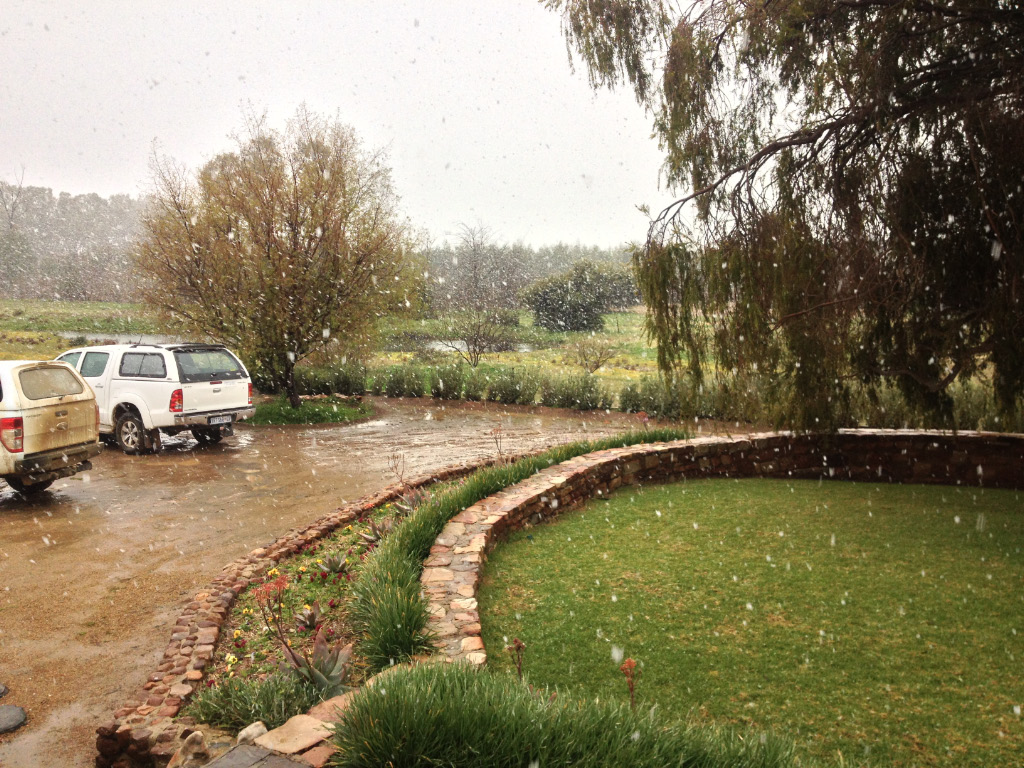
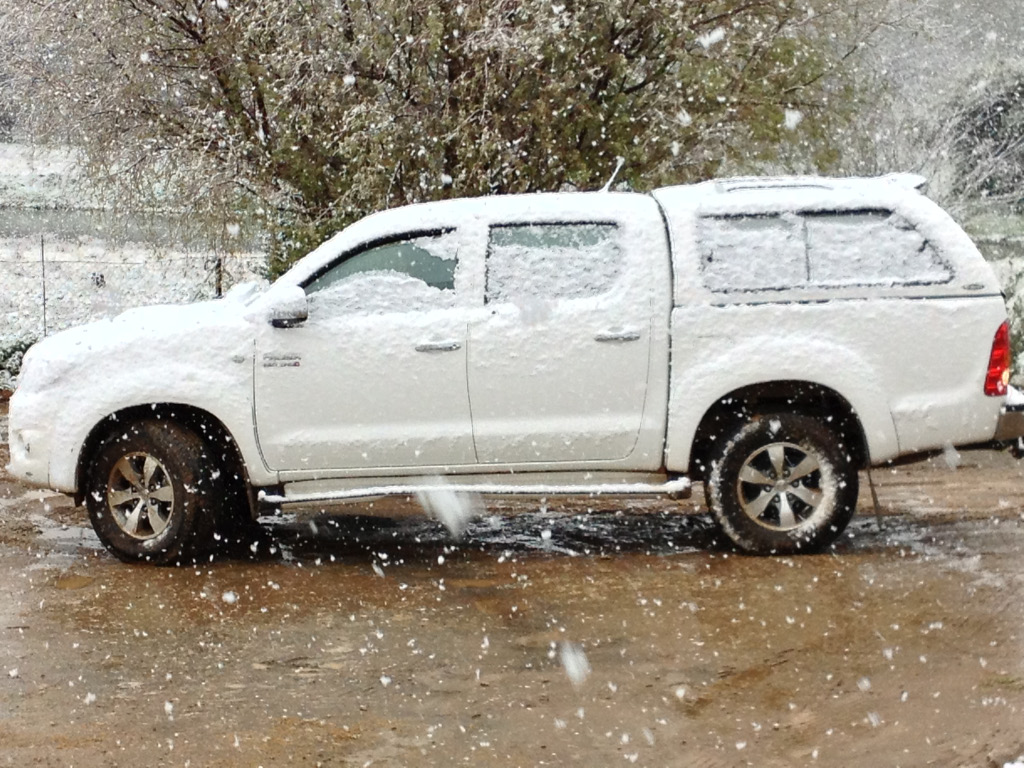
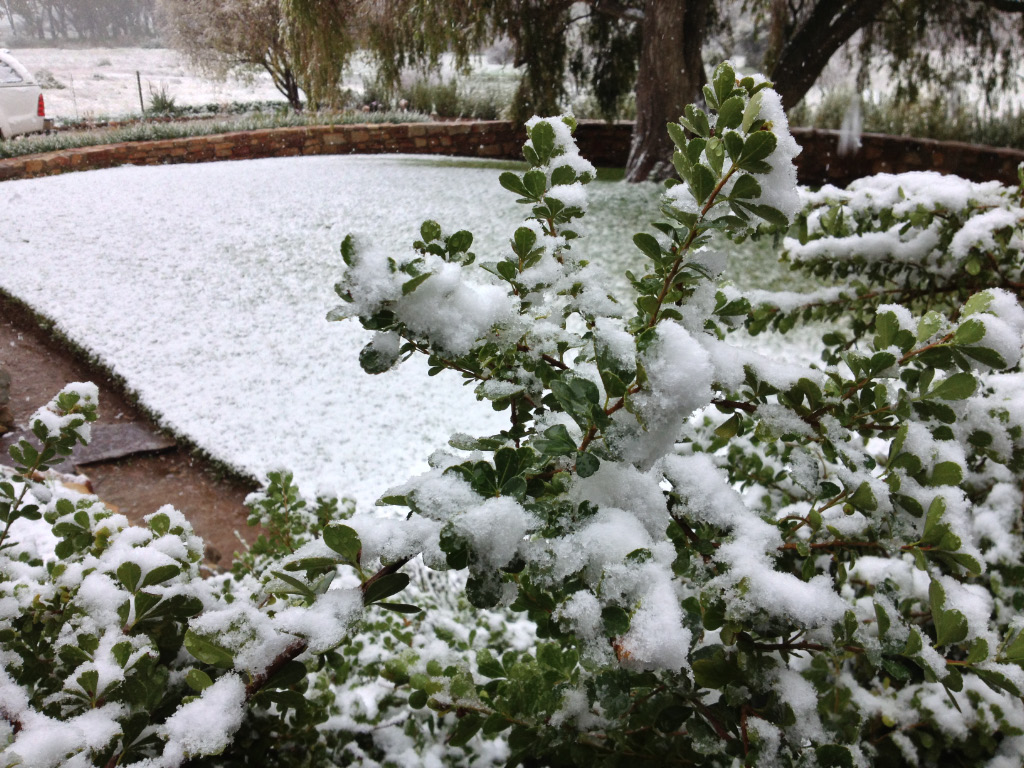
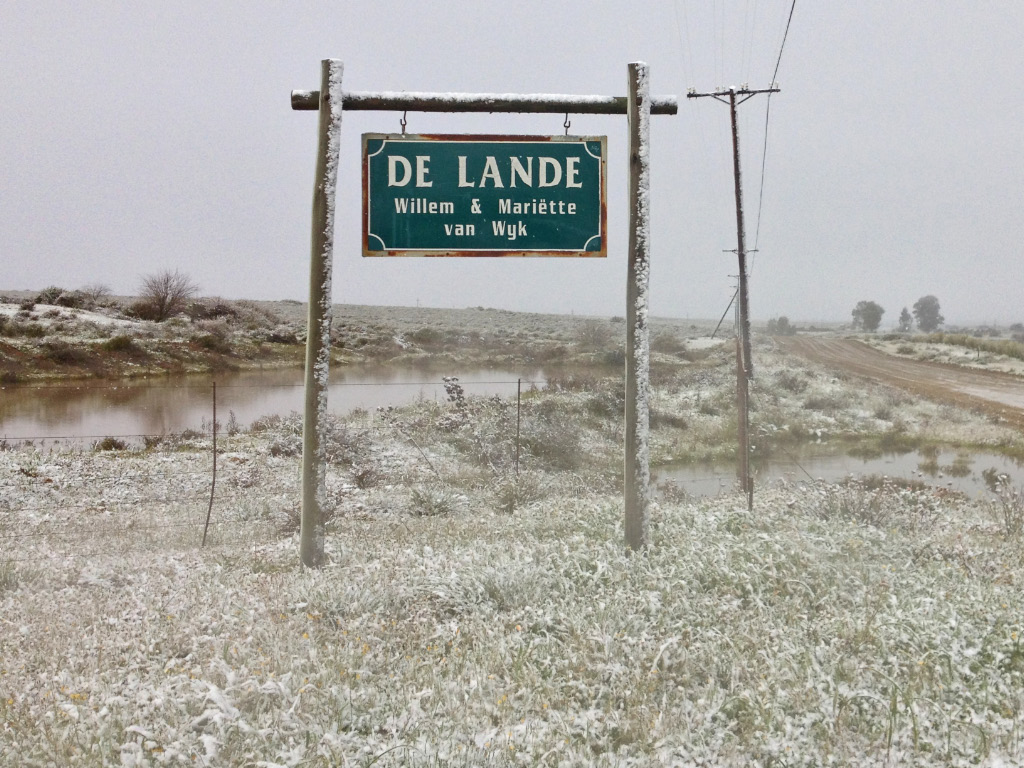
We were up early to pack and load the vehicles for a quick getaway after breakfast, so that we would not be rushed on the longish drive to Simon’s Town (near Cape Town) and have time for a celebratory lunch on the West coast along the way. The temperature gauge in the car showed 3°C and a watery sun was trying its best to break through the low clouds. It was just after 8h00 when we got to the breakfast table at the main house, only to be greeted by rain which quickly turned to sleet and then, magically, it started snowing heavily. This prompted everyone in the dining room to rush out and take photos and just feel the large flakes drifting down and settling on the garden and on our clothes – a unique experience in South Africa and particularly this part, where the 27-year-old waitress informed us she had never seen snow in her life. Within 20 minutes the garden and our vehicles were covered in a layer of snow which was very photogenic, but we couldn’t help thinking of the 13Km of slushy gravel road we had to negotiate to get to the nearest tar road and wondered what added dimension the snow would bring to the experience.

Snow just starting to fall at De Lande

Snow scenes at De Lande Guest Farm

Snow scenes at De Lande - Koos's vehicle
Snow scenes at De Lande – Koos’s vehicle

Snow scenes at De Lande - Don's vehicle
Snow scenes at De Lande – Don’s vehicle

Snow scenes at De Lande

Snow scenes at De Lande

Snow scenes at De Lande

We had breakfast a little faster than usual, stopping just short of gulping it down, then set off with some trepidation along the, by now, very slippery road with snow falling and our windscreen wipers trying to keep our windscreens clear, while we studiously followed the ruts left by earlier vehicles as we had been advised. Snow buildup on the car’s roof cascaded over the windscreen each time I braked and we took it very slowly to avoid a mishap. We made it to Niewoudtville without incident, found a toilet in the local tourist centre and set off on the rest of our journey. In the fields, the cattle and sheep had a layer of snow on their backs and even a group of Blue Cranes were sprinkled with snow. The snow interspersed with rain continued all the way to Vanrhynsdorp and only abated as we turned back onto the N7 heading south towards Cape Town. At Clanwilliam we followed the directions given by the chef at De Lande and took the road west to get us to our planned lunch venue at Paternoster.
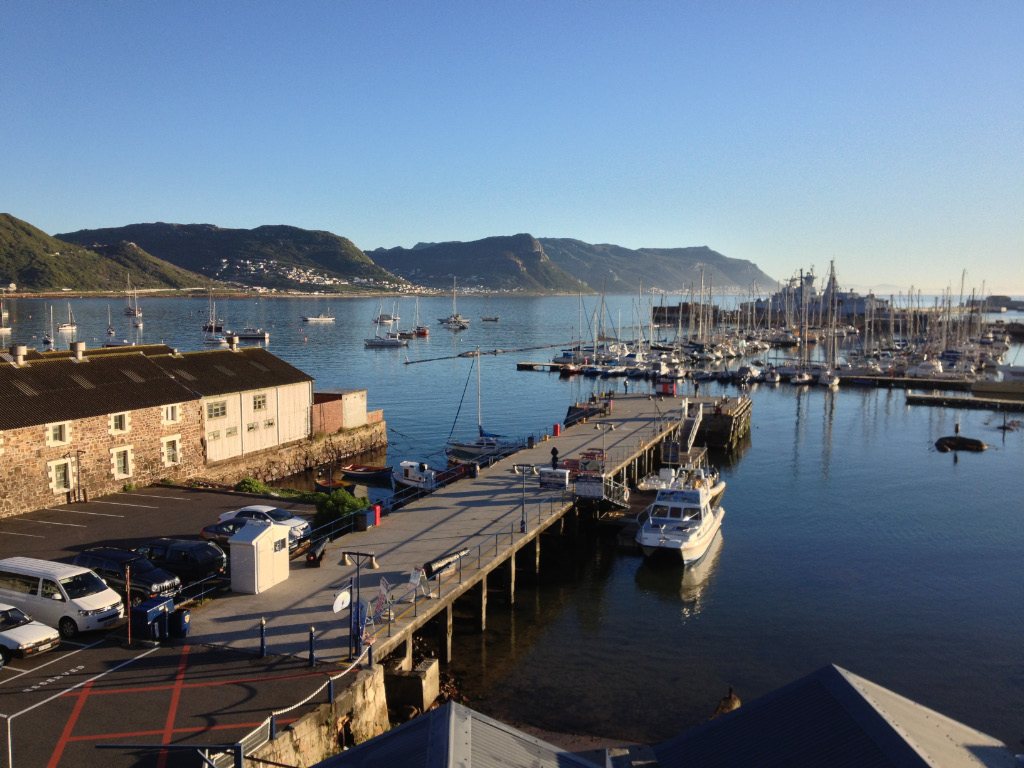
It turned out to be a good choice of route as we soon saw the coast and followed the road south, bypassing the coastal towns of Elands Bay, Dwarskersbos (no idea where that name comes from) and Velddrif. A few tempting bodies of water, such as Verlorevlei and Berg River estuary, caught our eye but there was not enough time to stop and explore, so we had to be satisfied with some snatched sightings as we went past. Lunch at Voorstrandt restaurant in Paternoster was a pleasant interlude and we enjoyed the fish on offer, so much so that one of our group (who shall remain nameless) had fish for dessert as well! From Paternoster we returned to the main road for the last stretch into Cape Town and through peak hour traffic to Simon’s Town for our 3 night stay at the Quayside Hotel, which we were pleased to find has large comfortable rooms and wonderful views over the harbour and the bay beyond. The reception staff didn’t bat an eyelid at the amount of baggage they had to cart up the stairs including our portable freezer/fridge, which was fortunately a lot lighter than when we started. By this time we were “plain tuckered out” and after a light meal in the nearby restaurant, we were glad to get some rest.

Simon's Town
View from the hotel at Simon’s Town

Day 13 (31st August 2013) :

The pelagic (deep-sea birding) trip we had planned and booked for today was postponed to the next day, Sunday, due to the stormy weather in the Cape and so we decided to brave the cold-ish weather and threatening rain by going to Kirstenbosch, the world-famous (and rightly so) Botanical Gardens which lie on the lower eastern slopes of Table Mountain. The road from Simon’s Town to Kirstenbosch winds along the coast initially and we could see that the sea was rough, which did not bode well for the pelagic trip the next day, however we focused on the day’s mission which was to cover as much of Kirstenbosch as we could, recording the species for our next bird atlas cards.

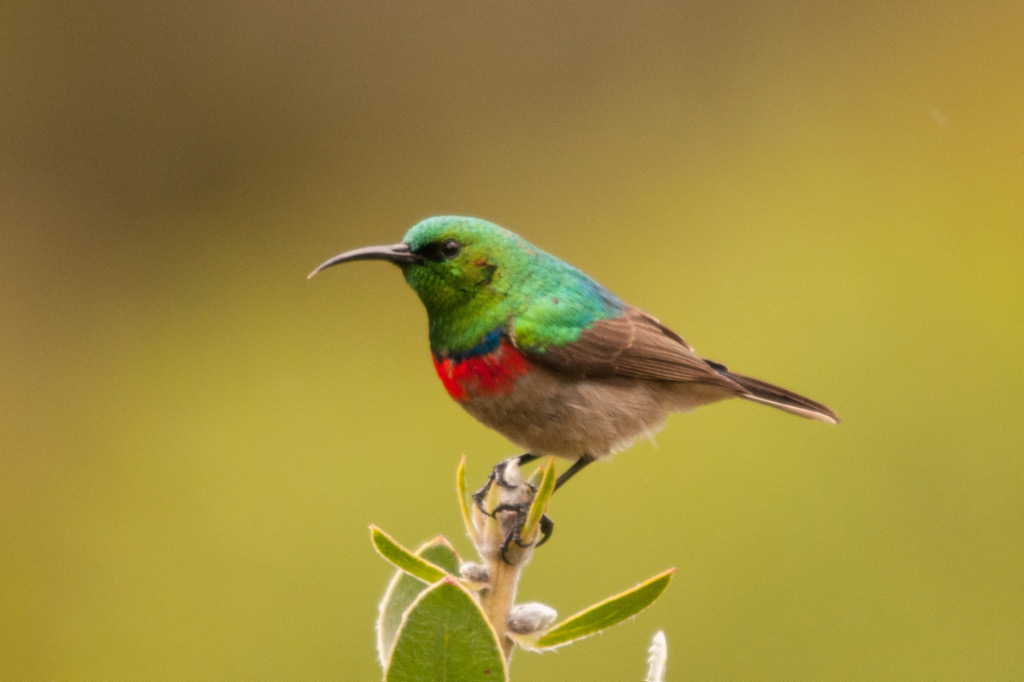
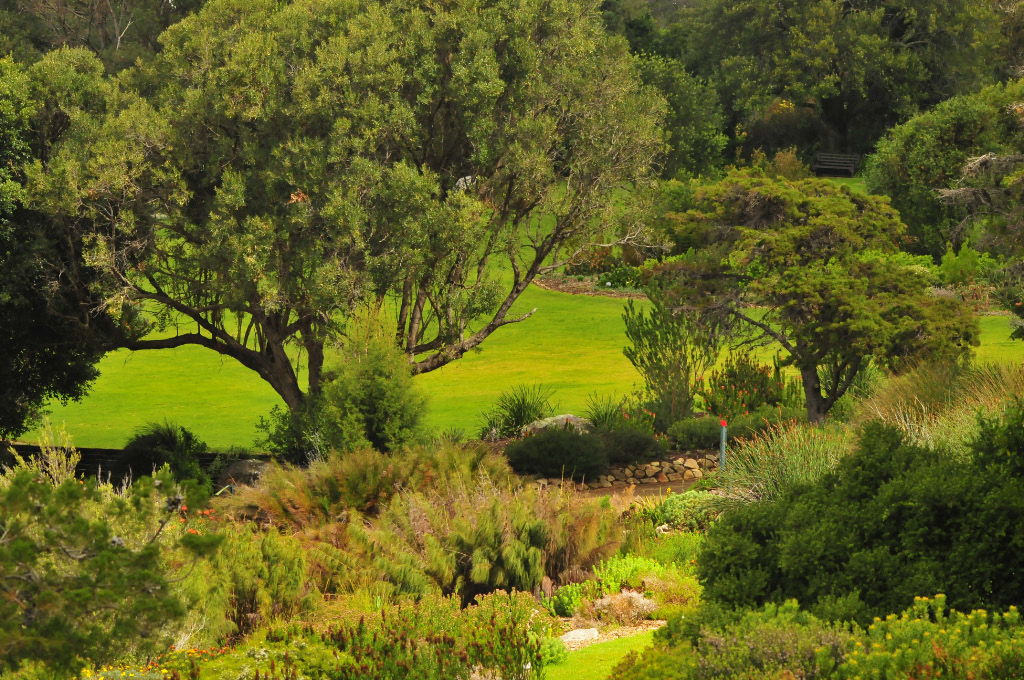
First stop was the famous tea room for traditional (in our family) tea and scones, which were as good as ever, while the others enjoyed various items from the menu. Memories of my childhood outings to Kirstenbosch, some 50+ years ago came flooding back and I couldn’t help reminiscing about our mother, who always enjoyed her Kirstenbosch outings, and her last trip to have her ashes spread in the upper gardens. Well satisfied with our scones and tea/other good things. we set off for a walk up the gardens which were as magnificent as ever and alive with Sunbirds, (Southern Double-collared and Malachite), Cape Robin-Chats in every second bush, Canaries in song (Cape and Forest), Cape White-eyes busily flitting about in the upper branches and Karoo Prinias making themselves heard on the tops of bushes.

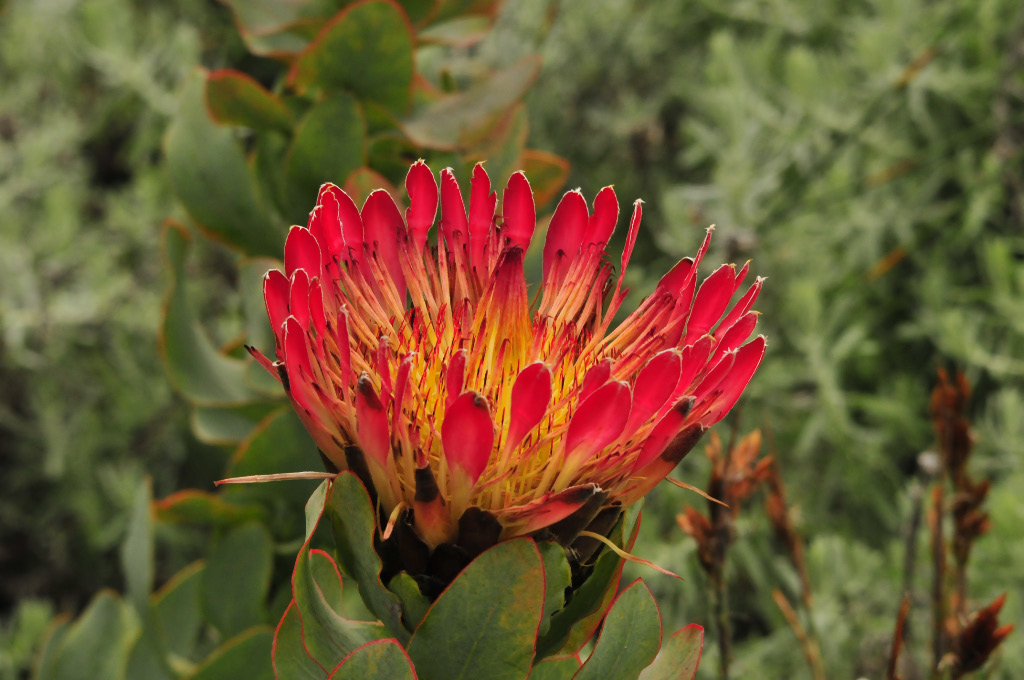
Protea at Kirstenbosch

Southern Double-collared Sunbird, Kirstenbosch

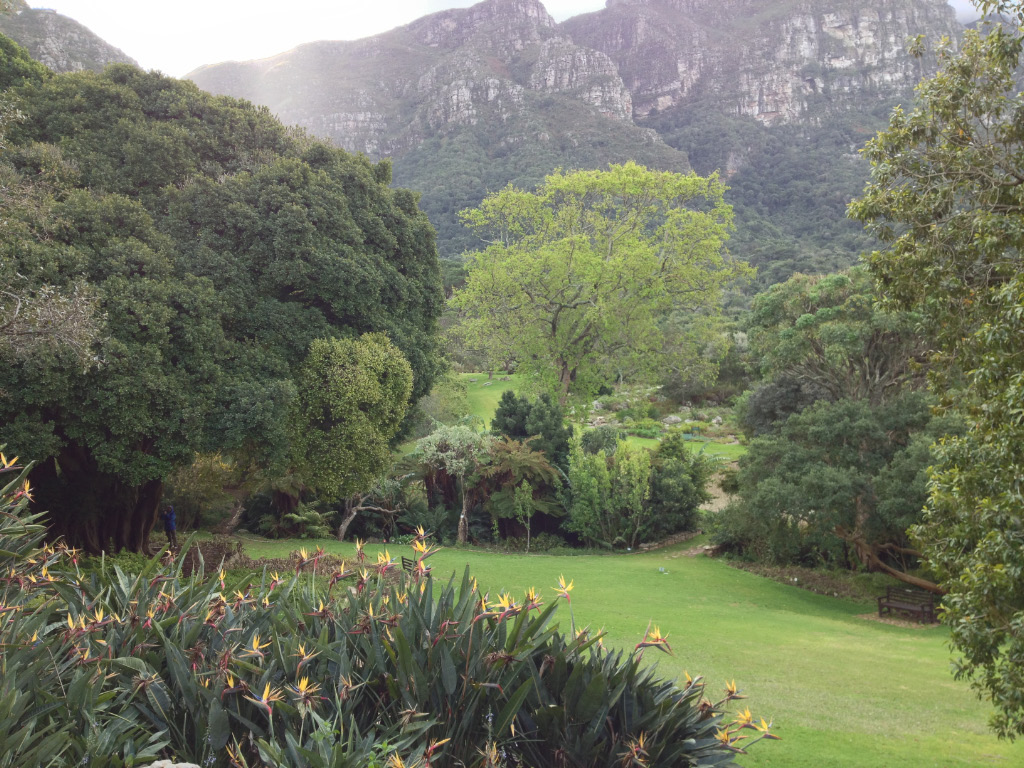
Kirstenbosch Botanical Gardens

Protea, Kirstenbosch

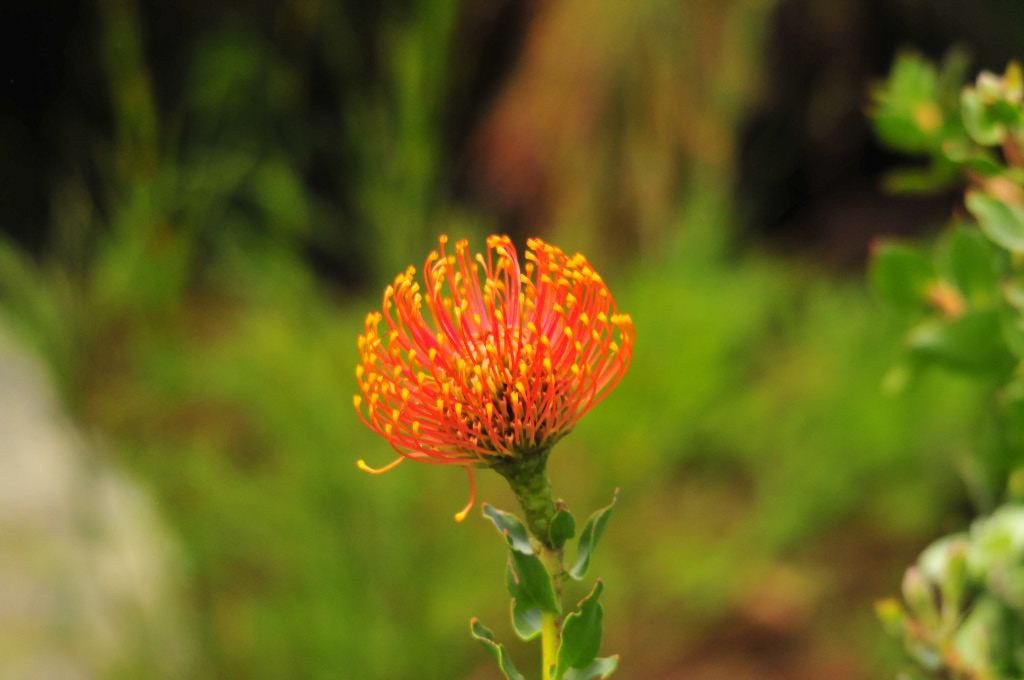
Pincushion, Kirstenbosch

In the more forested areas Sombre Bulbuls were announcing their presence with their loud sharp calls while keeping hidden from view and Cape Batis appeared fleetingly among the foliage. A special sighting was a large Spotted Eagle-Owl, pointed out to us by another group, which had taken up a position in a large tree and looked about imperiously, ignoring the excited chatter of the smaller birds which were in a mild state of frenzy.

Spotted Eagle-Owl, Kirstenbosch

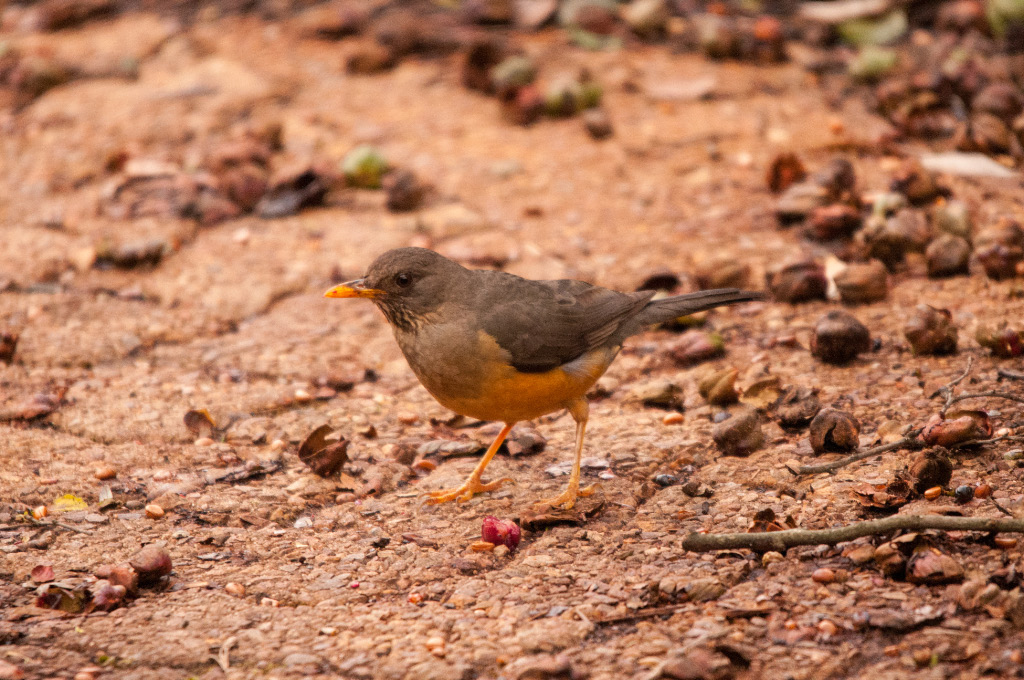
Olive Thrush, Kirstenbosch

Kirstenbosch, Cape Town

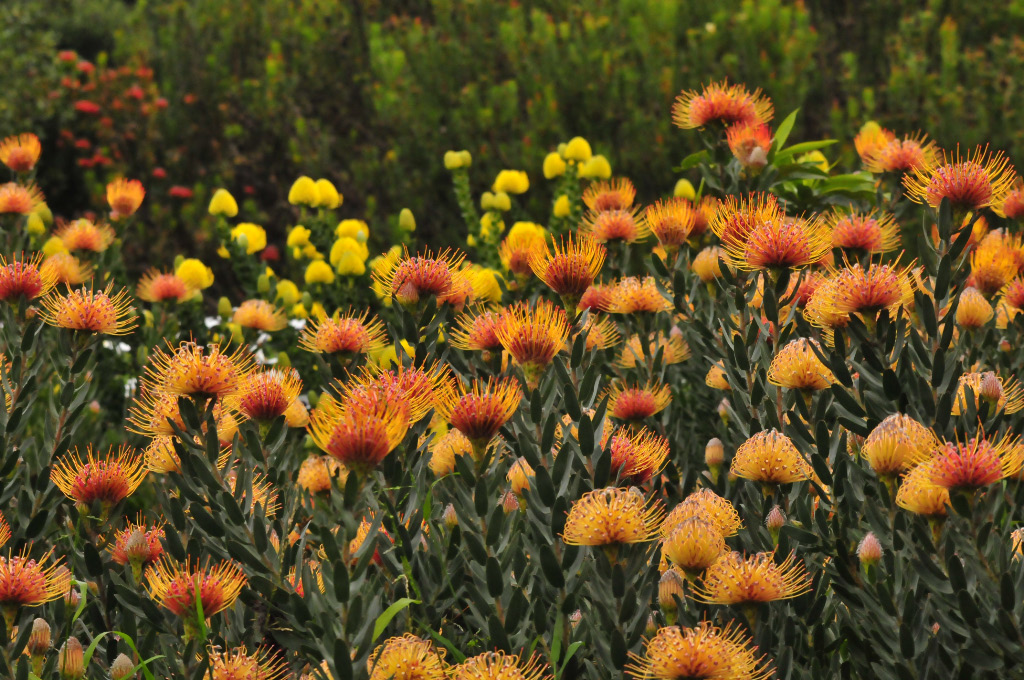
Of course Kirstenbosch is about the flora and at this time of year in particular the pincushions are in full bloom, giving a spectacular and colourful display of the different varieties.

Pincushions, Kirstenbosch

Pincushion, Kirstenbosch

Kirstenbosch, Cape Town

After a lengthy walk and a good cup of coffee, we took the “long way home” back to Simon’s Town, via Hout Bay and along the Atlantic seaboard into town, then through the southern suburbs to Muizenberg and Fish Hoek, eventually arriving at our hotel in time for dinner.

Day 14 (1st September 2013) :

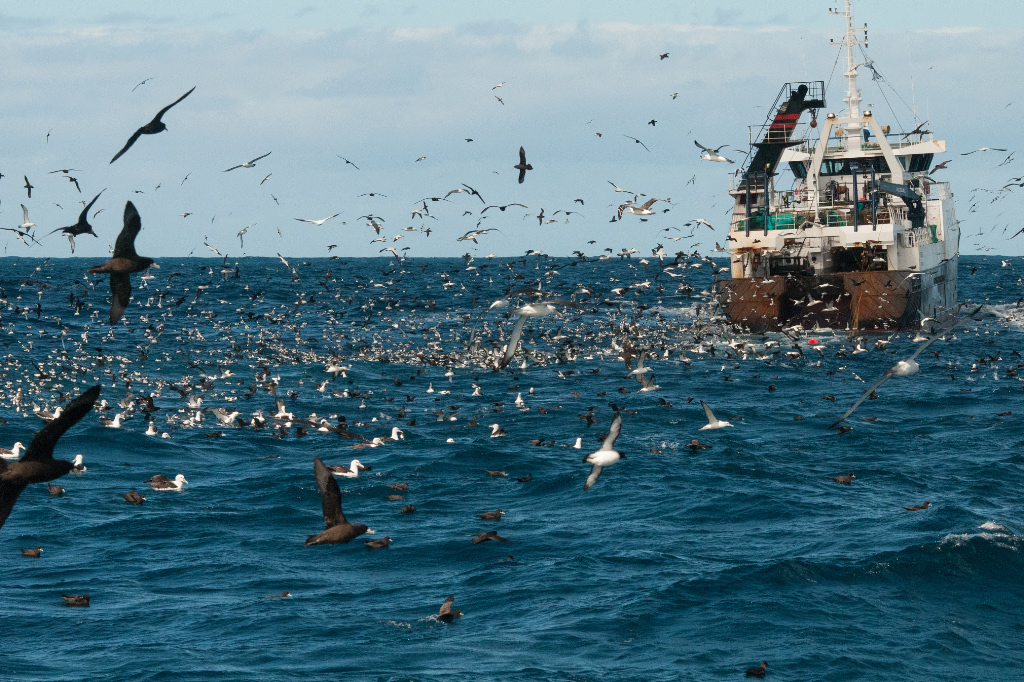
We were up early for breakfast at 6am before heading to the pier just below our hotel, where we were to meet the Zest for Birds team ahead of the pelagic birding trip into the deep waters south of the Cape Peninsula. This is deserving of its own posting so I won’t cover it here except to say that it was a spectacular trip with some amazing sightings. We left just after 7am and returned around 4pm, by which time we were quite exhausted from the intensity of the whole experience and the rough weather and sea conditions – we had just enough energy to drag ourselves to the nearby restaurant before collapsing in bed. There is nothing comparable in birding to this experience – a bombardment of all your senses that leaves you elated but exhausted at the end of the day. A small sampling of photos from the day are included here.

Pelagic birding trip

Shy Albatross, Pelagic Trip

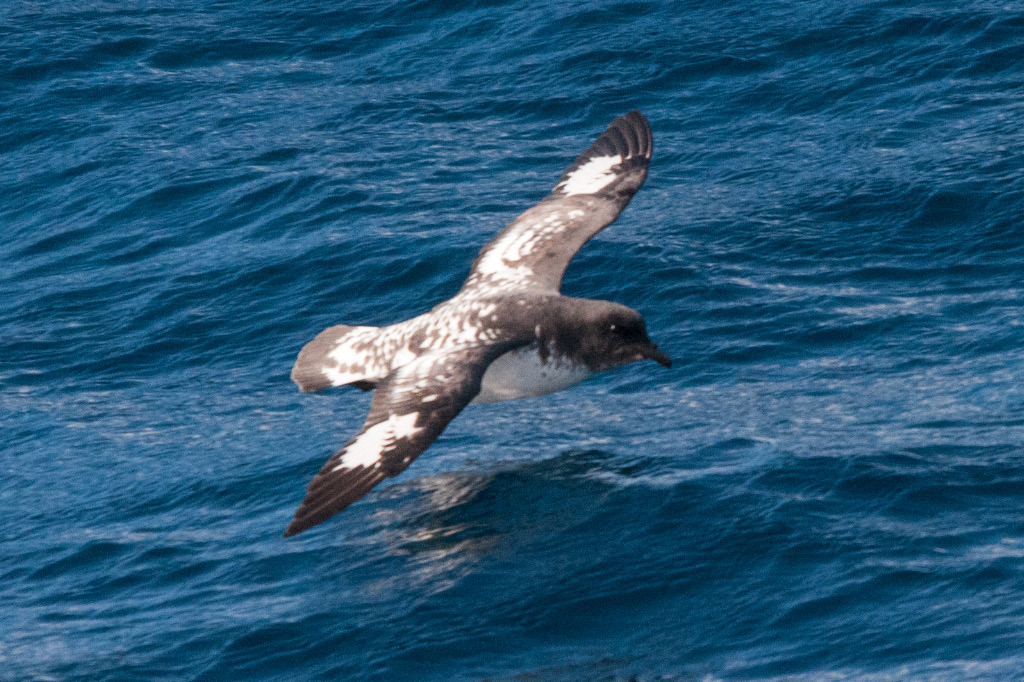
Pintado Petrel, Pelagic Trip

Day 15 (2nd September 2013) :

Time to move on to our next and final stopover before Mossel Bay – the Bontebok National Park near Swellendam, an easy 2 to 3 hours drive from Cape Town. We enjoyed a late breakfast in the hotel, greeted the genuinely friendly staff of the Quayside Hotel and were on our way. I stopped at Fish Hoek to get the wheels cleaned of the dried mud, collected during our trip to Papkuilsfontein,  which was causing severe imbalance at speed and was happy that cleaning the wheels made all the difference.

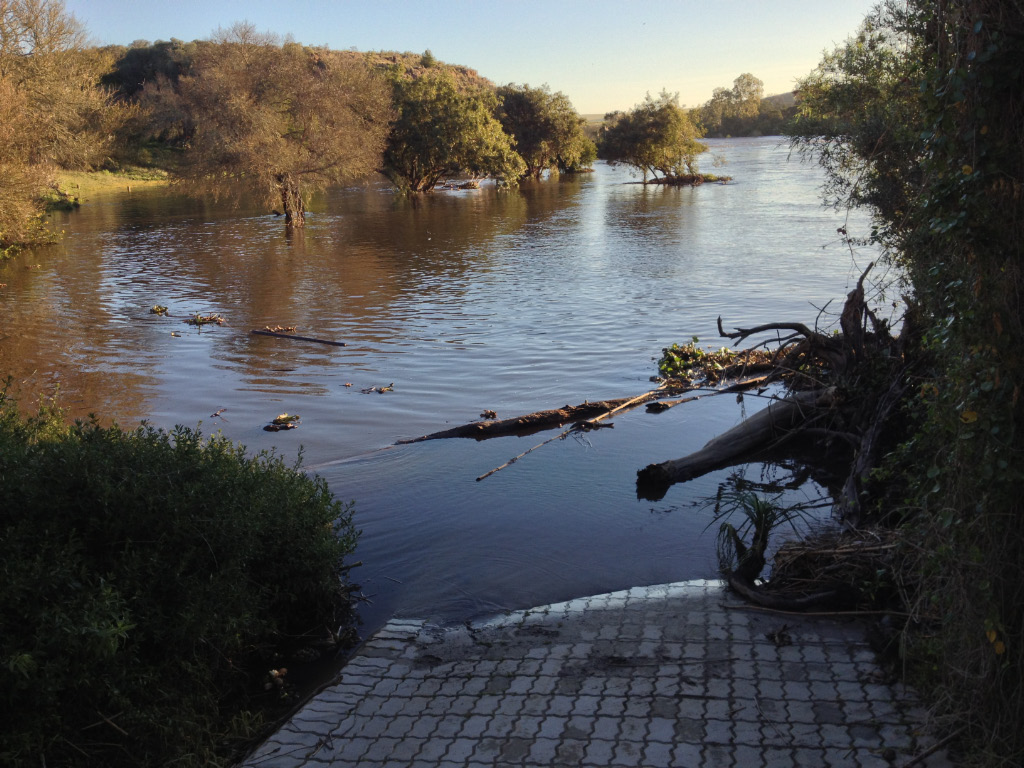
After yesterday’s rough and windy seas, today was the complete opposite and I couldn’t help wishing we had been blessed with this weather for the pelagic trip – hopefully next time? By the time we reached Houw Hoek pass it was lunchtime and it was an easy decision to stop at the roadside farmstall for a simple but delicious lunch with good coffee. From there it was a short hop to Swellendam and the nearby Bontebok National Park – on the way in a Dusky Indigobird caught my eye where it sat on the roadside wire – an unusual sighting for the area which produced an “Out of Range” form when I later submitted the atlas card. Further on a Black Harrier flew low over the scrub as we approached the park reception. After checking in we proceeded to the riverside chalets for a 2 night stay – the wooden chalets are set on a bend in the Breede River which was in flood from the recent heavy rain and snow in the catchment area and it stayed that way during our stay. The partly submerged trees and pathways were an indication of just how high the river was compared to its normal state.

Breede River in flood

Bontebok National Park

House Mouse, Bontebok NP

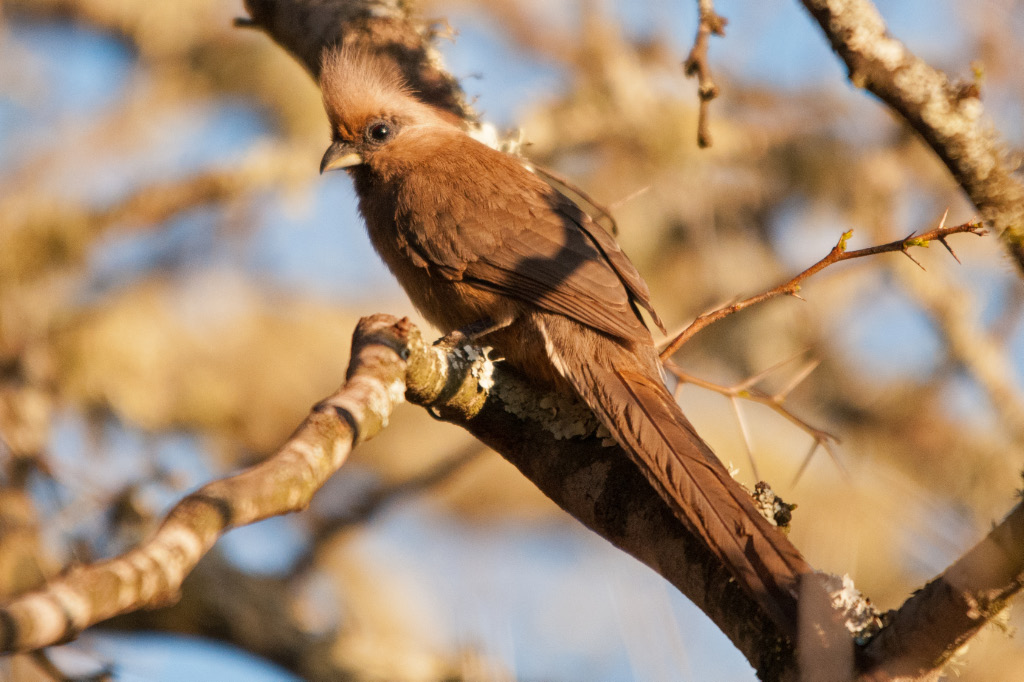
Speckled Mousebird, Bontebok NP

Karoo Scrub-Robin, Bontebok NP

Flooded pathways at Bontebok National Park

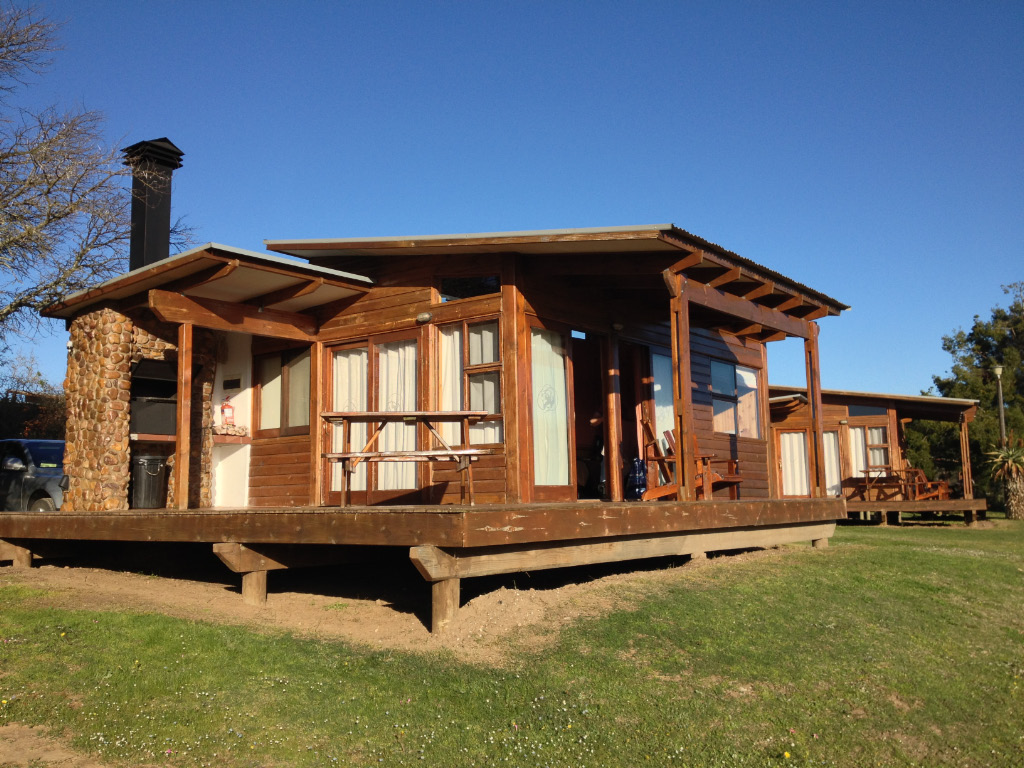
Chalet at Bontebok National Park

Once we were settled in, it was time to explore the gardens and surrounding bush, which were alive with the calls of several species as they went about their late afternoon business – Cape Robin-Chats, Fiscal Flycatchers, Cape Weavers, Speckled and Red-faced Mousebirds were all prominent as was a flock of 100 plus Common Waxbills. On the grass a turf war (literally) was happening as Southern Boubou chased a Fiscal Flycatcher and a Speckled Pigeon bullied the Waxbills.

Cape Robin-Chat, Bontebok NP

Southern Masked-Weaver, Bontebok NP

Bar-throated Apalis, Bontebok NP (not impressed by my playing his call)

Pathway, Bontebok NP

Bontebok
Bontebok

Cape Grassbird, Bontebok NP

Day 16 (3rd September 2013) :

The early part of the day was spent enjoying the peaceful ambiance of the chalets and surrounds and was highlighted by a Booted Eagle flying low over the chalets as he hunted for prey. Then it was time for an exploratory drive of the park which is not extensive and can be covered in a couple of hours. The drive took us to the viewpoint further up the river and along the way we enjoyed sightings of Cape Sugarbird, Cape Canary, a displaying Clapper Lark of the Agulhas subspecies and several Sunbirds. At the picnic spot the variety of flowers were an attraction, with one deciding to open its petals as we stood and watched! Grassbirds were prominent while a Fish Eagle called in the distance. The rest of the day was spent relaxing and braai-ing the evening meal.

Booted Eagle, Bontebok NP

Bontebok National Park

Bontebok
Bontebok

Cape Bulbul, Bontebok NP

Day 17 (4th September 2013) :

We left Bontebok National Park in beautiful calm, sunny weather with all the local species coming out to greet us, including the Pin-tailed Whydah which had spent most of the time energetically trying to impress the females with his freshly developed breeding plumage and active fluttering. We spent some time in Swellendam admiring the old church dating from 1802 and the many well-preserved Cape Dutch houses and enjoying a coffee stop at one of the local restaurants. The last stretch to Mossel Bay was uneventful and took us to the end of our journey for the time being.

The old NG Church, Swellendam

Swellendam, Western Cape

Swellendam, Western Cape

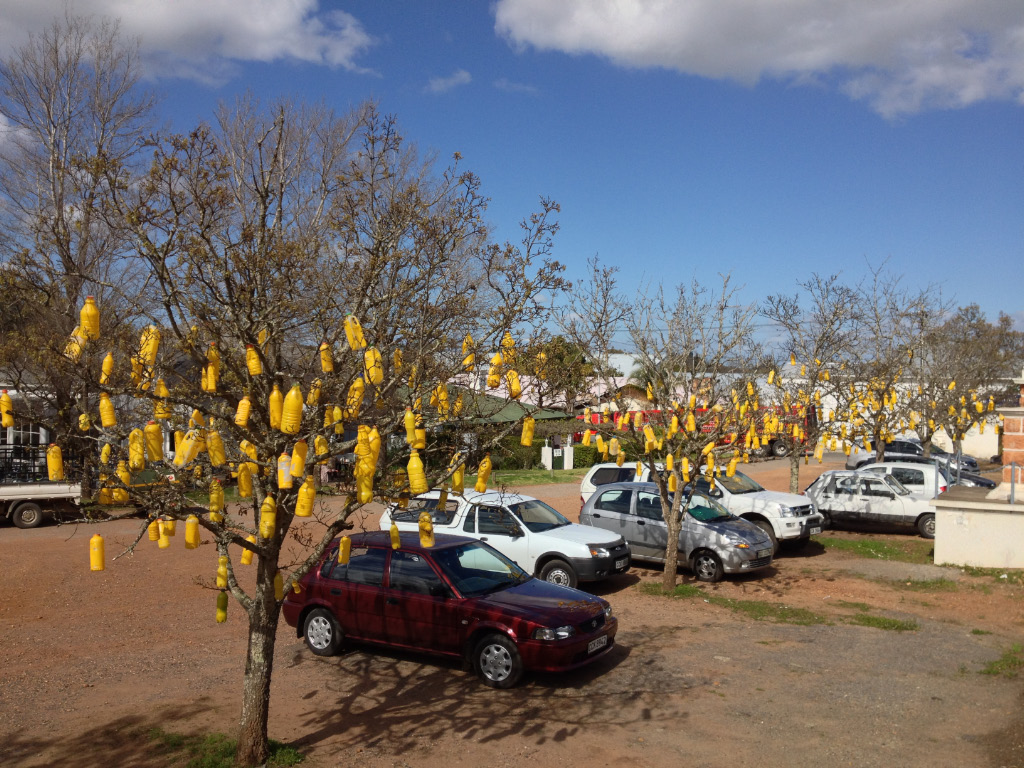
Swellendam - unique decorations (plastic bottles painted yellow)
Swellendam – unique decorations (plastic bottles painted yellow)

All in all, this was a trip that was chock-full of wonderful experiences , one which will provide good memories for a long time of places visited and sights seen, not to mention birds listed, lifers added and plenty of bird atlasing done.

The only questions now are …….. where to next time and how soon?

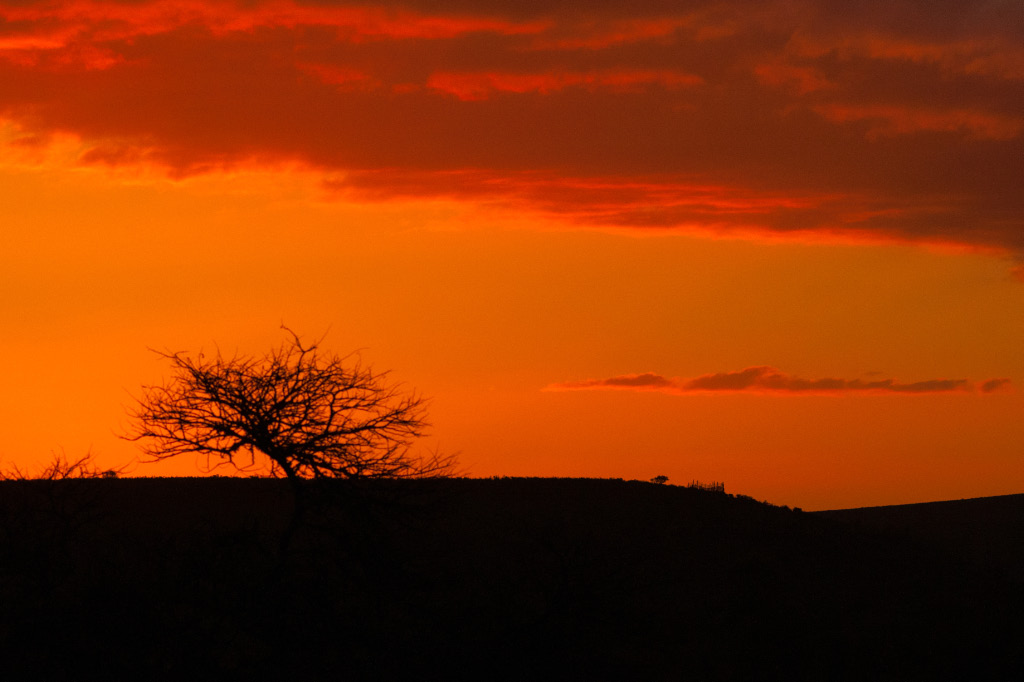
Sunset, Bontebok National Park

Birding and Flowers Trip – Part 2 : Port Nolloth and Namaqualand

The Trip (continued)

This is the follow-on to Part 1, which covered the first 5 days of the road trip. In this Part 2, Don and Gerda Reid and Koos and Rianda Pauw continue the next 5 days of their Birding and Flowers trip, taking in the prime flower-spotting areas of Namaqualand and adding to the growing “trip list” of birds seen along the way.

Day 6 (24th August 2013) :

Still in Port Nolloth, we woke up to a beautiful scene, with the lagoon in front of the beach house as smooth as a mirror, reflecting the small groups of Greater Flamingos (Grootflamink) as they showed themselves off to great effect. Mingling with the flamingos were Little Egret (Kleinwitreier), Kelp and Hartlaub’s Gulls (Kelp- en Hartlaubse meeu), Cape and Bank Cormorants (Trek- en Bank-kormorant) and a charming family of South African Shelduck (Kopereend) – Mom & Dad + 2 youngsters following eagerly.

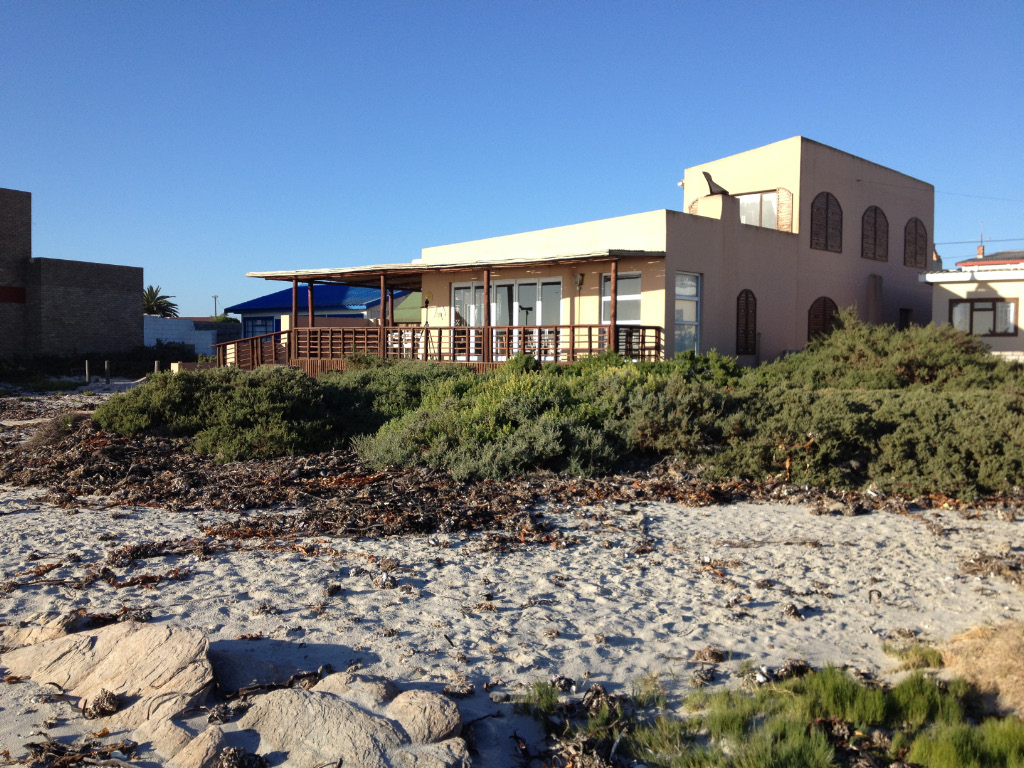
Beach house, Port Nolloth

McDougall's Bay, Port Nolloth
McDougall’s Bay, Port Nolloth

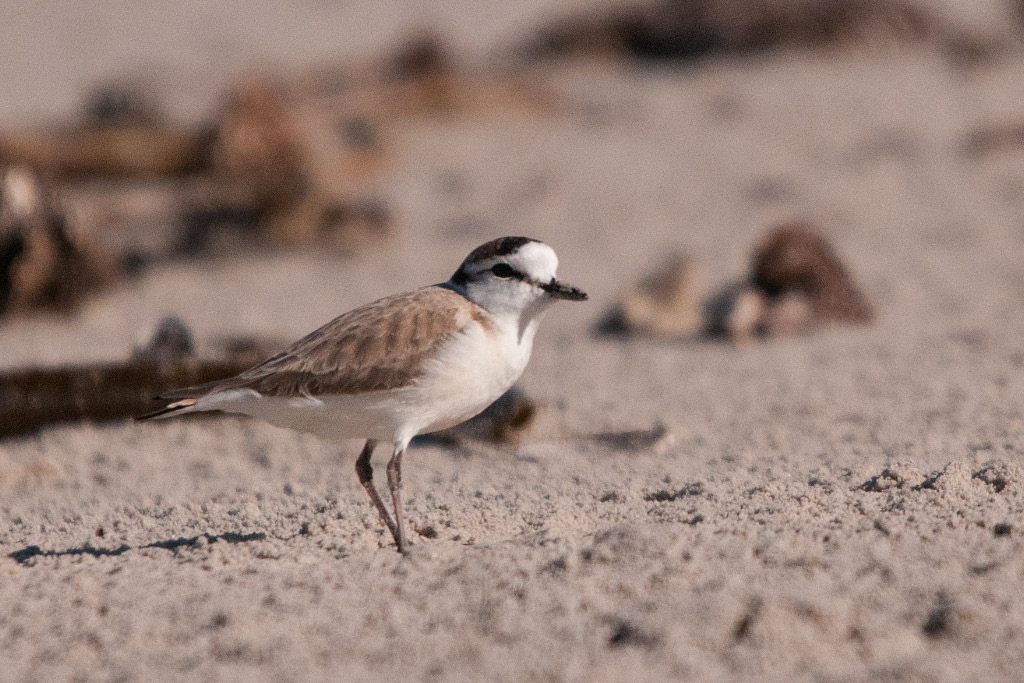
On the sand in front of the house, Common Starlings (Europese spreeu) and Cape Wagtails (Gewone kwikkie) were busy feeding while Swift Terns (Geelbeksterretjie) flew overhead in small flocks and an African Black Oystercatcher (Swarttobie) worked the shoreline for a tasty morsel or two. Not far from them a lone White-fronted Plover (Vaalstrandkiewiet) trotted about after unseen prey and offshore at a distance I was able to pick up a Cape Gannet (Witmalgas) with the help of my newly acquired spotting scope.

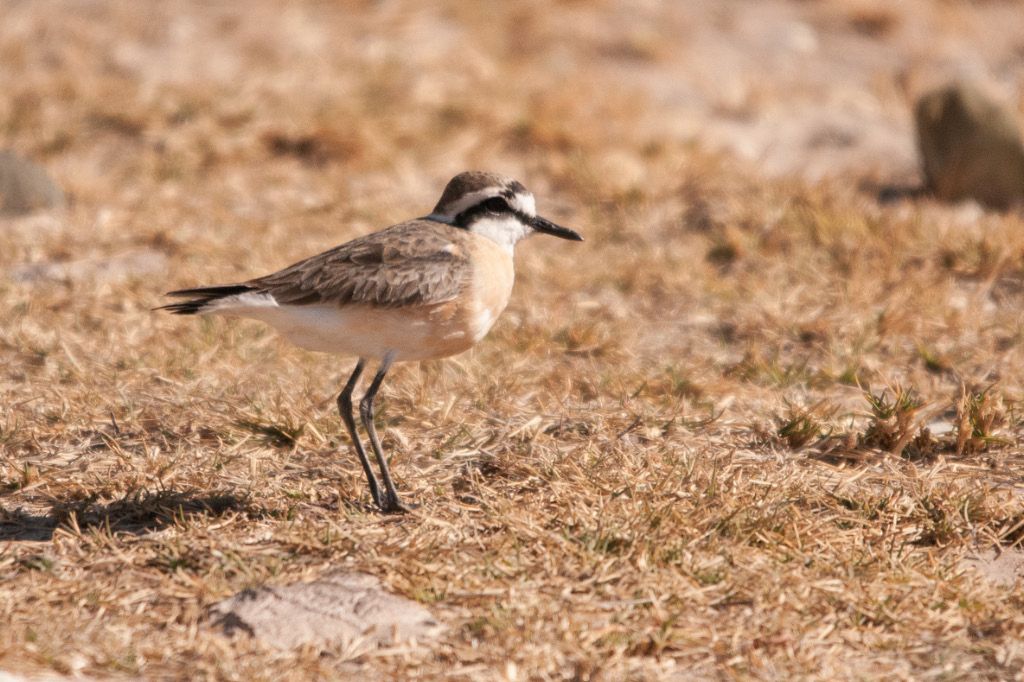
White-fronted Plover, Port Nolloth
White-fronted Plover (Vaalstrandkiewiet), Port Nolloth

Walking along the beach and across the flat rocks, we found ourselves on another beach with a larger lagoon/bay, which held a single Pied Avocet (Bontelsie) and the largest flock of Black-necked Grebes (Swartnekdobbertjie) we have ever seen – probably 60 or more.

McDougall's Bay, Port Nolloth
McDougall’s Bay, Port Nolloth

Koos and I then set off on a drive to complete the minimum 2 hour atlasing period and to see if we could find the sought-after Barlow’s Lark (Barlowse lewerik) which is a Port Nolloth “special” and said to be found not far from town on the road to Alexander Bay. Well, we followed the lead given by Birdfinder and tried hard for a sighting, but eventually decided we would have a better chance in the early morning, when they were more likely to show themselves and perhaps call. We had some compensation by way of Cape Long-billed Lark (Weskuslangbeklewerik), another lifer for me, which we found in the scrub-covered dunes after hearing its typical descending whistle, a sound we were to hear a number of times in the following days.

Cape Long-billed Lark
Cape Long-billed Lark (Weskuslangbeklewerik)

We discovered a small wetland closer to town, signposted Port Nolloth Bird Sanctuary, that held a variety of bird life, dominated by Lesser and Greater Flamingos – possibly the same ones seen earlier feeding in the lagoon – but also holding Cape Teal (Teeleend), Avocets, Cape Shoveler (Kaapse slopeend) and large numbers of Hartlaub’s Gulls. From there we followed the map to the large, mostly bone-dry, pan further north which was home to more Hartlaub’s Gulls (100+) but not much else.

Port Nolloth Bird Sanctuary

Hartlaub's Gull, Port Nolloth
Hartlaub’s Gull (Hartlaubse meeu), Port Nolloth

Lesser Flamingo, Port Nolloth
Lesser Flamingo (Kleinflamink), Port Nolloth

Having done our Citizen Scientist (no, it’s not a sect) duties for the day we spent the rest of the day relaxing and enjoying the beach view, ever-changing with the tides and winds. Later we tried the local Italian restaurant “Vespettis” which served up a decent meal after which Koos called up the daily bird list to add to our growing trip list.

Day 7 (25th August 2013) :

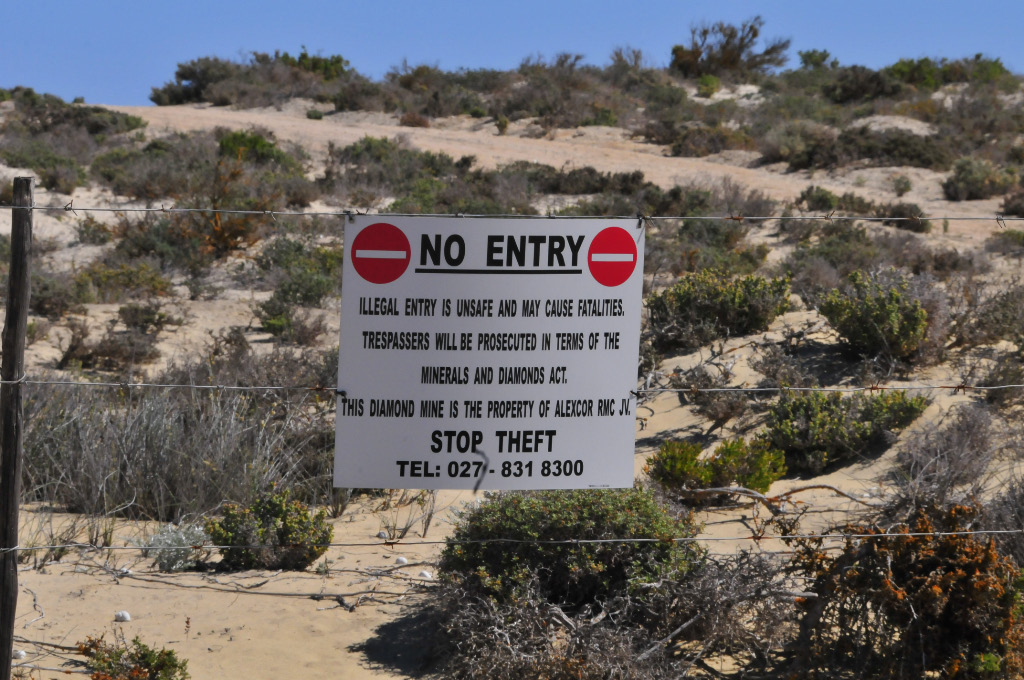
We were due to vacate the beach house by 10am, but first we had an important mission to accomplish – find the Barlow’s Lark. A chilly dawn saw Koos and I in the same area as the day before, stopping frequently and searching for any signs of the Lark amongst the low scrub clinging to the dunes. A rather intimidating sign on the fence reminded us that we were skirting a restricted mining area!  We drove slowly for a few Kms northwards but kept coming up with Tractrac Chats and Cape Long-billed Larks whenever movement was spotted – not that these were birds to dismiss, as they were both lifers for me in the preceding days, but we were hoping desperately for a Barlow’s Lark, which was our main reason for choosing Port Nolloth as a stopover in the first place. After an hour or more of searching we decided to turn around and as we did so we heard a different-sounding call and leapt out of the car to find the source – yes, you guessed  it, there was a Barlow’s Lark on the telephone wire and he obliged by flying up above our heads and commencing a display flight, which involves a lot of hovering in the air while calling continuously, then descending rapidly to a low bush for a minute or so before repeating the sequence several times, while we watched enthralled. It reminded me of the Melodious Lark’s display that I had seen earlier in the year but without the variety of mimicked calls.  Apart from the thrill of adding another lifer, the whole display was a bit of birding magic and we both agreed this was one of those special moments to be treasured.

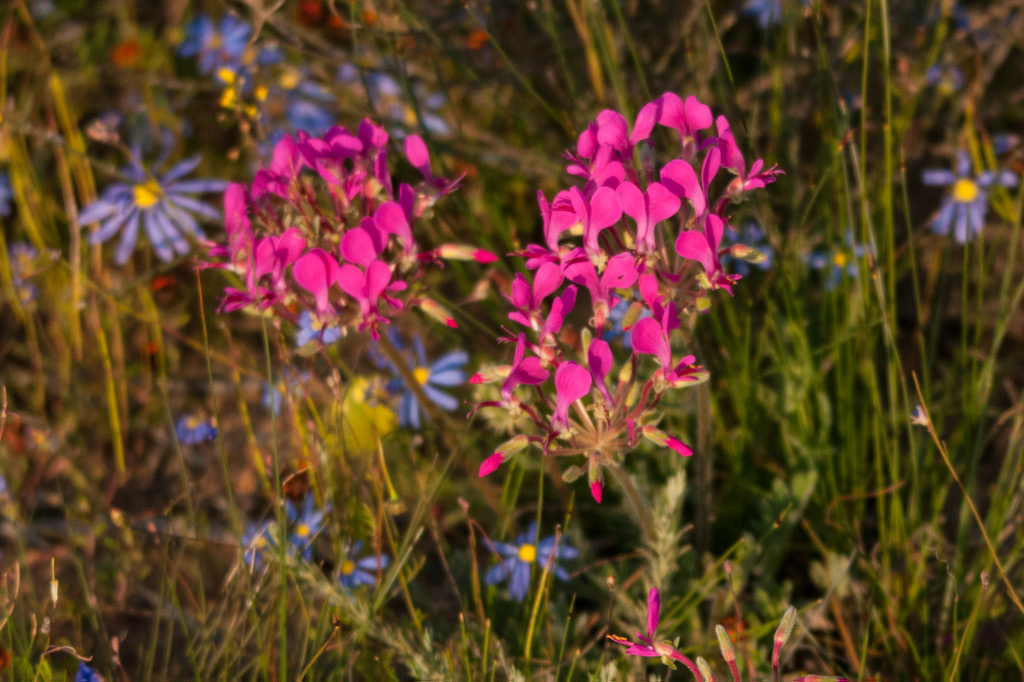
Dune flowers
Dune flowers

Barlow's Lark, Port Nolloth
Barlow’s Lark (Barlowse lewerik), Port Nolloth

Barlow's Lark displaying
Barlow’s Lark displaying

Friendly reminder not to trespass, Port Nolloth

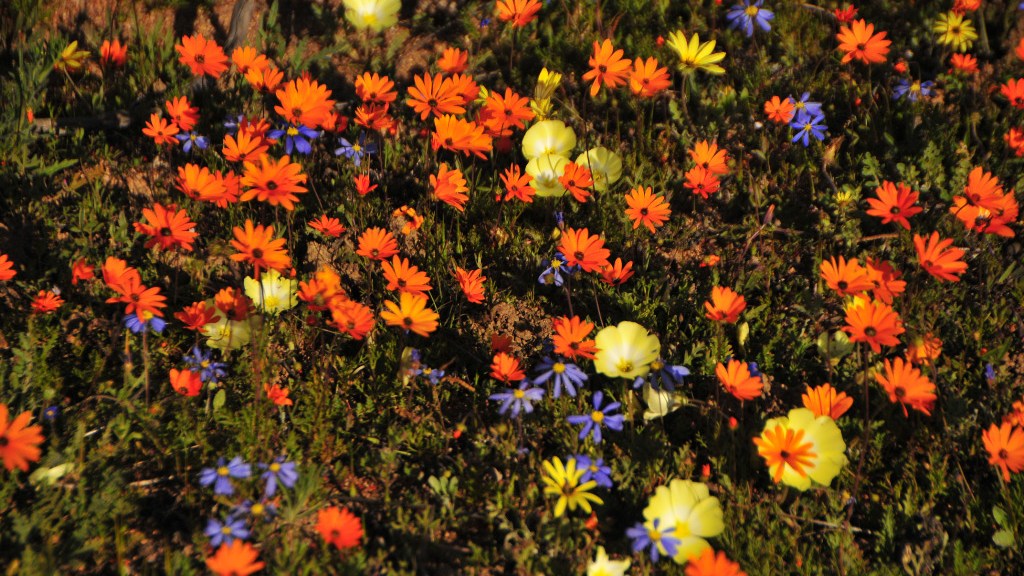
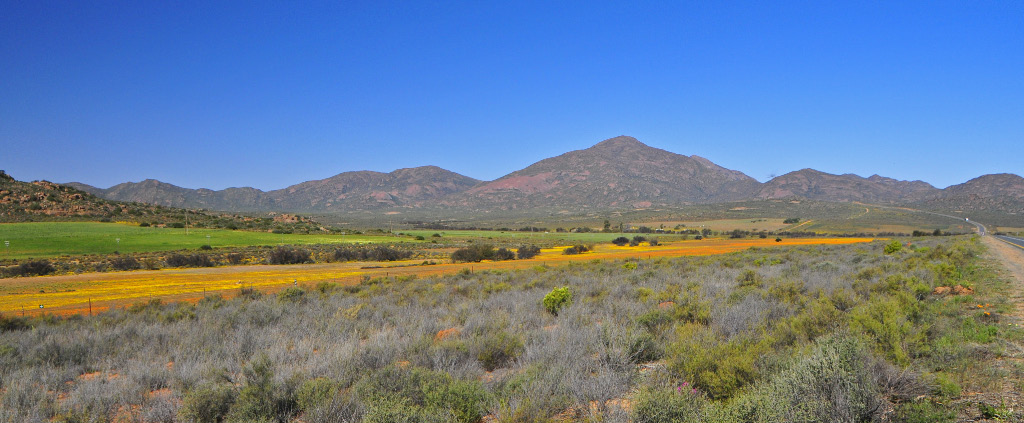
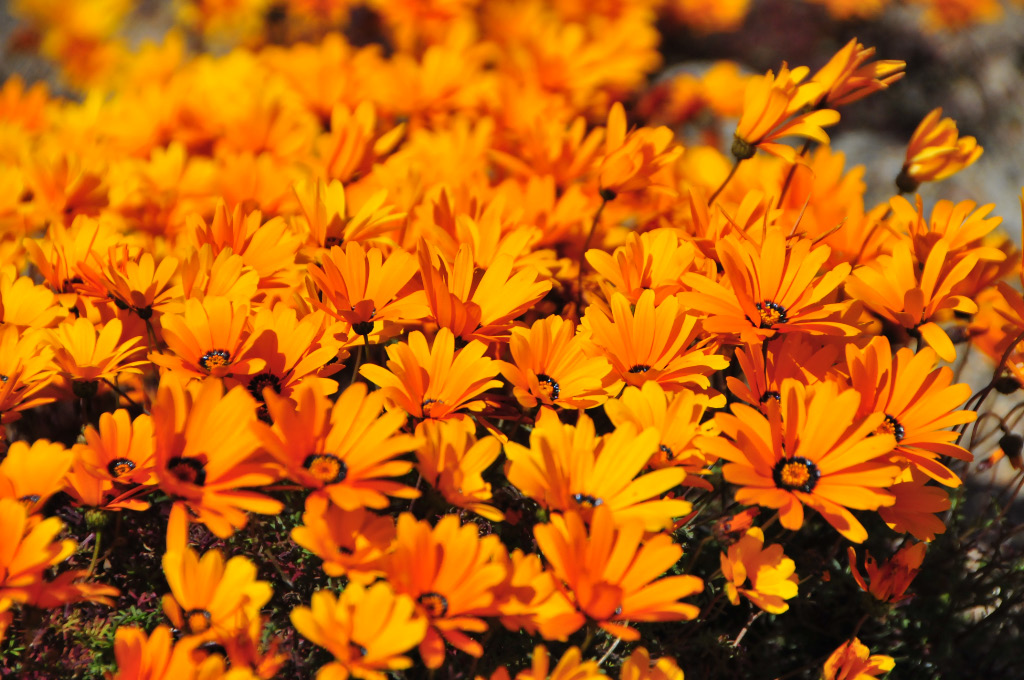
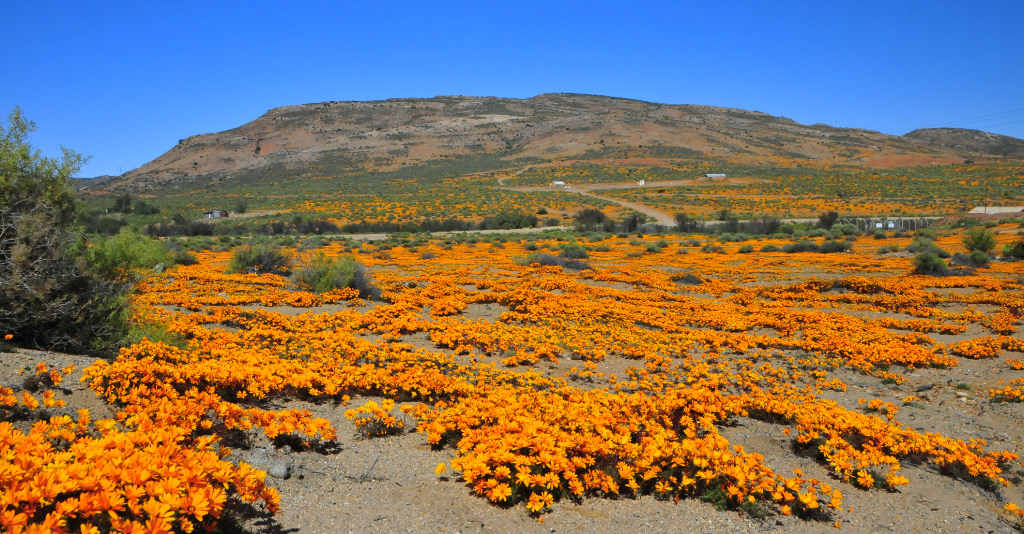
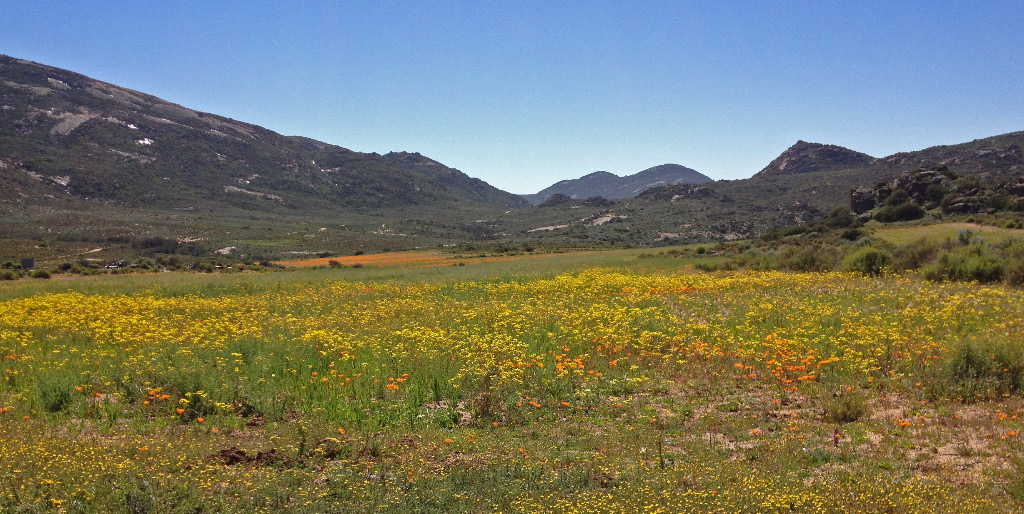
A little later we left Port Nolloth and headed back to Springbok with a good feeling about our short visit to this small coastal town. Before reaching Springbok we branched off to the town with the unusual name – Nababeep (“Rhinoceros place” in the old Khoi language) and stopped to view the spectacular displays of yellow and orange daisies which carpet the roadside and extend up the hillsides.

Near Springbok, Northern Cape

Nababeep, Northern Cape

Nababeep, Northern Cape

Nababeep, Northern Cape

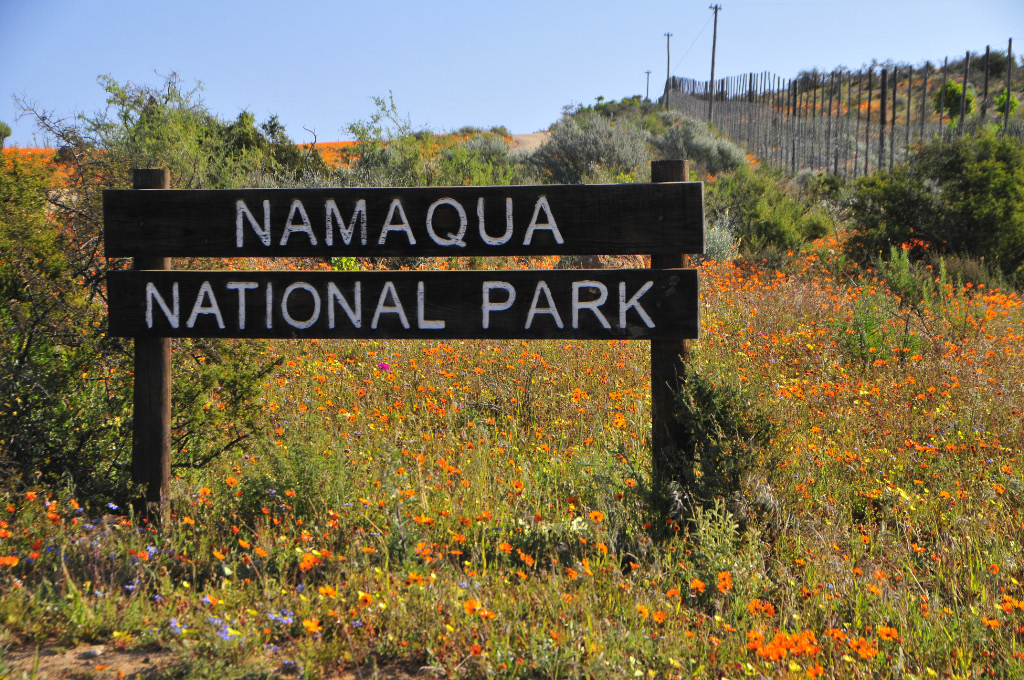
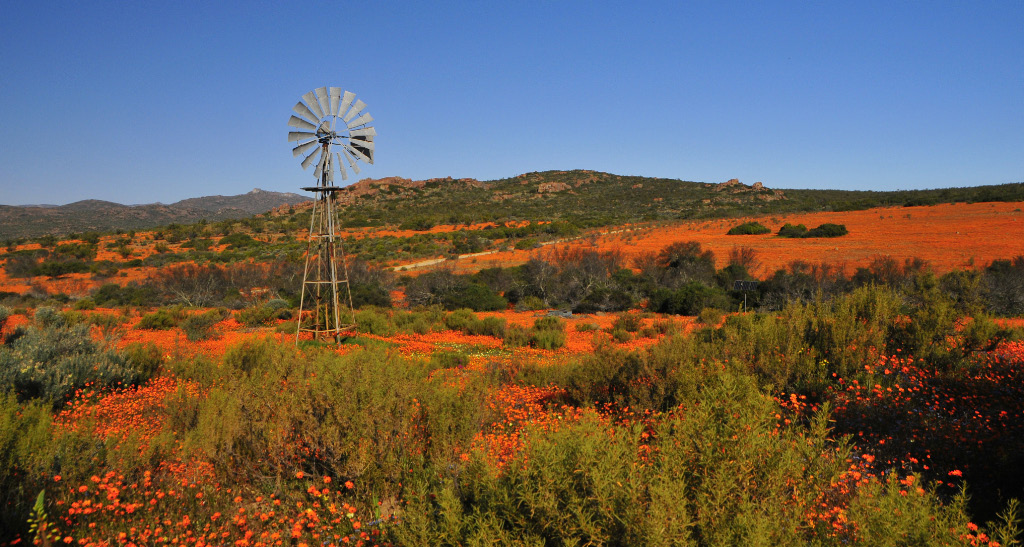
From there it was a short drive to Kamieskroon where we found the road to Namaqua National Park for our next night’s stop. Rock and Greater Kestrels (Kransvalk & Grootrooivalk) and Pale Chanting Goshawks (Bleeksingvalk) are regular occupants of the roadside poles in these parts, in addition to the ubiquitous Crows. Approaching the park we could see the flowers blanketing the landscape from a long way off and as we got closer the beauty of the flower display was almost overwhelming. We tore ourselves away from the scene to check in and let the ladies explore the “Padstal” after which we made our way slowly to the chalet in the “Skilpad” section of the park, admiring the variety of flowers and birding along the way, with Sunbirds and Larks being most prominent.

Namaqua National Park (Skilpad Section)

Namaqua National Park

Namaqua National Park

Southern Double-collared Sunbird, Namaqua NP
Southern Double-collared Sunbird (Klein-rooibandsuikerbekkie), Namaqua NP

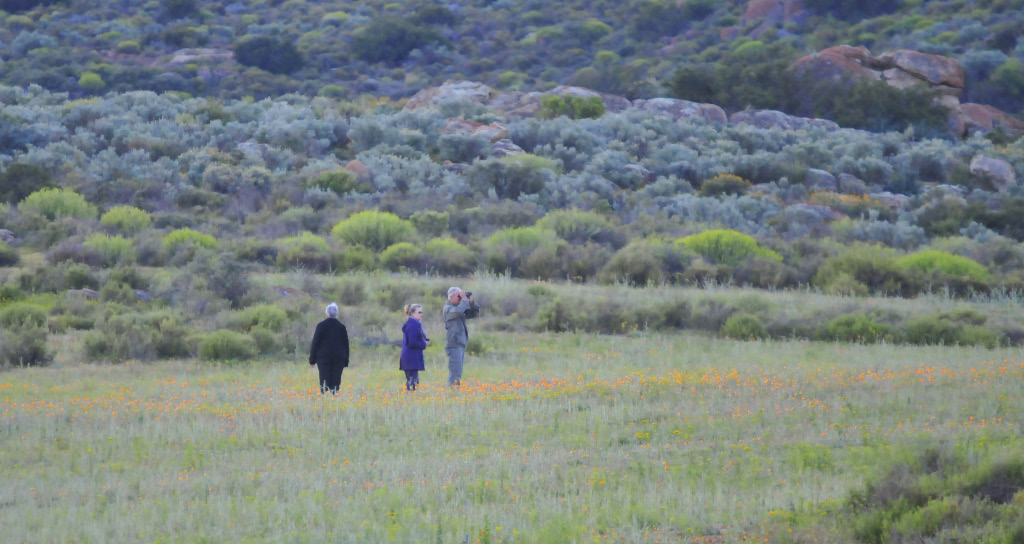
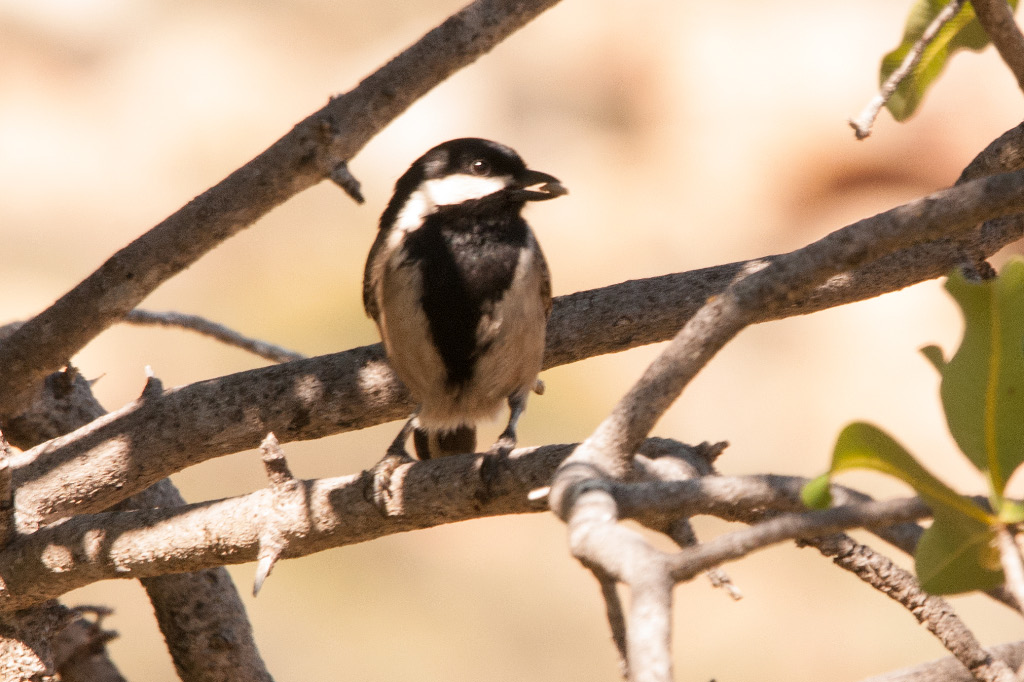
On arrival at the chalet a Grey Tit (Piet-tjou-tjou-grysmees) immediately made his presence known with his loud and distinctive call – another lifer added! A short walk produced a busy pair of Layard’s Titbabblers (Grystjeriktik), several Malachite Sunbirds (Jangroentjie) and Karoo Scrub-Robin (Slangverklikker). In no time it was dusk and time to braai, re-live the special day and get some rest.

Namaqua National Park

Chalet at Namaqua National Park

Be warned
Be warned

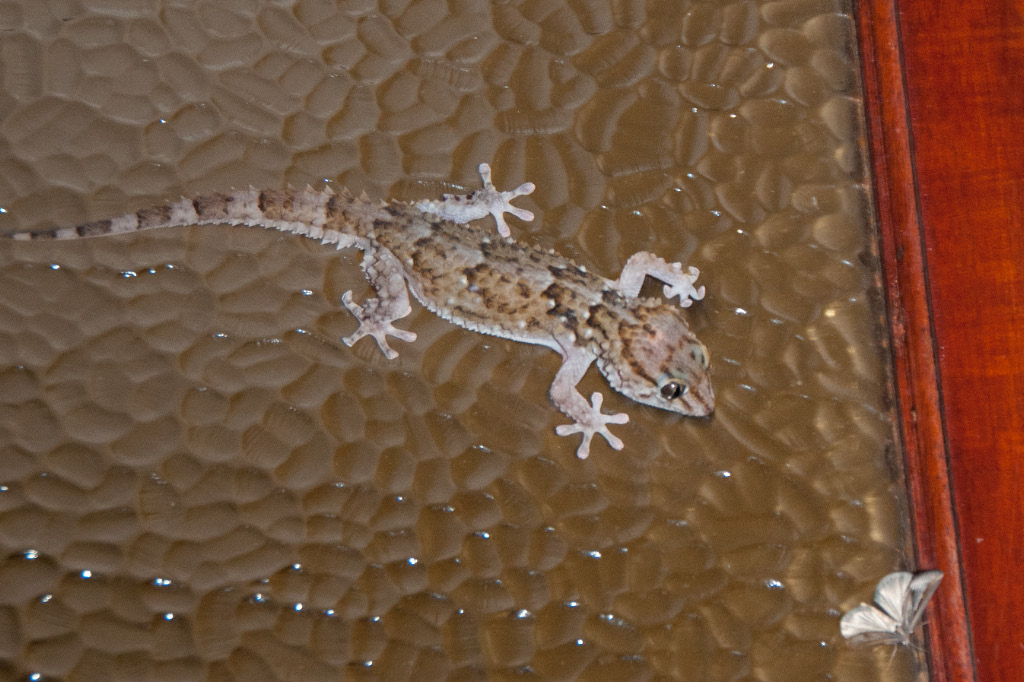
Dwarf Leaf-toed Gecko, Namaqua NP

Day 8 (26th August 2013) :

Early morning mist had cleared by the time we left and we enjoyed the circular route through the flowering landscape back to the office to hand in our keys before venturing further. At the office I spotted a Ludwig’s Bustard (Ludwigse pou) doing a fly past allowing me the pleasure of clocking up lifer No 700 for Southern Africa, which earned a few “high-fives”.

Namaqua National Park

Namaqua National Park

Namaqua National Park

Cape Hare, Namaqua NP

Misty Morning
Misty Morning

Namaqua National park

Having made the most of our short stay we had decided to head further into Namaqua park, along the road to Soebatsfontein (Afrikaans for “pleading fountain”), marked as 4 X 4 only but by no means a rough road and well worth doing, as we were to find out. The road to Soebatsfontein winds its way through the mountain ridges, and the wonderful scenery makes it one of the best roads I have driven. Along the way Cape Clapper Larks (Kaapse klappertjie) did their distinctive display flight as did the Karoo Larks. Cape Buntings (Rooivlerkstreepkoppie) were plentiful with a few Black-headed Canaries (Swartkopkanarie) adding to the mix. While we were enjoying roadside coffee and the delicious melktert (custard tart) from the park’s shop we were entertained by yet another displaying Lark, this time Red-capped Lark (Rooikoplewerik), flying up from a termite mound while calling, then plummeting rapidly before repeating a few minutes later.

The road to Soebatsfontein

Klipspringer
Klipspringer

Karoo Lark in between displaying

Our lunchtime stop was about halfway along the road near the ruins of an old farmstead, which was probably built with mud bricks which by now had partly dissolved giving it a “Timbuktu-like” appearance. During the drive we had seen a good selection of raptors including Jackal Buzzard (Rooiborsjakkalsvoel), Verraux’s Eagle (Witkruisarend), Booted Eagle (Dwergarend) and a Black-chested Snake-Eagle (Swartborsslangarend).

Lunch amongst the ruins of an old farstead
Lunch amongst the ruins of an old farmstead

Ruins
Ruins

Soebatsfontein (pop 276)

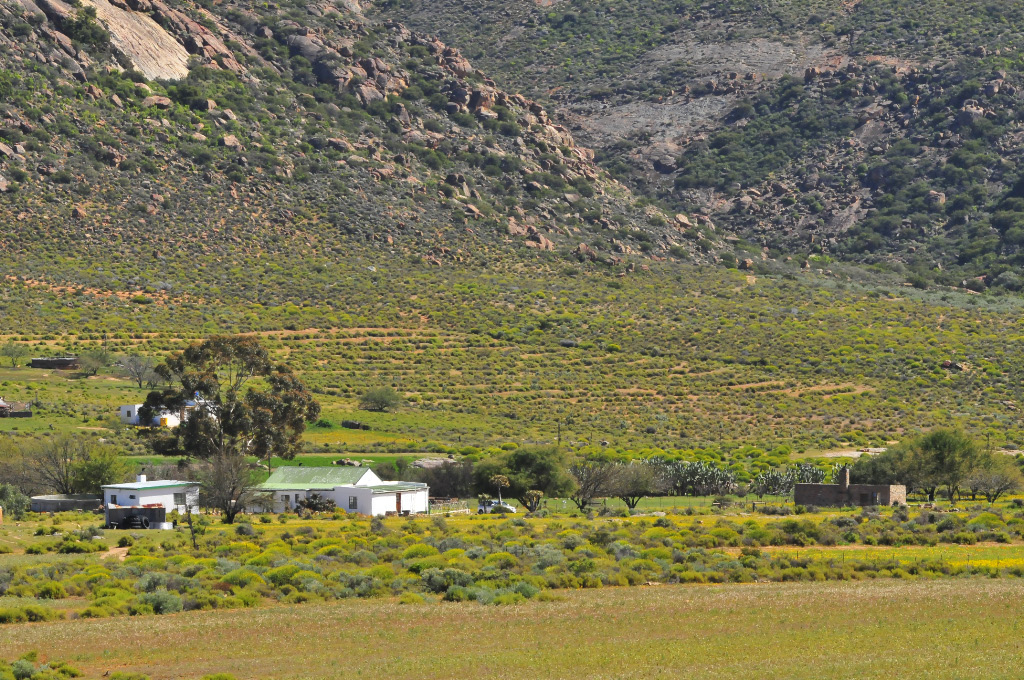
Once we reached the small village of Soebatsfontein we took the dirt road to Kamieskroon, then via the N7 to the turn-off to No-Heep farm where we had booked accommodation for the next 2 nights. On arrival the owners showed us to the charming old farmhouse nearby, with solar-powered lights and gas for cooking, fridge and hot water. There was time for a short walk to explore the surroundings before dusk descended – in the fading light a Verraux’s Eagle and a Booted Eagle were still vying for prime patrolling spot along the nearby mountain ridge.

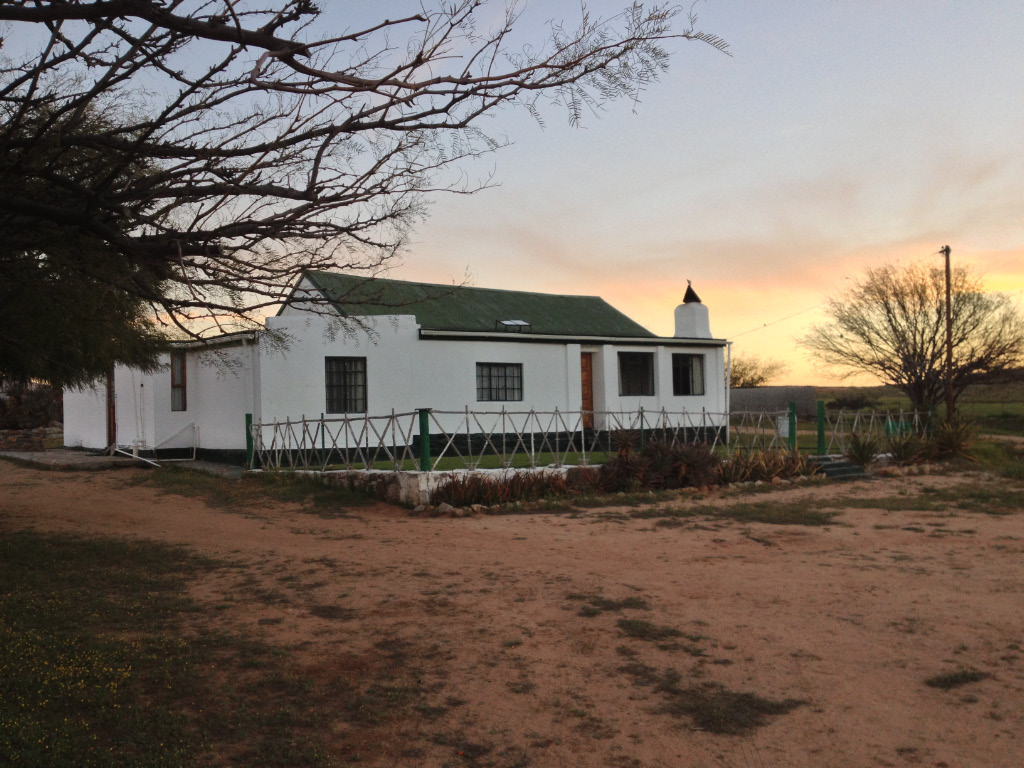
The old farmhouse - our accommodation at No-Heep
The old farmhouse – our accommodation at No-Heep

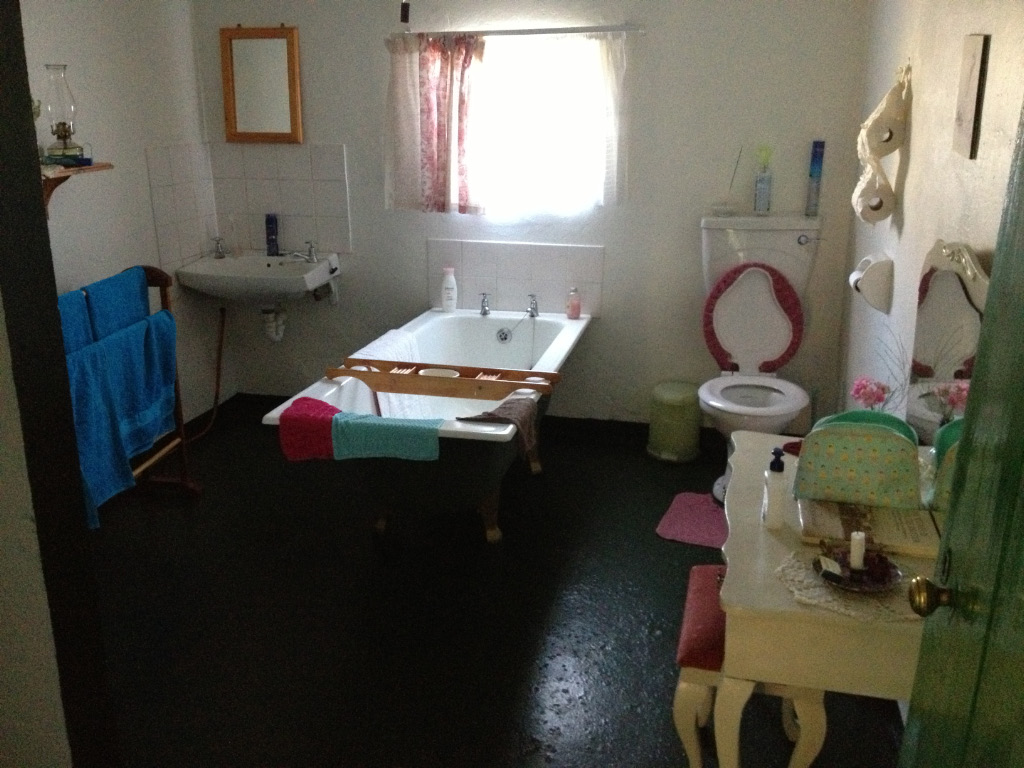
The batthroom
The bathroom

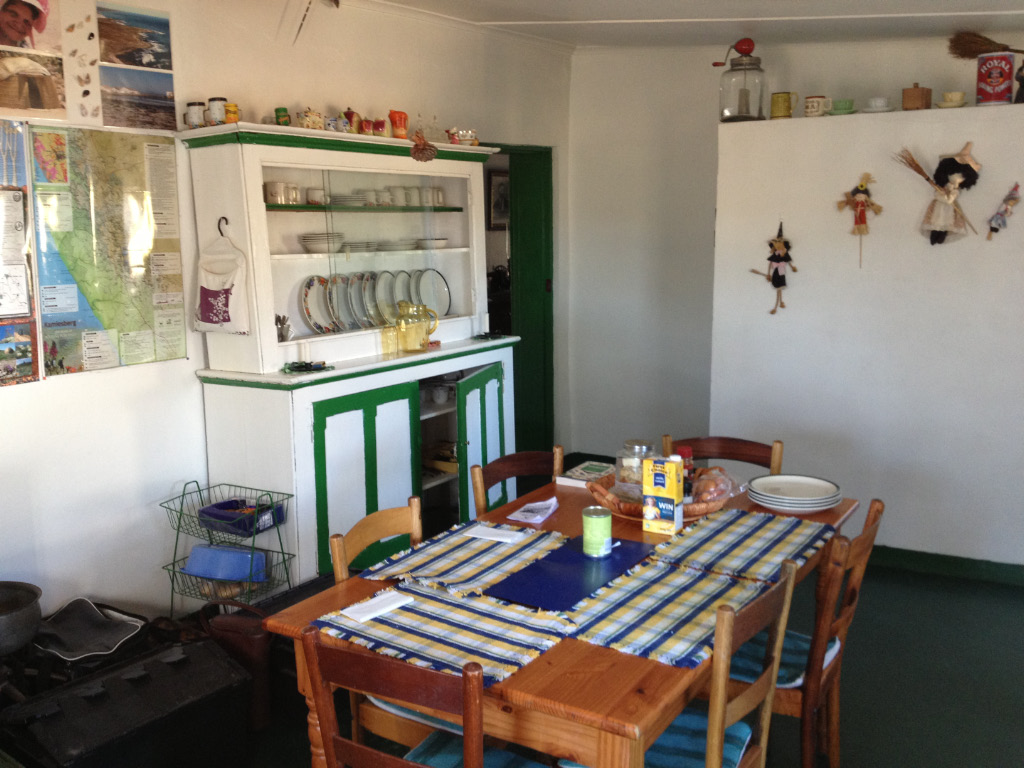
Nice old-fashioned kitchen

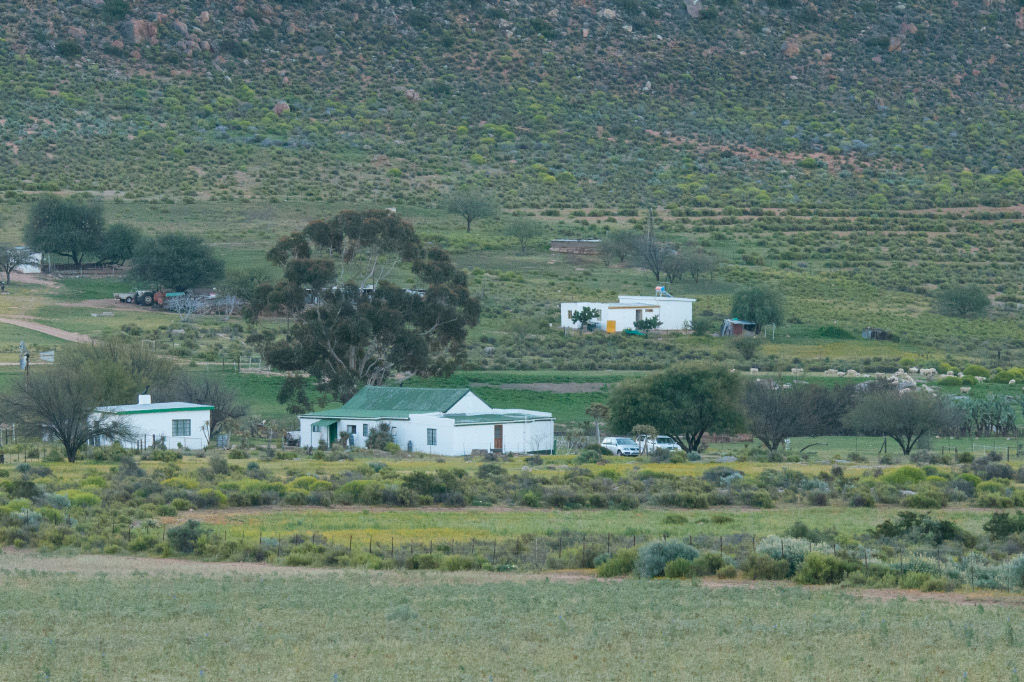
No-Heep farm, near Kamieskroon

No-Heep farm
No-Heep farm

Flowers grow everywhere in these parts

Day 9 (27th August 2013) :

After a relaxed breakfast I set off for a lengthy late-morning walk up towards the mountain where the Eagles had been patrolling the previous evening. The morning shift now comprised a handsome Jackal Buzzard and a Rock Kestrel doing patrol duty along the same stretch of mountain ridge, the former coming in quite low to show off his rich rufous and black and white colouring as he cruised past. At ground level, Karoo Larks were displaying energetically, while Cape Buntings and Grey Tits carried on with their daily routines. Common Quail (Afrikaanse kwartel) stuck to the rule “be heard and not seen” as they crept unseen through the grass, given away only by their pip- pip- pip call. Up on the lower slopes of the rocky hillside, a Grey Tit played hide and seek with me – responding to my playing his call but remaining wary and partly hidden in the branches of a tree, making photography difficult.

No Heep Farm, near Kamieskroon

Jackal Buzzard (Rooiborsjakkalsvoel)

Gre Tit (Piet-tjou-tjou-grysmees)
Grey Tit (Piet-tjou-tjou-grysmees)

No-Heep farm
No-Heep farm

Malachite Sunbird, No-Heep
Malachite Sunbird (Jangroentjie), No-Heep

A small lizard with a very long tail attracted my attention and I waited patiently for it to come out into the open – my reference book later confirmed it to be a Sand Lizard. A Karoo Prinia (Karoolangstertjie) on top of a handsome Quiver tree, a feature of the area, made a memorable picture in my mind but he didn’t hang around long enough to turn it into a digital image. Further on, a Rufous-eared Warbler (Rooioorlangstertjie) popped up on a bush nearby and eyed me carefully, then disappeared into the bushes. Our only other activity for the day was a late afternoon drive along the farm roads leading north of No-Heep, with more spectacular scenery to enjoy along the winding road through beautiful mountain landscape.

No-Heep farm
No-Heep farm

Sand Lizard
Sand Lizard

No-Heep farm
No-Heep farm

Rufous-eared Warbler
Rufous-eared Warbler (Rooioorlangstertjie)

Mountain Wheatear
Mountain Wheatear (Bergwagter)

Quiver tree, No-Heep

Day 10 (28th August 2013) :

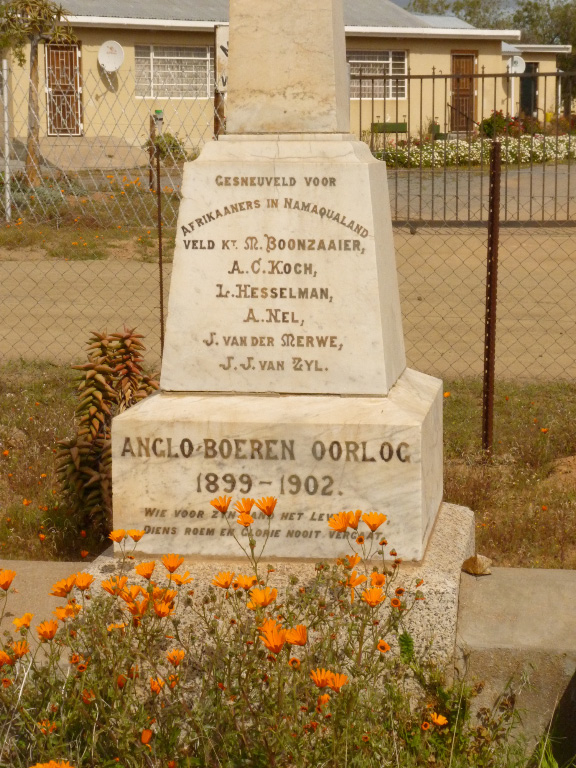
Another travelling day – this time we were headed to a guest farm near Niewoudtville (the locals pronounce it Nee-oat-ville) which is famous for its variety of bulb flowers at this time of year. The route took us back to Kamieskroon where we stopped to find the War monument – as it turned out it was in the church grounds. From there we continued south on the N7 to VanRhynsdorp where we turned east and drove through the flat, almost barren plains known as the “Knersvlakte” (literally the “Grinding flatlands”), so named by the pioneers of this part of South Africa because of the sound of the wagon wheels grinding on the stony, gritty surface.

War memorial, Kamieskroon

Road near Kamieskroon

Road to Niewoudtville, Northern Cape
View from the Vanrhyns Pass – Knersvlakte far below

The plains ended in an intimidating mountain escarpment with a diagonal gash up the side which, as we got closer, turned into a steeply angled road with dramatic views back over the Knersvlakte. As we reached the top we found ourselves in quite different countryside at a substantially higher altitude and soon passed through Niewoudtville, with a quick stop to admire the roadside flowers, on our way to De Lande farm some 13 Km further along a dirt road. At this stage the road was still dry and comfortable to drive on, but this was to change over the next couple of days.

Roadside near Niewoudtville

De Lande Farm
De Lande Farm

Once settled at De Lande in the “Sinkhuisie” or “Tin House”, we took a walk to stretch the legs and do some initial birding in this new locality. Immediately the presence of Mountain Wheatears was noticeable as they hopped about around and under the car, almost seeming to want to say “hello”. A Black Harrier (Witkruisvleivalk) glided past in his customary low flight over the scrub and disappeared into the distance. Down at the farm dam dusk was approaching and a row of tall blue gums was being populated by growing numbers of Black-headed Herons (Swartkopreier), Sacred Ibises (Skoorsteenveer) and Cape Crows (Swartkraai) as they came in to roost – the trees were altogether quite crowded. The weather had turned and it was by now completely overcast and decidedly cold but this was more than compensated for by the heaters in the house and the warm welcome and superb dinner we enjoyed that evening, served in the main house a stone’s throw away.

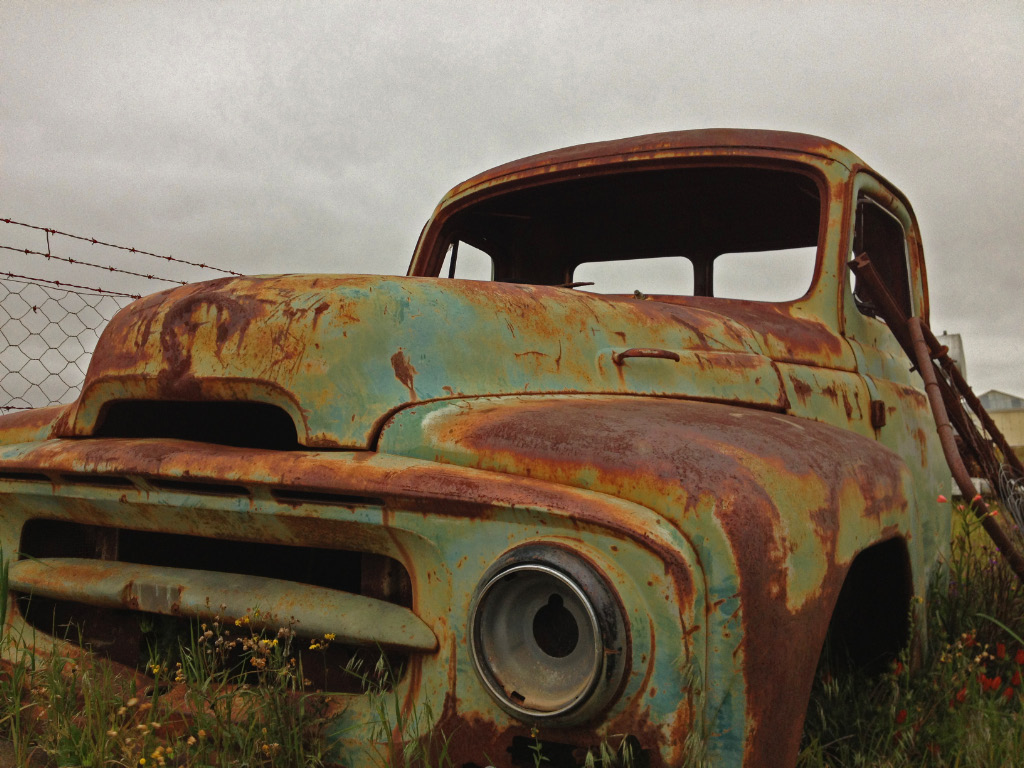
Rust in peace, De Lande

Sinkhuisie (Tin House) accommodation at De Lande farm

Rust in peace, De Lande

The next couple of days were to be a test of the vehicles and our tenacity, but more of that in Part 3 – stay tuned…….

Birding and Flowers Trip – Part 1 : Pretoria to Port Nolloth

The Planning

One of the enjoyable aspects of planning a trip is the pleasant anticipation that goes with it. A few years ago Gerda and I were intent on doing a birding trip through the Northern parts of South Africa to coincide with the time that the Namaqualand flowers are usually at their best, but circumstances stood in the way and we had to cancel at the last moment. Koos and Rianda Pauw, who we were to join for that trip, did the trip on their own and their stories afterwards only served to make us more determined to do the trip at a future date. When Koos & Rianda suggested “going for it” in 2013, Gerda and I jumped at the chance and immediately started planning the route, accommodation etc in order to make sure we would get bookings at the preferred spots during the popular flower-viewing season which runs from mid-July to mid September.

The anticipation was heightened by the fact that we would be travelling through parts of South Africa that we had not experienced before, with places and towns to see for the first time. The bonus was the prospect of seeing the famed Namaqualand flowers for ourselves, not to mention the possibility of a number of “lifers” (birds not seen before) along the route. Then there is the all-important atlasing of bird species which we intended to do at each overnight stop as a minimum.

Note that this Part 1 of the trip does not include the main Namaqualand flower areas, which will only be included in later Parts – you have been warned!

Afrikaans names of bird species have been added where the bird is first mentioned, because many birders in South Africa know the birds by their Afrikaans names and the names are often charming and more descriptive.

The Trip

Day 1 (19th August 2013) :

After much intense packing and arrangements, we set off just after 2pm and headed west along the N14 National road to our first overnight stop via Krugersdorp, Klerkskraal, (blink and you’ll miss it) Ventersdorp and Coligny, at which point we turned south to the farm Ouplaas near Ottosdal in the North-West Province, arriving late afternoon. Coert and Magdalena welcomed us warmly to their guest house and turned out to be excellent hosts and the accommodation proved comfortable enough. They served a tasty four course dinner that, along with the décor, took me back 30 years – soup starter, then a fish salad followed by the main course with roast lamb and veg, then a rich pudding and coffee in tiny, fancy cups.

Ouplaas Guest House, Ottosdal
Ouplaas Guest House, Ottosdal

Ouplaas Guest House, Ottosdal
Ouplaas Guest House, Ottosdal

Day 2 (20th August 2013) :

An early morning walk was a good start to the day and an ideal time to do some atlasing of the bird species to be found in the area – the garden was fresh and cool and lush compared to the dry surroundings. White-browed Sparrow-Weavers (Koringvoël) are one of the signature birds of the area and are plentiful everywhere, made evident by the untidy nests in many a tree – some were busy nest-building at the entrance gate closely attended by Crimson-breasted Shrikes (Rooiborslaksman) in their bright red plumage. Bird calls livened up the garden, announcing the presence of Pied Barbets (Bonthoutkapper), Cape Robin-Chats (Gewone janfrederik), Red-throated Wryneck (Draaihals) and Orange River White-eyes (Gariepglasogie) in between the background calls of Laughing, Red-eyed and Cape Turtle-Doves (Lemoen- Grootring- en Gewone Tortelduif).

Crimson-breasted Shrike at Ouplaas
Crimson-breasted Shrike at Ouplaas (Rooiborslaksman)

The roads near the farmstead produced Bokmakierie, Chestnut-vented Tit-Babbler (Bosveldtjeriktik), Neddicky (Neddikkie) and Kalahari Scrub-Robin (Kalahariwipstert) and on the way back a Brubru (Bontroklaksman) announced himself with his telephone-ring-like call. With atlasing duties done it was time for a leisurely breakfast after which we headed out to Barberspan some 80km away, first stopping at the farm’s own dam, which had looked promising from a distance. It proved to be a worthwhile stop as we added Lesser Flamingo (Kleinflamink) and a Goliath Heron (Reusereier) in the shallows as well as an early Wood Sandpiper (Bosruiter) and Kittlitz’s Plover (Geelborsstrandkiewiet) along the edge.

Kittlitz's Plover
Kittlitz’s Plover (Geelborsstrandkiewiet)

From there we made our way to Barberspan which we reached just after midday and immediately started atlasing Pentad 2630_2535 covering the north-east quadrant of the very large pan. Birds were plentiful, visible at a distance from the adjoining road – both Greater and Lesser Flamingos were working the shallows along with another Goliath Heron and the usual Geese, Egyptian and Spur-winged (Kolgans, Wildemakou). Once we entered the Bird Sanctuary itself, we added species at a constant pace with a Common Scimitarbill (Swartbekkakelaar) being a highlight, before heading through the low grass surrounding the pan where we encountered Spike-heeled Lark (Vaktelewerik) and African Quail-Finch (Gewone Kwartelvinkie) amongst others.

Barberspan, North-West

Lesser Flamingo, Barberspan
Lesser Flamingo, Barberspan (Kleinflamink)

Moving along the shoreline on the roadway skirting the pan, we found Black-winged Stilts (Rooipootelsie), African Snipe (Afrikaanse Snip), African Swamphen (Grootkoningriethaan), Wood Sandpiper and newly-arrived Ruff (Kemphaan), all mixing with the Flamingos. From there we moved to the picnic spot for our traditional “wors-braai” and continued to enjoy the coming and going of the birds that frequent the area, such as Pied Barbet, Tit-Babblers, Cape Glossy Starling (Kleinglansspreeu) and a charming Fairy Flycatcher (Feevlieëvanger) flitting about busily in the upper branches of the shady trees. Sparrow-Weavers were abundant and by far the dominant bird of the area and a pair of Yellow Mongoose skirted the picnic area and eyed us as we braai-ed. Our mid-afternoon meal of boerewors (traditional sausage) on a roll with side salad was simplicity itself but perfect in the peaceful surroundings and with the added pleasure of having the entire spot to ourselves.

Barberspan picnic spot
Rianda and Gerda busy at Barberspan picnic spot

White-browed Sparrow-Weaver, Barberspan
White-browed Sparrow-Weaver, Barberspan (Koringvoel)

Meerkat, Barberspan
Yellow Mongoose, Barberspan

Well satisfied with the birding and our catering efforts, we left Barberspan Bird Sanctuary, but before heading back to our guest farm we decided to have a “quick look” at Leeupan a couple of kms north of Barberspan. By this time the sun was getting low and causing a glare on the pan so not much was visible, but just as we were about to turn around Koos spotted a large bird in the veld on the opposite side of the road and excitedly called us to have a look. It turned out to be a real surprise – an Eurasian Curlew (Grootwulp) in the veld hundreds of metres from the water. I managed to get a few long-distance photos which I later submitted to the SA Rare Bird Report which duly mentioned our find and described it as an “interesting inland sighting”. This exciting find capped an excellent day all round.

Eurasian Curlew, Barberspan
Eurasian Curlew, Barberspan (Grootwulp)

Returning to the guest house we came across a Spotted Eagle-Owl (Gevlekte ooruil) silhouetted against the already dark skies.

Spotted Eagle-Owl, Ottosdal
Spotted Eagle-Owl, Ottosdal (Gevlekte ooruil)

Day 3 (21st August 2013) :

We spent virtually the whole day travelling the 700 Km to Augrabies National Park, via towns such as Delareyville, Vryburg, Kuruman, Olifantshoek, Upington, Keimoes and Kakamas – all towns we had never seen before, but unfortunately we did not have time to stop and explore any of them – maybe next time. This was partly due to the “stop and go” method of road reconstruction now familiar to all South Africans, which is very time-wasting and adds significantly to a day trip when there are 7 or 8 of them to negotiate in one day. We arrived at Augrabies by late afternoon and settled into the lovely chalet, after which we enjoyed a good meal in the park restaurant. By this time we were getting into the swing of packing and un-packing our loaded vehicles and the whole process was much quicker.

Augrabies National Park accommodation

Day 4 (22nd August 2013) :

After a good night’s rest we had a leisurely breakfast before taking a walk around the camp and along the extensive network of board walks which lead to the various viewing decks, in the process building up an interesting array of birds for our ongoing daily and trip list, which Koos was keeping up to date in admirable fashion.

Augrabies National Park
Augrabies National Park – the boardwalks

We soon saw that Pale-winged Starlings (Bleekvlerkspreeu) and Pied Wagtails (Bontkwikkie) were the signature birds of the camp with Orange River White-eyes being almost as prominent. Over the gorge below the falls, a short walk from our chalet, many Alpine Swifts (Witpenswindswael)  appeared to be reveling in the spray thrown high into the air by the tumbling torrent of water and with some patience I managed to get some photos of these fast-flying Swifts, which look for all the world like miniature jet-fighters as they swoop past. According to Koos, this is one of his favourite birds.

Pale-winged Starling, Augrabies NP
Pale-winged Starling, Augrabies NP (Bleekvlerkspreeu)

Painted Lady / Sondagsrokkie (Vanessa Cardui), Augrabies NP
Painted Lady / Sondagsrokkie (Vanessa Cardui), Augrabies NP

Alpine Swift, Augrabies NP
Alpine Swift, Augrabies NP (Witpenswindswael)

A feature of the viewing areas is the localized Augrabies Flat Lizard (Platysaurus broadleyi – in case you were wondering) with its bright colouring – it apparently depends on the black flies that congregate in their millions along the Orange River and they also feed on the figs from the Namaqua Fig Tree. Dassies were plentiful and in the vegetation that skirts the board walks I heard African Reed and Namaqua Warblers (Kleinrietsanger, Namakwalangstertjie) but both stayed out of sight. The call of an African Fish-Eagle (Visarend) was loud enough to be heard above the constant rumble of the falls.

Rock Hyrax / Dassie, Augrabies NP
Rock Hyrax / Dassie, Augrabies NP

Augrabies Flat Lizard (Platysaurus broadleyi)
Augrabies Flat Lizard (Platysaurus broadleyi)

The camping area was alive with Starlings, Thrushes, Scrub-Robins and Bulbuls. At the outdoor section of the well-run restaurant, a Dusky Sunbird (Namakwasuikerbekkie) announced himself loudly as we enjoyed a cappuccino and on the walk back we checked the skies and found other Swallows (Greater-striped / Grootstreepswael), Martins (Brown-throated / Afrikaanse oewerswael)) and Swifts (Little, African Palm- / Kleinwindswael, Palmwindswael) had joined the abundant Alpine Swifts catching flying insects in the air.

Monkey car-guard, Augrabies National Park

Red-eyed Bulbul, Augrabies NP
Red-eyed Bulbul, Augrabies NP (Rooioogtiptol)

Karoo Scrub-Robin, Augrabies NP
Karoo Scrub-Robin, Augrabies NP (Slangverklikker)

Cape Glossy Starling, Augrabies NP
Cape Glossy Starlings in Quiver tree, Augrabies NP (Kleinglansspreeu)

Dusky Sunbird, Augrabies NP (Namakwasuikerbekkie)

After lunch we went for a drive through the park proper to the viewpoint called Ararat, which has spectacular views up and down the river gorge. Despite the short trip to the viewpoint we managed to spot some good specials including a group of Namaqua Sandgrouse (Kelkiewyn), Swallow-tailed Bee-Eaters (Swaelstertbyvreter) hunting from low branches, numerous Lark-like Buntings (Vaalstreepkoppie), Pied Barbet and then my first lifer for the trip – a lone Pygmy Falcon (Dwergvalk), a raptor so small and un-fierce-looking that it elicited a “shame” from us. At the viewpoint we enjoyed a picnic coffee while enjoying the view and scanning the gorge for birds – a  Verraux’s Eagle (Witkruisarend)  in the distance and Reed Cormorants (Rietduiker)  far down in the river were our reward.

Augrabies National Park

Pygmy Falcon, Augrabies NP
Pygmy Falcon, Augrabies NP (Dwergvalk)

Augrabies National Park

Back at the chalet it was time to braai the evening meal and prepare for our next long stretch down to the west coast at Port Nolloth

Day 5 (23rd August 2013) :

We had targeted an 8am departure knowing we had another lengthy drive ahead to Port Nolloth and wanting ti fit in some roadside birding along the “back road” between Pofadder and Aggenys, as described so well in the “Southern African Bird Finder” book which many birders use to plan their birding trips. We duly left just after 8am and stopped briefly in Pofadder to fill up our vehicles with diesel, where after we followed the book’s directions to the P2961 secondary road which was to take us through a part of Bushmanland known for some of the sought-after “specials” of the area. Our first stop was just 1,6 Km along the road as directed, where we found Karoo Long-billed Lark (Karoolangbeklewerik) and Tractrac Chat (Woestynspekvreter) (another lifer for me) without too much trouble. Spike-heeled Larks were spotted a couple of times and a group of Namaqua Sandgrouse obligingly waited for us at the roadside to allow close-up views, before scurrying away into the scrub.

We visited Pofadder - here's the proof!
We visited Pofadder – here’s the proof!

Tractrac Chat, Pofadder
Tractrac Chat, Pofadder (Woestynspekvreter)

Typical landscape near Pofadder, Bushmanland

Namaqua Sandgrouse, Pofadder
Namaqua Sandgrouse, Pofadder (Kelkiewyn)

Spike-heeled Lark, Pofadder
Spike-heeled Lark, Pofadder (Vlaktelewerik)

We progressed slowly along the dusty road, stopping frequently in search of the special Larks of the area but without much further success as it was by now the middle of the day when birds are less visible. At one point we took what we thought was the turn-off to the Koa dunes where Red Lark is known to be found, but we realized after some time that the landmarks were not as described in the book and retraced our steps back to the “main” road and continued until we came across other Gauteng birders in search of Red Lark who advised us on the correct route. We duly followed their directions and found the Koa dunes close by where we spent a good hour-and-a-half scanning and listening but to no avail as the lark eluded us – perhaps another day? By this time it was getting late so we made haste to Port Nolloth via Springbok and Steinkopf, arriving as the sun was setting over the town and our overnight destination at McDougall’s Bay a few Kms south of the town. The beach house accommodation was right on the beach with a small rock-protected lagoon directly in front of the house, with a variety of birds present to whet our appetites for the following day.
View from the Beach house, Port Nolloth

Just as significantly, we had started seeing scattered patches of flowers in the veld as we approached Springbok, which augured well for the days ahead. So far each day had been an adventure with new places seen, new birds added to our growing trip list and regular roadside stops for coffee and refreshments without the hassle of heavy traffic to disturb the sense of tranquility that we were developing.

Part 2 will cover the rest of our stay in Port Nolloth, including a sighting that was one of the highlights of our trip, and our journey through the Namaqualand flower areas.

Marievale – the Production

Marievale Bird Sanctuary

It was October 2012 and I was starting to get used to having more time for my own pursuits, particularly birding. Mondays seemed the obvious choice for a regular day off as it extends the weekend and prevents (or postpones) those “Monday blues”. The only decision is – where to go? Not too difficult with the wide choice of birding venues within an hour or two from Pretoria and there’s always atlasing to do and a new Pentad to visit. On this particular morning I decided to visit Marievale, having last been there around 5 years previously – I wasn’t sure what to expect by way of facilities and security but was pleasantly surprised to find the hides and the picnic spot in a clean and looked-after state. The approach roads and those within the sanctuary are not great so a high-clearance vehicle is preferable.

For those not familiar with this spot, Marievale Bird Sanctuary is a protected area in Gauteng, South Africa covering about 10 square Km on the Blesbokspruit, a perennial river which is flanked by extensive wetlands on either side. There have been some comments recently about pollution of the water but to my untrained eye it looked clear and the presence of so many birds seemed to attest to the quality.

As it turned out, I had the whole of Marievale to myself on that Monday morning for the entire 4 to 5 hours that I was there, which is great when you are intent on photographing the birds without being disturbed, or irritating others. The various ponds and the surrounding vegetation make the perfect backdrop  and with the help of the hides and using your own vehicle as a moving hide, it is possible to get “up close and personal” with the variety of water birds on view.

On the day I visited Marievale the whole scenario was so perfect and the bird life I encountered so accommodating that it seemed like a staged production in a way ………

“OK people, ….er birds, I’m your Director today and we’re running late, so let’s get this show on the road – it’s past 8am and I think our one-man audience has got lost, but I’m sure he will be here any moment now. Right, a little bird just told me he’s been doing the pentad next door to us and he’s now approaching the entrance to Marievale.

Now, let’s not overdo it in the first stretch, we need to save some good ones for later – we’ll just get him warmed up with a few run o’ the mill birds – Coots you can start the show followed by the Yellow-billed Ducks plus a Moorhen or two. Little Grebe and African Purple Swamphen, you’re up next and let’s get those Warblers warbling. I’m willing to bet he pulls out the bird-calls gadget to check them – yes, I was right and he’s got them sorted : African Reed Warbler, Little Rush Warbler and Lesser Swamp Warbler. Nice chorus, guys.

Little Grebe
Little Grebe

African Purple Swamphen

Right, now for the Teals – Red-billed you go first then Hottentot can come in a bit later and for good measure let’s have a Whiskered Tern doing a fly past or two. Greater Flamingo, have you got over my “break a leg” comment yet? You know that it’s just a good luck saying in our business …… anyway, just stand in the shallows looking elegant – OK, fly if you must, it will make a good action photo.

Red-billed Teal
Red-billed Teal

Hottentot Teal
Hottentot Teal

Greater Flamingo
Greater Flamingo

This is going well so far everyone, keep it up! Now he’s at the picnic spot hide so, Pied Avocet, this is your chance to show off your classic beauty close to the hide – just stop diving for a few seconds so that he can get a decent photo.

Pied Avocet looking elegant

OK, he’s off into the Reserve proper and you know how close to the road the water gets, which means close-up action photos, so let’s do this right – that means you Cape Shoveler and you Ruff – what’s that, you want Wood Sandpiper to join you? Fine.

Cape Shoveler
Cape Shoveler

Wood Sandpiper
Wood Sandpiper

Ruff
Ruff

This is also your chance, Black-winged Stilt and African Snipe, to show yourselves off in the good light.

Black-winged Stilt
Black-winged Stilt

African Snipe
African Snipe

What do you say we throw in a Squacco Heron right next to the road and Glossy Ibis I want you to pose gracefully in the grass as he passes by – yes that’s just right!

Squacco Heron
Squacco Heron

Glossy Ibis
Glossy Ibis

And now for the grande finale which I’m sure will surprise him – as I had hoped he’s stopped at the “Bus-stop” hide, so I want you, Reed Cormorant, to show yourself off on that convenient perch in the water, then African Darter it’s over to you to do your diving and spearing act right in front of the hide and make sure you show the speared fish nicely, then juggle it around a bit and swallow all in one smooth action – yes, beautiful!

Reed Cormorant
Reed Cormorant

African Darter with speared fish

African Darter preparing to swallow

Well done everyone – great show!”

I left Marievale with reluctance – can’t wait to get back there in the Summer months again.
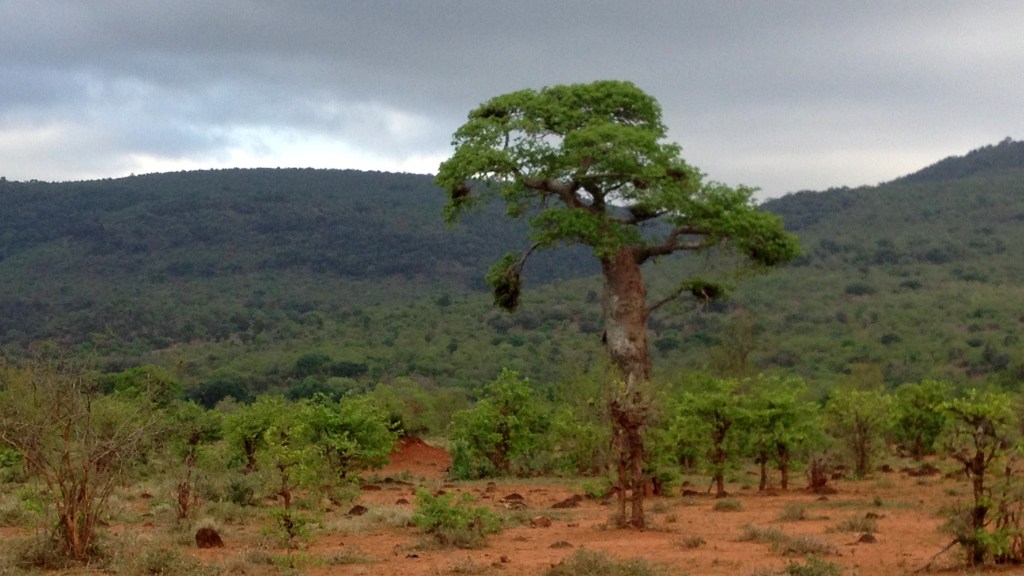
A winter week at Sanbonani (Hazyview)

The Chalet set amongst the trees

We used our timeshare points from another resort to book a week at Sanbonani near Hazyview, Mpumalanga in the first week of July 2012 – we were joined by our daughter Geraldine, husband Andre and Megan and Maia, 2 of our granddaughters, for what turned out to be a wonderful family week in the warm Lowveld.  The resort, which is a short distance from Hazyview and 10 minutes away from the Phabeni Gate into the Kruger Park, lies in a V-shaped property bounded by the Sabie River on the one side and a smaller tributary on the other and boasts spacious grounds and a small forest of trees. 
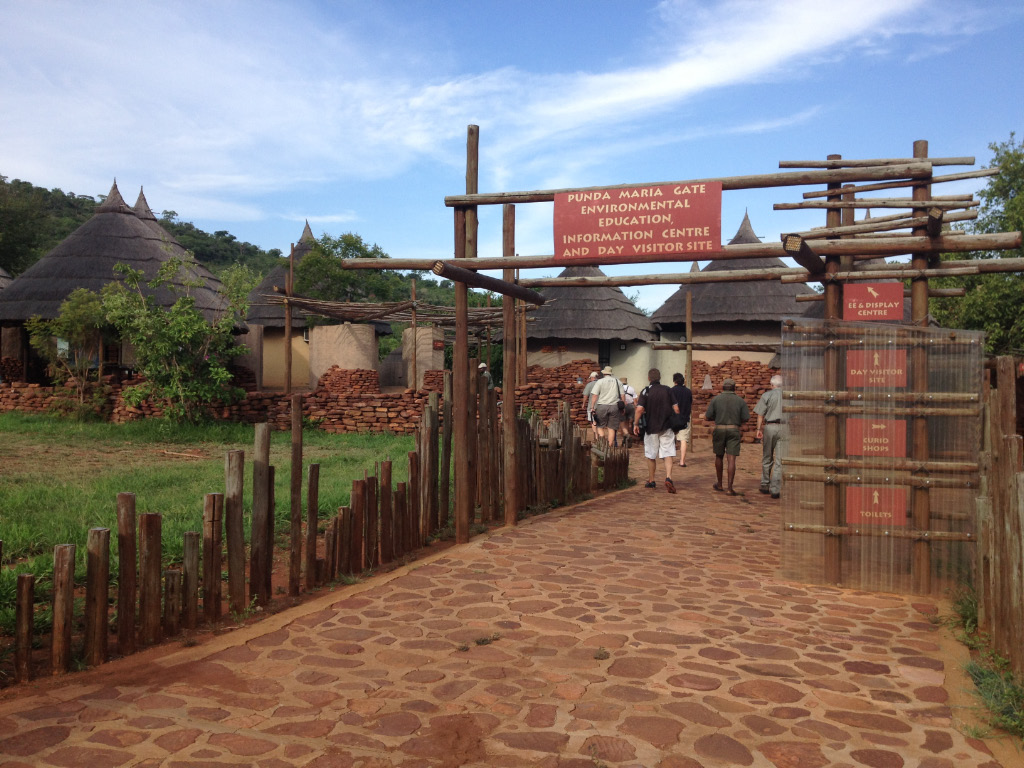
The self-catering units are comfortable and well-appointed and perfect for our needs, with a patio, overlooking the river, which became the ideal spot for our morning coffee, our evening braai and much of the in-between times. A large Wonderboom fig tree (Ficus Salicifolia according to my tree book) overhanging the patio proved to be irresistible for many of the birds in the area and there was a constant to-ing and fro-ing of birds eager to feast on the wild figs which were in abundance on the tree.

View from the patio
View from the patio

Plenty of wild figs for the birds to enjoy

This is an ideal spot for relaxed “don’t-have-to-go-anywhere” birding as we built up an extensive list of Bushveld and Riverine forest birds without going beyond the patio – 42 species in all – hey that’s 5% of the total species in South Africa! Highly recommended for birders of all levels of expertise, as the close-up views allow you to really get to grips with and enjoy the variety of species, literally on your doorstep. An added bonus is the proximity of the Kruger Park with Phabeni Gate just 10 to 15 minutes away, however being school holidays it was quite busy when we were there and arriving at the gate just before opening time, we found ourselves at the back of a longish queue – but that’s another story (watch this space).

The facilities in the resort, such as the large swimming pools, tennis courts and the putt-putt course mean that there is enough to keep you busy and active besides the birding and we also enjoyed venturing out to Hazyview and in particular the Perry’s Bridge shopping centre, with its interesting array of small boutique-style shops, located on the outskirts. The bakery has some special goodies to enjoy with coffee. 

The pool area at Sanbonani

Megan and Maia braving the chilly water (in the middle of winter)
Maia and Megan braving the chilly water (in the middle of winter)

A selection of the birds seen from the patio :

Purple-crested Turaco

Green Pigeon
Green Pigeon

Southern Black Flycatcher

Olive Woodpecker
Olive Woodpecker

Kurrichane Thrush
Kurrichane Thrush

Trumpeter Hornbill
Trumpeter Hornbill

Yellow-breasted Apalis

African Pied Wagtail

There were plenty of other species in the resort grounds of which I did not get good photos, such as Dark-capped Yellow-Warbler, Green-backed Camaroptera, Golden-tailed and Cardinal Woodpeckers, Dusky Flycatcher, Shikra, Black Saw-wing, Yellow-fronted Tinkerbird, Collared Sunbird and White-browed Robin-Chat. The river held Green-backed Heron and Reed Cormorant, amongst others :

Flycatcher
Ashy Flycatcher

Orange-breasted Bush-Shrike

Reed Cormorant
Reed Cormorant

While braai-ing in the evenings we enjoyed the night sounds of the lowveld including the calls of 2 owls – Southern White-faced and Wood Owl. The moon happened to be full on a couple of the evenings which added atmosphere to the experience.

Full moon
Full moon

There’s no question that a week in the lowveld in winter is full of delights and leaves you feeling like Superman :

The Super-Leonards - up, up and away
The Super-Leonards – up, up and away