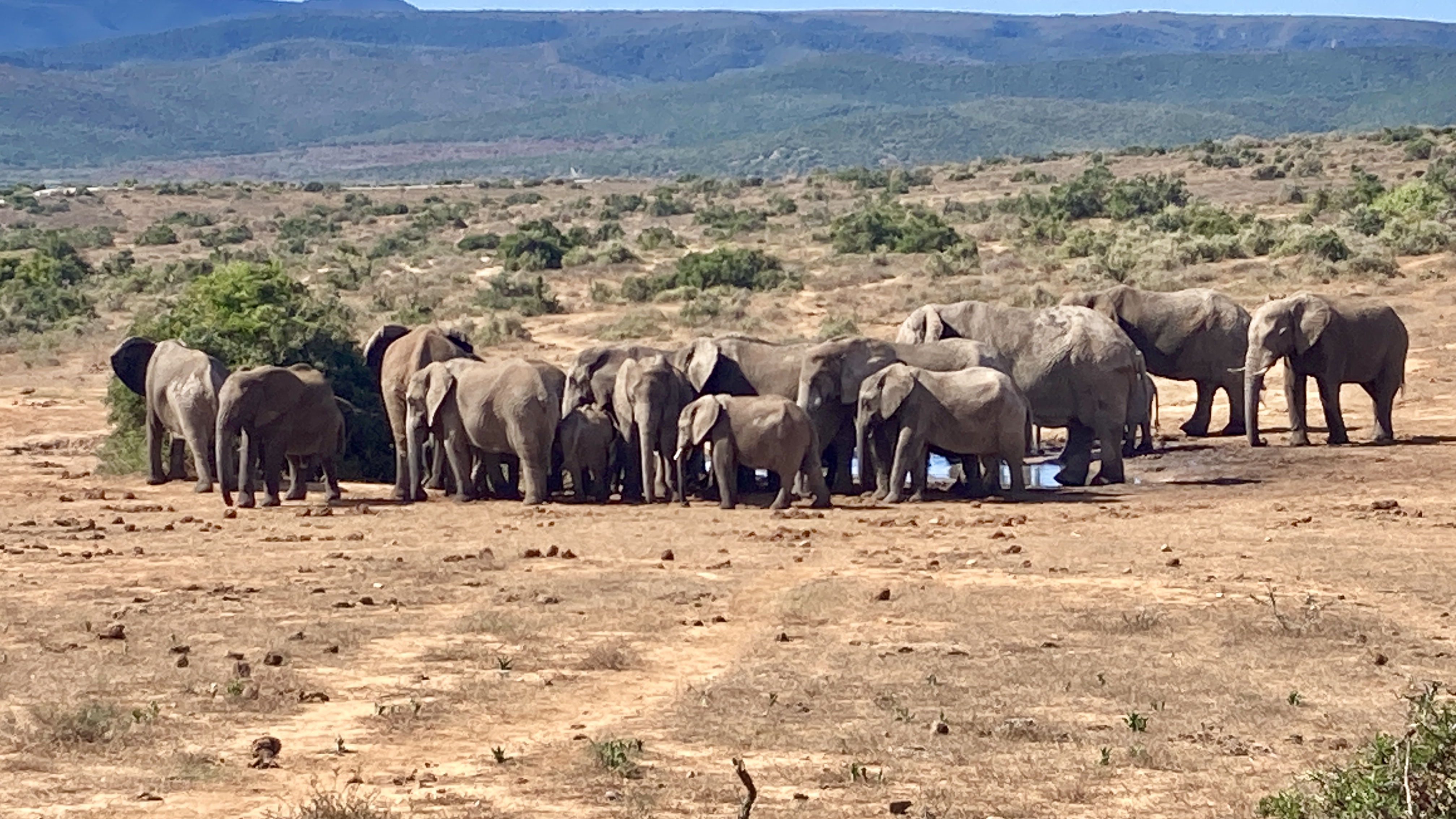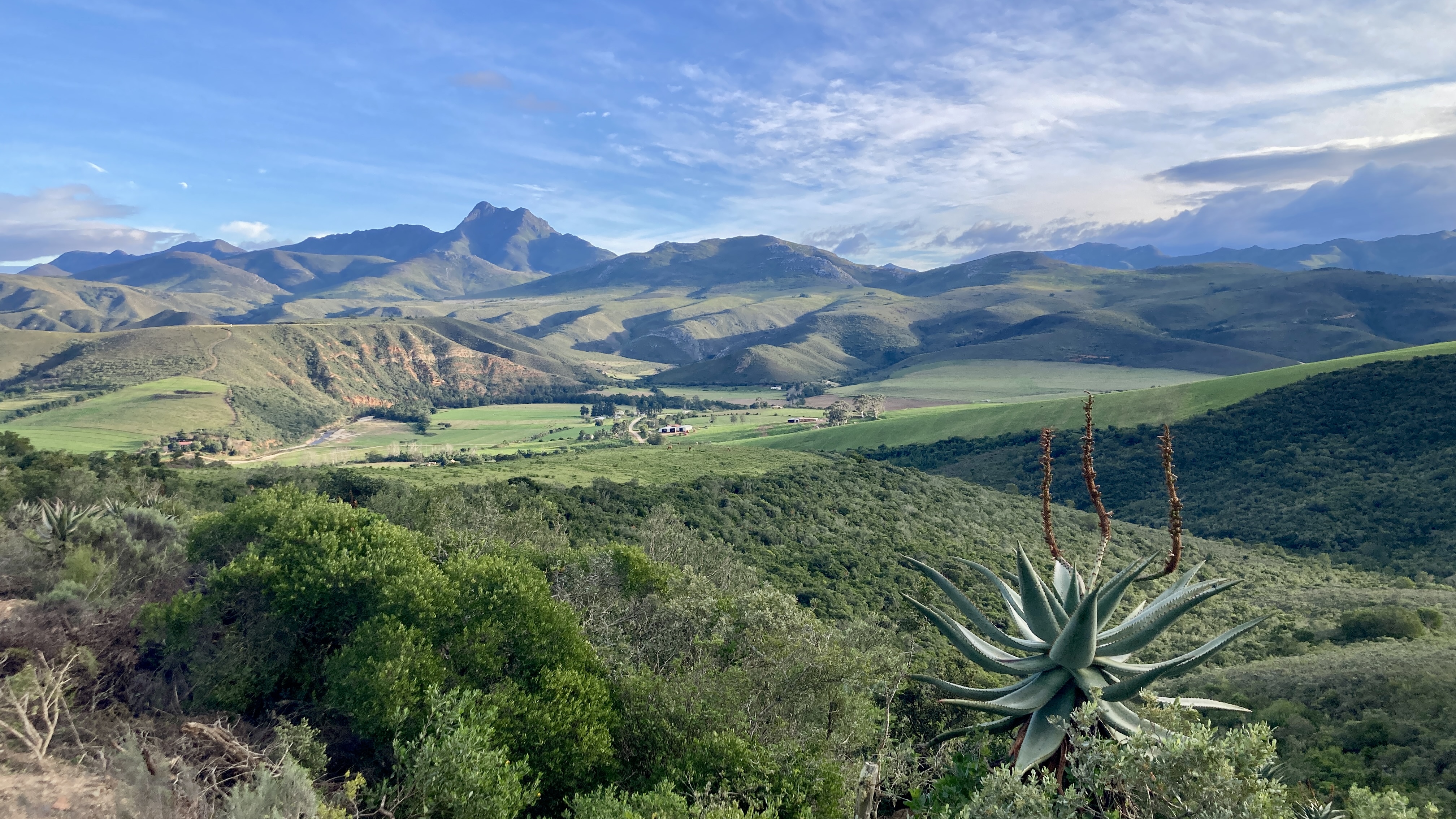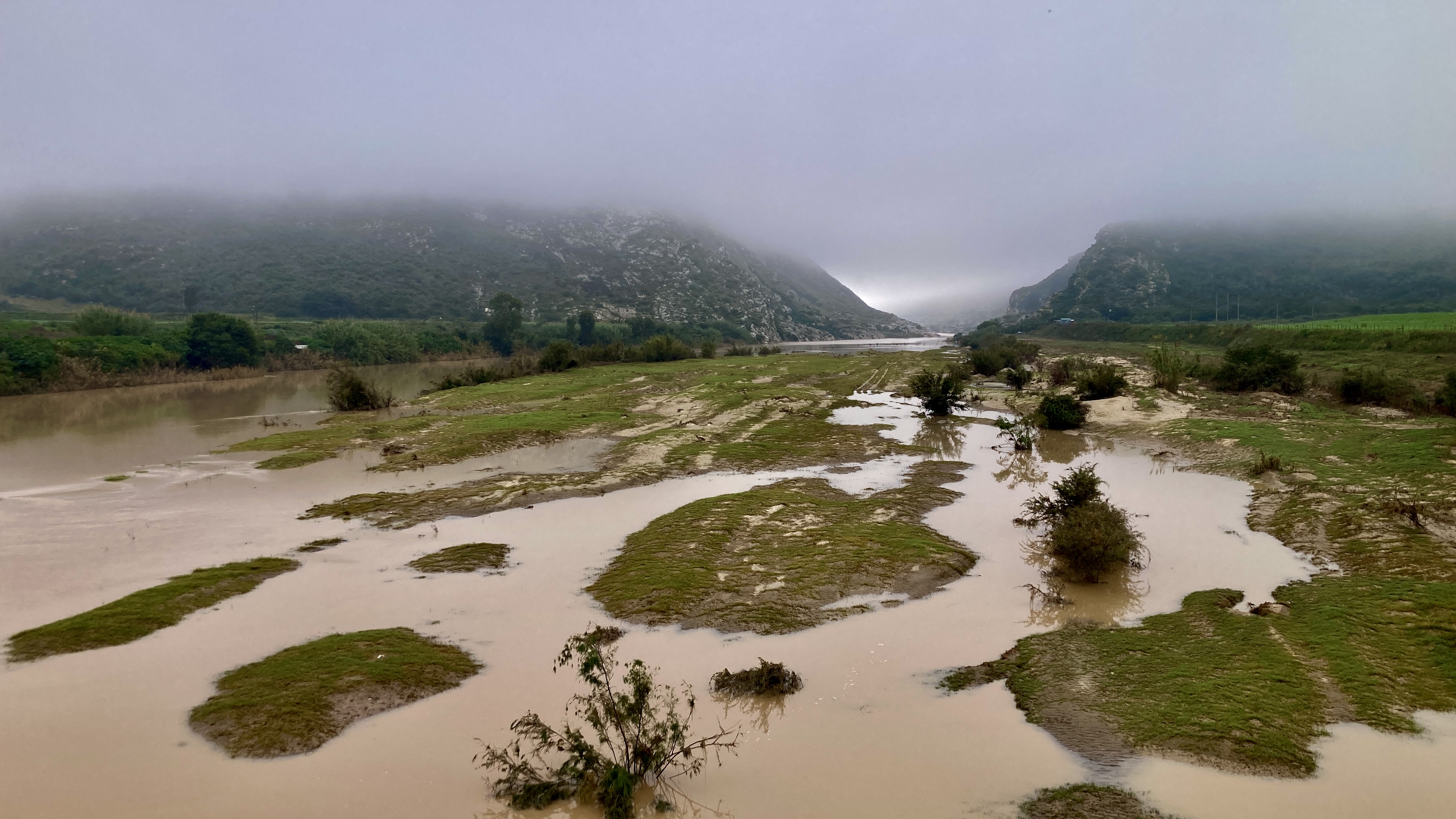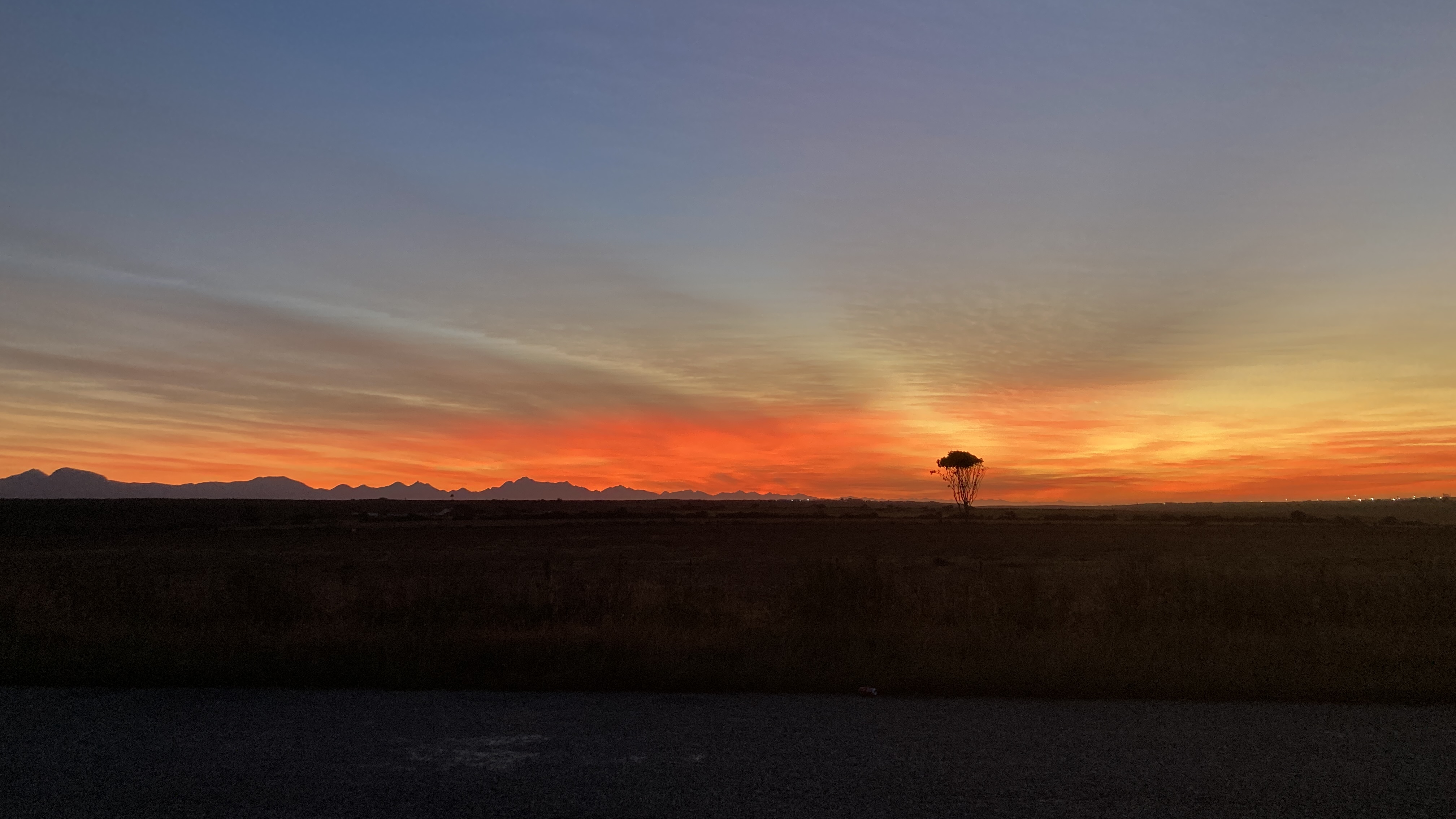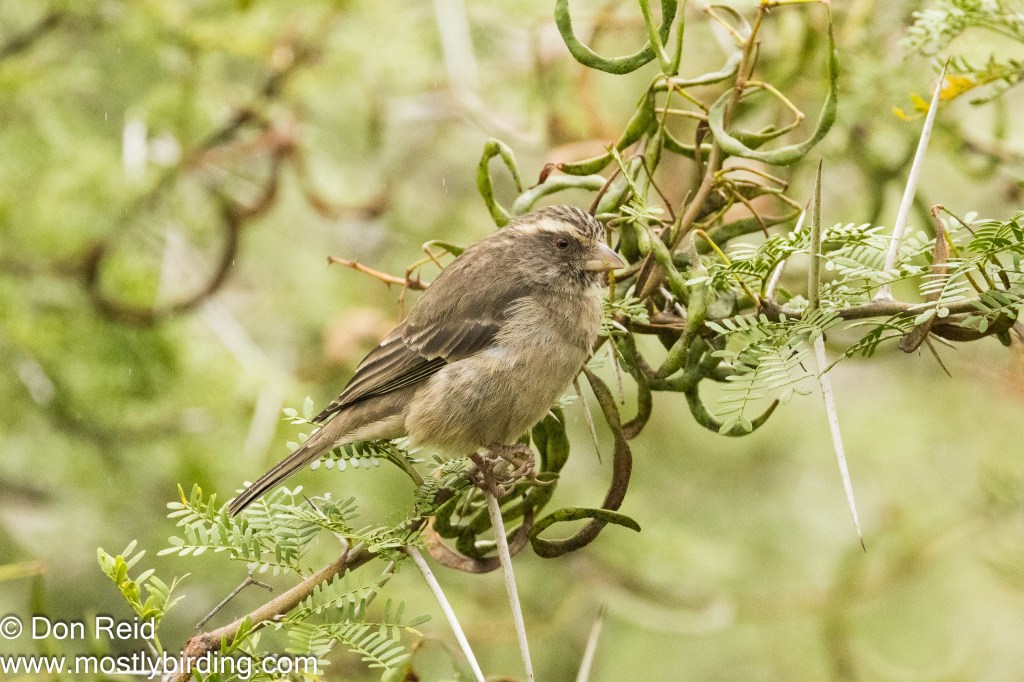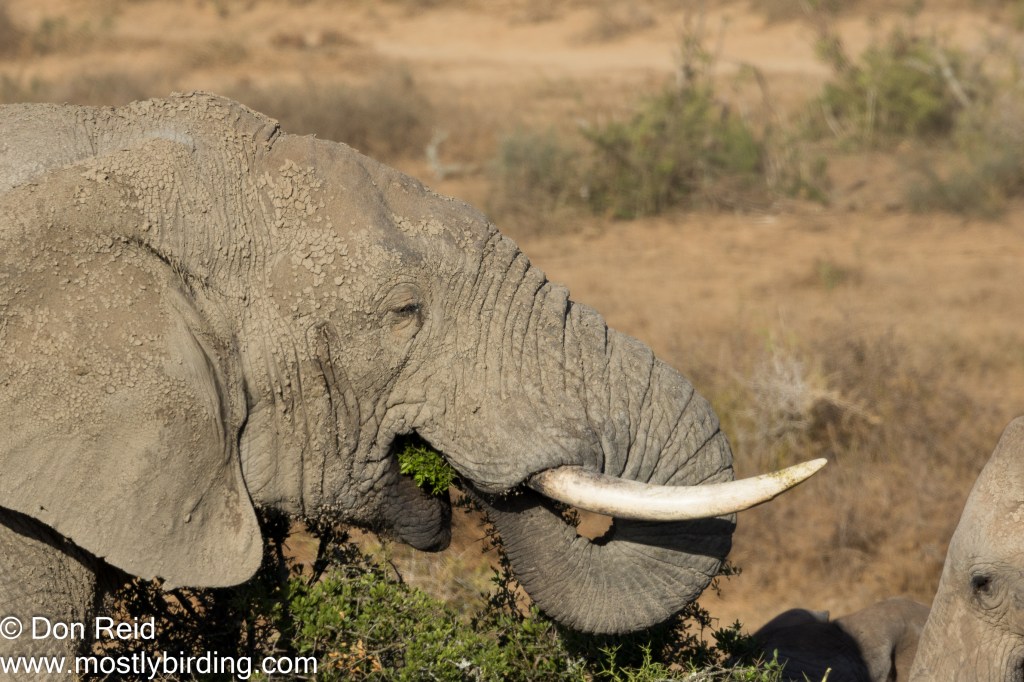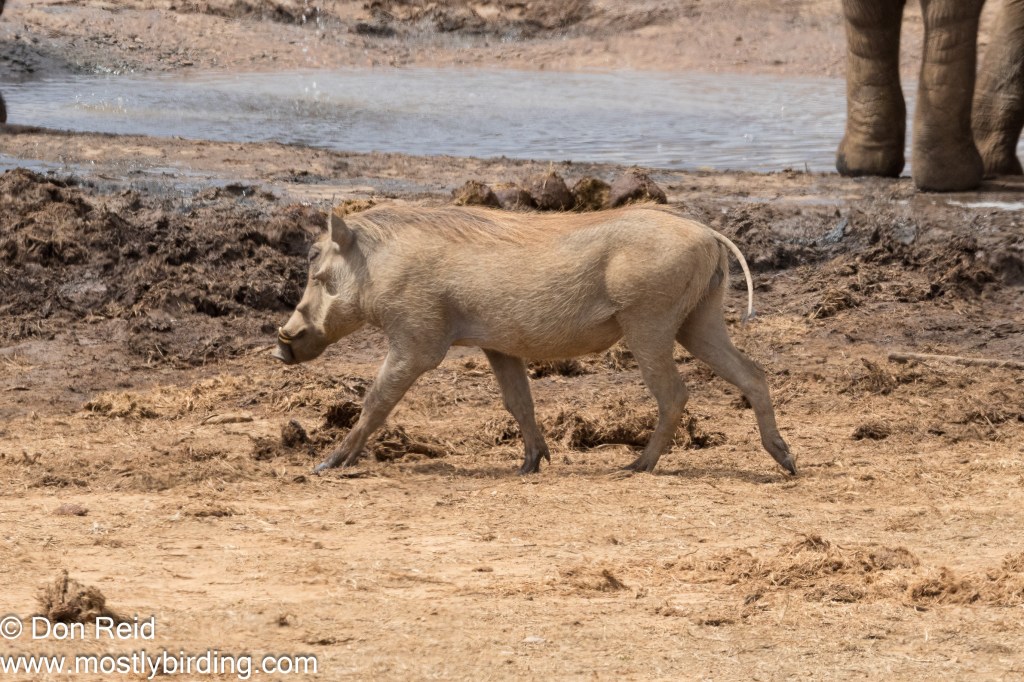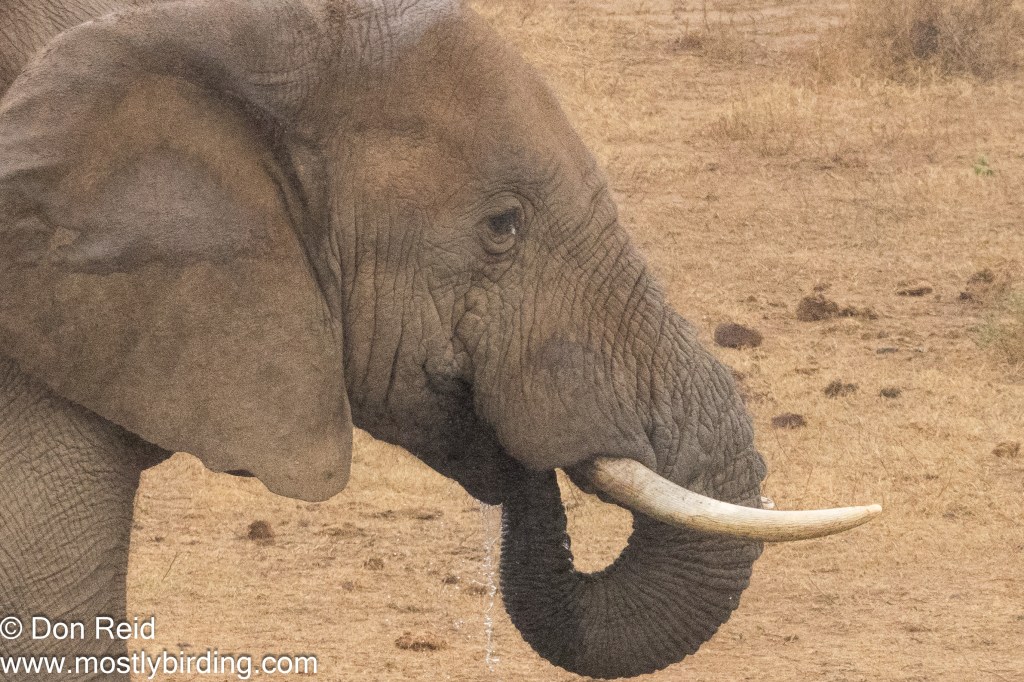
Tag Archives: Addo Elephant National Park

My Photo Pick for 2024 – the Birds

This is the second part of my photo pick for 2024 – a selection of bird photos that appealed to me for various reasons, not just the quality of the photo but also for the memory it left with me. I hope you enjoy scrolling through them as much as I have enjoyed taking, editing and selecting them.

If you have already glanced at the ‘categories’ I have placed them under and are wondering how I arrived at these – well, I didn’t but I did ‘borrow’ them from Firefinch which is the excellent birding app produced by Faansie Peacock (his real name!) and his team.

Faansie has a way of making birding interesting and fun and the way he categorises bird species in his app is a good example of his practical approach.

Raptors

Seeing a raptor at the roadside is always exciting and a reason to stop and have a better look – most will fly off the moment you stop, so it requires a bit of stealth to keep the car moving slowly while approaching the target and to have the camera at the ready for the moment you come to a standstill

Long-crested Eagle Lophaetus occipitalis Langkuifarend, Kleinberg area
African Cuckoo Hawk Aviceda cuculoides Koekoekvalk (Juvenile), Friemersheim area

Black-winged Kites are widespread in SA but finding this one about to feed on its prey was a first for me

Black-winged Kite Elanus caeruleus Blouvalk, Vleesbaai inland

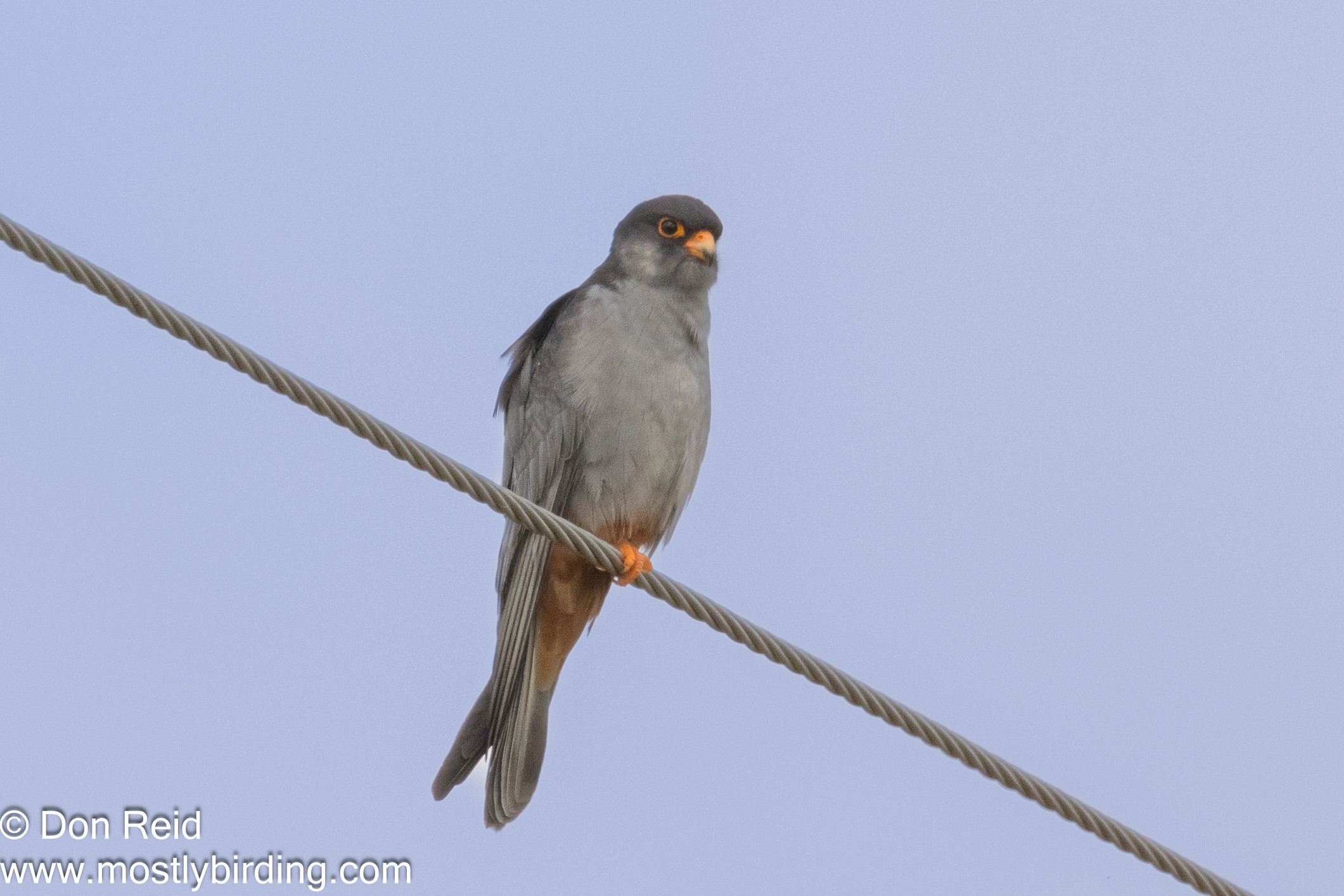
This is not a particularly good photo of an Amur Falcon that I came across but I include it only because it is a scarce sighting in the Southern Cape

Amur Falcon Falco amurensis Oostelike rooipootvalk (male), Kleinberg area

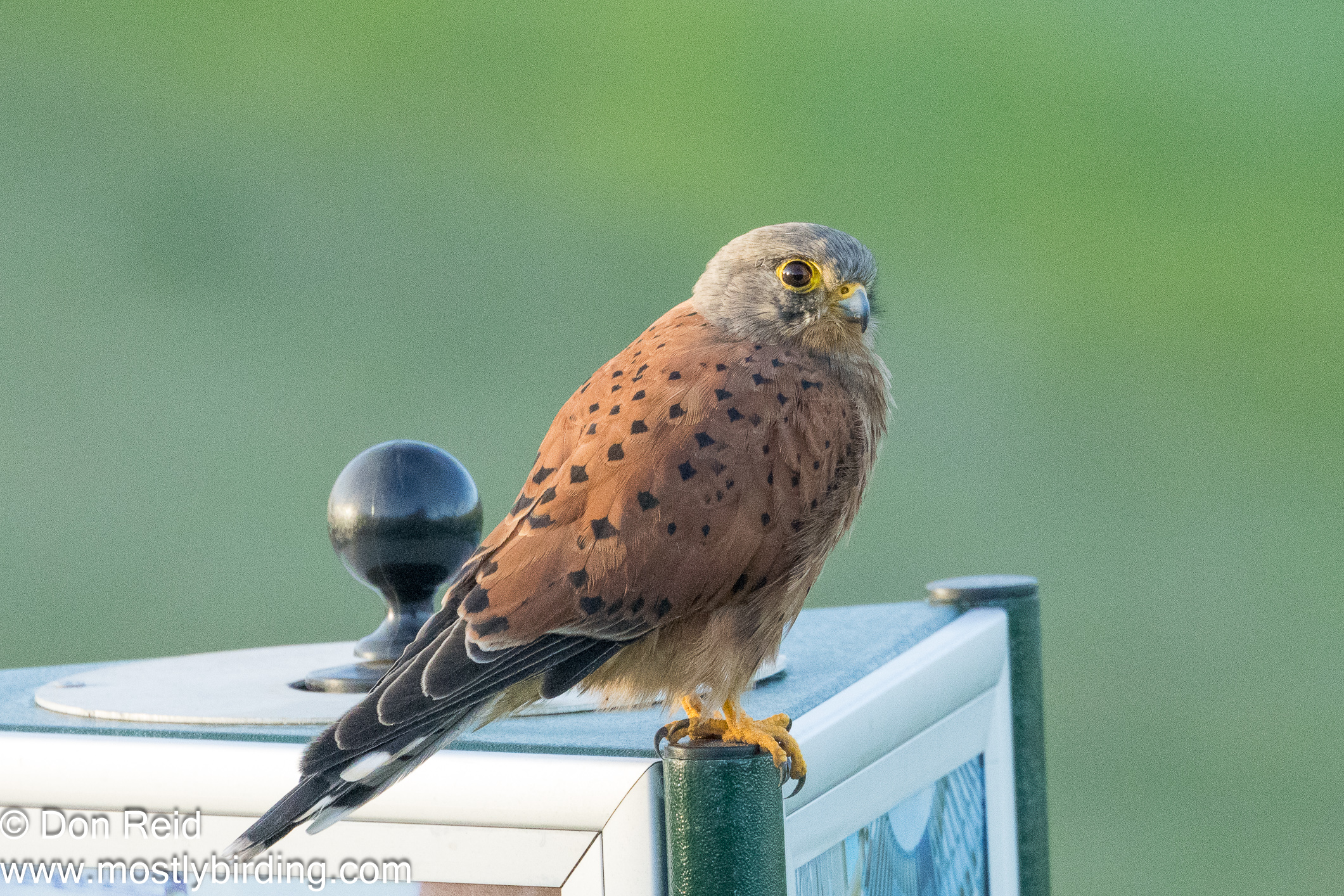
Rock Kestrel is a regular species in the estate where we live. This one chose the 15th tee, just 100m from our house, as a convenient spot for some hunting one morning

Rock Kestrel Falco rupicolus Kransvalk, Mossel Bay Golf Estate

Perchers

This category covers a variety of birds normally seen perched on a tree or bush or other suitable spot

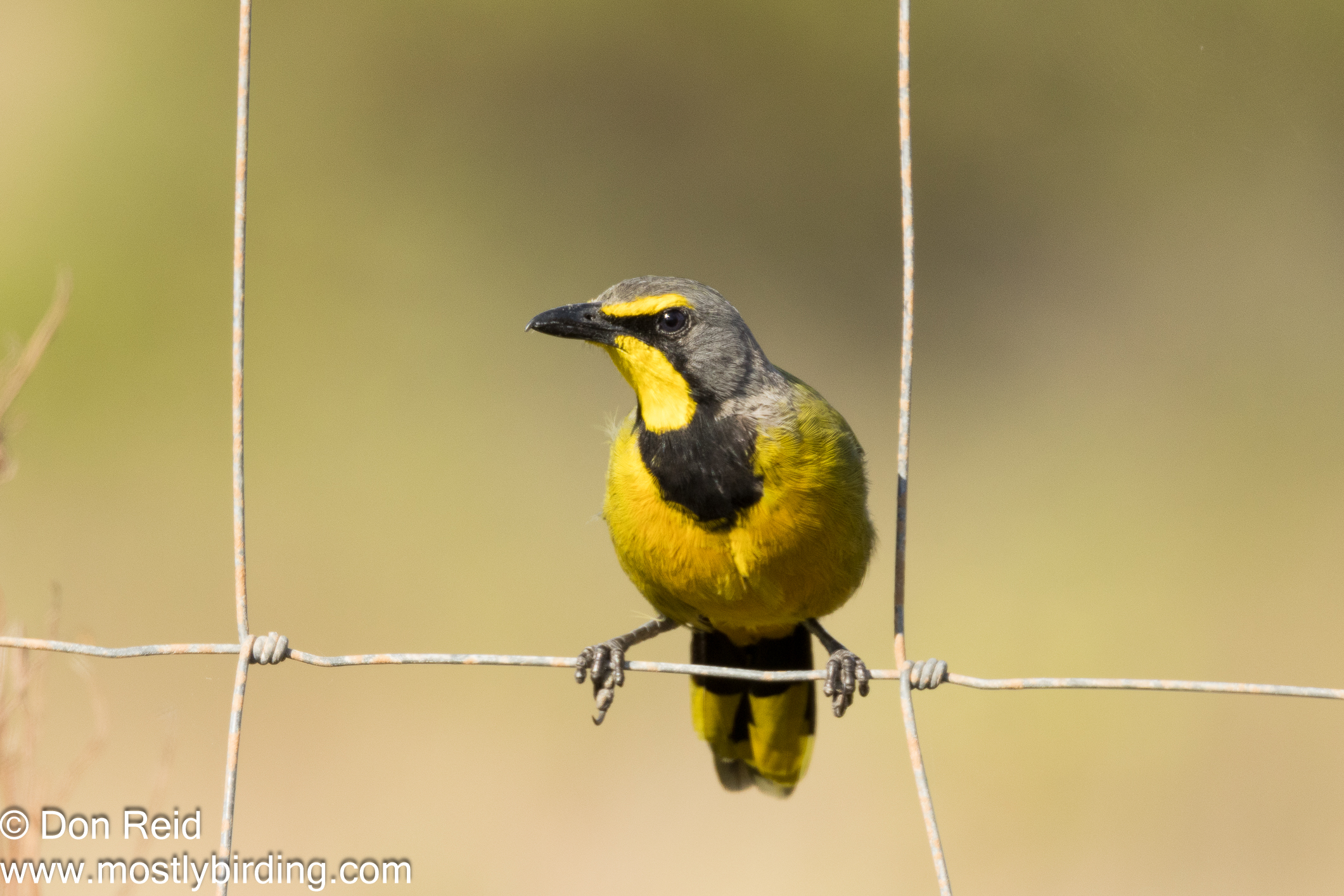
Bokmakieries are often one of the first species to be encountered when atlasing in the Southern Cape, as they greet the new day with vigourous calls. Getting them to pose is not always easy but this one eyed me from a wire fence, inviting me to take its photo

Bokmakierie Telophorus zeylonus Bokmakierie, Brandwag south

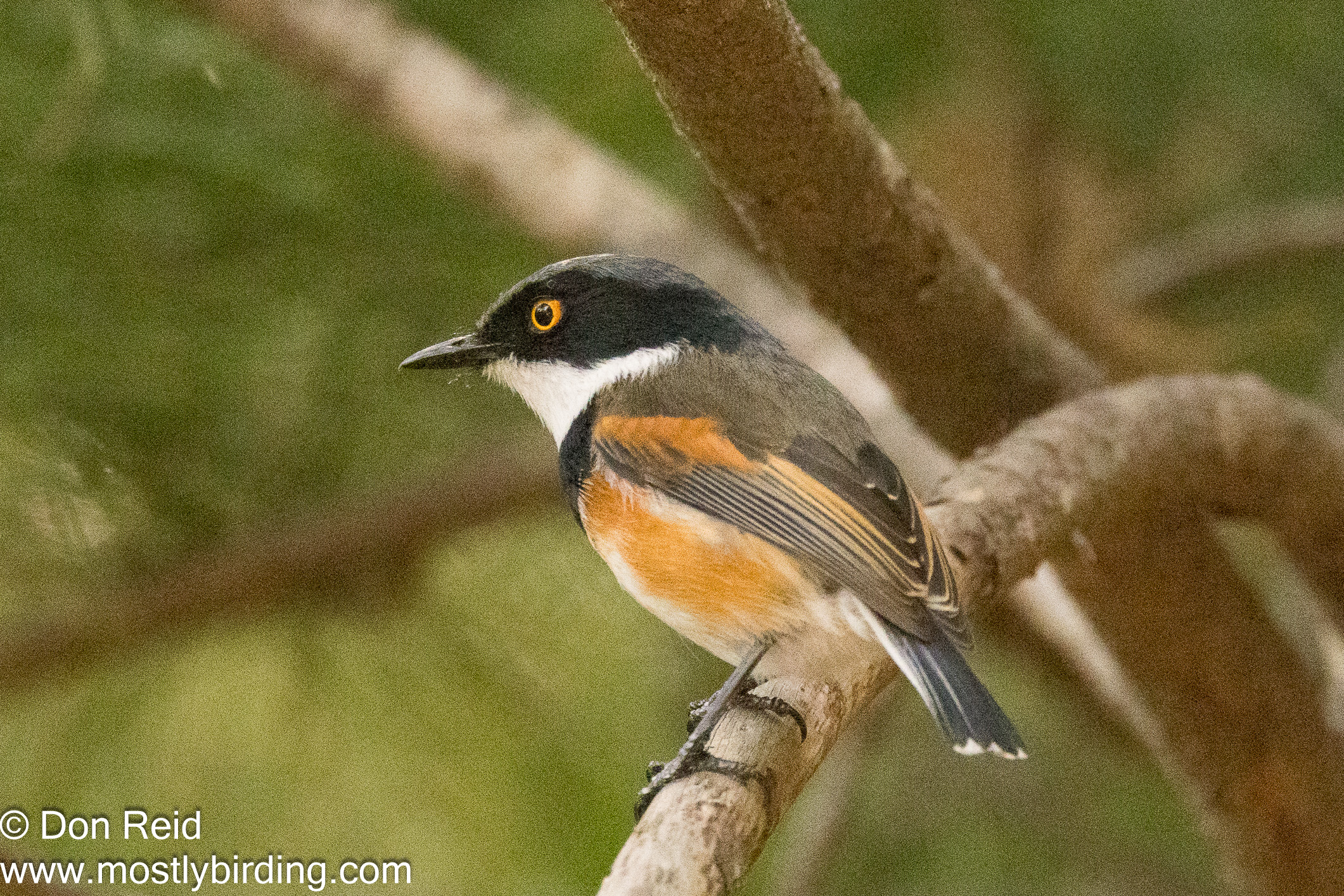
Cape Batis is a common forest bird – parts of the Bonniedale road heading west from the R328 are heavily forested and that’s where I found this one

Cape Batis Batis capensis Kaapse bosbontrokkie (male), Bonniedale road

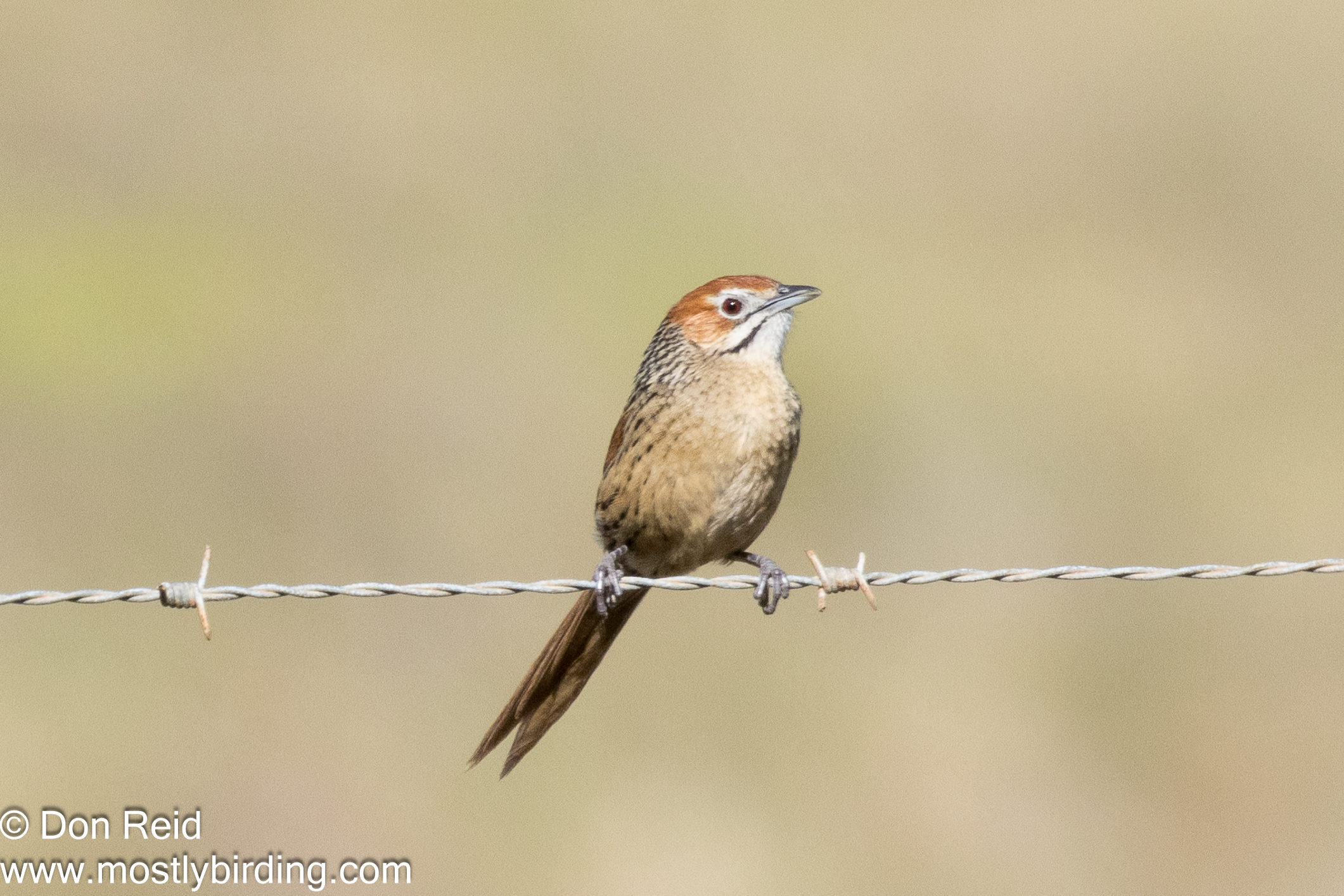
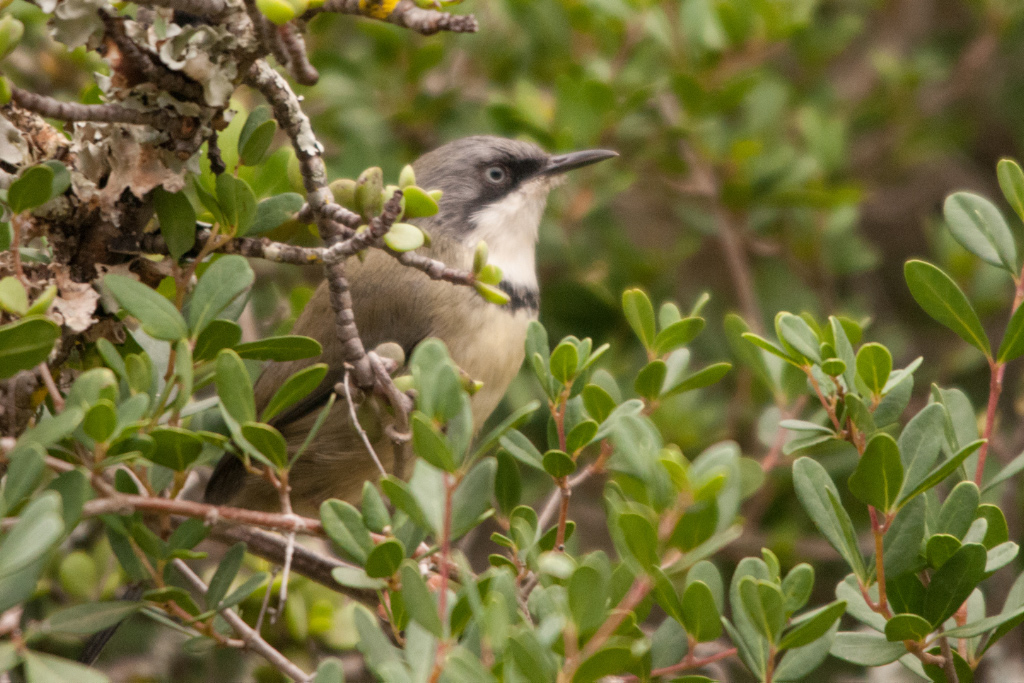
I had stopped in the mountains beyond Herbertsdale to check for birds when this Grassbird – or perhaps it’s better to call it a Fencebird in this case – drew my attention with its familiar trilling call

Cape Grassbird Sphenoeacus afer Grasvoël, Herbertsdale north

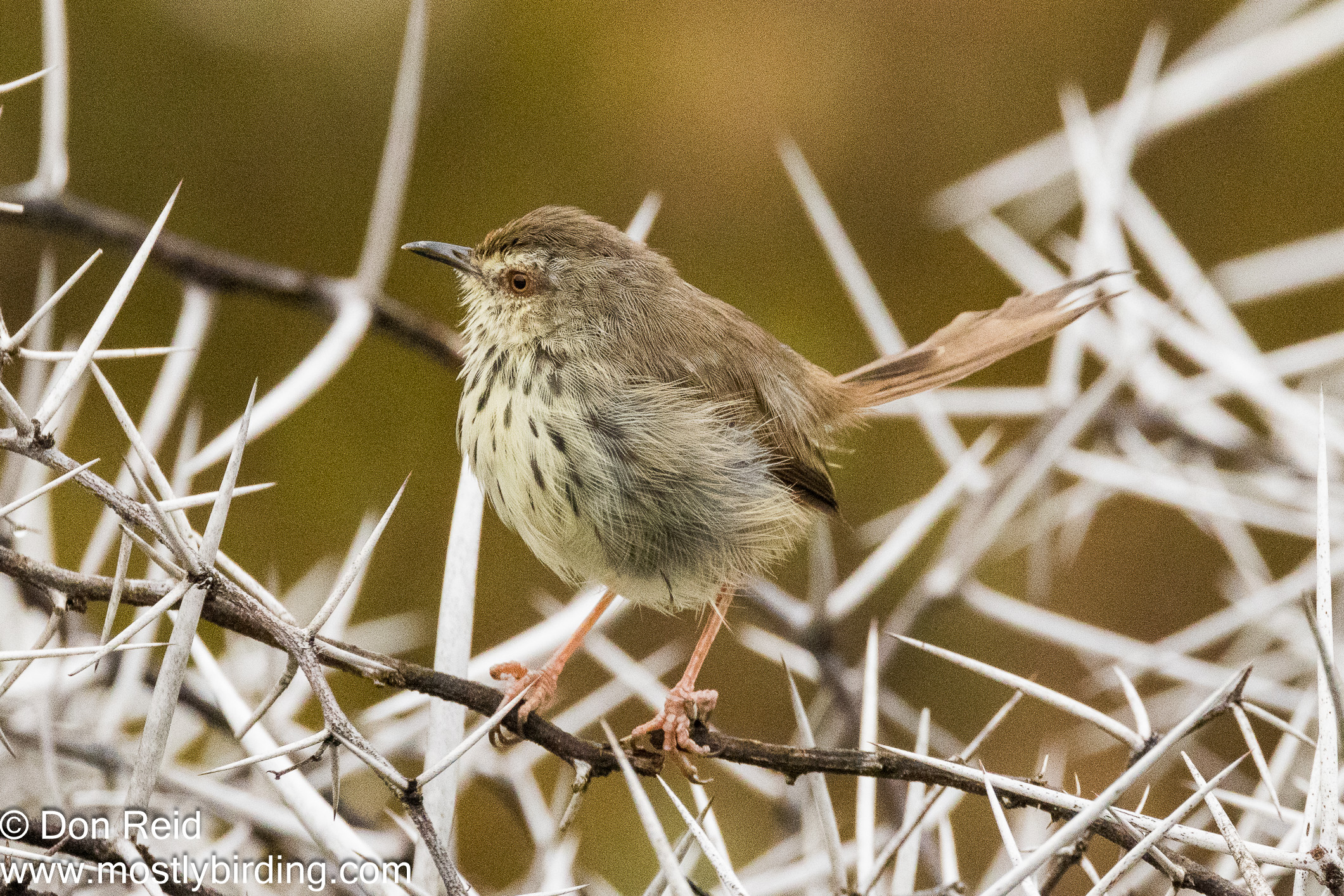
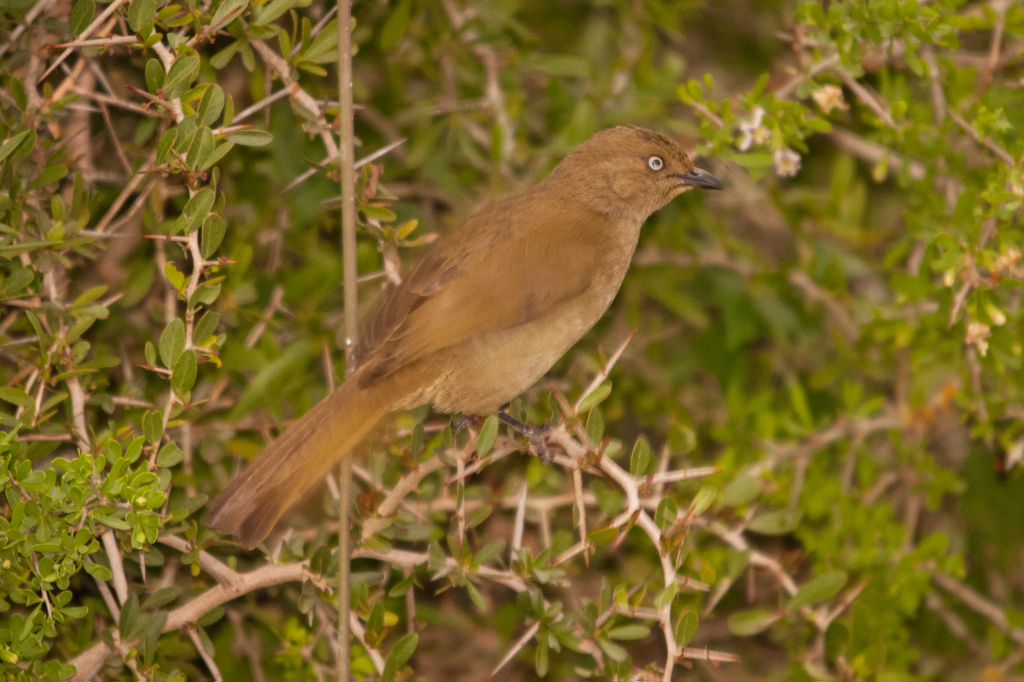
Karoo Prinia is common in suitable habitat across its distribution range. I saw one while stoepsitting in the Addo NP and stalked it until it settled in a thorny bush for long enough to get this image

Karoo Prinia Prinia maculosa Karoolangstertjie (race exultans), Addo Elephant NP

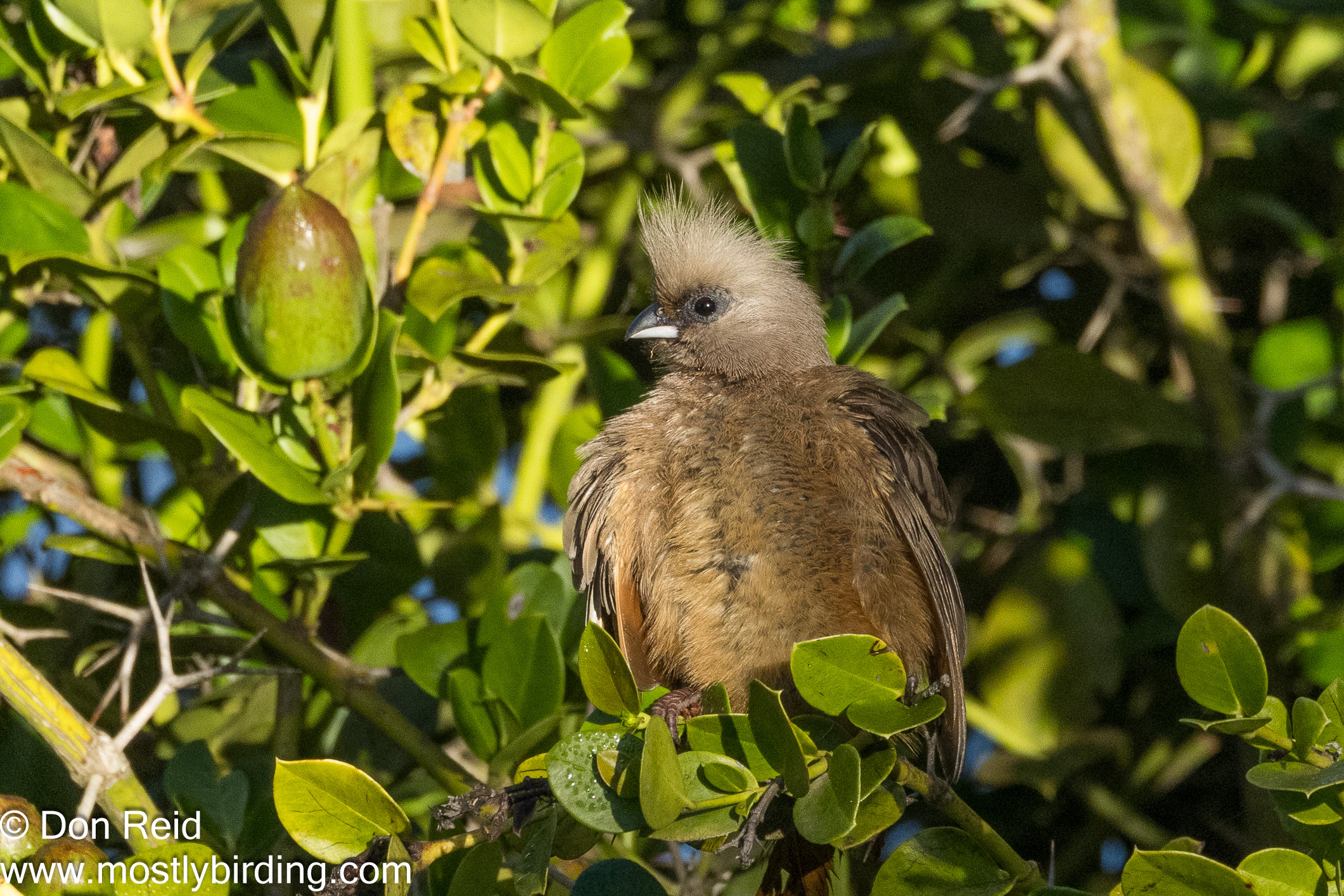
The familiar Speckled Mousebird is fond of disappearing into foliage but will usually pop up to check out the surroundings, which is what this one did

Speckled Mousebird Colius striatus Gevlekte muisvoël, Wilderness

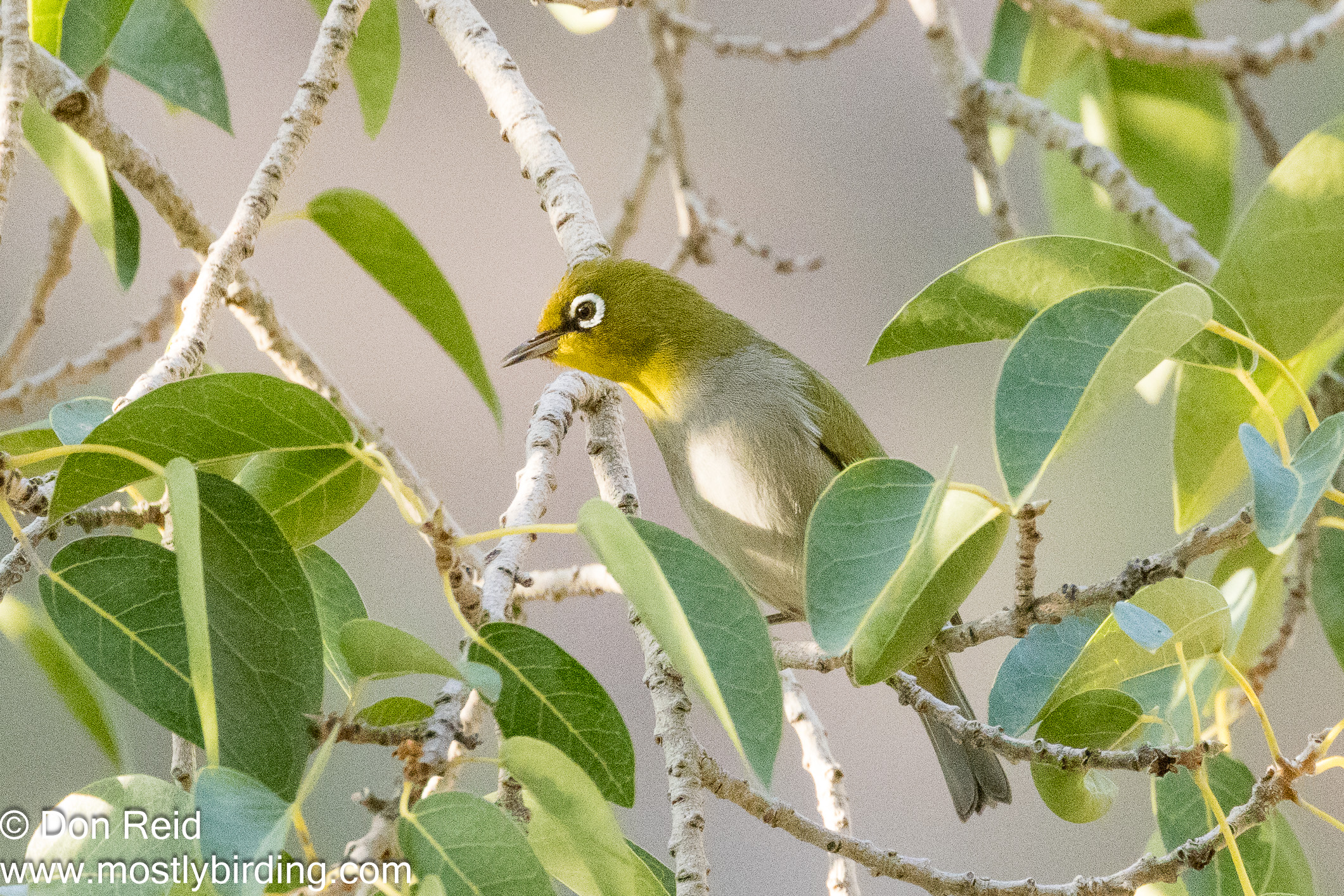
Another very familiar bird, the Cape White-eye, visited us frequently during our stay at The Baths near Citrusdal

Cape White-eye Zosterops capensis Kaapse glasogie, (race capensis), The Baths Citrusdal

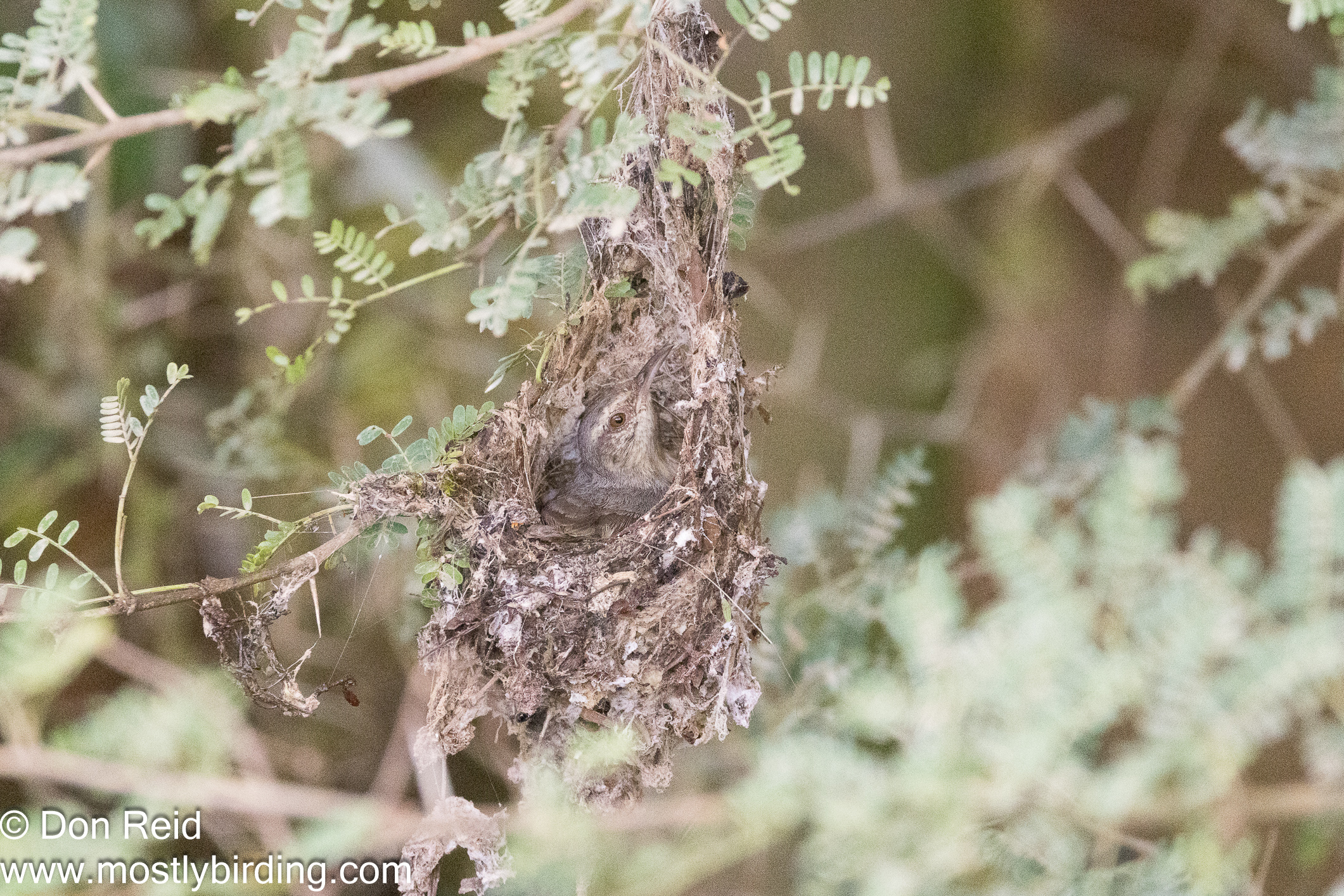
One of my favourite photos of the year, I came across this Long-billed-Crombec while atlasing and was thrilled to see it drop down and take up position in the mouth of the nest low in the tree, which I had not noticed

Long-billed Crombec Sylvietta rufescens Bosveldstompstert (race diverga), Herbertsdale north east

Suckers

The curve-billed nectar-suckers

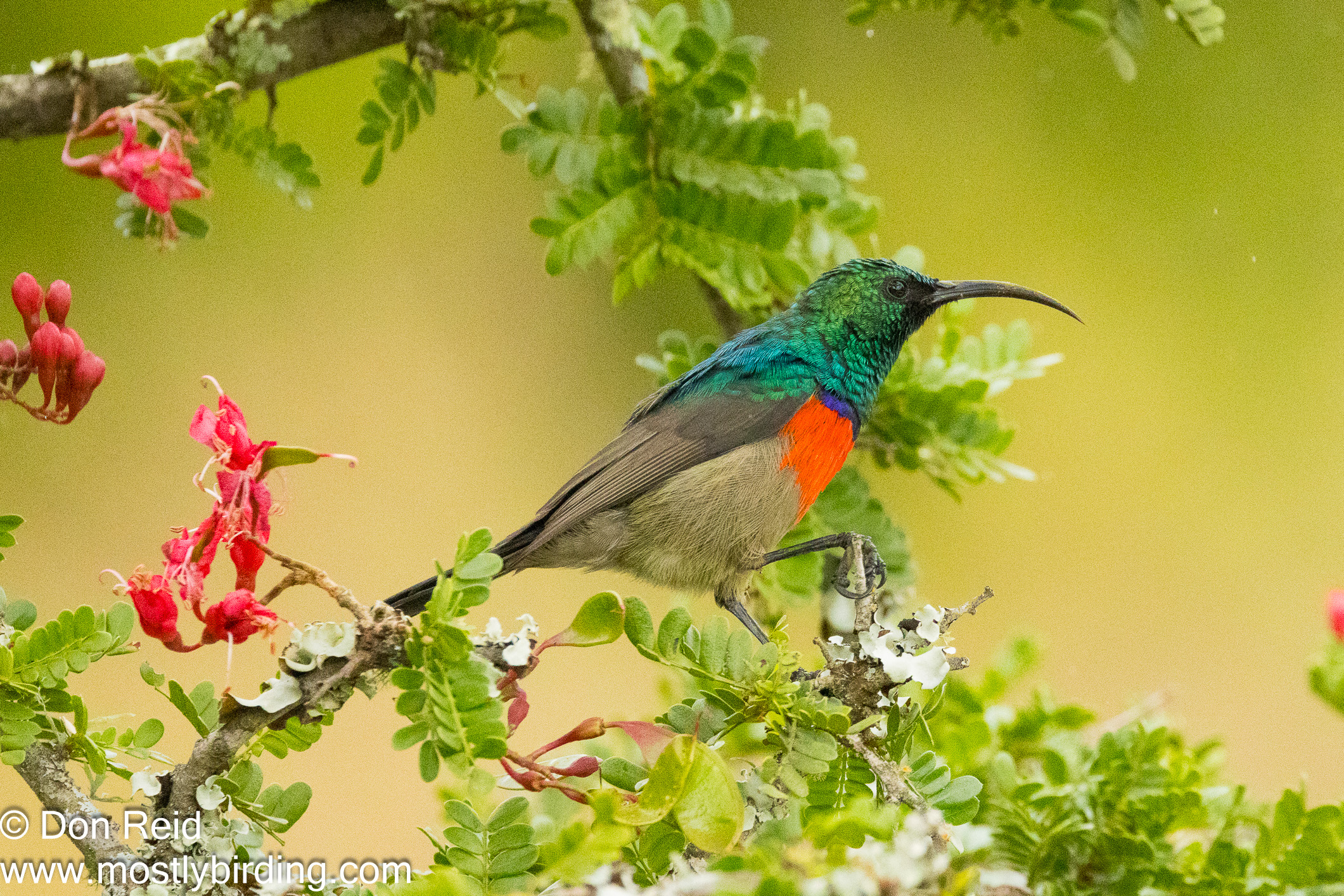
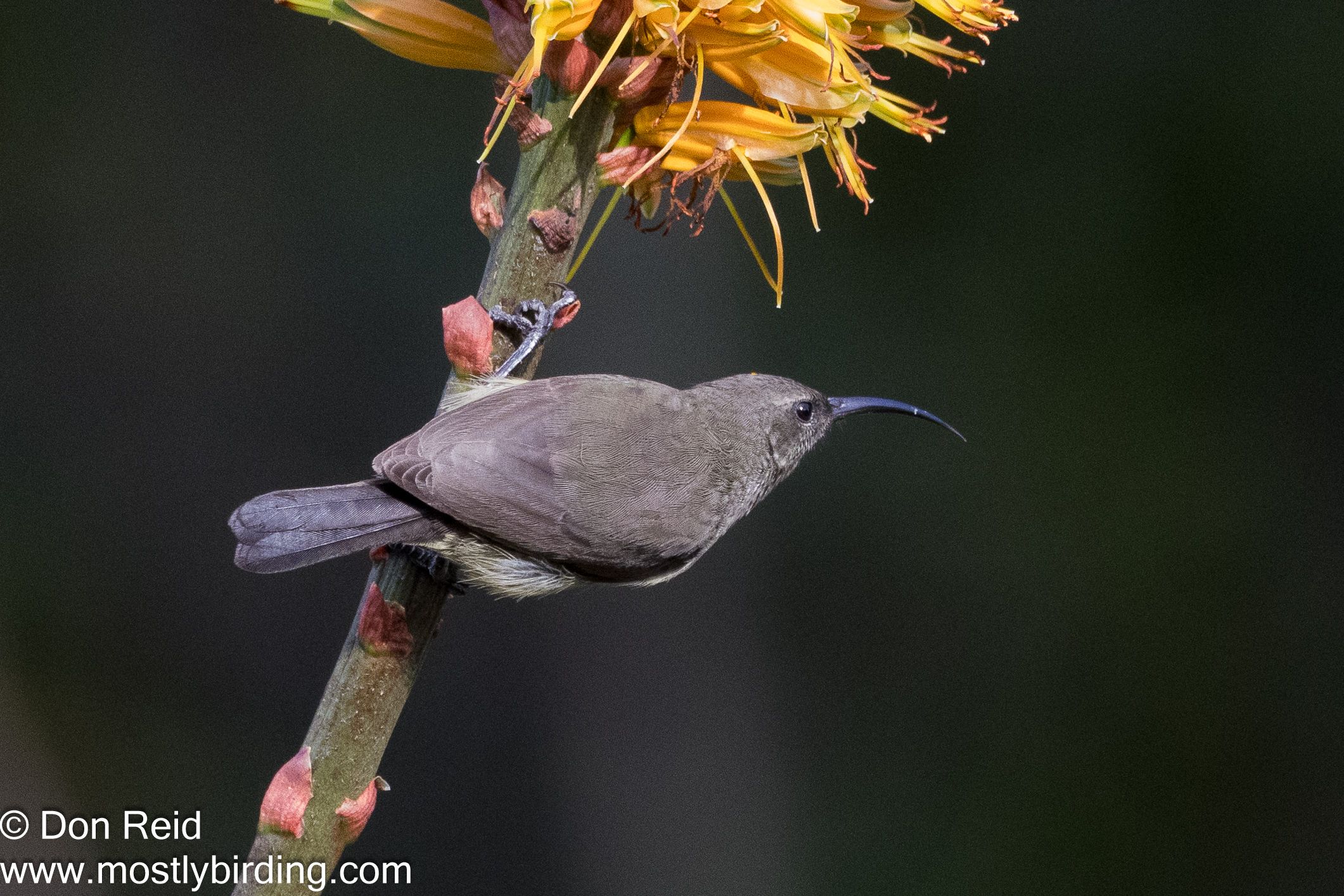
The photos illustrate the colourful male and the rather drab female of the species that I often come across while atlasing, and at home

Greater Double-collared Sunbird Cinnyris afer Groot-rooibandsuikerbekkie, Addo Elephant NP
Greater Double-collared Sunbird Cinnyris afer Groot-rooibandsuikerbekkie (female), Friemersheim area

Seed-eaters

All have short, strong triangular bills suited to their main diet of seeds.

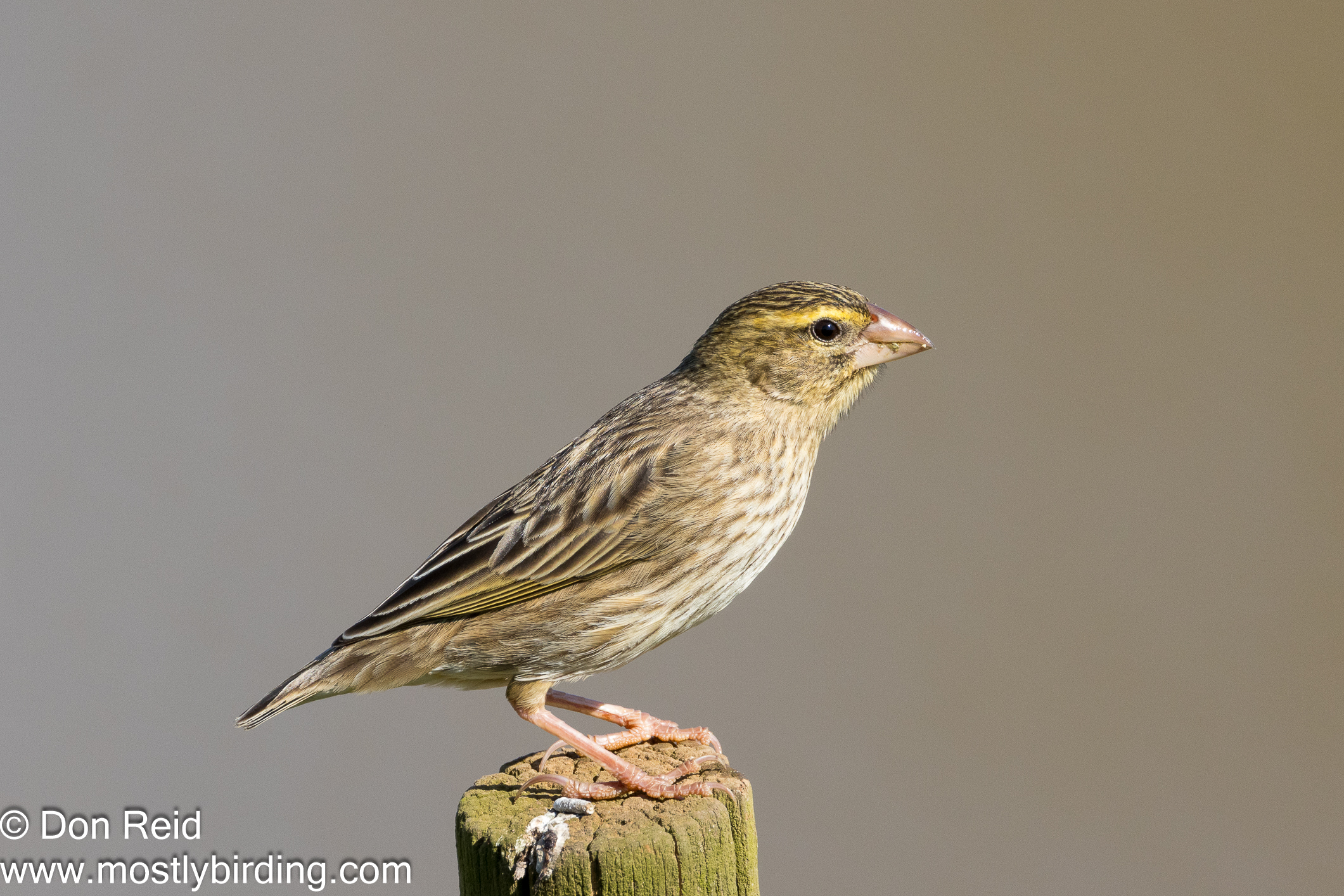
The Bishops were both photographed in winter non-breeding plumage.

Yellow Bishop Euplectes capensis Kaapse flap (non-breeding male), Klein Brak area
Southern Red Bishop Euplectes orix Rooivink (non-breeding), Bland’s Drift
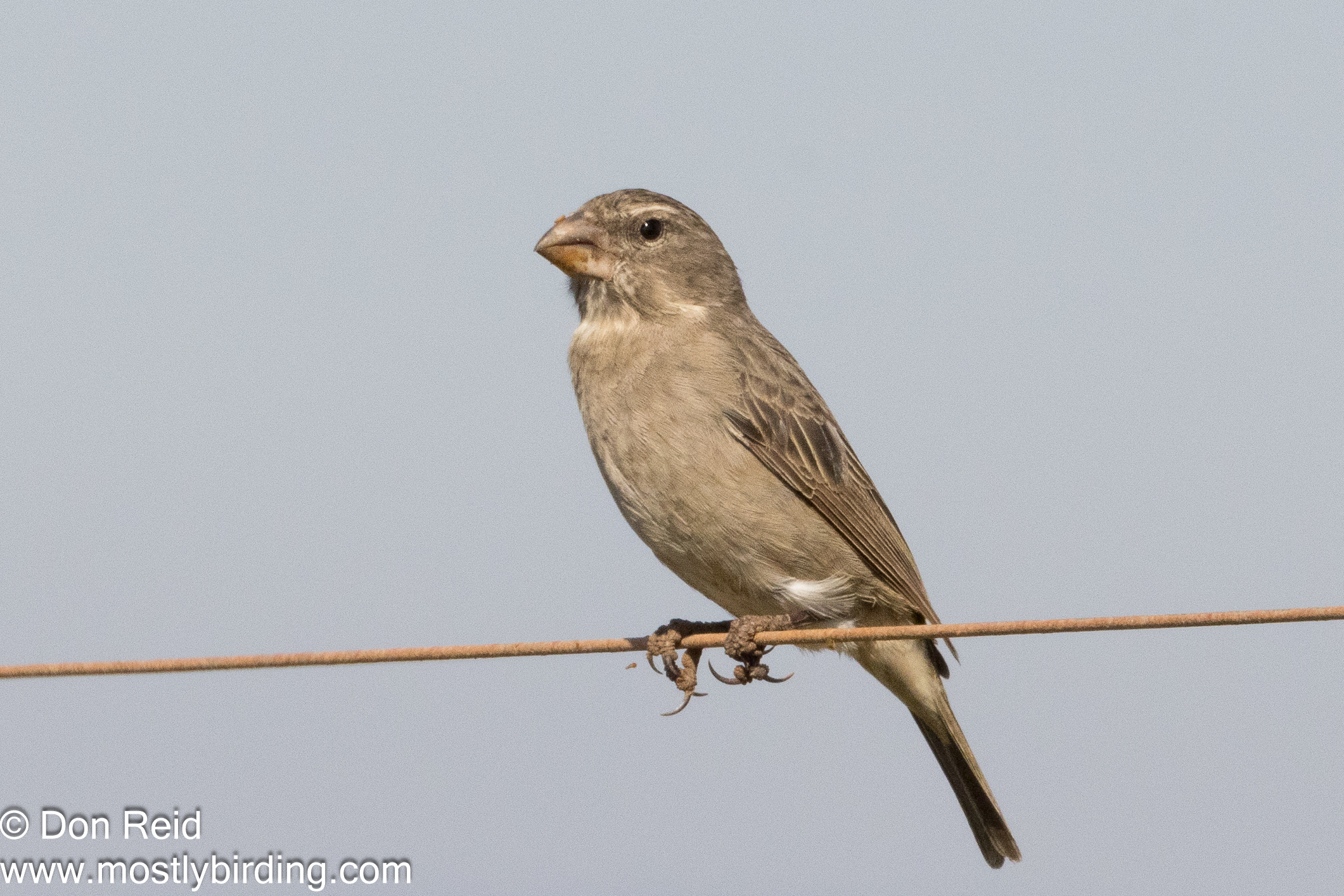
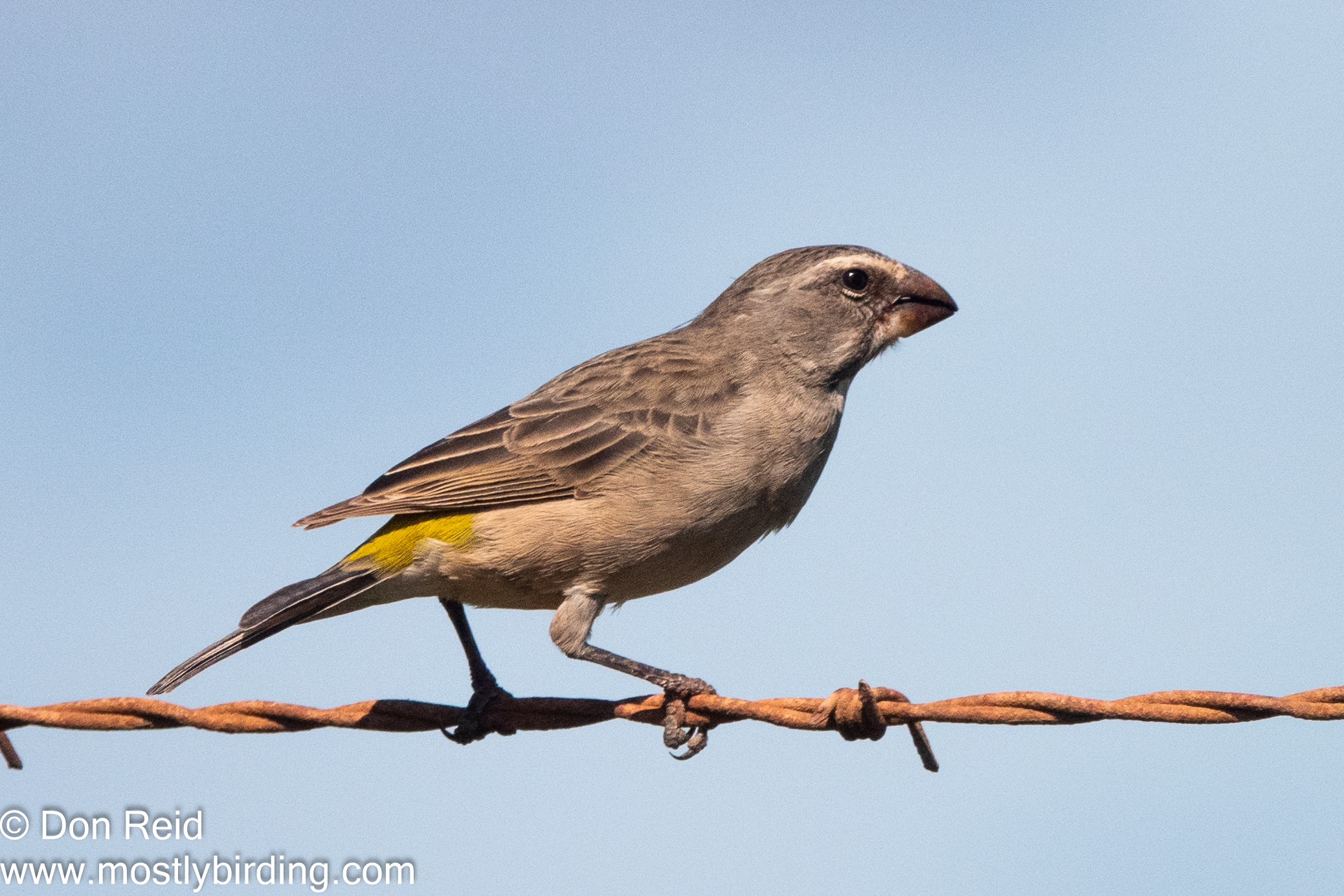
White-throated Canary Crithagra albogularis Witkeelkanarie, Herbertsdale area

Cape Canaries always seem to be on the go, not waiting for an anxious bird photographer to get his act together, so I was happy that this one hung around a bit.

Cape Canary Serinus canicollis Kaapse kanarie (race canicollis), Herbertsdale north
Cape Bunting Emberiza capensis Rooivlerkstreepkoppie (race capensis), Herbertsdale north

Favourites

A random mix of familiar birds, often colourful and with well-known calls

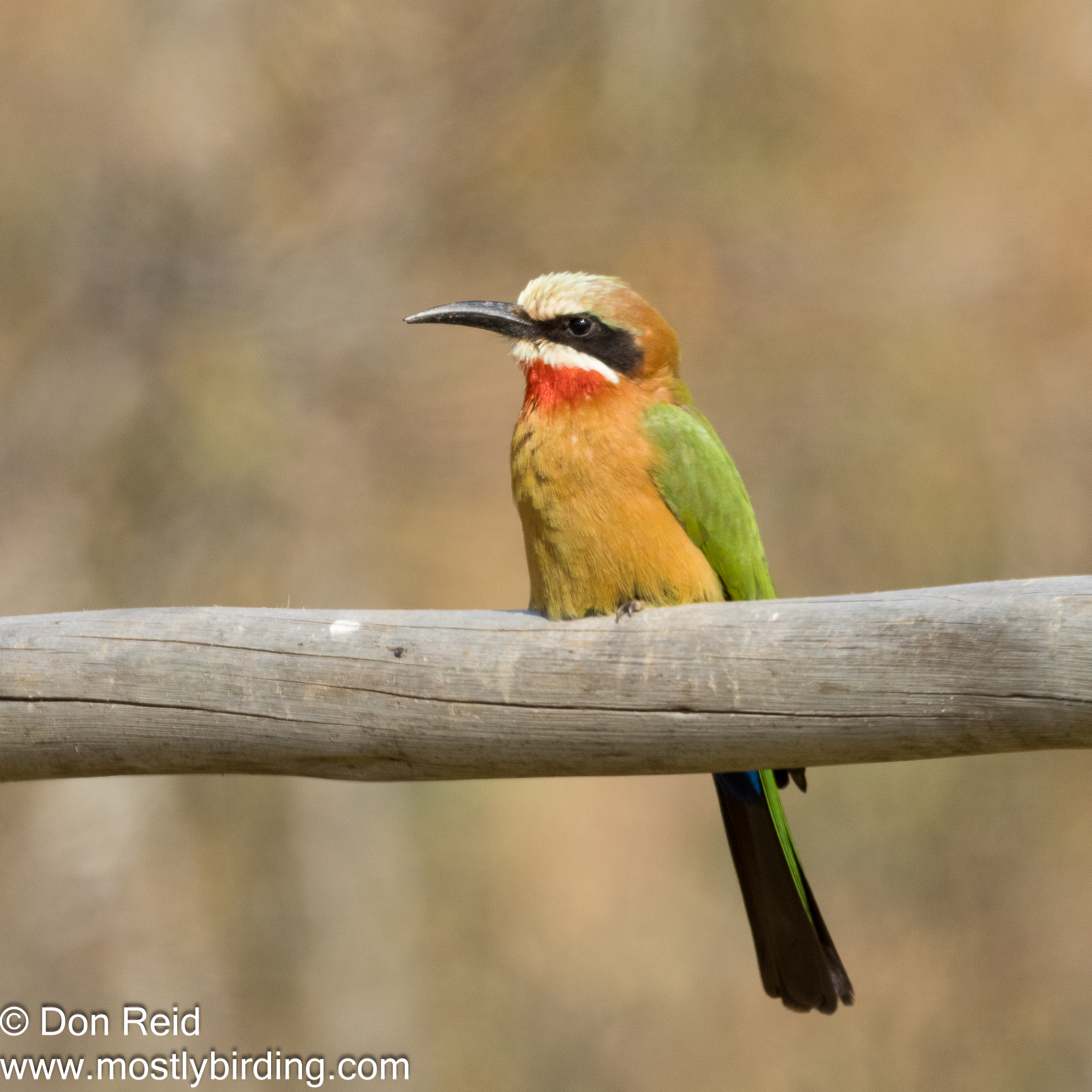
White-fronted Bee-eater Merops bullockoides Rooikeelbyvreter, Verlorenkloof

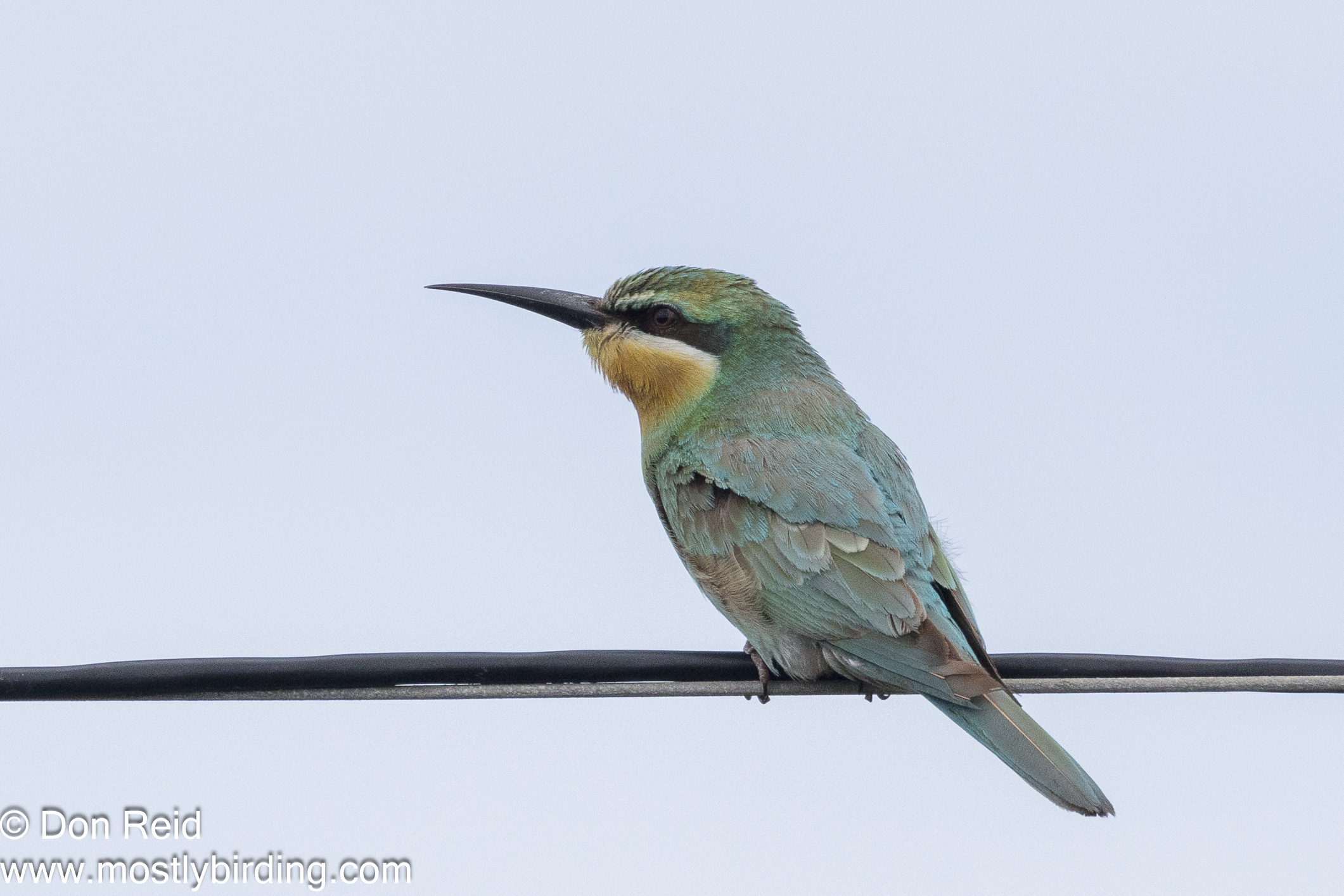
The Blue-cheeked Bee-eater is a Palearctic migrant, regarded as a rarity in the Western Cape, which is why I have included it in my pick. However they have been seen during summer near Gouritzmond for a few years now.

Blue-cheeked Bee-eater Merops persicus Blouwangbyvreter (Juvenile), Gouritzmond road
African Hoopoe Upupa africana Hoephoep, Brandwag area
Brown-hooded Kingfisher Halcyon albiventris Bruinkopvisvanger (race vociferans), Verlorenkloof

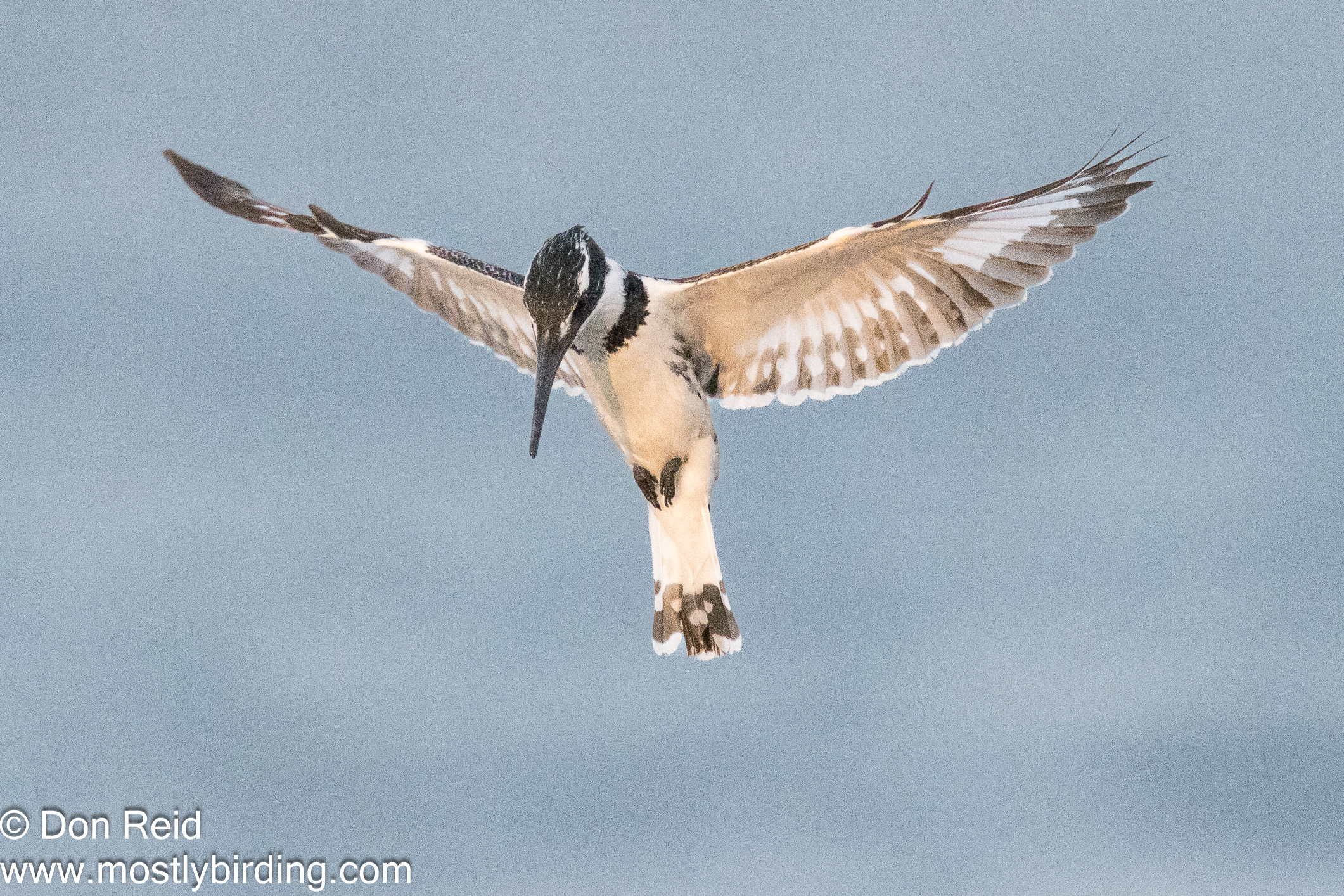
Pied Kingfishers are known for their habit of hover-hunting – this one did so at The Point in Mossel Bay while we were parked there enjoying our customary coffee one late afternoon just before sunset, with perfect lighting to enhance the beauty of the bird.

Pied Kingfisher Ceryle rudis Bontvisvanger (female), Mossel Bay Point

Flyers

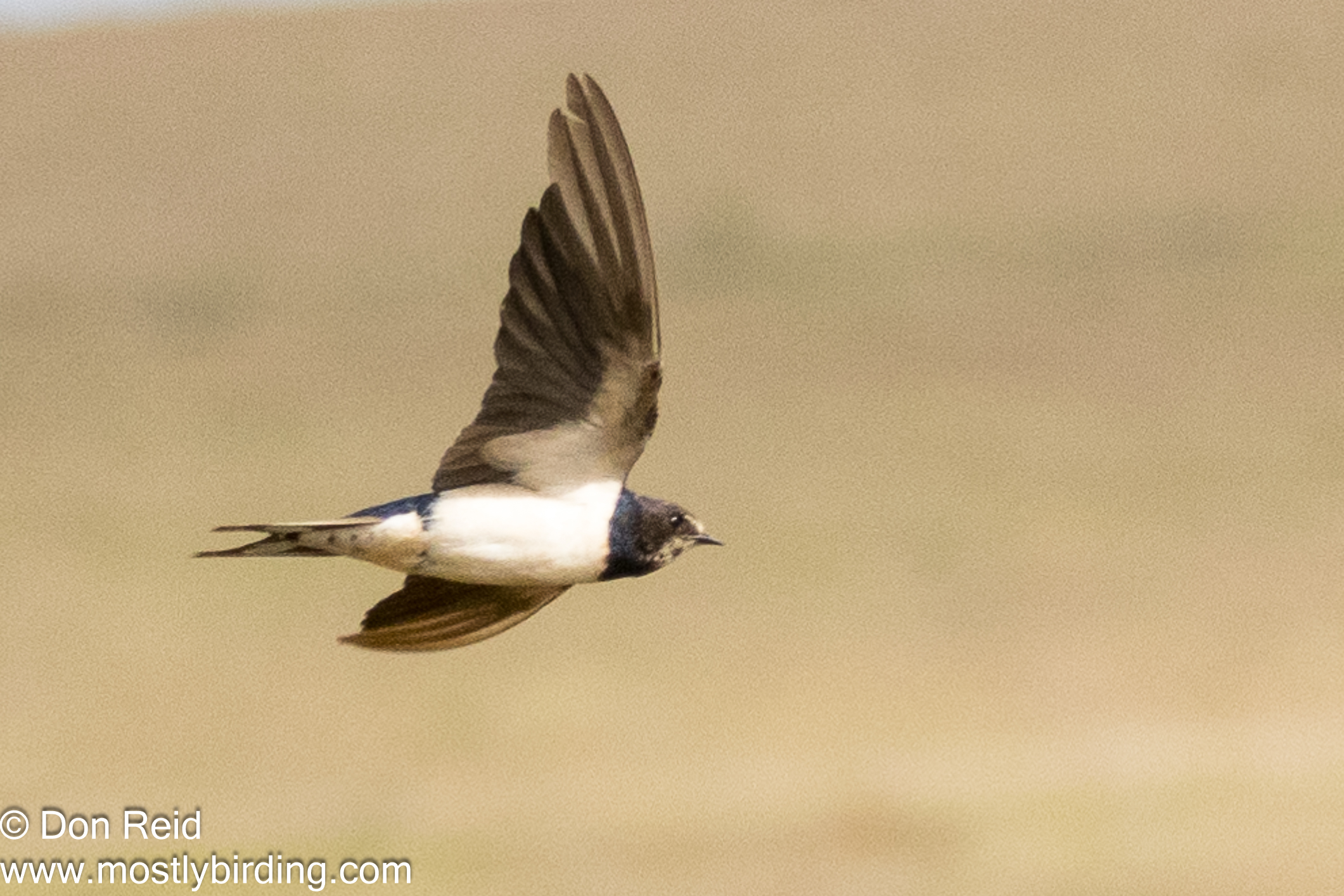
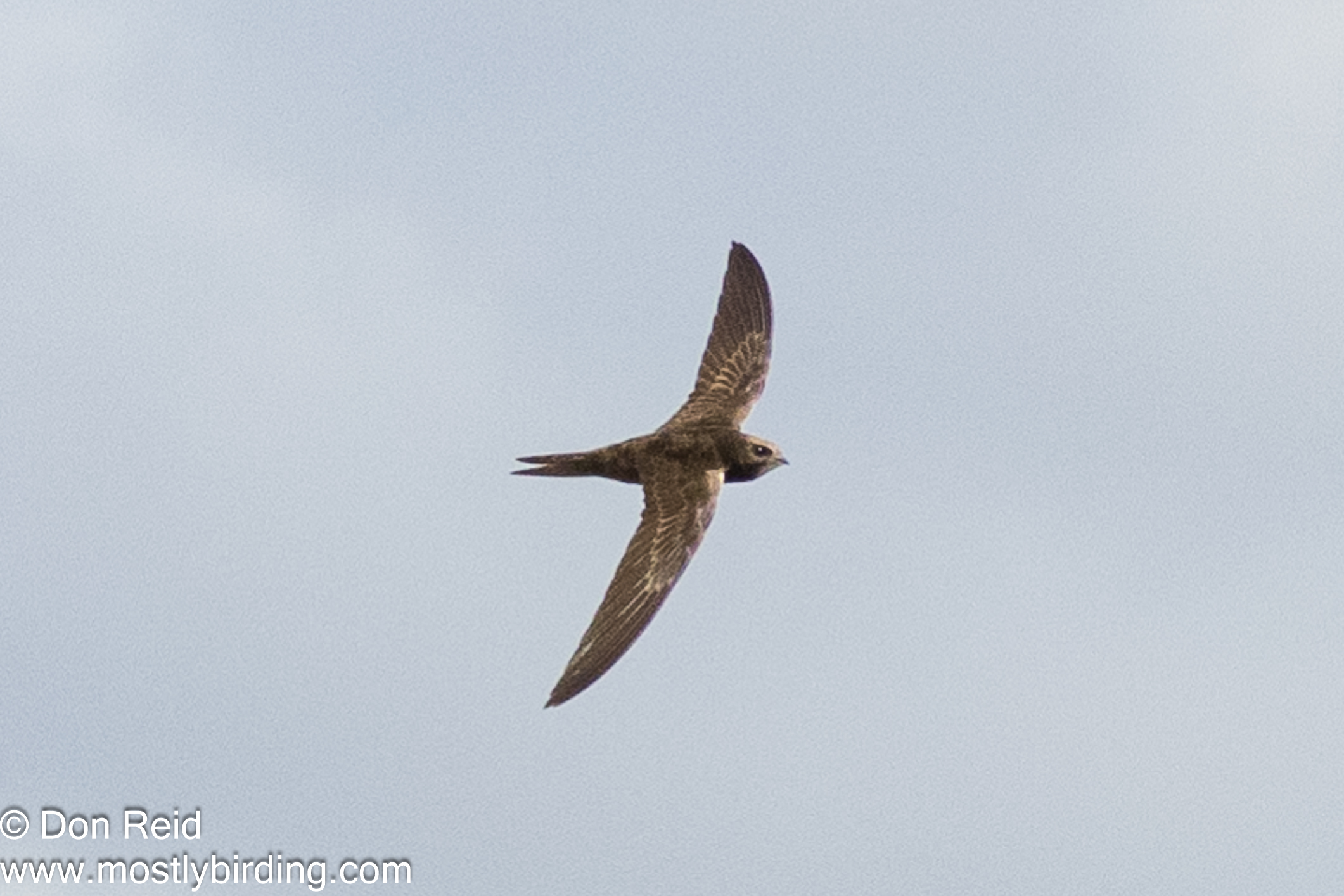
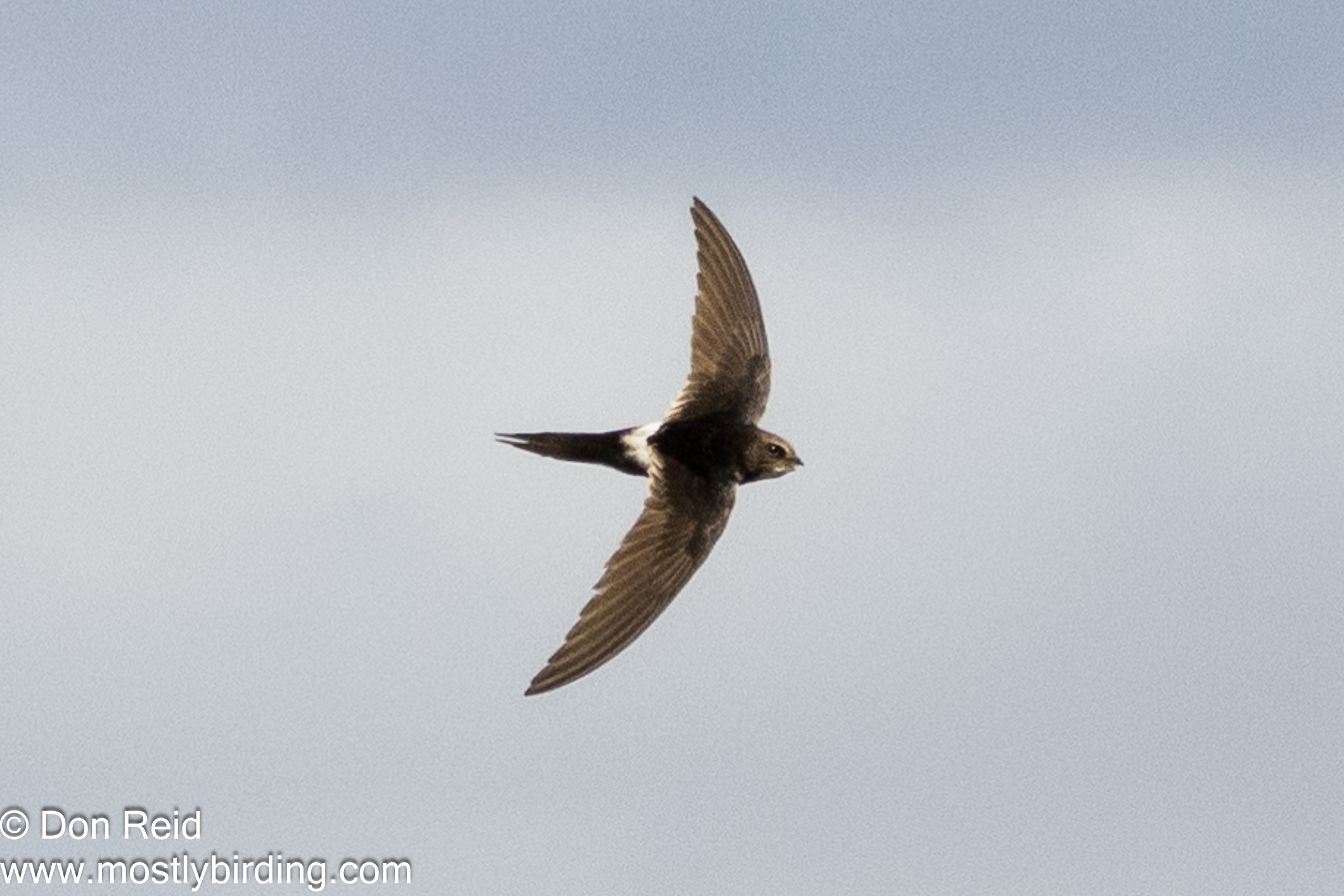
Swifts and swallows – the aerial feeders – also the most challenging to photograph unless they are resting between sorties

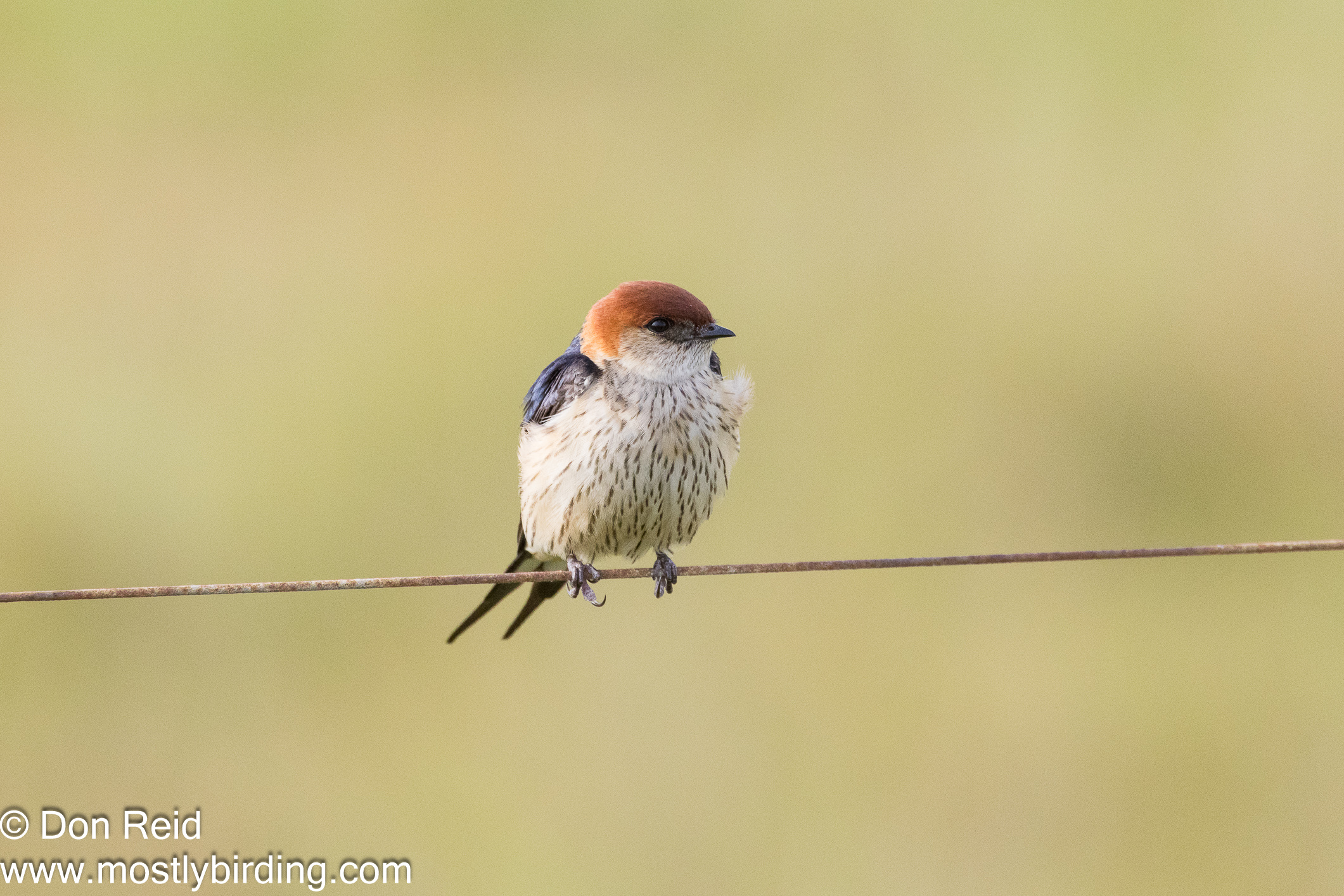
Greater Striped Swallow Cecropis cucullata Grootstreepswael, Kleinberg area
Barn Swallow Hirundo rustica Europese swael, Kleinberg area
Common Swift Apus apus Europese windswael (race pekinensis), Kleinberg area
White-rumped Swift Apus caffer Witkruiswindswael, Kleinberg area
Brown-throated Martin Riparia paludicola Afrikaanse oewerswael, at nest burrow, Maalgate area

Plungers

Mainly seabirds that forage over water – and under water

At irregular times during the year terns roost in numbers at The Point in Mossel Bay, providing good photo opportunities as the rocks are relatively close to the viewing area

Sandwich Tern Thalasseus sandvicensis Grootsterretjie, Mossel Bay Point

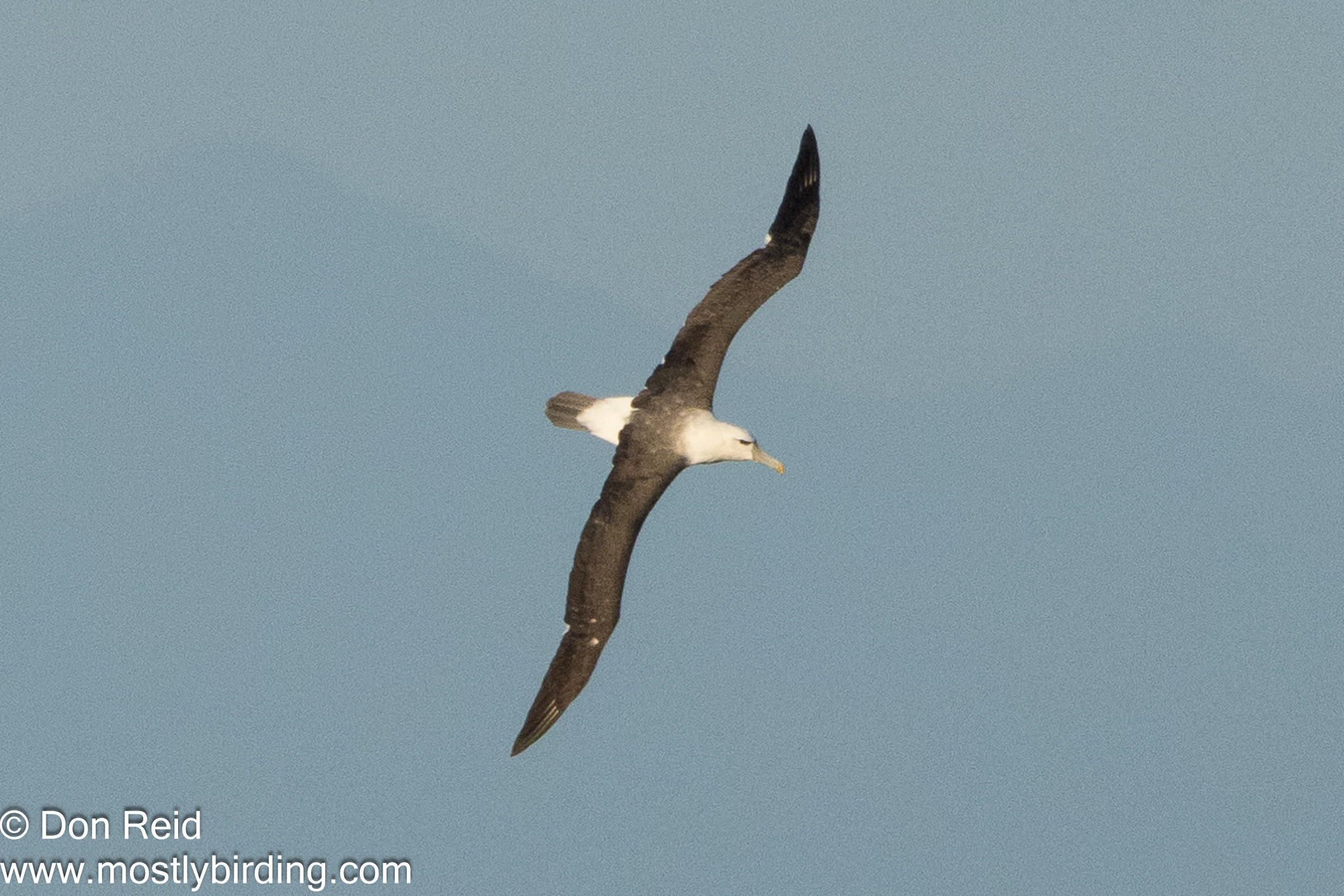
The Point is also a great spot for seabird watching when the winds are strong and in the right direction. One such day I was fortunate to be there when the seabirds were closer than usual and I was able to capture this image of a magnificent Shy Albatross – one of more than a dozen that passed by while we were there.

Shy Albatross Thalassarche cauta Bloubekalbatros, Mossel Bay Point

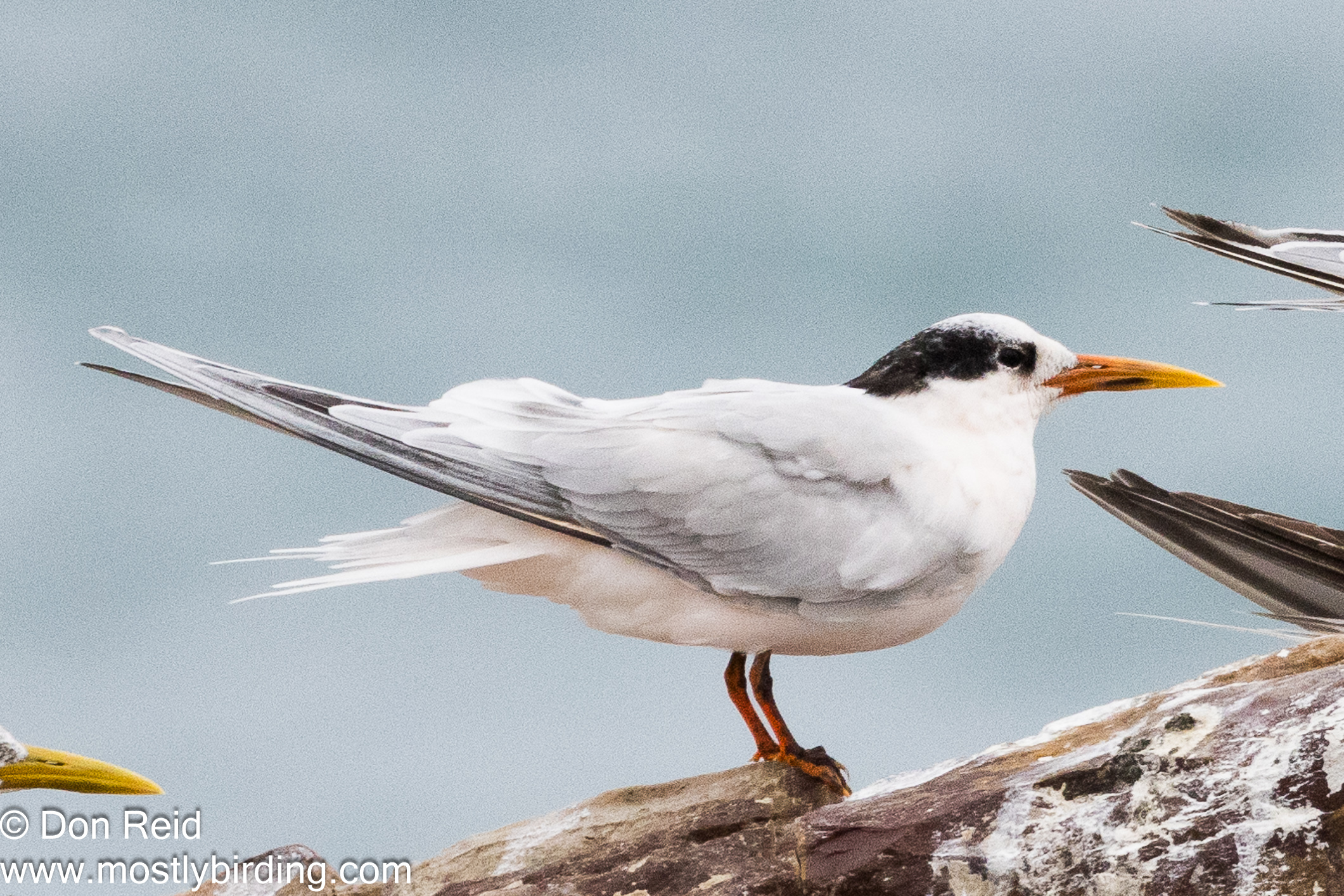
Another Tern that visited The Point was this rare hybrid – not a separately countable species but interesting nevertheless

Hybrid Elegant / Sandwich Tern, Mossel Bay Point

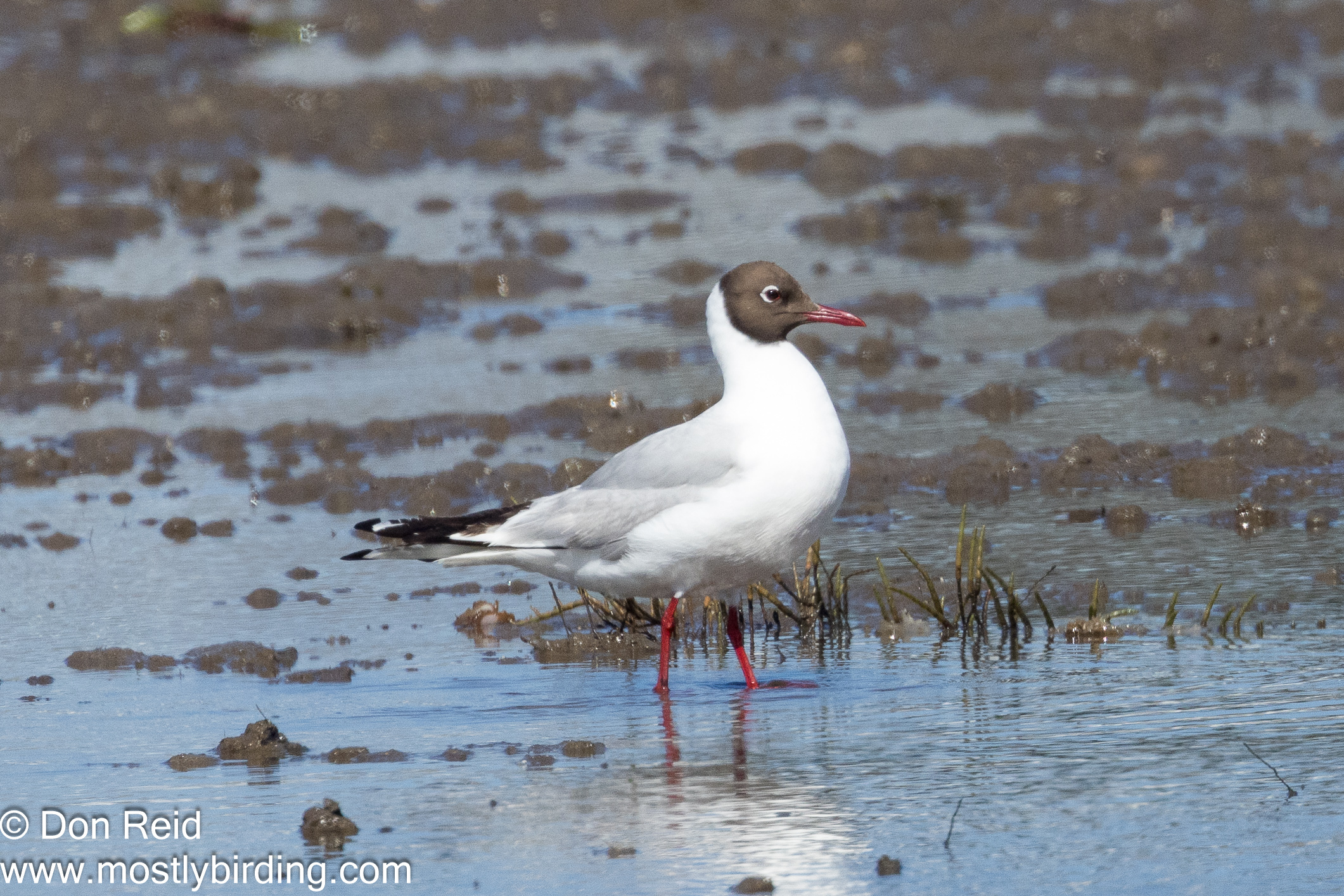
I was pleased when keen birder Estelle called me from Klein Brak to inform me about a Black-headed Gull that was present. I couldn’t resist heading out and was lucky enough to capture some images of this rarity, which I have seen in Europe and elsewhere but never in Southern Africa

Black-headed Gull Chroicocephalus ridibundus Swartkopmeeu (Breeding plumage), Klein Brak estuary

Runners

Small to medium-sized birds that forage on the ground

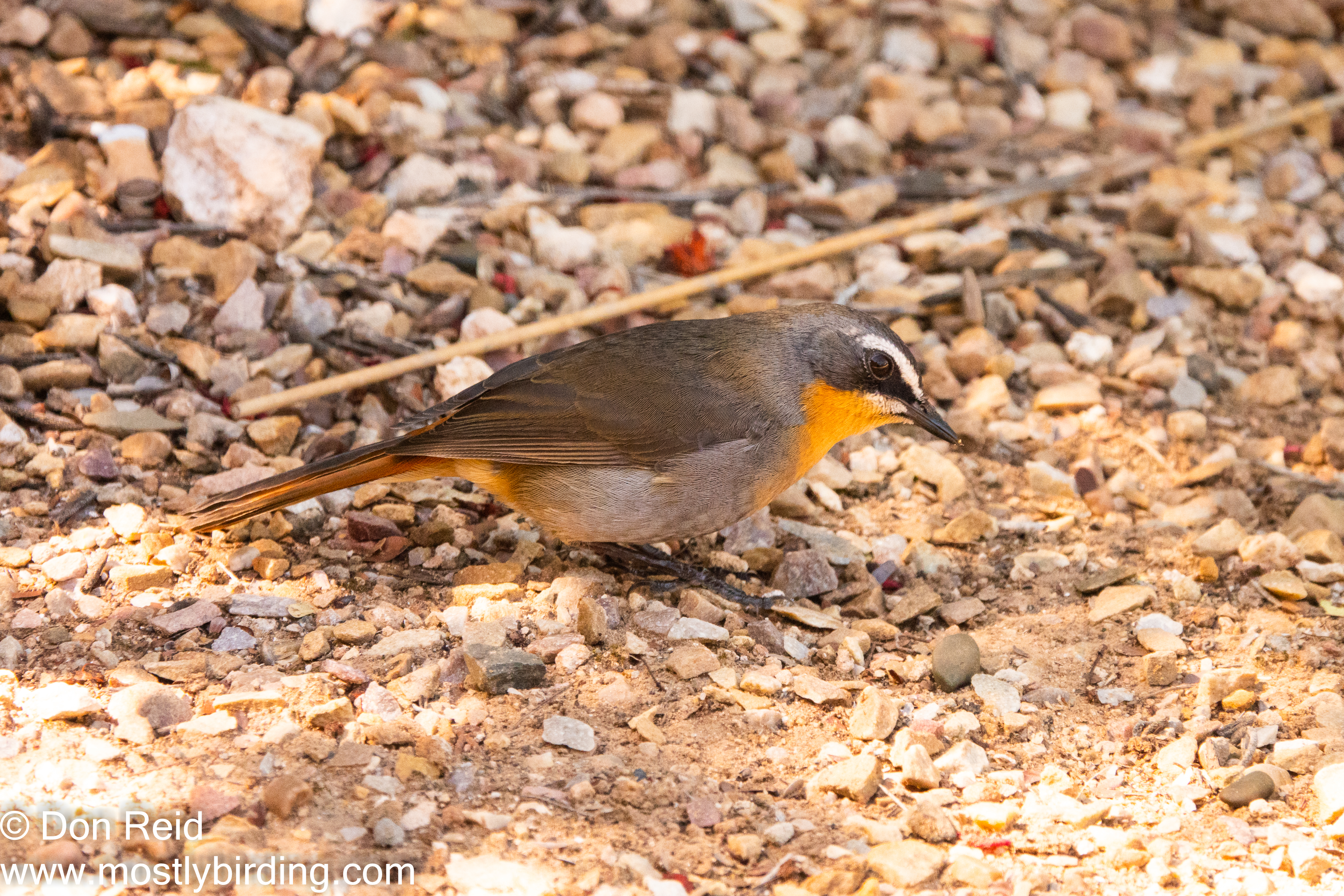
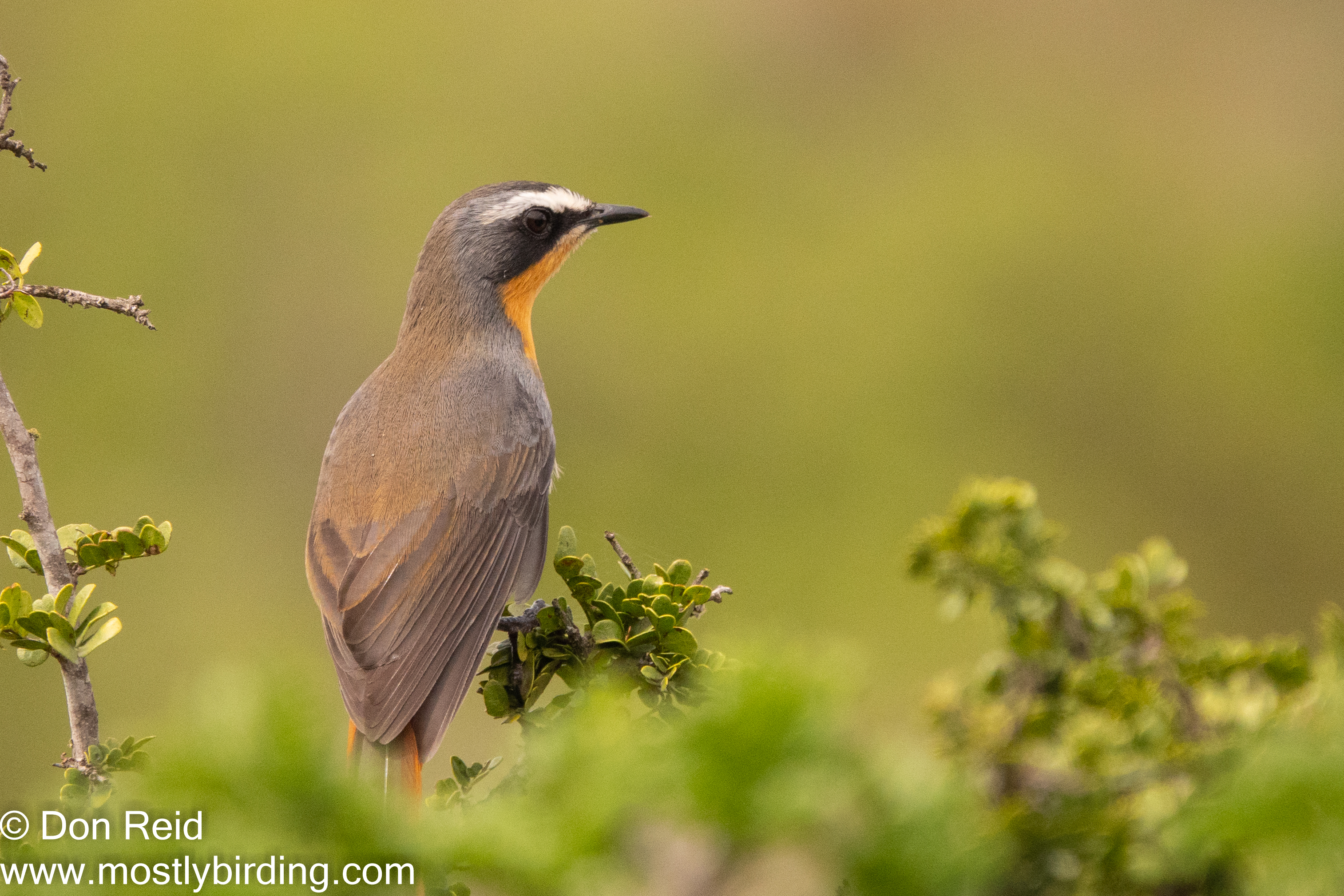
Cape Robin-Chat Cossypha caffra Gewone janfrederik, Addo Elephant NP
Wattled Starling Creatophora cinerea Lelspreeu (non-breeding), Herbertsdale area
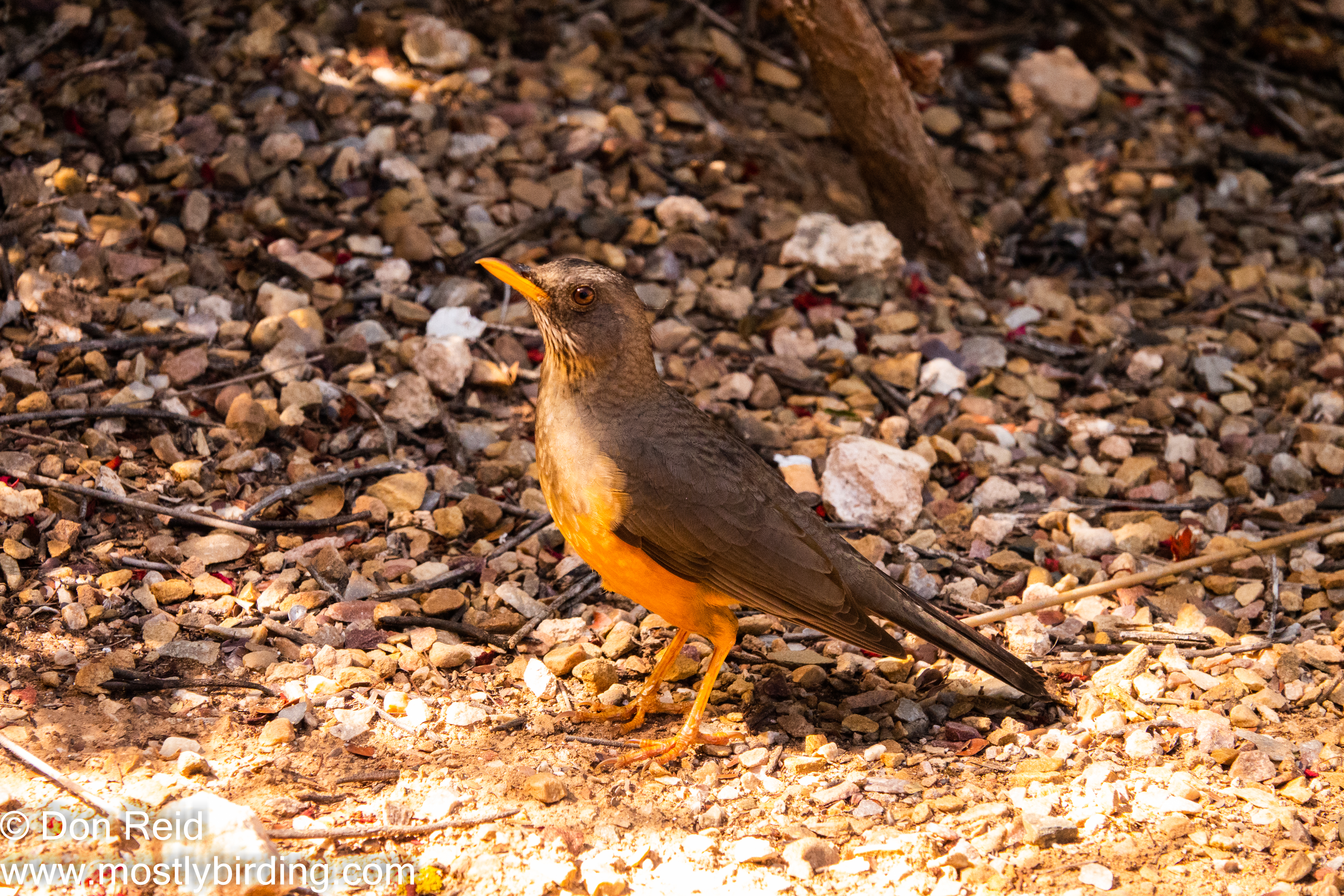
Olive Thrush Turdus olivaceus Olyflyster, The Baths Citrusdal
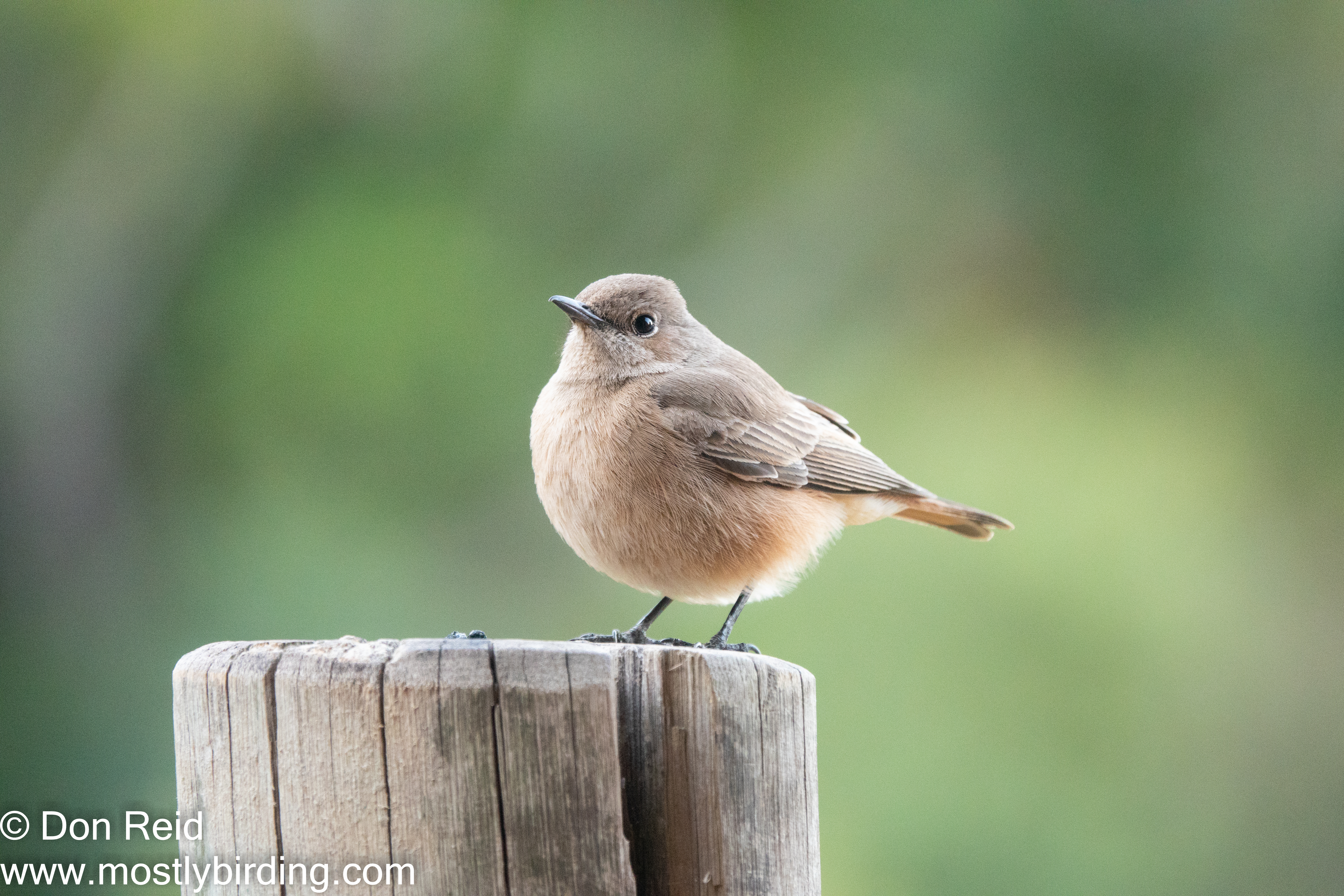
Familiar Chat Cercomela familiaris Gewone spekvreter, The Baths Citrusdal
Capped Wheatear Oenanthe pileata Hoëveldskaapwagter, Voelvlei
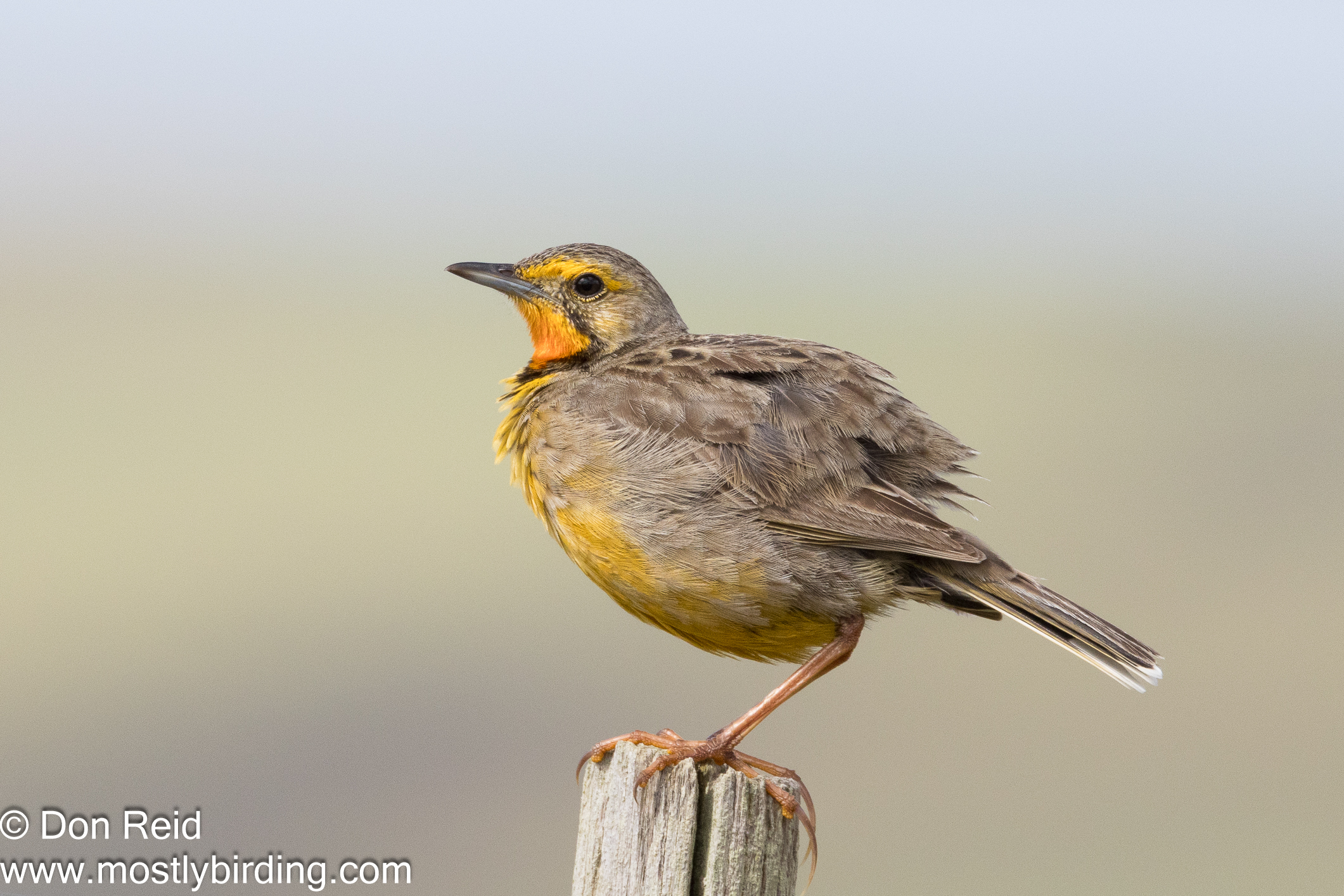
Cape Longclaw Macronyx capensis Oranjekeelkalkoentjie, Jakkalsvlei area
Cape Longclaw Macronyx capensis Oranjekeelkalkoentjie, Herbertsdale north east

Swimmers

Birds with webbed or lobed toes for swimming

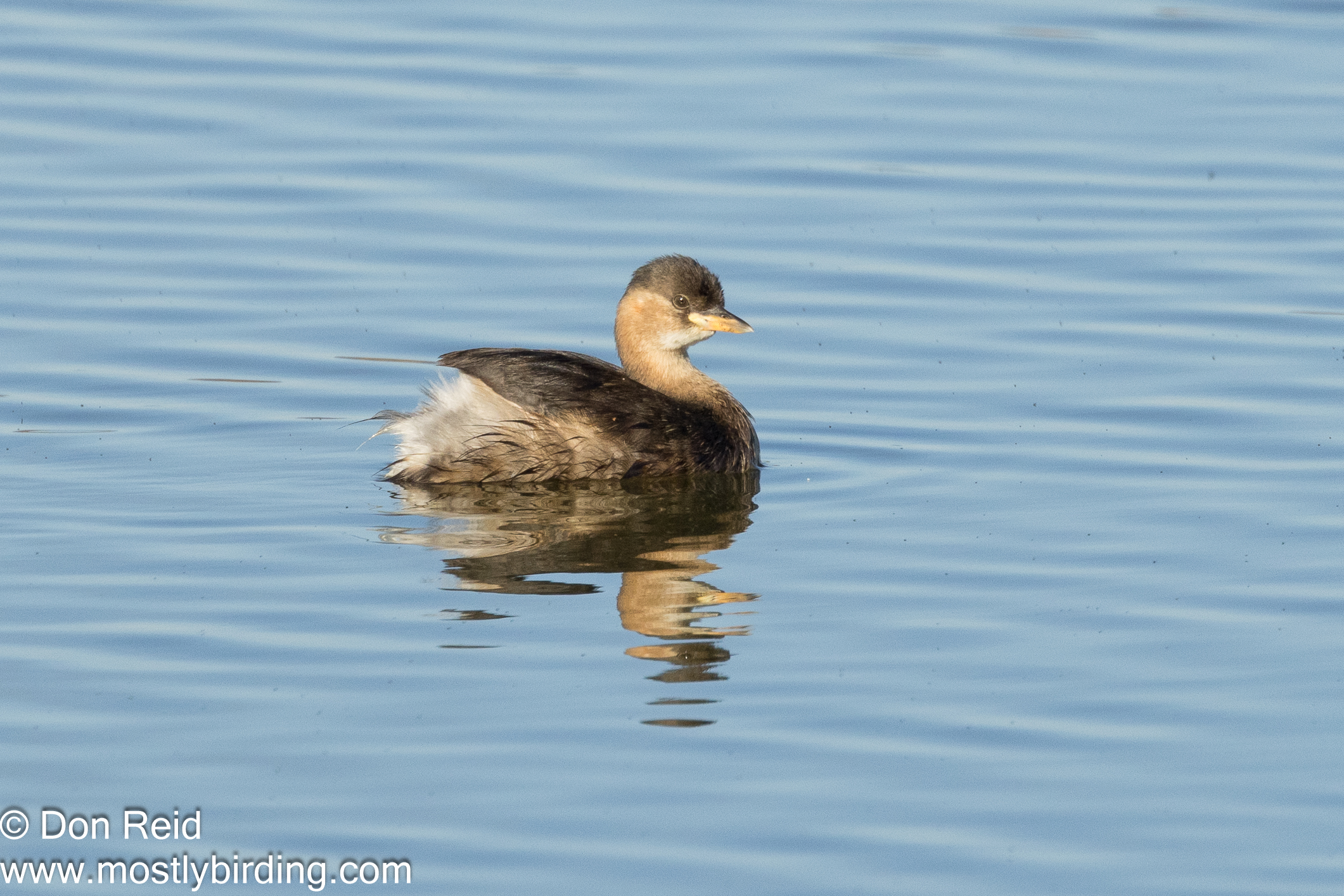
Little Grebe Tachybaptus ruficollis Kleindobbertjie, Voelvlei
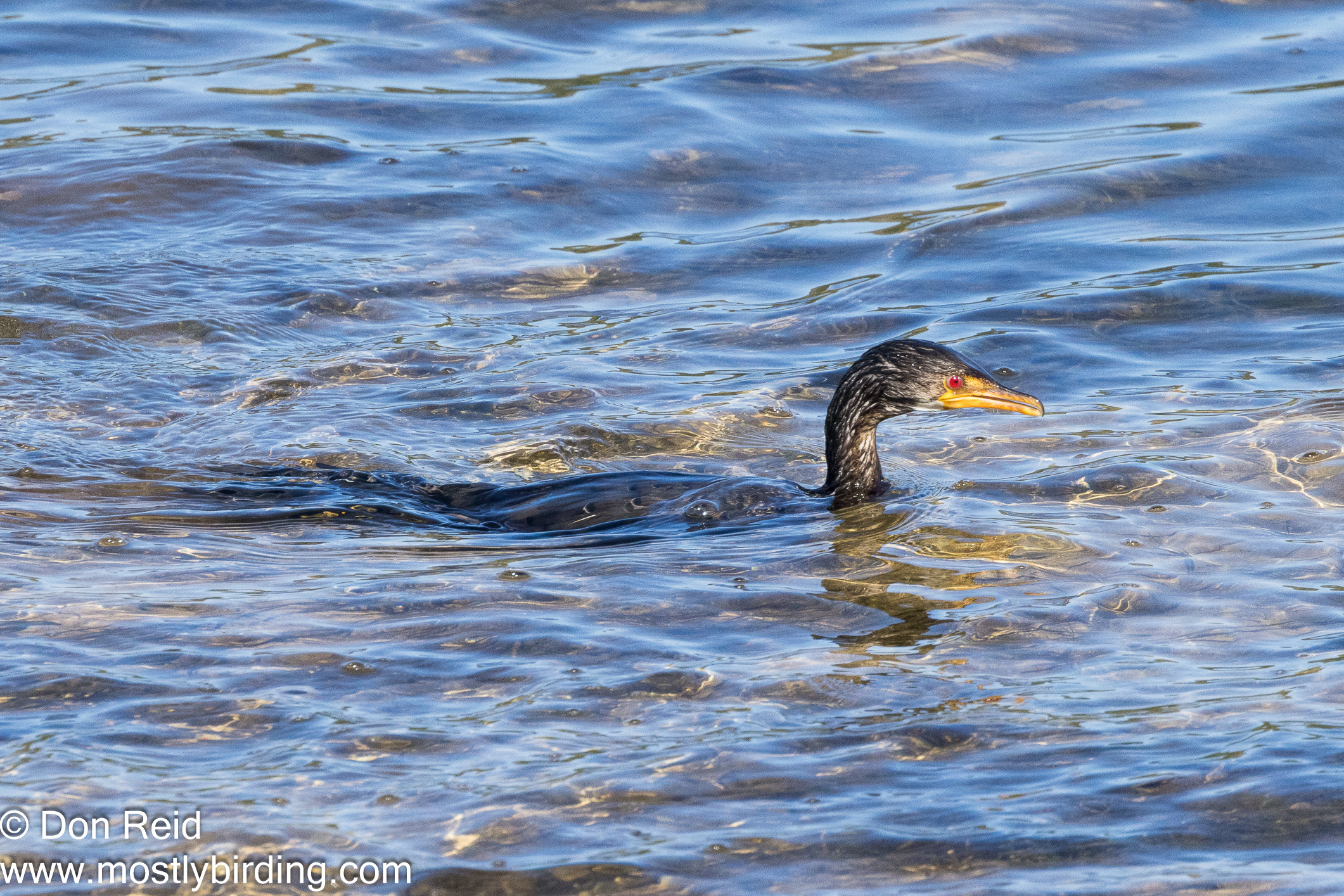
Reed Cormorant Microcarbo africanus Rietkormorant, Sedgefield
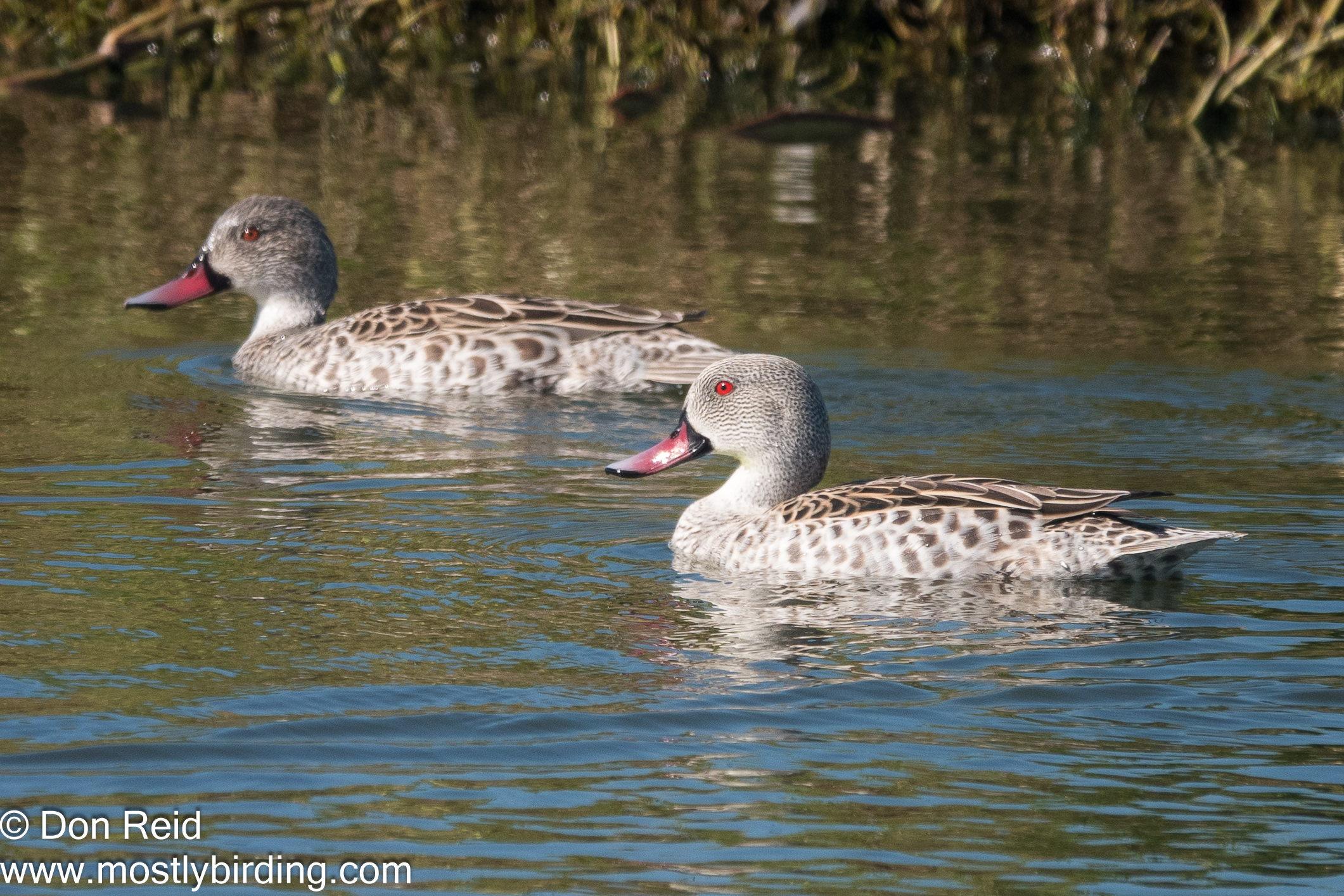
Cape Teal Anas capensis Teeleend, Strandfontein sewage works

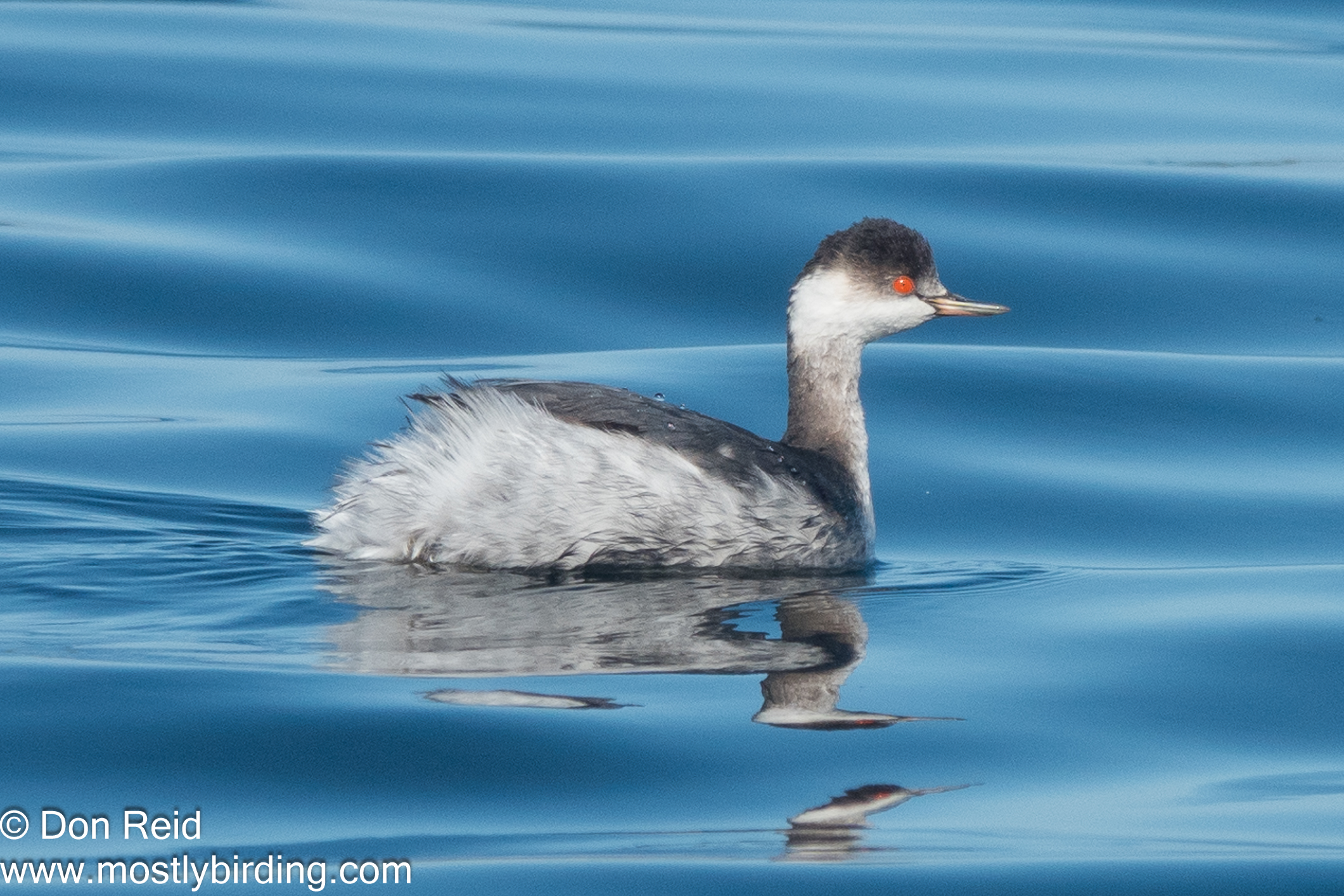
I was particularly pleased to photograph this Black-necked Grebe at reasonably close quarters during a visit to Strandfontein sewage works as my previous photos were all too far off to achieve any sort of detail of this striking swimmer

Black-necked Grebe Podiceps nigricollis Swartnekdobbertjie, Strandfontein sewage works

Waders

Those attractive waterbirds that don’t dive or swim but forage by wading in suitable shallow water

Also challenging to photograph at the best of times – often moving constantly, hiding behind vegetation, dipping into the mud and generally frustrating attempts to get a clear shot

Sanderling Calidris alba Drietoonstrandloper, Hartenbos River Estuary
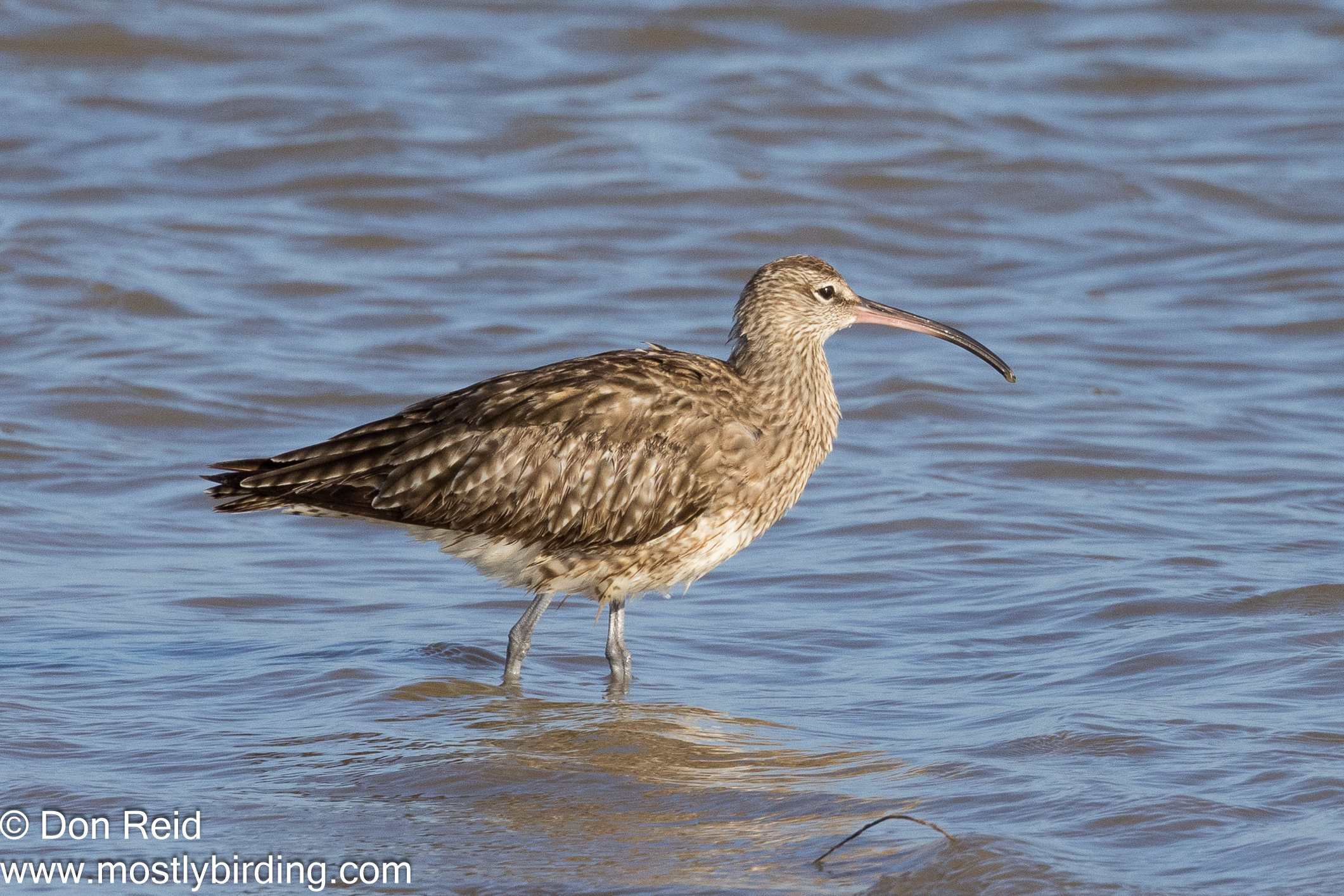
Whimbrel Numenius phaeopus Kleinwulp, Gouritsmond
Black-winged Stilt Himantopus himantopus Rooipootelsie, Hartenbos vleis
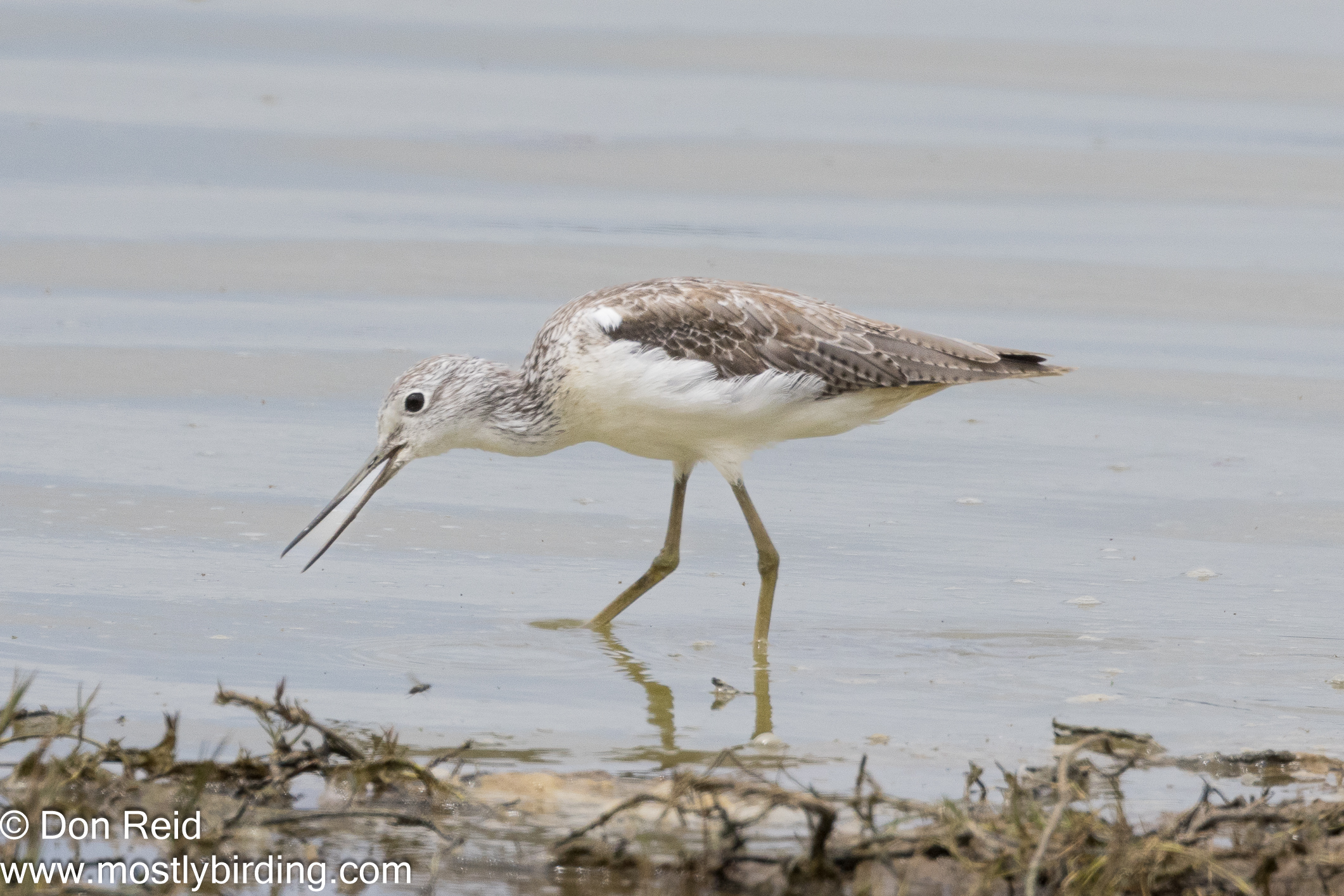
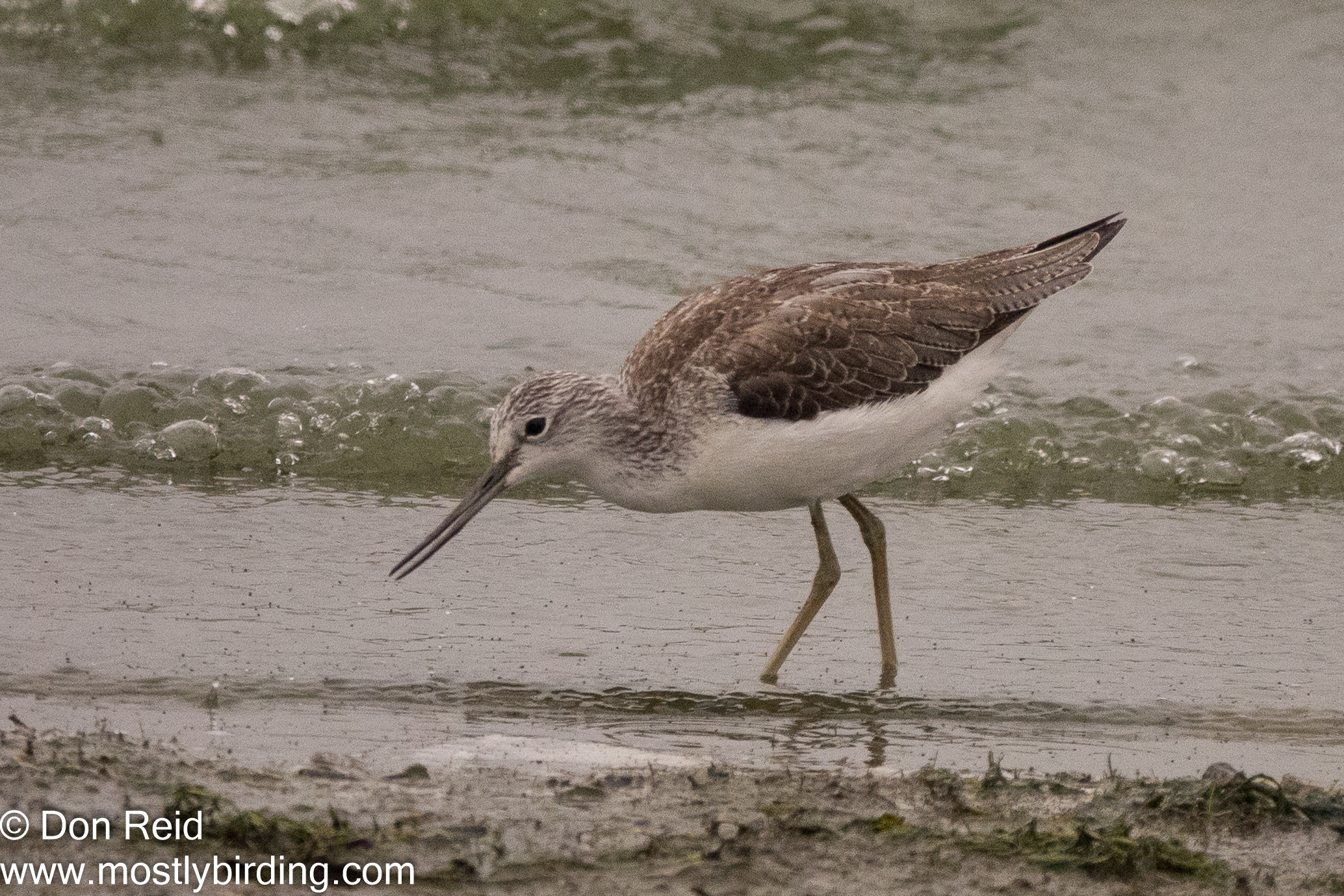
Common Greenshank Tringa nebularia Groenpootruiter, Voelvlei

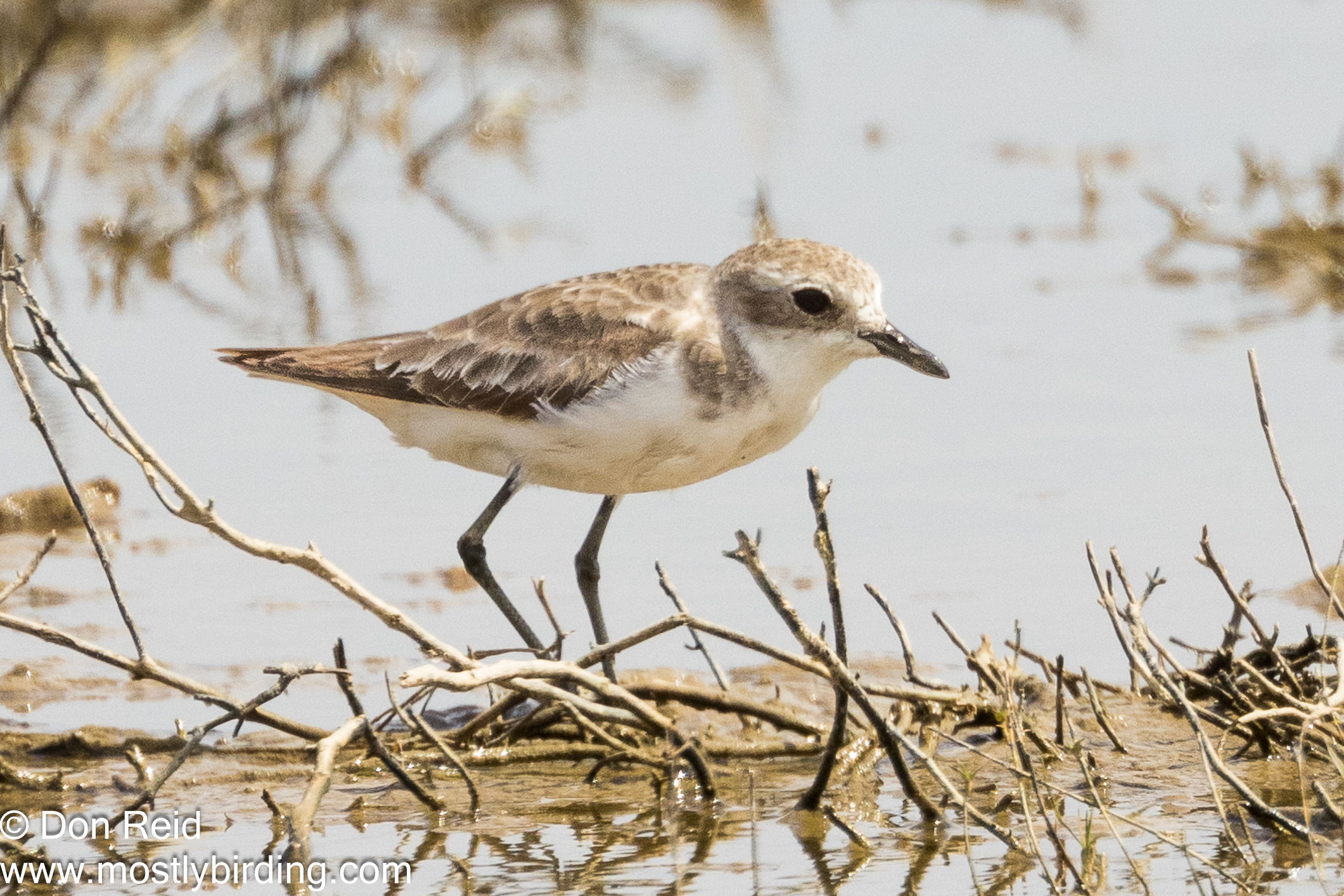
One of the rarities that visited Voëlvlei near Vleesbaai during the summer of 2023/24 was this Greater Sand Plover.

Greater Sand Plover Charadrius leschenaultii Grootstrandkiewiet, Voelvlei

Walkers

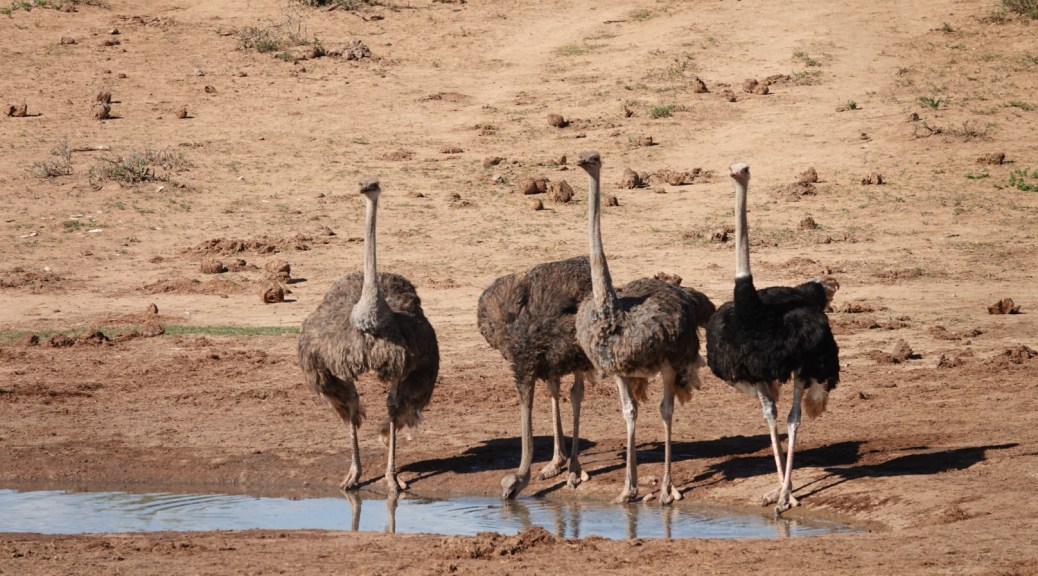
And to end off – the largest bird in the world with its offspring made for a lovely sight in Addo Elephant National Park

Common Ostrich Struthio camelus Volstruis (female with juveniles), Addo Elephant NP

My Photo Pick for 2024 – The Places

Yes, I know it’s the end of January and my last post was early December – what can I say …. life keeps getting in the way. Anyway, here I am in Australia and it’s bucketing down outside so time to get back to my blog.

I started out trying to select a total of 50 images that represent the places we have visited, the birds seen and wildlife encountered over the last 12 months but ended up with a much longer ‘shortlist’ so this time around I thought it best to split my annual Photo Pick into more than one post.

First up is –

The Places

It doesn’t feel as if we did much travelling during the year, perhaps because for the first time in many years we did not leave South Africa. However we made up for that with a number of local SA trips, some to places we visited for the first time, in the process finding out more about our fascinating country, which hardly ever disappoints…

The brief comments tell a bit of the story of each image.

Mossel Bay

Starting at home – as I’ve mentioned before, one of the pleasures of living on a golf estate with adjoining conservation areas is the daily walks I enjoy, along quiet trails that I regularly have to myself or along the bush-lined perimeter of the fairways once the golfers have left.

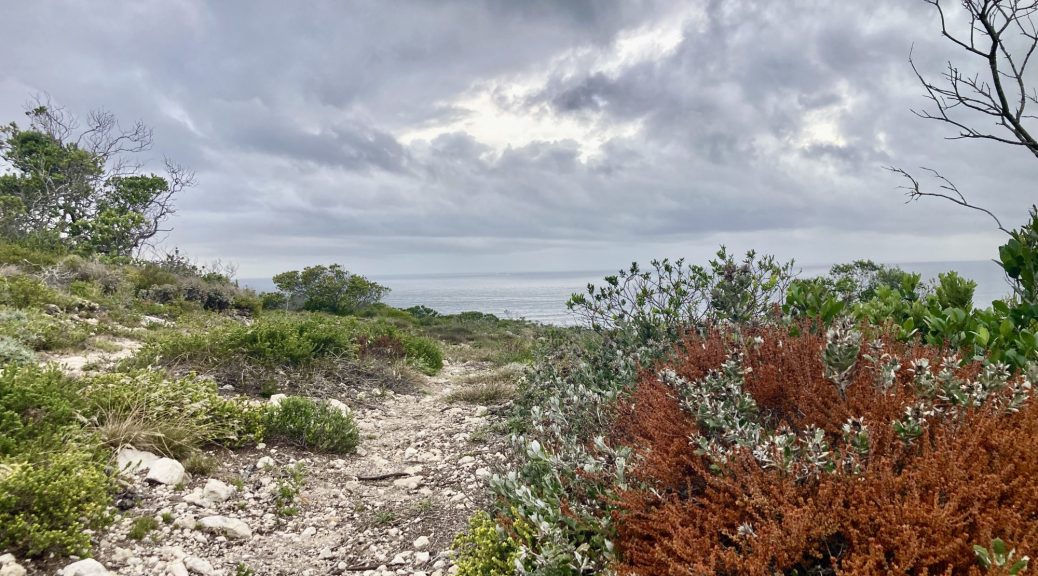
The varying climate and seasonal changes in the dominant fynbos present different aspects every day – here’s just one view of the sea taken from the nature trail

Mossel Bay – St Blaize Trail

Paarl, Western Cape

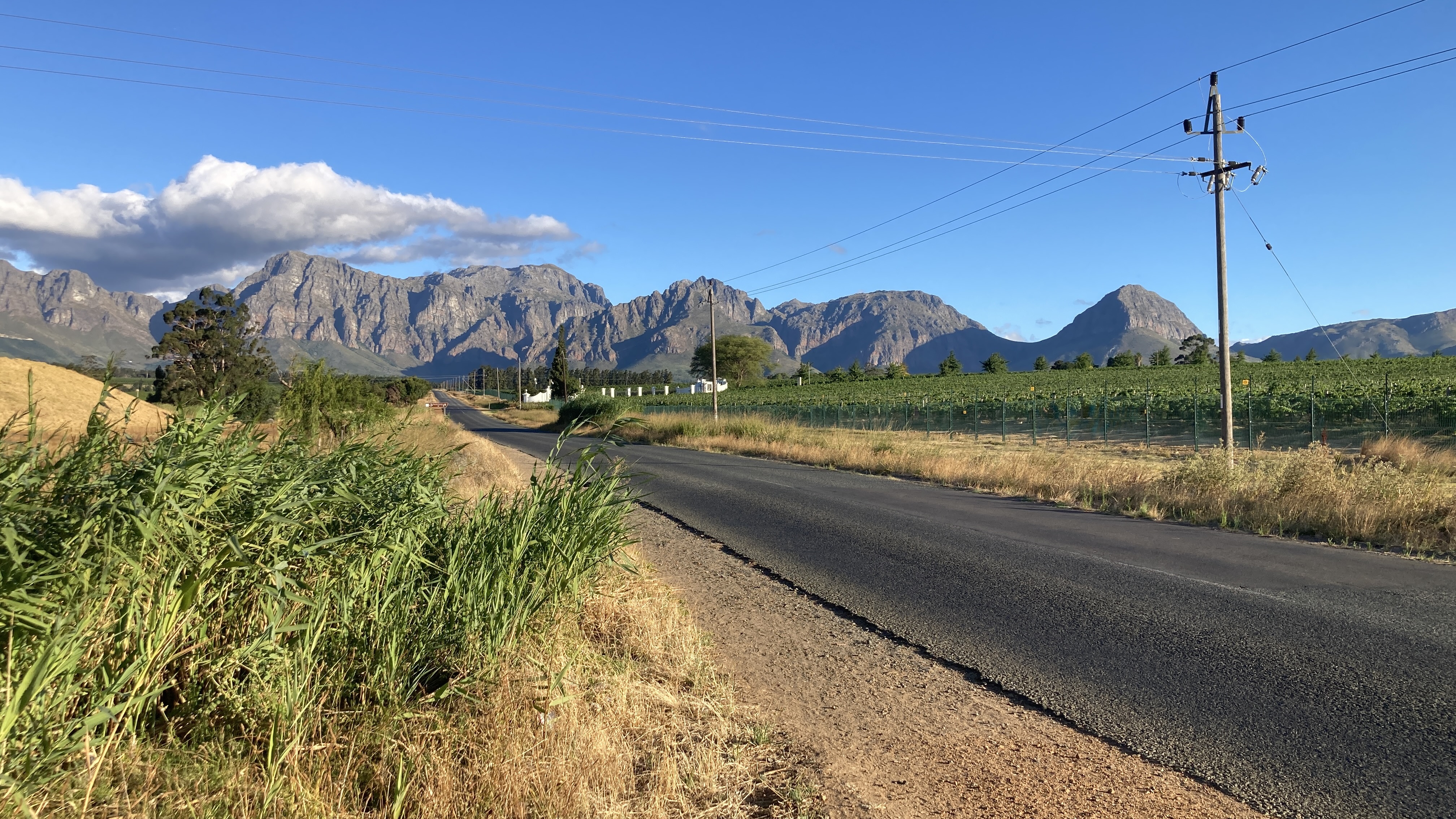
A brief visit to Paarl was an opportunity to explore the surrounding areas and visit some of the lesser known wine estates. This view was taken on the well named Sonstraal (Sunbeam) road

Paarl

Eastern Cape

Our visit to the Eastern Cape, described in one of my earlier posts, had several highlights…

Storms River Mouth, Eastern Cape
Addo Elephant National Park

Southern Cape

My weekly atlasing efforts during the year took me to many beautiful areas of the Southern Cape in the vicinity of Mossel Bay

North of Herbertsdale, Western Cape
Leeokloof north of Groot Brak River
North of Herbertsdale, Western Cape
Gouritz River at Die Poort, north west of Herbertsdale
Early morning atlasing near Mossel Bay
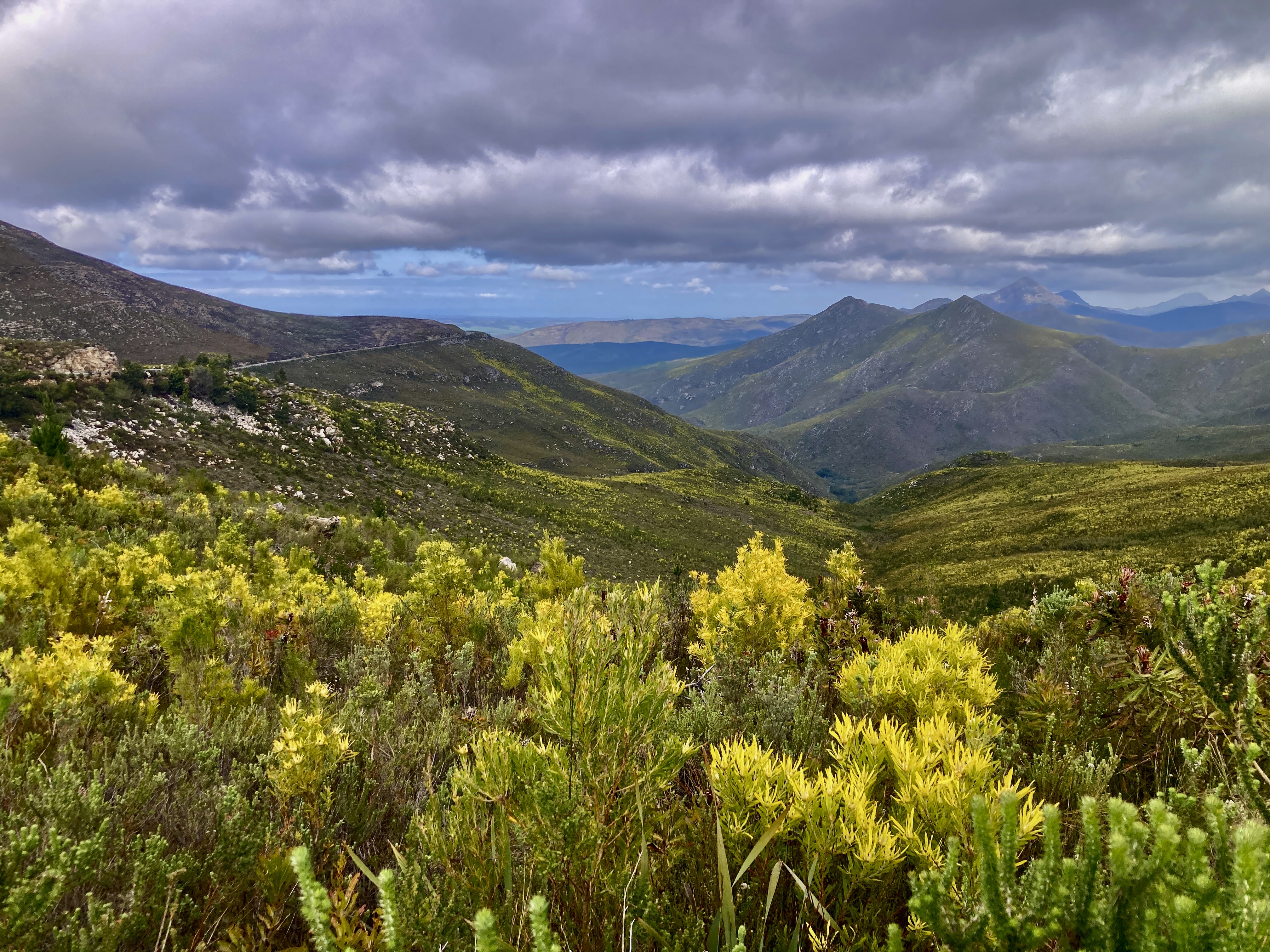
View of Ruiterbos from Robinson Pass
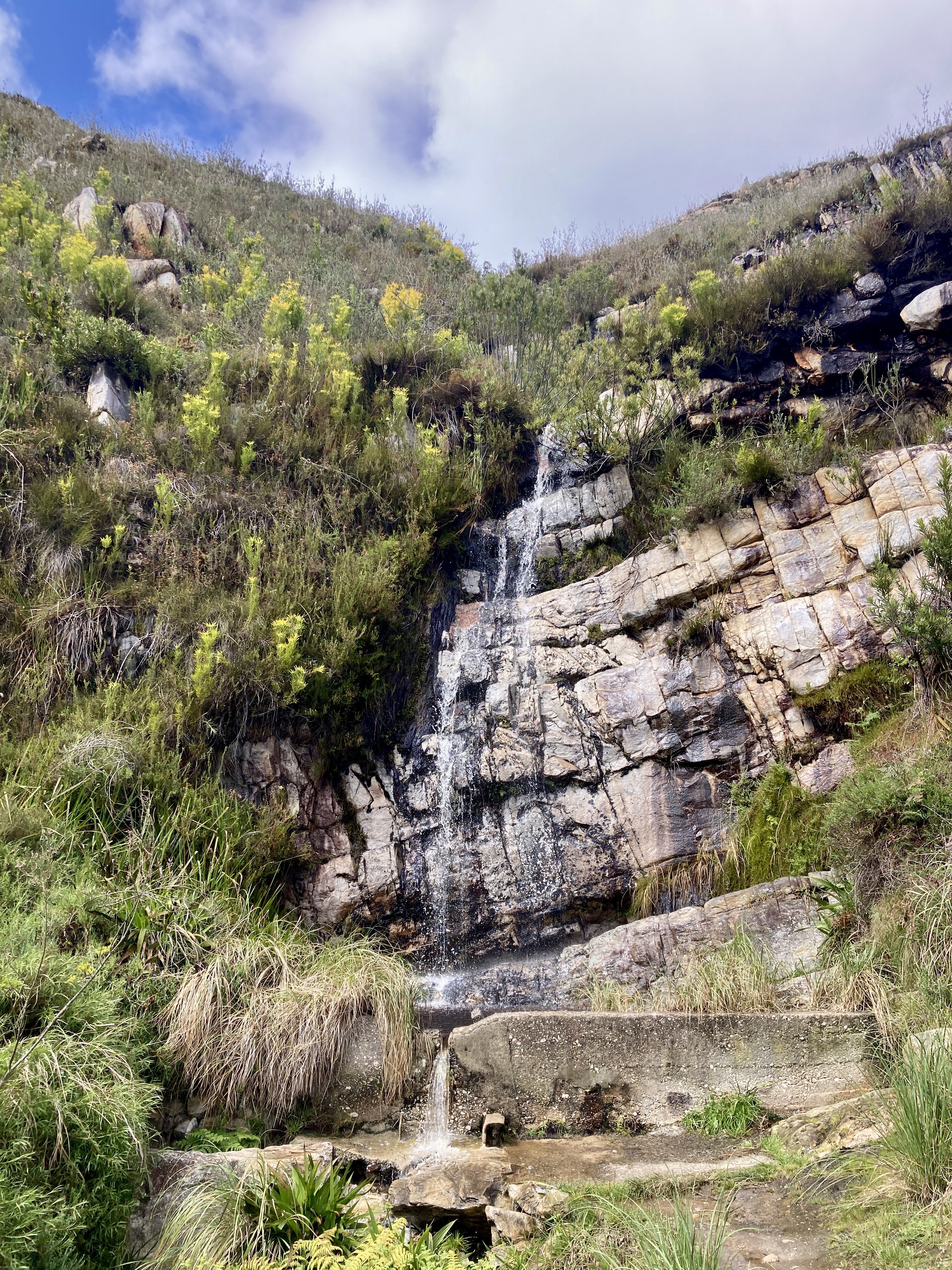
Waterfall after good rains in the Robinson pass
Fransmanshoek
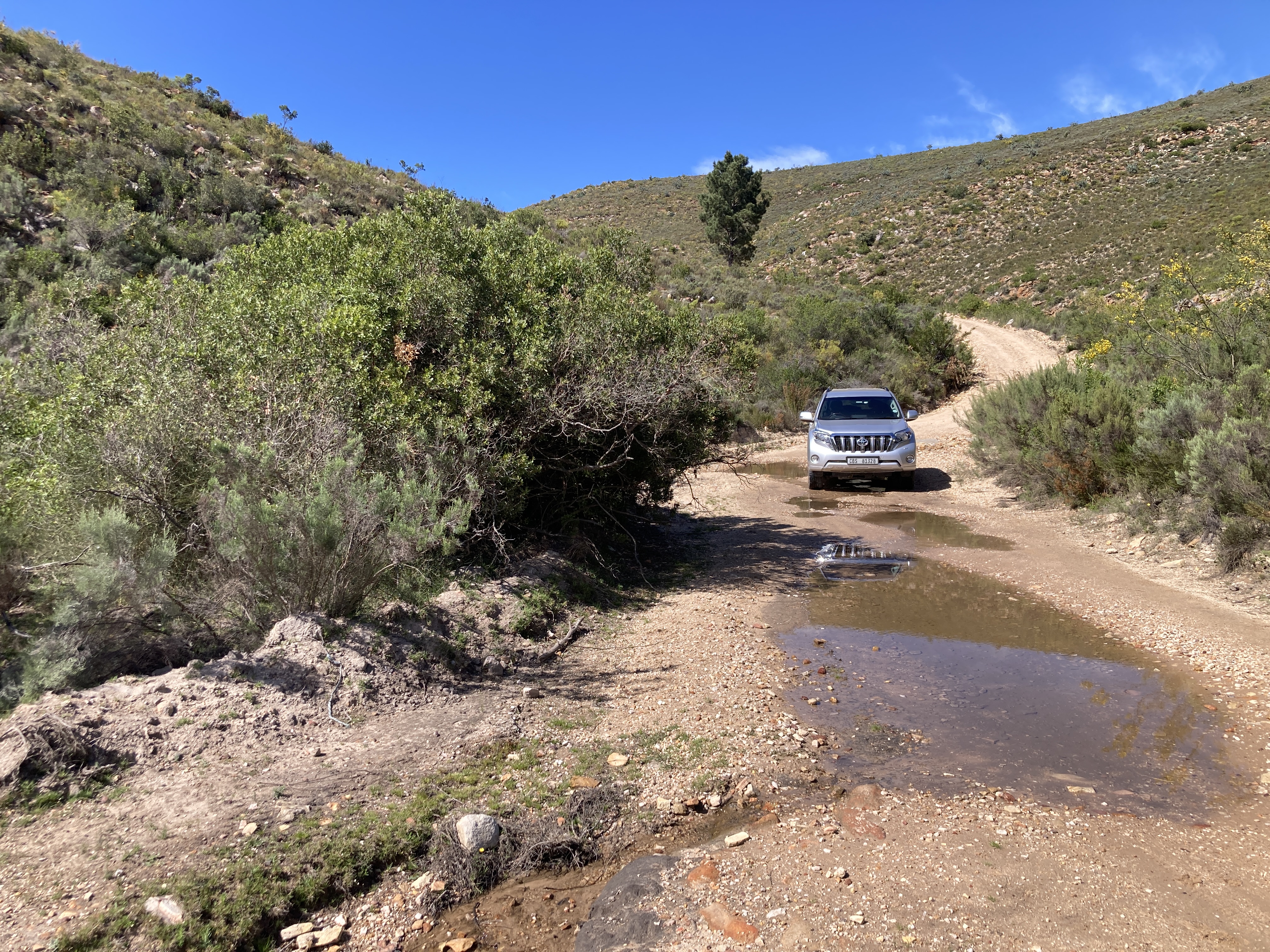
On the road to Bonniedale

Friemersheim

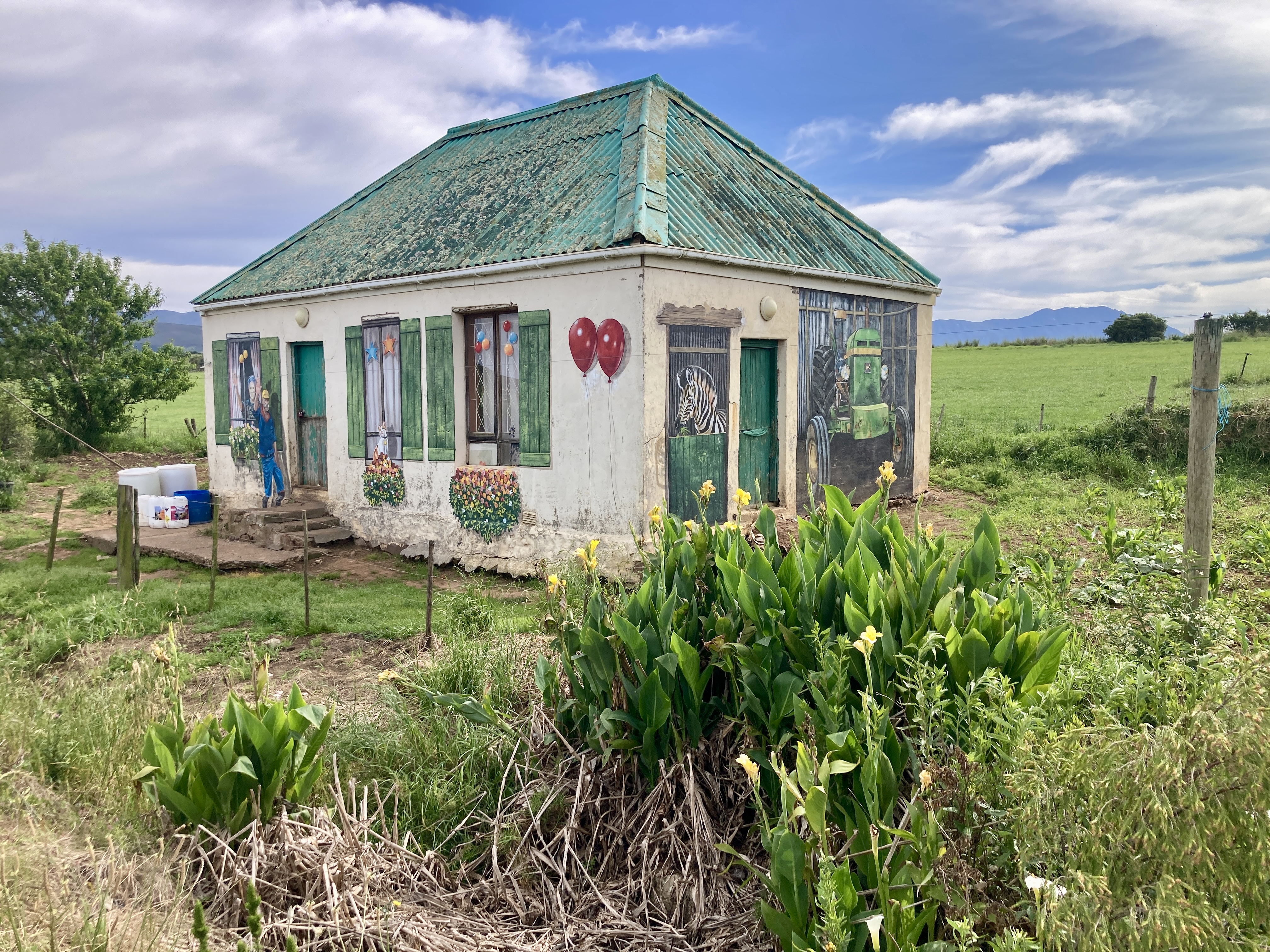
This village in the southern Cape has been the subject of a few posts in the past and our latest visit had more surprises which I will include in a future post. This charming cottage, decorated with murals in the style of the other buildings in the village, is a foretaste.

Friemersheim

Verlorenkloof, Mpumulanga

We combined a visit to Pretoria with a few days spent at Verlorenkloof courtesy of our good friends the Pauws

Verlorenkloof, Mpumulanga

Sutherland and Citrusdal

The historical town of Matjiesfontein in the Karoo was our first stop on the way to spending a mid-winter week at a hotsprings resort near Citrusdal – we stayed in one of the cottages run by the hotel and dined in the main dining room. It brought back memories of our previous stay here – some 40 years ago!

Lord Milner Hotel at Matjiesfontein

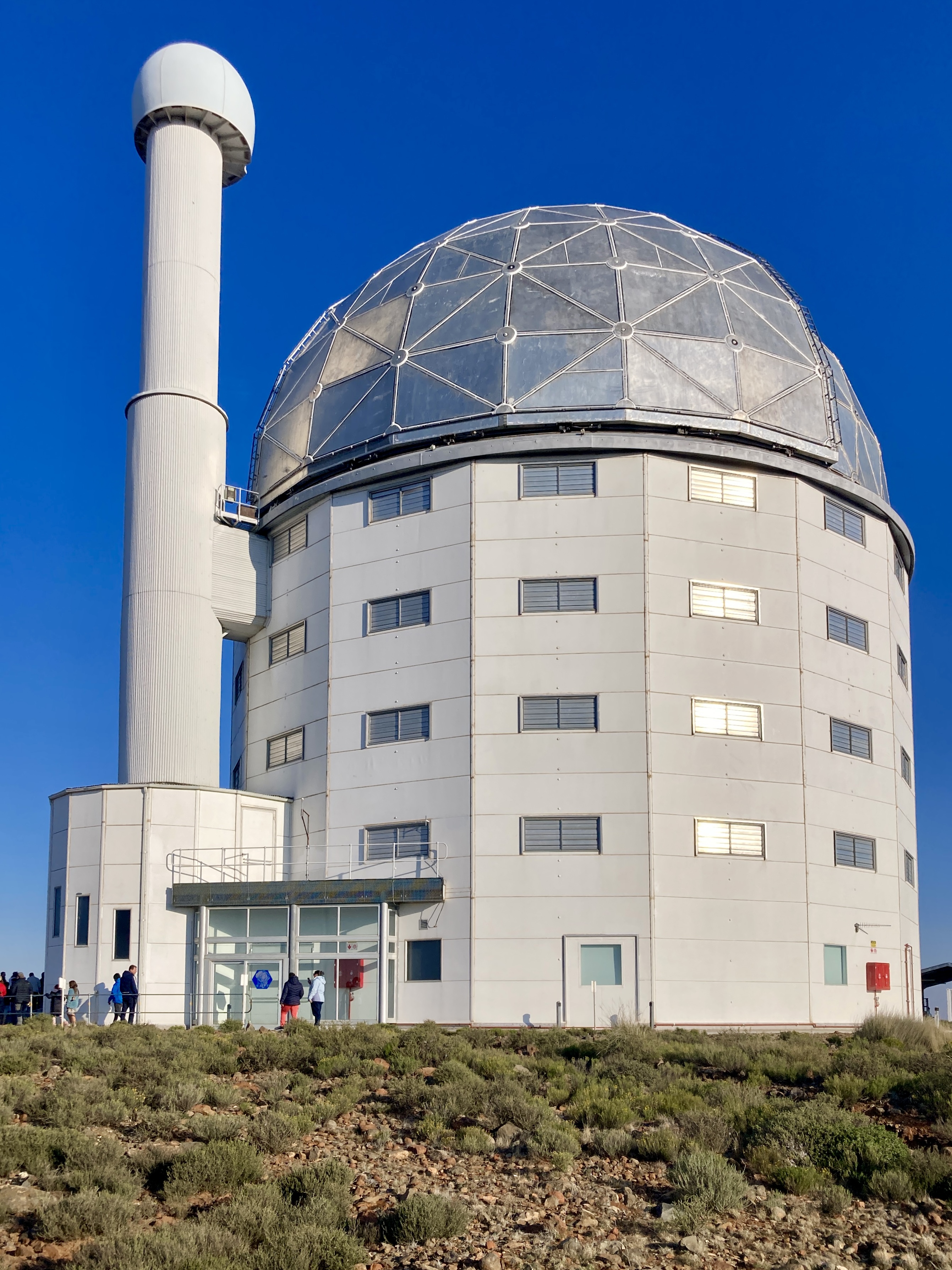
Our next stop was to spend two nights in the Karoo town of Sutherland, famous for recording the coldest winter temperatures in South Africa and for being the site of the South African Large Telescope or SALT for short, which we made a point of visiting

Sutherland, Northern Cape
SALT near Sutherland

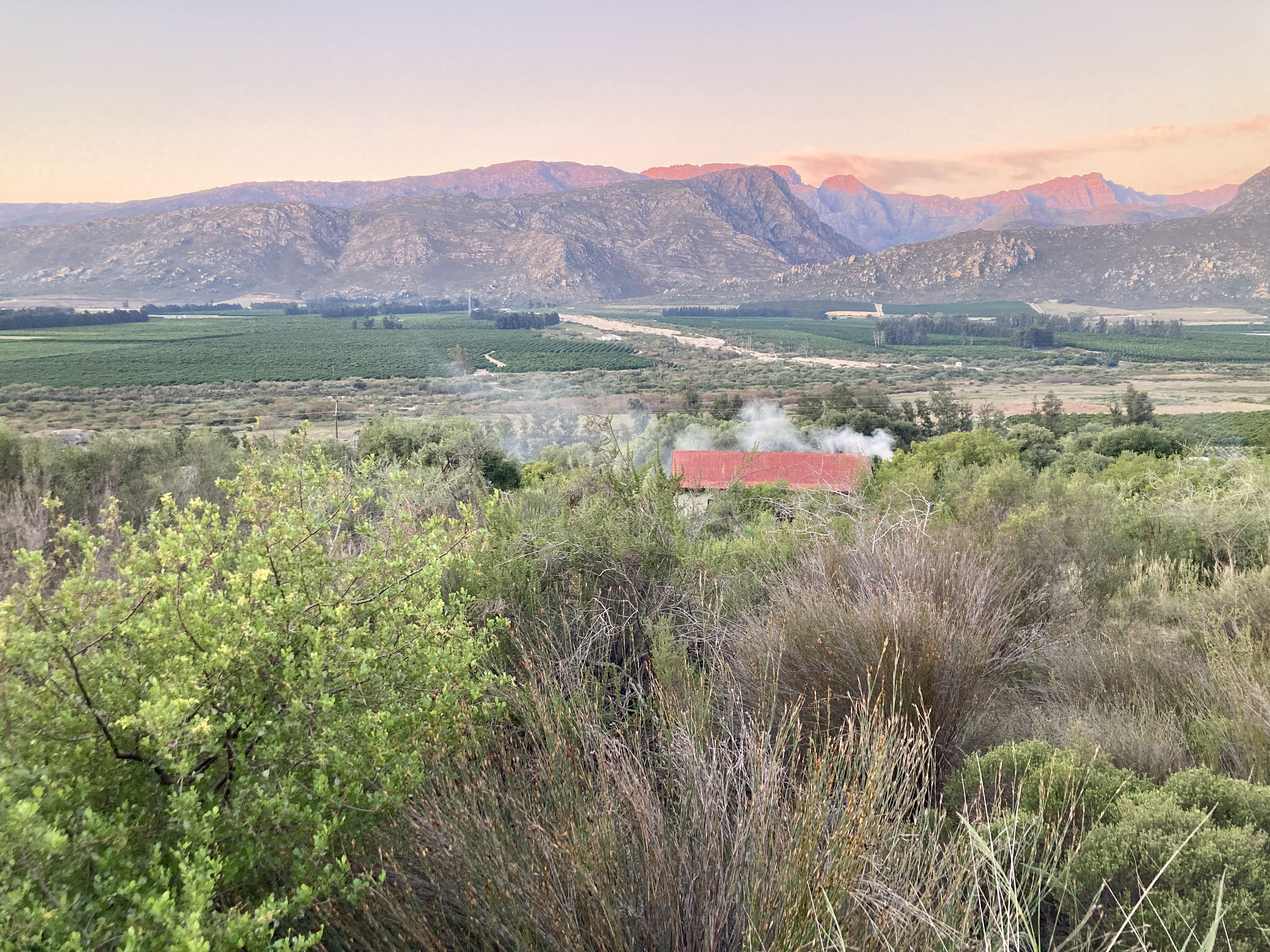
The week spent at The Baths near Citrusdal was a delight and one of the most relaxing weeks of the whole year

The Baths near Citrusdal, Western Cape
View from The Baths over the valley

Prince Albert

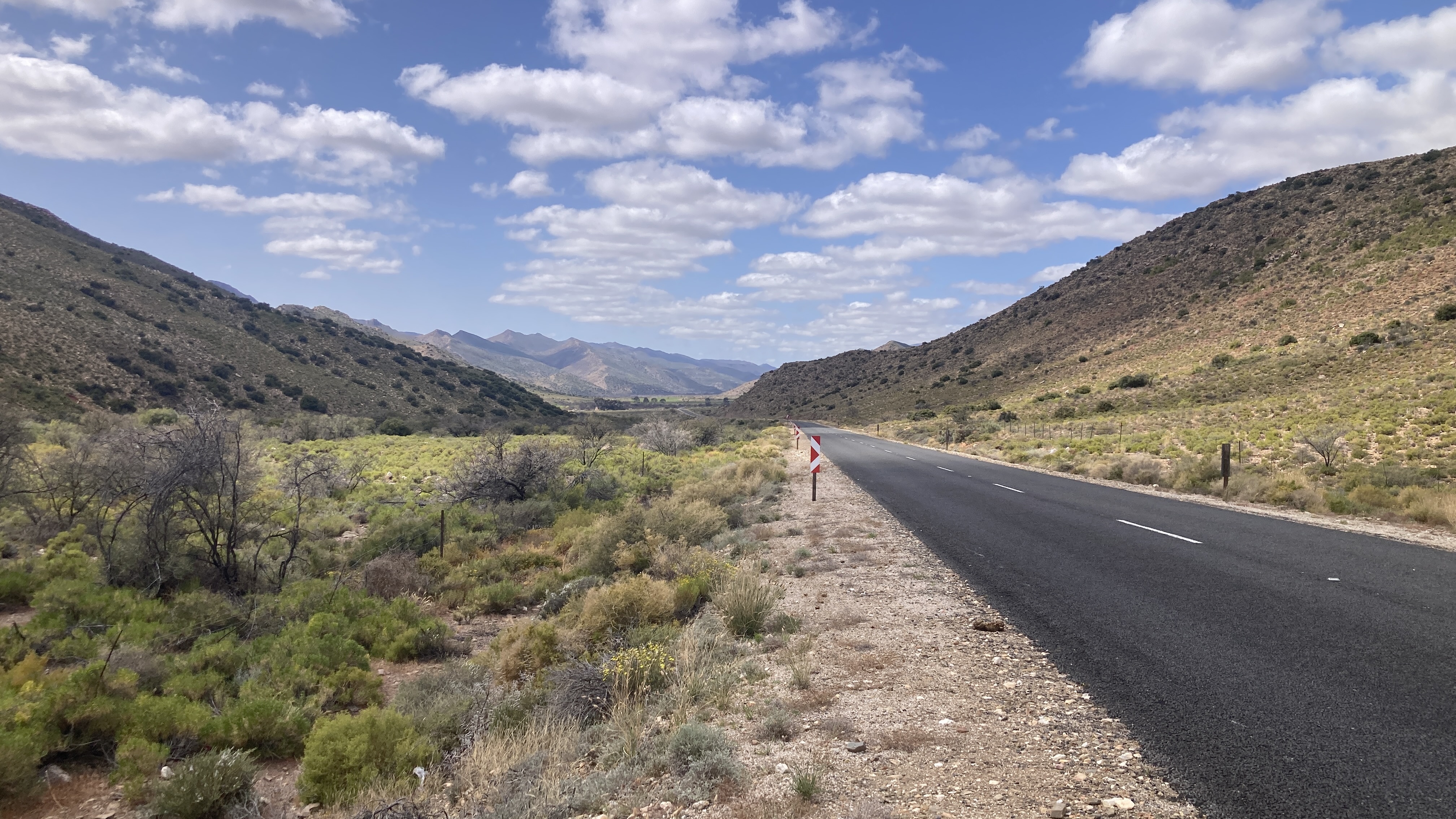
My earlier post describes our long weekend in Prince Albert – this delightful Karoo dorp remains a favourite of ours

Kredouw Pass near Prince Albert

Hartenbos

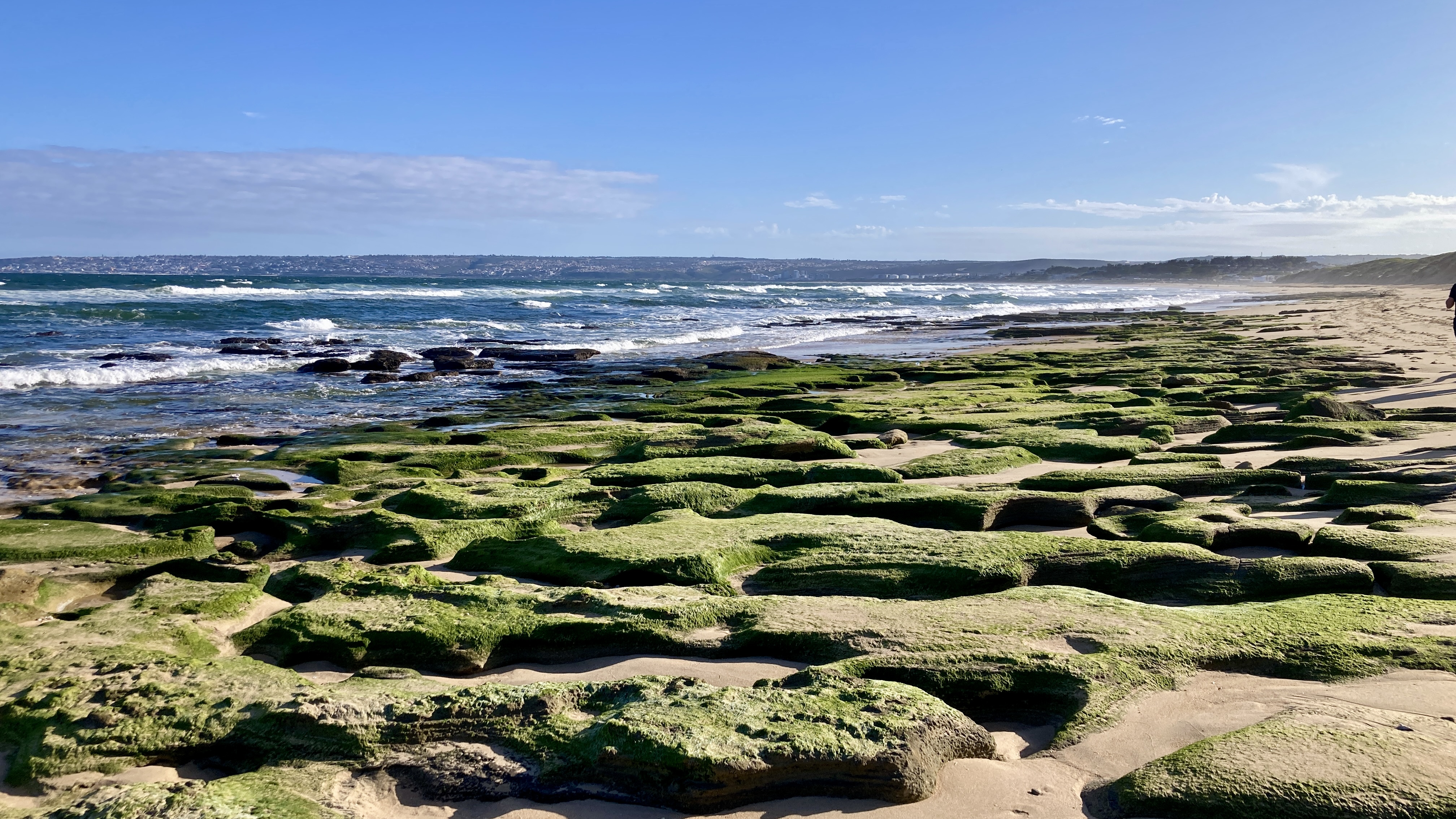
I joined Andre and Geraldine a couple of times on their regular Sunday walks along the beach at Hartenbos

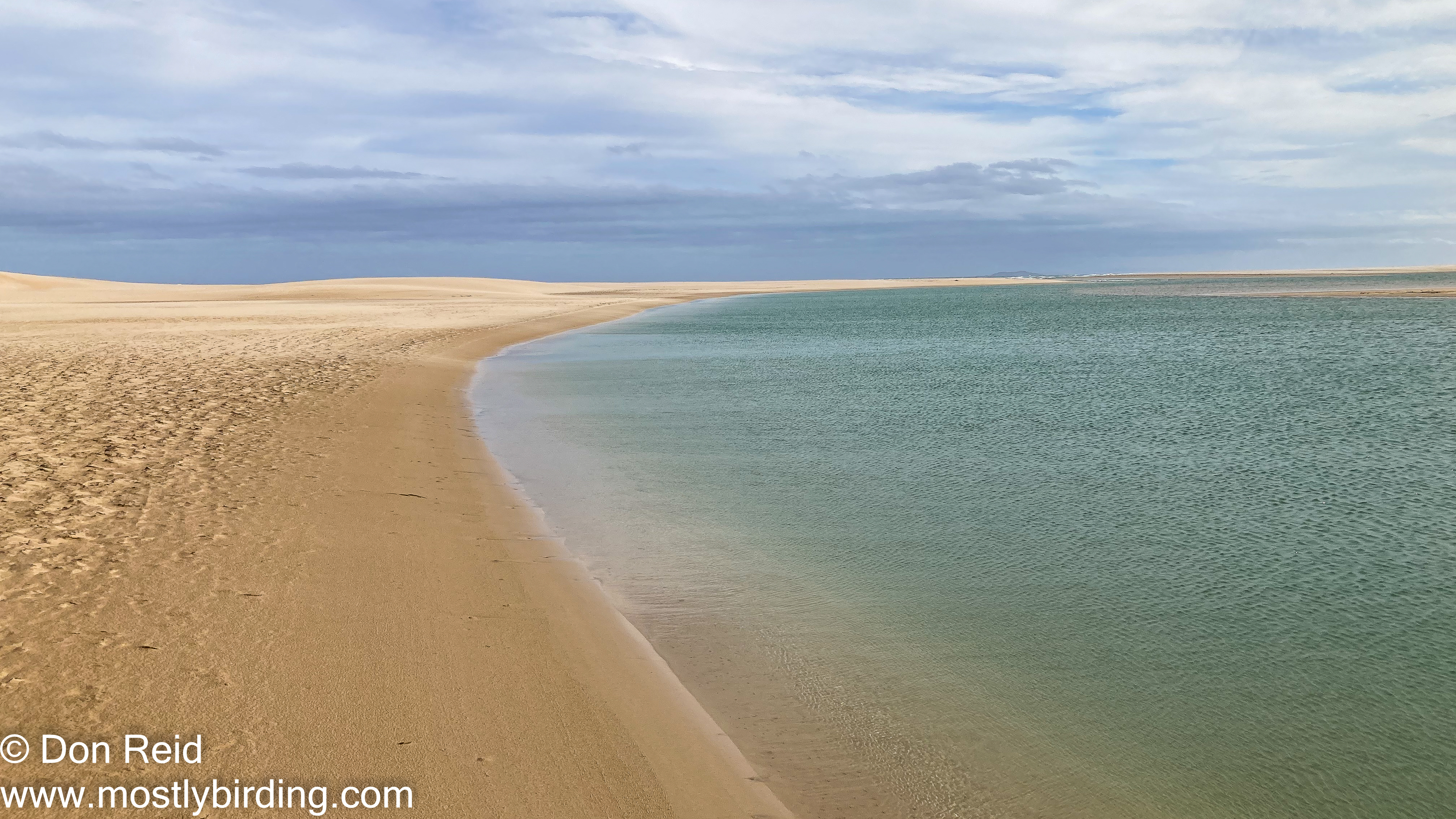
Hartenbos beach at low tide

Cape Visit

In November we spent a memorable week and a half in the Cape as part of a long-planned family reunion with my siblings and some of their children from all over the world.

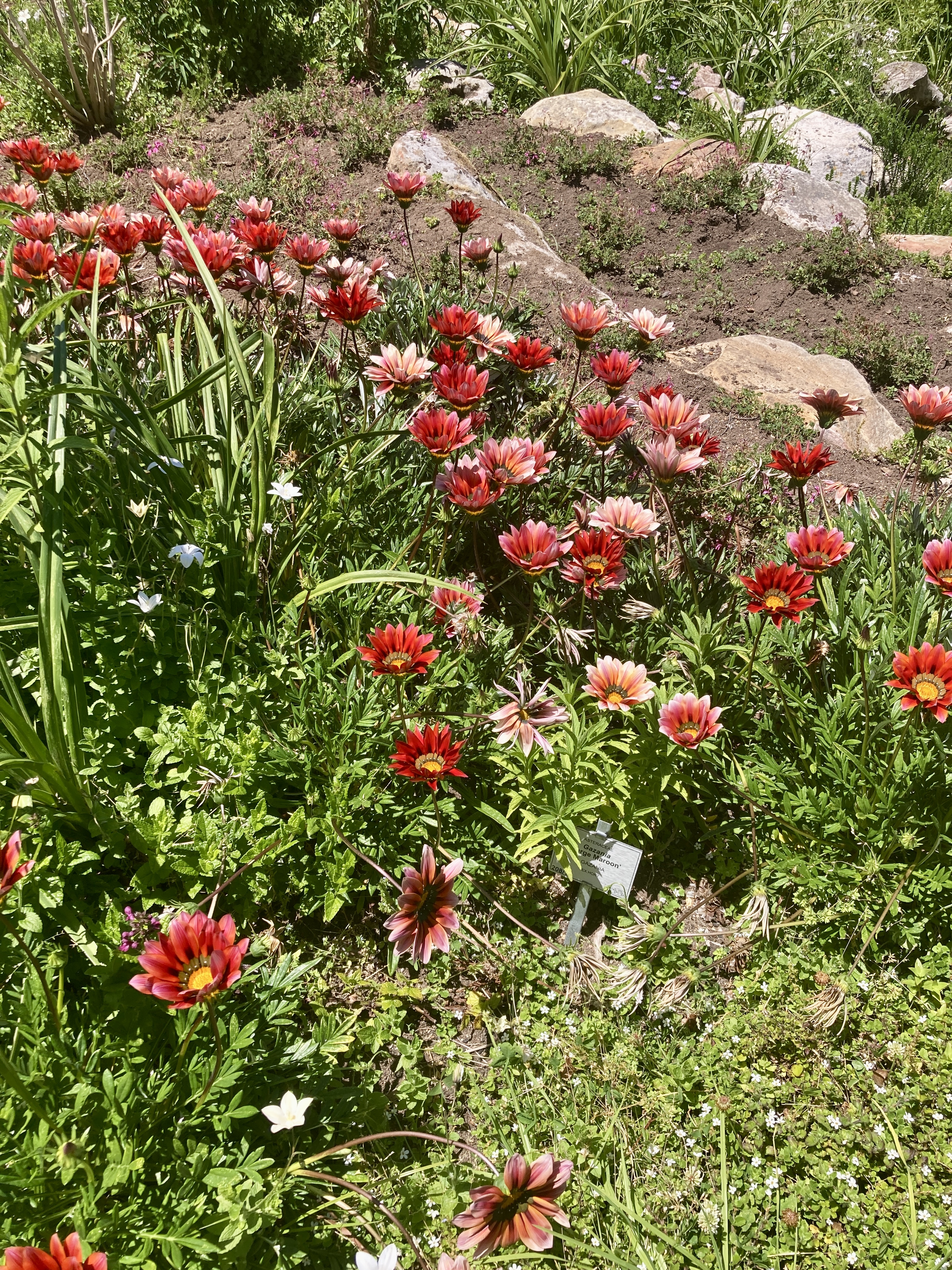
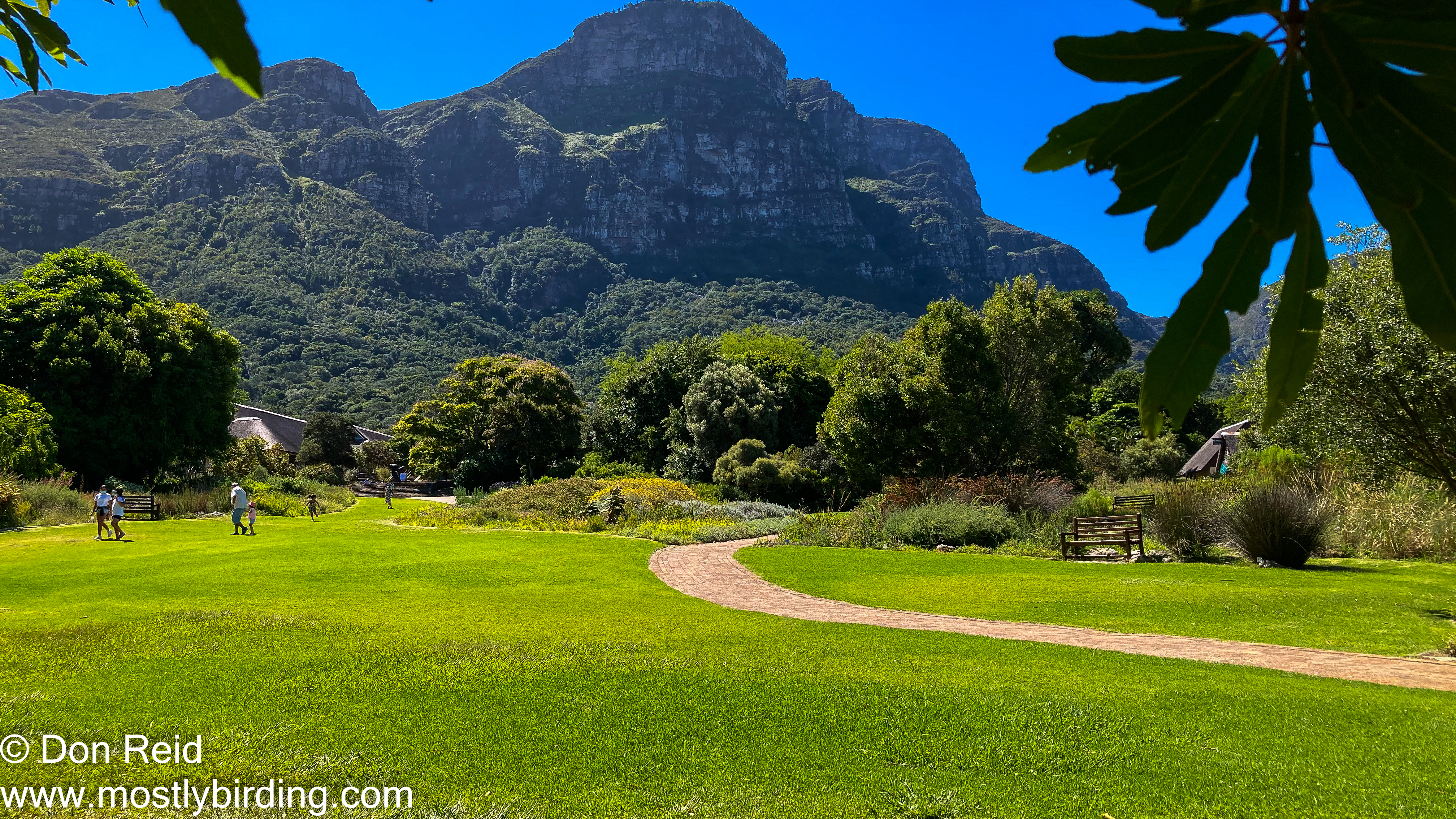
A patch of colour at Kirstenbosch Botanical Gardens, Cape Town
View of Table Mountain from the rooftop of Silo Hotel at the Waterfront
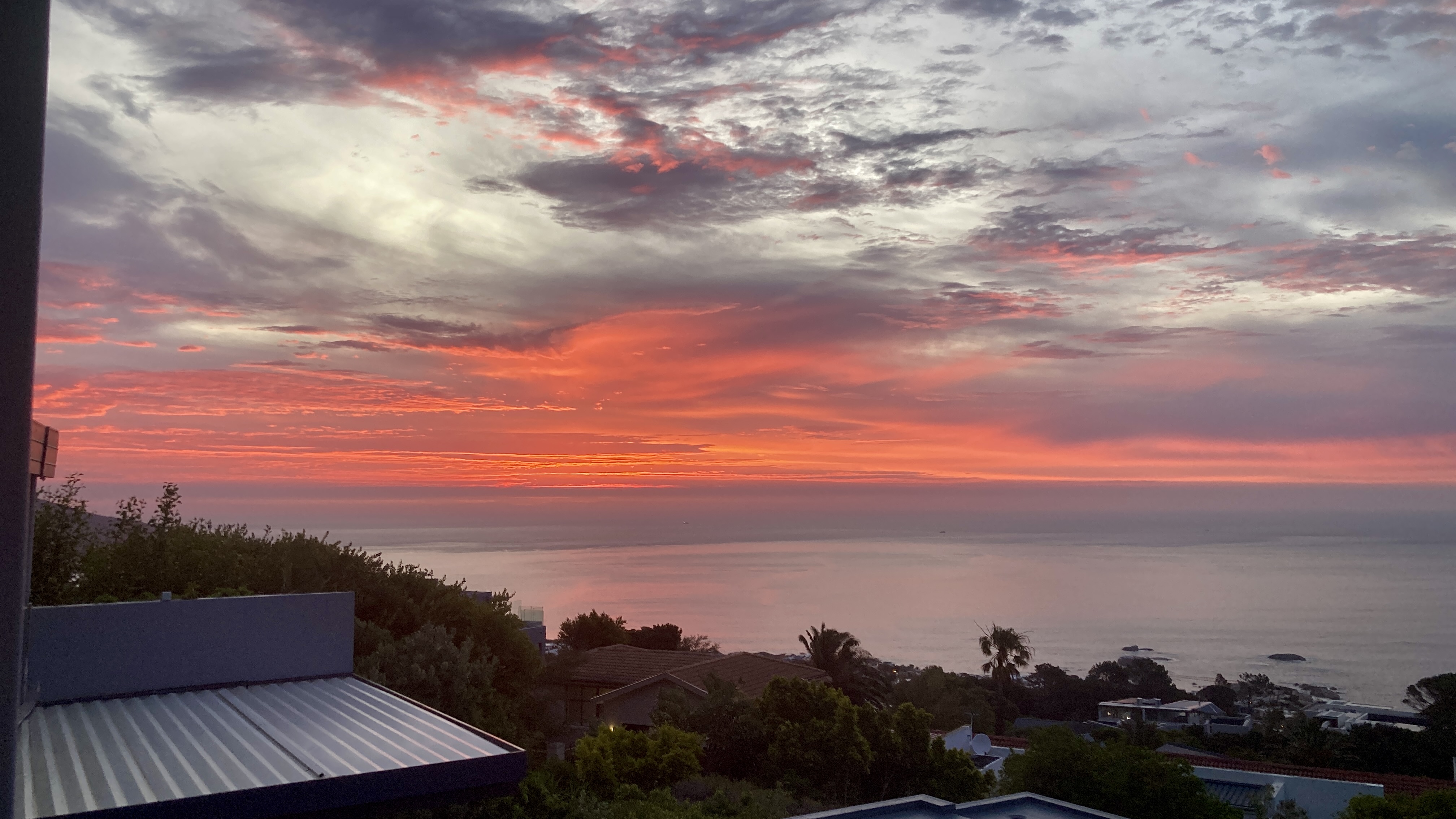
Sunset over Camps Bay
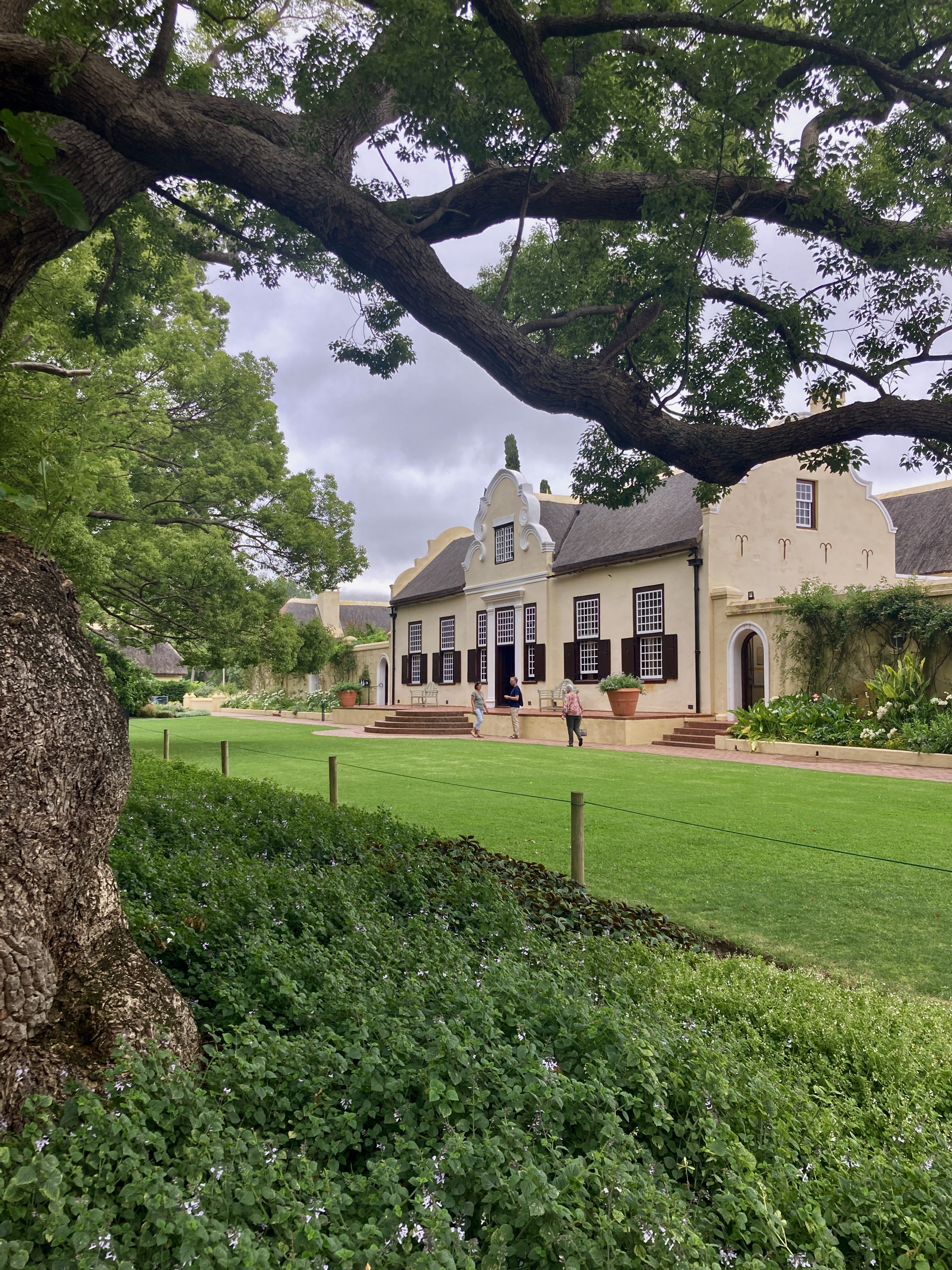
Vergelegen Estate at Somerset West

Back home in Mossel Bay the Cruise season had started – we love seeing these impressive ships in the bay

Cruise ship visiting Mossel Bay

Now if this rain keeps up I may be able to put together the rest of my photo picks for 2024

Addo Trip – March 2024 : Part 3

The Routine

Repeated from Part 2…

We had four full days to make the most of our breakaway to this delightful park and we soon settled into a routine which we followed more or less on each of those days. Let’s just say we were out to relax as much as possible, while not missing out on what Addo has to offer.

The mornings were the most relaxed part of the day, getting up late-ish, having coffee while enjoying the birdsong and spending the rest of the morning out on the deck, then venturing out for a drive along one of the routes, usually with a light picnic lunch packed.

This took us to mid-afternoon when we would return to camp, just in time for a rest (I told you we were out to relax!). More deck sitting, followed by getting the braai fire going for the evening meal to round out the day.

Day 3 and 4 Highlights

The Drives

On Day three we followed a similar pattern to the first two days, starting with coffee and rusks and spending most of the morning chilling on the deck or inside when light intermittent rain began to fall

Once again we made our way to Jack’s Picnic spot, this time taking the Rooidam road for a bit of variety. We prepared a picnic lunch of cheese and biscuits plus fruit and yoghurt to enjoy in one of the secluded spots.

The power was off due to loadshedding when we wanted to make tea to take with us, but fortunately I had brought a small camping gas burner and a kettle for just such an occasion, allowing us to boil our tea water at the picnic spot – not sure why but this simple act is a highlight of the day for me.

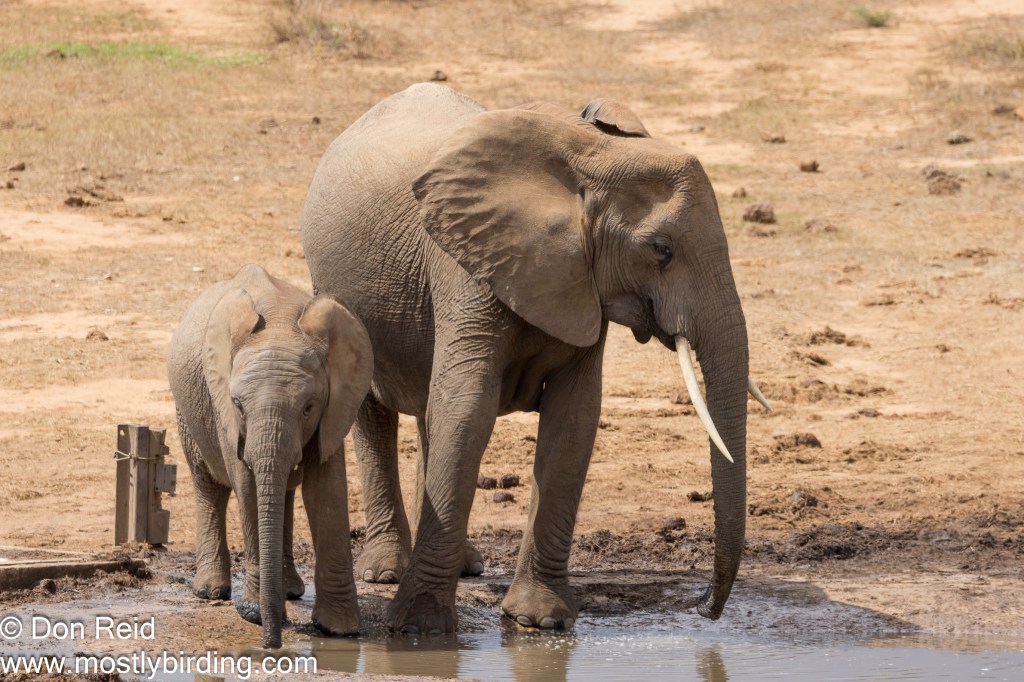
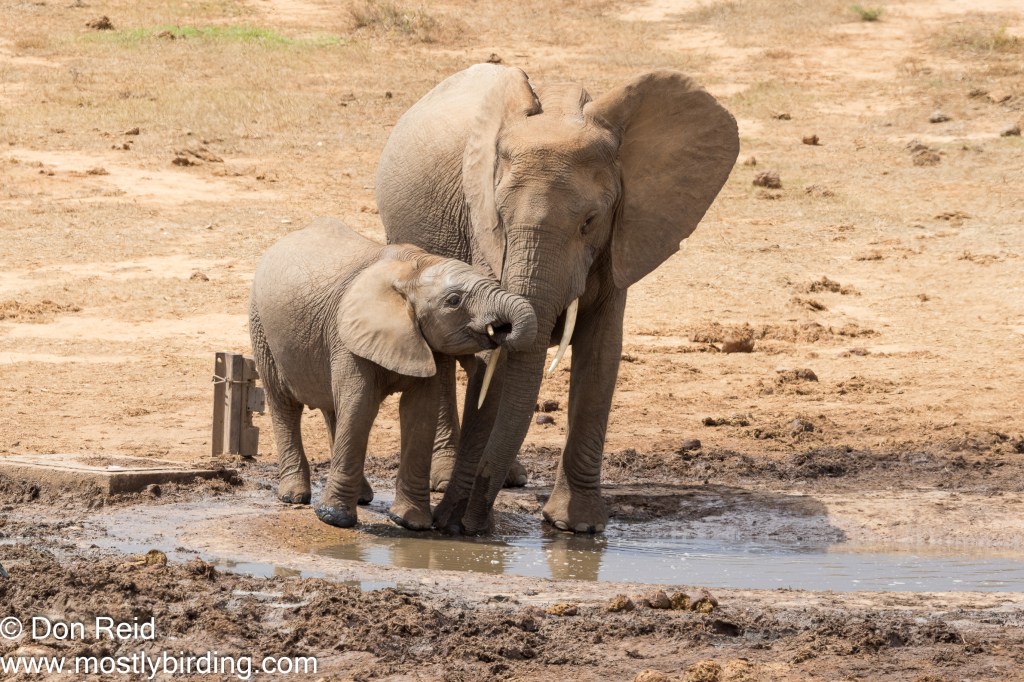
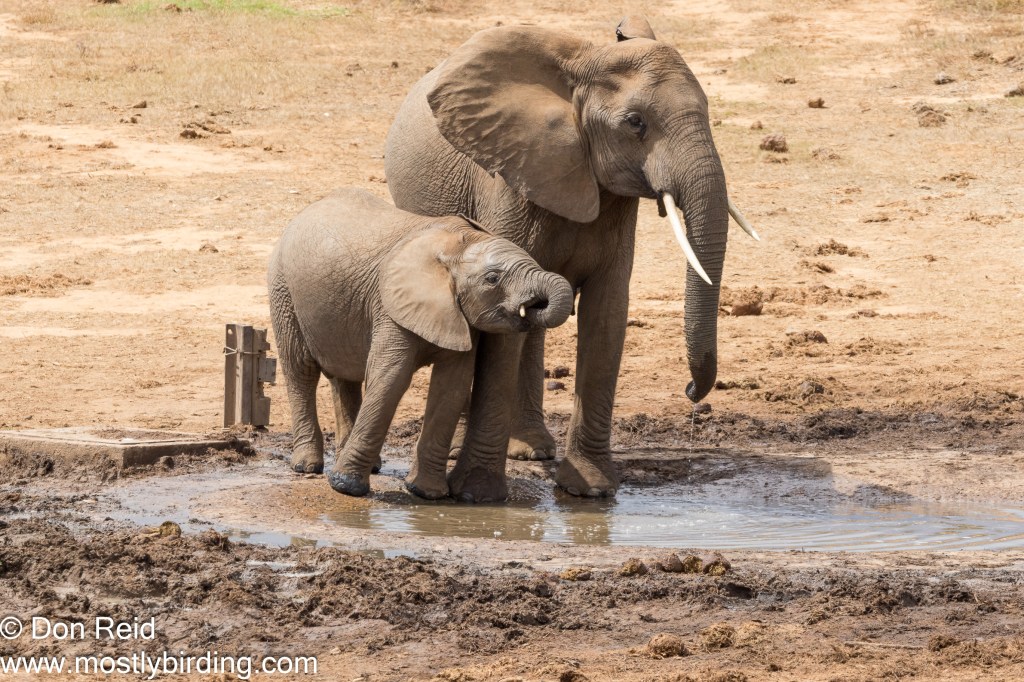
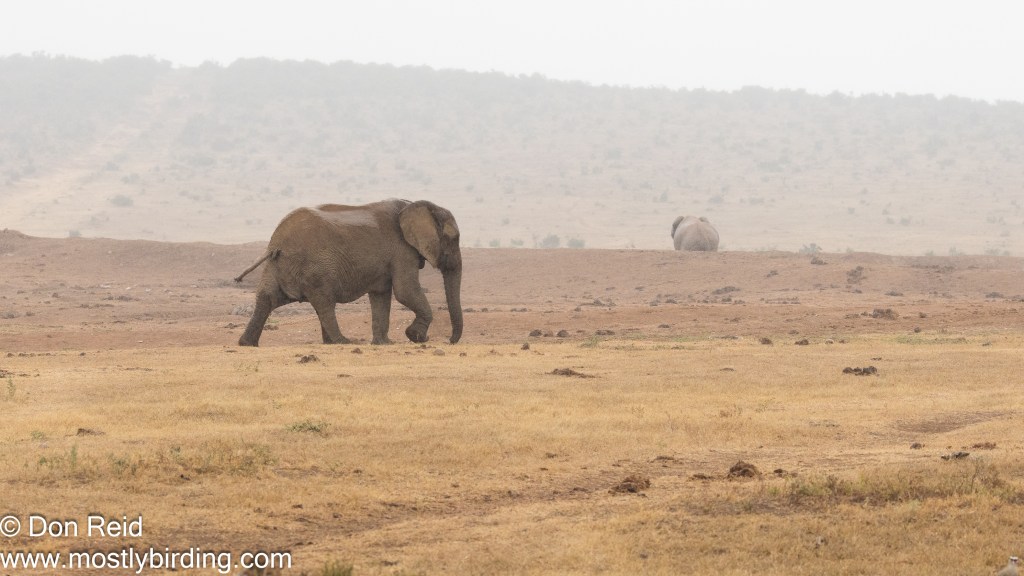
Along the way we enjoyed watching groups of elephants interacting at the waterholes – such as this ‘mother and child’ scenario – what wonderful creatures to observe!


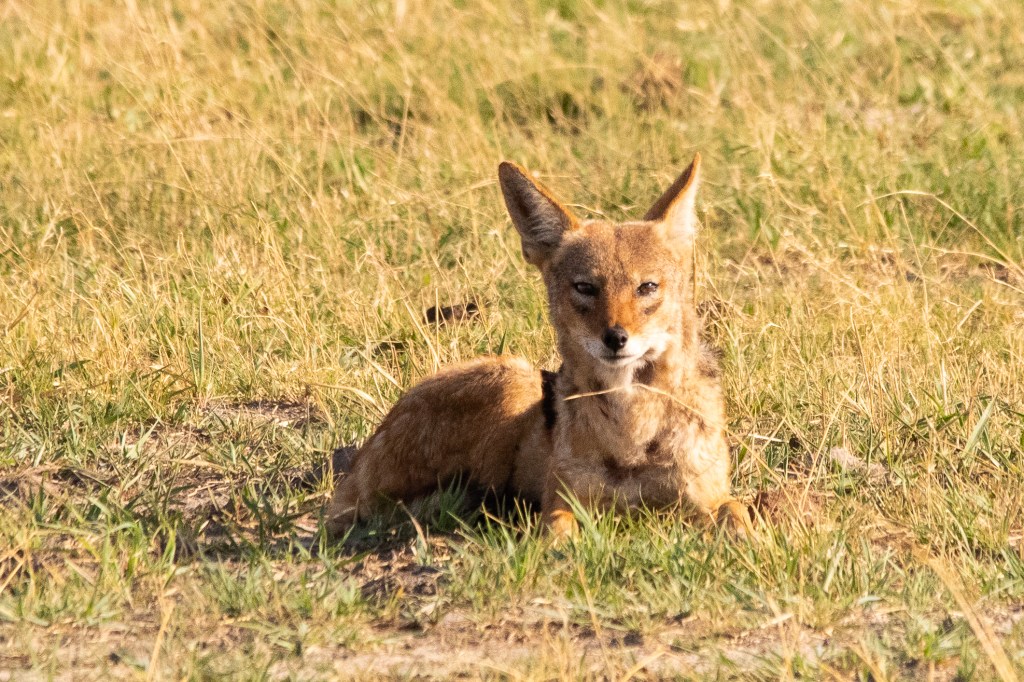
Best animal sighting of the day, apart from the ubiquitous elephants, was a lone Black-backed Jackal walking across the open flats at the Hapoor dam – handsome in its coat of black, white and rust, with its distinctive black bushy tail.

Black-backed Jackal, Addo Elephant NP

At the picnic site a few birds came to inspect and see if we had dropped any crumbs –

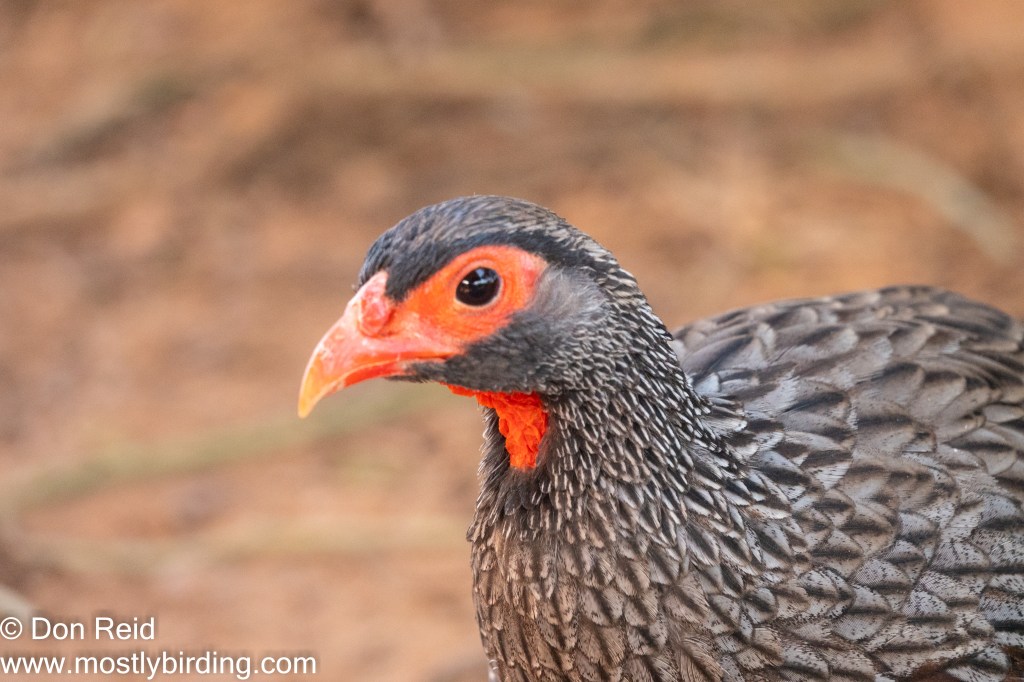
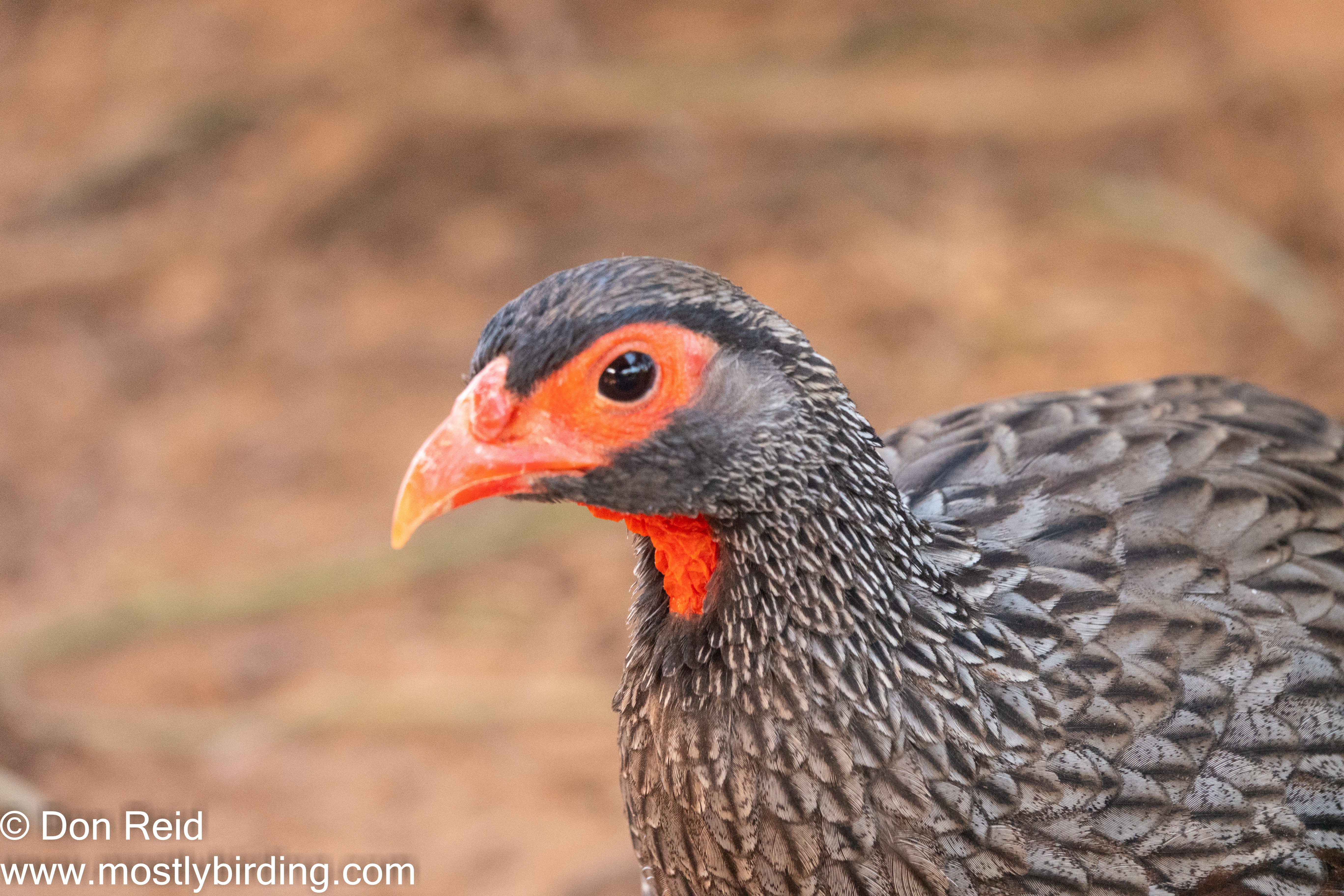
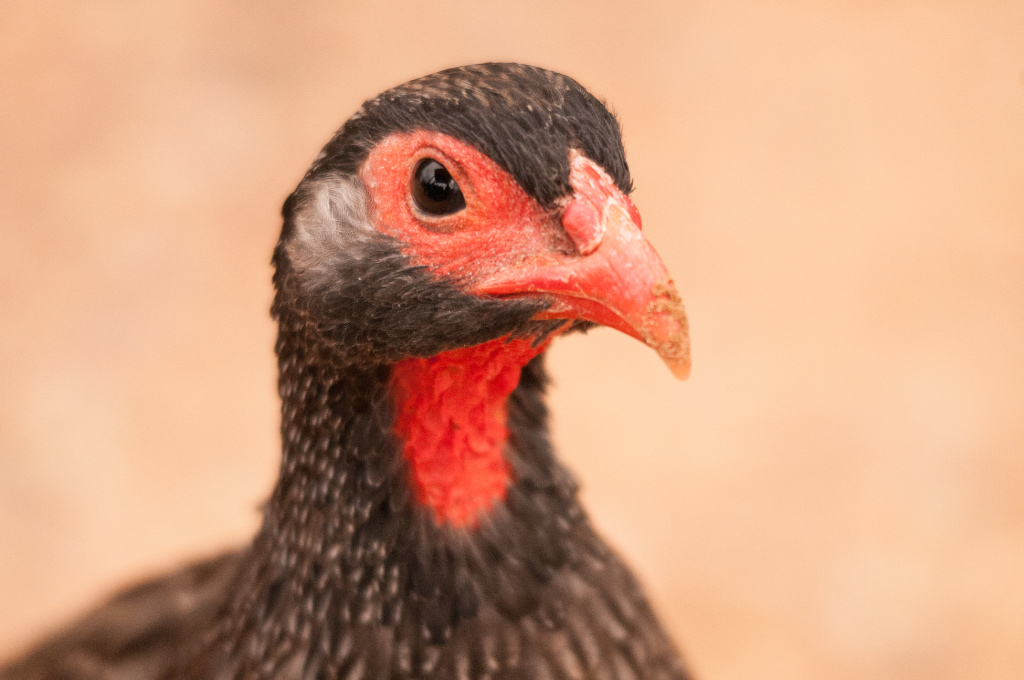
  • Red-necked Spurfowl
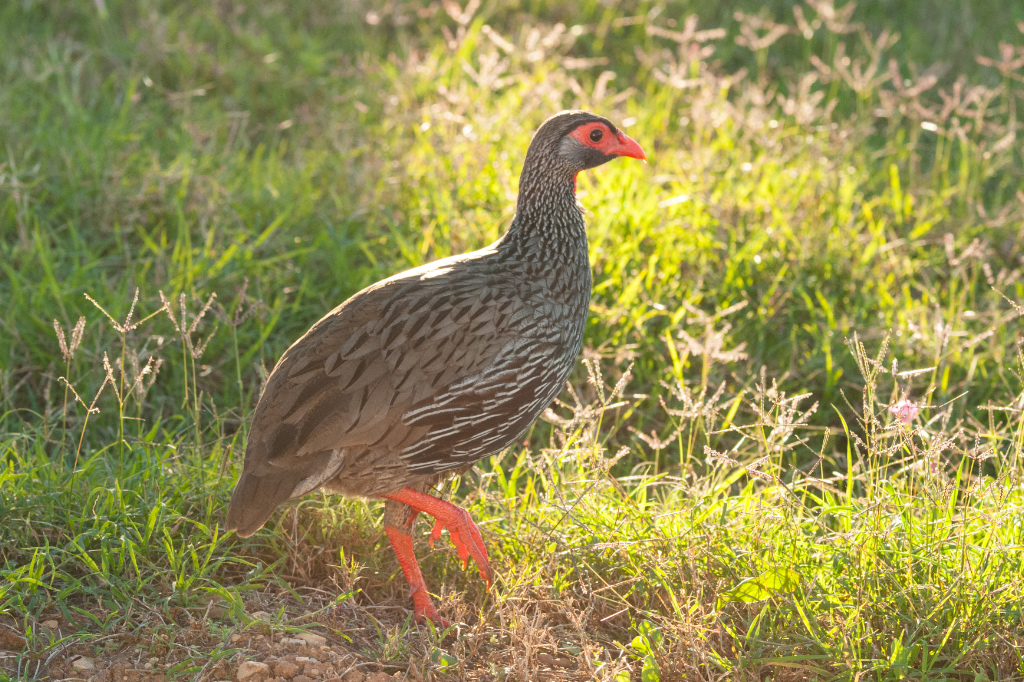
Red-necked Spurfowl
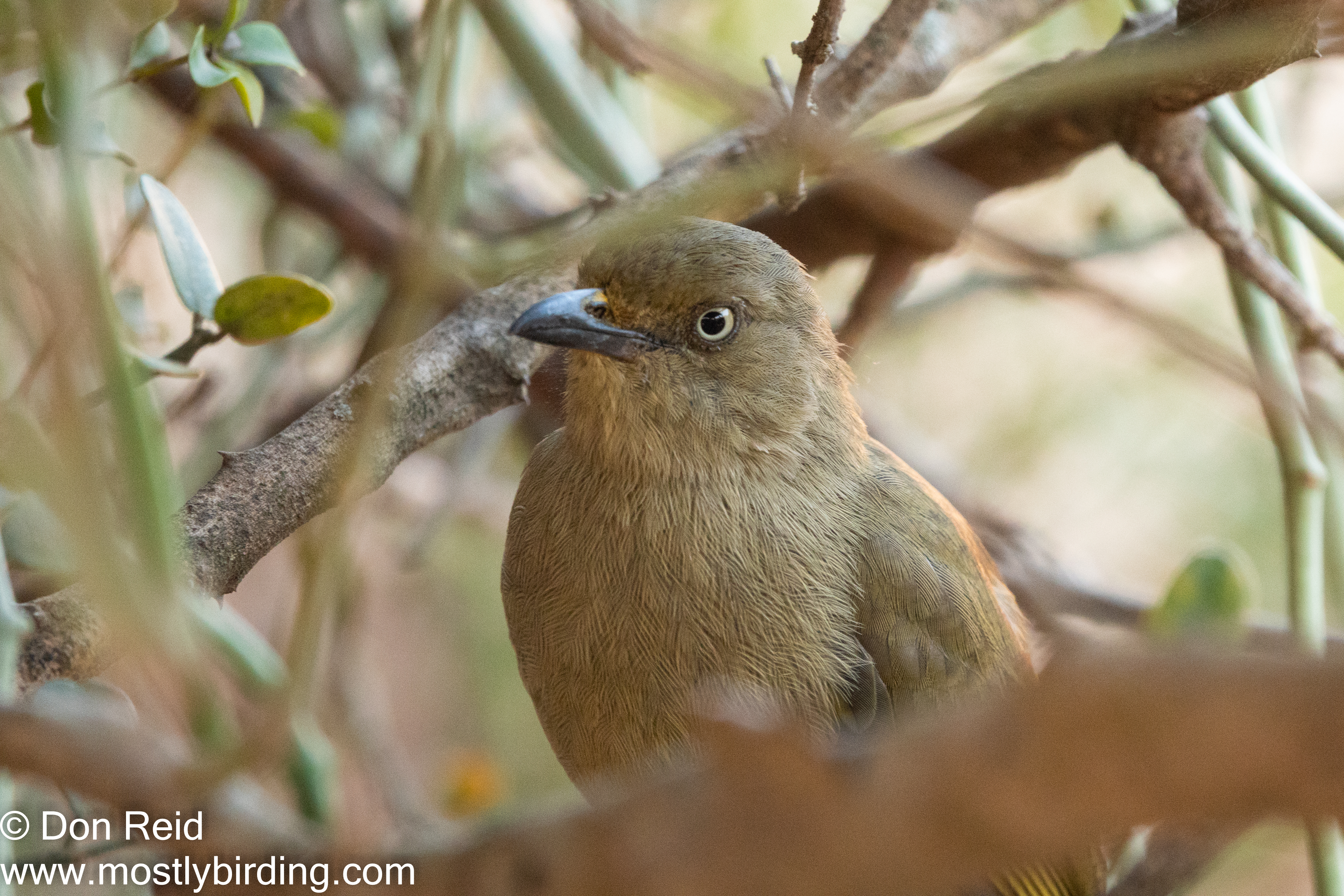
  • Sombre Greenbul
Sombre Greenbul (photo taken in Kruger NP)

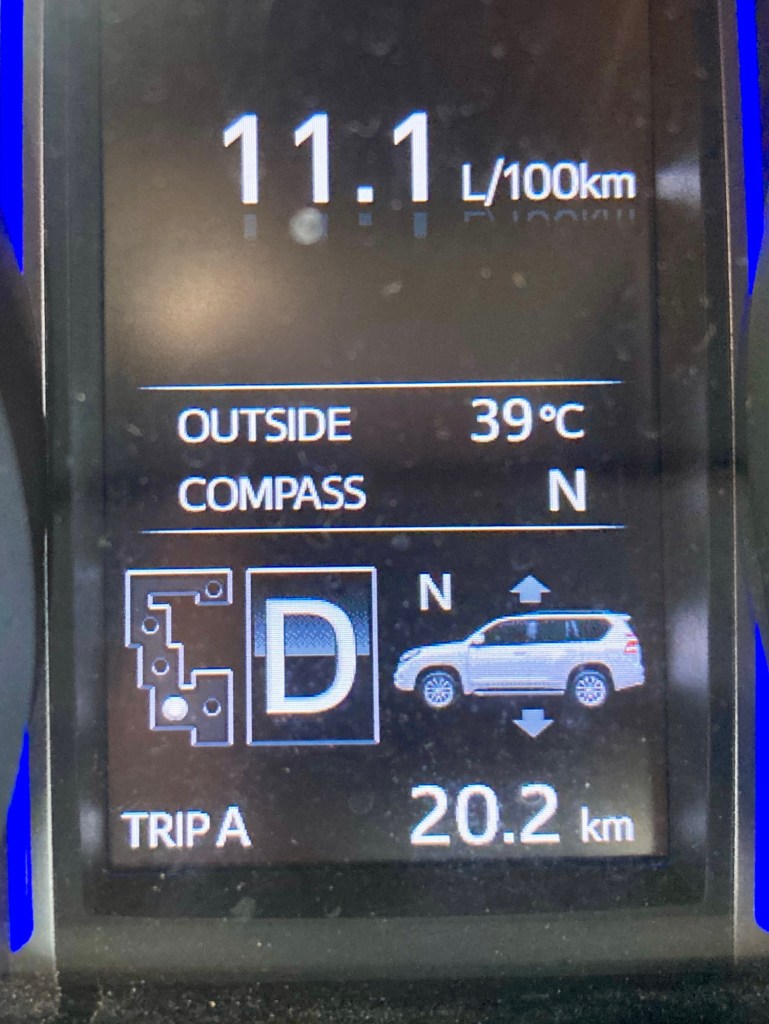
Day four was our last day and it was a hot one – the forecast said it would rise to 39 deg C by lunchtime and indeed it did

Much like the first three days, we hung around our chalet during the morning, mostly inside to avoid the baking heat outside, enjoying a krummelpap brekkie and late morning tea with fruit salad before venturing out into the hot midday sun. We followed a new route which included the loops on the far western side of Addo

It was comfortable for us in our air-conditioned vehicle, even with the windows open, but less so for the animals and birds which were visibly affected by the extreme heat.

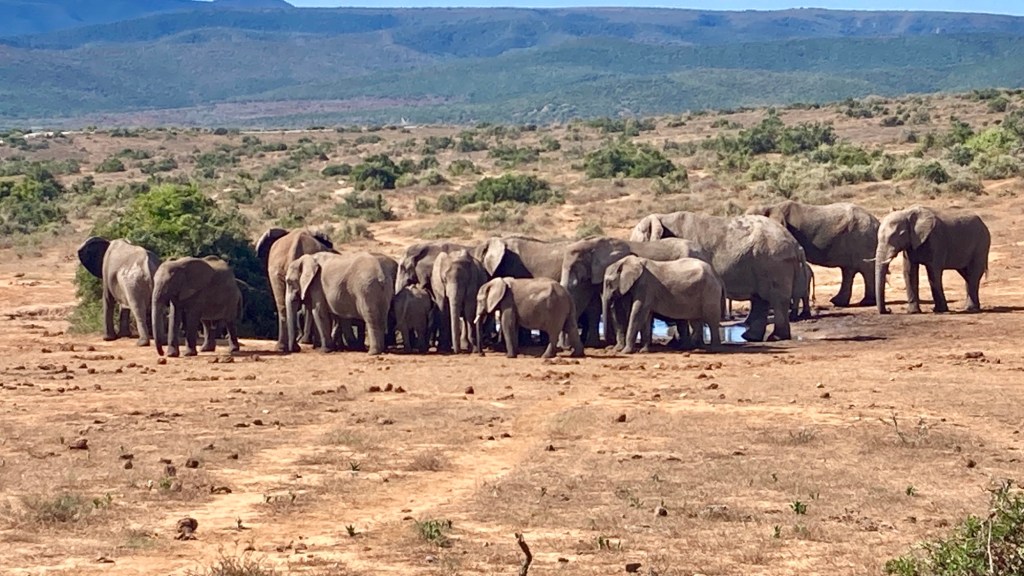
We came across fewer elephants in the open plains area to the west, but found a large mixed herd at the waterhole when we were on the way back. The elephants didn’t seem to wander too far from the waterhole which seemed completely overcrowded, yet the ellies displayed great patience in letting all have a chance to drink without any commotion.

Almost all the birds we came across were ‘panting’ with beaks wide open – their way of keeping their body temperature under control.

Bird highlight of the day for us was a Denham’s Bustard not far from the road in an open area of dry grassland. As they are wont to do, it walked away when we stopped, making it difficult to get a decent photo – if only they knew how frustrating they can be!

Denham’s Bustard Neotis denhami Veldpou (race stanleyi), Addo Elephant NP

Other birds spotted :

  • Grey Heron at Domkrag dam
Grey Heron Ardea cinerea Bloureier, Addo Elephant NP
  • Ant-eating Chat out on the open plains
Ant-eating Chat Myrmecocichla formicivora Swartpiek (race formicivora), Addo Elephant NP

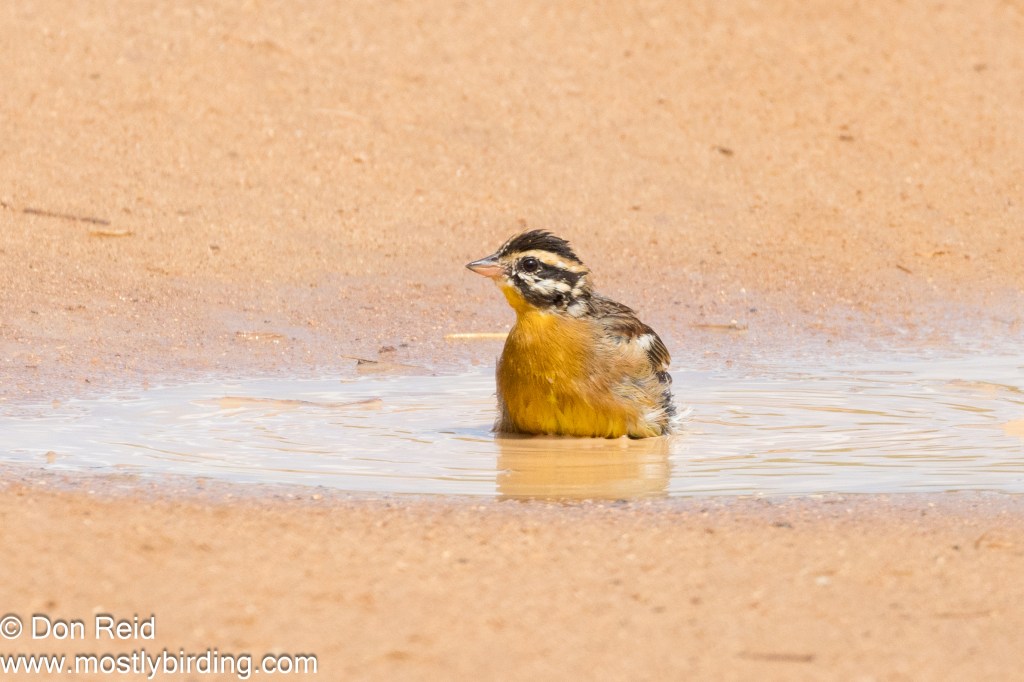
Golden-breasted Bunting enjoying a puddle in the middle of the road

Golden-breasted Bunting Emberiza flaviventris Rooirugstreepkoppie (race flaviventris), Addo Elephant NP
  • Ostrich pair with 3 juveniles sheltering from the heat in the shade under mommy ostrich
Common Ostrich Struthio camelus Volstruis (male), Addo Elephant NP
Common Ostrich Struthio camelus Volstruis (female with juveniles), Addo Elephant NP

Some other wildlife sightings :

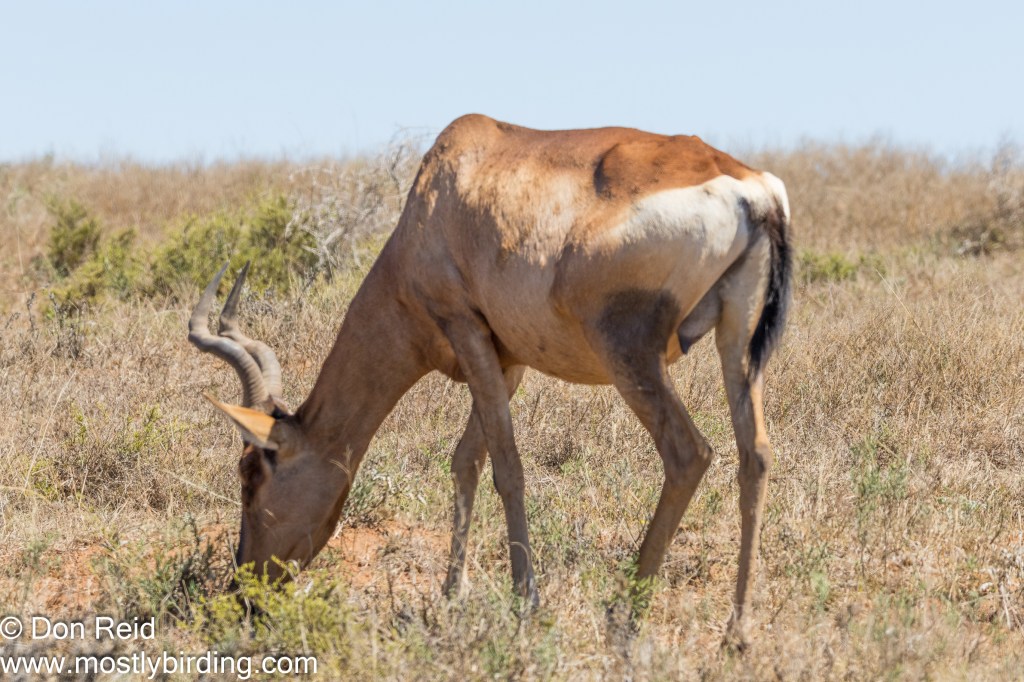
  • Two antelopes not seen in the first few days – Eland and Red Hartebeest.
Eland, Addo Elephant NP
Red Hartebeest, Addo Elephant NP
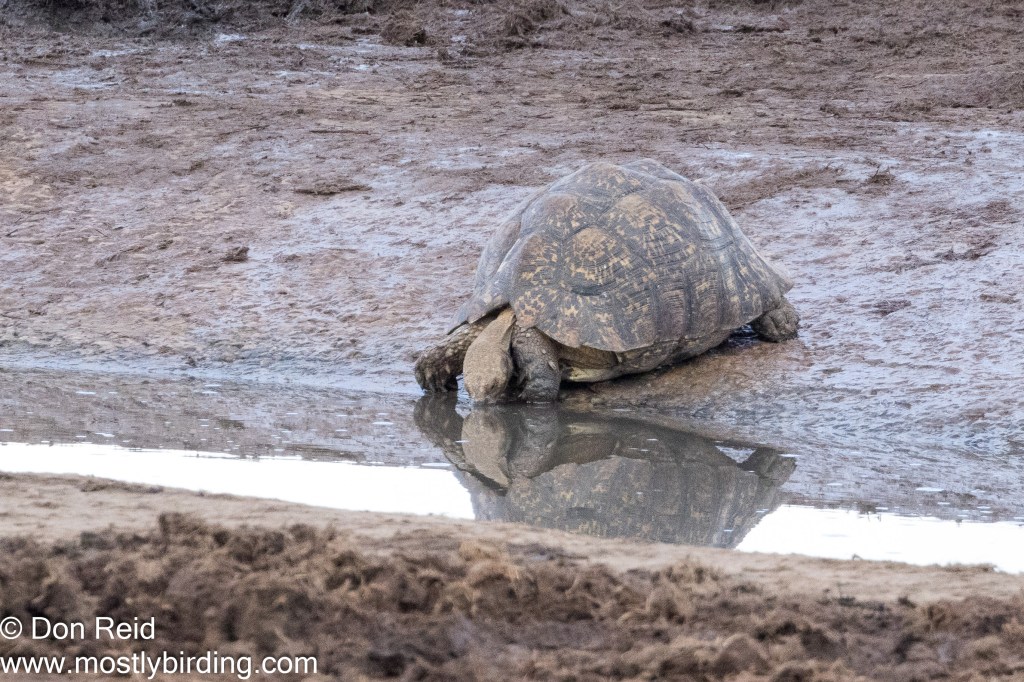
  • It was unusual to see a large tortoise all alone at one waterhole, quietly quenching its thirst
Tortoise, Addo Elephant NP

All in all a worthwhile and interesting drive of a couple of hours, despite the extreme heat

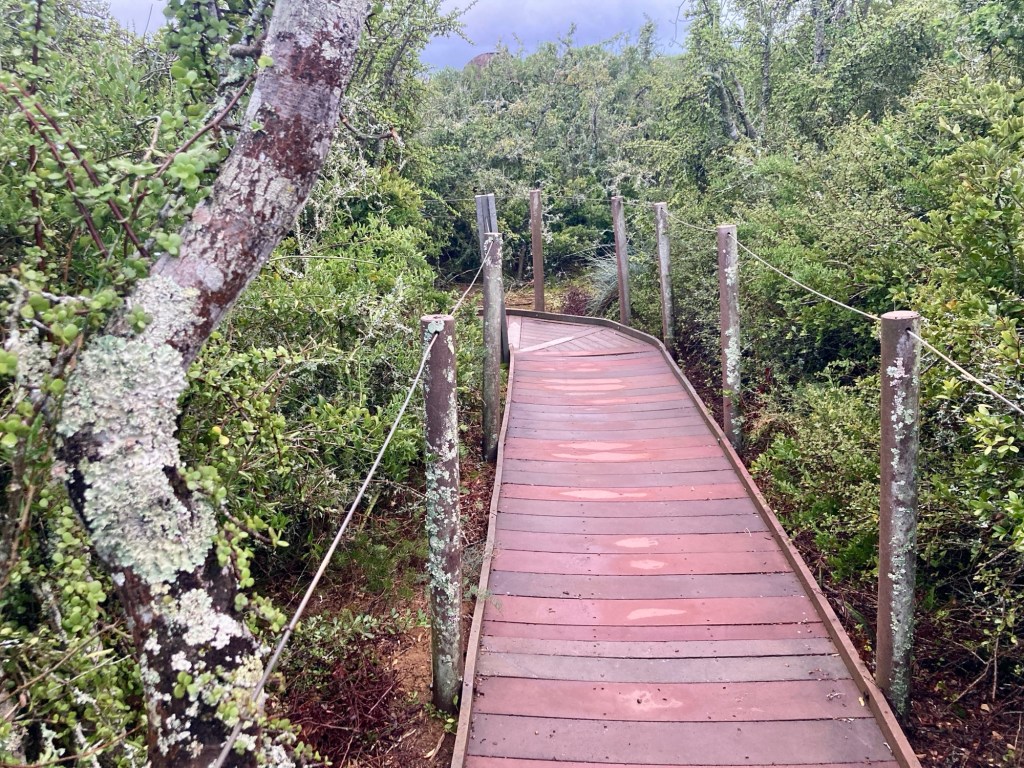
After a restful period at the chalet and a swim in the pool nearby, we visited the Discovery Trail near our chalet and enjoyed matching the nameplates placed at intervals along the boardwalk with their respective trees and bushes.

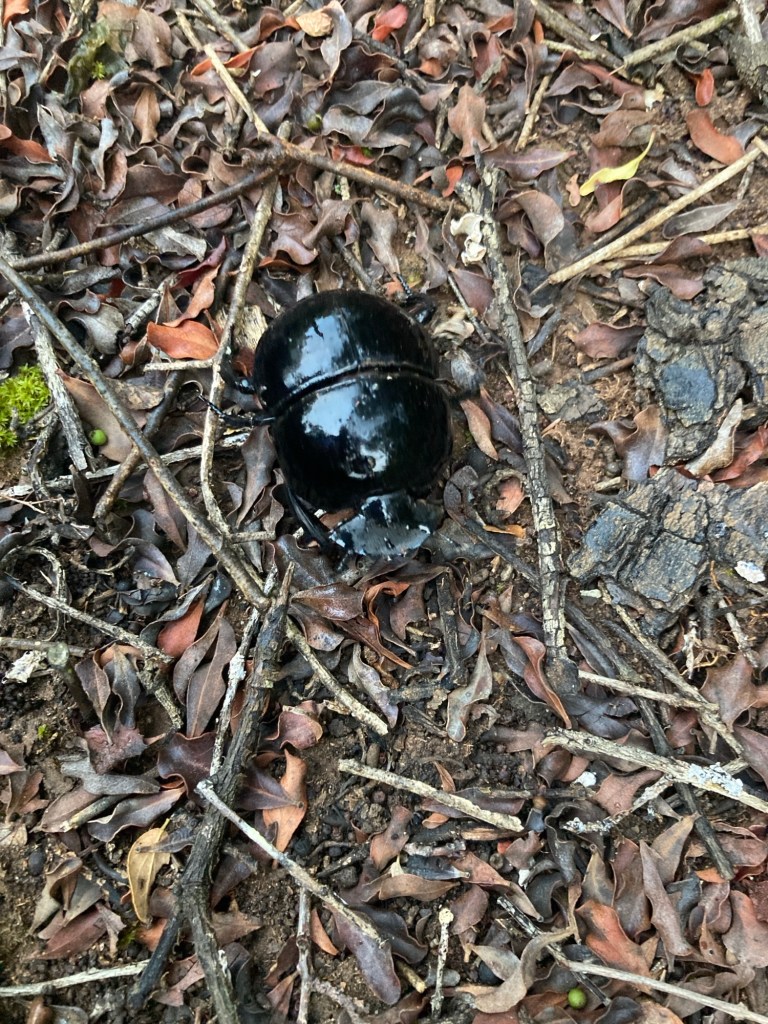
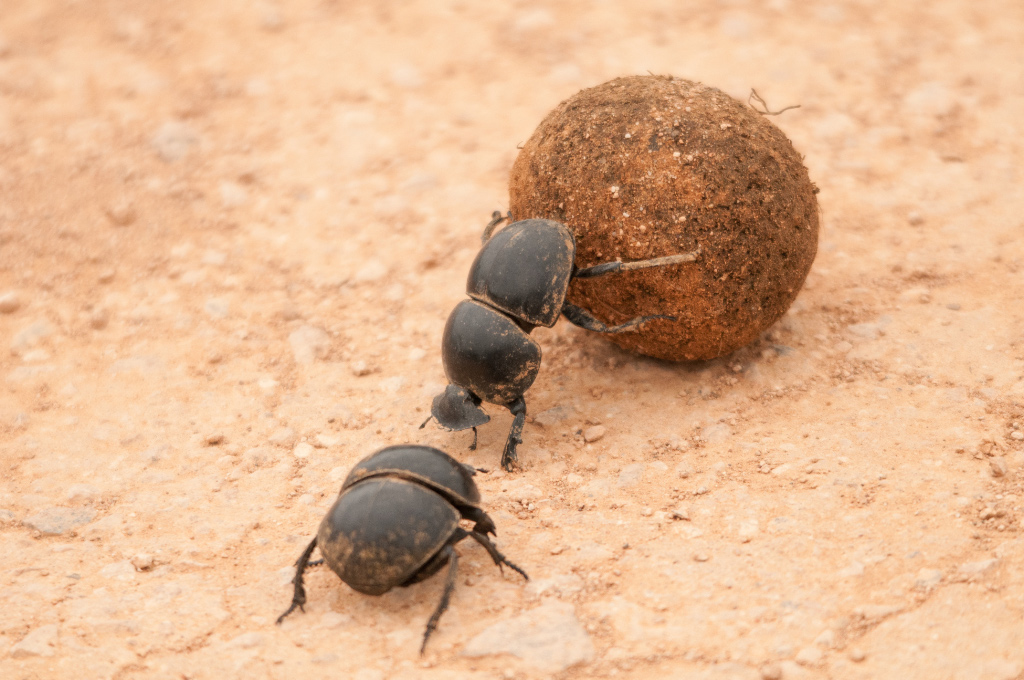
It was nice to find a Flightless Dung Beetle next to the pathway. This must be one of the few beetles in the world that features on warning signs advising drivers to keep a look out for them and avoid driving over them.

They are quite vulnerable in Addo when the roads are busy and the beetles are out foraging elephant dung, which they carefully roll into a ball and propel with their hind legs, often crossing the road very slowly in the process.

Back at the chalet we heated up the ribs we braaied last night and enjoyed a last Addo supper with salads, somewhat sad that our stay had come to an end

Addo Trip – March 2024 : Part 2

The Routine

We had four full days to make the most of our breakaway to this delightful park and we soon settled into a routine which we followed more or less on each of those days. Let’s just say we were out to relax as much as possible, while not missing out on what Addo has to offer.

The mornings were the most relaxed part of the day, getting up late-ish, having coffee while enjoying the birdsong and spending the rest of the morning out on the deck, then venturing out for a drive along one of the routes, usually with a light picnic lunch packed.

This took us to mid-afternoon when we would return to camp, just in time for a rest (I told you we were out to relax!). More deck sitting, followed by getting the braai fire going for the evening meal to round out the day.

Day 1 and 2 Highlights

Stoepsitting

Stoepsitting (relaxing on the deck) is especially rewarding in Addo’s Main Camp where the chalets are surrounded by trees and shrubs which are a magnet for a number of birds.

It almost seems as if the birds that visit the surrounding bushes and trees are prompted by a stage director to appear ‘on stage’, play their part and leave again

Some of the regular “performers” :

Southern Boubou, looking like he is in charge, giving a raucous call just in case you don’t notice him the first time

Southern Boubou Laniarius ferrugineus Suidelike waterfiskaal (female, race natalensis), Addo Elephant NP

Greater Double-collared Sunbird, resplendent in green cloak and bright red waistcoat and showing off its colours at every opportunity

Greater Double-collared Sunbird Cinnyris afer Groot-rooibandsuikerbekkie, Addo Elephant NP

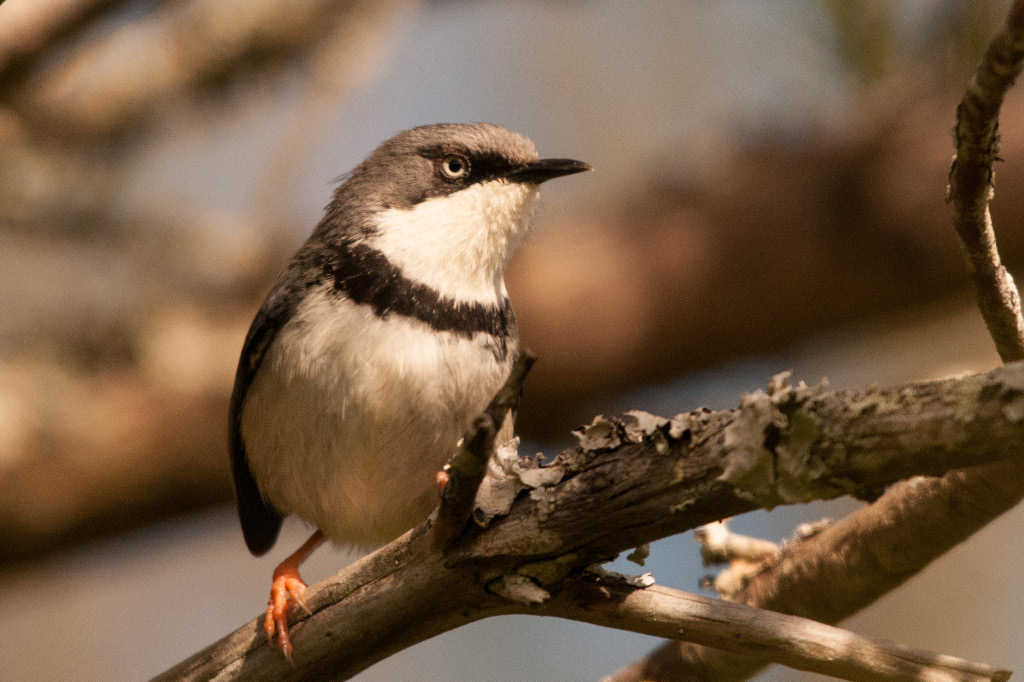
Bar-throated Apalis, perky and loud, flitting about the bushes, allowing very brief glimpses as it moves through the foliage – so brief I didn’t manage to get a photo this visit so have included this one from a previous trip

Bar-throated Apalis, Bontebok NP (not impressed by my playing his call)

Cape Robin-Chat, haughty and superior – but who wouldn’t be if you could sing as well as it can

Cape Robin-Chat Cossypha caffra Gewone janfrederik, Addo Elephant NP

Streaky-headed Seedeater, looking a little miffed about no longer being known as a Canary (except in Afrikaans) but singing like one nevertheless

Streaky-headed Seedeater Crithagra gularis Streepkopkanarie (race humilis), Addo Elephant NP

Karoo Prinia, another busy bird not sitting still for long and with an almost desperate look in the eye – perhaps it’s thinking about a thorny issue of some kind …

Karoo Prinia Prinia maculosa Karoolangstertjie (race exultans), Addo Elephant NP

The Drives

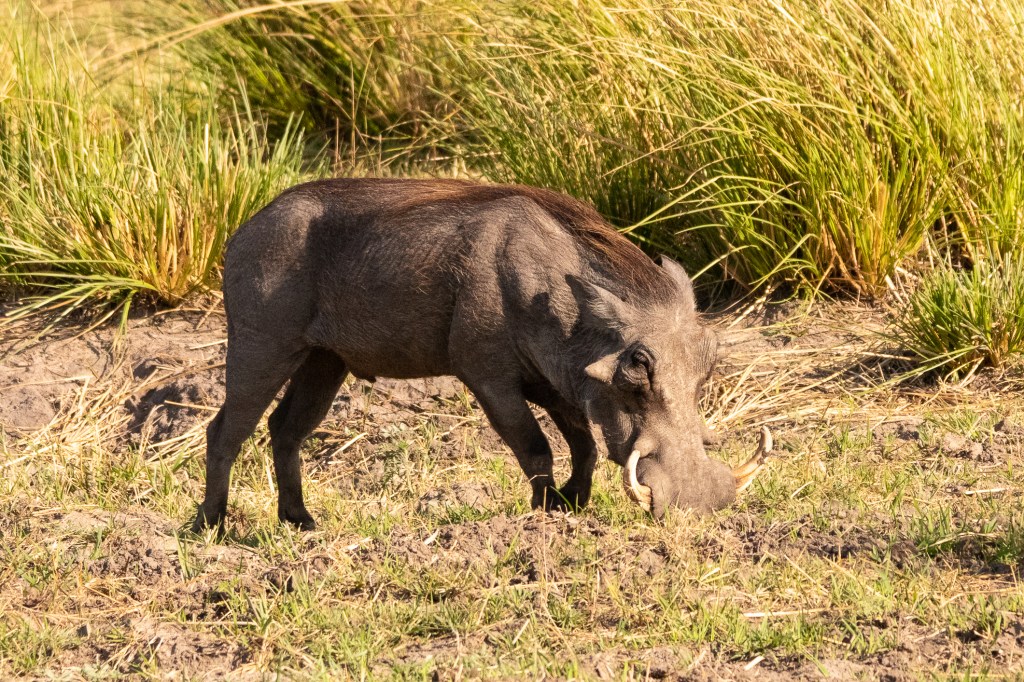
Our drive on day one was limited to a late afternoon exploration of the roads nearest to the camp. At the first waterhole we found a small group of elephants quenching their thirst, while a Warthog approached carefully to see if he could get a look in.

African Elephant, Addo Elephant NP
Warthog, Addo Elephant NP

On day two we felt like a longer drive and set off late morning, taking the road southwards to Jack’s Picnic spot where we had a light lunch of fruit salad and yoghurt and the tea that we had prepared before leaving. Jack’s is unique in that it has a number of individual picnic tables each set in an alcove shielded by bush almost all the way around, creating a cosy, private space to enjoy your picnic.

On the way we had encountered several groups of elephant – some at the waterhole, others nearby.

African Elephant, Addo Elephant NP

While watching the wild life activity at Hapoor waterhole near the picnic spot, we witnessed a mixed herd of elephants approaching at a pace, tails literally flying in the air – clearly they had one thing in mind – to quench their thirst on a hot day

African Elephant, Addo Elephant NP

An older elephant lagged behind – the pace just too fast for it (I can relate to that)

African Elephant, Addo Elephant NP

A few Zebras in the bushy areas added some variety to the drive

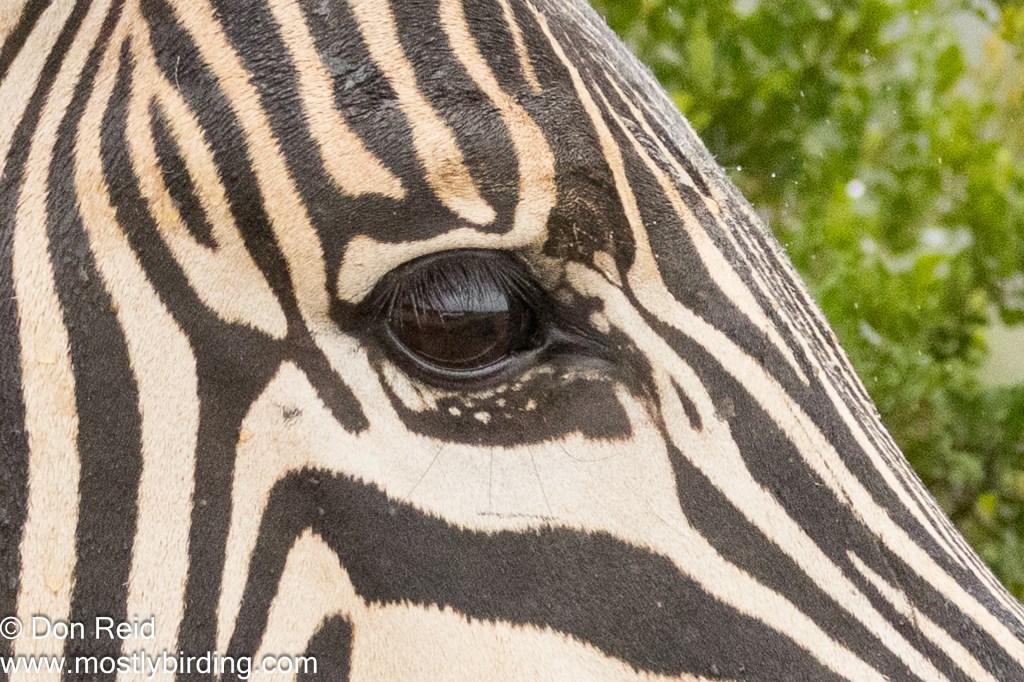
Burchell’s Zebra, Addo Elephant NP

Ever on the lookout for birds, here are those that caught my camera’s eye

Crowned Lapwing
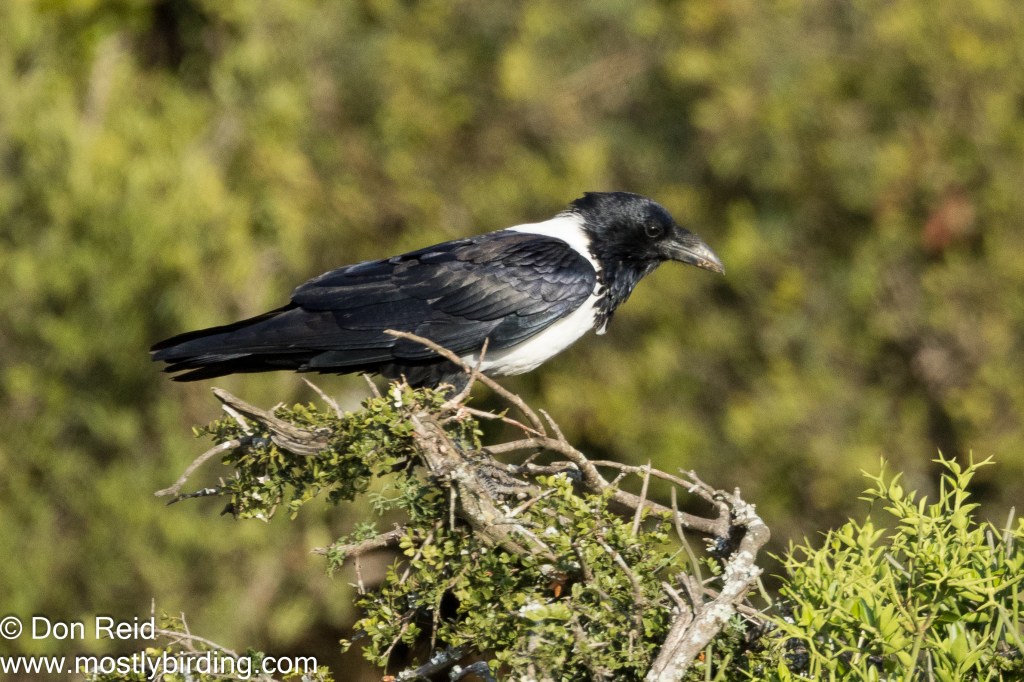
Pied Crow – often abundant but seldom offering opportunities to photograph it at close quarters

A pair of African Pipits were enjoying the wet open veld where it had just rained, pretending to be waders for a few moments

African Pipit Anthus cinnamomeus Gewone koester (race rufuloides), Addo Elephant NP

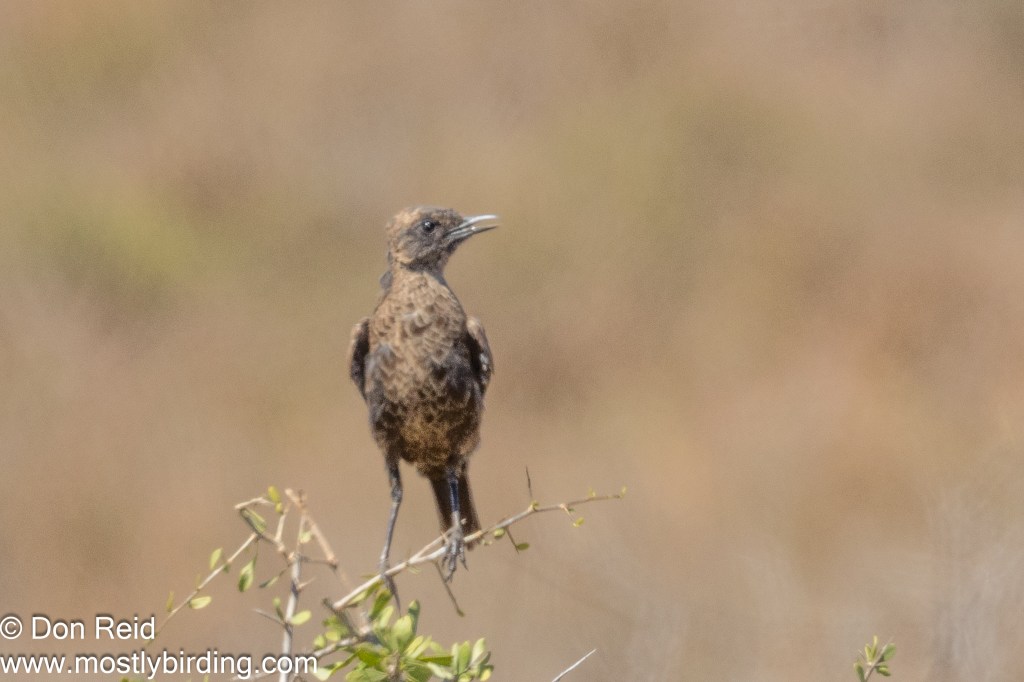
Joining the Pipits was a bird that at first had me wondering due to its wet and bedraggled plumage but a study of the photos I took convinced me it was a Karoo Chat – probably a juvenile

Karoo Chat Cercomela schlegelii Karoospekvreter (race pollux), Addo Elephant NP

Gerda is always on the lookout for wild flowers – there was not much to see but we did come across a single Spekboom that had flowers, while thousands of its like had none

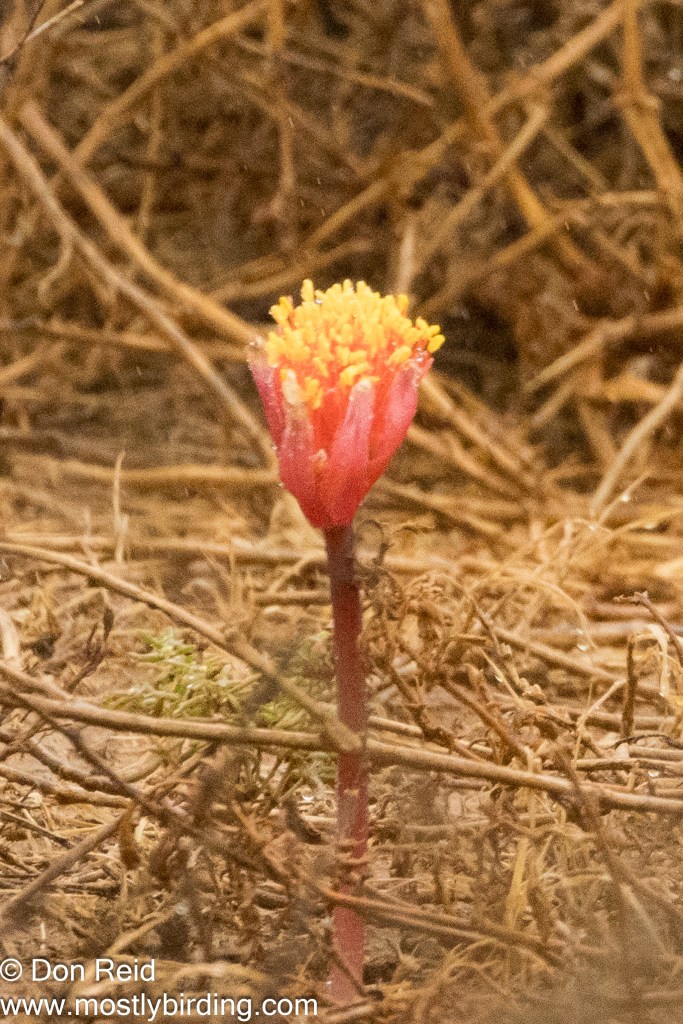
Soon after we saw a bright splash of red and yellow in an otherwise drab patch of veld, which turned out to be an unusual lily with several common names, one of which is Paintbrush Lily

Paintbrush Lily, Addo Elephant NP

By coincidence the same evening, while scanning through some wild flower posts on facebook, I came across an interesting post which went into some detail about this unique flower, in Afrikaans

We still had two days of relaxation ahead in this lovely national park, which tends to grow on you

My Photo Picks for 2021 – The Places, Wildlife and Other Stuff

With the new year barely out of the starting blocks, it’s once again time to select the photos which best represent our travels and nature experiences during 2021, plus a few others that appeal to me for various reasons.  Despite the ongoing restrictions brought upon all of us by Covid 19, we still managed to travel fairly extensively, although it was limited to the borders of South Africa. 

I’m hoping you will find some of my favourite images to your liking – if you do, please take a moment to mention them in the comments at the end of the post. 

The Places

It was a revelation to look back over the year’s images and realise that, in fact, we did manage to travel to many places across South Africa. Our longest road trips were those between the two places we call home – Pretoria and Mossel Bay – and the pendulum seems to have swung in favour of the latter town, where we spent slightly more time than in Pretoria for the first time. My bird atlasing activities were somewhat handicapped this past year by other factors – nevertheless I did get out on atlasing trips on a fairly regular basis, mostly in the vicinity of one of the two home bases

Farmlands, Vleesbaai Area near Mossel Bay
Hillside Farm Trompsburg, Free State – where we spent a night on the trip to Mossel Bay
One of the dams in The Glades Estate, (where our Pretoria home is)
View of Simon’s Town from Penguin Palace B&B
Kirstenbosch National Botanical Gardens in Cape Town – we never visit Cape Town without a visit to these superb gardens
Boulders beach, Simon’s Town, site of the famous African Penguin colony
The Point from the hill, Mossel Bay
Sunday’s River Mouth, Eastern Cape
Addo Elephant National Park, Eastern Cape
Mountain Zebra National Park, Eastern Cape
Croft 3, Verlorenkloof, Mpumulanga
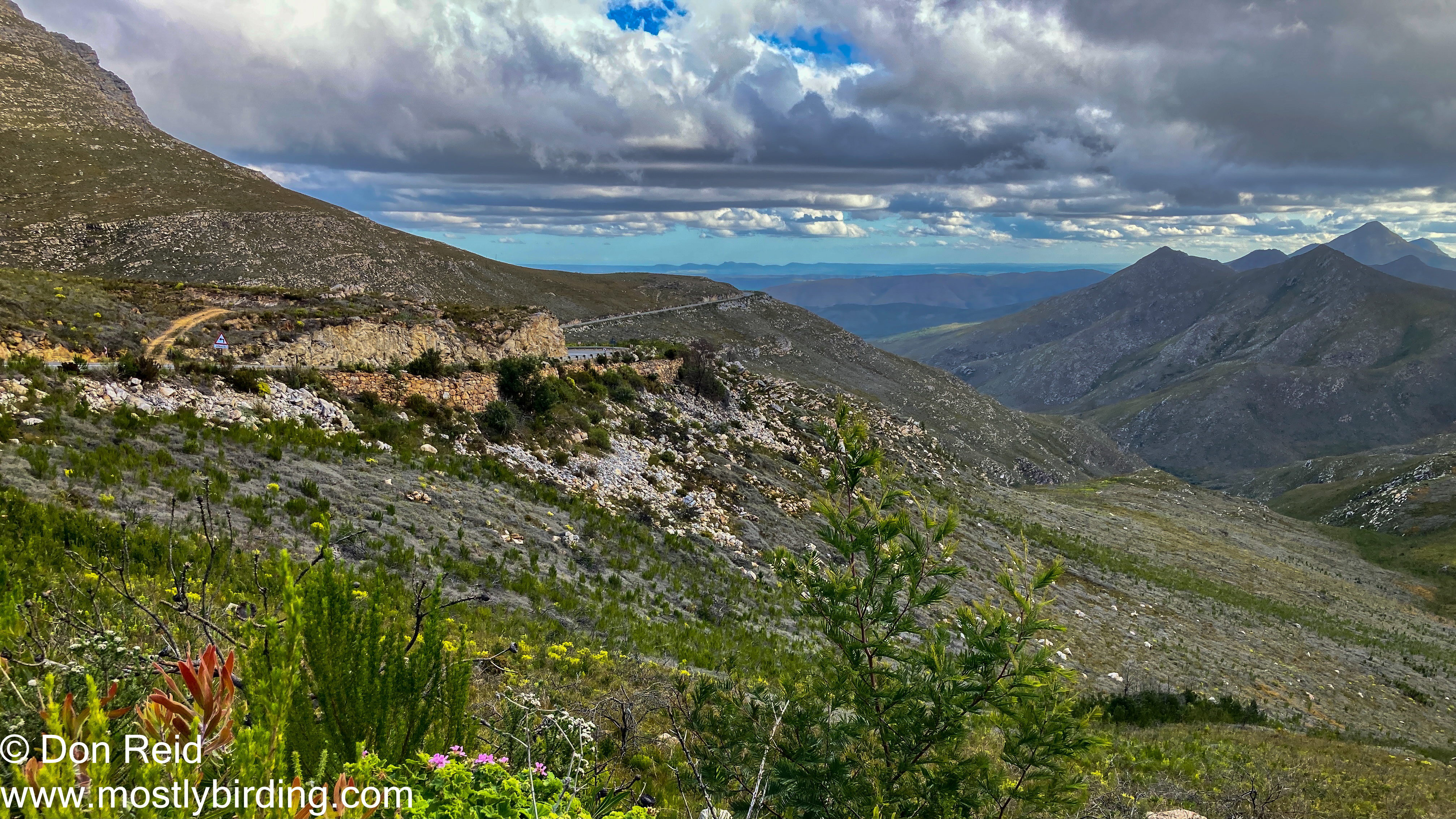
The view from Robinson Pass, between Mossel Bay and Oudtshoorn
Abbotsbury Guest Farm, near Graaff-Reinet, Eastern Cape
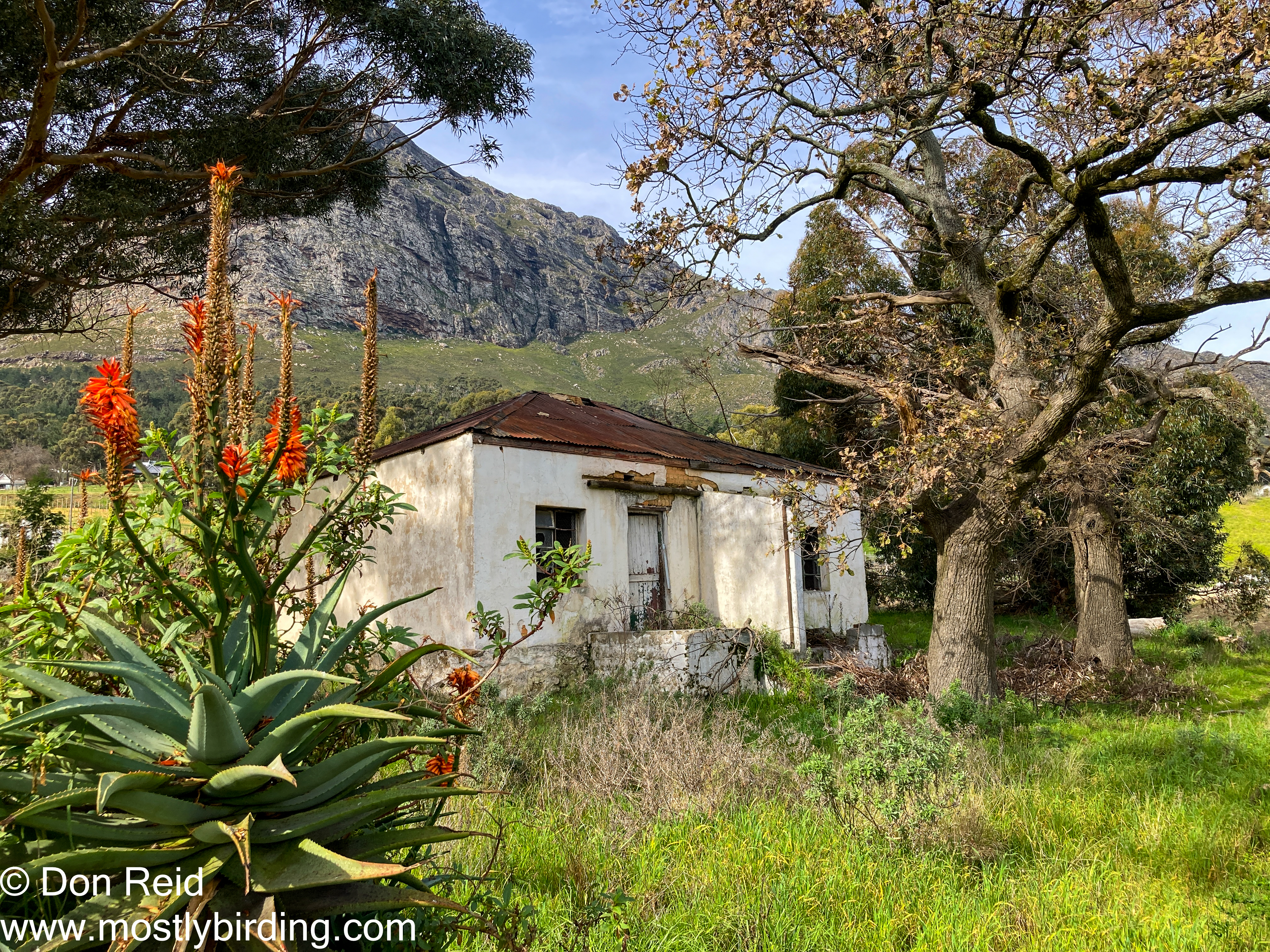
Abandoned cottage, Franschhoek, Western Cape
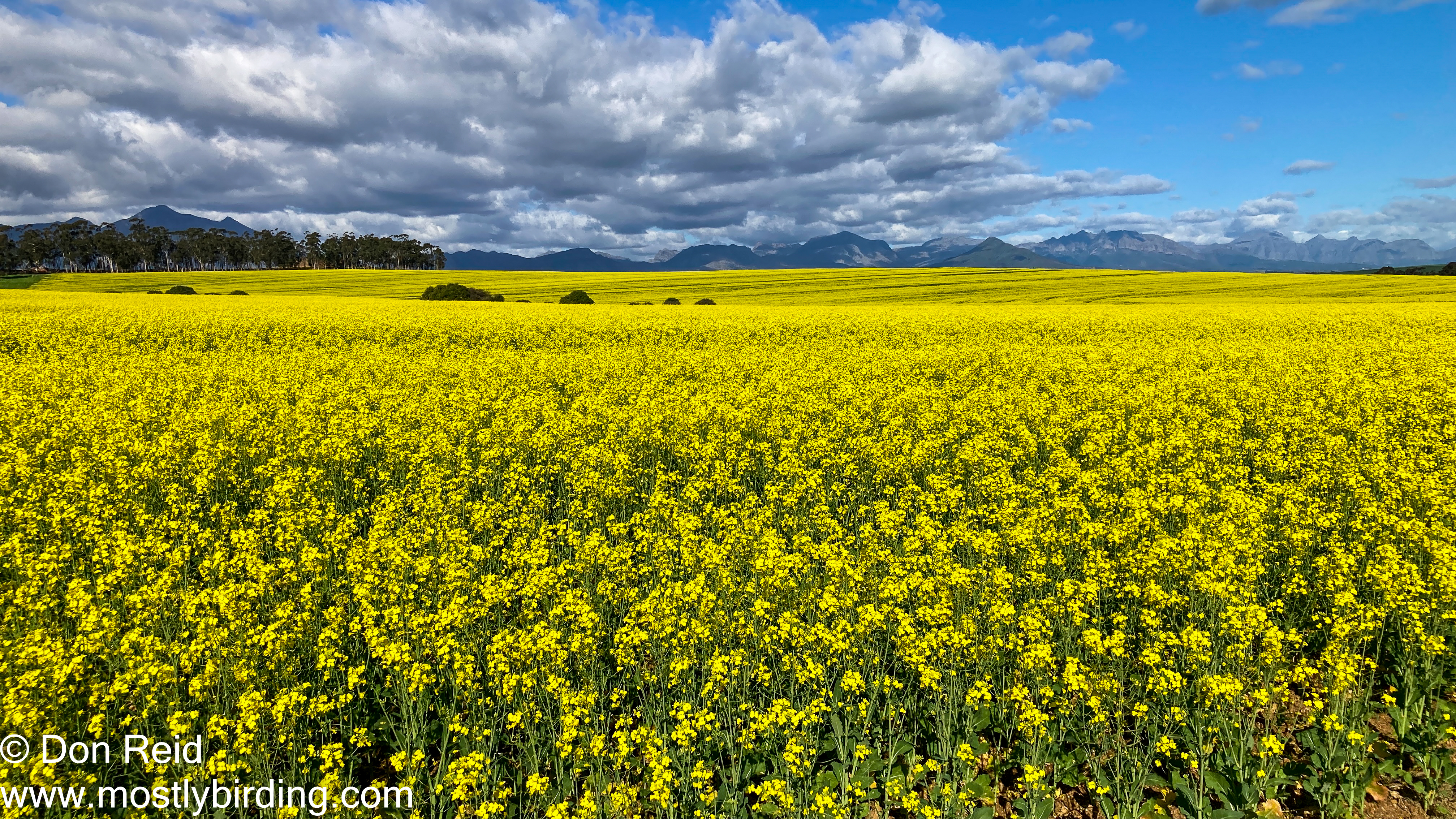
Canola fields, Near Wellington, Western Cape
Historic Kerkstraat in Tulbagh, Western Cape
Klein Welmoed Guest Farm, Stellenbosch, Western Cape
West Coast National Park (Postberg section)

The Wildlife

2021 stands out for me as the year we did not visit Kruger National Park – I can’t remember when this last happened! Visits to a couple of the smaller Parks partially made up for this but I’m afraid my selection of wildlife photos is poor by comparison to previous years

Giraffe, Herbertsdale Area
Cape Grey Mongoose Herpestes pulverulentus (Kaapse grysmuishond), Addo Elephant Park
Elephant, Addo Elephant Park
Yellow Mongoose Cynictis penicillata (Rooimeerkat), Addo Elephant Park
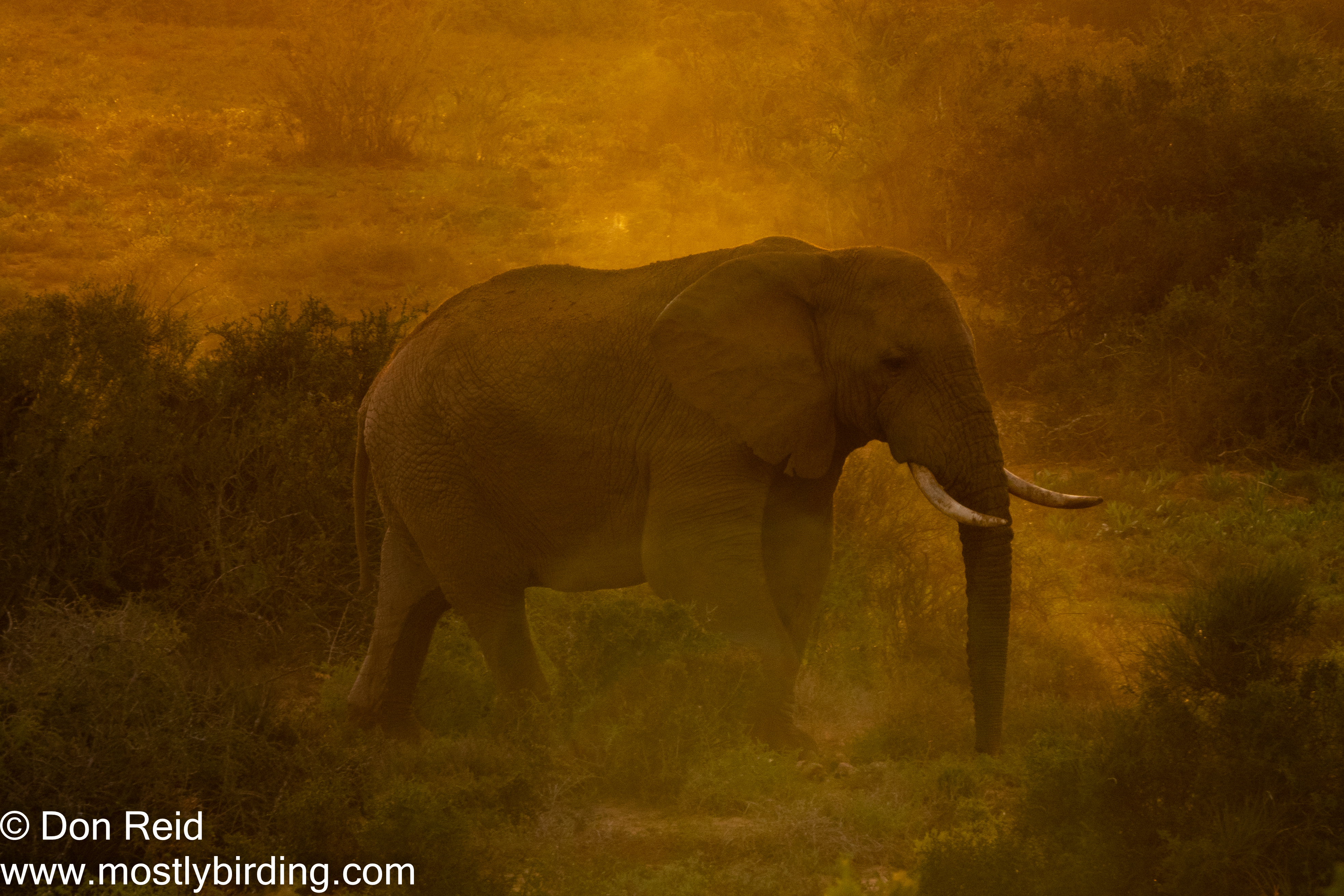
Elephant at dusk, Addo Elephant Park
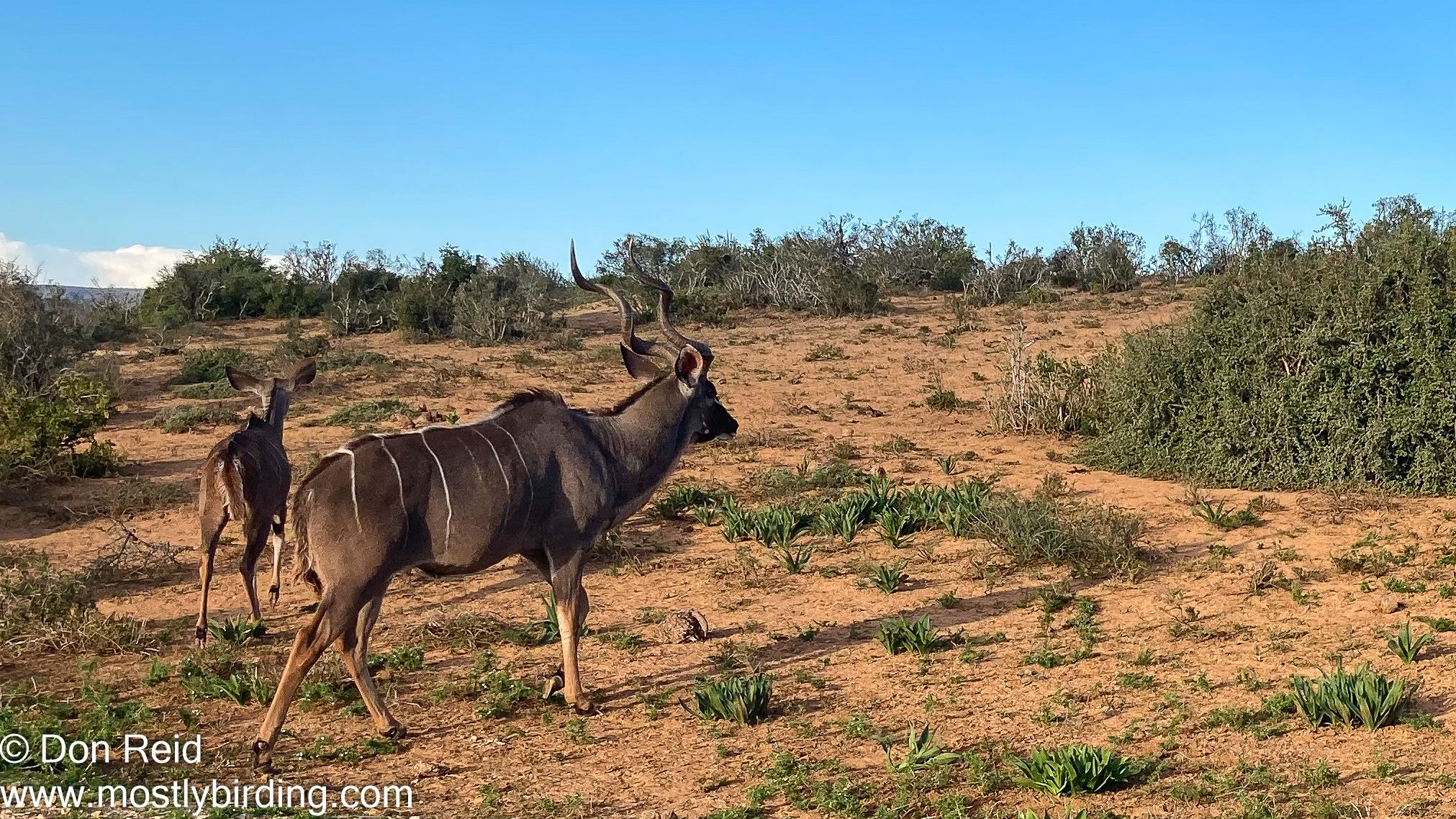
Kudu, Addo Elephant Park
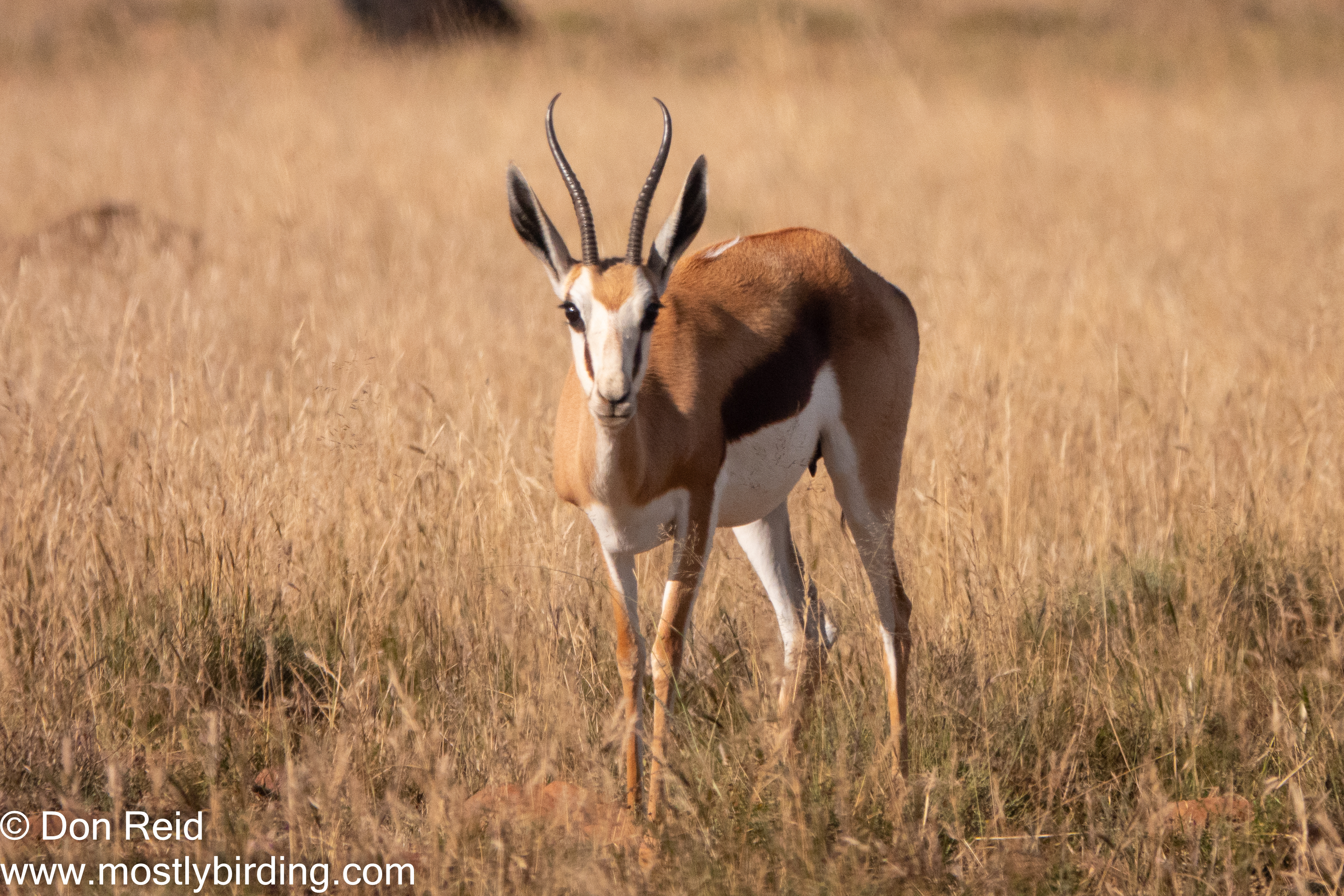
Springbok, Mountain Zebra NP
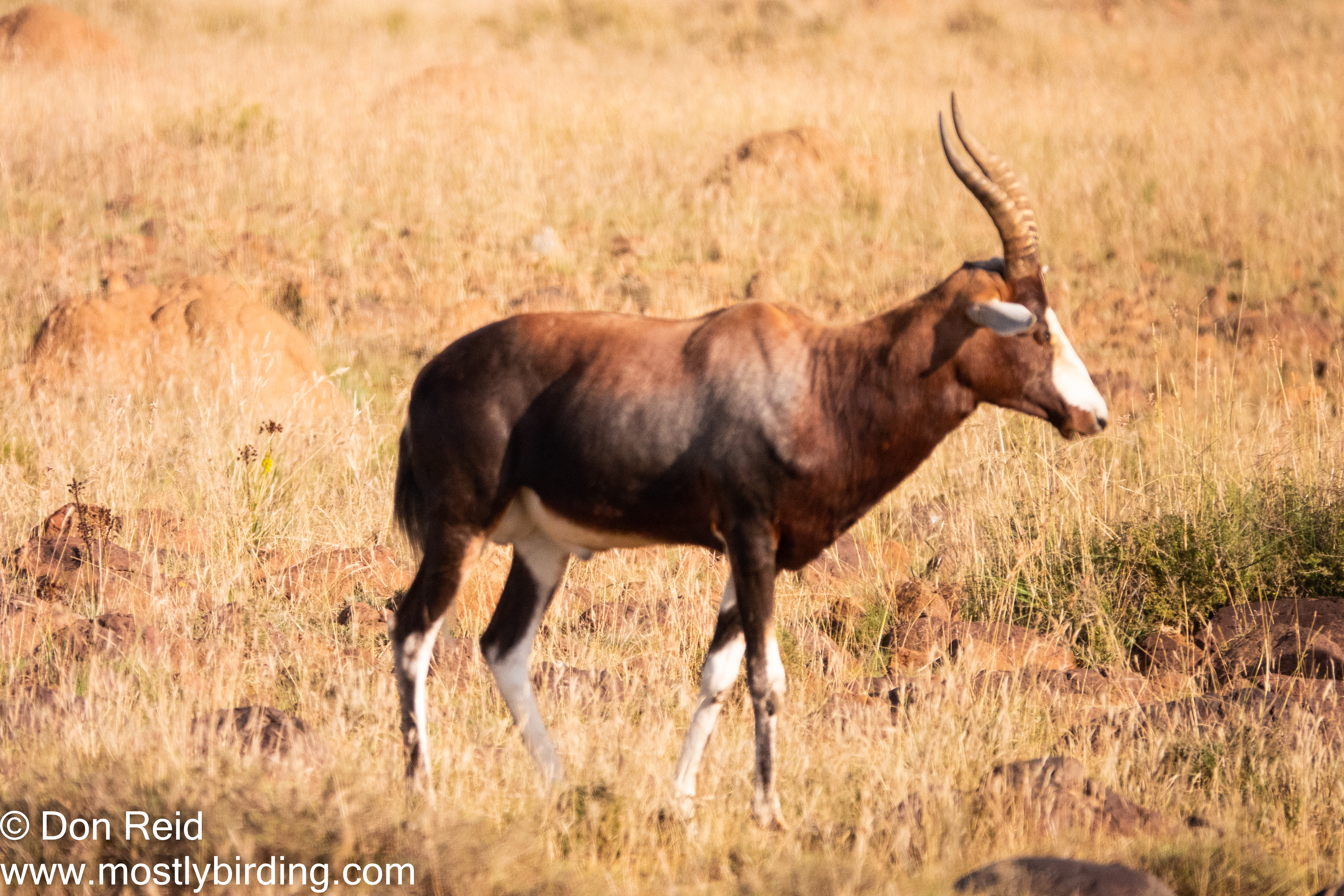
Bontebok, Mountain Zebra NP
Mountan Zebra, Mountain Zebra NP
Mother and child” Vervet Monkey Chlorocebus pygerythrus (Blouaap), Mountain Zebra NP

The Reptiles

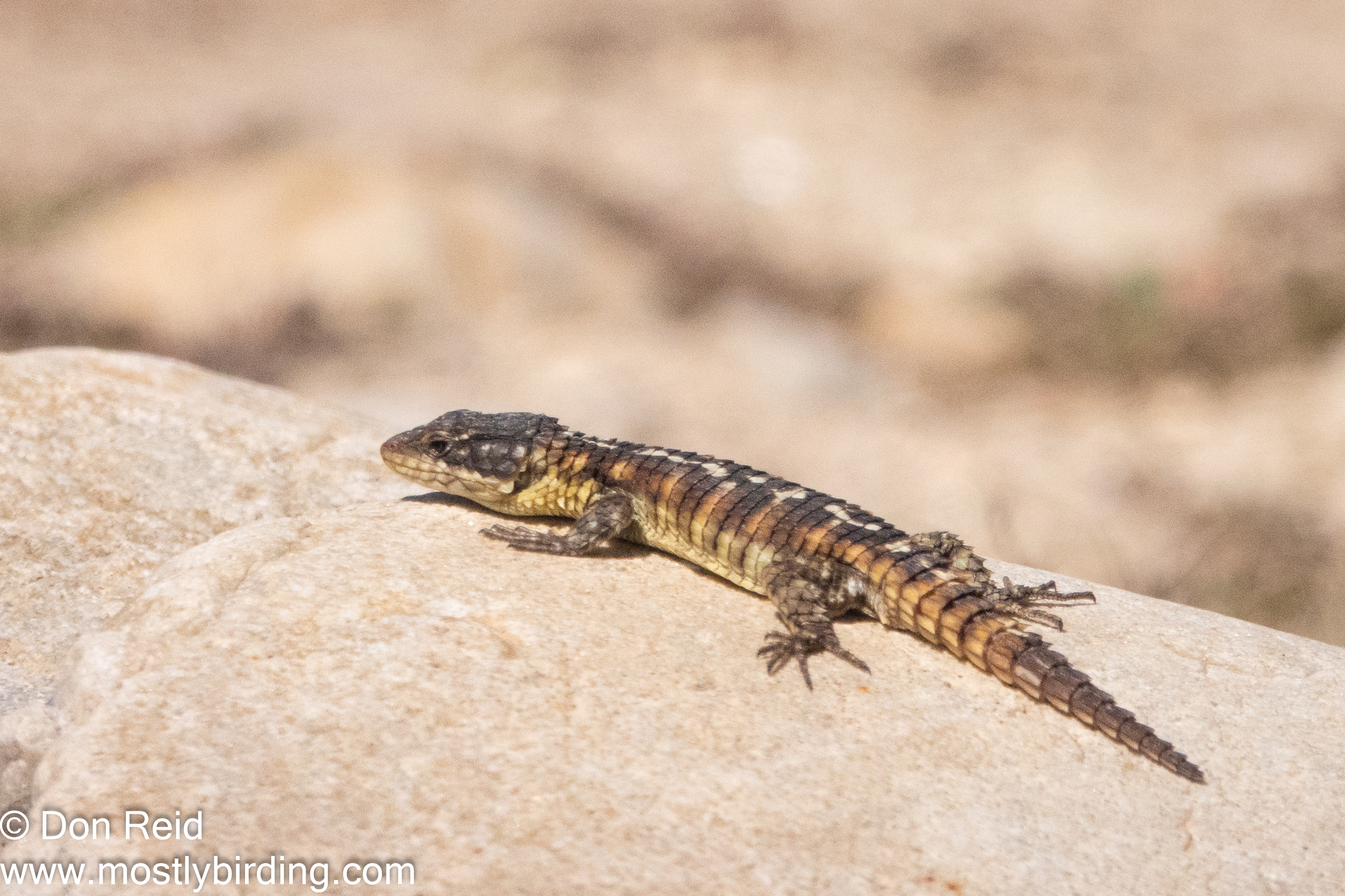
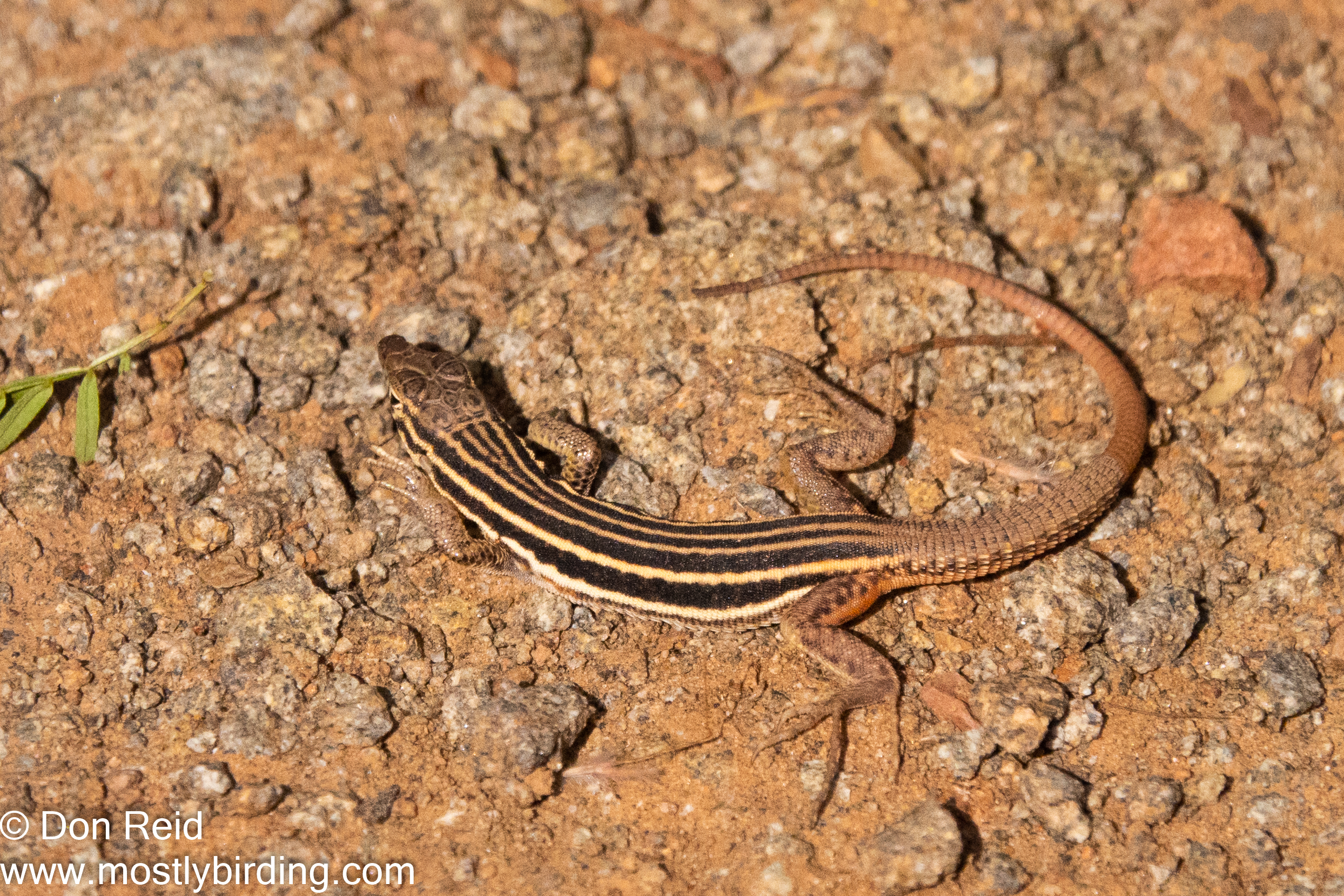
Reptiles are interesting creatures and I love it when the opportunity to photograph them at reasonably close quarters arises – here are a few examples – unfortunately I have not got around to positively identifying the first two yet

Probable Plated Lizard of some kind, Gouritzmond Area
Probable Sand Lizard, Mountain Zebra NP
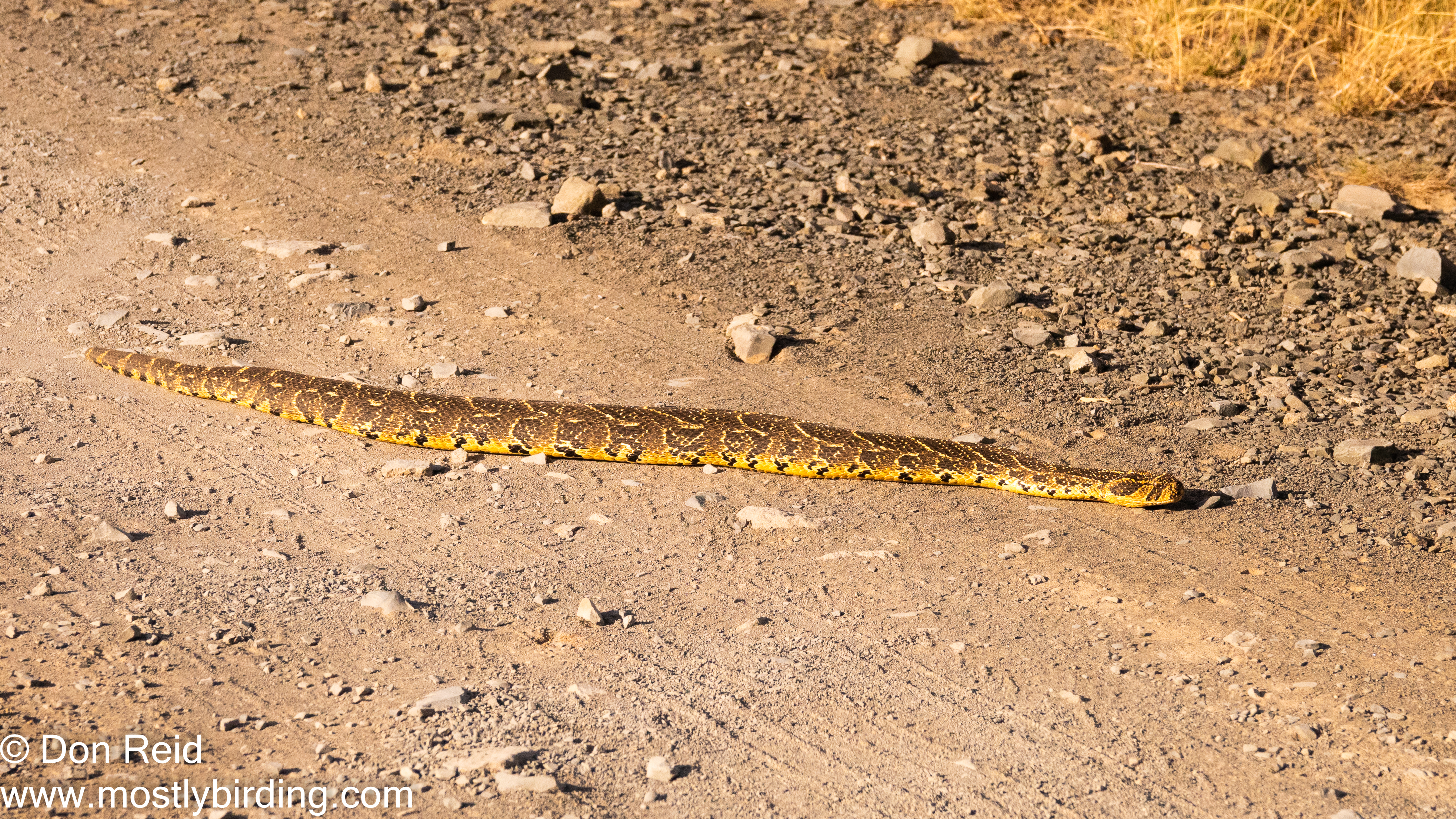
Puff adder Bitis arietans (Pofadder), Mountain Zebra NP

The Other Stuff

And the rest – photos that don’t fall into a category but have a certain character that appeals to me

Windmill, Hillside Farm Trompsburg
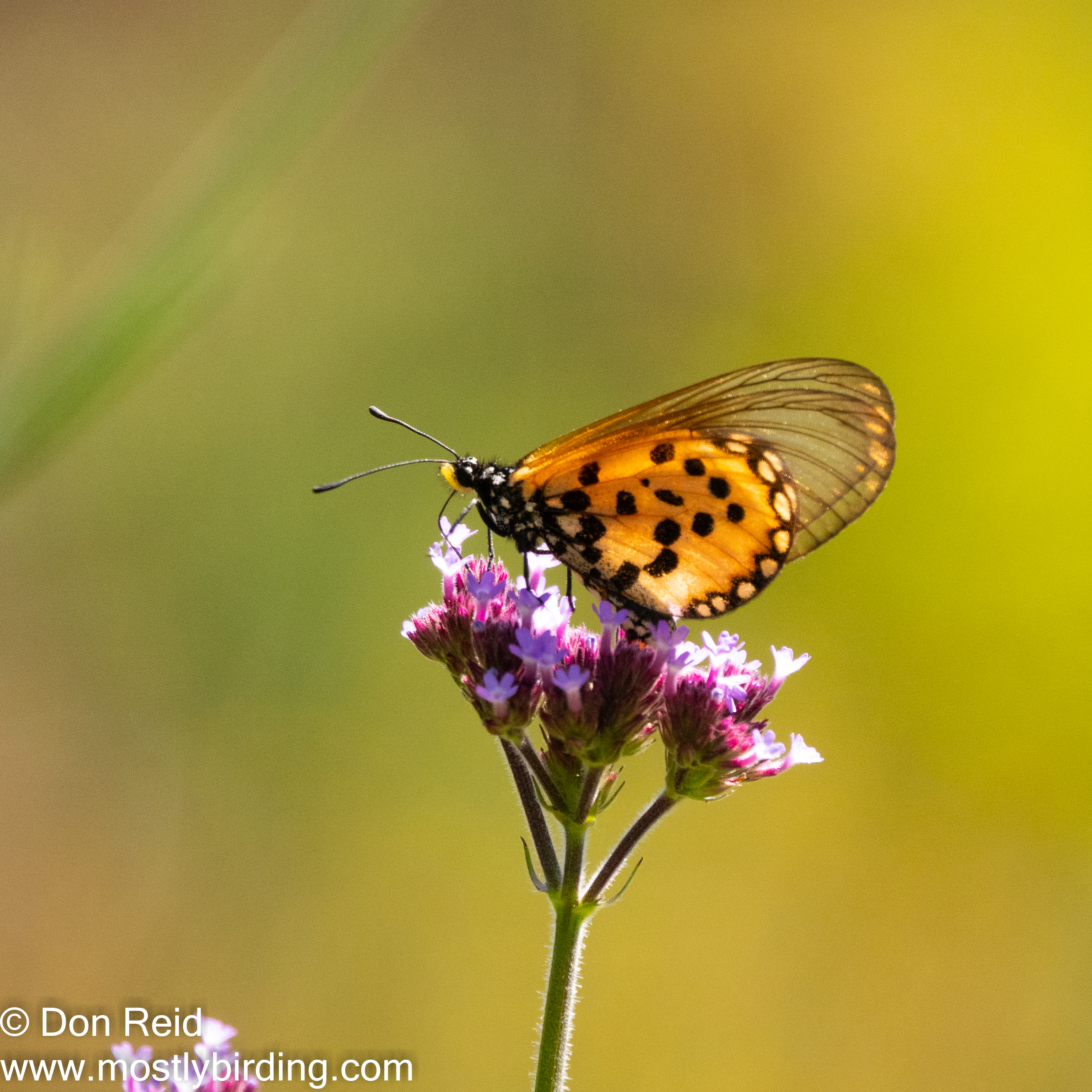
Garden Acraea Butterfly, Kirstenbosch
Beach footprints, Nature’s Valley – where the birds go, I am bound to be not far behind
Doorknob selfie, Abbotsbury, Graaff-Reinet
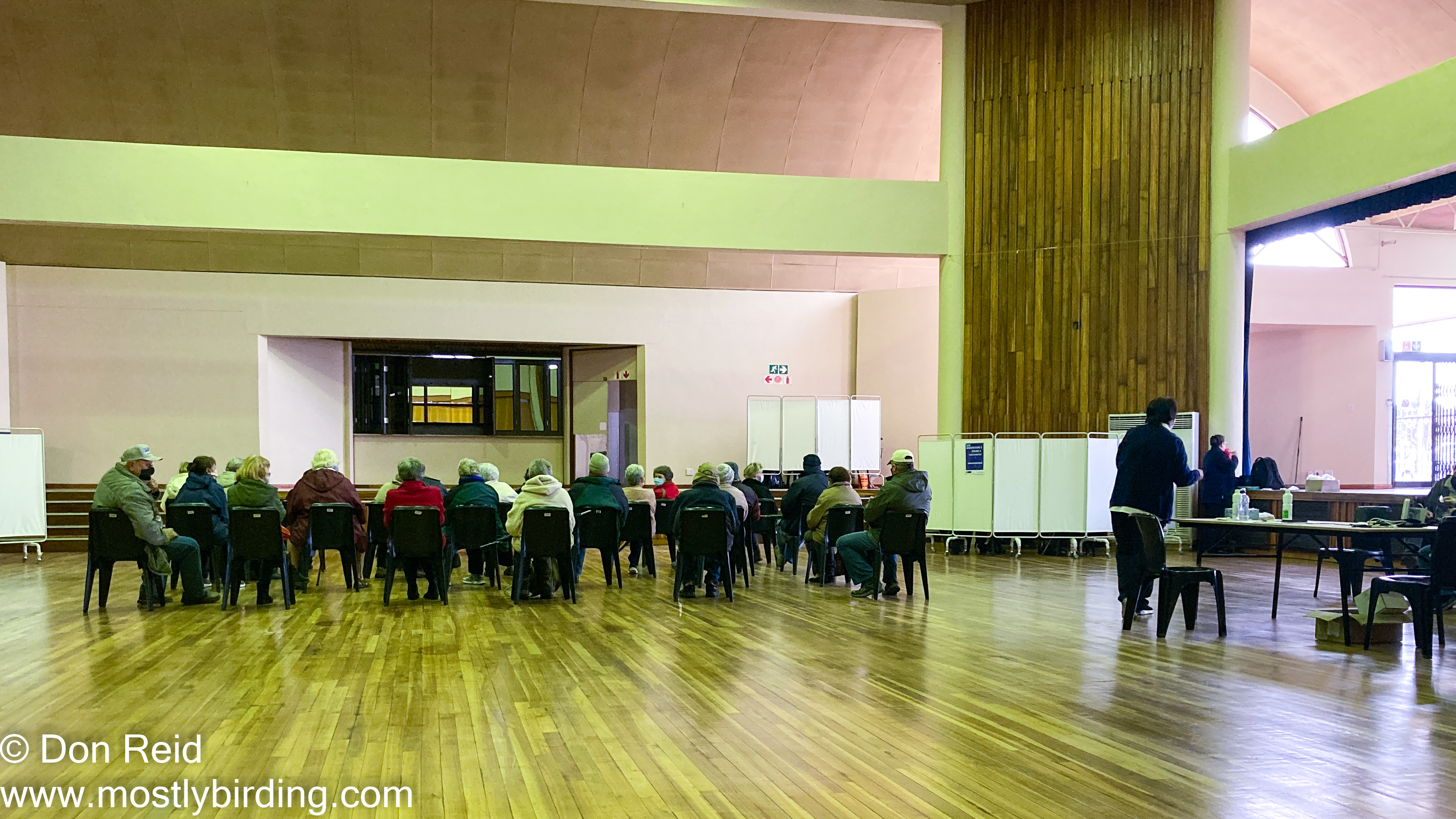
Waiting our turn to get the vaccine, Mossel Bay
Saartjie, our daughter’s Border Terrier, enjoying a mid-winter (gas) fire , Mossel Bay
Surfer, Mossel Bay Point
Flowers in Robinson Pass
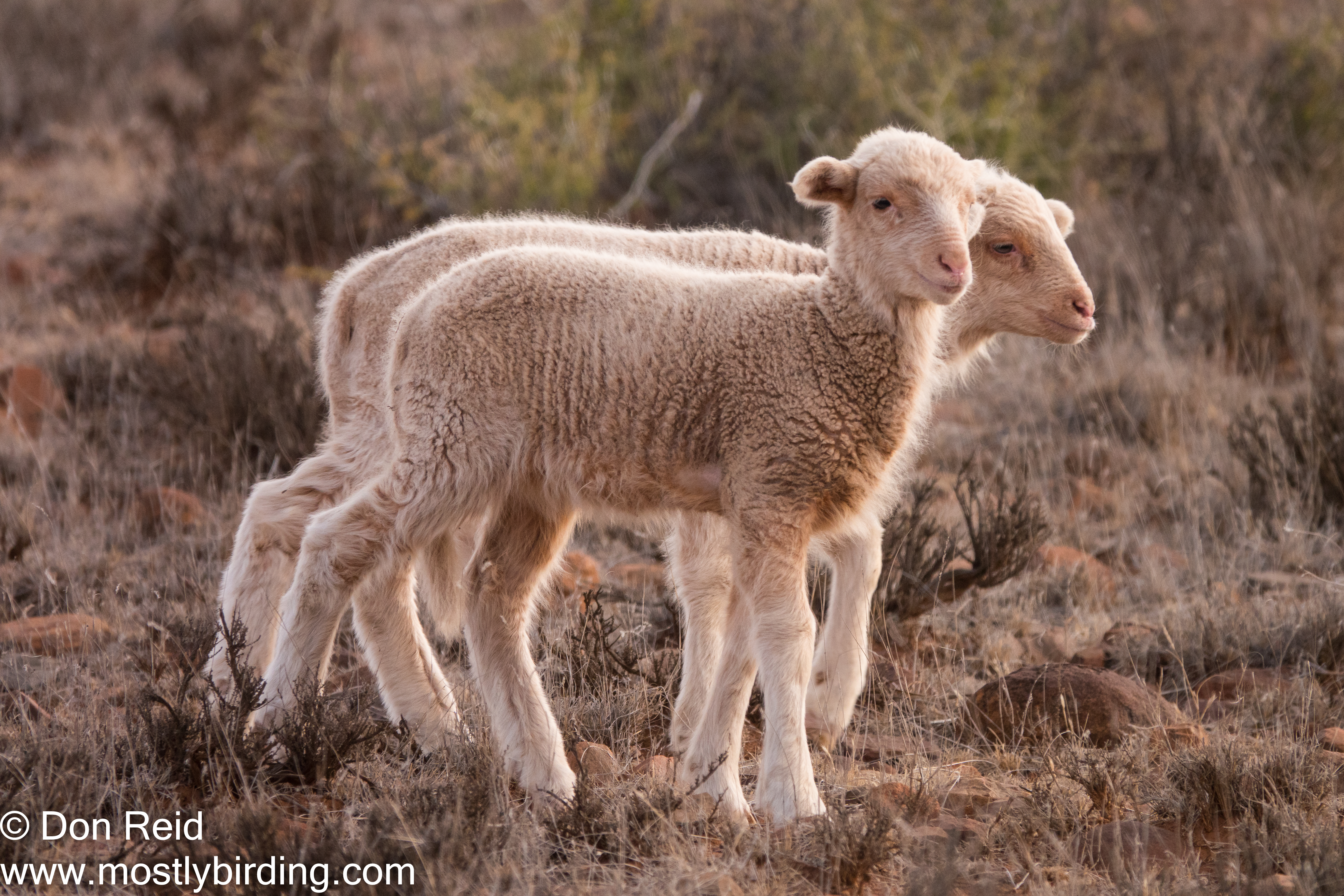
Karoo Lambs, Abbotsbury Guest Farm
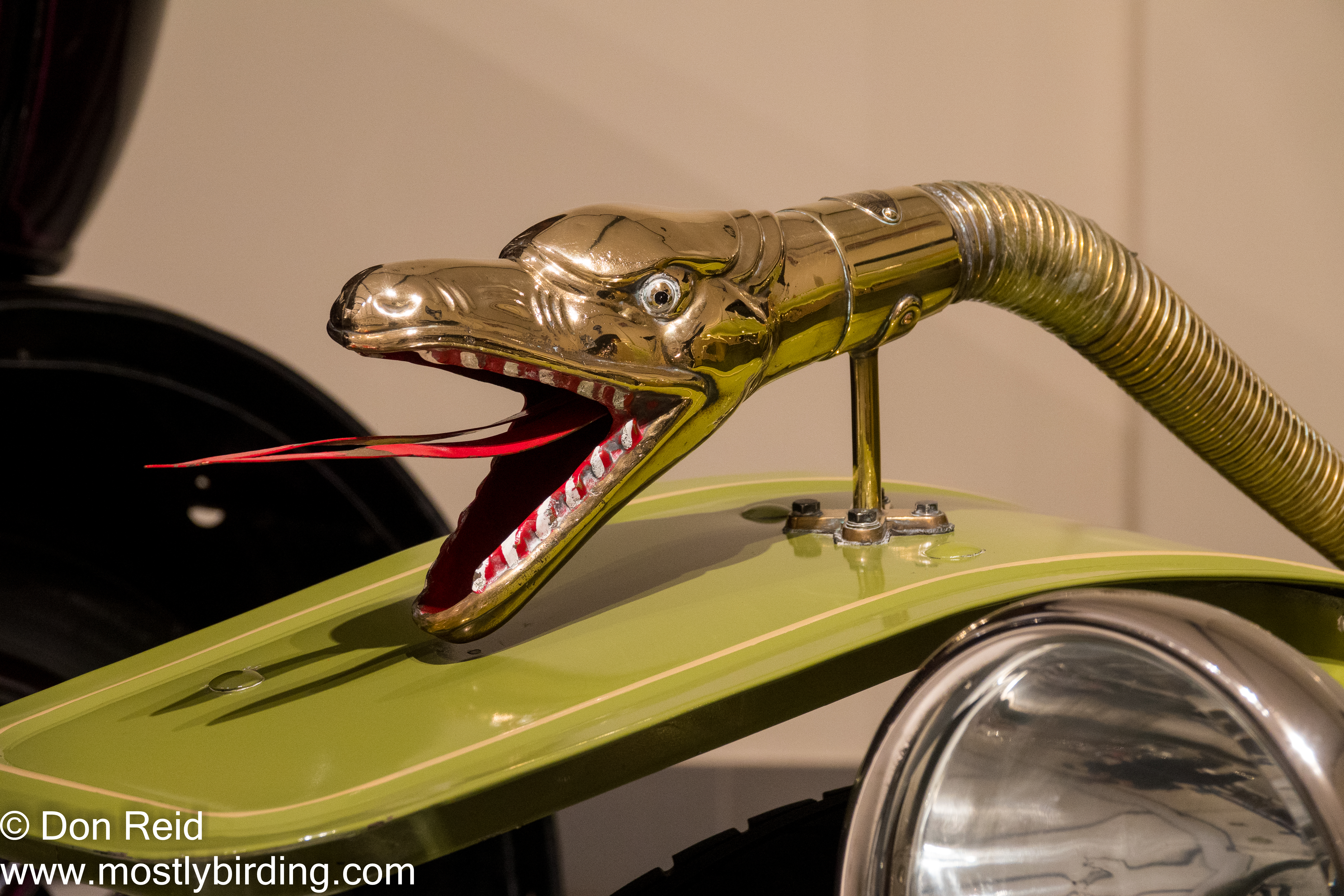
Dragon hooter (horn) on 1911 Lorraine-Dietrich Convertible, Franschhoek Motor Museum
Spring flowers, Cape Columbine Nature Reserve (Tietiesbaai)

Have a wonderful 2022!

My Photo Picks for 2021 – The Birds and a Bee

With the new year barely out of the starting blocks, it’s once again time to select the photos which best represent our travels and nature experiences during 2021, plus a few others that appeal to me for various reasons.  Despite the ongoing restrictions brought upon all of us by Covid 19, we still managed to travel fairly extensively, although it was limited to the borders of South Africa. 

I’m hoping you will find some of my favourite images to your liking – if you do, please take a moment to mention them in the comments at the end of the post. 

The Birds

During a normal birding year, I take a couple of thousand images of birds – this past year, for various reasons, I did not get out in the field birding and atlasing as much as I would normally have done, nevertheless when it came to choosing images I was happy to find that it was as challenging as ever.

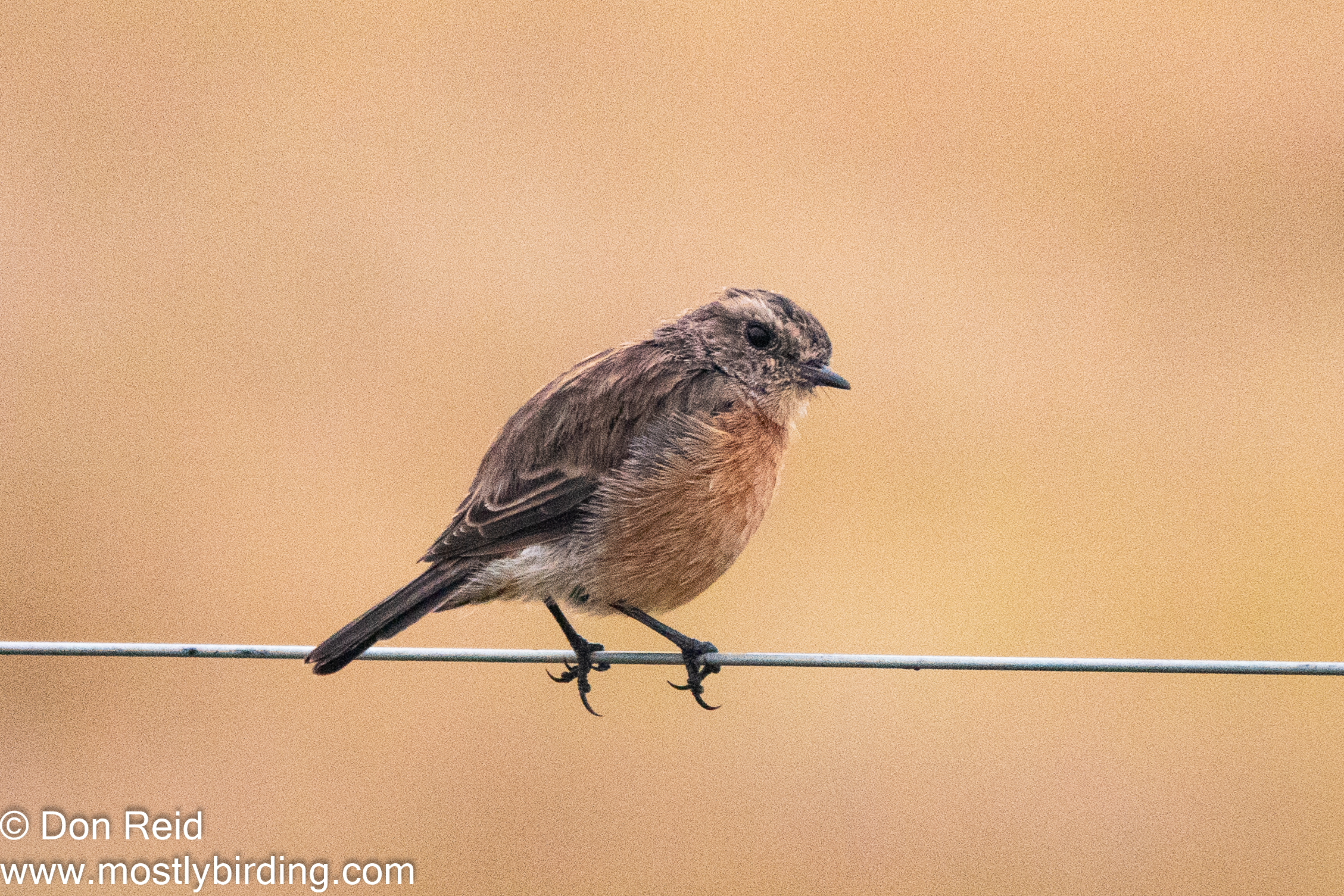
African Stonechat Saxicola torquatus (Gewone bontrokkie) (Female) , Herbertsdale Area
Common Buzzard Buteo buteo (Bruinjakkalsvoël), Herbertsdale Area
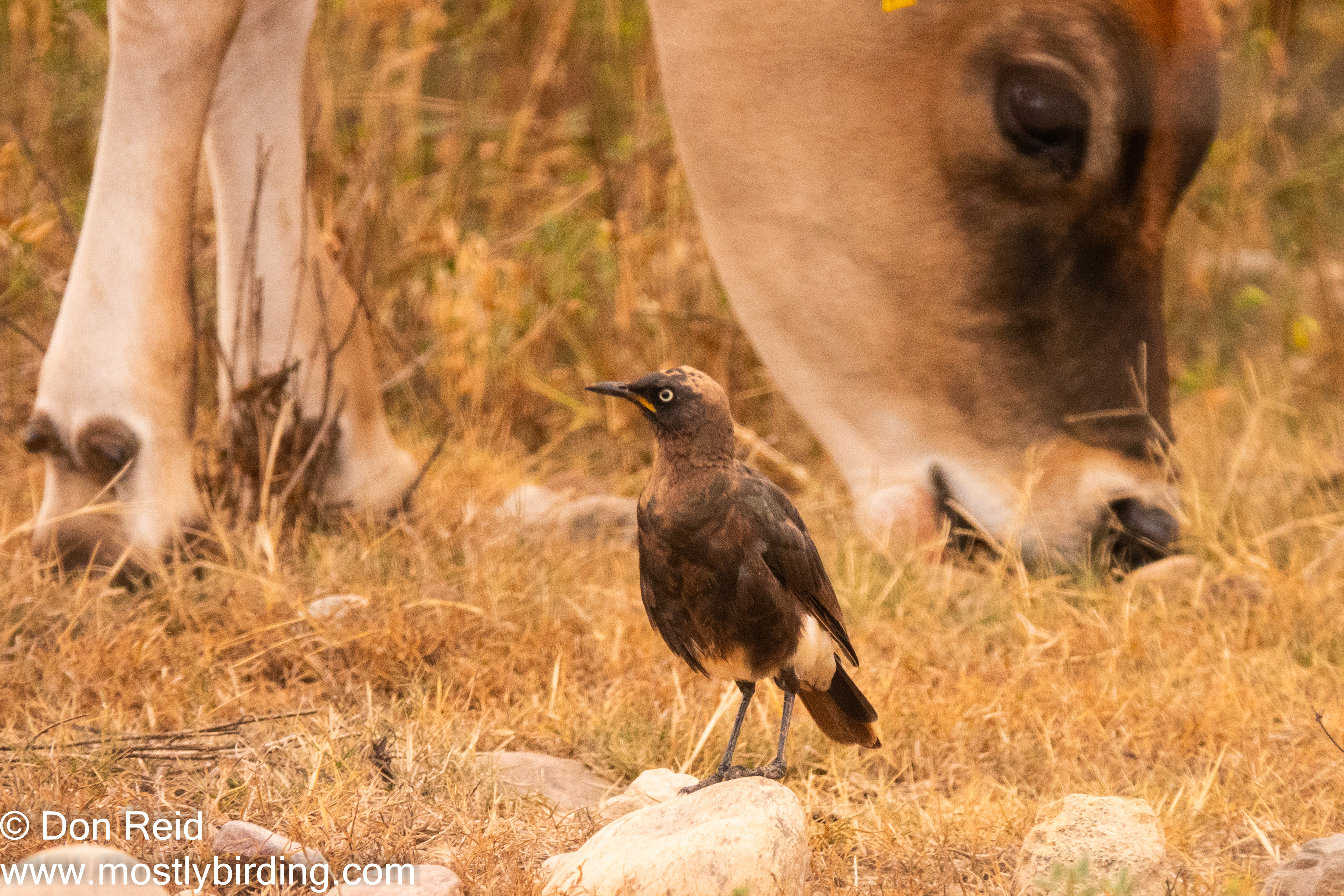
Pied Starling Lamprotornis bicolor (Witgatspreeu), Herbertsdale Area
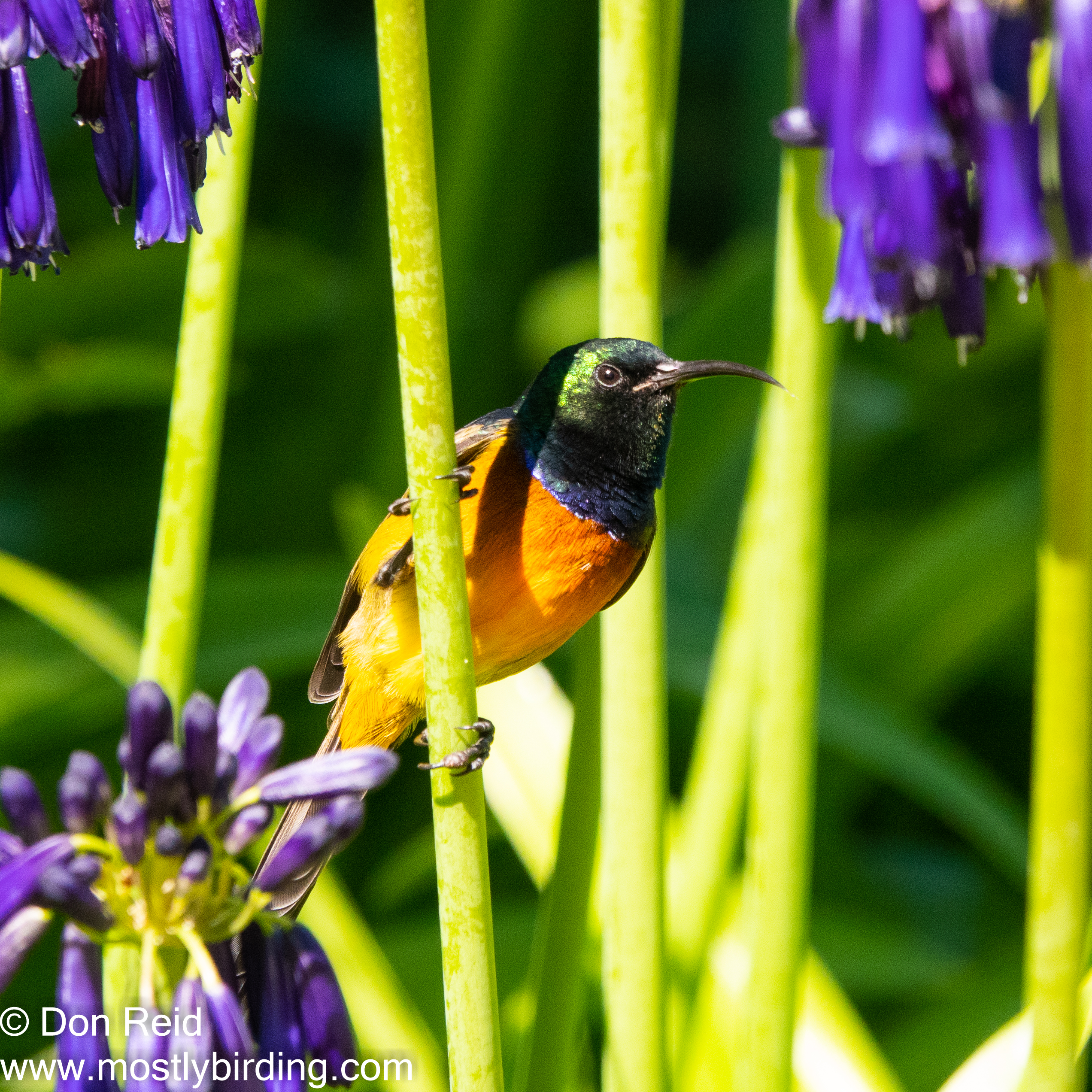
Orange-breasted Sunbird Anthobaphes violacea (Oranjeborssuikerbekkie), Kirstenbosch
Rock Kestrel Falco rupicolus (Kransvalk), Vleesbaai area
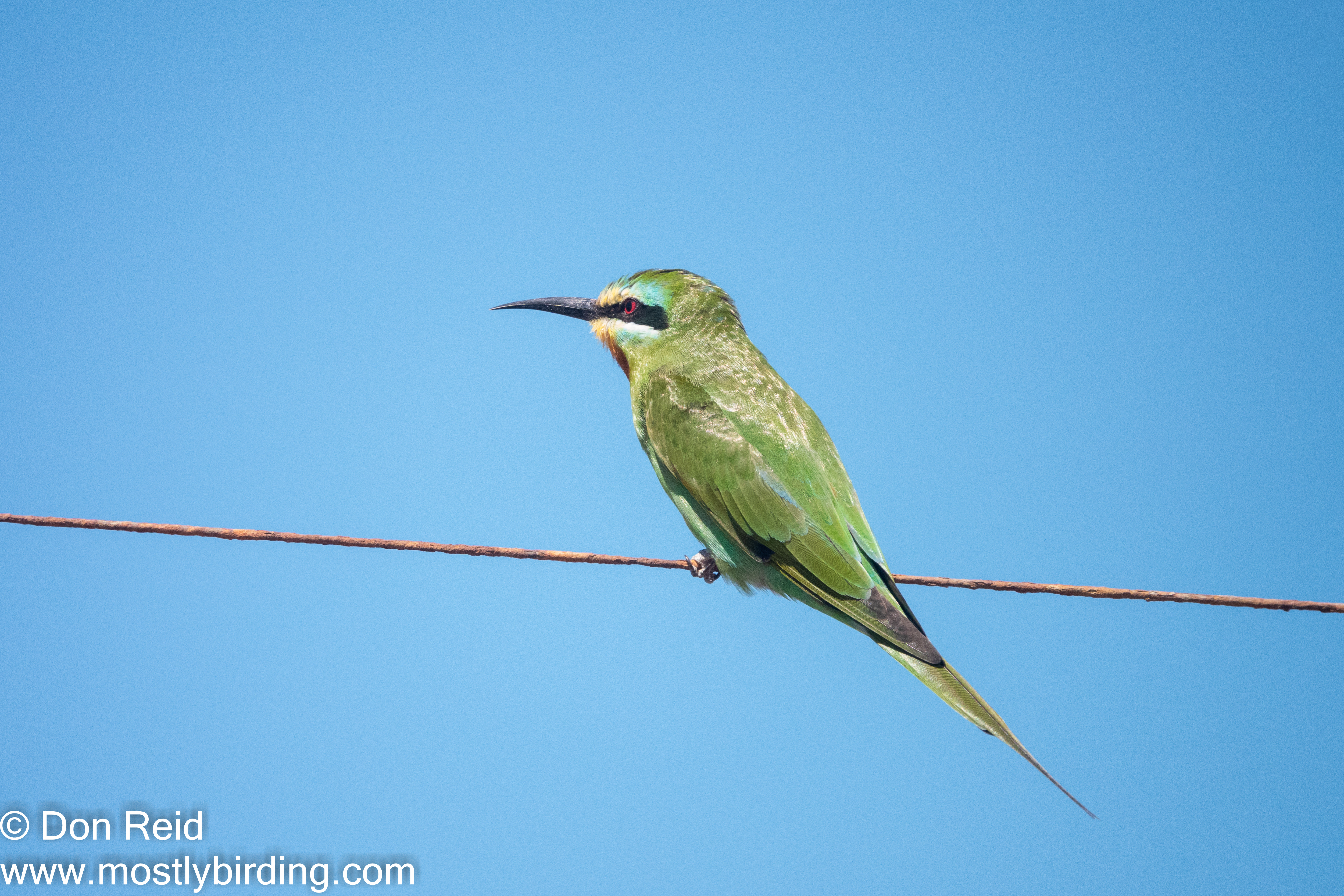
Blue-cheeked Bee-eater Merops persicus (Blouwangbyvreter) (Western Cape rarity), Gouritzmond Area
Large-billed Lark Galerida magnirostris (Dikbeklewerik), Herbertsdale Area
White-throated Canary Crithagra albogularis (Witkeelkanarie), Herbertsdale Area, Western Cape
White-bellied Sunbird Cinnyris talatala (Witpenssuikerbekkie), Donkerhoek / Boschkop Area, Gauteng
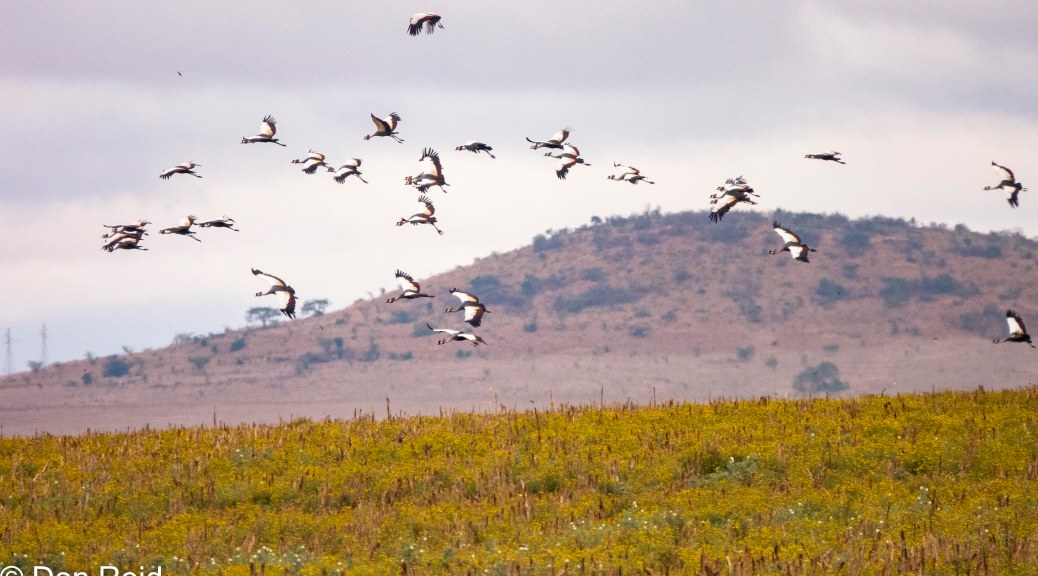
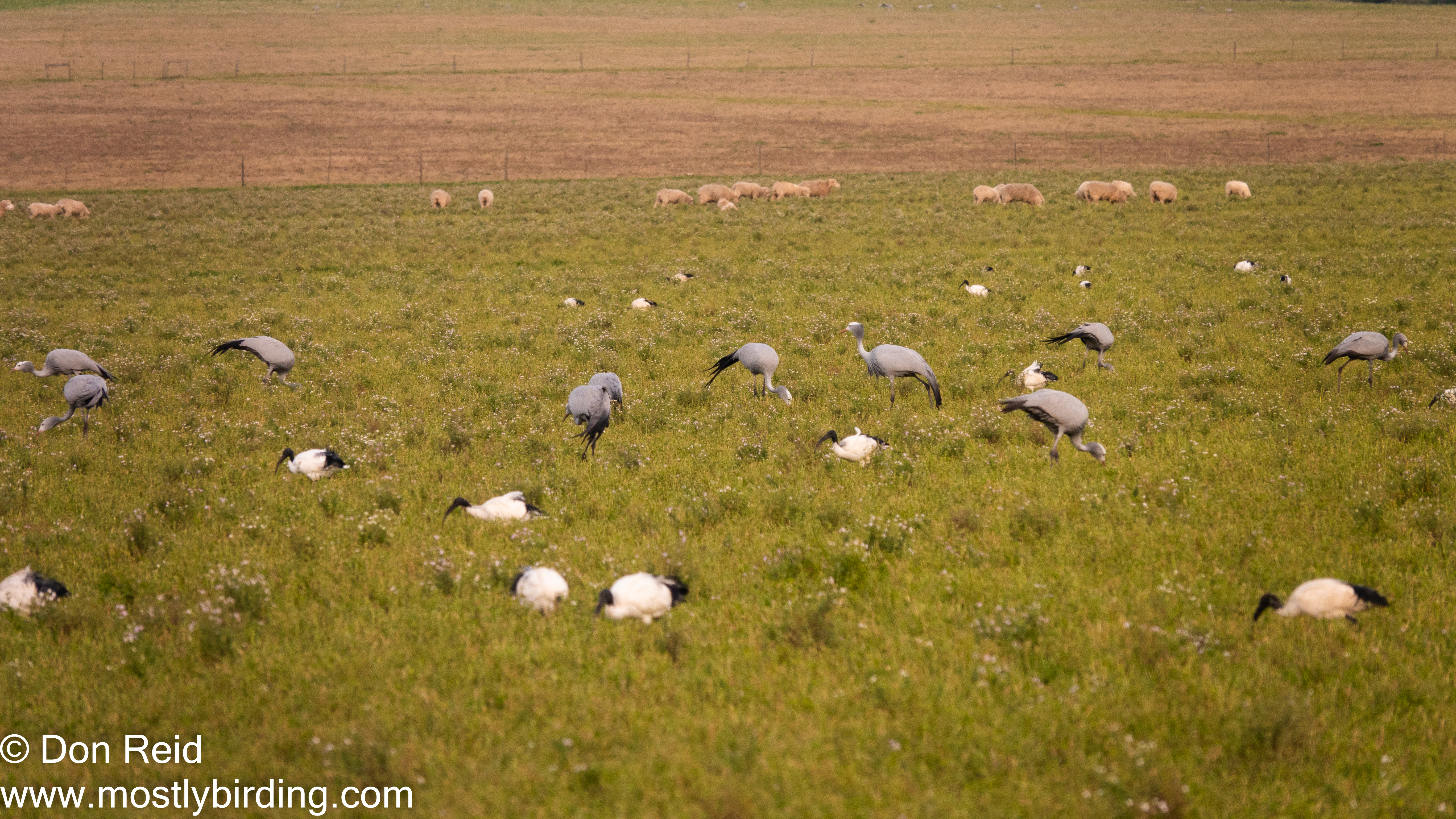
Blue Cranes, Sacred Ibises and sheep, Vleesbaai area, Western Cape
Zitting Cisticola Cisticola juncidis (Landeryklopkloppie), Vleesbaai area
Sacred Ibis, Vleesbaai Area
White-throated Swallow Hirundo albigularis (Witkeelswael) Bronkhorstspruit Area, Gauteng
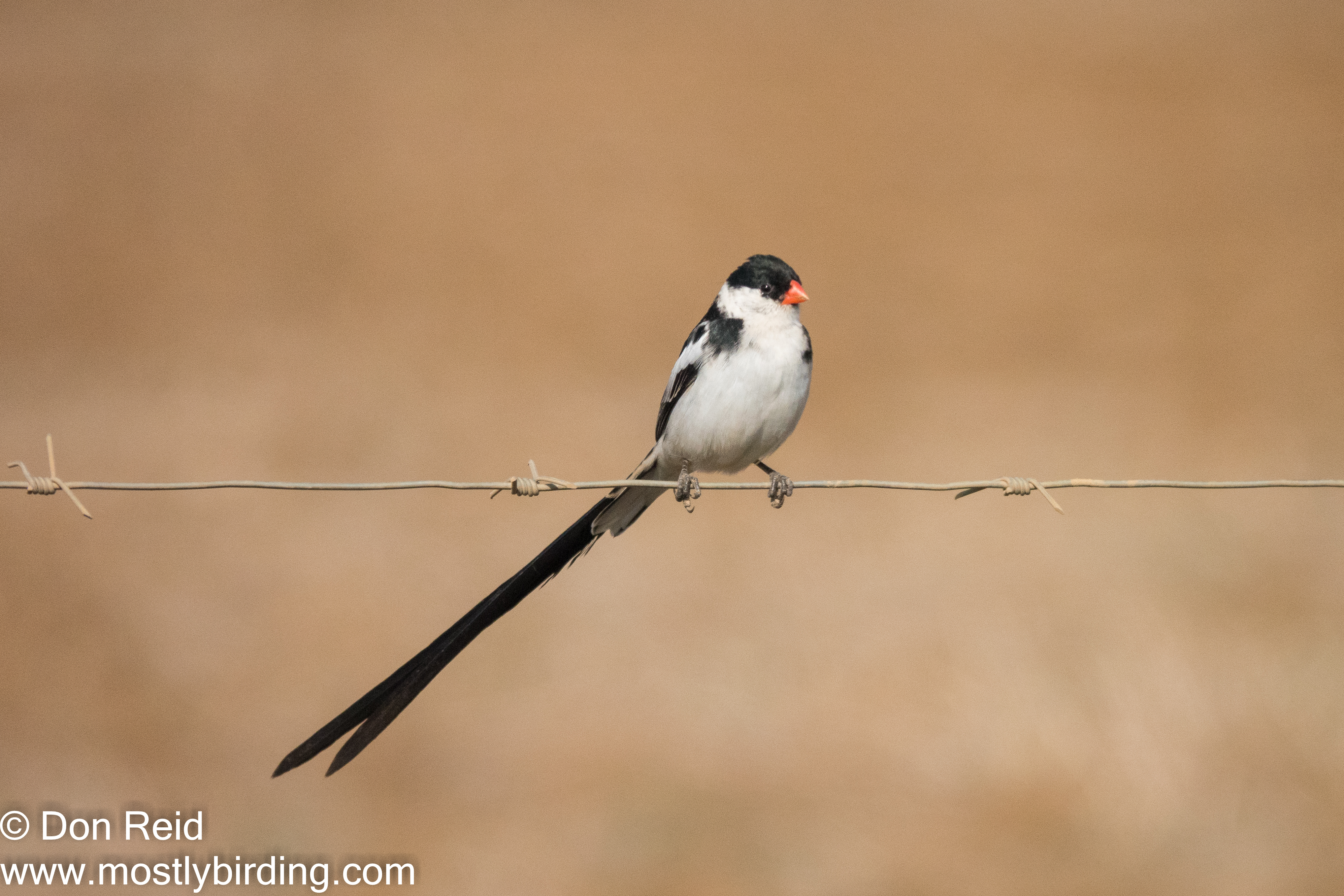
Pin-tailed Whydah Vidua macroura (Koningrooibekkie) Bronkhorstspruit Dam, Gauteng
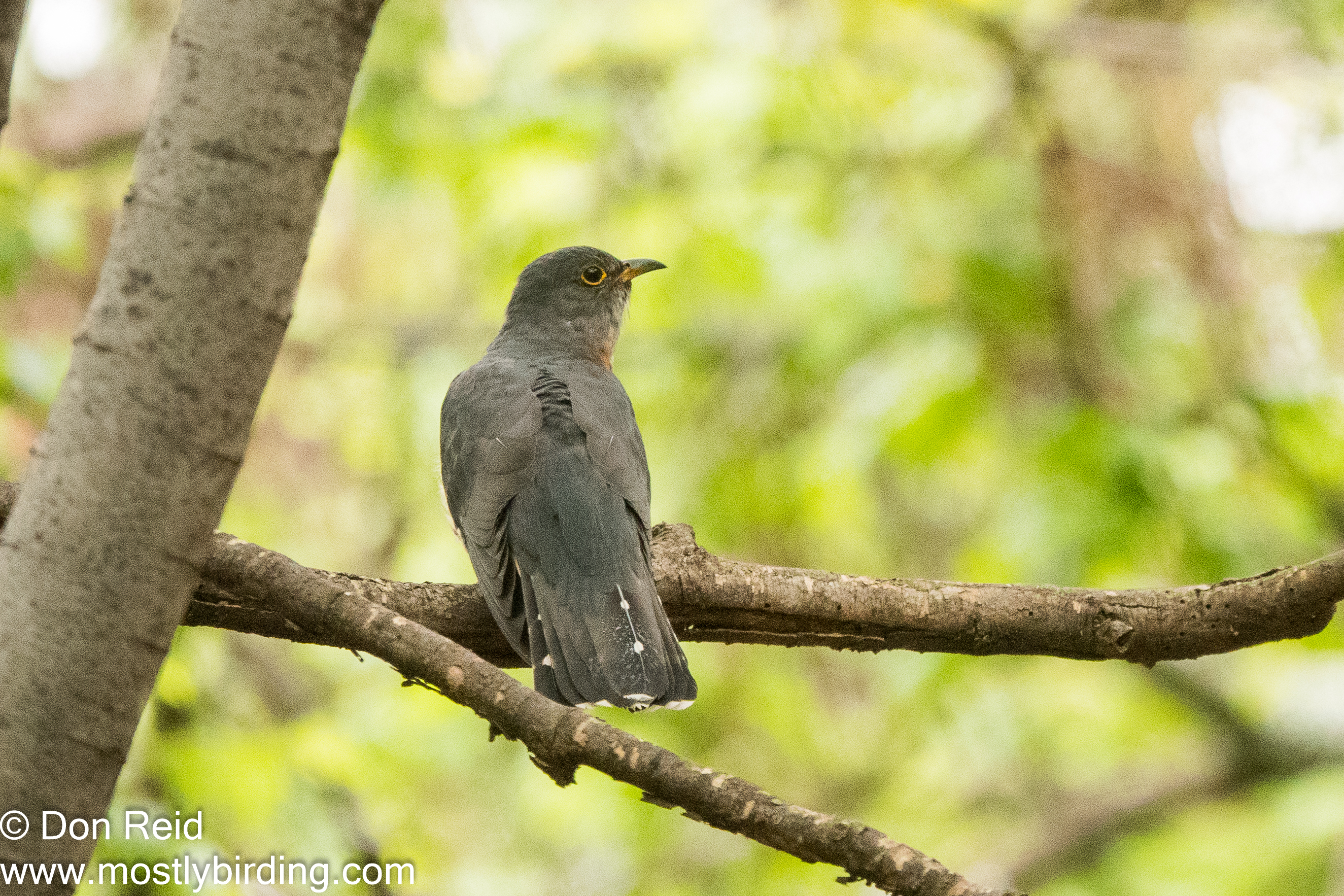
Red-chested Cuckoo Cucula solitarius (Piet-my-vrou), Ezemvelo Nature Reserve, Gauteng
Baird’s Sandpiper Calidris bairdii (Bairdse strandloper), (National Rarity), Bronkhorstspruit Nature Reserve, Gauteng
Red-capped Lark Calandrella cinerea (Rooikoplewerik), Bronkhorstspruit Nature Reserve, Gauteng
Common Greenshank Tringa nebularia (Groenpootruiter), Bronkhorstspruit Nature Reserve
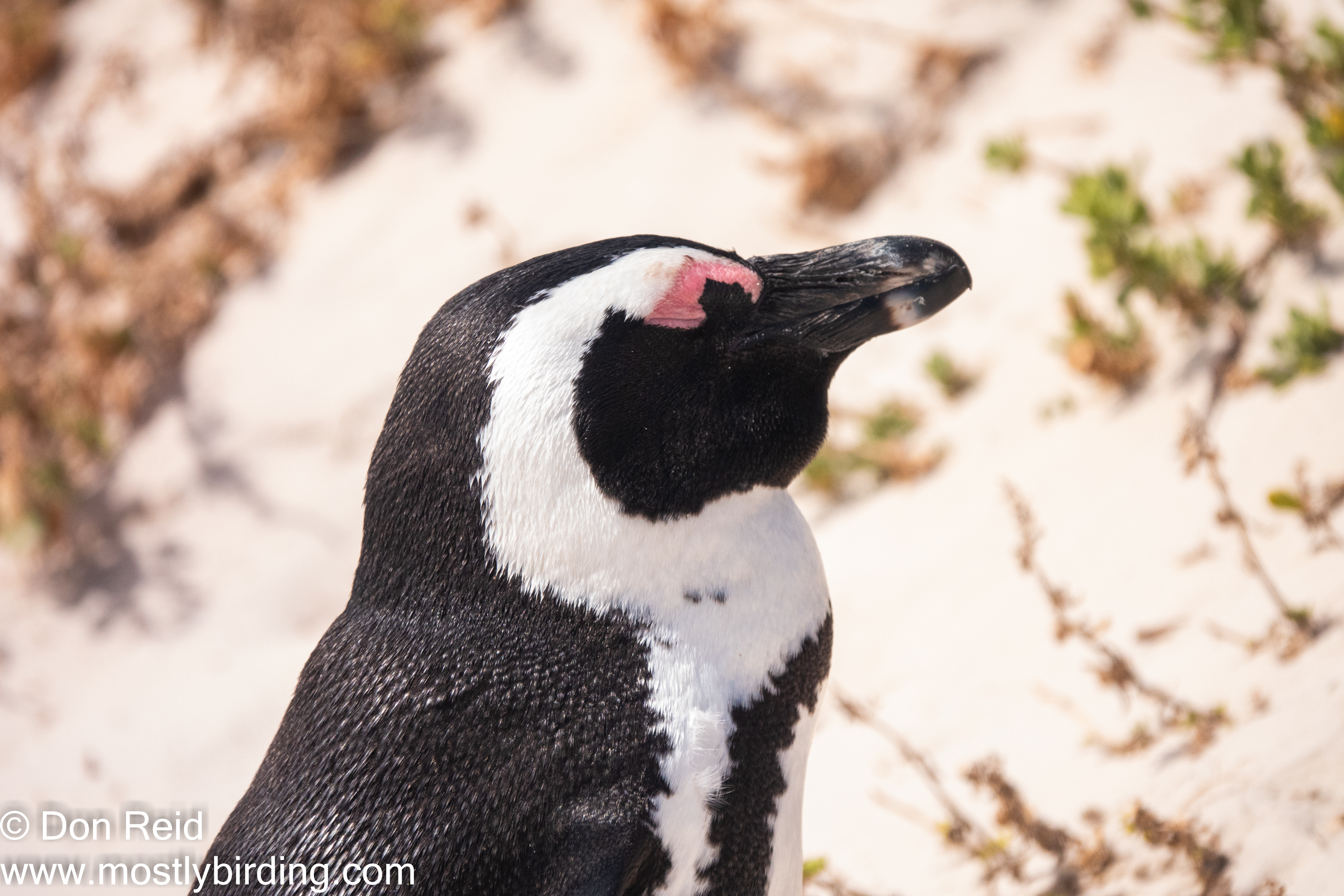
African Penguin Spheniscus demersus (Brilpikkewyn), Boulders beach Simon’s Town
Sooty Gull Ichthyaetus hemprichii (National Rarity), Sunday’s River Mouth. Eastern Cape
Cape Robin-Chat Cossypha caffra (Gewone janfrederik), Addo Elephant Park, Eastern Cape
Cape Weaver Ploceus capensis (Kaapse wewer) (female), Addo Elephant Park, Eastern Cape
Red-necked Spurfowl Pternistis afer (Rooikeelfisant), Addo Elephant Park
The usually extremely shy Sombre Greenbul Andropadus importunus (Gewone willie), Addo Elephant Park
Cape Turtle-Dove Streptopelia capicola (Gewone tortelduif), Addo Elephant Park
African Rock Pipit Anthus crenatus (Klipkoester), Mountain Zebra National Park
Familiar Chat Cercomela familiaris (Gewone spekvreter), Verlorenkloof
Cape Rock Thrush Monticola rupestris (Kaapse kliplyster), Verlorenkloof
Nest building Cape Weaver Ploceus capensis (Kaapse wewer), Mossel Bay
Kelp Gull Larus dominicanus (Kelpmeeu), Paternoster, Western Cape

And the Bee….

Busy Bee, Mossel Bay

Have a wonderful 2022!

Addo Elephant National Park – Stoepsitting

Stoepsitter Birding – again!

A couple of my recent longer posts have highlighted what I like to call “Stoepsitter birding” – which is the relaxed kind conducted mostly from a comfortable seat, preferably accompanied by suitable snacks and beverages to make sure the energy and spirit remains at a high level. Both were in favourite locations, one in Satara Camp in Kruger National Park, the other at Verlorenkloof Resort not far from Macahadodorp in Mpumulanga Province.

Addo Elephant National Park in the Eastern Cape has the honour of completing a trio of outstanding locations and places where Stoepsitter birding comes into its own.

The criteria are simple – suitable habitat to attract a variety of birdlife, a comfortable spot from which to observe the comings and goings of the birdlife, without disturbing them too much and the time and patience to devote yourself to this activity. It also helps if the birdlife and small wildlife is habituated to humans and happy to share their world with us, which for the most part is certainly the case in Addo.

Addo Elephant National Park

Our road trip in March this year included a three night stay in Addo, in a comfortable chalet with a view over a part of the Main Camp and a raised deck where we could spend a large part of the day (depicted in the heading image), while reserving the afternoons to venture out on game/birding drives.

The variety of birdlife that came to visit was exceptional, many of them drawn by the surrounding trees and shrubs which held a cornucopia of edible avian delights – nectar filled flowers, berries, small insects and suchlike.

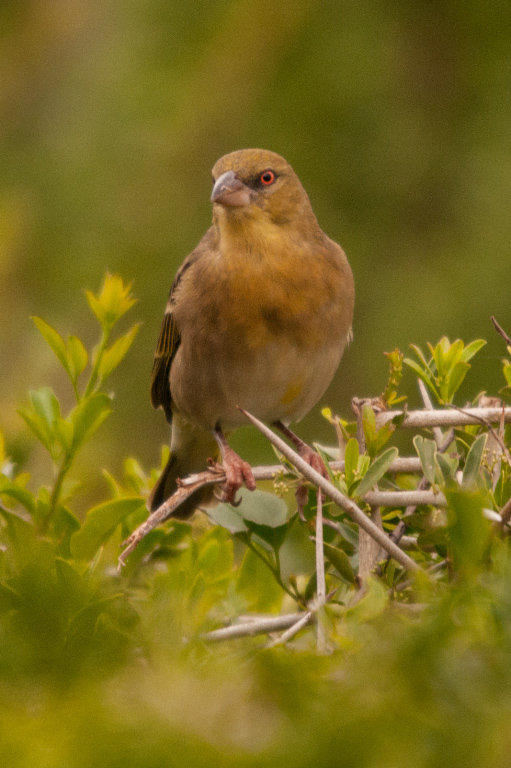
The Weavers

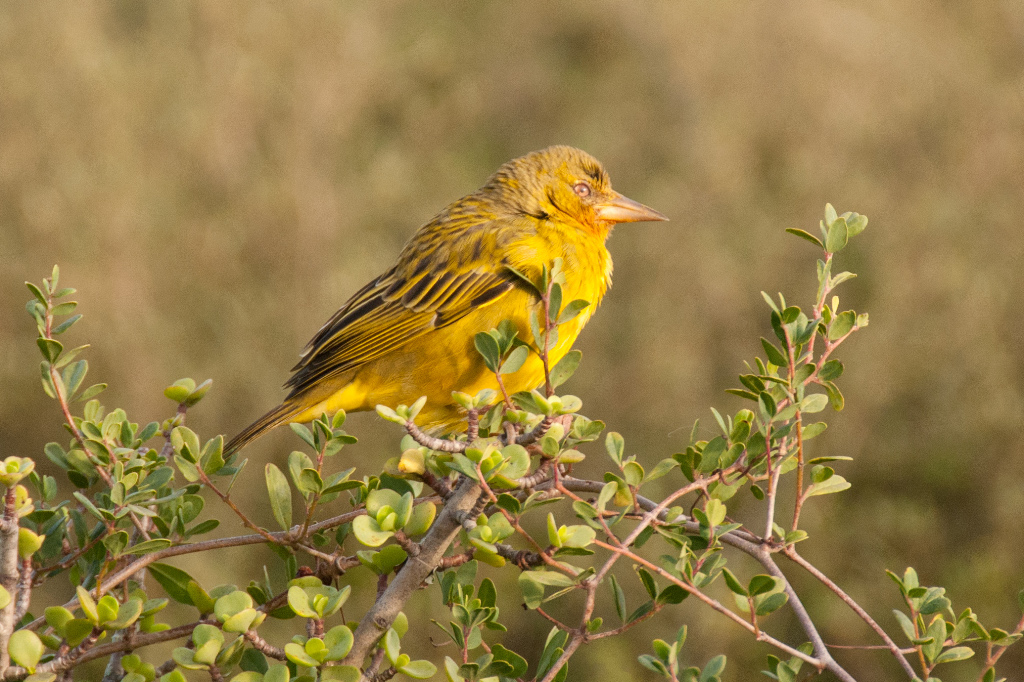
Weavers were the most prominent and numerous birds that visited, represented by no less than three different species, all belonging to the Ploceus genus. Weavers can be difficult to ID in their winter non-breeding plumage, but there are still enough clues to narrow the identification down when faced with similar looking yellow birds.

Village Weaver (Bontrugwewer / Ploceus cucullatus)

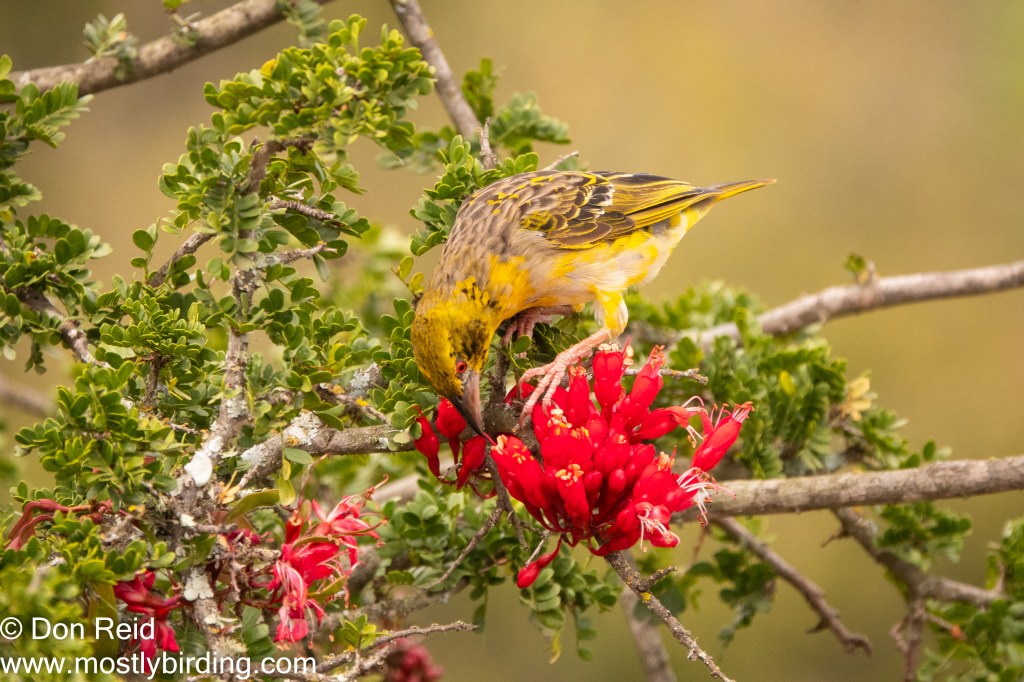
The Village Weavers outnumbered the other two weaver species and were frequent visitors to the flowering trees right in front of our chalet. My limited botanical knowledge would make this a type of Coral Tree (Erythrina genus) with its bright scarlet flowers but I’m open to correction….. which I have received (see comments below) and I now know this is in fact a Weeping boer-bean (Schotia brachypetala / Huilboerboon) so called, apparently, due to the copious amounts of nectar during flowering which overflow and ‘weep’

In breeding plumage the Village Weaver is fairly easy to distinguish from other masked Weavers, but this male was in eclipse plumage, the “in-between” stage when they are in the process of transitioning to their duller non-breeding plumage. The red eye and spotted-backed appearance confirmed the ID

Cape Weaver (Kaapse wewer / Ploceus capensis)

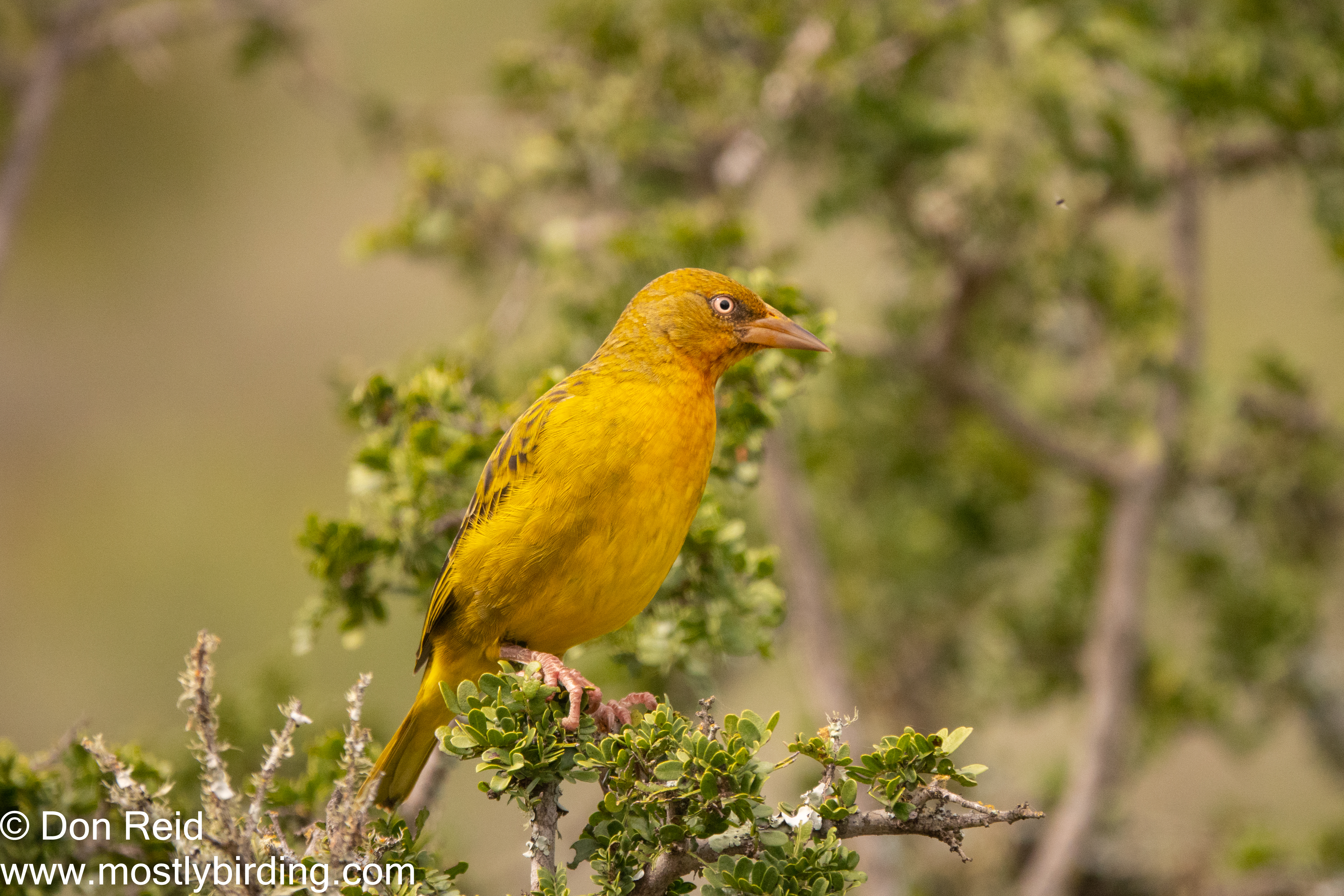
In non-breeding plumage the Cape Weaver male is still fairly easy to identify with its white eye colour and heavy bill, although lacking the chestnut brown wash over the face and neck which it shows during the summer breeding months. This is also the largest of the yellow weavers, by length and mass, but size is not always a dependable way to ID a bird unless the other candidate is sitting right next to it.

Cape Weaver male in partial non-breeding plumage, Addo Elephant Park

The female is less distinctive with brown eyes but the heavy bill helps to separate it from other non-breeding female weavers.

Spectacled Weaver (Brilwewer / Ploceus ocularis)

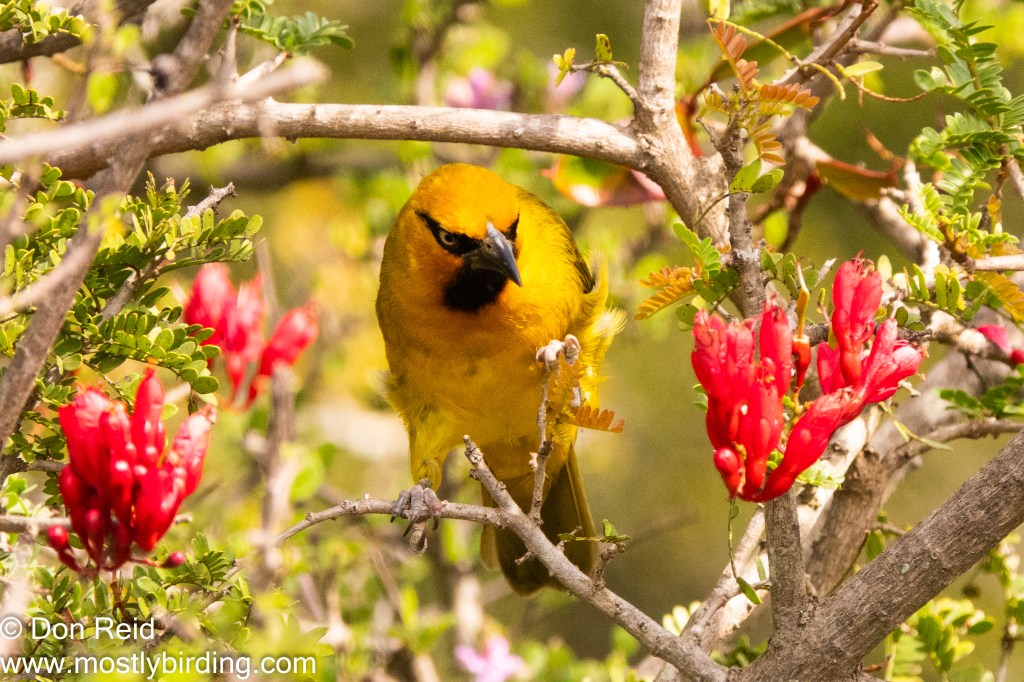
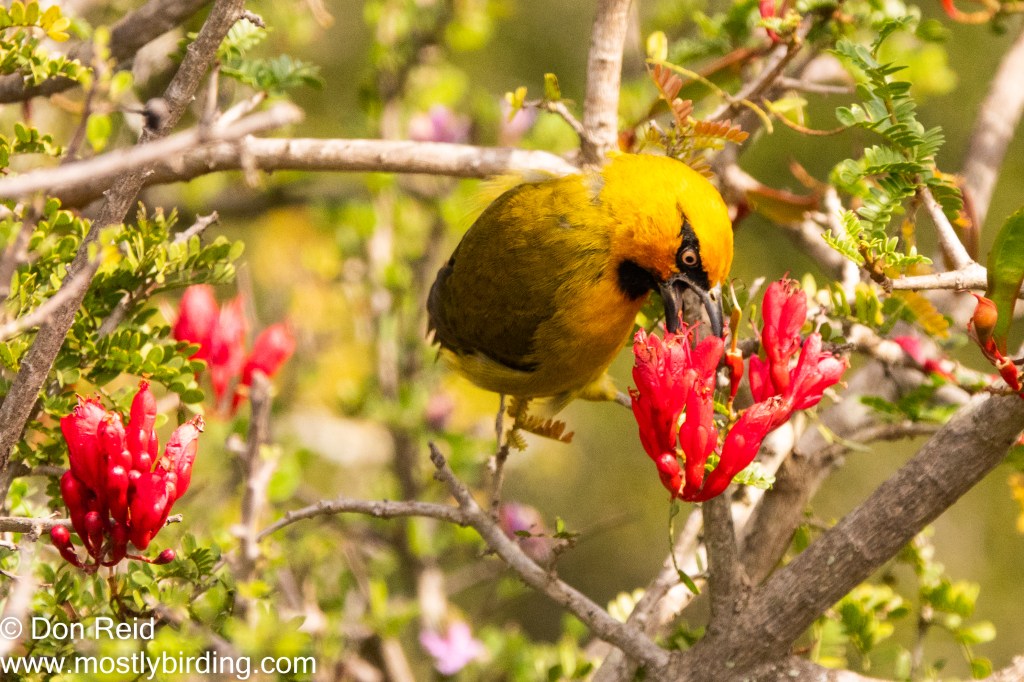
The Spectacled Weavers are easily distinguishable with their black ‘spectacles’ and black bill, while the black bib says this is a male.

The Sunbirds

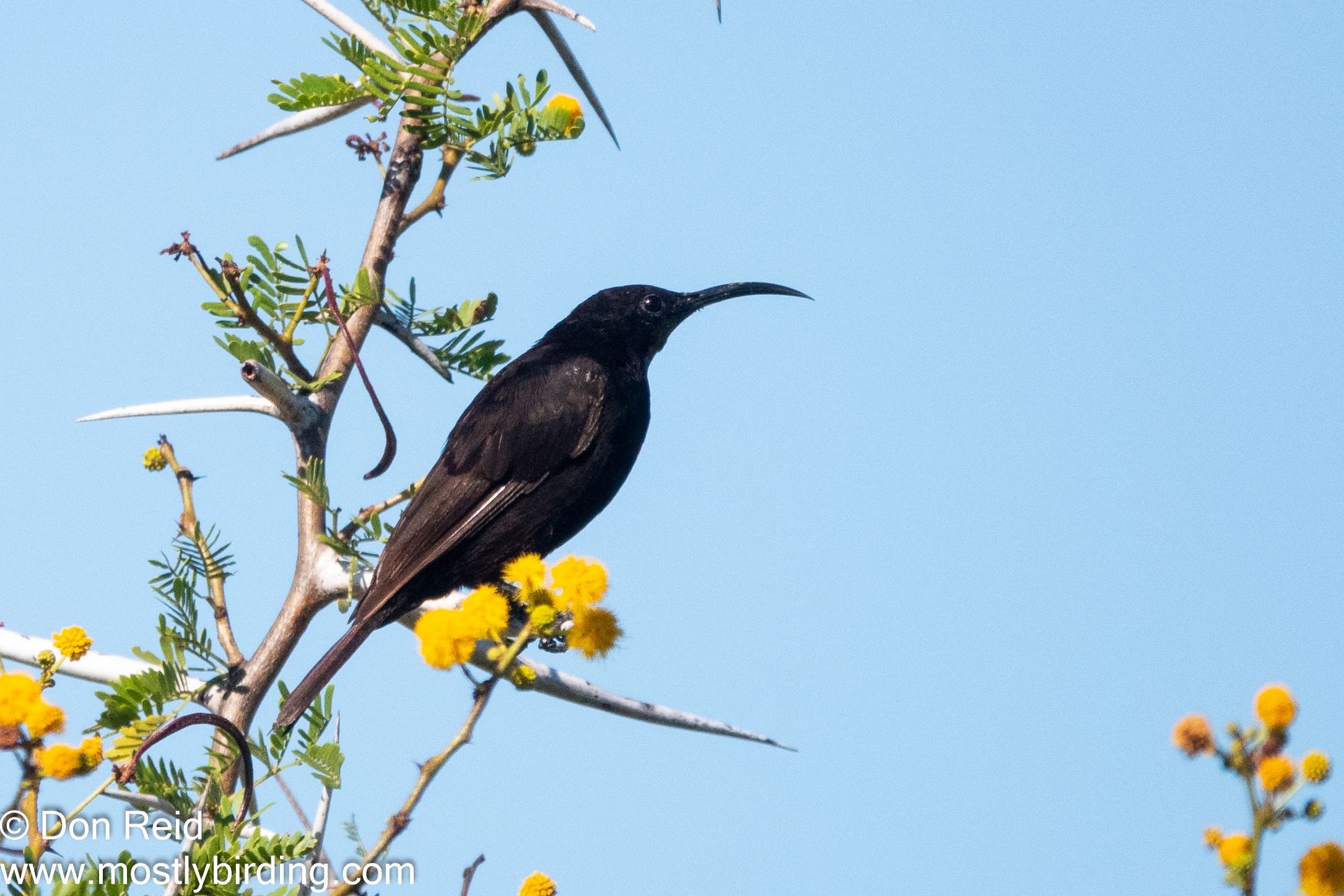
Two species of Sunbird were drawn to the nectar produced by the flowering trees, very different in appearance but equally striking as they went about the business of extracting the nectar with long down-curved bills and even longer tongues to probe the flowers.

Amethyst Sunbird (Swartsuikerbekkie / Chalcomitra amethystina)

Amethyst Sunbird, Addo Elephant Park

Greater Double-collared Sunbird (Groot-rooibandsuikerbekkie / Cinnyris afer)

Greater Double-collared Sunbird, Addo Elephant Park

Other Species

There were several other species that visited the chalet surrounds, not all of which chose to pose for a photo, but those that did seemed quite happy to be ‘in the picture’. Here are the species that spend most time in the trees and shrubs –

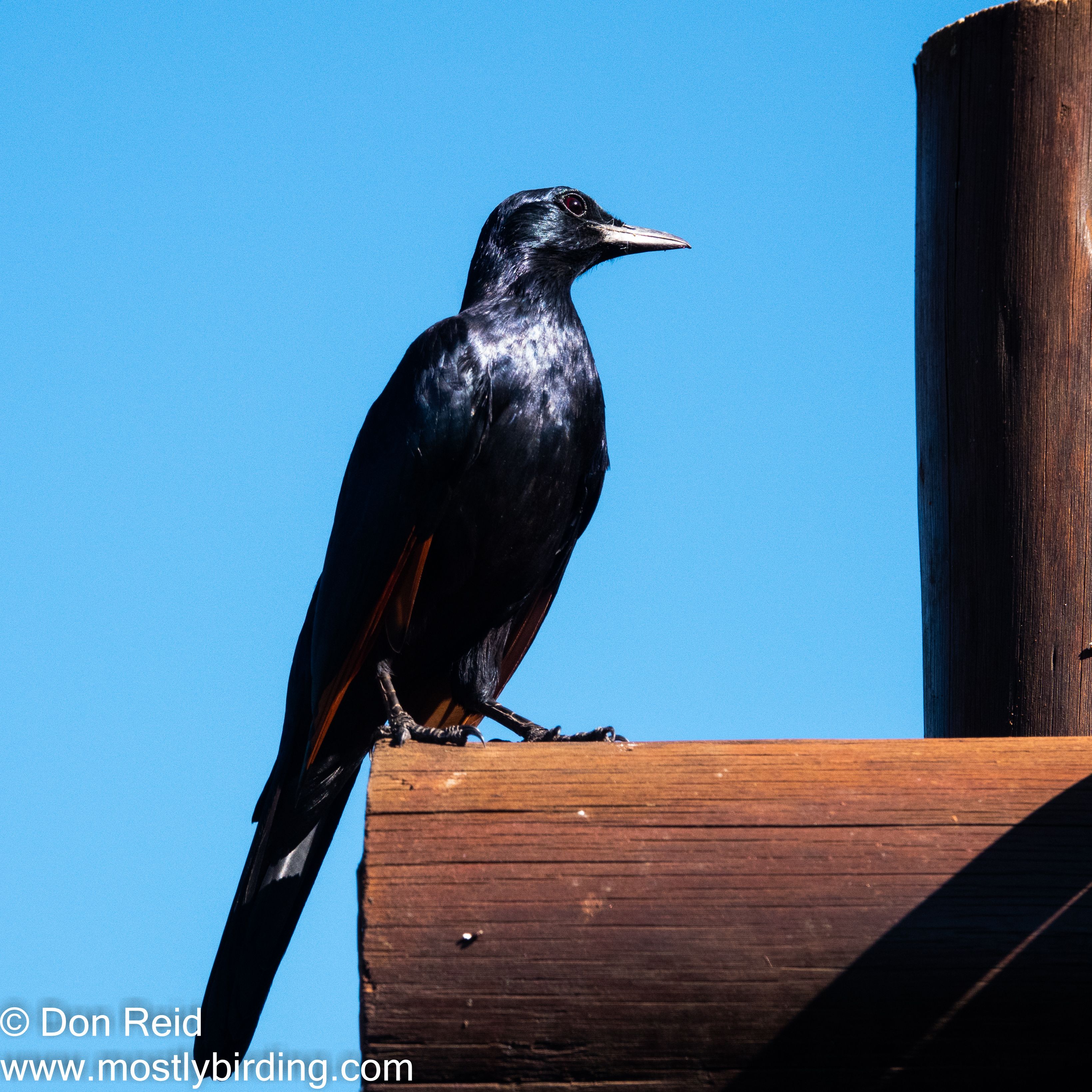
Red-winged Starling (Rooivlerkspreeu / Onychognathus morio)

Red-winged Starling, Addo Elephant Park

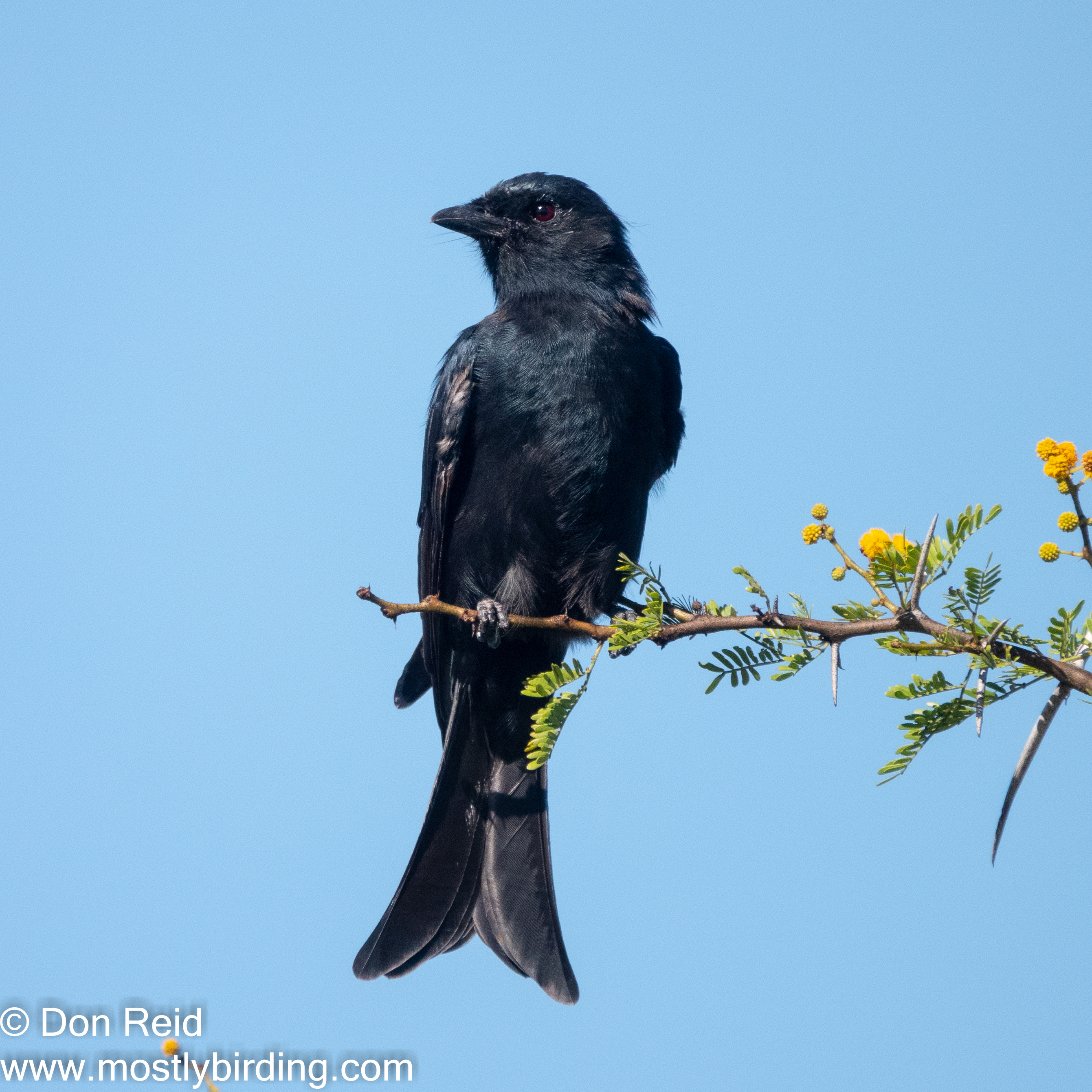
Fork-tailed Drongo (Mikstertbyvanger / Dicrurus adsimilis)

Fork-tailed Drongo, Addo Elephant Park

Streaky-headed Seedeater (Streepkopkanarie / Crithagra gularis)

This member of the Canary family (The Afrikaans name confirms it) is a great singer and fond of sitting in an exposed position, so is hard to miss, but can be confused with the similar looking White-throated Canary

Streaky-headed Seedeater (race humilis), Addo Elephant Park

Black-collared Barbet (Rooikophoutkapper / Lybius torquatus)

The Black-collared Barbet tends to be a tad shier than other species, keeping its distance in a bush and not venturing close to the chalet

Black-collared Barbet (race torquatus), Addo Elephant Park

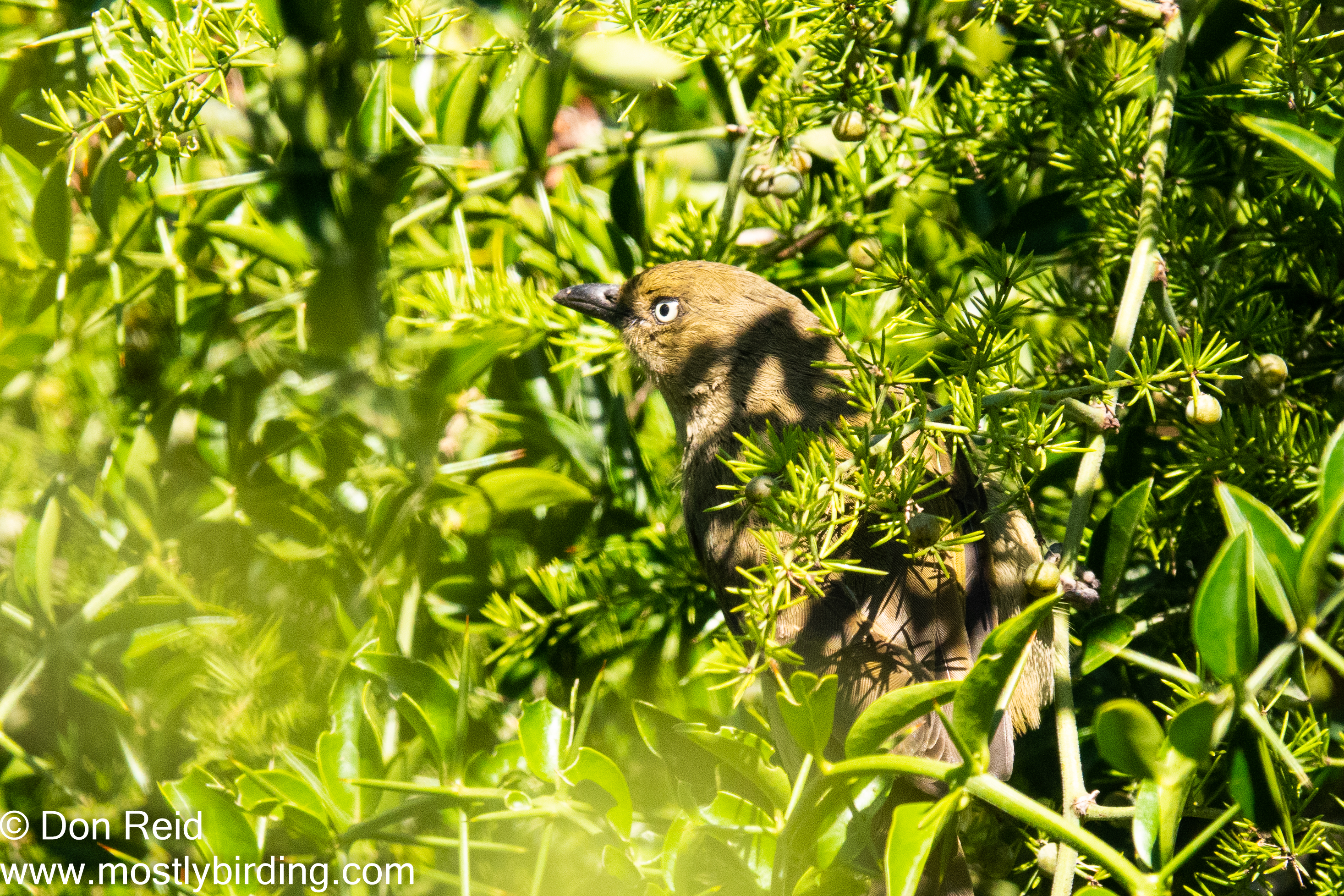
Sombre Greenbul (Gewone willie / Andropadus importunus)

Then there’s the Sombre Greenbul, always heard, seldom seen – I managed to capture an image of this one as it made its way through dense shrubs

Sombre Greenbul (Andropadus importunus / Gewone willie), Addo Elephant Park

The species that spend more time on the ground also ‘popped by’ as they searched for grubs and insects in the gravelly ground around the chalet

Cape Robin-Chat (Gewone janfrederik / Cossypha caffra)

Cape Robin-Chat, Addo Elephant Park

The Cape Robin-Chat is not averse to hopping up onto a branch to survey the area

Cape Robin-Chat, Addo Elephant Park

Emerald-spotted Wood Dove (Groenvlekduifie / Turtur chalcospilos)

Easy to see where it gets its name from….

Emerald-spotted Wood Dove (race chalcospilis), Addo Elephant Park

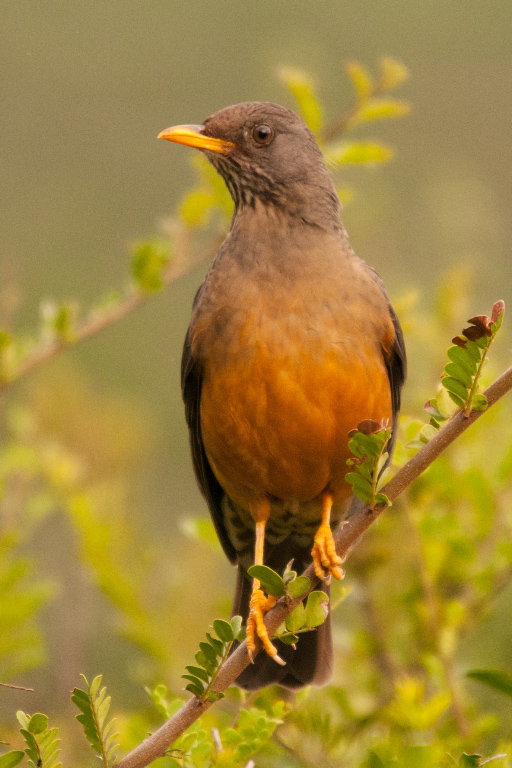
Olive Thrush (Olyflyster / Turdus olivaceus)

Olive Thrush (race oliveaceous), Addo Elephant Park

Other Creatures

And here’s a couple of non-avian visitors to end off with…

Flightless Dung Beetle, Addo Elephant Park
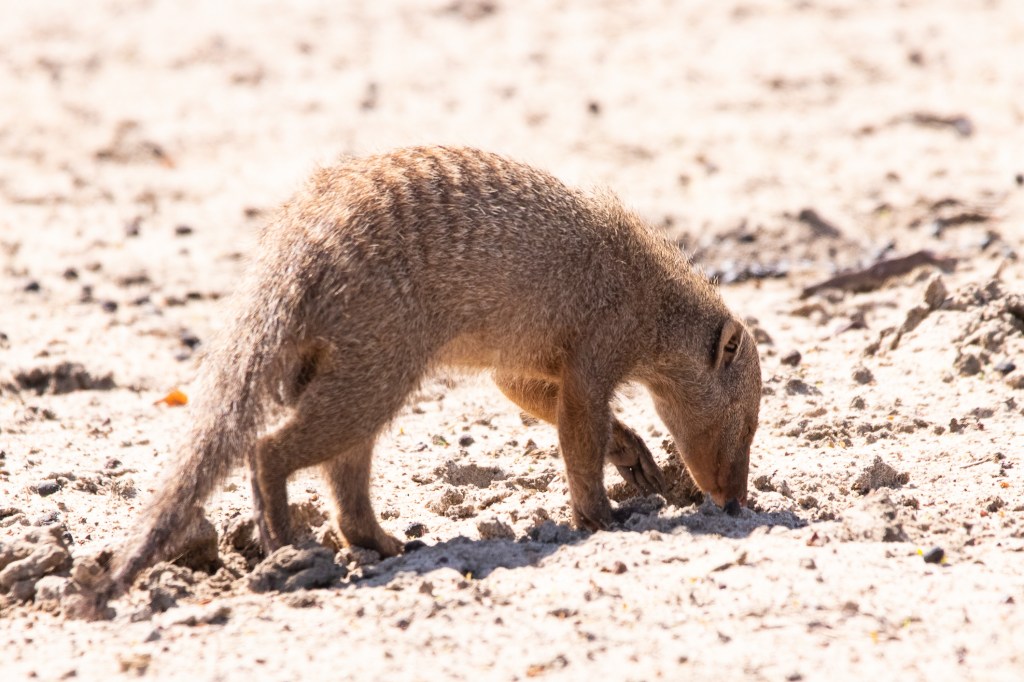
Cape Grey Mongoose (Herpestes pulverulentus / Kaapse grysmuishond), Addo Elephant Park

How about a spectacular sunset, viewed from the stoep, to close out the day

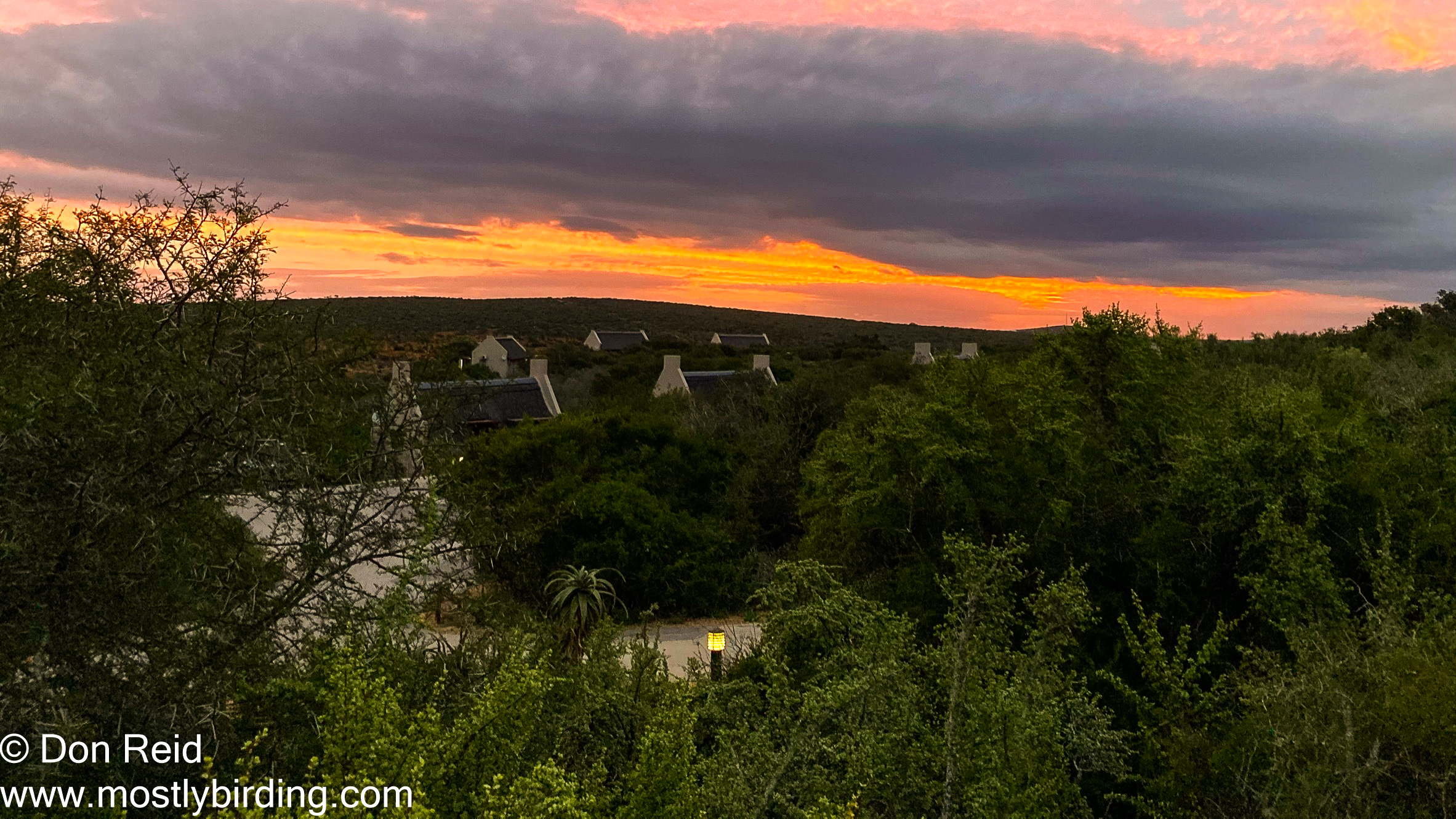
Sunset, Addo Elephant Park

Ostriches at a Waterhole

The wonderful thing about visiting South Africa’s National Parks is that there is just about always something new to see. This was the case during our recent trip to visit two of the Eastern Cape’s gems – Addo Elephant National Park and Mountain Zebra National Park – I will be posting more about our trip but thought I would share this video which I took while on a late afternoon game drive in Addo.

I had never seen Ostriches drinking at a waterhole and it didn’t occur to me that they cannot slurp it up like an elephant, so have to first scoop the water into their mouth, then lift their long neck and swallow.

I think you will agree it is a fascinating sight …. the one on the left was initially rather aloof, but deigned to join in briefly towards the end

What it lacks is some appropriate music to accompany the video as those elegant necks go up and down – I am open to suggestions …..

Four Parks and a wedding (Part 4) – Addo Elephant Park

The Story so far….

Having spent a few nights at Camdeboo and Mountain Zebra National Parks on this current trip, following our earlier visit to De Hoop Nature Reserve, we were  looking forward to a further 3 nights at Addo National Park to complete the quartet of parks. So far we had found each one most enjoyable in its own way, with Mountain Zebra National Park top of our list for having provided the most “African” experience of the three.
The road to Addo – Thursday 1 May 2014

Leaving Mountain Zebra National Park behind us after checking out around 11 am, we headed for nearby Cradock to stock up at the local Spar, followed by a coffee at True Living cafe accompanied by the best carrot cake we’ve had in a long time (they bake on the premises so it’s as fresh as it can get)

From there we headed down the N 10 with a diversion to Somerset East to check out the local museum, which we discovered was closed on the public holiday, but it was interesting just to drive through this small historical Eastern Cape town that we would not otherwise have seen. By now it was lunchtime, so we found a roadside spot with large blue gums to provide some shade and ate our “padkos” rolls.

Roadside lunch stop
Roadside lunch stop

The next stop was a short one to view the Slagtersnek monument, just off the road beyond the small town called Cookhouse. The monument commemorates the spot where a number of Dutch rebels surrendered after being confronted by British forces on 18 November 1815, however we were disappointed to find the surrounds unkempt and apparently not cared for in a long time.

Slagtersnek monument

The road continued in winding fashion with lengthy road works making our progress slow, resulting in us only reaching Addo around 5 pm, but the scenery along the way was rewarding, reminding us of the lowveld in places with lush growth and fruit farms

Addo Reception
Addo Reception

Back in Addo

Our first visit to Addo was just over a year previously when Gerda and I had enjoyed a few days in the park after visiting PE, so we were familiar with the layout. Some of the photos and descriptions I have used in this post are from that visit.

IMG_1242

We had booked a few months before but by then it was already close to full so we had to accept one night in a chalet followed by 2 nights in the Forest Cabins – not ideal but it meant we could try out the different accommodation units.

Settling into our chalet, some familiar calls resounded in the fading light – Sombre Greenbul with its piercing whistle, the loud “chip – ing” of Bar- throated Apalis and a pair of Bokmakieries performing a duet. A little later as it darkened a Fiery – necked Nightjar started its “Lord please deliver us” call – so evocative wherever you hear it but especially so in the bush.

Sombre Greenbul, Addo NP

Bokmakierie, Addo NP

Bar-throated Apalis, Addo NP

Exploring Addo and beyond

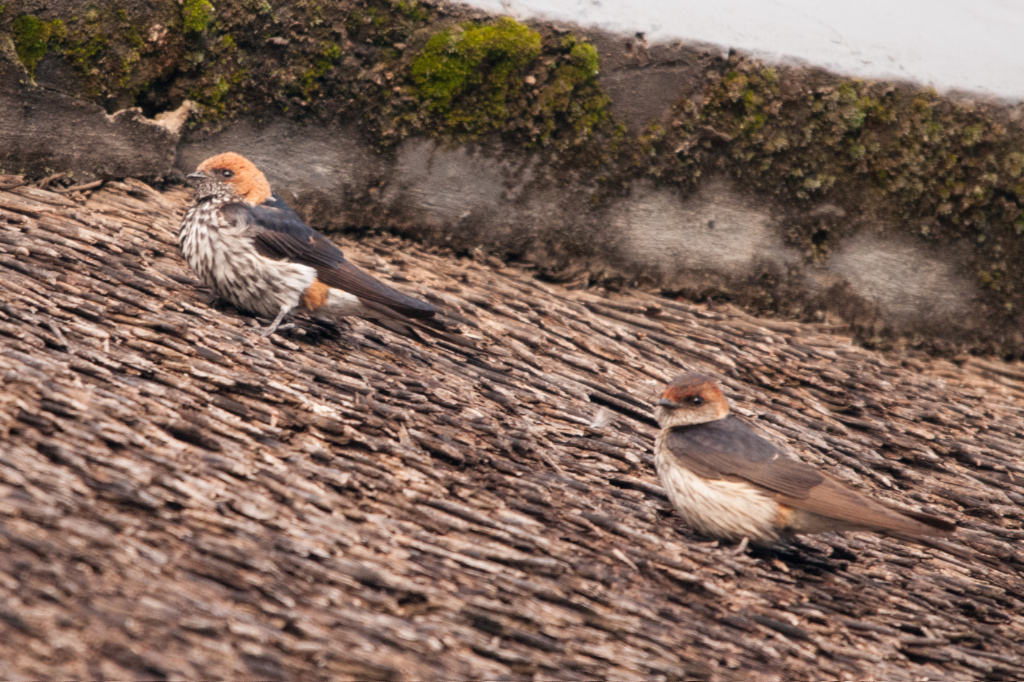
While having our customary early morning coffee on the patio, a pair of Cardinal Woodpeckers made a noisy appearance in a nearby tree, followed by Grey-headed Sparrow and a Fiscal Flycatcher, the latter looking debonair in its crisp black and white plumage – about to ask for a ‘Martini – shaken not stirred’. Soon after, a Lesser-striped Swallow settled on the roof, making it easy to ID as opposed to when they are in the air, when it is more of a challenge to separate them from the Greater-striped Swallows.

Grey-headed Sparrow, Addo NP

Striped Swallows, Addo NP

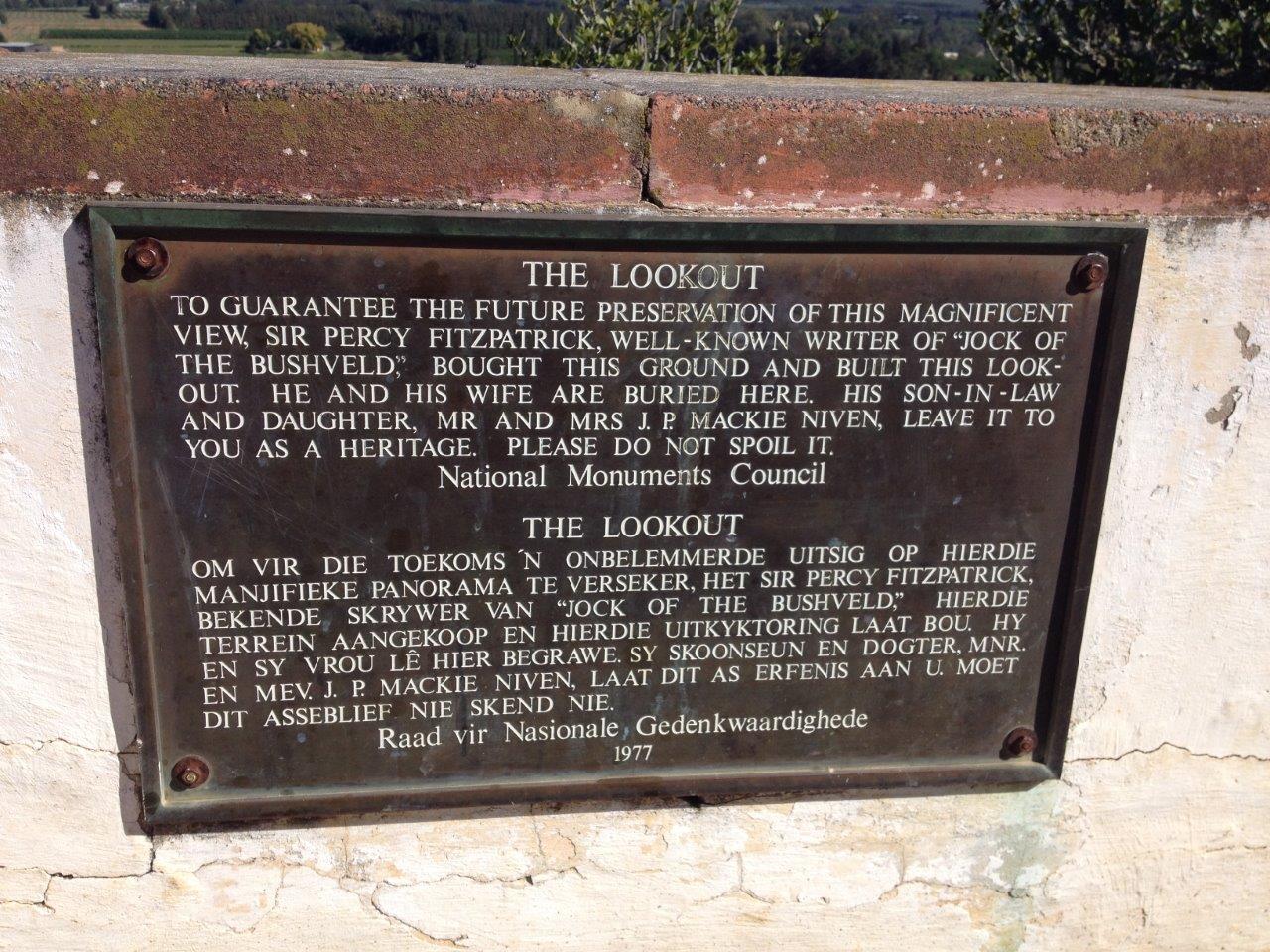
Having a 3 hour gap before we could move into our Forest cabin, we decided to go in search of the grave of Percy Fitzpatrick, author of the classic story of Jock of the Bushveld, which we had heard was not far from Addo Elephant Park, off the road to Kirkwood. Passing through the village of Addo we spotted a building with the name ‘Percy Fitzpatrick Library’ and immediately stopped to find out more – good thing because the very helpful librarian was more than willing to chat about the library, the area and showed us a portfolio of historical photos in a large album kept by the library. She also pointed us in the right direction to the grave site and ‘Lookout’.

It didn’t take long to find both at the end of a dirt road with heavy encroaching bush both sides (bit nerve-wracking for those who don’t like getting the car scratched) and it was clear that not much is done to look after the site, which was completely overgrown and in a sorry state – another neglected opportunity to create something which I’m sure many tourists would enjoy visiting.


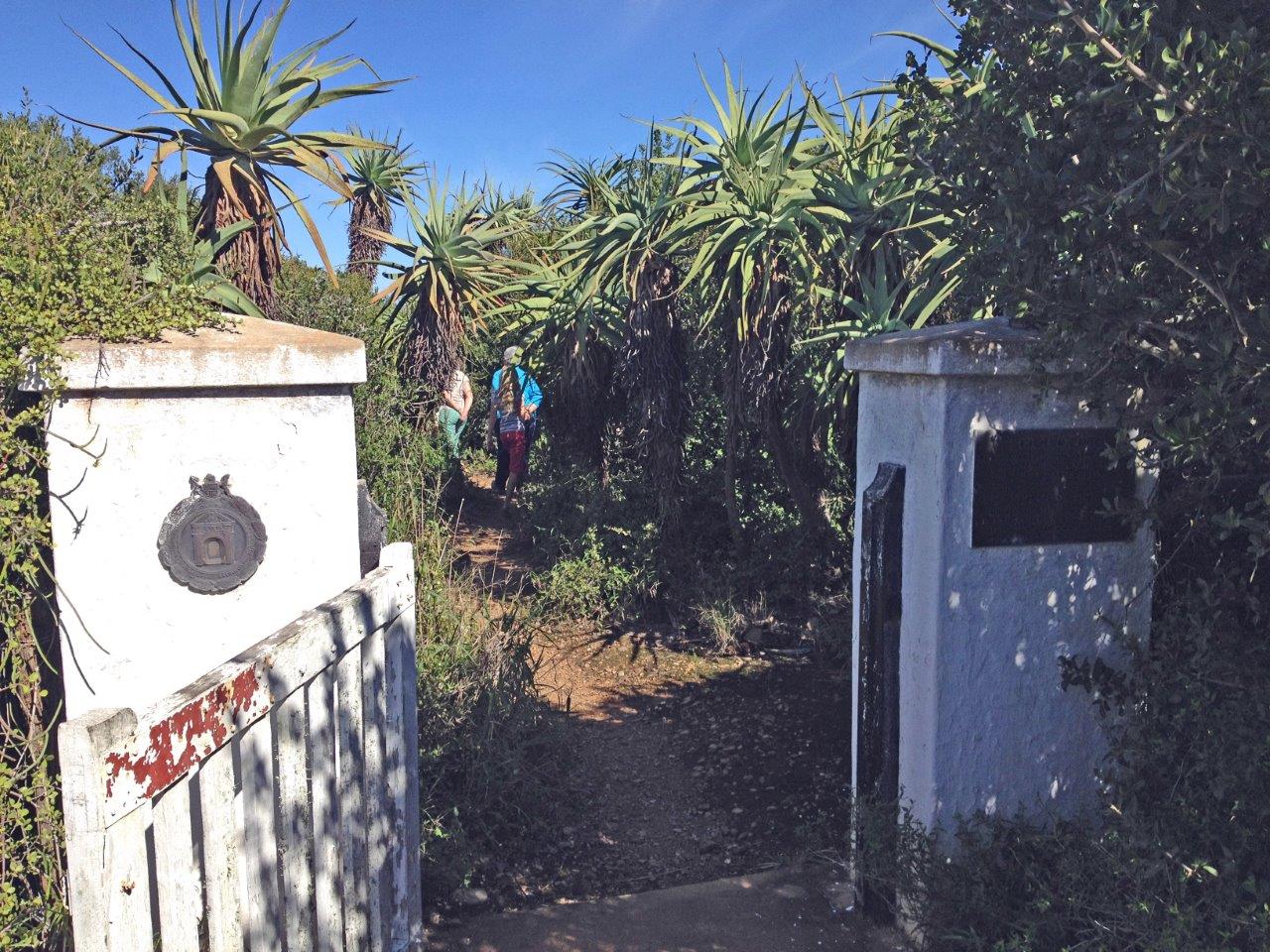
Entrance to site where Percy Fitzpatrick and his wife are buried - the garden has run wild
Entrance to site where Percy Fitzpatrick and his wife are buried – the garden has run wild

The grave of Percy Fitzpatrick

The ‘Lookout’, built to honour their son, turned out to be a stone structure with a short stair to take you to a lookout deck, with wonderful views across the countryside and the Sundays River below, but this too was in need of some TLC.

IMG_1229


View over the countryside from 'The Lookout'
View over the countryside from ‘The Lookout’

View from The Lookout


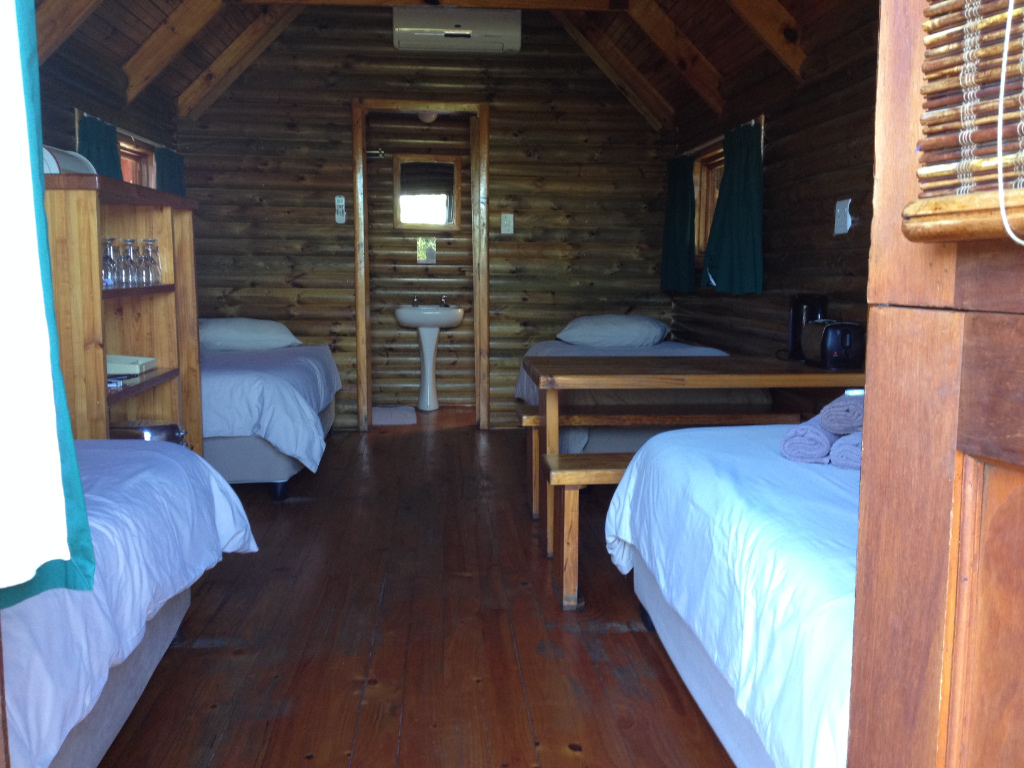
By the time we got back to the rest camp, it was past 1pm so we could move into our Forest Cabins, which turned out to be comfortable and cosy with a small bathroom, a private deck and use of a communal kitchen.

Forest Cabin, Addo NP

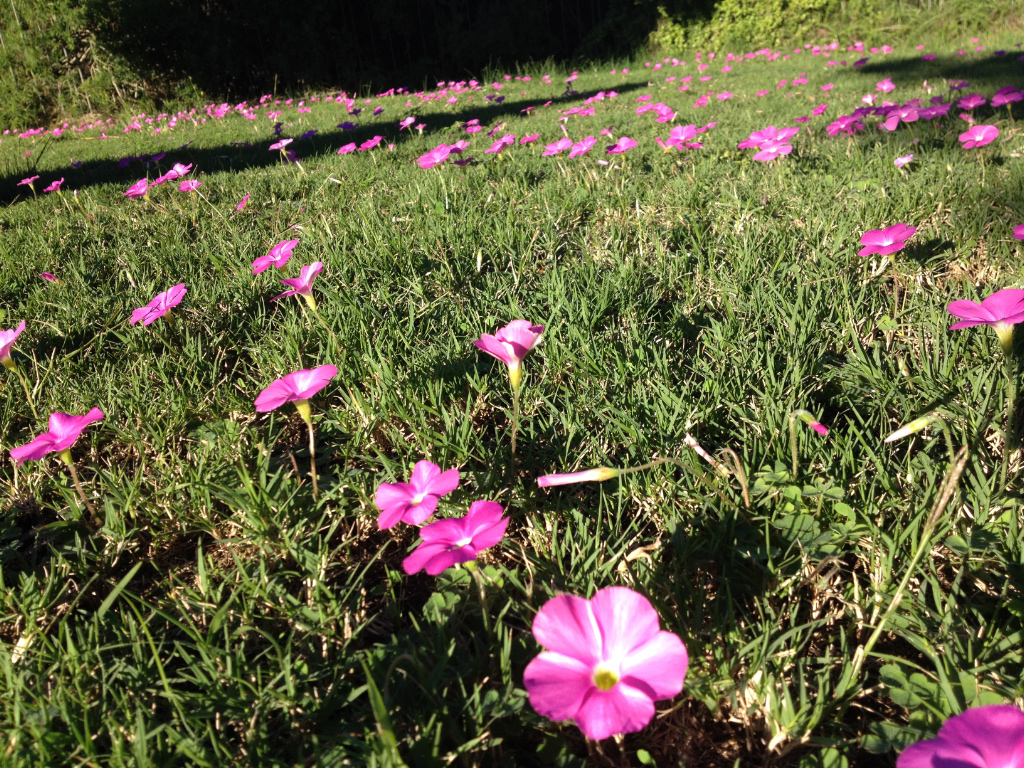
Poolside flowers, Addo NP

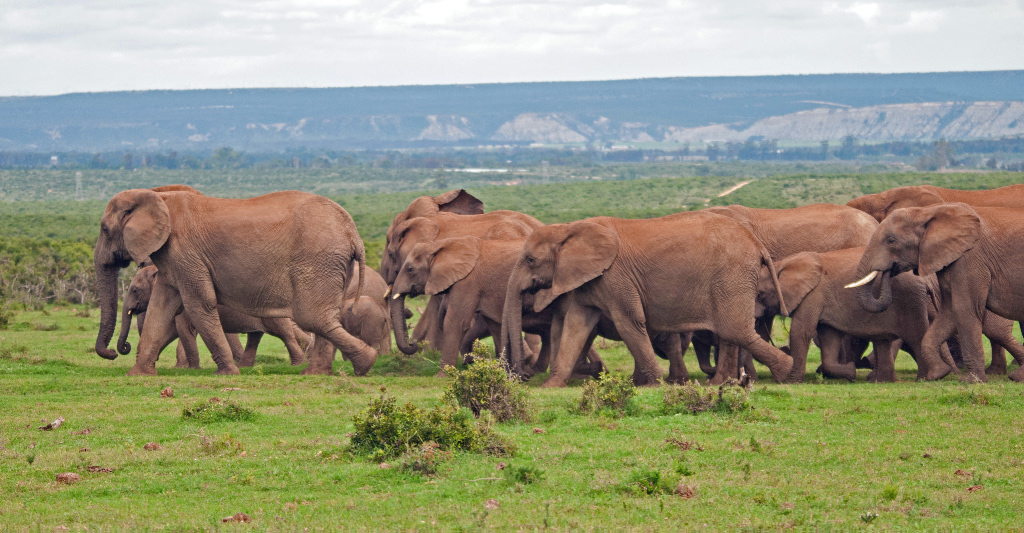
There was time for a swim at the pool, cold but invigorating, before setting off on a late afternoon drive. The thick bush on the route we followed wasn’t conducive to spotting any of the pachyderms that Addo is named and famed for, but at a viewpoint high up on a hill we looked down on a classic scene of more than a hundred Elephant in the distance.

Elephant, Addo NP
Elephant, Addo NP

Elephant, Addo NP

African Elephant, Addo NP

Along the way the bush was good for several common species such as Cape Weaver, Common Fiscal in numbers, Bokmakierie and Karoo Scrub-Robin. A Denham’s Bustard in the more open area was a nice surprise.

Karoo Scrub-Robin, Addo NP

Denham's Bustard, Addo NP
Denham’s Bustard, Addo NP

I spent the next day mostly at Cape Recife in Port Elizabeth, looking for a Bridled Tern that had been seen there during the week, unfortunately without success.

Back at Addo there was time to relax before doing a last drive along the route where most of the dams and waterholes are and we came across numbers of game as well as a few new ‘trip birds’ such as Southern Tchagra, as always skulking in the bushes, and a far more brazen pair of Red-necked Spurfowl, common to Addo.

Southern Tchagra, Addo NP

Red-necked Spurfowl, Addo NP

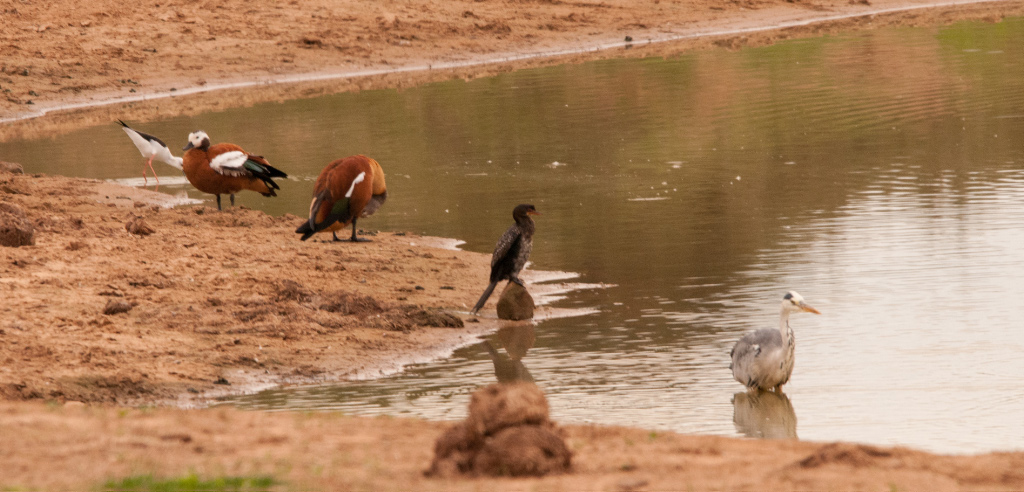
At the dams, SA Shelducks showed once again as did Little Grebe and some Thick-Knees (Dikkop is still a much better name). Hapoor dam, named after a famous elephant with a chunk of its ear missing, was a welcome sight with its wide open spaces surrounding the dam, ideal for game including Kudu and favoured by some Crowned Lapwings.

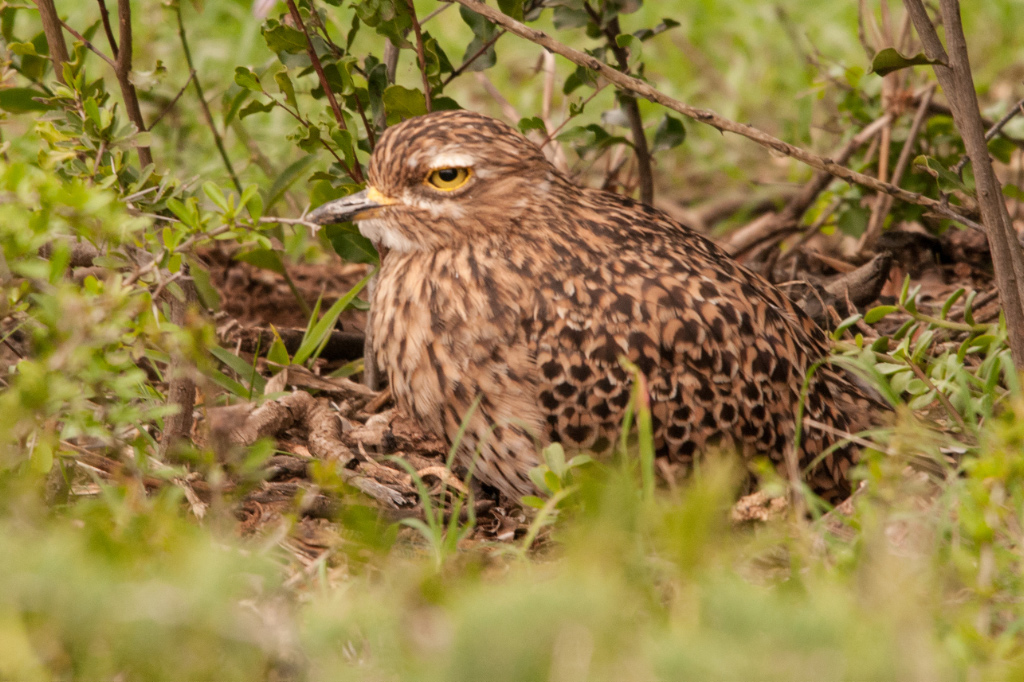
Spotted Thick-Knee (Dikkop), Addo NP

4 in a row, Addo NP
4 in a row, Addo NP

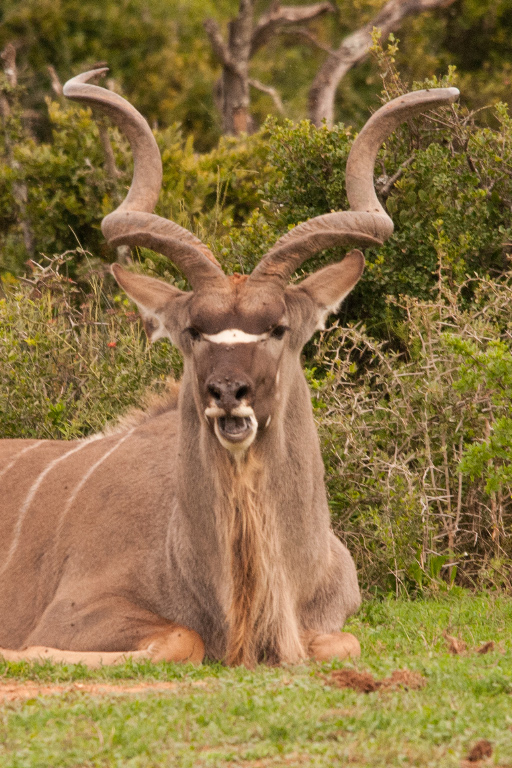
Kudu, Addo NP
Kudu, Addo NP

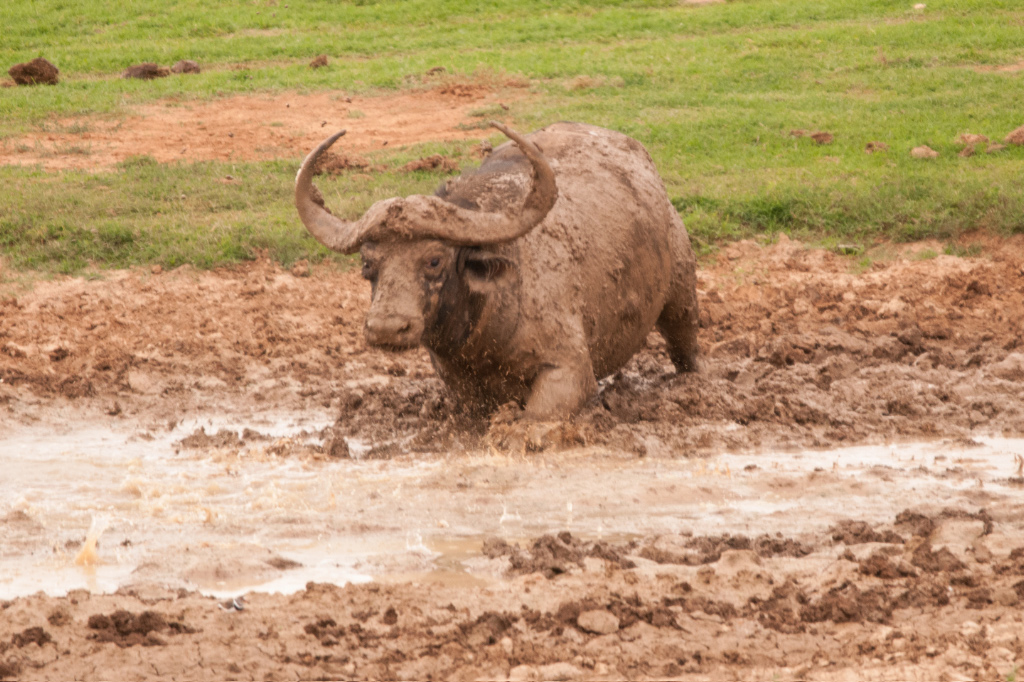
Buffalo getting the spa treatment (on our previous trip)

We hadn’t allowed ourselves much time so had to make haste (barely sticking to the 40km/h speed limit) back to the game area gate before it closed at 6 pm. The lone guard at the gate gave us a stern look but we had seen the same look each time we entered the game area so weren’t too fazed.

Jack’s Picnic Spot

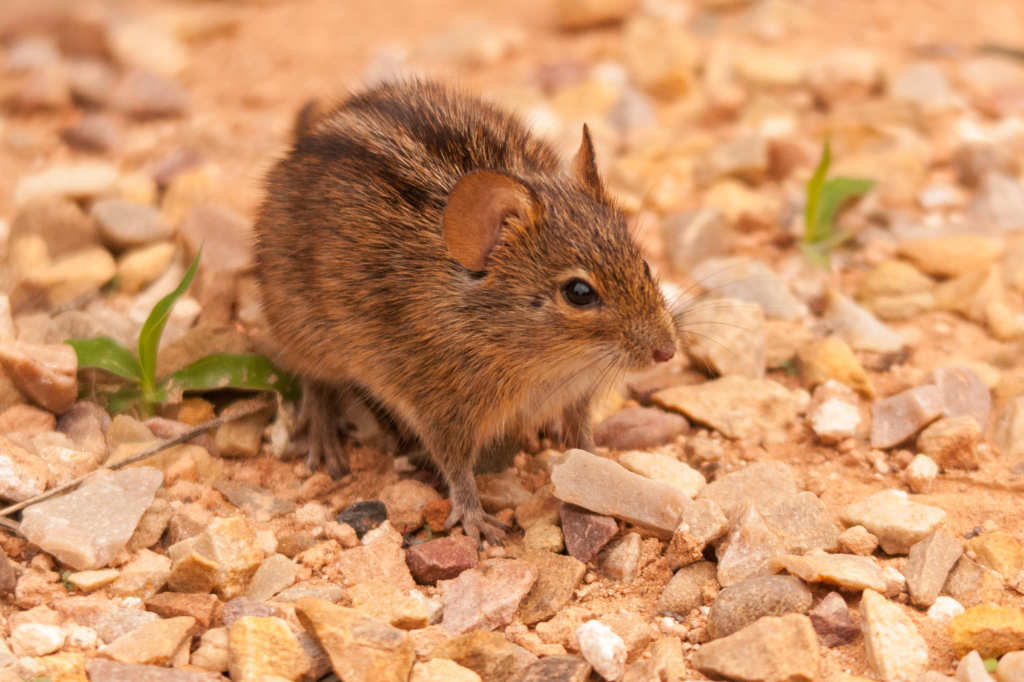
We had visited this spot on our previous visit and found it to have a special charm with tables set into alcoves created in the bush, visited by cute little Four-striped mice and Red-necked Spurfowl, both of which latched onto any errant crumbs from our cheese and crackers picnic – not our usual style but we were in a rental car after flying to PE, so had to make do with a plastic shopping bag to carry our humble provisions. This picnic spot gets its name from an ailing Rhino which spent its last years at this spot in a protected environment – little did he know how vulnerable the next generations of Rhino would become with rampant poaching in our country to feed the Far East obsession with Rhino horn.

Striped Mouse (Rhabdomys pumilio), Addo NP
Striped Mouse (Rhabdomys pumilio), Addo NP

Striped Mouse
Striped Mouse

Striped Mouse
Striped Mouse


Red-necked Spurfowl
Red-necked Spurfowl

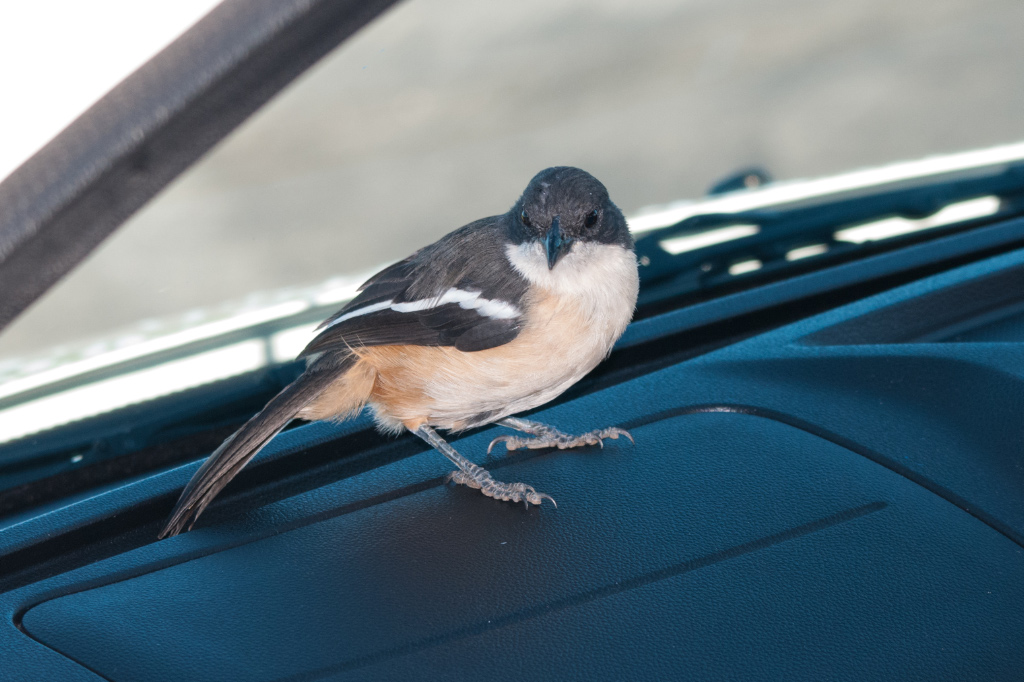
Southern Boubou - took a liking to our rental car (on our previous trip)
Southern Boubou – took a liking to our rental car (on our previous trip)

Stoep Sitting

Southern Masked-Weaver, Addo NP

Olive Thrush, Addo NP

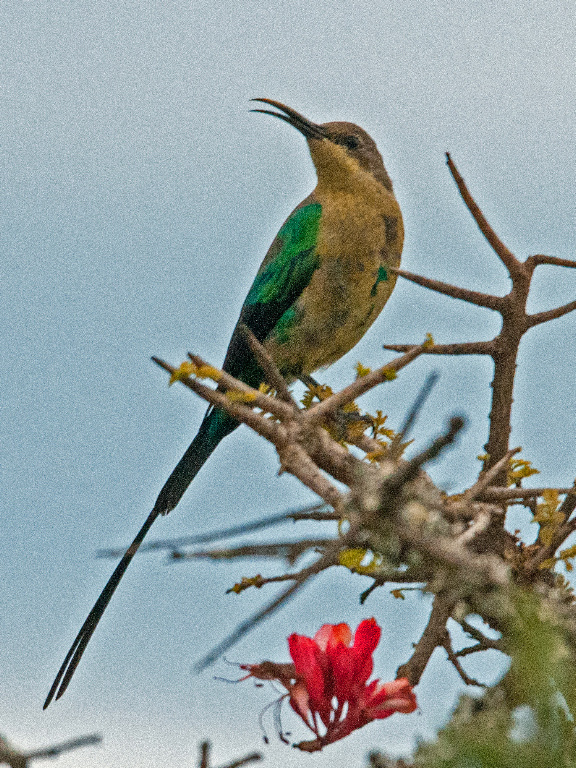
Most of the chalets and cabins have stoeps (patios) with views over the bush and are a great place to relax in the early morning and evenings – there is a constant stream of passing bird life to enjoy, most of which are tame and easy to photograph – Weavers (Cape and Southern Masked), Bulbuls (Cape and Dark-capped), Olive Thrushes and Bar-throated Apalises are most common with Malachite Sunbirds not far behind

Cape Weaver, Addo NP


Cape Bulbul, Addo NP

Malachite Sunbird, Addo NP

The Small Stuff

Addo is famous for its elephants but we were fascinated by some of the smaller creatures and insects which make this park special and provide great entertainment. Several times we came across the Flightless Dung-beetle – one particular beetle was crossing the dirt road with his meticulously formed dung ball with a ‘Supervisor’ in close attendance all the way across, seeming to guide him and even assisting to get him back on his legs when he toppled onto his back at one point.

Flightless Dung-Beetle with 'Supervisor'
Flightless Dung-Beetle with ‘Supervisor’ – the ball is almost golf ball size and they roll it with their hind legs while facing backwards, thus a supervisor helps a lot

Such a pity that other visitors ignore the many signs asking them to watch out for Dung beetles which are so vulnerable when crossing the road, resulting in a lot of crushed beetles.

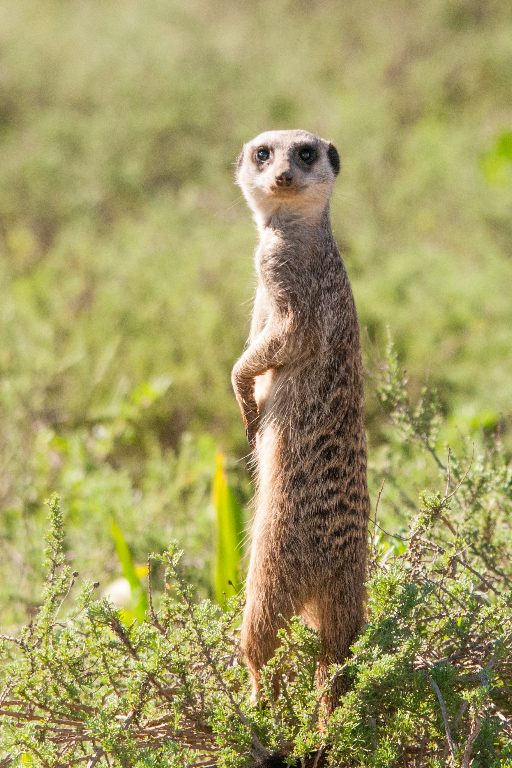
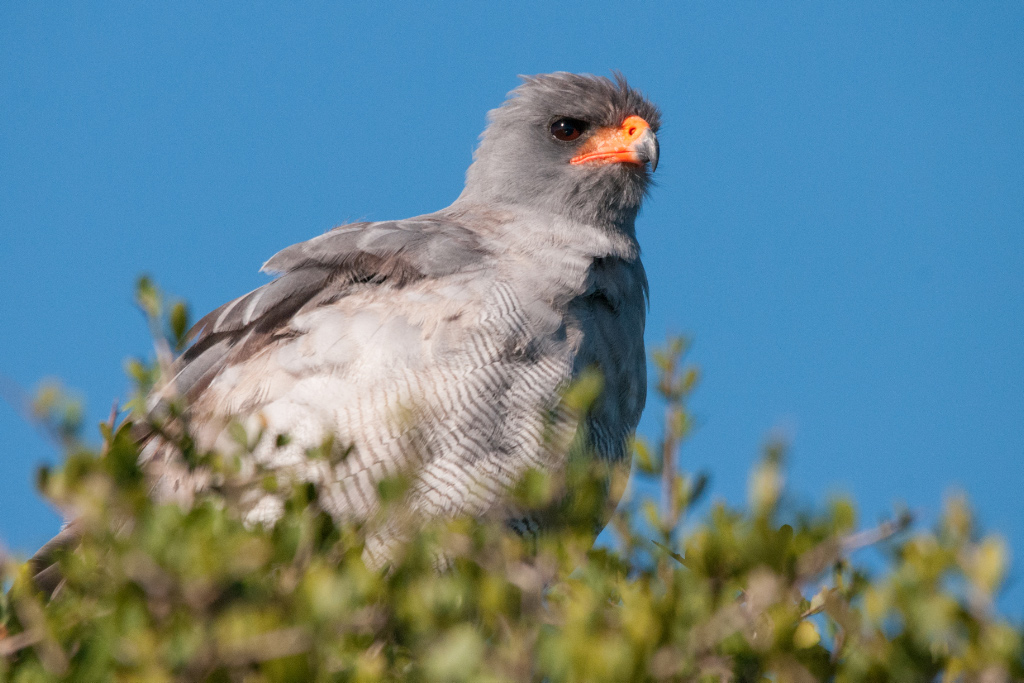
At another spot we watched a group of Meerkats as they scurried after food while their lone sentry stood watch like a Royal guardsman – right under the nose of a Pale Chanting Goshawk not 3 m above them, which they chose to ignore completely

Suricate / Meerkat (Suricata suricatta), Addo NP
Suricate / Meerkat (Suricata suricatta), Addo NP

Pale Chanting Goshawk (Juvenile), Addo NP
Pale Chanting Goshawk (Juvenile), Addo NP

Pale Chanting Goshawk, Addo NP

The Bulbul puzzle

I mentioned seeing both Cape and Dark-capped Bulbuls, once side by side in the same tree – apart from the white ring around the eye of the Cape Bulbul, they are virtually identical but don’t seem to interbreed – how do they know?

Heading back home

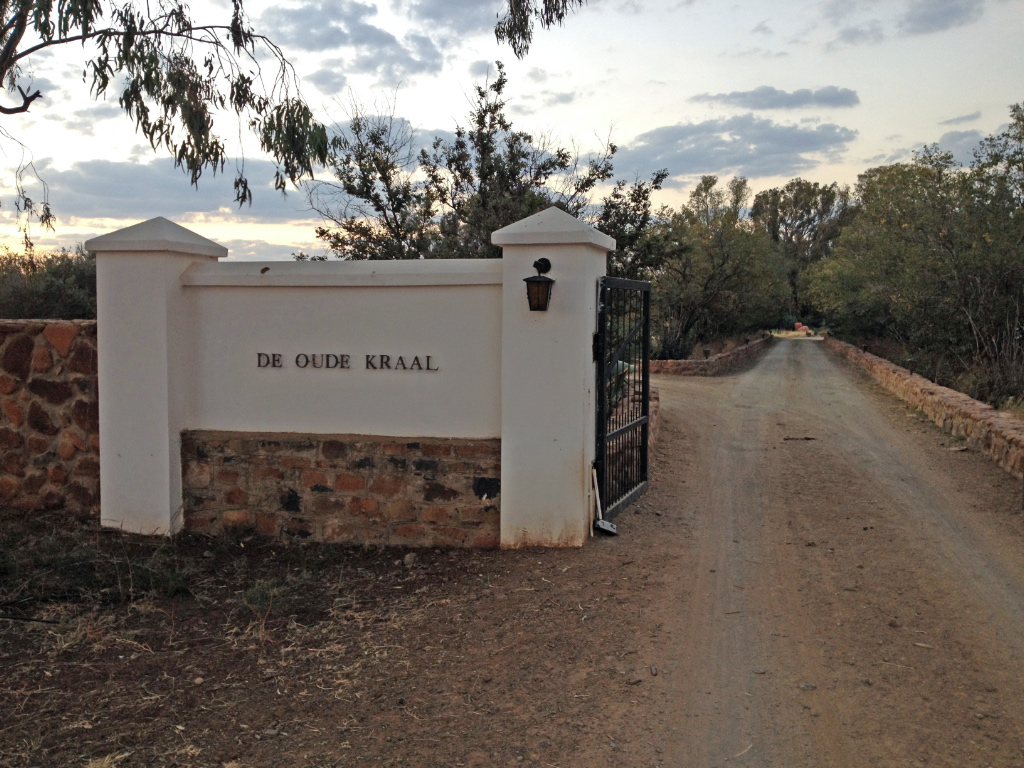
We had enjoyed our month of much travelling and many highlights, but as always we were now looking forward to getting back home and settling into our normal routine. The trip back was once again spread over two days of about 600 km each, with an overnight stop at Oudekraal guest farm just south of Bloemfontein. It turned out to be a pleasant place with excellent food but somewhat overpriced compared to other guest houses we have tried over the years.

Oudekraal guest farm

Oudekraal guest farm
De Oude kraal guest farm

One thing I can never understand about guest farms is why the front house, gardens and rooms are well looked after, yet take a walk (as I always do) around the farmyard and surroundings and it’s often a mess – old scrap everywhere and generally untidy. This is the case with a number of places we have visited and again with Oudekraal. The overgrown tennis court was sad to see – even if no one uses it, just keep it looking decent.

Final surprise

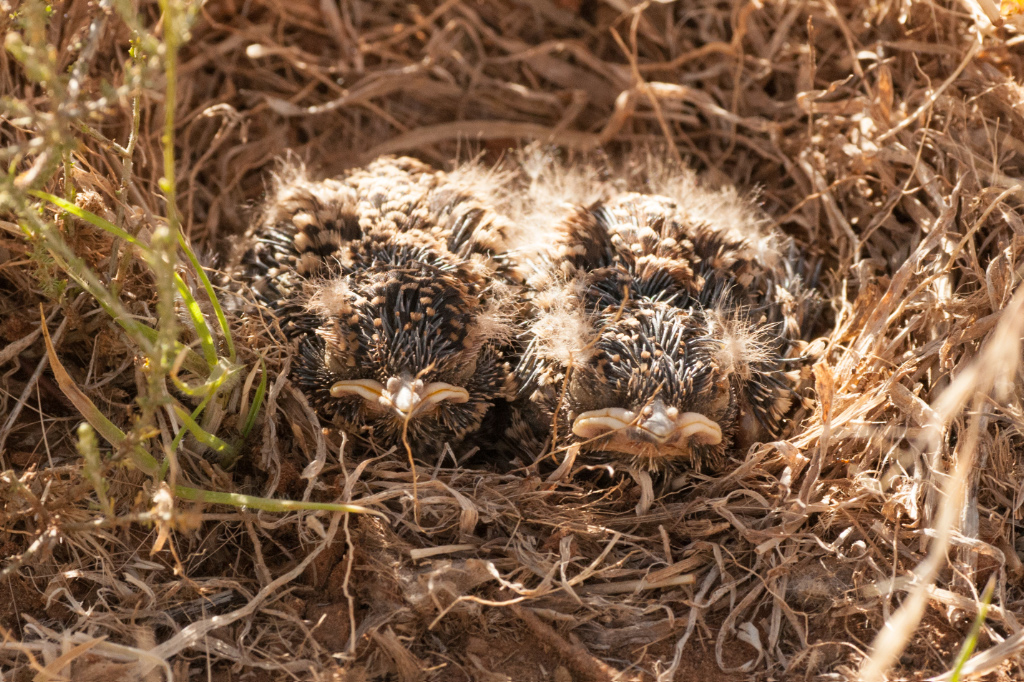
As we left Oudekraal we spotted a Spike-heeled Lark alongside the road and stopped to view it, noticing with interest that it had a juicy insect in its beak. As we stopped it walked off quickly and we followed it for about 100m until it suddenly stopped and ducked towards a hidden nest where two very young chicks were waiting to be fed – what a lucky find! The nest was so well camouflaged that when I got out to take a photo (from a distance using the telephoto lens) I had to search for it again, despite being a few metres away.

Spike-heeled Lark, De Oude kraal guest farm

Very young Spike-heeled Larks on the nest

And so we came to the end of a memorable month of traveling – can’t wait for the next trip!