Addo Trip – March 2024 : Part 2

The Routine

We had four full days to make the most of our breakaway to this delightful park and we soon settled into a routine which we followed more or less on each of those days. Let’s just say we were out to relax as much as possible, while not missing out on what Addo has to offer.

The mornings were the most relaxed part of the day, getting up late-ish, having coffee while enjoying the birdsong and spending the rest of the morning out on the deck, then venturing out for a drive along one of the routes, usually with a light picnic lunch packed.

This took us to mid-afternoon when we would return to camp, just in time for a rest (I told you we were out to relax!). More deck sitting, followed by getting the braai fire going for the evening meal to round out the day.

Day 1 and 2 Highlights

Stoepsitting

Stoepsitting (relaxing on the deck) is especially rewarding in Addo’s Main Camp where the chalets are surrounded by trees and shrubs which are a magnet for a number of birds.

It almost seems as if the birds that visit the surrounding bushes and trees are prompted by a stage director to appear ‘on stage’, play their part and leave again

Some of the regular “performers” :

Southern Boubou, looking like he is in charge, giving a raucous call just in case you don’t notice him the first time

Southern Boubou Laniarius ferrugineus Suidelike waterfiskaal (female, race natalensis), Addo Elephant NP

Greater Double-collared Sunbird, resplendent in green cloak and bright red waistcoat and showing off its colours at every opportunity

Greater Double-collared Sunbird Cinnyris afer Groot-rooibandsuikerbekkie, Addo Elephant NP

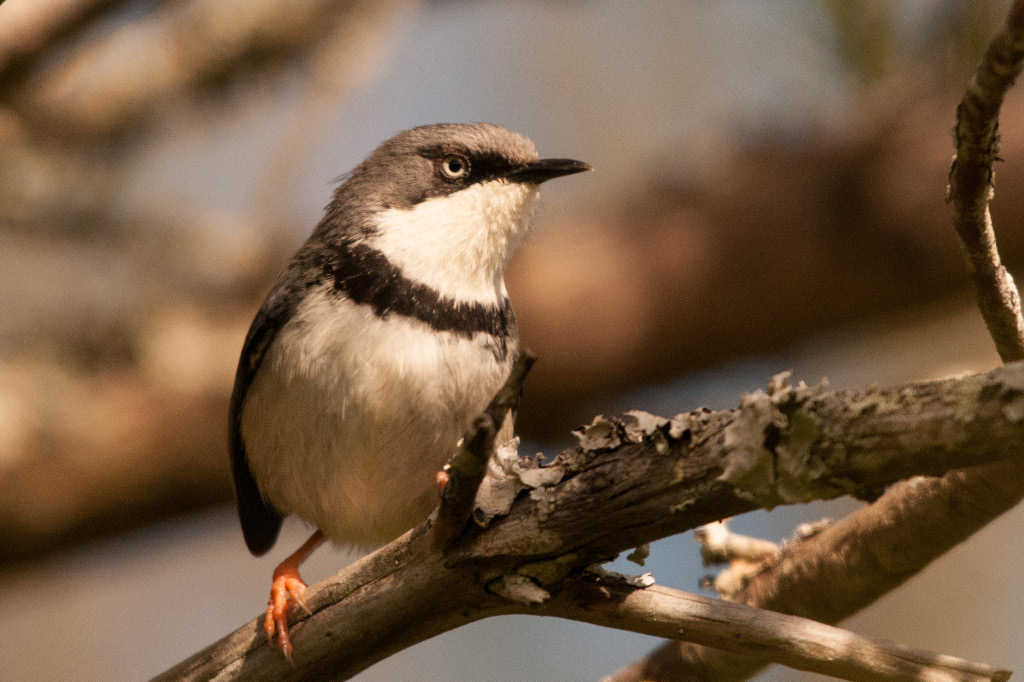
Bar-throated Apalis, perky and loud, flitting about the bushes, allowing very brief glimpses as it moves through the foliage – so brief I didn’t manage to get a photo this visit so have included this one from a previous trip

Bar-throated Apalis, Bontebok NP (not impressed by my playing his call)

Cape Robin-Chat, haughty and superior – but who wouldn’t be if you could sing as well as it can

Cape Robin-Chat Cossypha caffra Gewone janfrederik, Addo Elephant NP

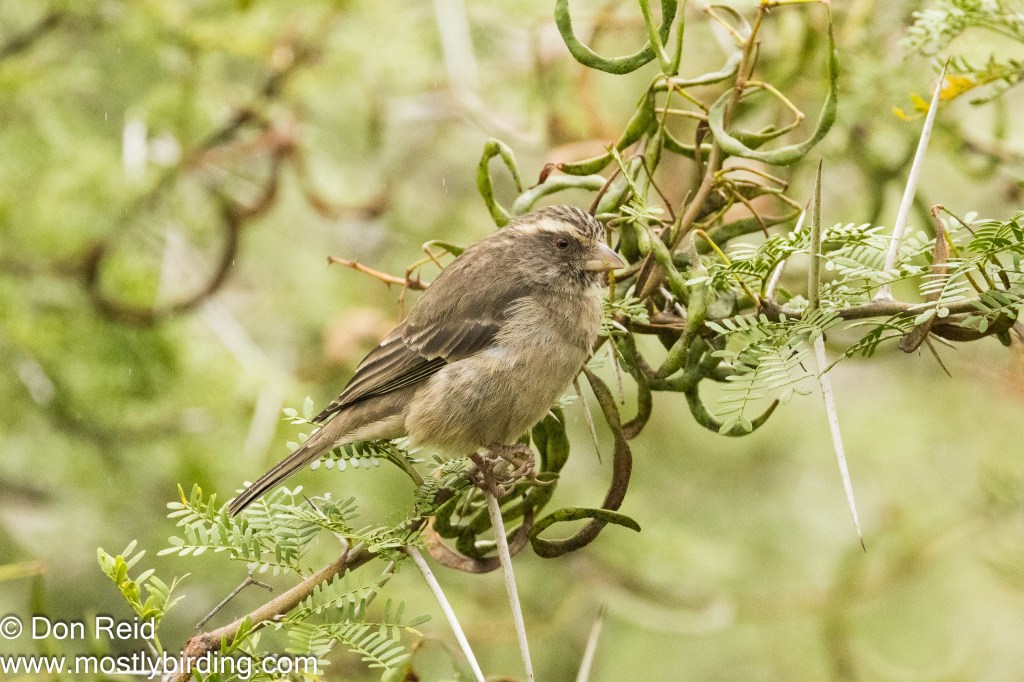
Streaky-headed Seedeater, looking a little miffed about no longer being known as a Canary (except in Afrikaans) but singing like one nevertheless

Streaky-headed Seedeater Crithagra gularis Streepkopkanarie (race humilis), Addo Elephant NP

Karoo Prinia, another busy bird not sitting still for long and with an almost desperate look in the eye – perhaps it’s thinking about a thorny issue of some kind …

Karoo Prinia Prinia maculosa Karoolangstertjie (race exultans), Addo Elephant NP

The Drives

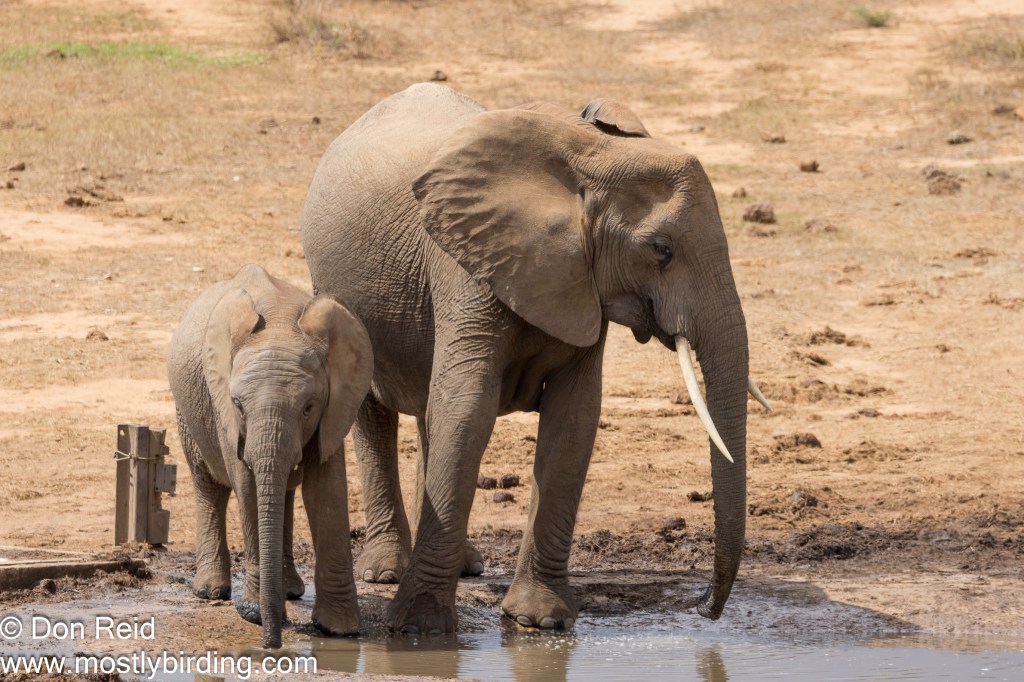
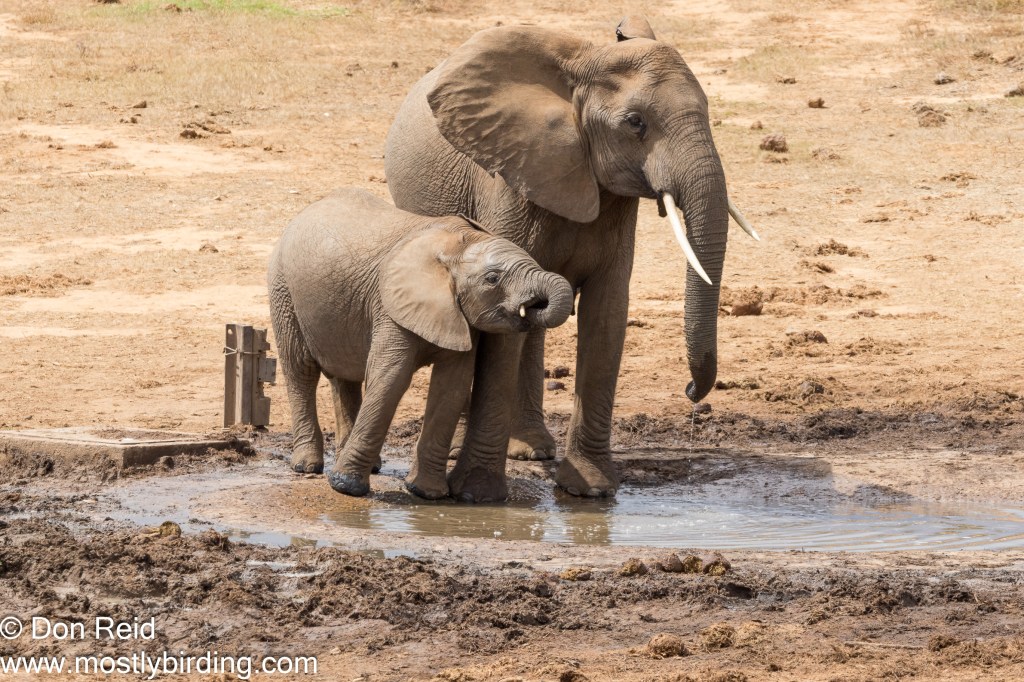
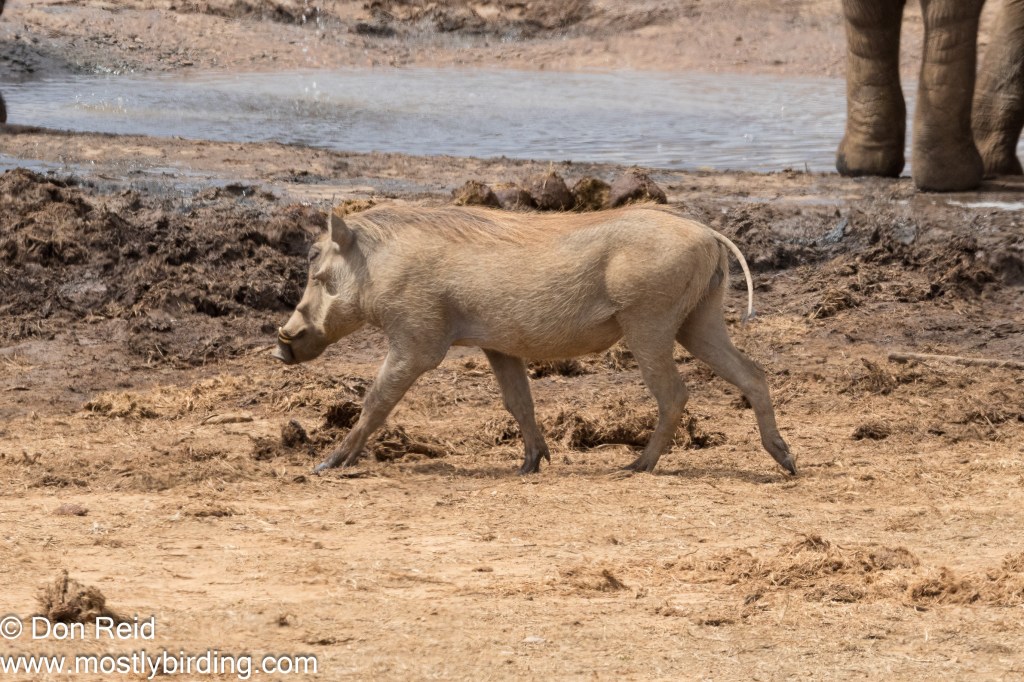
Our drive on day one was limited to a late afternoon exploration of the roads nearest to the camp. At the first waterhole we found a small group of elephants quenching their thirst, while a Warthog approached carefully to see if he could get a look in.

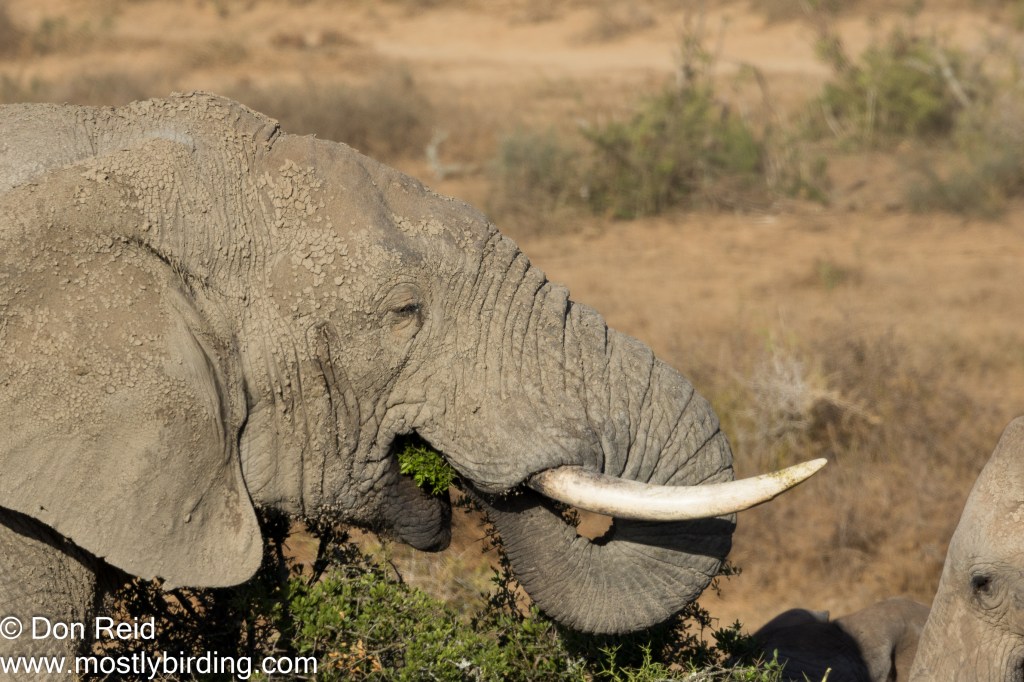
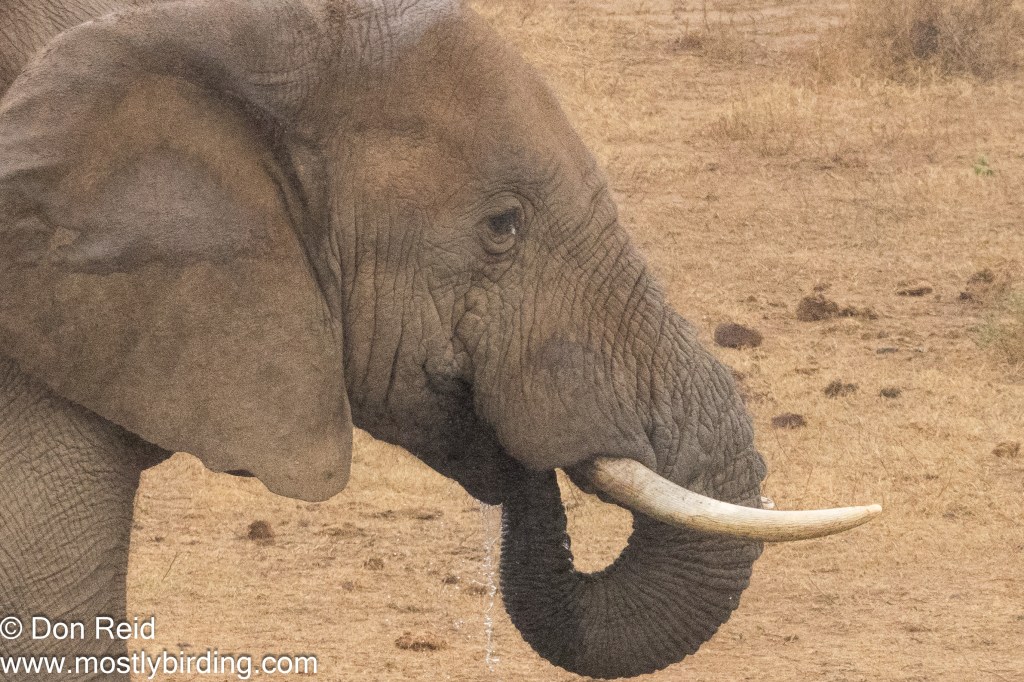
African Elephant, Addo Elephant NP
Warthog, Addo Elephant NP

On day two we felt like a longer drive and set off late morning, taking the road southwards to Jack’s Picnic spot where we had a light lunch of fruit salad and yoghurt and the tea that we had prepared before leaving. Jack’s is unique in that it has a number of individual picnic tables each set in an alcove shielded by bush almost all the way around, creating a cosy, private space to enjoy your picnic.

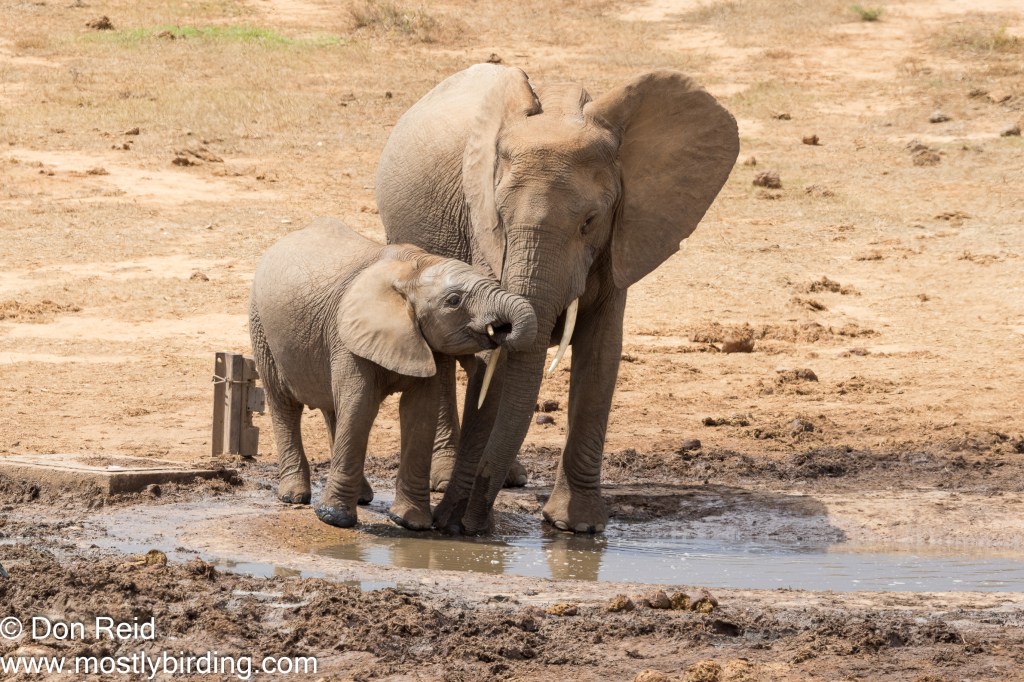
On the way we had encountered several groups of elephant – some at the waterhole, others nearby.

African Elephant, Addo Elephant NP

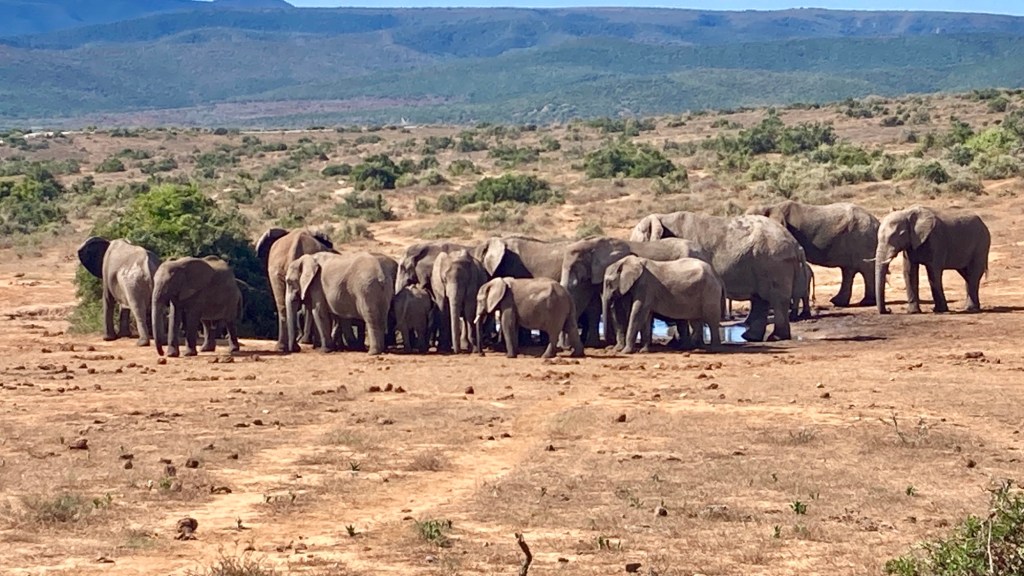
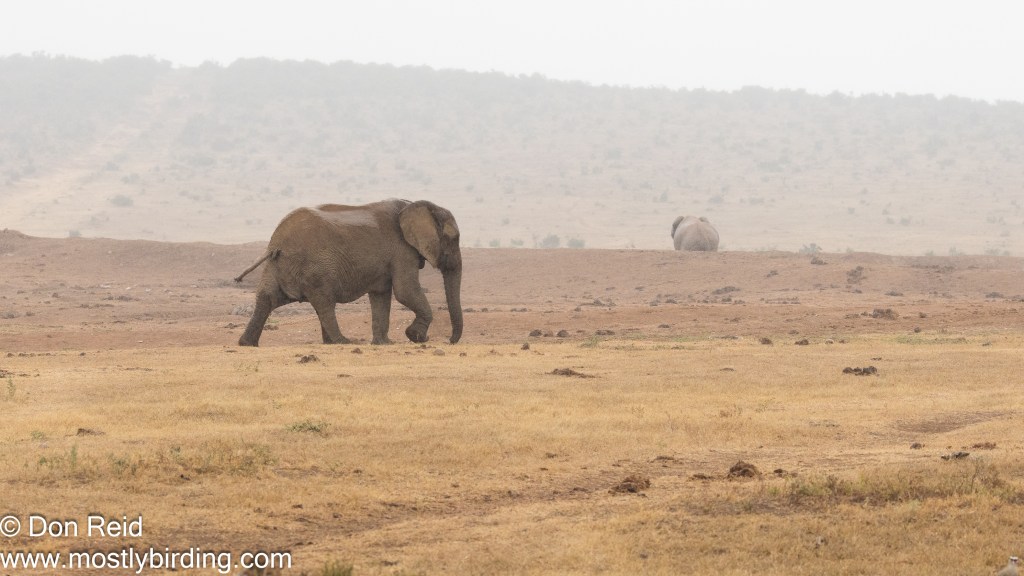
While watching the wild life activity at Hapoor waterhole near the picnic spot, we witnessed a mixed herd of elephants approaching at a pace, tails literally flying in the air – clearly they had one thing in mind – to quench their thirst on a hot day

African Elephant, Addo Elephant NP

An older elephant lagged behind – the pace just too fast for it (I can relate to that)

African Elephant, Addo Elephant NP

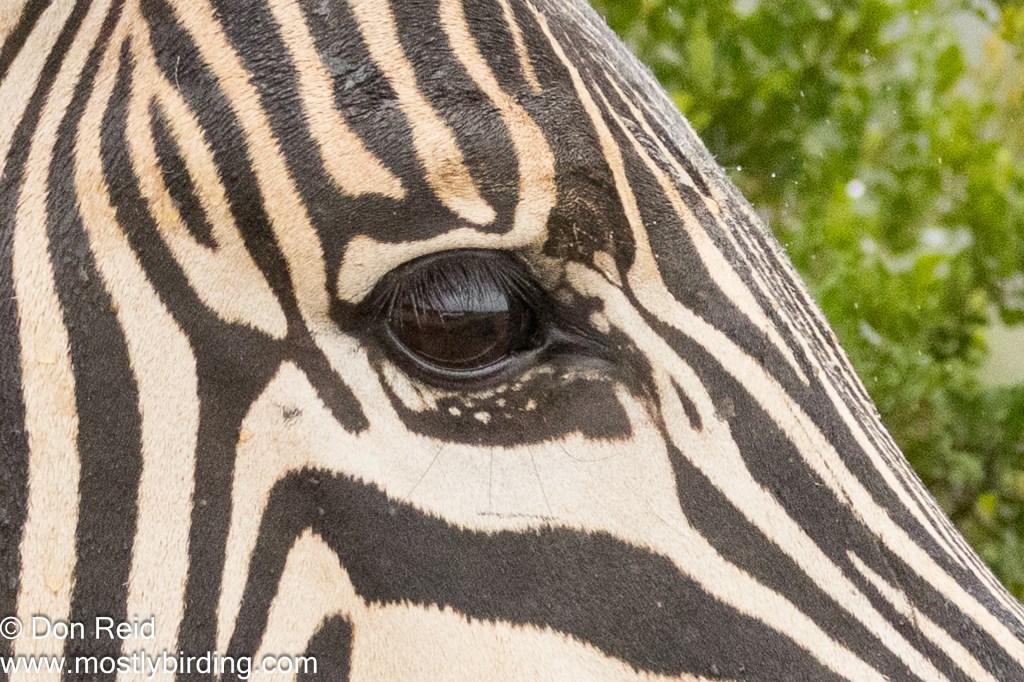
A few Zebras in the bushy areas added some variety to the drive

Burchell’s Zebra, Addo Elephant NP

Ever on the lookout for birds, here are those that caught my camera’s eye

Crowned Lapwing
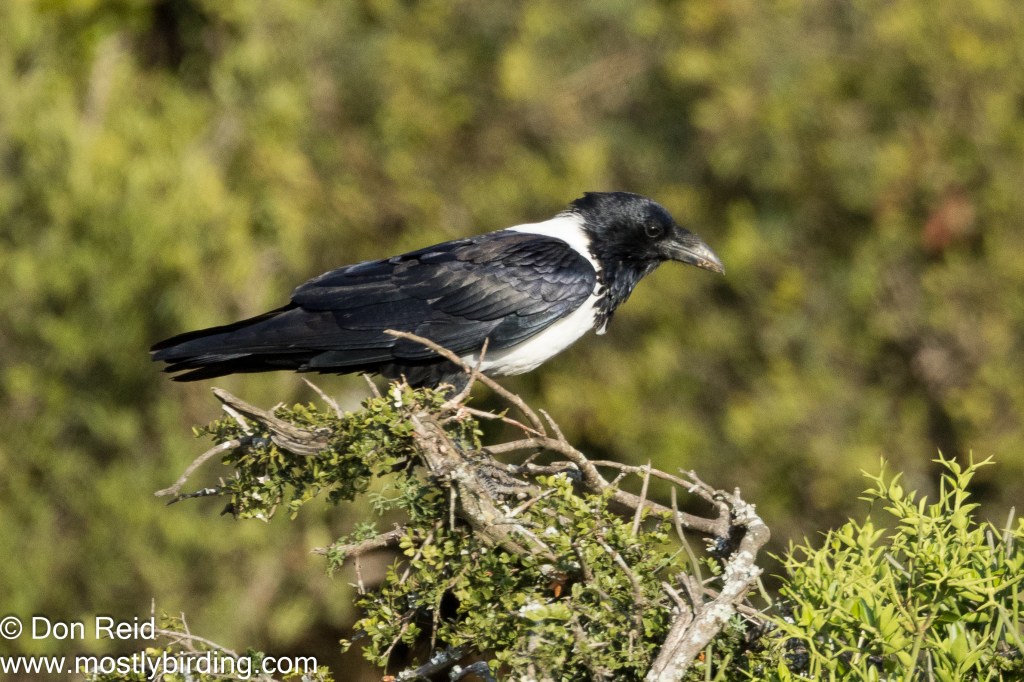
Pied Crow – often abundant but seldom offering opportunities to photograph it at close quarters

A pair of African Pipits were enjoying the wet open veld where it had just rained, pretending to be waders for a few moments

African Pipit Anthus cinnamomeus Gewone koester (race rufuloides), Addo Elephant NP

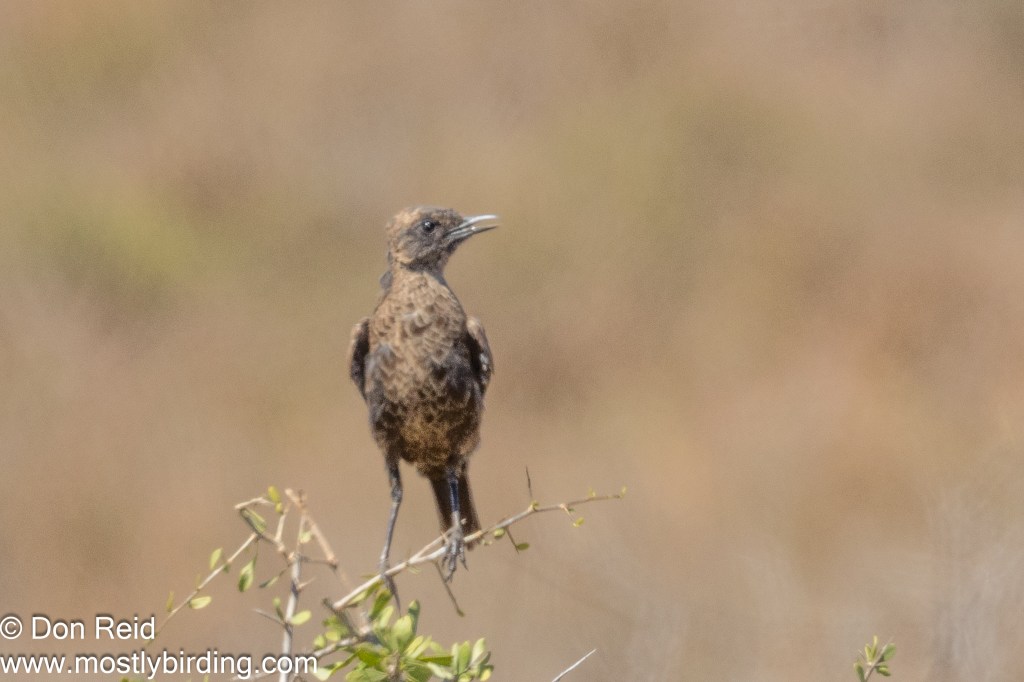
Joining the Pipits was a bird that at first had me wondering due to its wet and bedraggled plumage but a study of the photos I took convinced me it was a Karoo Chat – probably a juvenile

Karoo Chat Cercomela schlegelii Karoospekvreter (race pollux), Addo Elephant NP

Gerda is always on the lookout for wild flowers – there was not much to see but we did come across a single Spekboom that had flowers, while thousands of its like had none

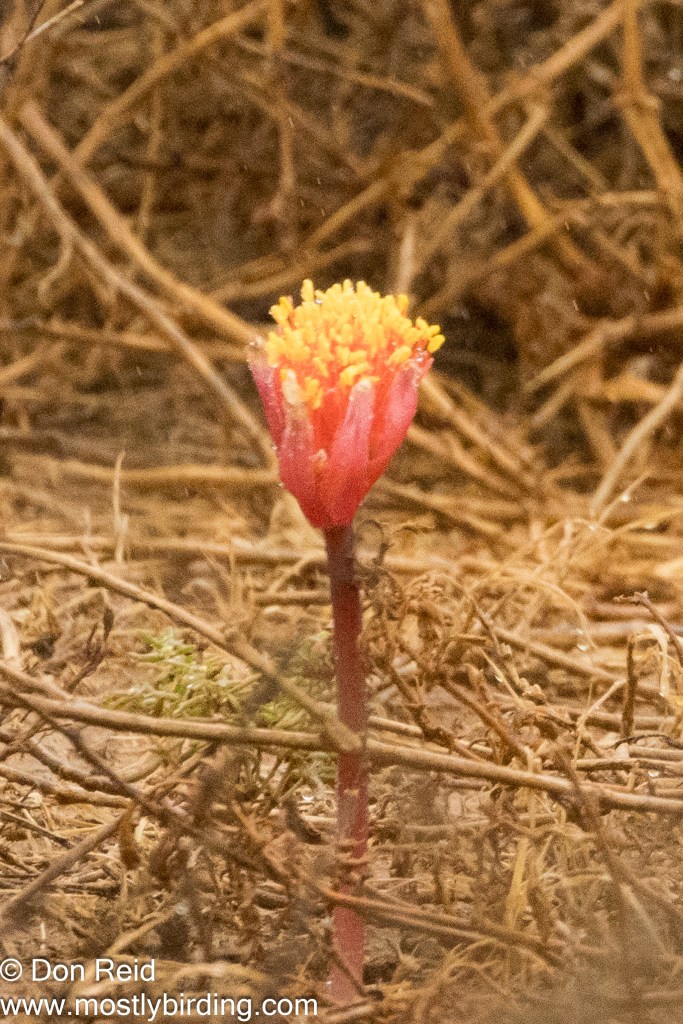
Soon after we saw a bright splash of red and yellow in an otherwise drab patch of veld, which turned out to be an unusual lily with several common names, one of which is Paintbrush Lily

Paintbrush Lily, Addo Elephant NP

By coincidence the same evening, while scanning through some wild flower posts on facebook, I came across an interesting post which went into some detail about this unique flower, in Afrikaans

We still had two days of relaxation ahead in this lovely national park, which tends to grow on you

Addo Trip – March 2024 : Part 1

Breakaway needed ..

Since moving to Mossel Bay in October last year, we seem to have been constantly busy with unpacking of the many boxes and consolidating the contents of two houses into one, in the process going through yet another round of discarding unnecessary ju.. er- possessions. There are still plenty of boxes, mainly books, which eagerly await the construction of library shelving which I am keen to do myself, when I get the time….

Since the start of 2024 a small team under my direction has been painting and renovating the house which we had built in 2010 so it is overdue for some loving care. We promised ourselves a breakaway once that was all done and once the end was in sight we quickly booked a 5 night stay in Addo Elephant National Park then added stopovers on the way there and back to make it a full week’s break.

Getting there ….

Saturday 9th March

With a short distance to do on the first leg to Storms River, just on 200 kms, we left the packing and organizing to the morning and left home close to lunchtime

After some rapid shopping for provisions in George we had lunch at Spur and set off eastwards at 3 pm, joining many others on the slow and busy road past Wilderness and Sedgefield and through Knysna and Plett before the short stretch of very welcome toll road which took us to our destination right on 5 pm.

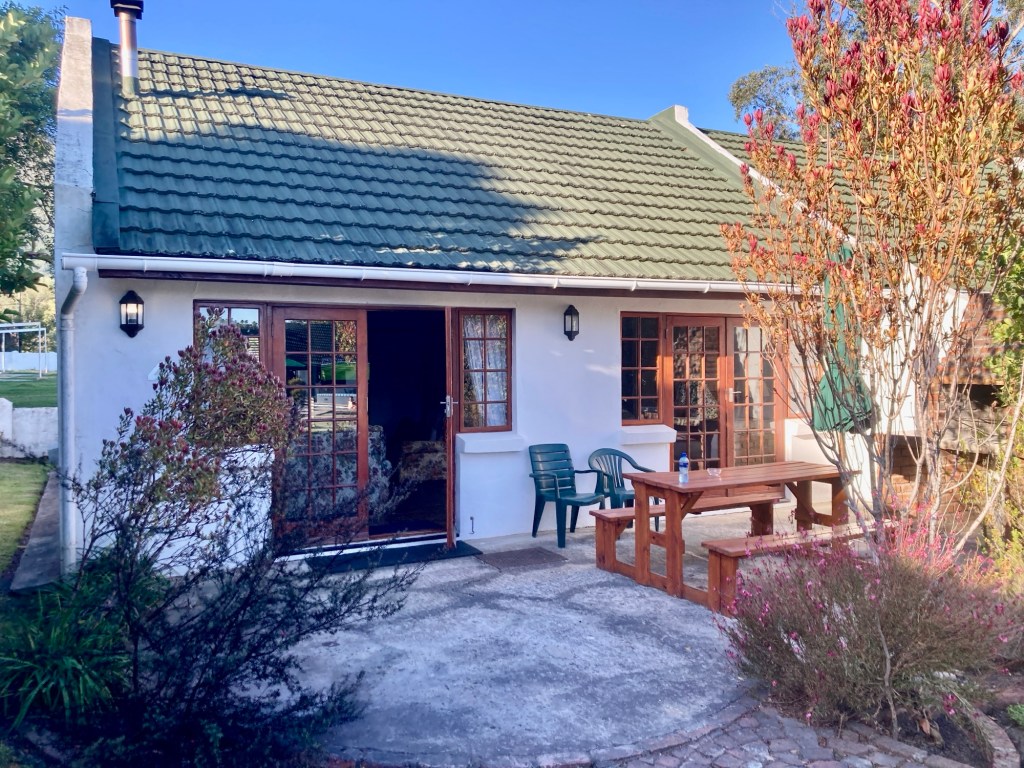
We had found Swallows Nest Country Cottages on Booking.com and the cottage turned out to be what we had hoped for – comfortable, clean and spacious, and we were soon settled in.

Swallows Nest, Storms River Village

I took a walk through the nearby streets and found many others doing the same – all seemingly foreign tourists walking to one of the many restaurants scattered throughout the village.

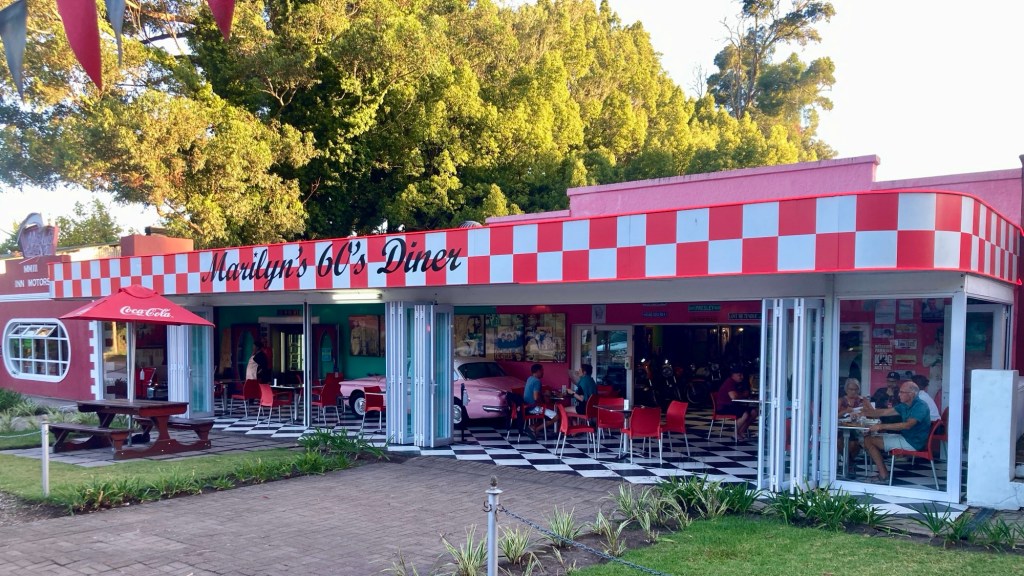
We had imagined Storms River Village to be a quiet country town with a couple of B and B’s due to its proximity to the N2 National road – what we discovered is a busy tourist village with a variety of activities on offer and a choice of accommodation establishments and restaurants – even a 1960’s themed Marilyn’s Diner – quite incongruous in this small village setting.

However our dinner was a sandwich and avo in the cottage – balancing out the substantial meal at lunchtime

Sunday 10th March

We slept late so had to rush to be in time for breakfast – the usual fare of fruit, scrambled eggs and bacon. We had booked for two nights to give us a chance to explore the Storms River area, so after breakfast and showers we set off late morning to explore the village, just driving around slowly and stopping here and there.

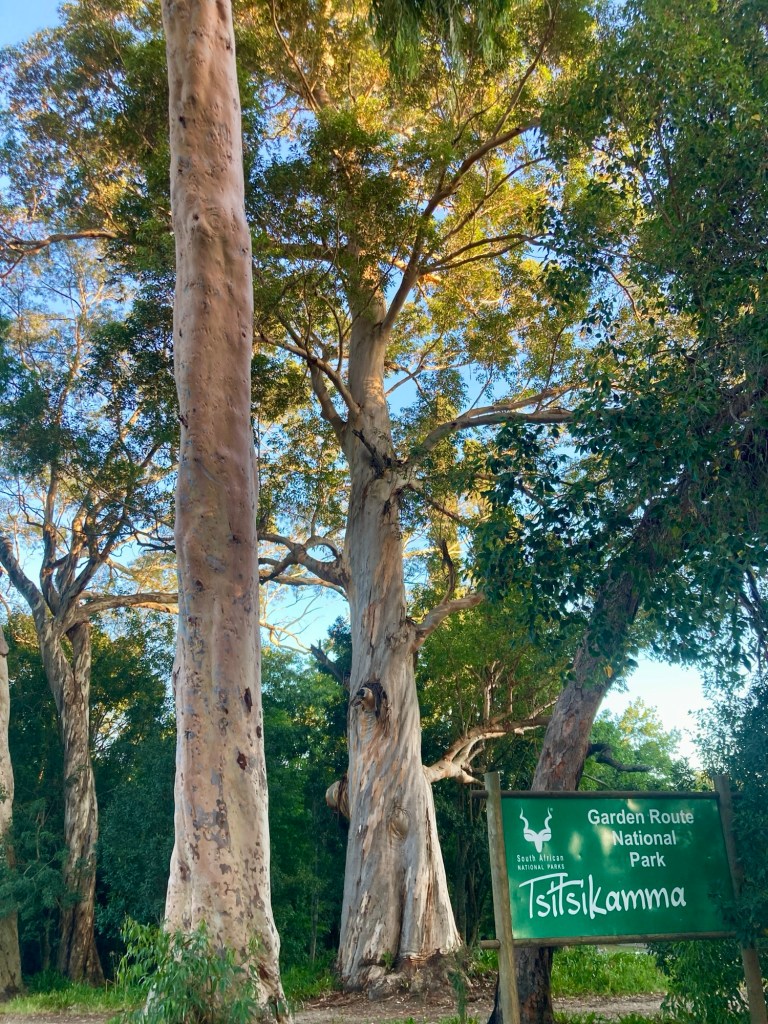
The Tsitsikamma section of the Garden Route National Park starts on the outskirts of the village

We then headed a few kms back along the N2 to the turnoff to the Storms River Mouth which lies within the Tsitsikamma of the Garden Route National Park.

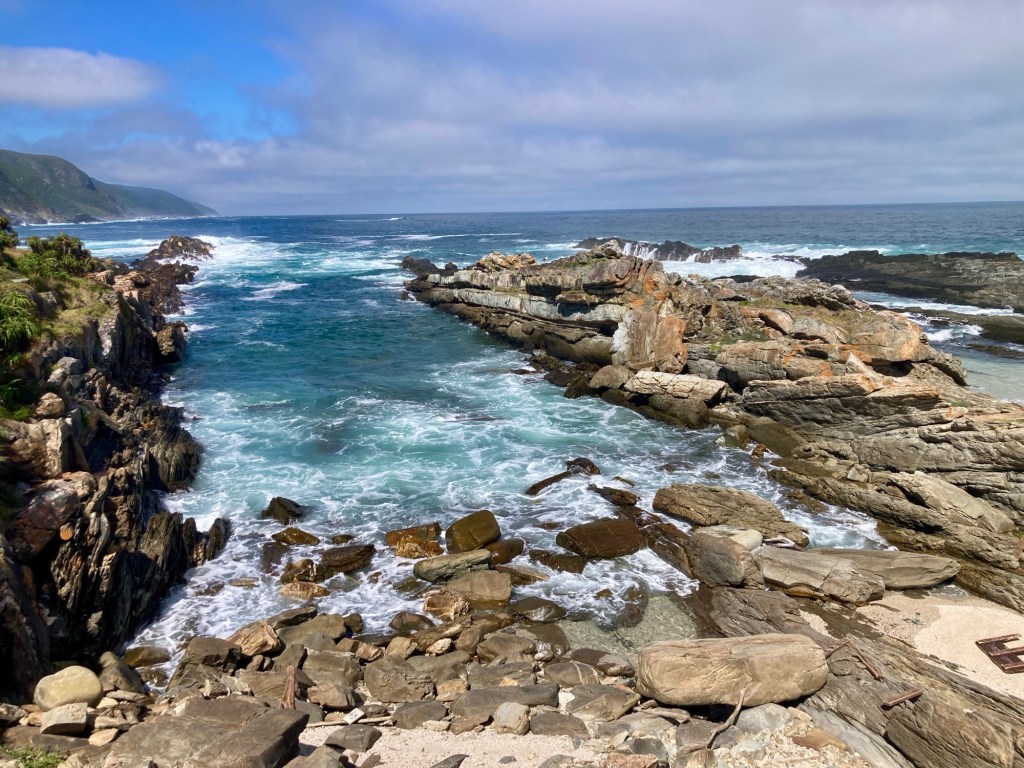
The road took us to the Park gate then wound its way downwards to the sea, past the caravan parks and chalets until we reached the parking area which was surprisingly full, overflowing into a long line of cars parked along the approach road.

Buses were parked on one side and more kept arriving to disgorge even more visitors – clearly tourism is booming along the garden route!

We found a table at the crowded temporary restaurant ( there’s a new complex under construction with a beautiful position overlooking the sea) and ordered fish and chips from the friendly waiter, which arrived quickly – amazing under the circumstances.

I later learnt that the original restaurant was severely damaged by a storm surge in September 2023 – clearly Storms River is not just a fanciful name!

I took a walk along the boardwalk thinking I would have a look at the suspension bridge at the river mouth, but when I saw how far it was and the tricky route to get there I decided it was a bridge too far…. (oh well, it made me chuckle)

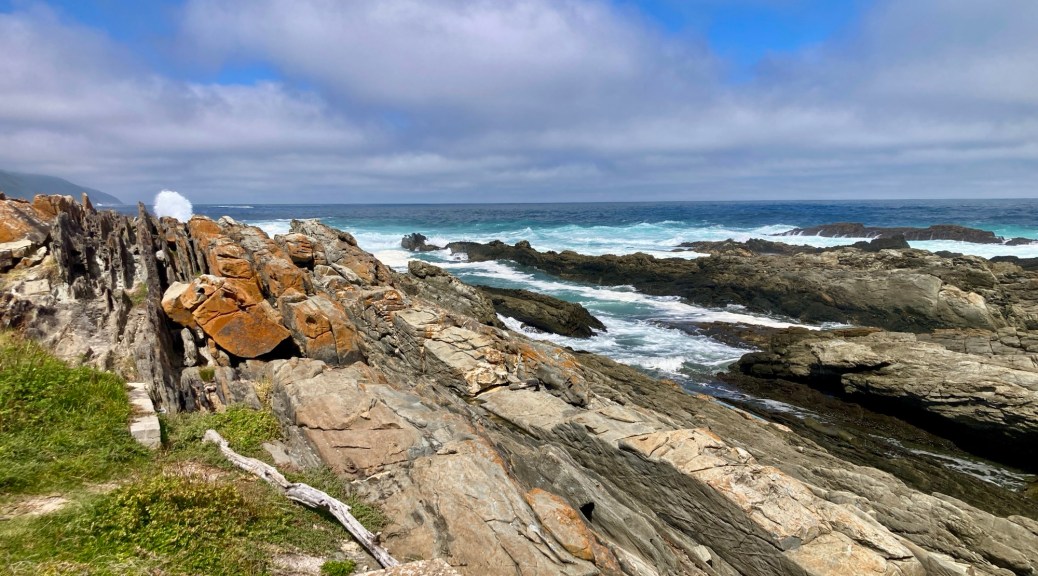
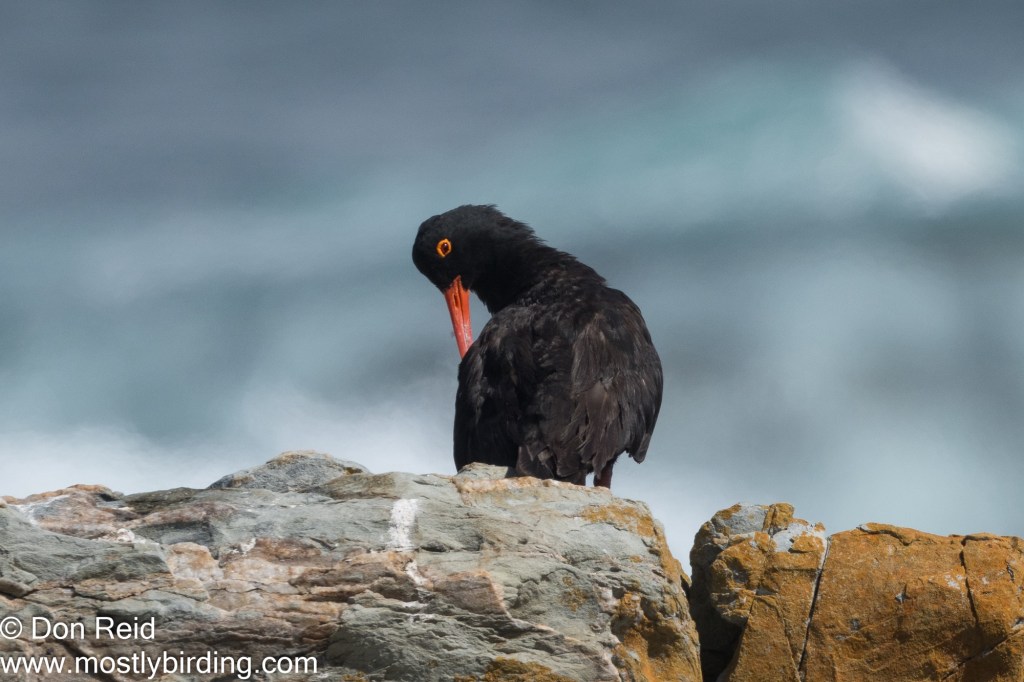
After taking in the rugged sea views and photographing a pair of Oystercatchers, I returned to the car and we headed back to the N2, pleased that we had seen the place we last visited and stayed in so many years ago with our then young kids in tow.

African Oystercatcher, Storms River Mouth


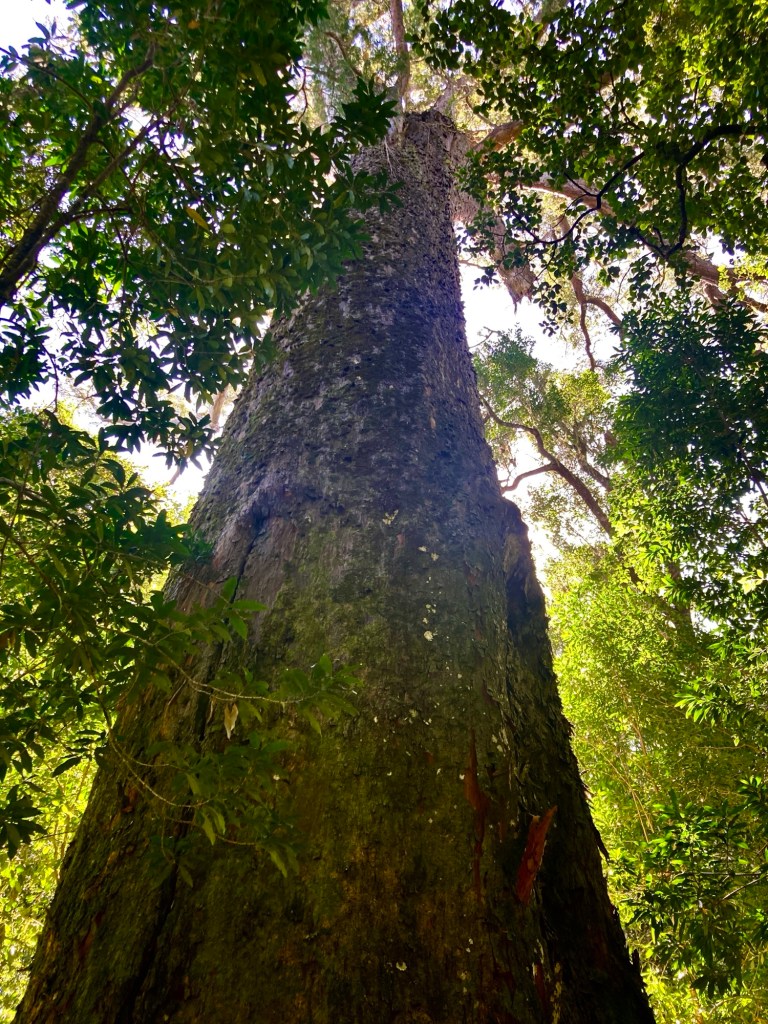
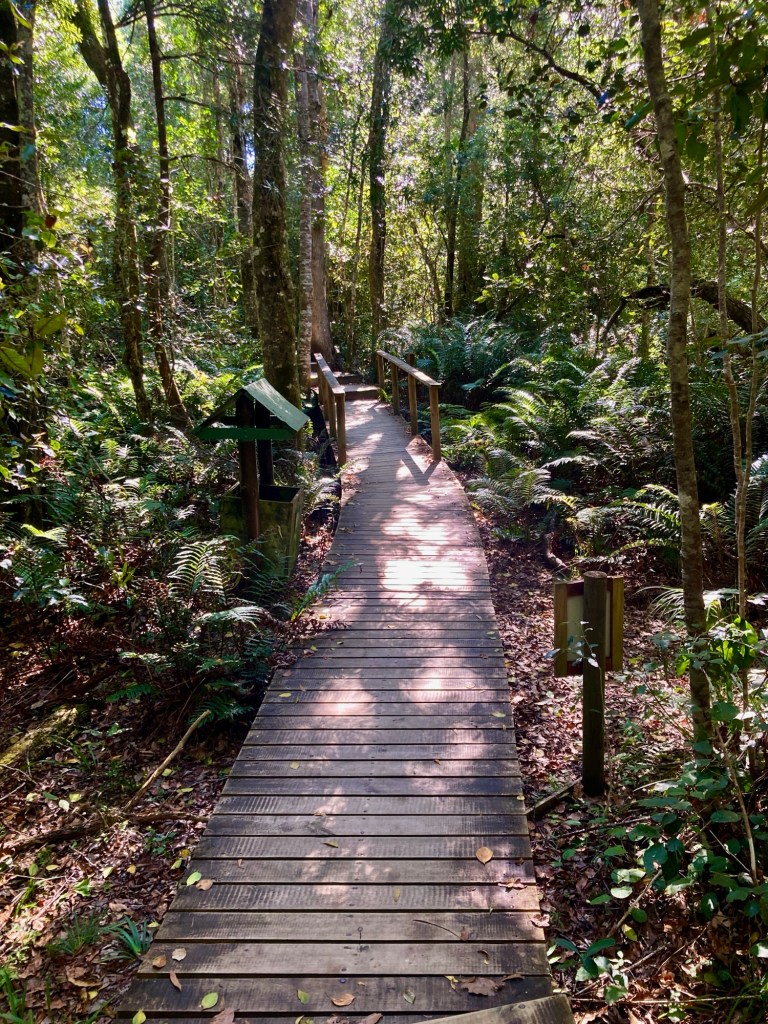
We weren’t done yet as I wanted to visit the nearby Tsitsikamma Big Tree forest again, hoping for a few forest birds. It was a pleasant walk along the boardwalk and the trees were still impressive, but bird life was almost non-existent other than the  almost constant calls of Sombre Greenbul and Olive Pigeons high up in the canopy – unseen but heard

 Dinner was at the Marilyn’s Diner – good filling food in a unique setting

Monday 11th March

The trip onwards to Addo was destined to take a lot longer than planned …

We weren’t up to a full breakfast so had fruit and yoghurt, packed up and set off just after 10 am, first stop not long after at the service stop at the bridge to fill the prado and get coffee and tea at the Mugg and Bean.

Back on the N2, I noticed the tyre warning light had come on, so when Gerda suggested a stop at a farm stall I didn’t argue for once. I had a look at the tyres and saw immediately that the right rear was deflating.

My heart sank as I realised I have never had to change a wheel on the prado myself since purchasing it in 2015. I had no idea where the jacking points were so pulled out the owner’s manual and found the instructions.

It looked challenging but I set about getting the jack in place under the rear axle and the wheel nuts loosened when a ‘nice young man’ (as my mother always referred to such helpful people) asked if he could help and he was soon doing it all in a manner that showed he knew how.

What a relief to get the spare on and the flat tyre secured at the back and we were on our way again, but only as far as Humansdorp where we turned off, found a Supaquik tyre place and pulled in.

They soon had the tyre off and repaired where it had somehow picked up a small, neat hole in the sidewall. All of this had taken us to lunchtime so we bought woolies sandwiches at the corner garage and once again set off, hoping we had left the troubles behind us. Not quite it seemed….

We were just starting to get up to a reasonable pace when I had to slow down and stop at the first of multiple ‘stop and go’s’ on the N2, each one with long queues of vehicles waiting and each one painfully slow in getting going.

I had entered Addo into my phone’s google maps and we decided to follow the suggested route which seemed the most direct – not always a good idea as we found out when we turned off the N2 towards Uitenhage – the road was narrow and in need of repair and got worse when we were directed onto a bumpy gravel road for some 30 kms which literally shook us silly before we emerged onto the actual PE – Addo road

By the time we got to Addo it was 6 hours after our departure – never has 215 kms felt this far!

We were thankful to check in and head to chalet 48 where we offloaded and collapsed in the outside chairs for a recovery session as the sun slowly set behind distant hills.

Later having regained some energy, I got a braai going and we enjoyed kebabs and wors with Gerda’s lovely copper penny salad and potato salad. A nice ending to a stressful day

Now we look forward to four restful days in this small gem of the National Parks Board


The Eyes Have it! (Part 5)

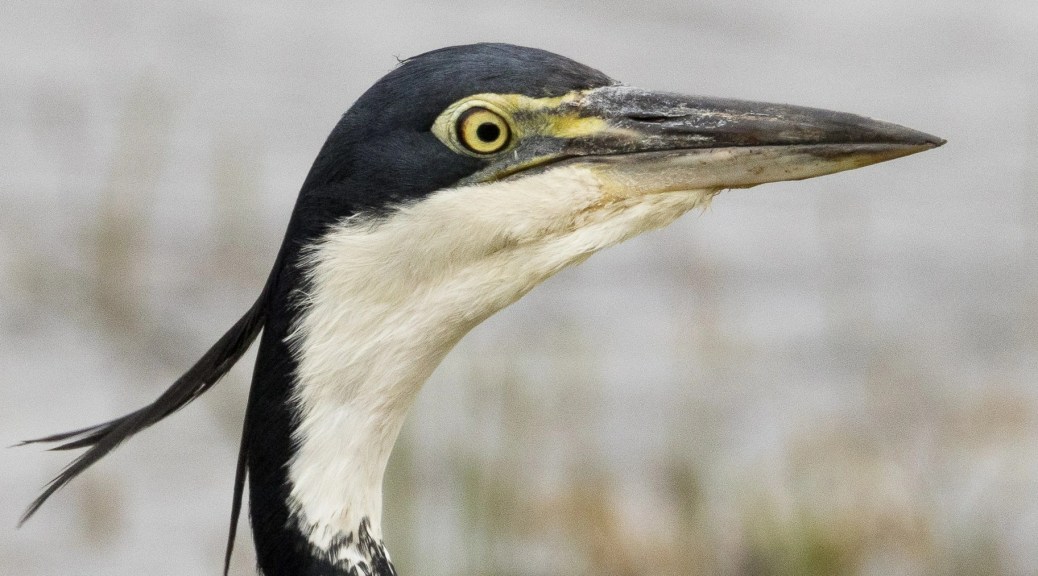
A while back I showcased a few species with striking eyes – continuing that theme, here’s a look at another species that has formidable eyes -although this is not immediately obvious but does become more so once you get up close and personal with it

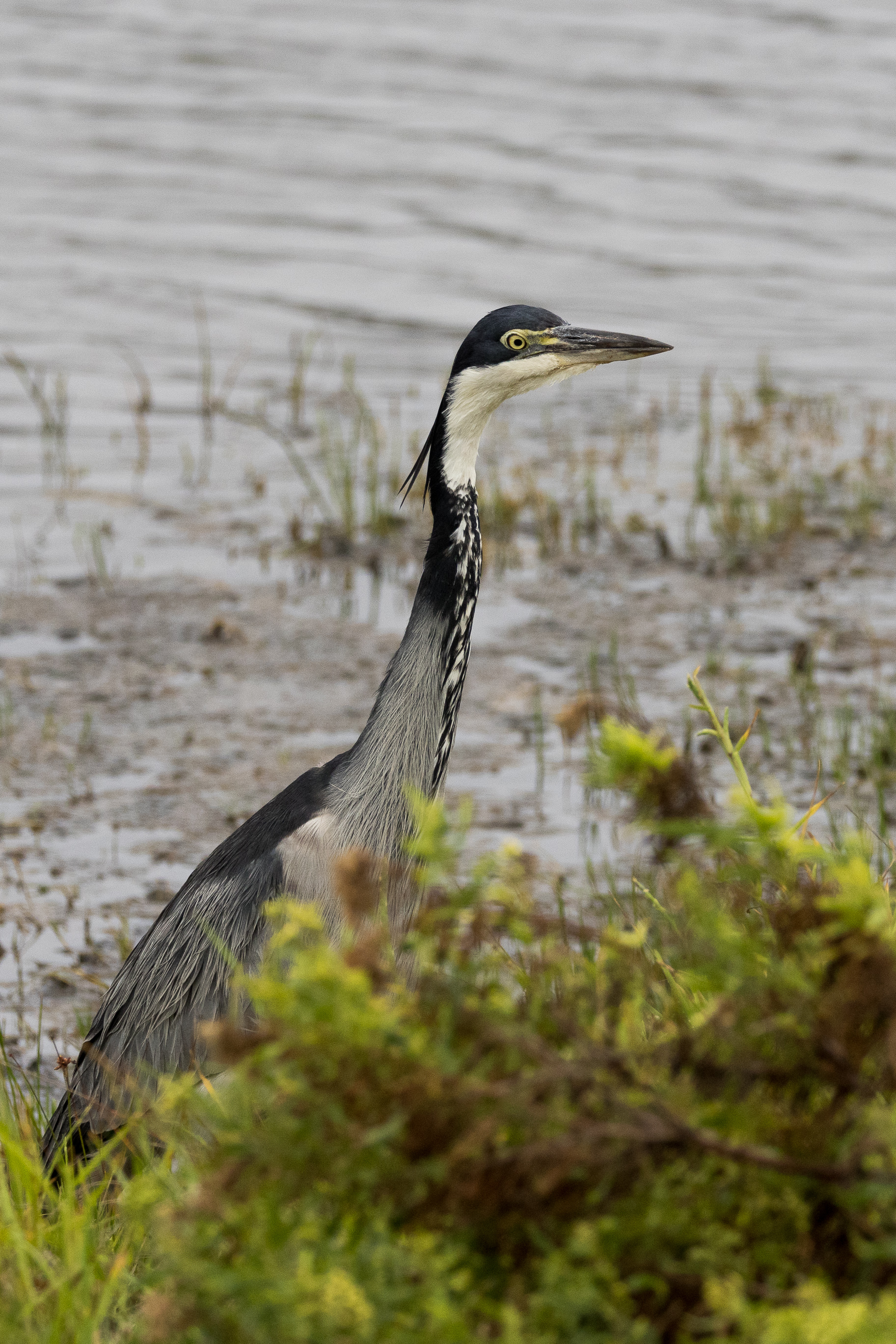
Black-headed Heron (Swartkopreier) Ardea melanocephala

Where in the world?

The distribution of this species is extensive across Sub-Saharan Africa, missing only from a few arid areas such as the Kalahari in southern Africa. It is the commonest of the large herons throughout Africa.

What to Look for

This is not a bird that is likely to be confused with any other, with the possible exception of the Grey Heron which is of similar size and, at a distance, of similar appearance. Non-birders (no disrespect, but you are missing out seriously) do mistake this species for the iconic Blue Crane, something I can vouch for from personal experience.

It’s a tall bird, up to 96 cm in height and weighing between 700 and 1650 g

Black-headed Heron Ardea melanocephala Swartkopreier, Great Brak River

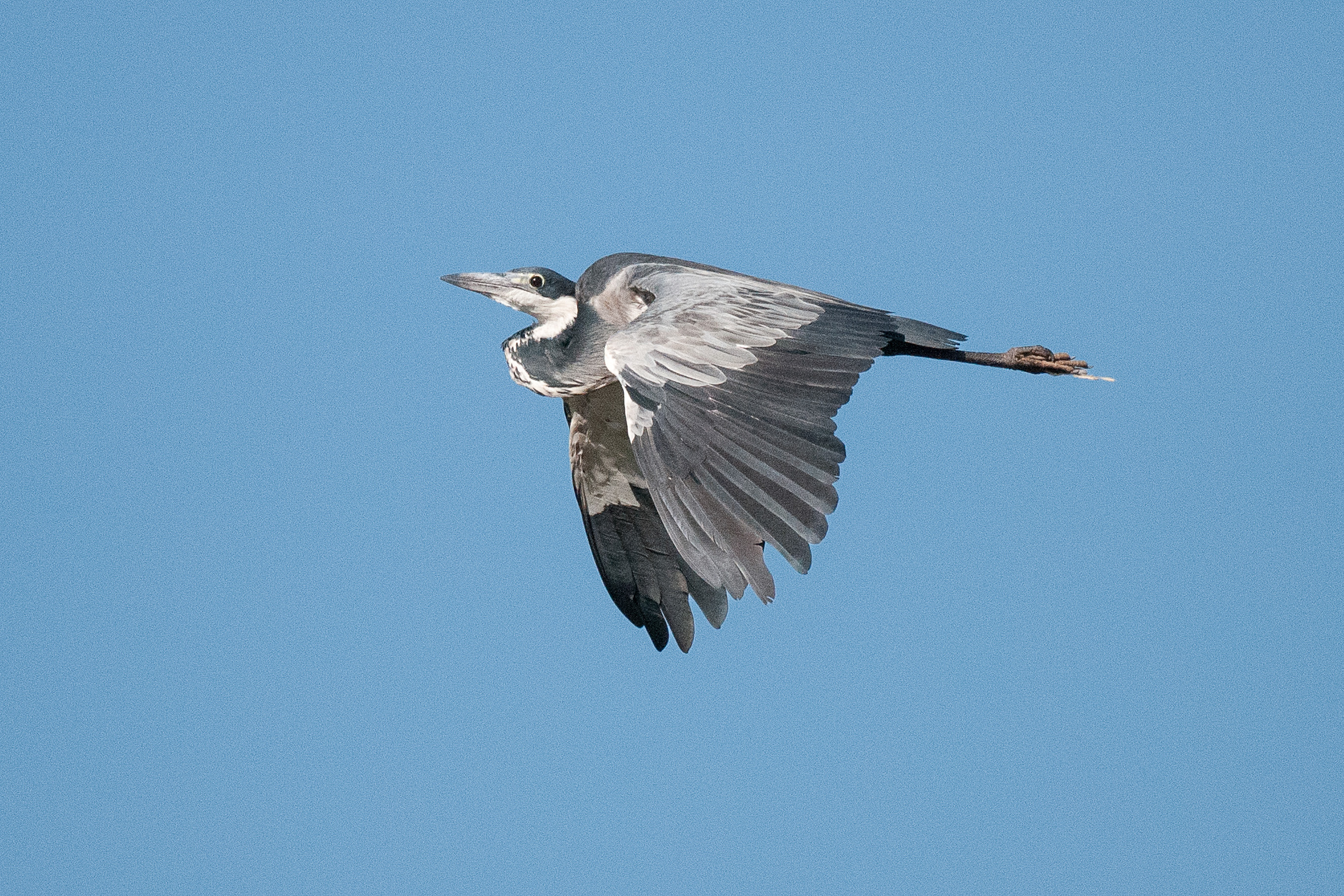
In flight it’s easier to confirm the identification due to the bi-coloured wings – black flight feathers, white underwing coverts

Black-headed Heron, De Hoop NR

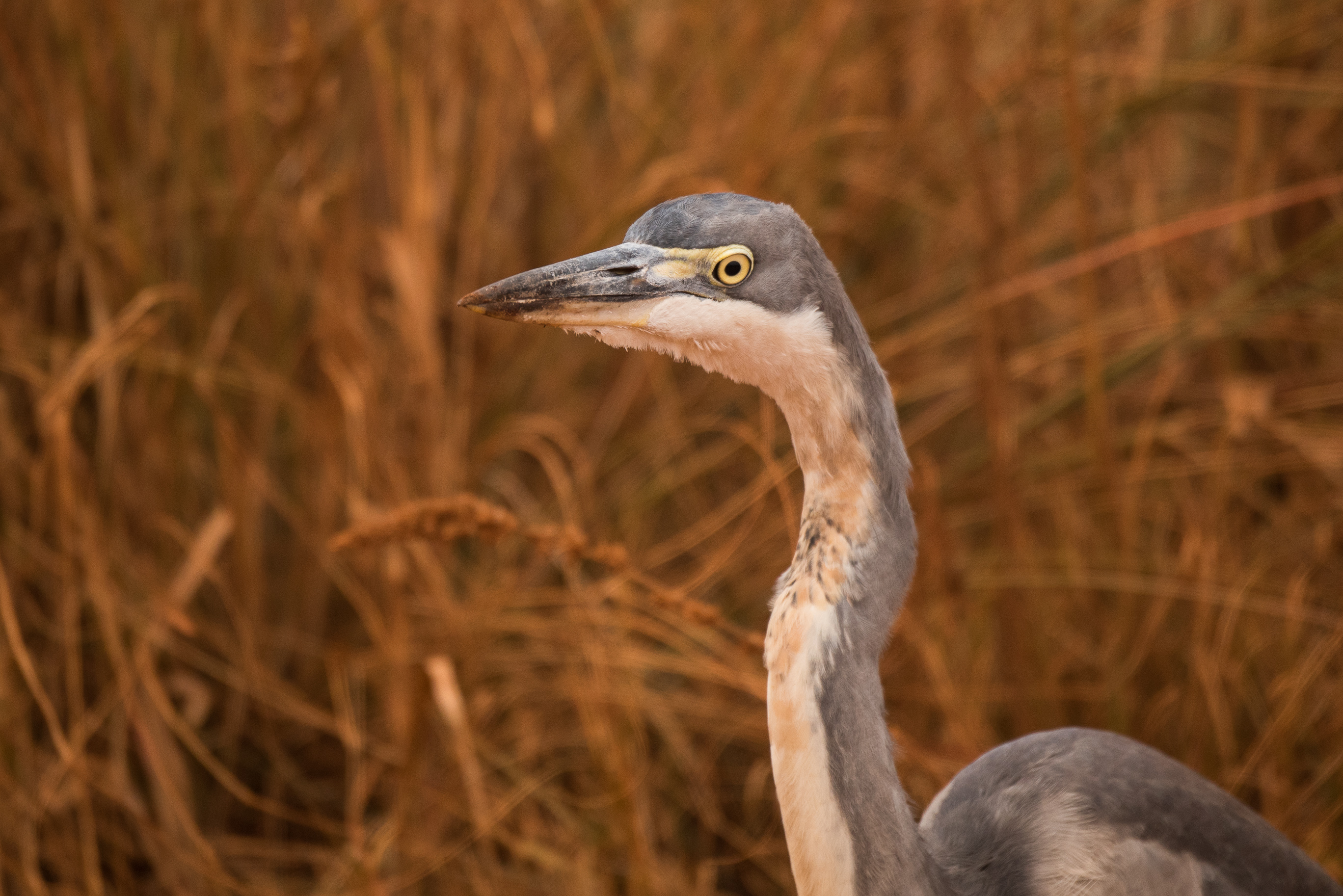
Eyes are yellow, but turn orange, then red during breeding

Black-headed Heron, Delmas area

Black-headed Heron is a terrestial species, not necessarily found near wetlands as with other herons, and is one of the few birds that benefit from human alteration to the environment such as irrigated areas, which suit their preference for damp pastureland

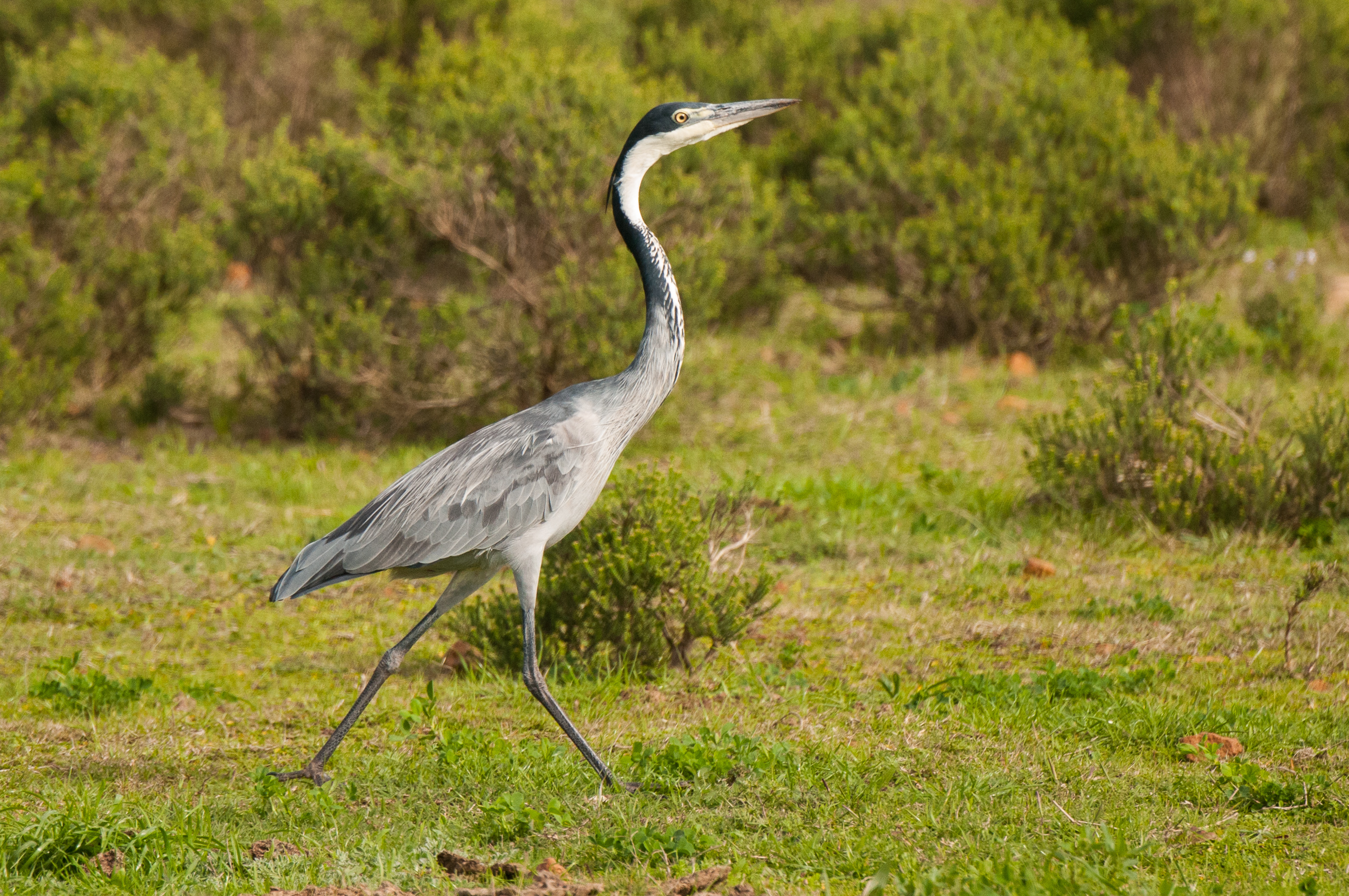
They will often be found striding through grass, hunting for prey

Black-headed Heron, Mossel Bay-Herbertsdale

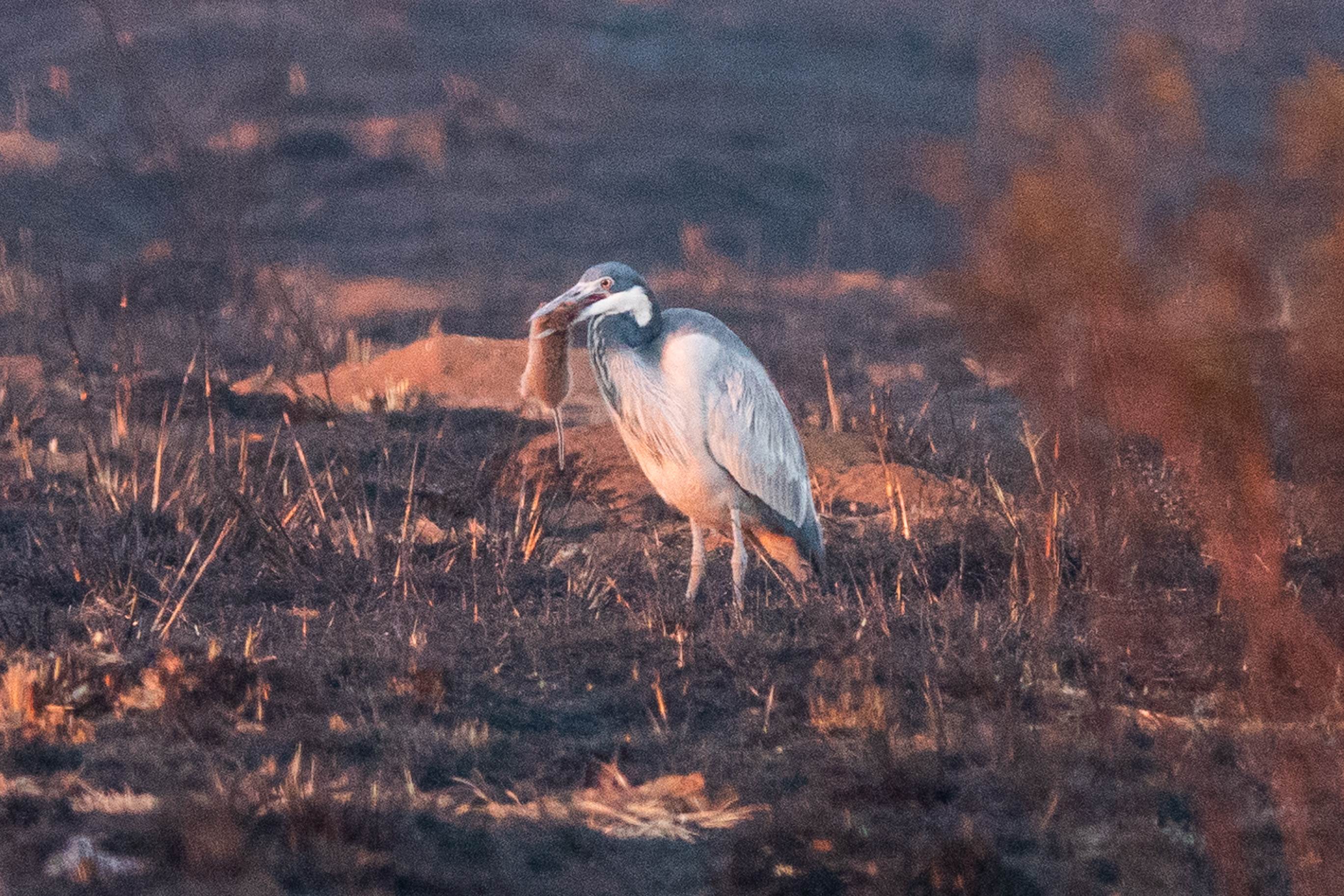
They eat a variety of rodents,insects, snakes, frogs, crabs, fish – in fact just about anything that crosses their path including small birds. This individual I came across early one morning in the Rayton area near Pretoria had caught a large rodent, possibly a vlei rat, and proceeded to swallow it whole, taking a few minutes to manoeuvre it into position for swallowing. I could see the progress of the prey moving down the bird’s long neck, which bulged as it gradually slipped down.

Black-headed Heron swallowing prey, Rayton-Culinan area

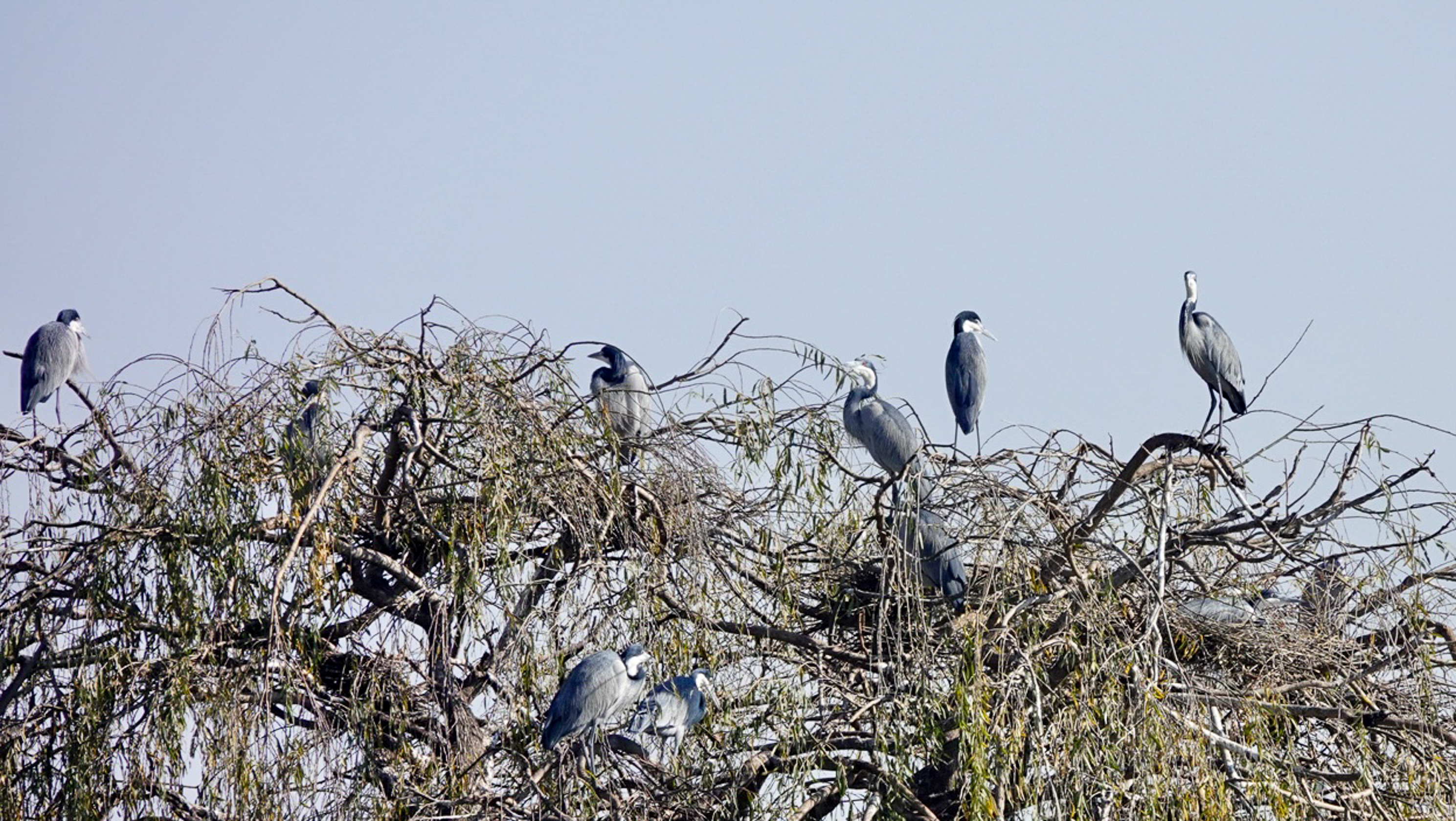
They often nest in or near towns – Great Brak River, just down the road from Mossel Bay, has a busy roost in a tall tree on the main road. The next photo was taken in a more rural area near Pretoria, where numbers of Black-headed Herons occupied a large tree next to a farm dam.

They make themselves known with their harsh squawking calls at all times of the day.

Black-headed Herons, Bapsfontein east

References: Roberts VII Birds of Southern Africa; Firefinch Birding App; Birds of the World – Cornell Lab of Ornithology

Eight Bells – Three Days

Breakaway

After the stress of packing up our Pretoria home of the last 21 years and getting our house contents and ourselves to Mossel Bay last September, we were looking for a short breakaway but without a long drive, so Eight Bells Inn seemed like the ideal spot – one of our favourite places for tea or lunch and just 40 minutes from home.

Day One

The packing was simple for just three days, and we arrived at the inn soon after 4pm, settled into the comfortable room and relaxed for a while.

Sitting outside and enjoying the lush gardens, I added a few birds to the pentad list I had started on the way there, including Knysna Turaco flying by and disappearing into a tall tree, Red-chested Cuckoo calling repeatedly, Black-headed Oriole flashing its yellow plumage in the trees and Amethyst Sunbird busily finding nectar high up in the flowering tree in front of our room

Amethyst Sunbird

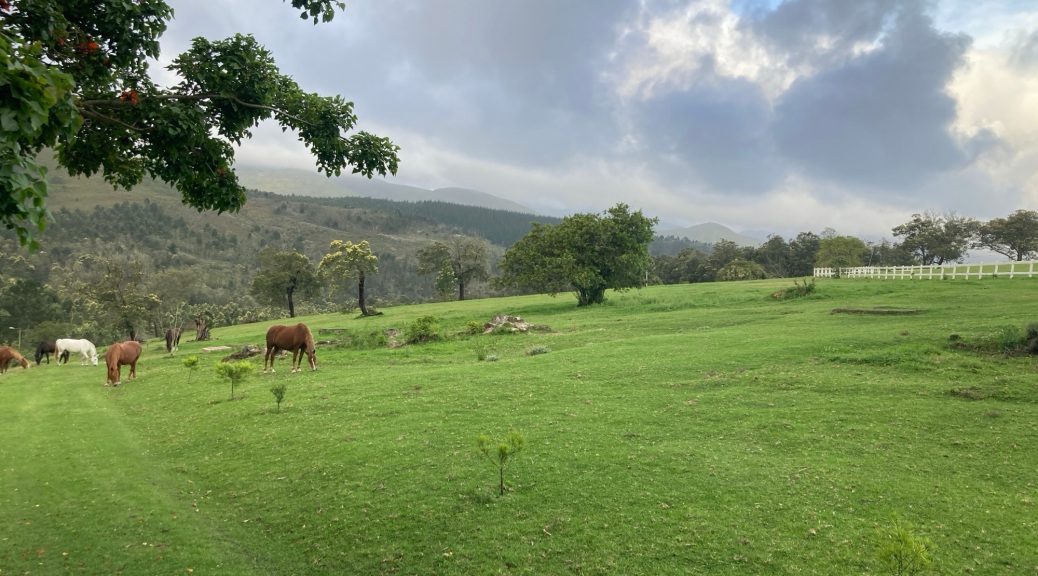
Later, I set off on a walk down into the adjoining valley, passing horses grazing on the short grass and listening to the calls from the bushy areas.  I was pleasantly surprised to see a group of Olive Pigeons in the tall trees, as I have not seen them outside of the forests.

A number of other ‘specials’ were quickly added as I made my way down the slope into the valley– Cape Batis, Spotted Eagle Owl, Terrestial Brownbul and Greater Double-collared Sunbird.

Eight Bells Inn, Robinson Pass

Dinner time was approaching, which hastened my return to our room to neaten up for the hotel dinner in the cosy dining-room. The evening meal was pleasant and we were looked after by the staff, still as super-friendly as we have come to know them over the years.

Day Two

After a relaxed breakfast, we set off on a drive with the Rose farm situated between George and Oudtshoorn, as our destination, and a route that would take us through the back roads of the Klein Karoo

The first part was up the Robinson Pass with several stops along the way to listen and look for the specials without much luck. Beyond the pass we were amazed by the extensive displays of wildflowers, particularly the deep pink vygies that stretched as far as we could see in places.

Approaching Oudtshoorn from the south, we took the Mount Hope turn off onto a gravel road and into typical arid Karoo countryside for the next hour or two as we wound our way up and down hills and dales.

Mount Hope road near Oudtshoorn

This sign at a farmstead had us chuckling – covers just about everything!

Translation : Please drive slowly! Old people, farm workers, children, grandchildren, dogs and chickens

There were many attractive flowers that caught Gerda’s attention and we made numerous stops to look closer.

Birds were scarce, as is often the case in such arid areas but there were a few highlights –

  • Lesser Honeyguide in a group of gum trees near a farmstead– exactly where I had heard one during my previous atlas trip through the pentad some two years ago
  • Pale Chanting Goshawk juveniles – twice, one with small prey
  • Jackal Buzzard on utility pole
Pale Chanting Goshawk (Juvenile)

Dams along the route were mostly full, some verging on overflowing, but few had any birds except one large dam which held numbers of Shelducks, Yellow-billed Ducks and Red-billed Teals

SA Shelduck

At the Rose farm we enjoyed coffee and carrot cake / scone and Gerda spent a while buying roses for her planned small rose garden and two hanging baskets

Not wanting to return along the same road we headed over the Outeniqua pass, then through George to the N2 highway which took us to Great Brak River. From there we made our way via the Geelbeksvlei road back to the R328 and completed a full circuit once we reached Eight Bells.

After a while relaxing and a power nap, I took a walk around the paddock, adding Diderick Cuckoo, Paradise Flycatcher to my list. The evening dinner was a tasty chicken curry for me, bobotie for Gerda.

Day Three

We were looking forward to a day with less driving and more time to relax, so after another leisurely breakfast we set off with our tea and cookies to explore the road from nearby Ruiterbos to Leeukloof.

With light rain falling, we wound our way down into the valley, passing dense growth and broad stands of protea bush.

Passing through Ruiterbos village, we found Red-winged Starlings and Fork-tailed Drongo’s, while further on were Cape Canaries and Karoo Prinias. Heading into the lower part of the kloof the roadside vegetation became dense and colourful,with plenty of wildflowers, even some wild growing roses.

Leeukloof road

At its lowest point the road through Leeukloof crosses a river and we chose this spot to have our tea – we couldn’t have wished for a better spot – then carried on up the hill and back towards the tar road.

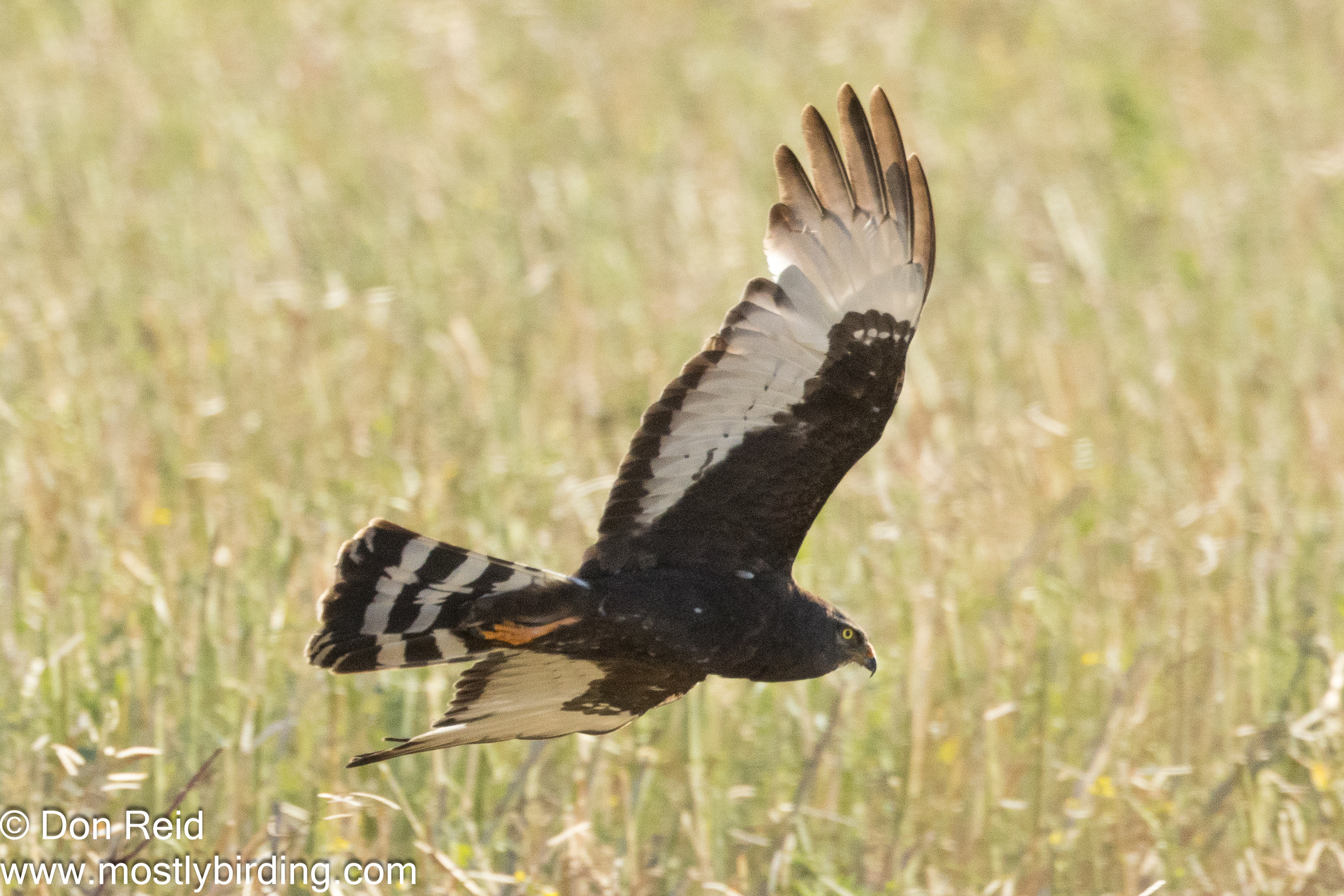
Heading back I took the next turn off left along the road to Bonnievale with limited birding success until a Black Harrier floated across the road in front of us

Black Harrier Circus maurus Witkruisvleivalk

Back at the Inn we relaxed while light rain fell outside, only raising ourselves in time for the dinner.

Heading Home

Rain fell heavily overnight and continued to fall in the morning, and the garden was sodden when we made our way to breakfast in the dining room, sheltering from the rain under large umbrellas

A flowering Bottlebrush tree with raindrops covering the bright red flowers caught my eye and demanded a quick photo with my iphone

After a full breakfast we headed back home in lighter rain. I had received a whatsapp reporting on the rain and mentioning three roads in the area that were closed due to flooding – Geelbeksvlei, Leeukloof and Haelkraal roads, all of which we had driven over the last two days, so fortune was on our side.

We could see the effects of the rain when we crossed the bridge over Brandwag River and when we paused to look at the Geelbeksvlei road, which we had driven just two days prior, now impassable due to the high level of the river.

Brandwag River in flood
Geelbeksvlei road under water

Such is nature!

Misty Days in Mossel Bay

The weather in Mossel Bay, our new home town, is nothing if not variable, typical of coastal towns along the southern Cape coast.

This past week the mist has rolled in from the sea every day, sometimes dissipating by mid-morning but often remaining for most of the day. Without the usual sea breezes the days have been warm and humid, so the cooling mist has been welcome.

At The Point in Mossel Bay yesterday afternoon, the mournful sound of the foghorn in the background and the whistling calls of the Oystercatchers flying past added to the ghostly atmosphere that is conjured up by such misty days.

When not flying about and whistling, African Black Oystercatchers can usually be found on rocky shorelines at low tide, looking for mussels which they prise open with their bills.

African Black Oystercatcher

We were not put off our customary coffee time visits to the Point this past week, it just meant the sea view where we usually park was somewhat limited. However the mist did recede enough while we were there for us to be able to make out a couple of pelagic species such as Parasitic Jaegers and Cory’s Shearwaters in addition to the usual complement of Swift Terns, Kelp Gulls, Cormorants and the occasional Cape Gannet

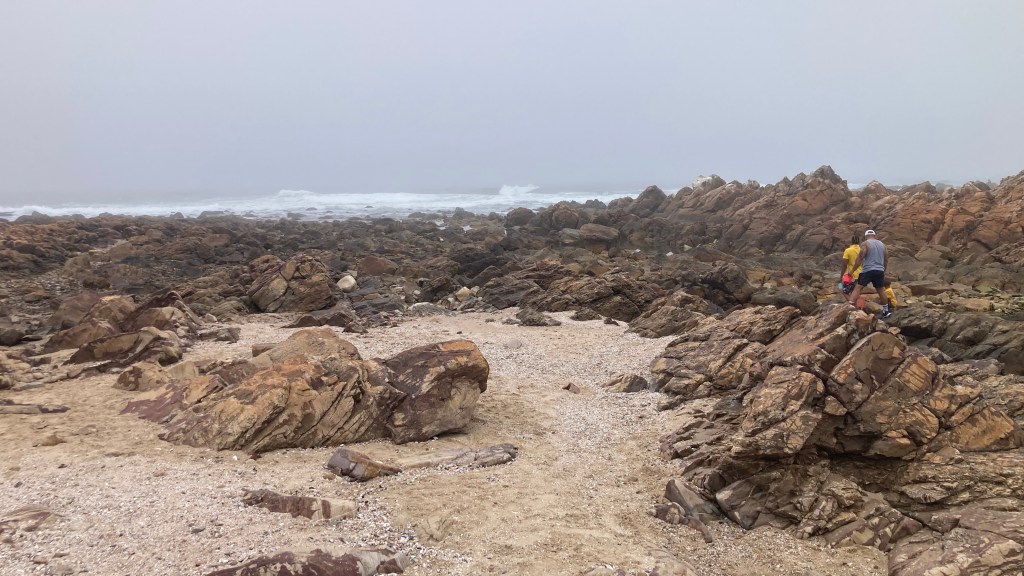
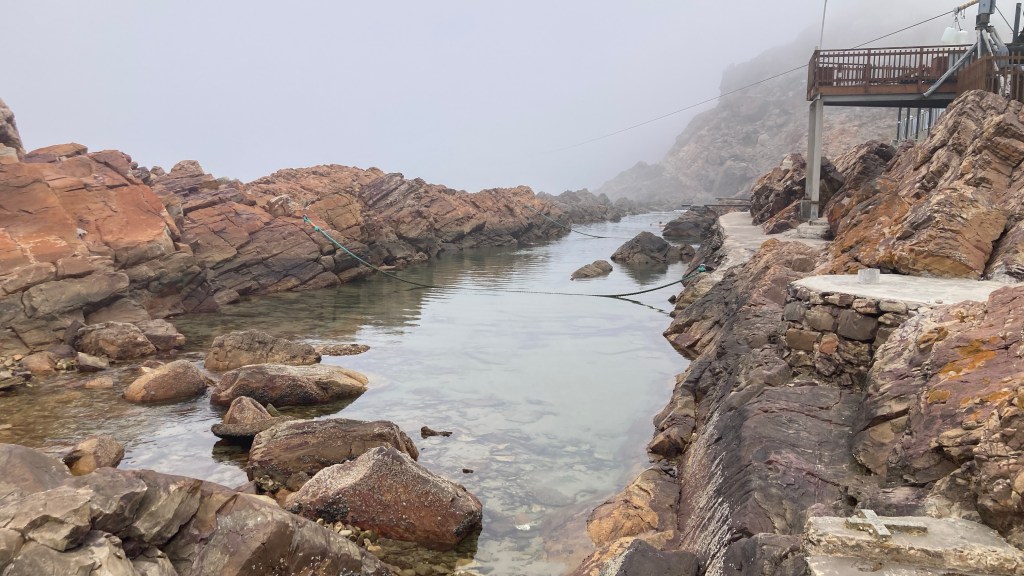
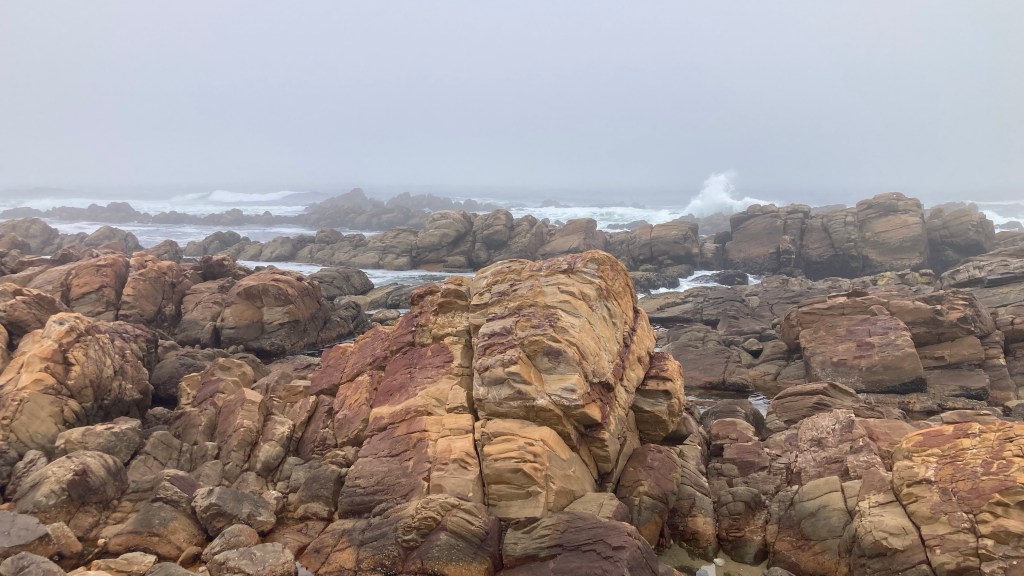
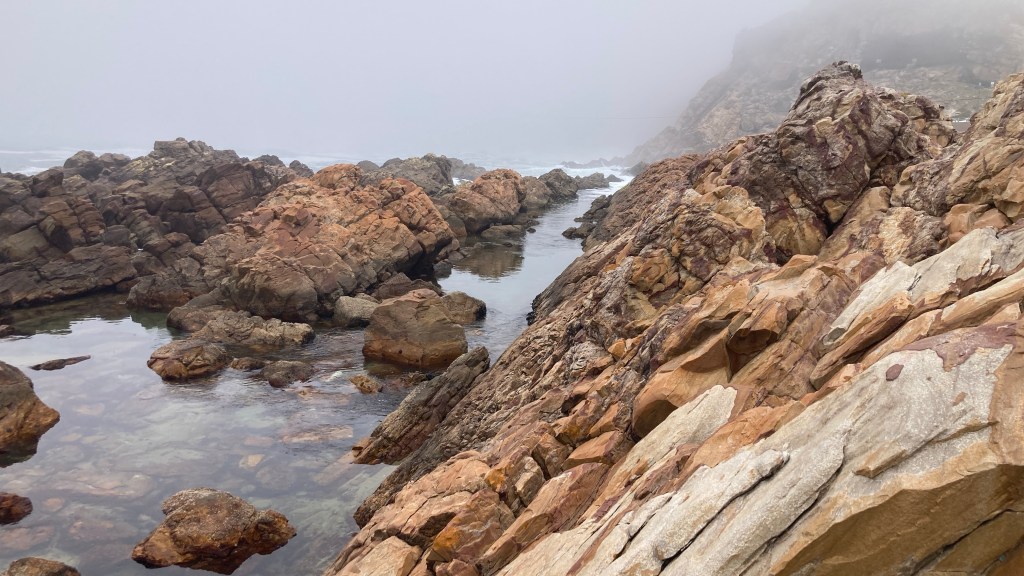
I ventured onto the rocks below the parking area to take a few shots of the scenery, softened by the mist and with that slightly mysterious aura that such conditions impart.

The Point, Mossel Bay
The natural swimming pool at The Point – known as Die Poort
The Point, Mossel Bay

Meanwhile back at the ranch – well actually the golf estate that is our home nowadays, the mist was creating scenes like this when I went for a late afternoon walk

Mossel Bay Golf course

Stellenbosch – a Glimpse

We decided during December to take a short breakaway trip to the Cape, in particular Stellenbosch, the famous University town and centre of all things wine-related.

The route from Mossel Bay, west to Stellenbosch

Our eldest granddaughter has a small flat close to the university and central Stellenbosch and as she was not due to return there until late January, it was a good opportunity for us to spend a few days there.

The town itself and the wine farms in the area are very busy at this time of year, attracting as they do visitors and tourists from all parts of the country and the world in fact, while the university campus area is exceptionally quiet, with hardly a soul in sight other than the campus security guards on every street corner that make it a safe place to walk about.

And walk about I did, taking in the beautiful architecture and pleasant streets of this delightful part of the town – here’s a selection of the images I collected on the way.

The Streets

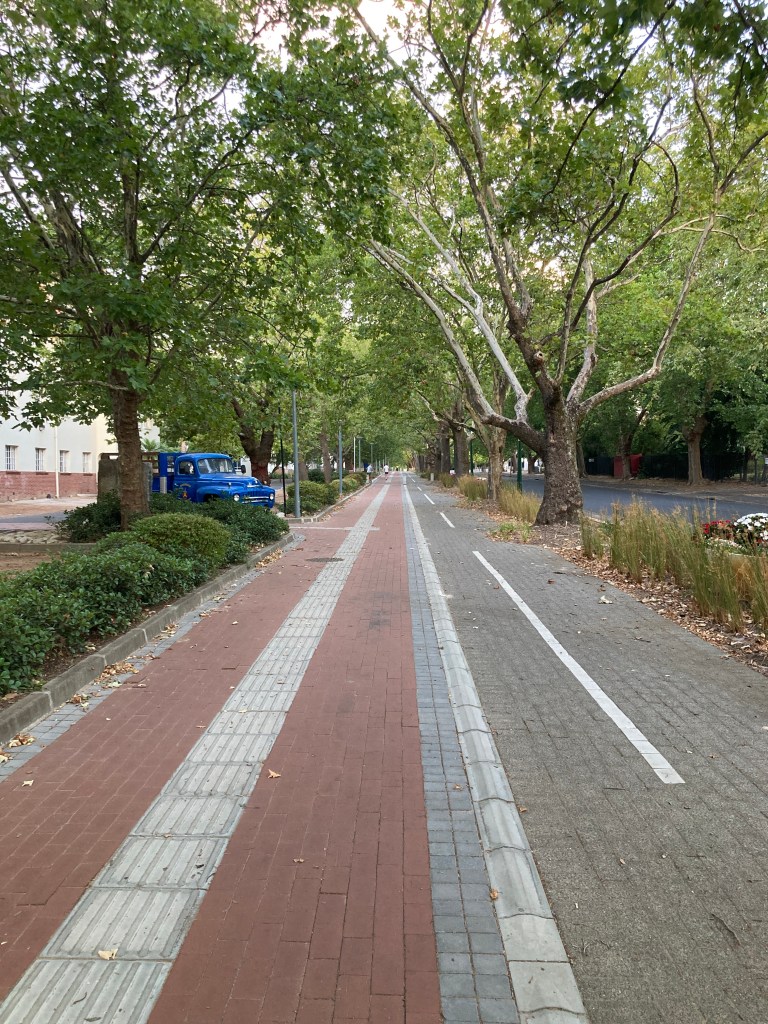
In a few weeks time these streets will be busy with students walking, riding and driving between their residences, town and the campus buildings, but now they are dead quiet

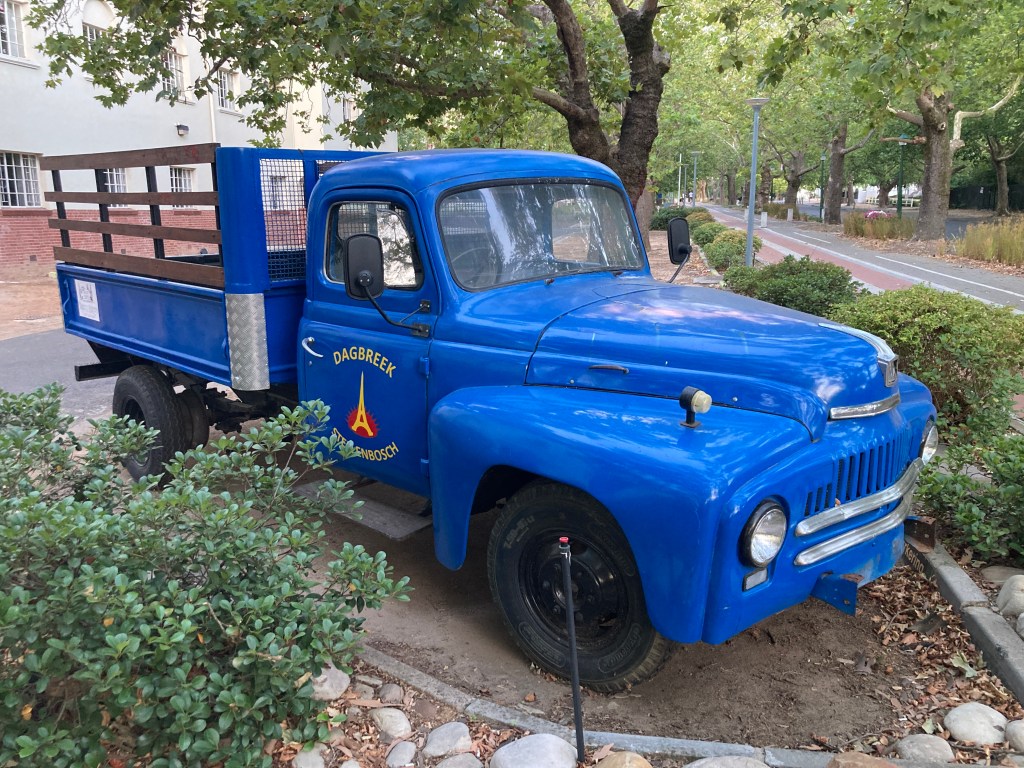
This old restored lorry belongs to one of the men’s residences and would probably have a few stories to tell if it could …..

The Architecture

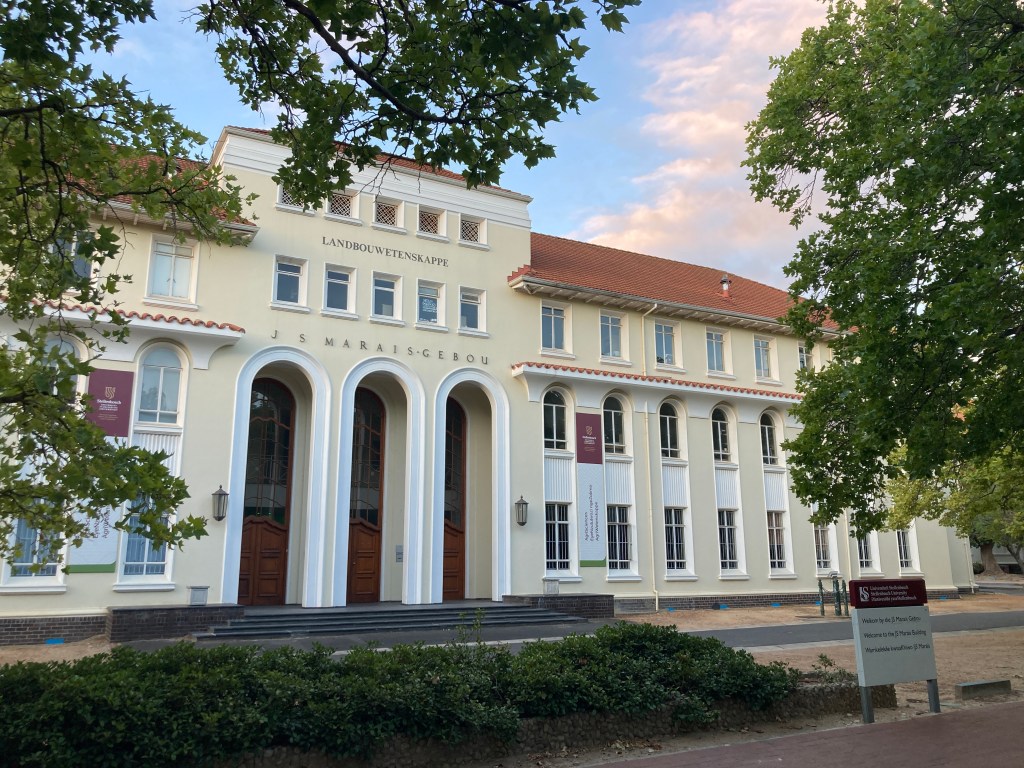
The faculties are housed in handsome buildings such as this one, each with an elegant style of their own.

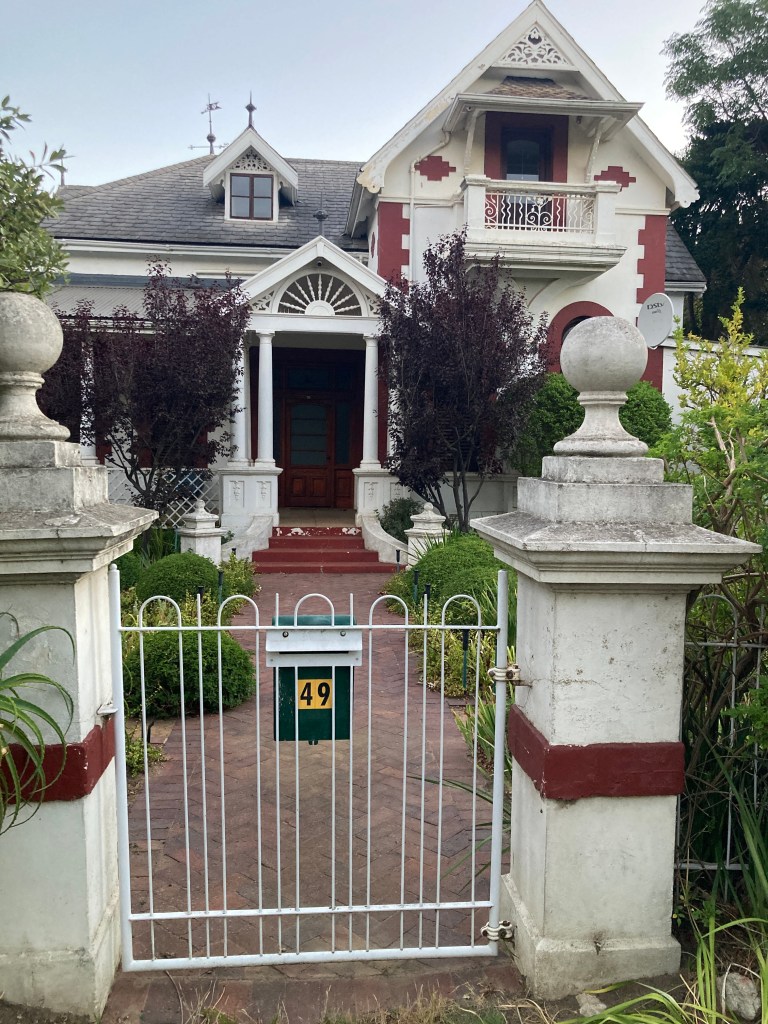
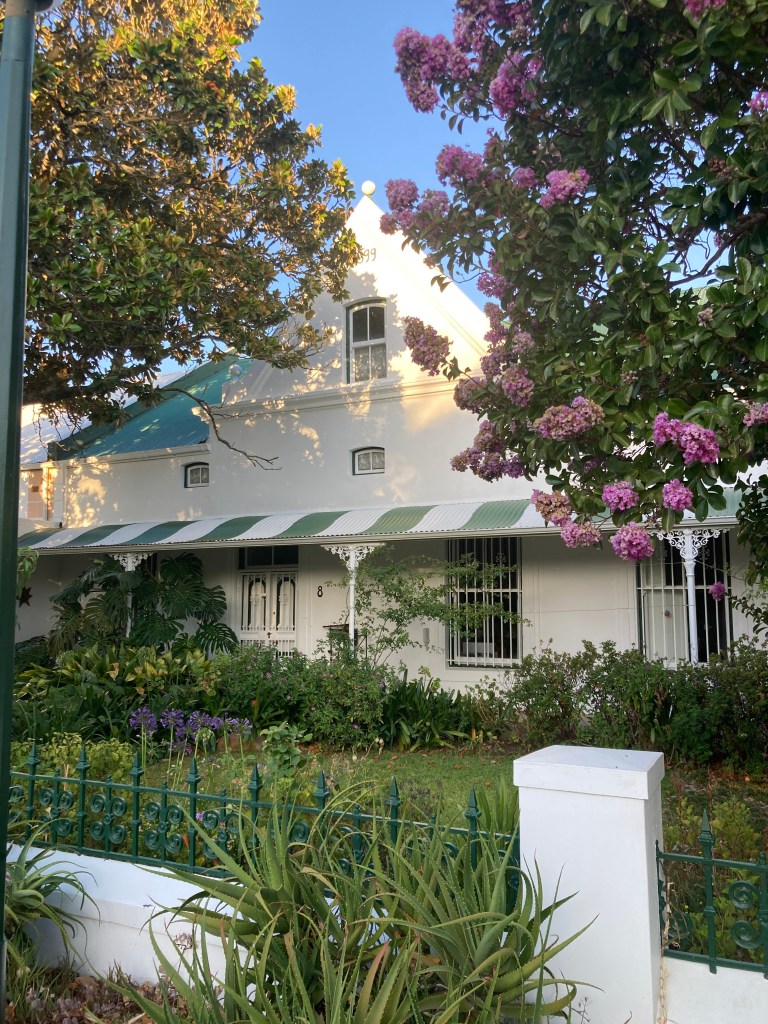
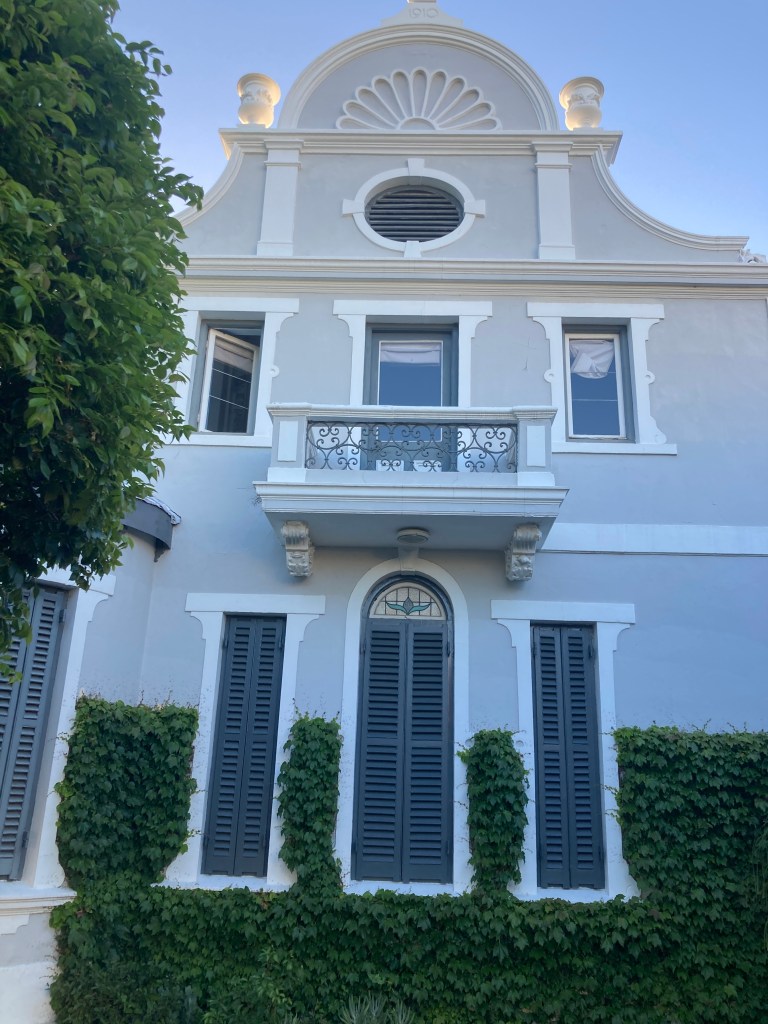
Some of the old houses are privately owned, others house specialist sections of the university – all have one thing in common : they are beautifully restored and in pristine condition, ranging in style from Victorian to Cape Dutch

Leivore

Some towns in the Western Cape still have leivore – the traditional water furrows used to supply water for irrigation, usually emanating from a spring in the nearby mountains and channeled alongside the streets through the town. Leivore is pronounced ‘lay-foora’

Sluice gates such as this one (missing the upper part) control the flow of water in the leivore and where they branch off to a property

Truly a special place ….

My Photo Pick for 2023

Moving home from Pretoria to Mossel Bay during the year took a lot of our energy and meant we travelled less than usual – so much so that we didn’t even manage to fit in a trip to one of our national parks, the first time this has happened in many years!

Nevertheless my photo library increased by some 1500 images, and for this retrospective I have selected 50 images which appeal to me for various reasons.

An unexpected mid-year trip to Scotland for a week was a wonderful opportunity to boost my photo library and try out my new mirrorless camera to its full extent – my verdict is it met all my expectations once I had mastered the myriad settings available.

The brief comments tell a bit of the story of each image. So to start with ….

The Places

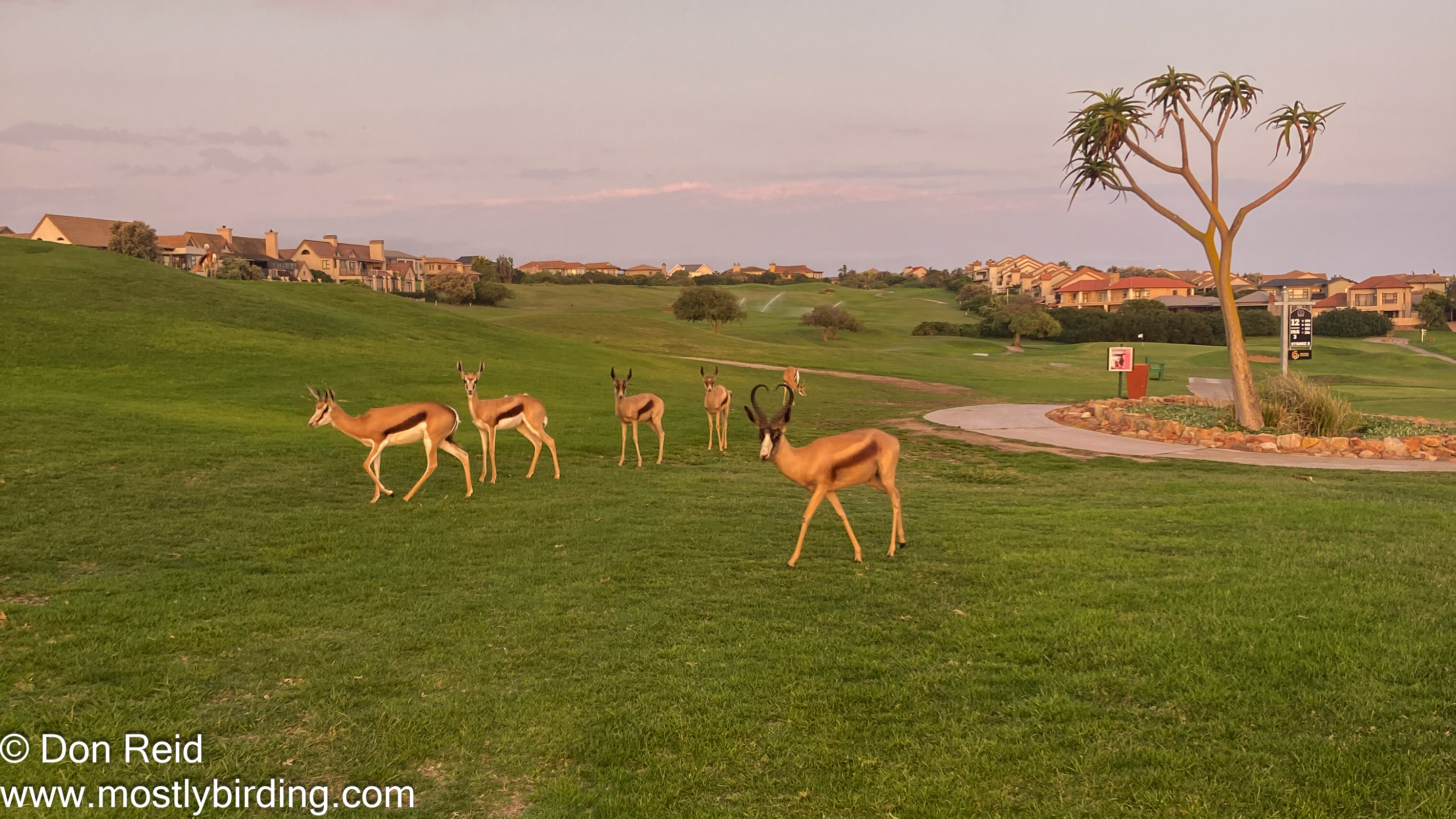
Starting at home – one of the pleasures of living on a golf estate is having the golf course to yourself after the last golfers have left – it’s ideal for long walks and an added bonus is the small herd of Springboks that also enjoy the peace and quiet without golf balls flying about

Mossel Bay Golf Estate

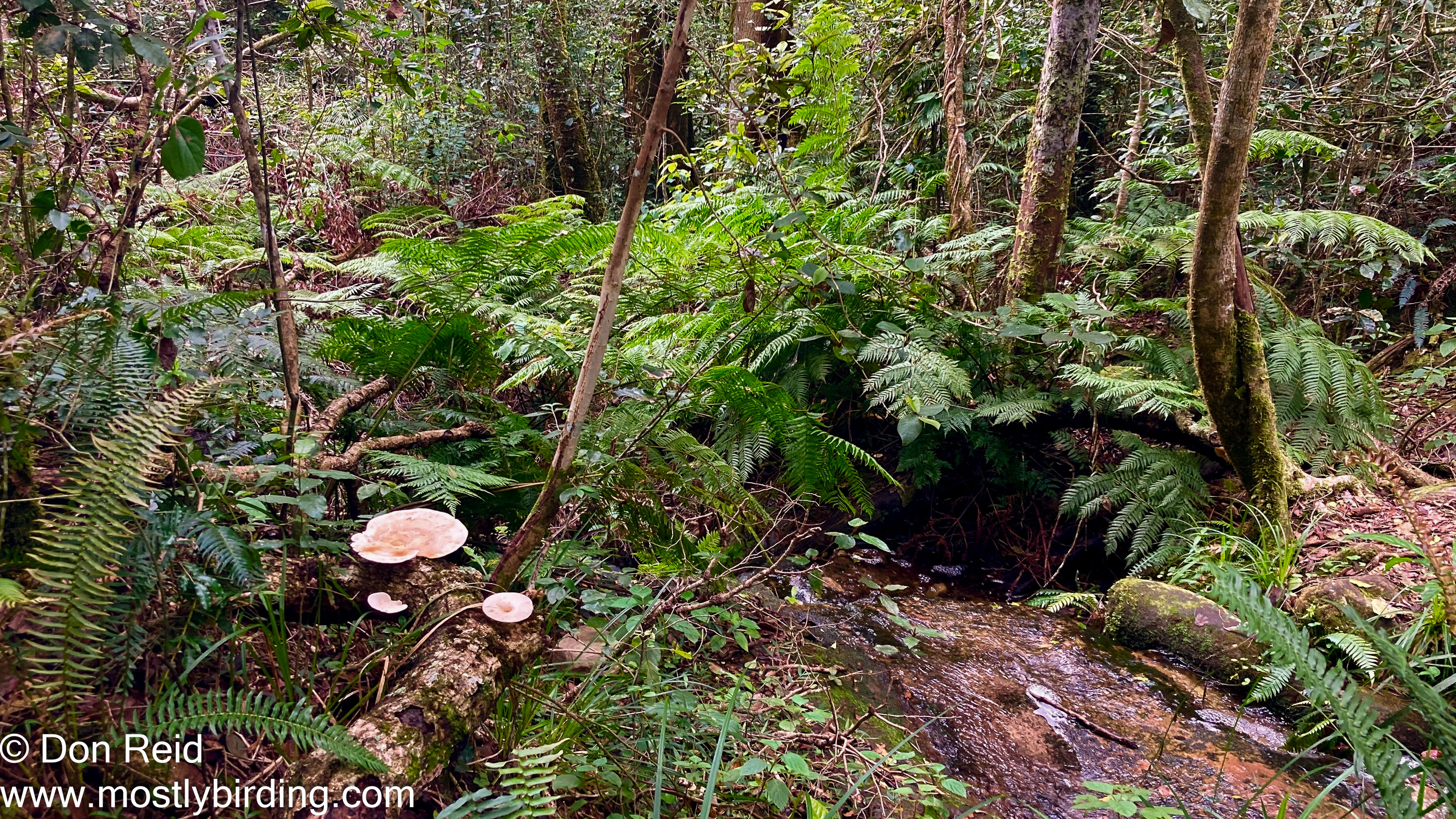
Hoekwil Forest near Wilderness, also known as Big Tree Forest, is one of my favourite spots for forest walks and birding, presenting scenes like this along the trail

Hoekwil Forest

A trip to Fransmanshoek (“Frenchman’s Corner”) just a half hour’s drive from Mossel Bay is always worth it – the rugged coastline and big waves make for spectacular coastal scenery on a windy day

Fransmanshoek

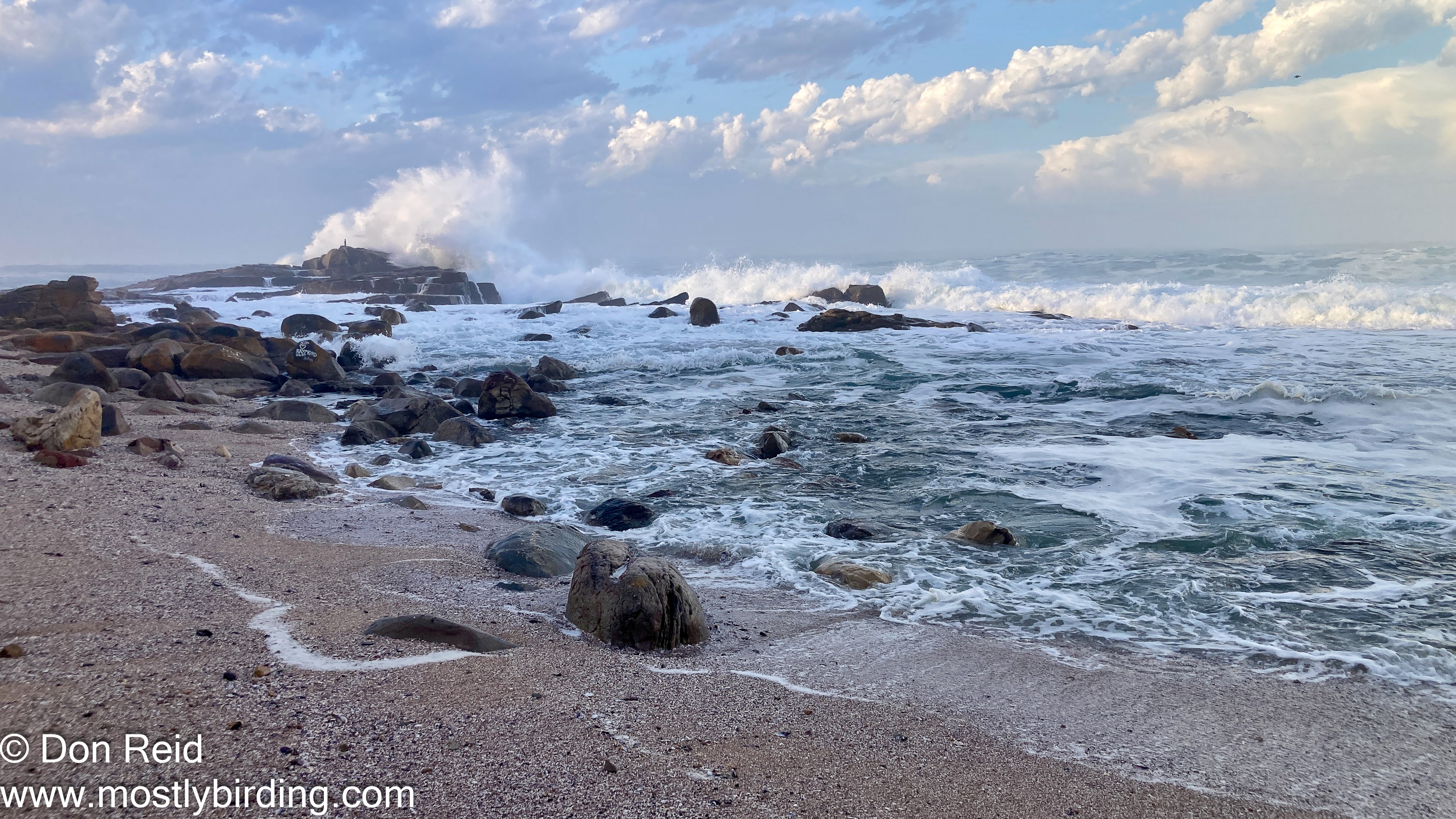
It’s impossible to go through a year without taking photos at The Point in Mossel Bay on a day of high seas, capturing (hopefully) the drama of the sand, sea and sky that such days produce

Mossel Bay Point

Back in March, Gerda’s relative Anlia sent us this photo taken early morning on their farm near Vryheid in Kwazulu Natal – I was immediately blown away by the colours and texture of the scene – almost akin to a Monet Impressionist painting, don’t you think?

Vryheid farm

A short breakaway trip to Plettenberg Bay (Plett for short) was an opportunity to explore another part of the beautiful Garden Route and stop at scenes like this

Keurbooms River Plett

While in Pretoria for our final packing I went out atlasing with friend Koos (the lone figure in the photo) – this was taken as the sun rose on a cold winter morning over the grassland east of Pretoria

Bronkhorstspruit

And then came the Scotland trip where I was spoilt for choice when it came to striking scenery – here is a selection of the places I visited or simply stopped to admire

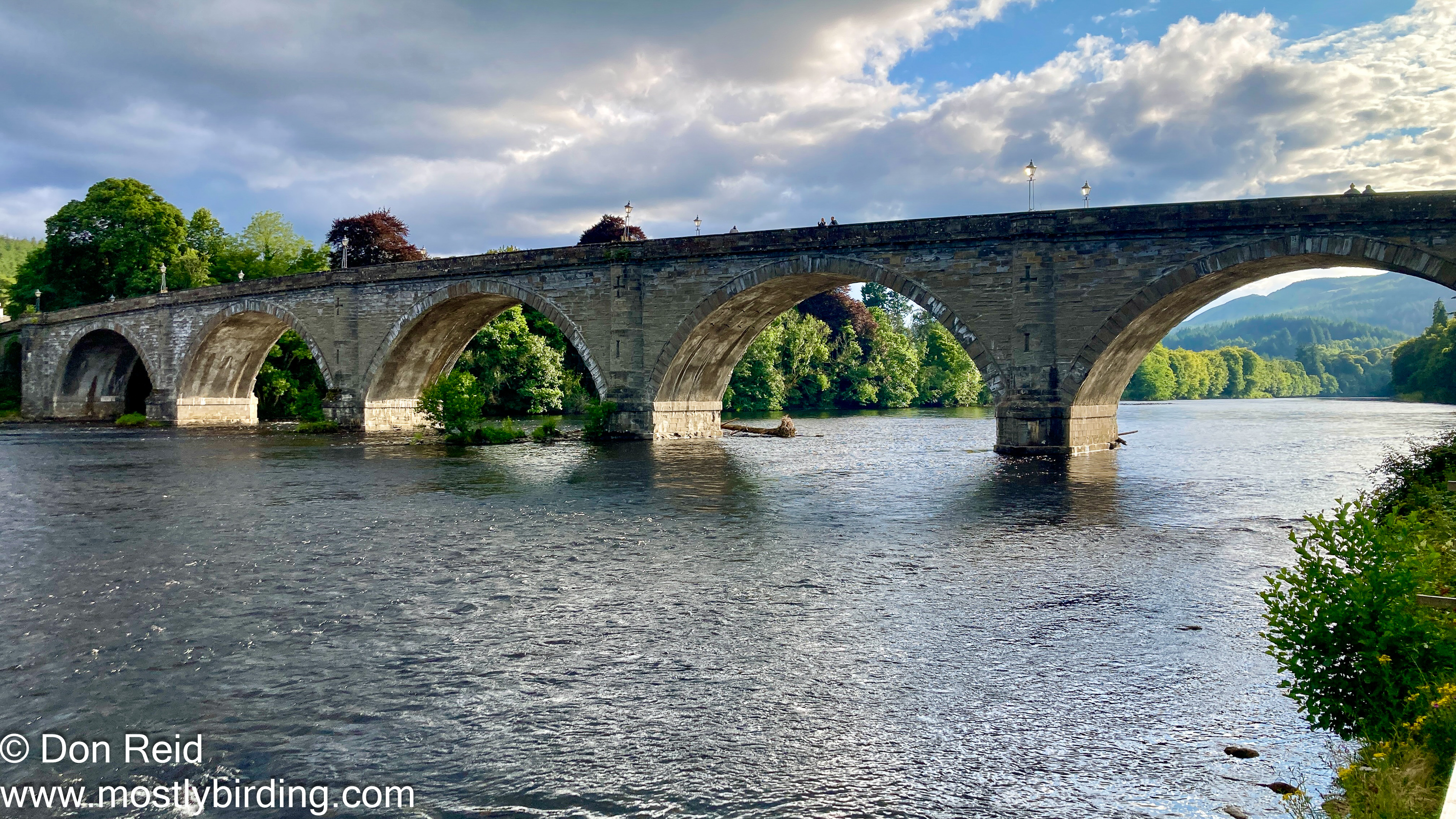
River Tay, Dunkeld
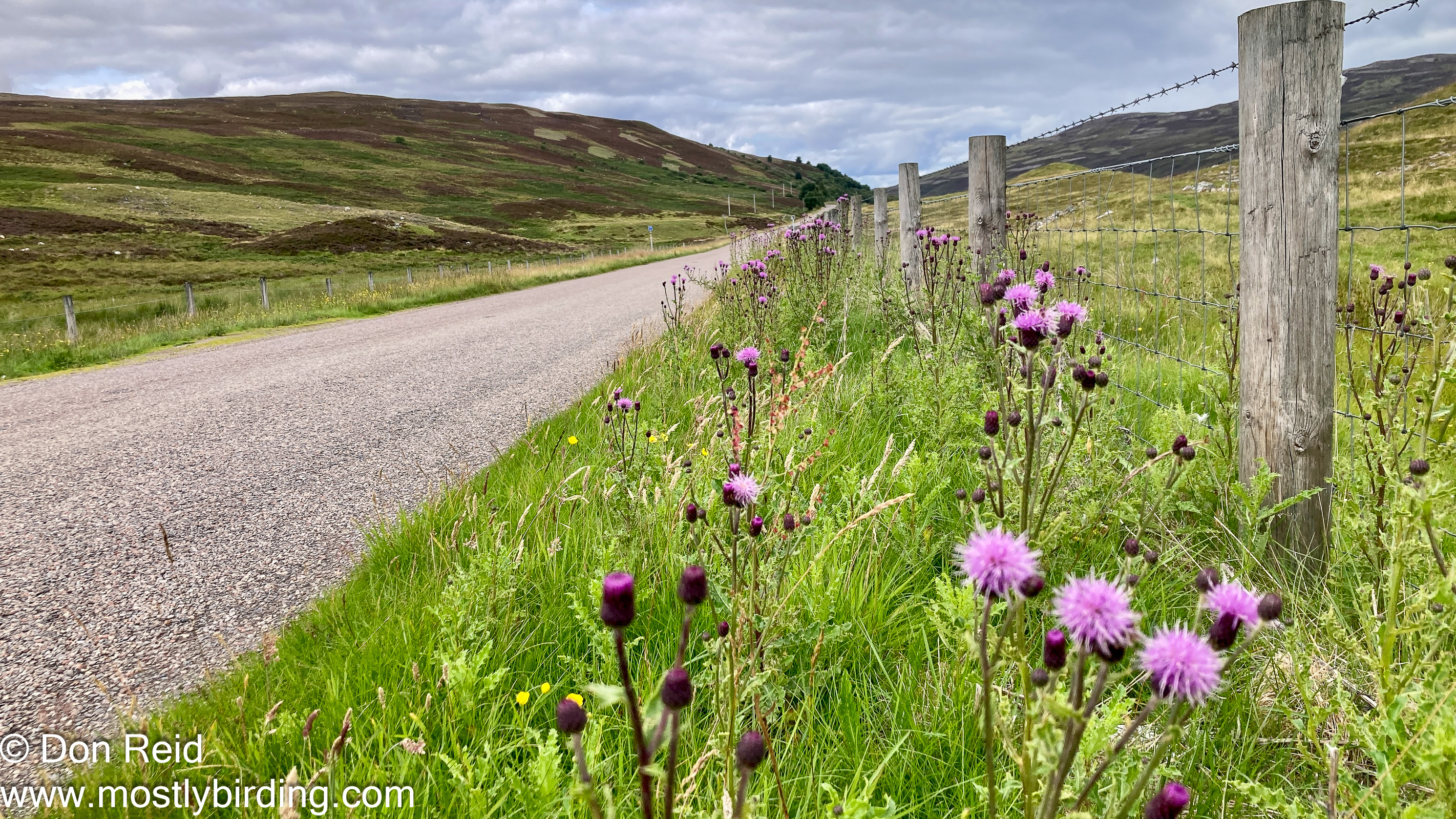
Genl Wade’s Military Road, Dalwhinnie
River Feshie, Feshiebridge
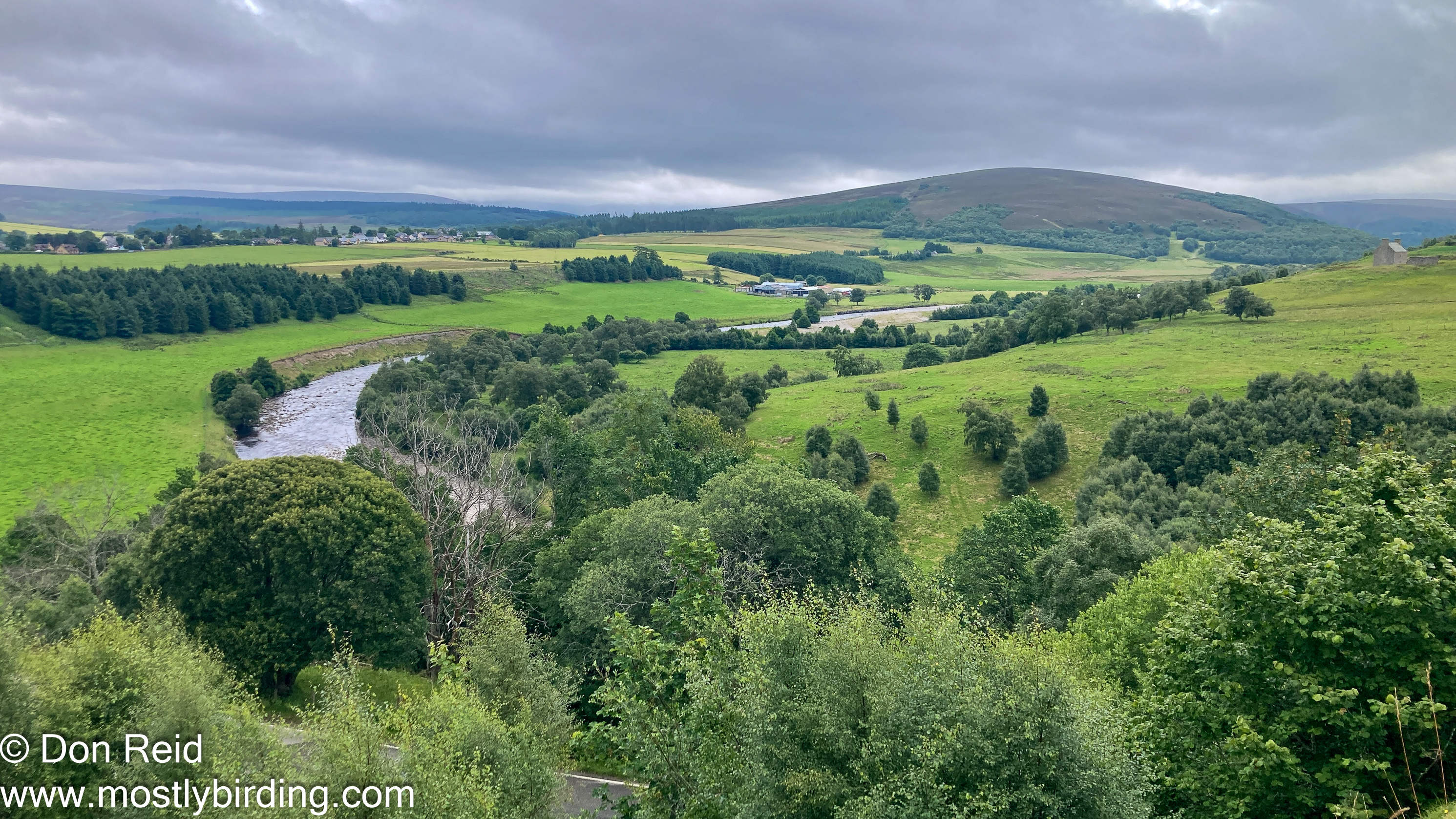
Findhorn River Valley
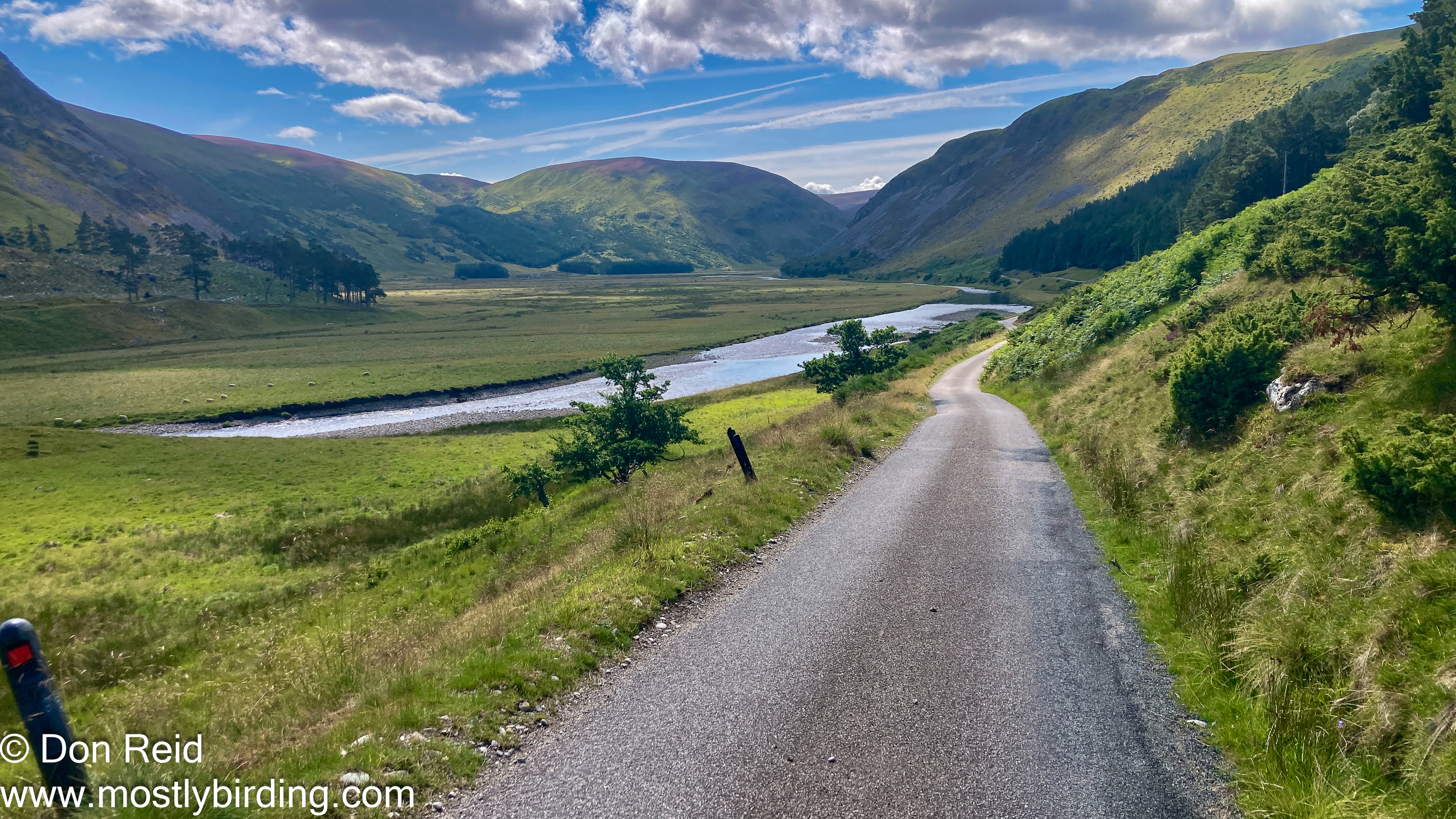
River Avon, Highland Tourist Route
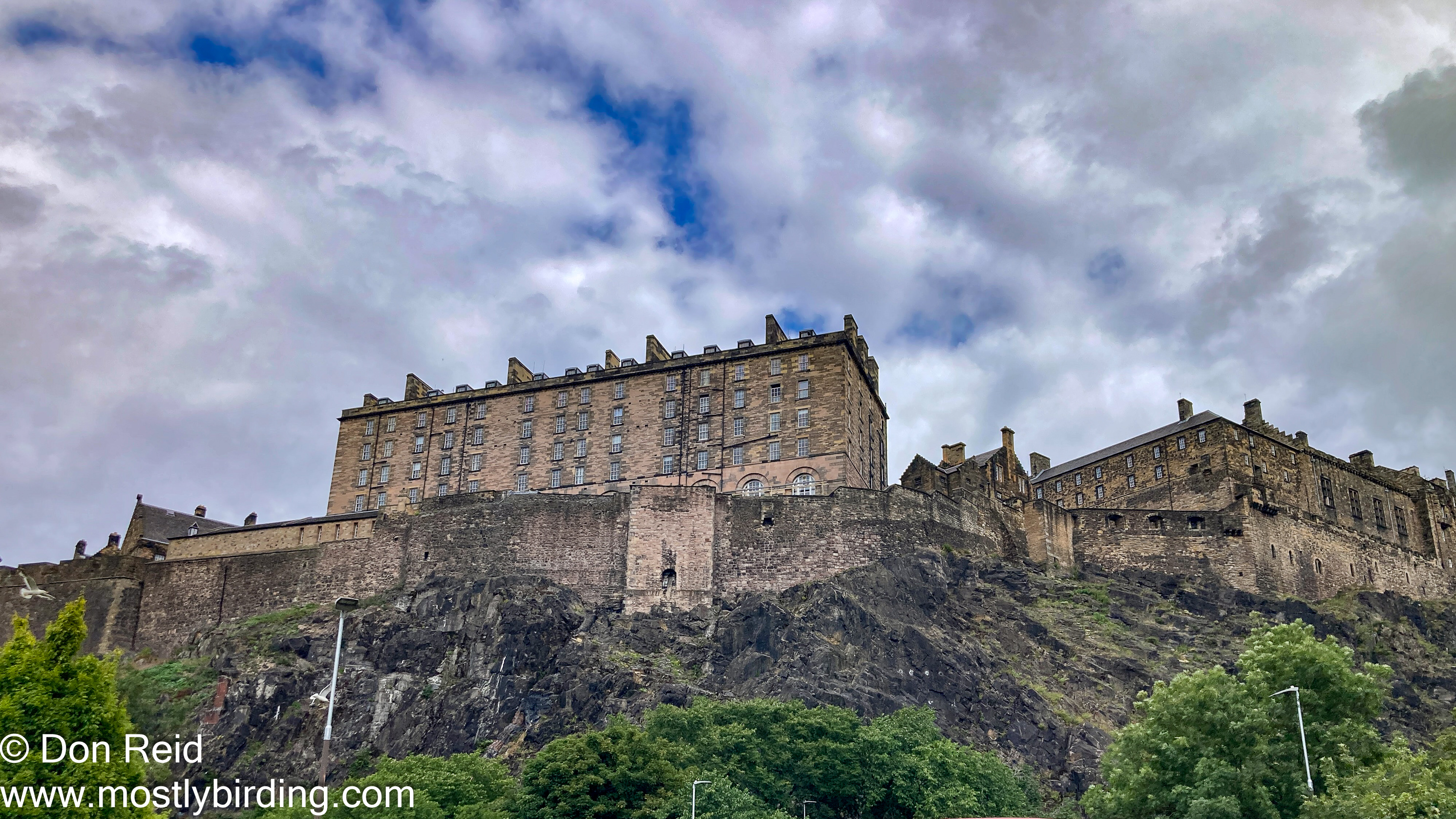
Edinburgh

The Birds

I spend a lot of my photographic energies on capturing images of birds, often with mixed results. These are some of the better ones

Speckled Mousebird Colius striatus Gevlekte muisvoël, Mossel Bay Golf Estate
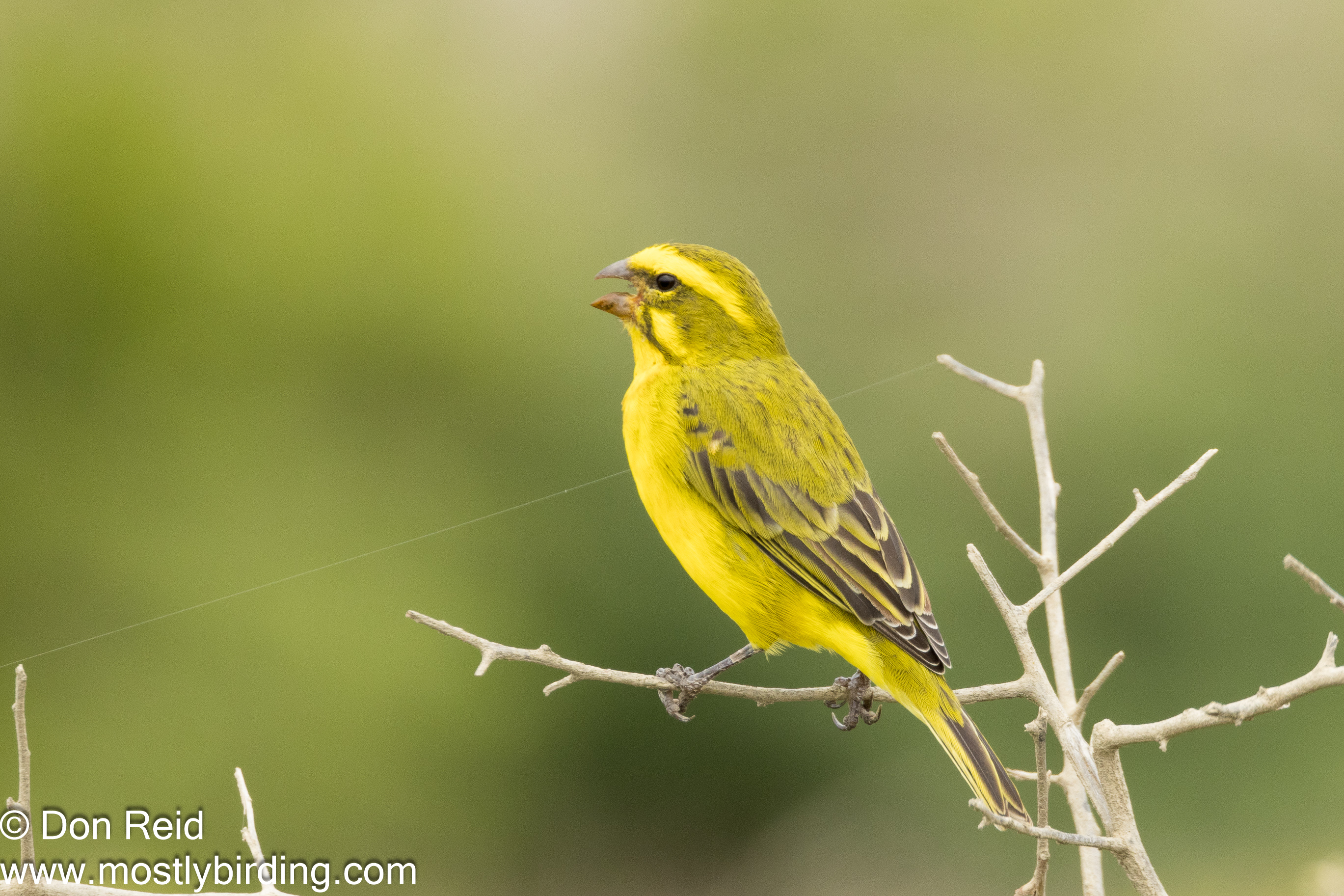
Yellow Canary Crithagra flaviventris Geelkanarie (race flaviventris), Gouritzmond
African Stonechat Saxicola torquatus Gewone bontrokkie (race torquatus), Great Brak Inland
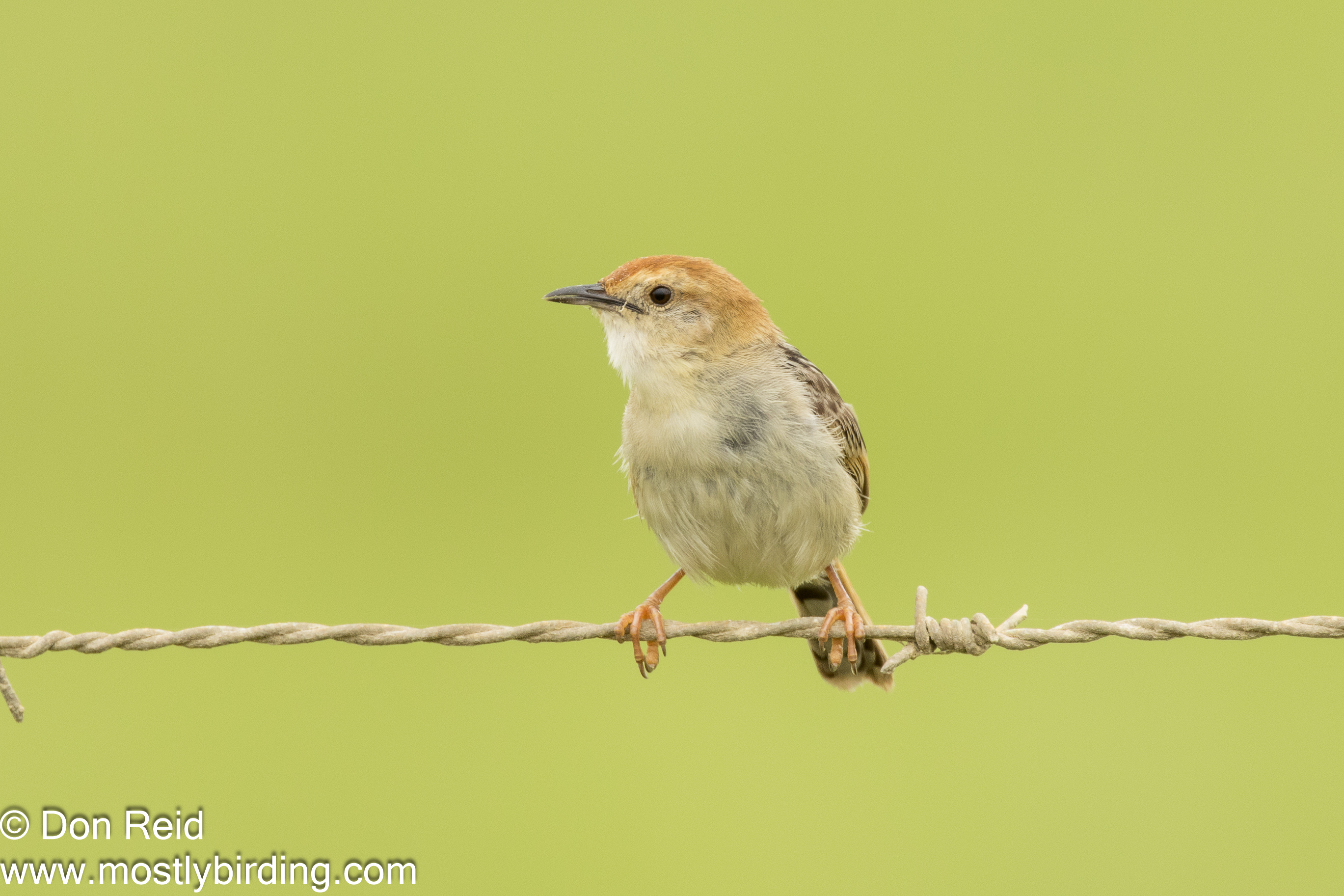
Levaillant’s Cisticola Cisticola tinniens Vleitinktinkie (race brookei), Great Brak Inland
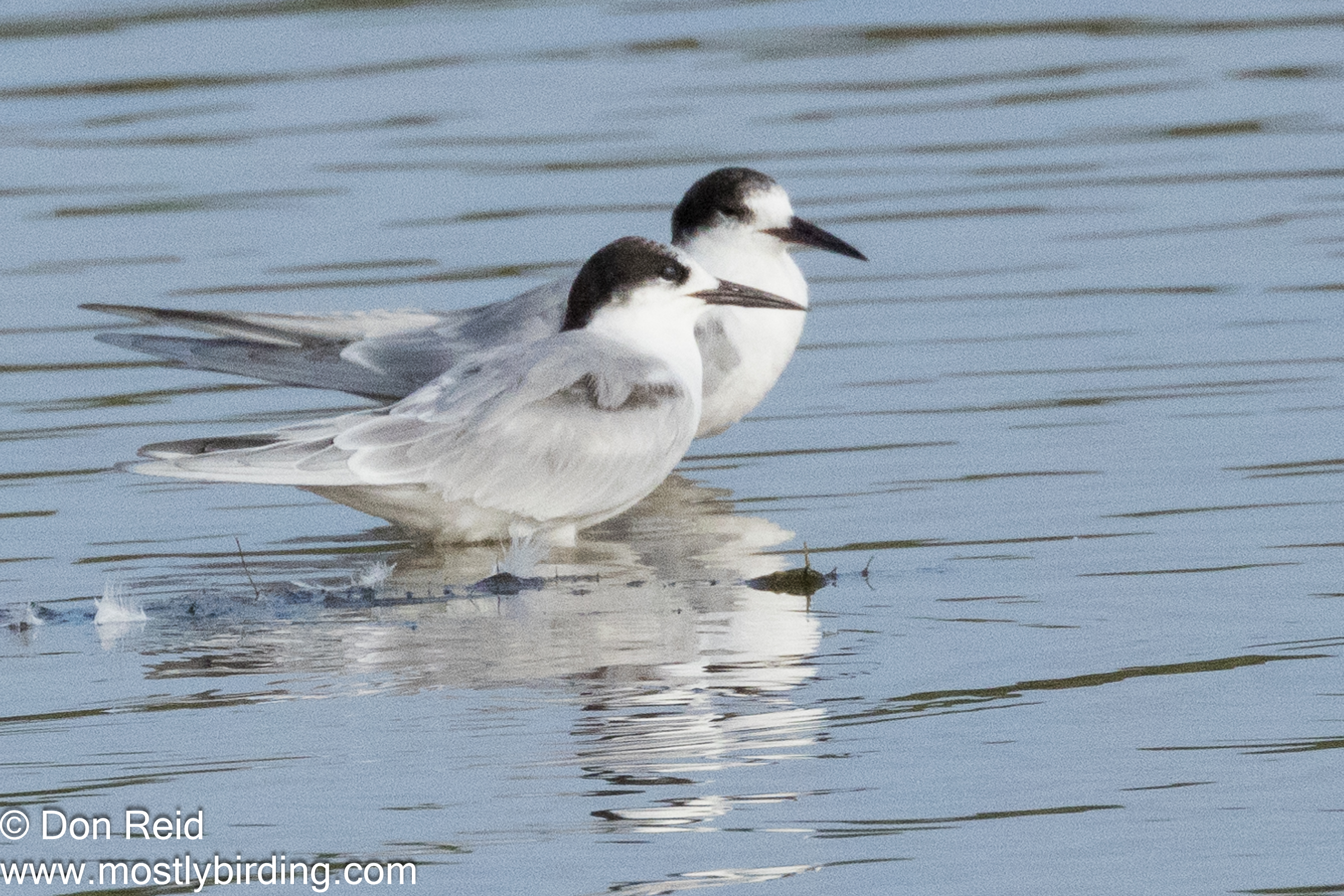
Common Tern Sterna hirundo Gewone sterretjie, Hartenbos River mouth
Common Greenshank Tringa nebularia Groenpootruiter, Hartenbos River mouth
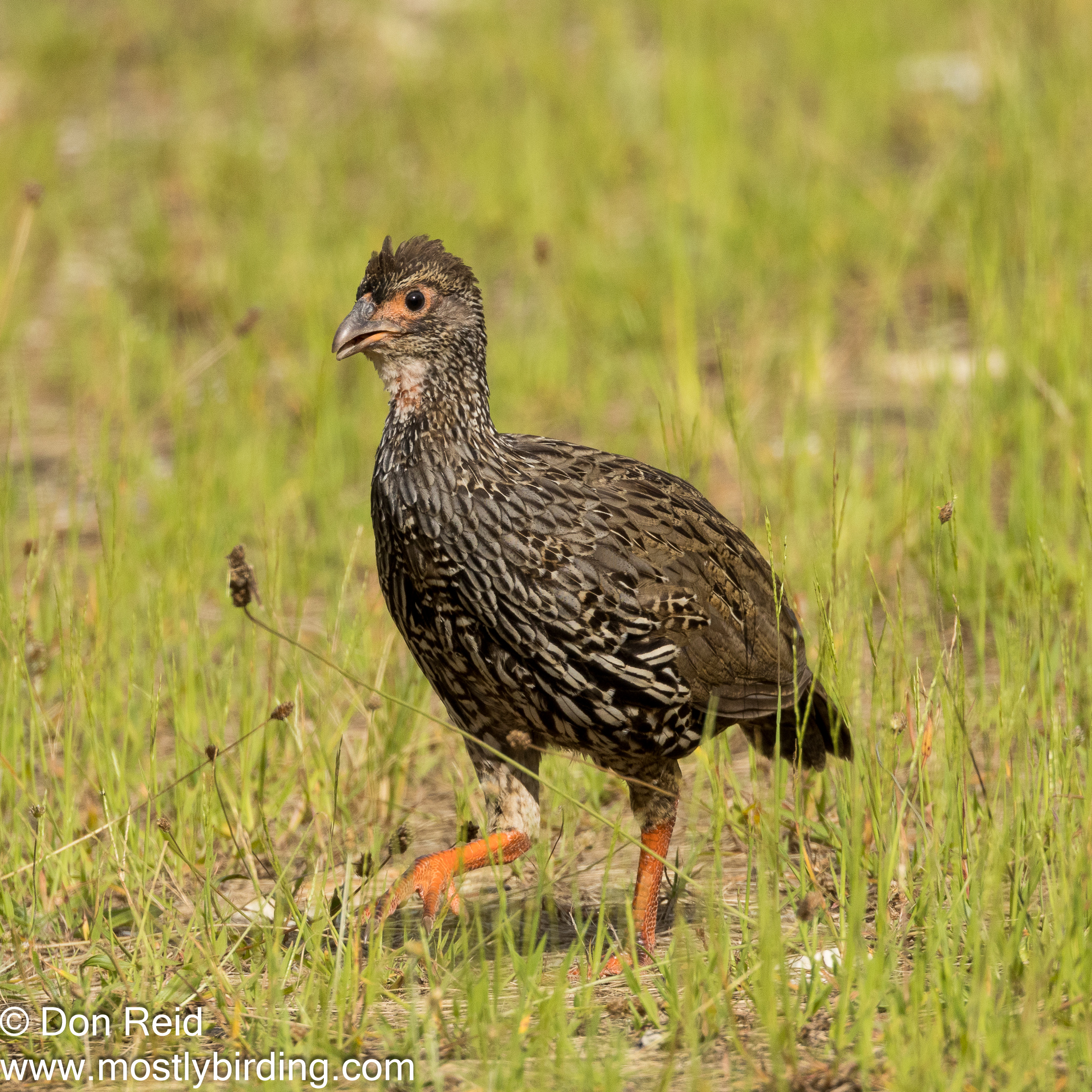
Red-necked Spurfowl Pternistis afer Rooikeelfisant (race castaneiventer) (Juvenile), Robinson Pass
Malachite Kingfisher Alcedo cristata Kuifkopvisvanger, Great Brak inland
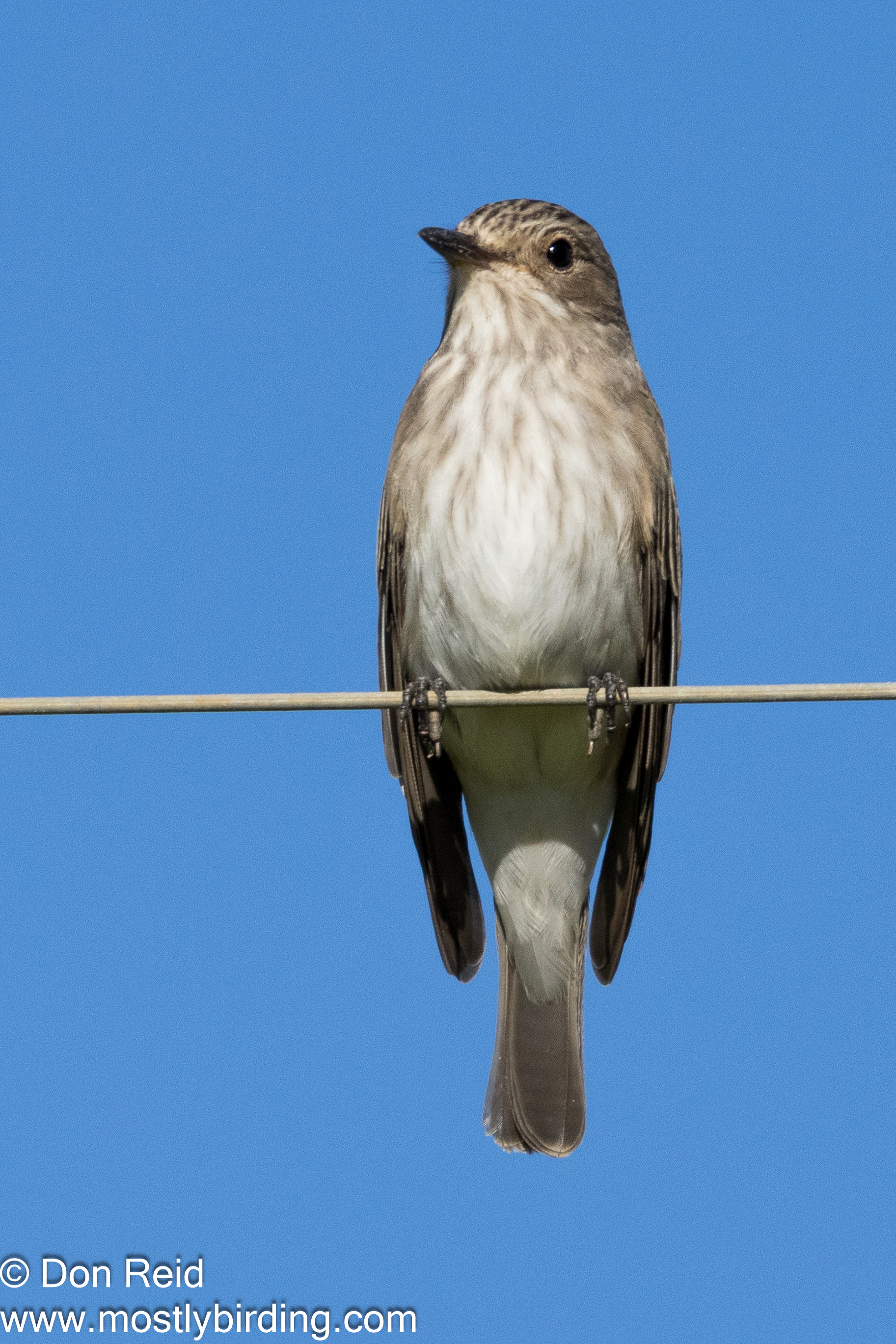
Spotted Flycatcher Muscicapa striata Europese vlieëvanger, Friemersheim area
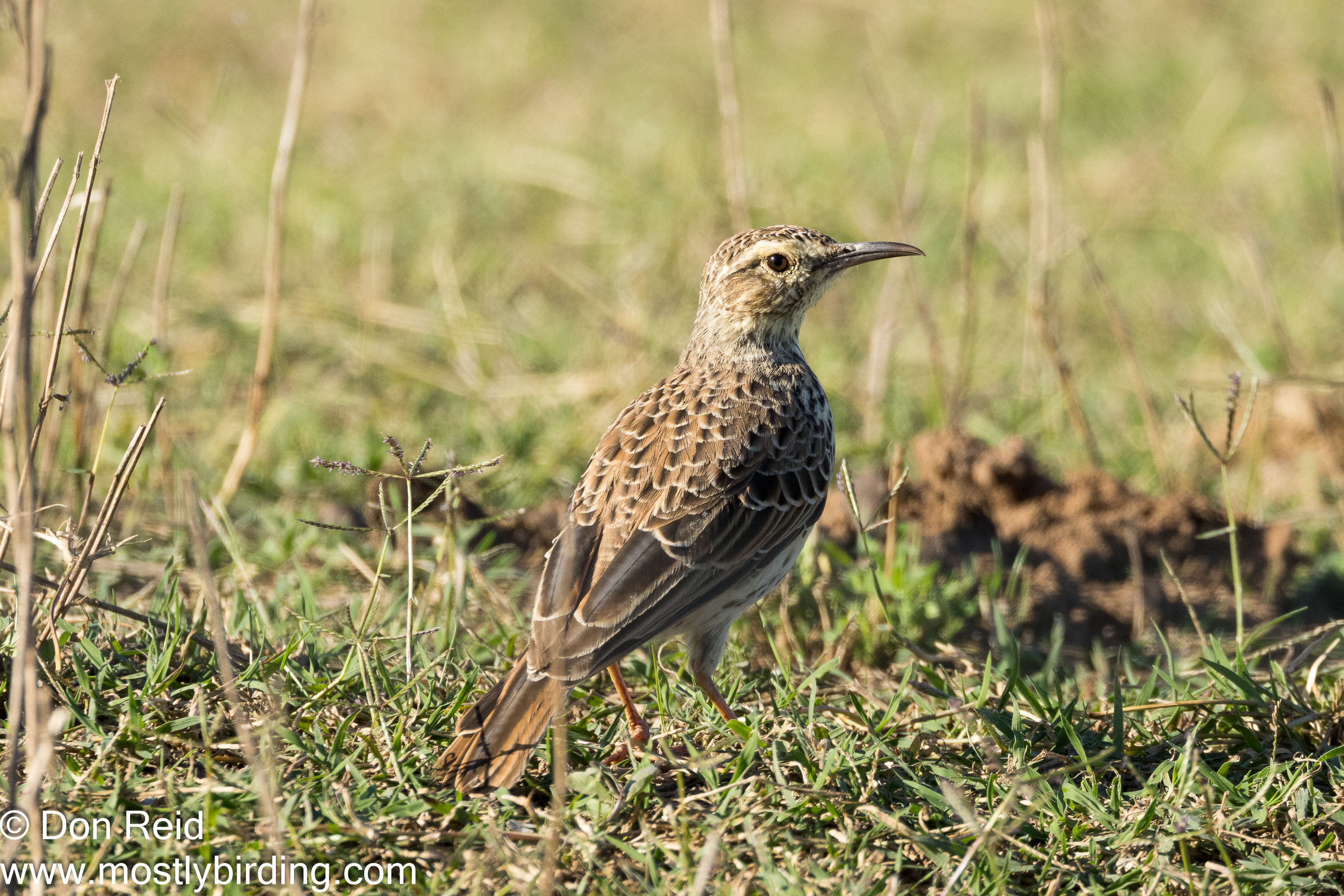
Agulhas Long-billed Lark Certhilauda brevirostris Overberglangbeklewerik, Vleesbaai area
Cape Teal Anas capensis Teeleend, Great Brak
Kittlitz’s Plover Charadrius pecuarius Geelborsstrandkiewiet, Voelvlei near Vleesbaai

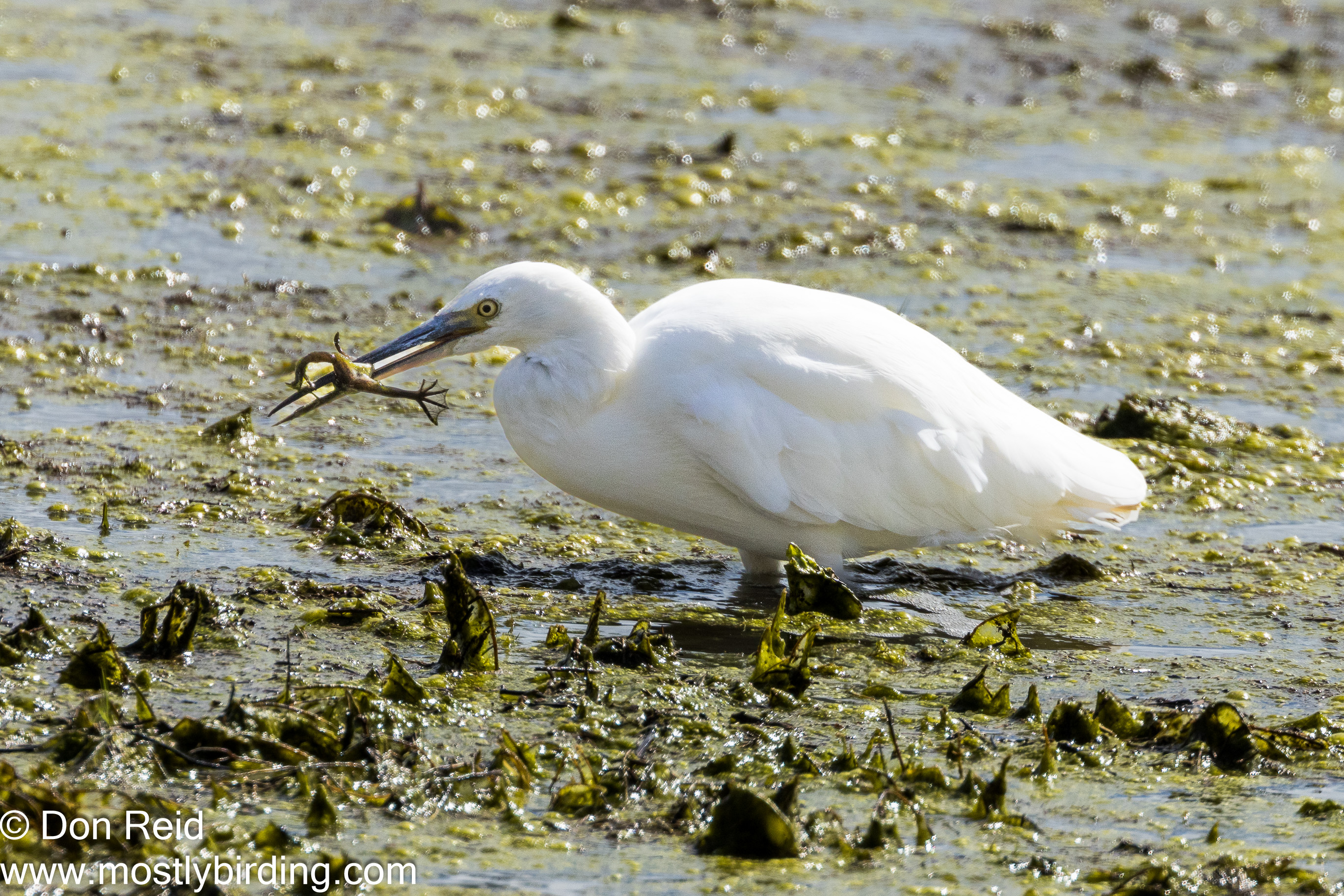
Have a closer look at what this Little Egret has caught

Little Egret Egretta garzetta Kleinwitreier, Voelvlei near Vleesbaai

On one of my last atlasing outings for the year I came across this delightful pair of protective Blue Cranes looking after junior

North of Herbertsdale

My trip to Scotland was a great opportunity for some birding in a different environment and I grabbed the chance with both hands

Chaffinch Fringilla coelebs Loch of the Lowes

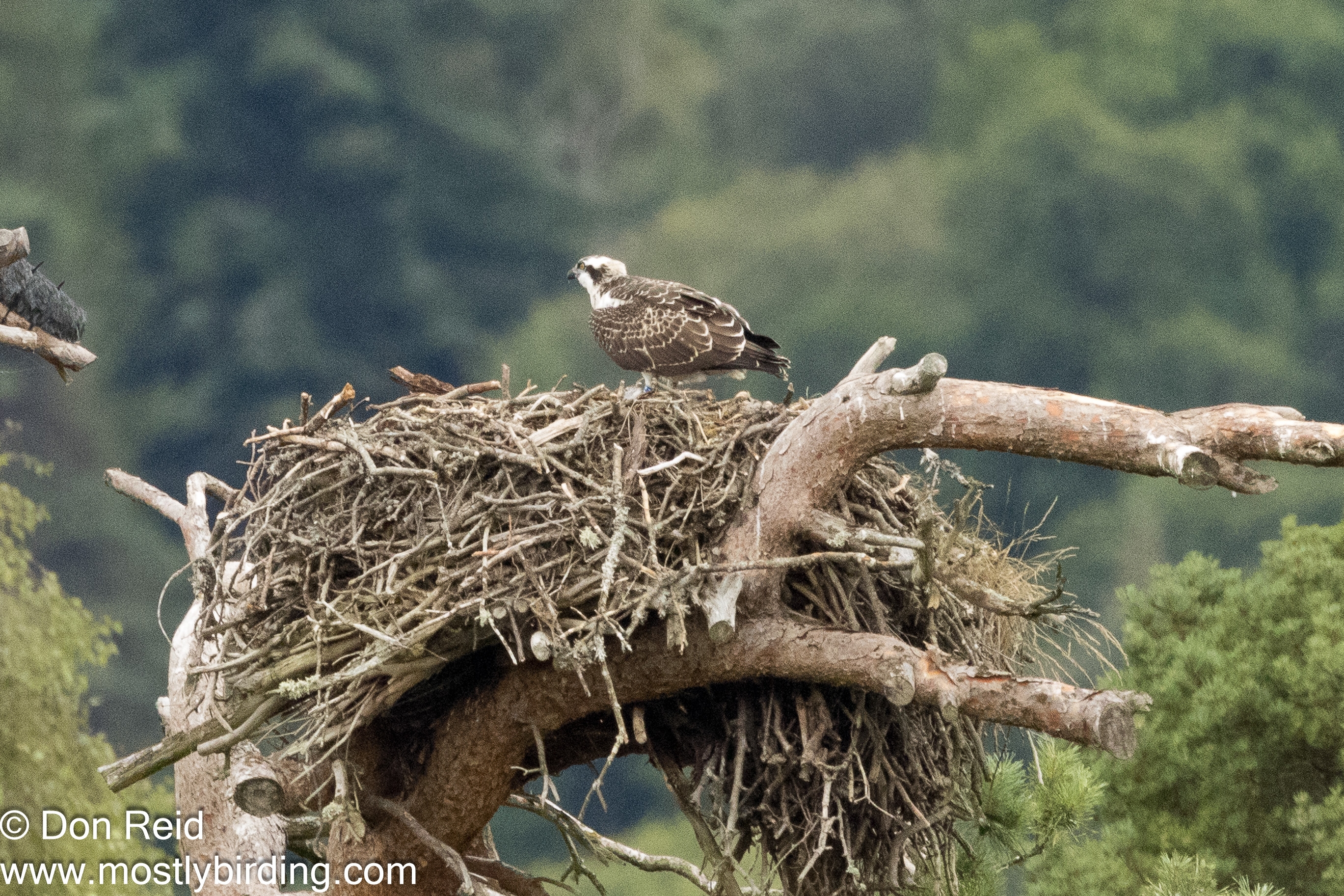
This is a sight we don’t get to see in southern Africa – a juvenile Osprey at the nest, waiting to be fed
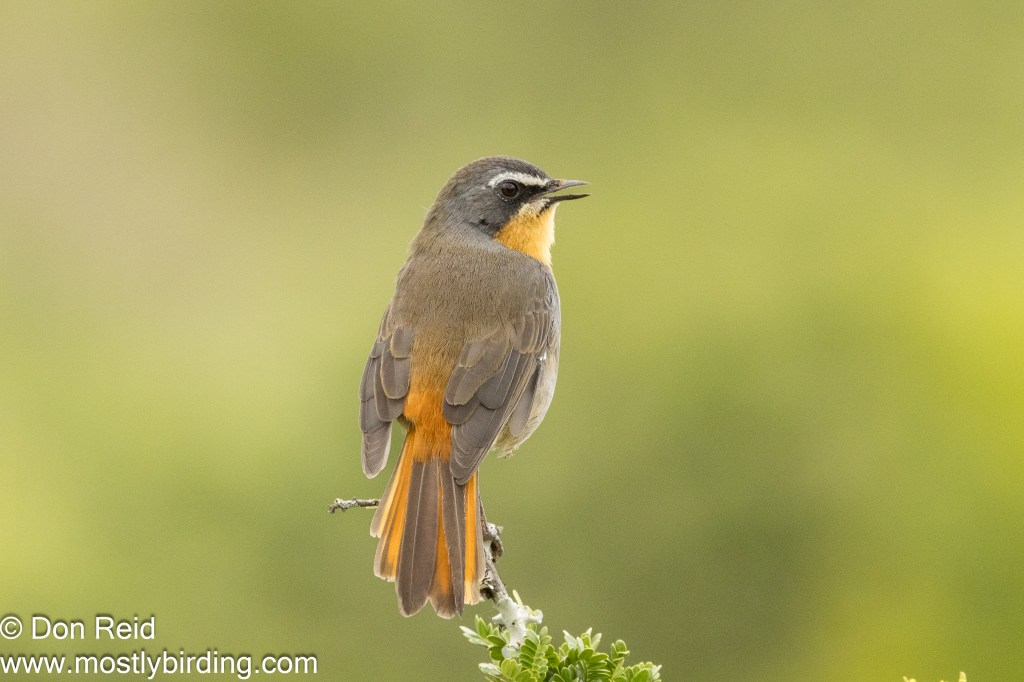
Osprey (Juvenile) Pandion haliaetus Loch of the Lowes

This cheeky Robin hopped onto the table at a roadside service centre where I stopped for coffee

European Robin Erithacus rubecula Lunch stop on A9
Common Goldeneye Bucephala clangula Avielochan
Little Egret Egretta gazetta River Eden Estuary
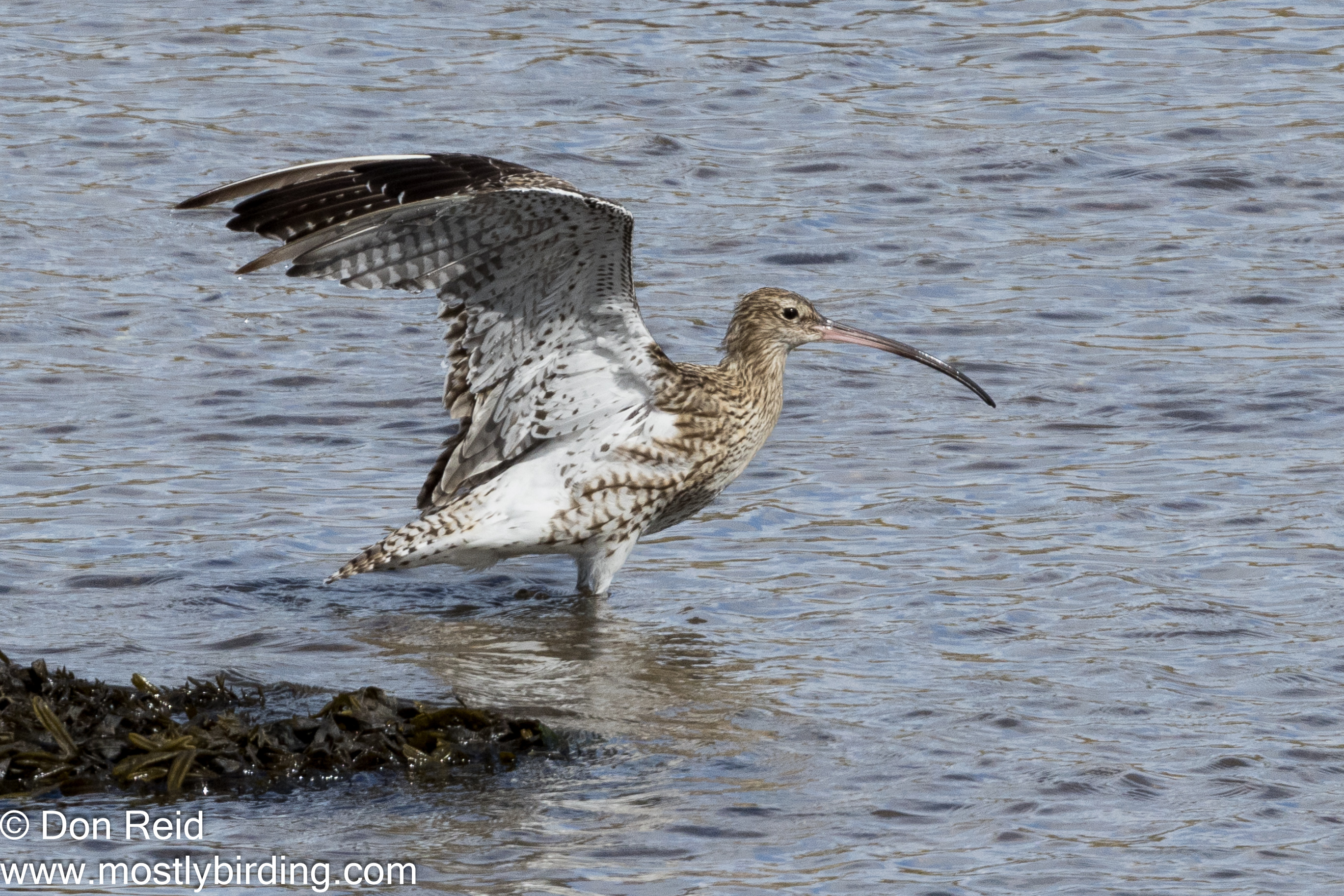
Eurasian Curlew Numenius arquata River Eden Estuary

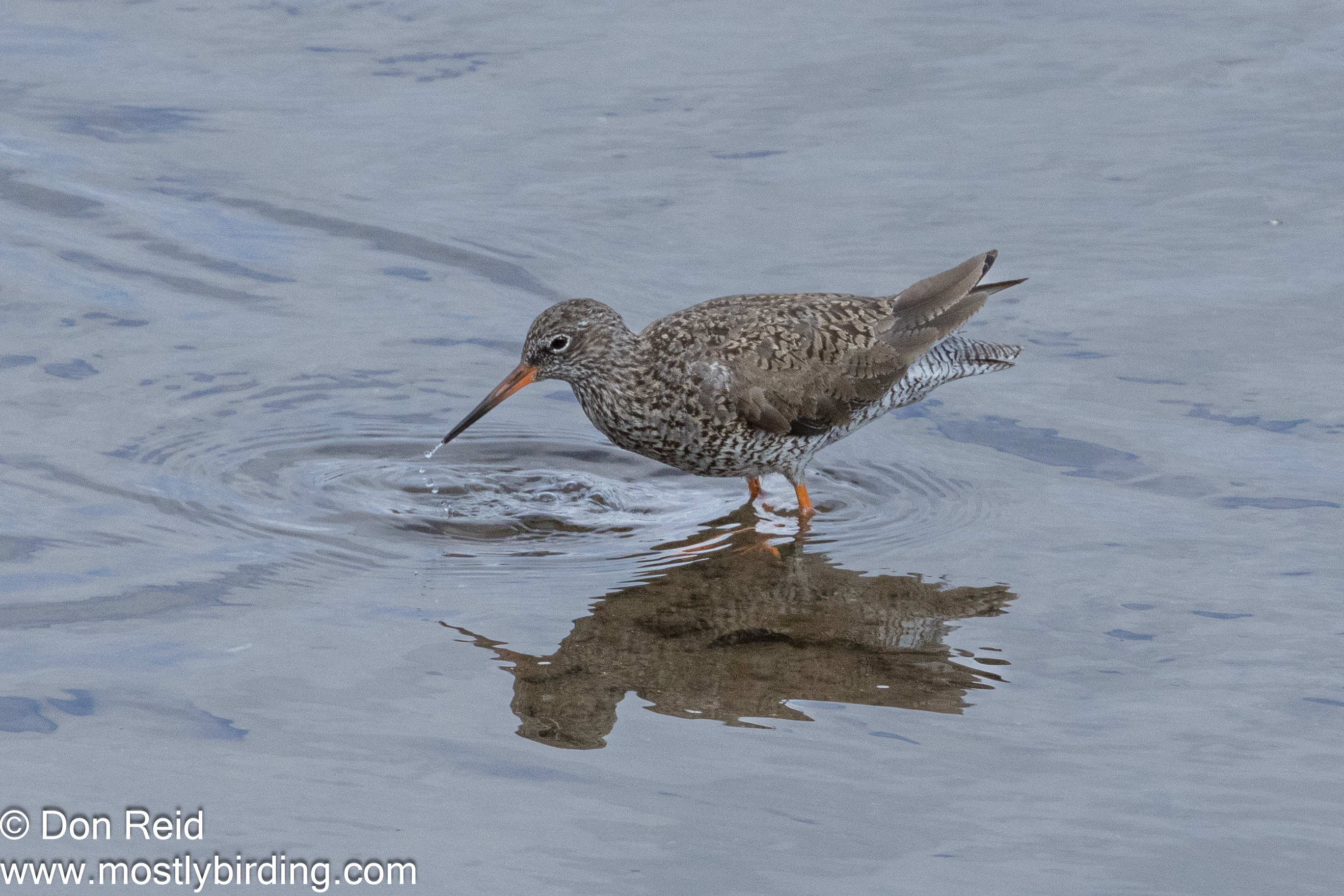
It was a special treat to see Common Redshanks by the hundred at River Eden Estuary – this is a bird rarely seen in southern Africa
Common Redshank Tringa totanus River Eden Estuary

The Mossel Bay area attracted a few rare vagrants during the year and I was happy to be able to see them and get some reasonable photos

Lesser Sand Plover Charadrius mongolus Mongoolse strandkiewiet, Klein Brak vlei
Buff-breasted Sandpiper Tryngites subruficollis Taanborsstrandloper, Voelvlei near Vleesbaai

Birds in Flight

Birds in flight – or BIF as it’s known – is the most challenging aspect of bird photography, with a success rate of about 1 usable image for every 30 taken, based on my experience. In the same way as golfers seek the perfect shot and surfers the perfect wave, so are bird photographers always on the look out for a better photo.

Here are some of the year’s BIF images that worked

Hartlaub’s Gull Chroicocephalus hartlaubii Hartlaubse meeu, Hartenbos River mouth
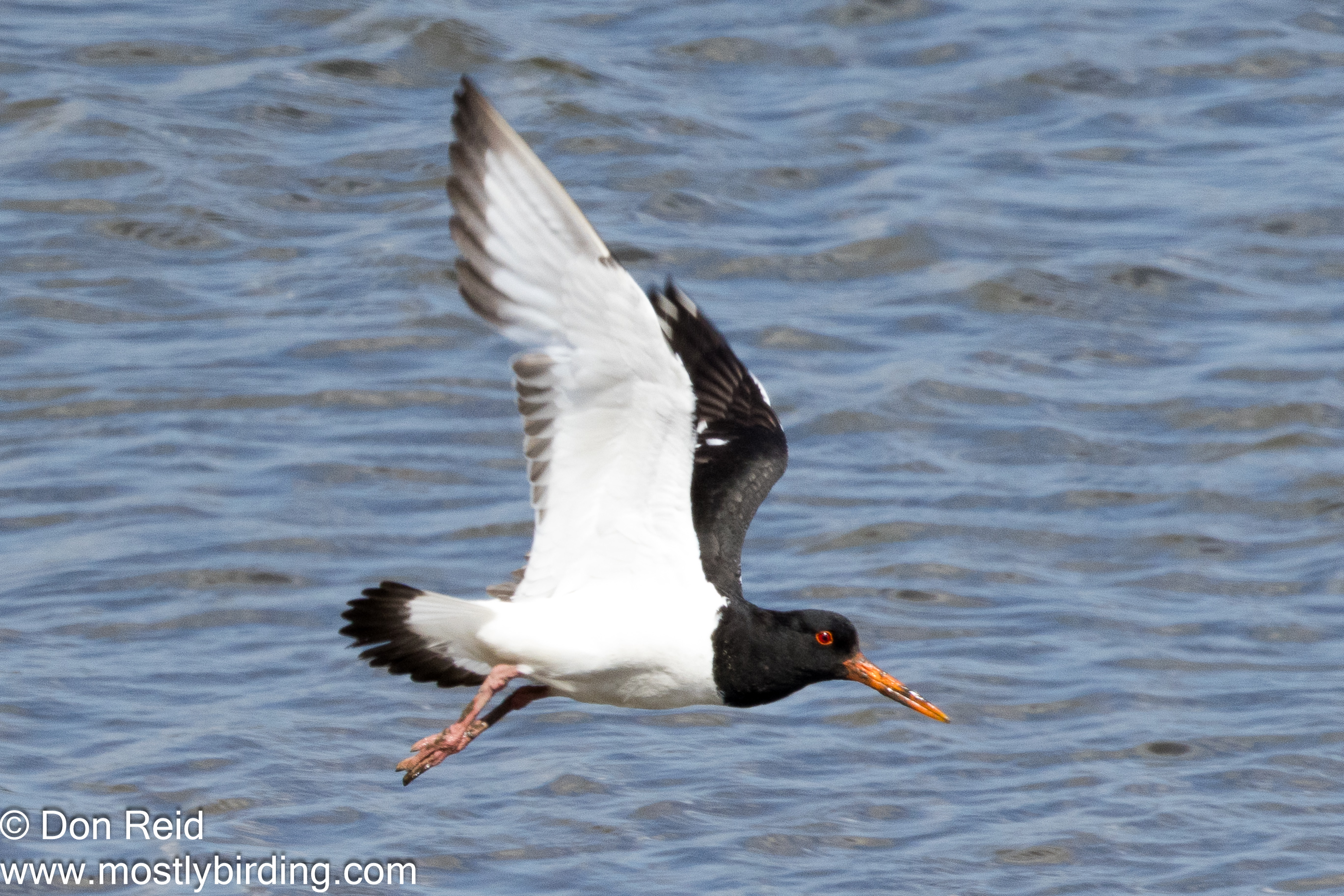
Eurasian Oystercatcher Haematopus ostralegus River Eden Estuary
Common Redshank Tringa totanus River Eden Estuary
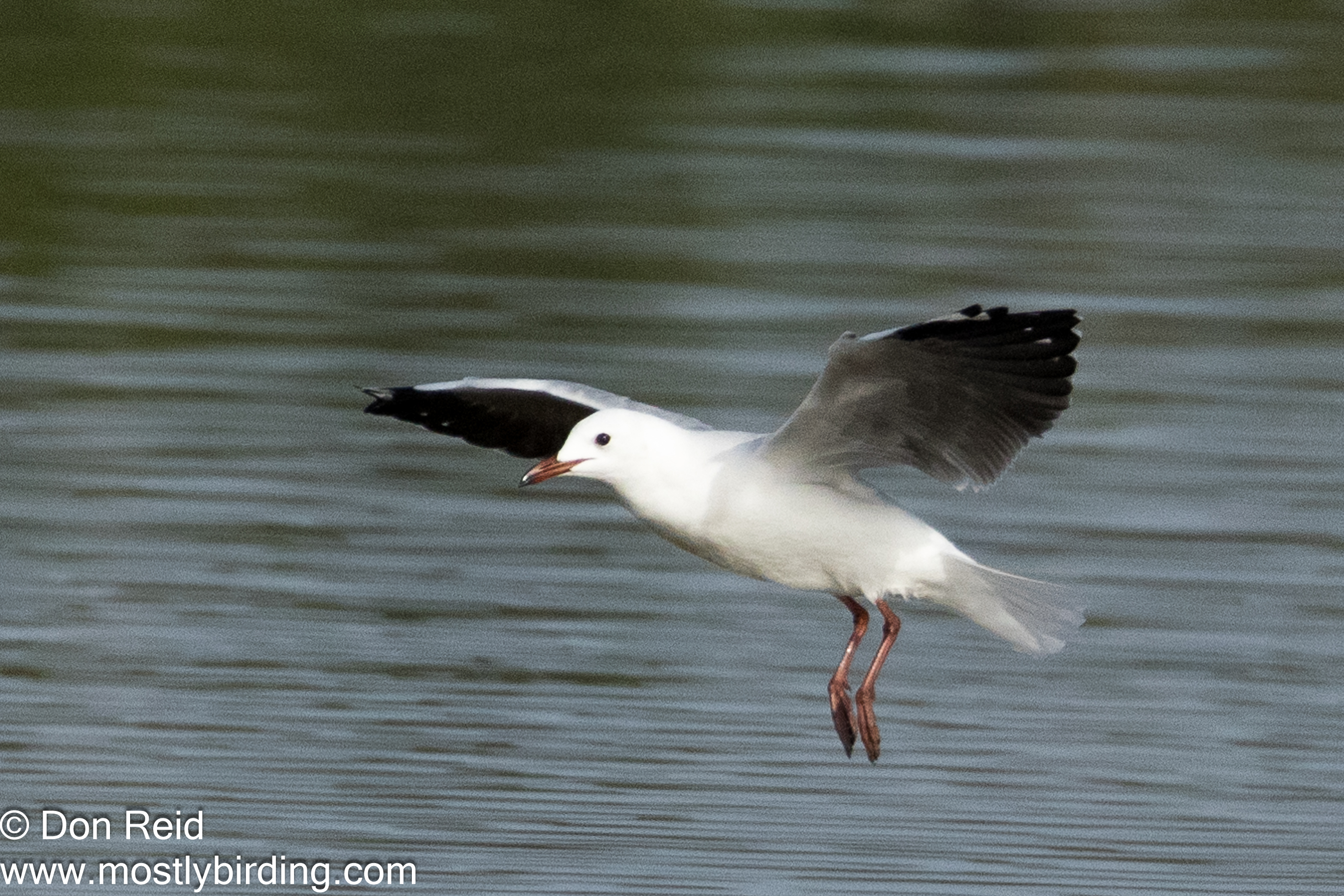
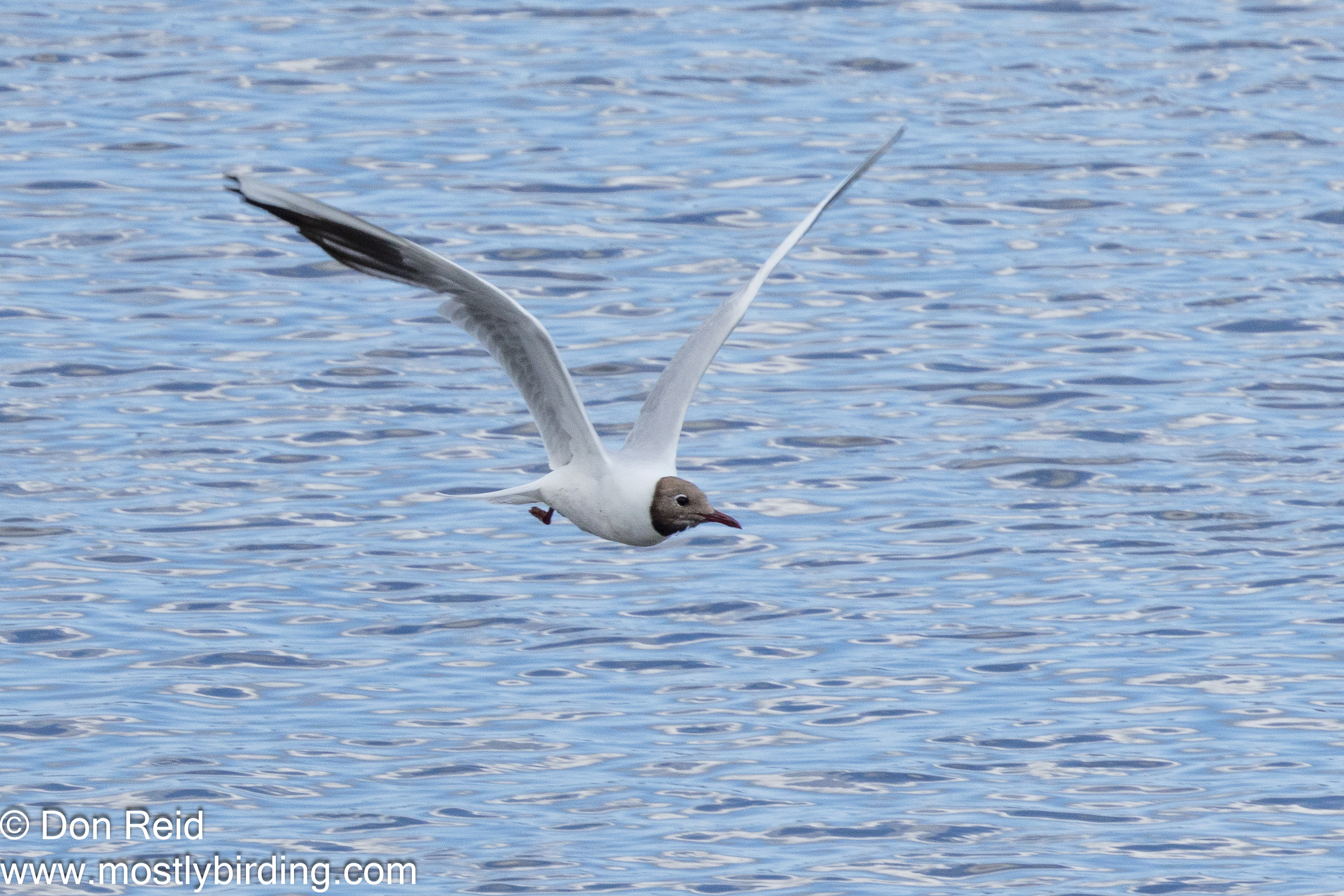
Black-headed Gull Chroicocephalus ridibundus River Eden Estuary
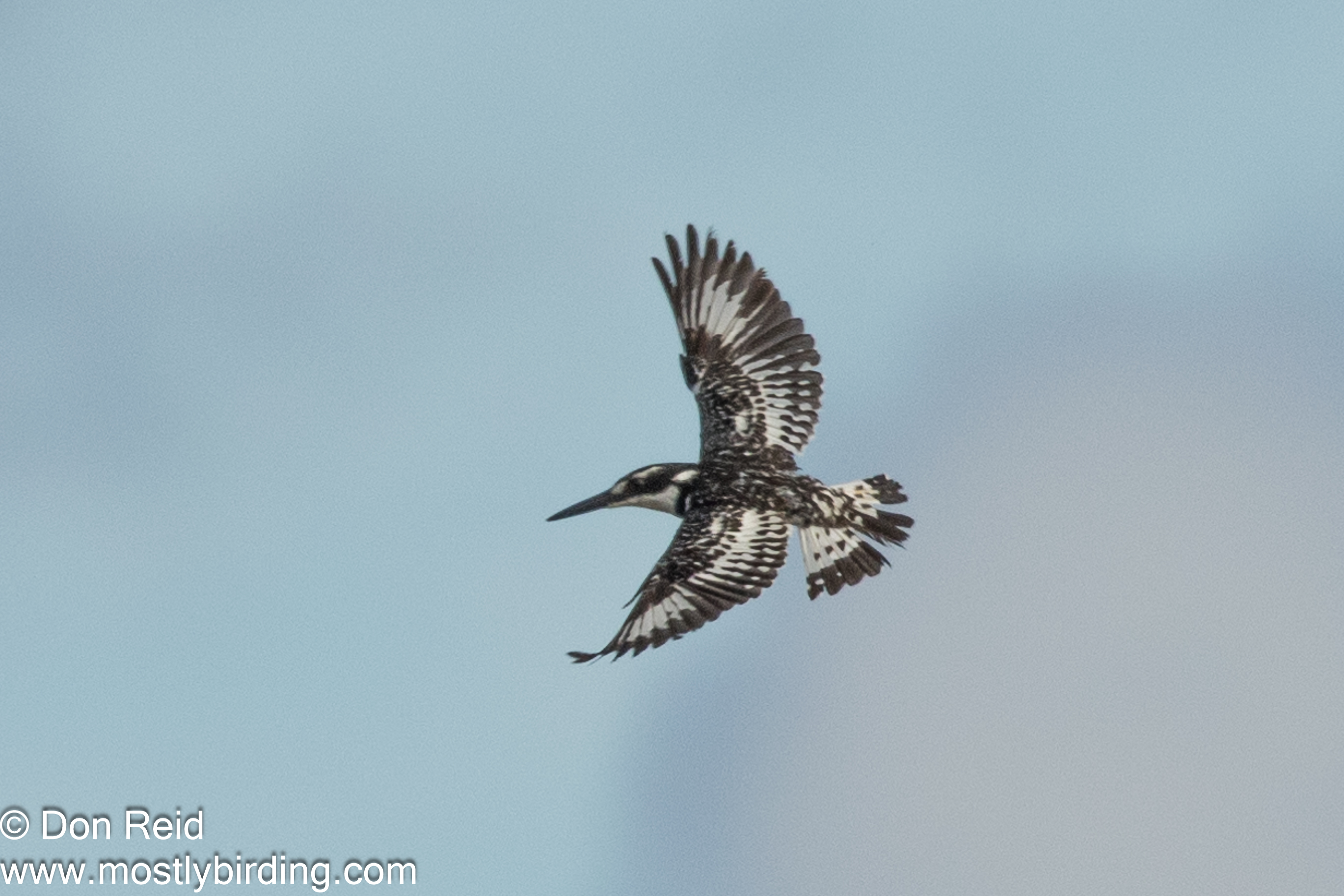
Pied Kingfisher Ceryle rudis Bontvisvanger, Gouritzmond

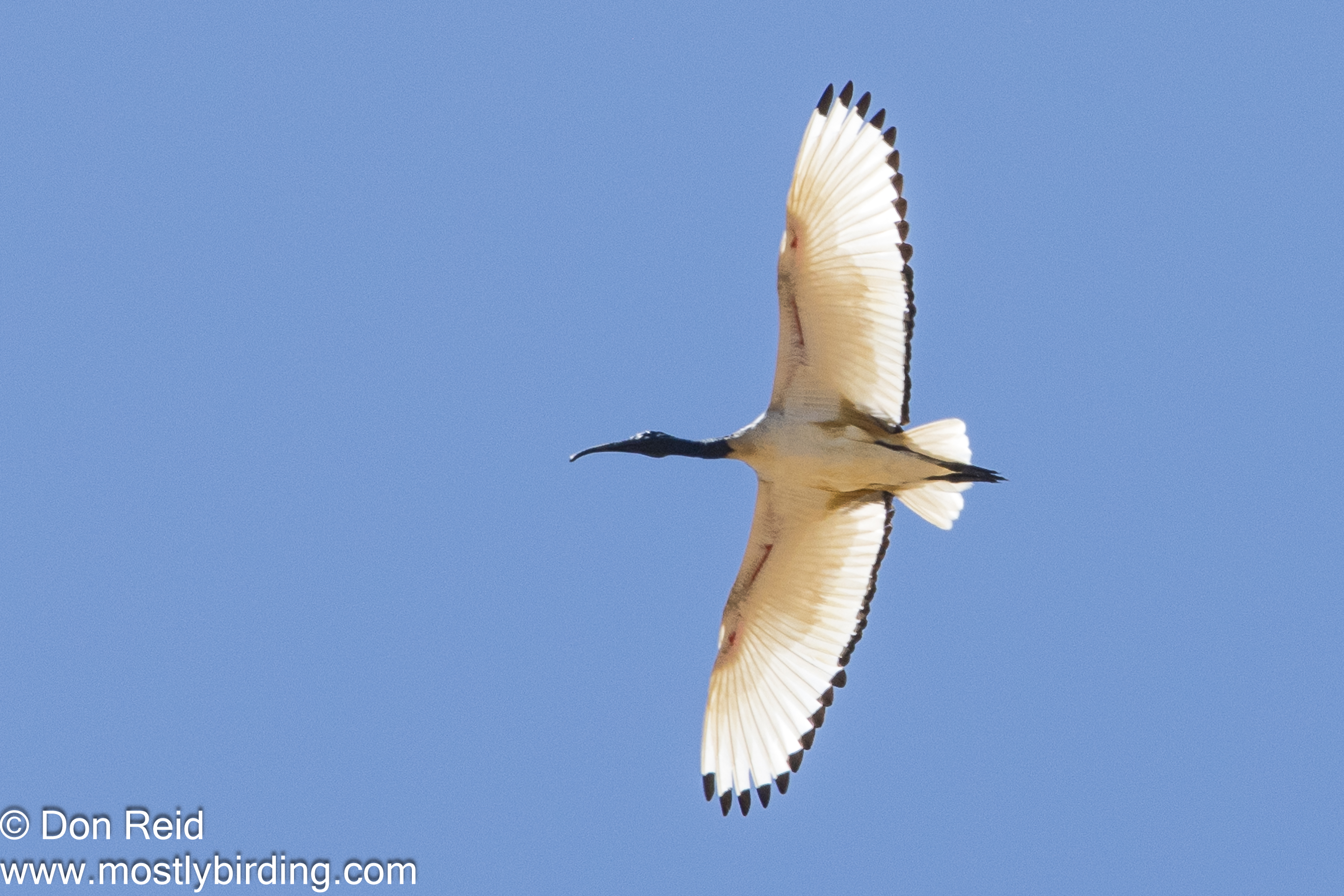
A different view of a Sacred Ibis – it was soaring like an eagle

African Sacred Ibis Threskiornis aethiopicus Heilige ibis, Arniston-Bredasdorp
Black Harrier Circus maurus Witkruisvleivalk, Vleesbaai area

The Wildlife

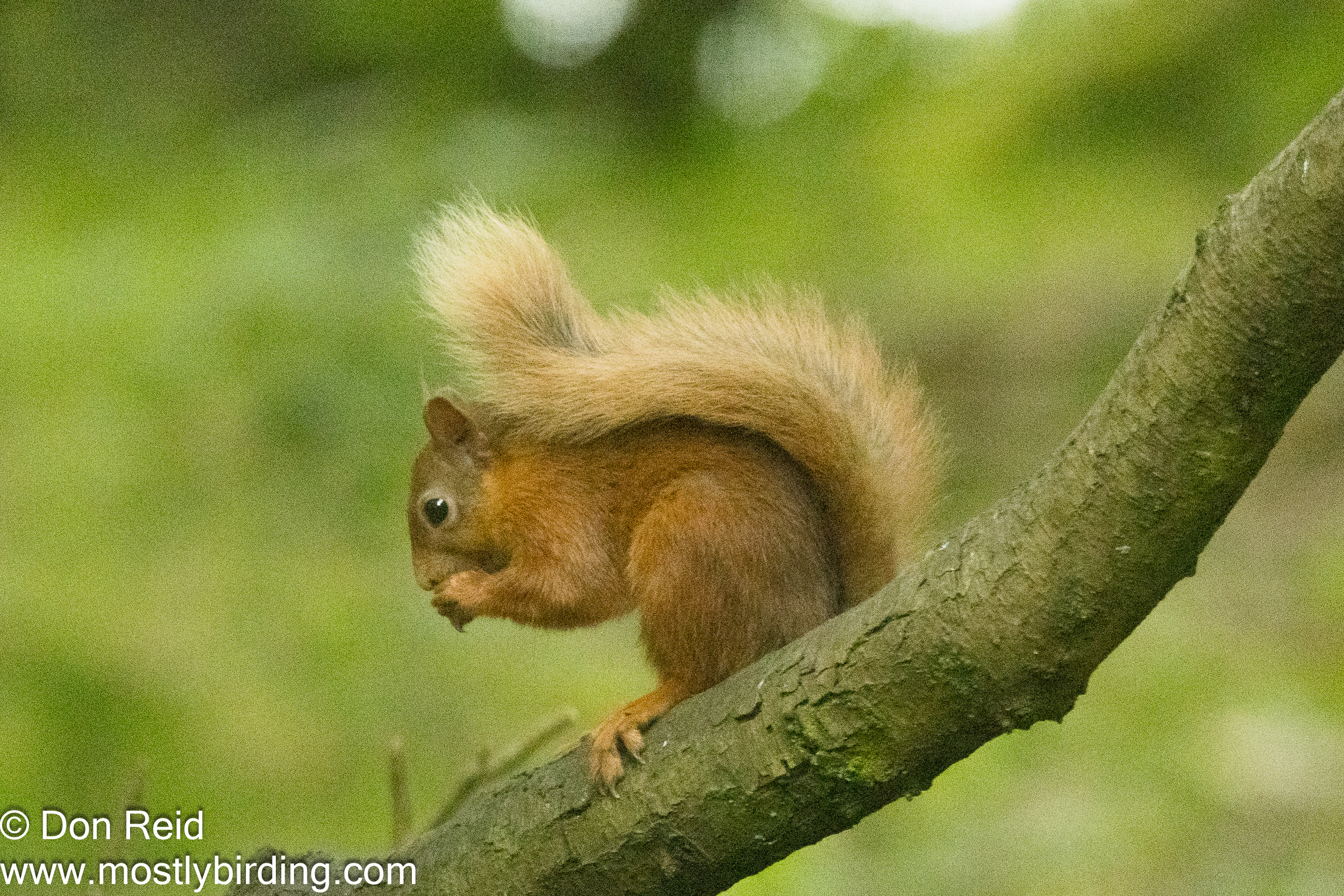
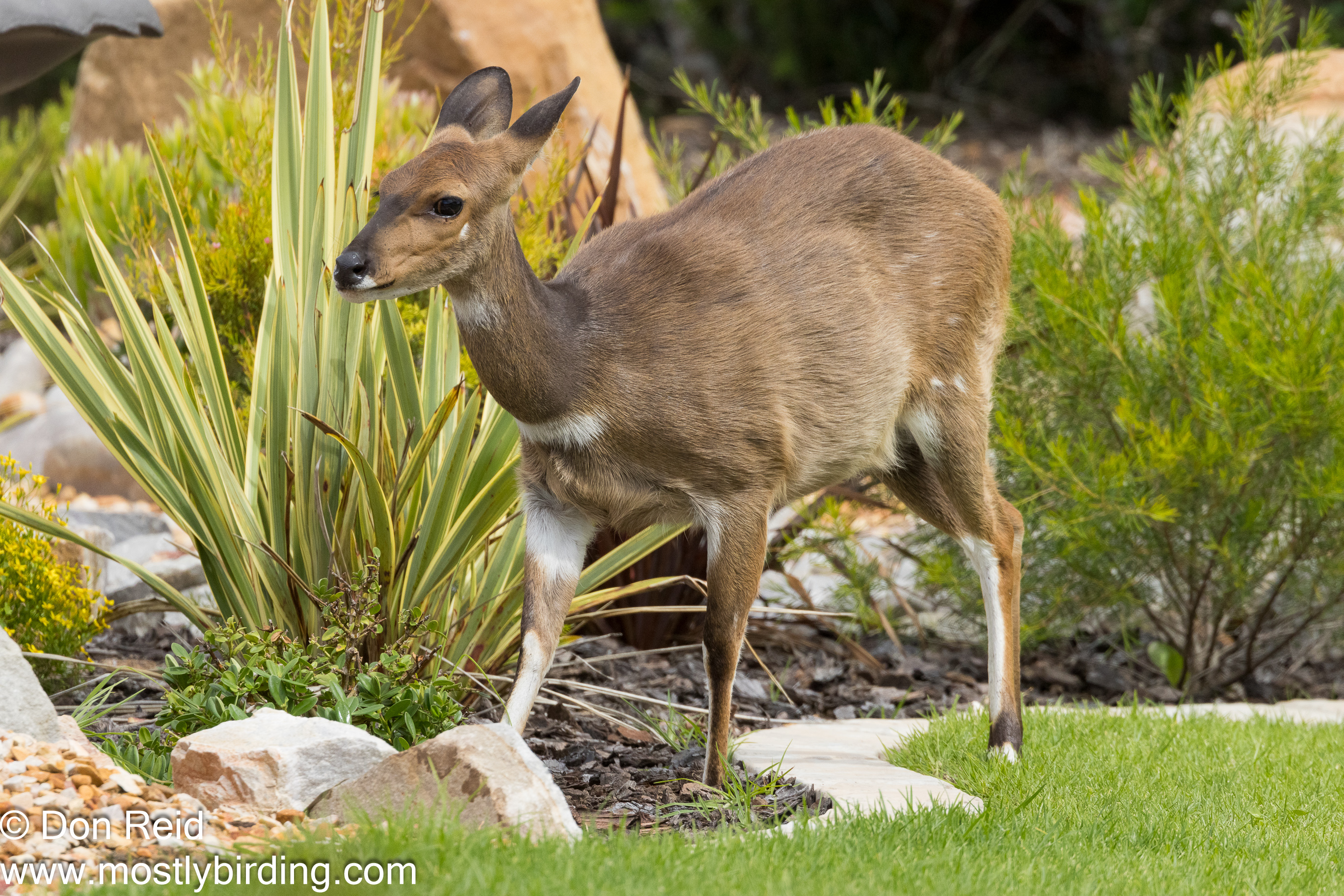
As I mentioned we did not get to visit a single national park during the year so I had to be content with some not-so-wildlife ….

Red Sqirrel Sciurus vulgaris Loch of the Lowes
Bush buck, Mossel Bay Golf Estate

The Other Stuff

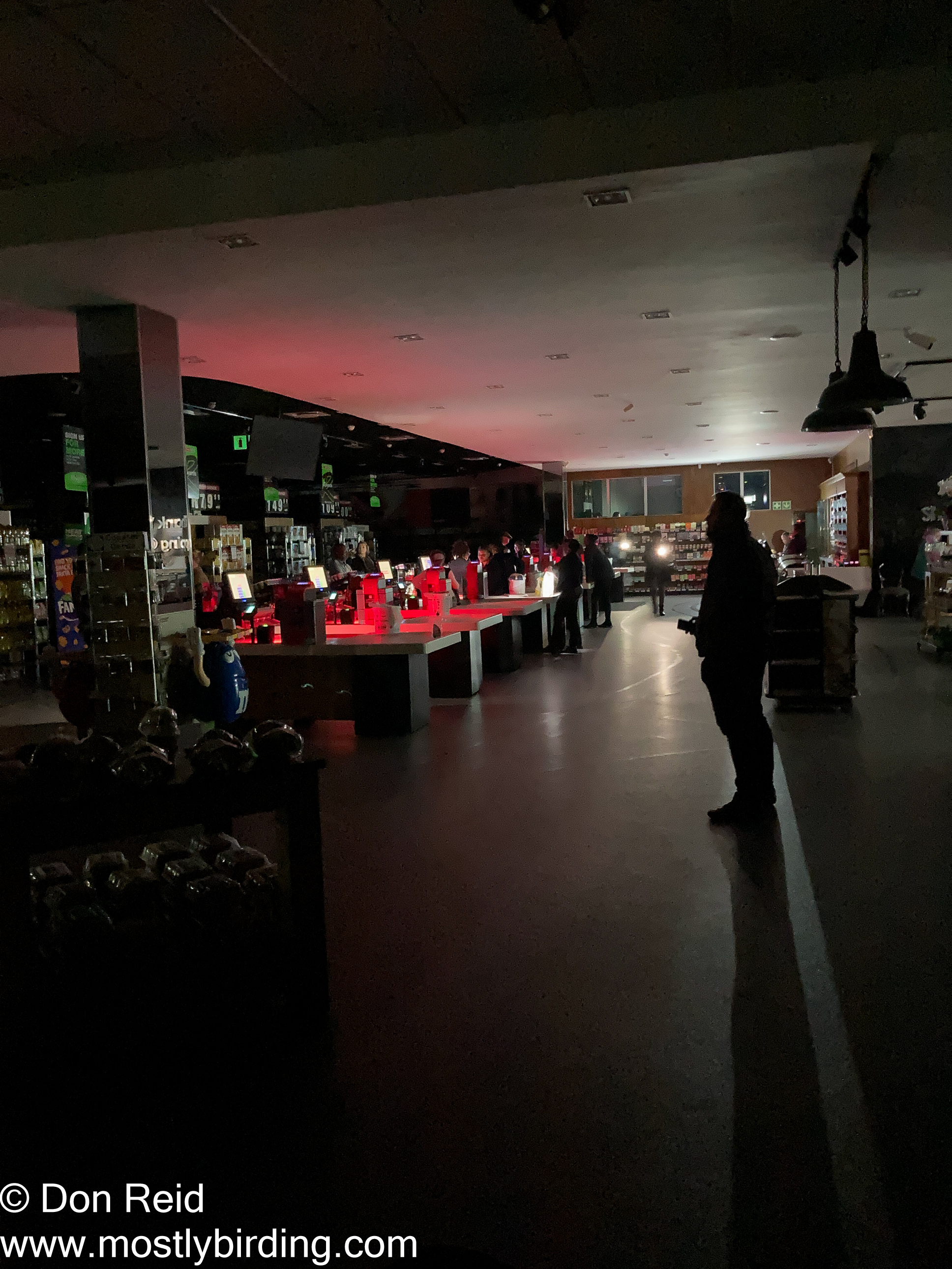
South Africa’s infamous load shedding (electricity cuts) got worse this past year – I took this photo in our local supermarket just after the main lights went off, before the generators kicked in

Pretoria

This unusual image was taken in a local nature reserve after a heavy rainstorm, which swept a variety of debris down the stream that runs through the reserve ….

Faerie Glen NR

And finally, a quirky decorative topping to the post box in a Scottish village

Upper Largo

I can’t imagine a life without photography .. or birding of course

A Beach Sunset

Firstly, I hope to get back to more regular posts – other matters have taken priority the last while and have meant I haven’t been able to spend nearly as much time on blogging as I would like, so hopefully I can change that going into the holiday season.

Secondly this may or may not be the start of a new series of posts – my last one featured a Fynbos sunset and here I go again with a Beach sunset – we’ll just have to see where this goes…..

We decided to take a short break and chose Arniston, a small coastal town about 260 kms from our home in Mossel Bay. We had only been there once before for lunch at the Arniston Hotel and have always wanted to experience the charming spot more thoroughly so booked for three nights in a seafront room.

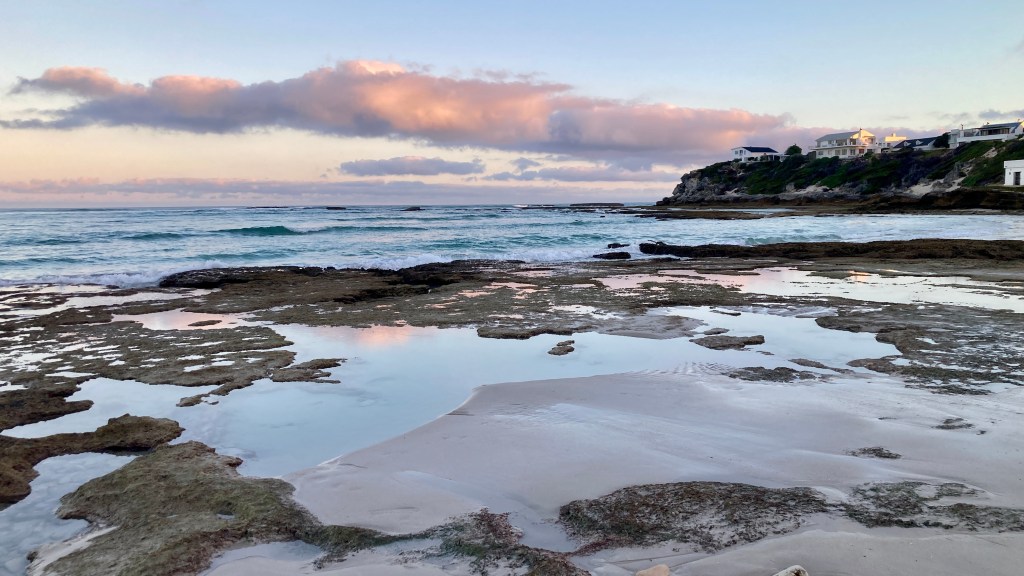
As usual I went for my late afternoon walks during the stay and was drawn towards the beach right in front of the hotel for a stroll along the sand and a clamber over the low rocks that are exposed by the low tide.

The scenes were stunning, the sand, sea and sky lightly brushed with colour from the sun setting behind my back on the land side.

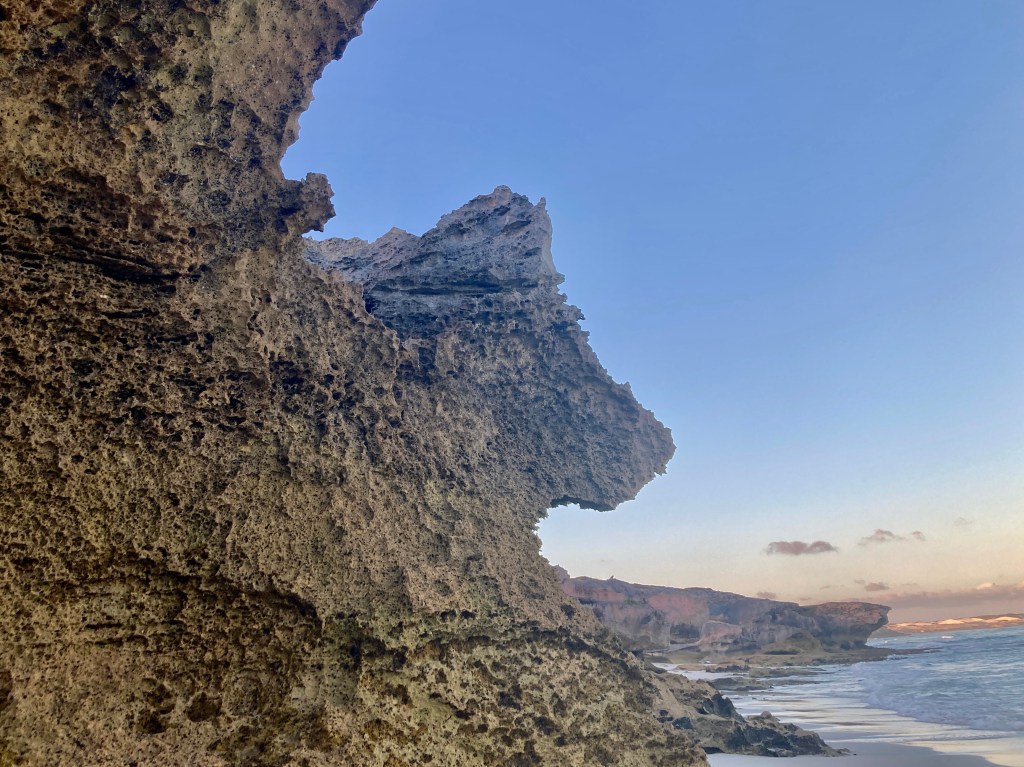
Once I had a few shots taken of the beach I looked around for interesting patterns and colour combinations amongst the exposed rocks and didn’t have to go far to find these

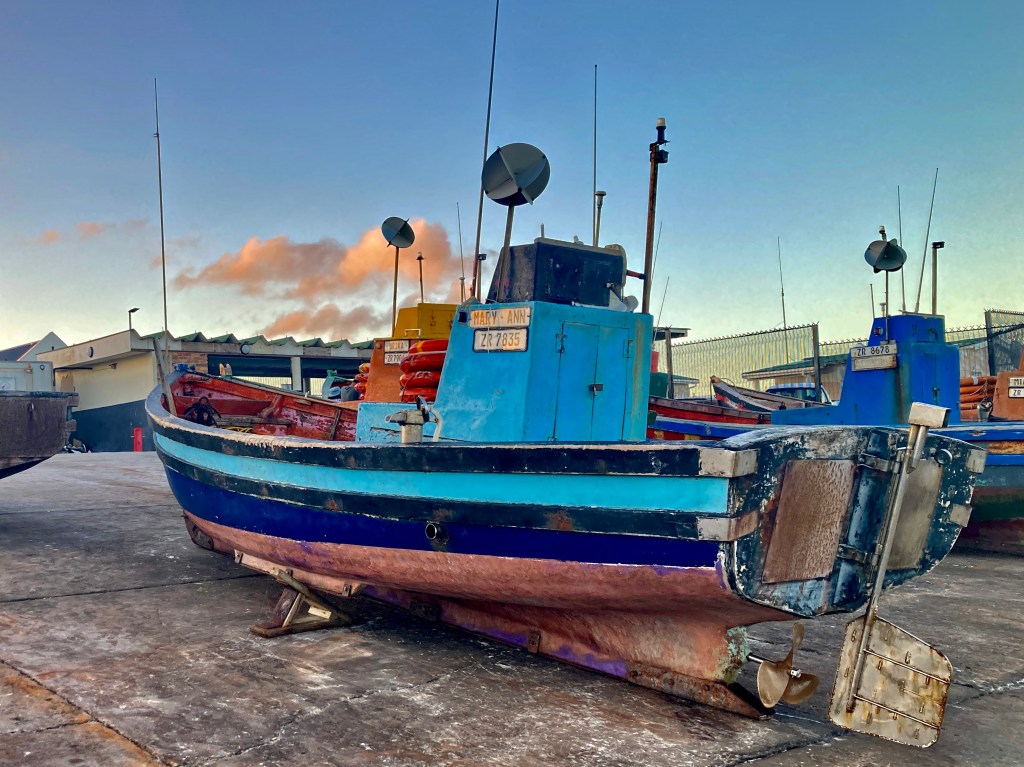
The harbour slipway had a few fishing boats standing out of the water and this colourful one demanded a photo

Back on the sand I was fascinated by the variety of pebbles large and small, swept into random patterns by the incoming and outgoing tide

Oh, and I met a dog on the beach…..just gazing out to sea

What a nice way to end a day

A Fynbos Sunset

One of the joys of Mossel Bay, our new home town, is the proximity of our house to the broad band of coastal fynbos that separates the estate we live in from the rugged coastline running along this part of the southern Cape.

A short walk of a few minutes takes one into a world of tiny flowers in an expanse of heath-like bushes and although my primary aim is usually to see what birdlife is present, the setting sun this afternoon enticed me to try my hand at some more ‘arty’ photos, using my trusty iphone.

Here are some of the results

On closer inspection of the above photo I noticed that the flower was draped in spider’s web which shows up better in this cropped version

300 Up! And a special bird to celebrate

My 300th post is a short one with just one photo of one bird – but I have reason to celebrate both…

The bird in question is a Common Quail – so what’s the big deal I hear you think. Well if I tell you that I’ve heard this bird calling a few hundred times during my birding and atlasing travels over 35 years or so, but have seen it just once before, so briefly that there was no chance to get a photo, then you may appreciate my excitement about my experience last week.

I was out atlasing in the early morning not far from our new home in Mossel Bay and heard the familiar call of Common Quail almost every time I stopped. There were numbers of Larks and other birds in the gravel road and along the verges, then I noticed something different up ahead and raised my binos once more – it was a Common Quail, in fact a pair that were walking along the edge of the gravel amongst grass tufts.

With my heart pumping I grabbed my camera, checked settings and fired away even though the Quails were not ideally positioned and not close enough to achieve sharpness, but I was ecstatic that I had at last seen this bird clearly and at least had a reasonable record photo.

Adventurous Birding, Atlasing and Travel