Prince Albert – Birding and other Delights

Always on the lookout for a chance to get away for a few days, Gerda’s birthday seemed like a good excuse and Prince Albert a good option being just a couple of hours away yet much more in terms of “a change being as good as a holiday”

Wednesday 11th September 2024

Packing was left to the morning of our departure and went smoothly albeit slowly and by midday we were heading to our first stop – no prizes for guessing – our favourite Eight Bells Inn for a light lunch in the enclosed patio (bit too windy and cool for outside) with the familiar views and friendly staff.

On the way to the R328 we stopped at the Hartenbos Vleis for a quick scan of the birdlife and came up with an African Jacana – still a Western Cape Rarity – and African Swamphen among the usual Teals and Ducks. A Ruff was an interesting sight being one of the early palearctic migrant arrivals.

African Jacana (Western Cape rarity), Hartenbos Vlei

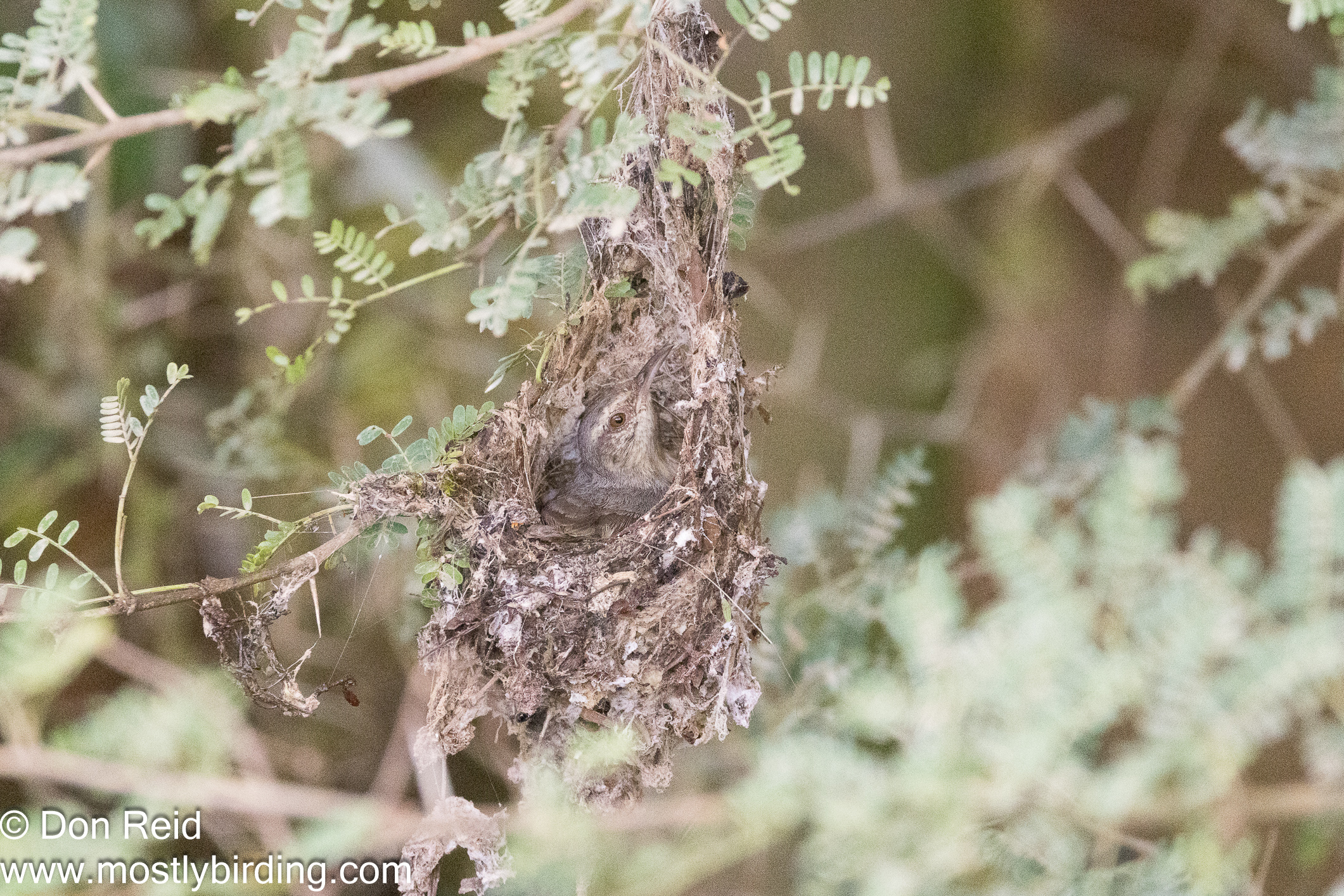
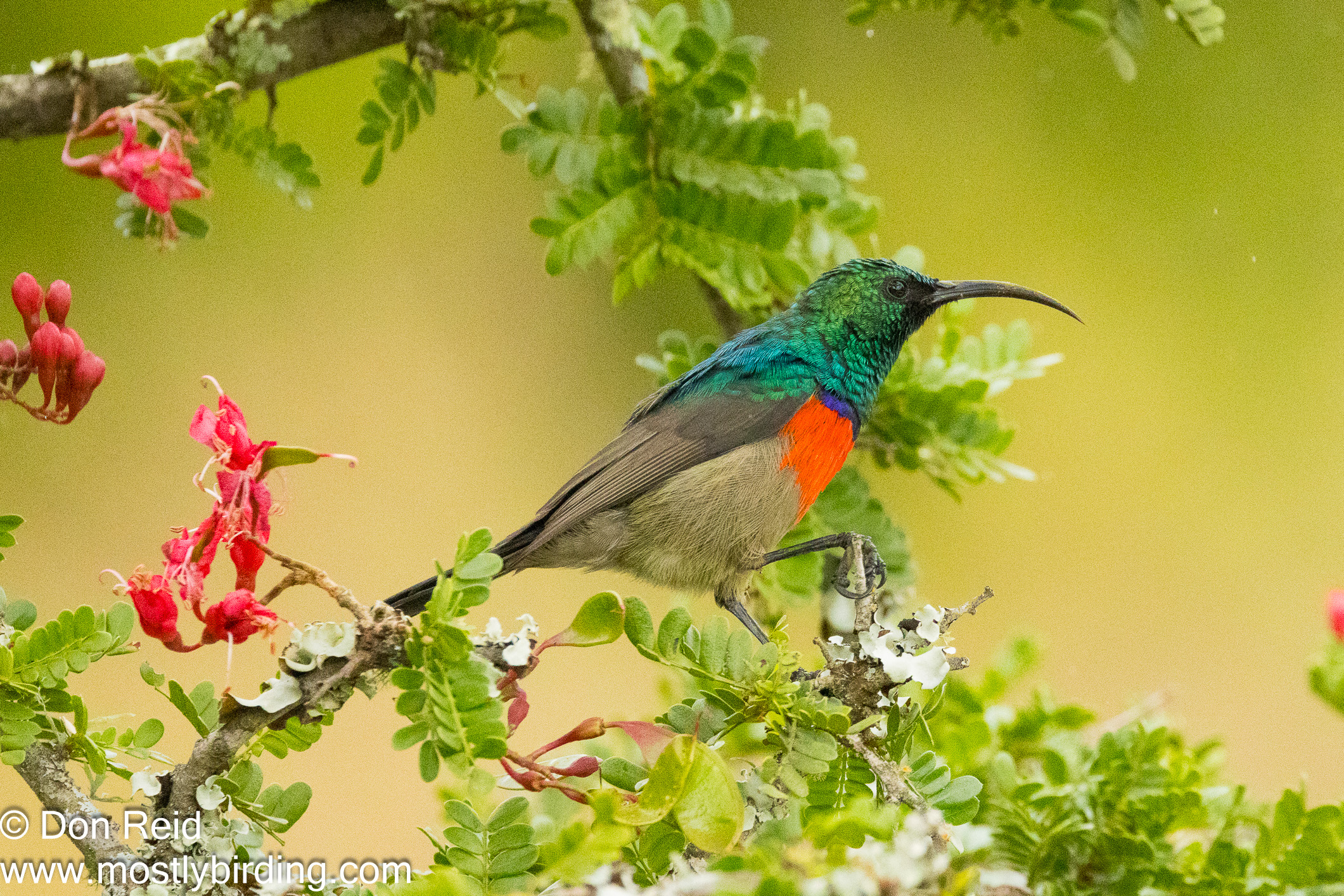
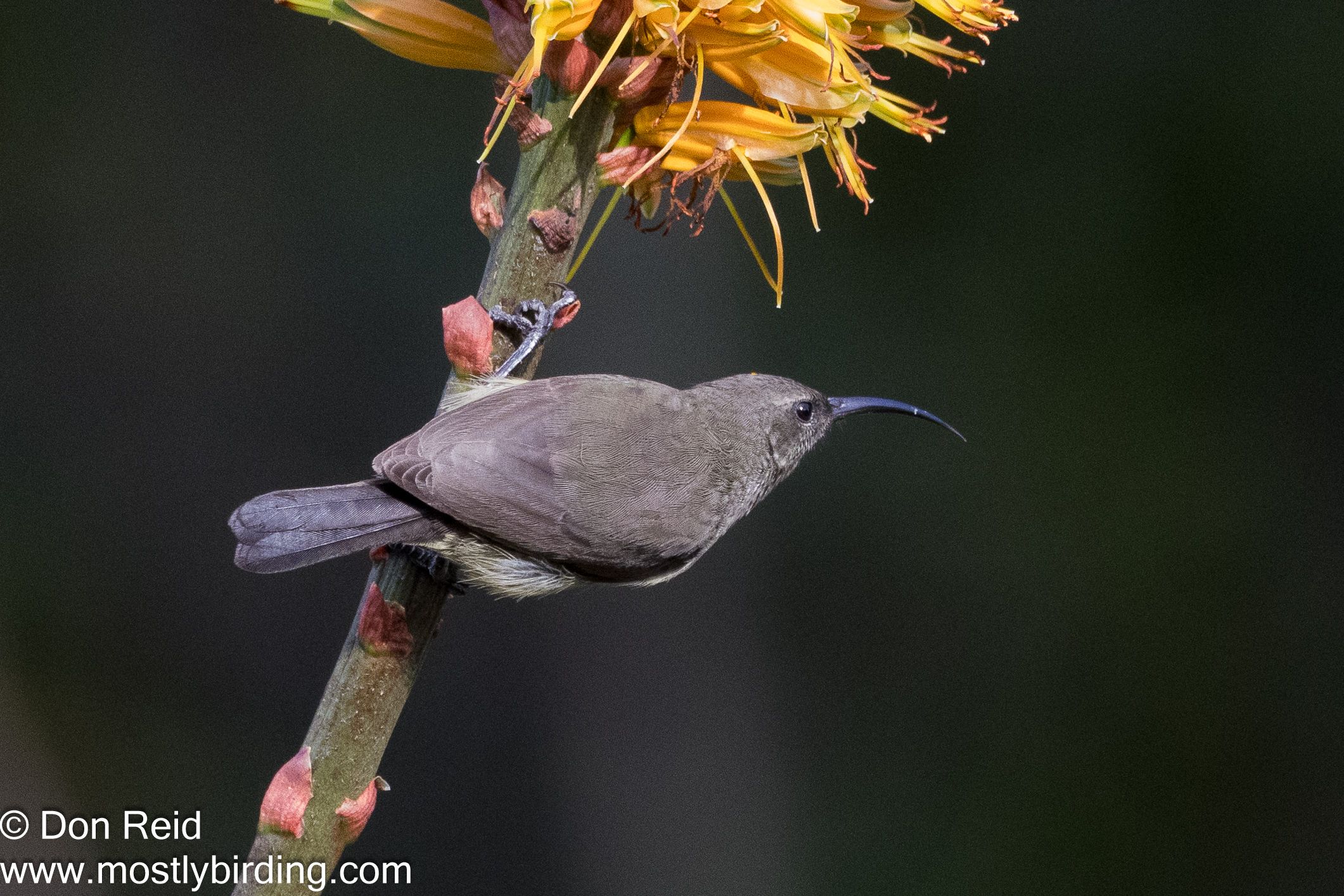
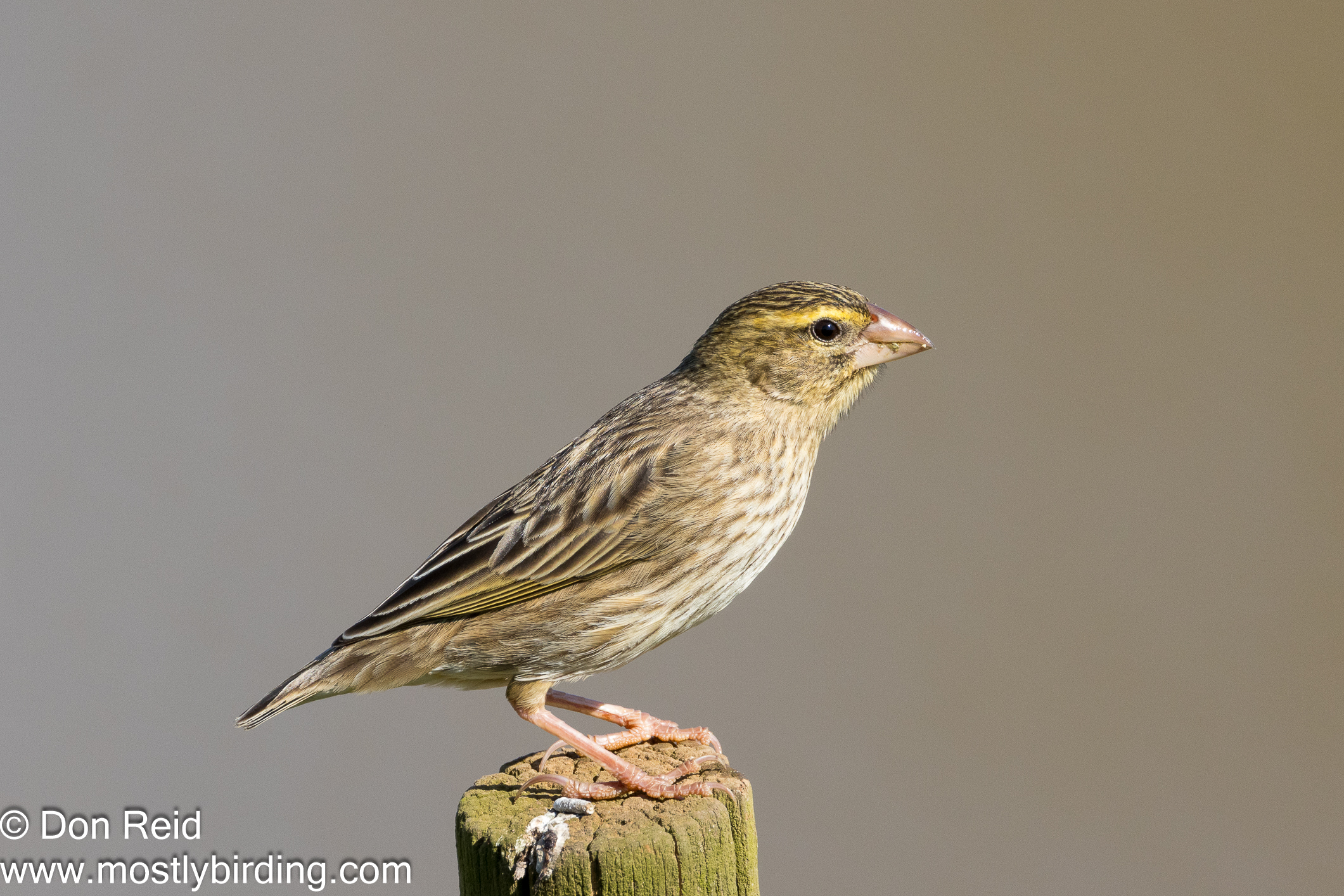
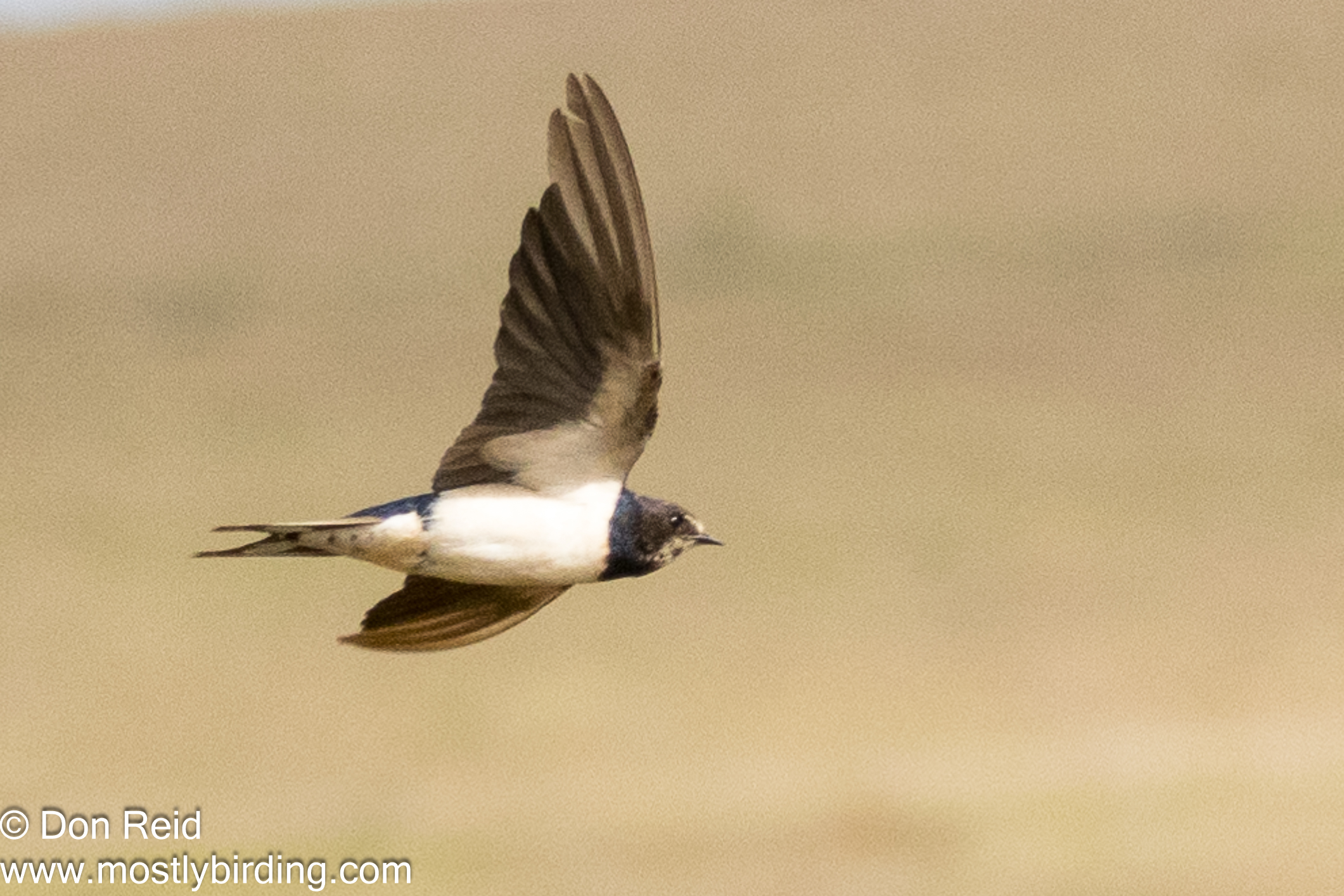
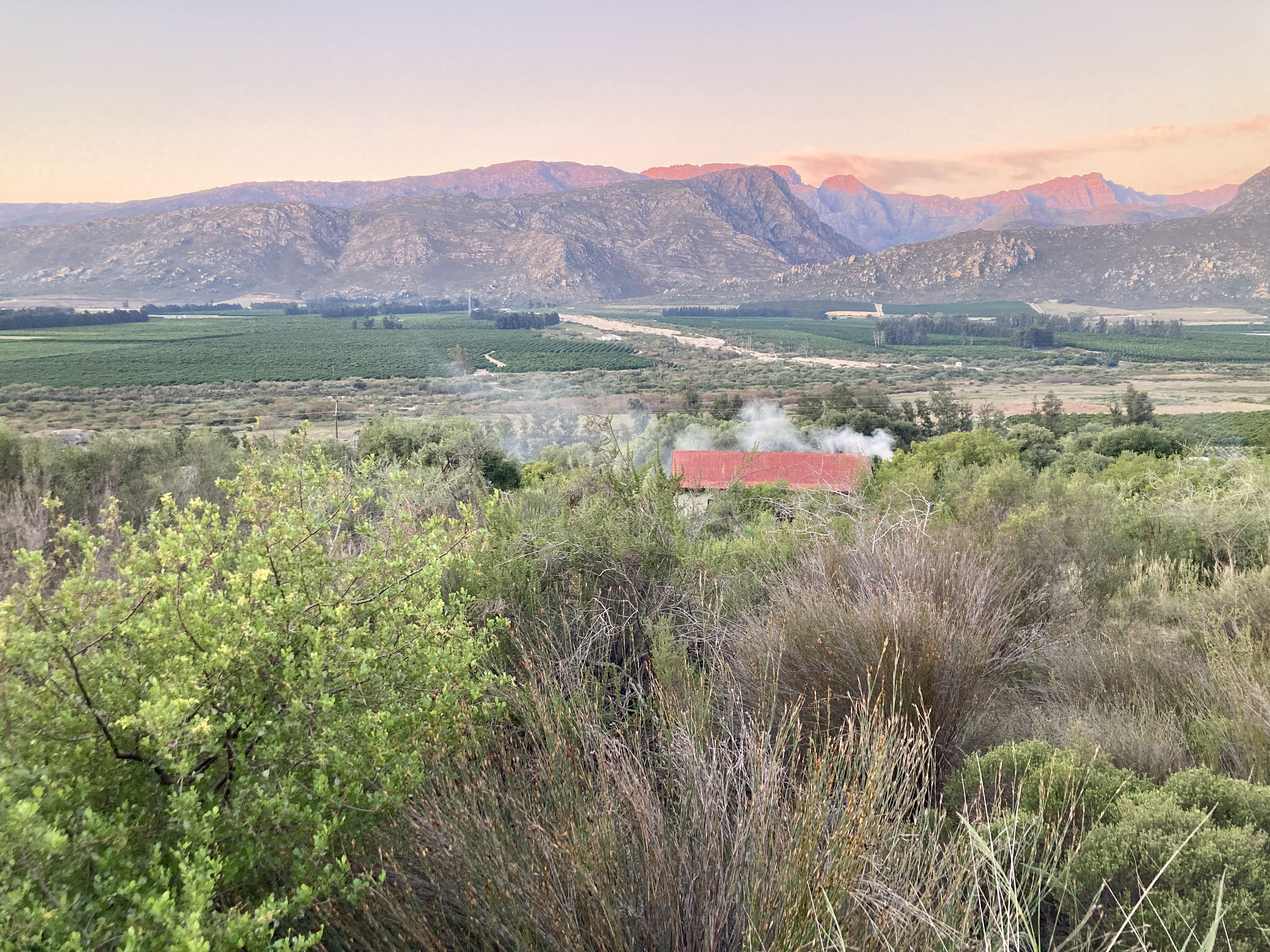
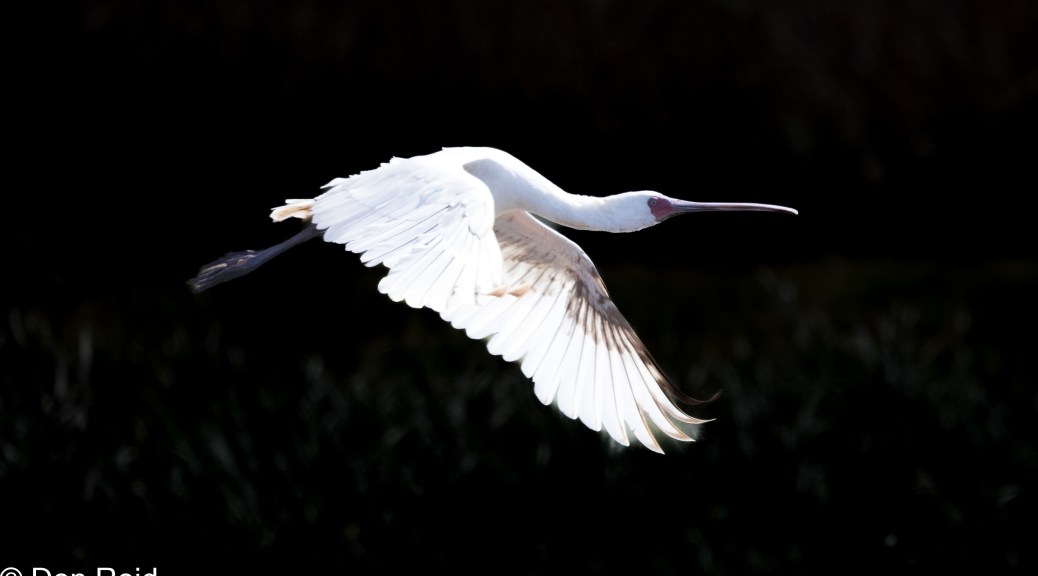
A number of Spoonbills on the far side of the vlei took to the air, providing an opportunity for some in flight photos, one of which I used for the heading image above after tweaking it to darken the background.

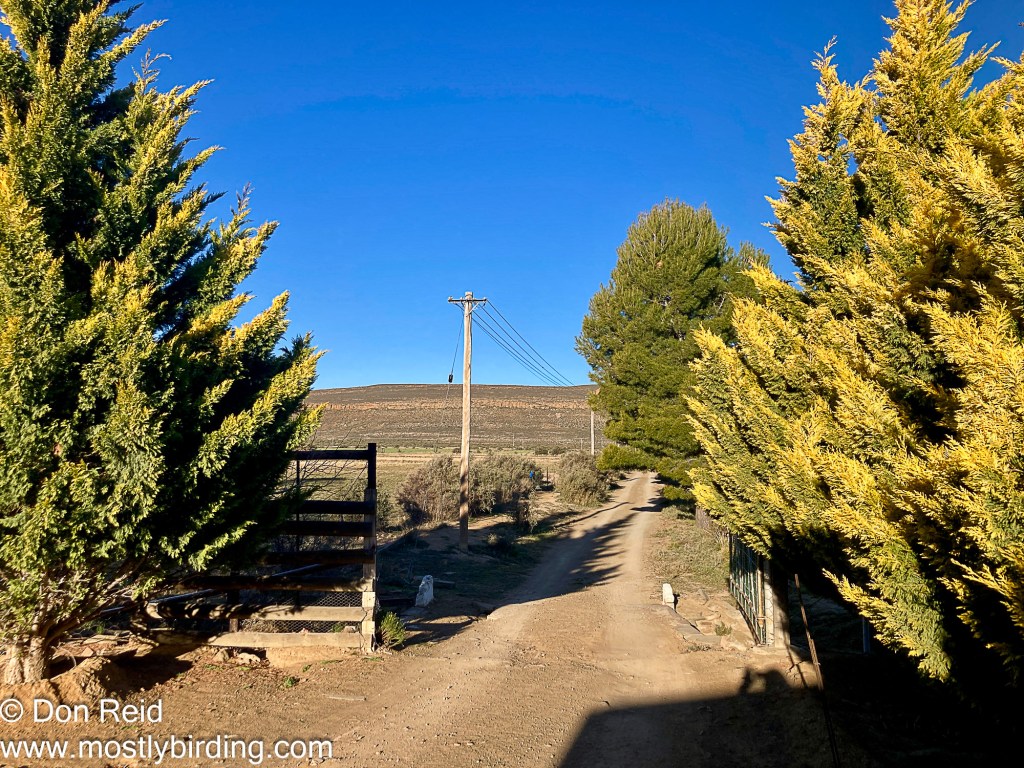
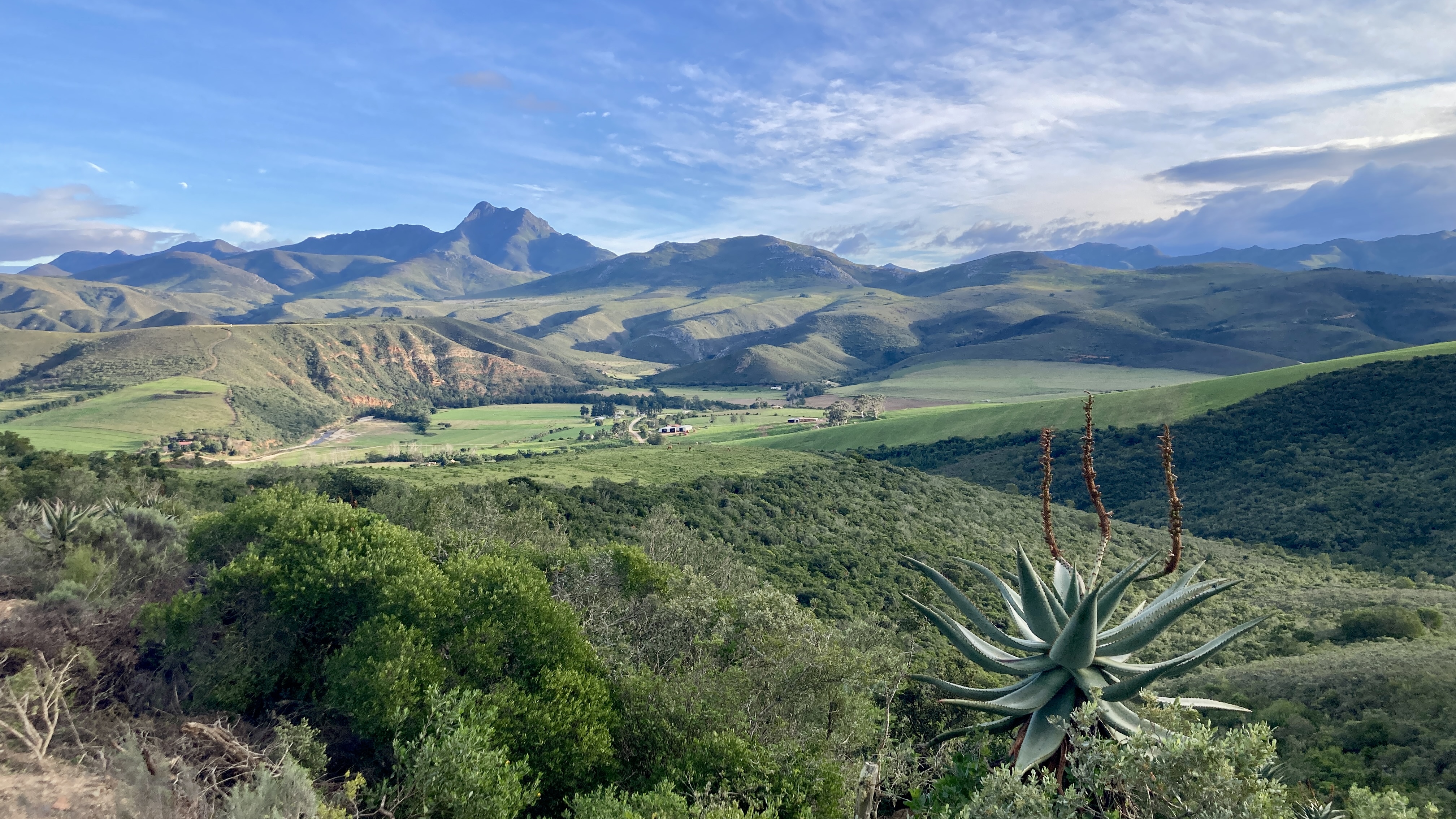
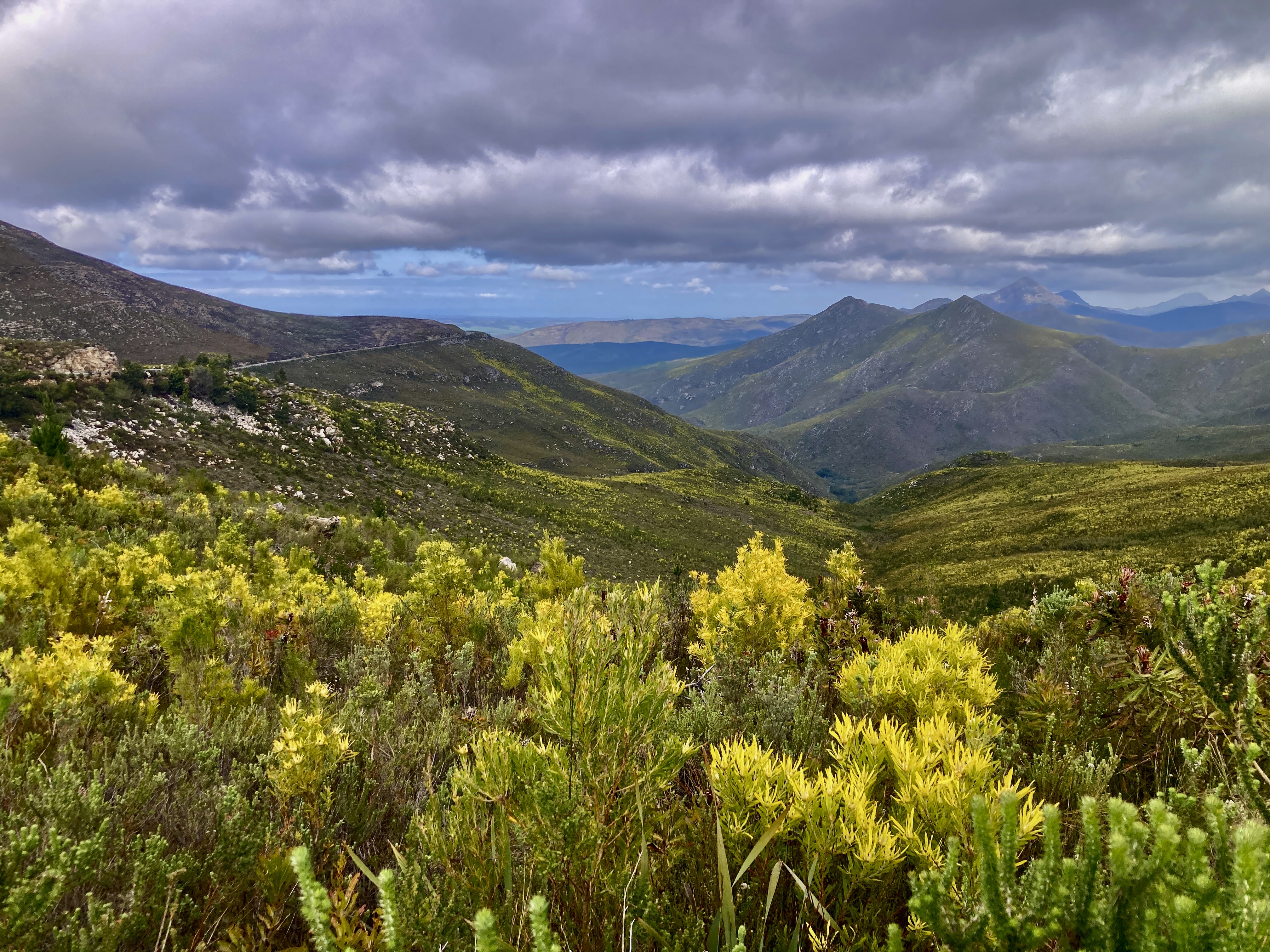
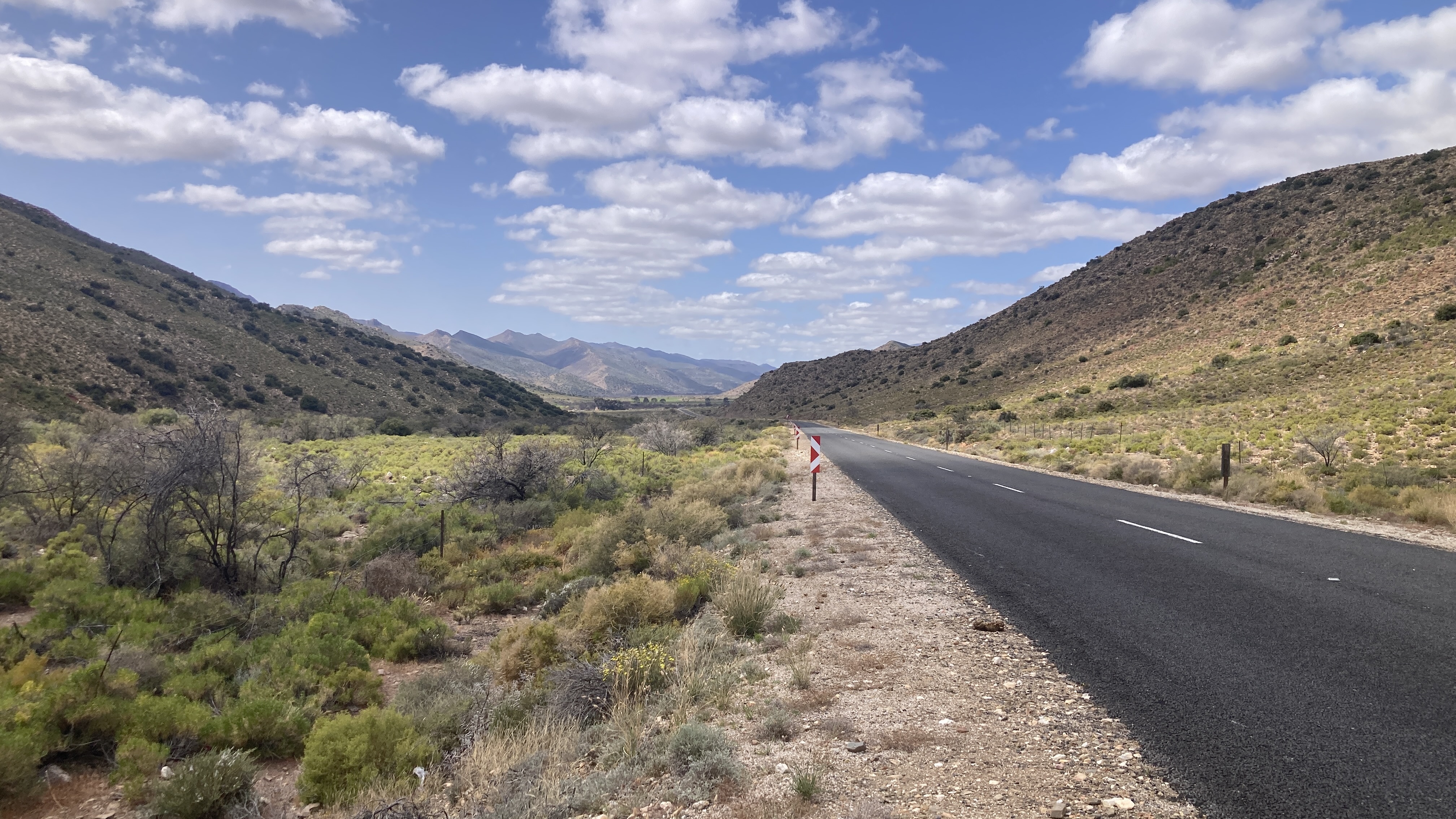
Back on the road after Eight Bells, we enjoyed the rest of the classic road trip through the Robinson Pass and Meiringspoort then along the hills and dales of the beautiful stretch of road heading to Prince Albert through the Kredouw Pass and the Prince Albert Valley

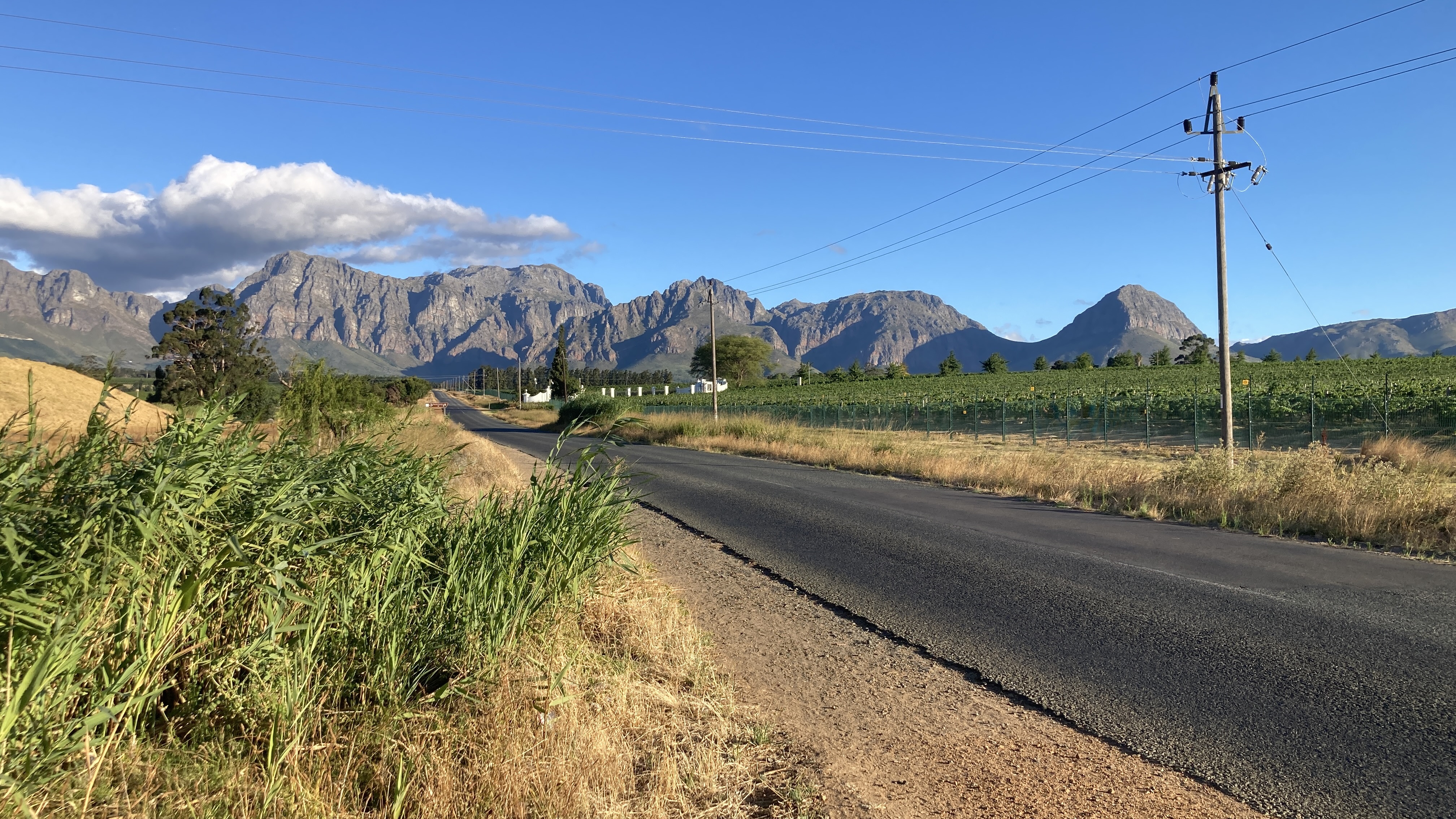
Prince Albert Valley

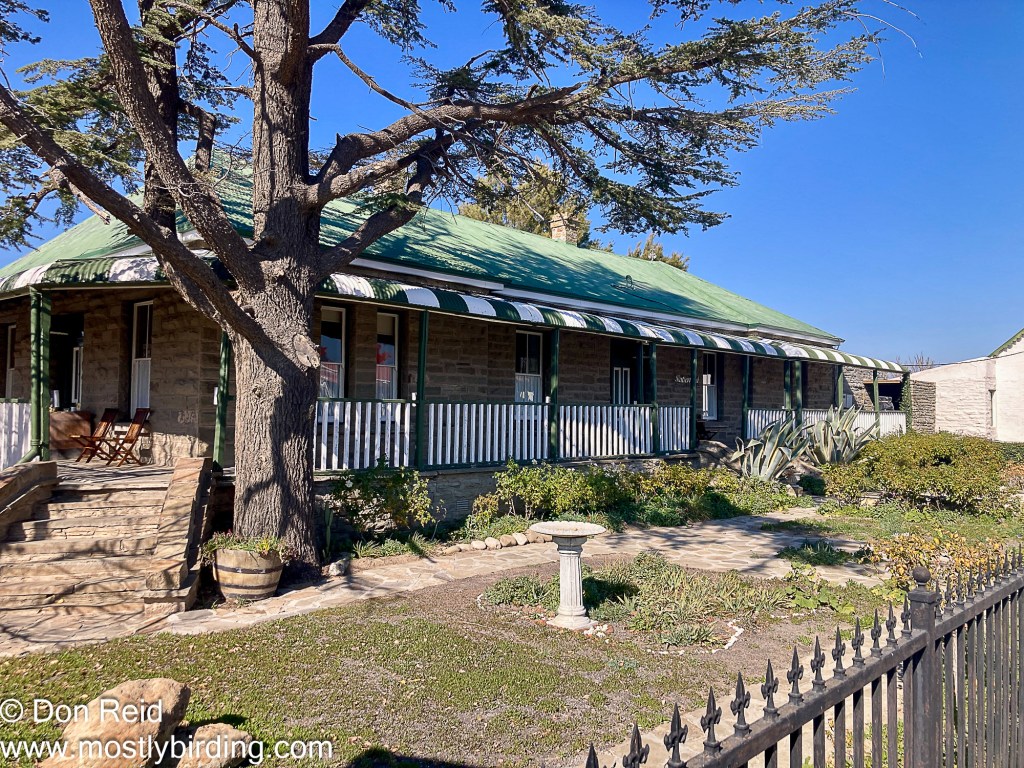
We hadn’t been to Dennehof Guesthouse before, but it was easy to find on the main road just before reaching the town proper and we were met by Albert (not the Prince) who showed us the room and provided info on dining options and things to do.

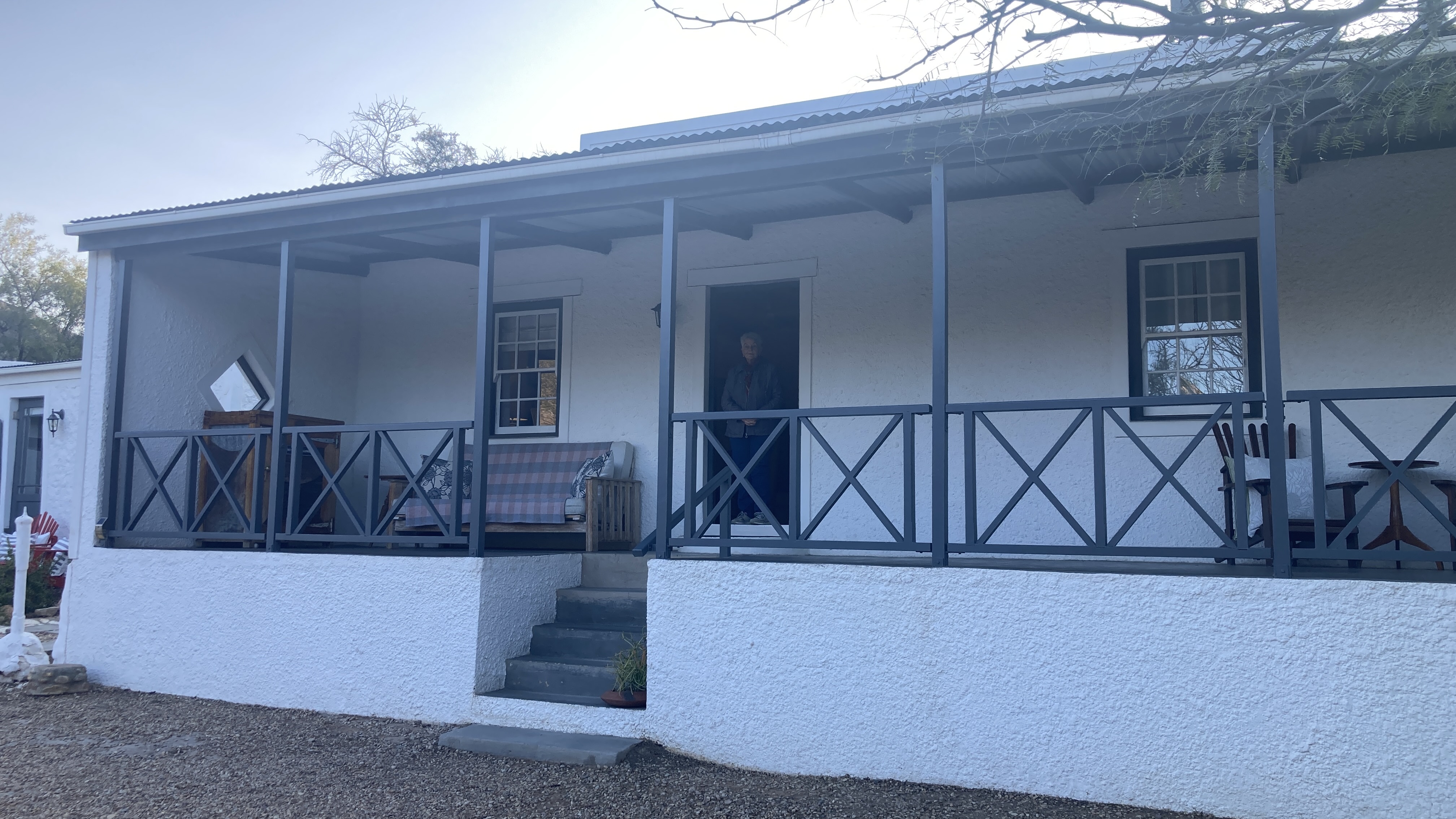
Dennehof – our room

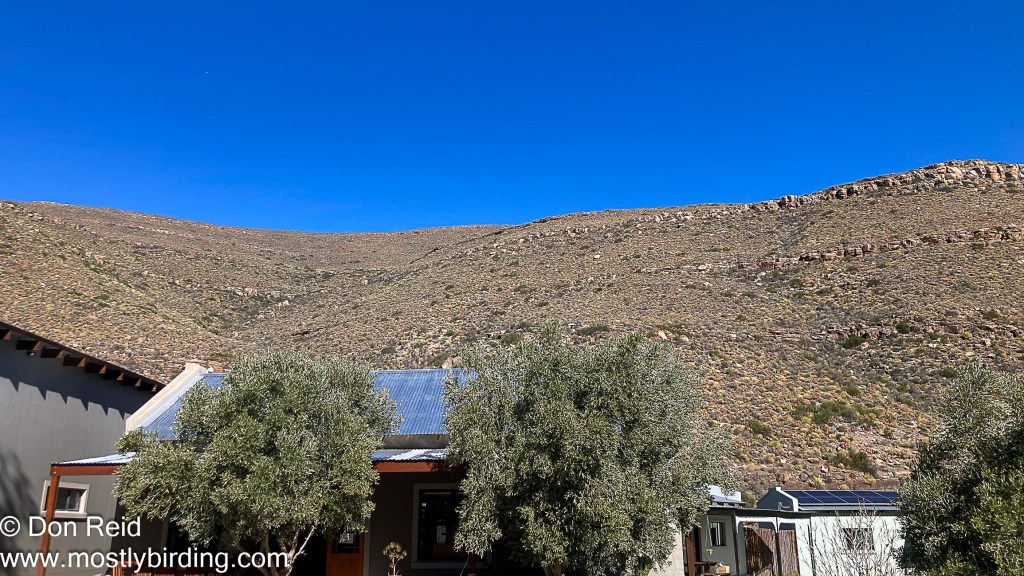
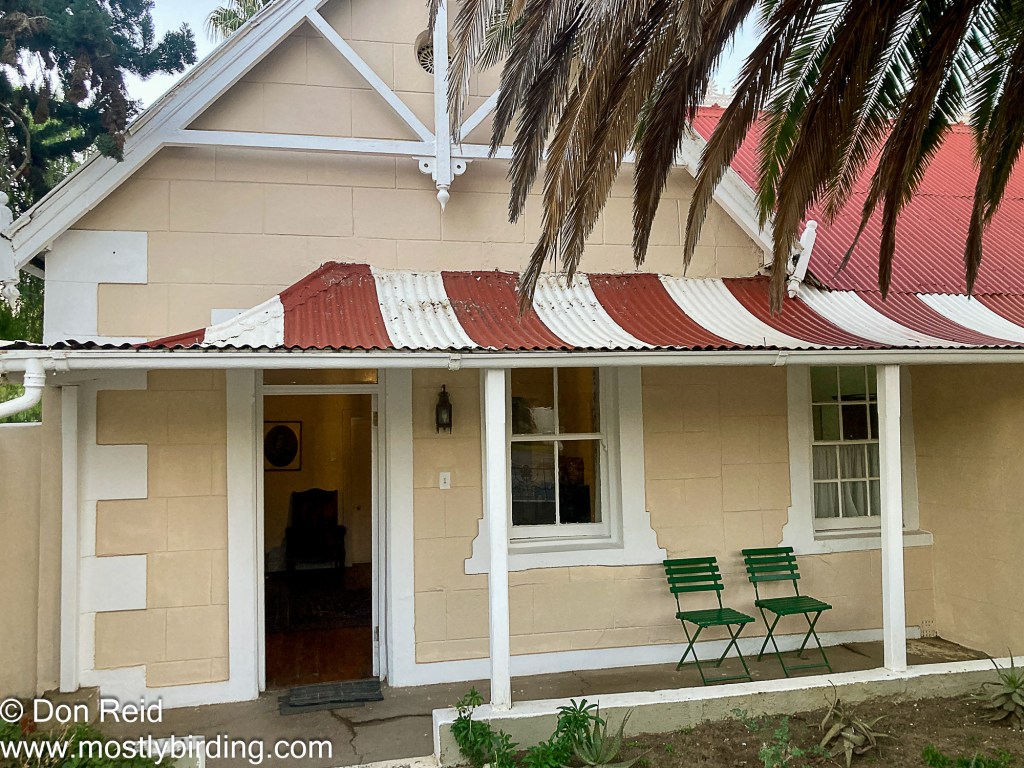
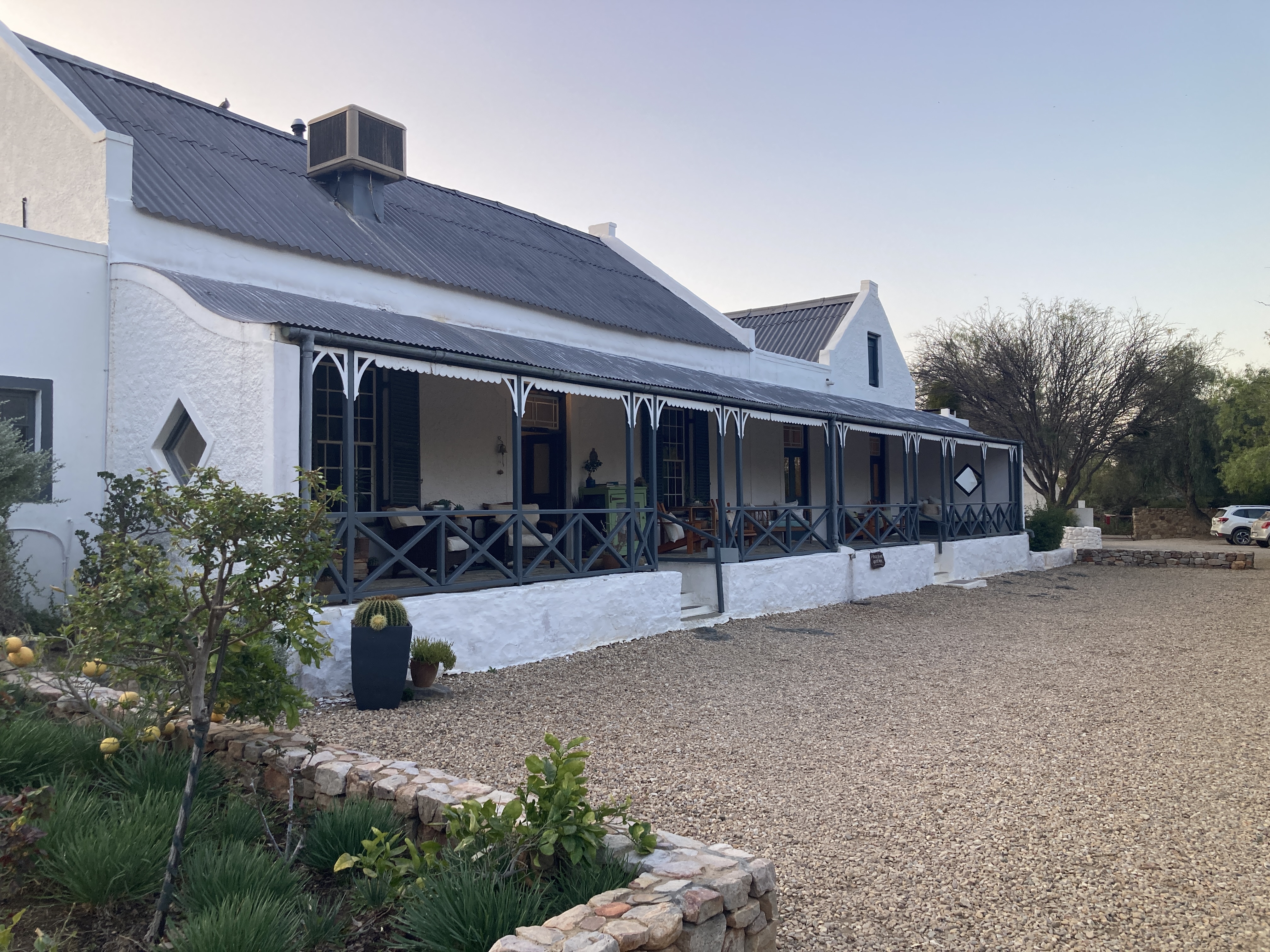
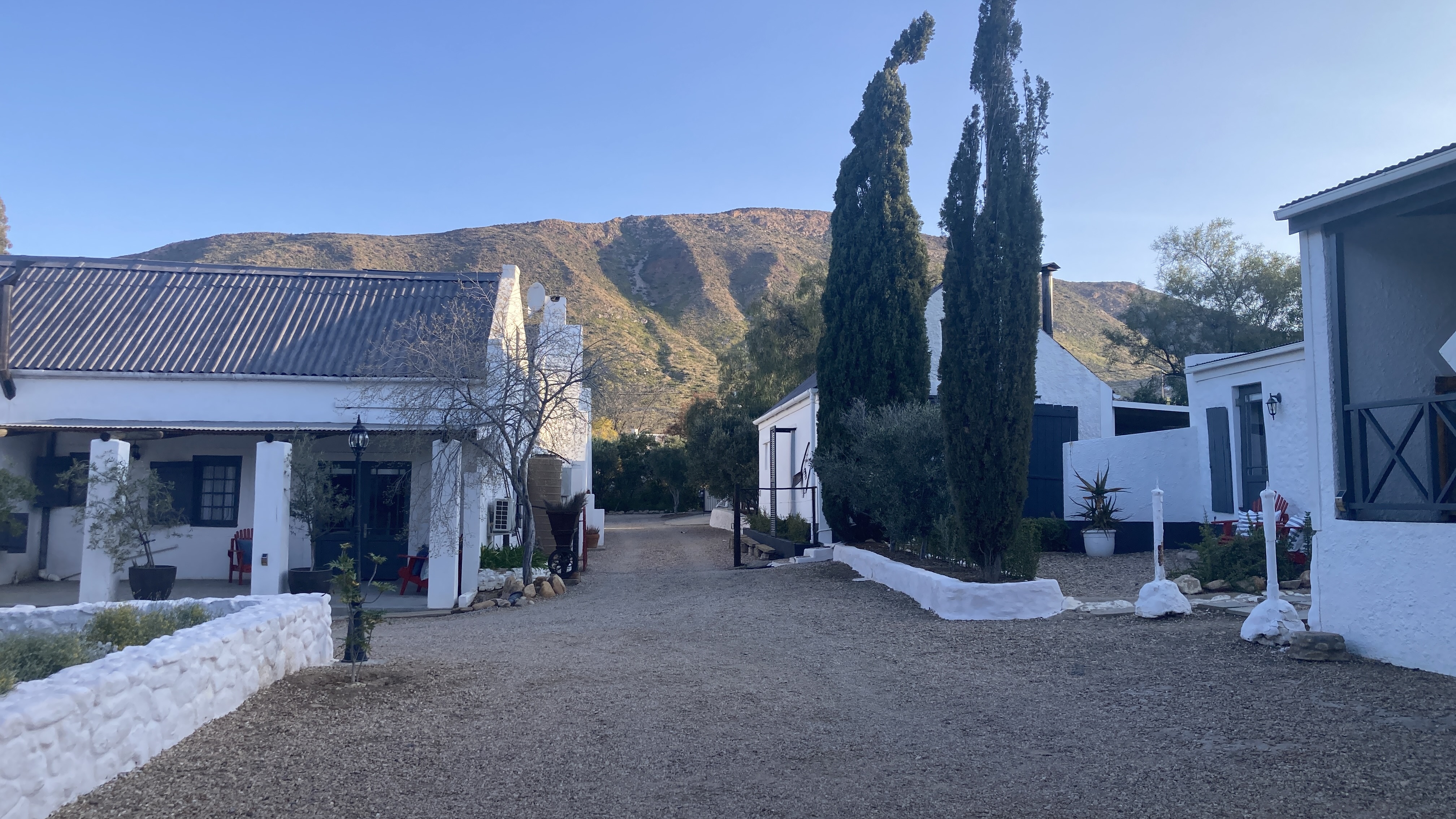
We have been to Prince Albert many times but there are always new places and eateries to hear about in this quiet yet dynamic Karoo dorp. Dennehof has a nice feel to it – not too pretentious with a mix of simple whitewashed buildings in the Karoo style making up a pleasant complex.

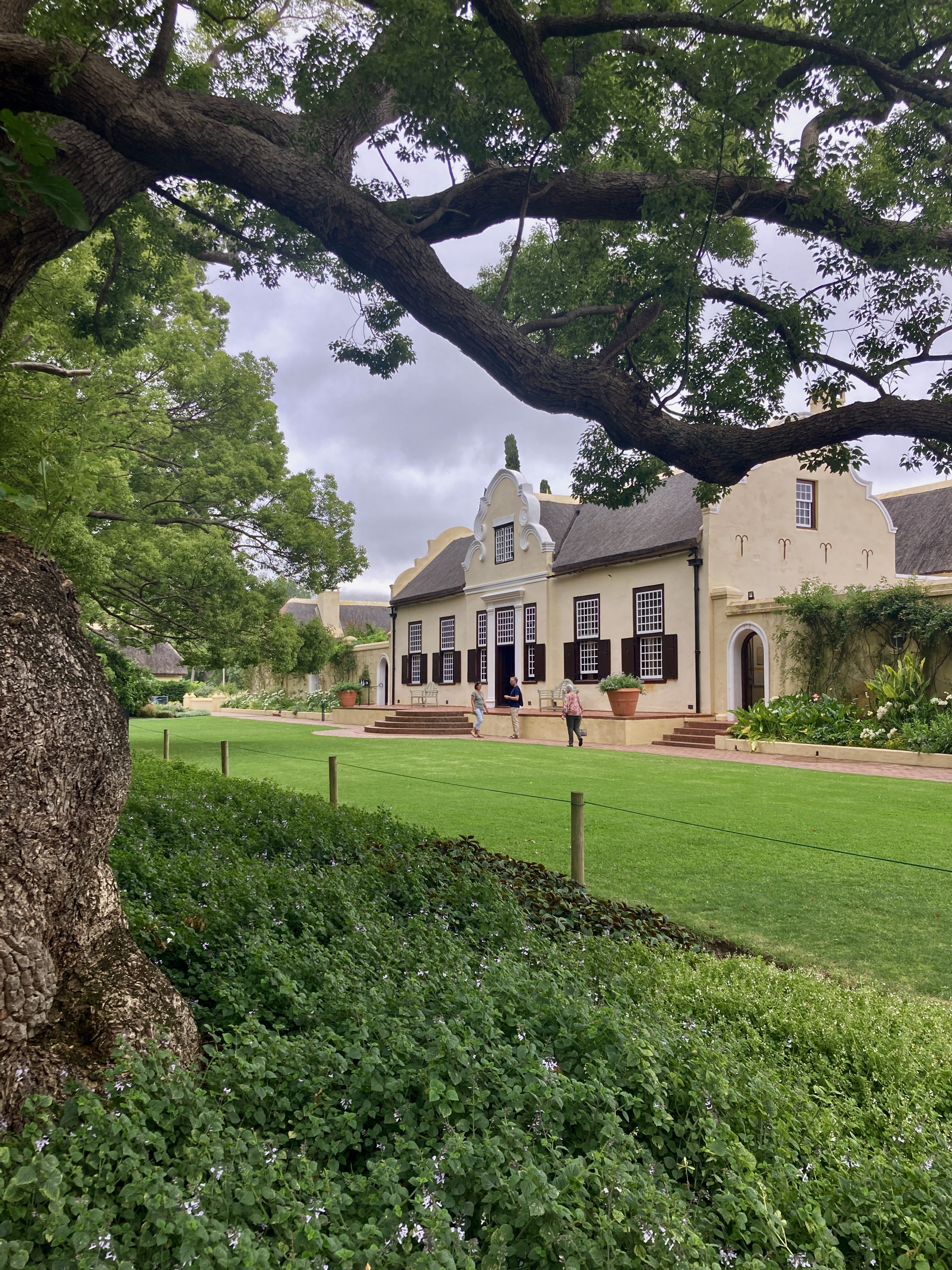
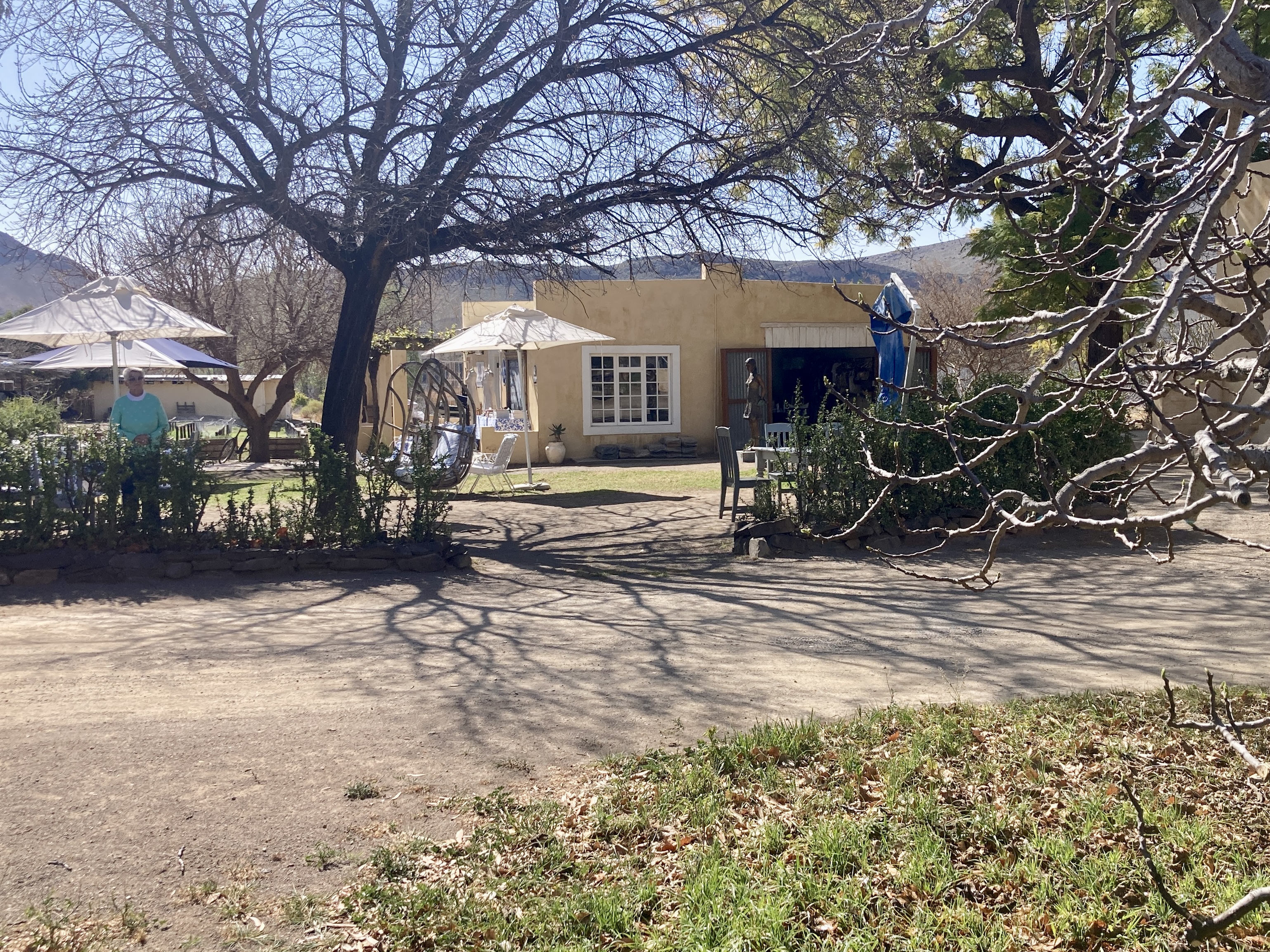
Dennehof

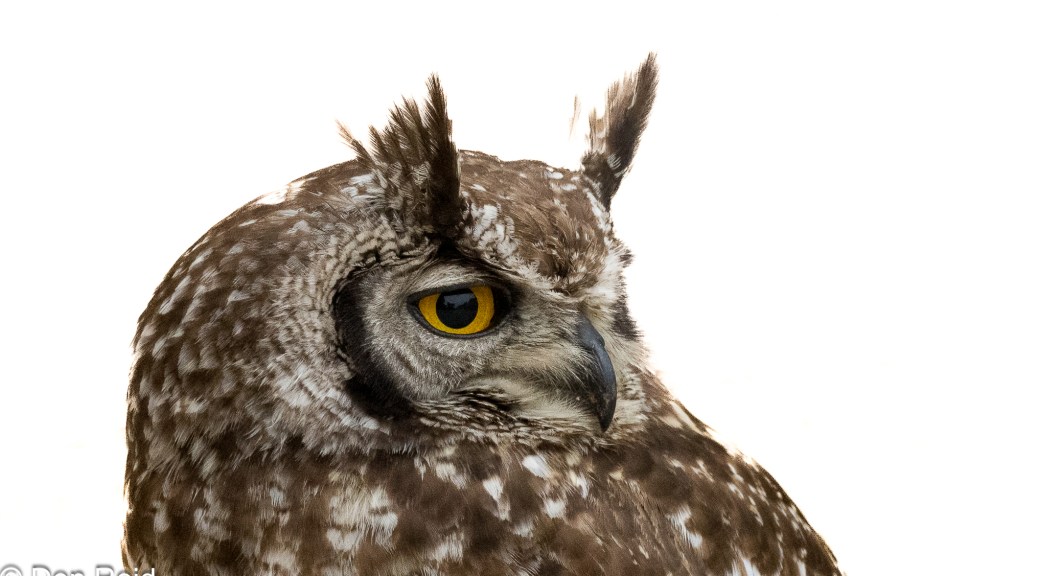
There was time before dusk to sit on the stoep and soak up the atmosphere, watched by the resident Spotted Eagle-Owl

Spotted Eagle-Owl, Prince Albert

The passing bird life included –

  • White-backed Mousebird
  • Purple Heron flying overhead probably to its roost
  • Sparrows, Cape and House, flitting about energetically
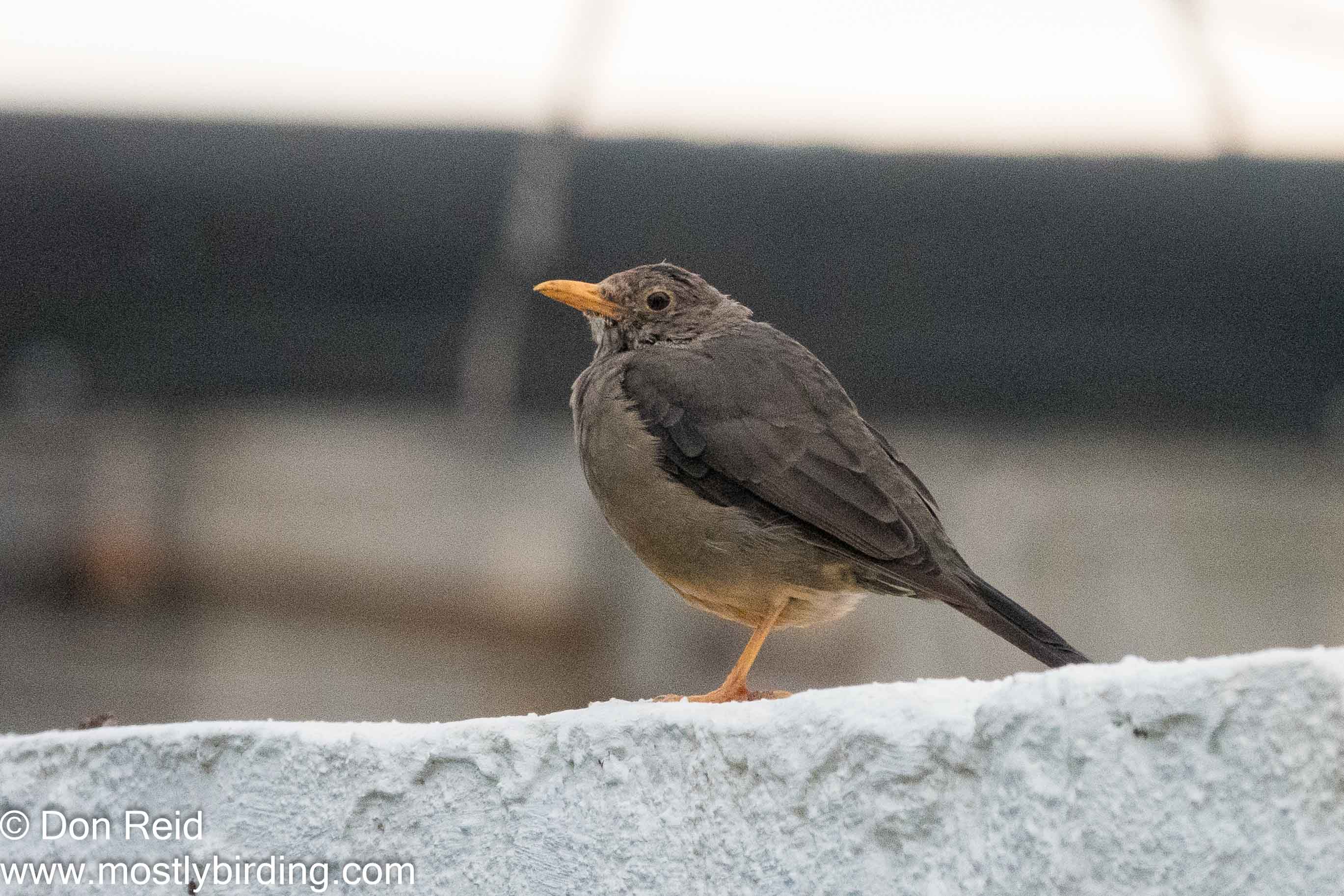
  • Karoo Thrush singing its cheerful song at close of day
Karoo Thrush
  • Pied Barbet calling plaintively

Dinner was chicken and salads that we brought with us.

Thursday 12th September 2024

Albert had said we could arrive for breakfast up to 9.30 am so being Gerda’s birthday we did exactly that. The setting is a delight – out in the garden in a glazed conservatory (where so many murders happen apparently) with a view of the adjoining wetland busy with Red Bishops and Masked Weavers doing their thing.

Dennehof Main house
Dennehof – the breakfast Conservatory

 The breakfast was above average and imaginative with a fruit and muesli mix that had us licking the bowl, followed by a herby omelette as good as they get – if for nothing else, I will return for that omelette. The coffee wasn’t half bad either.

That set us up nicely for the day which we planned as we went, starting with a slow drive down the main street of Prince Albert, followed by a short trip to the Olive farm north of the town which took us through some of the greenest Karoo countryside we have ever seen.

Along the way we stopped at the sewage works (as birders are wont to do) and at the low water bridges which, for the first time in our experience, had water flowing over them. The first of the two was productive for my atlasing list, adding half a dozen species in quick time –

  • Chestnut-vented Titbabbler
  • Karoo Scrub-Robin
  • Pririt Batis
Pririt Batis
  • Fiscal Flycatcher
  • White-throated Canary that came to drink from the shallow stream
White-throated Canary
  • Even a Three-banded Plover unexpectedly dropping in for a wade

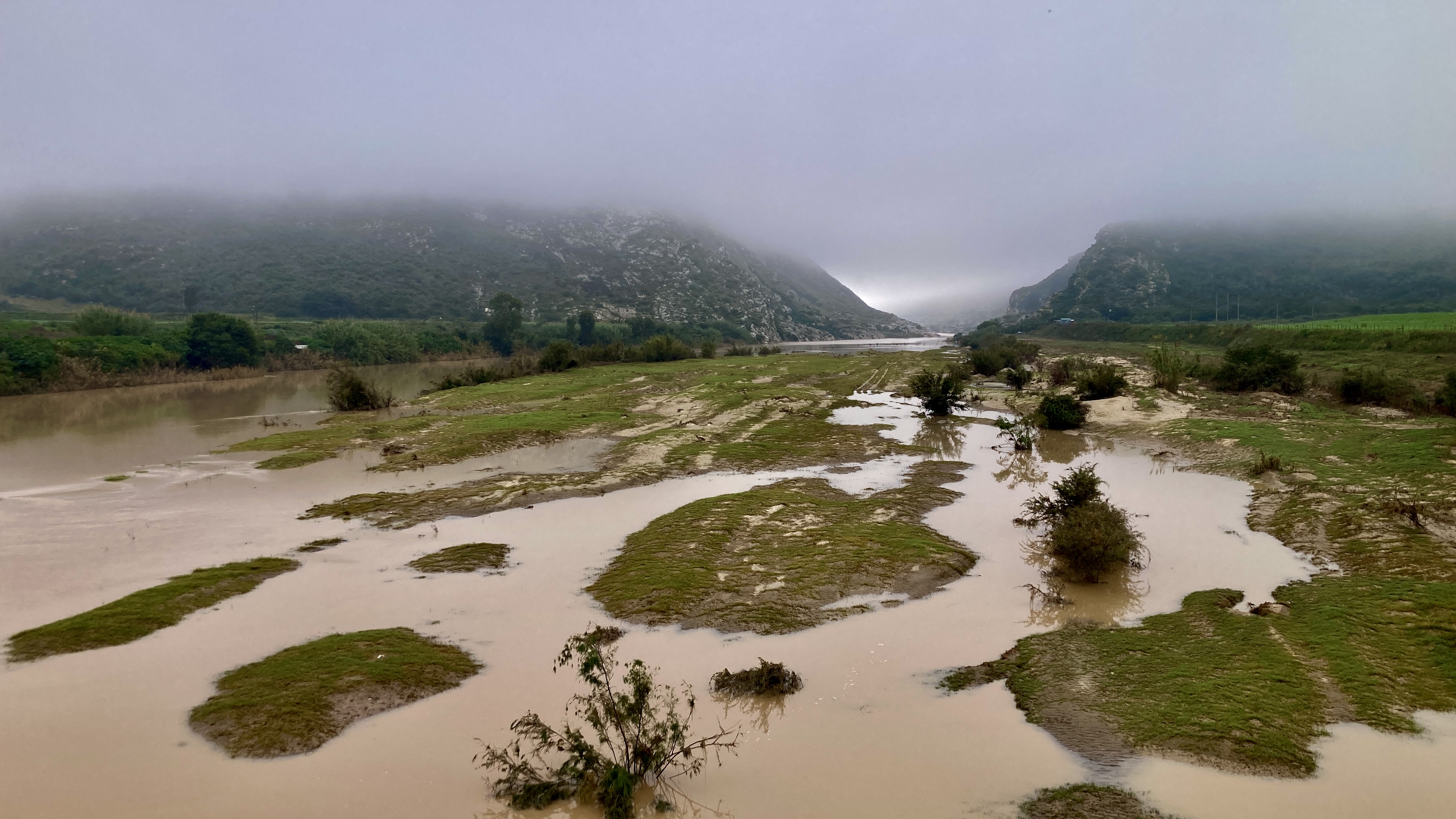
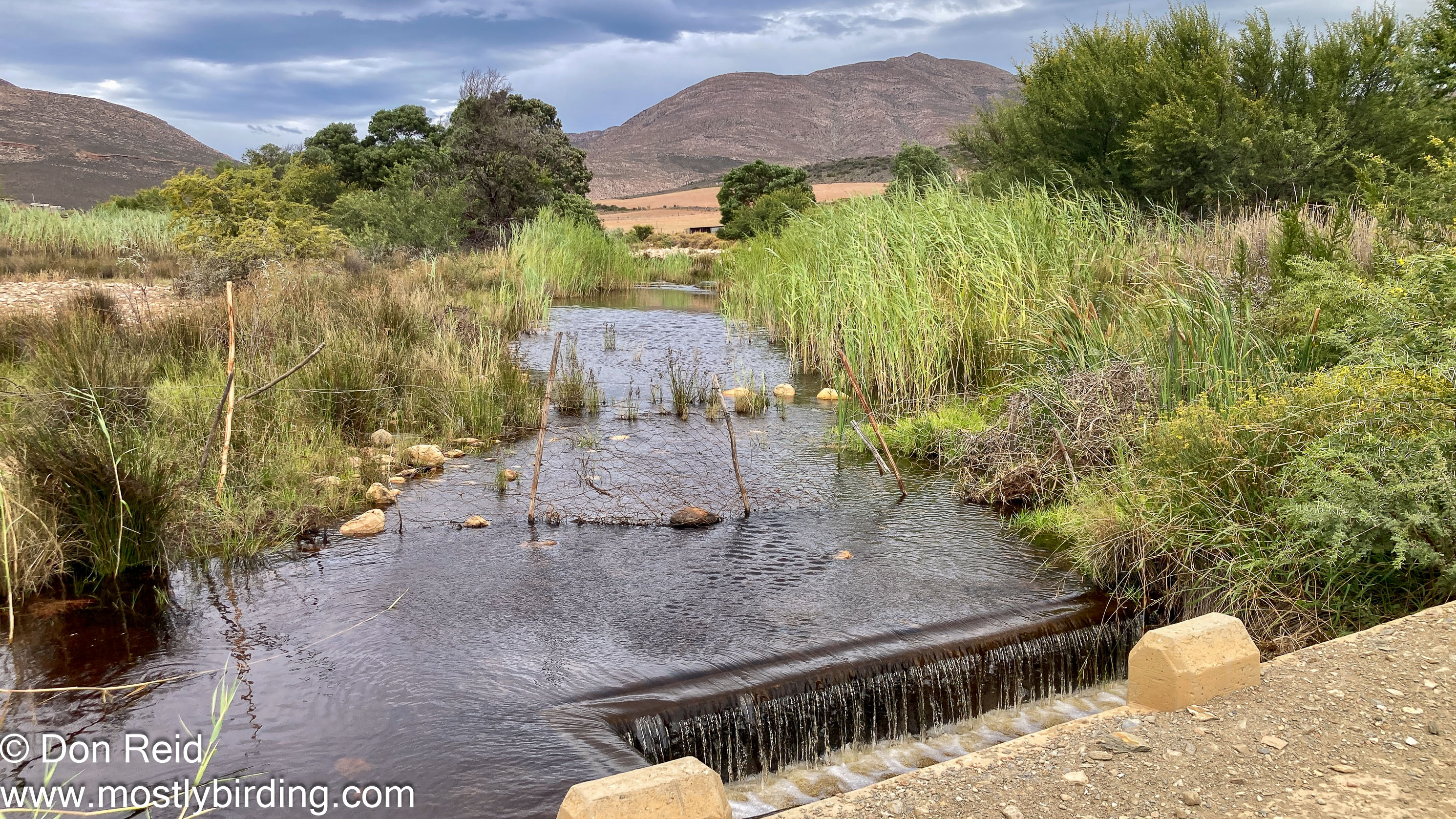
We were treated to the unusual sight (for this arid part of SA) of water flowing over the low water bridges on the outskirts of the town

Just after the second bridge we turned into the Olive farm and, as it was lunchtime, we ordered tea and a waffle which we enjoyed outside under the trees (all part of the birthday celebration of course).

View from the Olive Farm

On the way back we turned off at the Karoo View signpost and drove a few kms to see the remnants of the flowers still in the open veld, then made a short stop at Karoo Souk which is a small group of craft shops, before heading back to Dennehof for a welcome rest.

Later, still in celebratory mode, we ventured out for a meal at the Yellow House restaurant which was up to the occasion and provided a nice ending to a very pleasant day.

Friday 13th September 2024

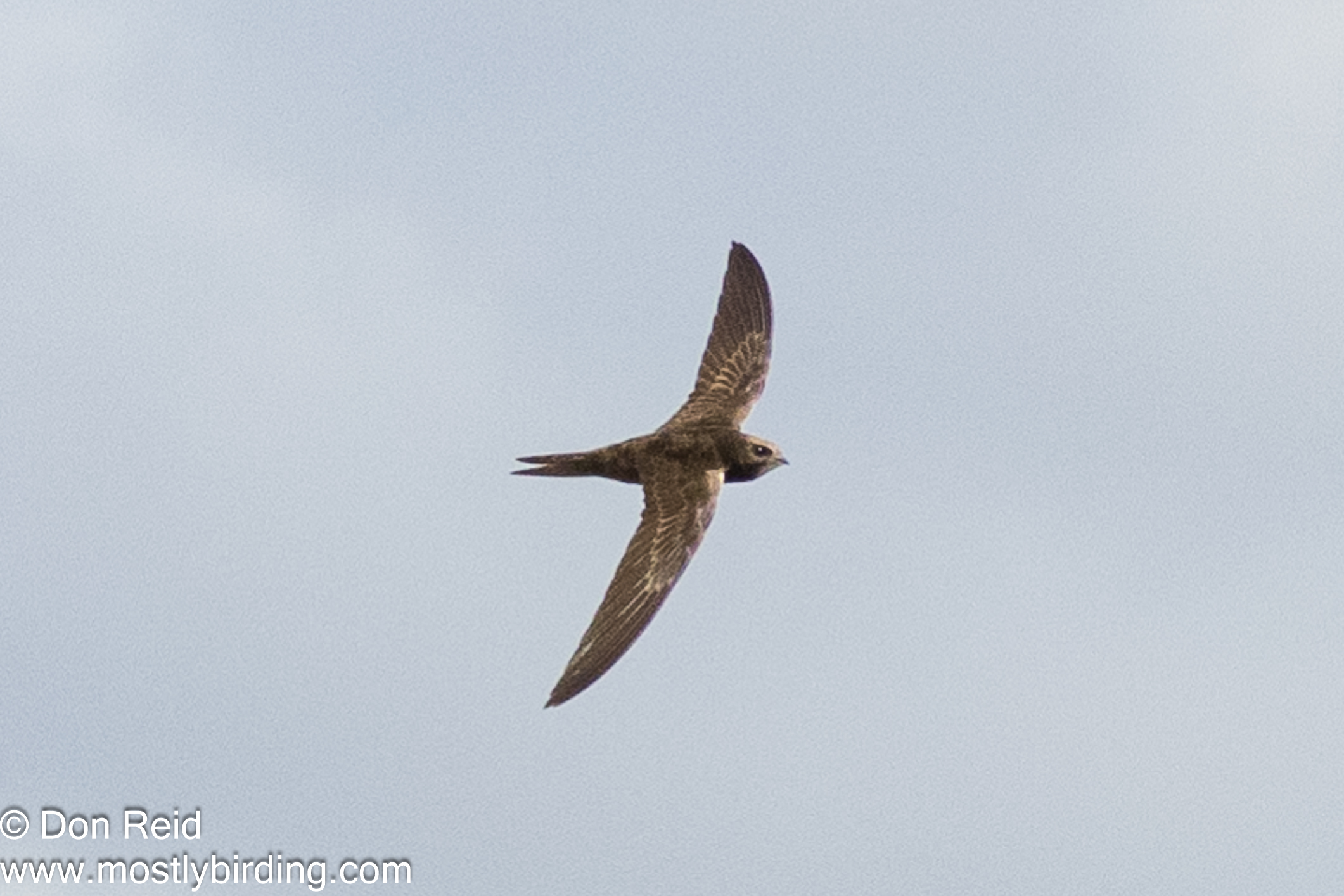
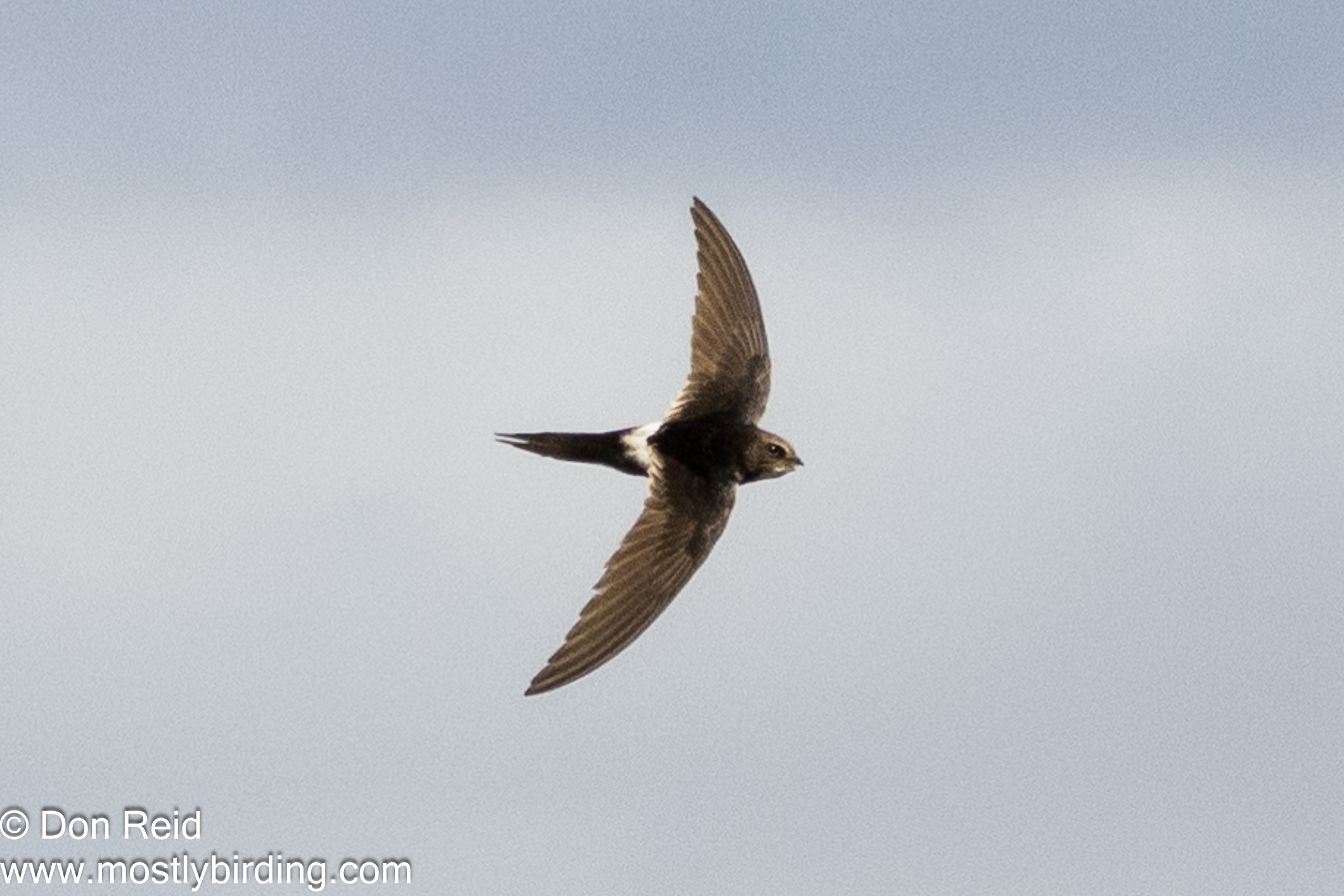
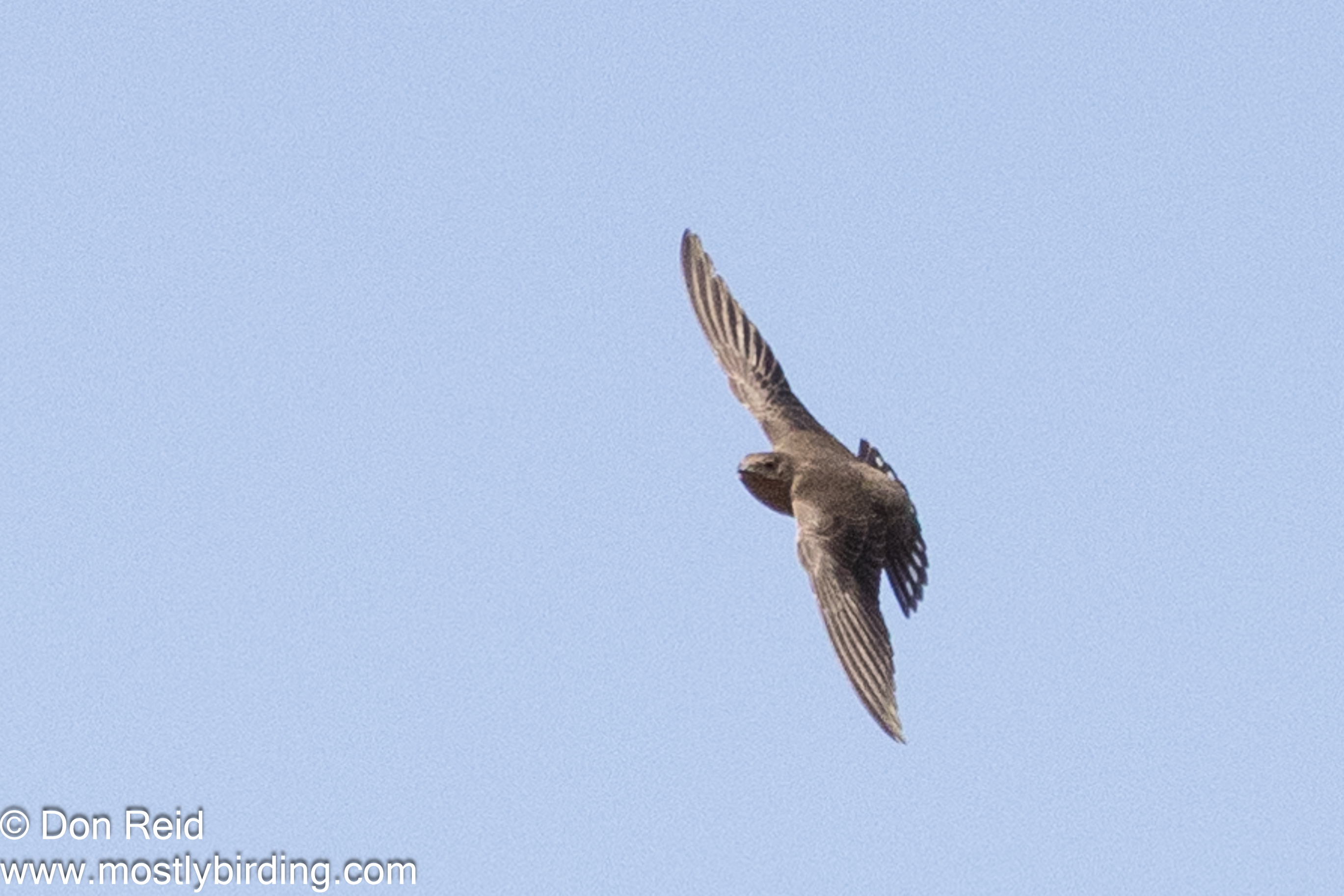
Another nice breakfast although we didn’t go for the full monty after last night’s big meal. After breakfast I added a few species to the atlas card including Alpine Swifts and Palm Swifts flying by and a Long-billed Crombec moving through the garden. That made four Swifts in all after seeing Little and White-rumped Swifts on the first day.

We had decided to drive to the fig farm at Weltevrede but first followed Albert’s suggestion of a drive along the ‘Bush pub’ road in search of a Karoo Eremomela. The bird eluded us but we did see a few other area specials such as –

 Mountain Wheatear

Mountain Wheatear, Prince Albert
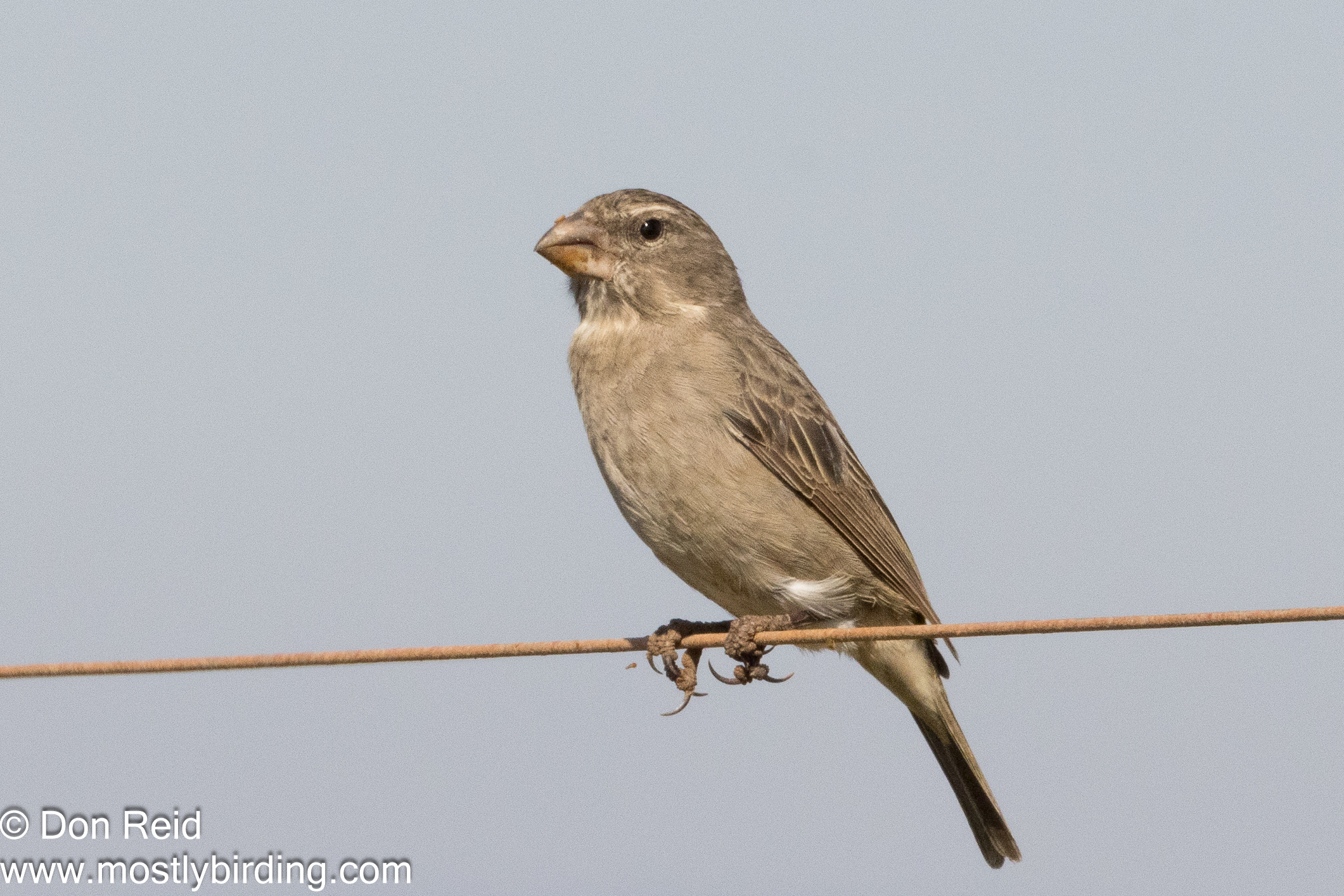
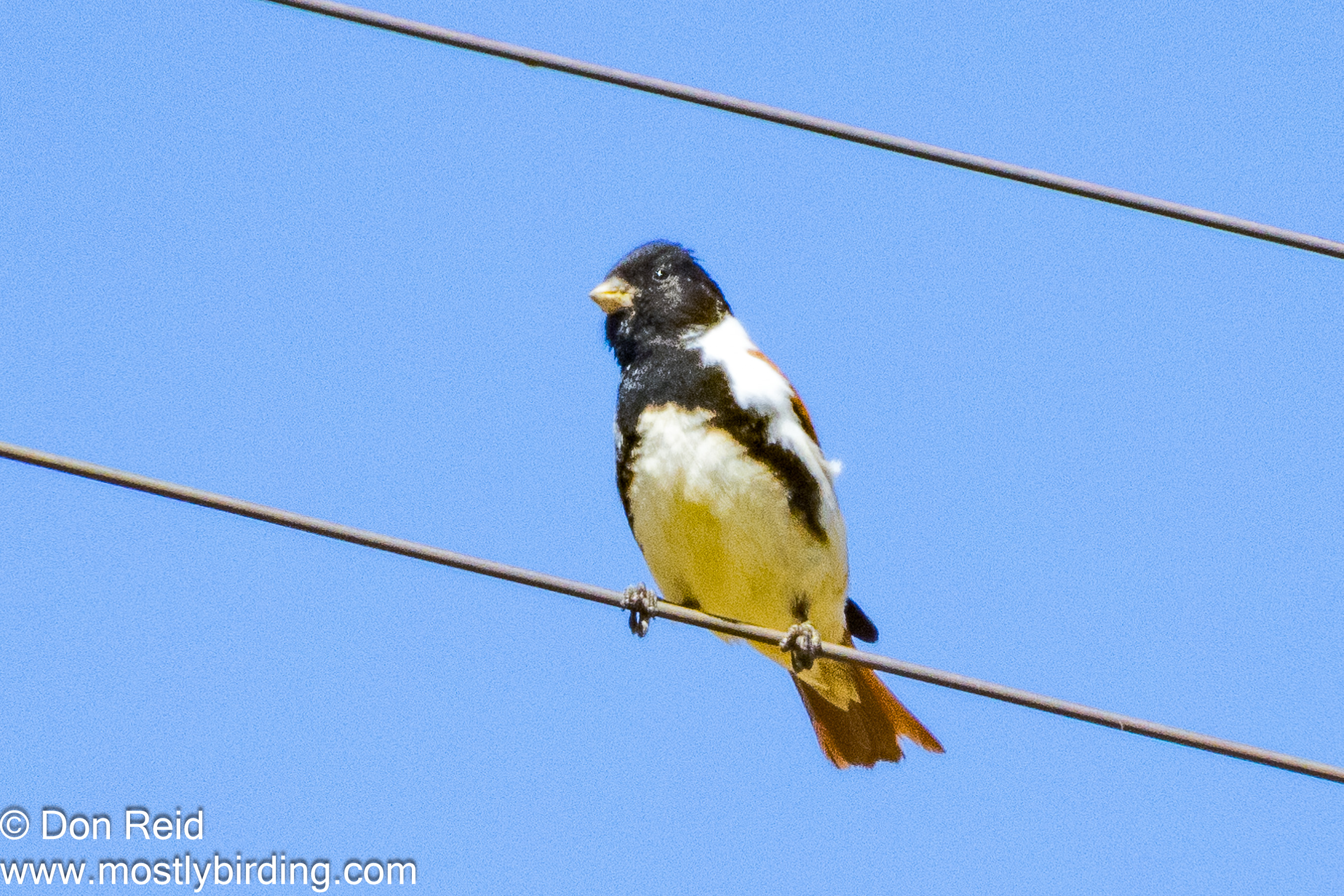
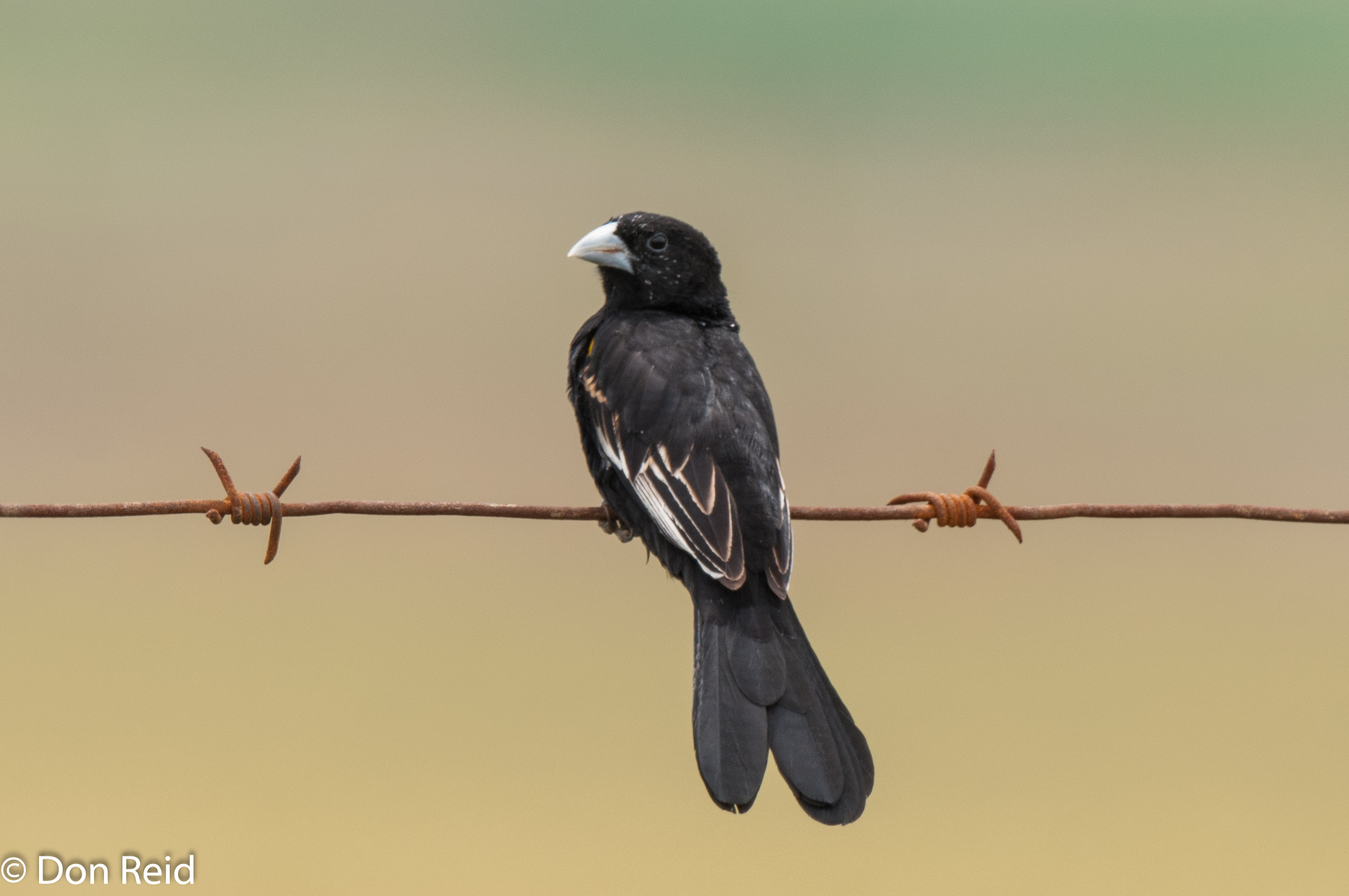
  • Lark-like Bunting
  • Dusky Sunbird
  • Rufous-eared Warbler
Rufous-eared Warbler

And no less than three species of Canary –

  • White-throated Canary
  • Black-throated Canary
  • Black-headed Canary

It was time to head to the fig farm, so we turned back to town and took the road past the cemetery signposted ‘Weltevrede 25 km’.

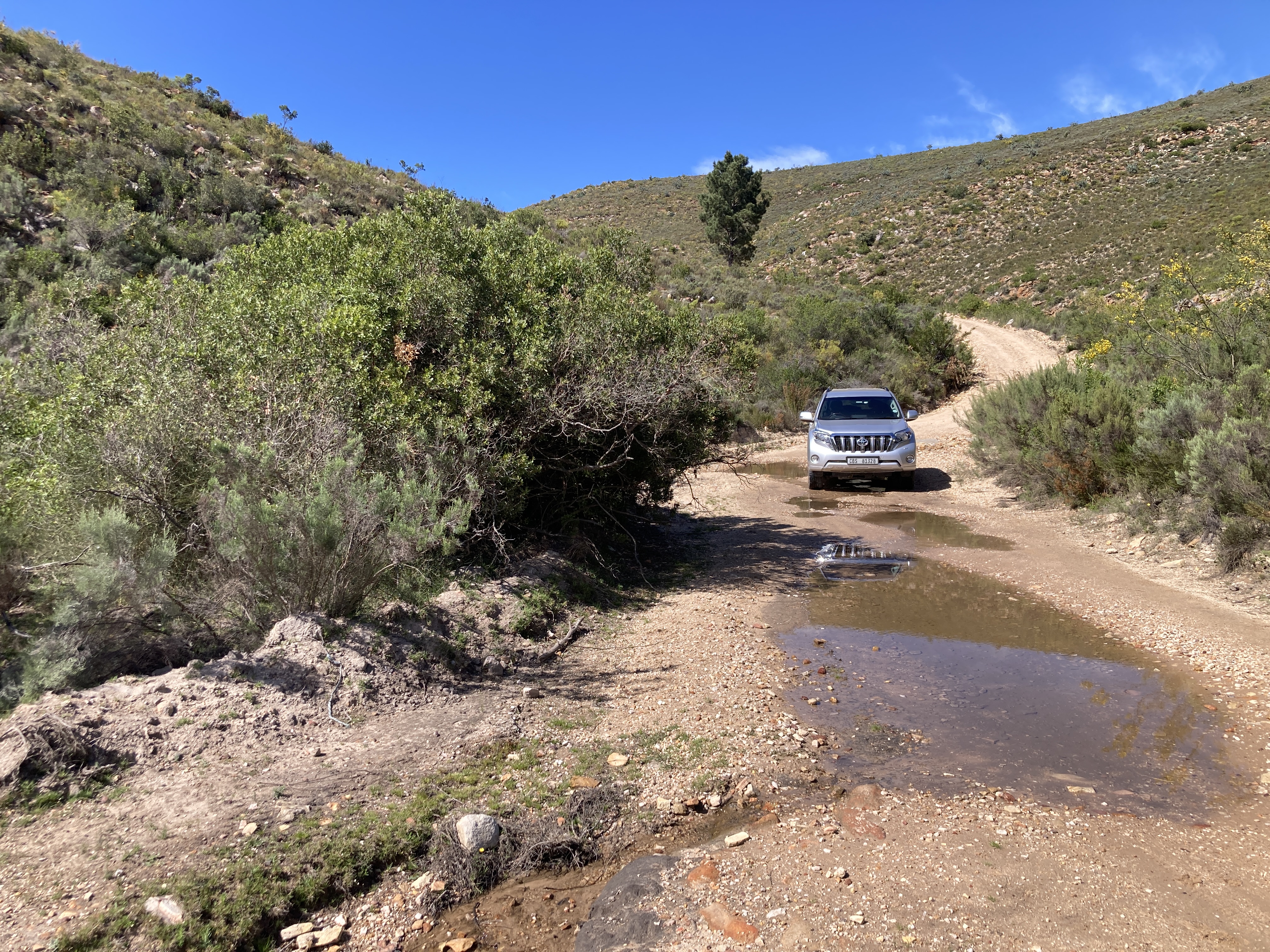
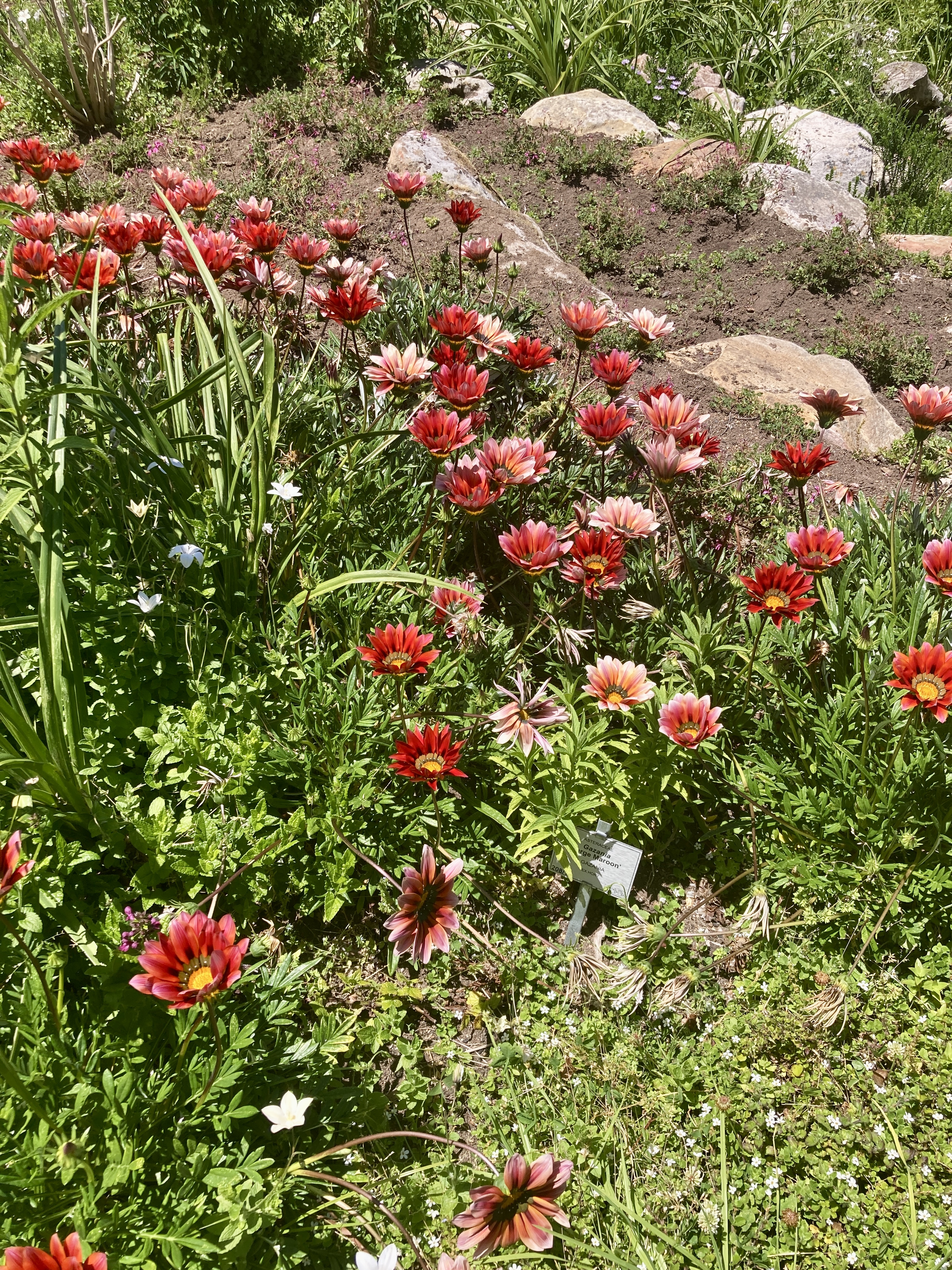
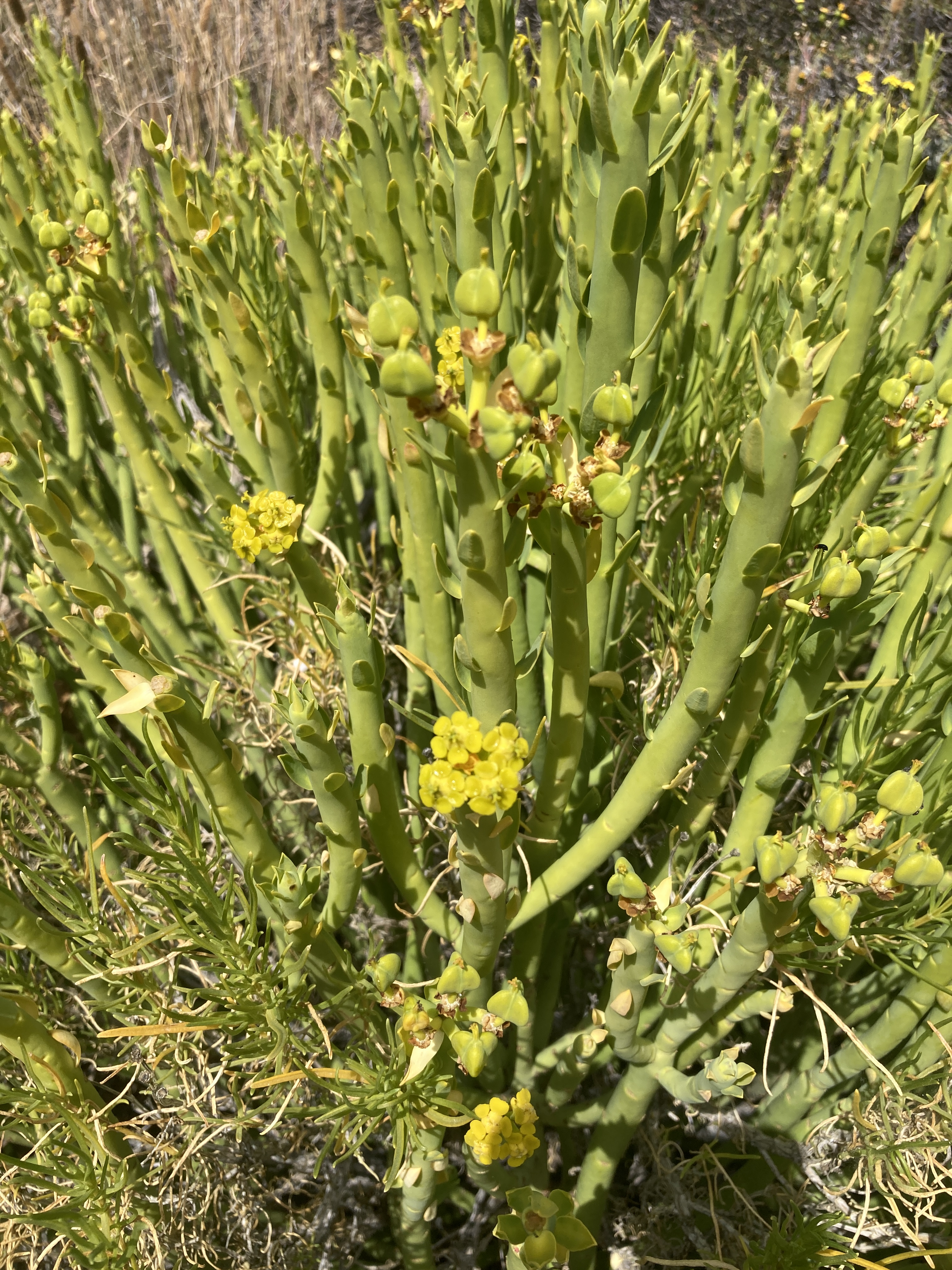
We took it slow, stopping for birds – and flowers – and there were plenty of both to attract our attention.

At around 6 kms the road passes between tall rocky cliff faces which, according to Albert and Inge, is a site where Ground Woodpecker has been seen.

We spent some time stopping to scan the rocks carefully for any sign of the Woodpecker and even more so on the way back, to no avail. The spectacular drive made up for that mild disappointment and we arrived at the farm where we found we were the only visitors – very different from our previous visit which was during the peak of fig picking and drying.

Weltevrede Fig Farm

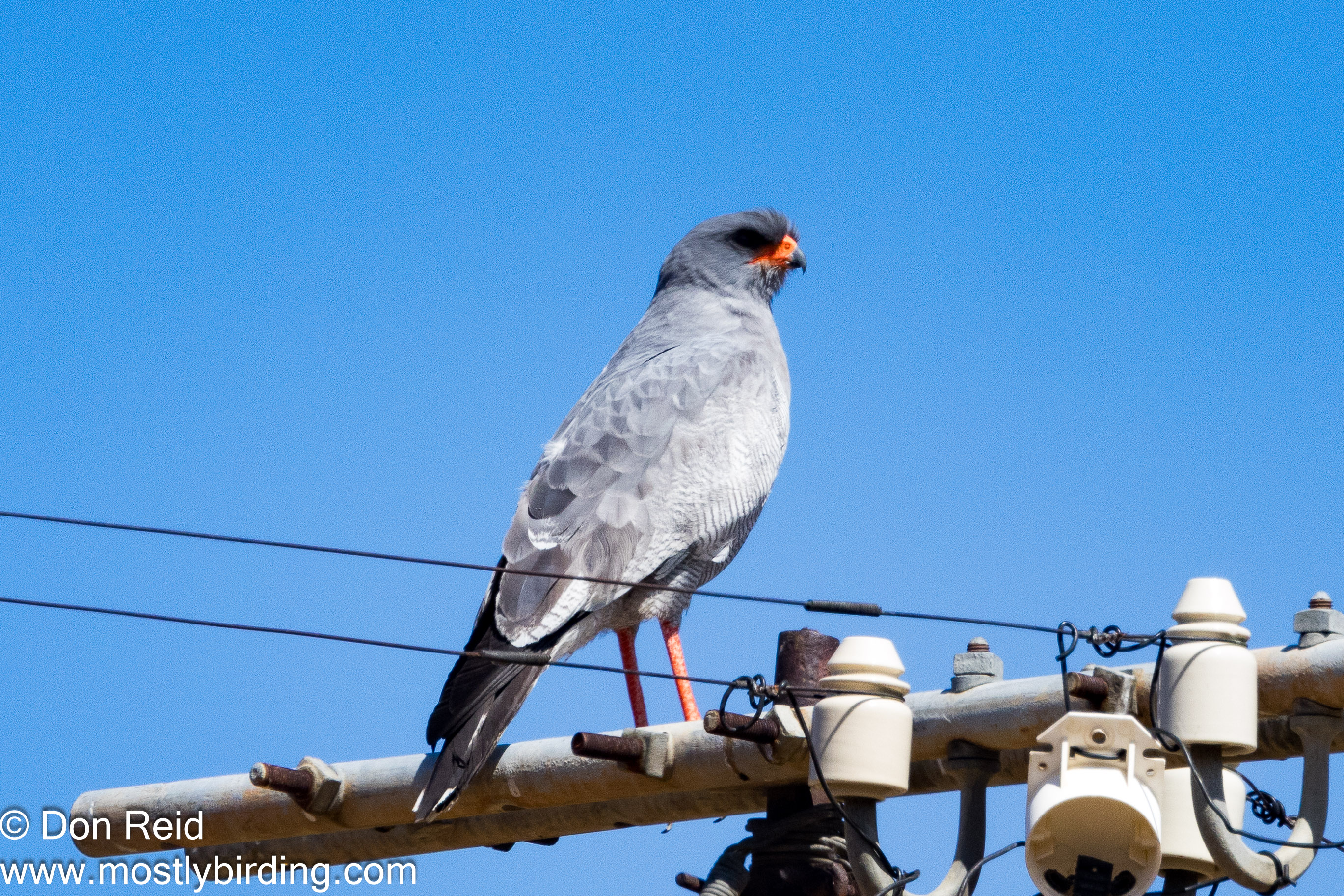
After treating ourselves to fig tart we headed slowly back – Black-headed Canaries were the most frequent sightings along with Pale Chanting Goshawk and Karoo Chat.

Black-headed Canary, near Prince Albert
Pale Chanting Goshawk, near Prince Albert

We weren’t particularly keen to go out that evening but after a relaxing time at the room we had a bit more energy and ‘lus’ for Jeremy’s Restaurant which was a great choice and suited to our reduced appetite. We both had Taglietelle puttanesca not having ever had it and it was wonderfully simple and delicious, cooked by Jeremy himself. We treated ourselves to Spekboom ice cream which was different but not overly so and we left in a good frame of mind.

Saturday 14th September 2024

Up a bit earlier to fit in packing and breakfast before checkout time, we enjoyed the fruit and omelette once again, then greeted Inge and Albert like family and set off through town to Gays dairy for some of their lovely cheeses before heading out on the road back. This time we had time to stop and savour the flowers and birds – often both at the same spot.

Lunch venues are limited on this route so we looked for a place in De Rust, ending up at Herries which is the local pub and turned out to be a good choice even though we just had tea and a sandwich in a venue that almost demands you have at least a beer or two if not a klippies and coke.

The rest of the trip was uneventful with stops in George at the nurseries and a ‘koffie vir oulaas’ at Elvis Brew, a favourite coffee spot near the George Airport, before heading homewards, well satisfied yet again with our choice of Prince Albert for a short breakaway.


Small Birds taking BIG Journeys : Part 3

To repeat the intro to my previous posts on this subject …. Many of the migrant waders – or shorebirds as they are also known – display the most Jeckyll and Hyde characteristics of all birds, living two dramatically different lives and spending time in habitats which are as far removed from each other as can be imagined.

Separating these two lives are amazing journeys that take these small yet hardy birds halfway across the world – and back again.

The majority of South African based birders get to know migrant species during their stay in the southern hemisphere, typically during the months from October to April, so let’s find out a bit more about their ‘other’ lives by delving (again) into the typical annual life cycle of these waders.
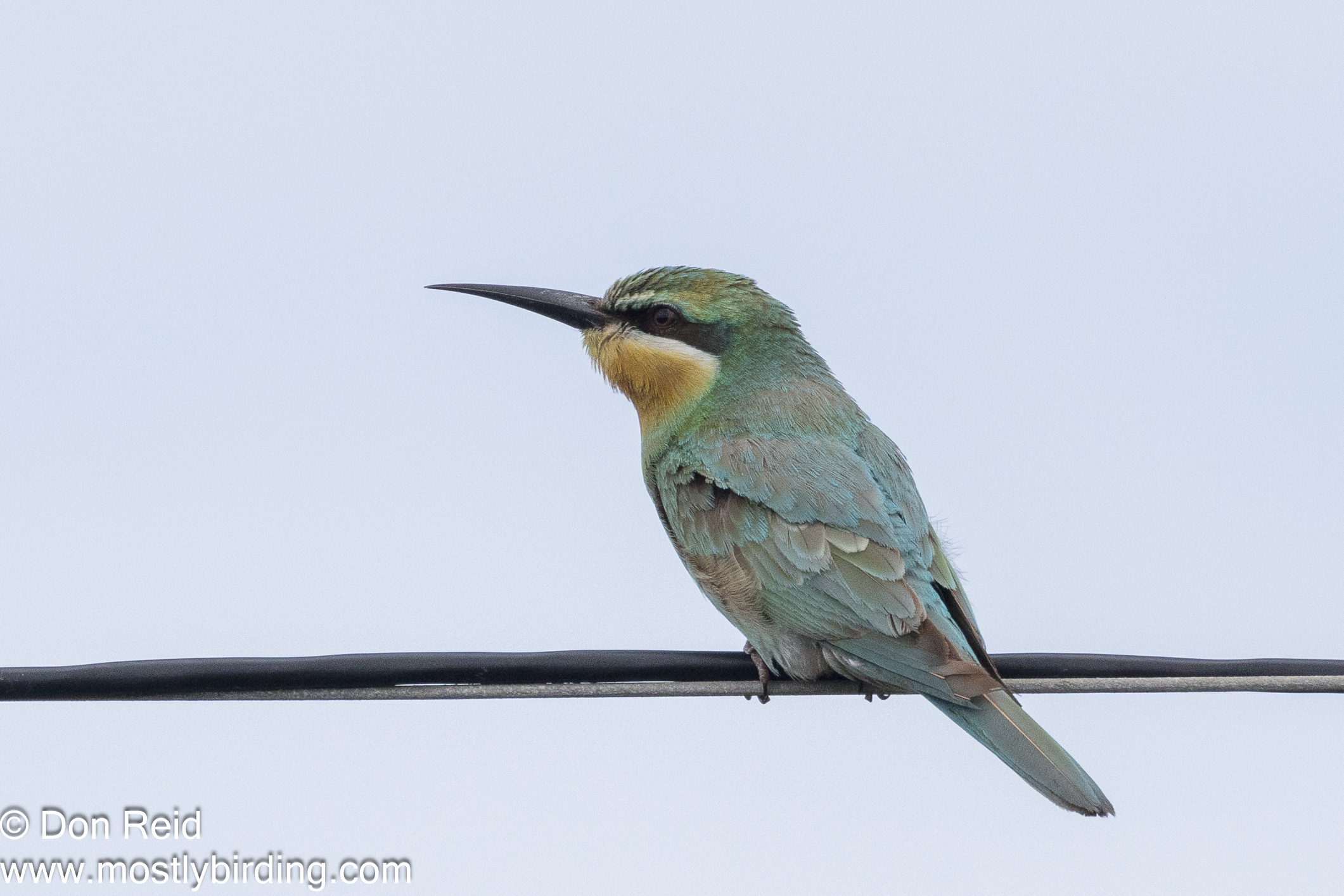
This time it’s the –

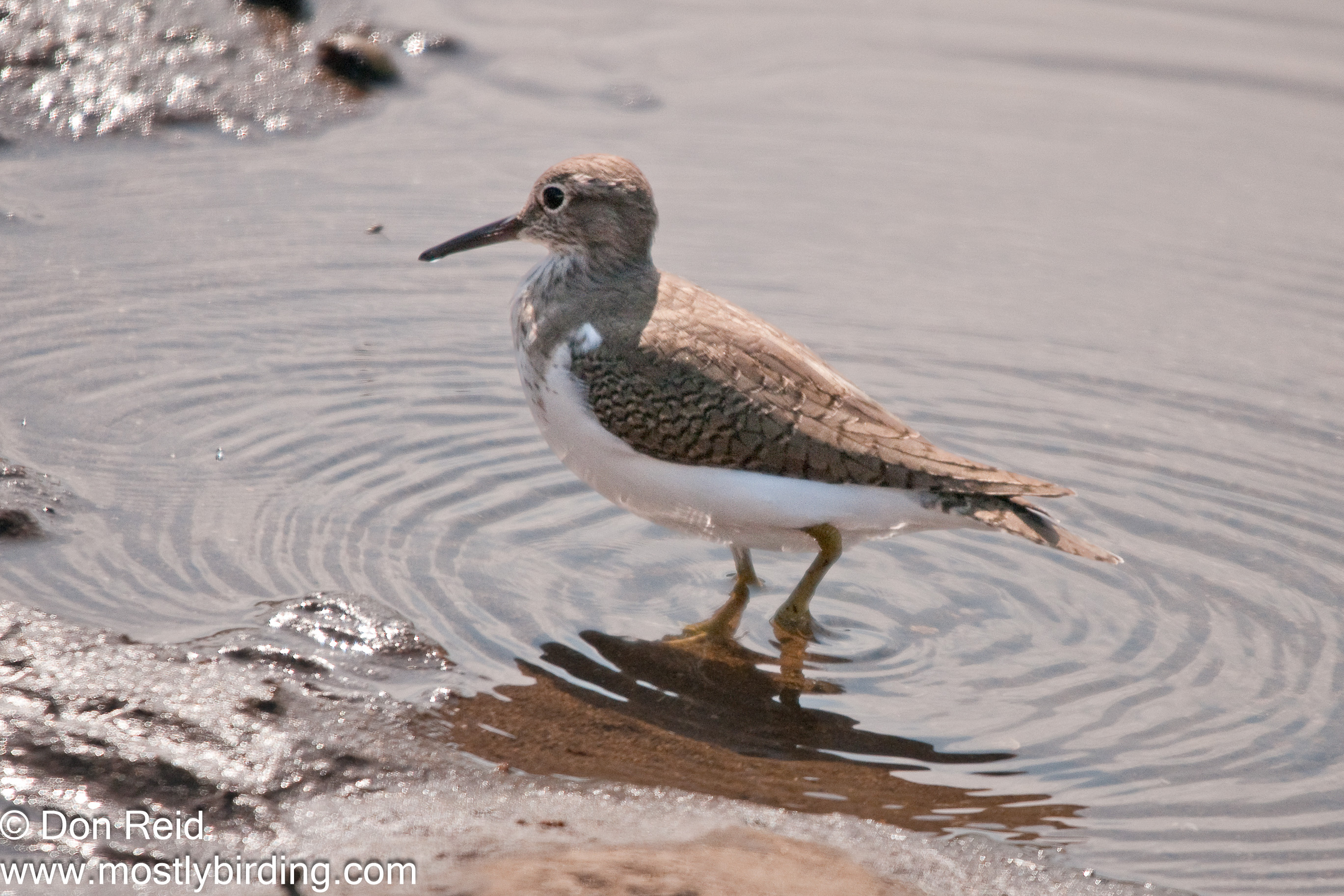
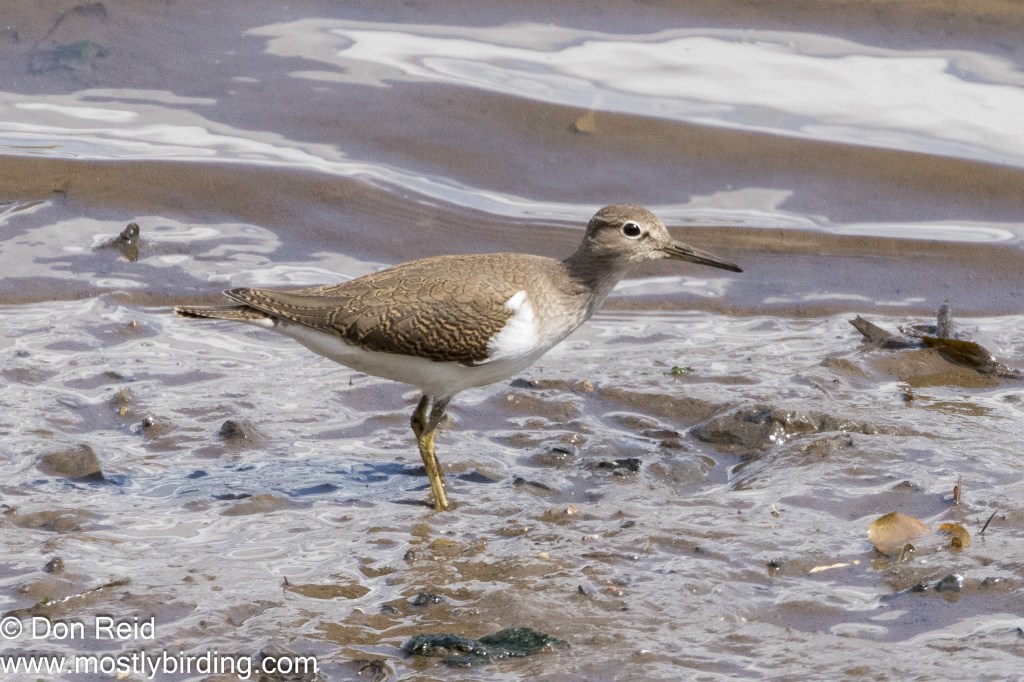
Common Sandpiper (Gewone Ruiter) Actitis hypoleucos

Hypoleucos is Greek for white below, in reference to the species white underparts, which the detergent adverts of old would no doubt have described as ‘whiter than white’. Which leaves you wondering how they maintain that whiteness, considering that they spend a lot of their time in muddy or near-muddy conditions.

Identification and Distribution

Identification of the Common Sandpiper is often possible while the bird is still distant, based on behaviour and giss, even before being able to see the specific plumage features which will confirm the identification.

What you may see at a distance is –

  • medium-small wader (19 – 21cm; 45 – 50g) with a semi-crouched appearance,
  • long-tailed, rather short-legged,
  • moves in short quick movements and habitually bobs its rear body.
Common Sandpiper, KNP Satara

In flight it is just as distinctive, flying low over water with quick bursts of shallow wingbeats interspersed with glides on bowed wings.

Once close enough, the standout feature of this wader is the white underparts extending up in front of the shoulder to form a distinct crescent.

Common Sandpiper Actitis hypoleucos River Eden Estuary

The differences between breeding and non-breeding birds are subtle – greenish-brown upper parts of breeding adults change to faintly barred olive-brown upper parts, with less streaking on the head.

Distribution –

The orange area on the global distribution map (from Cornell Birds of the World) shows where breeding occurs in the Northern Hemisphere while the blue area, mostly in the Southern Hemisphere, is where they go ‘on holiday’ to unwind and prepare themselves for the rigours of the next breeding season.

The southern African distribution map (from The Firefinch Birding app) shows the species presence across most of the region but absent from the Kalahari and arid west.

Screenshot

Life in the North

The preferred breeding habitat is stony or gravelly shores, most commonly at margins of waterbodies in forested areas.

But, the preferred habitat doesn’t have to be at low altitude – they have been recorded breeding up to 1700m in the Pyrenees, 2600m in Turkey and up to 4000m elsewhere.

Their diet includes all manner of delicious things (for them, anyway) including beetles, spiders, molluscs, crustaceans, sometimes frogs, tadpoles or small fish. During breeding, adults and young chicks frequently feed on grassland.

Common Sandpiper Actitis hypoleucos River Eden Estuary

Prey is located visually, feeding is mainly by pecking and stabbing rather than probing, with insects often caught from surface, or pulled out from rocks or mud.

Breeding

The nest is simple – set in a sheltered depression, sometimes among shrubs and trees, usually close to water.

Eggs (usually 4) are laid from April and are incubated for 20 to 23 days by both parents, but one parent, often the female, leaves before the young fledge (imagine the consternation if humans did that!)

Fledging some 3 to 4 weeks later, the fledglings are independent soon thereafter, facing the many dangers that young birds are subject to.

Once the young have fledged and can look after themselves, they start migrating south, often after the adults have already departed – now that is brave!

Migration

The birds we see in Southern Africa are thought to originate from Russia, first adults leave early July, arriving in the south from late July / August with juveniles following mainly in September and October.

Migration is undertaken at night with birds capable of single flights of up to 4000km. Overland routes are followed by small flocks or singly, mainly via the Rift Valley

Life in the South

In southern Africa they seek out suitable aquatic habitat, favouring streams, rivers and dam shores with sandy, gravelly, stony or rocky substrate, estuaries and, especially, filtration ponds of sewage works (a favourite spot for keen birders as well, as it turns out)

Prefers wet conditions adjacent to water rather than wading in the water and is known to venture into woodland and even gardens.

Common Sandpiper Actitis hypoleucos Gewone ruiter, Bronkhorstspruit Nature Reserve

Some time after arrival, around October, adults start a post-breeding moult which continues for up to 4 months.

Common Sandpiper ( Actitis hypoleucos / Gewone ruiter), Great Brak River

Foraging is done in similar fashion as ‘back home’ but they are also known to perch and wait for waterborne insects at a concrete weir or other convenient spot next to running water – something I have witnessed myself during atlasing trips near Pretoria.

Common Sandpiper, Delmas area

The plovers start departing from late February with the majority having left by end April, heading north to their breeding grounds where the cycle will start all over again…

References : Cornell Lab of Ornithology Birds of the World; Roberts VII Birds of Southern Africa; Firefinch app, Collins Bird Guide

Atlasing and Twitching Tales 10 – February 2023

These tales record some of the more memorable experiences while atlasing – in this case during February 2023 while we were at our ‘other’ home in Mossel Bay.

Klein Brak 2 to 4 February

Pentad 3405_2205

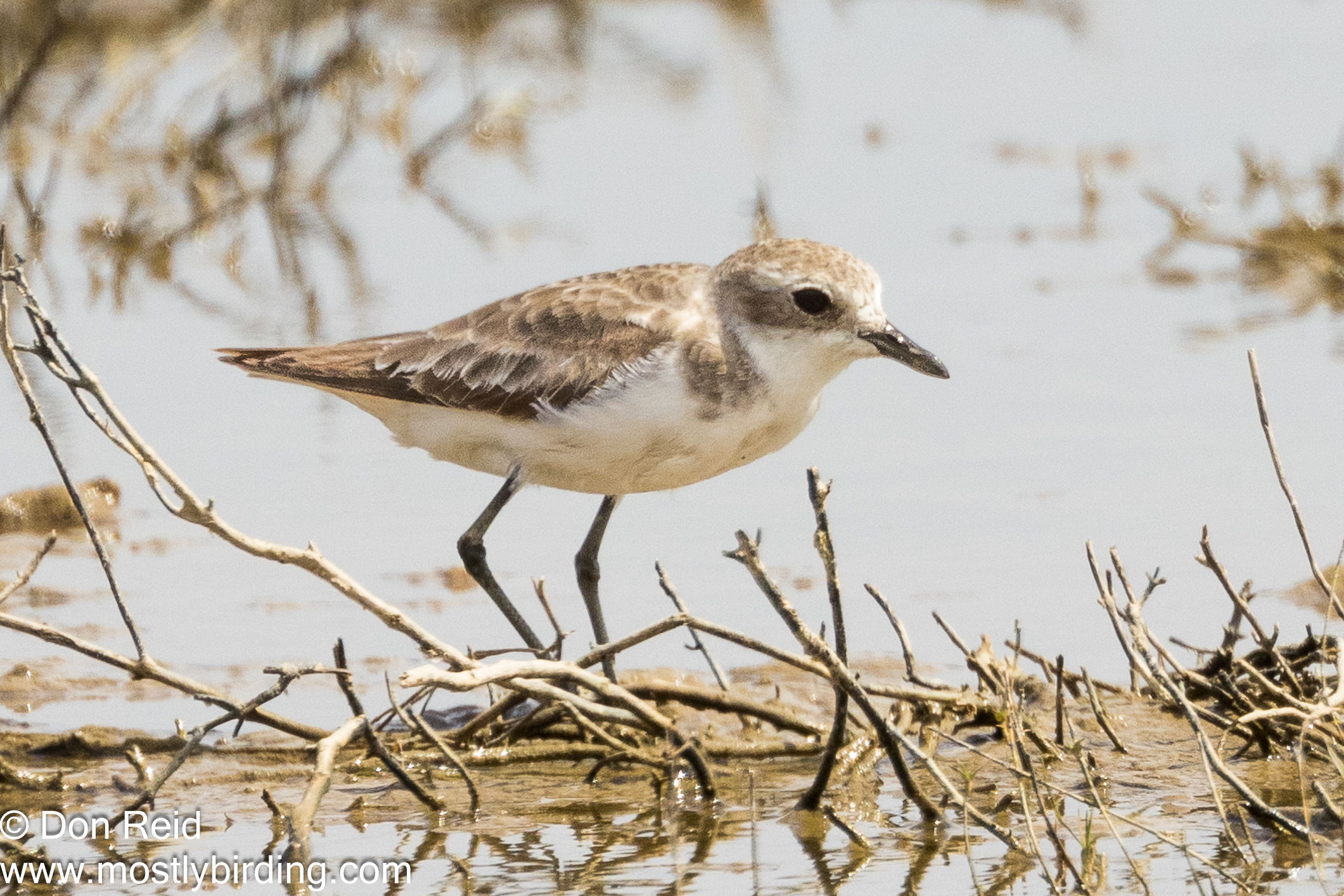
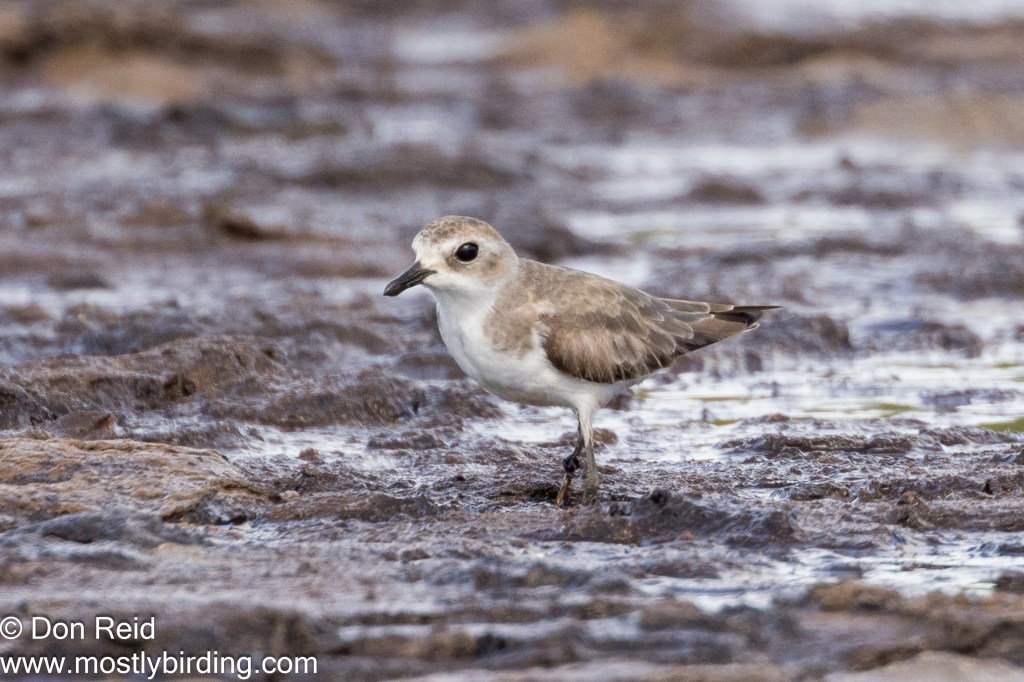
Reports of a Lesser Sand Plover seen at a vlei near Klein Brak River piqued my interest for two reasons – I have only seen the species once before in Mozambique, so it was a potential addition to my South African list, and Klein Brak is about 20 minutes from our front door.

So I headed out early-ish on a Tuesday morning to the vlei which is located near the old power station, as described by Amanda, keen Mossel Bay birder and the finder of this rarity. Once parked on the road next to the vlei, I scanned the shallow water and soon found the plover on its own, but distant and difficult to see against the brownish surface and the low sun in my face.

Lesser Sand Plover Charadrius mongolus Mongoolse strandkiewiet, Klein Brak vlei

Once I had my scope set up I had better views of the plover as it pottered about in a small area, after initially standing dead still. I was soon joined by a few other birders, two known from previous twitches, the other a young birder from George.

Lesser Sand Plover Charadrius mongolus Mongoolse strandkiewiet, Klein Brak vlei

Then it was a question of getting a reasonable photo, as is the norm for many birders nowadays – I had taken some from my position on the road but the distance and backlight meant that they were less than satisfactory – oh, it’s hard to please us bird photographers!

After hanging around for a while, the young birder set off to find a path down to the verge of the vlei on the opposite side and we watched his progress with interest…. he was soon in a much closer position and on firm ground it seemed, so we followed suit.

The plover was relaxed so we carefully edged closer, and I got on one knee (which is not as easy as it used to be) to take some shots closer to ground level, which made for some far better images of this scarce wader, as you can see above and below.

Lesser Sand Plover Charadrius mongolus Mongoolse strandkiewiet, Klein Brak vlei

I left soon after, with 12 species recorded including the Lesser Sand Plover (which would generate a Rarity form to be completed online)

Two days later I returned to the pentad to complete a ‘Full Protocol’ card (which requires a minimum of two hours of atlasing), starting in the northern part of Mossel Bay and heading through Hartenbos to the river mouth.

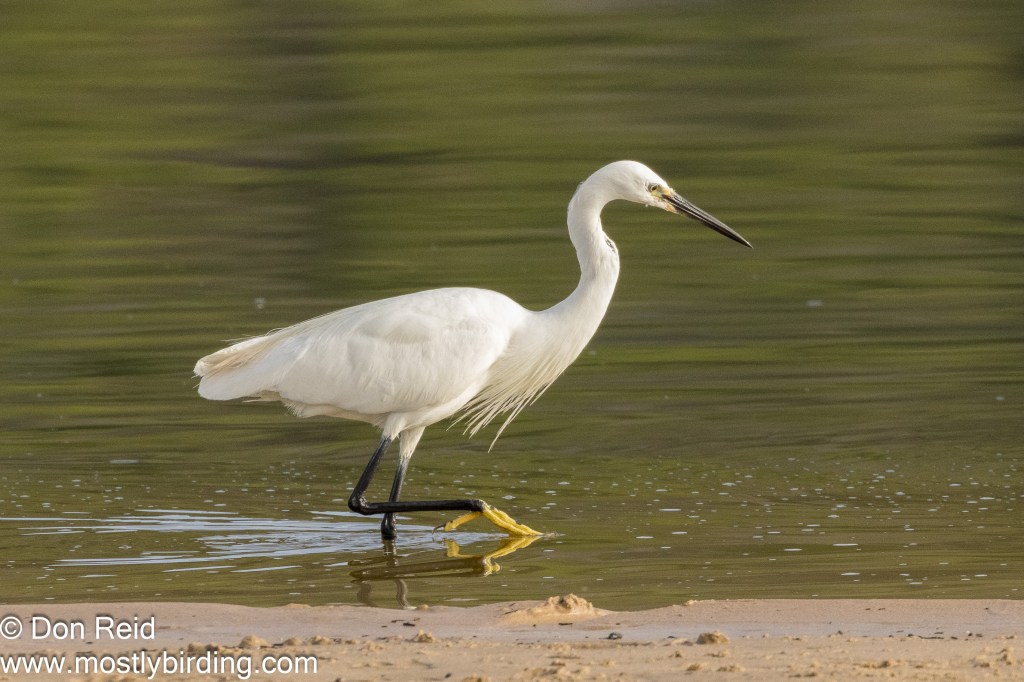
There was plenty of birdlife (and people, being Saturday) enjoying the fine weather, so I set up my scope and scanned the estuary back- and forwards, adding several species in a short time, including a Little Egret patrolling the water’s edge and displaying its bright yellow feet with every step.

Little Egret Egretta garzetta Kleinwitreier, Hartenbos

Further stops at the weir upriver and at the vleis adjoining the water treatment works were productive, with a quick return trip to the Lesser Sand Plover spot adding a few more species to take my pentad total to 63 species

Other highlights –

  • Common Ringed Plover at the same spot as the Sand Plover
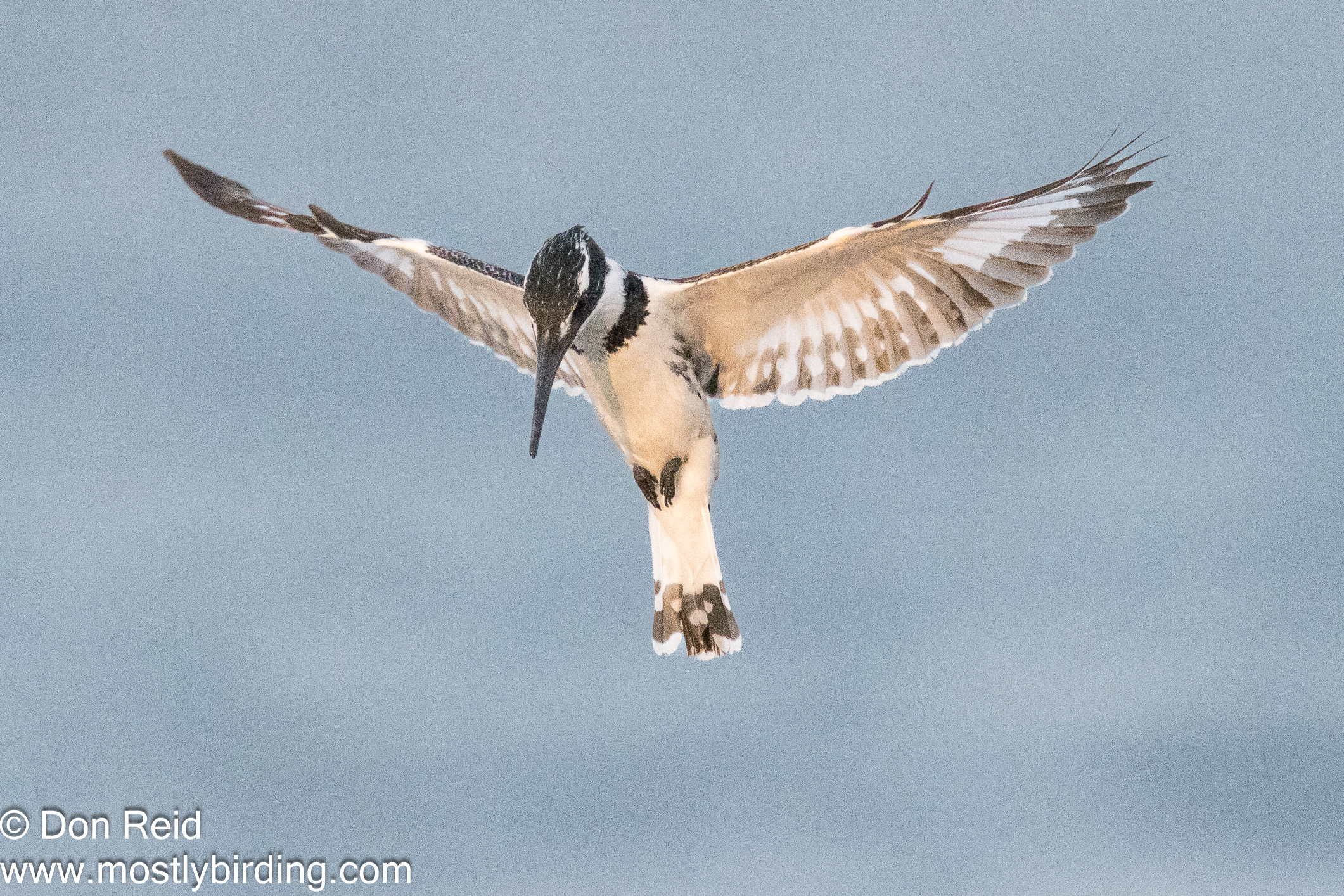
  • Pied Kingfisher ‘fishing’ at the river mouth
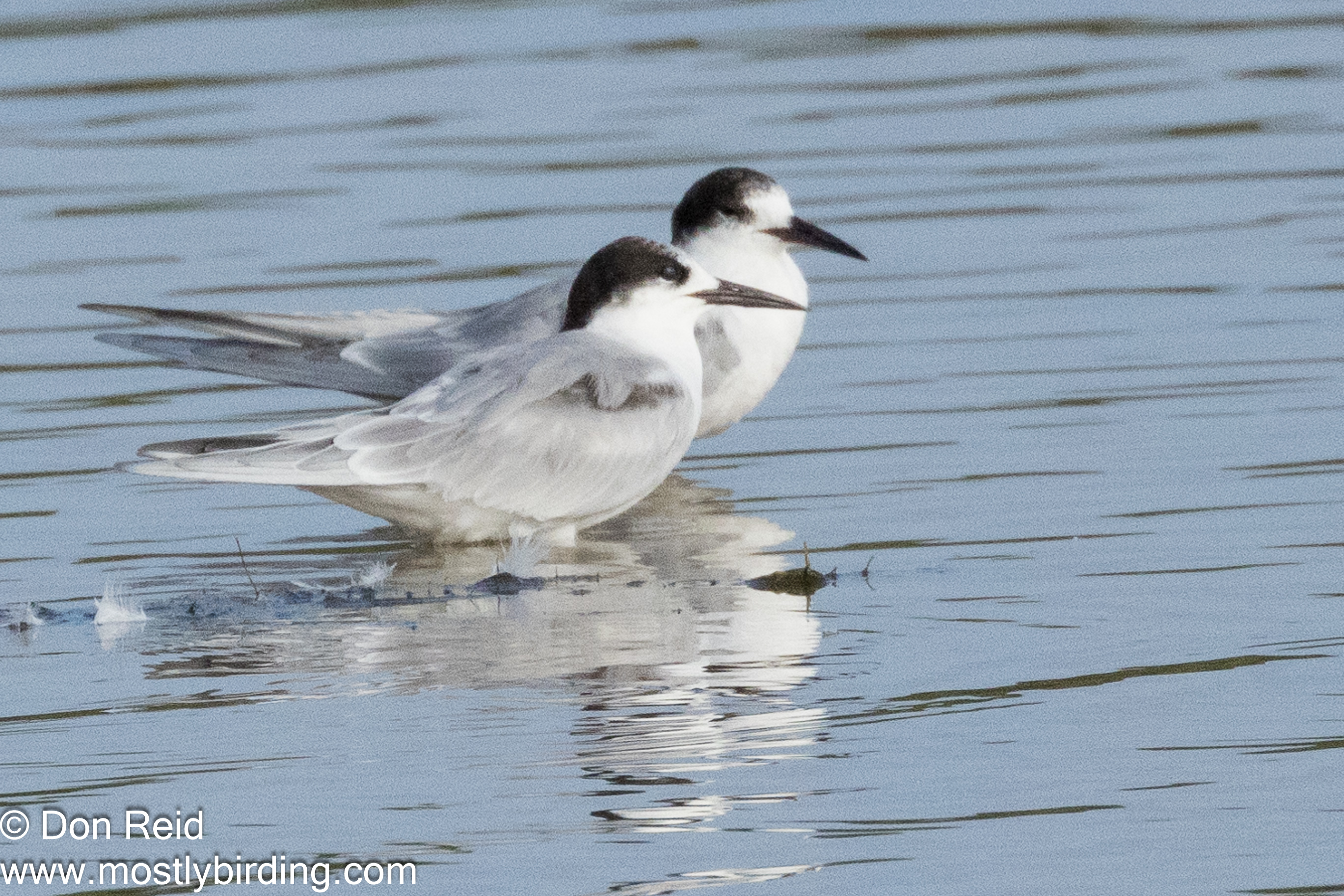
  • Three Tern species at the river mouth – Swift, Common and Sandwich Terns
Common Tern Sterna hirundo Gewone sterretjie, Hartenbos River mouth

  • Wood Sandpiper at the water works vleis

Day Trip to Robinson Pass – 11 February

We were keen to get out after being confined to home for most of the week and decided to have a late lunch at Eight Bells Inn followed by our customary nature drive up the Robinson Pass and back again.

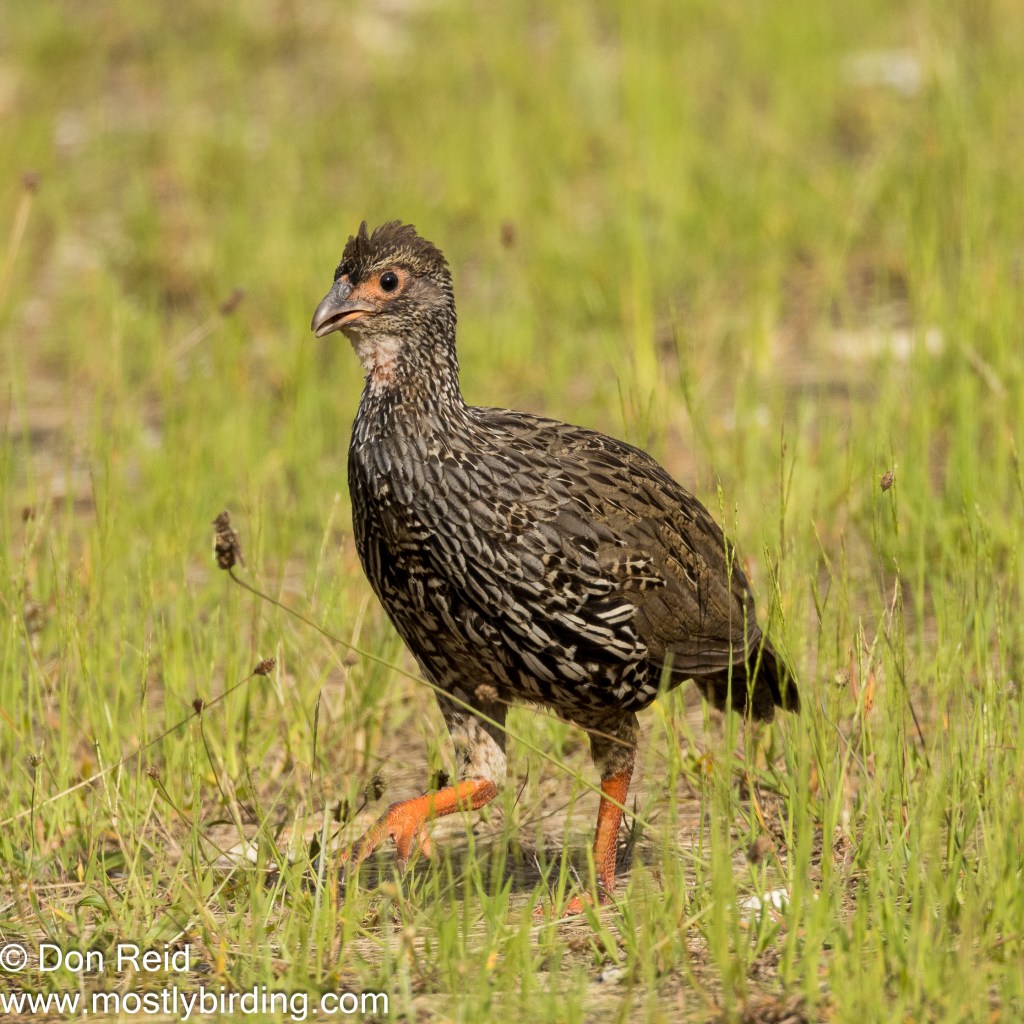
On the way down the pass I spotted a few Red-necked Spurfowl on the grassy verge ahead and pulled off to see what they were up to. One juvenile ventured cautiously onto the tar road and another followed, until a passing vehicle chased them back – I couldn’t help wondering – why did the Spurfowl try to cross the road?

Red-necked Spurfowl Pternistis afer Rooikeelfisant (race castaneiventer) (Juvenile), Robinson Pass

Looking for an Osprey at Great Brak – 16 February

Reports by Rudi, another of the keen birders based in Mossel Bay, of an Osprey at Great Brak river estuary had us heading there mid-afternoon to see if it was still around – and just as an excuse to get out to a pleasant birding spot.

30 minutes after leaving we were at the river, driving slowly along the Suiderkruis road as we are accustomed to doing – there were plenty of the usual waterbirds and waders visible, although no immediate sign of the Osprey.

The tern roost near the mouth was busy with Swift, Sandwich and Common Terns all present.

Moving around to the opposite side of the estuary, we stopped at the restaurant parking next to the old railway station and got out to scan the surrounds – a large bird in the sky caught my eye and Gerda’s at the same time and we both shouted excitedly. It was the Osprey!

Pleased, we headed homewards.

Fransmanshoek – Quick Trip 18 February

Andre suggested a late Saturday afternoon visit to Fransmanshoek, near Vleesbaai for a simple ‘picnic’ of coffee and biscuits at this lovely spot with its rugged rocky scenery and pathways among the rocks.

Swift Tern Thalasseus bergii Geelbeksterretjie, Fransmanshoek

Distant seabirds and closer birds among the undergrowth added up to a modest 13 species during the hour or so we spent there, nevertheless it is one of those ‘off the beaten track’ unspoilt spots that is worth a visit for the scenery alone.

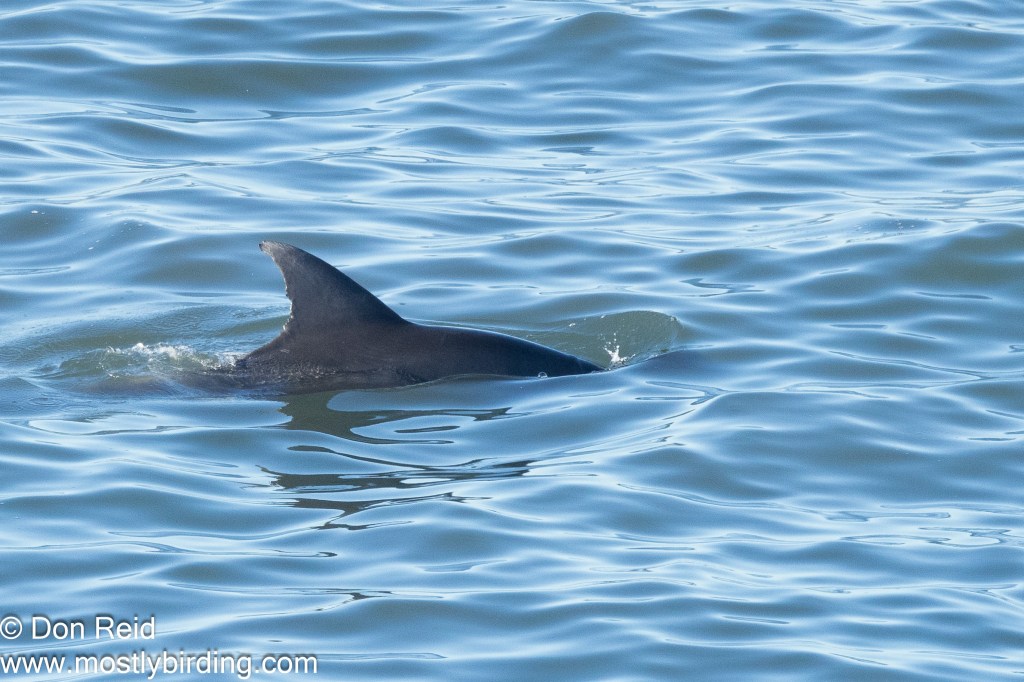
Dolphin, Fransmanshoek
Fransmanshoek
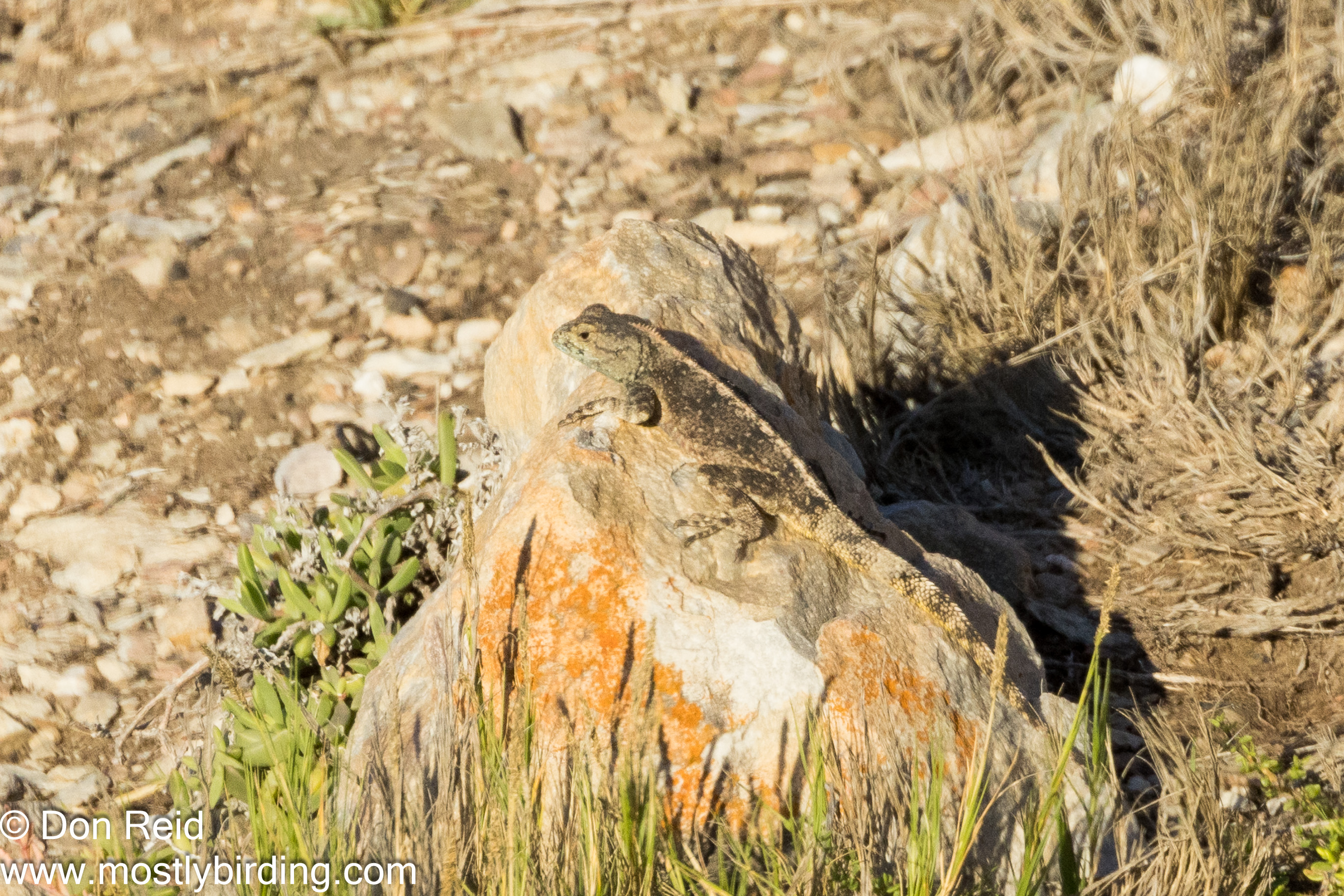
Lizard, Fransmanshoek

Heimersrivier Road – 20 February

Pentad 3345_2220

Another lengthy treatment in George for Gerda meant another opportunity for some atlasing not too far from George. I decided to head ‘over the mountain’ into the Klein Karoo towards Oudtshoorn and selected a pentad which, on the face of it, was lacking in many features with a single road – signposted Heimersrivier – running west to east through the middle of the pentad. It did not promise a large total of species and that’s pretty much how it turned out.

Heimersrivier

In fact, the first hour of atlasing produced just 7 species, 6 of which were only added after 50 minutes of careful driving and scanning for movement in the arid landscape both sides of the gravel road.

Heimersrivier

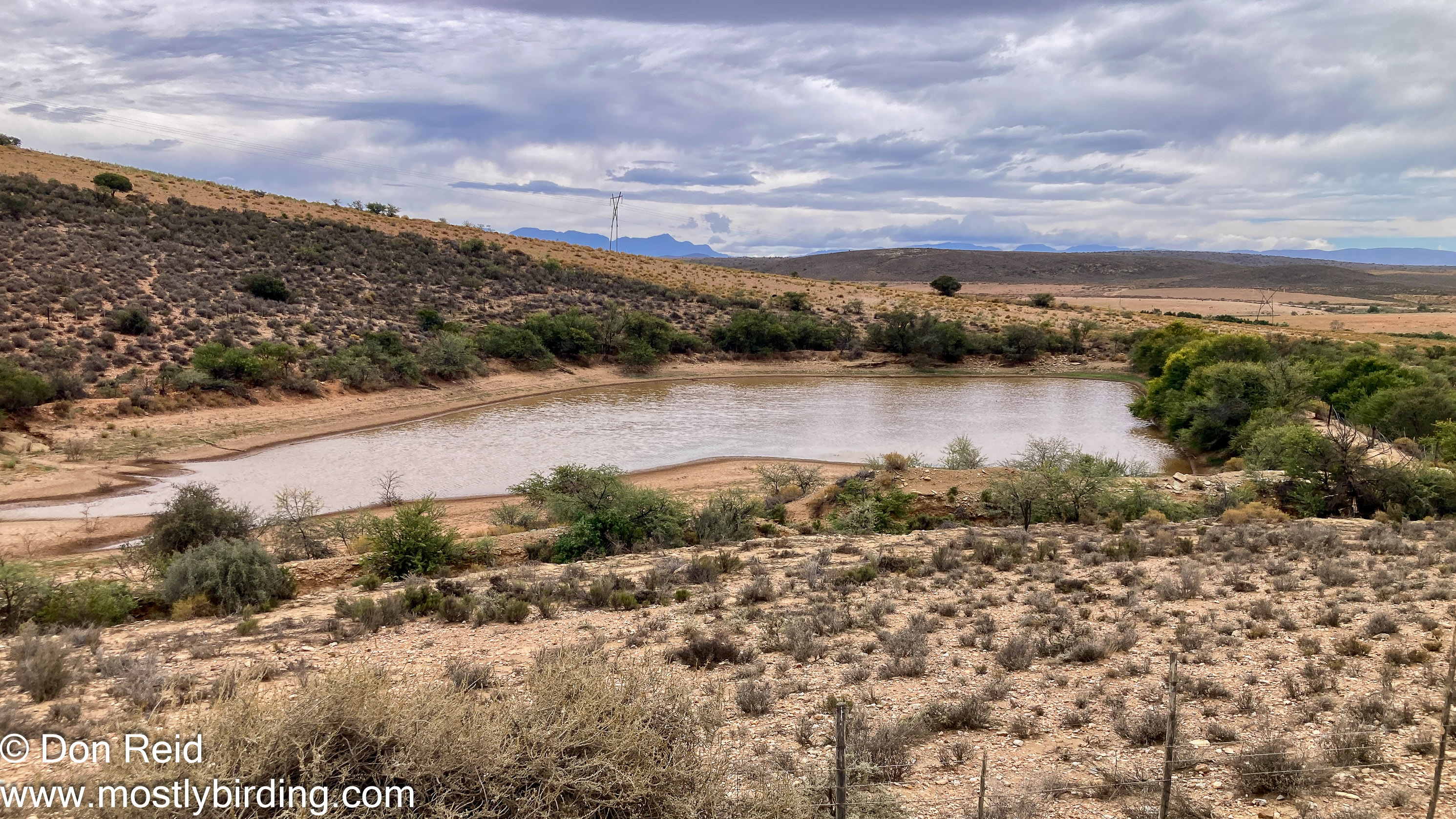
A dam just short of the eastern pentad boundary provided the boost with White-breasted Cormorant, SA Shelduck and African Black Duck and a small river soon after kept the momentum going.

Heimersrivier
African Black Duck Anas sparsa Swarteend, George-Oudtshoorn Area

The return drive along the same road was far more productive and easier for spotting as I now had the sun at my back instead of in my face and took me to 26 species in 2 and a half hours.

Heimersrivier
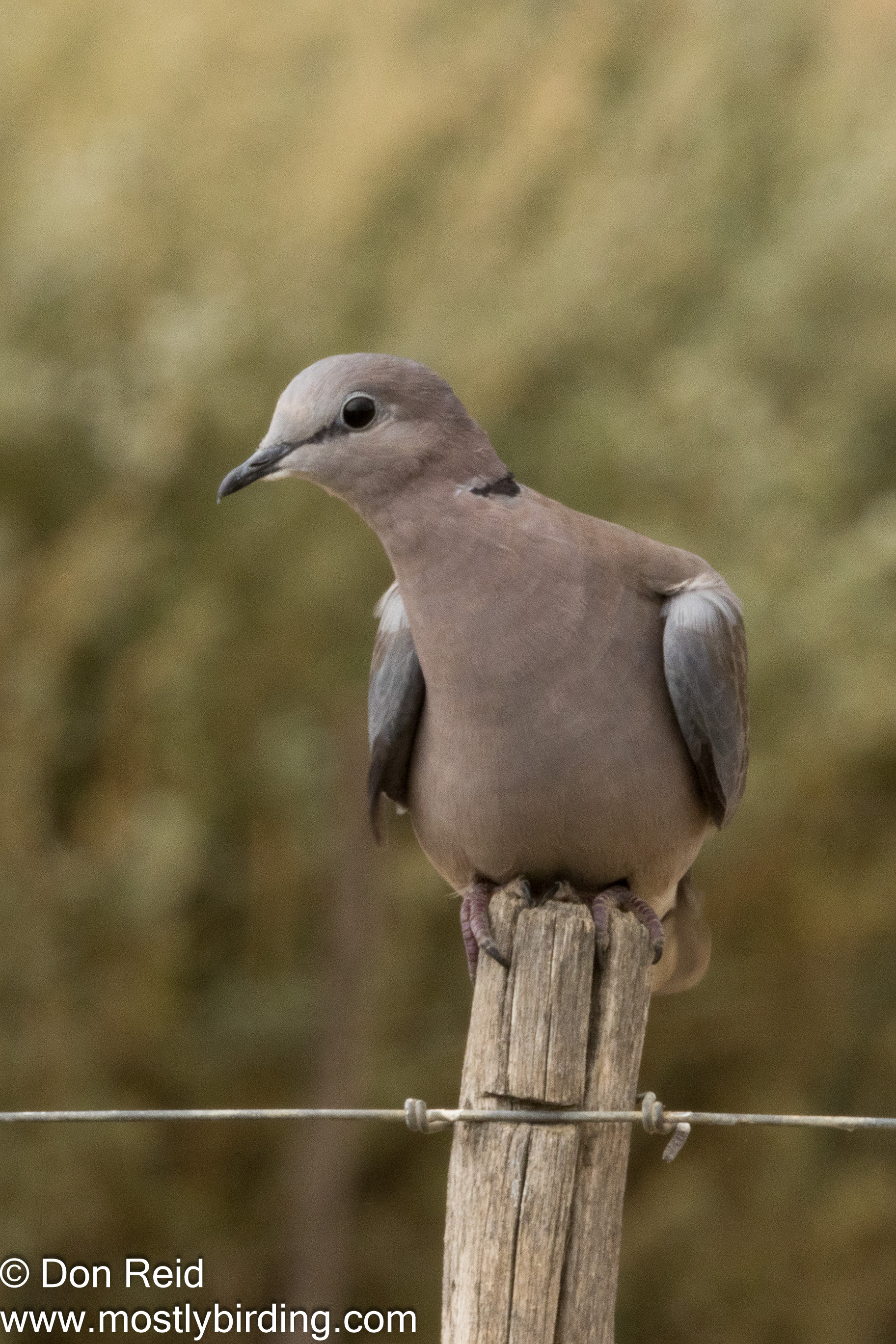
Ring-necked Dove Streptopelia capicola Gewone tortelduif, George-Oudtshoorn Area
Familiar Chat Cercomela familiaris Gewone spekvreter (race familiaris), George-Oudtshoorn Area

Other highlights –

  • Namaqua Doves
  • Red-capped Larks
  • Black-winged Kite in a photogenic position
Black-winged Kite Elanus caeruleus Blouvalk, George-Oudtshoorn Area

Gondwana Area / Broad-billed Roller Twitch – 28 February and 4 March

Pentad 3400_2150

Now I’m not a ‘serious’ twitcher (defined as a birder who goes to extreme lengths to add a rarity to his/her lifelist) but when a report came through on the Monday afternoon of a Broad-billed Roller not far from Mossel Bay, I was sorely tempted. Broad-billed Rollers occur in the far north-east of South Africa, so this one was at least 1500 kms from its usual range – probably a case of reverse migration ie heading south when it was supposed to head north to central Africa

Come Tuesday and messages showed a few birders looking for the Roller, so far without success – I was not keen to leave Gerda alone at home as she was still in recovery mode, but she urged me to go and with Geraldine’s encouragement and support the twitch was on!

By mid-morning I was on my way to the area adjoining the Gondwana Game Reserve and reached the pentad just after 11 am, birding as I went. I got impatient and sped up to get to the pin drop provided by the original spotter, meeting the Waldens along the way going in the opposite direction – they had not found the Roller after a couple of hours looking for it, so I gave them the pin drop and continued along the gravel road.

I soon passed another couple – Simon Fogarty and Jenny, both from Cape town – who had also not had any luck finding the rarity. They had driven 400 kms from Cape Town to look for it, so were understandably keen to carry on until they did.

I carried on to the spot where an open field with low fence posts seemed to fit the photos posted on the Whatsapp Rarities group. I spent an hour in the vicinity, searching up and down the stretch of road where it had supposedly been seen. The Waldens returned and we chatted at length – about birding, naturally. Simon and Jenny also turned up and we all carried on the search.

Eventually I left them to it and headed homewards, only to pull up sharply about two kms down the road when I glanced towards a farmhouse and a rufous bird caught my eye, momentarily thinking it was a Rock Kestrel which are fairly common in these parts, then realising it was the Roller – Bingo!

Broad-billed Roller Eurystomus glaucurus Geelbektroupant, Gondwana Area

After taking a few photos I rushed back to where the two couples were still searching and happily informed them of the find. Back at the spot, we all admired the colourful Roller, took photos and just enjoyed the moment, then said au revoirs and returned home.

I had not done enough atlasing to justify a ‘Full Protocol’ card but was keen to get back to Gerda. Subsequently an opportunity arose on the Saturday, within the 5 day period allowed to complete an atlas card, to venture out to the same area and take the card from 15 to 42 species including some pleasing sightings –

  • Tambourine Dove calling – oh so mournfully
  • Secretary Bird in a distant tree, probably guarding a nest
  • Black Cuckooshrike near the Roller spot
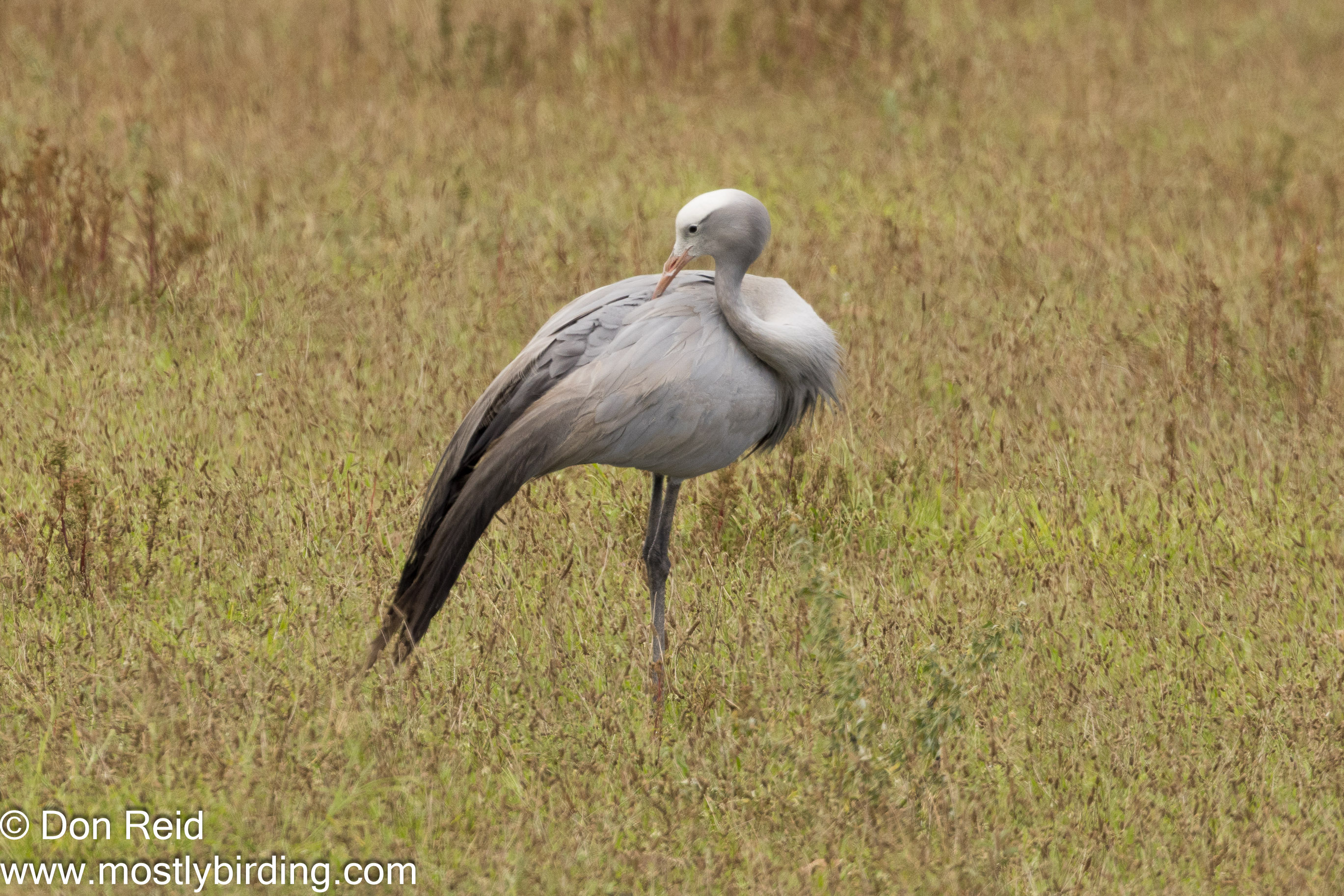
  • Blue Cranes in an open field
Blue Crane Anthropoides paradiseus Bloukraanvoël, Gondwana Area

Meanwhile back at the ranch …

As usual I atlased my ‘home’ pentad several times during the month and was rewarded with a number of good sightings –

  • Buff-spotted Flufftail calling from its favourite spot along the nature trail (such an eerie sound)
  • Fiery-necked Nightjar heard for the first time since November
  • Knysna Warbler heard from our balcony for the first time
  • Black Sparrowhawk flying over the golf course
  • Ruddy Turnstone at the Point
  • Spotted Eagle-Owl seen on the nature trail and around our home
Spotted Eagle-Owl Bubo africanus Gevlekte ooruil, Mossel Bay Golf Estate

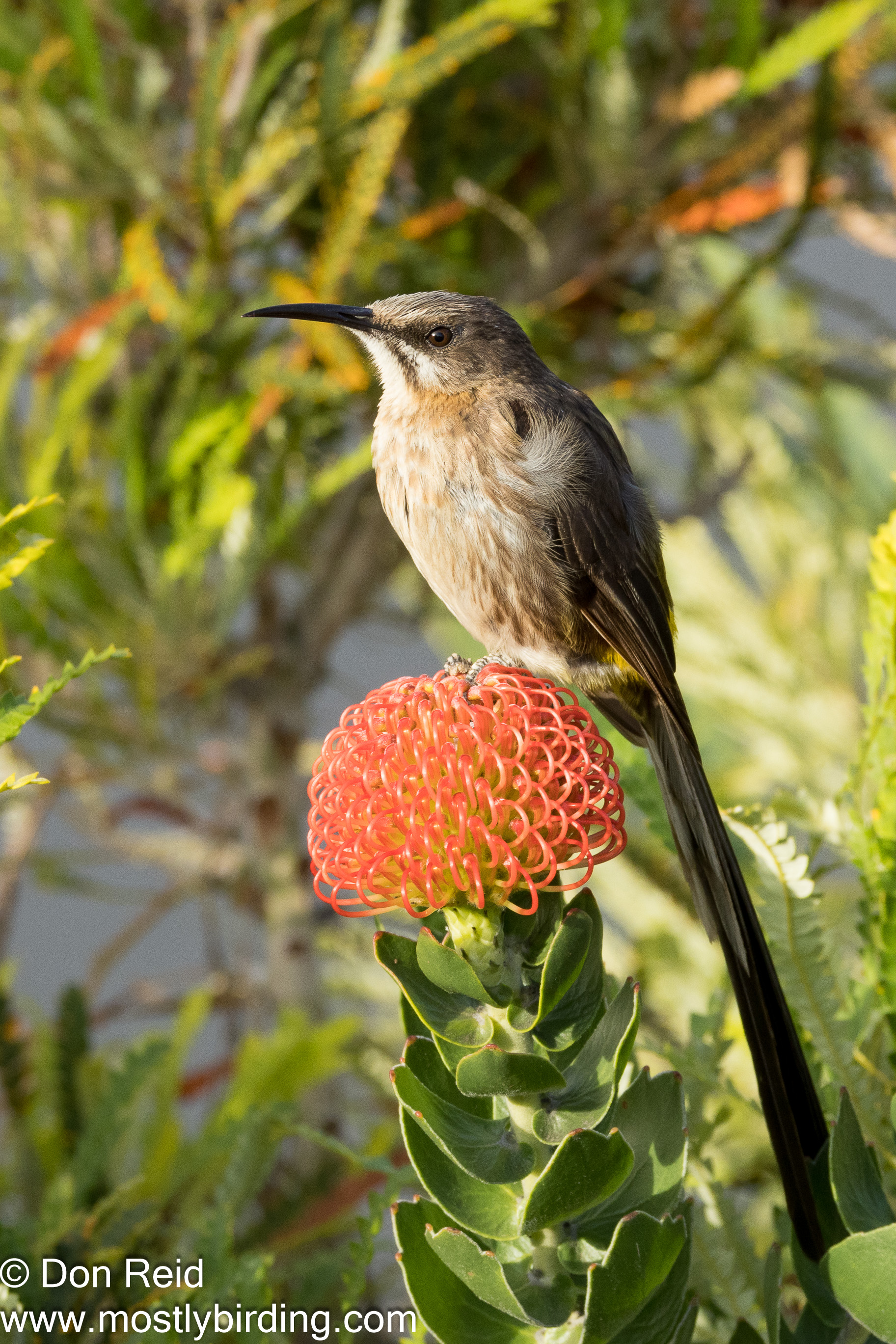
Cape Sugarbirds still enjoying the profusely flowering Pincushions in our garden

Cape Sugarbird Promerops cafer Kaapse suikervoël, Mossel Bay Golf Estate

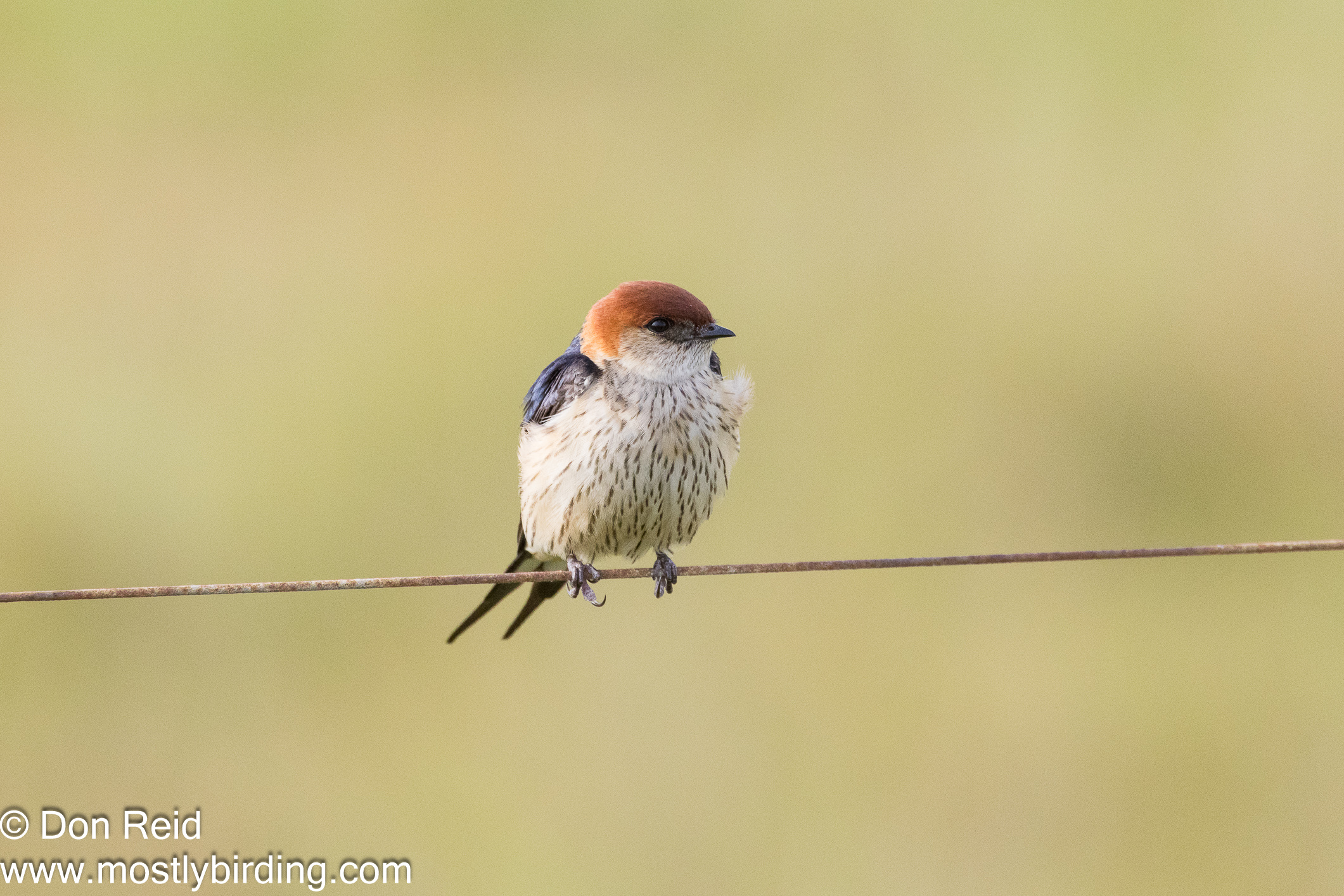
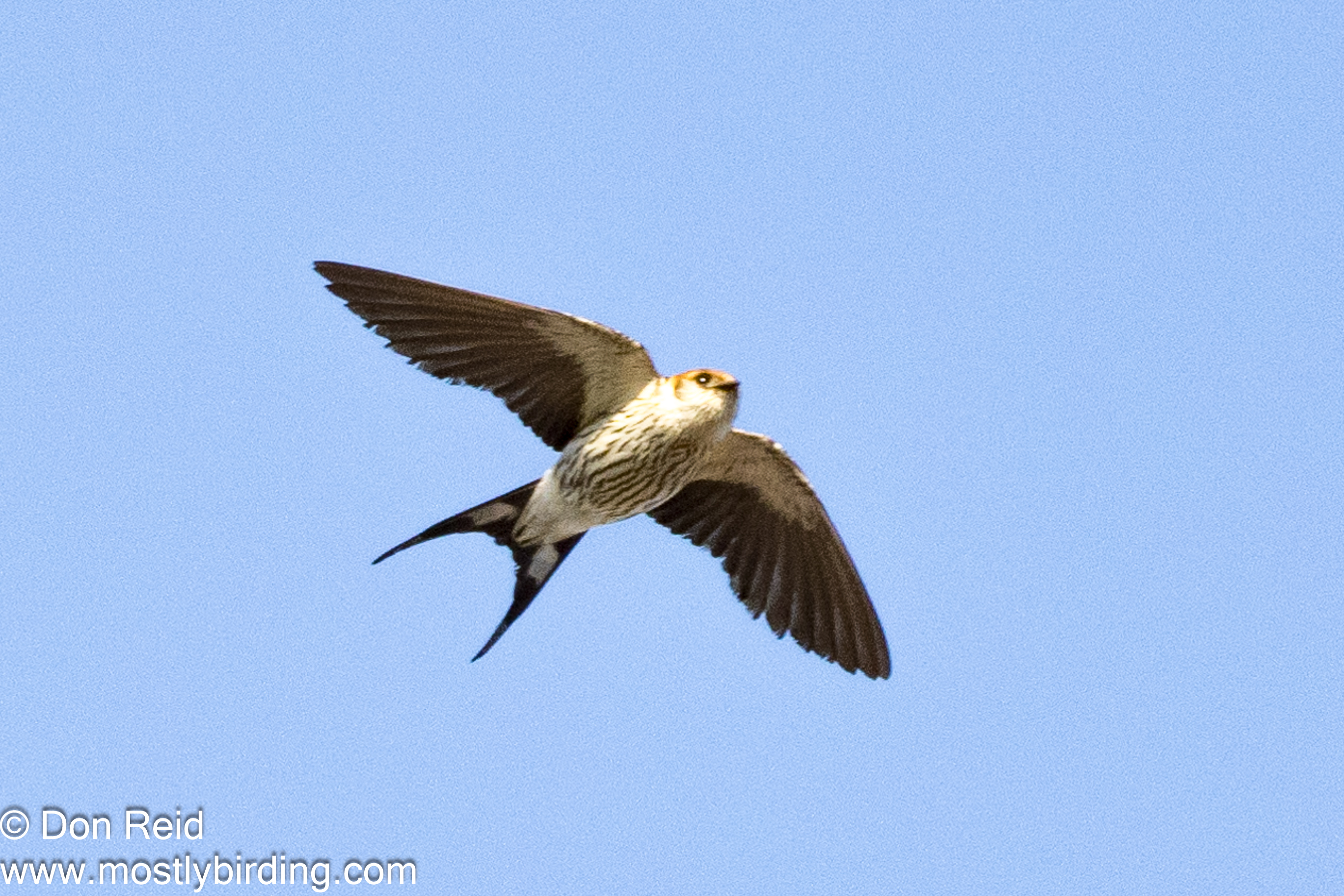
My attempts to capture a Greater striped Swallow in the air produced a couple of decent shots among hundreds of discards

Greater Striped Swallow Cecropis cucullata Grootstreepswael, Mossel Bay Golf Estate

Atlasing Tales 9 – January 2023 (Part 2)

These tales record some of the more memorable experiences while atlasing – in this case during January 2023 while we were at our ‘other’ home in Mossel Bay. (which we now call our only home after moving permanently in October 2023)

Continuing where I left off in Part 1 ….

Great Brak and Glentana 21 January 2023

Another Saturday ‘off duty’ from patient care (thanks to daughter Geraldine) meant I could plan an atlasing trip and decided to atlas a favourite area – Great Brak River and the adjoining Glentana.

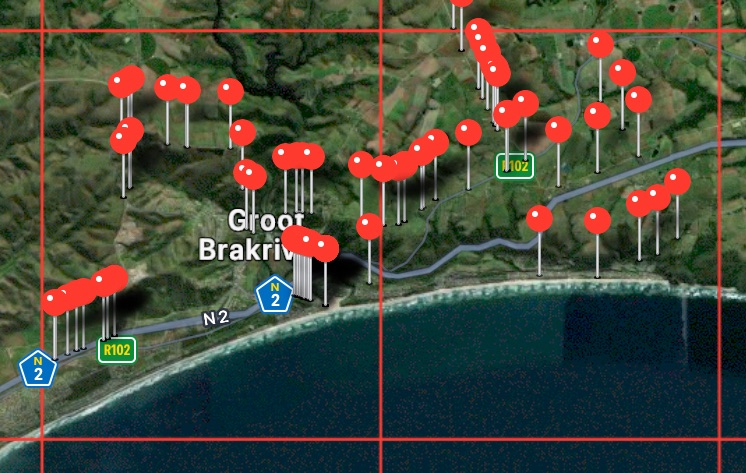
I use the outstanding Birdlasser app for recording the species as I go, as most atlasers do, one of its features being a record of each sighting’s coordinates, among other details. The map below is the result, with each ‘balloon’ representing a species recorded as I criss-crossed the pentads along the available roads.

Pentad 3400_2210

So, to put the map into words, I started at 6.45 am along the N2 heading to Great Brak, pulling off the already busy National road at a spot which gave me a view of the fields and dams to the north. After 30 minutes I had 22 species logged which is par for a ‘good’ pentad.

Next stop after taking the Great Brak turnoff was the Suiderkruis road which adjoins the estuary all the way to the river mouth and is a great vantage point for viewing waterbirds.

During summer, when the water level in the estuary is favourable, it’s a magnet for waders and that was the case today with the ‘usual suspects’ present – White-fronted and Common Ringed Plovers, Greenshank, Little Stint and Oystercatchers.

Common Greenshank Tringa nebularia Groenpootruiter

Near the mouth the tern roost was busy with terns coming and going constantly – the three regular species were all there – Swift, Sandwich and Common Terns

That took me to 41 species and it was looking good for a high total (which is not the main point of atlasing but does inspire you to give it your best).

Inevitably the birding slowed from there as I headed inland towards the village, then up into the hills to complete a circular route through the countryside and back into town.

African Stonechat Saxicola torquatus Gewone bontrokkie (race torquatus), Great Brak Inland

Next up was a road I had not explored before – Voorbrug Way which heads uphill again but eastwards and I soon found myself passing homes (mansions in some cases) on large properties built on “the heights”. It was not long before I reached the boundary of the pentad, as indicated on the car’s GPS, with a total of 62 species recorded after some two and a half hours.

Levaillant’s Cisticola Cisticola tinniens Vleitinktinkie (race brookei), Great Brak Inland

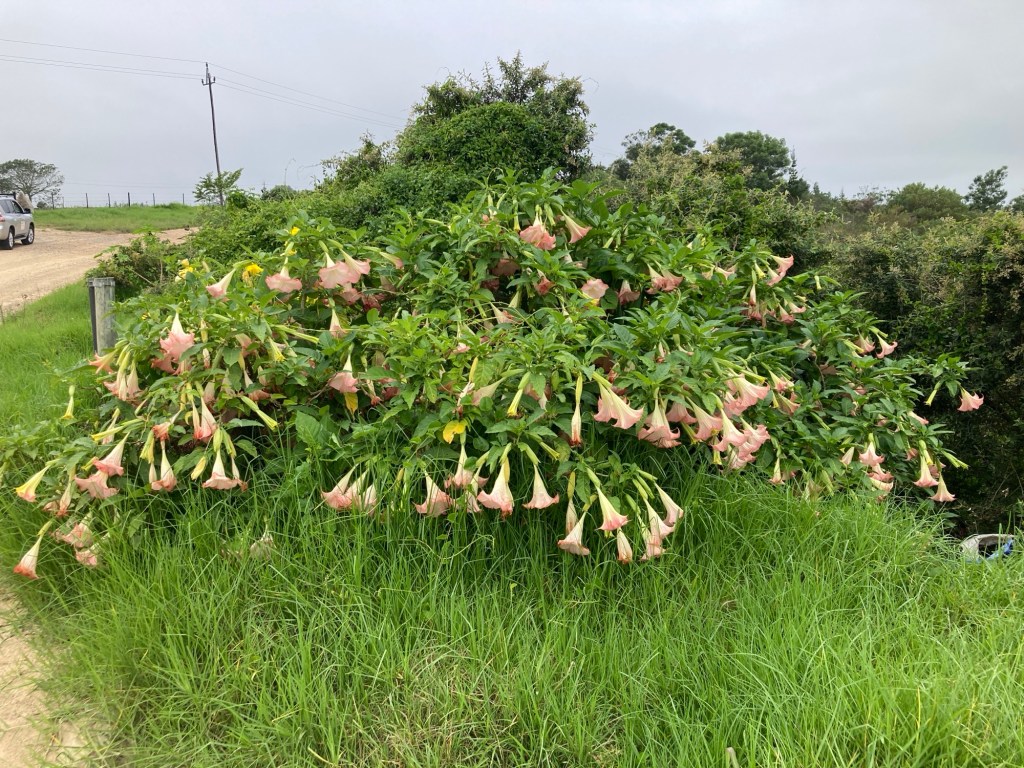
Driving along the back roads I just had to stop and inspect this spectacular flowering plant with flowers the size of dinner plates – turns out it is an introduced garden species native to certain South American countries and has a reputation for being poisonous although the sources say it is no more poisonous than the humble tomato plant

Moonflower – Brugmansia (introduced species), Great Brak Inland

Pentad 3400_2215

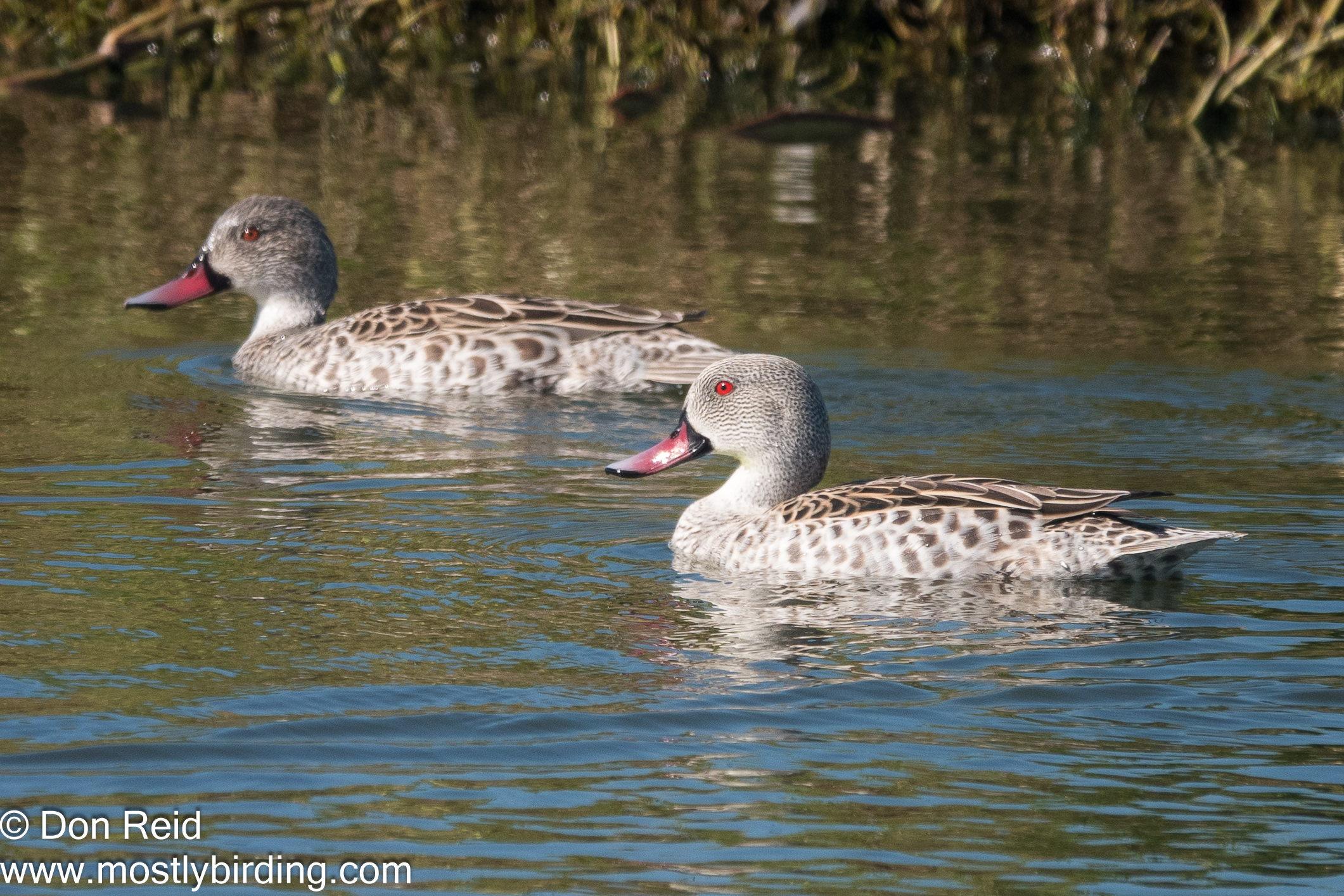
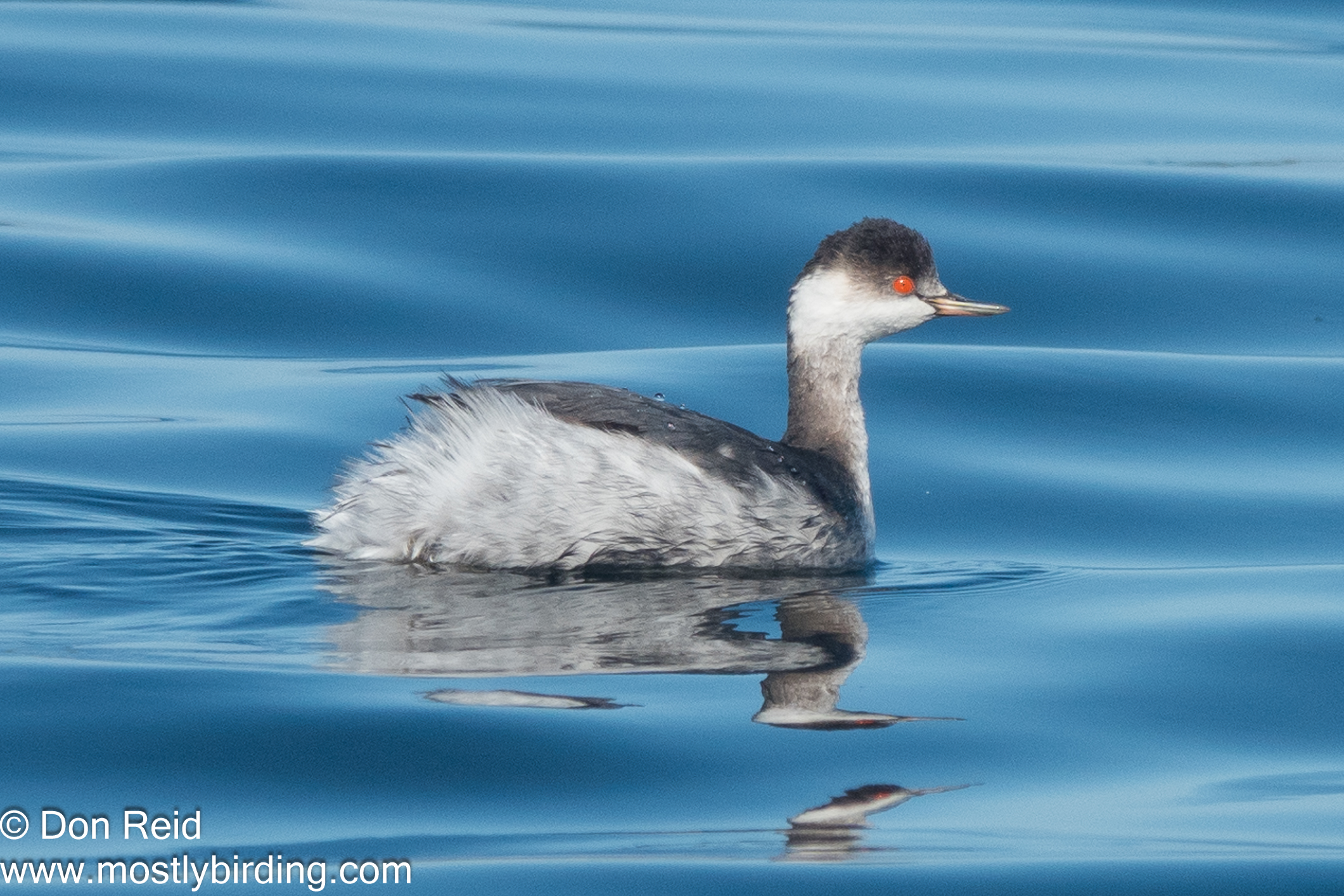
I carried on along Voorbrug Way, which took me back to the R102 main road before heading northwards on the Jonkersberg Road. This road passes several farms and small dams – ideal countryside for a good variety of species as it serves the needs of both terrestial and water-based birds. The latter included Red-billed and Cape Teals, Cape Shovelers, White-faced and Yellow-billed Ducks and Little Grebe, in addition to the usual Coots, Moorhens and Cormorants – standard fare for the southern Cape but not often all seen in a pentad without a significant vlei or two.

Returning on the same road I then turned back to the coast and drove the length of the seaside town of Glentana, which did not add much to my list, but I managed a total of 49 species for the pentad.

Other highlights of the pentad were several –

  • Four raptors in all – Black-winged Kite, Yellow-billed Kite (migrant), African Harrier-Hawk and Forest Buzzard
Yellow-billed Kite, (photo taken in Chobe Game Reserve)
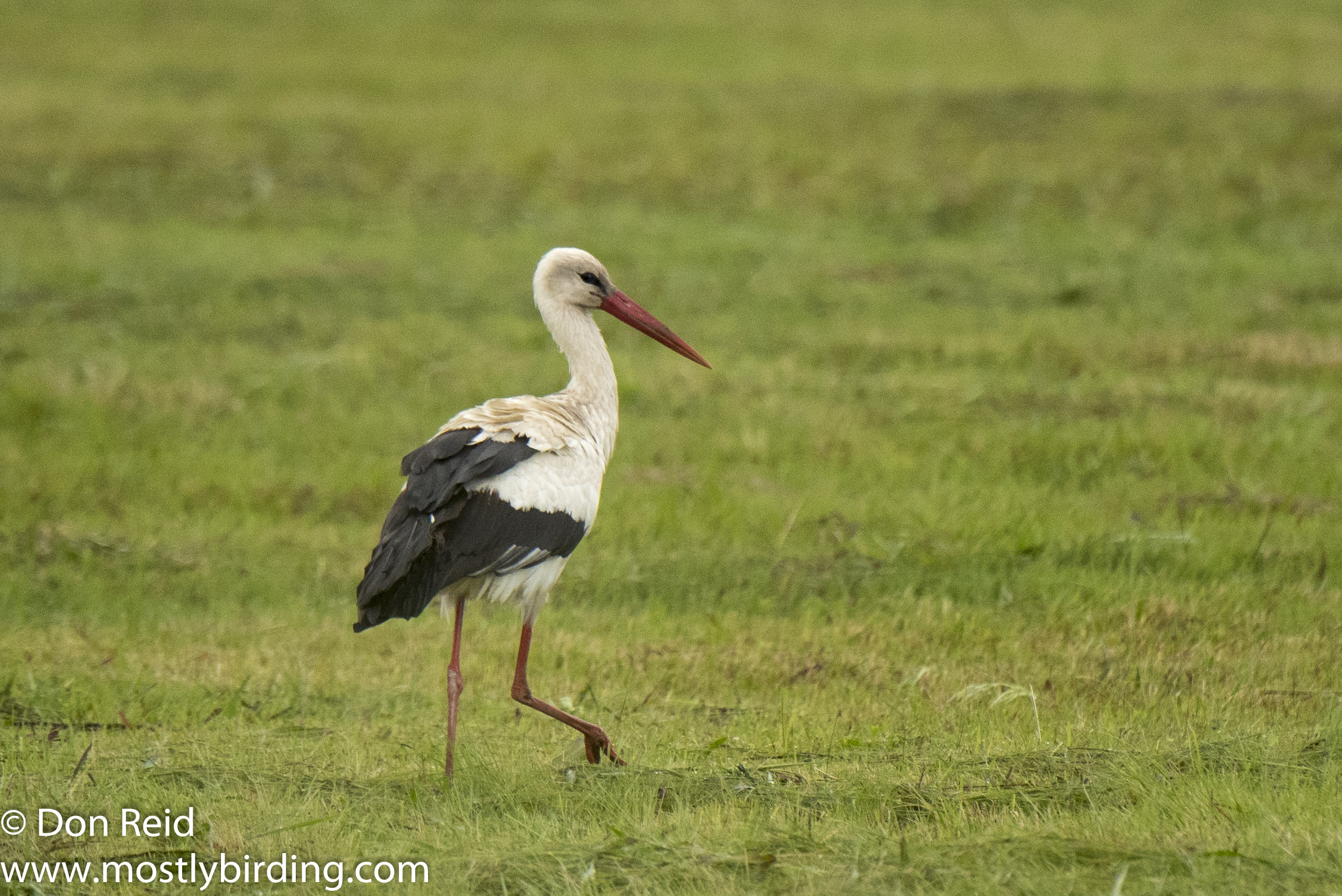
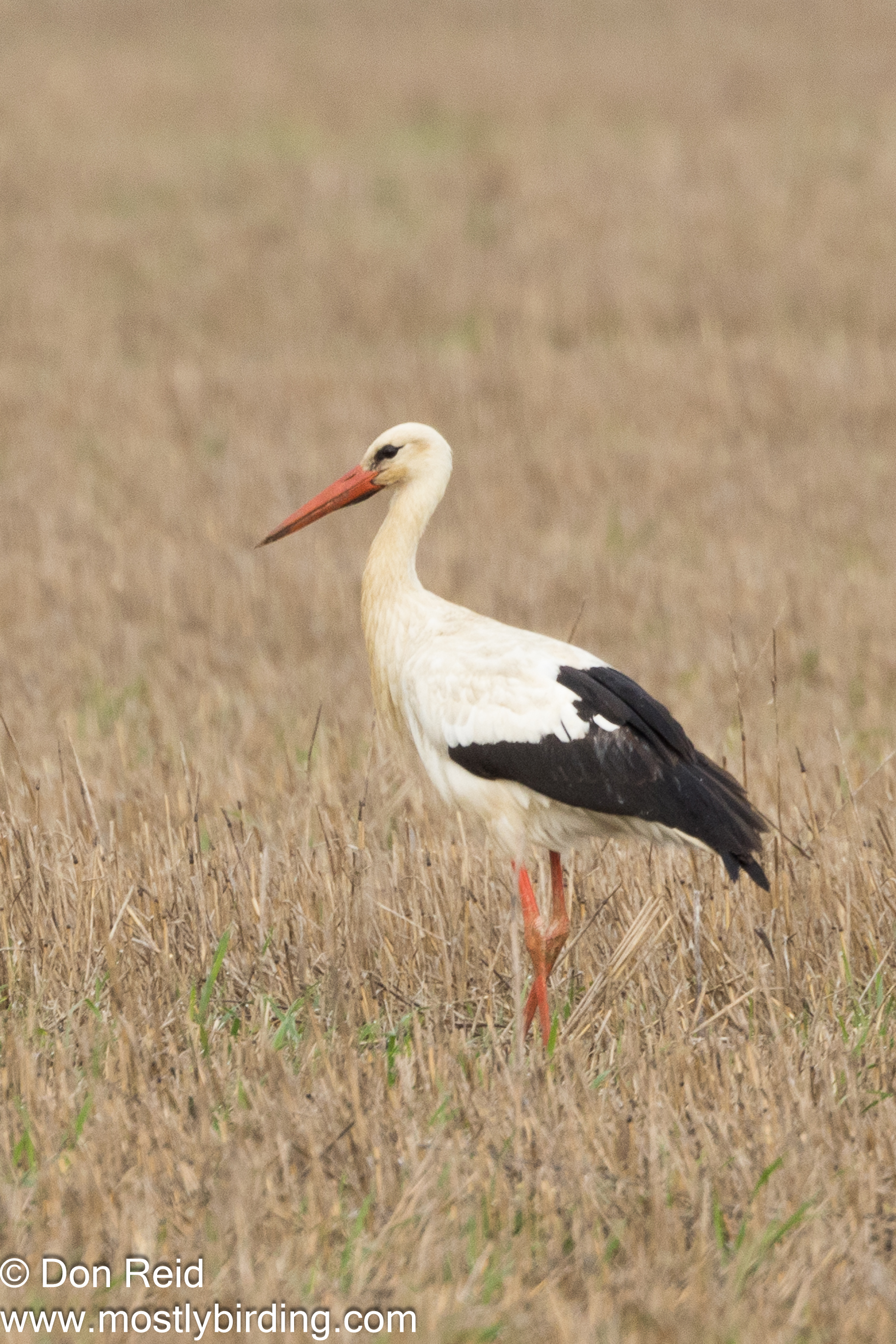
  • White Storks sharing a field with many Egrets and Ibises
White Stork, (photo taken near Delmas in Gauteng)
  • Common Quail calling from longish grass but as usual remaining hidden

Hoekwil 30 January 2024

My last atlasing outing for the month was a short one while Gerda was having her next treatment in George.

After some essential shopping I headed to the pentad which incorporates the “Big Tree” forest near Hoekwil village. Starting in Waterside Road in Wilderness I proceeded east to Bo-Langvlei road then up the Hoekwil road.

A windy day meant birds were few and far between, so I made my way to the forest parking area for a quick picnic lunch and spent the next hour walking the quiet trail where birds are more often heard than seen and lovely forest scenes lie around every bend in the trail.

Hoekwil Forest

This juvenile Chorister Robin-Chat was curious enough to allow for a photo in the dark forest

Chorister Robin-Chat Cossypha dichroa Lawaaimakerjanfrederik (Juvenile), Hoekwil Forest

Cape Batis are quite common in the forest although not always easy to see – this was one of several sightings during my walk

Cape Batis Batis capensis Kaapse bosbontrokkie (Female, race capensis), Hoekwil Forest

As with most forests, Hoekwil has many natural delights, apart from the birdlife, which tend to distract you from the task at hand and I found myself stopping to admire the bounty

Spider, Hoekwil Forest
Fungus, Hoekwil Forest
Butterfly : Bush Brown, Hoekwil Forest

Bird of the day was a charming little Yellow-throated Woodland-Warbler – not having seen one for a few years it was a special sighting

Yellow-throated Woodland-Warbler

It had been a good month with a total of 167 species atlased and many special sightings among them

Atlasing Tales 8 – January 2023 (Part 1)

It’s time to resurrect a theme I last posted about a couple of years ago – the atlasing of bird species that lies at the heart of my birding activities as it has done for the last 10 years or more.

These tales record some of the more memorable experiences while atlasing – in this case during January 2023 while we were at our ‘other’ home in Mossel Bay. (which we now call our only home after moving permanently in October 2023)

Atlasing? 

It’s worth repeating: Atlasing is the regular mapping of bird species in a specific area called a “pentad”. Each pentad has a unique number, based on its geographical position according to a 5 minute x 5 minute grid of co-ordinates of latitude and longitude, which translates into a square of our planet roughly 8 x 8 kms in extent.

As a registered observer / Citizen scientist under the SABAP2 program (SA Bird Atlas Project 2), I record all of the species I see or hear in a particular pentad over a period which can be anything between 2 hours and 5 days, for submission to the project database at the ADU (Animal Demography Unit) based in Cape Town.

‘Home’ Pentad – Mossel Bay

Mossel Bay serves as my home pentad when we spend extended periods there and always produces a few notable sightings – this peak summer month was no different, coming up with several good sightings –

  • Spotted Eagle-Owl – a regular on the Golf Estate, sometimes spending the day on a nearby garden wall as this one did
Spotted Eagle-Owl Bubo africanus Gevlekte ooruil, Mossel Bay
  • Buff-spotted Flufftail, unlike obedient children, always heard but seldom seen
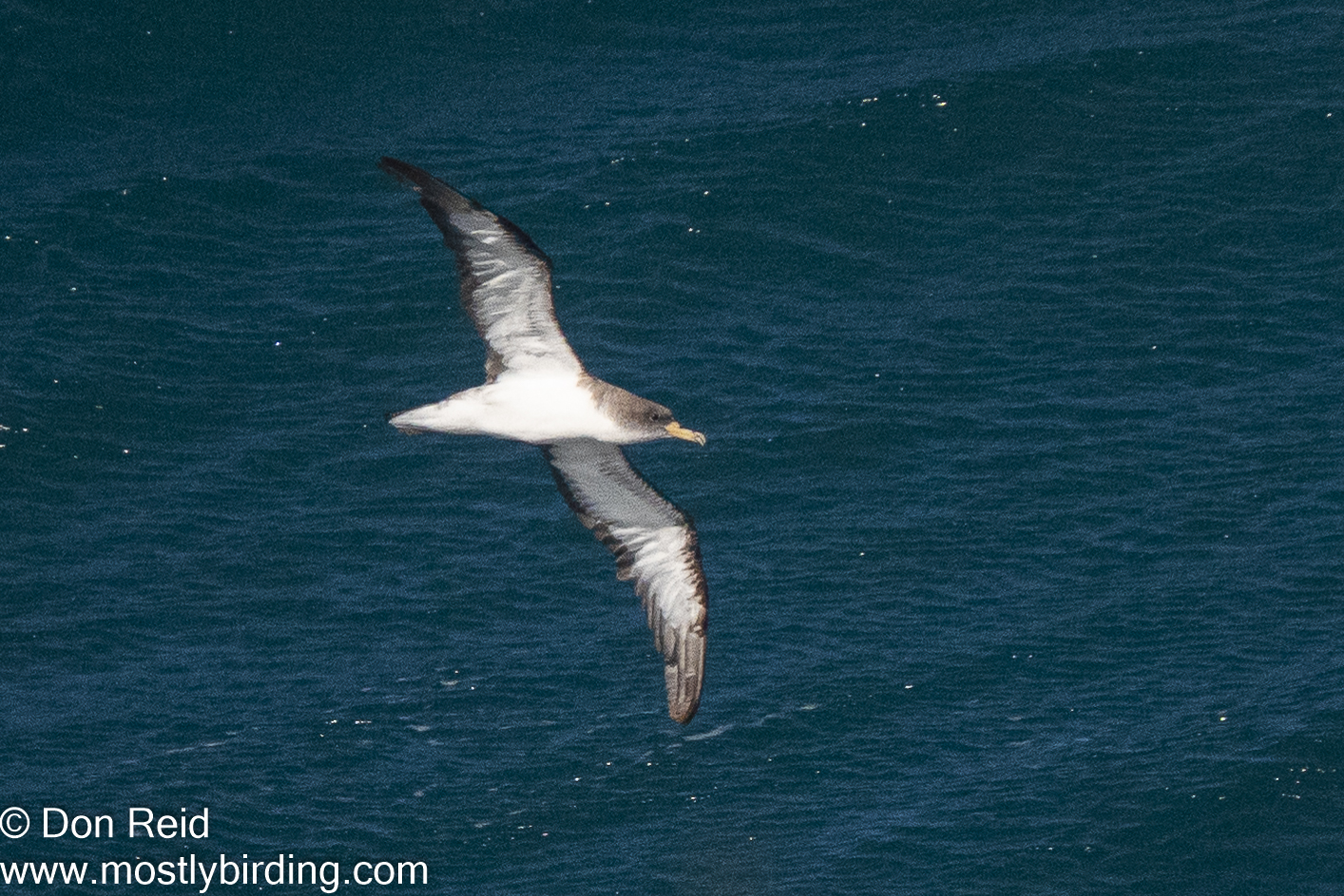
  • Cory’s Shearwater, a regular summer visitor along the coast, seen several times at The Point, often in numbers, especially on the days when the south-easter is blowing strongly
Cory’s Shearwater / Calonectris diomedea / Geelbekpylstormvoël, Mossel Bay Point
  • African Paradise Flycatcher along the nature trail
  • Black Sparrowhawk over the nature trail
  • Rock Kestrel over the fairways
  • Cape Batis in dense bush along the nature trail
  • And the easiest of the lot – this African Hoopoe perched on my neighbour’s roof for long enough to allow a few photos from our balcony
African Hoopoe Upupa africana Hoephoep, Mossel Bay Golf Estate

Rondevlei near Wilderness – 9 January

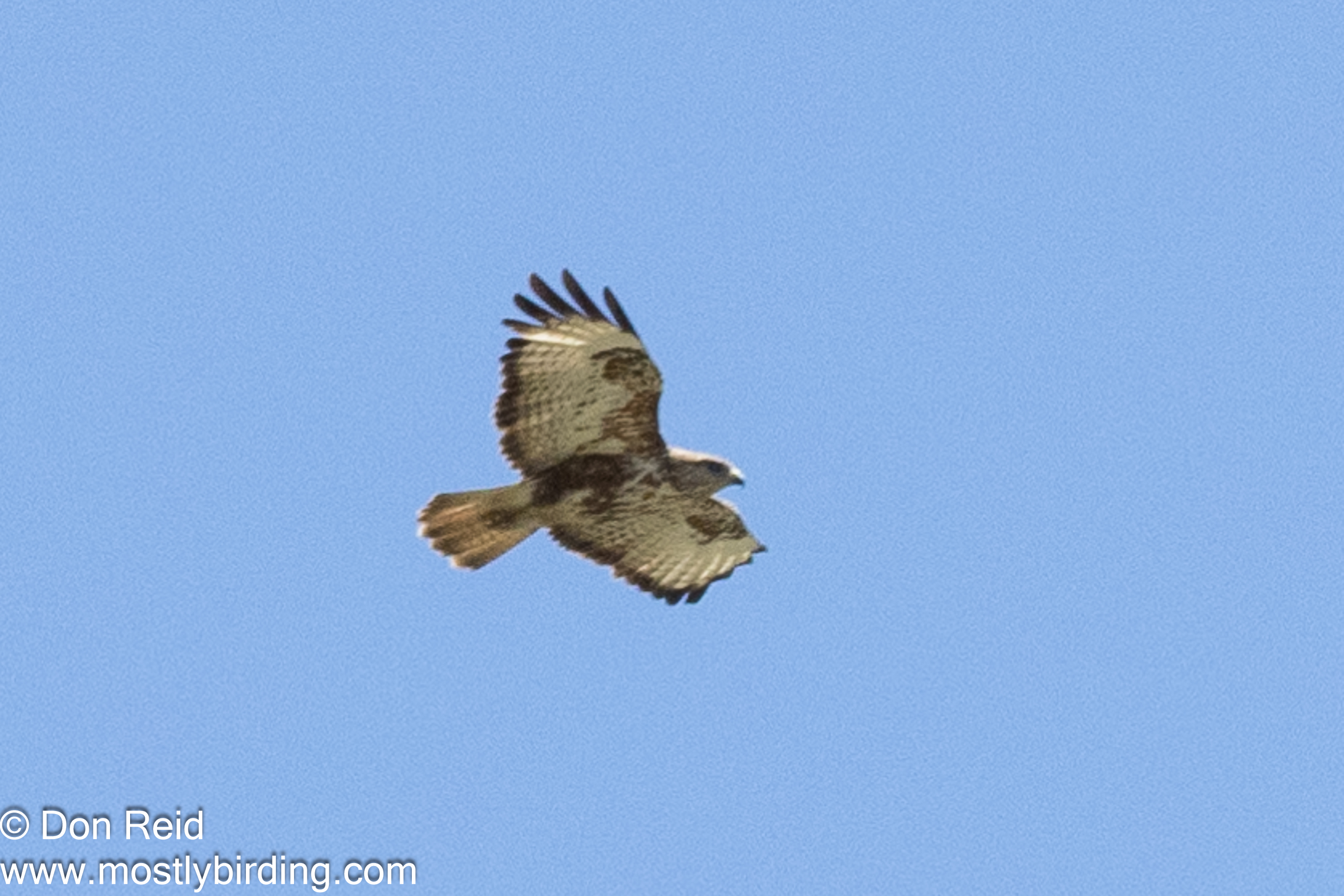
After dropping Gerda off for her 3rd chemo treatment in George and making sure she was well looked after, I had several hours of free time so bought a coffee and sandwich and headed to ‘Die Vleie’ just beyond the nearby town of Wilderness. Leaving the coffee shop, I spotted a raptor overhead which I was later able to ID as a Forest Buzzard from the hurried photos I took.

Forest Buzzard Buteo trizonatus Bosjakkalsvoël, George

After turning off from the N2 beyond Wilderness onto the dusty access road to the vleis, I found the hot conditions were not ideal but occasional birds at the roadside got my pentad list going as I headed for the hide at Rondevlei.

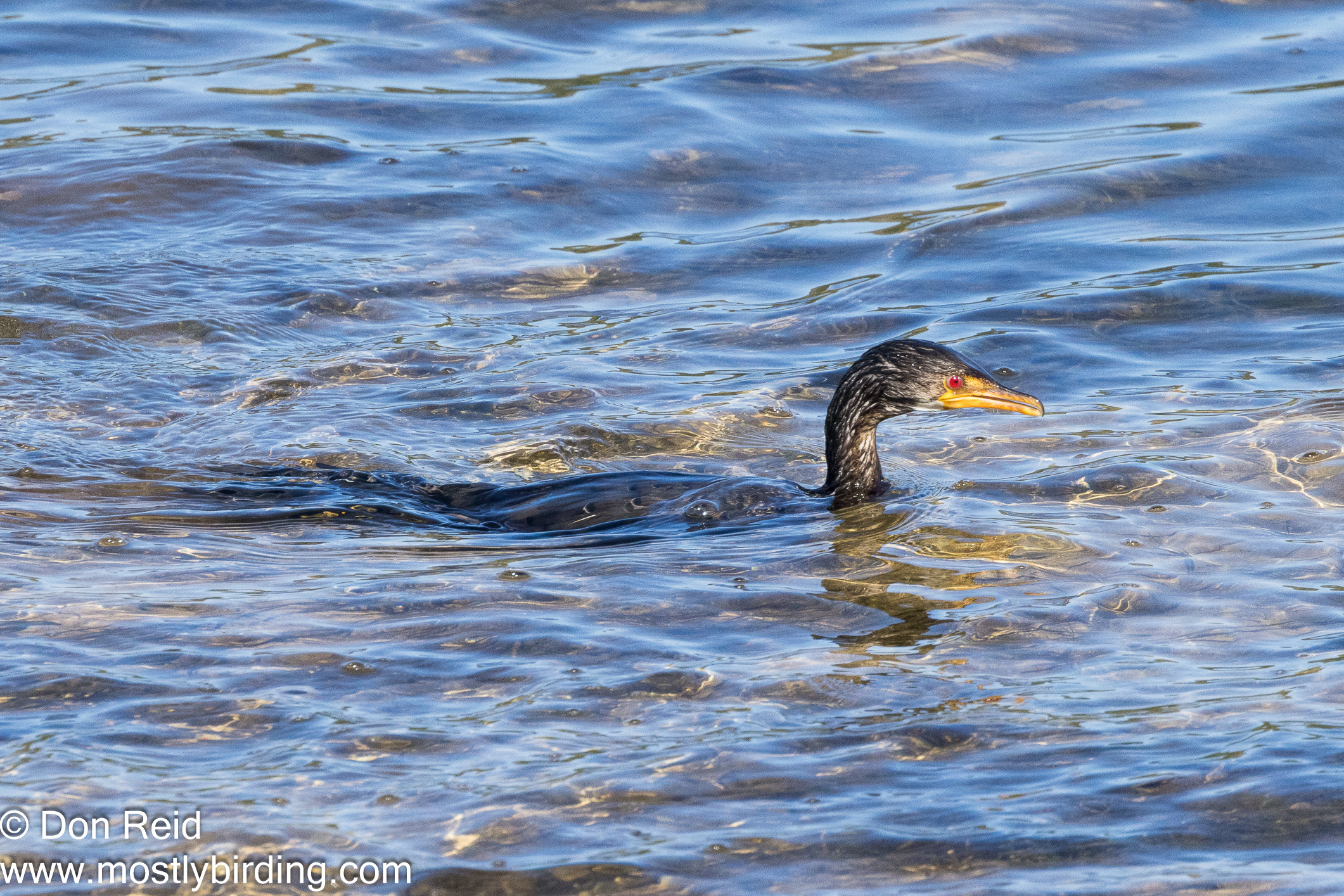
I spent an hour at the hide, trying out my new Canon mirrorless camera – it still needed some tweaking of settings and getting familiar with the control buttons before I would feel comfortable with it, nevertheless I was happy with the nice sharp images it was already producing. A trio of Reed Cormorants and a handsome White-throated Swallow provided good practice

Reed Cormorant Microcarbo africanus Rietkormorant, Rondevlei Wilderness
White-throated Swallow Hirundo albigularis Witkeelswael, Rondevlei Wilderness

Out on the expansive waters of the vlei I could spot Great Crested Grebes among the hundreds of Coots and Cormorants, as well as a single Maccoa Duck – a first for my Western Cape list.

Closer to the hide a couple of Black-winged Stilts went about their feeding routine and as I was about to leave the hide a Black Crake emerged from the waterside reeds.

Black-winged Stilt Himantopus himantopus Rooipootelsie, Rondevlei Wilderness

From Rondevlei I headed north to the Seven Passes Road and stopped at several ponds and dams, one of which held both White-faced and Yellow-billed Ducks.

Gouritsmond – 14 January

On my ‘day off’ from patient care I headed out along the N2 westwards then turned off towards Gouritsmond. Just after the turnoff the fallow fields were buzzing with birds and within 15 minutes I had logged 14 species, among them –

  • White Storks
White Stork Ciconia ciconia Witooievaar, Vleesbaai area
  • Spur-winged Goose
  • Kelp Gulls
  • Sacred Ibis
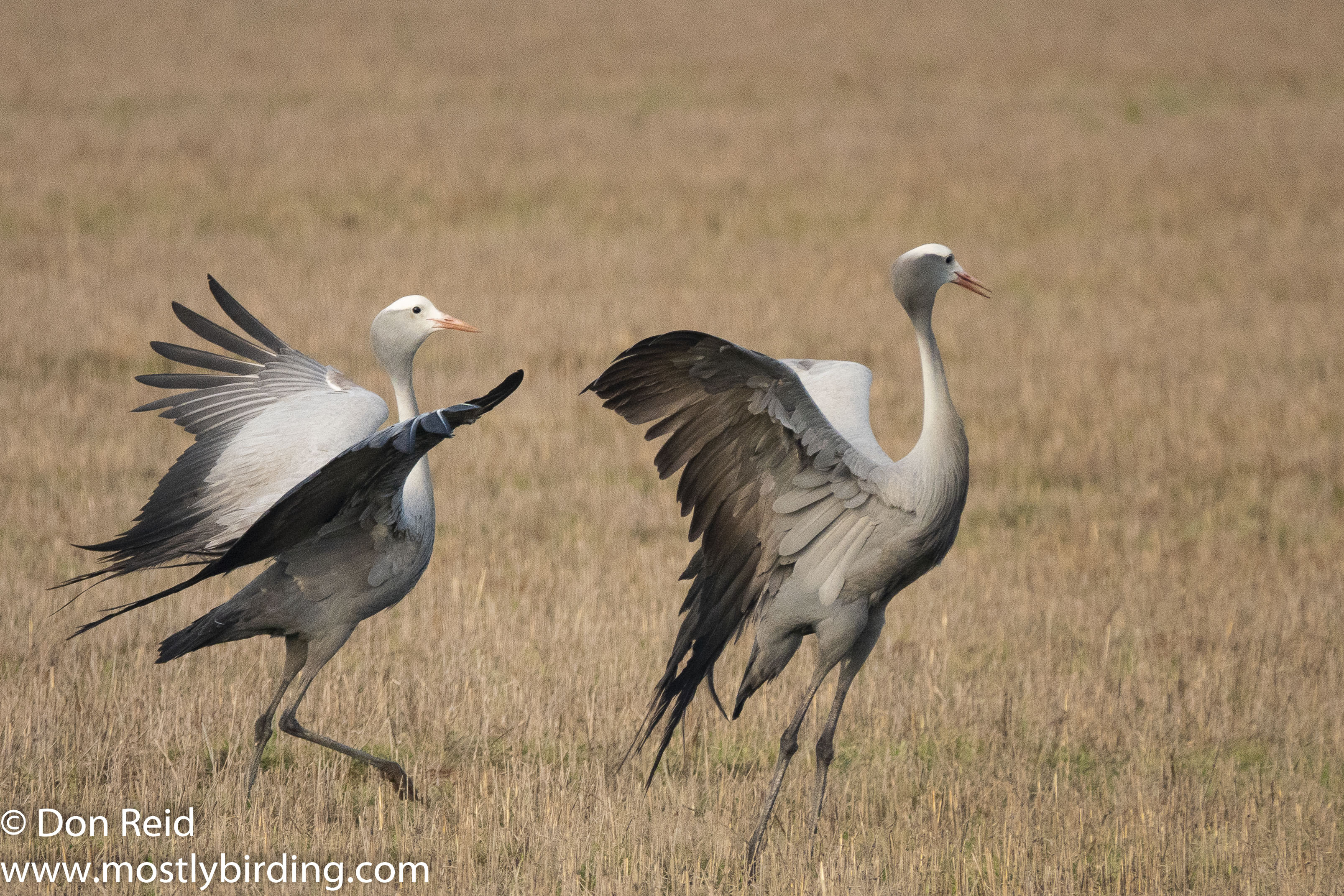
  • Blue Cranes
Blue Cranes, Vleesbaai area
  • Yellow-billed Ducks (in the field with no water nearby!)
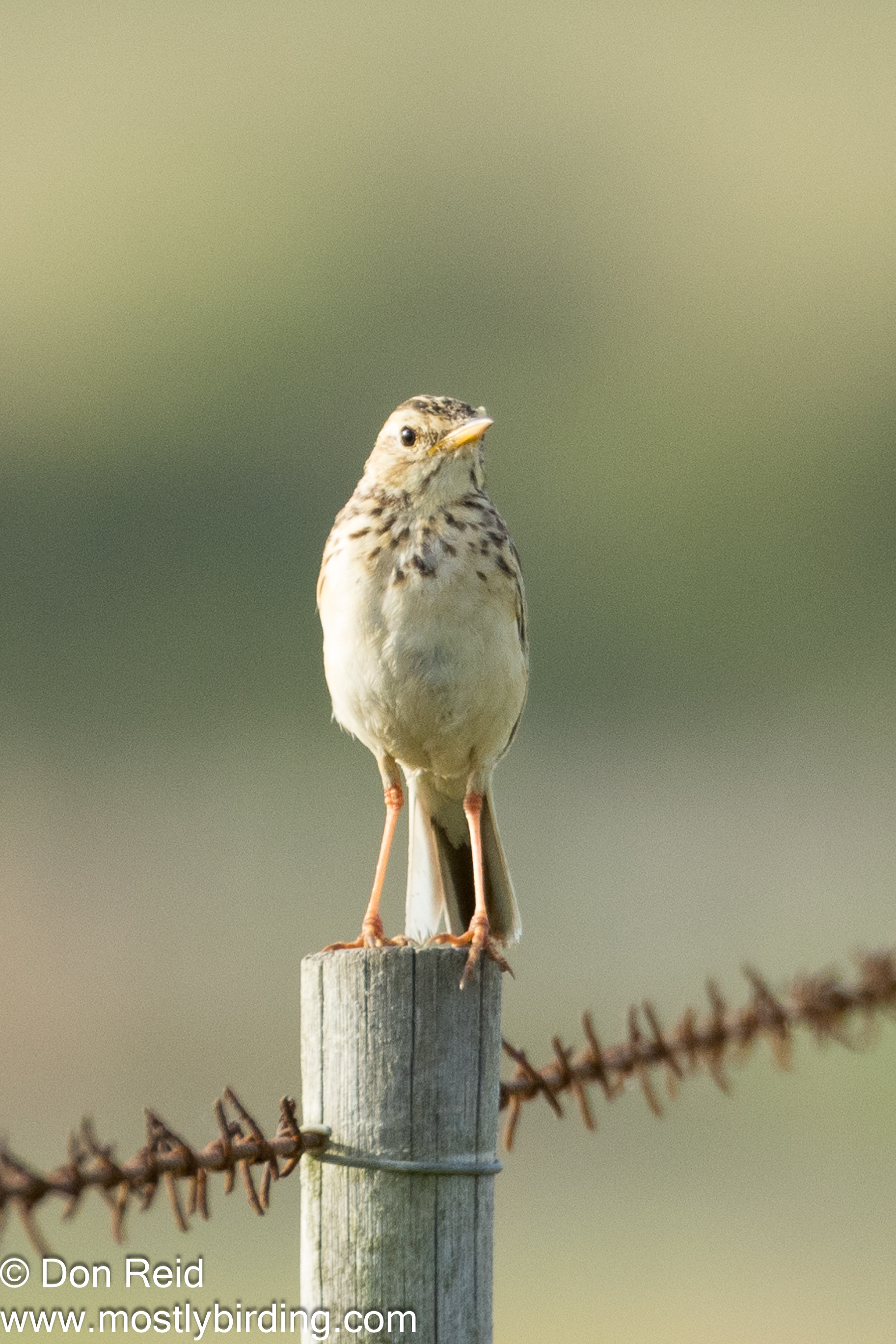
  • African Pipits displaying in the air before returning to their fence perch
African Pipit Anthus cinnamomeus Gewone koester, Vleesbaai area
  • Agulhas Long-billed Lark calling

What a bonanza of birding!

Continuing along the road I soon added some of the other ‘field with short grass’ specials such as Cape Longclaw, Red-capped Lark and Capped Wheatear

After stretching my stay in the pentad to complete the minimum two hours for a ‘Full Protocol’ card I had a pleasing 40 species logged, so it was time to proceed to the next pentad, which includes Gouritsmond, a small town of mostly holiday homes and retirees which lies at the mouth of the Gourits River (the town’s name being the Afrikaans translation of Gourits Mouth of course).

Gouritzmond

The atlasing started in earnest once I turned off at the Boat Launch sign, along a dirt road which passes the town’s Wastewater treatment works on the way to the river edge. The treatment works attract a variety of waterbirds and in no time I had added 20 species to my pentad list, including –

  • Yellow Canary
Yellow Canary Crithagra flaviventris Geelkanarie (race flaviventris), Gouritzmond
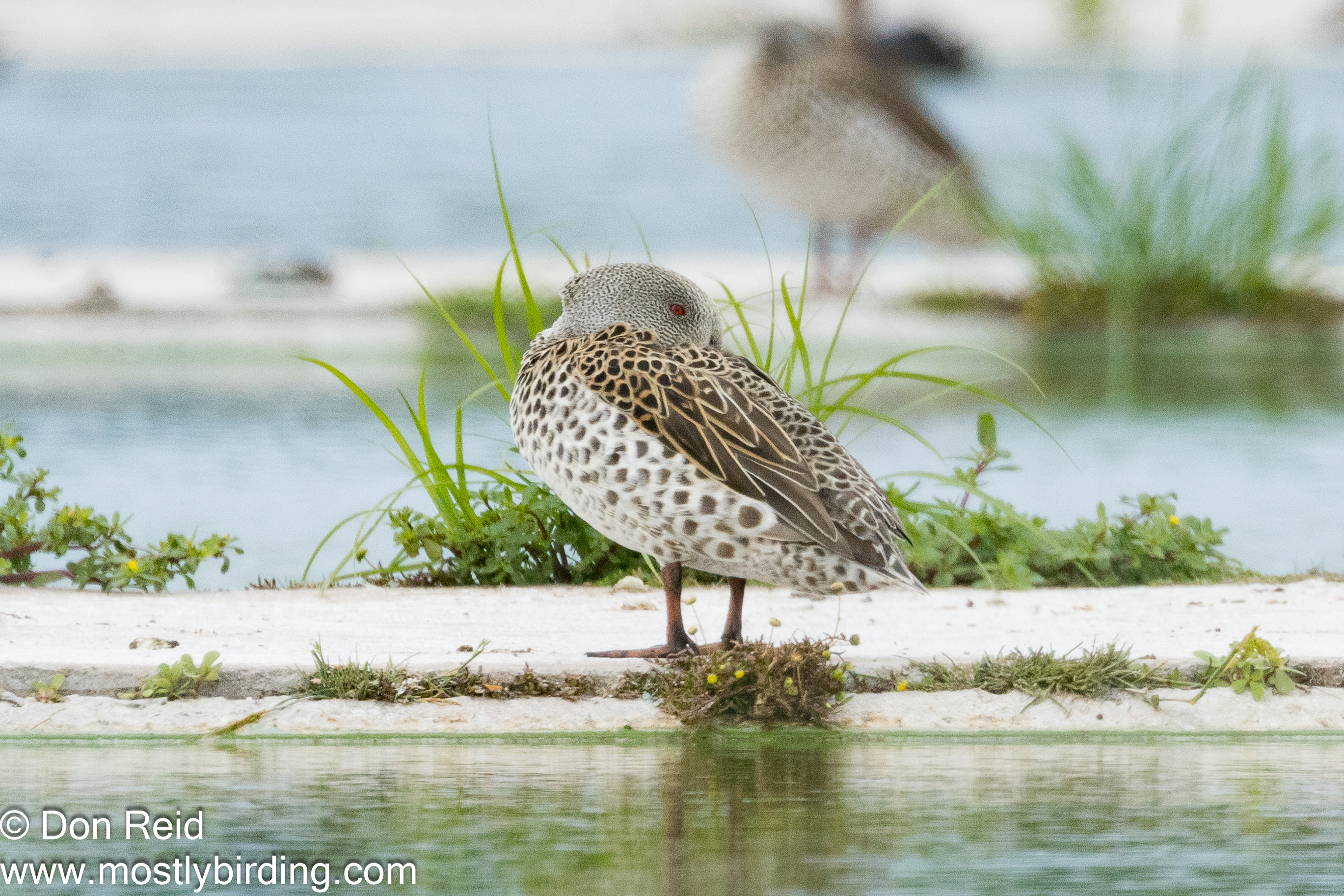
  • Several ‘swimmers’ such as Cape Shoveler, Cape Teal, SA Shelduck, Red-billed Teal, Yellow-billed Duck
Cape Teal Anas capensis Teeleend, Gouritzmond

  • Water Thick Knee

Then came the highlight of my day ….

Carrying on to the boat launch at the river, I parked near the jetty and was about to walk along the river edge when two gents approached to ask what I was doing (they had spotted my SABAP2 magnetic stickers which I attach to my car’s doors).

After giving them a short description of atlasing they invited me onto their small boat for a trip upriver where, they assured me, birds were plentiful. And so, off we went, three men in a boat, my fellow sailors introducing themselves as Chris Spies (as in Rice Krispies he said) and Johan van Rensburg.

3 Men in a boat, Gouritzmond

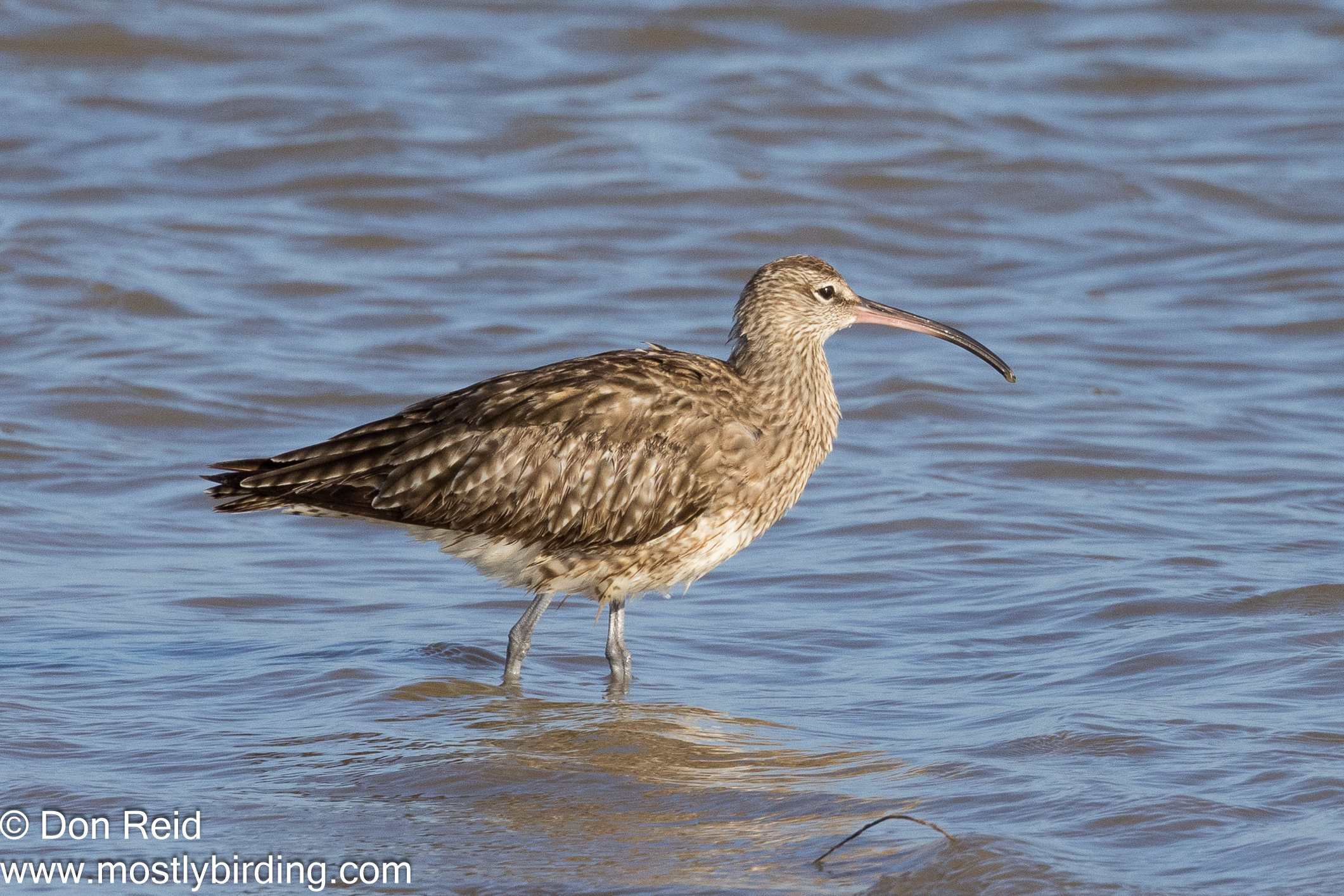
It didn’t take long to get to where numbers of birds were resting on a sand bank and I was thrilled to spot Caspian Terns, Whimbrels – about 15 in number, Common Ringed Plover and Grey Plover, none of which I would otherwise have found.

On the way back a dead tree in the water was being used as a springboard by a pair of Pied Kingfishers, hovering above then diving into the water and returning to the perch with their catch

Pied Kingfisher

In conversation with Chris, it turned out we had met each other many years ago when he was an Honorary Ranger involved in Kruger Park Birding weekends, which I attended back in the 90’s – we swopped stories from those memorable weekends.

Once we were back at the jetty, I thanked Chris and Johan profusely and set off to complete the pentad along the coastal road heading west. It was less fruitful than usual, but I added African Oystercatcher, White-throated Canary and Rock Kestrel to take the card total to 41

Verlorenkloof – a Winter Visit

Our trip from our new home in Mossel Bay to our old home town of Pretoria for the last two weeks of May was for several reasons, one of which was to take up the offer of friends Koos and Rianda to join them at Verlorenkloof in Mpumulanga, a country resort that has been a favourite of ours for many years.

We had four days to get the most out of our visit, which offers a combination of relaxation, some walks and plenty of birding opportunities – here’s how it went –

Wednesday 22nd May 2024 – getting there

We had flown to Gauteng and were staying at our son James’s house in Pretoria, so did some shopping for supplies at Boma butchery and Woolies before departing just after 1pm and setting off along the N4 east.

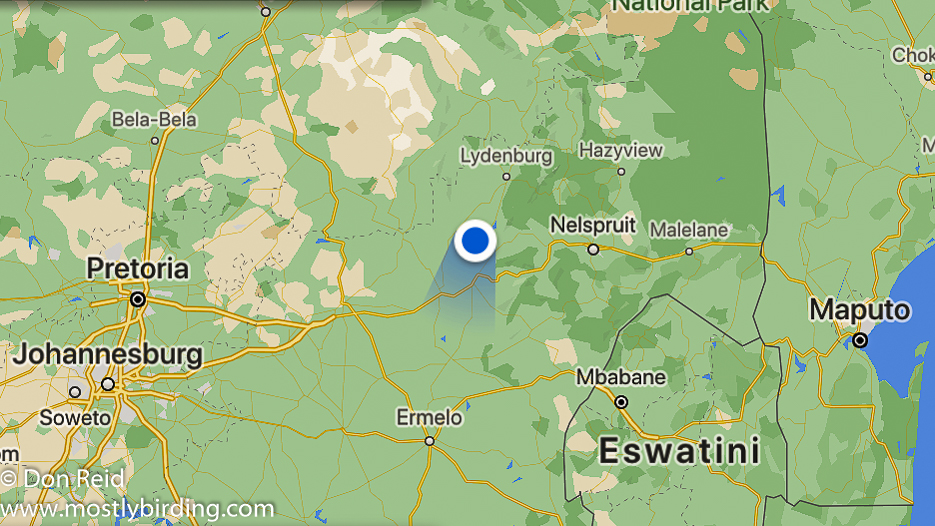
Map showing location of Verlorenkloof

Apart from our customary coffee and comfort stops, progress was slowed by the busy road and roadworks in places, and we eventually arrived at Verlorenkloof about quarter to five, just as Koos and Rianda were offloading at Croft no 3

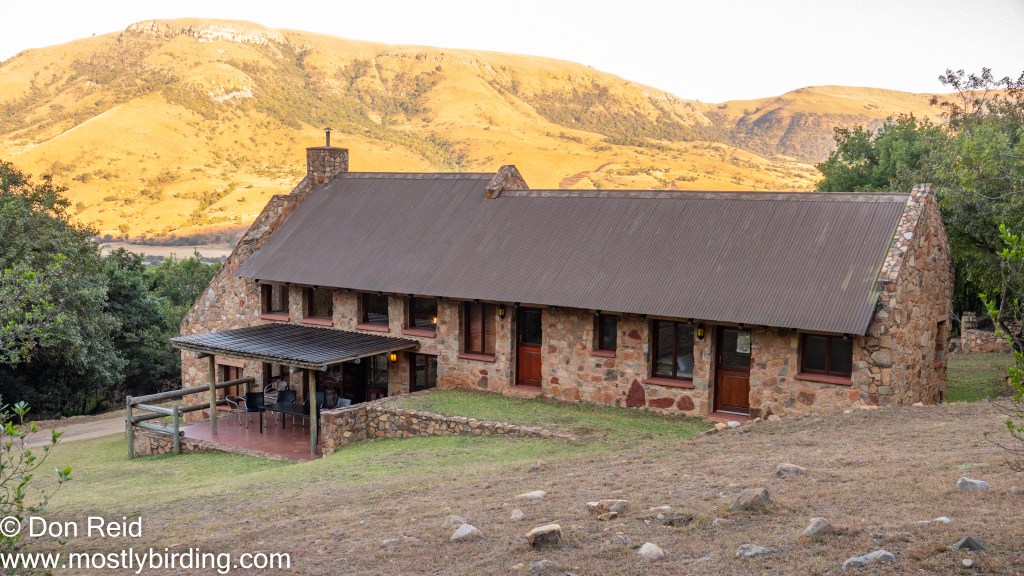
Croft 3, Verlorenkloof

Dinner was Milly’s trout pies and salads which went down well and after unpacking and tea we were ready for an early night.

Thursday 23rd May 2024

By popular demand our first day was a lazy one – after breakfast we enjoyed some quality “stoepsitting” and viewing the birds passing by which included a few of the familiar ones we have come to expect at Verlorenkloof –

  • Nicholson’s Pipit and
  • Striped Pipit on the grass
Striped Pipit Anthus lineiventris Gestreepte koester, Verlorenkloof
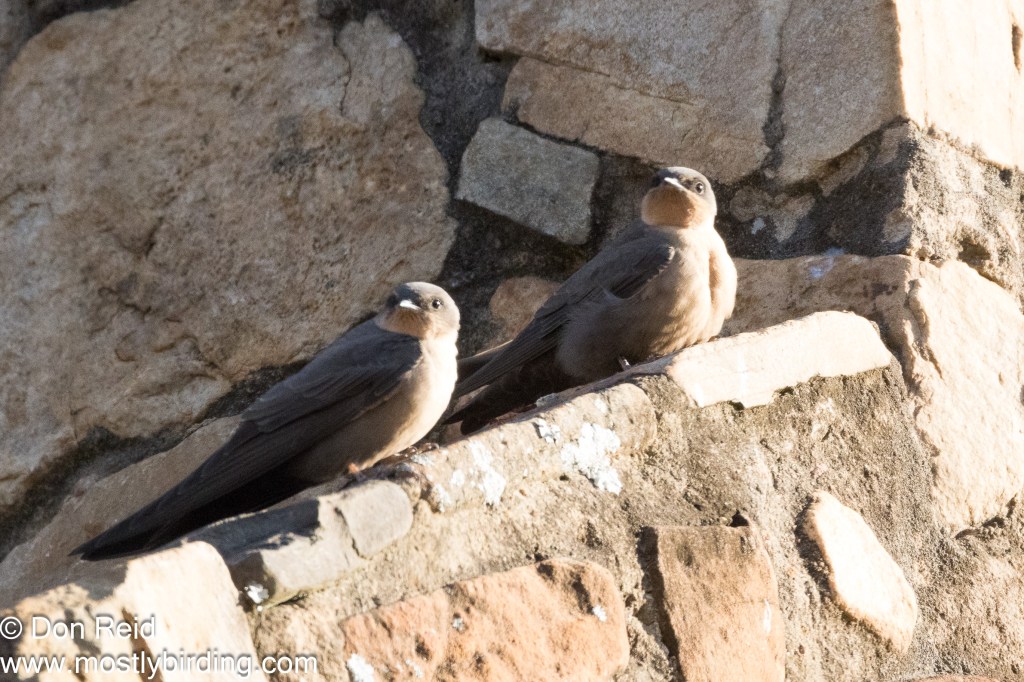
  • Rock Martins in the air, swirling around the stoep, resting at intervals on the higher walls
Rock Martin Ptyonoprogne fuligula Kransswael (race pretoriae), Verlorenkloof
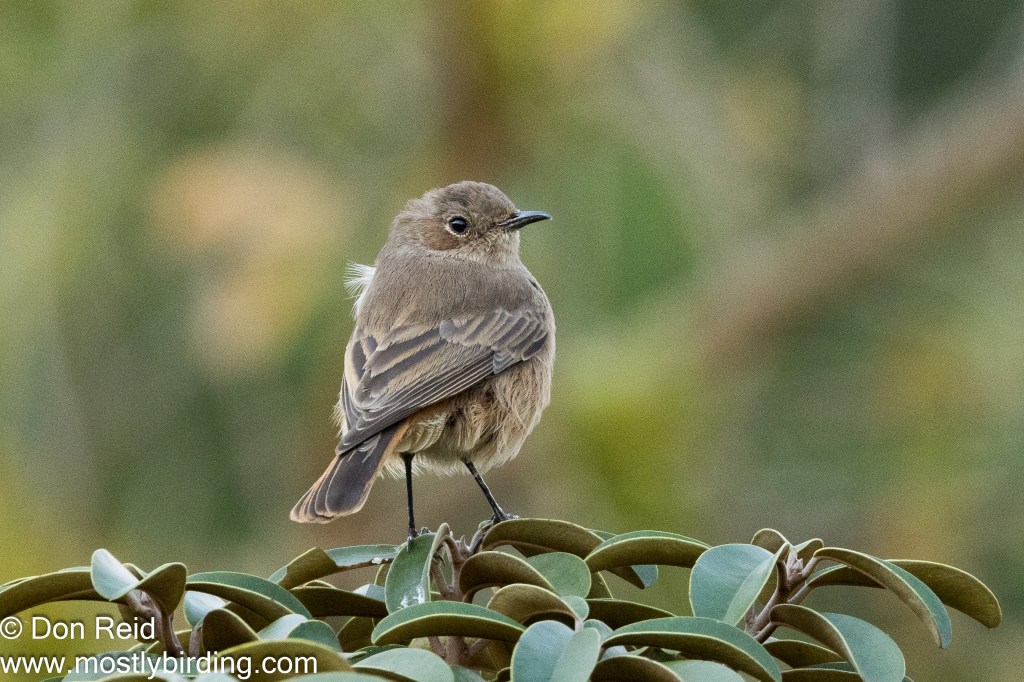
  • The oh so familiar Familiar Chat flitting between low trees and the grass
Familiar Chat Cercomela familiaris Gewone spekvreter (race hellmayri), Verlorenkloof
  • Cape White-eyes moving restlessly through the trees
  • Olive Bushshrike fleetingly showing in bush
  • Dusky Flycatcher demurely sitting on a thin branch then flying down to pounce on its prey and returning to the same vantage point
African Dusky Flycatcher Muscicapa adusta Donkervlieëvanger , Verlorenkloof

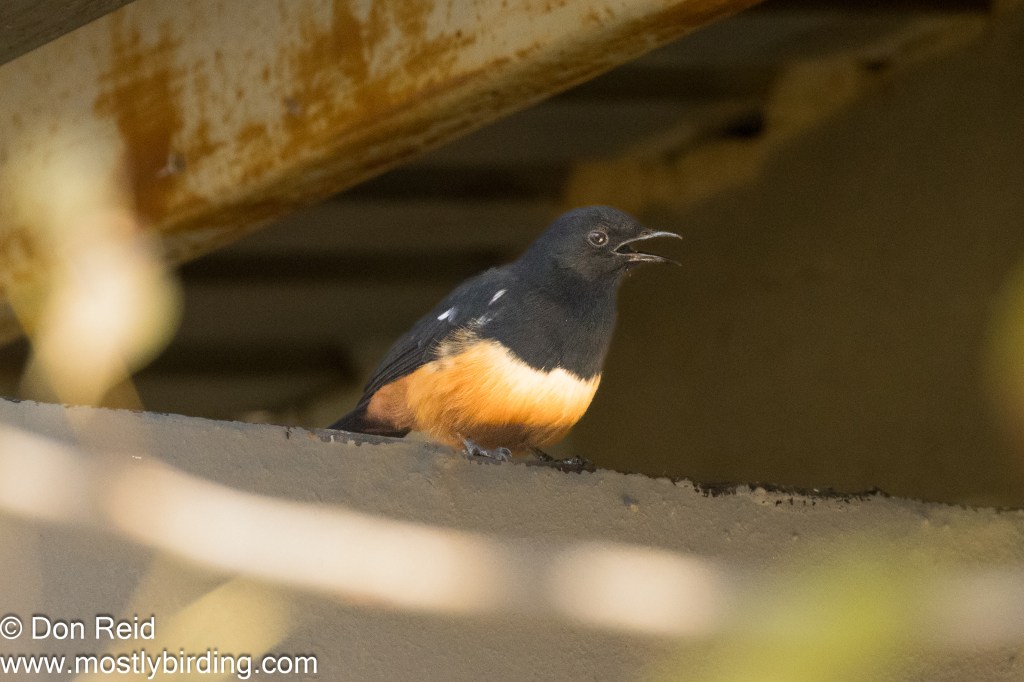
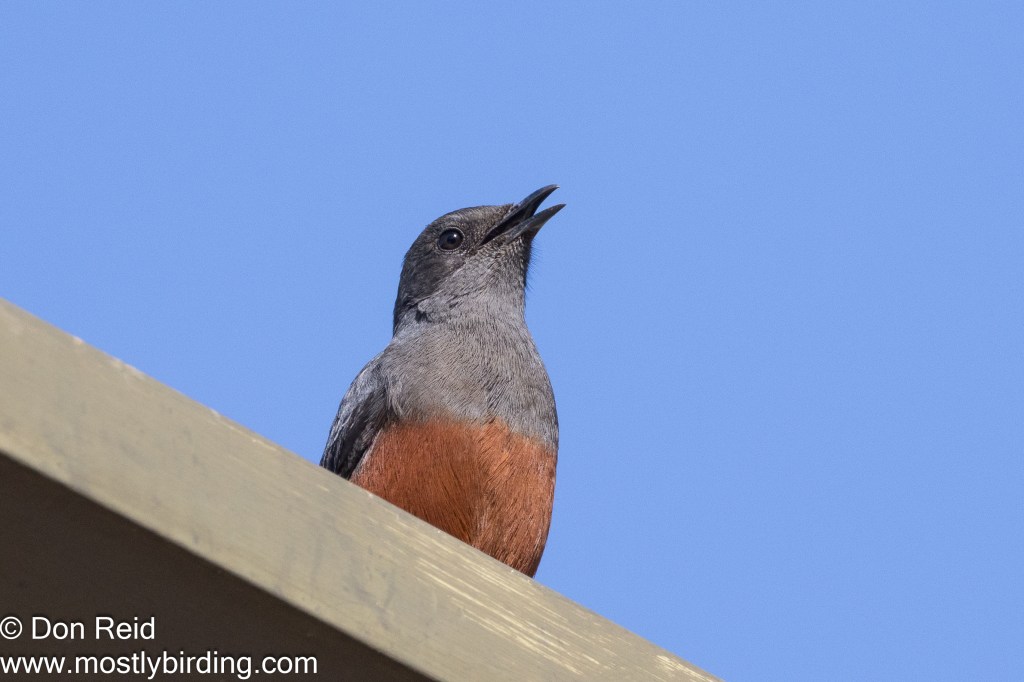
Around lunchtime we visited the lodge for coffee and a slice of cheesecake outside, while watching the antics of the Mocking Cliff-Chat pair and listening to their variety of calls. The striking difference between male and female plumage is always a fascination

Mocking Cliff Chat Thamnolaea cinnamomeiventris Dassievoël (male), Verlorenkloof
Mocking Cliff Chat Thamnolaea cinnamomeiventris Dassievoël (female), Verlorenkloof

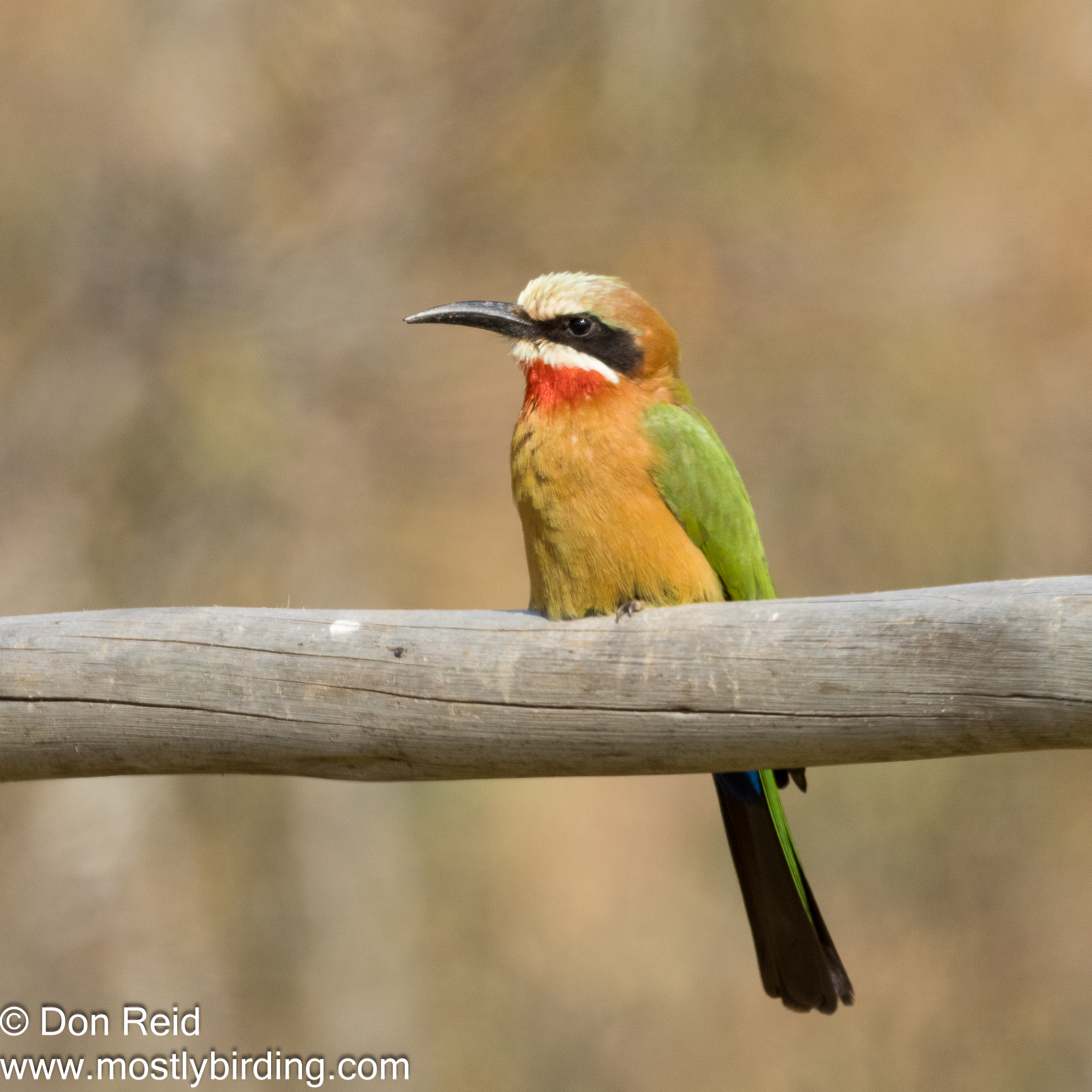
Black Flycatchers and Fork-tailed Drongos were also in attendance, confusing in their alikeness, while on the way back White-fronted Bee-eaters (heading image) and a pair of Yellow-breasted Apalises were added.

Southern Black Flycatcher Melaenornis pammelaina Swartvlieëvanger (race diabolicus), Verlorenkloof

Later Koos and I walked to the river and back (It seemed as if the last stretch of the return walk has been made steeper…..!) – all of 3 kms. Birds were few with just a handful added – Black-headed Oriole, Puffback and Bald Ibis among them.

Dinner was a tasty bobotie with salads

Friday 24th May 2024

Another lazy start to the day – beautiful sunny, warm weather with cold nights – we once again spent most of the morning on the stoep or nearby, building on the birdlist and just enjoying the ambience. Additions to the birdlist were –

  • Red-winged Starlings – some 30 on the lawn
  • Chorister Robin-Chat in the trees outside our bedroom – the image is a bit fuzzy but shows the bird’s striking colour well
Chorister Robin-Chat Cossypha dichroa Lawaaimakerjanfrederik, Verlorenkloof
  • Bar-throated Apalis in the same trees
  • Cape Batis briefly in the bush near the stoep
Cape Batis Batis capensis Kaapse bosbontrokkie (male, race hollidayi), Verlorenkloof

Koos wanted to go to the lodge to get charcoal so I joined him for the ride, which included stops at the dams on the way, where we found Little Grebes, Black Crakes and an Olive Thrush

After a lunch of patés and salads we all drove to the river for a short walk along the banks, admiring once again the pristine river against the backdrop of the surrounding mountains

At the bridge Brown-throated Martin and Grey-rumped Swallows were flying up and down river and over the adjoining grasslands, while a Brown-hooded Kingfisher sat on a branch watching for prey.

Brown-hooded Kingfisher Halcyon albiventris Bruinkopvisvanger (race vociferans), Verlorenkloof

Other birds encountered were Cape Grassbird and Tawny- flanked Prinia – both new for the pentad list

Back at the croft Koos got the braai going and we enjoyed wors, kebabs and pap with salad to round off the day.

As I write in my journal, the wood stove is burning and spreading its warmth around the living area – just the job for the cold evenings.

Saturday 25th May 2024

Yet another slow start saw us having brekkie outside on the stoep in pajamas, watching a flock of Rock Martins swirling about above the lawn, catching invisible prey in the air.

Rock Martin Ptyonoprogne fuligula Kransswael (race pretoriae), Verlorenkloof

A Natal Spurfowl calling in the night or very early morning (still dark) and a Brubru’s distinctive call which sounds like a telephone (remember them?) were the first additions to the list for the day.

Around midday we drove to the lodge for tea and cake – this time just half a portion each – after which we did the circular drive down past the river, left along the gravel road to the tee near the entrance road, then returning along the entrance road back to the croft.

The drive was a slow one with plenty of stops and pauses to look at birds, with Rianda and Gerda’s sharp eyes helping to find new species. Between the four of us we added a number of species to the pentad list including

  • White-bellied Sunbird
White-bellied Sunbird (Male, Cynniris talatala), Verlorenkloof
  • Cape Canary just after the bridge as Koos predicted
  • Greater Double-collared Sunbird
  • Common Waxbill
  • Yellow-billed Ducks at one of the small dams
  • White-winged Widowbirds at the roadside
White-winged Widowbird (Euplectes albonatus) – Witvlerkflap
  • Several groups of Cape Crows in open fields (if a group of crows is called a murder of crows, do several groups get called a serial murder of crows?)

Heading back, we came across a few Southern Bald Ibises in a field, close enough for a photo shoot – how handsome they are ….. or perhaps it’s a matter of taste –

Southern Bald Ibis Geronticus calvus Kalkoenibis, Verlorenkloof

Here’s looking at you, kid

Southern Bald Ibis Geronticus calvus Kalkoenibis, Verlorenkloof

We returned to the croft after collecting the meals we had ordered for this evening, enjoying a late lunch of bread, patés and cheese with salads

Butterfly, Verlorenkloof

Koos and I took a short walk towards the lodge late afternoon, turning back when it became quite dark – Spurfowls were calling in fine fashion from various quarters, both Swainson’s and Natal.

A young angler we spoke to at the fishing dam assured us there were “Superfowls” around, which had us puzzled for a moment but led to some smiles when I realised he was referring to Spurfowls, but at least he was full of enthusiasm about the bird life.

The evening meal was what we picked up at the lodge earlier – a delicious lamb casserole with mash

Sunday 26th May 2024 – heading home

Brunch day! As in the past we looked forward to the traditional Sunday brunch and weren’t disappointed with a large spread presented to the delight of some 50 or so fellow brunchers

After that it was time to pack the car for the trip back to Pretoria – far too soon as usual! We arrived at James’ house around 5pm and started getting ready for our return trip by air to Mossel Bay the next day

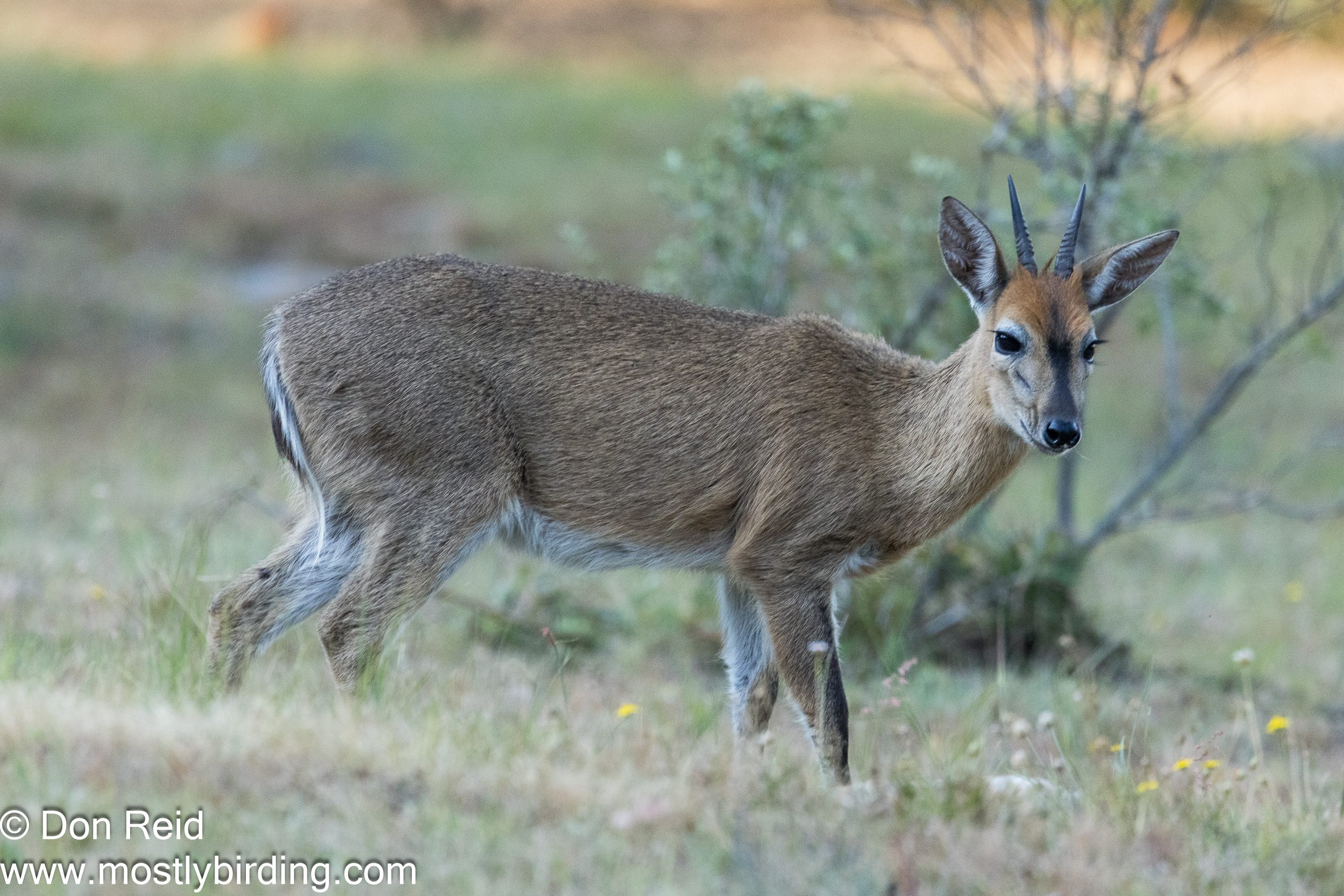
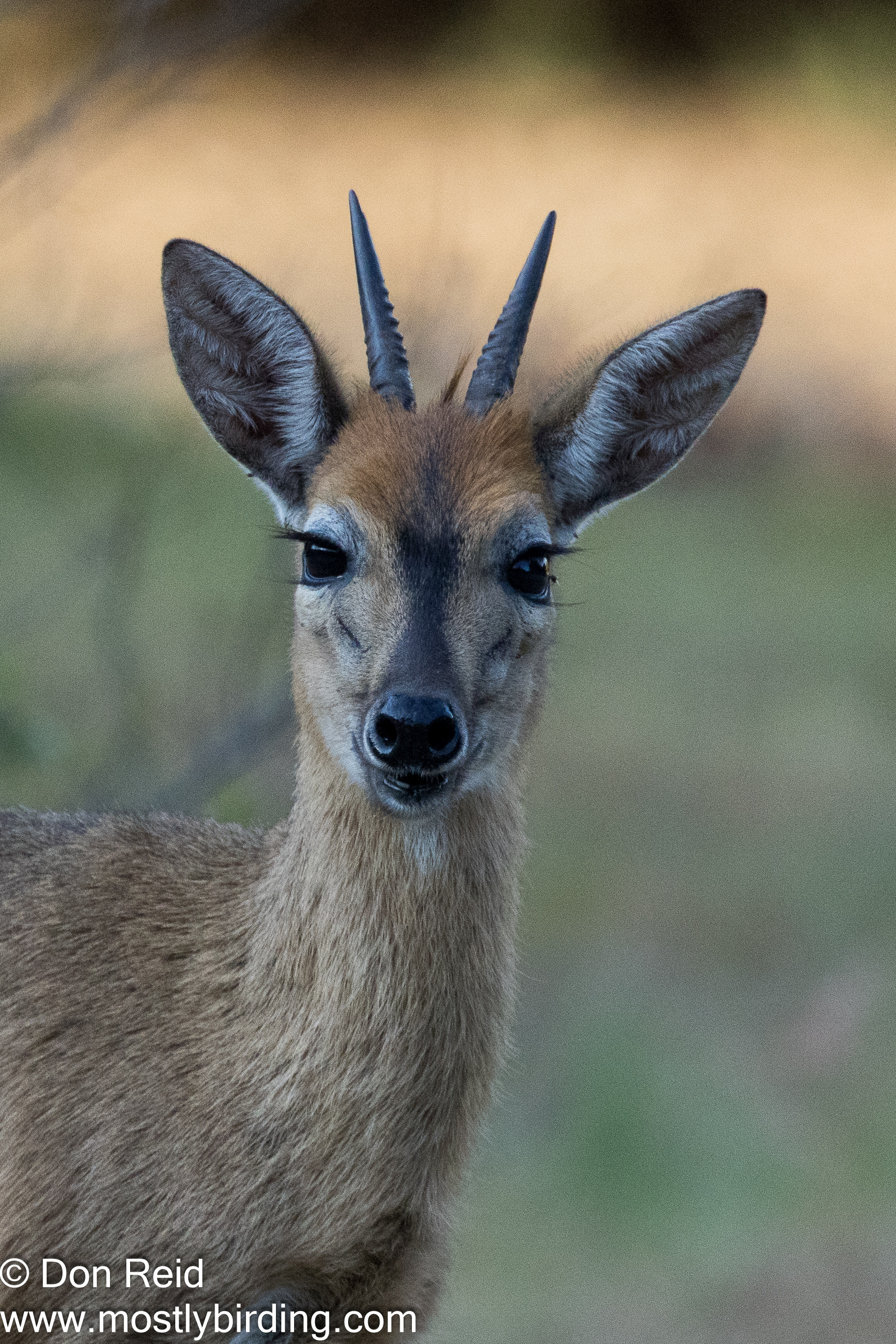
In closing, Verlorenkloof has some wildlife in addition to the birds, as this Common Duiker showed us.

Common Duiker, Verlorenkloof
Verlorenkloof

Friemersheim Revisited – More Artwork!

One of the most popular posts on my blog to date has been the one I wrote about the quirky artwork that adorns the outside walls of random homes in the small village of Friemersheim in the Southern Cape.

For some reason readers have been attracted to this post in far greater numbers – over a 1000 views so far – than any of my other 300 plus posts – a tad ironic when you consider the title of my blog is “Mostly Birding”, as this is the one post that has no birds mentioned other than those depicted in the murals!

But I’m not complaining – It’s just the persuasion I need to post some more photos of the artwork that has appeared since that original post.

So let me remind you about Friemersheim with some of the details from the original post …..

Where is Friemersheim?

This small town, described by some as a hamlet, lies a short distance inland of Great Brak River, itself a small town on the coast of the southern Cape, not far from our home town Mossel Bay

The Artwork

Friemersheim was firmly placed on the tourist map during lockdown, when South African artist Fourie Ackermann, who moved to the area in 2015, decided to liven things up with murals painted on the walls of local houses. And did he make a good job of it!

It is an ongoing project it seems, as new murals ‘pop up’ on houses throughout the spread-out town on a regular basis.

During a recent bird atlasing trip to the area around the town I took some ‘time off’ from birding to drive through the town and view the murals that had appeared over the last year or two

Here’s what I found …..

Note that most of my photos were taken from a vantage point some distance away from the house and fences tend to get in the way, but I don’t think they distract from the enjoyment of these unique artworks

Zebras fighting, dust flying, birds fleeing … and a hidden Wildebeest

The street-facing wall of this rather modest home provides the ‘canvas’ for a dramatic scene of a fight between two Zebras, with dust being kicked up and birds being forced to scatter

The house
The full mural
The drama of the fight
A Cattle Egret takes off – and in the background a Wildebeest looks on (which I only noticed when I downloaded the photos) The barbed wire fence is real

Buffalo with young lad riding on the back

This mural on the side wall of another home is quite fanciful – Buffaloes are known as one of the most dangerous animals and hardly suited to being ridden by a young lad as depicted here. Nevertheless an imaginative mural brilliantly executed

Closer up the Buffalo has a flower in its mouth – clearly a friendly sort ……
The young lad seems to be enjoying himself

Elephants performing, an Aloe …. and a balloon

This mural is just as fanciful with elephants acting unnaturally at first glance – one on its hind legs, the other two sitting on a bench. But then I remembered the elephants in the circuses of my youth doing exactly that so perhaps the artist had similar recollections

The addition of a balloon to many of the murals is just another quirky ‘signature’ by the artist

The door with a red curtain is a reminder that the house is real and ‘lived in’
The Aloe is painted, the fence and flowers in front are real ….

Fearsome Hippo, Boy and Girl balancing, Gyppo taking off

This mural intrigued me the most – you have to look carefully to spot the actual rainwater drainpipe running in line with the painted dead tree which acts as the bridge for the two youngsters daring to cross over. The pipe is painted the same colour as the ‘bridge’ so blends in masterfully

Now that is a fearsome sight
Whatever you do kids, don’t slip!
The Egyptian Goose is not hanging around to see what happens

Wildebeest challenging

This mural on the wall of an outside room depicts another species fond of showing their superiority by challenging competitors – the Wildebeest

This town is a treat to see if you are ever in the area!

Small Birds taking BIG Journeys : Part 2

Many of the migrant waders – or shorebirds as they are also known – display the most Jeckyll and Hyde characteristics of all birds, living two dramatically different lives and spending time in habitats which are as far removed from each other as can be imagined.

Separating these two lives are amazing journeys that take these small yet hardy birds halfway across the world – and back again.

The majority of South African based birders get to know migrant species during their stay in the southern hemisphere, typically during the months from October to April, so let’s find out a bit more about their ‘other’ lives by delving (again) into the typical annual life cycle of these waders.
This time it’s the –

Common Ringed Plover

Ringnekstrandkiewiet

Charadrius hiaticula tundrae

The inclusion of the subspecies name tundrae above is because this is the particular subspecies (one of three in all) that makes its way to southern Africa in the non-breeding season

Hiaticula is Latin for cleft dweller, in reference to its habit of breeding among pebbles and rocks

Common Ringed Plover, Marievale Bird Sanctuary

Identification and Distribution

Key identification features of this petite (18 cm, 50g) wader are the size (similar to the Three-banded Plover) and the broad white collar above a blackish breast band, plus the distinctive orange legs

The differences between breeding and non-breeding birds are subtle – the main feature being the orange bill that changes to black, while the black collar and face mask become lighter – these illustrations from Birds of the World show the differences nicely

Clues to their very different lives lie in the global distribution map – the orange area is where breeding occurs in the Northern Hemisphere while the blue area, mostly in the Southern Hemisphere, is where they recuperate from all the rigours of the breeding season and build up strength for the next season.

Map from Birds of the World – Orange : Breeding; Blue : non-breeding; Yellow : Migration

The southern African distribution map shows the species presence across most of the region but absent from the Kalahari and arid interior

Map from Firefinch app

Life in the North

Breeding range is almost circumpolar – from north-eastern arctic-Canada, across Greenland, Iceland, Scandinavia and northern Russia. Their preferred habitat is spartan – along the coast on sandy or shingle beaches, sandbanks and mudflats, estuaries. They also occur on tundra and breed up to 1200m altitude in places such as Norway.

Foraging for their favoured food, which includes small crustaceans and molluscs, is done by day and night, taking advantage of the long days and short nights of the summer months in those far northern areas, typically in small flocks of up to 50 birds.
Breeding and Migration

Their nest is simple – a shallow scrape in the ground, lined with pebbles, debris and pieces of vegetation, sometimes in covered or shaded sites. Eggs (usually 4) are laid between April and mid-July and are incubated for 21 to 27 days by both parents.

Well camouflaged eggs amongst the shingles and pebbles (Photo by others)

If a potential predator approaches the nest, the adult will walk away from the scrape, calling and feigning injury by flopping along the ground as if its wing is broken. Once the intruder has been lured far enough away from the nest the plover will fly off.

I have witnessed this same behaviour by Kittliz’s Plover, where I was taken to be a threat to the nest by unwittingly approaching too close to it – much to my amusement and fascination at the time the plover repeatedly performed the broken wing routine until I left it in peace.

Fledging some 4 weeks later, the fledglings are independent soon thereafter, facing the many dangers that young birds are subject to.

Once the young have fledged and can look after themselves, they start migrating south, often after the adults have already departed. And this is where it gets interesting – those that breed the furthest north are also those that migrate the furthest south. On the other hand most of those that breed further south follow the shortest migration route to the northern parts of Africa.

So the Ringed Plovers that we see in southern Africa, the tundrae sub-species, originate from the far north of Scandinavia and Russia, travelling up to 18,000 kms before finding a suitable spot in our neighbourhood.

Common Ringed Plover, Strandfontein Sewage Works

In the process they “leapfrog” their slightly less adventurous cousins who have chosen a shorter migration route – a phenomenon known (unsurprisingly) as leapfrog migration.

As far as is known, the migration route to southern Africa crosses the Eurasian and African land masses in a broad front, possibly crossing the Sahara along the way, then heads to east and south Africa.

Common Ringed Plover, Gouritzmond

Migration south starts from July with the first adults arriving in southern Africa in September and the first juveniles in October, continuing to December

Life in the South

In southern Africa they seek out suitable habitat, mostly at the coast where they favour estuaries and lagoons, but also inland on mud- and sandbanks along rivers and at wetlands, favouring wide bare shorelines with little vegetation. They can often be found in the company of the more common Kittlitz’s and Three-banded Plovers.

Common Ringed Plover, Bronkhorstspruit Nature Reserve near Pretoria

Some time after arrival adults and juveniles have a complete moult over the next couple of months

Voëlvlei, about 30 minutes’ drive from Mossel Bay, which had no water for many years until the good rains of last year, attracted its share of Ringed Plovers this past summer along with many other waders.

Common Ringed Plover, Voelvlei near Vleesbaai

Foraging is done in very shallow water or on wet mud, using the typical plover run-stop-search technique, locating prey visually and picking off the surface rather than probing as many waders with longer bills tend to do.

Common Ringed Plover Charadrius, Voelvlei
Common Ringed Plover, Great Brak River

The plovers start departing from late February with the majority having left by end April, heading north to their breeding grounds where the cycle will start all over again…

References : Cornell Lab of Ornithology Birds of the World; Roberts VII Birds of Southern Africa; Firefinch app

Small Birds taking BIG Journeys : Part 1

During my birding and atlasing trips I come across a variety of migrant species, some of which I manage to photograph in their local habitat – one in particular, the Little Stint, had me thinking for the umpteenth time how fascinating and amazing these annual migrations are.

Many of the migrant waders – or shorebirds as they are also known – display the most Jeckyll and Hyde characteristics of all birds, living two dramatically different lives and spending time in habitats which are as far removed from each other as can be imagined.

The majority of South African based birders get to know migrant species during their stay in the southern hemisphere, typically during the months from October to April, so let’s find out a bit more about their ‘other’ lives by delving into the typical annual life-cycle of these waders, starting with –

Little Stint

Calidris minuta (Kleinstrandloper)

This is the tiny, compact (13 cm, 23 g) wader found across southern Africa, often in flocks and joining other waders at almost any coastal or inland habitat with shallow water, soft mud and not much vegetation.

Key identification features are the very small size, short black bill and wings that project beyond the tail – the latter is a common trait amongst migrant birds needing extra wing power for those ‘halfway across the world’ journeys that they undertake

Clues to their two very different lives lie in the distribution map (courtesy of Cornell Lab of Ornithology) – the orange area is where breeding occurs in the Northern Hemisphere while the blue area, mostly in the Southern Hemisphere, is where they go ‘on vacation’ to build up strength for the next breeding season

Life in the North

Birds are considered as “resident” in the area where they breed, which in the case of the Little Stint is situated within the Arctic Circle in a habitat known as Arctic Tundra, with temperatures well below zero for most of the year and a maximum of just 4 deg C in ‘summer’.

Tundra is known for large stretches of bare ground and rock and for patchy mantles of low vegetation and small shrubs – ‘barren’ and ‘frozen’ are about the kindest words to describe this habitat, yet these tiny waders thrive in this environment

Tundra in Siberia (Photo courtesy of Wikipedia)

They inhabit dry ground at lower altitudes, often near swampy areas or salt-marshes, avoiding areas with annual rainfall of more than 250mm (No, they don’t have a way of measuring it other than instinct)

Little Stint in breeding plumage (Photo courtesy of Cornell Birds of the World)

Breeding and Migration

Their nest is built on the ground, lined with leaves and grass but otherwise exposed. Eggs are laid starting late June to early July and are incubated by both parents.

Once the young have fledged and can look after themselves, they and the adult birds start migrating south, not necessarily together, heading across Europe before following a route via the Rift Valley lakes of eastern Africa then fanning out across southern Africa

According to estimates, up to 1 million Little Stints migrate to Africa, of which a relatively small proportion venture all the way south to southern Africa. Migration south starts from July with peak numbers arriving in southern Africa between October and December

Life in the South

On arrival in southern Africa (and just before departure) some of the stints will still be in partial breeding plumage with upper parts washed rufous, while others will have adopted their non-breeding plumage of brownish grey

Little Stint, Bloemhof Saltworks : taken in April so showing partial breeding plumage

In southern Africa they seek out suitable habitat, preferring coastal and inland wetlands, especially where wet mud is available. Temporary pans in the interior can often provide the abundant short-term food that is perfect for their requirements.

Voëlvlei, about 30 minutes drive from Mossel Bay, which had no water for many years until the good rains of last year, has attracted hundreds of Little Stints this past summer along with many other migrant waders.

Voëlvlei near Vleesbaai

Not only did Voëlvlei provide abundant food for the waders and others, it also provided an ongoing feast for local birders enjoying the abundance of birds along with a few rarities. (More about that in future posts)

Foraging is done in very shallow water or on wet mud, picking small invertebrates off the surface rather than probing as many waders with longer bills tend to do.

Little Stint Calidris minuta Kleinstrandloper, Great Brak River estuary

Stints are fairly easy to spot amongst other waders, not only because they are generally the smallest of the waders present but also due to their hunched appearance which always reminds me of a little old man pottering about

Little Stint, Strandfontein Sewage Works

The Stints start departing from mid-February with the majority having left by end April, heading north to their breeding grounds where the cycle will start all over again…

Little Stint Calidris minuta Kleinstrandloper, Voëlvlei near Vleesbaai

What a privilege it is to welcome these fascinating waders to our shores

References : Cornell Lab of Ornithology Birds of the World; Roberts VII Birds of Southern Africa

Addo Trip – March 2024 : Part 3

The Routine

Repeated from Part 2…

We had four full days to make the most of our breakaway to this delightful park and we soon settled into a routine which we followed more or less on each of those days. Let’s just say we were out to relax as much as possible, while not missing out on what Addo has to offer.

The mornings were the most relaxed part of the day, getting up late-ish, having coffee while enjoying the birdsong and spending the rest of the morning out on the deck, then venturing out for a drive along one of the routes, usually with a light picnic lunch packed.

This took us to mid-afternoon when we would return to camp, just in time for a rest (I told you we were out to relax!). More deck sitting, followed by getting the braai fire going for the evening meal to round out the day.

Day 3 and 4 Highlights

The Drives

On Day three we followed a similar pattern to the first two days, starting with coffee and rusks and spending most of the morning chilling on the deck or inside when light intermittent rain began to fall

Once again we made our way to Jack’s Picnic spot, this time taking the Rooidam road for a bit of variety. We prepared a picnic lunch of cheese and biscuits plus fruit and yoghurt to enjoy in one of the secluded spots.

The power was off due to loadshedding when we wanted to make tea to take with us, but fortunately I had brought a small camping gas burner and a kettle for just such an occasion, allowing us to boil our tea water at the picnic spot – not sure why but this simple act is a highlight of the day for me.

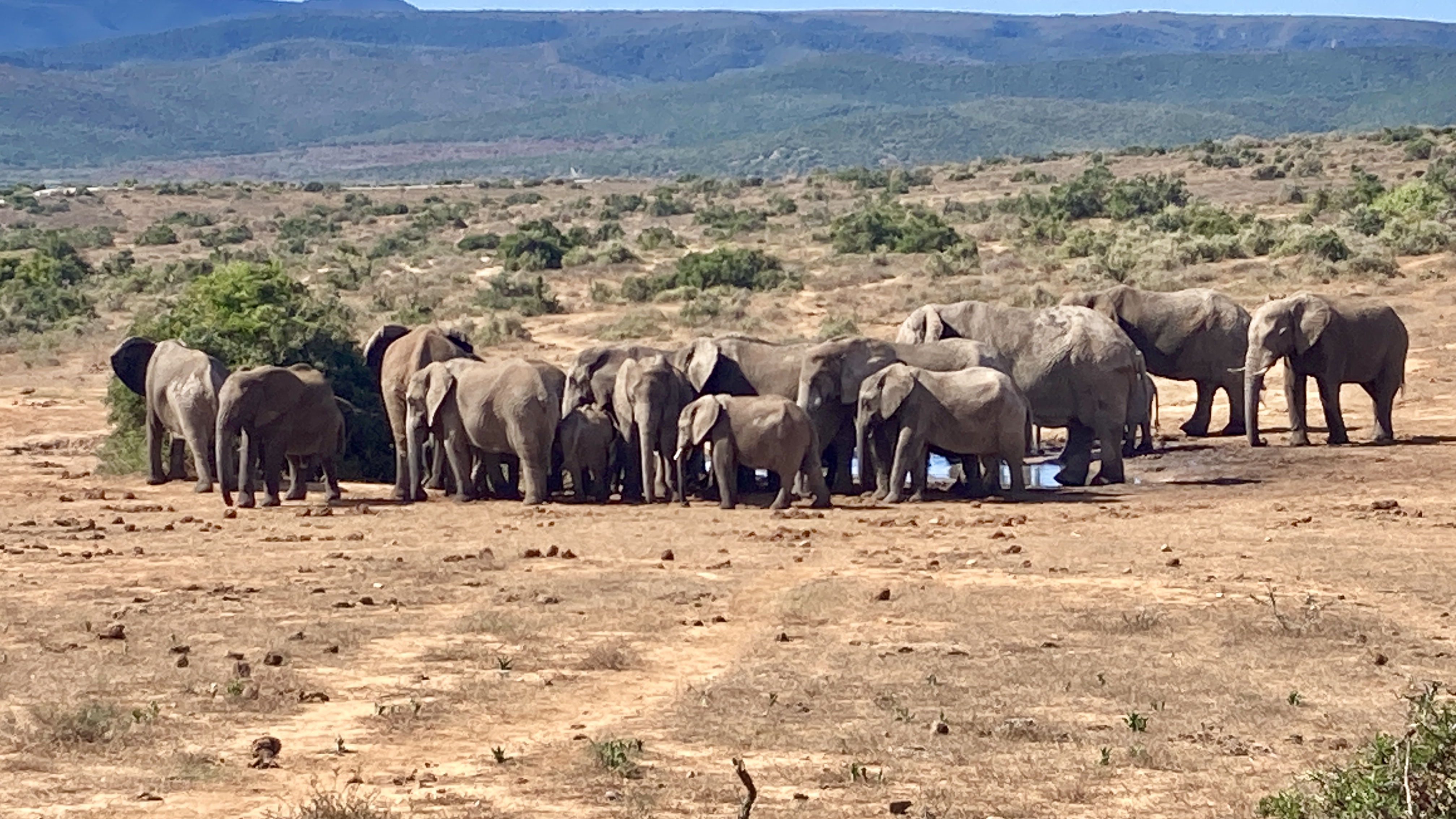
Along the way we enjoyed watching groups of elephants interacting at the waterholes – such as this ‘mother and child’ scenario – what wonderful creatures to observe!


Best animal sighting of the day, apart from the ubiquitous elephants, was a lone Black-backed Jackal walking across the open flats at the Hapoor dam – handsome in its coat of black, white and rust, with its distinctive black bushy tail.

Black-backed Jackal, Addo Elephant NP

At the picnic site a few birds came to inspect and see if we had dropped any crumbs –

  • Red-necked Spurfowl
Red-necked Spurfowl
  • Sombre Greenbul
Sombre Greenbul (photo taken in Kruger NP)

Day four was our last day and it was a hot one – the forecast said it would rise to 39 deg C by lunchtime and indeed it did

Much like the first three days, we hung around our chalet during the morning, mostly inside to avoid the baking heat outside, enjoying a krummelpap brekkie and late morning tea with fruit salad before venturing out into the hot midday sun. We followed a new route which included the loops on the far western side of Addo

It was comfortable for us in our air-conditioned vehicle, even with the windows open, but less so for the animals and birds which were visibly affected by the extreme heat.

We came across fewer elephants in the open plains area to the west, but found a large mixed herd at the waterhole when we were on the way back. The elephants didn’t seem to wander too far from the waterhole which seemed completely overcrowded, yet the ellies displayed great patience in letting all have a chance to drink without any commotion.

Almost all the birds we came across were ‘panting’ with beaks wide open – their way of keeping their body temperature under control.

Bird highlight of the day for us was a Denham’s Bustard not far from the road in an open area of dry grassland. As they are wont to do, it walked away when we stopped, making it difficult to get a decent photo – if only they knew how frustrating they can be!

Denham’s Bustard Neotis denhami Veldpou (race stanleyi), Addo Elephant NP

Other birds spotted :

  • Grey Heron at Domkrag dam
Grey Heron Ardea cinerea Bloureier, Addo Elephant NP
  • Ant-eating Chat out on the open plains
Ant-eating Chat Myrmecocichla formicivora Swartpiek (race formicivora), Addo Elephant NP

Golden-breasted Bunting enjoying a puddle in the middle of the road

Golden-breasted Bunting Emberiza flaviventris Rooirugstreepkoppie (race flaviventris), Addo Elephant NP
  • Ostrich pair with 3 juveniles sheltering from the heat in the shade under mommy ostrich
Common Ostrich Struthio camelus Volstruis (male), Addo Elephant NP
Common Ostrich Struthio camelus Volstruis (female with juveniles), Addo Elephant NP

Some other wildlife sightings :

  • Two antelopes not seen in the first few days – Eland and Red Hartebeest.
Eland, Addo Elephant NP
Red Hartebeest, Addo Elephant NP
  • It was unusual to see a large tortoise all alone at one waterhole, quietly quenching its thirst
Tortoise, Addo Elephant NP

All in all a worthwhile and interesting drive of a couple of hours, despite the extreme heat

After a restful period at the chalet and a swim in the pool nearby, we visited the Discovery Trail near our chalet and enjoyed matching the nameplates placed at intervals along the boardwalk with their respective trees and bushes.

It was nice to find a Flightless Dung Beetle next to the pathway. This must be one of the few beetles in the world that features on warning signs advising drivers to keep a look out for them and avoid driving over them.

They are quite vulnerable in Addo when the roads are busy and the beetles are out foraging elephant dung, which they carefully roll into a ball and propel with their hind legs, often crossing the road very slowly in the process.

Back at the chalet we heated up the ribs we braaied last night and enjoyed a last Addo supper with salads, somewhat sad that our stay had come to an end

Adventurous Birding, Atlasing and Travel