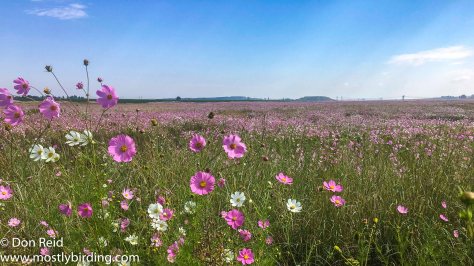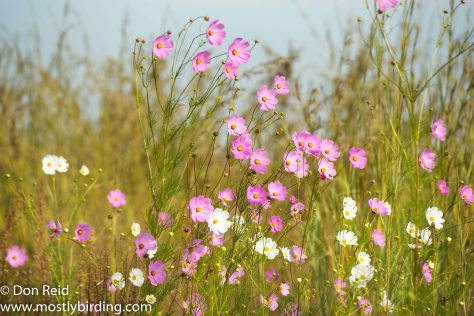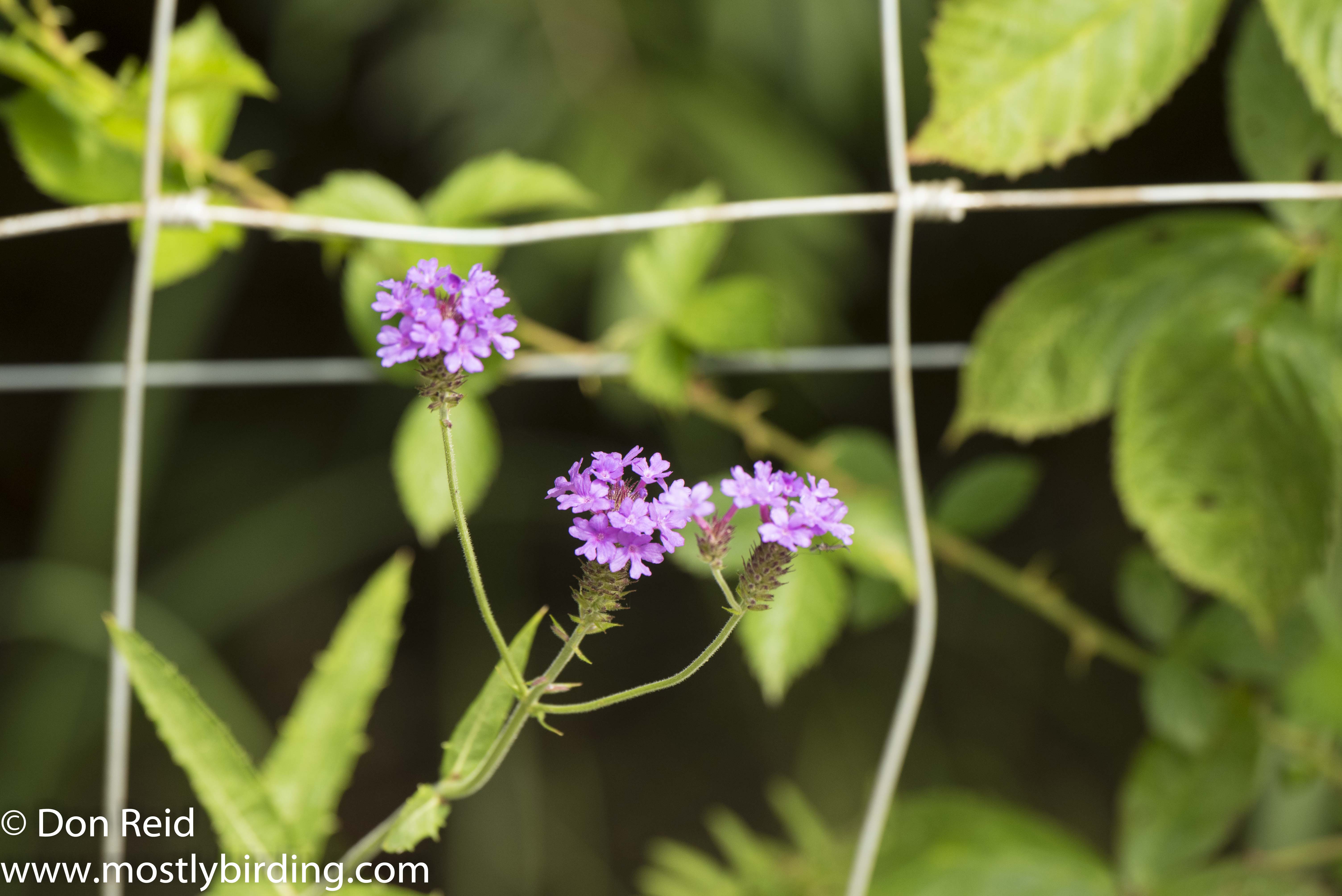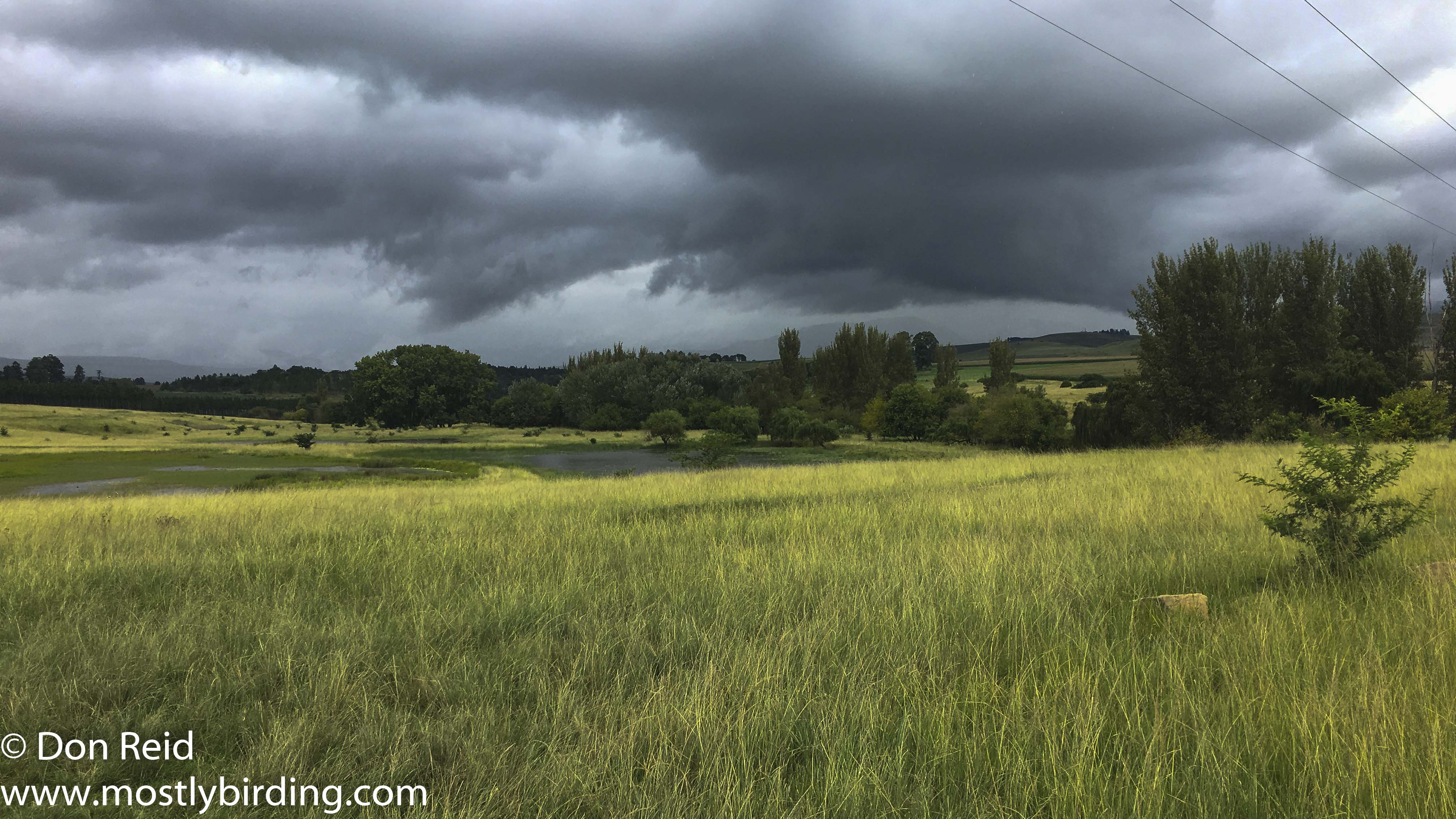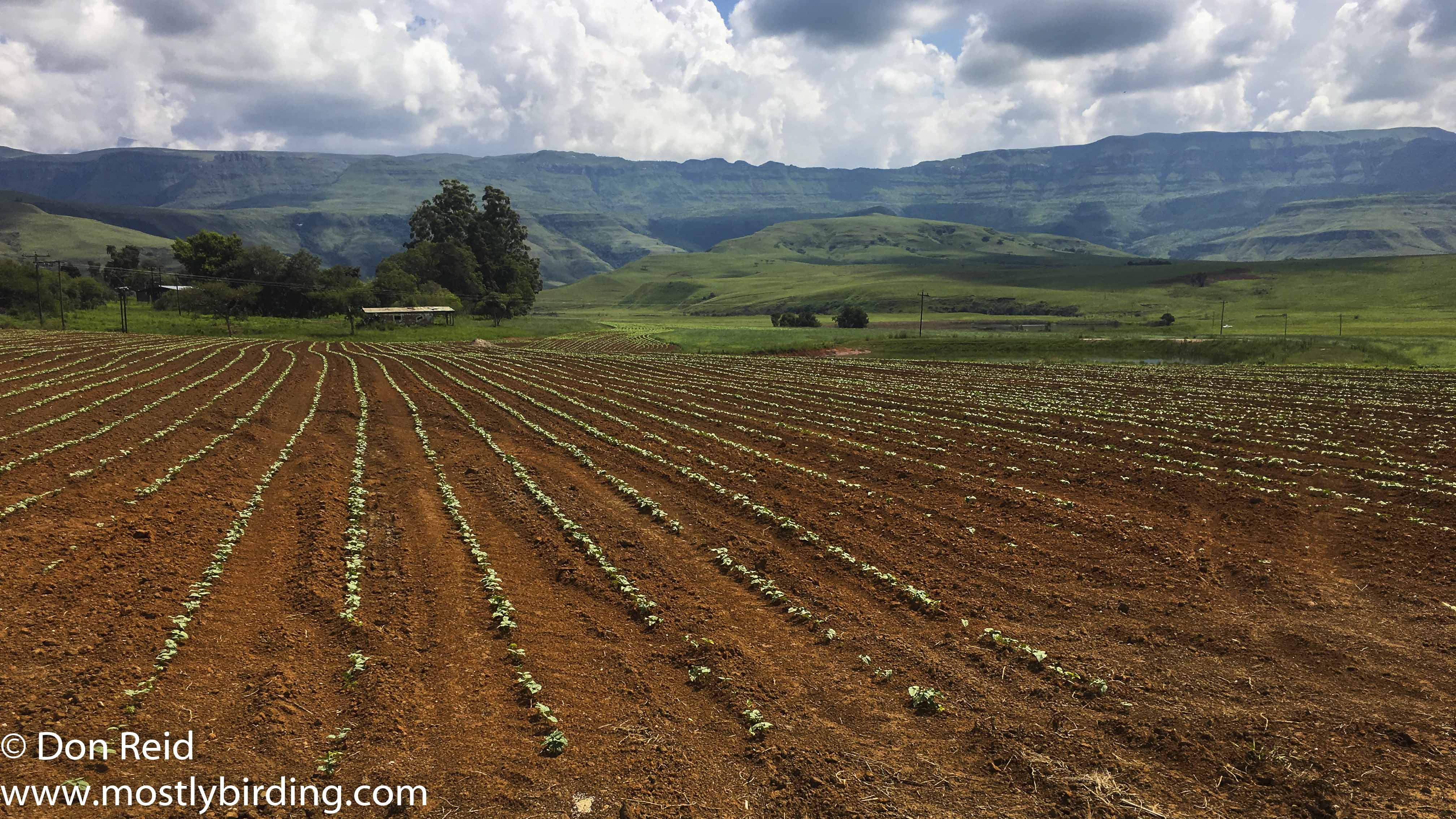
No, this is nothing to do with a philosophical discussion of the universe, just a reflection on how pleasing it is to do birding / atlasing at this time of year, particularly in the eastern parts of our country where the cosmos flowers come into full bloom during late summer, heading into autumn.
These attractive flowers form massed displays along the roadside, spreading into unattended fields in places, creating a beautiful pink and white carpet with an occasional purple flower popping out at random.
Unlike the amazing indigenous flowers of Namaqualand, renowned for their magnificent displays in spring, the cosmos is an introduced plant species native to South America, which came to South Africa during the Anglo-Boer war at the end of the 19th century as a “stowaway” in the bales of feed imported from Argentina to feed the thousands of horses used by the British.
Since then they have become a feature of the landscape, particularly in the open grasslands of south-western Mpumulanga province, so much so that the provincial tourist body describes the area as Cosmos Country. It also happens to be the energy belt of South Africa with numerous coal mines feeding the ravenous power stations that are never very far from view.
So expect to see stunning displays of cosmos flowers contrasting with the heavily disturbed, ugly landscape typical of the coal mining areas.
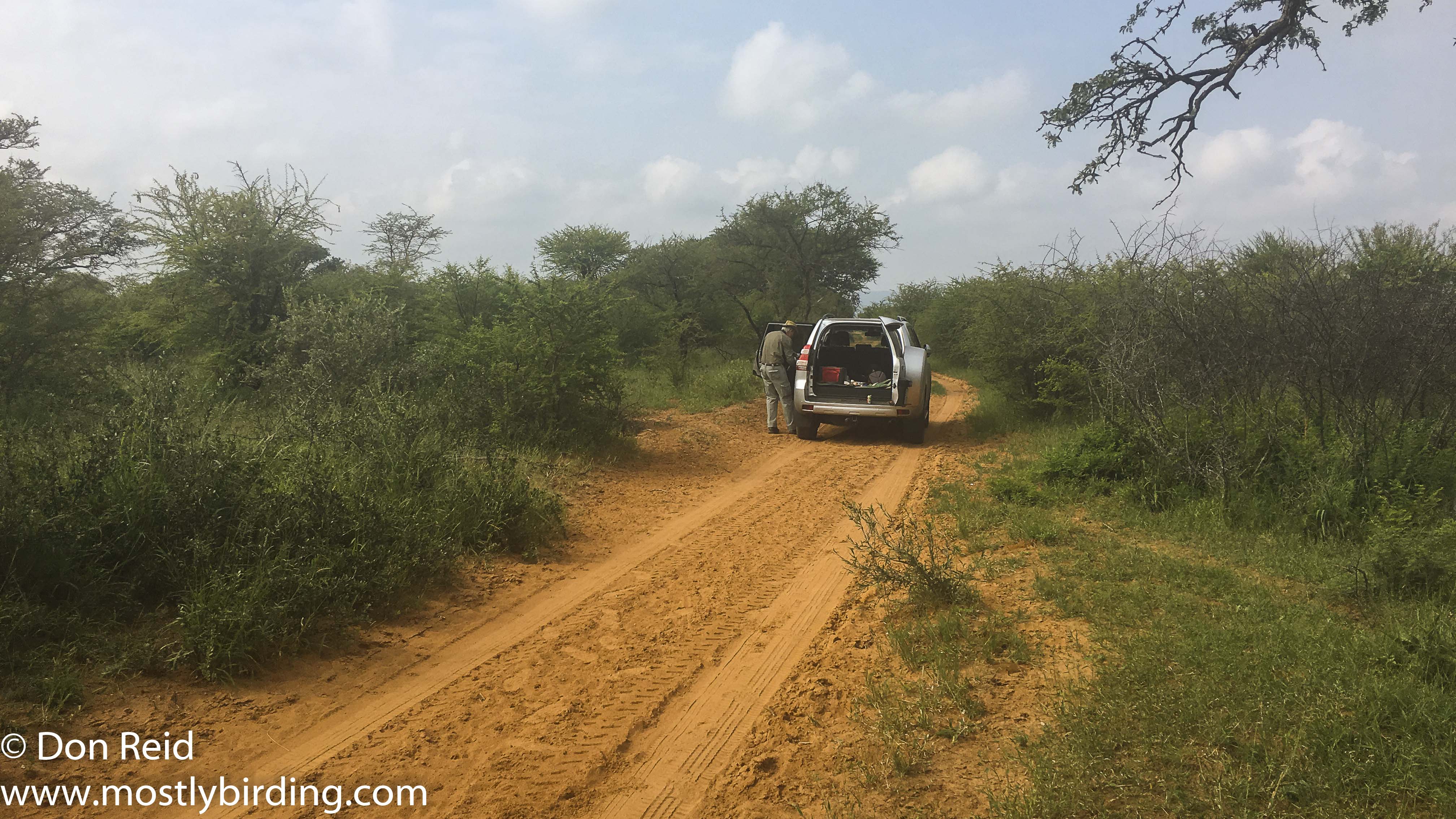
Cosmos time, Delmas south
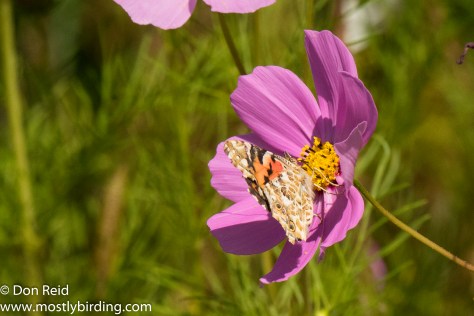
Some butterflies are attracted to cosmos such as this Painted Lady
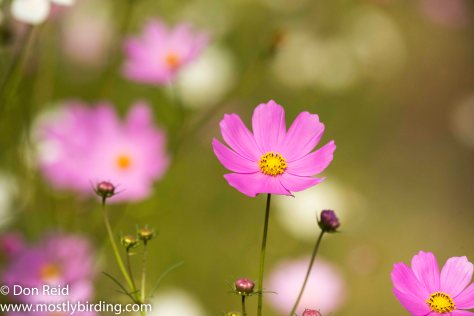
The name Cosmos was chosen due to the perfect symmetry of the petals
Following on our visit to Champagne Valley in February this year, we found ourselves heading back to the same area scarcely a month later – reason being my brother Andrew came to visit from Devon in the UK where he has been for some 20 years. This time we had traded in some timeshare points for a midweek at Drakensberg Sun, a resort we last visited some 19 years ago, so what memories we had were vague to say the least. How nice to re-visit a place that we enjoyed so long ago and find it well-kept and just as attractive after so many years!
Monday
On the Monday morning that Andrew was due to arrive from London, we were up early to do some last packing and head through the morning traffic to OR Tambo to meet him just after 8 am. All went according to schedule and by 9 am we were on the N3 heading south towards Heidelberg, where we decided to stop for a coffee and pain au chocolat “filler” at the Mugg and Bean – Andrew declared it the best cappuccino he had enjoyed in a long time. So easy to please some people!
On to Harrismith in surprisingly light traffic with fewer lorries than we have become accustomed to – mental note to travel this route on a Monday in future. We broke the journey once more at Harrismith for brunch and by mid afternoon had reached our destination.
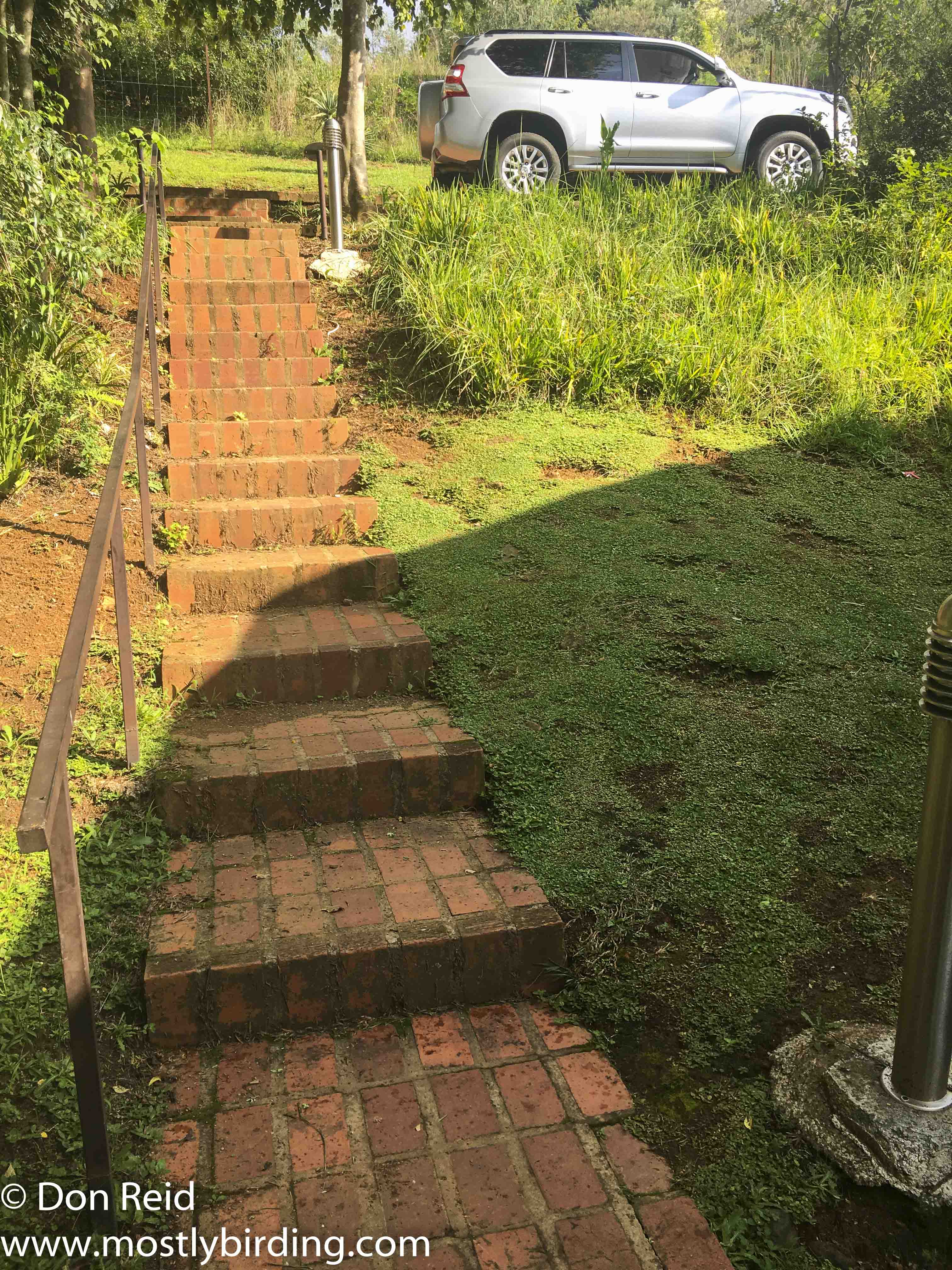
Chalet 213 was our allocated home for the next few days – it turned out to be in the “back row” of two rows of chalets a short distance from the hotel, separated by extensive gardens and with a large pool and a dam as the main features. Getting our luggage and self-catering provisions down the awkward steps outside the chalet and then down and up to the different levels inside proved to be quite strenuous for us semi-pensioners (another mental note to book the front chalets if ever we return) and once done we made haste to the pool for a refreshing swim in the humid weather.
The steps to the chalet
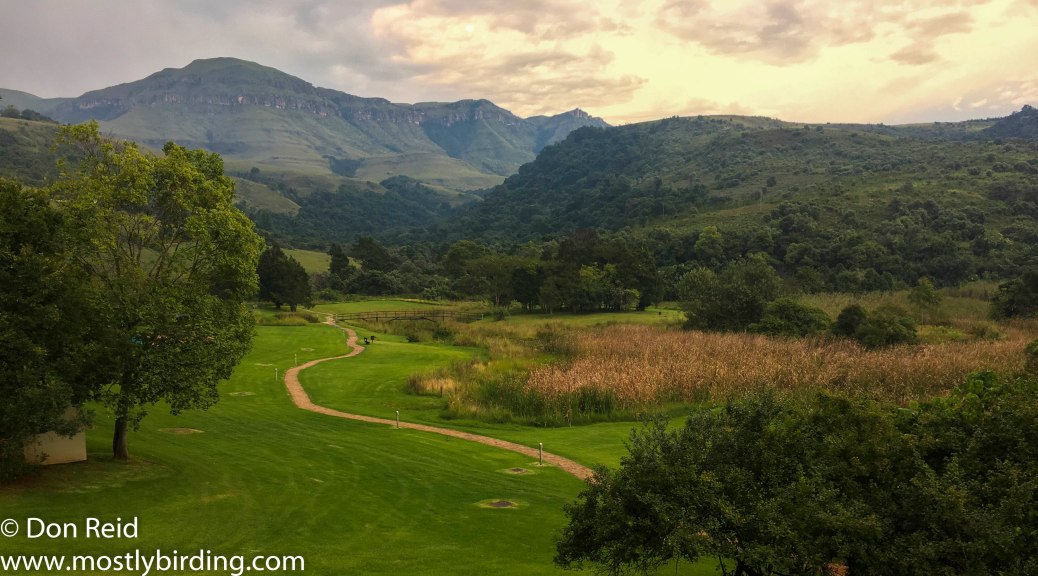
Tea revived us enough to take a walk around the gardens –
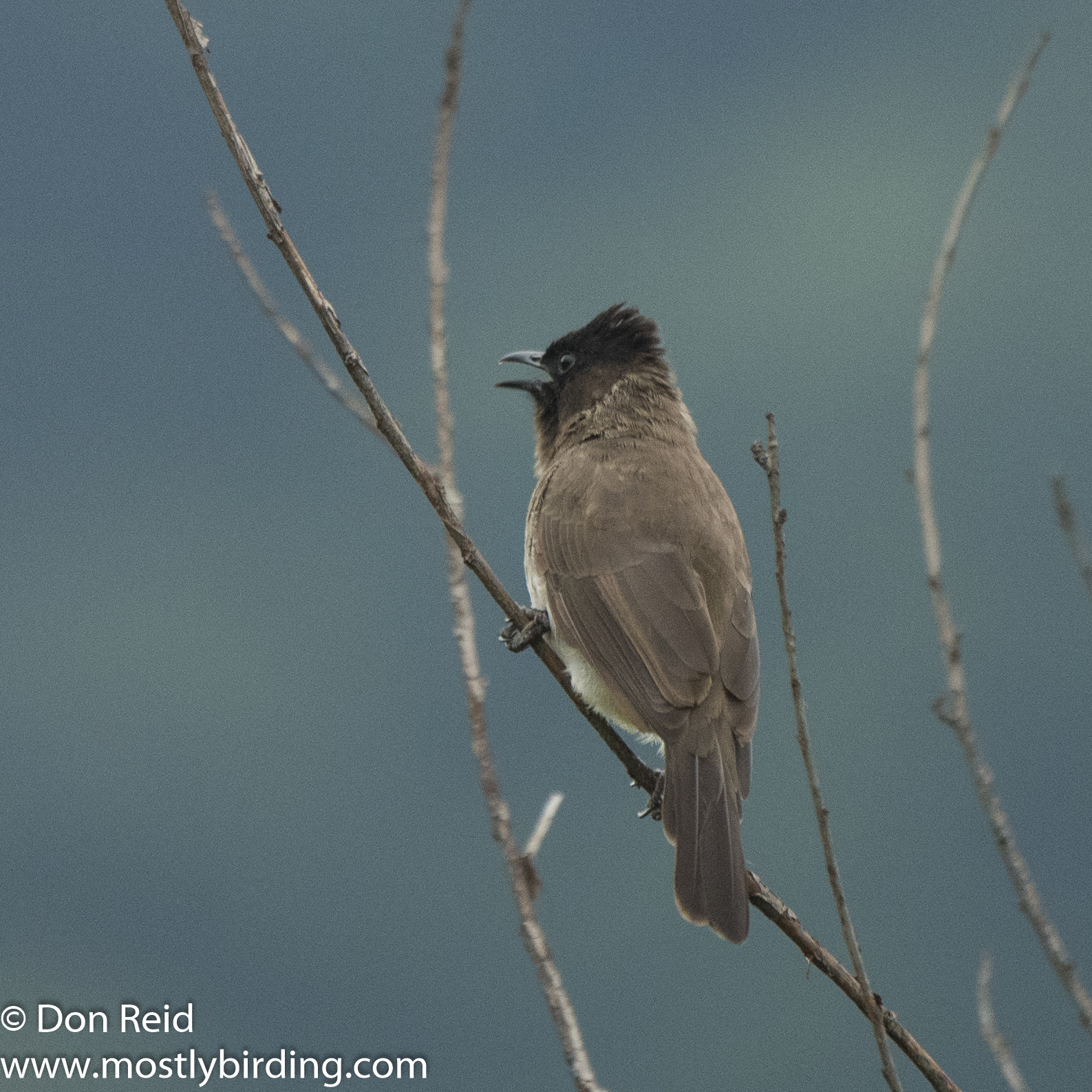
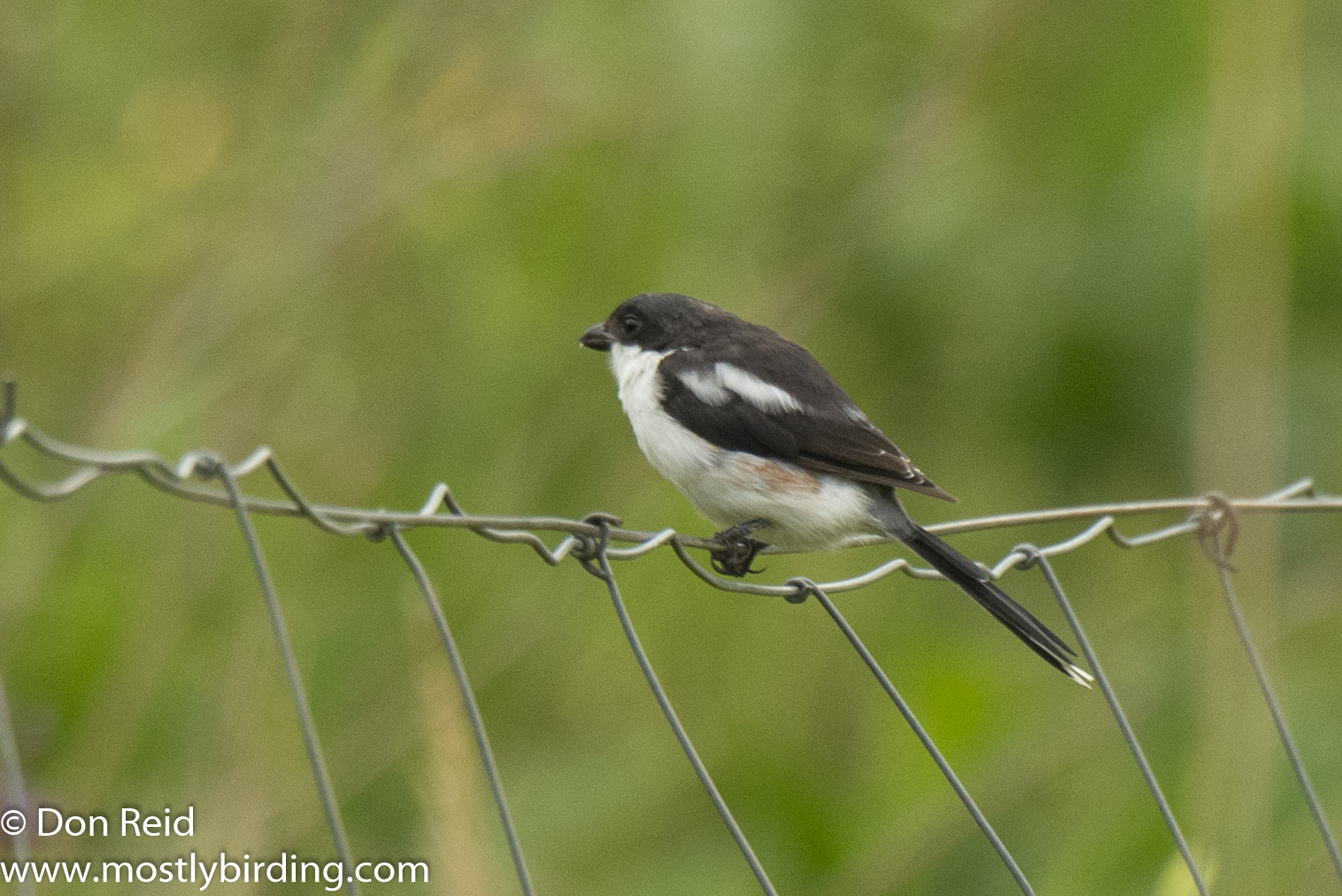
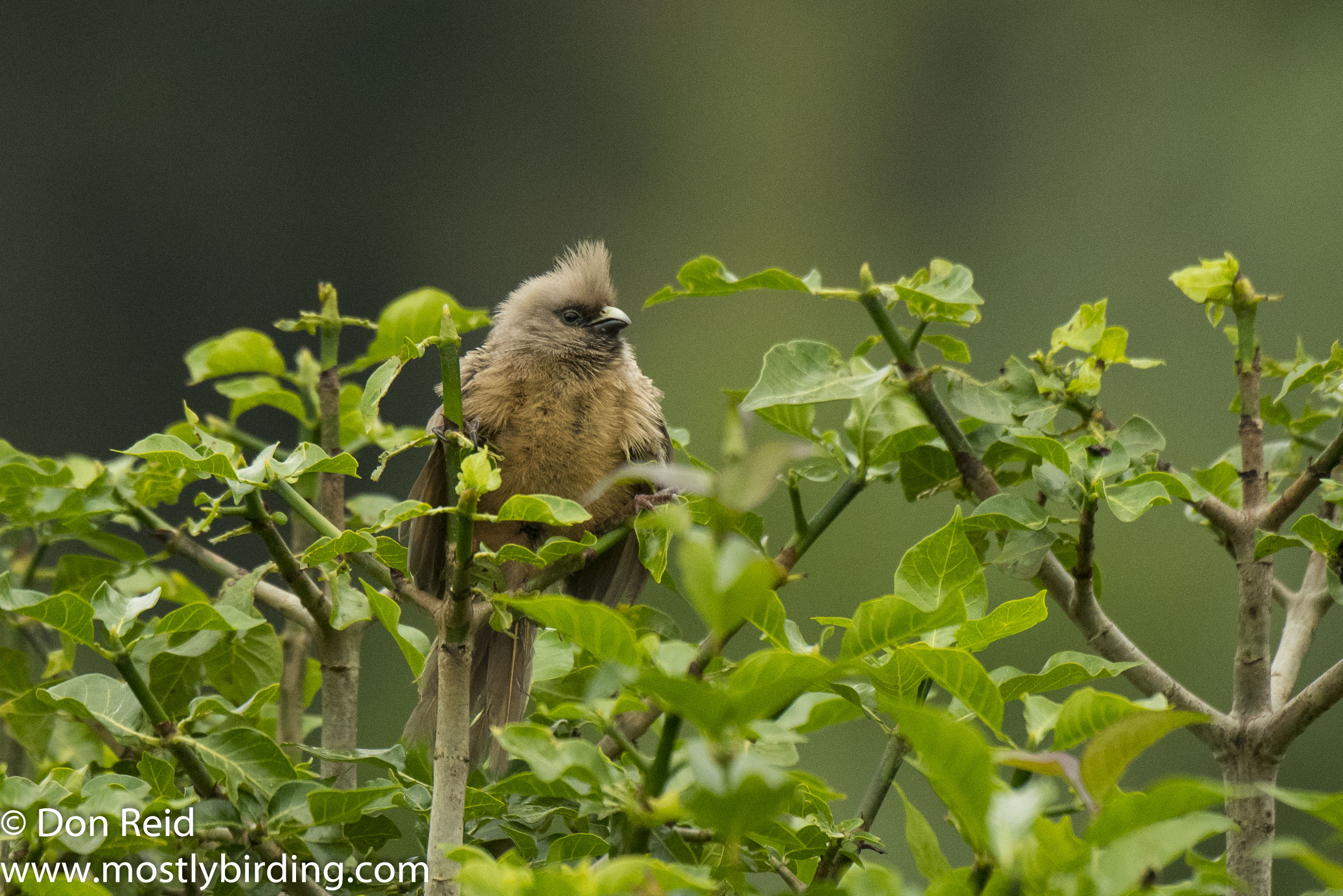
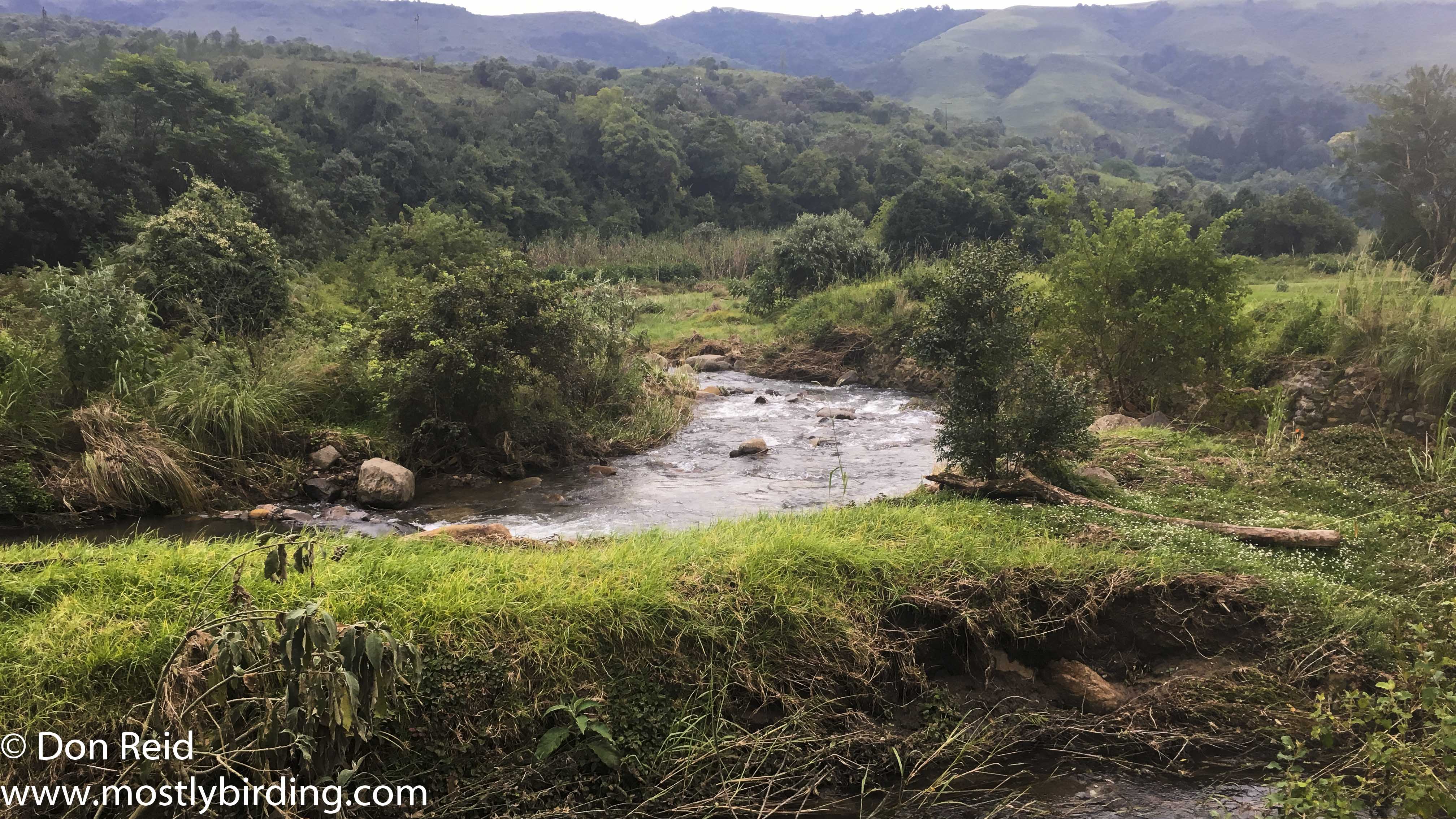
Dark-capped BulbulSouthern FiscalSpeckled MousebirdA river runs through itAndrew out walking
Later we enjoyed a delicious bobotie and salads which we had bought freshly cooked at our local Super Spar the previous day and which was the perfect way to end the day with the minimum amount of cooking effort. We had thought of watching the Oscars on TV that evening but a heavy thunderstorm passed through the area and put paid to that idea as it temporarily disrupted the power and affected TV reception for the rest of the evening. This was a blessing in fact as we were all quite weary and happy to get an early night.
Tuesday
Still in “take it easy” mode, we slept later than usual and even Andrew, early riser most times, slept in to catch up on lost sleep on the flight over. After a fruit brekkie we set off on a drive without any fixed plans other than a stop at the Valley Bakery nearby, set hidden away behind plantations but well worth finding, as we had on a previous visit. Relaxed surroundings and a really good roast chicken wrap, followed by cappuccino and pasteis de nata (Portuguese custard tart) made for the ideal way to catch up on news with Andrew and just enjoy the ambiance for a couple of hours.
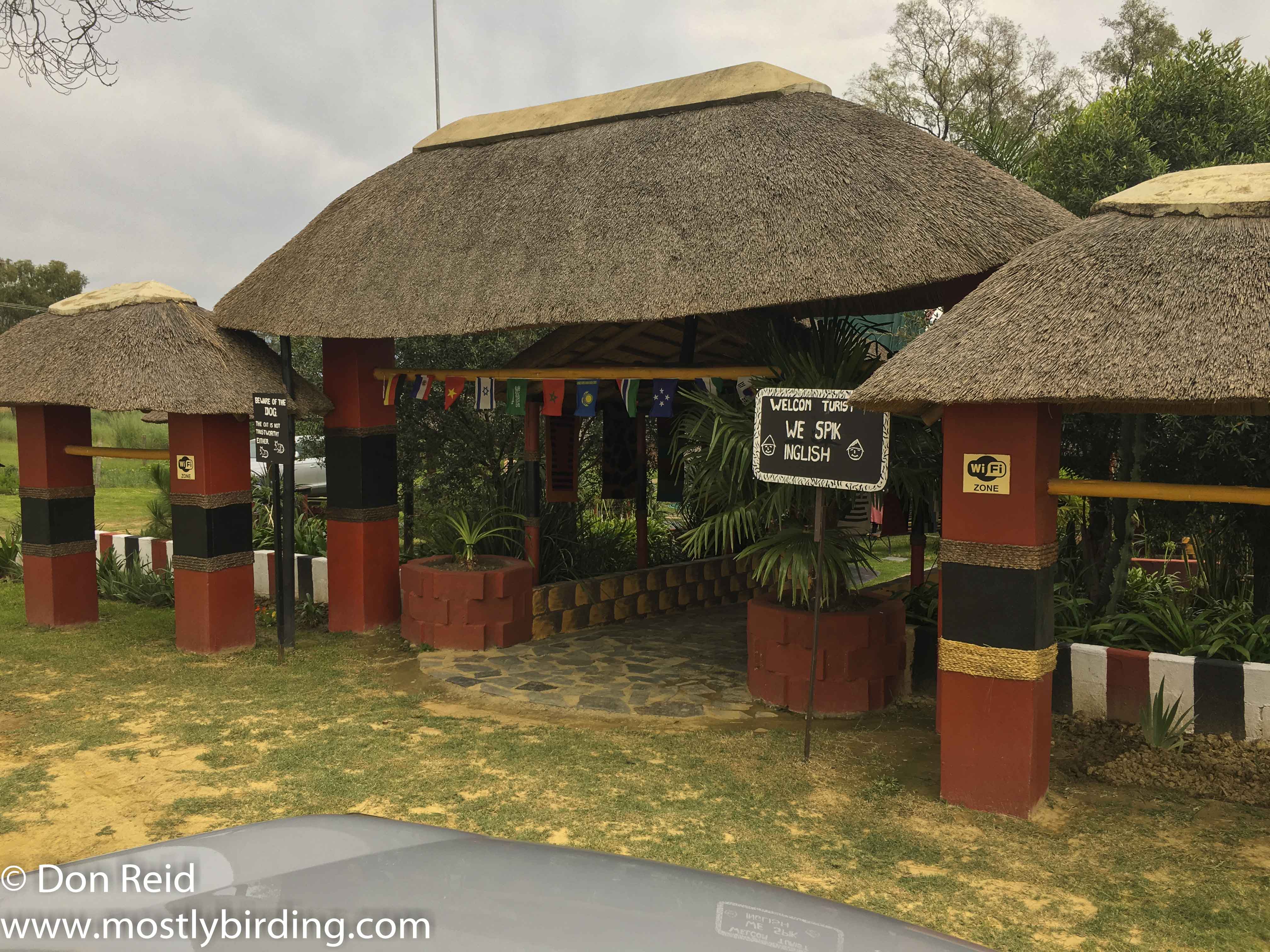
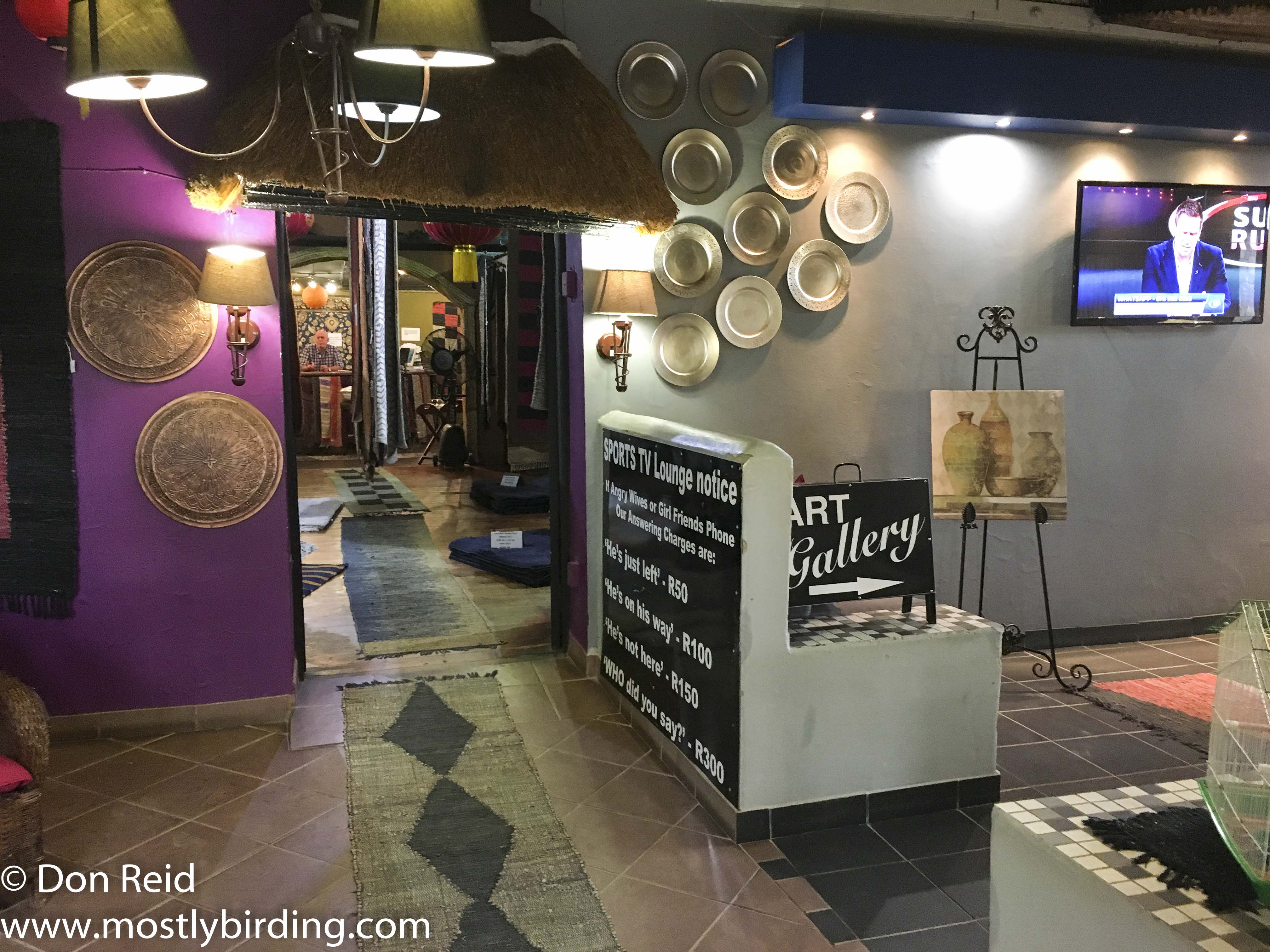
The road took us further to Winterton for some stocking up and on the way back we popped into The Hand Woven Rug Co for a look at their attractive products, including some interesting colourful rugs woven from leather off-cuts. The quirky signage outside and in added to the interest.
The Handwoven Rug Co
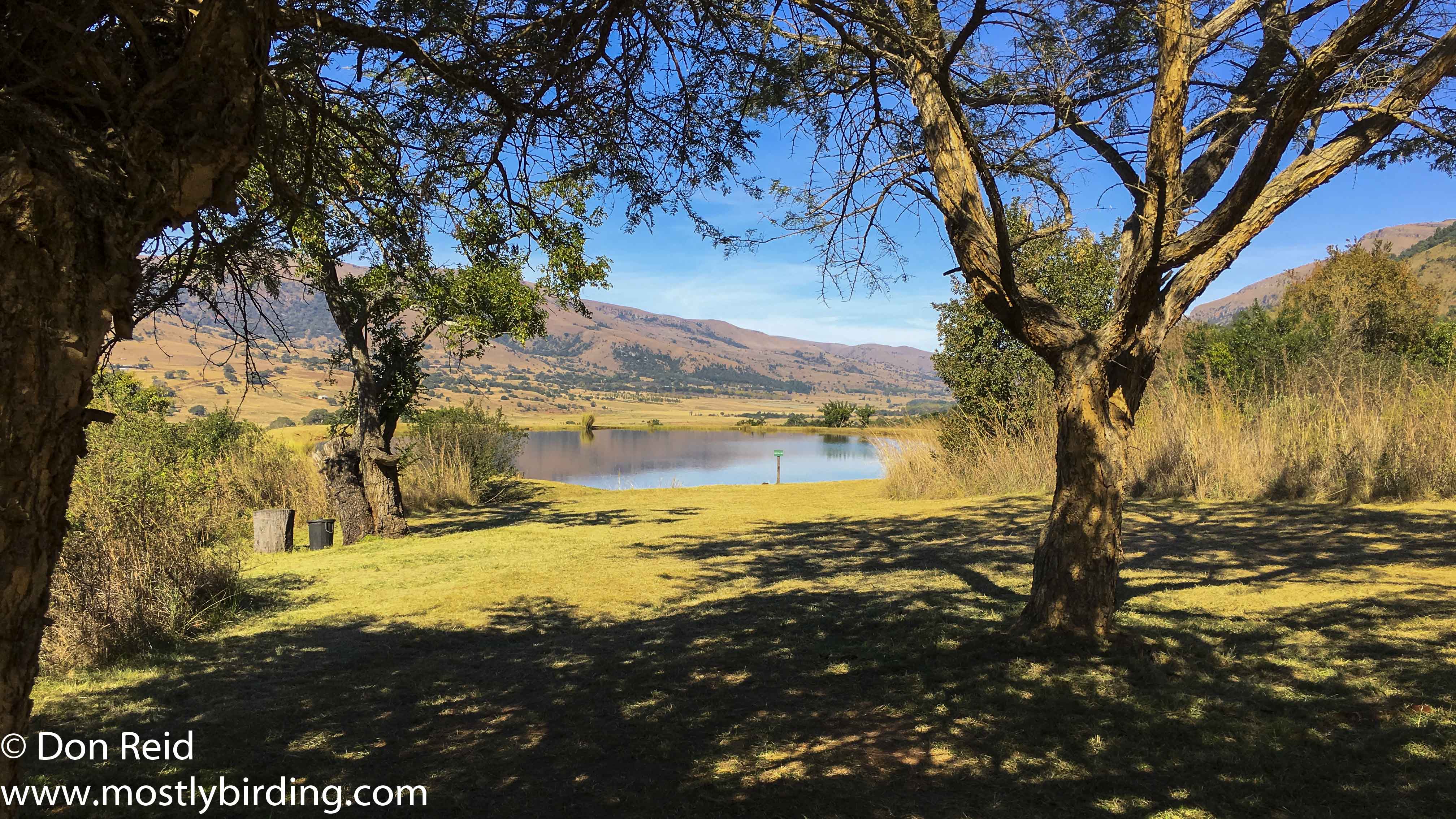
Back at our chalet it was time for a walk down to the dam and surrounds – wide lawns leading to the water’s edge in places and to reed beds in others. A variety of birds were doing their thing –
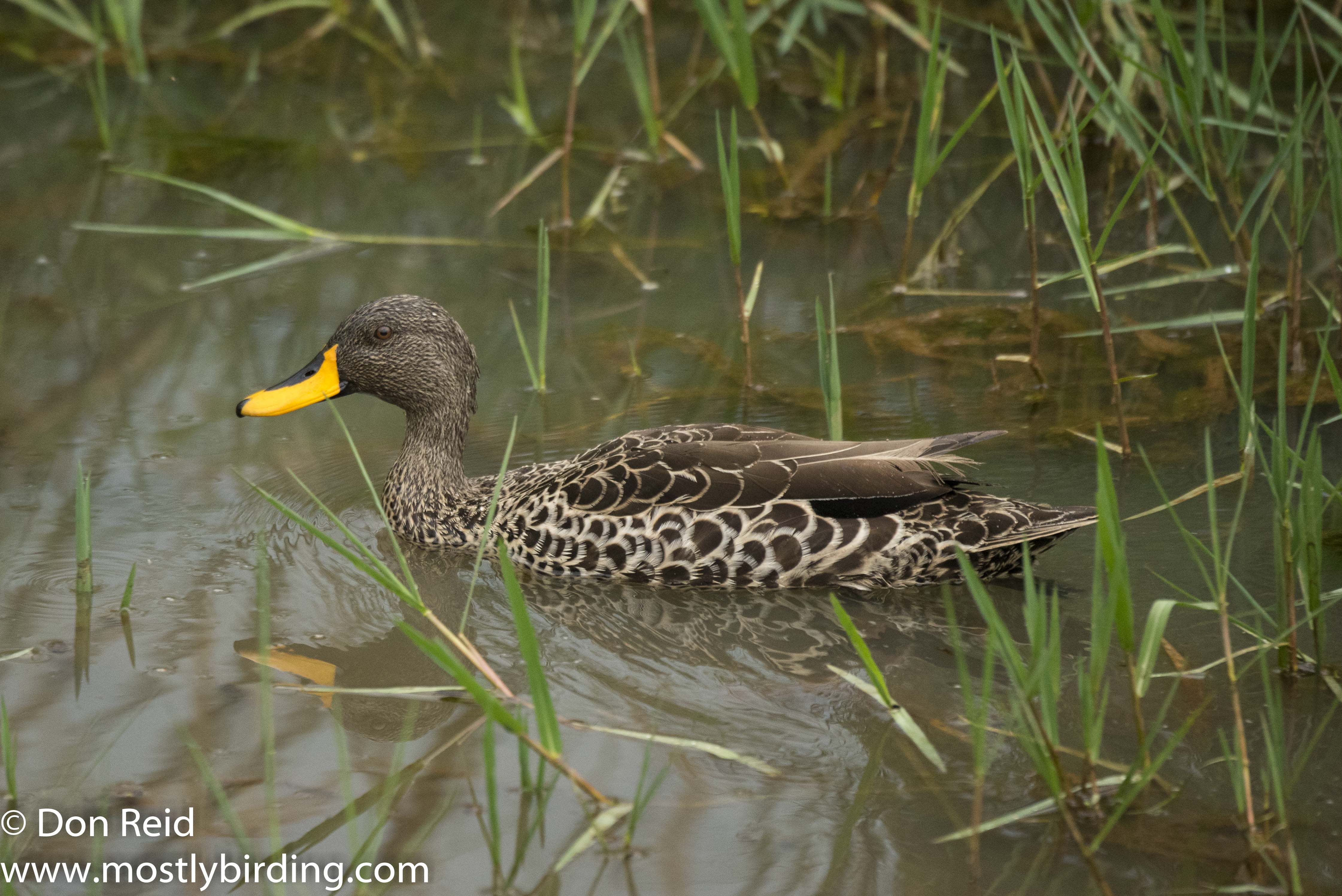
Yellow-billed Ducks in the shallows looking rather aloof and scudding away at my approach;
Yellow-billed Duck, Drakensberg Sun
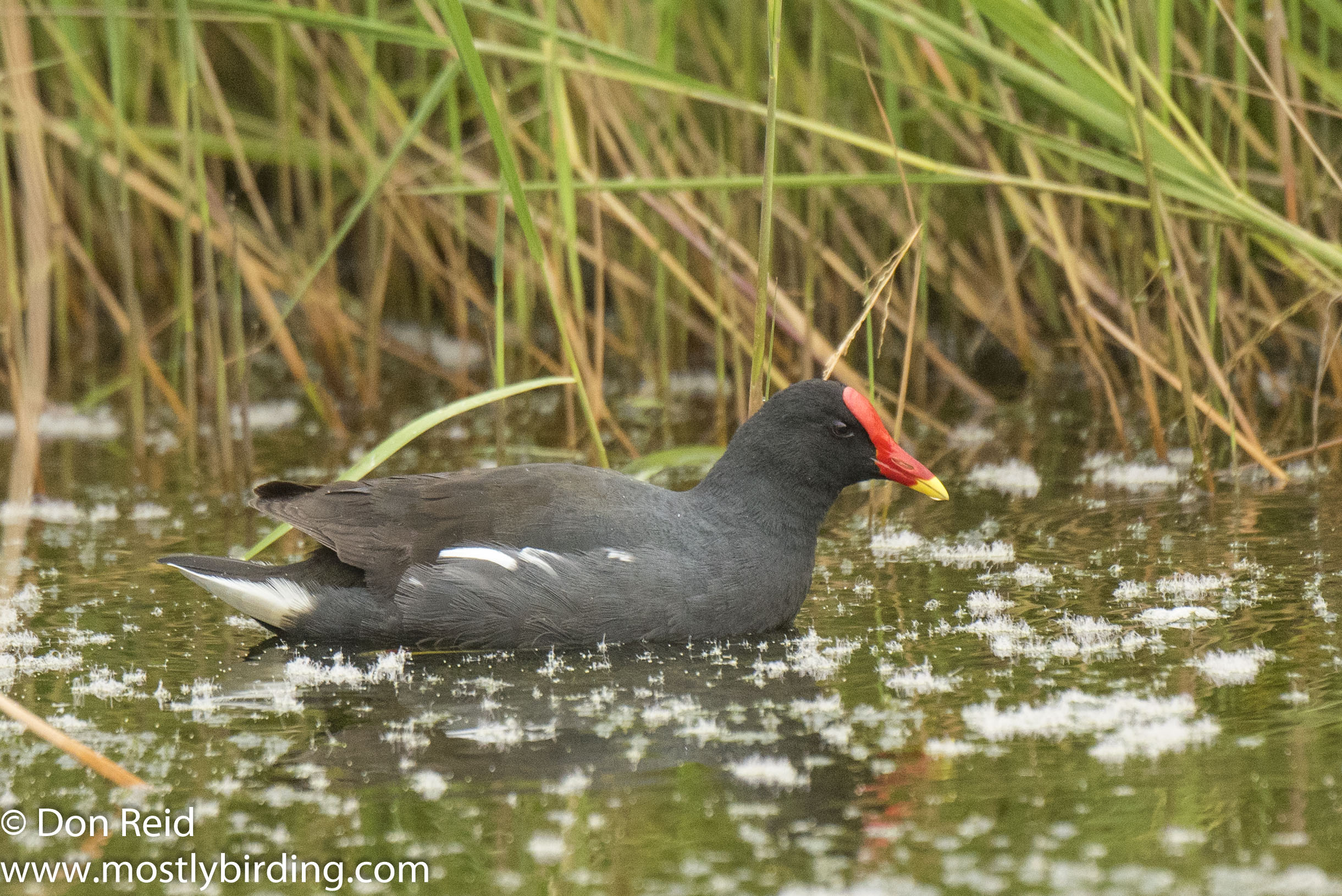
Common Moorhens dipping at unseen organisms in the water;
Common Moorhen, Drakensberg Sun
Thick-billed Weavers by the dozen busily moving up and down, out and back, never far from their perfectly woven nests strung between sturdy reeds.
Thick-billed Weaver, Drakensberg Sun
It made me realise that the human weavers we had seen earlier, good as they were, are amateurs by comparison with these little brown experts!
We closed out the day with a braai of chops and wors and chatted well into the night – so nice to catch up with family after a couple of years.
Wednesday
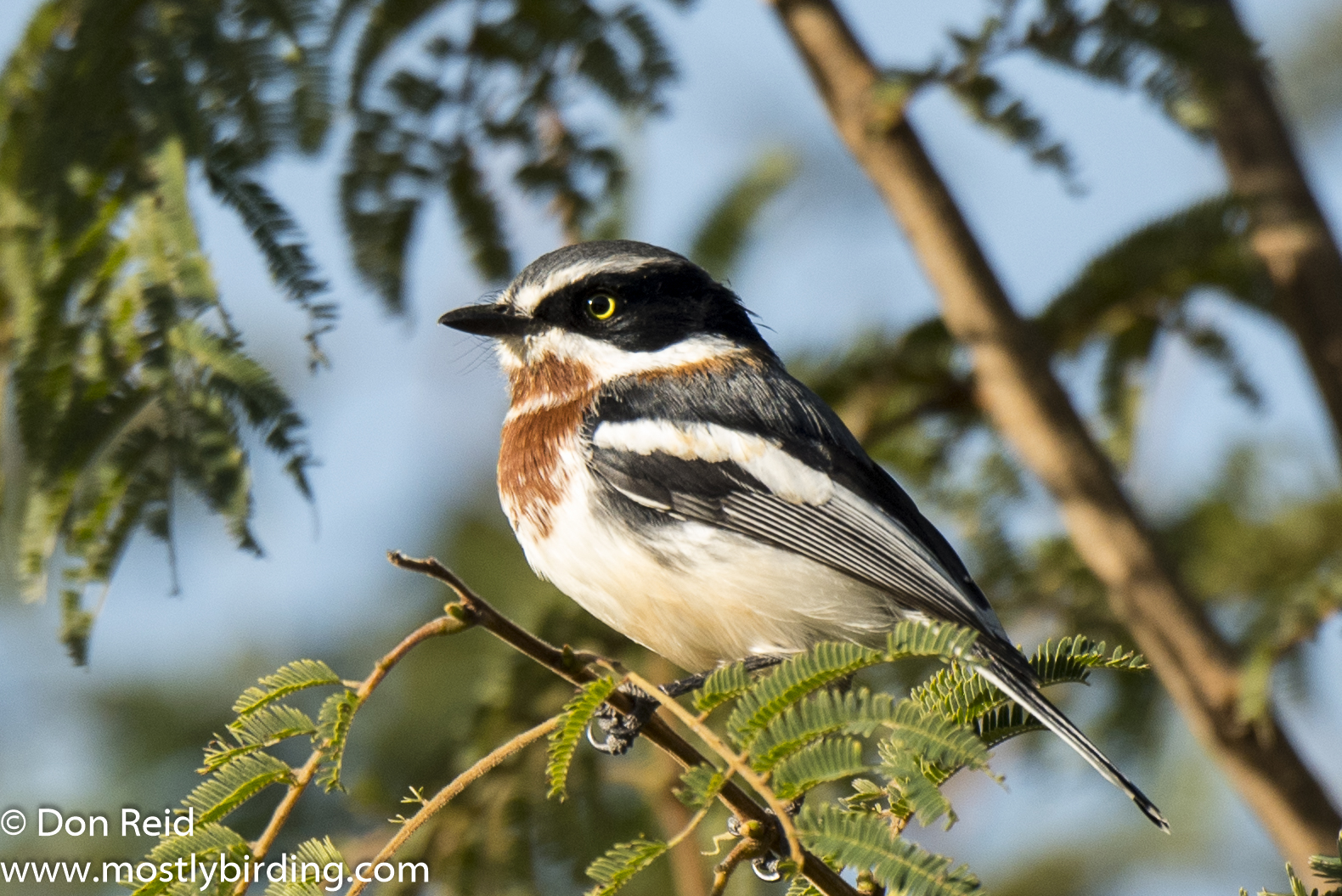
I set off early to the hotel reception to enquire about walking the Forest trail – the hotel insists that anyone wanting to walk the trails check-in first and pay a small deposit, presumably to give them some record and control of hikers. My aim was to do a portion of the trail or possibly the whole one, with the objective of looking for a bird that has eluded me until now, the Bush Blackcap, a bird of the forests in these elevated parts. It was not to be as the staff had decided the trail was too slippery and dangerous after the night’s heavy rain – a wise precaution but disappointing.
Having set out to do some birding I walked the gardens and along the dam edge, then took a short drive along the road back to the R600, adding to my growing pentad list with the likes of Cape Grassbird, Lesser-striped Swallow, Fan-tailed Widowbird and Jackal Buzzard.
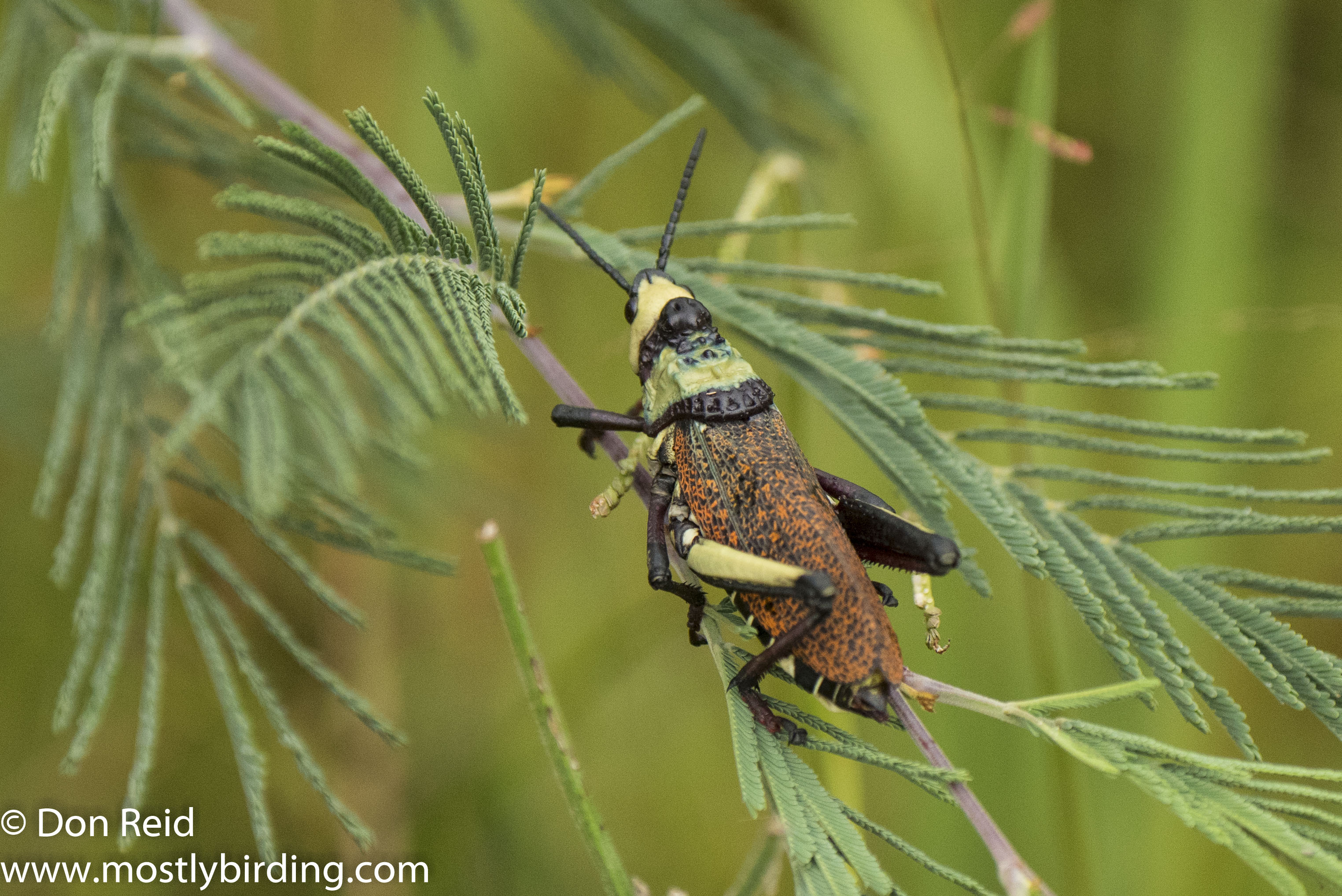
The gardensA coulourful splash amongst the grassesLocust – colourful but in a blend-in fashion
A substantial breakfast awaited back at the chalet, after which we headed off on an exploratory drive towards Monk’s Cowl, branching off at side roads that looked interesting.
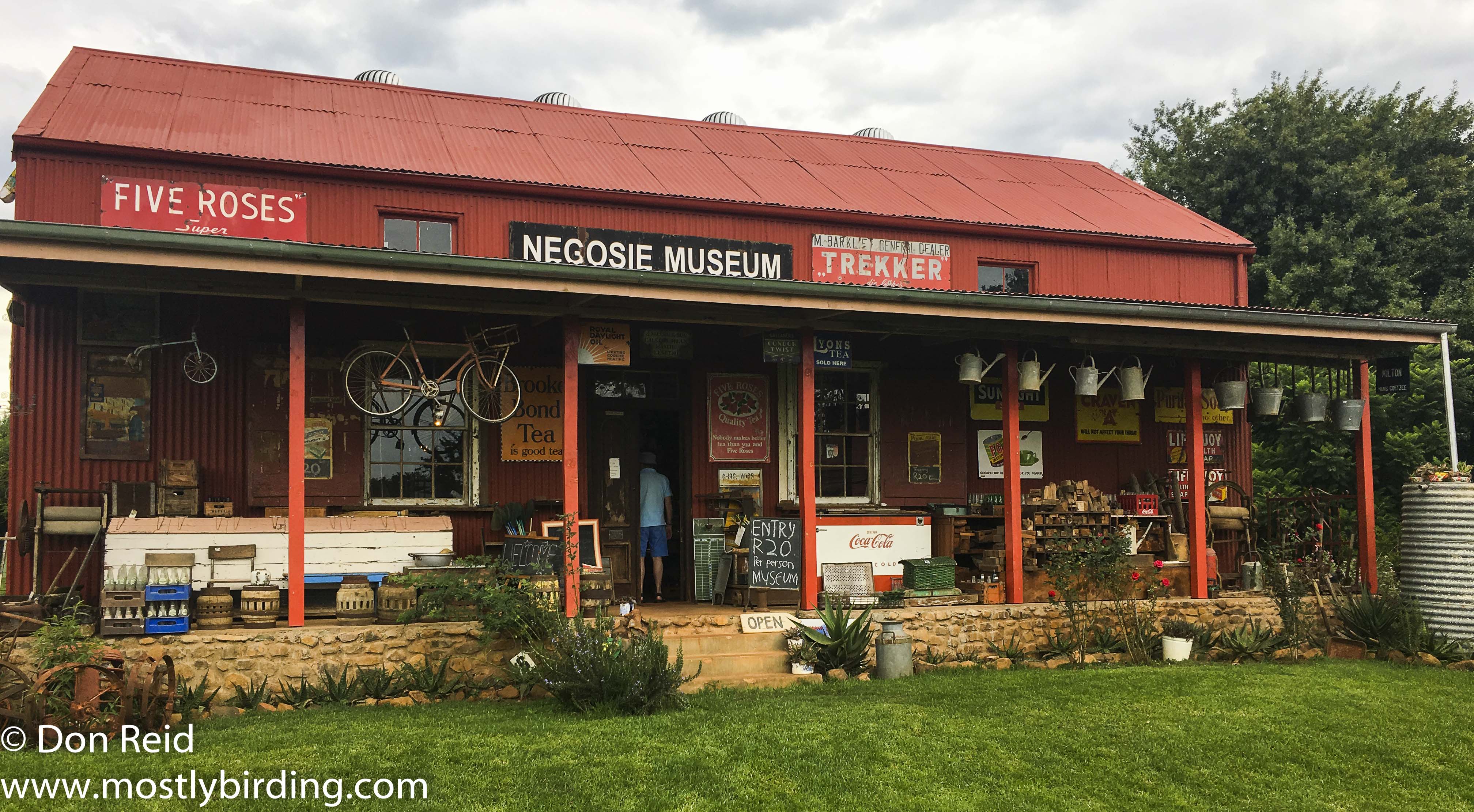
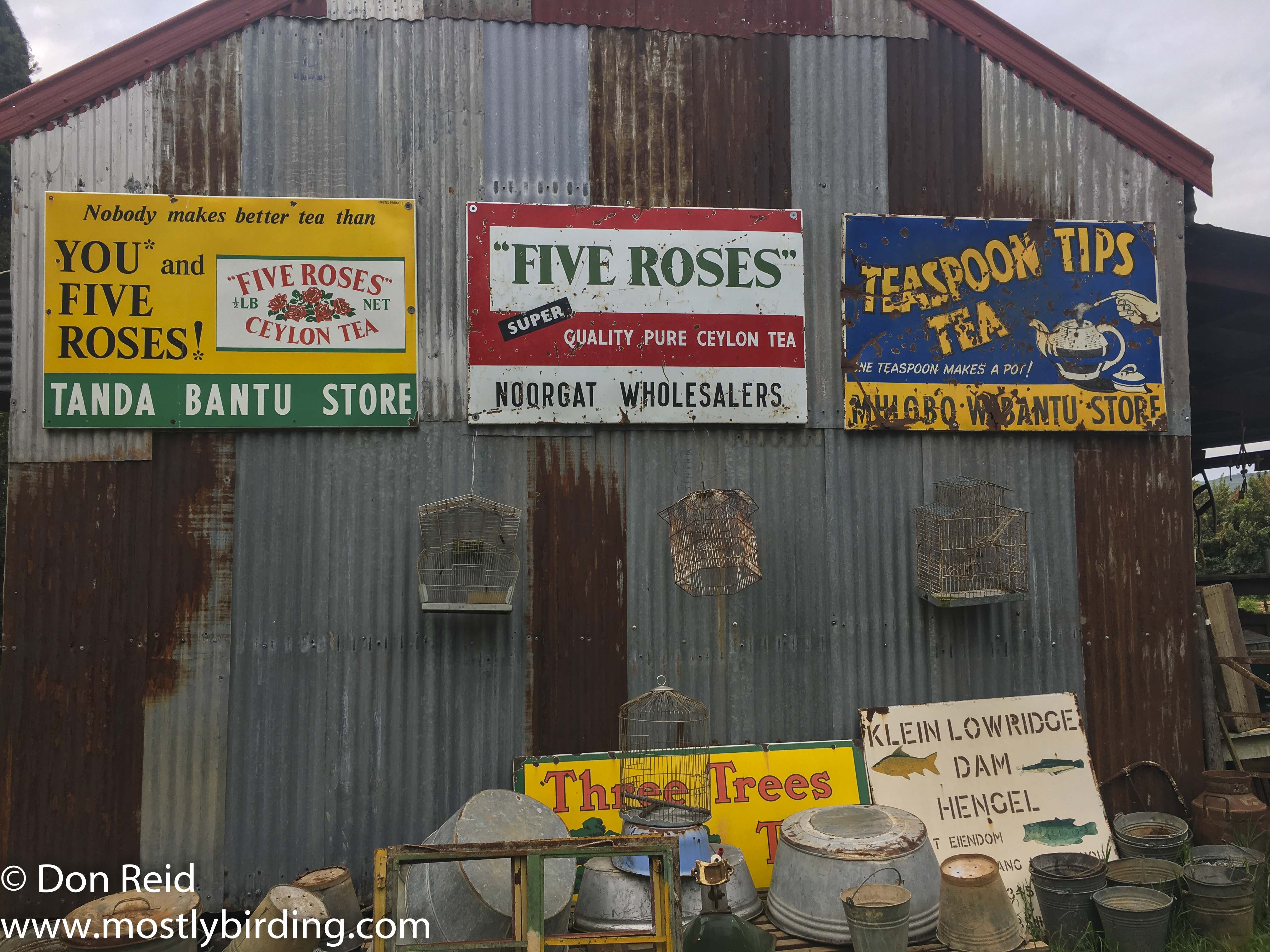
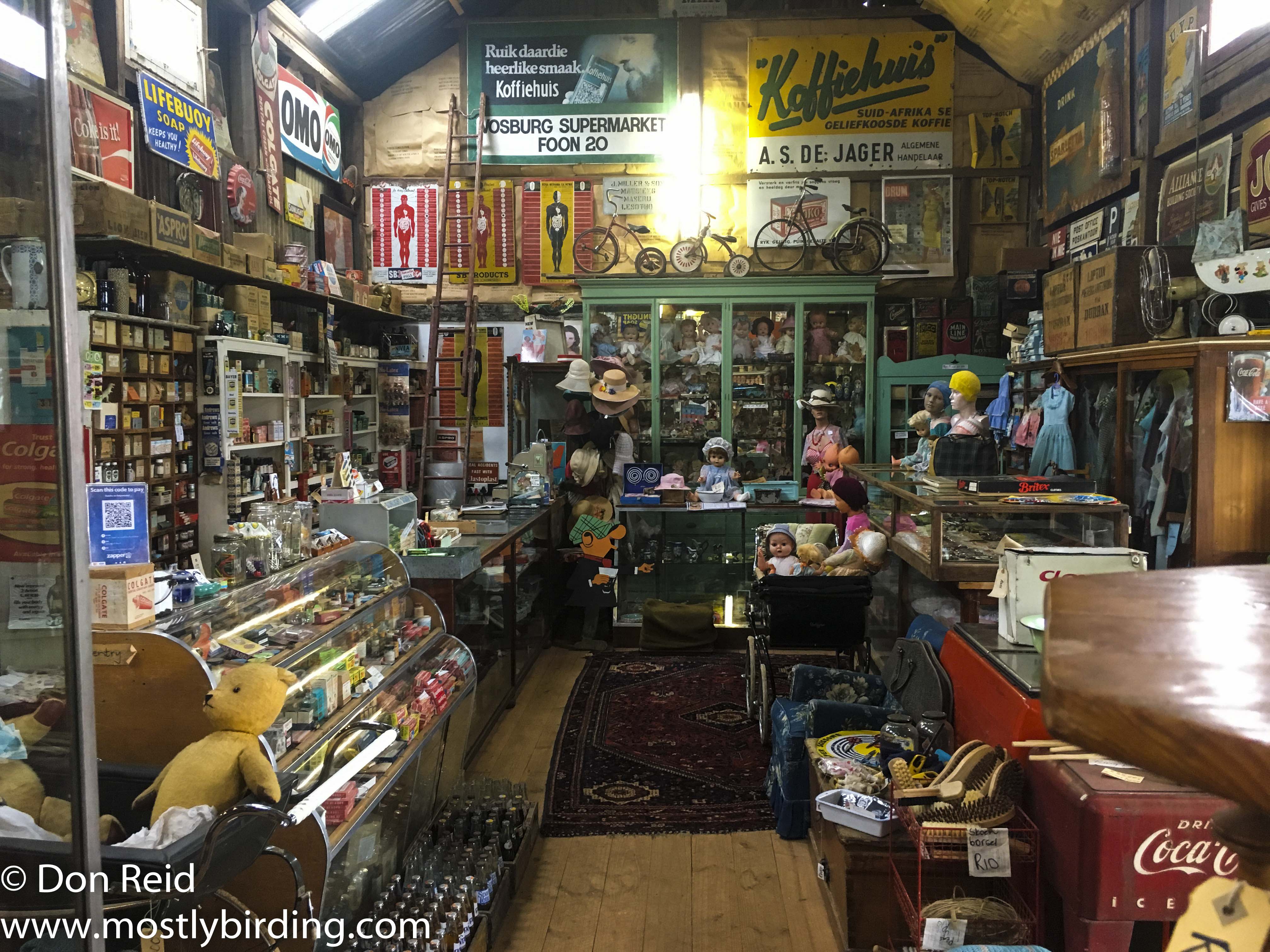
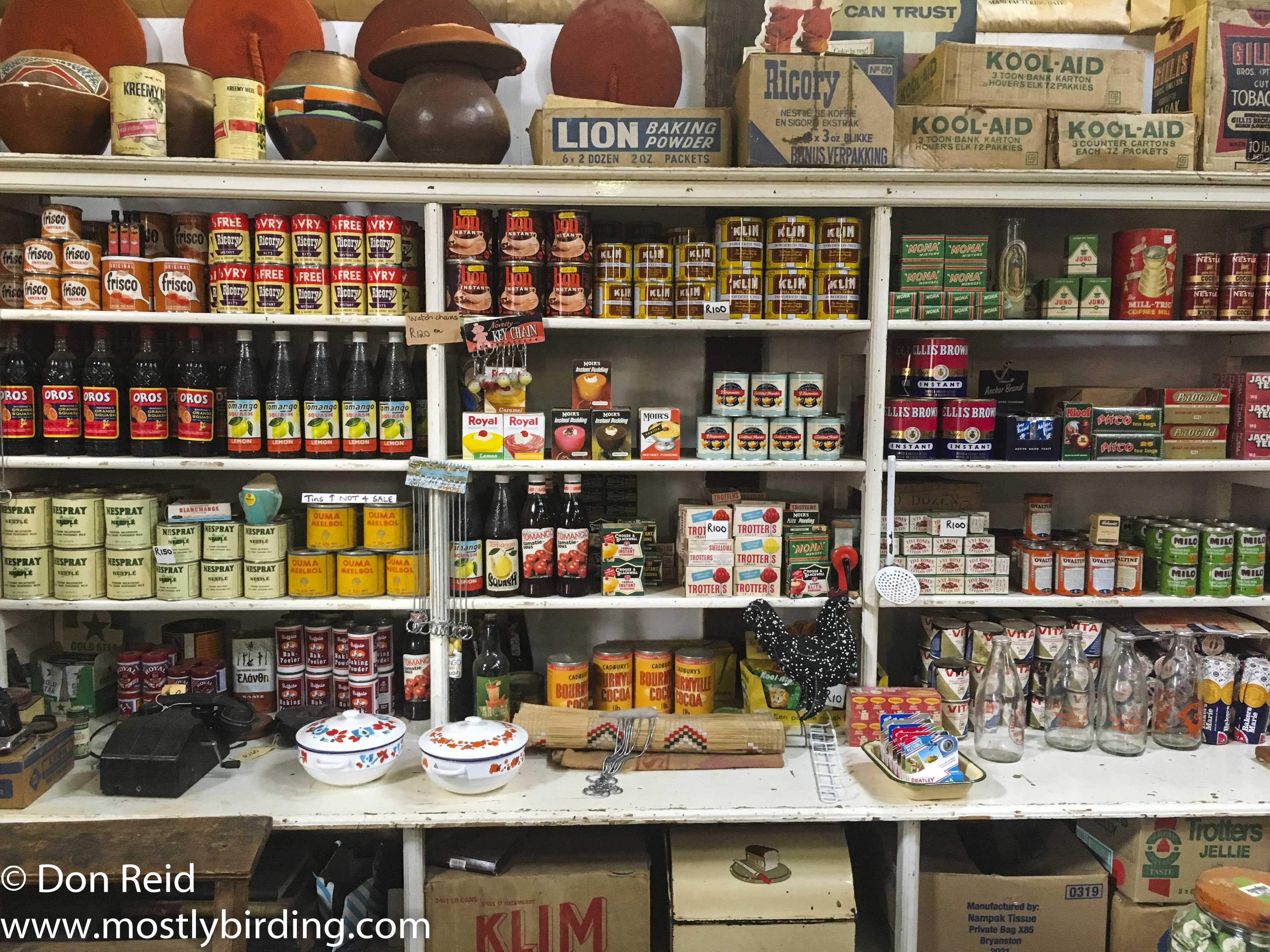
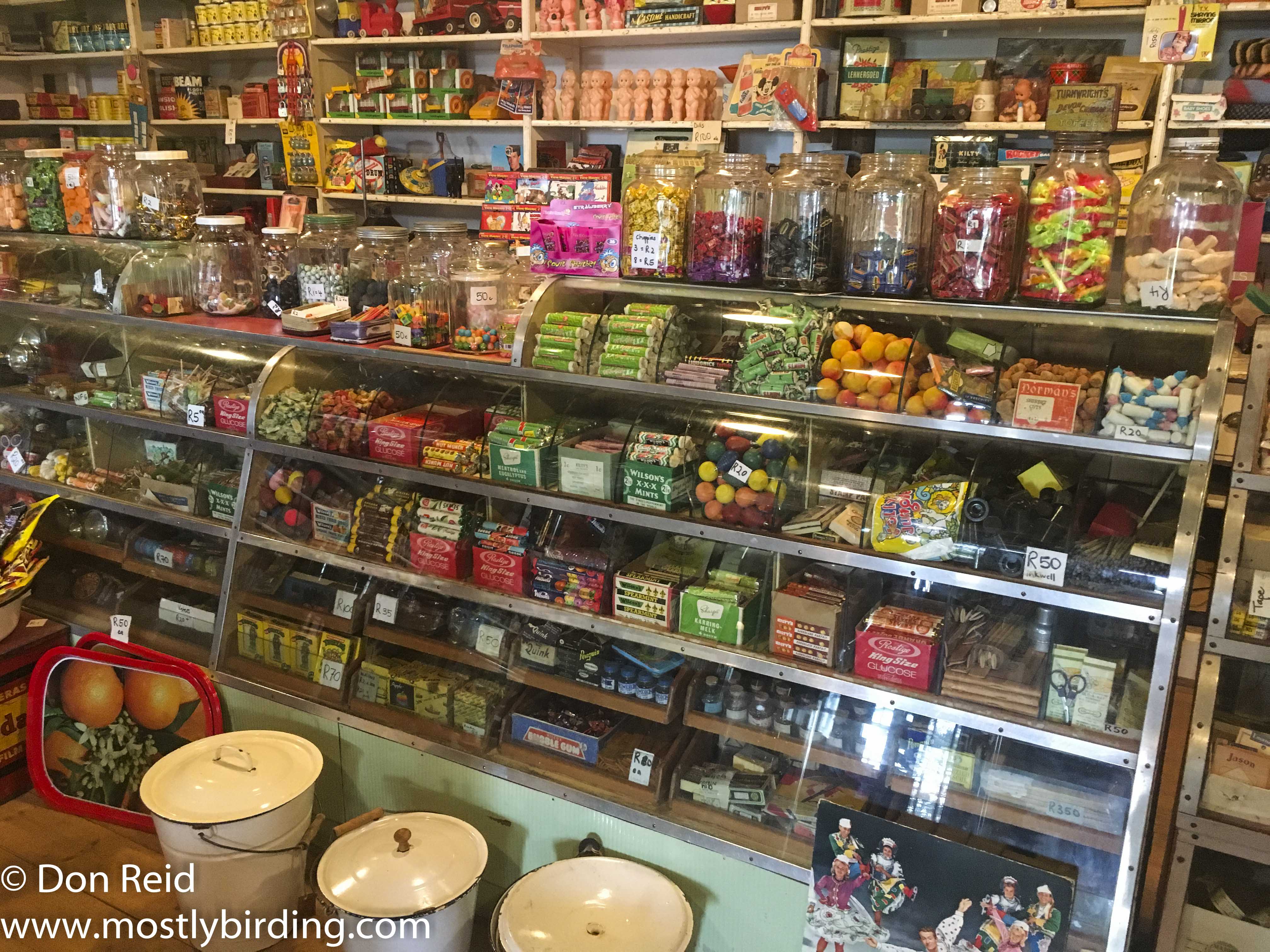
One such road took us past an interesting looking building where we decided to have a closer look. We were the only visitors and a small fee of R20 allowed entry to the inside of the old Trading Store, which we were told was transported lock, stock and barrel from Lesotho some 12 years ago by the owner of the farm. The inside was filled with old-fashioned provisions, as if waiting for the next customer to come in and order from the assistant behind the counter – fascinating and absolutely unique. What a gem and another example of the quirky attractions that lie hidden in South Africa’s countryside.
Trading store ex LesothoTrading storeThe packed interiorOld provisions on the shelves – now does that take you back or what?Old display cabinets – I feel like asking for a tickey’s worth of sweets!
Thursday
Another rainy morning meant no chance to try for the Blackcap along the forest walk so we enjoyed a fruit brekkie in between packing. Not wanting to exhaust ourselves lugging everything back up the long flight of steps to the road above, I approached one of the security guards to assist – he was more than willing and had all our luggage and provision crates at the car in no time. Quite a relief for all of us!
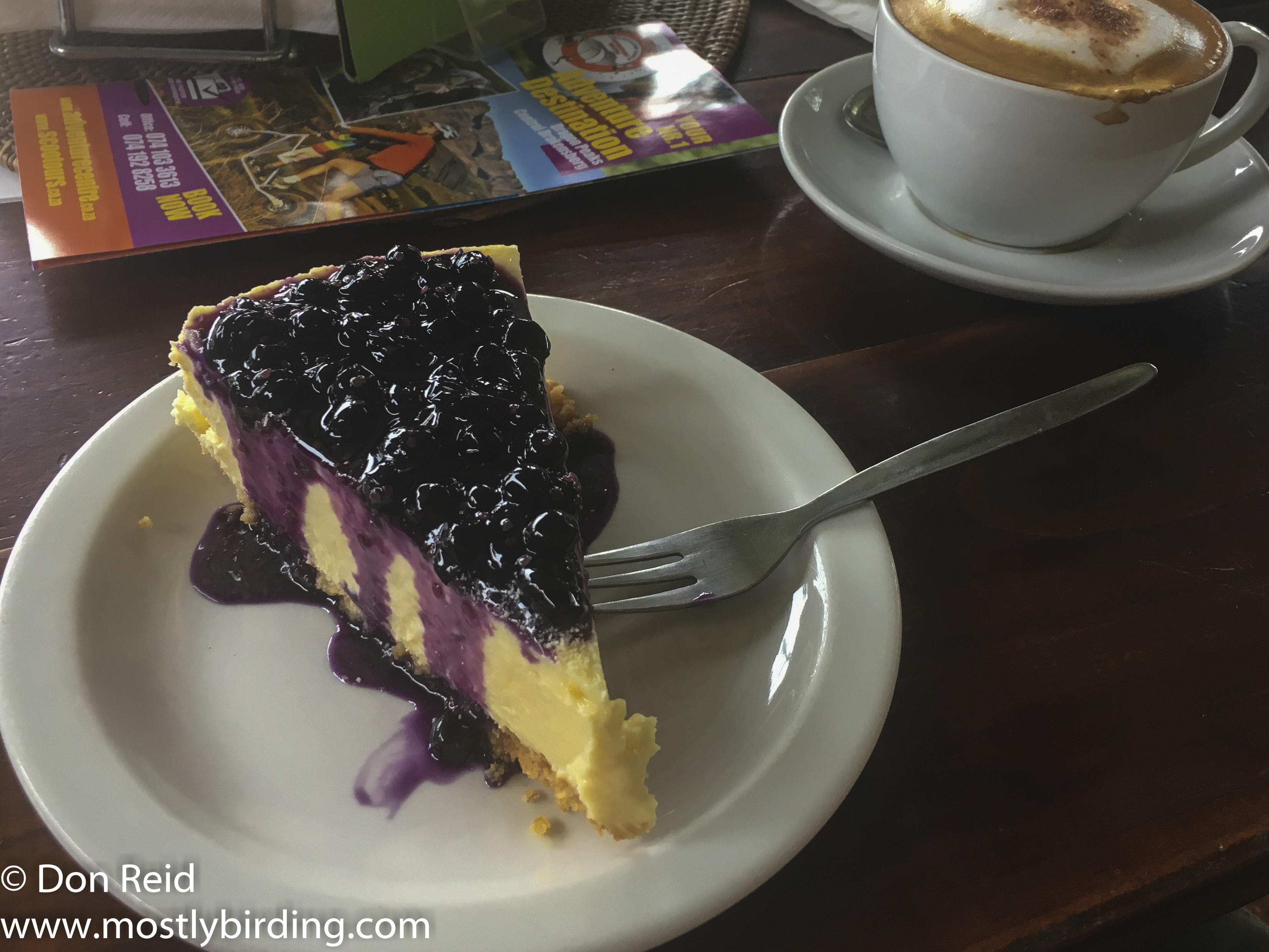
We had planned a few stops, the first one being Scrumpy Jacks for their delectable cheesecake accompanied by good coffee. It was the same one we had tried for the first time a month ago but this time it was drizzled with a dark berry dressing – oh so good!
Cheesecake delight!
Once again we took the “old” road via Winterton and Bergville to Harrismith where we joined the N3 highway back to Gauteng and we were back home by late afternoon.
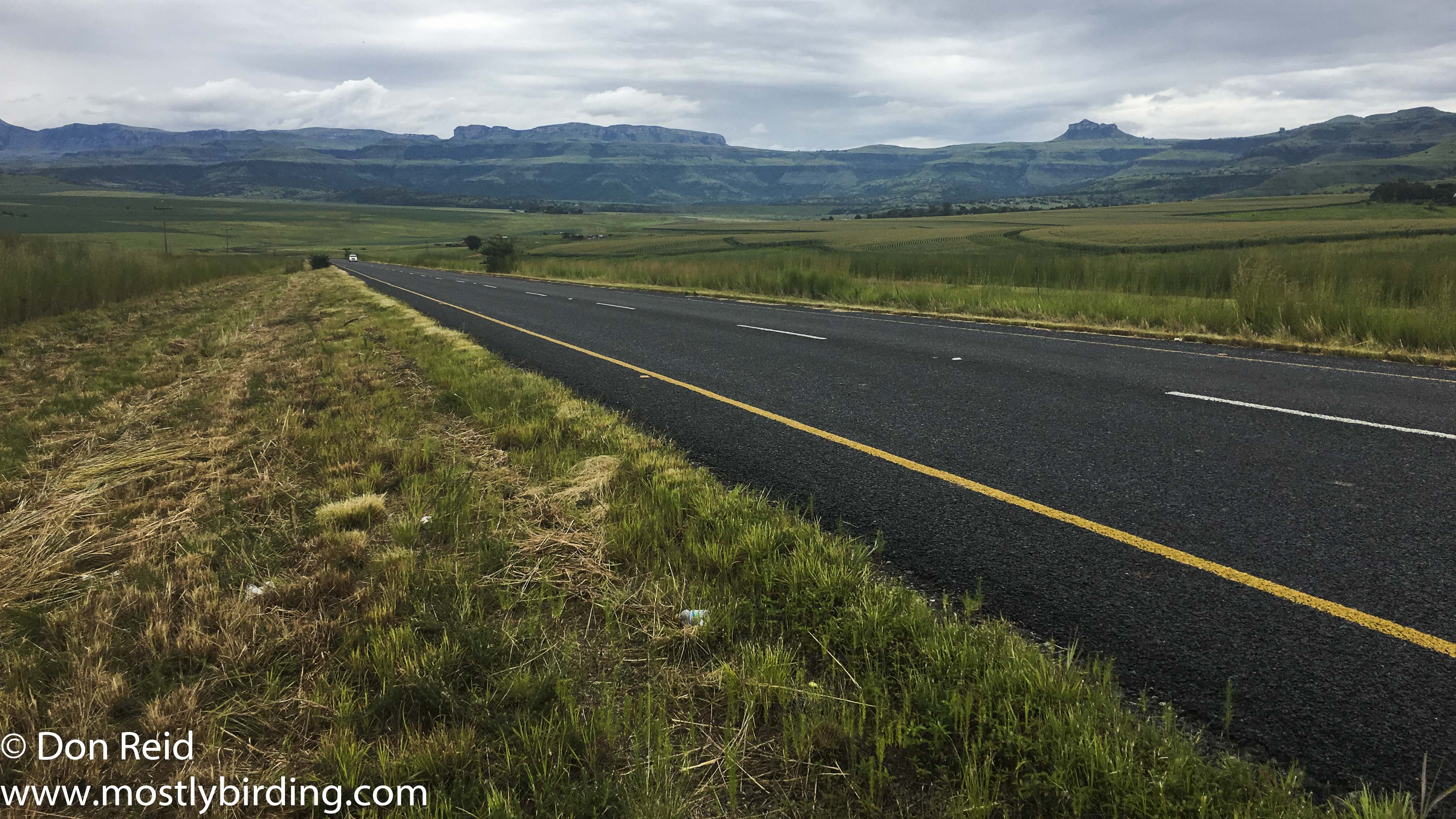
The road home
After not visiting the Drakensberg area for close on 20 years we have ” re-discovered” this beautiful part of our country during 3 visits in the last 12 months or so – and we’ll be going back next year I’m sure.
The further story of our 4 day stay in Prague, Czech Republic, prior to our “bucket list” Danube River Cruise in April 2016 ……
Into the (Petrin) Hills
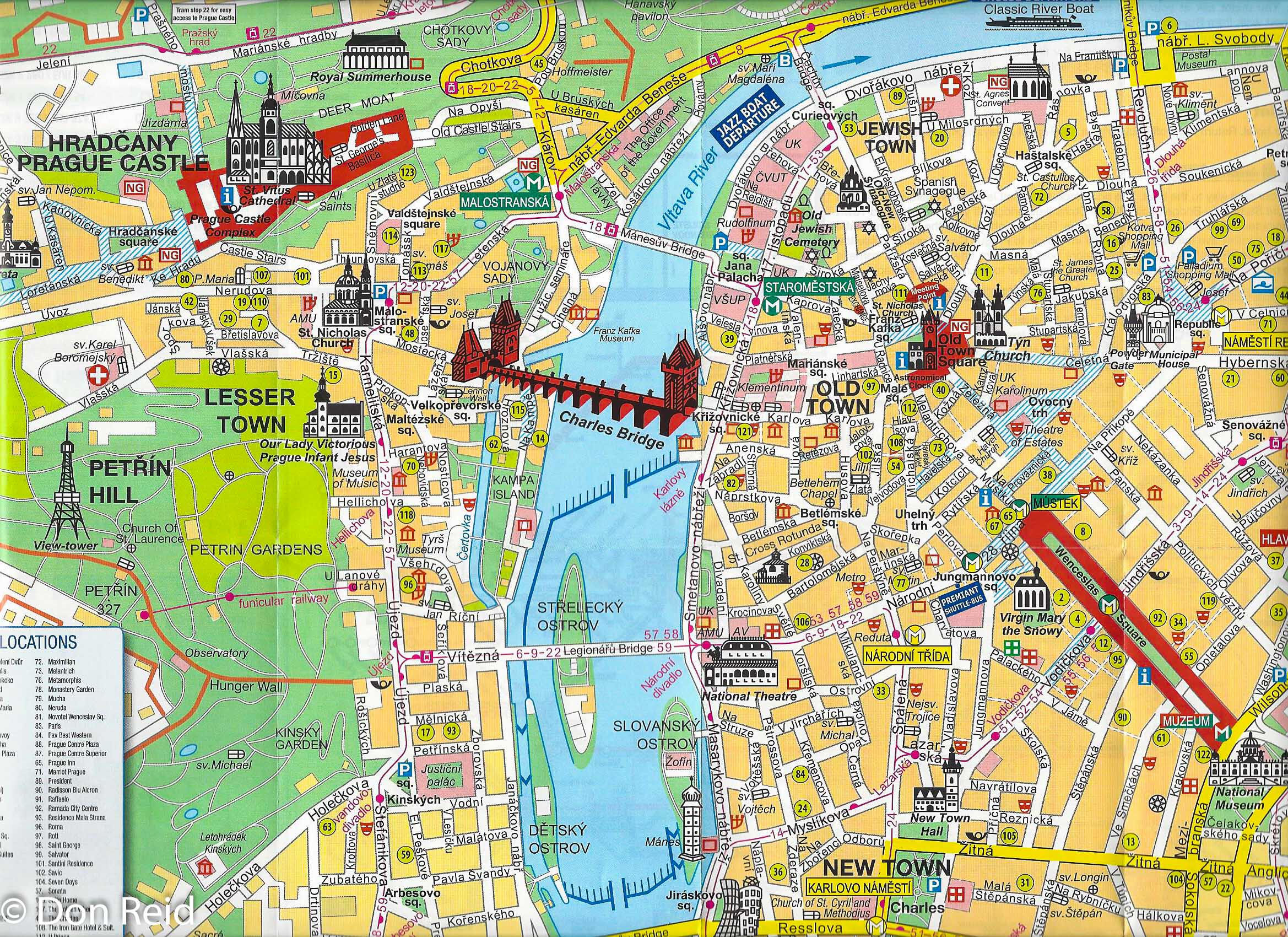
We slept a little later this morning, recharging our batteries after a busy couple of days of traveling and touring. Our plan, as recommended by friends who had done a similar trip, was to take the funicular to the top of Petrin Hill, walk through the parkland to the Palace and from there make our way back down to the Charles Street Bridge. Well, it didn’t quite work out fully as planned, but we certainly walked a lot and saw many sights. After all, travel tends to be more interesting when it doesn’t go entirely according to plan – and that’s coming from someone who plans things to the last detail!
The day began in earnest, after a relaxed breakfast brought to our room by the ever-friendly staff at our hotel, at around 11 am with a walk to the nearest tram stop, which I had located on a map during a swot up of the commuting options. Two tram rides later we found ourselves, somewhat miraculously as we were guessing where to get off the tram, at the lower funicular station. The short ride to the top of Petrin Hill was through forested slopes with brief glimpses of the city beyond.
Prague – the view from the funicular
I have been fascinated by all things mechanical since childhood, especially those involving transport of some sort, and I’m always on the lookout for the chance to take a ride on unusual forms of transport, so the combination of trams and funicular was right up my street … or track in this case, and anyone observing me would probably have seen the boyish joy in my expression as we ascended the hill.
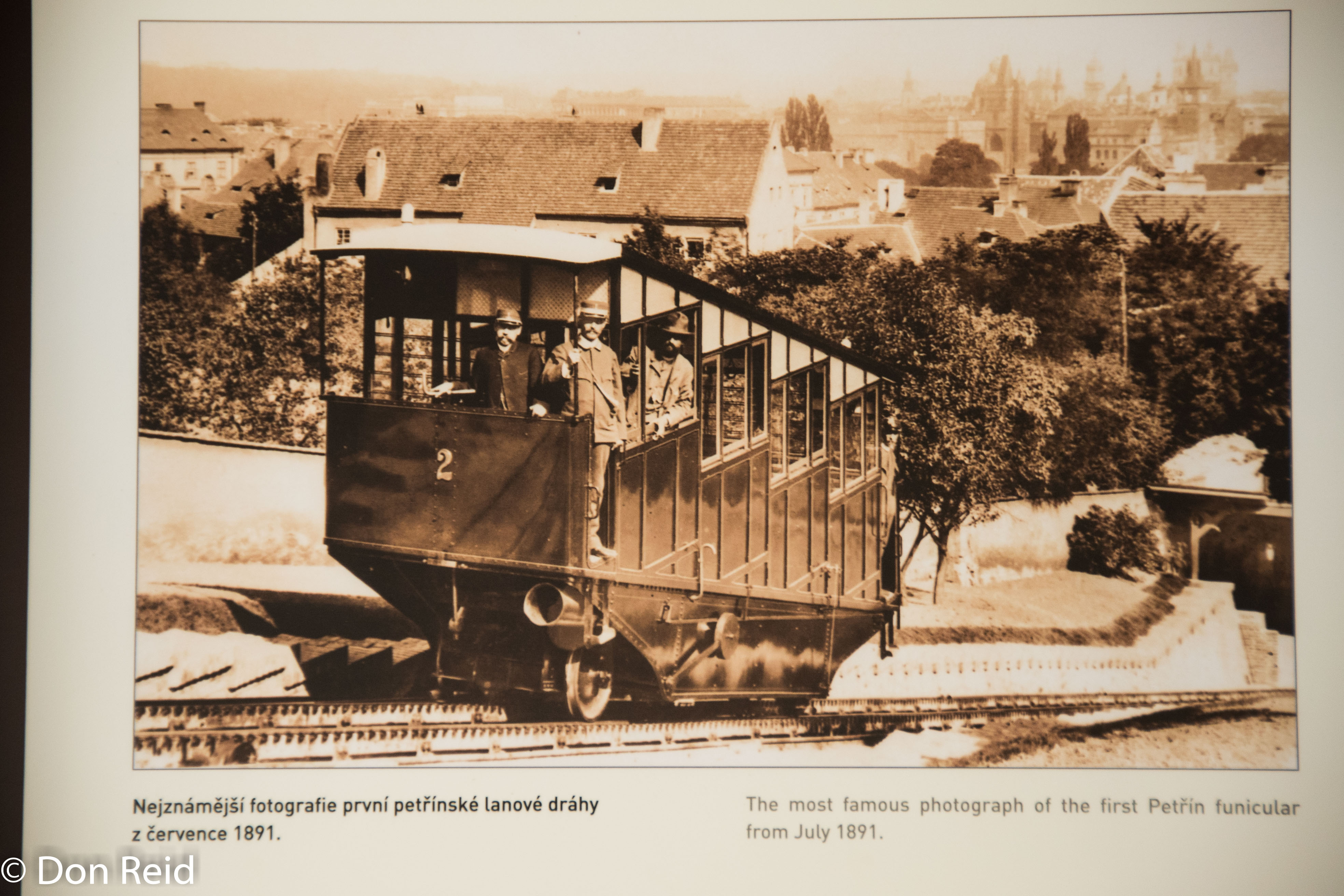
No, not the one we rode on – ours was a bit more modern. This is the 1891 version
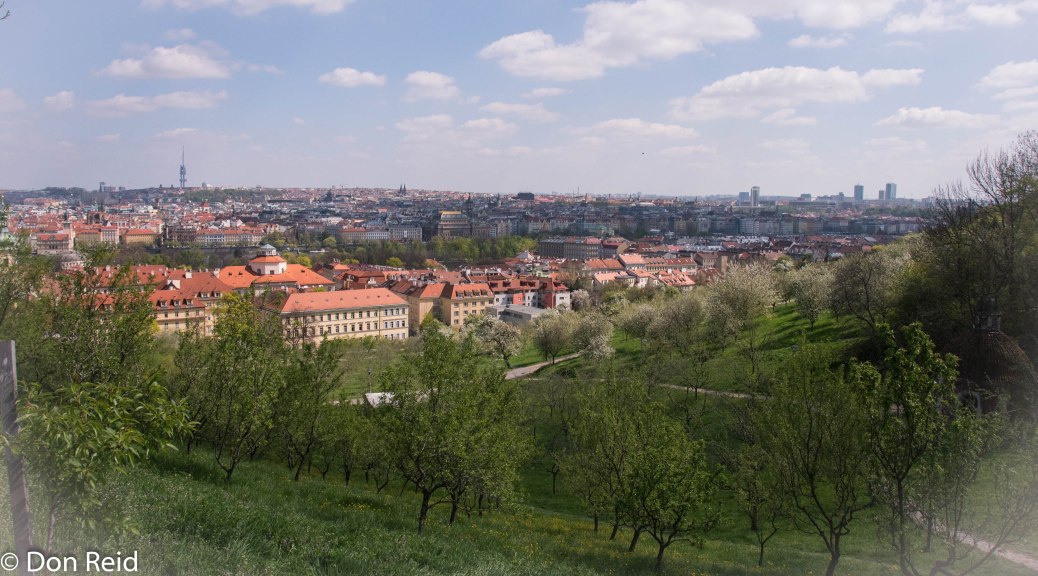
Petrin Park
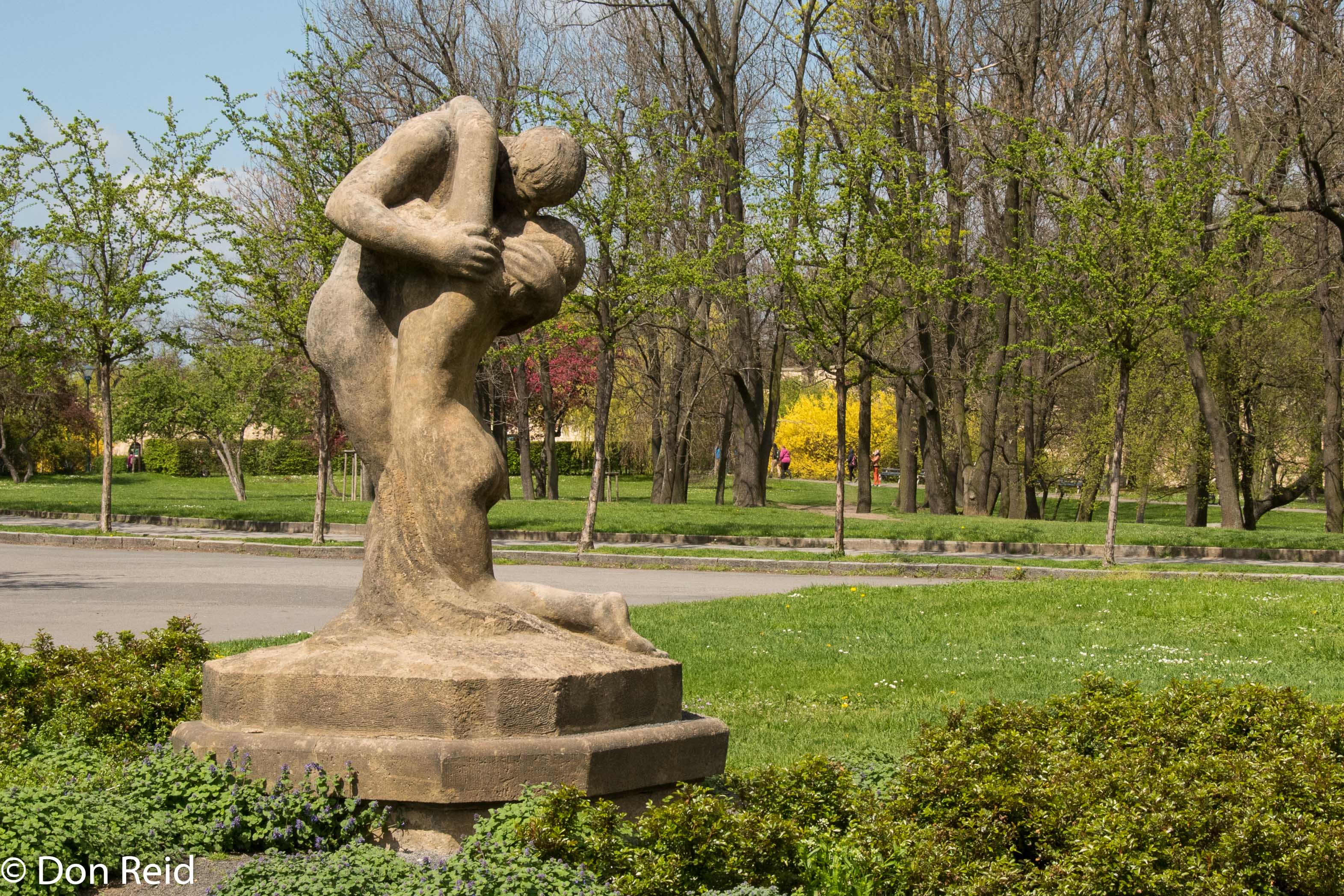
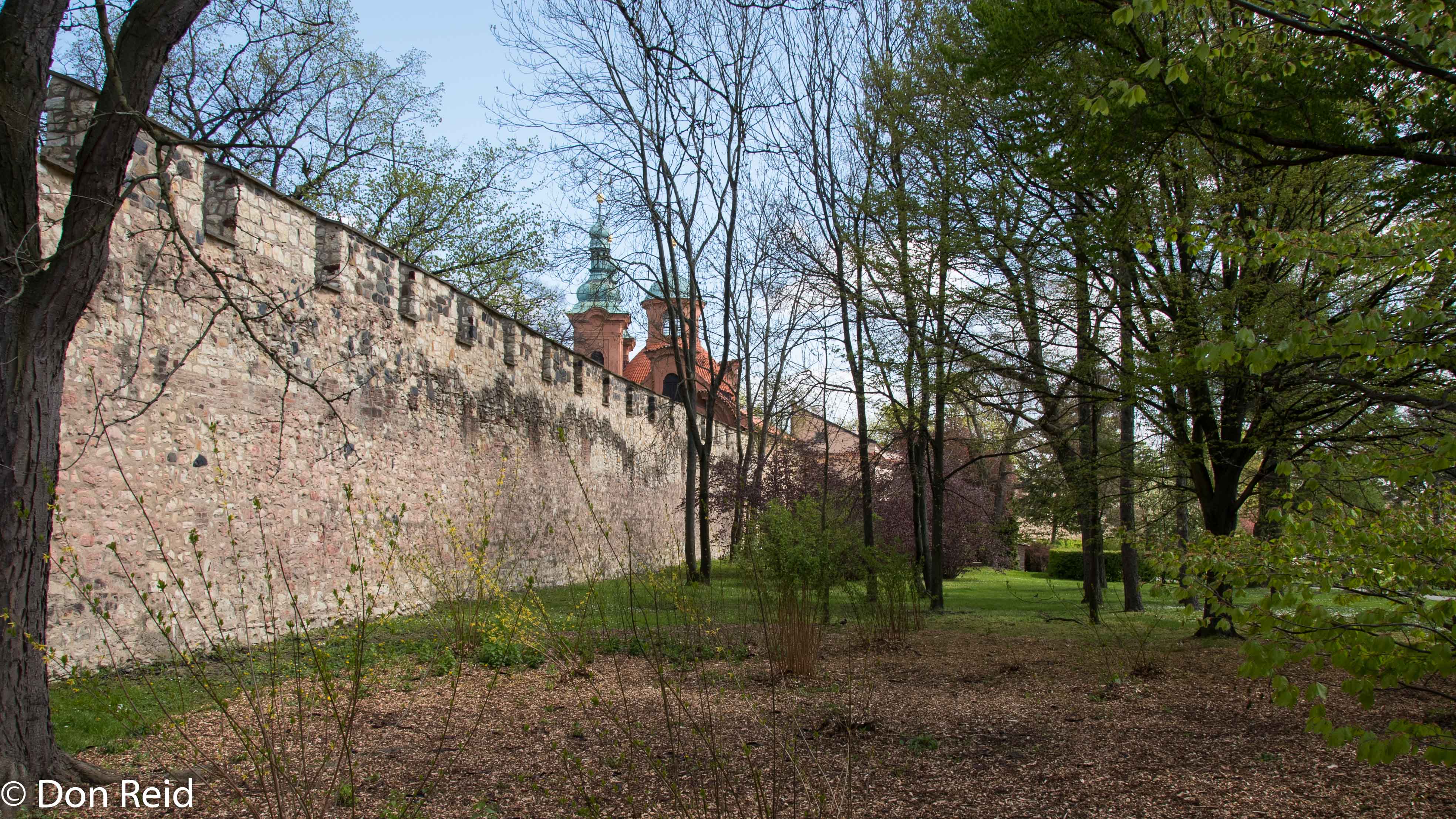
At the top we emerged from the station into an extensive park with wide lawns, gardens, many trees and shrubs and a curious mixture of structures here and there – an old Observatory, a House of Mirrors, a small church and a steel observation tower in the style of the Eiffel tower but on a much smaller scale.
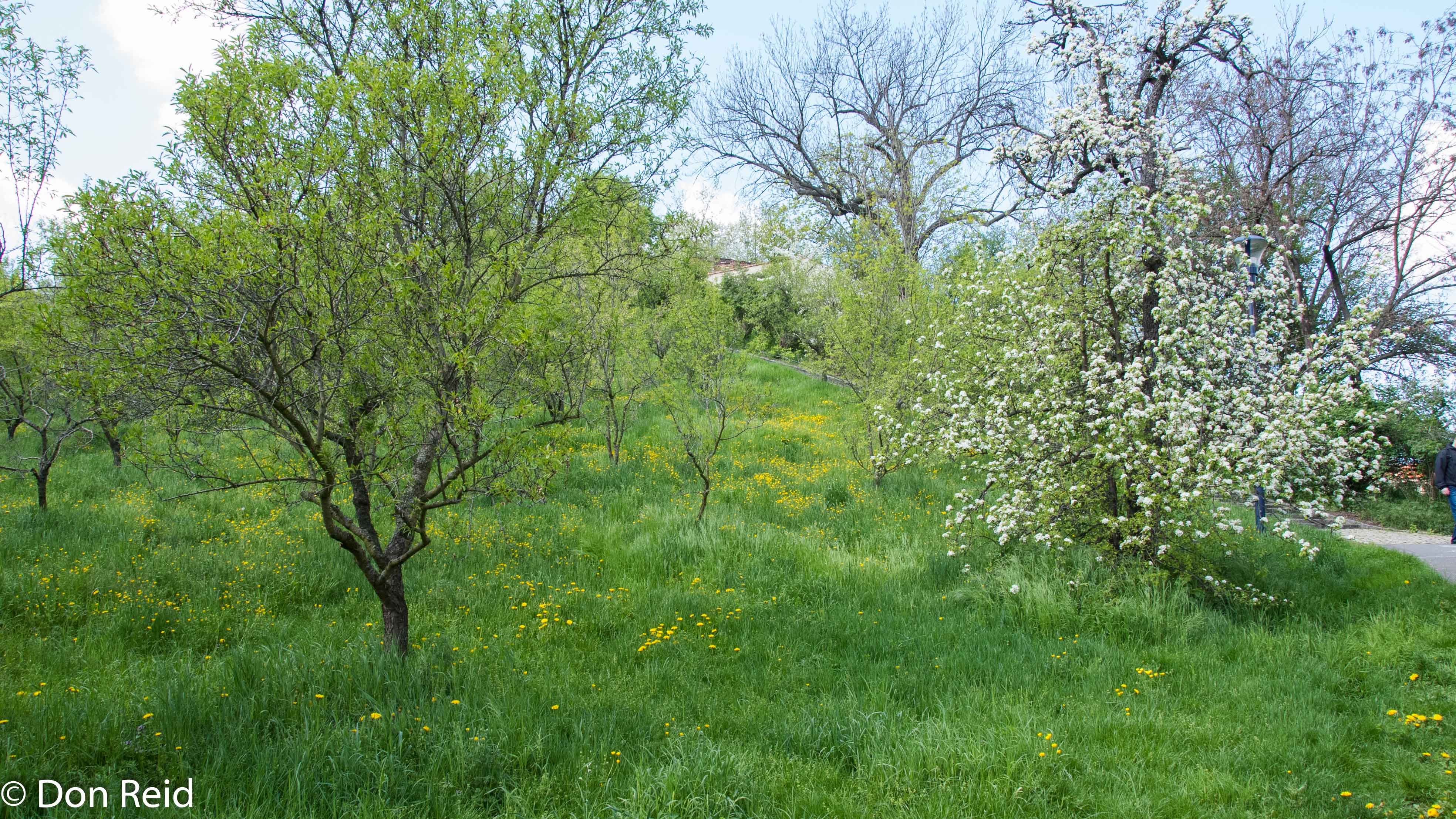
Petrin HillPetrin Hill – the ObservatoryPetrin Hill
A restaurant beckoned us for a hot chocolate and feeling suitably refreshed by this injection of goodness we set off to find the Palace. Pathways through the park were pleasantly shady and birdsong accompanied us as we meandered along, creating such a relaxed feeling that we may not have fully concentrated on where we were heading (mistake!).
Branches in the pathway required a quick decision as to which would be the shortest route to the Palace, but without signposts we knew we were guessing, but were nevertheless confident that we would find the right path eventually.
Petrin HillPetrin HillPetrin Hill
Downhill all the way
It soon became obvious we were on the wrong route, but by this time it was already too late to turn back as we had descended part of the hill and we found ourselves having to negotiate ever steepening downward paths and hundreds of steps – not good news for our rather aged knees. Realising that we would have to see it through, we negotiated one set of steps after another and just to prove there’s no stopping a birder or his intrepid wife, we stopped every now and then to view the few birds that caught our eye.
Great TitCommon ChiffchaffCommon ChaffinchWood Pigeon
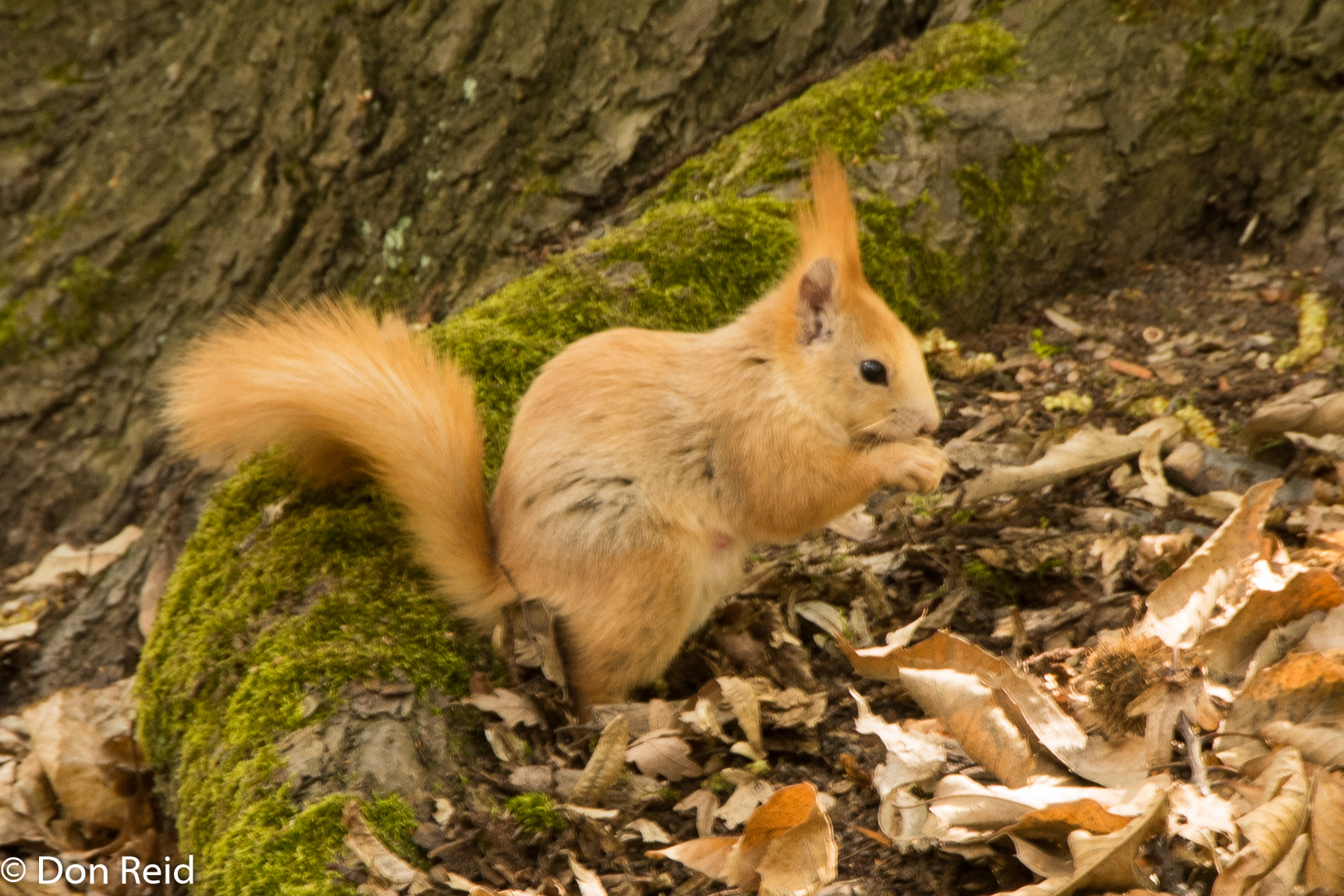
In the depths of one wooded area a cute squirrel with furry ears was an equally pleasant surprise.
Petrin HillPetrin Hill – Eurasian Red Squirrel (in winter coat)
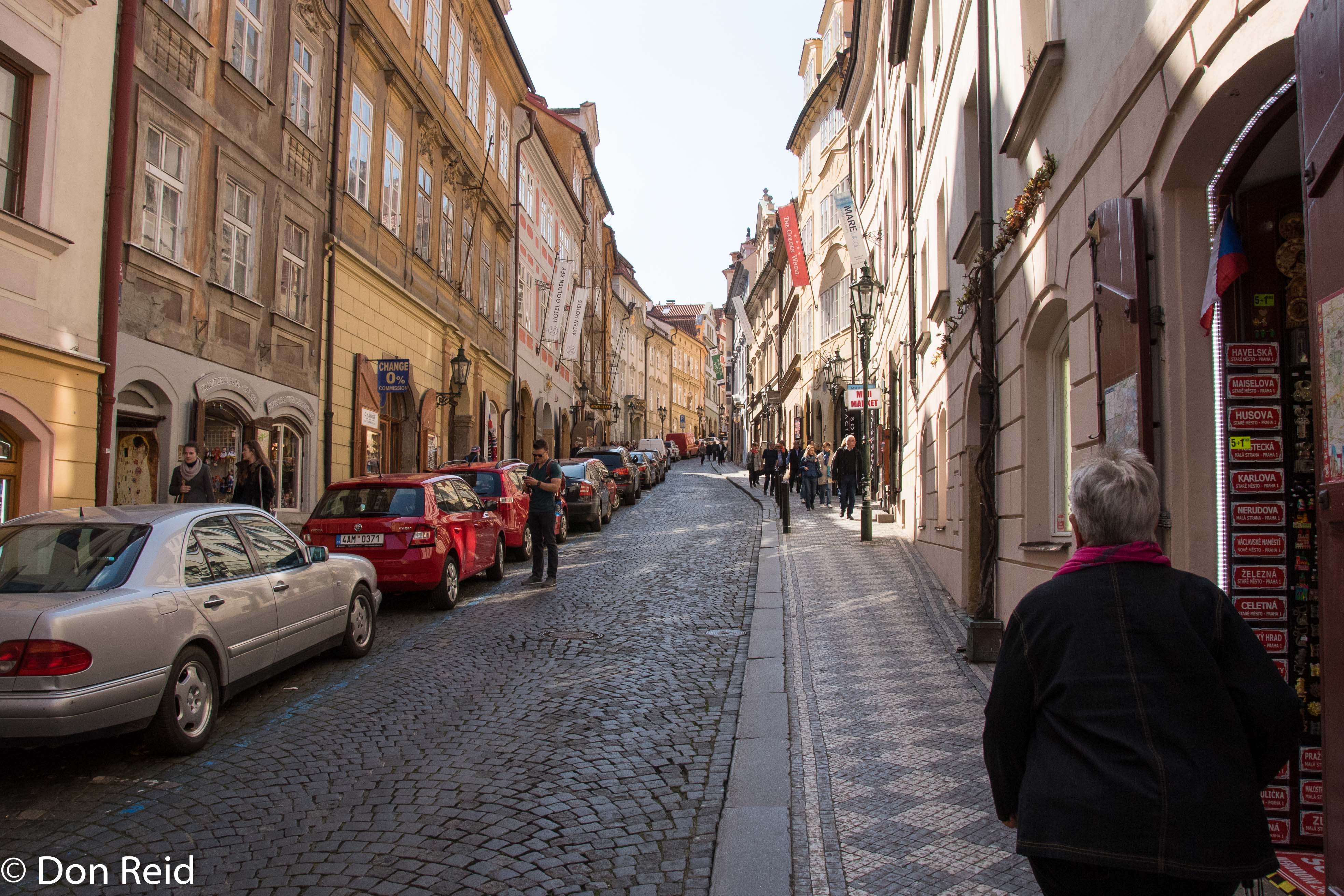
By the time we got to the bottom we were virtually back at the lower station of the funicular, still in good spirits but decidedly weary. Not knowing how to get to the castle, we headed in the direction we thought it was – fortune guided us past a small restaurant called U Svatého Václava where we took sustenance in the form of Goulash soup, which perked us up no end and off we went again. Just around the next corner we asked directions of a friendly Prague-ite and were glad to hear the palace was “oh, about 7 minutes walk up that hill”, pointing to an ominously steep-looking, winding, narrow street with no visible end.
The long walk to the castle
And up again
Well, Bruce Fordyce (famous South African marathon athlete) in his prime would have done it in that time, but for us it was a long trek on our already tired legs and uphill all the way. We only just made it to the top with very little left in our tanks.
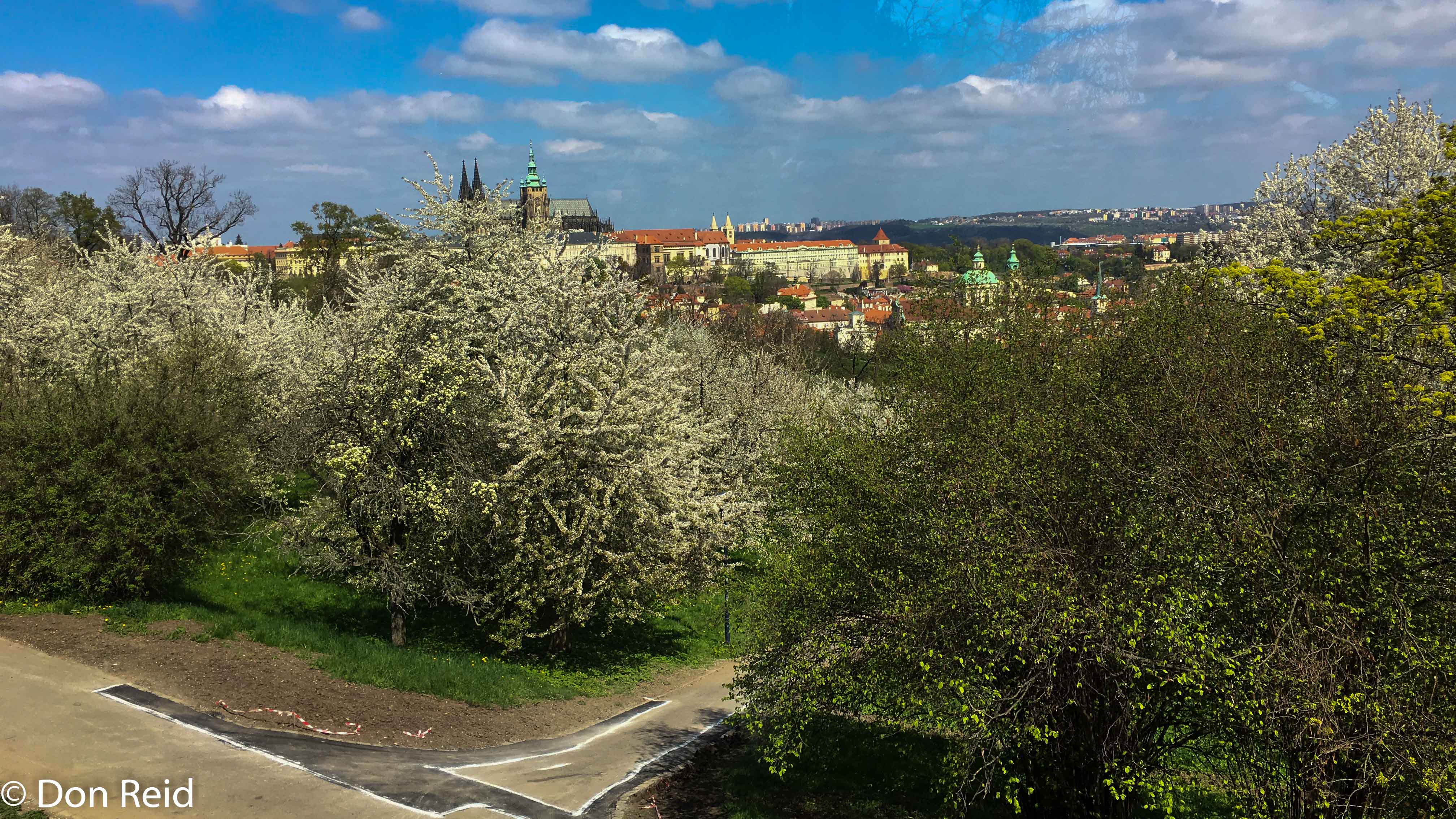
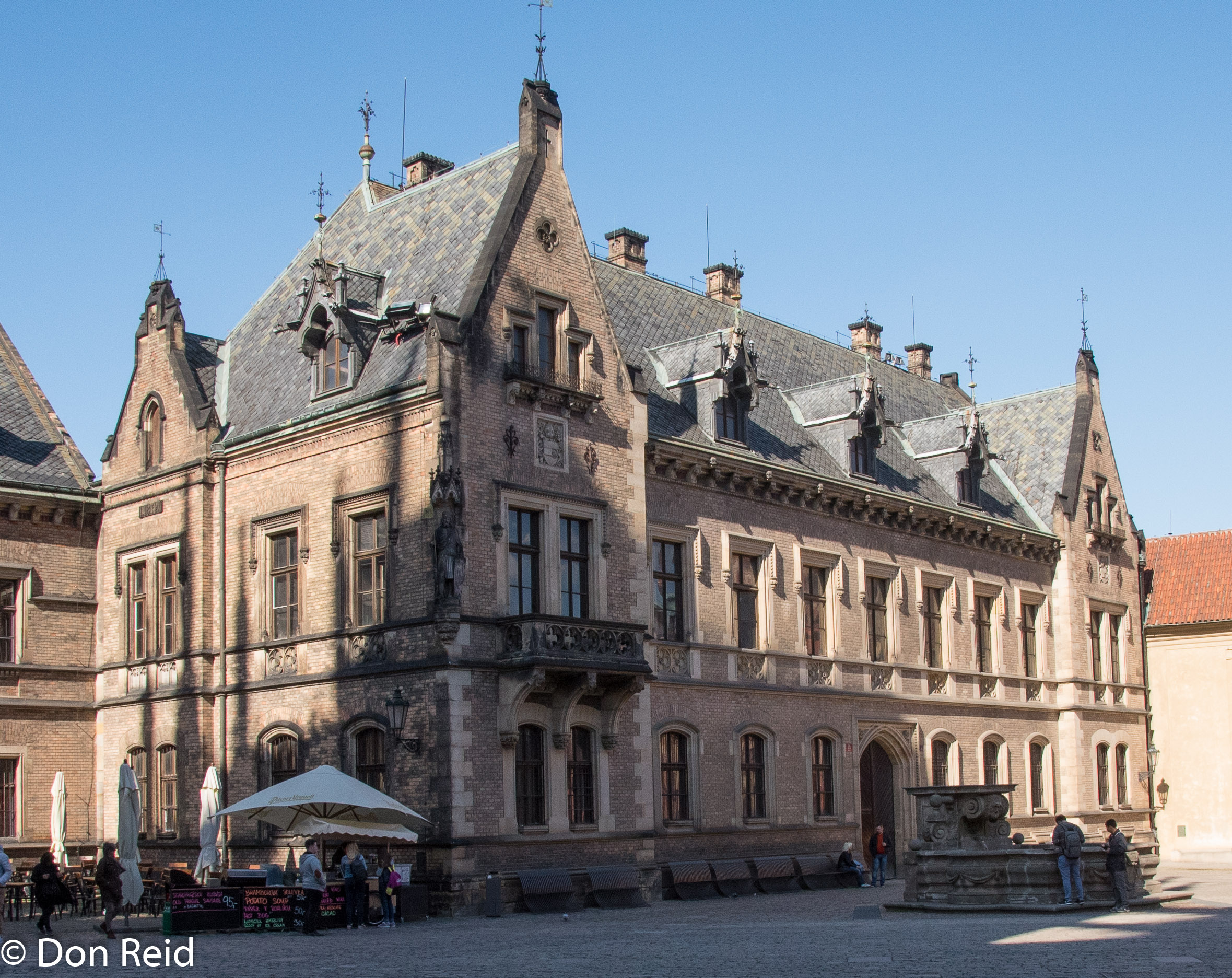
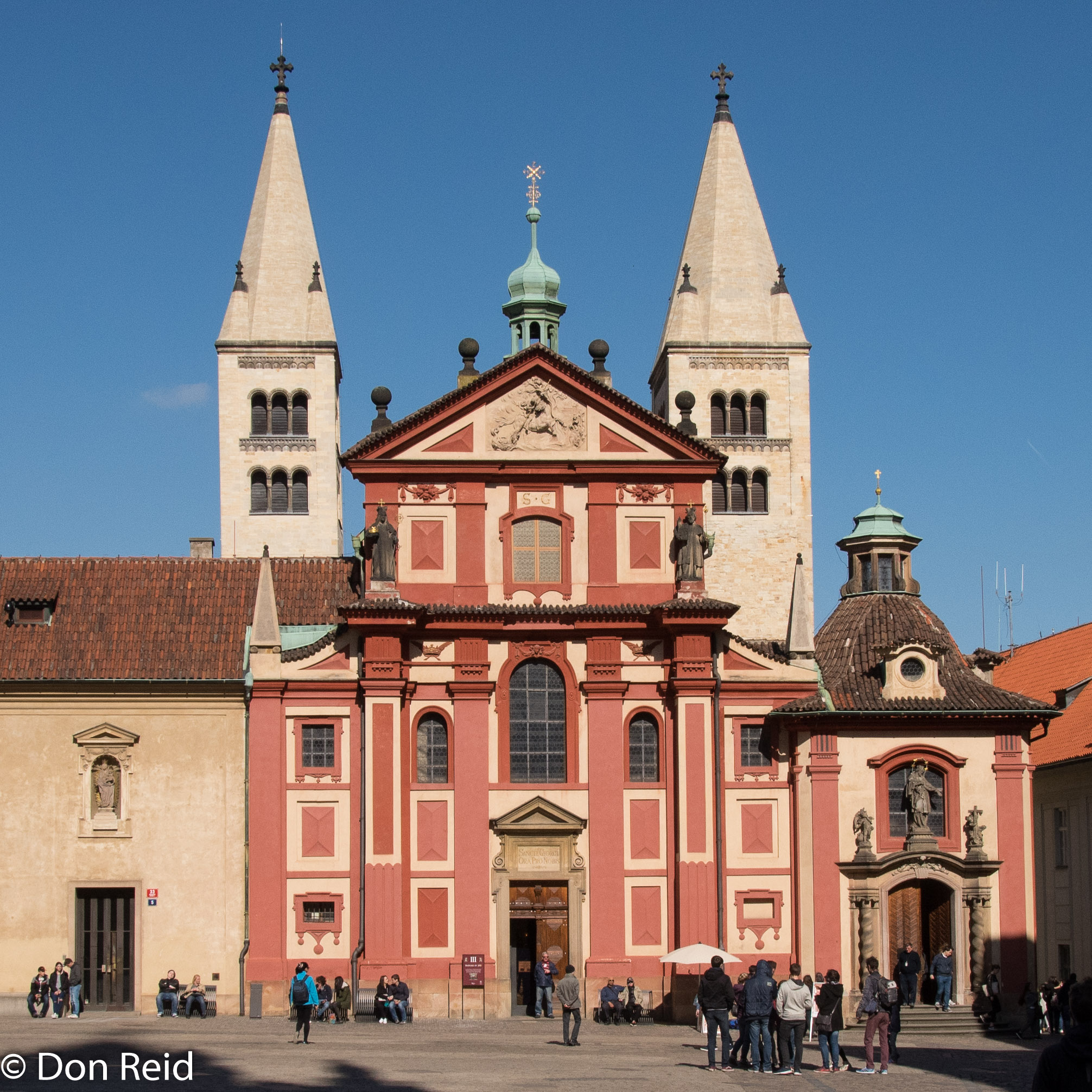
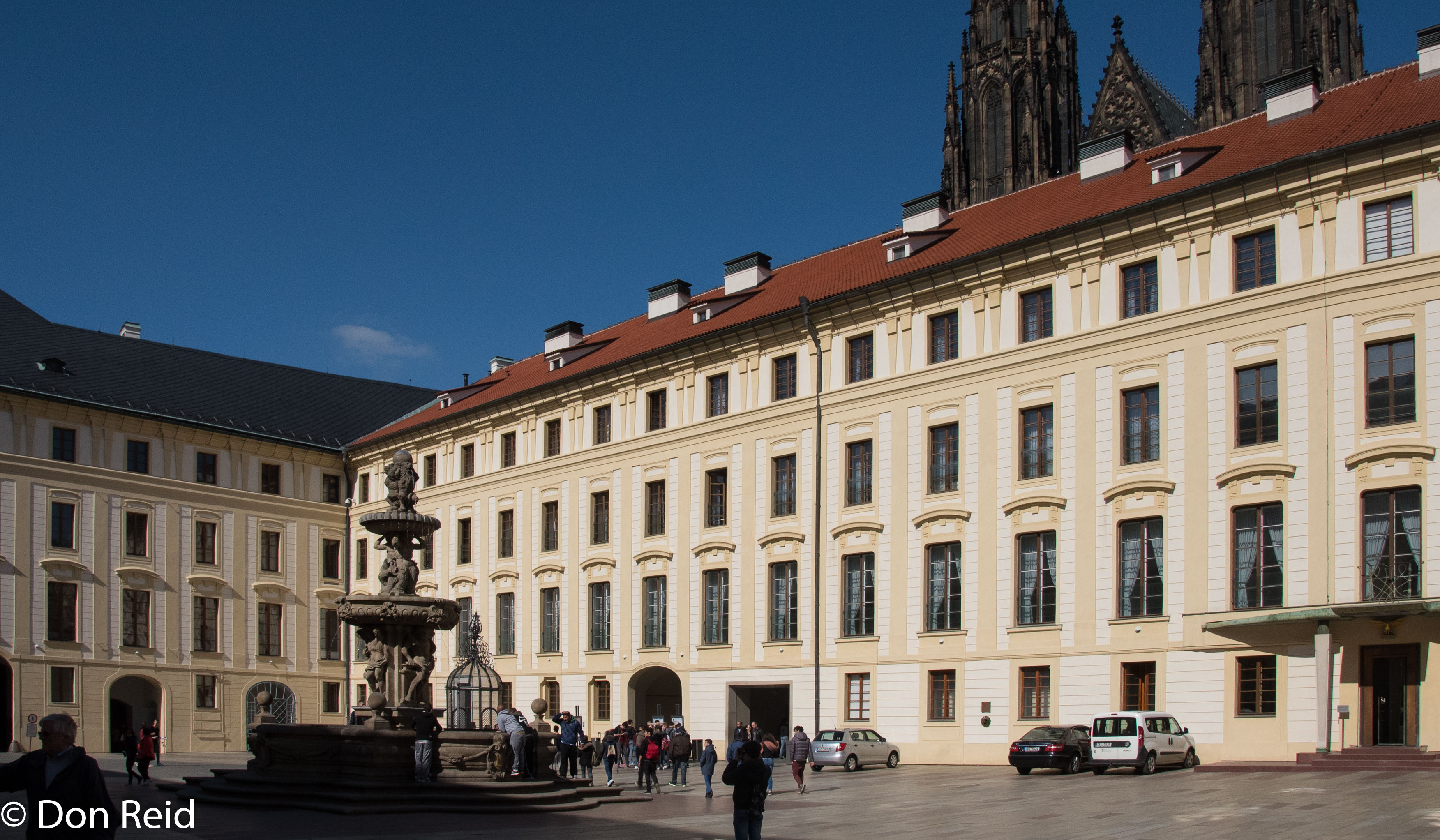
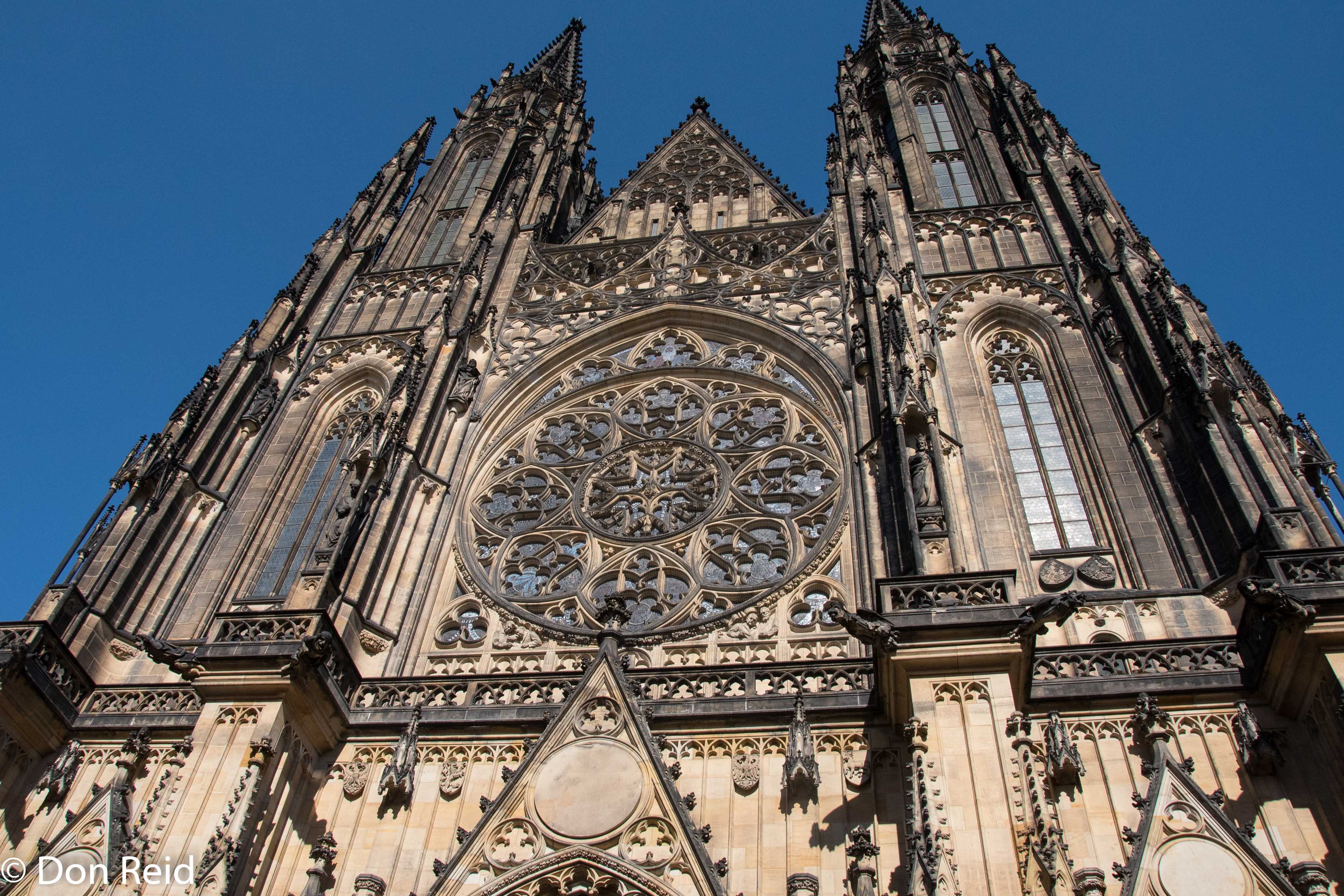
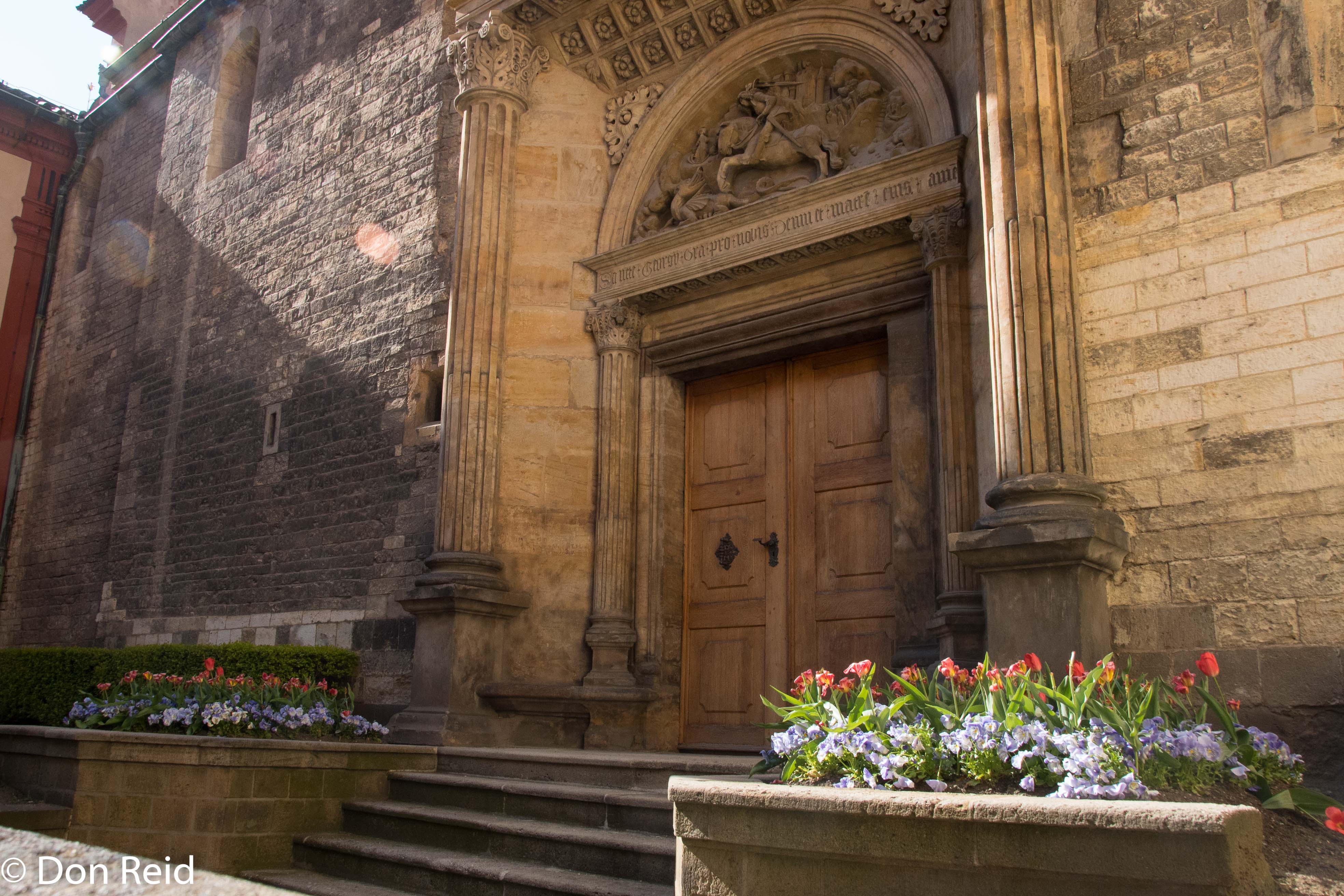
What we found after this strenuous walk was a large complex of various buildings rather than one identifiable “Palace”. The complex was handsomely designed, enclosing halls, offices, stables, a lane of residences, extensive gardens and the impressive St Vitus cathedral. However the combination of tired legs and a rather exorbitant entry fee put us off going inside the cathedral and instead we were content with a slow amble around the palace precinct.
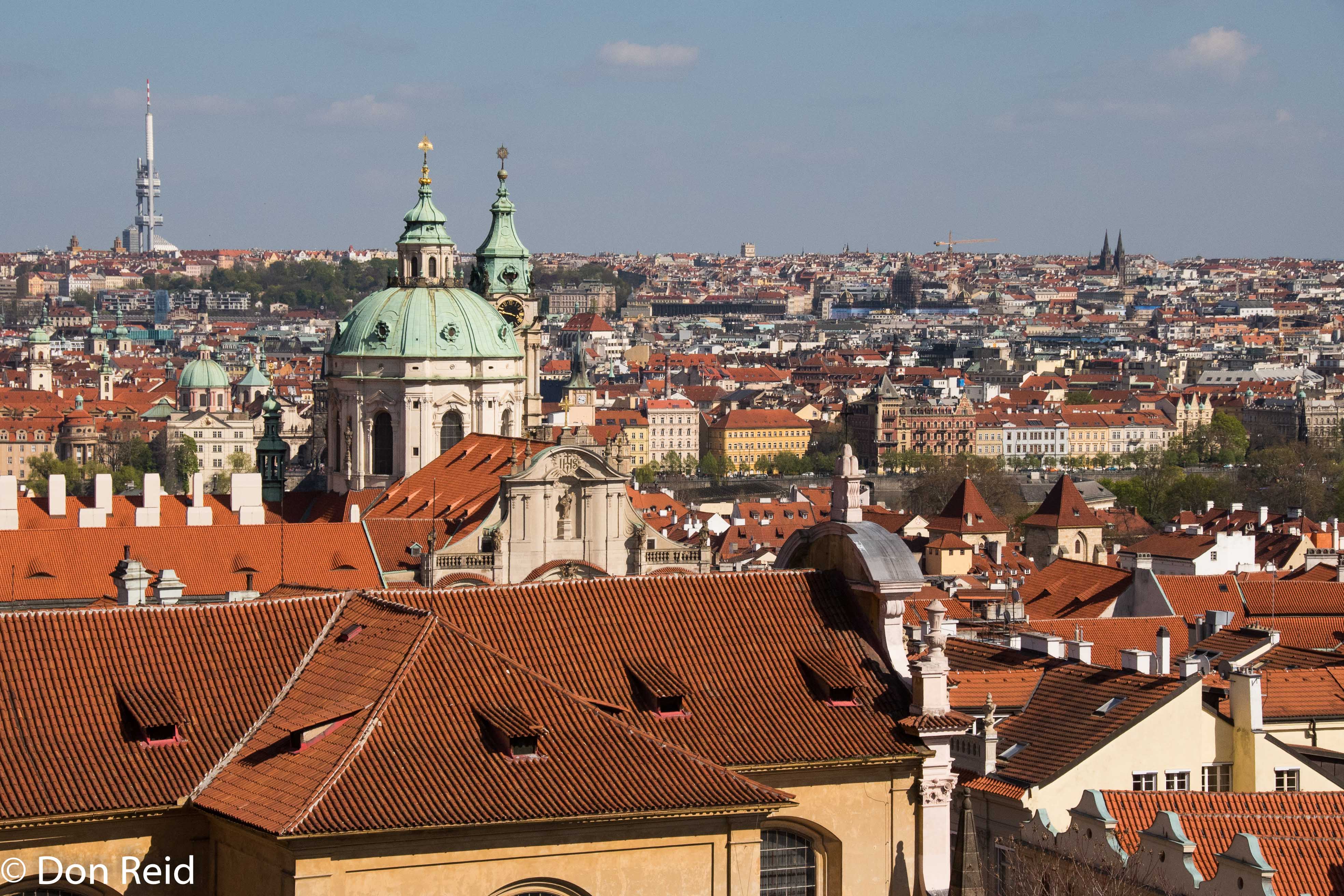
Prague Castle – St George’s SquarePrague Castle – St George’s BasilicaPrague Castle – the CourtyardPrague view from the Castle
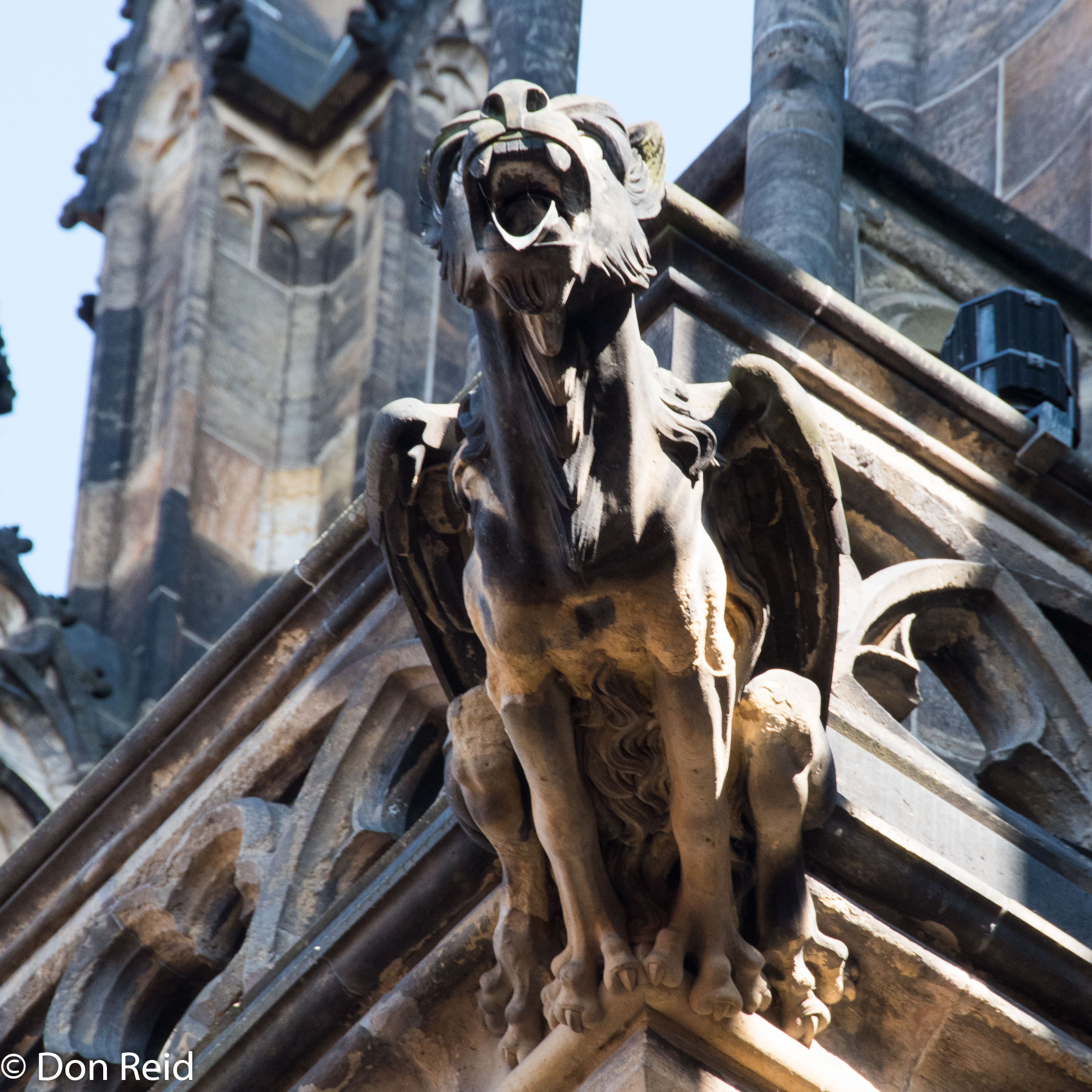
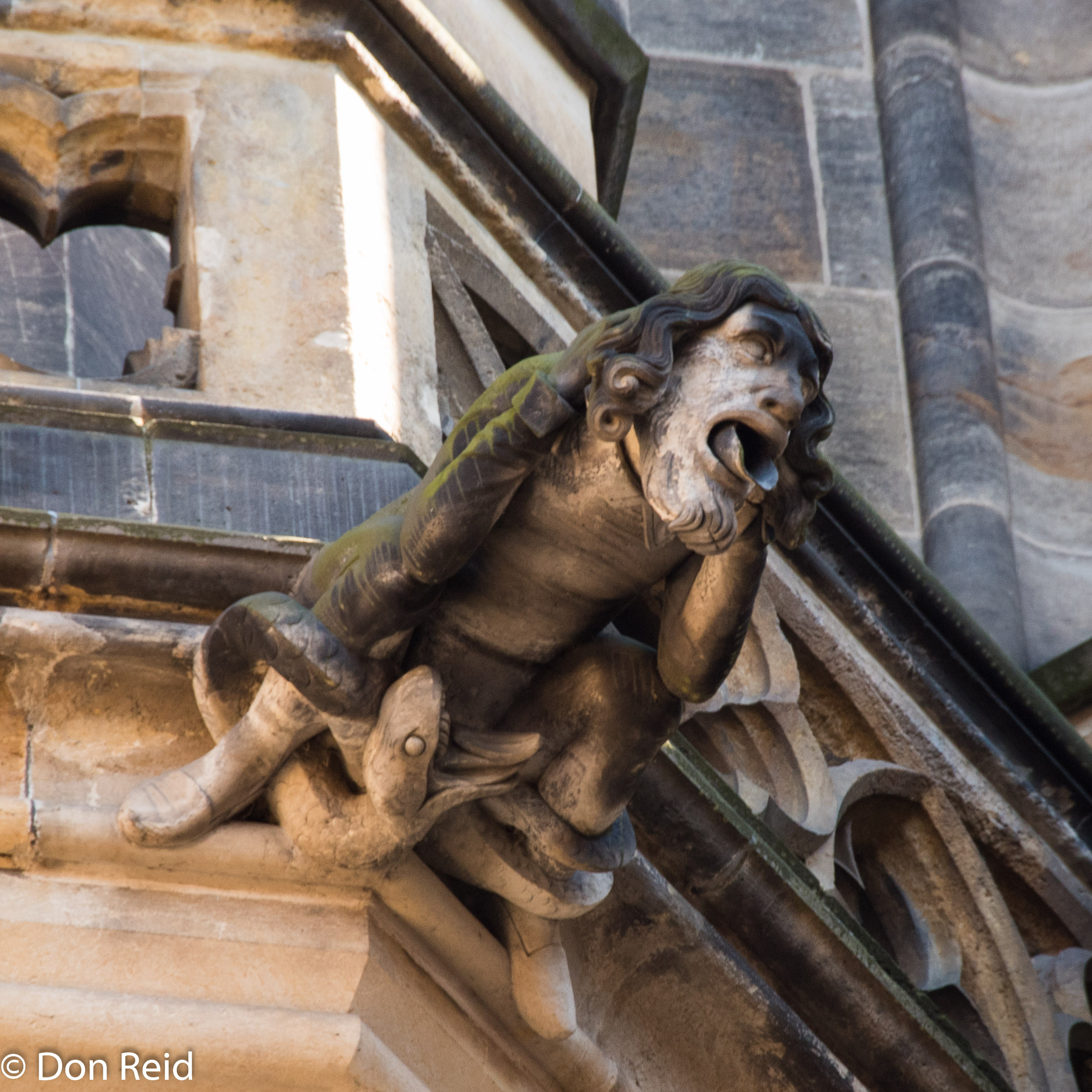
The curious thing I find about some ancient cathedrals, as with St Vitus, is the gargoyles (rainwater spouts) at all the corners featuring some strange figures often with really grotesque forms – they just seem so out-of-place on a building supposedly designed to bring inner peace……. here are some examples of those found on St Vitus.
St Vitus Cathedral has an interesting history – the foundation stone was laid on the Hradčany Hill in 1344 at the behest of Charles IV, the future king of Bohemia and Holy Roman emperor. The architect Petr Parléř gave the cathedral its late Gothic style, but construction was not completed until 1929.The martyred Prince Wenceslas I (the “Good King Wenceslas” of the Christmas carol) was interred in 932 in the Church of St. Vitus, predecessor to the cathedral dedicated to the same saint
Prague Castle – St Vitus CathedralPrague Castle – St Vitus CathedralPrague Castle – St Vitus CathedralPrague Castle – St Vitus Cathedral
Eventually, after treating ourselves to a take-away coffee which we enjoyed on a nearby bench like true tourists, we found our way to the tram stop where we soon caught the right trams to within a short walking distance of the Old Town Square and the comfort of our hotel for a welcome rest.
So what happened to the Charles Street bridge visit, I hear you ask? Well, we saw it from the tram, lined on both sides with tourists, and having seen and experienced so much else we weren’t too fussed about not actually standing on it and taking a selfie like a zillion other people.
Taking to the streets
Dinner was a street affair, at one of the many food stalls along one side of the square – a Czech sausage (klobása – much like a frankfurter) with a side of a potato and sauerkraut mixture.
The latter was far too much for us, mainly due to not understanding what quantity we were ordering, but we noticed a “gentleman of the road” standing nearby with his dog and he was more than happy to take our leftovers. Funny how sometimes you feel things happen for a reason, even something as simple as ordering too much food – end result was we fed a hungry soul.
Our visit to Prague was over and the Danube trip lay ahead – we were happy that we had decided to spend the time to experience this handsome and interesting city.
For no other reason than to utilise our expiring RCI points, we booked a long weekend getaway from 9th to 12 th February this year at Champagne Valley Resort near Winterton in the area known as the Central Drakensberg.
Friday
We departed from home in Pretoria at around 9.30 am, late enough to avoid the peak hour traffic as we made our way through Johannesburg’s eastern side and headed south on the N3 towards Harrismith, where we had arranged to meet up with Koos and Rianda for a “padkos” brunch of hard-boiled eggs, frikadels (courtesy of Woolies) and jam sandwiches. Padkos is long-standing South African tradition, translating literally to “food for the road” and tastes even better when you stop at one of the large roadside service centres where there are umpteen choices of take-away and sit-down fast food restaurants – a nose-thumbing at conventional practices. (Just to show we’re flexible we stopped at the same spot for a Wimpy breakfast on the way back)
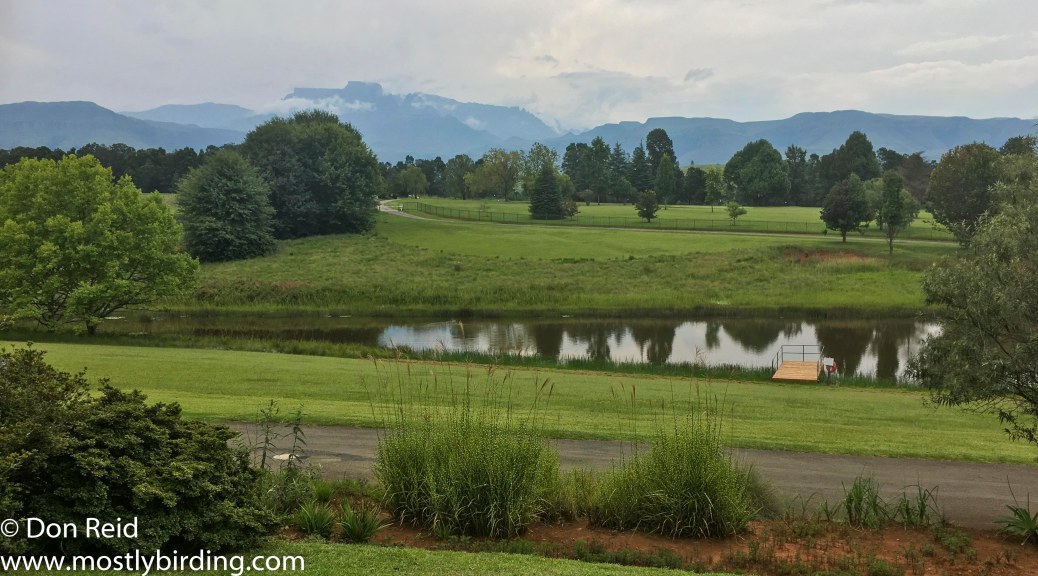
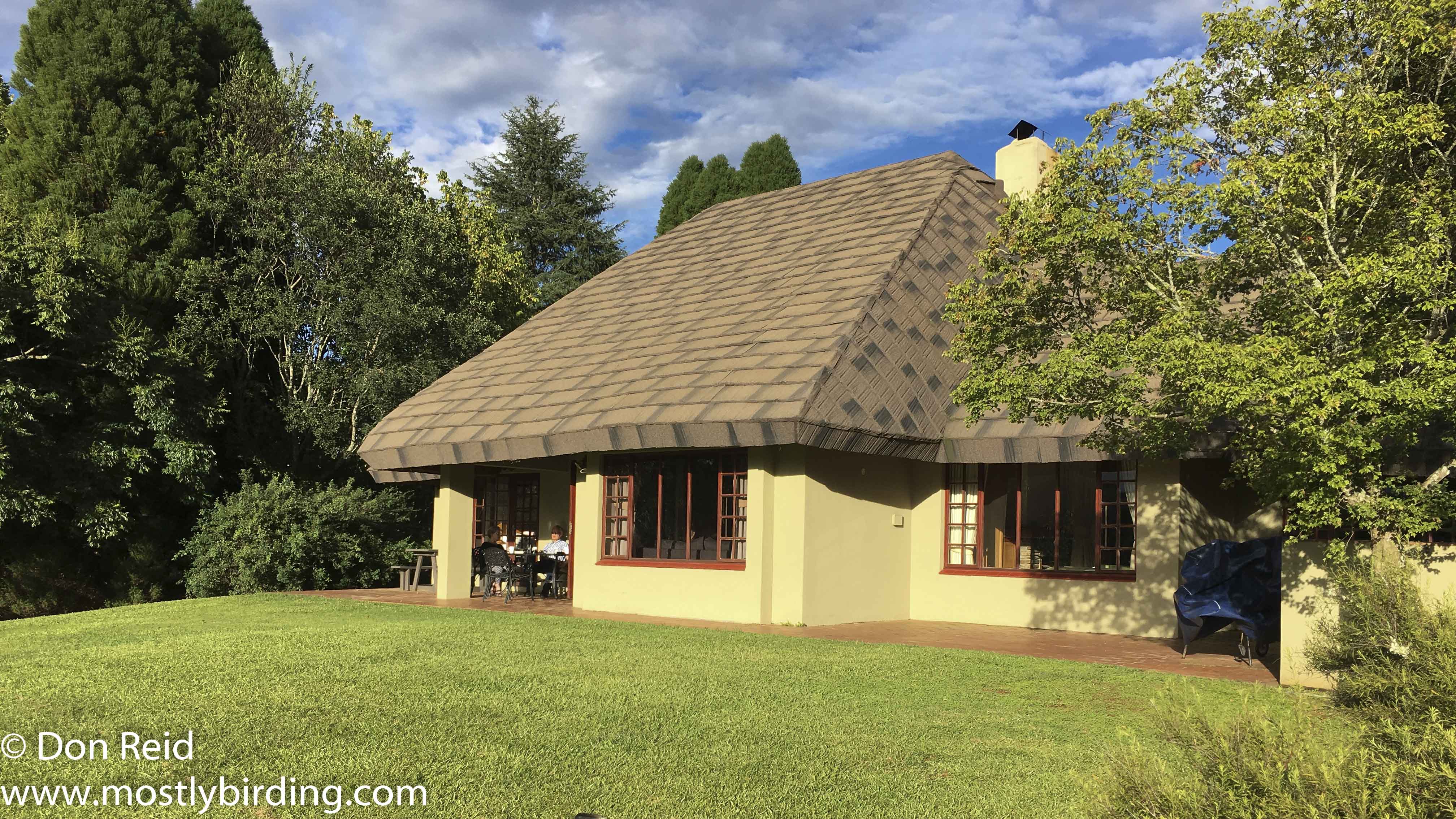
We reached Champagne Valley by 3.30 pm after a fairly relaxed drive from Harrismith, the scenery progressively becoming greener and prettier as we got closer to the central Berg area. On checking in we were allocated a chalet overlooking the dam with pleasing views of the Drakensberg range in the background and we quickly settled in. I had a refreshing swim in the crystal clear pool then joined the others on the stoep for beverages as we all spotted a few birds to get our list going in true keen birder/atlaser fashion.
Champagne Valley chalet
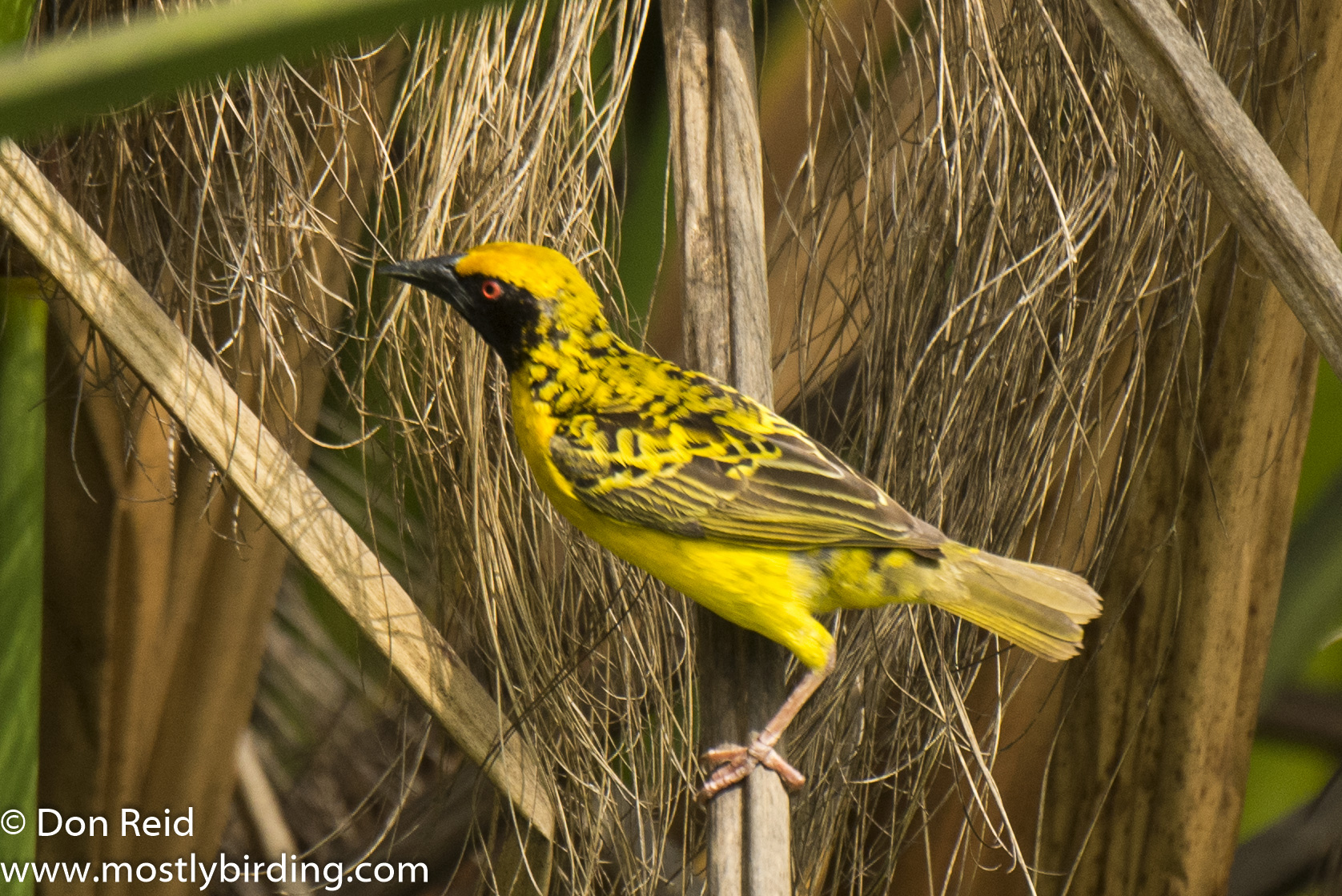
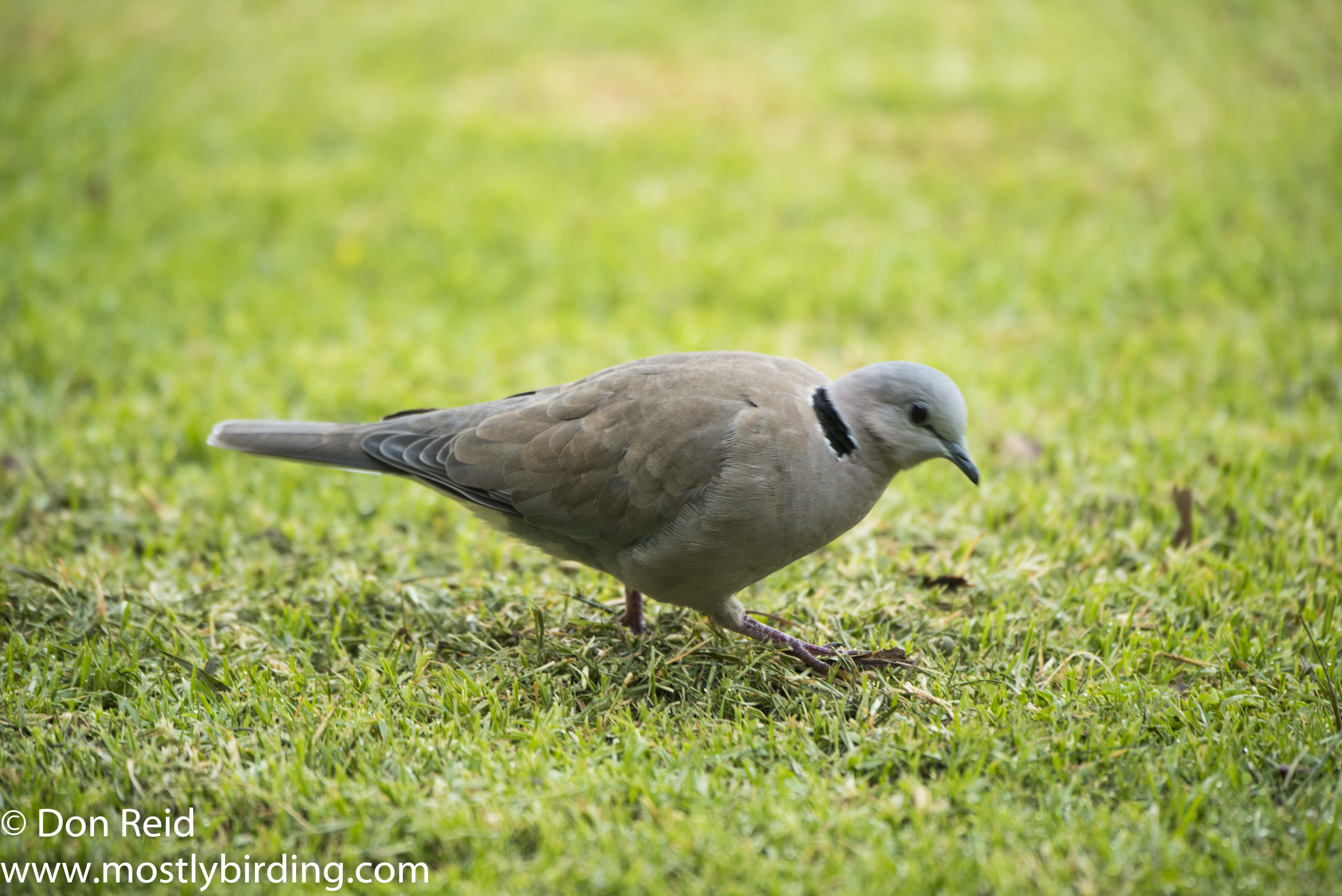
By sundown there were 18 species on my list including a Black-headed Oriole calling sweetly, Cape and Village Weavers busying themselves on the lawns, as well as Common Moorhen, Red-knobbed Coot and White-faced Duck on the dam.
Village Weaver (Male)Cape Turtle-Dove
Saturday
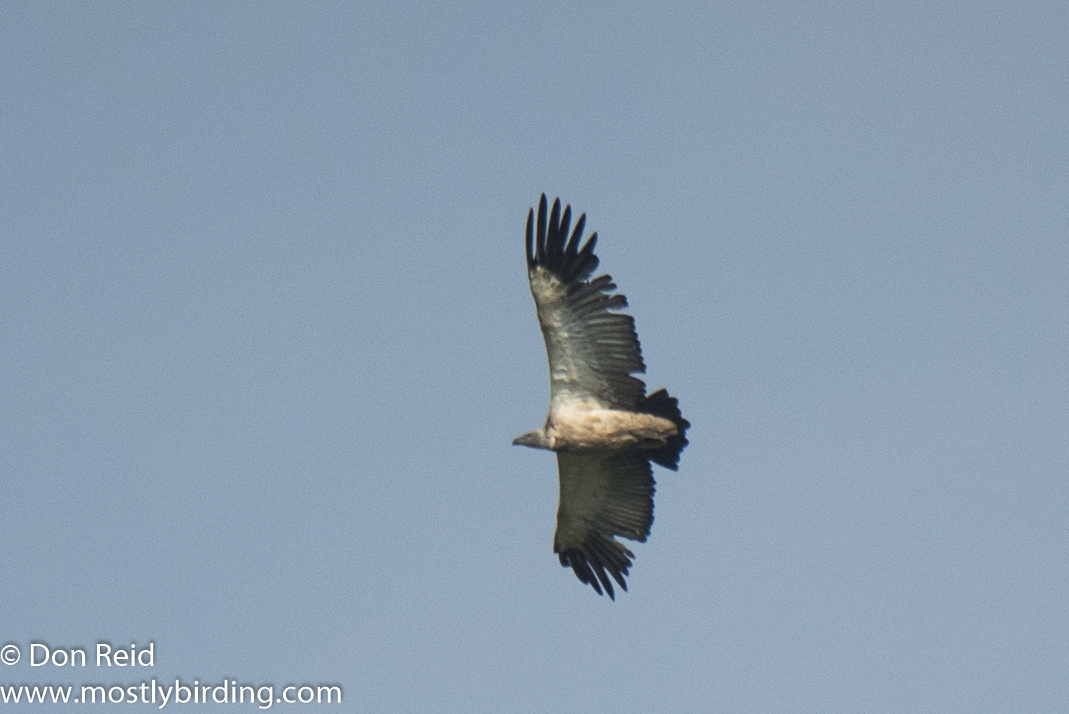
After a late rise (after all we were there to relax and are of the age where a crack of dawn start is not always first choice) we were back on the stoep in pleasant but humid weather to savour our first coffee along with Gerda’s health rusks. Before long we were entertained by no less than 3 different raptors – Cape Vulture at high altitude soaring majestically in wide circles, a Yellow-billed Kite cruising just above the tree tops delicately adjusting its flight path with twists of its distinctive broad V-shaped tail and a Bearded Vulture so high that I could only ID it from a magnified photo. They were joined by a group of White-necked Ravens calling from aloft in their croaky fashion.
Cape Vulture
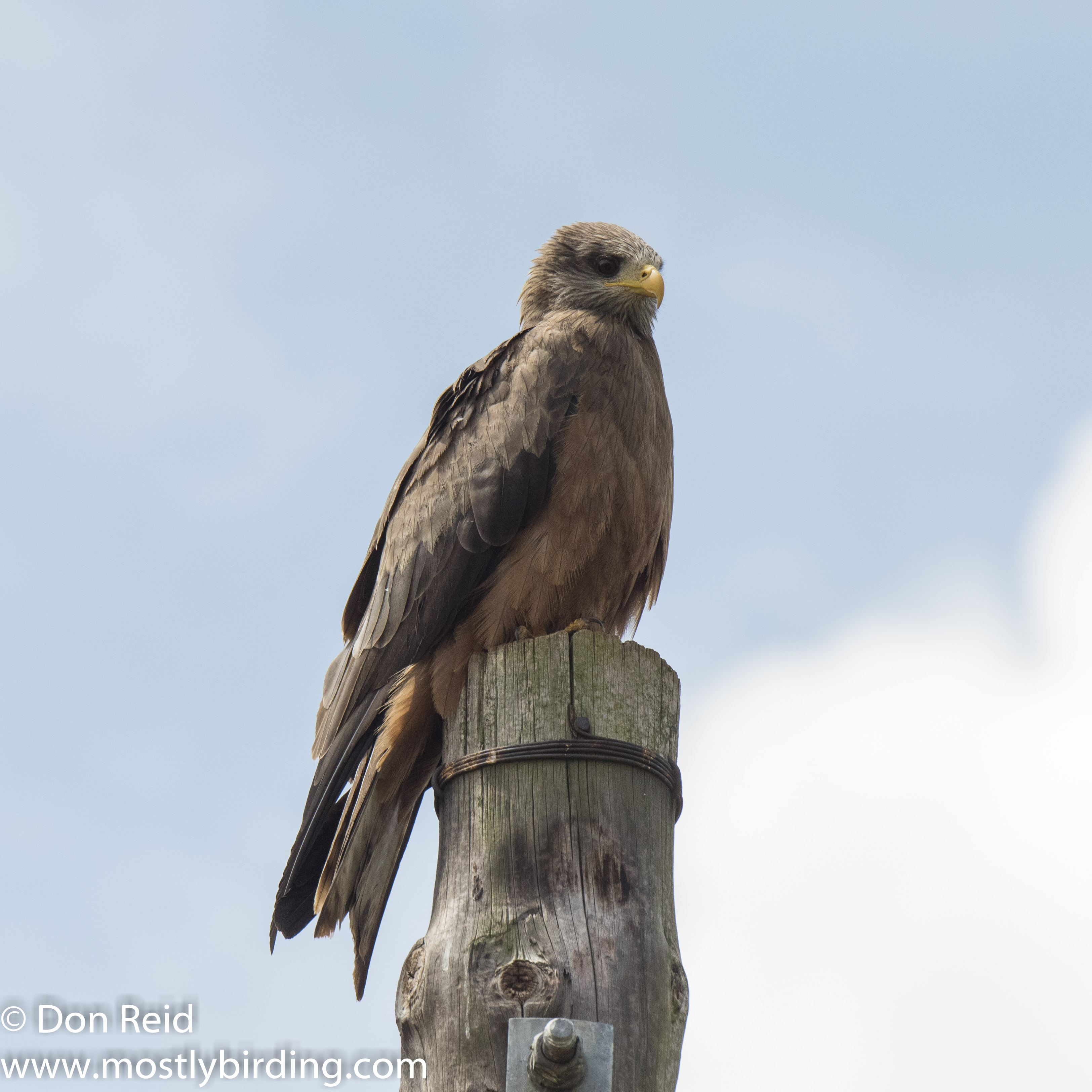
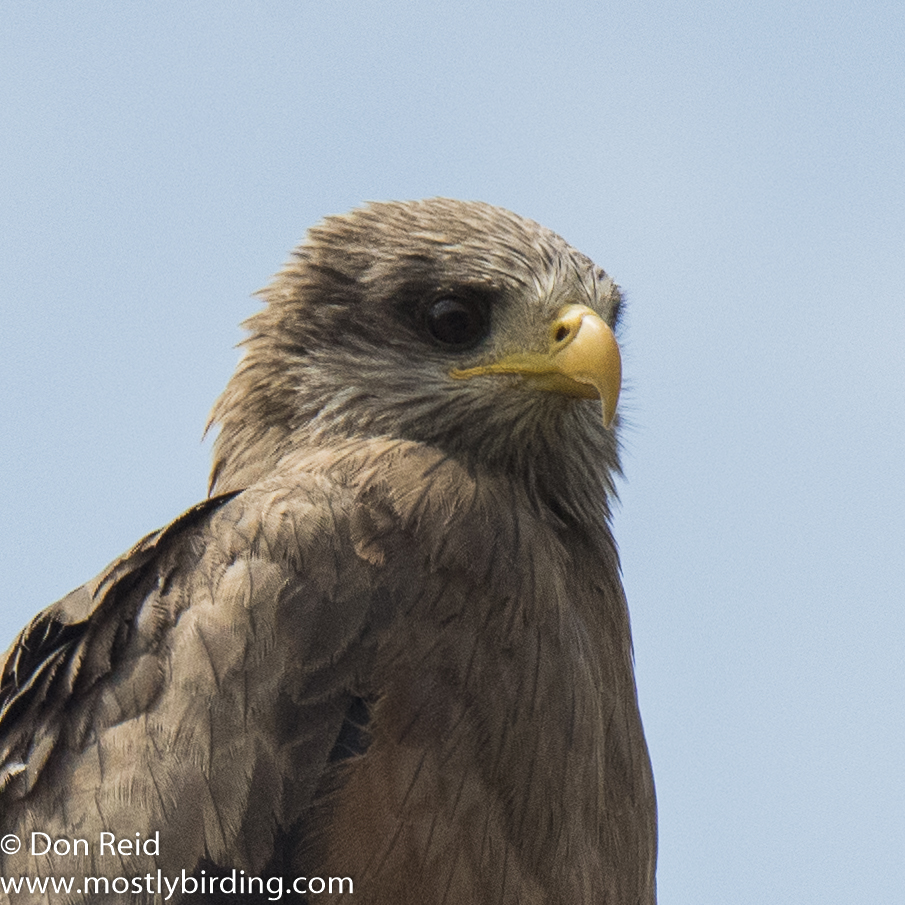
Yellow-billed Kites were a feature of the weekend as we came across them several times in different localities. What struck me when looking at the photos I had taken of one individual was its rather un-fierce look which I deduced was because of its dark eyes and fluffy feathers on the head, creating a look unlike most large raptors with their piercing eyes.
Yellow-billed KiteClose-up of the Yellow-billed Kite – a less than fierce look unlike most raptors
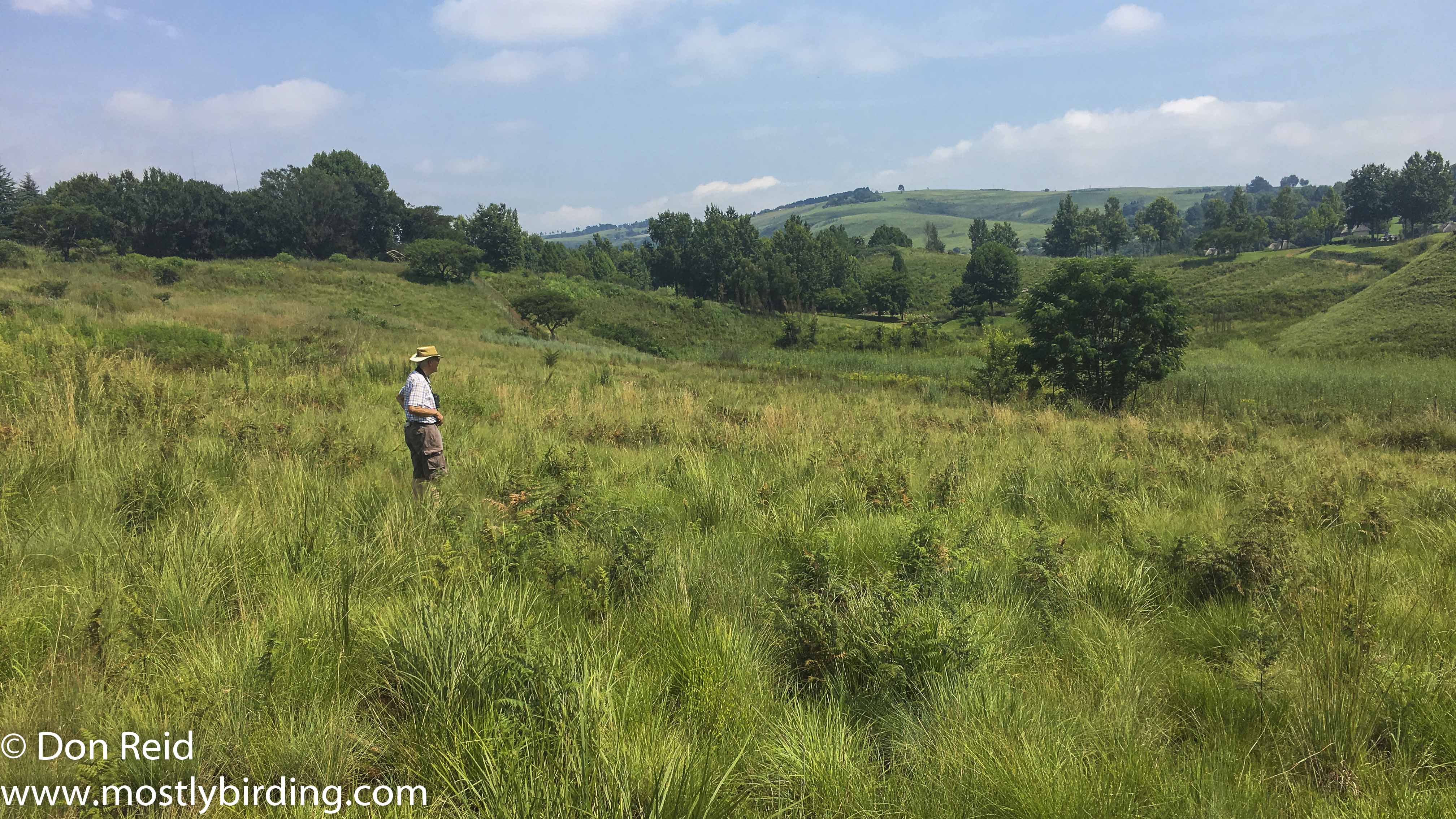
Mid-morning Koos and I braved the humid weather for a walk around the resort, starting with a walk through the grassland area along a mown path then wading through knee-high grass pods down the gentle slope until we found another path to take us back to the resort proper.
Champagne Valley grassland
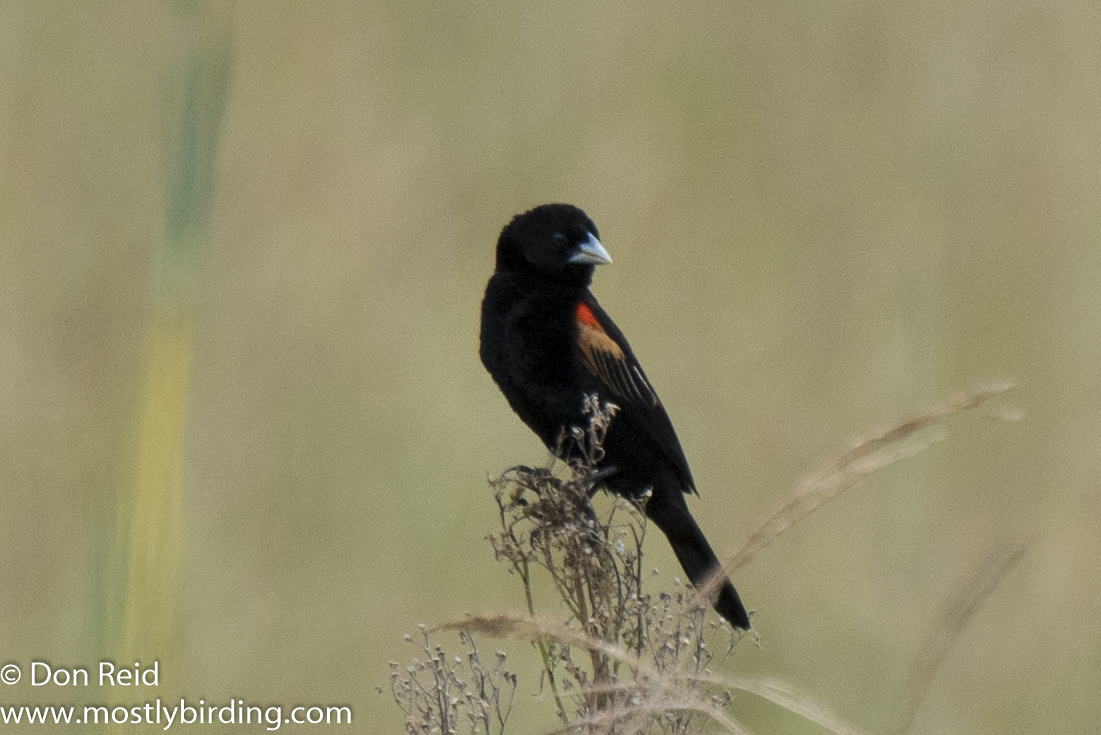
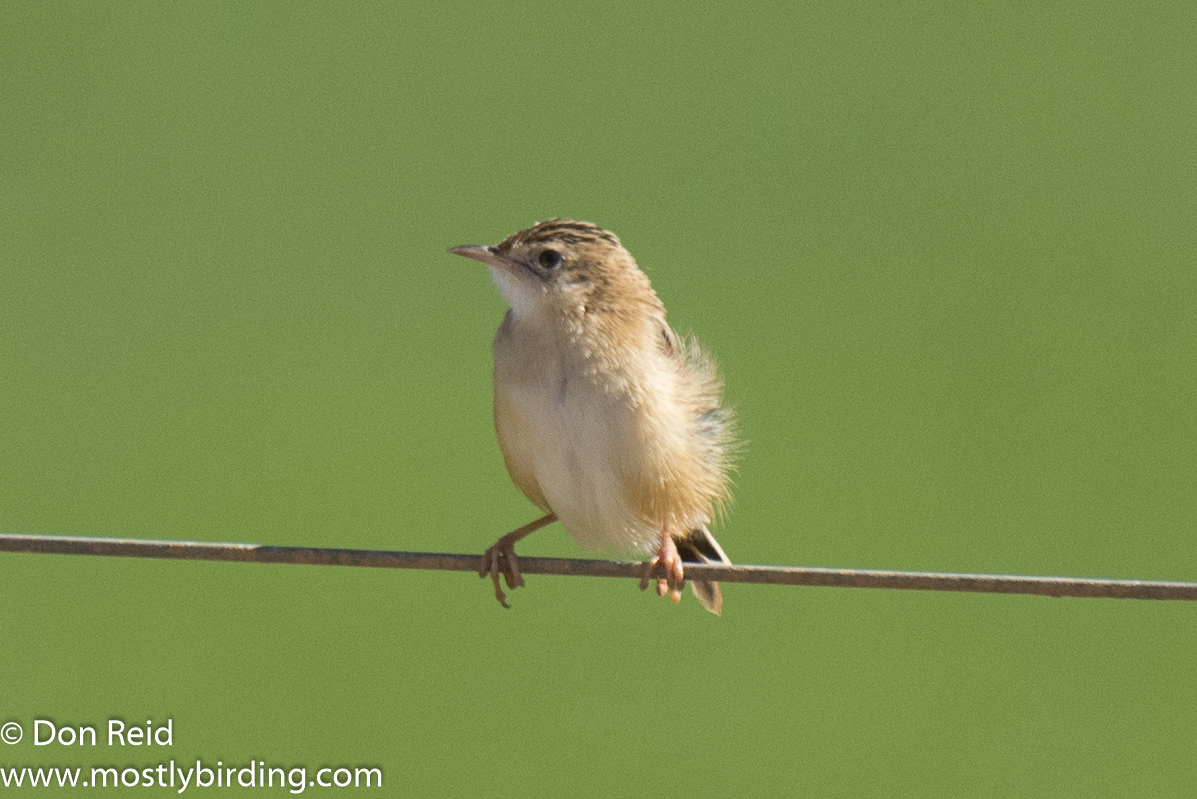
Grassland species such as Fan-tailed and Red-collared Widowbirds, Zitting Cisticola and Streaky-headed Seedeater were active and visible, while an unusual “chip-chu” call had us puzzled until we discovered an Amethyst Sunbird calling from a tree – not the call we are used to, so something new added to our birding knowledge.
Fan-tailed WidowbirdAmethyst Sunbird
A passing Martin caught my eye and the white rump said Common House-Martin – one of those birds seen infrequently, although we came across a few more in flocks of Swallows during the weekend.
By the time we got back to the chalet I was drenched in sweat from the humidity and mild exertion – a cold drink was most welcome and stoep-based birding became the order of the day.
Late afternoon we drove to Monk’s Cowl camp, stopping on the way to see if we could coax a Bush Blackcap to show itself, but to no avail. Nevertheless we had good sightings of Steppe Buzzards and Yellow-billed Kites, a Dusky Indigobird and a Black-backed Puffback with a Juvenile in tow.
Dusky IndigobirdBlack-backed Puffback (Juvenile)
Sunday
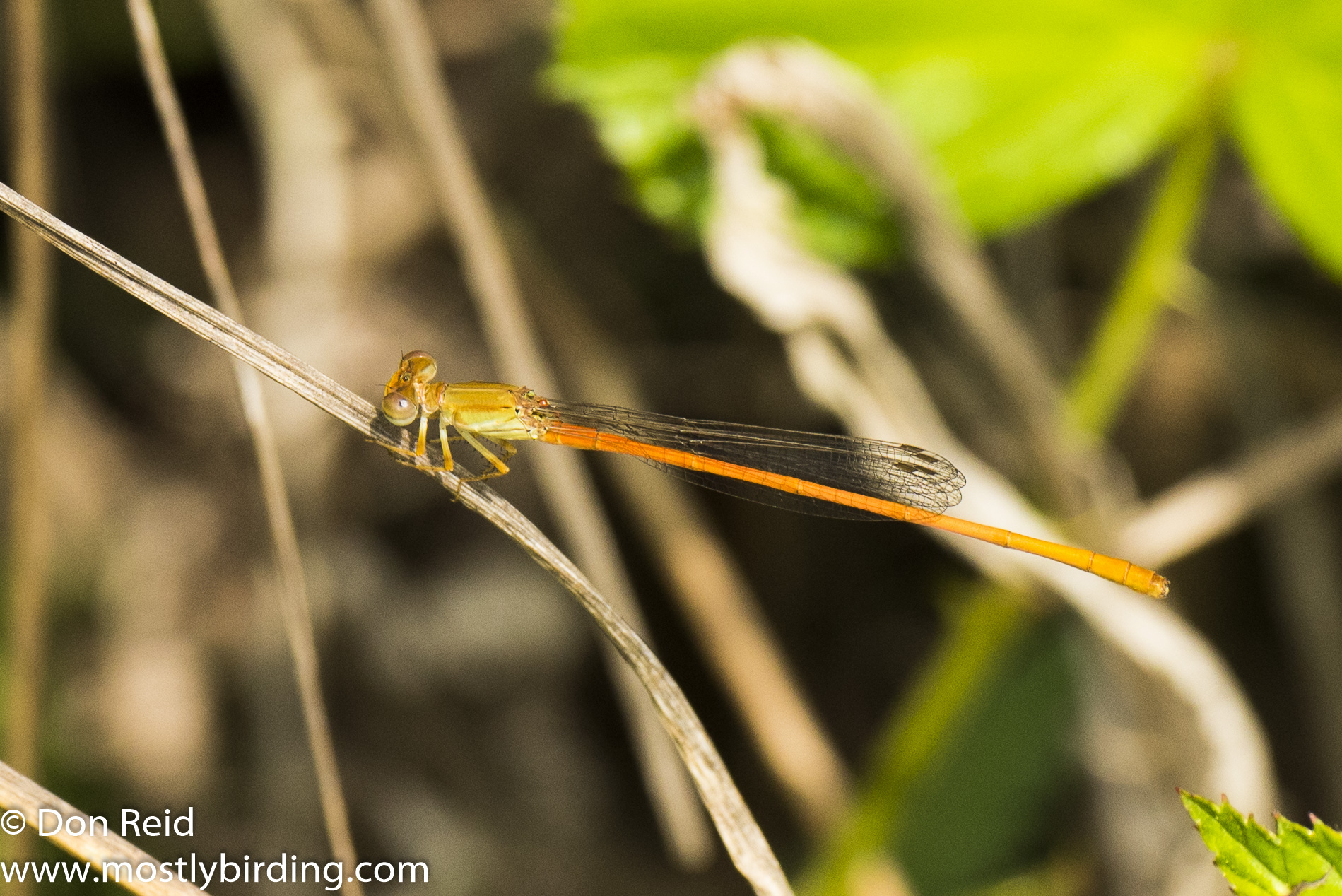
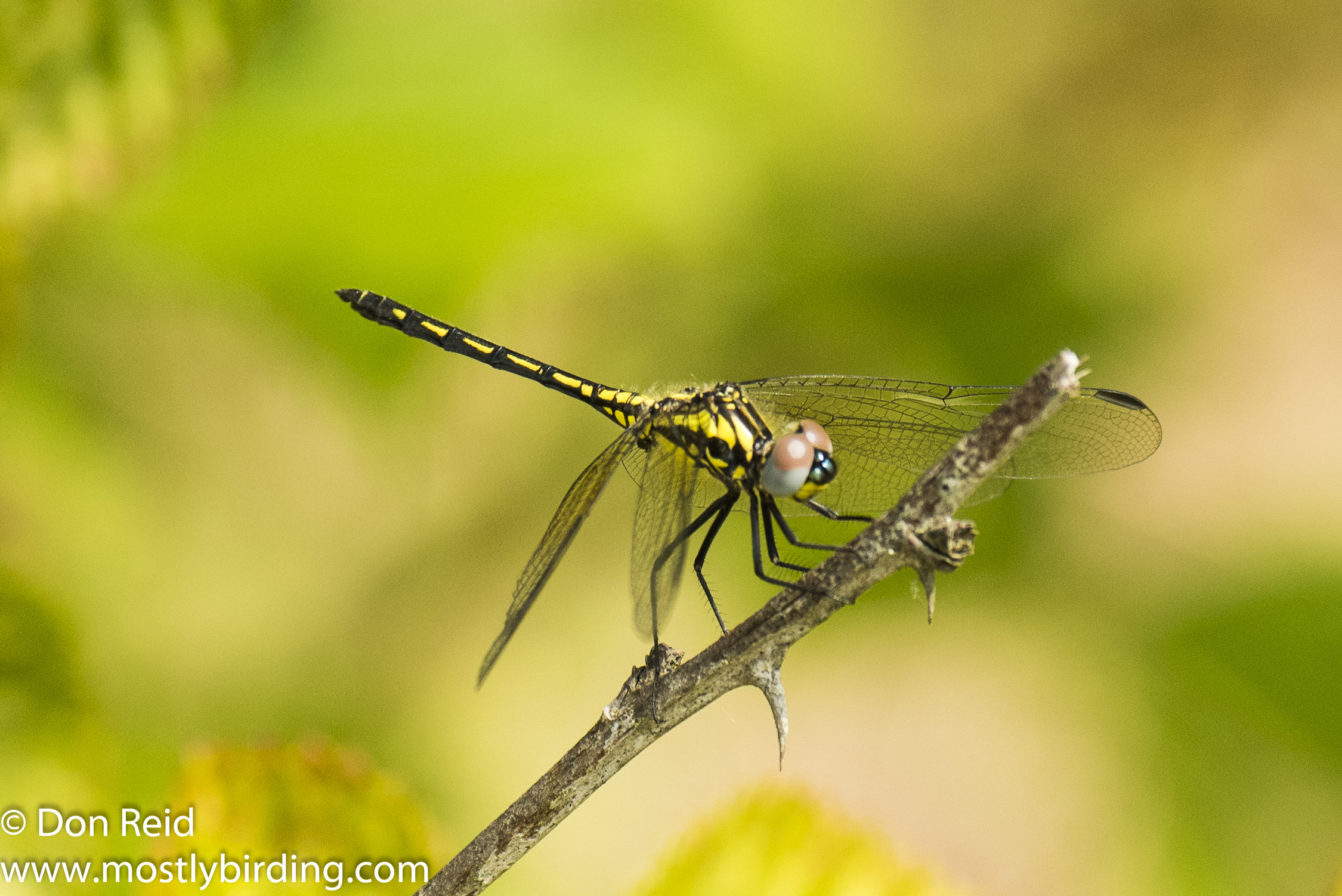
Another relaxed morning for me starting with a quiet walk along the edge of the dam where odonata (dragonflies and damselflies) were almost more numerous than the avifauna so I spent a pleasant hour or so chasing them down and taking a few photos.
DragonflyDragonfly
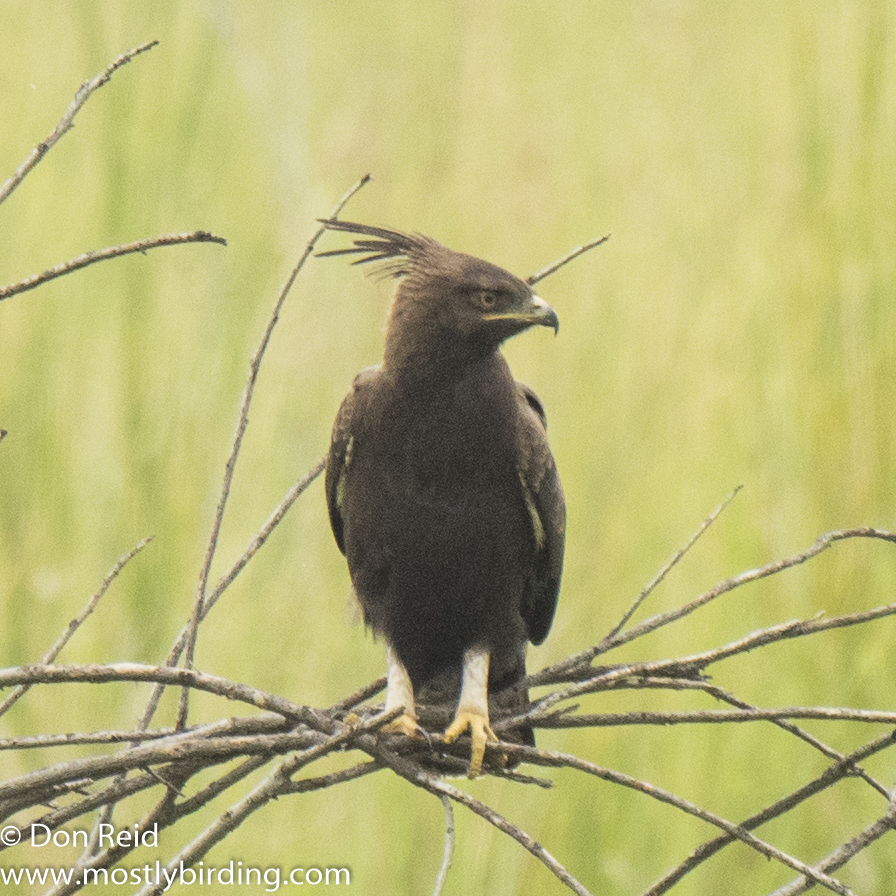
Late morning we set off on a drive along the R600 towards Winterton with the main purpose of popping into Scrumpy Jacks for coffee and a taste of their recommended cheesecake. On the way Koos pointed out the Long-crested Eagle he had seen on his earlier walk, perched in the open for all to see.
Long-crested Eagle
Soon after we arrived at the small farmstall with a few tables outside, a parking area fairly muddy from earlier rains and a notice on the flimsy gate to “please close the gate to protect the dog”. The only visible animal in the garden was a large pig with an even larger pot belly dragging on the ground – presumably the “dog” referred to in the notice. It seemed a strange pet to allow near guests – such as us – coming for coffee and honey-baked cheesecake, however we did not let it detract from the treat.
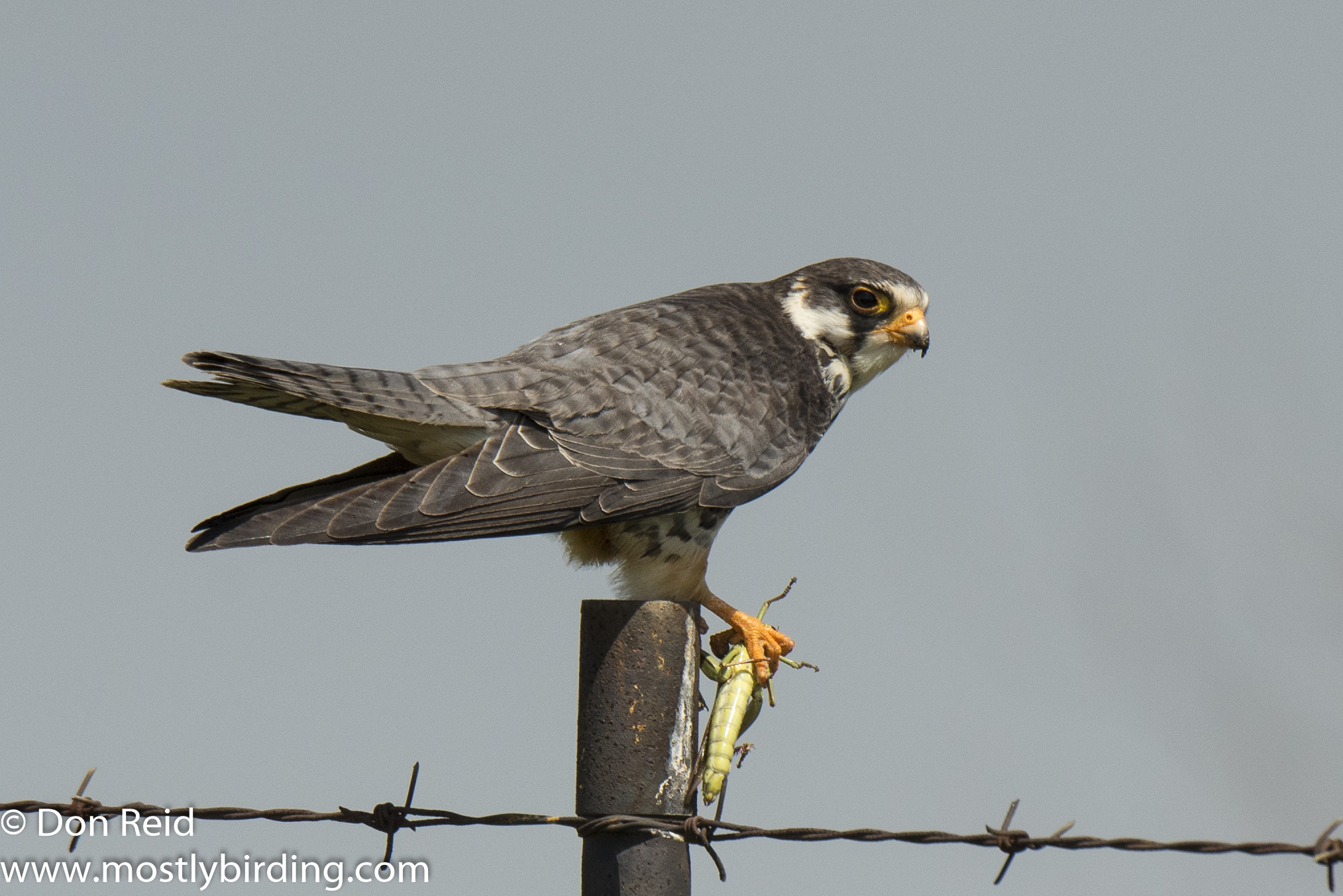
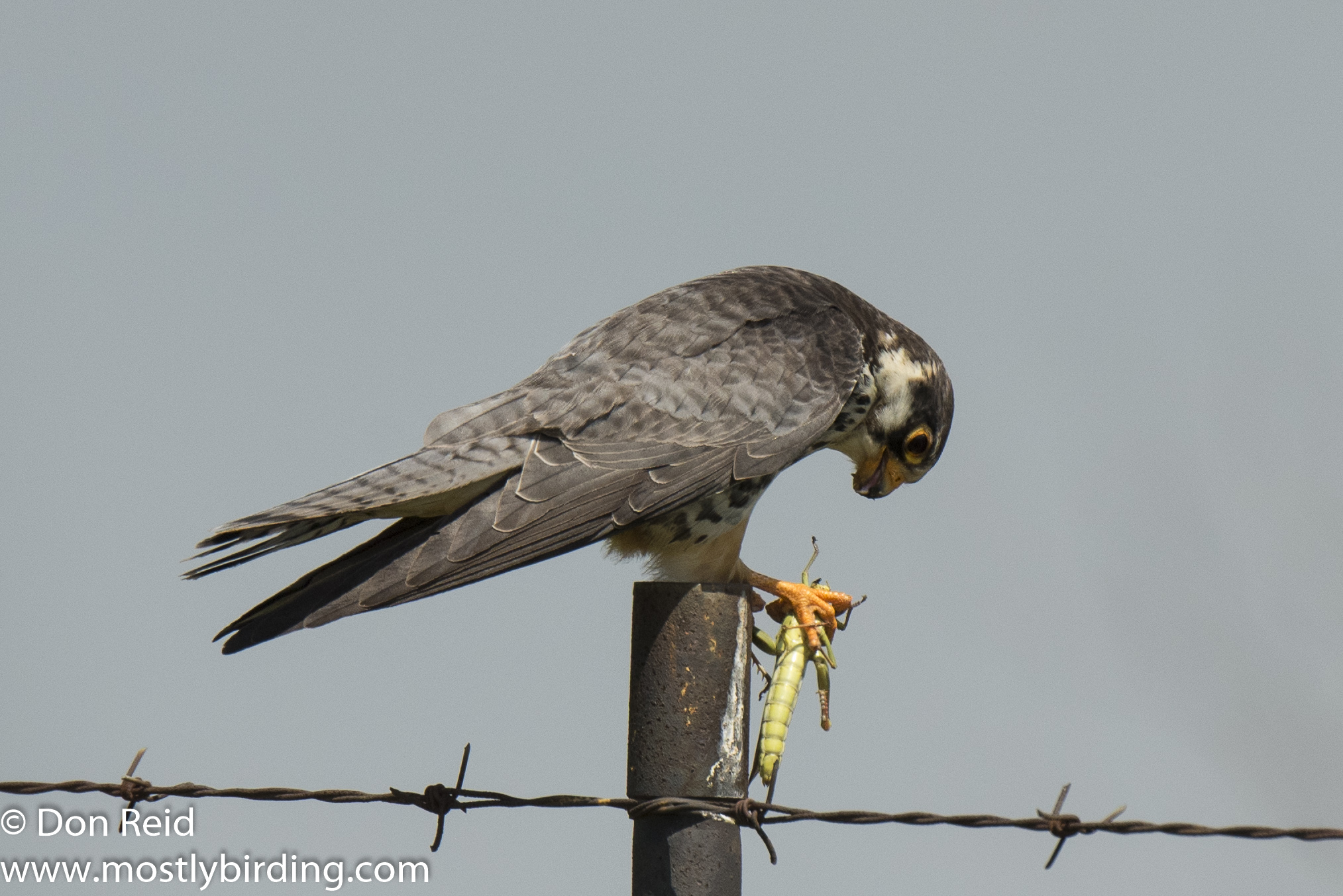
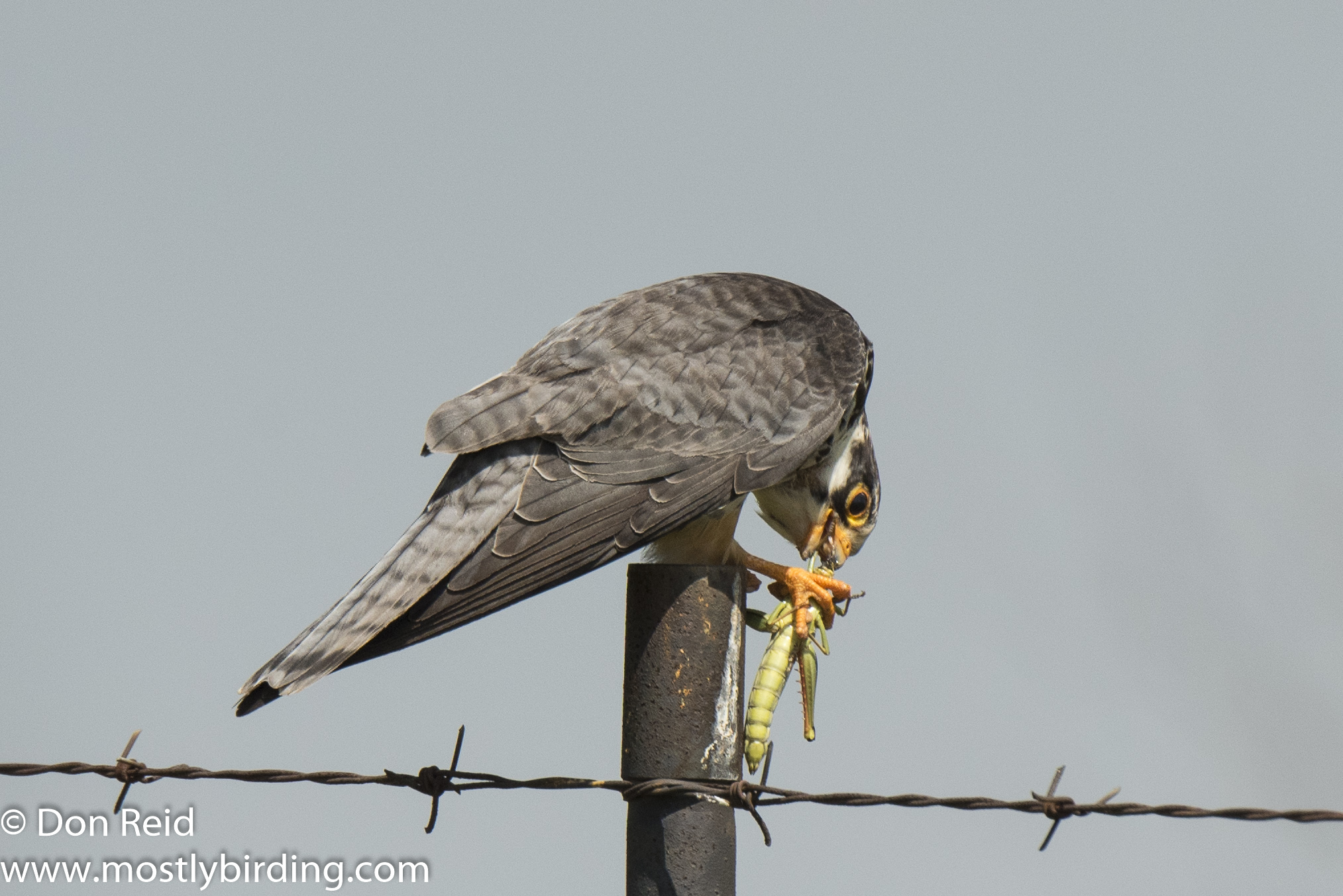
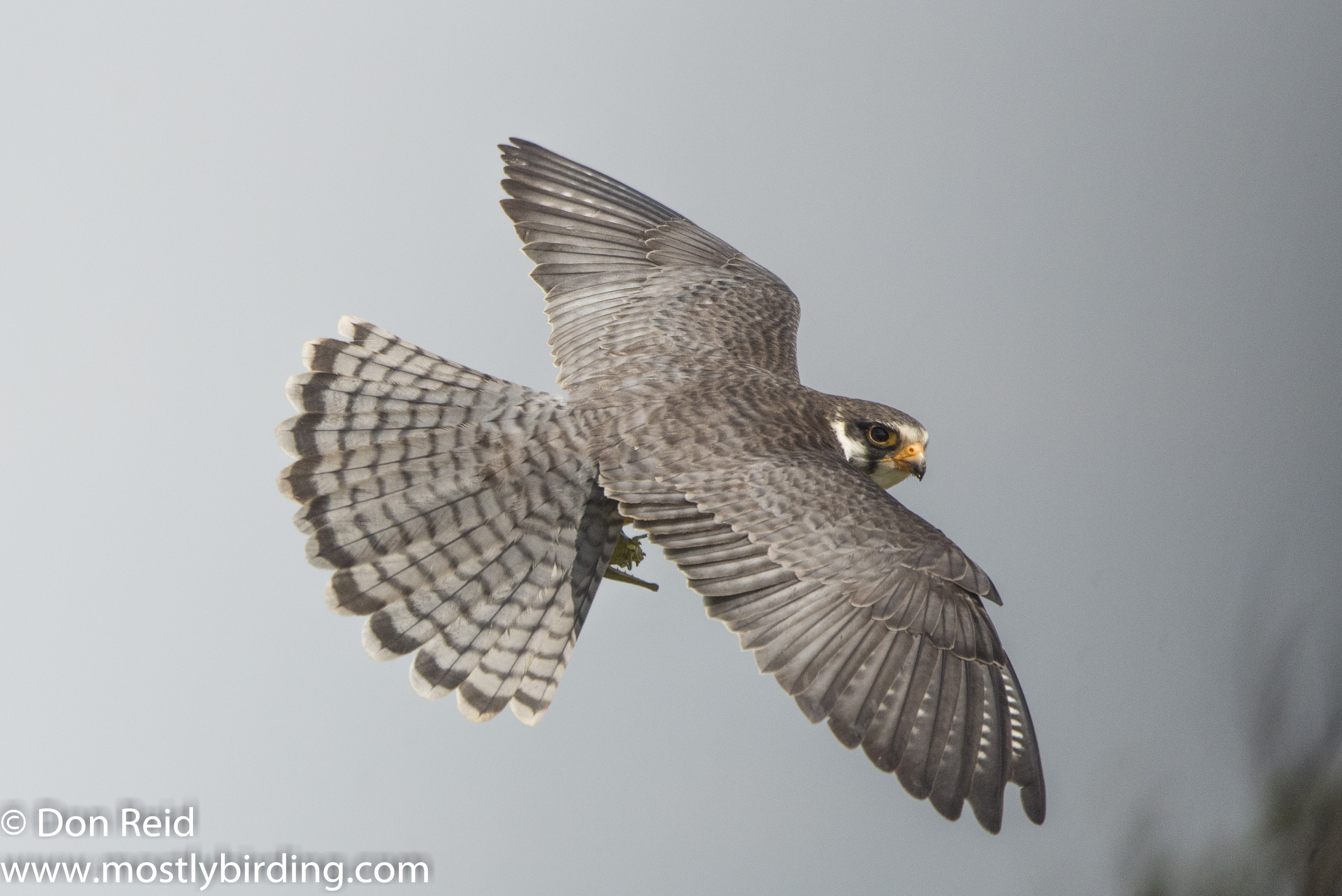
Said coffee and cheesecake did the trick of turning on the switch in the brain that says “I am contented with life” and we ventured further down the R600 with the intent of doing a “bit of birding”. At the signpost indicating “Bell Park Dam 8 km ” we turned left – this was a route Koos and I had explored a year ago and it turned out to be a good choice again as we were soon into rolling grasslands and farms planted with tall green mielies (corn). Amur Falcons were numerous, perched at regular intervals on the roadside wires, sometimes in small groups, scanning the fields for their next grasshopper or termite alate meal.
The attractive farm dam where we had seen Grey-crowned Cranes landing the year before, was occupied by various waterfowl including SA Shelduck, Spur-winged Goose and a complement of the usual Egyptian Geese and Red-knobbed Coots plus a lone Grey Heron.
Farm dam in the distance
We continued in the same slow fashion past the Bell Park dam wall with cascading overflow creating a nice picture, then turned off onto the road leading to the dam’s entrance gate. After a brief leg-stretch accompanied by yet another Yellow-billed Kite eyeing us from his perch on top of a pole, we decided to turn back and head for the resort.
Farmlands with mountains in the backgroundThe road to Bell Park dam
On the way back Koos spotted a flock of Geese and was elated when he found two Grey-crowned Cranes amongst them. A small Cisticola like bird in the top of a tree had us puzzled for a while with its grey breast and white belly, until we decided it was a form of Neddicky – later reference to Roberts showed that there are no less than 7 subspecies of Neddicky in southern Africa so I deduced that a wide variance in appearance can be expected. (another snippet of added knowledge).
Neddicky
Amazingly our “bit of birding” had been so absorbing that we found we had spent the required 2 hours in the pentad for a “Full protocol” card – and we all had an enjoyable afternoon of birding in a beautiful environment along a quiet road – what more can one ask for?
Monday
Time to return to Pretoria – Arrow-marked Babblers visited the chalet while packing and I couldn’t resist a quick photo…..
Arrow-marked Babbler
By 9 am we were on our way, this time choosing the scenic route via Winterton and Bergville then via the spectacular Oliviershoek pass to Harrismith. What a good choice it turned out to be – the scenery was quite stunning for most of the way, certainly the greenest we have ever seen this part of our country, both cornfields and grasslands alike, stretching into the distance in checkered patterns.
We’ll be back! Sooner than you can imagine – in a couple of weeks we return to the same area but a different resort when my brother visits from the UK.
There’s nothing like a walk in a natural forest to heighten the senses – once you have walked a short distance into the forest, the background sounds of daily life are gradually reduced and eventually all you can hear are the sounds of the forest itself. The bird calls become prominent and even the rustle of leaves as a bird or small creature moves through the canopy or the forest floor can suddenly be heard.
If you are lucky enough to have a patch of forest to yourself, you can almost feel a bubble forming around you as you enter a private world with just the forest sounds, the smell of the trees and the soft feel of the leaf-strewn pathway for company.
This was my experience during a recent visit to the Woodville “Big Tree” forest near Hoekwil in the Southern Cape. The forest lies beyond the Wilderness (not the actual kind, this is a village near George much favoured for holiday homes and as a retirement spot) just off the old George – Knysna road with the main attraction being the massive Yellowwood tree a stone’s throw from the parking area and picnic spot. Estimated to be over 800 years old and standing 31m tall it is more than impressive and one can only wonder how pristine our country was when it was a mere sapling, long before any human interference.
How we came to be there
Gerda and I had decided to explore the Garden Route beyond George for the day and she was the one who suggested we head for the Wilderness for lunch at one of the popular restaurants in the small village centre, followed by a drive through the countryside east of Wilderness.
We set off in perfect weather, sunny and warm with just a whisper of wind and enjoyed a pleasant light lunch of tapas – chunks of hake and calamari with tasty side sauces. From there we took a slow drive to Woodville forest via Hoekwil and we were soon at the parking area. I found a shady parking spot and left Gerda contentedly knitting (making sure there were picnic goers and a forest warden nearby – you always have to be wary in our beloved country) while I explored the forest trail beyond the Big Tree.
The Trail
The trail is fairly easy and an hour is more than enough time for a slow walk while stopping to listen and look around. In the back of my mind was the thought that I still had not seen a Lemon Dove, despite being very close to them on a few occasions – so I stopped a few times to play their call, initially with no response.
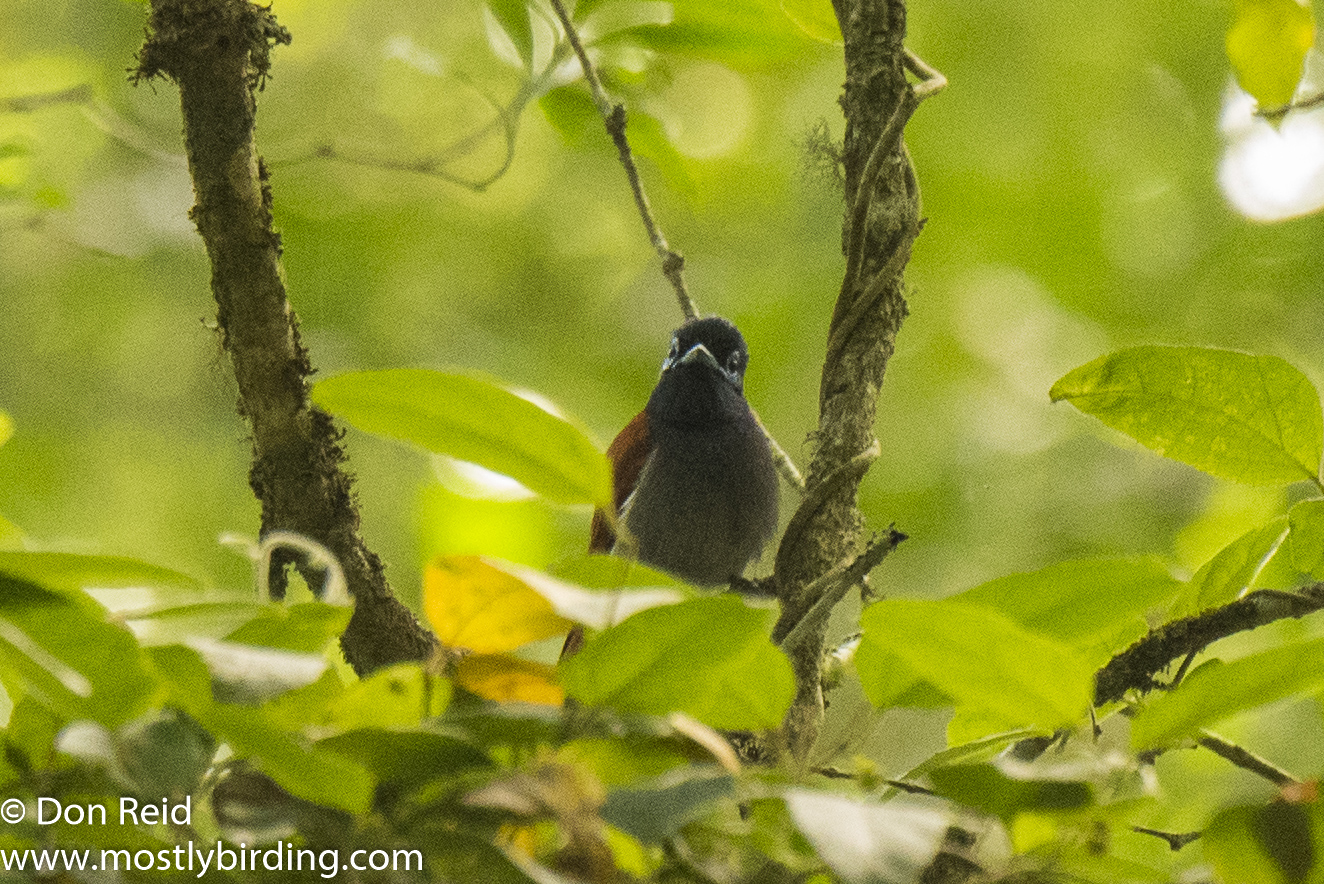
By this time I had seen a number of forest specials such as Yellow-throated Woodland Warbler (Geelkeelsanger), Chorister Robin-Chat (Lawaaimakerjanfrederik), African Paradise Flycatcher (Paradysvlieëvanger) and Cape Batis (Kaapse Bosbontrokkie)
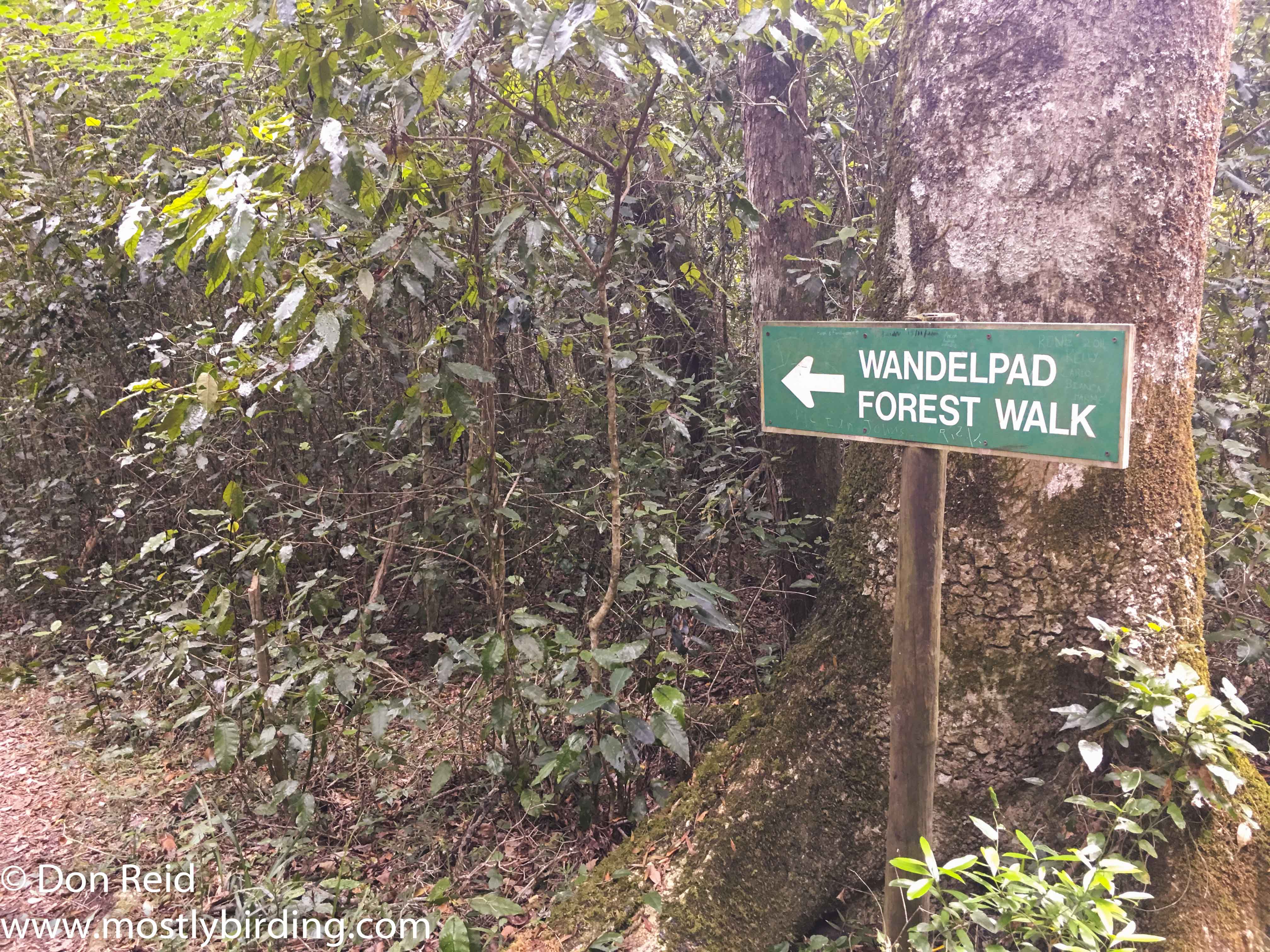
Woodville Big Tree Forest WalkAfrican Paradise Flycatcher, WoodvilleCape Batis
About a third of the way along the trail, I was near a large fallen tree when I heard a rustle behind me. Turning, I saw a dove-like bird fleetingly as it flew across the trail and my heart skipped a beat or two – could this be the one I had hoped for?
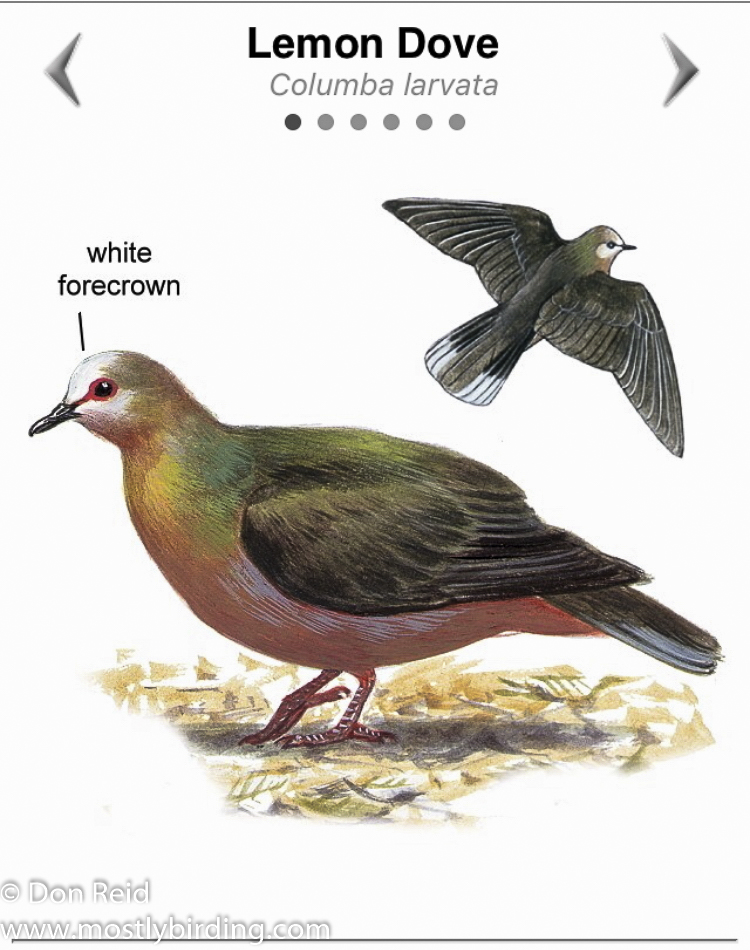
I crept back as quietly as possible until suddenly a bird flew out of the leaf litter right next to the trail and for a few seconds perched on an open branch, not 3m away. It was a Lemon Dove (Kaneelduifie) and I may have let slip an expletive in my excitement as we eyed each other face to face. Desperate for a photo of this beauty I slowly went to lift my camera but at that moment the dove decided to vanish, literally, and flew back across the trail. I was convinced it had not gone far and stood at the point where I expected to find it again, scanning the forest floor and trees for several minutes but to no avail – it had disappeared like a ghost in the night.
Lemon Dove (Roberts Bird Guide app)Lemon Dove Distribution (Roberts app)
Roberts Bird Guide describes the Lemon Dove as “Secretive and difficult to see, especially when it freezes to avoid detection”, which I can verify from this experience.
Buoyed by this sighting, I walked along the rest of the trail in a state of happiness, taking in all the various sights and sounds right down to the interesting fungi growing on trees and stumps. A rustle in the undergrowth and a harsh churring call drew my attention and after some chasing of shadows amongst the dense foliage I was pleased to track down a Terrestial Brownbul (Boskrapper).
Terrestial Brownbul
Towards the end of the trail another call, like an owl hooting while being shaken, had me wondering until I dredged my memory cells and came up with Olive Pigeon (Geelbekbosduif) – a quick play of its call on my Roberts app confirmed the ID. I left the forest to the repeated call of a Red-capped Robin-Chat, which I later suspected was a Chorister Robin-Chat mimicking its cousin, but who knows?
So my short walk produced one lifer that I had long hoped for as well as a pleasing selection of forest specials, all of which left me with a big smile and something to share with Gerda, patiently waiting in the car.
Following on Part 1 of My Birding Year for 2017 ……… guess what, here’s Part 2!
So here’s a synopsis of my birding activities during the second half of 2017 along with photos of a few of the species encountered and places visited.
July
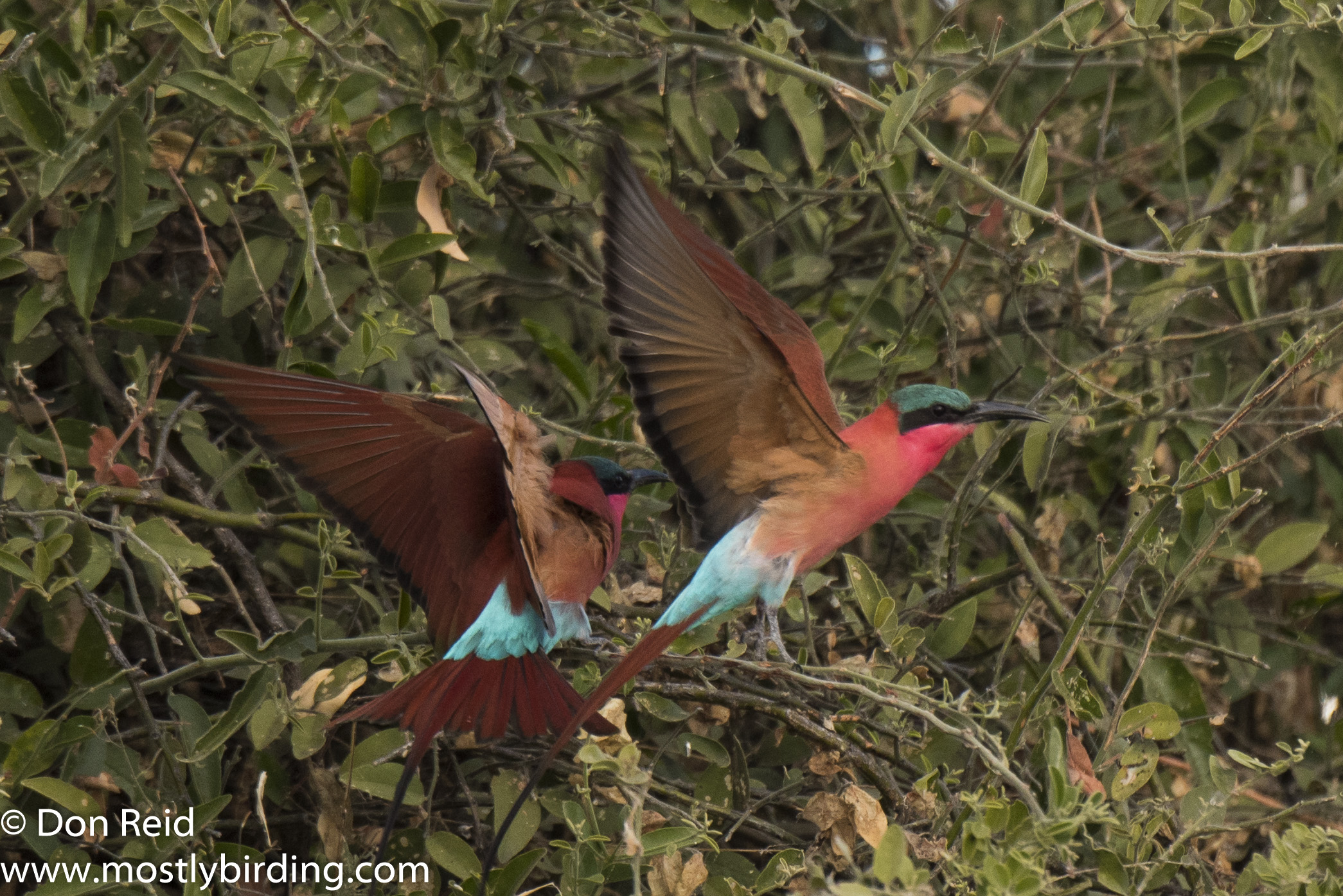
The first week saw me back in Kasane for a project visit and we managed to fit in a memorable drive through Chobe Riverfront where the game viewing took precedence, but the birdlife was hard to ignore, particularly the Carmine Bee-eaters
Later on in the month I was back to atlasing in the area south of Bronkhorstspruit, some 50 km east of Pretoria, dominated by the drab midwinter “browns” of the highveld and providing some challenging birding in the form of very similar looking small birds in their winter plumage.
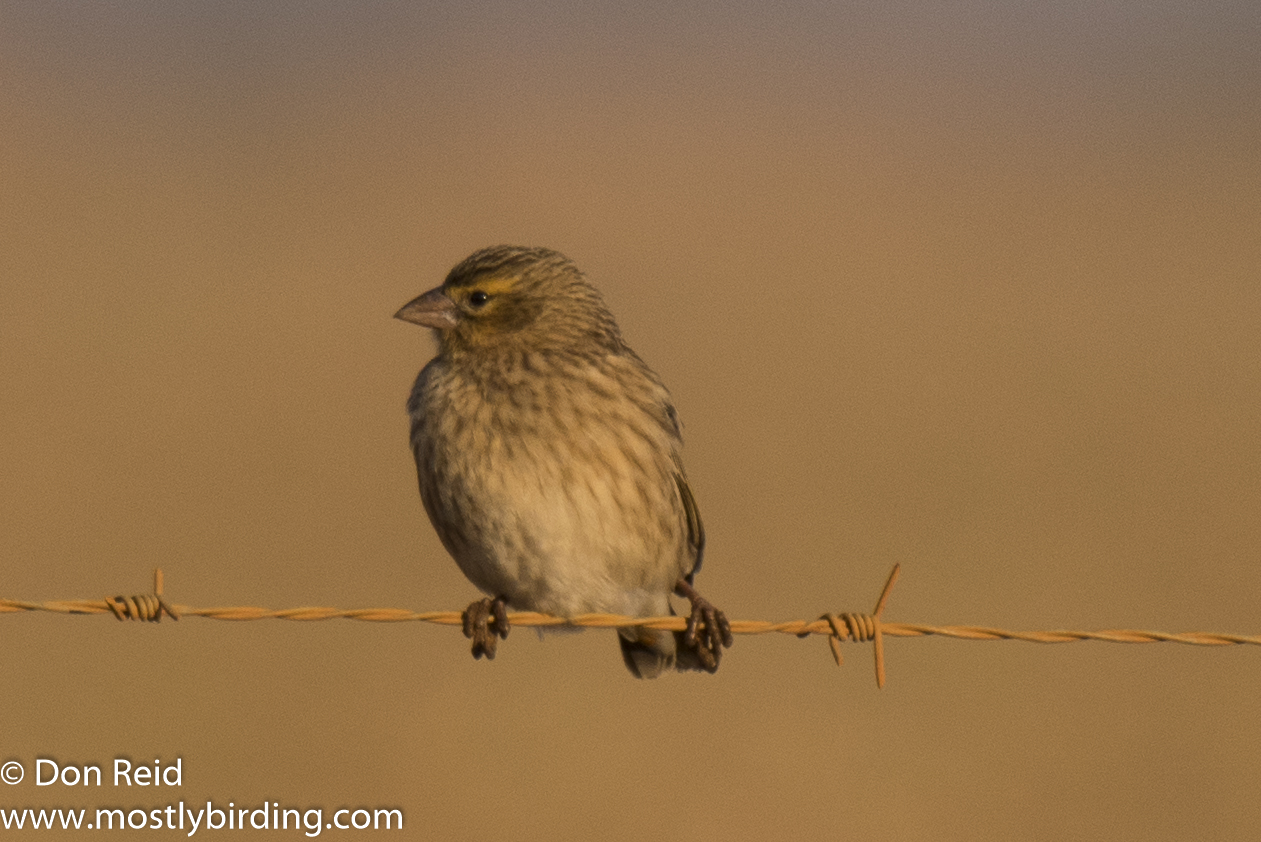
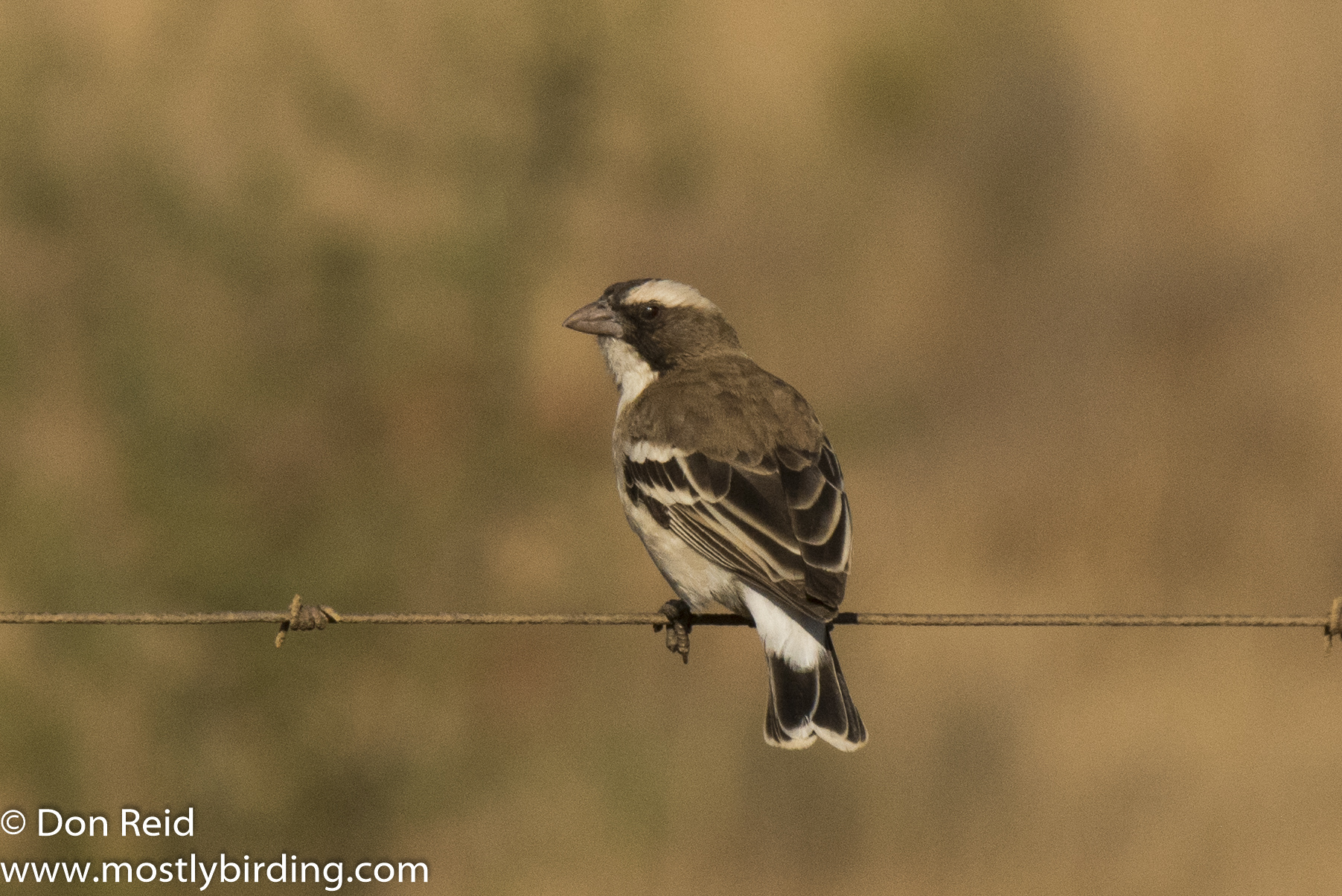
Southern Red Bishop (winter plumage), Bronkhorstspruit areaWhite-winged Widow (winter plumage), Bronkhorstspruit area
August
Another visit to Kasane, Botswana in the first week included a spectacular boat safari on the Chobe river with Pangolin Safaris in a specially equipped boat kitted out with swivel seats and pliable camera mounts. One of the owners of Pangolin Safaris, who goes by the nickname of “Guts”, accompanied us and made sure we had some amazing photo opportunities of the wildlife and birds to be found along the river.
Six species in one frame (1 only just) – can you spot them? (see end of post for answer)Glossy Ibis, Chobe RiverDoing it in style with Pangolin Safaris on the Chobe River
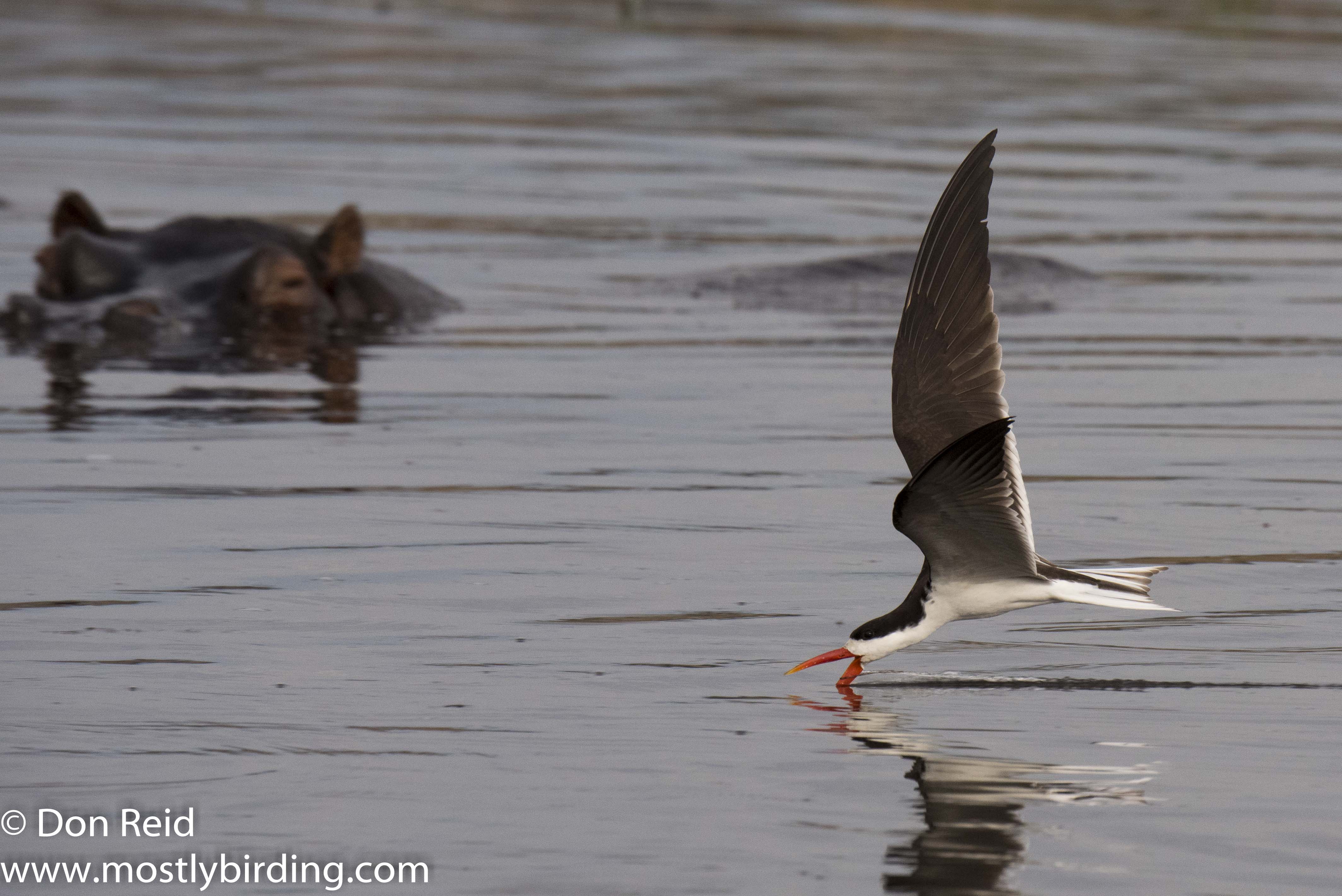
One moment of sheer photographic magic came my way in the form of a lone African Skimmer passing by and showing how it got its name.
African Skimmer, Chobe River
The following weekend saw us visiting family in Potchefstroom once again – I took the two grandkids for a birding outing to nearby Boschkop dam and was again very pleased with the quality of birding at this venue, which is also quiet and safe for the kids to roam about a bit.
Next up was some atlasing in the grasslands north east of Pretoria – known as Vlaklaagte, which was good for birding but the gravel roads at this time of year are very dusty and the passing mining lorries tend to make it quite difficult to bird in peace – nevertheless a successful day’s atlasing.
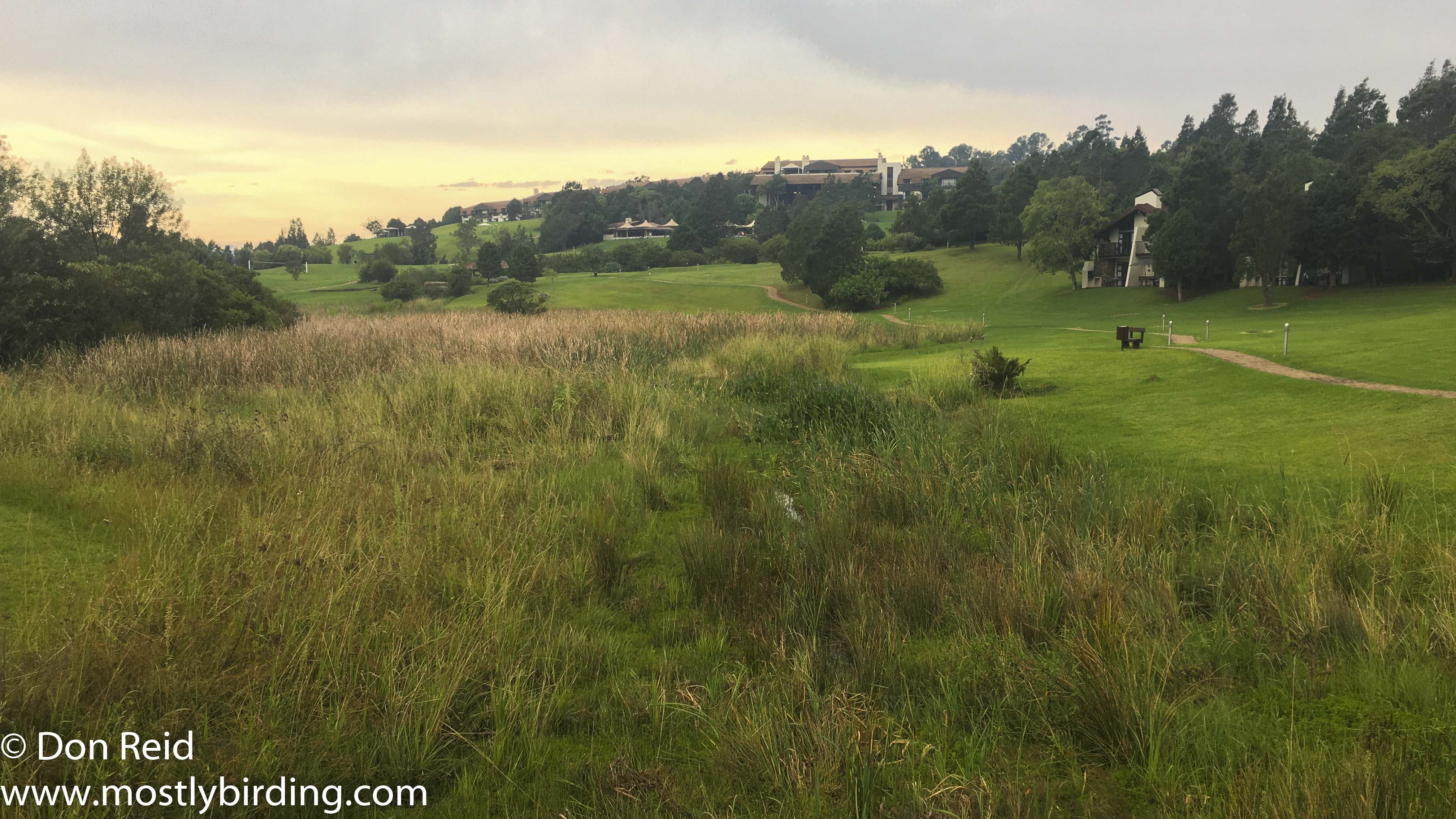
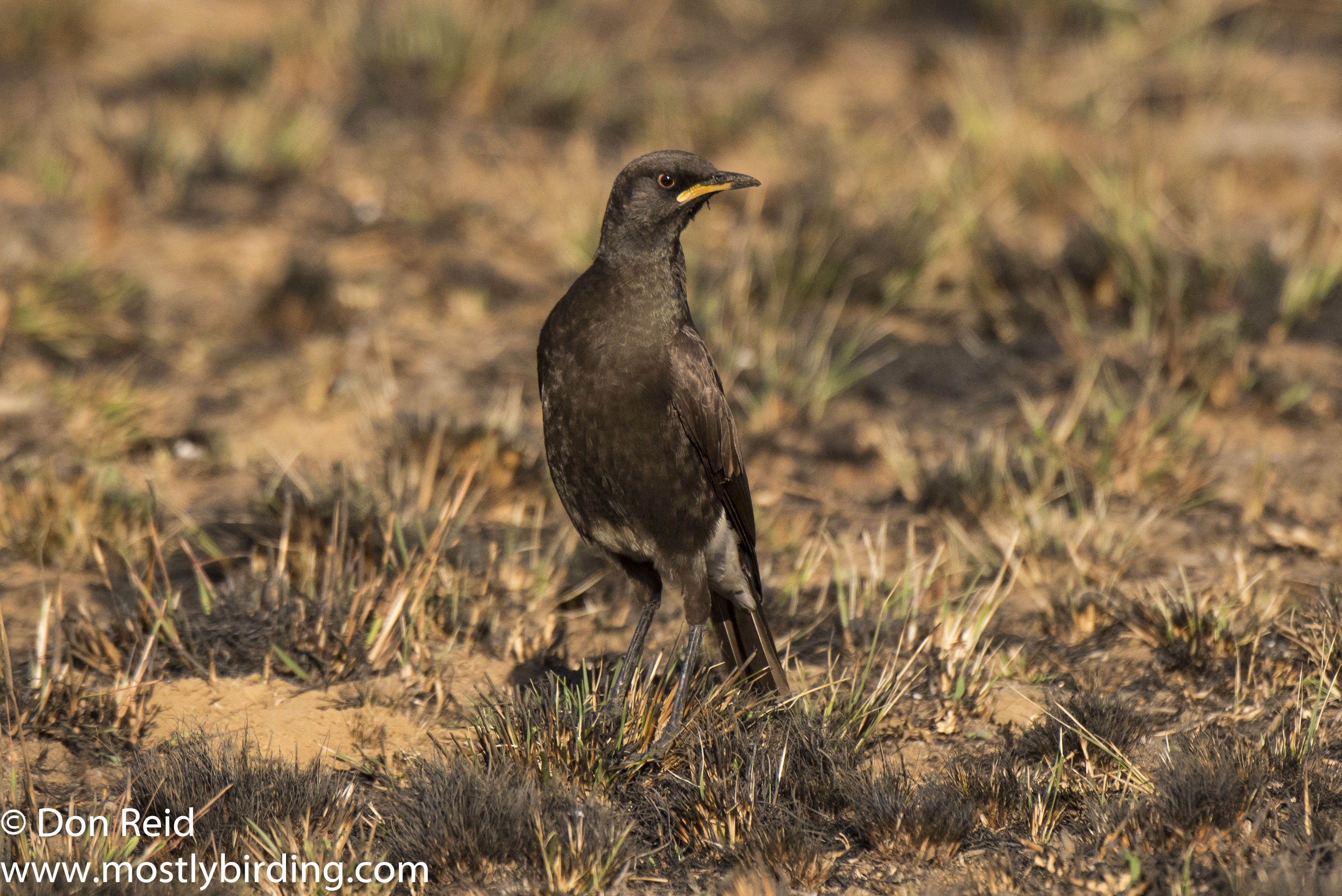
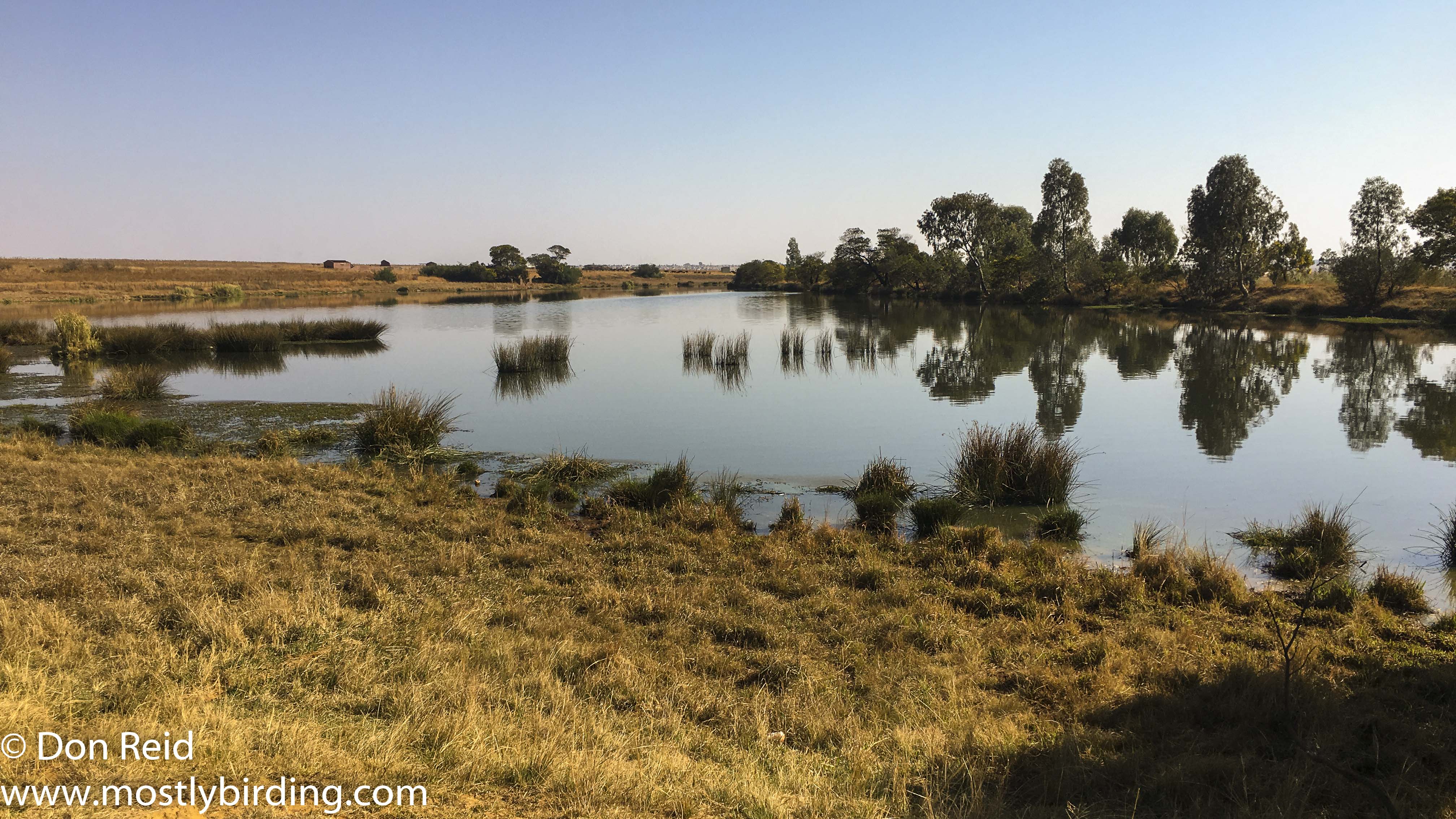
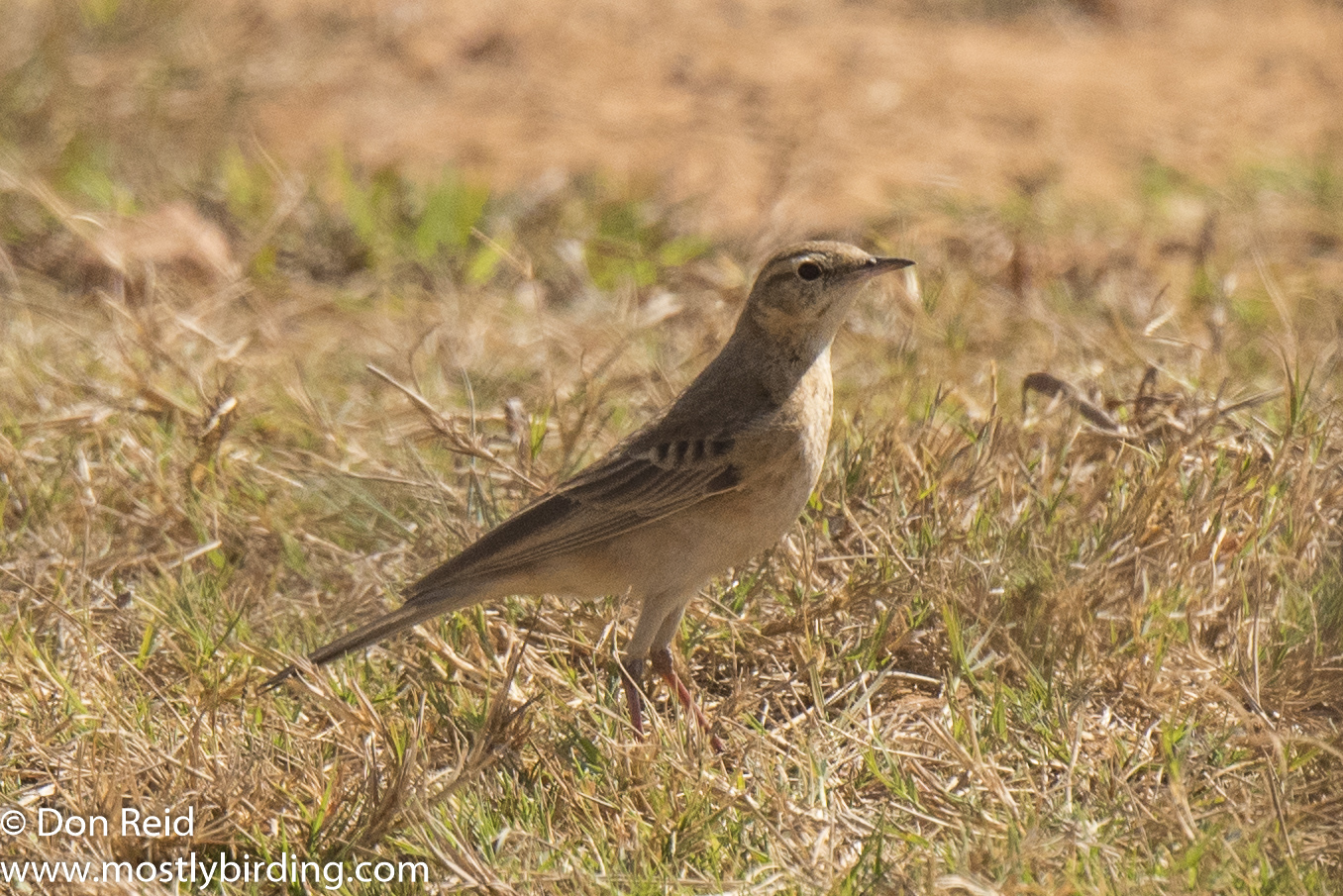
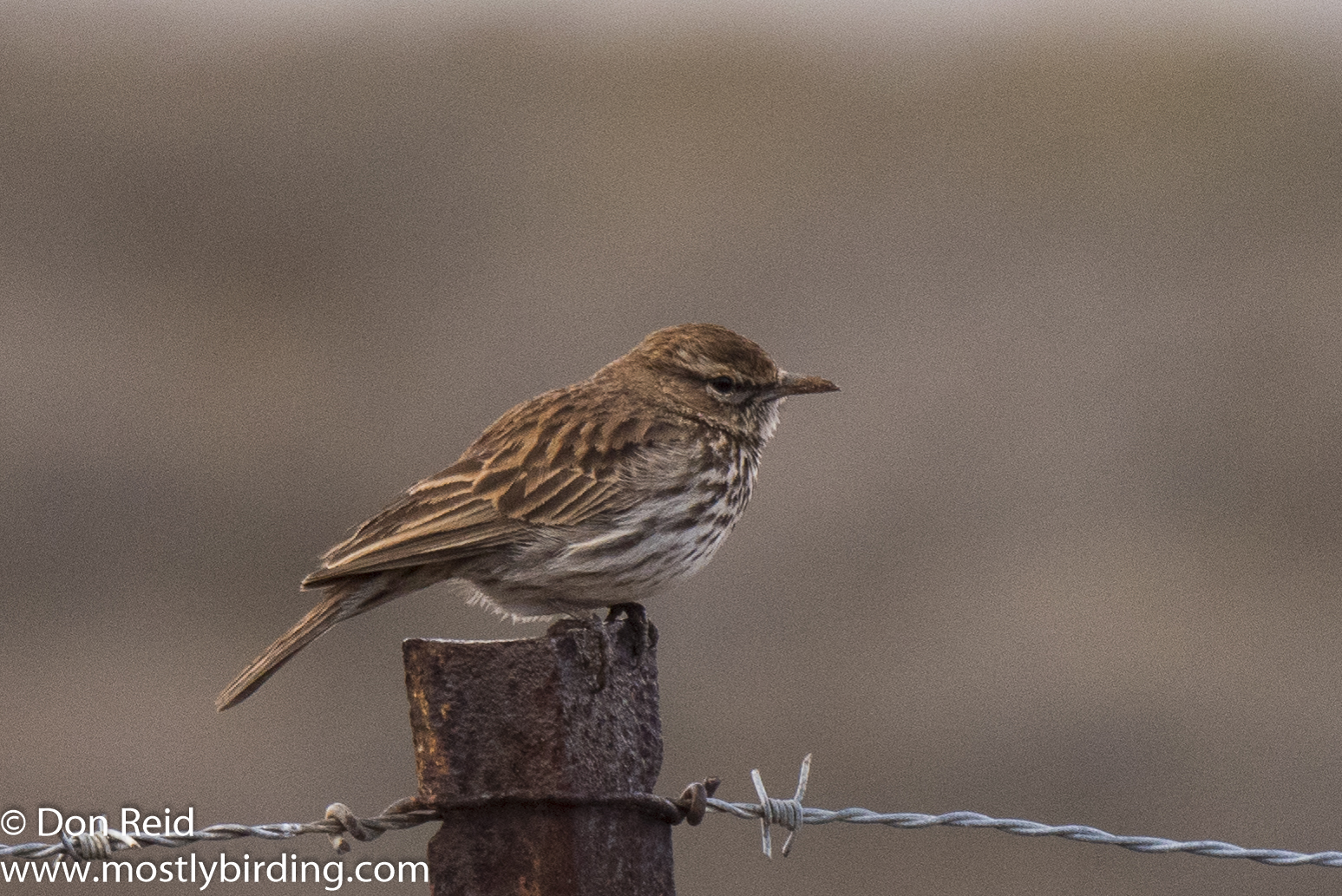
Pied Starling, Vlaklaagte areaDam, Vlaklaagte areaBuffy Pipit, Vlaklaagte area
A short winter visit to Mossel Bay in the second half of August provided the opportunity to explore the Karoo south of Oudtshoorn on a cold day – I added several species to my year list and atlased in areas not regularly covered so well worthwhile.
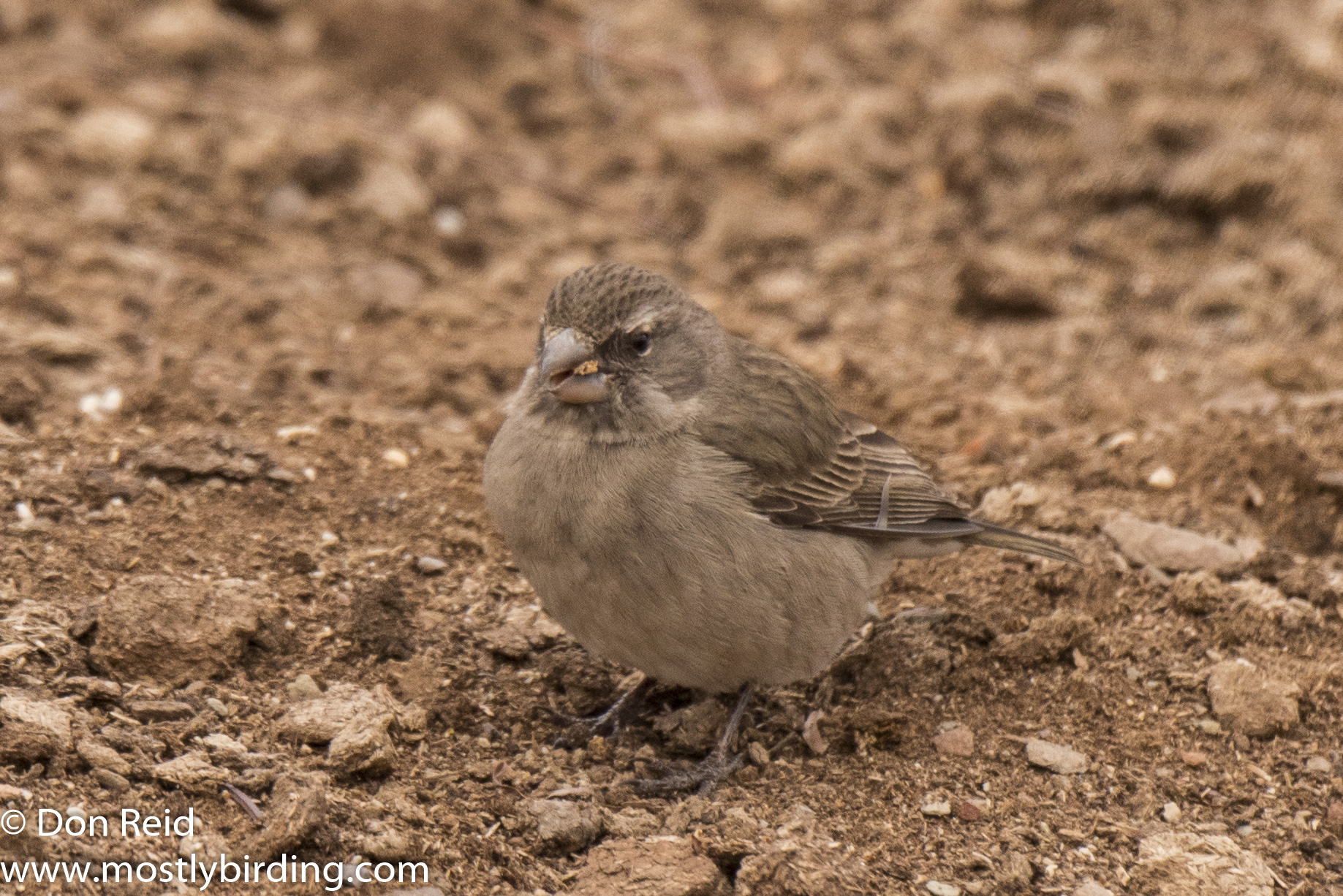
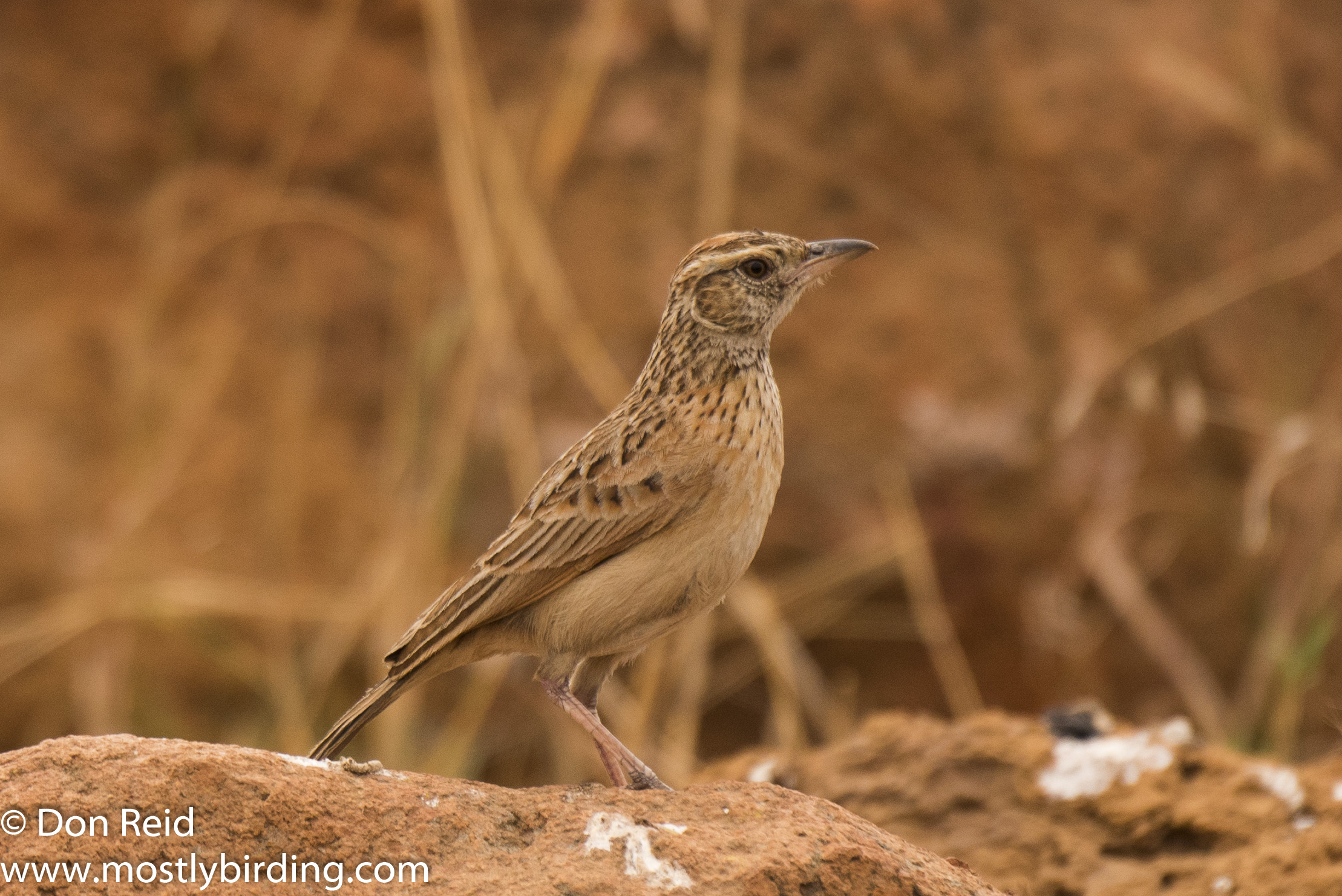
Cape Weaver, Mossel BayKaroo Lark, Oudtshoorn southWhite-throated Canary, Oudtshoorn south
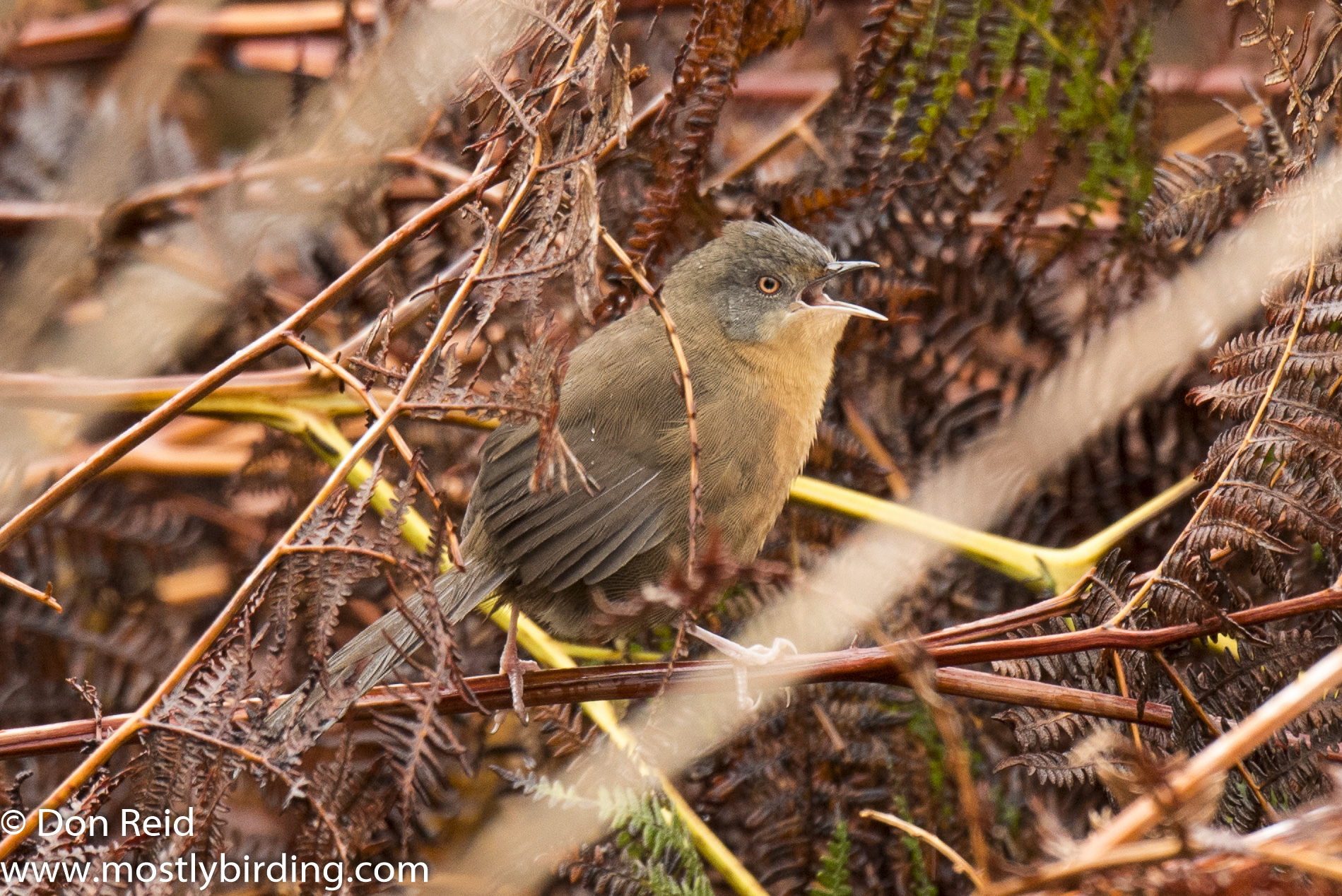
On Robinson Pass, my patience was rewarded when a Victorin’s Warbler posed briefly for a photo – a very difficult species to photograph so a nice bonus.
Victorin’s Warbler, Robinson Pass
September
My monthly visit to Kasane was likely to be one of my last as the project was heading to completion, so I made the most of the 3 days there and fitted in birding at every opportunity. The airport precinct and perimeter were particularly lively with up to 200 bee-eaters present along the fences.
Swallow-tailed Bee-eater, Kasane Airport area
An early morning drive through the Chobe Riverfront was as good as ever with some unusual species showing.
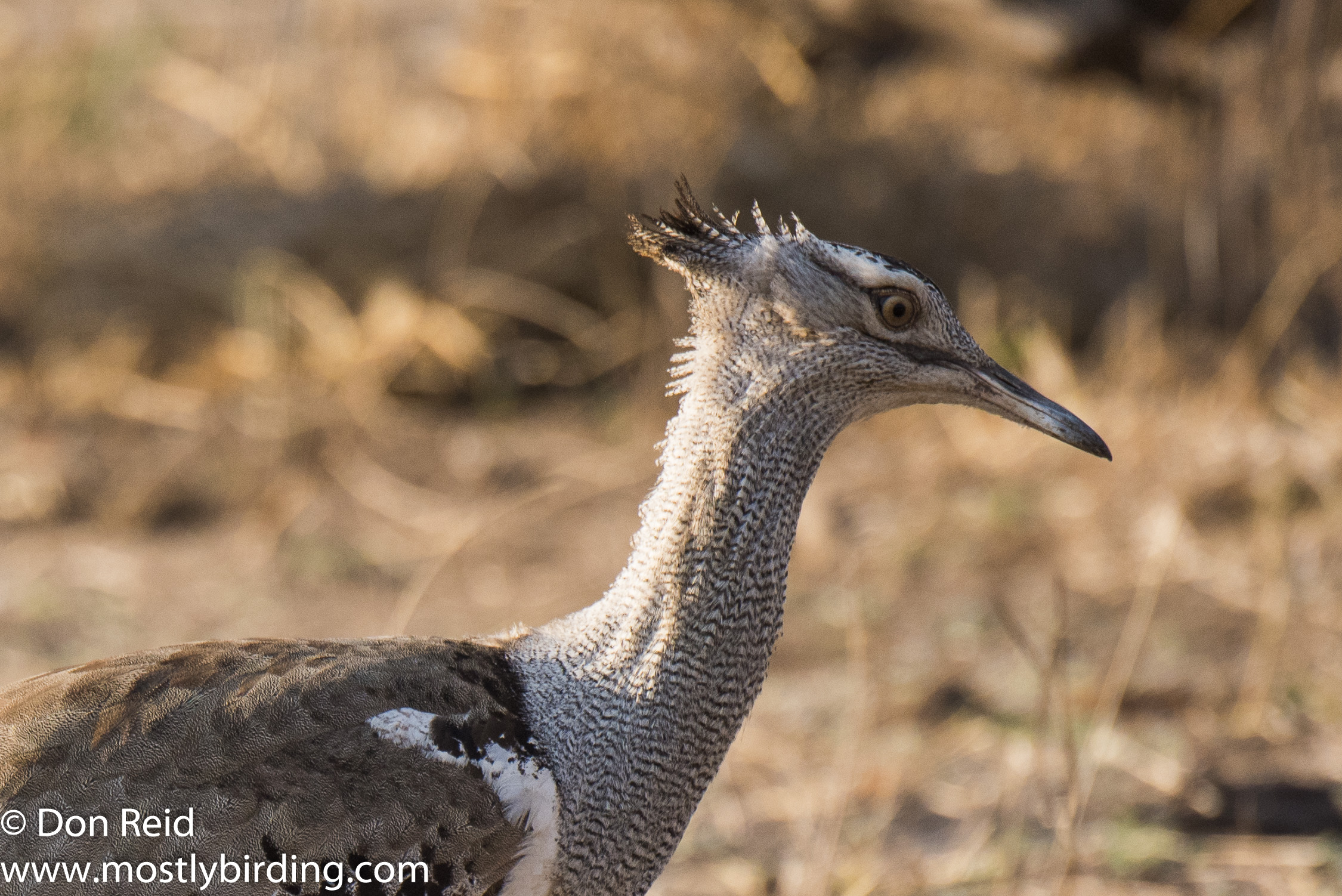
Burchell’s Sandgrouse, Chobe GRKori Bustard, Chobe GR
During the rest of the month I targeted some of the more remote areas of north-east Gauteng to do some atlasing, selecting pentads not yet atlased in 2017.
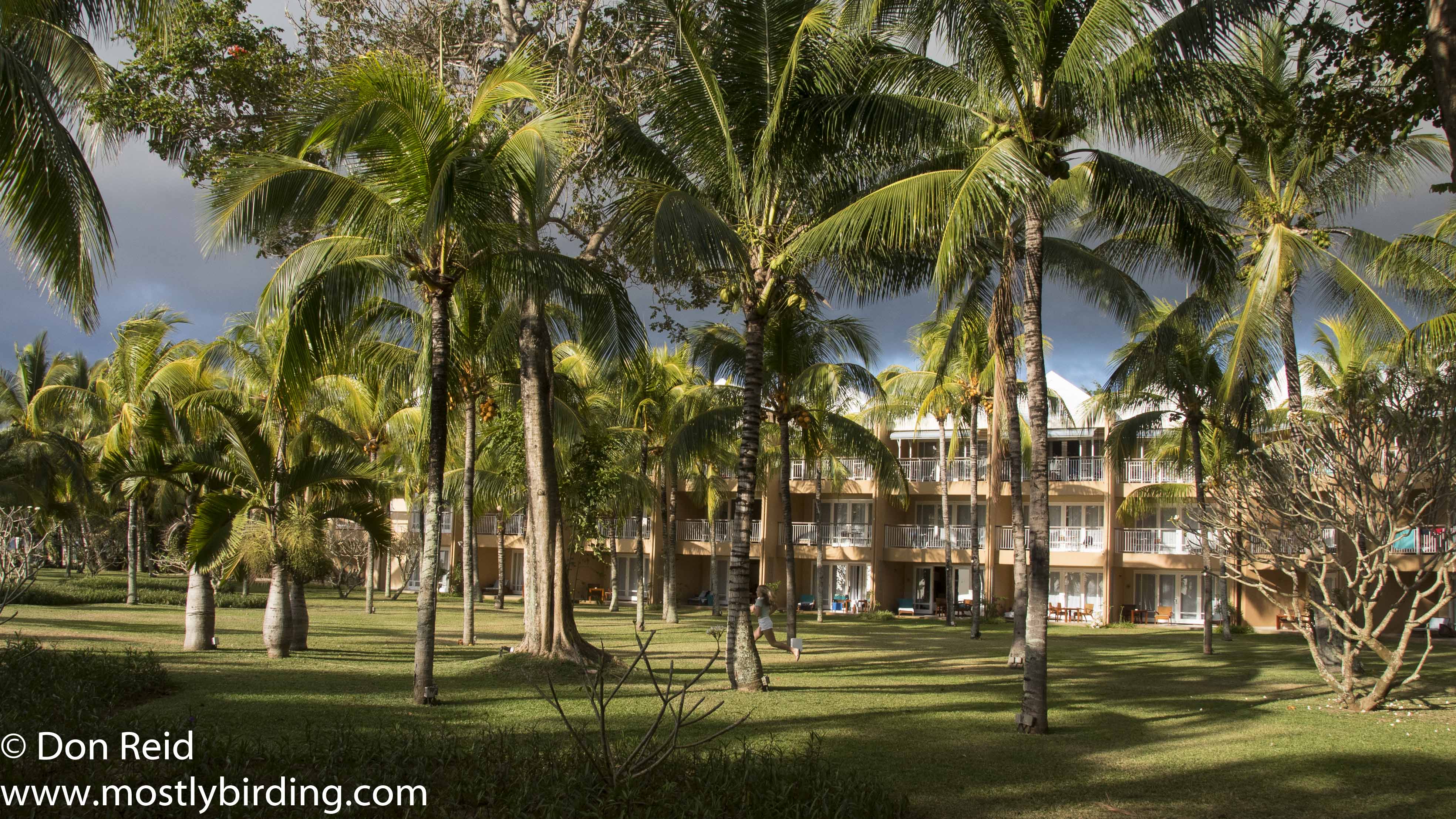
Our much anticipated trip to Mauritius to celebrate our “milestone” birthdays with the family was a highlight of the year from all points of view – the sheer joy of having our 3 children, their spouses and our 7 grandchildren with us in such a beautiful setting for a whole week was awesome (as they say).
Le Victoria hotel, Mauritius
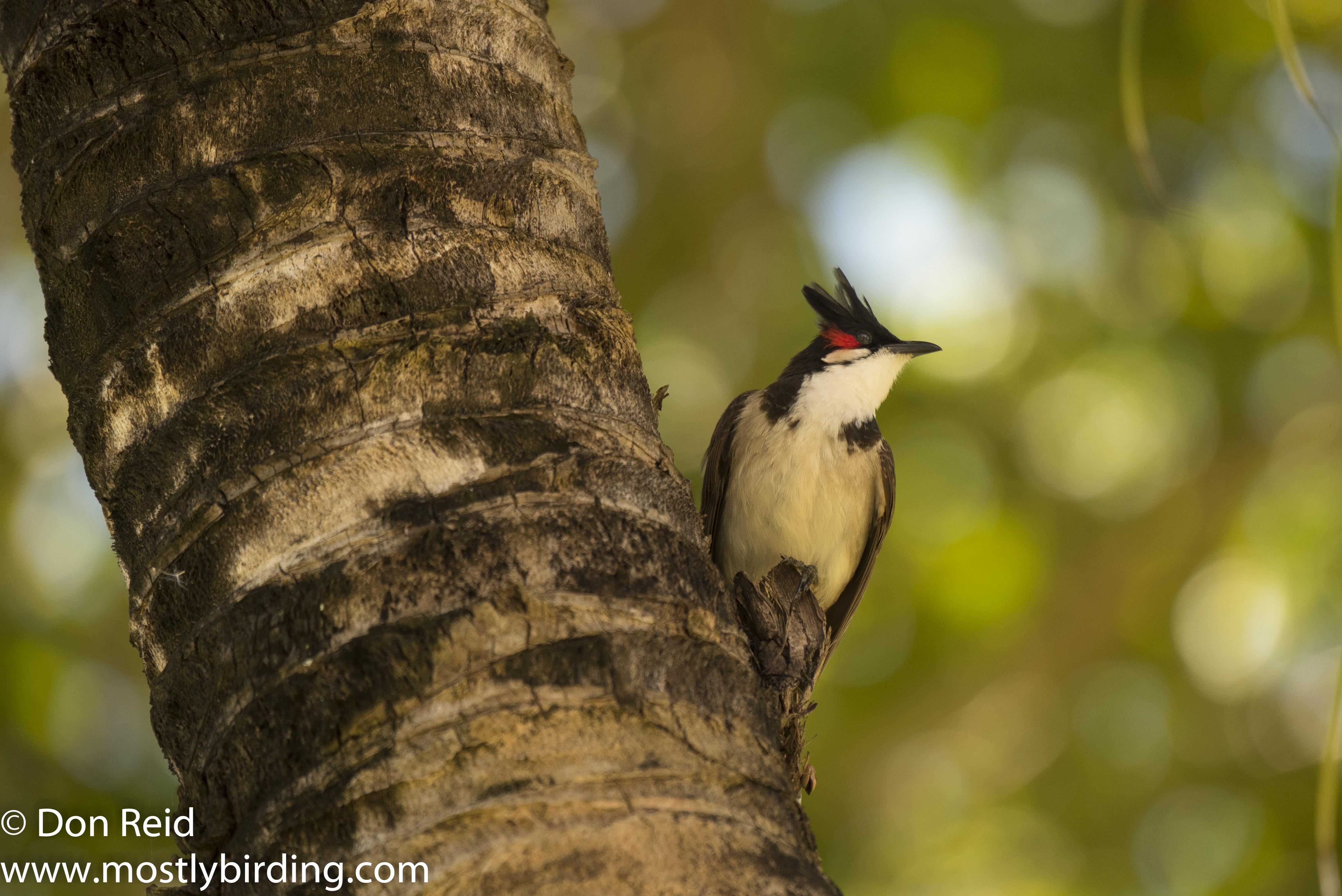
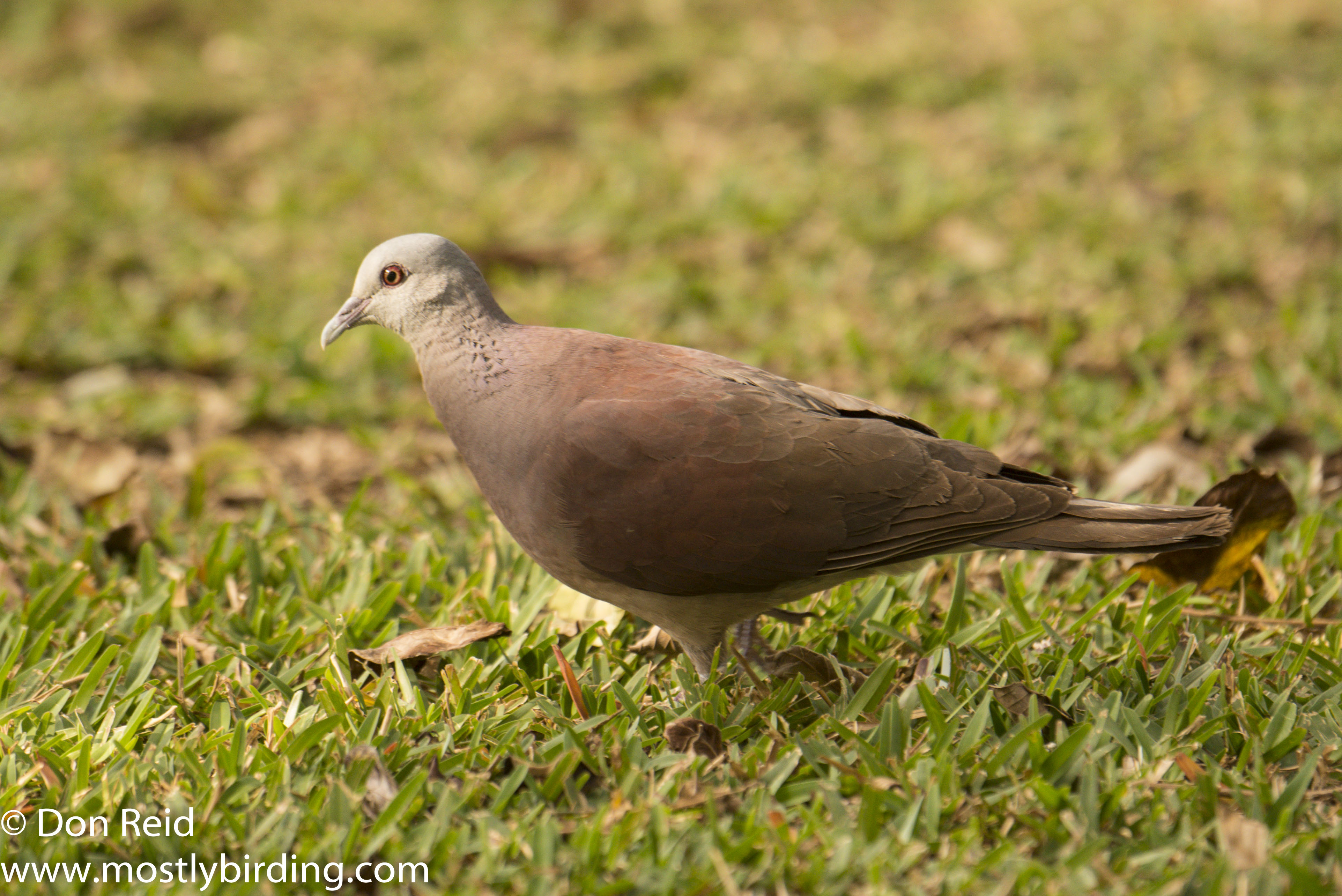
I didn’t do any serious birding but the hotel gardens were good for a total of just 11 species, of which 6 were lifers to add to my world list (yes I’m a “lister”!)
Red-whiskered Bulbul (Pycnonotus jocosus), Le Victoria hotel, MauritiusRed Fody (Foudia madagascarensis), Le Victoria hotel, MauritiusMalagasy Turtle Dove (Nesoenas picturatus), Le Victoria hotel, MauritiusZebra Dove / Barred Ground Dove (Geopelia striata), Le Victoria hotel, Mauritius
In any case I was so busy enjoying the ambience, the family, the great meals and the snorkelling that birding was relegated to about 10th place (just for that week, mind)
Later in the month I visited Marievale Bird Sanctuary near Nigel in Gauteng for a superb morning of birding in this prime waterbird location.
An unexpected atlasing trip with Koos on the 21st in the pentad covering the north-east corner of Pretoria was a delight, covering all areas from industrial to country estates.
November
My last visit to Kasane was also a busy one work-wise so not much opportunity for birding other than snatched moments in between other commitments – how I’m going to miss this place!
A weekend in Potchefstroom presented another chance to take Christopher (6) with me for some atlasing at Boschkop dam – plenty of highlights to make it interesting for both of us.
Marievale was my destination for the second time in 4 weeks when reports came through of Baillon’s Crake seen there. I dipped on the crake but still had a wonderful morning’s atlasing.
On the 22nd it was time to head south (how time flies!) to our Mossel Bay home – a two day road trip with an overnight stop at Kuilfontein guest farm near Colesberg, which provided some great birding and relief from the long driving sessions.
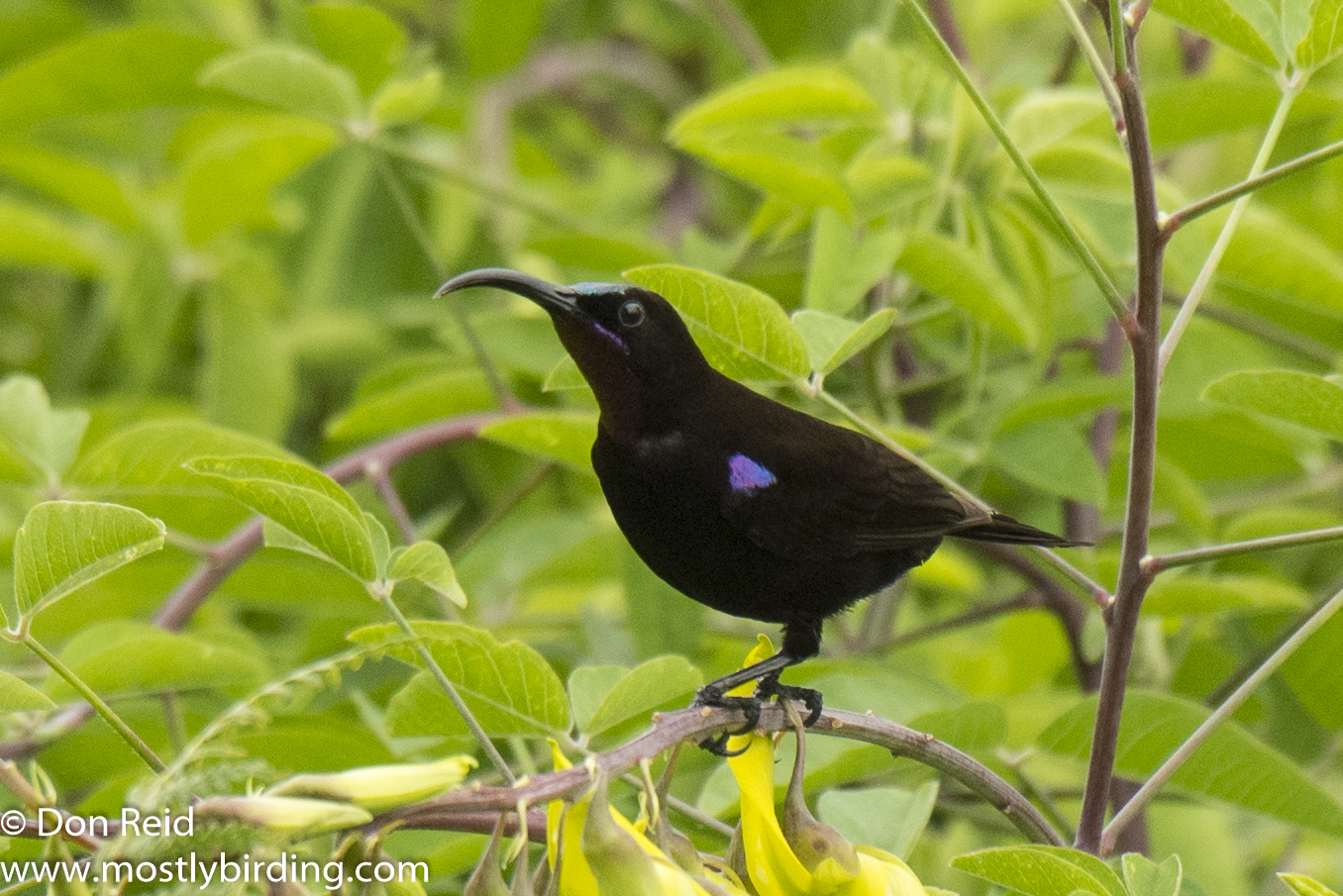
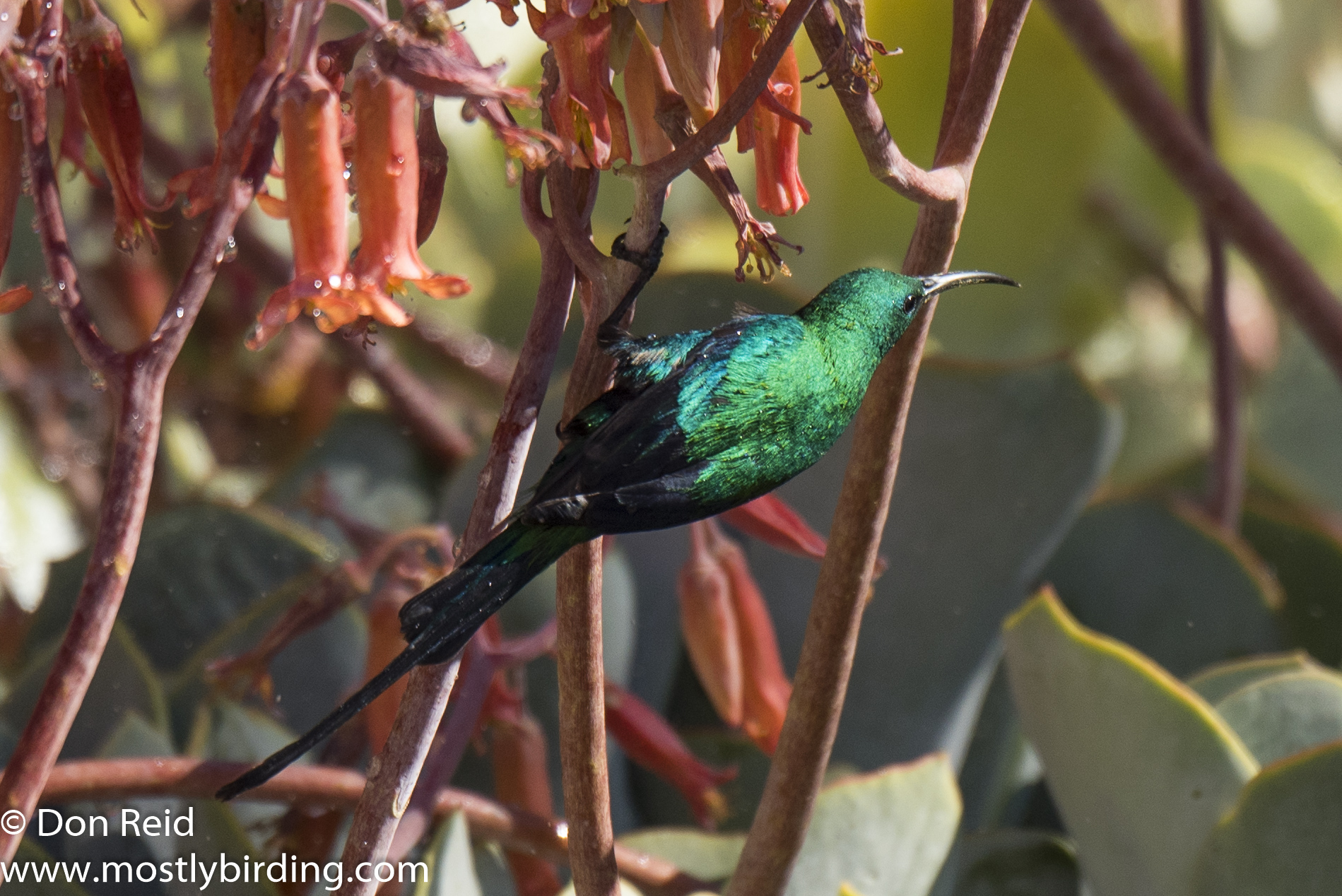
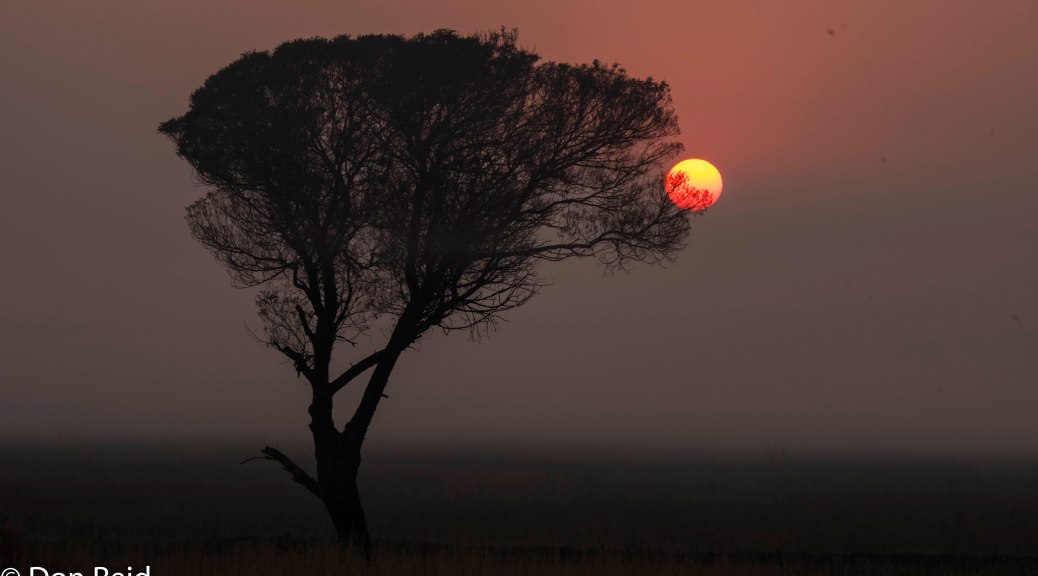
Malachite Sunbird, Kuilfontein near Colesberg
I hardly had time to recover in Mossel Bay when Birding Big Day was upon us and I invited Willie to join me for a long but fruitful day’s birding along some of the back roads of the surrounding countryside. We ended the day quite happy with 124 species and something like 120th place in the national challenge.
Common Ringed Plover, Klein Brak, BBD 2017Red-necked Spurfowl, Brandwag area, BBD 2017
December
December as usual was given over to family matters with a bit of atlasing squeezed in here and there. Apart from the good birding that Mossel Bay offers, most of my trips were in the direction of Herbertsdale, some 50 kms north-west of Mossel Bay, where the countryside is attractive and the roads quiet.
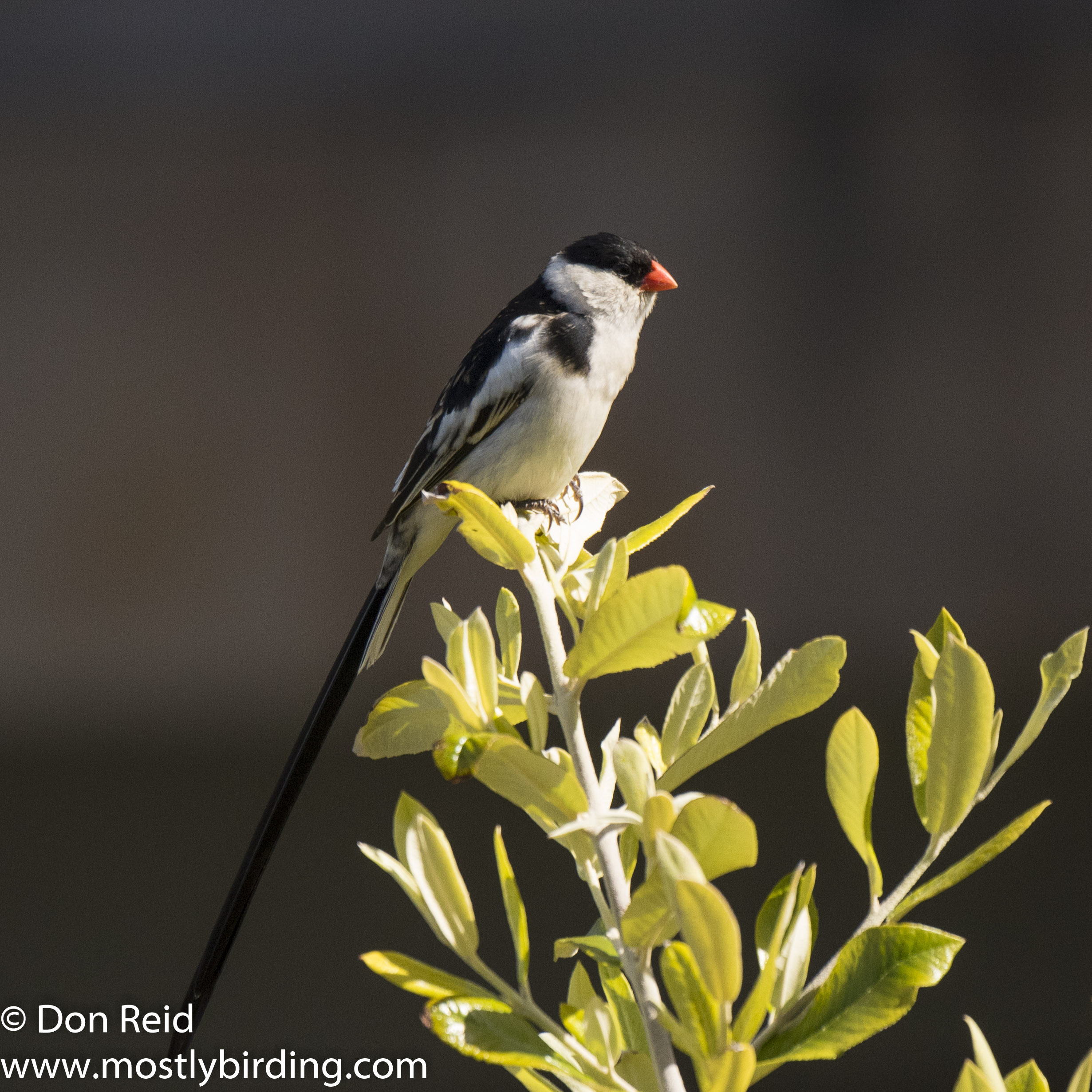
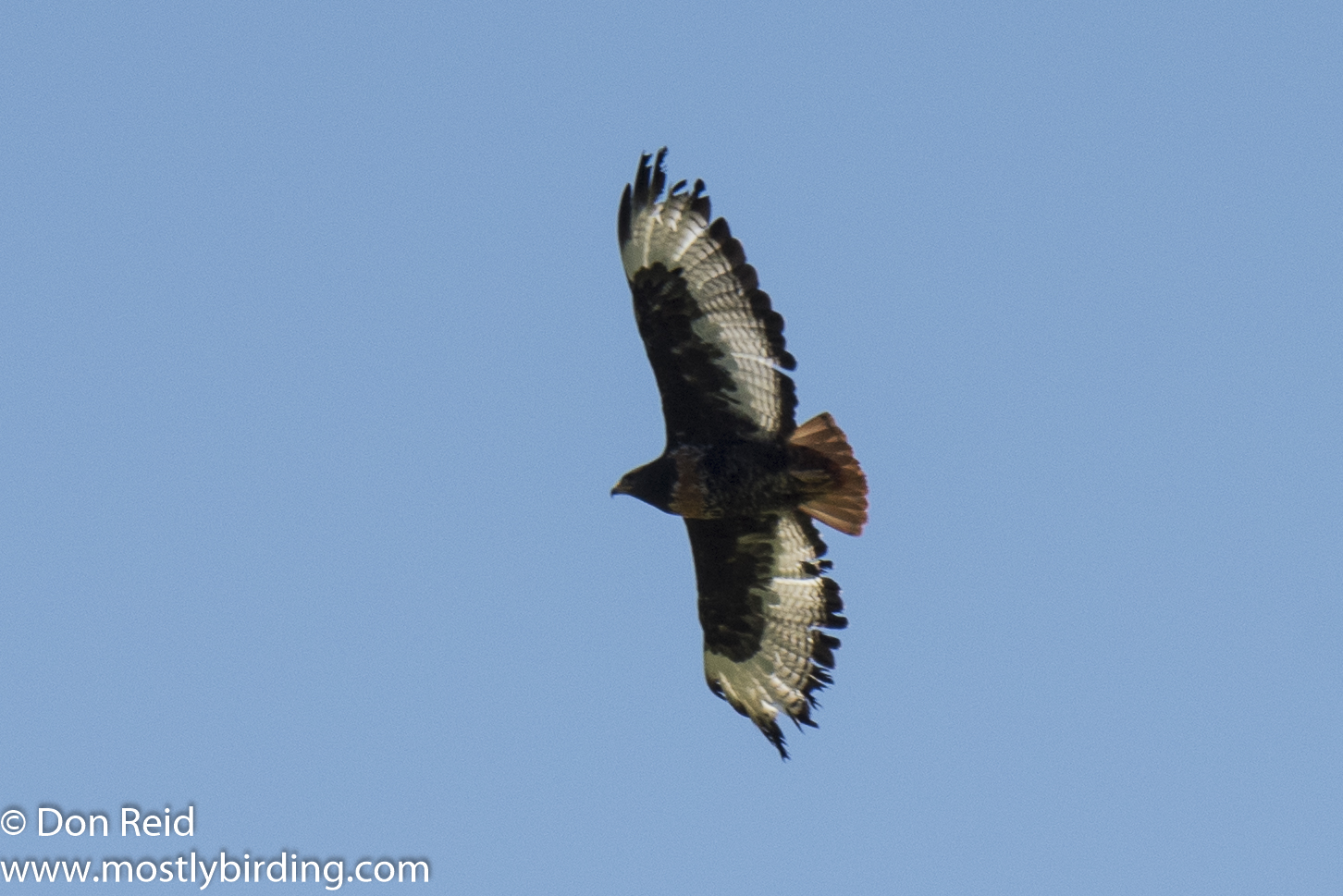
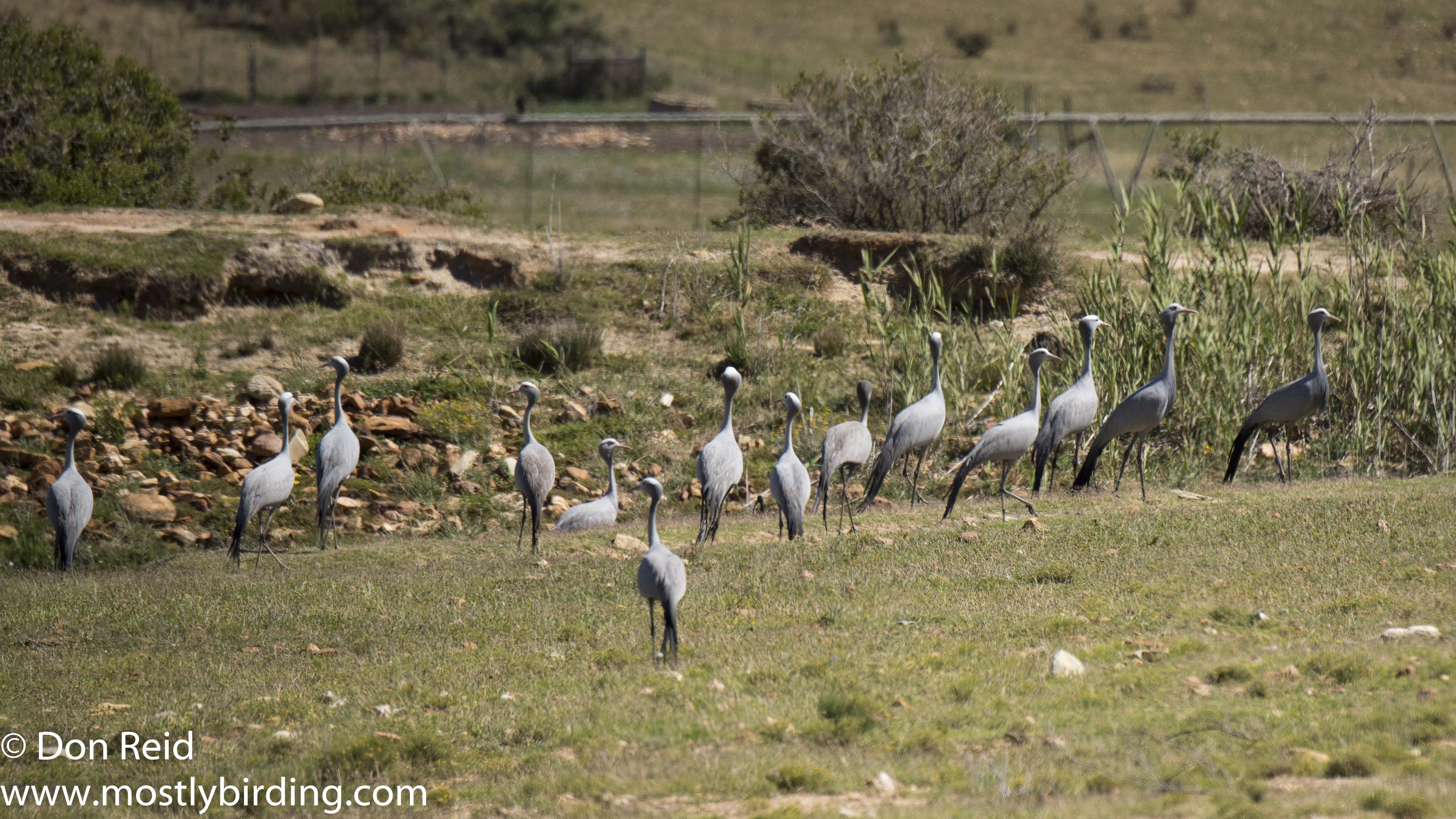
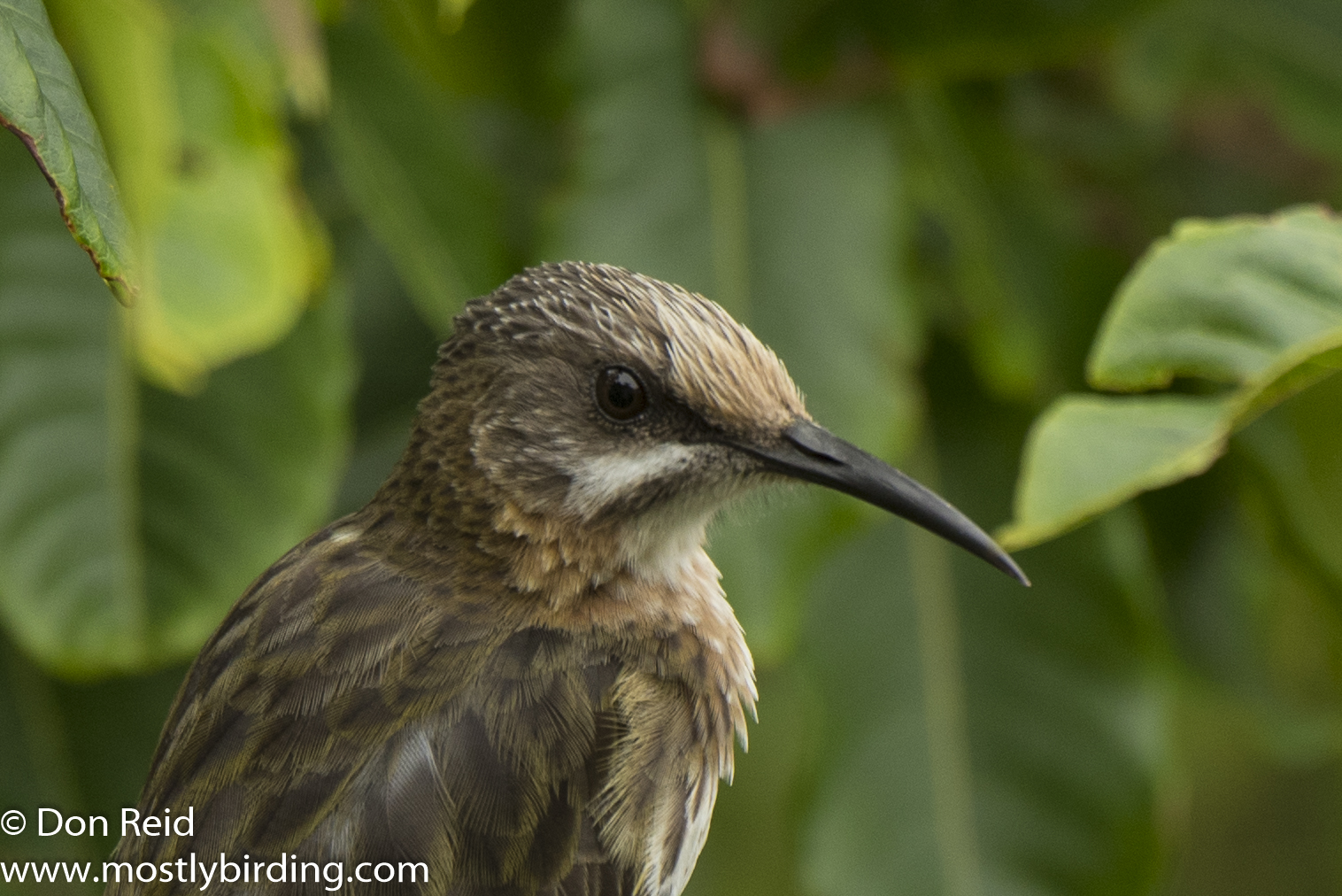
Pin-tailed Whydah (Male), Mossel BayBooted Eagle, Mossel BayWhite-rumped Swift, Mossel BaySteppe (Common) Buzzard, Mossel Bay areaJackal Buzzard, Mossel BayBlue Cranes, north of HerbertsdaleCape Sugarbird, Mossel BayScenery north of Herbertsdale
The last 3 days of the year were spent at a cottage in the hills beyond Calitzdorp, serious Little Karoo country and good for some of the Karoo specials. The cottage was Andre and Geraldine’s dream that became real, through a lot of hard work on their part.
Another memorable Birding Year has come and gone – a year filled once again with travelling to many familiar places and some exciting new ones, atlasing at every opportunity, a number of new birds seen and enough experiences to fill my journal to the brim.
So here’s a synopsis of my birding activities during the year along with photos of a few of the species encountered and places visited. Some of the trips are covered in separate posts in a lot more detail.
January
Our year kicked off in Mossel Bay, our home town for some of the year and I took the opportunity to do some atlasing / birdmapping in the area – Hartenbos and the adjoining inland in particular.
Agulhas Long-billed Lark in full song
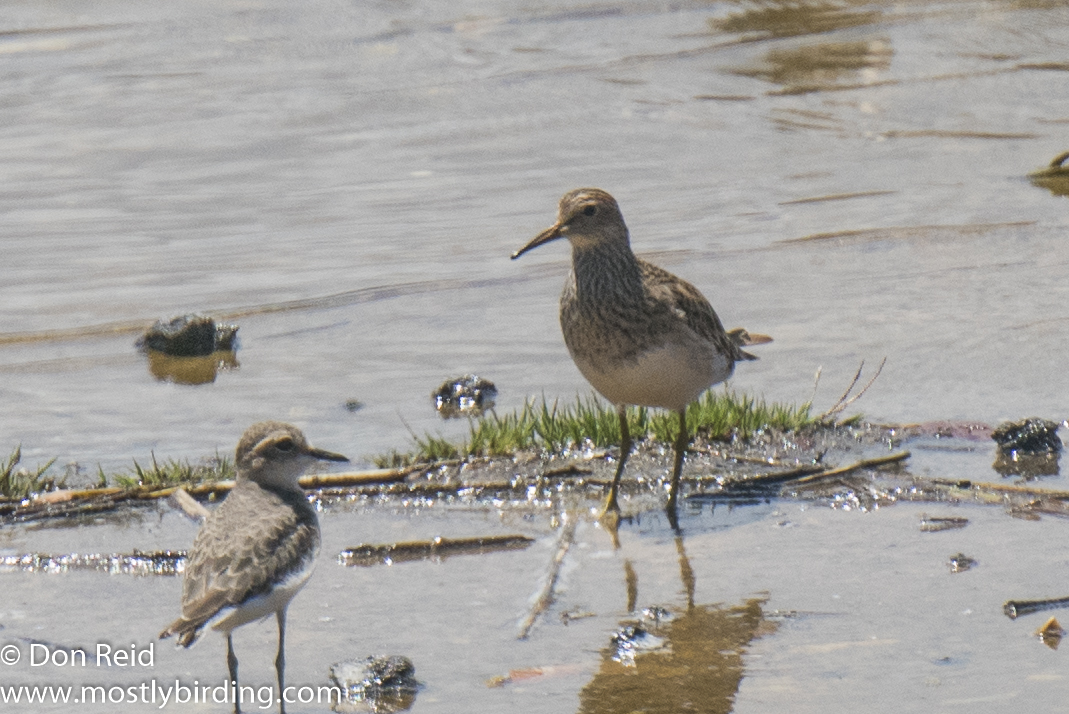
On the 9th I had the unexpected thrill of finding a Pectoral Sandpiper, classed as a national rarity, which I duly reported to Trevor Hardaker who sent out a note to all subscribers to the SA Rare Bird News network – what a memorable day!
Pectoral Sandpiper, Hartenbos River weirSA Rare Bird News report
We started our journey back to Gauteng on the 13th, first stopping over in charming Prince Albert for two nights. I managed to fit in some atlasing in the area including a pleasant trip along the Damascus road.
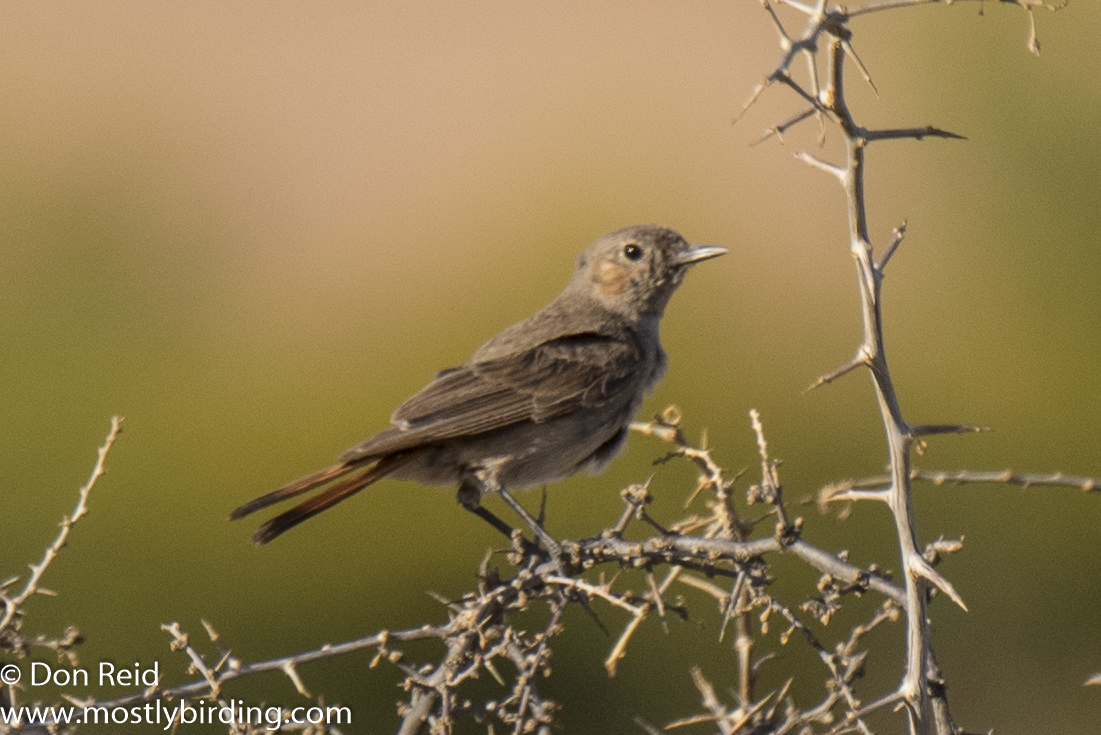
Familiar Chat, Prince Albert (Damascus road)
Our next stop for one night was at Garingboom guest farm near Springfontein in the Free State which also proved to be an interesting birding destination.
Back in Pretoria, my first atlasing was centred around Mabusa Nature Reserve some 100 km north east of Pretoria which was a most enjoyable spot with some challenging roads and good birding
My first trip of the year to Kasane presented some great birding and atlasing opportunities in the summer lushness of Chobe Game Reserve.
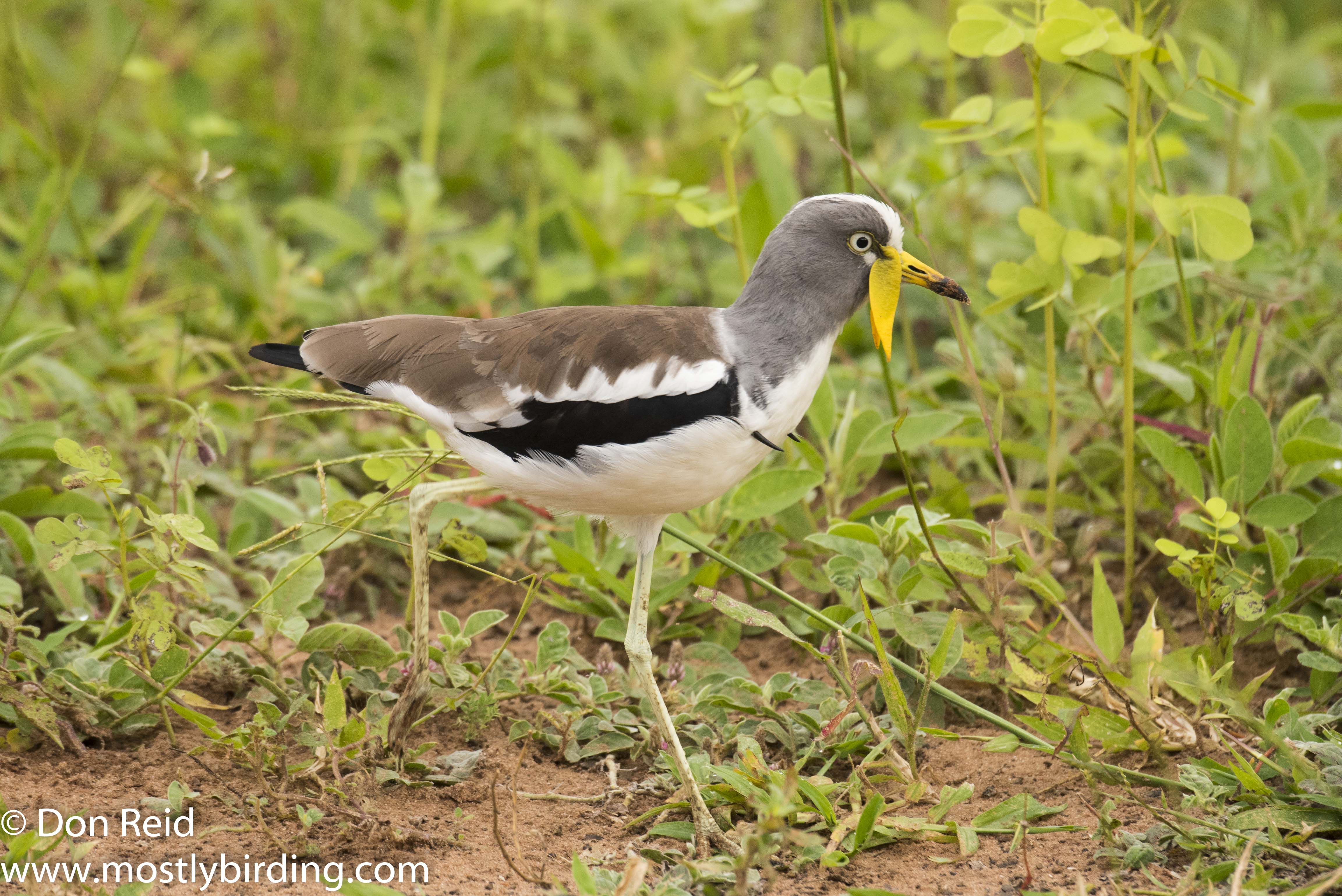
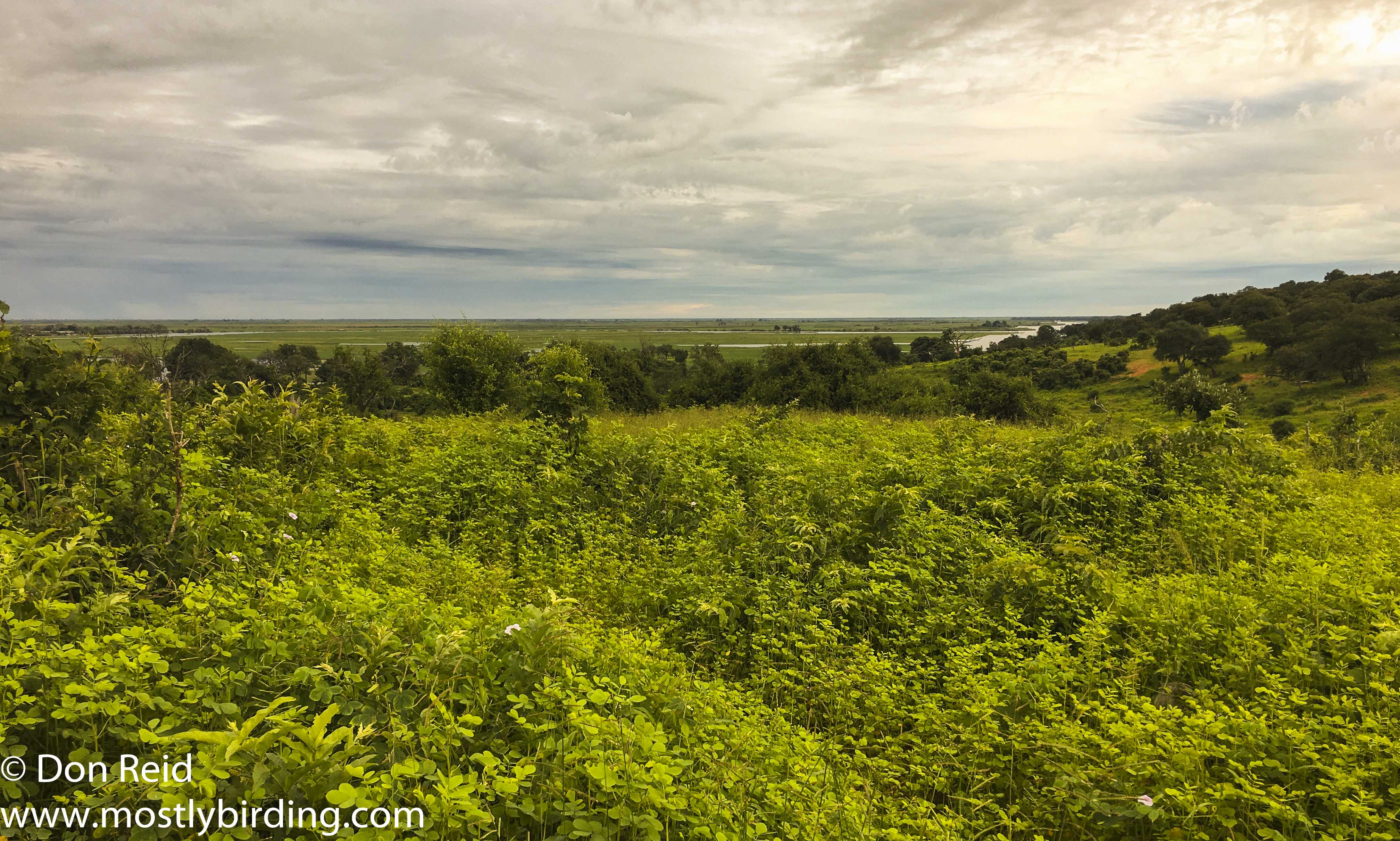
Kasane Forest ReserveWhite-crowned Lapwing, Chobe Game ReserveChobe Game ReserveDouble-banded Sandgrouse, Chobe Game Reserve
Back in Pretoria I did further atlasing in the Delmas area
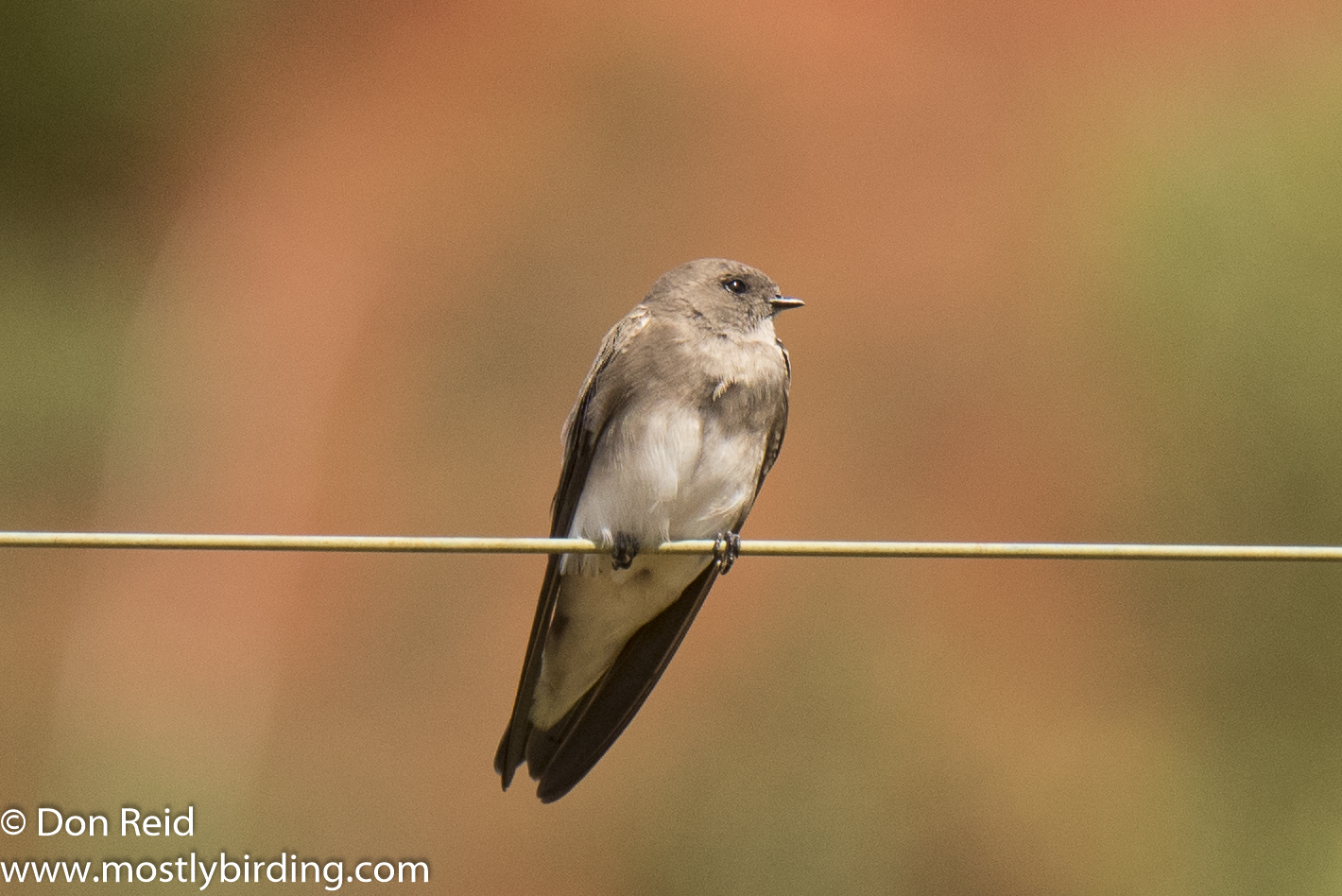
Brown-throated Martin, Delmas area
We used our timeshare points for a weekend at Champagne Valley in the Drakensberg, which provided an opportunity for some atlasing in the area
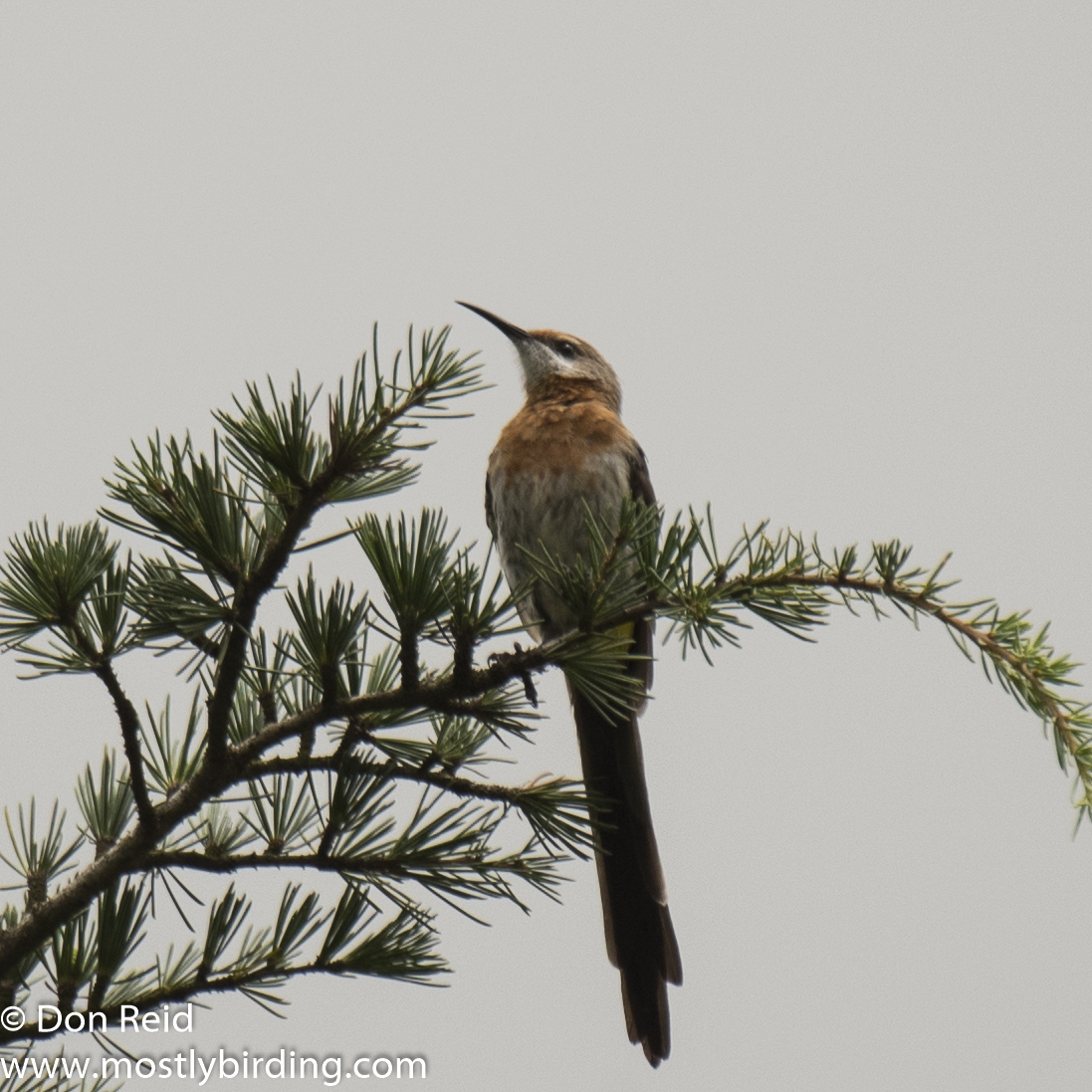
Grey-crowned Crane, Drakensberg southDrakensberg southGurney’s Sugarbird, Drakensberg south
March
Our Canadian family arrived on the 6th for a two week visit which included a Kruger Park visit and a trip to Vic Falls and Chobe Game Reserve
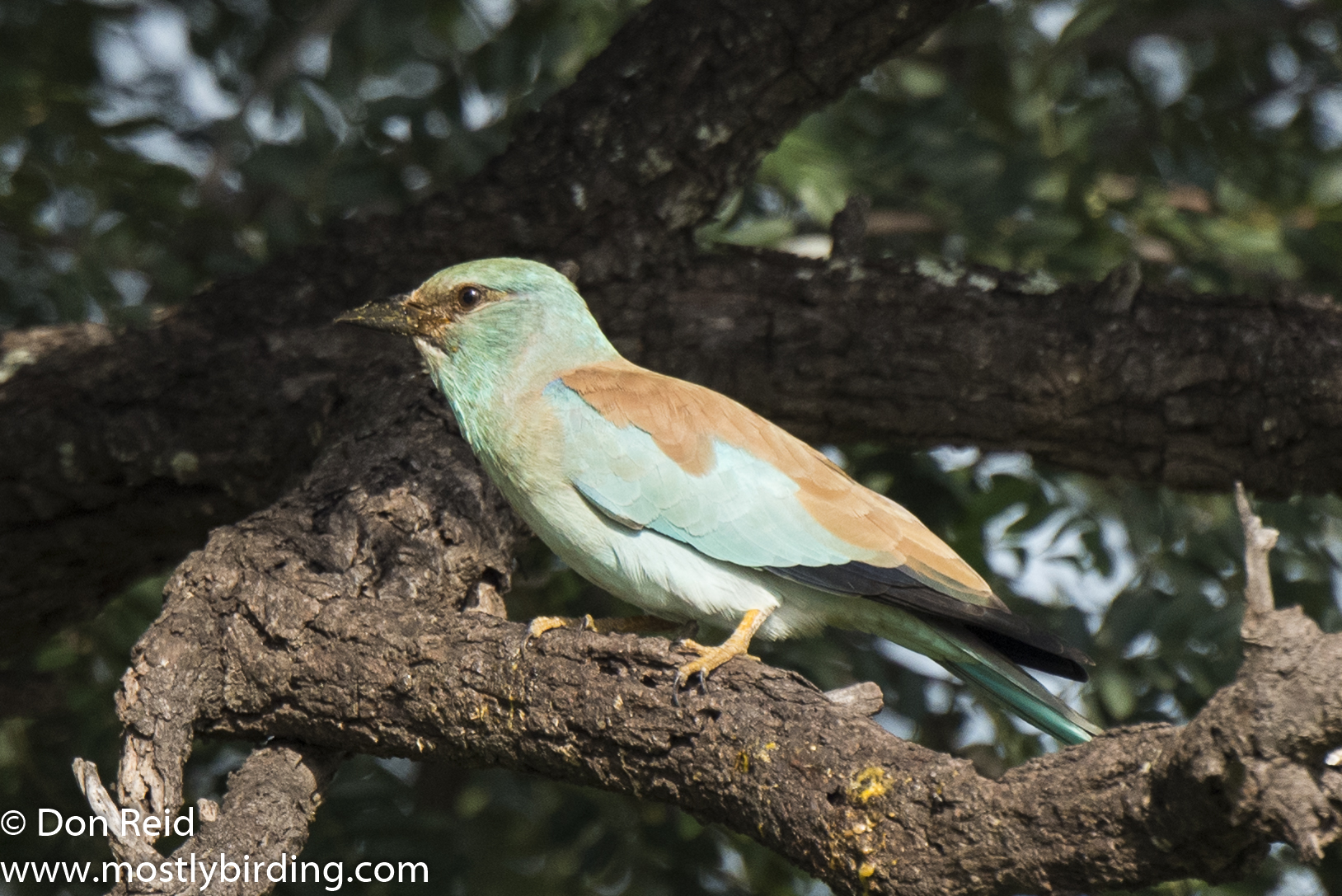
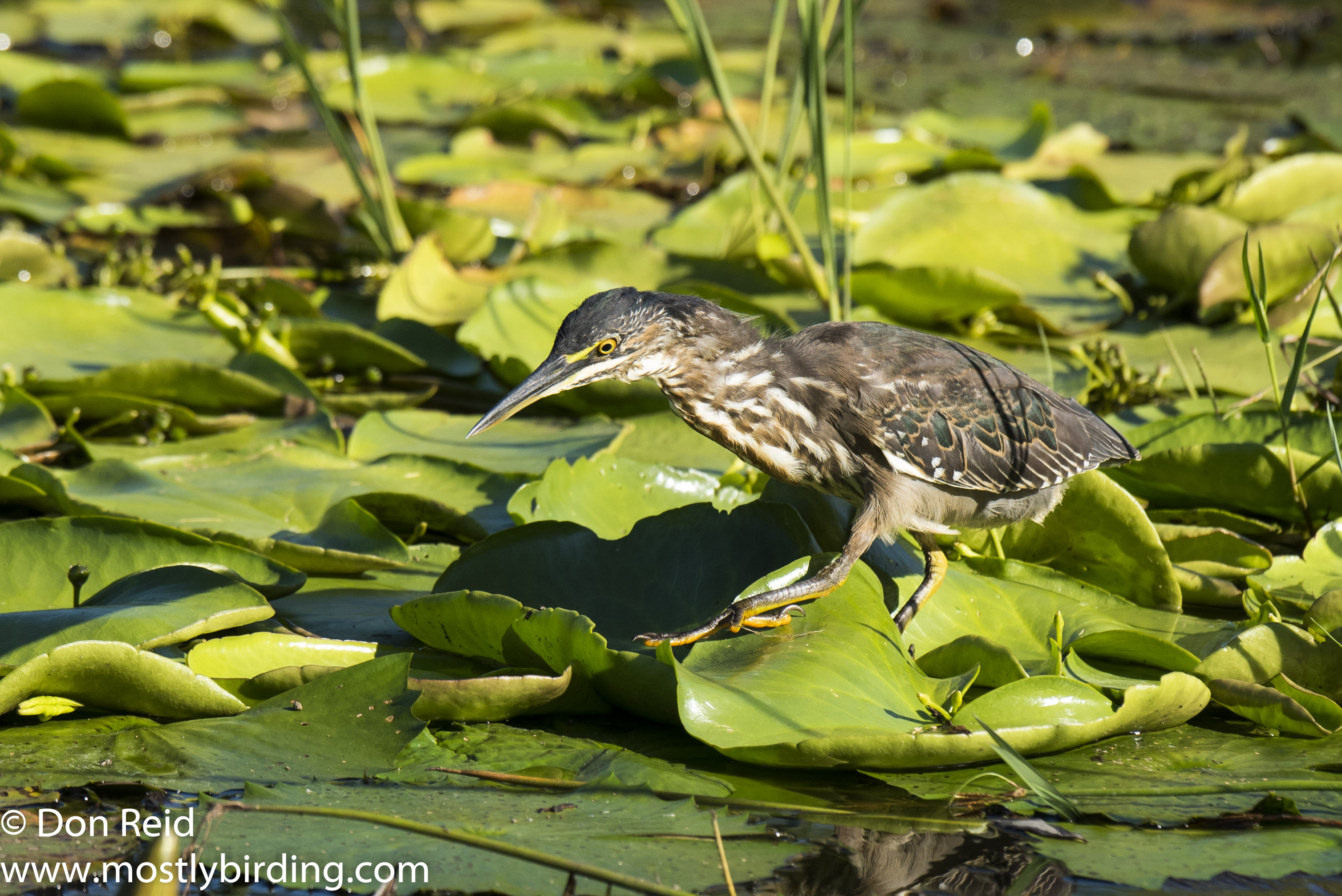
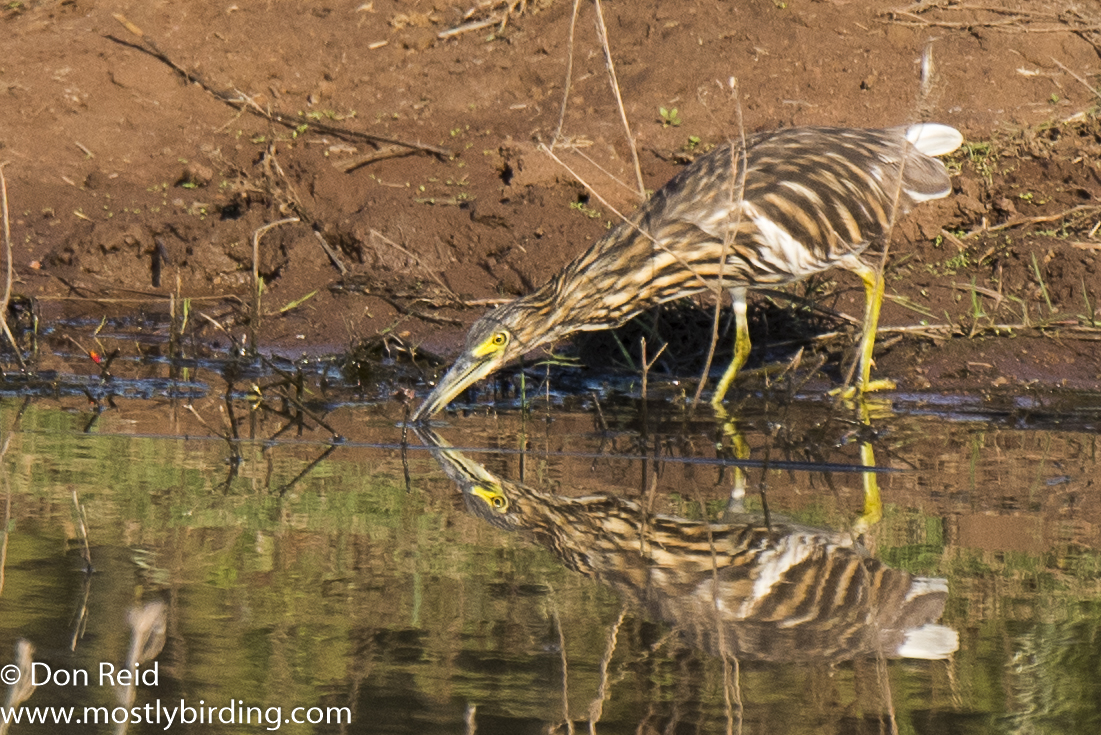
European Roller, Kruger ParkGreen-backed Heron (Juvenile), Lake Panic in Kruger ParkWhite-fronted Bee-eater, Zambezi CruiseLittle Sparrowhawk (Juvenile), Chobe Safari Lodge
Getting back to normal after the excitement of touring with the family, we visited Potchefstroom, and I was happy to take grandson Christopher (6) with me for some birding at the local dam – I think he was more interested in my Prado’s little fridge filled with cold-drinks, but you have to start somewhere!
April
My monthly visit to Kasane, Botswana afforded another opportunity for some birding around Kasane and in Chobe Game Reserve – such a great destination which I try not to spoil with too much work….
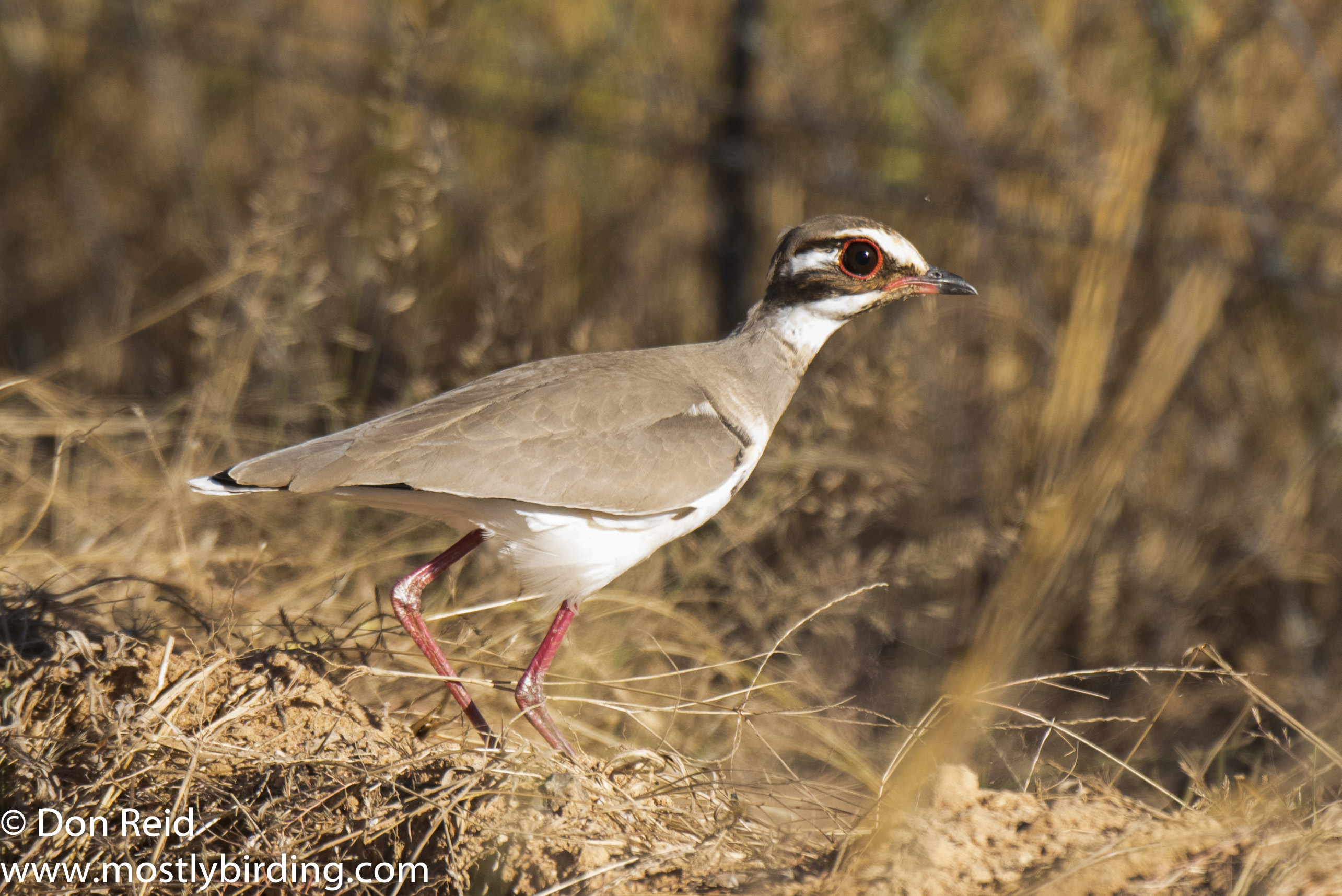
Bronze-winged Courser, Kasane Airport perimeterWestern Yellow Wagtail, Kasane Sewage Works
Then it was time for our much anticipated “Flock at Sea” cruise from the 24th to 28th arranged by Birdlife SA
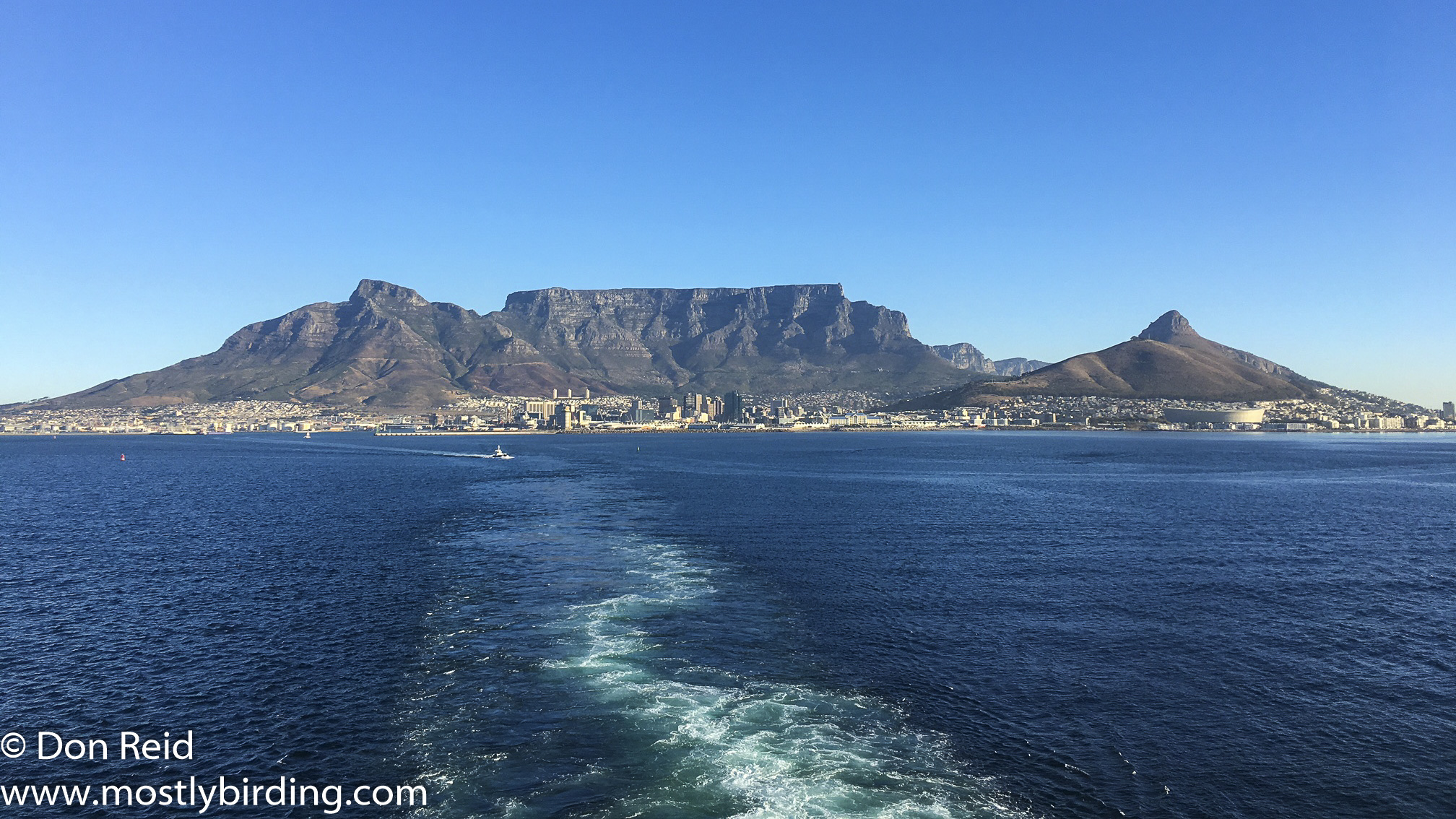
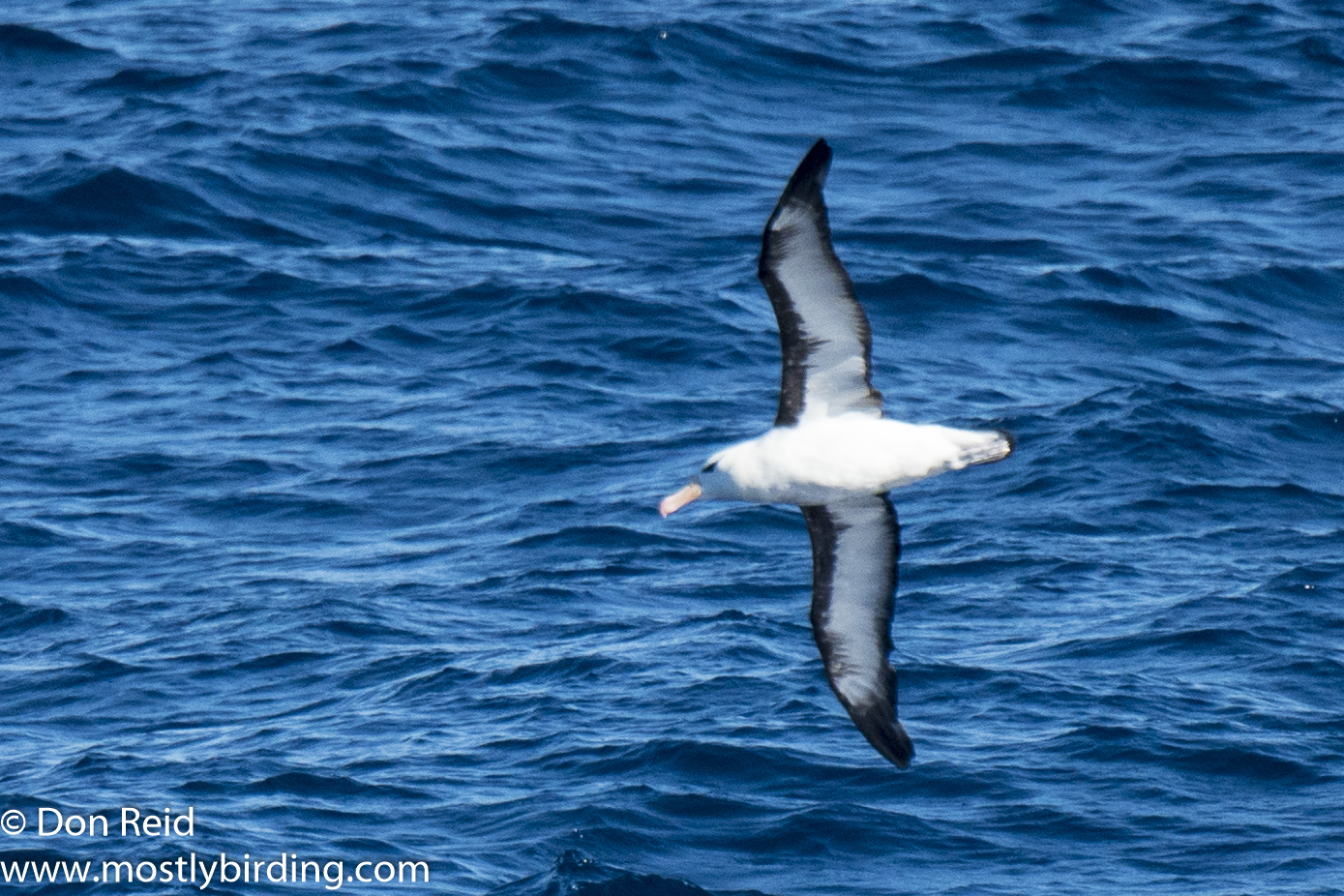
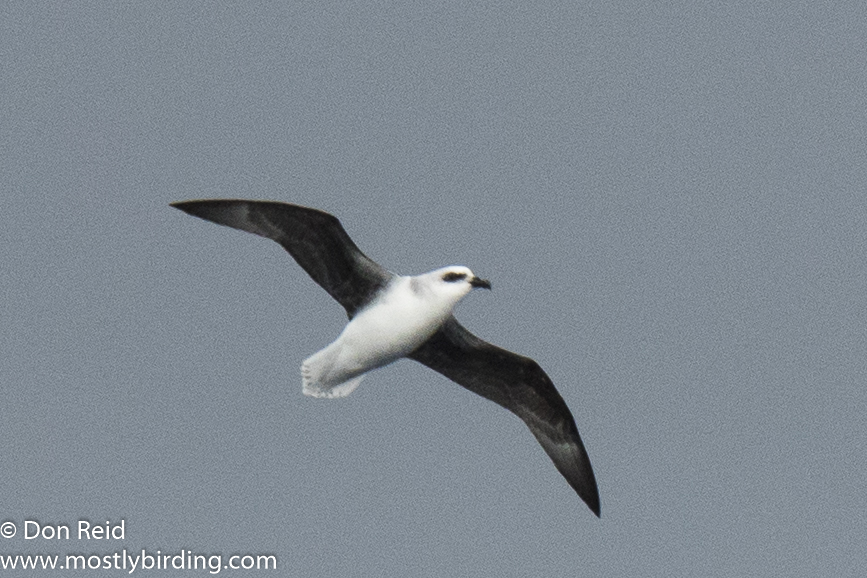
Flock at Sea CruiseFlock at Sea CruiseBlack-browed Albatross, Flock at Sea CruiseWhite-headed Petrel, Flock at Sea CruiseFlock at Sea Cruise
May
Another short autumn visit to Mossel Bay meant I could fit in some further atlasing in the Southern Cape
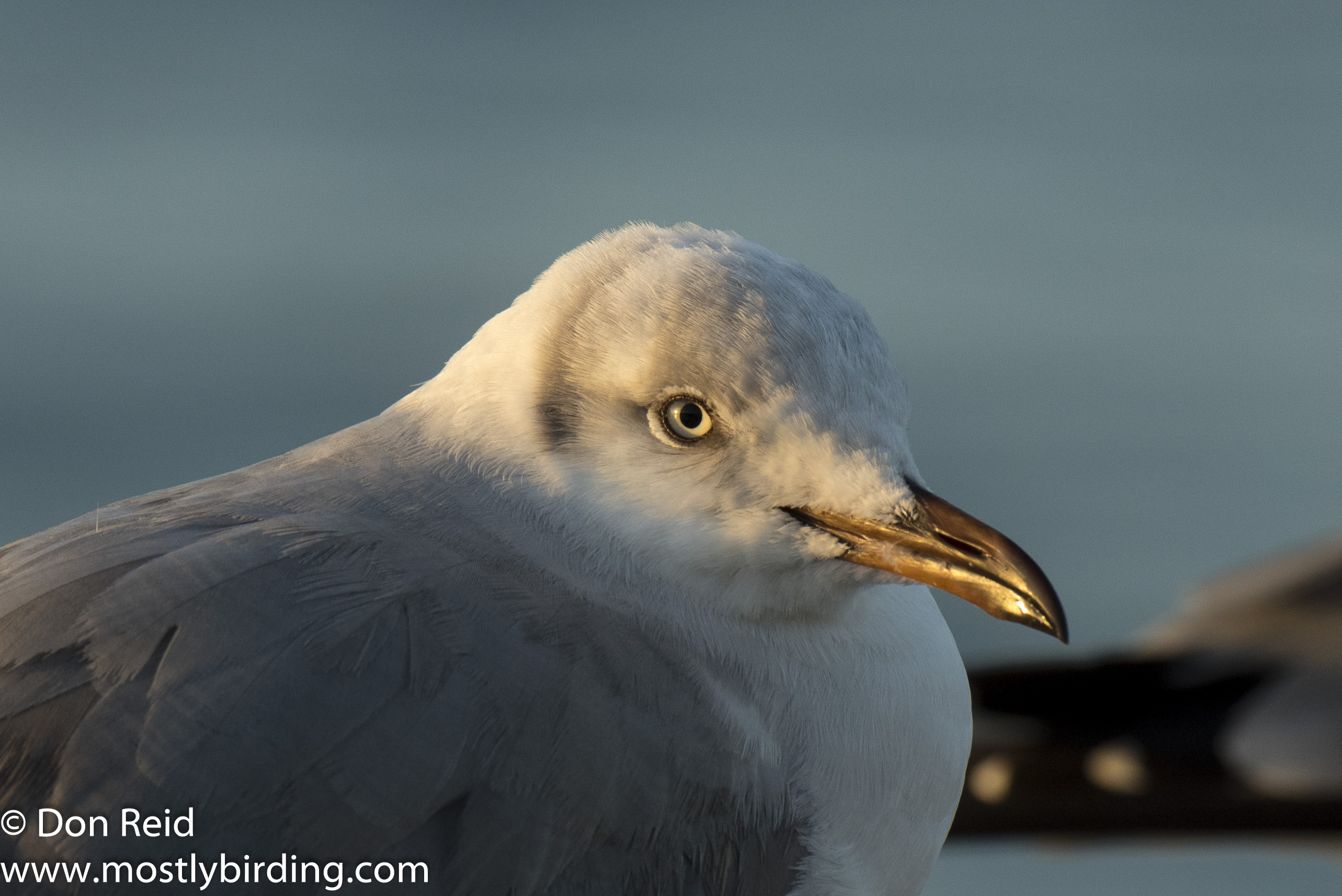
Grey-headed Gull, Mossel BayCape Rock-Thrush (Male), Victoria BayZitting Cisticola, Herbertsdale area
Later in the month Koos and I headed to Bushfellows Lodge near Marble Hall in Mpumulanga for a day’s atlasing (and some snake watching)
Just a week later we spent 4 days at Verlorenkloof also in Mpumulanga with Koos and Rianda, one of our favourite spots for relaxing and blessed with a variety of birding opportunities
The month kicked off with a visit to Kasane but this time my birding was limited to a rather hurried morning trip into Chobe Riverfront
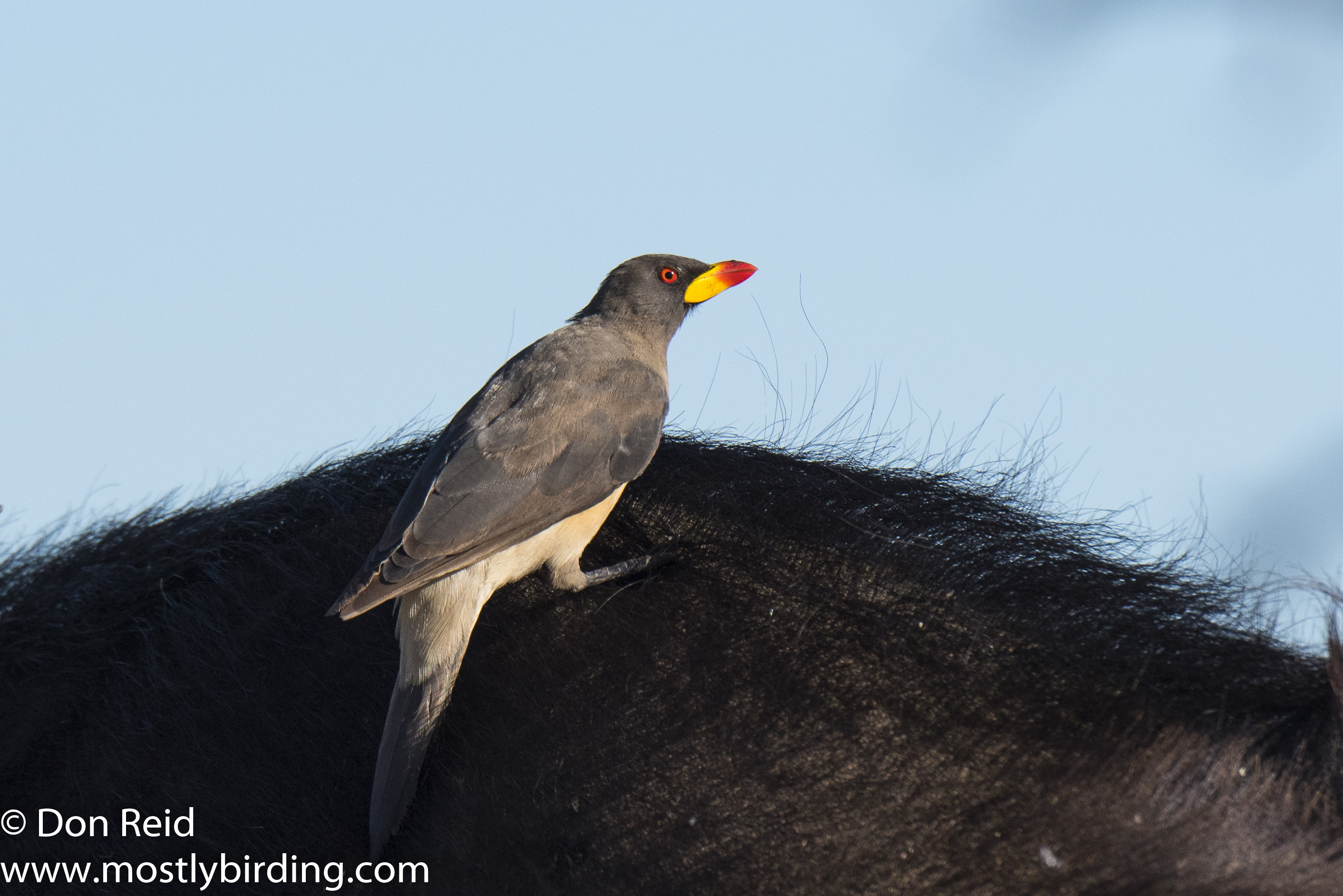
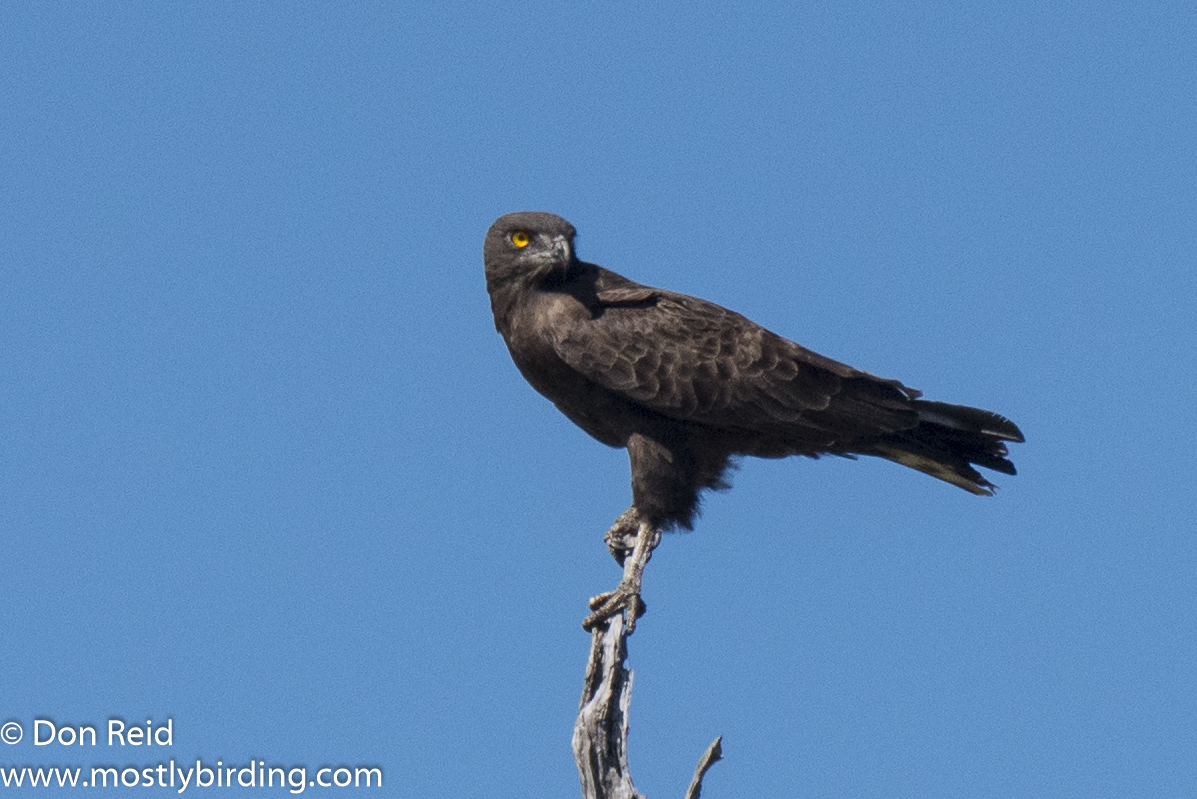
Yellow-billed Oxpecker, Chobe Game ReserveBrown Snake Eagle, Chobe Game Reserve
On the 10th Koos and I braved the mid-winter cold and the notoriously dangerous Moloto road north of Pretoria to do some atlasing in NE Gauteng
Marico Sunbird, far north east 4DG
We closed out the half year with our “get away from it all” break in La Lucia near Durban at our timeshare resort – this was interrupted by a breakaway to northern Zululand to view a Malagasy Pond-Heron that had taken up residence at Phinda Game Reserve.
Phinda North KZNMalagasy Pond-Heron, Mziki dam, Phinda North KZNLong-tailed Paradise Whydah, Phinda North KZN
In the latter part of the week I visited Pigeon Valley for some superb forest birding
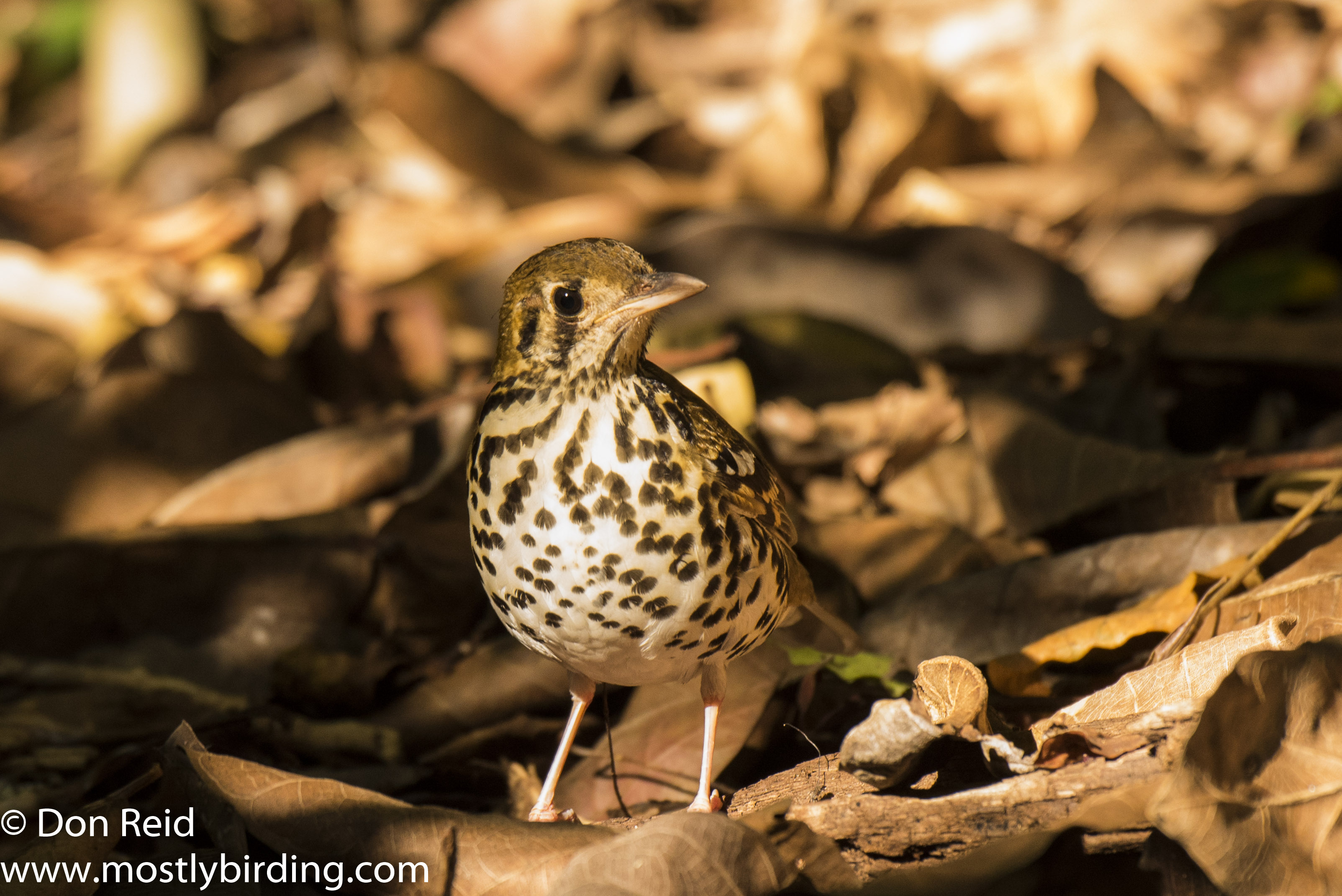
Spotted Ground Thrush, Pigeon Valley DurbanPigeon Valley DurbanGrey Waxbill, Pigeon Valley Durban
July to December will be covered in the next post – watch this space!
Here’s a further selection of my favourite photos taken during 2017 – from our travels, holidays and birding trips
If you have any favourites, do let me know by adding your comment!
The Birds (Continued)
Southern Ground Hornbill, Chobe Game Reserve, BotswanaKelp Gull, Vleesbaai, Western CapeSouthern Double-collared Sunbird, Mossel BayChinspot Batis, Verlorenkloof in MpumulangaWhite-fronted Bee-eater, VerlorenkloofCapped Wheatear, Chobe RiverfrontYellow-billed Stork, Phinda Game Reserve in North Kwazulu-NatalPied Kingfisher, PhindaRed-capped Robin-Chat, Pigeon Valley DurbanSouthern Carmine Bee-eater, Chobe RiverfrontMalachite Kingfisher, Chobe RiverReed Cormorant, Chobe RiverLittle Egret, Chobe RiverAfrican Spoonbill, Chobe RiverYellow-billed Oxpecker, Chobe RiverLong-toed Lapwing, Chobe RiverYellow-billed Stork, Chobe RiverPied Starling, Vlaklaagte near Bronkhorstspruit, GautengMountain Wheatear (female), near OudtshoornHottentot Teal, Marievale GautengBooted Eagle, Mossel BayFork-tailed Drongo, north of Herbertsdale, Western Cape
The Reptiles
Mole snake, Delmas areaBoomslang, Bushfellows Game Lodge near Marble HallSkaapsteker (?) near Mossel BayAfrican Crocodile, Chobe River
The Butterflies
Guineafowl (Hamanumida daedalus), Mabusa Nature Reserve in MpumulangaPoplar leopard butterfly (Phalanta phalanta aethiopica), Vic Falls NationalParkButterfly, Mossel Bay (No ID yet – can’t find it in the book)
Mauritius
Air Mauritius sunsetSnorkeling – GeraldineSnorkeling – Moorish idolSnorkelingSnorkeling – the view from the seaSunset, Le Victoria hotel, MauritiusLe Victoria hotel, Mauritius -early morning
Flock at sea cruise
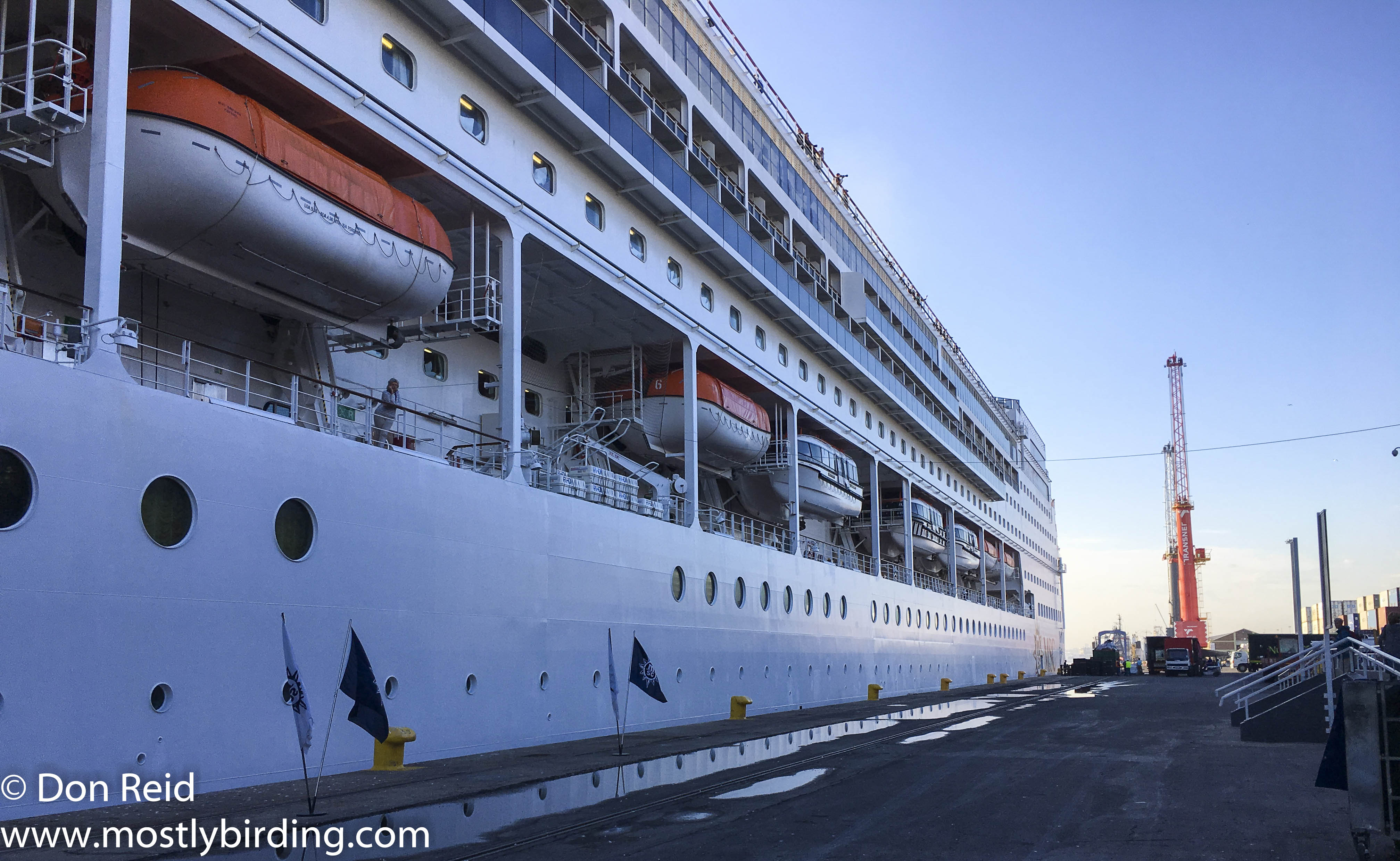
Flock at Sea CruiseFlock at Sea CruiseFlock at Sea CruiseFlock at Sea CruiseFlock at Sea CruiseCape Town harbour early morning
Other stuff
Snail, Boschkop Dam near PotchefstroomFine flowers, VerlorenkloofSea shell, Mossel Bay
Wishing all who may read this a 2018 that meets all of your expectations!
Here’s a selection of my favourite photos taken during 2017 – from our travels, holidays and birding trips – chosen from my collection of over 2500 photos for the year. Each one has a story attached which I have tried to capture in a few words………..
If you have any favourites, do let me know by adding your comment!
The Places
Kasane Forest Reserve – lush after good summer rainsEarly morning, Delmas area – on my way to do some bird atalsingChampagne Valley – a weekend in the DrakensbergDrakensberg grasslandBourkes Luck Potholes – on tour with our Canadian familyThaba Tsweni lodge – near Sabie, MpumulangaVictoria Falls National Park – more touring with the canadiansThe bridge at Vic Falls National ParkKingdom Hotel Vic FallsChobe sunset, Kasane – incomparableFlock at Sea Cruise – back in Cape Town Harbour early morningSandbaai near HermanusVictoria Bay surfer actionTop dam, Verlorenkloof – our favourite breakaway spotKasane, Sundowner spotBronkhorstspruit area – another early morning of bird atlasingSpring Day in Mossel BayKuilfontein near ColesbergAtlasing north of Herbertsdale, near Mossel BayMossel Bay golf estate – our home for part of the yearGamkakloof near Calitzdorp – Klein KarooNorth of Herbertsdale
The Wildlife
Klipspringer, Prince AlbertChacma Baboons, Chobe Game ReserveZebra, Chobe Game ReserveHippo, Chobe Game ReserveLions, Phabeni area, Kruger National ParkHippo, Zambezi CruiseImpala, Chobe game drive – M for McDonaldsChacma Baboon (Juvenile), Chobe game driveAfrican Elephant greeting, Game cruise ChobeLion, Chobe RiverfrontChobe RiverfrontBlack-backed Jackal, Chobe RiverfrontHippo, Chobe RiverCape Buffalo, Chobe RiverAfrican Elephant, Chobe RiverAfrican Elephant, Chobe RiverAfrican Elephant, Chobe River
The Birds
Familiar Chat, Prince AlbertAmur Falcon, Garingboom Guest farm, SpringfonteinLong-tailed Widow, Mabusa Nature ReserveDouble-banded Sandgrouse, Chobe Game ReserveCommon Sandpiper, Delmas areaEuropean Roller, Satara-NwanetsiWhite-fronted Bee-eater, Zambezi CruiseAfrican Fish-Eagle, Game cruise ChobeBronze-winged Courser, Kasane Airport perimeterLilac breasted Roller, Chobe Game ReserveYellow-billed Oxpecker, Chobe Game Reserve
Part Two includes more birds, the reptiles, butterflies and other stuff
Wishing all who may read this a 2018 that meets all of your expectations!
24 December 2017 – 7.42 pm : Knysna Warbler / Bradypterus sylvaticus (Knysnaruigtesanger) becomes my latest lifer – number 765 on my Southern Africa life list and the 9th addition to my life list for 2017. Location : Mossel Bay Golf Estate
Those are the bare facts and as I was not able to get a photo of this elusive bird, the post could end right here……… but there is more to the story than that of how I came to find this bird.
Firstly, some information on this species, starting with an extract from Roberts Birds of Southern Africa :
Status – Uncommon to rare and localised endemic; regarded as vulnerable
Habitat – Dense tangled thickets on edge of forests and along watercourses
General Habits – Very secretive; presence usually revealed only when calling
The Eskom Red Data Book of Birds of South Africa adds to this :
The Knysna Warbler is endemic to the region and has a highly restricted and fragmented distribution….
The SABAP2 distribution map below shows the current distribution of the Knysna Warbler, spread along the southern coastal regions of SA :
Going into more detail the map below is of the pentads in the Mossel Bay area, the coloured ones showing where Knysna Warbler has been recorded during the 10 years that records have been gathered – yellow, orange and green indicate a lower number of sightings, while blue, pink, red and purple indicate more frequent sightings. Uncoloured pentads are where the species has not been recorded yet. So for example there has been only one previous record in Mossel Bay (the yellow block) in 10 years
Estimates put the total population at less than 2500 individuals with a status of Vulnerable
None of which explains why this species, which occurs in areas I have visited frequently during the 30 or so years that I have been birding, has eluded me until now. That’s birding – no certainties, lots of surprises.
I can only recall one occasion some years ago, during a visit to the Big Tree near Knysna, when I heard the distinctive trilling call from deep in the surrounding forest bush, but was unable to locate the bird at all
I have been very aware of this gap in my birding life list for some time and was determined to put in a special effort to fill this gap during our current December 2017 / January 2018 visit to Mossel Bay. A local birder offered to show me some spots known to be reliable for Knysna Warbler but I had not yet got around to taking up the offer.
The story of my unexpected find starts with a family walk around the golf estate on Christmas eve, around 7 pm in the evening and still light. Gerda and I set off with daughter Geraldine and Andre as well as the two granddaughters – first to leave the group was Megan who had her running shoes on and with the abundant energy of youth went running off like an Impala.
At the top of the hill Gerda and Geraldine returned home to put the final touches to the Christmas eve dinner, leaving myself, Andre and Maia to continue, heading for the clubhouse with the intention of doing a full circuit of the estate. A little further along the road it started drizzling lightly and with dark-ish clouds chasing in from the sea, I suggested a shortcut over the golf course to get home – problem was Maia was barefoot and with access to the golf course being across a stretch of veld with the possibility of thorns, she and Andre decided to turn around and walk back along the paved road we had just come on. This left me to continue on my own with the weather threatening and dusk approaching ….
I increased my pace a tad and at the bottom of the next hill I took a path on to the golf course and headed towards the edge of the 14th fairway and the path homewards. The rain had stopped and the dark clouds seemed to be moving away from me so I slowed my pace and listened to the birds calling from the dense bush that lines this part of the estate – the usual Mousebirds, Apalises and others were still active.
The dense bush lining the fairway, from where the Knysna Warbler was calling
Then a different call attracted my attention and had me wondering out loud what it could be – my auditory memory kicked into overdrive and I just knew this was a call that I needed to get a handle on, familiar yet strange at the same time and certainly one I had not heard on the estate before.
The warbler like call started slowly then sped up into a drawn-out rapid trilling conclusion, with the clarity of a whistle with a pea in it – after some deep thought I went to the Roberts app on my iphone and looked up western cape then warblers. As soon as I saw Knysna Warbler it hit me like a wet snoek and I pressed the play on the bird’s call – bingo, that’s what it was!
This illustration is from Roberts Birds of Southern Africa :
Next challenge was to try and see it, so I got as close as I could to the bush from where it seemed to be calling and searched in the fading light. It sounded so close I felt I should be able to reach out and touch it, but it is a master at remaining hidden, not even stirring a leaf to give a clue to its position.
After spending 20 minutes or so searching, the best sighting I could get was of a small drab bird flitting from one dense bush to the next, but I decided this was the best I was going to do and left it calling non-stop, even though it was by now almost dark.
In any case this is an example of a bird whose call is much prettier than the bird itself, so I was quite content with my sighting / hearing and very happy to be able to add it to my life list at last.
So after agonising about where I should go to find this species, it popped up virtually on my doorstep – considering the circumstances that led to my finding it, I was left with the feeling that this was how it was meant to be.