Category Archives: Butterflies

Atlasing Tales 11 – Friemersheim and George Area

These tales record some of the more memorable experiences while atlasing – in this case during March 2023 while we were at our ‘other’ home in Mossel Bay (where we now reside permanently)

And in case you’ve forgotten or have not heard of Atlasing, here’s a brief synopsis –

Atlasing is the regular mapping of bird species in a specific area called a “pentad”. Each pentad has a unique number, based on its geographical position according to a 5 minute x 5 minute grid of co-ordinates of latitude and longitude, which translates into a square of our planet roughly 8 x 8 kms in extent.

As a registered observer / Citizen scientist under the SABAP2 program (SA Bird Atlas Project 2), I record all of the species I see or hear in a particular pentad over a period which can be anything between 2 hours and 5 days, for submission to the project database at the ADU (Animal Demography Unit) based in Cape Town.

George – Country roads west of town

Gerda’s last treatment, taking up most of the day at the clinic in George, meant I had a chance to do some atlasing in the area once again. I didn’t want to travel too far from George so chose a pentad directly west of the town.

Pentad 3355_2215

I headed west out of George, taking Charles street which winds through country farmland and hills before descending into Great Brak. Just after the start of the pentad the road – which is gravel most of the way – descends to the single lane bridge over the Maalgate River

Bridge over Maalgate River

There I spent some time on both sides of the river, recording Fork-tailed Drongo, Black Saw-wing, Common Quail, Little Rush Warbler and several Swallows and Swifts.

Add to that a number of waterfowl at a large dam further along the same road and I had recorded a quick 25 species in as many minutes, including a lone Purple Heron at the dam.

Purple Heron Ardea purpurea Rooireier

One of the ‘hazards’ of atlasing the country roads is encountering the occasional ‘road block’ – fortunately not of the policed kind, rather one that adds to the experience as gentle farm animals pass by the car.

Great Brak inland

After crossing the river again, a Long-crested Eagle flew over to fill my heart with pleasure – later in the adjacent pentad another (or possibly the same one) soared high above with some sort of prey gripped in its beak – this time I had my camera handy for a quick photo as it passed over me
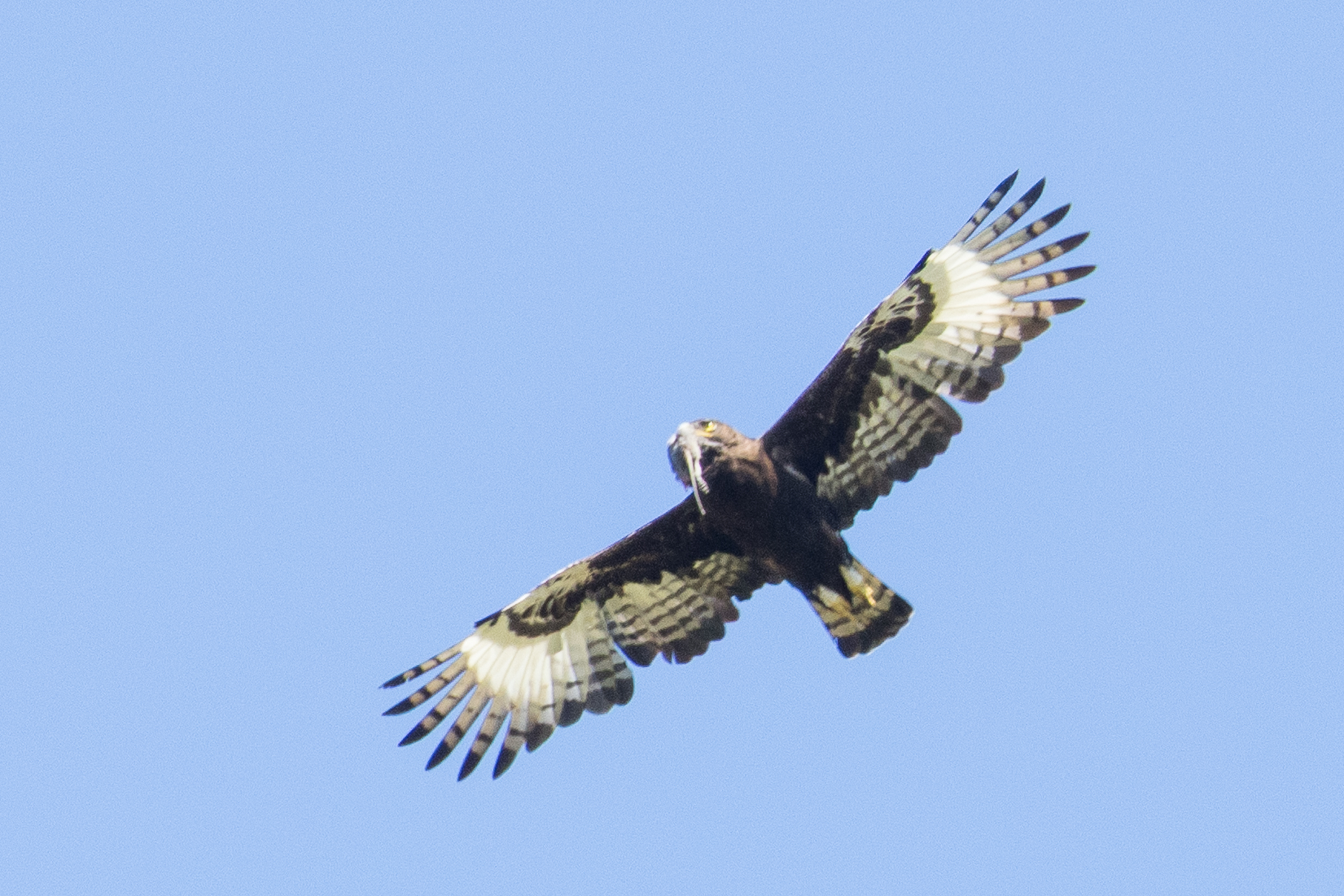
Long-crested Eagle Lophaetus occipitalis Langkuifarend

After that great start, the birding slowed somewhat as I followed the road through farmlands, then headed back in the direction of George along roads that took me through the adjacent pentad.

That led to an unusual encounter with a Malachite Kingfisher, which flew across the road in front of the car, then settled on a fence – unusual because there were no dams or rivers in the vicinity. It perched long enough to allow me to take a few photos in this out of character environment.
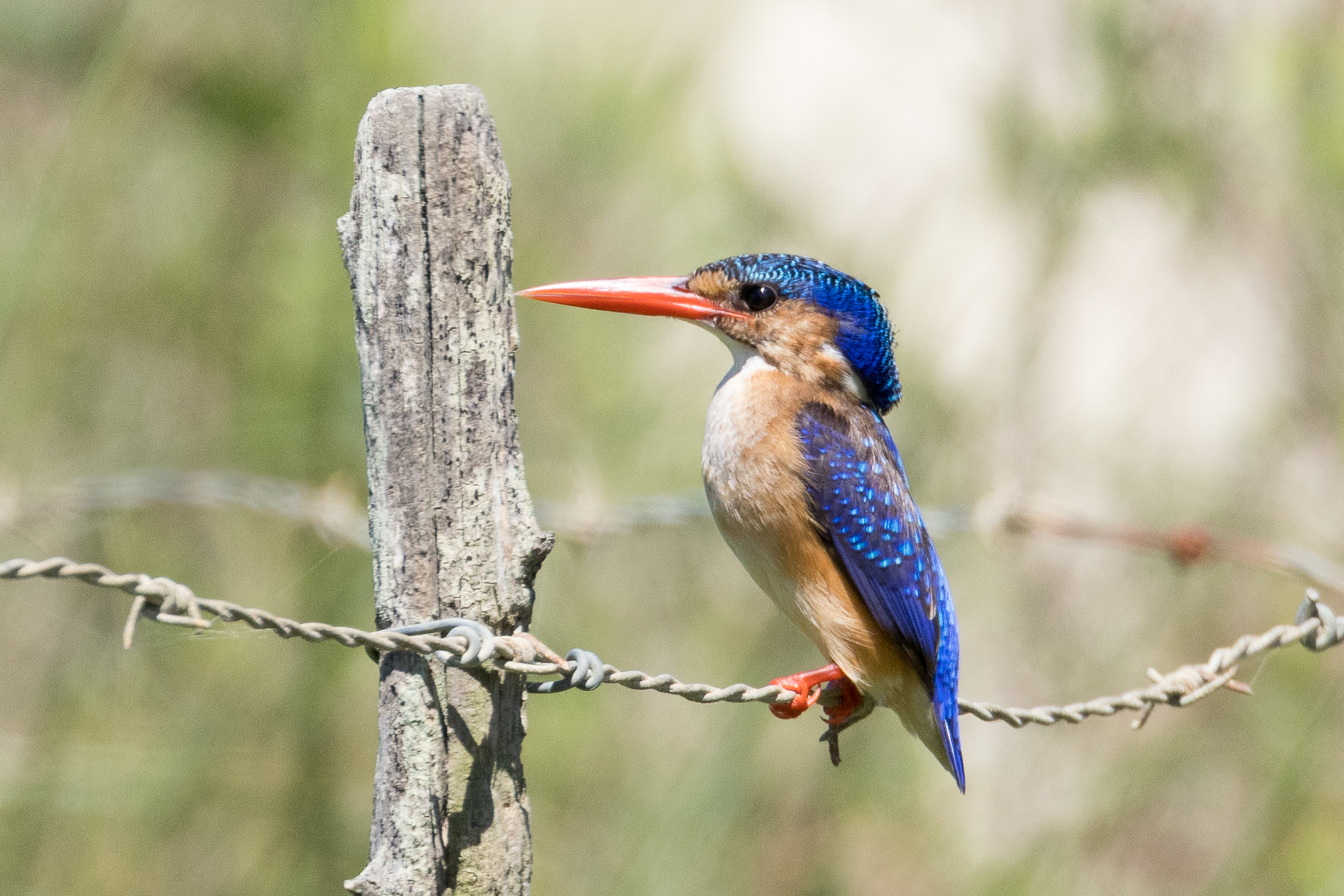
Malachite Kingfisher Alcedo cristata Kuifkopvisvanger

Pentad Species total : 41

Friemersheim Area

Looking to further ‘fill in’ my MBMA Project block of pentads for the year (MBMA is my acronym for Mossel Bay Municipal Area which covers 42 pentads over a wide swathe of the southern Cape from Gouritz River in the west to Glentana in the east and northwards up to the Klein Karoo), I decided to tackle the pentads covering the village of Friemersheim itself and to the west and east of it.

Pentad 3355_2210

I started in the pentad to the east of Friemersheim at 7am on the dot, travelling along Amy Searle Street northwards out of the town of Great Brak River, initially through farmland with a sprinkling of small dams on either side of the road.

First bird was a calling Burchell’s Coucal – their soft bubbling call often advertises their presence long before they show themselves – later I had a surprise close encounter with the species.

I spent some time at the first roadside dams, looking with some difficulty into the low morning sun – a Malachite Kingfisher was already active, perched on a convenient branch and plunging to catch small prey.

Several waterfowl were present, such as the ubiquitous Yellow-billed Duck, a few Red-billed Teals and a Little Grebe.

Carrying on, a field with shortish grass was the right habitat for Lapwings and produced the similar looking Black-winged Lapwings and Crowned Lapwings, the former a scarcer, sought after species, the latter far more common.
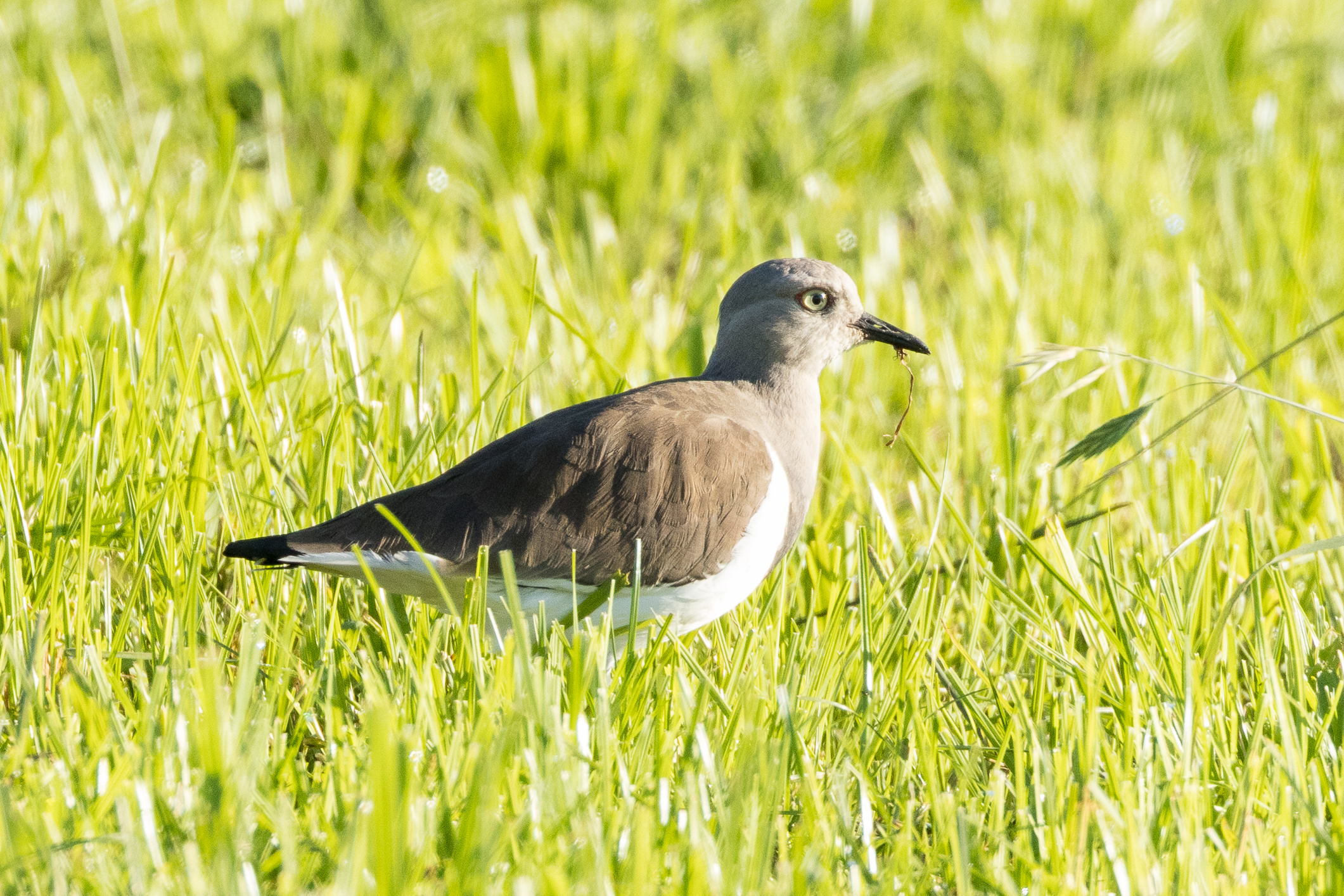
Black-winged Lapwing Vanellus melanopterus Grootswartvlerkkiewiet, Friemersheim area
Crowned Lapwing Vanellus coronatus / Kroonkiewiet

I turned off the tar road eastwards along a nondescript gravel side road, but one I had previously explored with some success. The first stretch travels through more farmland with shortish grass, which was good for Zitting Cisticola and Cape Longclaw, plus many Barn Swallows flying low and scooping flying insects out of the air.

Thereafter the road turns steeply downhill into a wooded valley with a strong river flowing at the lowest point. Halfway down I stopped for coffee and rusks and added 8 species in the 15 to 20 minutes spent listening and looking out for birds, including several forest species –

  • Knysna Turaco calling
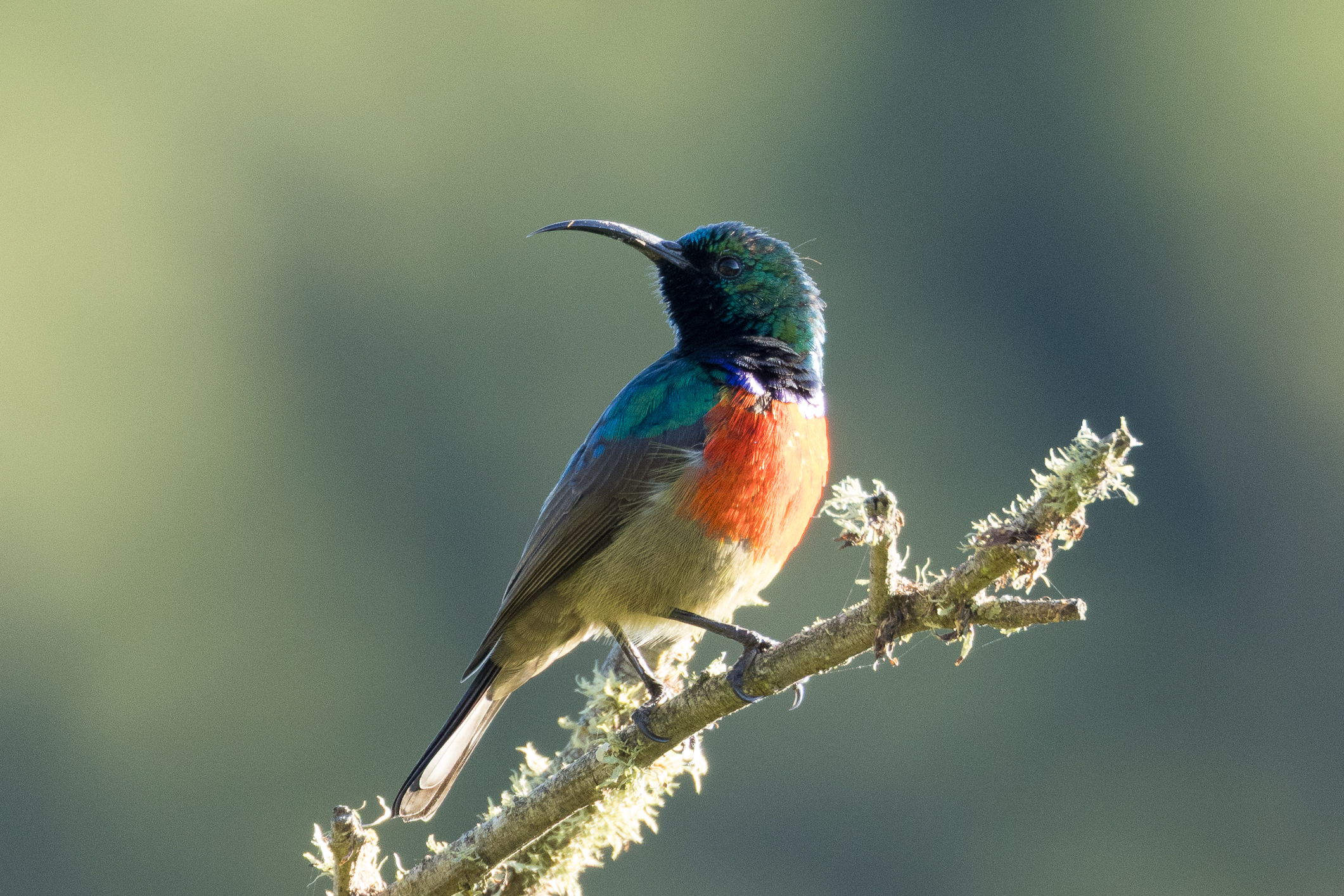
  • Greater Double-collared Sunbird
Greater Double-collared Sunbird Cinnyris afer Groot-rooibandsuikerbekkie
  • Collared Sunbird – my first record of the species for the Western Cape
  • Dusky Flycatcher
  • Fork-tailed Drongo
  • Olive Bushshrike

Emerging from the valley, I continued along the road through more farmlands and rolling hills, steadily adding species to the card, which included a few more special sightings –

  • Spotted Flycatcher perched on a fence, allowing me to take several photos (another first record for my Western Cape list)
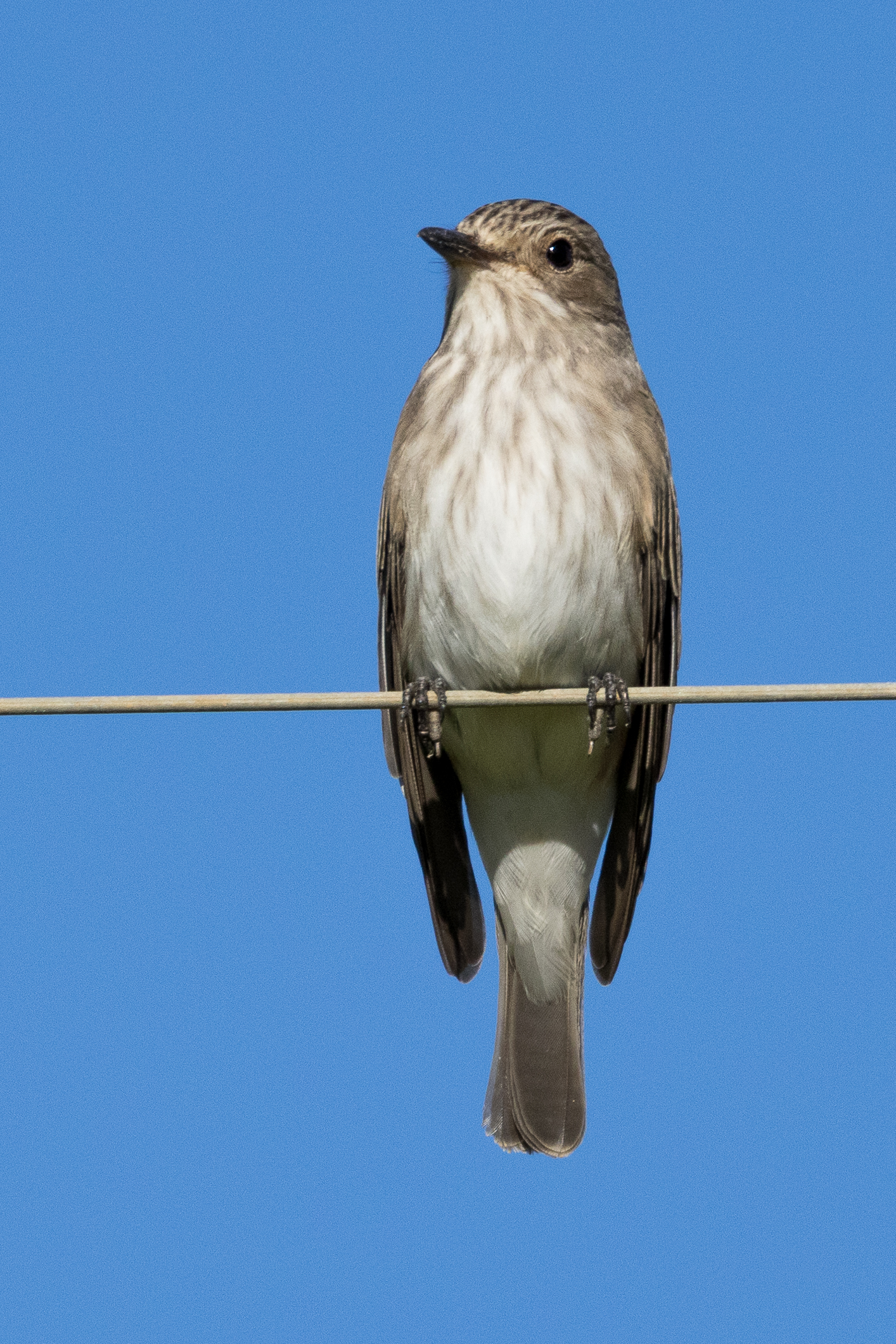
Spotted Flycatcher Muscicapa striata Europese vlieëvanger
  • Terrestrial Brownbul calling from dense bush – krrr – krrr – krrr is the best way I can describe this secretive species’ call
  • The close encounter with a Burchell’s Coucal mentioned above – I followed its progress through a tangle of long grass and bushes
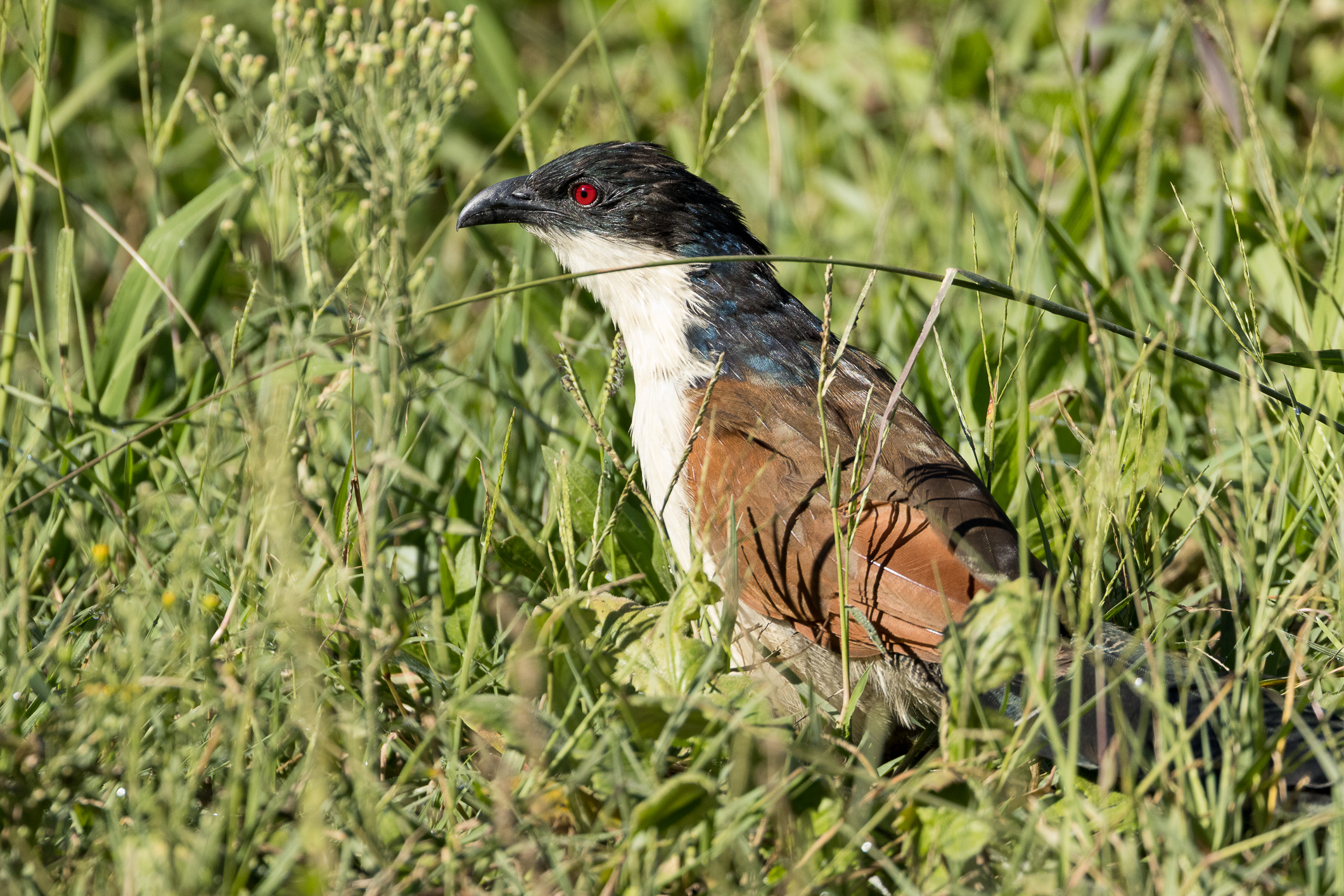
Burchell’s Coucal Centropus burchellii Gewone vleiloerie
  • Cape Batis
  • White-faced Ducks at yet another roadside dam
  • Jackal Buzzard on a pole just before exiting the pentad
Jackal Buzzard Buteo rufofuscus Rooiborsjakkalsvoël

Total species for the pentad : 58

Pentad 3355_2210

The second pentad for the morning was far less productive, probably because it was close to midday when birds tend to be temporarily absent until the late afternoon ‘rush hour’ starts

My route was through Friemersheim (which has been the subject of several of my posts about the mural artwork that is a feature of this interesting village) then a circular route on the northern side of the village.

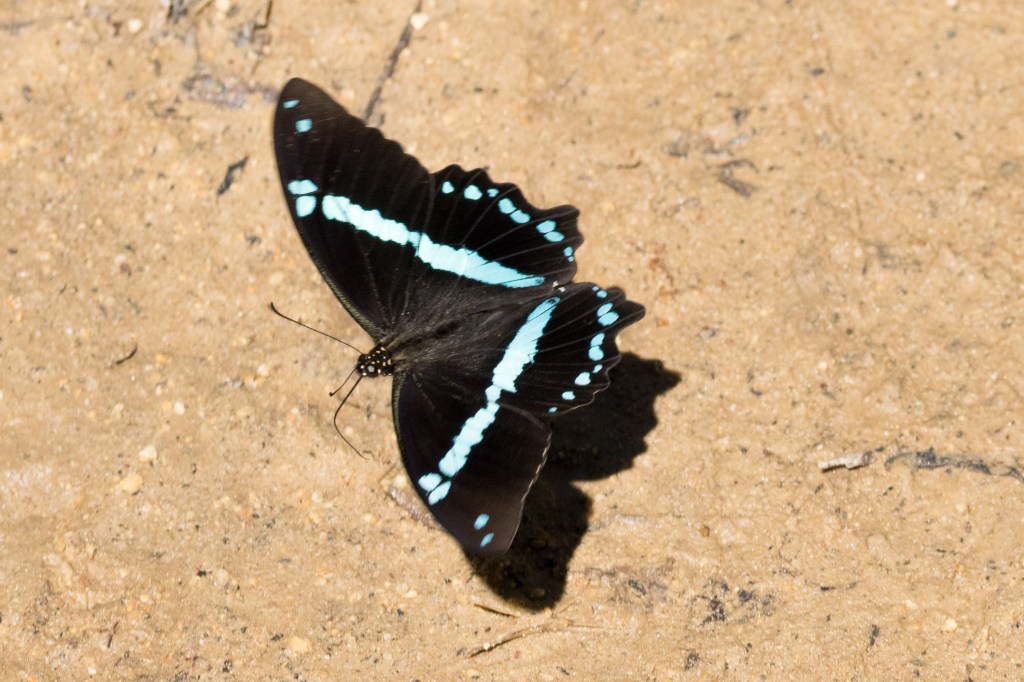
There were few highlights, but I found hundreds of Barn Swallows feeding over the fields. My last stop in the forested section produced several Cape Batises and a Butterfly gathering moisture from a puddle in the road
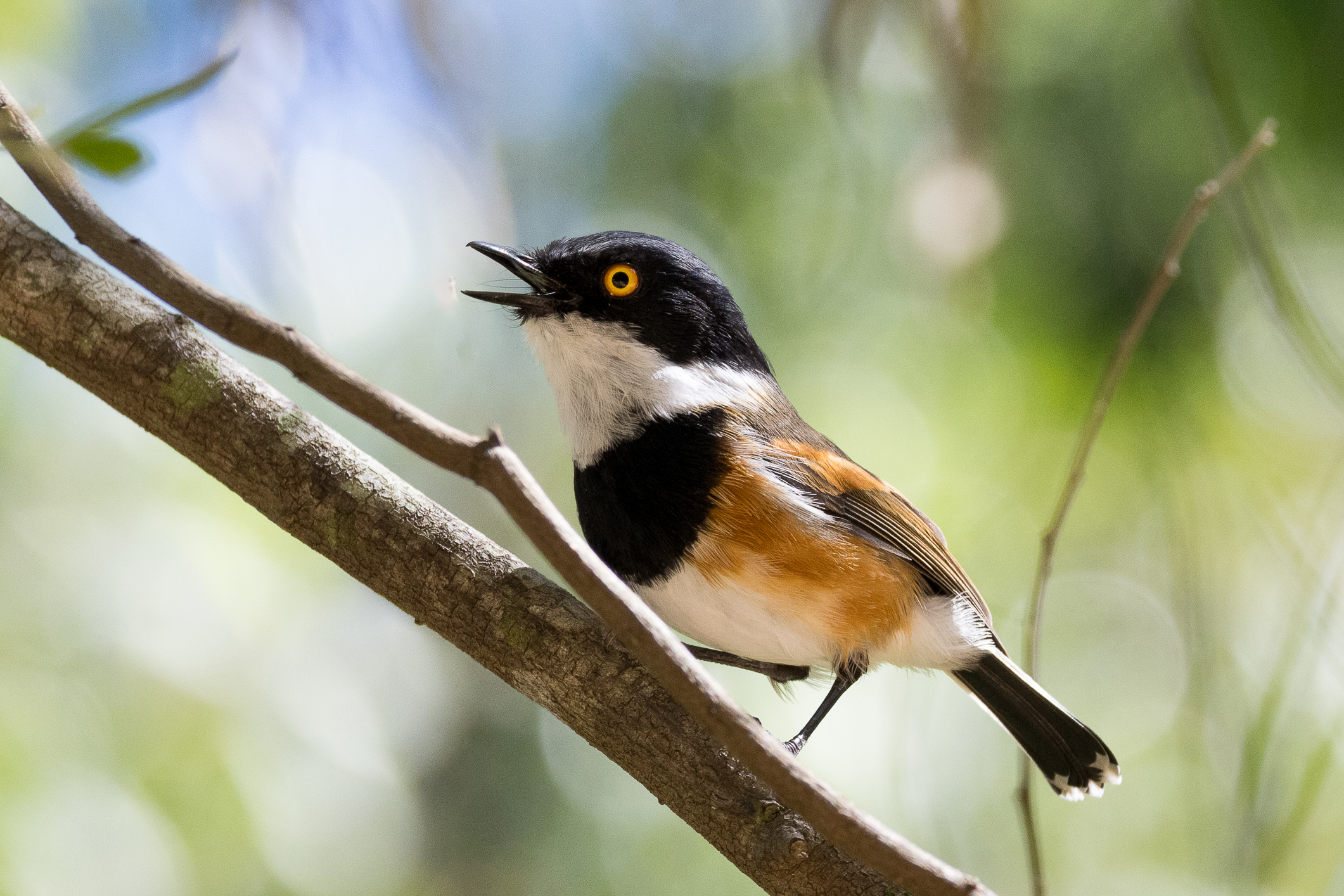
Cape Batis Batis capensis Kaapse bosbontrokkie (male)

Total species for the pentad : 23

Other stuff

The focus is on the birds while atlasing but there are always other things to divert the attention….
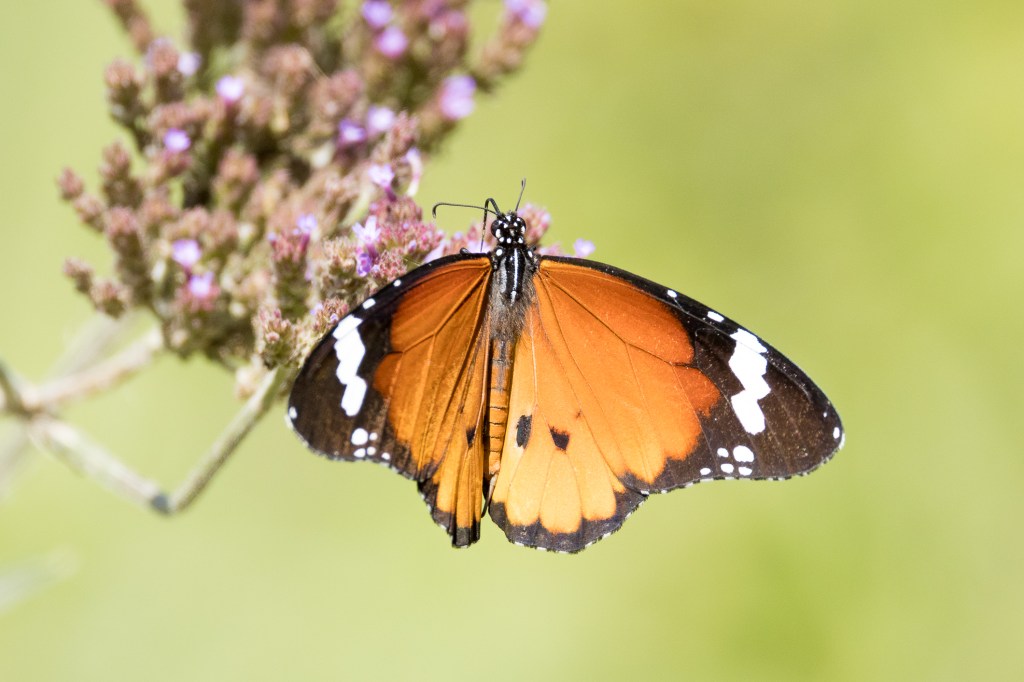
Monarch Butterfly, Friemersheim area
African Blue-banded Swallowtail / Papilio nireus
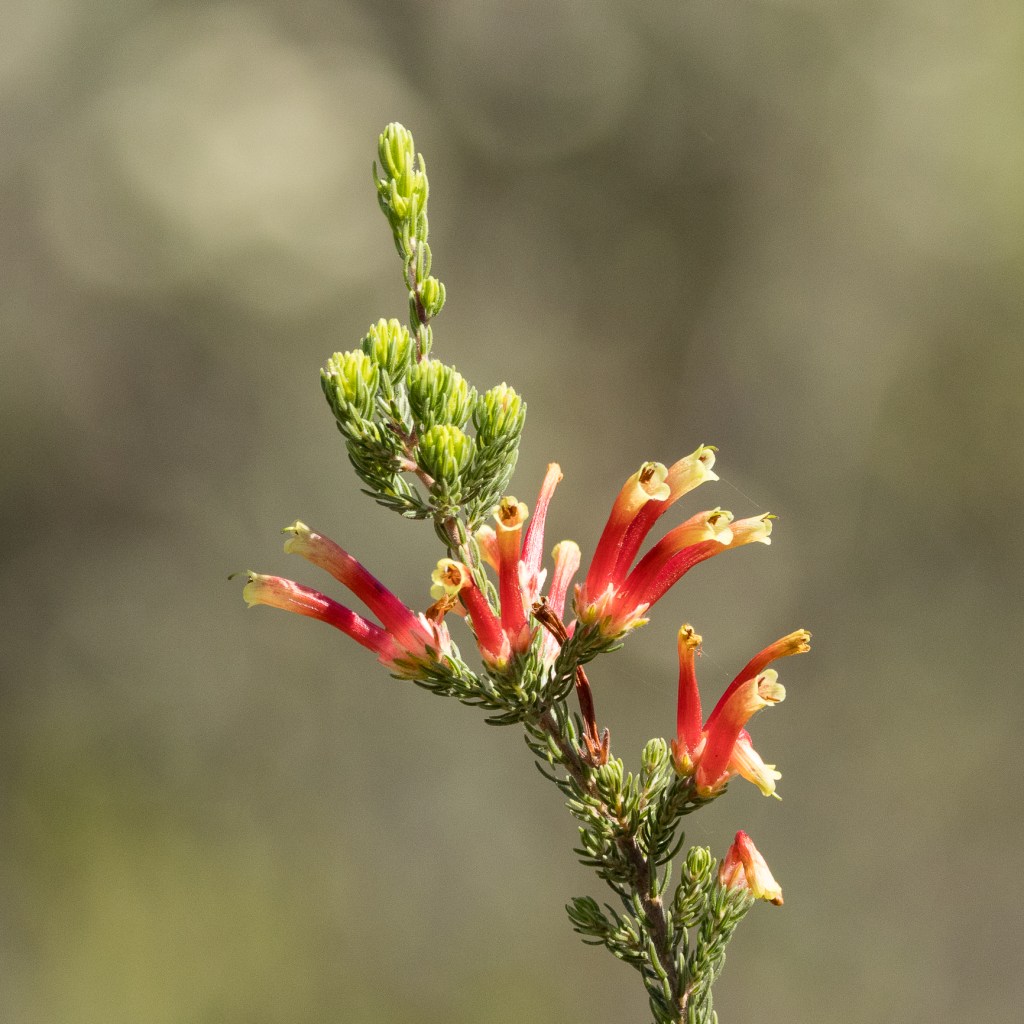
Erica, Friemersheim area

Klein Karoo Weekend

Sometimes less is more – less planning, less time away, definitely means less stress – our recent, unplanned visit to an eco-estate near Calitzdorp in the arid Klein Karoo falls into that category. Our daughter and son-in-law have a delightful cottage set on the slopes of the kloof that runs through the estate, which they use for getaway weekends and we were more than happy to join them on a weekend in September.

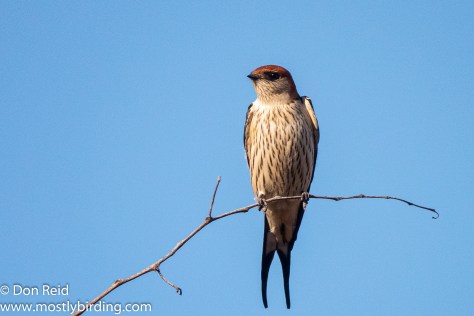
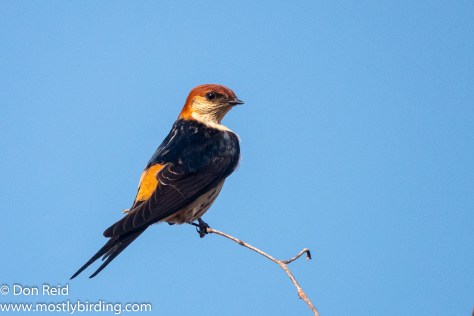
We were up at 5 am on the Saturday morning and left Mossel Bay before 7 am, reaching our roadside coffee spot on the Volmoed road about an hour later. No ordinary stop this – even along the road the Karoo invites you to relax, and relax we did with plunger coffee, boiled eggs and muffins while enjoying the Karoo landscape around us, watched over by Greater Striped Swallows perched nearby and with cool sunny weather adding to the pleasure of the moment.

Coffee stop
Saartjie, the family pet, gets a chance to explore the roadside bush

After a brief stop at Bella di Karoo padstal for some provisions, we carried on to Calitzdorp, which was hosting a succulent festival – a few side streets were closed off and filled with stalls selling all manner of succulents and filled with people meandering about enjoying the atmosphere.

It was lunchtime when we eventually got to the estate, just in time for a fine lunch of country bread, cheese and jam enjoyed on the covered stoep, after which we all relaxed for most of the afternoon in our various ways.

The cottage just after completion

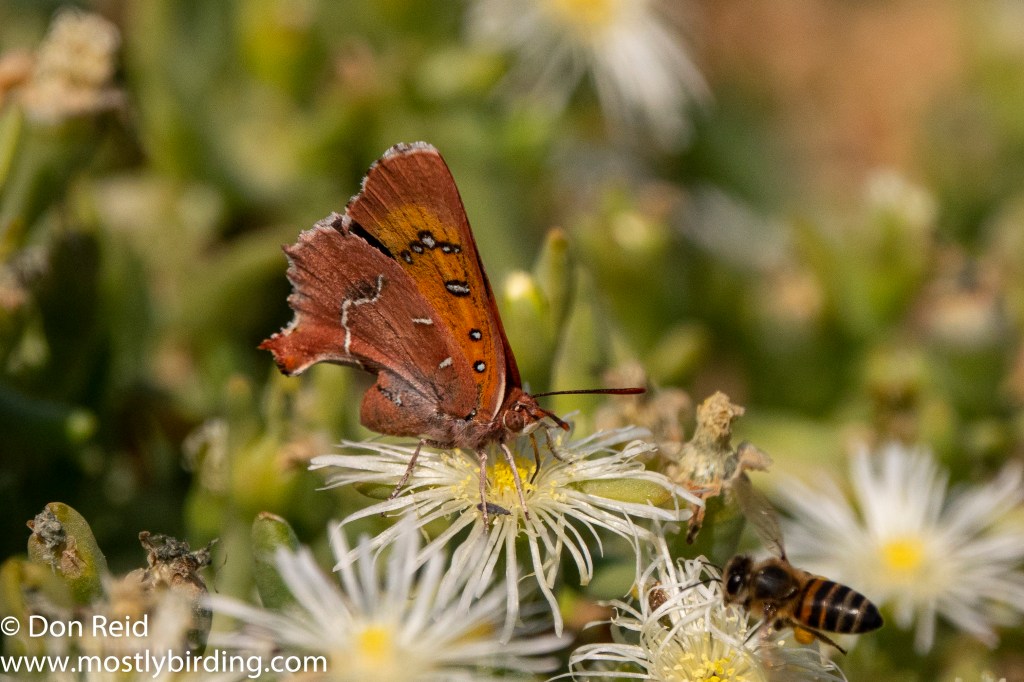
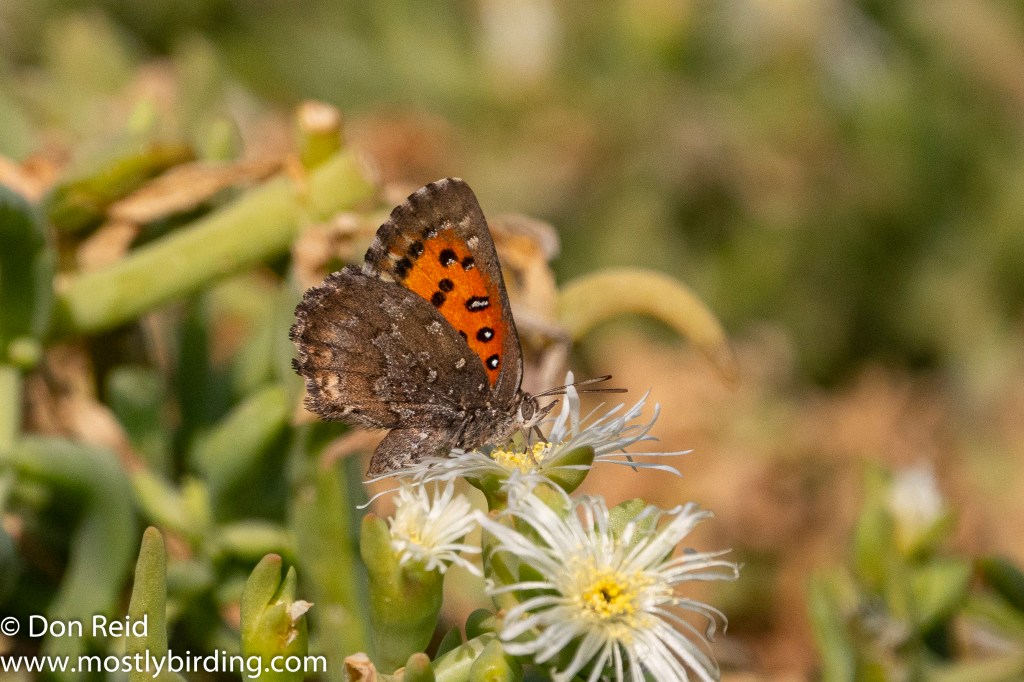
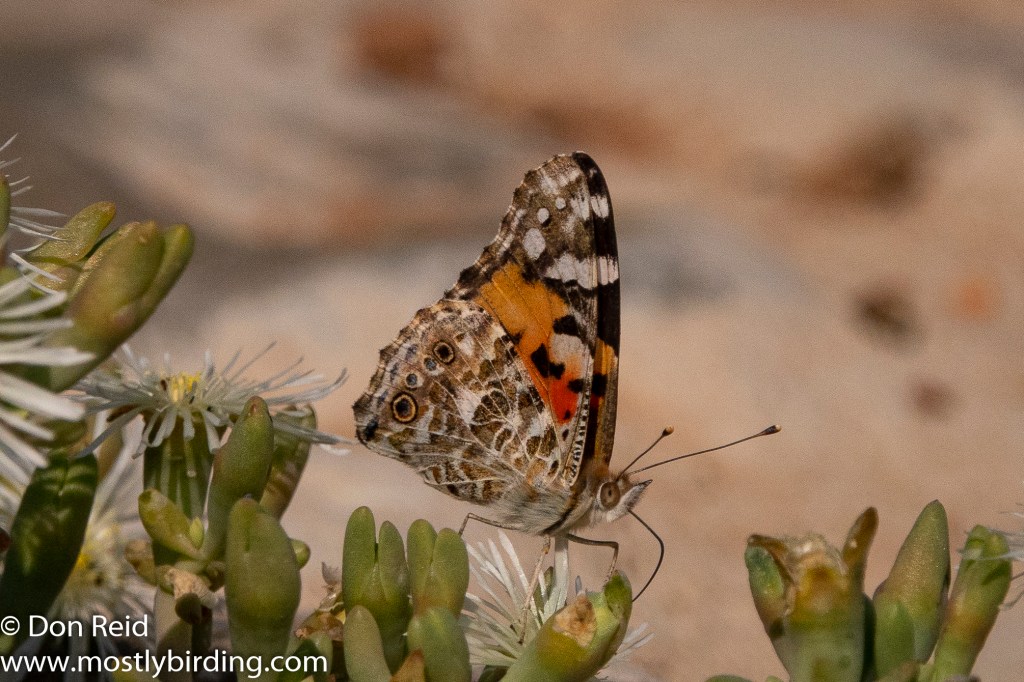
Andre and Geraldine have done wonders with the garden around their cottage, filling it with hardy plants that can survive the hot summers and cold winters in this arid part of the country and I noticed that one particular succulent ground cover was covered in small white flowers and was attracting a multitude of butterflies.

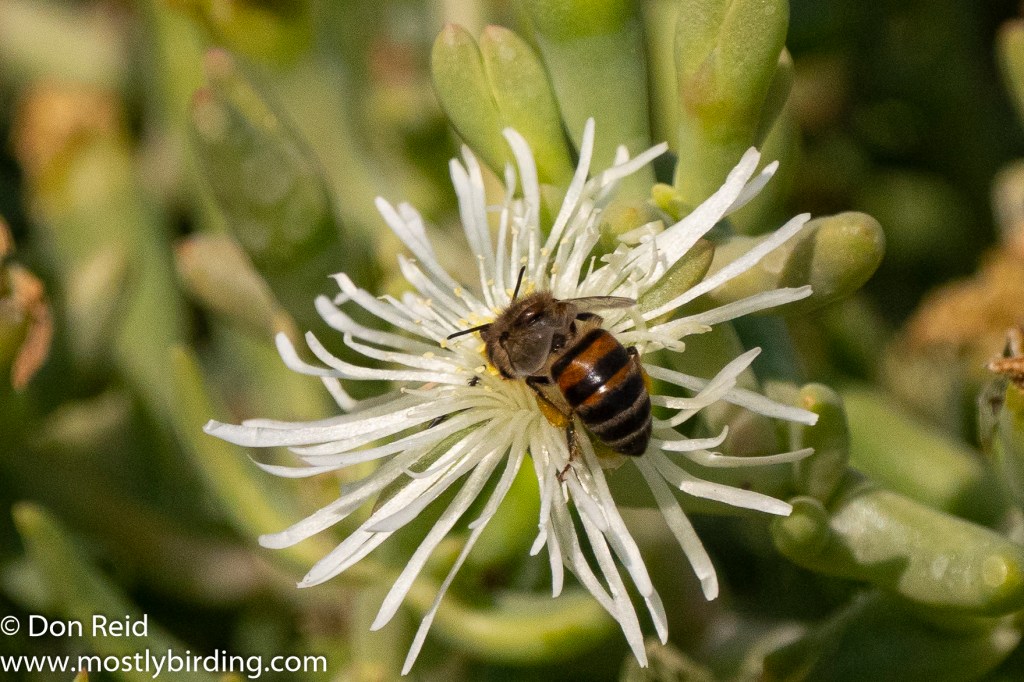
This was too good an opportunity to miss, so I promptly took my camera and positioned myself on the ground near the action and spent a happy half hour or so just watching the comings and goings of the butterflies, bees and other insects, capturing them on the camera where I could. I was very pleased with the results and with the help of my butterfly books was able to identify three species of butterfly.

Bees were also in on the action….

Not to mention the dragonflies that were active…

Dragonfly: Common Thorntail (Ceratogomphus pictus)

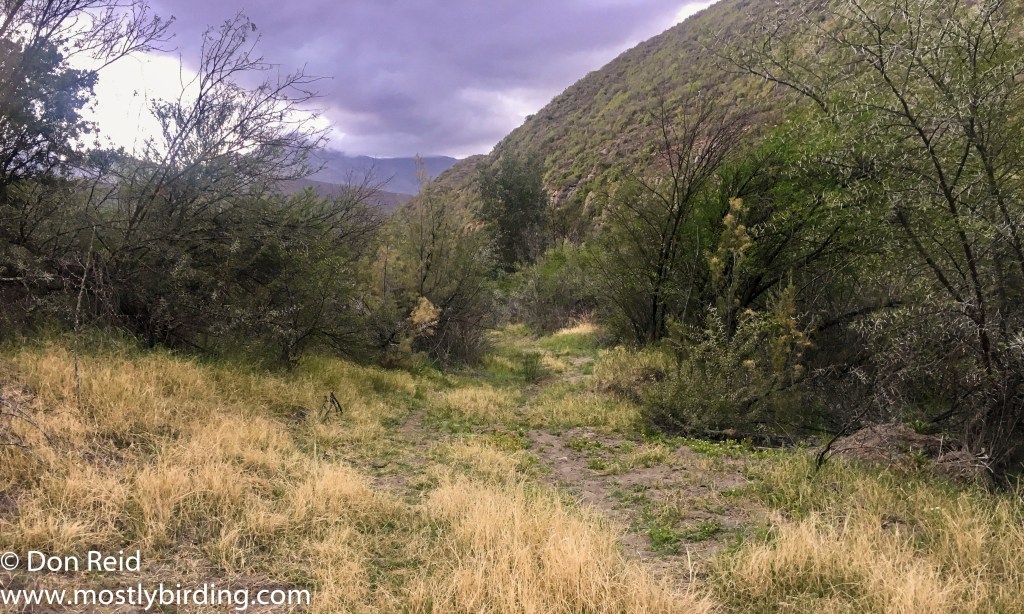
All of this action set me up nicely for a lengthy nap, followed by a walk along the river, which for a long time had been bone dry but now had a trickle of water after recent rains. I enjoyed the bird calls emanating from the riverine bush as I walked – a boost to my rather meagre list of birds for the visit.

Part of the trail along the river

Supper was wildswors (venison sausage) braai-ed over coals – simply delicious! Sunday morning was equally lazy and relaxed with light rain falling on and off – what a pleasure in these dry parts!

Come Sunday afternoon it was time to return home – the journey was marked by two highlights…..

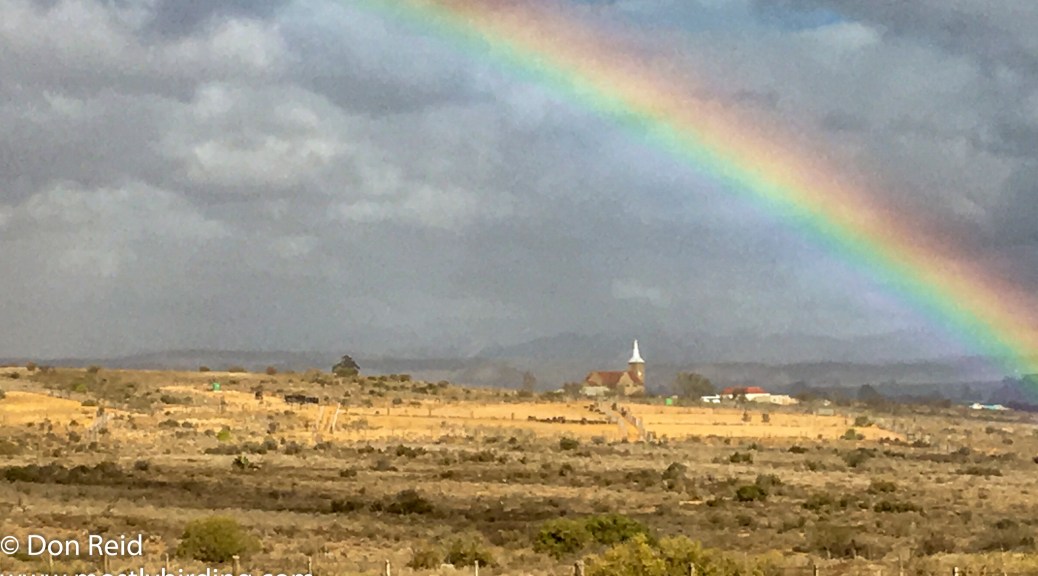
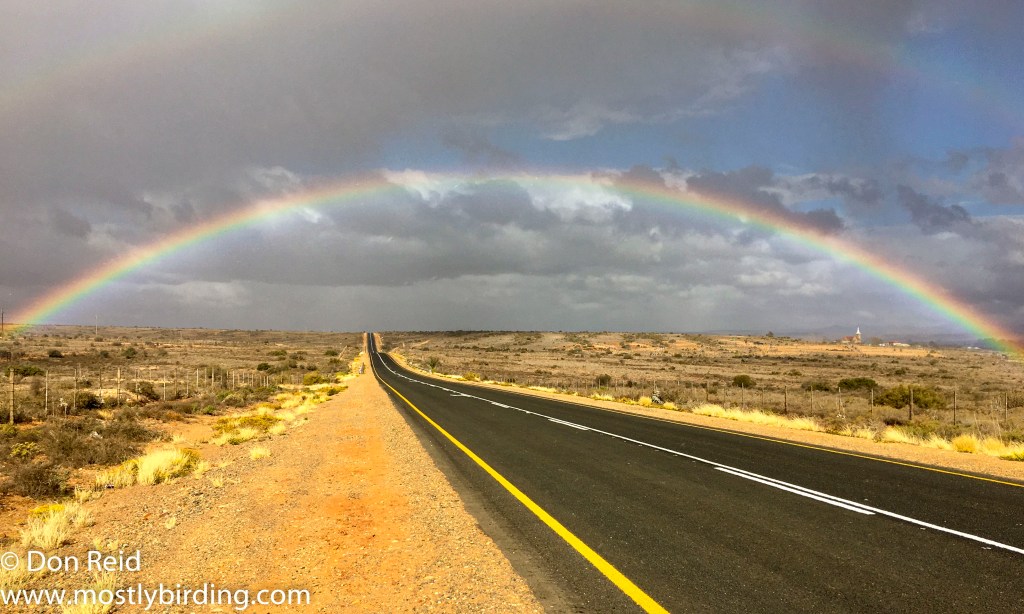
A spectacular, perfect rainbow framing the road ahead as we drove.

Rainbow, Calitzdorp trip

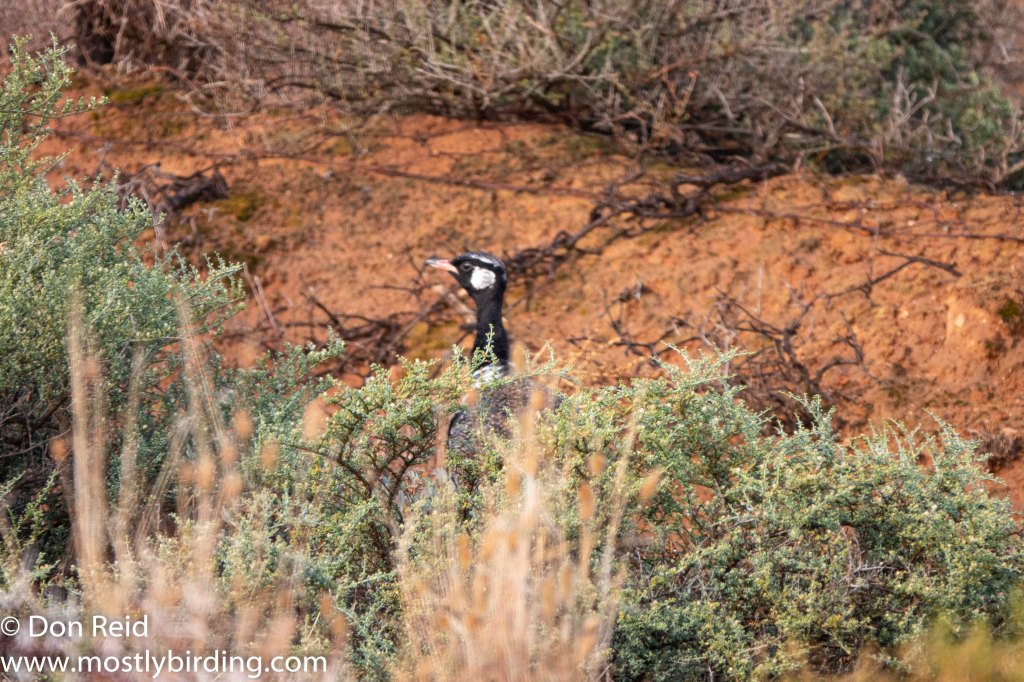
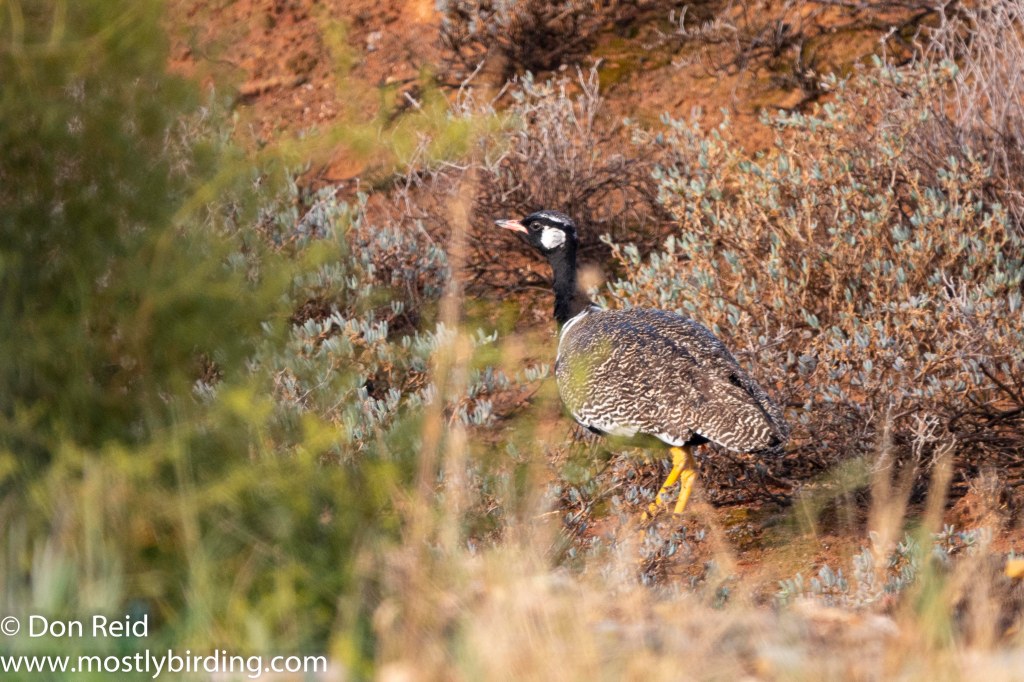
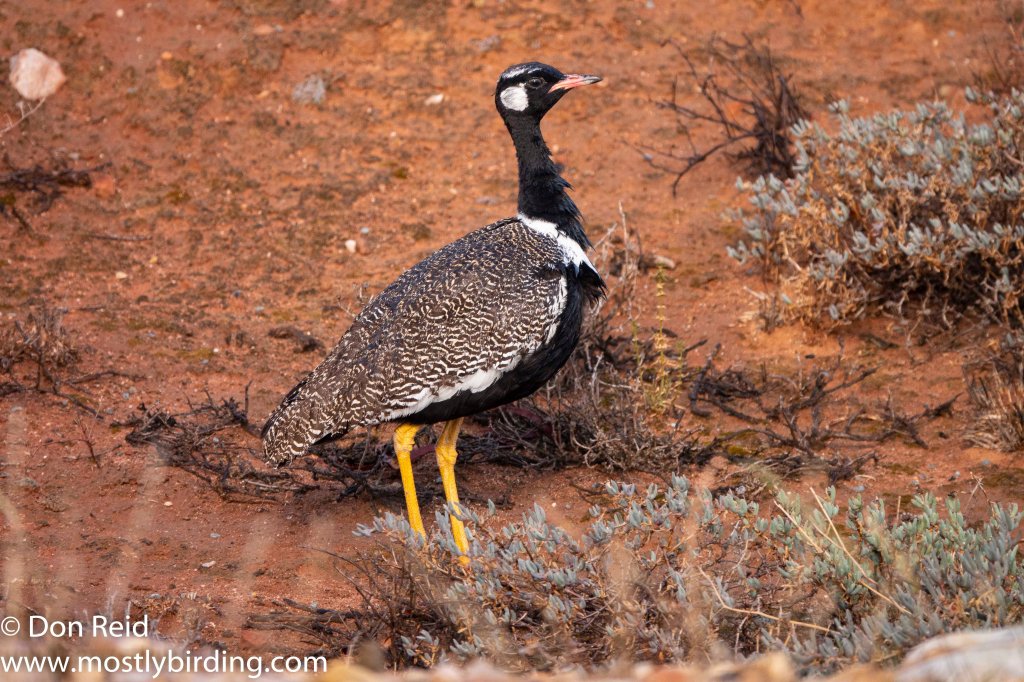
A Southern Black Korhaan alongside the road, causing me to brake sharply as I knew I had never been in a position to photograph this species. Before turning back, I retrieved my camera from its bag on the back seat and made sure the settings were correct, then turned the car and drove carefully and slowly to where I had seen the Korhaan, staying on the opposite side of the road so as not to spook it.

The Korhaan moved away quite quickly as I approached, using a roadside ditch and small bushes to keep itself concealed. I followed on the other side of the road, camera at the ready as I watched for approaching vehicles at the same time as keeping an eye on the bird, which showed briefly between bushes. This carried on for a while until the distance between bushes allowed some clear shots, with the Korhaan eyeing me with extreme suspicion.

Mission accomplished and with a feeling of satisfaction at having “captured” this rather elusive species on camera, we continued to Mossel Bay.

Many years ago I read a report on a destination in the Free State that the writer described along the lines of – “a weekend in so-and-so is like a week in the country”. This description came back to me after our one-night weekend in the Klein Karoo – we all felt as if we had enjoyed a week in the country.

Kruger in Winter – Aloes, Sunbirds, Butterflies and Friends

We were changing camps during our winter visit to Kruger – this time from Lower Sabie where we had spent just one night, to Pretoriuskop, where we were booked for 2 nights. Being around 100 kms apart, at Kruger speeds with stops at sightings, we were counting on around 3 to 4 hours of easy travelling.

The Lower Sabie – Skukuza “highway” was as busy as always with large knots of vehicles at sightings, including a lion spotted moving through the bush on the river side, providing brief glimpses as it passed openings between the trees.

We decided to take a break at Skukuza, the largest and busiest of Kruger’s camps and a favourite of overseas tourists. We bought take away coffees and muffins, then found a nice sunny spot with a view – of the tourists passing by in their many shapes, sizes and degrees of dress sense. It’s a form of entertainment, guessing the origin of the tourists based on their choice of “safari gear” – some in designer khaki, others in strange combinations of camouflage clothing paired with dark apparel, many looking totally out of place.

Once we tired of that game, I started looking around the gardens and noticed a bright yellow sunbird at one of the flowering aloes, an irresistible subject for a bird photographer, so I leapt up (well that’s what it felt like, others may say I stood up quickly) and rushed over to get myself positioned near the aloe with the light from behind and shoot a few photos until I had some reasonable ones of the Collared Sunbird.

Collared Sunbird (Hedydipna collaris / Kortbeksuikerbekkie) Skukuza, Kruger Park

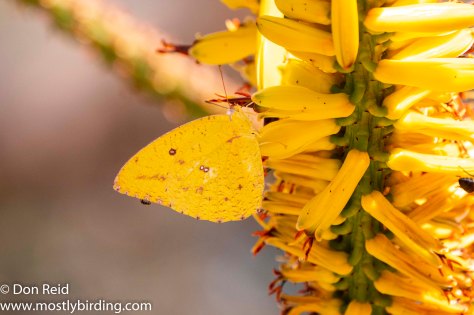
The adjoining aloes had attracted yellow butterflies and I set about capturing a few images of these colourful creatures as they fed on the aloe nectar.

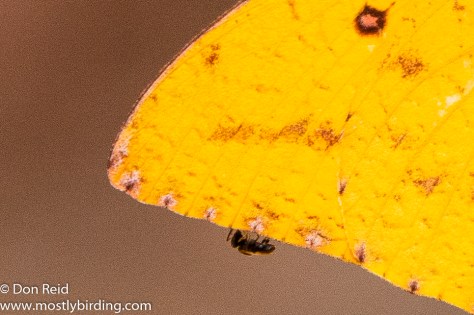
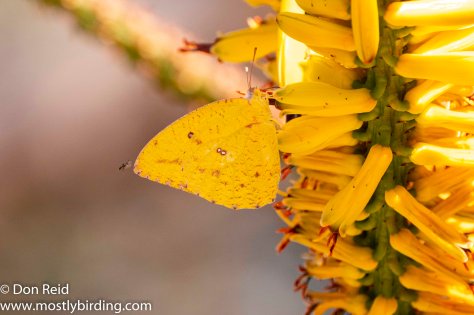
It was only when I reviewed the photos, zooming in to check the sharpness of the detail, that I noticed I had captured a tiny flying insect “passenger”, clinging to its butterfly host then flying off to find another.

Butterfly : African Migrant (Catopsilia florella), Skukuza, Kruger Park

Zooming in to see what that dot on the wing edge is, revealed a tiny flying insect, not more than 1 mm long, clinging to the butterfly

The insect takes off :

Modern digital cameras are quite amazing in the detail they can capture!

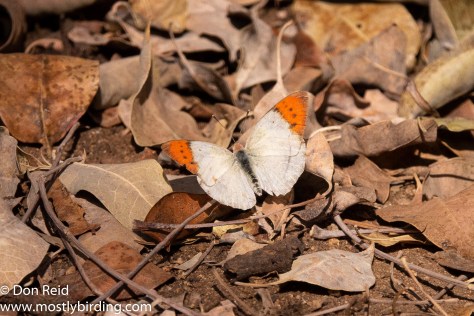
Excited with this butterfly I looked around for others and amongst the leaf litter I found …………… well you can decide if there is anything to see in this next photo

The photo below compared with the one above, demonstrates how well camouflaged a butterfly can be when its wings are closed and in the right surrounds, despite its bright colouring when fully open

Butterfly : Speckled sulphur-tip (Colotis agoye agoye), Skukuza, Kruger Park