OK I’ve never heard of him either, but this line from his book nicely sums up our approach to travel – we like to take it slow and easy on our longer road trips, and we love visiting new places, be they towns not visited before or just a guest house on the way that we have not used before.
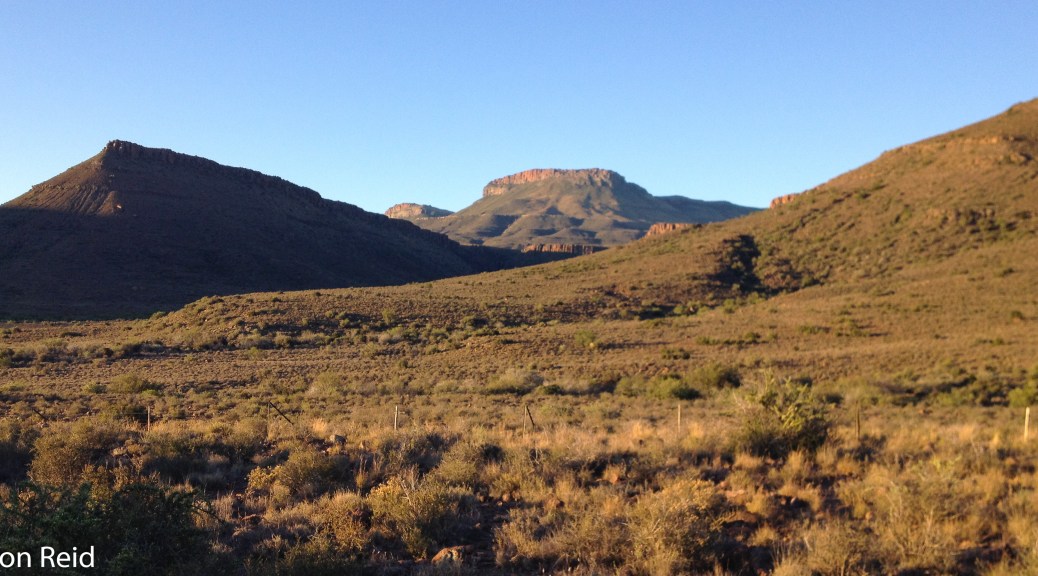
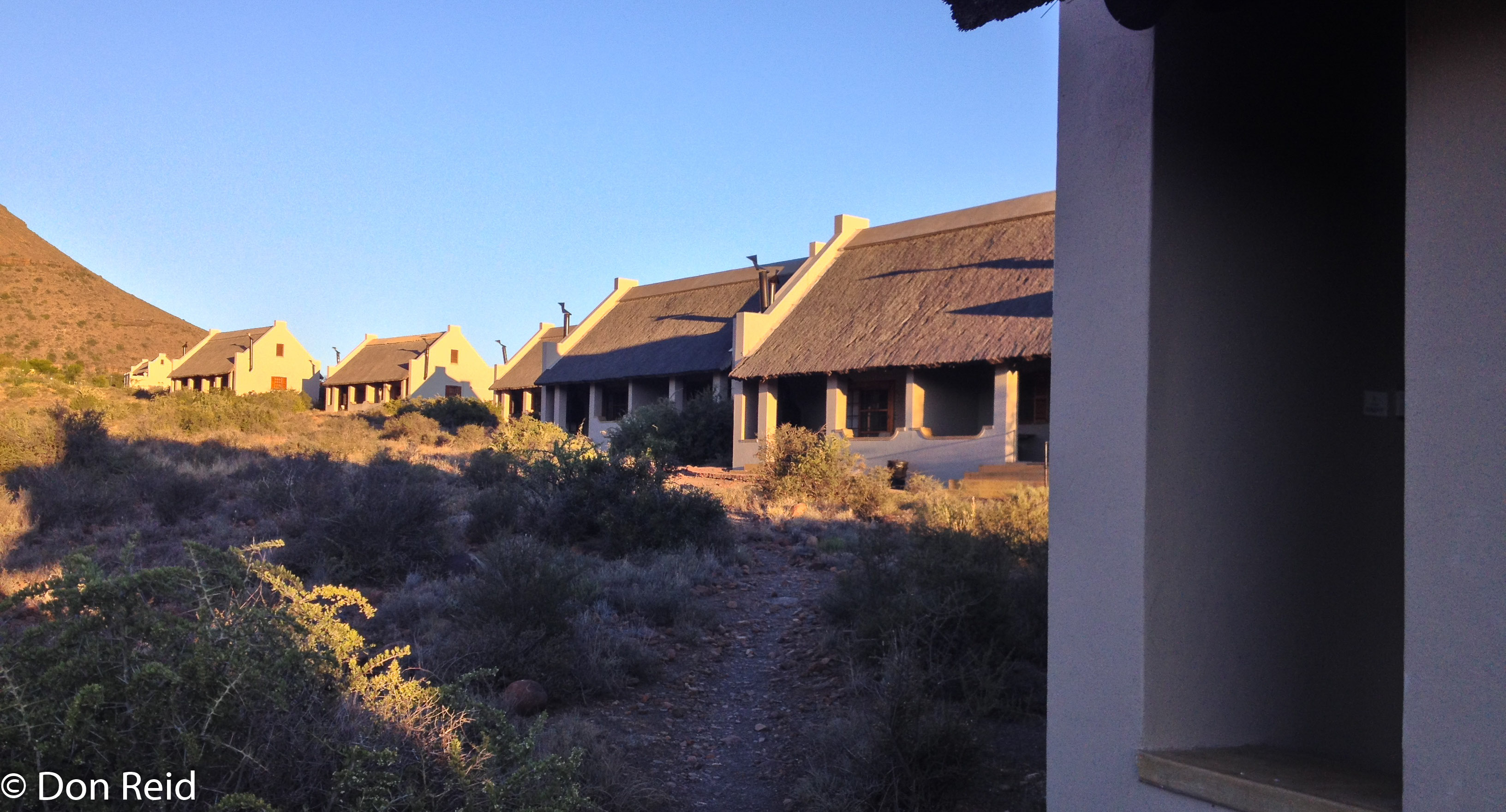
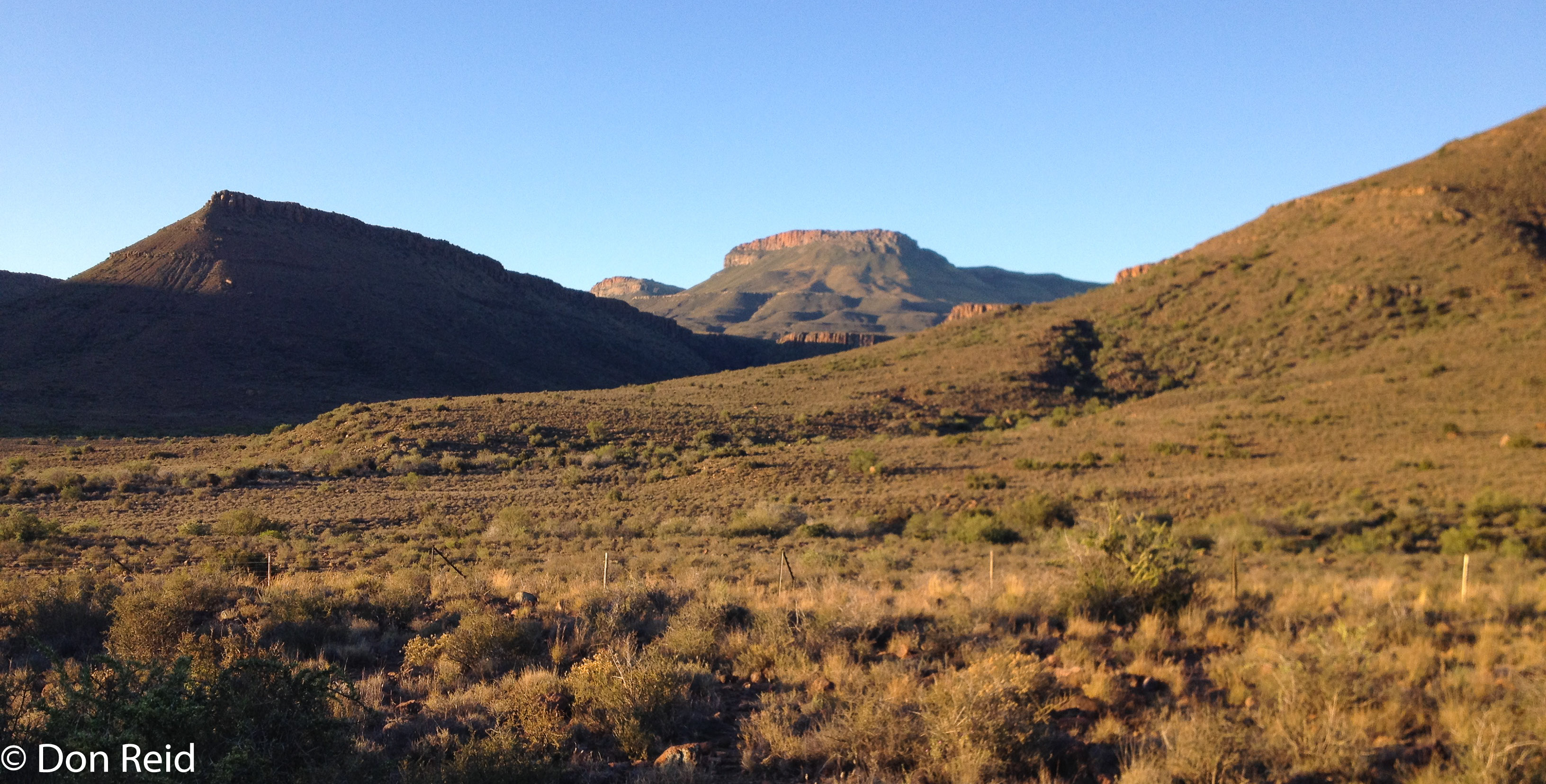
Last November, when we travelled to Mossel Bay for our annual long stay, we decided to make an overnight stop at the Karoo National Park near Beaufort West, in the heart of the Karoo, before tackling the last stretch to Mossel Bay.
We have stayed in many of our National Parks at one time or another but never in this particular one – one night is not much on which to judge a place but we made the most of our short time there and came away more than impressed.
The Park
Proclaimed in 1979, the rest camp was opened in 1989 and the park now covers around 90,000 hectares which can be explored along the park’s 130 kms of scenic drives. The Park holds a variety of wildlife including Lion and several antelope species such as Eland, Springbok, Red Hartebeest and Klipspringer.
Animals such as Aardwolf, Bat-eared Fox, Caracal and Brown Hyena occur here, all sought after species for those who like finding the more unusual species, although being nocturnal species they are not easily seen.
The varying altitudes and Karoo habitat make for an environment which provides a home to animal and plant species not generally found elsewhere.
Exploring the park
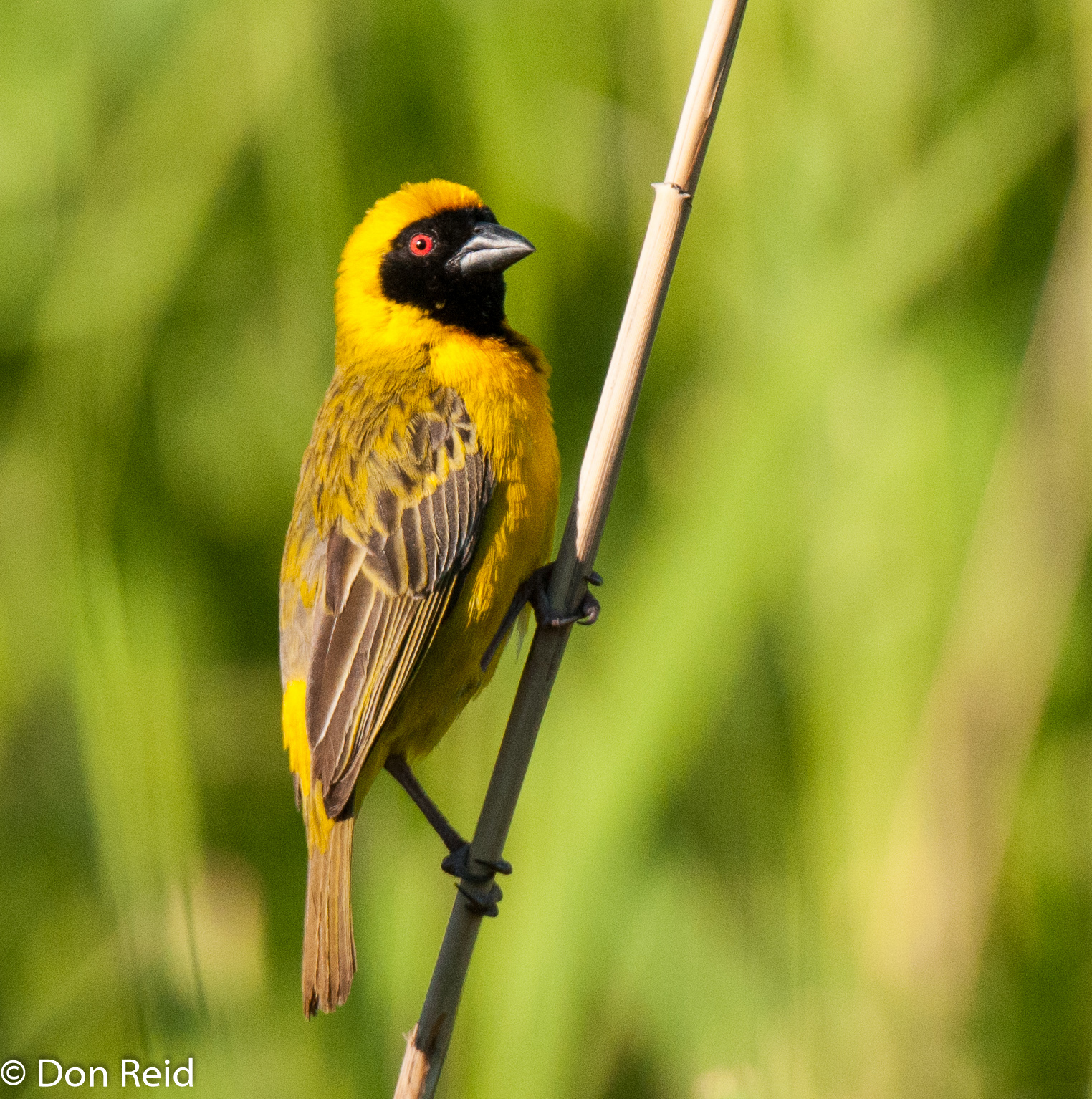
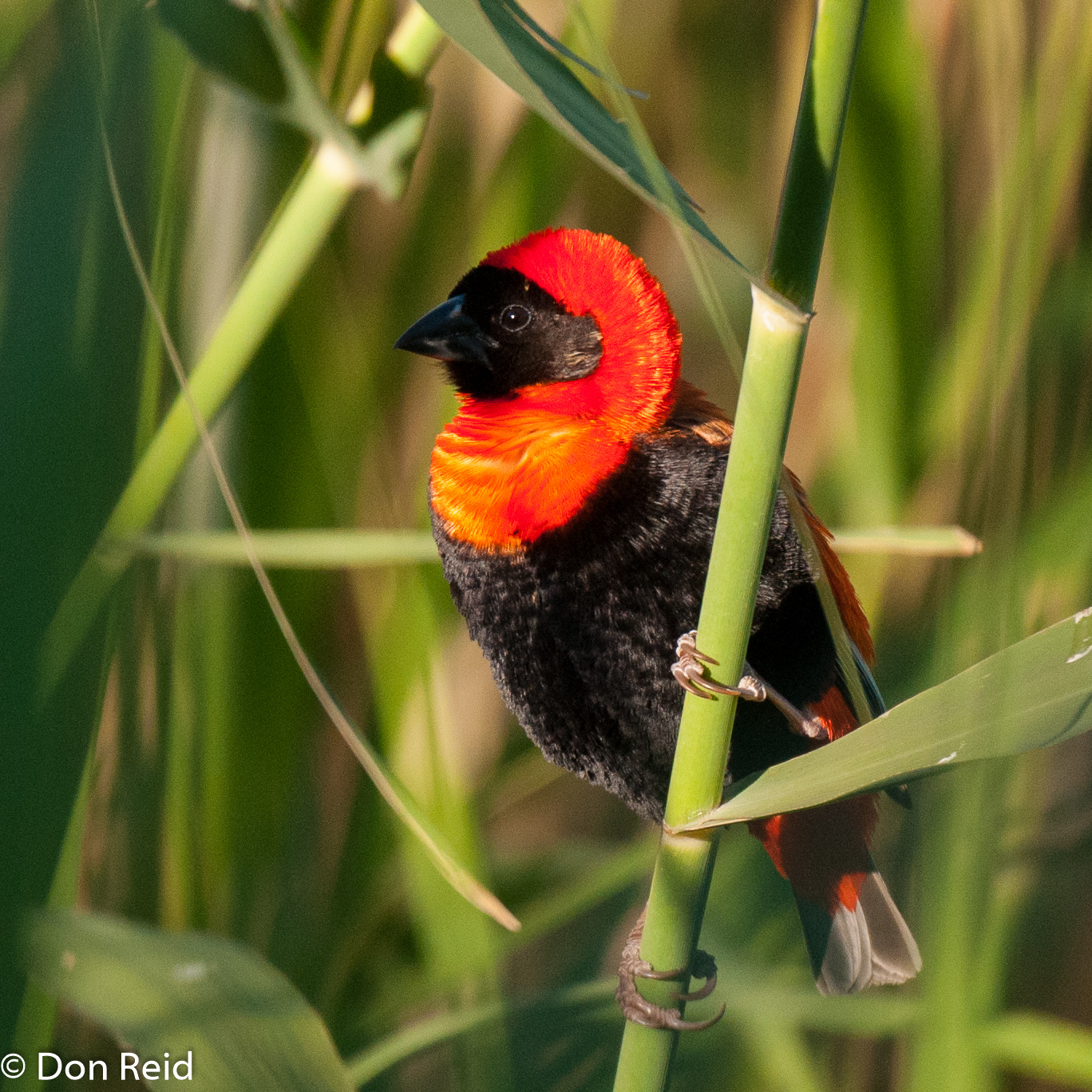
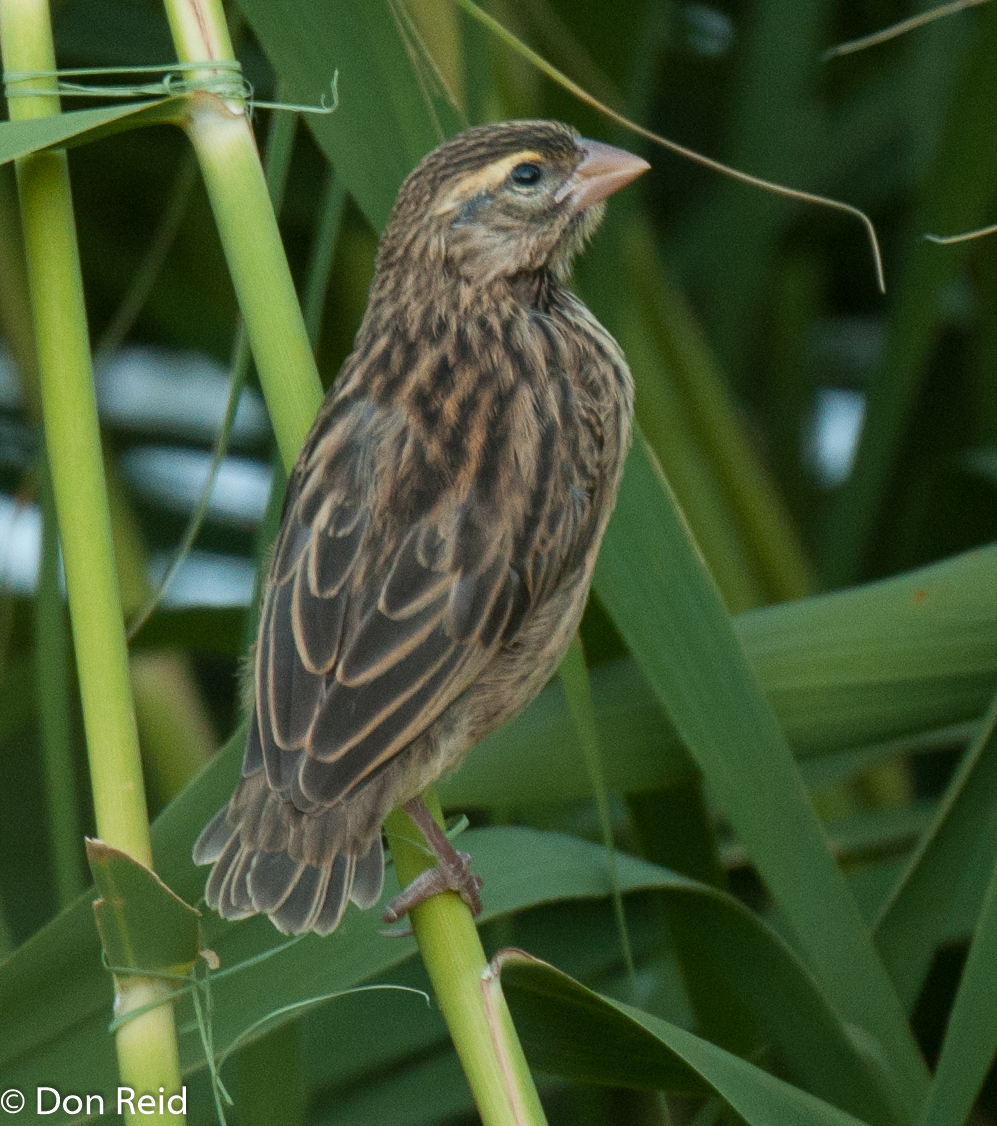
Once settled in our chalet, around 5 pm, I took a short drive in the immediate vicinity of the chalets and found a bird hide overlooking a small pond with dense reeds, where I was able to spend quality time viewing the bird life. The reeds were alive with Weavers and Bishops, which afforded close-up views as they went about their business, chattering away like excited teenagers on a school outing. In the water were Little Grebe, Grey Heron and Moorhen.
Southern Masked-WeaverSouthern Red BishopSouthern Red Bishop (Female)
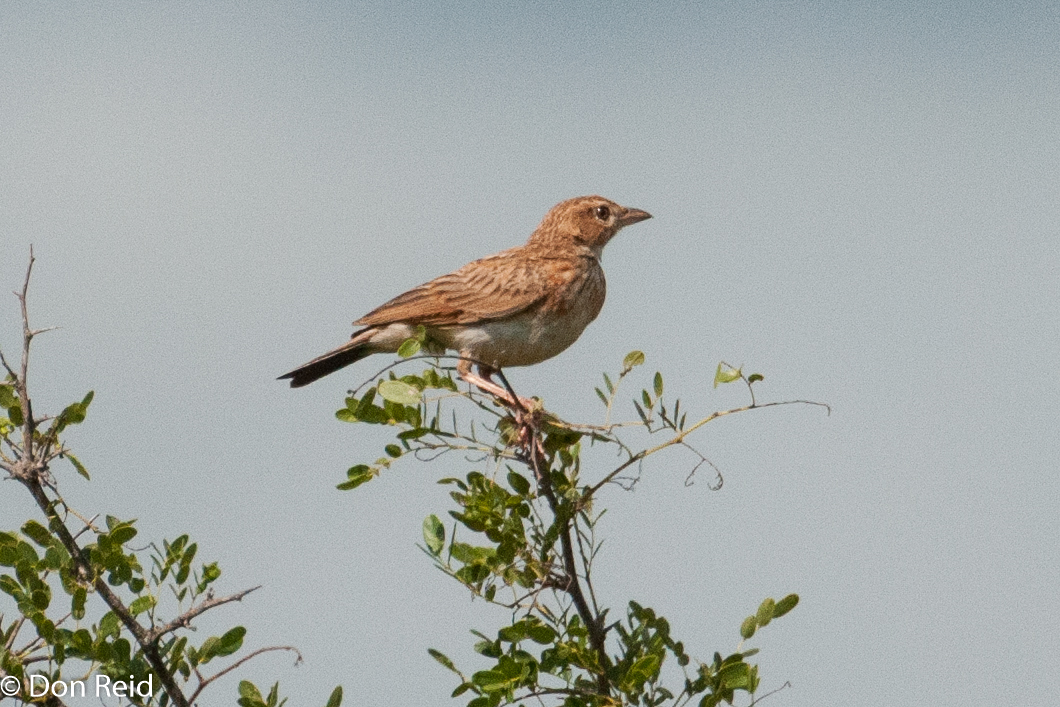
A short drive down the main entrance road, bordered on both sides by typical Karoo scrub, produced a few of the species that favour this habitat, such as Karoo Scrub-Robin (love its Afrikaans name of “Slangverklikker” which translates to “Snake detector”), Rufous-eared Warbler, Lark-Like Bunting, Grey-backed Cisticola and a lone Karoo Long-billed Lark on top of a small bush, calling with its distinctive loud descending whistle.
Karoo Longbilled Lark
As the sun set I headed back to the comfortable chalet with its million dollar view of the surrounding mountains.
We had not made any provision for self-catering and made our way to the Park’s restaurant for a most enjoyable meal, served by the super-friendly staff (no, I don’t get paid for this, they really are great). While eating we heard the churring sound of a nightjar – either European or Rufous-cheeked which are similar sounding.
White-necked Raven
Next morning, before breakfast I ventured a bit further, taking the Klipspringer Pass that winds its way up into the surrounding mountains, affording wonderful views of the surrounding Karoo landscape.
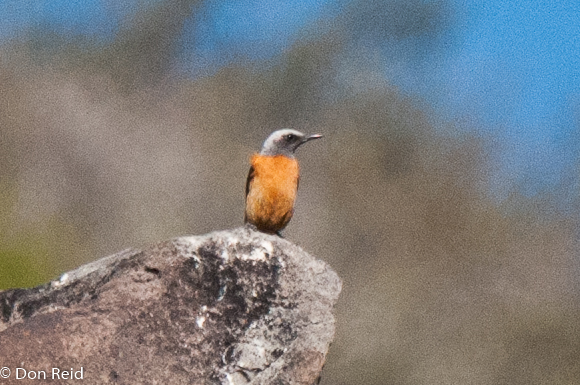
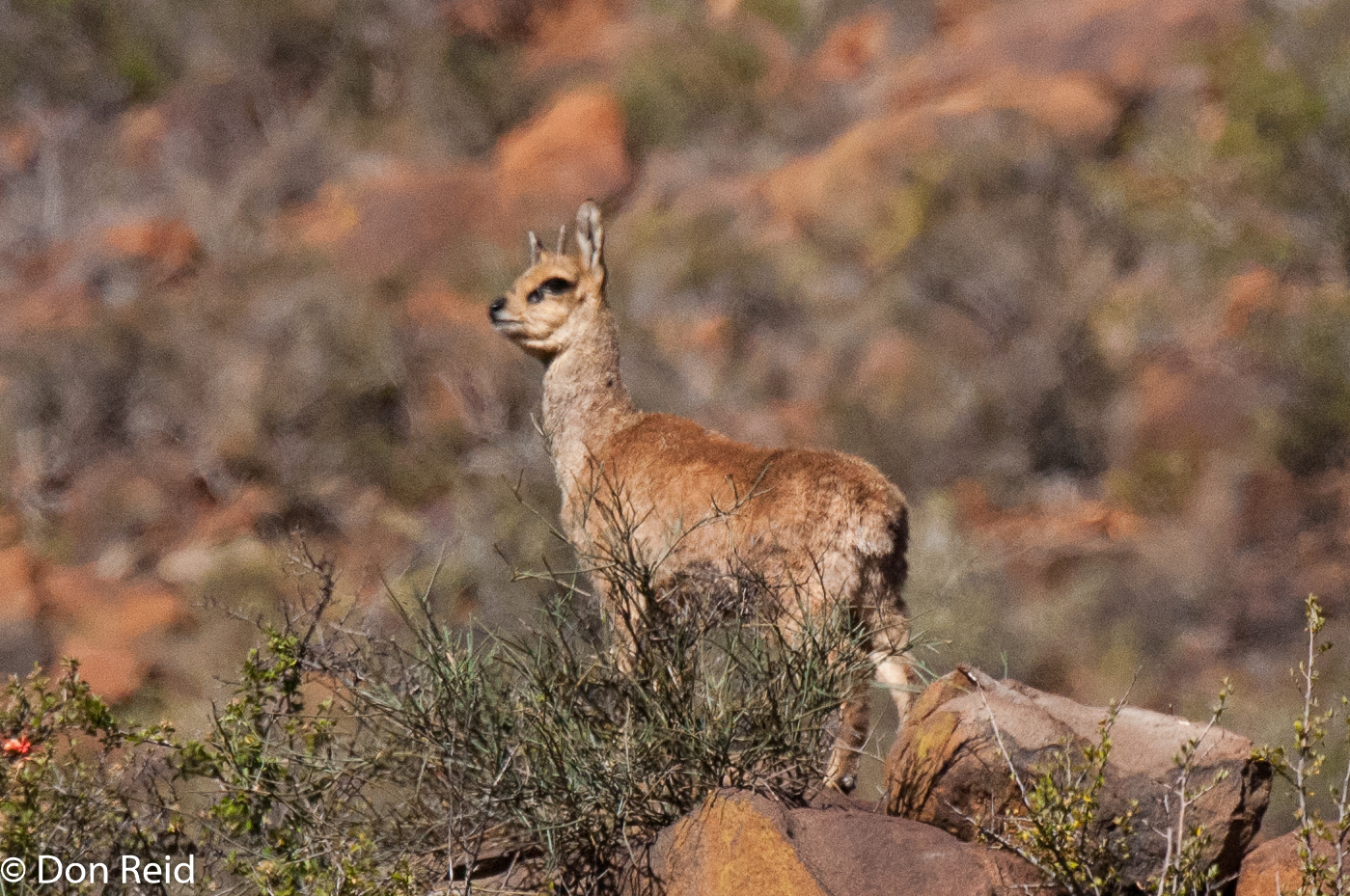
Scanning the ridges at one point I was thrilled to find a Short-toed Rock-Thrush – a species I had only seen for the first time a few months earlier – this is something that happens time and again – takes years to find a particular species but once the ice is broken you see it easily. Close by a Klipspringer was standing elegantly on a rocky ledge, unperturbed by the sheer drop below.
Short-toed Rock-Thrush (taken long-distance – excuse the quality)Klipspringer
Up on the plateau the views were outstanding and enjoying them with me were African Pipit, Mountain Wheatear and Karoo Long-billed Lark (again). On the way back down the twisty road a pair of Verraux’s Eagles cruised far below and settled on the rocks.
African Pipit
After breakfast it was time to leave – our stay had been too short, albeit long enough to rate this as a well-run, friendly and desirable place to spend a few days – even the outside brass taps were shiny, a sure sign of excellent management!
The last birds to greet us on the way out were Pririt Batis – such a distinctive call – and Ostrich, which I was happy to tick, being in a National Park.
This lesser known route is not renowned for its big five sightings but there is every chance of seeing a variety of game, with the added pleasure of getting off the beaten track for a while and enjoying a picnic spot that you will often have all to yourselves.
The route starts by heading south from Satara camp for about 10 kms where you turn right (west) on to the S 126 which marks the start of the gravel road to Muzandzeni picnic spot, a drive of about 22 kms which should take an hour or more, including stops to view game and birds as you come across them.
This stretch winds along the Sweni river for much of the way, but don’t expect there to be water during the winter months and early summer before the rains set in. The roadside scenery is dominated by many large trees, interspersed with open areas which look ideal for the big cats to use as hunting grounds.
After a break at Muzandzeni, whether for coffee/tea, or a full-blown brunch, the best way back to Satara is to complete the circle by heading north along the S 36 gravel road which joins up with the H7 Orpen-Satara tar road after about 10 kms and from there it’s an easy 20 km run along the H7 back to Satara, with a recommended stop at the Nsemani dam which usually has something of interest.
Habitat
This description from the krugerpark.co.za website sums up nicely what to expect along the Sweni river road (S 126):
“The Sweni River Road is a surprisingly tropical landscape given that it is so far south of the Tropic of Capricorn. Many old Kruger hands insist that it is the Sweni that marks the start of the north rather than the Olifants River. Southern Lala-palms and combretums dominate the grassy floodplains between the river and the road, giving the bush a distinctly Zimbabwean feel”
An extract from the Kruger Park map book shows the route :
The Drive
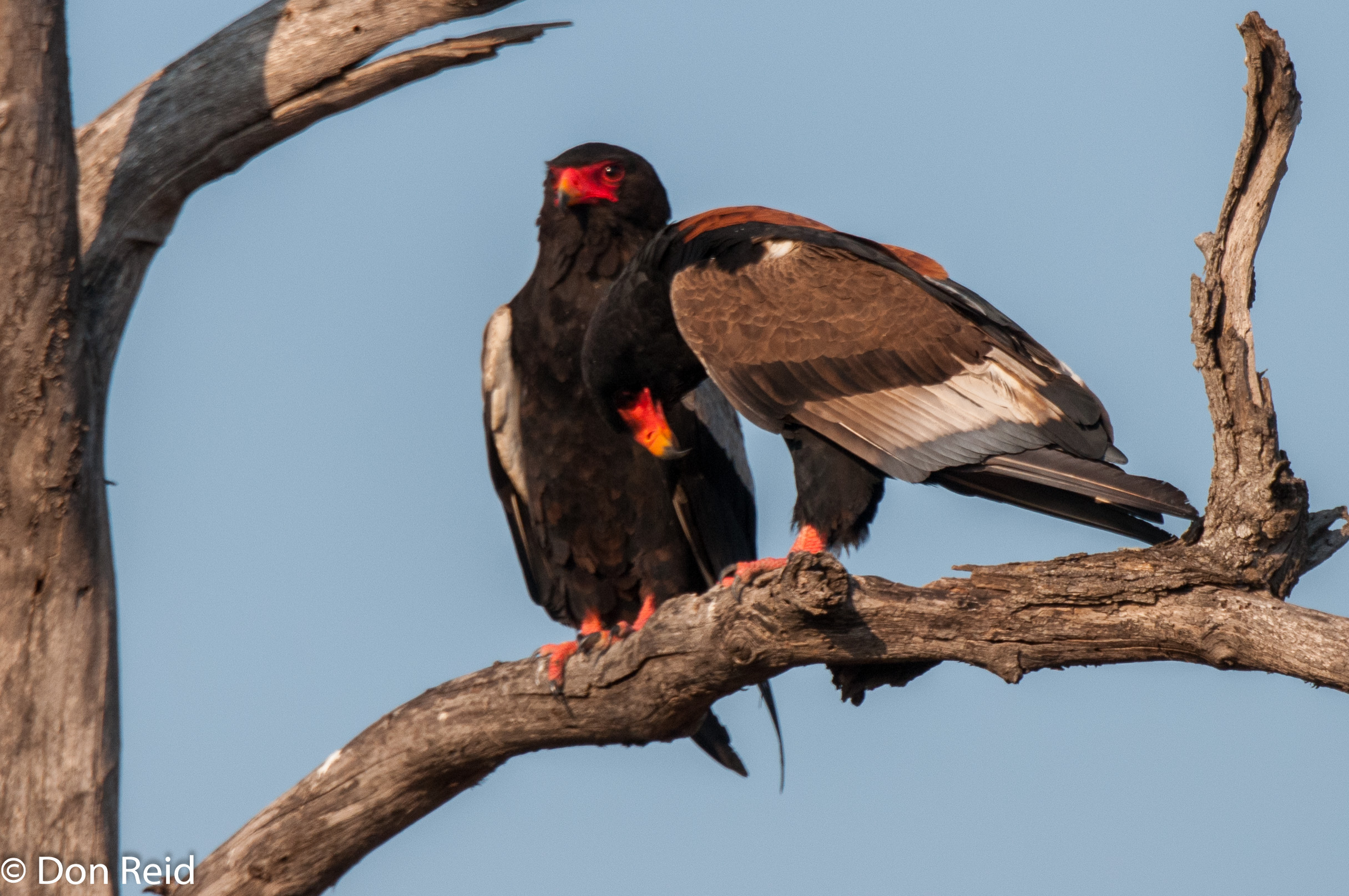
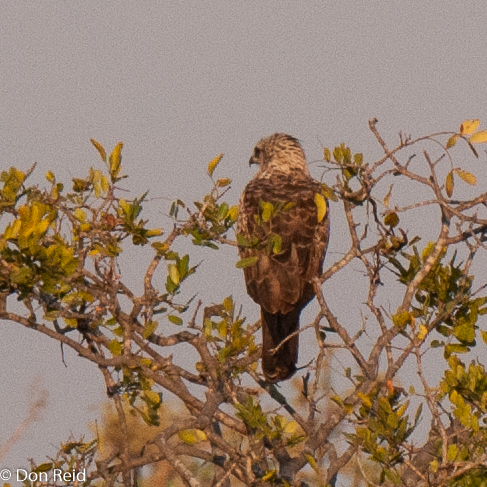
We made our way slowly along the S 126 to Muzandzeni, stopping for a number of raptors, including a pair of preening Bateleurs close to the road, which we sat and observed for some time, and a pale form of Wahlberg’s Eagle perched in a tall tree.
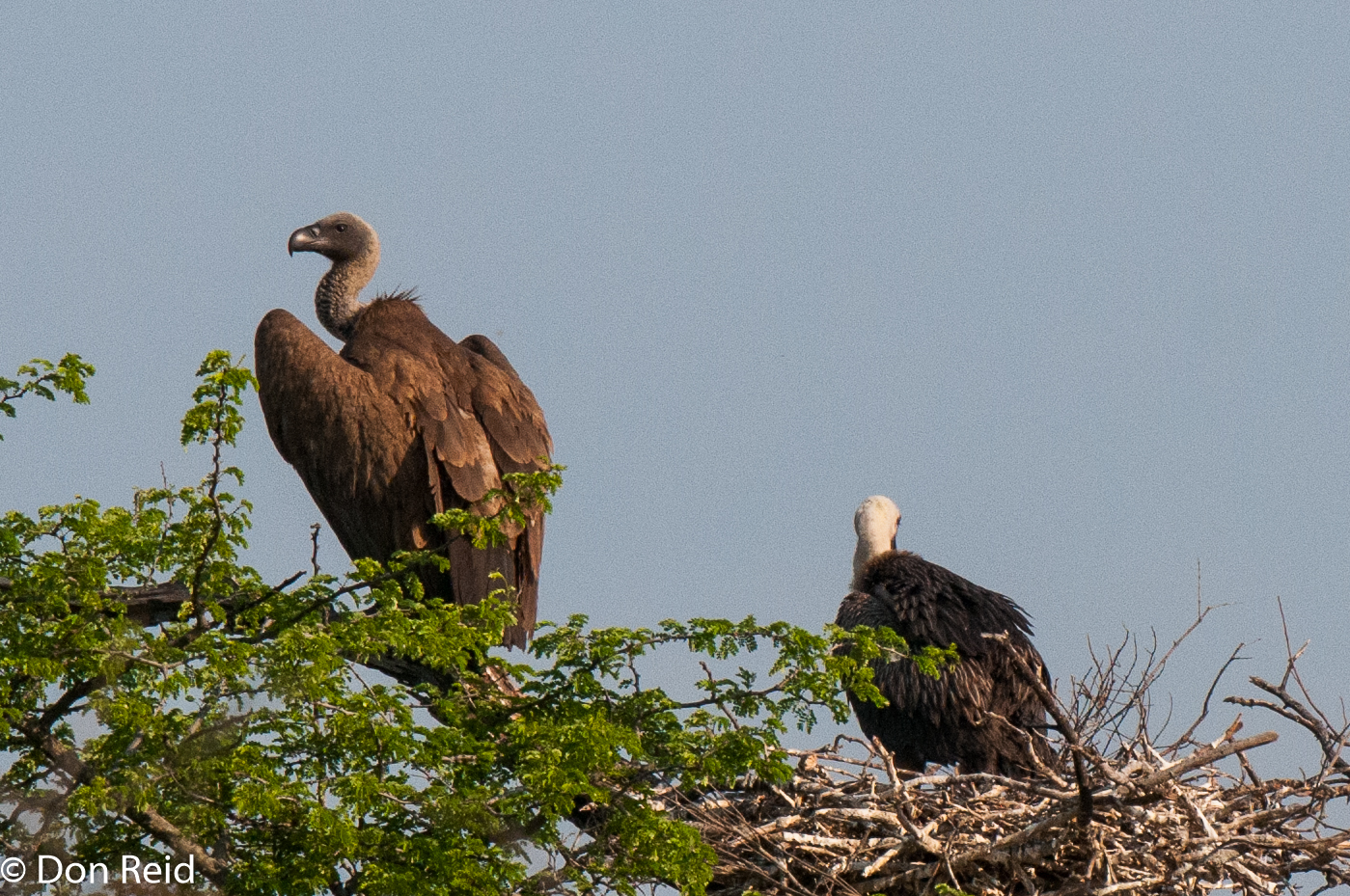
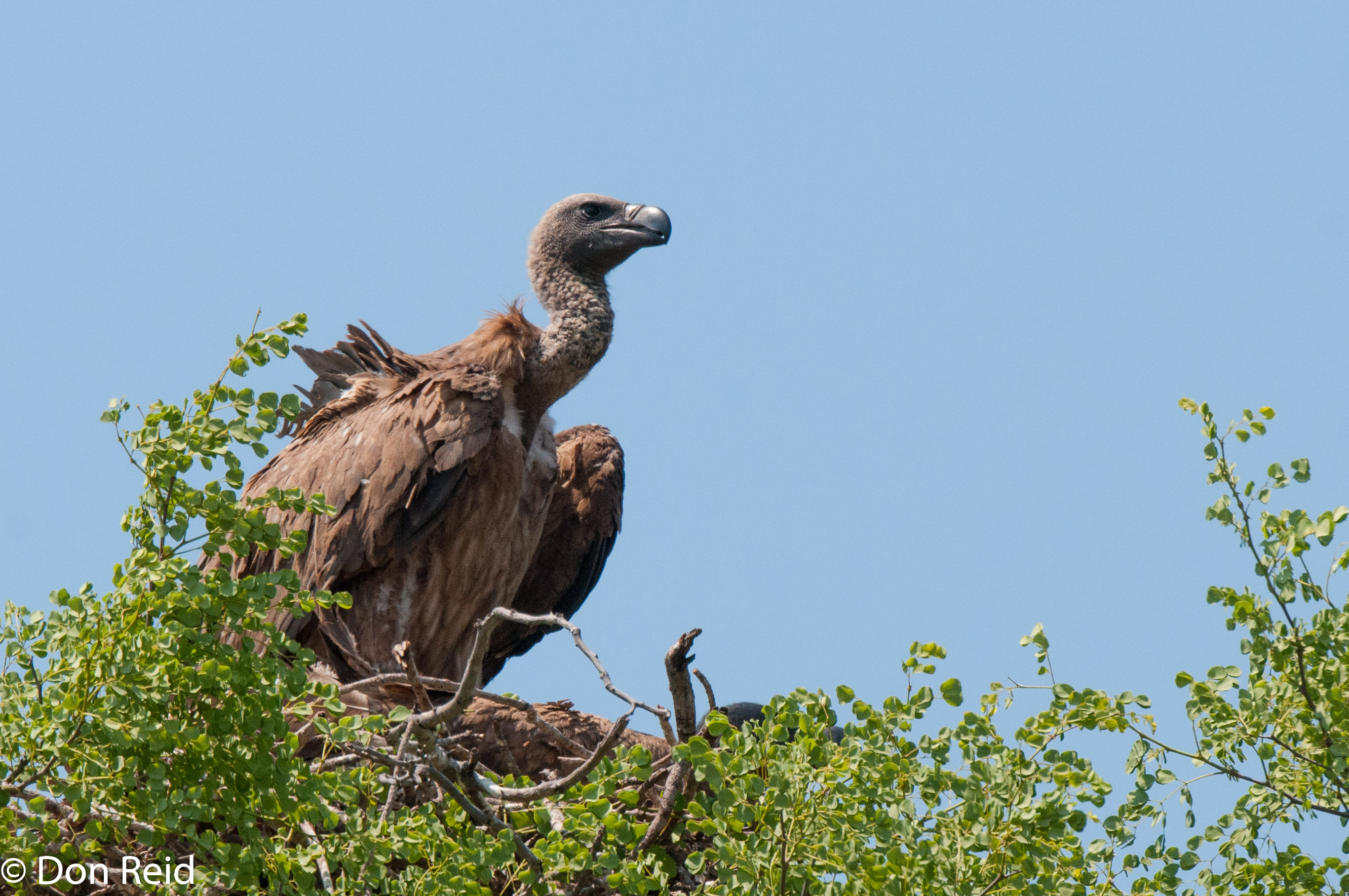
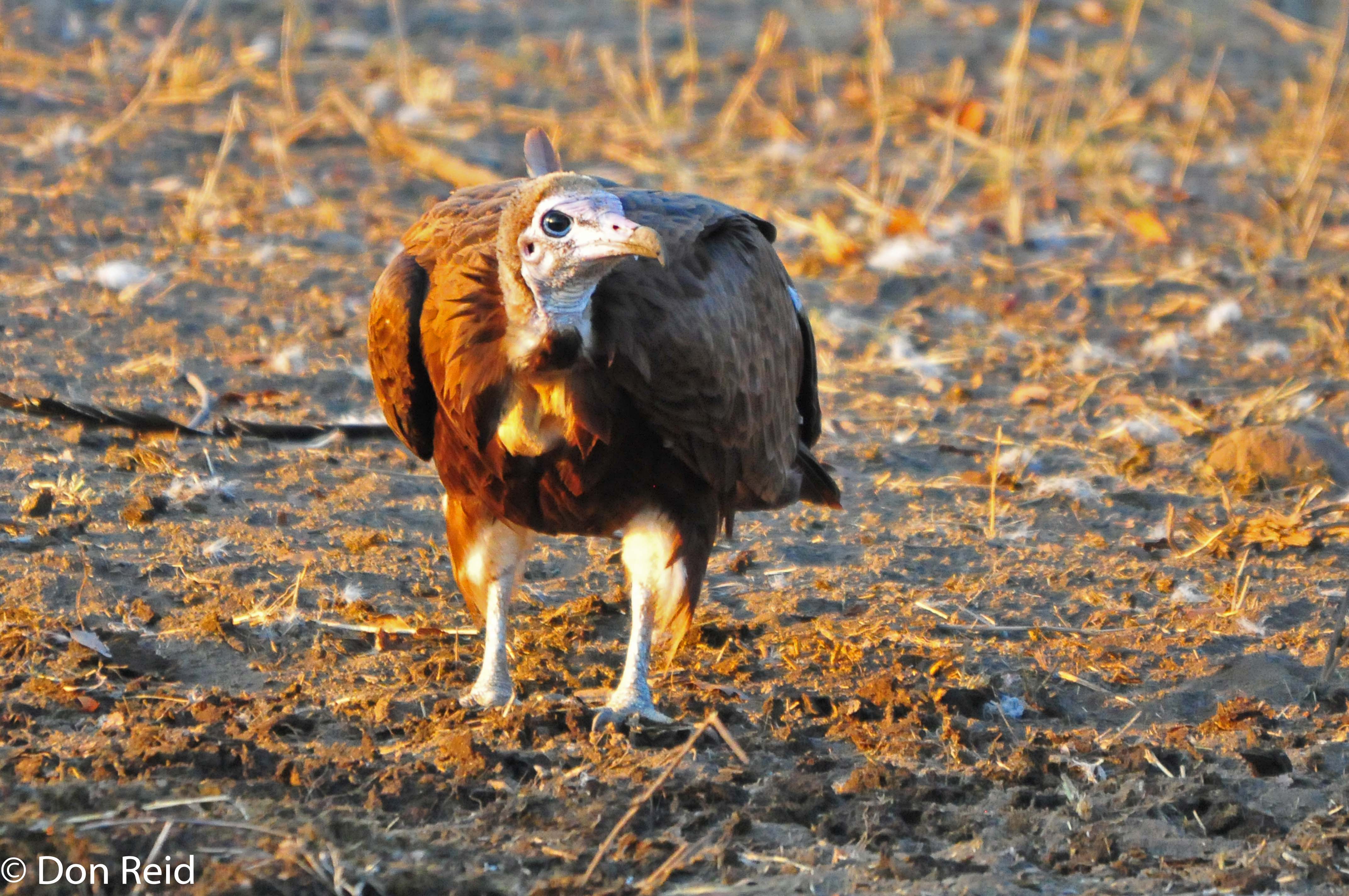
Vultures and particularly nesting Vultures were a feature of this drive as we encountered at least 4 different nests with Vultures in attendance. Vultures that we identified included the common White-backed Vultures, of which there were many, as well as the scarcer Lappet-faced, Hooded and White-headed Vultures.
The average visitor to Kruger probably won’t spend much time looking at vultures, other than to see if they are near a kill, but the chances of seeing four Vulture species on one drive are slim, so I for one was very appreciative of these sightings.
Rounding off the raptor feast was a large Tawny Eagle, always impressive to look at and ruggedly good-looking.
Tawny Eagle
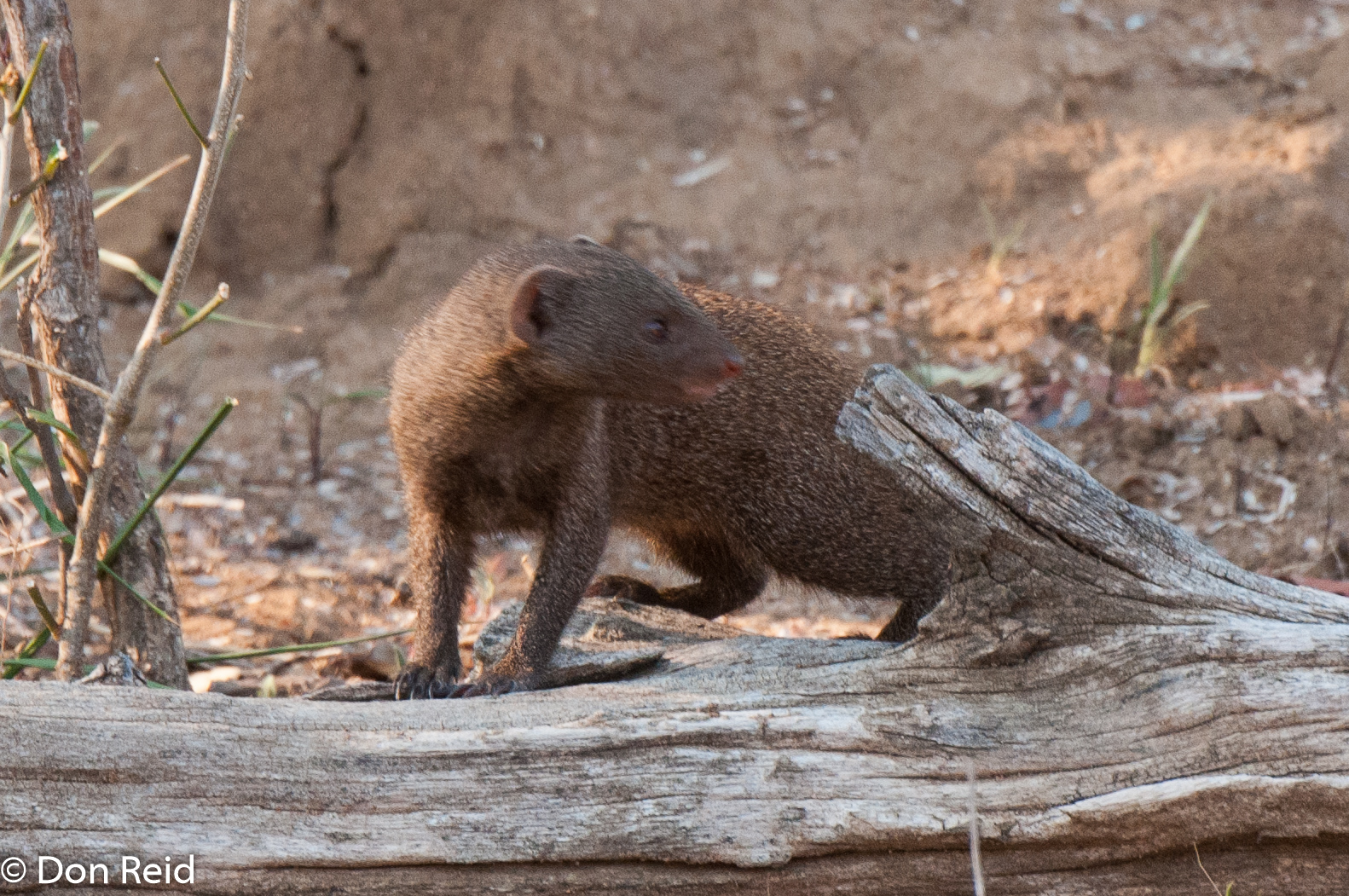
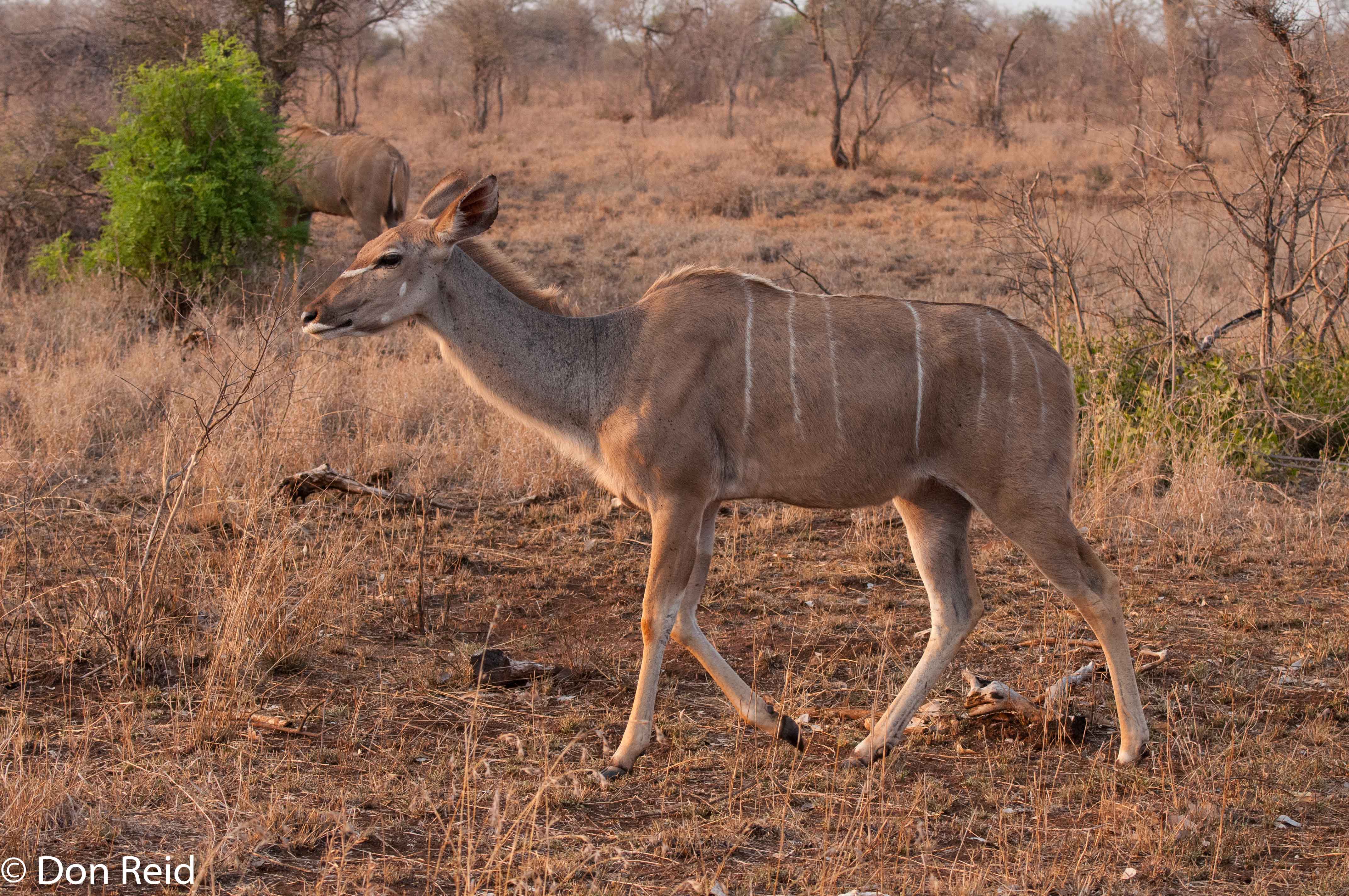
Game was a bit sparse compared to some of the other drives we had done around Satara but we nevertheless enjoyed some good sightings of small groups of the more common species, including Kudus backlit by the early morning light, a lone Steenbok resting in the grass and a few Dwarf Mongeese (oh-oh should have seen that coming, now I’ve got to figure out the plural of Mongoose – it’s actually Mongooses!)
Kudu beautifully backlit by early morning sonDwarf Mongoose
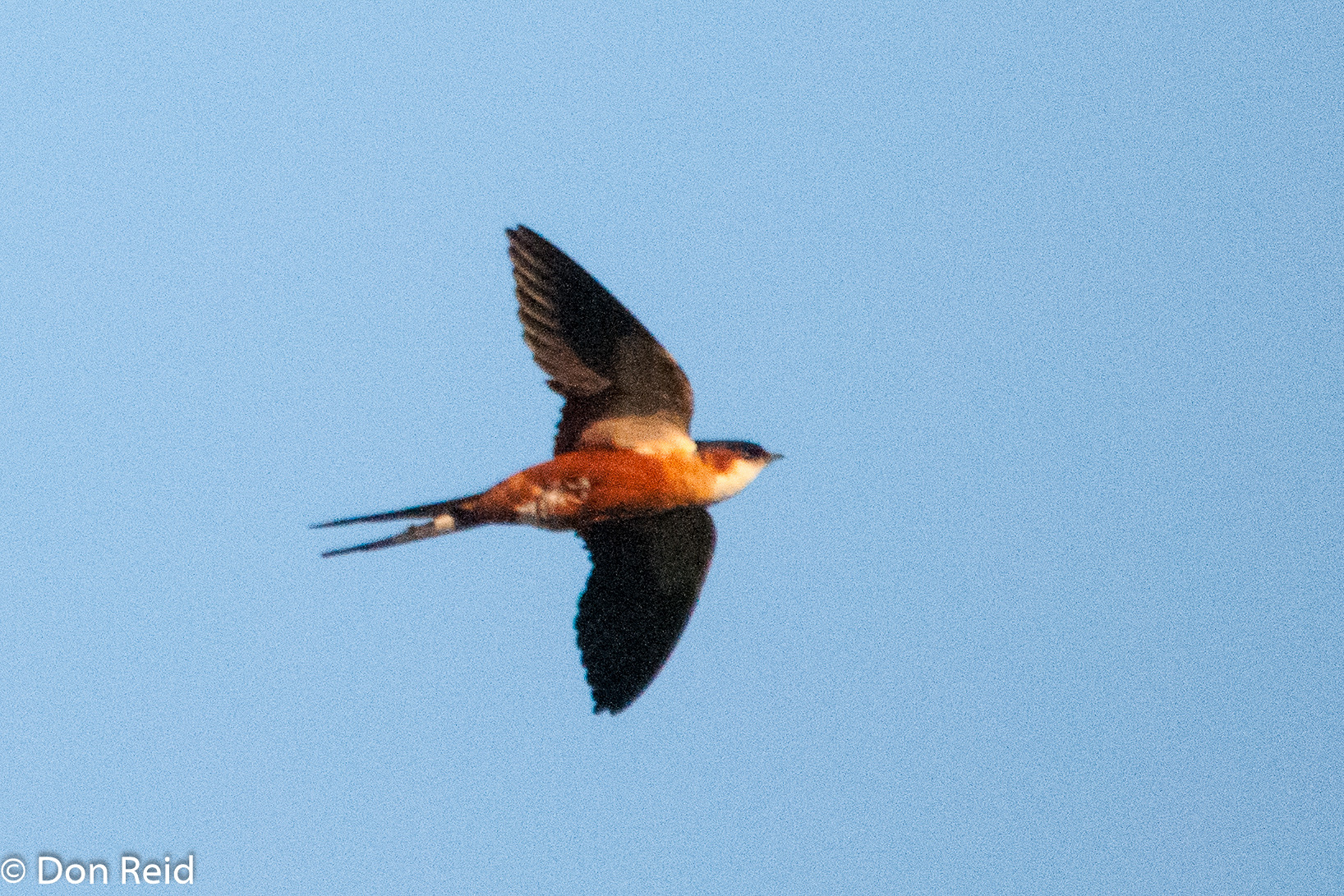
Mosque Swallows were a nice surprise – in my experience they are usually only seen a lot further north in Baobab country.
Mosque Swallow
Muzandzeni Picnic spot
The picnic spot has a remote feeling to it – like being in the “middle of nowhere” – don’t be surprised if an Ellie or two passes by on the way to the nearby waterhole, also favoured by Zebra amongst others.
MuzandzeniZebra, MuzandzeniZebra juvenile, fluffy stripes and all
Our brunch was leftover steak from the previous night’s braai, cut into strips and fried on the skottel with onions and tomato, then plied onto a hamburger bun – delicious!
Muzandzeni brunch – leftovers never tasted so good!
Back to Satara
Heading back we were on the lookout for the lions at a buffalo kill that we had heard about from Andre’s brother Eddie, visiting from Holland, and sure enough they were at the spot he had described, near an almost bare buffalo carcass.
With the temperature nudging 38 degrees C, we were happy to head back to Satara for a relaxing rest of the day, having extracted the maximum enjoyment from yet another Kruger drive.
Steenbok taking to the shade
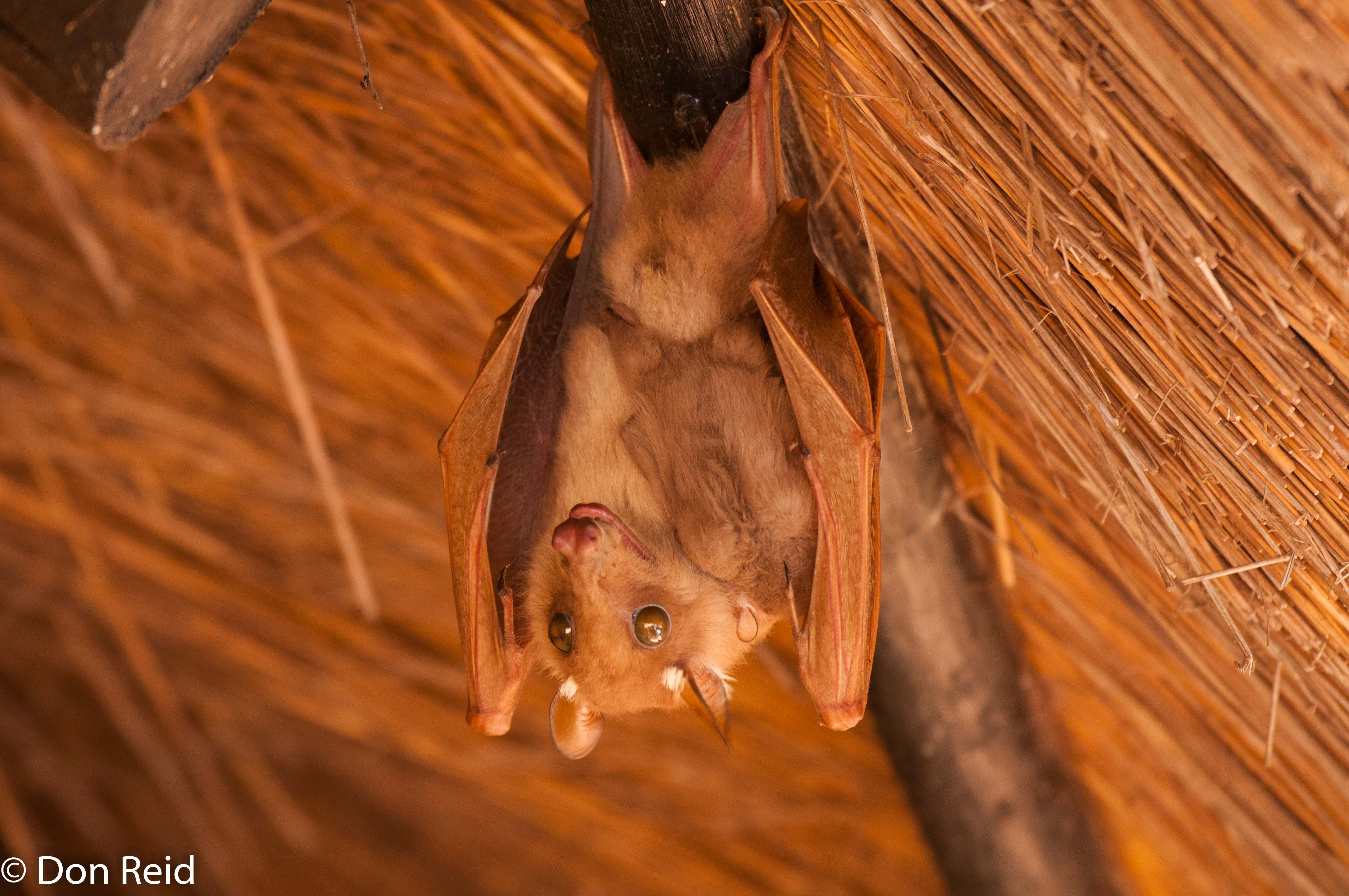
A surprise awaited us at the rondavel, in the form of a Fruit Bat , hanging under the thatched overhang – quite a cute looking bat don’t you think? Like a teddy bear with wings.
With part of our family group otherwise engaged (Andre and Megan had returned to Joburg for a schools competition) and the remainder taking the opportunity to spend some quality time in Satara, I used the opportunity on two mornings to do some birdmapping (that’s the new terminology for “atlasing”) at my own pace ie driving at an ultra-slow pace and stopping frequently, which is the best way to birdmap / atlas effectively but can be frustrating for those not involved in the process.
Both birdmapping drives took me to Timbavati picnic spot for a coffee and rusks break and when Andre and Megan returned it was the destination of choice once again, making it three visits in all during the week.
The Routes
There are a few options when heading to Timbavati, which lies north-west of Satara, and the choice of route will depend on how much time you wish to spend driving and whether you prefer tar or gravel roads, the latter being a lot slower but often more productive.
One option is to take the H7 tarred road west towards Orpen, then turn off northwards onto the S40 gravel road at the Nsemani dam about 7 kms from Satara and follow this road to Timbavati.
Travelling further along the H7 will take you to turn-off to the S39 gravel road, which meanders along the Timbavati River for much of the way – a longer route but well worthwhile.
The other option is to head north from Satara towards Olifants along the H1-4, then take a left at the S127 which winds through arid bushveld for about 9 kms to the picnic spot. This route means less driving on gravel but is not as productive game-wise (and birding-wise) as the first options
Whichever route you choose it makes sense to take one of the other routes back to Satara so that you cover the greatest area and increase your chances of interesting sightings along the way.
Habitat
The S39 and S40 roads take you through mixed woodland with the S39 staying close to the Timbavati river, although during the dry season the river will be dry for most of the way other than a few pools left after the long dry winter
River Pool, Timbavati Road
The open plains are generally better for game while the mixed woodland provides good birding opportunities as well as the chance for some close encounters with game.
An extract from the Kruger Park map book shows the routes :
Satara to Timbavati routes
The Game
Game is not as abundant along the S39 and S40 as it is on the open plains east of Satara, however small groups of game are often encountered grazing or pursuing some other activity quite close to the road, affording good close-up views
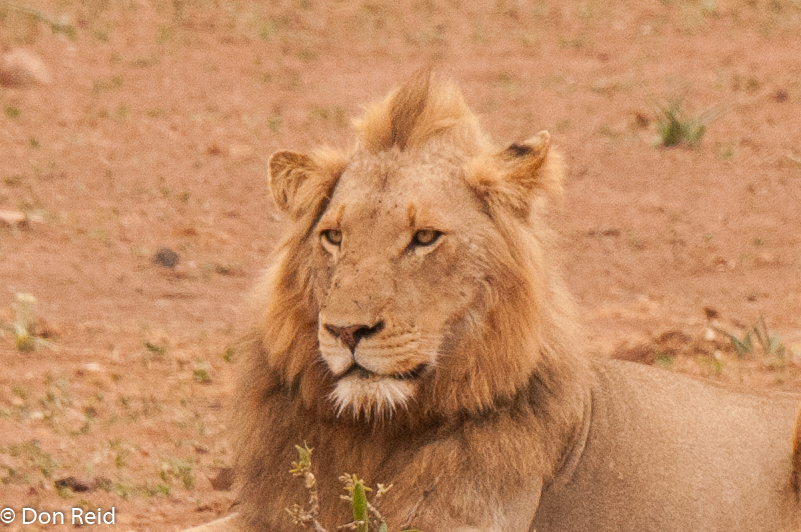
On my first trip I came across two Lions at the Giravana water hole, just chilling as they are wont to do.
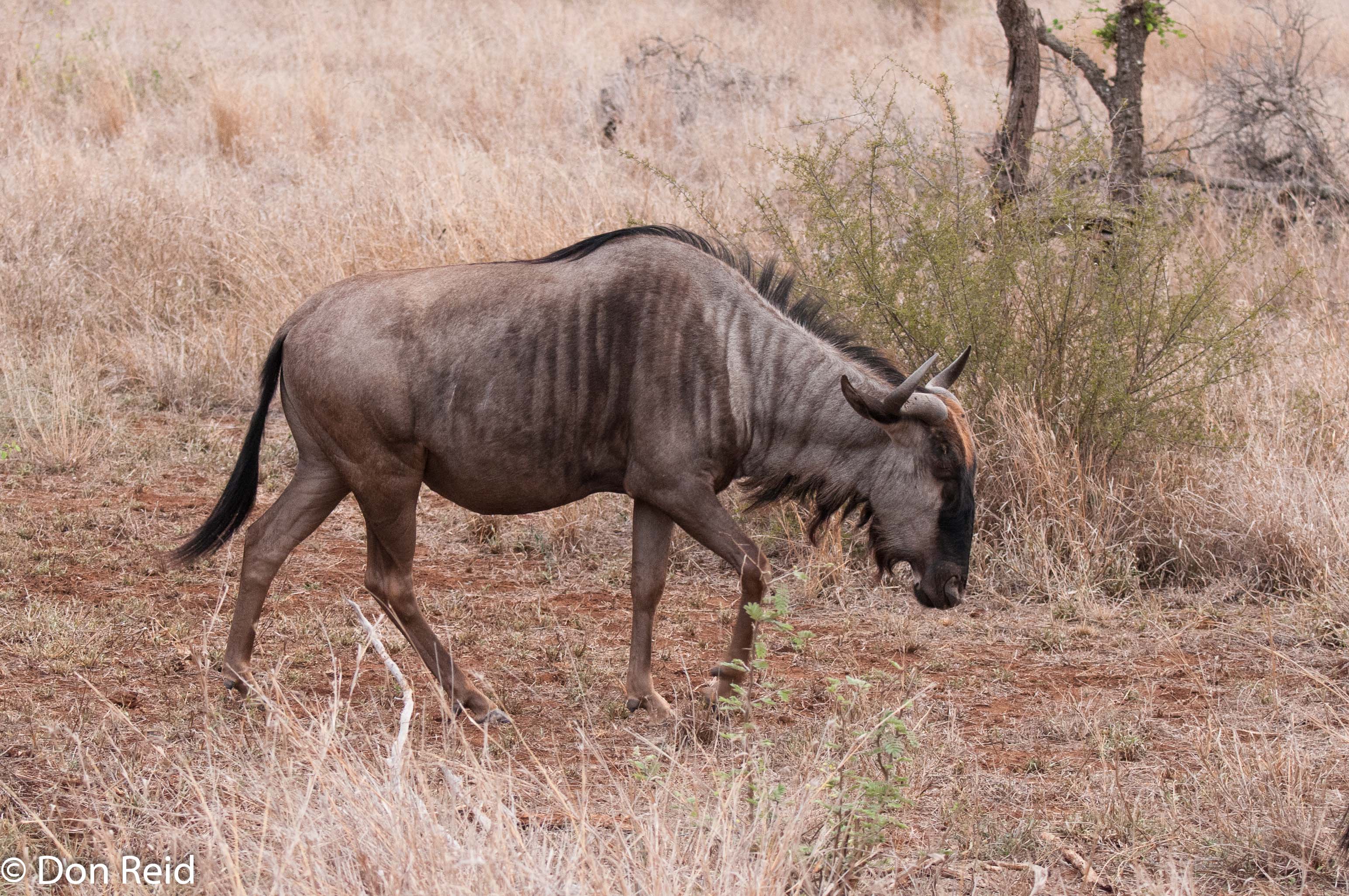
Regular sightings of some of my favourites kept things interesting – Giraffe, Kudu and Blue Wildebeest amongst others
GiraffeKuduKuduBlue wildebeest
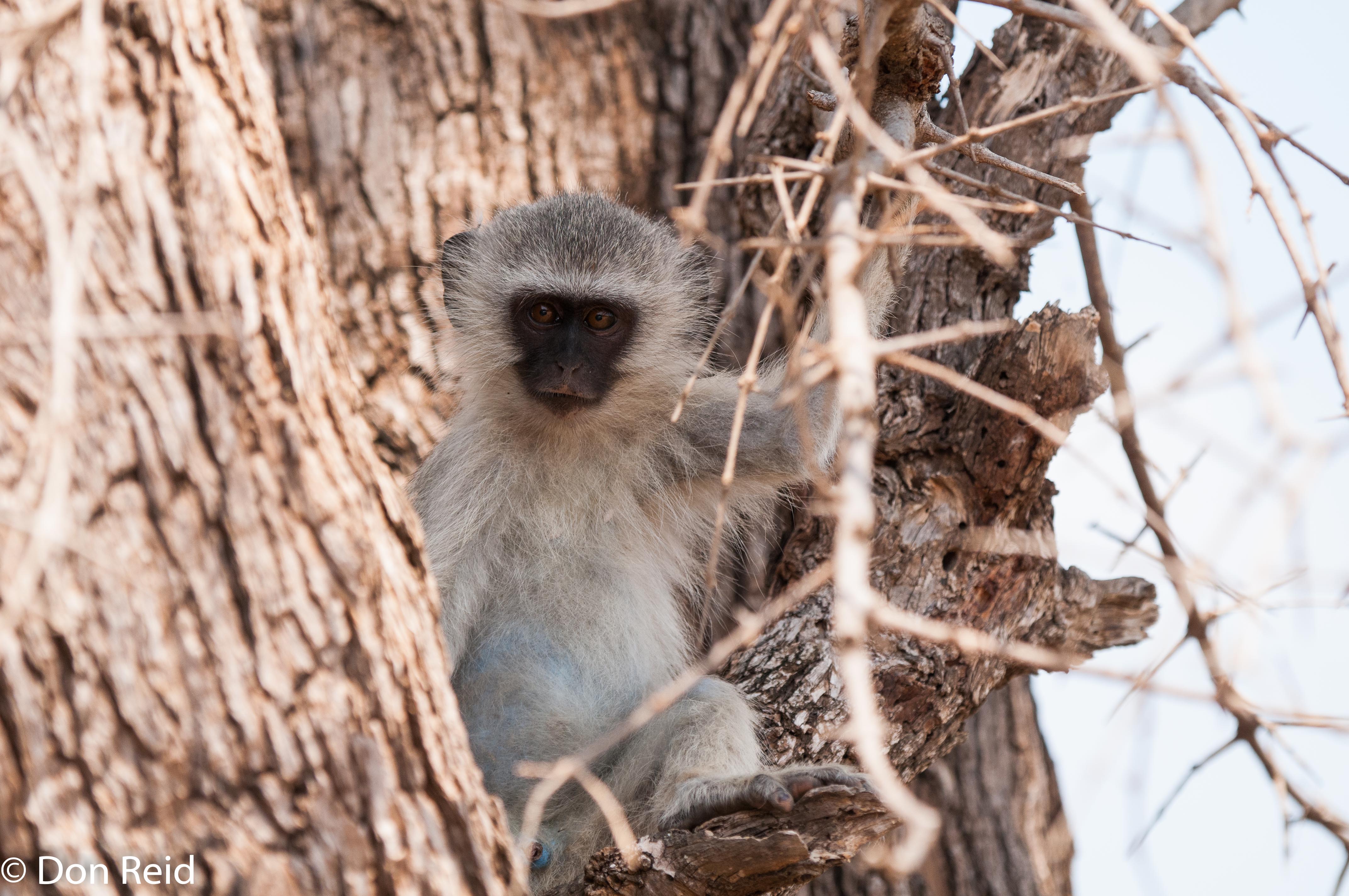
No drive would be complete without coming across a monkey or two……
Vervet Monkey, always so alert
Surprise of the one trip was a brief Leopard sighting, seen crossing the river and disappearing into the thick bush before I could get a camera focused on him.
The Birding / Birdmapping
Taking it slow and easy to make the most of the available birds, I built up some healthy lists as I passed through the various pentads (roughly 8 x 8 kms square) on the way to Timbavati, spending a bit more time in some of the pentads which I had identified earlier as lacking some birdmap attention in 2015.
Highlights were many :
Gabar Goshawk swooping across the road and “attacking” a spider’s nest and apparently feeding on the contents
Gabar Goshawk
Black- and Brown-crowned Tchagras in quick succession in the roadside bushes
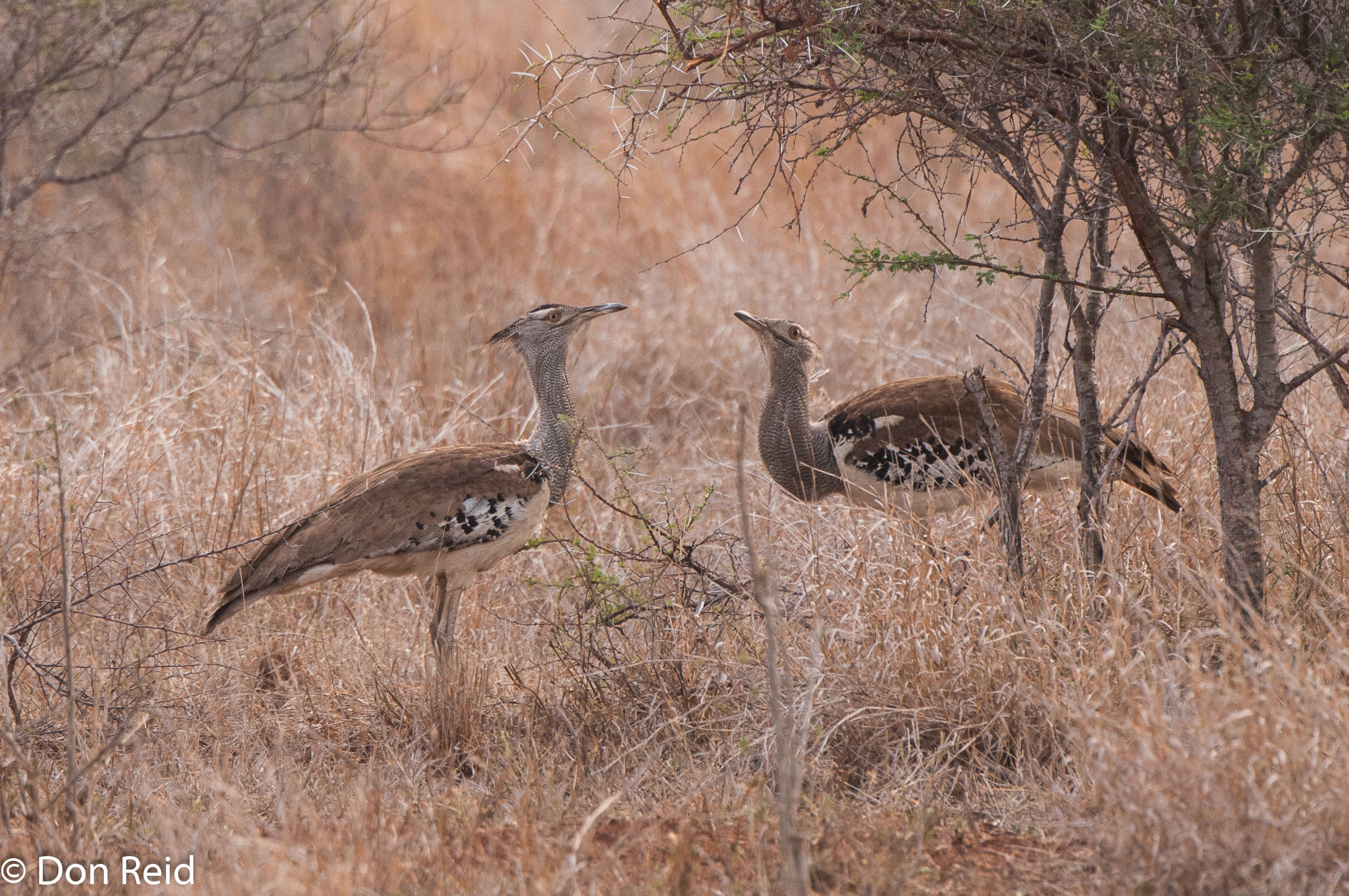
Kori Bustard pair in the long grass
Kori Bustard, Timbavati Road
Flock of White-winged Widowbirds still in their winter plumage
Red-billed Oxpeckers on a Zebra
Red-billed Oxpecker
Sabota Larks perched on top of trees and singing cheerfully
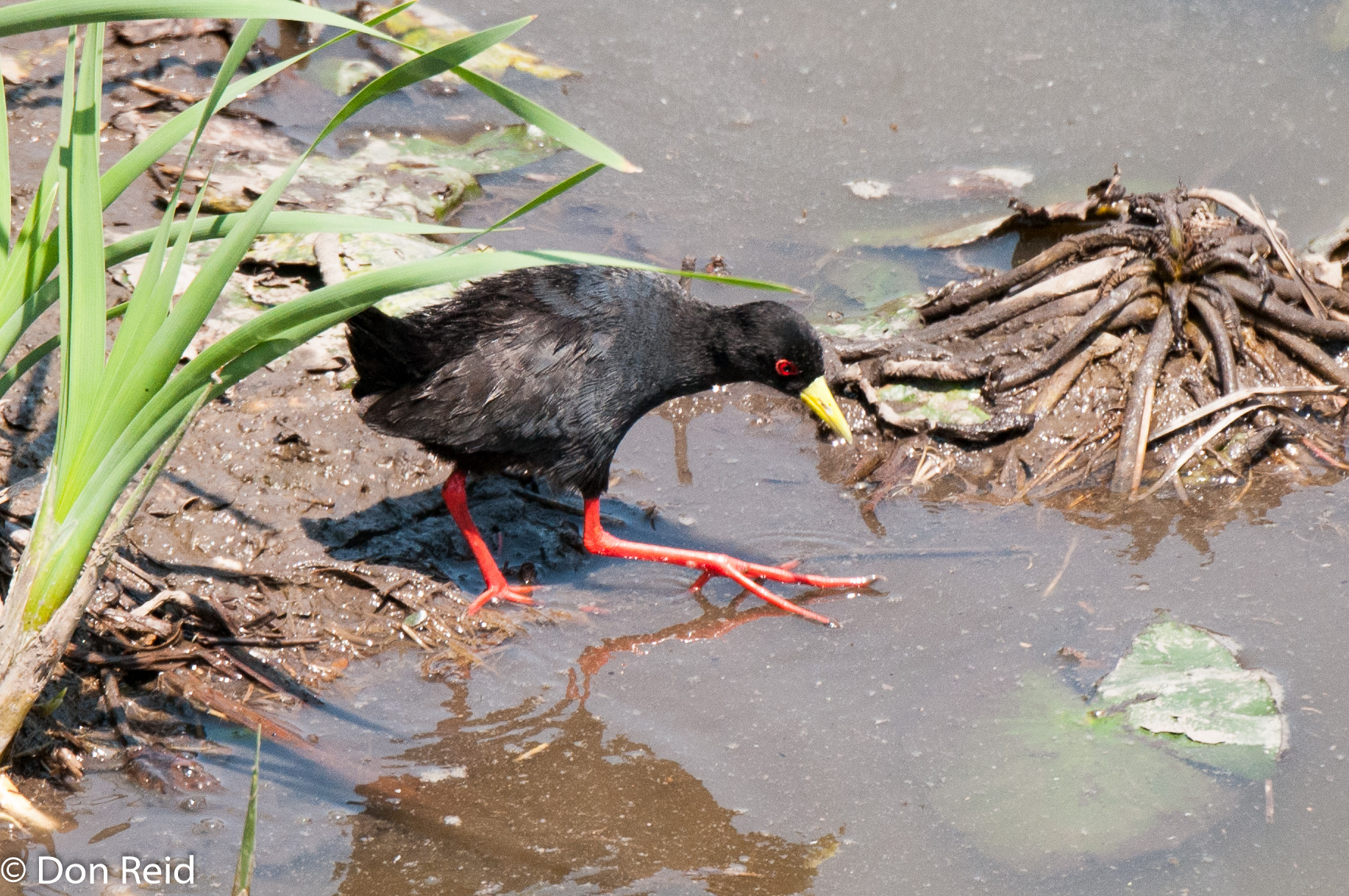
Black Crake patrolling a small pool
Black Crake
A handsome Tawny Eagle perched high up in a tall tree
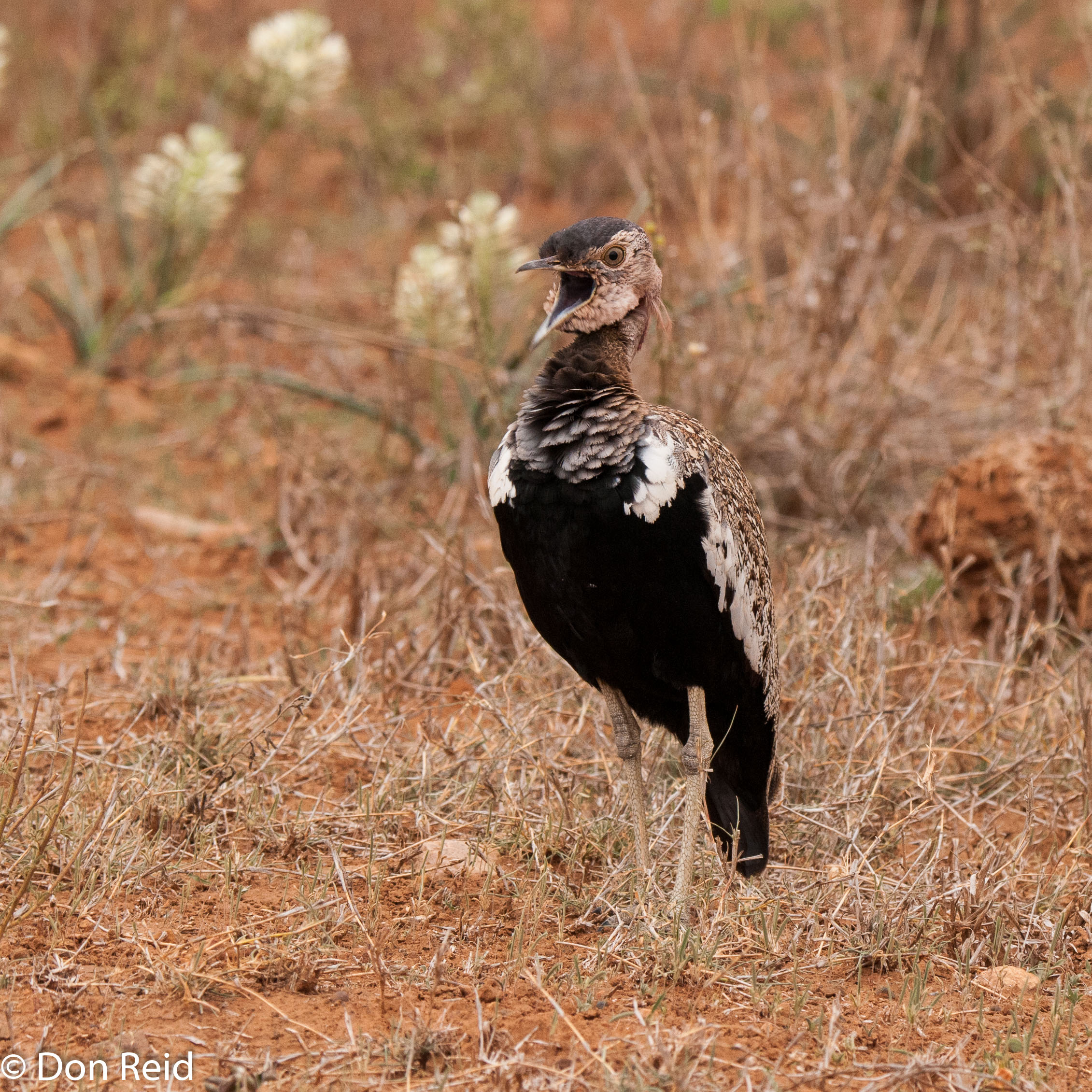
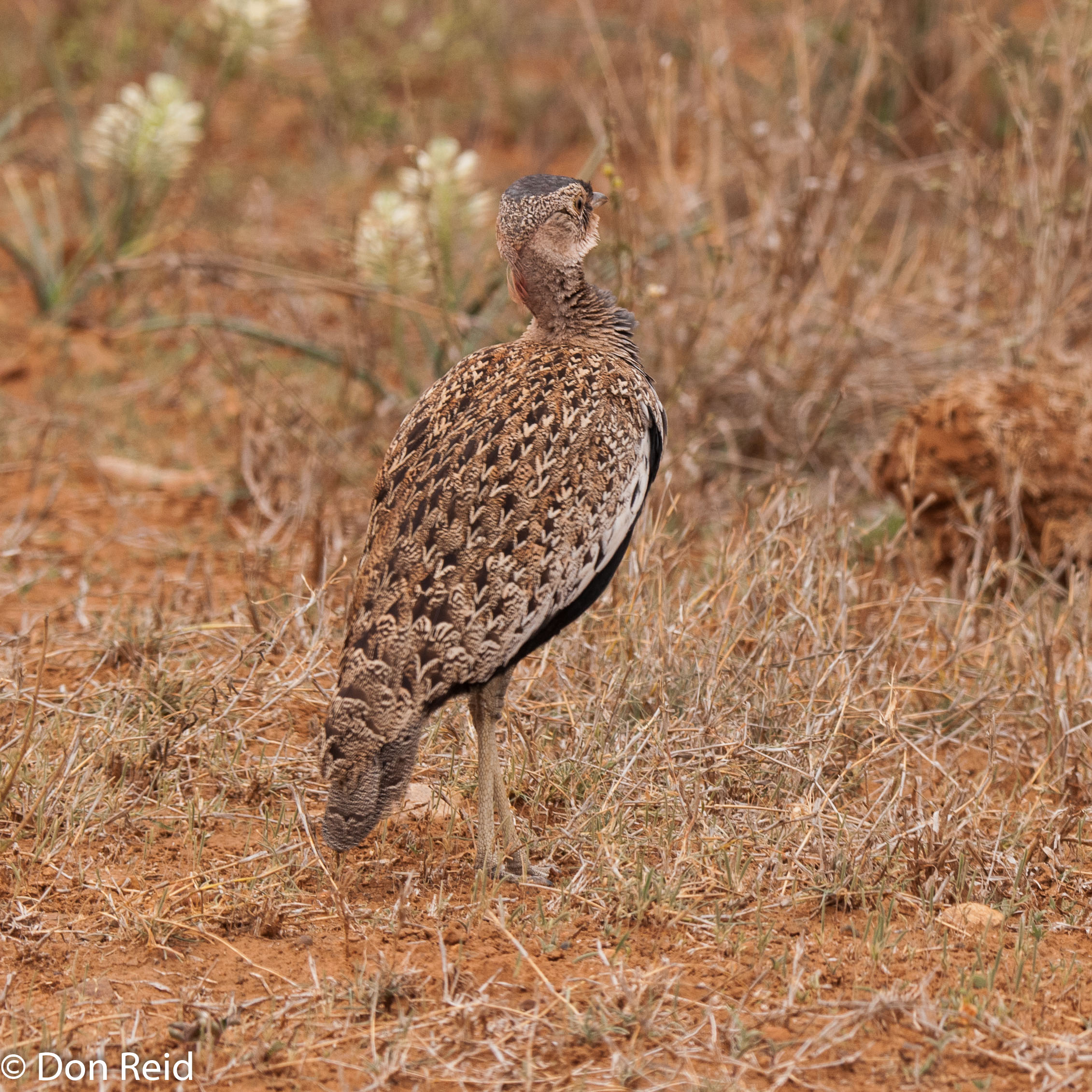
Red-crested Korhaan calling in its distinctive fashion right next to the road, boldly showing its black front then turning to show just how well camouflaged it can be in the dry grass
Red-crested Korhaan – front view while calling – can hardly miss himRed-crested Korhaan – viewed from the back – now he is well camouflaged
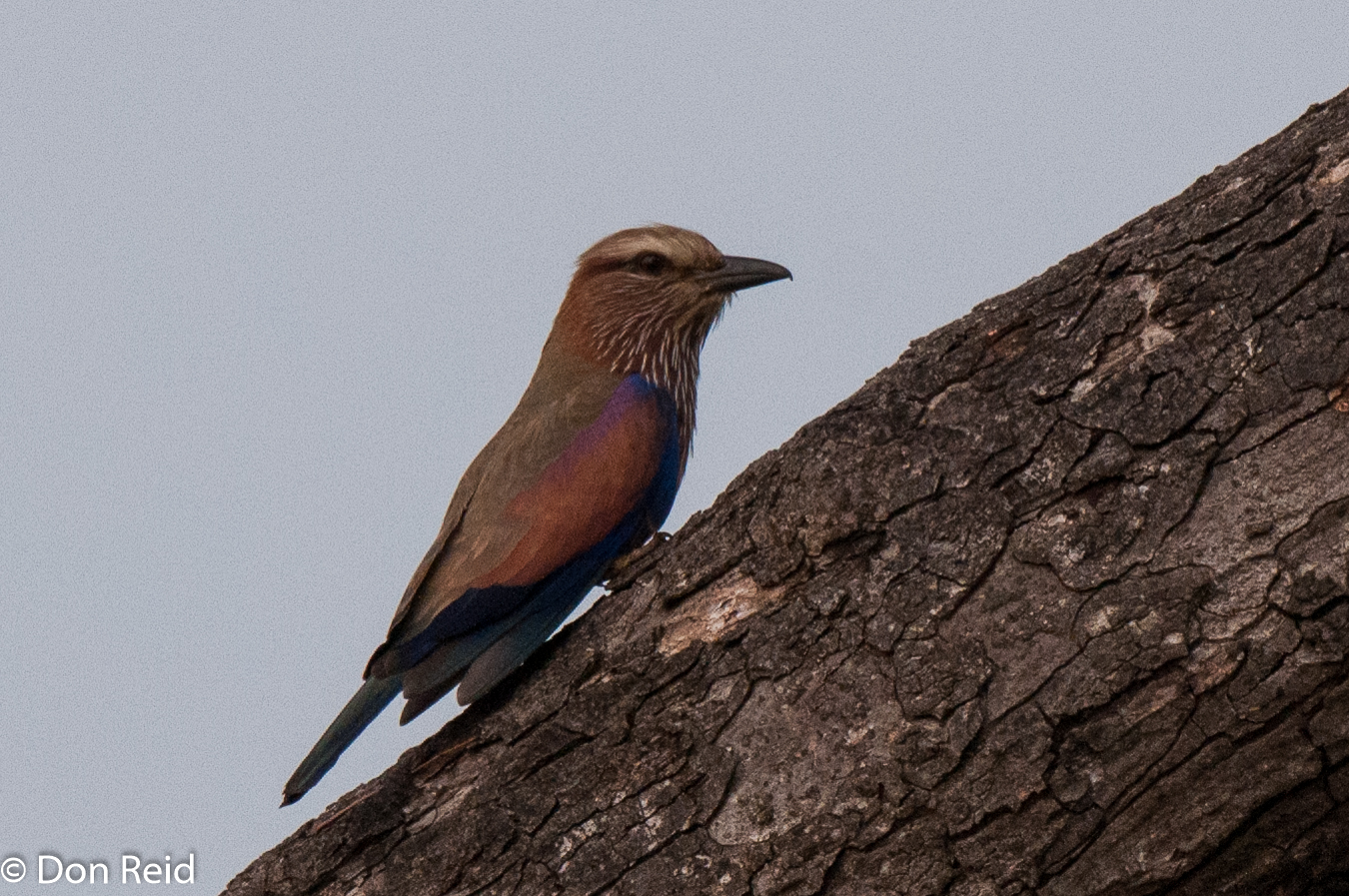
Purple Roller
Purple Roller
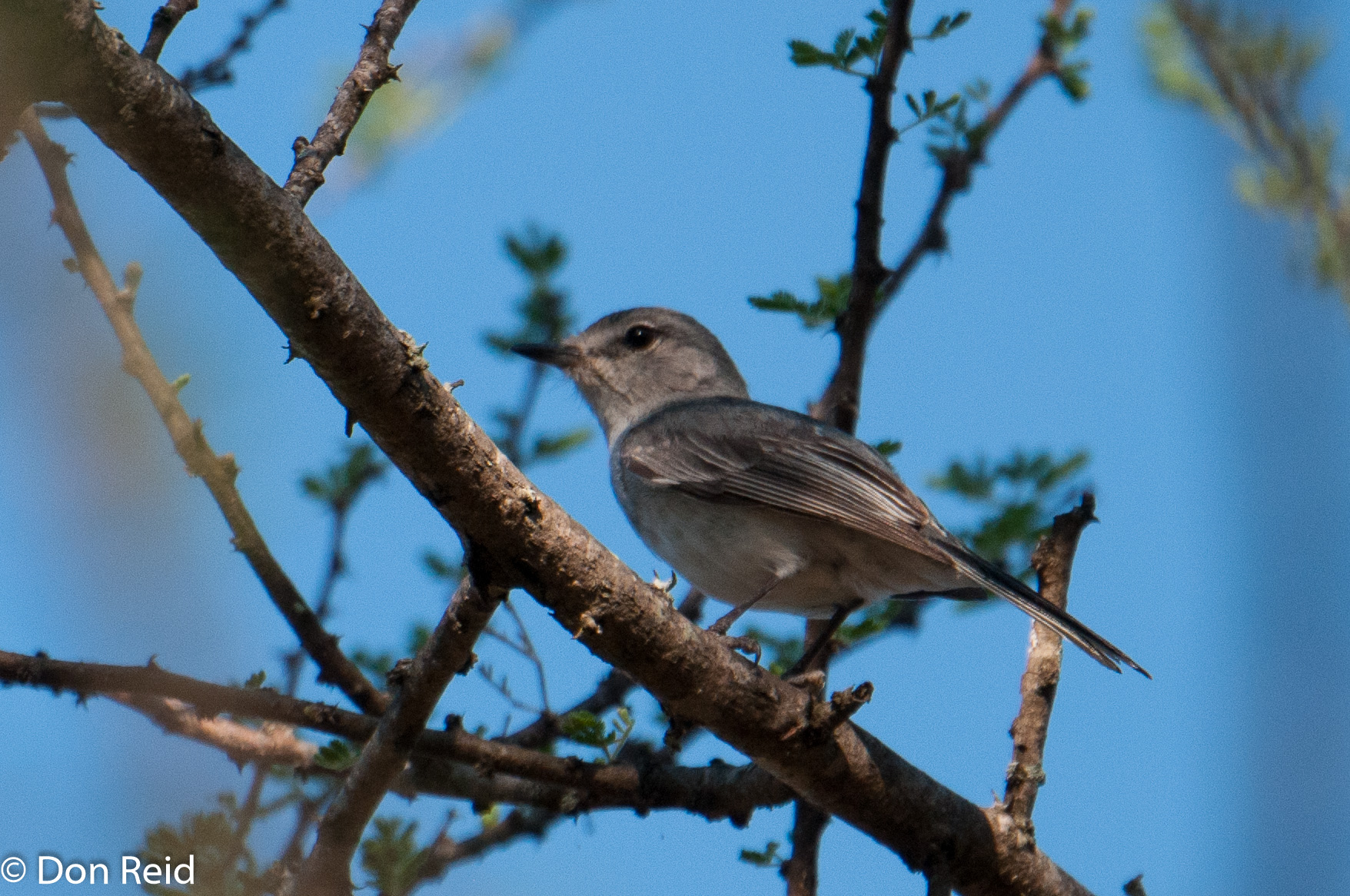
Closer to Timbavati a Grey-Tit Flycatcher was moving through the canopy, emitting its typical high-pitched trilling call which I had only just got to grips with on this trip, having heard it several times in Satara as well.
Grey-Tit Flycatcher
More proof that many birds are extremely habitat specific was the numbers of European Bee-Eaters in one spot but nowhere else to be seen.
Timbavati Picnic Spot
The two mornings that I spent birdmapping, I arrived at Timbavati when it was quite busy – full of happy groups of visitors enjoying a brunch in this special setting overlooking the river, albeit dry at this time of year.
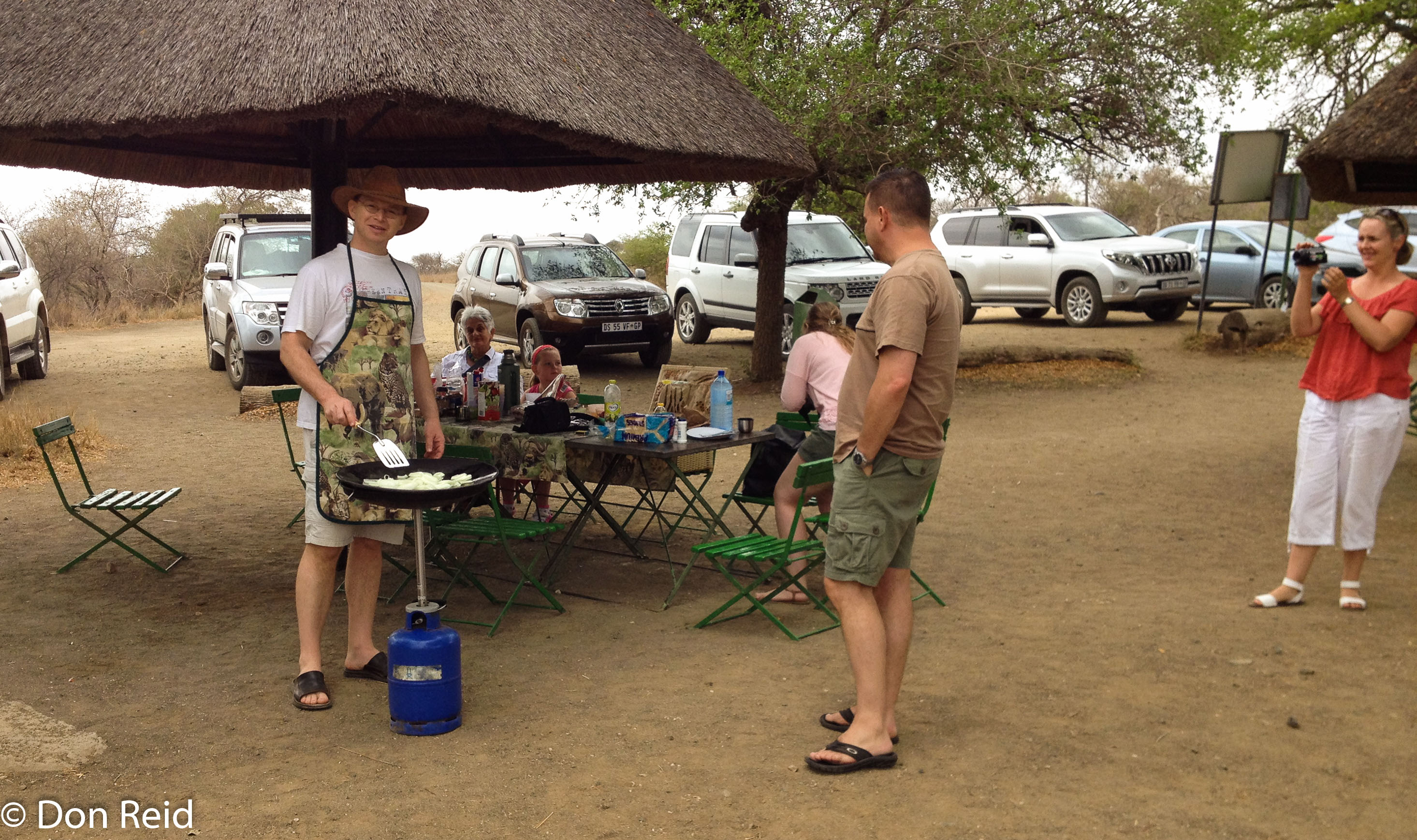
On the morning that we visited as a family we arrived a little earlier and had the place to ourselves for a while. Andre and Geraldine soon had the gas going and the skottel frying merrily and it wasn’t too long before we were tucking into another delicious brunch.
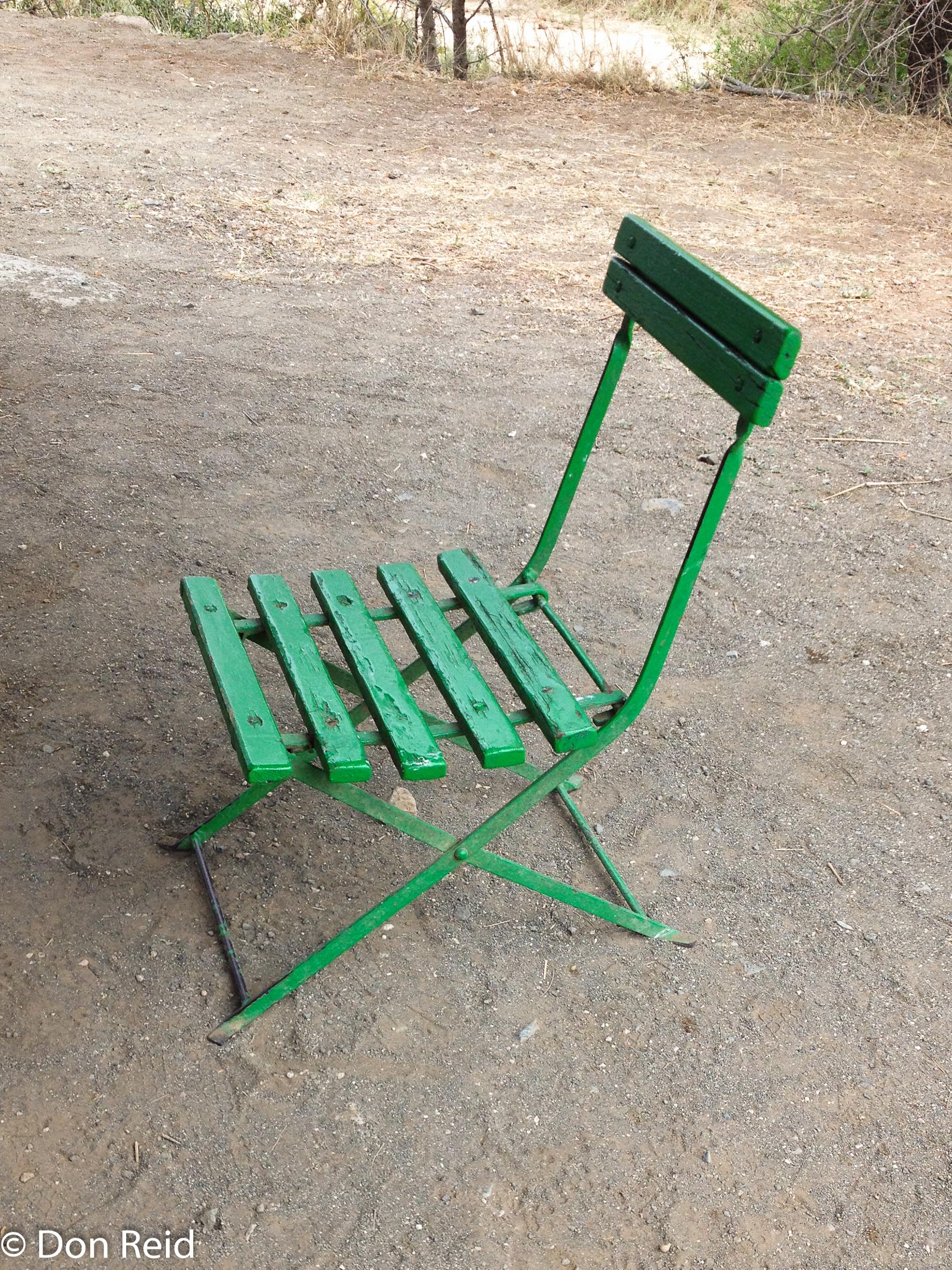
Timbavati picnic spot, before the visitors descend on it for brunchTimbavati brunch in preparationTimbavati still has the same chairs I remember from our first visits more than 40 years ago!
On the way to Timbavati we had taken the Olifants road then turned left onto the S127 – not much game was encountered but one lone, large elephant had us reversing a short way until he started feeding on the road verge and we grabbed the chance to get past safely. Interesting was the way he pulled out green bushes using his trunk and front leg in a sideways kicking motion to dislodge them from the hard dry ground.
Birding was slow that morning until we reached the picnic spot where several birds were vying for “loudest call” honours. Orange-breasted Bush-Shrike was a clear winner with its piercing but tuneful call from a nearby tree, but others were almost as active especially Crested Francolin and Natal Spurfowl trying to outdo each other with their equally raucous calls as they wandered around amongst the tables.
Back to Satara
On the return trip to Satara along the S127, a flock of Chestnut-backed Sparrowlarks made for an unusual sighting, as did a pair of tiny, colourful Quailfinches quenching their thirst at a small pool below a bridge on the tar road.
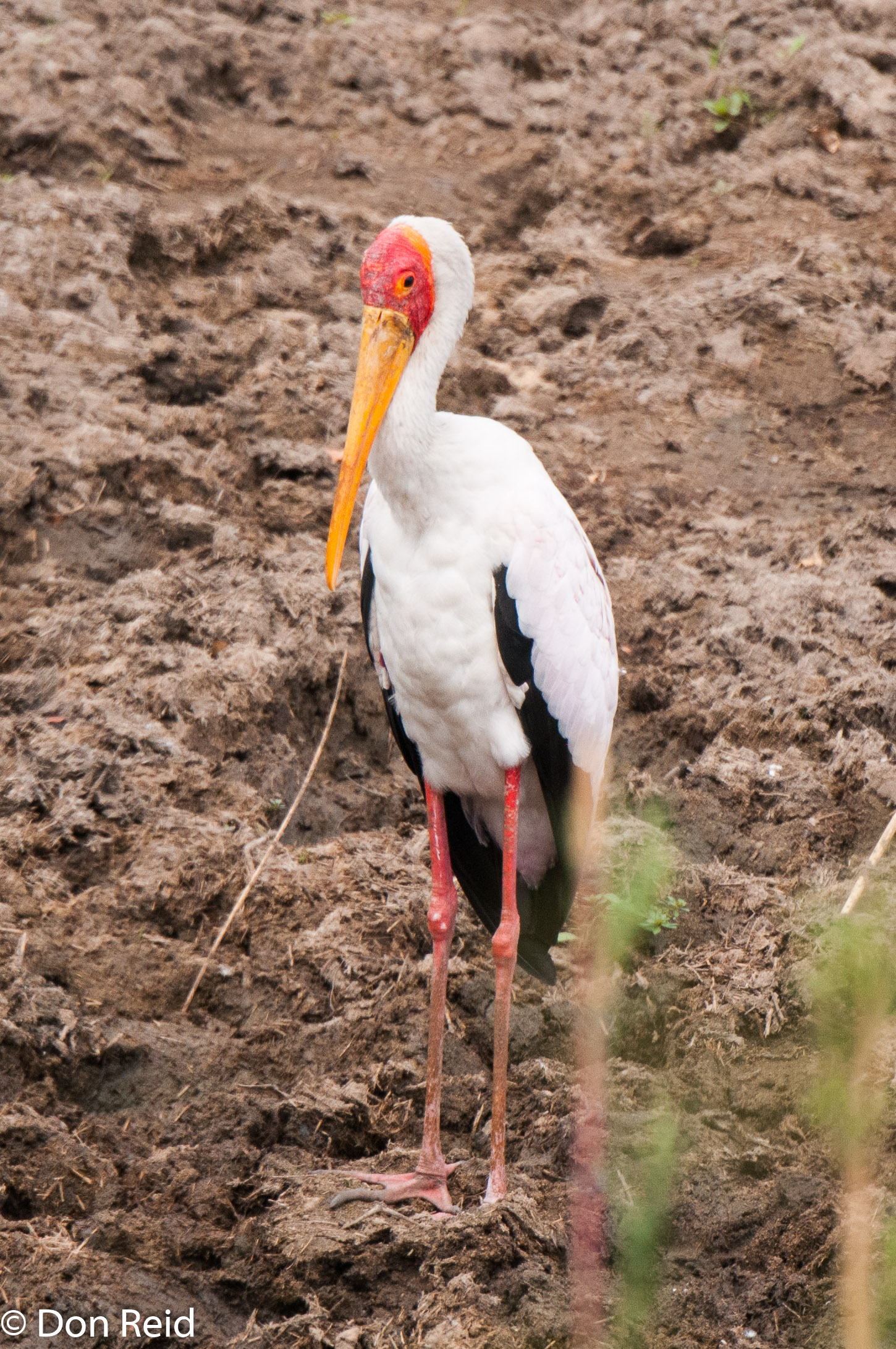
We had briefly diverted to Piet Grobler dam not far from the picnic spot, where a lone Yellow-billed Stork and Black-winged Stilt were new additions to the trip list, taking it to 126 species.
Yellow-billed Stork, Timbavati RoadTimbavati Road
Back at Satara it was time for a snooze and some relaxation to get us through the hot afternoon, with the temperature heading to the mid 30’s again.
The next drive during our stay in Satara was also one of my Kruger favourites – the drive eastwards from Satara to Nwanetsi picnic spot which lies close to the border with Mozambique.
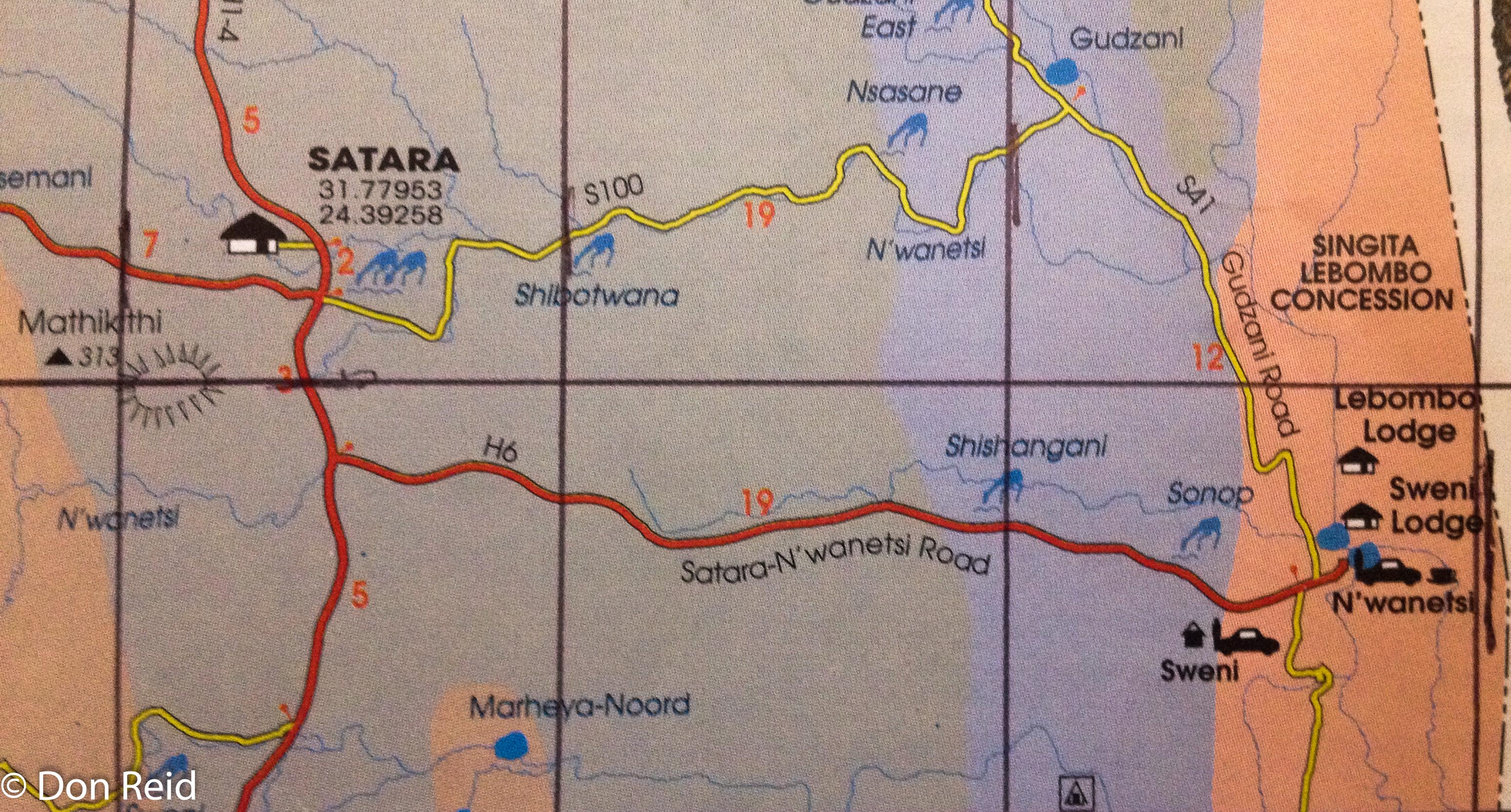
We had planned to do a circuit, first taking the S100 gravel road eastwards, which branches off the H1-4 tarred road just south of Satara camp. This becomes the S41 to Nwanetsi and we would return via the H6 tarred road back to Satara.
At Nwanetsi there is a dam which can be viewed from a roofed viewpoint on the ridge overlooking it. The Sweni hide, overlooking a small dam, and the low water bridge can be accessed on the return trip by taking the branch left at the S37 and travelling for a few kms
Habitat
The S100 meanders through open tree savanna with mostly Marula, Knob-thorn acacia, Leadwood, Sickle-bush and Russet bushwillow trees. The H6 tarred road is more direct but passes through similar habitat
An extract from the Kruger Park map book shows the route :
Best to go out on the yellow S 100 road and return on the red H6 road
The Drive
An early start saw us driving the S100 – always good for plains game and today was no exception as we came across a selection of game in quick succession.
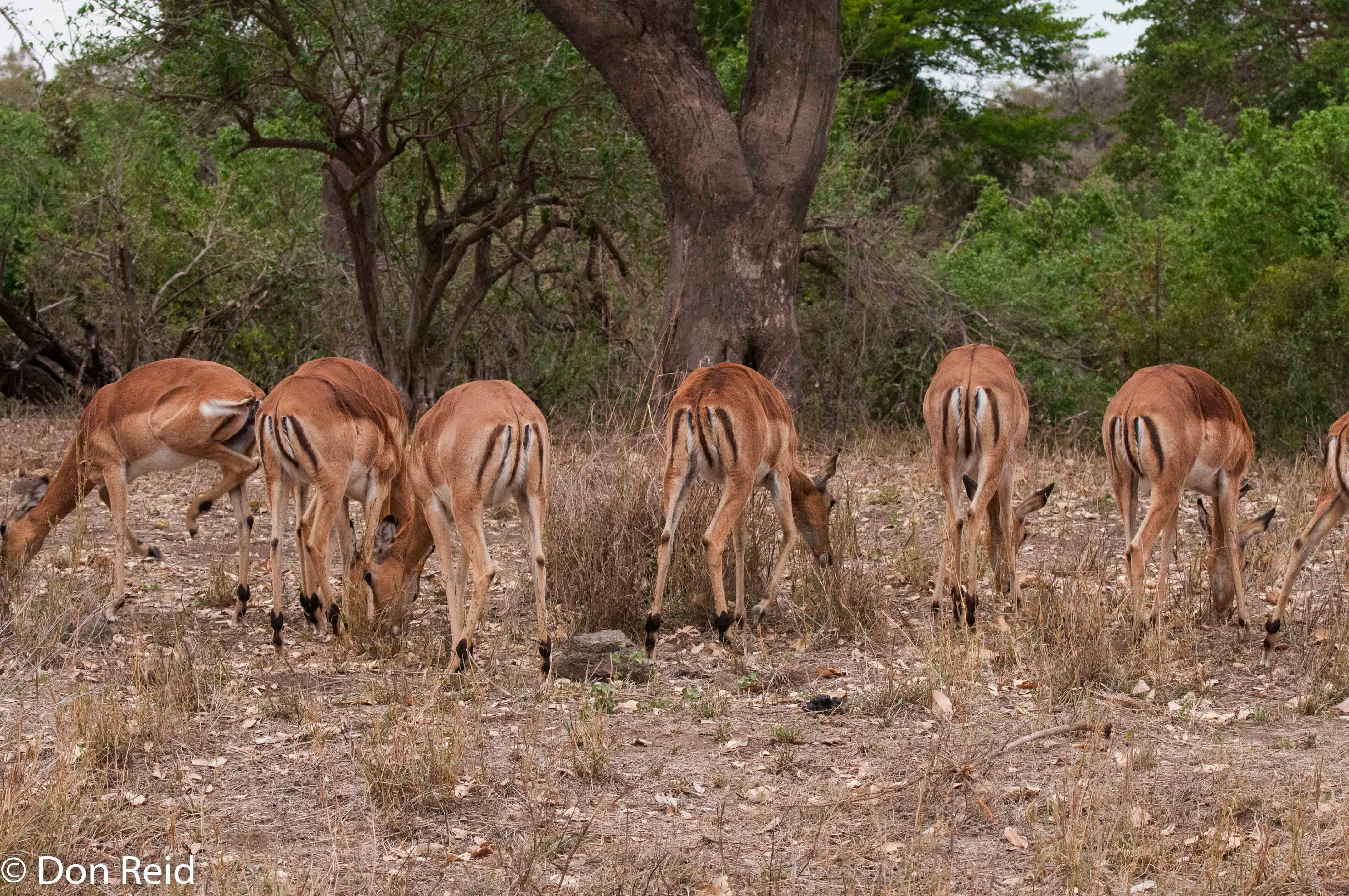
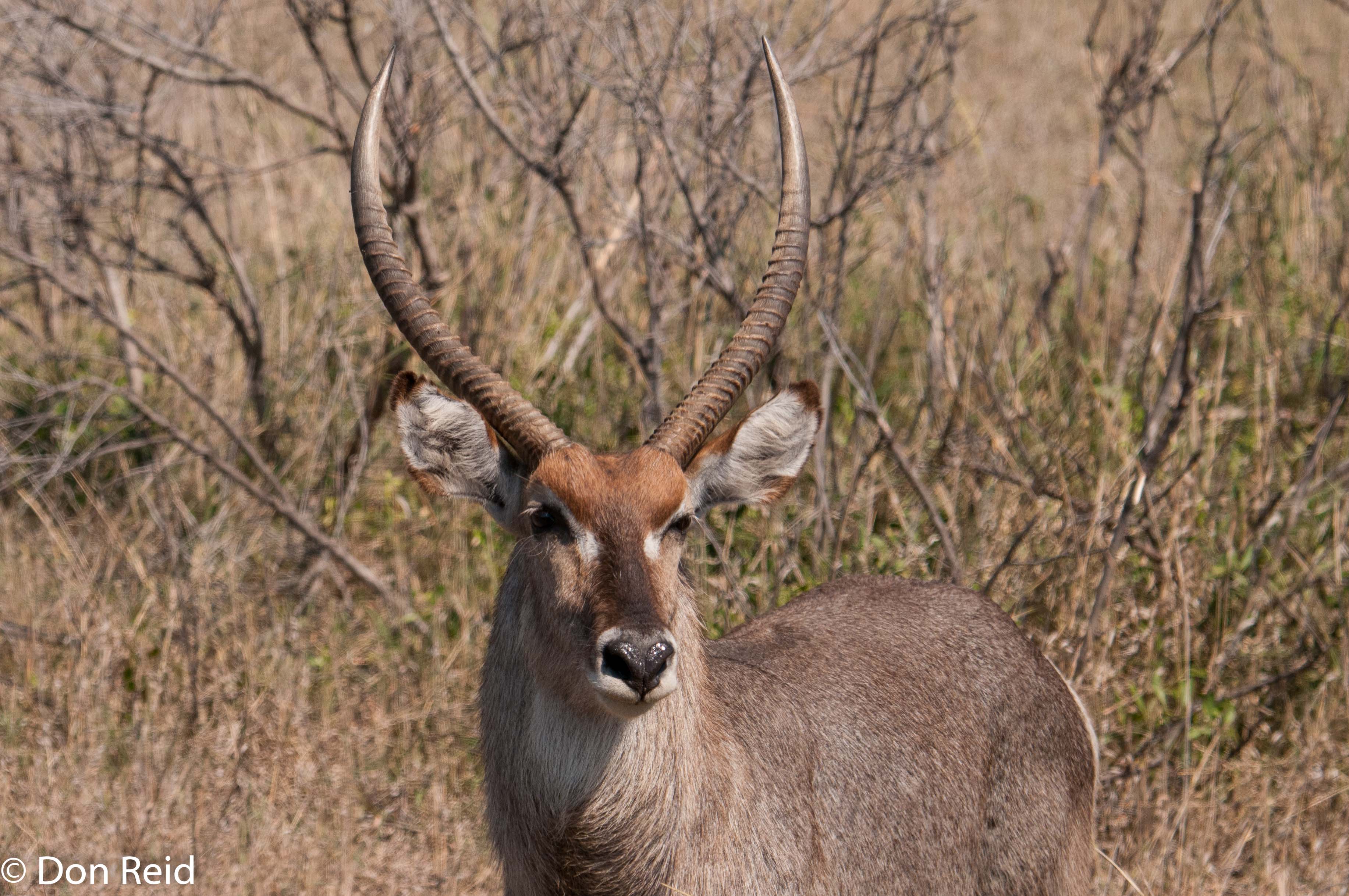
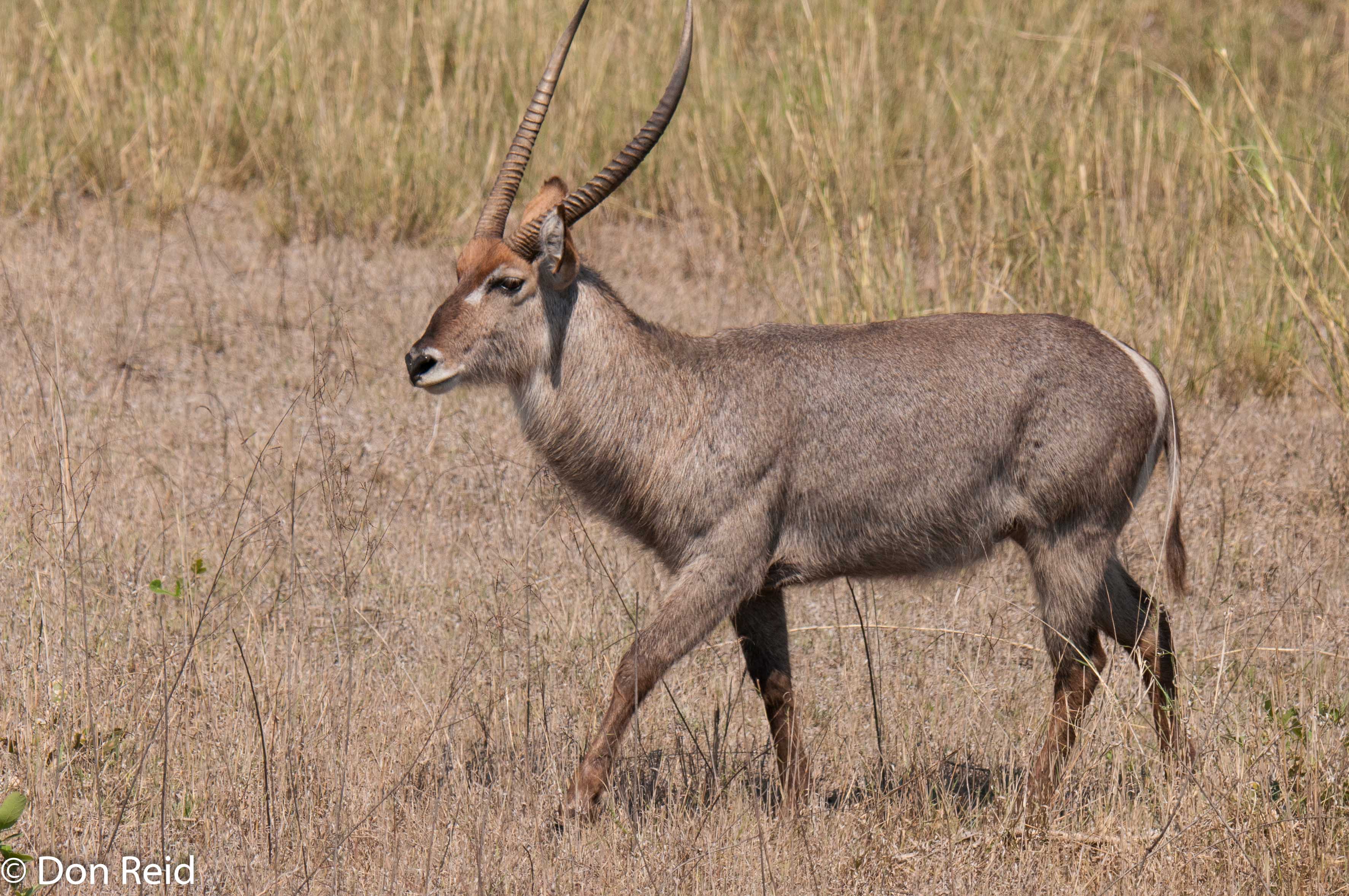
Signs of battles for dominance amongst the game were present – both Impala and Waterbuck were clashing horns. Nothing serious – more like a playful enactment of an ancient ritual as they butted each other lightly and tried to twist the opponent’s horns so that they would “bow” in submission.
Impala malesWaterbuck males
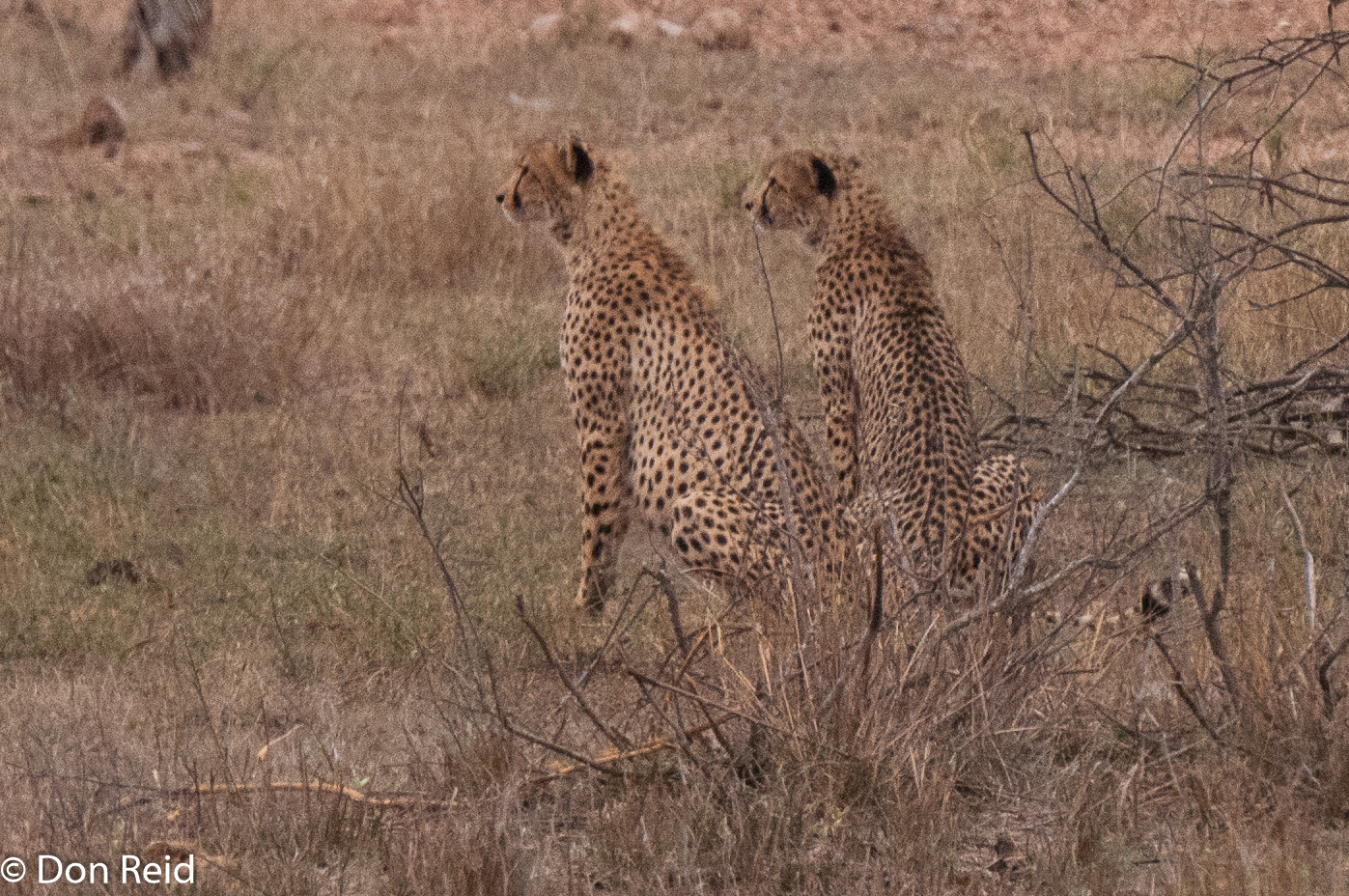
As we watched this we noticed a few cars gathered up ahead and immediately knew it was a “cat” sighting as no other event attracts so many cars in a short space of time. It turned out to be two Cheetahs some 150m from the road, lying and then standing, the one clearly pregnant judging by the heavy-looking belly.
Cheetah, Satara – Nwanetsi S100
Cheetahs are probably the most sought after sighting so we were really pleased to have been in the right spot for them.
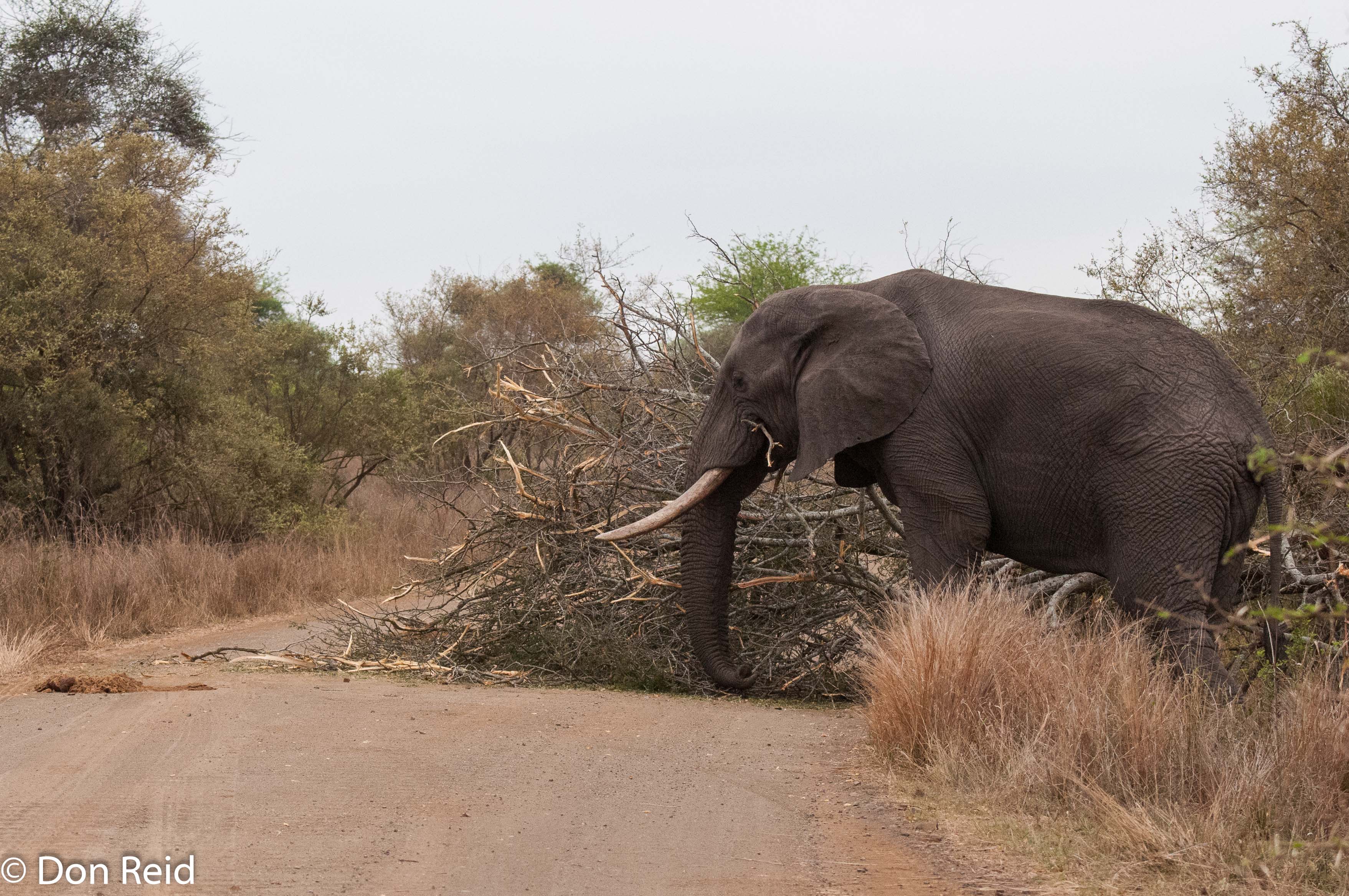
Further along more excitement awaited, this time tinged with some tension as we rounded a bend and came across a fallen tree partly blocking the road, with the remaining opening ominously guarded by a large tusker. To add to the tension another large bull elephant was eyeing us from the bush to one side.
Elephant road block, Satara – Nwanetsi S100
With no way through we waited ……. and waited, but the two elephant guards showed no inkling to move along as they fed on the fallen tree. Eventually one motorist behind us braved the bush and looked for a way past without disturbing the ellies. They emerged on the other side and waved, so we followed suit and found a well-trodden game path running through the bush which they had used – we were soon speeding along to Nwanetsi for a much-needed toilet break!
All the while I was continuing to atlas the bird species we came across – so easy with the Birdlasser App which uses gps to automatically pinpoint the position of each sighting and allocate it to the correct pentad (5 x 5 minute block of co-ordinates which is about 8 x 8 km in size)
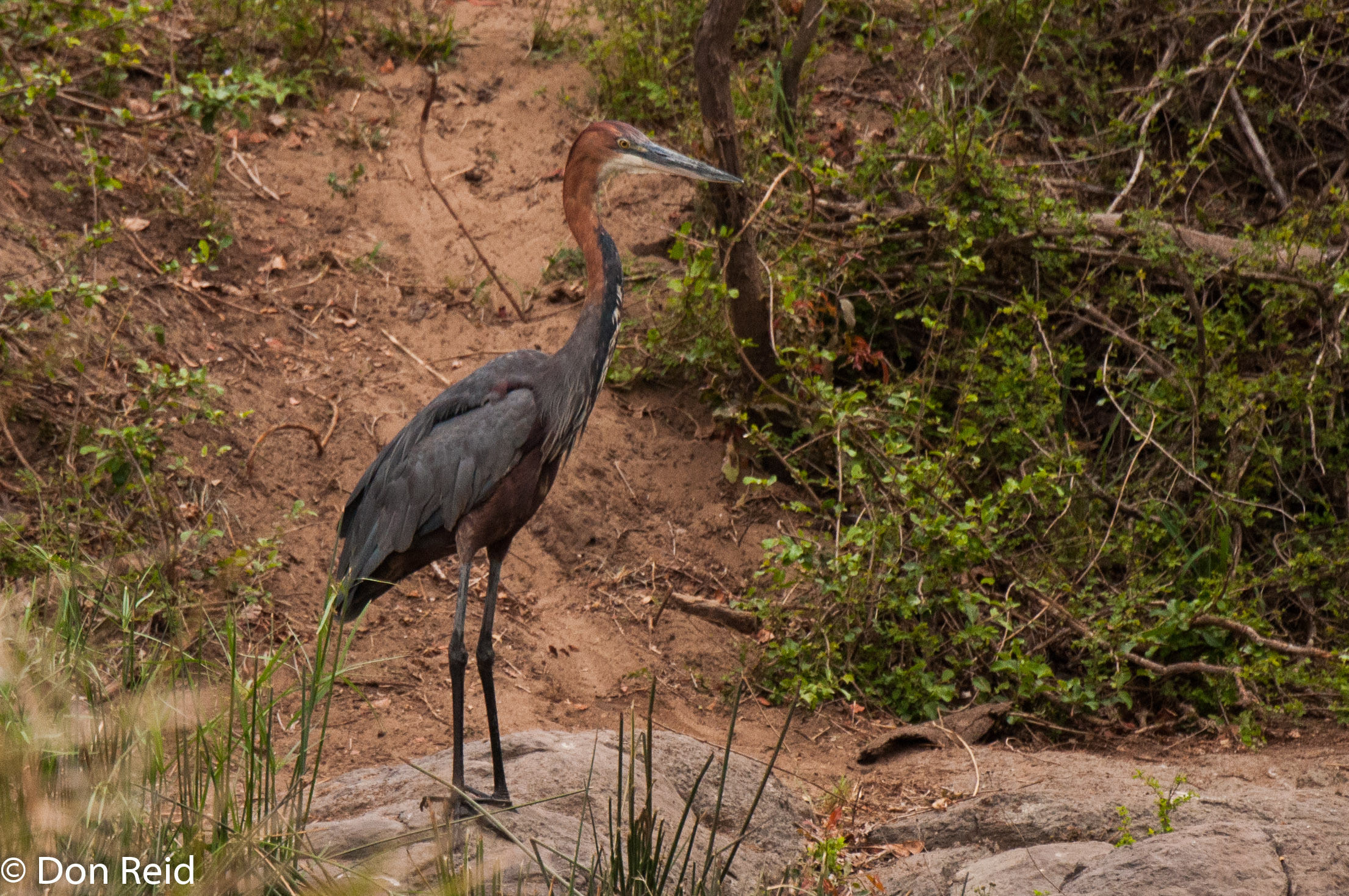
BateleurCrested FrancolinGoliath Heron
Nwanetsi
Time for a brunch and some birding around the picnic spot. I walked up the small hill to the viewpoint over the dam below and the bush stretching into the distance and found a number of species
Pied Kingfisher
Pied Wagtail amongst the rocks on the river
Great Egret flying between the ponds looking for the best fishing spot
Spectacled Weavers moving about busily and calling their sharp call
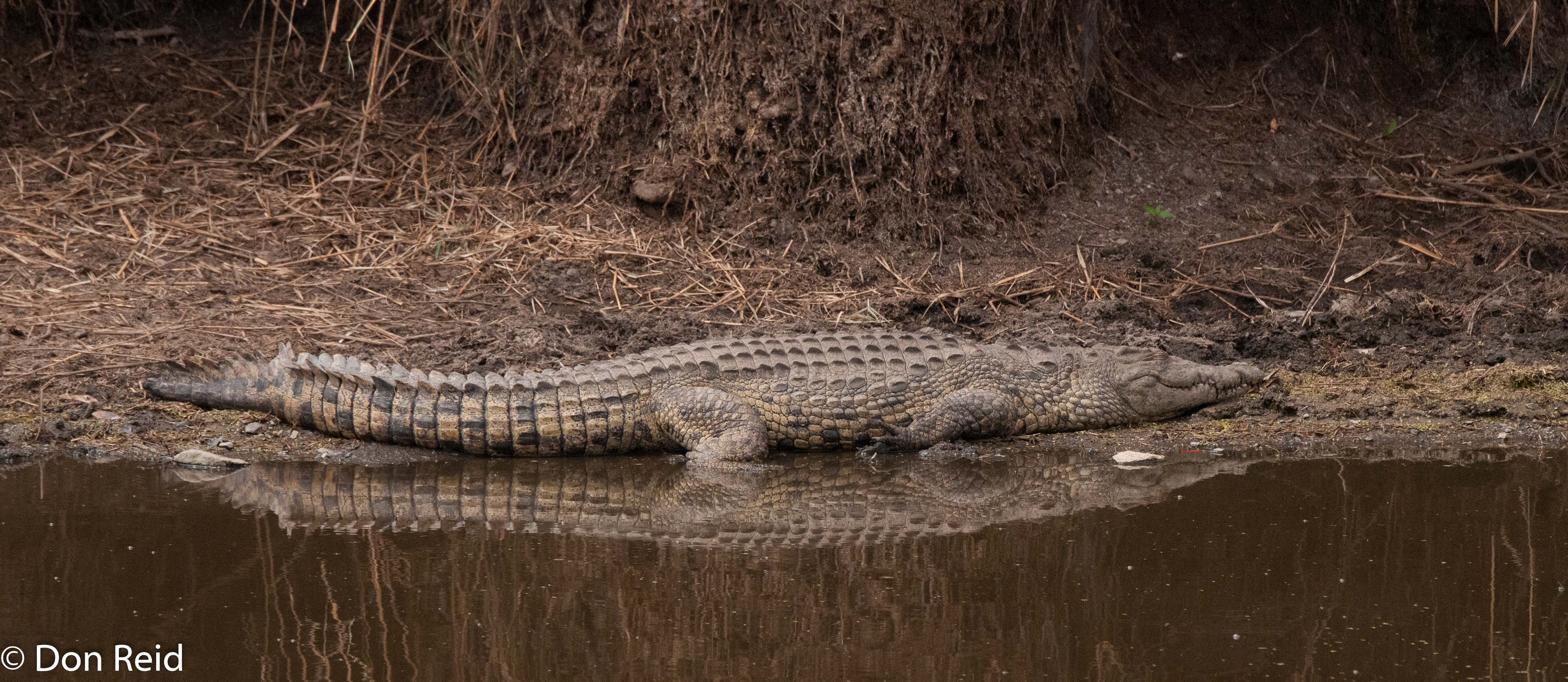
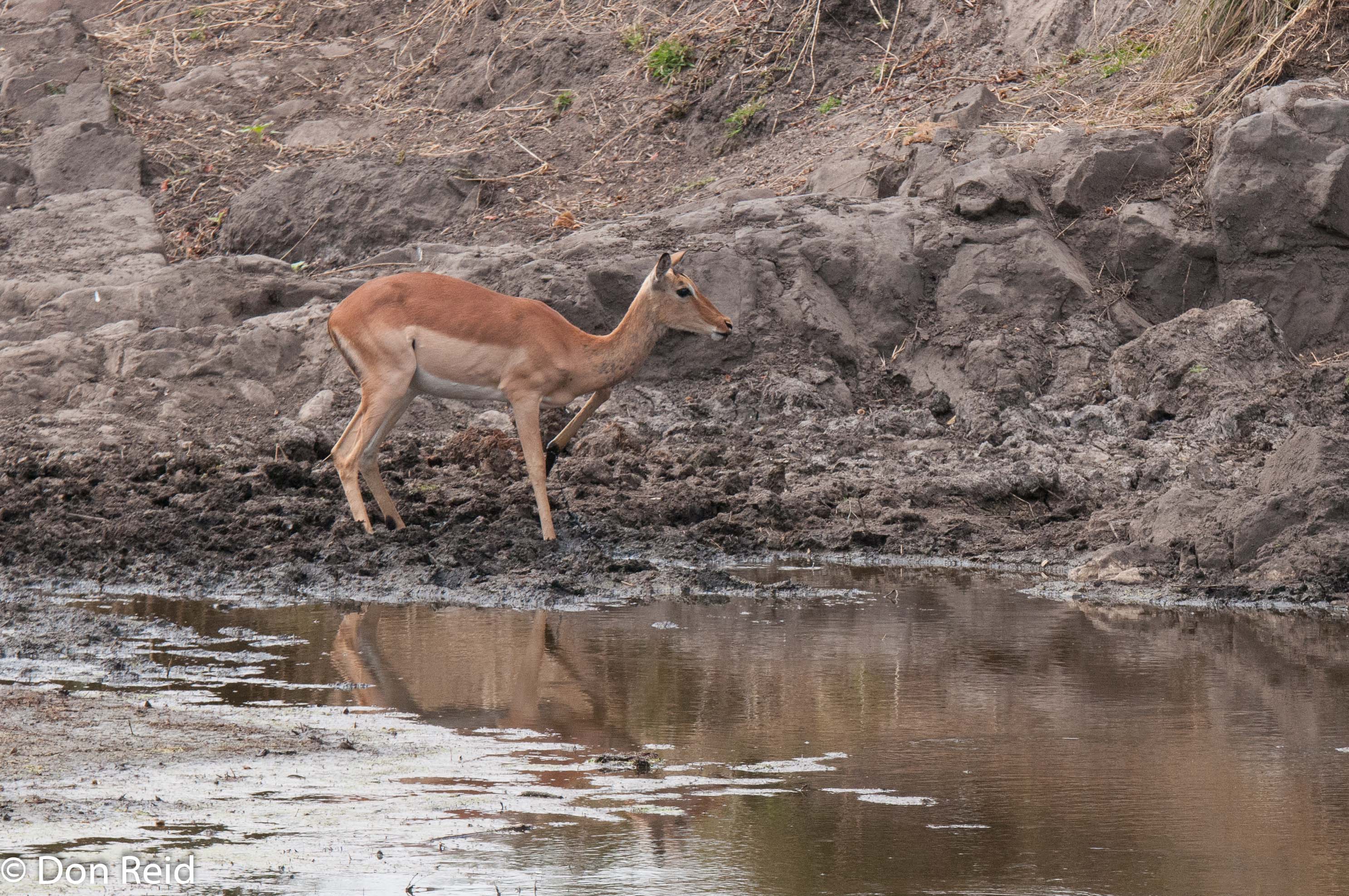
After brunch we left the picnic spot and headed firstly to the low water bridge on the S37 but found it dry and returned to the Sweni bird hide along the same road for a better view of the dam. There we found some Impala, warily approaching the water where a large crocodile was resident.
Crocodile, Sweni HideWary Impala, Sweni Hide
The resident bird population were going about their business while we watched from the comfortable hide
White-faced Ducks
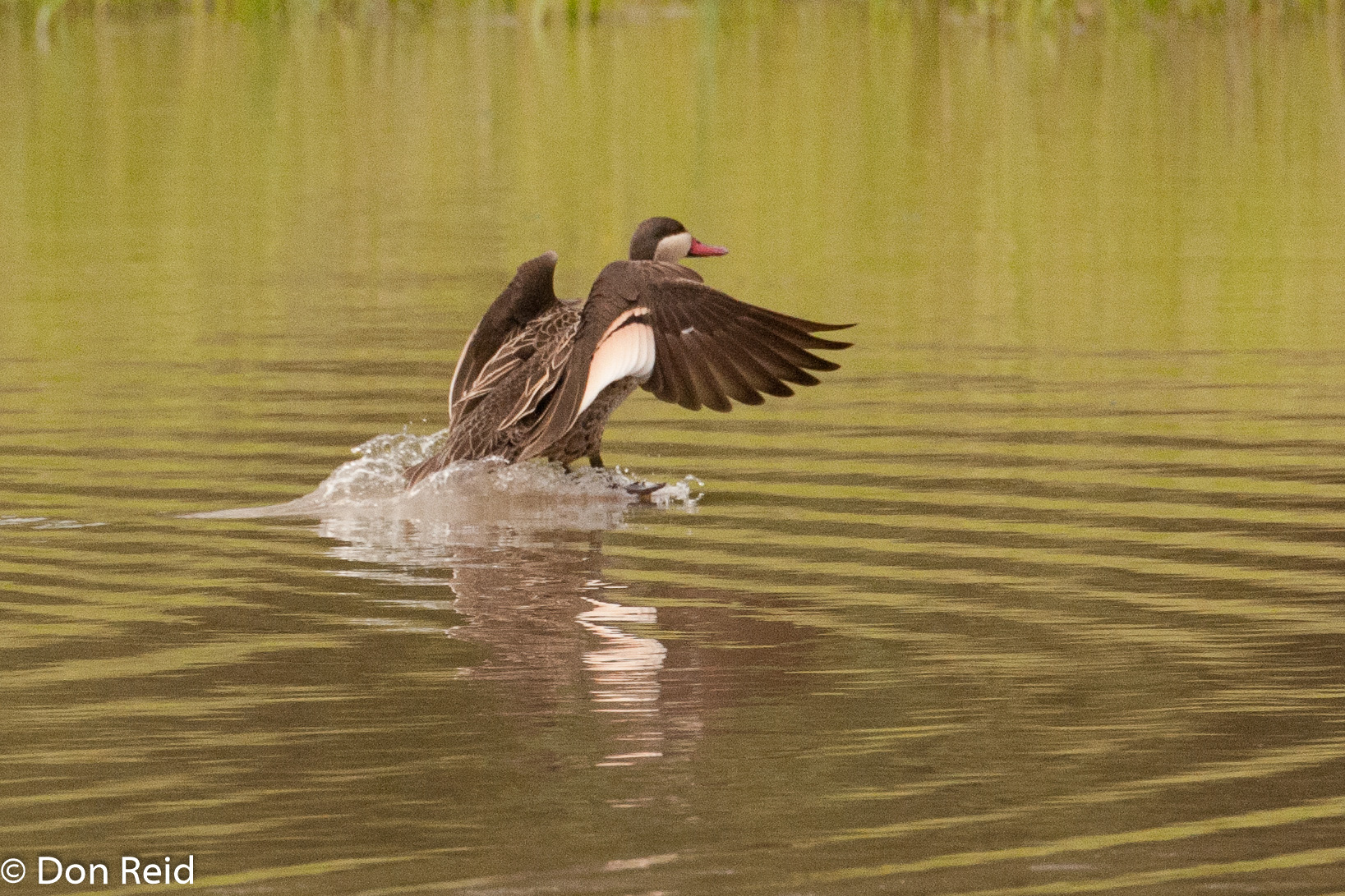
White-faced Duck, Sweni Hide
Black Crake
Water Thick-Knee
Red-capped Robin-Chat (unusual in this habitat)
Red-capped Robin-Chat, Sweni Hide
Waders such as Wood Sandpiper and Three-banded Plover
The ubiquitous Egyptian Goose
Egyptian Goose, Sweni Hide
The rest of the journey back to Satara was on tar and with less game visible so we did not dawdle too much, nevertheless we enjoyed seeing Zebra close up with a juvenile whose stripes were still fluffy and brown – looking cute enough to want to pat him.
On the birding side we did spot a Brown Snake-Eagle and Red-crested Korhaan not far from the road
The rest of the day was a relaxing mix of our typical Kruger activities – some resting, enjoying the quiet of the camp, a swim late afternoon and closing out the day with a braai with the family.
Kicking off our stay in Satara we decided our first drive would follow the H1-4 main tarred road which heads north, branching off onto the Olifants camp road after crossing the river
After the previous day’s long drive from Pretoria, we enjoyed a good night’s rest, only surfacing after 7.30 am for coffee and rusks on the stoep before packing the brunch goodies and setting off for Olifants camp after 9.30 am.
Habitat
The drive initially takes you through open savanna grassland, changing to more rocky landscape closer to Olifants, where the habitat is known as Olifants rugged veld and is the transition between the woodlands of the south and the mopaneveld of the north.
Most common trees are Knob-thorn Acacia, Umbrella Acacia, Marula, Ebony Jackalberry and Red Bushwillow. The open savanna is favoured by the grazers such as antelope, zebra and their predators, with plenty of Vultures gathered at carcasses
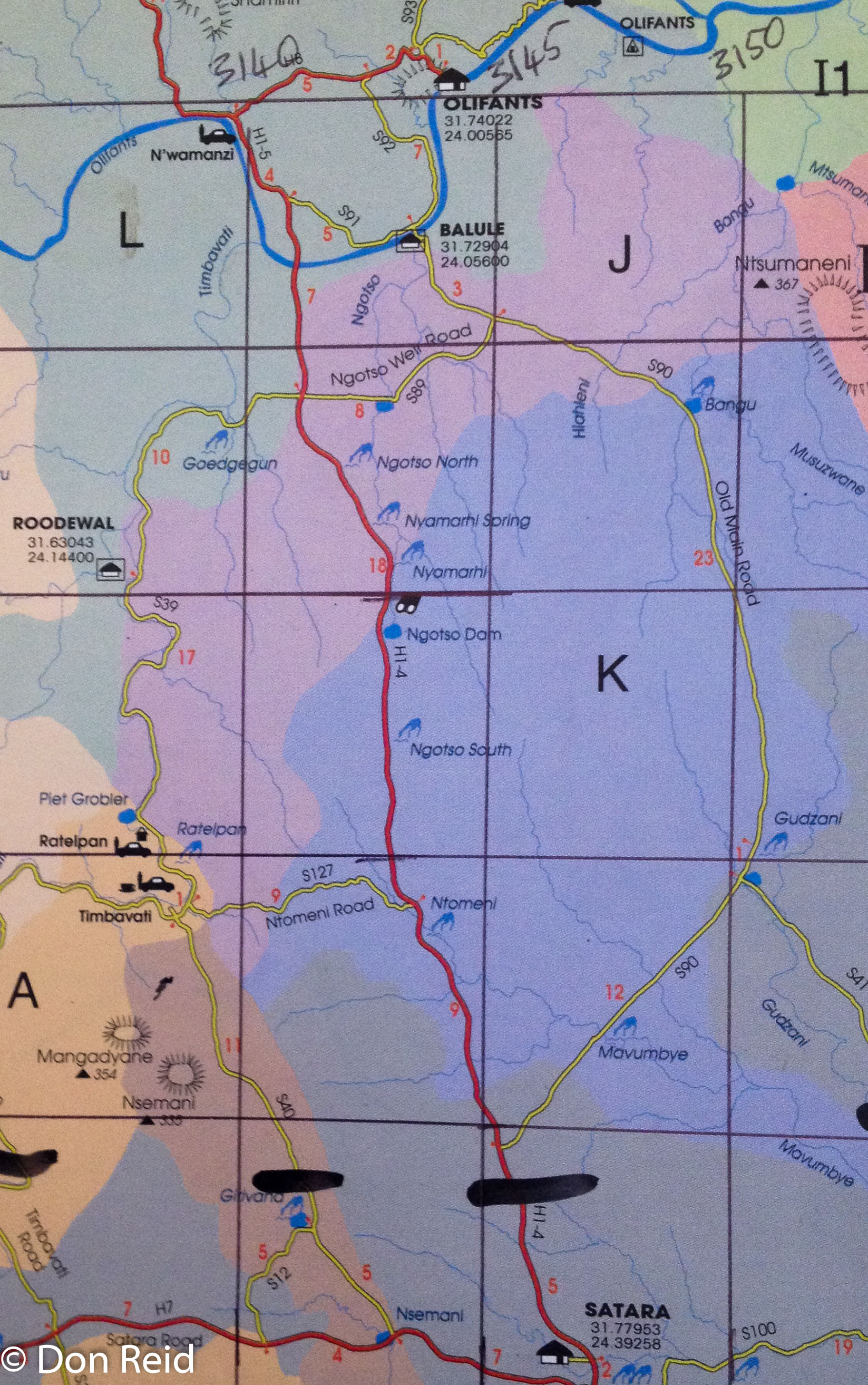
An extract from the Kruger Park map book shows the route :
Map of route from Satara to Olifants (the grid is my hand-drawn guideline for atlasing)
The Drive
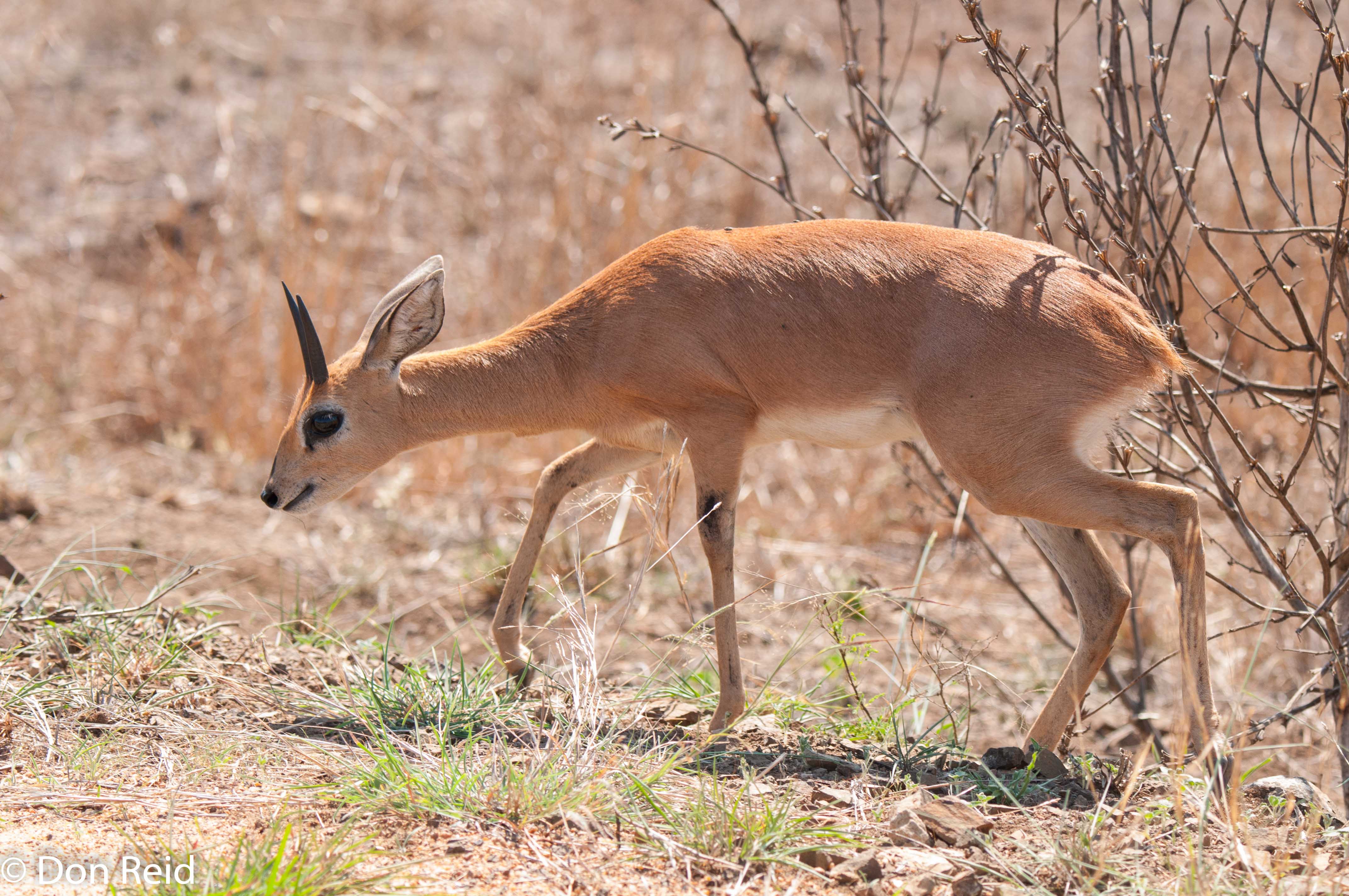
The savanna grassland was particularly dry and barren after the winter, but the few waterholes and dams which still had some water kept things interesting , with plenty of Elephant, Giraffe, Waterbuck, Kudu and Impala plus a few Steenbok here and there, looking so small and defenceless in this environment.
WaterbuckWaterbuckKuduImpala early morningSteenbok
On the birding side we started with a juvenile Black-chested Snake-Eagle and added regularly to the list, particularly when we stopped at Ngotso Water Hole some 20 kms north of Satara where we found Sabota Lark, Blue Waxbills, Ostrich, Lesser Striped Swallow, amongst others. This is the main water hole in the area, man-made and fed by the vlei area surrounding it.
Black-chested Snake-Eagle (juvenile)Blue Waxbill
At the Olifants Bridge you can get out of the vehicle in the designated zone to enjoy the scenes on both sides and the bird life(Little Swifts by the 100’s, African Spoonbill, Yellow-billed Kite, Green-backed Heron).
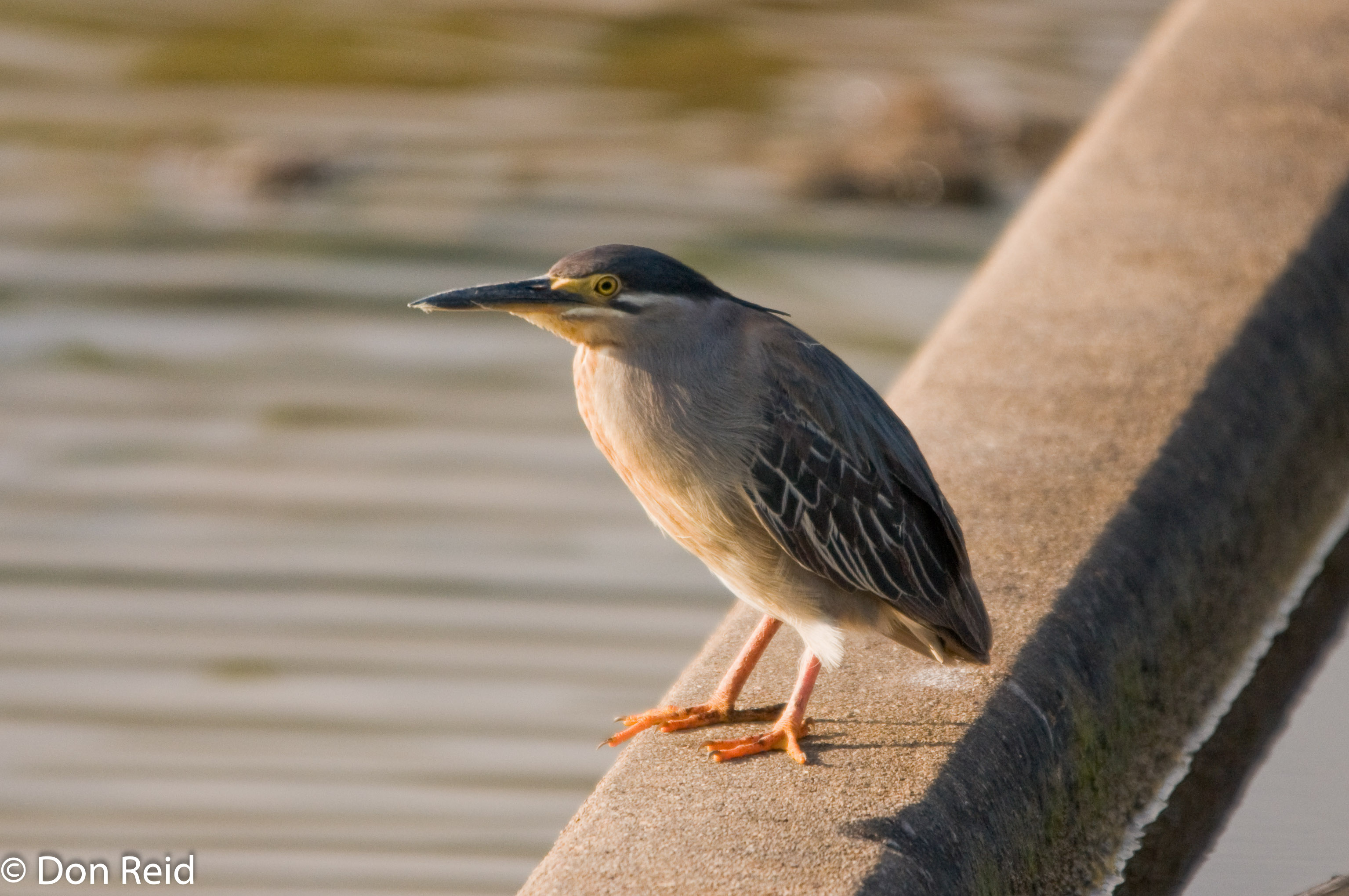
Scene from Olifants river bridgeScene from Olifants river bridgeLittle SwiftGreen-backed Heron
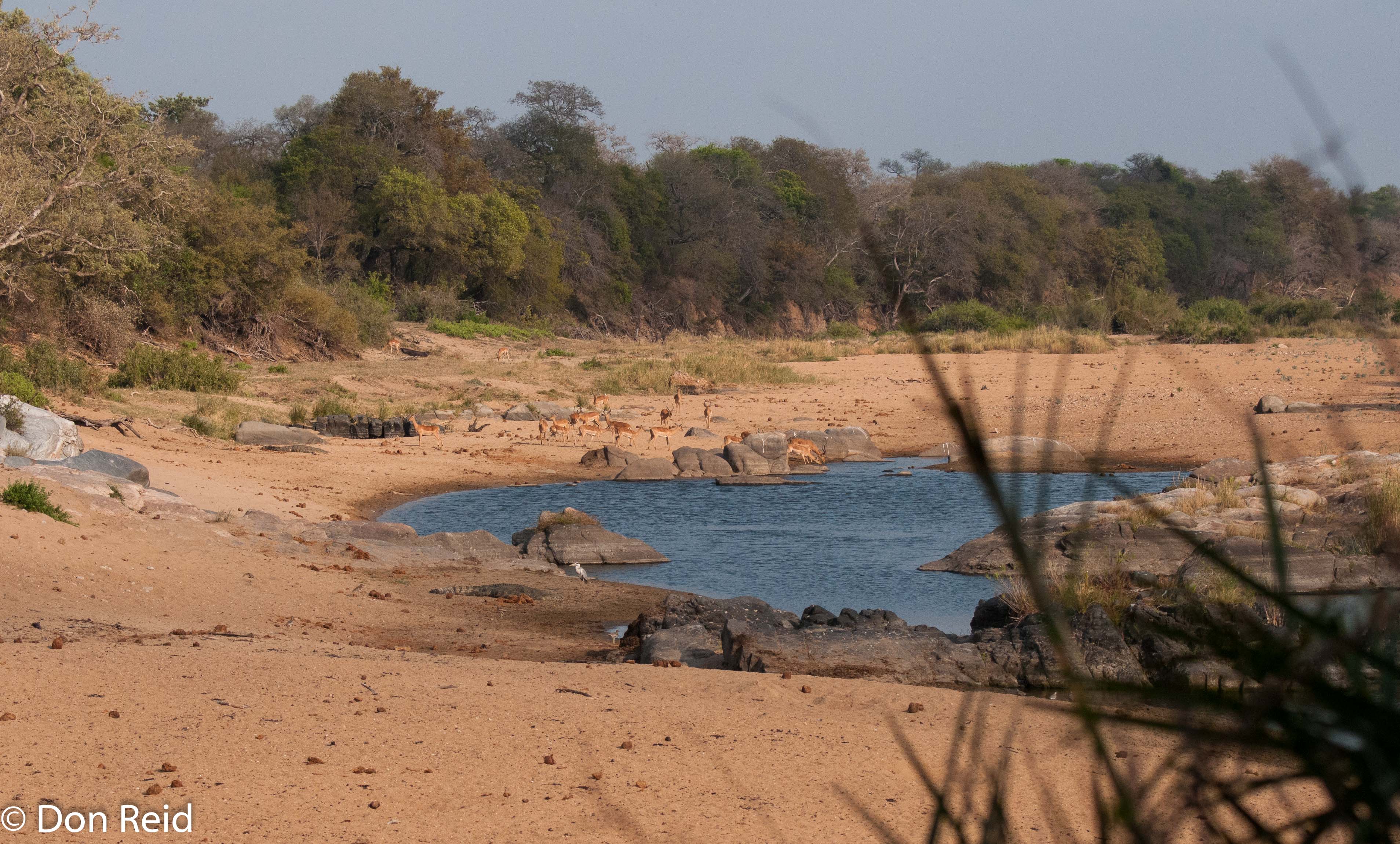
Further along, the road stays close to the river for a few km’s before turning off to Olifants camp. A lone elephant was making his way slowly across the mostly dry river bed to where a few Impalas were drinking at a pool – such a classic scene I just had to stop and let it soak into my memory. It’s these simple scenes that are what Kruger is all about and why we keep coming back after 40 + years of visiting our national treasure.
Olifants Camp
At Olifants camp we went straight to the picnic area where Andre and Geraldine were already parked and Megan and Maia were in the swimming pool. By now it was 35 deg C and the heat felt tangible, but as Geraldine reminded us, this is exactly what you expect in Kruger in summer – best embrace it and don’t try to be too active.
Andre conjured up a “brunch sandwich” on the skottelbraai (like an old ploughshare used for frying on a gas cylinder) with scrambled egg, fried lean bacon, fried onions and avo – delicious! Not that we were ravenous by then or anything. All part of the Kruger traditions/must-do’s!
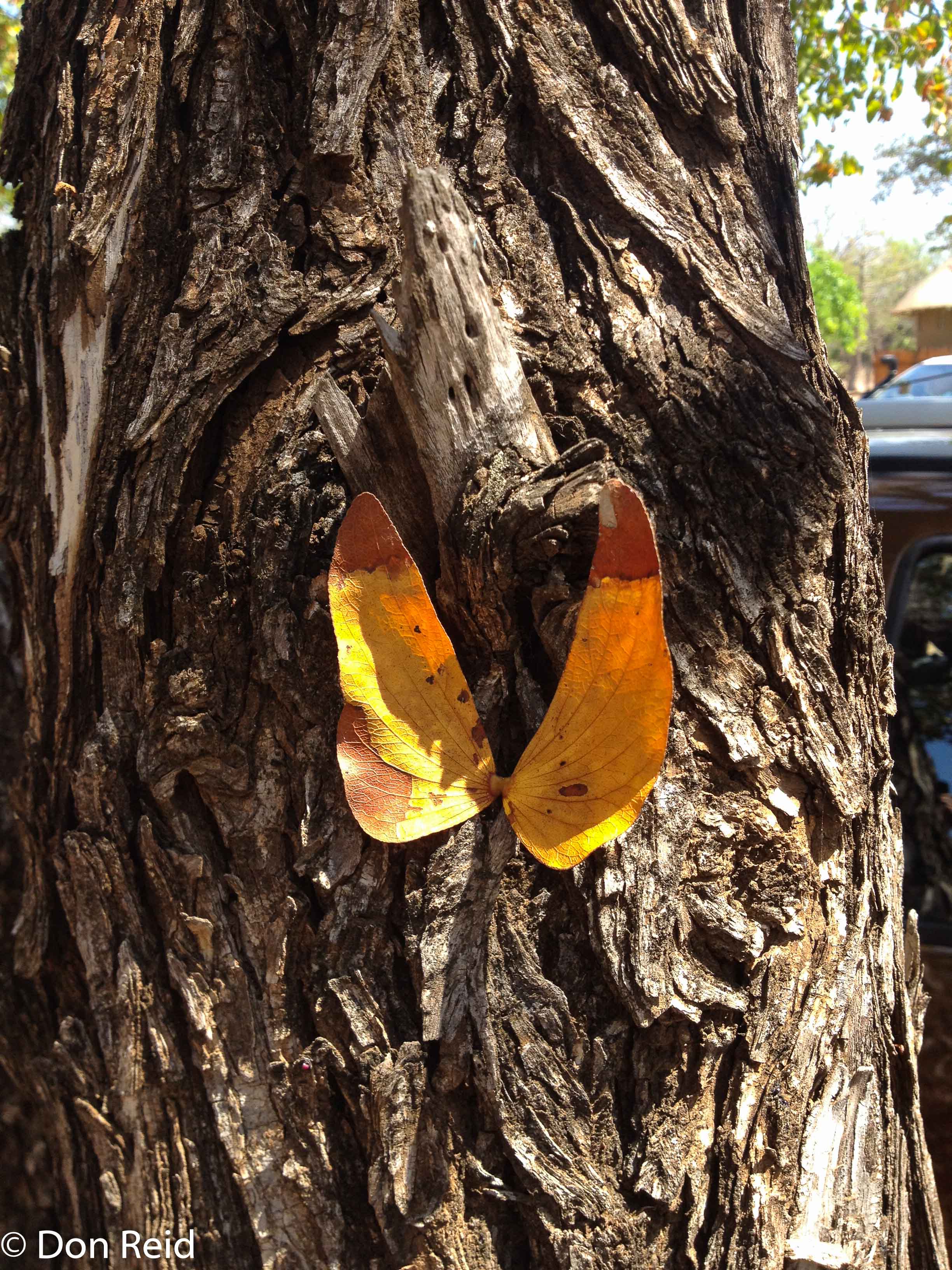
While he was busy I couldn’t help noticing that the fallen Mopane tree leaves looked uncannily like a butterfly, so I positioned one on the tree trunk ……
Mopane leaf “Butterfly”, Olifants camp
After brunch it was time for the next must-do – as we walked slowly down to the restaurant area and viewpoint (Gerda and I cheated and drove – the extreme heat you know) below the restaurant to enjoy the timeless landscape below and stretching to the horizon in a 180 degree sweep. In all the years we have been visiting Kruger the view has not altered one bit – other than the effects of the different seasons – a testament to the foresight of the founders of the Park and those charged with looking after it.
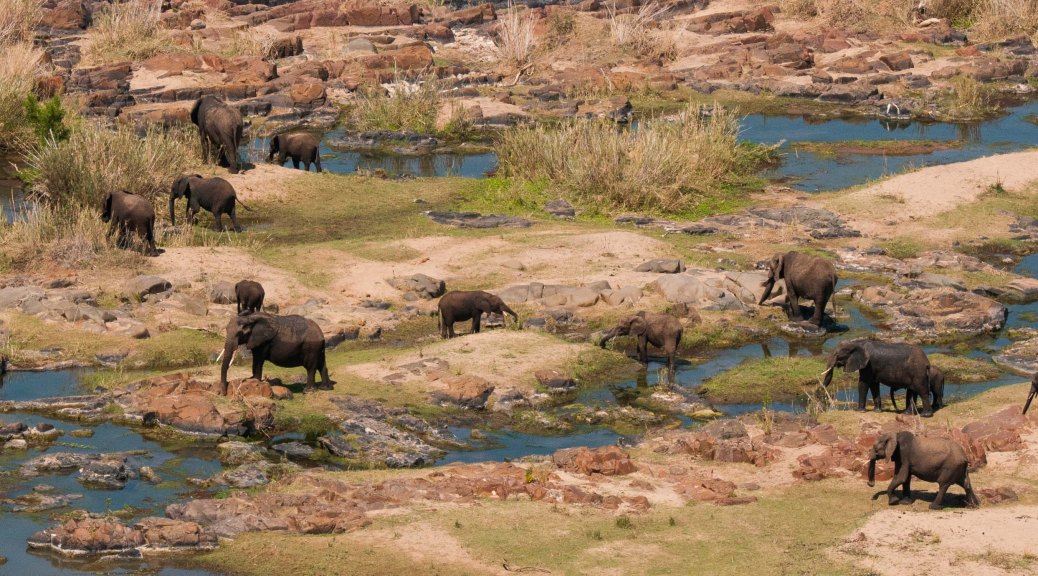
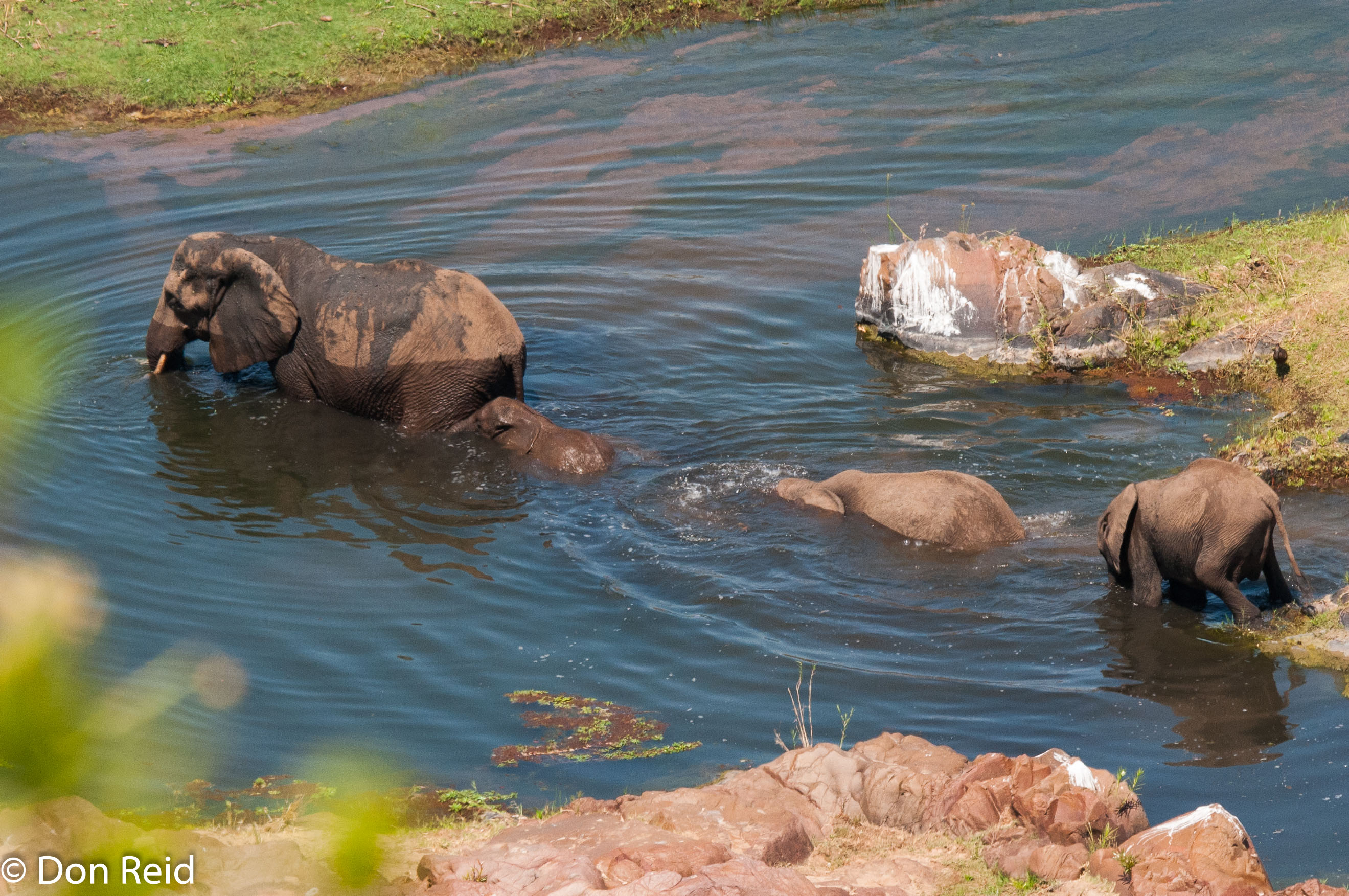
In the river far below, some 30 to 40 Elephants of various ages were enjoying the pools of water as they moved slowly across the wide Olifants River, which flowed in several streams interspersed with rocky islands and stretches of sand and reeds.
Olifants camp viewpoint
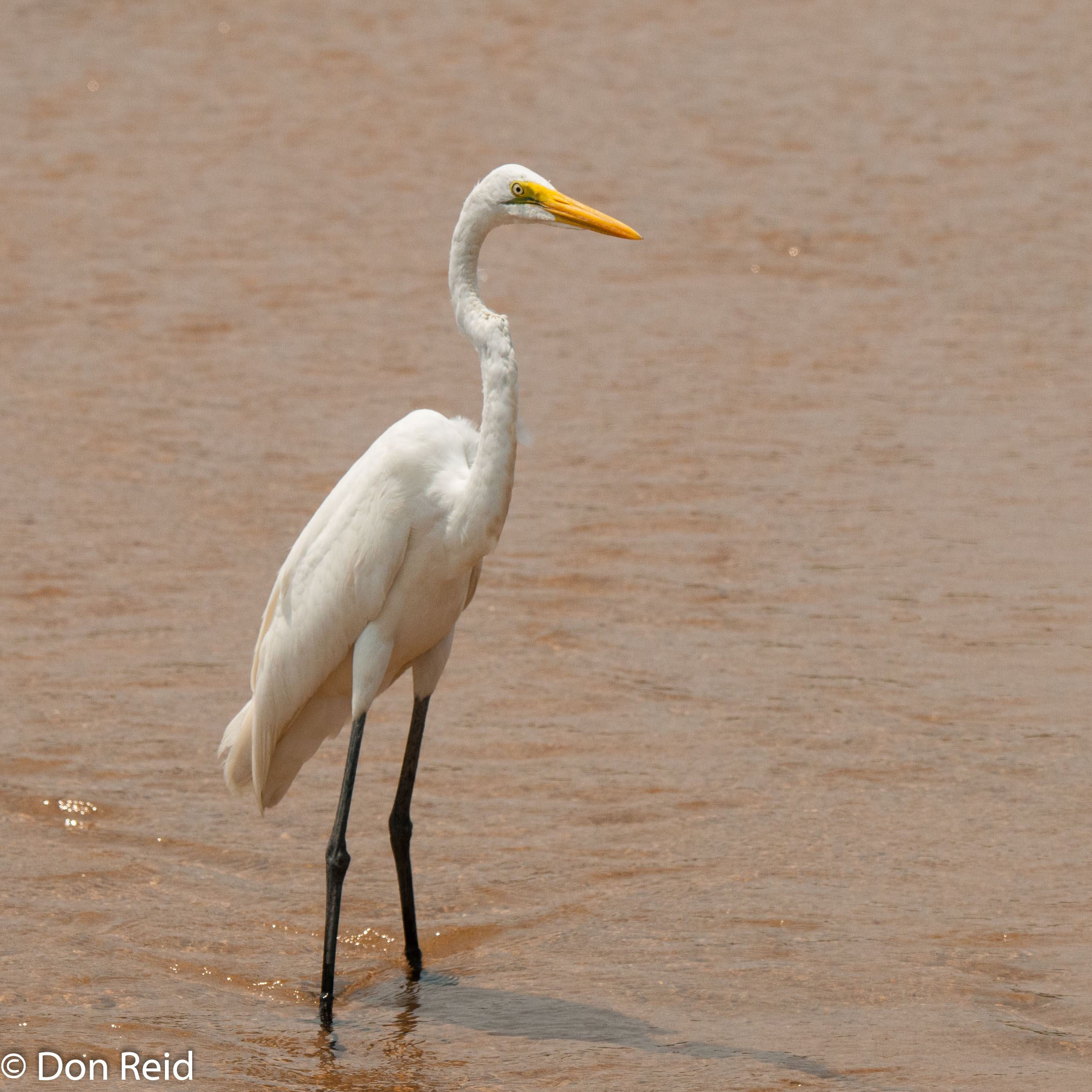
Numbers of birds were visible – lots of Egyptian Geese but also plenty of white egrets (Great, Yellow-billed and Cattle were all represented), Marabou Storks, Hamerkop, Grey Heron, African Openbill and Saddle-billed Stork.
Great Egret
Tearing myself away from what has become one of my favourite spots in all of Kruger, I went off to find the rest of the family, who were busy with that other traditional pursuit – shopping. And who can blame the girls (old and young), with some pocket-money and nowhere else to spend it but in the tempting Kruger Park shops.
The road back to Satara was quiet, with birds rather than animals being the only reason for stopping – Red-billed Oxpeckers using Kudu as a feeding station, Kori Bustard some way from the road and a Yellow-throated Longclaw perched near the road.
Yellow-throated Longclaw
The rest of the day was dedicated to camp activities – swimming in the large pool, and a late afternoon braai
We had been looking forward to a week in Satara in the Kruger National Park for some time, in fact ever since our daughter Geraldine had booked accommodation a year in advance for a week in October 2015, school holiday time and usually totally over-subscribed.
Route
And so Saturday 3 October 2015 saw us packed and departing early morning from Pretoria for the long drive to Satara. The route we had decided on would take us to Machadadorp in Mpumulanga, then via the N4 through Schoemanskloof after which we took the Sudwala Caves turn-off and made our way through Sabie and Hazyview to the Phabeni Gate into Kruger – we estimated this would be at least a five-hour drive with comfort stops. From Phabeni it is some 140 kms mostly northwards to Satara which, at Kruger speeds of maximum 50 km/h and including a few stops for game sightings, was likely to take 3 to 4 hours. So we had the prospect of around 9 hours on the road, eased by the fact that the last part would be in the Park and devoid of the stress of driving the highways.
Why Kruger?
Kruger holidays are like no other and in our family (and many other South African families I suspect) there are a few things to be attended to before departure – you could call them rituals :
buying the biltong, the boerewors (farmer’s sausages) and the braai chops – if you live in Pretoria east there is a good chance that, like us, you will have visited Uitkyk or Groenkloof butchery for these all-important items.
packing all the bush clothes you possess – every khaki shirt, shorts to go with them and a pair of longs for the evening (only to keep the mozzies away of course). There’s nothing wrong with “civvies”but proper bush clothing just adds to the feeling of escaping from the general routine for a while
stocking up on lots of fruit – always a bit scarce in Kruger’s camps. Some of this can often be purchased at roadside stalls along the way but this depends on the time of year and season.
making sure all the important stuff is ready and in good nick – camera, binos, birding books, scope, reptile book, mammal book, butterfly book, frog book (you never know), portable fridge, kitchen sink (just joking) and all.
The Journey
Then there’s the journey itself, where you have the chance to transition from city slicker to game ranger persona – a gradual process until you get to Kruger’s entrance gate. That’s when it really kicks in – slow down to 50 km/h or less, open the windows to let the bush smells and sounds drift in, binos around the neck, eyes tuned to the bush and on the lookout for movement – ahhhhhh we’re back!
Our trip from Pretoria took the time we expected, with a first stop for an early lunch at Milly’s near Machadadorp, a must on any journey involving the N4 towards Nelspruit. Here you can fill up with fuel, have a sit-down or take-away meal of excellent quality, stock up on all sorts of goodies and just enjoy a welcome break from the highway. We chose take-away trout pies (did I mention they do a great one?) and a coffee from the Seattle Coffee kiosk. The pie we ate at an outside picnic table and the coffee was taken in the car and sipped over the next 30 kms or so.
Once on the road to Sabie I enjoyed the “real” driving as the road twisted, turned and ascended/descended in quick succession – so much so that it brought to mind the old Chubby Checker* hit “Let’s twist again, like we did last Summer”.
*Trivia alert : what do Fats Domino and Chubby Checker have in common? Think about those names – wonder which came first and who copied the other?
The last stretch between Sabie and Hazyview was quite badly pot-holed in places and required extra care to avoid tyre and suspension damage – by the time we reached Phabeni I was quite tired, but it was only 1pm leaving plenty of time for a relaxing drive in Kruger for the next 130 kms.
Phabeni gatePhabeni gate reception
The drive provided a good spread of sightings to whet our appetite for the week ahead – from tiny Duikers to big daddy Elephants and a Lion and Lioness that were pairing not far from the road.
We made a comfort stop at Tshokwane picnic spot, which was unusually quiet, except for a group of baboons looking for scraps left by the visitors that morning
Tshokwane – quiet in the afternoonBaboons had Tshokwane almost to themselves
After a full day’s driving, Satara camp was a welcome sight and a chance to relax, loving the feel of the warm air pressing into our pores after being cocooned in an air-conditioned car for most of the day.
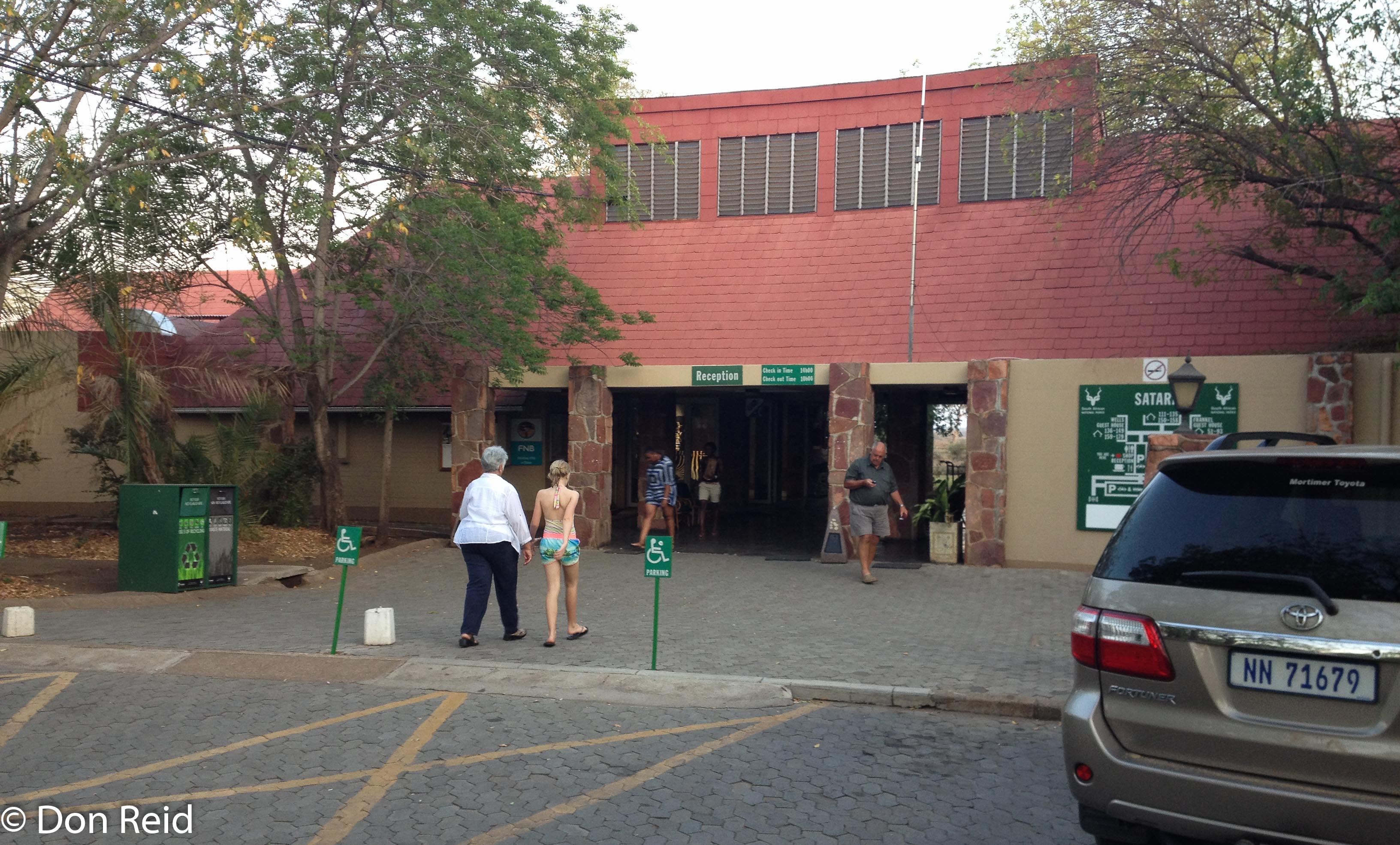
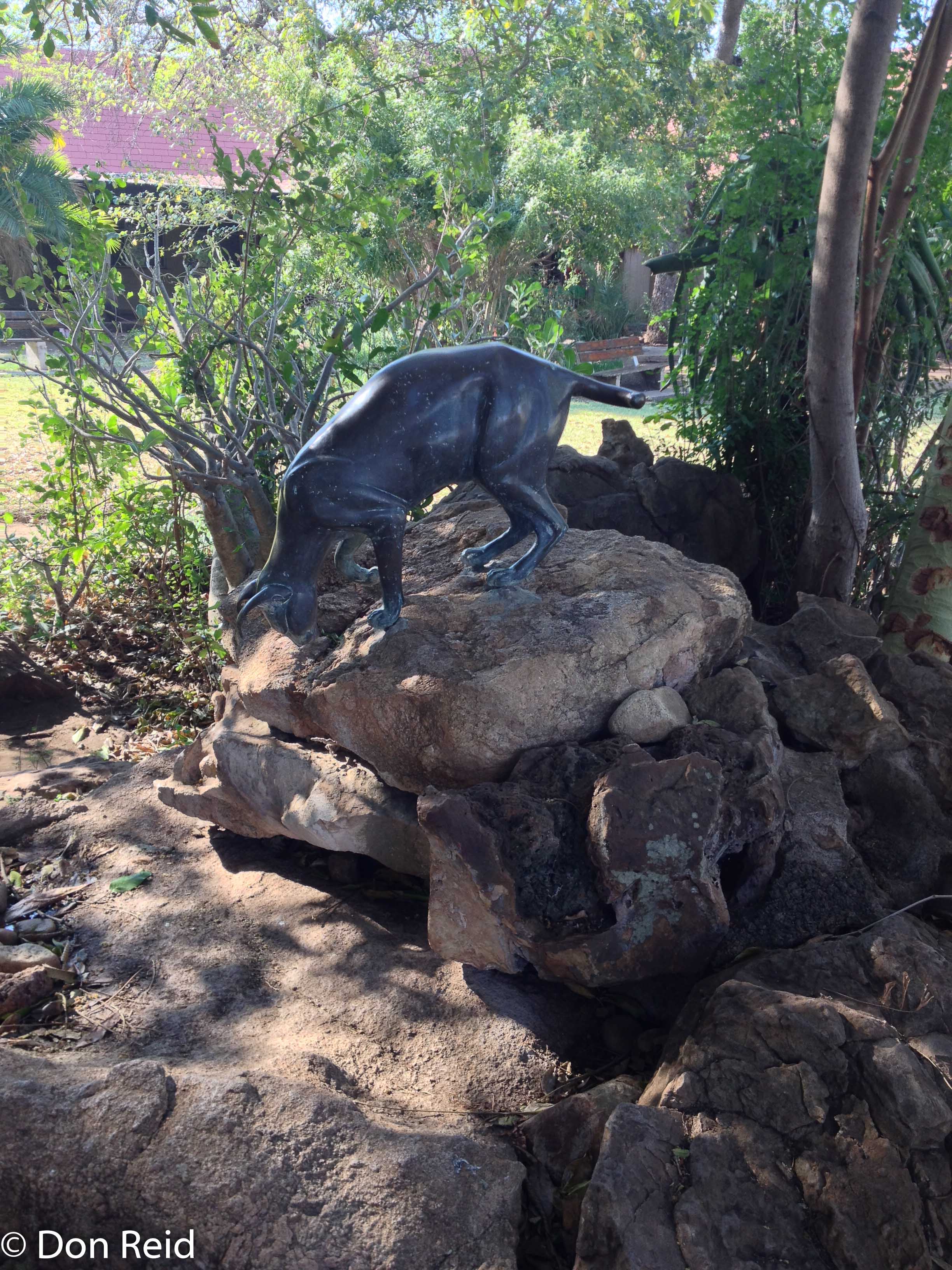
Satara main complexThe restaurant from the gardenFever Tree roots in the gardenStatue in the garden
Some of the game along the way :
KuduImpalaZebraWaterbuck
Any Birds?
Without spending too much time on birding, we nevertheless started the trip with some nice sightings :
Hamerkop at the first bridge after Phabeni – exactly where I had photographed one a year or so before
Dam at Nyamundwa – White-breasted Cormorant, Gyppo (Egyptian Goose)
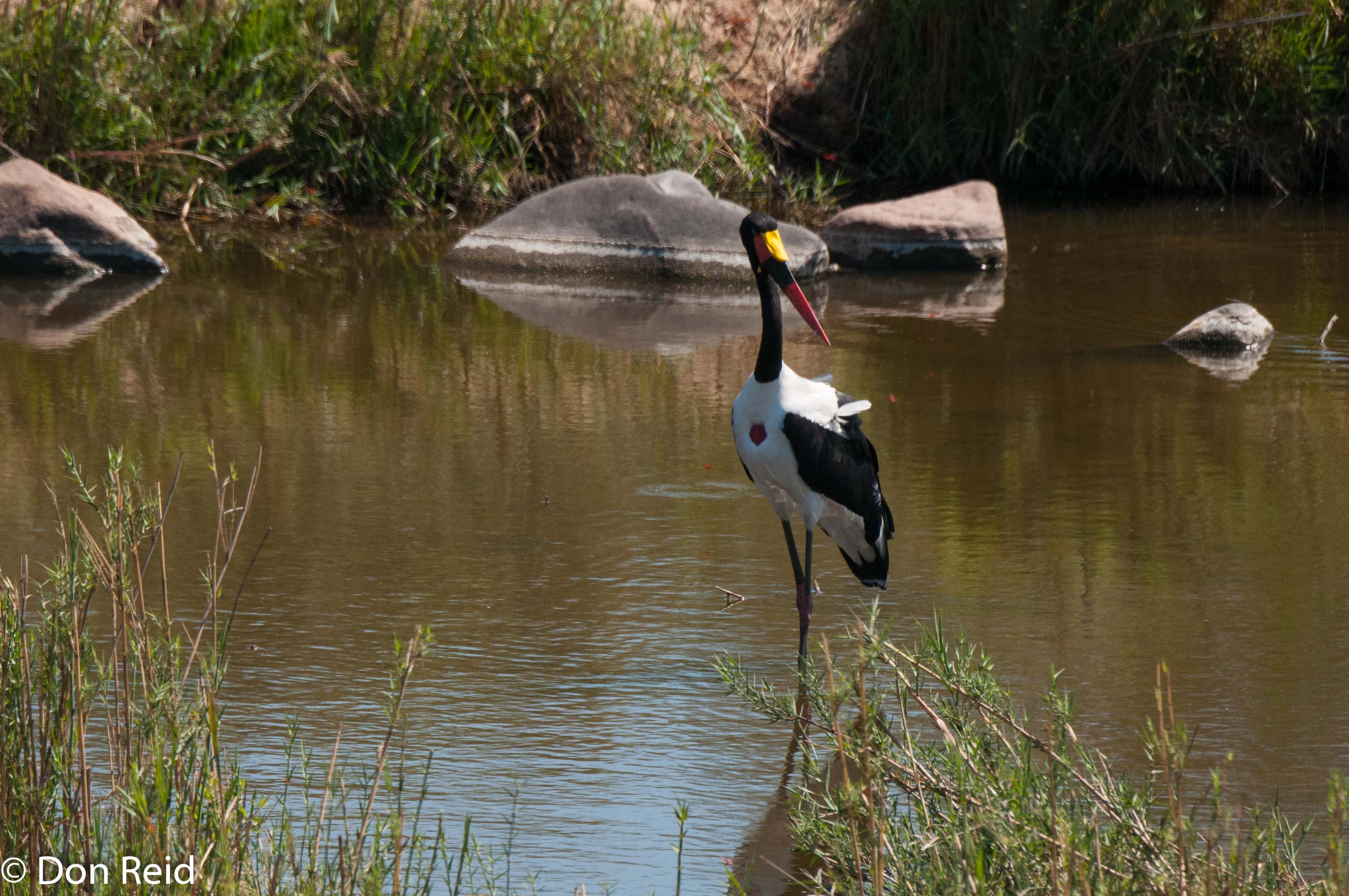
Mazithi Dam – Another Saddle-billed Stork, Purple Heron, Three-banded Plover, Fish Eagle, Wood Sandpiper
Saddle-billed Stork
The Satara Experience
In Satara camp itself, the familiar sounds were present and remained throughout the week –
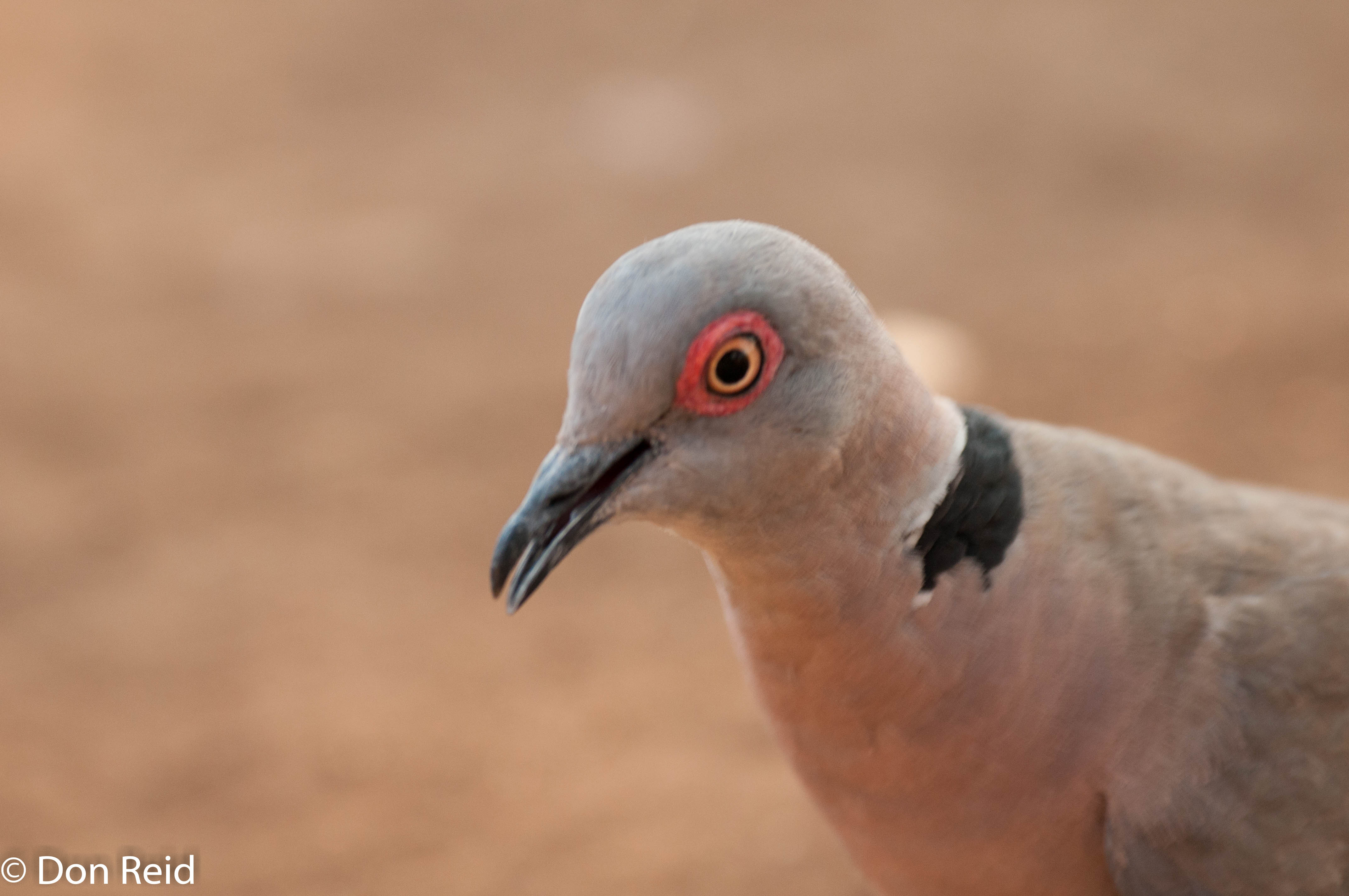
soft calling of the Mourning Dove – often first on the scene when the crumbs are sprinkled on the ground
African Mourning Dove
Long-billed Crombec with its cricket-like call
Screeching of Brown-headed Parrots
the almost constant melodious call of the Orange-breasted Bush-Shrike, not too difficult to track down and photograph
Orange-breasted Bush-Shrike
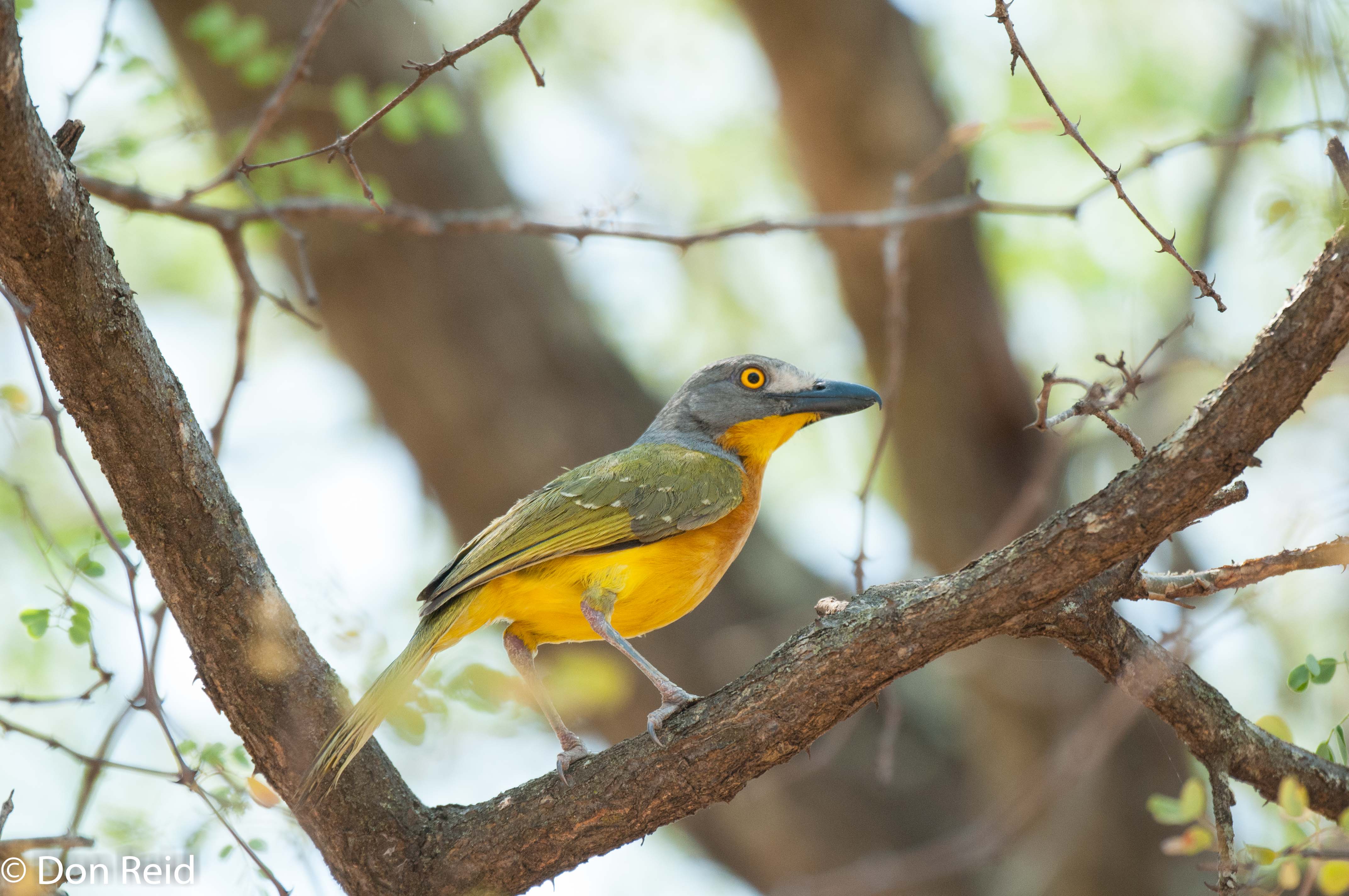
occasional haunting call from the “Ghost bird” – Grey-headed Bush-Shrike, which perched for a while in the tree right in front of our rondawel
Grey-headed Bush-Shrike
Overhead a Yellow-billed Kite flew low over the trees, swooping lower every now and then in search of prey.
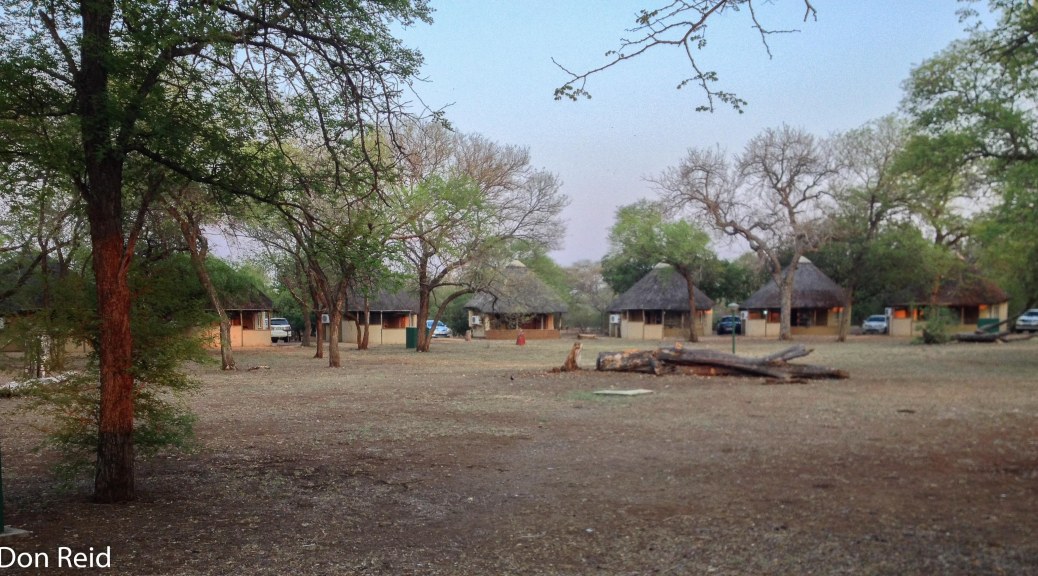
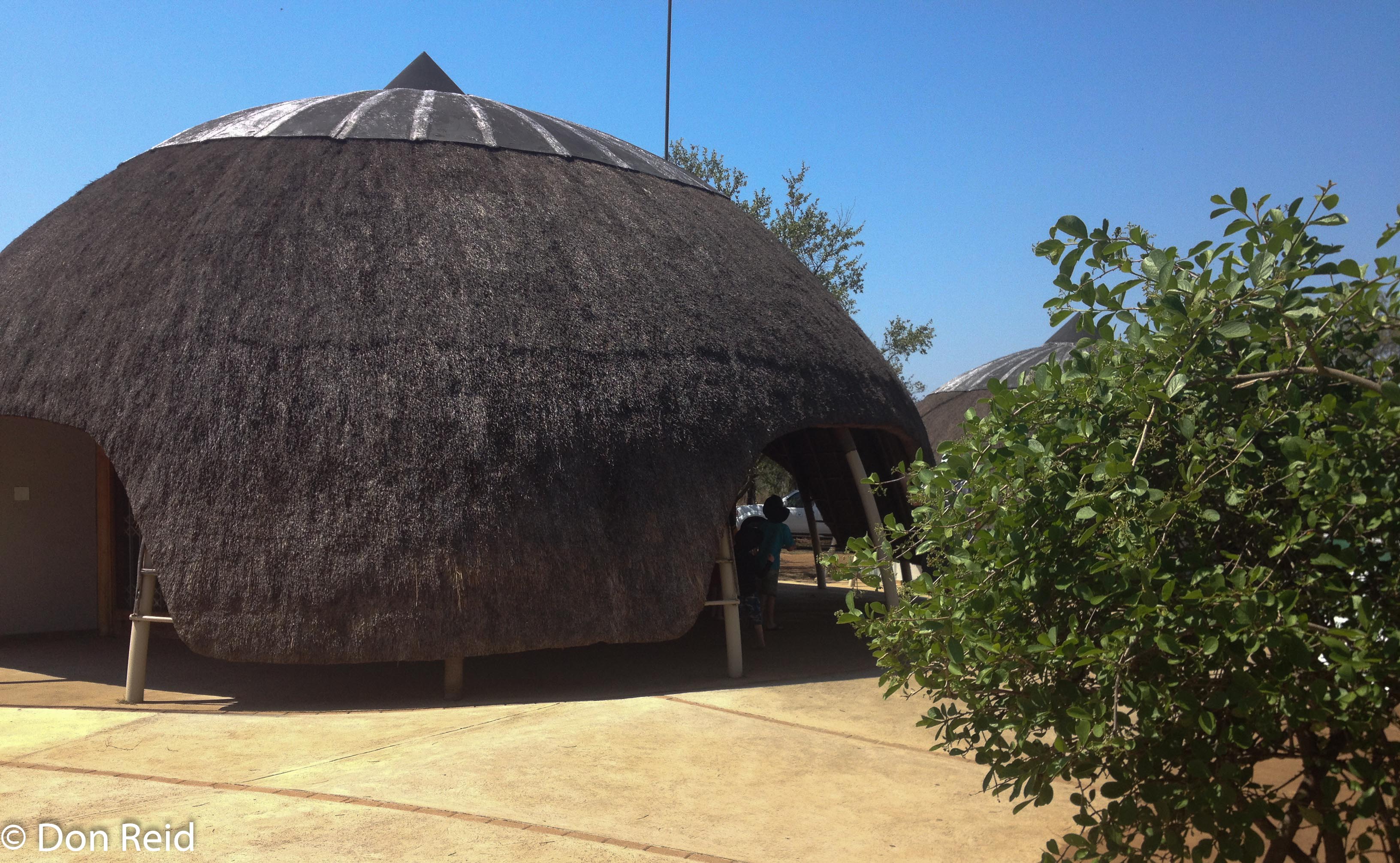
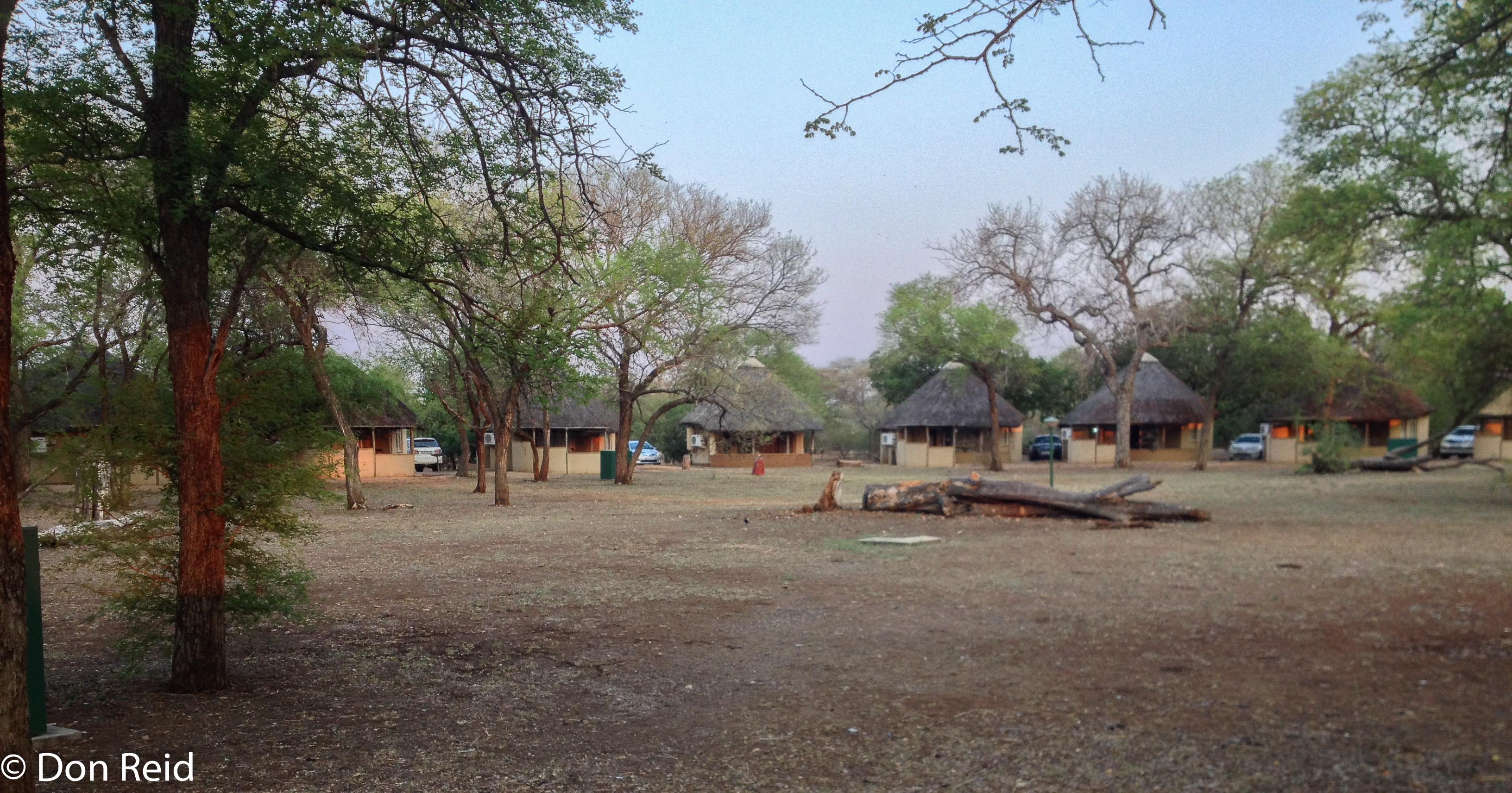
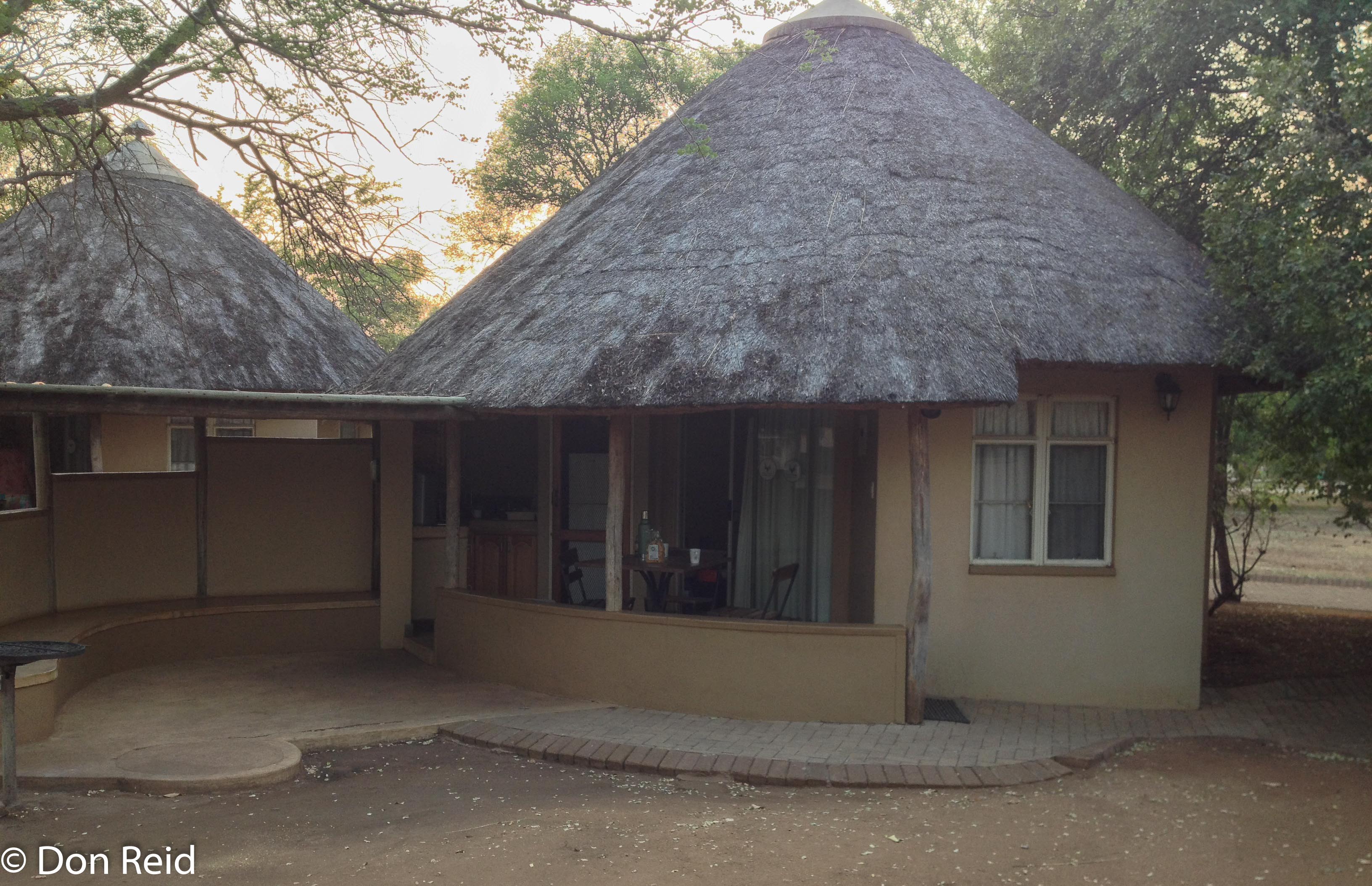
Satara is the second largest camp in Kruger and quite busy at this time of year, also attracting busloads of tourists from SA and overseas. The chalets are fairly simple and haven’t changed much over the years other than a small boma which has been added.
Satara – circle of chaletsOur chaletEnjoying the boma
Most Kruger camps have their “residents” and Satara is no different – evening visitors to the chalets included African Wild Cat, Honey Badger and a cute troop of Banded Mongooses, while during the day you always have to be on the lookout for monkeys looking for a snatched snack.
African Wild Cat doing the rounds of the chalets
Other smaller residents use the chalets as sleeping quarters or hunting grounds
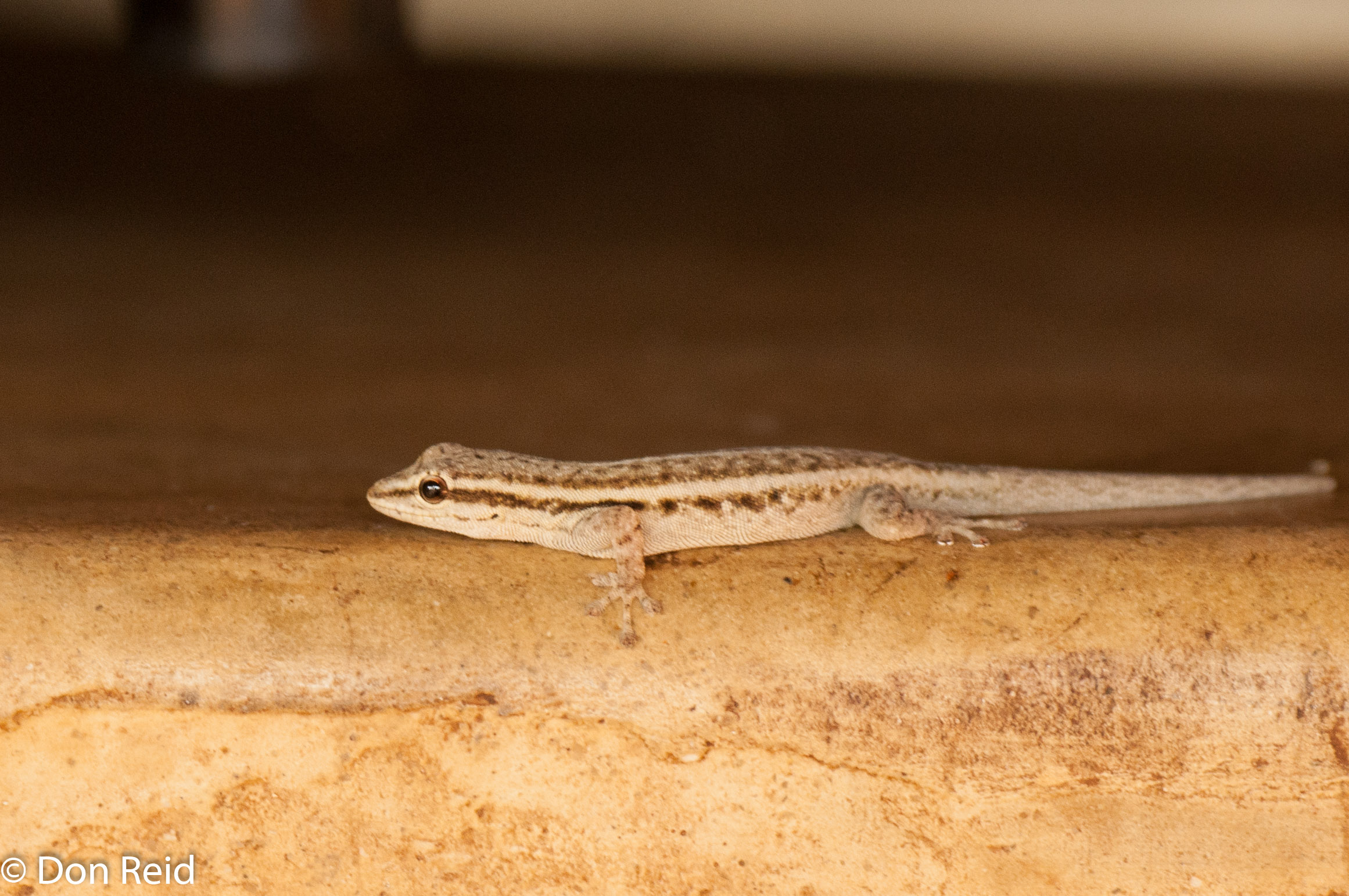
Fruit Bat – just “hanging around” until duskTree Squirrel scouting aroundTypical Skink on the hunt for small insects
The Drives
Once settled in our chalet our thoughts turned to what drives we would be doing. Satara has wonderful routes that take you in all four directions and a week provides the time to try them all without “rushing about” too much.
The next few posts will cover the drives we chose to do and some of the great sightings and experiences we had
The Riverfront section of Chobe National Park – one of the finest Game Reserve experiences in Southern Africa, if not the whole of Africa.
Map of the Riverfront section of Chobe
I count myself fortunate to still have a part-time consultancy job as a QS, and doubly fortunate to be involved in a sizeable building project at Kasane in the far north of Botswana, on the doorstep of Chobe National Park. The project requires monthly site visits and during the few days we – that’s the professional team – spend there, we have managed to squeeze in a quick trip through the Riverfront section of the Park – all part of team building, you understand.
Prior to these recent visits, I was last in Chobe (pronounced Cho-bee) in 2000 and had good memories of this unique Park, although the intervening years had rendered my memories a bit fuzzy. So I was more than eager to renew my acquaintance with this part of Botswana and the first trip through the Riverfront section in May 2015 brought those memories from 15 years ago flooding back.
Chobe Background (courtesy of Wikipedia)
Chobe National Park, in northern Botswana, has one of the largest concentrations of game in Africa. By size, it is the third largest park in the country, after the Central Kalahari Game Reserve and the Gemsbok National Park, and is the most biologically diverse. It is also Botswana’s first national park.
One of four main areas in Chobe,The Serondela area (or Chobe riverfront), situated in the extreme Northeast of the park, has as its main geographical features lush floodplains and dense woodland of mahogany, teak and other hardwoods now largely reduced by heavy elephant pressure. The Chobe River, which flows along the Northeast border of the park, is a major watering spot, especially in the dry season (May through October) for large breeding herds of elephants, as well as families of giraffe, sable and cape buffalo. The flood plains are the only place in Botswana where the puku antelope can be seen. Birding is also excellent here.
Flying in
The flight from Jo’burg is about an hour and a half and takes you over the Mkgadikgadi pans, an amazing sight from the air.
Makgadikgadi Pans from the air
Approaching Kasane, there is usually a good view of the Chobe River and it’s quite possible to spot Elephant even before you have landed.
Chobe River from the air
So How much Game is there?
Chobe tends to exceed all your expectations – yes there are patches with not much going on, not visible anyway, but there are parts that take your breath away, like the lush floodplains filled with game almost as far as the eye can see – dominated by Elephant and Buffalo. Elephants occur here in such numbers that there are real concerns about the survival of the woodland, but Botswana has a strict anti-culling policy and so Elephant herds grow and spread unabated. Perhaps nature will intervene as it often does.
Mostly Elephant and Buffalo on the floodplain
Apart from the frequent Elephant sightings, there are some other very special animals to be seen – (some of the snippets of information are from the excellent maps/brochures on Botswana by Veronica Roodt which I originally obtained for my 2000 visit)
Sable Antelope, one of the most beautiful antelope in Africa with their perfectly curved horns, which are used to defend themselves. Glossy black colouring means it is a bull, while cows and juveniles are brown
Sable Antelope
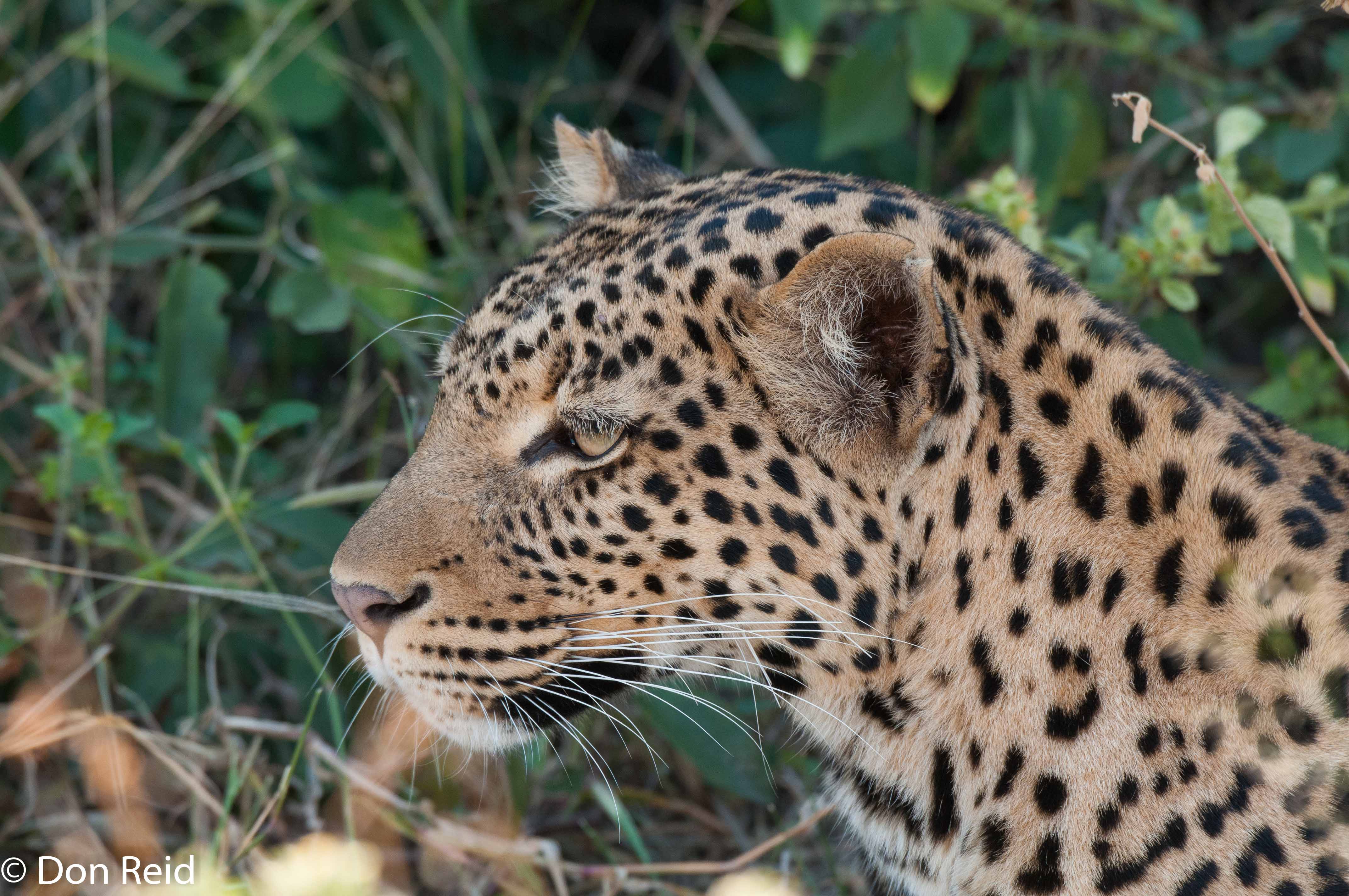
Leopard – we have been very fortunate in finding a young Leopard on two of our three visits so far, quite possibly the same individual which, on our last visit, had dragged its Impala meal into a tree. This is to prevent Hyena and other predators reaching it.
Leopard
Kudu – males have those impressive twisted horns, females are hornless so the ears are more prominent
Kudu
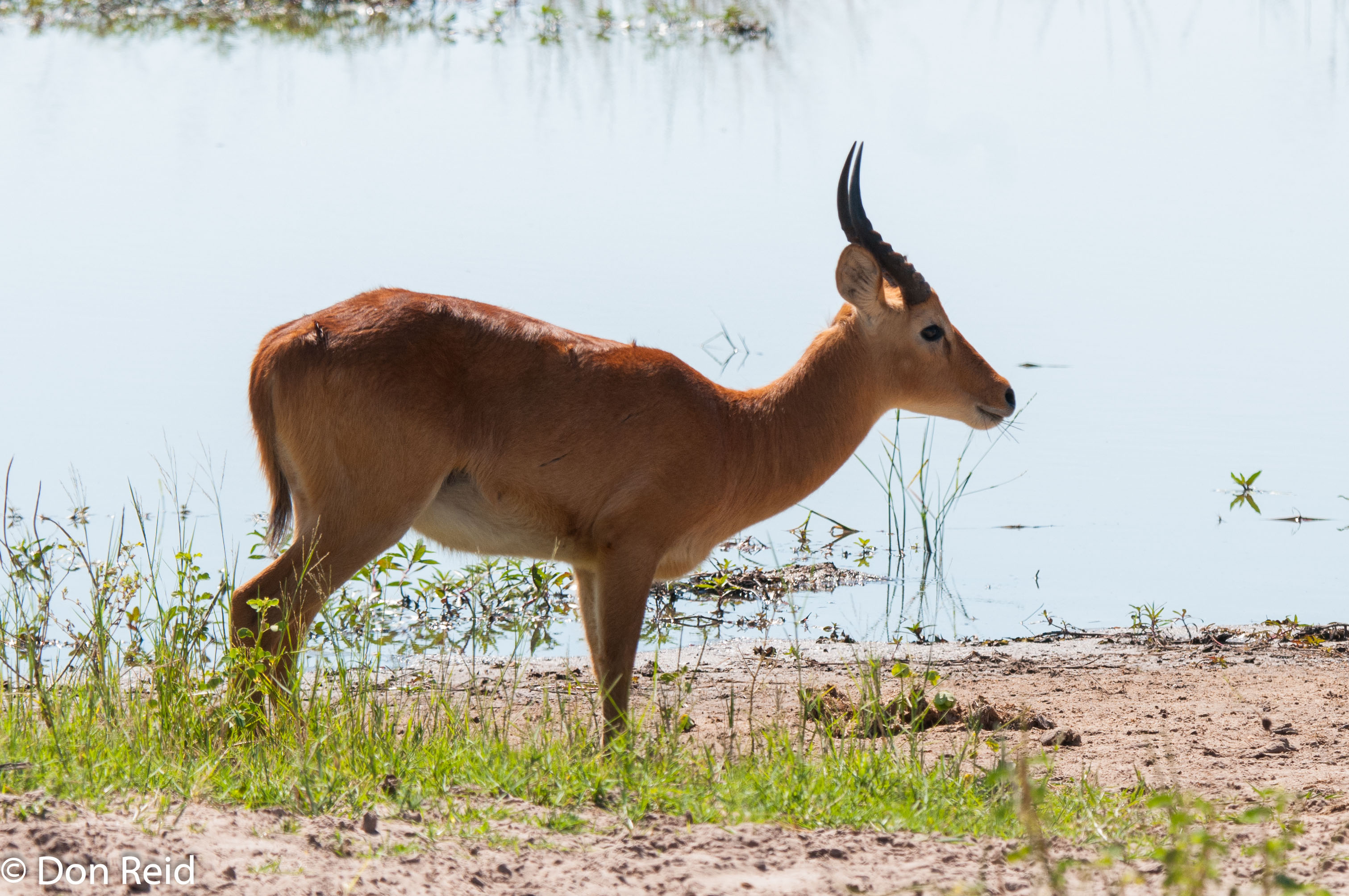
Puku – Chobe is the only place in Southern Africa where this uncommon species occurs, in small herds. Mostly found near water
Puku – unique to Chobe
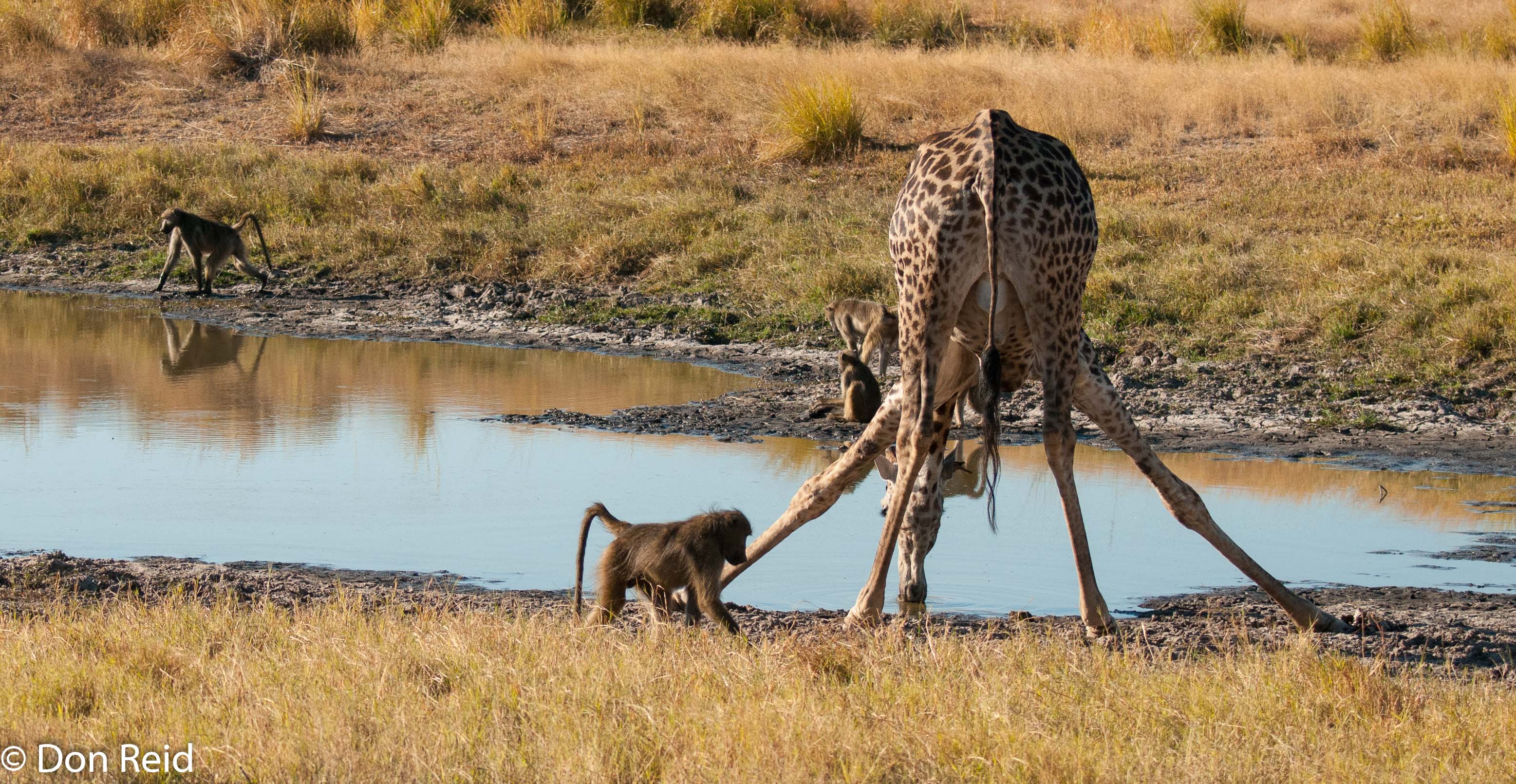
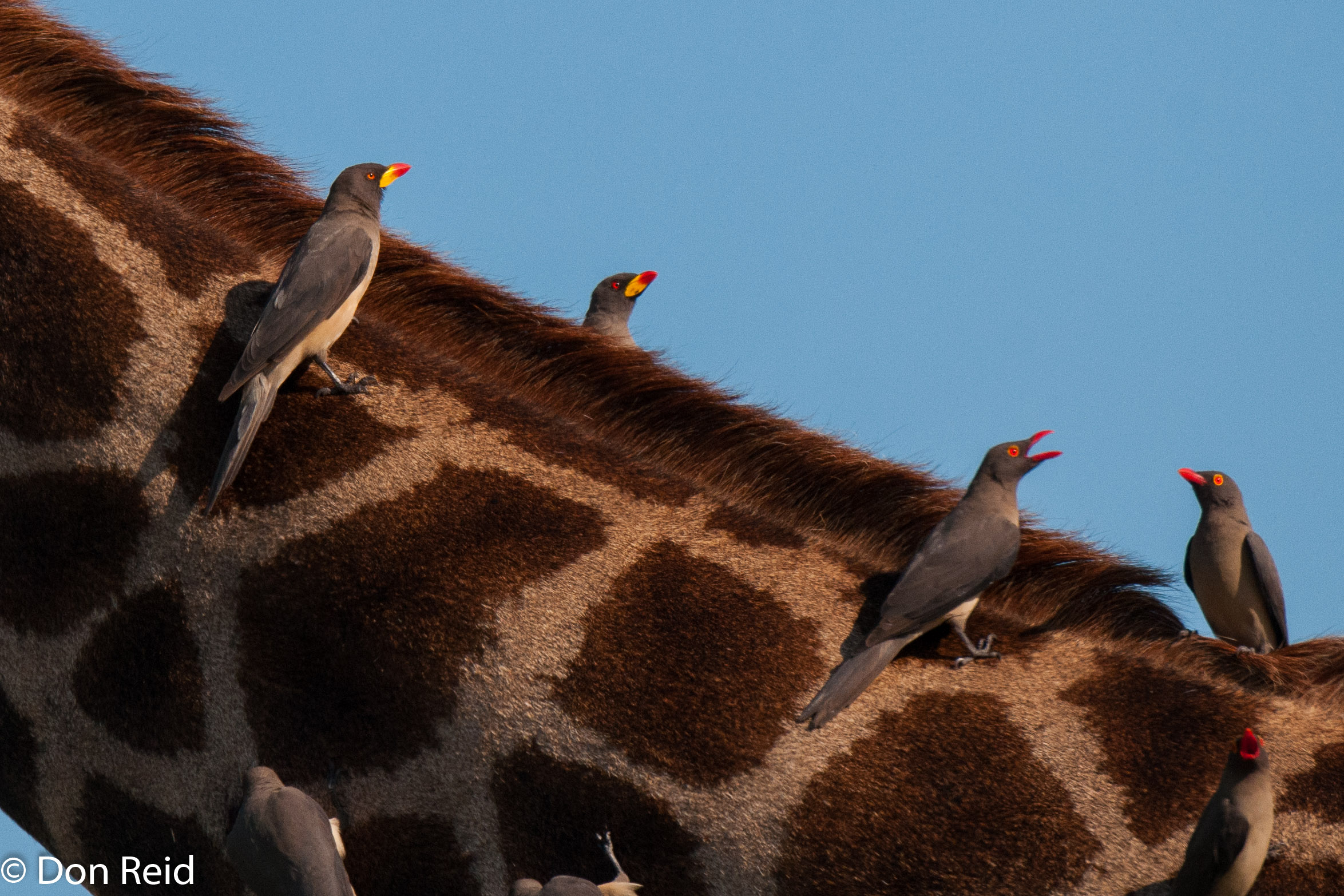
Giraffe – tallest animal in the world at 5,5m. Valves in the jugular vein help to control blood pressure when they bend down to drink water. The oxpeckers love them, gathering in numbers on their long elegant necks
Giraffe at waterholeRed-billed and Yellow-billed Oxpeckers taking a ride
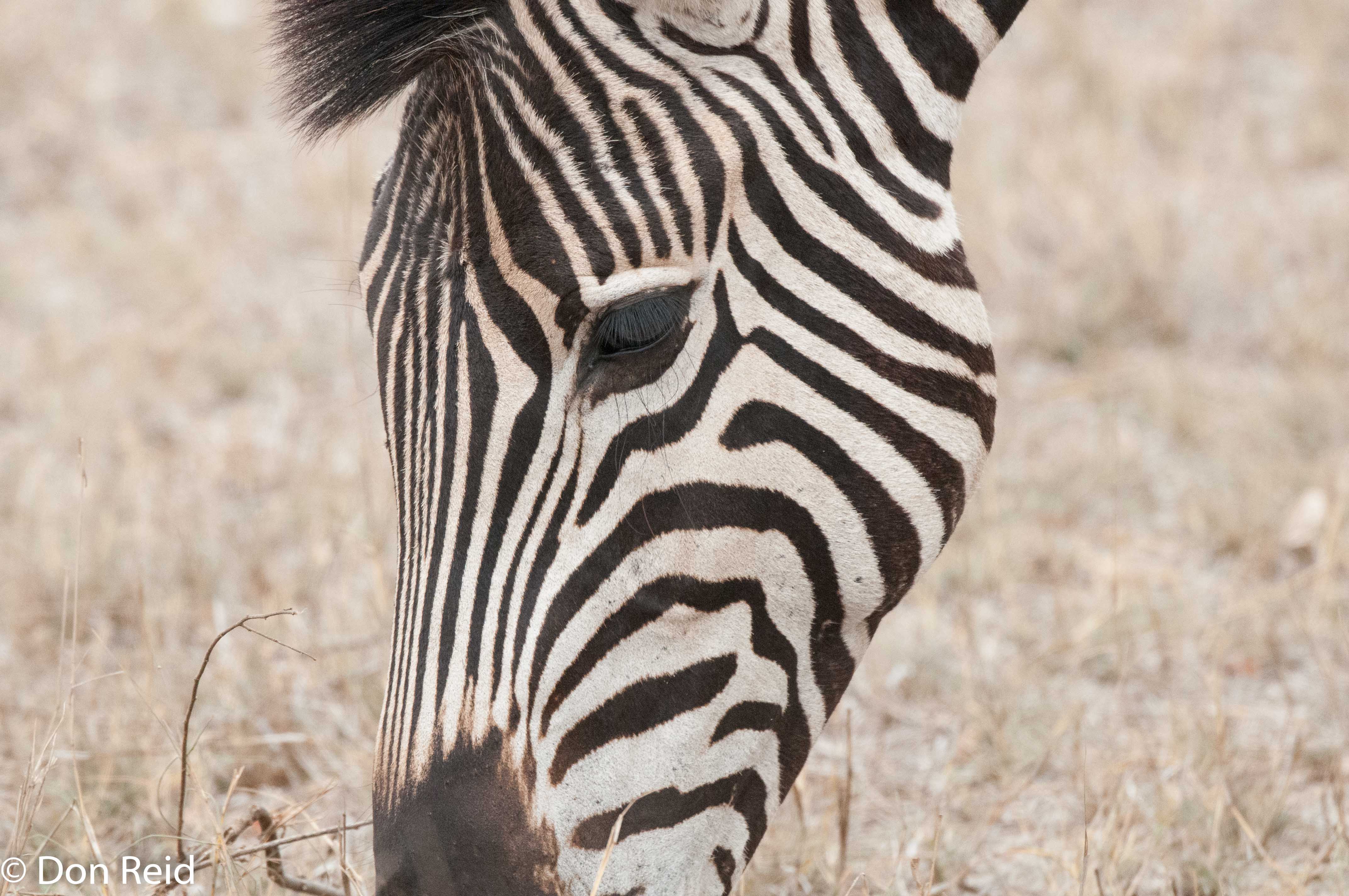
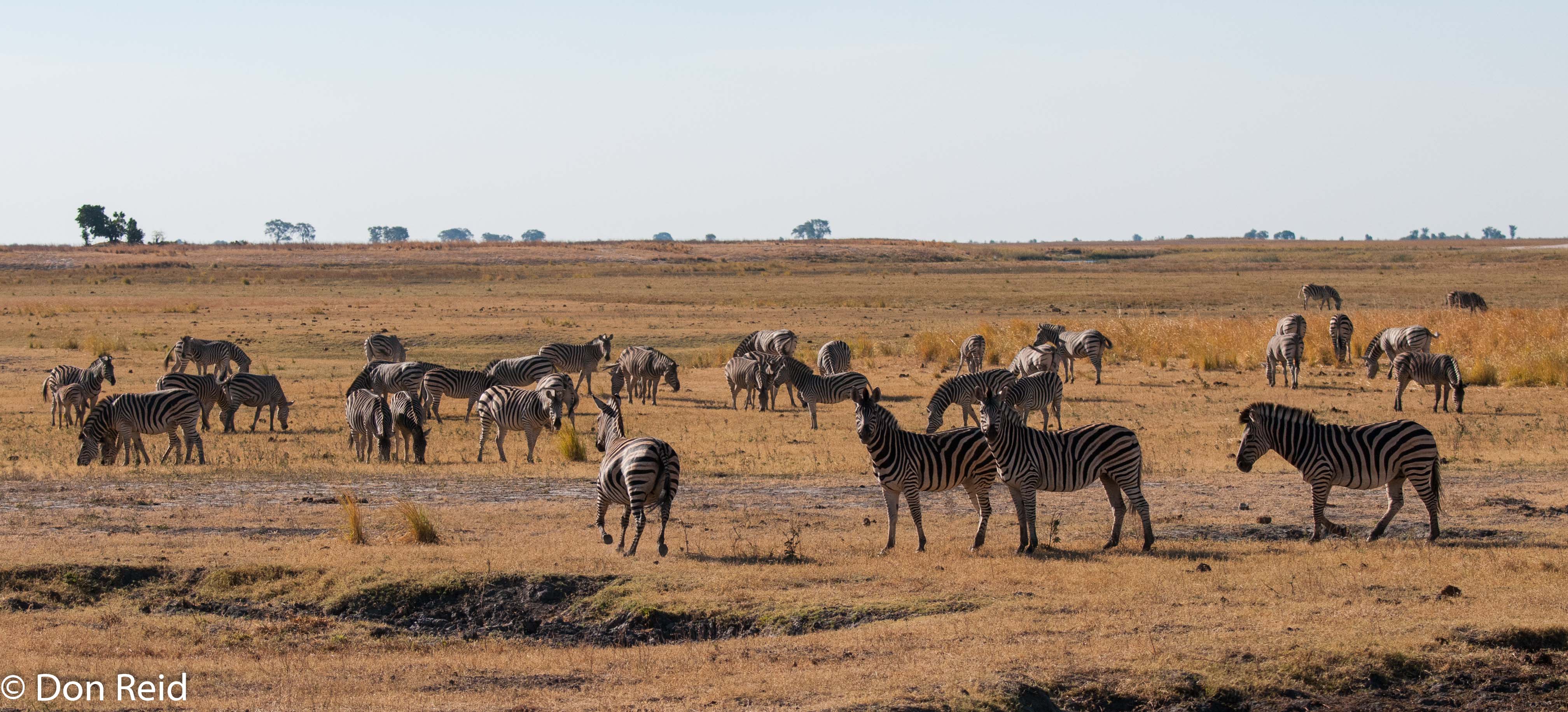
Zebra – no African Game Reserve would be complete without them – our kids loved to call them pyjama-donkeys when they were small, now the grandkids do it
Zebra on the plains
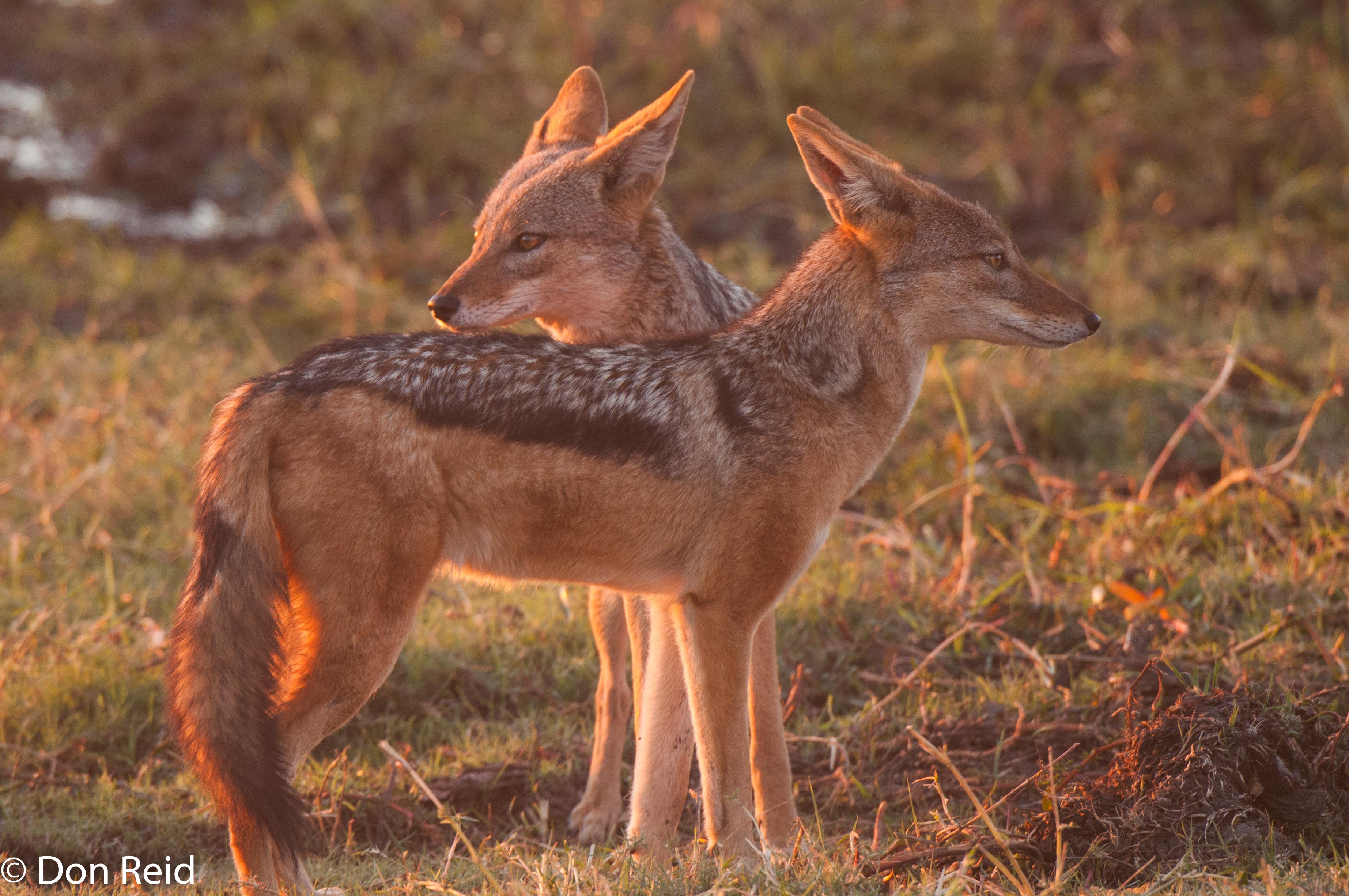
Black-backed Jackal – Pairs form long-term bonds, as these two seem to have done
Black-backed Jackal
Wild Dog – if you are very lucky you may encounter one as we did, crossing the tar road in front of us, then dashing off as we slowed down. They usually move around and hunt in packs.
Wild Dog dashing across the road
And the Birding?
For anyone starting birding, this must rate as one of the best places to visit – there are many larger species that are easy to see and even photograph if that is your thing. Identifying them is also fairly straightforward if you have one of the birding Apps or one of the many birding books available.
The short trips through Chobe that I have done so far have been exciting but too short and rushed to do any in-depth birding and I look forward to getting to grips with some of the more difficult to see species during future visits. Nevertheless there have been some very good sightings and photo opportunities of some of the “obvious” species – here’s a selection :
Ground Hornbill – no other reserve I have visited can boast as many of this iconic species
Ground Hornbill
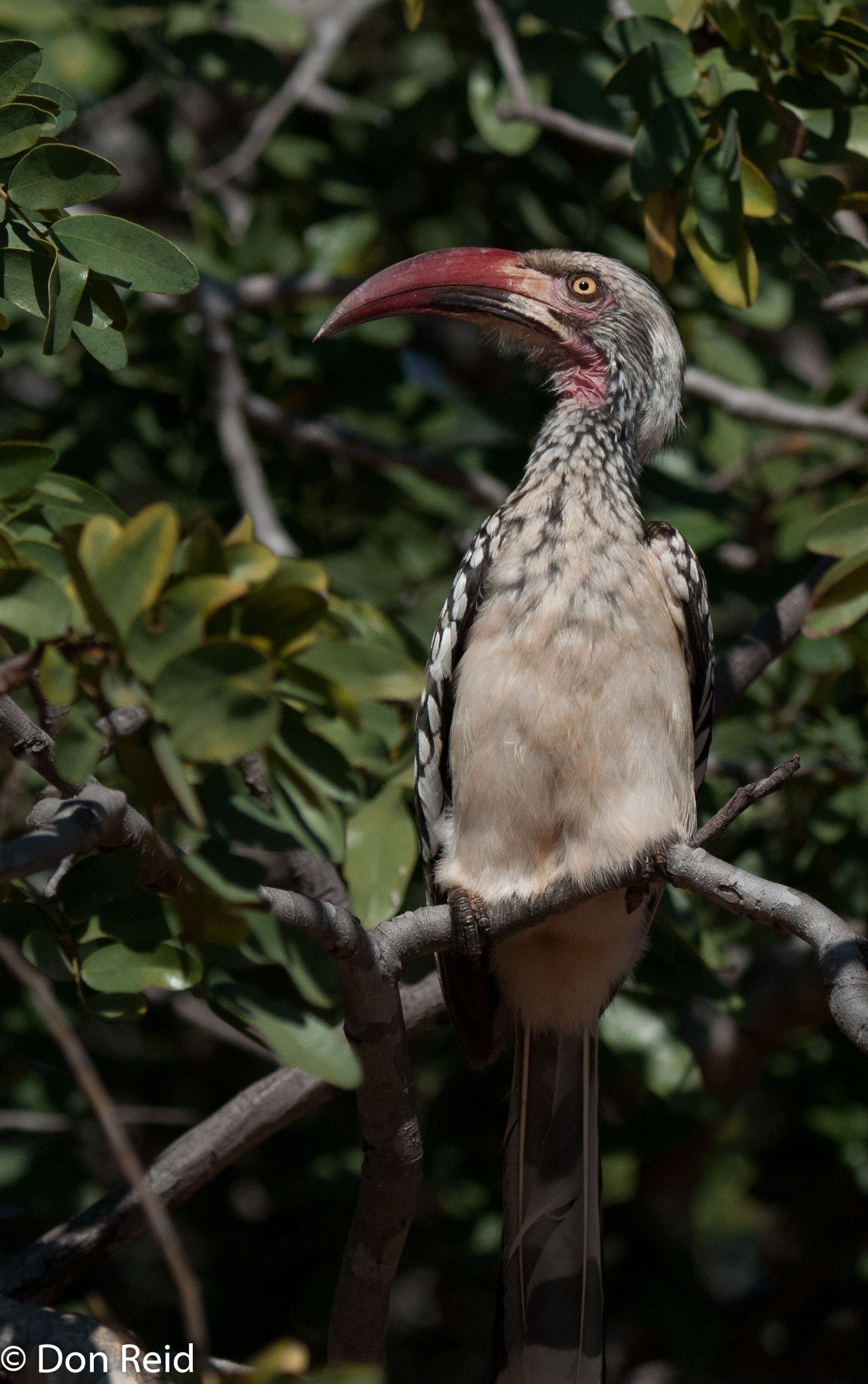
Red-billed Hornbill – there is a good chance you will encounter five Hornbill species during a visit – the one above plus the four smaller species being Red-billed as this one below, Yellow-billed, African Grey and Bradfield’s.
Red-billed Hornbill
Yellow-billed Stork – occur regularly among the myriad birds that frequent the pools of the Chobe floodplain
Yellow-billed Stork
Yellow-throated Petronia – an uncommon and not at all obvious species, this one happened to be perched near the Leopard with its half-eaten Impala
Yellow-throated Petronia
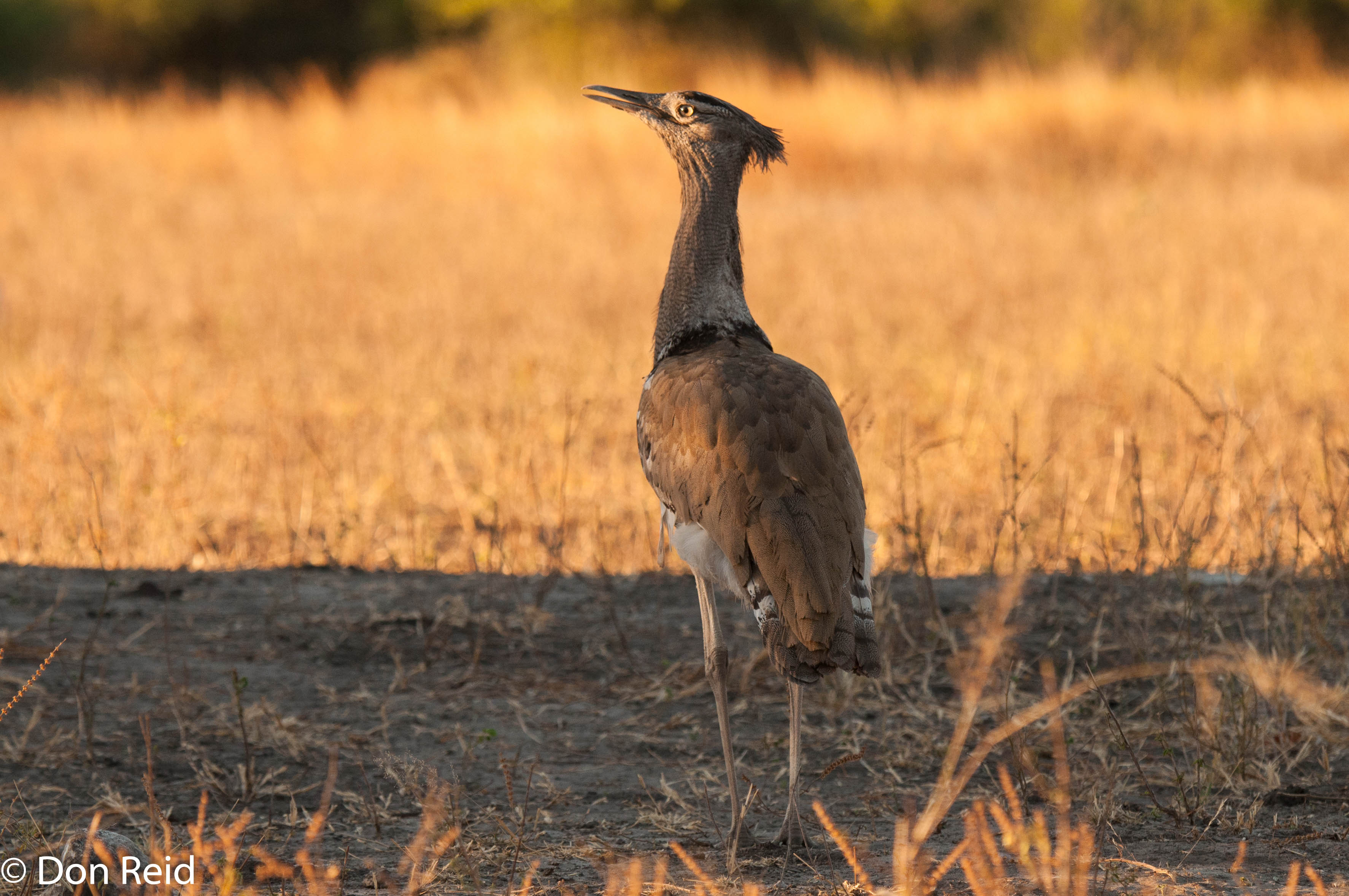
Kori Bustard – another species with a more than good chance of being spotted in the open areas with grass
Kori Bustard, said to be the heaviest flying bird in the world (5,5kg)
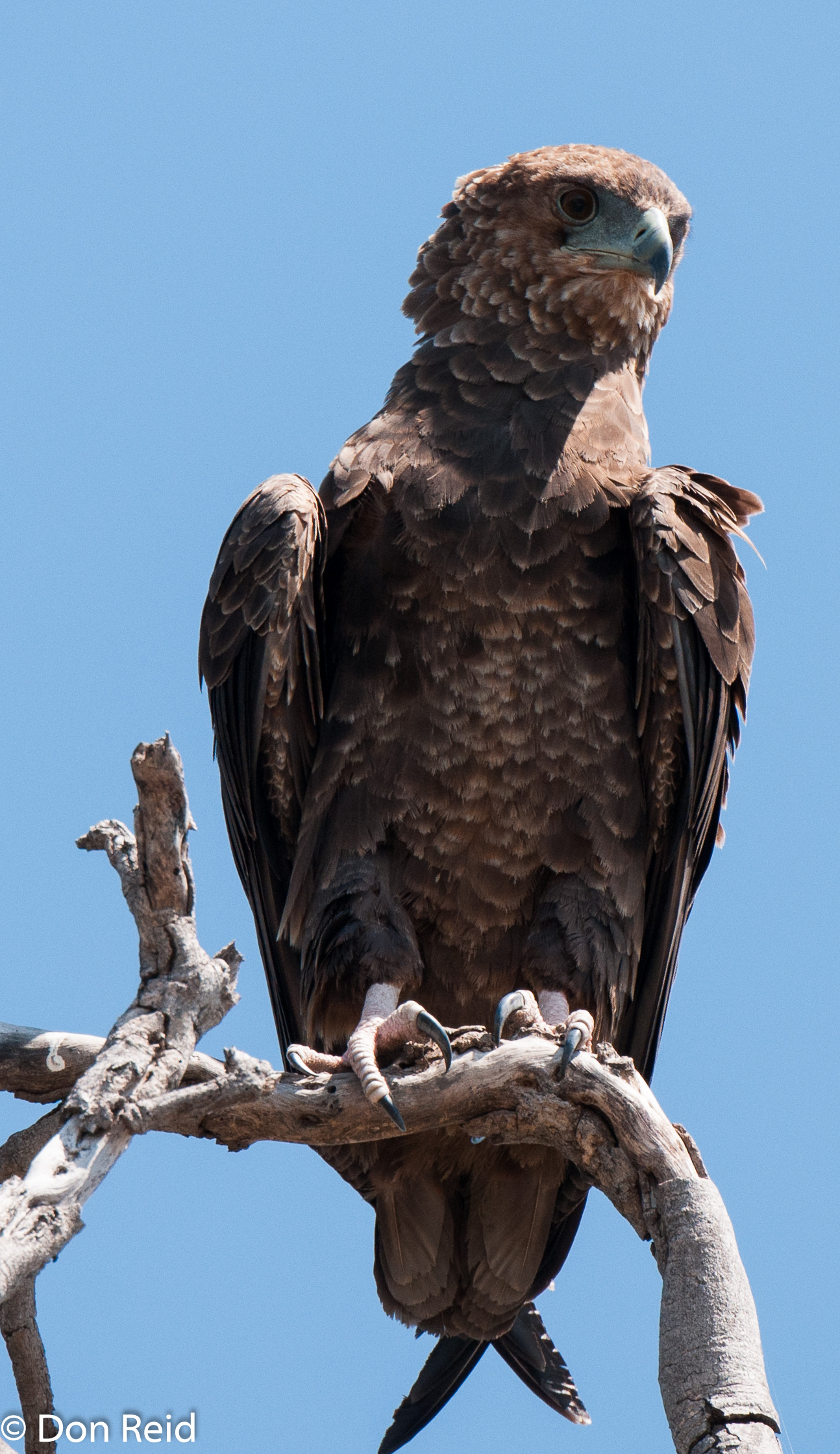
Bateleur – often seen soaring high in the air, this juvenile was perched in a dry tree near the track. One unique feature is their short tail which allows it to walk backwards – useful when trying to catch a snake!
Bateleur (Juvenile)
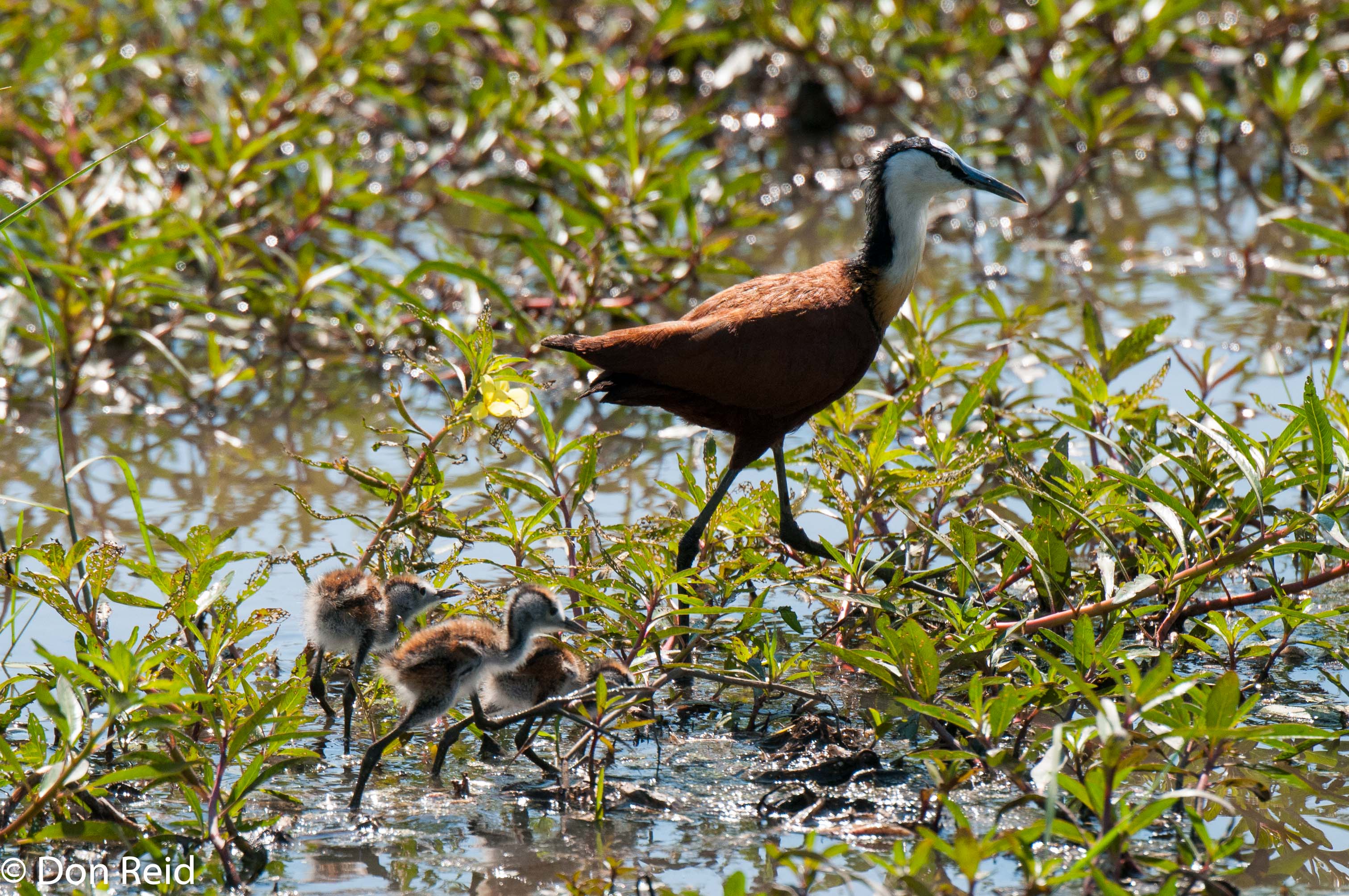
African Jacana – this one had a few youngsters in tow, cute little fluffy chicks with outsize legs
African Jacana with little ones
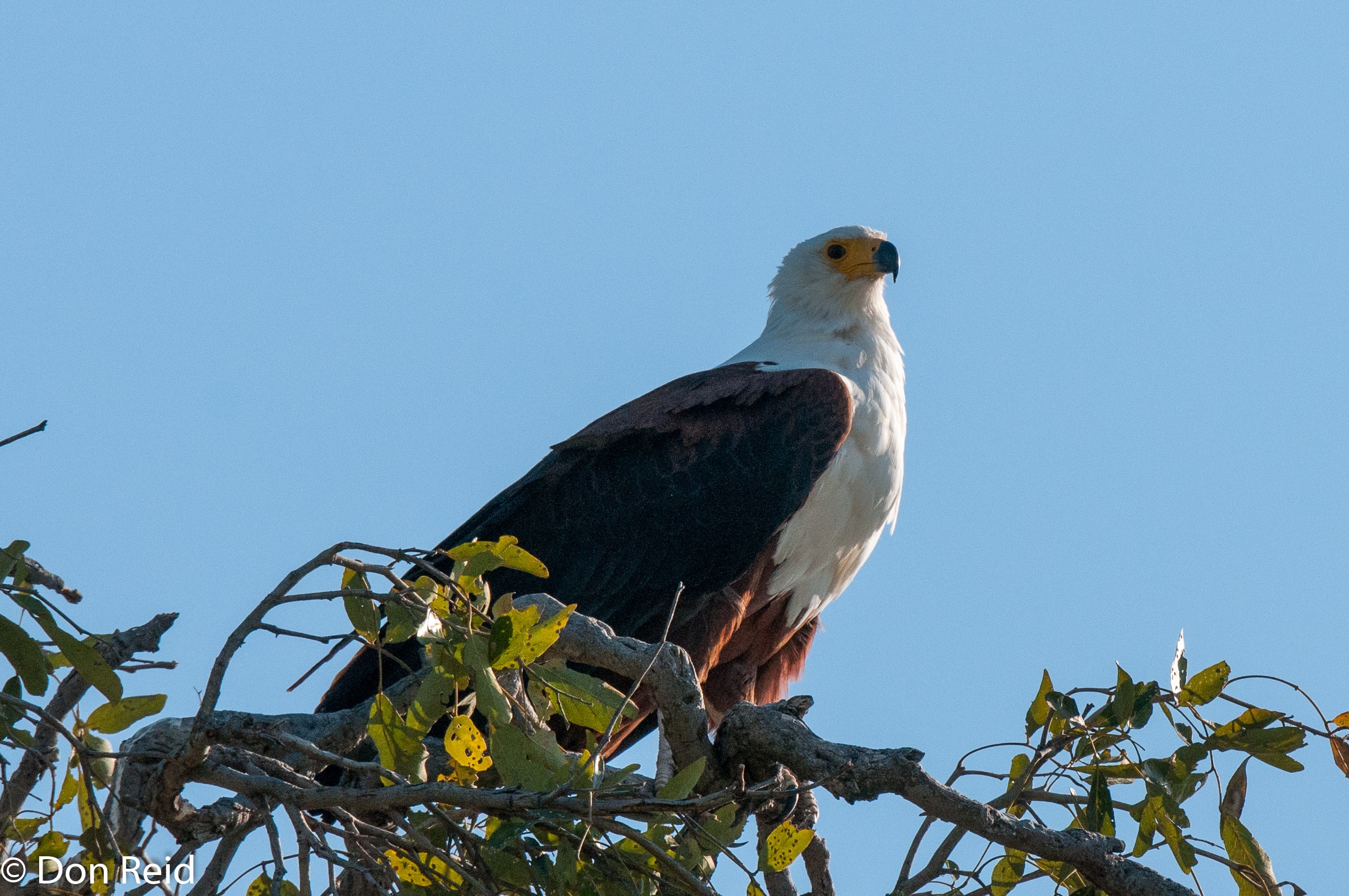
African Fish-Eagle – no great river in Africa is worthy of the name unless it is frequented by these magnificent birds of prey and Chobe has its fair share of them
African Fish-Eagle
Oxpeckers – the giraffes seem to attract the most oxpeckers but they are just as likely to be found on buffalo, kudu, impala
Red-billed and Yellow-billed Oxpeckers
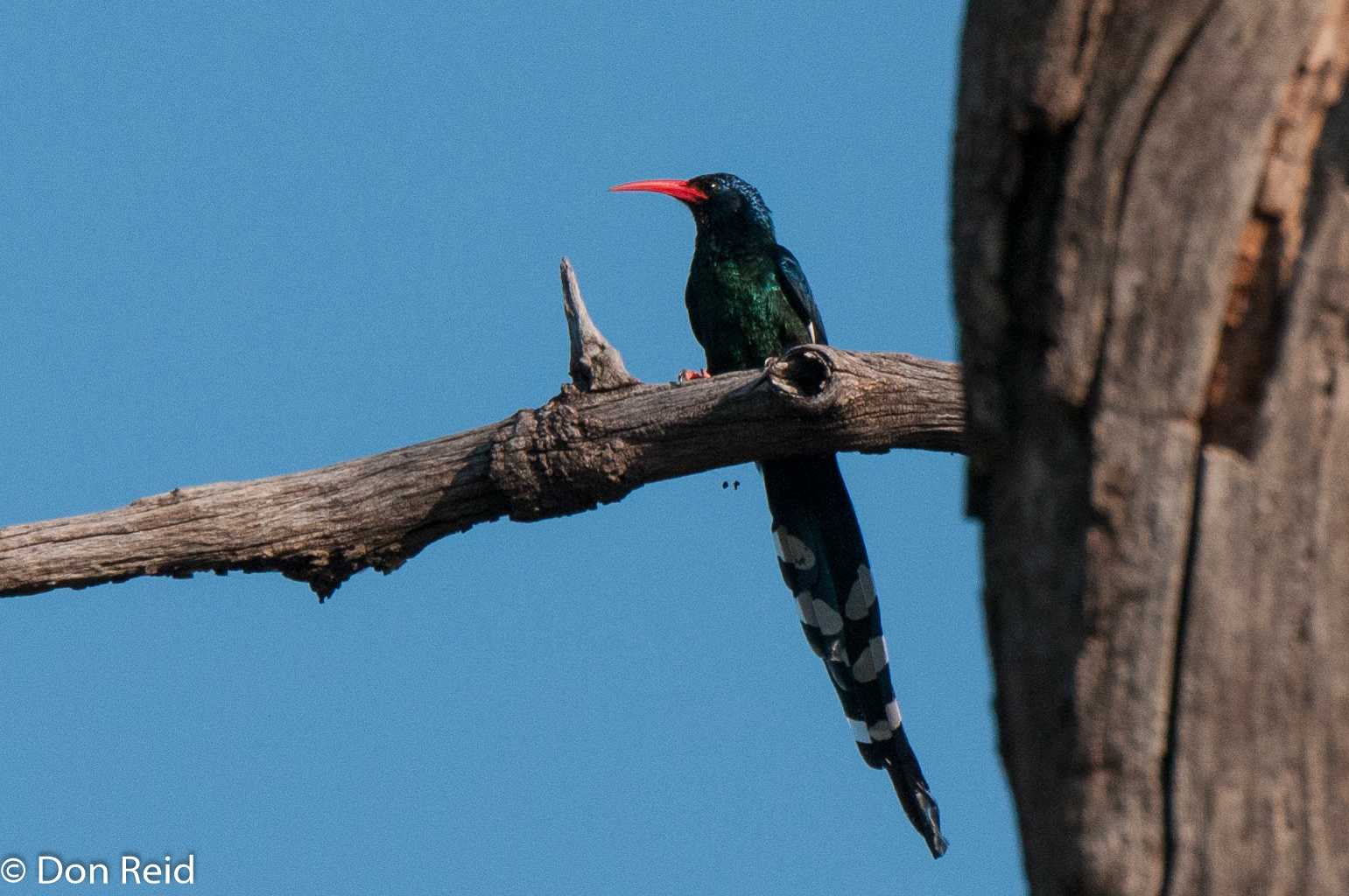
Green Woodhoopoe – often heard before they are seen, this species is less common
Green Woodhoopoe
The Close of Day – Sunsets for Africa
I don’t think I have seen sunsets anywhere in the world that can compete with those over the Chobe river – tell me if you agree!
Who can resist a Cape country stay and good food, with some great birding thrown in?
When we spend time at our home in Mossel Bay, as we did during July this year, we often try to break away to an area that we have not visited or explored before. This time around we chose Robertson in the Western Cape, just 2 and a half hours from Mossel Bay, and after scanning through all the options on Booking.Com we settled on Orange Grove Farm for our two night stay. Gerda and I also like to try out special restaurants now and again and were pleased to get a booking at the Reuben’s Restaurant in Robertson, owned by the renowned chef of the same name and with a reputation for fine dining.
The last Monday in July saw us heading west along the N2 National road to Swellendam and from there branching off to Ashton and Robertson, a road quite familiar to us by now, but always a delight and particularly so at this time of year, with the contrasting greens and yellows of the scattered wheat and canola fields providing a spectacular patchwork.
Canola fields
First stop for lunch was at Riversdale where the restaurant had a welcoming fire going (did I mention there was a severe cold spell over most of SA?) and simple but hearty food – we chose toasted sarmies and coffee to keep us going. The friendly owner also helped us choose some frozen home-made meals for the evening meal at Orange Grove, which is a self-catering resort, and later we were only too happy that we had chosen this option as we popped the Bobotie and rice in the microwave for an instant delicious supper.
Riversdale cafe
Not much later we stopped at Orange Grove’s reception, but not before having a coffee in the restaurant at Rooiberg Winery Restaurant, right at the turn-off to Orange Grove. We were very tempted to try their pineapple Danish – you can make up your own mind whether we succumbed to the temptation or not, suffice to say we really enjoyed that last short stop.
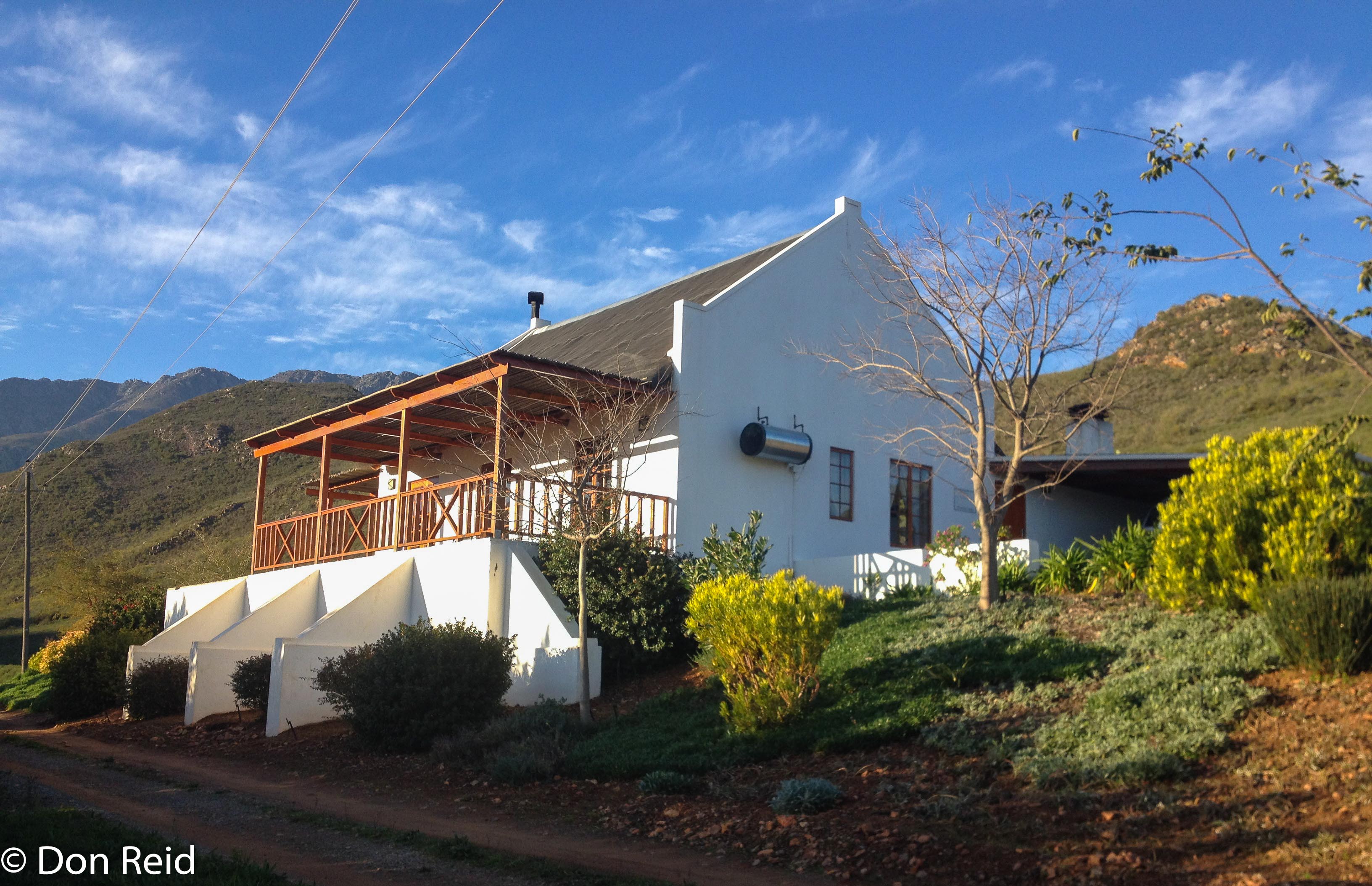
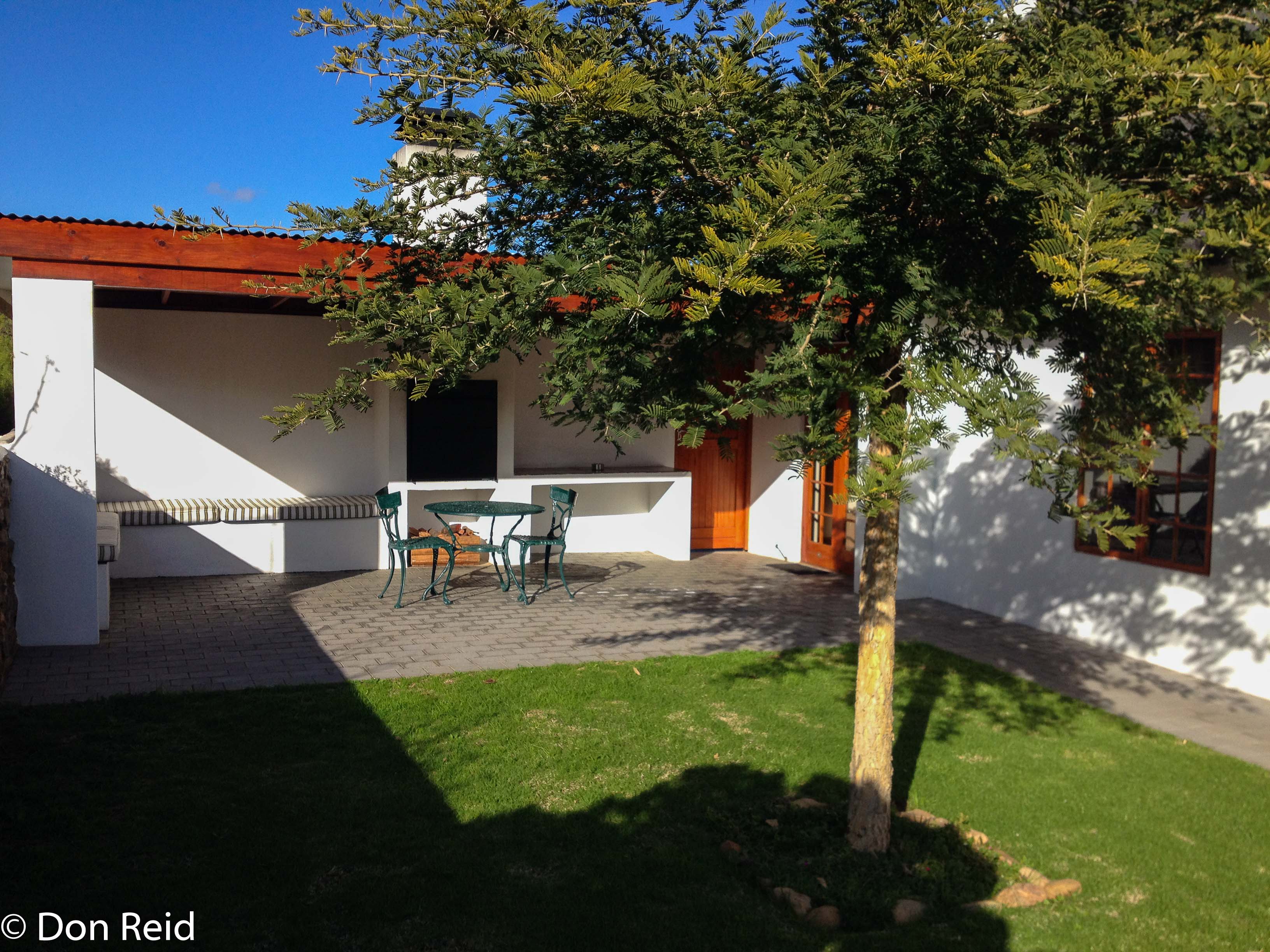
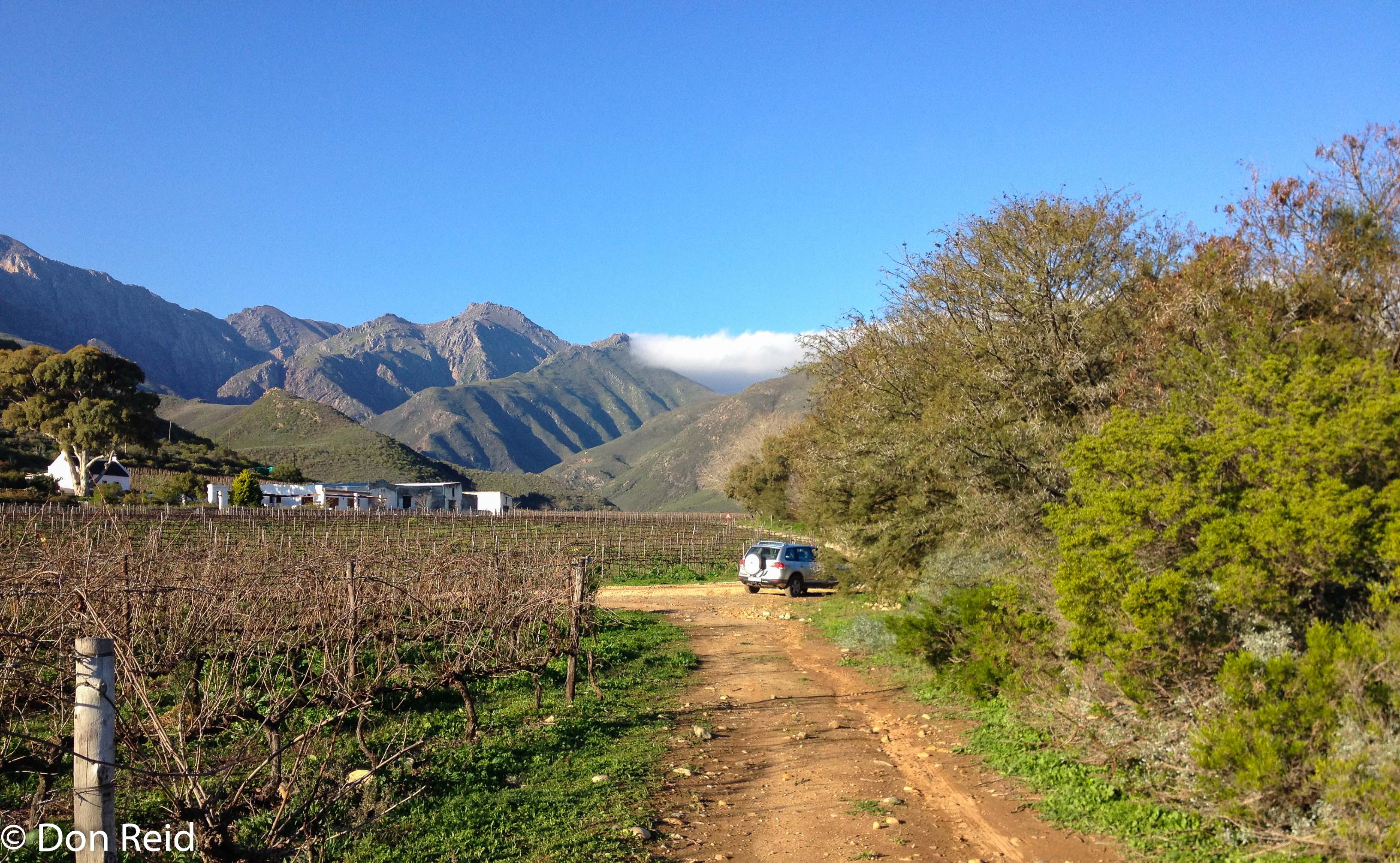
By 5pm we were in our chalet set against the slopes of the fynbos-covered mountain, looking over the vineyards and olive groves with the valley in the background.
The cottage
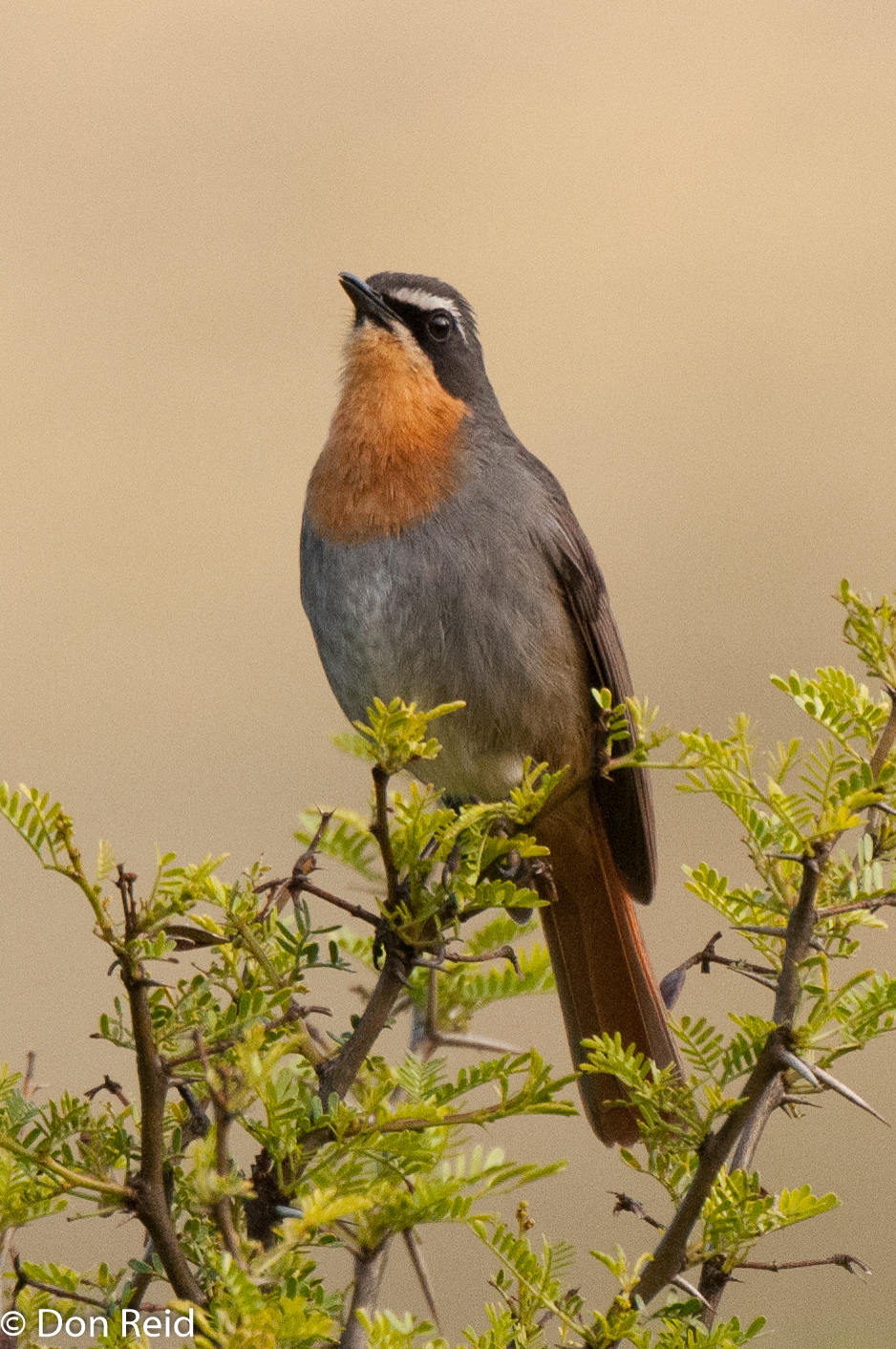
The chill of evening was setting in fast so I got the wood fire going and the gas heater running, then braved the chill air to start a new atlas card with the many visiting birds attracted to the indigenous garden and surrounding fynbos – cheerful Cape Robin-Chats and Bokmakieries with their well-known calls, White-Eyes twittering and Karoo Prinias in good form, moving about restlessly.
Cape Robin-Chat
It was not long before the sun started disappearing behind the surrounding mountains, prompting the resident Cape and House Sparrows to settle in for the night as the cold really set in.
Next morning we slept late, with our breakfast basket arriving at 8.30am, beautifully packed with the goodies we had ordered off the list – all for self preparation. “Real” coffee from the French press went down well with a warm muffin and a skewer of fresh fruit with yoghurt – it’s moments like this that you feel really privileged and spoilt.
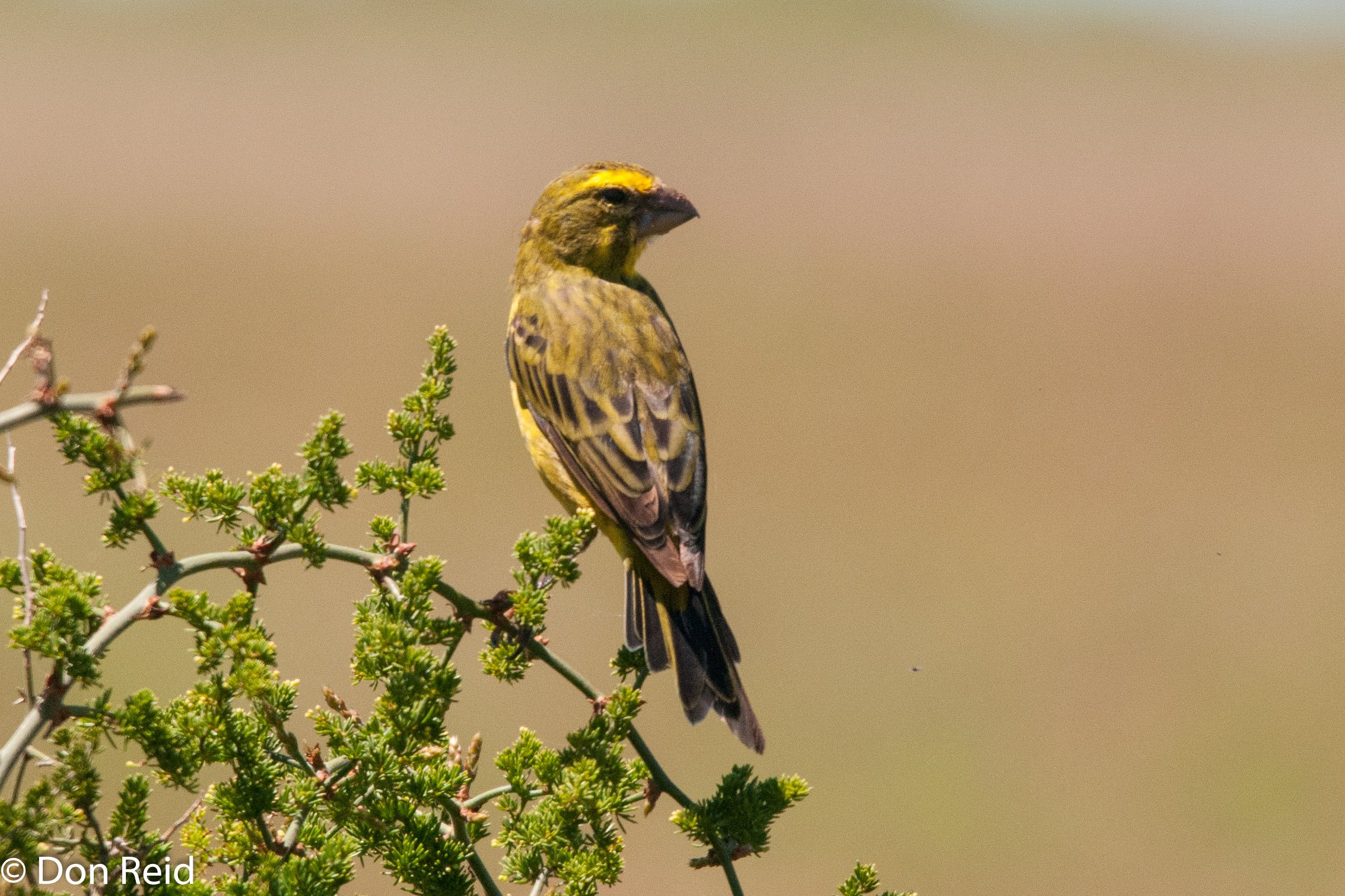
Once showered, I found a sunny spot on the patio and kept a lookout for passing birds, which did not disappoint. Fiscal Flycatcher is really at home here and it is also the most recorded bird in the pentad (reminder : a pentad is an 8km x 8 km block based on co-ordinates). Not far behind are the Sunbirds (Malachite and Southern Double-collared) in their colourful finery, and a selection of Canaries (Brimstone, Cape and Yellow), perky as always.
Fiscal FlycatcherIndigenous gardenSunny corner in the morningBrimstone Canary
Later in the morning Johan and Rosa (Gerda’s sister) arrived and we took the short drive to the Rooiberg Winery restaurant for lunch and a chance to catch up on family news both sides and enjoy some of the simple but tasty fare on offer. Knowing we had a dinner date in the evening, Gerda and I went for the safe option of fish and chips, which turned up beautifully grilled, while Johan and Rosa chose the chicken curry, equally delicious judging by their satisfied murmurs.
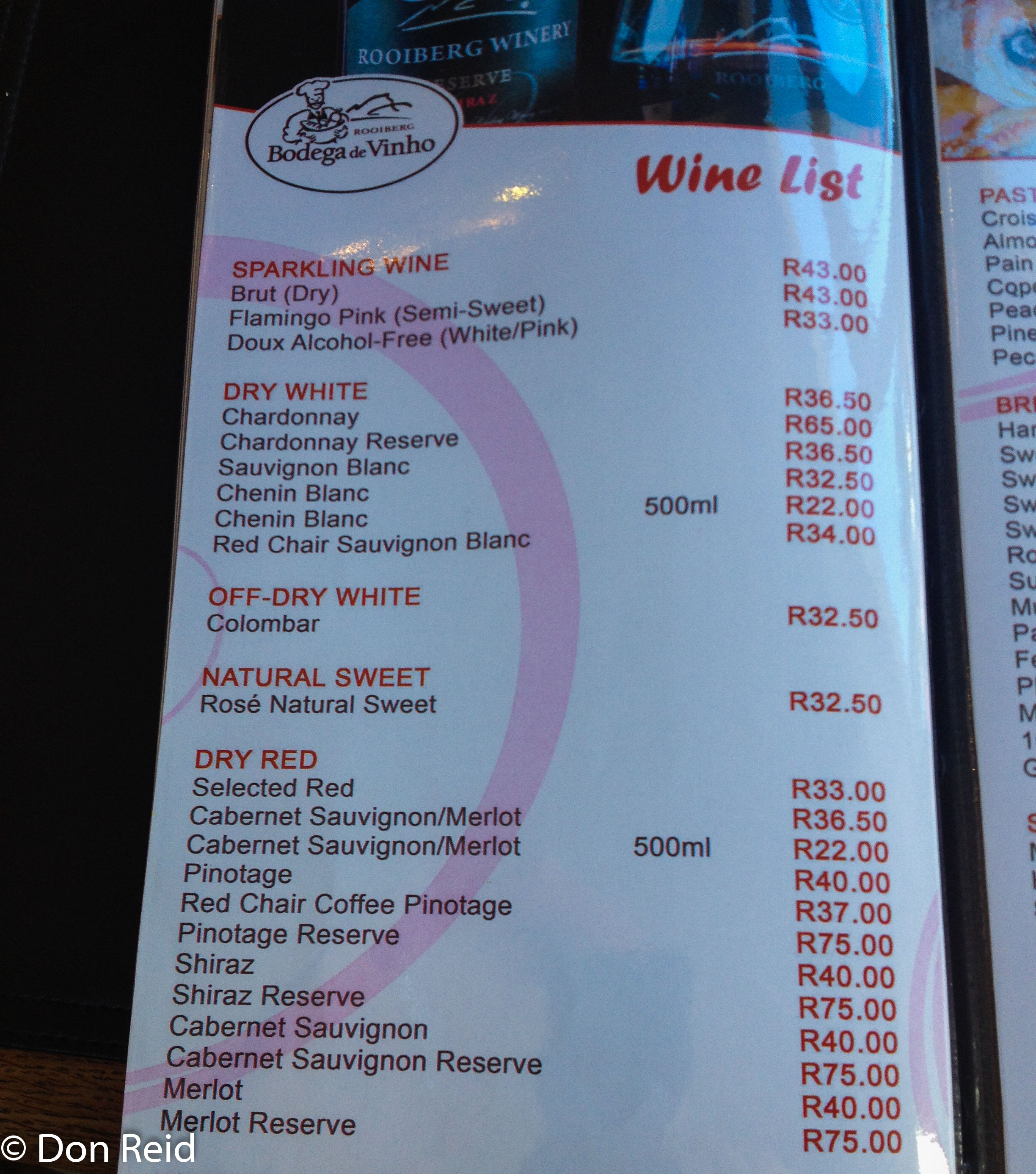
The big chair at Rooiberg Winery restaurantCheck those prices!
The wine was from Rooiberg’s selection and I was pleasantly surprised that the cellar (next door) prices applied in the restaurant – where else in the world can you be served an acceptable wine for less than R40 (that’s about 2 Pounds!)
After a lengthy and relaxed lunch, we settled the reasonable bill, said our farewells and returned to Orange Grove Farm, where I set out to do some justice to the atlas list. I soon had all three species of Mousebird (Speckled, Red-faced and White-backed) chalked up and a group of 5 Domestic Geese on the nearby dam while the other dam further along the road had Black Duck and Coots.
Orange Grove Guest farmWhite-backed Mousebird
A walk along the road next to the riverine bush was quite productive with Pied Barbet in the trees and a variety of birds on and around a mound of organic fertiliser (that’s the nice term for it) – Doves, Sparrows, Weavers, Bishops and a few Cape Spurfowl all vying for a spot.
Swee Waxbill turned up in the trees and settled for a while for a late afternoon grooming session, but were not easy to photograph, while a Southern Tchagra popped out of the lower stratum of the bushes long enough to snatch a photo.
Swee WaxbillSouthern Tchagra
We had booked in advance for Reubens Restaurant that evening, but when it came to going out in the cold and driving the 20 Kms to Robertson we almost cancelled – thank goodness we persevered as it was a memorable meal in very pleasant surroundings, with some really stunning dishes accompanied by an excellent Merlot – the photos don’t do the dishes justice but use your imagination and sense the subtle flavours and perfect cooking!
Dinner at Reubens in RobertsonGerda enjoying ReubensSpringbok loin (the animal’s not the rugby player’s)Orange souffleCrème Brulee
Next morning we again lay in till late then set off on the return trip to Mossel Bay, again stopping at our new favourite roadside restaurant for coffee and a breakfast pastry (the infamous “load shedding” meant we could not boil water for coffee that morning). The road back was not busy and we took it easy, just enjoying the passing scenery, which at this time of year includes a vibrant display of flowering aloes, some natural, others planted.
Planted Aloes along the Ashton-Swellendam road
Riversdale was our last stop at just the right time for tea (no, we resisted the cakes this time). Passing Mossgas (PetroSA) the rain had formed temporary wetlands in the fields and the Gulls and others were making the most of it.
Gulls in temporary vlei near PetroSA (Mossgas) (after soaking rains)
Shortly after, we were back “home” in Mossel Bay (well it is our second home) with some pleasant memories of a charming part of South Africa.
The first 10 days of our July stay in our second home town were characterised by cold, wet weather almost every day – typical Cape winter weather you might say, but the locals insist it is exceptional for Mossel Bay, which is punted as having one of the mildest climates in SA.
It hasn’t been conducive to going atlasing in the early morning, so I have taken the lazy option of doing most of my birding and atlasing in the Golf Estate where our house is located with short visits to some selected spots in the Mossel Bay area to find the species not occurring in the estate itself.
View of the golf course from our gardenLooking down at the nature reserve area from the walking trail
The Patio Option
Our enclosed patio looking over the golf course and the sea has proved to be the ideal spot for viewing the birds that visit our small garden, particularly when they perch in the neighbour’s trees, which are at eye level a just a few metres from the first floor patio.
Regular visitors include the usual Doves (Laughing, Cape Turtle- and Red-eyed) and Sparrows (Cape and Grey-headed) while Streaky-headed Seedeaters have been prominent for the first time that I can recall.
Cape SparrowStreaky-headed Seedeater (which used to be called Streaky-headed Canary)
A Cape Weaver started building his nest with a neat ring of grass as the frame for the ball-shaped nest to follow, but unfortunately abandoned it at that point.
Weaver starter frame of nest
The honeysuckle hedge below the patio was not in flower but we still had both Southern and Greater Double-collared Sunbirds visiting, probably on their way to the many flowering Aloes in the estate, which are at their colourful best in the winter months.
Southern Double-collared Sunbird (Greater ditto is identical other than a broader band of red)
Others dropping by were both of the common species of Mousebird, Speckled and Red-faced and both presented nice photo opportunities.
Speckled MousebirdRed-faced Mousebird (calling)
The ubiquitous Cape Sugarbirds are abundant in the estate and seem to be in a state of excitement most of the time – just shows what a fancy long tail does to you.
Cape SugarbirdCape Sugarbird (taken on my I-Phone)
Then there are the Bulbuls with the familiar Cape Bulbul not at all shy to show himself, while the Sombre Greenbul remains hidden in the bushes but makes up for it with his piercing call “which sounds a bit like “Willie” (which is also the Afrikaans name for it)
Cape BulbulCape White-eyes move through the foliage in small flocks
A Yellow Bishop was a surprise visitor, as I had only ever seen them in the Fynbos which fills the nature reserve area between the last row of houses and the rocky headlands along the shoreline. It was in its duller winter plumage, heavily streaked and giving a glimpse of bright yellow back as it flew off.
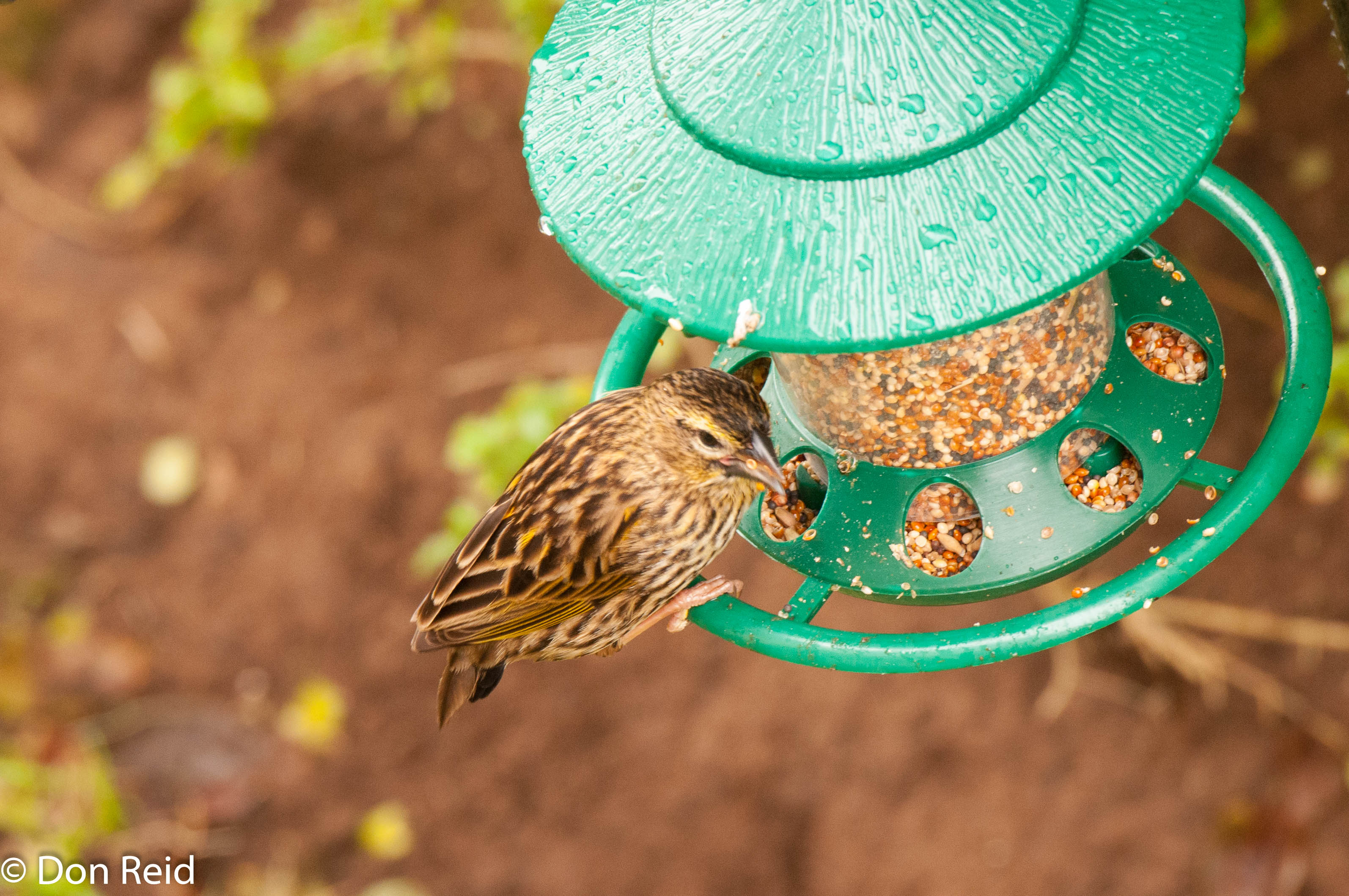
Yellow Bishop at the feeder (winter plumage)
Feeding the masses
I bought a bird-feeder and some seed at Agri, our local co-op and installed it below the patio, hoping for some seed-eating visitors. Well, it was packed with birds the next day – Sparrows, Seedeaters (they used to be called Streaky-headed Canaries), Bishops and Weavers all vying for a spot. In the frenzy some seed fell to the grass below and was quickly taken by the Doves and even the Cape Spurfowl which are very common in the estate.
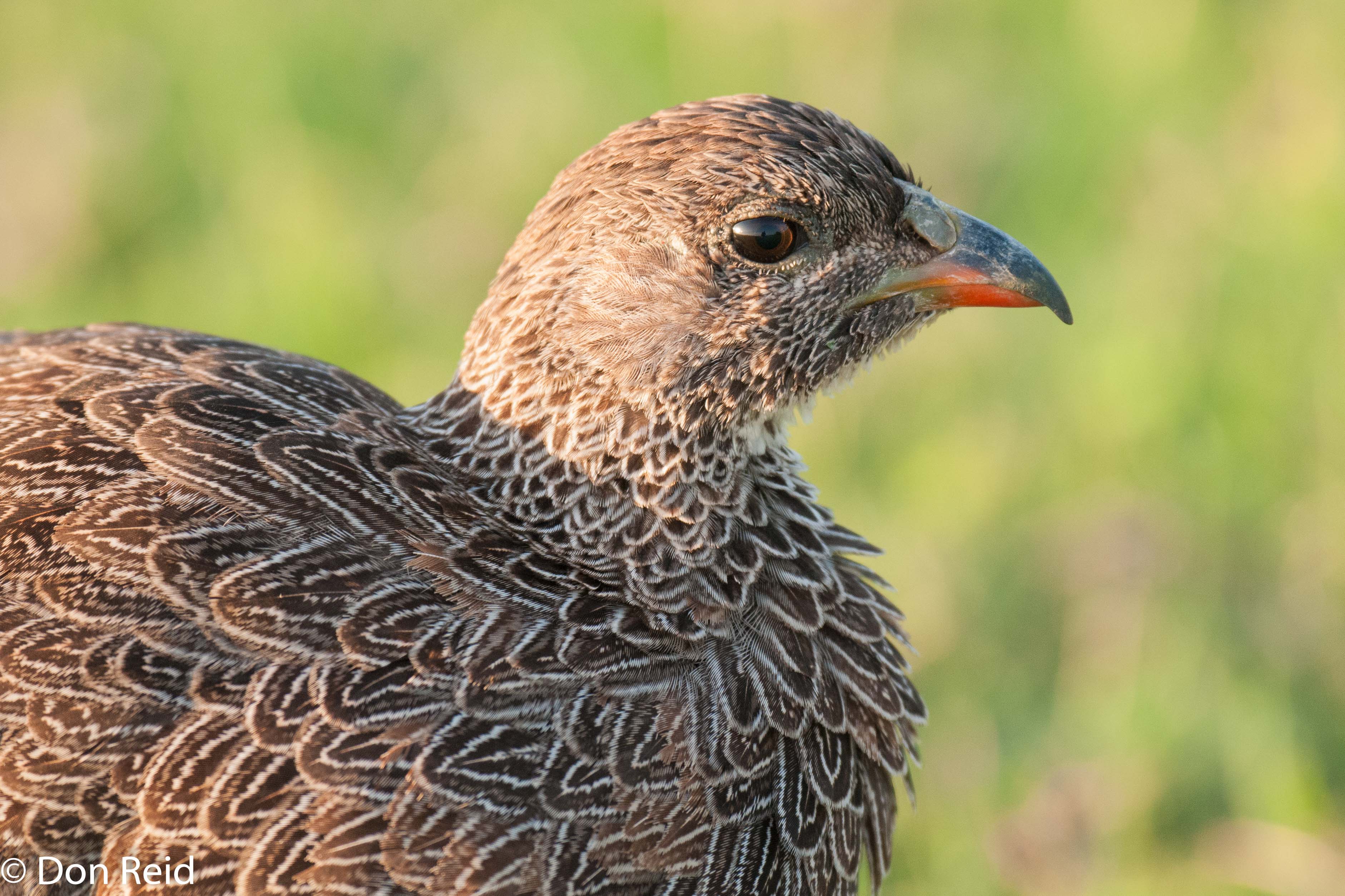
Cape Spurfowl
Going Walkabout
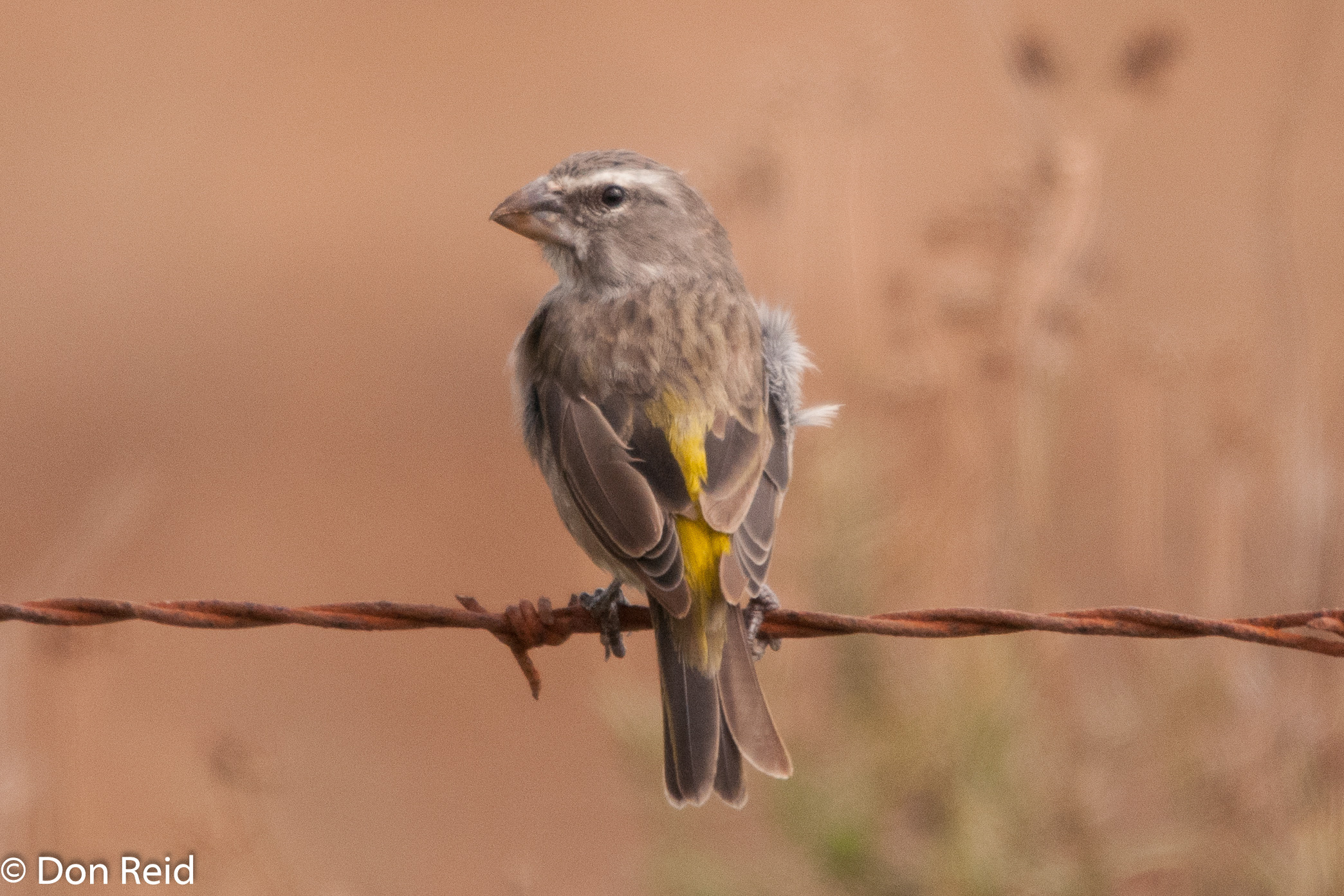
When the weather allowed, I did some walking around the estate and down into the nature reserve area of Fynbos. The latter was alive with Yellow and White-throated Canaries flitting about, plenty of Sunbirds and a Bokmakierie or two.
White-throated Canary
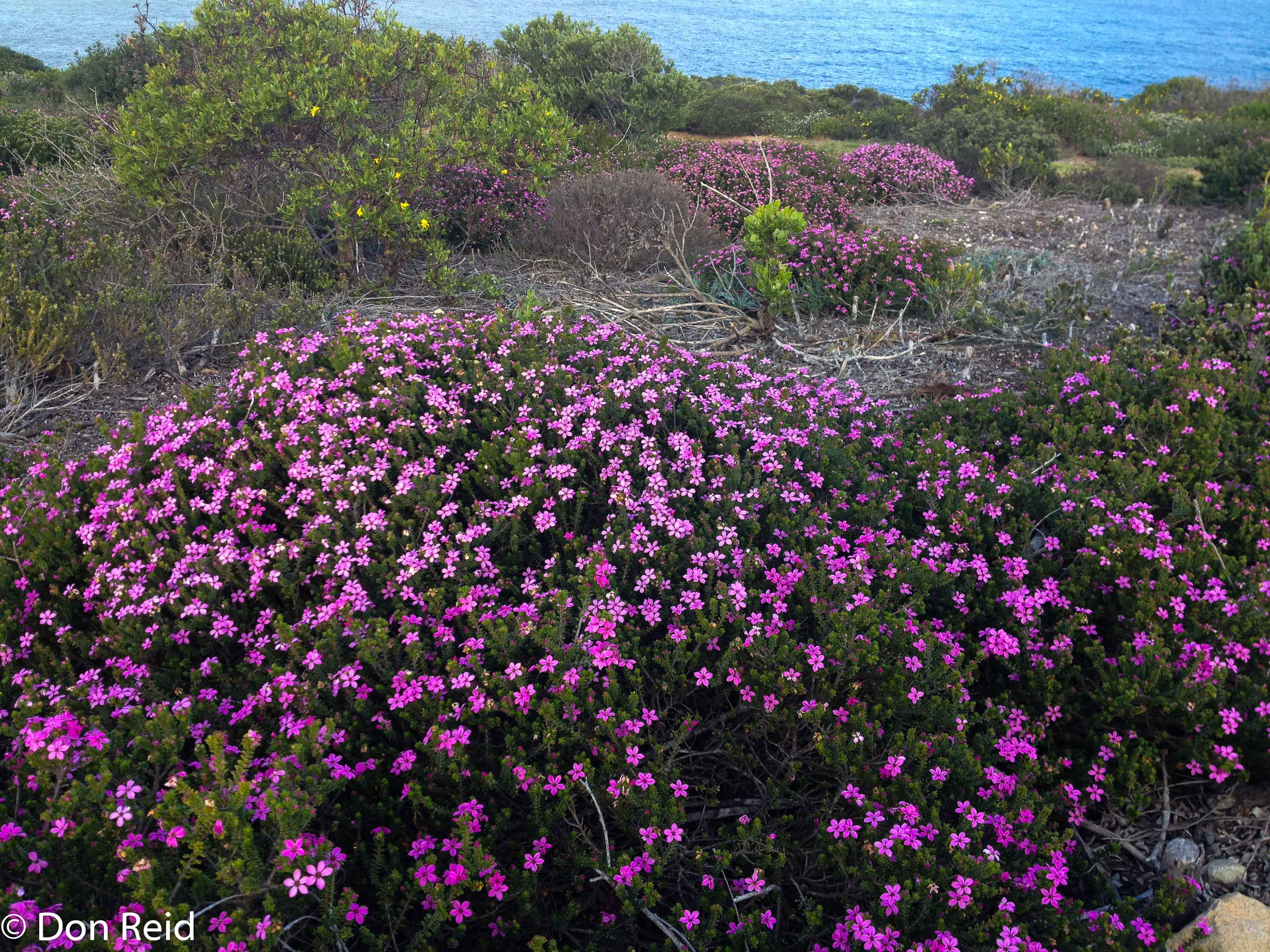
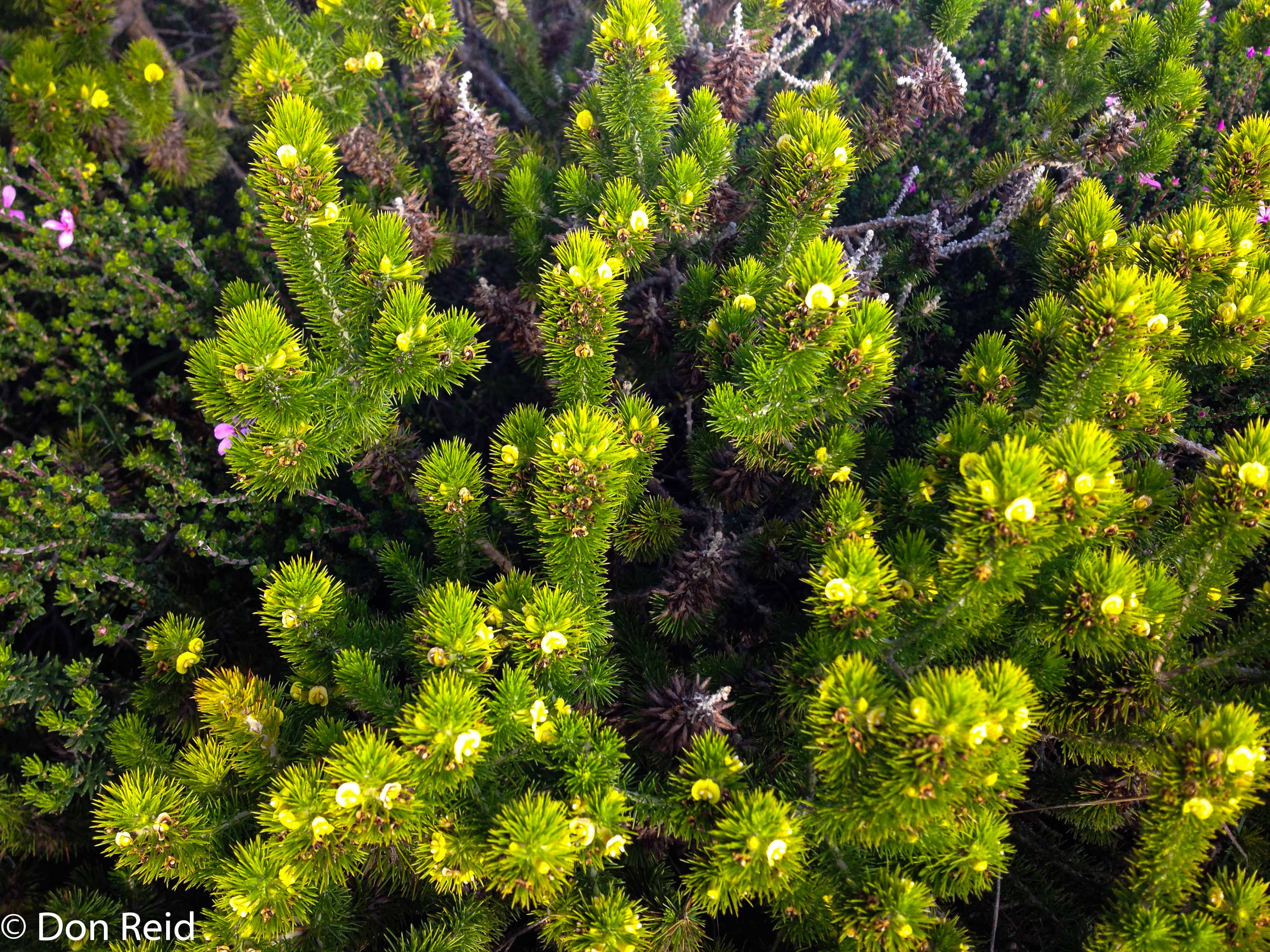
And the scenery was special – most of the fynbos was in flower creating beautiful spreads of tiny purple, pink and white flowers against the backdrop of grey skies and cobalt ocean beyond the cliff edge.
FynbosFynbosFynbos
For a few minutes the icy wind was forgotten and I took some photos with my pocket camera (which I sometimes use for communication as well – they should call it an I-Camera rather than an I-Phone)
Other fynbos favourites were out and about – Karoo Prinia vociferous as always and Southern Boubou skulking in the bushes, while Bar-throated Apalis moved about restlessly, calling chit-chit-chit all the while.
Let’s go down to the Sea again …….
Seabirds are always a feature of birding in Mossel Bay and there were plenty in numbers if not species. Kelp Gulls are common, even over the estate which they use as a direct route to their roosts along the cliffs.
Kelp Gull
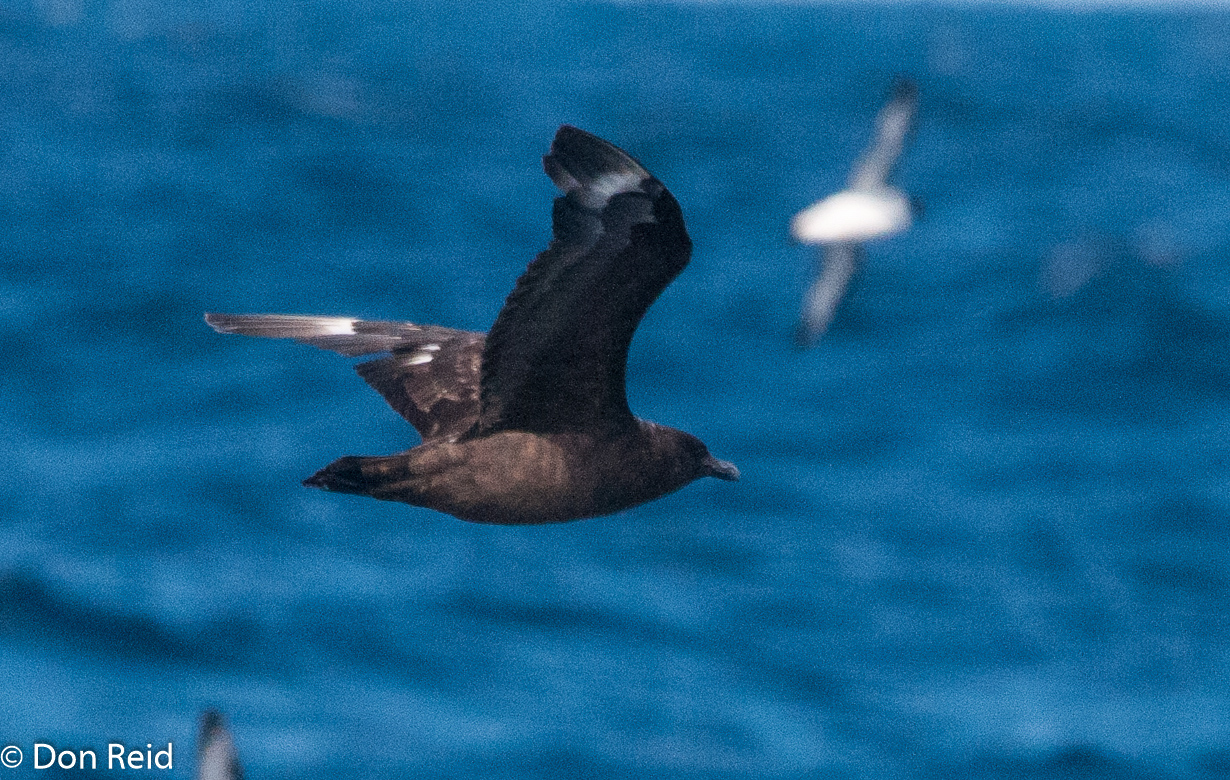
Down at the Point there were numbers of Swift Terns flying past just off the rocky shoreline, some harried by Subantarctic Skuas, large all brown seabirds with distinctive white wing flashes, hoping for a dropped morsel. Their Afrikaans name Roofmeeu translates directly to “Robbing Gull” which describes their habit of pestering other seabirds until they drop or disgorge some of their food.
Subantarctic Skua
During the first week there were signs of the annual “sardine run”, when millions of these small fish move up the east coast of South Africa in massive shoals, drawing all kinds of sea- and bird-life along with them. From the patio we could see some of them enjoying take-aways :
schools of dolphins numbering in the hundreds
a few whales breaching – they are annual visitors to the bay
Cape Gannets galore, turning and diving straight down in their typical fashion
Cape Gannet
Winter is certainly a worthwhile time to visit Mossel Bay, but let’s face it, Spring and Summer are a lot better from most points of view! Can’t wait to return later in the year!
On the statistics front, my total bird list during this visit was 110 species of which about 60% were in the estate itself and the rest during side trips in and around Mossel Bay and a two-day “culinary and birding trip” to the Robertson area (watch this space for more on that subject)
We had made our usual booking for the birding weekend in Kruger Park at the end of January 2014 and were lucky to be allocated the very popular and over-subscribed Punda Maria camp event. This time we added the “Pel’s Pursuit” event, which was to be presented immediately before the birding weekend and promised to be an exciting addition to the itinerary, involving a search for the elusive Pel’s Fishing Owl, which is one of the most sought after birds in Southern Africa and one which I still wanted to add to my “Life List”.
Both events were presented by the West Rand Honorary Rangers who have made these weekends extremely popular over the years.
Joining me on this trip were George Skinner, Nick Royce and Karl Rohrs, while we also connected with Vos and Veronica Vosloo who travelled independently from Kwazulu-Natal.
Birding on the Way
After travelling the familiar route to Polokwane and Makhado, with a breakfast stop at our usual spot, we turned off towards Punda Maria and made a brief detour to Muirhead dams (turn off is at the signboard “Royal Macadamia“), a good site for Pygmy Goose – instead we found a few White-backed Ducks, almost as scarce and always a pleasing sighting.
Muirhead DamWhite-backed Duck, Muirhead dam
Next stop was Entabeni forest a short distance from the main road (turn off at Entabeni signboard and follow the “Picnic Spot/Hikers Hut” signs), where we hoped to spot the resident Bat Hawk with the help of bird guide Samson, but this species once again eluded me, possibly being in hiding after the heavy rainstorms that preceded our visit. Nevertheless, Red-backed Mannikin was a special sighting and worth the effort. A walk through the cool forest was a welcome but brief relief from the oppressive heat and humidity we had experienced so far.
Entabeni forest – lush after good rainsInsect and offspring, Entabeni forest
An hour or so later we arrived at Punda Maria gate which marked the official start of the extended weekend events. Entering Kruger Park we were soon rewarded with a soaring Tawny Eagle and the familiar summer calls of Rattling Cisticola and White-browed Scrub-Robin. High above a Martial Eagle and White-backed Vultures patrolled the skies in majestic fashion.
Little Bee-Eaters hawking insects from low branches tried to outdo their larger European Bee-Eater cousins, while a Ground Hornbill went solemnly about his business, looking like a well-dressed undertaker as he plodded through the long grass. Soon we reached Punda Maria camp, our base for the weekend, and with a couple of hours remaining before the gates closed, we drove a section of the Mahonie Loop, which produced nice sightings of Wahlberg’s Eagle, Hamerkop, Carmine Bee-Eater and three species of Flycatcher (Pale -, Southern Black- and Marico).
Pel’s Pursuit Event – Meeting the team
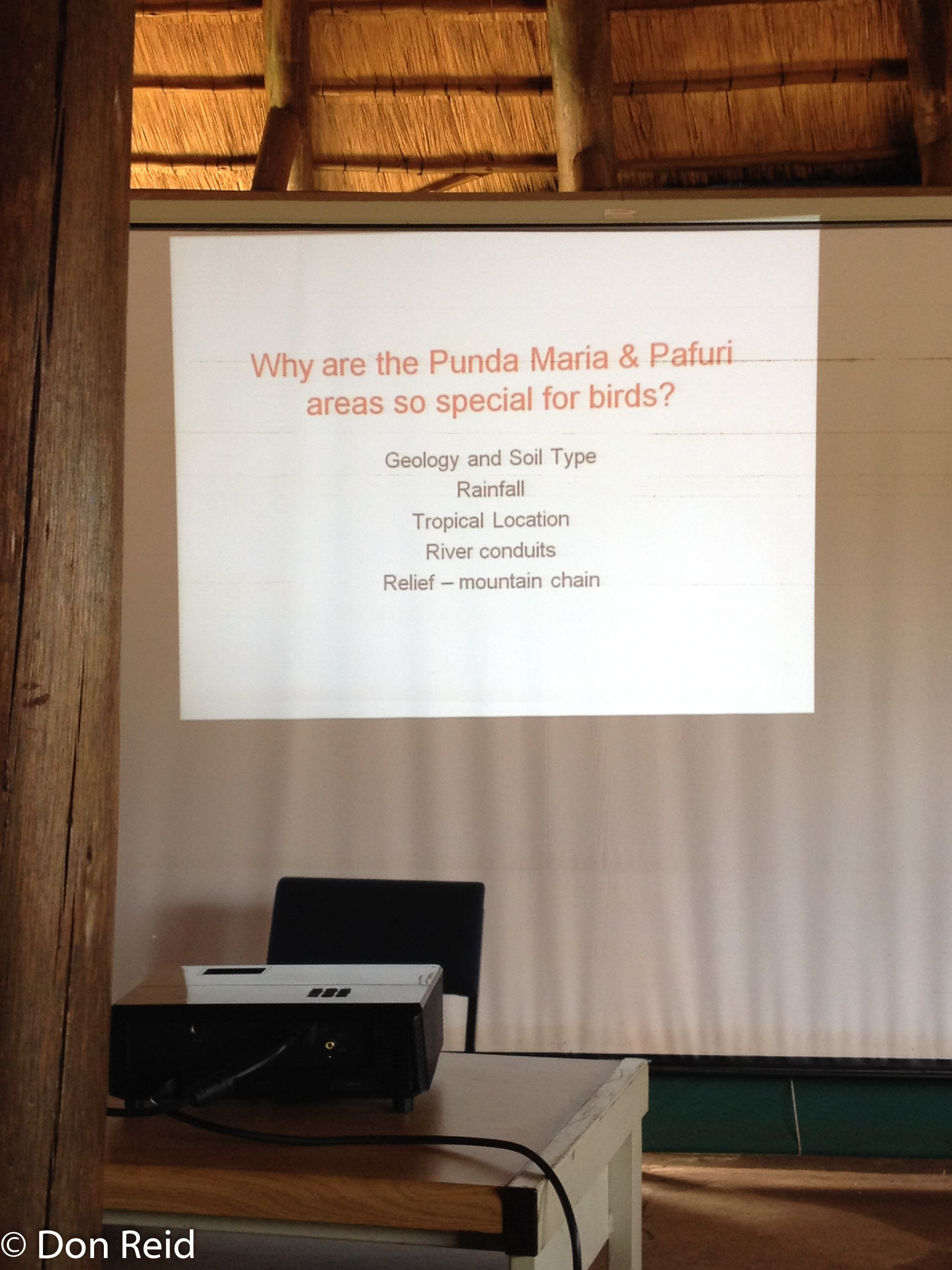
Next morning started with an introduction to the Pel’s Pursuit team and short talks by Witness on Community outreach programmes, Chris Patton on “Feathers of the North” – the special birds of the Northern Kruger and Tertius Gous on bird photography techniques, all of which were interesting and informative.
The facts
The rest of the day was at leisure so we decided to do a game and birding drive to Klopperfontein followed later by an afternoon drive around the Mahonie Loop.
The Park was very lush and green and the grass extra-long following the good rains in these parts – good to see but not conducive to easy game spotting. However our priority remained seeing as many bird species as possible, which is also affected by the lush landscapes as food is readily available at all levels of the food chain in these conditions. Nevertheless there were many highlights of the day’s drives, including :
2 sightings of the scarce Grey-headed Parrot and hearing their metallic-sounding calls where they had gathered in a large Baobab tree
Several sightings of Dusky Indigobird
Tropical Boubou calling not far from the camp
A couple of encounters with Crowned Hornbill
A glimpse of Arnot’s Chat in the Mopane woodland
Grey-hooded Kingfisher spotted twice
A lone African Cuckoo seen just before returning to camp
Driving the Mahonie Loop near Punda MariaHamerkop patiently waiting for prey – frogs etcLesser Spotted Eagle (Probable)Red-backed Shrike, Summer visitor to Southern Africa from Europe
Time to Pursue Pel’s
Friday morning saw us up at crack of dawn for a 5.30 am departure, only to find rain coming down heavily, which delayed our departure until 7 am in overcast weather. Our destination was the Levuvhu River and specifically some of the places along the river known for Pel’s Fishing Owl sightings. The drive was long and bumpy in parts, getting hotter and more humid as the clouds thinned out, until we reached a spot close to the river where our walk would begin.
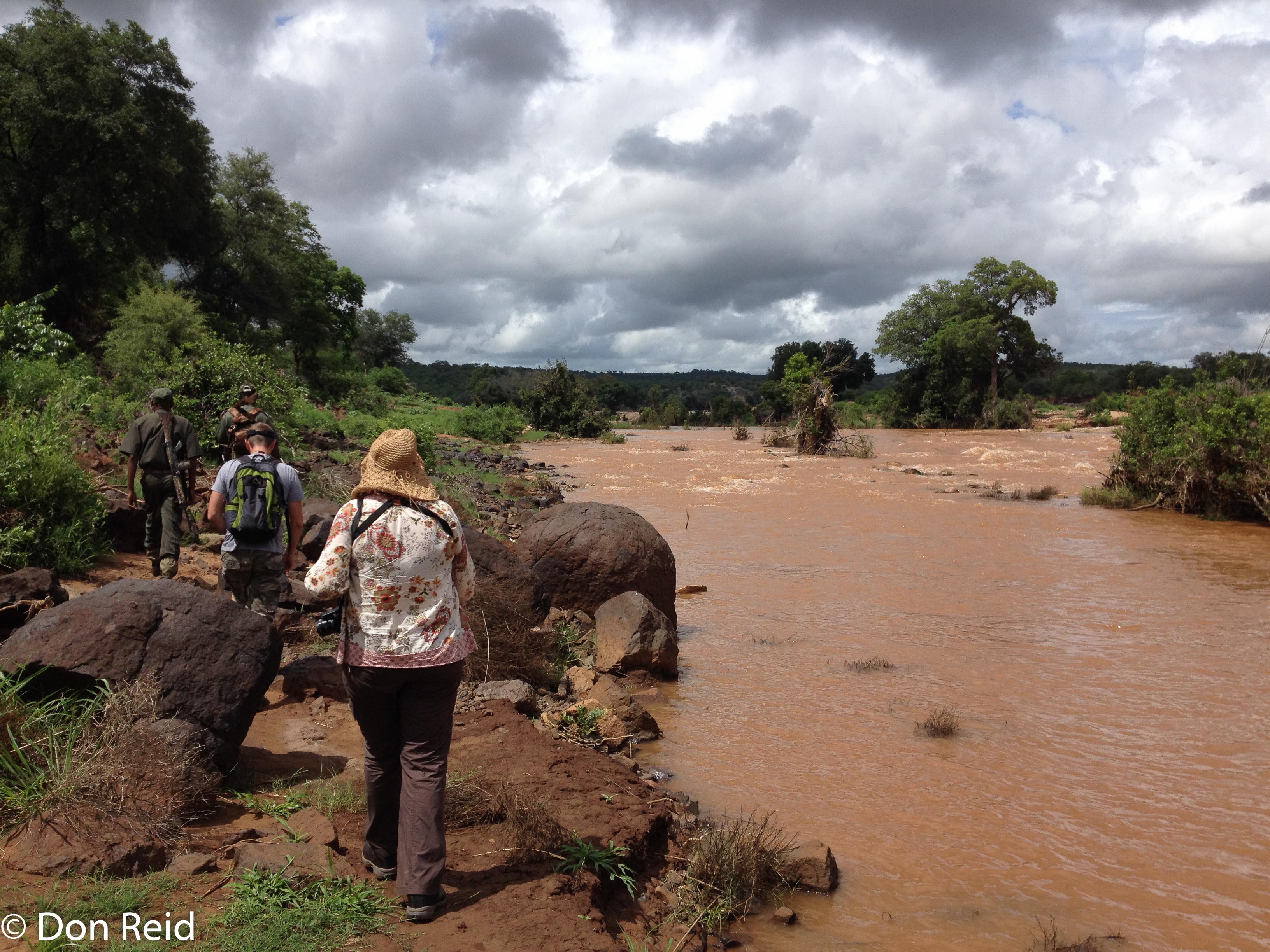
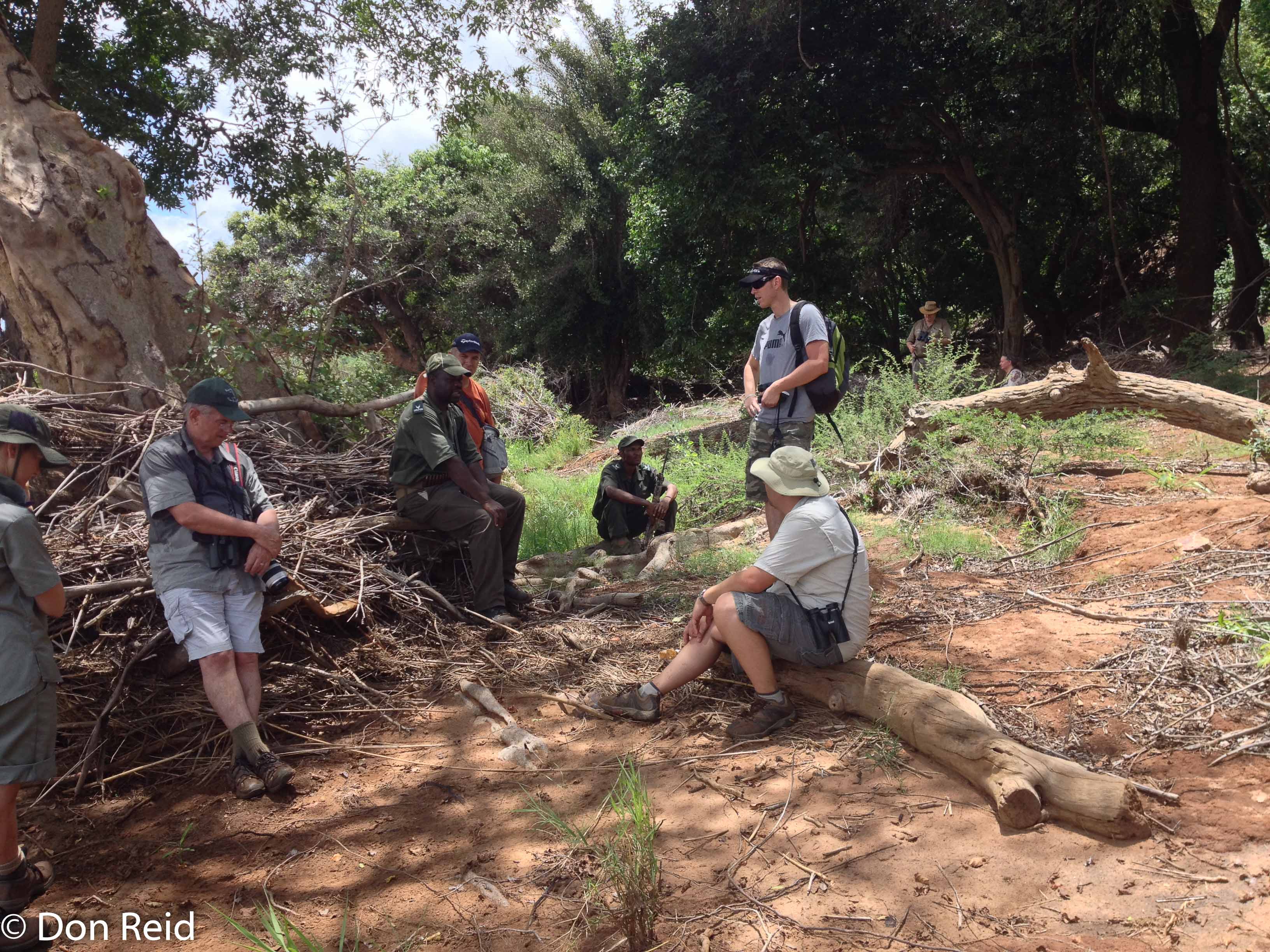
We set off on the walk, sticking close to the river bank where we could, diverting upwards and over koppies where the river bank petered out, sweating profusely in the oppressive heat and extreme humidity, without any sign of the Pel’s. I was atlasing as we went, relying on our ranger David’s skills at ID-ing calls when they were unfamiliar to me. Some of our group were already struggling in the hot, uncomfortable conditions, so regular stops were made for refreshments and water. All in all, we did close to 4 hours walking, which in these conditions really tested our fitness levels – thank goodness for the beautiful, dense riverine forest in places, which provided some relief from the unrelenting sun.
Fish-Eagle and Martial Eagle eye each otherThe walkLuvuvhu River flowing stronglyThe long walk in hot humid conditions tapped our energy
The birding was good with some memorable sightings :
White-throated Robin calling in the dense bush
Meve’s Starling showing nicely in the tops of trees
Good sightings of Grey-hooded Kingfisher again
Colourful Collared Sunbirds in the canopy of the Riverine forest
Tropical Boubou in the canopy
Black-throated Wattle-Eye responding to taped calls
African Harrier-Hawk circling and jousting above the river
African Harrier-Hawk cruising above the Luvuvhu RiverBrown Snake-Eagle
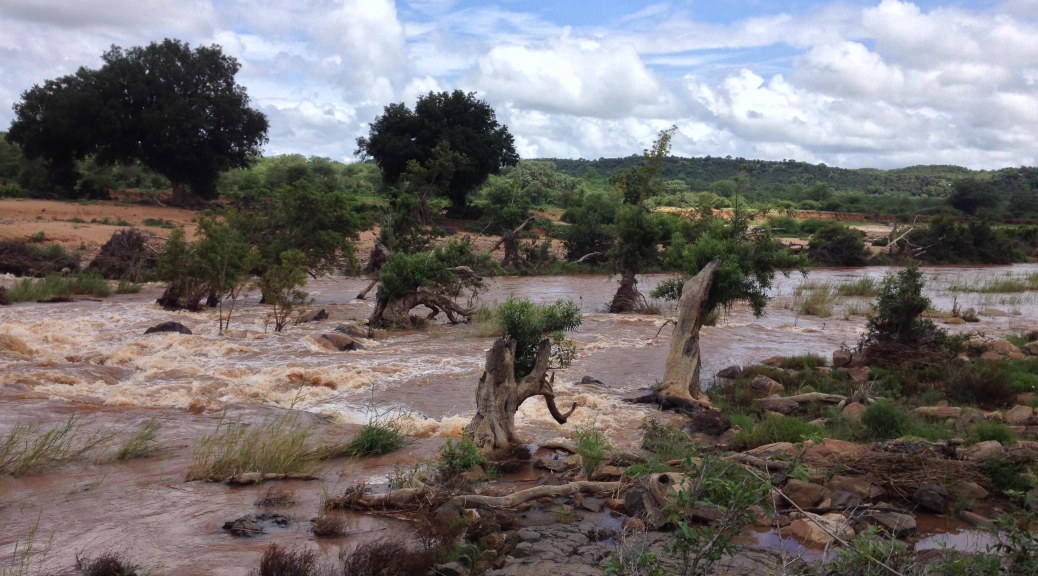
The river was flowing fast from the rains and was a caramel colour from the stirred-up mud and silt.
The drive back to the camp was a relief for all, as we enjoyed ice-cold drinks to lessen the heat strain from the long walk. Rain started falling which brought further relief, with no complaints about getting a bit wet in the open sided vehicle.
A pity that we did not encounter the Pel’s Fishing Owl after all the effort put in – that’s how it goes with birding – nothing is guaranteed, but fortunately there is always the probability of a next time to try again.
The Birding Weekend Starts
With the Pel’s Pursuit event done and dusted, it was time to meet the rest of the participants for the “Birding Weekend” starting with a relaxed late afternoon drive, during which several species were added to our weekend list, including a European Nightjar, followed by a braai to close out the day.
Next morning, Saturday, was a complete contrast from the hot and humid conditions of Friday – we awoke to rain at 2h30 (early starts are the order of the day with these events) and were ready to leave camp by 3h15 in the relentless rain, which accompanied us all the way to the Pafuri area an hour and a quarter later. The last stretch was particularly heavy and we were all quite damp by this time, only partly protected from the weather by the leaky canvas top and sides of the safari truck.
We parked and waited under the largest tree near the bridge over the Luvuvhu River for another hour in pitch darkness, wondering what had brought us to this place at this hour in these conditions – the simple answer is a passion for birding.
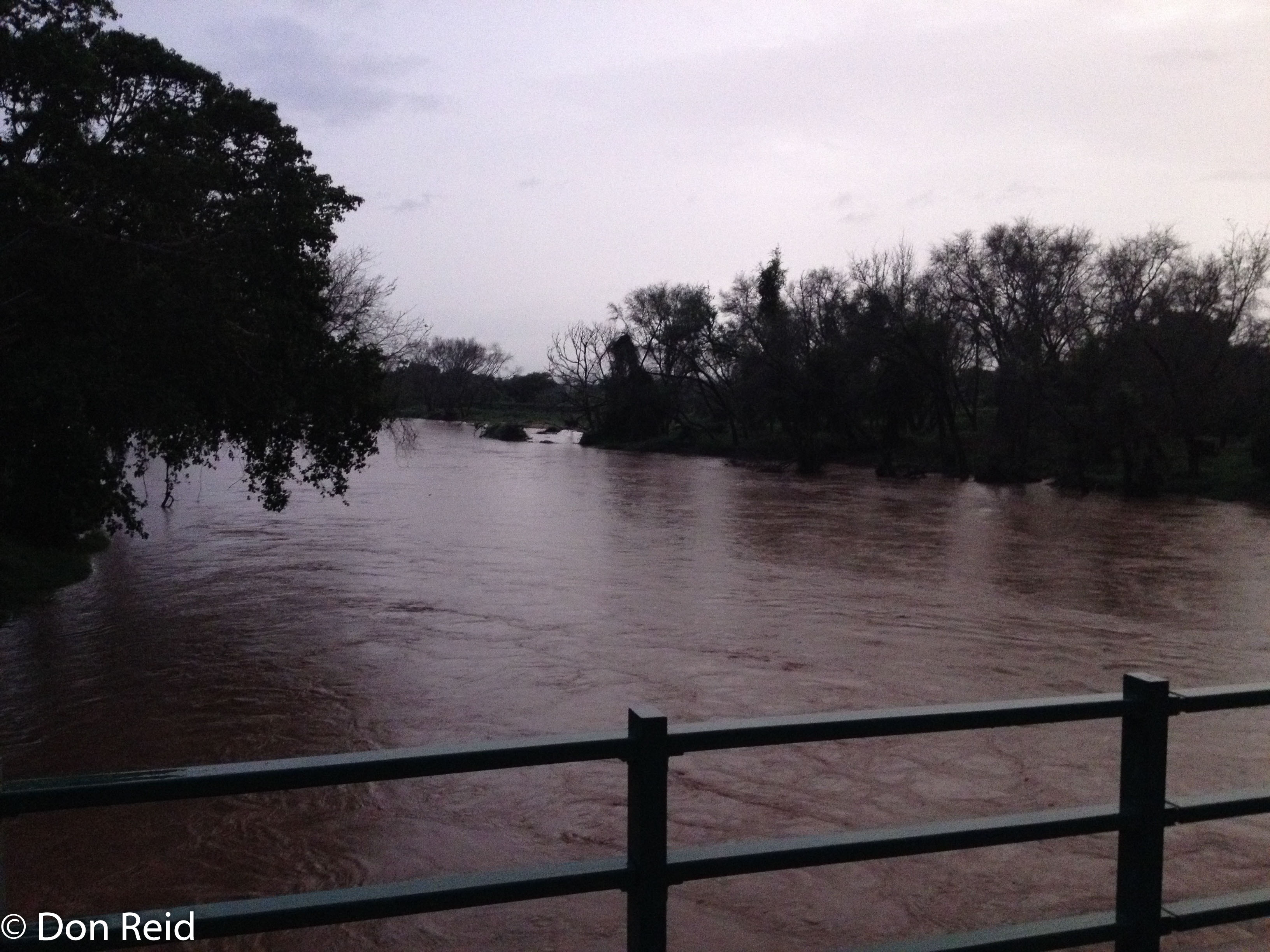
Once dawn broke, we could see how strongly the river was flowing – an impressive and slightly worrying sight, knowing the extent of previous flooding.
Dawn on Luvuvhu River after heavy rain
We spent some time on the bridge, checking the bird life as best we could and making an impromptu cup of coffee to raise the spirits (ours not others) then made our way slowly to Pafuri Picnic spot, fording the deep pools of water that had formed in the dirt road.
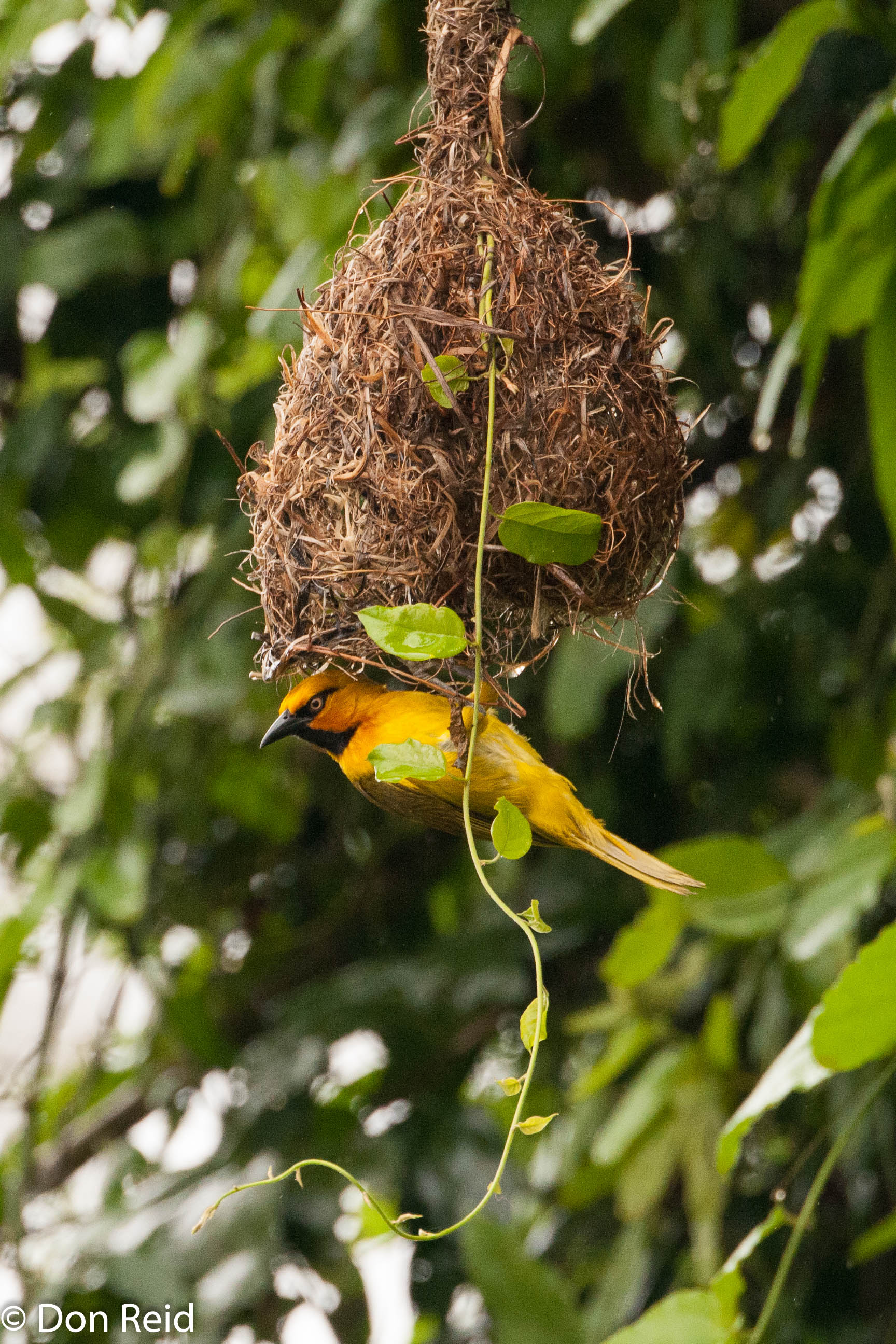
Spectacled Weaver at his nest over the Levuvhu RiverWhite-fronted Bee-Eater
Highlights of the Pafuri area were :
Eurasian Hobby perched high in a tree
Yellow White-Eyes moving about busily
Greenshank working a large puddle in the road
Pytilias and Firefinches in the lower stratum
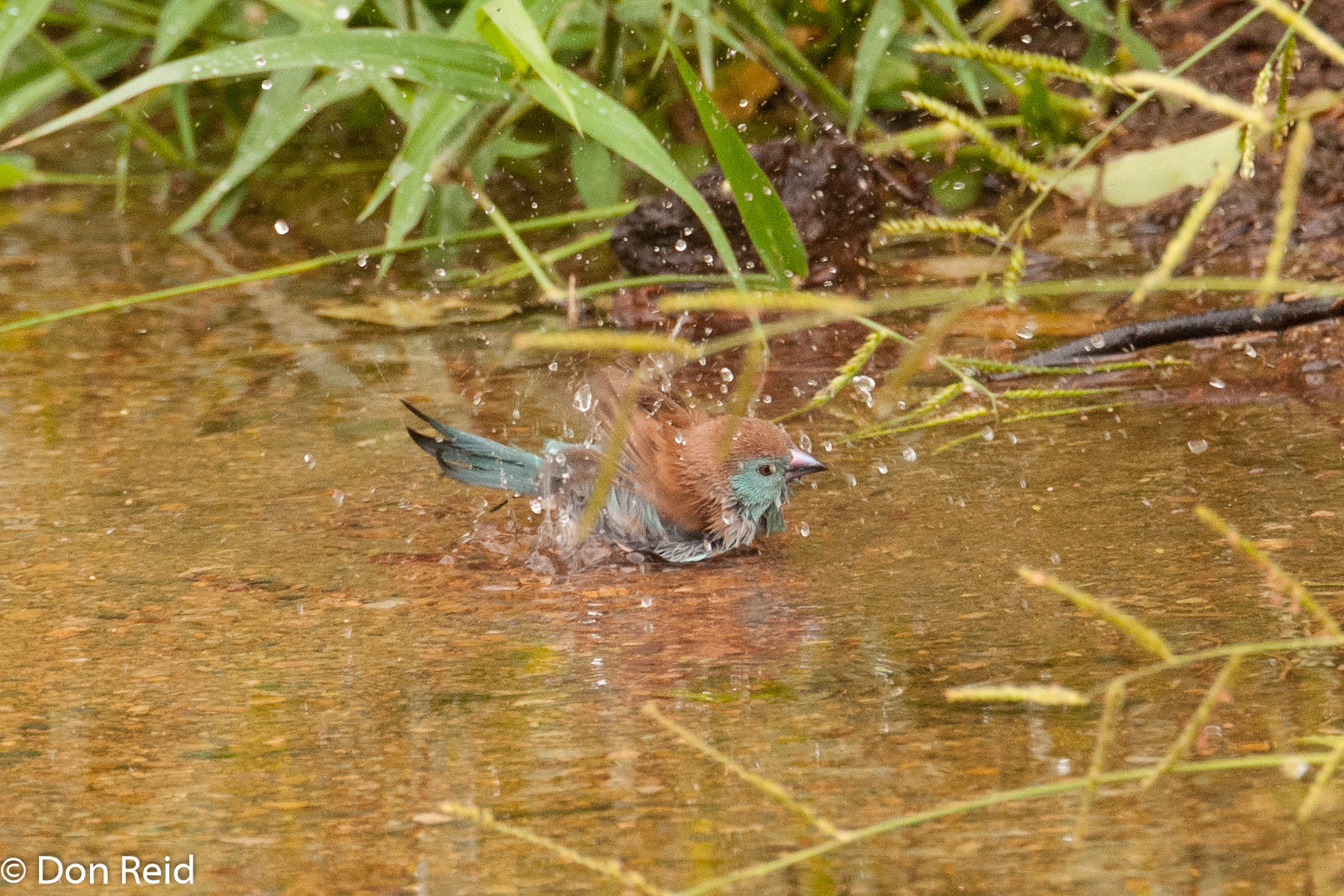
Green-winged Pytilia – fairly common in the Pafuri areaBlue Waxbill bathingNatal Spurfowl
From the picnic spot it was a short but wet drive to Crook’s Corner where the Limpopo was flowing powerfully, evidenced by the large tree stumps being carried along swiftly by the swollen river. We spent time there enjoying several Bee-Eaters (Blue-cheeked-, White-fronted- and Little) as well as the many birds frequenting the adjoining bush – Red-faced Cisticola looking indignant at being disturbed, Common Scimitarbill, Meve’s Starling, Village Indigobird and African Harrier-Hawk overhead.
Spider Alley
Our Ranger, Richard, then took us on the long drive to an area east of Babalala, by which time the rain had abated and our spirits were a lot higher. The lunch stop alongside a pan with Little Grebe and Red-billed Teal in residence, was made special by the knowledge that very few have the privilege of visiting this area, which is not open to the public.
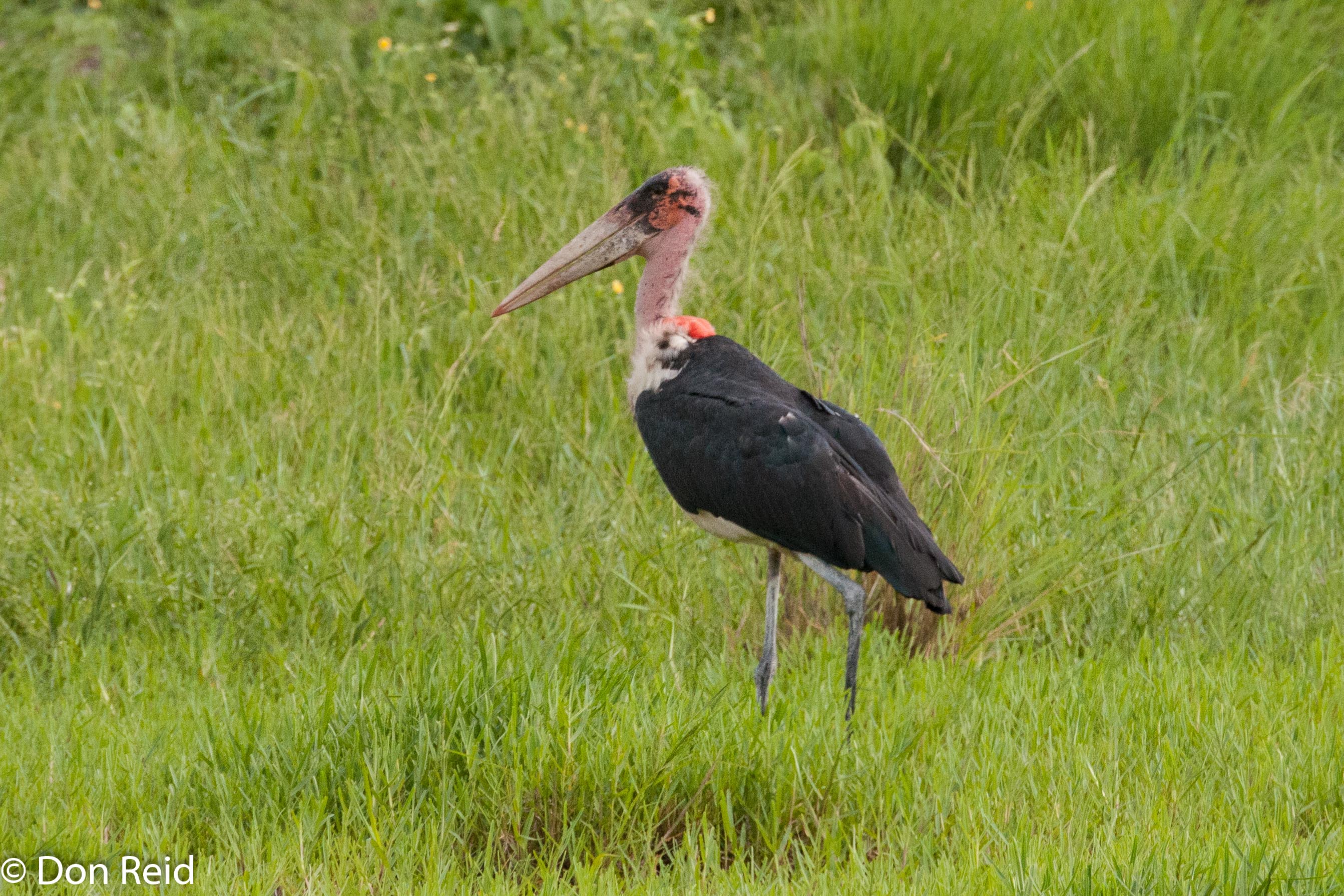
Nwambiya panRed-billed Teal, NwambiyaRichard capturing the beauty of the wild flowersMarabou Stork, KNPFawn-coloured Lark
On the way there we had some “fun” traversing a stretch which could easily be called “Golden Orb Alley” – a narrow track through the dense bush which is favoured by Golden Orb Spiders to span their webs across at regular intervals. Every few hundred metres the open safari vehicle drove right through one of these massive webs and the resident spider, caught by the canvas roof edge, would descend into the vehicle right in front of the driver and our bird expert in the passenger seat, who happened to have a “thing” about large spiders. This caused some pandemonium a few times in the front of the vehicle, but our Ranger calmly collected them as they were dangling and deposited each one outside the vehicle without even slowing down.
Driving along “Golden Orb Alley”
Soon after, we all had a turn at jumping around in our seats as swarms of thousands of “miggies” (midges) hit the open vehicle as we drove at about 40 km/h – one swarm in particular brought us to a standstill as we tumbled out of the vehicle trying to get them out of eyes, nose and ears and to brush them off our clothes, turning it into a chaotic couple of minutes. No wonder this event is billed as “extreme birding”!
However all this discomfort proved to be worthwhile when, travelling along the border with Mozambique, our guides found Rudd’s Apalis and Pink-throated Twinspot in quick succession – both much sought after birds.
Pink-throated Twinspot, Moz border KNP
Bull Elephant vs Richard
From there we headed west back to the main Kruger road to Punda Maria camp through pristine grassland, stopping to enjoy close up views of Elephants along the way, for which, it became evident, Richard had a particular respect. One lone Bull got a bit shirty (correct spelling) and showed some aggression to the metal intruder but Richard had his match, revving the engine and advancing slowly and we were happy to see the elephant back off with ears flapping.
African Elephant daring us to come closerAfrican Elephant – eyeing us
The evening braai was the chance to relax after a long day’s birding – G&T never tasted so good.
Sunday morning we returned to Pretoria with good memories of a superb weekend of birding one of the top spots in Southern Africa.
And just to round off this longish post…….
Stop me if you’ve heard this one
A joke my dad used to tell came back to me today – it is a gentle Scottish one told by a gentle Scottish man :
A Glaswegian named Jock, who is not feeling well, goes to see his doctor, one Dr McIntosh, who gives him a good check and prescribes some pills which he dispenses himself and hands to the patient with the instruction to “finish the course and bring me a urine sample in the same bottle”. Jock is a little puzzled by this request because he was complaining of a severe headache, but he follows the instruction and brings the urine sample when he next visits the doctor. The doctor has another look at him and prescribes further pills, with the same instruction to bring a urine sample in the same bottle.
When Jock visits Dr McIntosh a third time he is declared fit and well. Jock is curious and asks the doctor why he asked for urine samples when he didn’t seem to refer to them at all – Dr McIntosh replied in his broad Scottish accent “Well laddie, that way you get your bottles back!”



















































































 Mostly Birding