All posts by Don Reid

South African nature enthusiast with a passion for Birding, Photography and Travelling to interesting places to discover more about Southern Africa and the World

The Magic of Voëlvlei (After the Rains)

Voëlvlei

View of Voëlvlei after substantial rains (photo from whatsapp group)

Firstly, a few facts about this well-known birding spot near Mossel Bay – well-known if you are a birder that is, particularly one who has explored the birding delights of the southern Cape.

  • ‘Voëlvlei’ can be directly translated from Afrikaans as “Bird wetland (or pan)”, although no one would ever call it that in South Africa. ‘Voël’ is of course the Afrikaans term for ‘Bird’ and ‘Vlei’ is a widely used term for any shallow body of water such as a seasonal wetland, shallow pan or marshy depression where water collects during the wet season.
  • The pan at Voëlvlei only retains water during very wet years, which can be anything from 7 to 15 years apart, so when the vlei has water it very quickly becomes a magnet for waterbirds and waders, followed closely by many a keen birder out to find a variety of birds, with a strong possibility of a rare migrant wader or two during the summer months.
  • Voëlvlei lies about 35km south-west of Mossel Bay and is on privately owned farming ground – the owners have generously allowed access to the vlei for birders as long as they behave in a respectful way.
Voëlvlei straddles three pentads
  • A track skirts the vlei on one side with entry possible from two farm gates at the northern and southern extremes (after entering or exiting it is good form to close the gate again).

My Atlasing Visits to Voëlvlei

SABAP2 Records

The table above shows all my atlasing records since my first visit in December 2015 – green indicates that it was a “Full Protocol” card, which requires a minimum of two hours of intensive atlasing, the grey is for “Ad hoc” cards.

The good (or bad news depending on your inclination) is that I still have my journal records of all of the “green” cards, so join me as I return to those journals and select some of the highlights of the visits. You can, of course, skip the words and just look at the pictures, but I believe my readers are made of sterner stuff than that and are not afraid to plough through the verbiage.

14 and 18 December 2015

My first visit was 10 years ago, long before we moved permanently to Mossel Bay…

I had long read about the vlei as being a top birding spot when conditions were right. With reports trickling through of favourable water levels after good winter and early summer rains, I stopped at Voëlvlei on my way back from atlasing Gouritsmond, to find that it indeed had plenty of water and what appeared to be thousands of birds.

I did a quick list of some of the obvious birds, without going through the gate into the vlei area itself. A few days later Gerda joined me for a late afternoon visit to the vlei, when we entered Voëlvlei proper and followed the track around the east flank, then returned along the same route. The atlasing protocol allows a maximum of five days for one ‘card’ so I could add to the short list I had started on the 14th.

Birding was excellent and plentiful, the only downside being the sun in the west which created a sharp glare, making it difficult to see the birds clearly. We added 36 species to the initial 10 taking the total to 46, including ..

  • Pied Avocet – notable for being a ‘Year bird’ for me (Birders are such nerds)
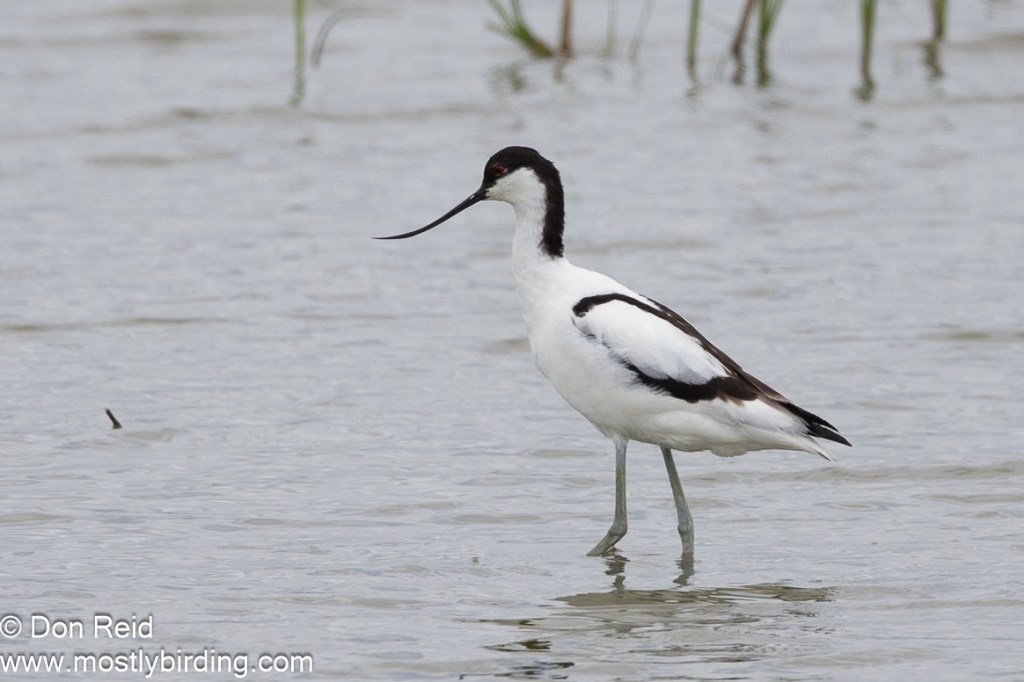
Pied Avocet Recurvirostra avosetta Bontelsie, Voëlvlei
  • Hundreds of Whiskered Terns
Whiskered Tern Chlidonias hybrida Witbaardsterretjie, Voëlvlei
  • Waders such as Little Stint, Black-winged Stilt, Wood Sandpiper, Three-banded Plover, African Spoonbill and Greenshank
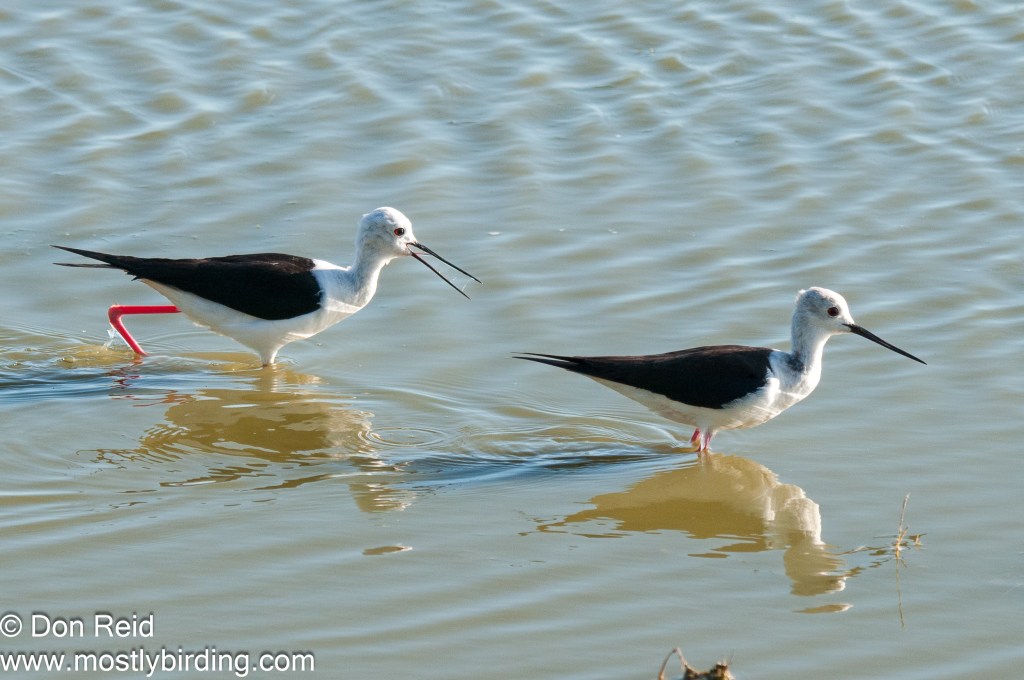
Black-winged Stilt Himantopus himantopus Rooipootelsie, Voëlvlei
Wood Sandpiper Tringa glareola Bosruiter, Voëlvlei
African Spoonbill Platelea alba Lepelaar, Voëlvlei
  • Swimmers – Yellow-billed Duck, Red-billed Teal, Cape Teal, Southern Pochard, Cape Shoveler and Great Crested Grebe
Southern Pochard (female) Netta erythrophthalma Bruineend, Voëlvlei
  • Booted Eagle soaring overhead
  • White Stork

This first visit was particularly memorable – little did I know it would be eight years before I would experience something similar at Voëlvlei…

I did atlas the pentad in the intervening years but did not include Voëlvlei itself as it had dried up completely

30th November and 2nd December 2023

Having moved to Mossel Bay in October 2023 and seeing the reports of increasing water and bird presence at Voëlvlei, I was keen to visit the spot and see for myself. Reports of rarities made it even more imperative so I set off on the last Thursday of November, the day in the week that I have tried to keep open for atlasing.

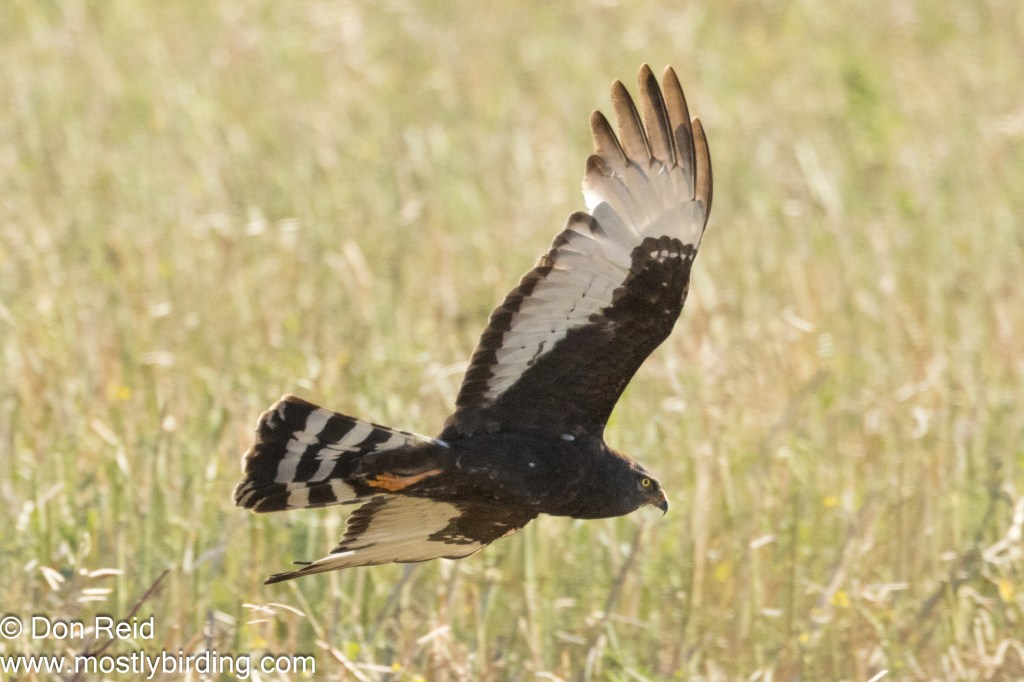
I started my pentad list along the road past Vleesbaai with a Black Harrier which I chased down the road to try and get level with it as it hunted low over the fields in true Harrier fashion, stopped quickly and rattled off a few shots – with limited success but lovely to see it in hunting mode.

Black Harrier Circus maurus Witkruisvleivalk, Vleesbaai area

Further on I took the turnoff to Voëlvlei and after passing through the gate I spent the next three hours carefully scanning the vlei from the track along the east flank, particularly the muddy margins which were teeming with birds.

The open waters towards the middle of the vlei as well as the surrounding dry land were equally busy with their particular species all enjoying a cornucopia of edible life.

Once again the waterbirds dominated my list …

  • Waders – Black-winged Stilt, Three-banded, Kittlitz’s and Common Ringed Plovers, Little Stint (lots), Ruff, Wood Sandpiper, Grey Plover, Pied Avocet, Greenshank, Blacksmith Lapwing, Grey Heron, African Spoonbill and Little Egret
Three-banded Plover Charadrius tricollaris Driebandstrandkiewiet, Voëlvlei
Kittlitz’s Plover Charadrius pecuarius Geelborsstrandkiewiet, Voëlvlei
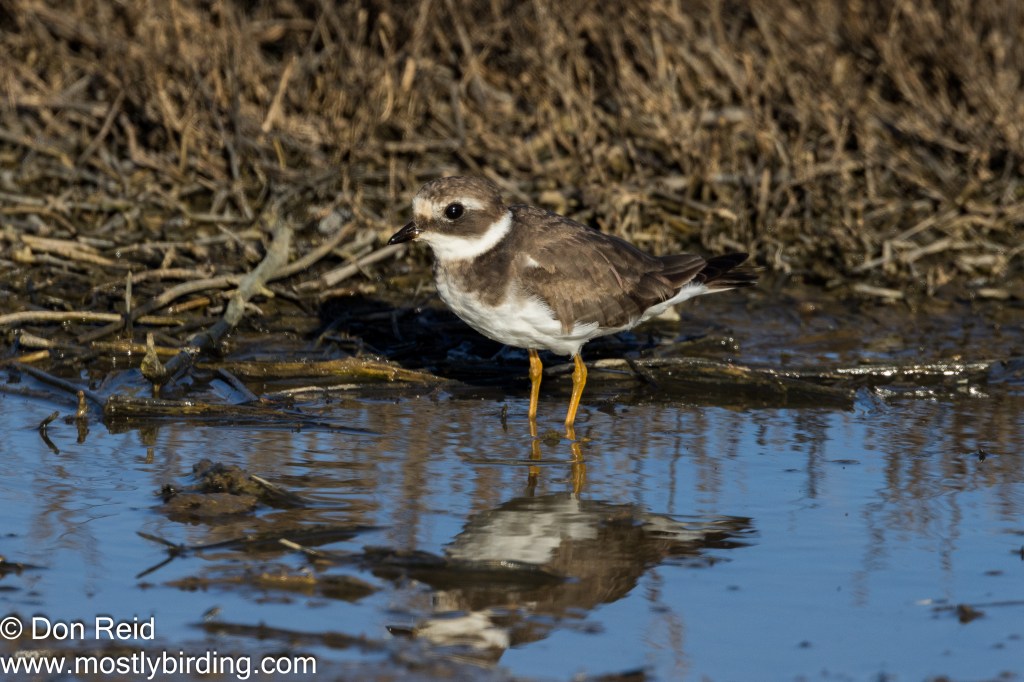
Common Ringed Plover Charadrius hiaticula Ringnekstrandkiewiet, Voëlvlei
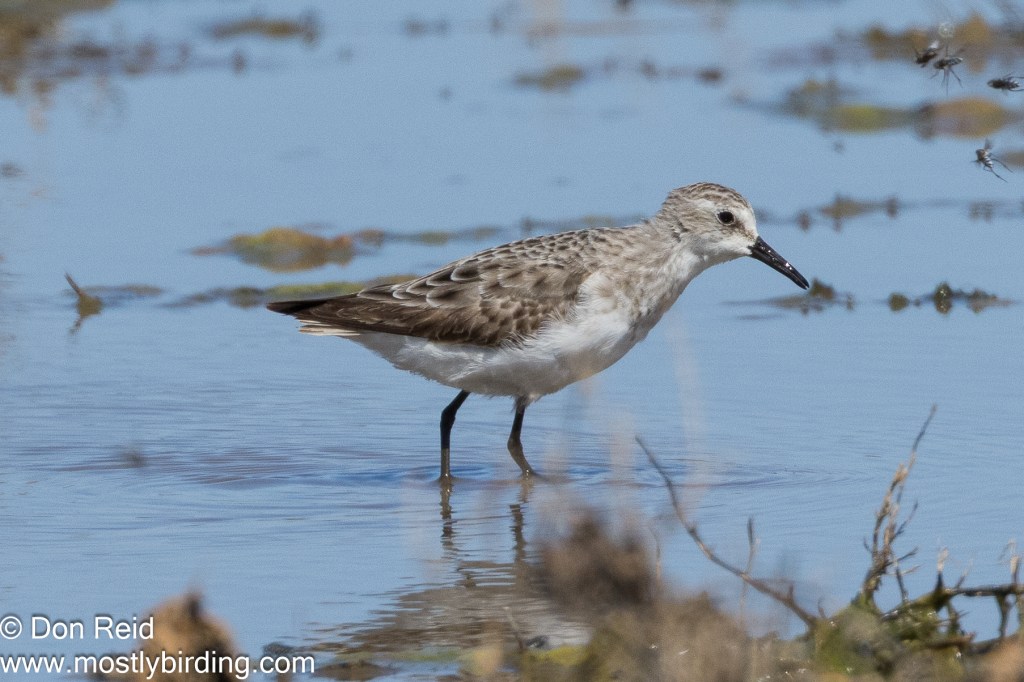
Little Stint Calidris minuta Kleinstrandloper, Voëlvlei
Ruff Philomachus pugnax Kemphaan, Voëlvlei
Grey Plover Pluvialis squatarola Grysstrandkiewiet, Voëlvlei
Pied Avocet Recurvirostra avosetta Bontelsie, Voëlvlei
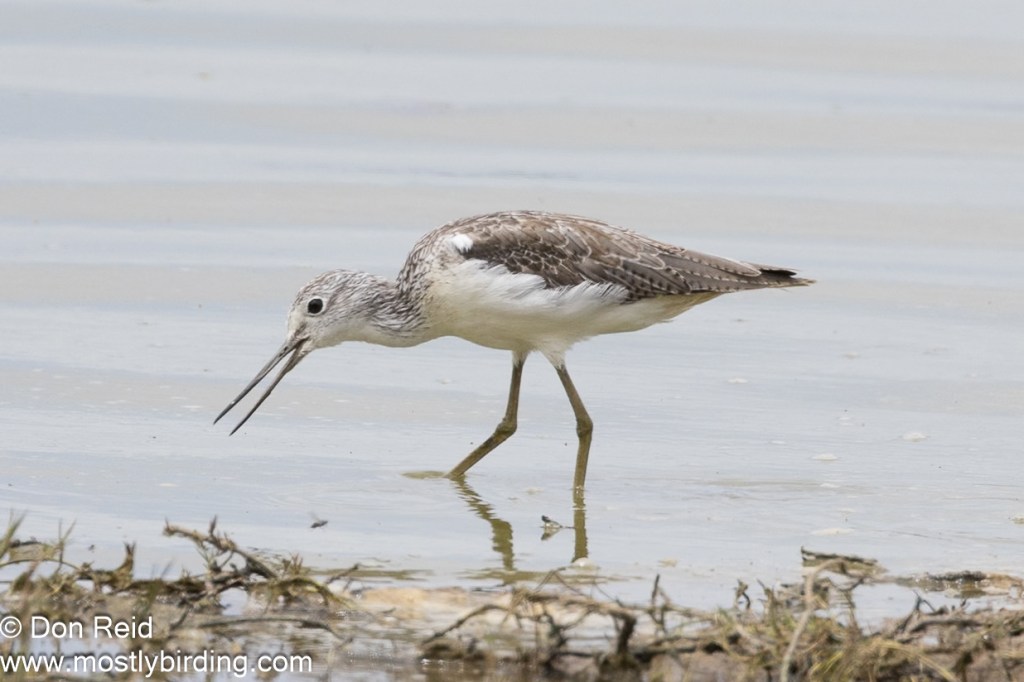
Common Greenshank Tringa nebularia Groenpootruiter, Voëlvlei
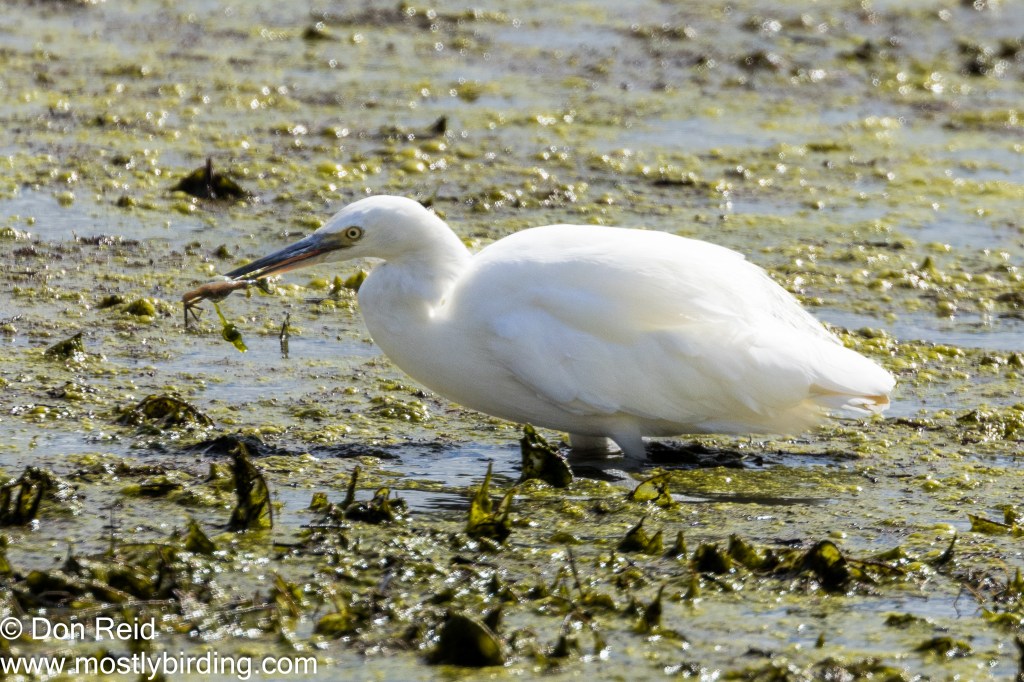
Little Egret Egretta garzetta Kleinwitreier, Voëlvlei
  • Swimmers – Red- billed Teal, Red-knobbed Coot, Grey-headed and Hartlaub’s Gull, Cape Shoveler, Little Grebe and South African Shelduck.
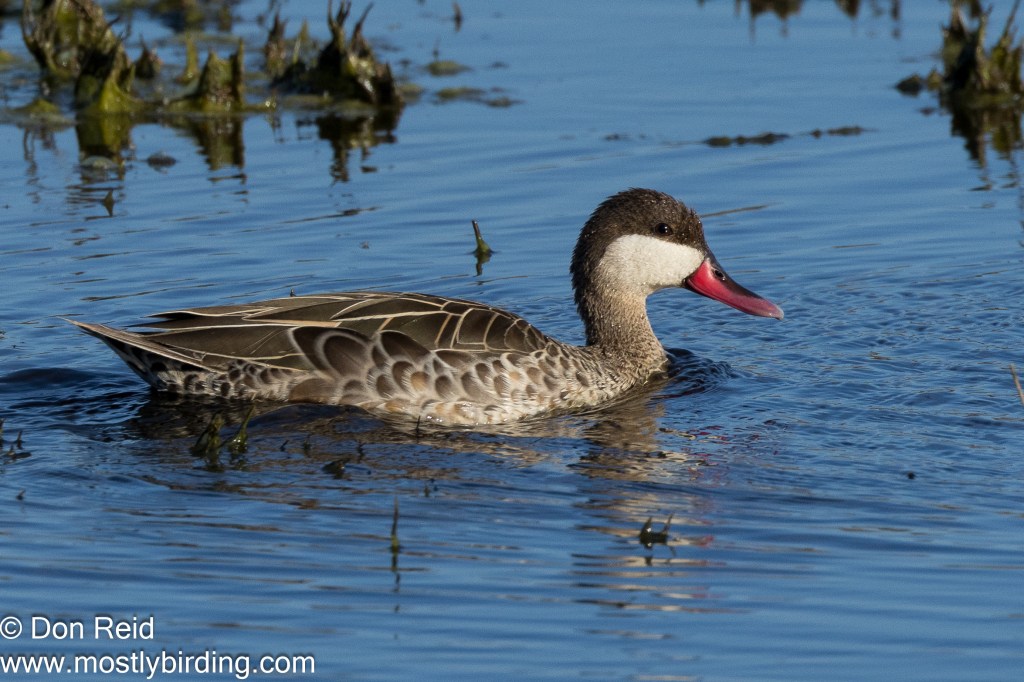
Red-billed Teal Anas erythrorhyncha Rooibekeend, Voëlvlei
Red-knobbed Coot Fulica cristata Bleshoender, Voëlvlei
Little Grebe Tachybaptus ruficollis Kleindobbertjie, Voëlvlei
  • Rarities – This visit was excellent preparation for the annual Birding Big Day just two days later when many of the same birds were recorded by our team. An added thrill was seeing two rarities which had been spotted by some of the keen birders already present –
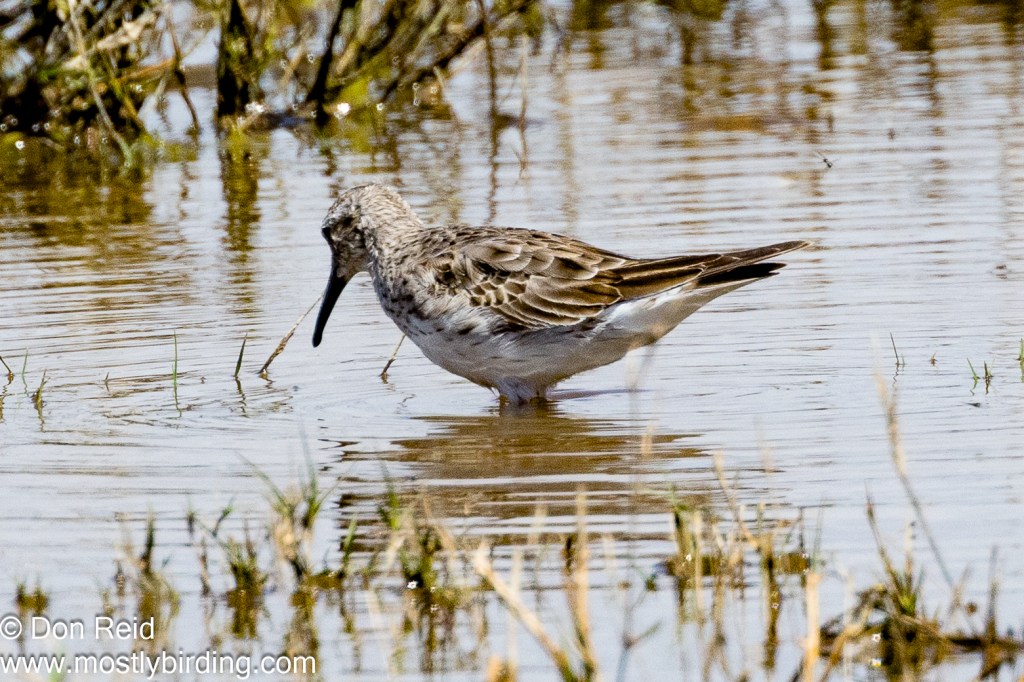
  • White-rumped Sandpiper – a low-slung, longish-winged sandpiper, difficult to distinguish among the many small waders except when close to the many Little Stints present

White-rumped Sandpiper Calidris fuscicollis Witrugstrandloper, Voëlvlei
  • Western Yellow Wagtail – courtesy of one of the other teams who had it in their scope view and allowed us a quick look but it was too far for photos

An added pleasure was seeing a large flock of Greater Flamingos on the far side of the water –

Greater Flamingos Phoenicopterus roseus Grootflamink, Voëlvlei

10th to 13th December 2023

With Voëlvlei still attracting a lot of attention from birders and with reports of another rarity – Buff-breasted Sandpiper – being seen there, I couldn’t resist another visit just a week later.

It was a Sunday and Gerda agreed to join me, so after a traditional Sunday lunch at a country restaurant on the way (meat and three veg with rice plus a pudding) for not much money, we headed to Voëlvlei and joined several vehicles and birders with the same idea.

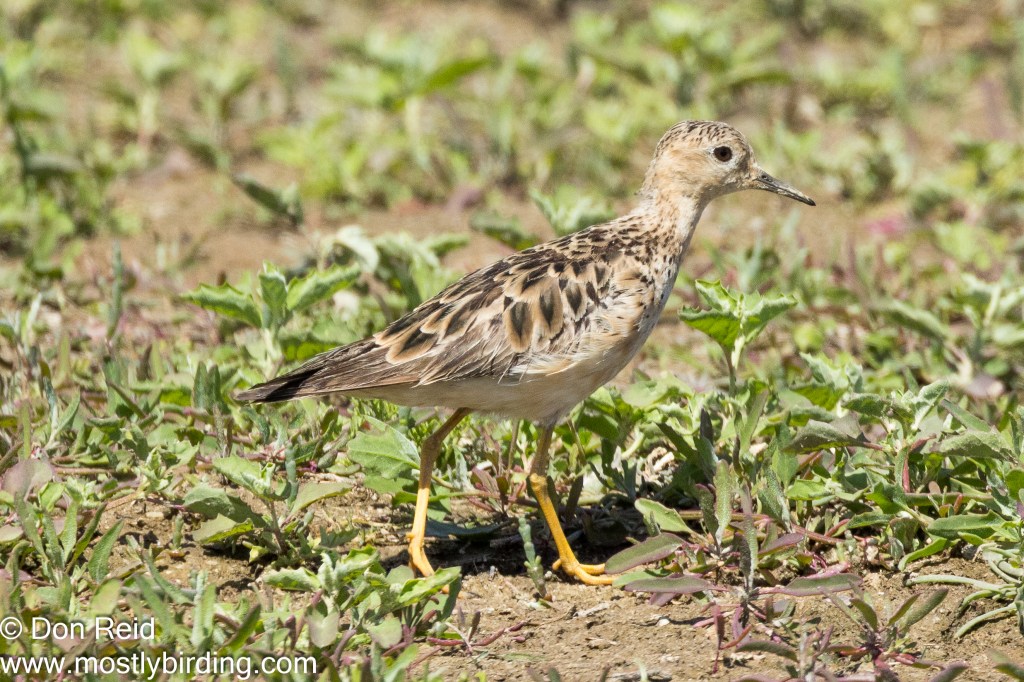
The Buff-breasted Sandpiper was quickly pointed out by those already present – on its own foraging in the dry, lightly grassed area away from the water – clearly a loner not interested in mingling with the many other waders in the vlei itself.

I spent a while scoping the sandpiper and taking photos of it from a distance, while recording all the other species present as they came into view.

We headed home with 34 species recorded. Feeling that the list needed boosting, I decided to include Voëlvlei in my next atlasing session on the following Wednesday, which would fall in the allowed 5 days for a “Full Protocol” card.

I arrived at the vlei mid-morning and spent three more enjoyable hours viewing the multitude of birds, adding a further 16 species to take my total to a nice round 50 for the pentad.

The White- rumped Sandpiper was still present and I spent some time trying to get better photos of this rarity – with limited success. It was difficult to get close enough to the bird, which remained among short grass tufts in the shallows of the vlei, intermingling with other waders and probing the mud constantly so that it was nigh on impossible to isolate it for a decent photo.

  • Waders – Black-winged Stilt, Kittlitz’s and Common Ringed Plovers, Little Stint (lots), Ruff, Pied Avocet, Blacksmith Lapwing, Grey Heron, African Spoonbill, Little Egret, Cattle Egret, Glossy Ibis and Sacred Ibis
Kittlitz’s Plover Charadrius pecuarius Geelborsstrandkiewiet (Juvenile), Voëlvlei
  • Rarities – Buff-breasted Sandpiper, White-rumped Sandpiper
Buff-breasted Sandpiper Tryngites subruficollis Taanborsstrandloper, Voëlvlei
  • Swimmers – Red-knobbed Coot, Red-billed Teal, Cape Teal, Cape Shoveler, South African Shelduck
  • Others – Brown-throated Martin, Barn Swallow, Large-billed Lark, Red-capped Lark, Agulhas Long-billed Lark, Grey-backed Cisticola, Blue Crane, African Pipit, Capped Wheatear
Capped Wheatear Oenanthe pileata Hoëveldskaapwagter, Voëlvlei
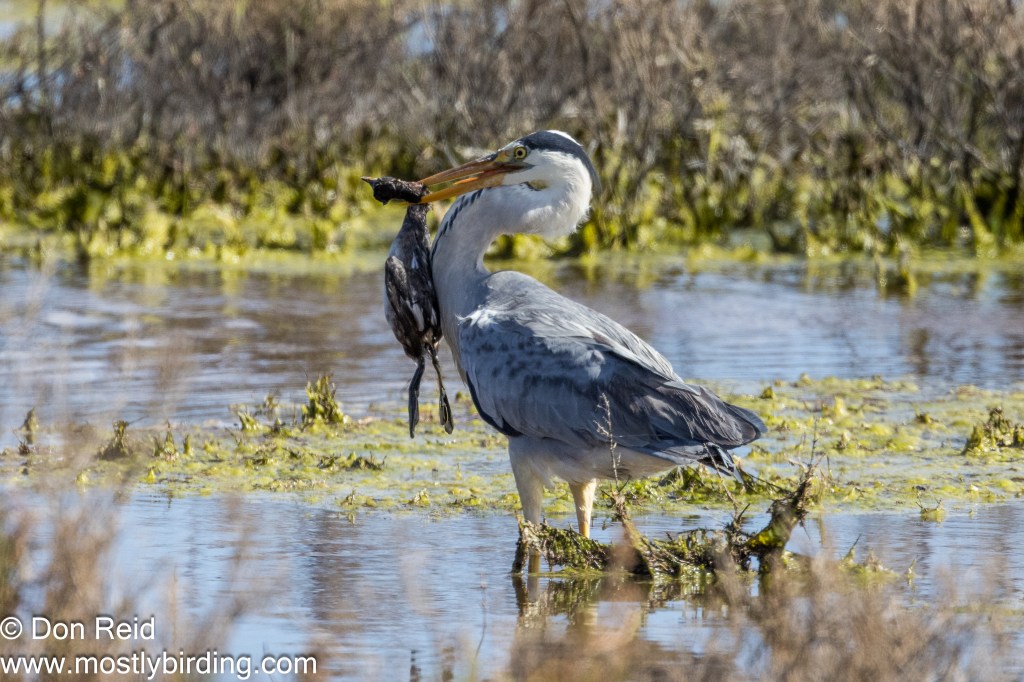
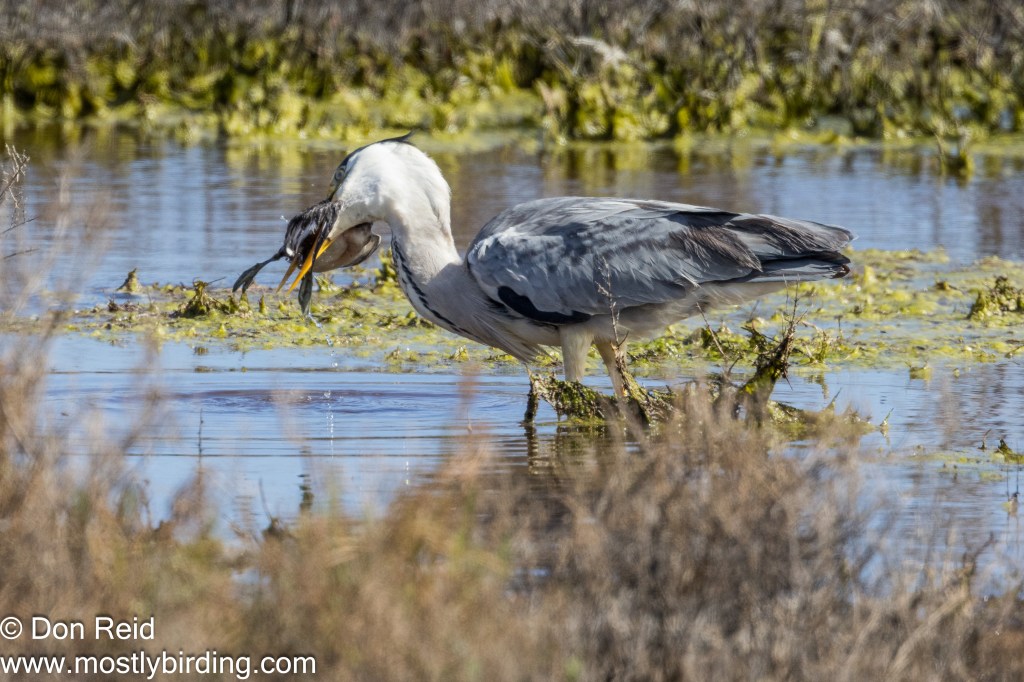
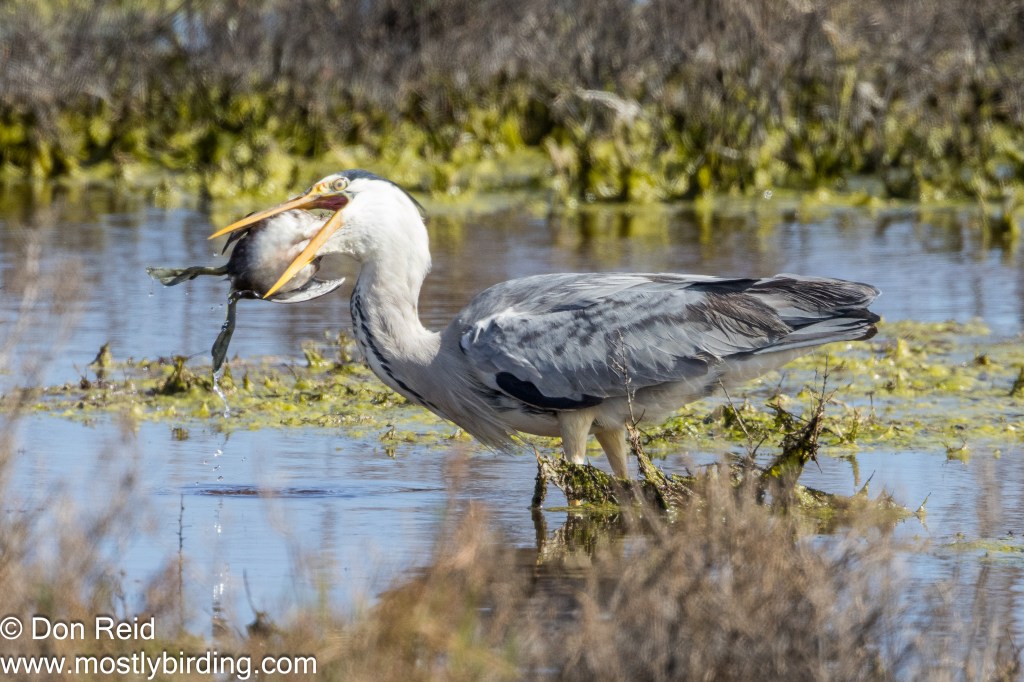
  • Most Surprising Sighting? – most certainly seeing a Grey Heron with what looked like a Reed Cormorant (possibly a juvenile) in its bill, which it proceeded to manoeuvre into position and swallow whole! I wasn’t able to capture the final swallow as the Heron moved behind some reeds.
Grey Heron Ardea cinerea Bloureier, (with Reed Cormorant prey) Voëlvlei

February 2024

The vlei remained partly inundated during the most of 2024, with water levels gradually decreasing as inflow dried up.

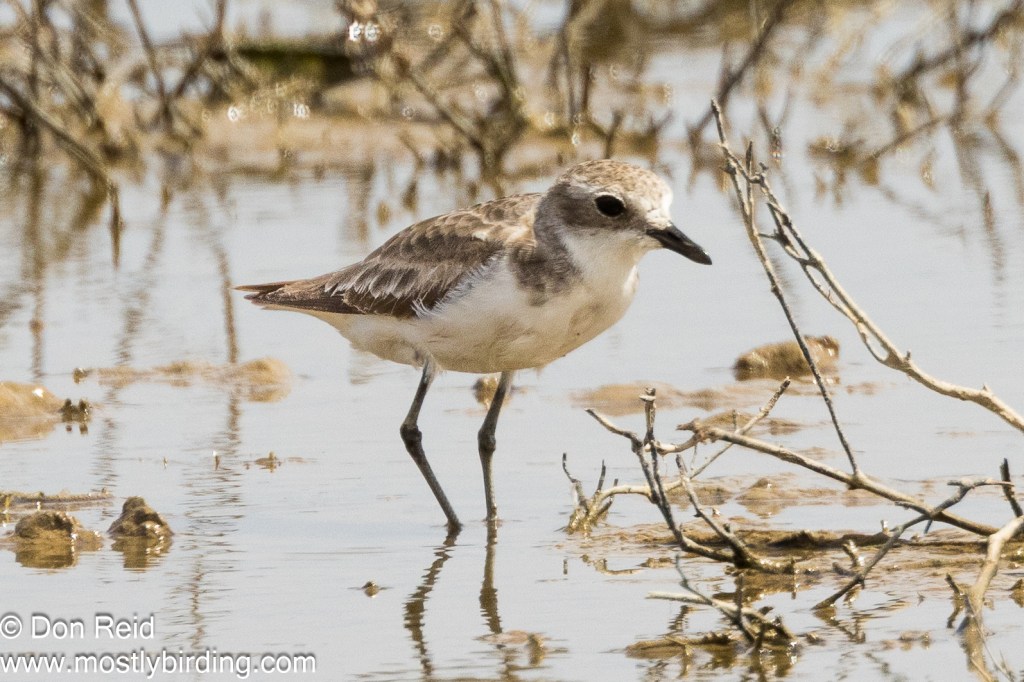
During February reports appeared on the local birding groups of a Greater Sand Plover at Voëlvlei – I had seen this species before but just once, so at the end of my next atlasing trip I took a detour to the vlei to see if I could find it.

At Voëlvlei I was able to find and photograph the Greater Sand Plover without too much effort and to record numbers of other waders which were still plentiful.

Greater Sand Plover Charadrius leschenaultii Grootstrandkiewiet, Voëlvlei

Thereafter the vlei gradually dried up, leaving ever wider margins. This did not come as a surprise for those living in the Southern Cape as it has been a particularly dry year for the area.

The photo below was taken in July this year, with just the northern section having any water – a couple of weeks after this photo the vlei was bone dry.

That just raises the question that is impossible to answer – when will Voëlvlei have water again? If average statistics are anything to go by it may be 7 or more years before that happens, a sobering thought at my age, I have to say, but I am thankful to have enjoyed two bountiful birding seasons during the last 10 years.

Atlasing Tales 12 – North and South, Winter and Spring

These tales record some of the more memorable experiences while atlasing – in this case two atlasing outings 4 months apart in time and 1250 kms apart in distance –

And in case you’ve forgotten or have not heard of Atlasing, there’s a brief synopsis at the end of the post

North in Winter

One of my last atlasing trips in Gauteng, before our move to Mossel Bay in October 2023, was a mid-winter outing to the farming area about 30kms south-east of Pretoria, not far from the town of Bapsfontein.

Good friend Koos, also an avid atlaser, had suggested the outing and he picked me up around 6.15 am with 40 minutes to go before sunrise. We headed east along Lynnwood road extension, which was already busy with Saturday morning commuters and keen cyclists heading out along their favourite route.

At the T-junction with the R25, we turned southwards towards Bapsfontein, then east again at the Witpoort road. The road changed to gravel and heavy mist enveloped the car, slowing our progress considerably until we reached the northern boundary of our target Pentad

Pentad 2600_2830

A side road signposted “Knoppiesdam“ invited exploration and after turning off we came to a ‘gate’ – one of those unique rural designs consisting of strands of barbed wire attached to thin poles each side, one side fixed, the other side secured by loops of strong wire (known in Afrikaans as ‘bloudraad’ or “bluewire”) which allow the gate to be detached and secured as needed. The ‘gate’ has no frame so you have to pull it over to the side and lay it flat on the ground while the vehicle drives through, then attach it again before moving on.

While I was opening the gate to let Koos drive through and closing it again, an Ostrich (of the farm variety, so not recorded) approached and started doing a mating dance of sorts – this is not the first time I have experienced this when stopping near Ostriches – Koos reckoned it was my woollen beanie that caused the unwanted attention this time around!

A short distance after the gate we came to the dam where we found a group of fishermen setting up for the day and a substantial body of water largely hidden by the heavy morning mist.

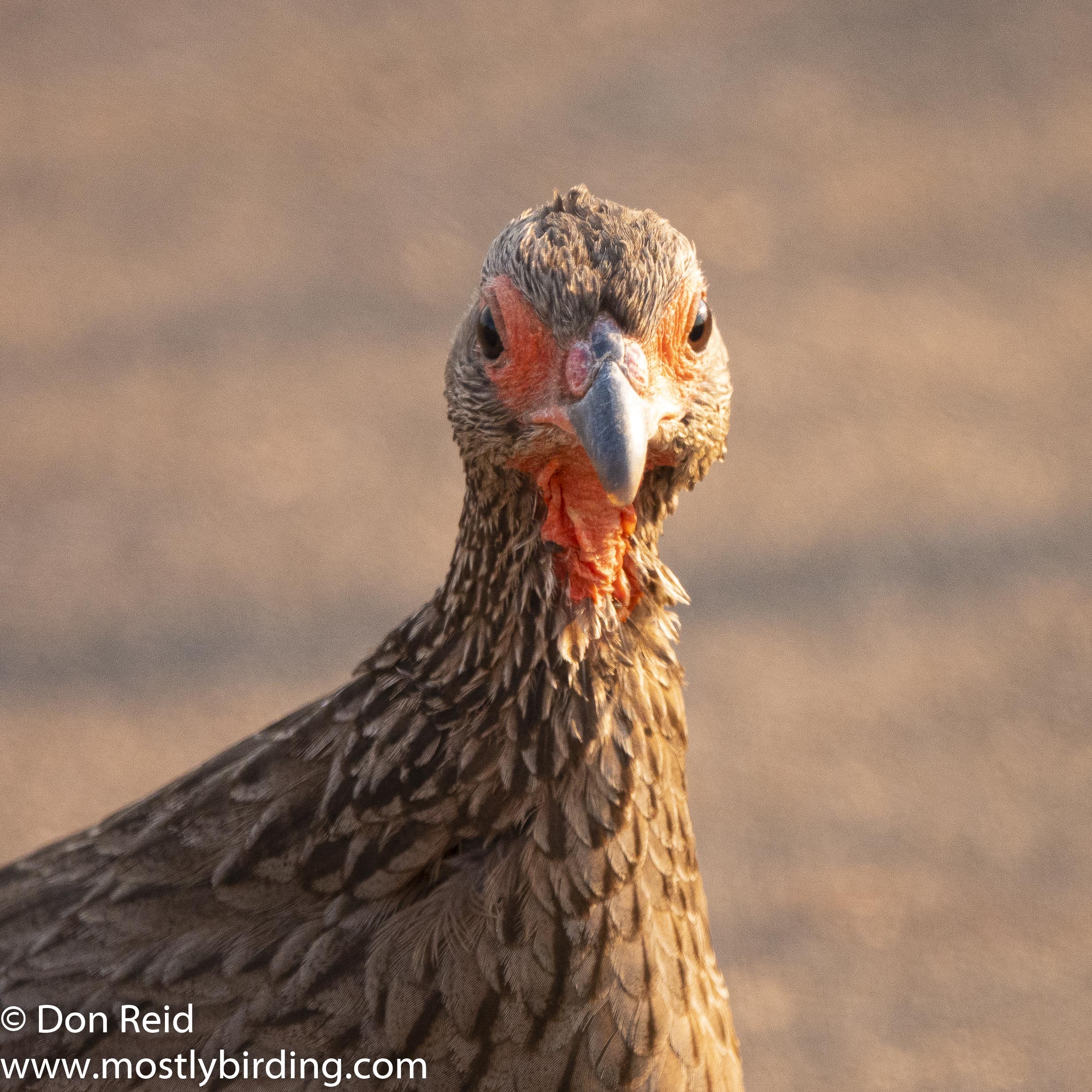
As usual the first birds listed were those calling in the early morning, some visible others not – Swainson’s Spurfowl has a particularly raucous call that carries a long way in the relative peace and quiet of the countryside and was my first record of the day. That was followed quickly by several other species – Kurrichane Thrush, Red-eyed and Laughing Dove, good old Hadada Ibis and a few others.

Swainson’s Spurfowl Pternistis swainsonii Bosveldfisant), (taken in Kruger Park)

We lingered and listened intently while walking the shoreline of the dam as the mist slowly dissipated, revealing a few Red-knobbed Coots and Common Moorhen as well as a Little Grebe.

Little Grebe Tachybaptus ruficollis Kleindobbertjie

As we headed to the car Koos spotted a pair of large birds flying overhead but away from us – clearly Flamingoes! But which species – Greater or Lesser ? Fortunately they changed direction while still visible and gave us a view of their large bills, which were light coloured compared to the dark colour of the Lesser Flamingo, confirming that they were indeed Greater Flamingoes.

On the way back to the main road, more fine spotting from Koos produced two Little Bee-eaters high up in the trees.

Little Bee-eater Merops pusillus Kleinbyvreter, (taken in Kruger Park)

Back on the main road, the habitat of open fields with short grass and stones prompted me to comment that ‘this is Wheatear territory’ – my words were barely cold when the first Capped Wheatear was spotted, along with Red-capped Lark, Crowned Lapwing, Wattled Lapwing and African Pipit – all species that share a fondness for this habitat.

Capped Wheatear Oenanthe pileata Hoëveldskaapwagter

The road left the pentad so we headed quickly southwards to join up with the R50 Delmas road which took us back to the pentad. The R50 is a busy road with heavy trucks that rumble back and forward constantly, making it awkward, even dangerous to try and pull off onto the verge to check for birds. At the first opportunity we turned off onto a gravel side road to escape the traffic and were soon back into a more relaxed atlasing mode.

Long-tailed Widowbirds (almost unrecognisable in their drab winter non-breeding plumage) were next up – the males lose their long tails and most of their black colouring (summer plumage shown in the first photo below), but retain their colourful ‘epaulettes’ to differentiate them from the all-brown females (the second photo below)

Long-tailed Widowbird Euplectes progne Langstertflap – male in full breeding plumage
Long-tailed Widowbird Euplectes progne Langstertflap – female

White-winged Widowbirds (equally drab females and non-breeding males) were encountered .

White-winged Widowbird Euplectes albonotatus Witvlerkflap (Female)

Just after finding a Namaqua Dove, always a pleasing species to encounter, we saw a large dam some distance from the road and found a track leading to it. Hoping that we were not intruding on someone’s farm we headed a short distance down the track to the dam only to find that a few large trees had been chosen as a roost by numbers of Black-headed Herons. We watched their comings and goings for a while and picked up a few other species before heading back to the road.

Black-headed Herons at heronry, Bapsfontein Area
Black-headed Heron Ardea melanocephala Swartkopreier

Smaller roadside pans and dams that we stopped at further along the road held a few species such as Reed Cormorant, Malachite Kingfisher, African Snipe and Lesser Swamp Warbler, to close out the morning’s atlasing with a total of 39 species recorded in the pentad

African Snipe Gallinago nigripennis Afrikaanse snip

South in Spring

For my first atlasing trip proper since arriving in Mossel Bay permanently, I chose a pentad in the area between the Oudtshoorn and Herbertsdale roads.

Pentad 3405_2155

Bang on 6am I stopped in lovely rolling country with a few small farm dams and with many birds calling and I spent the next half hour listing those I could identify along with some that showed themselves.

Most prominent were the first of dozens of Common Quail that I was to hear (and encounter as described below) throughout the morning, along with Cape Spurfowl, Little Rush Warbler calling from the reeds of one of the dams and Common Moorhen.

Cape Spurfowl Pternistis capensis Kaapse Fisant

I could pick out Blue Cranes in a distant field – a common bird in the southern Cape but always a pleasure to see.

Blue Crane Anthopoides paradiseus Bloukraanvoel

Knysna Warbler calling from dense bush – I didn’t bother to try and see it as it hardly ever shows – was species number 22 after as many minutes of atlasing, after which the pace slowed somewhat, nevertheless I kept adding new species regularly.

Moving on from my first stop, the habitat changed from farming land to short grassveld, which produced three Larks in quick succession – Long-billed Lark, Large billed Lark and Cape Clapper Lark, the latter calling and displaying beautifully.

Large-billed Lark Galerida magnirostris Dikbeklewerik

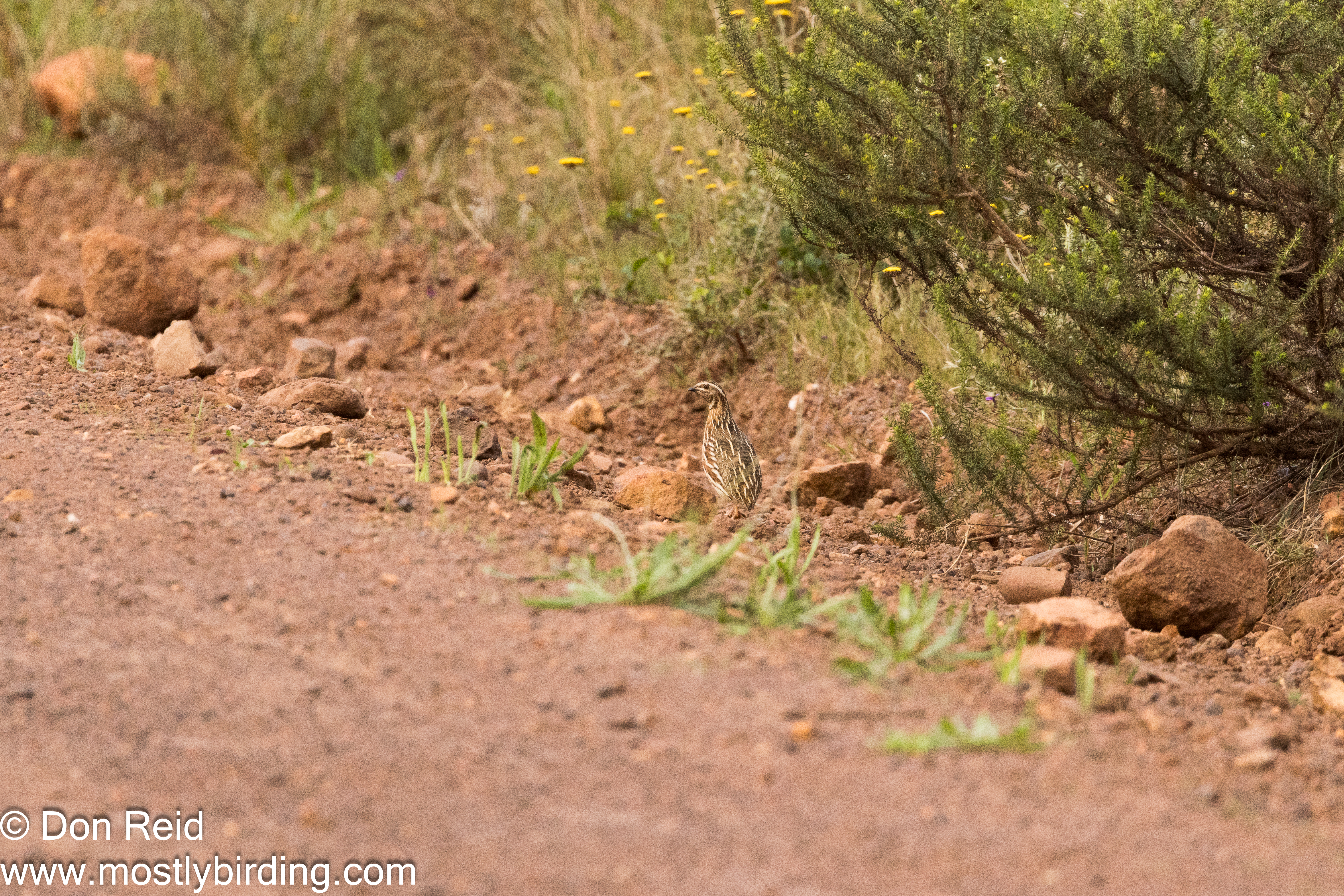
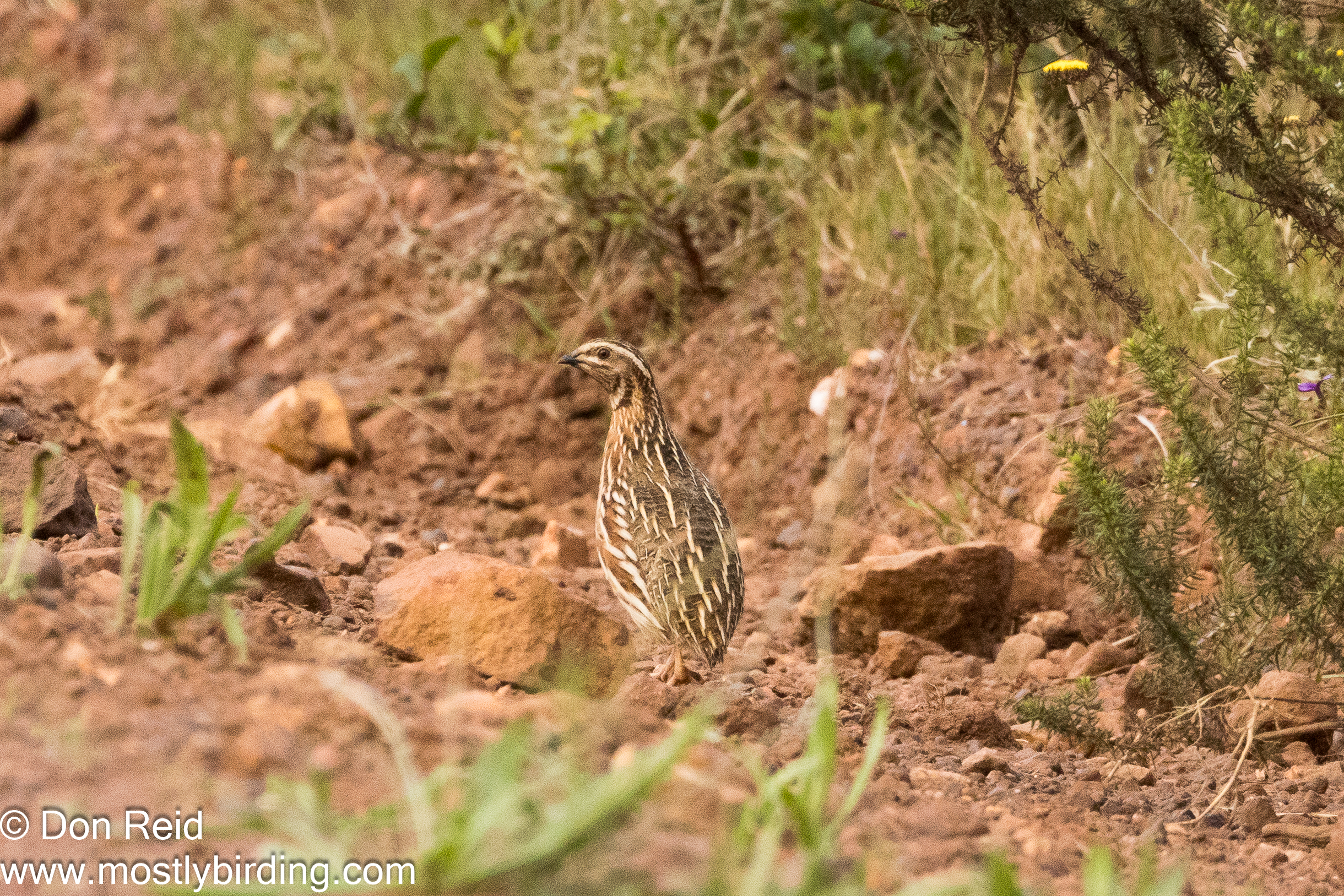
Up ahead small birds at the edge of the road attracted my attention and a look through the binos had me grabbing my camera – there were two Common Quails pottering about in the grass tufts at roadside! This is a species which I have heard dozens of times but have only had one short glimpse in all the years of atlasing, so this was an opportunity not to miss.

Common Quail Coturnix coturnix Afrikaanse kwartel

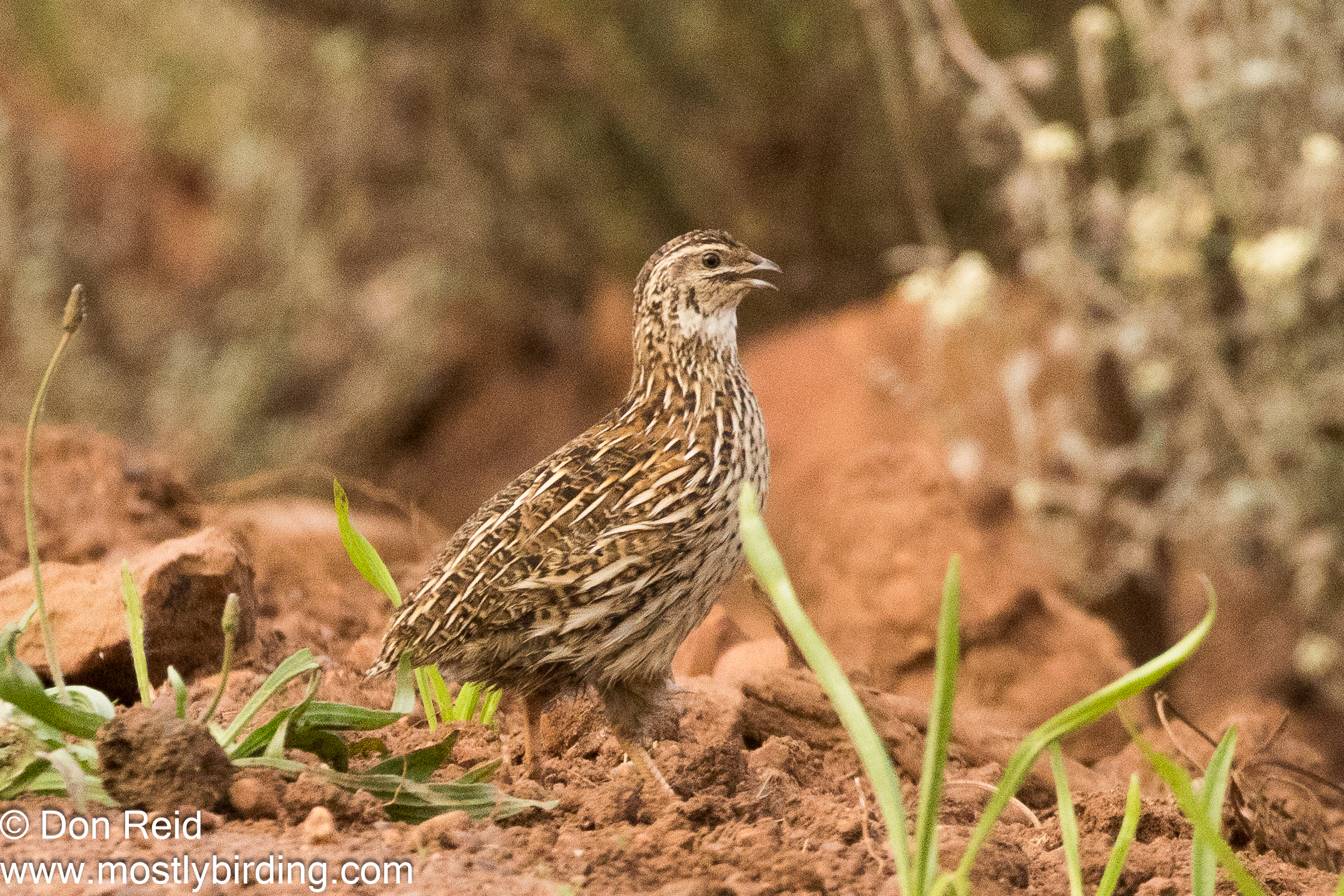
I was still some distance from the quail, which is a small bird about the size of a Lark, so I tried to edge the car closer for a better photo opportunity. However they were on to me and moved further along at the same pace as the car, so I turned the car slightly sideways to get a view with the camera and took as many shots as I could. Fortunately, I managed to get a few reasonable shots – my first ever photos of this species in the bag!

Common Quail Coturnix coturnix Afrikaanse kwartel

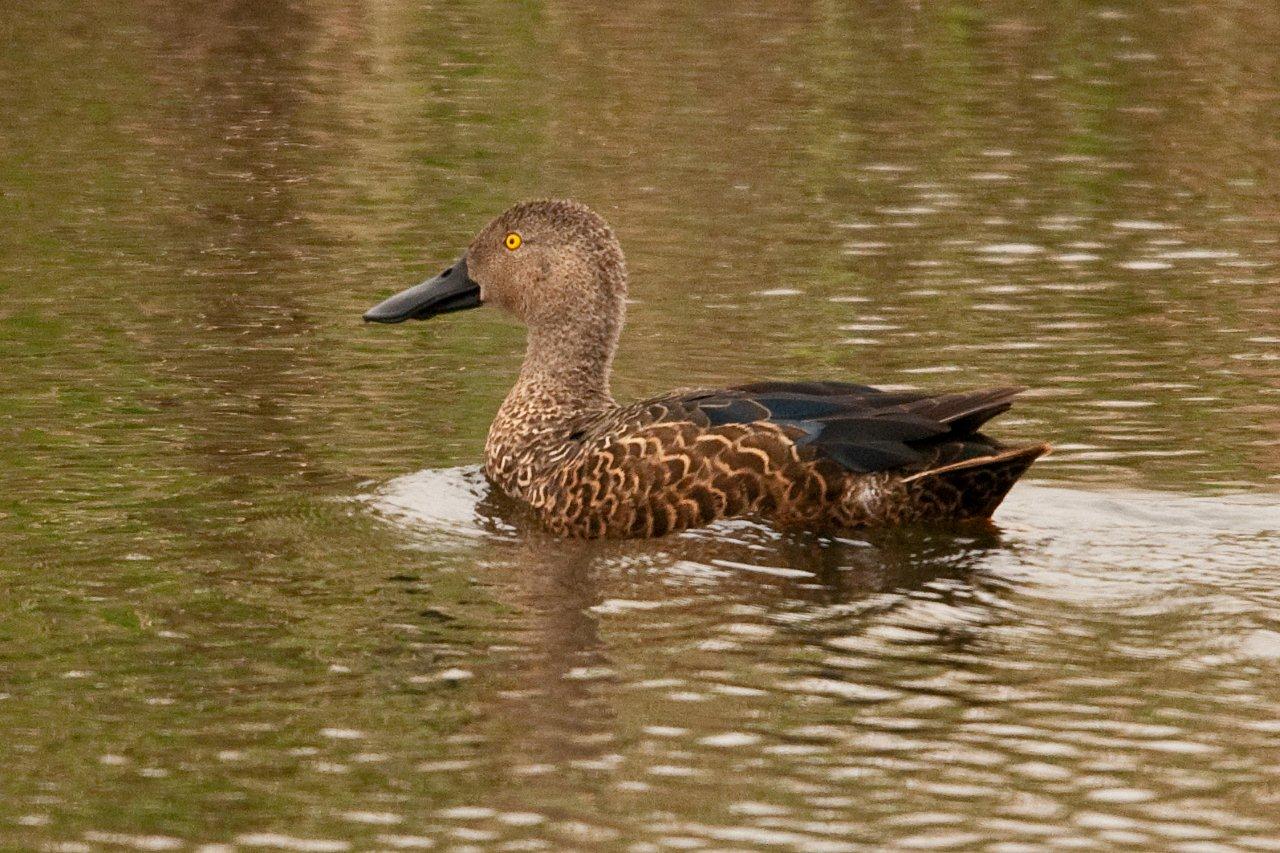
After crossing over the R327 I proceeded on the Kleinberg Road and soon stopped to scan a large farm dam which lies some distance from the road. I set up my spotting scope and used the maximum zoom (60 X) to identify the many waterfowl on the dam, which included Red-knobbed Coot, Cape Shoveler and Little Grebe – all common in the area.

Cape Shoveler Anas smithii Kaapse Slopeend

Less common, in fact it turned out to be a new species for the pentad, was a pair of Black-necked Grebes, swimming in the middle of the dam. I have only ever found them further east at the lakes beyond the village of Wilderness so was really pleased to record them so close to Mossel Bay. They were way beyond my camera’s reach so the photo below is from a visit to Strandfontein near Cape Town.

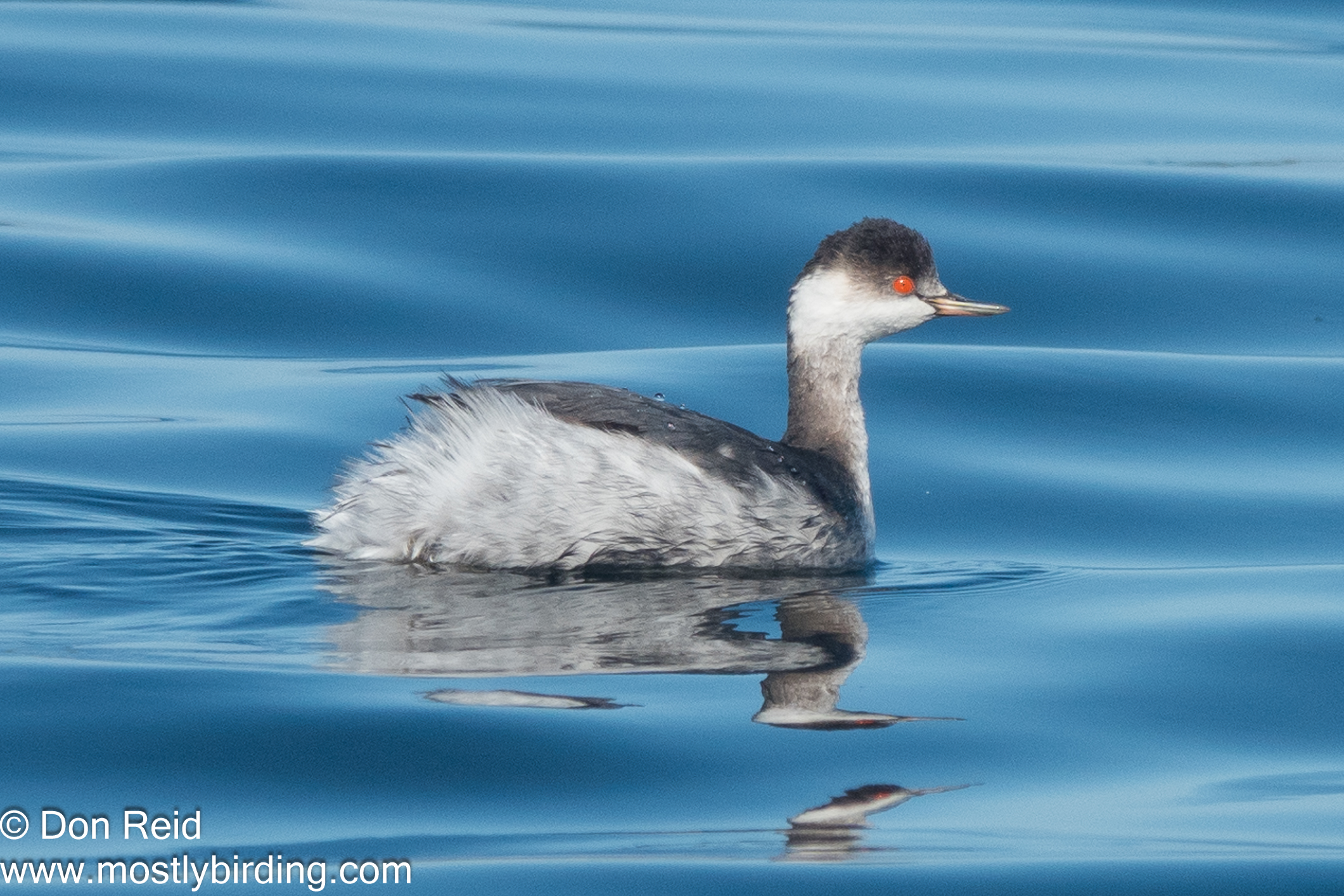
Black-necked Grebe Podiceps nigricollis Swartnekdobbertjie

The dam edges had both fresh water Cormorants present – White-breasted and Reed Cormorant as well as Blacksmith Lapwing.

I continued along the road adding Red-capped Lark and Capped Wheatear before entering the next pentad, which signalled the close of the atlasing of the pentad with a total of 53 species.

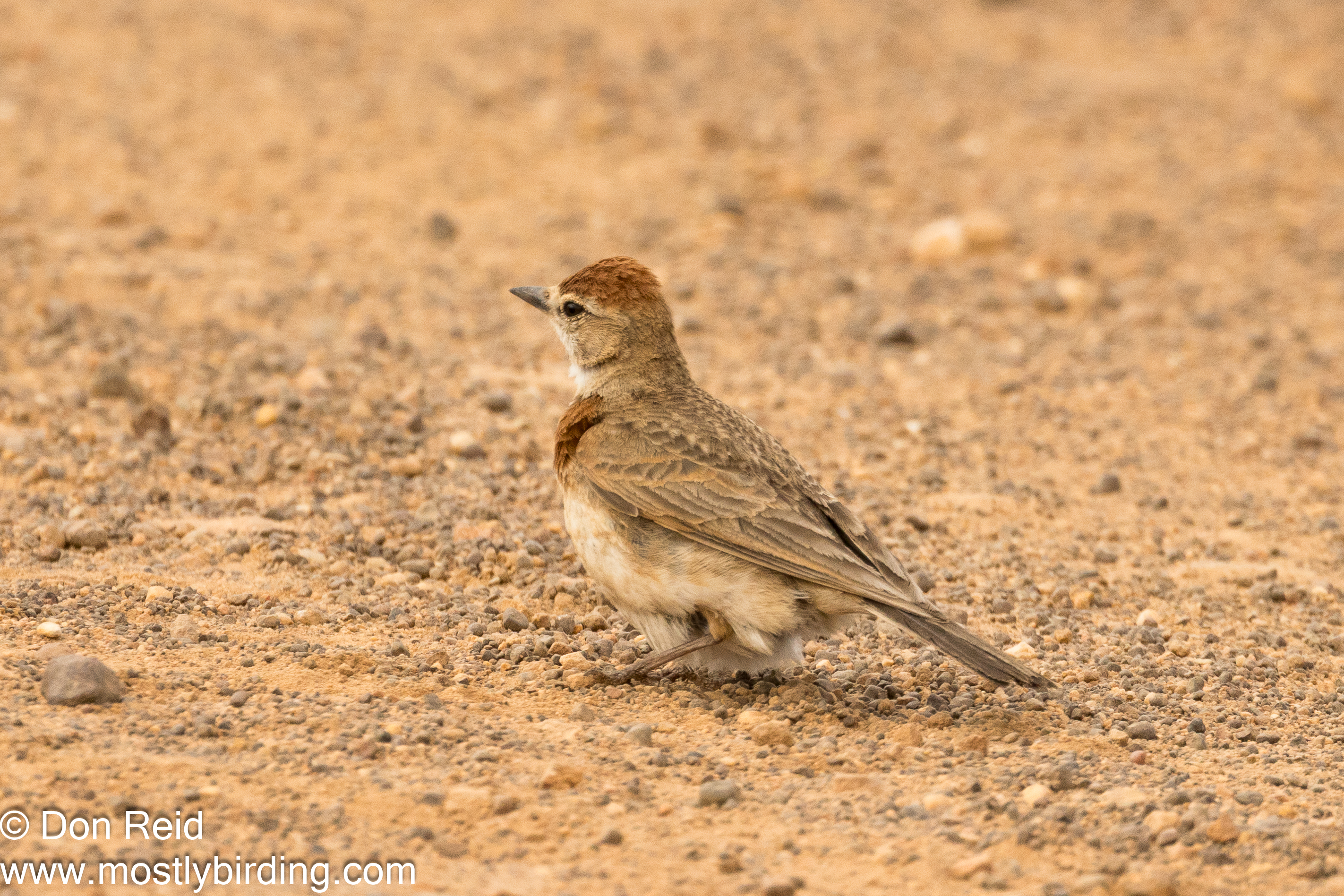
Red-capped Lark Calandrella cinerea Rooikoplewerik

Atlasing?

Atlasing is the regular mapping of bird species in a specific area called a “pentad”. Each pentad has a unique number, based on its geographical position according to a 5 minute x 5 minute grid of co-ordinates of latitude and longitude, which translates into a square of our planet roughly 8 x 8 kms in extent.

As a registered observer / Citizen scientist under the SABAP2 program (SA Bird Atlas Project 2), I record all of the species I see or hear in a particular pentad over a period which can be anything between 2 hours and 5 days, for submission to the project database at the ADU (Animal Demography Unit) based in Cape Town.

Australia 2025 : Mackay – a Wet Introduction : Part 2

Mackay : The Wettest place we have experienced!

As mentioned in Part 1, we had inadvertently chosen the wettest time of year to visit Mackay, when most of the annual rain falls over the area, but the rain we experienced was way beyond the norm

My walks around the wetlands area close to the house more than satisfied my desire to see and photograph as many new birds as the weather allowed, which Part 1 covered in some detail.

However, Gerda and I were keen to see more of Mackay proper, but without our own transport, outings were limited to shortish ones that could be fitted in between the morning and afternoon school runs that Liesl undertook every day.

One of the local attractions we managed to visit a couple of times was …..

The Botanic Gardens

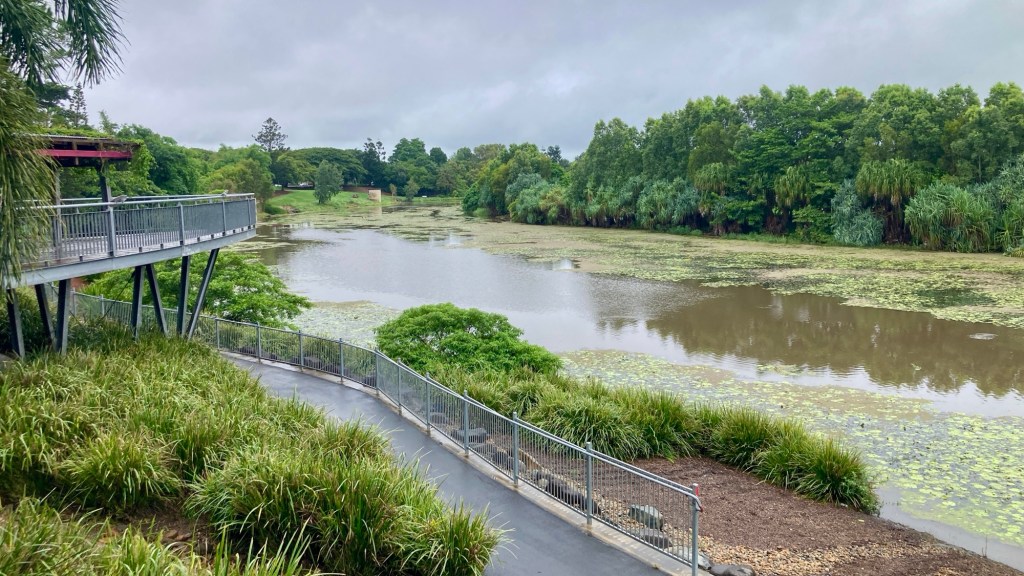
Our first visit was accompanied by light rain falling, so we headed to the café for tea and cake which we enjoyed out on the deck with broad views over the lagoon.

From our table I could already see that there were various waterbirds present including a Pelican, Moorhens, Swamphens, Cormorants, etc and there was a moment of excitement when a Whistling kite flew overhead, clutching in its beak several twigs obviously bound for a nest under construction somewhere in the tall trees on the opposite bank of the lagoon.

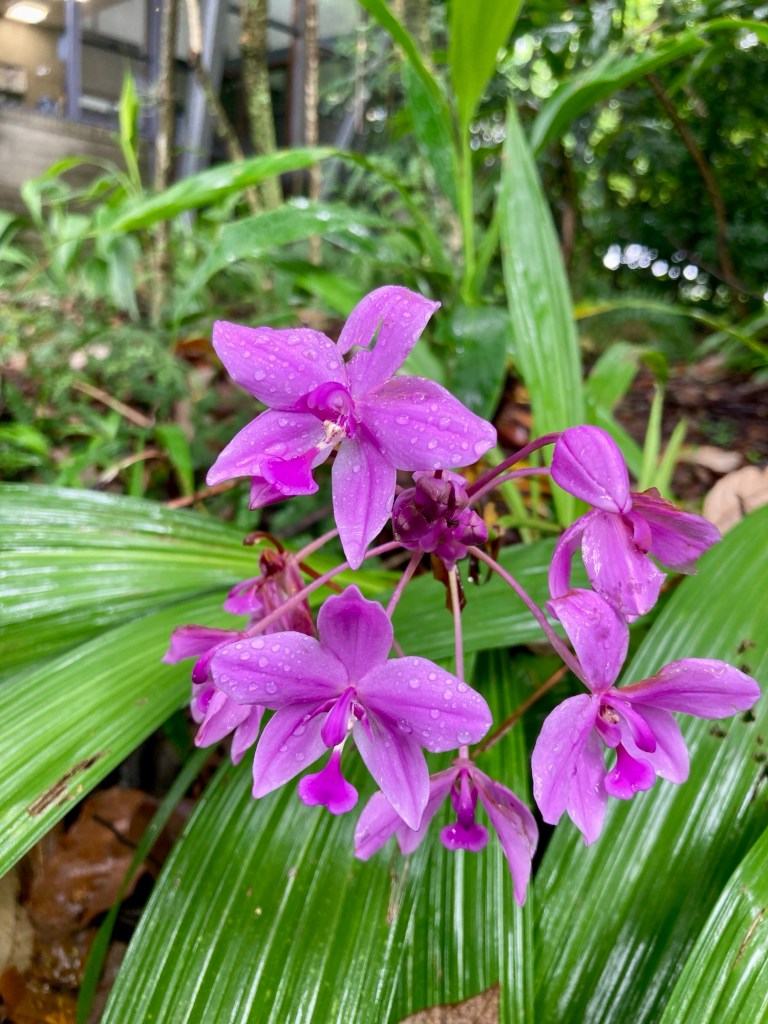
We followed tea with an interesting stroll through the rainforest area – in light rain of course – which had some fascinating, exotic-looking plants and trees, then a longer walk through some of the other garden areas.

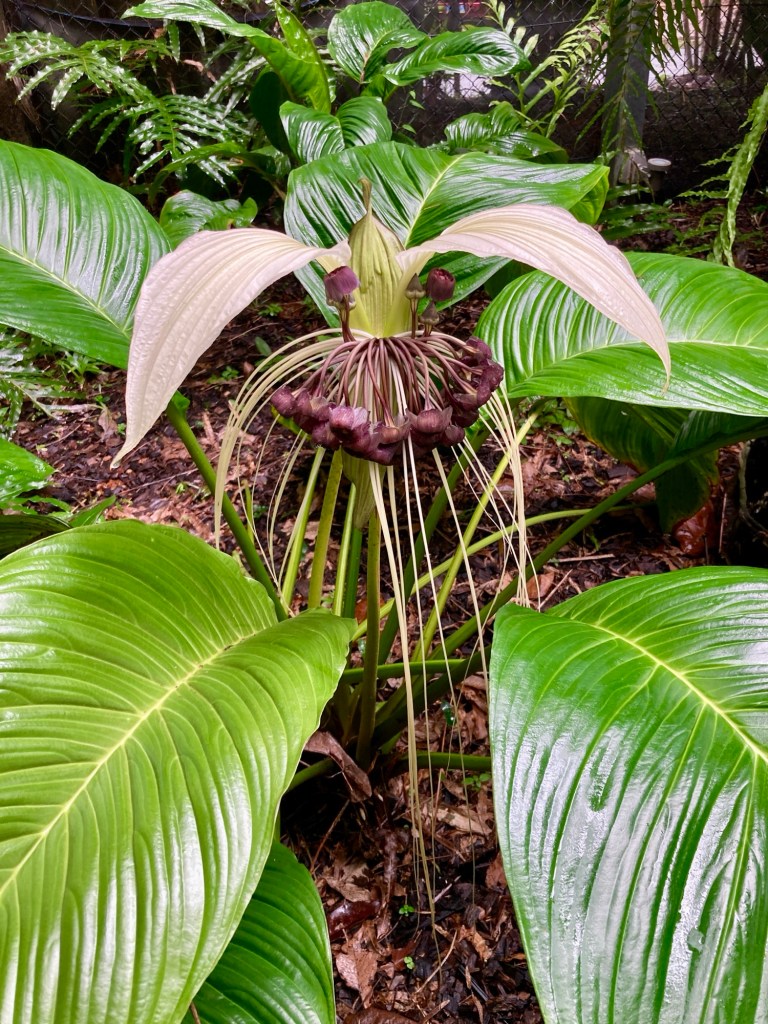
Here’s a selection of some of the ‘rainforest’ plants and flowers that are on display

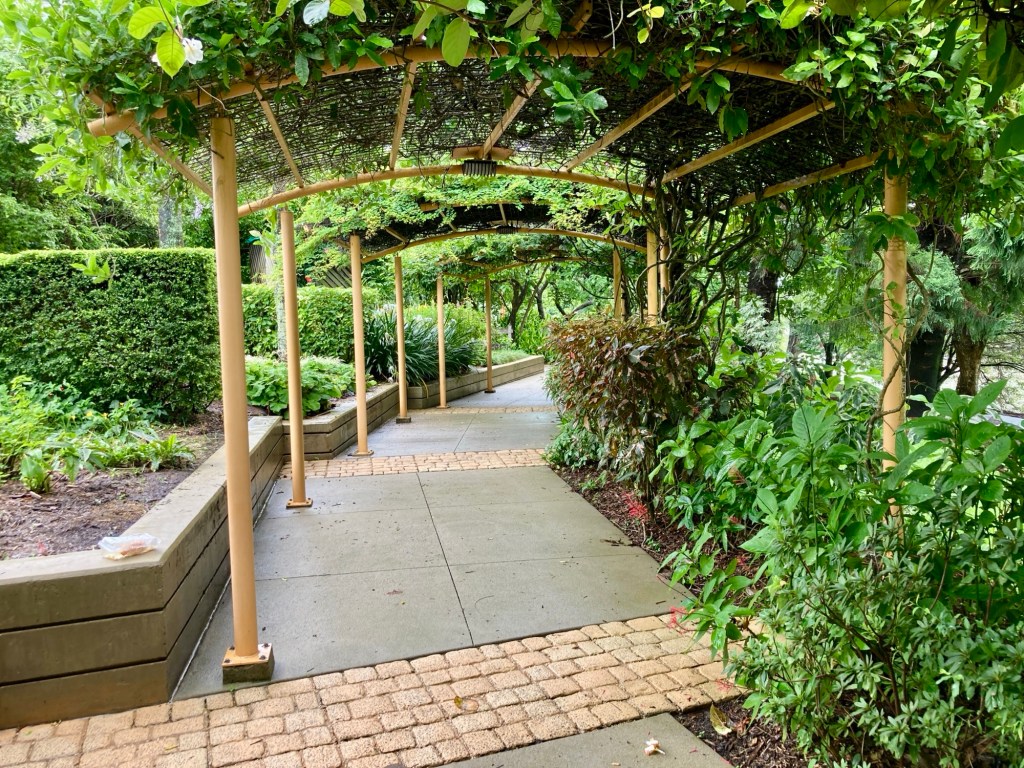
A quiet, lush pathway leading back to the entrance of the gardens

Birds of the Botanic Gardens

A selection of the birds I was able to photograph in the overcast rainy conditions …..

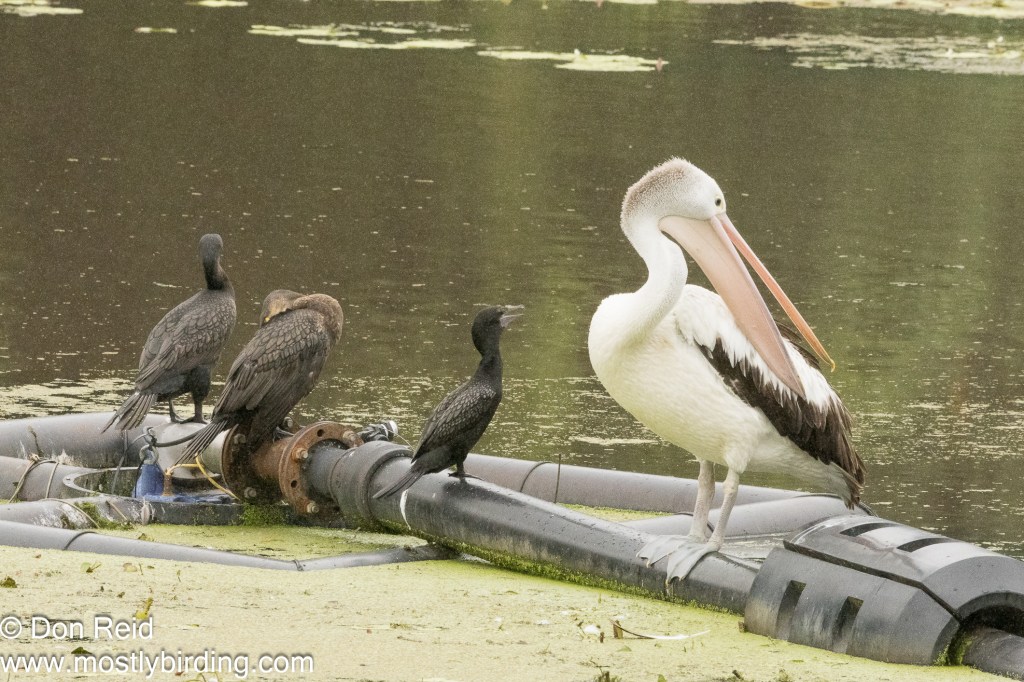
Australian Pelican Pelecanus conspicillatus, Botanic Gardens, Mackay Queensland
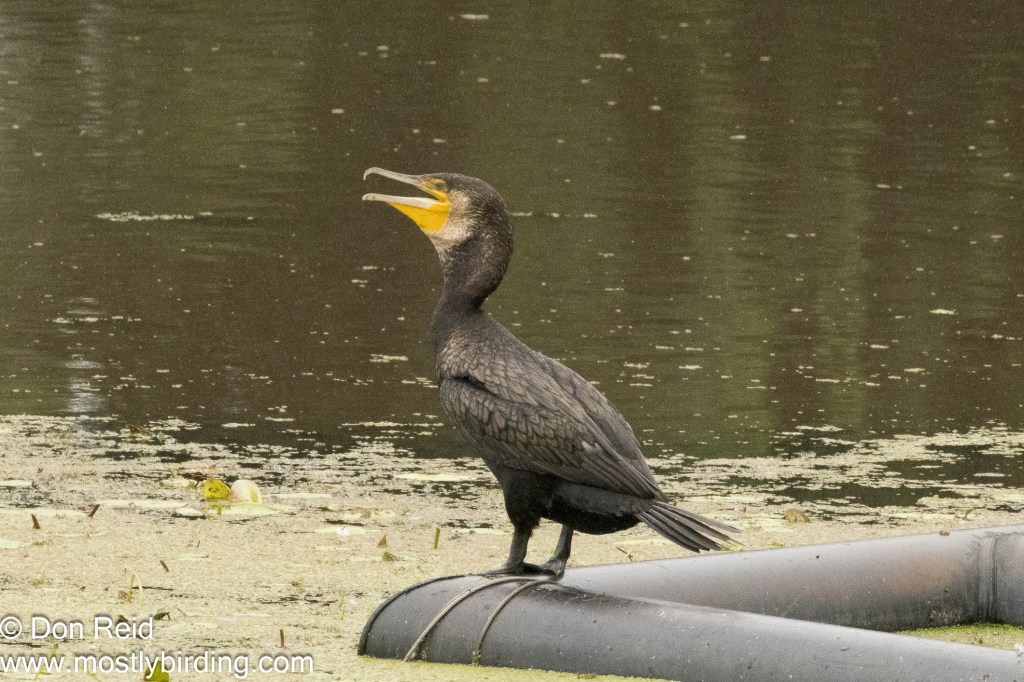
White-breasted Cormorant Phalacrocorax carbo, Botanic Gardens, Mackay Queensland
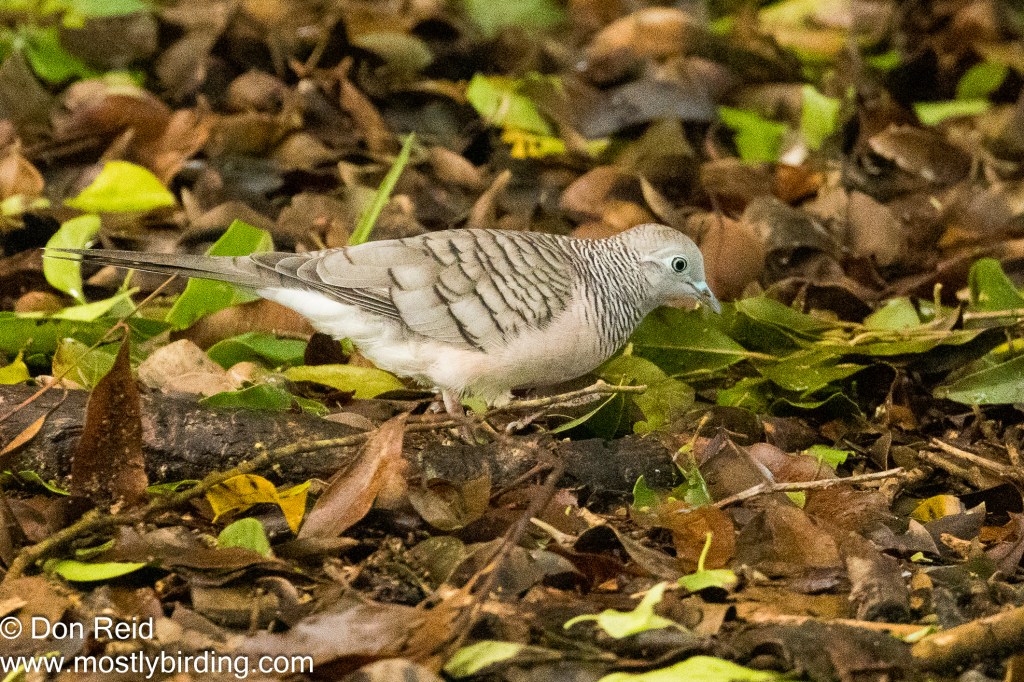
Peaceful Dove Geopelia placida, Botanic Gardens, Mackay Queensland
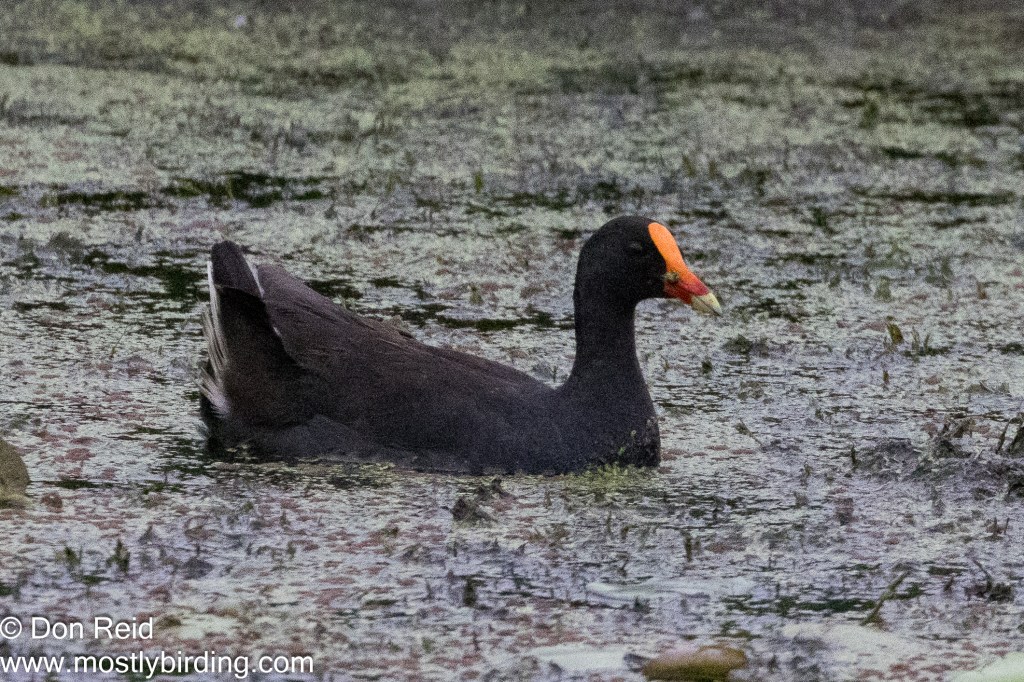
Dusky Moorhen Gallinula tenebrosa, Mackay Queensland

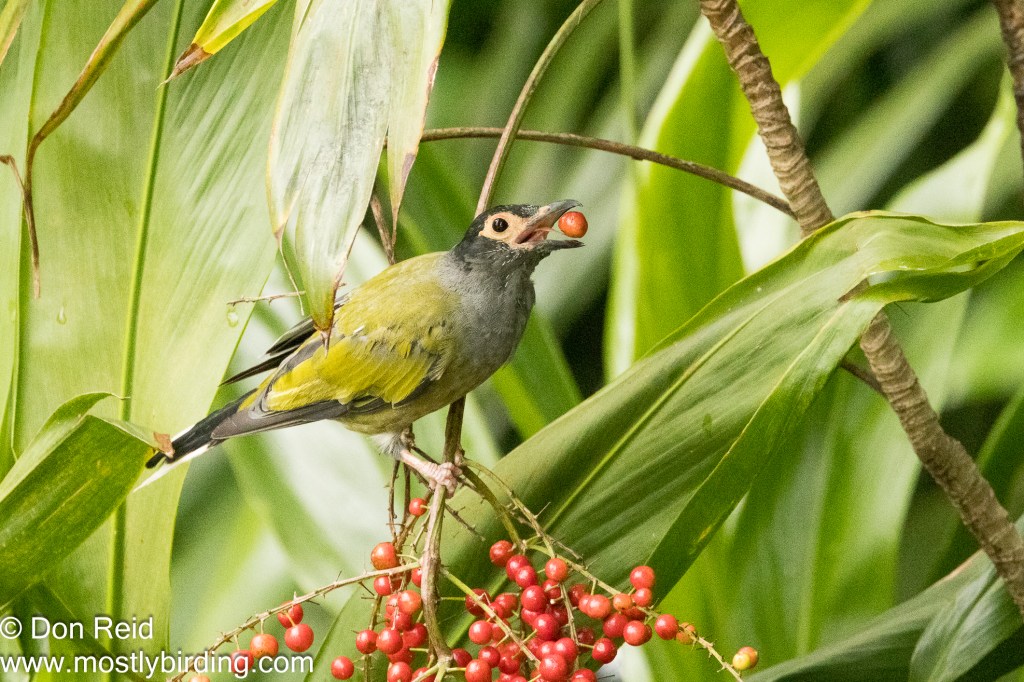
I was particularly thrilled to get photos of an Australasian Figbird feeding on small red berries in the trees near the main entrance, carefully plucking the berries before juggling them into position for easy swallowing

Australasian Figbird Sphecotheres vieilloti, Botanic Gardens, Mackay Queensland

The Beaches

Other exploratory trips between school runs were focused on visiting some of the fine beaches along the eastern coastline of the town.

Lamberts Beach

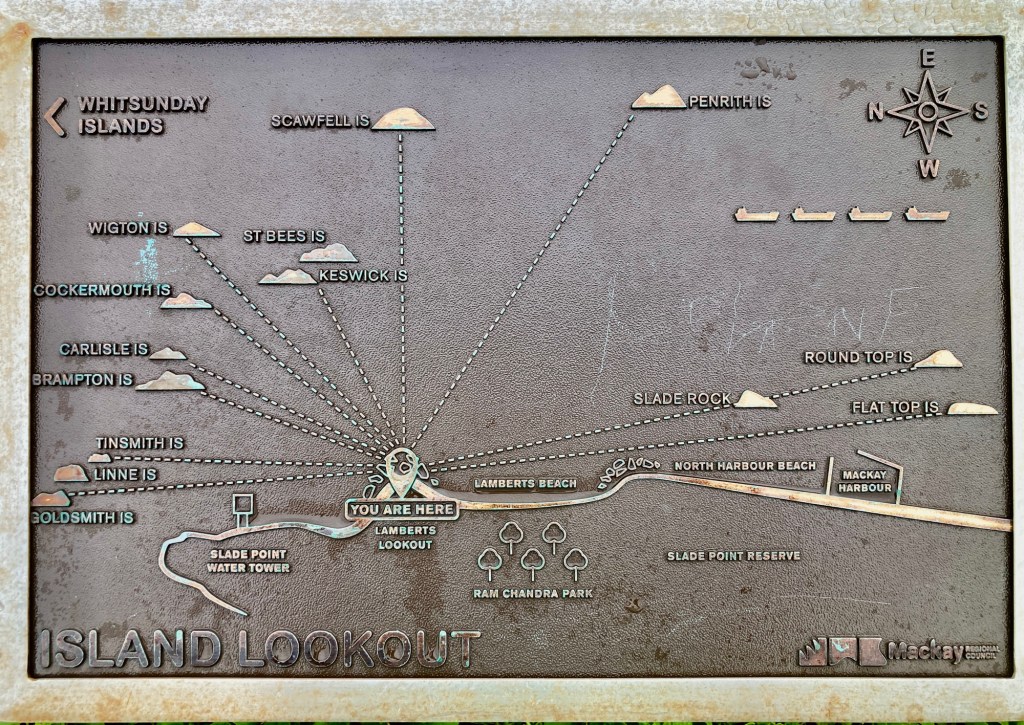
We drove to Lamberts Beach and stopped at the Island Lookout point where we had views up and down the coast and beach – rugged in places with a few of the islands visible in the distance despite cloud and mist.

A plaque at the lookout point showed the names and positions of the offshore islands

View northwards from the lookout
View southwards from the lookout

Black’s Beach

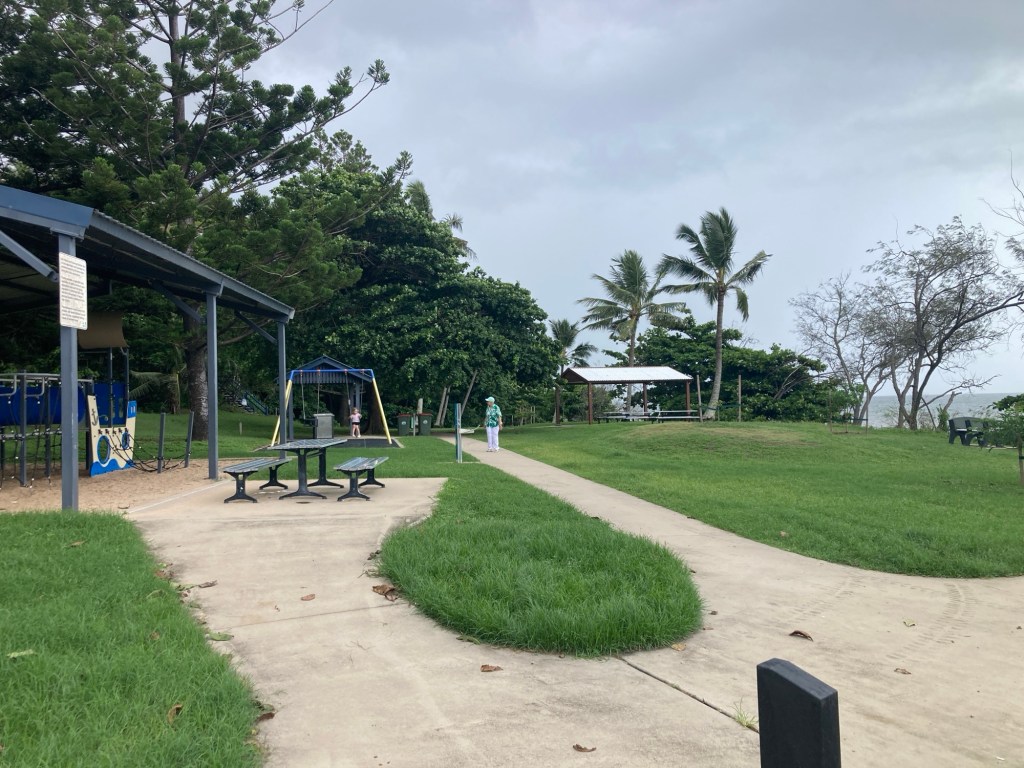
Towards the end of our stay in Mackay we were thankful to see a bit of sunshine one morning – that was just the inspiration we needed to get out and about, which we did with our youngest grandchild Ellie joining us for the short drive to Black’s Beach north of the house.

We had the picnic area and beach to ourselves after the group that was there left shortly after we arrived.

A play area with swings made it ideal for kids and the table and benches under a canopy roof invited a picnic meal – maybe next time!

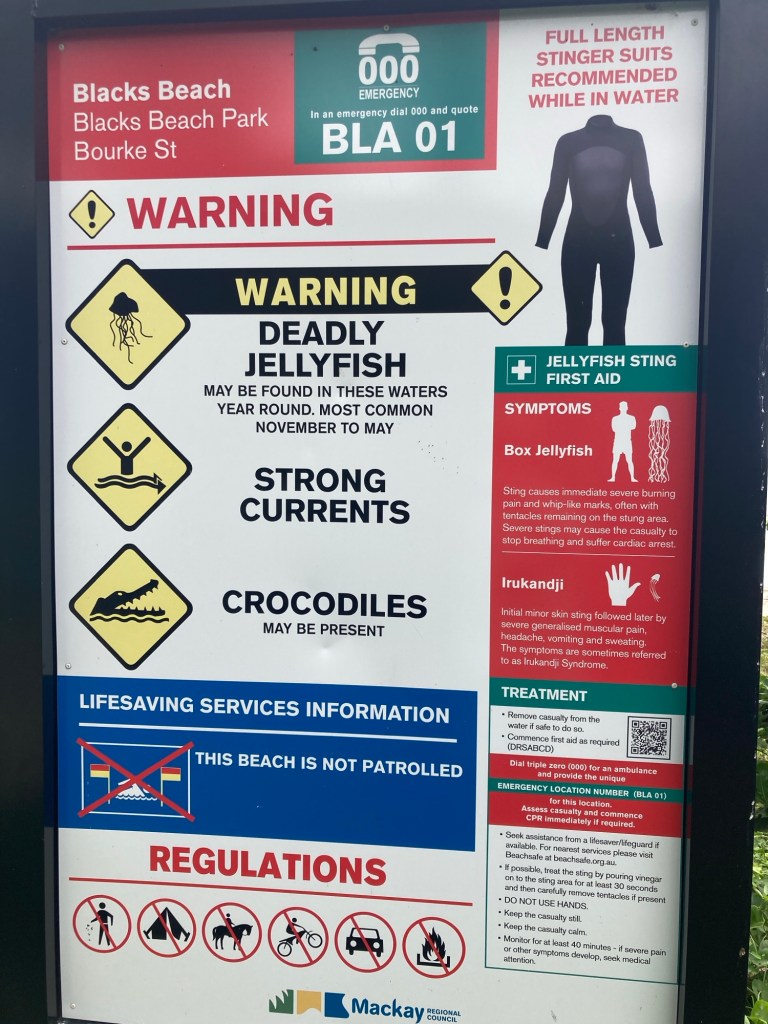
However swimming appears to be a risky business judging by the signage – we were aware of the Jellyfish, but not the Crocodiles!

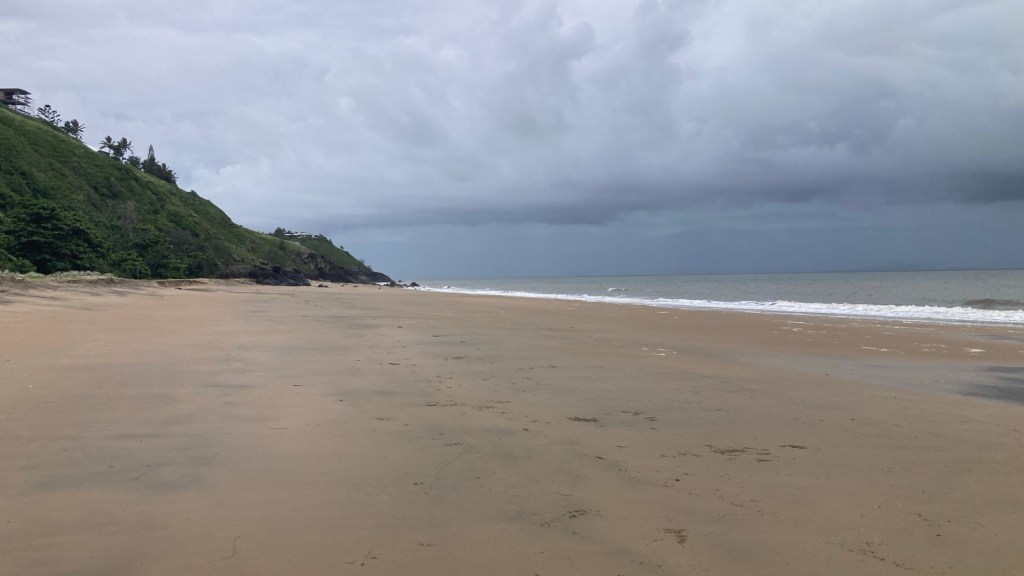
Ellie and I had a walk on the beach which is wide and flat but clearly gets swamped at high tide.

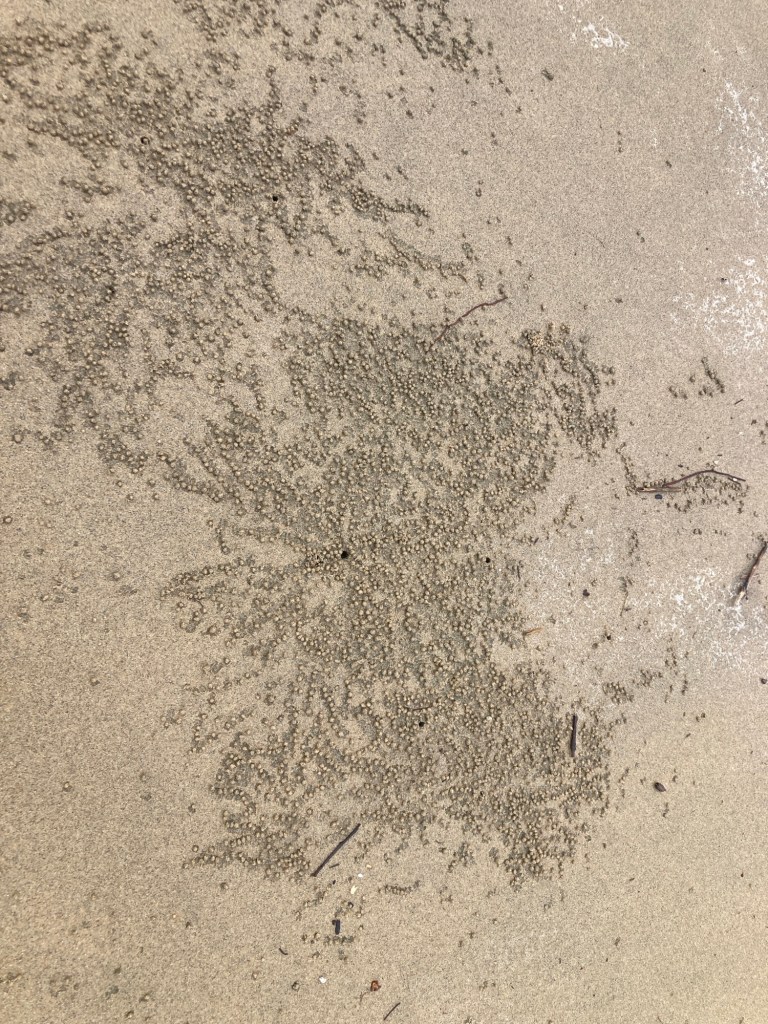
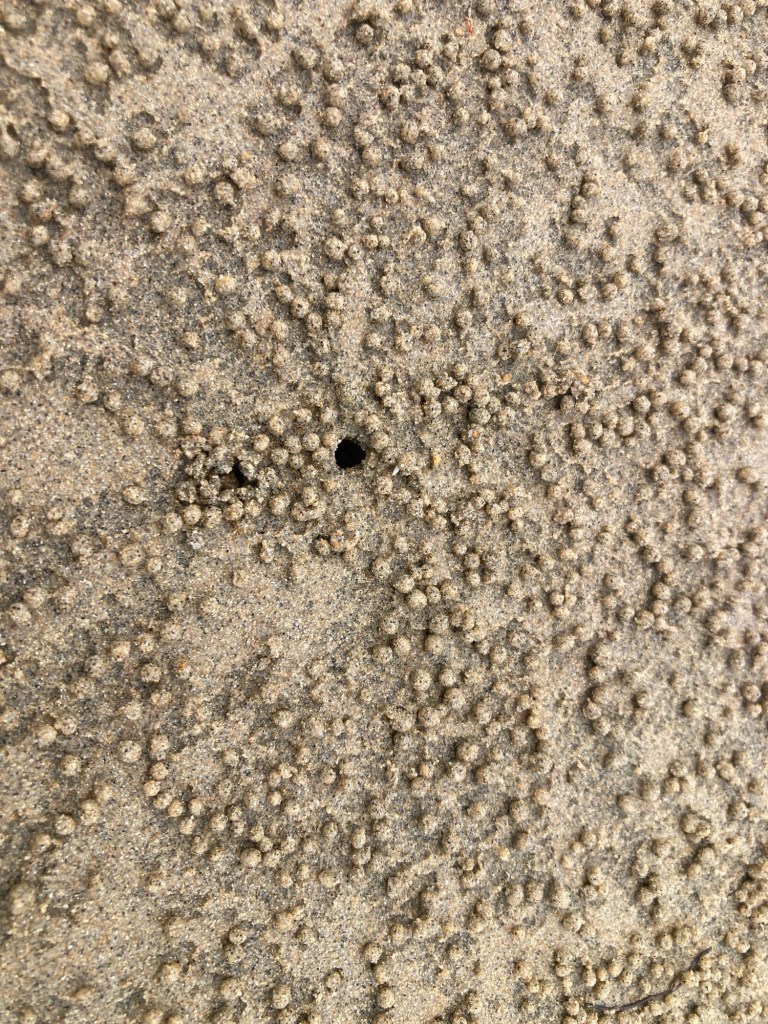
There were signs of the Sand Bubbler Crabs that create patterns with tiny round balls of sand around their burrows in the wet sand

I was fascinated to find out that these small crabs sift the sand through their mouthparts, filter out the nutrients, and discard the remaining cleaned sand as small, processed pellets, which are left in radial patterns around their burrows.  

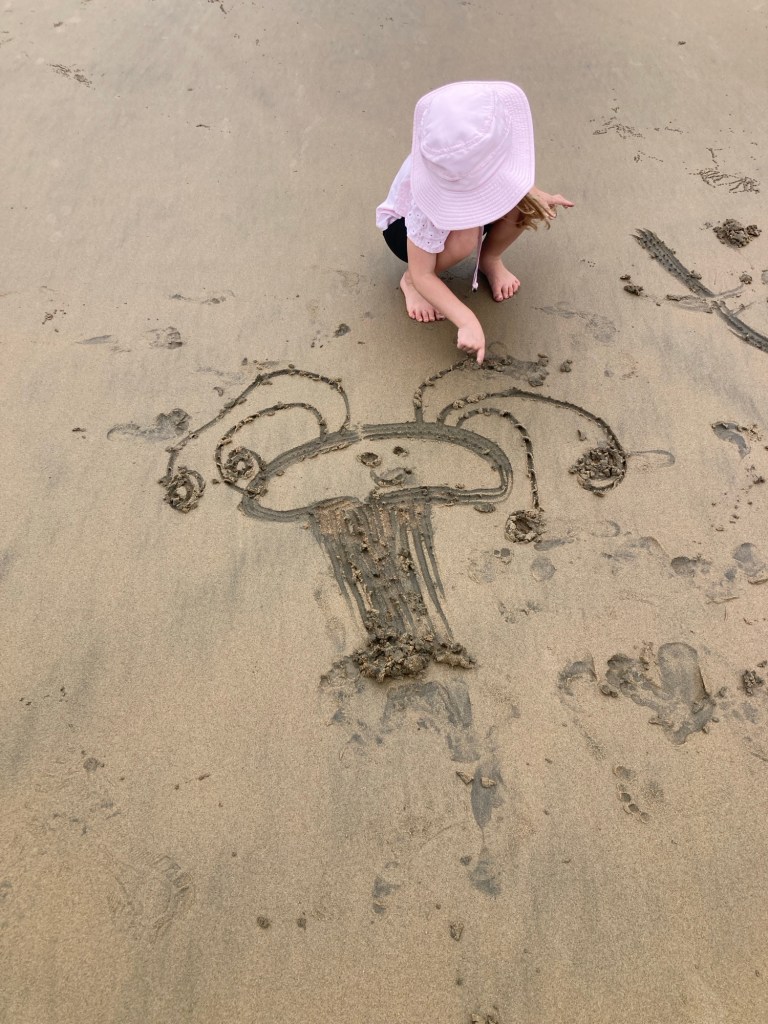
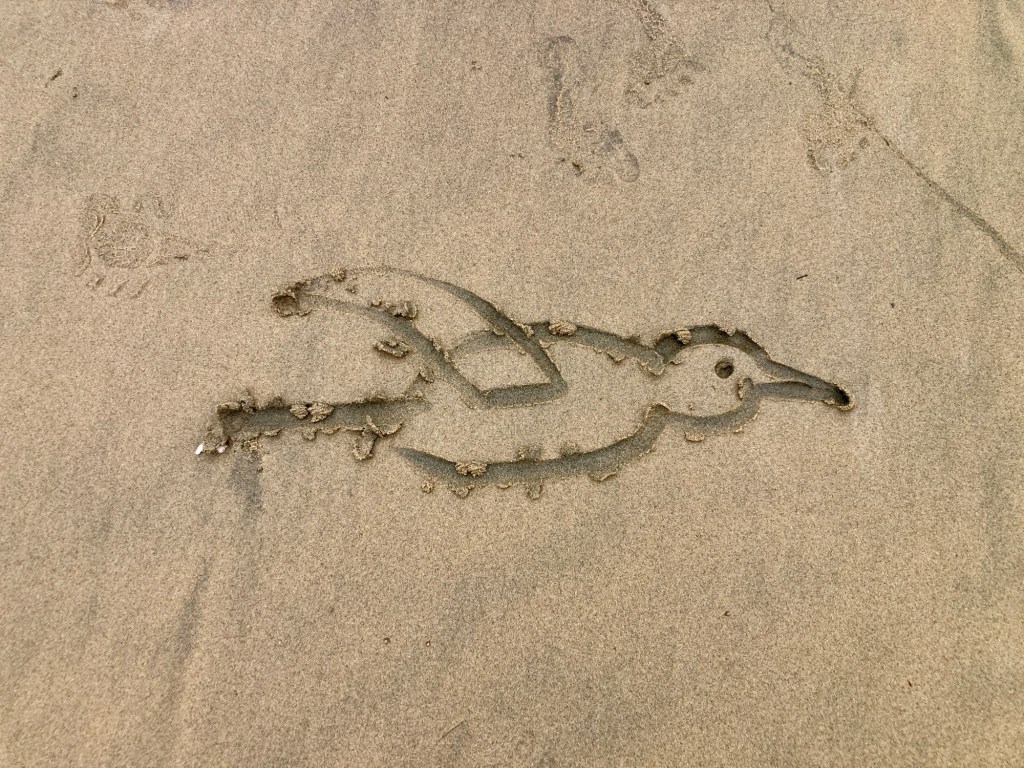
Ellie and I had a competition to see who could draw the best ‘finger picture’ in the firm sand – I reckon she won this one by a mile!

Ellie’s imaginative jellyfish – not bad for a 4 year old!

Don’s Seabird – yes I know what you are thinking – stick to your photography…

On the way home from the trip to the beaches, we had a wonderful sighting of two Wedge-tailed Eagles in a newly cut caneland next to the main road – walking in the field then flying up and circling low as we watched in awe of these massive raptors.

The Suburbs

On the days when it was too rainy to walk the wetlands, I took shorter walks around the suburb in the vicinity of the house, which paid off with a couple of new birds almost each time I ventured out.

There were also times when the birds came to the small garden of the house, so I tried to keep my camera at the ready for such occasions, leaping up and rushing to the nearest vantage point if I spotted anything unusual.

Birds of the Beaches and the Suburbs

Here are some of the more significant birds I came across …..

Oriental Dollarbird

Heading back from one of our beach visits, Ellie called out “Oupa there’s a bird” and I stopped to have a look. Well what a surprise when I realised it was the unusually named Oriental Dollarbird which I had been hoping to see!

Back at home I checked out the bird books and found it is related by genus to our Broad-billed Roller, which it resembles in many of its main features

Why Dollarbird? Apparently in flight it shows round silver “dollars” at the tips of the underwing area

Oriental Dollarbird Eurystomus orientalis, Mackay Queensland

Torresian Crow

I initially took the large black Crow-like birds that I was seeing regularly in Mackay to be Australian Ravens, which was a bird seen many times during our previous visits. But reading some posts on the local birder’s facebook page I picked up that the Torresian Crow was common in the Mackay area – also that the easiest way to separate it from the Ravens was through its call.

So I made a point of listening to their calls when I next saw them and was able to confirm the ID and add another new bird to my growing list.

We came across a group during our visit to Black’s Beach and I was happy to get some images despite the difficulty of photographing a black bird against an overcast but bright background – thank goodness for Lightroom editing software which allows exposure adjustments of the subject and the background separately

Torresian Crow Corvus orru, Mackay Queensland

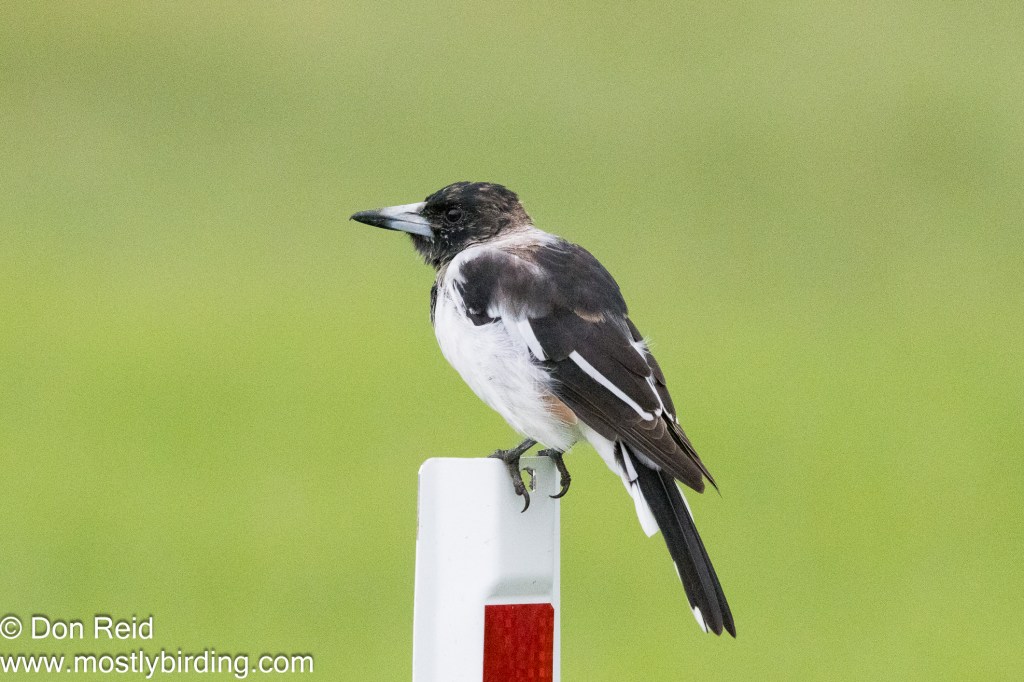
Pied Butcherbird

During another suburban walk I spotted what looked to me like Butcherbirds – it took a second look to realise this was a different species to the Grey Butcherbird I had seen several times before. It fortunately stayed in place while I struggled to get my camera working properly as I had inadvertently adjusted settings while it was in the plastic bag protecting it from the rain

Pied Butcherbird Cracticus nigrogularis, Mackay Queensland

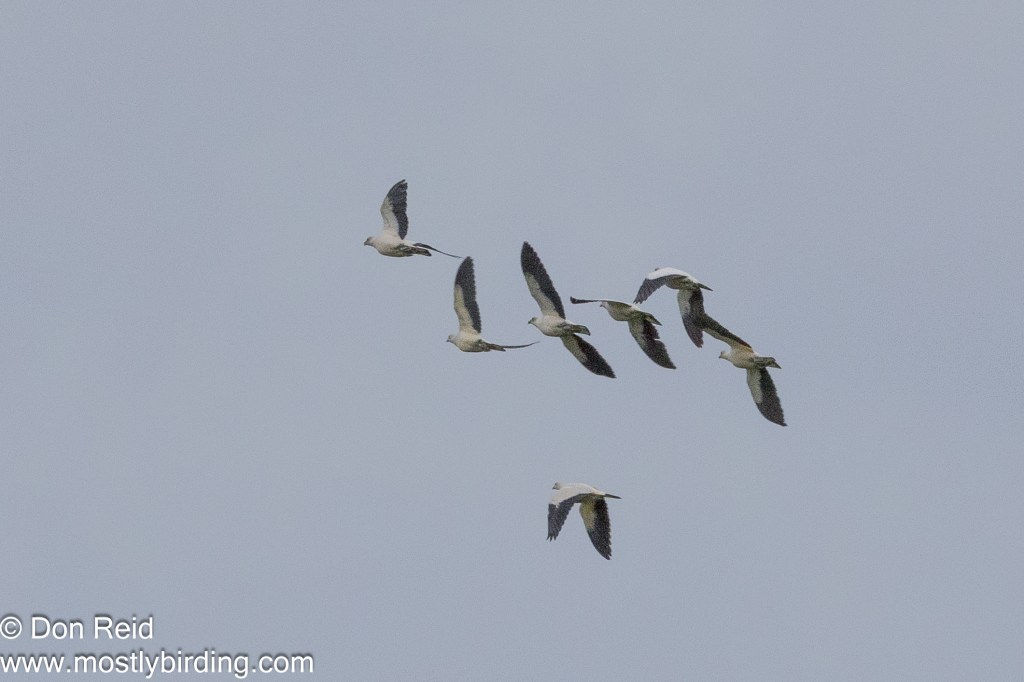
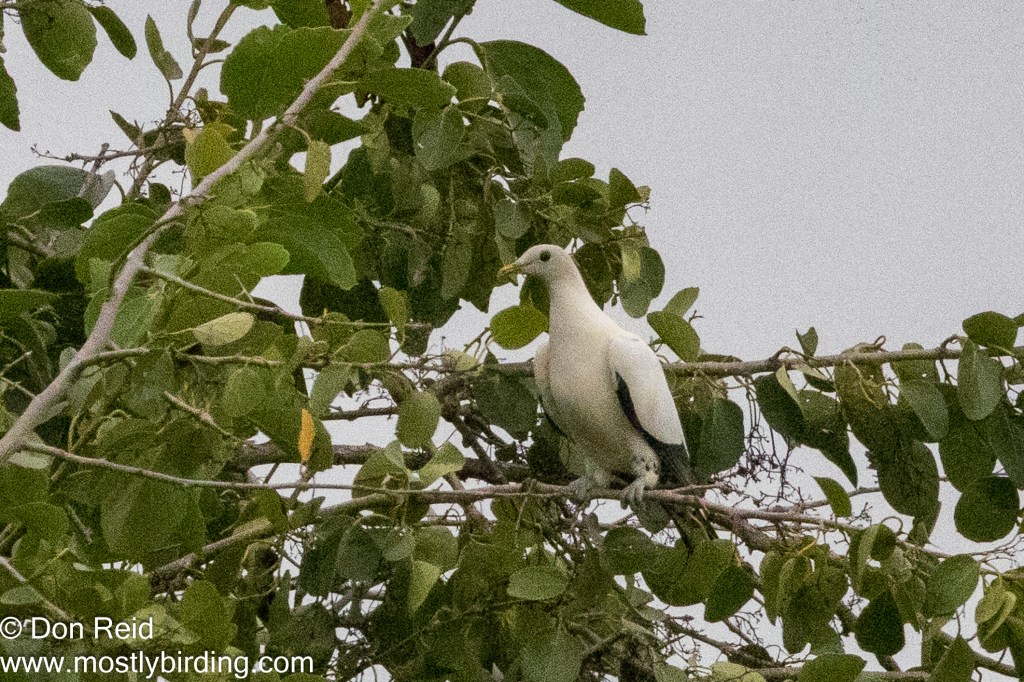
Torresian Imperial Pigeon

During a visit to the local public swimming pool where Stephan likes to train, I did a few lengths myself, then scouted around the gardens surrounding the pool. A flock of large-ish white and black birds drew my attention flying from one tree to another.

I was fairly certain they were pigeons but had no binos or camera to confirm the species – later research convinced me they were Torresian Imperial Pigeons, which I subsequently spotted a few times in different parts of Mackay.

This is another species that seems to go under a few different names, Pied Imperial-Pigeon being the one that local facebook posts seemed to use and which lead to some doubt on my part at first, but I settled on the name that Birds of the World used.

Torresian Imperial Pigeon Ducula spilorrhoa, Mackay Queensland

Yellow Honeyeater

Another new species I spotted at the swimming pool for the first time, then saw a few times in other parts of Mackay, was the Yellow Honeyeater. I was eventually able to photograph one during a wetland walk, when it flew across the pathway and settled in a nearby tree.

Yellow Honeyeater Stomiopera flava, Mackay Queensland

Red-tailed Black Cockatoo

This spectacular species became a regular sighting, especially late afternoon when they returned in flocks to their roost while calling loudly

The visit to Black’s Beach provided a good photo opportunity where a small group were working their way through the trees

The red tail, just visible in the image below, is prominent in flight

Red-tailed Black-Cockatoo Calyptorhynchus banksii, Mackay Queensland

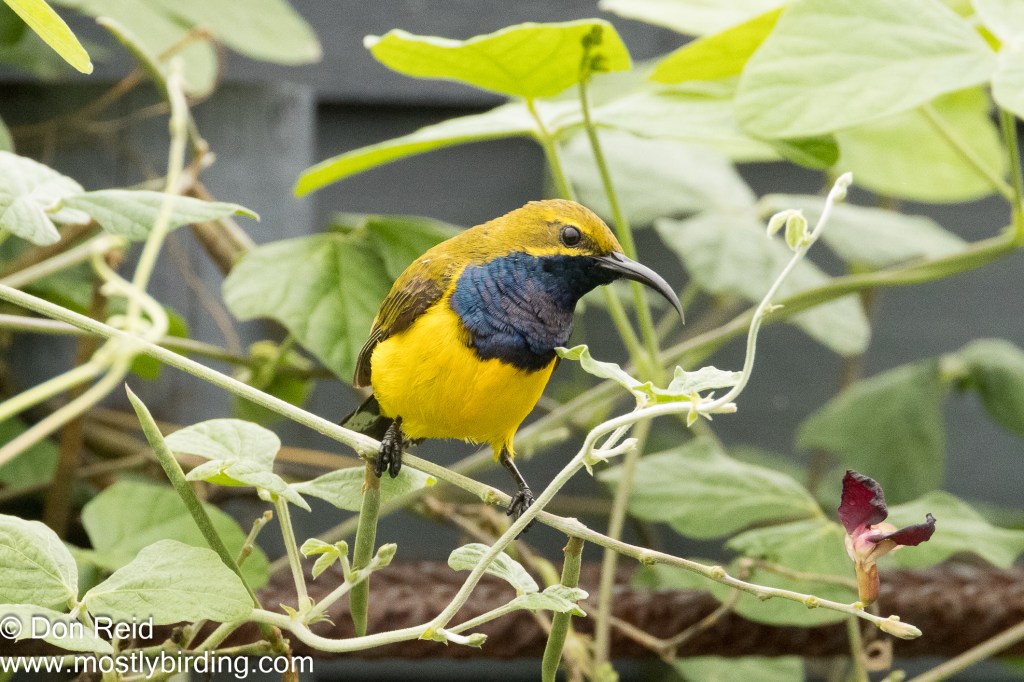
Sahul (Olive-backed) Sunbird

The only representative of the Sunbird family in Australia is this striking species which visited the garden a few times.

After a few attempts I was able to get some reasonable photos as a pair moved through the garden

It turned out that this was not a lifer but new to my Australian list – I discovered that I had in fact seen it in two diverse places before in years gone by – Mauritius and Kuala Lumpur

Sahul Sunbird / Garden Sunbird / Olive-backed Sunbird Cinnyris frenatus (female), Mackay Queensland
Sahul Sunbird / Garden Sunbird / Olive-backed Sunbird Cinnyris frenatus (male), Mackay Queensland

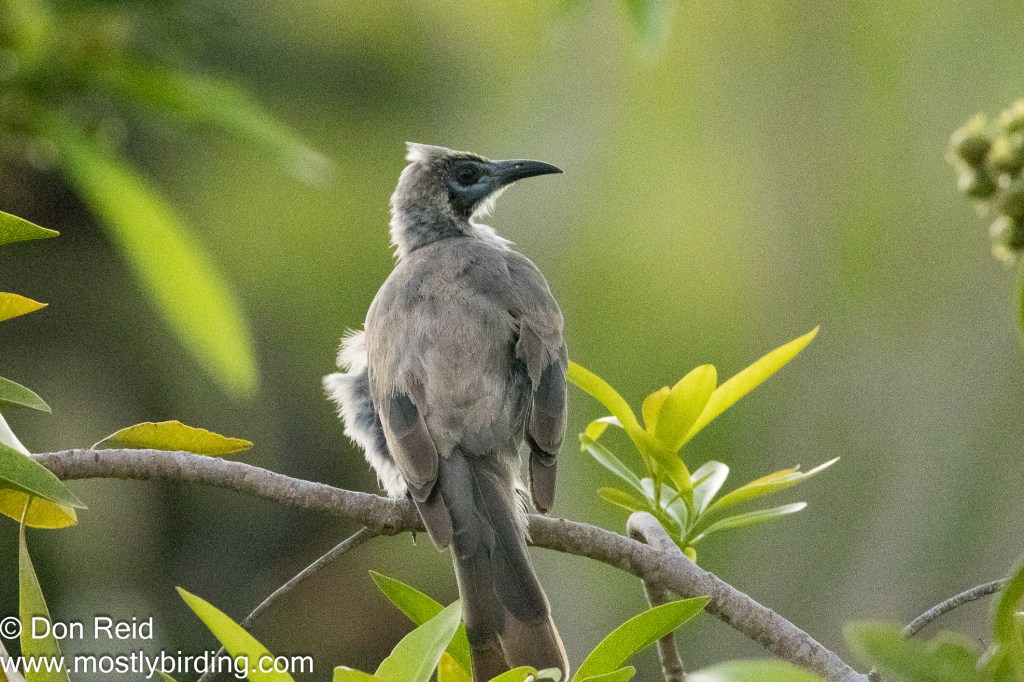
Little Friarbird

Heading homewards at the end of another rainy walk through the suburbs, I spotted what I thought was a Helmeted Friarbird, a species I had come across a couple of times partly hidden in sidewalk trees. This one looked a little different and closer inspection of the photos I took confirmed it was a Little Friarbird – another lifer

Little Friarbird Philemon citreogularis, Mackay Queensland

Black-fronted Dotterel

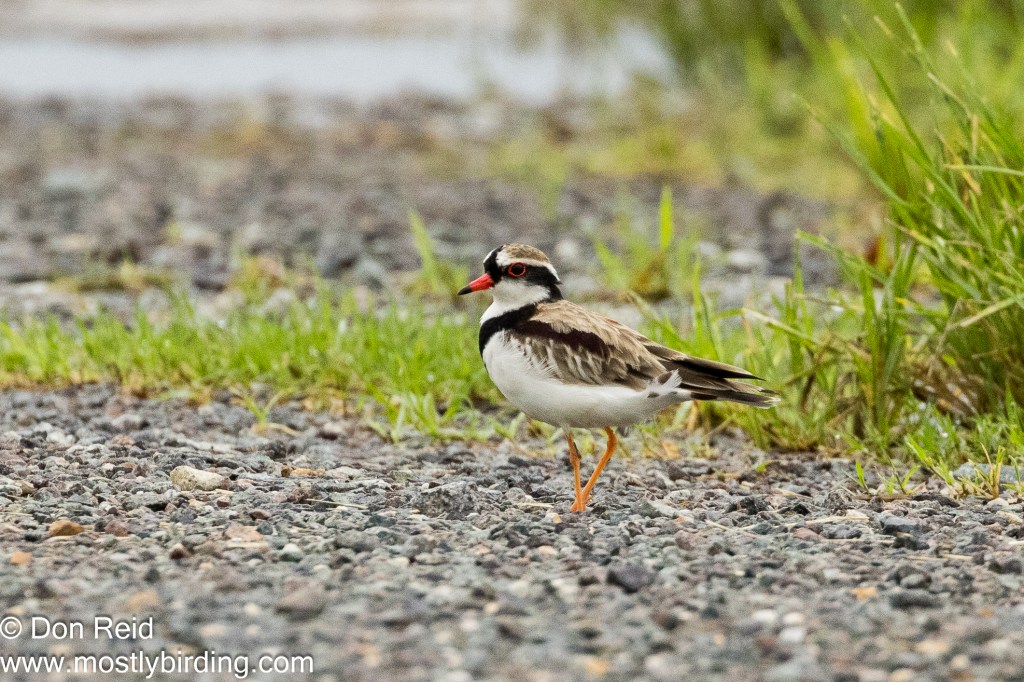
Another unexpected sighting during one of my short suburban walks between rain showers, was a pair of small plovers in the short grass at the end of a cul de sac which adjoined farmland.

As I approached they darted off to some small heaps of soil with shallow pools of water between formed after the rains, which the birds had clearly decided suited them well.

I was keen to get a photo of the Dotterels so the following day after lunch, when the rain held off for a while, I returned to the same spot. Happily, they were still around and I was able to get some shots even though they were quite wary and flew a short distance each time I edged closer.

Black-fronted Dotterel Thinornis melanops, Mackay Queensland

The Dotterel looked very familiar – the reason being it carries the same genus name as our Three-banded Plover and shares many of its features

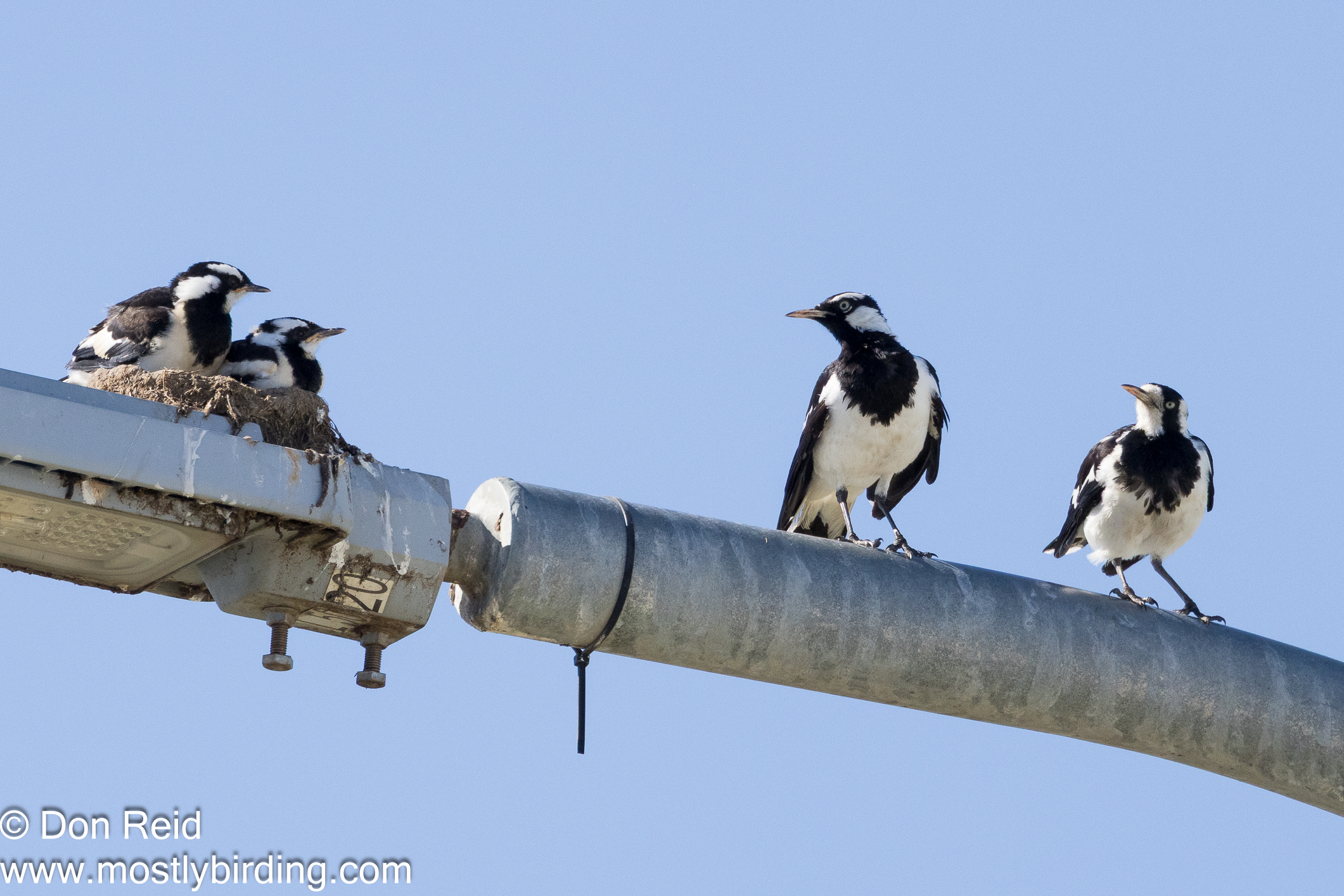
And just to end off this post, this pair of Magpie-Larks proudly watching over their youngsters kept me interested in their progress from the first day in Mackay to the day of our departure, when this photo was taken and the young ones about to fledge by the looks of it.

What worried me was the precarious and exposed position of the nest on top of a lamp post just outside the house, and in particular whether the mostly mud constructed nest would hold together in the incessant rain. Incredibly it did and I’m sure the youngsters took their first flight shortly after our departure.

Magpie-Lark breeding on top of lamppost, Mackay Queensland

Australia 2025 : Mackay – a Wet Introduction : Part 1

Australia 3.1

This was our third visit in six years to this wonderful country – we had completed our slow, memorable road trip from Sydney to Brisbane, enjoying a few days each at Caves Beach, Nambucca Heads, Gold Coast and Brisbane, where we had boarded a plane again to travel ‘home’ to Mackay and the very pleasant prospect of spending the next three weeks with the family and getting to know the town.

Mackay is a city in the Mackay Region on the eastern or Coral Sea coast of Queensland, Australia. It is located about 970 kilometres north of Brisbane, on the Pioneer River.

Mackay : The Wettest place we have experienced!

We had inadvertently chosen the time of year to visit Mackay, when the area receives its highest rainfall, but the rain we experienced was way beyond the norm

A selection of my journal comments paint the picture …..

“The rain came down in torrents today, keeping us indoors, which allowed me to catch up on some blogging and photo editing. No birding opportunities though.”

Yet another rainy day and not much done. The weather was kind enough to allow me an afternoon walk, this time with camera wrapped in a plastic bag just in case.”

No birds added for two days now, mainly due to the unending rain that kept on during the late afternoon 4 to 6 pm slot when I usually take a walk”

By the time I got home I was thoroughly drenched but still warm as the humid air does not cool down much.”

And still it rains, two weeks after arriving in Mackay!”

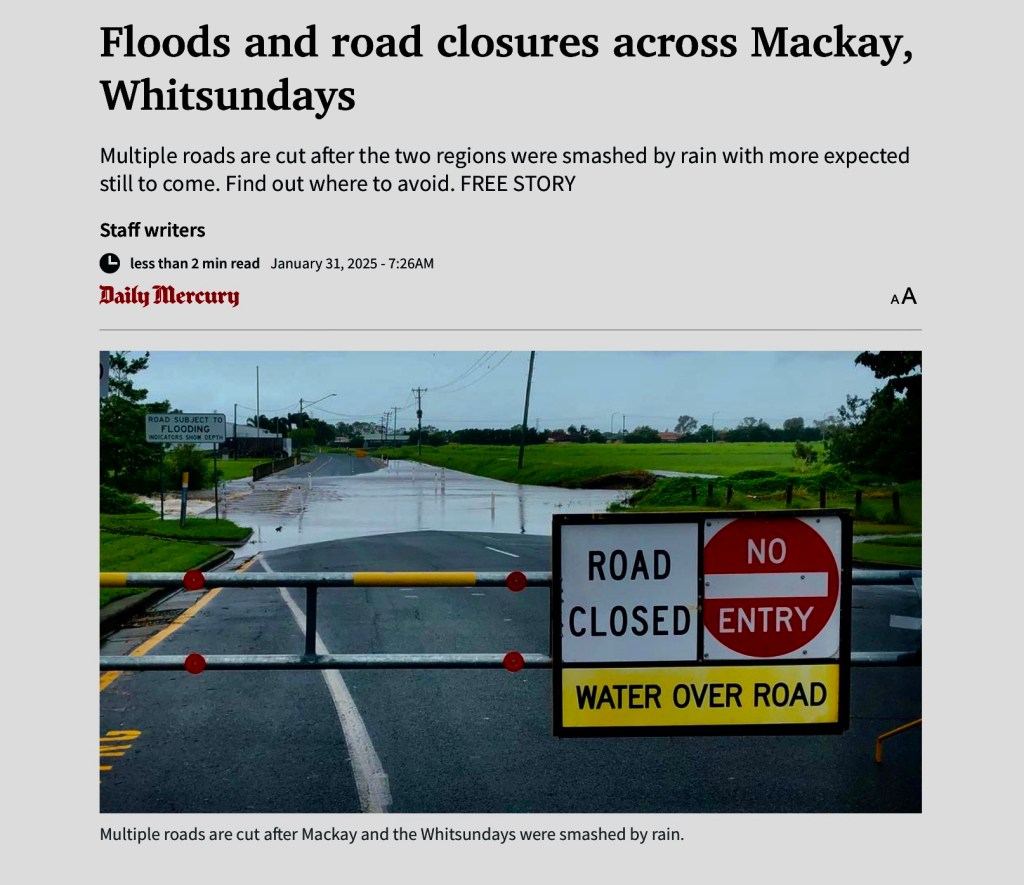
And if that is not convincing enough, have a look at some local news reports ….

Fortunately the rain eased during our last week in Mackay and we could at last get out and about to have a look at some of the beaches and the Botanic Gardens.

The (Very Wet!) Wetlands

As soon as the weather allowed, I set out on a slow recce of the neighbourhood in the vicinity of the house and was immensely pleased to find some large ponds with surrounding vegetation within easy walking distance. Even better, the adjoining lands, which seemed to be part of a farm, were partially inundated to form a large wetland area, with numerous birds visible in the shallow water and along the fringes.

I have been using the ebird app to record my birding occasionally and it came in handy in Australia with its worldwide coverage and data.

As per the screenshot below, the app tracks your route while birding – shown by the blue line in the image. I added a green outline just to show the approximate extent of the wetlands adjoining the built up area.

Blue = ebird tracking of my walking route. Green = an indication of the extent of the temporary wetlands

After that first exploratory walk and whenever the weather allowed, I enjoyed late afternoon walks to and around the nearby wetlands which I quickly discovered were a sheer birding delight, with plenty of birds easily visible. Although many of the birds on the expansive wetlands were further away, they were still identifiable for the most part.

Wetlands


One afternoon, I went for a longer walk around the wetlands with rain imminent. It rained lightly at first then came down a lot heavier while I was halfway around. There was no going back, so I pulled on my rain jacket and quickened my pace but had to take off my sandals to get across the newly formed streams pouring across the walking trail at a slight dip.


A very wet pathway!

Another afternoon, I took what had become my customary walk, this time without a camera (which usually guarantees that I will have exceptional photographic opportunities) and with e-bird at the ready to do an ebird list.

After an hour of circling the wetland area I had listed 31 species, which compares well with my SA atlasing pace – not something I expected in Australia based on my Victoria birding outings during previous visits. 

The Birding

Birders like nothing better than finding and seeing new birds – or ‘lifers’ as they are known – I am no exception and exploring a new area in a different country is one of the absolute joys of this endlessly fascinating pastime, with the prospect of coming across a lifer or two.

Despite the extreme weather – or perhaps partly because of it – I managed to find a lot more new birds during our stay in Mackay than I had hoped for – here is a selection of those in the wetland areas – Part 2 of this post will include the lifers and others that I found away from the wetlands.

Photography

Heavily overcast conditions and rain meant 1. Light for photography was seldom satisfactory and 2. It just was not worth the risk of damaging my camera out in the rain

So I have relied on two other sources where I was not able to take my own images of birds :

  • Australian Birds eguide app by Michael Morcombe and David Stewart
  • The Complete Guide to Australian Birds by George Adams

Wandering Whistling Duck

Just 5 minutes from the house, approaching the wetlands for the first time, a group of ducks flew up calling in a familiar way that reminded me of our White-faced Ducks. When they settled again, I approached cautiously and was able to ID them, confirming my first instinct.

Wandering Whistling Duck Dendrocygna arcuata, Mackay Queensland

Comb-crested Jacana

One of the highlights of our visit was finding this striking Jacana on my first walk around the ponds, the red comb on its head standing out like a bright red beret. They became a regular feature of my walks, but remained quite skittish, not hanging around for a sharper image.

Comb-crested Jacana Irediparra gallinacea, Mackay Queensland

White-browed Crake

Literally a few metres after the Jacanas, I saw movement among the water lilies and was thrilled to see two small Crakes moving about warily before disappearing into denser vegetation.

White-browed Crake, Mackay Queensland

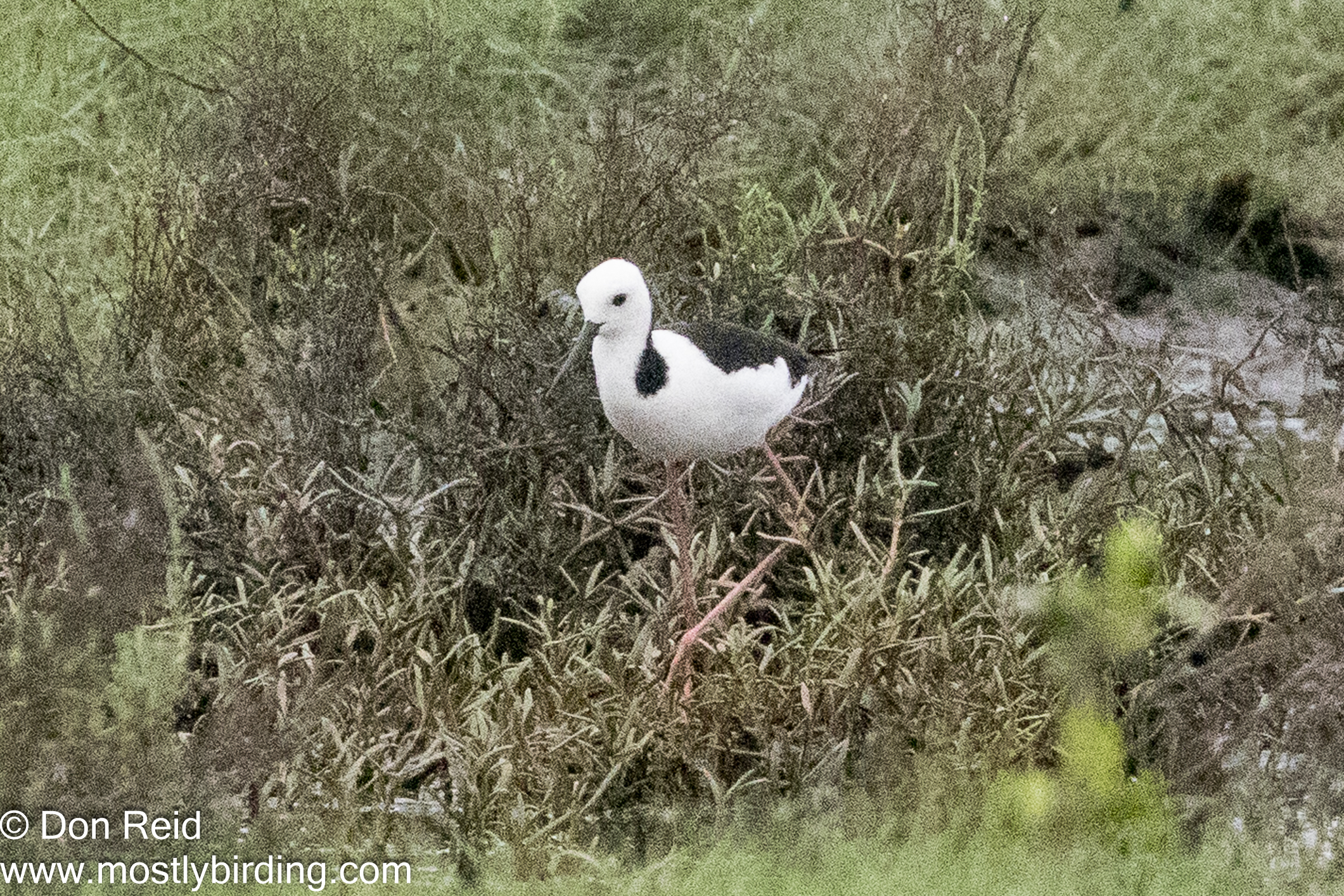
Pied Stilt

Still on my first walk, while I was scanning the distant wetlands, I quickly picked up a familiar long-legged black and white wader – certainly a Stilt I thought, very similar to its South African cousin but it had a black neck instead of the white of the Black-winged Stilt

Pied Stilt Himantopus leucocephalus, Mackay Queensland

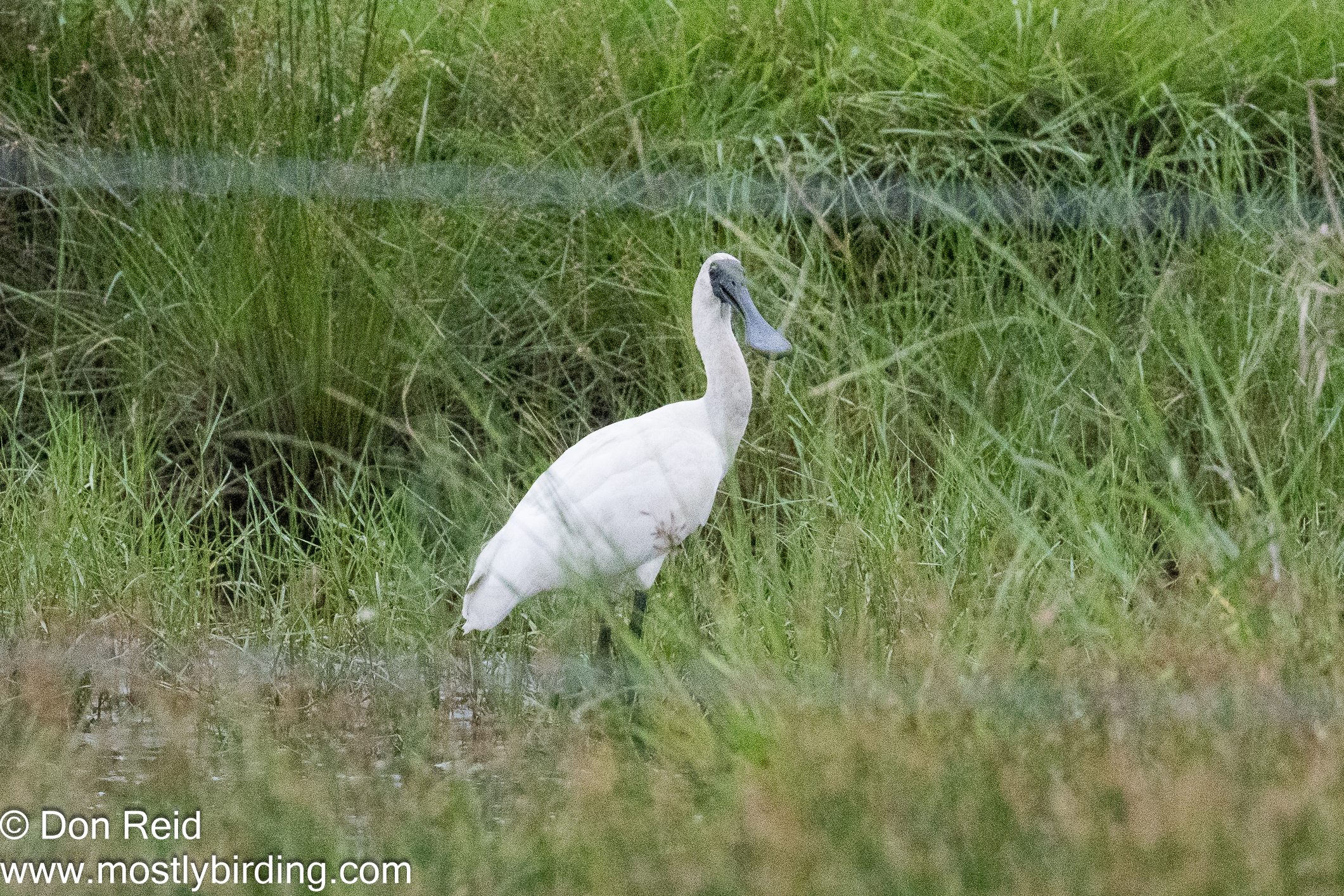
Royal Spoonbill

Not a lifer but pleasing to find was this Royal Spoonbill

Royal Spoonbill Platalea regia, Mackay Queensland

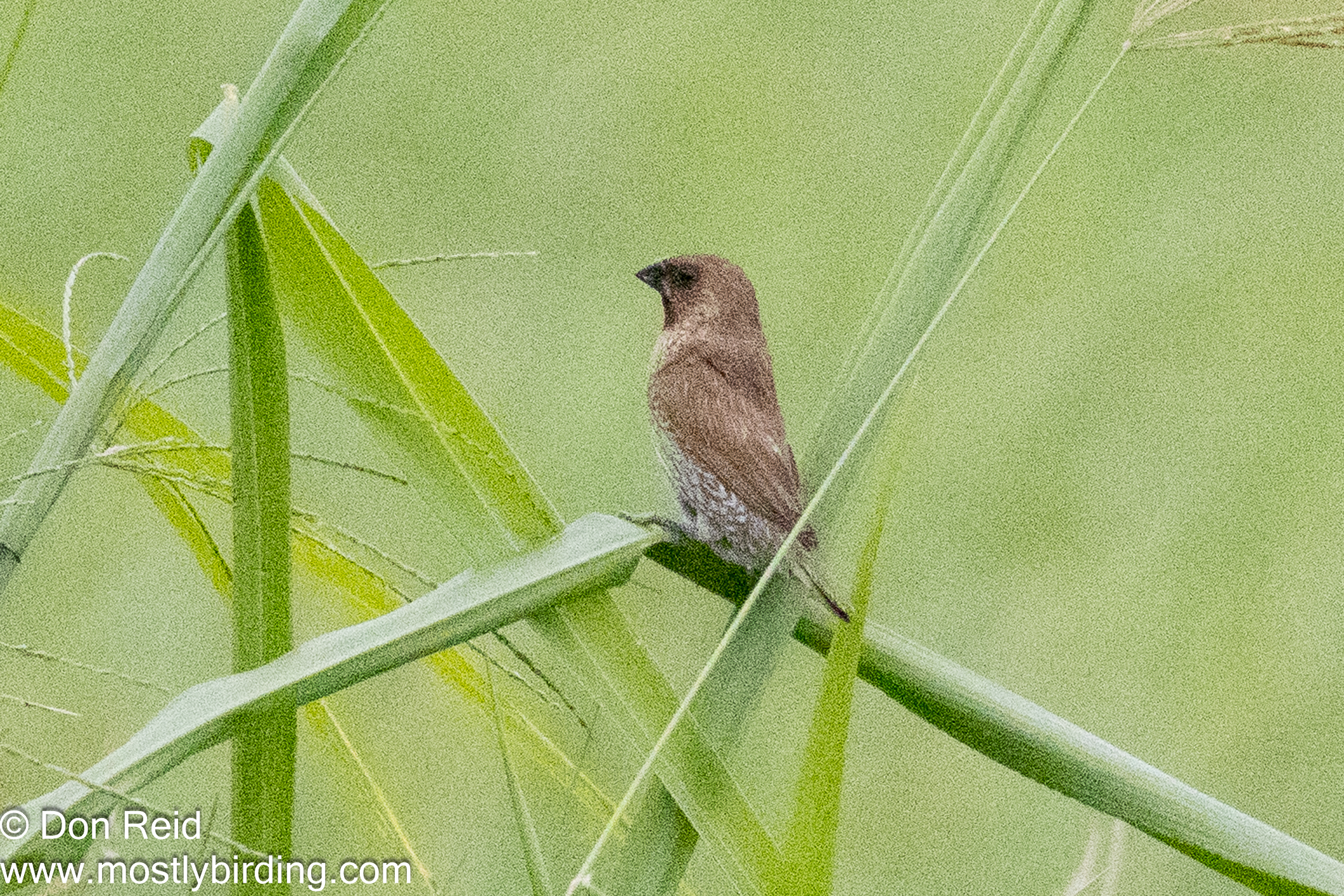
Scaly-breasted Munia

This was the first of two Mania / Mannikin species I came across in small flocks, landing in the rank grass verge of the ponds

I assumed this was a lifer as it carries the name Nutmeg Mannikin in the app, but it turned out to be the same species I saw in Mauritius back in 2017!

Scaly-breasted Munia Lonchura punctulata, Mackay Queensland

Chestnut-breasted Mannikin (Munia)

The other one was indeed a lifer and quite a striking little bird at that – shown by the illustration below

Magpie Goose

This large goose became a familiar sighting during our stay, including in a flock of 100 or more, descending on the wetlands as I headed home

Magpie Goose Anseranas semipalmata, Mackay Queensland

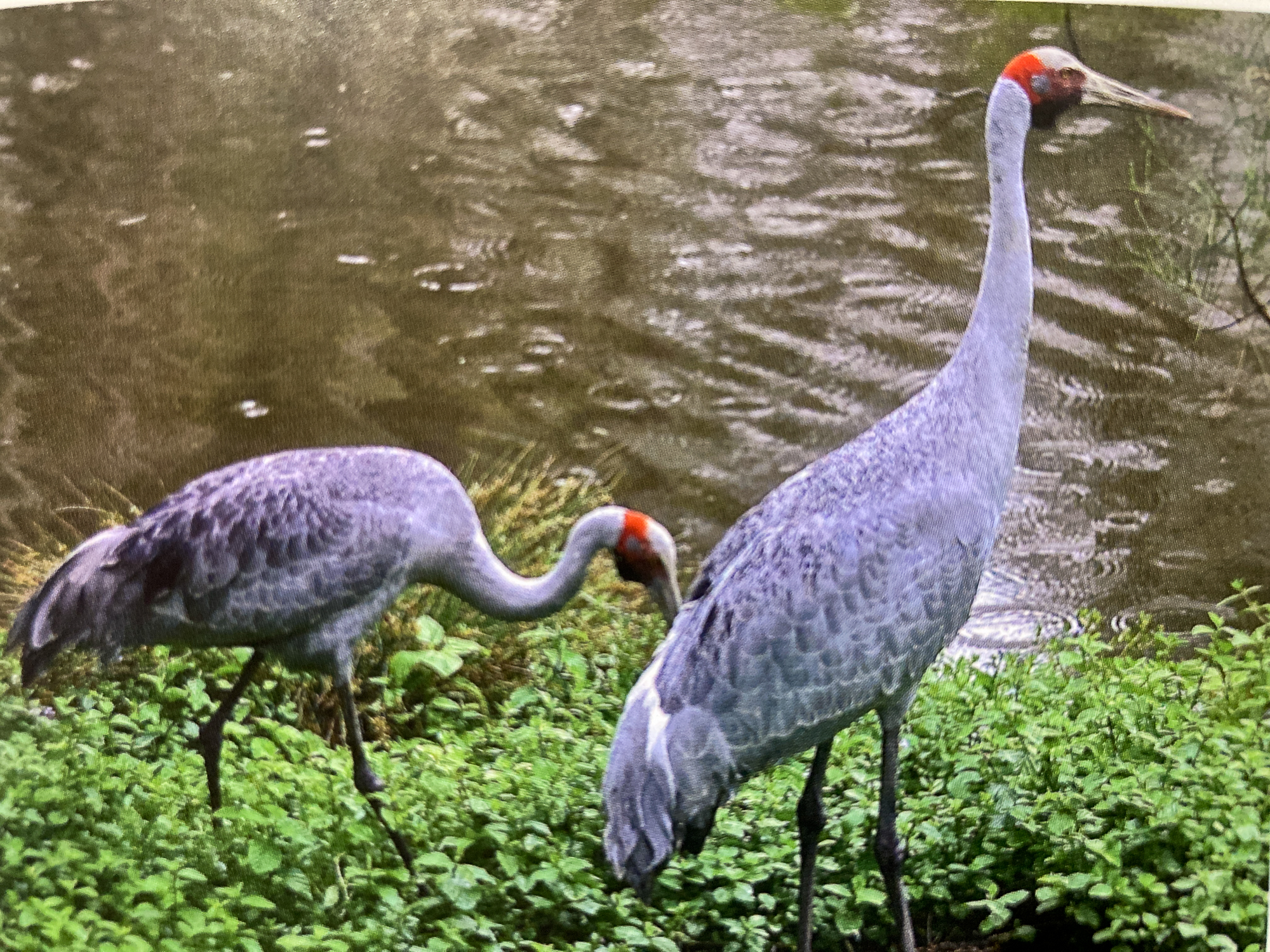
Brolga

An elegant crane species, my first sighting was of a group of five doing a high fly past over the suburbs. A few better sightings were had in the wetlands as they came in to settle there, but photo opportunities were scarce or non-existent

It became obvious that this is a stand out species in the area, when I stopped to chat with people from the neighbourhood – first question when they noticed my binos was inevitably “have you seen the Brolgas?”

Brolga

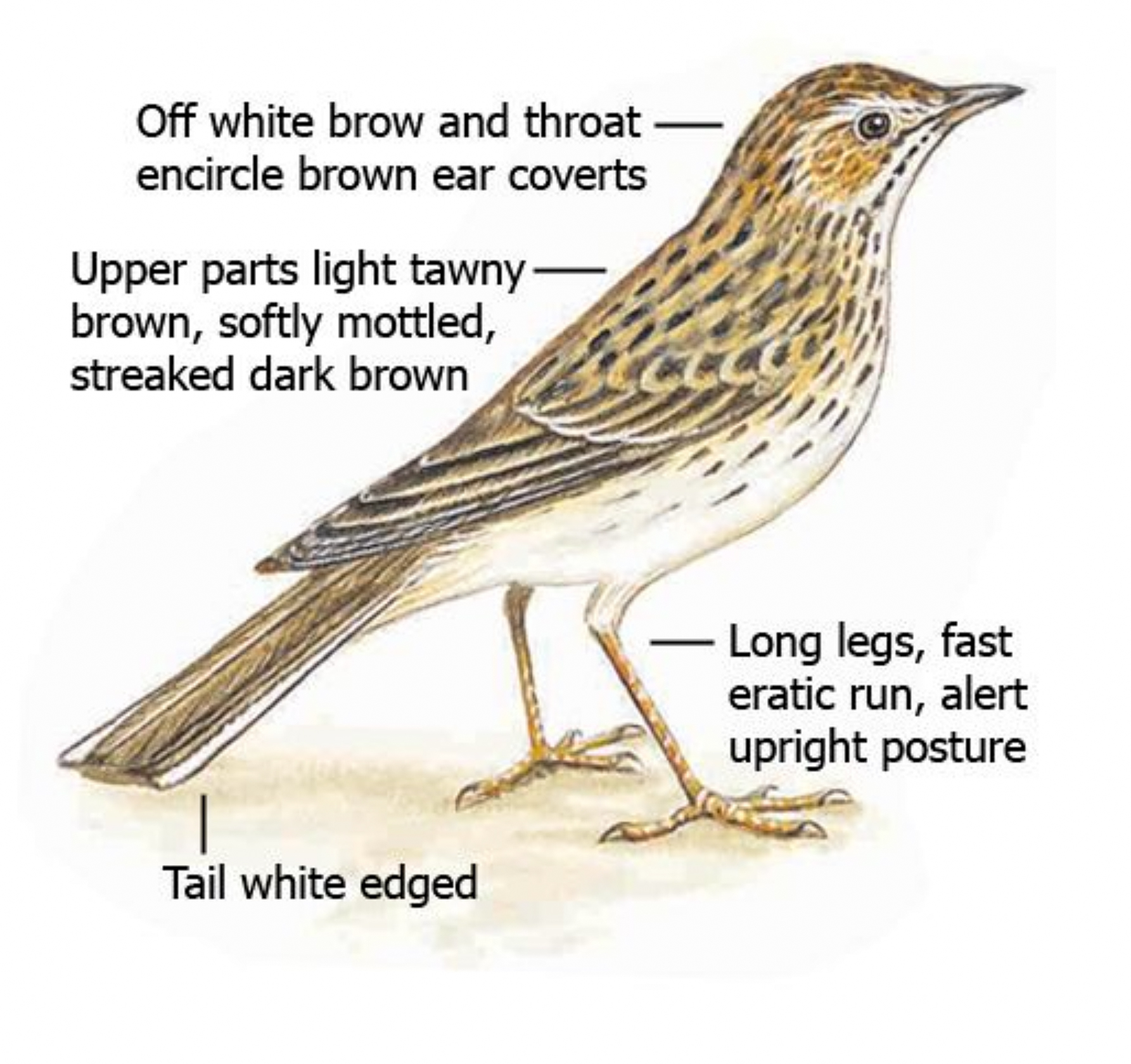
Australian Pipit

Spying a dullish bird walking in the short grassy area adjoining the pans, my instinct said ‘this just has to be a Pipit’ and sure enough that’s what it turned out to be

Australasian Pipit

Bar-breasted Honeyeater

Another exciting find – for no good reason other than being something quite different – was a Honeyeater (probably the most numerous species in Australia) moving about among the longer grass and reeds, which I followed anxiously until I had decent views of it

Plumed Whistling Duck

I had mastered the several differences between the two species of Whistling Duck, having seen them on a daily basis

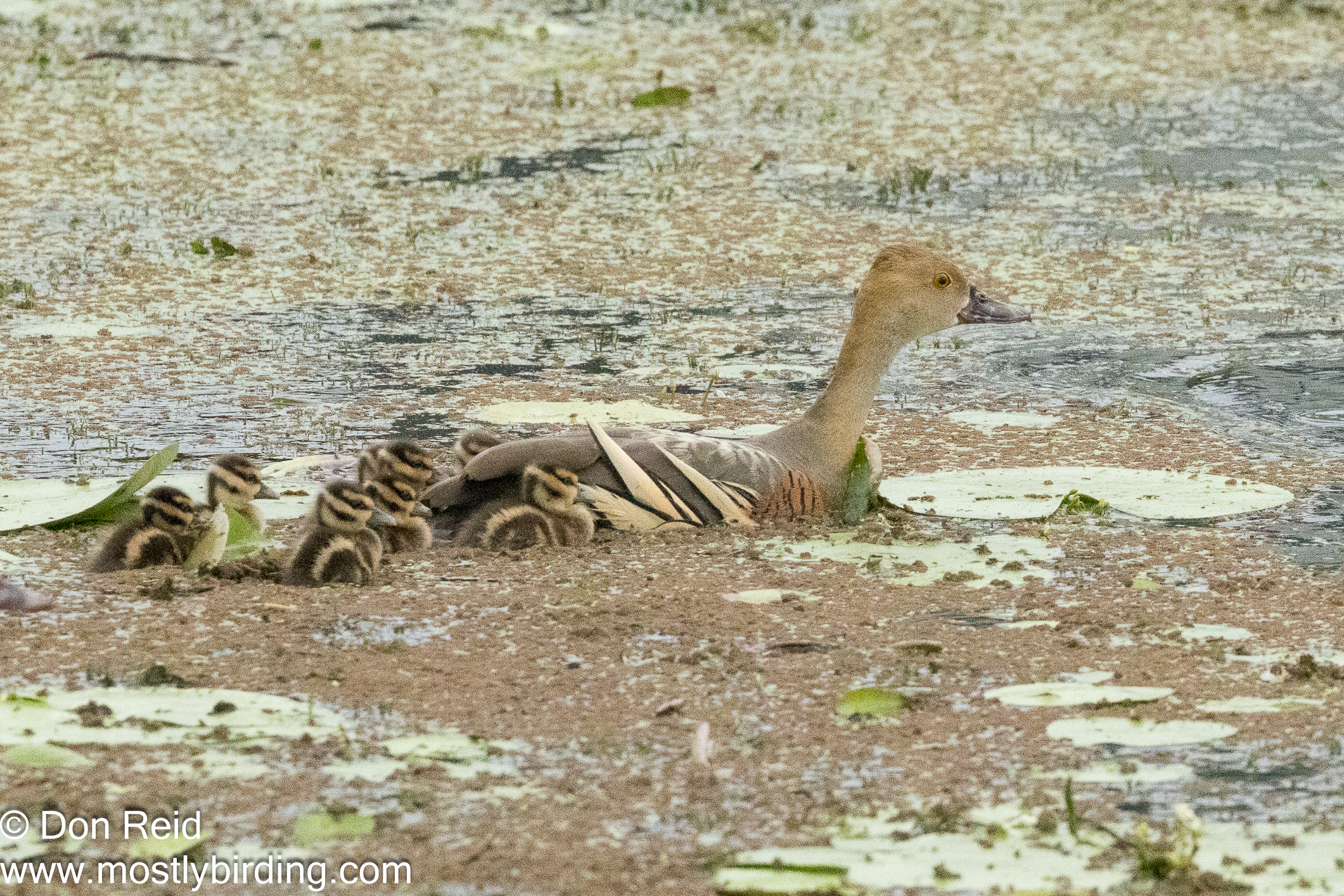
A pair with 7 ducklings made for a lovely sighting but light conditions were just not conducive to getting clear images

Plumed Whistling Duck Dendrocygna eytoni, Mackay Queensland

By contrast brief sunshine made all the difference in this image

Plumed Whistling Duck Dendrocygna eytoni, Mackay Queensland

Black-necked Stork

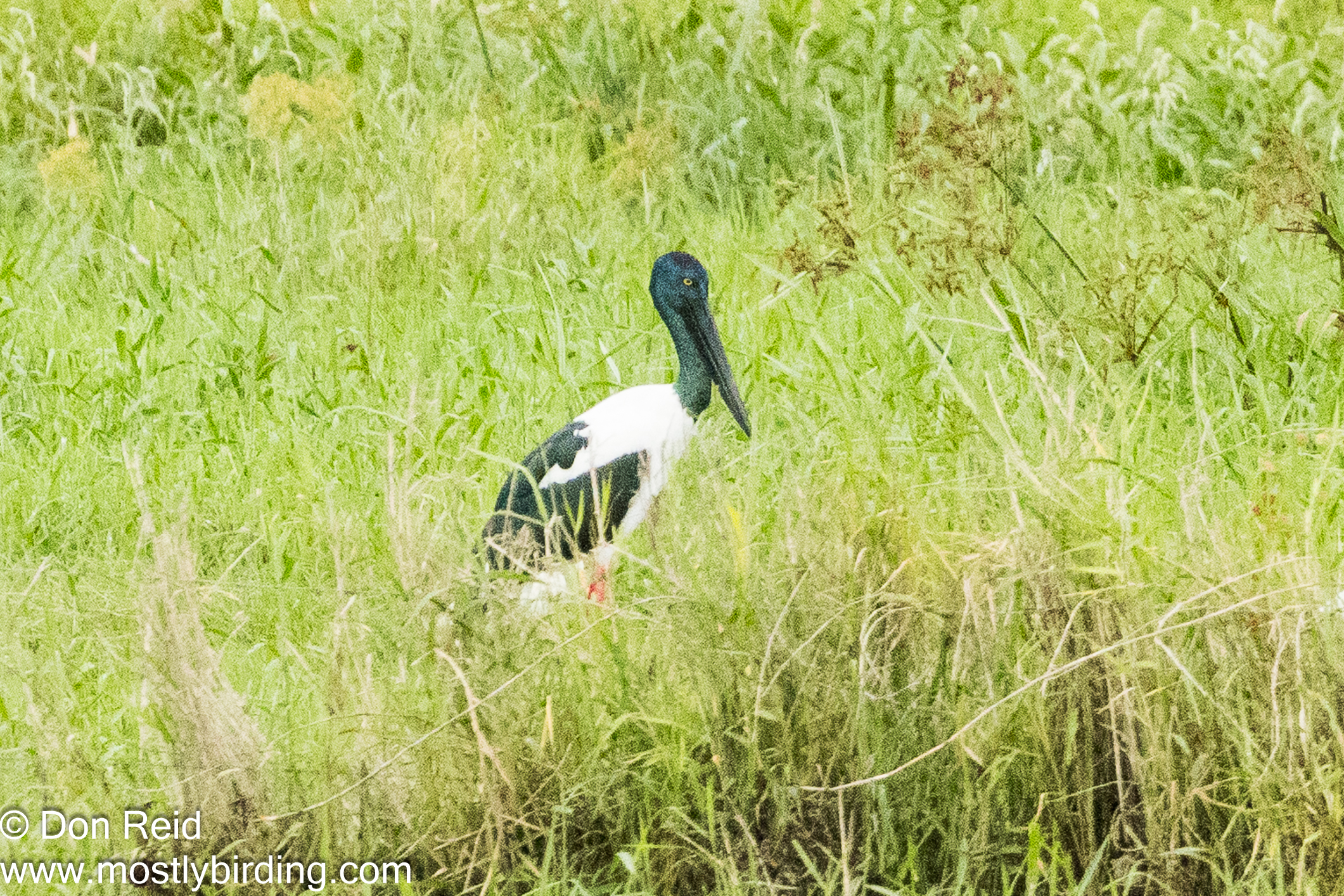
Way over on the far side of the wetland a single black and white bird drew my attention – another lifer and less common species was walking about in the long grass

Black-necked Stork Ephippiorhynchus asiaticus, Mackay Queensland

A Couple of Cuties

The next two species are not strictly linked to wetlands habitat but I include them under this section as that is where I had memorable encounters with them and could watch their antics


Golden-headed Cisticola

I had hoped to find at least one Cisticola in Mackay and this energetic bird on a fence wire was a most pleasing find, putting everything into its song while raising its colourful crest.

Golden-headed Cisticola Cisticola exilis, Mackay Queensland

Red-backed Fairy Wrens

My last afternoon walk of our visit felt like a farewell to the birds I had got to know over the last 3 weeks, and many came out in the welcome sunshine for a last sighting and some special photos.

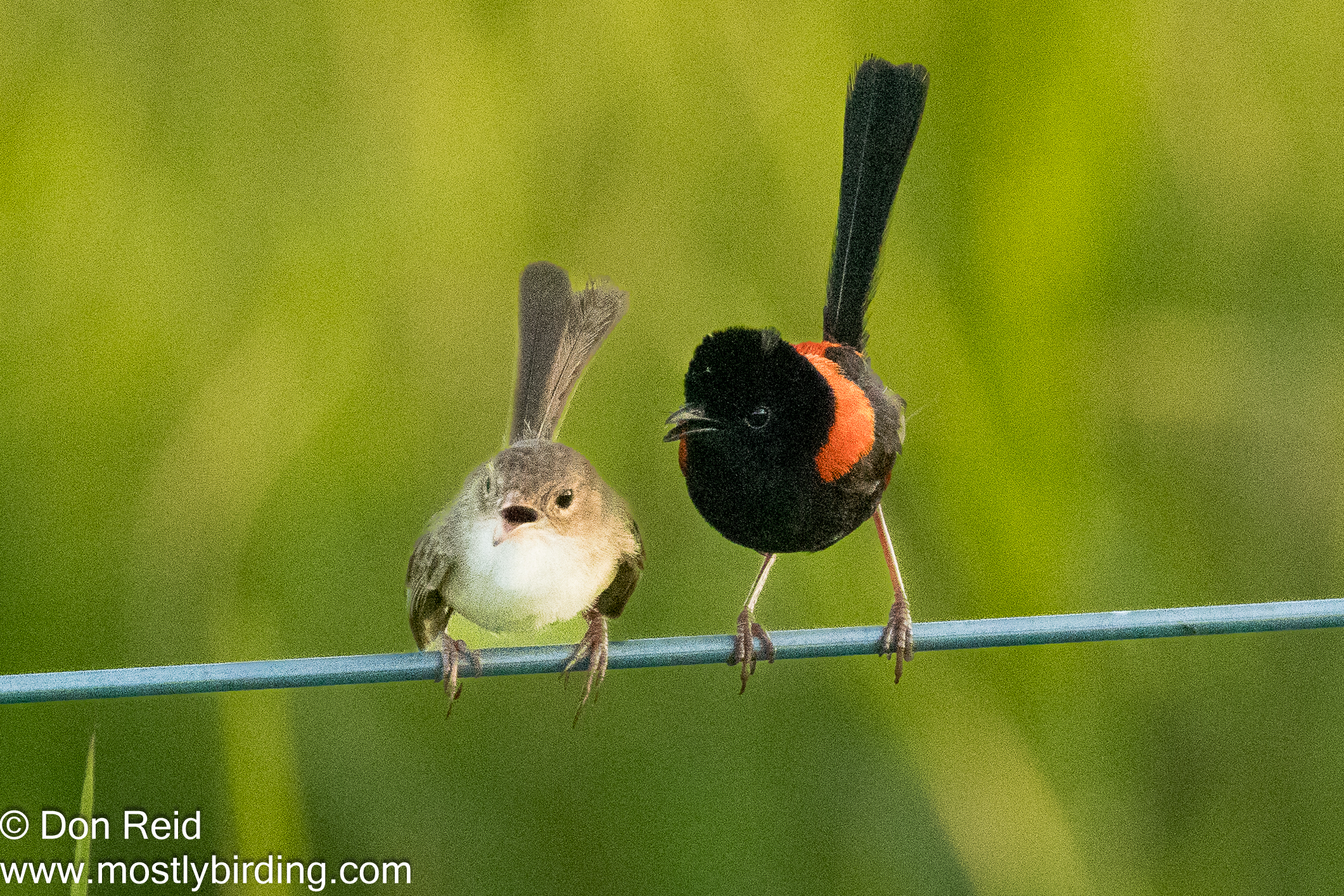
A pair of Fairy-Wrens put on a show which had me chuckling at their antics on a fence wire – clearly some sort of wooing was going on as the male pranced about on the wire and repeatedly leapt over the female to present himself from both sides

Red-backed Fairy-Wren Malurus melanocephalus, Mackay Queensland

A sighting like this is the essence of why birding is such a rewarding pastime – there is never an end to the moments that await you – at the end of a pathway, along a lonely beach, up in the mountains, deep in a forest, or wherever the birding urge takes you. Moments that you recall time and again later, bringing that same smile to your face that broke out when you first observed it.

It’s not Just The Birds ….

Southern Cape Scenes

My birding / atlasing trips that I undertake once a week, unless other activities or weather conditions get in the way, take me to various parts of the greater Mossel Bay area and beyond.

The scenes I come across in this varied and beautiful part of our country are often striking, especially in the early morning at and just after sunrise during the “golden hour”, but also later on.

Here are a few images taken over the last month or so

The first was on the road beyond Herbertsdale, looking back over the small town which was all but shrouded in early morning mist

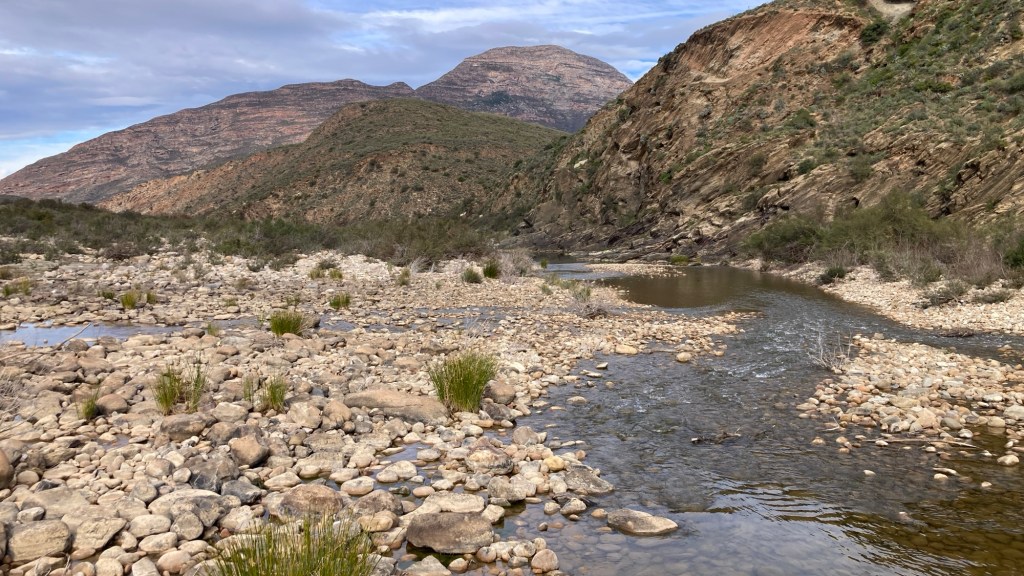
A trip ‘over the mountain’ north of Herbertsdale took me to the Gouritz River where I walked along the river bank for a few hundred metres, with not another soul in sight

Another trip took me to the same river but this time some 60 kms south of where the above images were taken, not far from the river mouth and the town that bears the name Gouritsmond (you guessed it – Afrikaans for Gouritz mouth)

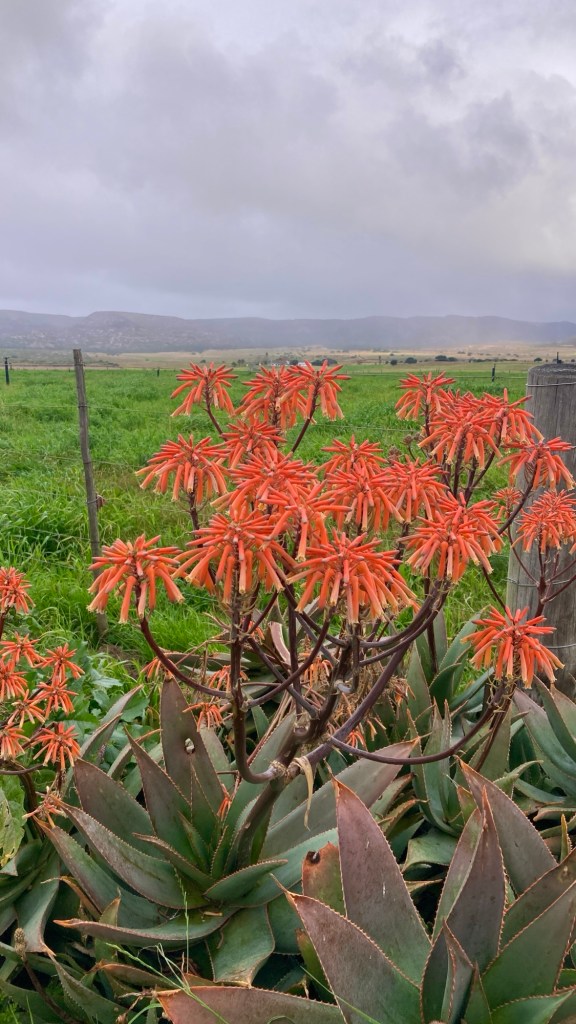
On that same trip this lovely flowering Aloe at the roadside caught my eye

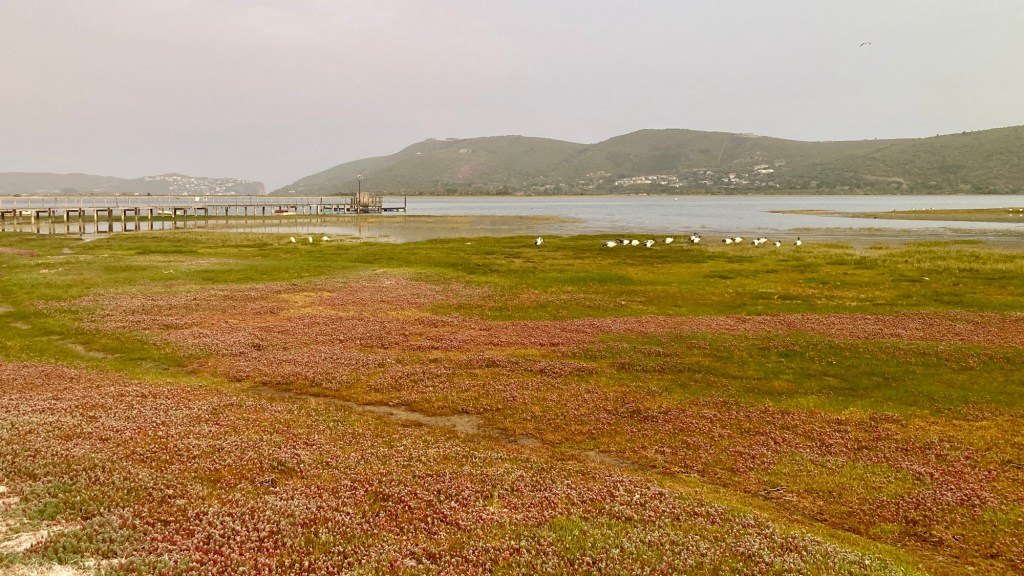
Heading further afield, a short trip to Knysna was an opportunity to see a bit of this famous Garden Route town. Our B&B had a view of a part of the estuary that is such an important feature of the town

Looking back from the wooden jetty towards the B&B (double-storey house on the left)

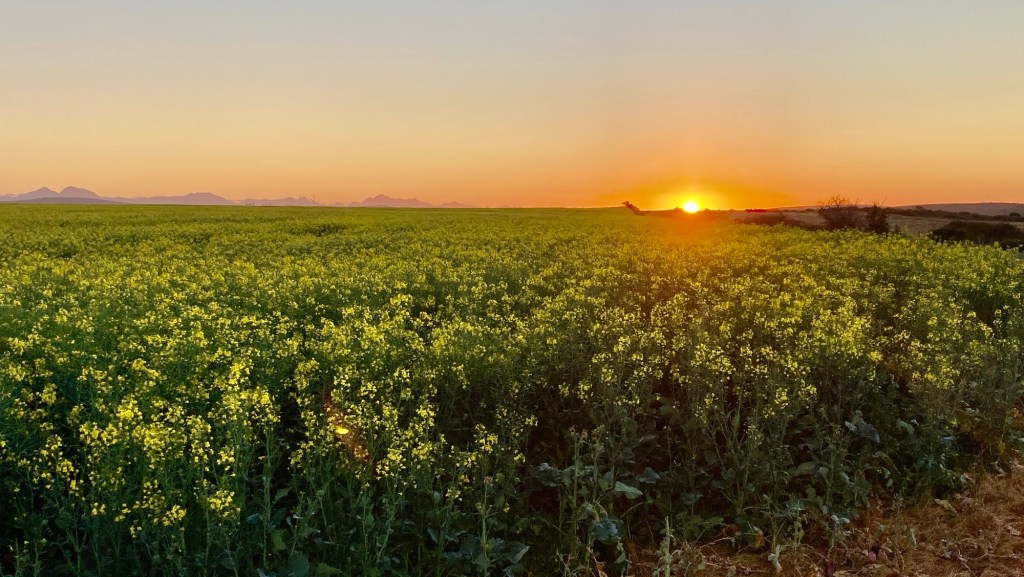
Every July / August the Canola fields are in bloom and provide stunning vistas in many parts of the southern Cape. I was fortunate to capture this scene as the sun peeped over the horizon, lighting up the yellow blossoms of the canola

Atlasing Tales 11 – Friemersheim and George Area

These tales record some of the more memorable experiences while atlasing – in this case during March 2023 while we were at our ‘other’ home in Mossel Bay (where we now reside permanently)

And in case you’ve forgotten or have not heard of Atlasing, here’s a brief synopsis –

Atlasing is the regular mapping of bird species in a specific area called a “pentad”. Each pentad has a unique number, based on its geographical position according to a 5 minute x 5 minute grid of co-ordinates of latitude and longitude, which translates into a square of our planet roughly 8 x 8 kms in extent.

As a registered observer / Citizen scientist under the SABAP2 program (SA Bird Atlas Project 2), I record all of the species I see or hear in a particular pentad over a period which can be anything between 2 hours and 5 days, for submission to the project database at the ADU (Animal Demography Unit) based in Cape Town.

George – Country roads west of town

Gerda’s last treatment, taking up most of the day at the clinic in George, meant I had a chance to do some atlasing in the area once again. I didn’t want to travel too far from George so chose a pentad directly west of the town.

Pentad 3355_2215

I headed west out of George, taking Charles street which winds through country farmland and hills before descending into Great Brak. Just after the start of the pentad the road – which is gravel most of the way – descends to the single lane bridge over the Maalgate River

Bridge over Maalgate River

There I spent some time on both sides of the river, recording Fork-tailed Drongo, Black Saw-wing, Common Quail, Little Rush Warbler and several Swallows and Swifts.

Add to that a number of waterfowl at a large dam further along the same road and I had recorded a quick 25 species in as many minutes, including a lone Purple Heron at the dam.

Purple Heron Ardea purpurea Rooireier

One of the ‘hazards’ of atlasing the country roads is encountering the occasional ‘road block’ – fortunately not of the policed kind, rather one that adds to the experience as gentle farm animals pass by the car.

Great Brak inland

After crossing the river again, a Long-crested Eagle flew over to fill my heart with pleasure – later in the adjacent pentad another (or possibly the same one) soared high above with some sort of prey gripped in its beak – this time I had my camera handy for a quick photo as it passed over me

Long-crested Eagle Lophaetus occipitalis Langkuifarend

After that great start, the birding slowed somewhat as I followed the road through farmlands, then headed back in the direction of George along roads that took me through the adjacent pentad.

That led to an unusual encounter with a Malachite Kingfisher, which flew across the road in front of the car, then settled on a fence – unusual because there were no dams or rivers in the vicinity. It perched long enough to allow me to take a few photos in this out of character environment.

Malachite Kingfisher Alcedo cristata Kuifkopvisvanger

Pentad Species total : 41

Friemersheim Area

Looking to further ‘fill in’ my MBMA Project block of pentads for the year (MBMA is my acronym for Mossel Bay Municipal Area which covers 42 pentads over a wide swathe of the southern Cape from Gouritz River in the west to Glentana in the east and northwards up to the Klein Karoo), I decided to tackle the pentads covering the village of Friemersheim itself and to the west and east of it.

Pentad 3355_2210

I started in the pentad to the east of Friemersheim at 7am on the dot, travelling along Amy Searle Street northwards out of the town of Great Brak River, initially through farmland with a sprinkling of small dams on either side of the road.

First bird was a calling Burchell’s Coucal – their soft bubbling call often advertises their presence long before they show themselves – later I had a surprise close encounter with the species.

I spent some time at the first roadside dams, looking with some difficulty into the low morning sun – a Malachite Kingfisher was already active, perched on a convenient branch and plunging to catch small prey.

Several waterfowl were present, such as the ubiquitous Yellow-billed Duck, a few Red-billed Teals and a Little Grebe.

Carrying on, a field with shortish grass was the right habitat for Lapwings and produced the similar looking Black-winged Lapwings and Crowned Lapwings, the former a scarcer, sought after species, the latter far more common.

Black-winged Lapwing Vanellus melanopterus Grootswartvlerkkiewiet, Friemersheim area
Crowned Lapwing Vanellus coronatus / Kroonkiewiet

I turned off the tar road eastwards along a nondescript gravel side road, but one I had previously explored with some success. The first stretch travels through more farmland with shortish grass, which was good for Zitting Cisticola and Cape Longclaw, plus many Barn Swallows flying low and scooping flying insects out of the air.

Thereafter the road turns steeply downhill into a wooded valley with a strong river flowing at the lowest point. Halfway down I stopped for coffee and rusks and added 8 species in the 15 to 20 minutes spent listening and looking out for birds, including several forest species –

  • Knysna Turaco calling
  • Greater Double-collared Sunbird
Greater Double-collared Sunbird Cinnyris afer Groot-rooibandsuikerbekkie
  • Collared Sunbird – my first record of the species for the Western Cape
  • Dusky Flycatcher
  • Fork-tailed Drongo
  • Olive Bushshrike

Emerging from the valley, I continued along the road through more farmlands and rolling hills, steadily adding species to the card, which included a few more special sightings –

  • Spotted Flycatcher perched on a fence, allowing me to take several photos (another first record for my Western Cape list)
Spotted Flycatcher Muscicapa striata Europese vlieëvanger
  • Terrestrial Brownbul calling from dense bush – krrr – krrr – krrr is the best way I can describe this secretive species’ call
  • The close encounter with a Burchell’s Coucal mentioned above – I followed its progress through a tangle of long grass and bushes
Burchell’s Coucal Centropus burchellii Gewone vleiloerie
  • Cape Batis
  • White-faced Ducks at yet another roadside dam
  • Jackal Buzzard on a pole just before exiting the pentad
Jackal Buzzard Buteo rufofuscus Rooiborsjakkalsvoël

Total species for the pentad : 58

Pentad 3355_2210

The second pentad for the morning was far less productive, probably because it was close to midday when birds tend to be temporarily absent until the late afternoon ‘rush hour’ starts

My route was through Friemersheim (which has been the subject of several of my posts about the mural artwork that is a feature of this interesting village) then a circular route on the northern side of the village.

There were few highlights, but I found hundreds of Barn Swallows feeding over the fields. My last stop in the forested section produced several Cape Batises and a Butterfly gathering moisture from a puddle in the road

Cape Batis Batis capensis Kaapse bosbontrokkie (male)

Total species for the pentad : 23

Other stuff

The focus is on the birds while atlasing but there are always other things to divert the attention….

Monarch Butterfly, Friemersheim area
African Blue-banded Swallowtail / Papilio nireus
Erica, Friemersheim area

Small Birds taking BIG Journeys : Part 4

To repeat the intro to my previous posts on this subject …. Many of the migrant waders – or shorebirds as they are also known – display the most Jeckyll and Hyde characteristics of all birds, living two dramatically different lives and spending time in habitats which are far removed from each other.

Separating these two lives are amazing journeys that take these small yet hardy birds halfway across the world – and back again.

South African birders get to know migrant species during their stay in the southern hemisphere, typically during the months from October to April, so let’s find out a bit more about their ‘other’ lives by delving (again) into the typical annual life cycle of these waders.

This time it’s the –

Wood Sandpiper (Bosruiter) Tringa glareola

Affectionately called ‘Woodies’, this species is so named because they breed on swamps and peat bogs in the coniferous taiga forests of the Northern Hemisphere – who would have thought this is also a ‘Forest bird’ !

Identification and Distribution

Identification of the Wood Sandpiper is relatively easy – compared to some of the other LBW’s (Little brown waders) – and is often the first wader that novice birders will get to know as it is one of the most common freshwater waders

What to look out for

  • medium size (19 – 21cm; 55 – 65g) slim, fairly long-legged, graceful
  • straight bill about the same length as the head, white brow extends behind eye
  • grey-brown above with eye-catching white ‘spotting’ , grey below
Wood Sandpiper, Devon

Distribution

The orange area on the global distribution map (from Cornell Birds of the World) shows where breeding occurs in the Northern Hemisphere while the blue area, mostly in the Southern Hemisphere, is where they go to ‘get away from it all’ and prepare themselves for the next round of raising a family.

Wood Sandpiper, Marievale

The southern African distribution map (from The Firefinch Birding app) shows the species presence across most of the region but absent from the Kalahari and arid west.

Life in the North

The preferred breeding habitat is the open swampy area and peat bogs in coniferous forests, scrubland between those forests and tundra

Their diet is mainly small aquatic insects, caught by pecking or probing while walking in shallow water

Wood Sandpiper, Marievale Bird Sanctuary

Breeding

The nest is usually a small scrape on the ground lined with moss, stems and leaves, in dense vegetation, but also frequently in trees in old nests of other species

Eggs (usually 4) are laid and incubated for about 3 weeks – from 7 to 10 days after hatching the male cares for the young on its own

Fledging some 3 to 4 weeks later, the fledglings are independent soon thereafter, facing the many dangers that young birds are subject to.

Wood Sandpiper, Kasane Botswana

Migration

The birds we see in Southern Africa are thought to originate from Russia, first adults leave early July, arriving in the south from late July / August with juveniles following mainly in September and October.

Migration is undertaken at night with birds capable of single flights of up to 4000km. Overland routes are followed by small flocks or singly, mainly via the Rift Valley

Wood Sandpiper, Kasane Botswana

Life in the South

Of the 3 million+ Woodies that head to Africa, some 50 – 100,000 end up in southern Africa, where they seek out suitable freshwater habitats. These can be anything from shallow sewage ponds to marshes, flood plains and muddy edges of streams and rivers, down to the size of a puddle.

Wood Sandpiper, Punda Maria

Sometime after arrival, adults start a post-breeding moult which continues for up to 4 months, during which time all feathers are replaced with new ones.

Generally, a solitary bird except where food is abundant when they may gather in loose groups

Wood Sandpiper with Little Stint, Leeuwfontein Pan near Belfast

They start departing from late February with the majority having left by end April, heading north to their breeding grounds where the cycle will start all over again…

Wood Sandpiper, Bredasdorp

References : Cornell Lab of Ornithology Birds of the World; Roberts VII Birds of Southern Africa; Firefinch app, Collins Bird Guide; Waders of Southern Africa

Friemersheim Revisited …. Again!

The most popular posts on my blog to date have been those I wrote about the quirky artwork that adorns the outside walls of random homes in the small village of Friemersheim in the Southern Cape.

For some reason readers have been attracted to these posts in far greater numbers than any of my other 300 plus posts – a tad ironic when you consider the title of my blog is “Mostly Birding”, as this is the one post that has no birds mentioned other than those depicted in the murals!

But I’m not complaining – It’s just the persuasion I need to post some more photos of the artwork that has appeared since those posts.

So let me remind you about Friemersheim with some of the details from the original post …..

Where is Friemersheim?

This small town, described by some as a hamlet, lies a short distance inland of Great Brak River, itself a small town on the coast of the southern Cape, not far from our home town Mossel Bay

The Artwork

Friemersheim was firmly placed on the tourist map during lockdown, when South African artist Fourie Ackermann, who moved to the area in 2015, decided to liven things up with murals painted on the walls of local houses. And did he make a good job of it!

It is an ongoing project it seems, as new murals ‘pop up’ on houses throughout the spread-out town on a regular basis.

During a recent bird atlasing trip to the area around the town I took some ‘time off’ from birding to drive through the town and view the murals that had appeared since my previous posts

Here’s what I found …..

Cottage with it All!

We came across this charmingly “artworked” cottage a couple of kilometres before the town itself- a perfect combination of reality and imagination and incorporating several of Fourie’s trademark features-

The side wall has a zebra in a doorway, a real door and an alcove with a tractor

The front wall has a friendly couple waving forever to passers-by, a real door, and…

a real window decorated with painted shutters, a few balloons, flowers and a black cat just visible through the lace curtain

Cheetah on a Rock with Two Cubs

This house on the main road through the village has just one painting of a cheetah and its cubs perched on a rock

Zooming in, the detail becomes clear…

Leopard in a Tree

Further on along the same road, this small shop serves as the canvas for another of the big cats – this time a Leopard in a tree

Leopard Watching

Still on the Leopard theme, this one has surely spotted prey, judging by the focused stare

Fish Eagle

One wall of another modest house is adorned with this image of an African Fish-Eagle with a fish clutched in its talons

Lion in a House

I particularly enjoy the quirky side of Fourie’s artistic murals, such as this lion glaring at you through a large ‘hole in the wall’ of the abode, with a sunbird perched on a thin stem for good luck

More Cheetahs

My first post on this unique town included the image below of cheetahs with a real dog (disturbingly chained) on the front lawn.

The dog is no longer there (thank goodness) but the adjoining wall has now been decorated with another cheetah scene

This town is a treat to see if you are ever in the area!

Australia 2025 : Brisbane – a Brief Glimpse

Australia 3.1

Our third trip to Australia in January and February this year was all about seeing son Stephan and his family for the first time since 2022, while using the opportunity to see more of Australia – a huge country we are getting to know in small instalments.

The ‘instalment’ this time around was based on a suggestion by Stephan that we meet the family in Sydney and do a slow road trip up the east coast to Brisbane, where we would catch a flight to Mackay in Queensland, their new home town. That appealed to us, as it meant spending quality time with the family while our grandkids had school holidays and Stephan was on leave, at the same time seeing a part of Australia that we had not visited before.

We had left Sydney behind and enjoyed two days each at Caves Beach, Nambucca Heads and Gold Coast, now it was time to conclude our road trip with a short visit to Brisbane

Wednesday – Some shopping and a slow trip to Brisbane

After checking out of the Meriton Suites in Gold Coast, we tagged along with the family to the nearby Pacific Fair shopping mall, with no particular goal in mind other than to see what it looked like and while away some time before undertaking the (supposedly) short trip to Brisbane, a mere 75 kms away.

Pacific Fair Mall, Gold Coast Queensland

What we found was a mall much like those in all big cities with the usual mix of shops, some with names we recognised, others not, and walkways full of people of all ages but predominantly young and fashionable.

First stop was at Le Bon Croix restaurant for tea/coffee and something delicious – the choice of croissants and tarts, the latter fresh and brightly coloured, was tempting

Pacific Fair Mall, Gold Coast Queensland

After some deliberation I chose this slightly more conservative one to accompany my coffee

Pacific Fair Mall, Gold Coast Queensland

Then the girls did a round of the shops with the boys in tow, before returning to the car and setting off to Brisbane.

Traffic was painfully slow all the way to the highway and for most of the way to Brisbane, which turned the short journey into a 3 hour affair.

Thank goodness for the technology that provides a map and directions on the console – it’s hard to imagine driving in a foreign country to a city you have never been to before without it.

Nevertheless, driving in constant traffic on roads you have never driven on before is not easy (dare I say especially at our age), so it was not surprising that I missed the turn into the Indigo Hotel Brisbane City and had to find my way around a series of one-way, busy city streets to get back to the hotel, adding to the already somewhat nervy state I was in.  I was mightily relieved once we had offloaded our bags, got them to the room and I had taken the car to the off-site parking a block away.

The family had delayed their trip due to the traffic, so we went in search of a restaurant on our own, ‘following our noses’ along strange streets and ending up a few blocks down George Street at Lennons in the Hyatt Hotel – we enjoyed a good dinner and by the time we got back to the hotel the family had arrived.

Brisbane Queensland

Birds added: None!

Thursday – Brisbane – Gardens and the Museum

We slept a bit later and went for breakfast as late as allowed.

We had decided to visit the Botanical Gardens in the city, so we ubered there and took a slow walk from the drop off point, taking in the lush forest like gardens along the way.

Botanical Gardens, Brisbane Queensland

A cafe with a view beckoned for tea…

Botanical Gardens, Brisbane Queensland

Refreshments were accompanied by the presence of Noisy Miners and an Australian White Ibis / Bin Chicken as well as a Water Dragon that dashed between our legs causing a flutter or two.

Noisy Miner, Botanical Gardens, Brisbane Queensland
Eastern Water Dragon, Botanical Gardens, Brisbane Queensland
“Bin Chicken” cleaning up as soon as we stood up to leave

 A nice surprise awaited when we carried on along the pathways, in the form of three Bush Stone-Curlews standing like statues among the trees.

Bush Stone-Curlew, Botanical Gardens, Brisbane Queensland

I had hoped to find this species, which is of the same genus as our Dikkops – Burhinus – so is akin to being a cousin, albeit on a different continent.

Further on we came to the ponds which held a number of Dusky Moorhens.

Brisbane Queensland

At one of the ponds I noticed two birds flying low over the water and snatching something from the surface. On closer inspection of the photos and after comparing my photos with the Birding app, my hopes for another lifer were confirmed – Blue-faced Honeyeater.

Blue-faced Honeyeater, Botanical Gardens, Brisbane Queensland

This juvenile Laughing Kookaburra was quite content scratching about in the leaf litter and seemed unconcerned by our presence

Laughing Kookaburra (Juvenile), Botanical Gardens, Brisbane Queensland

The kids were keen to visit the Queensland Museum and with closing time just an hour away we ubered there from the main gate of the gardens. It was a worthwhile trip with outstanding exhibits although we had to rush it a bit.

Brisbane Museum

The digital recreations of prehistoric scenes were particularly impressive

We all found something interesting to see, mine being the displays of Aussie birds and butterflies

Brisbane Queensland
Brisbane Queensland

On the way back we had a glimpse of the river and views of the city from the minibus cab that we called

Brisbane Queensland

No this is not the cab! Just a sleek Aston Martin outside our hotel

Brisbane Queensland

We rounded off the day with a last meal in the hotel restaurant, which was Japanese fusion and our ‘Wagyu Bagas’ were the best burgers we’ve had in a long while.

Tomorrow we travel ‘home’ to Mackay on the last leg of a memorable trip.

Triplist – Birds added

  • Bush Stone-Curlew at the Botanical Gardens
  • Blue-faced Honeyeater at the Botanical Gardens
  • Australian Brushturkey on the lawns where we waited for our Uber

Friday – Brisbane to Mackay

We are looking forward to our stay in Mackay which a first impression suggests is a pleasant town without pretension.

Footnote on modern travel

Oh well, we live and learn…

Australia 2025 : Gold Coast

Australia 3.1

Our third trip to Australia in January and February this year was all about seeing son Stephan and his family for the first time since 2022, while using the opportunity to see more of Australia – a huge country we are getting to know in small instalments.

The ‘instalment’ this time around was based on a suggestion by Stephan that we meet the family in Sydney and do a slow road trip up the east coast to Brisbane, where we would catch a flight to Mackay in Queensland, their new home town. That appealed to us, as it meant spending quality time with the family while our grandkids had school holidays and Stephan was on leave, at the same time seeing a part of Australia that we had not visited before.

We had left Sydney behind and enjoyed two days each at Caves Beach and Nambucca Heads – next stop Gold Coast

Sunday – Nambucca Heads to Gold Coast

Time to head further north today, but not before enjoying a breakfast at Wharf Café which overlooks the estuary. The rain had almost subsided and allowed us to load the cars and leave by checkout time.

Breakfast done, we started on the route to Gold Coast and were soon back on the Pacific highway, this time in sunny conditions which made the drive a lot more comfortable. As in other parts of Australia that we have driven, we passed through long stretches lined with tall trees on both sides, which is always pleasing to the eye.

On the road

We stuck to the highway all the way to Byron Bay where we diverted to drive through the town and stop for refreshments and a look at the beach. Byron Bay is known for its beautiful coastal scenery, its famous surf breaks and for being a spot favoured by celebrities – it struck us as being similar in character to our Garden Route towns such as Plettenberg Bay and Knysna.

Byron Bay Beach NSW

Back on the highway, a notable feature are the ‘bridges to nowhere’ that the road passes under at fairly regular intervals – bridges that seem to end either side of the highway with no visible approach road crossing over.

We saw similar bridges in Canada so I guessed that their purpose was the same ie to provide a safe crossing point for wildlife of all kinds, without having to set foot on the road at all.

The principle behind these structures is the provision of ecological connectivity between the areas occupied by various wildlife on either side of the highway. They are used by everything from marsupials and reptiles to frogs and birds, saving countless wildlife from becoming roadkill.

Passing under one of several “Wildlife crossings” on the Pacific Highway
Gold Coast Queensland
Burleigh Heads Queensland

Being in in a new time zone in Queensland (which does not observe daylight saving in summer), we had lost an hour so had about an hour of daylight left to relax on the deck. Naturally I spent most of that hour scanning the surrounding trees for birdlife and gazing into the sky where a number of what looked like swallows were making the most of the time before sunset.

View from the deck at Burleigh Heads Queensland

Triplist

Birds added:

Good old House Sparrow at one of the stops

Swamp Harrier flying over the road in an area with wetlands bordering the highway

Swamp Harrier (image from Birds of the World)

Pied Currawong in the large trees around the house

Pied Currawong
Strepera graculina, Burleigh Heads Queensland

White-breasted Woodswallow high up above the house

White-breasted Woodswallow (image from Birds of the World)

Monday – Gold Coast : Sea World

Stephan had booked tickets for a visit to Sea World and we set off along a busy route lined with tall apartment buildings and hotels which told a story of a popular place for holidays and plenty of wealth. Our hearts sank when we saw the exceptionally large, full parking area – expected I suppose but still… I dropped Gerda off near the entrance, parked far away and walked back to join the queue at the entrance.

Heading back to the entrance

Inside, the foyer was buzzing with activity and people – after a tea and a snack we walked along paths filled with more people and flanking expansive outdoor pools which we bypassed for the time being – the dolphin show was scheduled to start soon and we didn’t want to miss it.

We made it in good time after a longish walk with throngs of people and found a good spot to sit and enjoy the show – which was very well done and a highlight of the day.

Heading back, we found a table at the main area for a burger lunch, after which we slowly made our way back to the exit, leaving the family to do the rides, while we took in the Shark tank and Manta ray pools on the way back.

Sea World, Gold Coast Queensland

At the house we flopped onto the bed for a recovery snooze followed by some outside time on the deck before the rest of the family returned, exhilarated after doing several of the spectacular rides on offer.

Tuesday – Gold Coast : Surprise Low and a Spectacular High

The Low

Well it had to happen sometime – no proper road trip ever runs smoothly all of the way….

We set about finding alternative accommodation while we packed, which we eventually found in an apartment complex not too far away. Meriton Apartments turned out to be quite smart, upmarket in fact and apart from the cost it was a good move, albeit just for one night. Gerda and I checked in while the rest were having a beach swim, and I popped down to the pool for a refreshing swim.

The High

Soon it was time to set off for the Outback Spectacular evening show at a venue on the way to Brisbane, which was true to its name and made up for the drama and disappointment of the day so far.

Australian Outback Spectacular show, Gold Coast Queensland

The show had it all …… and more as the images hopefully show –

Australian Outback Spectacular show, Gold Coast Queensland

We all enjoyed the show thoroughly, with horses, cattle, a dog and various vehicles adding to the spectacle, all synced with an outstanding projection of images on the back wall and on the floor of the arena and woven around a story of the outback

Australian Outback Spectacular show, Gold Coast Queensland

There didn’t seem to be any way of topping what had been done so far – until a helicopter entered the arena! I mumbled something about ‘Good grief it’s a flipping helicopter!’ or words to that effect, as the helicopter, a real one tethered to a steel beam running below the roof, did a circuit of the arena and helped ‘rustle’ the cattle back to their pens – truly spectacular!

And as if that wasn’t enough, a cloudburst with real water fell across the arena (not the seating area) and was followed by a digitally created waterfall and river flowing through the sandy floor of the arena. We left with embedded memories …… and a complimentary straw hat!

Triplist –

Birds added (before we vacated the house)

Pacific Swift amongst swallows and swifts soaring above the house

Pacific Swift (Image from Birds of the World)

A curious Grey Butcherbird appearing on the deck and popping out into the open to give us the once over

Grey Butcherbird
Cracticus torquatus, Burleigh Heads Queensland

The Gold Coast had proved to be memorable for many reasons – all that remained of our road trip was the short stretch to Brisbane.