
Australia 3.1
This was our third visit in six years to this wonderful country – we had completed our slow, memorable road trip from Sydney to Brisbane, enjoying a few days each at Caves Beach, Nambucca Heads, Gold Coast and Brisbane, where we had boarded a plane again to travel ‘home’ to Mackay and the very pleasant prospect of spending the next three weeks with the family and getting to know the town.
Mackay is a city in the Mackay Region on the eastern or Coral Sea coast of Queensland, Australia. It is located about 970 kilometres north of Brisbane, on the Pioneer River.

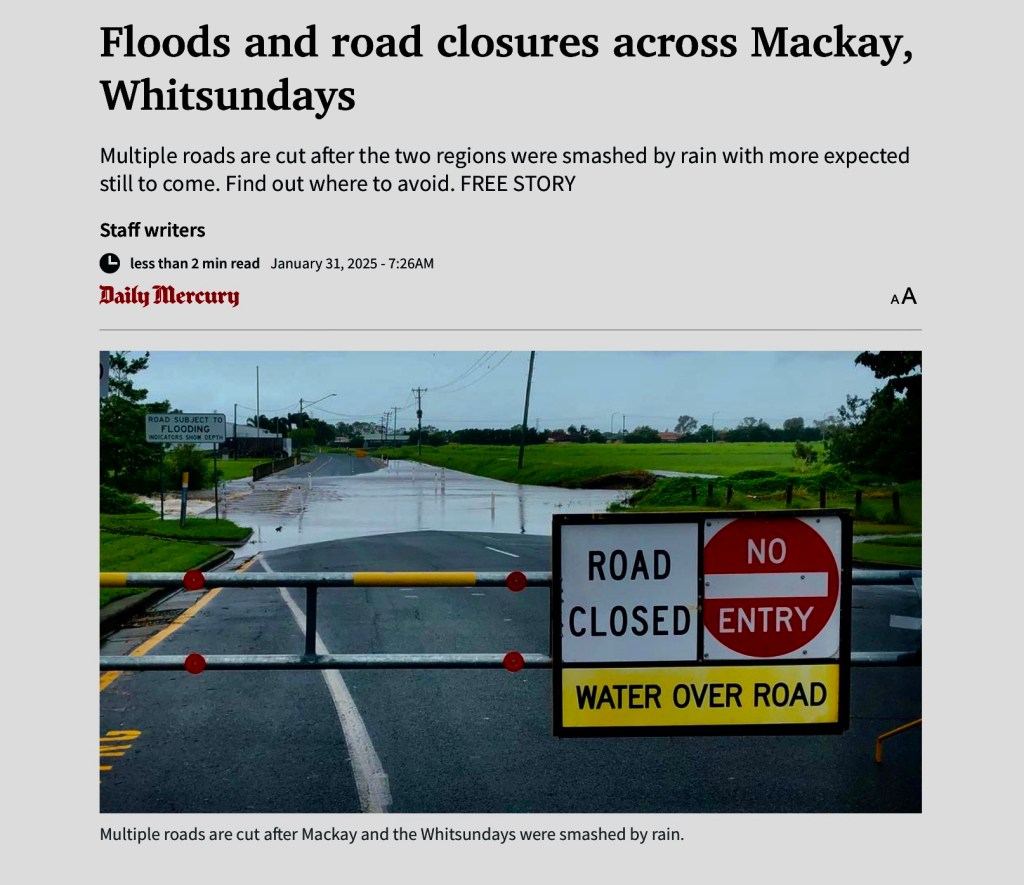
Mackay : The Wettest place we have experienced!
We had inadvertently chosen the time of year to visit Mackay, when the area receives its highest rainfall, but the rain we experienced was way beyond the norm
A selection of my journal comments paint the picture …..
“The rain came down in torrents today, keeping us indoors, which allowed me to catch up on some blogging and photo editing. No birding opportunities though.”
“Yet another rainy day and not much done. The weather was kind enough to allow me an afternoon walk, this time with camera wrapped in a plastic bag just in case.”
“No birds added for two days now, mainly due to the unending rain that kept on during the late afternoon 4 to 6 pm slot when I usually take a walk”
“By the time I got home I was thoroughly drenched but still warm as the humid air does not cool down much.”
“And still it rains, two weeks after arriving in Mackay!”
And if that is not convincing enough, have a look at some local news reports ….

Fortunately the rain eased during our last week in Mackay and we could at last get out and about to have a look at some of the beaches and the Botanic Gardens.
The (Very Wet!) Wetlands
As soon as the weather allowed, I set out on a slow recce of the neighbourhood in the vicinity of the house and was immensely pleased to find some large ponds with surrounding vegetation within easy walking distance. Even better, the adjoining lands, which seemed to be part of a farm, were partially inundated to form a large wetland area, with numerous birds visible in the shallow water and along the fringes.
I have been using the ebird app to record my birding occasionally and it came in handy in Australia with its worldwide coverage and data.
As per the screenshot below, the app tracks your route while birding – shown by the blue line in the image. I added a green outline just to show the approximate extent of the wetlands adjoining the built up area.

After that first exploratory walk and whenever the weather allowed, I enjoyed late afternoon walks to and around the nearby wetlands which I quickly discovered were a sheer birding delight, with plenty of birds easily visible. Although many of the birds on the expansive wetlands were further away, they were still identifiable for the most part.

One afternoon, I went for a longer walk around the wetlands with rain imminent. It rained lightly at first then came down a lot heavier while I was halfway around. There was no going back, so I pulled on my rain jacket and quickened my pace but had to take off my sandals to get across the newly formed streams pouring across the walking trail at a slight dip.

Another afternoon, I took what had become my customary walk, this time without a camera (which usually guarantees that I will have exceptional photographic opportunities) and with e-bird at the ready to do an ebird list.
After an hour of circling the wetland area I had listed 31 species, which compares well with my SA atlasing pace – not something I expected in Australia based on my Victoria birding outings during previous visits.
The Birding
Birders like nothing better than finding and seeing new birds – or ‘lifers’ as they are known – I am no exception and exploring a new area in a different country is one of the absolute joys of this endlessly fascinating pastime, with the prospect of coming across a lifer or two.
Despite the extreme weather – or perhaps partly because of it – I managed to find a lot more new birds during our stay in Mackay than I had hoped for – here is a selection of those in the wetland areas – Part 2 of this post will include the lifers and others that I found away from the wetlands.
Photography
Heavily overcast conditions and rain meant 1. Light for photography was seldom satisfactory and 2. It just was not worth the risk of damaging my camera out in the rain
So I have relied on two other sources where I was not able to take my own images of birds :
- Australian Birds eguide app by Michael Morcombe and David Stewart
- The Complete Guide to Australian Birds by George Adams
Wandering Whistling Duck
Just 5 minutes from the house, approaching the wetlands for the first time, a group of ducks flew up calling in a familiar way that reminded me of our White-faced Ducks. When they settled again, I approached cautiously and was able to ID them, confirming my first instinct.

Comb-crested Jacana
One of the highlights of our visit was finding this striking Jacana on my first walk around the ponds, the red comb on its head standing out like a bright red beret. They became a regular feature of my walks, but remained quite skittish, not hanging around for a sharper image.

White-browed Crake
Literally a few metres after the Jacanas, I saw movement among the water lilies and was thrilled to see two small Crakes moving about warily before disappearing into denser vegetation.

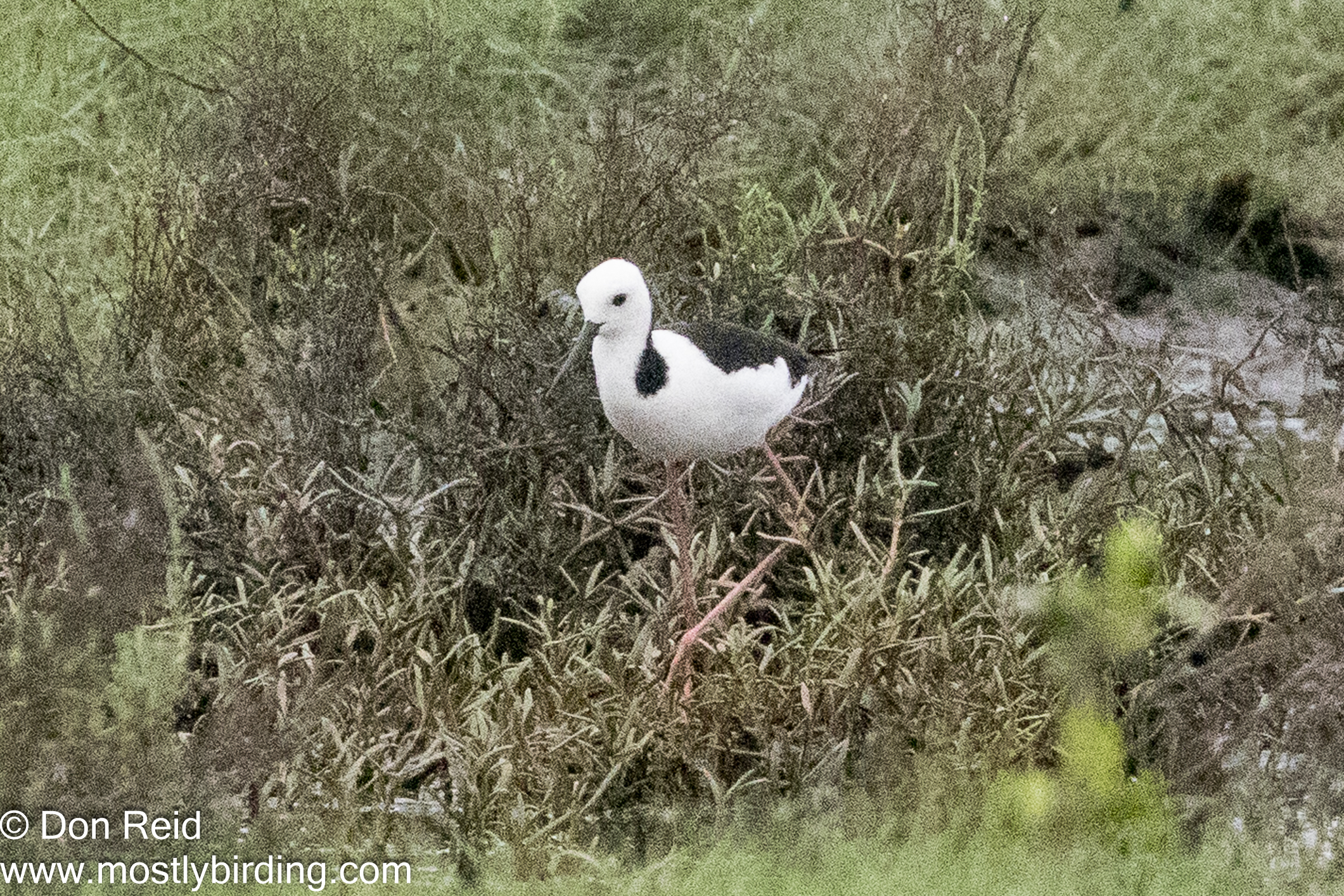
Pied Stilt
Still on my first walk, while I was scanning the distant wetlands, I quickly picked up a familiar long-legged black and white wader – certainly a Stilt I thought, very similar to its South African cousin but it had a black neck instead of the white of the Black-winged Stilt
Royal Spoonbill
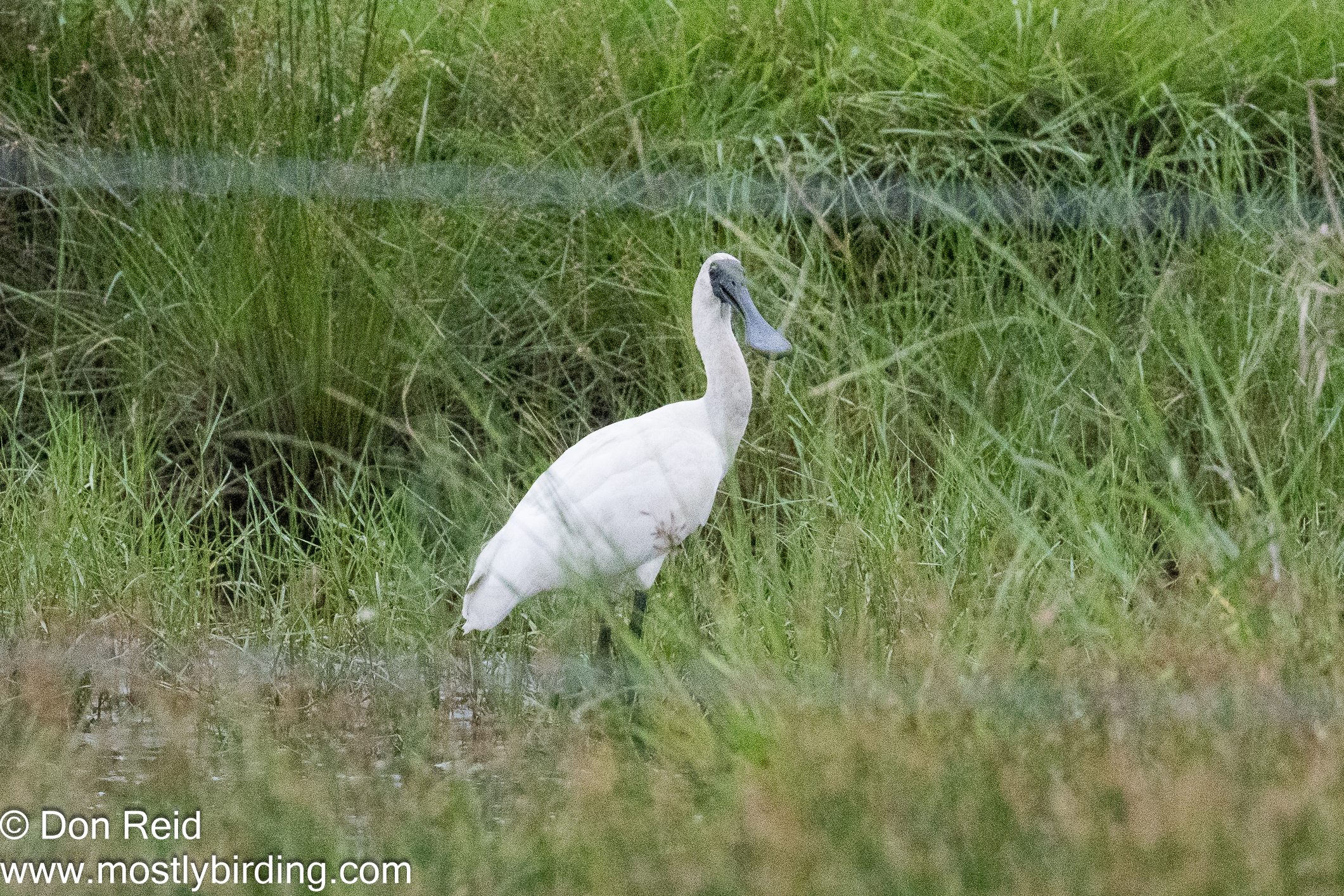
Not a lifer but pleasing to find was this Royal Spoonbill
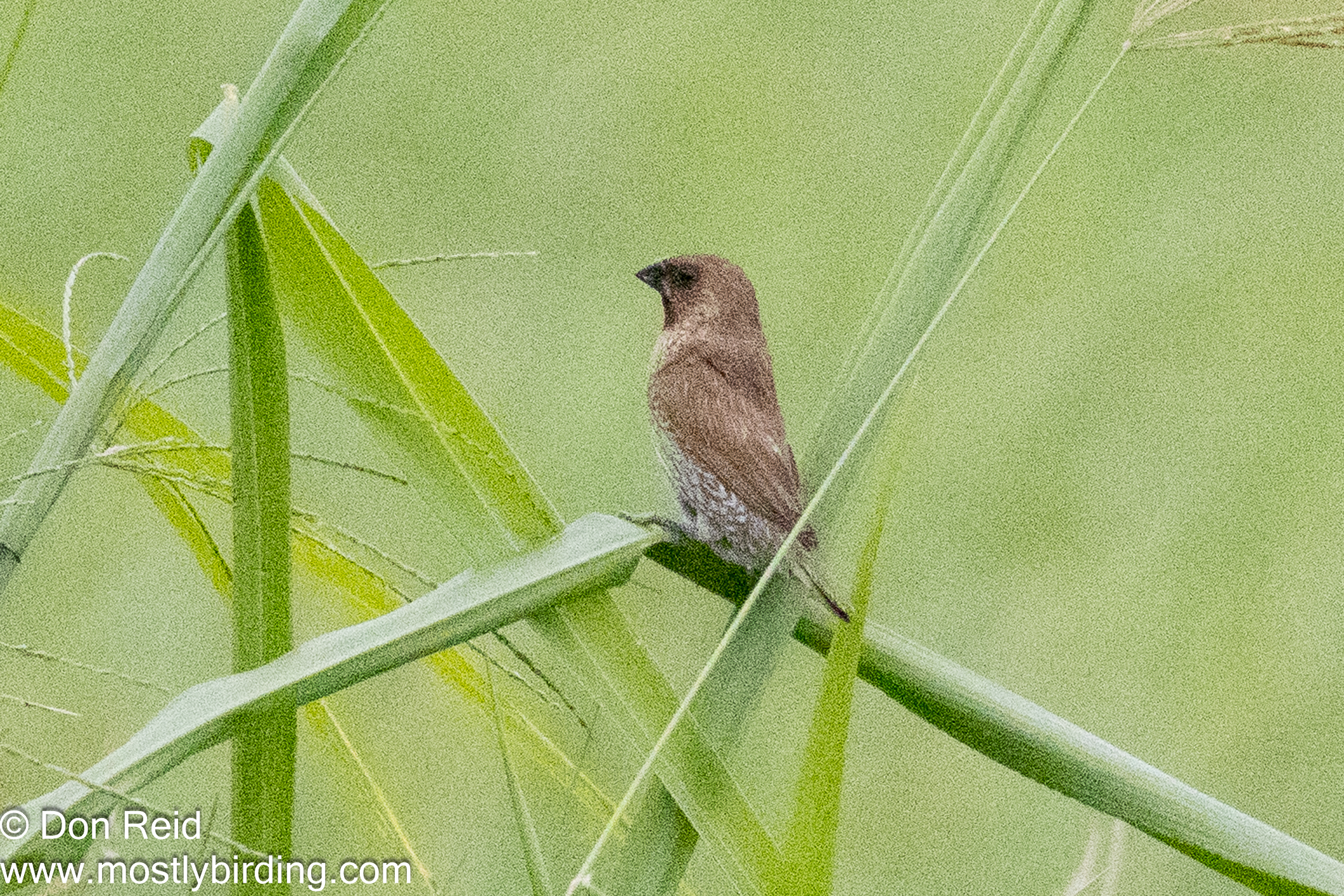
Scaly-breasted Munia
This was the first of two Mania / Mannikin species I came across in small flocks, landing in the rank grass verge of the ponds
I assumed this was a lifer as it carries the name Nutmeg Mannikin in the app, but it turned out to be the same species I saw in Mauritius back in 2017!
Chestnut-breasted Mannikin (Munia)
The other one was indeed a lifer and quite a striking little bird at that – shown by the illustration below

Magpie Goose
This large goose became a familiar sighting during our stay, including in a flock of 100 or more, descending on the wetlands as I headed home

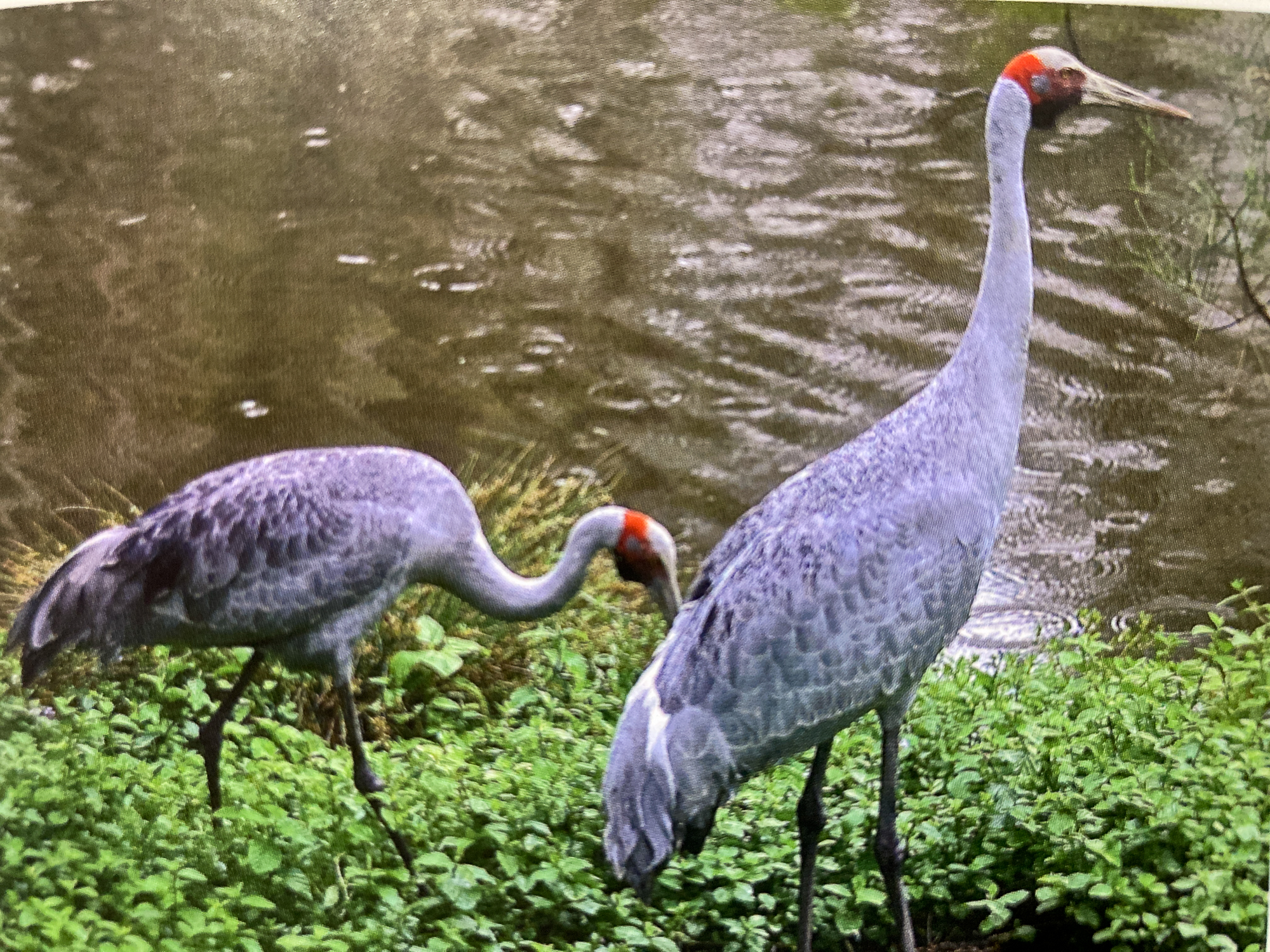
Brolga
An elegant crane species, my first sighting was of a group of five doing a high fly past over the suburbs. A few better sightings were had in the wetlands as they came in to settle there, but photo opportunities were scarce or non-existent
It became obvious that this is a stand out species in the area, when I stopped to chat with people from the neighbourhood – first question when they noticed my binos was inevitably “have you seen the Brolgas?”
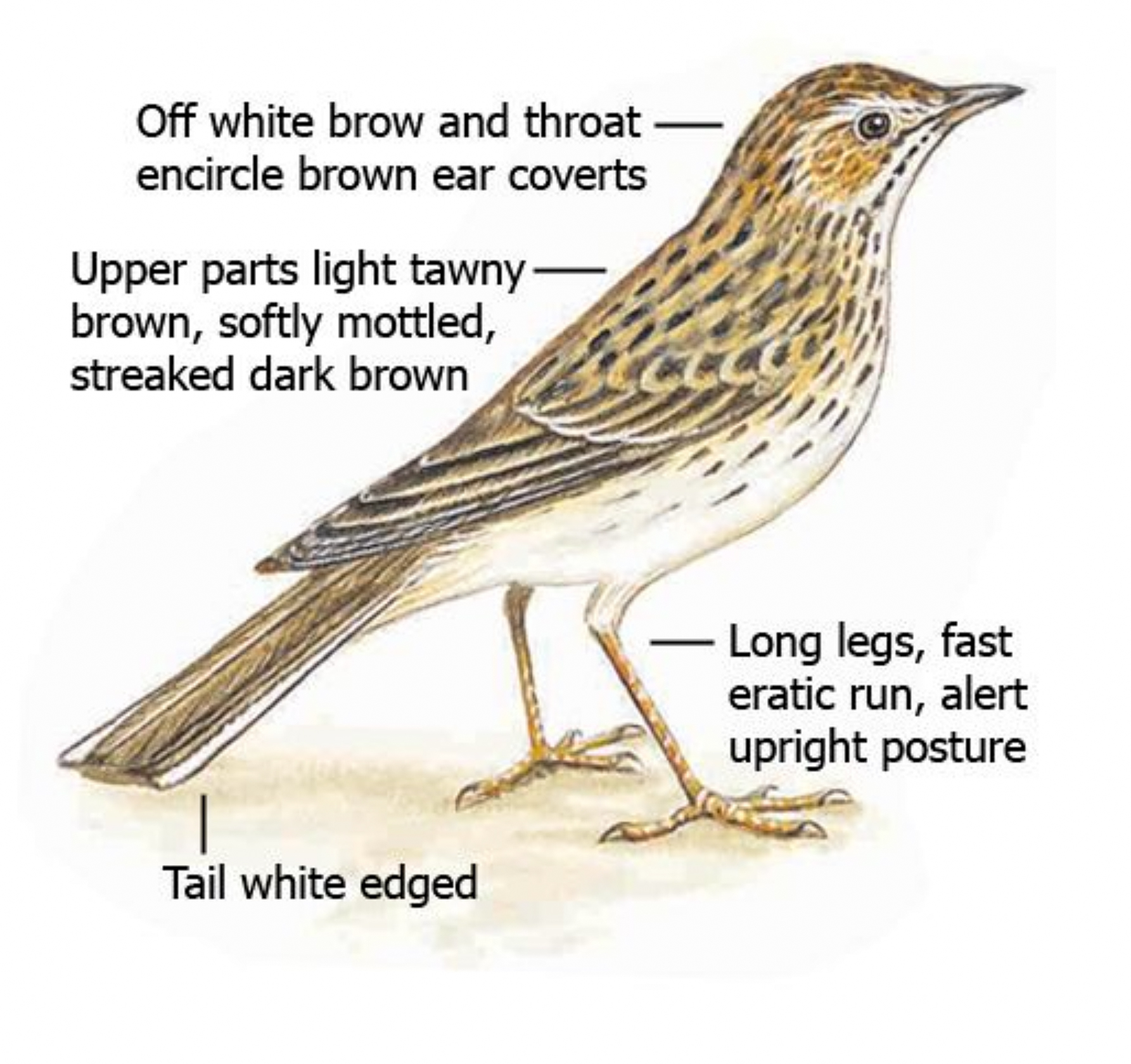
Australian Pipit
Spying a dullish bird walking in the short grassy area adjoining the pans, my instinct said ‘this just has to be a Pipit’ and sure enough that’s what it turned out to be
Bar-breasted Honeyeater
Another exciting find – for no good reason other than being something quite different – was a Honeyeater (probably the most numerous species in Australia) moving about among the longer grass and reeds, which I followed anxiously until I had decent views of it

Plumed Whistling Duck
I had mastered the several differences between the two species of Whistling Duck, having seen them on a daily basis
A pair with 7 ducklings made for a lovely sighting but light conditions were just not conducive to getting clear images
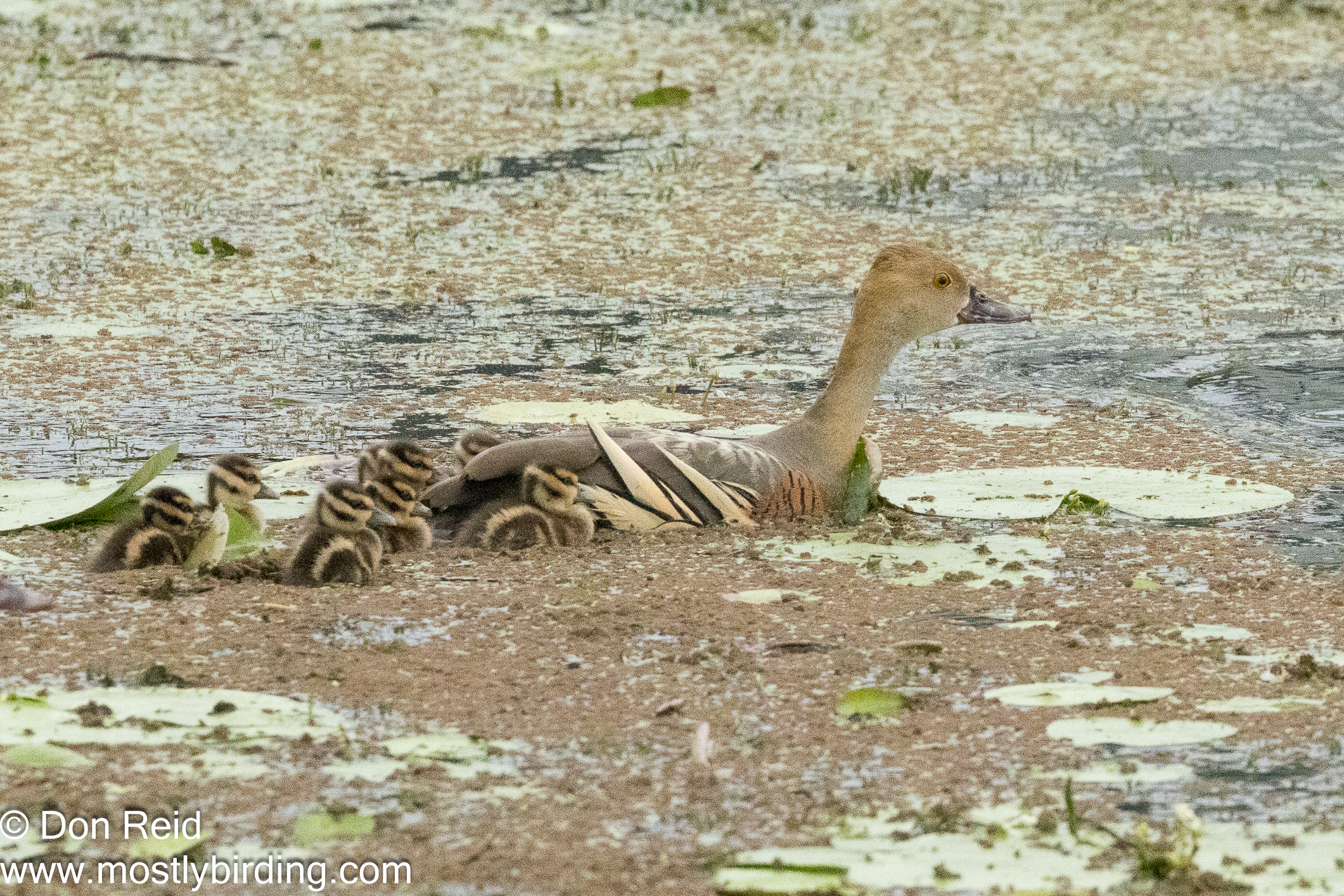
By contrast brief sunshine made all the difference in this image

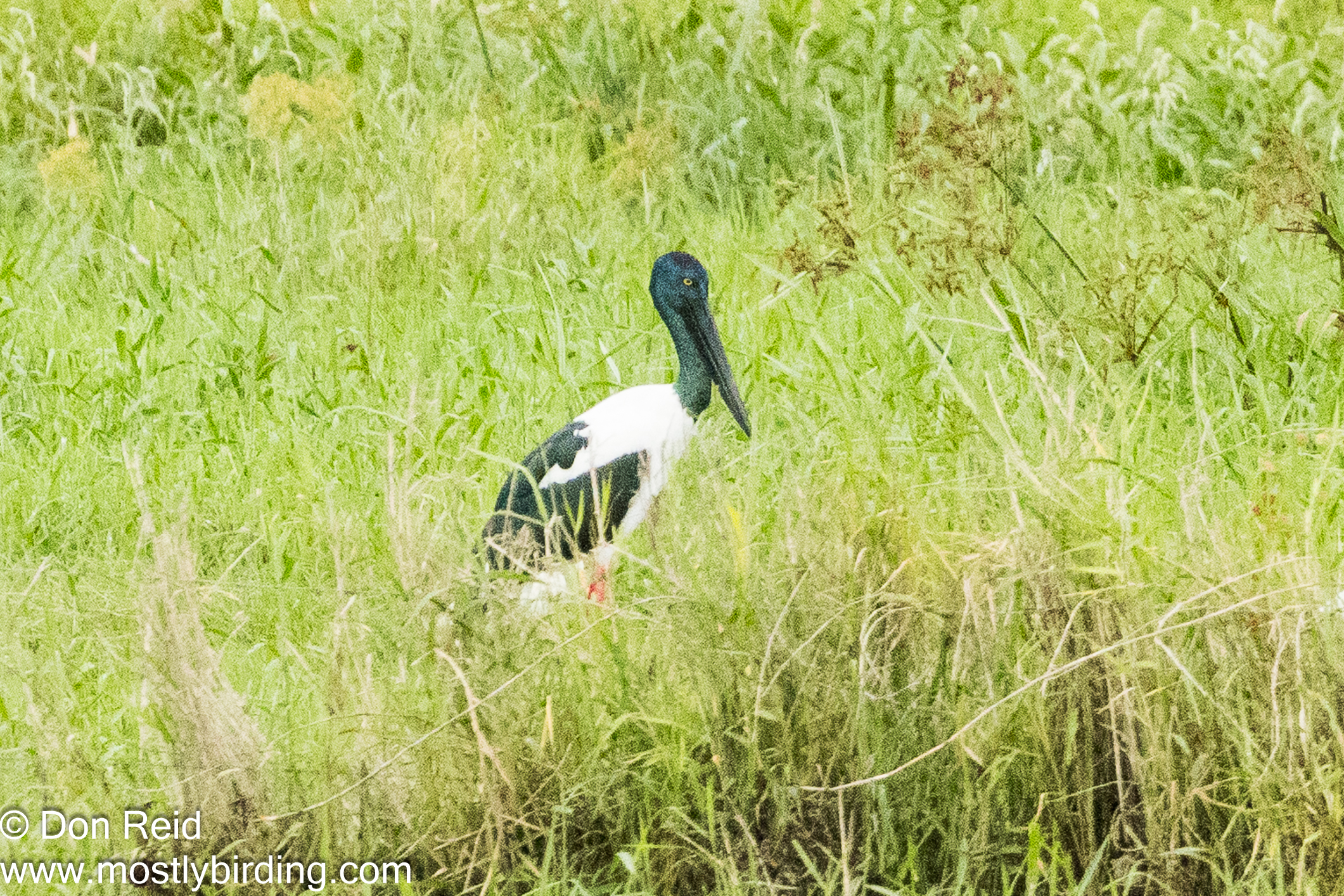
Black-necked Stork
Way over on the far side of the wetland a single black and white bird drew my attention – another lifer and less common species was walking about in the long grass
A Couple of Cuties
The next two species are not strictly linked to wetlands habitat but I include them under this section as that is where I had memorable encounters with them and could watch their antics
Golden-headed Cisticola
I had hoped to find at least one Cisticola in Mackay and this energetic bird on a fence wire was a most pleasing find, putting everything into its song while raising its colourful crest.

Red-backed Fairy Wrens
My last afternoon walk of our visit felt like a farewell to the birds I had got to know over the last 3 weeks, and many came out in the welcome sunshine for a last sighting and some special photos.
A pair of Fairy-Wrens put on a show which had me chuckling at their antics on a fence wire – clearly some sort of wooing was going on as the male pranced about on the wire and repeatedly leapt over the female to present himself from both sides

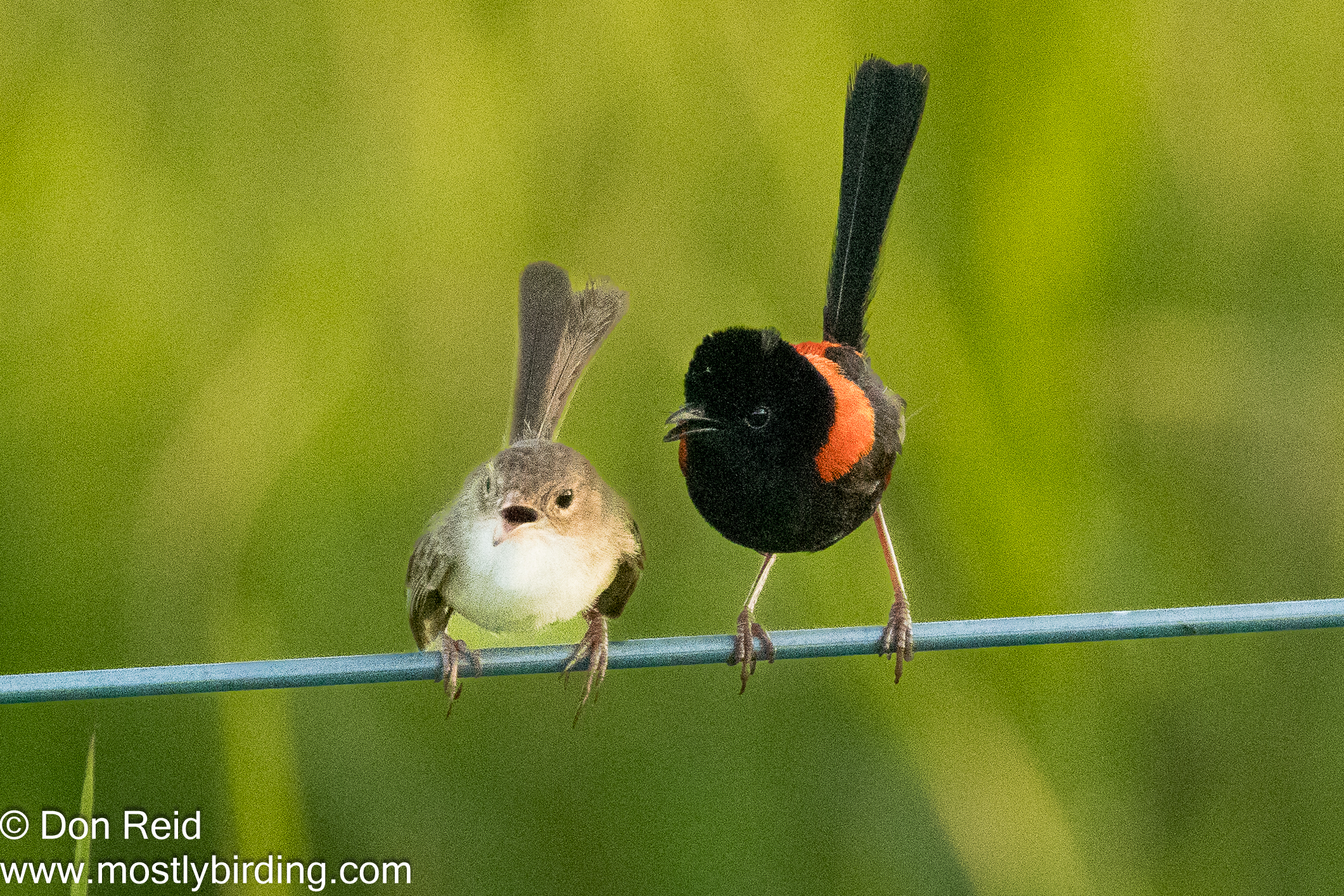
A sighting like this is the essence of why birding is such a rewarding pastime – there is never an end to the moments that await you – at the end of a pathway, along a lonely beach, up in the mountains, deep in a forest, or wherever the birding urge takes you. Moments that you recall time and again later, bringing that same smile to your face that broke out when you first observed it.
 Mostly Birding
Hats off to you for pursuing your birding ventures in such inclement weather conditions! It is fun seeing these.
Thanks Anne – it was a delight whenever I could get out to do some birding, sometimes with our youngest granddaughter in tow chattering away
Wow, Don —this is extreme birding at its finest! Despite the heavy rains you managed to uncover a treasure trove of Australian beauties. Finding birds in unfamiliar places is certainly rewarding. Thanks for sharing the joy!