The Plan (Repeat from Part 1)
This was a trip with a difference – we had no part in planning it whatsoever! Our daughter Geraldine had suggested earlier in the year that we join them on a winter trip in June/July 2024, which would include –
- A one night stopover in Matjiesfontein at the historic Lord Milner Hotel
- A couple of nights on a farm in Sutherland, the star-gazing capital of South Africa
- A week at The Baths resort near Citrusdal
Always up for some mild adventure, and to experience places we have not seen before – which included two of the three above – we agreed to join them and made the necessary bookings to match those that they had already made – the trip was on!
Heading to Sutherland
Wednesday
We left Matjiesfontein at 12.30pm and headed northwards on the R354 to Sutherland, some 111kms distant, crossing into the Northern Cape Province in the process.
The road was tarred and generally good, while the hilly countryside was a surprise for us as we were expecting much flatter terrain – without good reason, simply based on our experience of the Karoo elsewhere in South Africa.
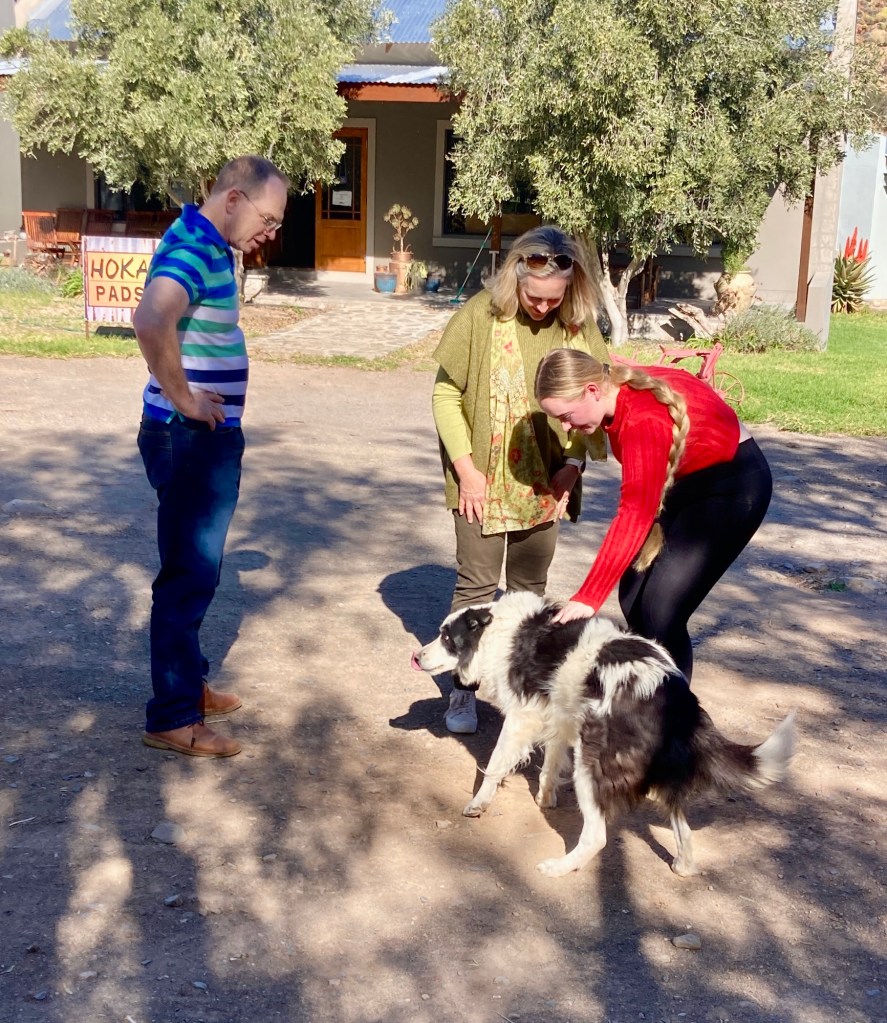
Close to Sutherland we stopped at a Padkafee which looked promising but didn’t have much to offer, although a friendly and playful Sheepdog caught our attention and enthusiastically chased and retrieved thrown sticks until we eventually tired of the game.
Before we continued, our resident star-gazer Andre pointed out how clear the sky had become and how blue it was – a sure sign of clean, pollution free atmosphere.
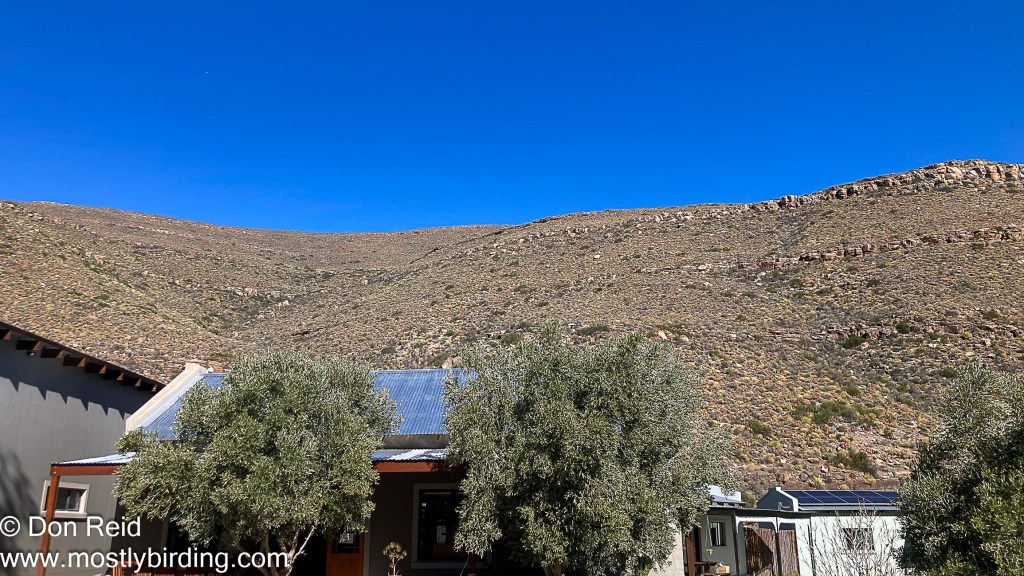
This is the principal reason why Sutherland has become the chosen location for a bevy of Observatories on a nearby hilltop, and a favoured spot among astronomers worldwide
Klipkraal Farm
Reaching Sutherland soon after, we stopped for coffee, then popped into the small grocery store for a few provisions before heading east to our accommodation on a farm called Klipkraal.
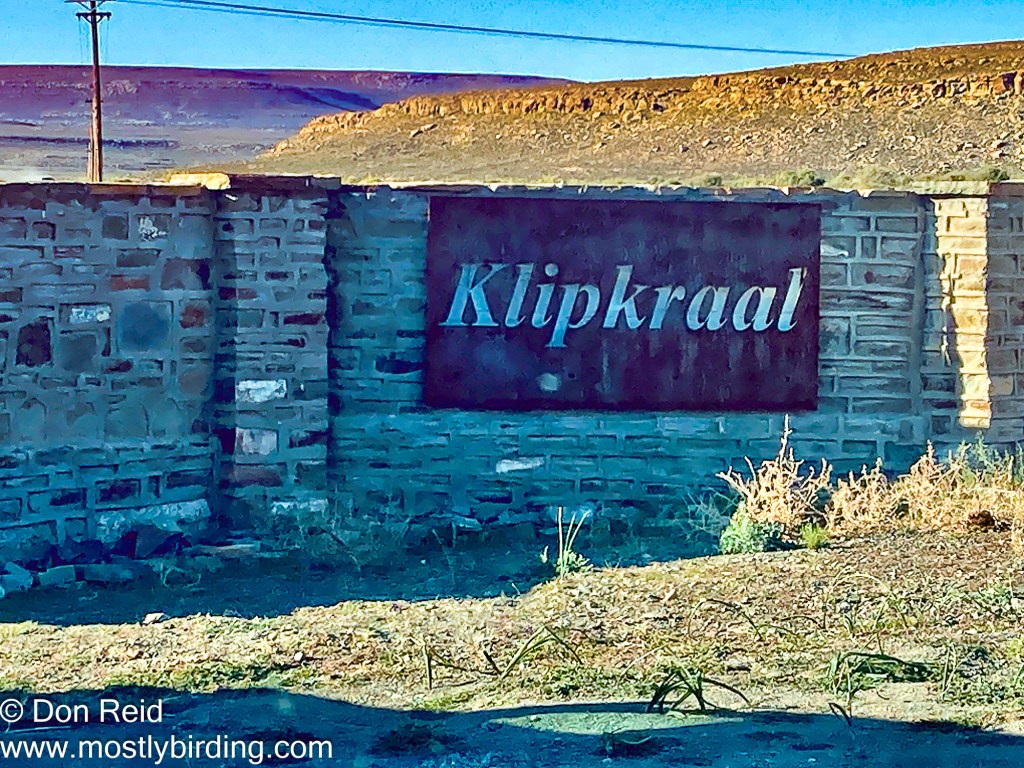
The farmstead has the charm of a typical Karoo farm – unpretentious, simple yet inviting with a few sheep grazing among the low bushes.
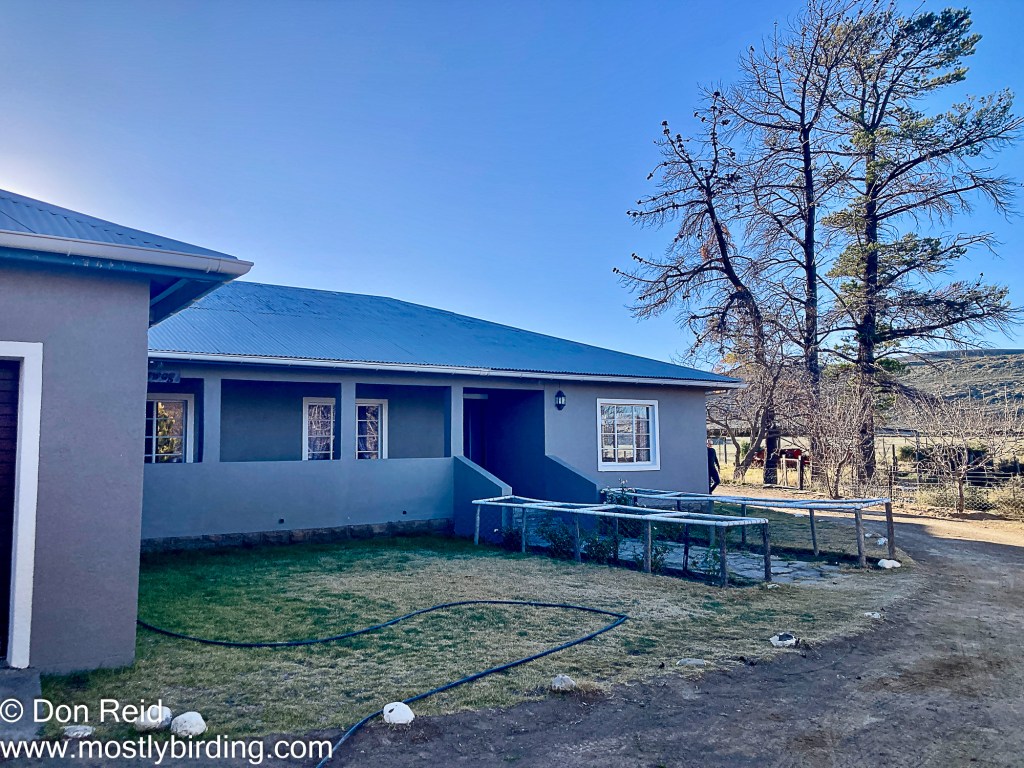
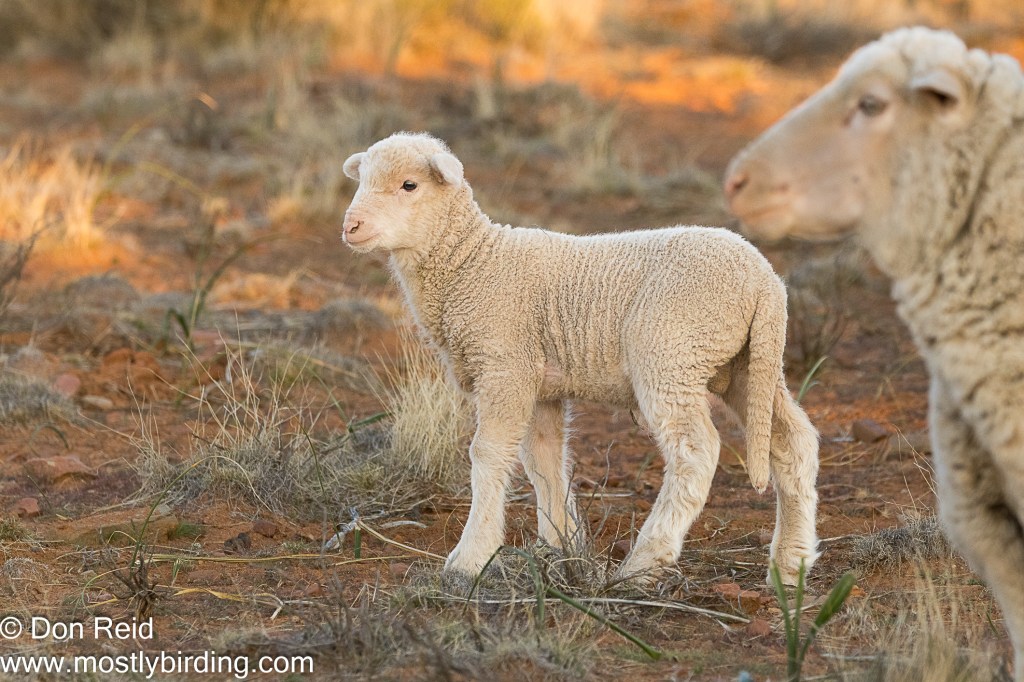
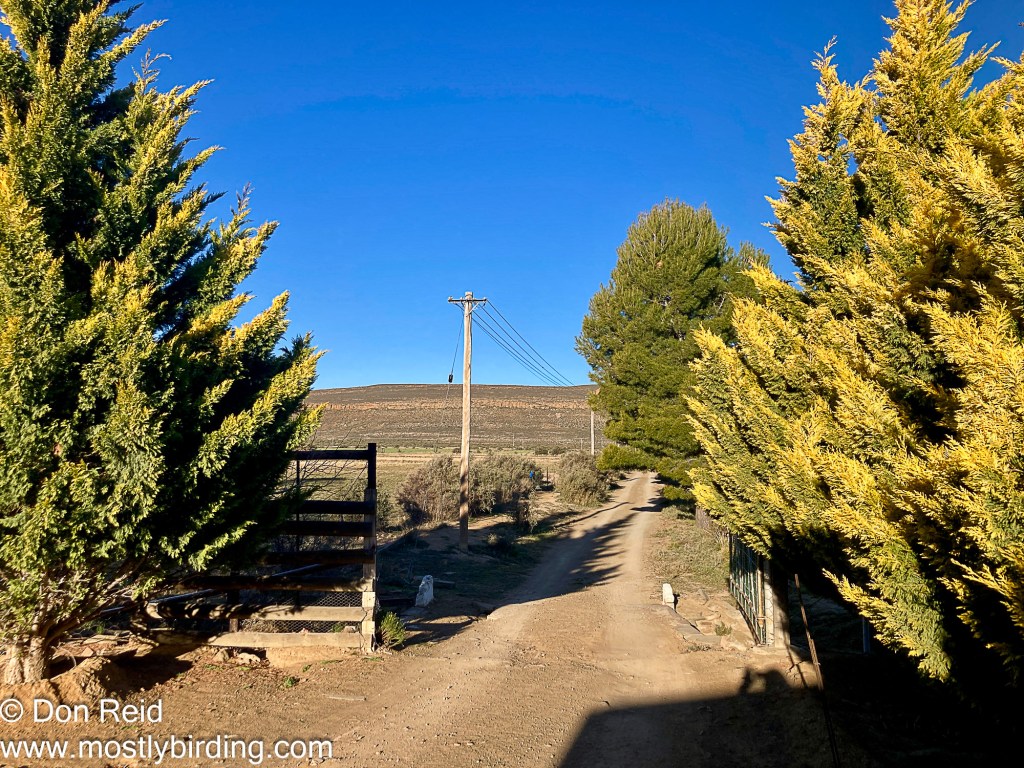
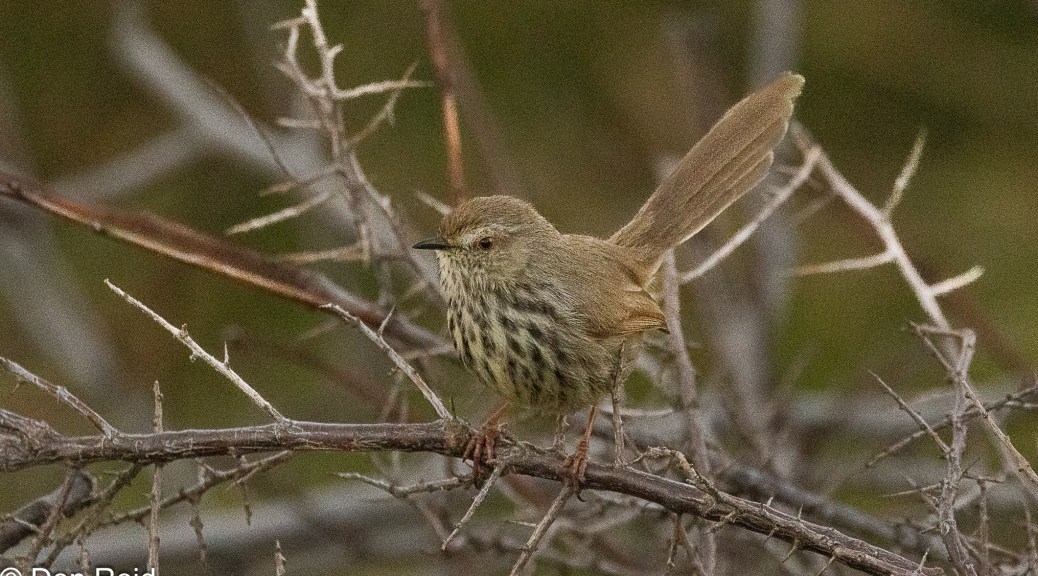
After settling in I took my customary walk along the entrance road (in the above photo) to see which birds were around and was able to eke out an initial list of 10 species, including –
- Shelducks in the fields near the house, flying off when I approached

- Speckled Pigeons (Kransduiwe) true to their Afrikaans name, high up on the ridge of the hills overlooking the farm
- A Mountain Wheatear in the tall trees

Dinner was a chicken veg soup (thick and meaty – more like a stew) in the kitchen with a fire going to ward off the cold – not extreme, but cold enough to remind you that Sutherland is the coldest place in SA.
Thursday
We slept snugly with the electric blankets keeping us warm all night – so much so that we only surfaced around 9am for a first coffee and tea to get us going.

Sutherland
After breakfast we joined the family for a trip to town where we meandered along the dusty quiet streets just taking in the atmosphere of this deep Karoo dorp that has become famous for being the centre of astronomy in SA – and for being the coldest place in the country!


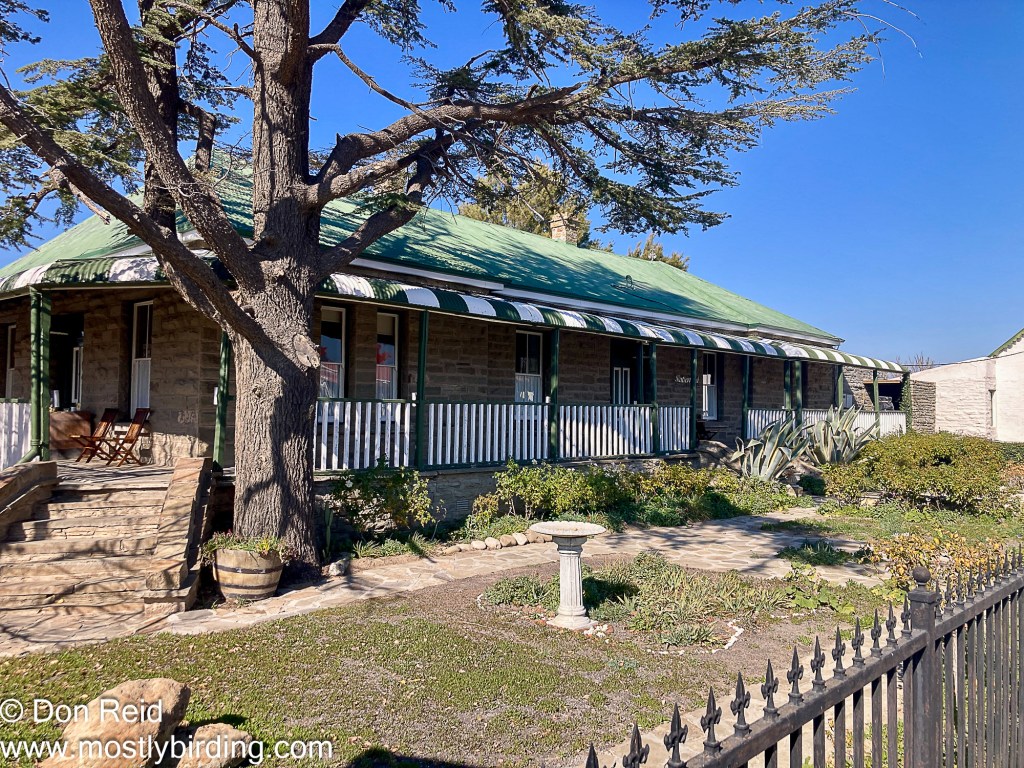

SAAO Observatories
After a coffee at the Planetarium in town, we drove back to the farm and Andre and I were soon on our way to the SAAO observatories a little further along the same road for the afternoon tour of the facilities.
SAAO (South African Astronomical Observatory) owns and operates four major telescopes on a hilltop site 1800 metres above sea level, chosen for its year round clear skies, semi-arid setting and absence of light and other pollution.
The tour started with a video and a walk around the visitor centre to learn about the history of the facility and the basic principles of the different types of telescopes, followed by a short drive up the hill to where the observatories are located.
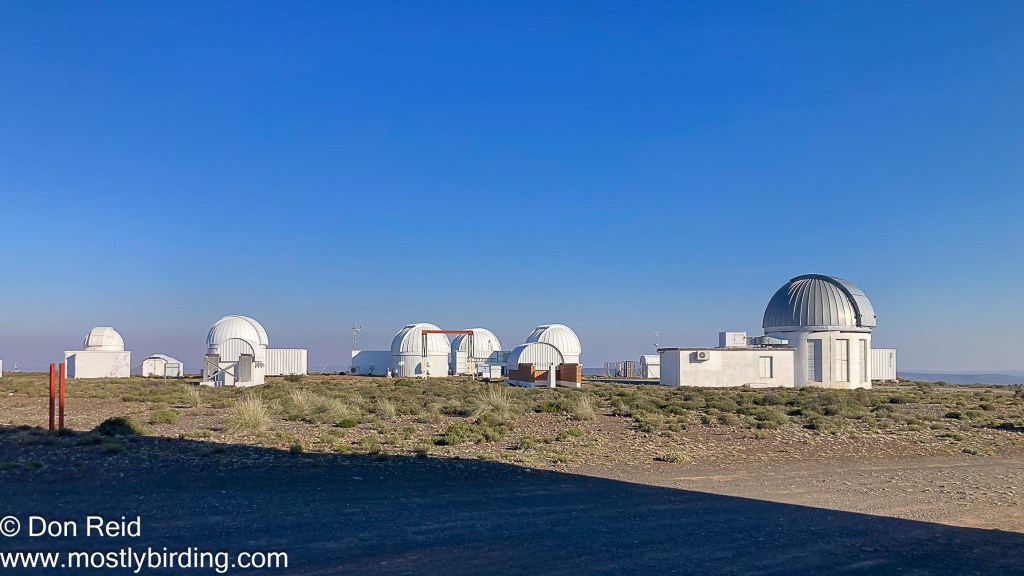
The four telescopes, all optical telescopes, run by SAAO are –
- The 1.0m telescope
- The 1.9m telescope
- Lesedi telescope, and the big daddy of them all…
- The Southern African Large Telescope (SALT)

Besides these four flagship telescopes, the facility houses a number of other telescopes, mostly operated by other organisations and international astronomy institutions
1.0m Telescope
We were taken firstly into the 1.0m observatory to view the telescope known as Elizabeth, funded by the queen and in use since 1964. It originally stood in the Observatory grounds in Cape Town and was upgraded and modernised to operate remotely when SAAO moved it to Sutherland in 1972.


SALT (Southern African Large Telescope)
Then it was time to enter the observatory housing the 11.0m SALT telescope – the building is imposing and there was a buzz of anticipation among the group of about twenty visitors on the tour.
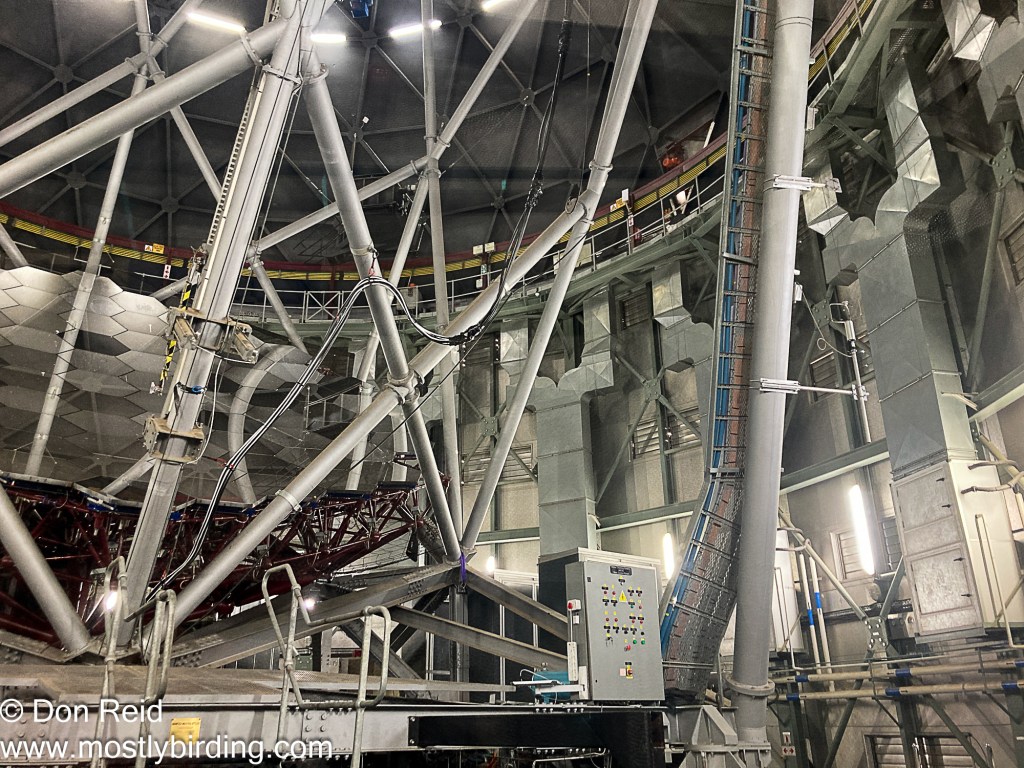
Inside, we all climbed a couple of flights of stairs up to the level where a platform allowed a view of the whole interior, which elicited an excited babble from the group and rightly so – the mass of structural elements and the glint of the 11.0m primary mirror array were certainly impressive.

The heart of the telescope, the 11m wide hexagonal primary mirror array, is made up of 91 individual 1m hexagonal mirrors, housed in a complex movable structure weighing 80 tons.
The largest single optical telescope in the southern hemisphere, SALT can detect the equivalent of a candle flame at the distance of the moon!
SALT is funded by a consortium of international partners from SA, USA, Germany, Poland, India, UK and New Zealand

After hearing all the ins and outs of its operation and specs the tour came to an end and we returned to the farm, happy that we had seen the observatories and learnt a bit about their capabilities
The girls had not yet returned from their trip to town, which meant we could not get into the house as they had taken the key. However this turned out in our favour as we spotted a bird party moving through the garden.
In 15 minutes or so we saw –
- Mountain Wheatears both boldly and drably coloured
- Long-billed Crombec
- Namaqua Warbler perching in the tree and singing beautifully
- Chestnut-vented Tit-Babbler pair
- Cape Bunting
I then took a short drive before sunset adding just White-throated Canary to take my pentad list to 20.

The evening was spent around the fire in the kitchen and for a while outside, suitably wrapped up in our warmest clothes, doing some star gazing with Andre informing us about some of the features of the night sky.

Tomorrow we head to Citrusdal and The Baths
 Mostly Birding
I feel the cold in my toes! Lovely photographs all.
We were there during a mild part of the winter and still needed plenty of woolies to ward off the cold after sunset!
What a wonderful place to visit. I have been through Sutherland but not to the observatories. It’s something we’ve been promising ourselves we will do. The sky certainly is very blue!
We would not have gone to Sutherland if it were not for the enthusiastic persuasion of our son-in-law whose main hobby is star-gazing! We were glad we did