A Crane Safari

Onverwacht Farm

During our September 2020 visit to the farm of Pieter and Anlia, described in my previous post, the opportunity arose for a very unique birding experience, all thanks to Pieter’s efforts in setting it up.

Pieter had arranged with friend Trevor, retired professional hunter and nature expert of note, to pick him up from a nearby farm so that he could guide us to a bird sanctuary on a farm south-west of Vryheid – Trevor had already given the outing a name – “Crane Safari” which was an obvious hint of what we were likely to see but not of the exceptional numbers we would encounter.

Firstly though, there were various urgent farm matters to attend to – amongst them, counting the cattle to make sure none had been ‘appropriated’ overnight, checking fences for signs of any further ‘recycling’ operations and taking the bakkie to town for some repairs to the suspension (damaged during a fruitless hunt for fence ‘recyclers’ who had struck during the night and removed a few hundred metres of fencing) – such is the existence of a farmer in these parts.

Pentad 2745_3035

We picked up Trevor, who I had met before several years ago, drove to Vryheid and then proceeded along the R33 towards Dundee for about 15 kms before turning off onto farm roads and arrived at the farm around 1.30pm. Trevor knows many of the farmers in the area and had arranged access to the farm and bird sanctuary.

From then on, for the next two hours, the birding was hectic as Trevor and Pieter spotted birds in quick succession while I tried to record them on the Birdlasser app and verify the ID.

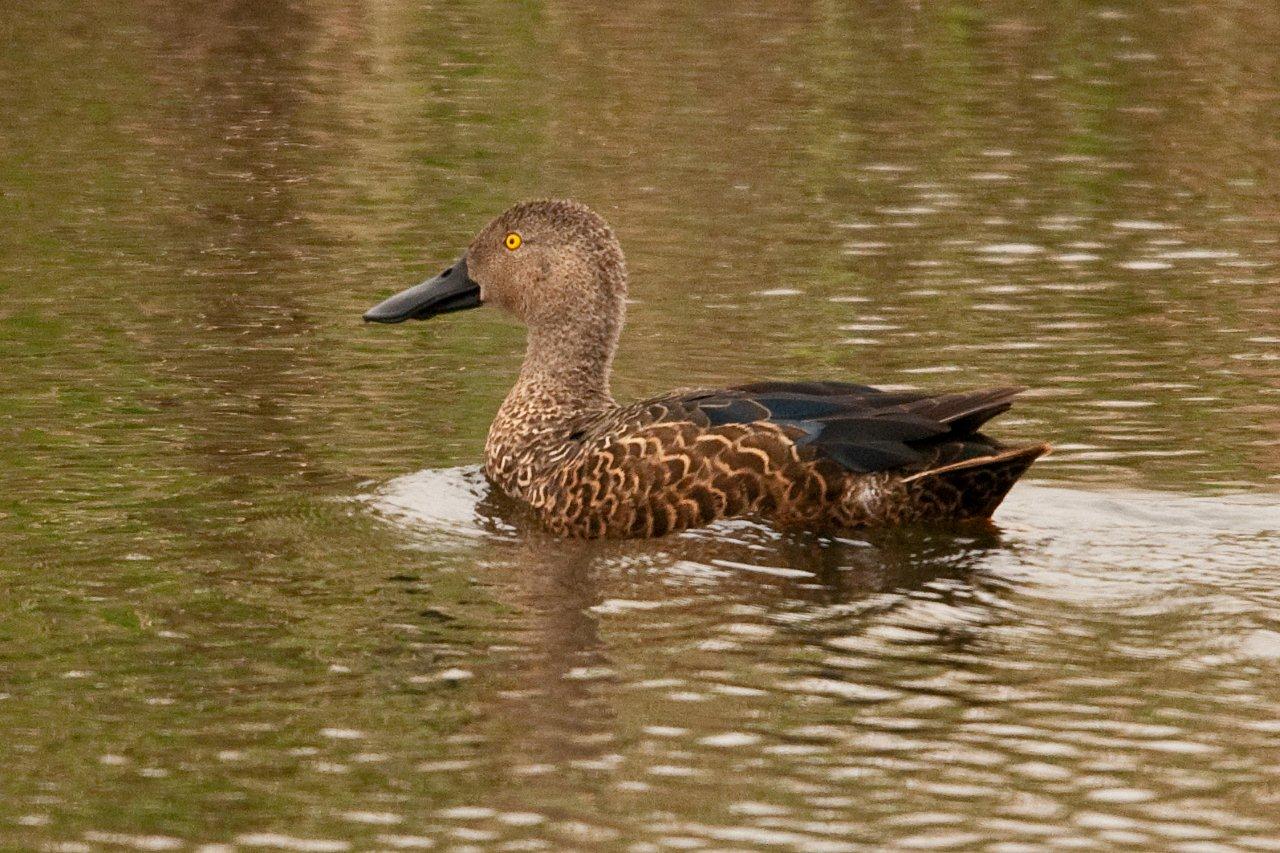
We drove along the earth wall of the first dam, which was filled with hundreds of waterfowl, including a group of White-backed Ducks (new record for the pentad) and others of Greater Flamingos, Southern Pochards and Cape Shovelers (which I like to call “Sloppy Ducks” based on their Afrikaans name of Slopeende).

White-backed Duck (Thalassornis leuconotus / Witrugeend)
Cape Shoveler (Anas smithii / Kaapse Slopeend)

Several Black-winged Stilts patrolled the dam fringes and Trevor called an African Marsh Harrier which was flying low over the grassy verges.

Moving on, the large vlei lower down came into view and at the same time a huge flock of perhaps 150 Grey Crowned Cranes rose up in unison, creating a birding spectacle that few people can have witnessed. The flock circled the vlei then settled for a while, but as soon as our vehicle edged closer they rose as one again, repeating the spectacle over and over.

Grey Crowned Cranes, Crane Safari near Vryheid

I would guess that most experienced birders have seen a pair or perhaps a small group of Grey Crowned Cranes at some time, but to see such a large flock of this endangered species is truly remarkable.

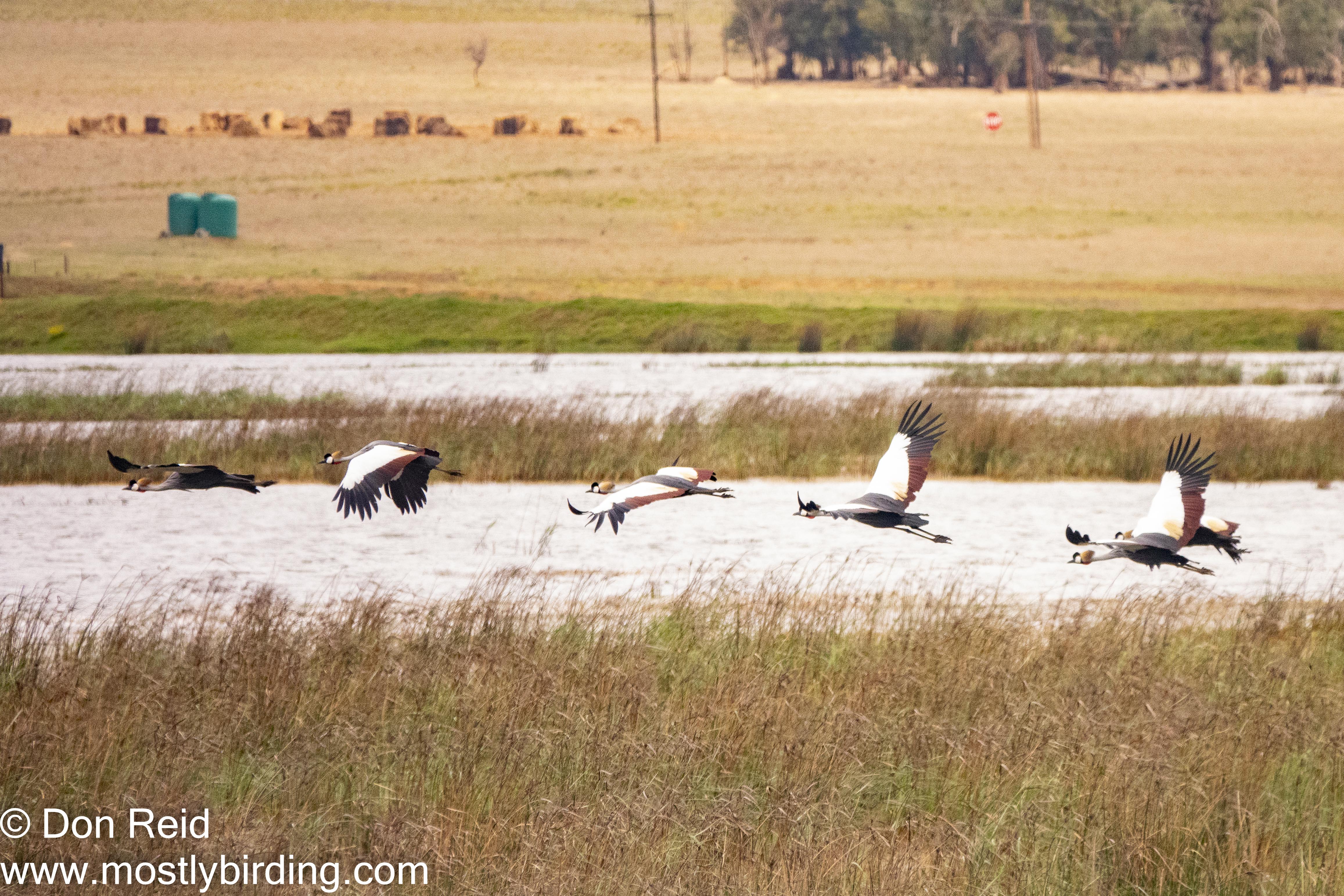
Grey Crowned Cranes, Crane Safari near Vryheid

Once we were closer to the vlei, with the Crowned Cranes now settled on the opposite side, we could see a few Glossy Ibises along the fringe and a superior looking Goliath Heron right in the middle. Shortly after, a lone Squacco Heron flew in and a Purple Heron rose up out of the reeds to complete the trio of “scarcer Herons”.
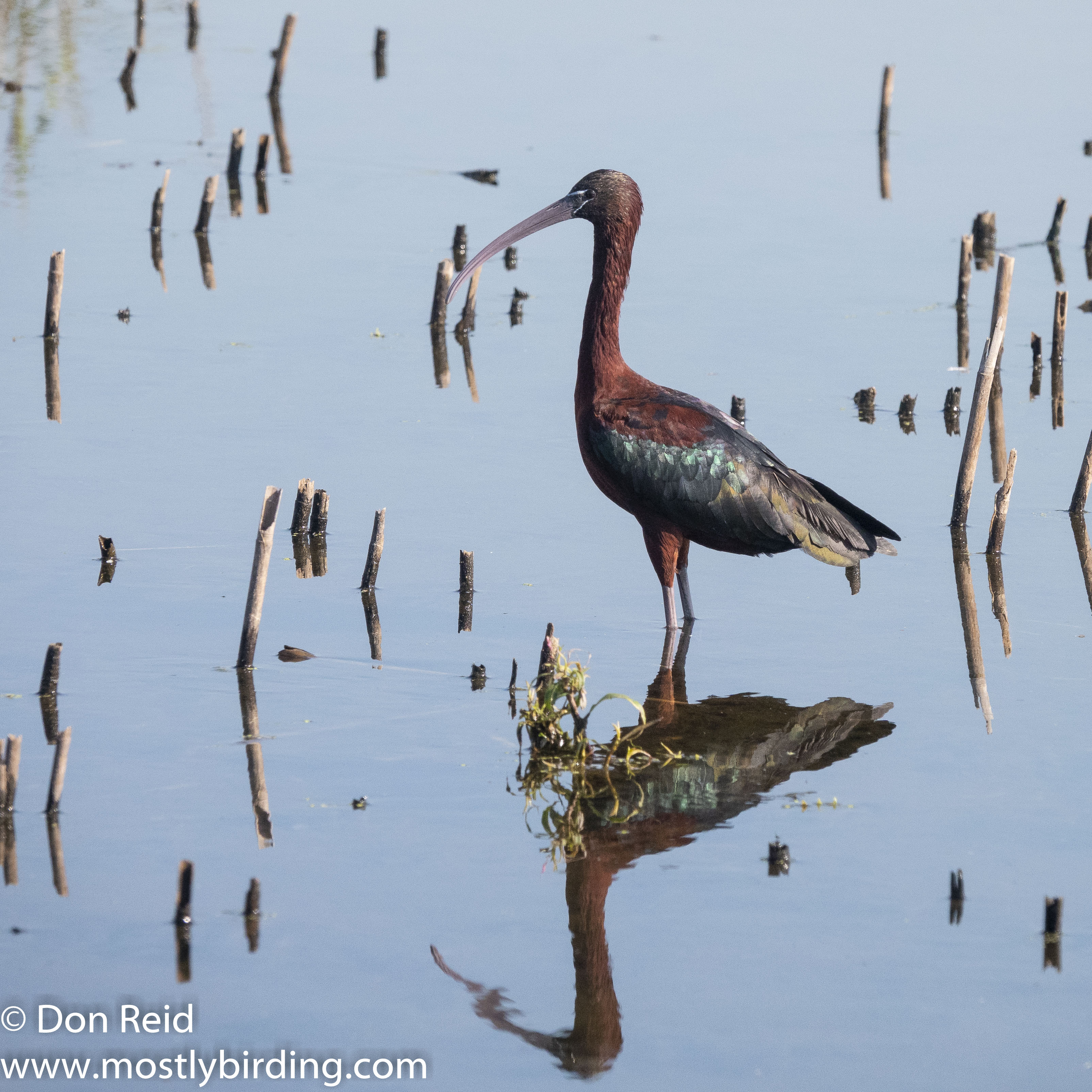
Glossy Ibis (Plegadis falcinellus / Glansibis)
Vlei, Crane Safari near Vryheid

Between the dam and the vlei, lush grassland was good for Cape Longclaw, Spike-heeled and Red-capped Larks and African Stonechat.
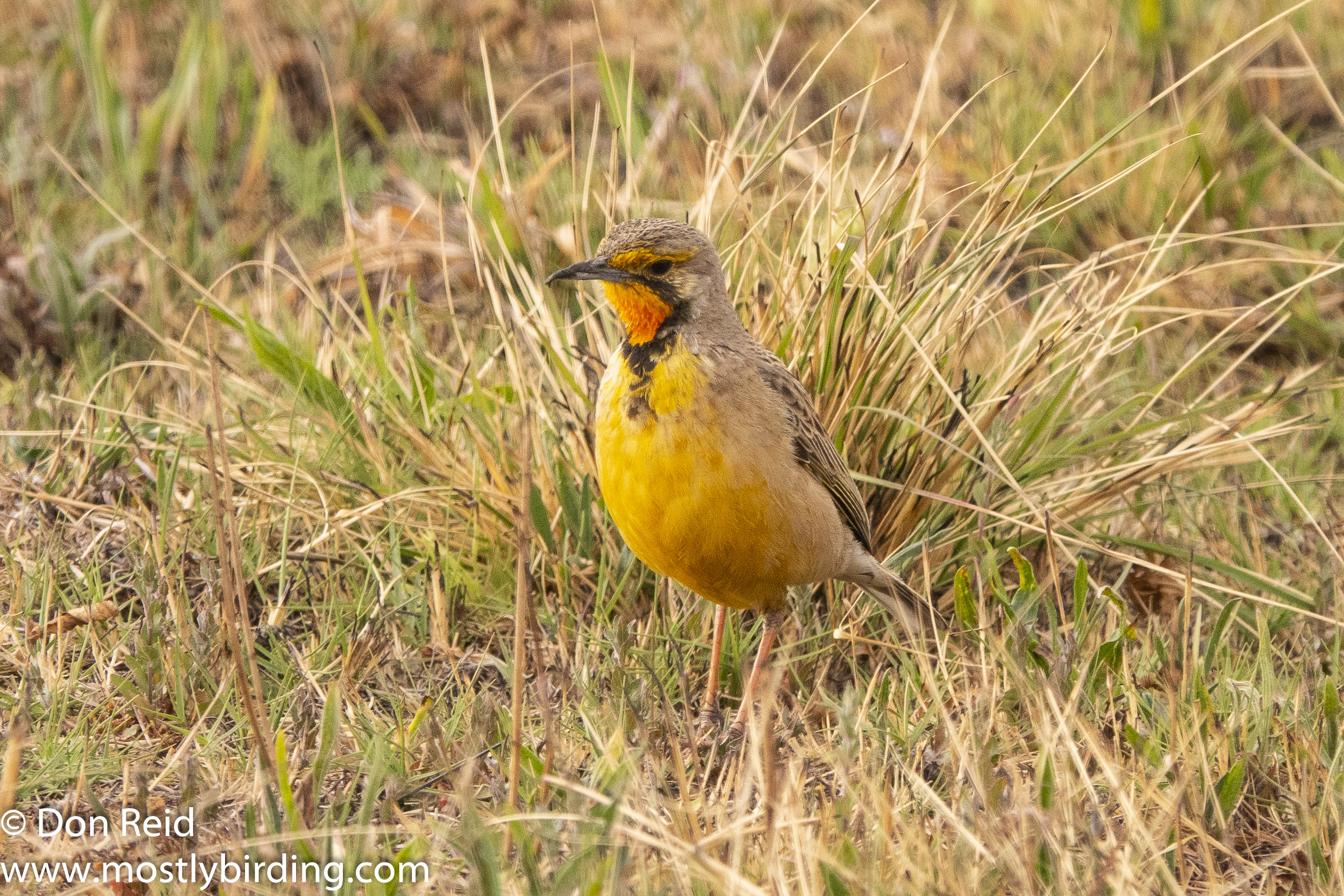
Cape Longclaw (Macronyx capensis / Oranjekeelkalkoentjie)
Spike-heeled Lark (Chersomanes albofasciata/ Vlaktelewerik) – showing its main identifying features of short white-tipped tail and long slightly curved bill

Soon it was time for a lunch break – sandwiches of home made bread and last night’s leg of lamb leftovers along with coffee which went down a treat in the cold windy conditions. The lee side of the bakkie provided some shelter from the wind but we didn’t dawdle and were soon on our way again.

While we were enjoying lunch, a flock of Blue Cranes, some 100 strong, flew over the vlei and settled briefly before moving on – so we had seen large numbers of both of the Crane species found in these parts – mission accomplished, thanks to Trevor!

Later, we found a small group of Blue Cranes in a field, this time close enough for some photos …..
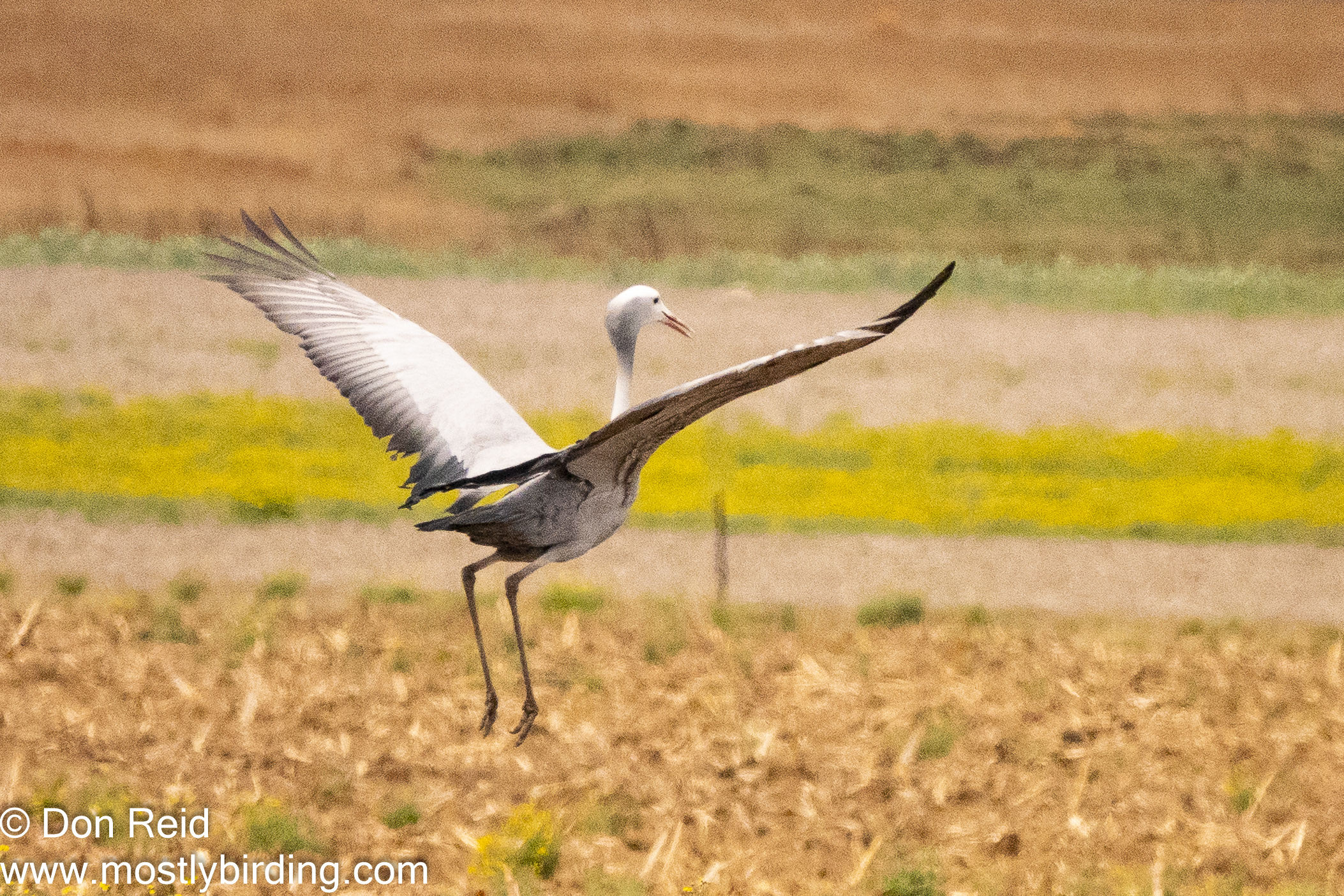
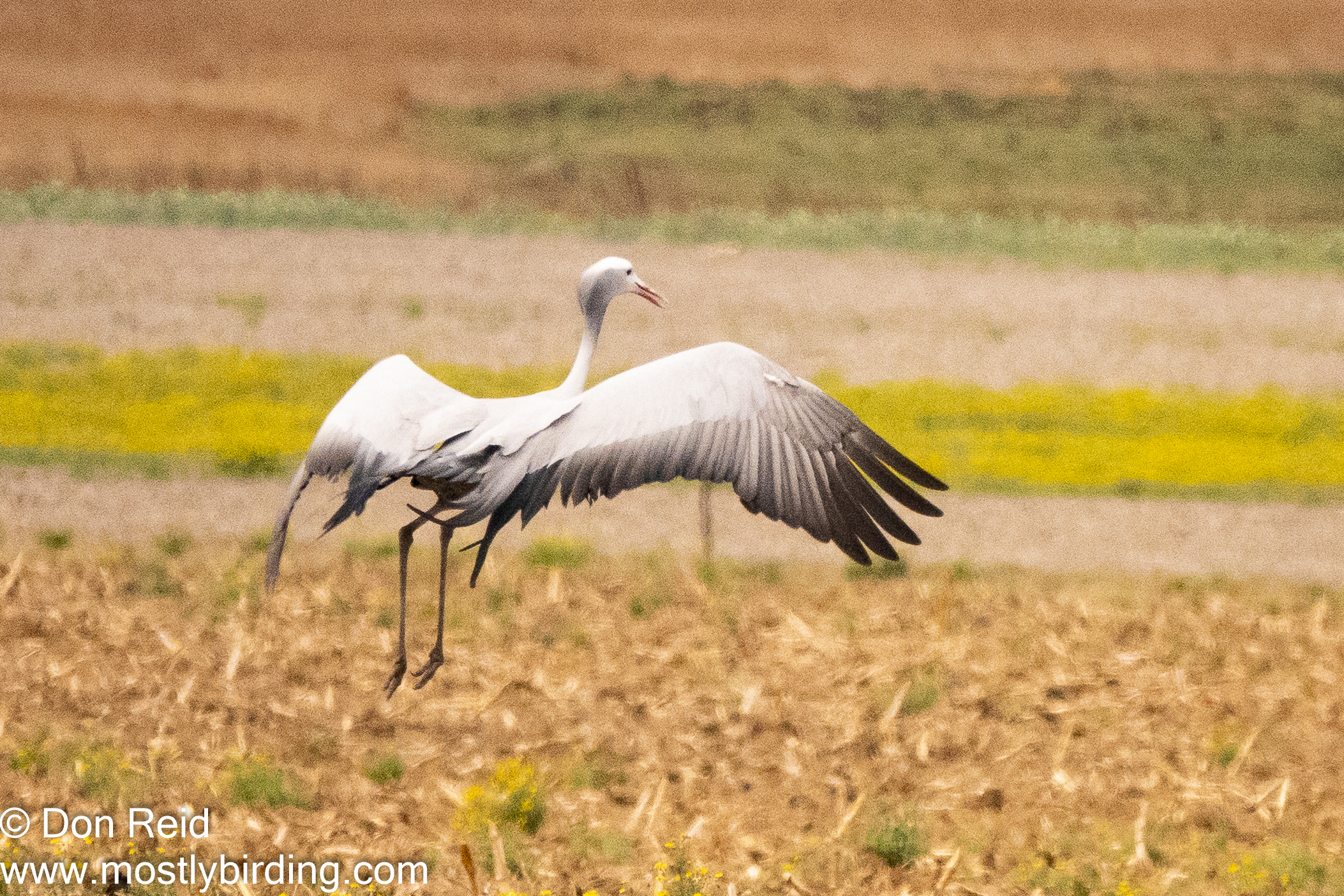
Blue Crane, Crane Safari near Vryheid
Blue Cranes, Crane Safari near Vryheid

At the last dam before leaving this incredible birding spot, we saw a few waders at the water’s edge and approached carefully so as to get close enough to identify these sometimes difficult species. Fortunately they were all species that I have got to know well and I was able to record Ruff, Curlew Sandpiper (New record for the pentad), Little Stint and Kittlitz’s Plover – a real bonus after such a variety of waterfowl.

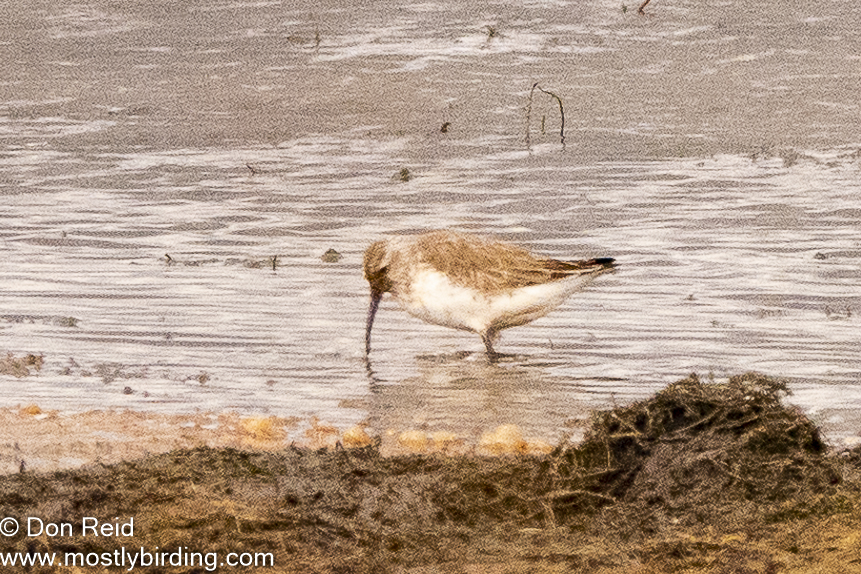
Ruff (Philomachus pugnax / Kemphaan), near Vryheid
Curlew Sandpiper (Calidris ferruginea / Krombekstrandloper), near Vryheid

I hadn’t planned to do a “Full Protocol” (FP) card for the pentad in which the dams and vleis fell, but as it turned out the last bird recorded on the way out – a Southern Masked Weaver at a small stream – was precisely two hours after the first bird and I was more than happy to submit my list as FP (which requires a minimum two hours of survey time in a pentad).

Back at the ranch – well, the farmstead where Trevor and Collette live – we sipped warming Milo while Trevor pointed out a few of the garden species including Paradise Flycatcher and a flock of Olive Pigeons that swooped by.

It had been a memorable day’s birding and I was very pleased to have been able to complete a Full Protocol Atlas card. I recorded 40 species in the two hours, the seventh card for the pentad, and added two new species
Atlasing – September 2020 : Onverwacht, Vryheid

I haven’t posted about my bird atlasing travels for a while so now I’m …..

Catching up on the monthly look at where Atlasing took me in September 2020 ….. in this case to the farm of Pieter and Anlia, part of Gerda’s wide family and one of our favourite places to visit and enjoy traditional farm hospitality –

Onverwacht Farm – 26 to 30 September 2020

Getting there

We had been back in Gauteng for three weeks after an extended stay in Mossel Bay and with lockdown eased to Level 1 our thoughts, as they are wont to do, turned to travel. With a long weekend coming up, it was the ideal time to pay a visit to Pieter and Anlia on Onverwacht Farm, not far from Vryheid in central Kwazulu-Natal.

We had done most of the preparatory packing the day before, so were up at a reasonable hour and left mid-morning, travelling via Witbank, Hendrina, Ermelo and Piet Retief with tea and lunch breaks taken at the roadside, our ‘new normal’ way of doing longish road trips.

The drive was made somewhat taxing by the combination of many slow, large lorries encountered, the poor condition of the roads once we turned off the N4 and the depressing state of some of the towns along the way. However, our spirits were lifted when we reached the farm, saw the braai fire being prepared and the friendly greetings of the family.

The Pentad

I was not expecting to atlas outside the pentad in which the farm lies, but thanks to Pieter there was an opportunity to visit an adjoining pentad on a “Crane Safari” which turned into an exciting atlasing trip of its own. More about that in a follow-up post….

Pentad 2740_3035

My atlasing on the farm was spread over the four days of our stay, but was limited to short bouts of birding in between all of the other activities.

Saturday, late afternoon

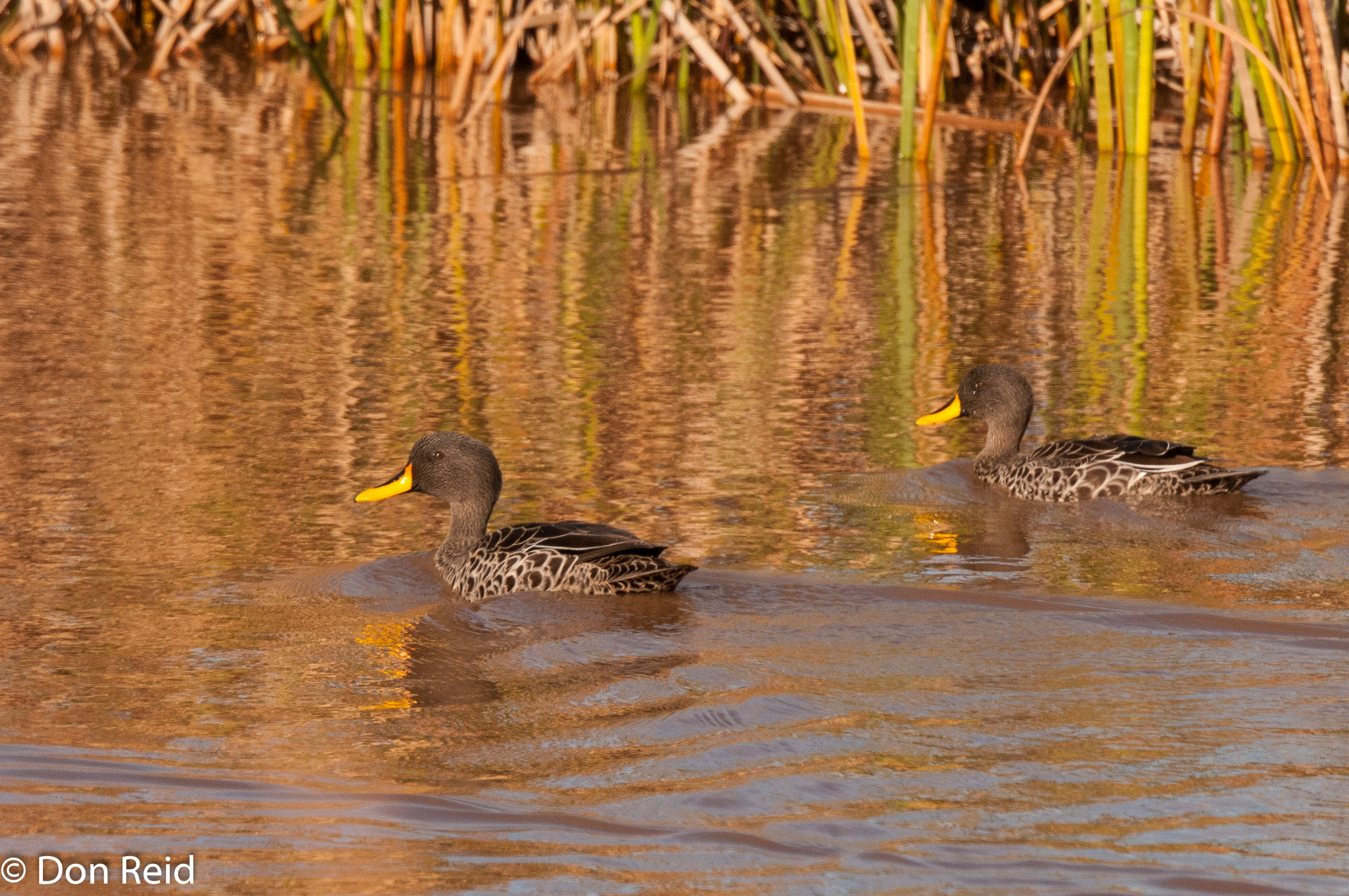
On arrival and after settling in, I got the pentad list going with the birds on and around the dam, which lies a couple of hundred metres down the gentle slope in front of the house – all the usual suspects such as Cattle Egret, Egyptian Goose, Yellow-billed Duck, Coots and White-breasted Cormorant.

Onverwacht farm Vryheid
Yellow-billed Duck

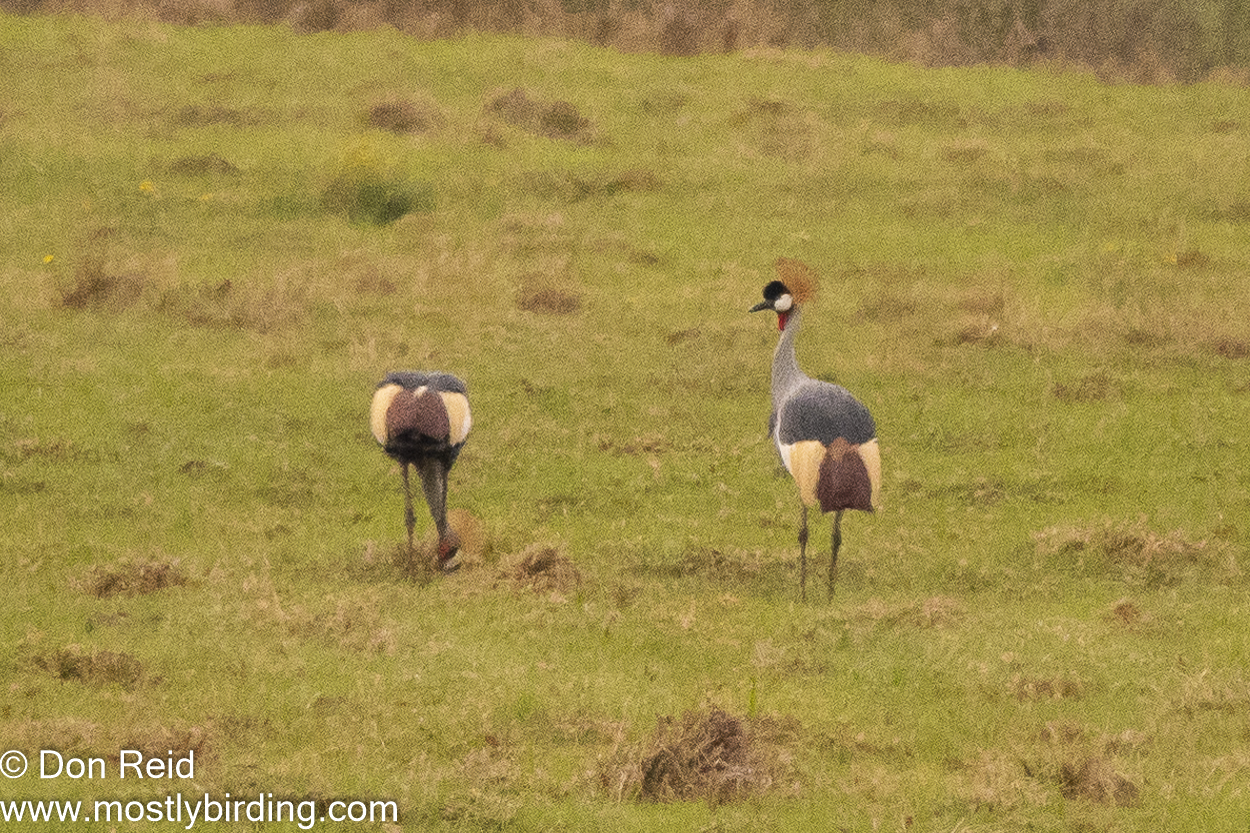
Pieter pointed out a couple of large birds on a distant grassy slope and with my binos I could verify their ID – Grey Crowned Crane – a quite magnificent and stunning bird that I never tire of seeing and one of the specials of the area.

Grey Crowned Crane (Balearica regulorum / Mahem), Onverwacht farm Vryheid

The warm weather was rapidly dissipating in the face of a cold front that had arrived, so the braai fire was a warming spot to spend the last of the day, still on the lookout for new species. A chorus of cackling calls announced the presence of Green Woodhoopoes (Not recorded in the pentad before) in the tall pine trees next to the house and we soon saw them in the fading light, moving among the branches in a loose group of 6 or more.

Pleased with this new species for the pentad, I then heard the whoo – hooo of a Spotted Eagle-Owl (33%) and down at the dam a group of 3 Wattled Lapwings (22%) flew in and settled near the water in the fading light

Spotted Eagle-Owl
Sunday

The day was cold – even more so than the forecast 10 deg C due to the icy wind, so my birding was limited to a couple of short sorties into the large garden and surrounding farmstead, the wind chasing me back to the warmth of the house after 15 to 20 minutes.

Onverwacht farm Vryheid

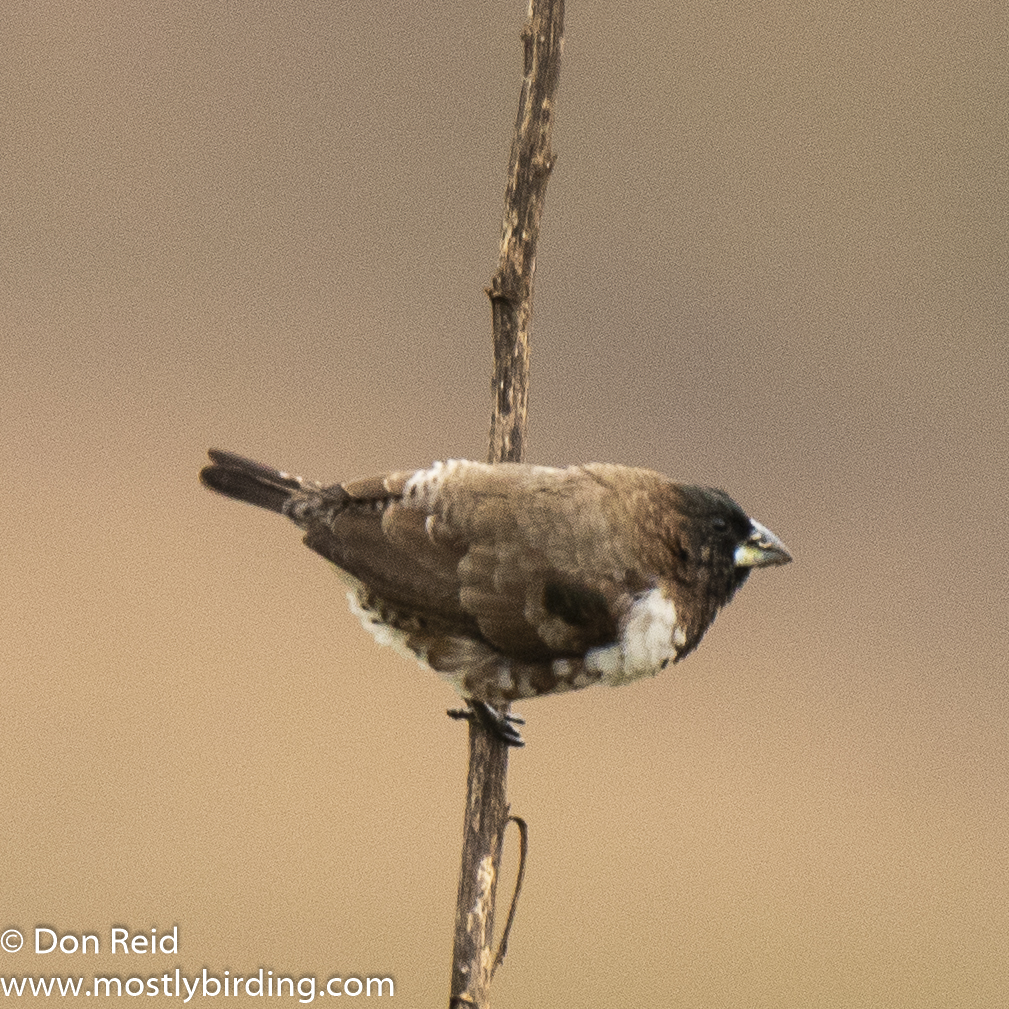
Highlights were Southern Bald Ibis at the dam edge, Black Sawwings (44%) swooping by in their shiny black plumage with long forked tail streaming behind, Bronze Mannikins and Pied Starlings perched in trees and on poles.

Bronze Mannikin (Lonchura cucullata)

By day’s end my pentad total was a modest 31 without having ventured beyond the garden and surrounds.

Onverwacht farm Vryheid
Monday

Monday was devoted to the “Crane Safari” in an adjoining pentad, which I will cover in a separate post as it was such a special birding experience, but in the evening I heard the unmistakable, eerie call of a Barn Owl somewhere near the house.

Tuesday

And the surprises kept coming! Despite all sorts of challenges that Pieter had to attend to – stolen fencing and a broken torsion bar on the bakkie (utility vehicle) which left it standing at a crazy angle – Pieter still had time to arrange for son Janneman to take me to a nearby kloof on the farm, where he had seen signs of Bald Ibis breeding.

After another farm breakfast (my favourite ‘krummelpap’ again – a sort of crumbed porridge unique to SA) Jan and I set off on a birding tour of the farm, with our first stop some way up the lower slopes of the mountain escarpment that looms over the farm. There we clambered through a fence, then walked along a sloping ridge to a point where we could get a view of the krans (cliff face).

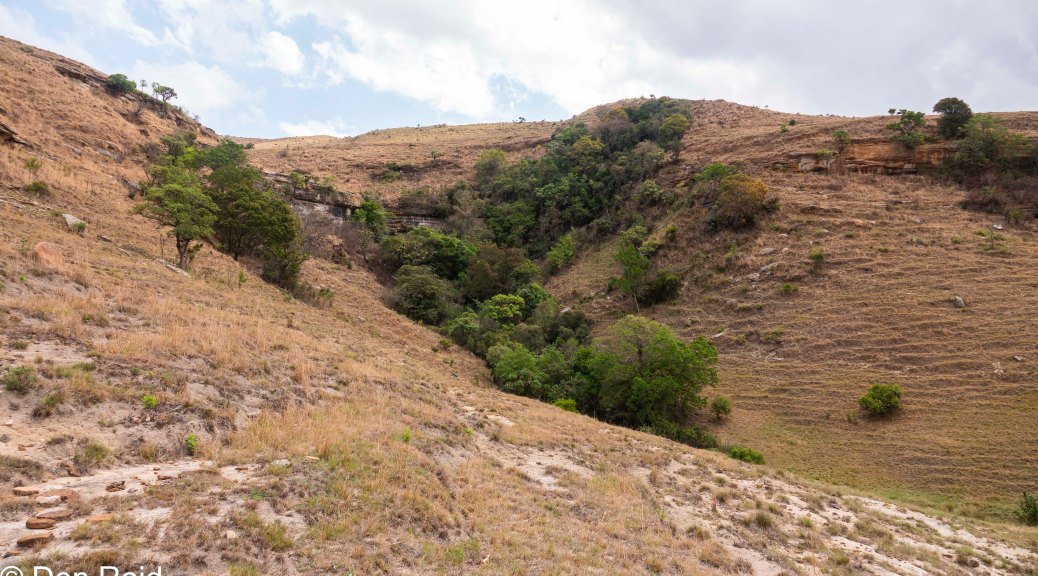
It didn’t take long to spot a Bald Ibis on a nest set back in the horizontal split in the rock face. A small waterfall trickled water down the face and Kiepersols, Aloes and other natural growth completed the handsome picture.

Bald Ibis breeding spot, Onverwacht farm Vryheid

Bald Ibis breeding spot, Onverwacht farm Vryheid

Nearby a Sombre Greenbul called and an African Olive Pigeon (not recorded in the pentad before) showed itself among the green tops of the trees. However the show of the day belonged to Bald Ibises and White-necked Ravens (also a new record for the pentad) chasing each other aerially, the Ravens seeming to harass the Ibises for unknown reasons until they retreated to the depths of the rock crevices.

The rest of the farm tour provided several other sightings of Rufous-naped Lark (33%), Buff-streaked Chat (55%), Yellow-fronted Canary and a pleasing Giant Kingfisher (22%) to round off my atlasing efforts for the visit.

My total species recorded in the pentad during the visit stood at 46 with 4 new species added to the pentad list and my total species after 6 cards completed over several years was now 132

Footnote : Where I show percentages in brackets, these refer to the relative scarcity of the species according to the pentad surveys completed to date over the ten years that the project has been running. So if 100 pentad surveys have been done to date and a species has been recorded 5 times by the observers, it will be shown as 5%. Notable species in my book are those with a % of less than 10%

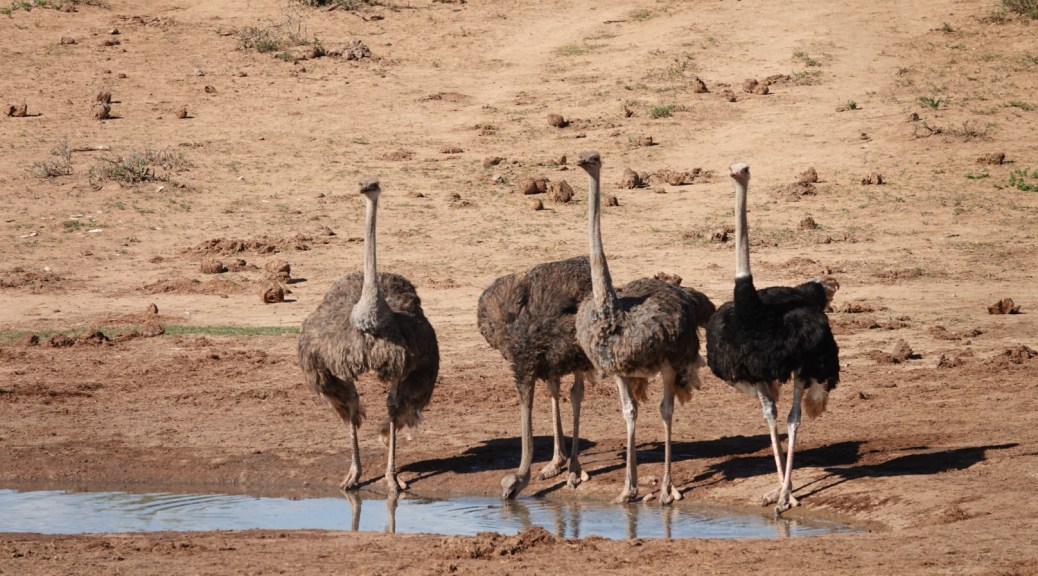
Ostriches at a Waterhole

The wonderful thing about visiting South Africa’s National Parks is that there is just about always something new to see. This was the case during our recent trip to visit two of the Eastern Cape’s gems – Addo Elephant National Park and Mountain Zebra National Park – I will be posting more about our trip but thought I would share this video which I took while on a late afternoon game drive in Addo.

I had never seen Ostriches drinking at a waterhole and it didn’t occur to me that they cannot slurp it up like an elephant, so have to first scoop the water into their mouth, then lift their long neck and swallow.

I think you will agree it is a fascinating sight …. the one on the left was initially rather aloof, but deigned to join in briefly towards the end

What it lacks is some appropriate music to accompany the video as those elegant necks go up and down – I am open to suggestions …..