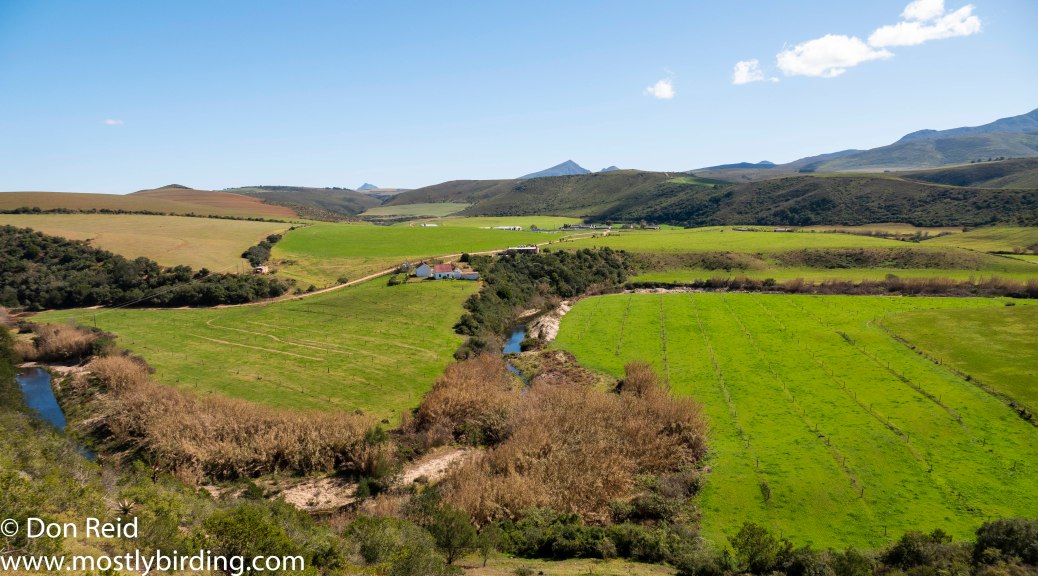
Continuing the monthly look at where Atlasing, or Birdmapping as it is also known, took me in August 2020 ….. in this case to two pentads in the Ruiterbos area north of Mossel Bay, which turned out to be as contrasting as two pentads adjoining each other can be
Ruiterbos Area – 25 August
Still using my earlier analysis of pentads in the southern Cape which had not yet been atlased in 2020, I noticed that the Ruiterbos area had one pentad not atlased since 2018 and with very low species totals recorded, which piqued my interest – nothing like a challenging pentad to make things interesting! Low totals, I have found, are usually due to limited diversity of habitat (all birds are particular to a specific habitat) or limited means of access to parts of the pentad, preventing the atlaser from getting to all the habitats. In some instances both of the above can apply, which results in really low totals.
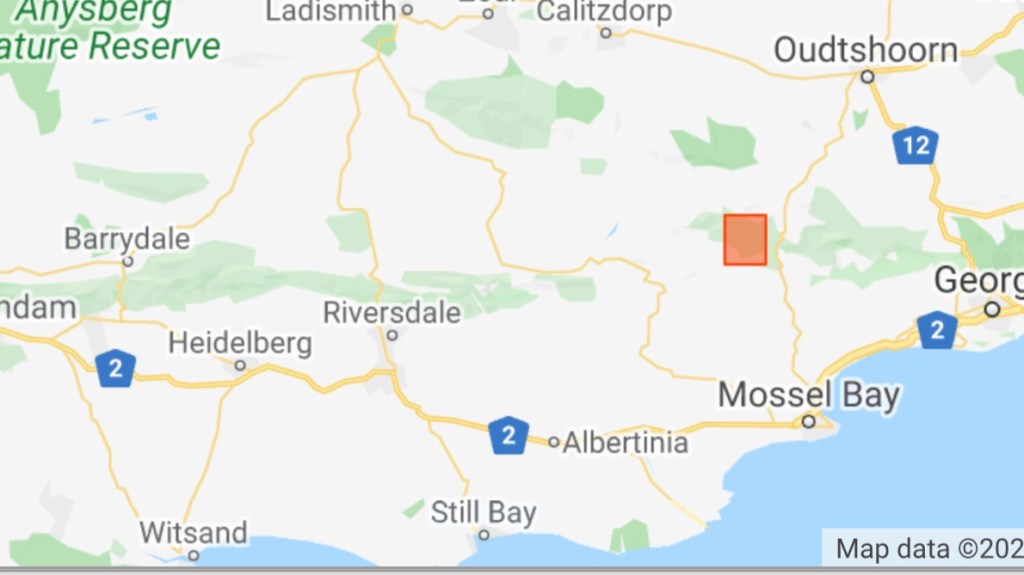
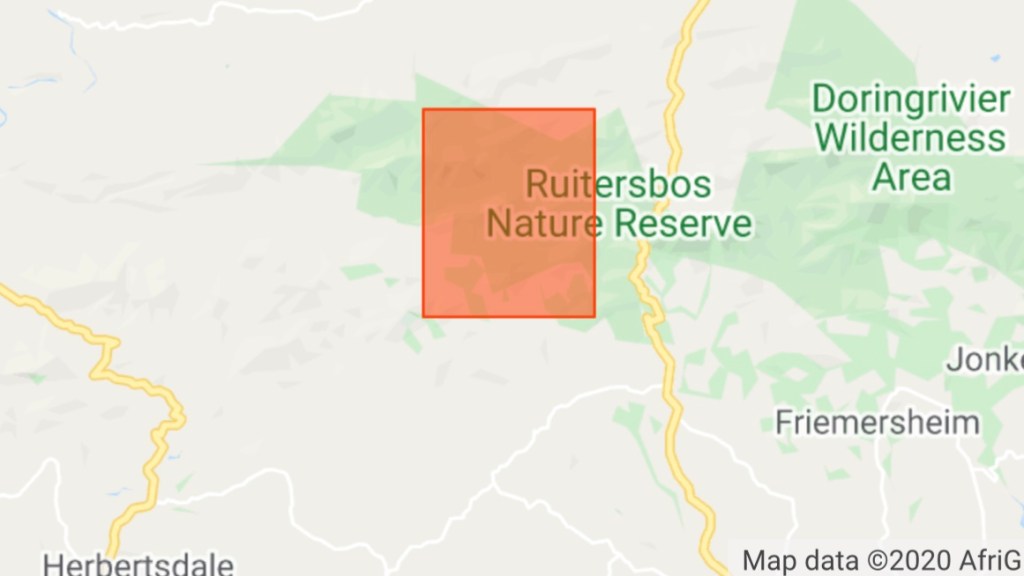
I decided to target the challenging pentad as well as the one directly south of it, which seemed to hold more promise. Both are within about 45 minutes of home – the maps below show the location of the former…
The Route
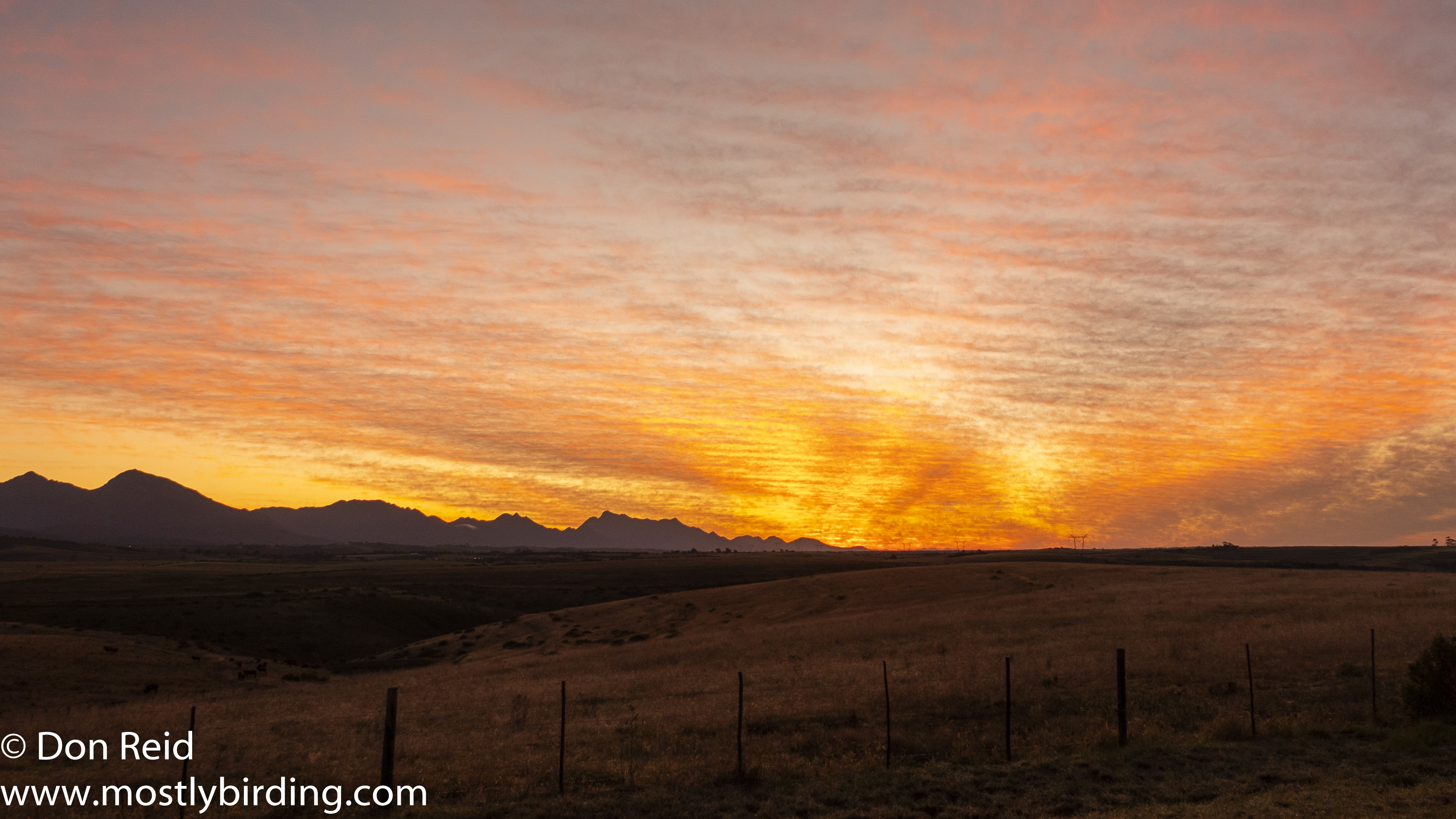
With sunrise gradually coming earlier each day in late August, just a week away from Spring day, I set the alarm a bit earlier and left home at 6.15 am. I followed the R328 regional road to Oudtshoorn, passing Brandwag village and turned left at Ruiterbos Farm stall then travelled a couple of Kms along this quiet road before reaching the start of the first pentad at around 7 am.
Pentad 3355_2155
Birding got off to a brisk start with calls of several species welcoming the new day – a cool, fresh morning with little cloud. Blue Crane, Bokmakierie, Cape Grassbird, Grey-backed Cisticola, Red-necked (Cape Turtle) Dove, even Hadada Ibis all joined the chorus.
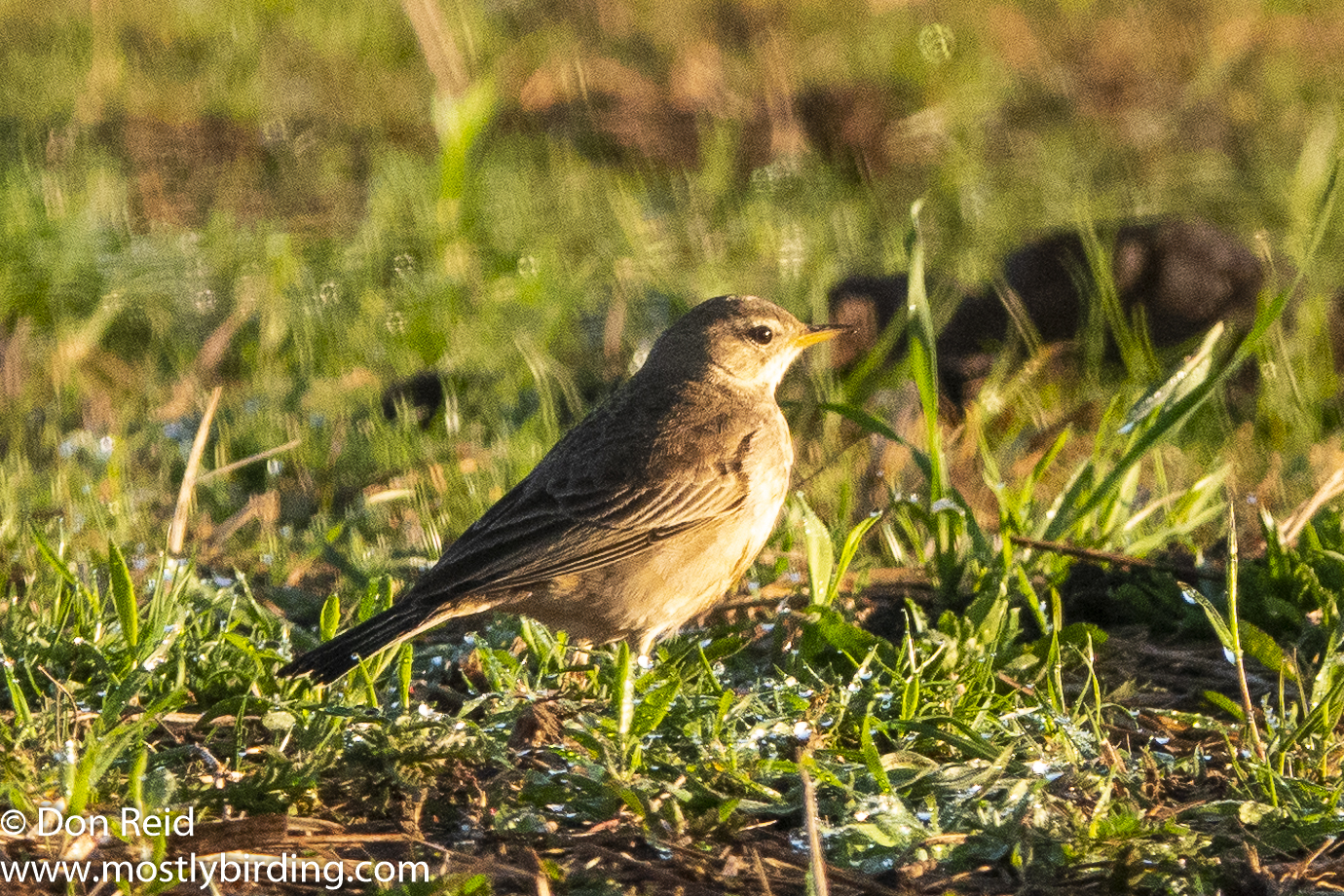
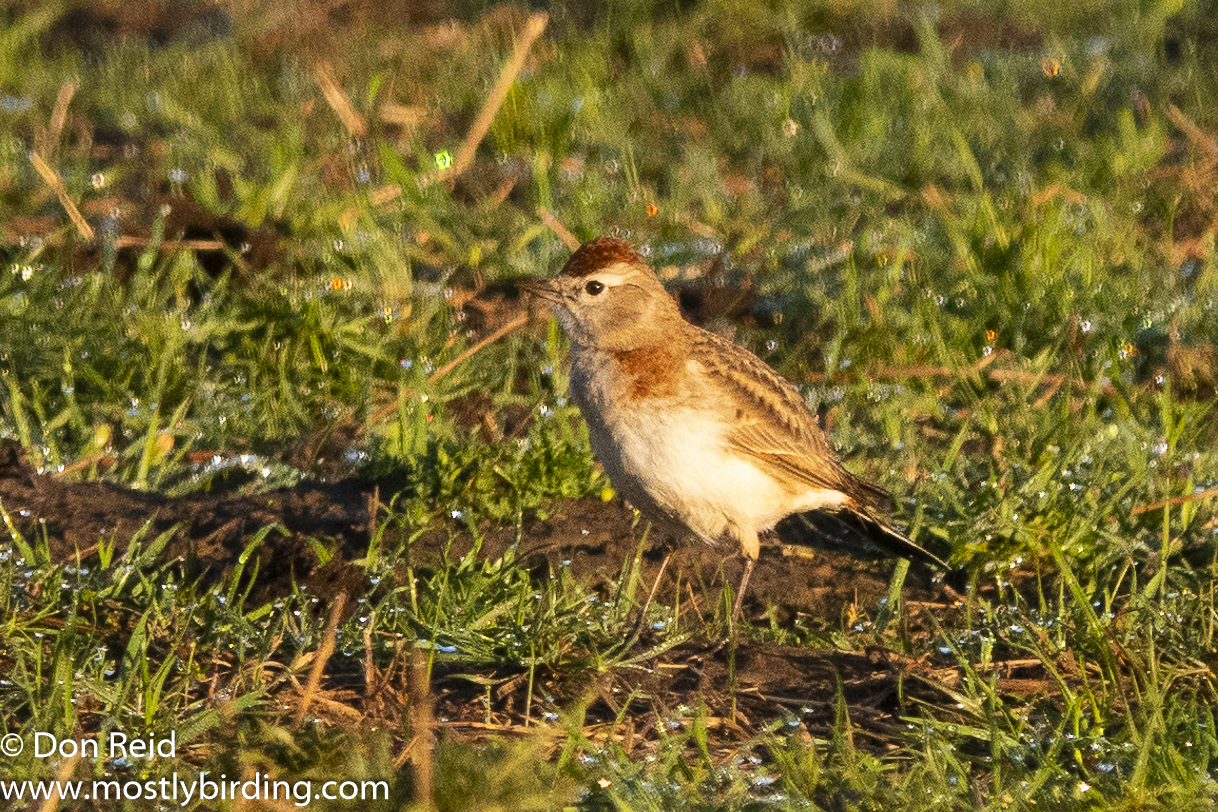
Not much further along the gravel road I stopped at two adjacent fields which showed how differences in usage of farming land can have a noticeable impact on the species to be found. The first was covered in lush green lucerne and was seemingly reserved for the “big boys” – Egyptian and Spur-winged Goose and Blue Cranes were prominent. The adjacent field had short patchy grass with a scattering of stones and cowpats – clearly used for grazing of cattle and the realm of the smaller guys – Lapwings (Crowned), Larks (Red-capped) and Pipits (Plain-backed).
Descending into a valley, I passed a fruit farm which had entire fields draped in protective shade cloth, mostly to keep insects out I would guess, but equally proficient at keeping birds away, creating a very sterile environment.

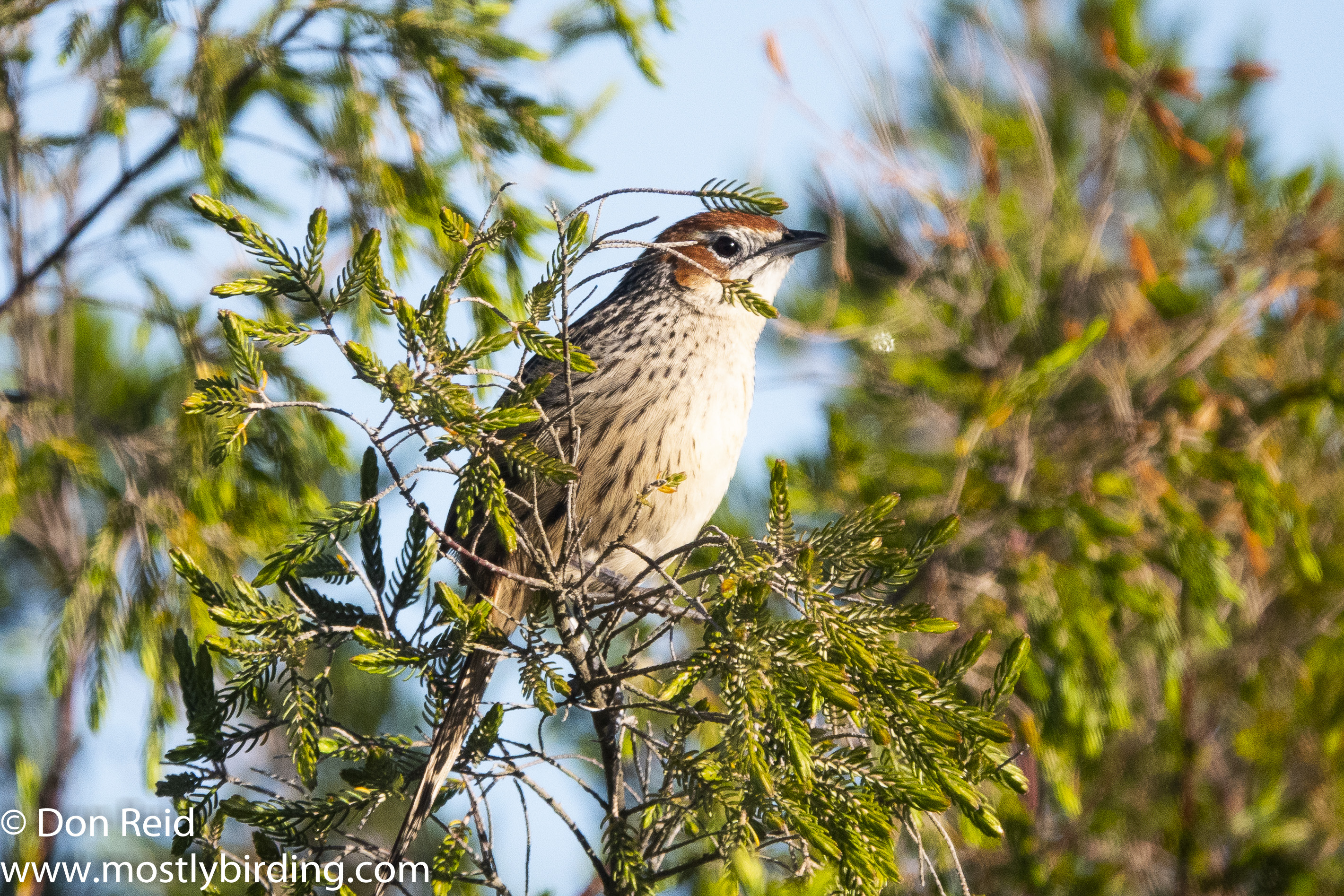
I did not dawdle and proceeded out of the valley into the hills beyond – what a contrast – suddenly the hills were alive with bird sounds, which were music to my ears (why do I feel a song coming on?). The next twenty minutes were bountiful, with 3 species of Sunbird (Southern Double-collared, Orange-breasted and Malachite), Cape Buntings and Cape Canaries twittering away, Stonechat and an African Olive Pigeon (New record).
Klaas’s Cuckoo (new record) announced its presence with its well-known “Meitjie” call and I wondered if it was an early arrival or perhaps one of those that had overwintered in the area, as they are known to do. A Cape Batis became my first record of this species for the year.
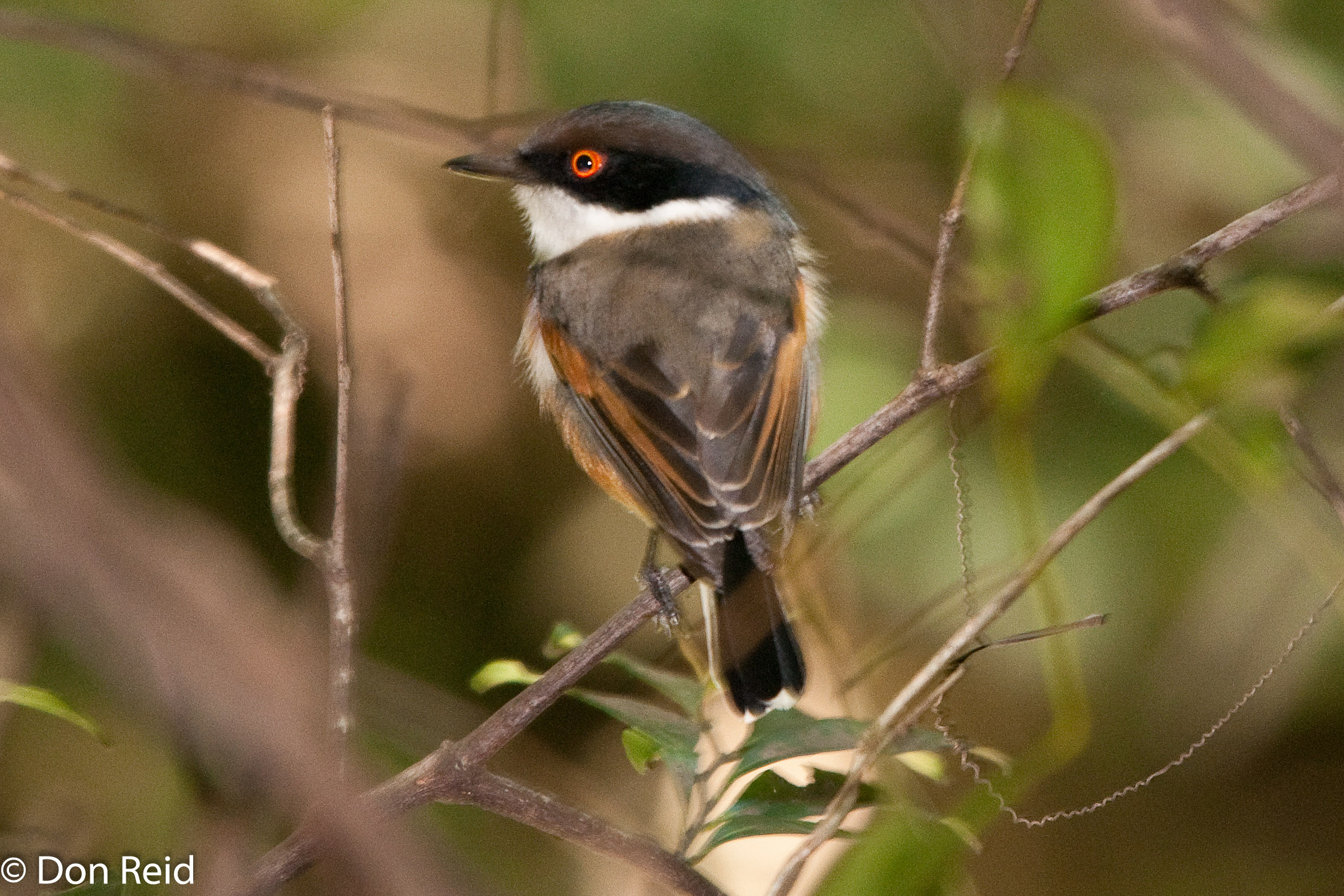
After an hour and a half in the pentad, I had logged 34 species – a good start, and being close to the second “challenging” pentad, I decided to tackle it while birds were still active and come back to the first pentad a bit later. This would hopefully maximise my chances of getting a reasonable total in the second pentad which, from the stats, was going to produce a low bird-count card, for reasons as yet unknown.
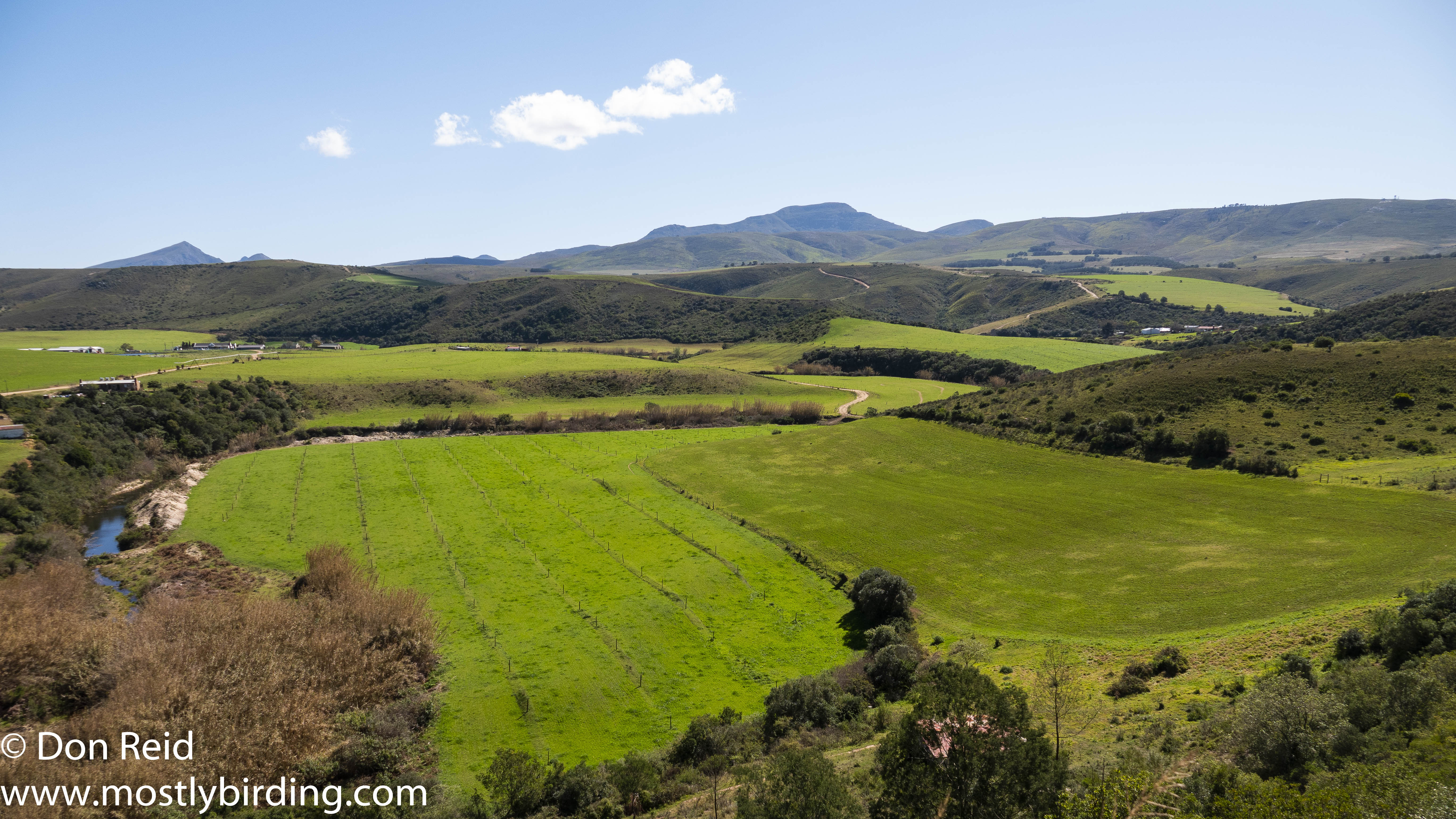
I returned later in the morning to complete a second “shift” in this pentad, carrying on where I had stopped before. I was now out of the prime birding area, into flatter countryside with less bush, but was still able to add regularly to my atlas card with the likes of Rock Kestrel, Victorin’s Warbler and African Black Swift (New record).
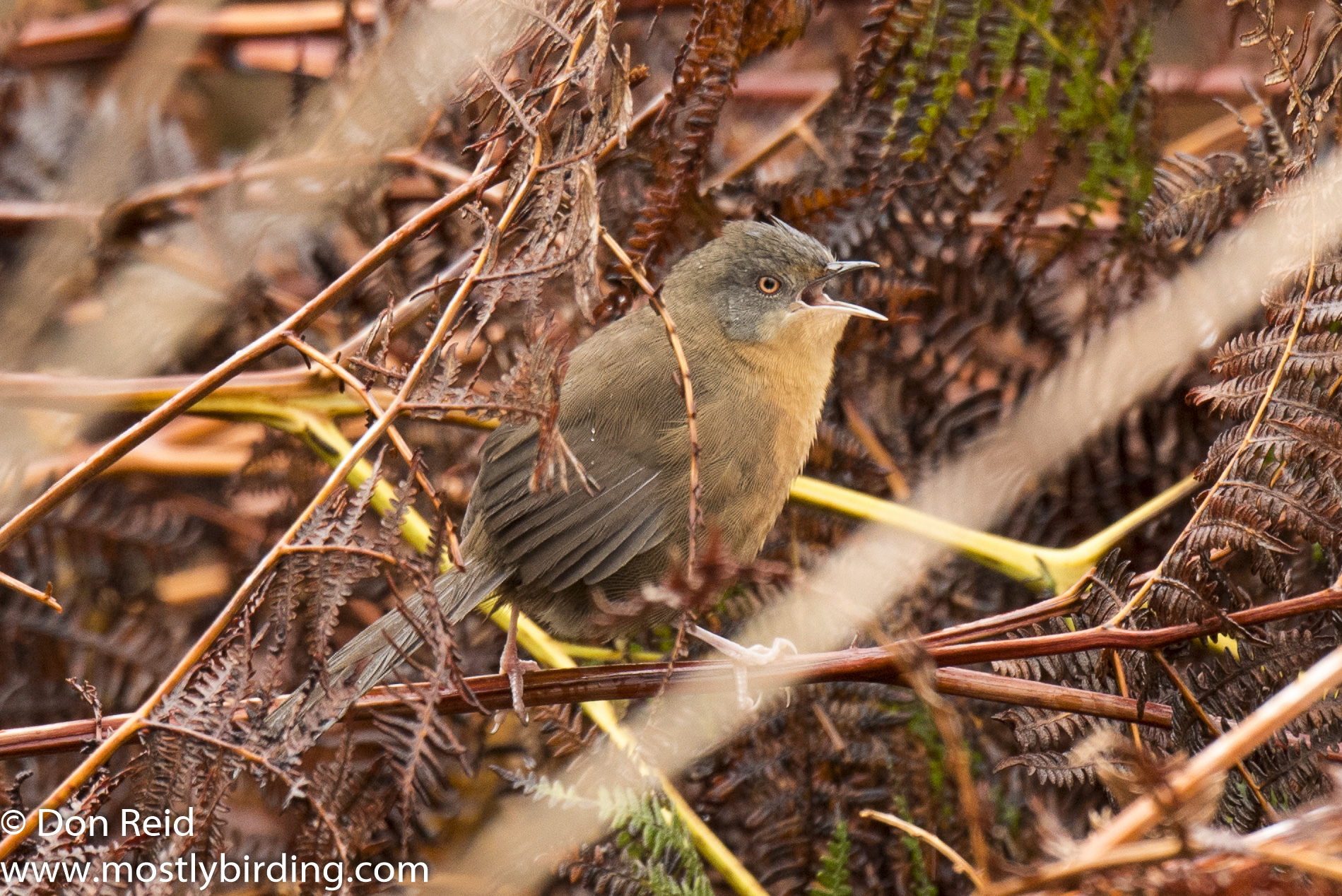
I managed to get a reasonable photo of the Rock kestrel – I had seen it returning with a small prey to its perch on top of a utility pole and guessed it would be pre-occupied while devouring it, which would allow a closer approach than usual. I was right and it only flew off again when the prey was ripped apart and swallowed.

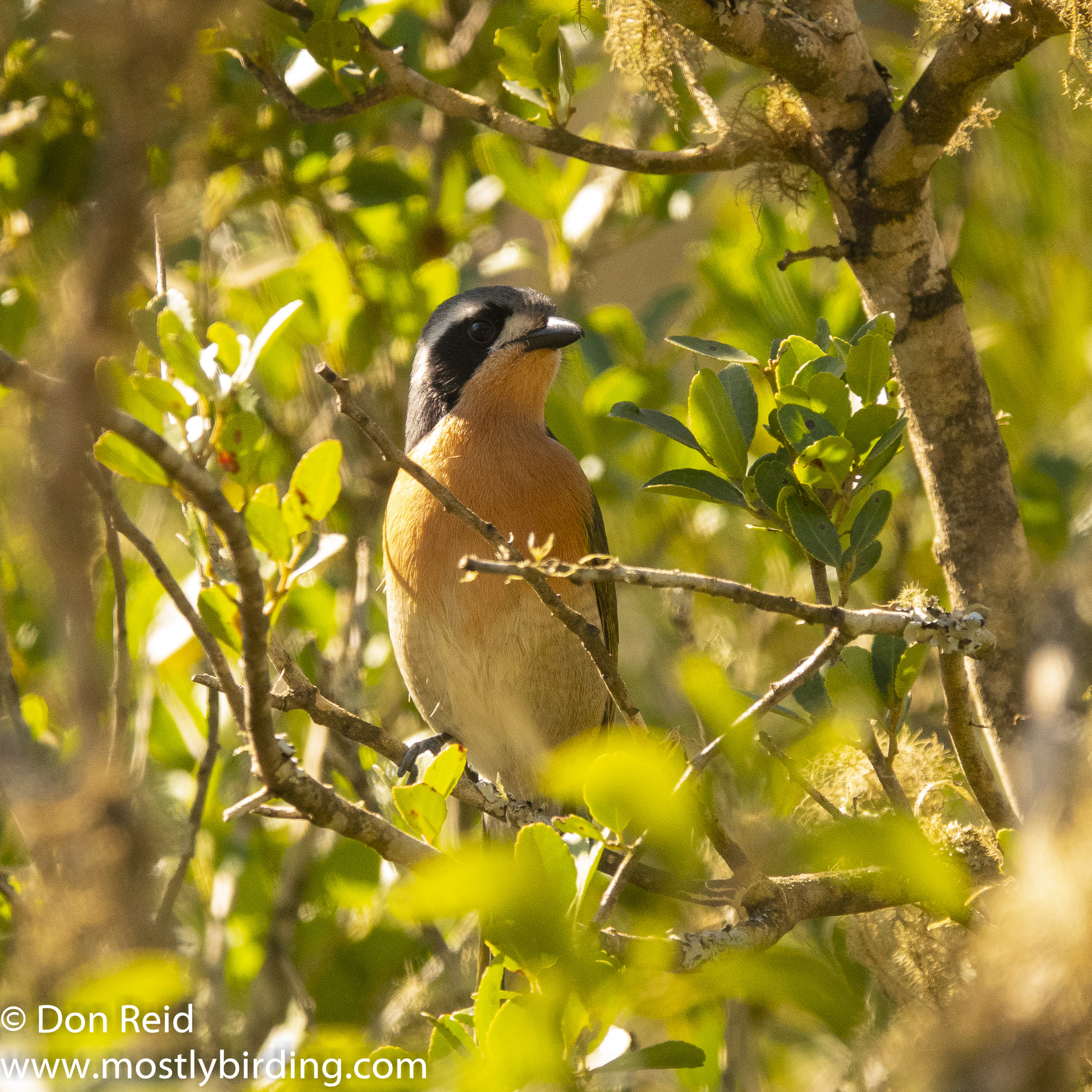
Along the last stretch before exiting the pentad,another photo opportunity arose – this time an Olive Bushshrike (New record). I heard it calling from a particularly bushy area alongside the road and once I thought I had found the spot where it was concealed (which they are very good at doing) I tried some “pishing” which is a useful way of getting some species to pop out momentarily.
The Bushshrike obliged for just a few seconds, curious as to what was making this sound which birds associate with danger and I was able to snatch a few images – my best of this species to date!
The pentad had produced 50 species in all, and some very special ones at that.
Pentad 3350_2155
This was the pentad that had me wondering about the low totals logged by others. I soon found out why – apart from the first km or so which runs through open hills, the rest of the only access road ran through a commercial pine plantation, habitat which is notoriously sterile when it comes to bird life. The open stretch held Cape Grassbird, Karoo Prinia, Red-necked Spurfowl and African Pipit.

Entering the plantation, birding – and indeed life itself – seemed to slow down…
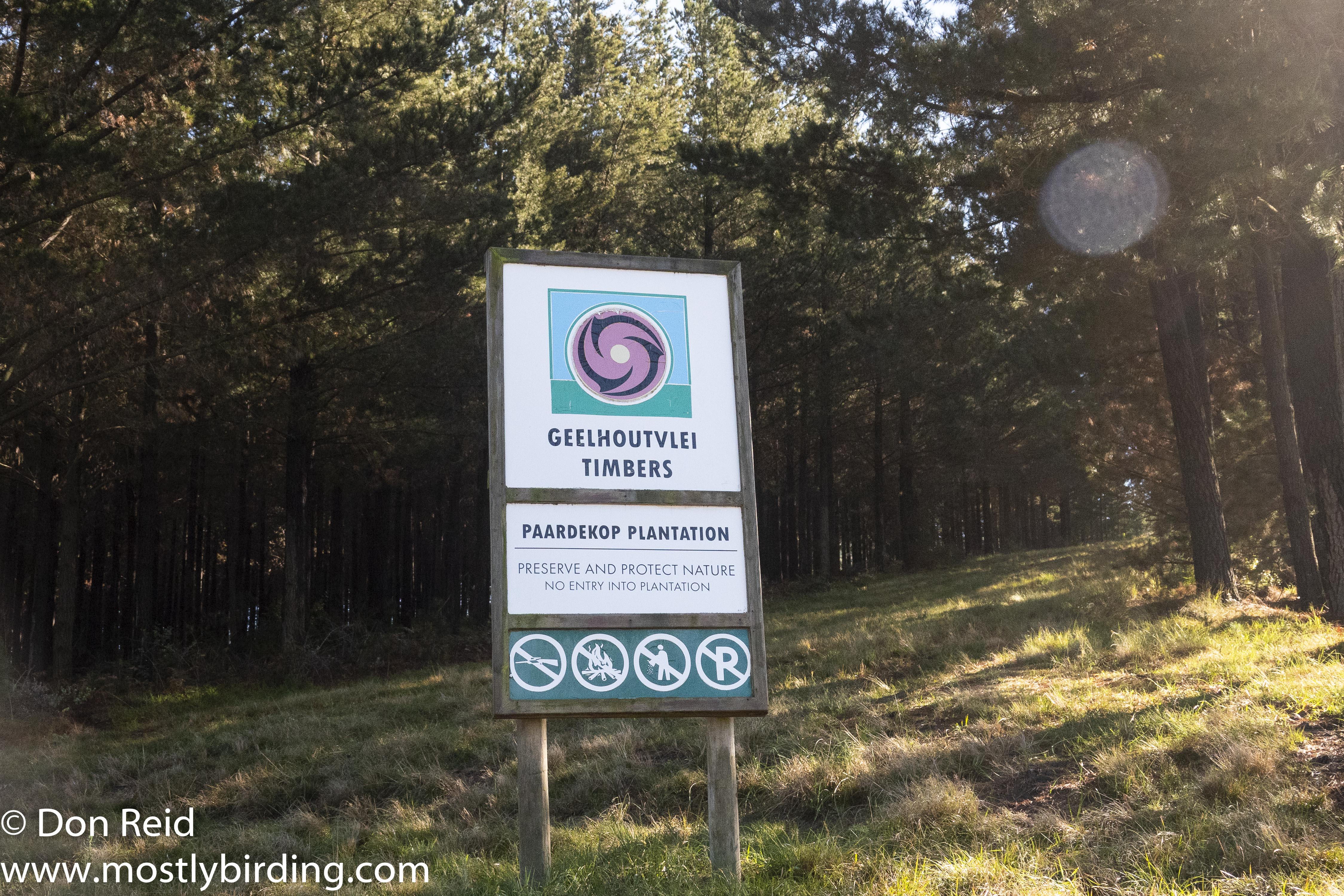

It was nevertheless a most pleasant environment to be in, despite being less than attractive for most bird species – exceptions were Black-headed Orioles, Cape Canaries, Cape Bulbul, and Cape White-eye, all of which I found easily and repeatedly, mostly at the fringes of the plantations.
At one stop, Greater Double-collared Sunbirds were curious bystanders but most stops were met with dead silence and no discernable movement, so each species added was quite precious as I slowly built on the list.
After two hours birding in the invigorating pine-scented air, I found I had reached 20 species, amazingly the second best total for the pentad out of 15 cards completed to date! I later found that I had added 3 new species to the pentad records, being Hadada Ibis (!), Speckled Pigeon and Black Sawwing.
Footnote : Where I show percentages in brackets, these refer to the relative scarcity of the species according to the pentad surveys completed to date over the ten years that the project has been running. So if 100 pentad surveys have been done to date and a species has been recorded 5 times by the observers, it will be shown as 5%. Notable species in my book are those with a % of less than 10%





 Mostly Birding