
Verlorenkloof, as regular readers will know, is our favourite spot for a really relaxing getaway and we look forward to our annual timeshare week in October each year immensely. October 2018 was no different with lazy days, some walking, some birding and atlasing and just enjoying the company of old friends …. errrr, friends of long standing that is. (At our age one can get sensitive about 3-letter words such as “old”).
The croft (the fancy name for the house-like accommodation at Verlorenkloof) sleeps 10. although 6 is more comfortable, so it is a great opportunity to invite some close friends along for the week.
Perhaps the best part is the time spent on the patio, where we take breakfast and lunch and enjoy regular doses of tea, coffee or cold drinks to while away the hours. The patio overlooks a sloping lawn which merges with the natural grass and shrubs stretching across the hill and down to the stream, which is flanked by luxuriant reeds and ferns.
Beyond the grass and the stream, the lower grassy slopes of the mountain begin and continue up to a height where the rocky, almost vertical face of the mountain proper takes over, soaring to the escarpment edge a few hundred metres above. Oh, and to add to the variety of habitats, the mountain face is cleaved into densely forested kloofs at its intersections.
All of this provides the opportunity for a multitude of bird species to be attracted to the area and to take up residence. Many of them announce their presence at various times of the day, peaking in the early morning as the sun rises to welcome a new day. The mountain seems to act as an amplifier and the scene before you is reminiscent of a natural amphitheatre, with some of nature’s best songsters providing an aural experience that is hard to beat.


The selection of photos that follows is from our October 2018 week and is just a sampling of the rich bird life at Verlorenkloof, limited to those species which I was able to get close enough to for a reasonable photo or which, by chance, crossed my path while I had my camera close by.
English, Afrikaans and scientific names are given with the gender and subspecies added where applicable …….
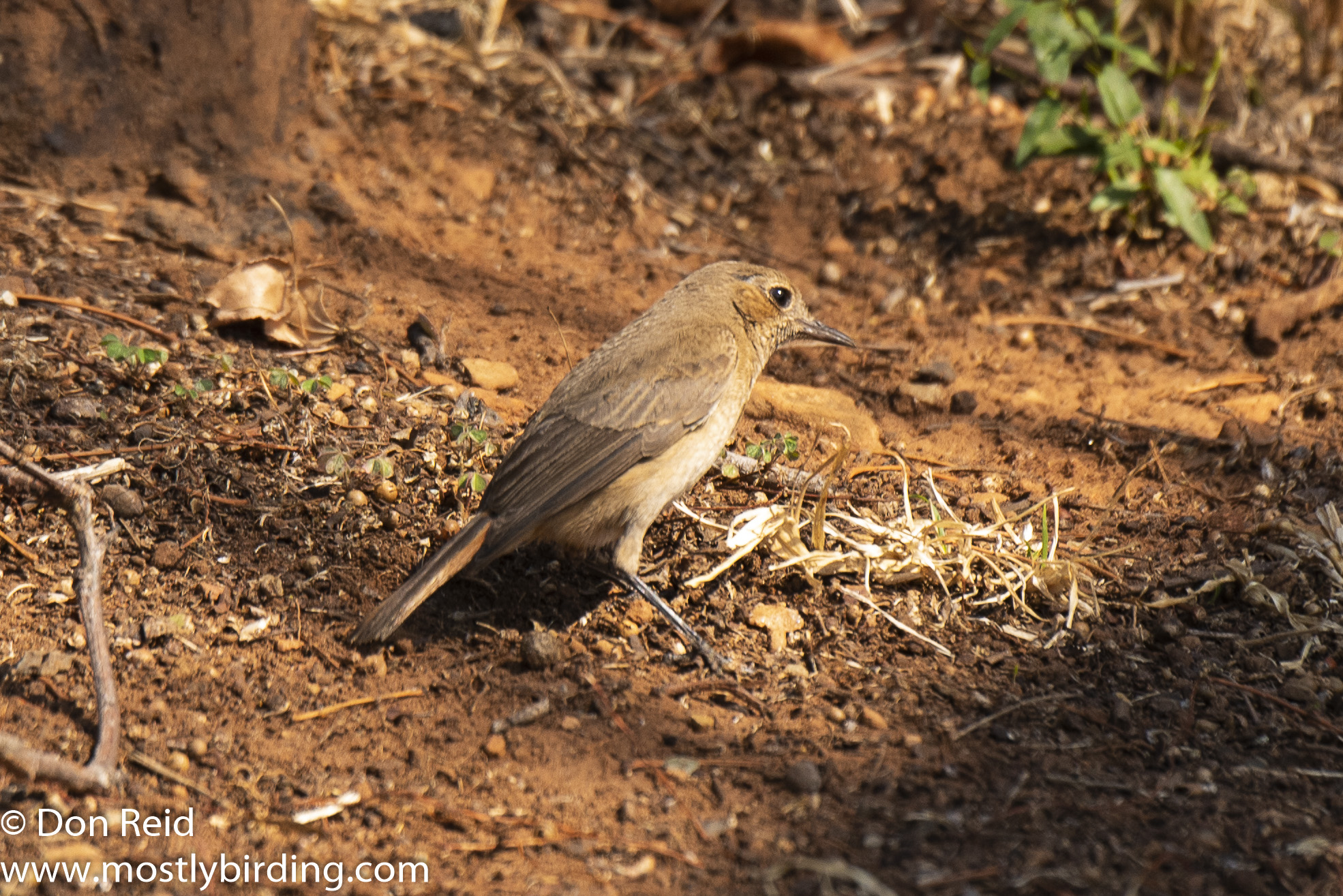
Familiar Chat / Gewone spekvreter (Cercomela familiaris – hellmayri subspecies) is a regular visitor to the area around the croft where it hawks insects from a vantage point such as a small rock or low branch, returning to the same spot with a flick or two of the tail as it lands, in its “familiar” way

Yellow Bishop (Male, non-breeding) / Kaapse flap (Euplectes capensis – approximans subspecies) – later in the summer the male acquires its breeding plumage of overall black with yellow shoulders and rump

African Stonechat (Male) / Gewone bontrokkie (saxicola torquatus – stoneii subspecies) – another conspicuous, widespread species which favours grasslands and perches prominently on tall bushes and plants.

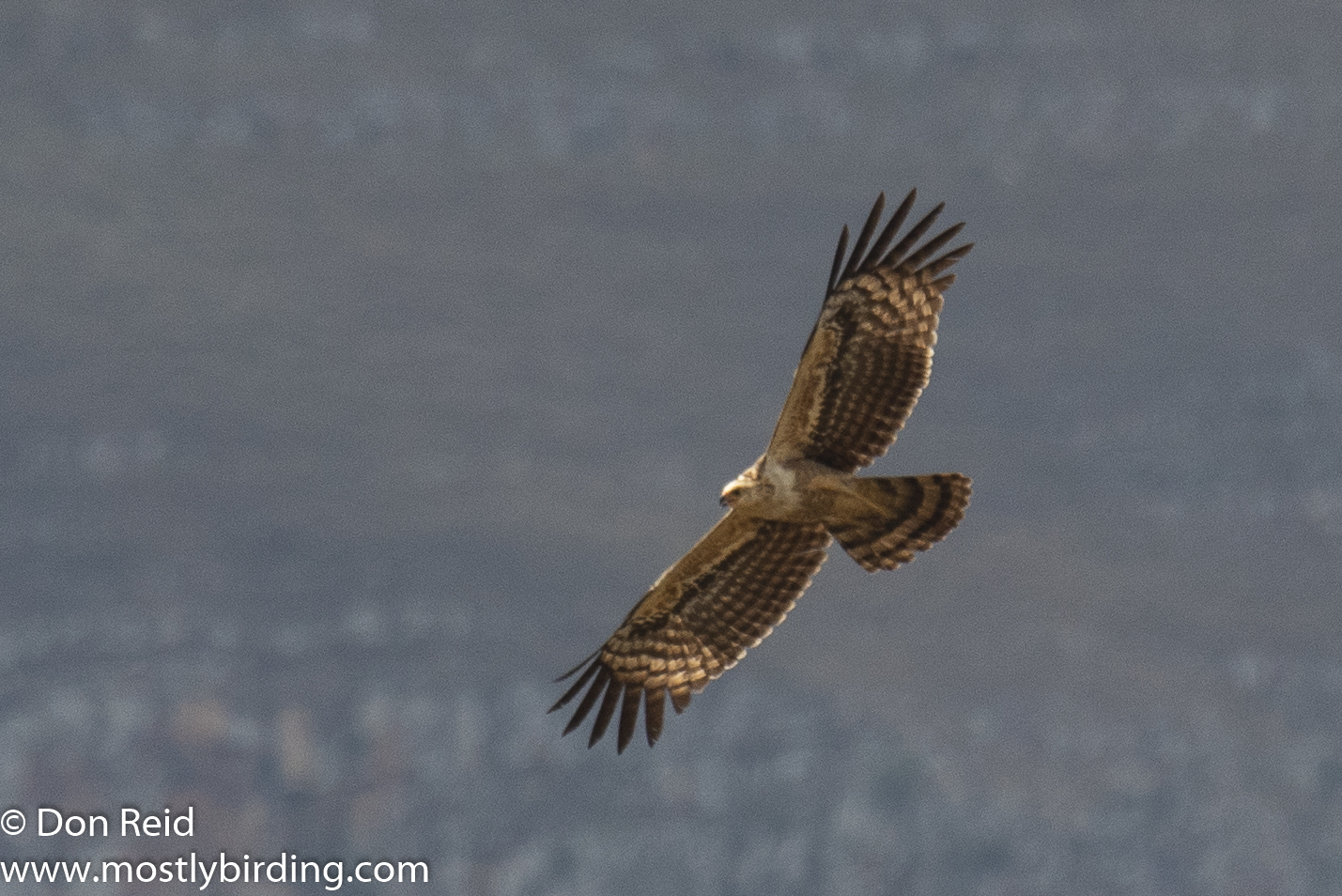
African Crowned Eagle (Immature) / Kroonarend (Stephanoaetus coronatus ) – it was a thrill to find this impressive raptor at Verlorenkloof. This immature eagle is probably the same one that was seen by Koos Pauw earlier in the year when it was still in the nest, which he pointed out to me on top of a large tree part of the way up the mountain slope

Cape Grassbird / Grasvoël (Sphenoaecus afer – natalensis subspecies) – singing its heart out in its customary fashion, just a little shy for a full monty photo
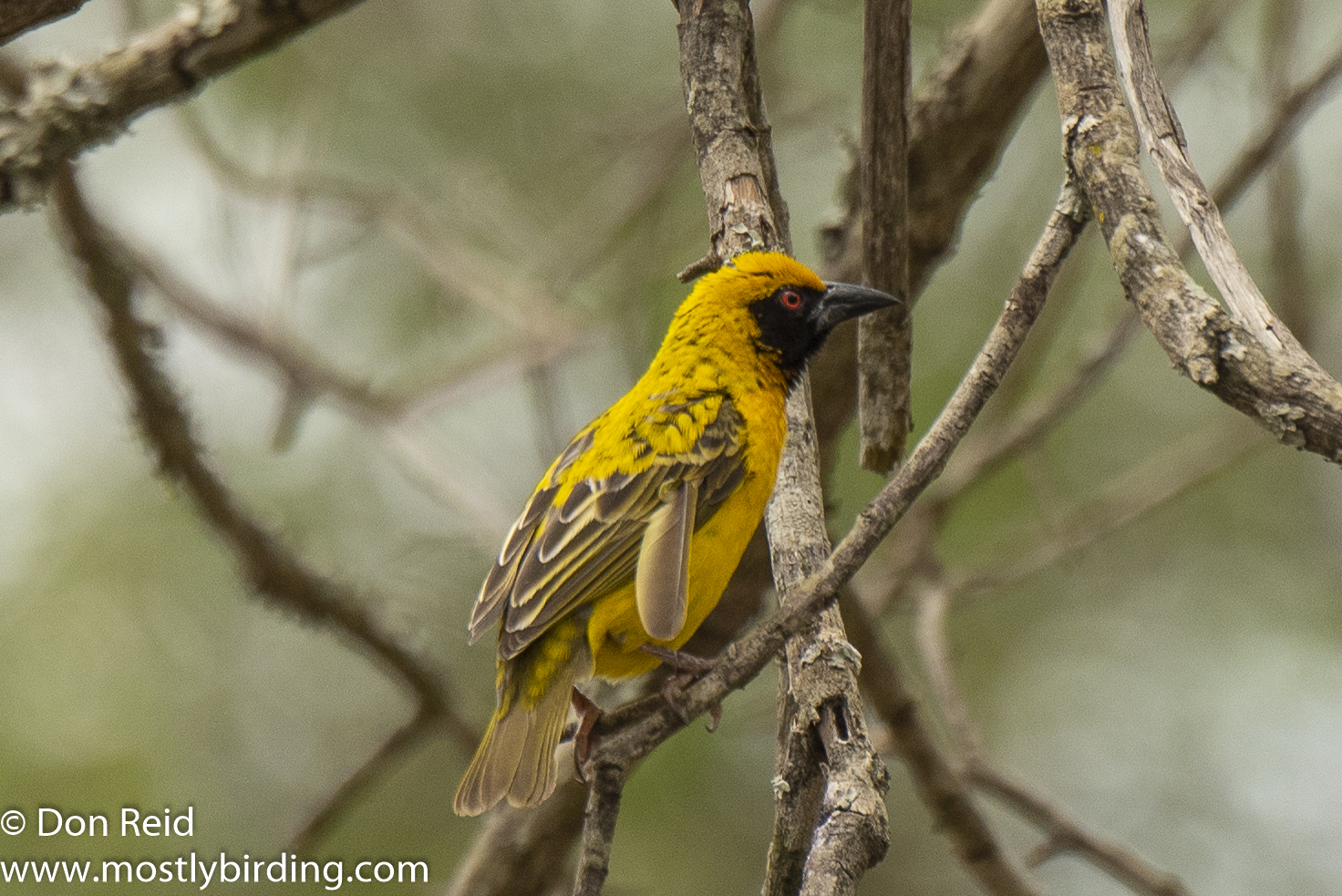
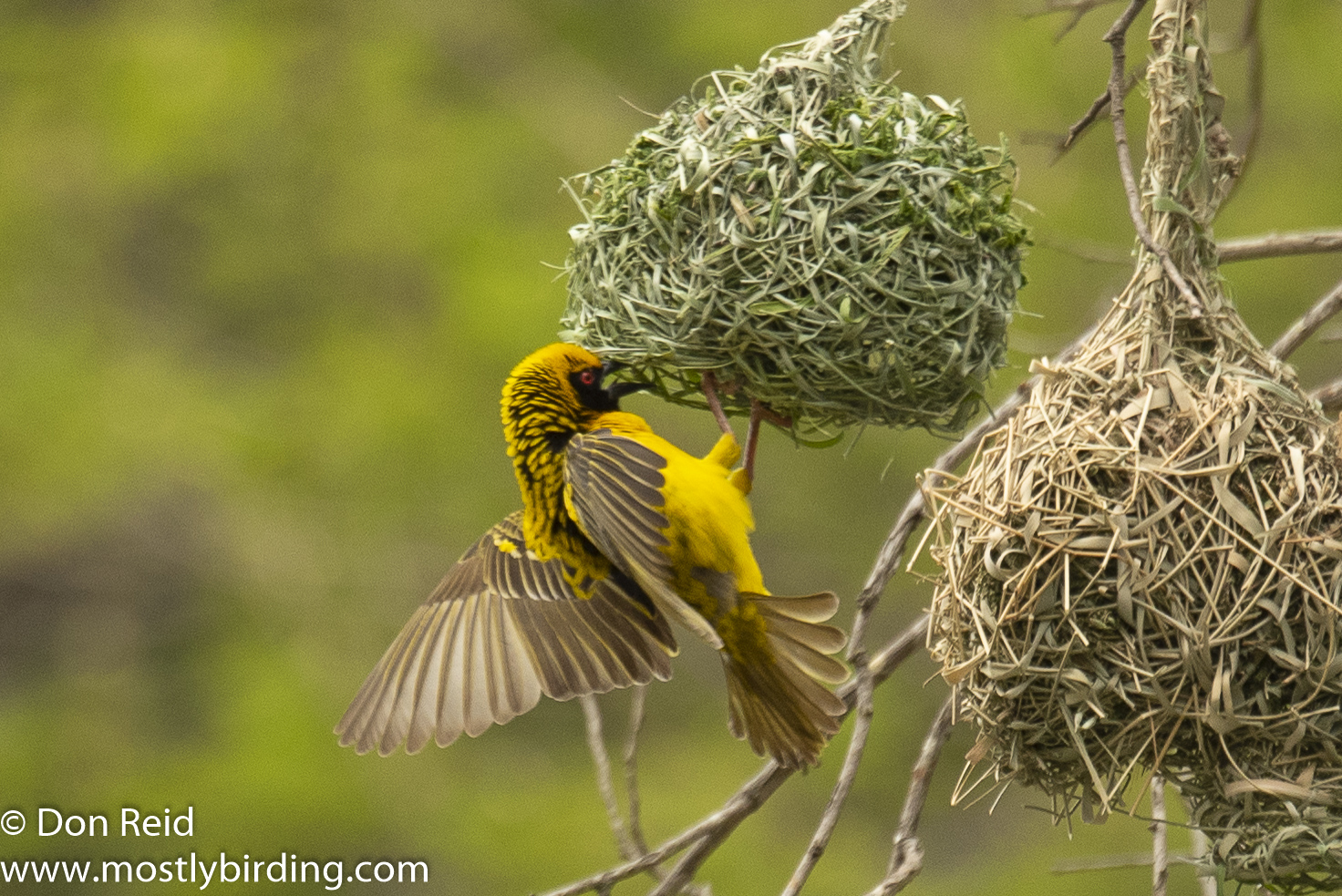
Village Weaver (Male) / Bontrugwewer (Ploceus cucullatus – spilonotus subspecies) – it’s a treat to see this species in action, doing its best to attract a female for some “breeding” with much vigour, swaying its body and fanning its wings. A flock had taken over a tree alongside the river and filled it with nests

Kurrichane Thrush / Rooibeklyster (Turdus libonyanus) – a shy, solitary bird that likes to forage quietly amongst the shrubs
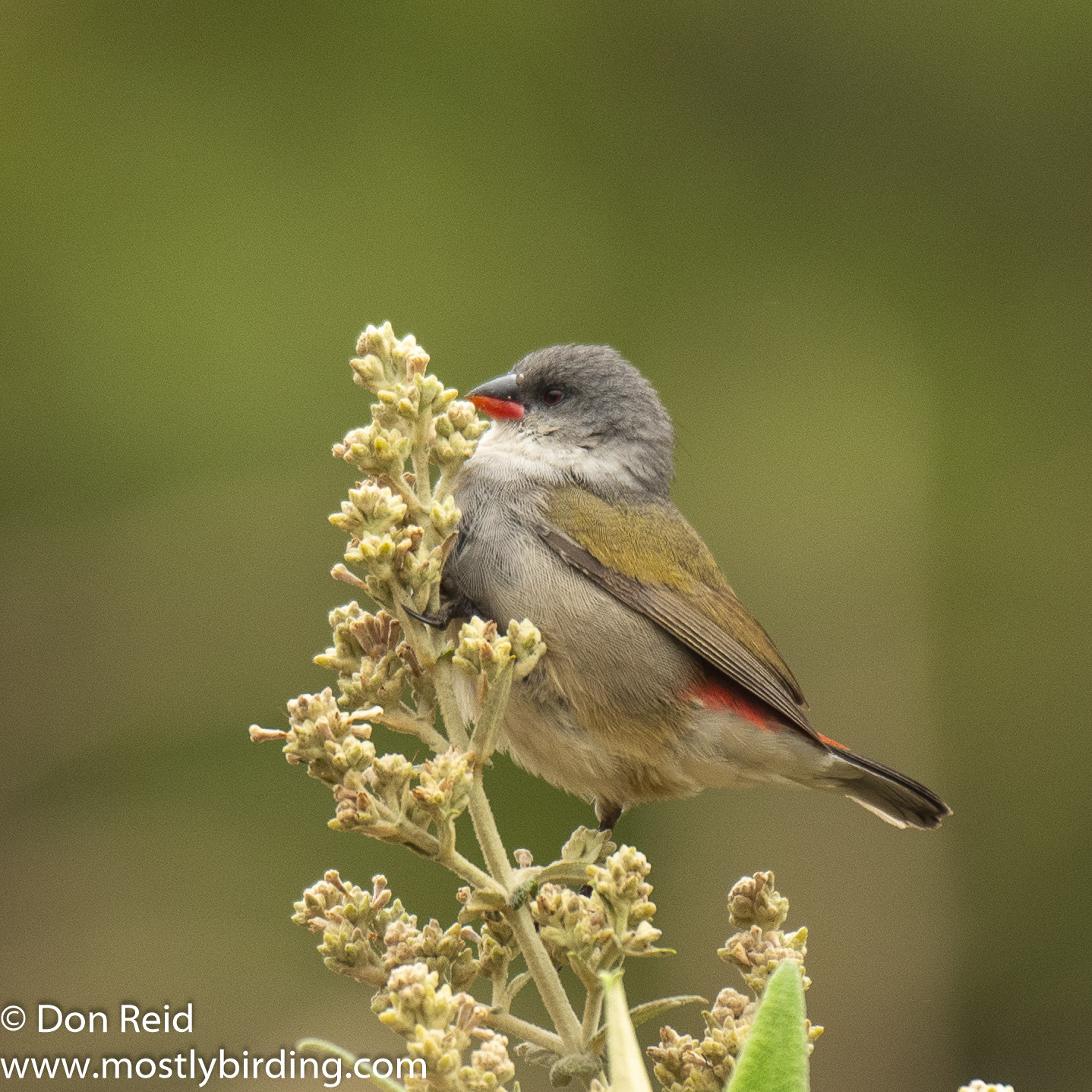
Swee Waxbill (Female) / Suidelike swie (Estrilda melanotis) – cute species that moves in small groups through the bushes
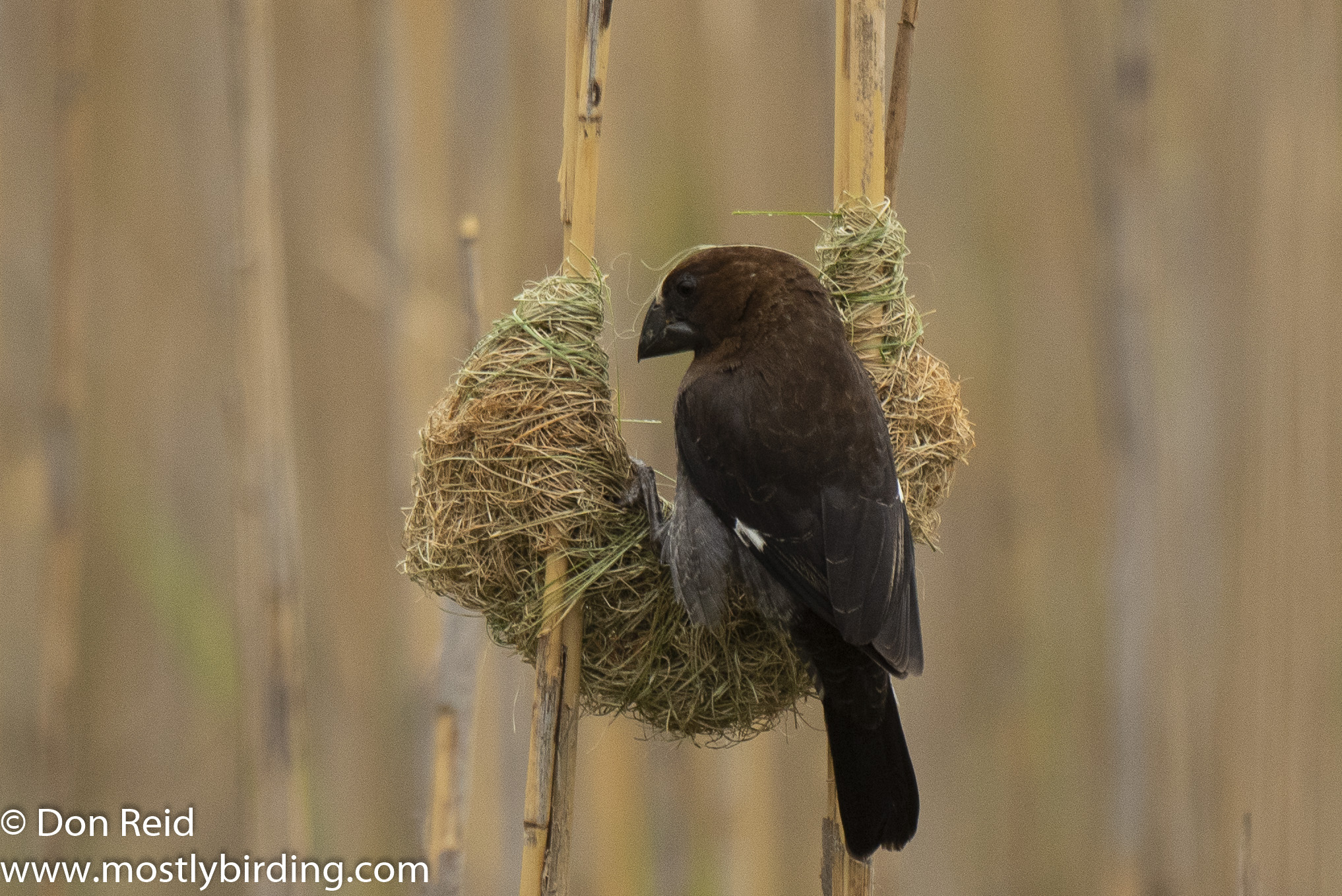
Thick-billed Weaver (Male) / Dikbekwewer (Amblyospiza albifrons – woltersi subspecies) – busy building a nest in the reeds alongside the bridge over the river. Unlike other weavers which start with a ring as a basis, this species starts with a cup and builds up from it, using thin strips gleaned from bulrush leaves to construct the fine, tightly woven nest
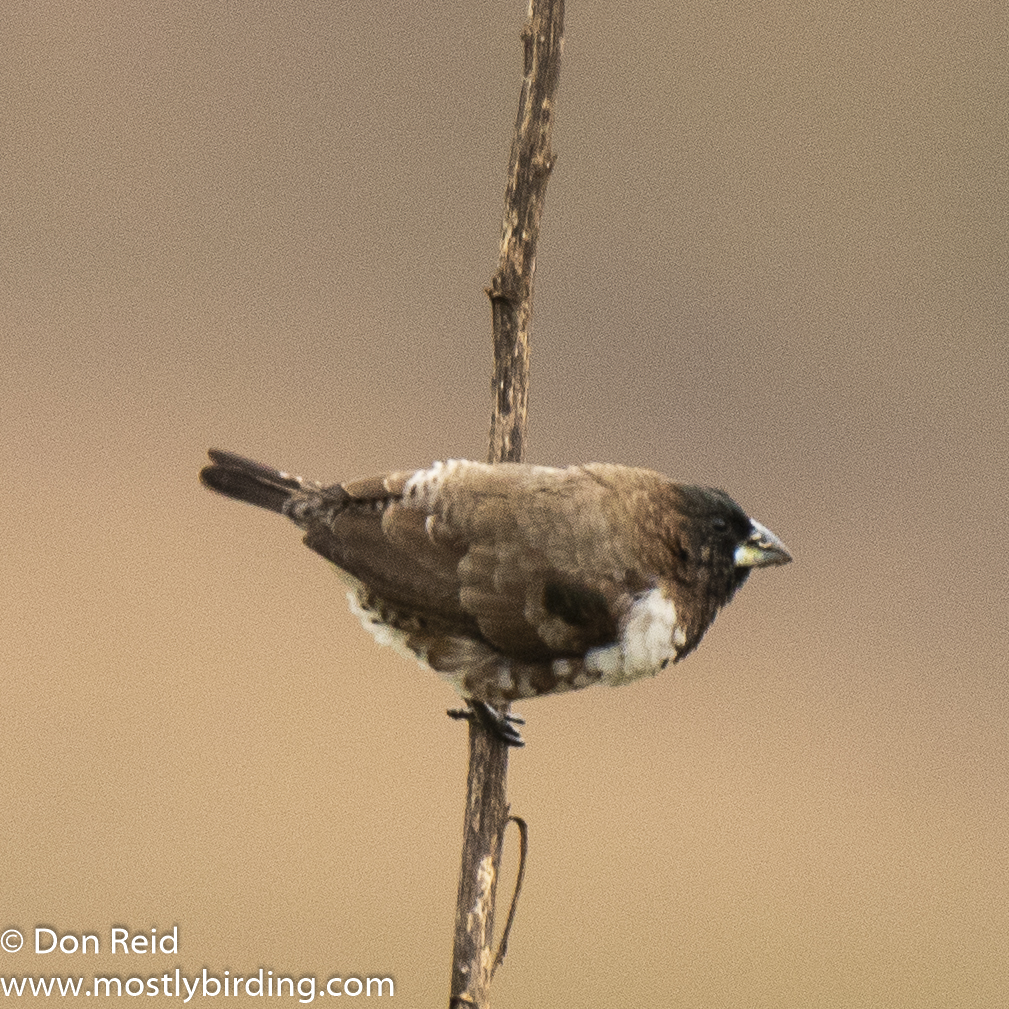
Bronze Mannikin / Gewone fret (Lonchura cucullata) – fairly common in the bushes and reeds near the croft
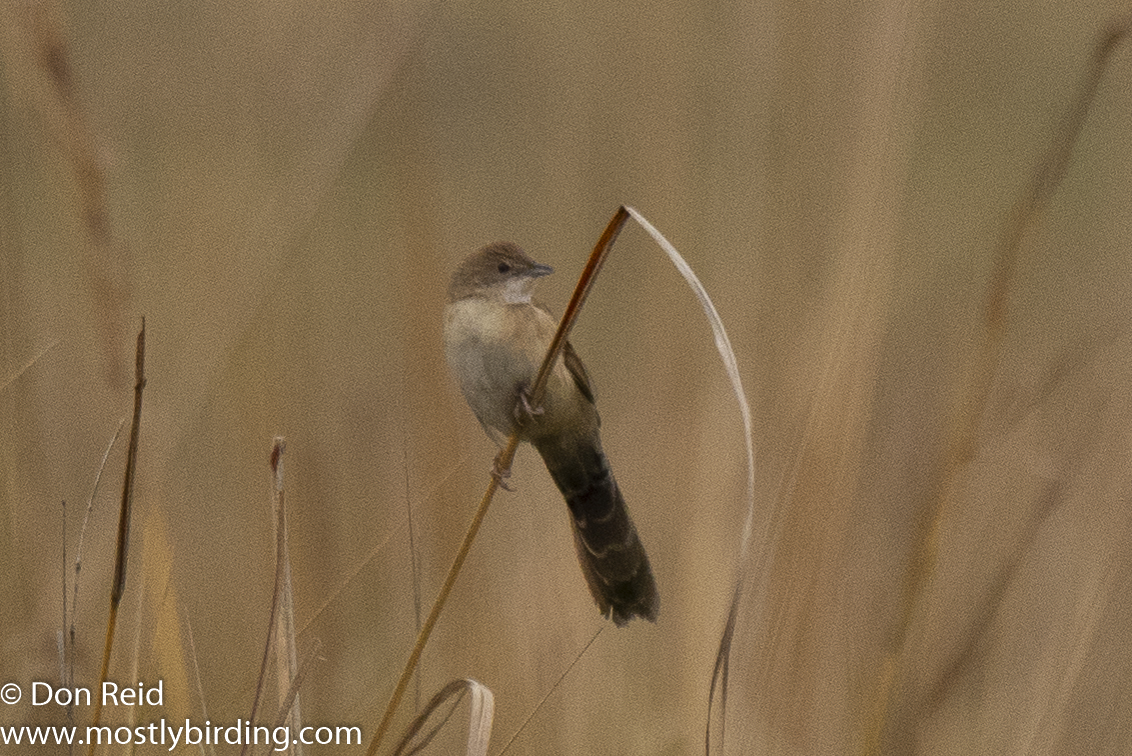
Broad-tailed Warbler / Breëstertsanger (Schoenicola brevirostris) – An uncommon species that I have not seen anywhere other than at Verlorenkloof – it prefers rank grass and has a distinctive sharp metallic call which tells you it is nearby, but is an expert at concealing itself from view, so getting a photo requires a mix of patience and luck

Fan-tailed Widowbird (Male in breeding plumage) / Kortstertflap (Euplectes axillaris) – also a “fan” of tall moist grassland which Verlorenkloof has in abundance
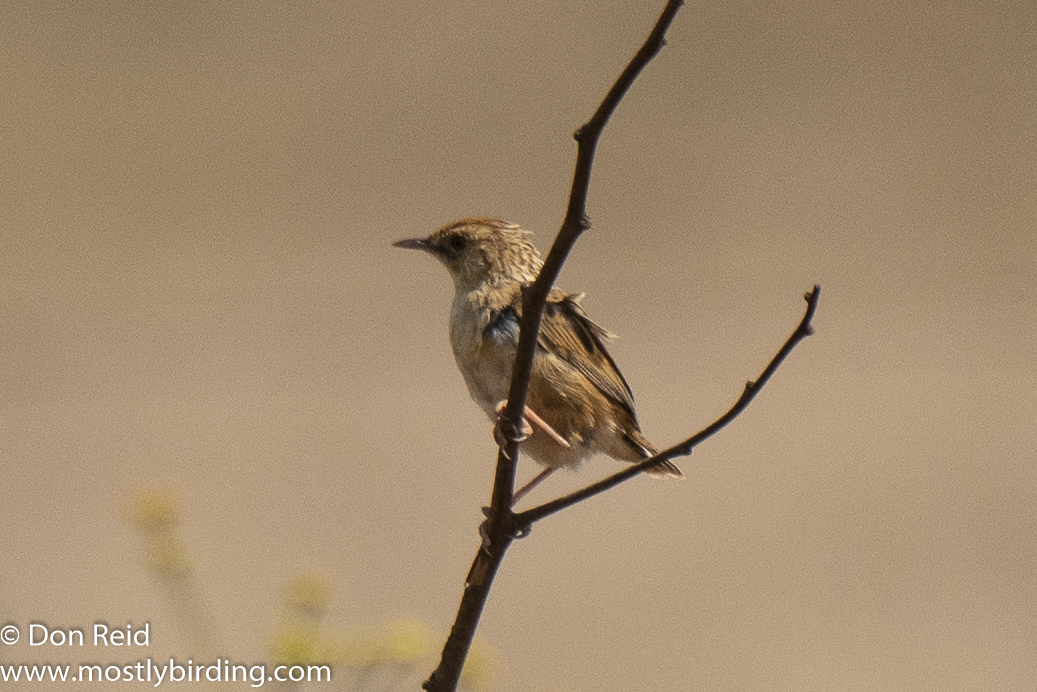
Wing-snapping Cisticola / Kleinste klopkloppie (Cisticola ayresii) – not seen at Verlorenkloof itself but in an adjoining pentad while atlasing – my first photographic record of this species
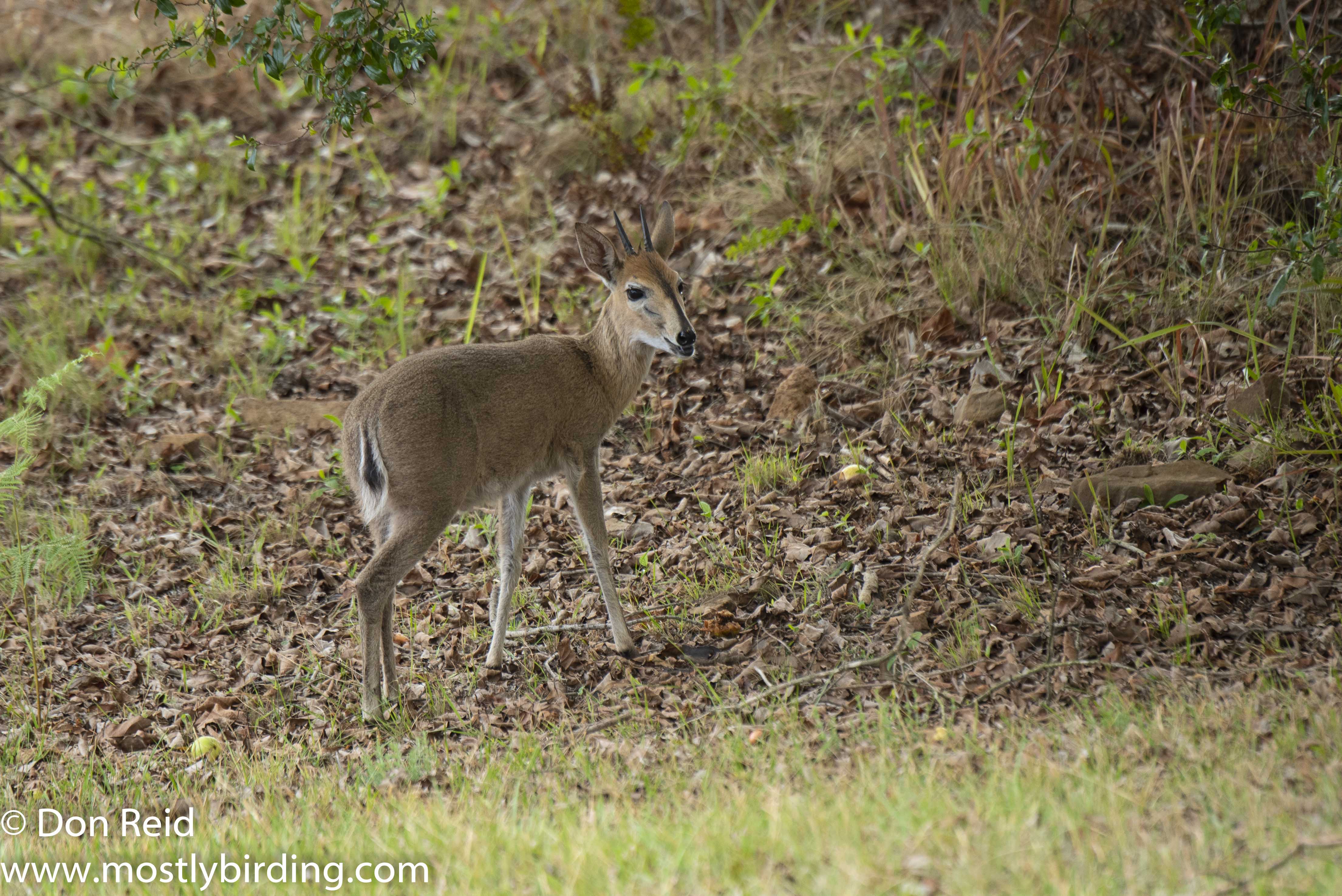
There are a few shy animals as well, such as this Grey Duiker
I’m already looking forward to our October 2019 week!





 Mostly Birding