95 Years old – I’ll be dammed!

My birding travels have taken me to many places over the years, places that no ordinary person (read non-birder) would consider visiting.

Yesterday’s outing was not meant to be a birding outing but turned into a very interesting day, full of surprises……

We are spending this week at our timeshare apartment in La Lucia near Durban and Gerda was keen to visit a wool shop she has ordered wool from via internet from time to time. Cleverly, she threw in an enticement for me to take her to Kloof, where the shop is located, by suggesting we could visit a birding spot after the wool shop stop, knowing I could hardly resist such an offer.

I already had a place in mind – Shongweni Nature Reserve – which I have been curious about since first reading the Roberts write-up on this birding spot many years ago. Described as “one of the better birding spots in Durban” and located about 30 km from Durban off the N3, it seemed to fit the bill for an exploratory visit – the further note that “the reserve is spoilt slightly by the surrounding tribal land and access route” had me equally curious.

The wool shop turned out to be at the owner’s house in the upmarket suburb of Kloof and we found it with the help of google maps. I had brought along a book to read while waiting but when I saw the surroundings, my spirits lifted – across the road from the house was a grassy, bushy conservancy area, cared for by the neighbourhood and looking very promising.

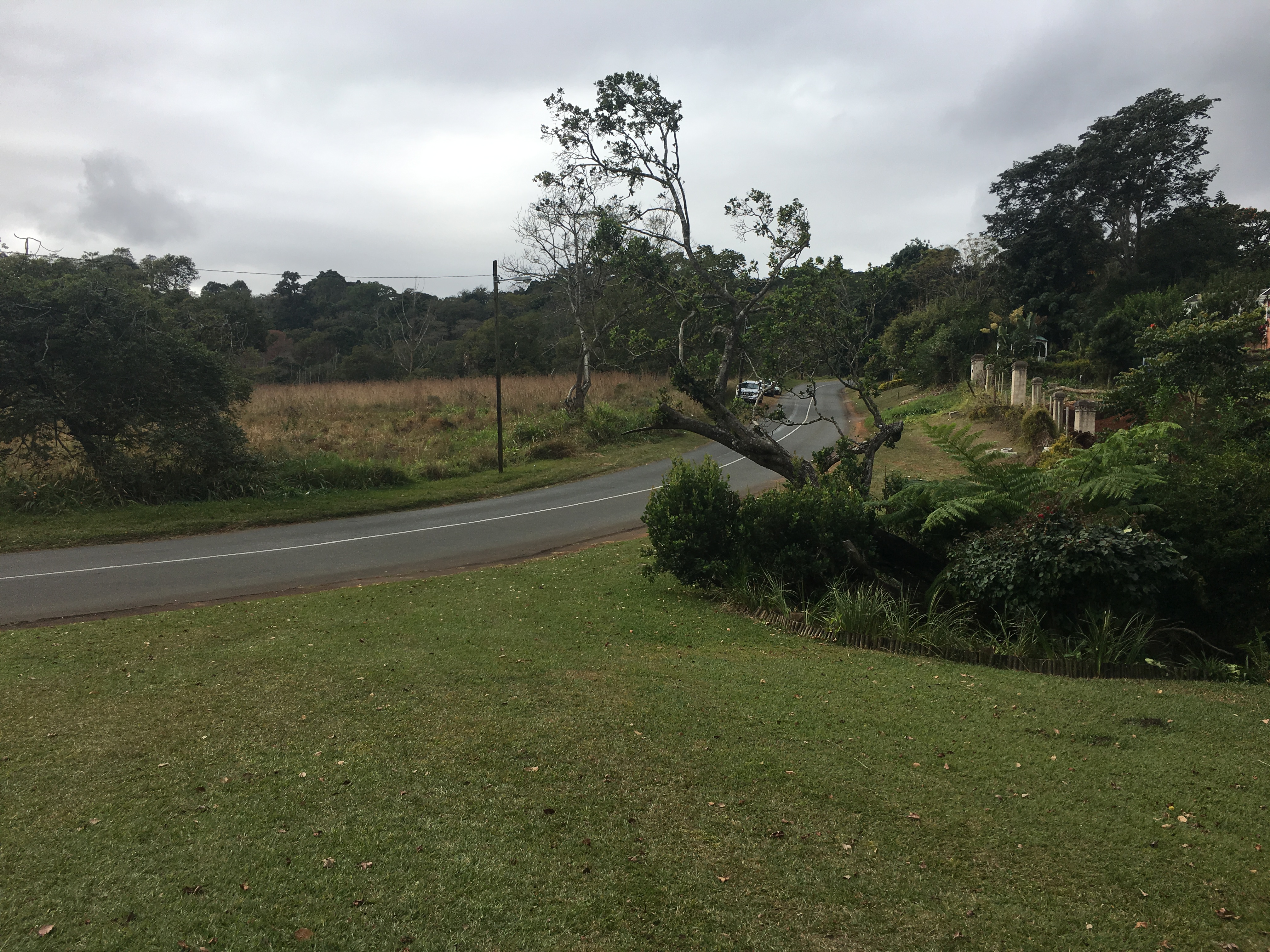
The conservancy area in Kloof
Lush gardens with conservancy area across the road

The variety of bird life I discovered there and in the surrounding gardens with their well-developed trees and tropical gardens was nothing short of amazing. In just 45 minutes I had recorded 24 species of a variety I could hardly have guessed at, including several that would please all but the most blasé birders –

  • Purple-crested Turaco calling regularly
  • Bronze Mannikins – literally by the dozen on the lawns, flying up into low bushes when disturbed
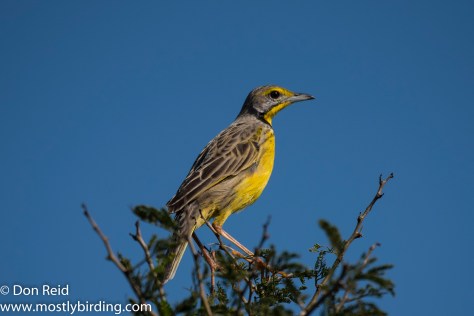
  • Yellow-fronted Canaries in full song
  • A Black-headed Oriole pair with their familiar liquid calls
  • Dark-capped Yellow Warbler amongst the long grasses
  • Trumpeter Hornbill high up in the trees (not many suburbs can boast this bird)
  • White-eared Barbets
  • Collared Sunbird in a palm tree
  • Spectacled Weavers
  • Southern Black Flycatchers hawking insects

As I said, an amazing list for suburbia! The bubbling bird life left me, well, bubbling (not my normal state by any means)

Oh and did I mention the Verraux’s Eagle that soared gracefully overhead?

Gerda appeared almost too soon and feeling coffee deprived we set off and stopped at the first coffee shop we came across, then reset the gps to take us to Shongweni – the route took us further north until we turned off at Assagay and shortly after onto a side road through hills covered with green sugar cane fields.  This attractive landscape stopped abruptly as we passed through a rural village along with the customary roaming goats, dogs, chickens and cattle, not to mention the residents treating the road as an extension of their living area, wandering about with no regard for passing vehicles.

I had slowed to a crawl for the couple of kms through the village, until at the end of the village the reserve’s  gate suddenly appeared. The surprised look on the gate man’s face as we approached seemed to suggest they did not get many visitors and the casual attitude towards the small entrance fee made me insist on a receipt.

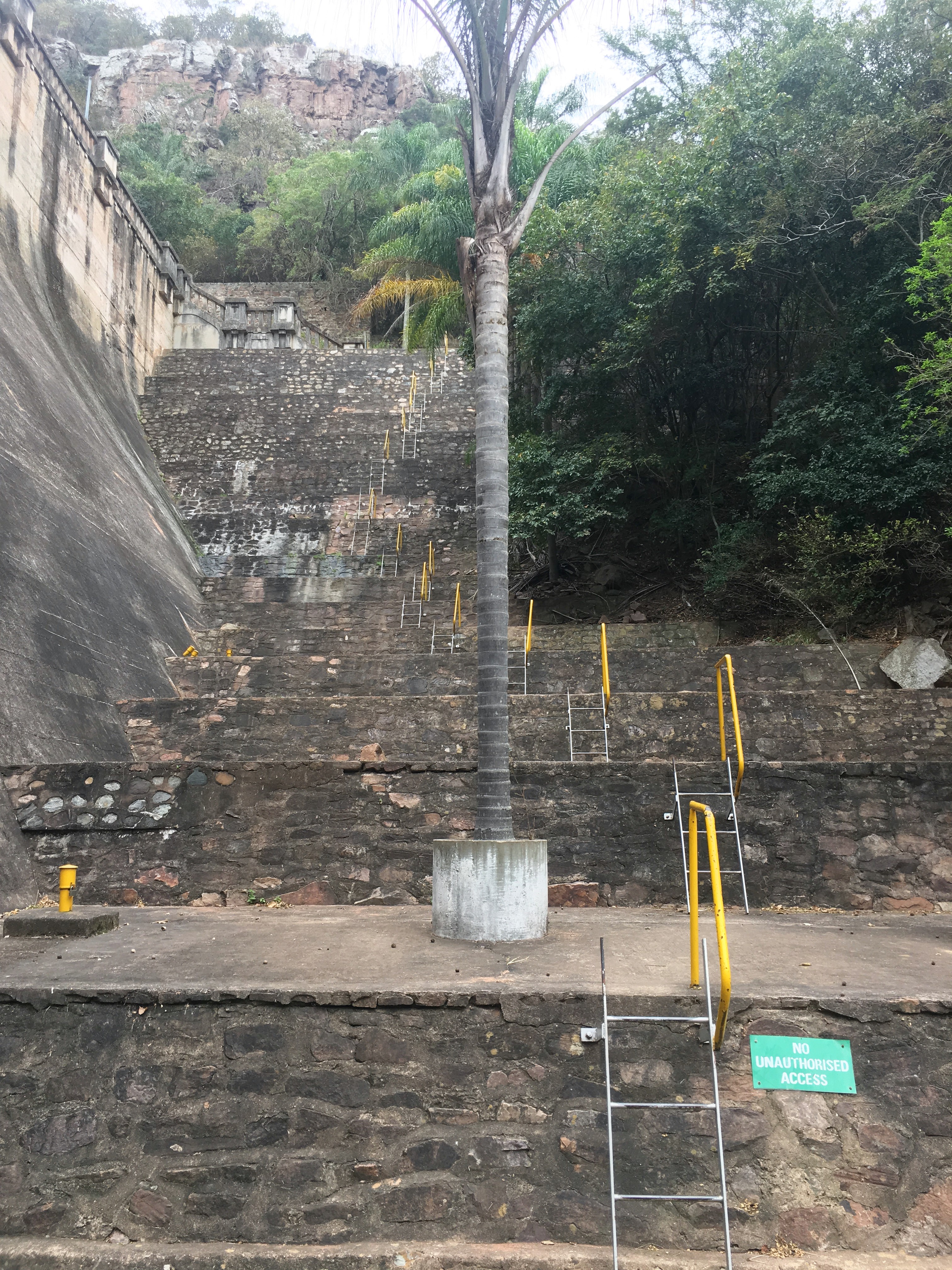
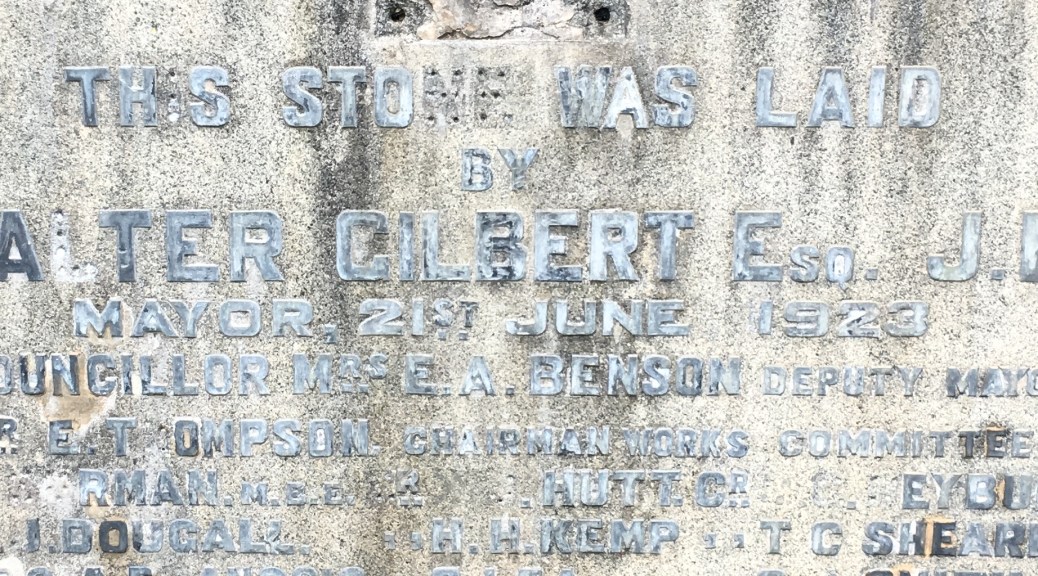
From the gate we wound downhill on a badly potholed road with not much sign of the bird life described in the write-up. As it turned out the birding became secondary as we got closer to the dam wall and discovered it dated back to 1923 – in fact by coincidence it was inaugurated on 21 June 1923, exactly 95 years ago today.

Plaque commemorating the inauguration on 21 June 1923
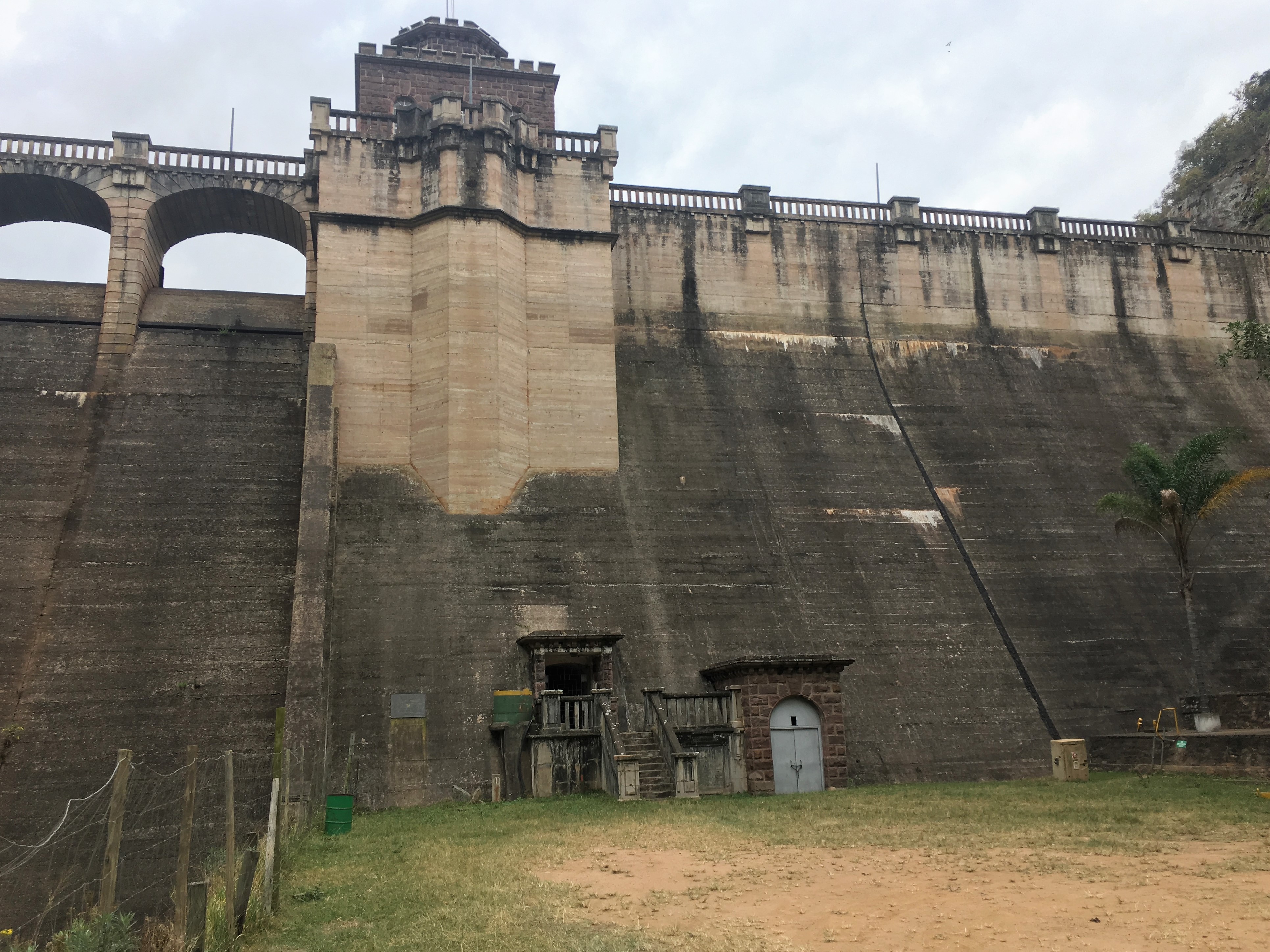
The wall with turreted structure
An old entrance at the bottom of the wal

With birding all but forgotten, I spent time taking a few photos of the unique dam structures and surrounds. The pictures speak for themselves – suffice to say we were both fascinated by the old-fashioned look of the dam wall, with stone turrets rounding it all off in grand style.

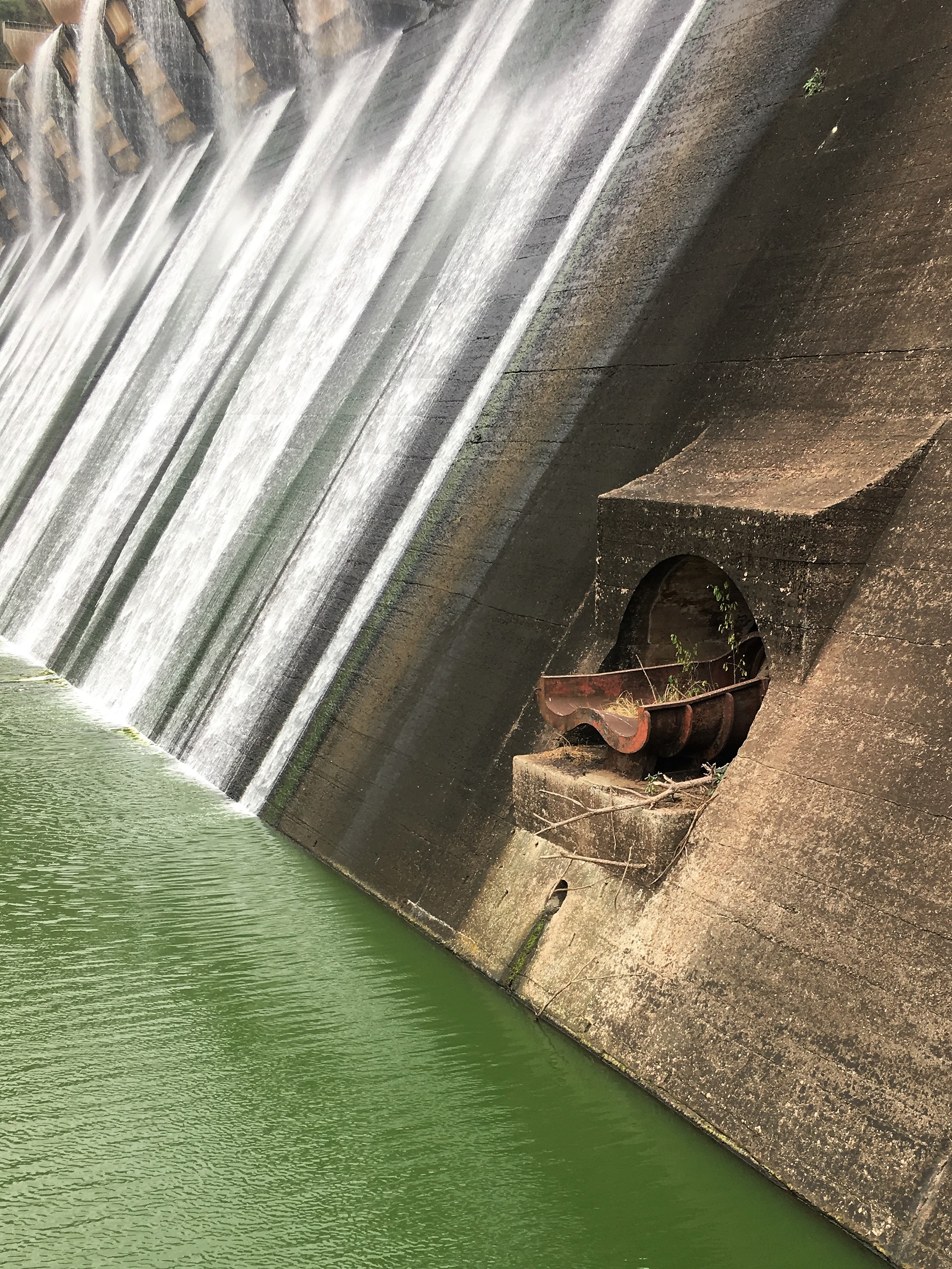
The main wall, overflowing gently
The sluice valves have not been used in a long time
The buttressed end of the wall
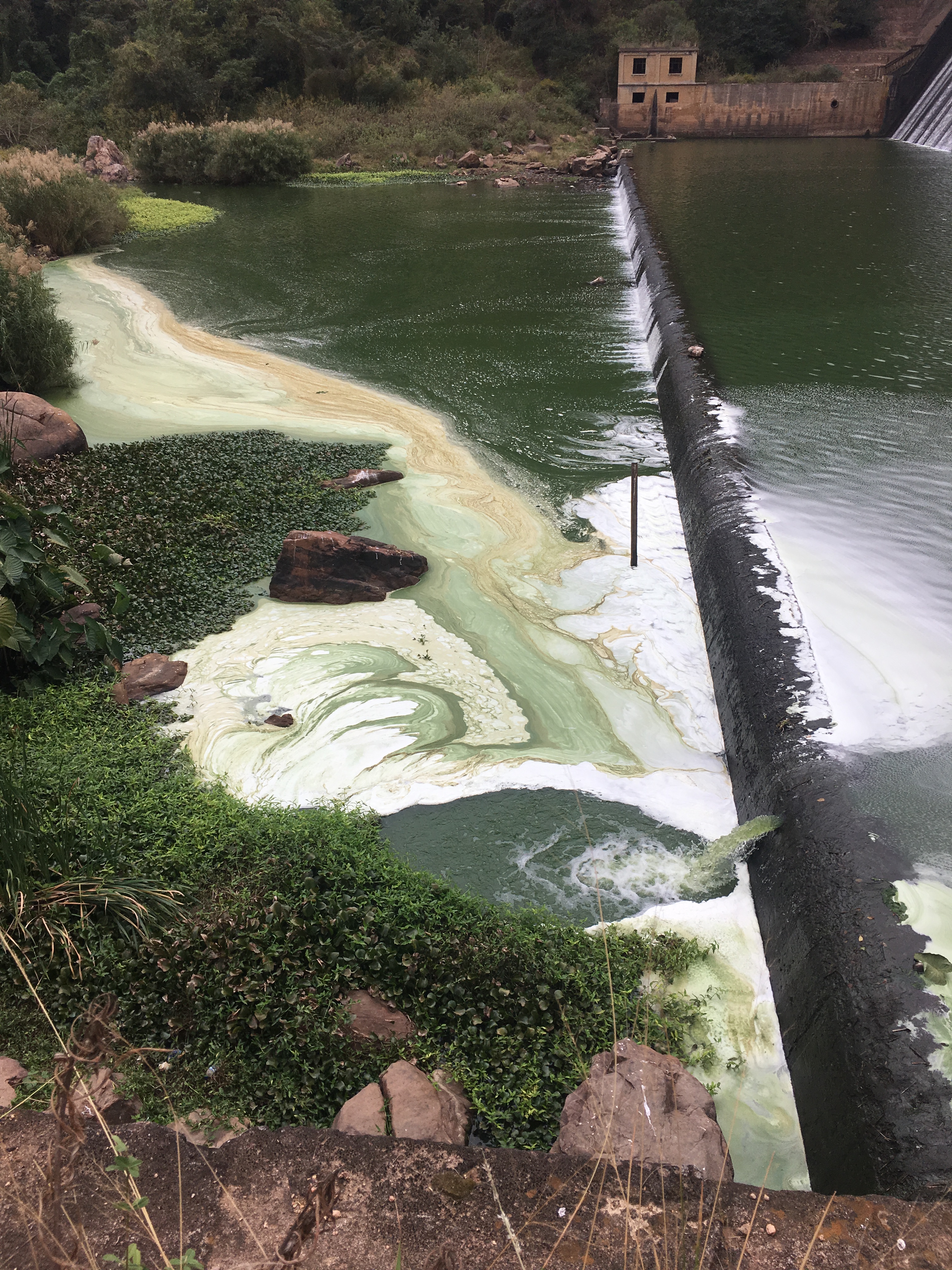
The water quality leaves a lot to be desired

The area below the wall felt like something out of Jurassic Park with abandoned buildings and heavy undergrowth.
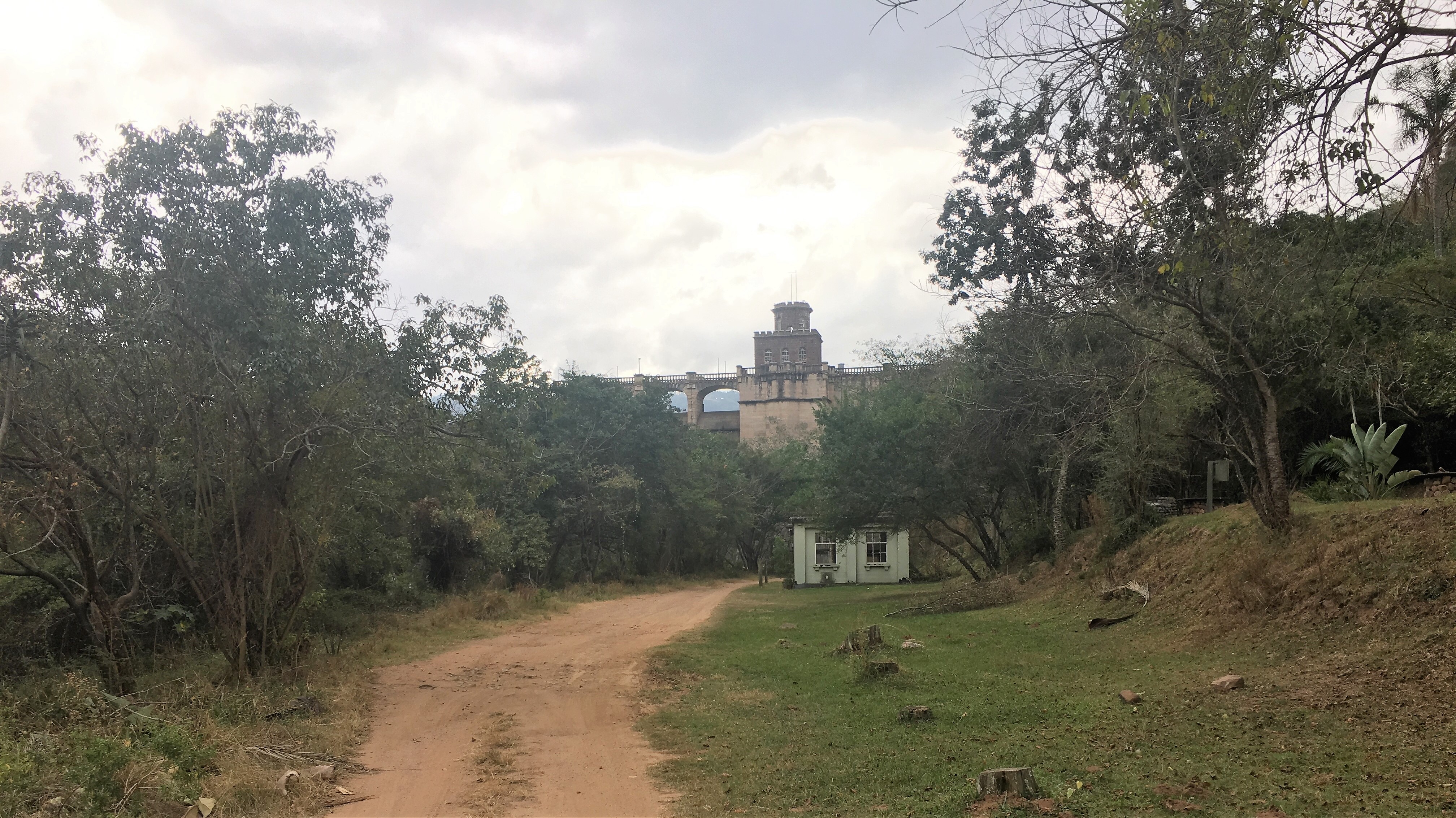
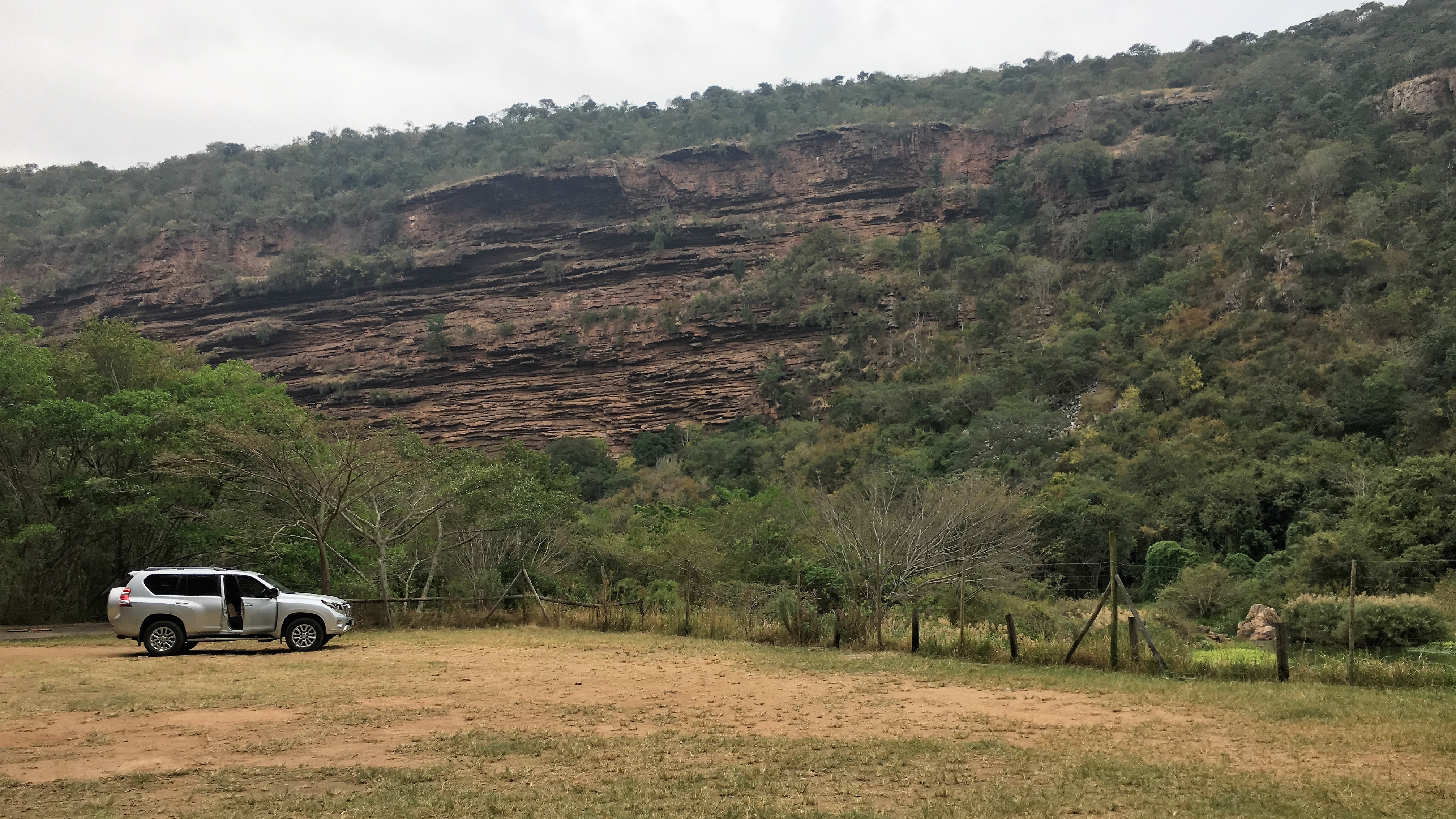
Below the wall
Craggy cliffs opposite the wall
Abandoned ” Chemical Mixing” house
Inside the Chemical Mixing house

By the way, all photos were taken on my pocket Apple camera (which I sometimes find useful for phoning and other tasks)

On our way out the gate man advised us that he would not be working there for long – hadn’t we heard the dam was the subject of a land claim and would soon be handed back to “the community”? – we explained we were from Pretoria and had not heard this, but were not necessarily encouraged by this news.
 

Feathered Feast on father’s day (Part 2)


Father’s Day Treat

Continuing the story of my Father’s day birding treat while on holiday in La Lucia near Durban a couple of years ago ……..

Umlalazi Nature Reserve

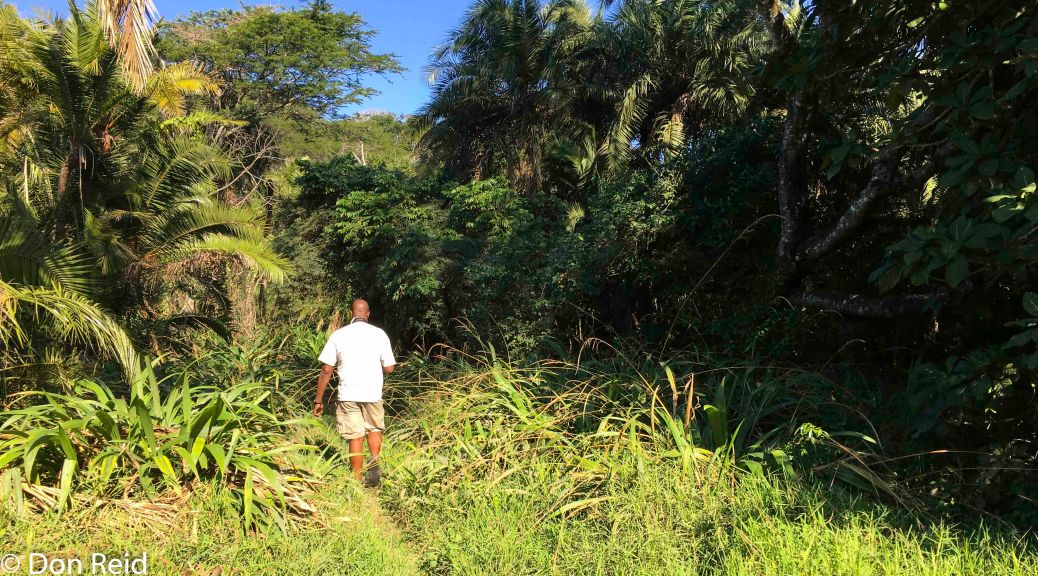
With two hours of superb forest birding at Ongoye Forest Reserve behind us and Green Barbet duly seen and photographed, the next stop on bird guide Sakhamuzi’s itinerary was the Umlalazi Nature Reserve adjacent to the town of Mtunzimi.

We drove straight to the riverside along a winding sandy road and parked at the picnic spot where we enjoyed the all-important first cup of coffee accompanied by rusks while keeping an eye out for interesting bird life in the vicinity.

Umlalazi

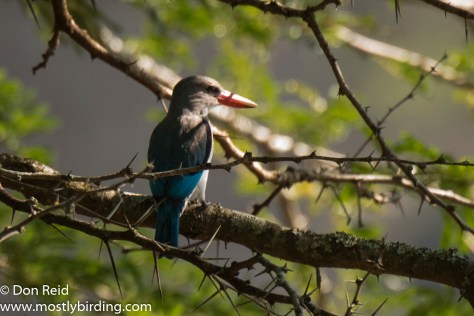
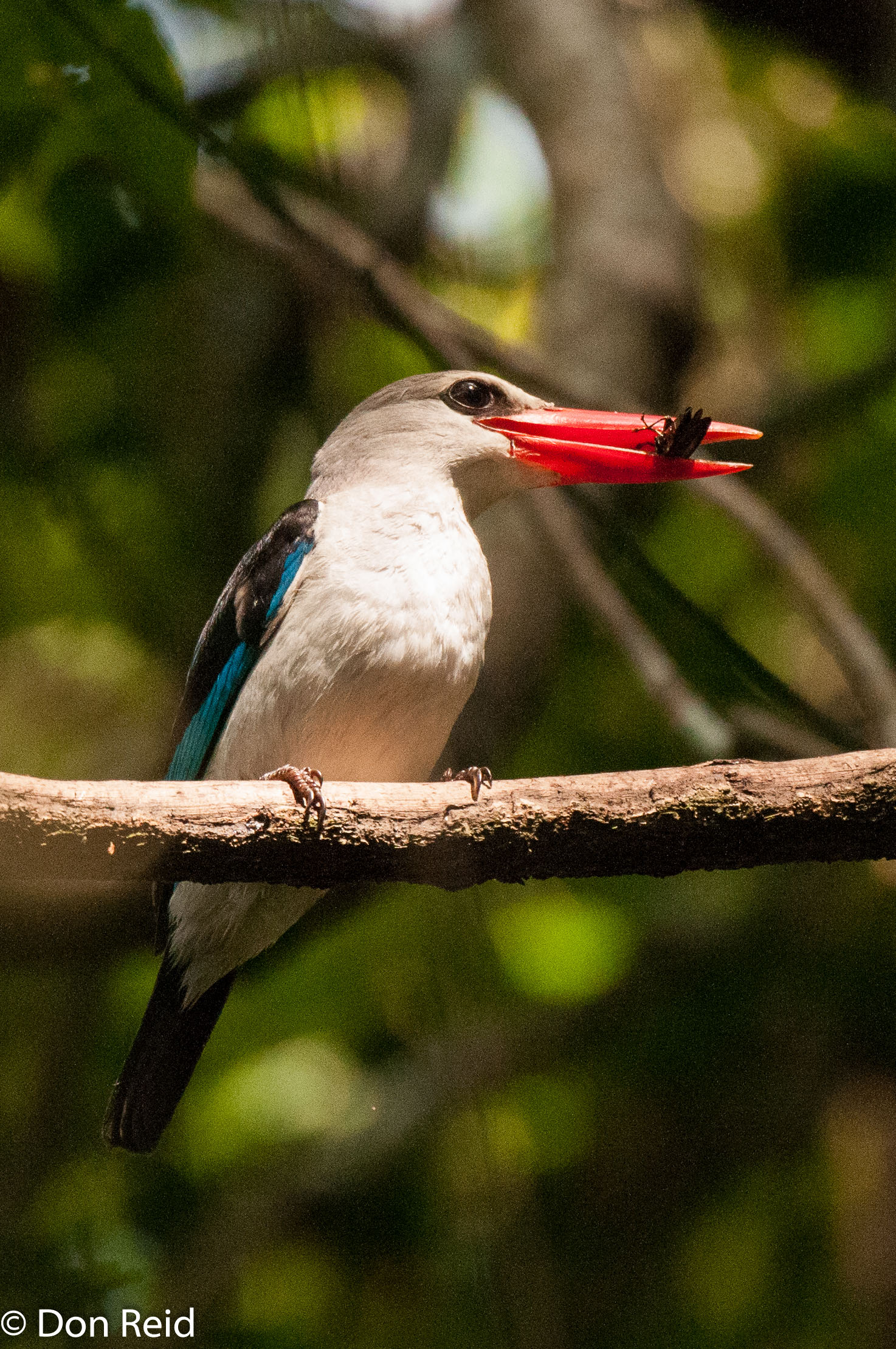
Top spot went to a Mangrove Kingfisher perched on a low branch overhanging the water – a bird I had tried for a few times in various locations near Durban without success, then saw my first one the year before in the forests of Mozambique.

Mangrove Kingfisher, Mtunzini
Mangrove Kingfisher, Umlalazi NR

Curiously, the Mangrove Kingfisher occupies two quite different habitats – during the non-breeding season, from March to September, they inhabit mangroves while October to March sees them moving to forests to breed, estuarine forests in the Eastern Cape in the case of the Kwazulu-Natal population and lowland forests in the case of the Mozambique population, often far from water.

This is one of the Mangrove Kingfishers we came across in the forests of Mozambique

Their diet is equally curious, ranging from crabs – seawater crab in winter and freshwater crab in breeding season – to fish and even insects and lizards when crabs are not available. They are not averse to snatching the odd fish from ornamental ponds, a habit they share with other Kingfishers, much to the frustration of pond owners. Mind you, installing an ornamental pond and expecting a Kingfisher not to feed off your ornamental fish is like putting a fillet steak on the lawn and hoping your dog won’t eat it.

Noisy Black-bellied Starlings drew our attention to the tree which held several of them, as well as Yellow Weavers.

Black-bellied Starling, Umlalazi NR

Little Swifts and Palm Swifts swirled overhead, while a “big and small” act of Kingfishers played out on the lagoon as a Giant Kingfisher (364 g) made a large splash in pursuit of its prey while its diminutive cousin Malachite Kingfisher (just 17 g – ie one twentieth of the weight of the Giant) hardly created a ripple as he dove in at the water’s edge. All part of the magic and variety of birding.

After a half hour or so of absorbing the beauty and avian treasures of the surroundings, we headed slowly back to the entrance, stopping for a couple of special species along the way – Rufous-winged Cisticola in a patch of grassland and a handsome, posing Yellow-throated Longclaw on top of a nearby bush.

Yellow-throated Longclaw, Mtunzini
Yellow-throated Longclaw, Umlalazi NR

Amatigulu Nature Reserve

Last but by no means least on Sakhamuzi’s itinerary of nature reserves was another small reserve – Amatigulu, not far from where I had picked him up earlier and a stone’s throw from his house just outside the reserve. Once through the gate and the formalities of signing in etc, which Sakhamuzi took care of, we drove through grassland and coastal forest on an ever-deteriorating track down to the lagoon and found a parking spot at the picnic site.

I had mentioned to Sakhamuzi the fact that Green Twinspot was on my wish list for the day and he made a special effort to find this species which has somehow eluded me to date. He took us along a slightly overgrown path through the dense forest in search of it, but other than a brief glimpse of what he said was a Green Twinspot flying across the track and disappearing into dense bush, it remained elusive. Oh well, something to look for another day.

Amitigulu Nature Reserve – forest

A Scaly-throated Honeyguide made up partly for the dip on the Twinspot and was good enough to pose for some record photos – a lot better than previous ones I had managed to take.

Scaly-throated Honeyguide, Amitigulu Nature Reserve

White-eared Barbets were plentiful, as they were at the other reserves, and a Black-throated Wattle-Eye made a brief but welcome showing. Others we came across were Olive Sunbird, Spectacled Weaver, Yellow-rumped Tinkerbird and Blue-mantled Crested Flycatcher – all desirable species for any keen birder.

By this time we were heading into the afternoon and it was time to say goodbye to Sakhamuzi who had shown me a lot during the course of the morning.

Sappi Mill at Stanger/Kwadukuza

Back on the N3 highway, I pointed the Prado southwards but seeing I had some time in hand, decided to have a “look-in” at Sappi Mill wetlands, adjacent to the paper mill near Stanger/Kwadukuza, a spot I last visited perhaps 10 years ago. It was a worthwhile stop with a neat hide and good views for 180 degrees and more over the wetlands.

Sappi Mill Stanger / Kwadukuza

Immediately in front of the hide is a small island with trees which serves as a roost for many Cormorants, accompanied by a variety of waterfowl.

Sappi Mill Stanger / Kwadukuza

All 3 common Teals were present – Cape, Hottentot and Red-billed Teals – as well as a few African Swamphens, a flock of White-faced Ducks, Wooly-necked Storks (which are particularly common in Kwazulu-Natal), African Spoonbills and a calling African Rail.

Cape and Hottentot Teal, Sappi Mill KwaDakuza

A Yellow Wagtail had been reported from this site in the last week and I looked out specially for this scarce bird, but to no avail.

The rest of the drive back to La Lucia was uneventful but full of good thoughts about my memorable day.