The last major project that I was involved in before finally retiring from Quantity Surveying in 2019, was the Kasane Airport project in northern Botswana. Monthly visits spread over 3 years meant I spent an accumulative 60 days or more in Kasane, which is the gateway to the Chobe Game Reserve, and I used every free moment to spend time exploring this special place and on the Chobe River, soaking up the incomparable African game-viewing and bird-watching on offer.
So where is this leading? Well, I made my last visit to Kasane in November 2018 for the final formal handover of the airport terminal buildings to the Client. During the visit I found time to join a photographic safari, expertly run by Pangolin Photo Safaris, both on land and on the river, which left me with a head full of special memories and a memory card full of treasured images.
Aerial view of the Chobe River while landing at Kasane

I have written several posts about some of my memorable experiences in Chobe over the years, but never got around to ‘finishing the story’ as it were, so bear with me as I reminisce about my final visit to Kasane
The Occasional Birding
Before getting to the organised safaris, I found other opportunities to wander…… and wonder at the birdlife
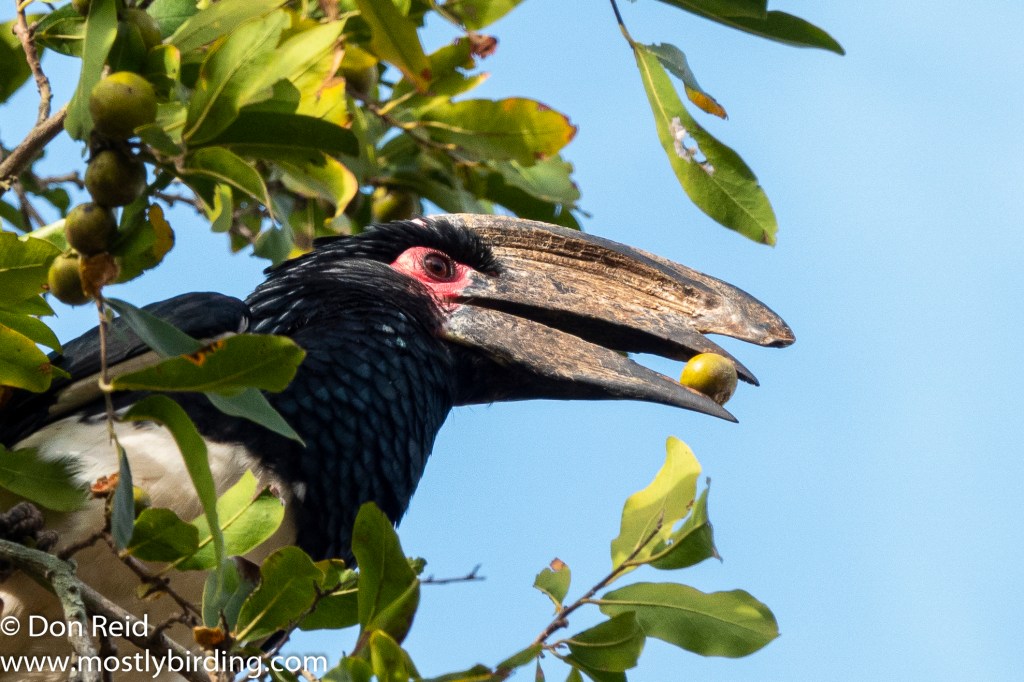
While trying to check in at my booked accommodation, a Trumpeter Hornbill wailed nearby, sounding like a baby crying – perhaps it already knew my booking had somehow been mysteriously cancelled and there were no rooms available.
Undaunted, I headed to Thebe Lodge, which I had frequented before and which lies on the Chobe River. The extensive grounds had previously proved to be a compact yet lively birding destination in their own right, so I was more than happy to find comfortable accommodation for my three-night stay.
I didn’t waste a moment and paid a quick visit to the nearby sewage works ponds (as one does) which produced Ruff and Lesser Grey Shrike amongst others, then followed that with a walk around the lush Thebe Lodge grounds in light rain, which was a relief from the oppressive summer heat.
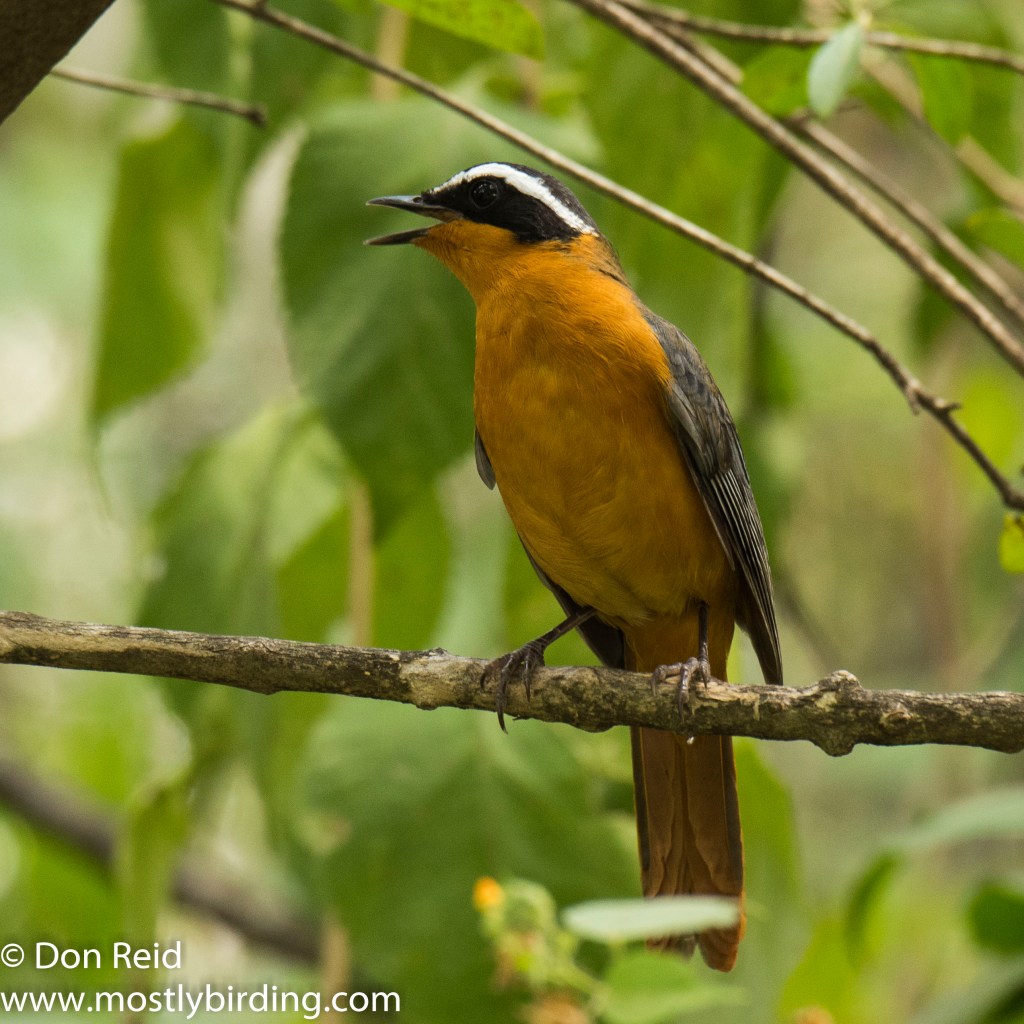
The Thebe Lodge grounds were alive with birdlife, feasting on the flying ants which were emerging all over. The strident calls of the ‘frontline’ songsters such as White-browed Robin-Chat and Tropical Boubou were backed up by a further layer of quieter calls of Dark-capped Bulbuls, Grey Go-away Birds, Mourning Doves and Water Thick-Knees.
In the rapidly fading light I made out Violet-backed Starlings and Fork-tailed Drongos participating in the flying ant frenzy
The next morning, before breakfast and my project commitments, another walk around the lodge grounds produced about 20 species with two Kingfishers prominent – Brown-hooded and Woodland Kingfishers.
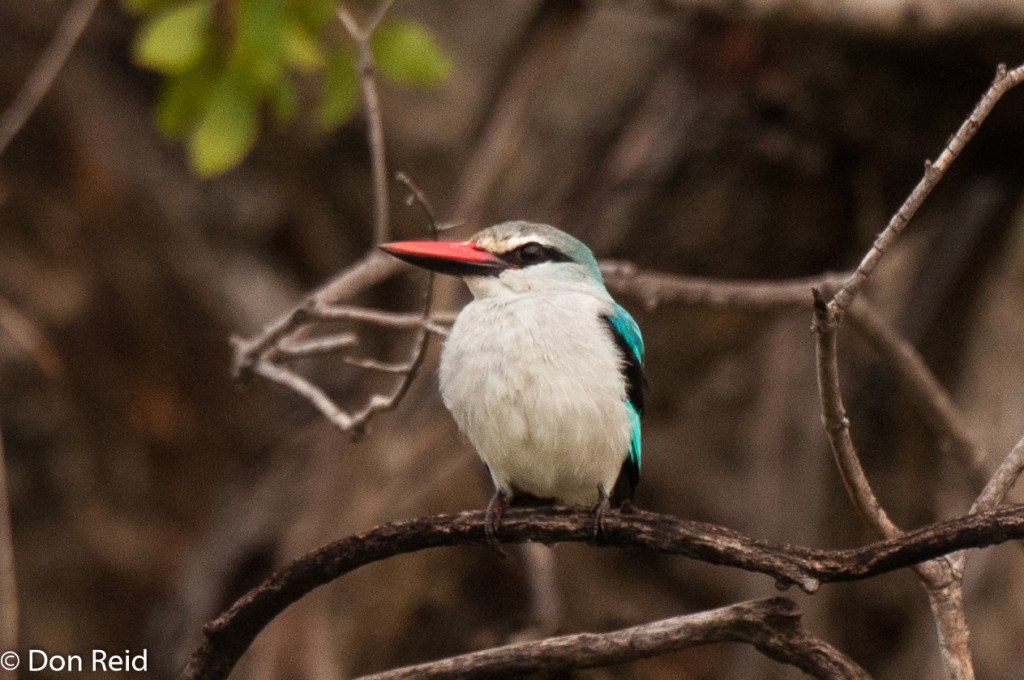
Common Scimitarbill and Green Woodhoopoe were active and at the riverside Broad-billed Rollers were harassing a Woodlands Kingfisher.
There was no shortage of birdlife in the verdant garden bush of the lodge grounds with Terrestrial Brownbul, Southern Brown-throated Weaver and Grey-backed Camaroptera all showing nicely.
Boat Trip
During previous trips I had done a couple of boat outings on the river, fairly basic ones in a small boat but nevertheless exciting and memorable.
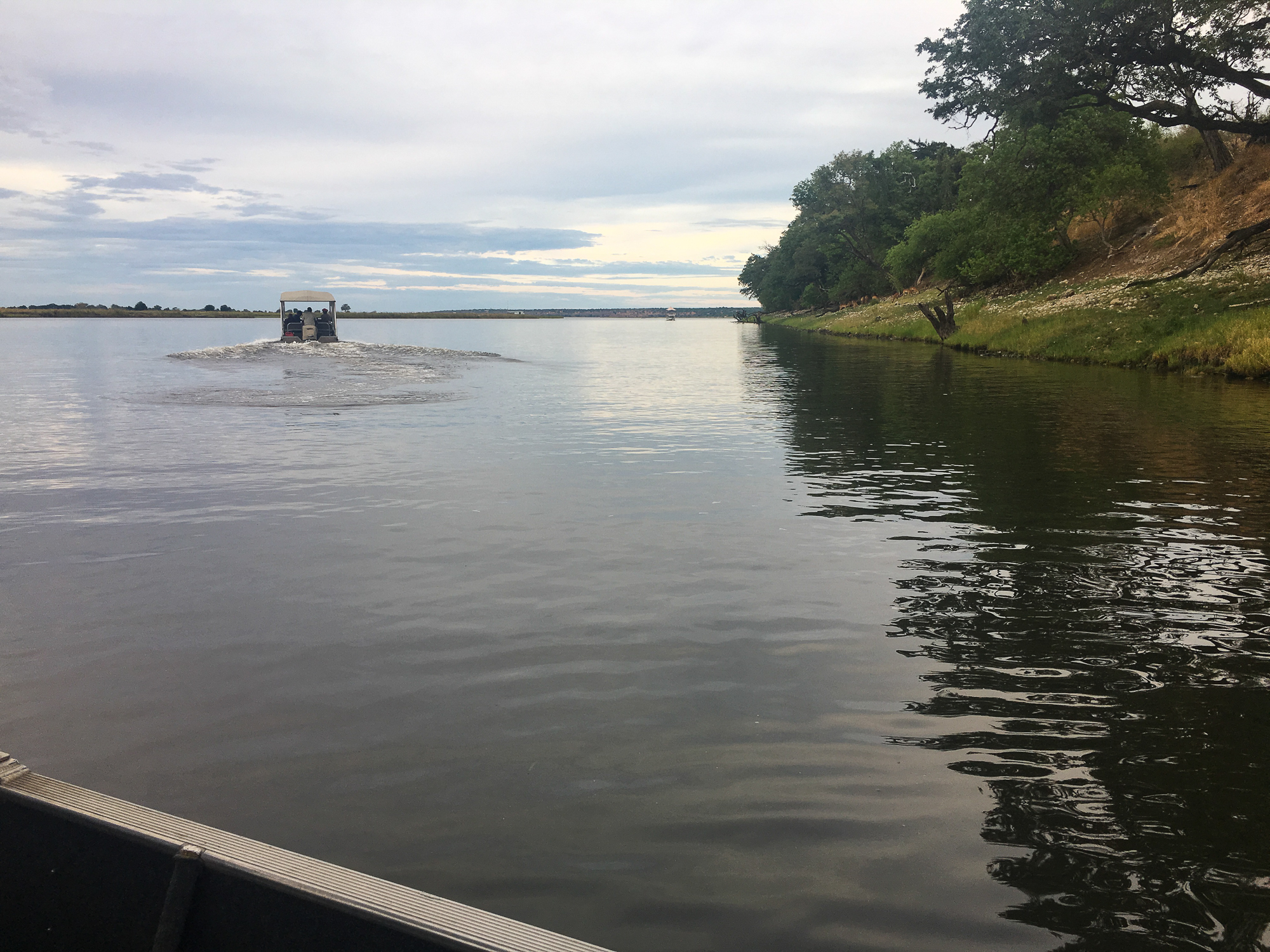
However, the Pangolin Photo Safaris trip from 3.30 to 6.30pm in the afternoon was a whole different experience, being transported on a purpose-built aluminium boat with swivel chairs and special camera mounts for each of the 6 or so passengers and an expert photographer guide to show us how.
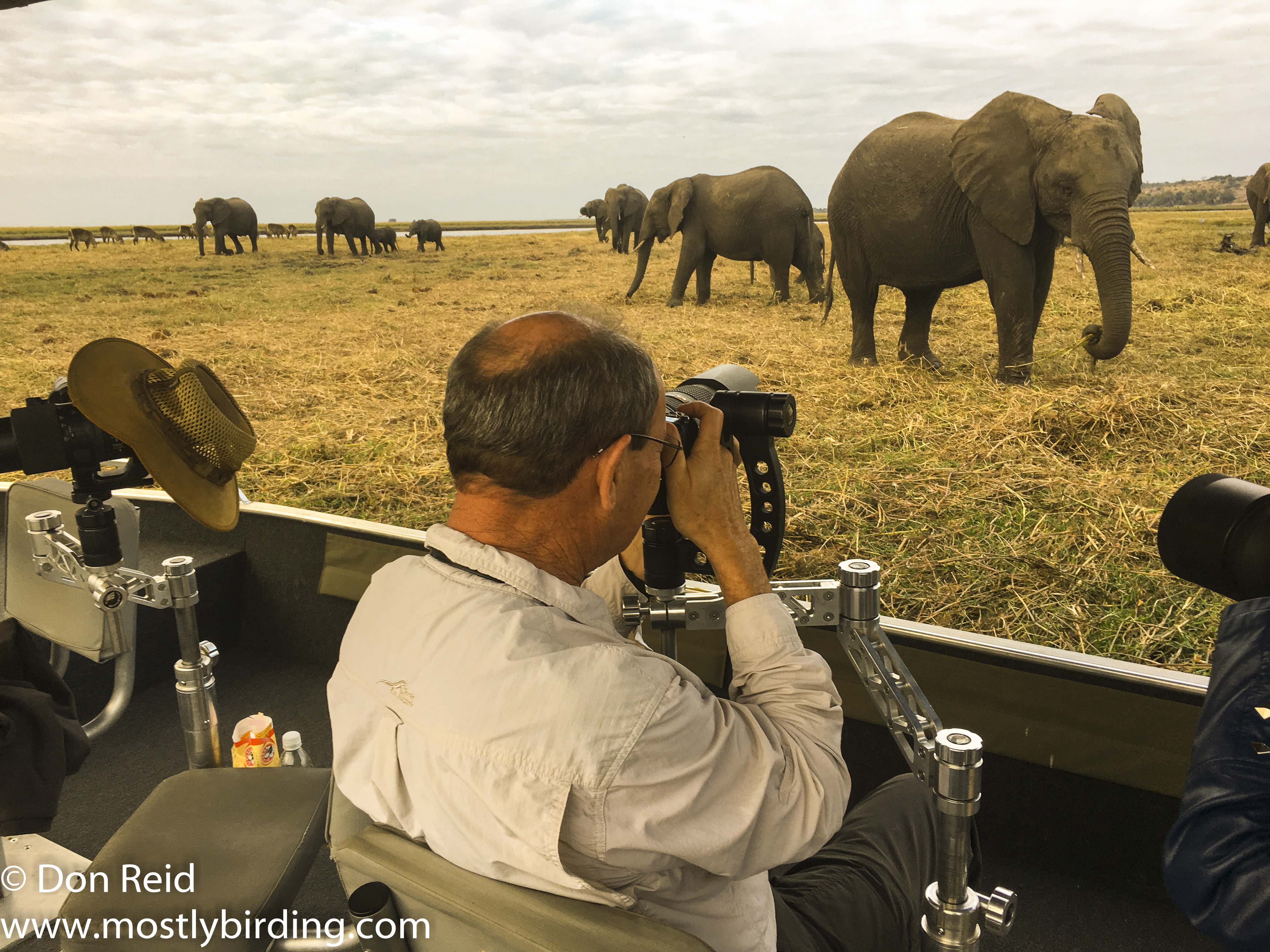
Our guide, Janine, started by explaining that we would be looking for more than pretty photos and would be exploring various techniques while looking for unusual angles and actions. Canon cameras with telephoto Sigma lenses were provided for the trip as part of the deal for those who had not brought their own camera. I had my Nikon camera but decided to use the Canon along with the others on the boat, which would allow me to follow Janine’s guidance
I struggled with the settings at first, being used to my then Nikon camera, but as we headed out I started getting used to the Canon buttons and dials while Janine gave us running advice on exposures, speeds, etc – a lot to take in and utmost concentration was needed!
Janine’s exposure advice, particularly relevant to bird photography, which I took away with me and have used ever since was –
- Background darker than subject : reduce exposure; ie dial exposure compensation to negative side. This avoids an over-exposed subject and creates an even darker background for better contrast
- Background lighter than subject : increase exposure; ie dial exposure compensation to positive side. This avoids an under-exposed subject and although it also increases the exposure of the background this can be adjusted while editing in eg Lightroom.
Janine and Killer (his nickname!) the boatman proved to be an amazing team on the boat, taking us on a route along the river and its side channels, seeking and finding many photo opportunities for the super-keen group of photographers on the boat.
Let’s take a look at what they came up with and how we progressed :
Jacana Magic
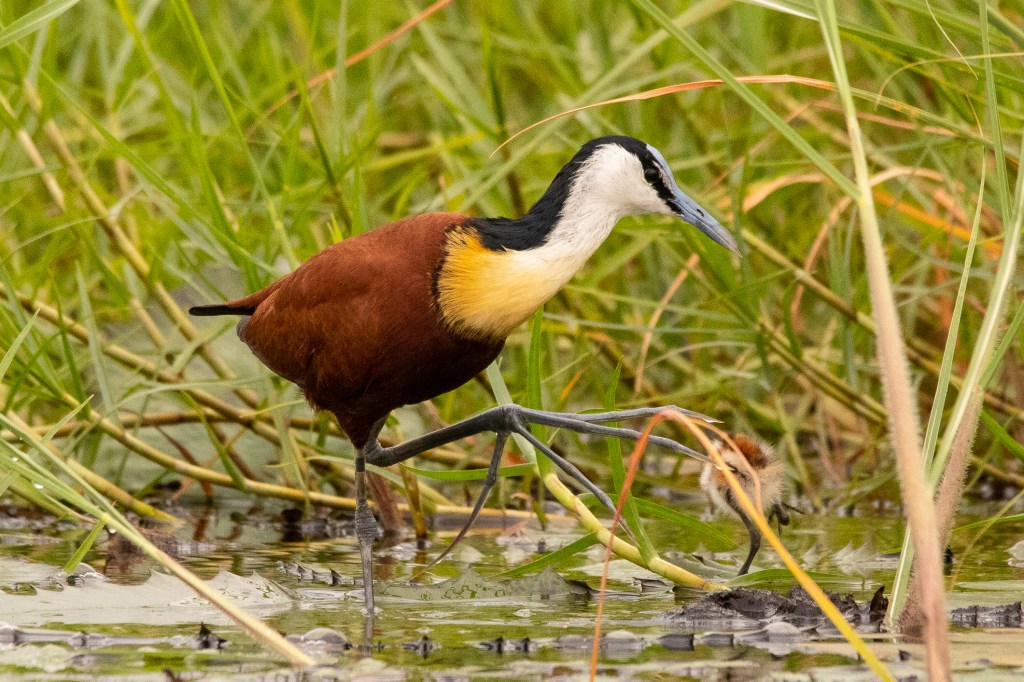
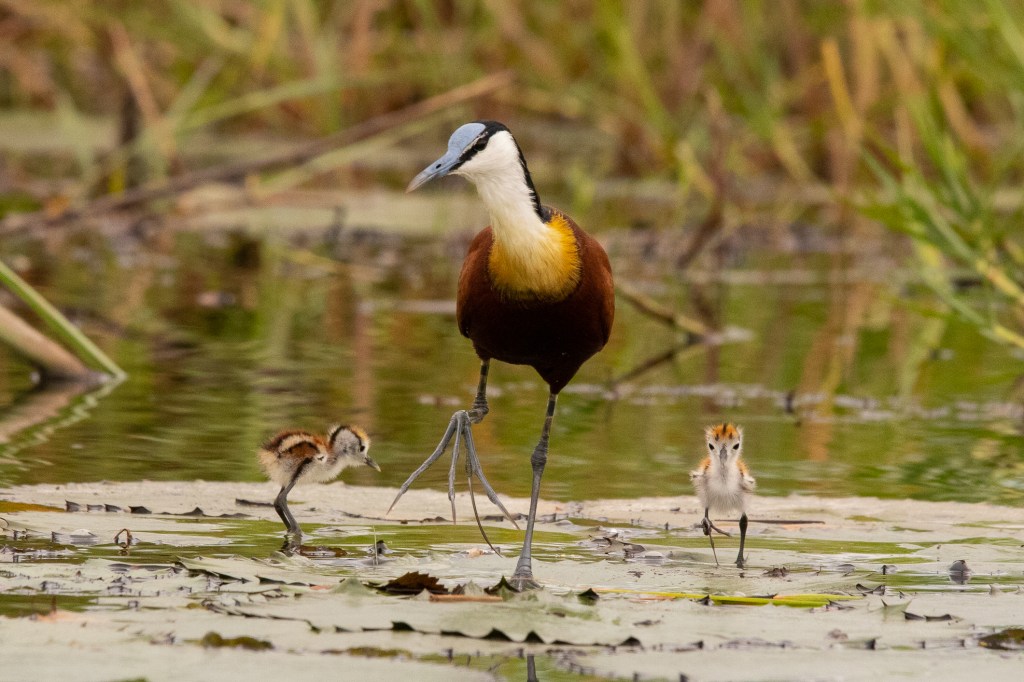
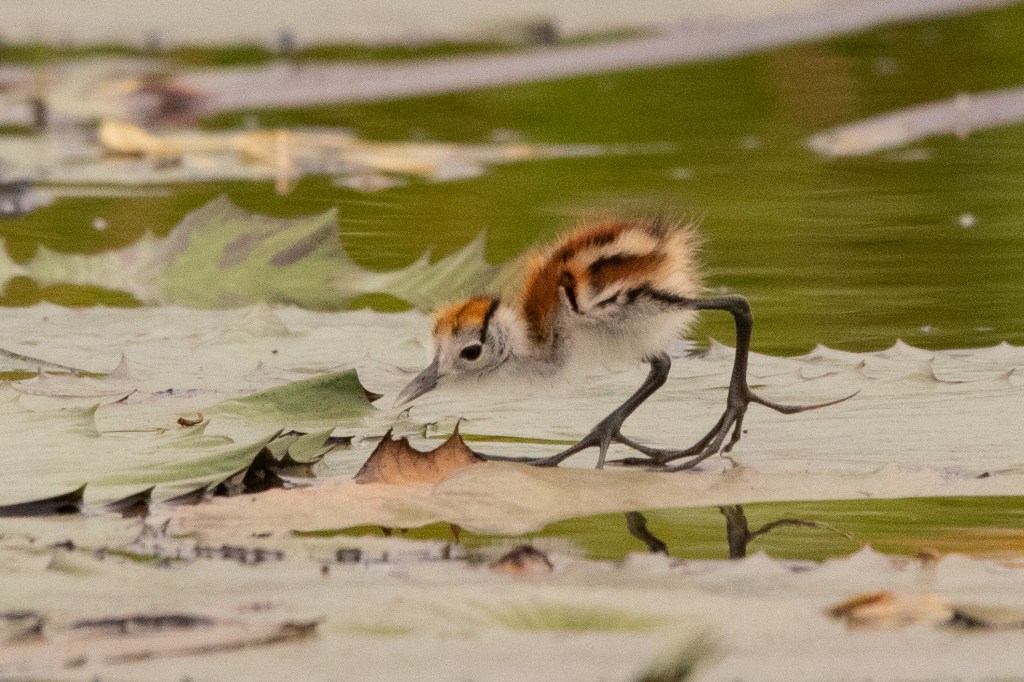
The first side channel produced one of those special moments you never forget – an African Jacana with two tiny juveniles with outsized feet, walking about on the surface of the lily covered water. Janine encouraged us to get off the swivel chairs and crouch low in the boat so as to get level with the subject. Beyond cute!
Darters and Cormorants
Stopping near a dead tree in the river which was being used by African Darters and White-breasted Cormorants, Janine talked us through the technique used to blur the subject in flight while retaining focus on This which involved setting the shutter to a very slow speed, waiting for the bird to take off, finger poised on the shutter button, then panning smoothly while locking on to the bird in flight and releasing the shutter.
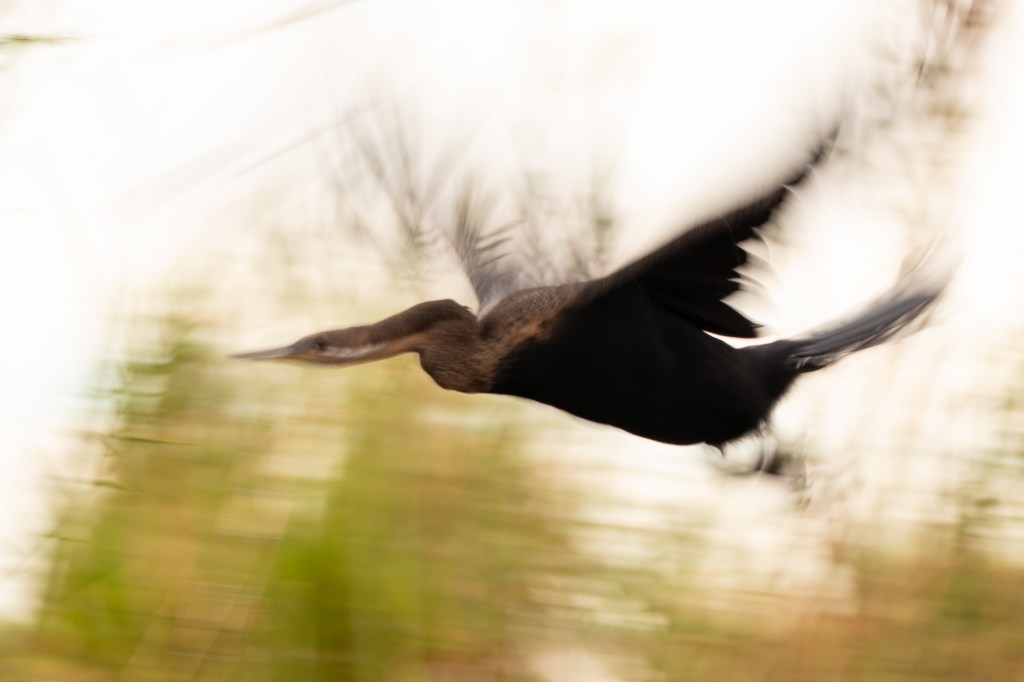
This was a lot more difficult than it sounds and my attempts turned out too blurry, as the photo shows. Ideally part of the bird should be in focus, contrasting with the rest of the body which is blurred. But that’s what makes photography an ongoing challenge – there’s always a chance of doing it better next time….
It’s a lot easier taking a conventional perched photo of the birds…
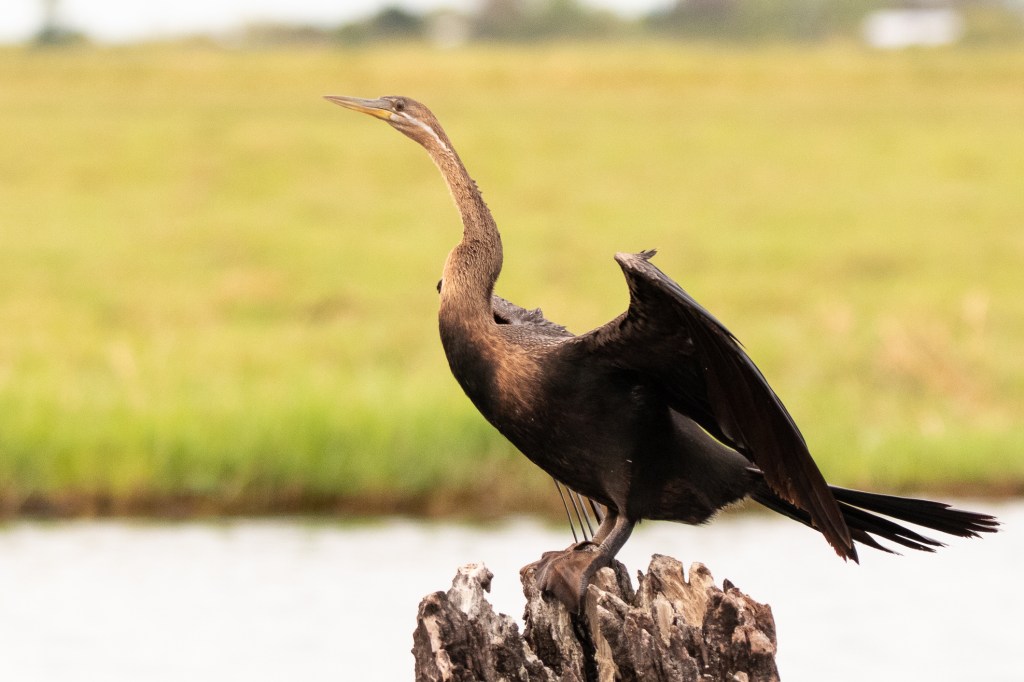
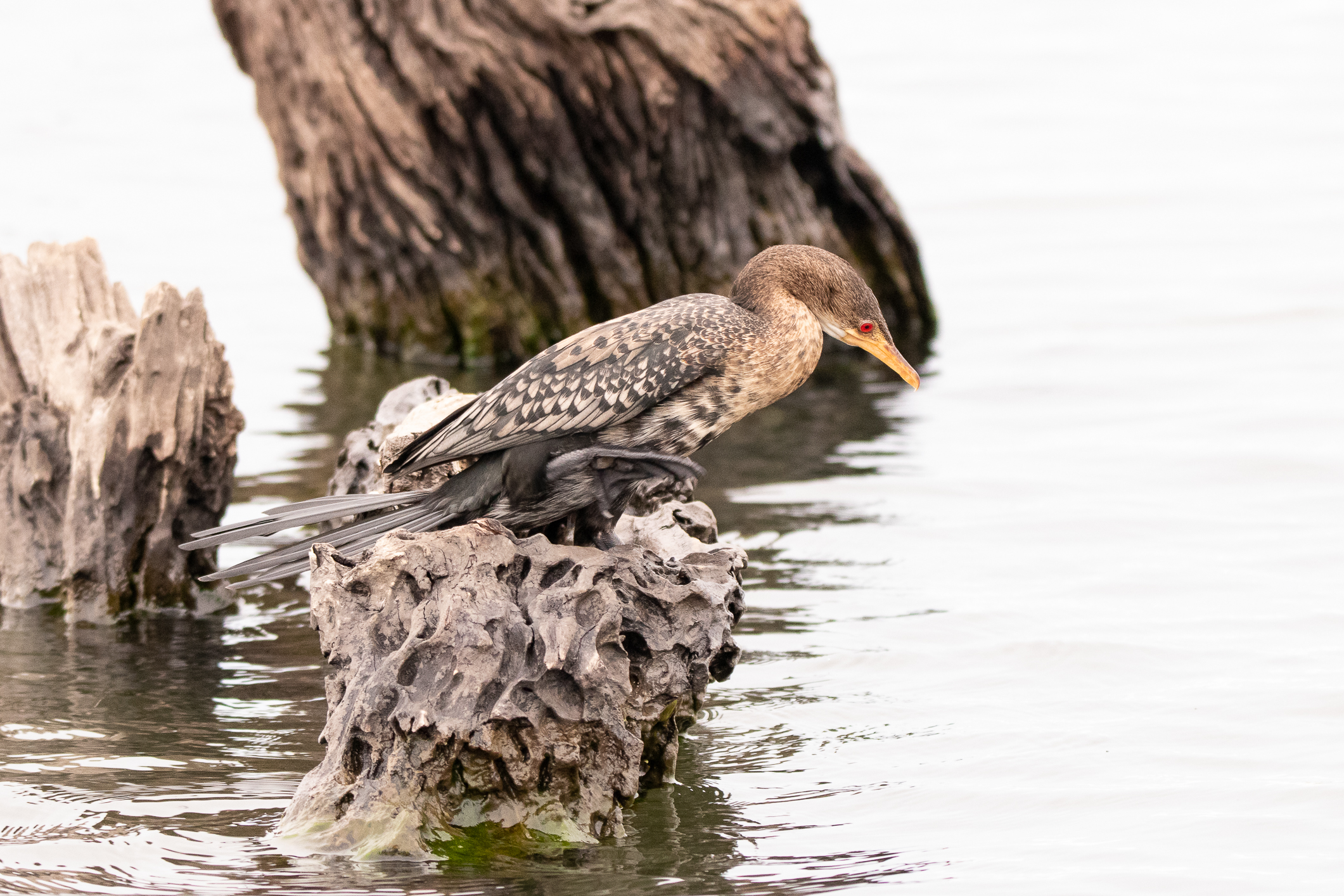
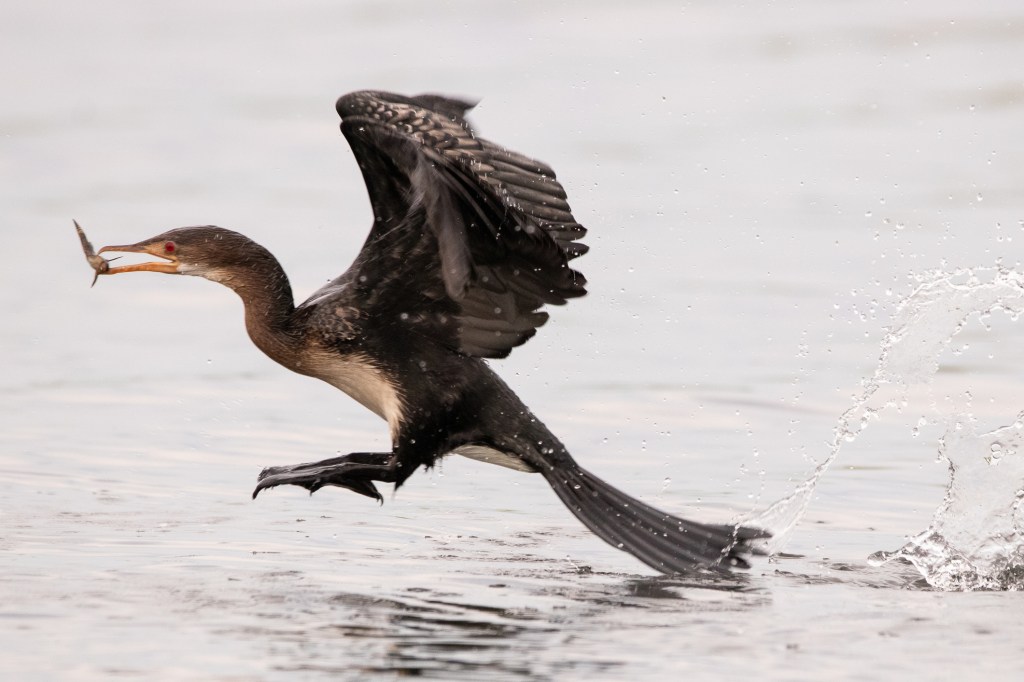
A Reed Cormorant with a small fish catch then caught our attention as it landed not far from the boat
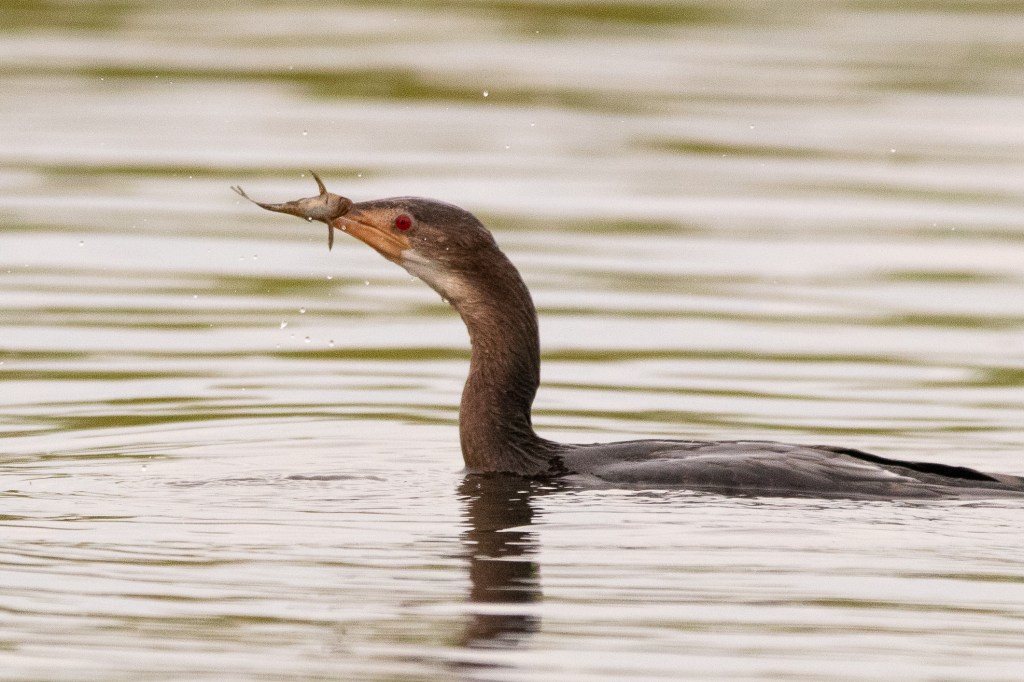
I was quite pleased with this “landing“ shot of the cormorant, with just a hint of splash from the tail feathers
Pods of Hippos
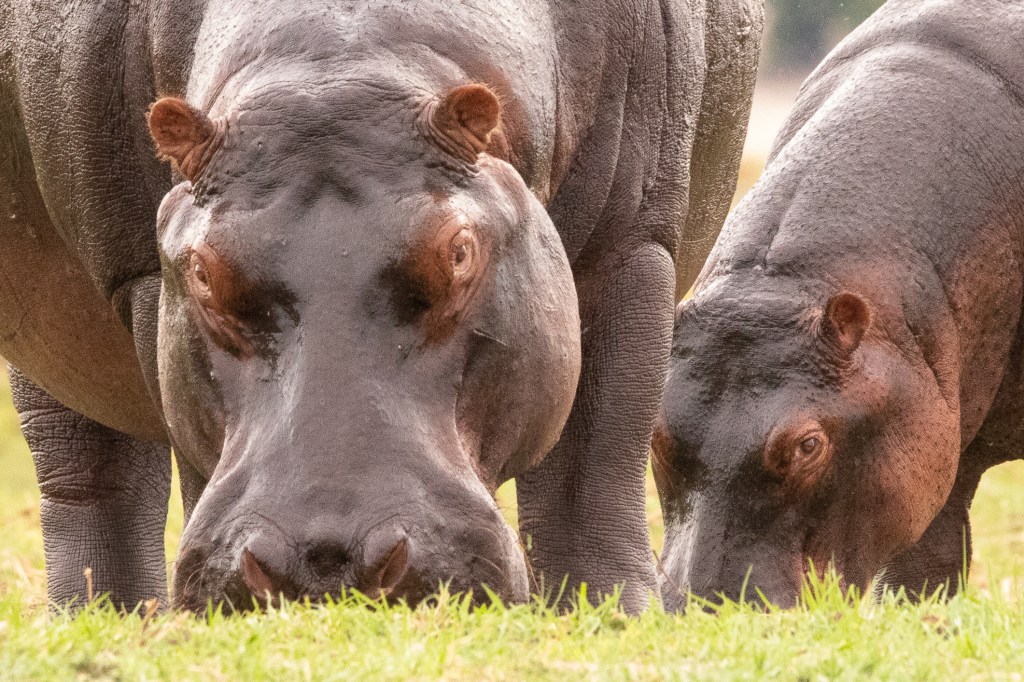
Approaching a pod of Hippos grazing on the bank, we waited at a distance – Hippos can be very intimidating, even dangerous so are best given enough space. These two kept an eye on us while munching away at the yummy grass.
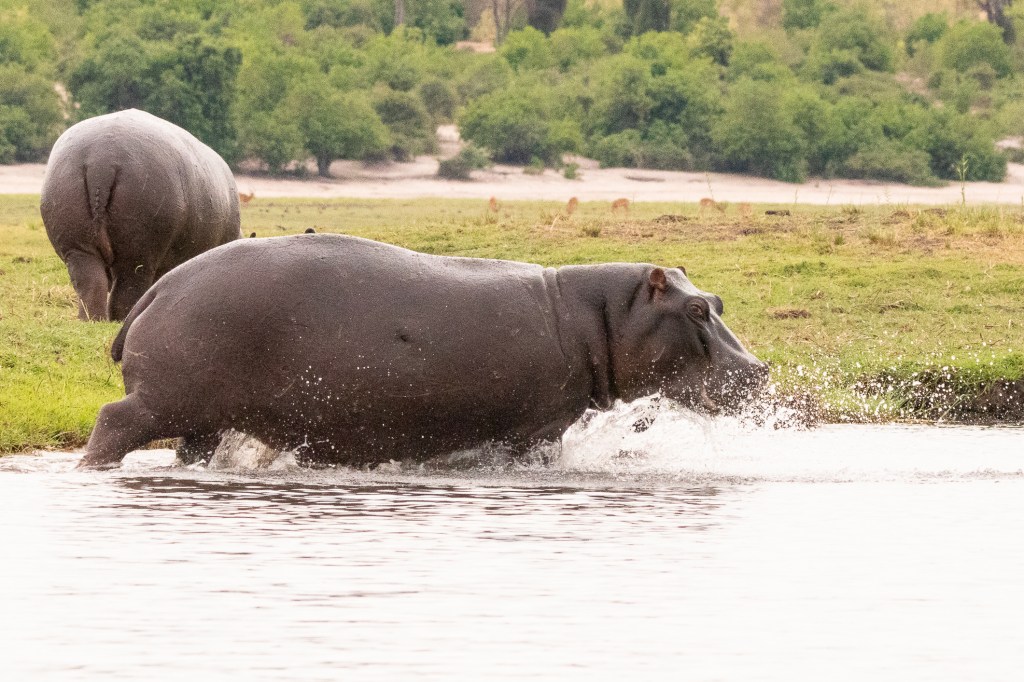
As Killer slowly edged the boat closer, some of the hippos decided to seek the safety of the water – as we had hoped – creating some “splash” to liven up the photo.
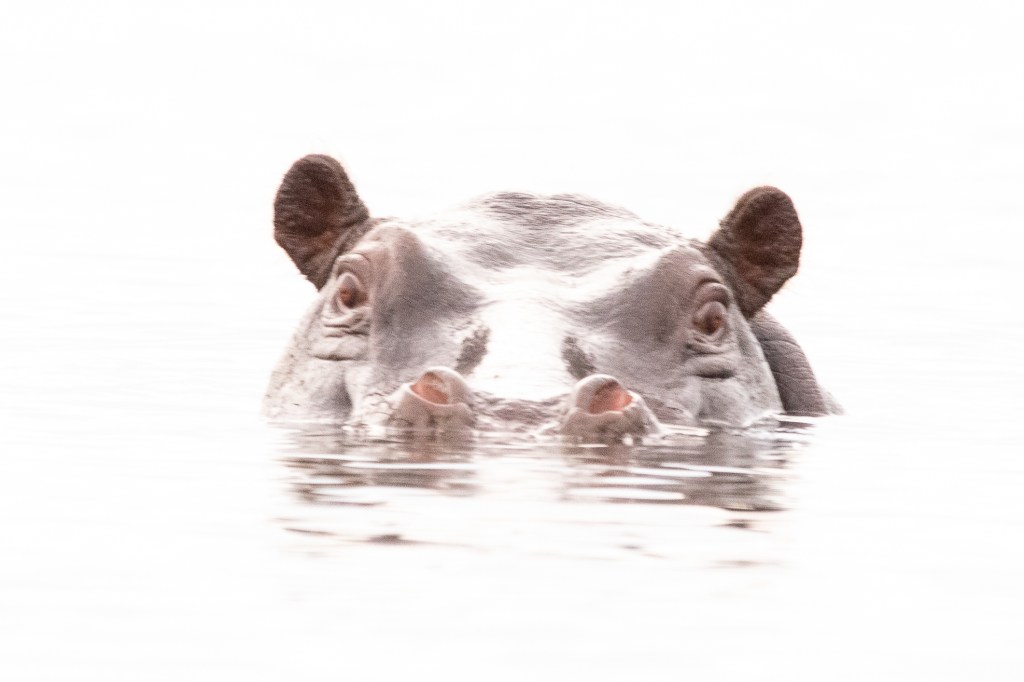
Further on, Janine guided us through the technique used to create those “High-Key” photos of a hippo almost submerged in the water – achieved by over-exposing by up to 3 steps so that subject and water come out bright and light.
Baboons doing their thing
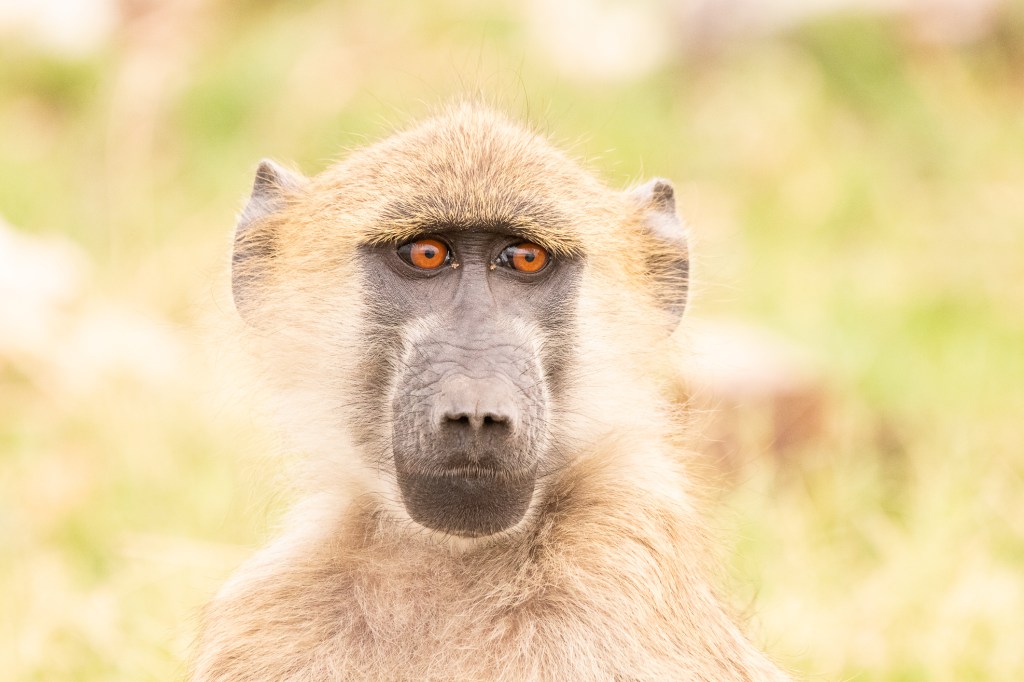
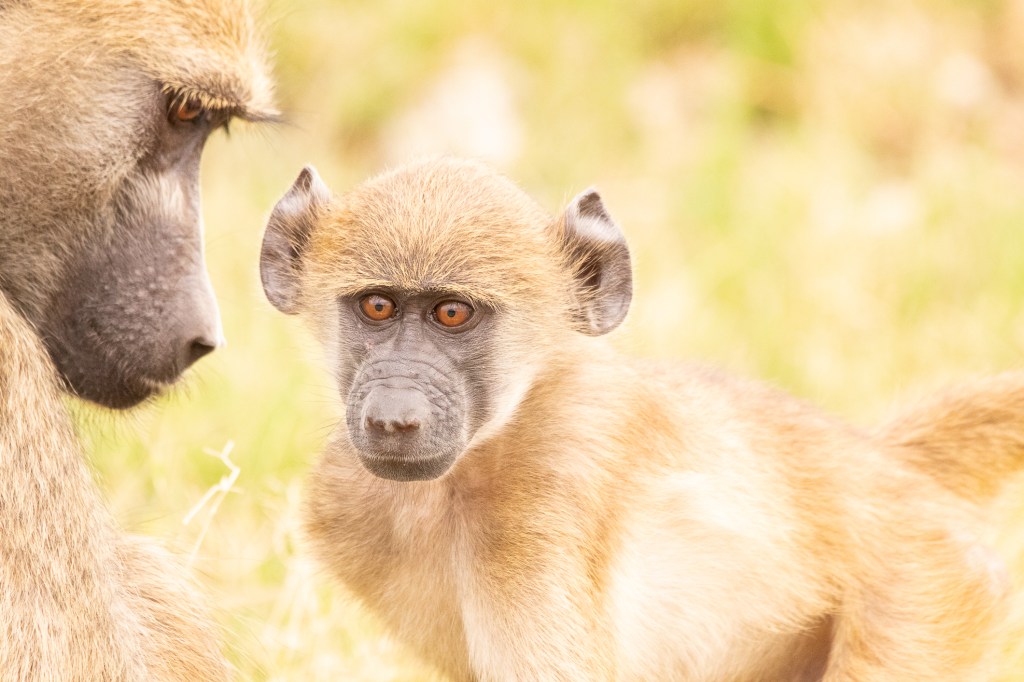
By now we were well up the river and heading to the sloping shoreline where a troop of baboons were active, which promised a few interesting photos of these photogenic animals – they didn’t disappoint and provided plenty of entertainment and kodak moments for the group.
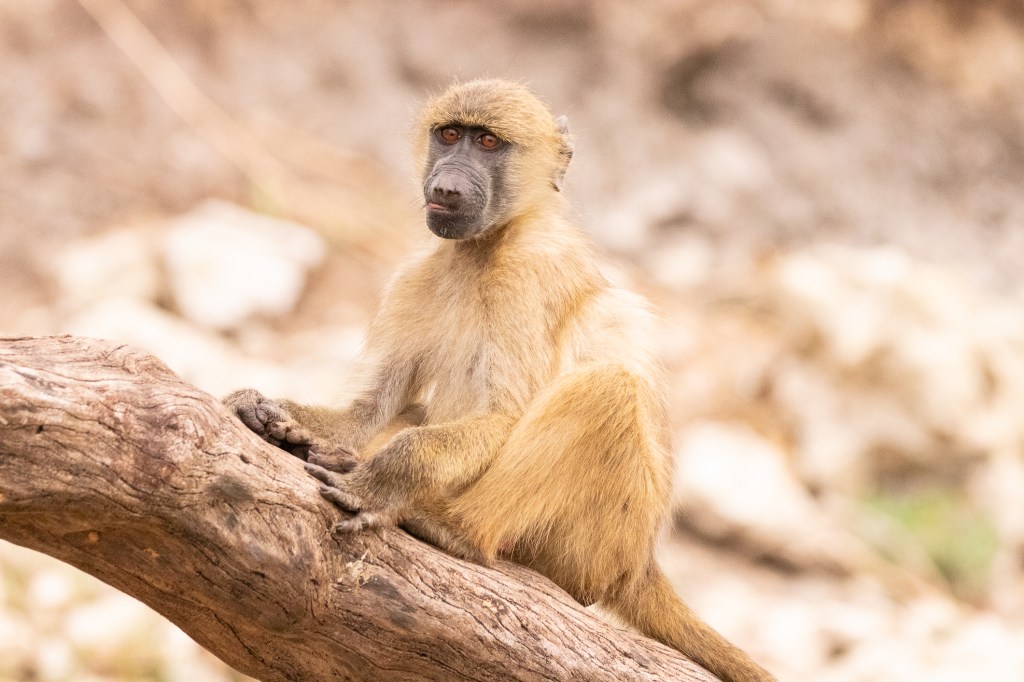
Further experiments with over-exposed portraits produced good results as Janine had forecast, bringing out the orange-brown eye colour as the baboon watched us intently.
More Birds
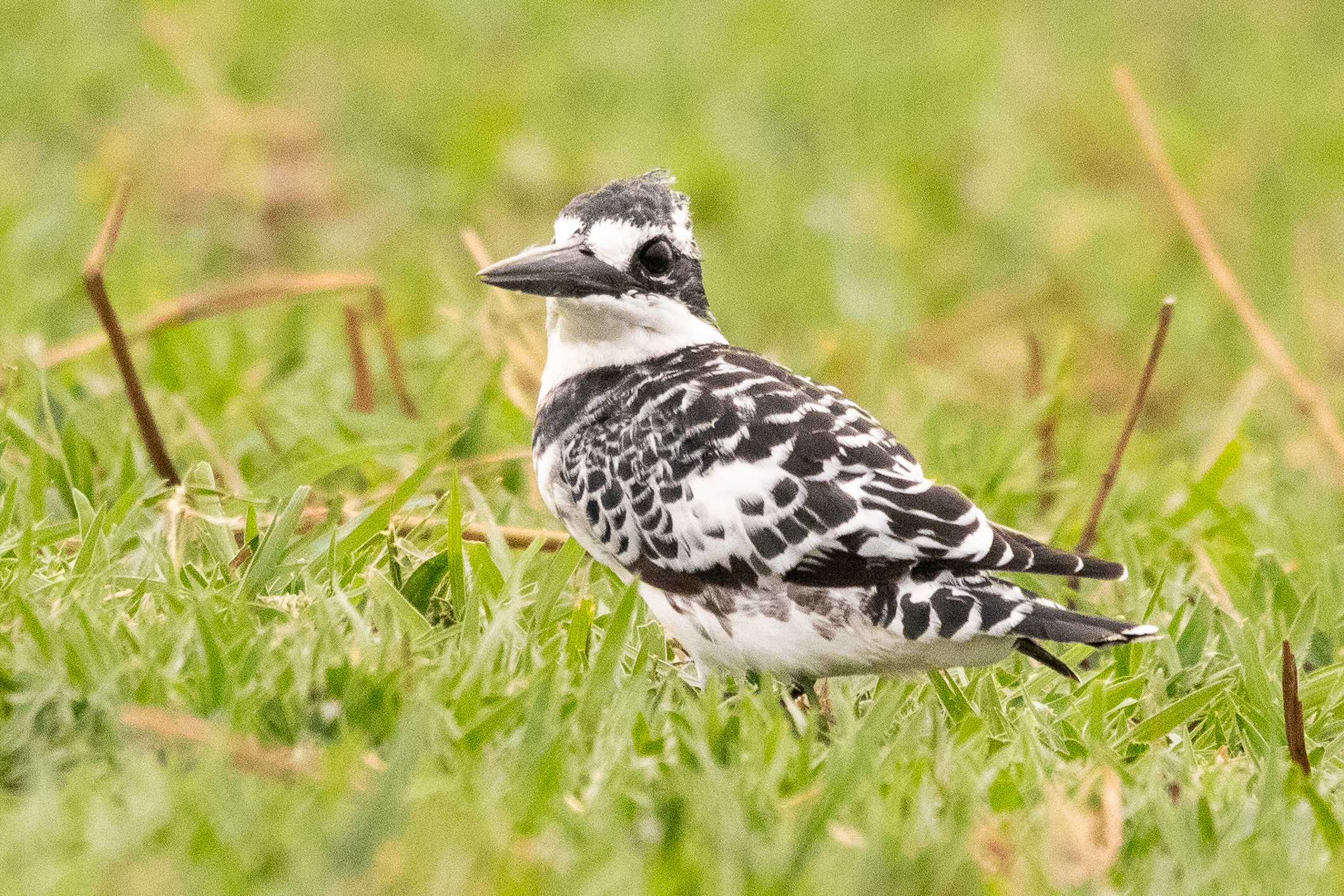
The boat headed further upstream (towards the west, with Namibia just across the water to the north), past Chobe Game Lodge (think Liz Taylor and Richard Burton) looking for interesting birds. One target was Giant Kingfisher but it didn’t show so we had to be content with the many Pied Kingfishers along the banks.
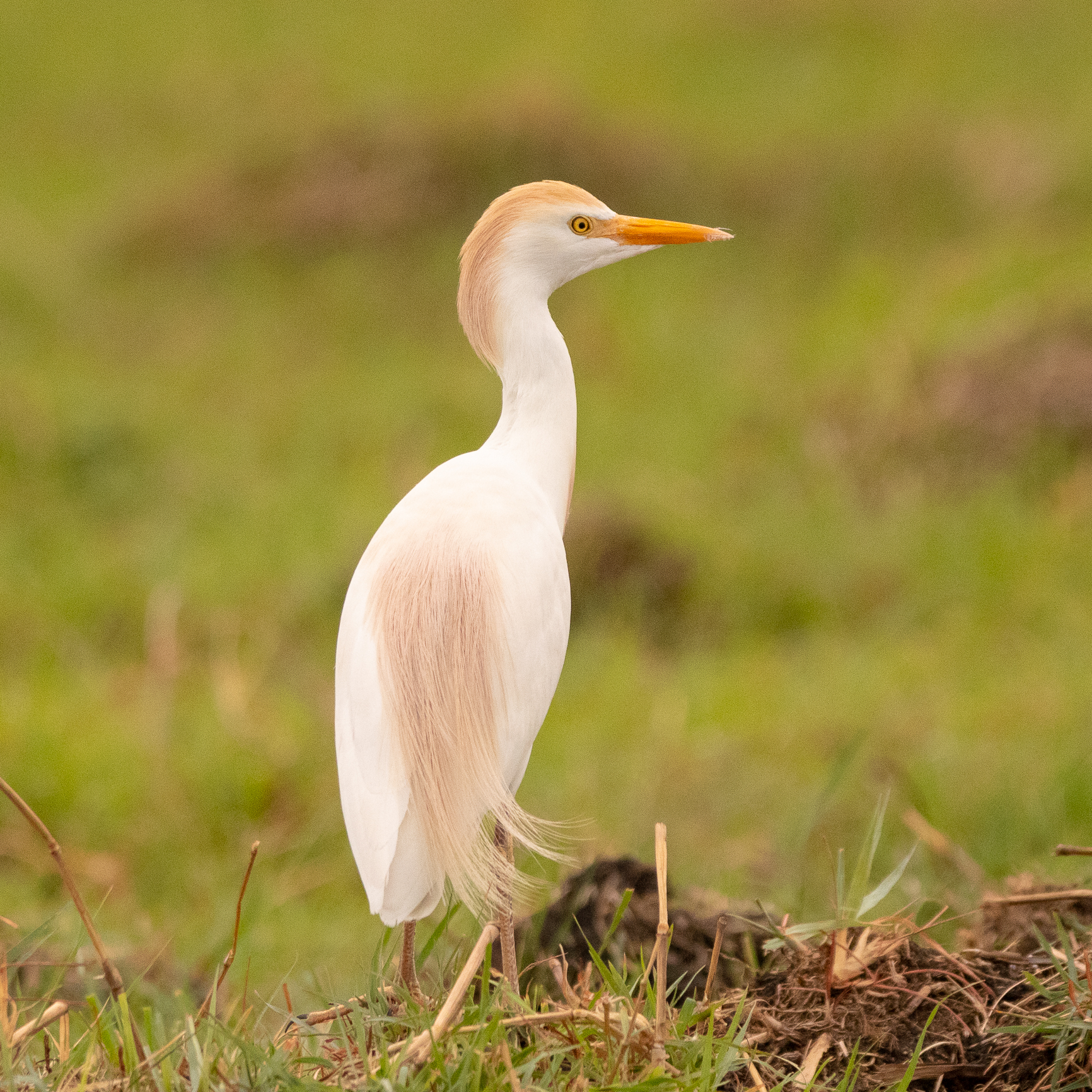
Cattle Egrets take on more colour during breeding season and the plumes on the back appear
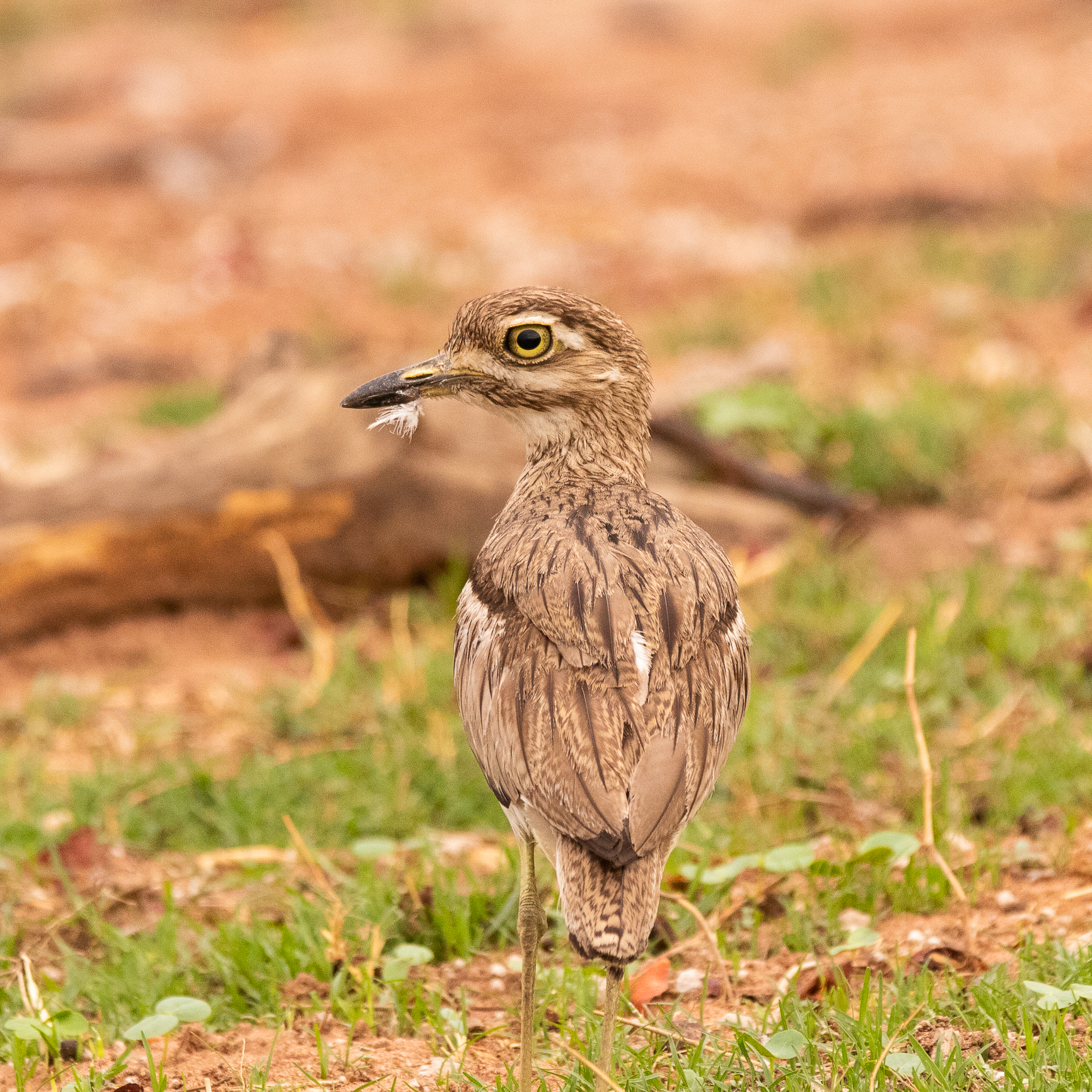
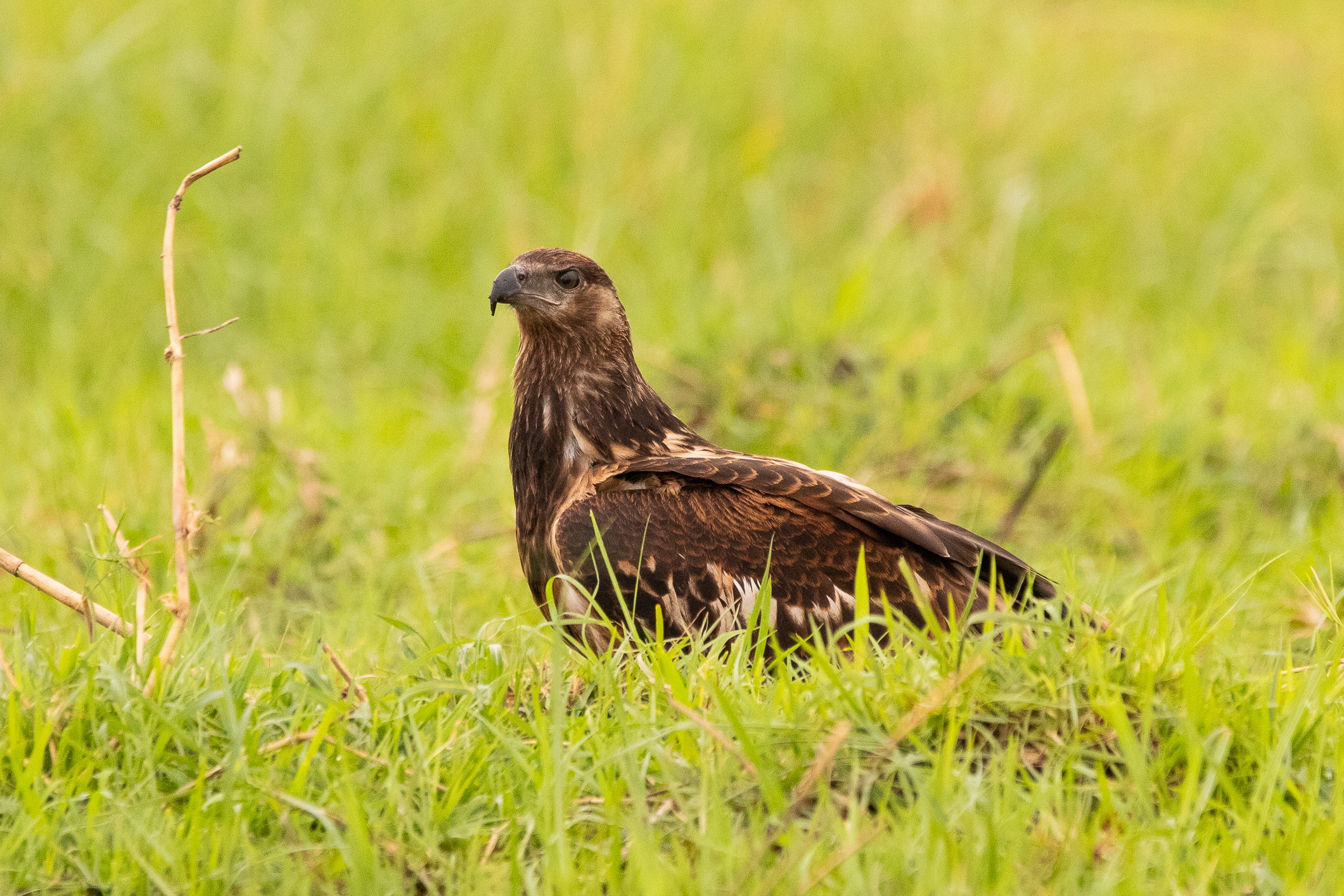
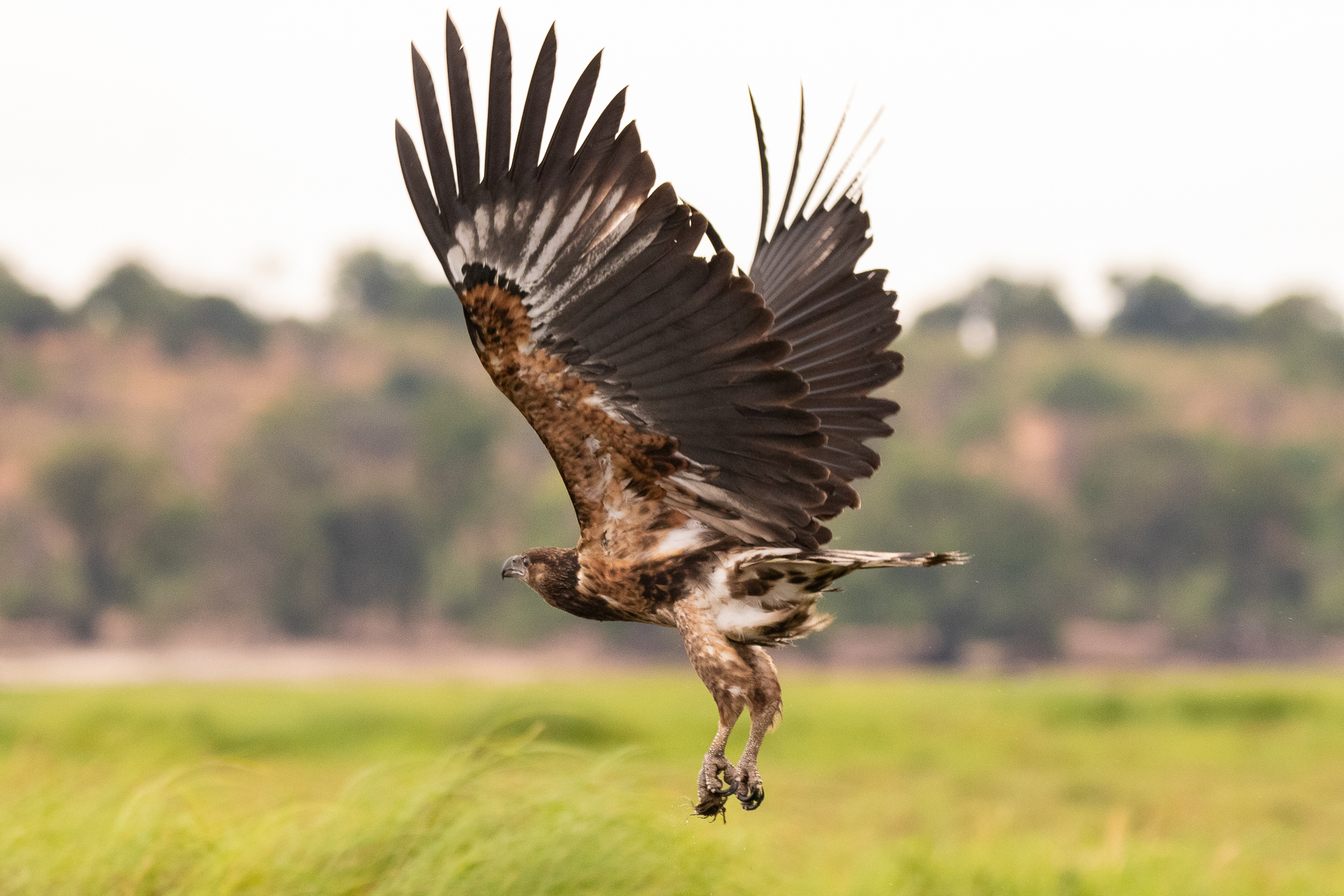
African Fish-Eagles are often prominent along the river, usually perched on a branch with a good view of the water. The juvenile differs markedly from the adult, which has led me to incorrect ID’s on more than one occasion.
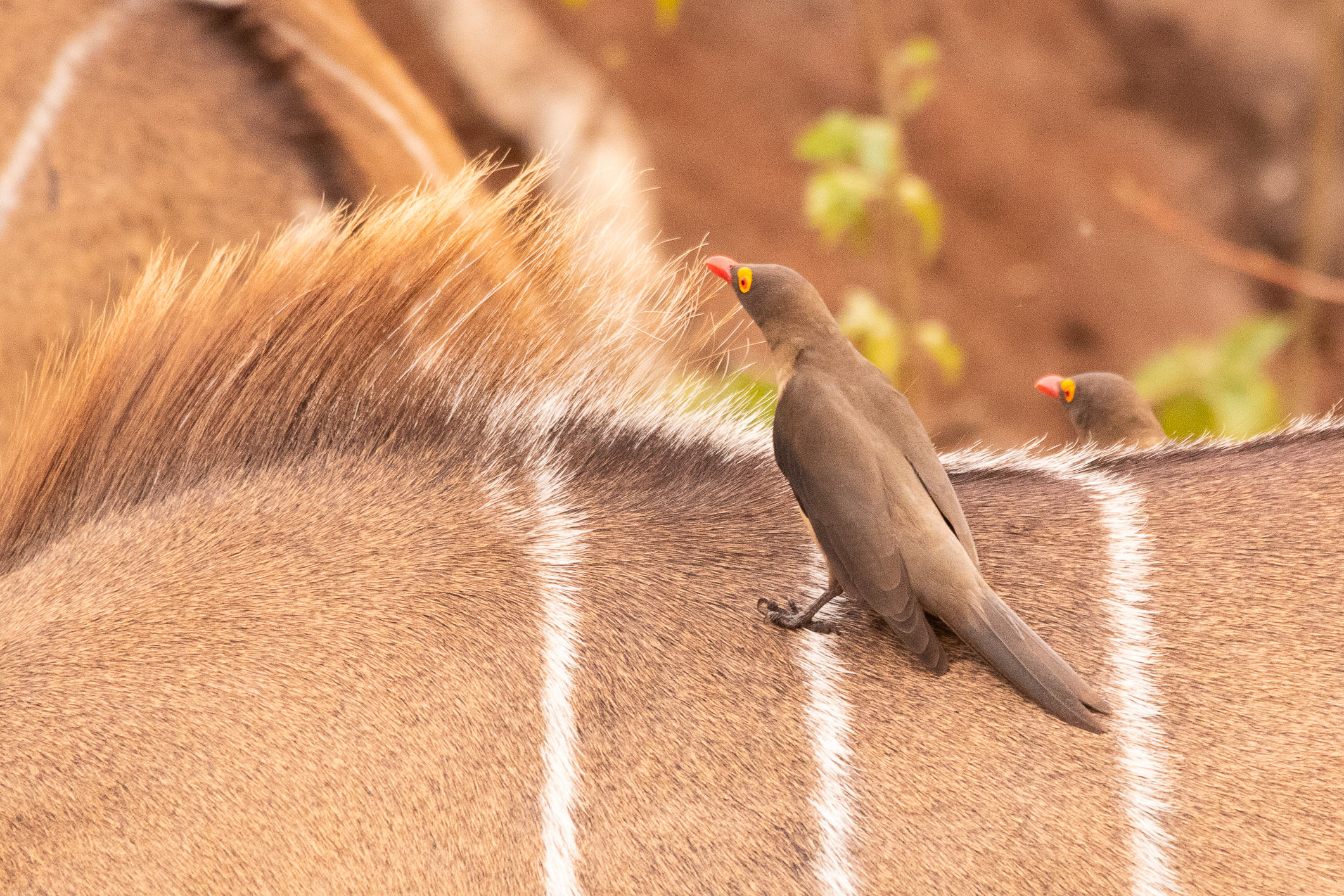
Oxpeckers are a favourite of mine, especially when perched on their host for the moment
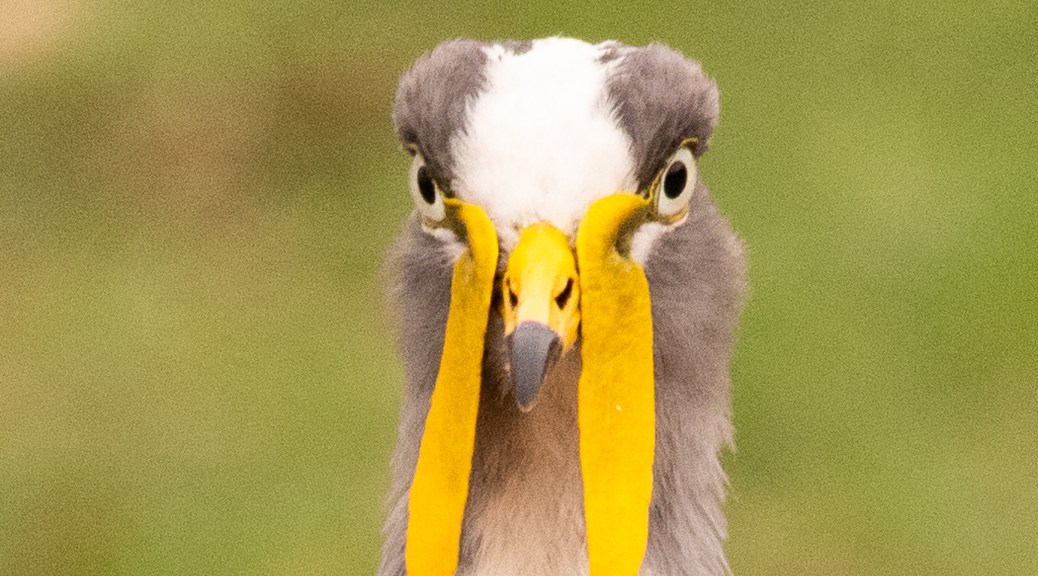
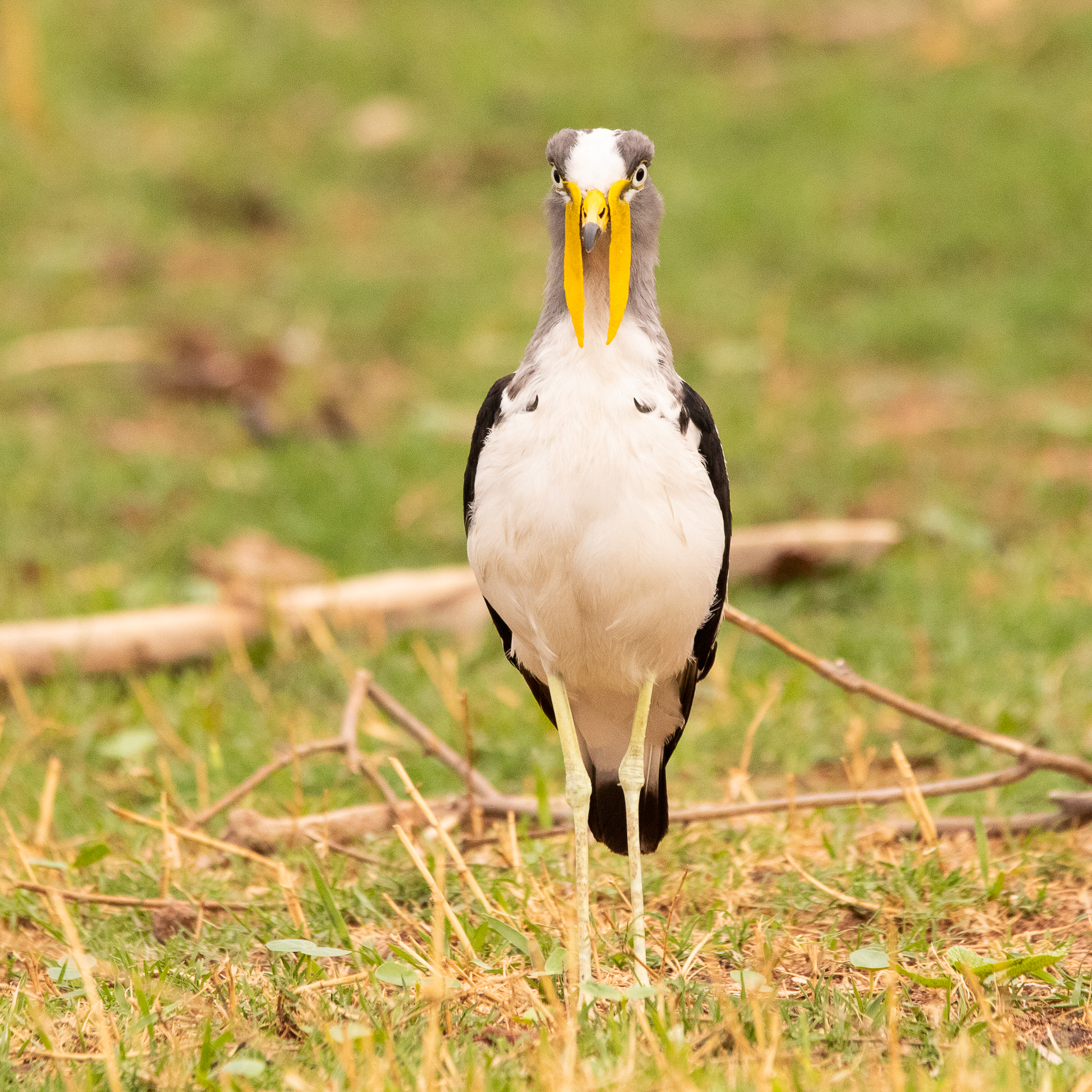
This front-on photo of a White-crowned Lapwing appealed to me – and to Janine who encourages different views of familiar subjects (The heading image is the same photo cropped)
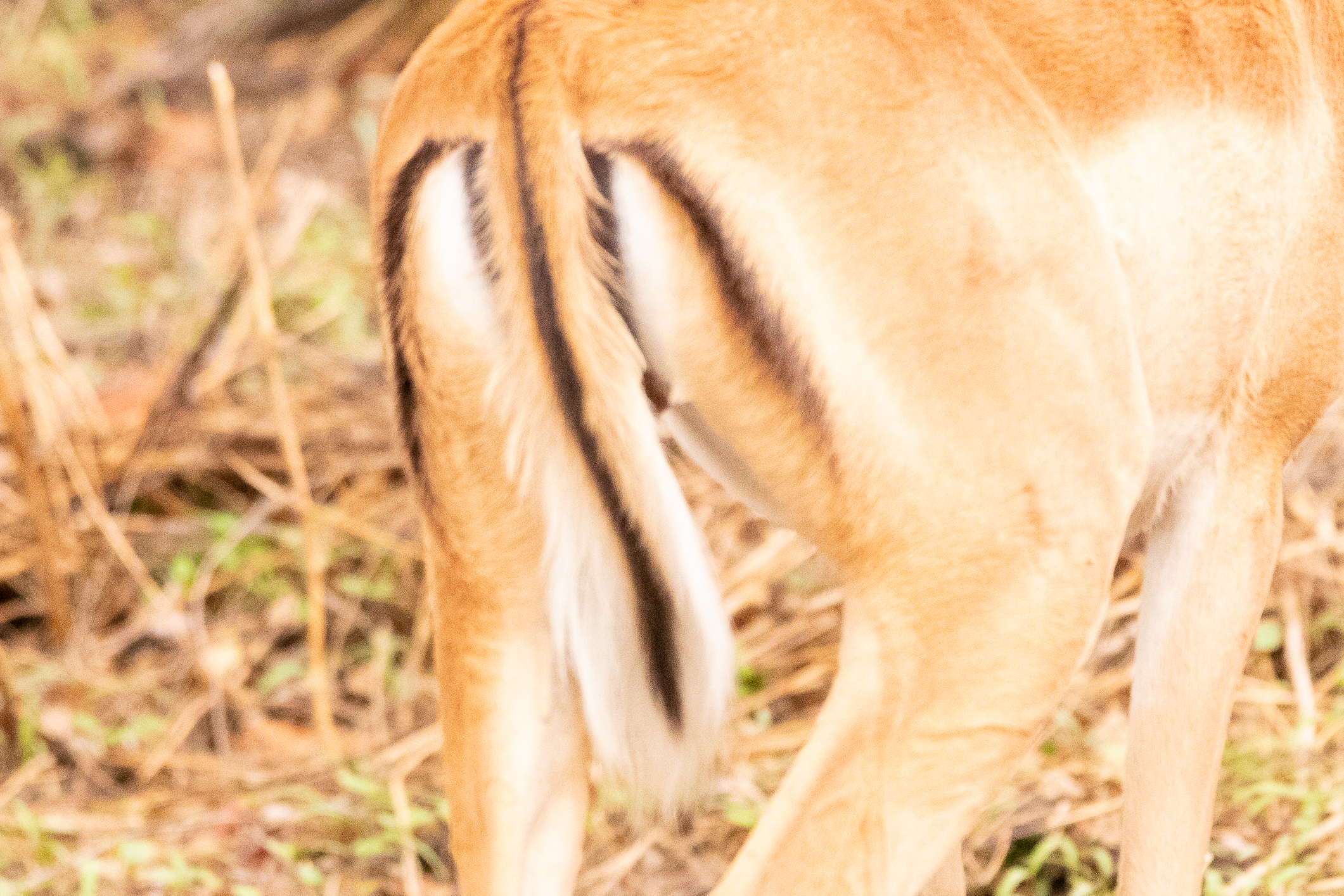
Impala with an M
This is the closest you will come to seeing a famous McDonald’s “M” in wild Botswana
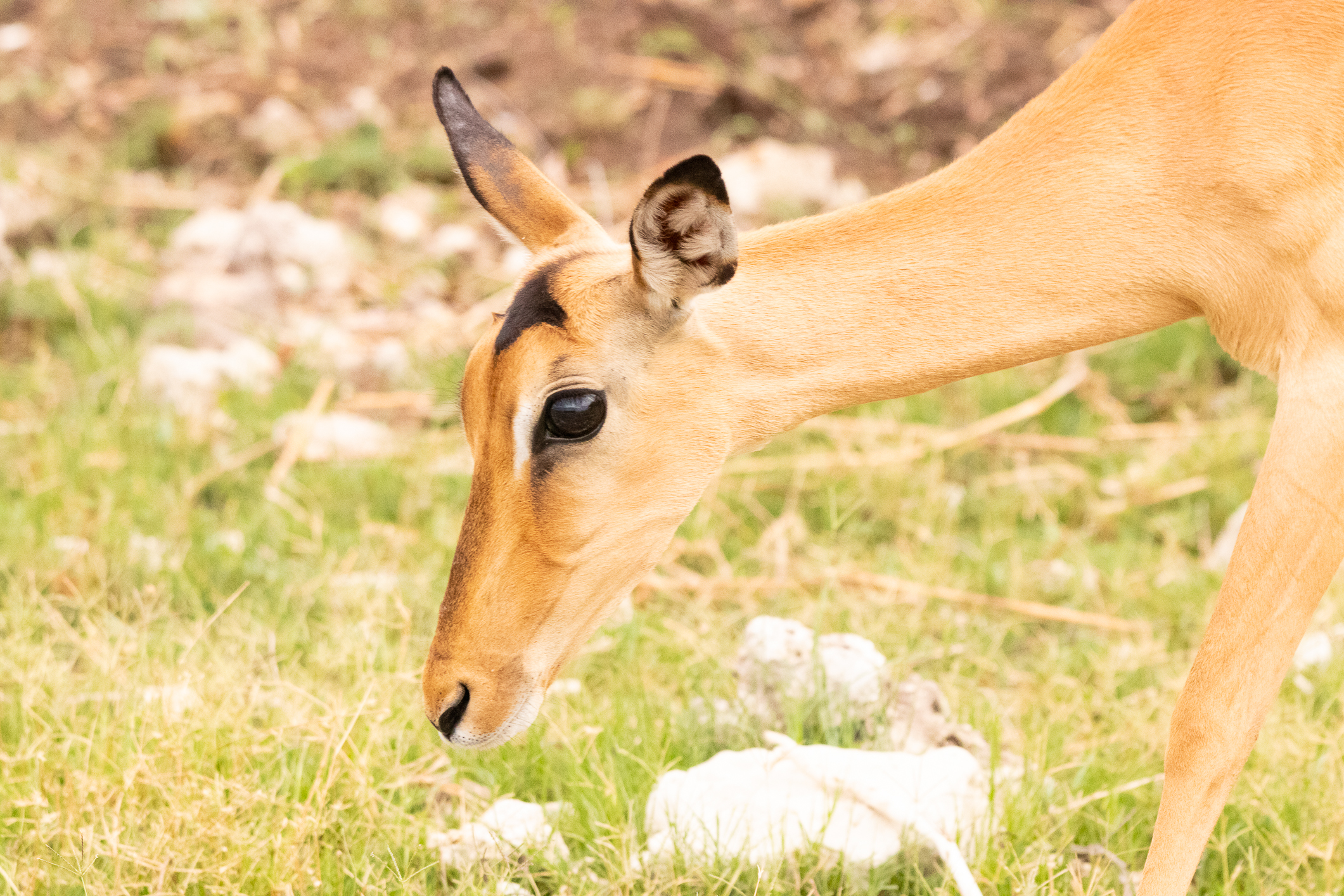
The end of our trip came all too soon but there was the exciting prospect of going on an early morning game drive through Chobe with the same team – more about that in Part 2
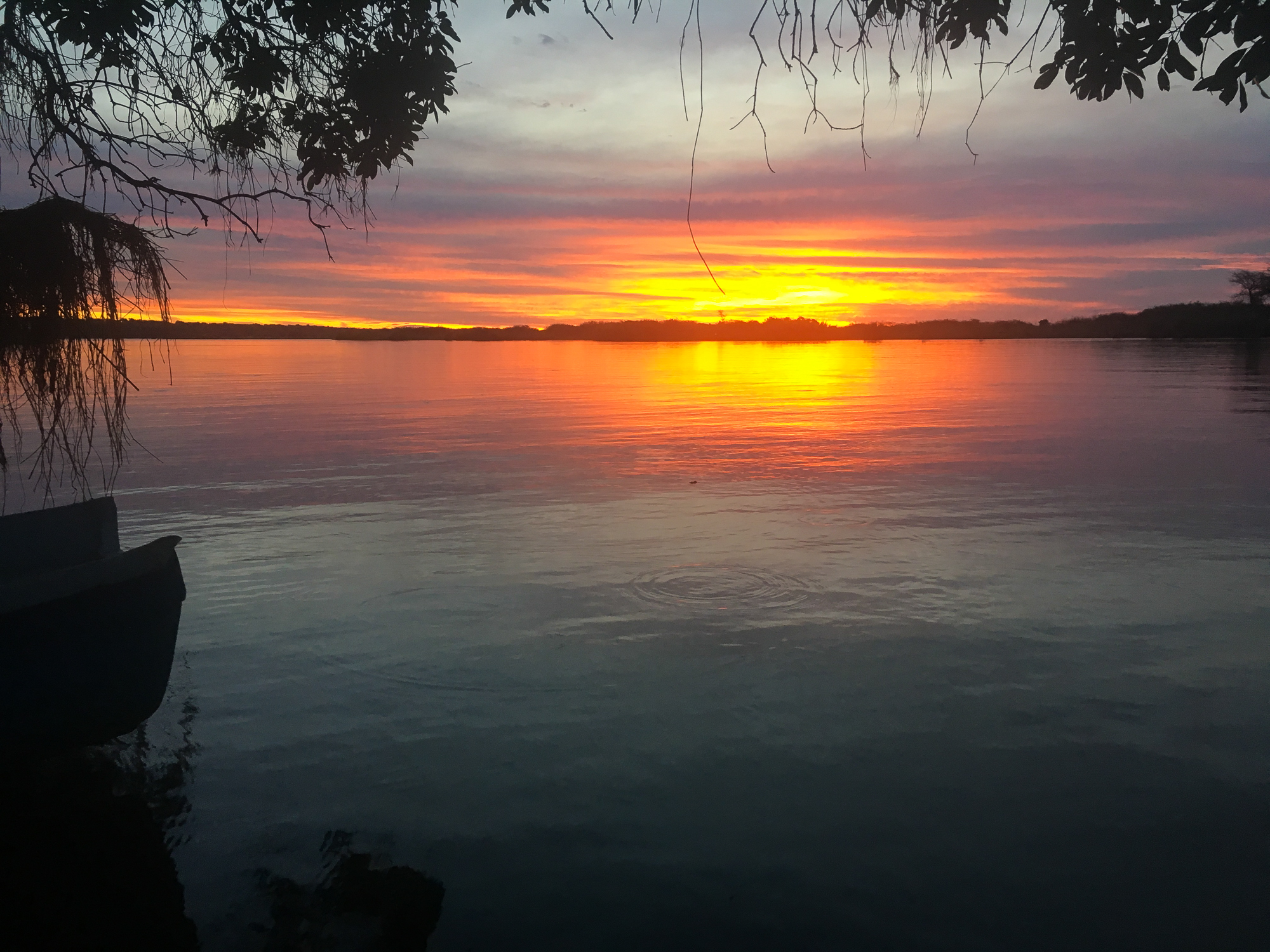
But before that, Chobe River has some of the most glorious sunsets you will find anywhere – best enjoyed with a suitable beverage to hand…
 Mostly Birding