Tag Archives: Kasane Birding

Chobe River and Game Reserve – the Final Visit …. (Part 2)

Just to repeat the intro from Part 1….. briefly –

I made my last visit to Kasane in November 2018 for the final formal handover of the Kasane Airport project in northern Botswana to the Client. I had made many adhoc visits to Chobe Game Reserve during the course of the project and decided to spoil myself with one last “grande finale” photographic safari, expertly run by Pangolin Photo Safaris, both on land and on the river, soaking up the incomparable African game-viewing and bird-watching on offer.

Aerial view of the Chobe River while landing at Kasane

I have written several posts about some of my memorable experiences in Chobe over the years, but never got around to ‘finishing the story’ as it were, so bear with me as I reminisce about my final visit to Kasane.

Part 1 covered the Boat Trip on the river, Part 2 is all about ….

The Game Drive…

It was Friday morning and my mind was spinning with the memories of the boat trip the previous afternoon, but now it was time to do the land-based version – same guests, same driver (nicknamed ‘Killer’ – I never asked why), same guide and photography expert (Janine), different transport – a game drive vehicle kitted with bean bags to support cameras both sides.

Janine collected me at 5am, drove to the Pangolin Lodge, newly built and overlooking the flood plains of Chobe, picked up the other couple and off we went. The early start was a good idea as we were well ahead of the other game drive vehicles, a crucial advantage which paid off in spades – as you will see…

Janine started by suggesting that the small group, being seasoned game drivers, should look for special sightings and photo opportunities only – Killer asked what we would really like to see and as one we answered “Leopard!”

So we bypassed the “ordinary stuff” initially and bumped along the sandy track that follows the southern shore of the Chobe River, its banks wide and dry at this time of year.

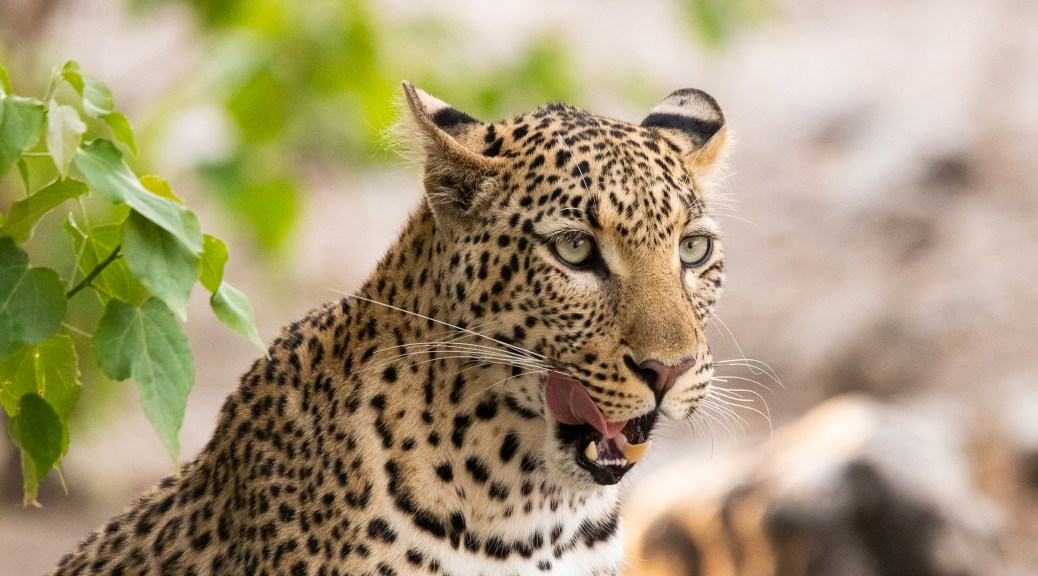
Killer suddenly brought the vehicle to a halt, as he did we saw what he had spotted a split second before – a beautiful female Leopard lying on all fours and ignoring us with a slightly disdainful expression
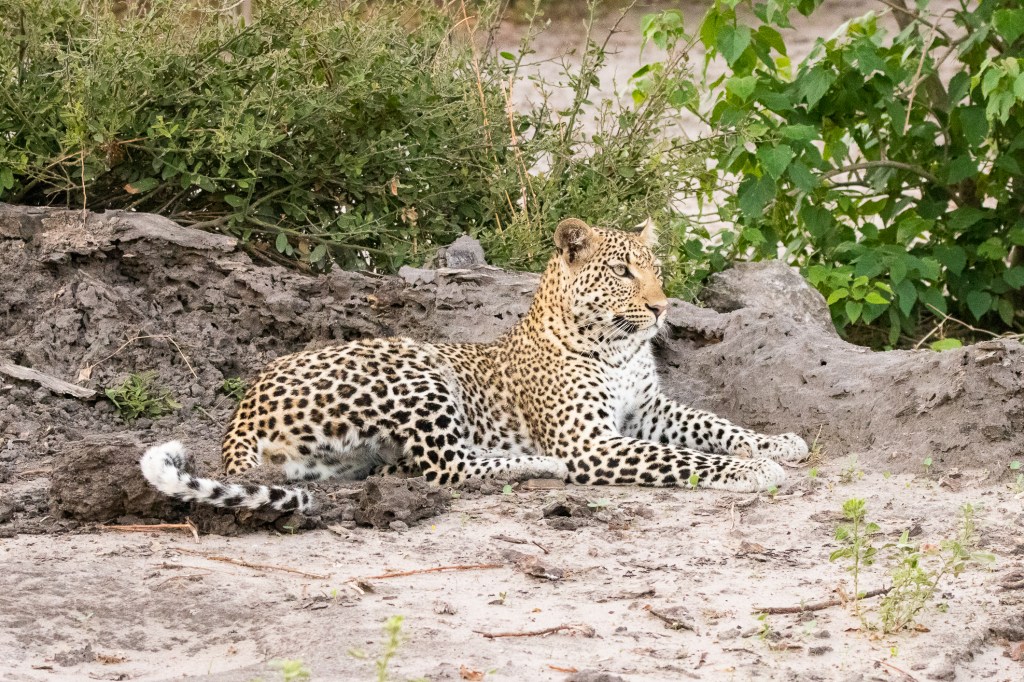
Leopard, Chobe Riverfront game drive

As Janine gave exposure instructions (under expose a tad for the dark background), we all rattled off a number of shots, fearing the leopard would move away.
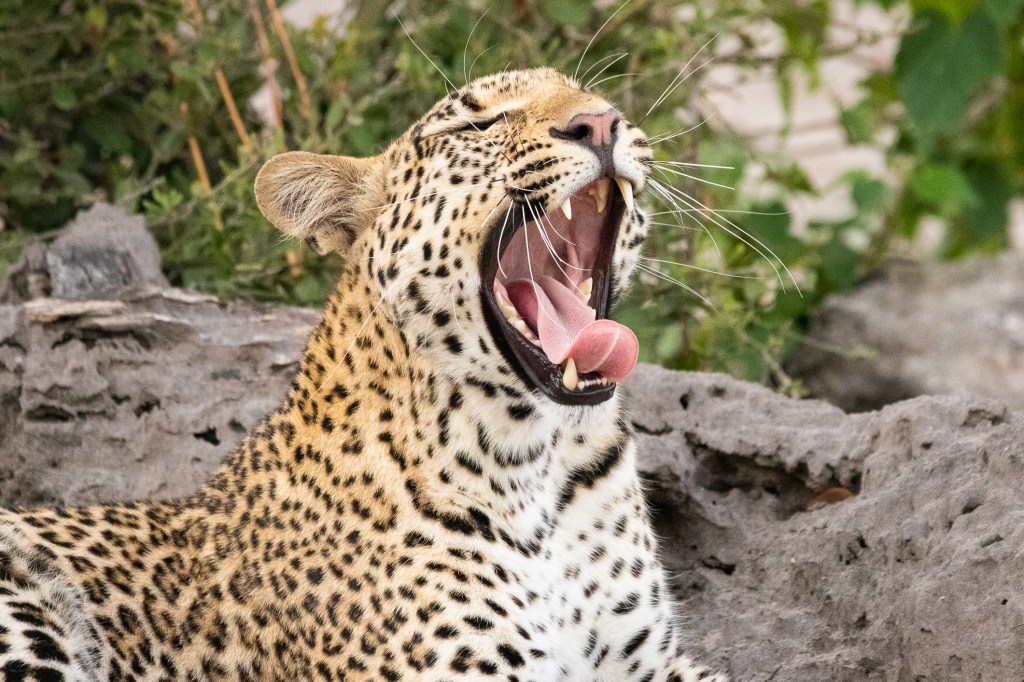
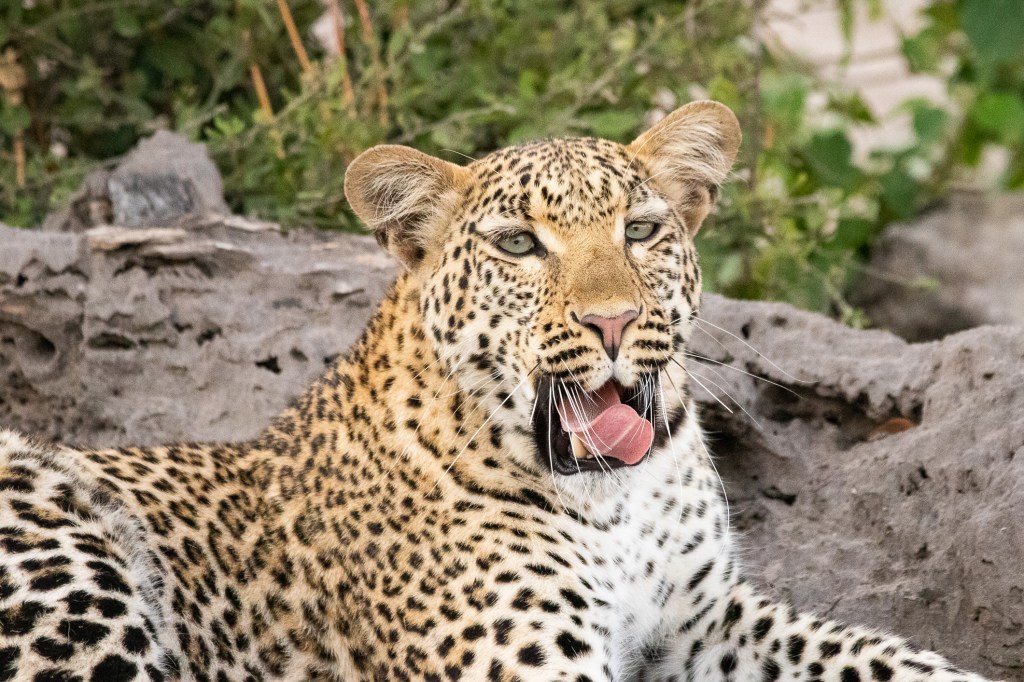
Leopard, Chobe Riverfront game drive

And that’s what she did, moving behind a bushy tree to her right, where we could just make out the Impala kill which she proceeded to drag a little, then lick and eventually chew with some satisfaction.

Once sated, she left the prey and came back to check us out, sitting upright and staring straight at us, with a look that said ‘now they could make a tasty dessert’ .
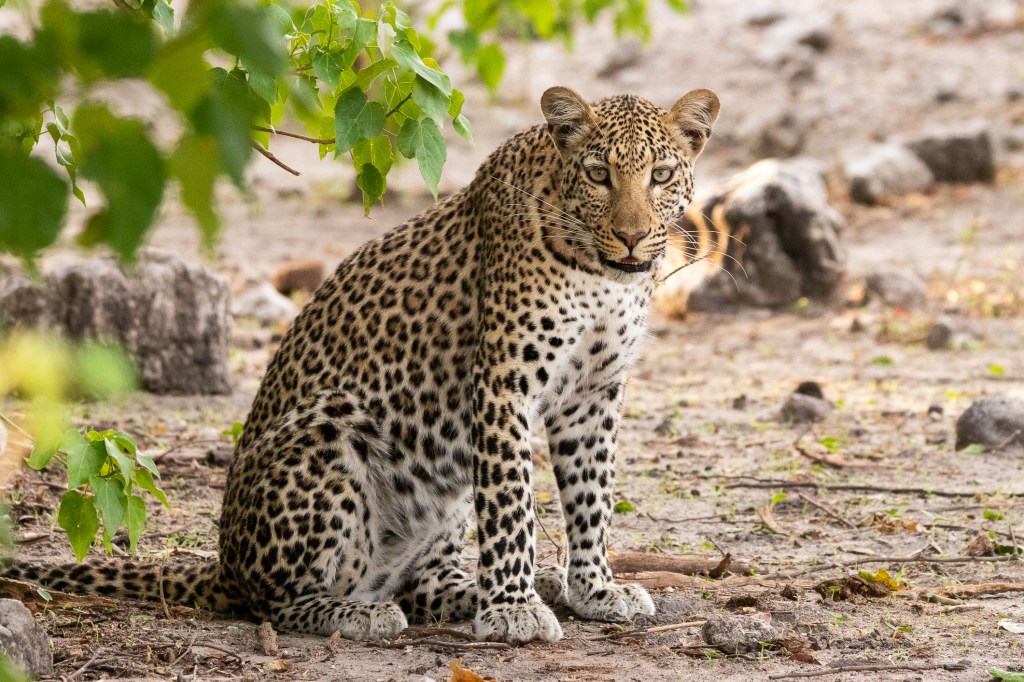
Leopard, Chobe Riverfront game drive

A few minutes later she moved away from her kill and from us and we eventually moved on ourselves, fairly trembling from the excitement of such a magnificent sighting.

Anything after that was bound to be tame by comparison, but we pushed on, just enjoying the feel of the bush and its multitude of wildlife, including, as we were soon to discover, one of the most dangerous of all.

A Black-backed Jackal drew our attention and although quite far off, we tried a few shots – it too was looking at us but with none of the charisma of the leopard, more of a ‘nice doggy’ sort.
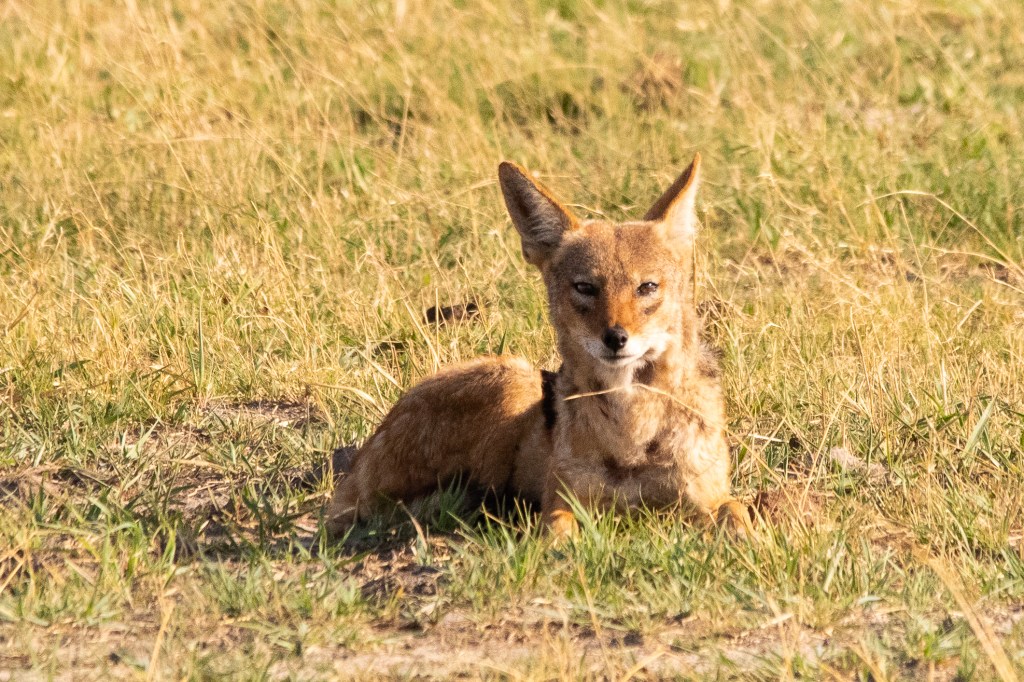
Black-backed Jackal, Chobe Riverfront game drive

A group of Warthogs approached and some of them got into mock fighting mode, meeting each other head on. This one continued grazing in peace
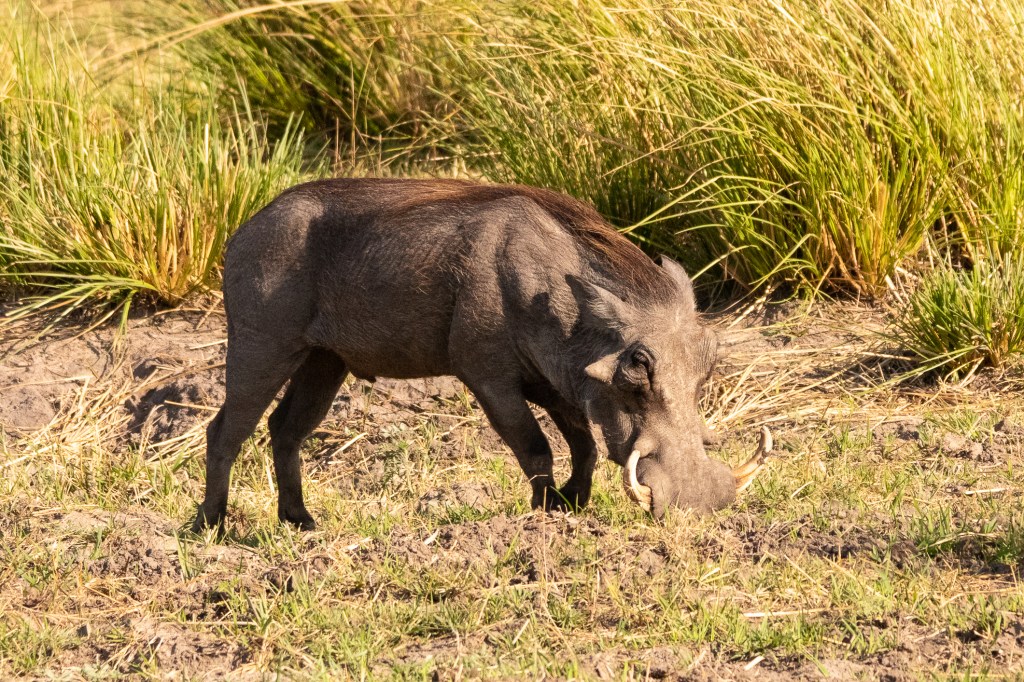
Warthog, Chobe Riverfront game drive

Chacma Baboons are always a delight to watch, such as this youngster riding like a jockey on Mother’s back
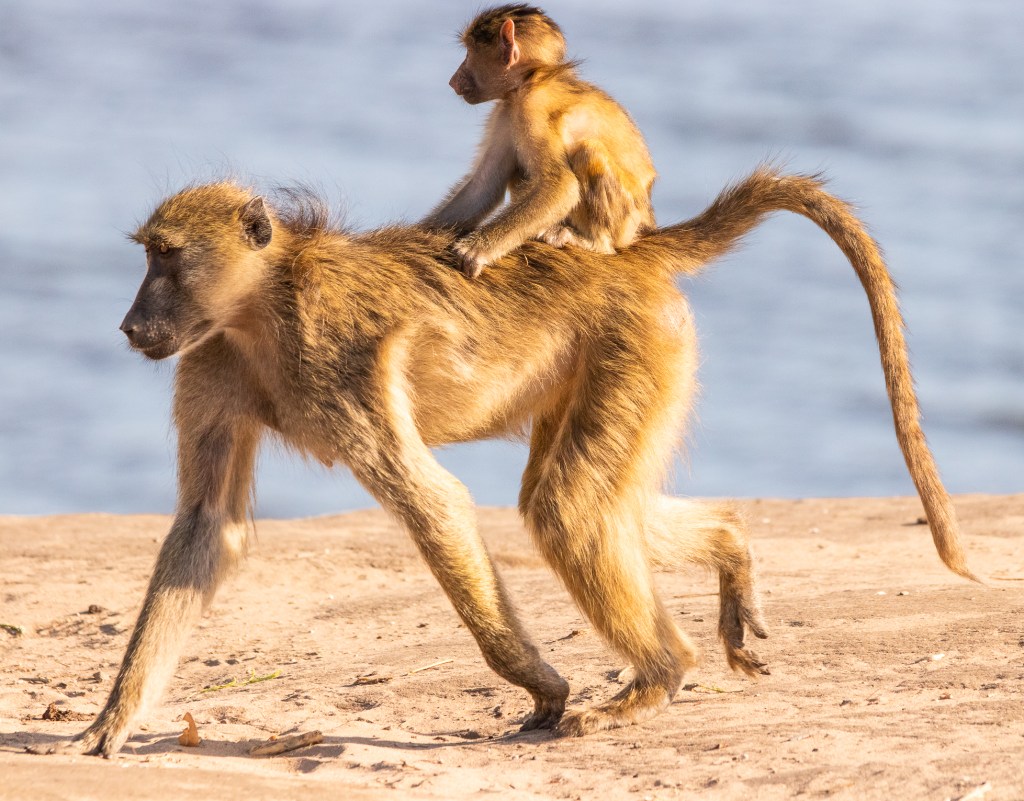
Chacma Baboon, Chobe Riverfront game drive

Moving along the track, which gets inundated in the rainy season, there was a sudden call of ‘Snake!’ and we shouted ‘Stop!’ in unison.

Killer knew better and only came to a halt at a safe distance, knowing the snake to be one of the most dangerous and venomous around and capable of raising itself to two-thirds of its length to strike – not a comfortable thought when you are in an open safari vehicle.

The driver of an open safari vehicle is particularly vulnerable, being at an ideal strike level with a convenient (for the snake) forearm often resting on the open sill of the door….

It was of course a large Black Mamba, most feared of snakes, and it was already raised about 1 metre high and looking mean.
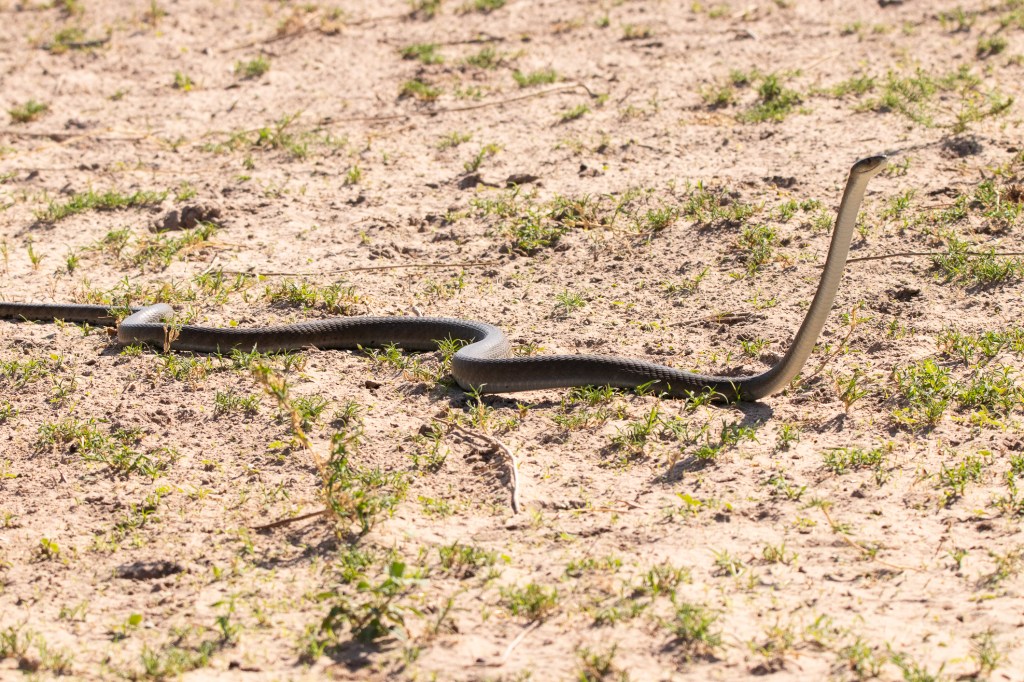
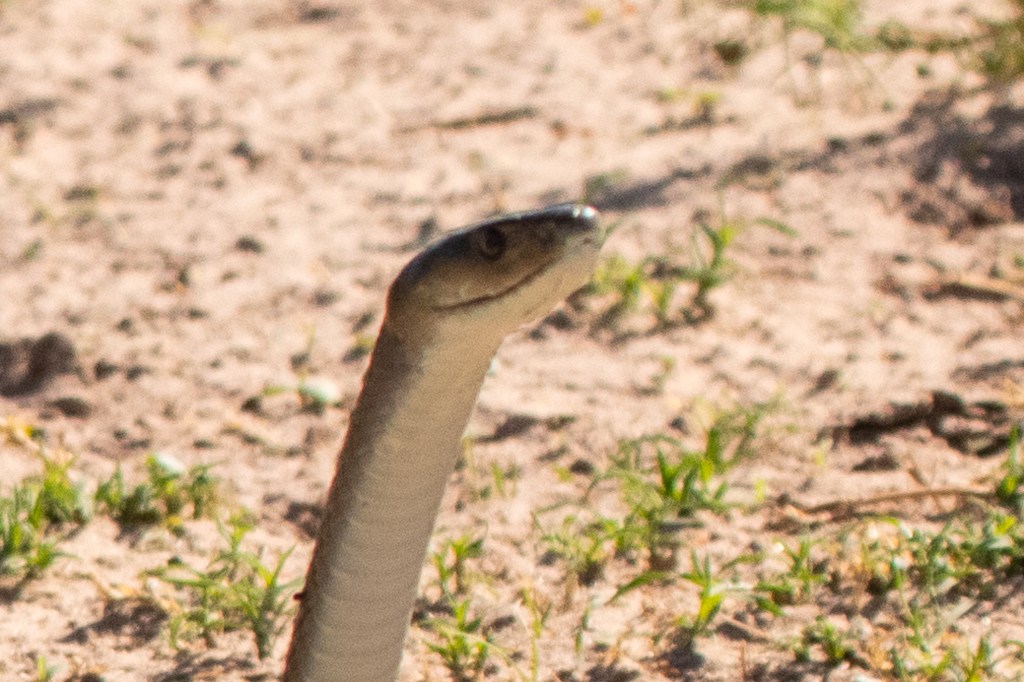
Black Mamba, Chobe Riverfront game drive

There was just time for one snatched shot before it lowered to the ground and slid off into the bush, leaving us once again in an elevated state of excitement.

Not long after another reptile crossed our path, this time a non-threatening Water Monitor, looking quite prehistoric
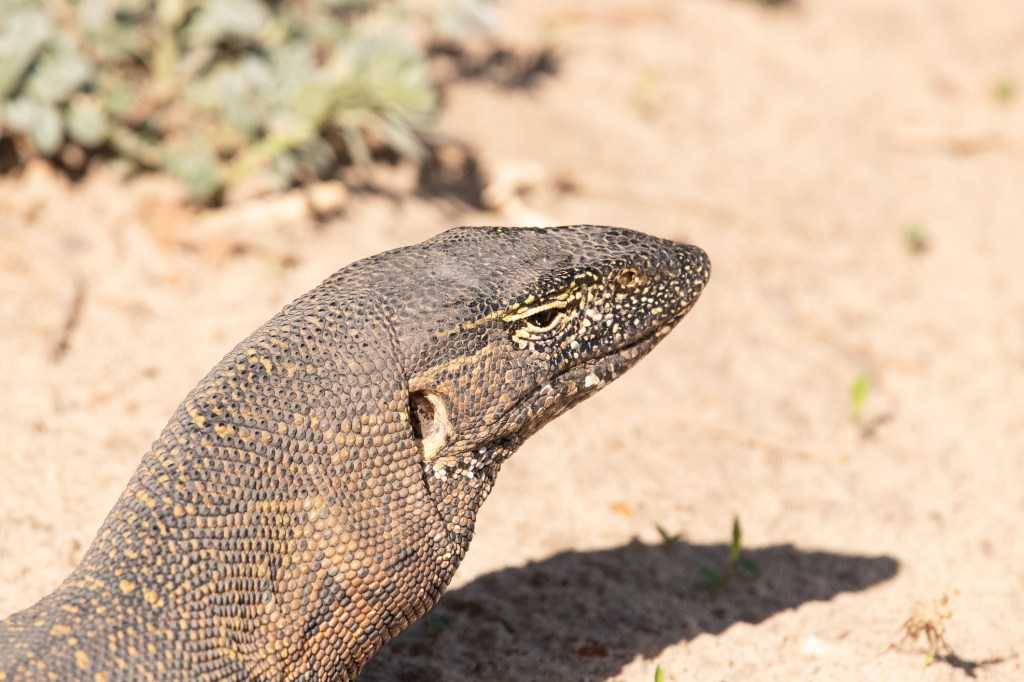
Water Monitor, Chobe Riverfront game drive

By now we had gone well past the usual picnic spot, so Killer stopped at a ‘Stretch point’ where we had coffee and biscuits before heading back along the upper road.
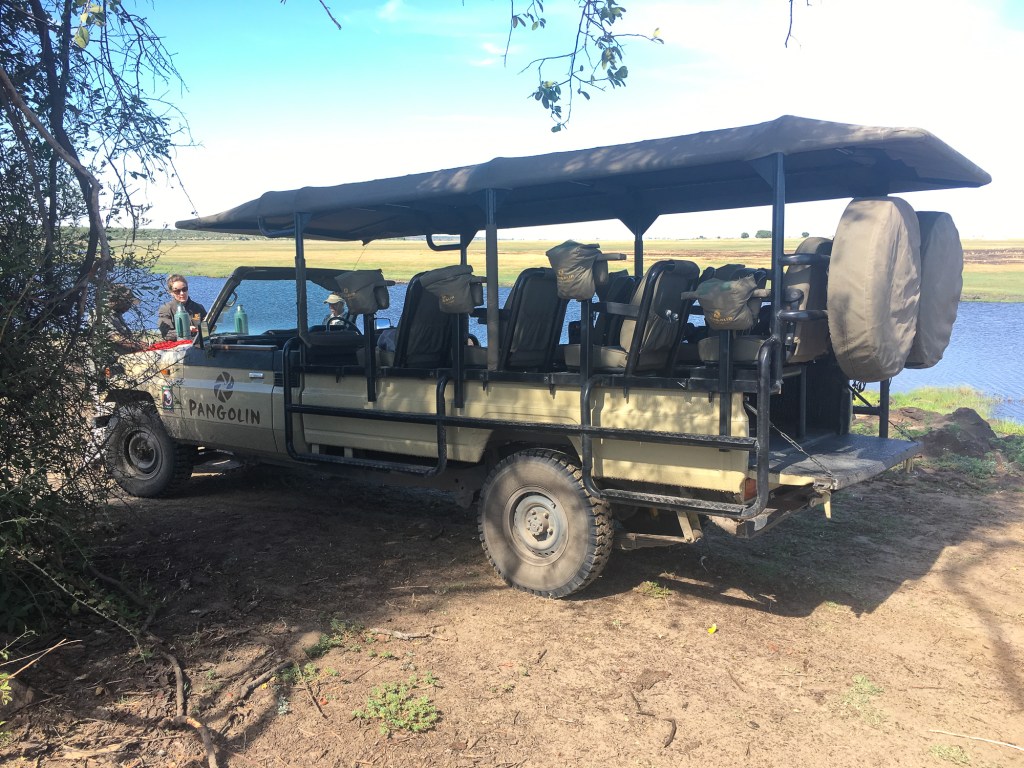
Stretch point on Chobe Riverfront Game Drive

On the way back various wildlife presented some further photo opportunities
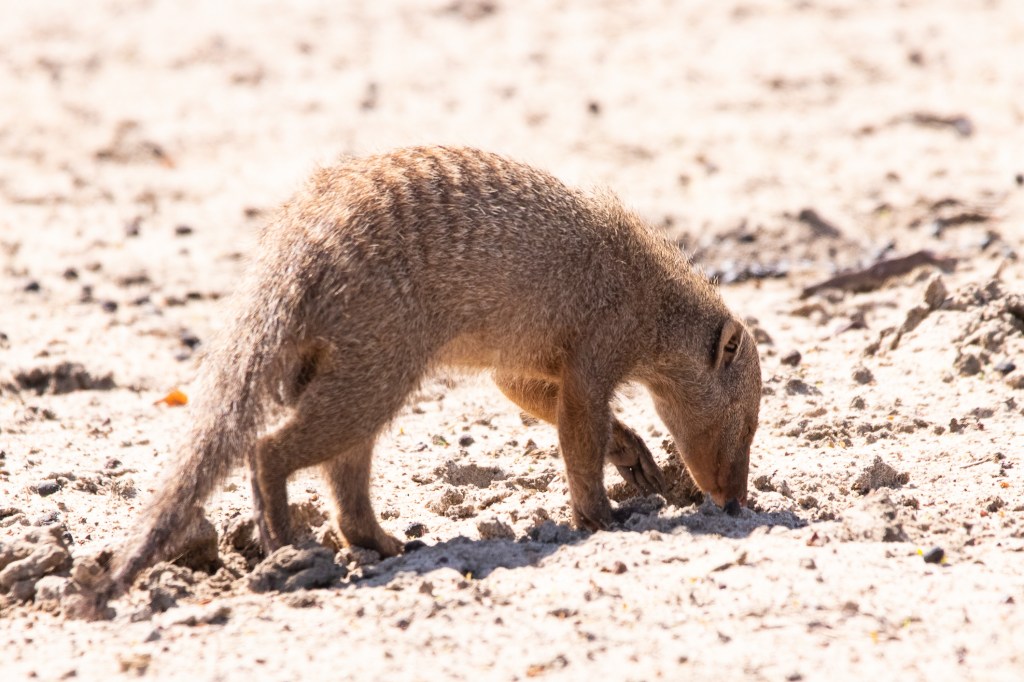
Banded Mongoose, Chobe Riverfront game drive

Three young Impala, still in ‘Nursery school’, made for a charming sight with their oversized ears alert to our presence
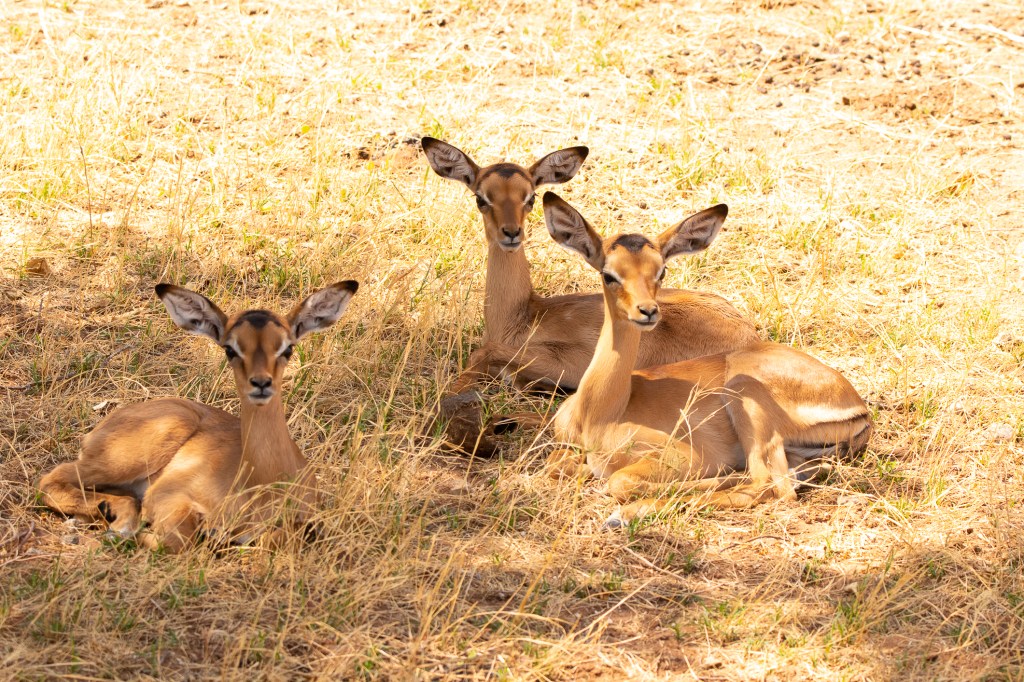
Impala nursery school, Chobe Riverfront game drive

Puku are not found in South Africa, occurring mostly in the wet grasslands and floodplains of central Africa, so are a particular pleasure to see as they graze, often ankle deep in the water
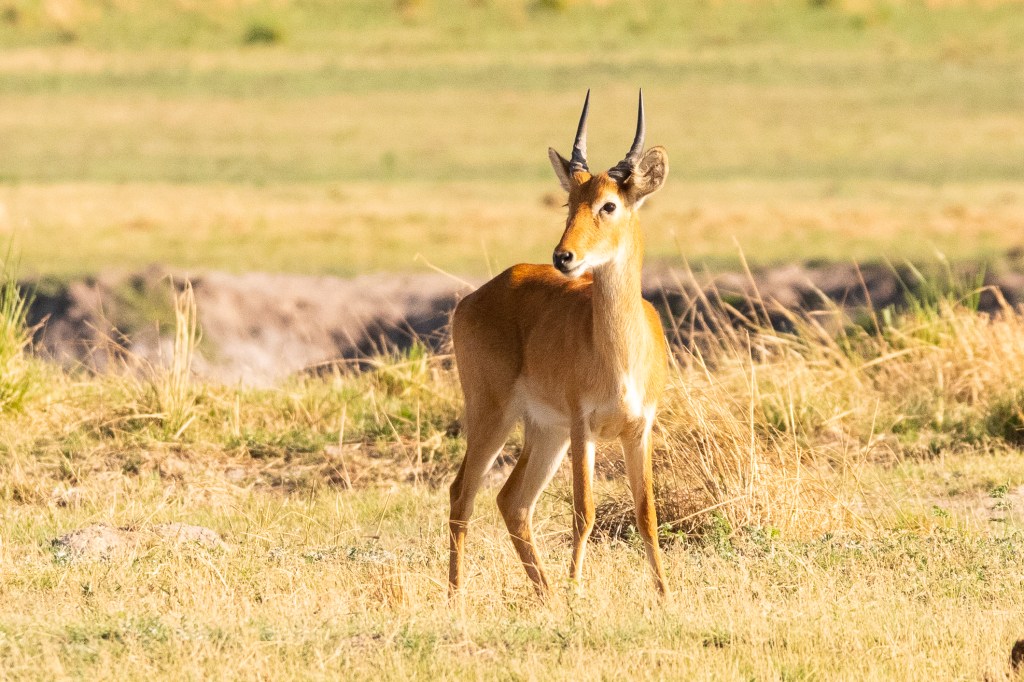
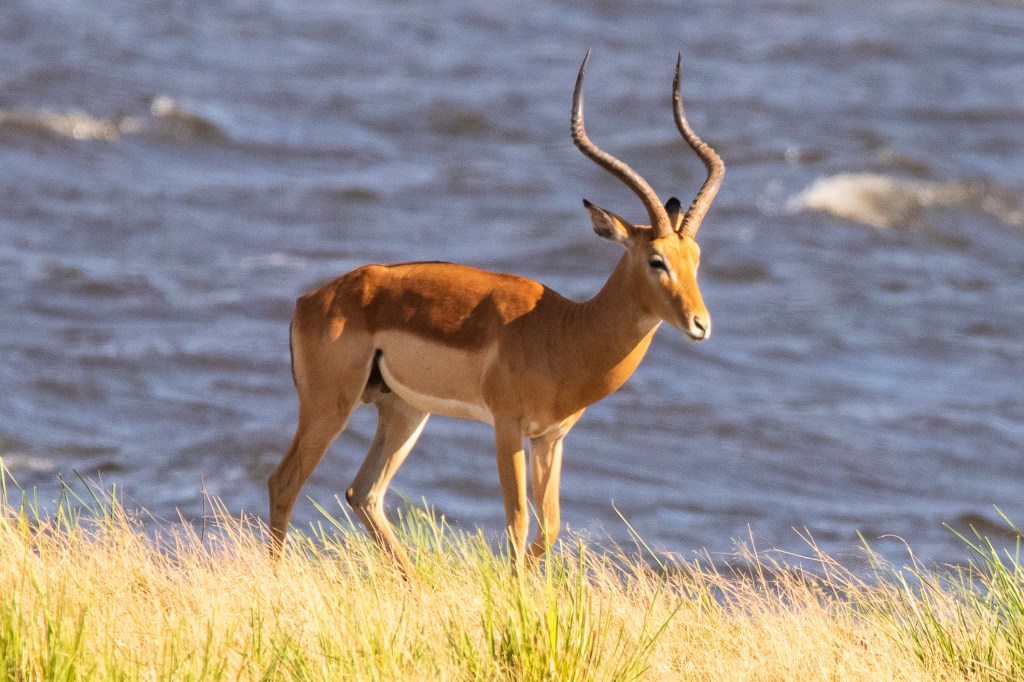
Puku, Chobe Riverfront game drive

The Birds

Birding was secondary to game-chasing on this trip, nevertheless I was able to spot a broad selection of the birds that I have become accustomed to when traversing the Chobe Waterfront

This Hamerkop posed nicely in the early morning light, giving it a handsome golden appearance
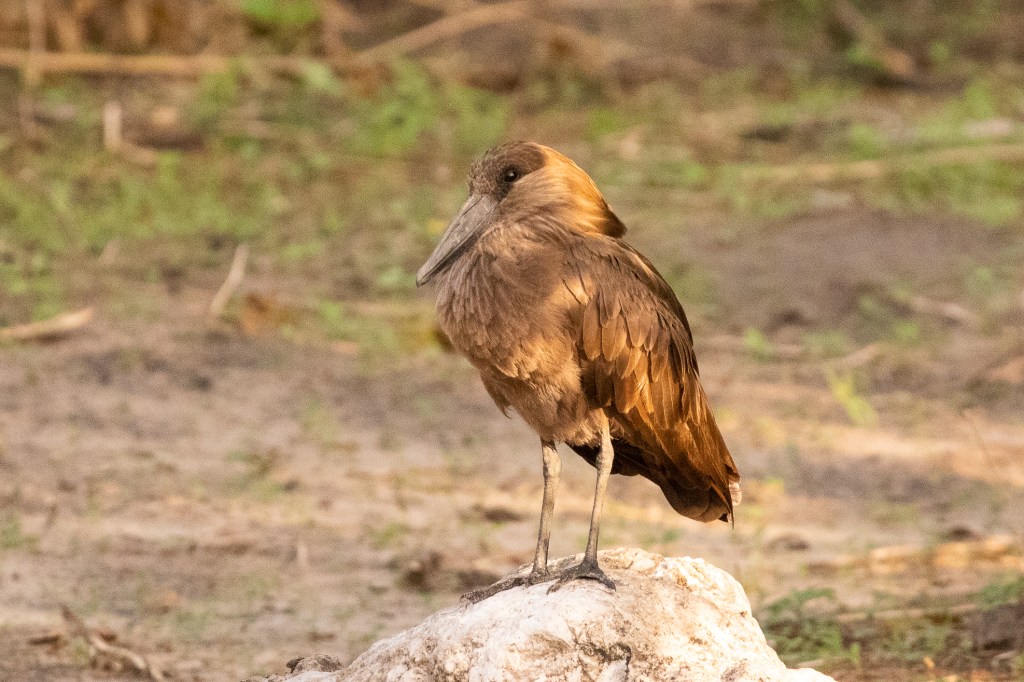
Hamerkop, Chobe Riverfront game drive
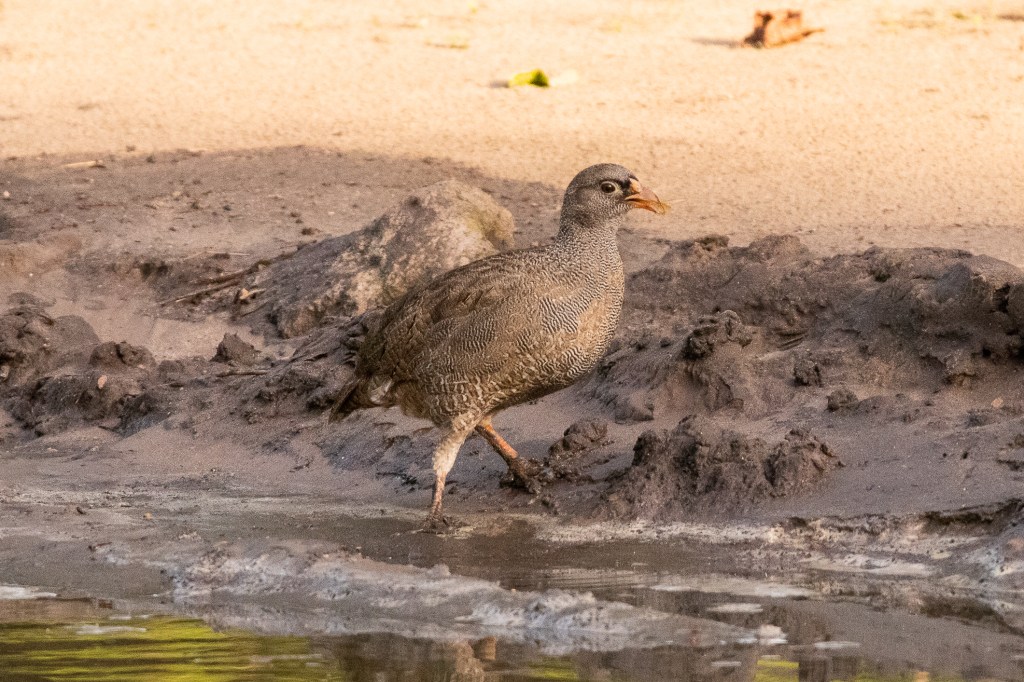
Red-billed Spurfowl, Chobe Riverfront game drive

Spur-winged Geese are often seen in the distance, but this one gave us close up views as it swam along the river’s edge
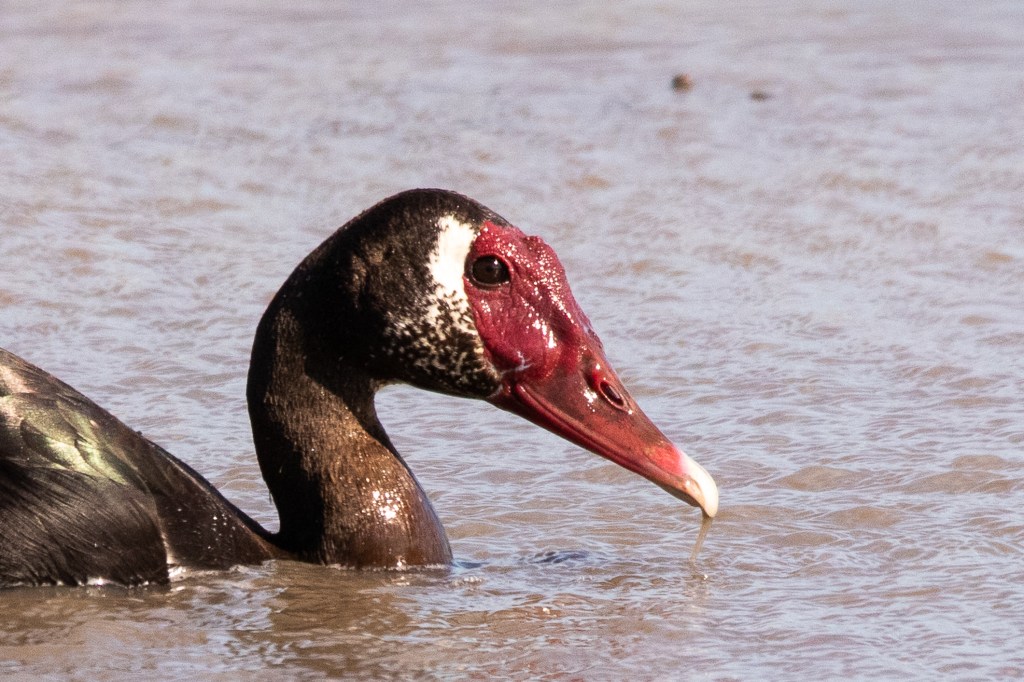
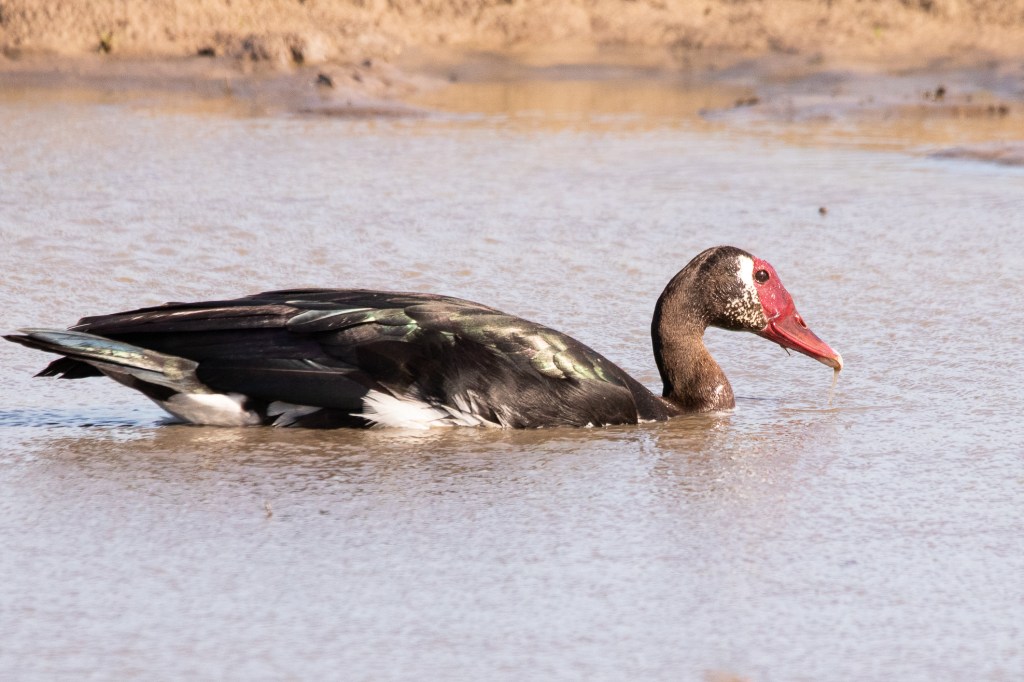
Spur-winged Goose, Chobe Riverfront game drive

Yellow-billed Kites visit southern Africa in our summer and are widespread across the region, usually seen singly in the air as they cruise not far above the ground. What we encountered was very unique, with upwards of 30 Kites gathered in one small area along the river bank, some just resting, others making short flights and returning to the same spot.
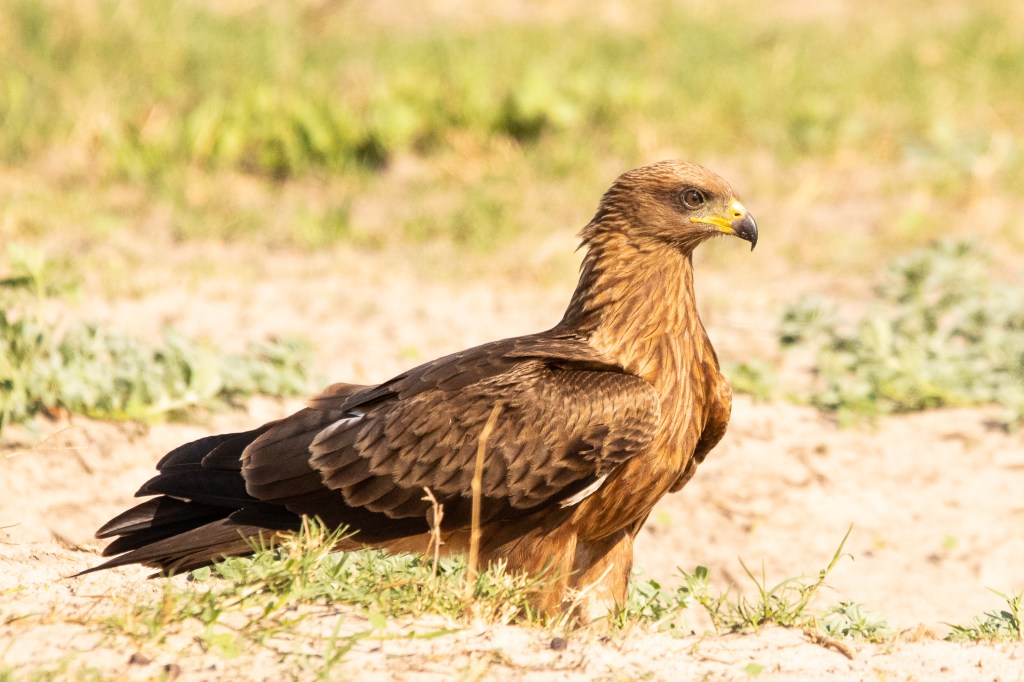
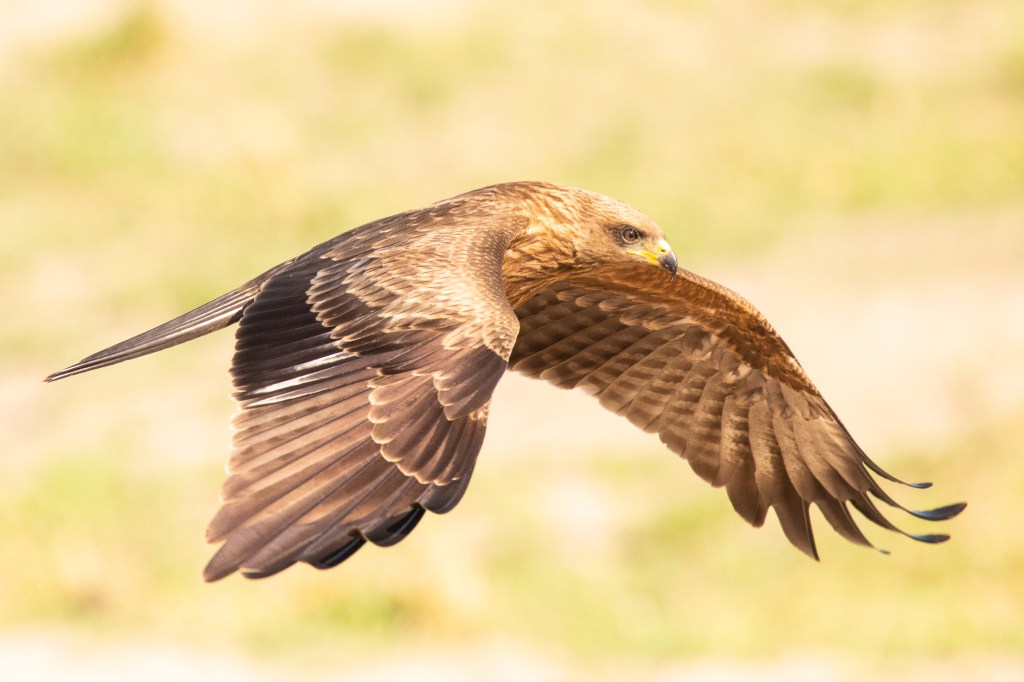
Yellow-billed Kite, Chobe Riverfront game drive
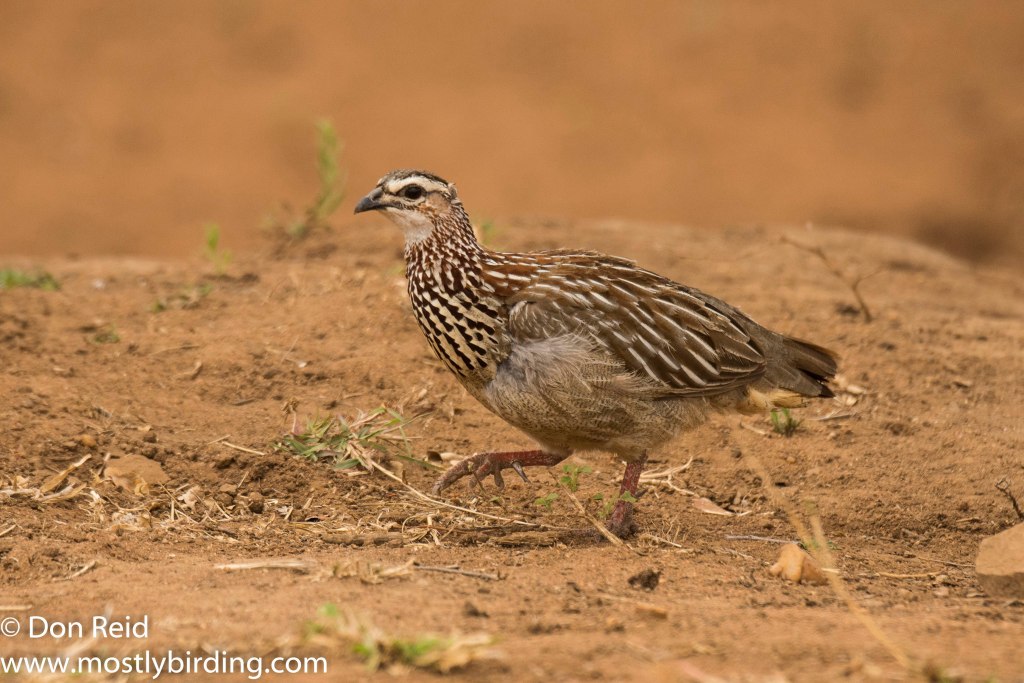
Crested Francolin, (photo taken in Kruger Park)

The African Fish-Eagle occurs all along the river at intervals which allow each one enough territory in which to hunt for their fish prey, which are abundant
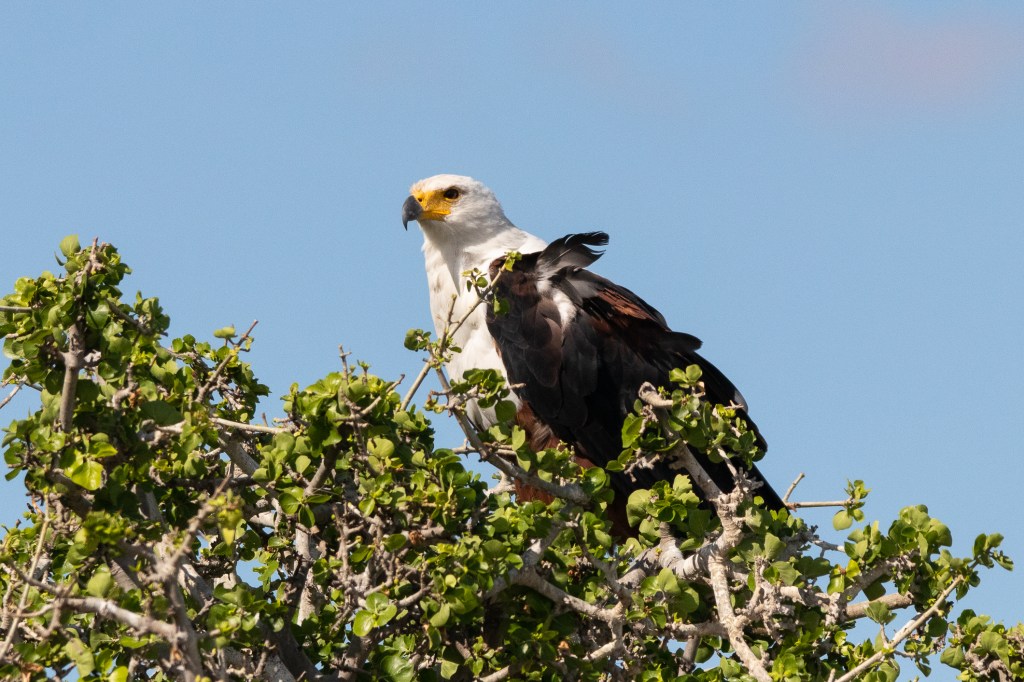
African Fish-Eagle, Chobe Riverfront game drive

And then it was the turn of …… BEAUTY
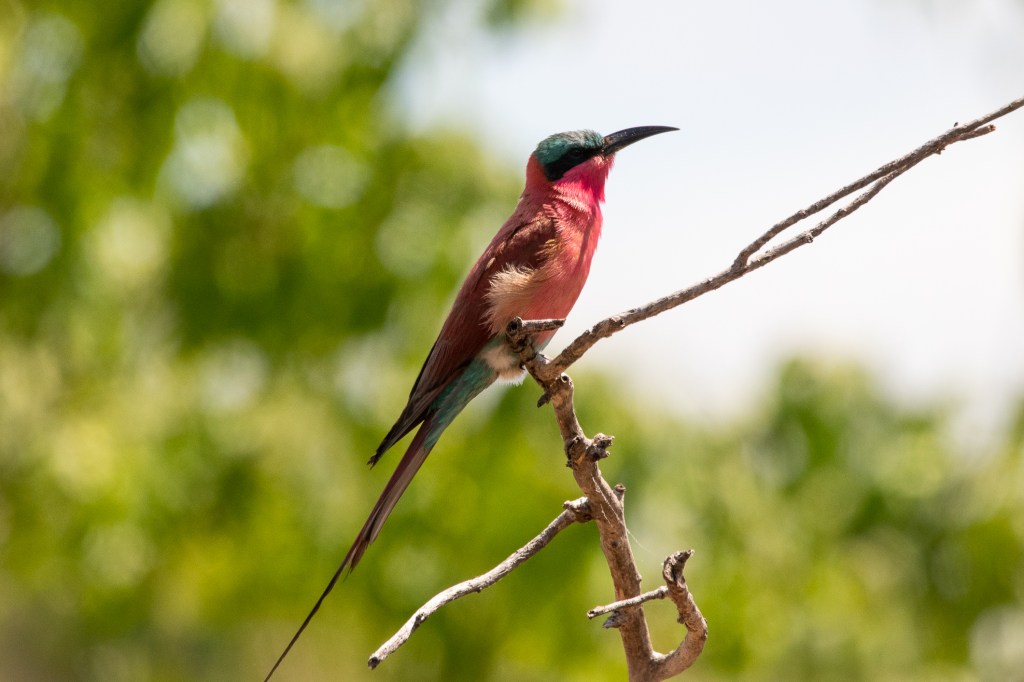
Southern Carmine Bee-eater, Chobe Riverfront game drive

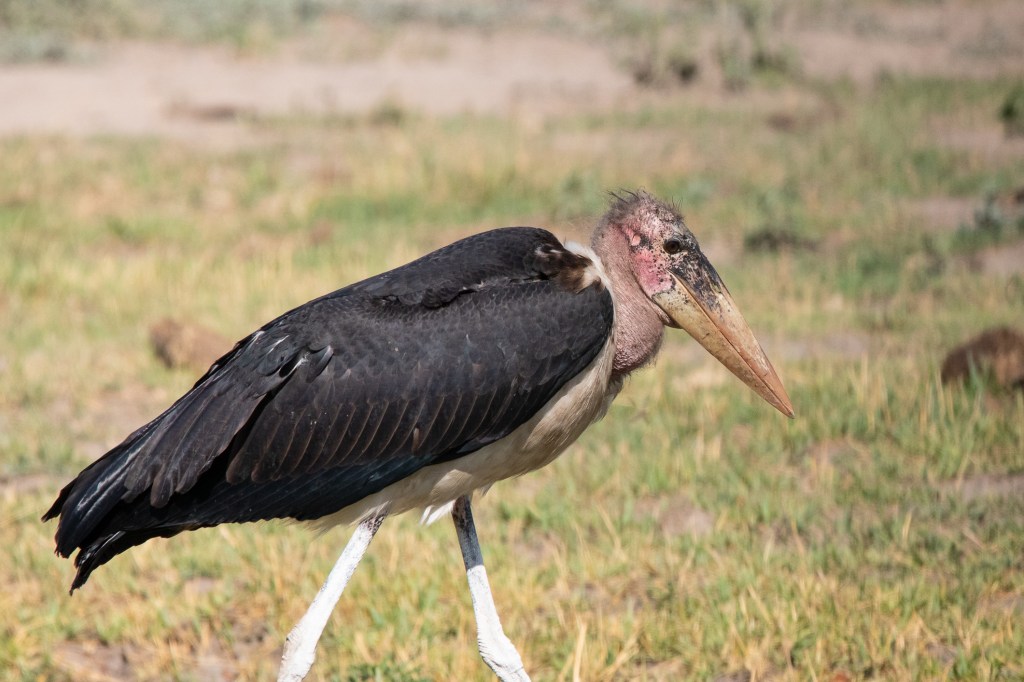
And the …… BEAST

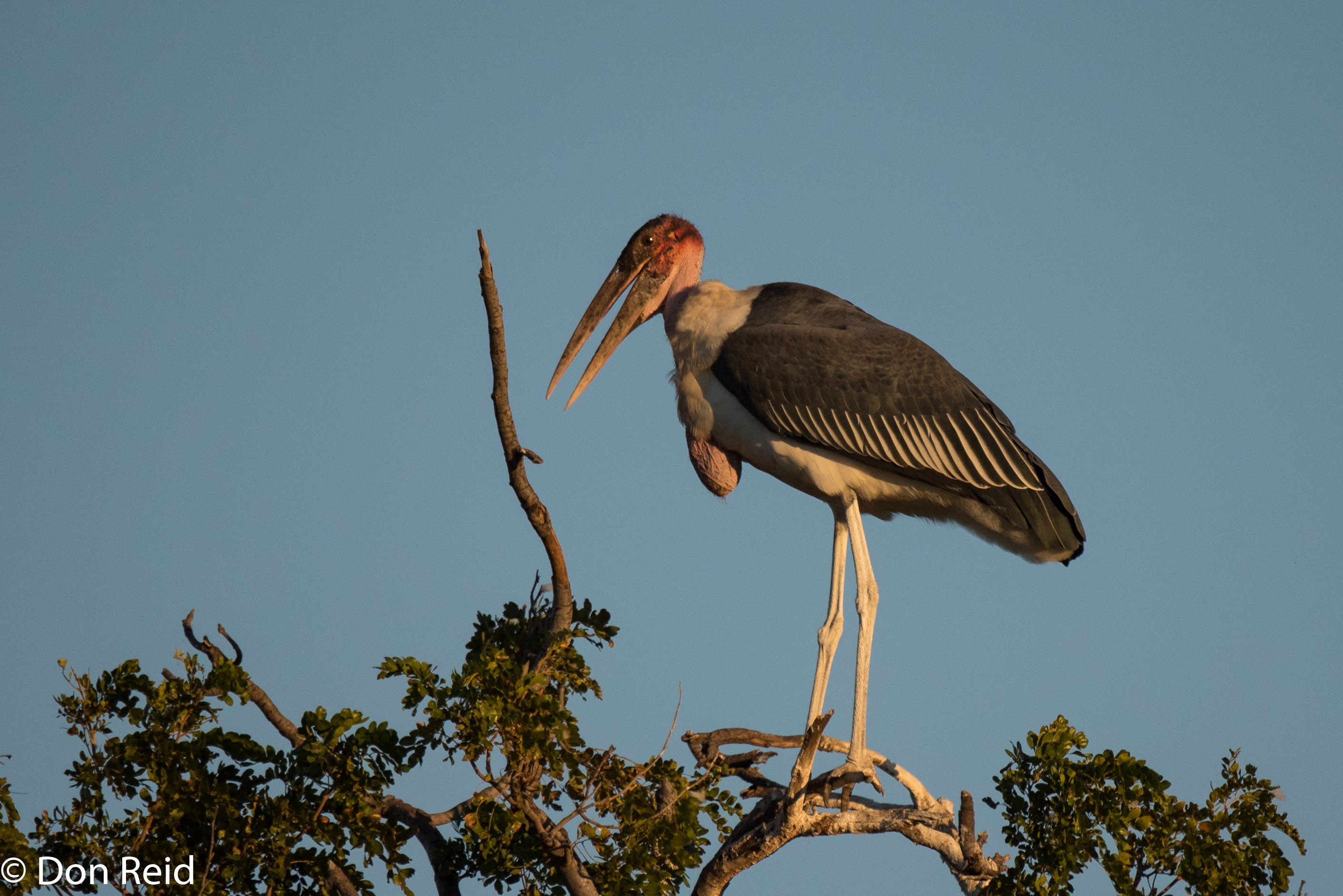
Marabou Stork, Chobe Riverfront game drive
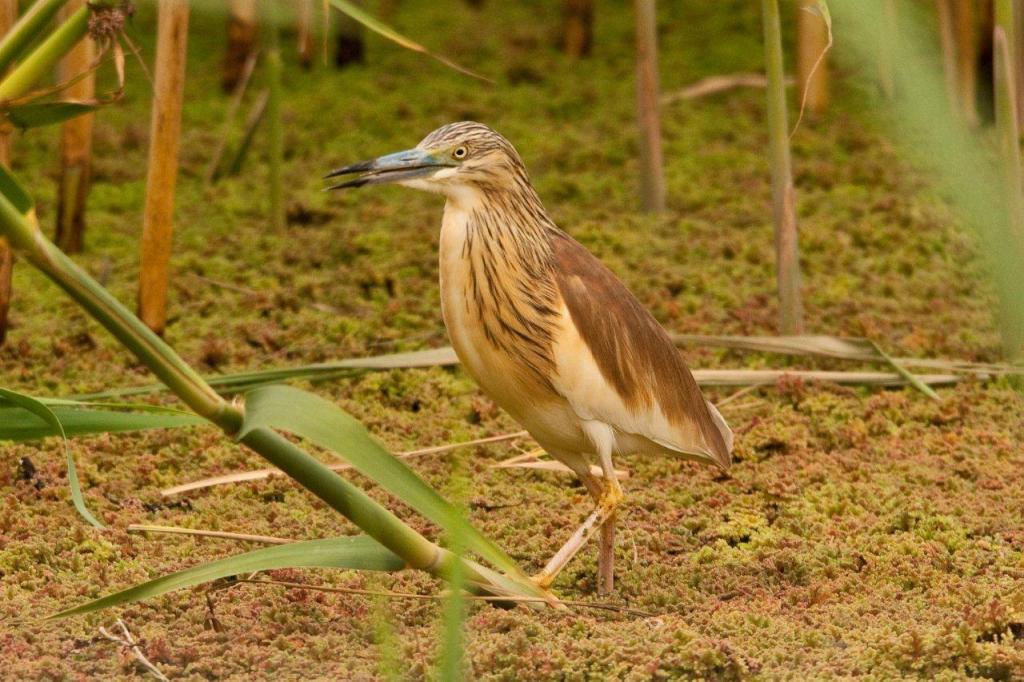
Squacco Heron (photo taken elsewhere)
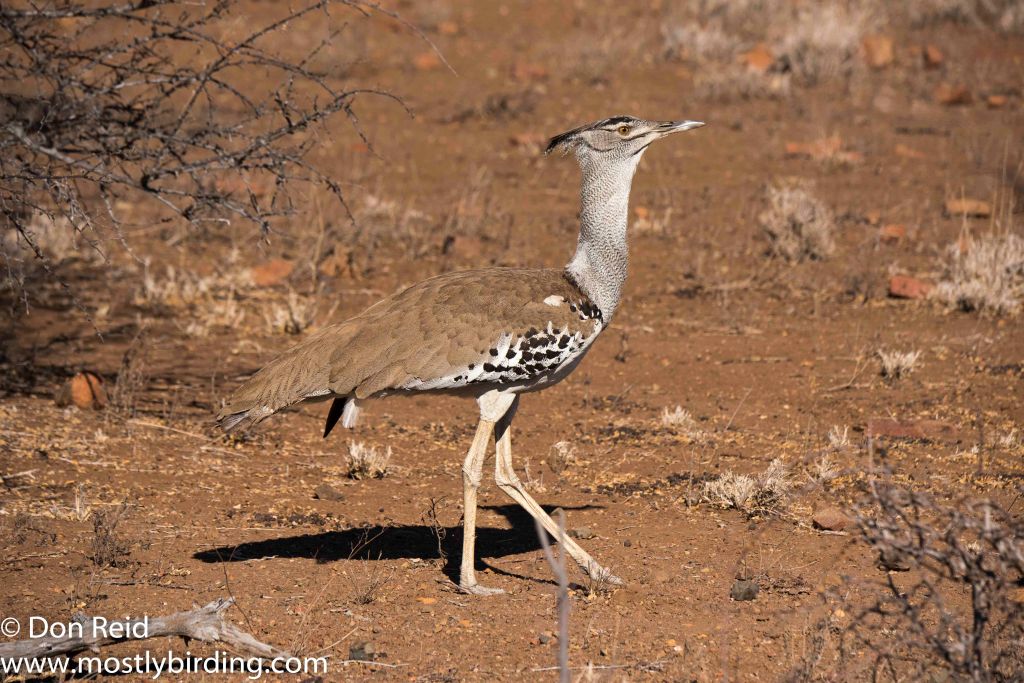
Kori Bustard, (photo taken in Kruger Park)
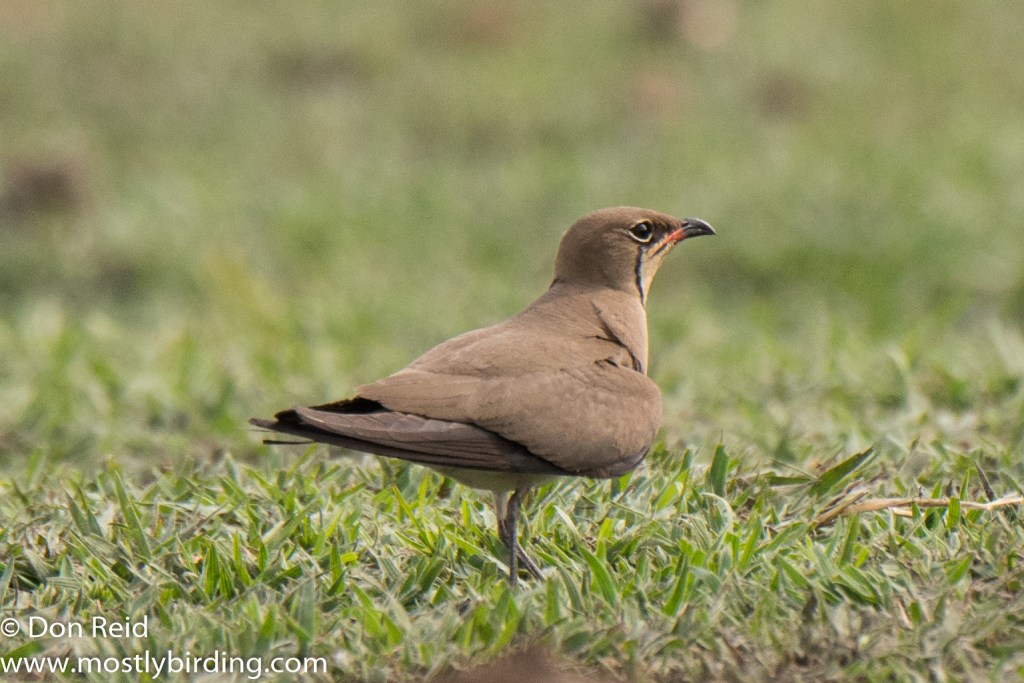
Collared Pratincole, Chobe River trip

And that’s the end of this tail … er tale
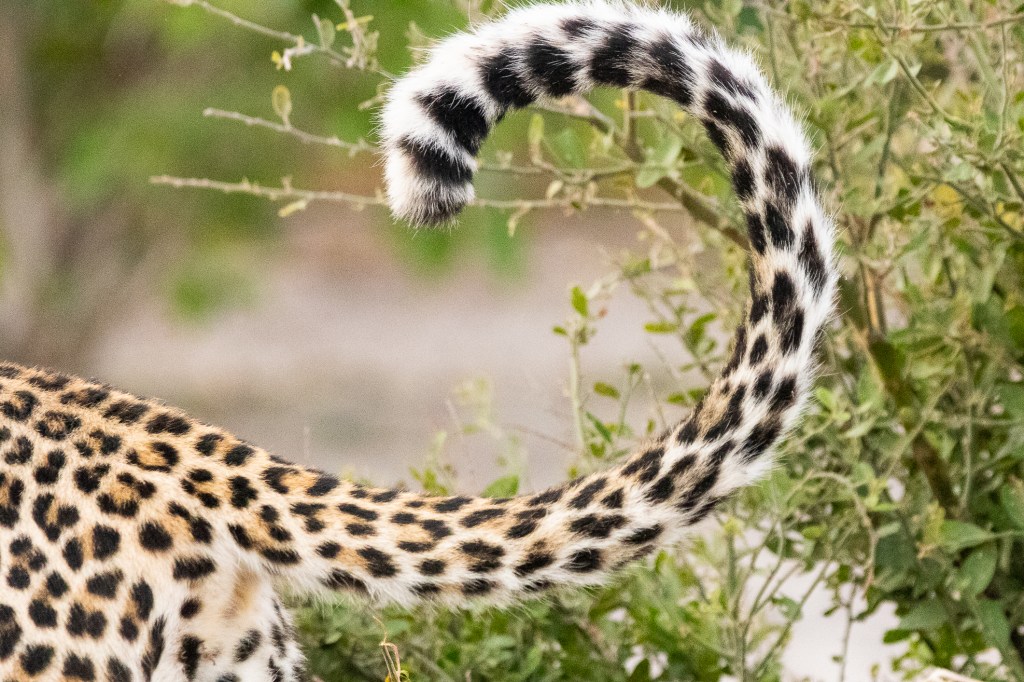
Time to go ……

 Leaving Chobe Game Reserve after the game drive on my last morning along the familiar sandy, bumpy track, through the Sedudu gate and out on to the tar road back to Kasane, it momentarily struck me that this was possibly the last time I would see this place and an almost tangible sadness washed over me for a few seconds, only to be replaced with the happy thought of all the memories I had gathered over more than 3 years. Maybe one day I’ll return …..

 

Kasane Botswana – Birding Spots in and around town

Kasane is a small town in northern Botswana, close to the Sududo Gate into Chobe National Park.

I would guess that most birders passing through Kasane are on their way from or to Chobe Game Reserve or further afield to Namibia, Zimbabwe and Zambia, the borders of which are all in close proximity.

As you drive around the town and the surrounding area, you realize that this is very much “Wild Africa”, a feeling which is reinforced by the signs on the main road past town that declare it a wildlife corridor. It is not unusual to encounter, as we did, Elephant, Wild Dogs, Hyena and Buffalo close to Kasane as we were on our way for a drive through the Riverfront section of Chobe (covered in my earlier blog) and before getting to the entrance gate!

The project in Kasane that I am involved in requires monthly visits to this small but interesting town and in the process I have discovered a few birding spots, with the assistance of my colleagues who know the town better, that are easy to visit for an hour or two in between other commitments.

I try to visit one of the birding spots during every visit and have built up a very basic knowledge of what to expect – the following notes are based on my limited knowledge and are not meant to be comprehensive, but can hopefully provide a starting point for the birder spending time in this special corner of Botswana.

Kasane Water Treatment Works

Location : On the eastern side of Kasane, off the intersection of the main road from town and the road to Zimbabwe

Description : The Treatment Works have the customary treatment ponds in a fenced off area – ask permission at the small office  just inside the gate if you want to walk around, but some of the ponds are visible from the tar road that runs alongside, so that you don’t necessarily have to enter the site. As always, the quality of birding varies with the level of the ponds.

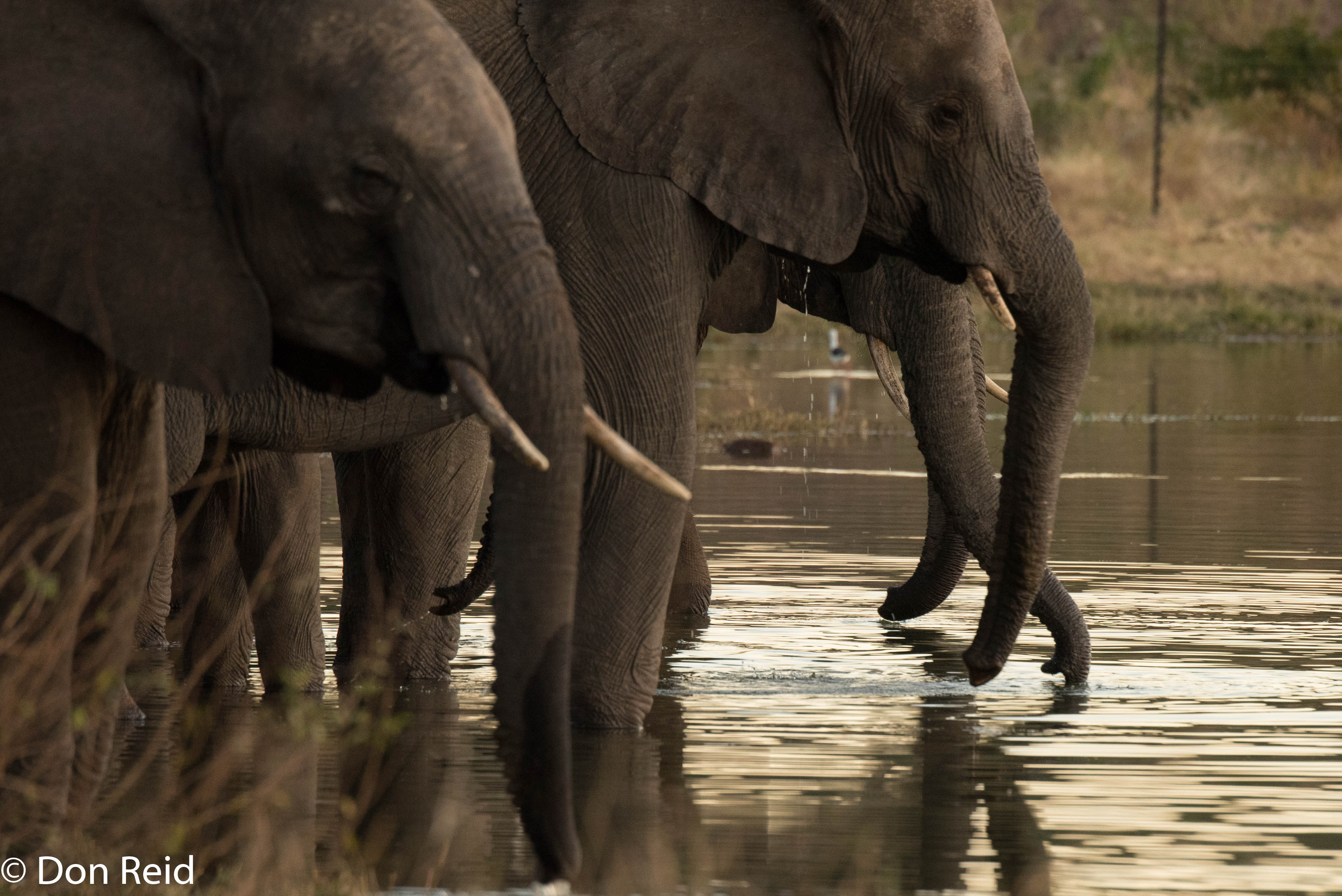
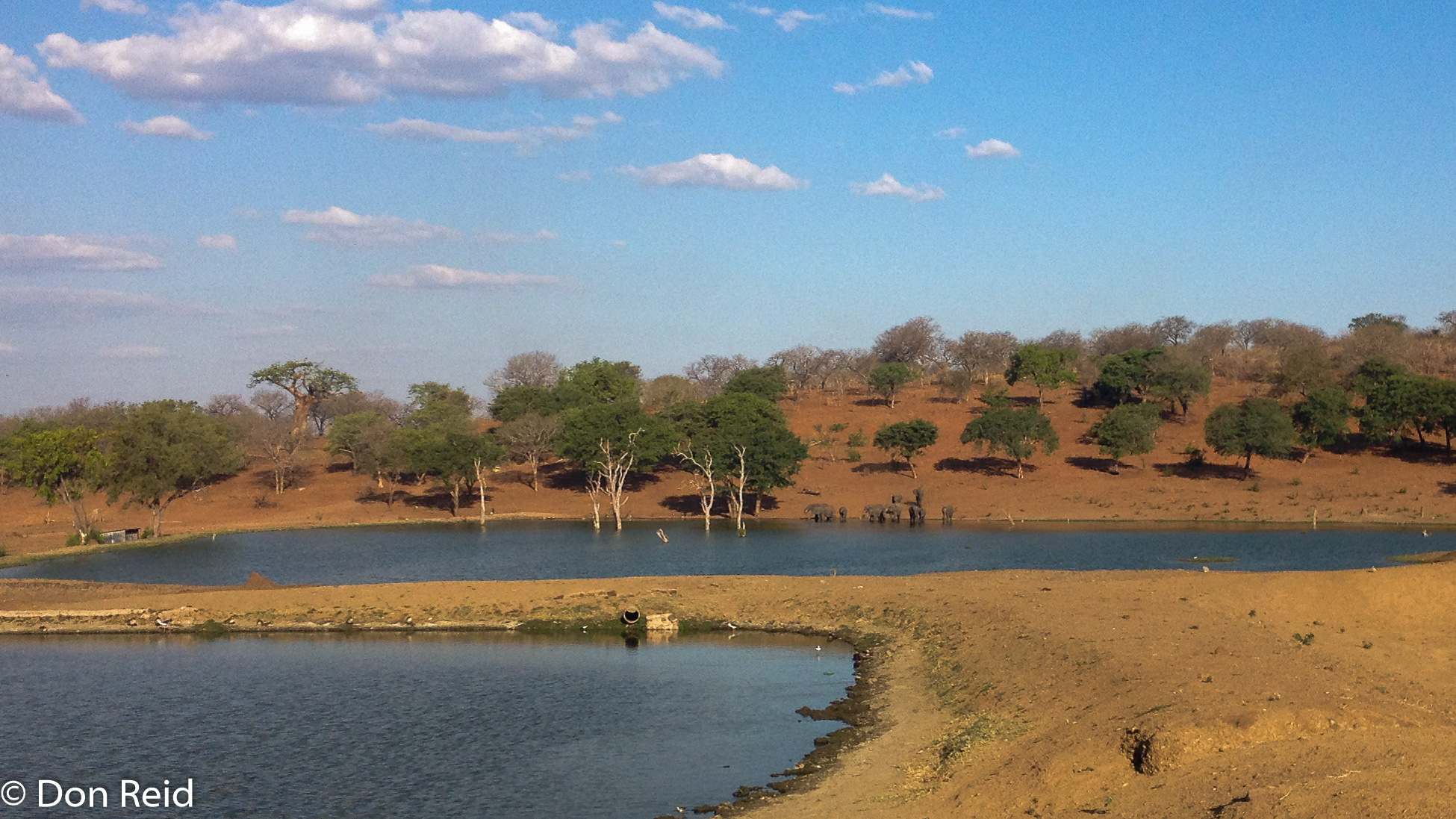
In addition there is a fair-sized dam alongside the works and being outside the fenced off area, you can approach it by taking the track that leads off to the left as you approach the Treatment Works. Do be aware however, that elephants use the dam as a watering spot so keep an eye out for them.

Kasane water treatment works - elephants drinking in the distance!
Dam at Kasane water treatment works – elephants drinking in the distance!

Elephants drinking, Kasane Water Treatment
Elephants drinking, Kasane Water Treatment works dam

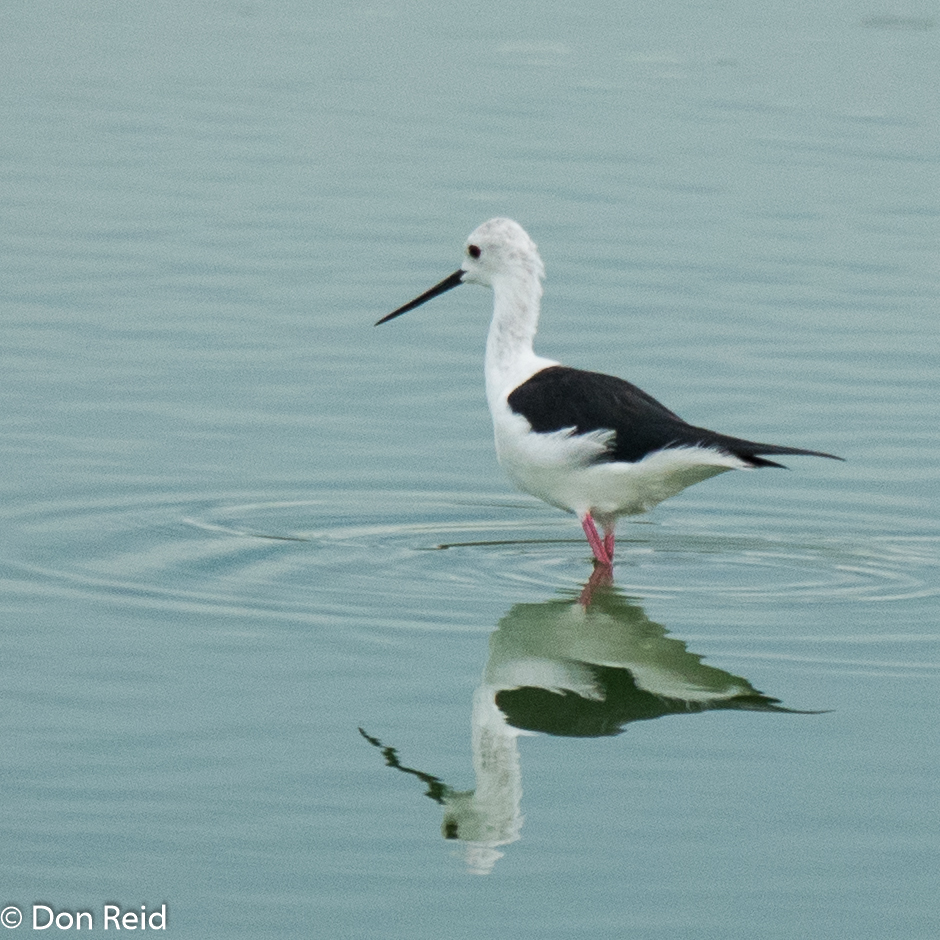
Bird life : Many water birds are attracted by the ponds and adjoining dam – all the usual ones such as Cormorants, Herons, Egrets and Ducks and depending on the time of year and water levels you can expect numbers of waders including African Jacana, Ruff, Black-winged Stilts and Wood Sandpipers. Smaller waders such as Three-banded Plover, Kittlitz’s Plover and Little Stint are common here.

Black-winged Stilt, Kasane Water Treatment
Black-winged Stilt

Egyptian Goose, Kasane Water Treatment
Egyptian Goose

Marabou Stork, Kasane Water Treatment
Marabou Stork – they congregate in the trees around the Treatment works at dusk

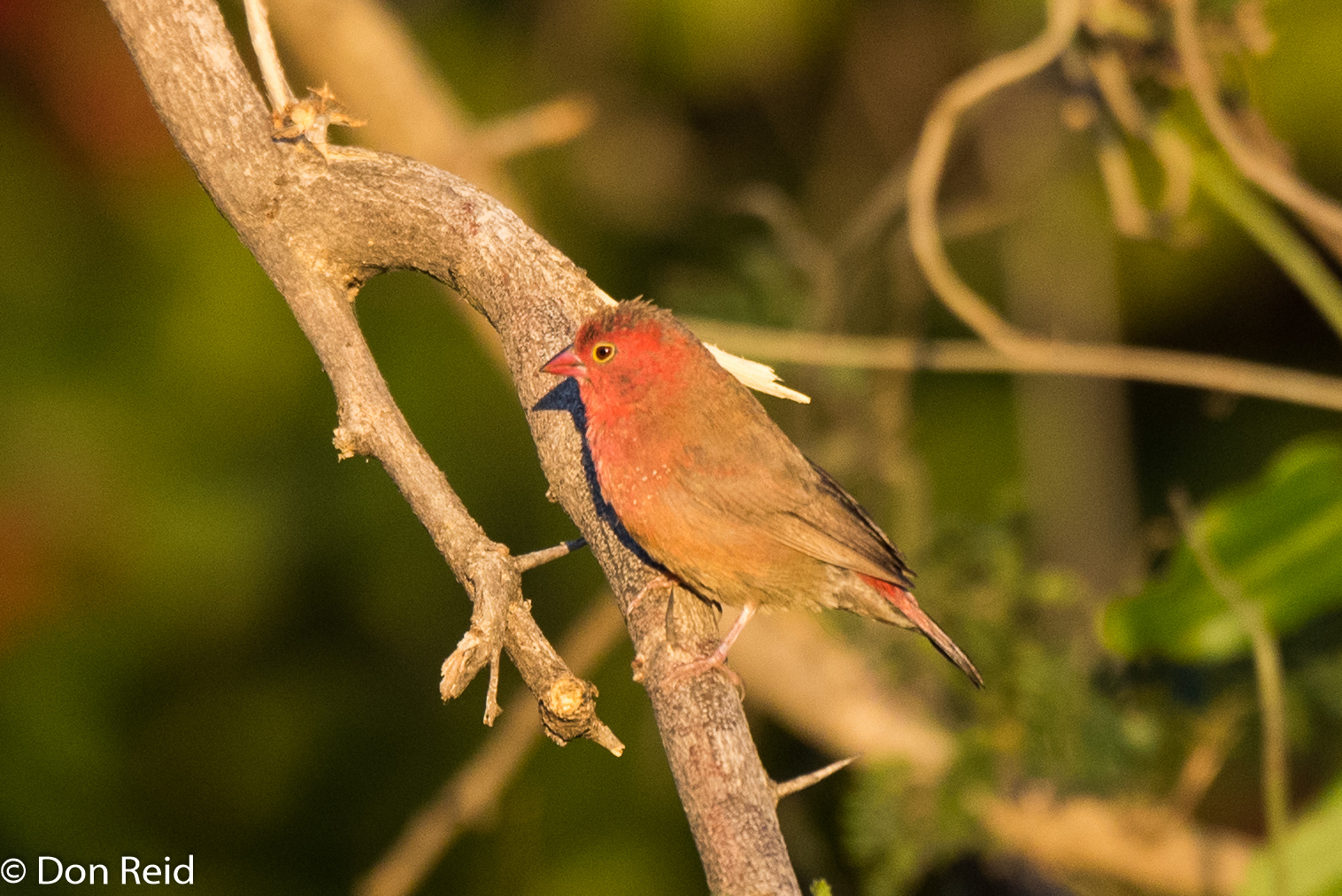
Red-billed Firefinch, Kasane Water Treatment
Red-billed Firefinch

Seboba Nature and Recreation Park

Location :This is a real gem which I covered in more detail in a separate post – suffice to say it is well worth a visit.

The small park lies along the river at the spot known as the Seboba rapids and has a nice mix of habitats and a variety of bird life.

I have covered this spot in a separate post : Kasane, Botswana –  Seboba Nature Park

Camping Site and Sundowner Spot

Location : Chobe Safari Lodge camping site on the outskirts of town on the western side

Description : The main attraction of this spot is the deck overlooking the Chobe river – treat yourself to one of the most spectacular African sunsets you are likely to see, as you enjoy a drink on the deck late afternoon. The channel in front of the deck gets quite crowded with boats in season, all loaded with tourists enjoying the sunset and its reflection, which transforms the Chobe waters into a deep red as you watch.

Sunset, Chobe Game Reserve
Sunset viewed from the deck at Chobe Safari Lodge camping area

Chobe Game Reserve

Bird life : while waiting for the sun to set and after it has disappeared beyond the horizon, listen for the bird life in the adjoining bushes which are favoured by the likes of White-browed Robin-Chat and Tropical Boubou, while the rank vegetation adjacent to the deck is home to Red-faced Cisticola whose ringing call is quite distinctive. There will more than likely be a Kingfisher or two in the vicinity and the floodplain on the opposite banks of the river is often occupied by tens if not hundreds of birds – Cormorants, Ibises, Openbills and the like. At certain times African Skimmers may be around flying in their unique way close to the water.

Glossy Ibis, Chobe Game Reserve
Glossy Ibises making their way down river at dusk

Afrcan Skimmer, Chobe Game Reserve
Afrcan Skimmers at sunset

Thebe Safari Lodge

Location : Compared to some of the well-known lodges in Kasane, Thebe caters mostly for more economical tour groups and particularly the large safari trucks full of younger tourists wanting an adventurous trip through Southern Africa’s wilder spots.

I have stayed there a few times and found the rooms comfortable and clean and, importantly, not “over-the-top” expensive as some of the more upmarket lodges tend to be

Description : The lodge grounds boast a variety of trees and shrubs which attract many birds and are a delight for the birder who chooses to take an early morning or late afternoon walk.

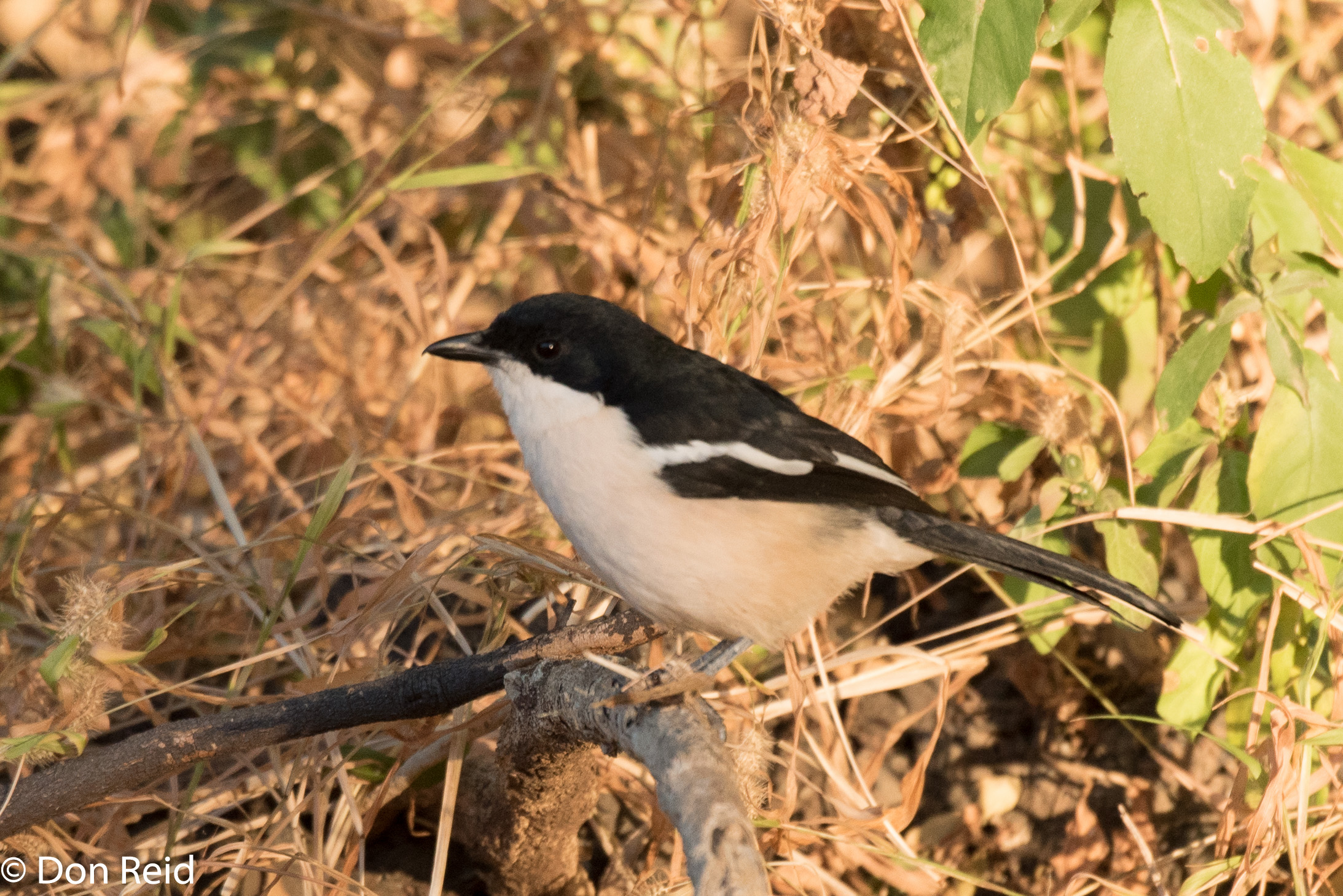
Bird Life : Birding around the grounds and gardens is excellent and best done by walking the property as thoroughly as time allows and covering all the habitats. Even before sunrise the bird calls will have you up and eager to get outside as the birds compete for “best call in garden”. Expect to hear and see Mourning Dove, Tropical Boubou, Orange-breasted Bush-Shrike, White-browed Robin and  Spectacled Weaver without too much trouble.

White-browed Robin-Chat, Thebe Safari Lodge

Tropical Boubou, Thebe Safari Lodge

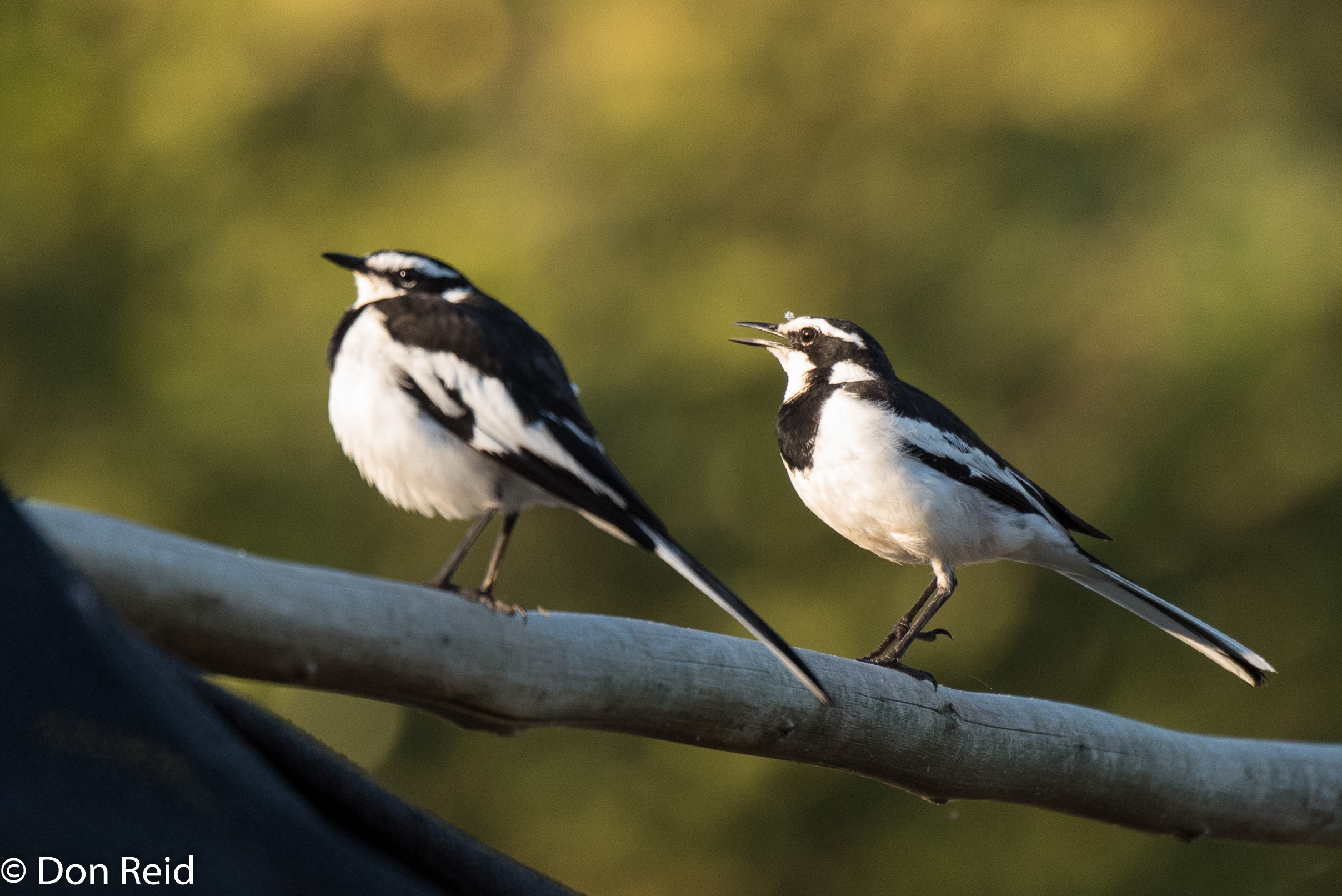
Bush lovers such as Yellow-bellied Greenbul, Grey-backed Camaroptera, Red-billed Firefinch and Blue Waxbill are not difficult to find, while closer to and over the river there is a chance for various water birds doing a fly past and perhaps an African Pied Wagtail …. or two.

Yellow-bellied Greenbul, Thebe Safari Lodge

African Pied Wagtail, Thebe Safari Lodge
African Pied Wagtail, Thebe Safari Lodge (could that be the female on the right I wonder?)

Senyati Safari Camp

Location : This spot is not as close to Kasane as the spots described above, nevertheless it is close enough (20Km) to make it an easy place to visit even if time is limited. Take the road from Kasane to Kazangulu, some 10 Km away, then turn off on the A33 towards Pandamatenga and look for the camp turn-off after about 7 Km. Best time for birding is probably late afternoon but if you use their accommodation (self-catering) you can spend more time there in the morning.

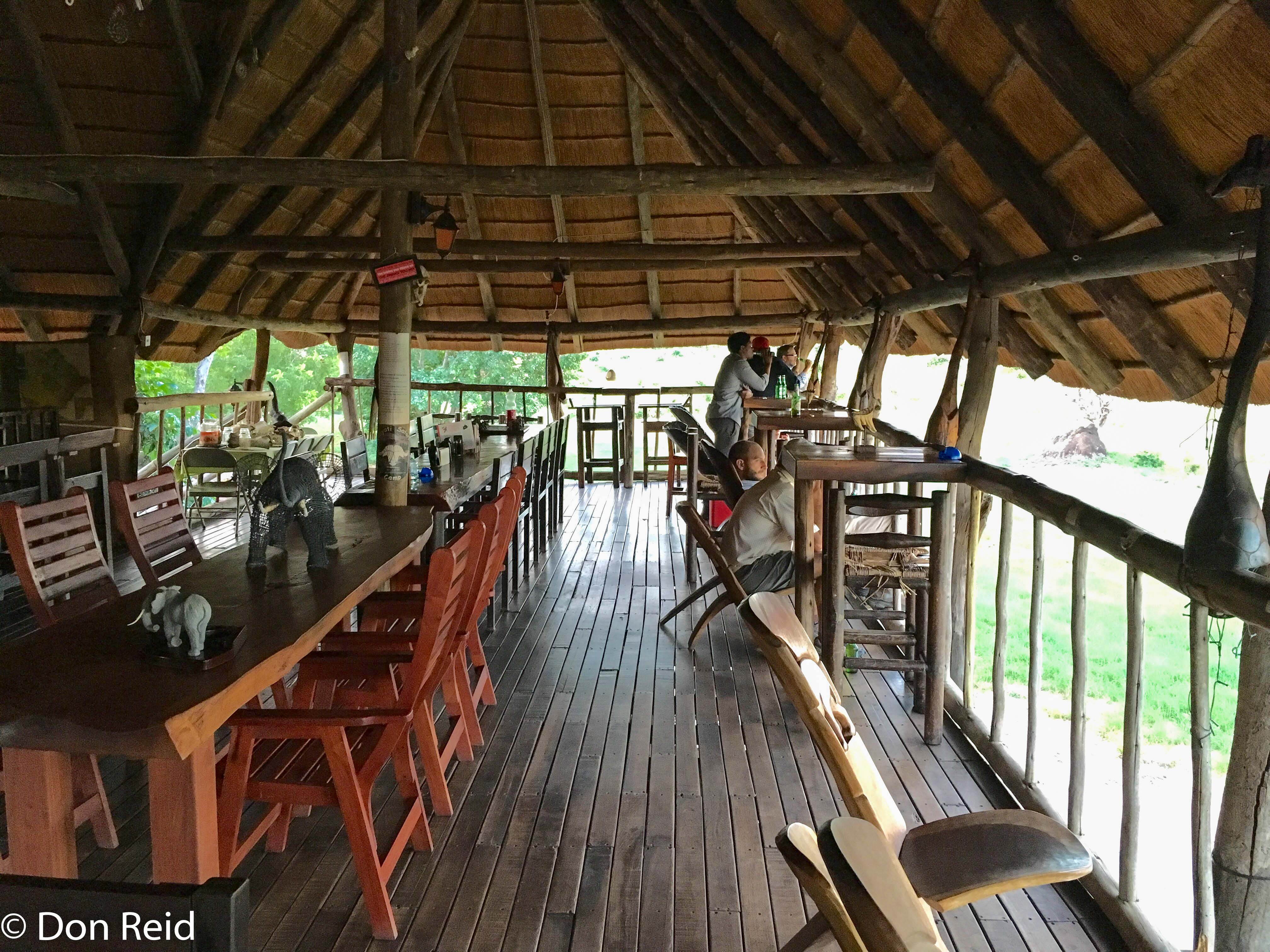
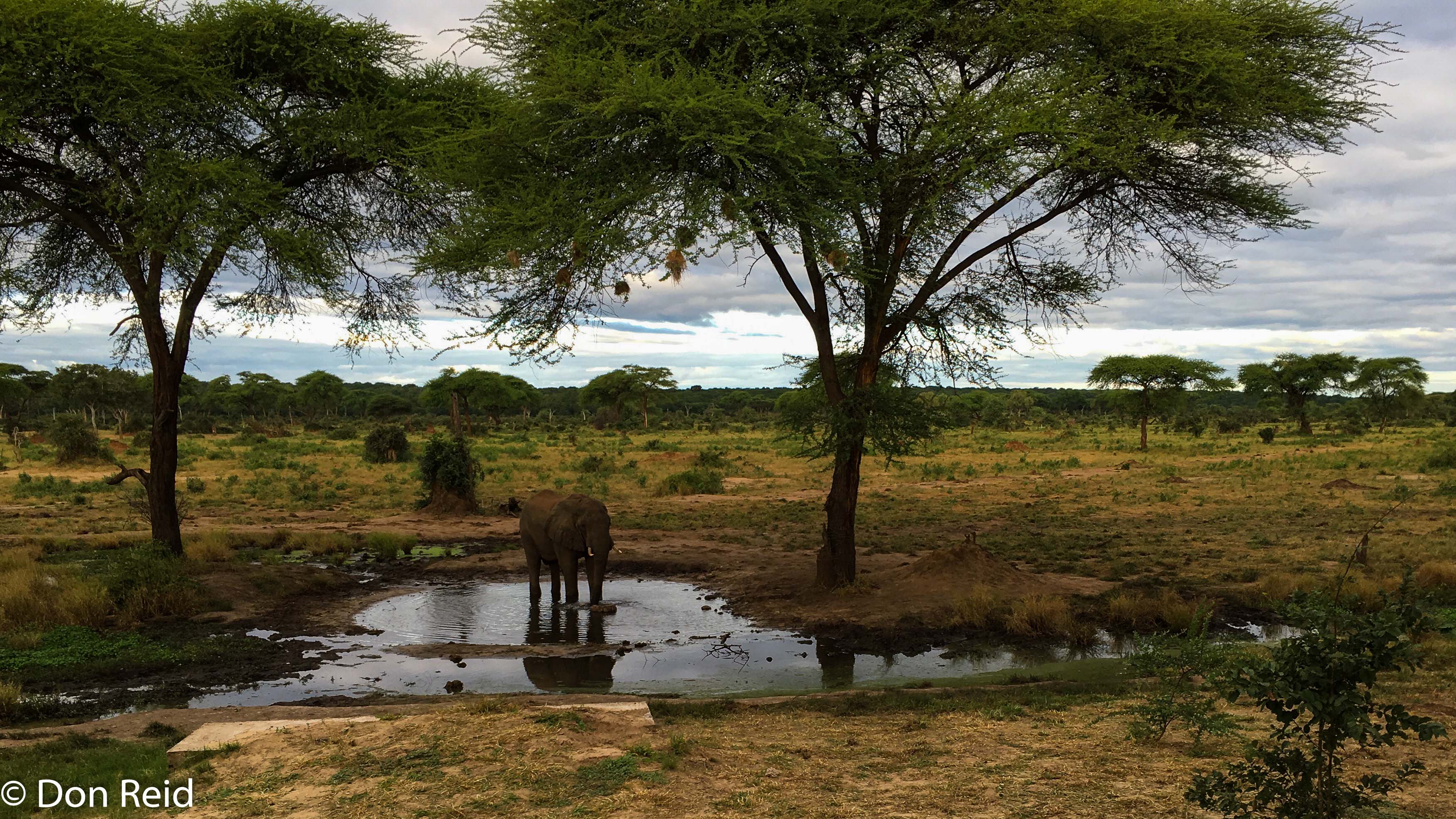
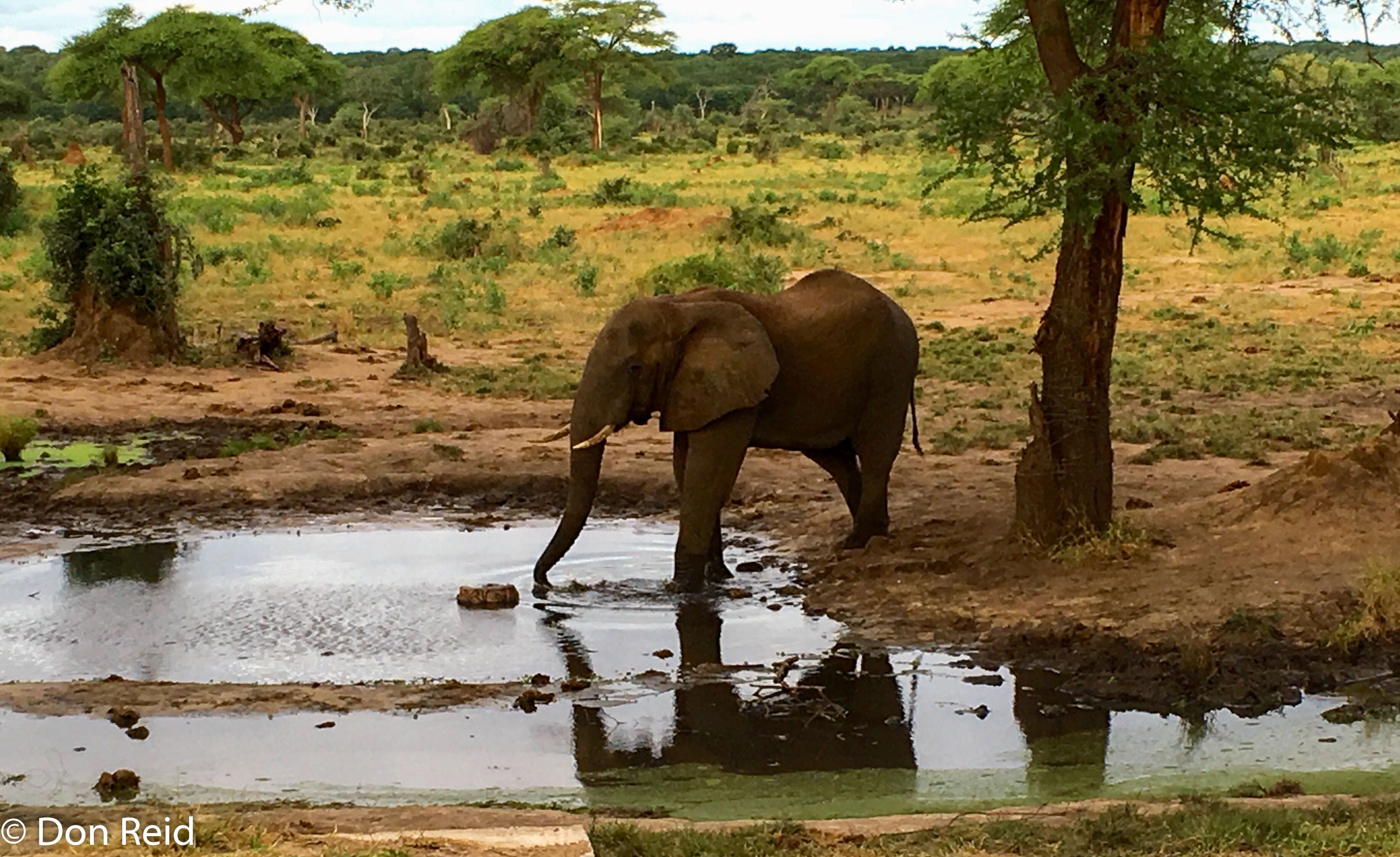
Description : The main feature is the deck with a cash bar and seating overlooking the plains in front of the camp, stretching to the distant Zambesi River, with the focus point being an artificial waterhole which is frequented during the day by a variety of game and, of course, birds.

Senyati camp
Senyati camp

Senyati camp
Senyati viewing deck

Senyati camp
View of the waterhole and plains

There is also an underground tunnel which you can walk along to a ground level hide right next to the waterhole – quite exciting if there are elephants present as you are literally metres away from them!

Senyati camp
View from the ground level hide

Senyati camp
Senyati camp – view from the deck

Bird Life : My one visit so far produced a good list of species in a short time, including Arrow-marked Babbler, Red-billed Hornbill, Wood Sandpiper, Grey-headed Bush-Shrike, Knob-billed (Comb) Duck and Red-billed Spurfowl. The potential for some excellent birding at this spot seems good. Unfortunately I had left my camera at the guest house so had to make do with non-digital memories other than the above taken with my pocket camera (which I also occasionally use to phone)