Tag Archives: Birding South Africa

The Magic of Voëlvlei (After the Rains)

Voëlvlei

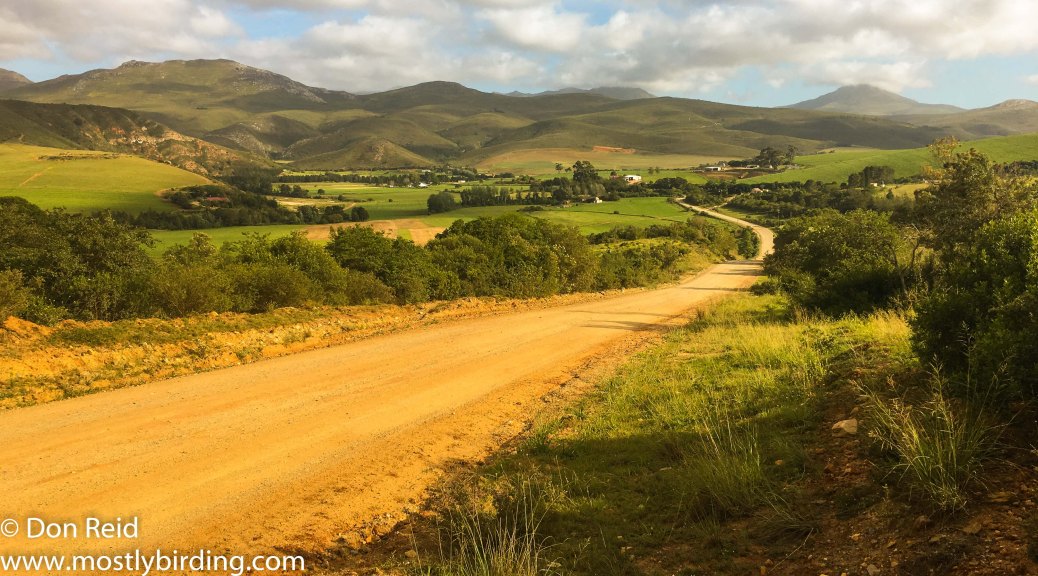
View of Voëlvlei after substantial rains (photo from whatsapp group)

Firstly, a few facts about this well-known birding spot near Mossel Bay – well-known if you are a birder that is, particularly one who has explored the birding delights of the southern Cape.

  • ‘Voëlvlei’ can be directly translated from Afrikaans as “Bird wetland (or pan)”, although no one would ever call it that in South Africa. ‘Voël’ is of course the Afrikaans term for ‘Bird’ and ‘Vlei’ is a widely used term for any shallow body of water such as a seasonal wetland, shallow pan or marshy depression where water collects during the wet season.
  • The pan at Voëlvlei only retains water during very wet years, which can be anything from 7 to 15 years apart, so when the vlei has water it very quickly becomes a magnet for waterbirds and waders, followed closely by many a keen birder out to find a variety of birds, with a strong possibility of a rare migrant wader or two during the summer months.
  • Voëlvlei lies about 35km south-west of Mossel Bay and is on privately owned farming ground – the owners have generously allowed access to the vlei for birders as long as they behave in a respectful way.
Voëlvlei straddles three pentads
  • A track skirts the vlei on one side with entry possible from two farm gates at the northern and southern extremes (after entering or exiting it is good form to close the gate again).

My Atlasing Visits to Voëlvlei

SABAP2 Records

The table above shows all my atlasing records since my first visit in December 2015 – green indicates that it was a “Full Protocol” card, which requires a minimum of two hours of intensive atlasing, the grey is for “Ad hoc” cards.

The good (or bad news depending on your inclination) is that I still have my journal records of all of the “green” cards, so join me as I return to those journals and select some of the highlights of the visits. You can, of course, skip the words and just look at the pictures, but I believe my readers are made of sterner stuff than that and are not afraid to plough through the verbiage.

14 and 18 December 2015

My first visit was 10 years ago, long before we moved permanently to Mossel Bay…

I had long read about the vlei as being a top birding spot when conditions were right. With reports trickling through of favourable water levels after good winter and early summer rains, I stopped at Voëlvlei on my way back from atlasing Gouritsmond, to find that it indeed had plenty of water and what appeared to be thousands of birds.

I did a quick list of some of the obvious birds, without going through the gate into the vlei area itself. A few days later Gerda joined me for a late afternoon visit to the vlei, when we entered Voëlvlei proper and followed the track around the east flank, then returned along the same route. The atlasing protocol allows a maximum of five days for one ‘card’ so I could add to the short list I had started on the 14th.

Birding was excellent and plentiful, the only downside being the sun in the west which created a sharp glare, making it difficult to see the birds clearly. We added 36 species to the initial 10 taking the total to 46, including ..

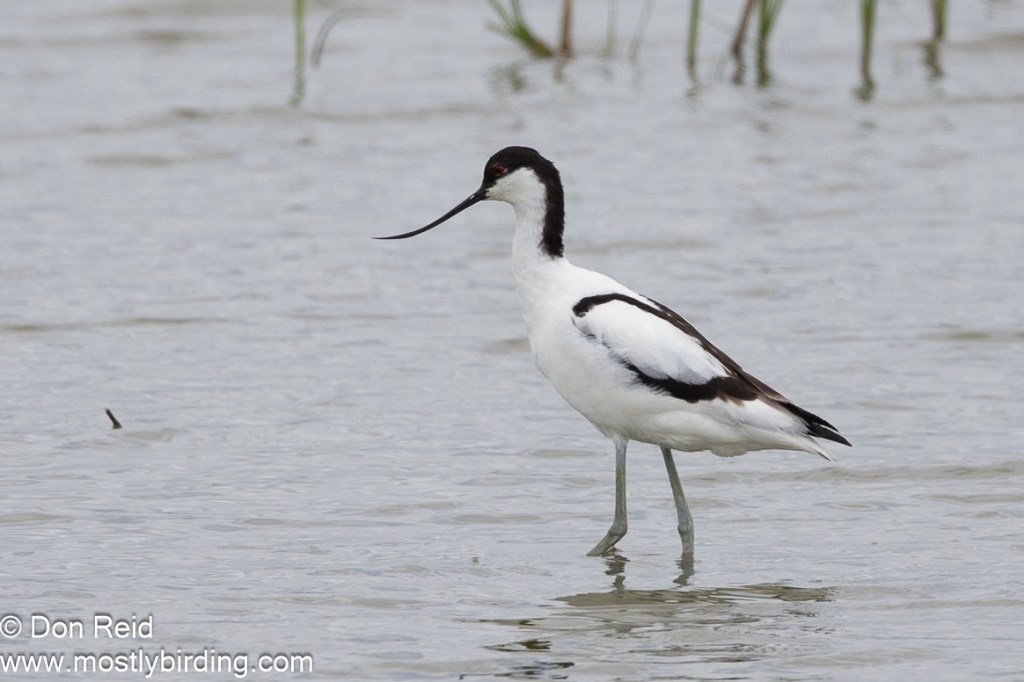
  • Pied Avocet – notable for being a ‘Year bird’ for me (Birders are such nerds)
Pied Avocet Recurvirostra avosetta Bontelsie, Voëlvlei
  • Hundreds of Whiskered Terns
Whiskered Tern Chlidonias hybrida Witbaardsterretjie, Voëlvlei
  • Waders such as Little Stint, Black-winged Stilt, Wood Sandpiper, Three-banded Plover, African Spoonbill and Greenshank
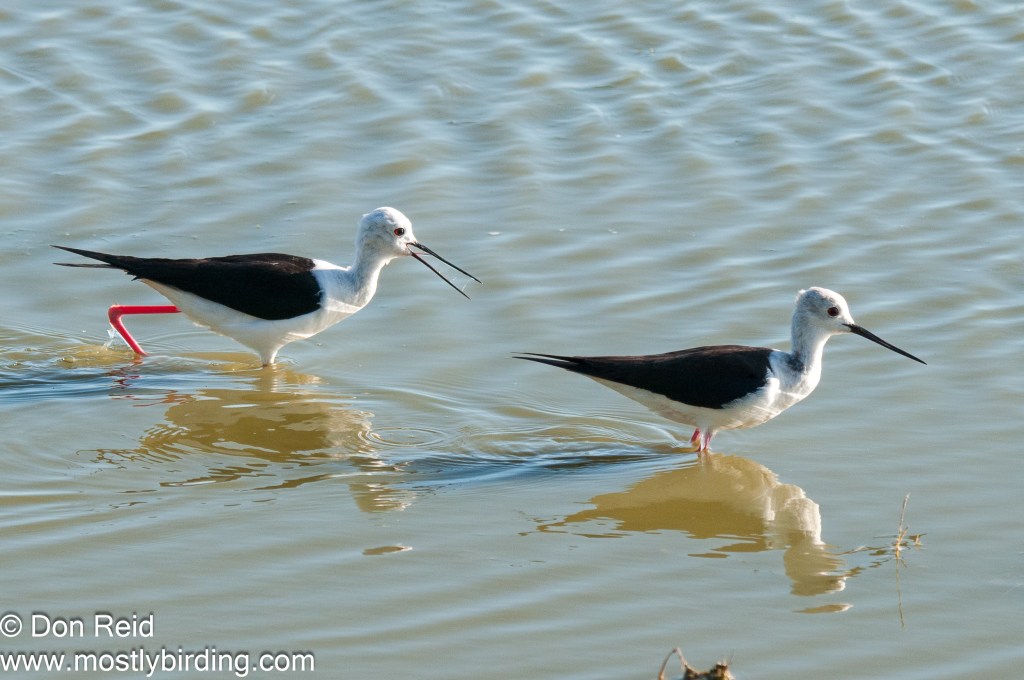
Black-winged Stilt Himantopus himantopus Rooipootelsie, Voëlvlei
Wood Sandpiper Tringa glareola Bosruiter, Voëlvlei
African Spoonbill Platelea alba Lepelaar, Voëlvlei
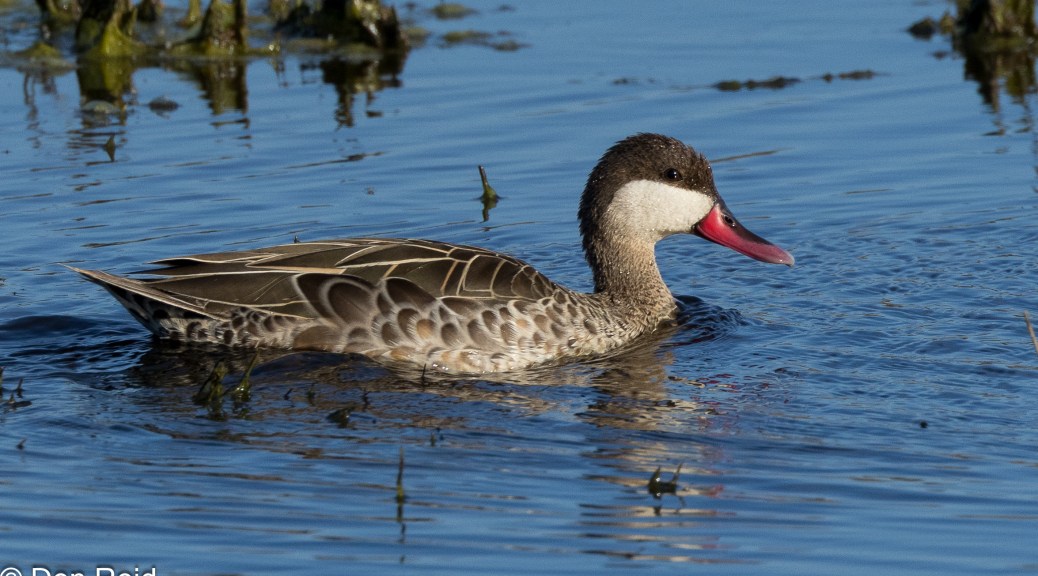
  • Swimmers – Yellow-billed Duck, Red-billed Teal, Cape Teal, Southern Pochard, Cape Shoveler and Great Crested Grebe
Southern Pochard (female) Netta erythrophthalma Bruineend, Voëlvlei
  • Booted Eagle soaring overhead
  • White Stork

This first visit was particularly memorable – little did I know it would be eight years before I would experience something similar at Voëlvlei…

I did atlas the pentad in the intervening years but did not include Voëlvlei itself as it had dried up completely

30th November and 2nd December 2023

Having moved to Mossel Bay in October 2023 and seeing the reports of increasing water and bird presence at Voëlvlei, I was keen to visit the spot and see for myself. Reports of rarities made it even more imperative so I set off on the last Thursday of November, the day in the week that I have tried to keep open for atlasing.

I started my pentad list along the road past Vleesbaai with a Black Harrier which I chased down the road to try and get level with it as it hunted low over the fields in true Harrier fashion, stopped quickly and rattled off a few shots – with limited success but lovely to see it in hunting mode.
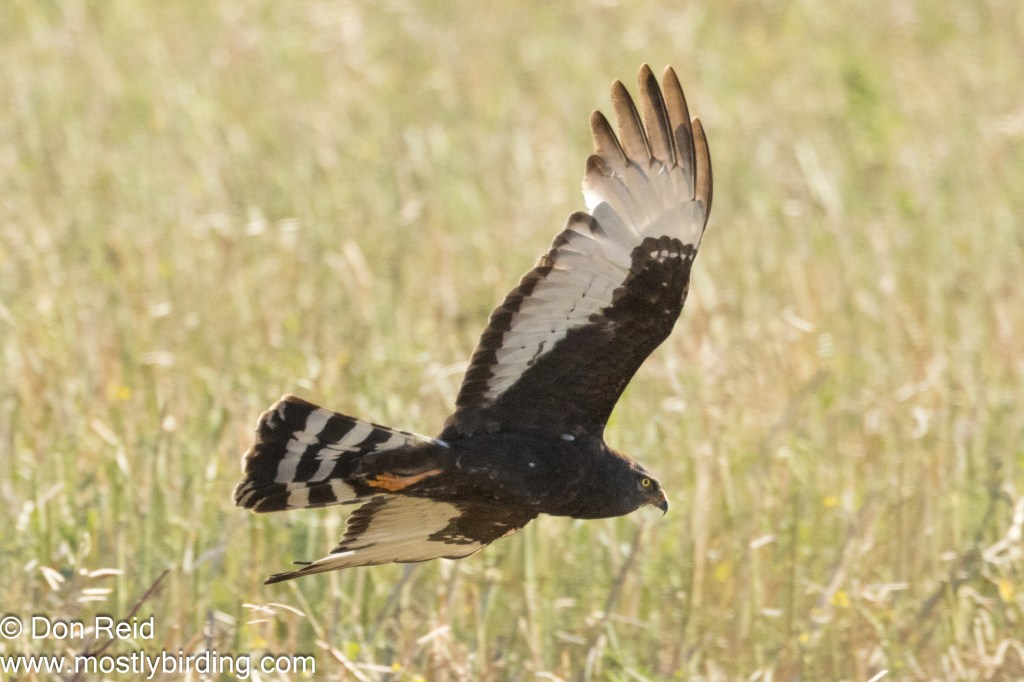
Black Harrier Circus maurus Witkruisvleivalk, Vleesbaai area

Further on I took the turnoff to Voëlvlei and after passing through the gate I spent the next three hours carefully scanning the vlei from the track along the east flank, particularly the muddy margins which were teeming with birds.

The open waters towards the middle of the vlei as well as the surrounding dry land were equally busy with their particular species all enjoying a cornucopia of edible life.

Once again the waterbirds dominated my list …

  • Waders – Black-winged Stilt, Three-banded, Kittlitz’s and Common Ringed Plovers, Little Stint (lots), Ruff, Wood Sandpiper, Grey Plover, Pied Avocet, Greenshank, Blacksmith Lapwing, Grey Heron, African Spoonbill and Little Egret
Three-banded Plover Charadrius tricollaris Driebandstrandkiewiet, Voëlvlei
Kittlitz’s Plover Charadrius pecuarius Geelborsstrandkiewiet, Voëlvlei
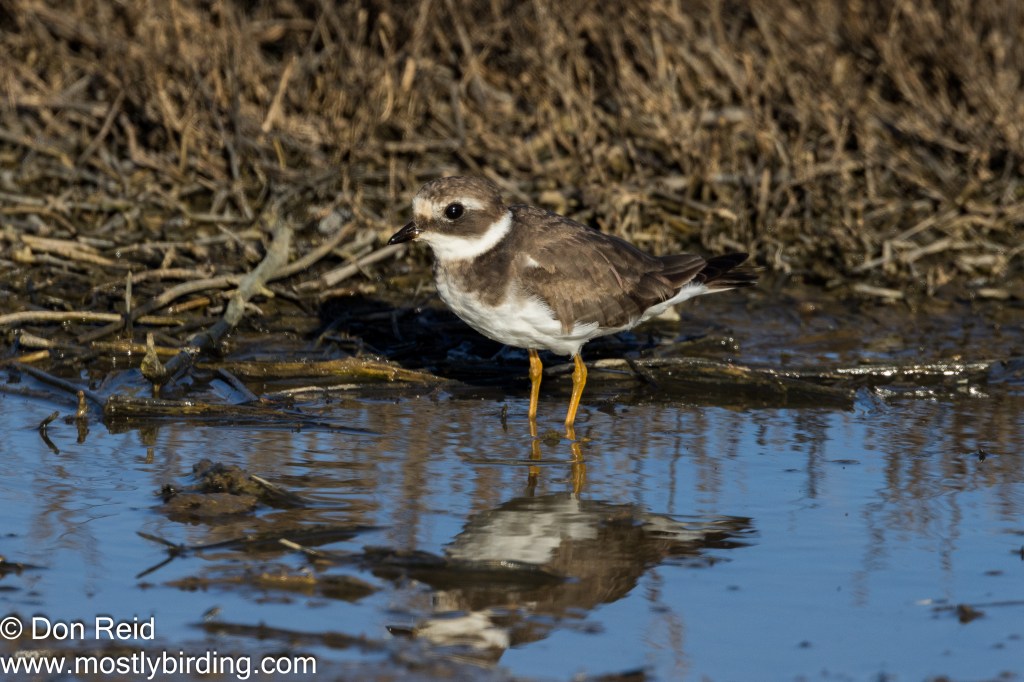
Common Ringed Plover Charadrius hiaticula Ringnekstrandkiewiet, Voëlvlei
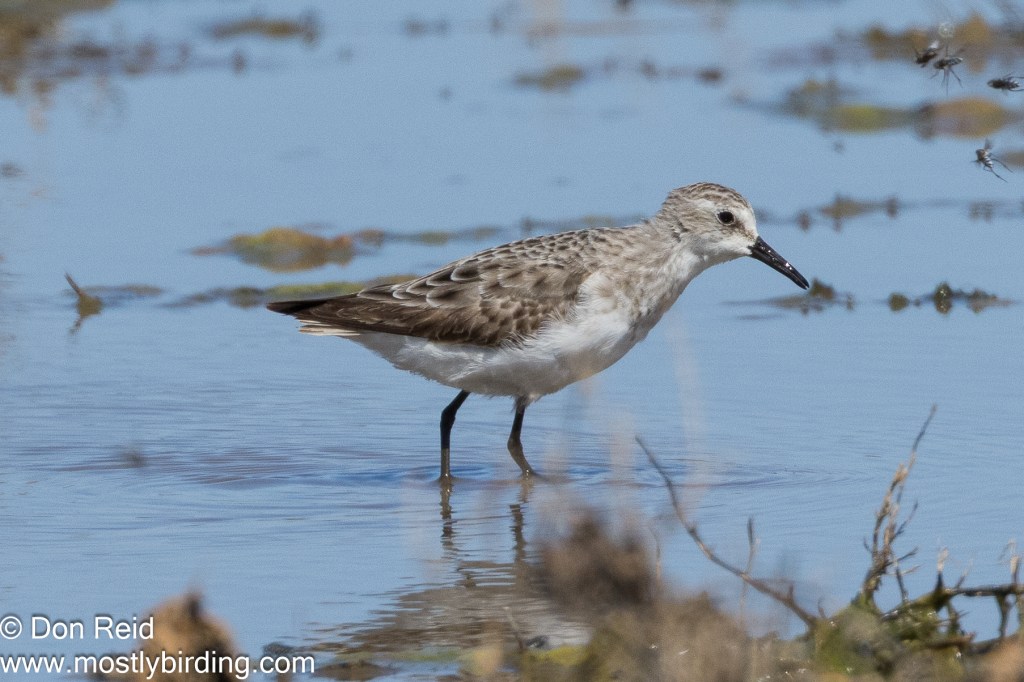
Little Stint Calidris minuta Kleinstrandloper, Voëlvlei
Ruff Philomachus pugnax Kemphaan, Voëlvlei
Grey Plover Pluvialis squatarola Grysstrandkiewiet, Voëlvlei
Pied Avocet Recurvirostra avosetta Bontelsie, Voëlvlei
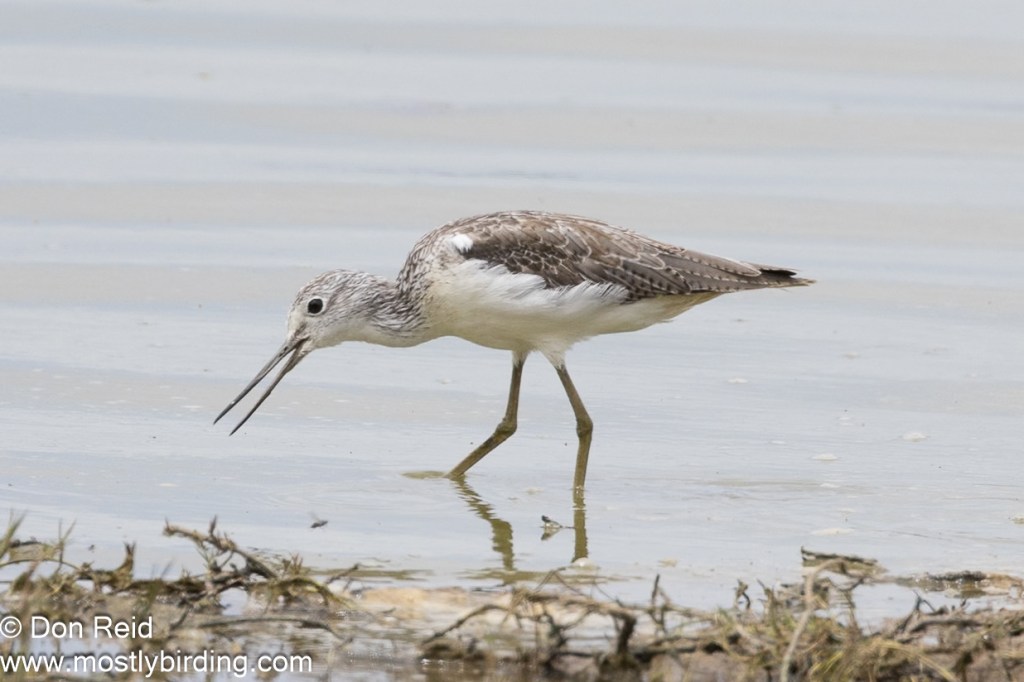
Common Greenshank Tringa nebularia Groenpootruiter, Voëlvlei
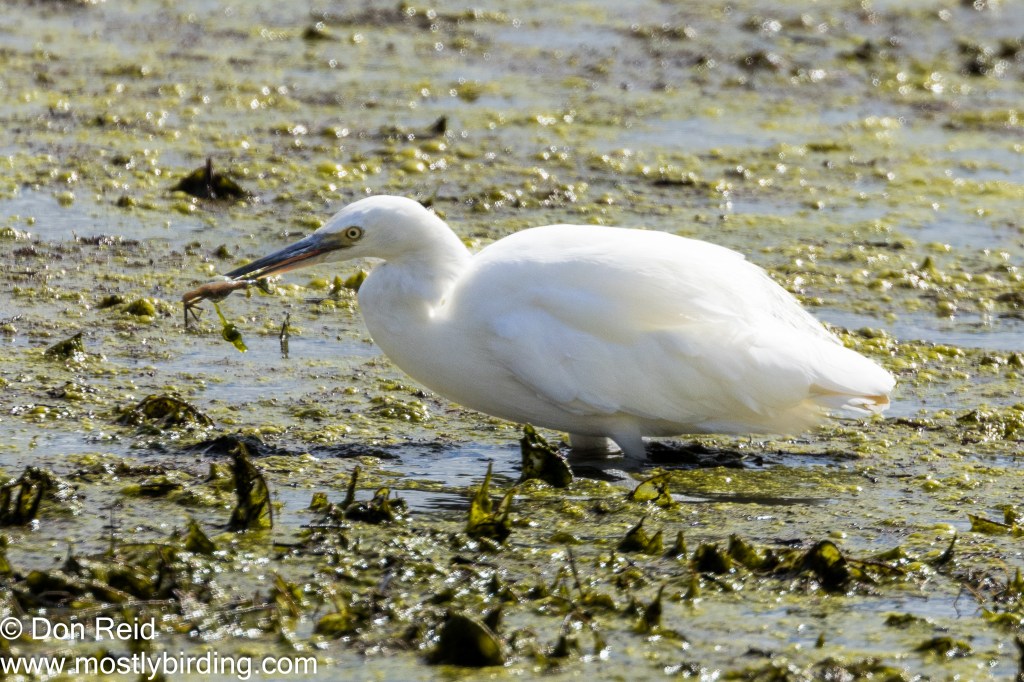
Little Egret Egretta garzetta Kleinwitreier, Voëlvlei
  • Swimmers – Red- billed Teal, Red-knobbed Coot, Grey-headed and Hartlaub’s Gull, Cape Shoveler, Little Grebe and South African Shelduck.
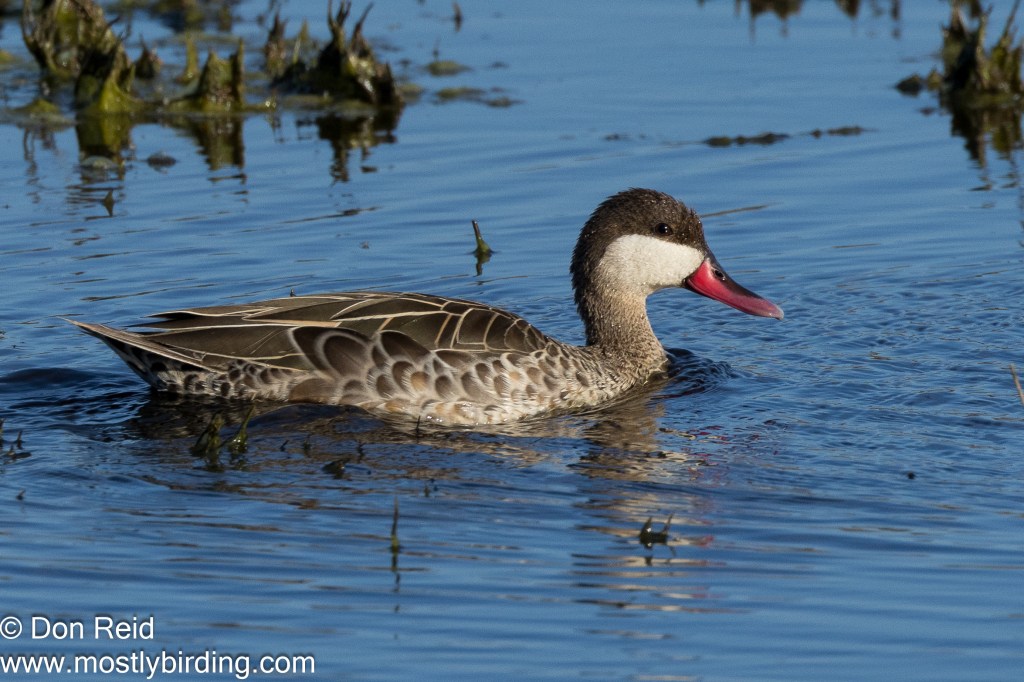
Red-billed Teal Anas erythrorhyncha Rooibekeend, Voëlvlei
Red-knobbed Coot Fulica cristata Bleshoender, Voëlvlei
Little Grebe Tachybaptus ruficollis Kleindobbertjie, Voëlvlei
  • Rarities – This visit was excellent preparation for the annual Birding Big Day just two days later when many of the same birds were recorded by our team. An added thrill was seeing two rarities which had been spotted by some of the keen birders already present –
  • White-rumped Sandpiper – a low-slung, longish-winged sandpiper, difficult to distinguish among the many small waders except when close to the many Little Stints present
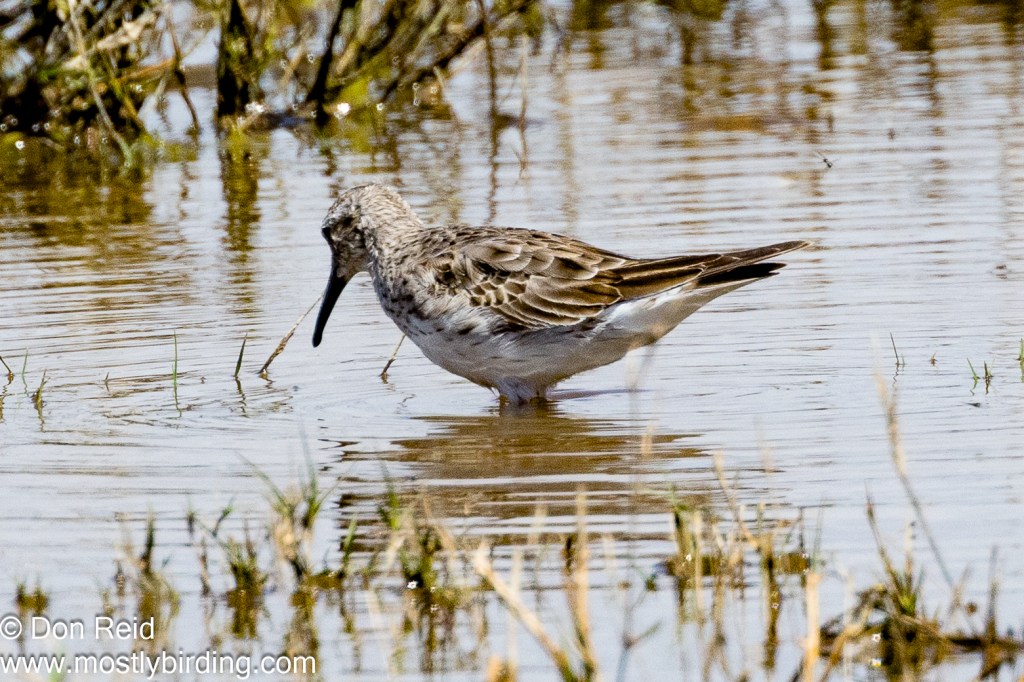
White-rumped Sandpiper Calidris fuscicollis Witrugstrandloper, Voëlvlei
  • Western Yellow Wagtail – courtesy of one of the other teams who had it in their scope view and allowed us a quick look but it was too far for photos

An added pleasure was seeing a large flock of Greater Flamingos on the far side of the water –

Greater Flamingos Phoenicopterus roseus Grootflamink, Voëlvlei

10th to 13th December 2023

With Voëlvlei still attracting a lot of attention from birders and with reports of another rarity – Buff-breasted Sandpiper – being seen there, I couldn’t resist another visit just a week later.

It was a Sunday and Gerda agreed to join me, so after a traditional Sunday lunch at a country restaurant on the way (meat and three veg with rice plus a pudding) for not much money, we headed to Voëlvlei and joined several vehicles and birders with the same idea.

The Buff-breasted Sandpiper was quickly pointed out by those already present – on its own foraging in the dry, lightly grassed area away from the water – clearly a loner not interested in mingling with the many other waders in the vlei itself.

I spent a while scoping the sandpiper and taking photos of it from a distance, while recording all the other species present as they came into view.

We headed home with 34 species recorded. Feeling that the list needed boosting, I decided to include Voëlvlei in my next atlasing session on the following Wednesday, which would fall in the allowed 5 days for a “Full Protocol” card.

I arrived at the vlei mid-morning and spent three more enjoyable hours viewing the multitude of birds, adding a further 16 species to take my total to a nice round 50 for the pentad.

The White- rumped Sandpiper was still present and I spent some time trying to get better photos of this rarity – with limited success. It was difficult to get close enough to the bird, which remained among short grass tufts in the shallows of the vlei, intermingling with other waders and probing the mud constantly so that it was nigh on impossible to isolate it for a decent photo.

  • Waders – Black-winged Stilt, Kittlitz’s and Common Ringed Plovers, Little Stint (lots), Ruff, Pied Avocet, Blacksmith Lapwing, Grey Heron, African Spoonbill, Little Egret, Cattle Egret, Glossy Ibis and Sacred Ibis
Kittlitz’s Plover Charadrius pecuarius Geelborsstrandkiewiet (Juvenile), Voëlvlei
  • Rarities – Buff-breasted Sandpiper, White-rumped Sandpiper
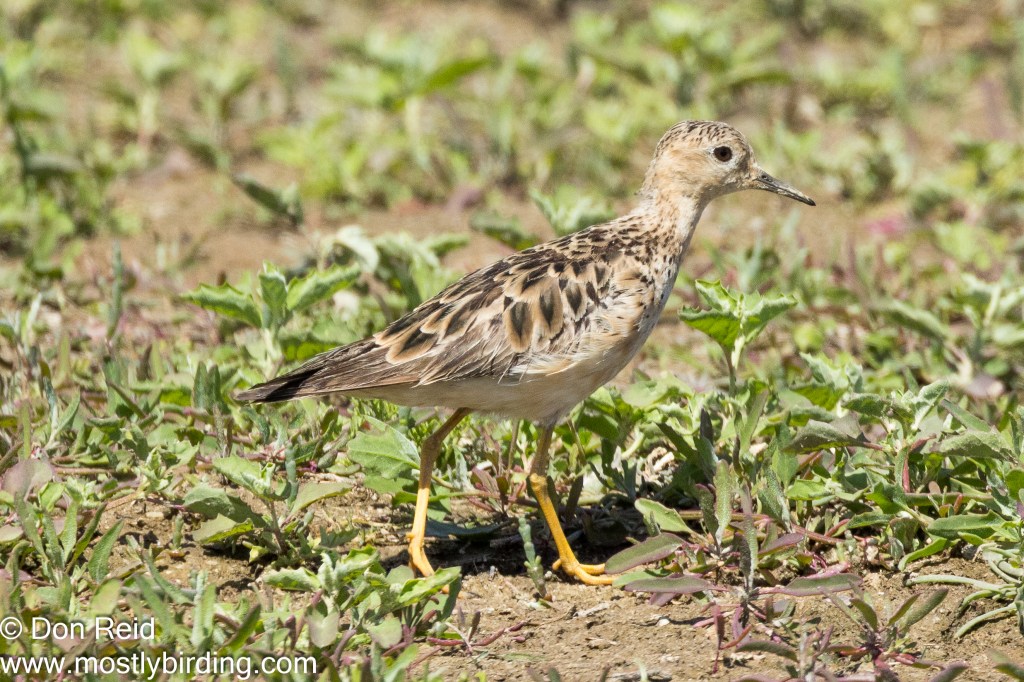
Buff-breasted Sandpiper Tryngites subruficollis Taanborsstrandloper, Voëlvlei
  • Swimmers – Red-knobbed Coot, Red-billed Teal, Cape Teal, Cape Shoveler, South African Shelduck
  • Others – Brown-throated Martin, Barn Swallow, Large-billed Lark, Red-capped Lark, Agulhas Long-billed Lark, Grey-backed Cisticola, Blue Crane, African Pipit, Capped Wheatear
Capped Wheatear Oenanthe pileata Hoëveldskaapwagter, Voëlvlei
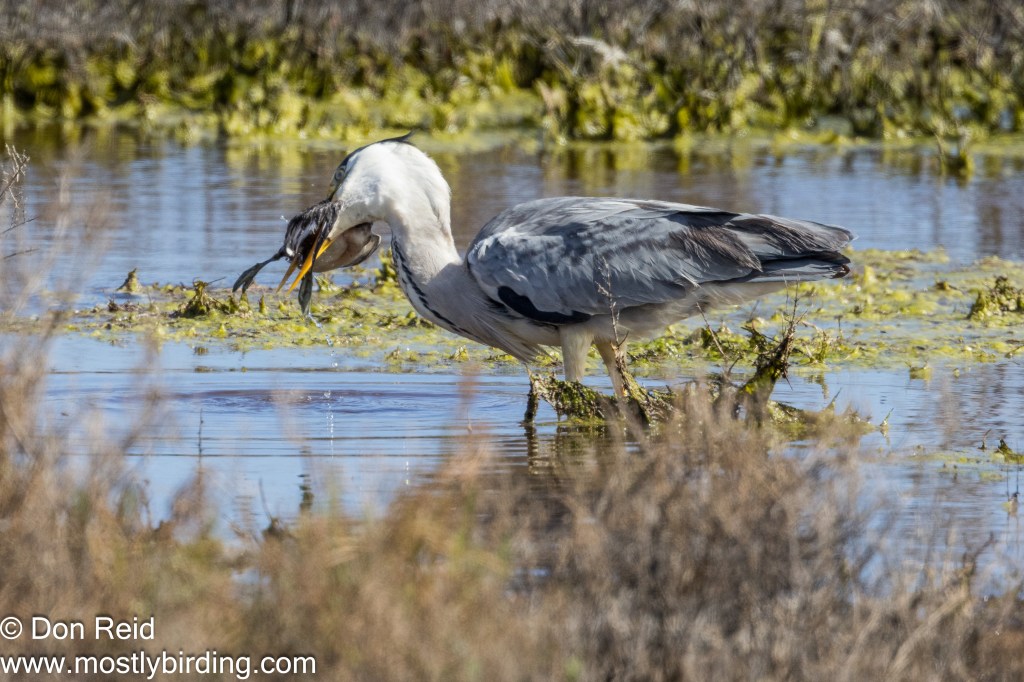
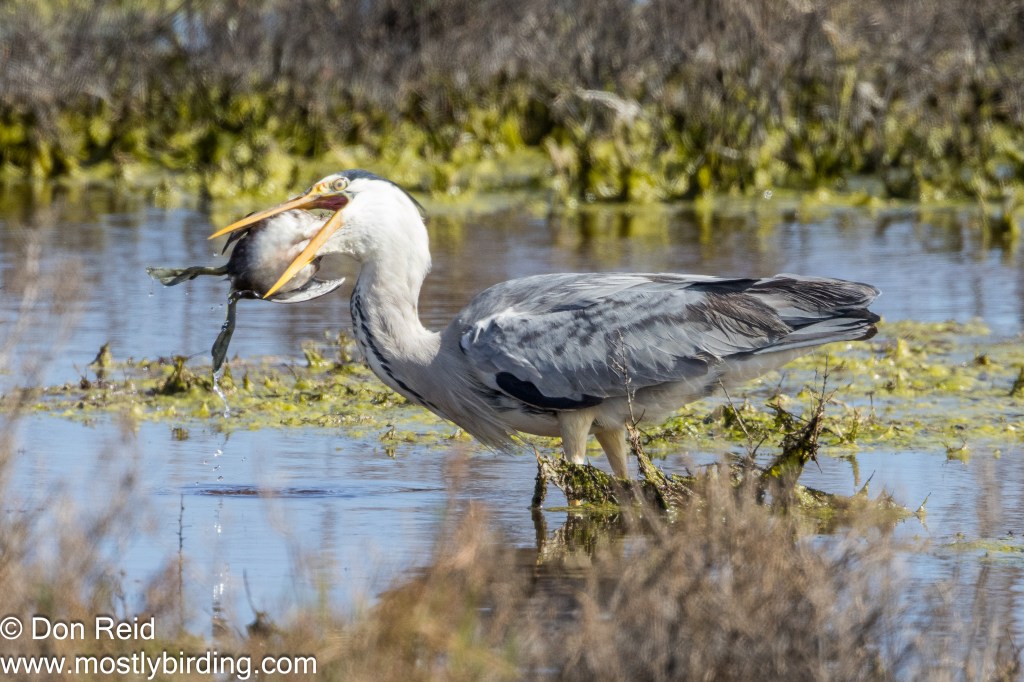
  • Most Surprising Sighting? – most certainly seeing a Grey Heron with what looked like a Reed Cormorant (possibly a juvenile) in its bill, which it proceeded to manoeuvre into position and swallow whole! I wasn’t able to capture the final swallow as the Heron moved behind some reeds.
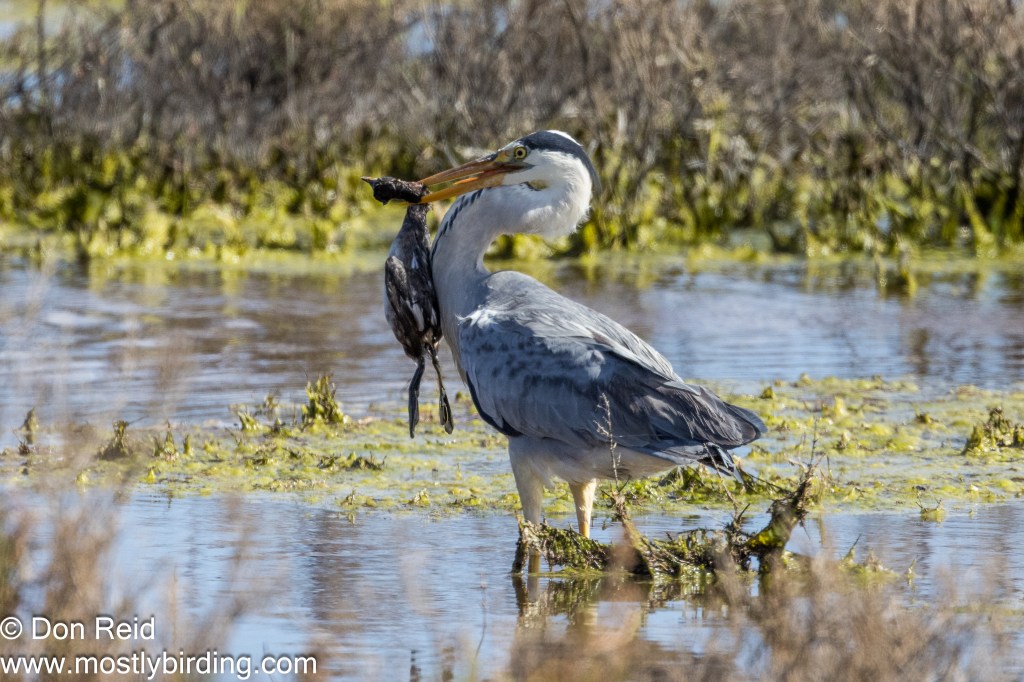
Grey Heron Ardea cinerea Bloureier, (with Reed Cormorant prey) Voëlvlei

February 2024

The vlei remained partly inundated during the most of 2024, with water levels gradually decreasing as inflow dried up.

During February reports appeared on the local birding groups of a Greater Sand Plover at Voëlvlei – I had seen this species before but just once, so at the end of my next atlasing trip I took a detour to the vlei to see if I could find it.

At Voëlvlei I was able to find and photograph the Greater Sand Plover without too much effort and to record numbers of other waders which were still plentiful.
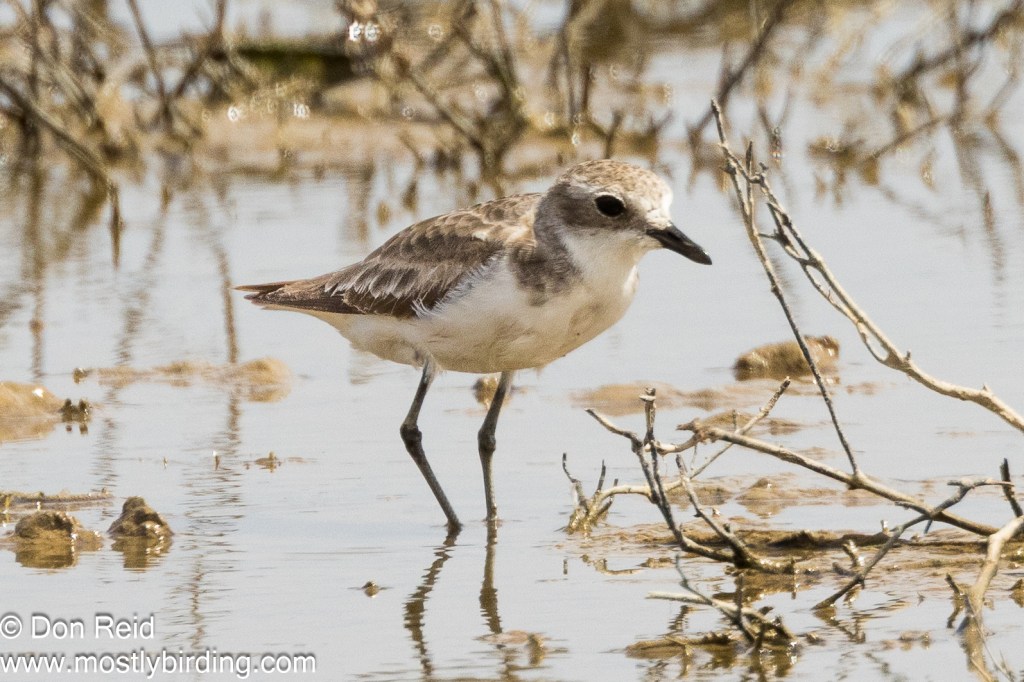
Greater Sand Plover Charadrius leschenaultii Grootstrandkiewiet, Voëlvlei

Thereafter the vlei gradually dried up, leaving ever wider margins. This did not come as a surprise for those living in the Southern Cape as it has been a particularly dry year for the area.

The photo below was taken in July this year, with just the northern section having any water – a couple of weeks after this photo the vlei was bone dry.

That just raises the question that is impossible to answer – when will Voëlvlei have water again? If average statistics are anything to go by it may be 7 or more years before that happens, a sobering thought at my age, I have to say, but I am thankful to have enjoyed two bountiful birding seasons during the last 10 years.
My Photo Pick for 2024 – the Birds

This is the second part of my photo pick for 2024 – a selection of bird photos that appealed to me for various reasons, not just the quality of the photo but also for the memory it left with me. I hope you enjoy scrolling through them as much as I have enjoyed taking, editing and selecting them.

If you have already glanced at the ‘categories’ I have placed them under and are wondering how I arrived at these – well, I didn’t but I did ‘borrow’ them from Firefinch which is the excellent birding app produced by Faansie Peacock (his real name!) and his team.

Faansie has a way of making birding interesting and fun and the way he categorises bird species in his app is a good example of his practical approach.

Raptors

Seeing a raptor at the roadside is always exciting and a reason to stop and have a better look – most will fly off the moment you stop, so it requires a bit of stealth to keep the car moving slowly while approaching the target and to have the camera at the ready for the moment you come to a standstill

Long-crested Eagle Lophaetus occipitalis Langkuifarend, Kleinberg area
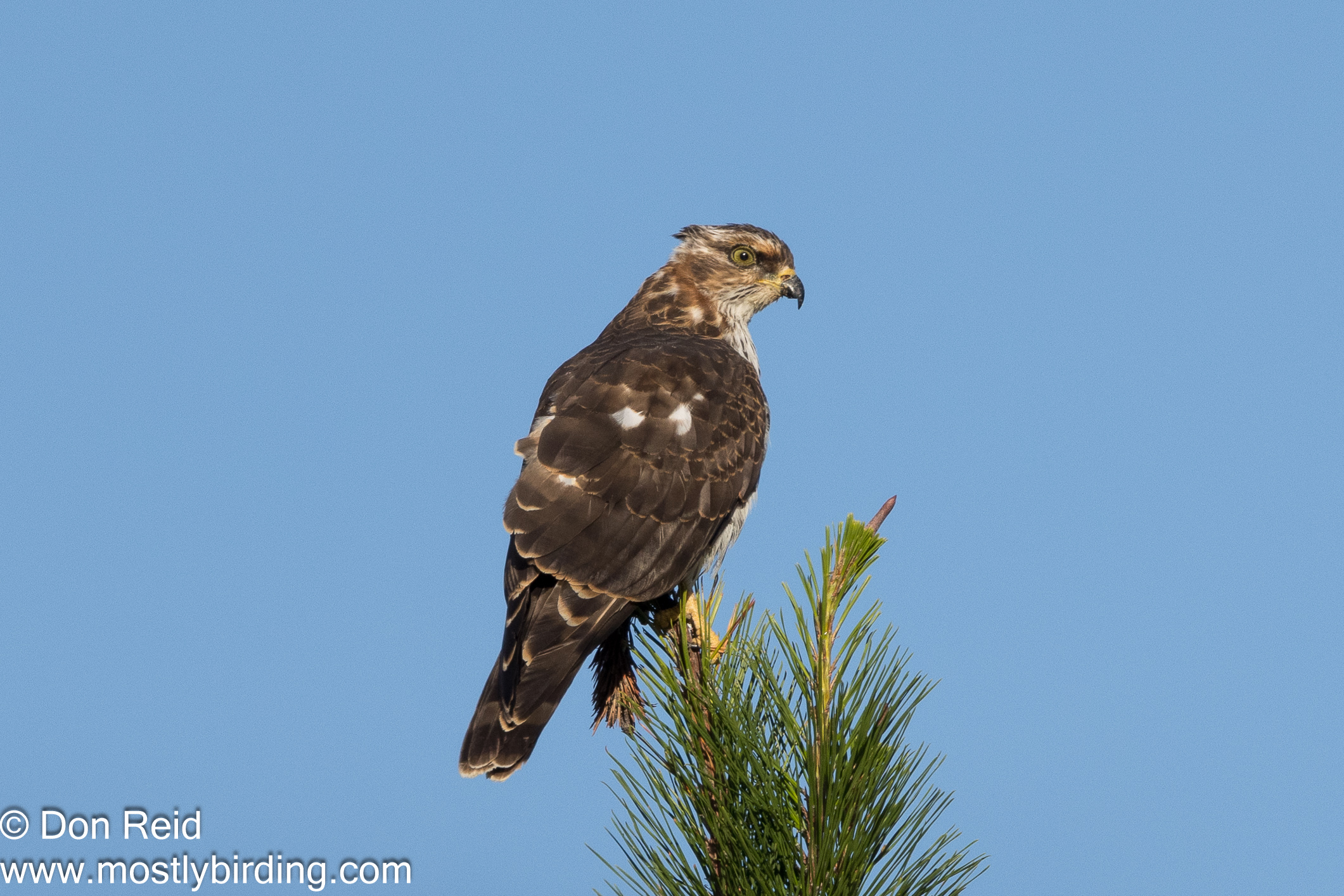
African Cuckoo Hawk Aviceda cuculoides Koekoekvalk (Juvenile), Friemersheim area

Black-winged Kites are widespread in SA but finding this one about to feed on its prey was a first for me

Black-winged Kite Elanus caeruleus Blouvalk, Vleesbaai inland

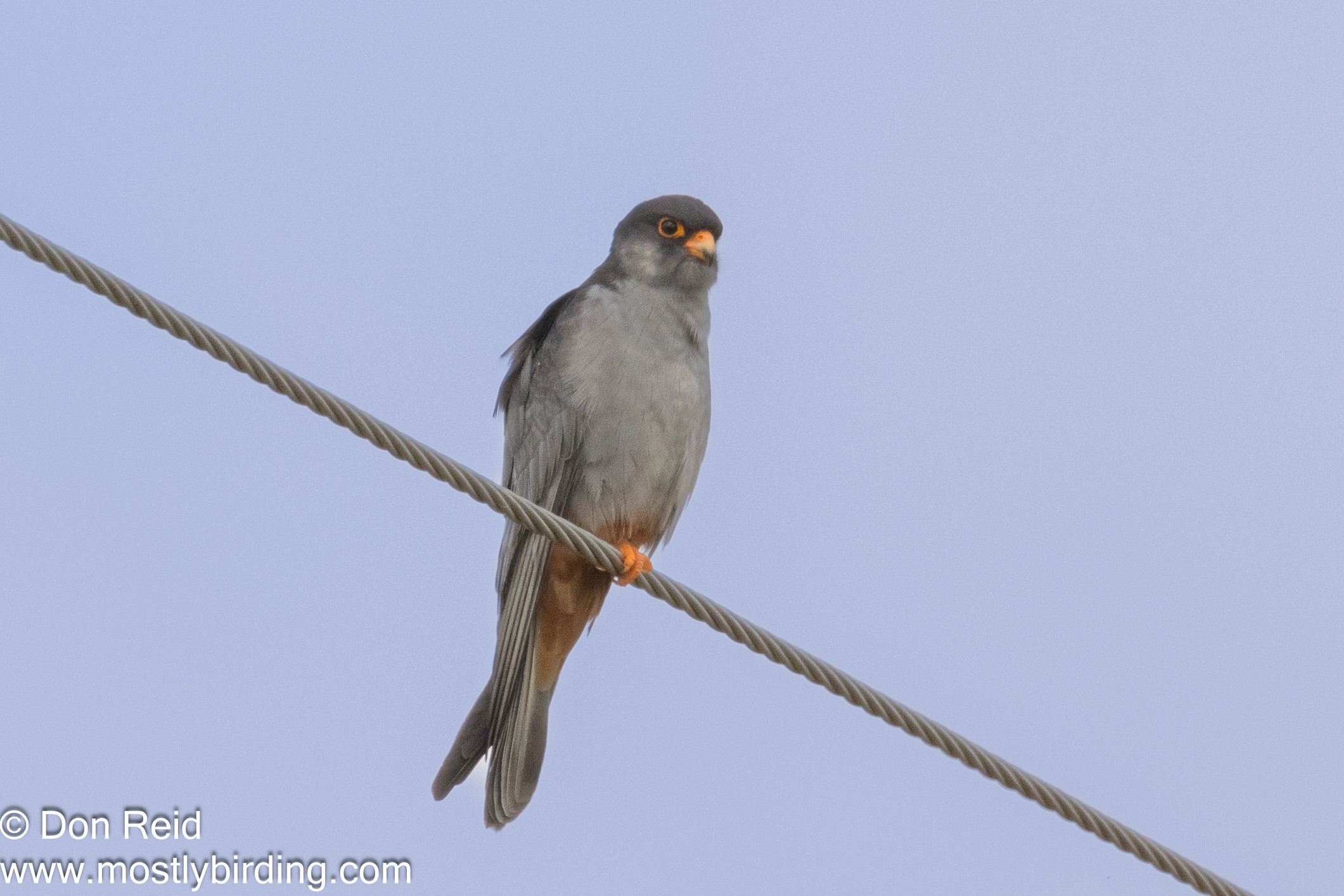
This is not a particularly good photo of an Amur Falcon that I came across but I include it only because it is a scarce sighting in the Southern Cape

Amur Falcon Falco amurensis Oostelike rooipootvalk (male), Kleinberg area

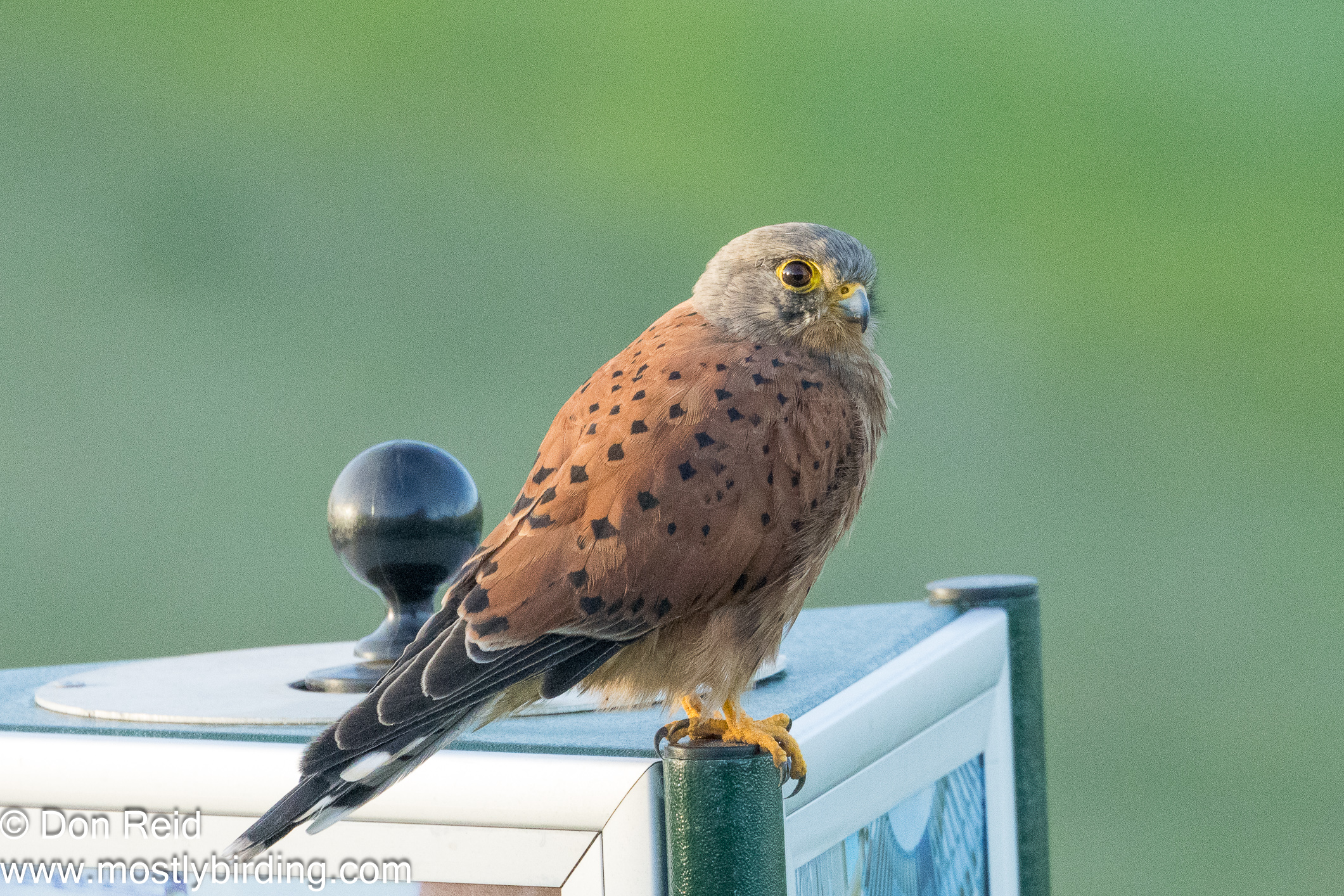
Rock Kestrel is a regular species in the estate where we live. This one chose the 15th tee, just 100m from our house, as a convenient spot for some hunting one morning

Rock Kestrel Falco rupicolus Kransvalk, Mossel Bay Golf Estate

Perchers

This category covers a variety of birds normally seen perched on a tree or bush or other suitable spot

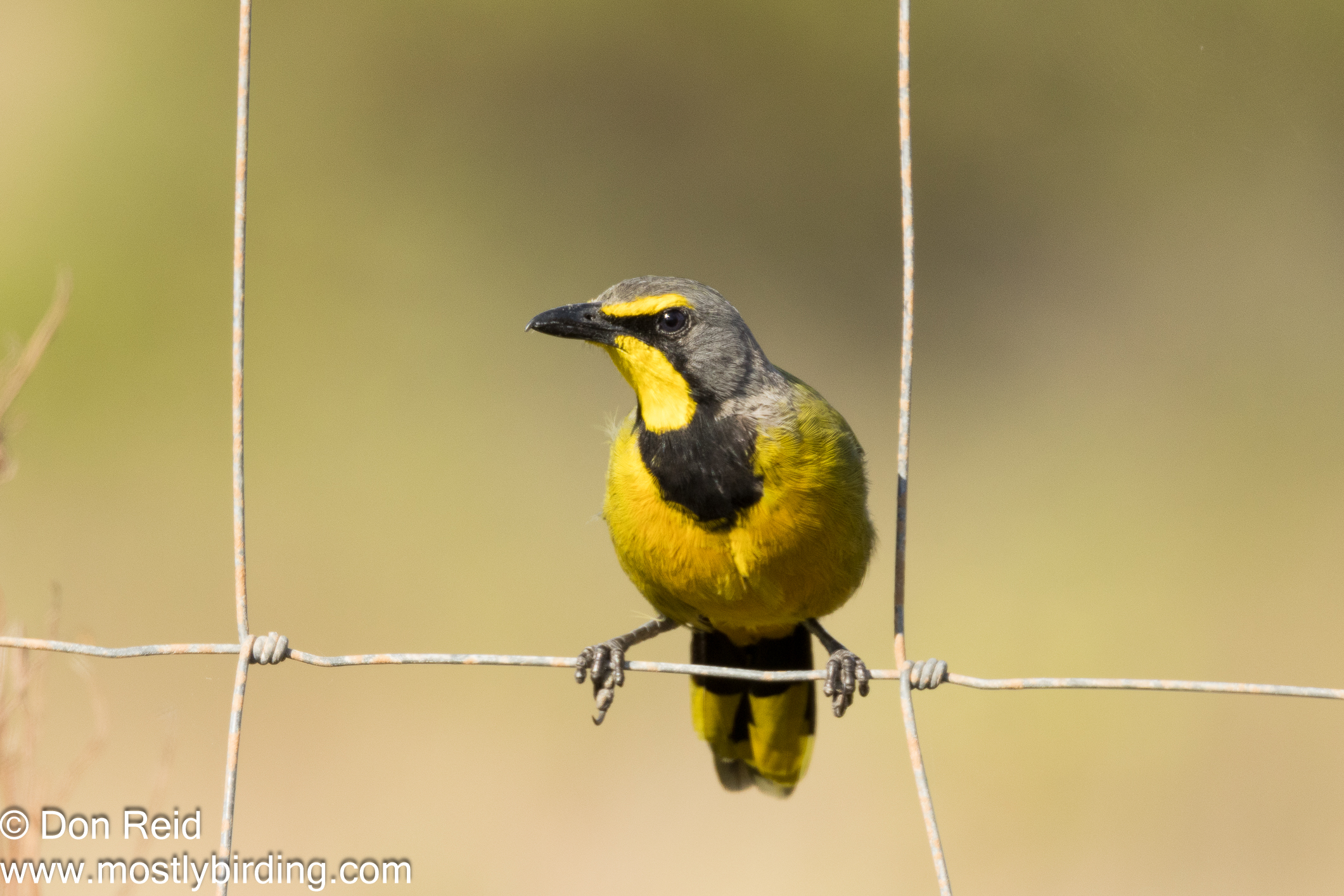
Bokmakieries are often one of the first species to be encountered when atlasing in the Southern Cape, as they greet the new day with vigourous calls. Getting them to pose is not always easy but this one eyed me from a wire fence, inviting me to take its photo

Bokmakierie Telophorus zeylonus Bokmakierie, Brandwag south

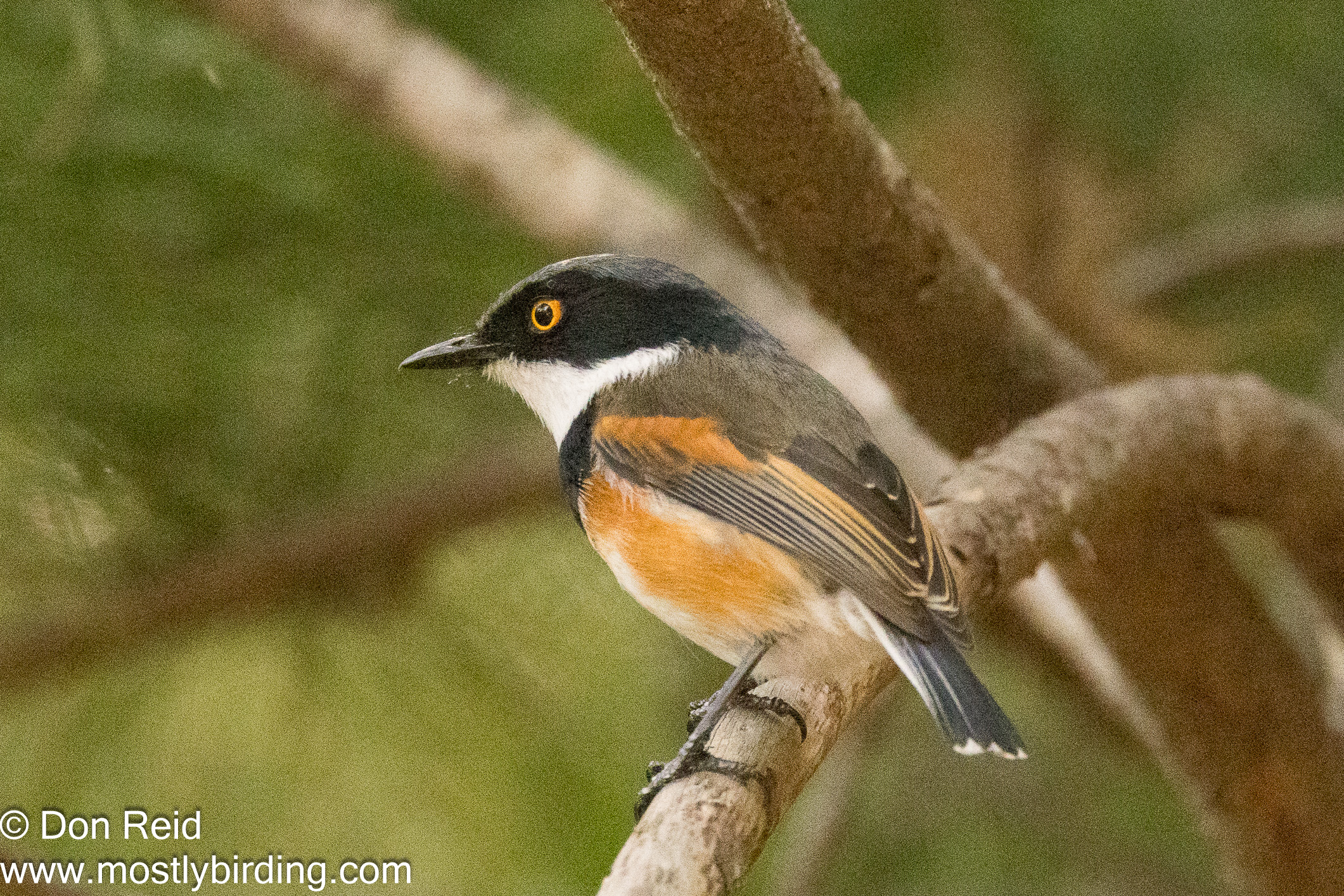
Cape Batis is a common forest bird – parts of the Bonniedale road heading west from the R328 are heavily forested and that’s where I found this one

Cape Batis Batis capensis Kaapse bosbontrokkie (male), Bonniedale road

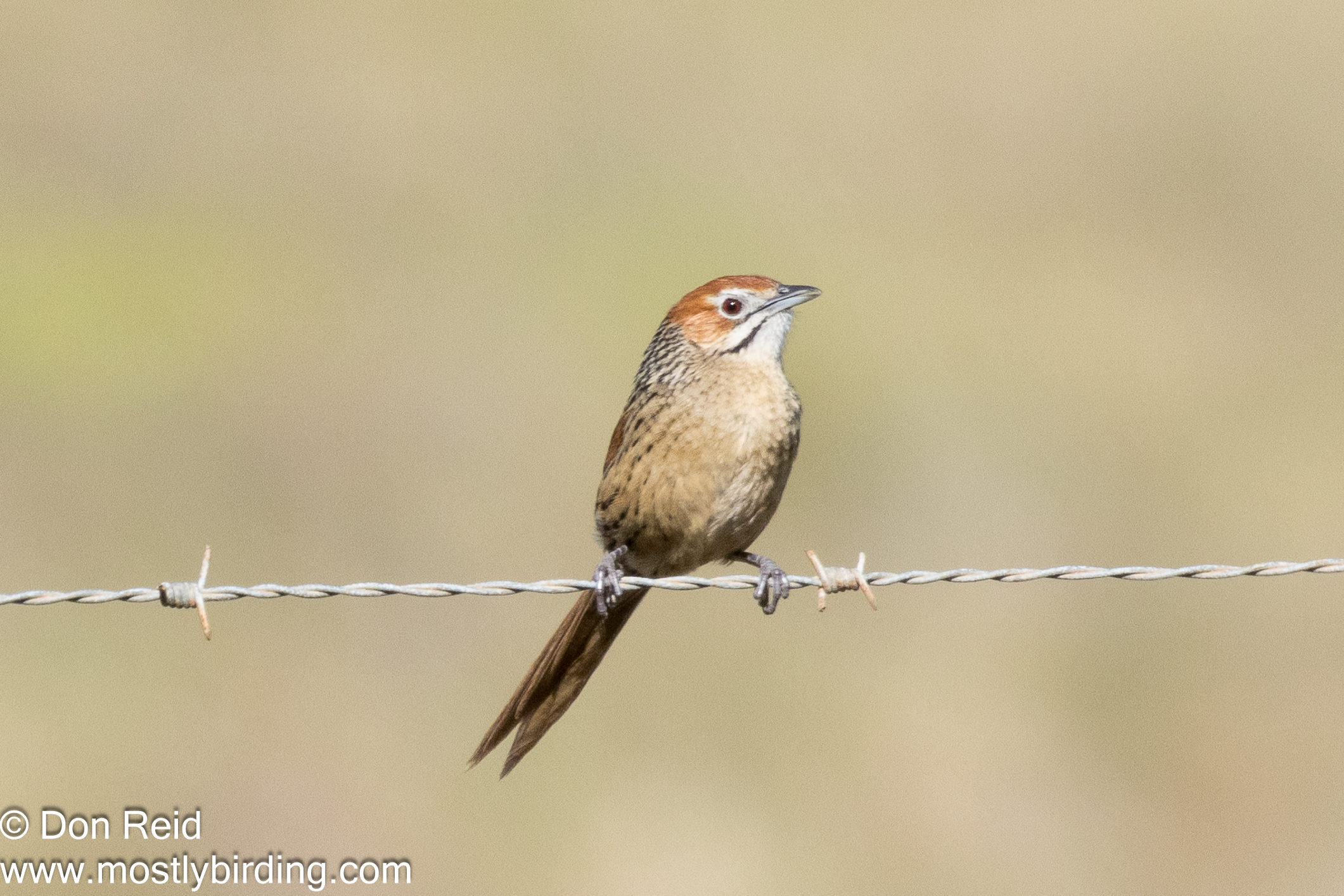
I had stopped in the mountains beyond Herbertsdale to check for birds when this Grassbird – or perhaps it’s better to call it a Fencebird in this case – drew my attention with its familiar trilling call

Cape Grassbird Sphenoeacus afer Grasvoël, Herbertsdale north

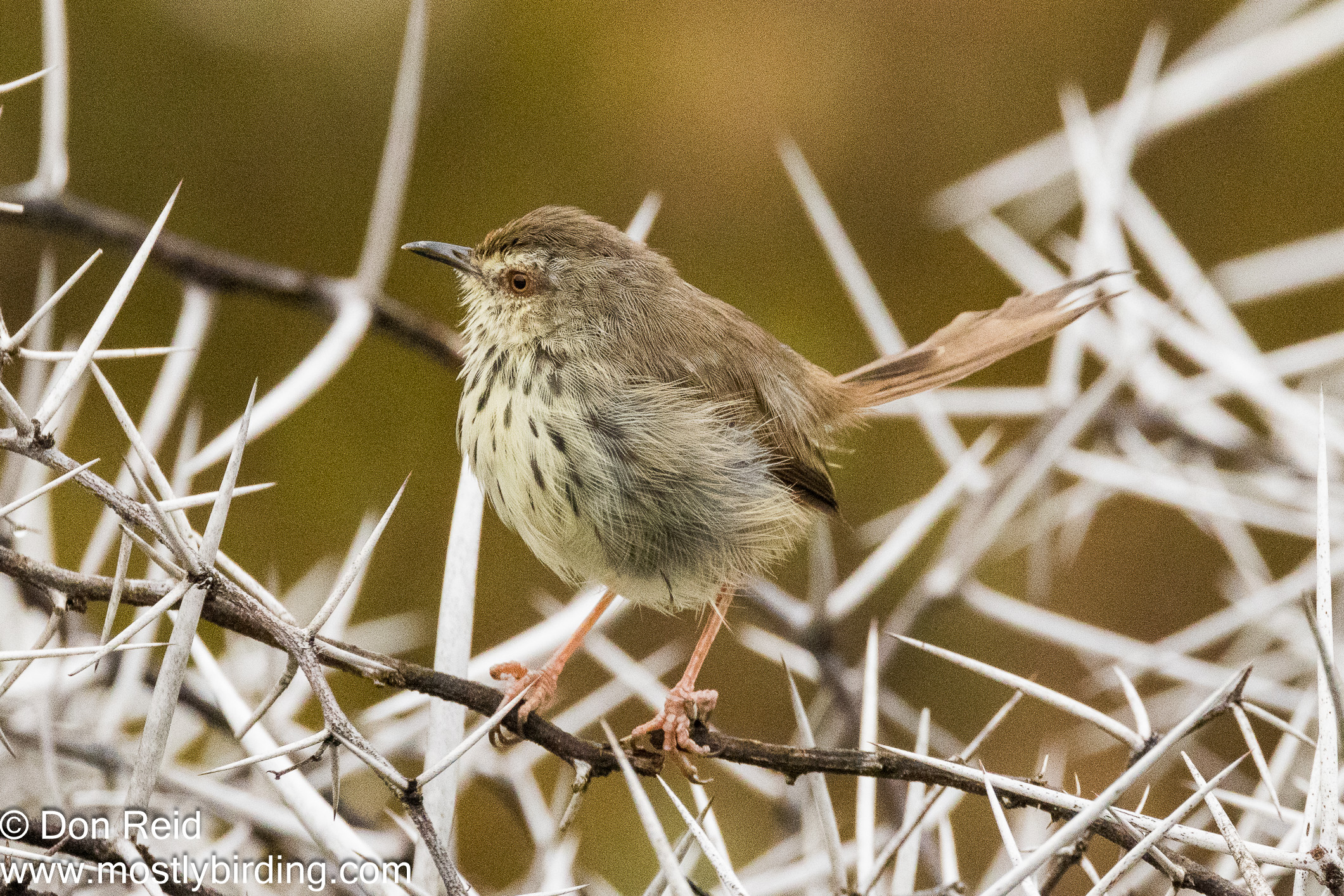
Karoo Prinia is common in suitable habitat across its distribution range. I saw one while stoepsitting in the Addo NP and stalked it until it settled in a thorny bush for long enough to get this image

Karoo Prinia Prinia maculosa Karoolangstertjie (race exultans), Addo Elephant NP

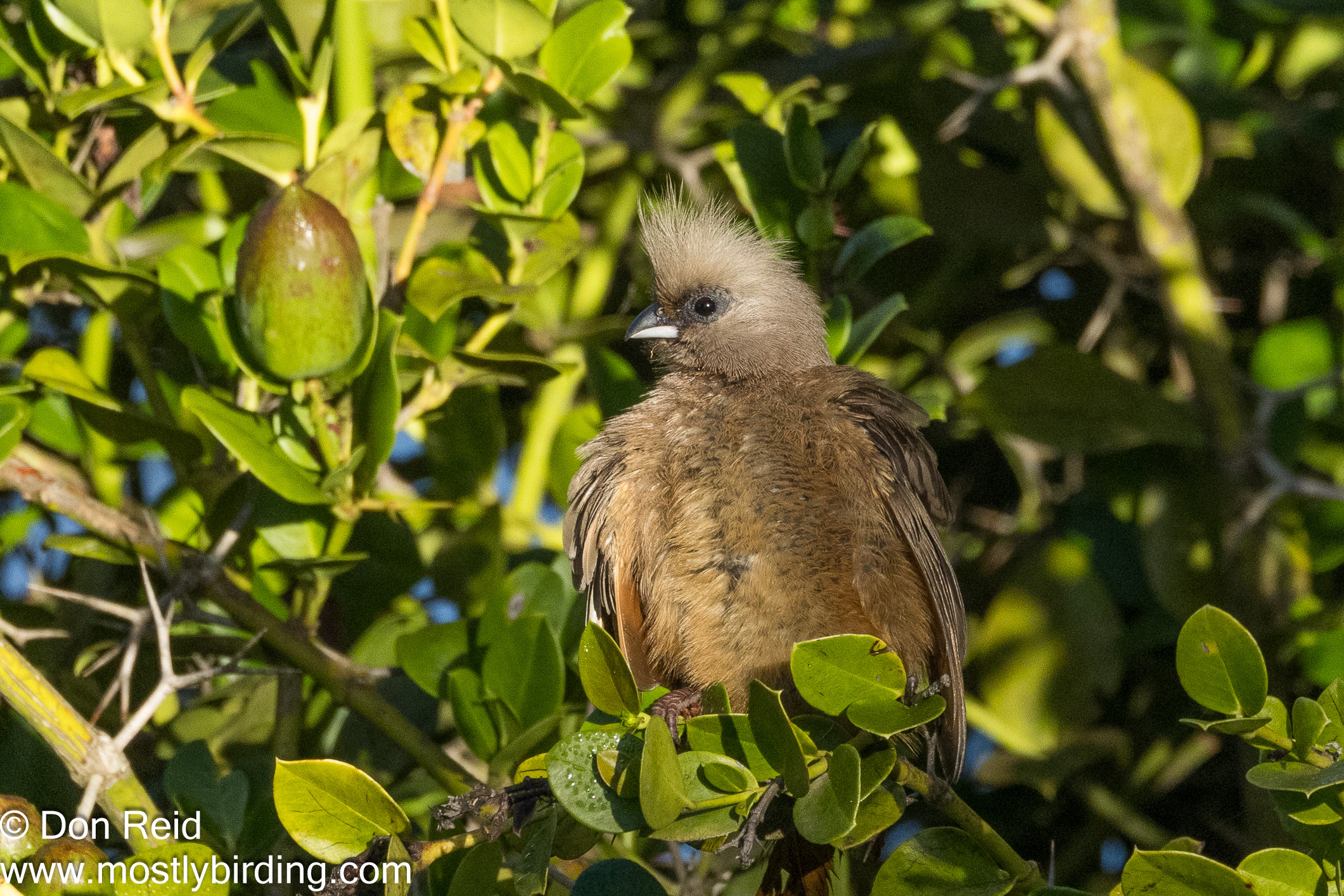
The familiar Speckled Mousebird is fond of disappearing into foliage but will usually pop up to check out the surroundings, which is what this one did

Speckled Mousebird Colius striatus Gevlekte muisvoël, Wilderness

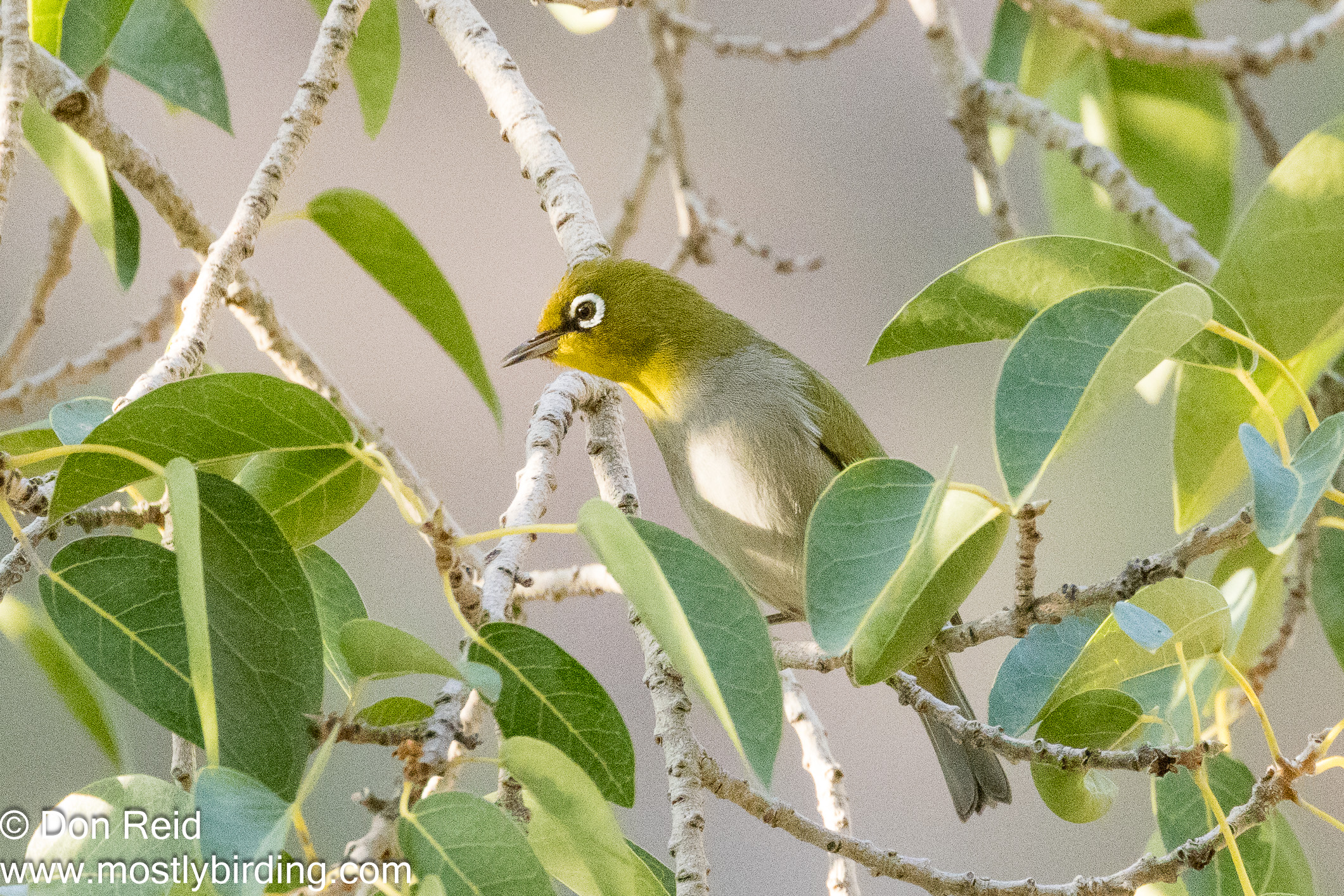
Another very familiar bird, the Cape White-eye, visited us frequently during our stay at The Baths near Citrusdal

Cape White-eye Zosterops capensis Kaapse glasogie, (race capensis), The Baths Citrusdal

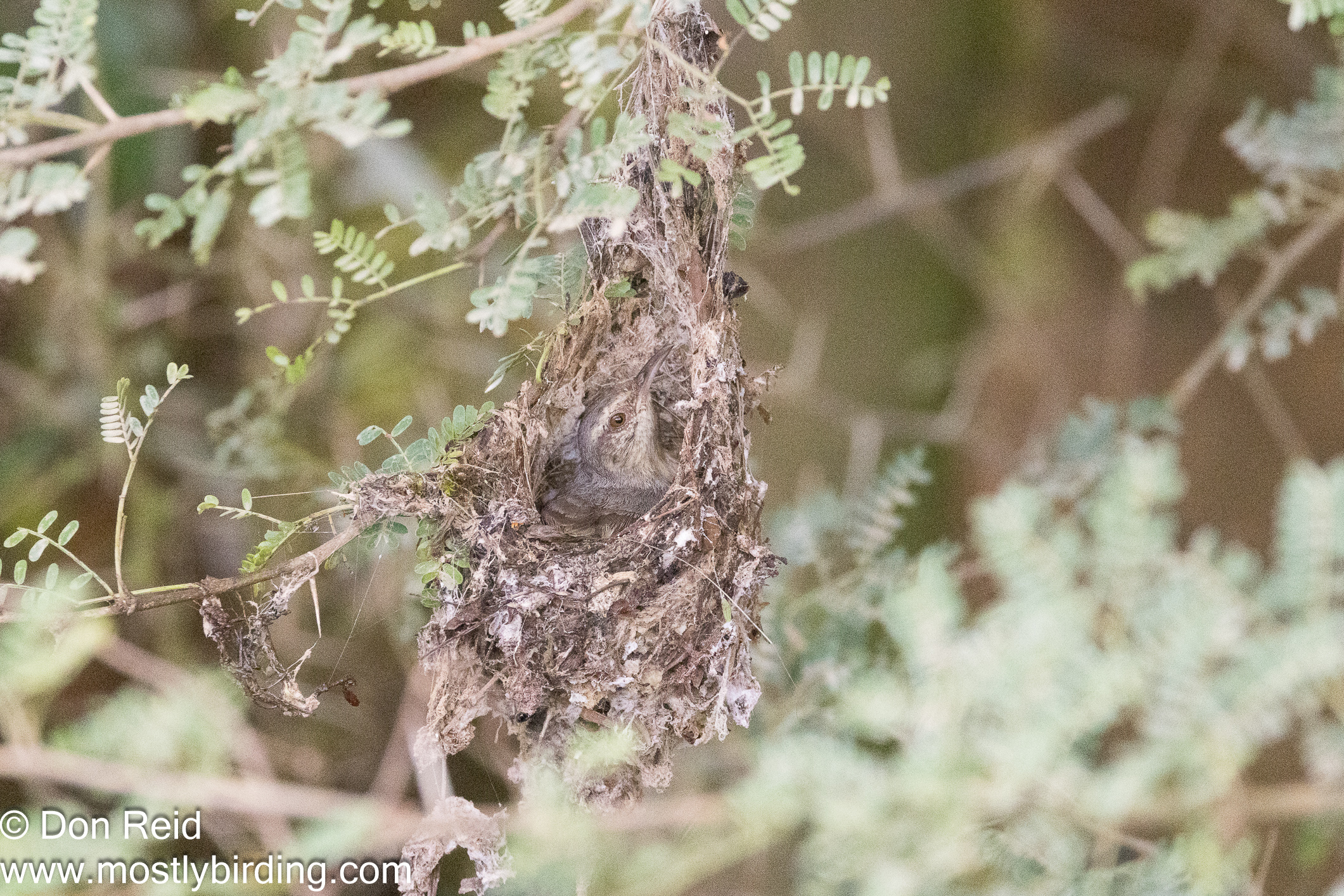
One of my favourite photos of the year, I came across this Long-billed-Crombec while atlasing and was thrilled to see it drop down and take up position in the mouth of the nest low in the tree, which I had not noticed

Long-billed Crombec Sylvietta rufescens Bosveldstompstert (race diverga), Herbertsdale north east

Suckers

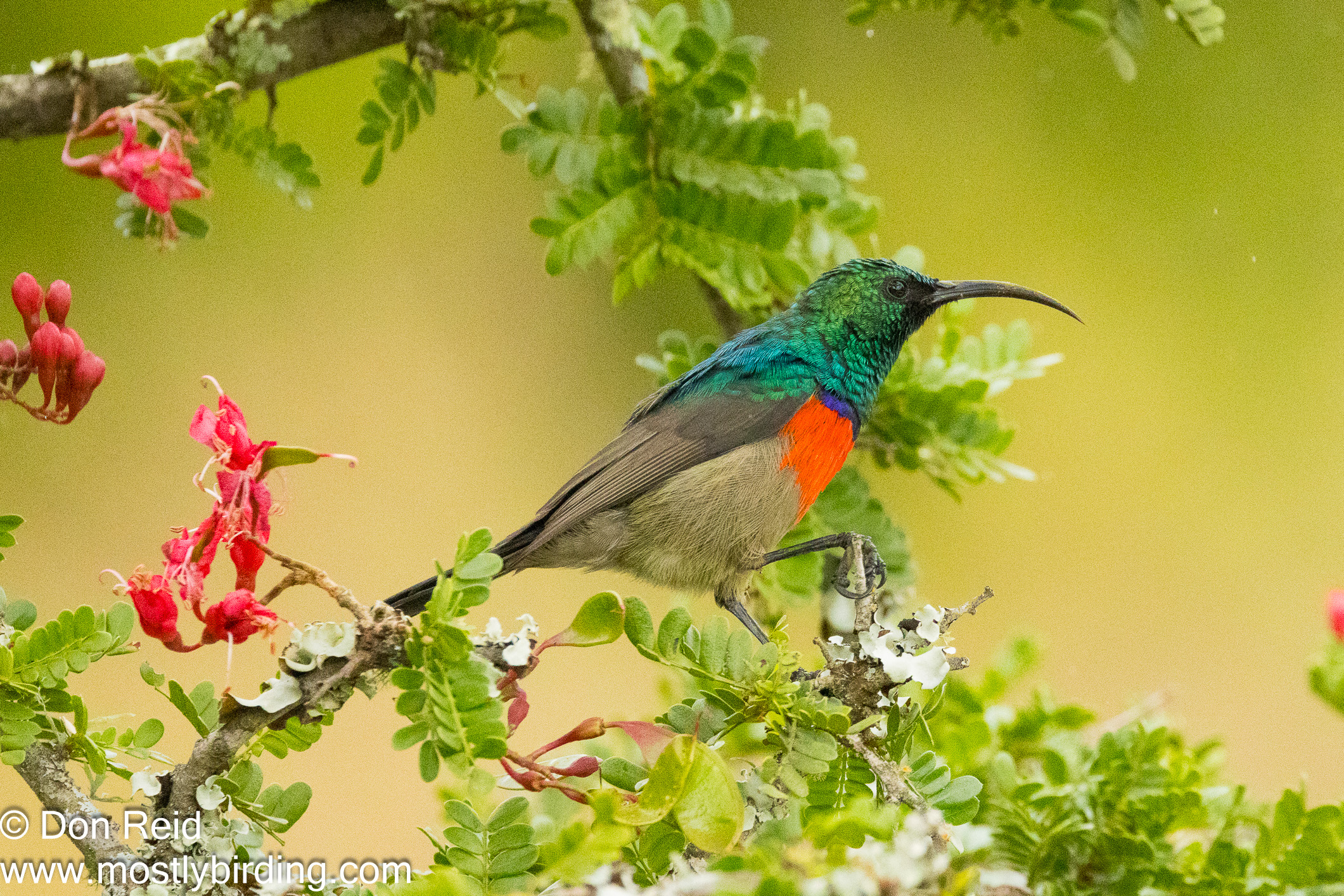
The curve-billed nectar-suckers

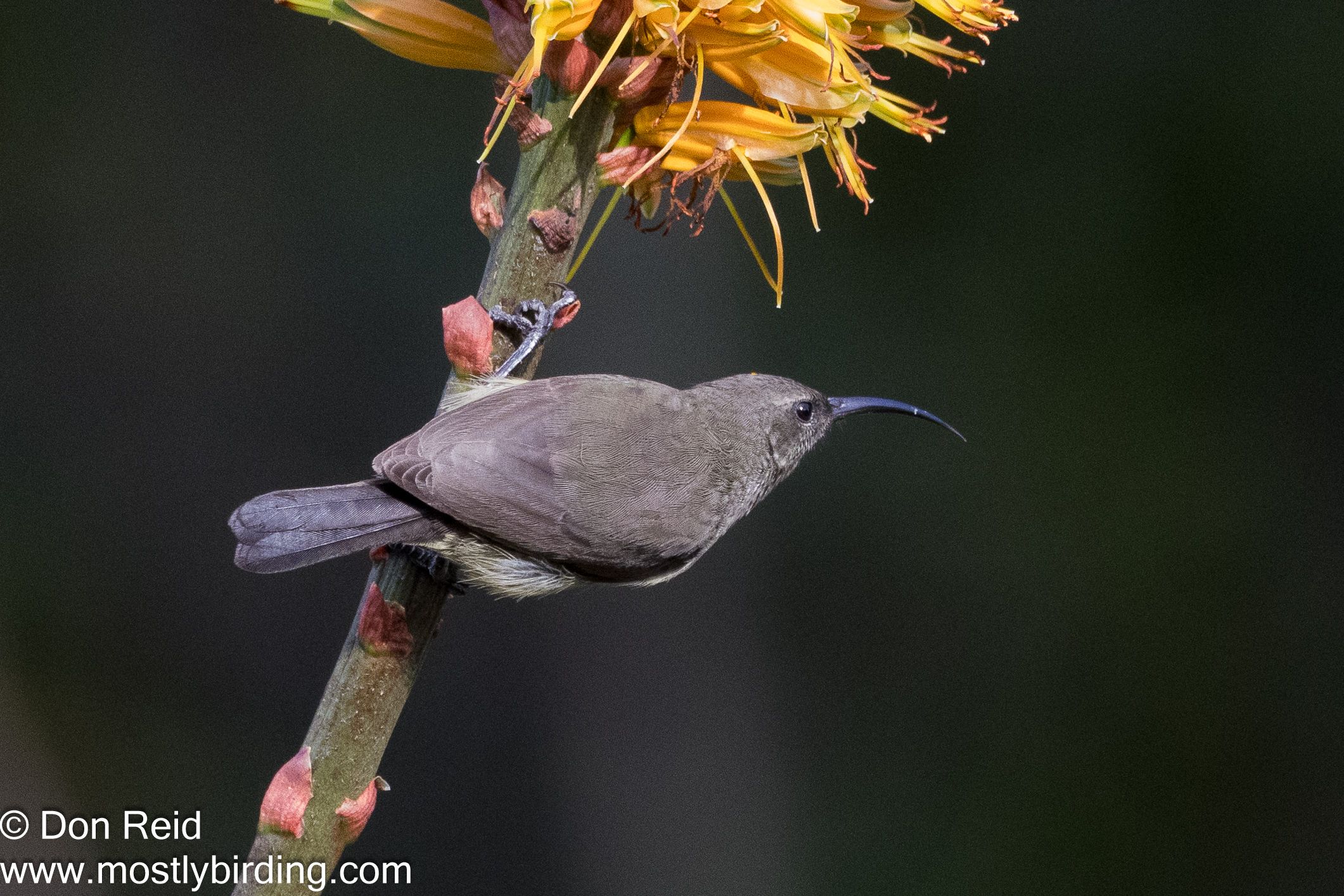
The photos illustrate the colourful male and the rather drab female of the species that I often come across while atlasing, and at home

Greater Double-collared Sunbird Cinnyris afer Groot-rooibandsuikerbekkie, Addo Elephant NP
Greater Double-collared Sunbird Cinnyris afer Groot-rooibandsuikerbekkie (female), Friemersheim area

Seed-eaters

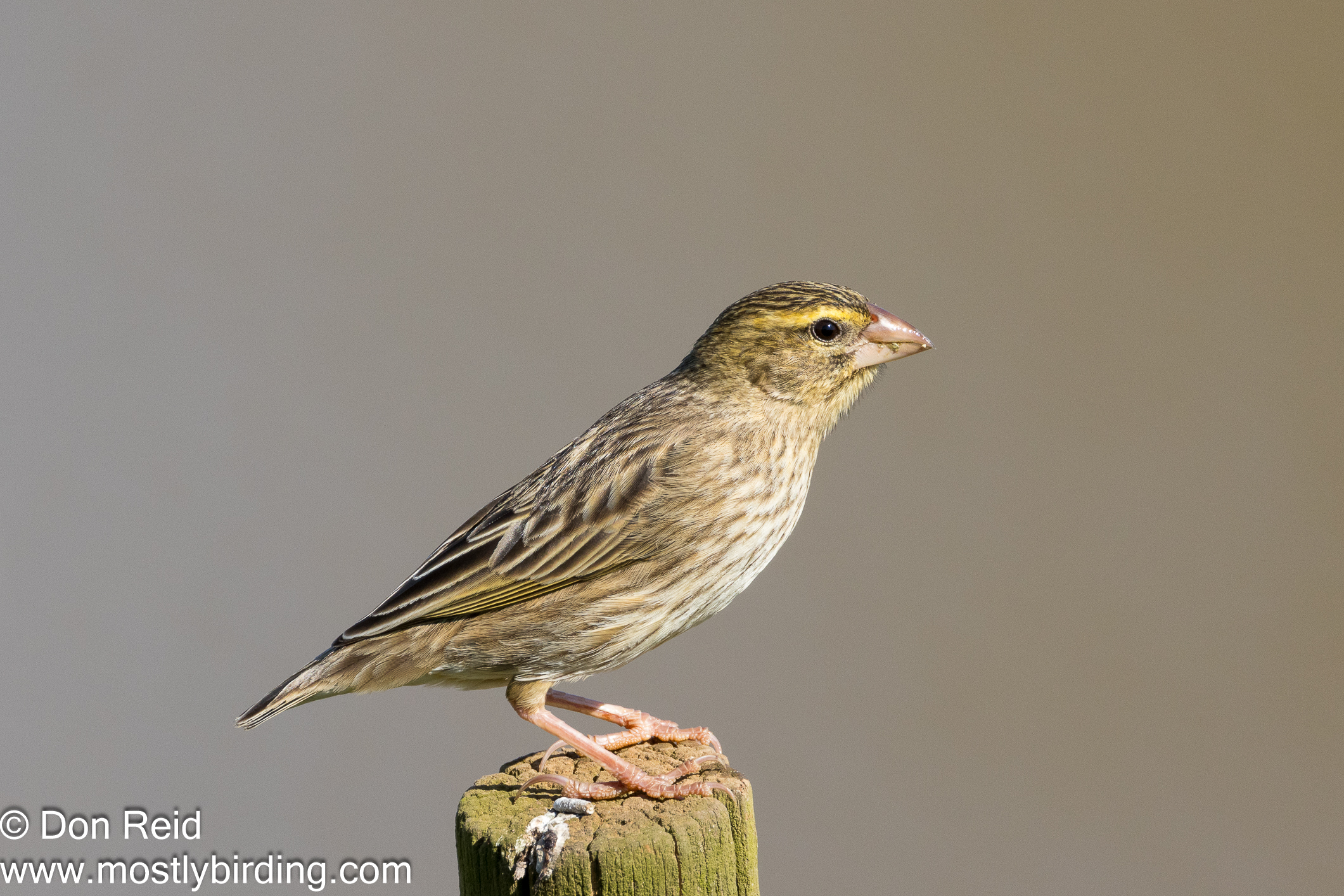
All have short, strong triangular bills suited to their main diet of seeds.

The Bishops were both photographed in winter non-breeding plumage.

Yellow Bishop Euplectes capensis Kaapse flap (non-breeding male), Klein Brak area
Southern Red Bishop Euplectes orix Rooivink (non-breeding), Bland’s Drift
White-throated Canary Crithagra albogularis Witkeelkanarie, Herbertsdale area

Cape Canaries always seem to be on the go, not waiting for an anxious bird photographer to get his act together, so I was happy that this one hung around a bit.

Cape Canary Serinus canicollis Kaapse kanarie (race canicollis), Herbertsdale north
Cape Bunting Emberiza capensis Rooivlerkstreepkoppie (race capensis), Herbertsdale north

Favourites

A random mix of familiar birds, often colourful and with well-known calls

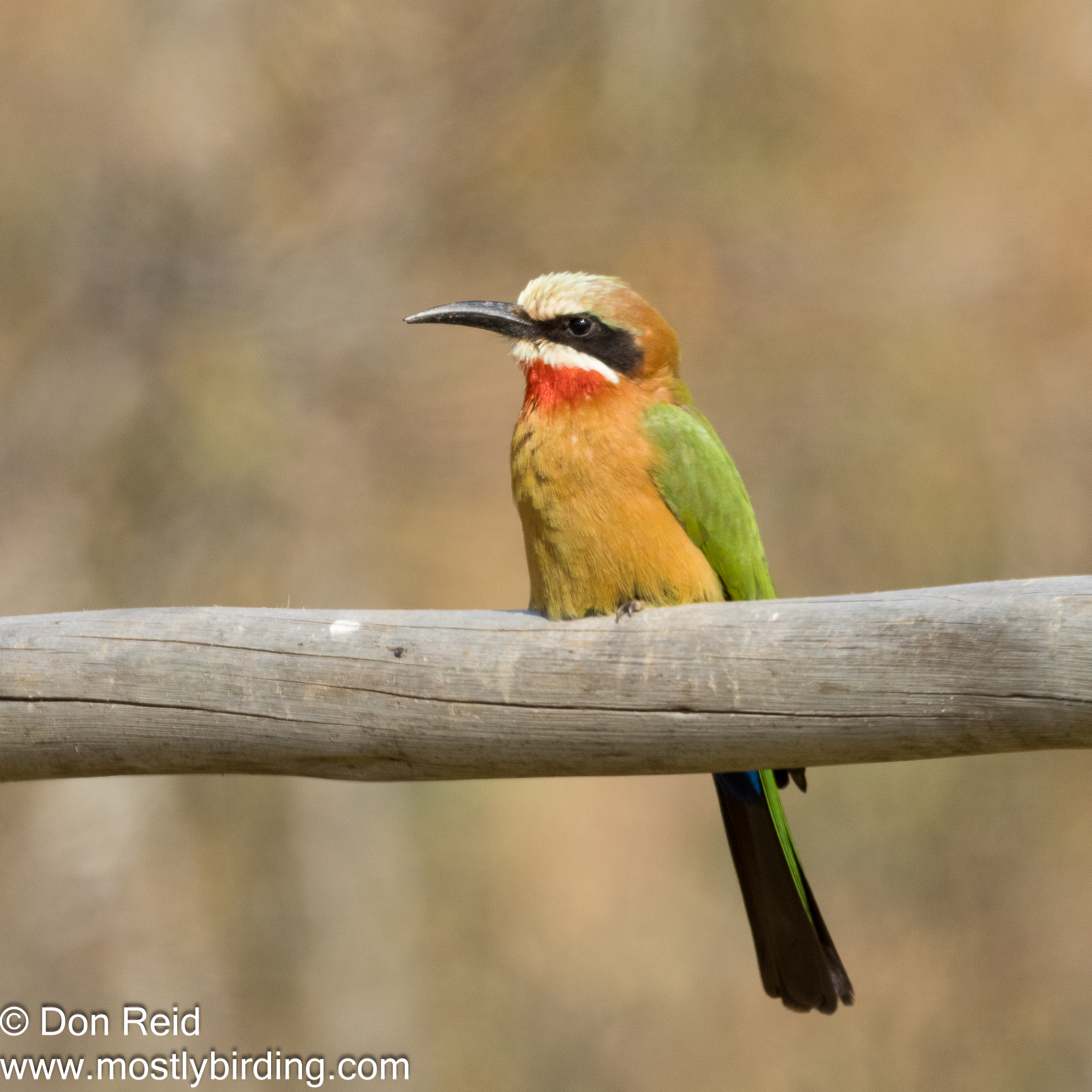
White-fronted Bee-eater Merops bullockoides Rooikeelbyvreter, Verlorenkloof

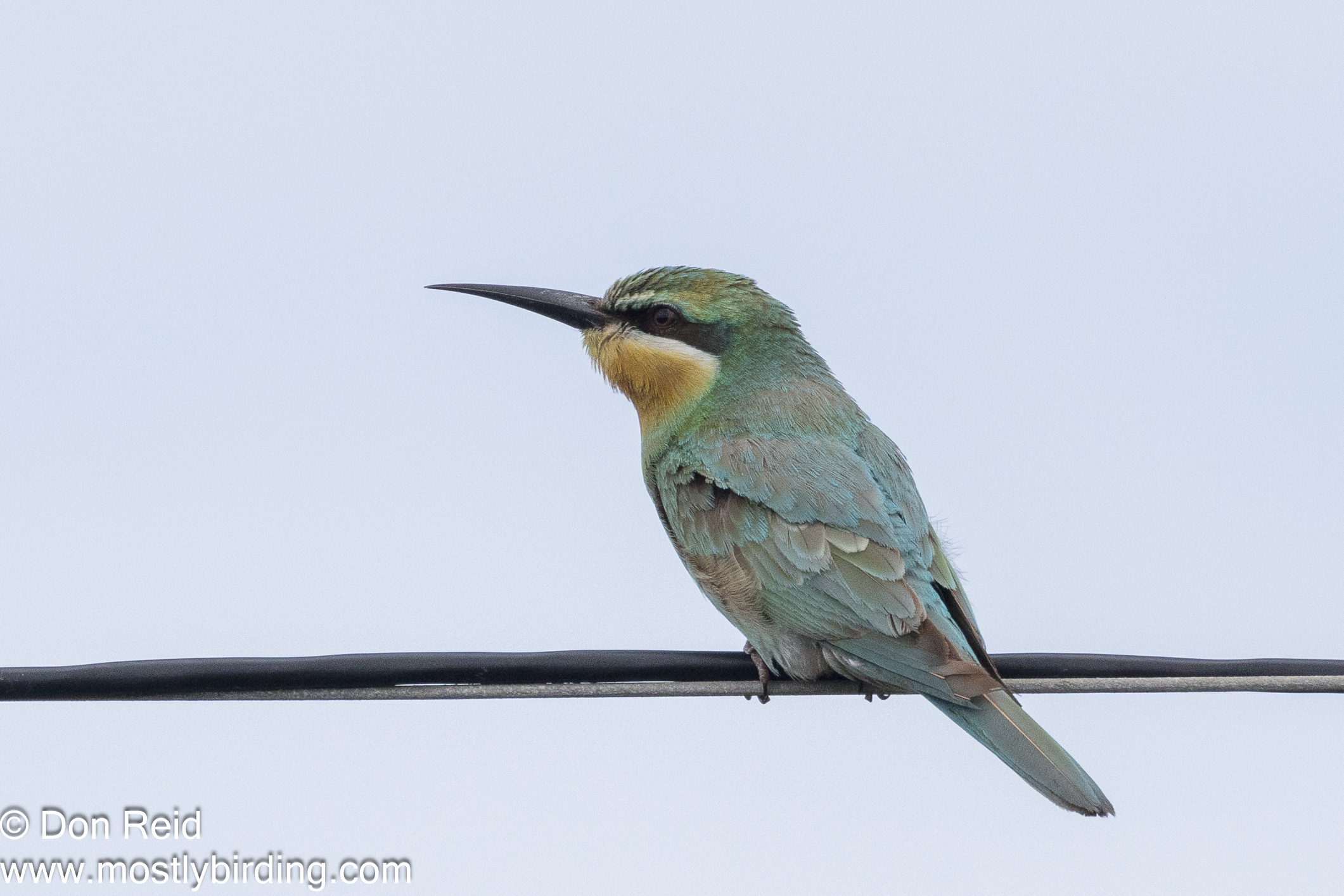
The Blue-cheeked Bee-eater is a Palearctic migrant, regarded as a rarity in the Western Cape, which is why I have included it in my pick. However they have been seen during summer near Gouritzmond for a few years now.

Blue-cheeked Bee-eater Merops persicus Blouwangbyvreter (Juvenile), Gouritzmond road
African Hoopoe Upupa africana Hoephoep, Brandwag area
Brown-hooded Kingfisher Halcyon albiventris Bruinkopvisvanger (race vociferans), Verlorenkloof

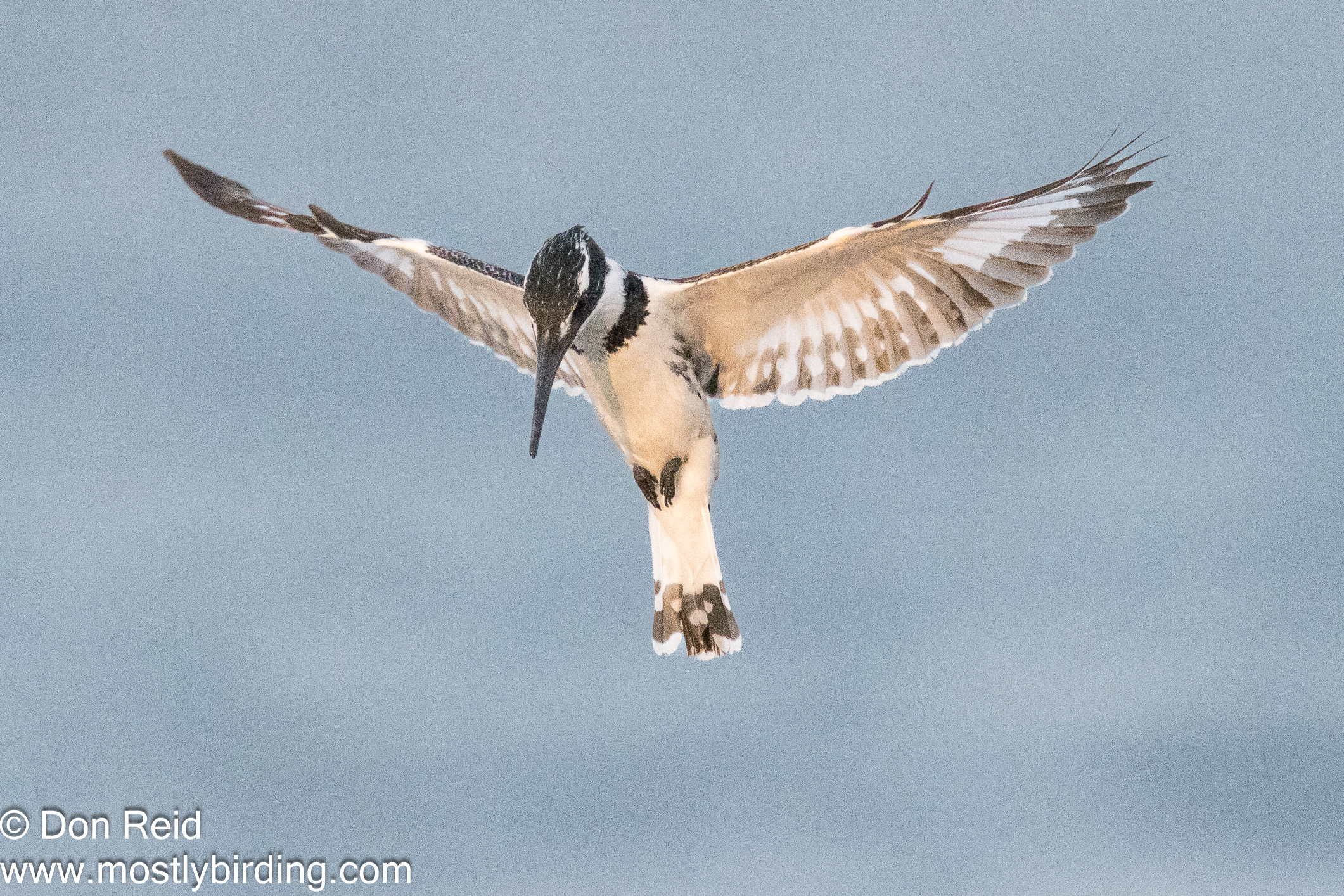
Pied Kingfishers are known for their habit of hover-hunting – this one did so at The Point in Mossel Bay while we were parked there enjoying our customary coffee one late afternoon just before sunset, with perfect lighting to enhance the beauty of the bird.

Pied Kingfisher Ceryle rudis Bontvisvanger (female), Mossel Bay Point

Flyers

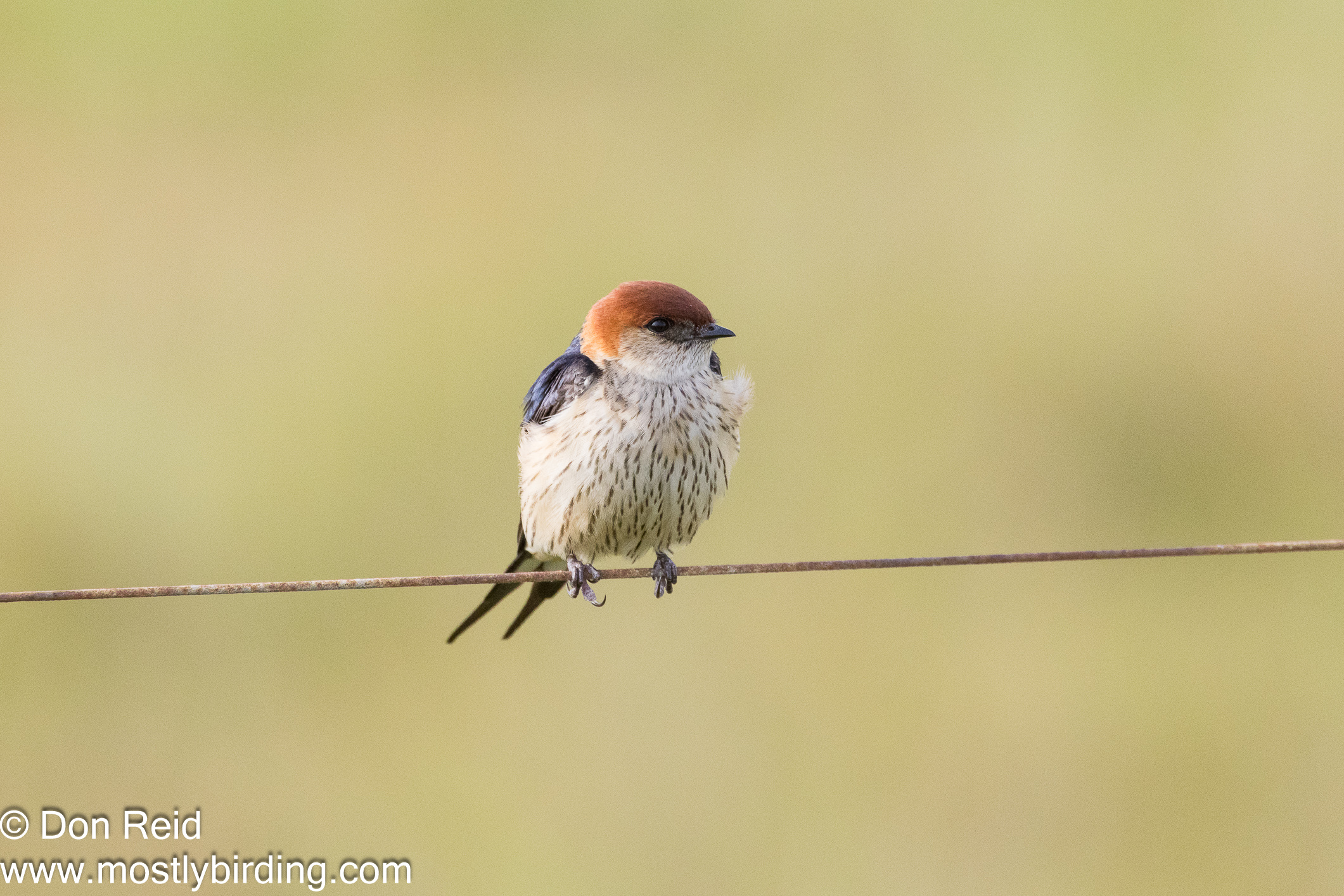
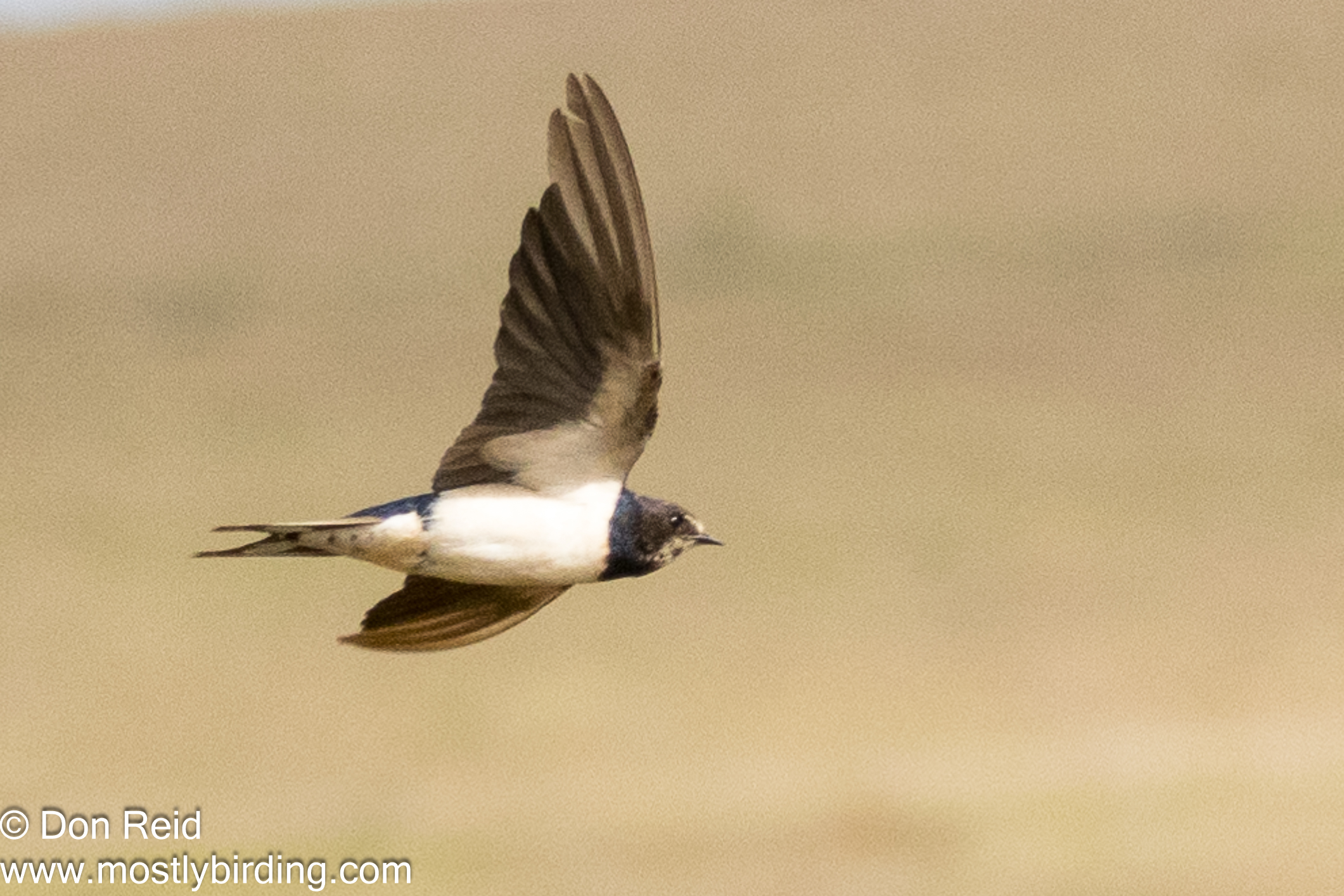
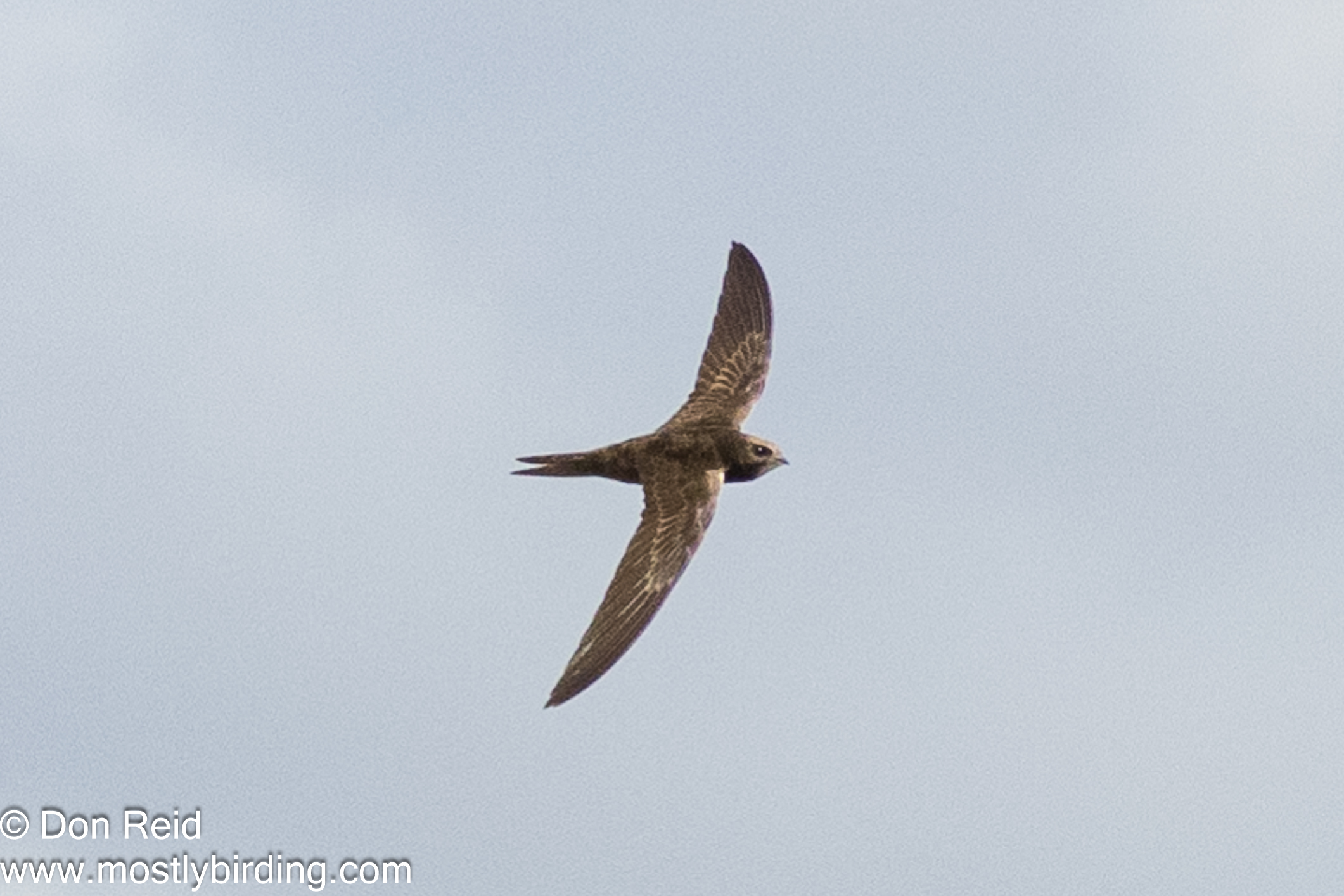
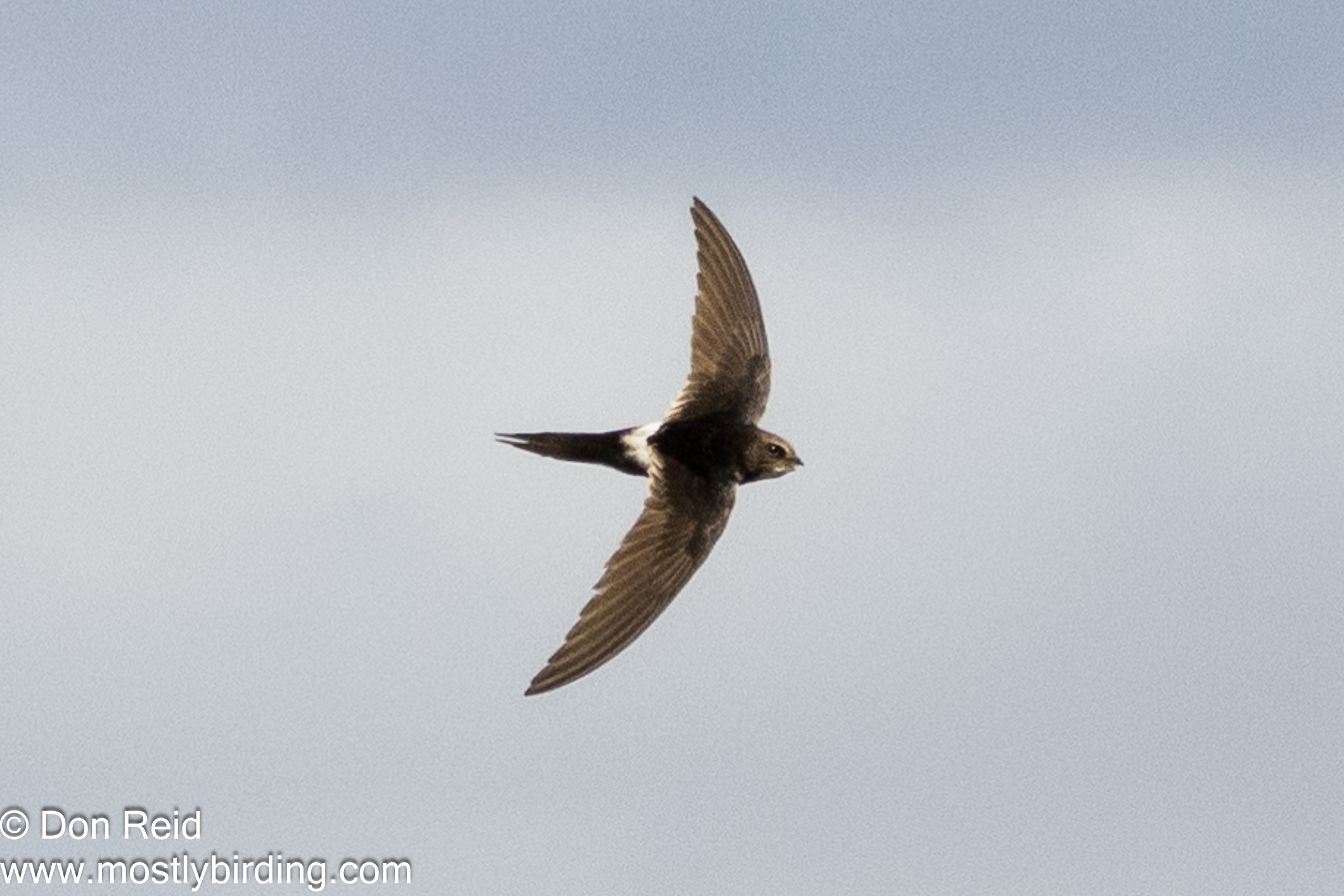
Swifts and swallows – the aerial feeders – also the most challenging to photograph unless they are resting between sorties

Greater Striped Swallow Cecropis cucullata Grootstreepswael, Kleinberg area
Barn Swallow Hirundo rustica Europese swael, Kleinberg area
Common Swift Apus apus Europese windswael (race pekinensis), Kleinberg area
White-rumped Swift Apus caffer Witkruiswindswael, Kleinberg area
Brown-throated Martin Riparia paludicola Afrikaanse oewerswael, at nest burrow, Maalgate area

Plungers

Mainly seabirds that forage over water – and under water

At irregular times during the year terns roost in numbers at The Point in Mossel Bay, providing good photo opportunities as the rocks are relatively close to the viewing area

Sandwich Tern Thalasseus sandvicensis Grootsterretjie, Mossel Bay Point

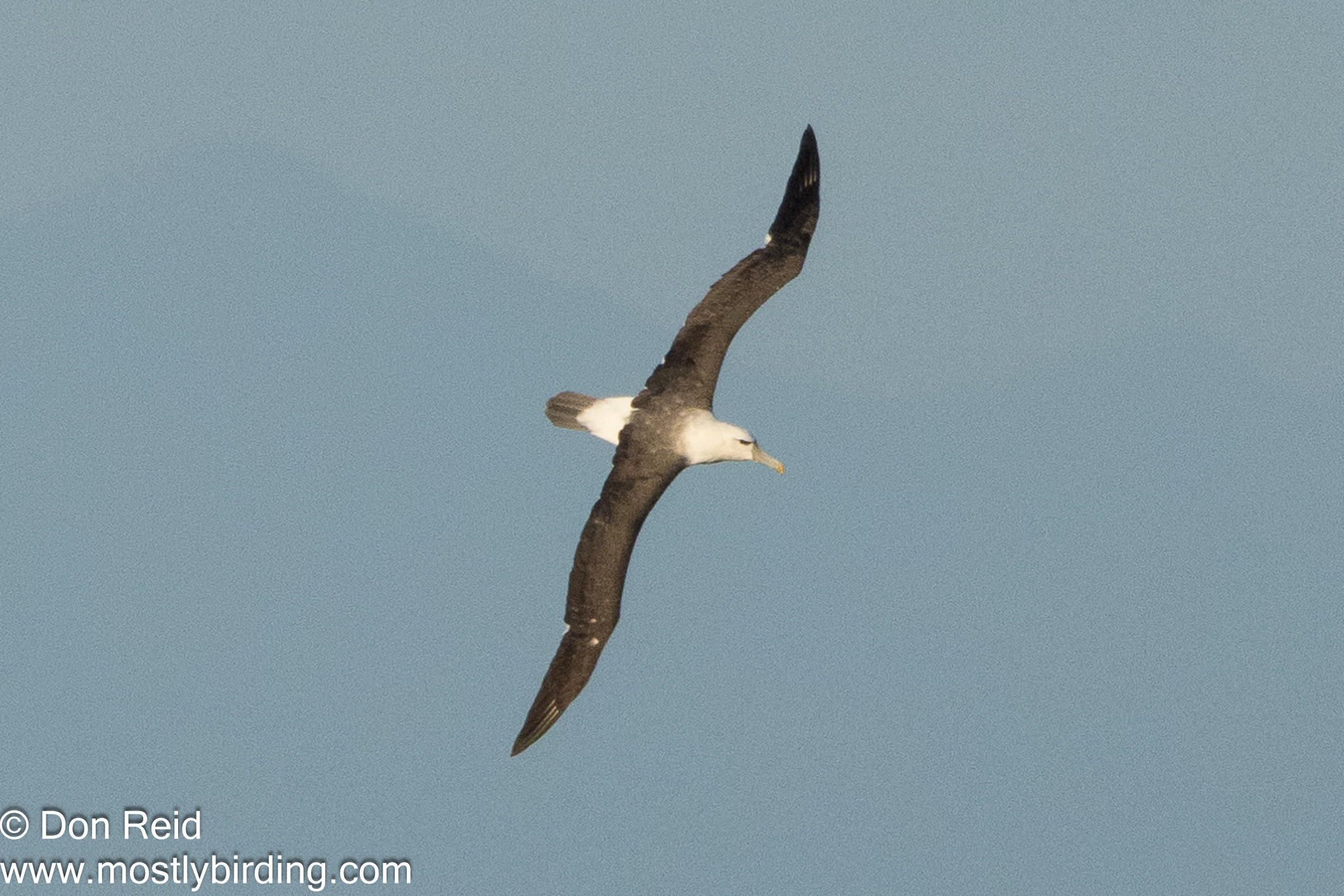
The Point is also a great spot for seabird watching when the winds are strong and in the right direction. One such day I was fortunate to be there when the seabirds were closer than usual and I was able to capture this image of a magnificent Shy Albatross – one of more than a dozen that passed by while we were there.

Shy Albatross Thalassarche cauta Bloubekalbatros, Mossel Bay Point

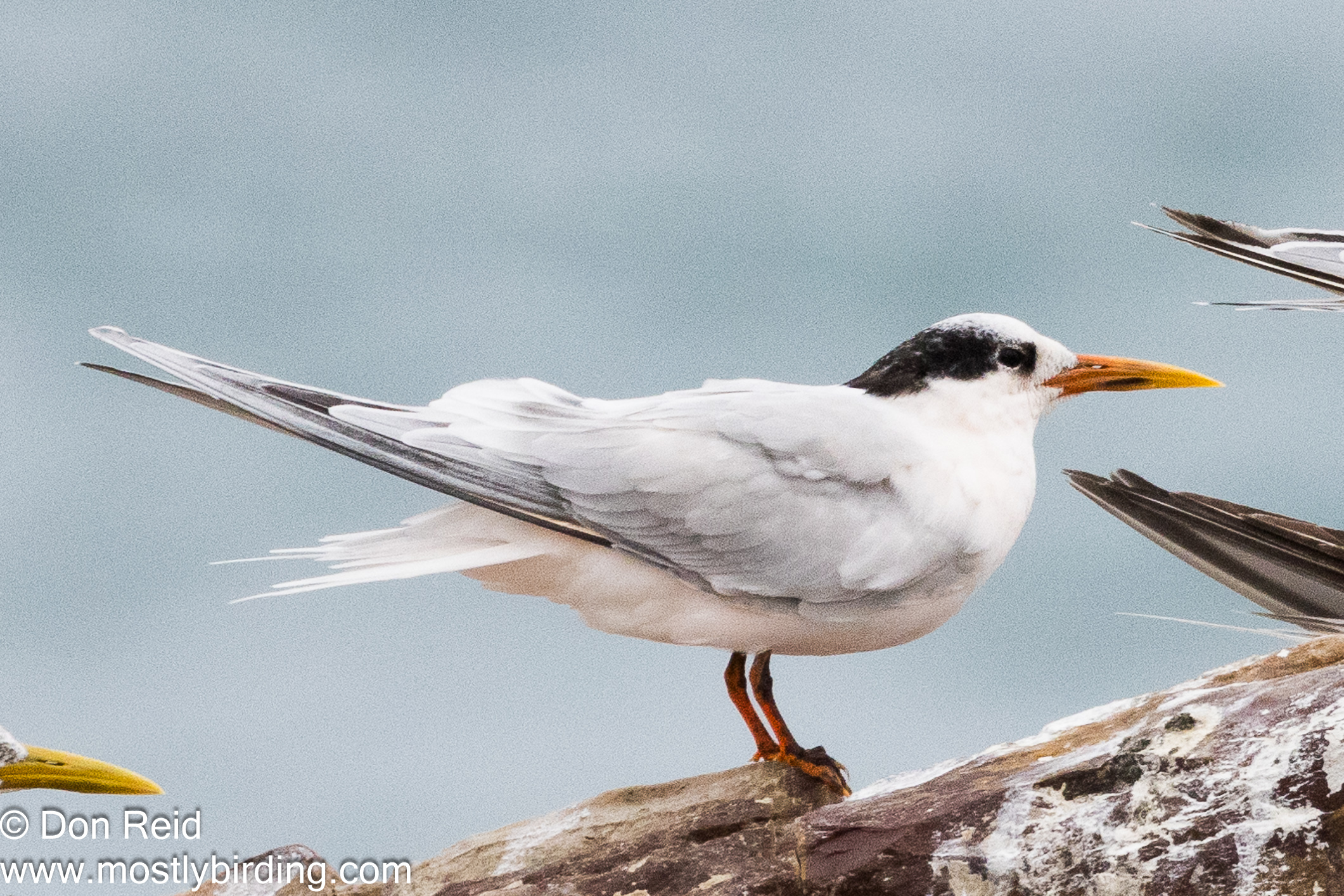
Another Tern that visited The Point was this rare hybrid – not a separately countable species but interesting nevertheless

Hybrid Elegant / Sandwich Tern, Mossel Bay Point

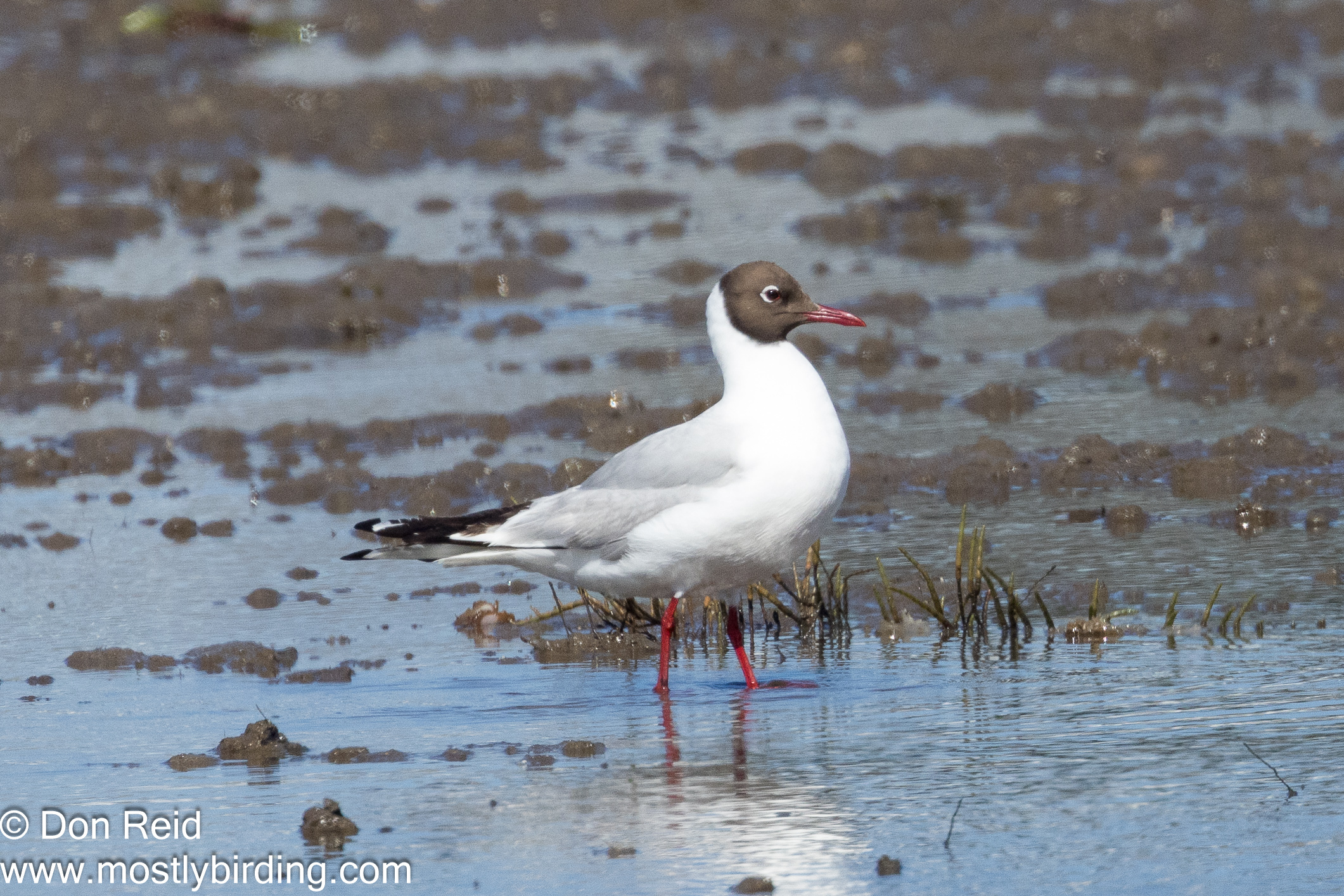
I was pleased when keen birder Estelle called me from Klein Brak to inform me about a Black-headed Gull that was present. I couldn’t resist heading out and was lucky enough to capture some images of this rarity, which I have seen in Europe and elsewhere but never in Southern Africa

Black-headed Gull Chroicocephalus ridibundus Swartkopmeeu (Breeding plumage), Klein Brak estuary

Runners

Small to medium-sized birds that forage on the ground

Cape Robin-Chat Cossypha caffra Gewone janfrederik, Addo Elephant NP
Wattled Starling Creatophora cinerea Lelspreeu (non-breeding), Herbertsdale area
Olive Thrush Turdus olivaceus Olyflyster, The Baths Citrusdal
Familiar Chat Cercomela familiaris Gewone spekvreter, The Baths Citrusdal
Capped Wheatear Oenanthe pileata Hoëveldskaapwagter, Voelvlei
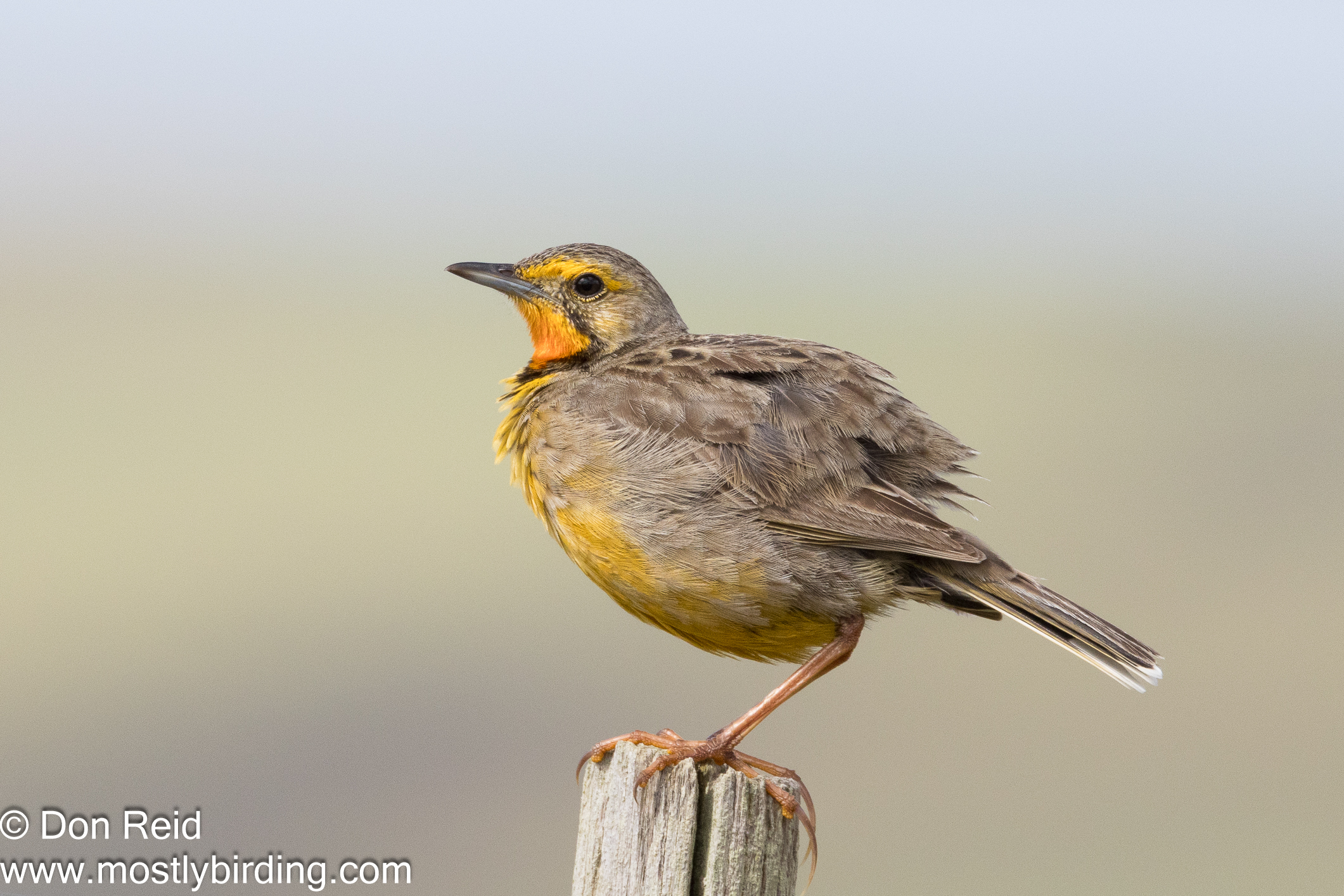
Cape Longclaw Macronyx capensis Oranjekeelkalkoentjie, Jakkalsvlei area
Cape Longclaw Macronyx capensis Oranjekeelkalkoentjie, Herbertsdale north east

Swimmers

Birds with webbed or lobed toes for swimming

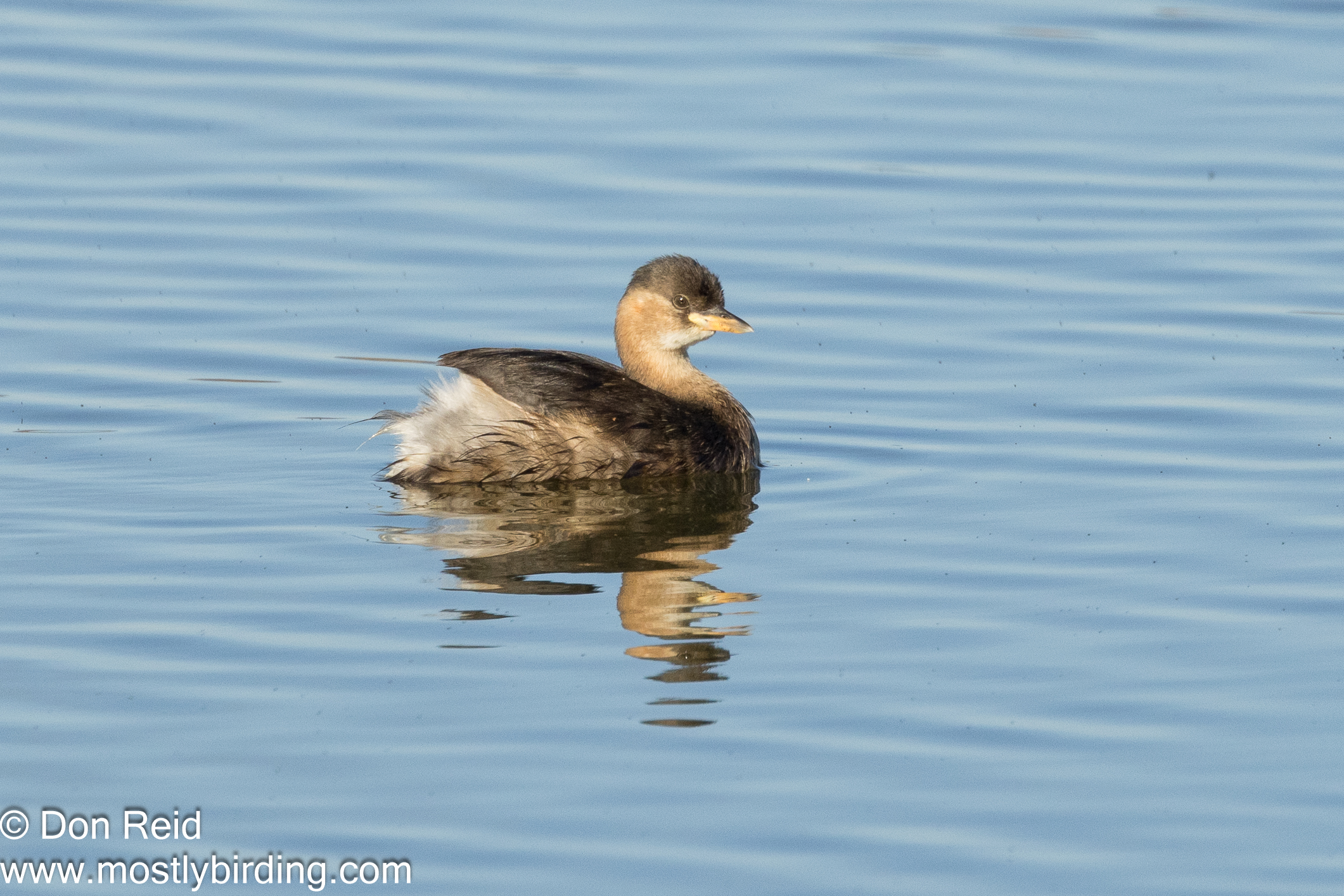
Little Grebe Tachybaptus ruficollis Kleindobbertjie, Voelvlei
Reed Cormorant Microcarbo africanus Rietkormorant, Sedgefield
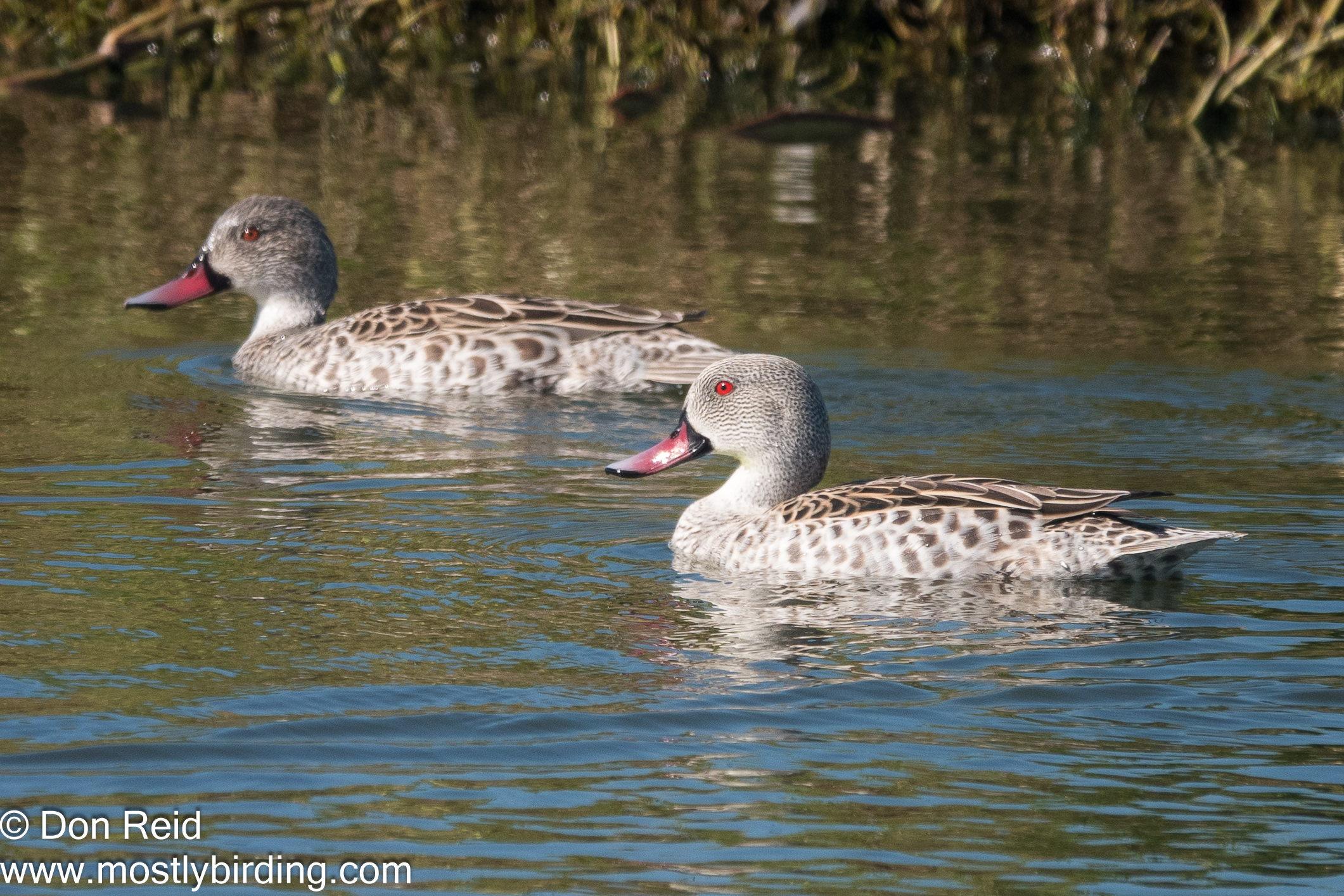
Cape Teal Anas capensis Teeleend, Strandfontein sewage works

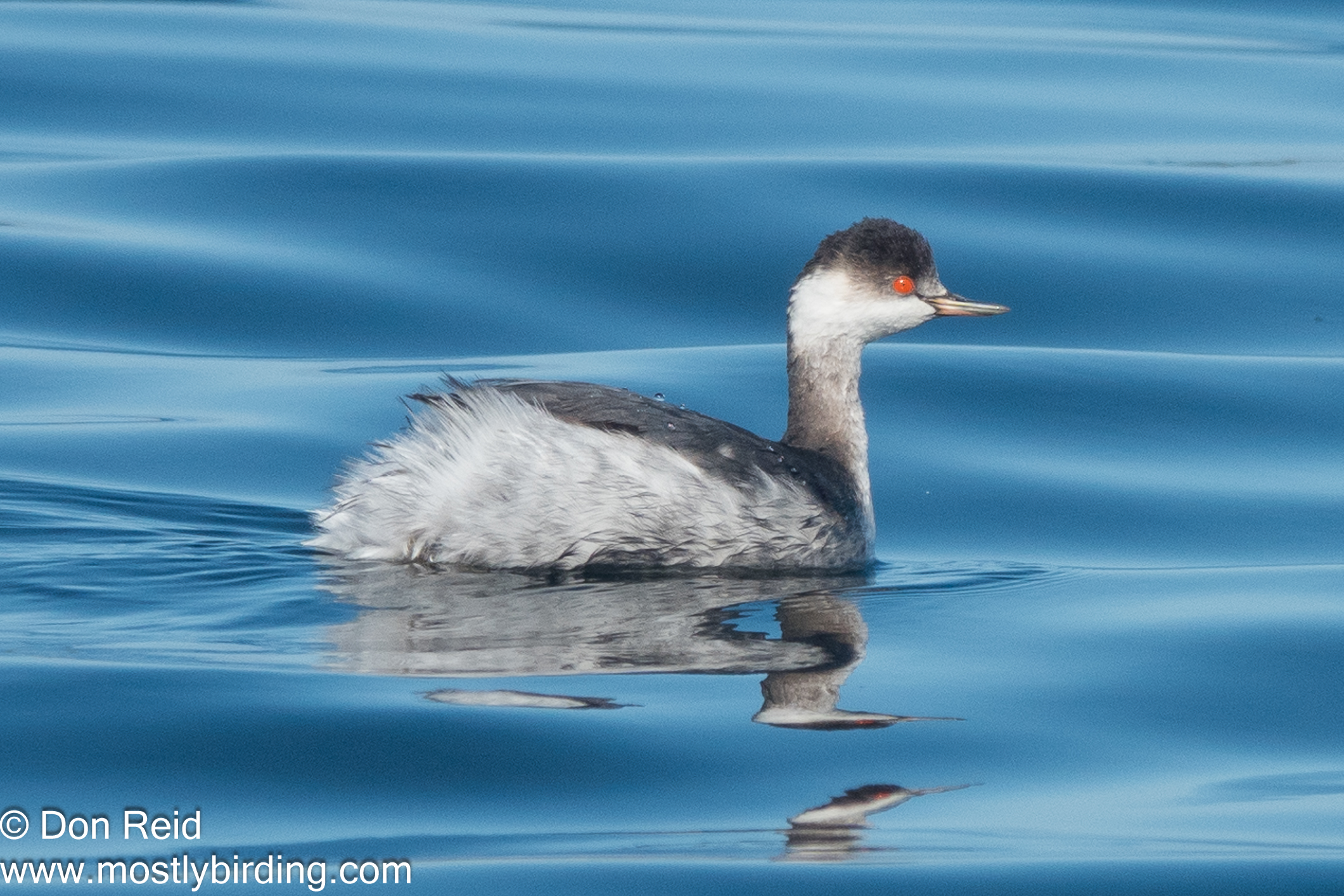
I was particularly pleased to photograph this Black-necked Grebe at reasonably close quarters during a visit to Strandfontein sewage works as my previous photos were all too far off to achieve any sort of detail of this striking swimmer

Black-necked Grebe Podiceps nigricollis Swartnekdobbertjie, Strandfontein sewage works

Waders

Those attractive waterbirds that don’t dive or swim but forage by wading in suitable shallow water

Also challenging to photograph at the best of times – often moving constantly, hiding behind vegetation, dipping into the mud and generally frustrating attempts to get a clear shot

Sanderling Calidris alba Drietoonstrandloper, Hartenbos River Estuary
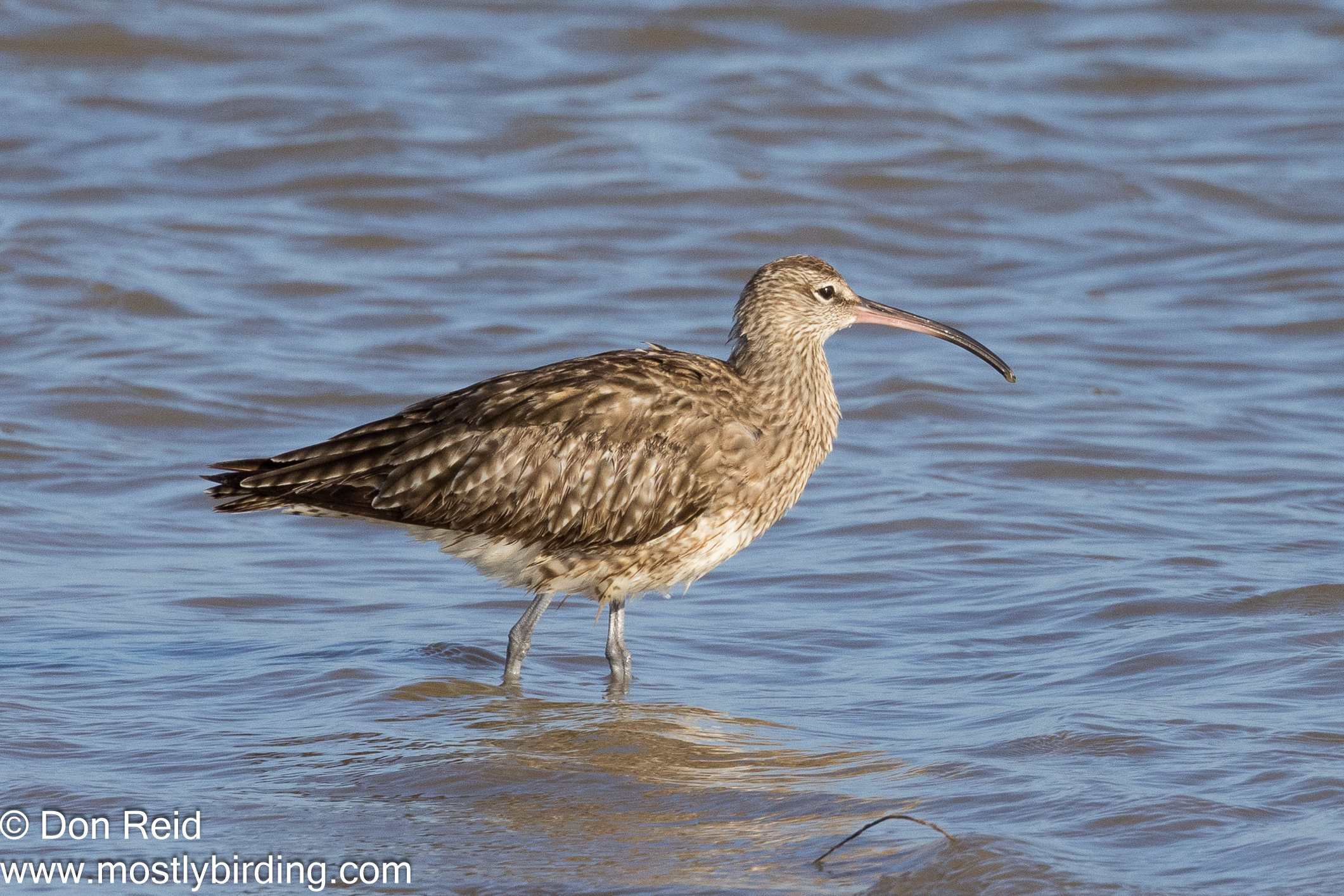
Whimbrel Numenius phaeopus Kleinwulp, Gouritsmond
Black-winged Stilt Himantopus himantopus Rooipootelsie, Hartenbos vleis
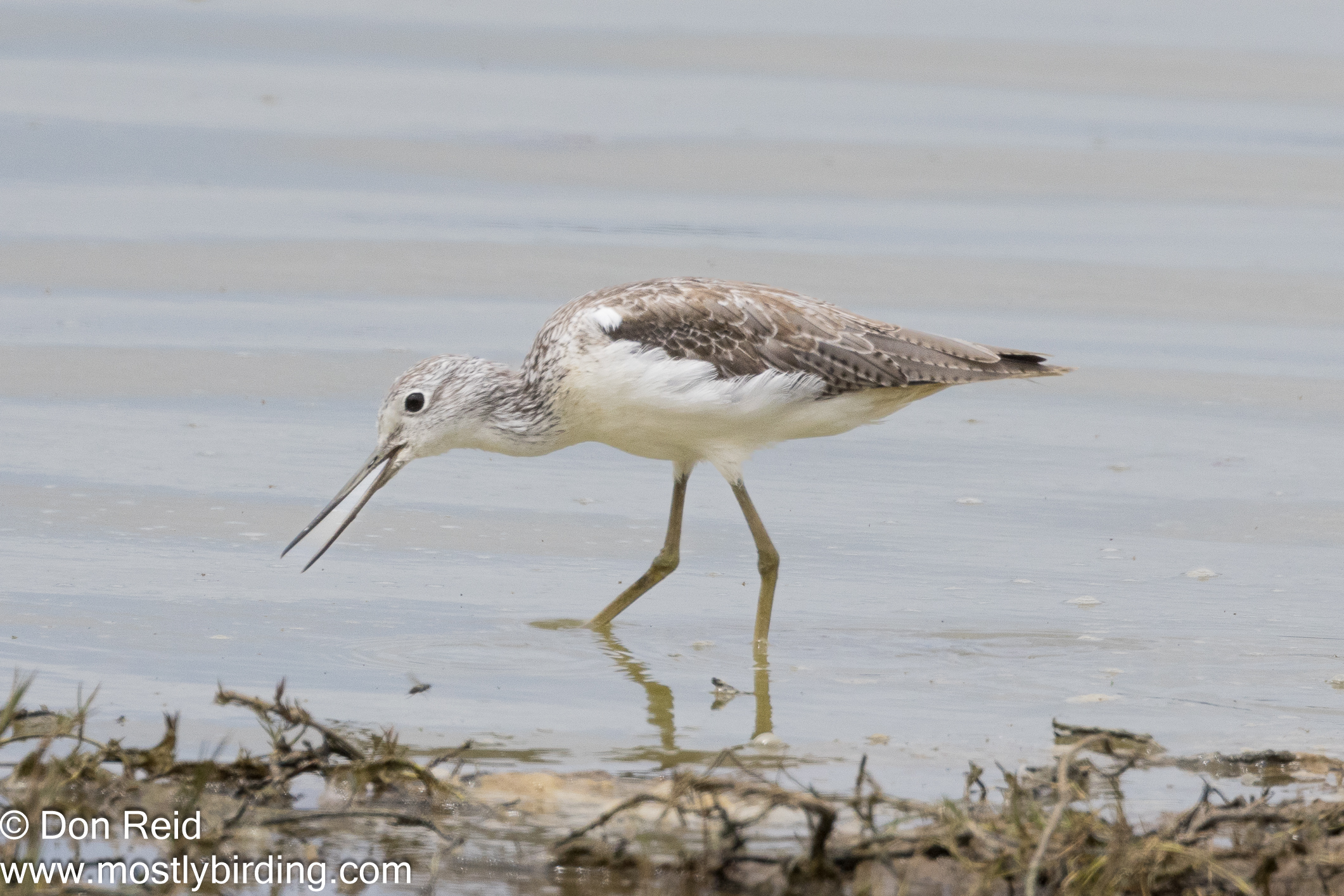
Common Greenshank Tringa nebularia Groenpootruiter, Voelvlei

One of the rarities that visited Voëlvlei near Vleesbaai during the summer of 2023/24 was this Greater Sand Plover.

Greater Sand Plover Charadrius leschenaultii Grootstrandkiewiet, Voelvlei

Walkers

And to end off – the largest bird in the world with its offspring made for a lovely sight in Addo Elephant National Park

Common Ostrich Struthio camelus Volstruis (female with juveniles), Addo Elephant NP

Addo Trip – March 2024 : Part 2

The Routine

We had four full days to make the most of our breakaway to this delightful park and we soon settled into a routine which we followed more or less on each of those days. Let’s just say we were out to relax as much as possible, while not missing out on what Addo has to offer.

The mornings were the most relaxed part of the day, getting up late-ish, having coffee while enjoying the birdsong and spending the rest of the morning out on the deck, then venturing out for a drive along one of the routes, usually with a light picnic lunch packed.

This took us to mid-afternoon when we would return to camp, just in time for a rest (I told you we were out to relax!). More deck sitting, followed by getting the braai fire going for the evening meal to round out the day.

Day 1 and 2 Highlights

Stoepsitting

Stoepsitting (relaxing on the deck) is especially rewarding in Addo’s Main Camp where the chalets are surrounded by trees and shrubs which are a magnet for a number of birds.

It almost seems as if the birds that visit the surrounding bushes and trees are prompted by a stage director to appear ‘on stage’, play their part and leave again

Some of the regular “performers” :

Southern Boubou, looking like he is in charge, giving a raucous call just in case you don’t notice him the first time

Southern Boubou Laniarius ferrugineus Suidelike waterfiskaal (female, race natalensis), Addo Elephant NP

Greater Double-collared Sunbird, resplendent in green cloak and bright red waistcoat and showing off its colours at every opportunity

Greater Double-collared Sunbird Cinnyris afer Groot-rooibandsuikerbekkie, Addo Elephant NP

Bar-throated Apalis, perky and loud, flitting about the bushes, allowing very brief glimpses as it moves through the foliage – so brief I didn’t manage to get a photo this visit so have included this one from a previous trip

Bar-throated Apalis, Bontebok NP (not impressed by my playing his call)

Cape Robin-Chat, haughty and superior – but who wouldn’t be if you could sing as well as it can

Cape Robin-Chat Cossypha caffra Gewone janfrederik, Addo Elephant NP

Streaky-headed Seedeater, looking a little miffed about no longer being known as a Canary (except in Afrikaans) but singing like one nevertheless

Streaky-headed Seedeater Crithagra gularis Streepkopkanarie (race humilis), Addo Elephant NP

Karoo Prinia, another busy bird not sitting still for long and with an almost desperate look in the eye – perhaps it’s thinking about a thorny issue of some kind …

Karoo Prinia Prinia maculosa Karoolangstertjie (race exultans), Addo Elephant NP

The Drives

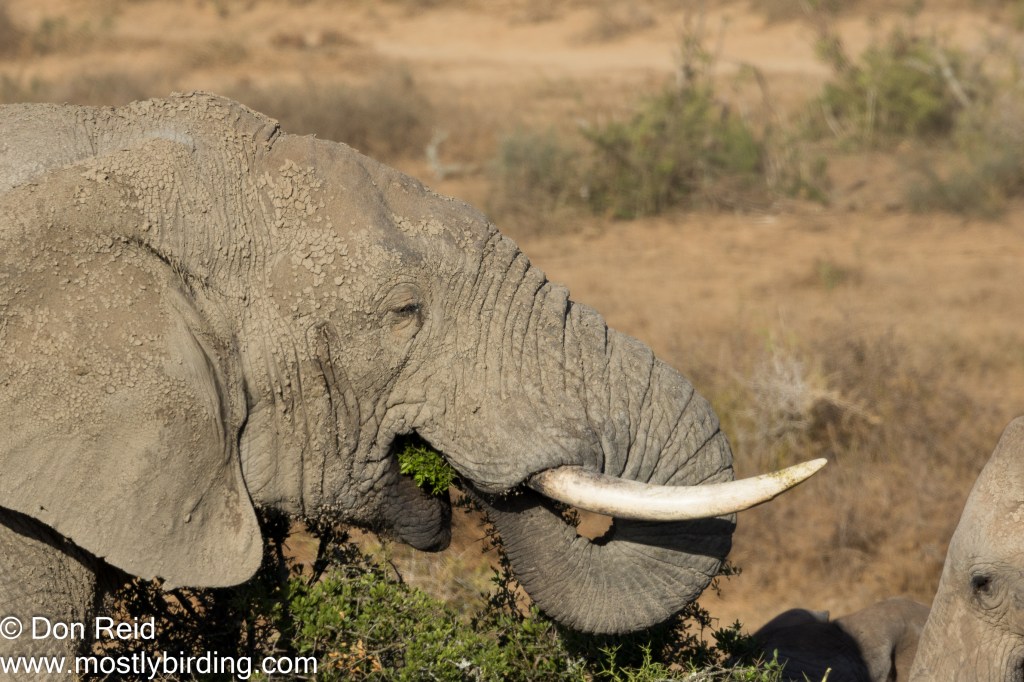
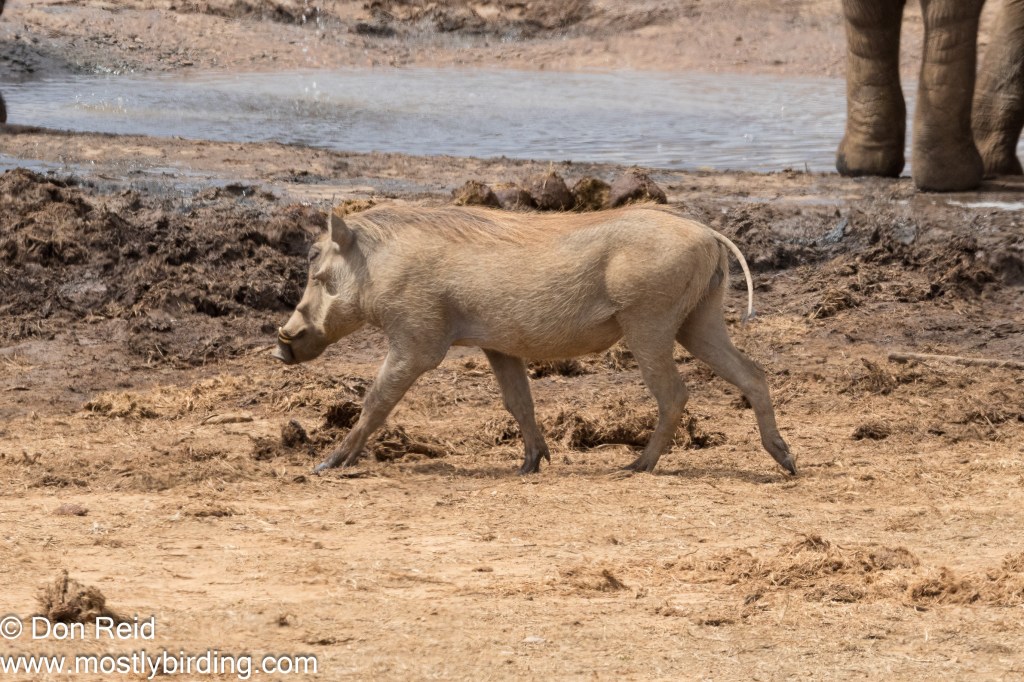
Our drive on day one was limited to a late afternoon exploration of the roads nearest to the camp. At the first waterhole we found a small group of elephants quenching their thirst, while a Warthog approached carefully to see if he could get a look in.

African Elephant, Addo Elephant NP
Warthog, Addo Elephant NP

On day two we felt like a longer drive and set off late morning, taking the road southwards to Jack’s Picnic spot where we had a light lunch of fruit salad and yoghurt and the tea that we had prepared before leaving. Jack’s is unique in that it has a number of individual picnic tables each set in an alcove shielded by bush almost all the way around, creating a cosy, private space to enjoy your picnic.

On the way we had encountered several groups of elephant – some at the waterhole, others nearby.

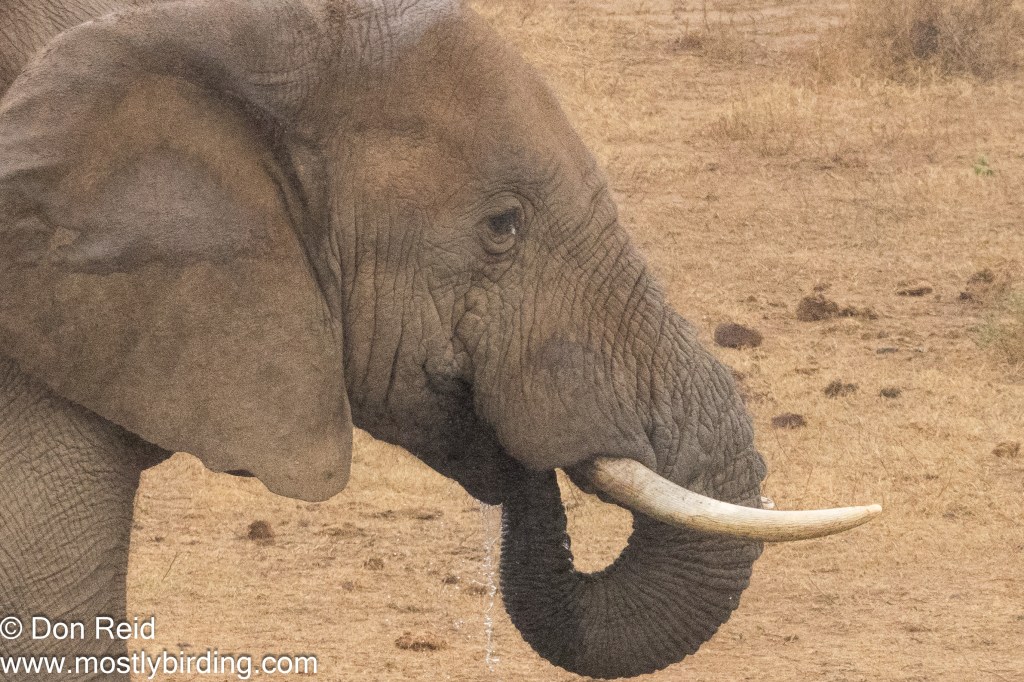
African Elephant, Addo Elephant NP

While watching the wild life activity at Hapoor waterhole near the picnic spot, we witnessed a mixed herd of elephants approaching at a pace, tails literally flying in the air – clearly they had one thing in mind – to quench their thirst on a hot day

African Elephant, Addo Elephant NP

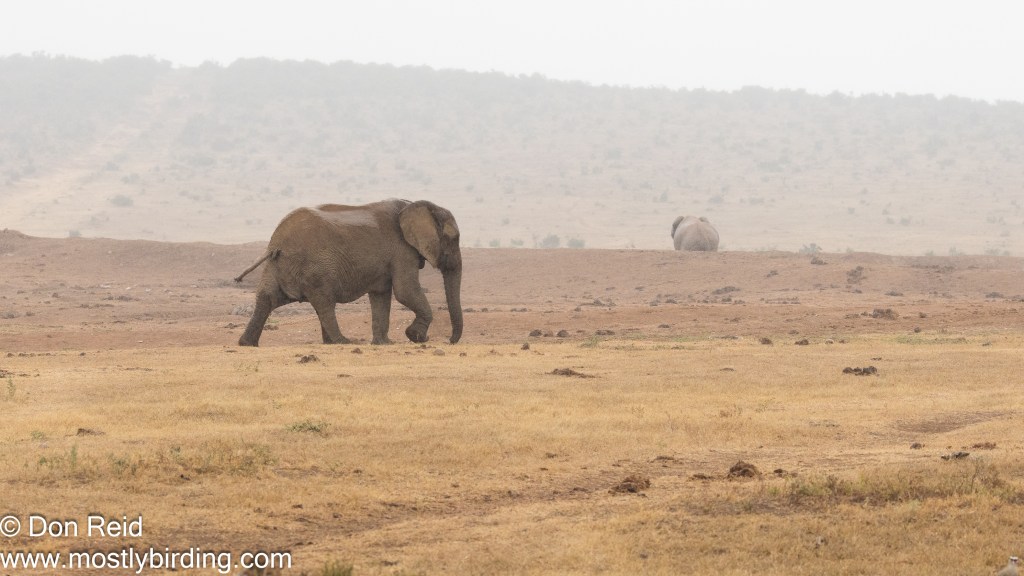
An older elephant lagged behind – the pace just too fast for it (I can relate to that)

African Elephant, Addo Elephant NP

A few Zebras in the bushy areas added some variety to the drive

Burchell’s Zebra, Addo Elephant NP

Ever on the lookout for birds, here are those that caught my camera’s eye

Crowned Lapwing
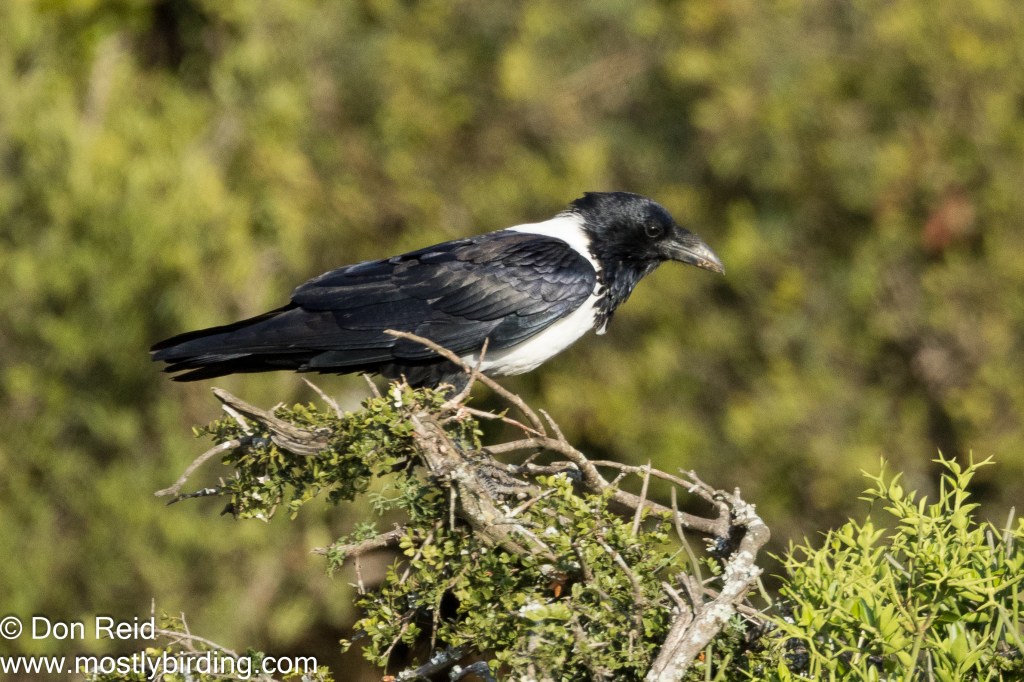
Pied Crow – often abundant but seldom offering opportunities to photograph it at close quarters

A pair of African Pipits were enjoying the wet open veld where it had just rained, pretending to be waders for a few moments

African Pipit Anthus cinnamomeus Gewone koester (race rufuloides), Addo Elephant NP

Joining the Pipits was a bird that at first had me wondering due to its wet and bedraggled plumage but a study of the photos I took convinced me it was a Karoo Chat – probably a juvenile

Karoo Chat Cercomela schlegelii Karoospekvreter (race pollux), Addo Elephant NP

Gerda is always on the lookout for wild flowers – there was not much to see but we did come across a single Spekboom that had flowers, while thousands of its like had none

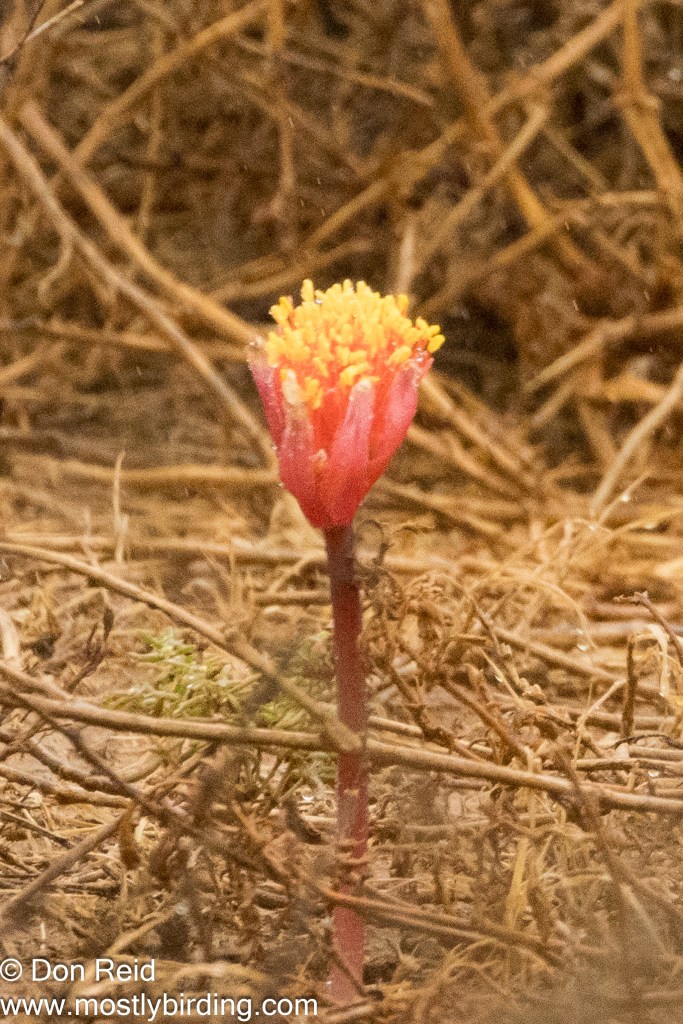
Soon after we saw a bright splash of red and yellow in an otherwise drab patch of veld, which turned out to be an unusual lily with several common names, one of which is Paintbrush Lily

Paintbrush Lily, Addo Elephant NP

By coincidence the same evening, while scanning through some wild flower posts on facebook, I came across an interesting post which went into some detail about this unique flower, in Afrikaans

We still had two days of relaxation ahead in this lovely national park, which tends to grow on you

The Eyes Have it! (Part 5)

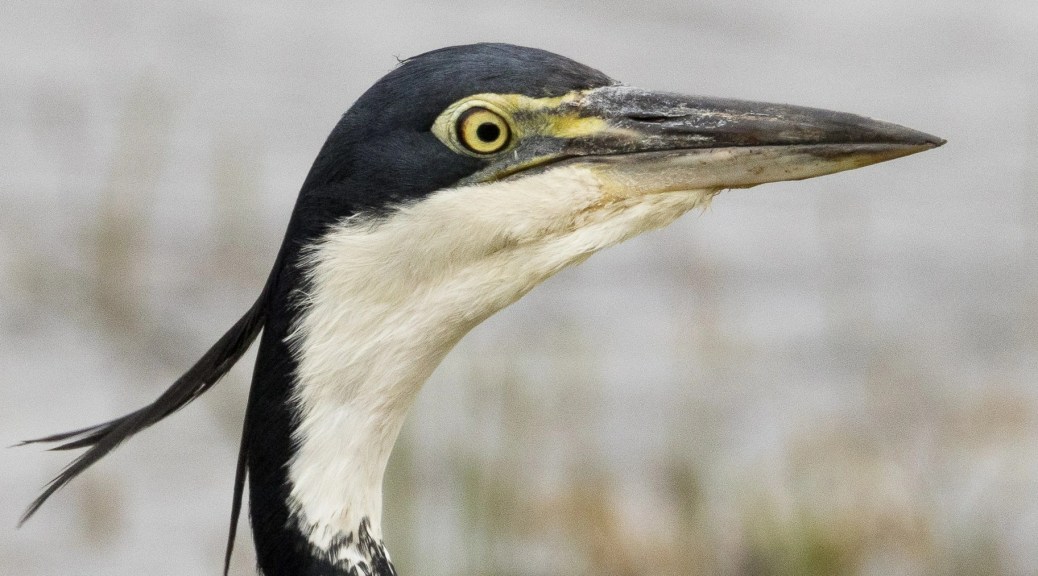
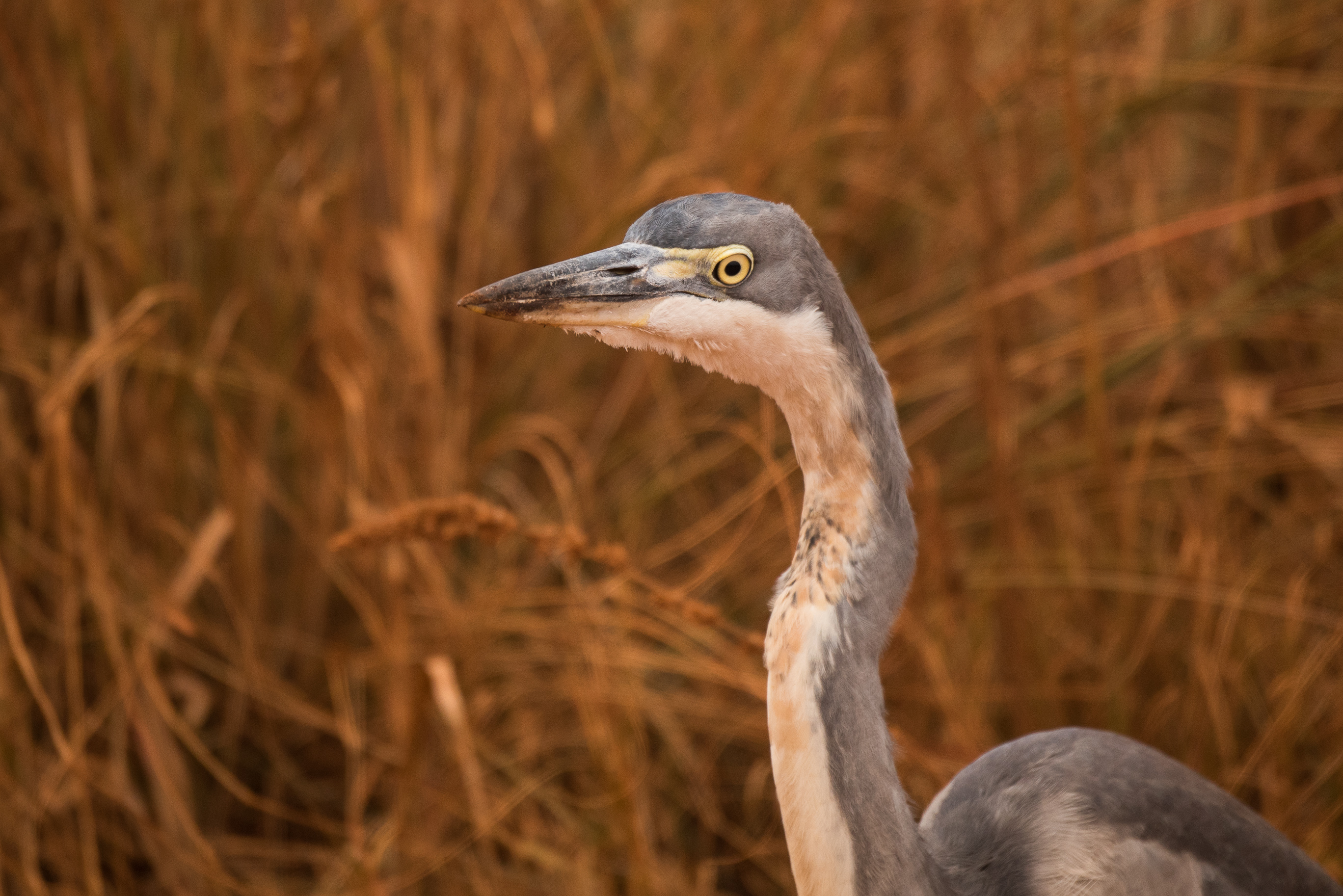
A while back I showcased a few species with striking eyes – continuing that theme, here’s a look at another species that has formidable eyes -although this is not immediately obvious but does become more so once you get up close and personal with it

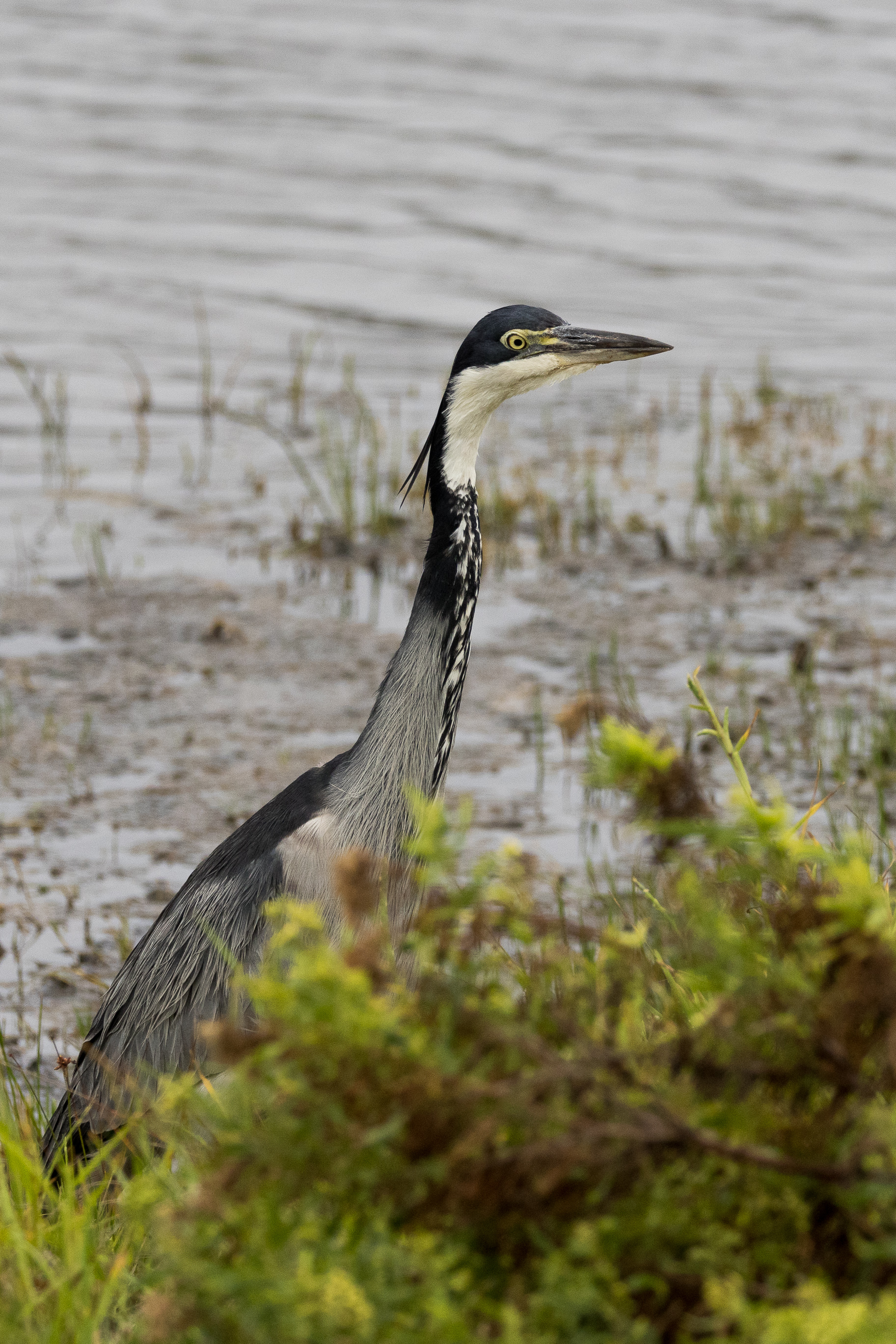
Black-headed Heron (Swartkopreier) Ardea melanocephala

Where in the world?

The distribution of this species is extensive across Sub-Saharan Africa, missing only from a few arid areas such as the Kalahari in southern Africa. It is the commonest of the large herons throughout Africa.

What to Look for

This is not a bird that is likely to be confused with any other, with the possible exception of the Grey Heron which is of similar size and, at a distance, of similar appearance. Non-birders (no disrespect, but you are missing out seriously) do mistake this species for the iconic Blue Crane, something I can vouch for from personal experience.

It’s a tall bird, up to 96 cm in height and weighing between 700 and 1650 g

Black-headed Heron Ardea melanocephala Swartkopreier, Great Brak River

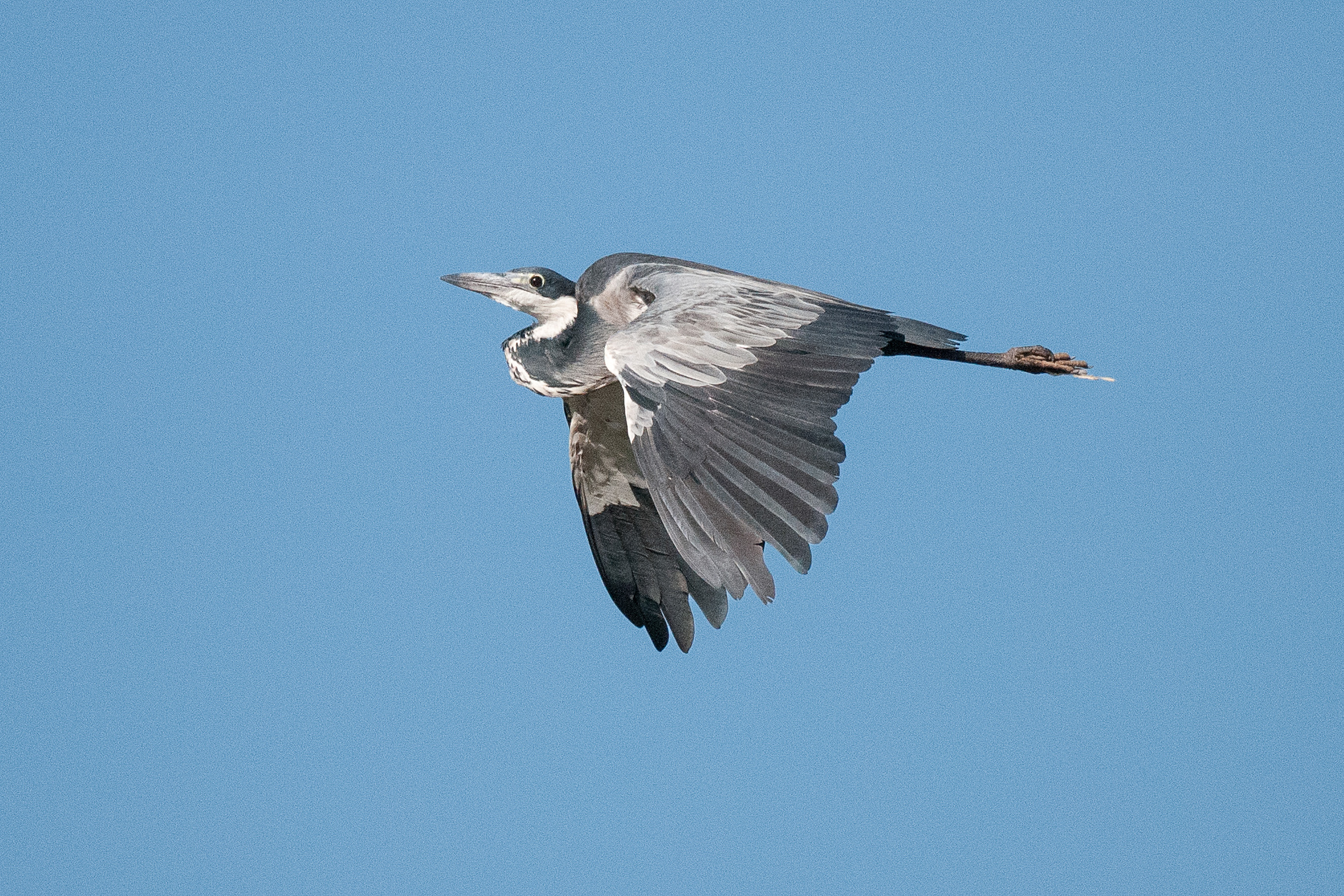
In flight it’s easier to confirm the identification due to the bi-coloured wings – black flight feathers, white underwing coverts

Black-headed Heron, De Hoop NR

Eyes are yellow, but turn orange, then red during breeding

Black-headed Heron, Delmas area

Black-headed Heron is a terrestial species, not necessarily found near wetlands as with other herons, and is one of the few birds that benefit from human alteration to the environment such as irrigated areas, which suit their preference for damp pastureland

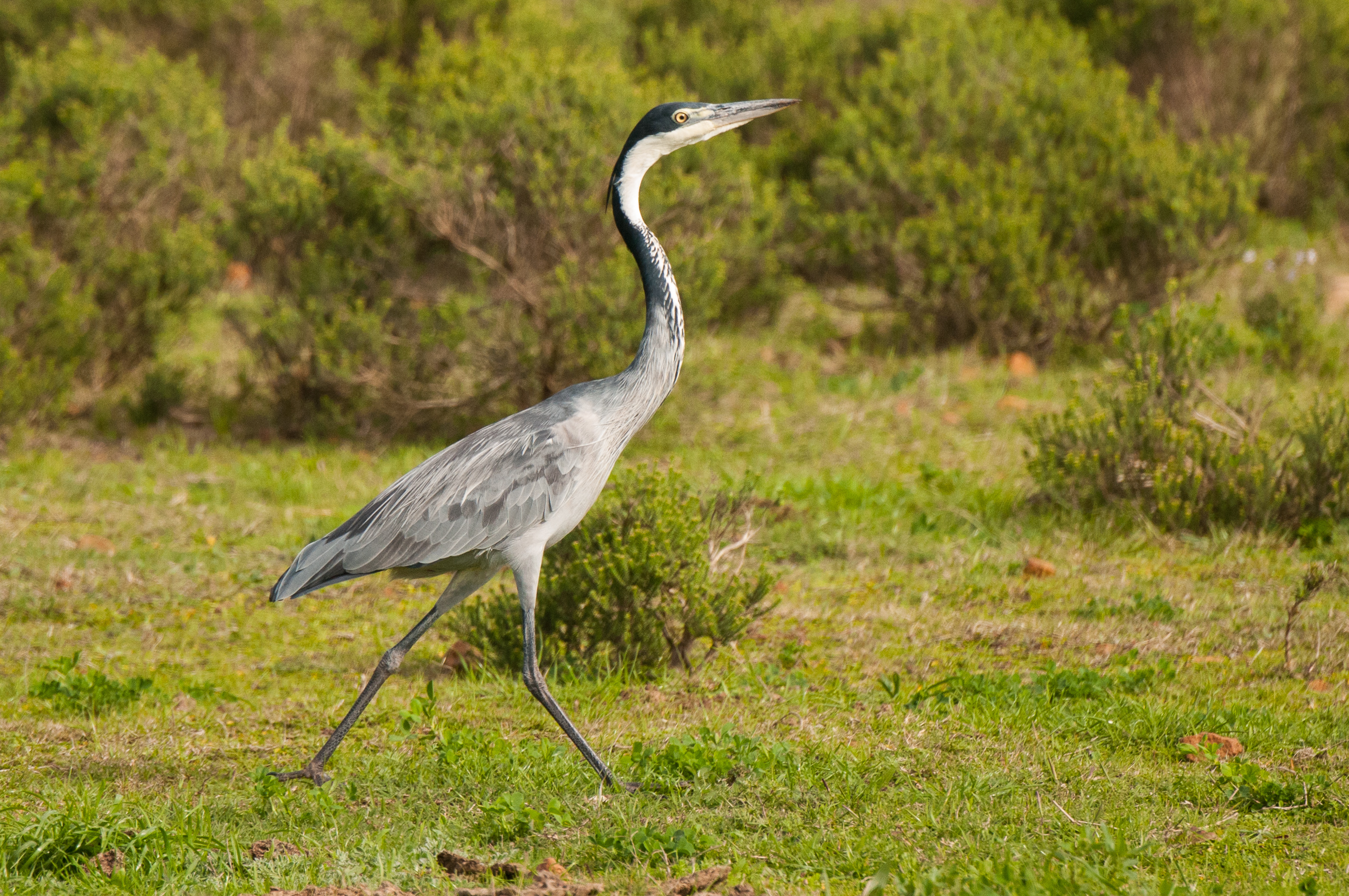
They will often be found striding through grass, hunting for prey

Black-headed Heron, Mossel Bay-Herbertsdale

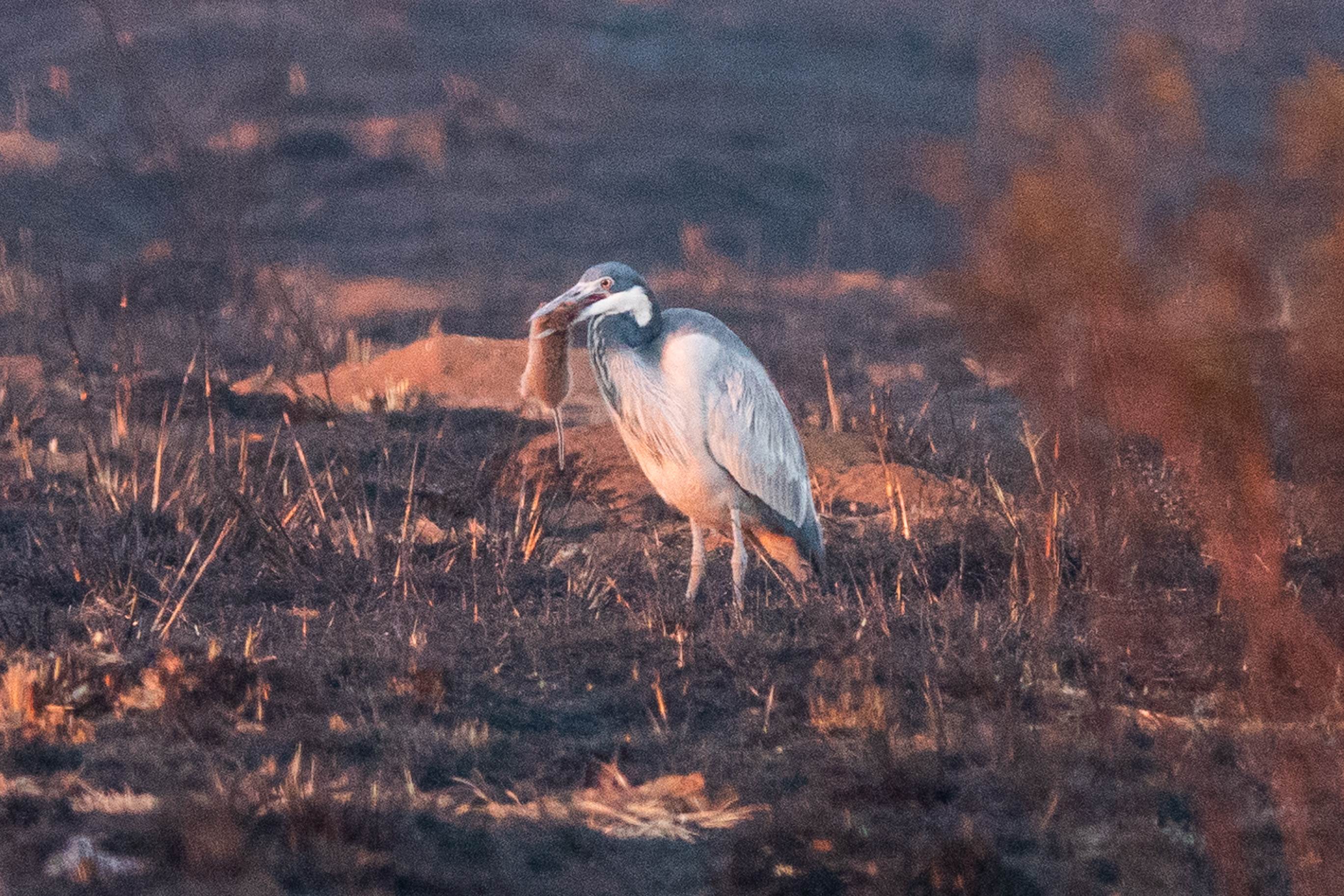
They eat a variety of rodents,insects, snakes, frogs, crabs, fish – in fact just about anything that crosses their path including small birds. This individual I came across early one morning in the Rayton area near Pretoria had caught a large rodent, possibly a vlei rat, and proceeded to swallow it whole, taking a few minutes to manoeuvre it into position for swallowing. I could see the progress of the prey moving down the bird’s long neck, which bulged as it gradually slipped down.

Black-headed Heron swallowing prey, Rayton-Culinan area

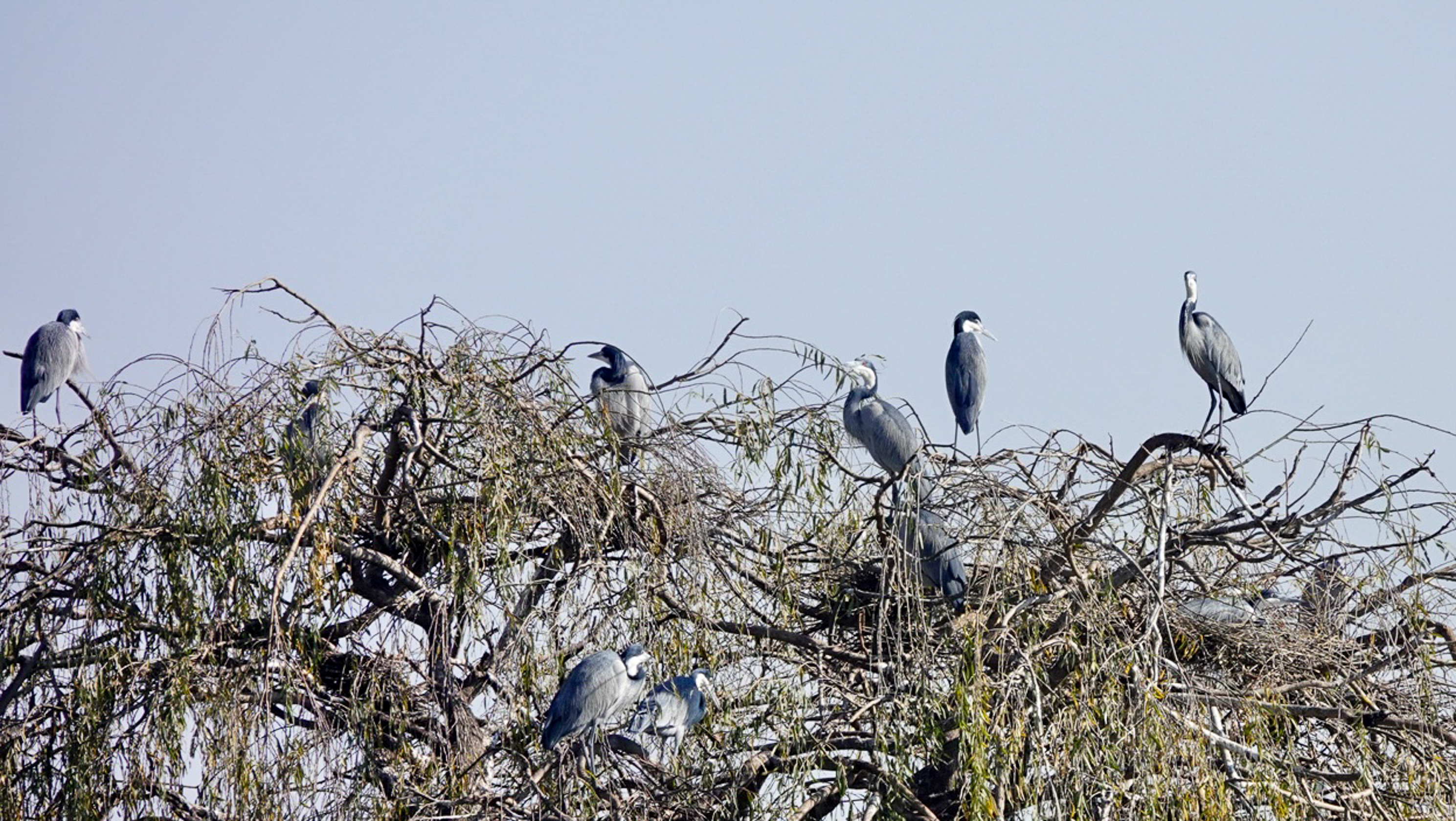
They often nest in or near towns – Great Brak River, just down the road from Mossel Bay, has a busy roost in a tall tree on the main road. The next photo was taken in a more rural area near Pretoria, where numbers of Black-headed Herons occupied a large tree next to a farm dam.

They make themselves known with their harsh squawking calls at all times of the day.

Black-headed Herons, Bapsfontein east

References: Roberts VII Birds of Southern Africa; Firefinch Birding App; Birds of the World – Cornell Lab of Ornithology

300 Up! And a special bird to celebrate

My 300th post is a short one with just one photo of one bird – but I have reason to celebrate both…

The bird in question is a Common Quail – so what’s the big deal I hear you think. Well if I tell you that I’ve heard this bird calling a few hundred times during my birding and atlasing travels over 35 years or so, but have seen it just once before, so briefly that there was no chance to get a photo, then you may appreciate my excitement about my experience last week.

I was out atlasing in the early morning not far from our new home in Mossel Bay and heard the familiar call of Common Quail almost every time I stopped. There were numbers of Larks and other birds in the gravel road and along the verges, then I noticed something different up ahead and raised my binos once more – it was a Common Quail, in fact a pair that were walking along the edge of the gravel amongst grass tufts.

With my heart pumping I grabbed my camera, checked settings and fired away even though the Quails were not ideally positioned and not close enough to achieve sharpness, but I was ecstatic that I had at last seen this bird clearly and at least had a reasonable record photo.

The Eyes Have it! (Part 4)

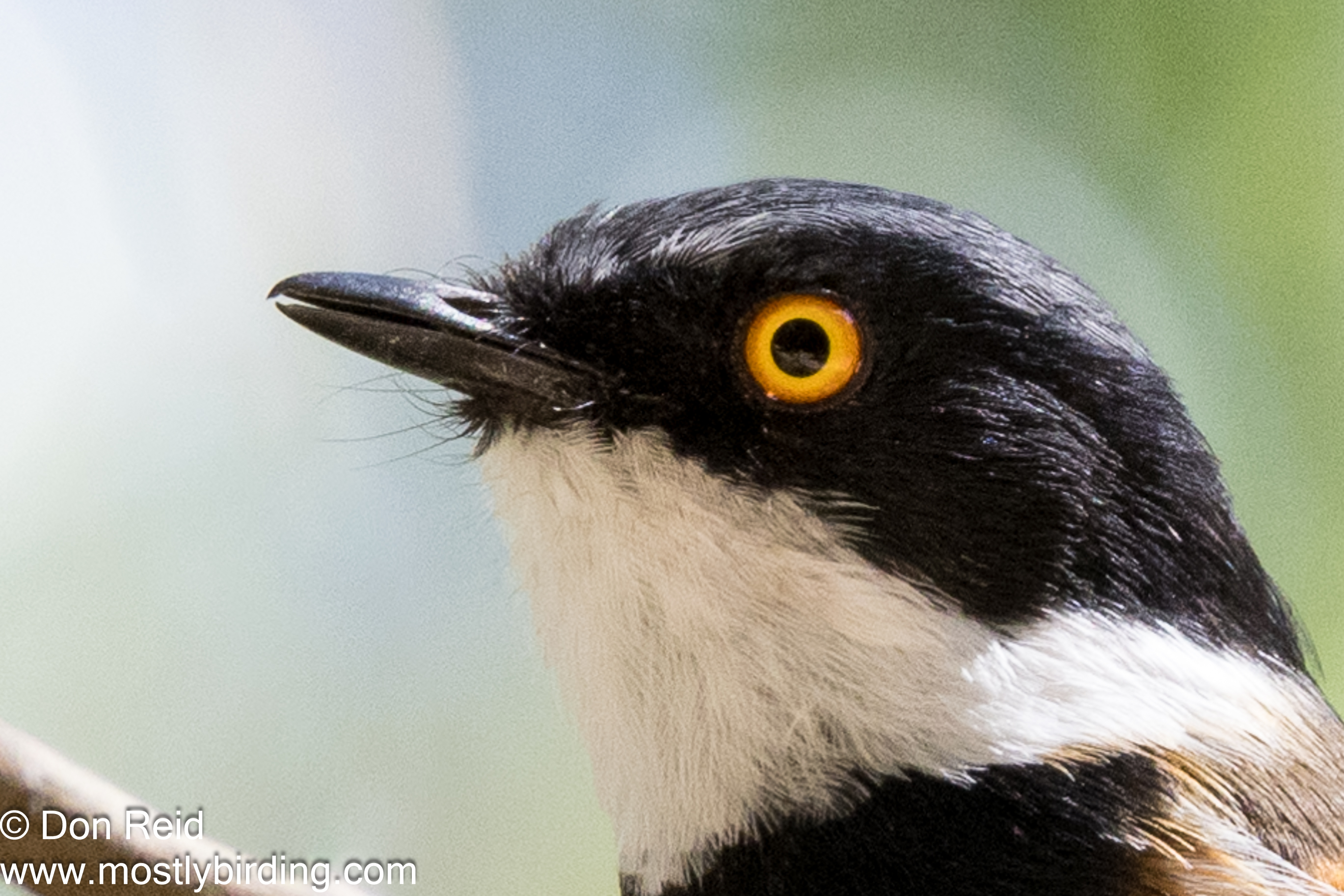
Another species that fits the description of birds with striking eyes is the diminutive Cape Batis

Cape Batis (Kaapse bosbontrokkie) Batis capensis

Where to find them

The Cape Batis occurs mainly, but not exclusively, in forest habitat – I have come across them in bushy areas not 200m from our Mossel Bay home and in various other locations outside ‘proper’ forests.

Distribution is confined to southern Africa as shown on the map below – courtesy of Birds of the World.

What to Look for

Batises can be confusingly similar in appearance, but the Cape Batis is the only one with orange flanks and wing bar, while the male is told by the broad black band across its chest.

Cape Batis Batis capensis Kaapse bosbontrokkie (male), Friemersheim area

The Firefinch app refers to this species as the “standard” forest bird – common, bold, noisy and striking. It is an active bird, flitting between bushes with a ‘fripping’ sound caused by rapid beating of its tiny wings and can often be found at the centre of bird parties.

Cape Batis Batis capensis Kaapse bosbontrokkie (male), Friemersheim area

Getting the Photo

The images above were taken while atlasing in the Friemersheim area not far from George – I stopped to scan a forested patch next to the road when I noticed movement among the branches not far from where I was standing, and pointed the camera in the general direction just as a Cape Batis popped into view, posing in sunlight just long enough to get a few shots.

The Eyes Have it! (Part 3)

As a follow up to the previous posts on the subject of birds with striking eyes – here’s a look at another species, familiar to South African birders, with eyes that beg your attention –

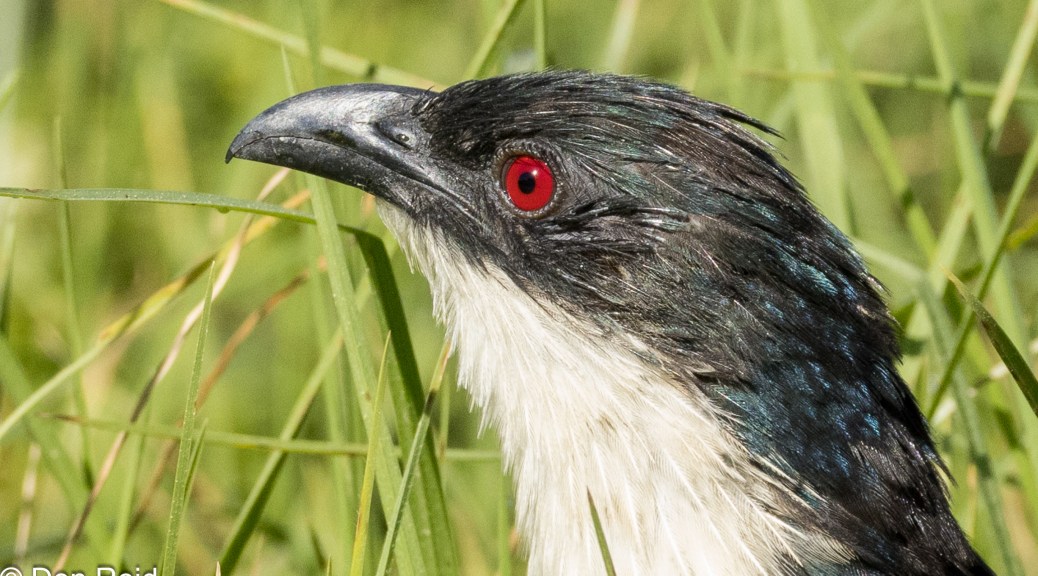
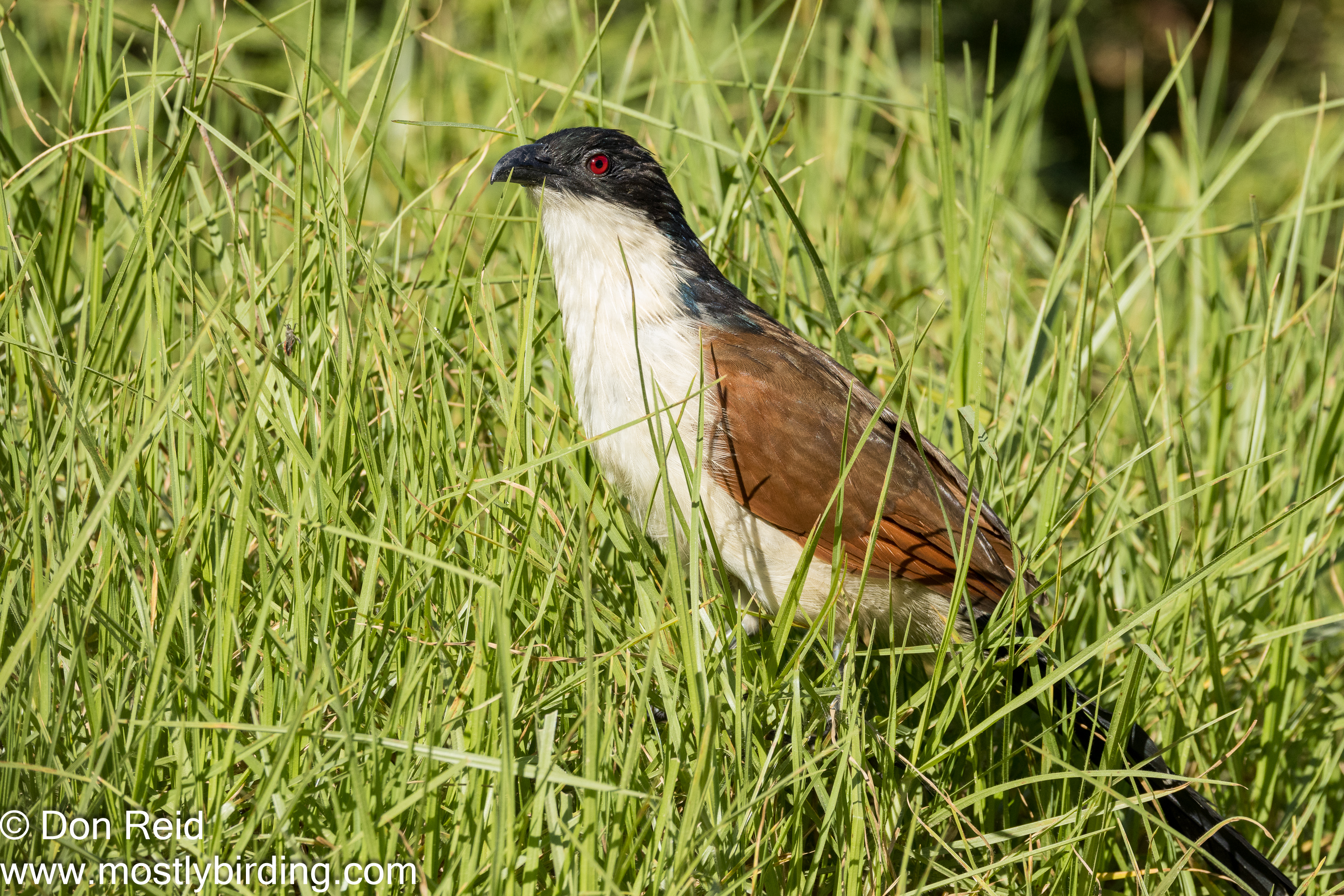
Burchell’s Coucal (Vleiloerie)

Centropus burchellii

This is a species best known for its bubbling call from the depths of dense bush or trees – a call which Roberts VII describes as “like water being poured from a bottle”.


And that may be the only clue you get to its existence until, one day, you actually get a glimpse of the bird as it flies heavily from one bush then crashes clumsily into the next one and disappears again. This is a bird that does not crave attention as it goes about its daily routine of searching on the ground and in bushes for just about anything it can lay its claws on – rodents, reptiles, other birds, nestlings, frogs, snails, insects … etc

Distribution

Birds of the World (see footnote) – lumps two species together with a combined distribution across Africa and a narrow stretch of Arabia as per the map below.

Southern African birdlists separate the two species into :

Burchell’s Coucal — Centropus burchelli – with distribution from south-east Tanzania through Mozambique to the Western Cape in South Africa and including south-east Botswana

White-browed Coucal – Centropus superciliosus – with distribution from Yemen, south-west Arabia, Ethiopia south to Zambia, Angola and southern Africa

Getting the Photo

As mentioned above, this is a fairly secretive species so when the opportunity arises one has to be quick off the mark to get a decent photo

I was fortunate enough to have such an opportunity recently while atlasing in the area east of Friemersheim in the southern Cape. I was driving slowly along a dirt road and had just passed a small stream when I spotted movement in the long grass at the roadside and stopped to look further.

I soon saw what had attracted my attention – a Burchell’s Coucal making its way through the lush grass and close enough to the road for a reasonably close-up photo. That sighting had me grabbing my camera and reversing at the same time to get into a position where I could aim the camera through the passenger side window, which I was busy opening while doing all of the above (this just shows men CAN multi-task – provided the motivation is there of course).

Suffice to say I believe my efforts paid off and I was very pleased with the results!

Burchell’s Coucal Centropus burchellii Gewone vleiloerie, Friemersheim area

What does Faansie say?

The Firefinch app produced by the incomparable Faansie Peacock always has interesting facts about birds and in this case it mentions that Coucals have stiff, spiky breast feathers – which can be seen in the above photo.

Also that they are known as ‘rainbirds’ because they sing just before, during and after rain

Footnote : The website Birds of the World published by the Cornell Lab of Ornithology provides a wealth of information on birds worldwide and the good news is that access to the website is free for Southern African residents – all that is required is to create an account which can be done at : https://birdsoftheworld.org/bow/home

The Eyes Have it! (Part 2)

As a follow up to the previous post on the subject of birds with striking eyes – which showcased Southern African Cormorants – here’s a look at another species that fits that description to the full

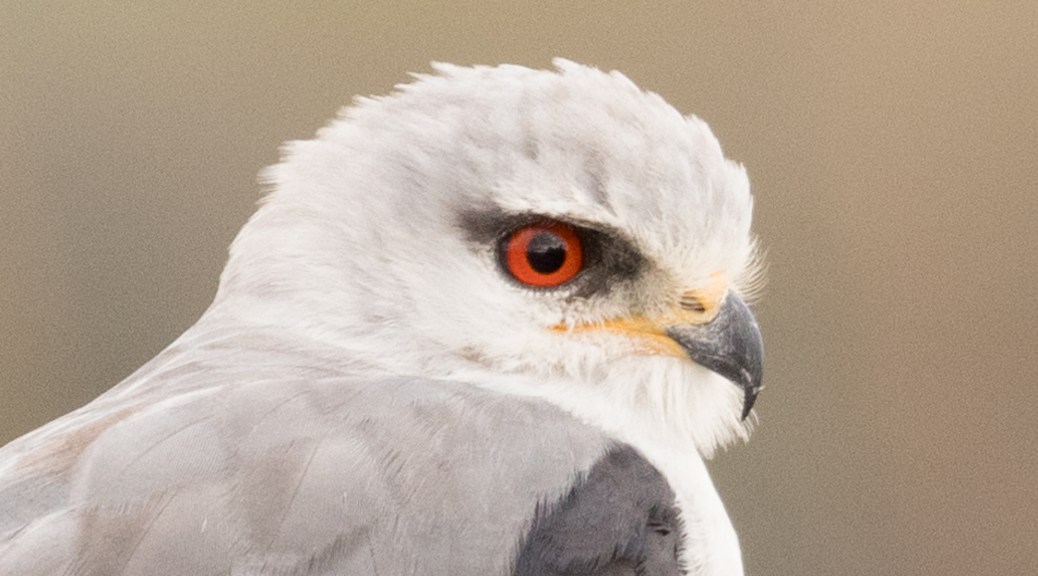
Black-winged Kite (Blouvalk)

Elanus caeruleus

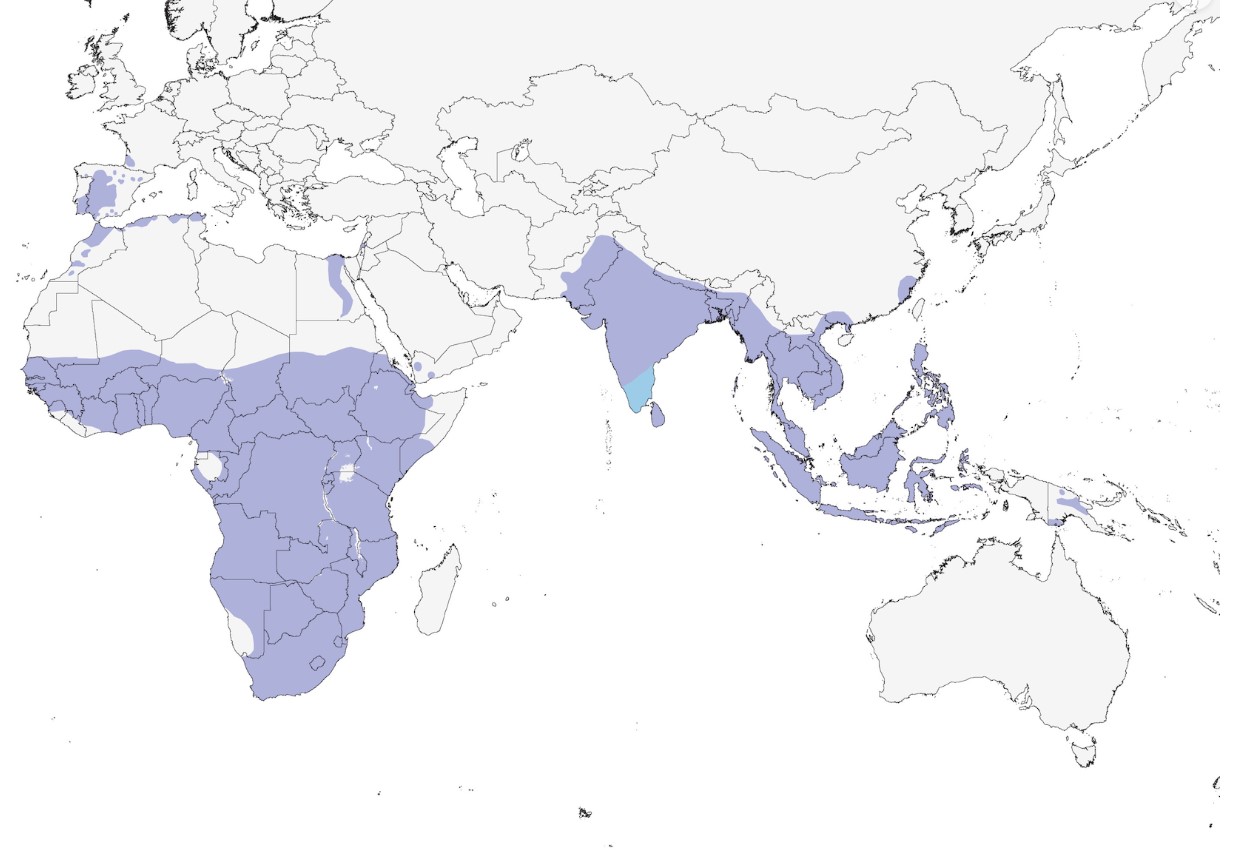
This well-known, small raptor is without doubt the most common raptor to be found across all of Southern Africa – and beyond as you will see from the global distribution map reproduced below courtesy of Birds of the World

Global distribution of Black-winged Kite

It is also the raptor you are most likely to see on any road trip through southern Africa, as their preferred hunting ground is along the road verges and adjoining fields.

They are most often seen perched on roadside powerlines, which provide the ideal vantage point for their hunt for the next small rodent.

However, it’s just as easy to overlook this species, which is similar in size to the many doves which also like to perch on powerlines. The good news is that the flatter pose and habit of slowly wagging its tail up and down will confirm that it’s a Black-winged Kite, even from a good distance, and once it takes to the air there is no doubt about the ID as it hovers, then ‘parachutes’ down to grab its prey.

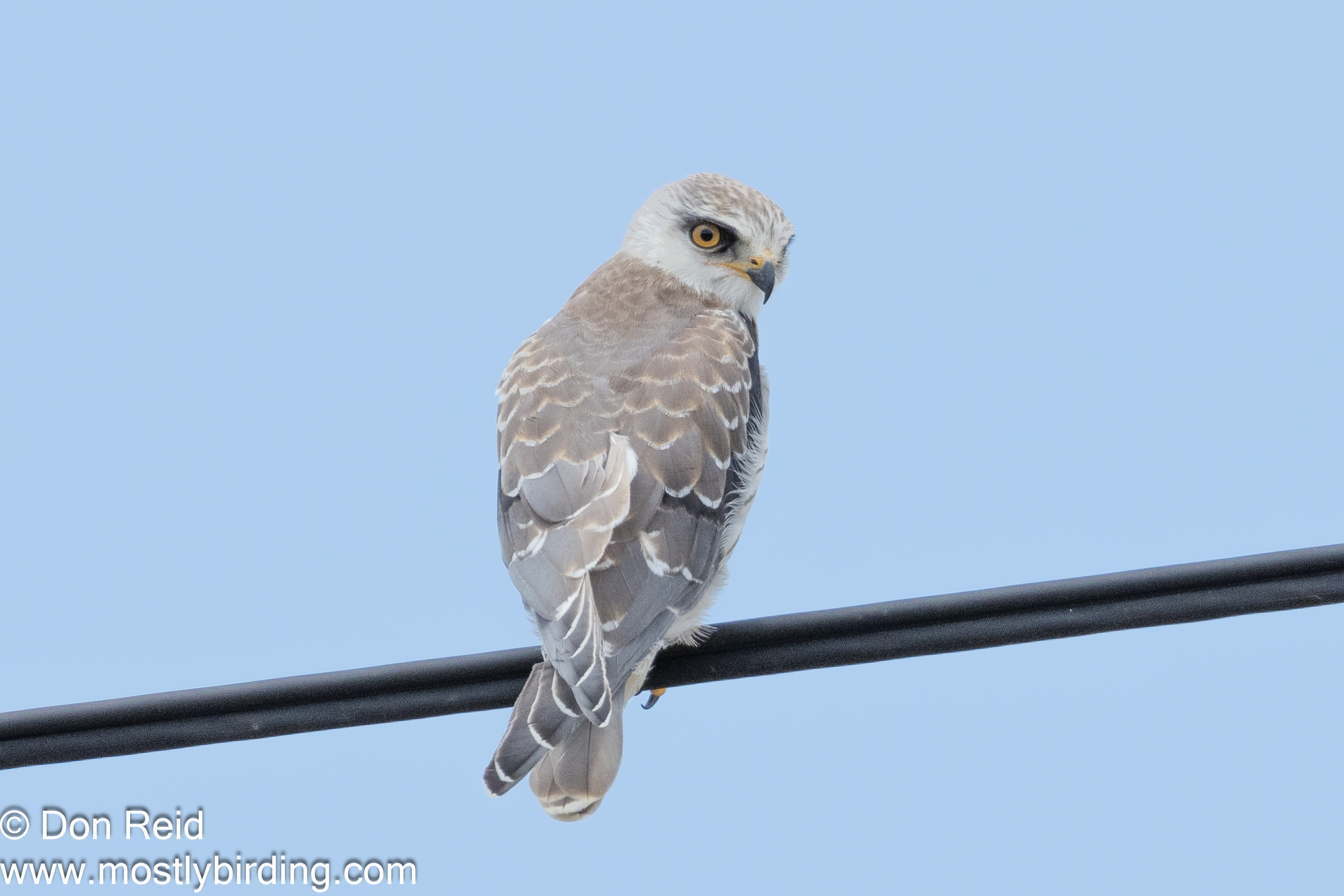
The images that follow were taken during a recent atlasing trip north of George, on the way to Oudtshoorn – once I had spotted the bird up ahead I approached very slowly, using roadside bush to conceal my approach until I was close enough to quickly take a few photos through the open passenger window.

Black-winged Kite Elanus caeruleus Blouvalk, George-Oudtshoorn Area

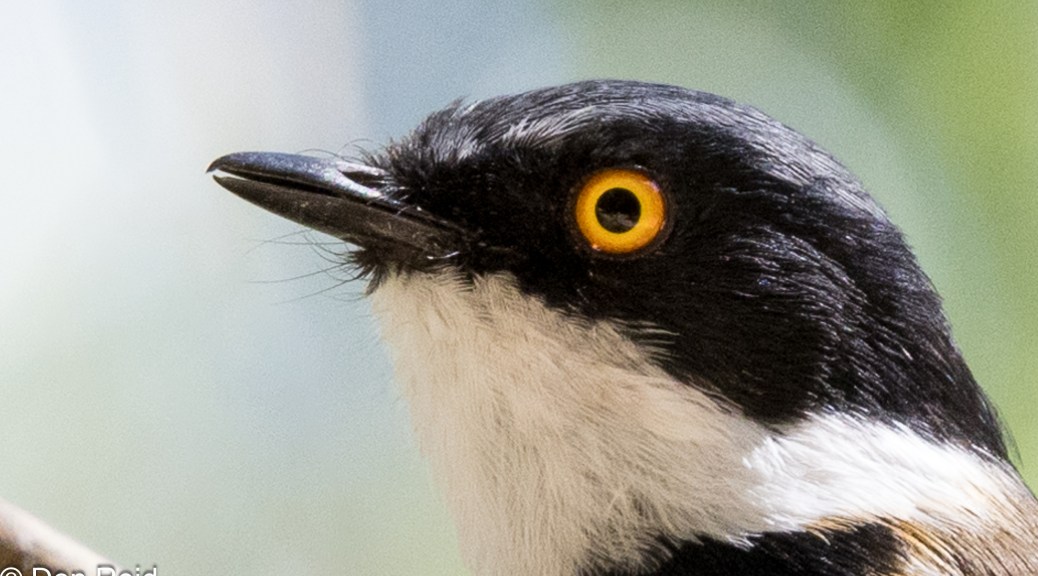
And just look at that eye colour! Beyond striking and ready to take you on in a staring competition

Black-winged Kite Elanus caeruleus Blouvalk, George-Oudtshoorn Area

On another atlasing trip earlier this year in the Gouritsmond area just south-west of Mossel Bay, I came across another Black-winged Kite, this time a juvenile without the black ‘shoulder’ and with yellow eyes – still fierce looking, mind you, but not yet up to adult standard

Black-winged Kite Elanus caeruleus Blouvalk (Juvenile), Gouritzmond

Footnote:

I would like to mention a birding website that has helped me to broaden my birding info horizons and opened up a world of new knowledge (literally) to add to and enhance that which I have gathered during many years of birding.

The website is Birds of the World published by the Cornell Lab of Ornithology and the good news is that access to the website is free for Southern African residents – all that is required is to create an account which can be done at

https://birdsoftheworld.org/bow/home

The Eyes Have it! (Part 1)

Cormorants

Cormorants are not generally regarded as birds that are high on the list of desirable birds to see – unless it’s a potential lifer of course. When you’ve been ‘into’ birding for a while the most that a cormorant is likely to elicit is a slightly off-hand “Oh, there’s another Reed Cormorant” or “Hey, have a look at that Little Grebe just to the right of that White-breasted Cormorant”.

But there’s more to cormorants than meets the eye – or eyes in this case …..

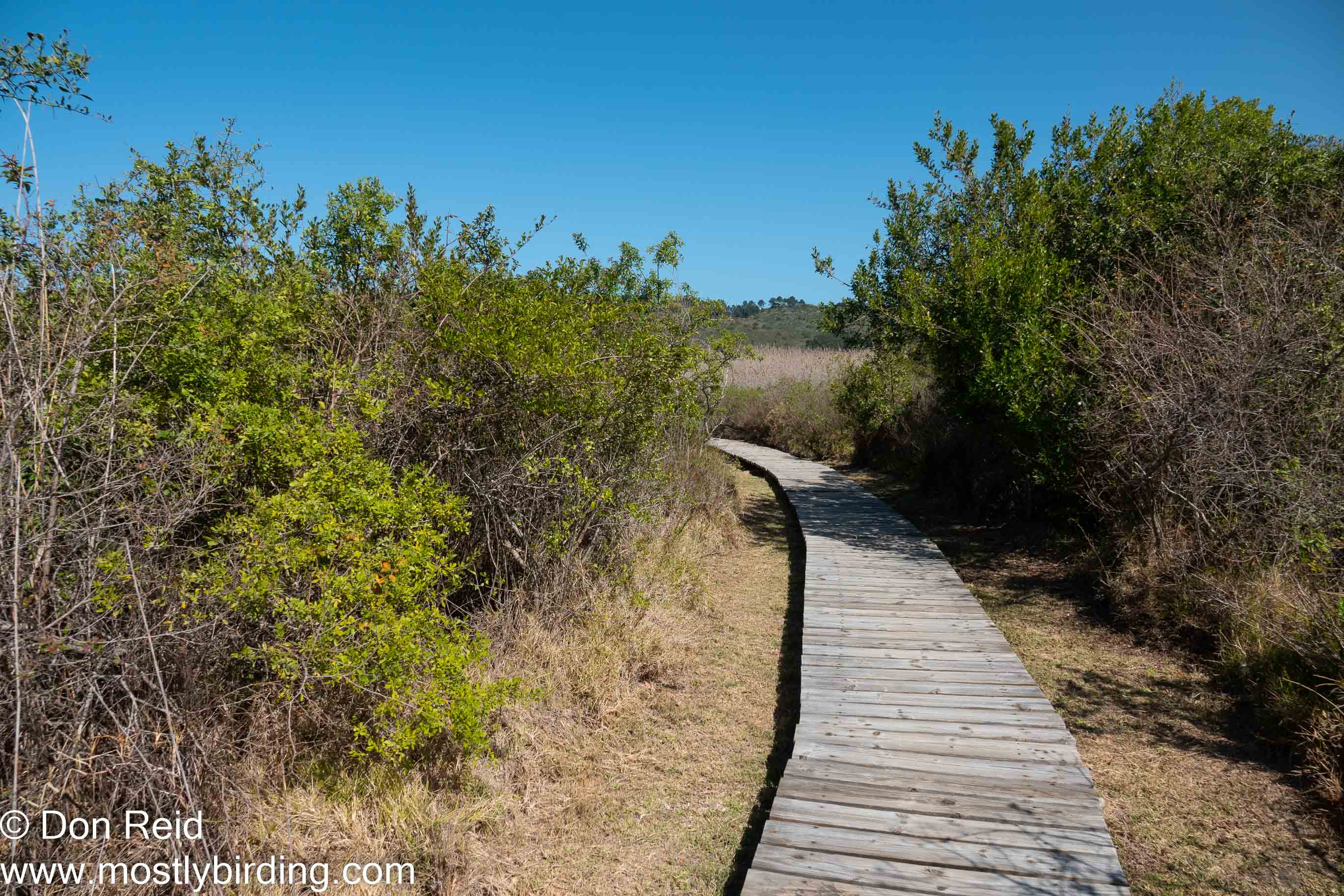
During one recent day trip, I found an opportunity to visit the area which we know as “The Vlei’s”, to the east of the small town of Wilderness, and spent a pleasant hour or so in the bird hide at Langvlei.

Boardwalk to the hide at Langvlei Wilderness

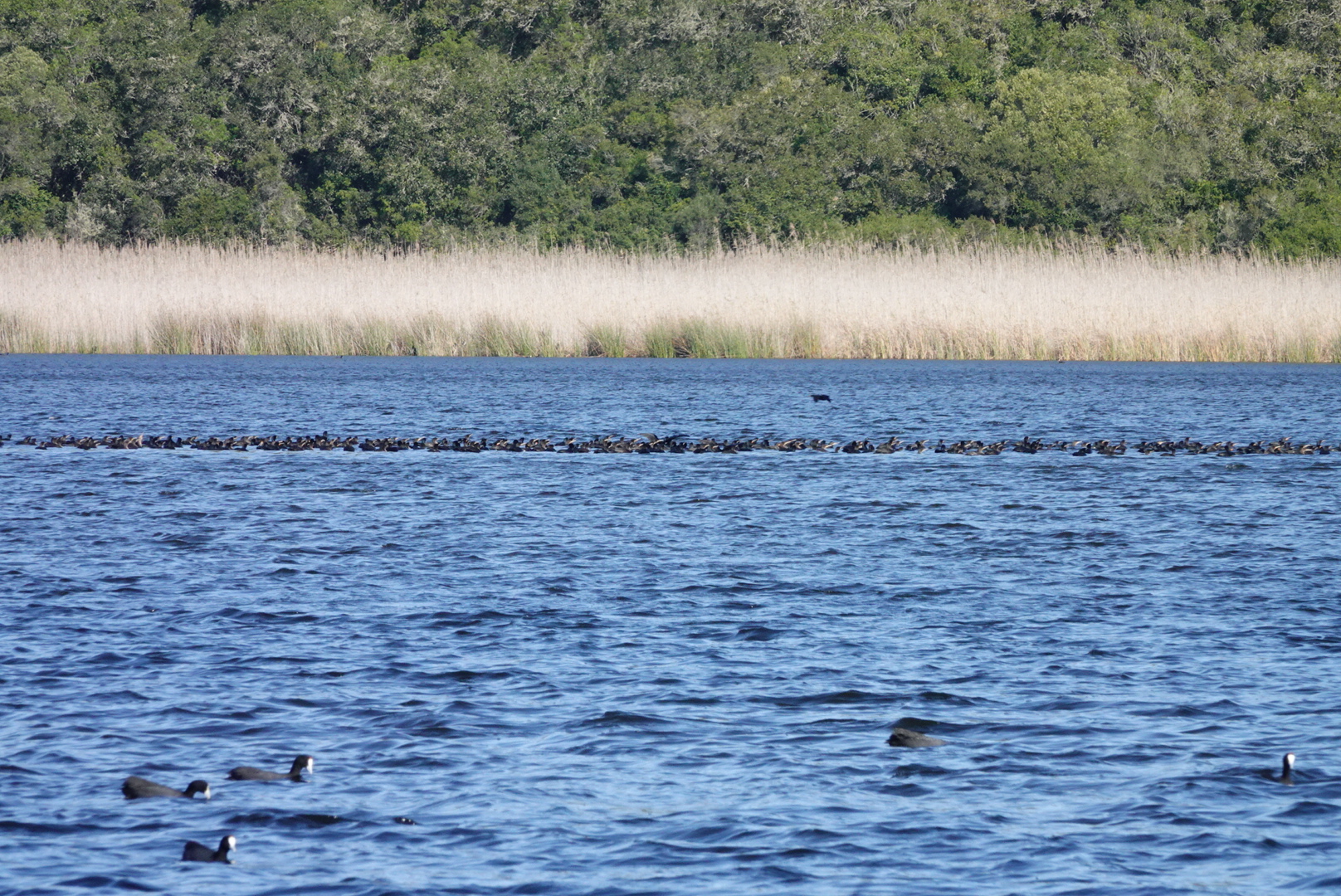
There were numerous waterbirds on the vlei, mostly Coots but also significant numbers of Grebes, more than I can recall seeing in any location before and including all three southern African species – Little Grebes, Great Crested Grebes and a few Black-necked Grebes. However, they were too distant for photography.

Also distant was a long line of dark birds on the water, as the image below shows, and once I had the scope in position, I could see that it consisted of a few hundred Reed Cormorants, again more than I can recall seeing in one location before. As I watched the line, a few of the foremost swimmers flew up out of the water and circled back to the rear of the “queue” where they settled down in line again. I can only assume they were performing some kind of feeding strategy.

Close to the hide a dead tree stump has been strategically placed and perched on it were two cormorants – the larger White-breasted Cormorant and the somewhat smaller Reed Cormorant.

White-breasted Cormorant above, Reed Cormorant below

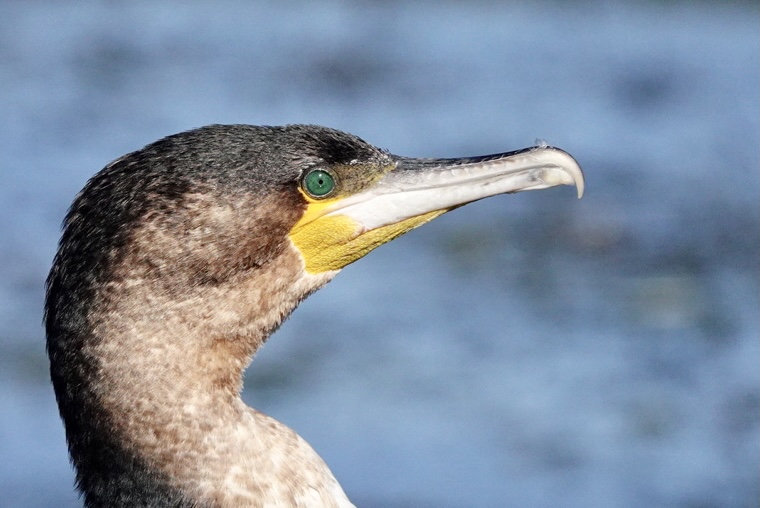
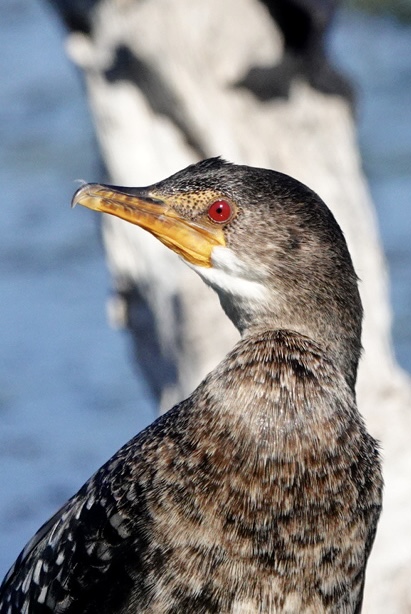
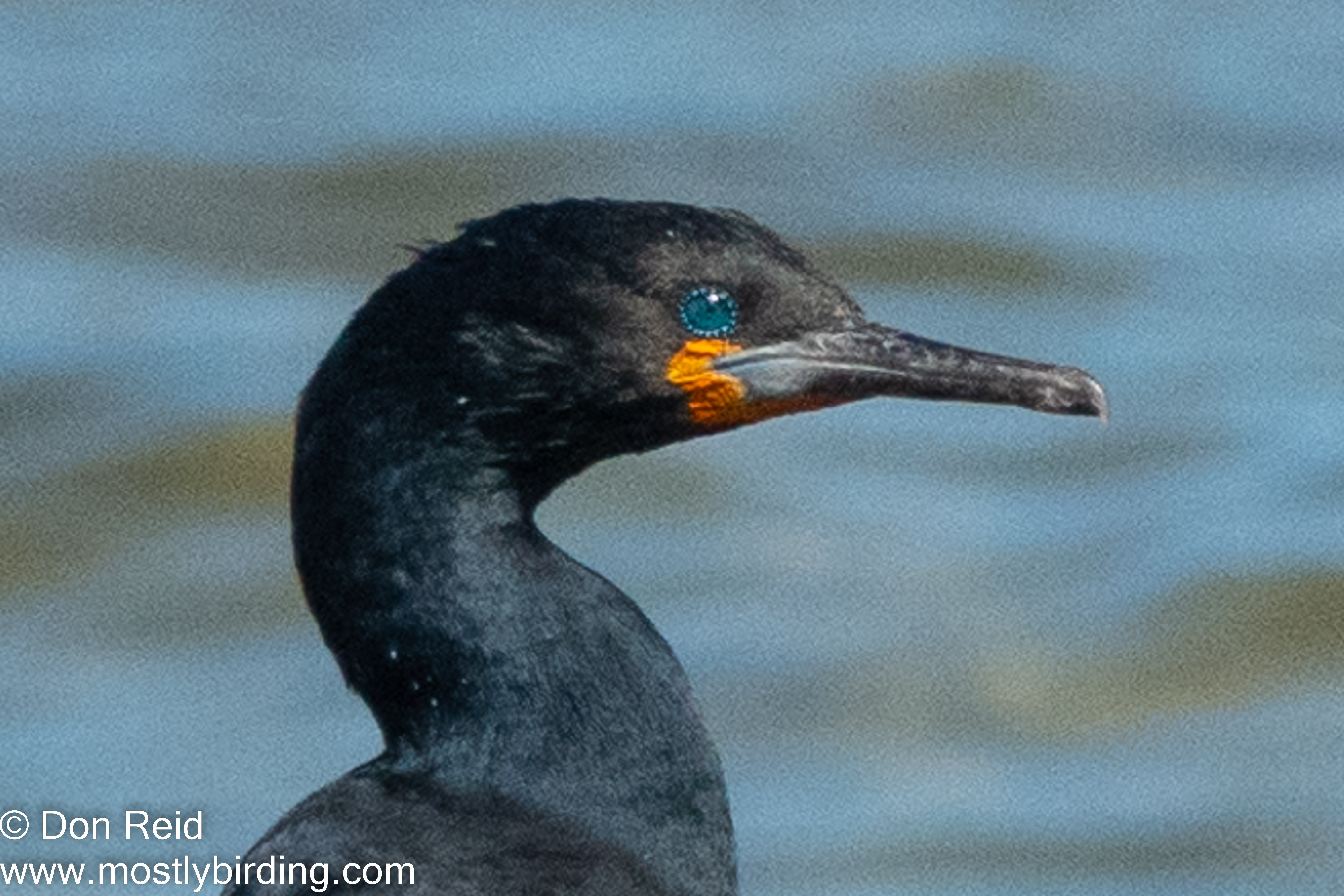
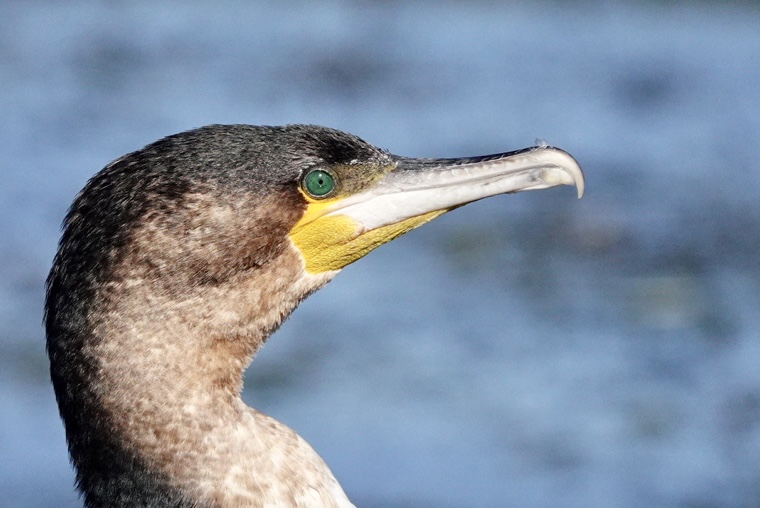
The light was favourable, so I took a few shots then zoomed in on their heads and took a few more. And that’s where the magic came in! In contrast to their rather dull appearance and less than comely shape, the cormorants have some of the most stunning eye colours of the bird world.

White-breasted Cormorant (Witborsduiker) (E-bird : Great Cormorant)

Phalacrocorax lucidus

Starting with the brilliant green eyes of the largest cormorant in our region, commonly found in saltwater and freshwater habitats across southern Africa

Now this species is somewhat ungainly on land, but once in the water it will outswim Michael Phelps by a long way – that’s if you can get it to swim in a straight line and stay within its lane. And all it uses are its feet which have four toes connected by webbing, which it uses to propel itself most effectively through the water when chasing prey

It uses that hooked bill to secure small fish, which are eaten underwater, while bigger fish are brought to the surface to juggle into a head-first swallowing position.

Worldwide this species is often referred to as Great Cormorant and occurs across 6 continents – I have seen Great Cormorants in Australia, Canada, UK and Europe during our travels abroad

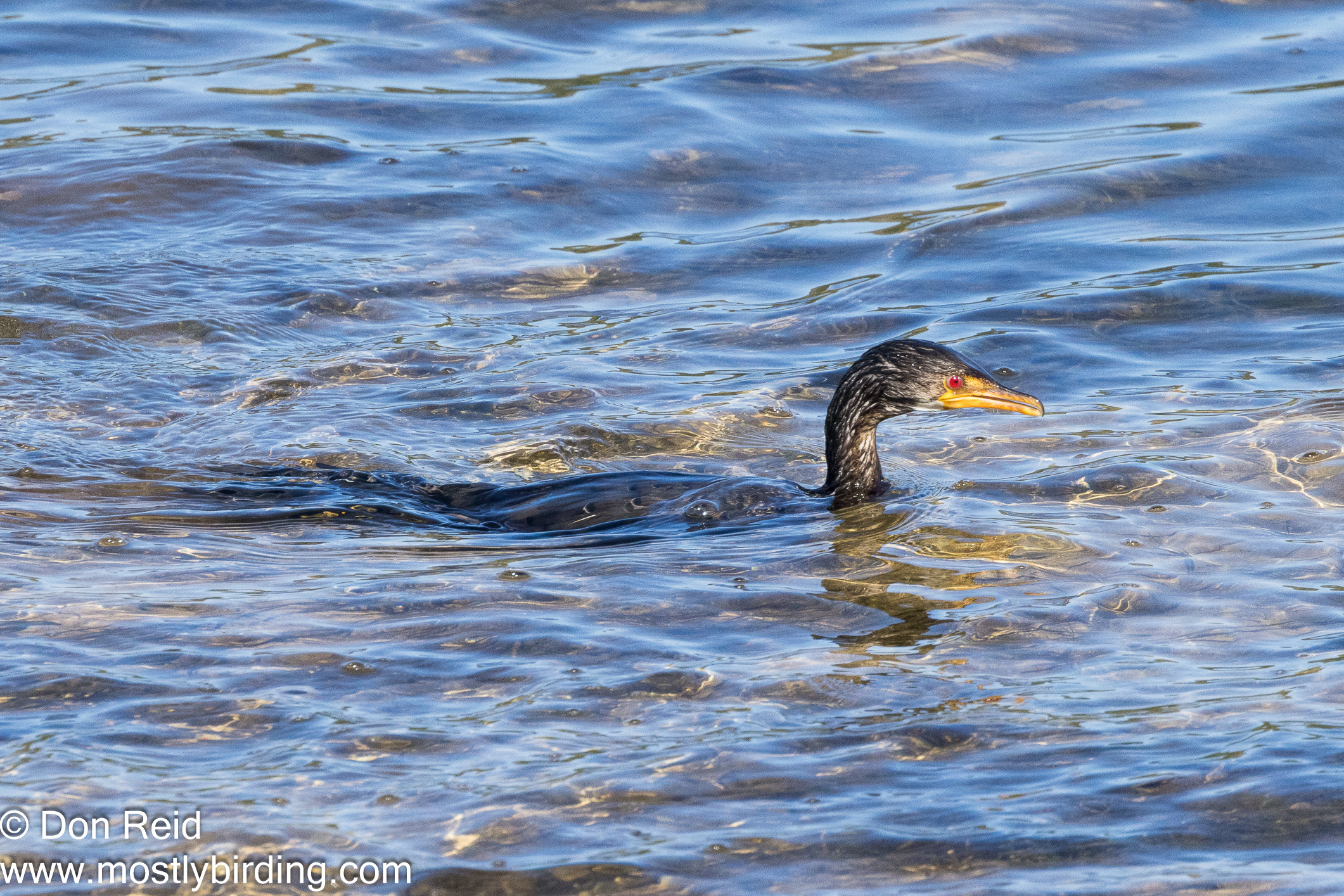
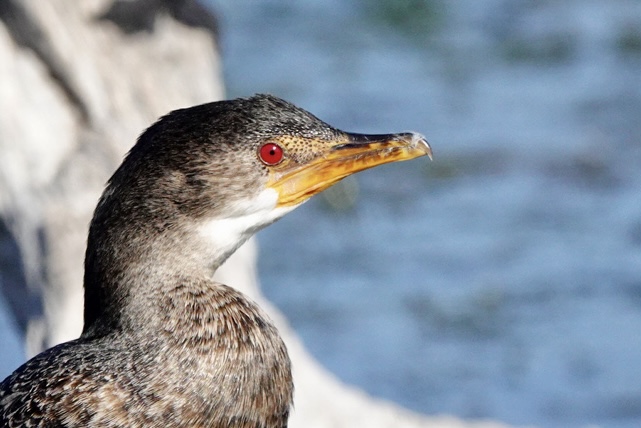
Reed Cormorant (Rietduiker) (E-bird : Long-tailed Cormorant)

Microcarbo africanus

The Reed Cormorant is substantially smaller than the previous species and has a similar distribution across our region, but unlike the White-breasted (Great) Cormorant it is restricted to the African continent, occurring in most of sub-Saharan Africa

And the eyes? Red instead of green, but just as striking!

Reed Cormorant, Langvlei Wilderness

A surprising fact (courtesy of Faansie Peacock’s wonderful birding app called Firefinch) is that the feathers of cormorants are less waterproof than those of other birds – the reason is that this makes them less buoyant and allows them to sink when hunting underwater. This also explains why they spend much of their time out of the water with wings spread to dry. It is also believed that they swallow stones for additional weight, much like scuba divers wearing lead weights on their belts.

Cape Cormorant (Trekduiker)

Phalacrocorax capensis

I wasn’t expecting to find a Cape Cormorant alongside the other two species at Langvlei, as they are generally known as an exclusively marine species, but this one clearly thought a day away from the rough seas would be to its liking

Cape Cormorant (Phalacrocorax capensis / Trekkormorant), Rondevlei Wilderness

Mossel Bay’s Point is a wonderful place to watch seabirds and Cape Cormorants are regular passers-by (or more appropriately flyers-by) flying low and fast over the ocean, singly or in pairs or in long skeins of up to a couple of dozen at a time.

This is usually late afternoon when we like to get a take-away coffee and sit and watch the sea and its inhabitants, which can be anything from humans surfing and snorkelling to seals, dolphins or whales (in season), while yachts and boats of various types and sizes make their way to and from the small harbour nearby.

I haven’t been able to establish where these passing Cape Cormorants roost, but it is probably one of the quieter stretches of beach further east towards Great Brak River and beyond.

Never mind, just look at those turquoise eyes!

Cape Cormorant (Phalacrocorax capensis / Trekkormorant), Rondevlei Wilderness

This marine species is distributed along the coastline of South Africa, Namibia and Angola

Spotted Eagle-Owls Aplenty

We relocated to Mossel Bay towards the end of last year – somewhat unexpectedly, although it was always part of our medium-term planning. So you can expect the emphasis of my blog to shift towards the Southern Cape and away from the northern parts of our country, where we have lived for some 50 years.
However the Southern Cape, and in particular Mossel Bay are very familiar to us, having spent ever-increasing periods in our house here over the last 12 years and is the perfect place to spend our retirement years.
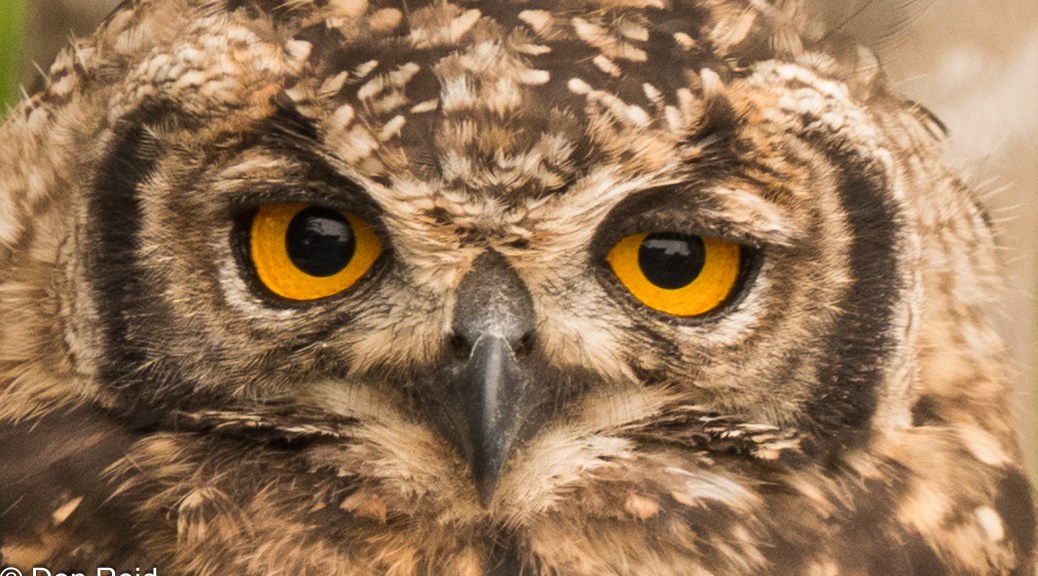
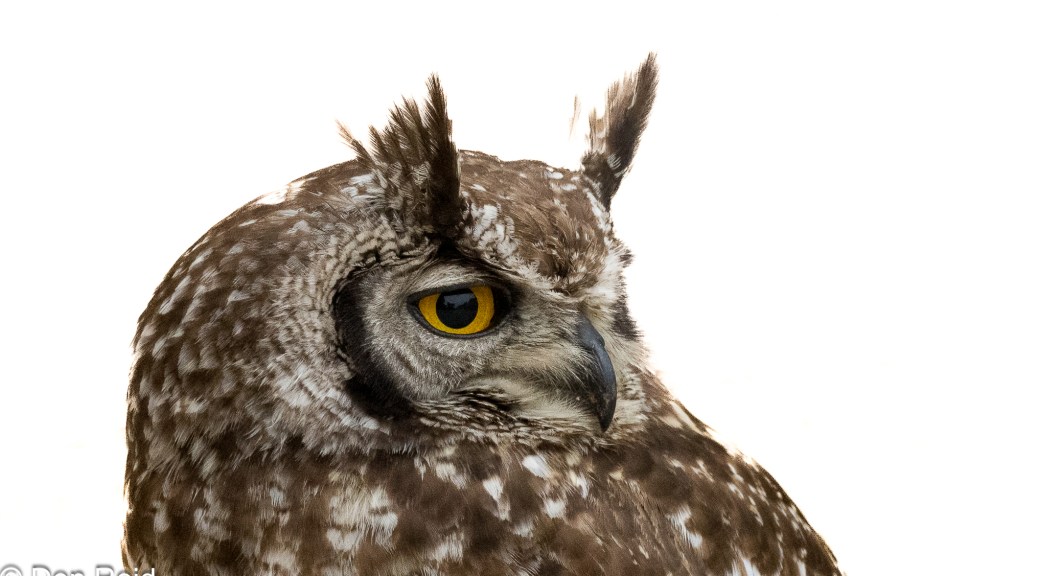
Our home in Mossel Bay is situated in the Mossel Bay Golf Estate which has a variety of habitats and gardens which attract many species of birds and this brings me to the subject of this post – the Spotted Eagle-Owl, which “put its hand up” (figuratively) to become the focus of a post by popping up in a number of places around the Golf Estate over the past few weeks.

It also seemed like a good opportunity to get back to the essence of my blog, which after all is called “Mostly Birding” for a reason ……

Here are some images of Spotted Eagle-Owls taken over the last while around our home and on my walks in the estate and adjoining nature areas:

Spotted Eagle-Owl bubo africanus Gevlekte Ooruil

Neighbour Catherine, knowing my interest in all things birding, popped over in the middle of the day to say there was an Owl in her garden, so I went to have a look, taking my camera of course. There it was perched on the garden wall and I surmised it was a juvenile, based on the lack of the “ears” (not really ears but protuding tufts of feathers for camouflage, not for hearing) which are a feature of the adults

‘Goodness, but it’s tiring being awake all night – am I ever going to get used to this …’

Spotted Eagle-Owl Bubo africanus Gevlekte ooruil, Mossel Bay

‘Hmmm – suppose I should keep a watch out even though I’m still young’

Spotted Eagle-Owl Bubo africanus Gevlekte ooruil, Mossel Bay

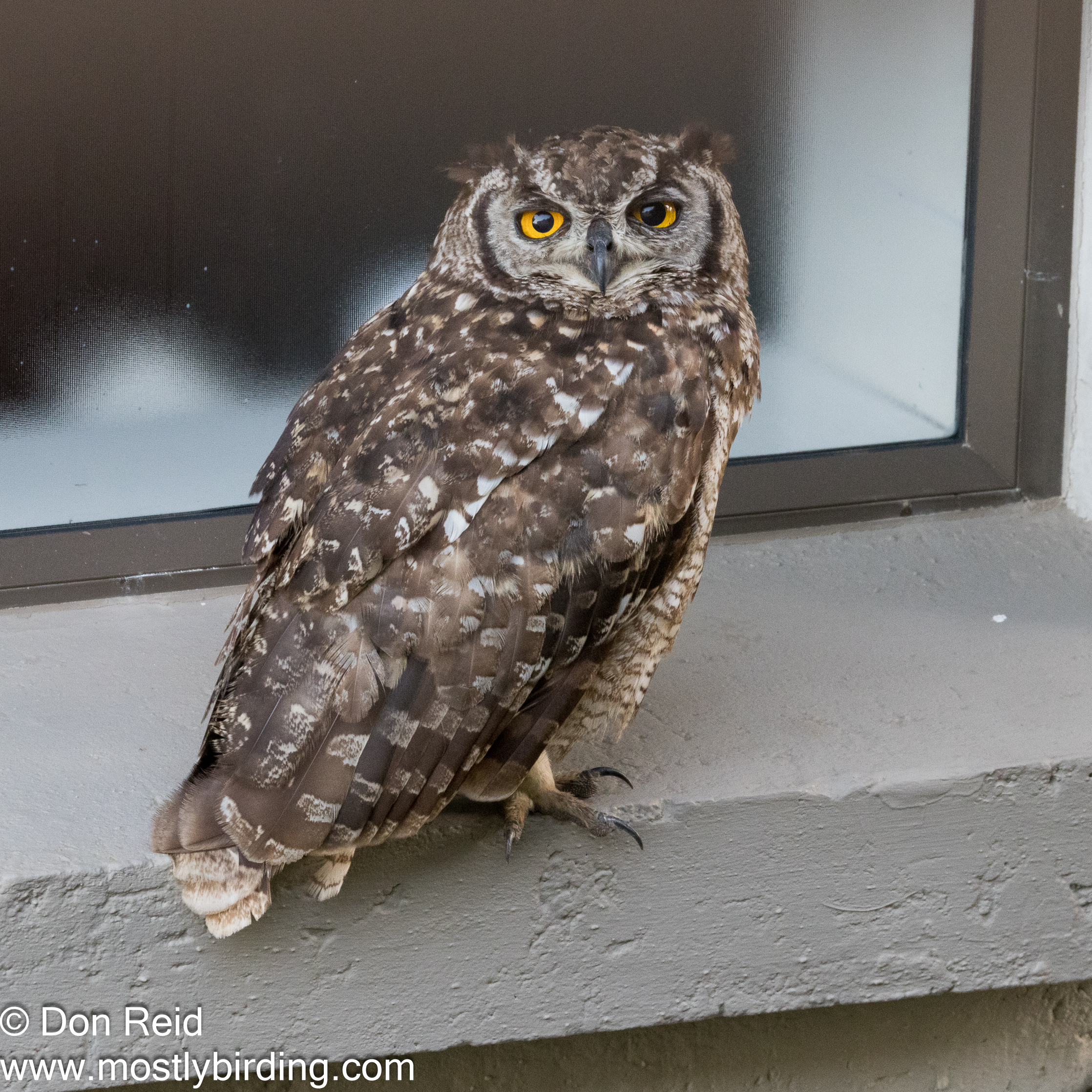
A few days later I noticed another Owl, this time an adult, sitting on the window cill of the neighbour’s house in broad daylight. More than likely the parent of the above juvenile.

Spotted Eagle-Owl Bubo africanus Gevlekte ooruil, Mossel Bay Golf Estate

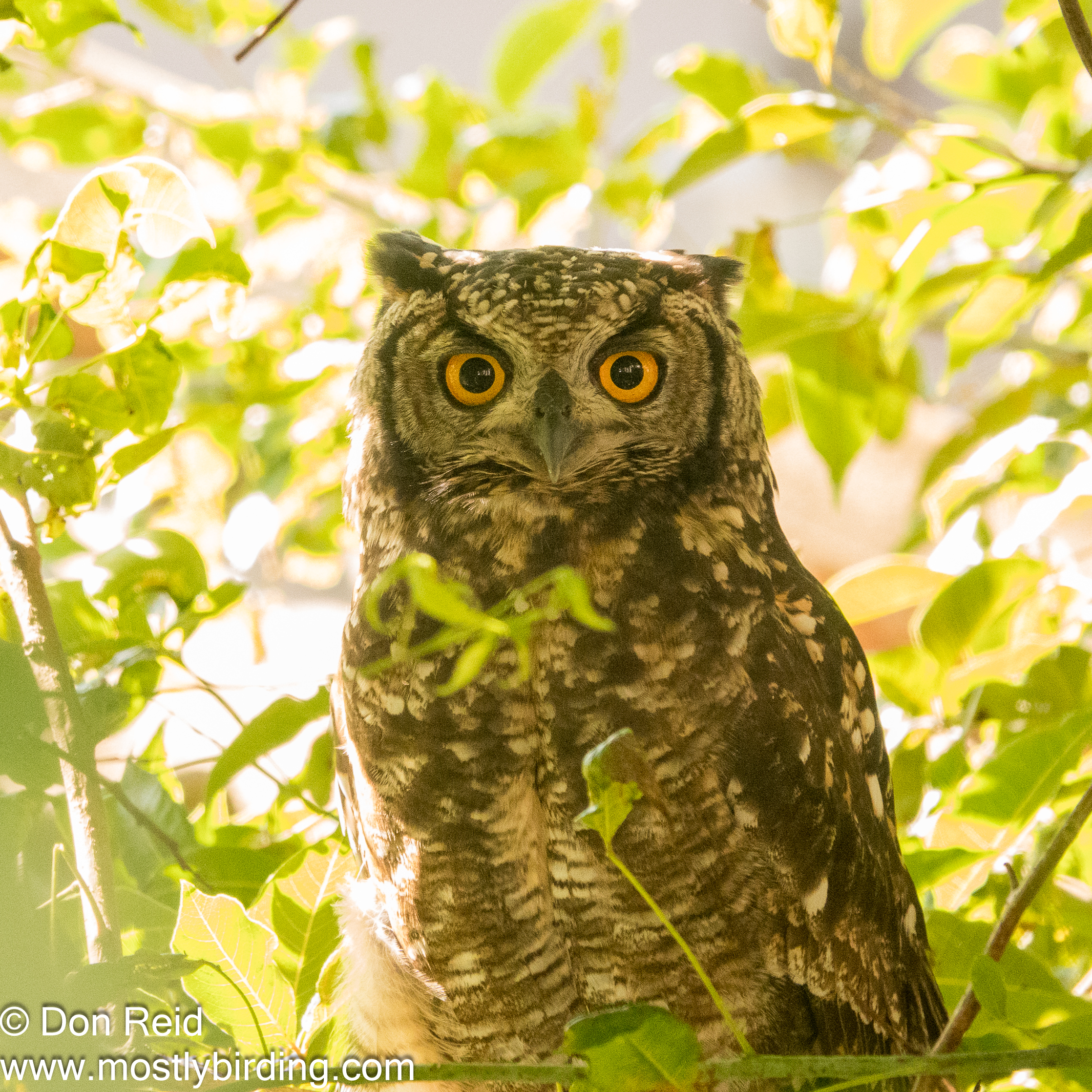
A week or so later again, neighbour Jan, phoned to say there was an owl in the trees in his back garden, between our two properties. I could not see it from our balcony which is a level higher than Jan’s house so I went downstairs to our garden and quickly spotted the owl on a branch partly concealed by foliage. I positioned myself as best I could without disturbing the owl and took a few shots against the strong backlight of the morning sun.
Spotted Eagle-Owl, Mossel Bay Golf Estate

My daily late afternoon walks take me all over the golf estate – my favourite walk being the one that takes in the nature area to the south and west of the estate as there is always something of interest.

One of my walks included an unusual encounter with an owl, which stood in the middle of the track as I approached and didn’t seem intent on flying away. I waited for a while to see what it would do, concerned that it was ill or injured, but after some 10-15 minutes I walked slowly past it as it moved to one side, eyeing me all the way but seemingly relaxed.

I kept a look out for this owl on my later walks as I was concerned about its health – I believe it was the same owl I spotted twice on the golf course itself, flying about without a problem so assumed it had recovered from any problem it may have had.

This species is well-known in the suburbs of our cities and towns and is often heard calling softly – wooo, hooo – and perched on roofs and streetlights from where it hunts insects, reptiles, rodents and the like.

Oh, and it’s good to have neighbours who keep you informed about birdlife in the garden ….