David Livingstone wrote after seeing the falls for the first time –
“No one can imagine the beauty of the view from anything witnessed in England. It had never been seen before by European eyes, but scenes so lovely must have been gazed upon by angels in their flight”
Sounds a bit melodramatic you may say, but having seen the falls myself again after 17 years, I can’t help thinking he was spot on.
It was back in 1998 that we first visited Victoria Falls during a driving tour of Zimbabwe and the intervening years had made my memories somewhat fuzzy, so it was like seeing the Falls for the first time and the experience was truly breath-taking.
This time around, I was part of a group of professionals that had come to visit the new Vic Falls airport under construction, accompanied by our client, and with the business side taken care of in the morning, we ventured into Victoria Falls National Park in the afternoon before returning to Kasane in Botswana.
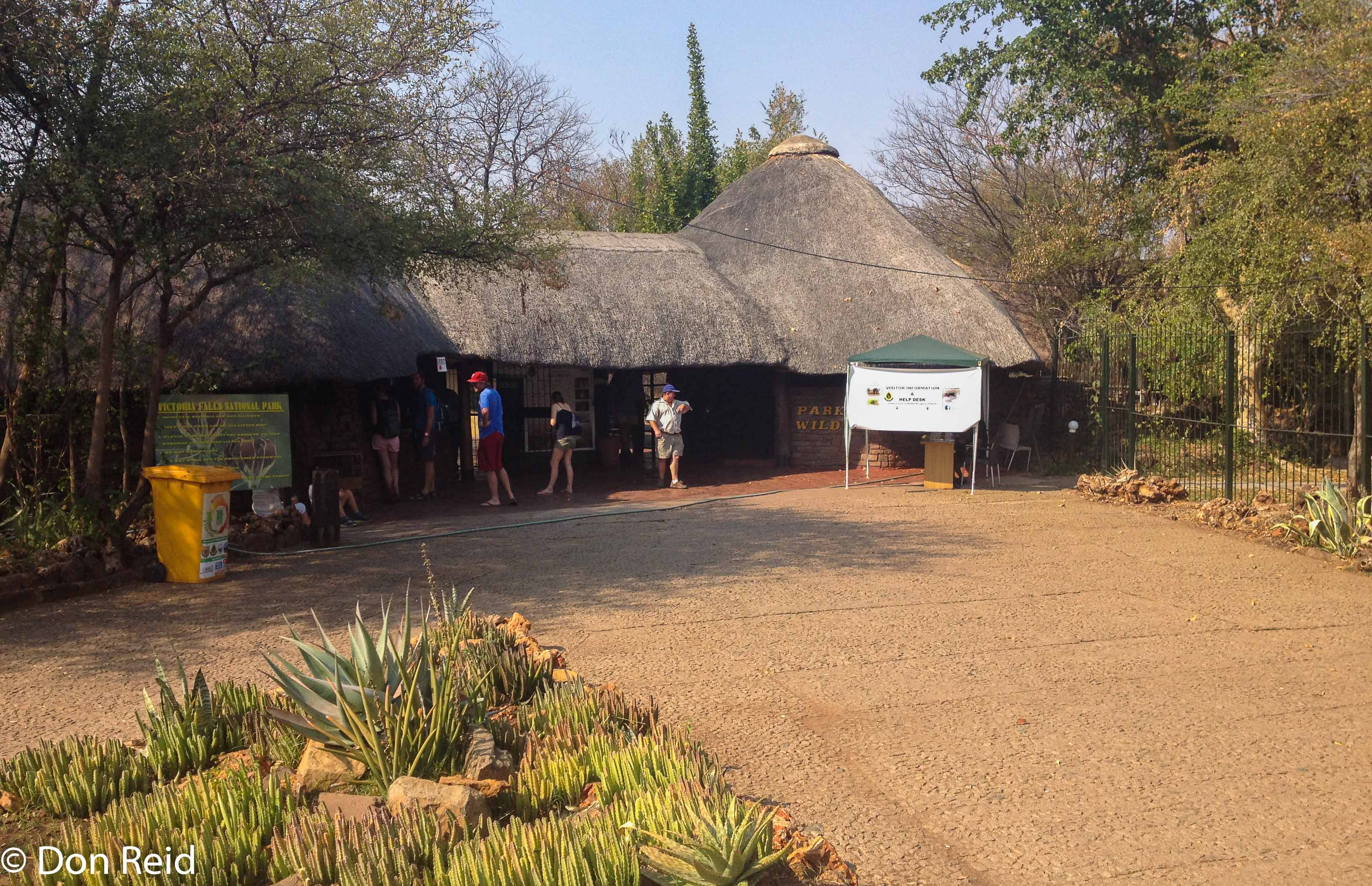
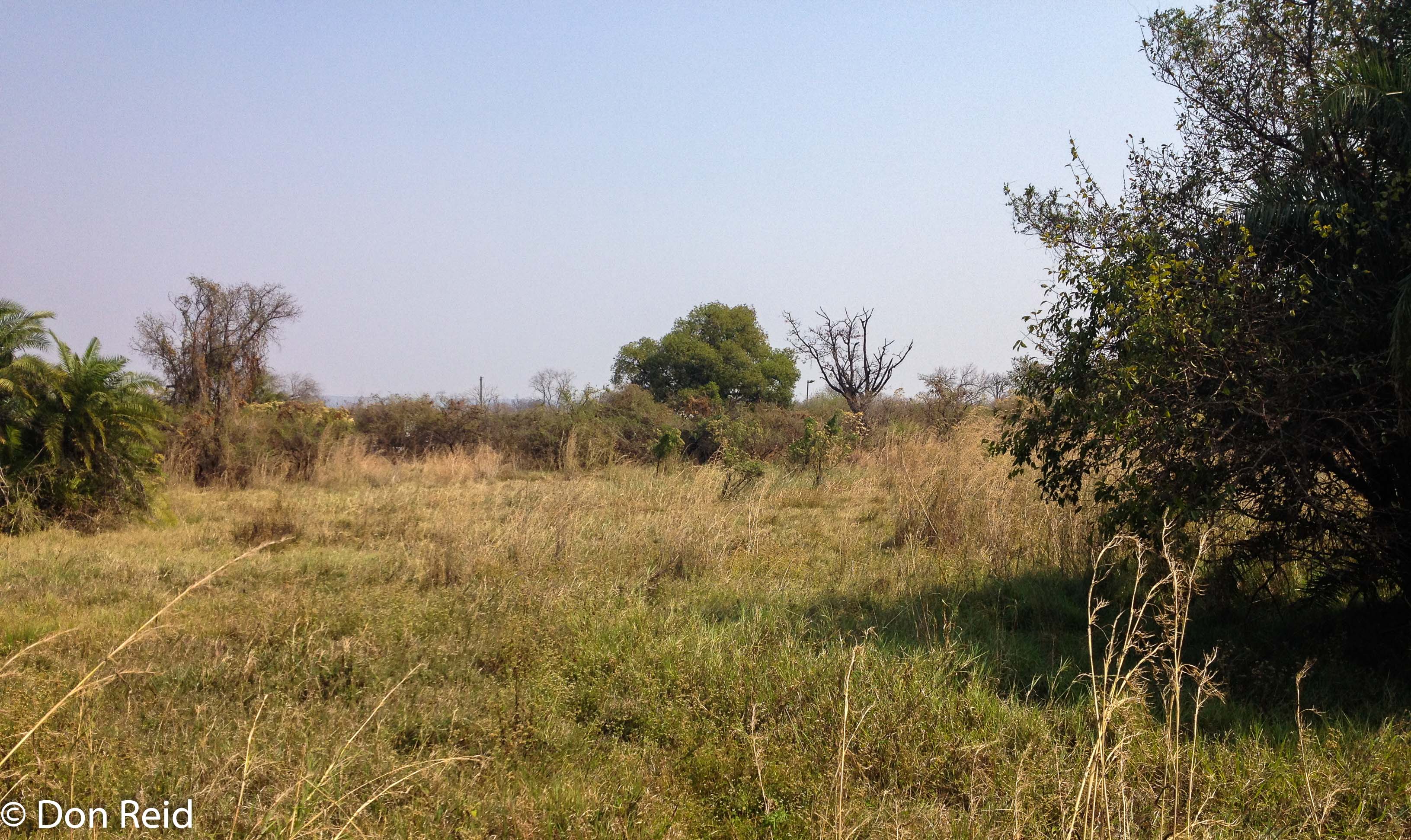
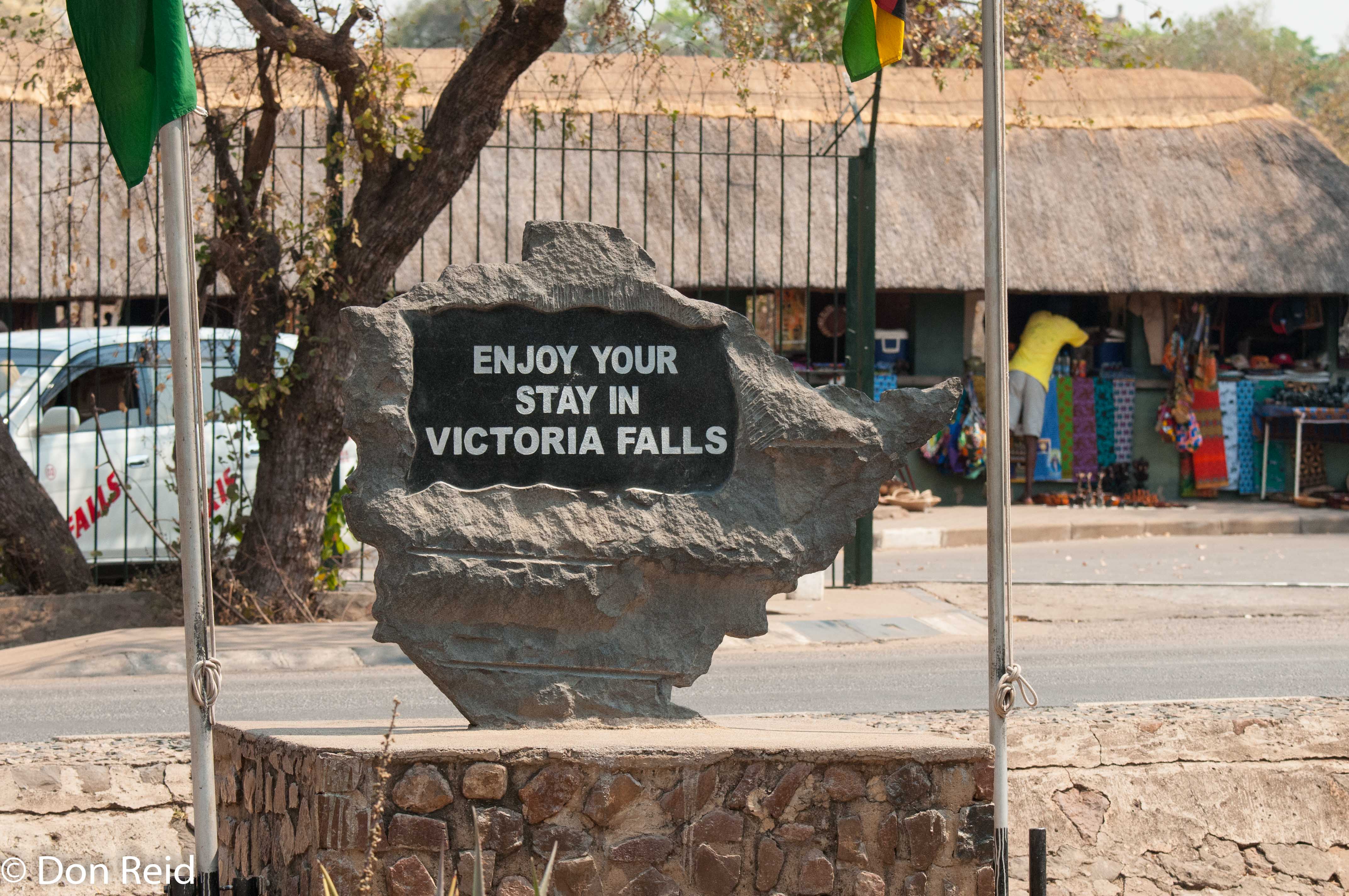
The entrance to the National Park at Victoria Falls is quite unimposing and does not prepare you for the experience that lies ahead.
Victoria Falls National Park main entrance
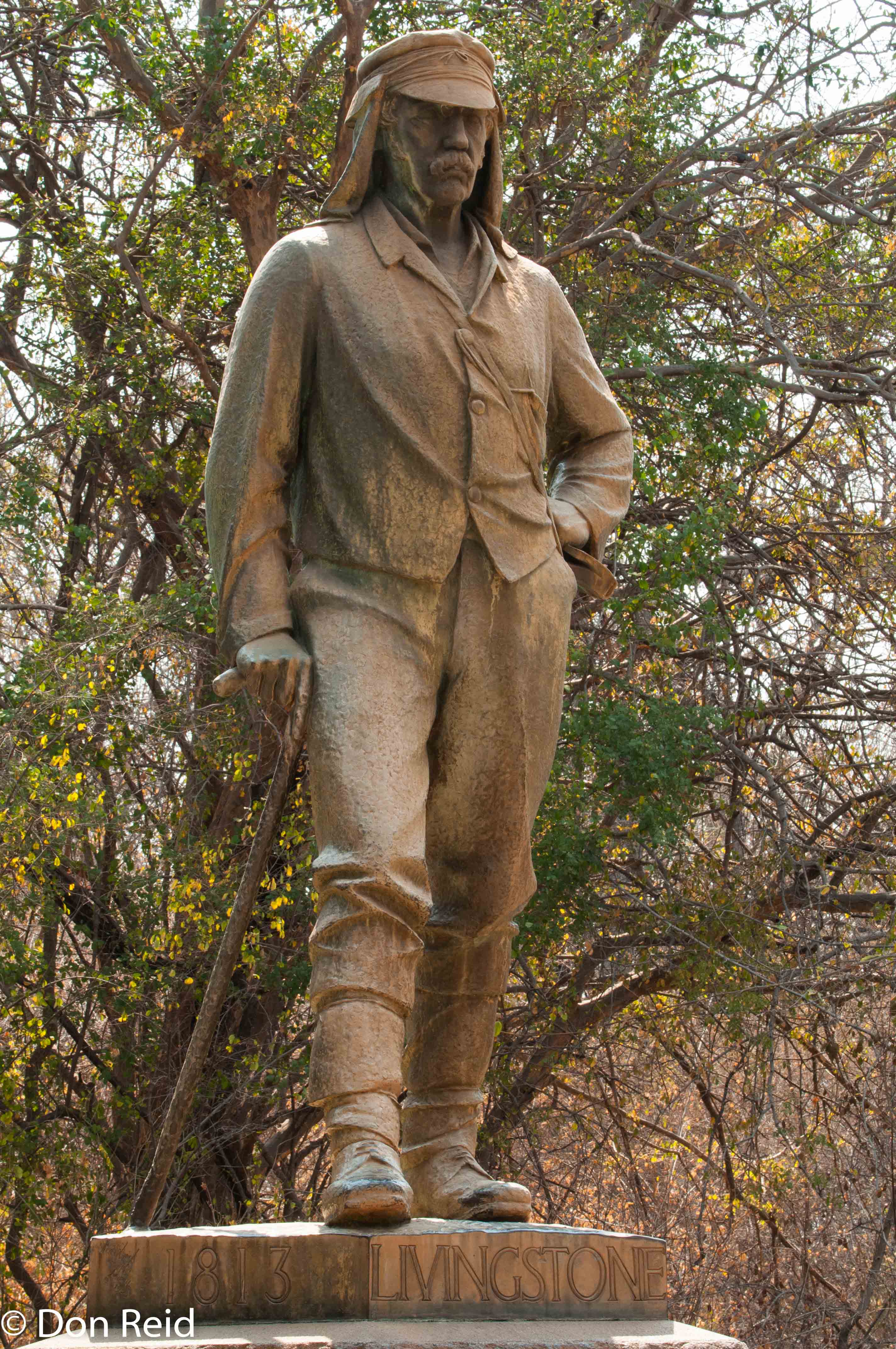
Once we had paid our $20 entrance fee, we took the pathway which initially winds its way to the David Livingstone statue – this famous Scottish missionary “discovered” the falls (they were always there and known to generations of African inhabitants, of course) on 17 November 1855, so the 160th anniversary is coming up next month.
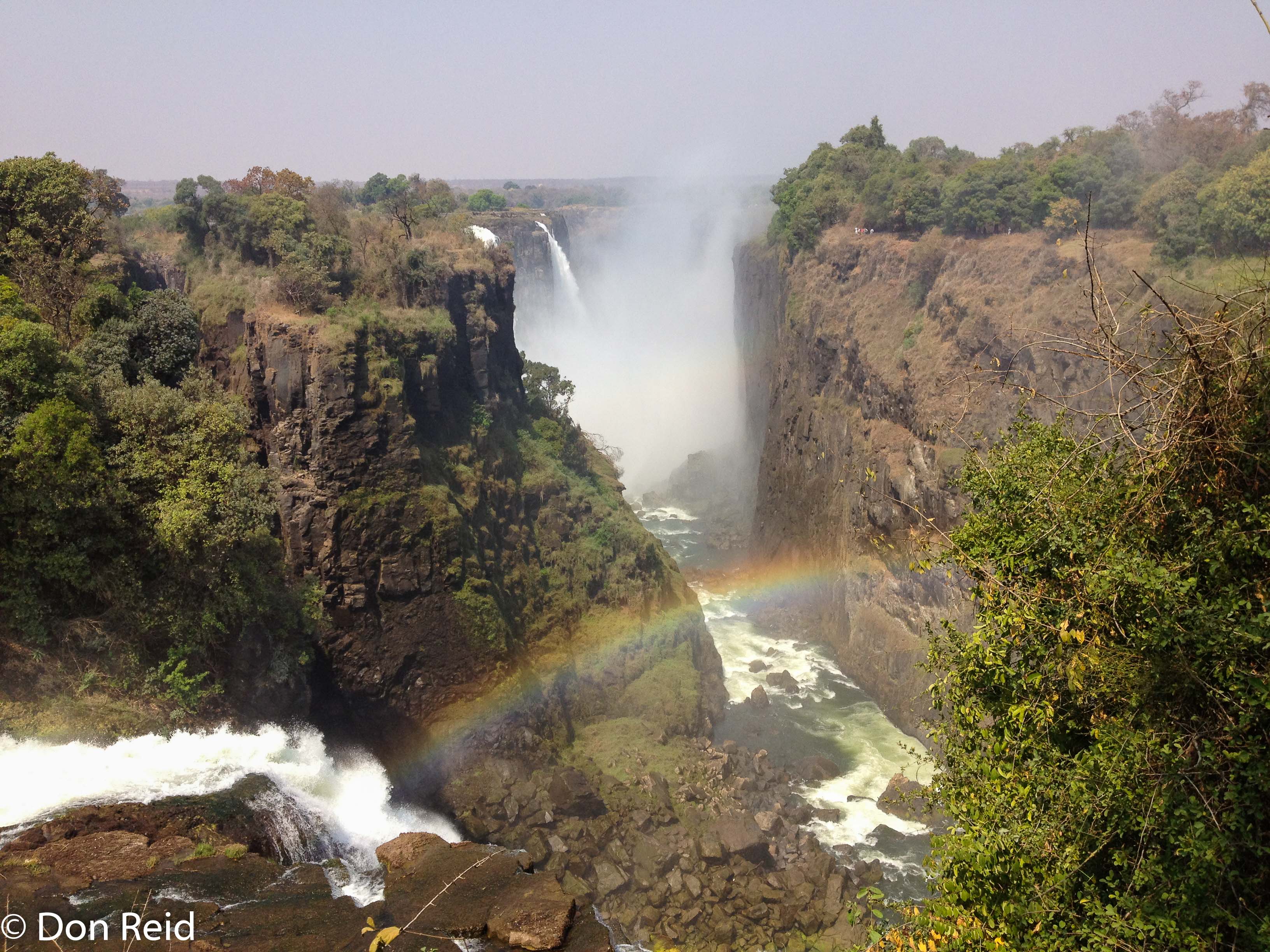
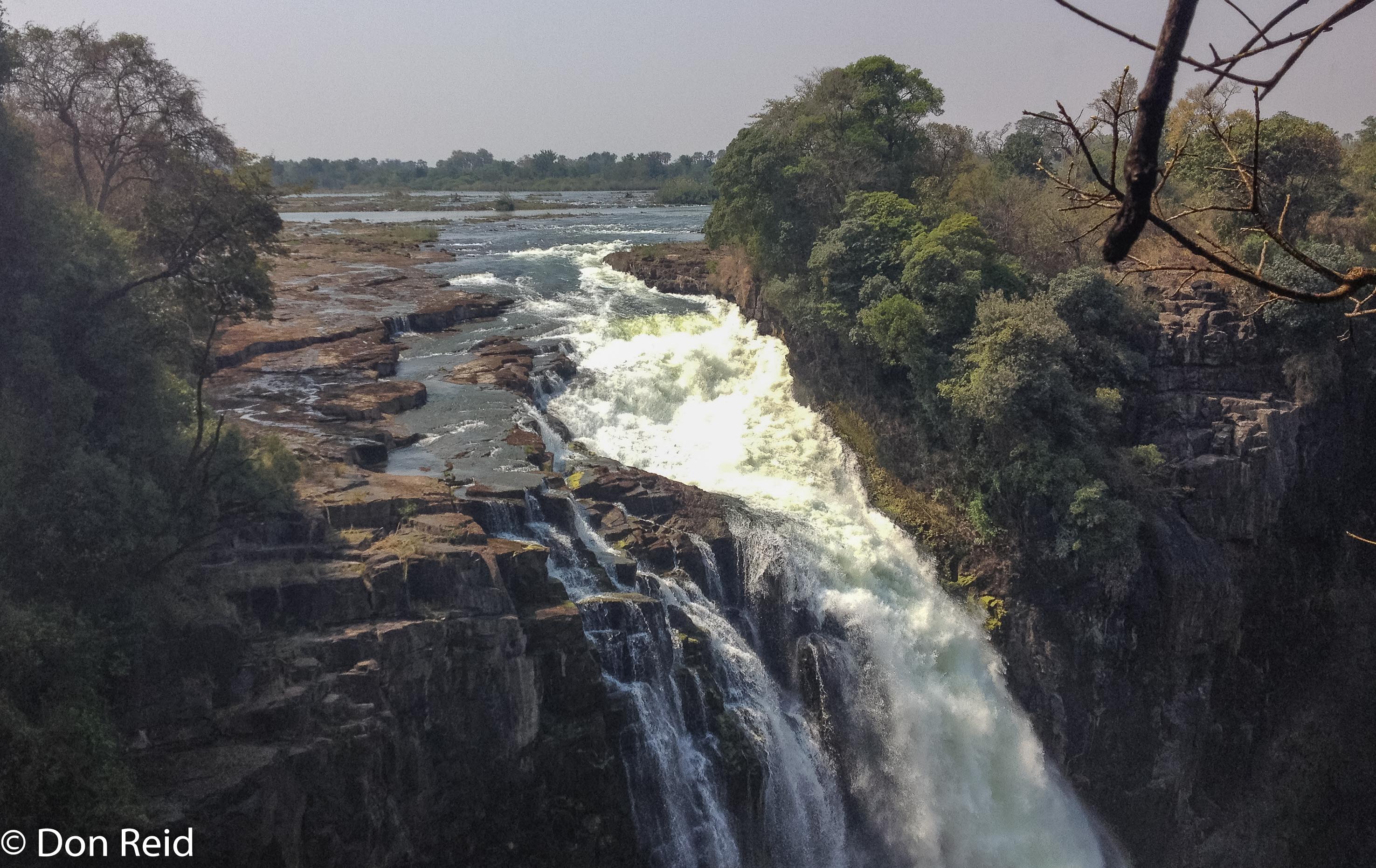
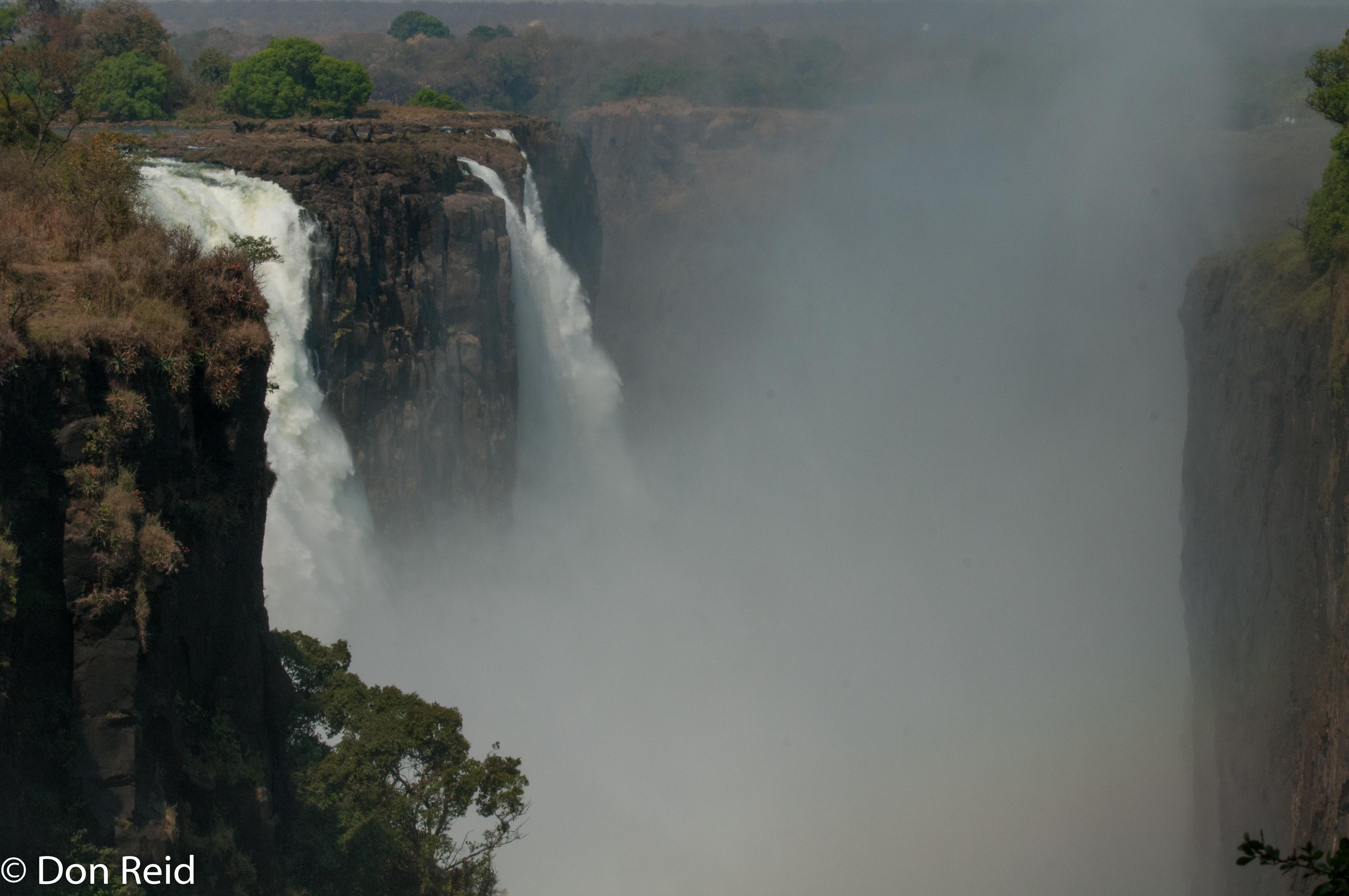
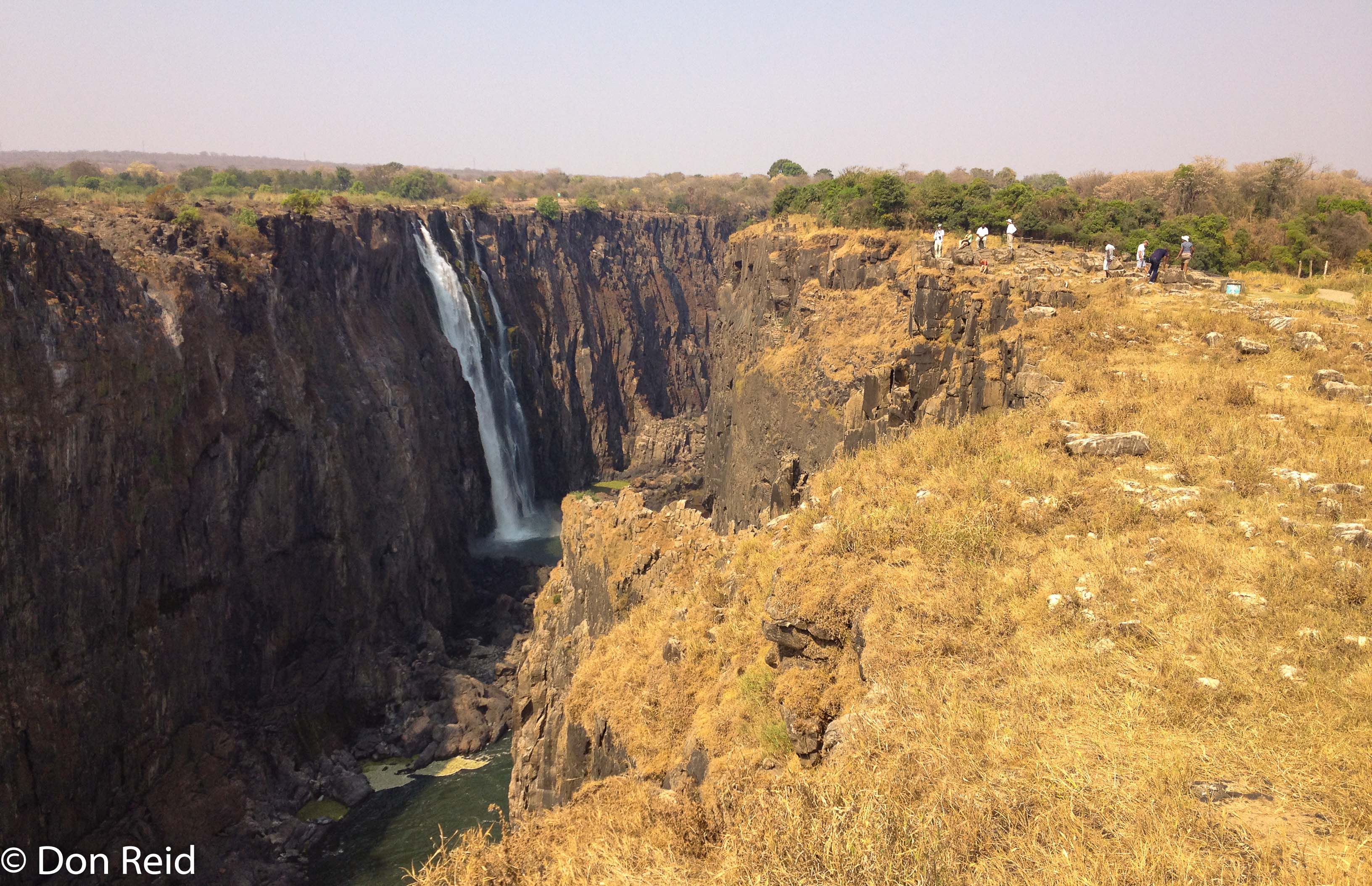
After the statue you get to the first viewpoint with breath-taking views of the thundering waters, veiled in a thick spray which caused rainbows to form at the time of day we were there. The spray shoots up vertically in massive columns and you realize why the indigenous name is Mosi-oa Tunya or the “Smoke that Thunders”. Apparently the Zimbabwean government intends to rename the falls to Mosi-oa Tunya, hardly surprising I suppose.
Victoria FallsVictoria Falls
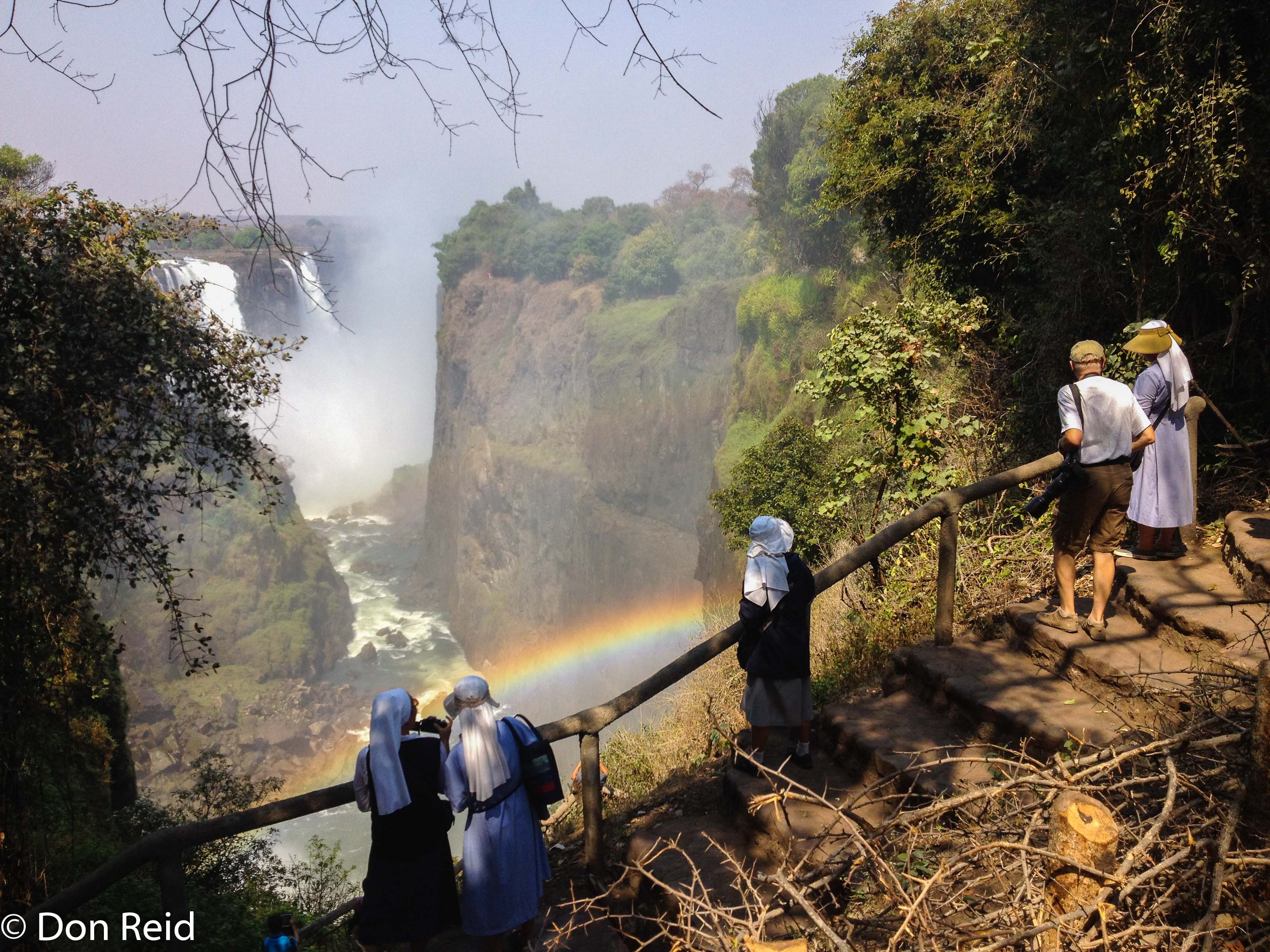
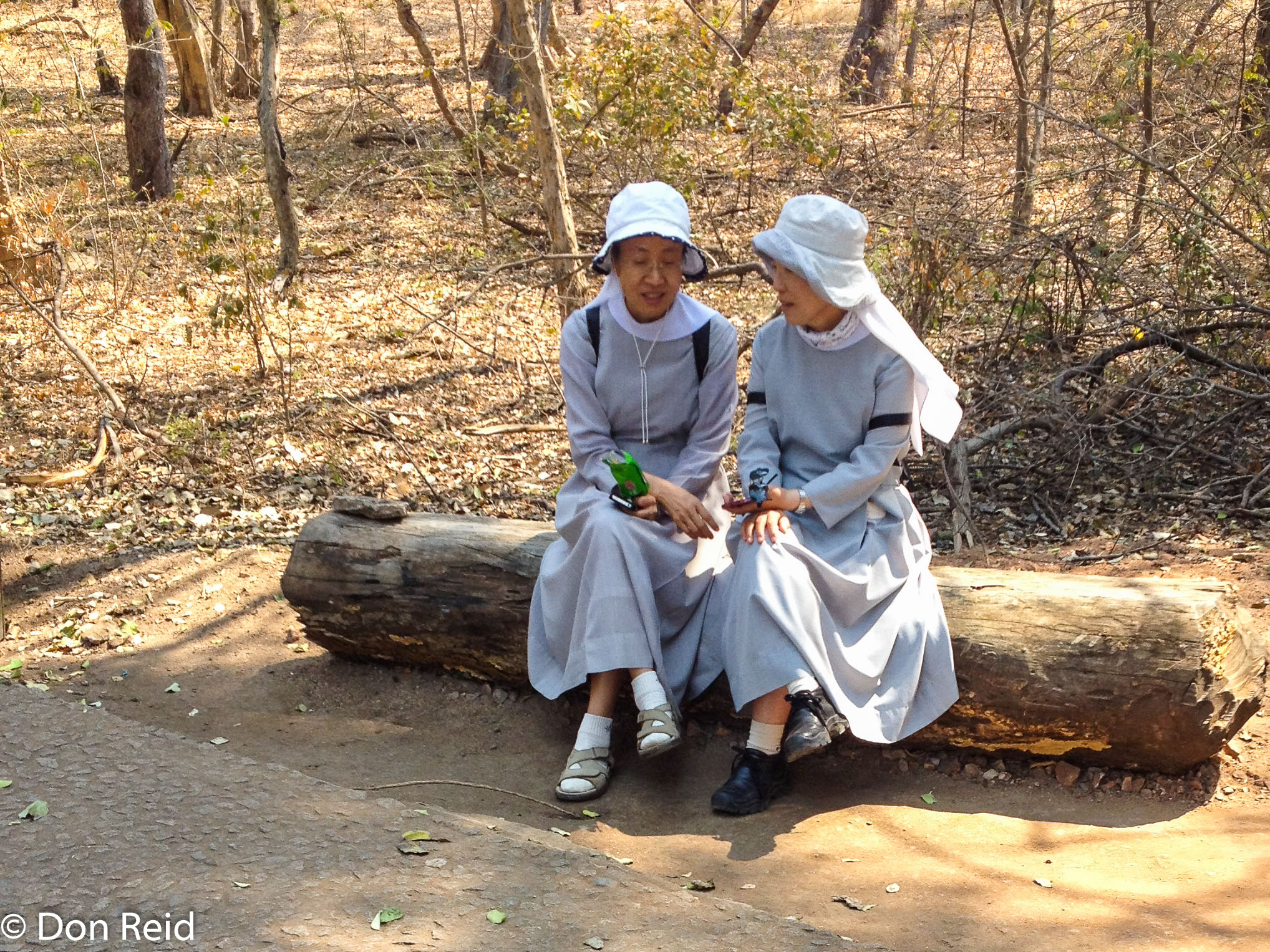
A group of Asian nuns (Korean?) were enjoying the experience and I couldn’t resist asking them if I could take a photo, as they looked quite charming in their habits with floppy sun hats and petite stature – they did not object.
Asian Nuns enjoying Victoria Falls
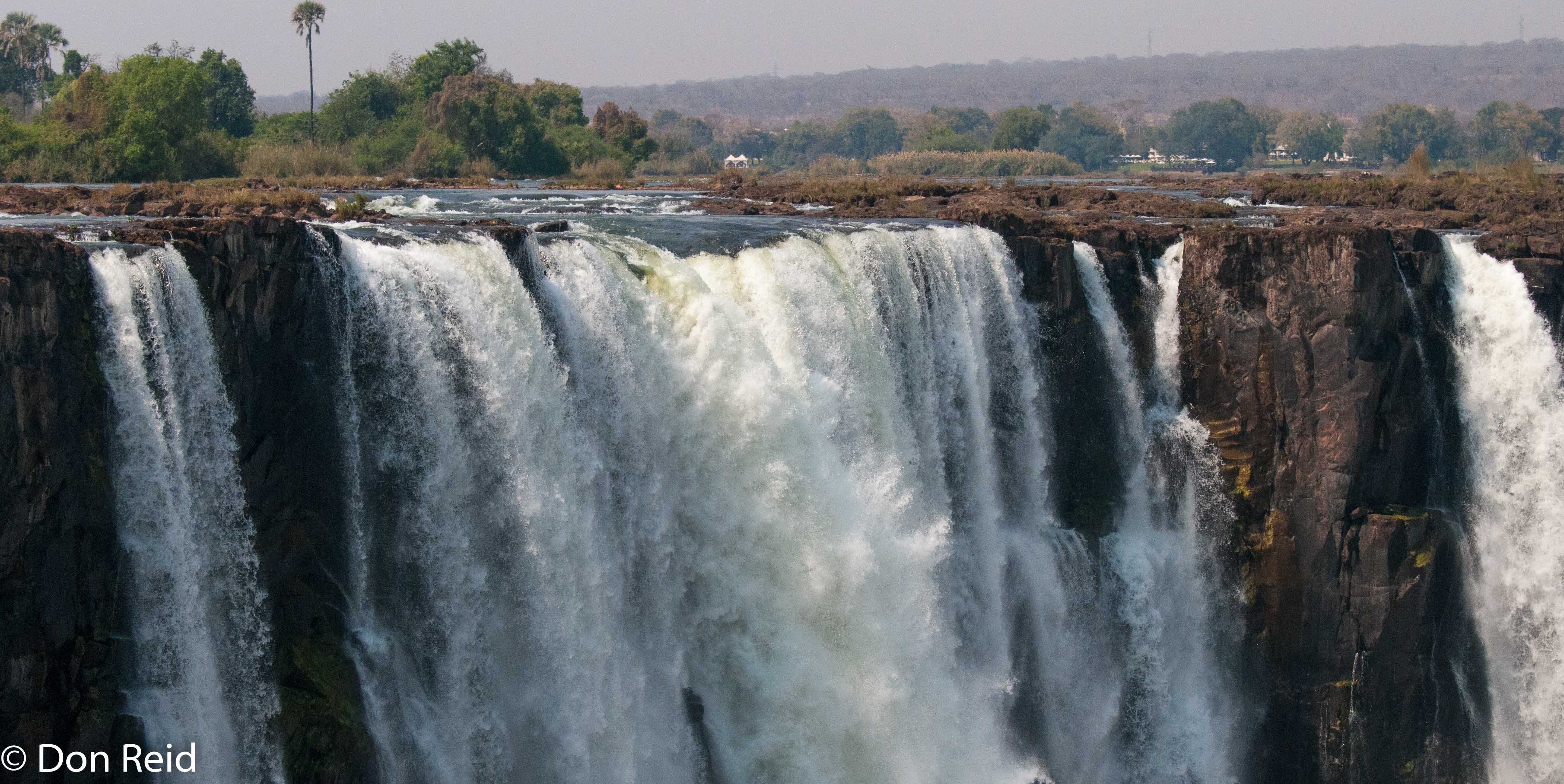
As you walk the designated pathways there are regular viewpoints where you can admire the different sections of the falls, which is the largest sheet of falling water in the world (although not the highest or widest) and twice the height of Niagara Falls at 108m. The mass of water, which averages over 1000 m3 per second, drops into a transverse chasm or gorge which is 1708m wide, then continues its way down the Batoka gorge (which my son Stephan and I rafted back in 1998 when I still had the desire for such things) through some spectacular rapids before becoming calmer and forming the mighty Zambesi River once more as it makes its way to Lake Kariba and beyond Kariba through Mozambique to the Indian Ocean.
Victoria FallsVictoria FallsVictoria FallsVictoria Falls
The main streams of the falls have names –
Devil’s Cataract
Main Falls
Rainbow Falls
Eastern Cataract
We continued our meander along the path which follows the Zimbabwe side of the gorge for a Km or more, stopping at the regular viewpoints which allow views from strategically placed points.
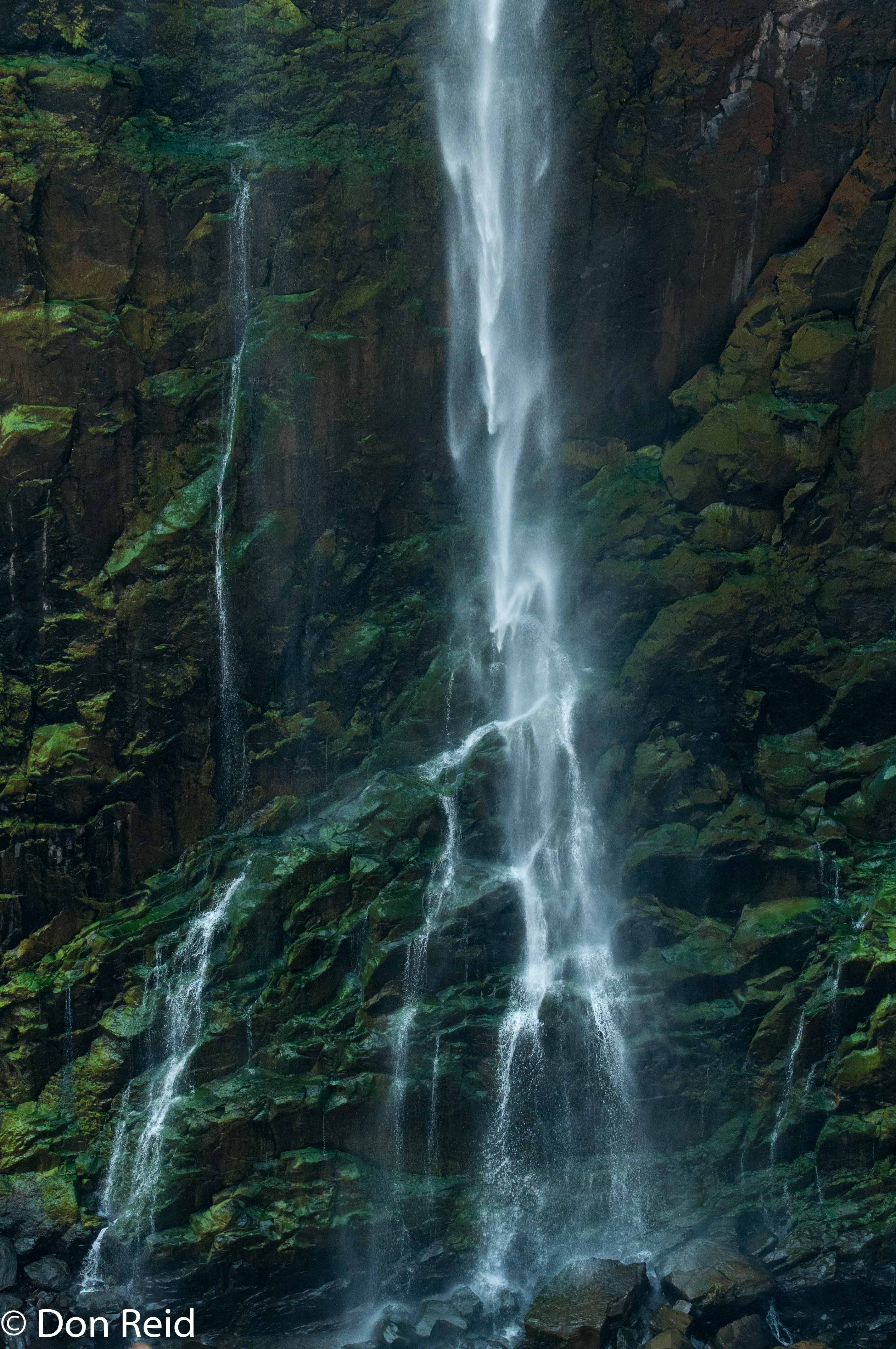
Where the spray up flow is at its heaviest there is a constant “rainfall”, which wasn’t too heavy during our visit as the falls are at their lowest flow in October/November, but at other times requires a raincoat to prevent a drenching. It is along this stretch that a permanent rainforest has formed and it was a welcome relief from the sun’s heat while it also afforded the best views of the widest section of falling water.
The Rainforest, Victoria FallsThe Rainforest, Victoria Falls1998 Photo
Further along where the spray does not reach, the rainforest petered out and suddenly we were in grassy savannah with good views back along the length of the gorge and across at the strands of water cascading down the sheer face of the rocks.
Victoria Falls1998 PhotoVictoria FallsVictoria FallsVictoria FallsVictoria Falls
Some brave tourists (or foolish perhaps?) out for adventure on the Zambian side, were bathing in a pool on the edge of the falls – this can only be attempted in the low-water season for obvious reasons. This activity has claimed a few lives over the years.
Bathing on the edge, Victoria Falls
The pathway ends at the point where the gorge does a 90 degree turn and from there we made our way slowly back to the main entrance.
And the Birding?
This was not a birding outing but I had my binos and camera handy as usual and encountered a few worthwhile species
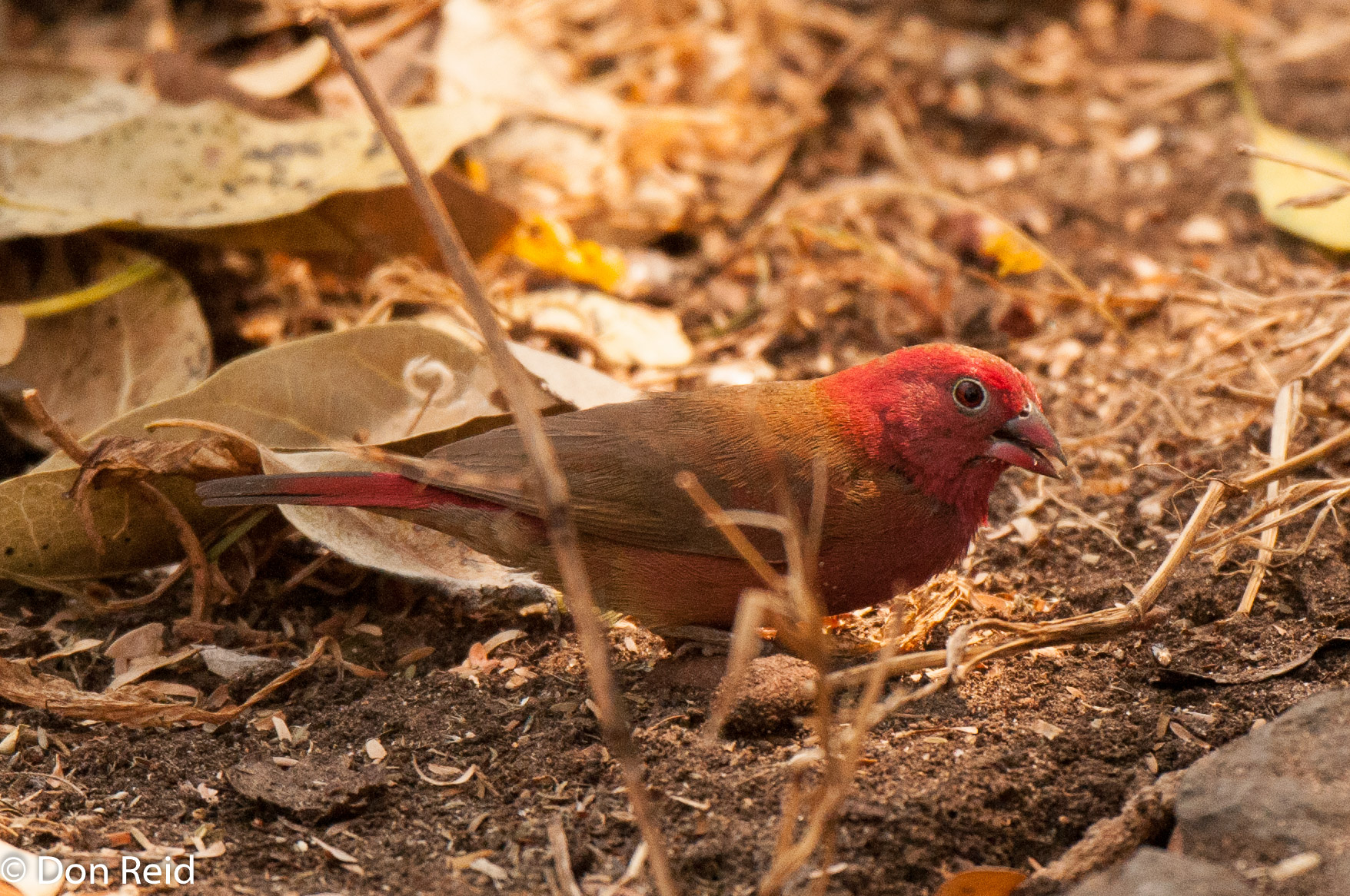
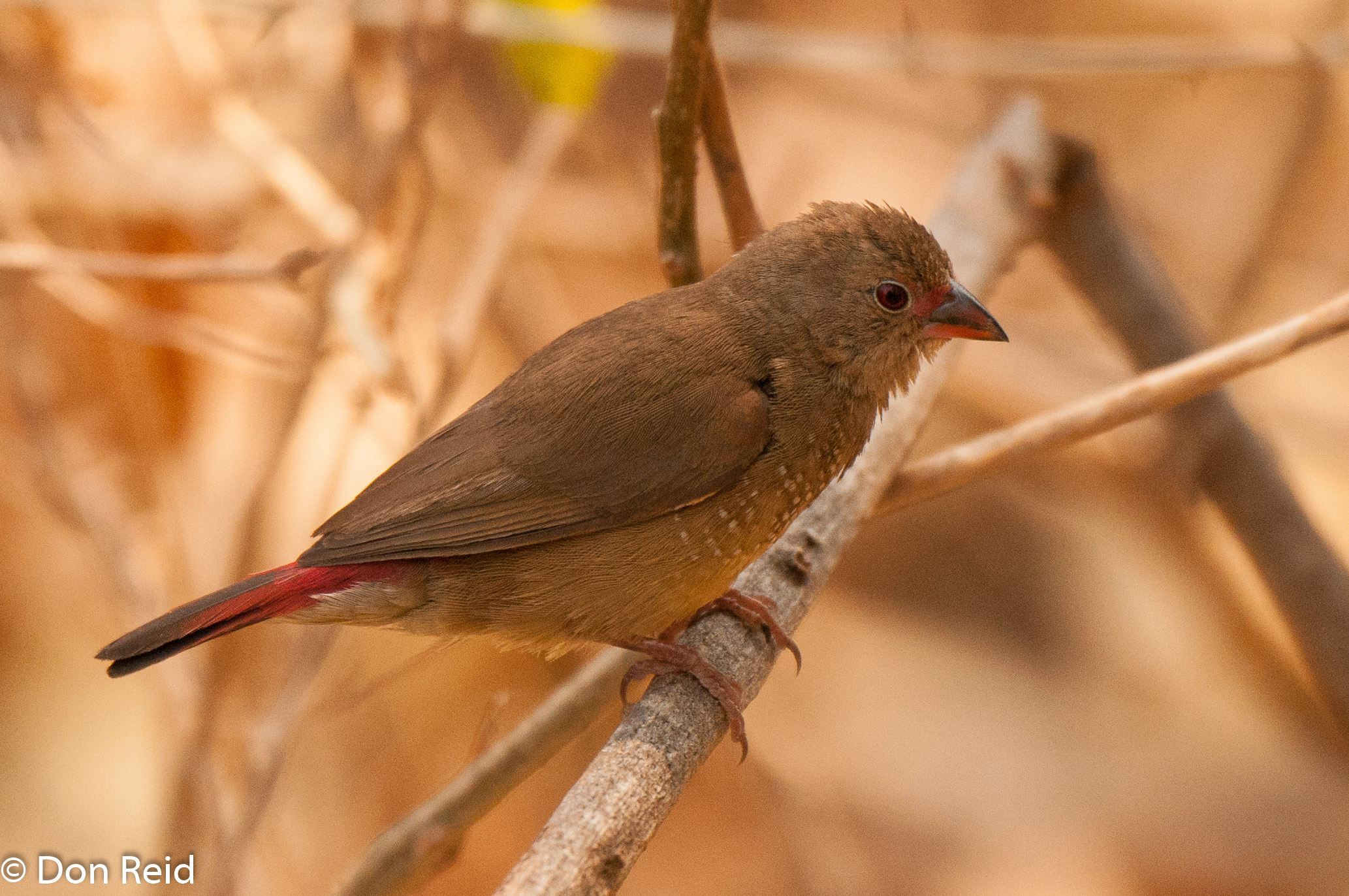
Red-billed Firefinch
Red-billed Firefinch (Male), Victoria FallsRed-billed Firefinch (Female), Victoria Falls
Trumpeter Hornbill which played hide-and-seek with me in the rainforest
Trumpeter Hornbill, Victoria Falls
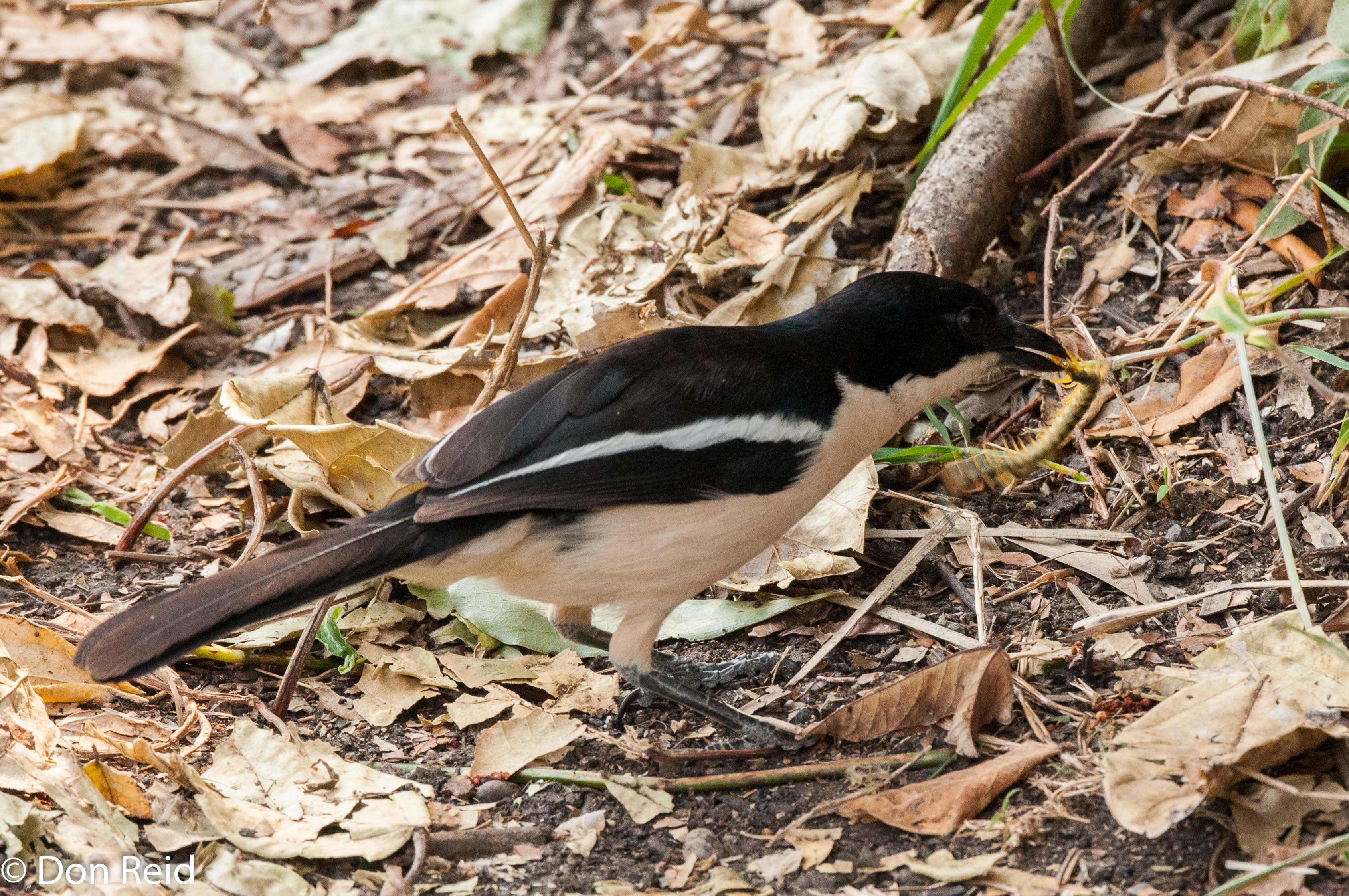
Tropical Boubou busy catching and eating an insect of sorts – my first photo of this species
Tropical Boubou, Victoria Falls
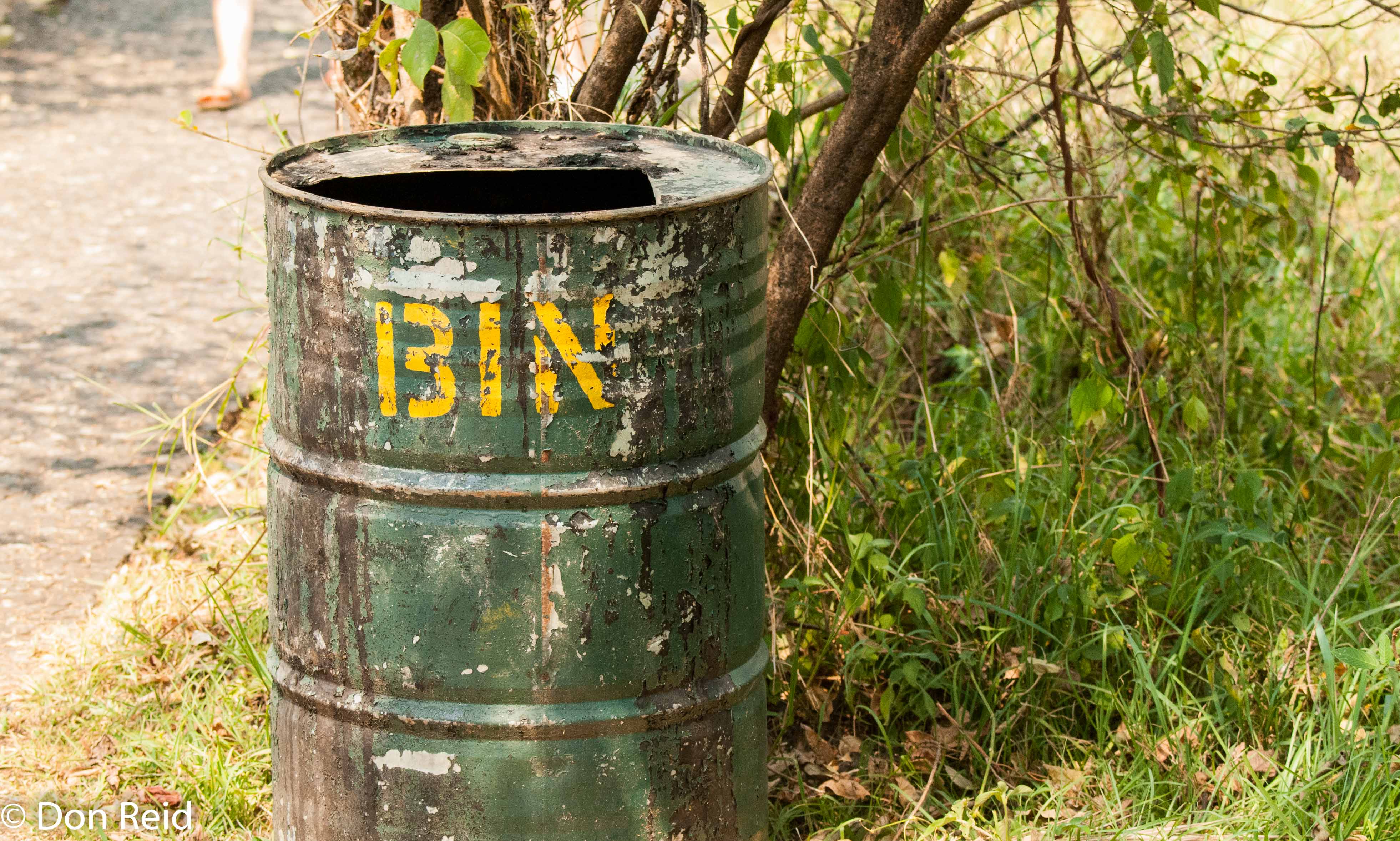
All that remained was to leave this wonderful spot and say “Bin there, Done that”
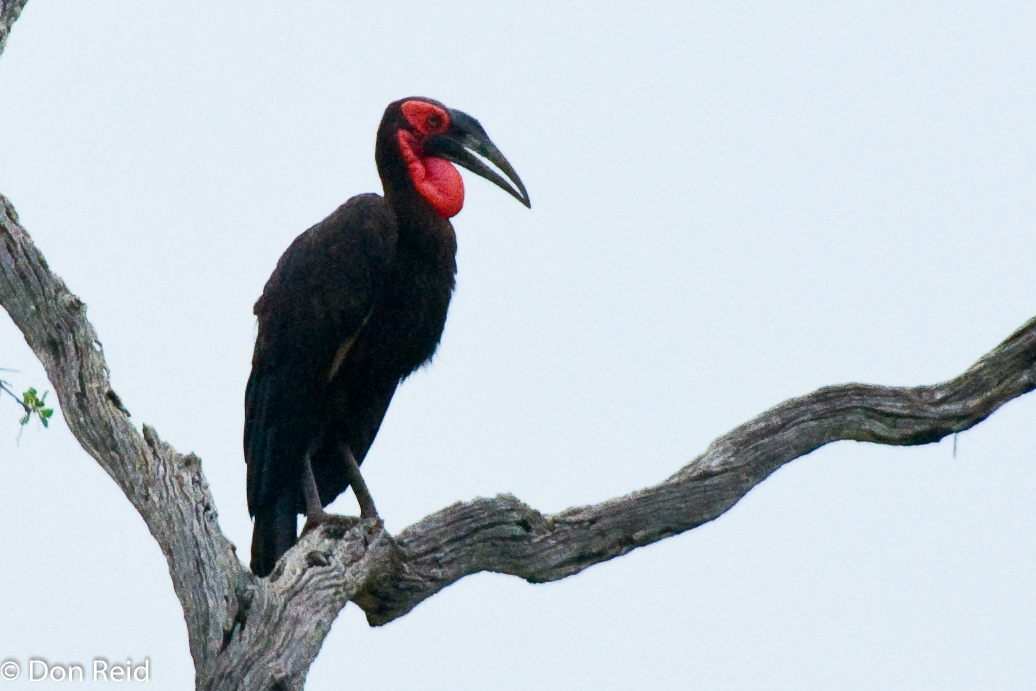
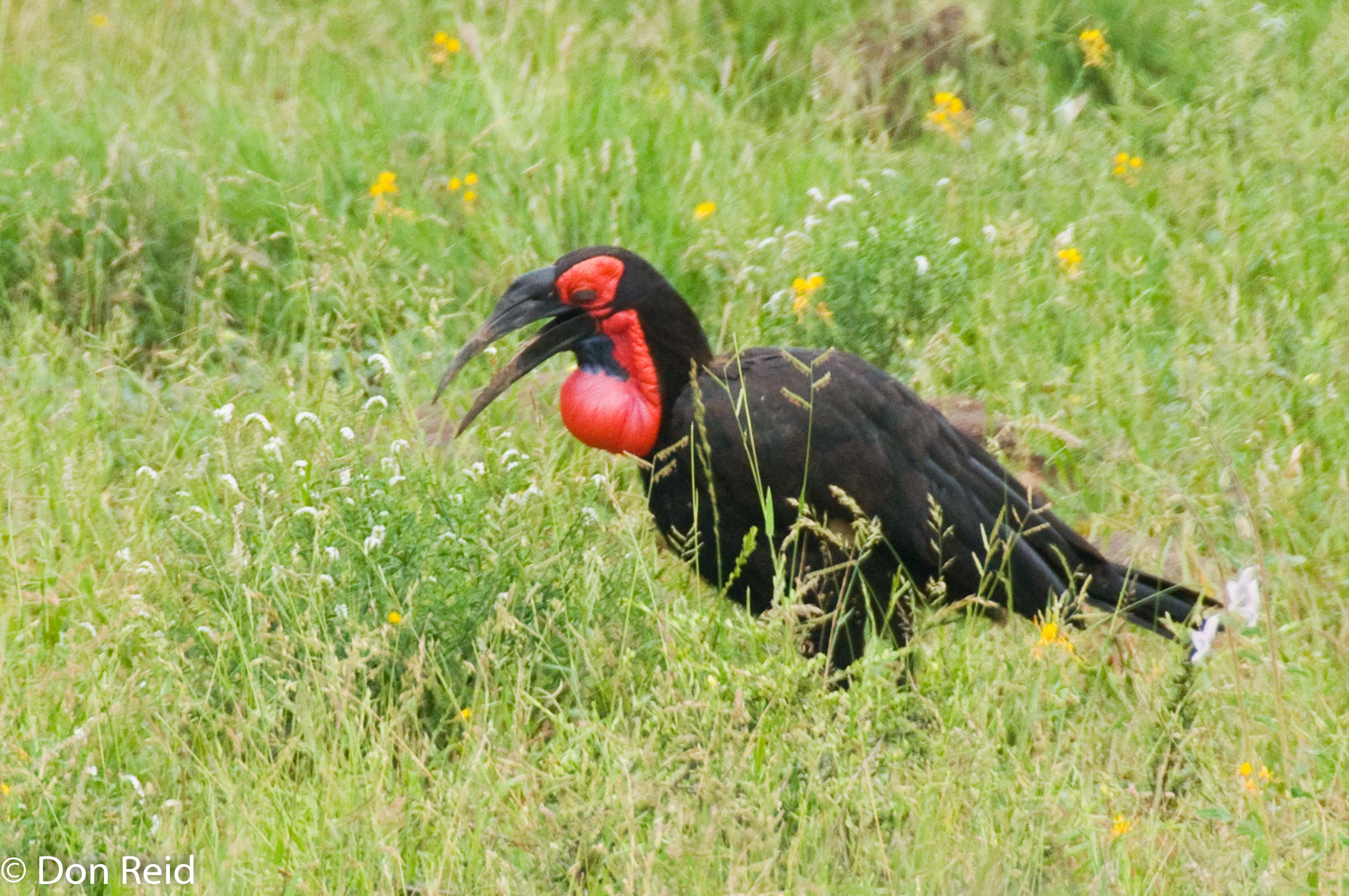
Southern Ground-Hornbill (the name includes “Southern” only because there is a related “Northern Ground-Hornbill” which occurs further north in Africa as per the extract from Birds of Africa below)
Bromvoël (Afrikaans) as with many Afrikaans names this one is most appropriate, “Brom” translating directly as “drone” , “grumble” or “grunt” which describes their early morning call
Ingududu, Intsikizi (Indigenous)
Hornrabe (German)
Bucorve du Sud (French)
Zuidelijke Hoornraaf (Dutch)
Bucorvus Leadbeteri (Scientific) The beauty of scientific names is that they are common throughout the world no matter what country or the language spoken. The first part – Bucorvus – is the Genus which is derived from the Greek Bu- meaning ox and Latin Corvus being the fairly well known term for Crow – so literally “large crow”. The second part – Leadbeteri – is the species name which in this case is named after the British taxidermist and ornithologist Benjamin Leadbeater
Tamboti KNP
Where to find it
This is another species that is easier to find in protected areas such as the National Parks in the north-eastern parts of Southern Africa. Most likely place in South Africa would be in Kruger Park.
My first sighting was during my first visit to Kruger in the early 1970’s and I still recall my surprise when we came across a small group of Ground-Hornbills on the first stretch of road as you leave Skukuza camp and head towards the Lower Sabie road. They were right next to the road and, it seemed, accustomed to the attention of passing visitors and clicking cameras (they still clicked in those days)
The distribution map below is from SABAP2
Look …….. and Listen
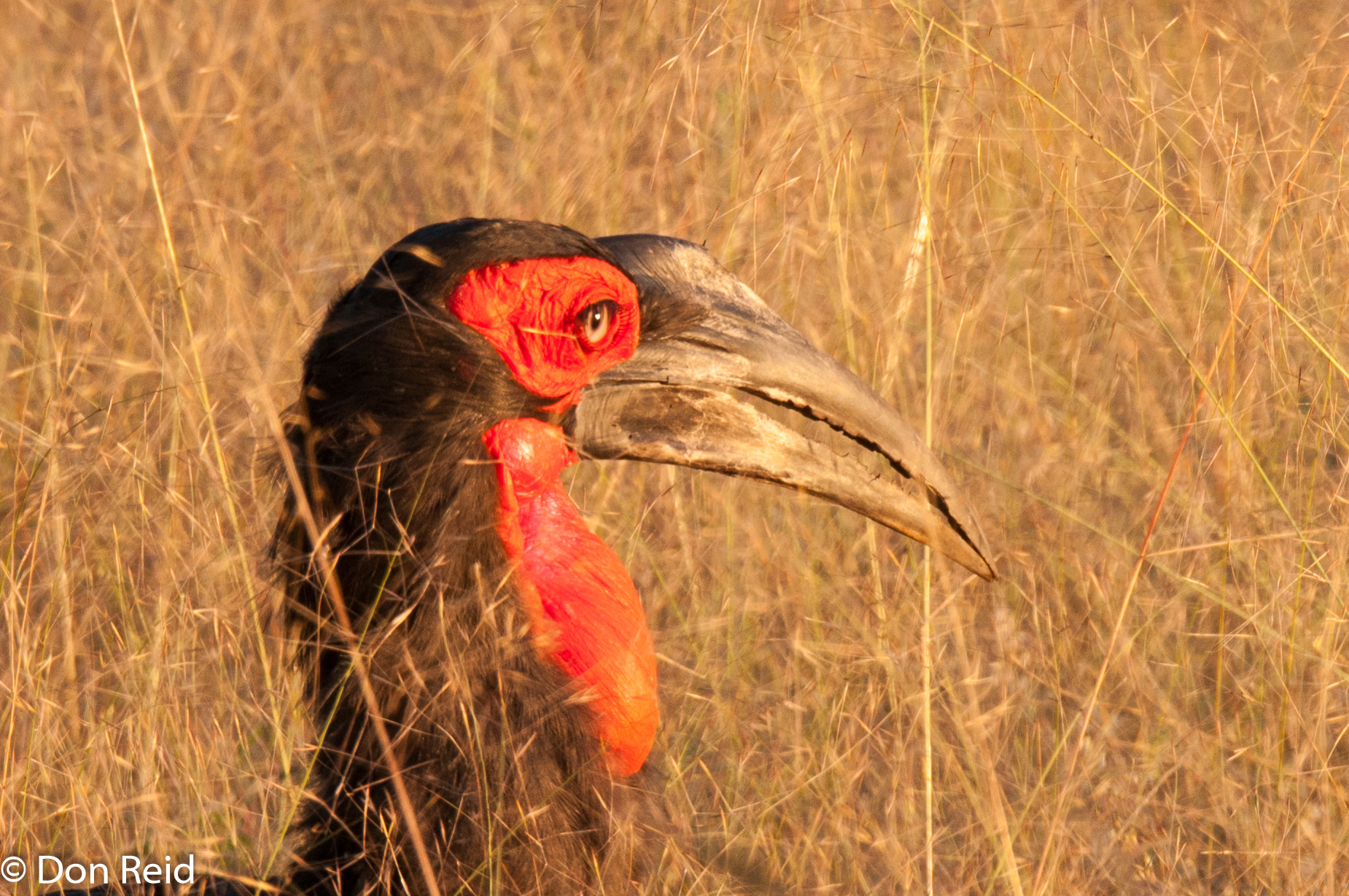
There is absolutely no chance of confusing this species with any other, except if you mistake it for an escaped turkey, which it does resemble up to a point with its black colouring and vivid red throat patch. In fact, it has in the past been referred to as a Turkey Buzzard. (Not to be confused with the Turkey Vulture which we encountered in Cuba)
This is a large bird, up to 120cm long and weighing up to 6 kg and largest of all the world’s Hornbills by a long way.
They move around in small family groups, waddling slowly as they search for food – anything from reptiles, frogs, snails, even small mammals such as hares.
The call is a low-pitched booming sound, not typically bird-like at all. My first encounter with calling Ground-Hornbills was early one morning in Kruger – a group was perched in a tree, silhouetted by the morning sunlight, sounding every bit like a rock-band warming up as they called in varying tones in a rhythmic fashion. Males and females call in different tones (much like humans)
Early morning calling from tree
Punda MariaChobe Game Reserve
Photography
Probably one of the easiest birds you will get to photograph, because of its large size, vivid colouring and the fact that they are often found not too far from the road in places such as Kruger National Park
It is always pleasing if you can get close enough for a detail shot of the head with the long eyelashes often prominent and the bright red throat pouch
Chobe Game Reserve
Other Stuff
Conservation status is listed as “Vulnerable” on the Red Data list – in SA it is considered “Endangered” and may soon meet the Red Data criteria as being “Critically Endangered”. Loss of habitat is the reason for their decline coupled with the fact that on average one chick is raised to adulthood every nine years by an adult pair.
Lifespan is 30 years or more and in captivity some have lived to 70 years
Nesting is generally in deep hollows in large trees or occasionally in clefts in rock faces
In Africa it has been a focal point of some traditional cultures and is a symbol of the arrival of the rainy season, thus the taboo against killing of the species.
An older version of Roberts mentions the indigenous interpretations of the booming calls, such as the female saying “I’m going, I’m going, I’m going home to my relations”, and the male responding “You can go, you can go, you can go home to your relations!”
References
Roberts Birds of Southern Africa
Birdlife International
Birds of Africa South of the Sahara
SABAP2 (Maps)
Latin for BIrdwatchers (Roger Lederer and Carol Burr)
We came across Elephant, Buffalo, Jackal, Sable Antelope and a pack of Wild Dogs …….. and that was before we entered Chobe National Park!
Kasane is a small town on the far northern border of Botswana, its claim to fame being that it is the gateway to Chobe, one of the great African game reserves. It is also an unpredictably wild town – elephants and other wild animals occasionally wander through the residential area, often at night and the locals are in the habit of setting off thunderflashes to scare them off.
Another visit this month to Kasane to visit the project in which I am involved, meant another opportunity to squeeze in a visit to Chobe – this time we set out to do an early morning drive through the Riverfront section, before the day’s business began.
Chobe Riverfront
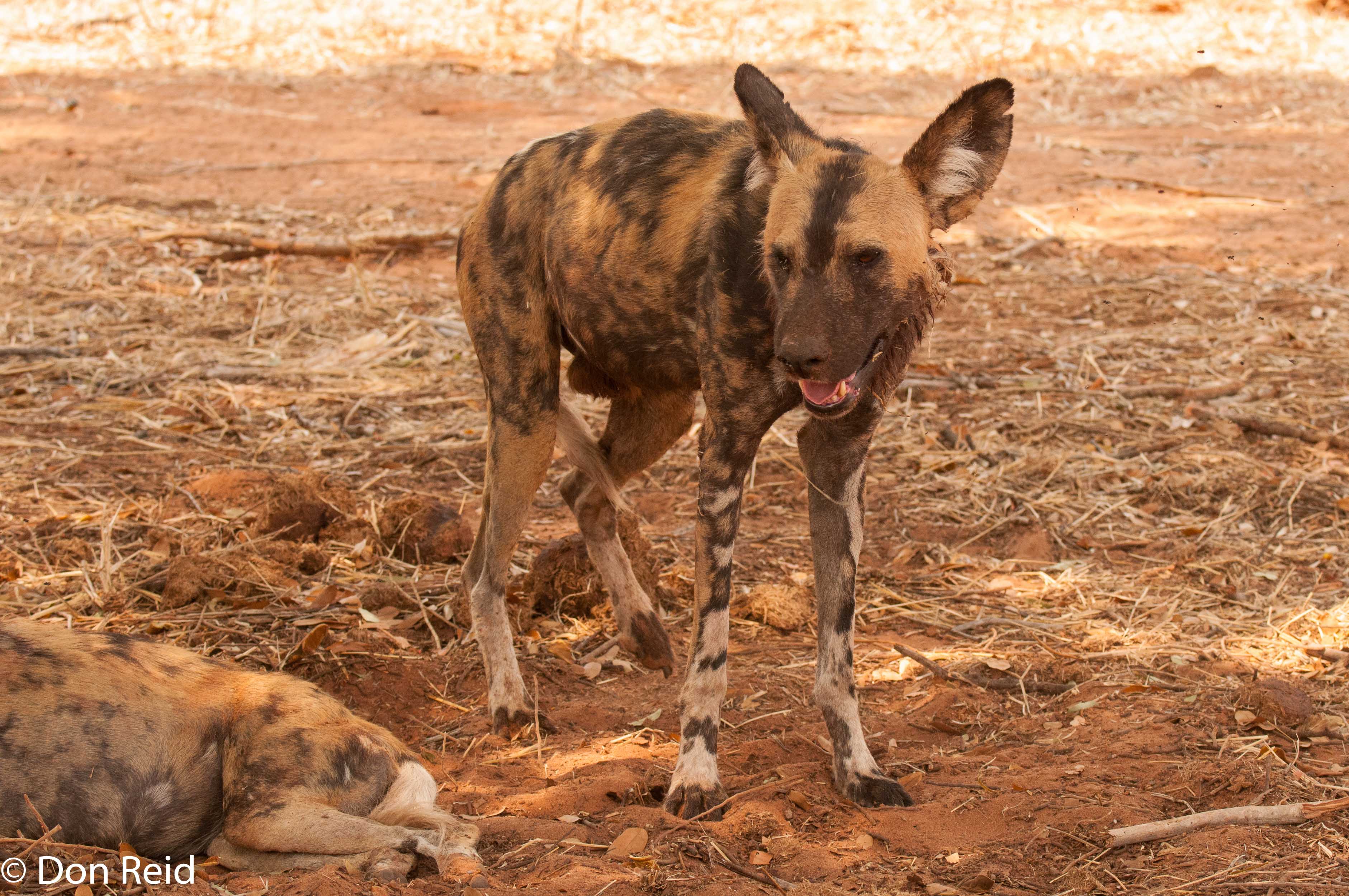
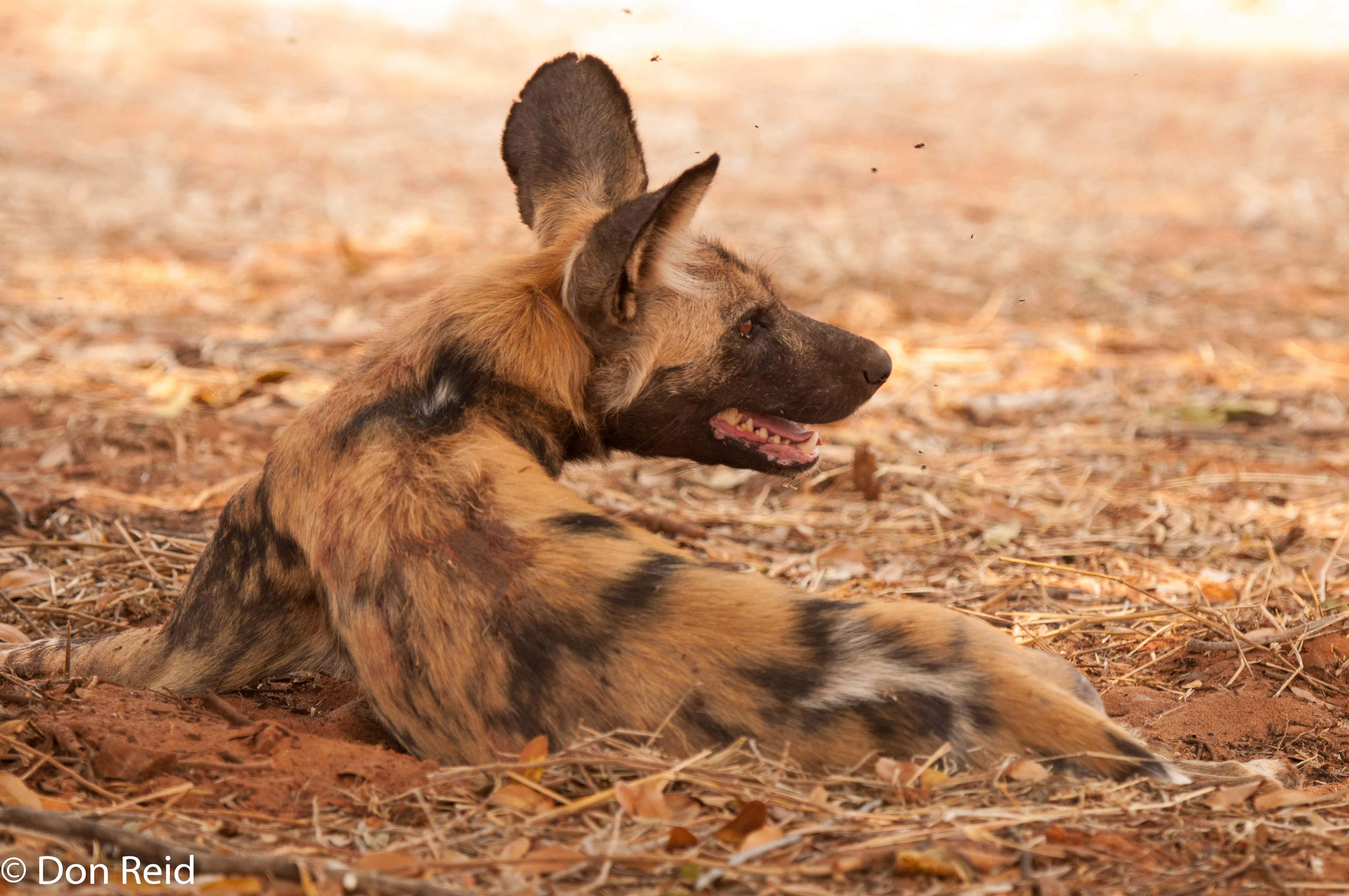
We set off as the sky was starting to lighten and on the short drive to the entrance gate we came across a pack of Wild Dogs, who were seemingly on a mission as they trotted along the road. Being pack hunters they would be looking for prey that they could pursue in their relentless fashion, wearing it down until the prey becomes exhausted and vulnerable to the attacks of the pack. We had seen the same pack the previous afternoon, not far from the airport and were able to get really close to them as they lazed the afternoon away in the shade of a large roadside tree, which provided some relief from the hot sun but not from the many flies that were buzzing around their heads.
Cute? They may look it but these are expert predators when hunting in a pack
Entering Chobe, we proceeded along the sandy, bumpy track with regular sightings of the animals we have become accustomed to finding –
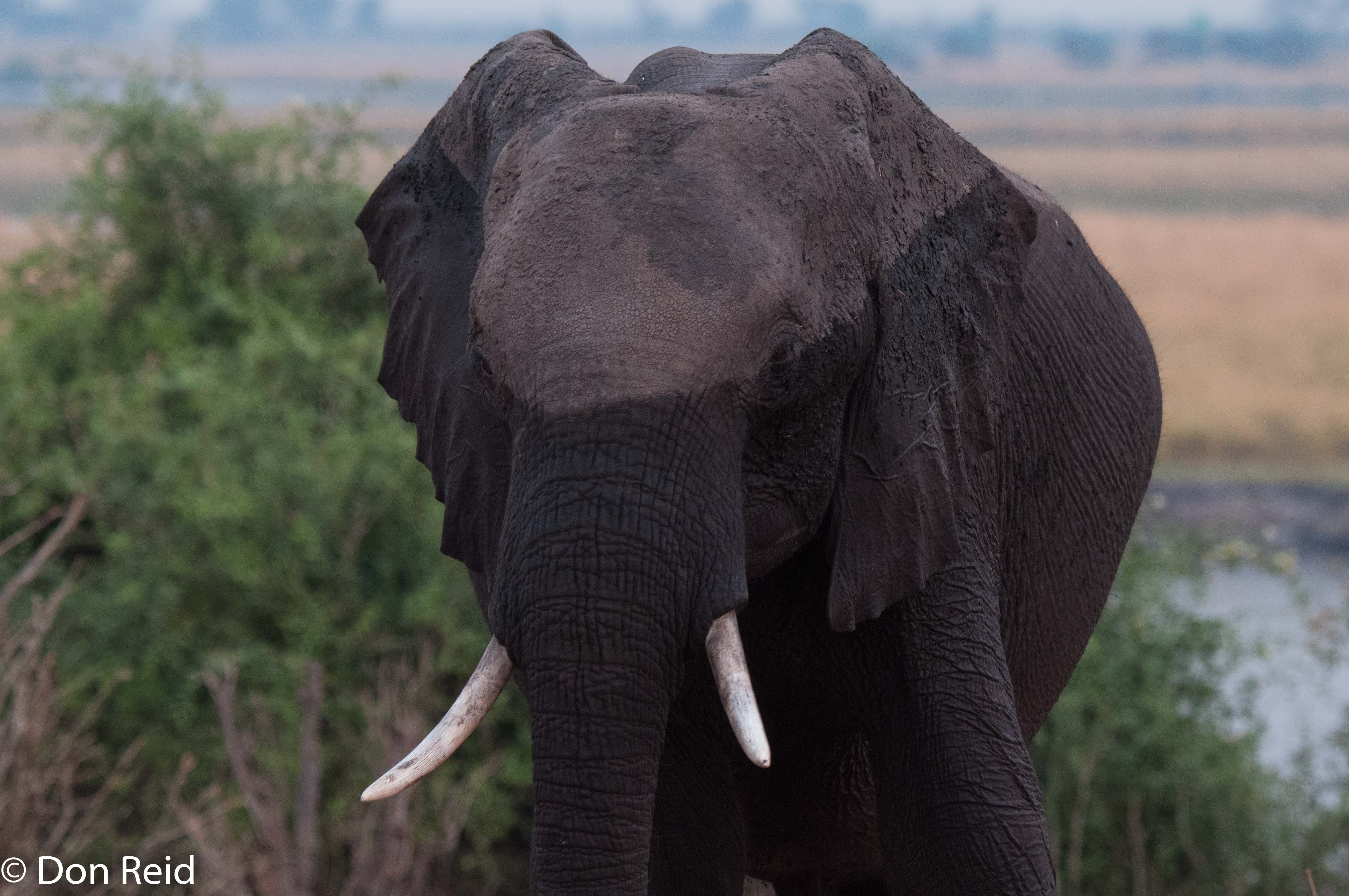
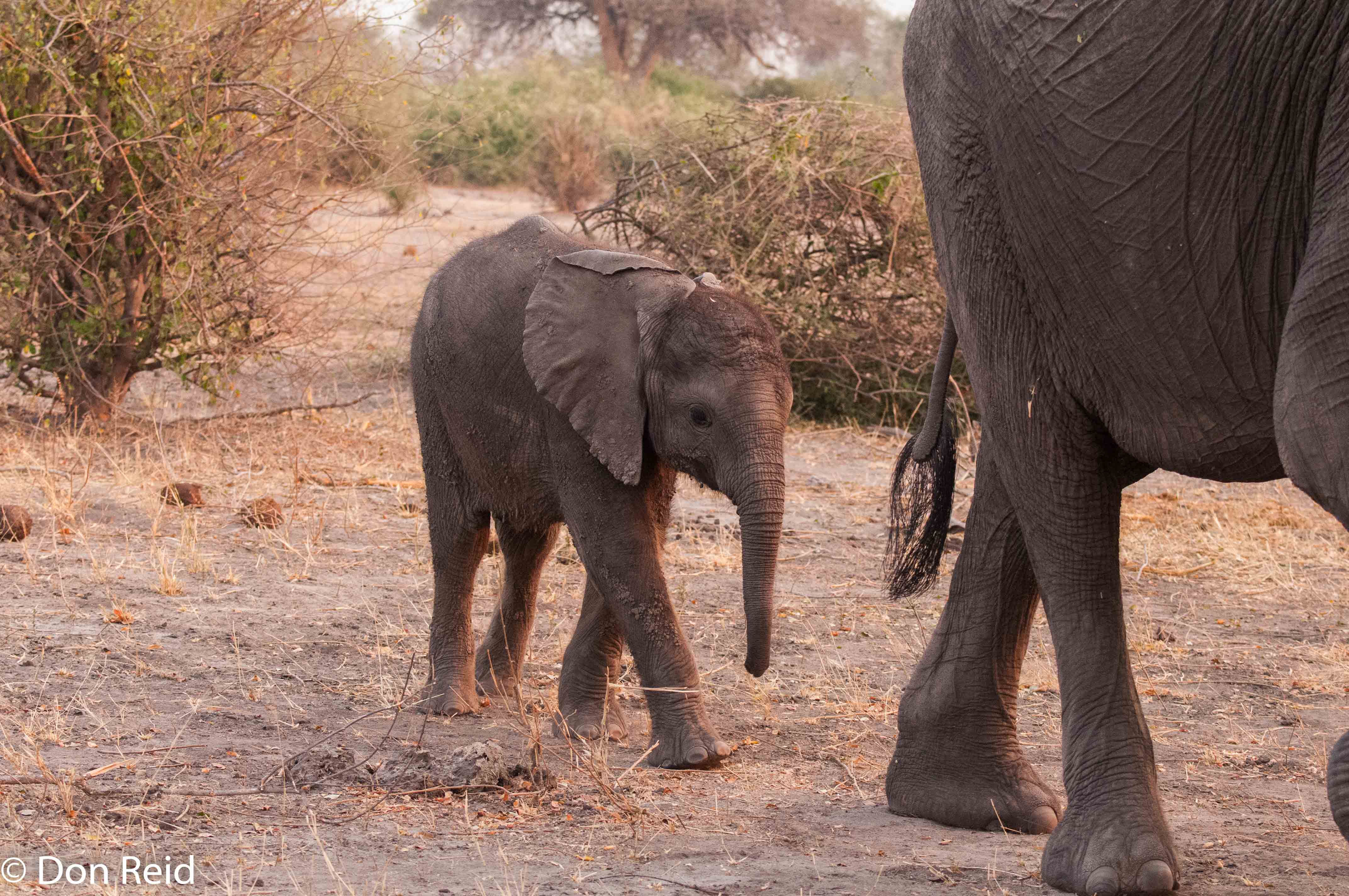
Elephants aplenty, including quite a few youngsters, not wandering far from Mom
Fresh from a dunking in the Chobe riverYoung elephant sticking close to Mom
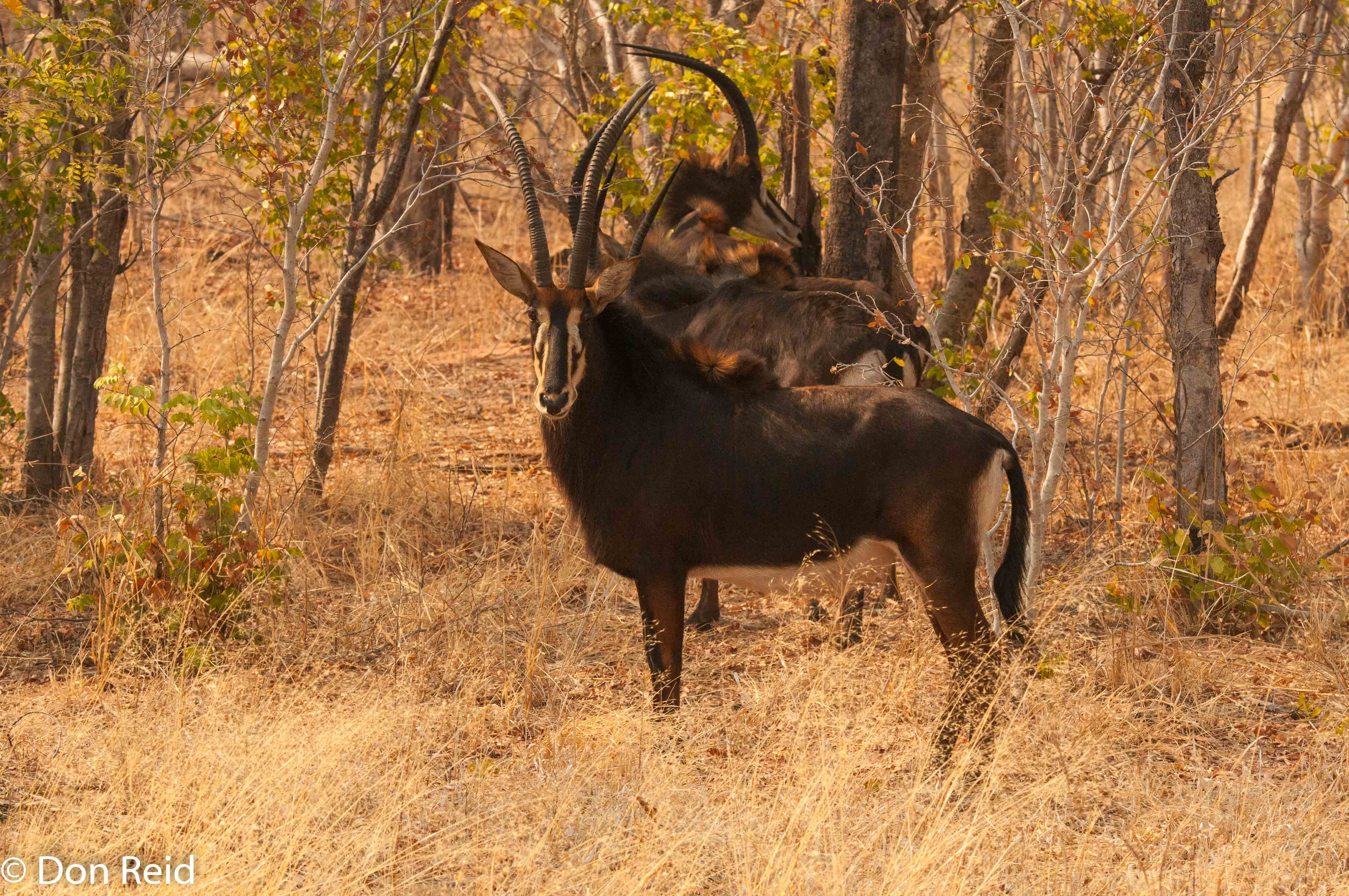
Sable Antelope
Sable Antelope
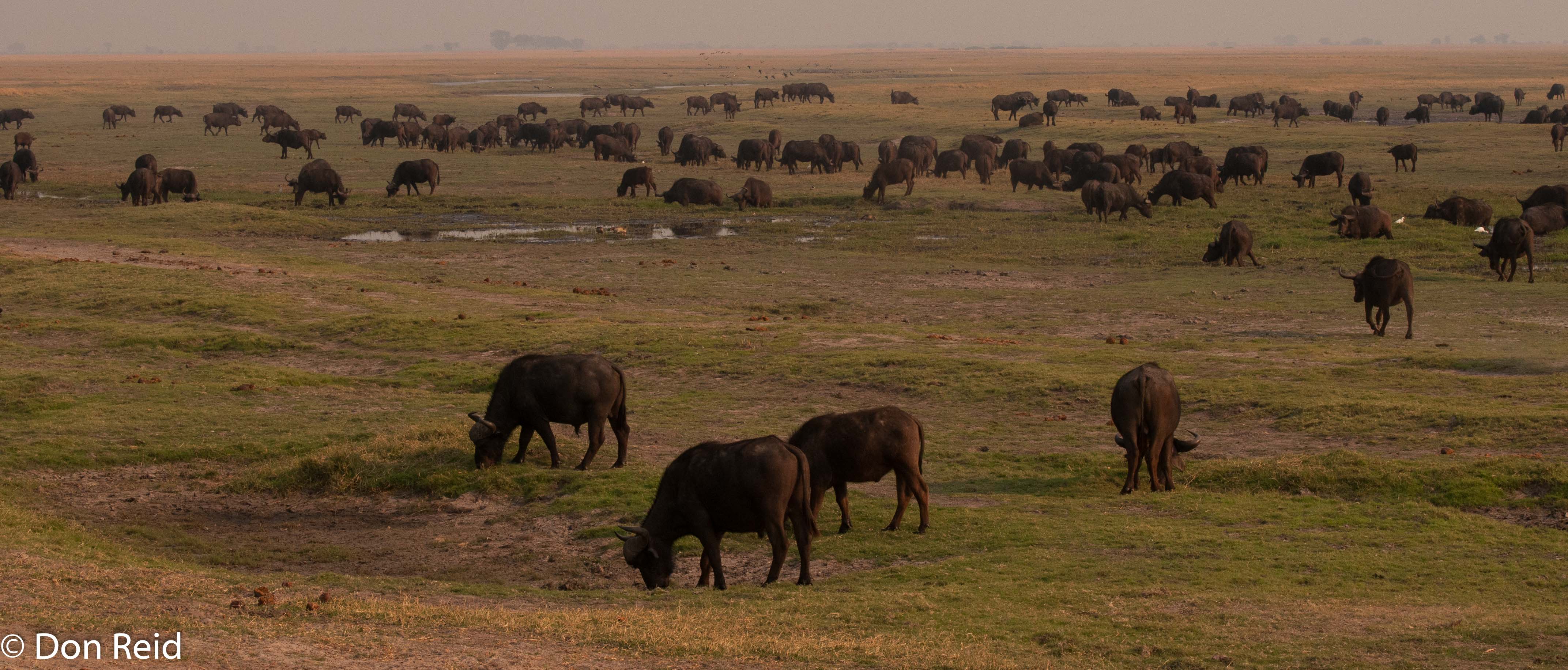
Buffalo – circa 500+ on the Lechwe Flats
Waterbuck
Jackal
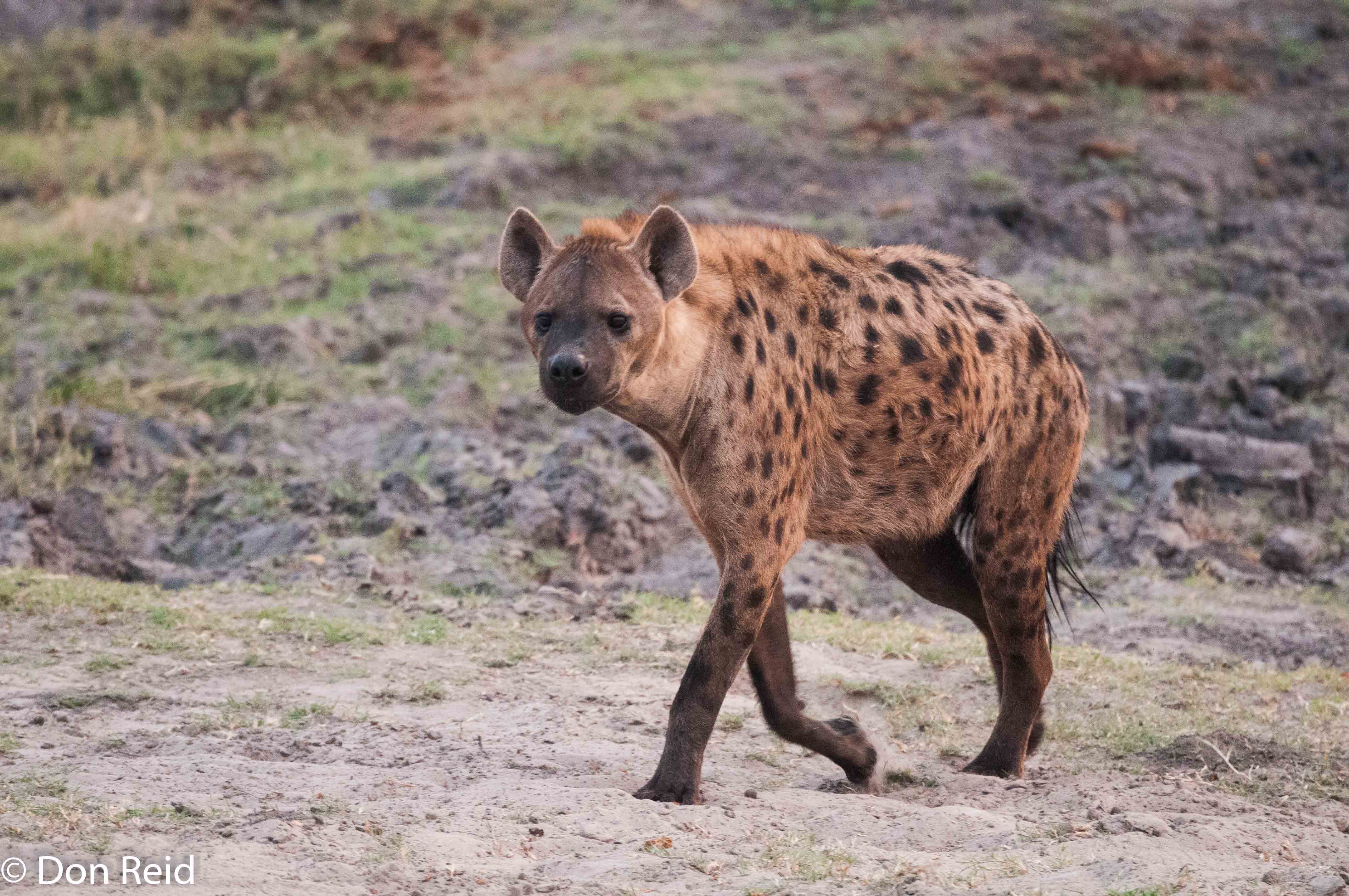
Hyenas – a pair were making their way back from the river into the bush as we passed by
Spotted Hyena
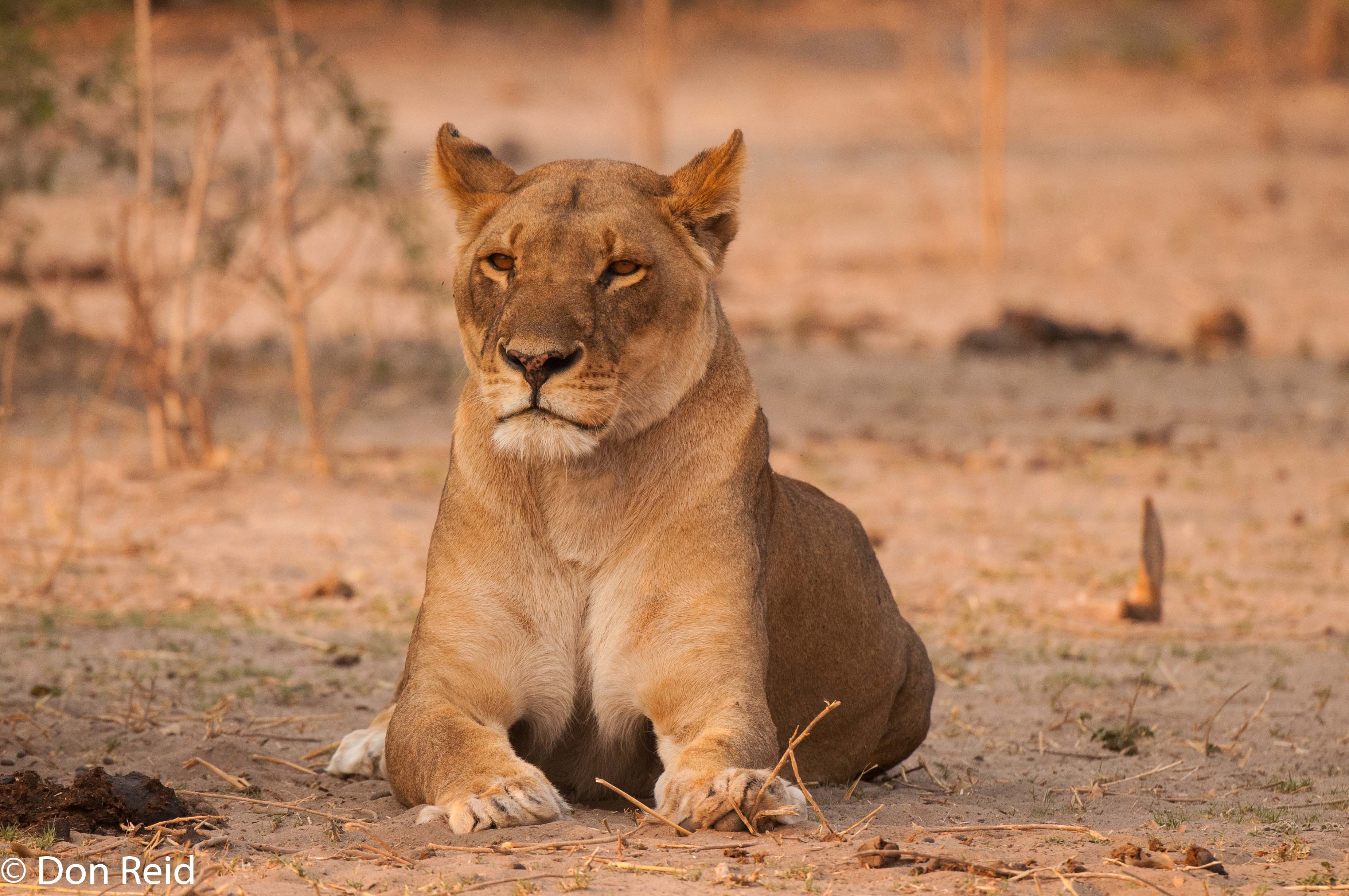
Lions!
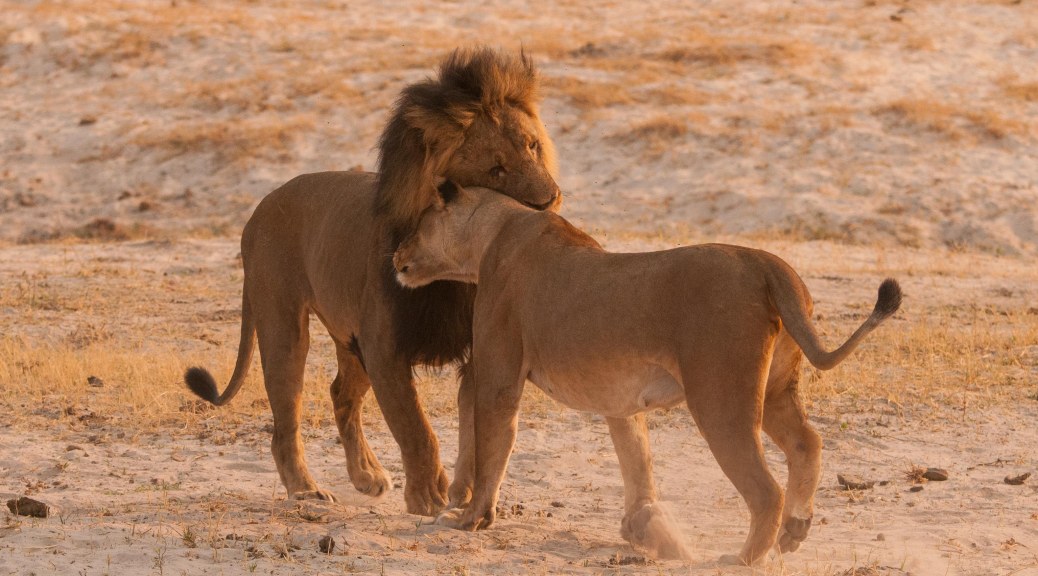
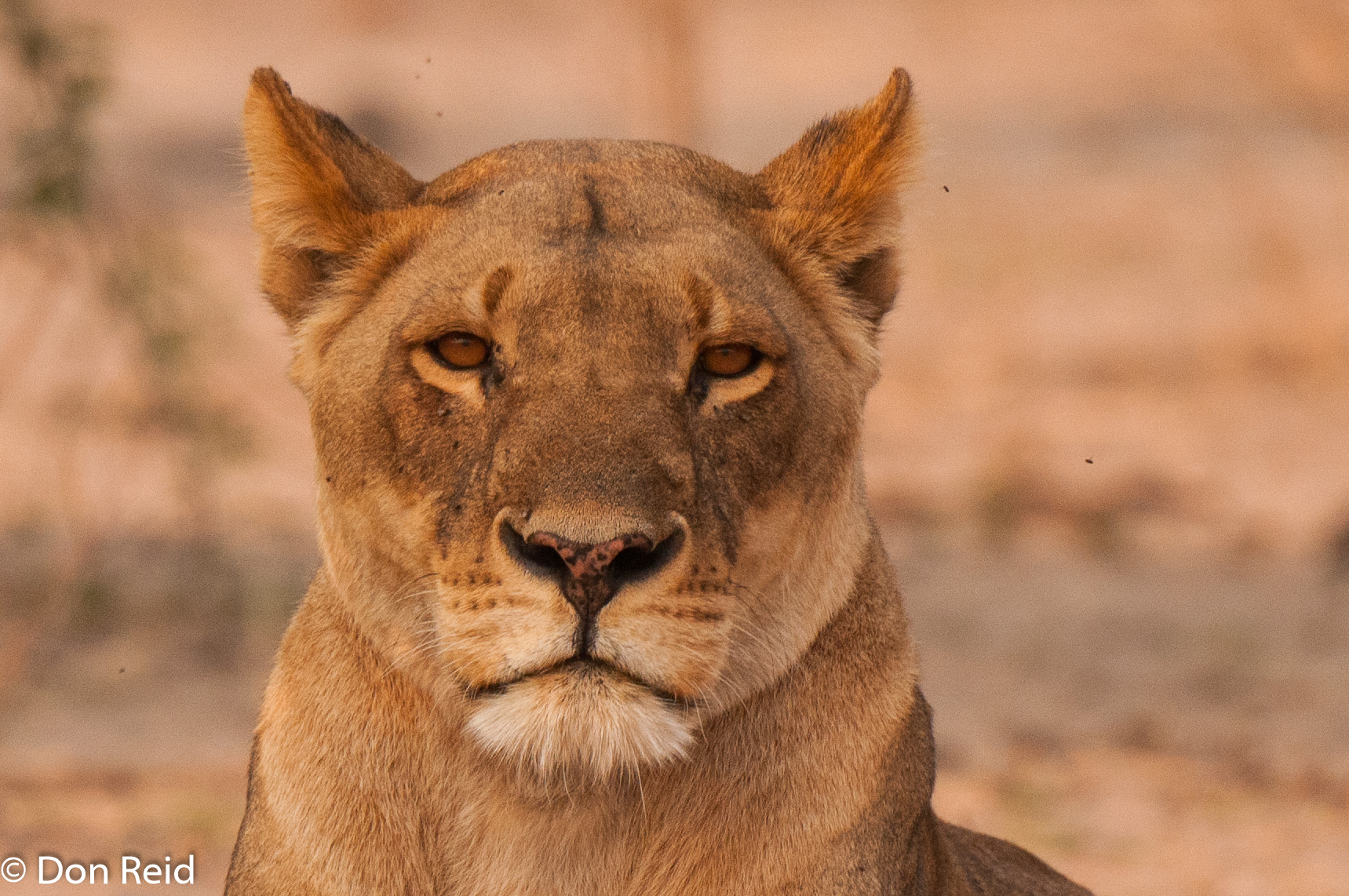
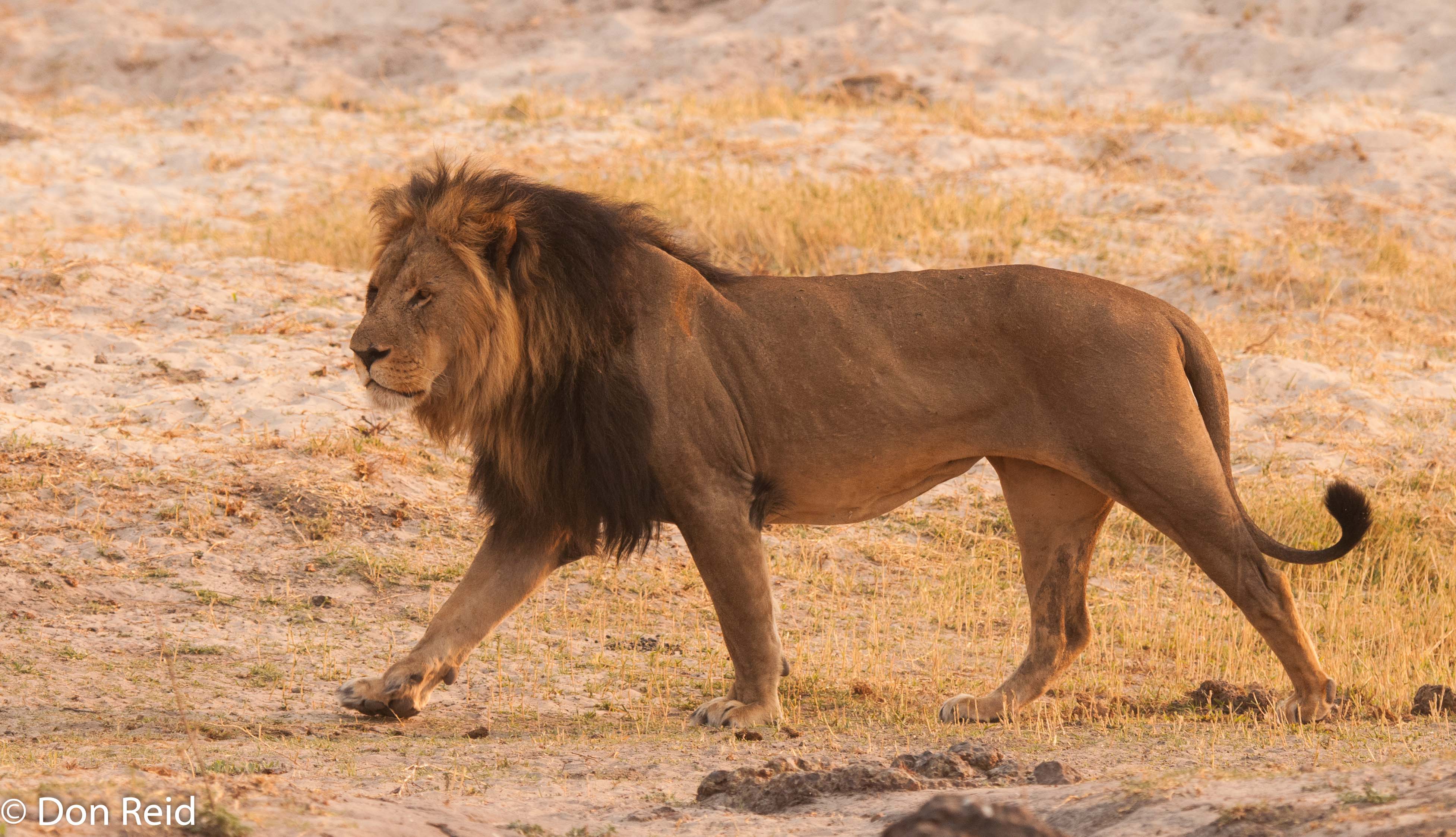
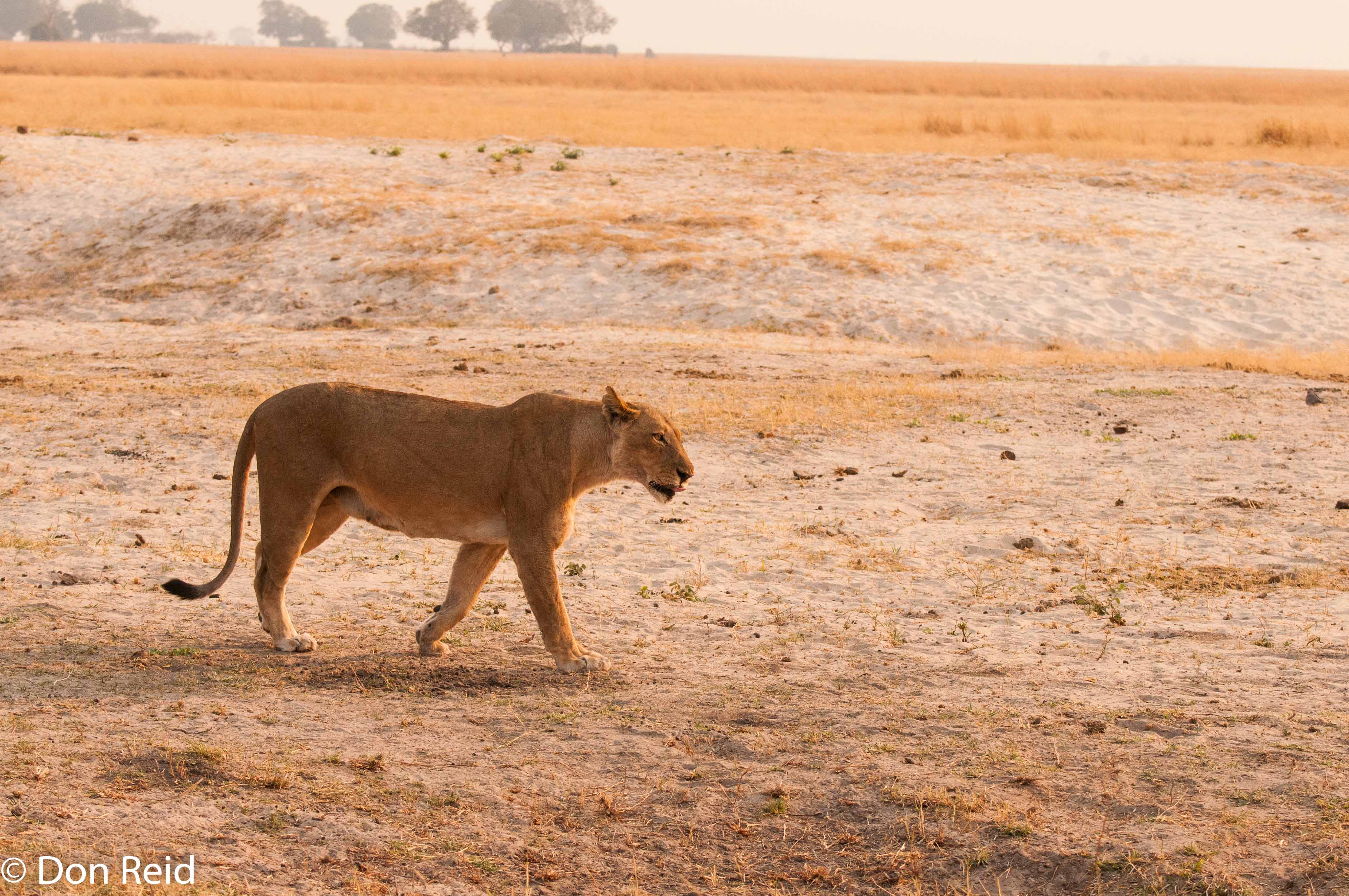
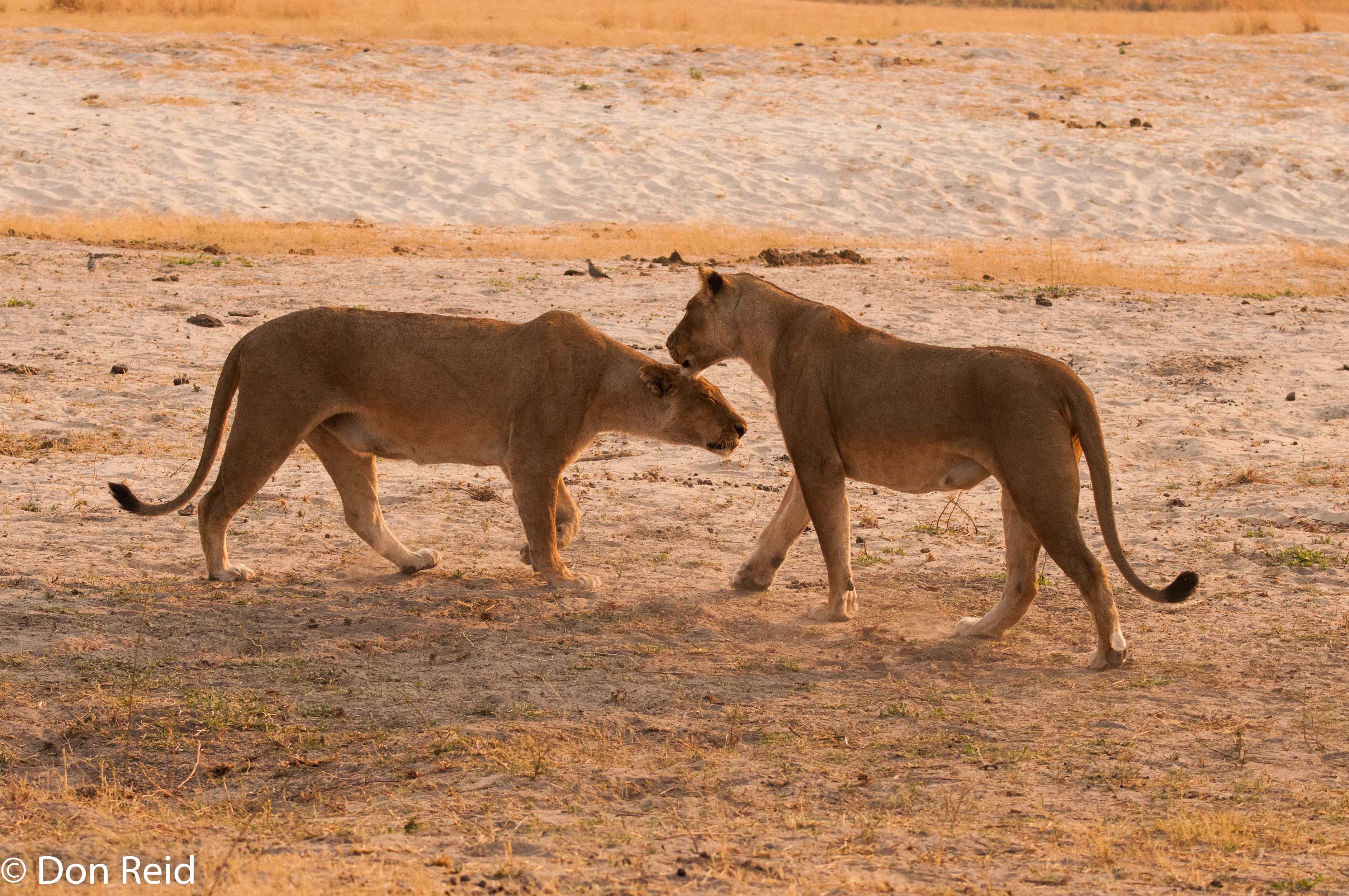
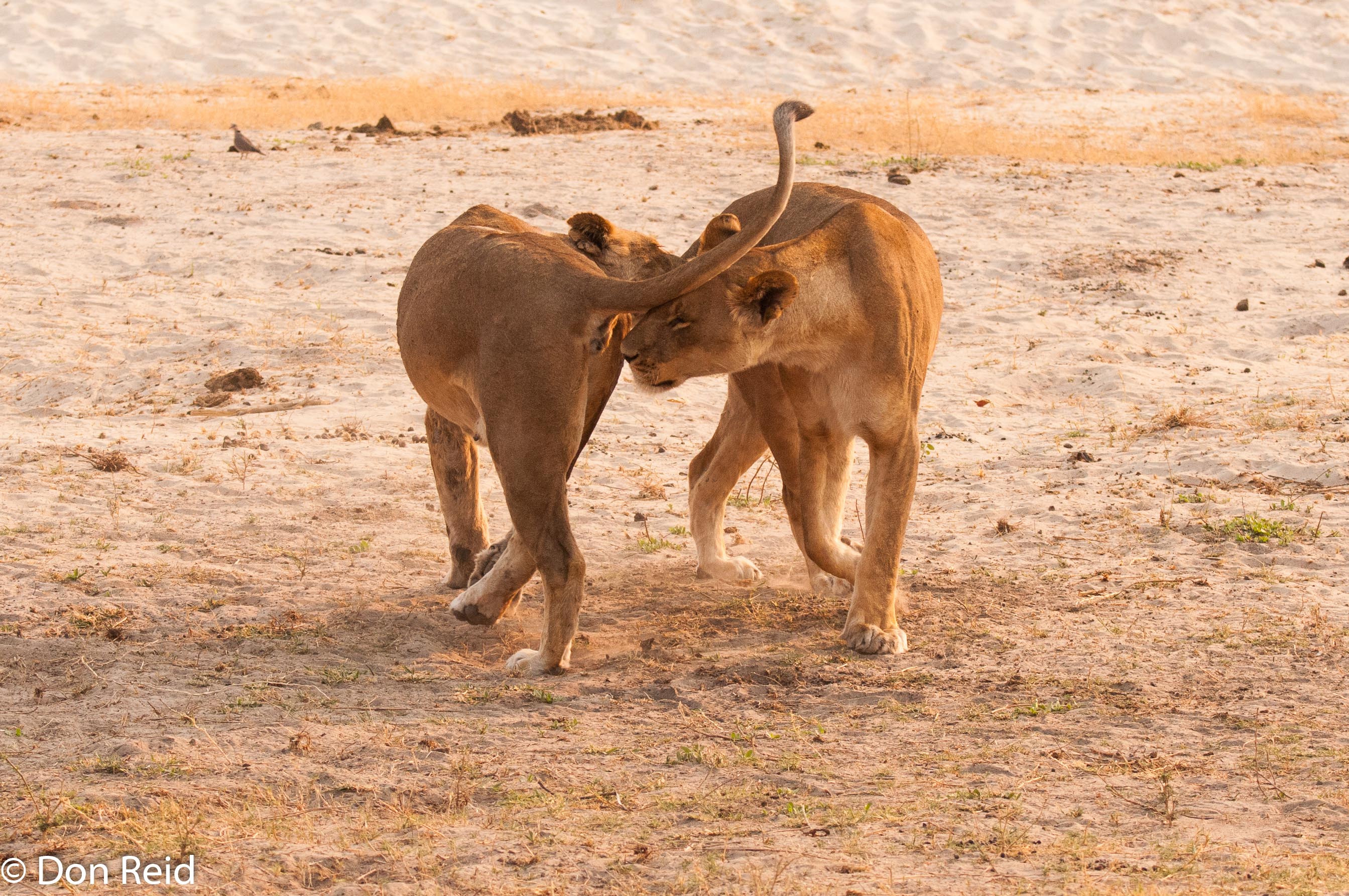
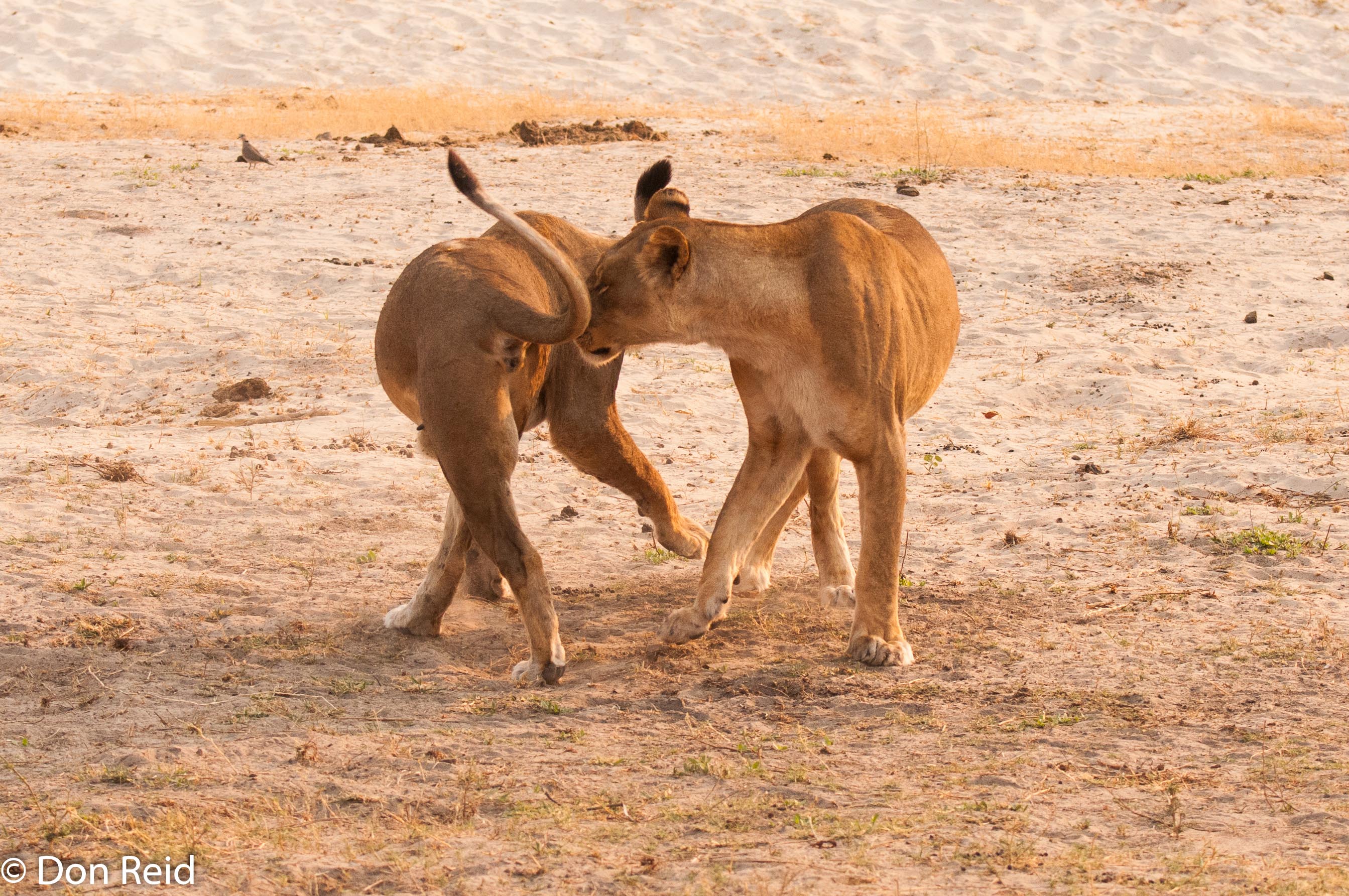
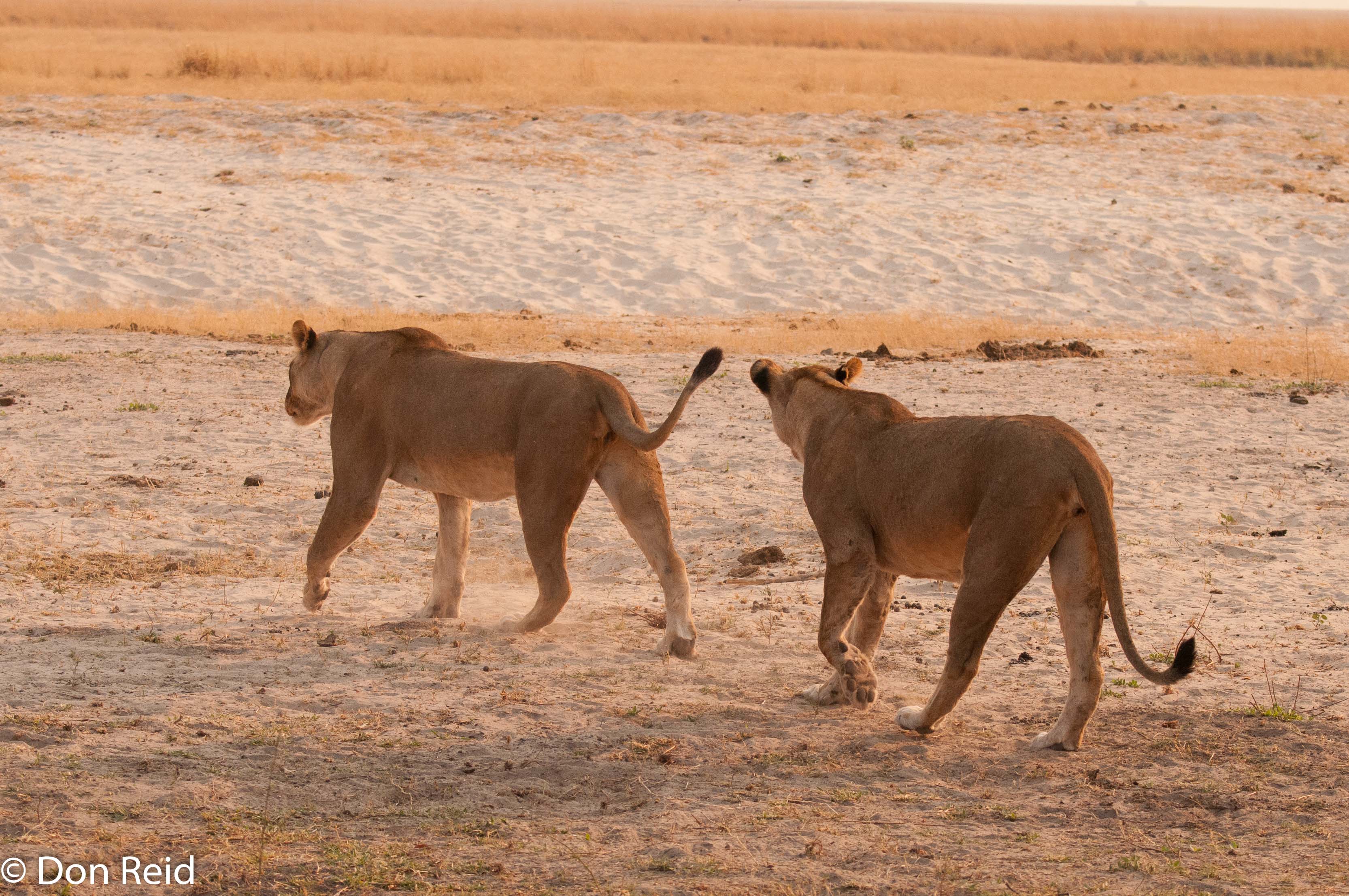
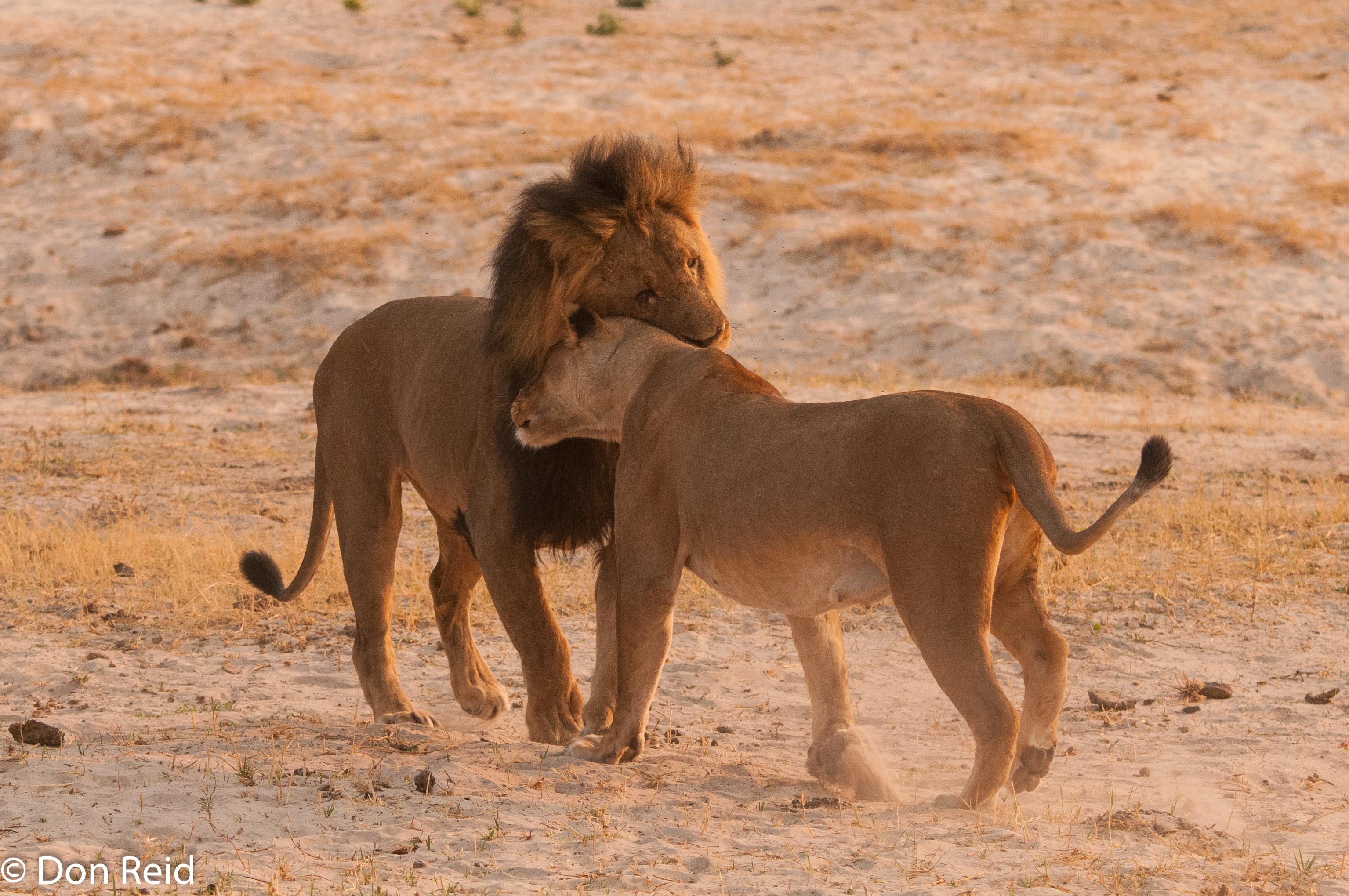
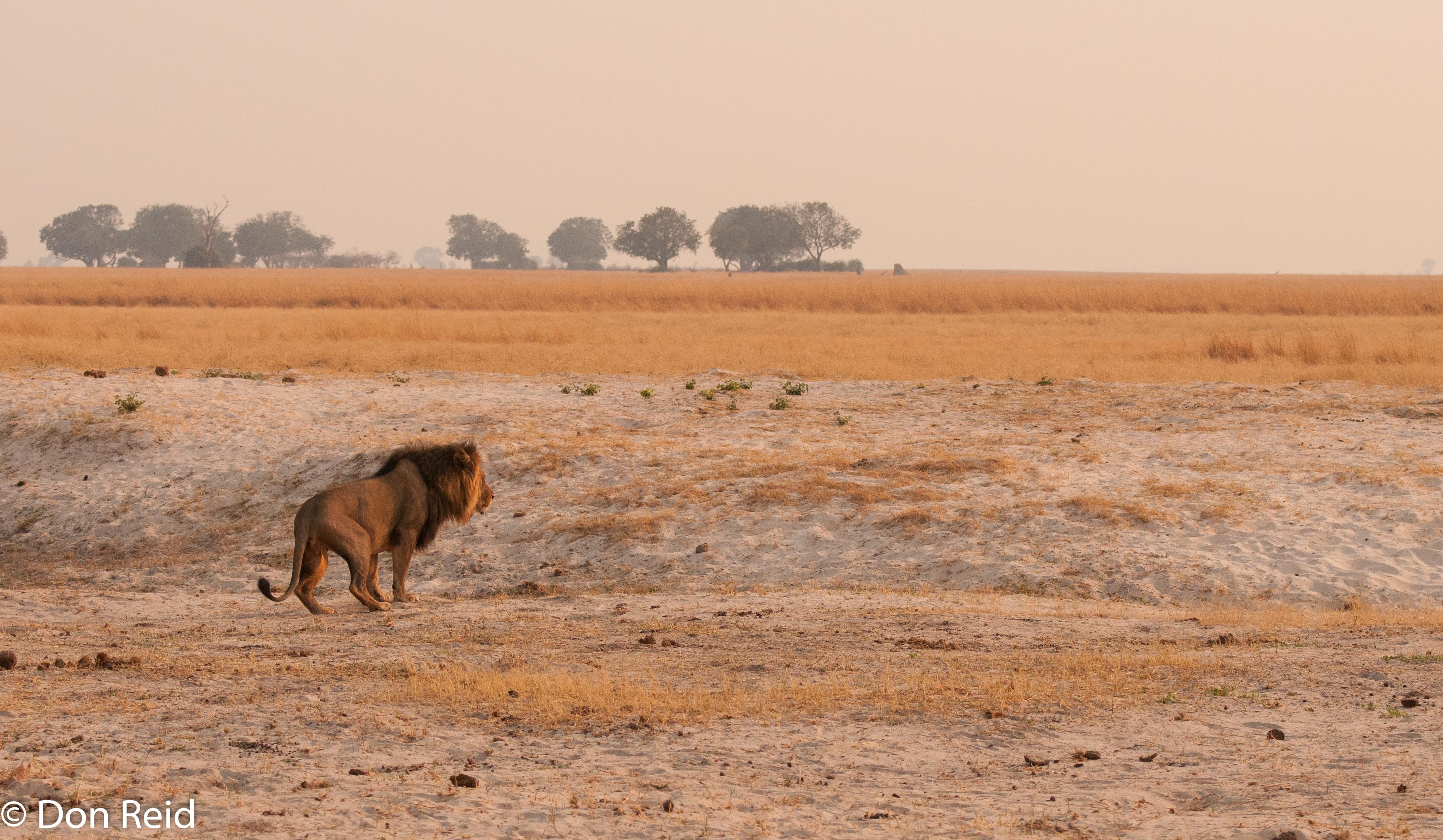
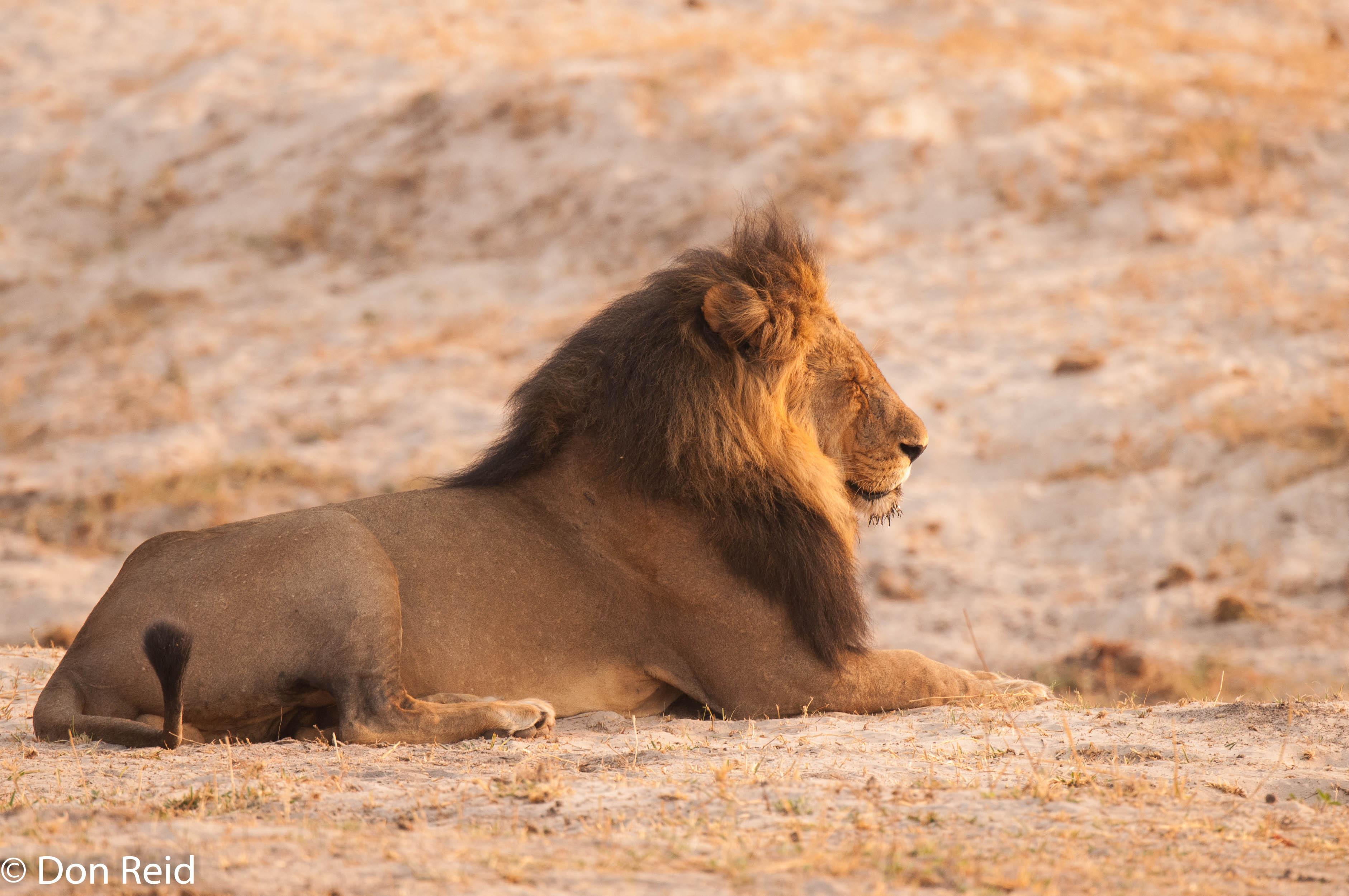
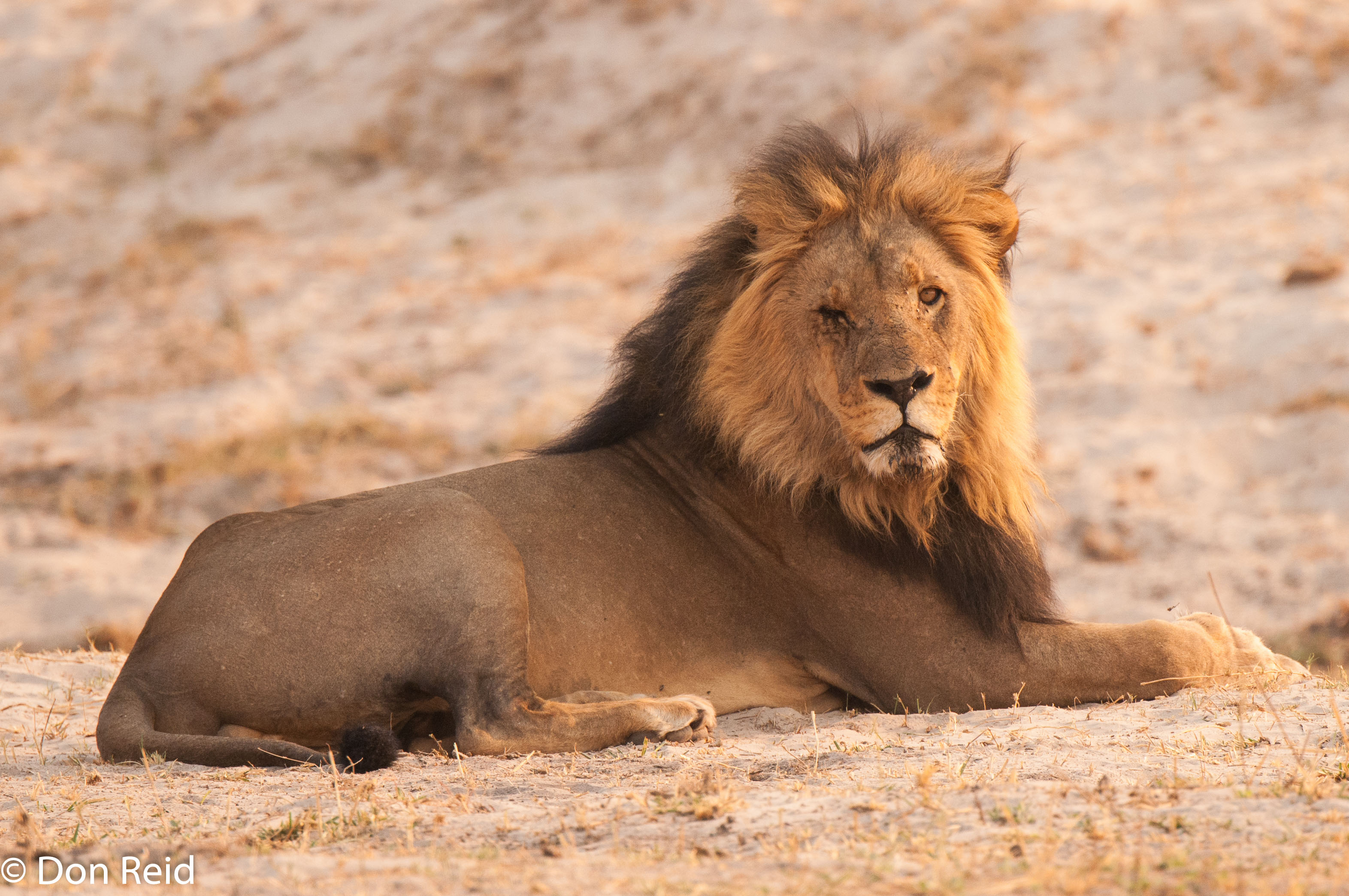
The best sighting of the morning was reserved till last. We encountered two Lionesses, strong and healthy looking individuals, as they made their way to a pool to drink (although we could not see the pool which was concealed by a deep donga) and moments after discussing the possibility of a male being nearby, a handsome male with a full mane of hair appeared and also headed towards the donga.
What followed was without doubt one of the more interesting Lion encounters I have had the privilege of experiencing, as the two Lionesses and the Lion played out a brief but fascinating series of moves. Initially the two Lionesses did a circular dance-like move in unison, as if sizing each other up, then one of them walked off slowly to the water and disappeared into the donga, The remaining Lioness and the Lion seemed to greet and gently caress each other before she too moved off towards the water, leaving the male to rest on the sandy ground and regally take in his surroundings.
Both Lionesses eventually returned and settled in different spots a distance from the male, who studiously ignored both of them as if in a huff.
The morning light lent a pleasant glow to the scene and created perfect conditions for photography as the Lions performed, oblivious to their excited audience, which by now had grown to 5 or 6 safari vehicles which arrived a short while after we spotted the first one. The photos are in the sequence taken –
Birding
The birding was limited to the “large and obvious” species for the most part –
Plenty of Guineafowl
Francolins and Spurfowl – Crested, Swainson’s and Red-billed were present in numbers
Hornbills – Red-billed, Yellow-billed, Bradfield’s and Ground all well represented
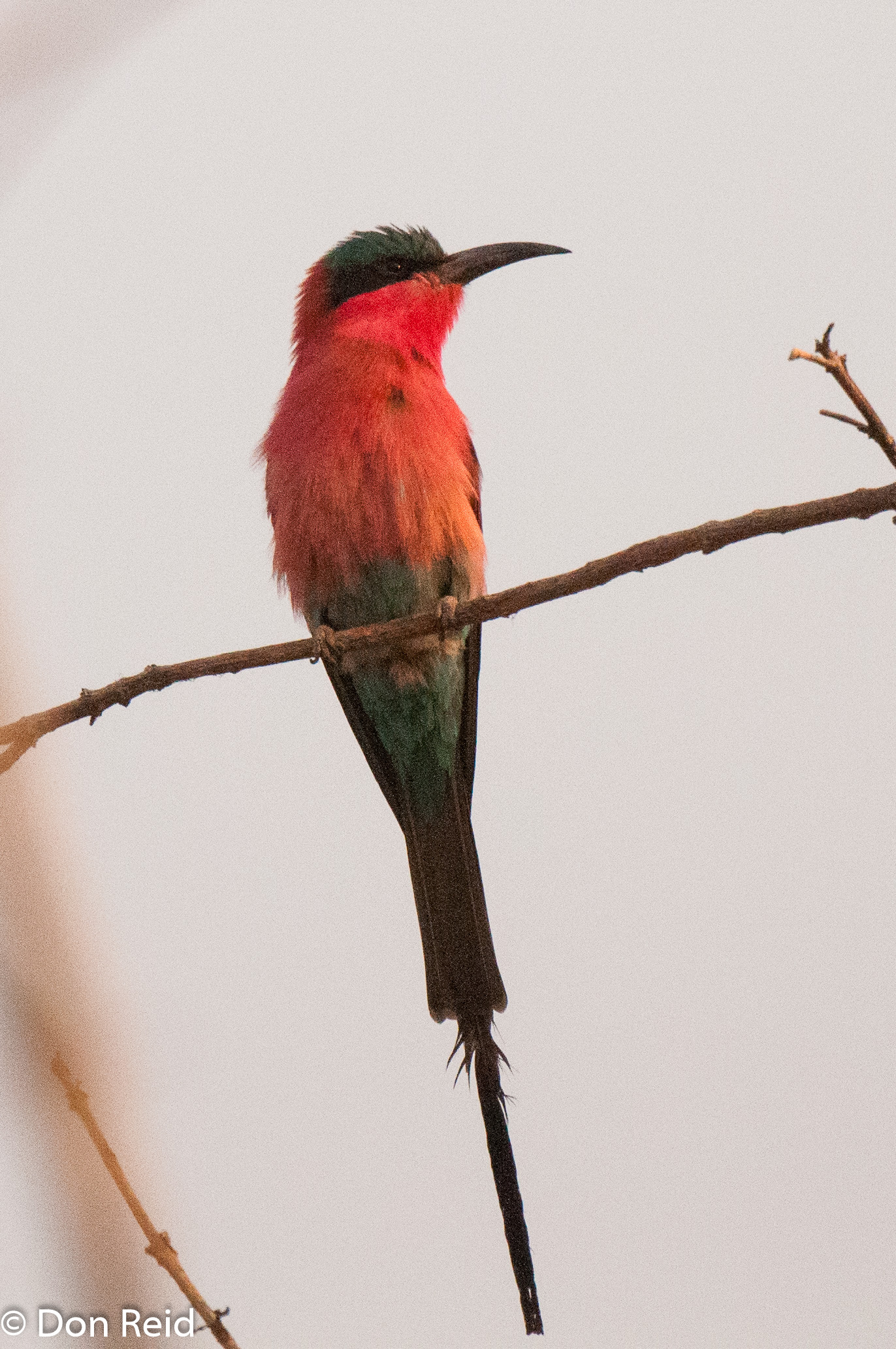
Carmine Bee-eaters are back in numbers and prominent in the sky or perching in bare trees at a few spots
Carmine Bee-eater
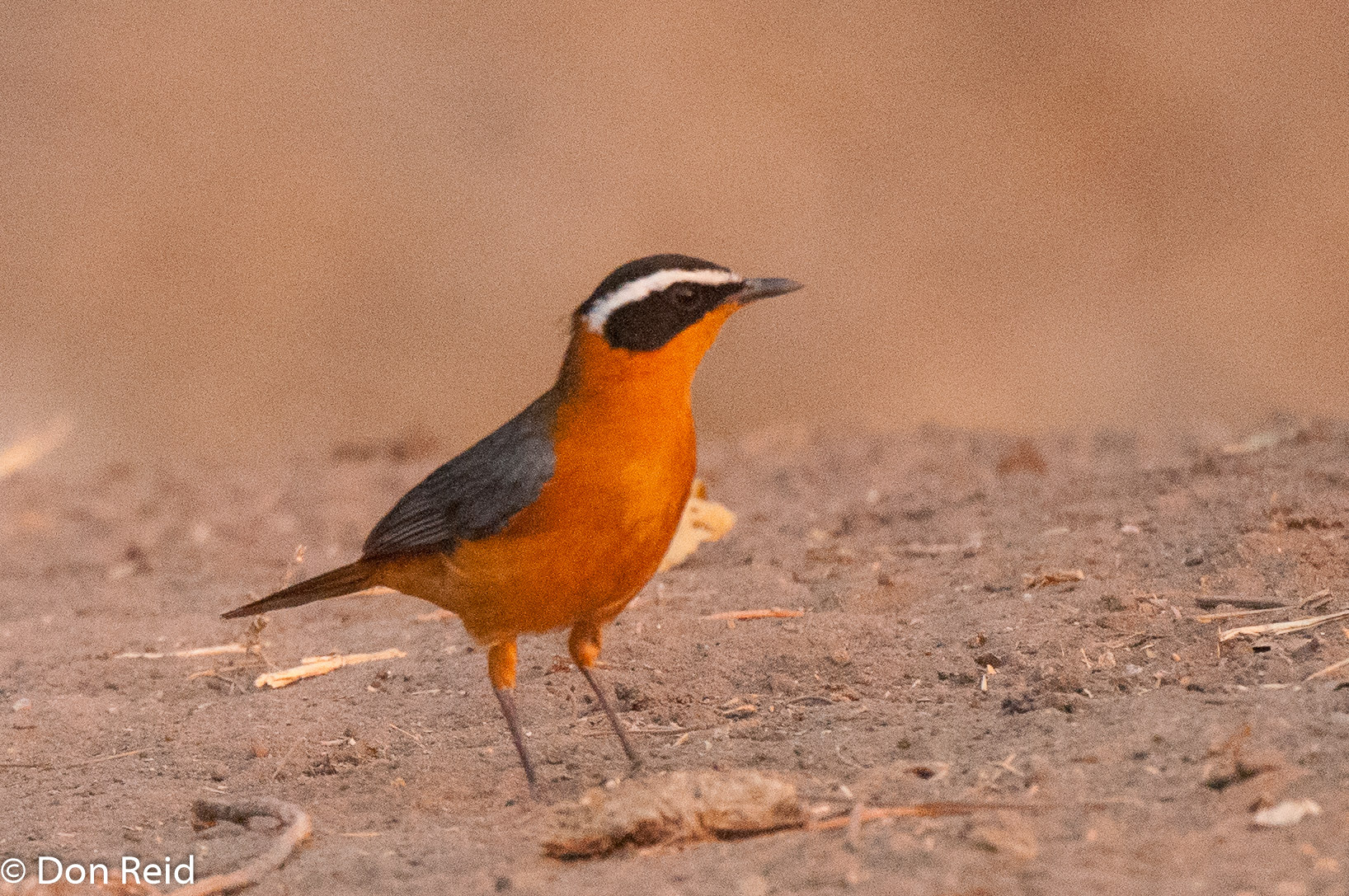
White-browed Robin Chat, extra bright in the golden early morning light
White-browed Robin-Chat
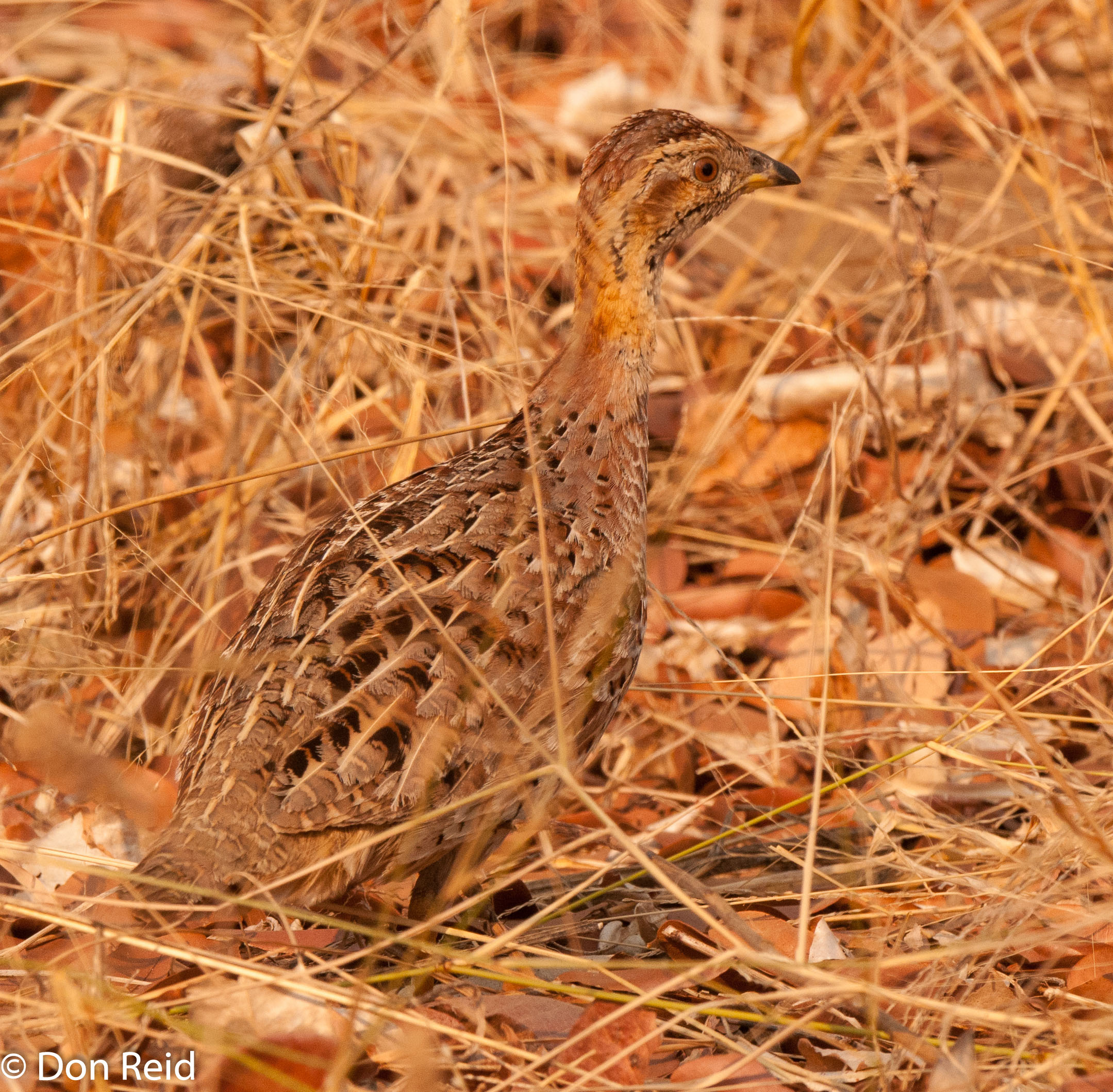
A family of Orange River Francolins was a pleasant surprise and I was able to get my first photos of the mostly secretive species before they scuttled off into the bush
Orange River Francolin, well camouflaged in the dry grass
A truly wonderful morning’s game and bird viewing in this magical part of Southern Africa!
For the last 2 years my blogging has been about birding trips, birding spots, holidays etc which has been very rewarding for me – I love recalling some of the great moments and places we have been. Now I believe it’s time to broaden the scope of my ramblings to include my take on particular birds that I have become familiar with over the years.
There are plenty of birding books out there and a number of Apps that make it simple to access a mountain of detail information on every species in your locality, so I will be taking a more informal, down-to-earth look at a random selection of birds, on a regular basis. A sobering thought is that, if I manage to do one species per week, it will take me 16 years to cover the 850-odd “regular” species in Southern Africa (excluding the vagrants that drive twitchers crazy every now and then). By that time I will have had my 84th birthday – if I’m lucky enough to still be around – talk about long-term planning!
Where to start?
I wasn’t sure what species to kick off with, then I had a moment of clarity (happens infrequently when you reach pensioner age) and decided that I would start at the beginning …………… of my birding career. So I went back to my very first records, written into my first copy of Roberts Birds of South Africa, which I purchased during one of our early visits to Kruger National Park. This was around 1978 and it was only about 10 years later that I started listing birds with any regularity – 3 kids growing up and a busy professional career tend to keep you busy and don’t leave time for much else.
The very first bird recorded was noted in the margin of my Roberts : “Woodland Kingfisher, 27 August 1978, seen KNP”. Well it seems I managed to start with an incorrect ID, as the Woodland Kingfishers are migrants that only arrive in Southern Africa from October…… so it was probably a Brown-hooded Kingfisher that I saw that August.
The next one was more likely to be a correct ID, particularly in Kruger, and hard to confuse with any other bird – the note in the margin says “Saddle-billed Stork, 28 August 1978, seen KNP” – so that’s where I am going to start.
SADDLE-BILLED STORK
Species Names
Saddle-billed Stork
Saalbekooievaar (Afrikaans)
Kandjendje, Hukuinihlanga (Indigenous)
Sattelstorch (German)
Jabiru d’Afrique (French)
Zadelbekooievaar (Dutch)
Ephippiorhynchus senegalensis (Scientific)
That scientific name is very long-winded but if you break it down it starts to make sense : the first part is the Genus which is derived from the Greek words “ephippos” for “Saddle” and “rhyncos” for “bill” and refers to the frontal shield which “saddles” the bill. The second part is the species name which in this case is based on where it was discovered
Photography
Despite their large size, they are seldom close enough for a finely detailed photo, unless you are lucky enough to come across one near a hide.
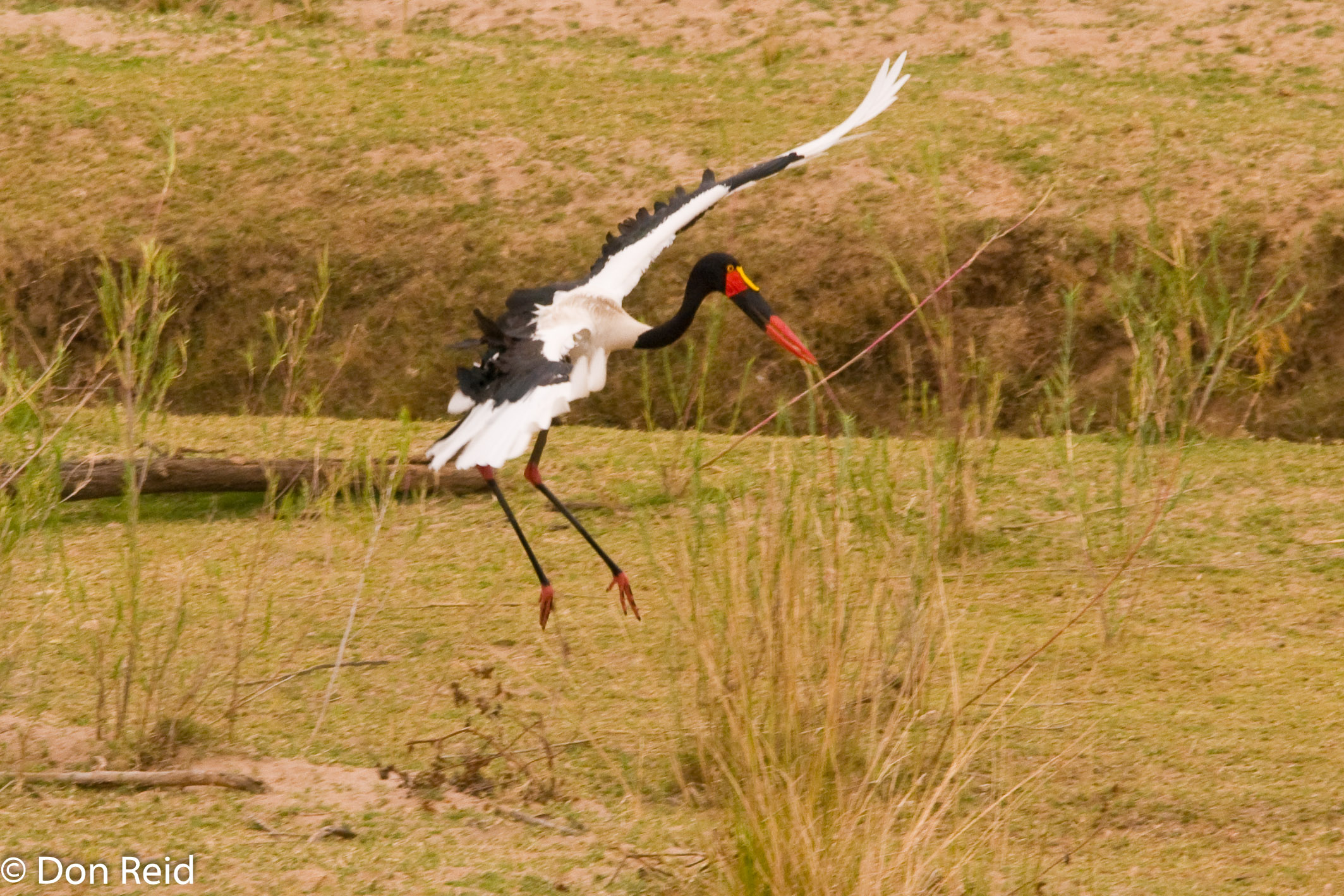
Most of my photos have been taken at a fair distance, but I did once get some shots of a pair in flight as they came into land on the river bed just below where we had stopped, near Letaba in Kruger National Park.
Where to find it
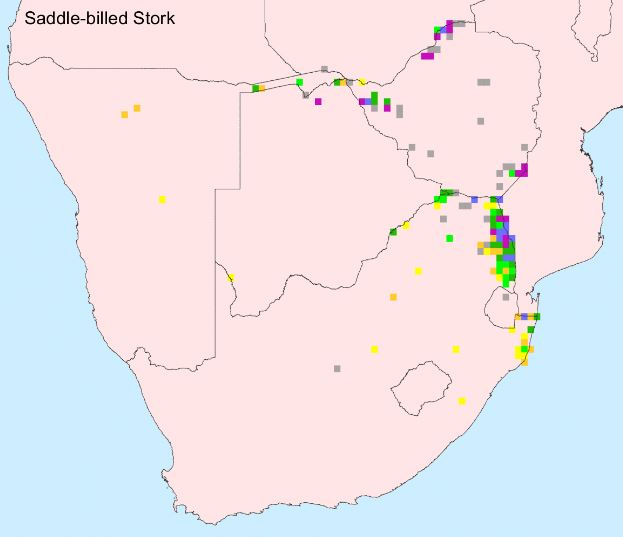
This is one species that is almost exclusively found in protected areas such as the National Parks and then only those in the northern parts of Southern Africa. Most likely place to find this species is in Kruger Park, along the larger rivers, such as the Shingwedzi, Letaba and Sabie Rivers. They may also be found in wetlands in savannah areas.
The didtribution map below is from SABAP2
Look …….. and Listen
This is such a stand-out bird that it is unlikely to be confused with any other.
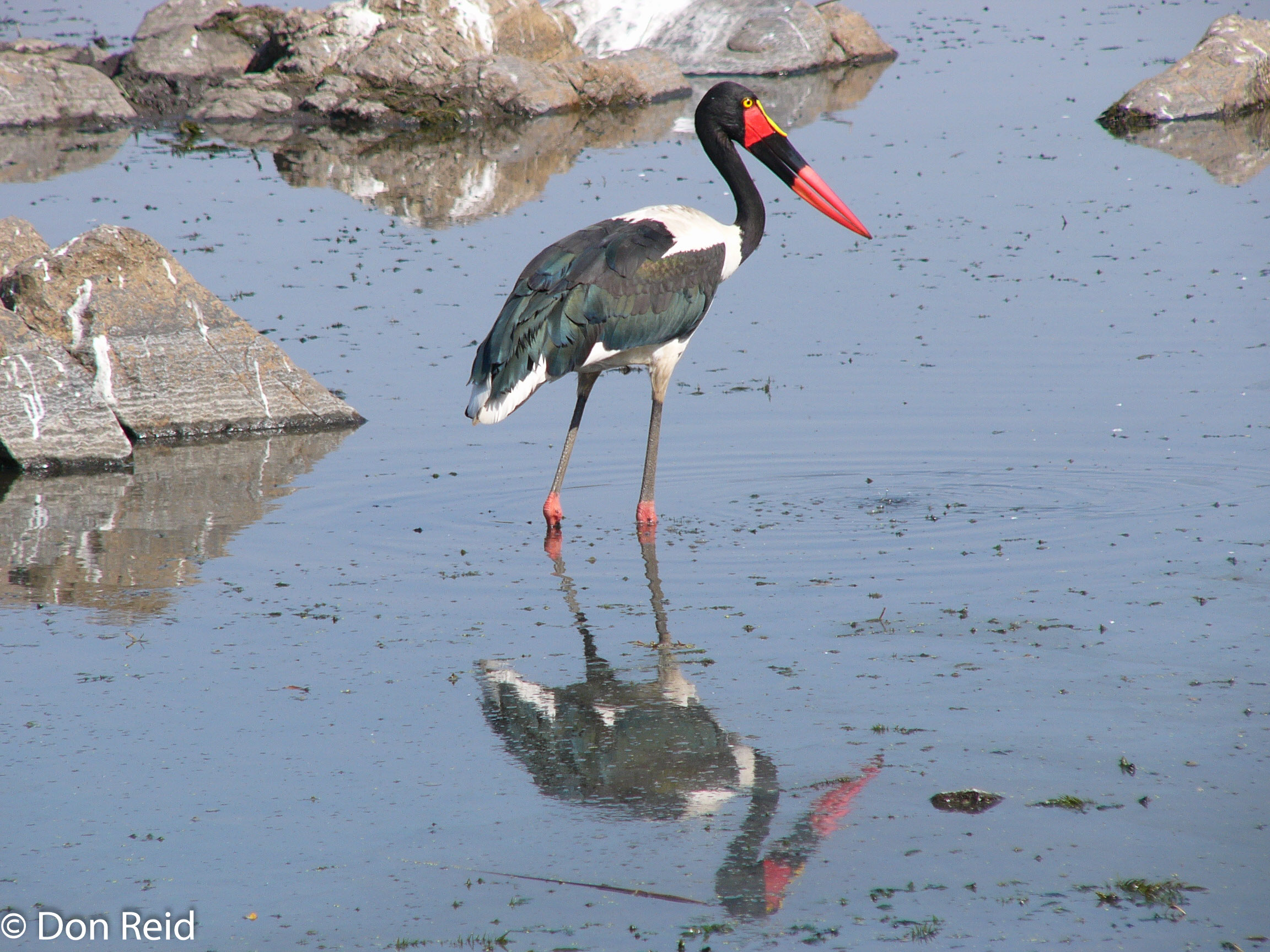
It will be standing on its own or with a partner on the river bed or in the shallows. It stands about 1,2m tall so a 7 year old child is going to be looking it straight in the eye, although it won’t compete on weight, being just 6kgs or so (it’s those long thin legs, you see). Adults have a wingspan of some 2,5m which is as wide as a Smart Car is long. In flight they fly with neck outstretched, like all Storks, compared to Herons which fly with necks drawn in
Most noticeable feature is the massive bill, from which it gets its name and which is bright red with a black “saddle” in the middle. Other than that they are, like most storks, a combination of black and white. Oh, and they have red knees (actually their ankles) and feet , just to make them look really cool
The Saddle-billed Stork is not known to call so don’t bother trying to listen for it!
Other Stuff
Conservation status is listed as “Least Concern” on the Red Data list – it is reducing in numbers gradually due to loss of wetland habitat (which affects a lot of species) but is still widespread over most of tropical Africa
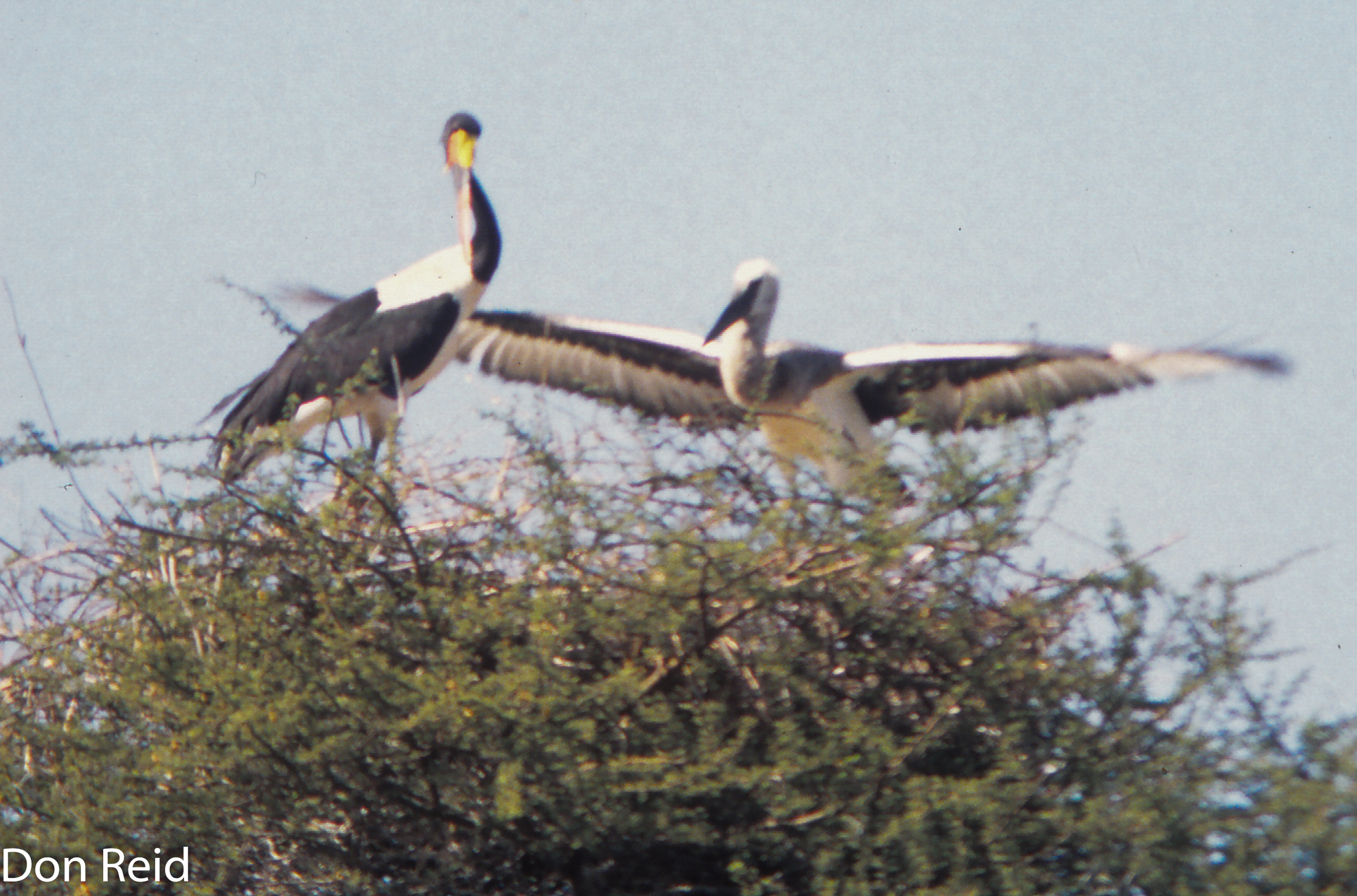
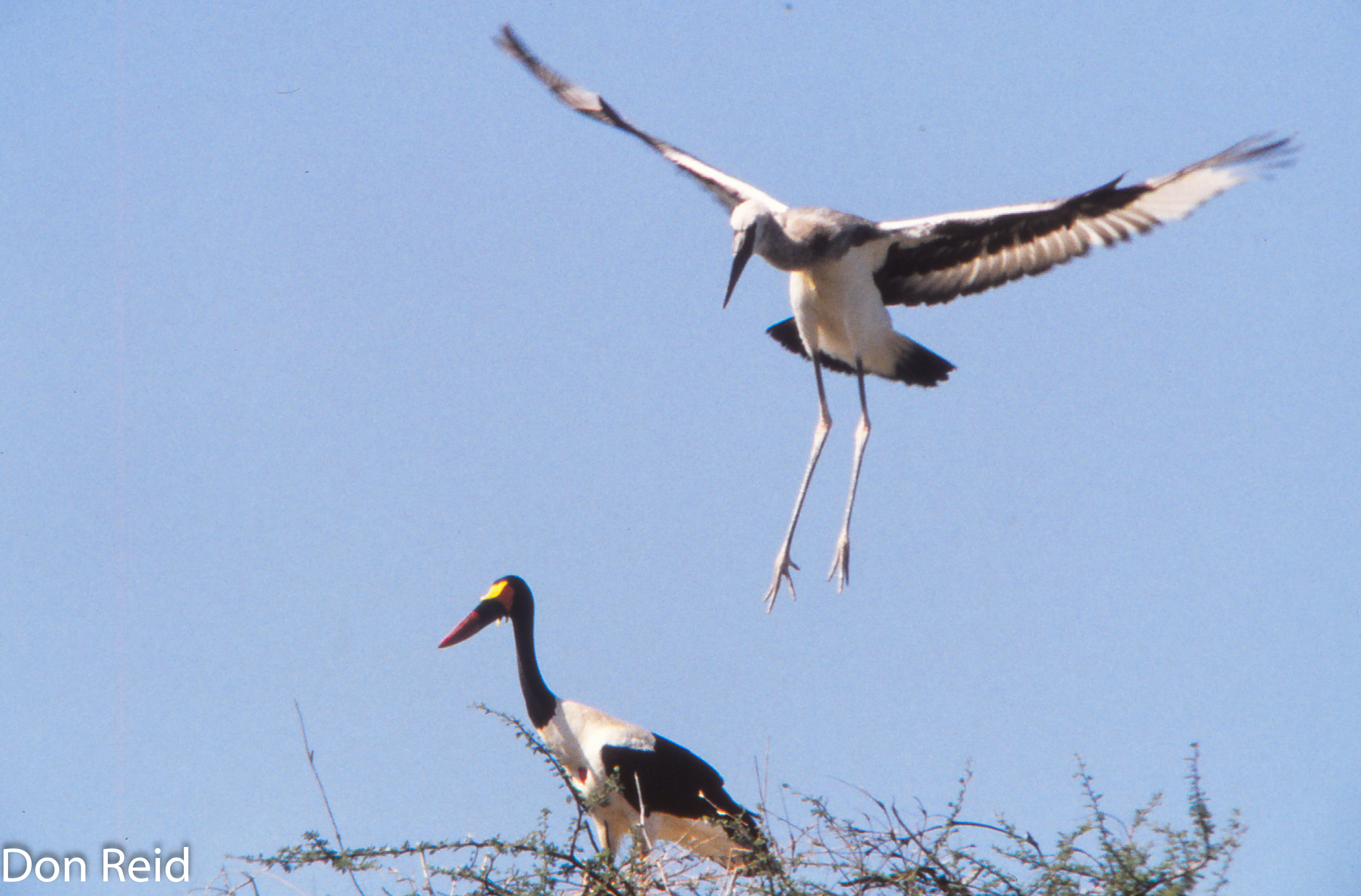
Nesting is done on the top of a tall tree – we once came across a nest in Kruger with a young Saddlebill doing short jumps on top of a nest of large twigs, seemingly testing its wings before taking the big plunge – quite comical but very serious if you are a young Stork about to head into the world.
The following photos are of that event but please forgive the poor quality – scanned from negatives taken 25 years ago!
I recently realized I have been doing this blogging thing for two years already – how time flies when you’re having fun! It seemed like the right time to have a look at where this is going and how sustainable it is.
One suggestion is that some of what I have written needs a more permanent “home” and not be buried amongst past posts – those who blog will know the principal of blogging is that they are shown in reverse chronological order ie latest one is at the top and you scroll down to see the earlier ones (or you use the archives if you know when a particular one was published).
This is fine but something like a trip report to a special place needs to be more easily accessible. So a separate page on the site for “Birding Trips” may be the way to go, plus pages for things like Butterflies, Mammals and some of the other interesting stuff out there.
I have already started revamping the blog into a Website format and have changed the theme (ie appearance) plus added some tentative new “Pages” to the headings at the top. One of them is “Birding by Habitat” which I have had in mind for some time – could be useful for beginners to know what birds they can expect to encounter in a particular habitat.
The site address has been shortened to “mostlybirding.com” eliminating the “wordpress” that was there before so it is very easy to get to the site by simply googling “mostly birding”
Hit the “Like” or the Comment Box if you like where I am going!
The Riverfront section of Chobe National Park – one of the finest Game Reserve experiences in Southern Africa, if not the whole of Africa.
Map of the Riverfront section of Chobe
I count myself fortunate to still have a part-time consultancy job as a QS, and doubly fortunate to be involved in a sizeable building project at Kasane in the far north of Botswana, on the doorstep of Chobe National Park. The project requires monthly site visits and during the few days we – that’s the professional team – spend there, we have managed to squeeze in a quick trip through the Riverfront section of the Park – all part of team building, you understand.
Prior to these recent visits, I was last in Chobe (pronounced Cho-bee) in 2000 and had good memories of this unique Park, although the intervening years had rendered my memories a bit fuzzy. So I was more than eager to renew my acquaintance with this part of Botswana and the first trip through the Riverfront section in May 2015 brought those memories from 15 years ago flooding back.
Chobe Background (courtesy of Wikipedia)
Chobe National Park, in northern Botswana, has one of the largest concentrations of game in Africa. By size, it is the third largest park in the country, after the Central Kalahari Game Reserve and the Gemsbok National Park, and is the most biologically diverse. It is also Botswana’s first national park.
One of four main areas in Chobe,The Serondela area (or Chobe riverfront), situated in the extreme Northeast of the park, has as its main geographical features lush floodplains and dense woodland of mahogany, teak and other hardwoods now largely reduced by heavy elephant pressure. The Chobe River, which flows along the Northeast border of the park, is a major watering spot, especially in the dry season (May through October) for large breeding herds of elephants, as well as families of giraffe, sable and cape buffalo. The flood plains are the only place in Botswana where the puku antelope can be seen. Birding is also excellent here.
Flying in
The flight from Jo’burg is about an hour and a half and takes you over the Mkgadikgadi pans, an amazing sight from the air.
Makgadikgadi Pans from the air
Approaching Kasane, there is usually a good view of the Chobe River and it’s quite possible to spot Elephant even before you have landed.
Chobe River from the air
So How much Game is there?
Chobe tends to exceed all your expectations – yes there are patches with not much going on, not visible anyway, but there are parts that take your breath away, like the lush floodplains filled with game almost as far as the eye can see – dominated by Elephant and Buffalo. Elephants occur here in such numbers that there are real concerns about the survival of the woodland, but Botswana has a strict anti-culling policy and so Elephant herds grow and spread unabated. Perhaps nature will intervene as it often does.
Mostly Elephant and Buffalo on the floodplain
Apart from the frequent Elephant sightings, there are some other very special animals to be seen – (some of the snippets of information are from the excellent maps/brochures on Botswana by Veronica Roodt which I originally obtained for my 2000 visit)
Sable Antelope, one of the most beautiful antelope in Africa with their perfectly curved horns, which are used to defend themselves. Glossy black colouring means it is a bull, while cows and juveniles are brown
Sable Antelope
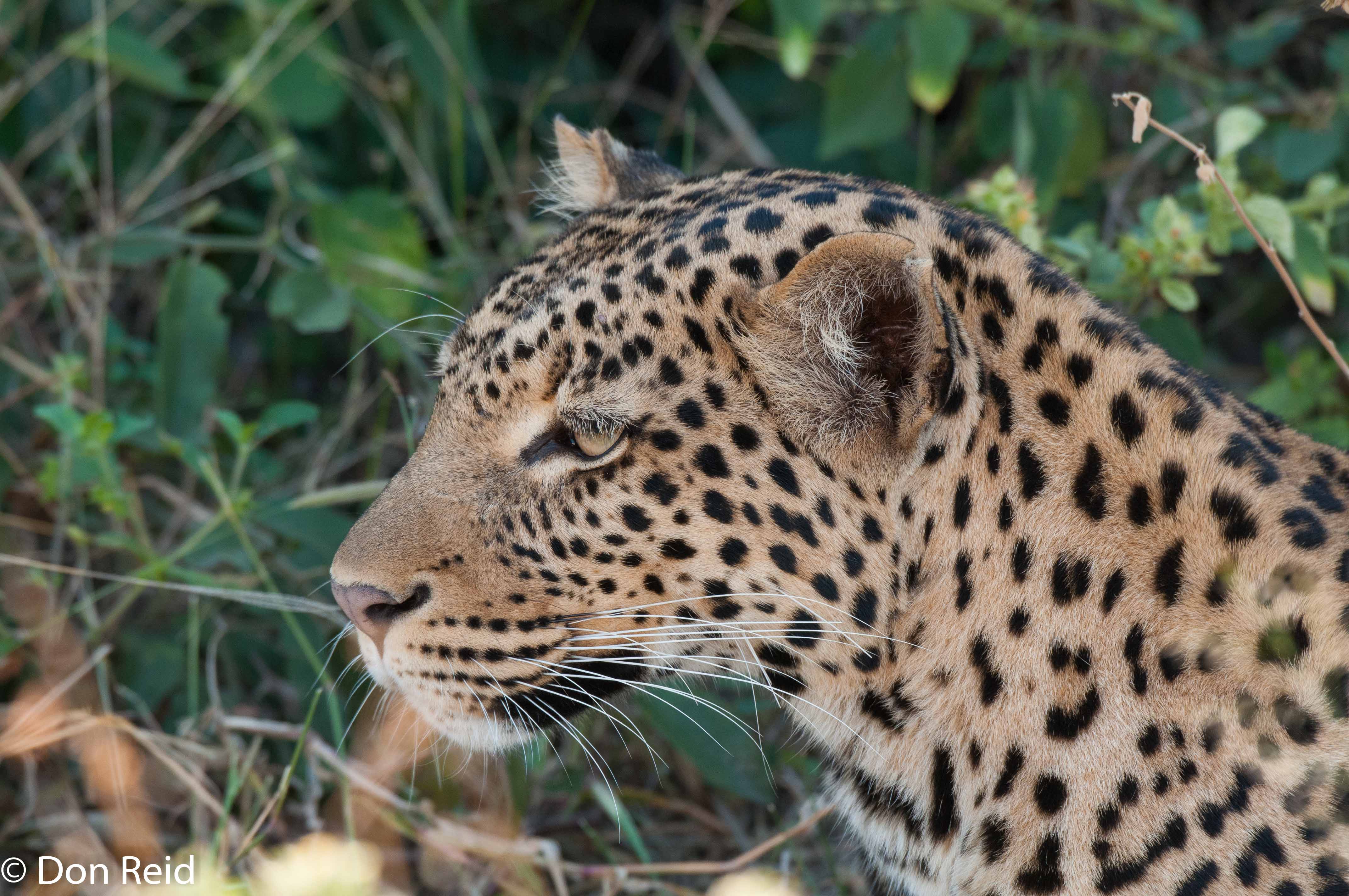
Leopard – we have been very fortunate in finding a young Leopard on two of our three visits so far, quite possibly the same individual which, on our last visit, had dragged its Impala meal into a tree. This is to prevent Hyena and other predators reaching it.
Leopard
Kudu – males have those impressive twisted horns, females are hornless so the ears are more prominent
Kudu
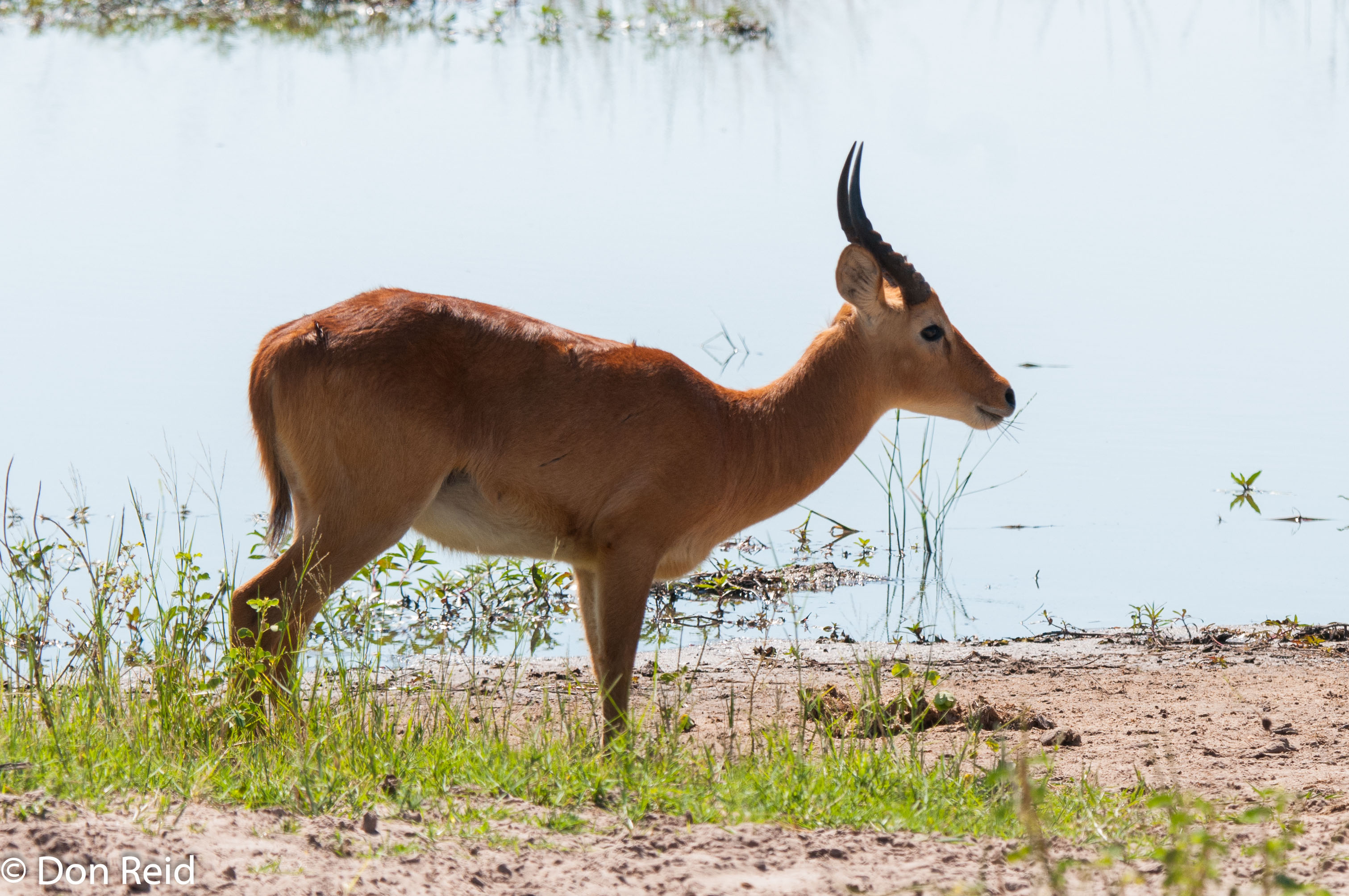
Puku – Chobe is the only place in Southern Africa where this uncommon species occurs, in small herds. Mostly found near water
Puku – unique to Chobe
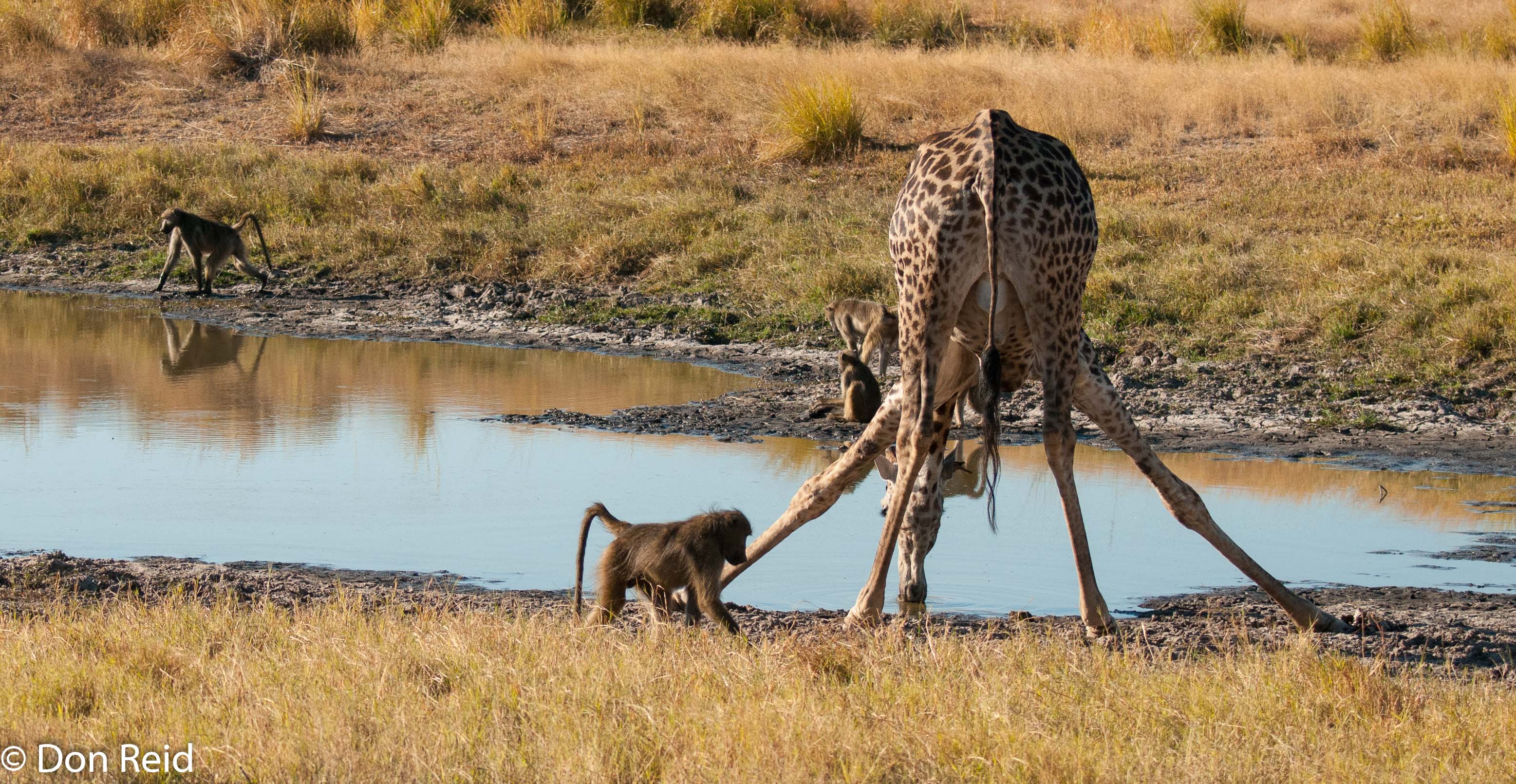
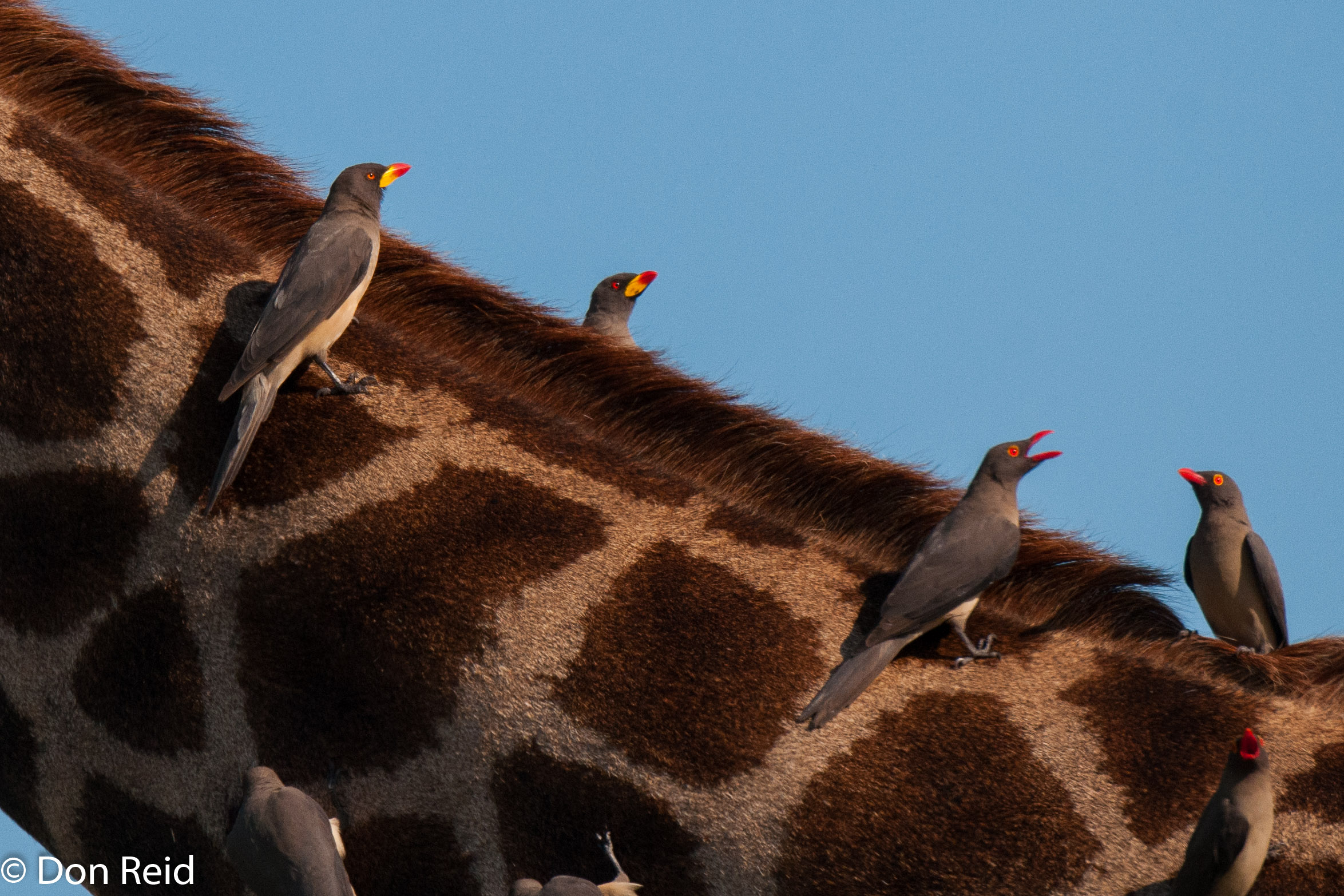
Giraffe – tallest animal in the world at 5,5m. Valves in the jugular vein help to control blood pressure when they bend down to drink water. The oxpeckers love them, gathering in numbers on their long elegant necks
Giraffe at waterholeRed-billed and Yellow-billed Oxpeckers taking a ride
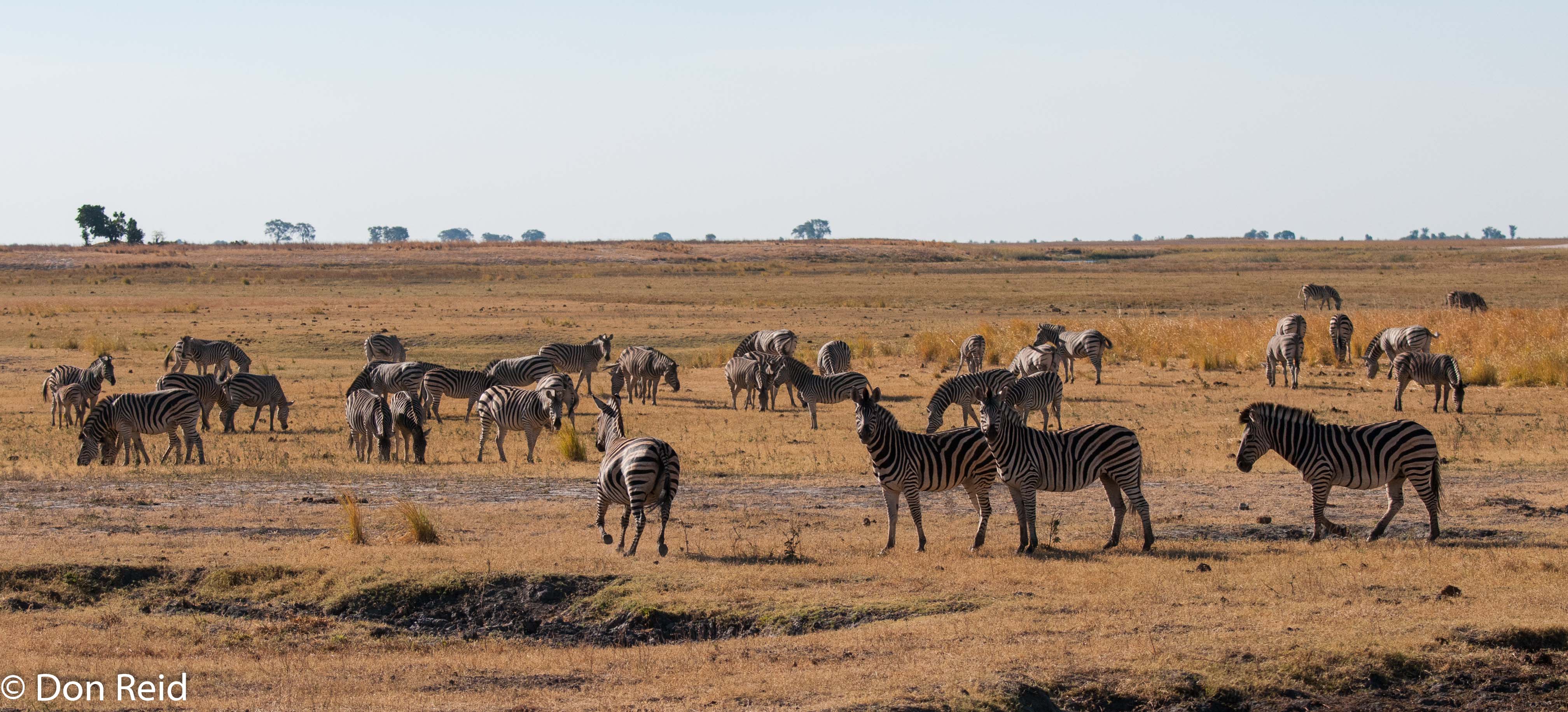
Zebra – no African Game Reserve would be complete without them – our kids loved to call them pyjama-donkeys when they were small, now the grandkids do it
Zebra on the plains
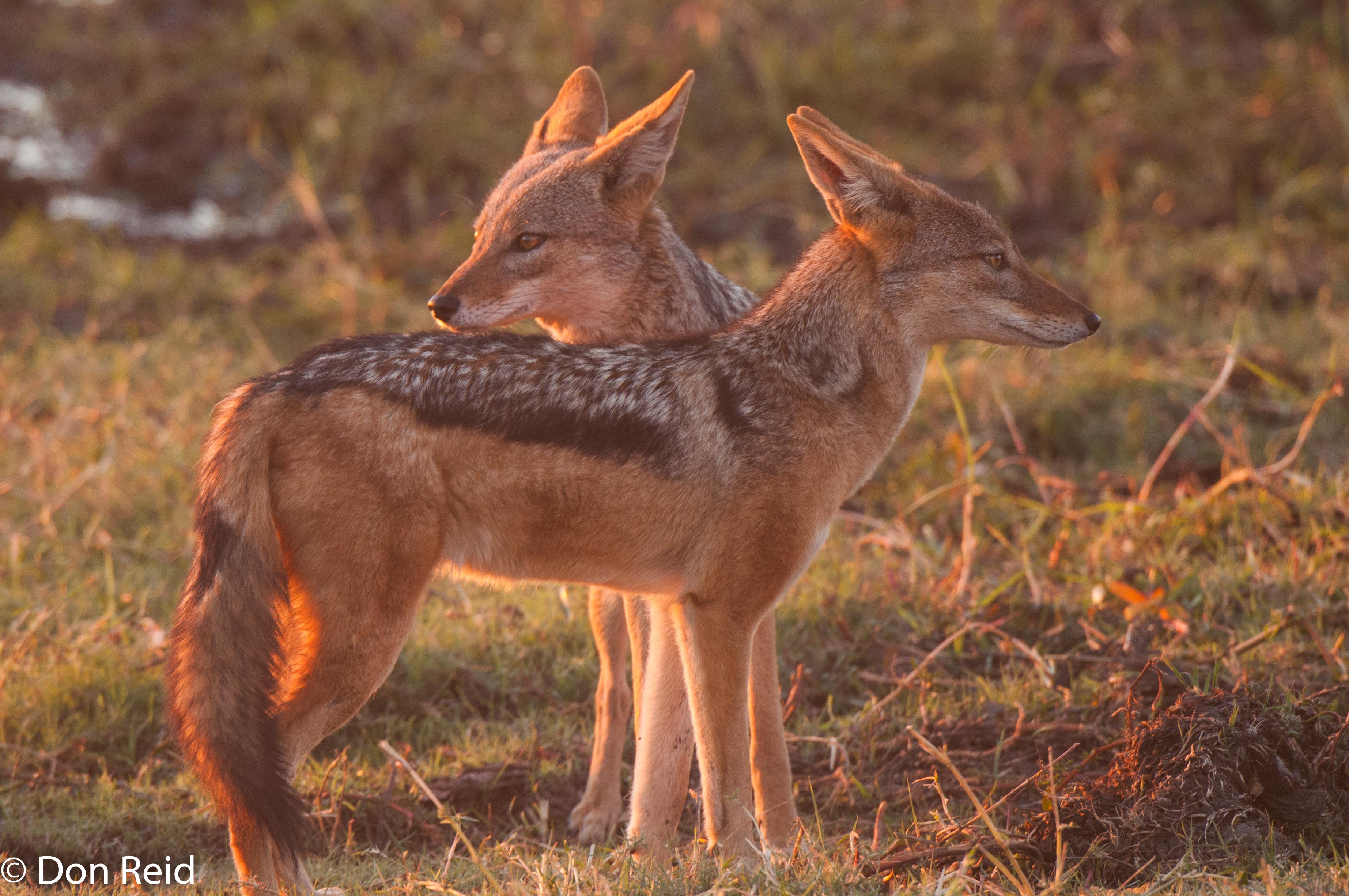
Black-backed Jackal – Pairs form long-term bonds, as these two seem to have done
Black-backed Jackal
Wild Dog – if you are very lucky you may encounter one as we did, crossing the tar road in front of us, then dashing off as we slowed down. They usually move around and hunt in packs.
Wild Dog dashing across the road
And the Birding?
For anyone starting birding, this must rate as one of the best places to visit – there are many larger species that are easy to see and even photograph if that is your thing. Identifying them is also fairly straightforward if you have one of the birding Apps or one of the many birding books available.
The short trips through Chobe that I have done so far have been exciting but too short and rushed to do any in-depth birding and I look forward to getting to grips with some of the more difficult to see species during future visits. Nevertheless there have been some very good sightings and photo opportunities of some of the “obvious” species – here’s a selection :
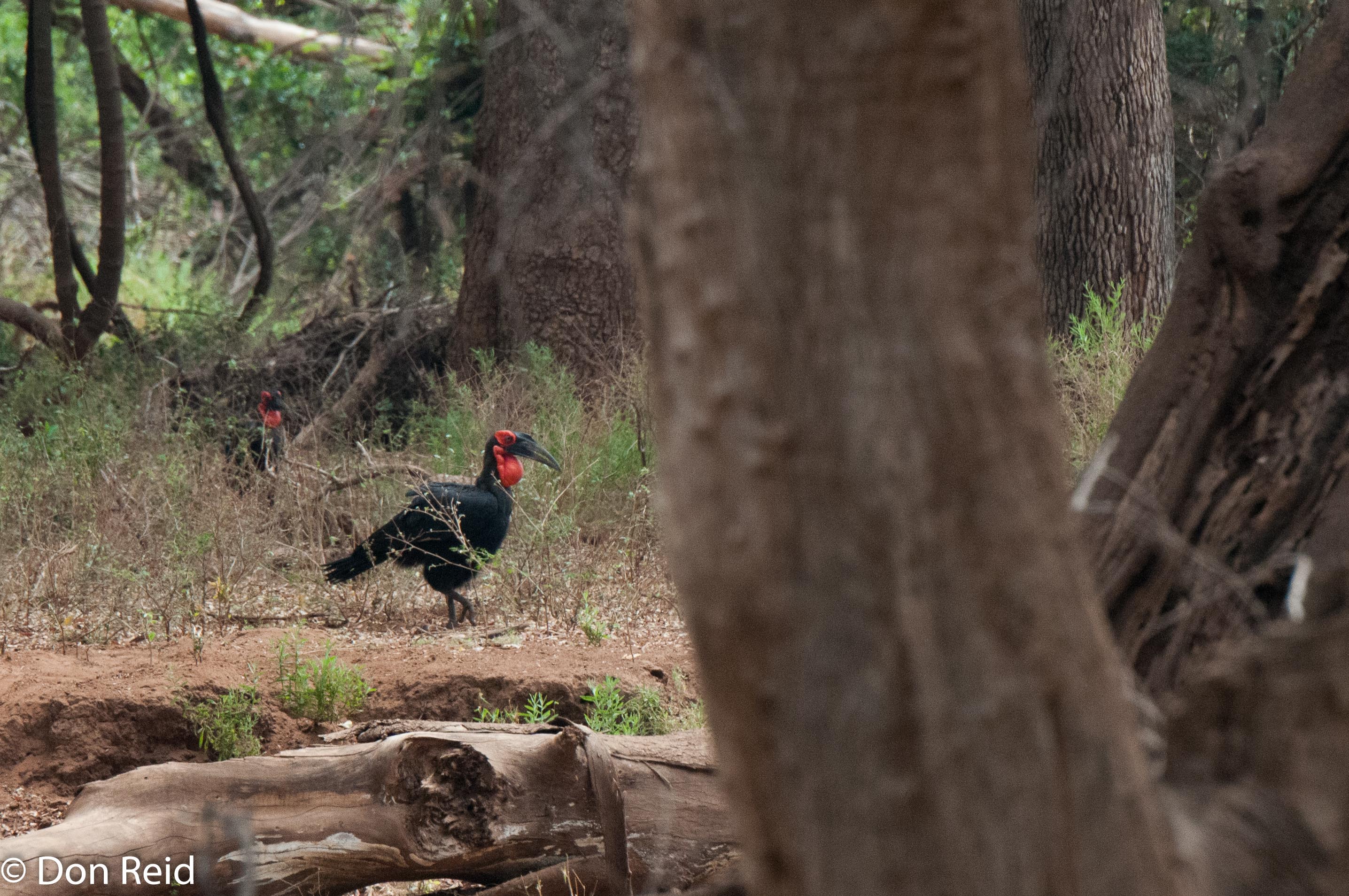
Ground Hornbill – no other reserve I have visited can boast as many of this iconic species
Ground Hornbill
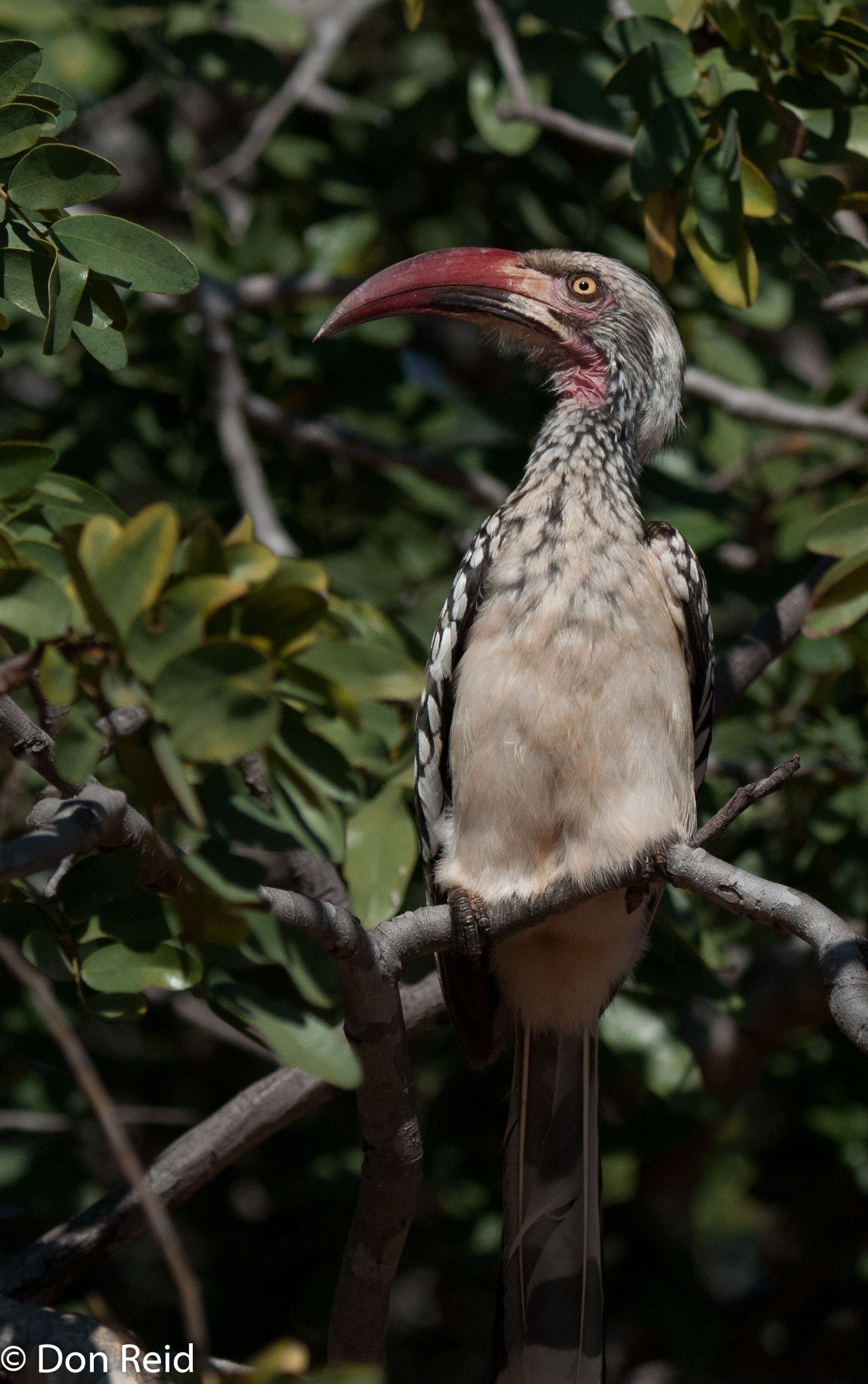
Red-billed Hornbill – there is a good chance you will encounter five Hornbill species during a visit – the one above plus the four smaller species being Red-billed as this one below, Yellow-billed, African Grey and Bradfield’s.
Red-billed Hornbill
Yellow-billed Stork – occur regularly among the myriad birds that frequent the pools of the Chobe floodplain
Yellow-billed Stork
Yellow-throated Petronia – an uncommon and not at all obvious species, this one happened to be perched near the Leopard with its half-eaten Impala
Yellow-throated Petronia
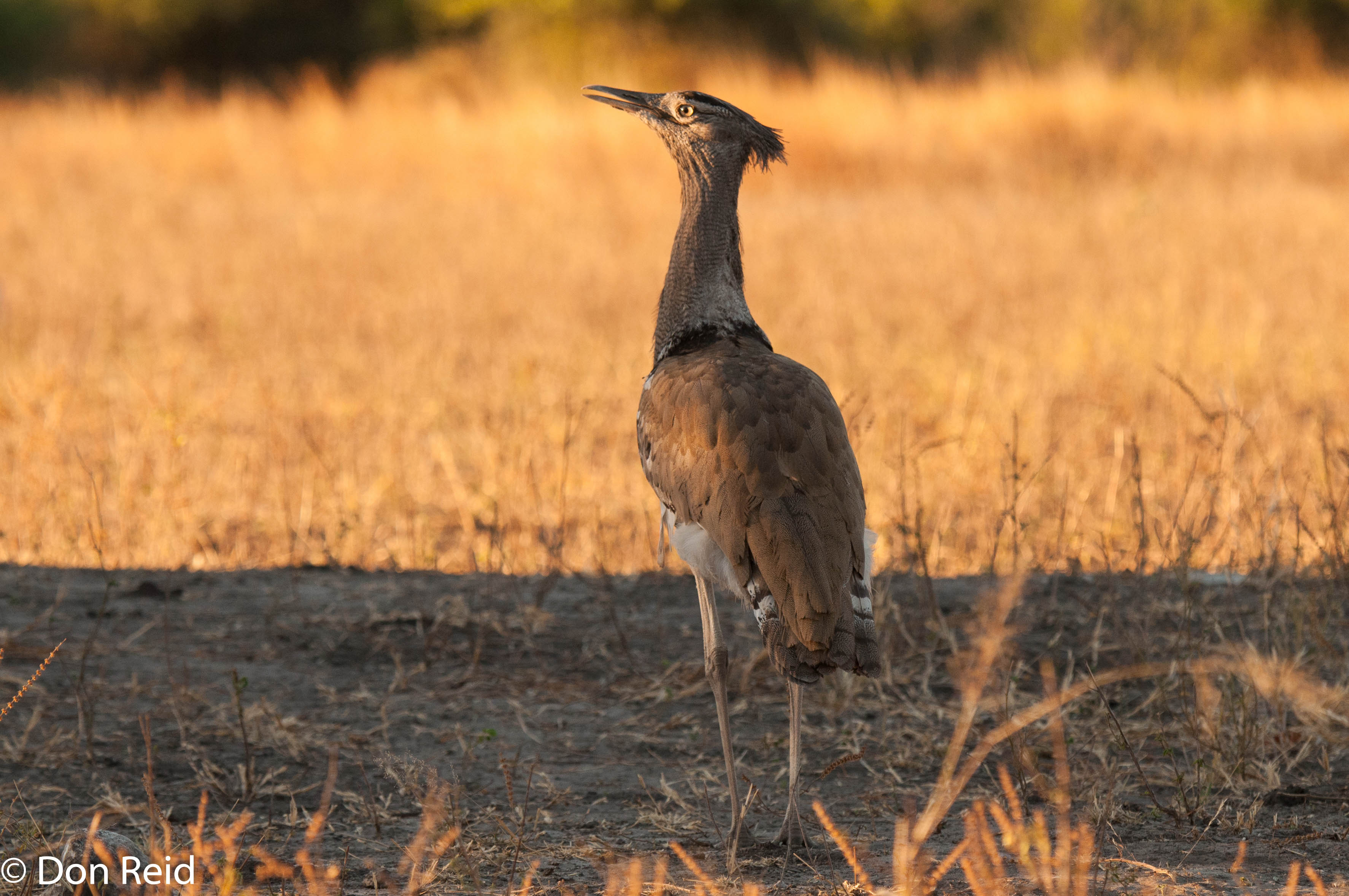
Kori Bustard – another species with a more than good chance of being spotted in the open areas with grass
Kori Bustard, said to be the heaviest flying bird in the world (5,5kg)
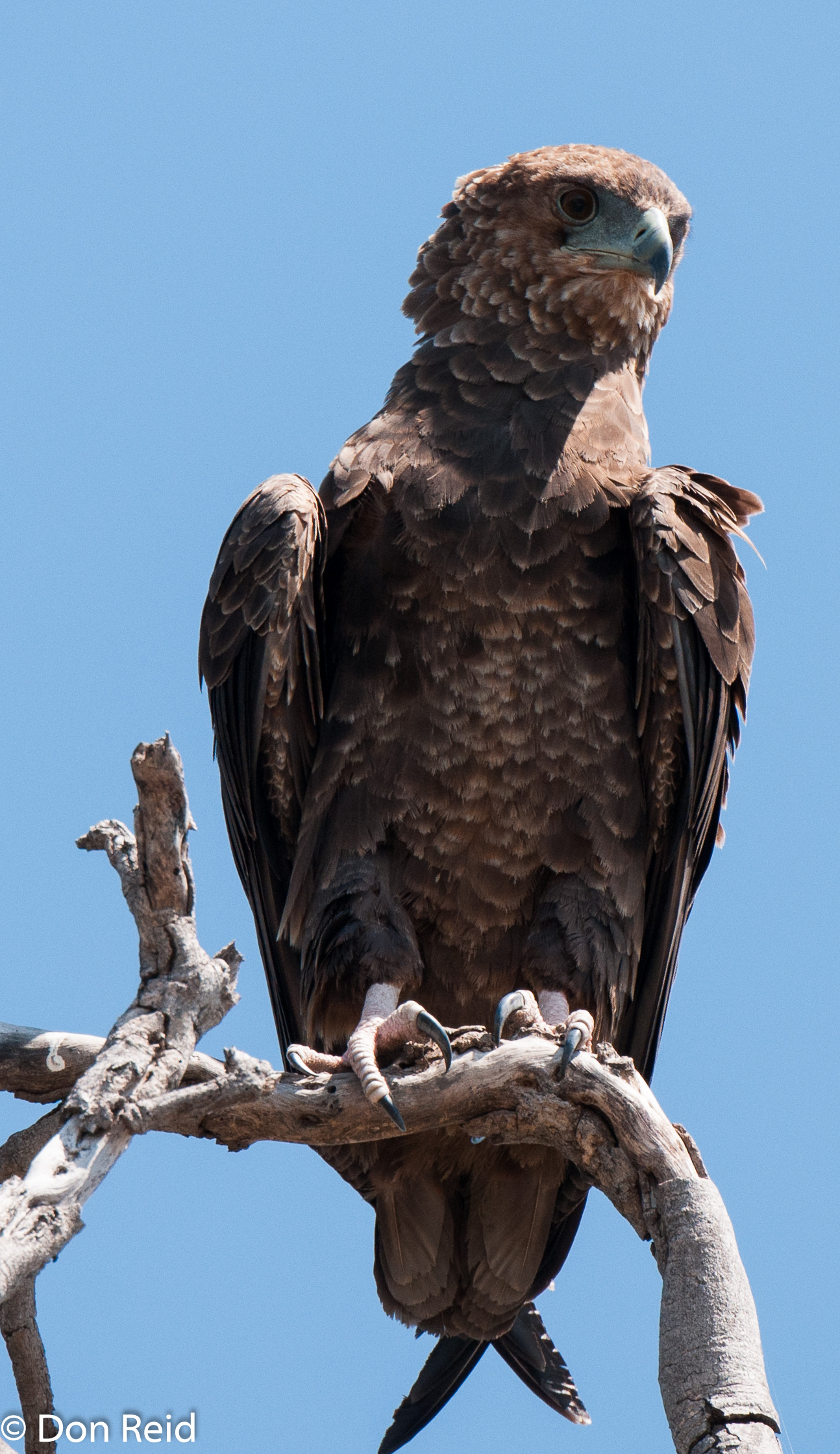
Bateleur – often seen soaring high in the air, this juvenile was perched in a dry tree near the track. One unique feature is their short tail which allows it to walk backwards – useful when trying to catch a snake!
Bateleur (Juvenile)
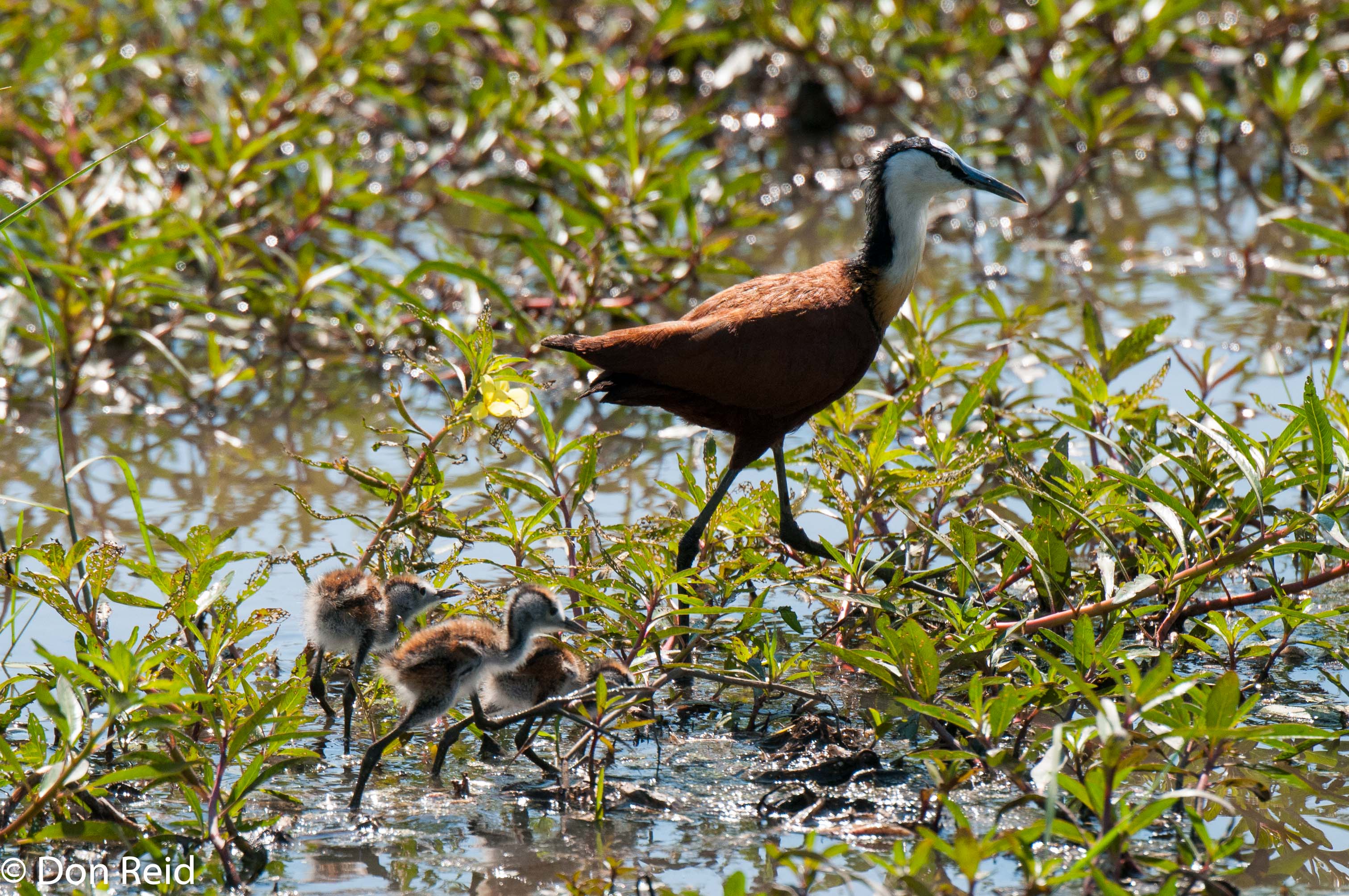
African Jacana – this one had a few youngsters in tow, cute little fluffy chicks with outsize legs
African Jacana with little ones
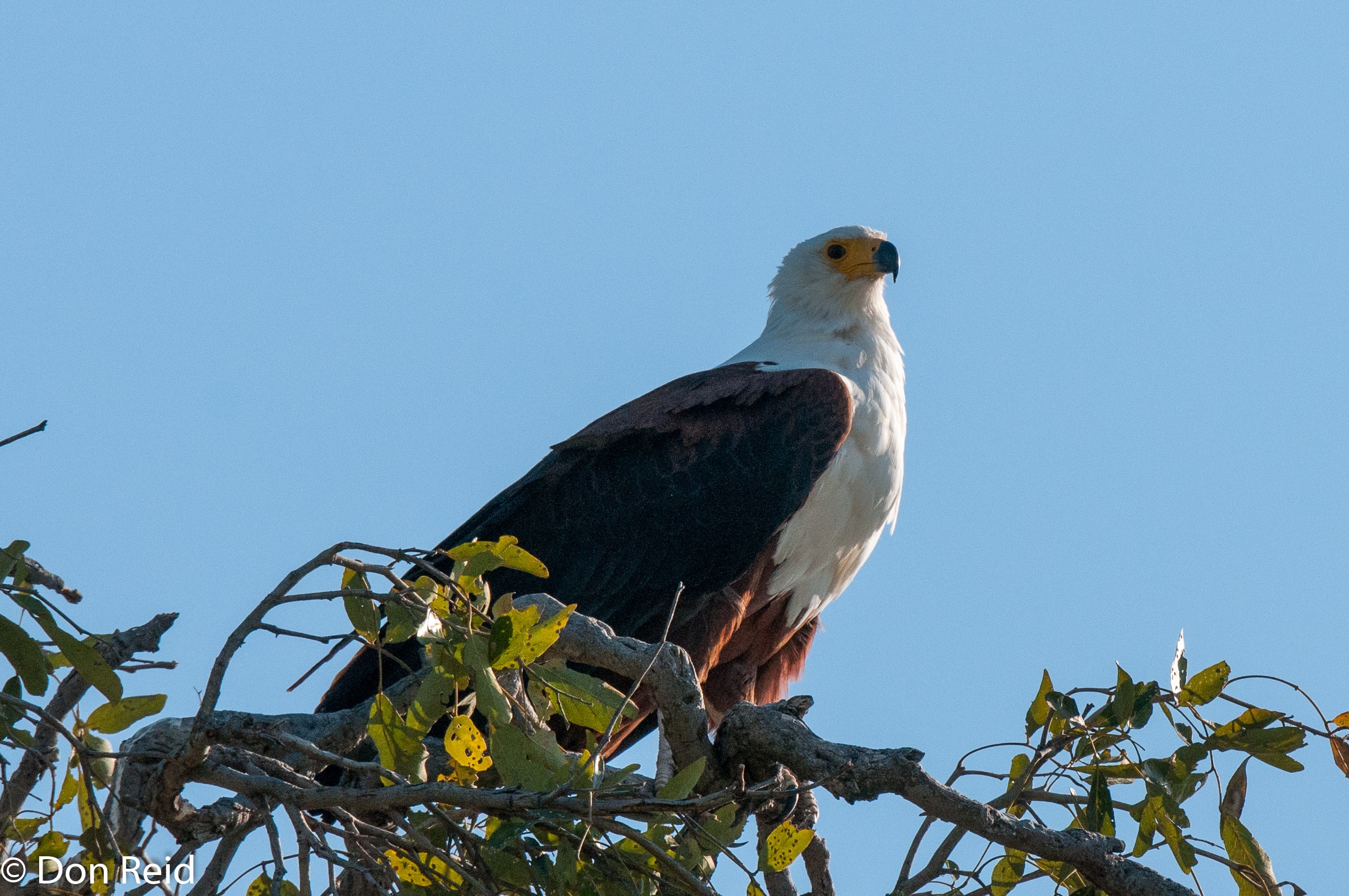
African Fish-Eagle – no great river in Africa is worthy of the name unless it is frequented by these magnificent birds of prey and Chobe has its fair share of them
African Fish-Eagle
Oxpeckers – the giraffes seem to attract the most oxpeckers but they are just as likely to be found on buffalo, kudu, impala
Red-billed and Yellow-billed Oxpeckers
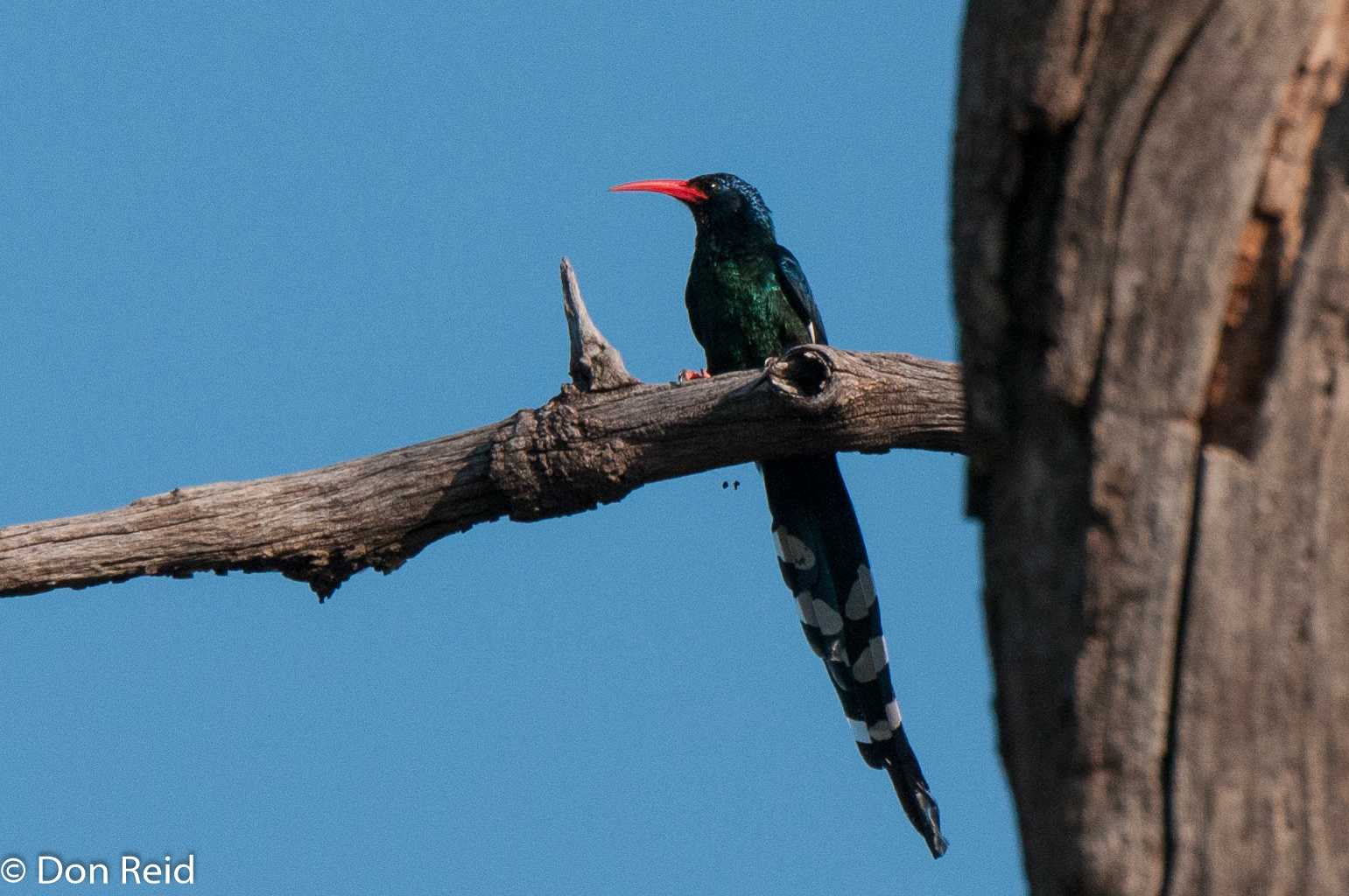
Green Woodhoopoe – often heard before they are seen, this species is less common
Green Woodhoopoe
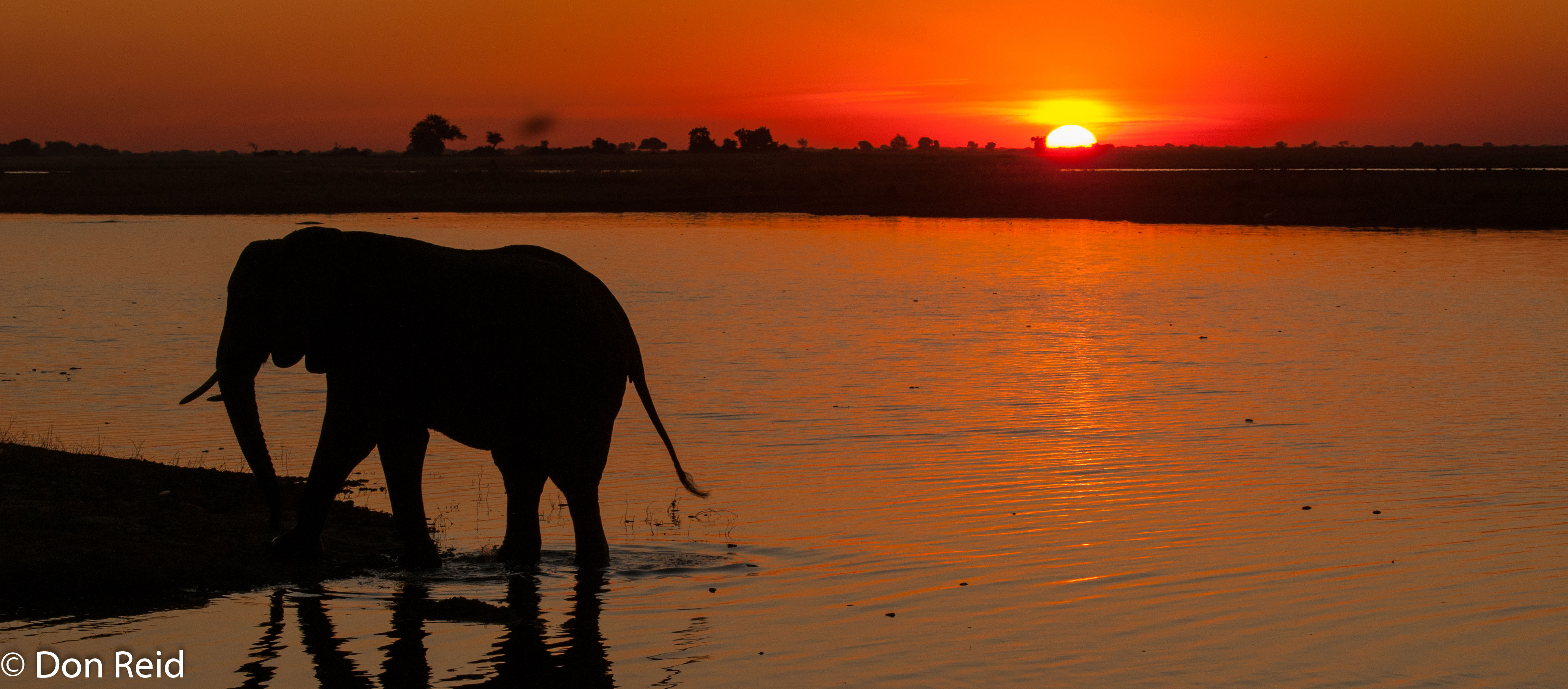
The Close of Day – Sunsets for Africa
I don’t think I have seen sunsets anywhere in the world that can compete with those over the Chobe river – tell me if you agree!
Who can resist a Cape country stay and good food, with some great birding thrown in?
When we spend time at our home in Mossel Bay, as we did during July this year, we often try to break away to an area that we have not visited or explored before. This time around we chose Robertson in the Western Cape, just 2 and a half hours from Mossel Bay, and after scanning through all the options on Booking.Com we settled on Orange Grove Farm for our two night stay. Gerda and I also like to try out special restaurants now and again and were pleased to get a booking at the Reuben’s Restaurant in Robertson, owned by the renowned chef of the same name and with a reputation for fine dining.
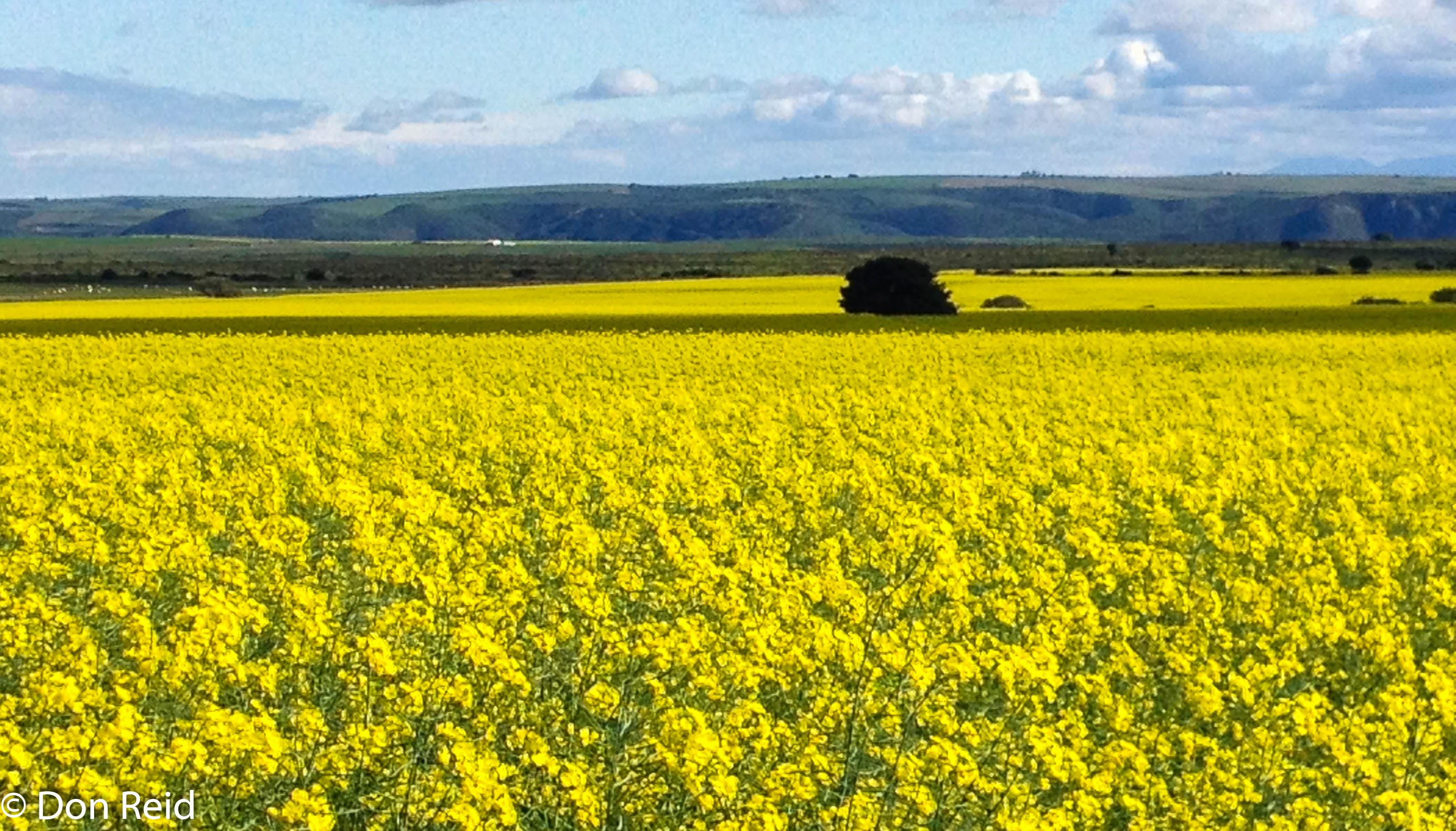
The last Monday in July saw us heading west along the N2 National road to Swellendam and from there branching off to Ashton and Robertson, a road quite familiar to us by now, but always a delight and particularly so at this time of year, with the contrasting greens and yellows of the scattered wheat and canola fields providing a spectacular patchwork.
Canola fields
First stop for lunch was at Riversdale where the restaurant had a welcoming fire going (did I mention there was a severe cold spell over most of SA?) and simple but hearty food – we chose toasted sarmies and coffee to keep us going. The friendly owner also helped us choose some frozen home-made meals for the evening meal at Orange Grove, which is a self-catering resort, and later we were only too happy that we had chosen this option as we popped the Bobotie and rice in the microwave for an instant delicious supper.
Riversdale cafe
Not much later we stopped at Orange Grove’s reception, but not before having a coffee in the restaurant at Rooiberg Winery Restaurant, right at the turn-off to Orange Grove. We were very tempted to try their pineapple Danish – you can make up your own mind whether we succumbed to the temptation or not, suffice to say we really enjoyed that last short stop.
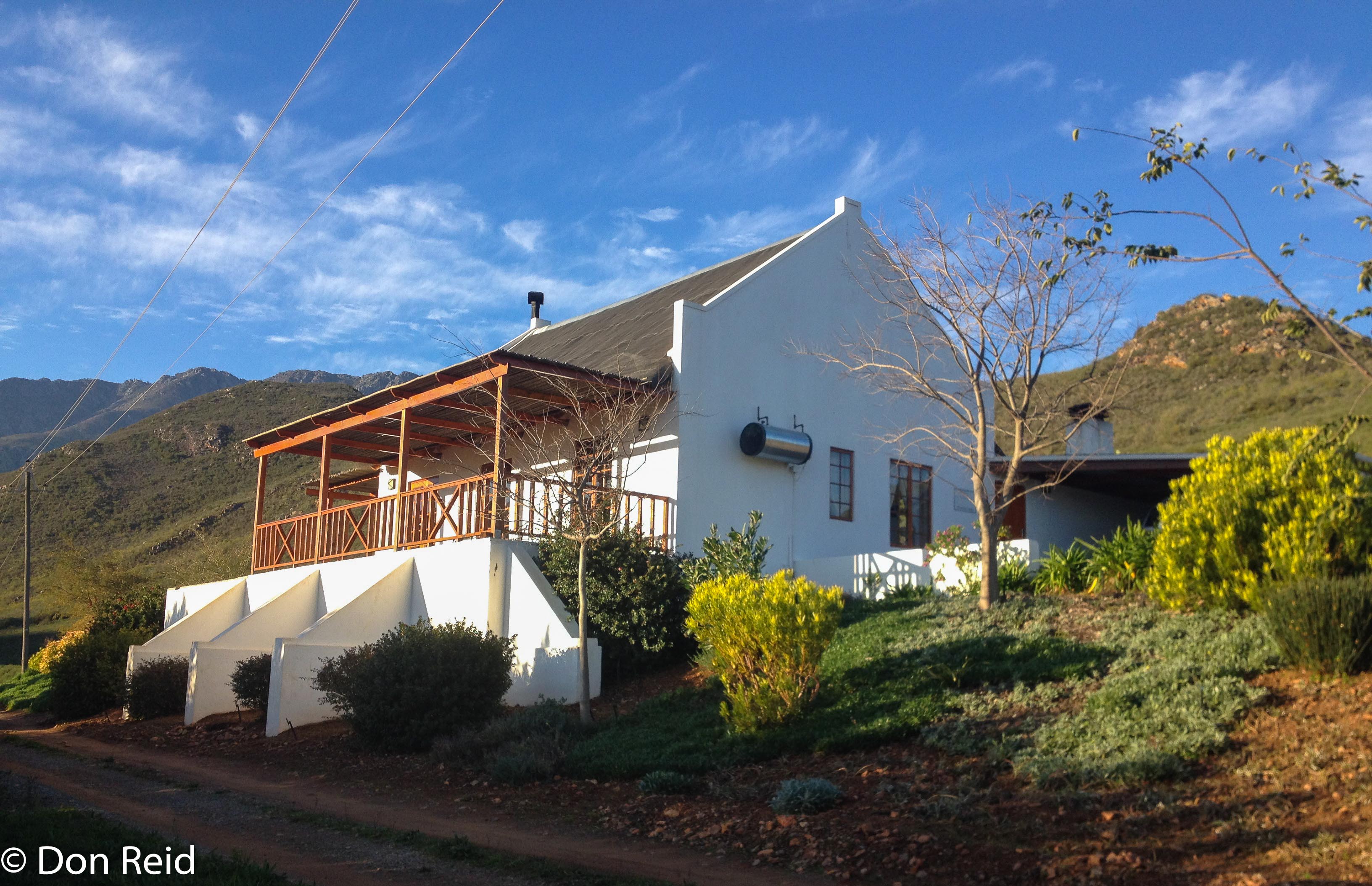
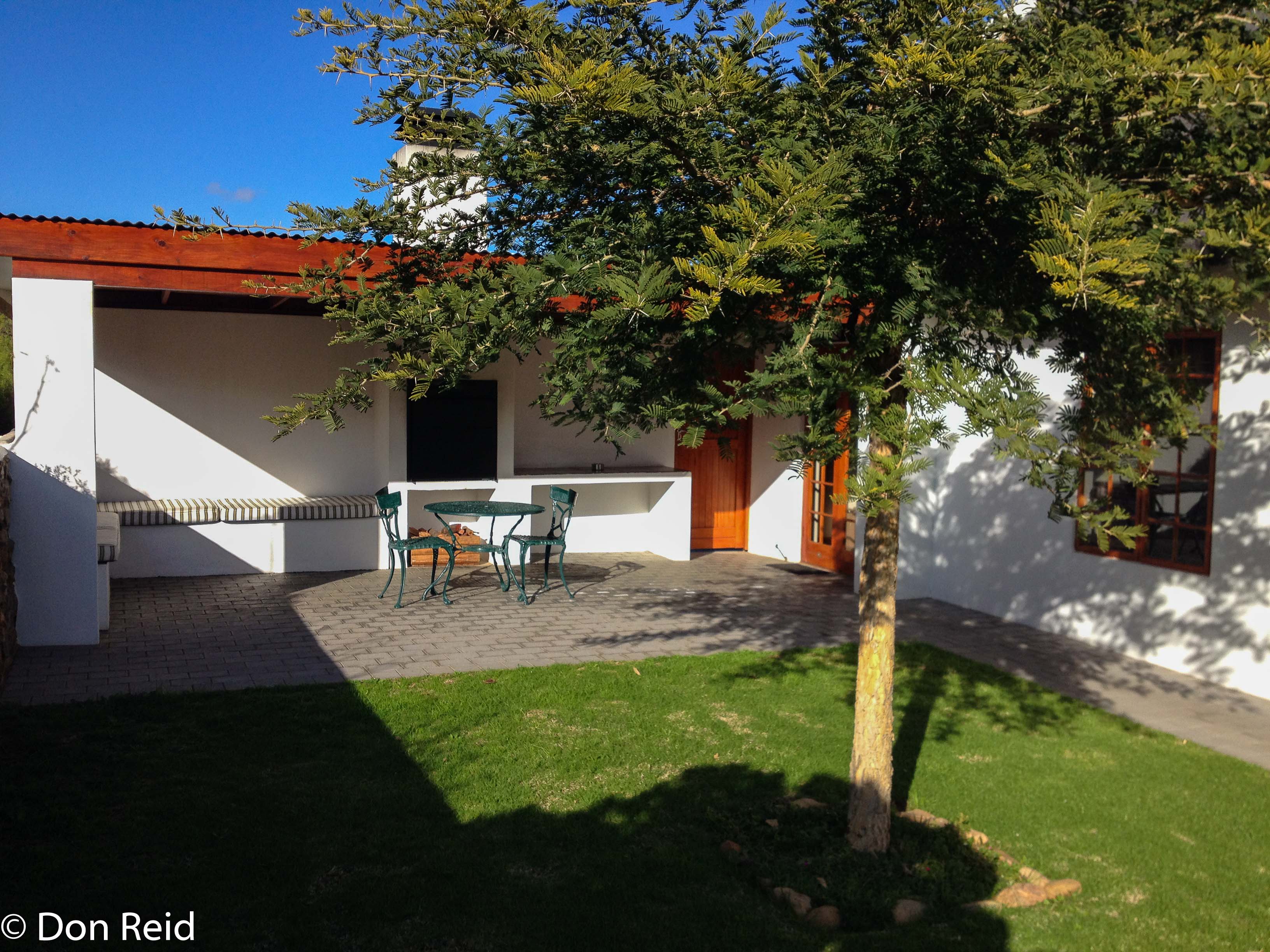
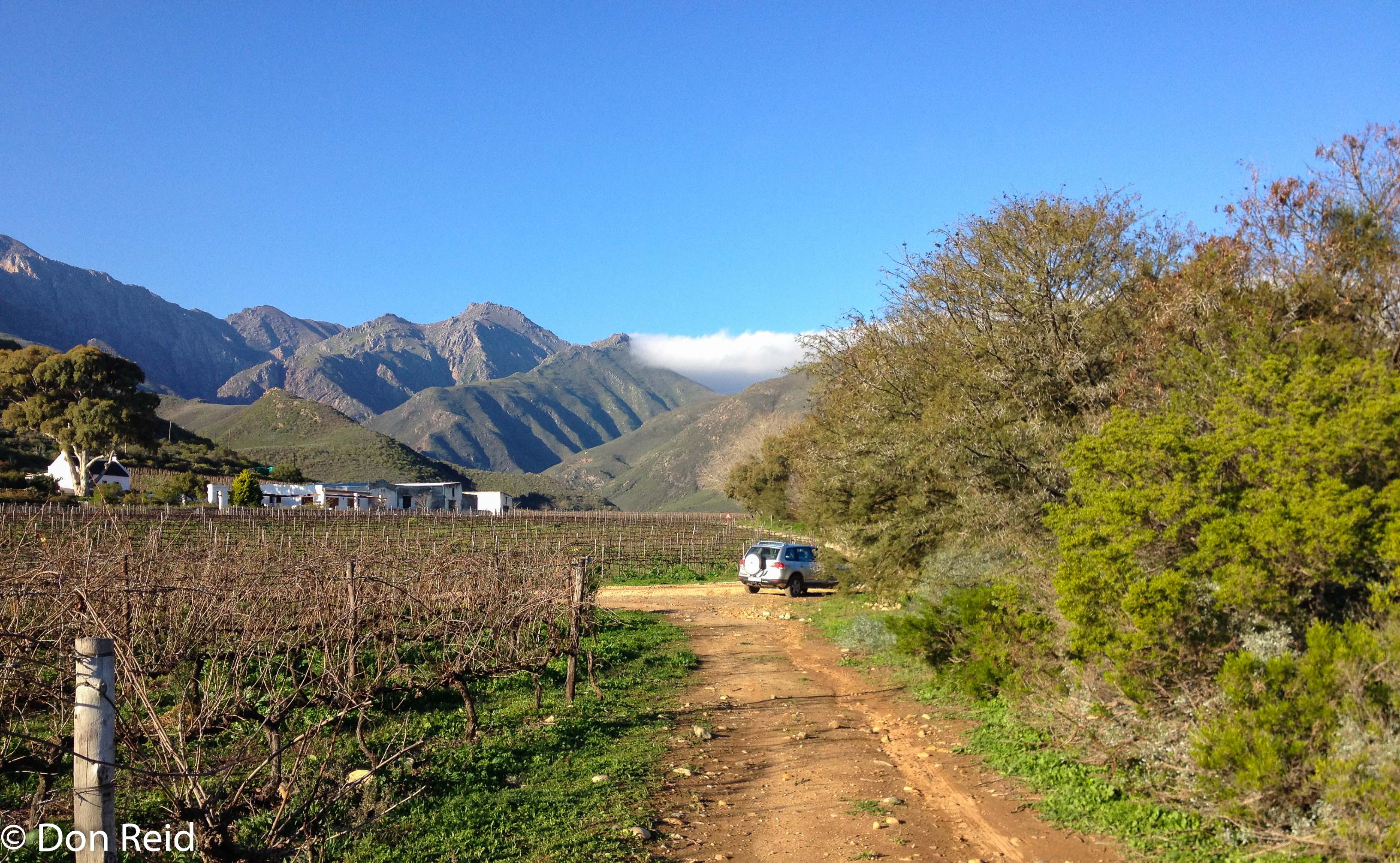
By 5pm we were in our chalet set against the slopes of the fynbos-covered mountain, looking over the vineyards and olive groves with the valley in the background.
The cottage
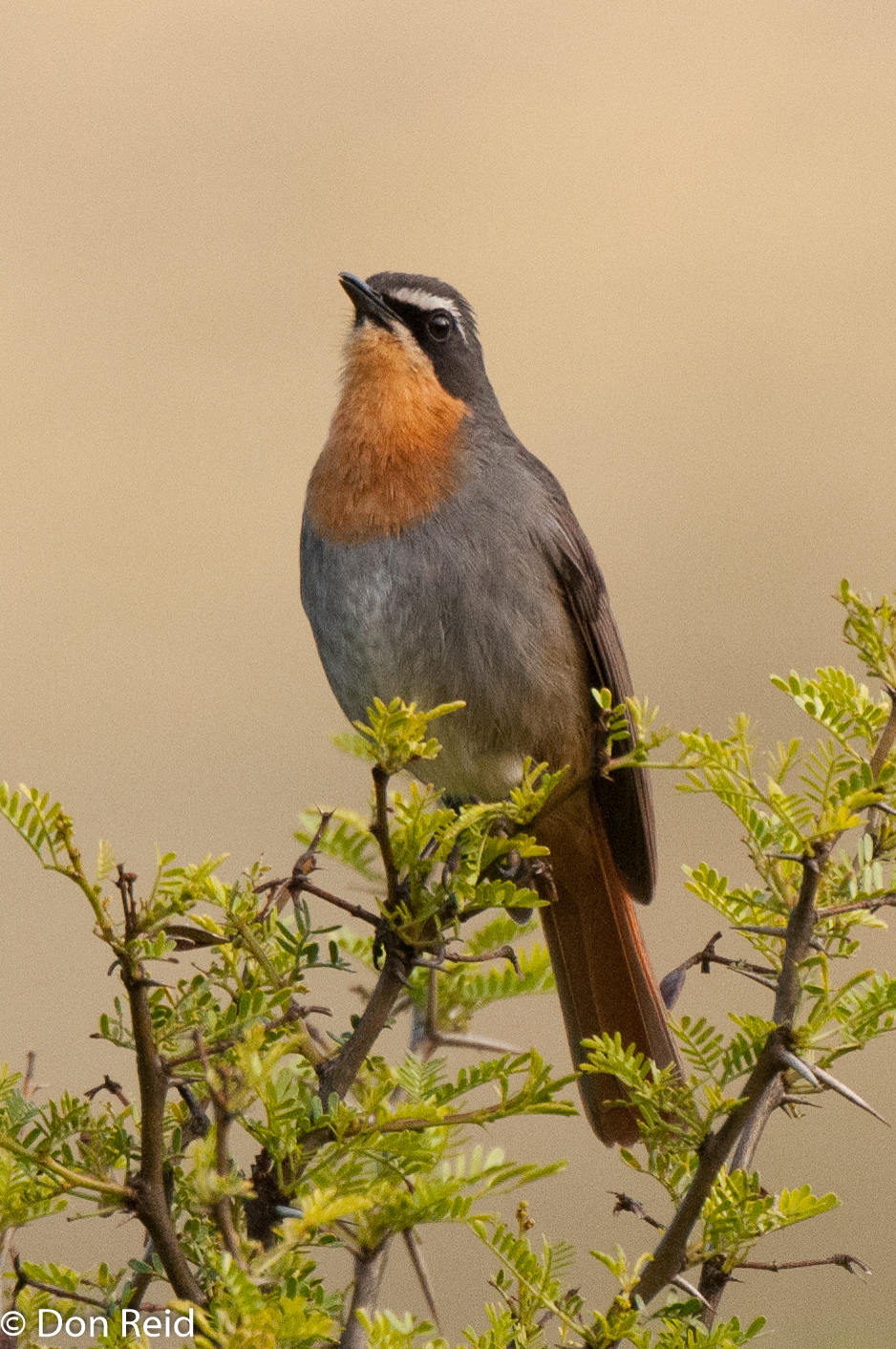
The chill of evening was setting in fast so I got the wood fire going and the gas heater running, then braved the chill air to start a new atlas card with the many visiting birds attracted to the indigenous garden and surrounding fynbos – cheerful Cape Robin-Chats and Bokmakieries with their well-known calls, White-Eyes twittering and Karoo Prinias in good form, moving about restlessly.
Cape Robin-Chat
It was not long before the sun started disappearing behind the surrounding mountains, prompting the resident Cape and House Sparrows to settle in for the night as the cold really set in.
Next morning we slept late, with our breakfast basket arriving at 8.30am, beautifully packed with the goodies we had ordered off the list – all for self preparation. “Real” coffee from the French press went down well with a warm muffin and a skewer of fresh fruit with yoghurt – it’s moments like this that you feel really privileged and spoilt.
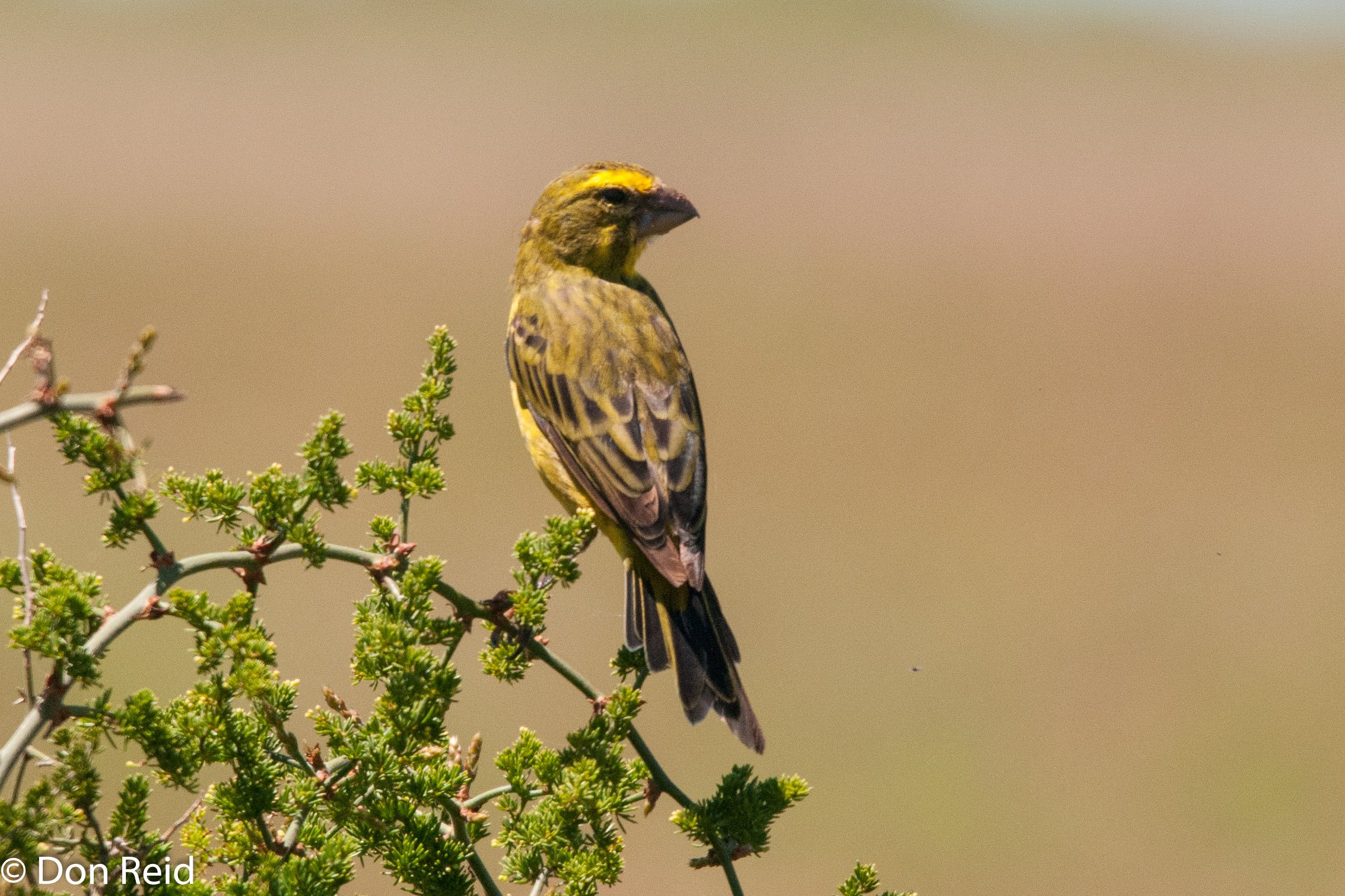
Once showered, I found a sunny spot on the patio and kept a lookout for passing birds, which did not disappoint. Fiscal Flycatcher is really at home here and it is also the most recorded bird in the pentad (reminder : a pentad is an 8km x 8 km block based on co-ordinates). Not far behind are the Sunbirds (Malachite and Southern Double-collared) in their colourful finery, and a selection of Canaries (Brimstone, Cape and Yellow), perky as always.
Fiscal FlycatcherIndigenous gardenSunny corner in the morningBrimstone Canary
Later in the morning Johan and Rosa (Gerda’s sister) arrived and we took the short drive to the Rooiberg Winery restaurant for lunch and a chance to catch up on family news both sides and enjoy some of the simple but tasty fare on offer. Knowing we had a dinner date in the evening, Gerda and I went for the safe option of fish and chips, which turned up beautifully grilled, while Johan and Rosa chose the chicken curry, equally delicious judging by their satisfied murmurs.
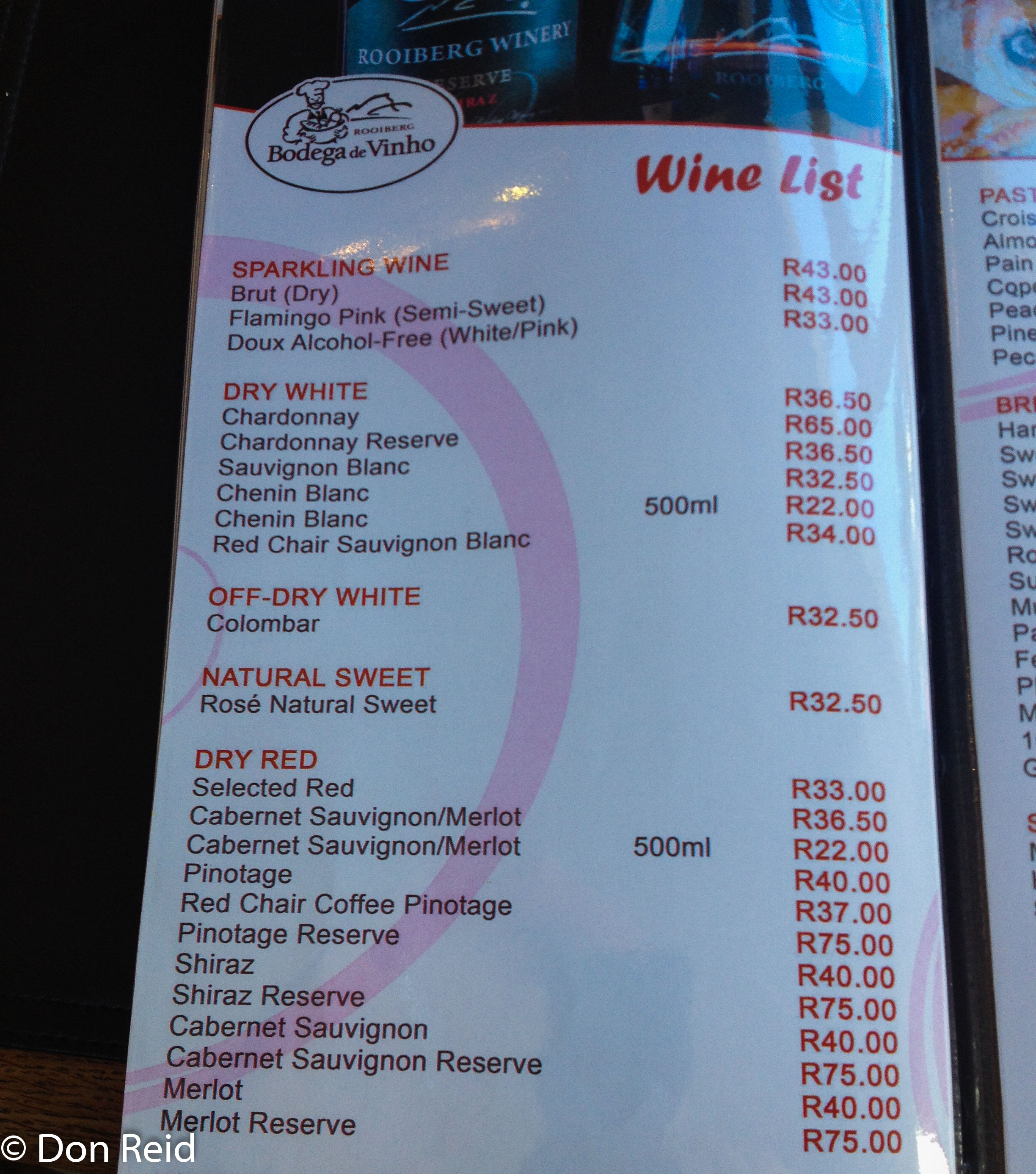
The big chair at Rooiberg Winery restaurantCheck those prices!
The wine was from Rooiberg’s selection and I was pleasantly surprised that the cellar (next door) prices applied in the restaurant – where else in the world can you be served an acceptable wine for less than R40 (that’s about 2 Pounds!)
After a lengthy and relaxed lunch, we settled the reasonable bill, said our farewells and returned to Orange Grove Farm, where I set out to do some justice to the atlas list. I soon had all three species of Mousebird (Speckled, Red-faced and White-backed) chalked up and a group of 5 Domestic Geese on the nearby dam while the other dam further along the road had Black Duck and Coots.
Orange Grove Guest farmWhite-backed Mousebird
A walk along the road next to the riverine bush was quite productive with Pied Barbet in the trees and a variety of birds on and around a mound of organic fertiliser (that’s the nice term for it) – Doves, Sparrows, Weavers, Bishops and a few Cape Spurfowl all vying for a spot.
Swee Waxbill turned up in the trees and settled for a while for a late afternoon grooming session, but were not easy to photograph, while a Southern Tchagra popped out of the lower stratum of the bushes long enough to snatch a photo.
Swee WaxbillSouthern Tchagra
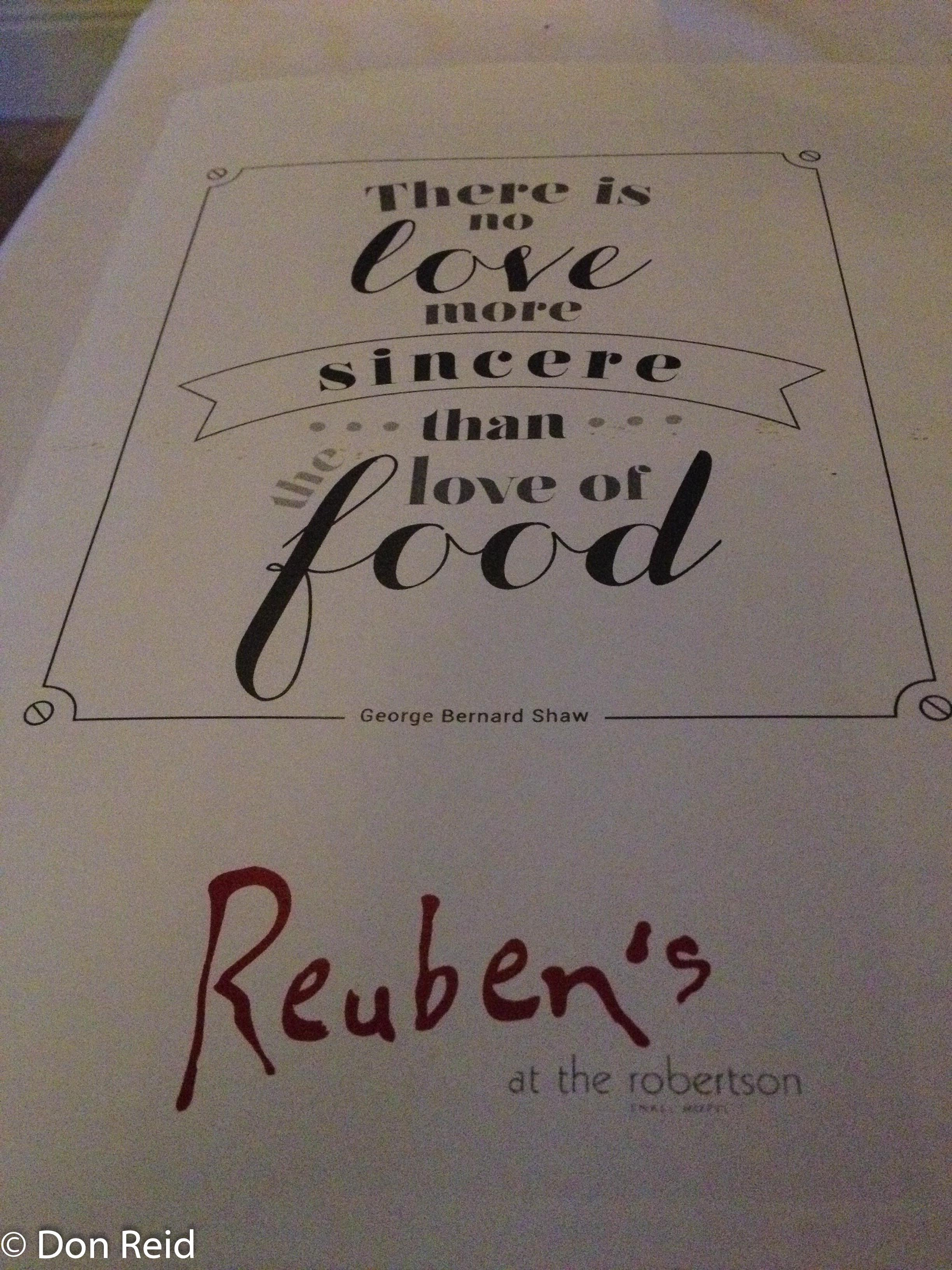
We had booked in advance for Reubens Restaurant that evening, but when it came to going out in the cold and driving the 20 Kms to Robertson we almost cancelled – thank goodness we persevered as it was a memorable meal in very pleasant surroundings, with some really stunning dishes accompanied by an excellent Merlot – the photos don’t do the dishes justice but use your imagination and sense the subtle flavours and perfect cooking!
Dinner at Reubens in RobertsonGerda enjoying ReubensSpringbok loin (the animal’s not the rugby player’s)Orange souffleCrème Brulee
Next morning we again lay in till late then set off on the return trip to Mossel Bay, again stopping at our new favourite roadside restaurant for coffee and a breakfast pastry (the infamous “load shedding” meant we could not boil water for coffee that morning). The road back was not busy and we took it easy, just enjoying the passing scenery, which at this time of year includes a vibrant display of flowering aloes, some natural, others planted.
Planted Aloes along the Ashton-Swellendam road
Riversdale was our last stop at just the right time for tea (no, we resisted the cakes this time). Passing Mossgas (PetroSA) the rain had formed temporary wetlands in the fields and the Gulls and others were making the most of it.
Gulls in temporary vlei near PetroSA (Mossgas) (after soaking rains)
Shortly after, we were back “home” in Mossel Bay (well it is our second home) with some pleasant memories of a charming part of South Africa.
The first 10 days of our July stay in our second home town were characterised by cold, wet weather almost every day – typical Cape winter weather you might say, but the locals insist it is exceptional for Mossel Bay, which is punted as having one of the mildest climates in SA.
It hasn’t been conducive to going atlasing in the early morning, so I have taken the lazy option of doing most of my birding and atlasing in the Golf Estate where our house is located with short visits to some selected spots in the Mossel Bay area to find the species not occurring in the estate itself.
View of the golf course from our gardenLooking down at the nature reserve area from the walking trail
The Patio Option
Our enclosed patio looking over the golf course and the sea has proved to be the ideal spot for viewing the birds that visit our small garden, particularly when they perch in the neighbour’s trees, which are at eye level a just a few metres from the first floor patio.
Regular visitors include the usual Doves (Laughing, Cape Turtle- and Red-eyed) and Sparrows (Cape and Grey-headed) while Streaky-headed Seedeaters have been prominent for the first time that I can recall.
Cape SparrowStreaky-headed Seedeater (which used to be called Streaky-headed Canary)
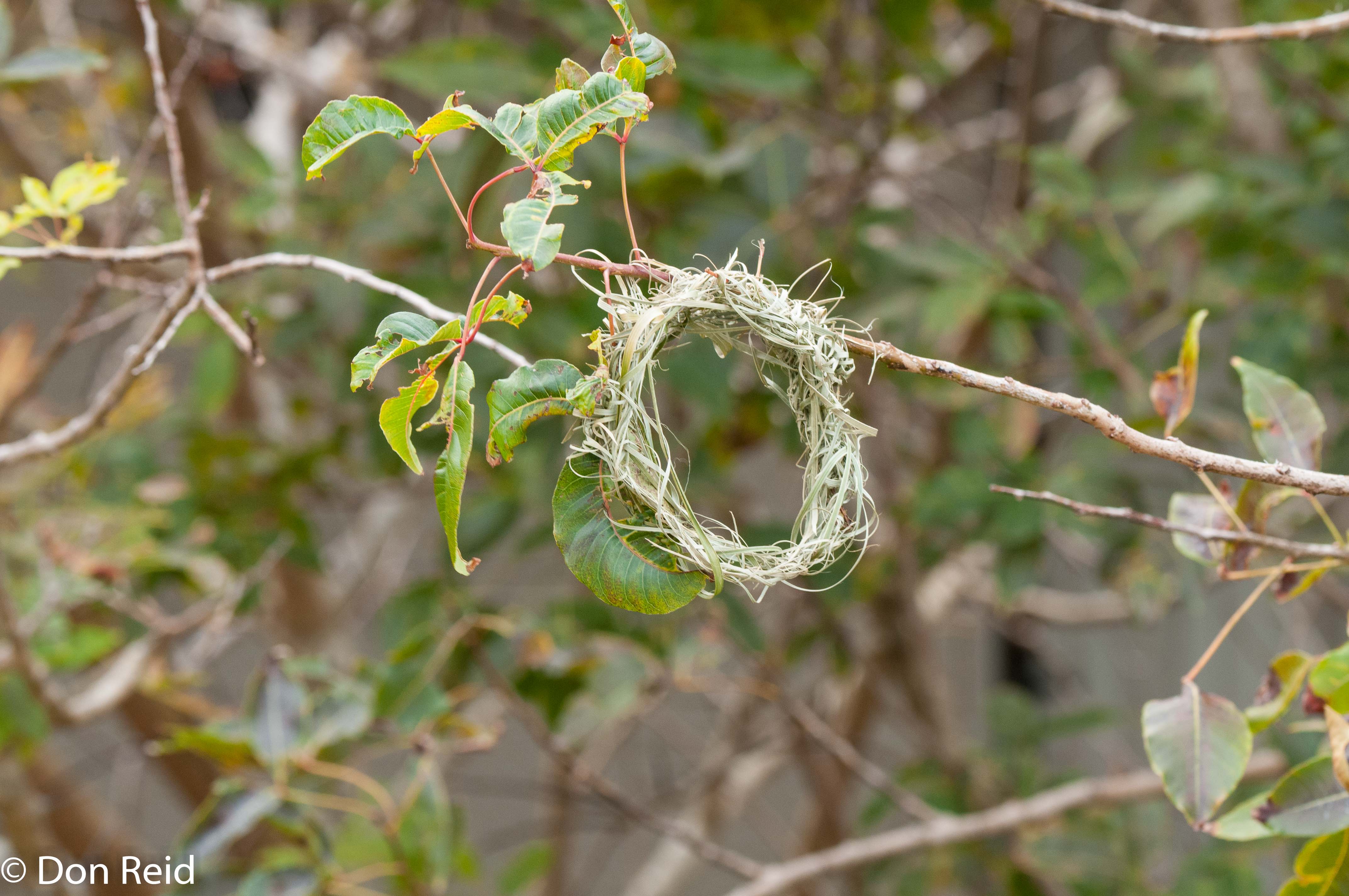
A Cape Weaver started building his nest with a neat ring of grass as the frame for the ball-shaped nest to follow, but unfortunately abandoned it at that point.
Weaver starter frame of nest
The honeysuckle hedge below the patio was not in flower but we still had both Southern and Greater Double-collared Sunbirds visiting, probably on their way to the many flowering Aloes in the estate, which are at their colourful best in the winter months.
Southern Double-collared Sunbird (Greater ditto is identical other than a broader band of red)
Others dropping by were both of the common species of Mousebird, Speckled and Red-faced and both presented nice photo opportunities.
Speckled MousebirdRed-faced Mousebird (calling)
The ubiquitous Cape Sugarbirds are abundant in the estate and seem to be in a state of excitement most of the time – just shows what a fancy long tail does to you.
Cape SugarbirdCape Sugarbird (taken on my I-Phone)
Then there are the Bulbuls with the familiar Cape Bulbul not at all shy to show himself, while the Sombre Greenbul remains hidden in the bushes but makes up for it with his piercing call “which sounds a bit like “Willie” (which is also the Afrikaans name for it)
Cape BulbulCape White-eyes move through the foliage in small flocks
A Yellow Bishop was a surprise visitor, as I had only ever seen them in the Fynbos which fills the nature reserve area between the last row of houses and the rocky headlands along the shoreline. It was in its duller winter plumage, heavily streaked and giving a glimpse of bright yellow back as it flew off.
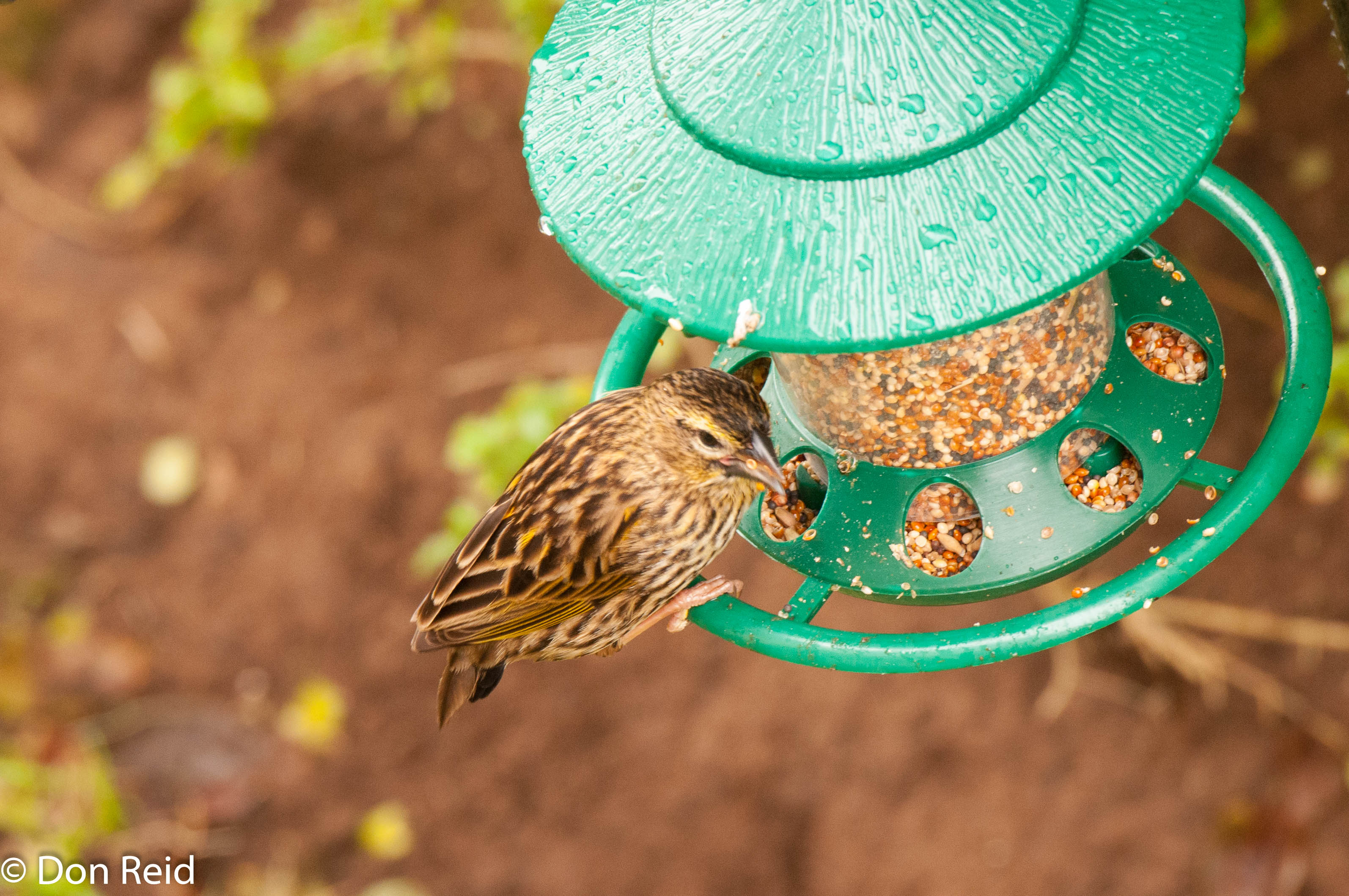
Yellow Bishop at the feeder (winter plumage)
Feeding the masses
I bought a bird-feeder and some seed at Agri, our local co-op and installed it below the patio, hoping for some seed-eating visitors. Well, it was packed with birds the next day – Sparrows, Seedeaters (they used to be called Streaky-headed Canaries), Bishops and Weavers all vying for a spot. In the frenzy some seed fell to the grass below and was quickly taken by the Doves and even the Cape Spurfowl which are very common in the estate.
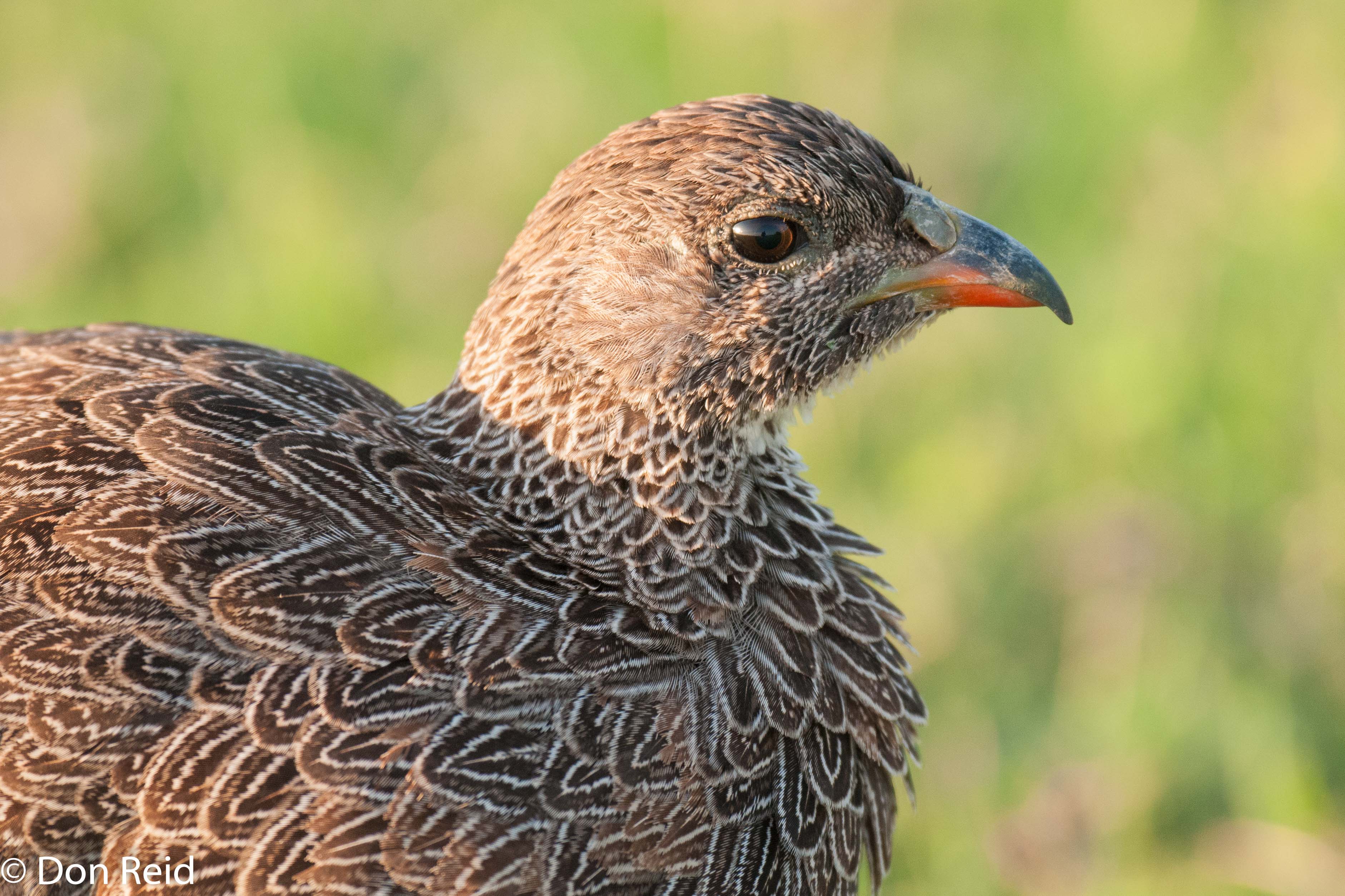
Cape Spurfowl
Going Walkabout
When the weather allowed, I did some walking around the estate and down into the nature reserve area of Fynbos. The latter was alive with Yellow and White-throated Canaries flitting about, plenty of Sunbirds and a Bokmakierie or two.
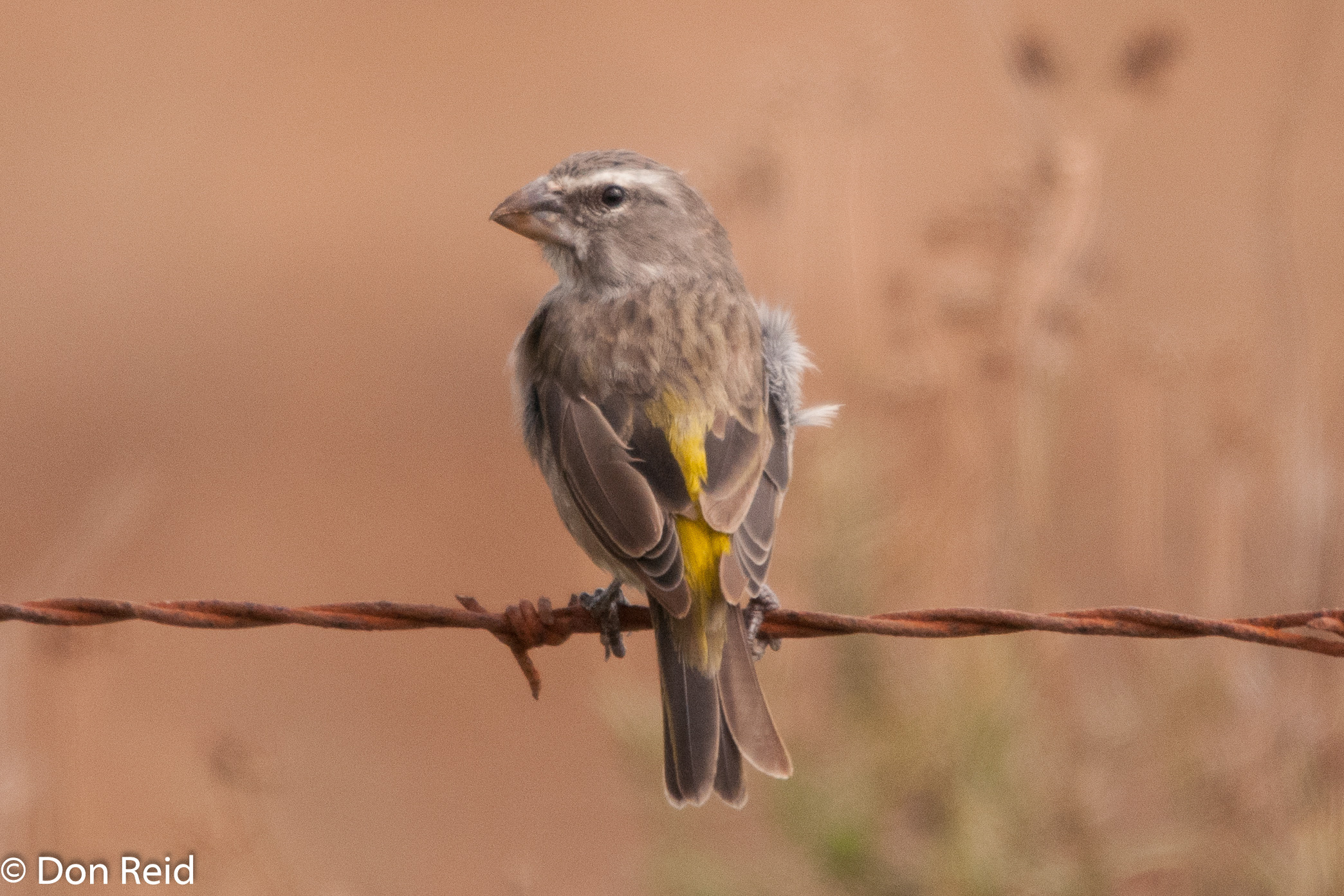
White-throated Canary
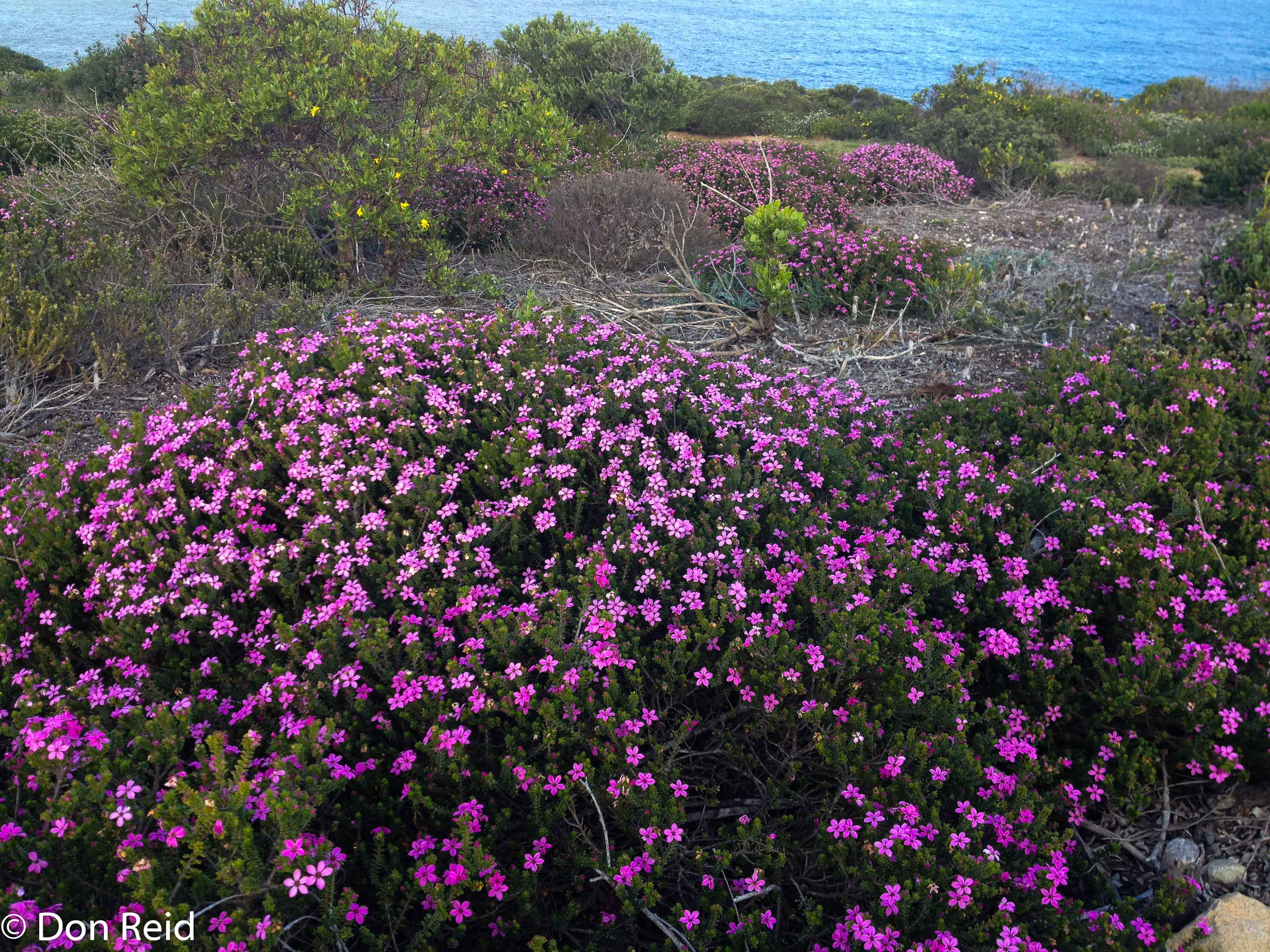
And the scenery was special – most of the fynbos was in flower creating beautiful spreads of tiny purple, pink and white flowers against the backdrop of grey skies and cobalt ocean beyond the cliff edge.
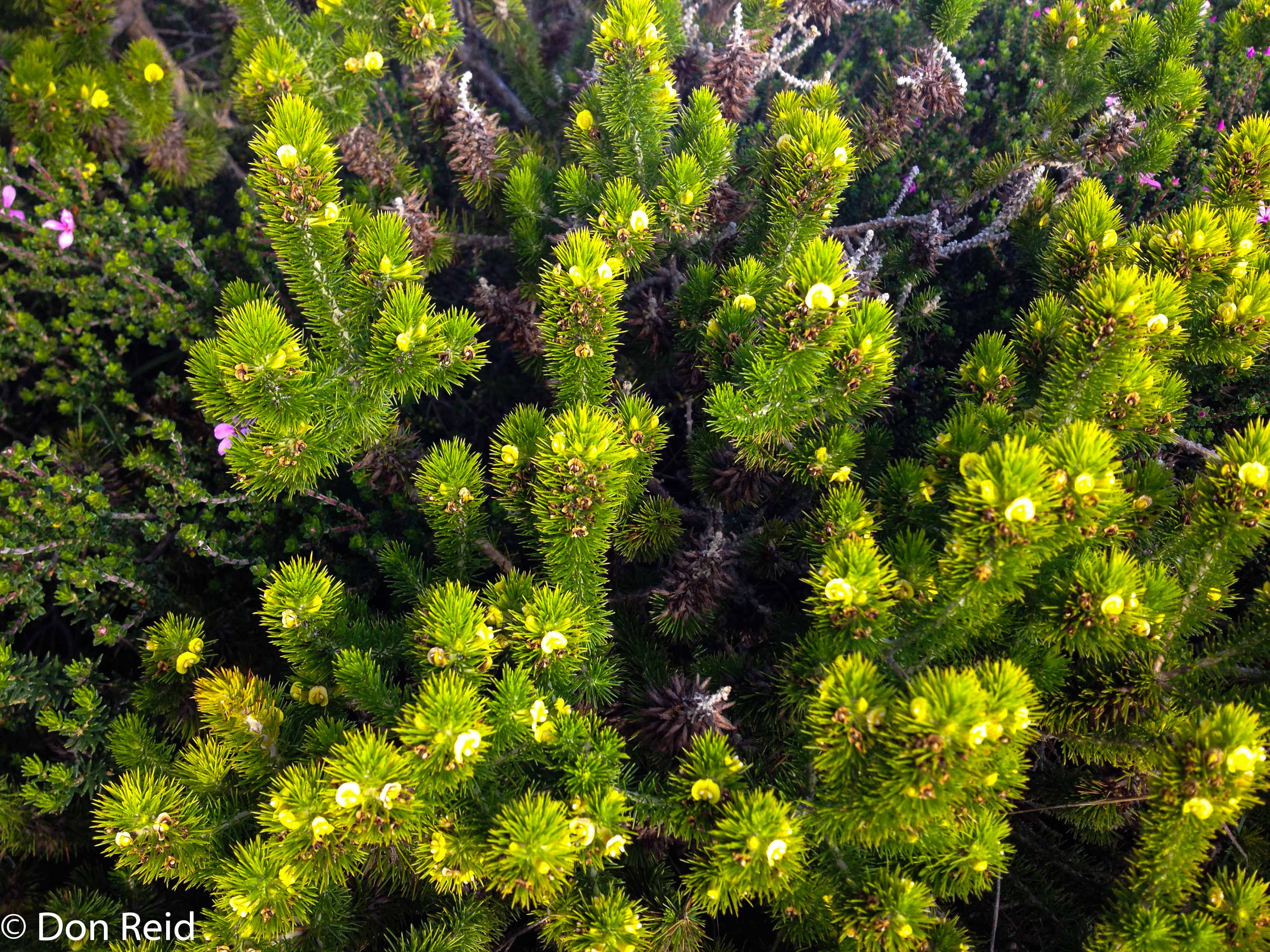
FynbosFynbosFynbos
For a few minutes the icy wind was forgotten and I took some photos with my pocket camera (which I sometimes use for communication as well – they should call it an I-Camera rather than an I-Phone)
Other fynbos favourites were out and about – Karoo Prinia vociferous as always and Southern Boubou skulking in the bushes, while Bar-throated Apalis moved about restlessly, calling chit-chit-chit all the while.
Let’s go down to the Sea again …….
Seabirds are always a feature of birding in Mossel Bay and there were plenty in numbers if not species. Kelp Gulls are common, even over the estate which they use as a direct route to their roosts along the cliffs.
Kelp Gull
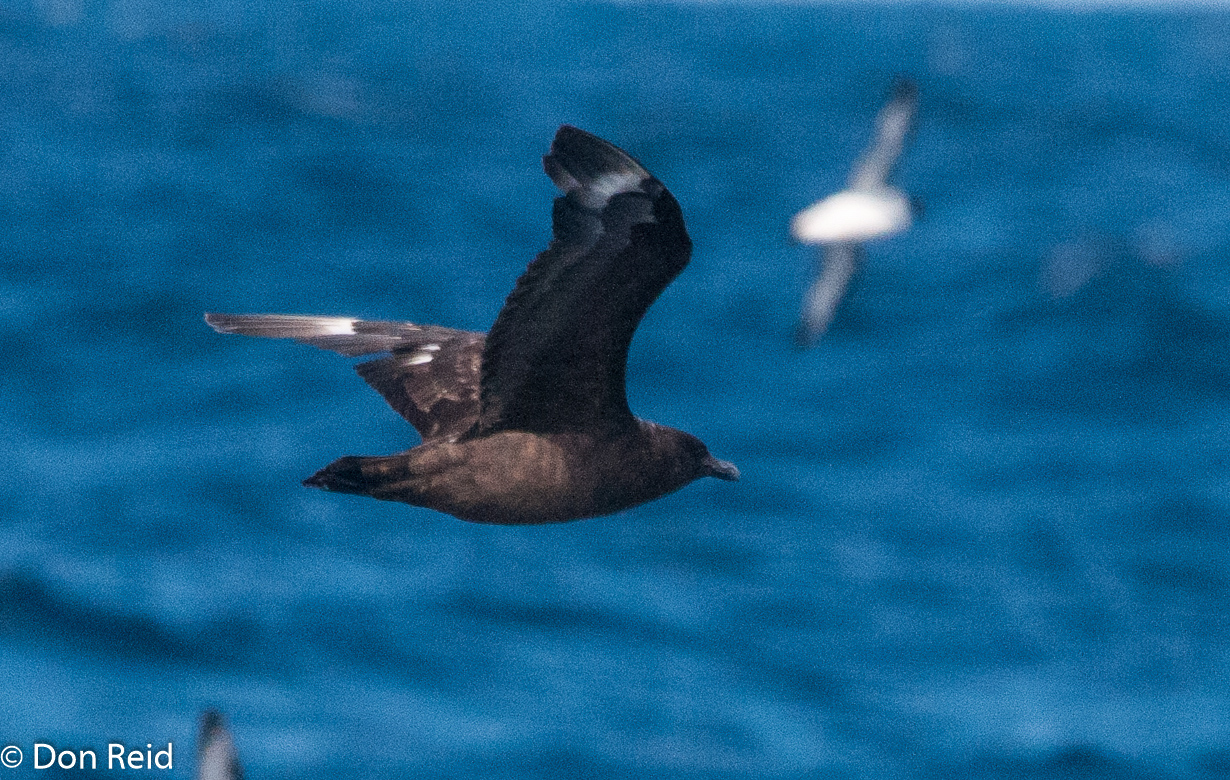
Down at the Point there were numbers of Swift Terns flying past just off the rocky shoreline, some harried by Subantarctic Skuas, large all brown seabirds with distinctive white wing flashes, hoping for a dropped morsel. Their Afrikaans name Roofmeeu translates directly to “Robbing Gull” which describes their habit of pestering other seabirds until they drop or disgorge some of their food.
Subantarctic Skua
During the first week there were signs of the annual “sardine run”, when millions of these small fish move up the east coast of South Africa in massive shoals, drawing all kinds of sea- and bird-life along with them. From the patio we could see some of them enjoying take-aways :
schools of dolphins numbering in the hundreds
a few whales breaching – they are annual visitors to the bay
Cape Gannets galore, turning and diving straight down in their typical fashion
Cape Gannet
Winter is certainly a worthwhile time to visit Mossel Bay, but let’s face it, Spring and Summer are a lot better from most points of view! Can’t wait to return later in the year!
On the statistics front, my total bird list during this visit was 110 species of which about 60% were in the estate itself and the rest during side trips in and around Mossel Bay and a two-day “culinary and birding trip” to the Robertson area (watch this space for more on that subject)
During June 2013 and again in June 2014, Gerda and I travelled to La Lucia, a suburb of Durban on the north-east coast of South Africa to spend 8 days at La Lucia Sands Resort.This was a holiday trip with Gerda rather than a birding trip, but I took the opportunity here and there to do some good birding (no surprises there).
We have owned timeshare for the last two weeks of June at La Lucia Sands Resort for about 30 years now, but had only used them occasionally up until a few years ago as they fell outside the school holidays. Latterly we have started using at least one of the weeks on a regular basis and now enjoy the chance to have a warm holiday in the middle of winter in tropical Durban, with lunches mostly taken at local restaurants to make it super relaxing. The KZN north coast has superb weather in Winter, with warm days and cool nights and none of the humidity that can make it uncomfortable in Summer.
Getting There
The 2013 trip began with a fairly stressful drive to our overnight stop in the Kwazulu-Natal Midlands, due to the very busy highway which did not allow for a moment’s relaxation. We spent the night at Granny Mouse Country House, which had expanded since we last saw it many years ago, but had still retained its charm.
Granny Mouse Country House, Midlands KZN Our room at Granny Mouse Country House
The room was very comfortable with a log fire to ward off the cold (-3°C in the morning) and the Bistro where we had supper and breakfast was excellent. Our simple supper of soup followed by fish and chips could not have been done better and breakfast was equally tasty.
Saturday morning saw me up early to fit in some quick birding before breakfast and a stroll around the garden produced 19 species including a Dusky Flycatcher.
After breakfast we completed the journey to La Lucia just north of Durban and settled into “our” apartment, still in good condition and well maintained.
A Motoring Interlude
Sunday was Top Gear Festival day for me joined by the Genis males, while Gerda and Anlia Genis did their own thing at the Mall. More about Top Gear on another occasion (thinks : is this the cue to start an “All Things Motoring and Mechanical” Blog?)
Relaxing at La Lucia
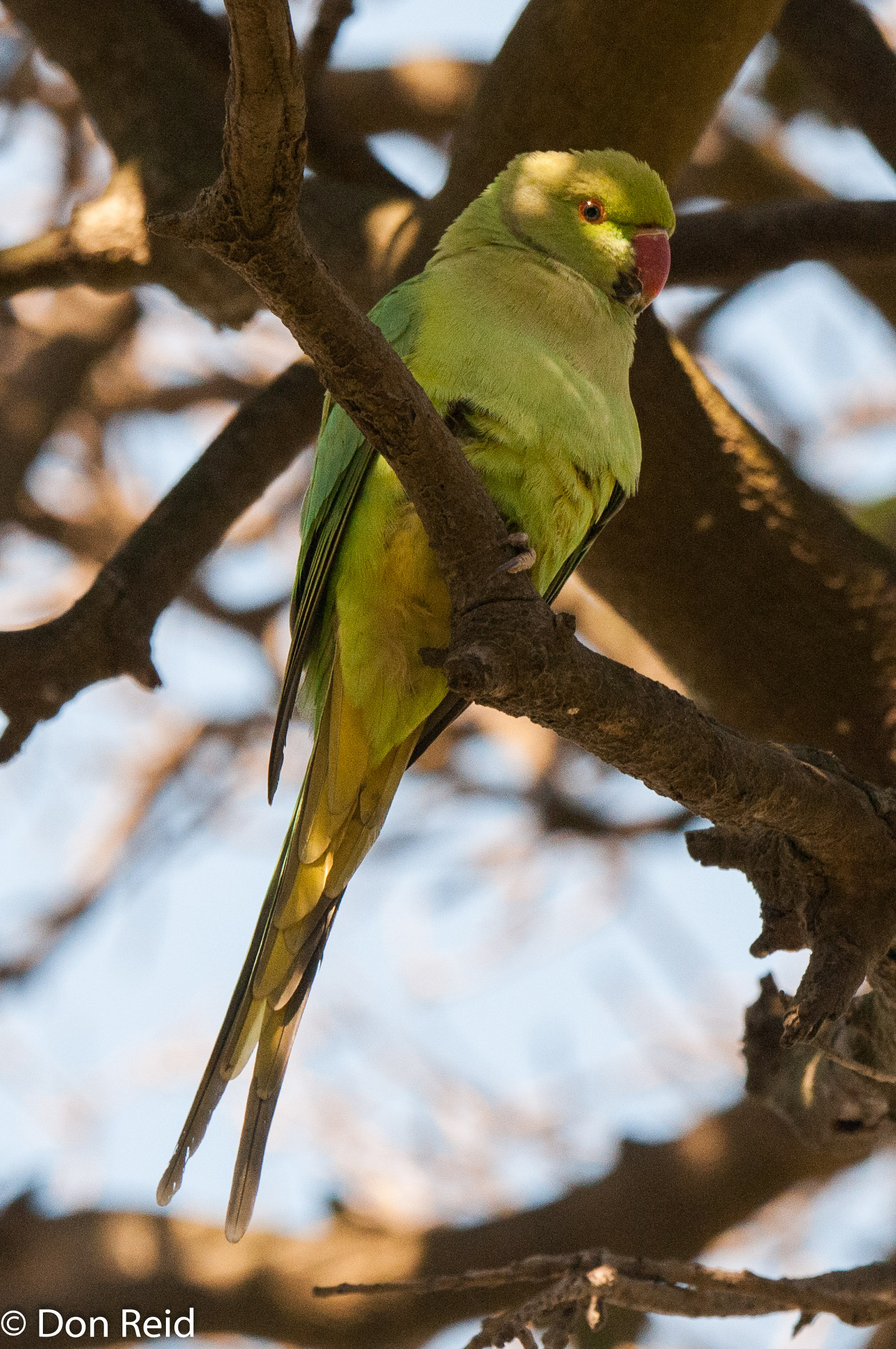
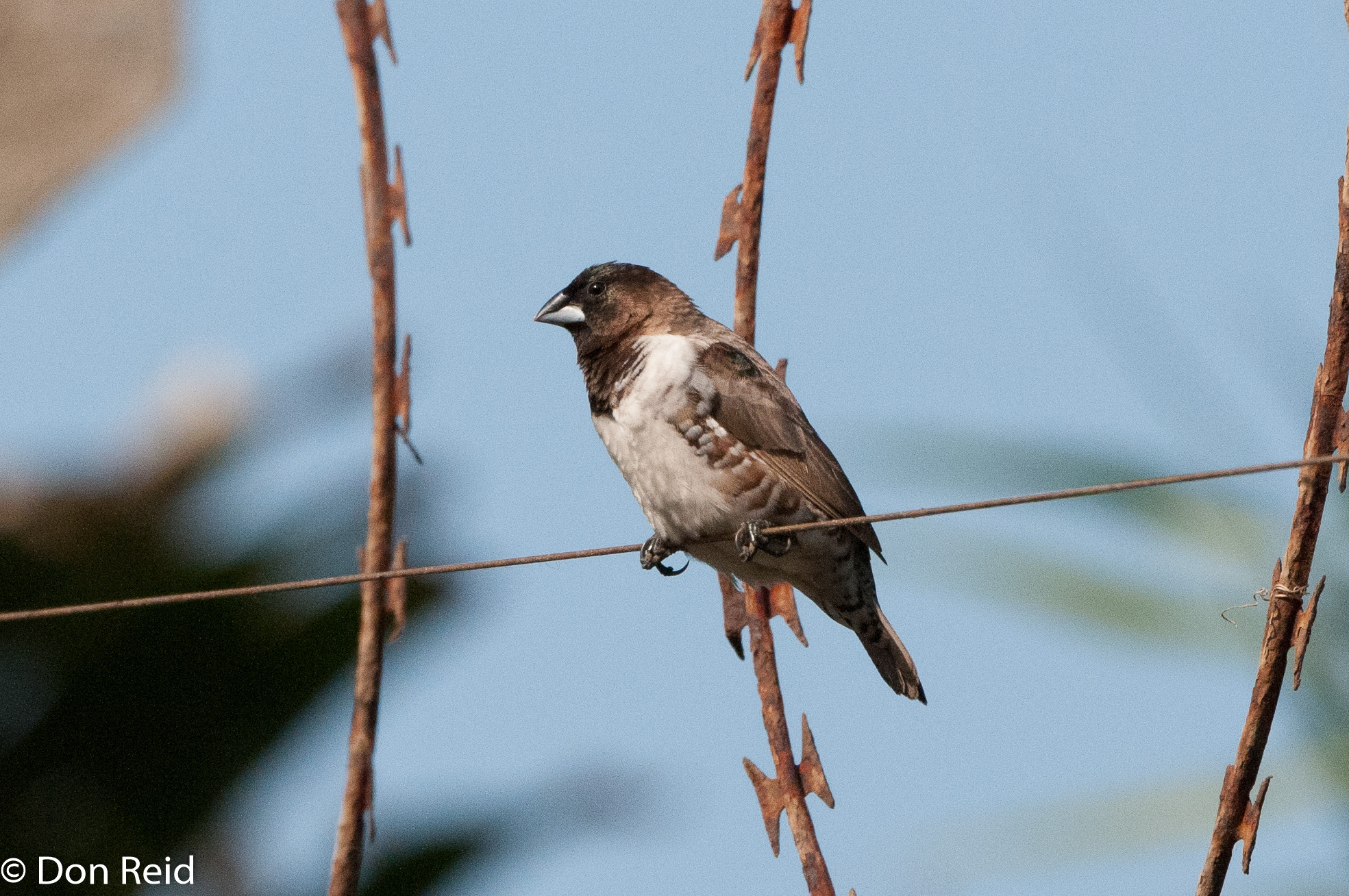
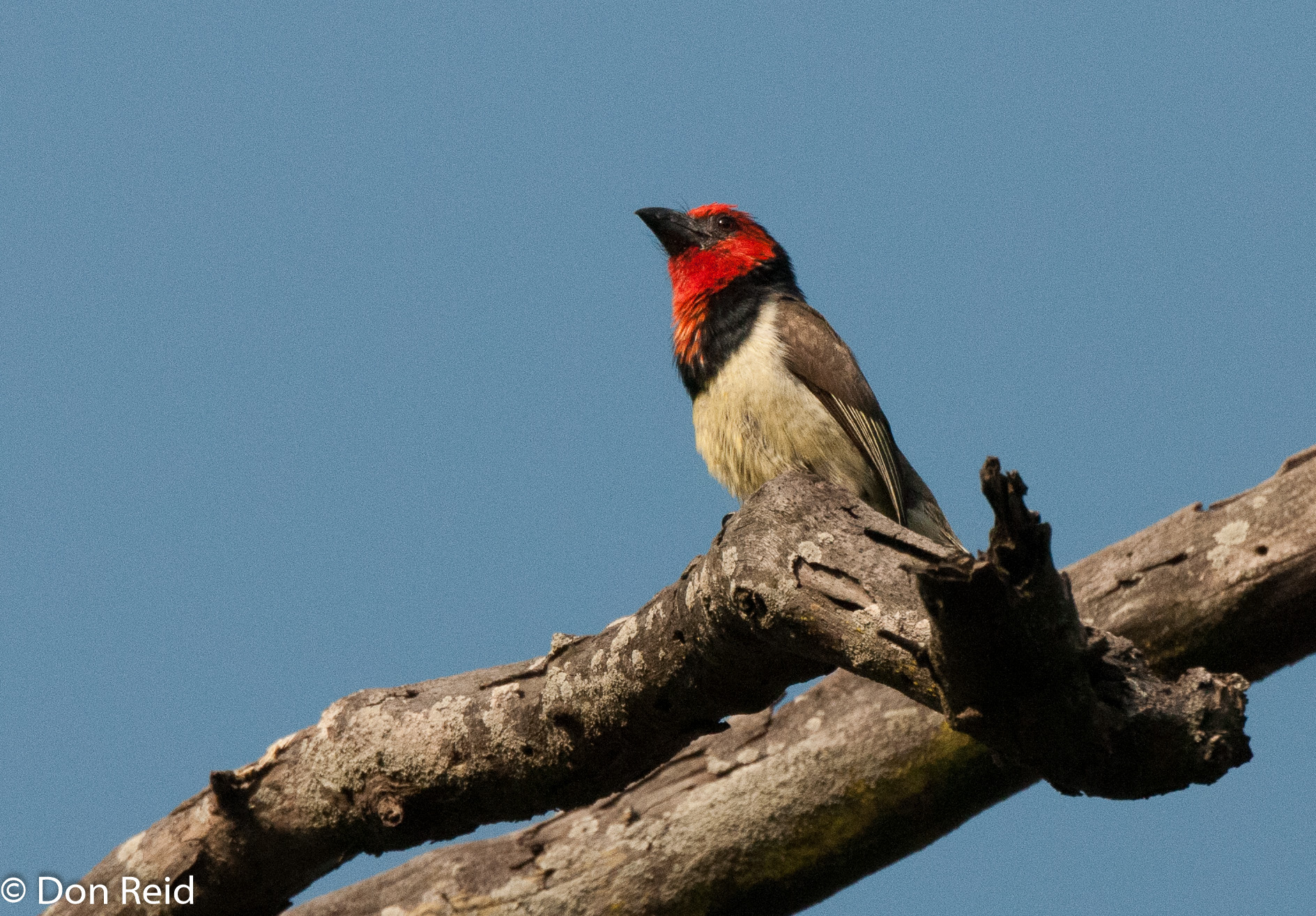
Monday was the start of our holiday routine, which included some light birding from the balcony overlooking the lush tropical gardens, typical of the north coast beyond Durban. One of the first to appear in the large trees along the front of the property was Rose-ringed Parakeet – only my second sighting of this species after seeing them a few years ago in Irene near Pretoria. Other regulars in the garden were Bronze Mannikin, Black-collared Barbet, Black Flycatchers, Cape White-eye, Sombre Greenbul and Dark-capped Bulbul.
Rose-ringed Parakeet, La Lucia Bronze Mannikin, La Lucia Black-collared Barbet, La Lucia
The beach lies directly in front of the complex and is accessed through a gate – I rustled up some energy for a late afternoon walk along the beach, which produced Kelp Gulls, Swift Terns cruising past in the strong breeze, Cape Gannet offshore and even an Albatross which was just to far off to positively ID, but was most likely a Black-browed or Indian Yellow-nosed Albatross.
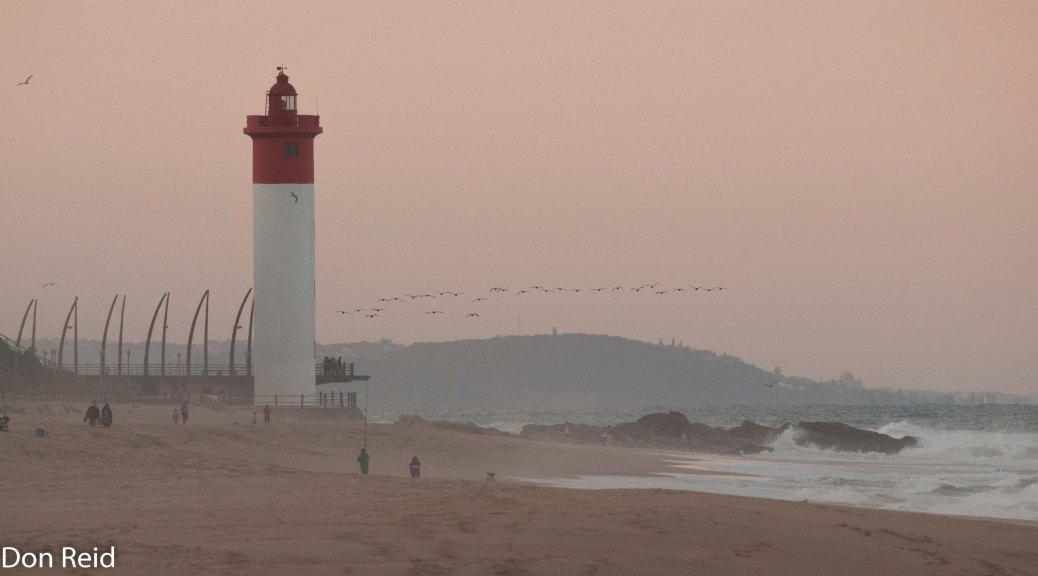
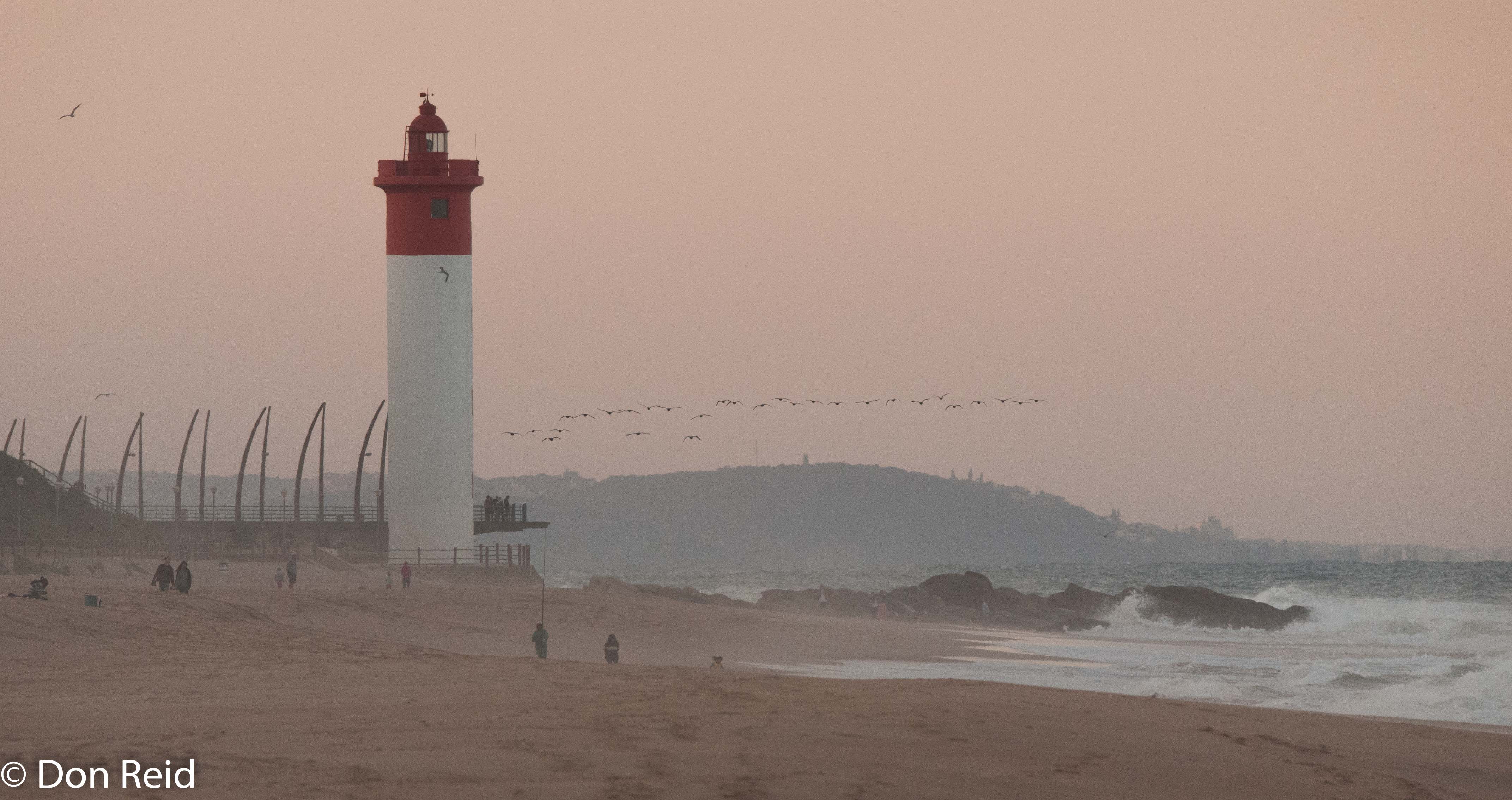
La Lucia beach with the Moses Madiba stadium in the background – built for the 2010 World Soccer Cup Swift Tern The iconic lighthouse at Umhlanga Rocks
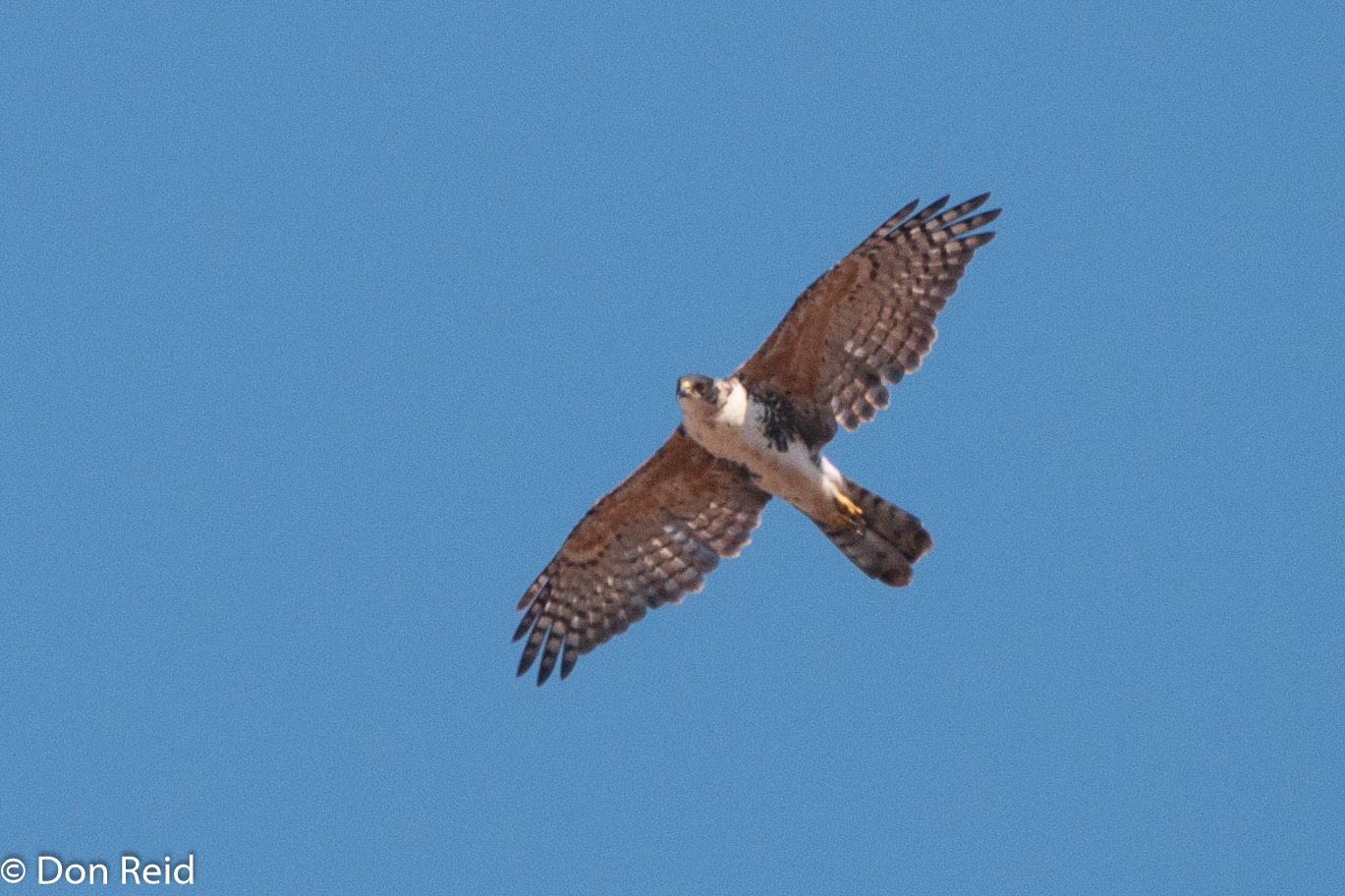
On another day a commotion amongst the Parakeets, which were flying in a group of 6 or 7 in wide circles, led me to spot a Black Sparrowhawk higher up in the air, probably on the lookout for an easy meal.
Black Sparrowhawk, La Lucia
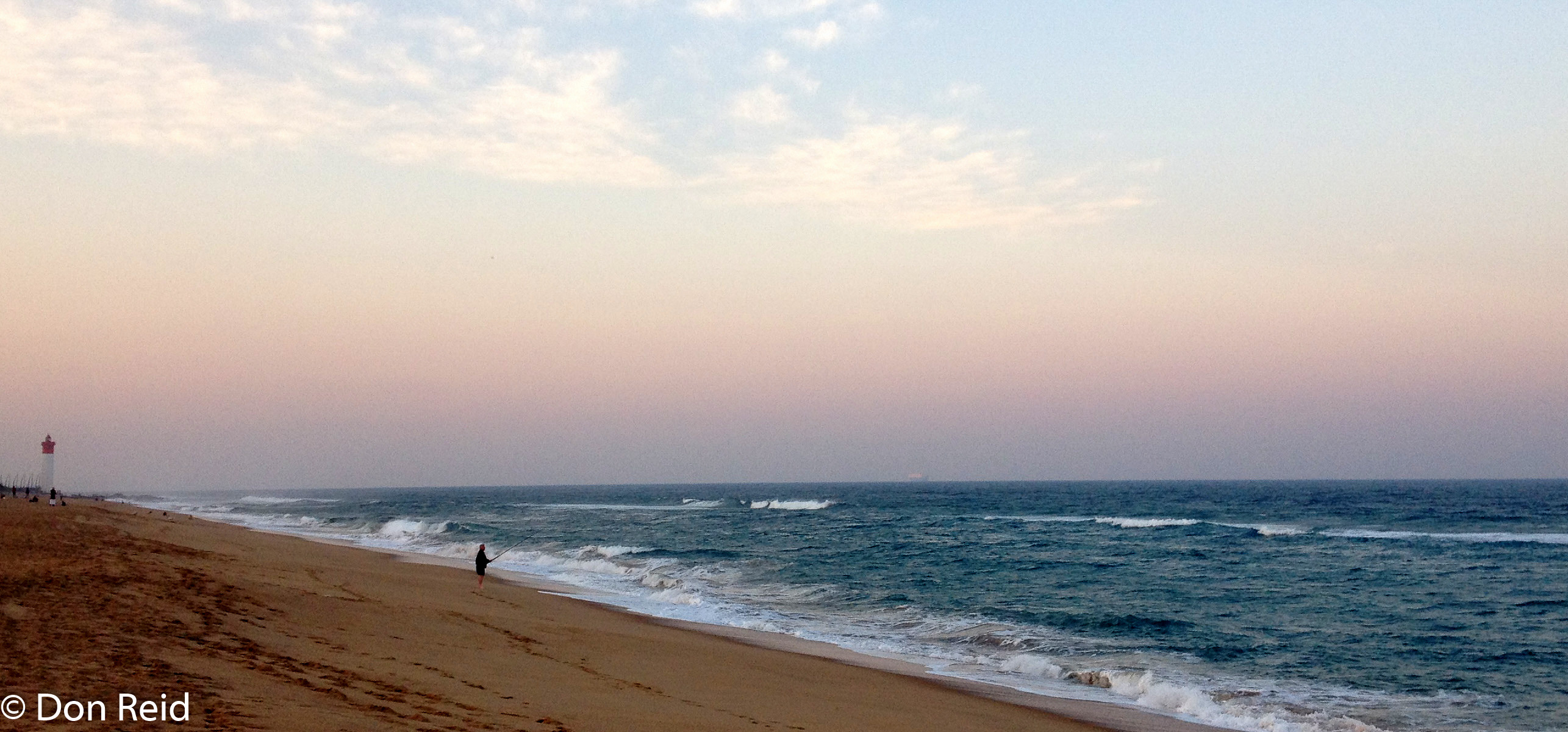
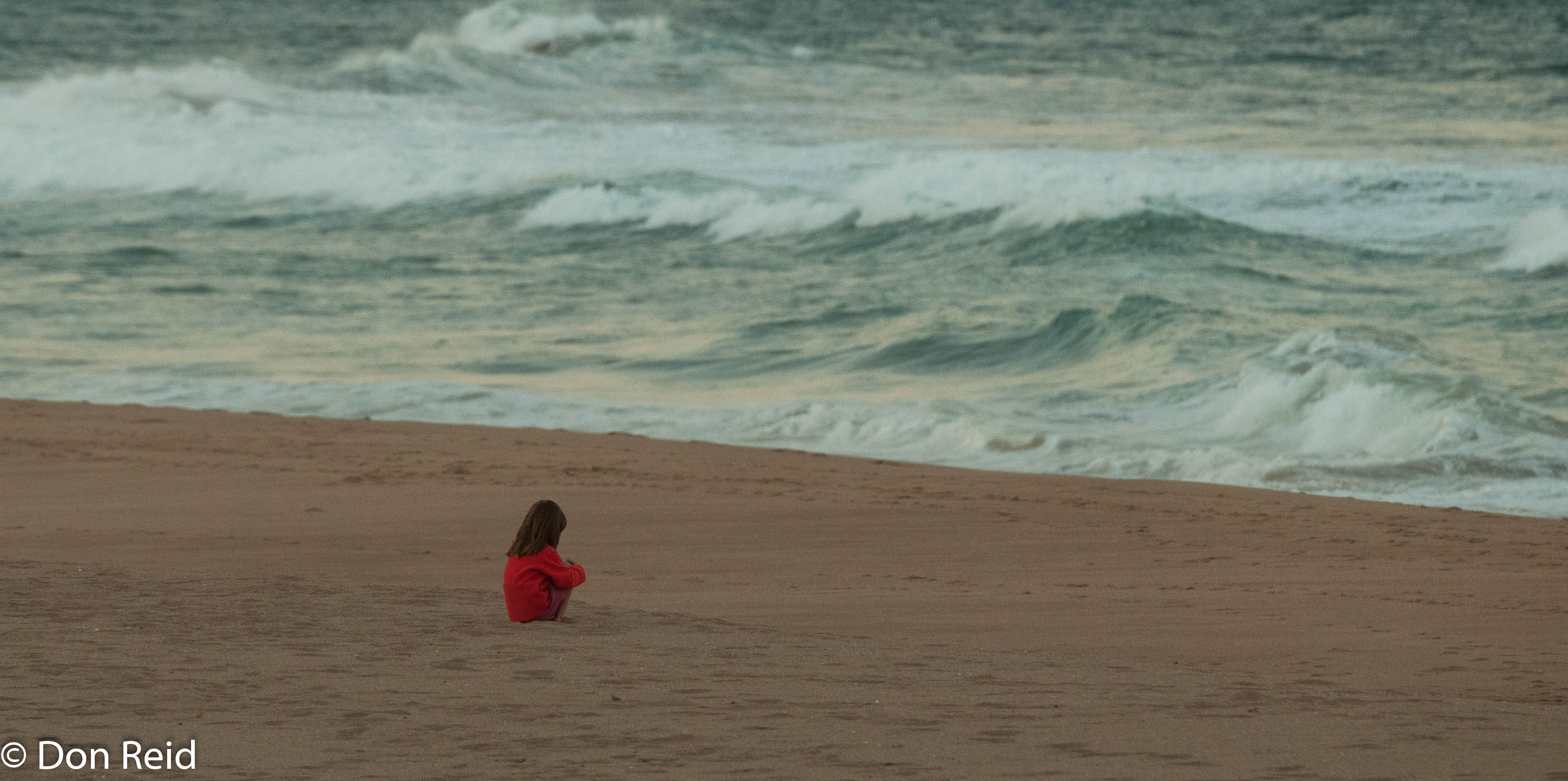
Daily walks on the beach were always interesting – the changing tides, weather conditions and the subtleties of the light at different times of the day meant that no two walks were ever quite the same, not to mention the passing “traffic” of interesting people and seabirds either cruising rapidly by in the same direction as the prevailing wind or using their wing power and streamlined shape to fly against the wind.
La Lucia beach La Lucia beach in the evening Lone girl on La Lucia beach
Out at sea there was also an ever-changing landscape, with surfers catching the strong waves and large ships either at anchor, waiting their turn to get into busy Durban harbour or steaming away over the horizon, headed for the high seas.
A surfer off La Lucia beach Off to the high seas
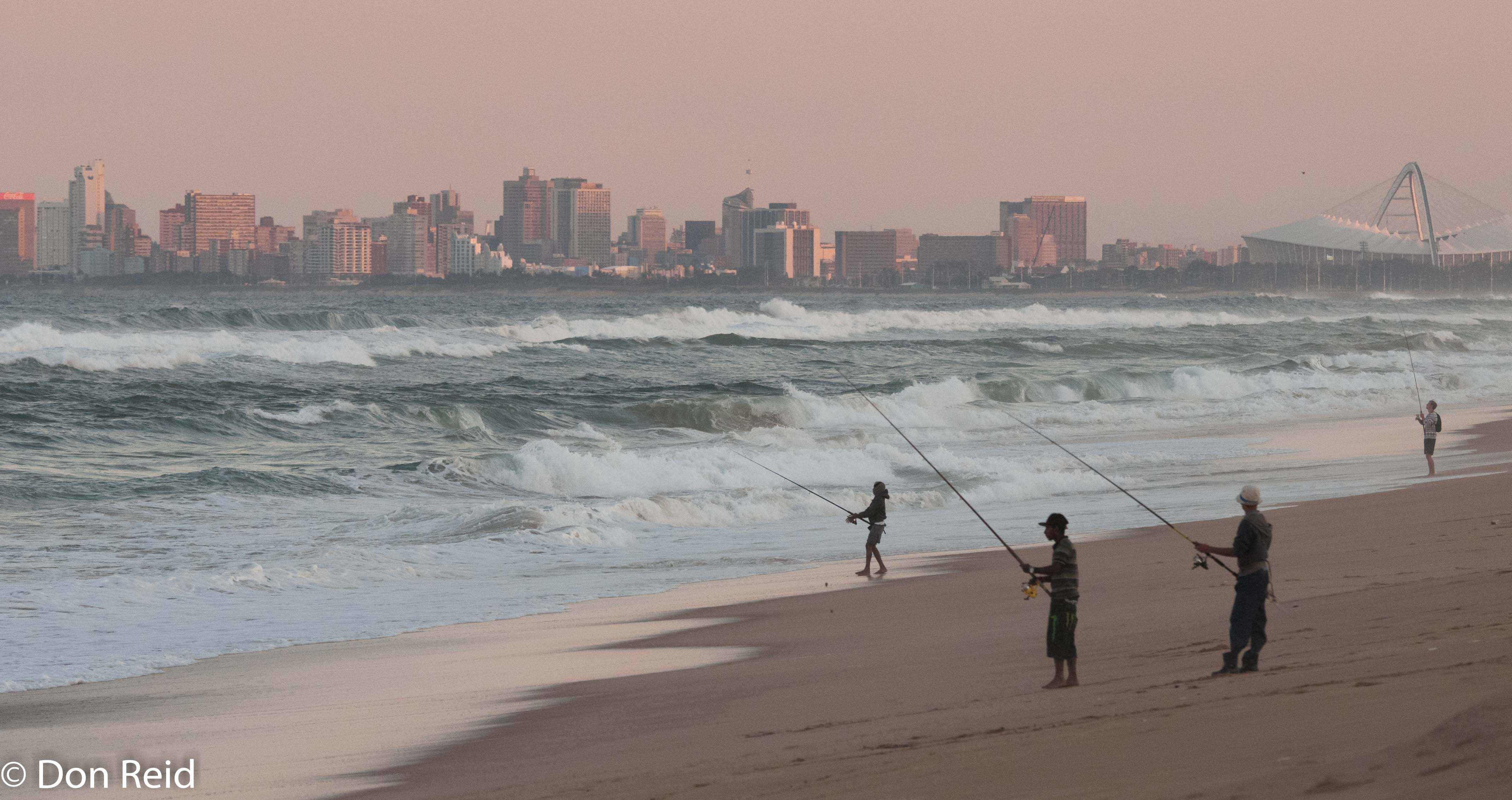
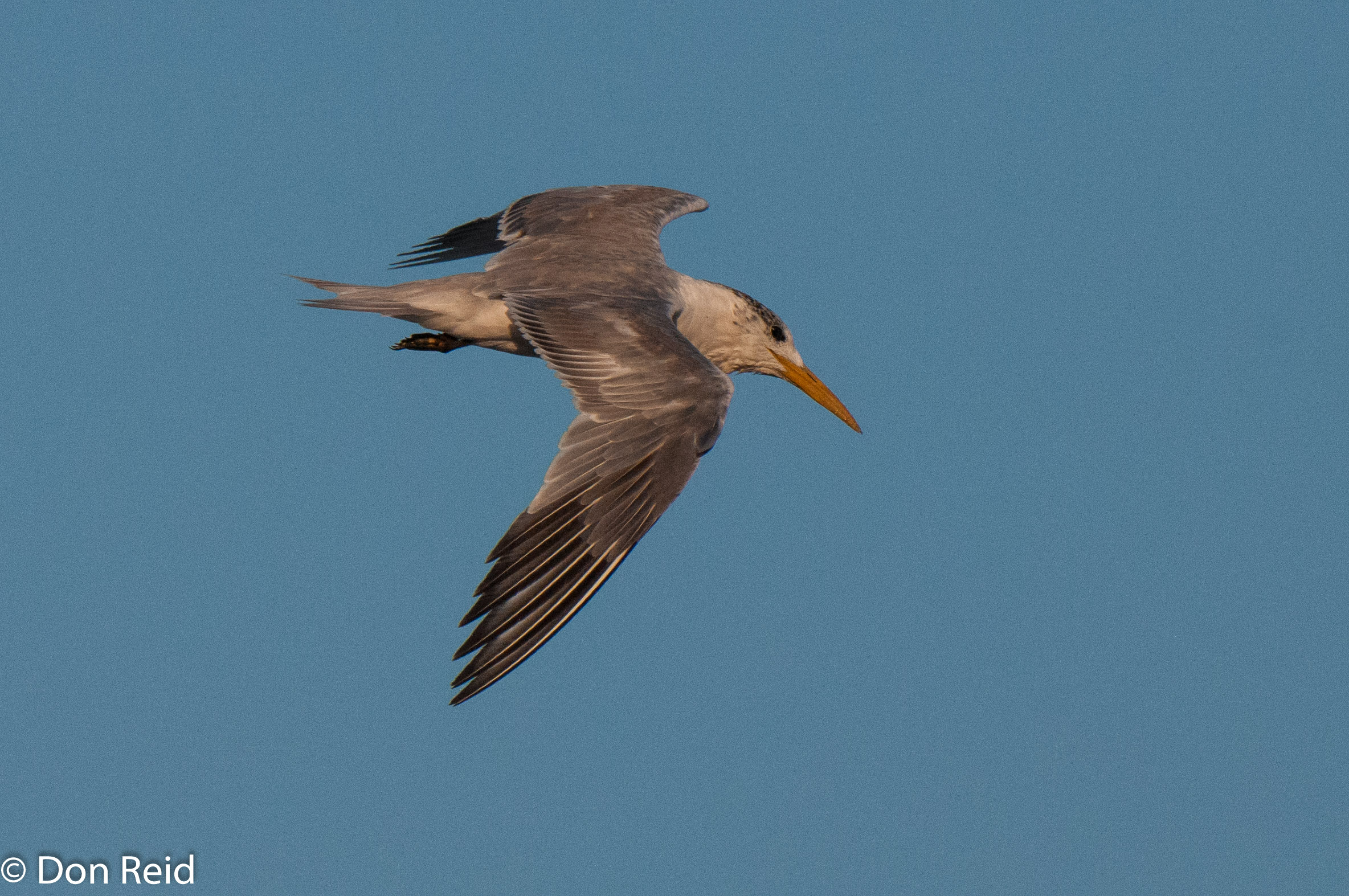
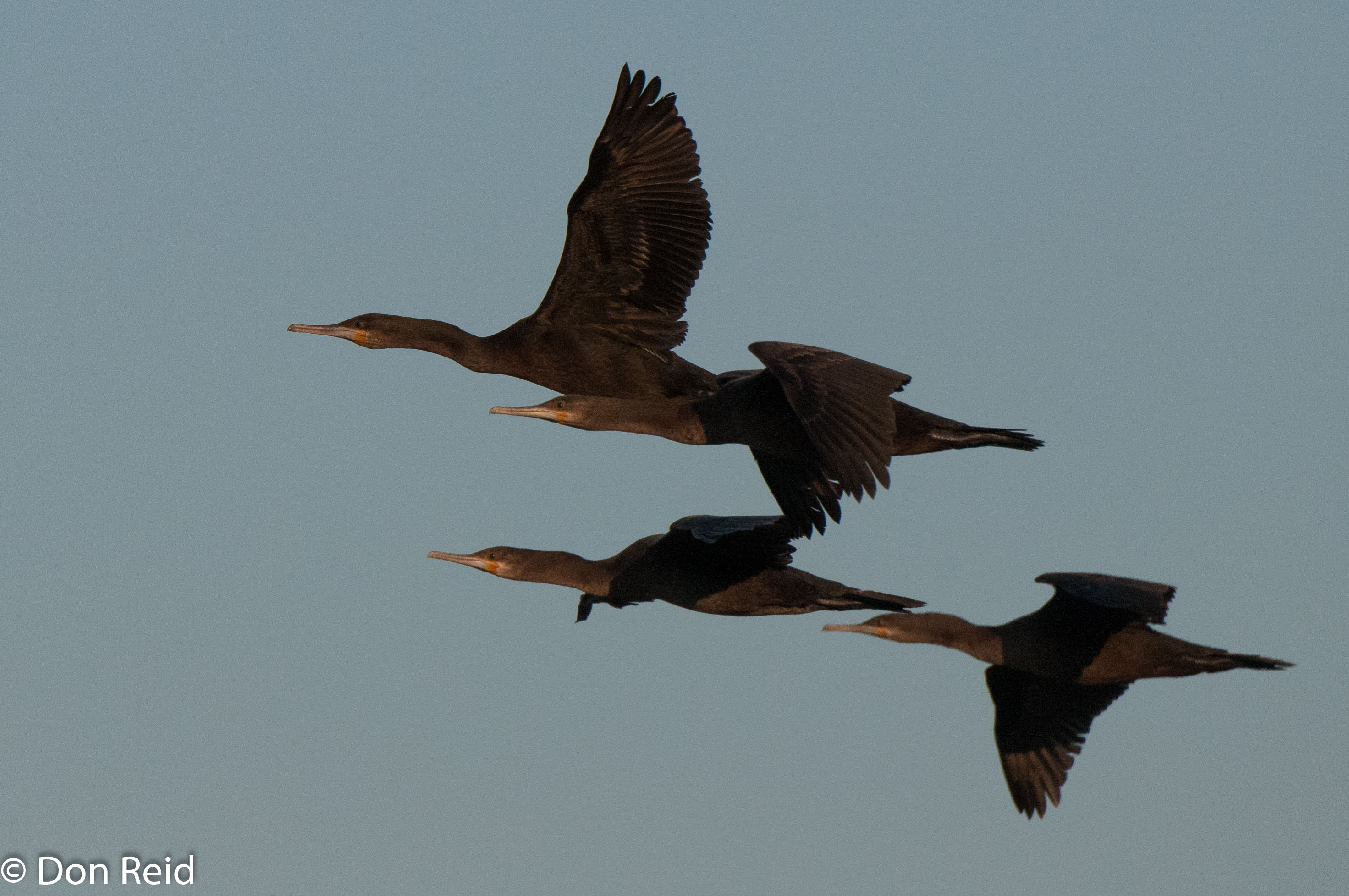
One afternoon a few fishermen were fishing off the beach and the Swift Terns were watching closely for left over bait, occasionally being rewarded for their efforts – a Cape Cormorant stood nearby hoping for a look-in but the Terns were too quick for him (is that why they are Swift Terns I wonder?).
Fishermen on La Lucia beach, Durban in the background Swift Tern Cape Cormorant
Oyster Box Treat
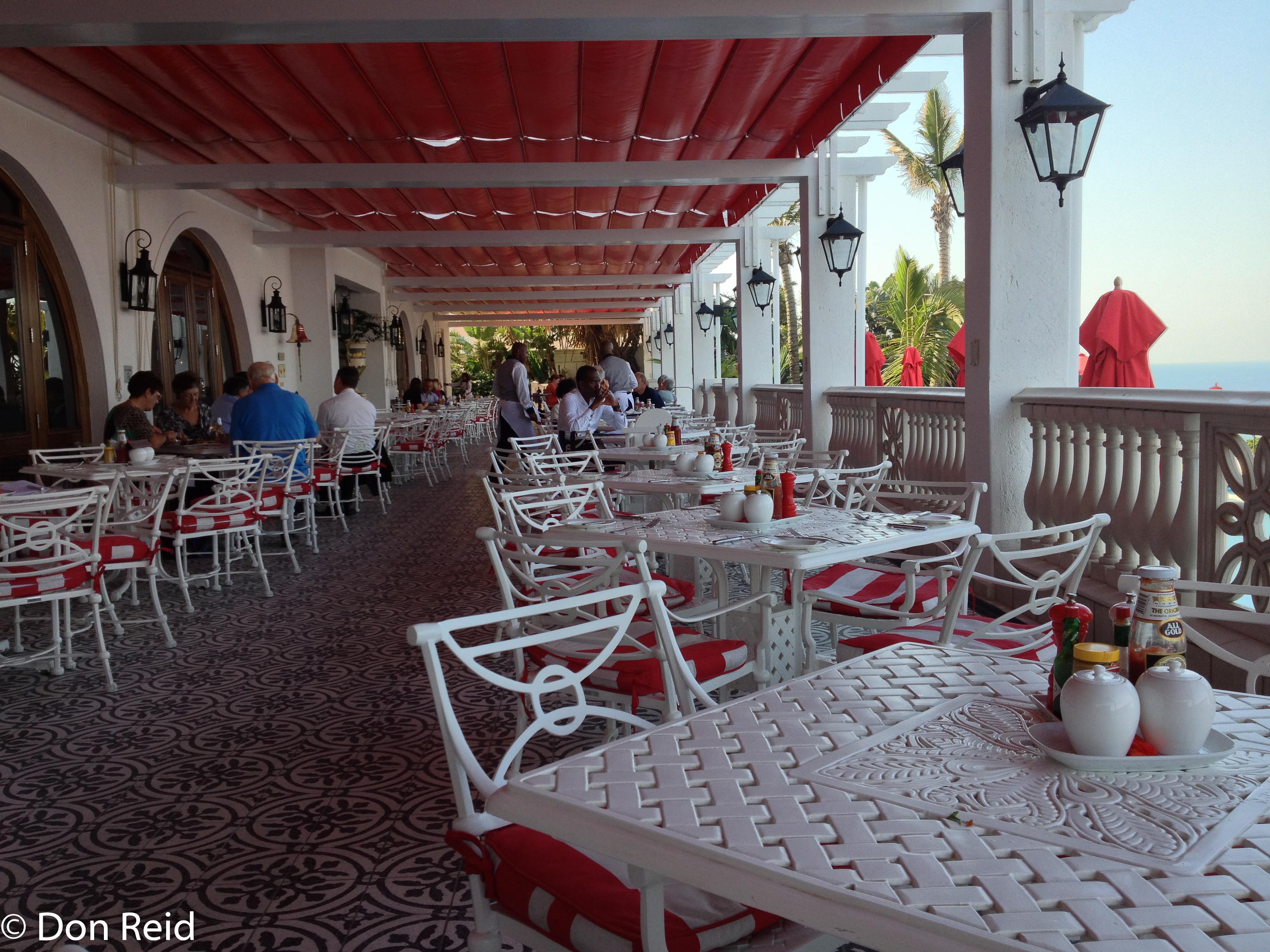
We like to do something special on our anniversary, often going away to some special place for a weekend. This year’s anniversary treat had been missed, so we thought to make it up with a special lunch at the renowned Oyster Box Hotel, a five-minute drive from La Lucia. They serve lunch on the terrace which we chose as it was fine weather and the view is unbeatable, with the iconic red and white Umhlanga lighthouse as the centrepiece. It’s the sort of place that you look around at the other guests and wonder if they are rich and famous (not that it matters of course) or just ordinary folk like us.
The Terrace Restaurant, Oyster Box Hotel Gerda and I enjoying Lunch at the Terrace Restaurant The view from the Terrace
The meal was just superb and the service as we like it – attentive without being obtrusive. Our main course was a full plate of prawns, perfectly prepared.
Seeing the week out
Over the remaining days I made a couple of outings to some of the listed Durban birding spots, which I will tell you about in later posts – Kenneth Stainbank Nature Reserve and the Durban Bayhead were both interesting spots to visit but the best was the forest gem in the middle of Durban suburbia, known as Pigeon Valley Nature Reserve, where I found a lifer and some other specials.
The rest of the week was more of the same and we returned home on a less busy day after a wonderfully relaxing week.
We had participated in two of these special weekend birding events in previous years, based in Punda Maria camp, and had enjoyed the vibe of a group of keen birders and the unbeatable location of the event, taking in a large chunk of the northern part of Kruger Park. The scoring is probably not meant to be that important, but people and in particular keen birders are competitive animals and it certainly adds to the spirit of an event such as this.
So being the optimistic lot that we are and in anticipation of some special birding experiences, we once again put our names down for the event planned for November 2014.
Thursday
George Skinner and I left Pretoria early and followed the familiar route to Punda Maria. George had arranged with well-known bird guide Samson Mulaudzi to meet him near the Entabeni Forest, which we duly did around 10.45 am and we proceeded into the forest area, hoping for a few specials. Both Lesser and Scaly-throated Honeyguides were easily located by call and the latter was seen flying and trying its best to stay out of sight in the canopy as it did a wide circle around us.
Entabeni ForestBat Hawk, Entabeni Forest
From there we drove close to the river to a spot where Half-collared Kingfisher was quickly located, then to the spot where Bat Hawk has been nesting for more than 10 years and we soon found it perched high in the tall trees, just off the gravel road. This was a lifer for me, thanks to Samson!
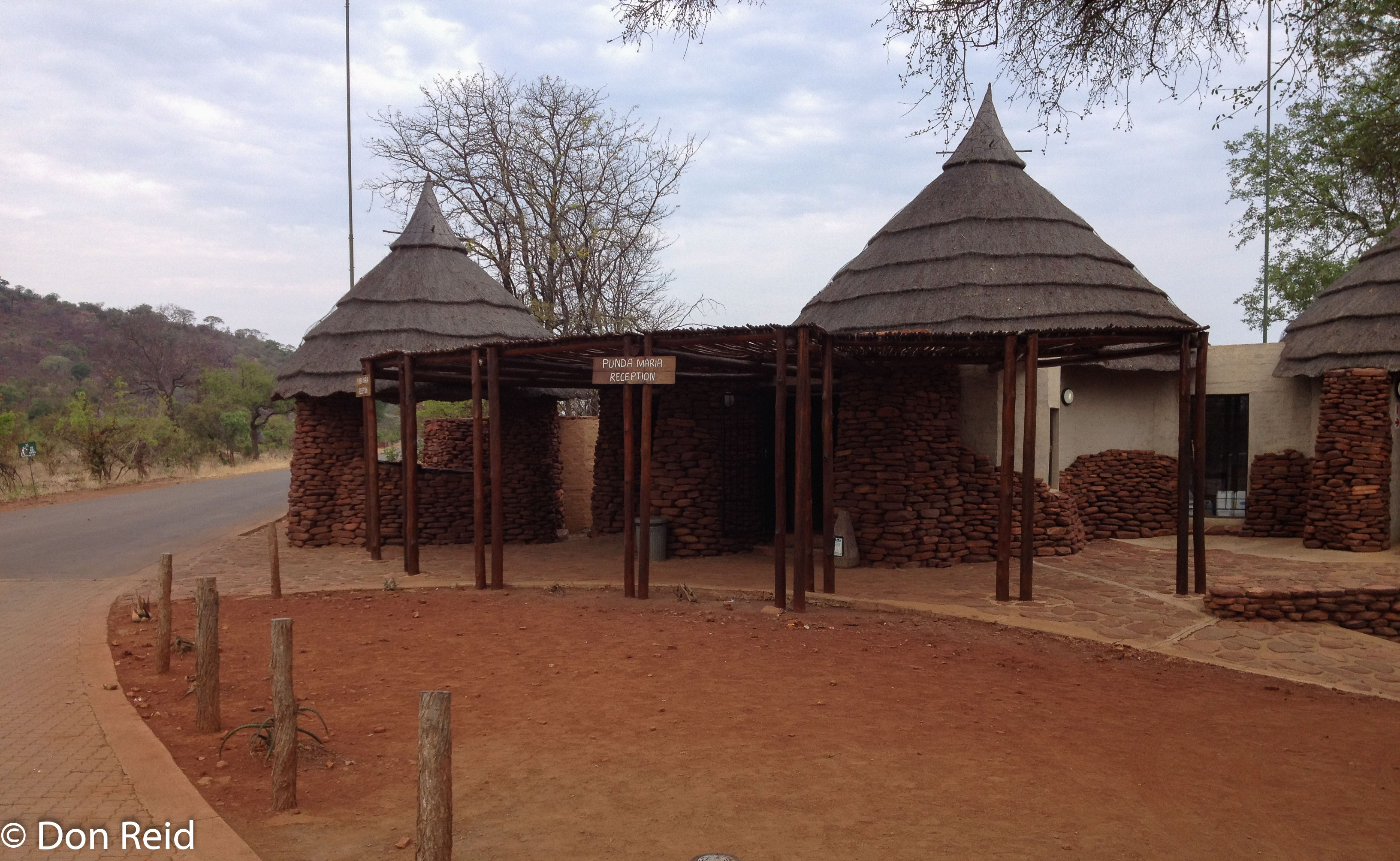
Satisfied with this short birding sortie, we carried on to Punda Maria gate an hour or so away, arriving at the camp at 2.20 pm, to be greeted by the West Rand Honorary Rangers (HR’s) team of William, Monika and Norma who all feel like old friends the third time around.
Punda Maria entrance gate
The Event Starts
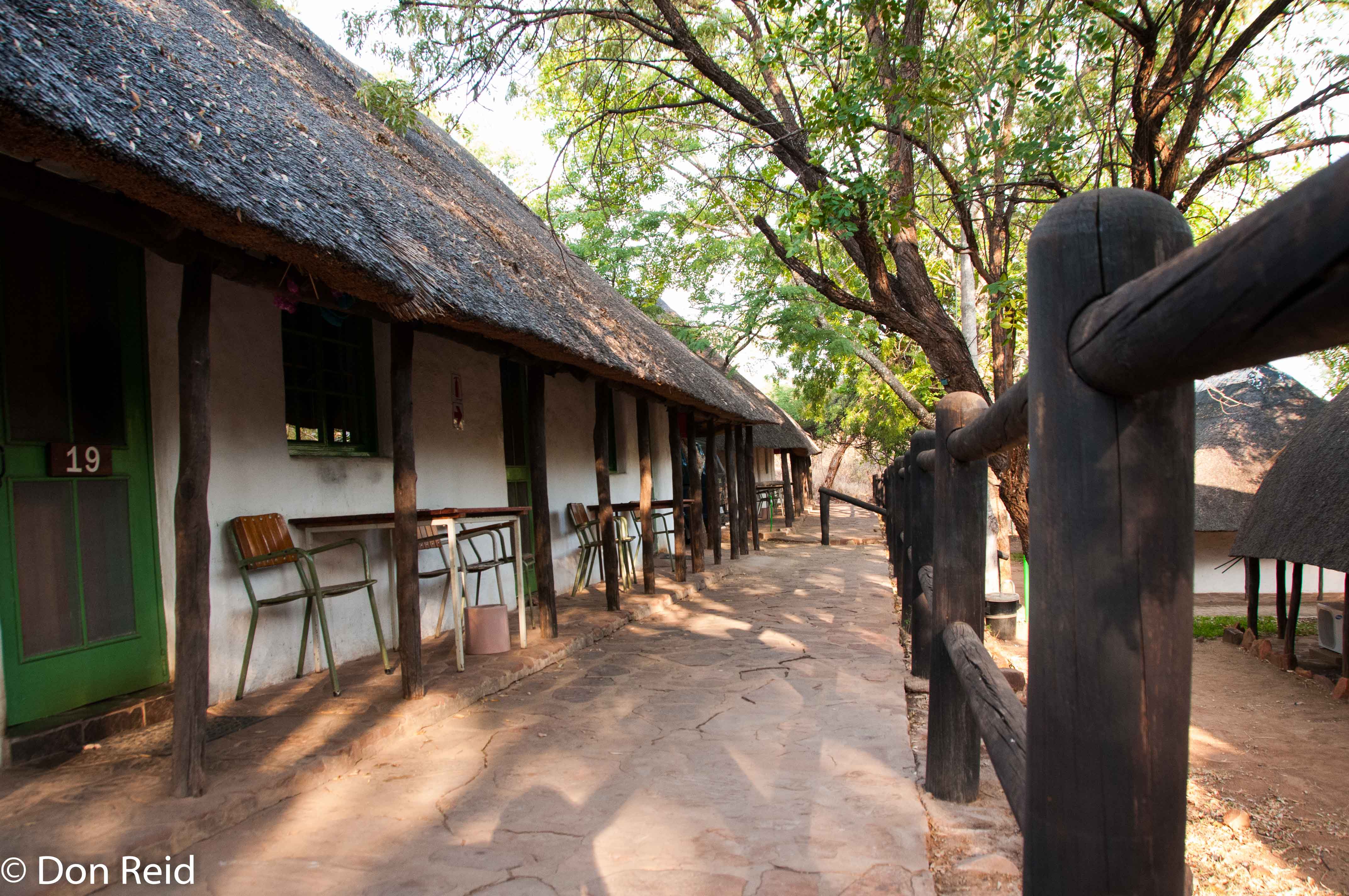
Punda Maria chalets
Check-in and finding our comfortable bungalow did not take long and by 3pm we were back in the air-conditioned restaurant for the briefing led by Monika, who explained the HR’s role and wonderful sponsorship spread over a variety of efforts in many of the National Parks.
Then it was Joe Grosel’s turn to highlight the attractions, features and different habitats of this special part of the Kruger National Park, from Giant Rats to Racket-tailed Rollers, his passion for the area clearly showing.
Once done with the briefing, it was time for the first late afternoon drive and we had hardly left the gate when we were surrounded by a bird party gathered in and around a large tree – I could barely keep up listing the species on Birdlasser, my new bird atlasing App.
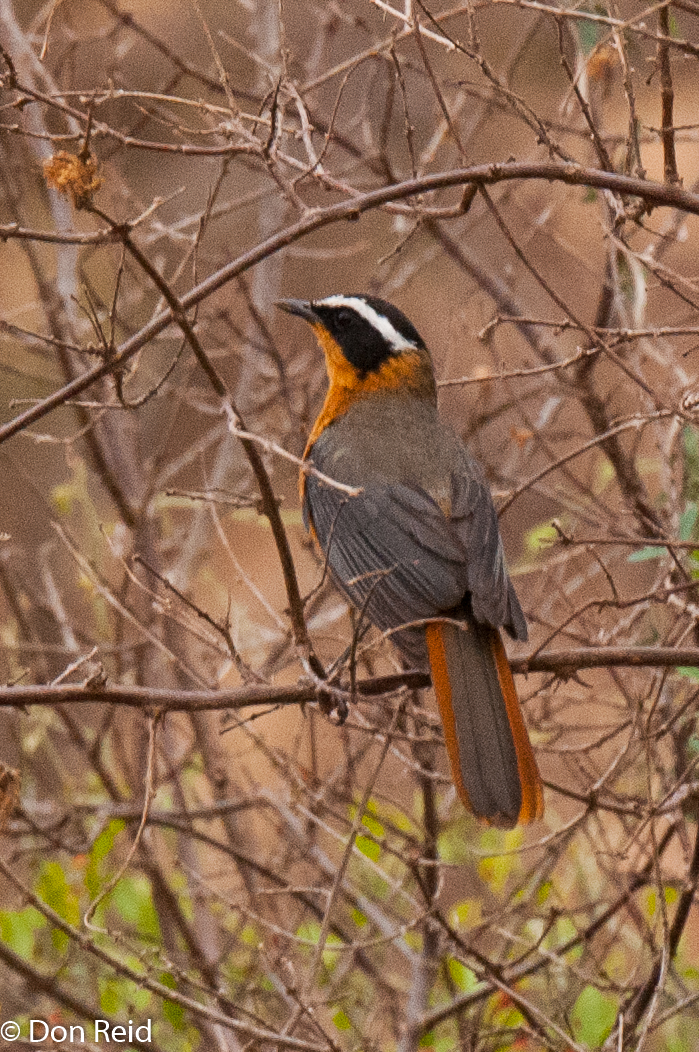
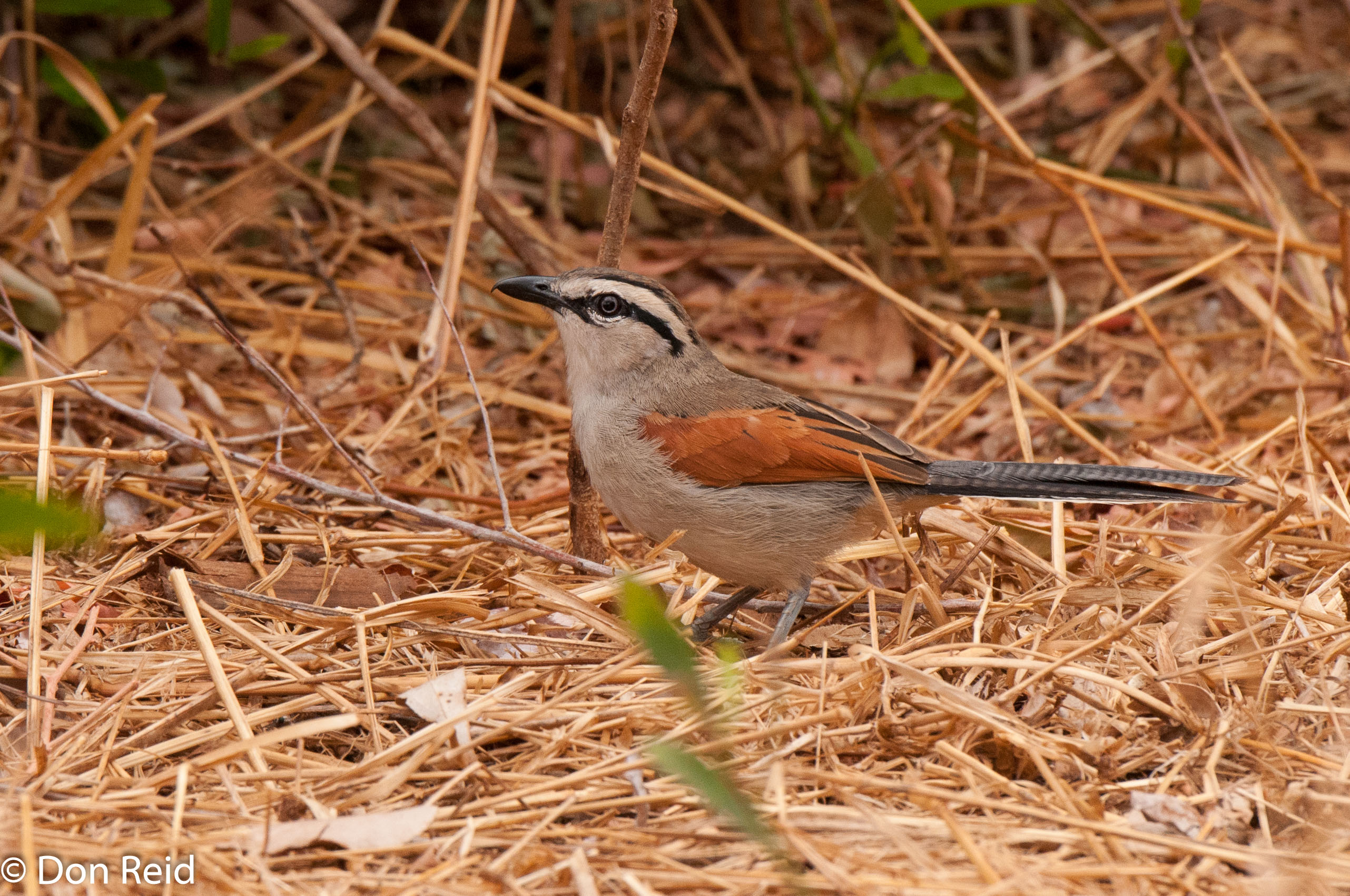
White-browed Robin-Chat, Punda MariaBrown-crowned Tchagra, Punda Maria
Destination PWNJ Lek
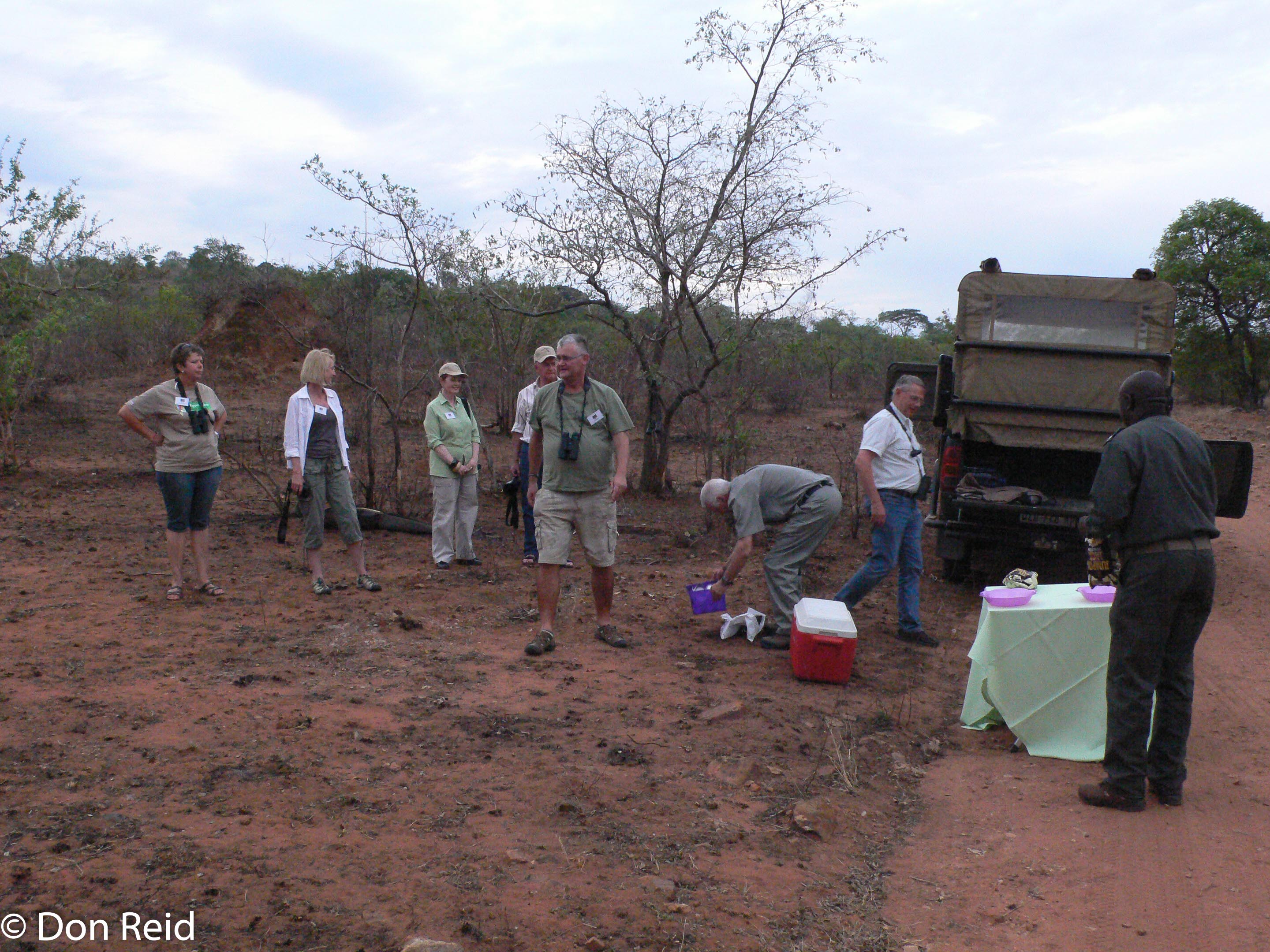
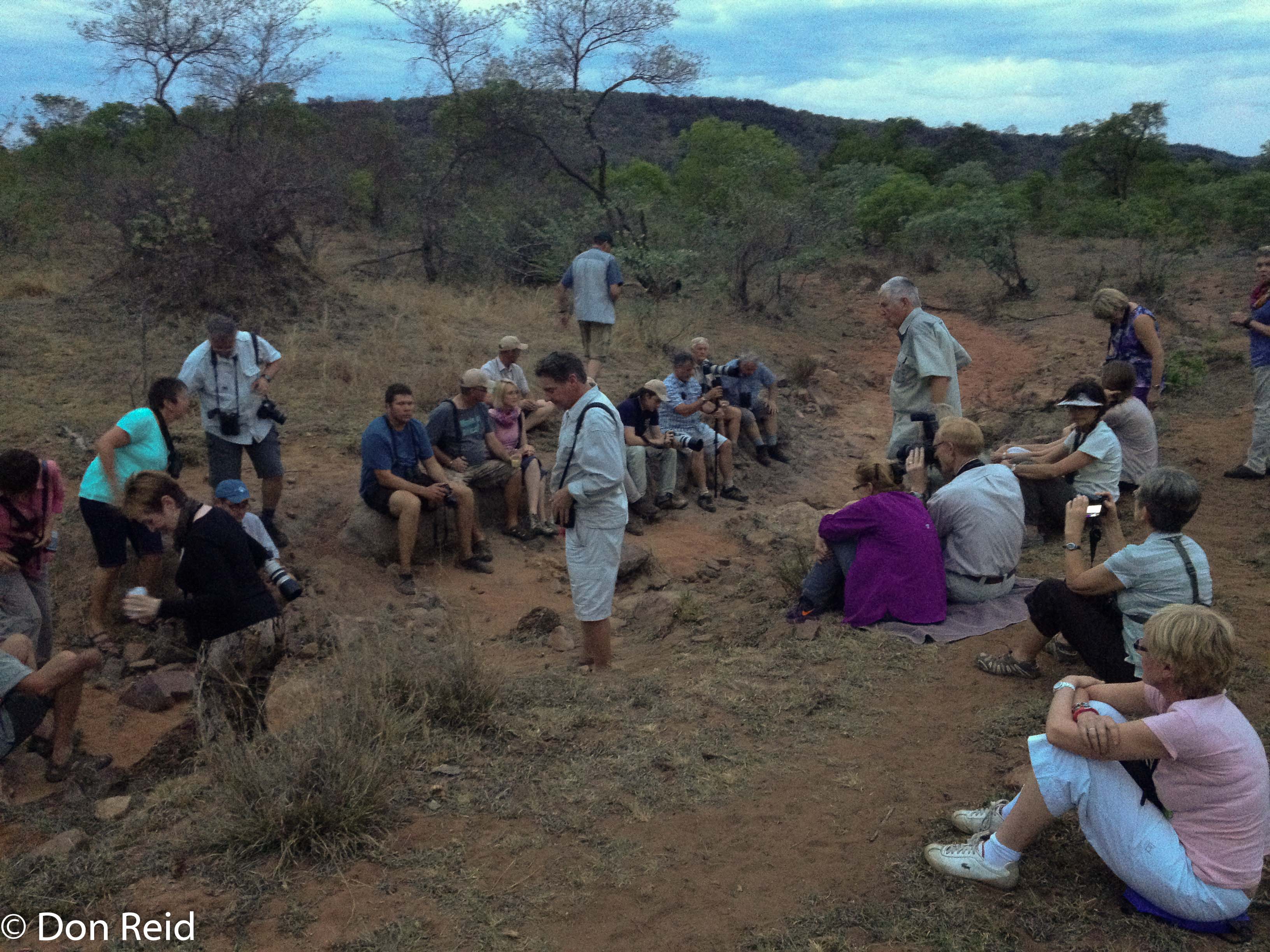
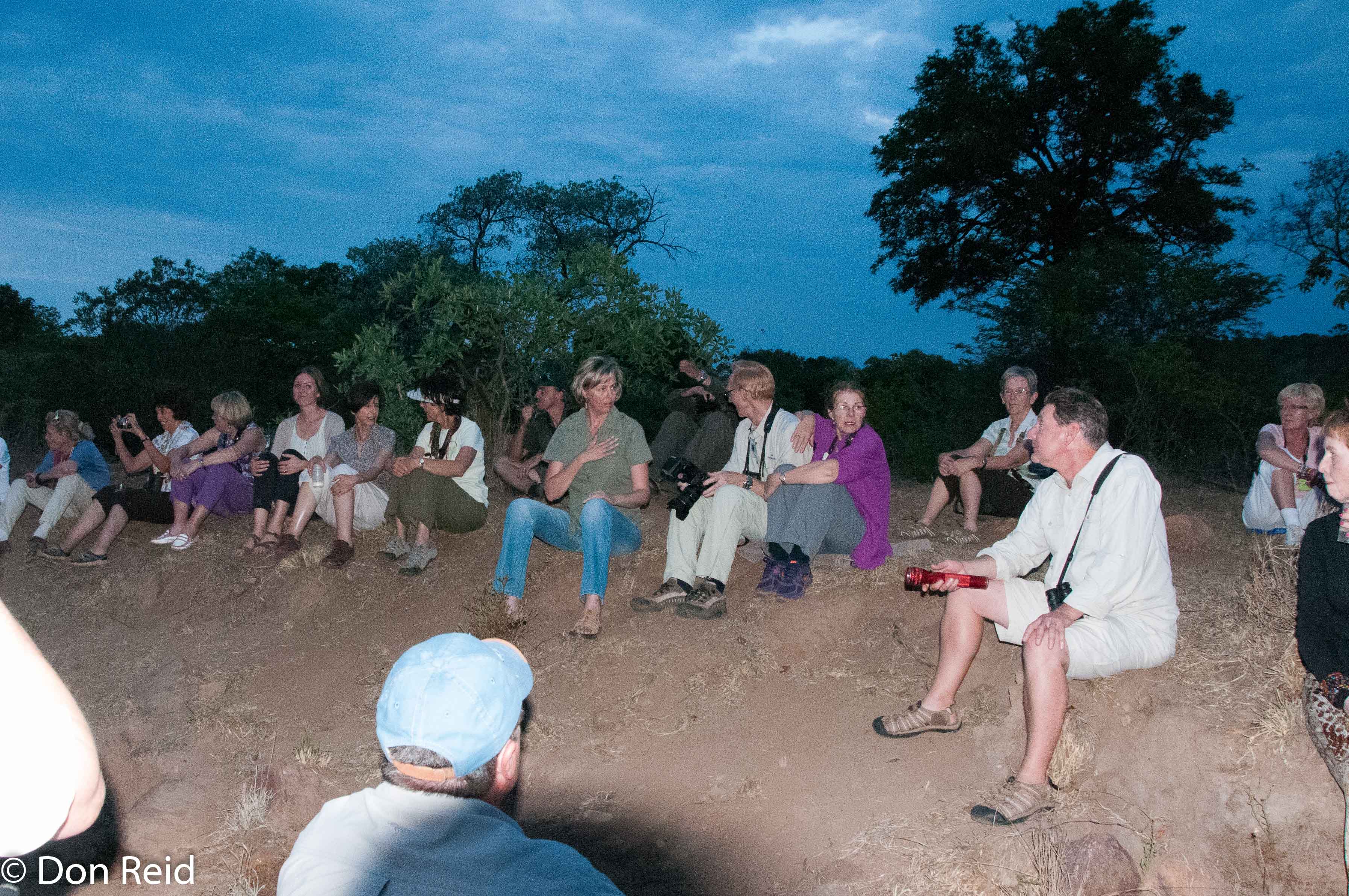
As in previous years, a highlight of this event is the visit to the Lek where the rare Pennant-winged Nightjar does its display flight at dusk – this was our destination once again and there was a swell of anticipation as the 40 – odd (the number not the birders, although some of them are pretty odd as well) birders sipped our Strettons G & T’s and waited for the action in the gathering dusk. Well, as Joe put it, it was like the Springbok’s loss to the Irish the previous weekend – disappointing – as the PWNJ’s kept their distance with just one doing a rapid fly past, but nevertheless tickable for my atlas list.
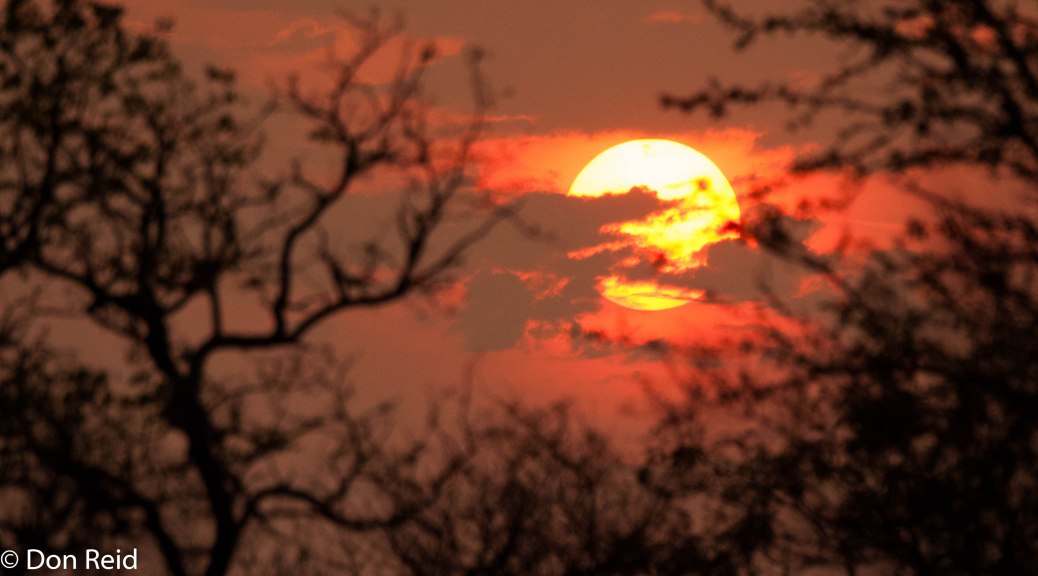
Sunset at the lek, Punda Maria
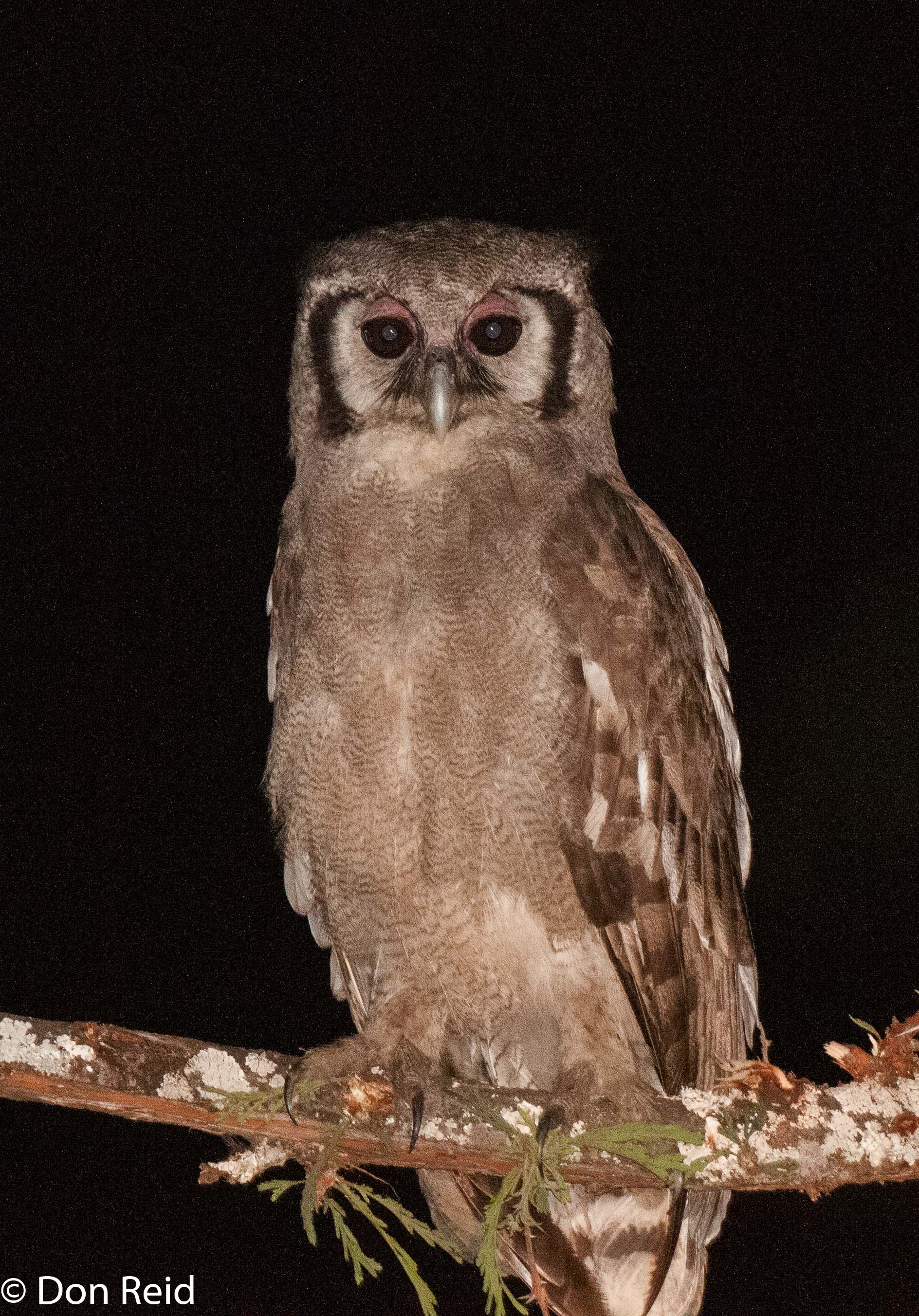
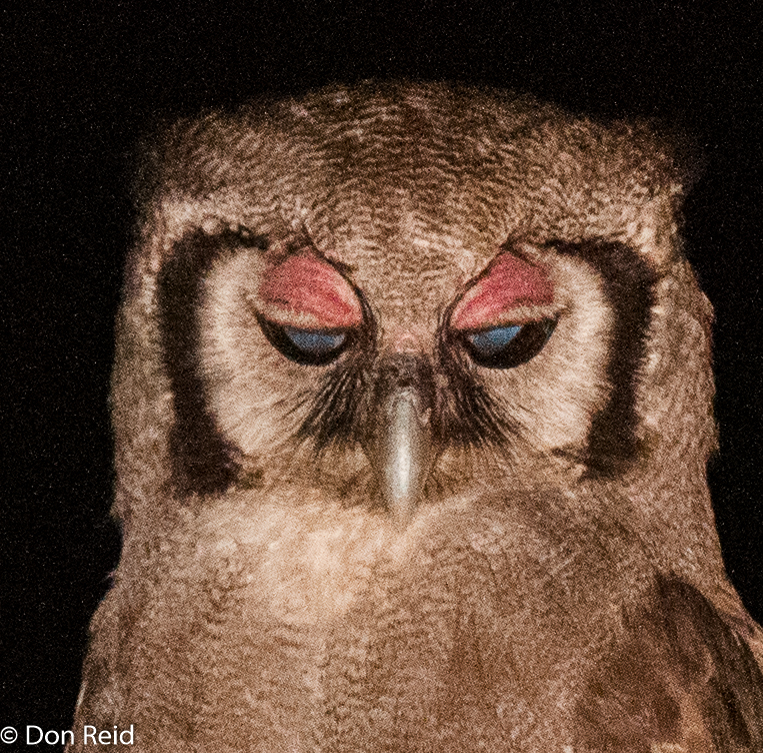
On the way back to the camp we came across a magnificent Giant Eagle-Owl, imperious on his perch in a large tree.
Verraux’s Eagle-OwlAnd it’s not eye make-up, all natural
Dinner was a bring and braai and we headed to bed with thoughts of the treasure hunt and a long day’s birding the next day.
Friday
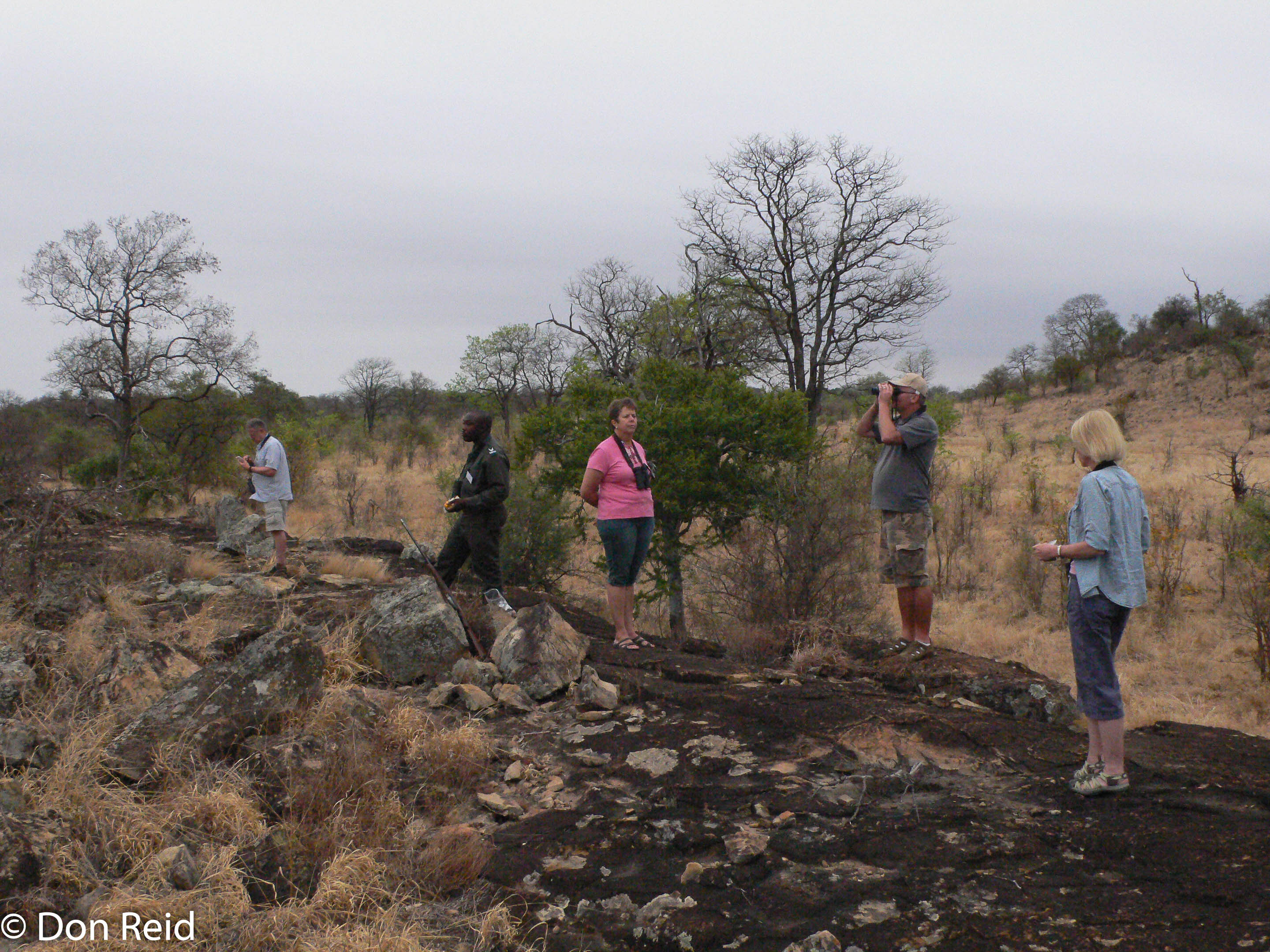
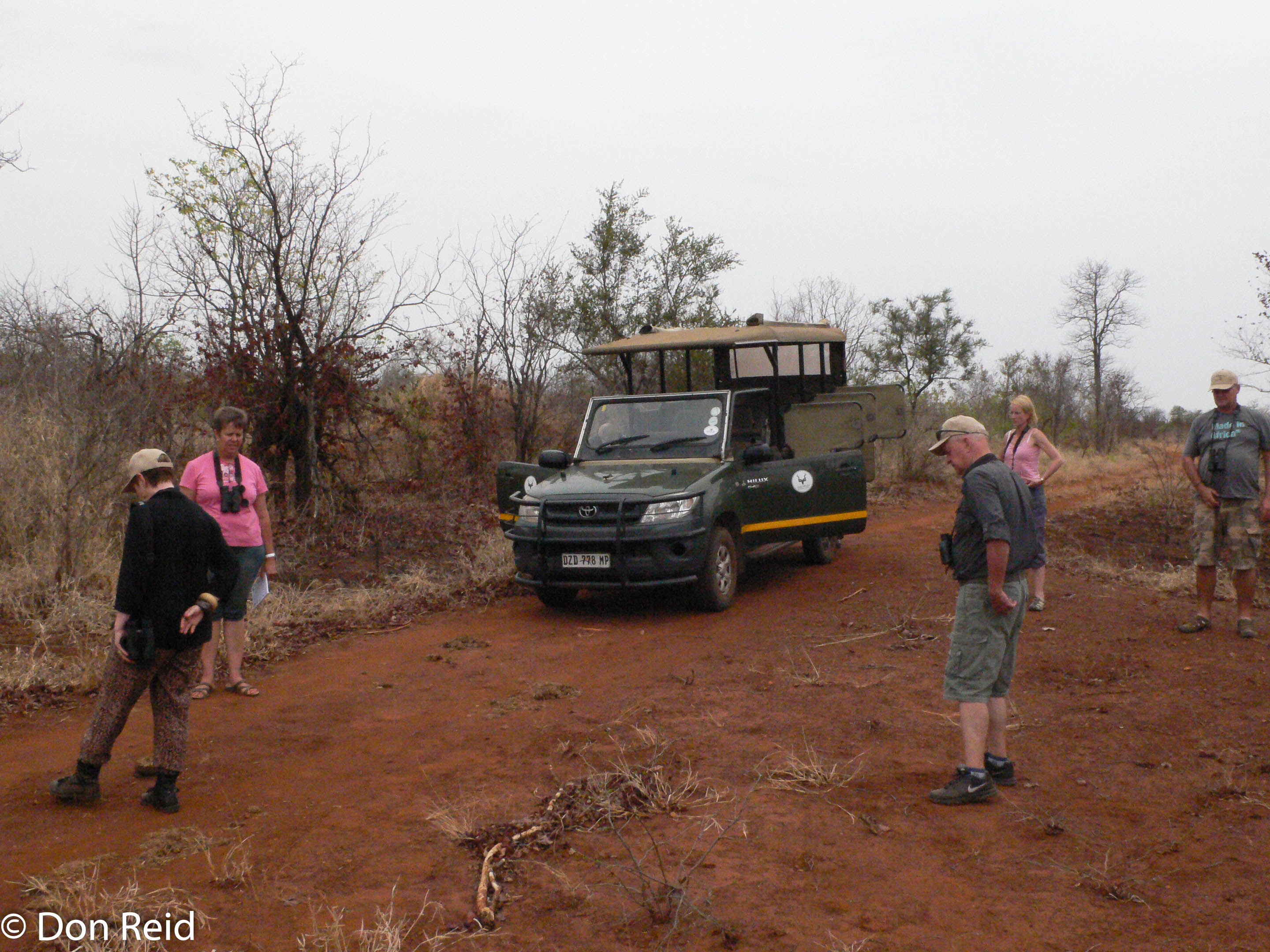
Up (very) early after a 3.30 am alarm, to be ready for the treasure hunt drive at 4.15 am. The treasure hunt entails deciphering cryptic clues into a list of 14 bird, animal and tree species, then finding and photographing each one before returning to the camp by the cut-off time of 12.30 pm, for adjudication by Joe Grosel.
Once every one was on the safari truck, we made our way to Pafuri area, not encountering much of interest until the light allowed us to see the surrounding bush a bit clearer, starting with Black-chested Snake-Eagle and followed by good numbers of birds. A brief diversion to Kloppenheim area added some water-reliant species such as Squacco Heron, Water Thick-Knee, Common Moorhen (unusual in the Kruger), Black Crake and Three-banded Plover.
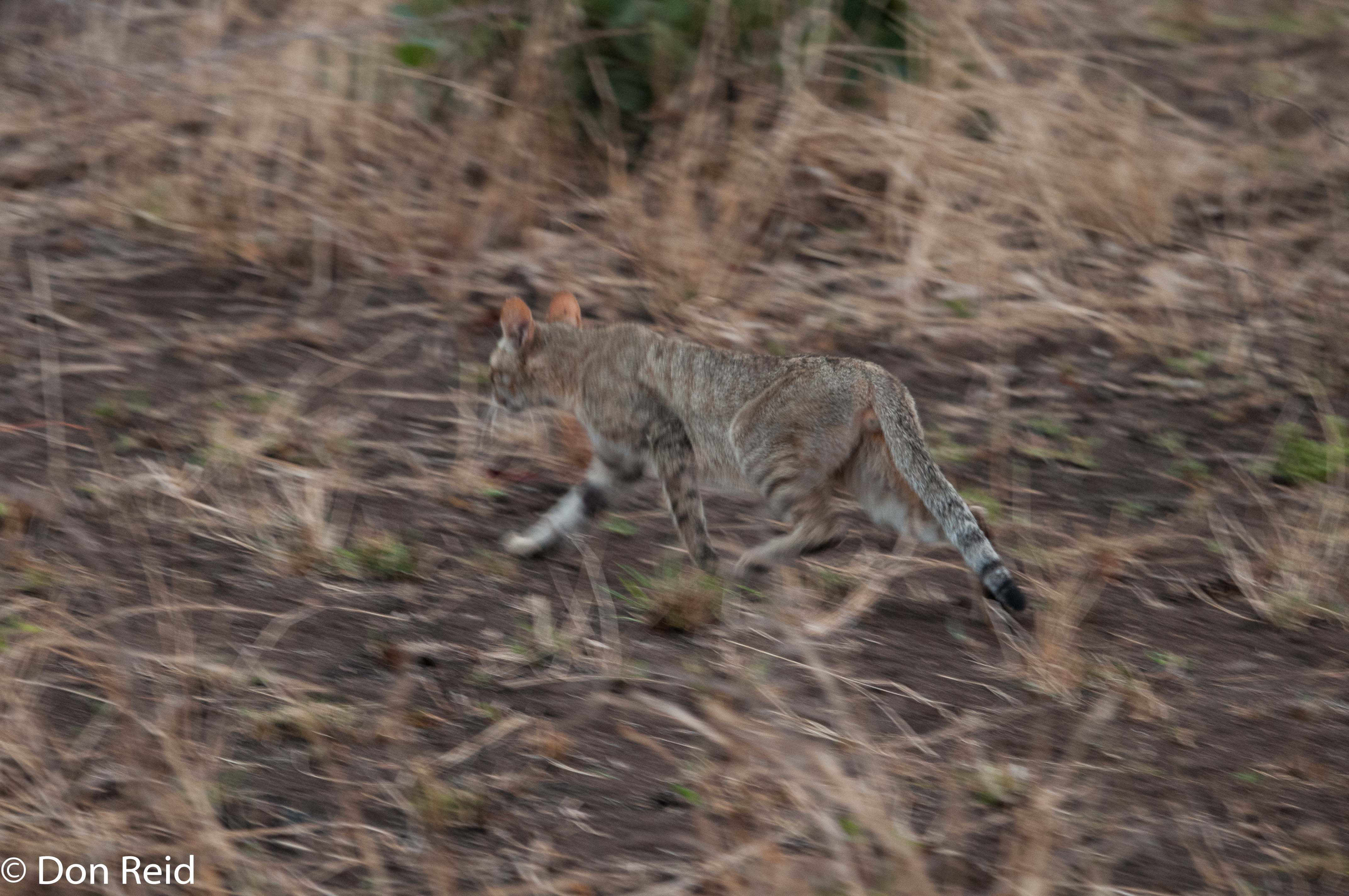
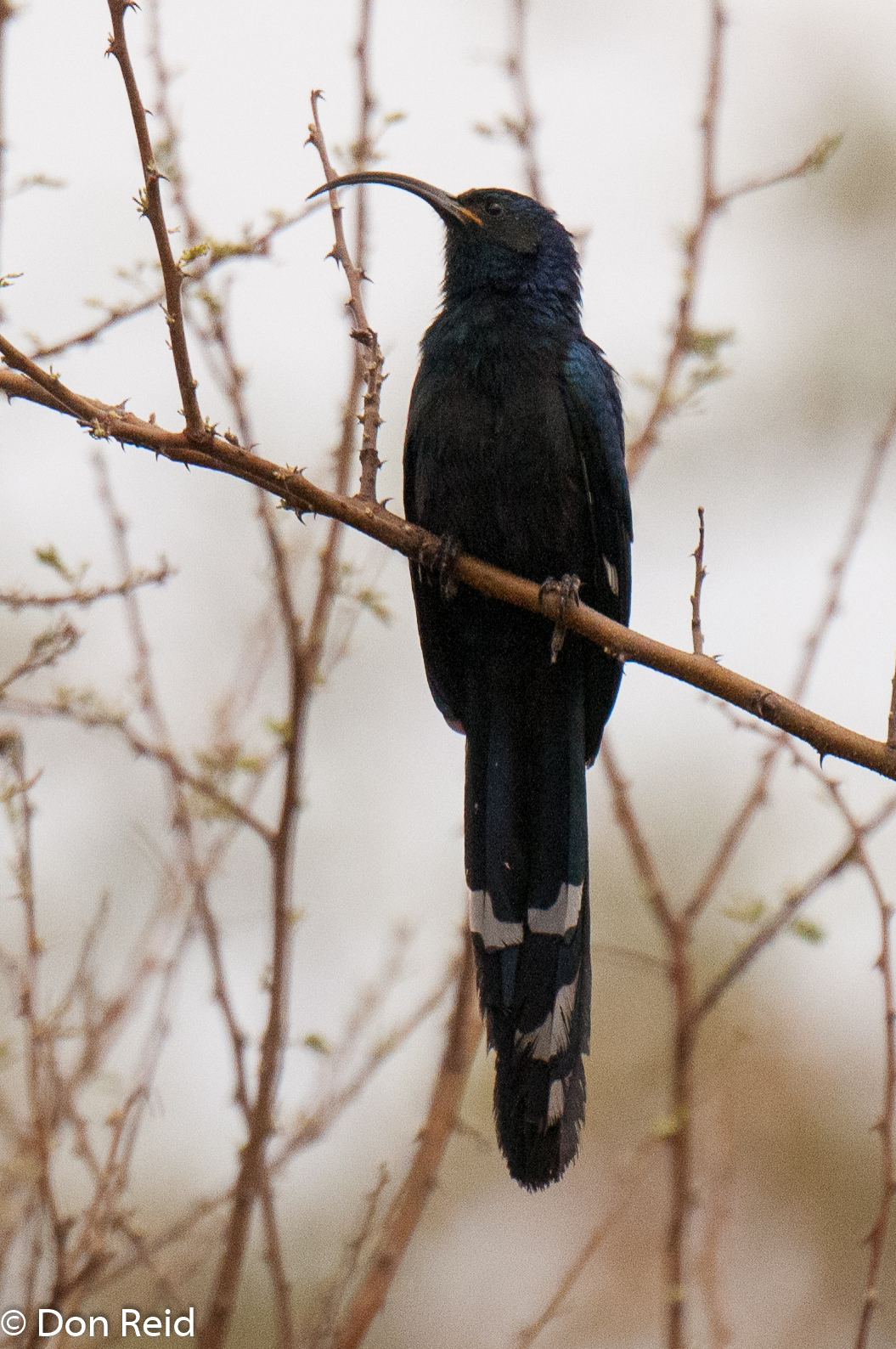
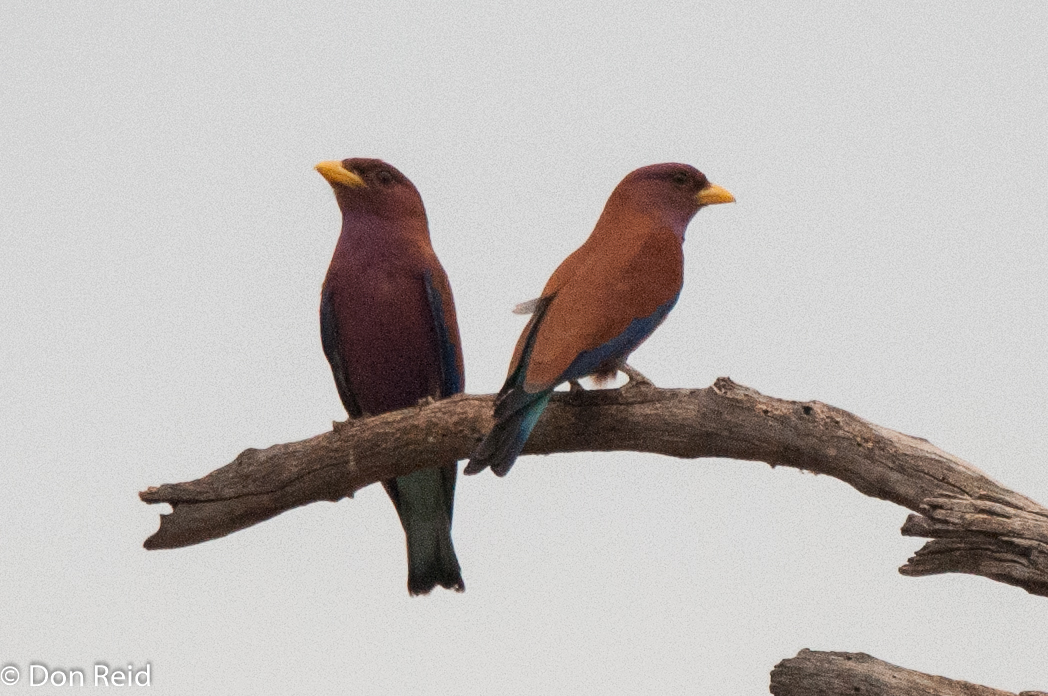
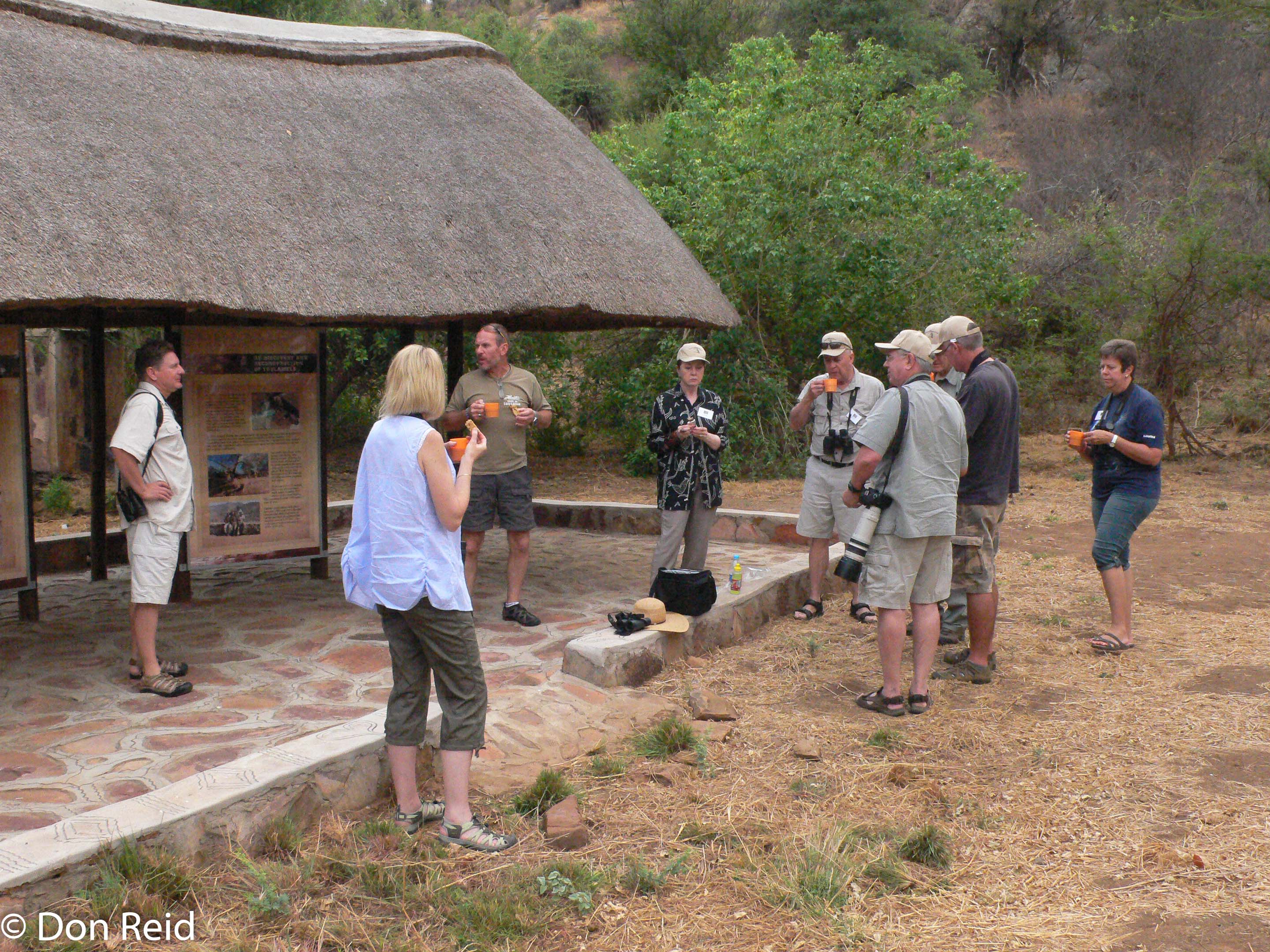
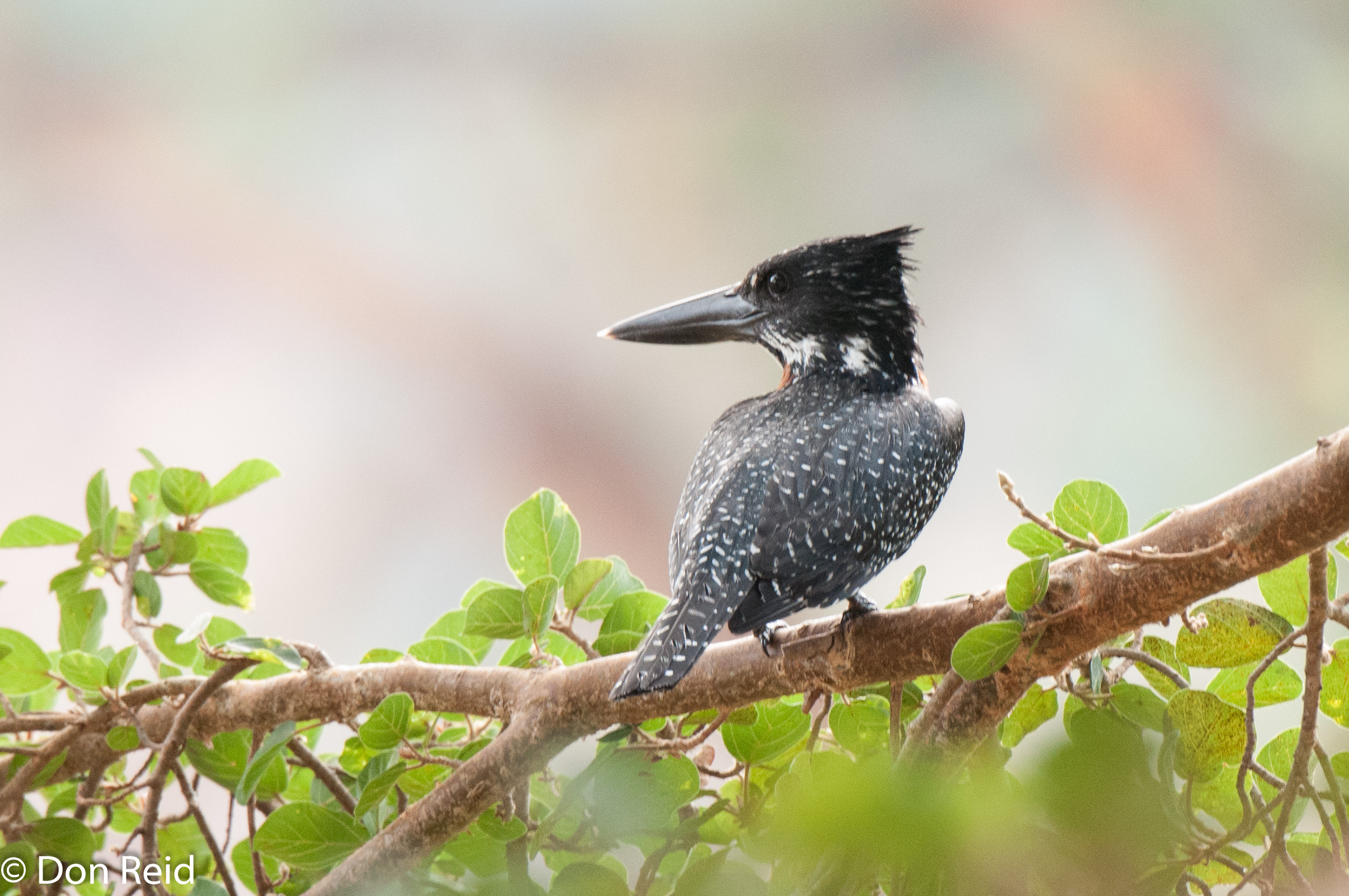
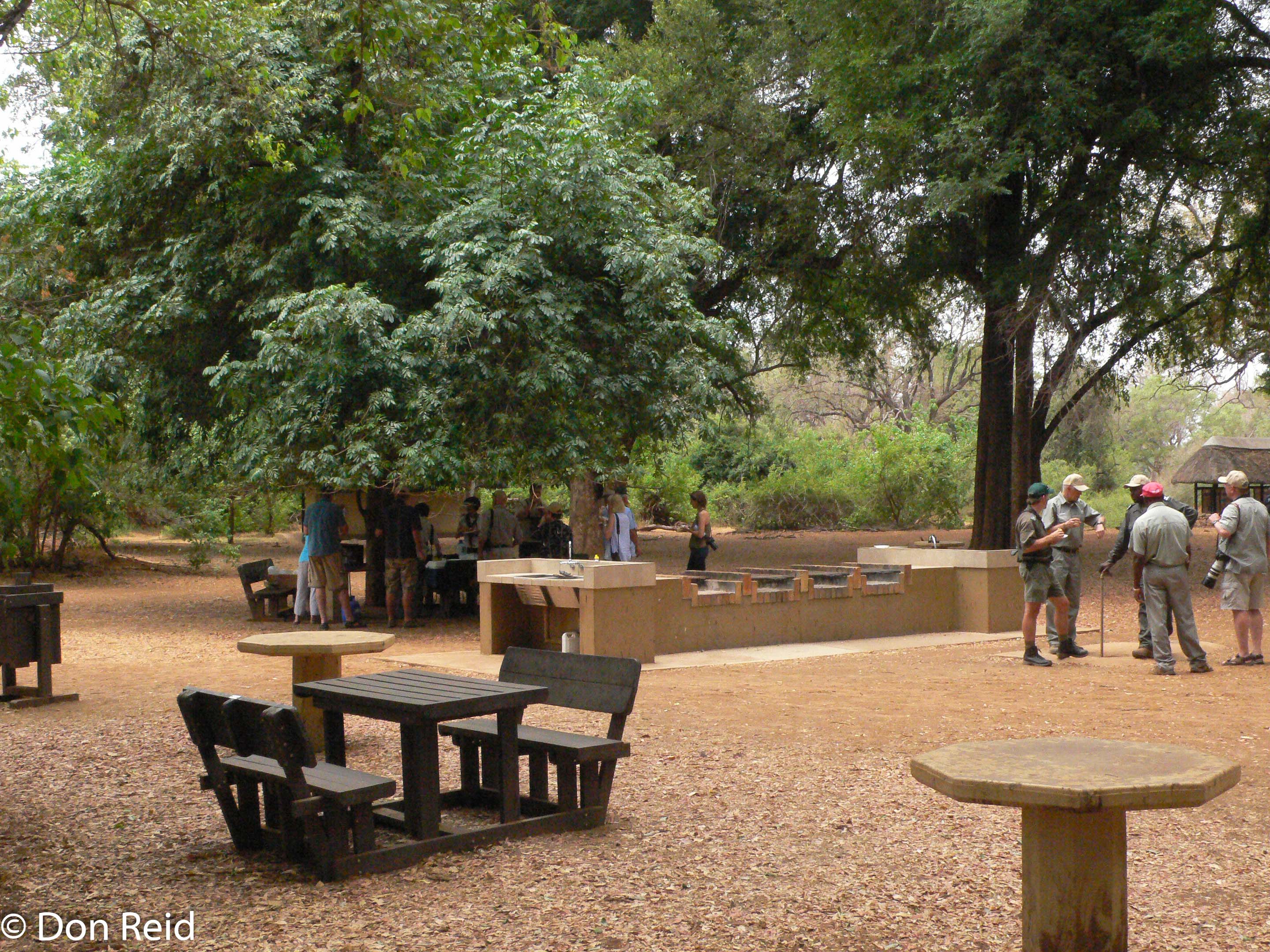
African Wild CatCommon ScimitarbillBroadbilled RollerPit stop for our teamGiant Kingfisher
Onwards to the Luvuvhu bridge at Pafuri for the usual feast of birding and back to the Pafuri area itself with a lengthy stop at Crook’s Corner, which provided a good boost to our growing list of bird species recorded. A feature of the day’s birding was the number of bird parties we encountered, some called up by Ranger/Driver Jobe who uses his skill at imitating the Pearl-spotted Owlet to draw the birds nearer. On a few occasions we had between 10 and 15 species in close proximity to the vehicle and had to work hard to keep up with ID-ing them all.
At the Pafuri picnic spot, Norma and her colleagues had prego rolls ready which went down a treat, while we continued to scan the area for as yet un-ticked species.
By then it was late morning and we had found most of the target species, so it was time to head back to camp to be in time for the cut-off – on the way we came across our final target species – Crested Francolin, which had amazingly eluded us till then. Our only slip-up was choosing the wrong Euphorbia species to photograph.
Some of the species we had to find and photograph :
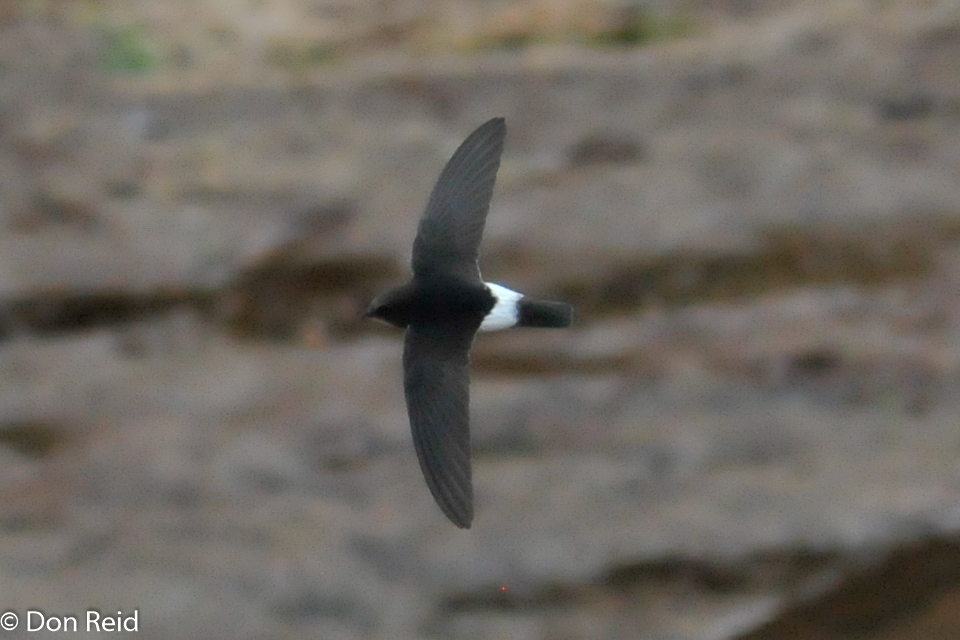
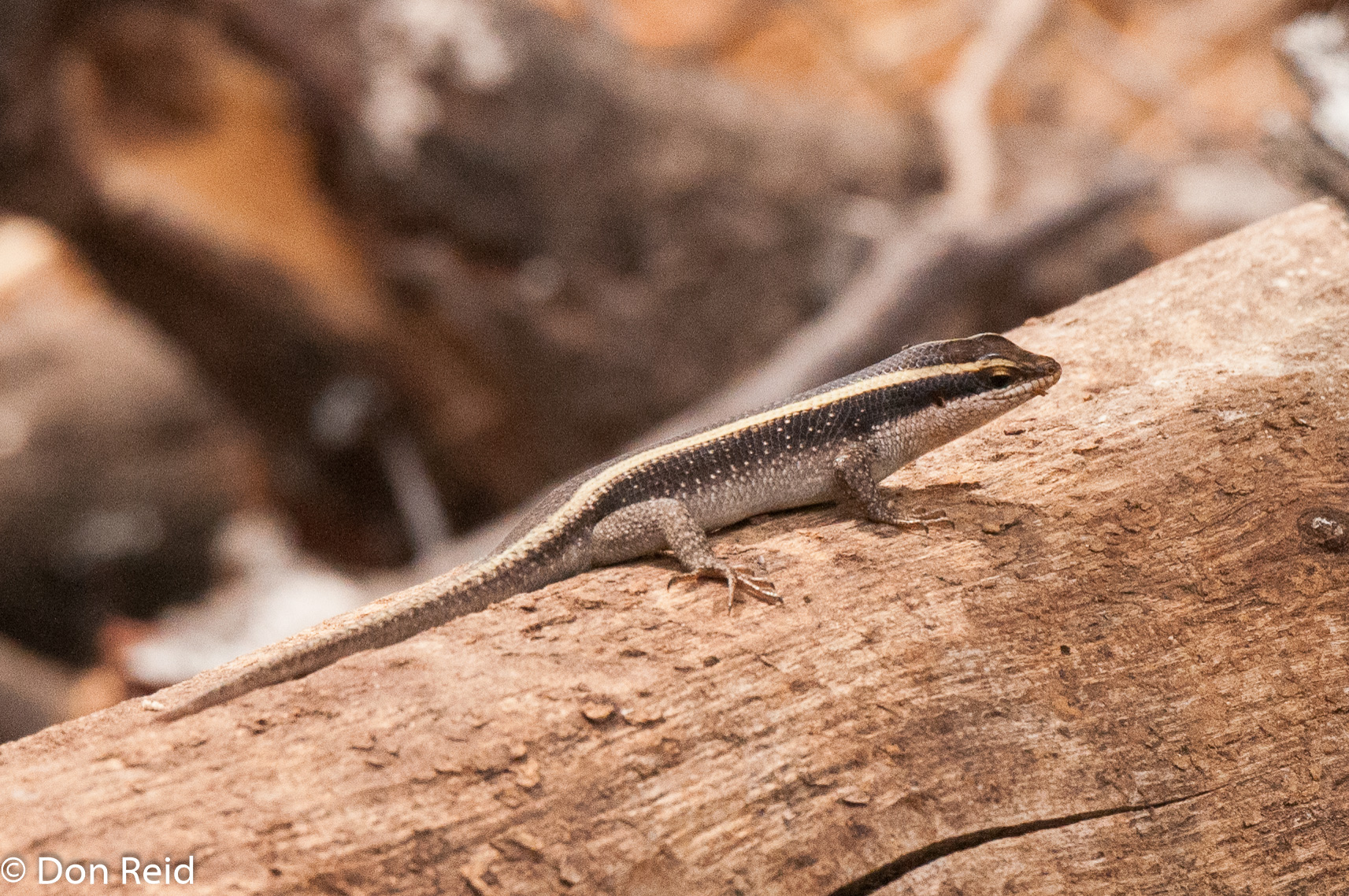
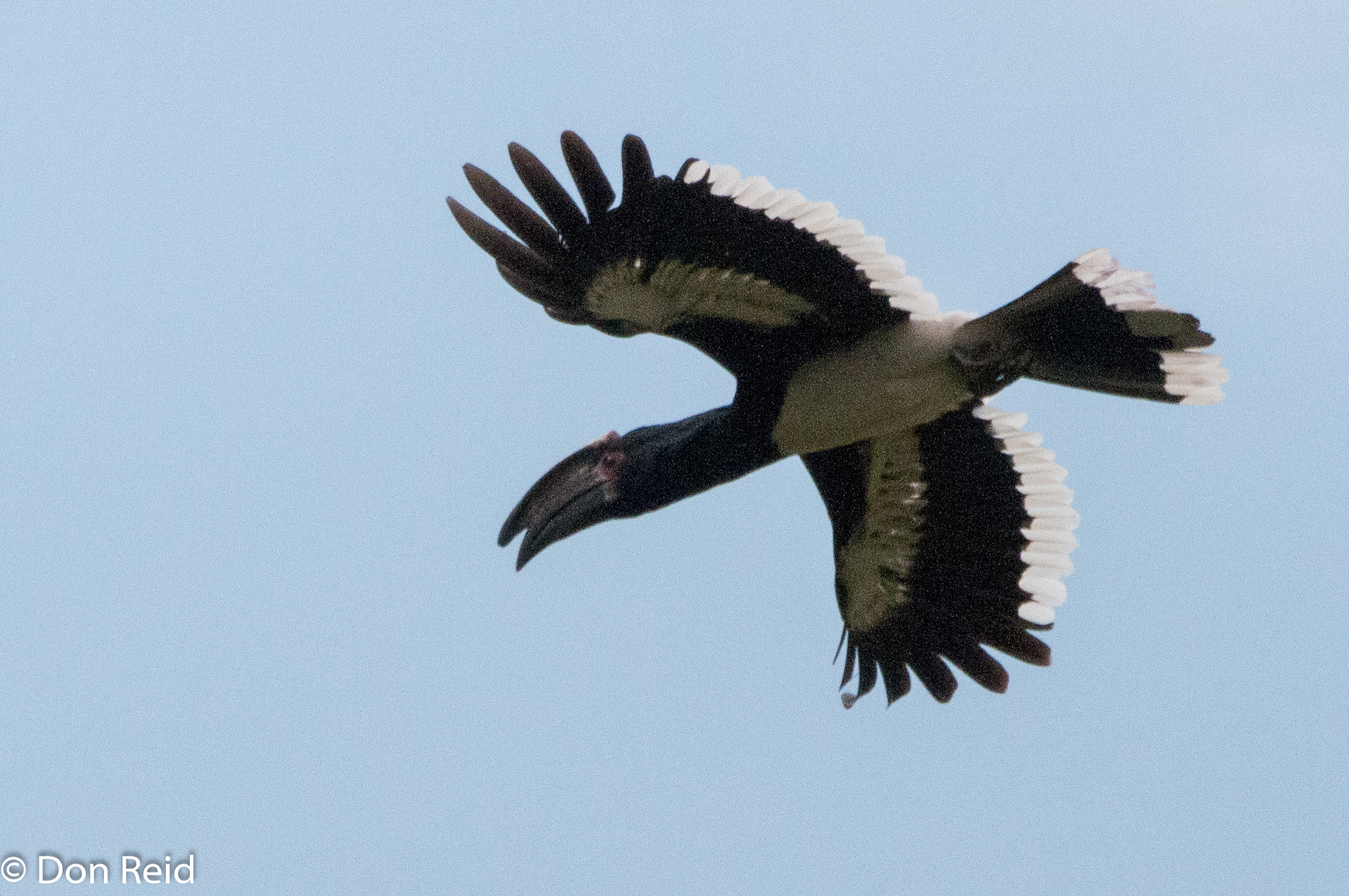
Little SwiftPredator footprintReptileEmerald-spotted Wood-DoveTrumpeter HornbillCrested Francolin (only just)
After this intense species-hunting, it was time for a siesta until the next round of clues – this time covering targets in the camp itself, which turned into quite a challenge, but again we managed to get all of them photographed between 4 and 6 pm, almost coming short on the Passer Domesticus (House Sparrow) once again, but a last-minute rush to find a “proper” one saved the day.
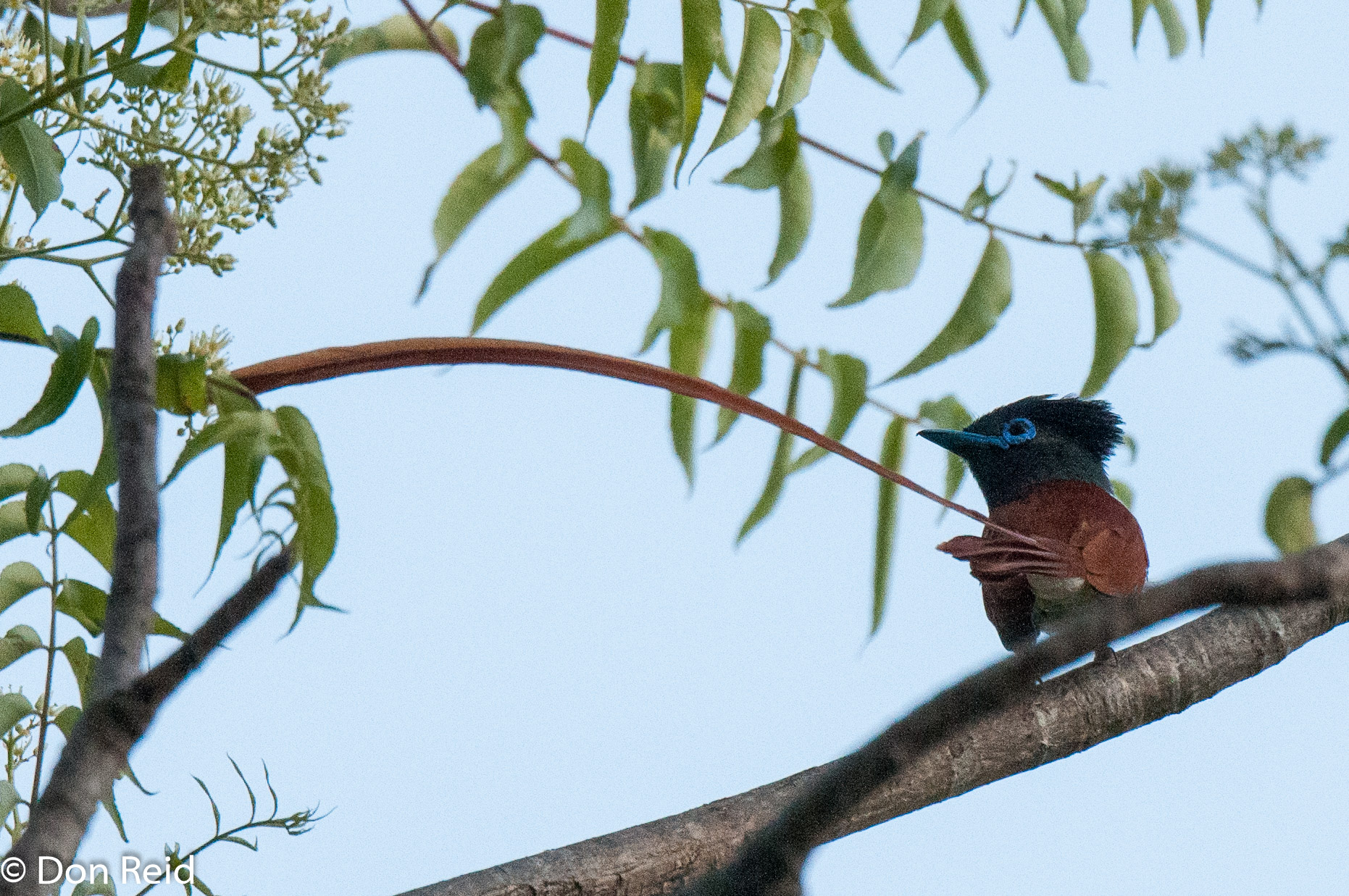
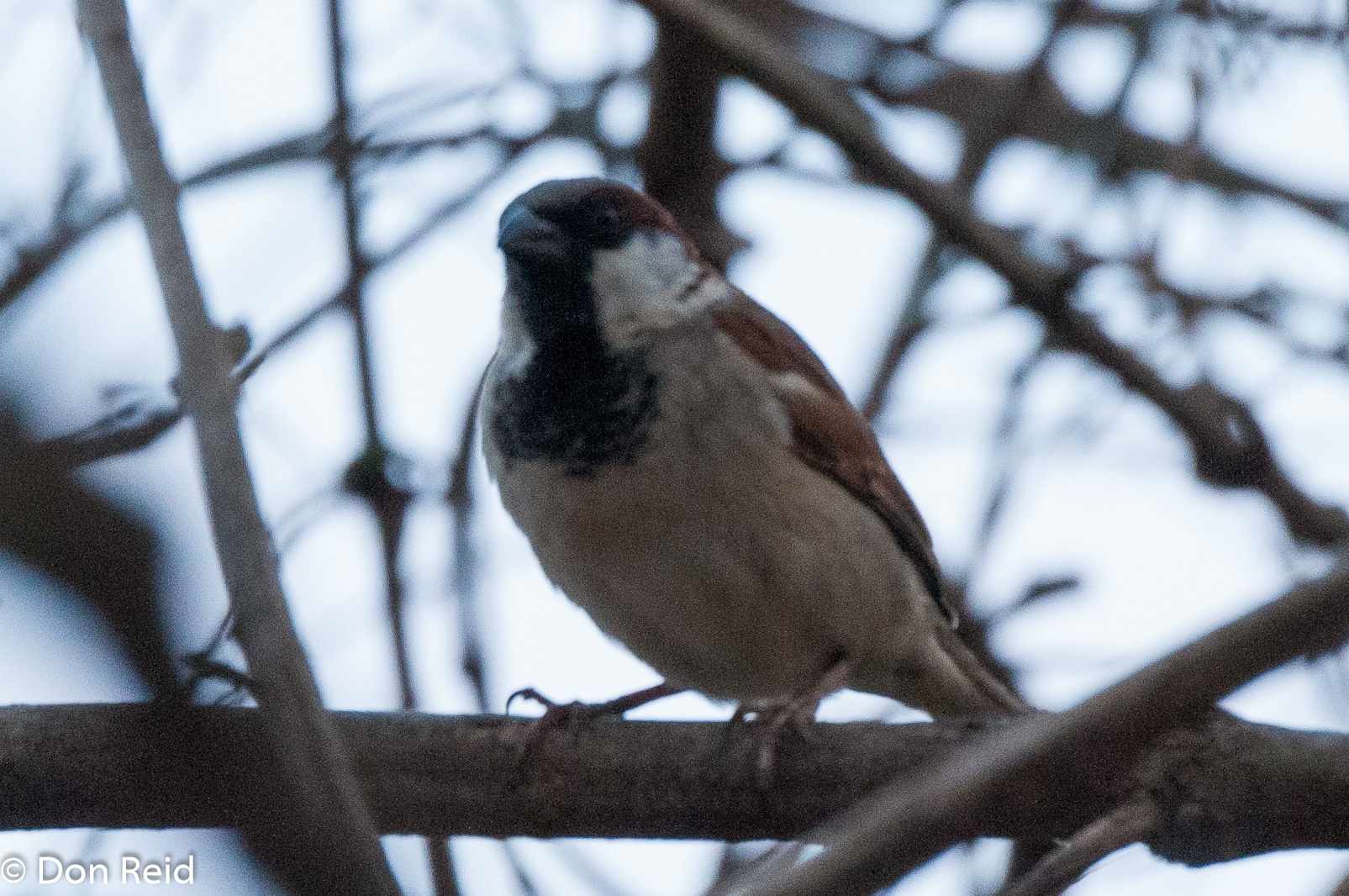
Vervet Monkey, Punda Maria campParadise Flycatcher, Punda Maria campDark-capped Bulbul, Punda Maria campPasser Domesticus, Punda Maria camp
A slightly dazed Pygmy Kingfisher which had flown into a restaurant window, drew some attention away from the goings on in the camp
Pygmy Kingfisher, Punda Maria camp
All that remained was the dreaded Quiz which went a little better than previous years but once again some hasty decisions cost us valuable points, leaving us with only the atlasing session the next day to catch up to the leading teams.
Saturday
Our atlasing session turned into a marathon, starting at just after 4 am and ending at 3 pm when we eventually returned to the camp. Each team was allocated a “good” pentad and a “poor” pentad to atlas, the good one being in a lush bushveld area and including a stretch of river while the poor pentad was in a dry area dominated by Mopane bush. What we were not told was that only the “poor” pentad total would count towards the scoring and so we focused our attention and time on the “good” pentad, leaving the “poor” pentad for later in the day when birds generally take cover from the heat.
At least we enjoyed some excellent early morning birding in the windless, overcast conditions and in prime bushveld, which included the new Nyala Wilderness Trail camp on a bend of the Luvuvhu river with views over the river and the koppies beyond. This was also the cue to enjoy coffee and rusks in this beautiful location.
After a short drive further we alighted from the vehicle again to take a walk along a stretch of the river, which produced a few species including a highly debated Wagtail which photos showed was a Pied Wagtail despite arguments to the contrary. Then an even shorter drive to a viewpoint over the river which we knew from previous visits to Punda Maria, with wonderful views over the river below.
We continued atlasing productively until we left the pentad after about 2.5 hours of recording and headed south towards the “poor” pentad some distance away, which we entered after 12.00 pm after some heavy debate about where we were in relation to the map provided by Sanparks. Inexperience at working with co-ordinates, which are essential for atlasing, meant there was a total misconception on the part of our driver as to where the pentad boundary was and we found ourselves a full pentad (about 8 km) out of position in a north-south direction.
After much lively discussion and some input on my part (as the only regular atlasser in our team), we did eventually find the pentad boundary, but the map versus co-ordinates debate continued unabated, also due to non-existent roads being shown on the map. The area we found ourselves in was single habitat – Mopane bush with no pans or any other water, so atlasing was slow and quite laborious in the heat of the day and we were relieved when we had completed the minimum 2 hours of atlasing and could head back to the camp. On the way back a Coqui Francolin surprised us as he crossed the road in front of our vehicle.
Baboon
Coqui Francolin
The Final Curtain
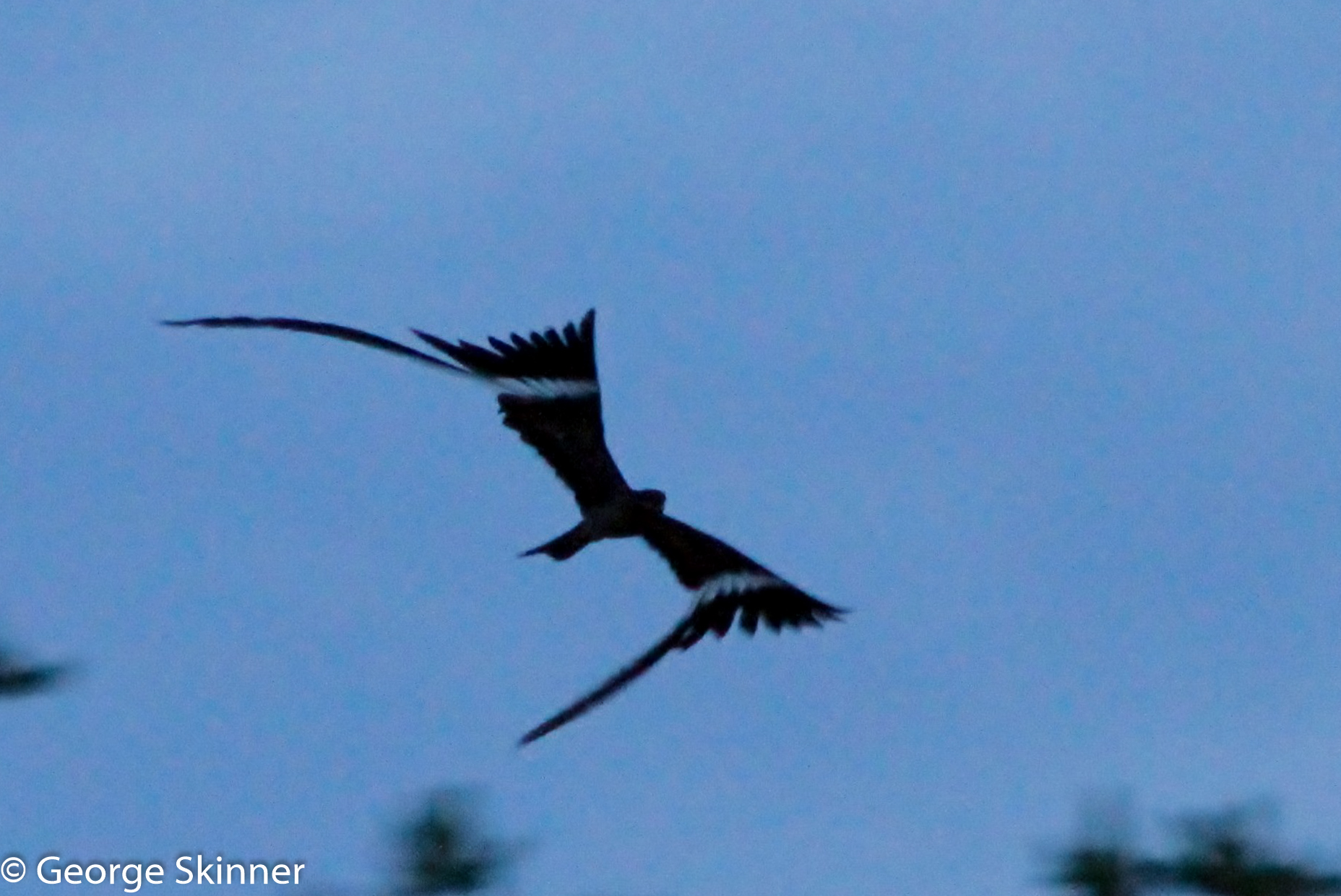
A last visit to the lek was spectacular, with the male Pennant-winged Nightjar performing majestically, floating back and forward just above tree height and settling on a rock for a minute or two.
G and T’s at the LekPennant-winged Nightjar LekPennant-winged Nightjar LekPennant-winged Nightjar (Photo : George Skinner)
As usual the Honorary Rangers and Sanparks put on a fine closing out dinner and prize-giving but unfortunately our team had fallen out of the running completely.
Nevertheless a great event that added to our appreciation of this part of Kruger, although three in a row is probably enough for the time being.