Touring with Canadians – Part 2 : Kruger is Awesome!

The Plan

When “Overseas Family” come to visit us in South Africa, it is always a big occasion which is eagerly anticipated, so we were thrilled when niece Sarah announced more than a year ago that she was bringing their family from Canada over to Southern Africa for a “Trip of a Lifetime” in March 2017. Even better was the news that my sister Sheila (Sam to them) would be joining them for the trip.

Our task was to organise the northern leg of the trip, which had to include Kruger National Park with Victoria Falls and Botswana being high on their wish list. We soon had a Kruger booking pinned down, together with a short stay on the Panorama route in Mpumulanga, which took care of most of week 1 of the two-week northern leg.

The Trip

A day after their arrival in SA we set off around 8 am, the vehicle and trailer loaded to capacity, heading east through Highveld grassland and the coalfields of Mpumulanga, power stations just visible in the distance through the light haze.

First stop was at Milly’s near Macahdadorp for a really good brunch – Millys scramble for me – and strong coffee to set us up for the next stint. Past Nelspruit and on to White River and Hazyview, then a slow section passing through almost continuous rural villages and slow traffic until we at last reached Kruger gate at 3.15 pm.

At the gate we heard that the Skukuza / Tshokwane road was closed due to a bridge damaged by floodwaters and the gate personnel suggested we turn around and head further north to Orpen gate. This idea did not appeal to me one bit, as my quick calculation told me we would not make it in time, so I insisted that the detour route in Kruger via Lower Sabie would be far better.

They let us through, but I knew that we would now have to cover some 150 km, which at the 50 km/h Kruger speed limit would also mean a very late arrival at Satara and we would have no spare time for game viewing.

Fortunately the traffic was light, but this did not apply to the bird life on the road, which was plentiful and lethargic, so much so that I had to be fully alert to try to avoid them when they flew up, sometimes towards the car instead of away from it. This resulted in some sharp braking and much hysterical laughter, but unfortunately a few unavoidable casualties as well, leading to comments from some of the passengers about the driver being a so-called keen birder and naturalist, but having an alter-ego bird-killer personality. What can I say? I’ve been found out.

None of this was conducive to the relaxed drive I had hoped for when introducing visitors to Kruger, nevertheless we made good time and reached Satara at 6.05 pm as the gate was being closed, somewhat exhausted.

We saw a fair amount of game along the way but often just fleeting glimpses due to not having any time to stop or even slow down. However, one short stop at a dam with a pod of Hippos caused great excitement.

After settling in at Satara, we braai-ed some wors and it was not too long before we collapsed into bed.

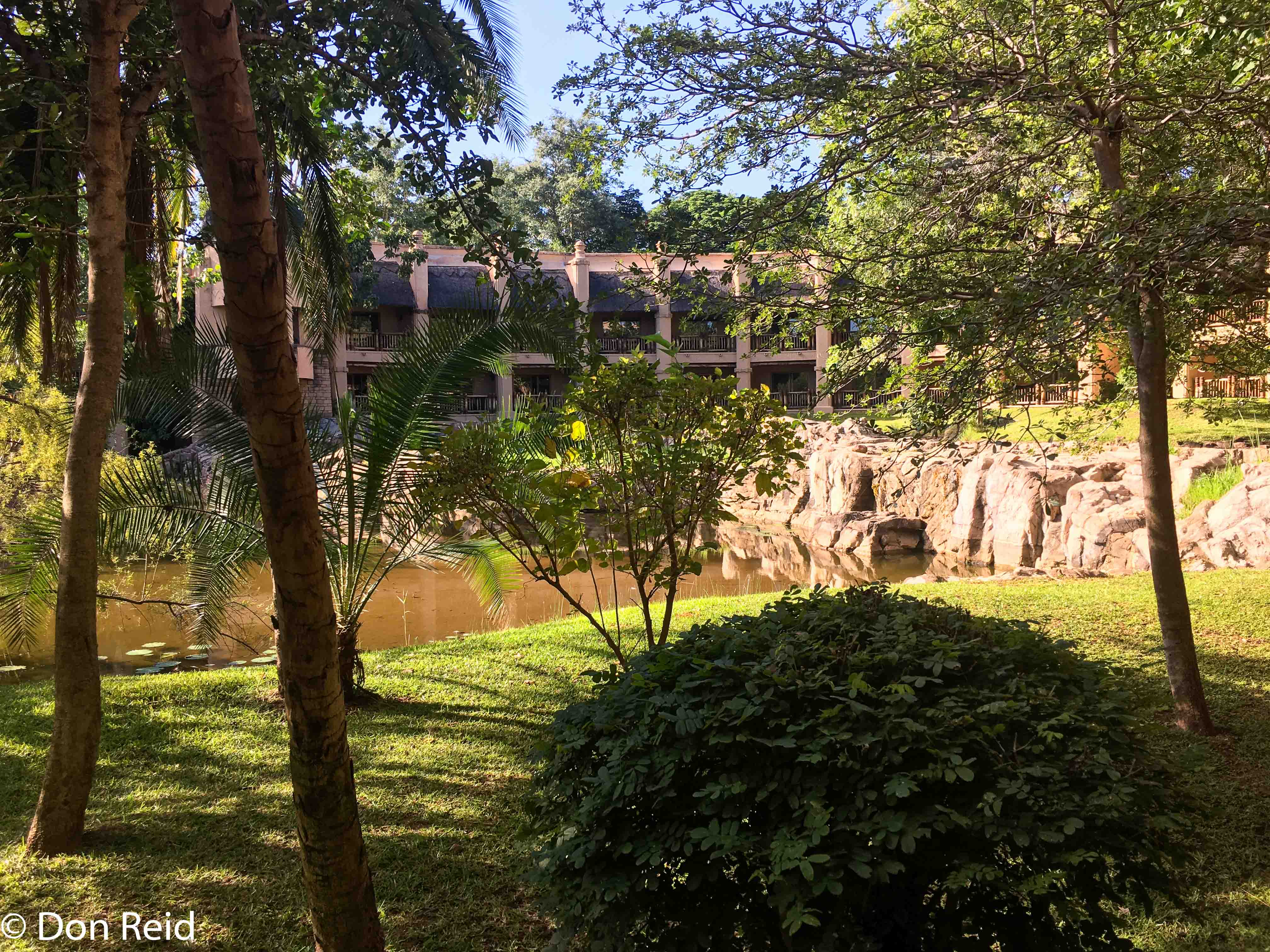
The “gardens” at Satara
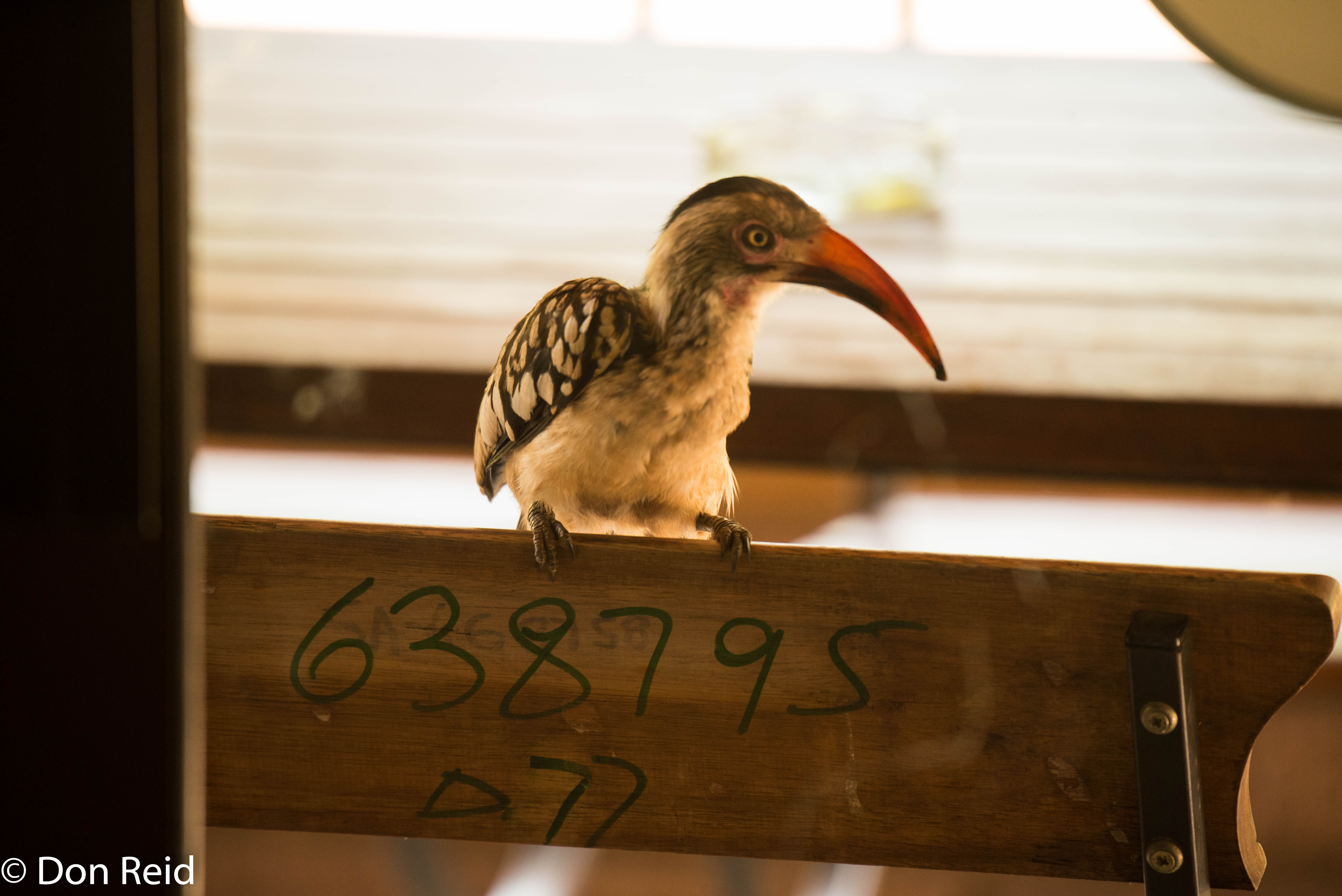
Red-billed Hornbill “shadow boxing” , Satara

Nwanetsi Drive

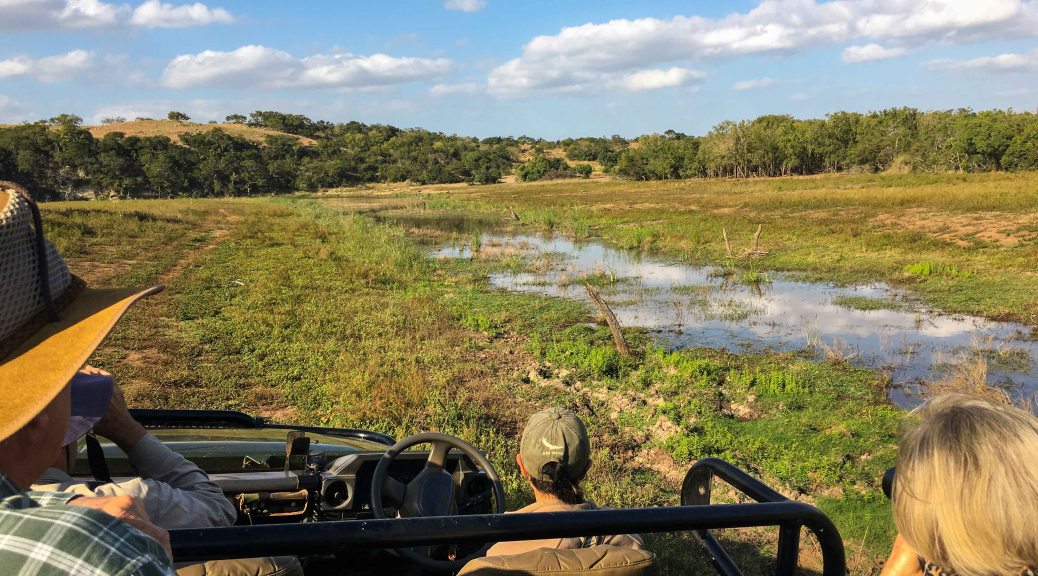
We were up reasonably early, in a far more relaxed frame of mind and ready for a more conventional game drive at a relaxed pace. Our one full day in Kruger needed to be a classic and the obvious choice of a route from Satara was the road to Nwanetsi for brunch – a route that is almost guaranteed to have a selection of plains game and other interesting sights. Once again it did not disappoint……..

Elephant
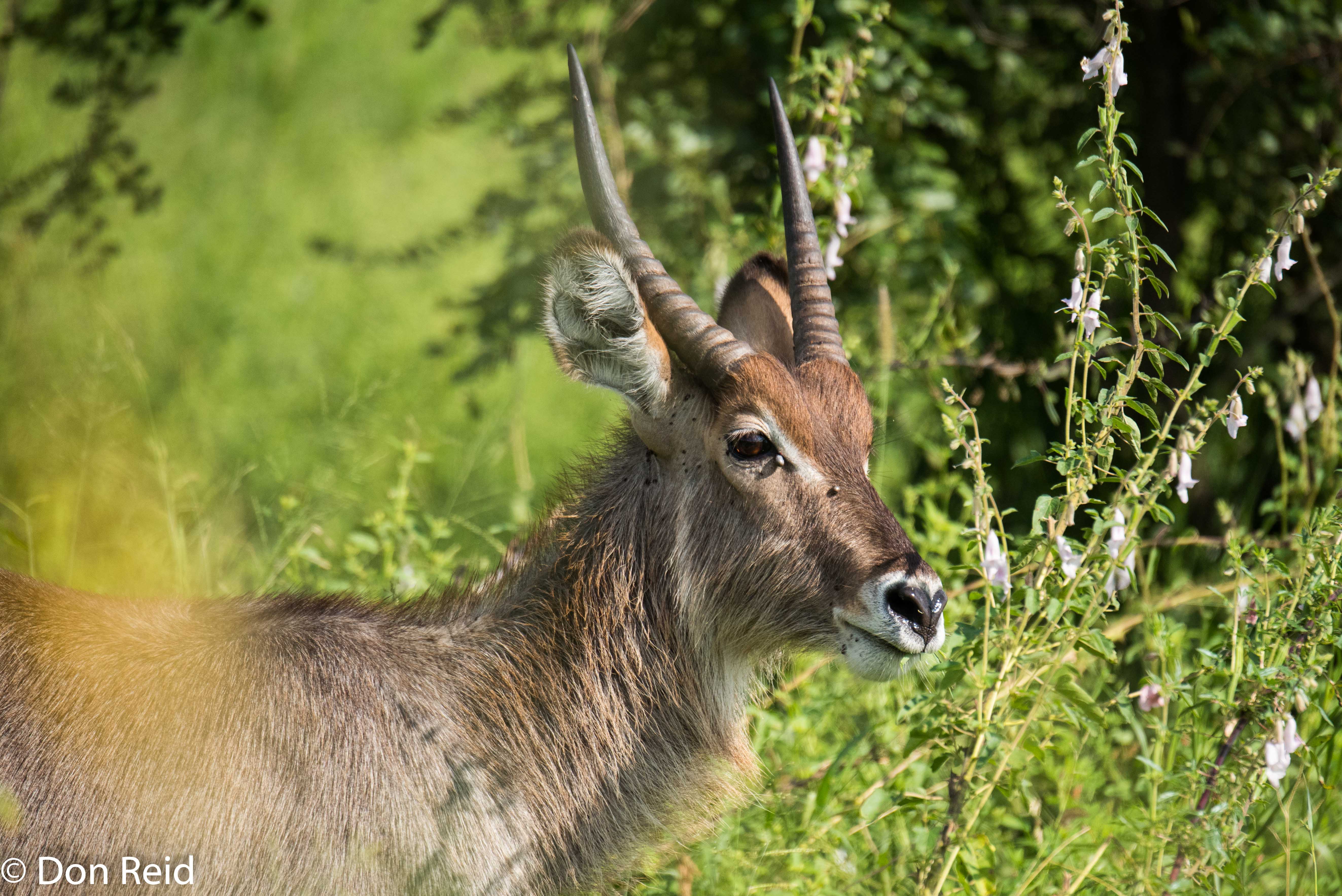
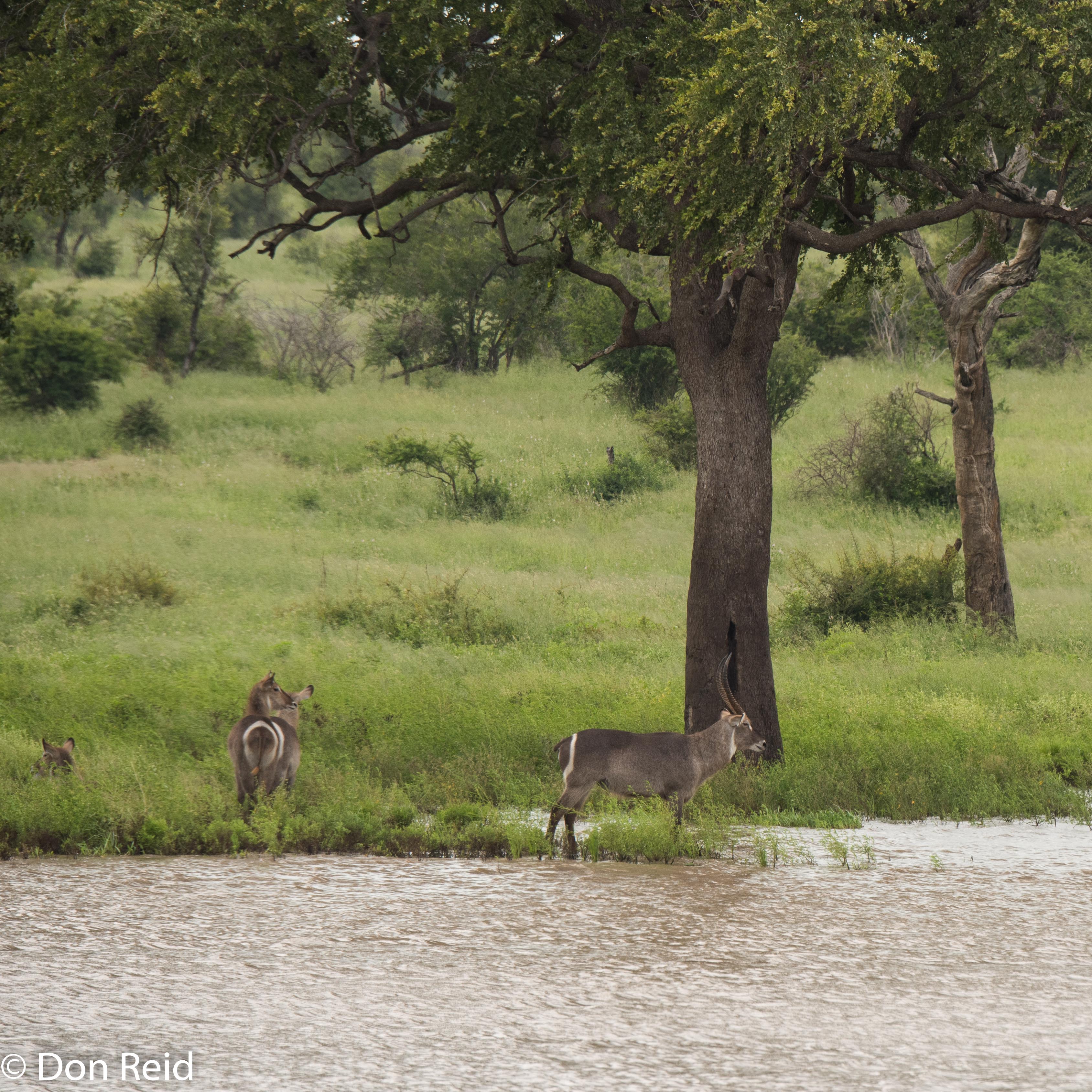
Waterbuck
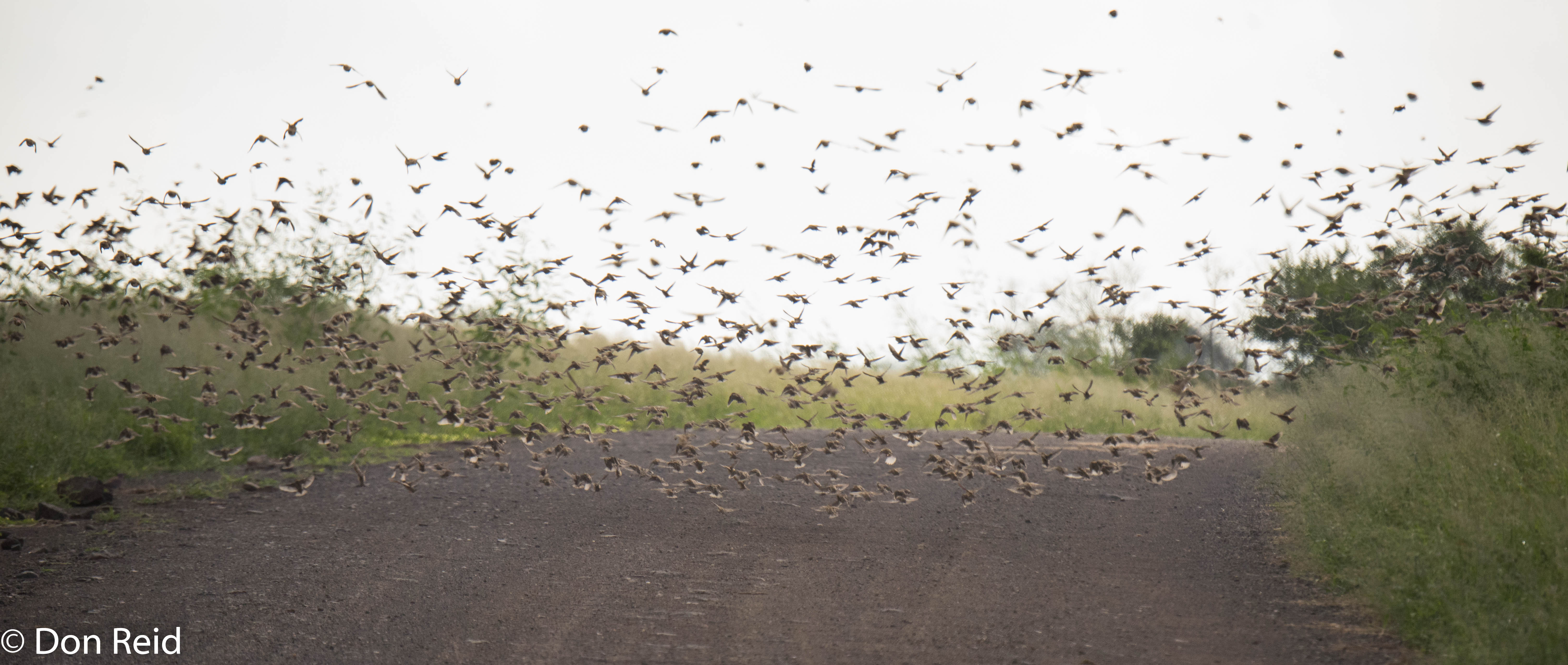
Red-billed Queleas

As we meandered slowly along the S100 gravel road through the  open tree savannah south-east of Satara, we had regular game sightings, every one causing much excitement and amazement amongst our visitors, even the animals we have come to regard as mundane, so that there was a constant buzz in our vehicle.

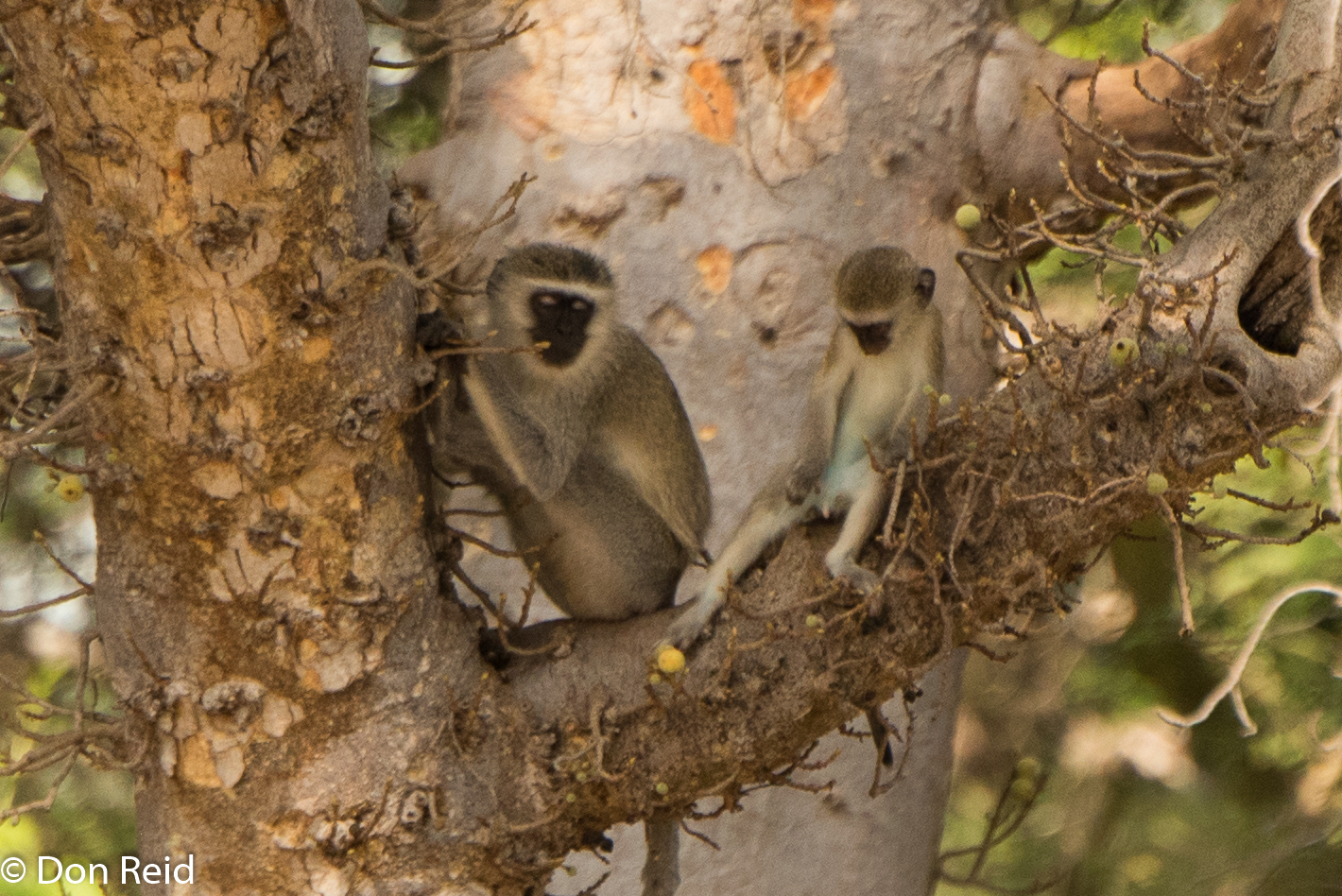
Vervet Monkey

It was a reminder of how privileged we are in this country with our wonderful National Park system and the joy of the Kruger experience, while seeing it all through fresh eyes added a special dimension.

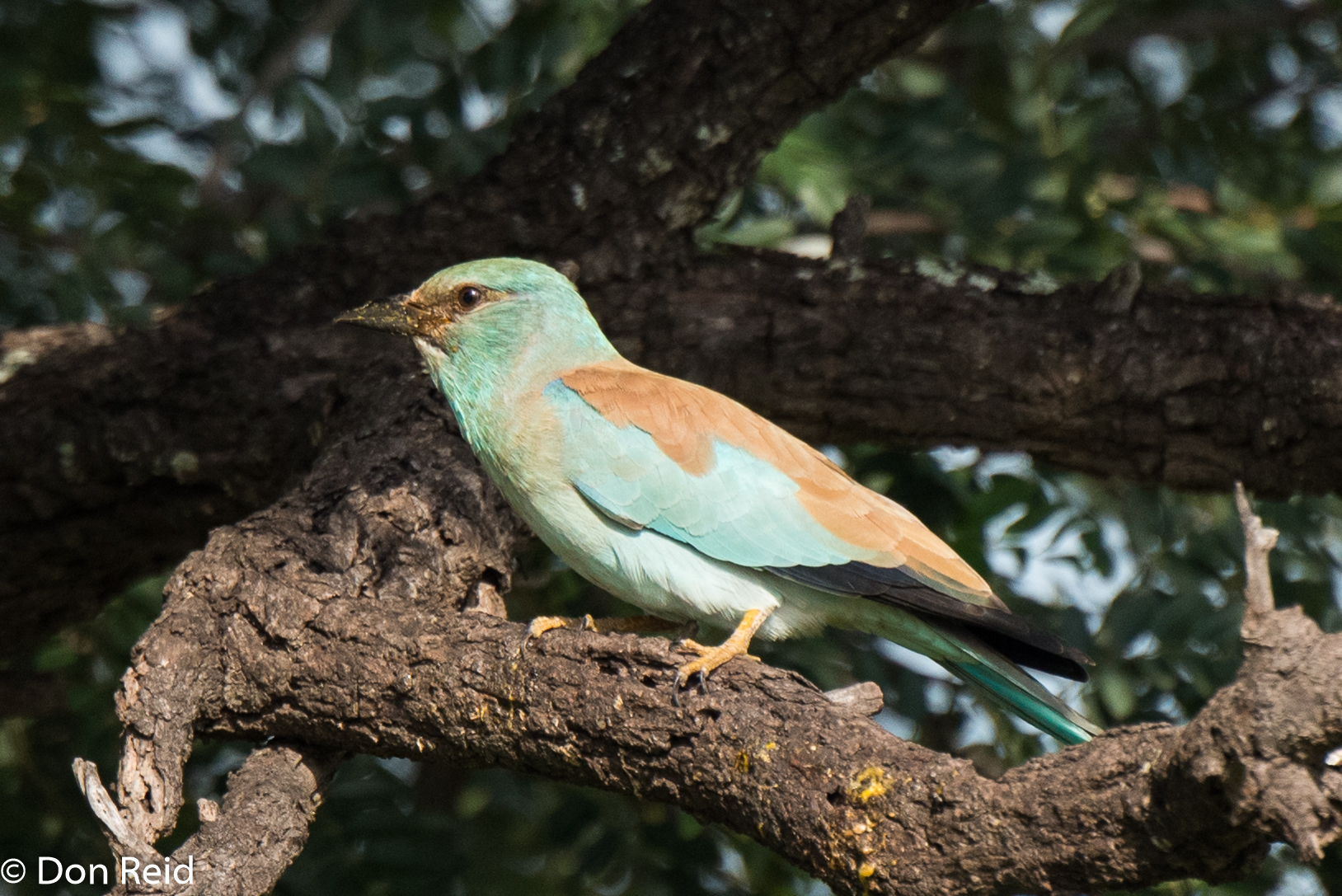
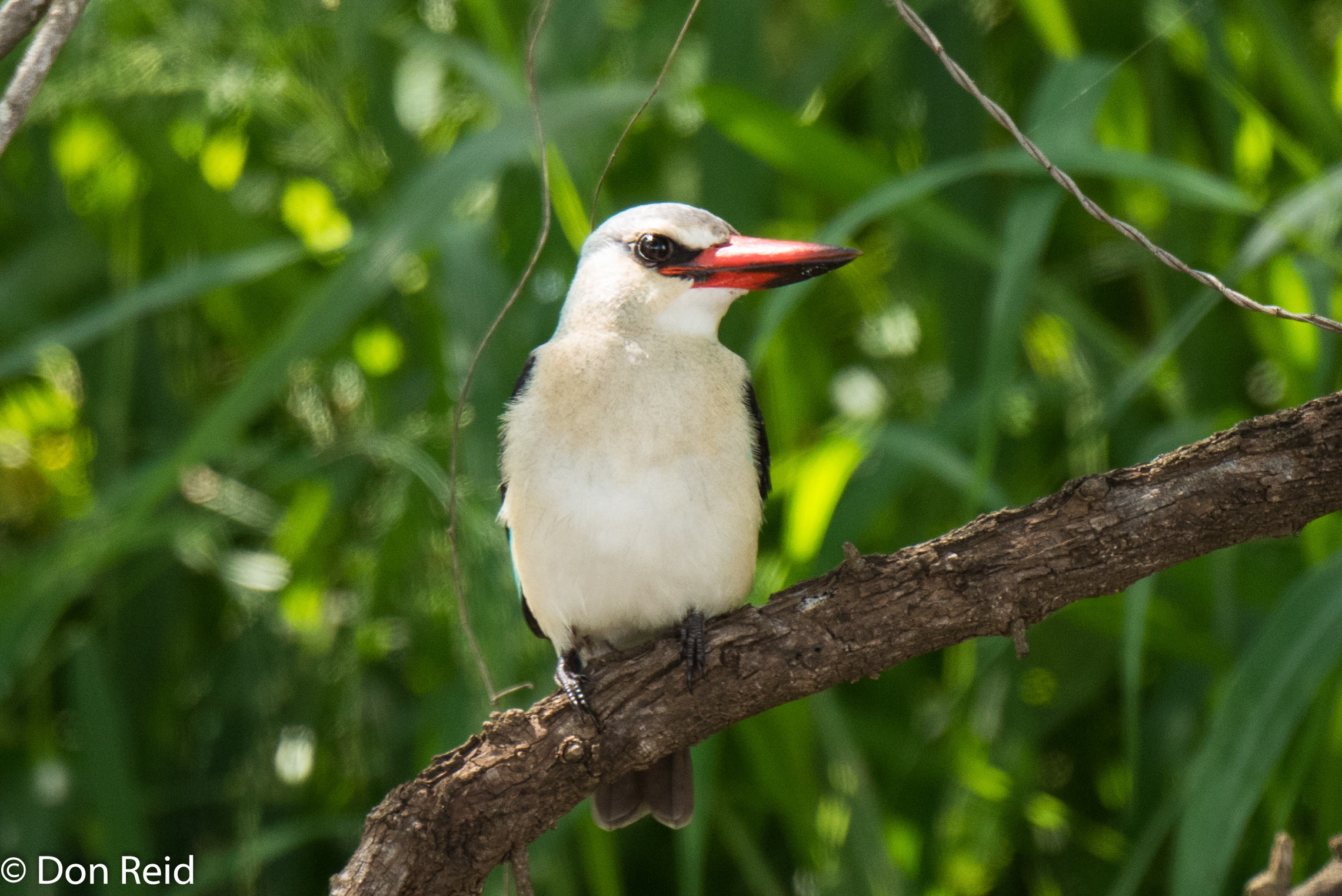
Along the way we had good views of Zebra, Giraffe, Waterbuck, Wildebeest, Kudu and others, while on the birding side I stopped for some of the more striking species – European Rollers were plentiful, Woodland Kingfishers not far behind, African Hawk-Eagle showed nicely and Vultures were easy sightings. Hornbills are always a favourite with visitors, being easily visible and we saw several Yellow- and Red-billed Hornbills.

European Roller
Woodland Kingfisher
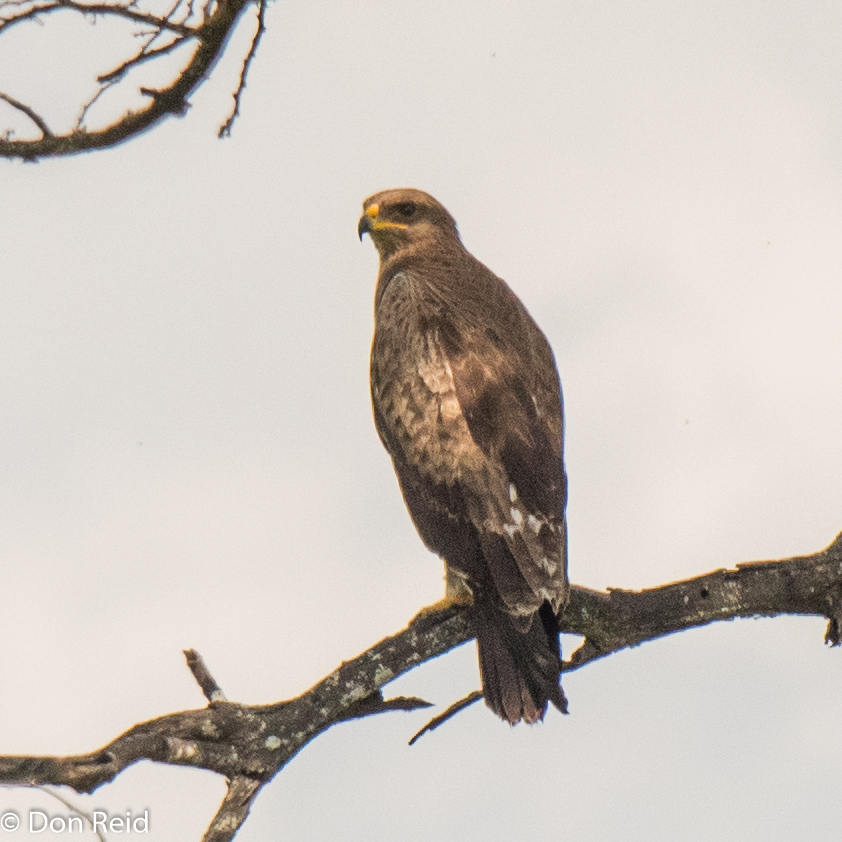
Wahlberg’s Eagle

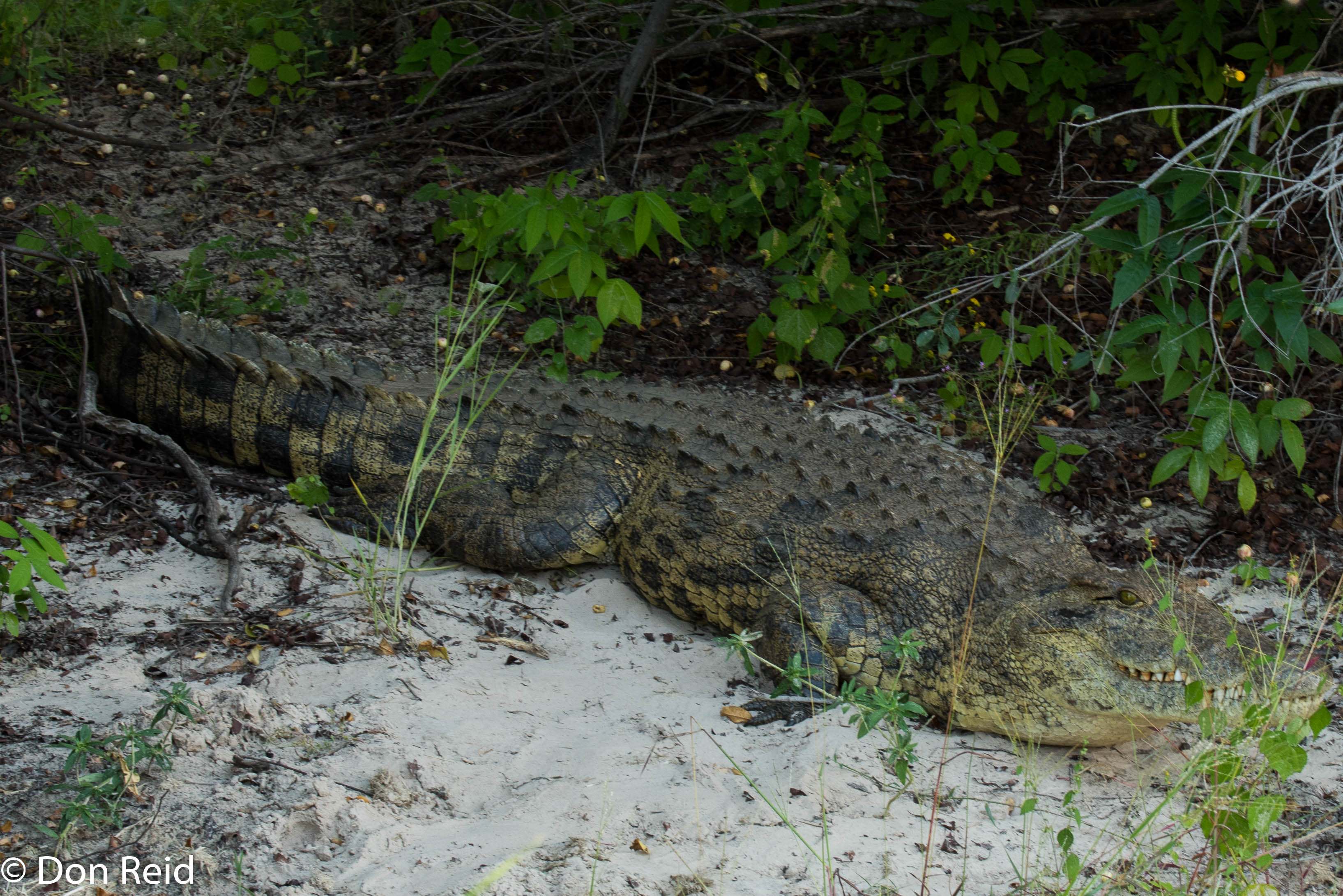
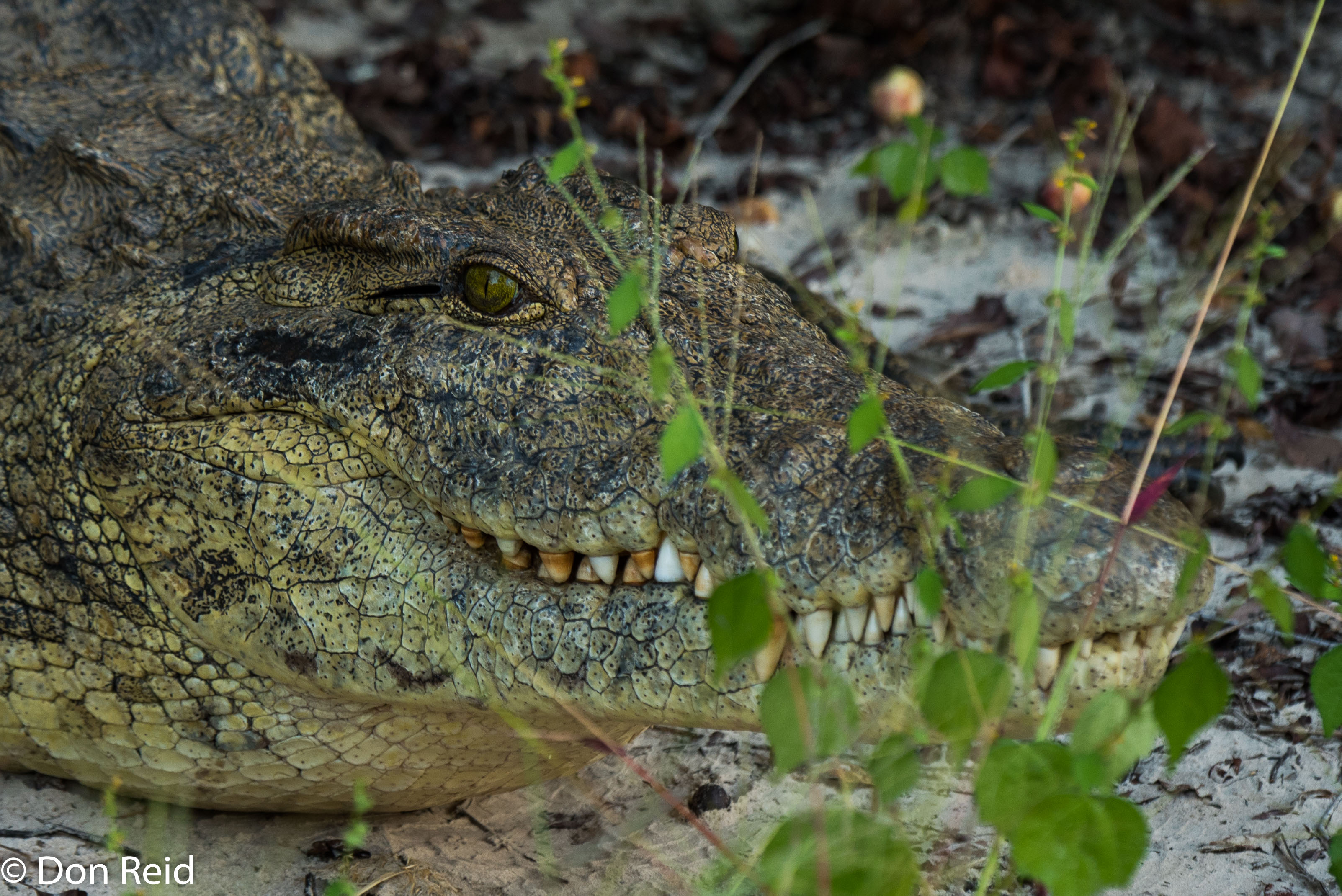
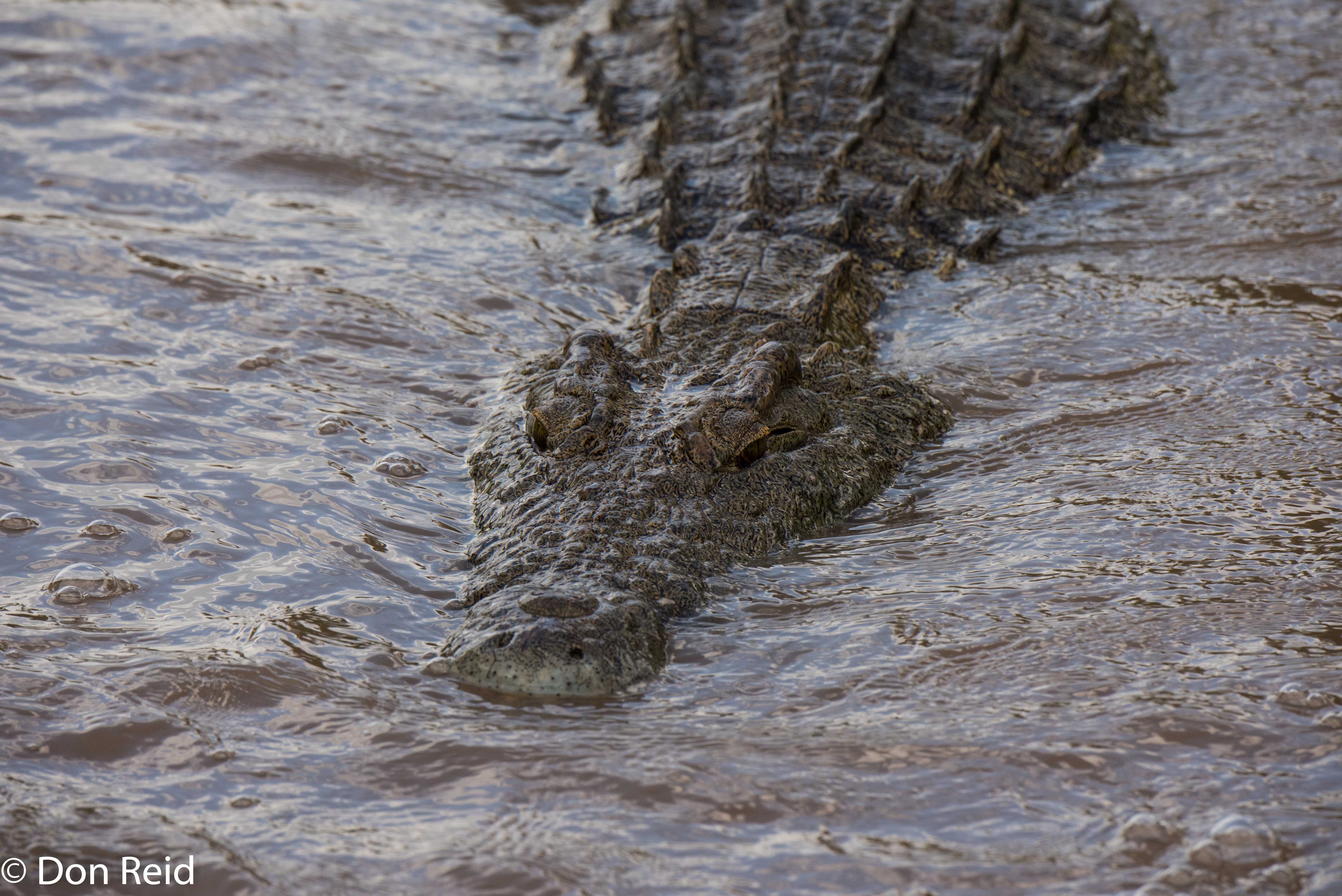
The sighting of the day was reptilian – two crocodiles at a low water bridge with a shallow stream of water flowing over it, swollen by the recent heavy rains. They were waiting patiently at the downstream edge with jaws open, ready to snap shut if a fish was swept their way – about as up close and personal as I have ever been to these large reptiles! As we slowly edged across the bridge, the car’s wheels disturbed the flow, causing the crocs to back up warily before returning to their positions once we were past.

Crocodile at weir hoping for a fish to swim into its jaws
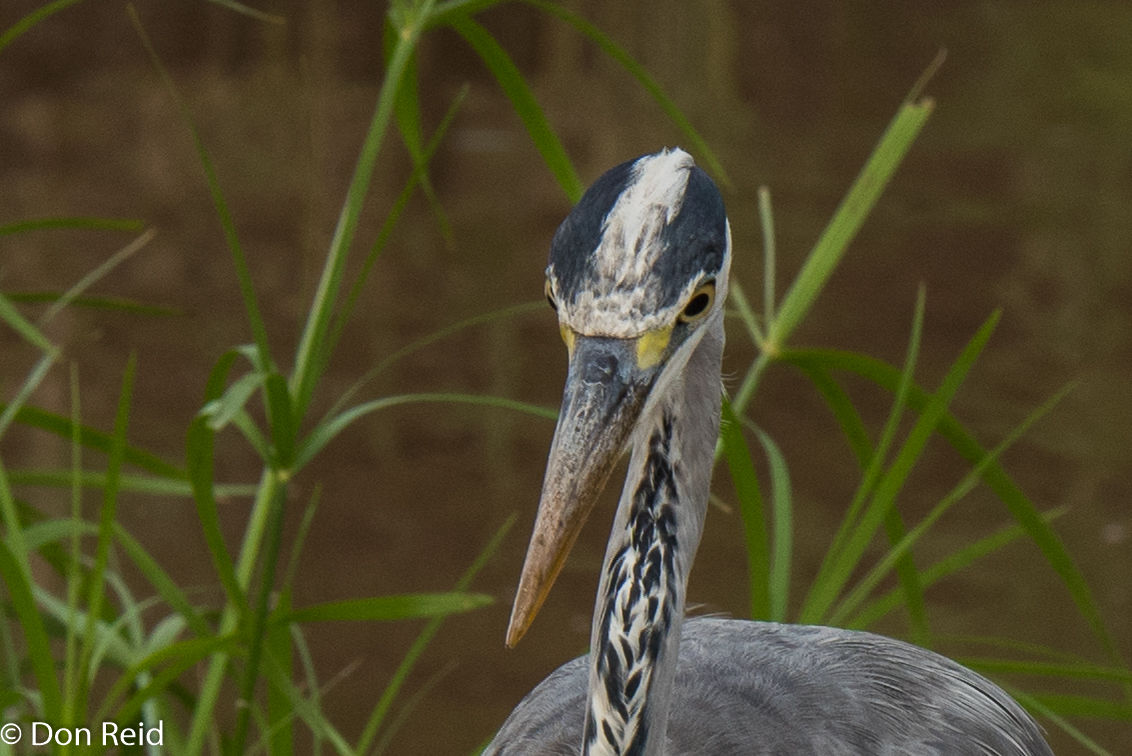
Grey Heron, hoping the croc misses a fish or two

Brunch at Nwanetsi was a real bush breakfast spread – eggs, bacon, mushrooms, beans, tomatoes and bananas – Alex provided essential help to the chief cook (me).

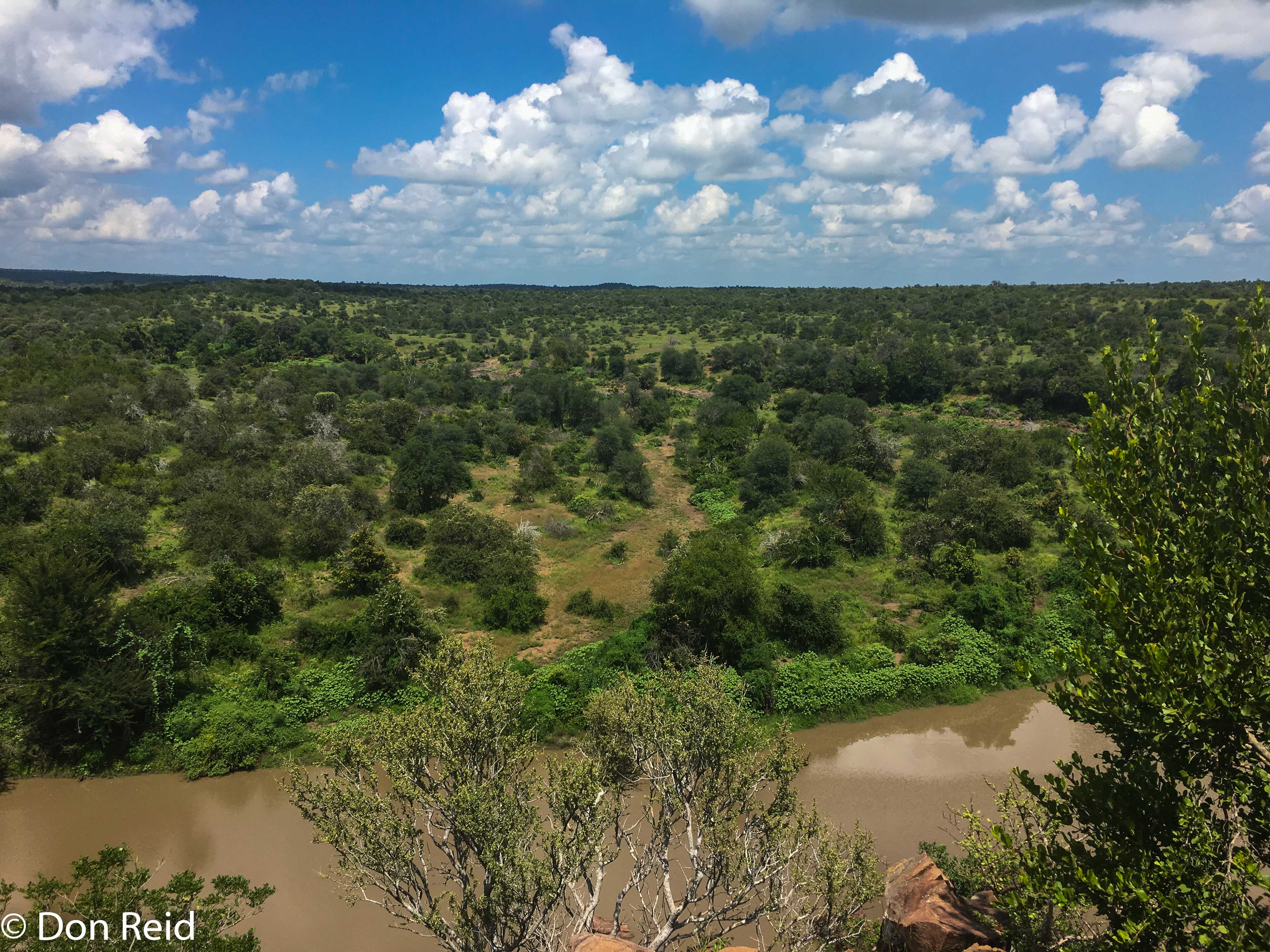
Nwanetsi viewpoint

A short, steep walk took us to the viewpoint above the picnic spot with its sweeping views over the surrounding veld, then we headed slowly back to Satara, diverting briefly to the Sweni hide, where there was not much activity. Back in camp it was time for a lengthy nap to rekindle the energy, followed by some relaxation and the evening braai.

Satara to Phabeni Gate

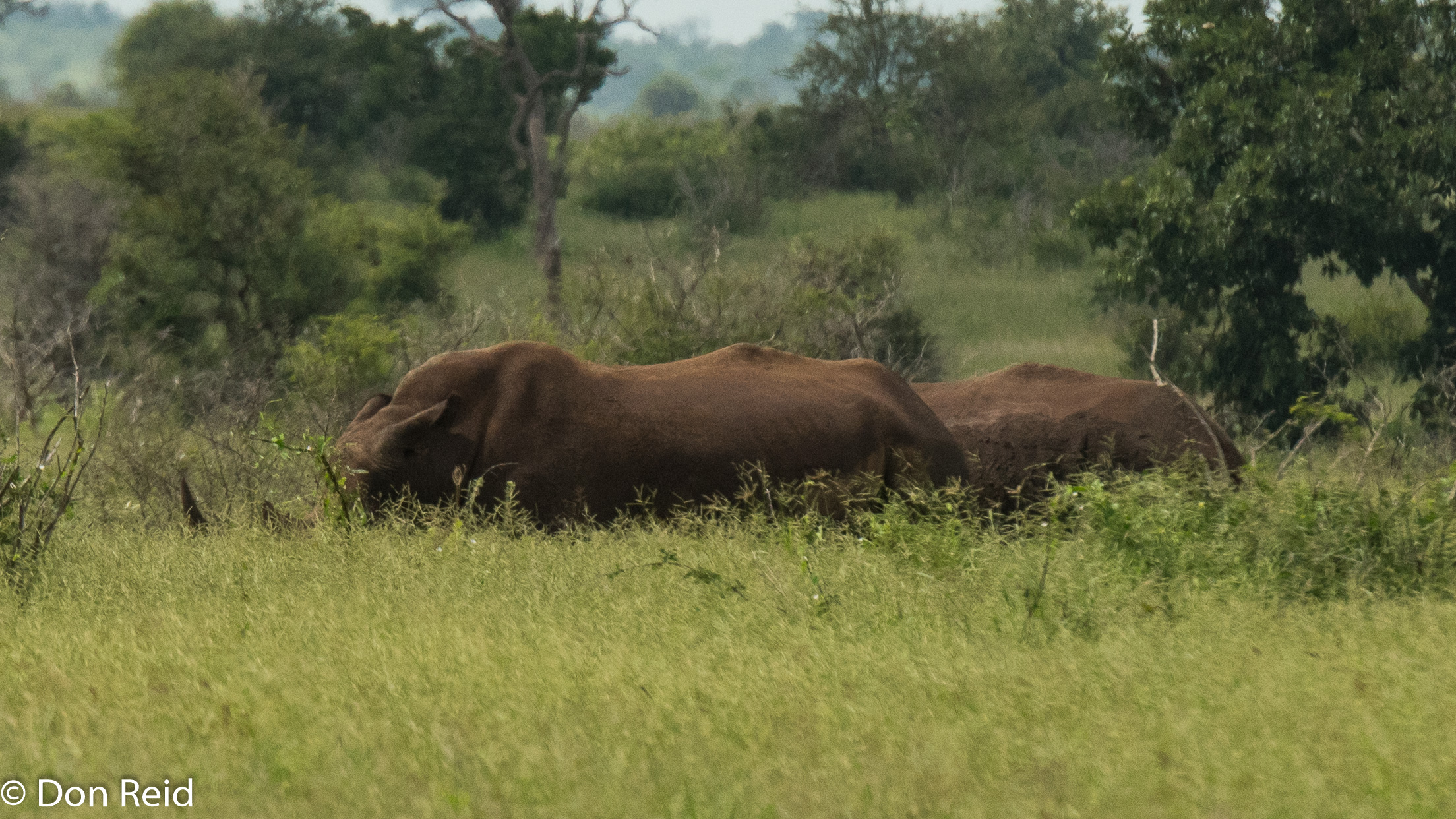
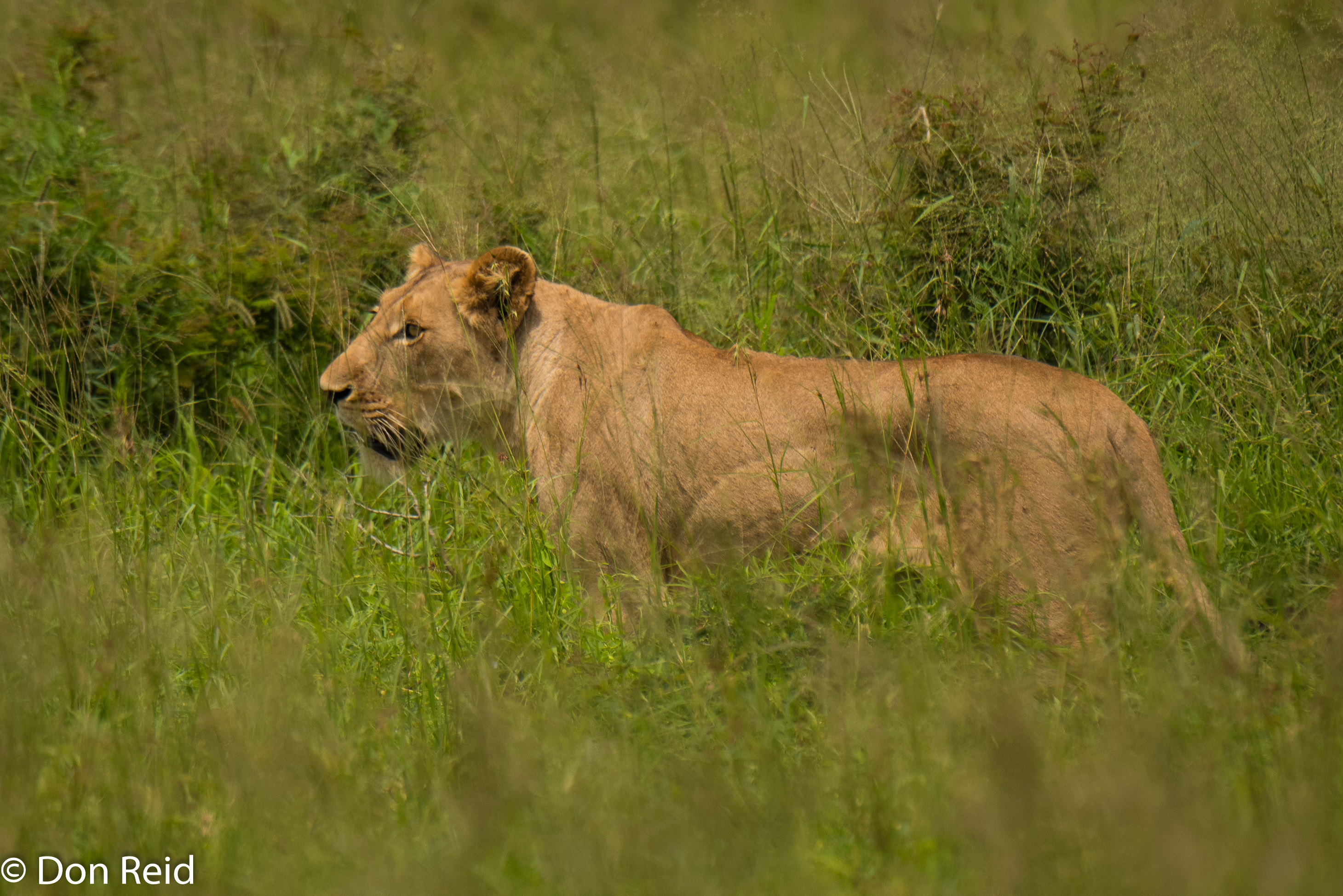
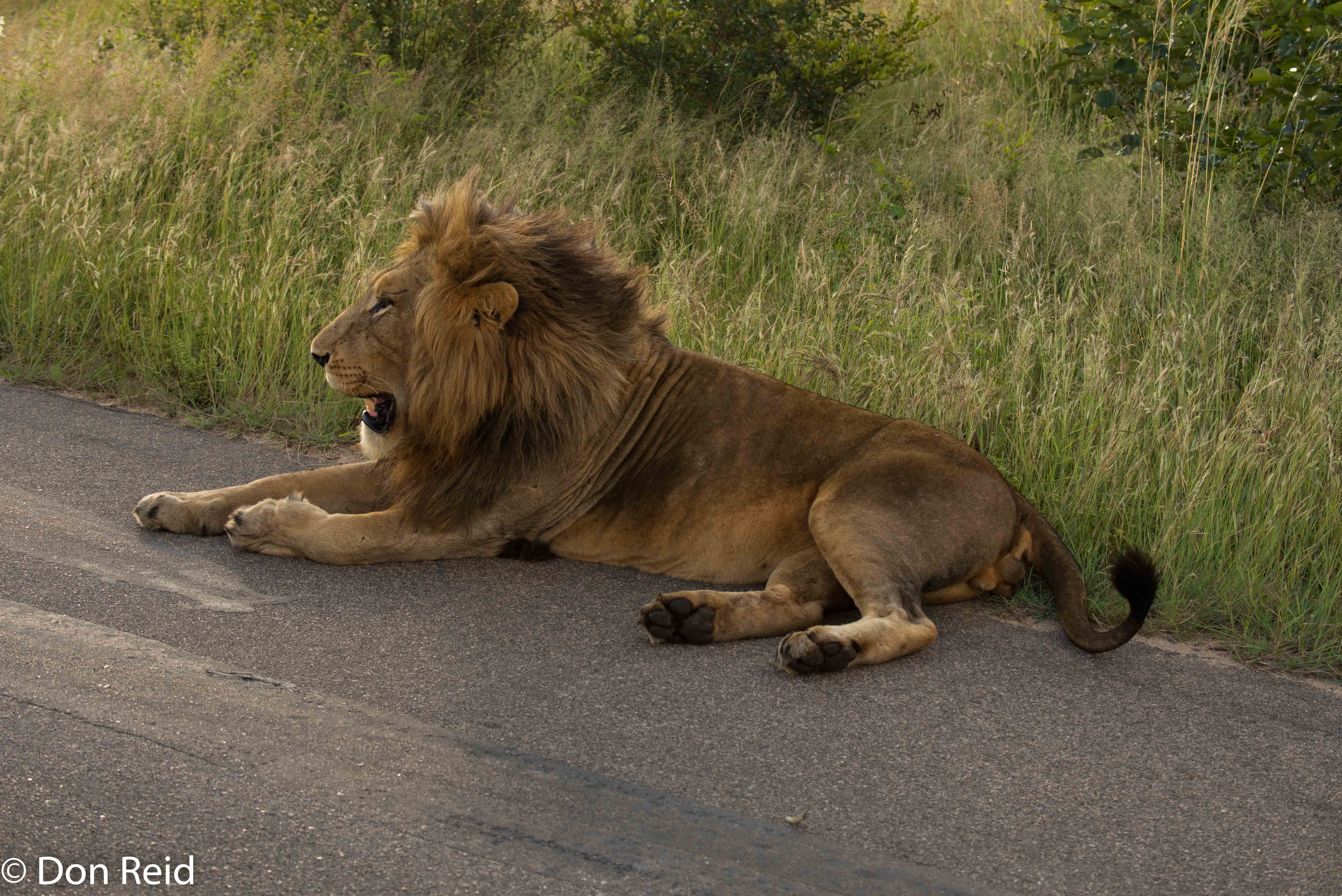
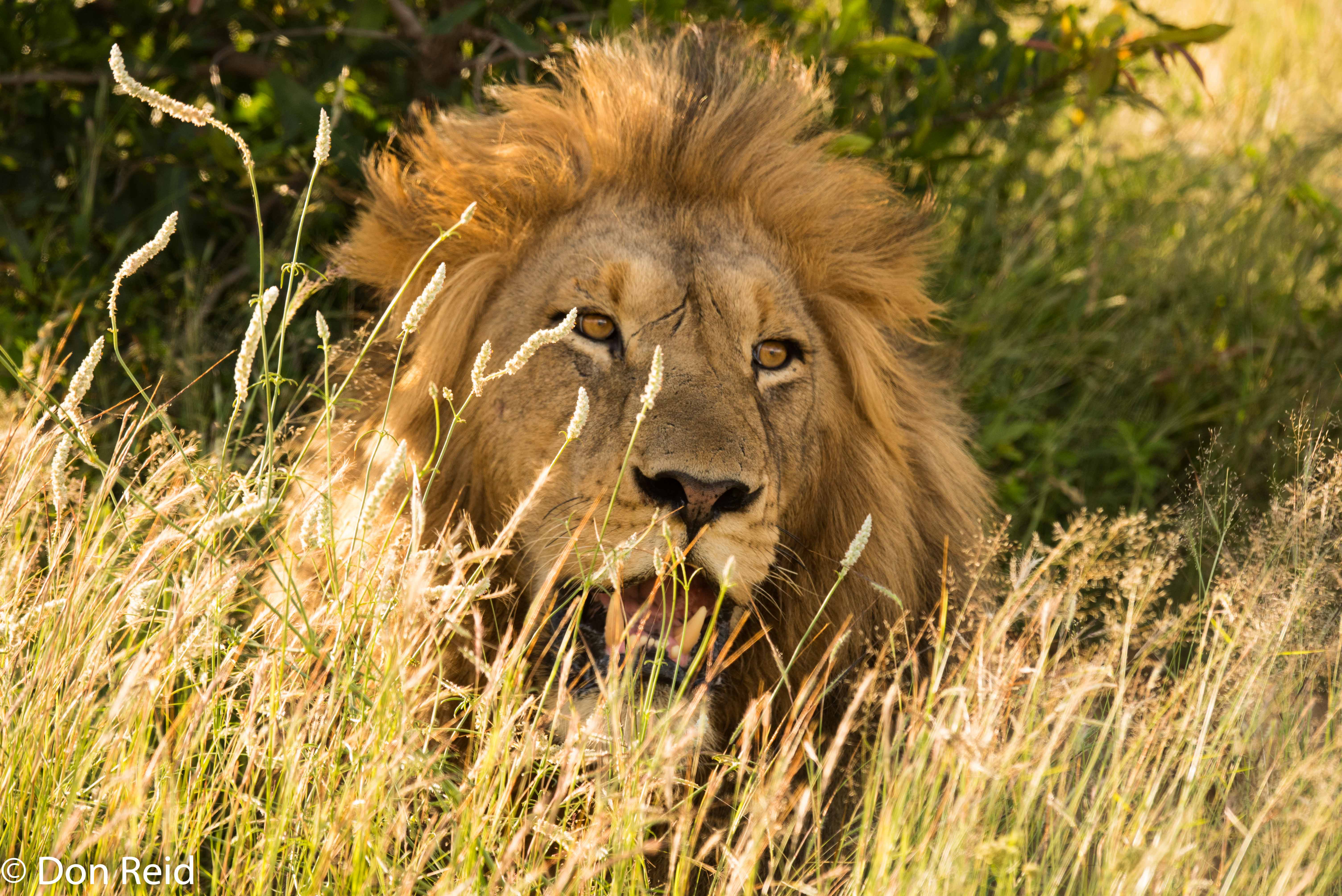
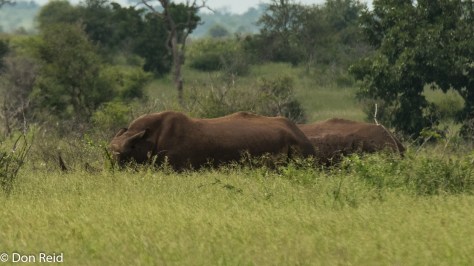
In order to make the most of our short stay in Kruger, we returned the same way we had come – via Lower Sabie and onwards to Phabeni gate. The trip turned out to be a lot longer than expected – for good reasons as we had some very exciting sightings along the way – 3 Rhinos, 2 Lionesses and to end with a bang, 2 male Lions right next to the road.

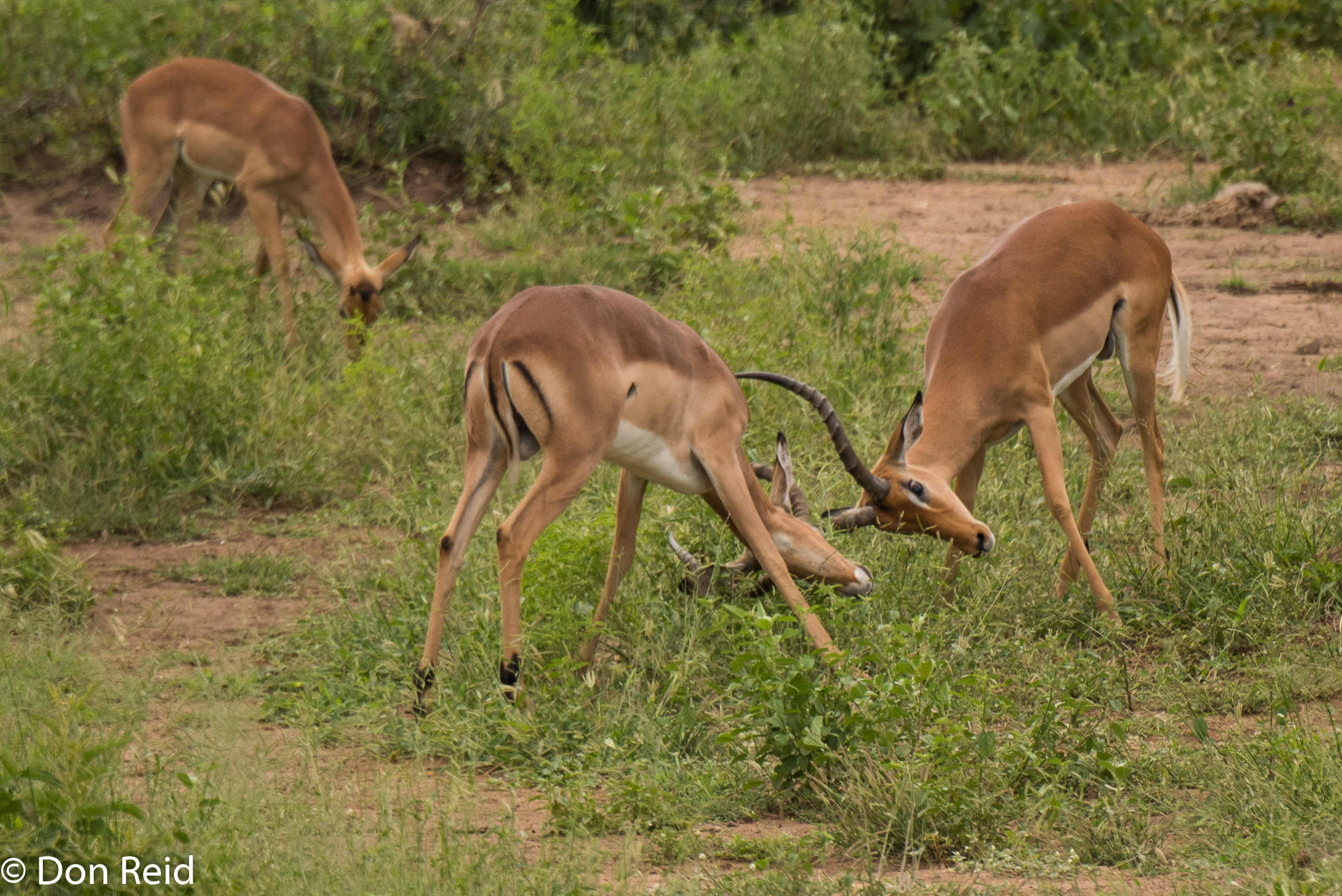
Impala rutting

The buzz in the car went up a level or three and on top of these special sightings we saw upwards of 200 elephants in small and large herds at various points along the way. What a wonderful way to conclude our short trip to Kruger and to be able to share these great sightings with our visitors!

Waterbuck
Lower Sabie view
Southern Ground Hornbill

To make it easier on the passengers (and driver) we stopped regularly – firstly at Tshokwane picnic spot for coffee and muffins, then at Lower Sabie for a lunch of toasted sandwiches and finally at Lake Panic hide near Skukuza for a brief look at the birds. Strangely the hippos that usually frequent Lake Panic were not visible.

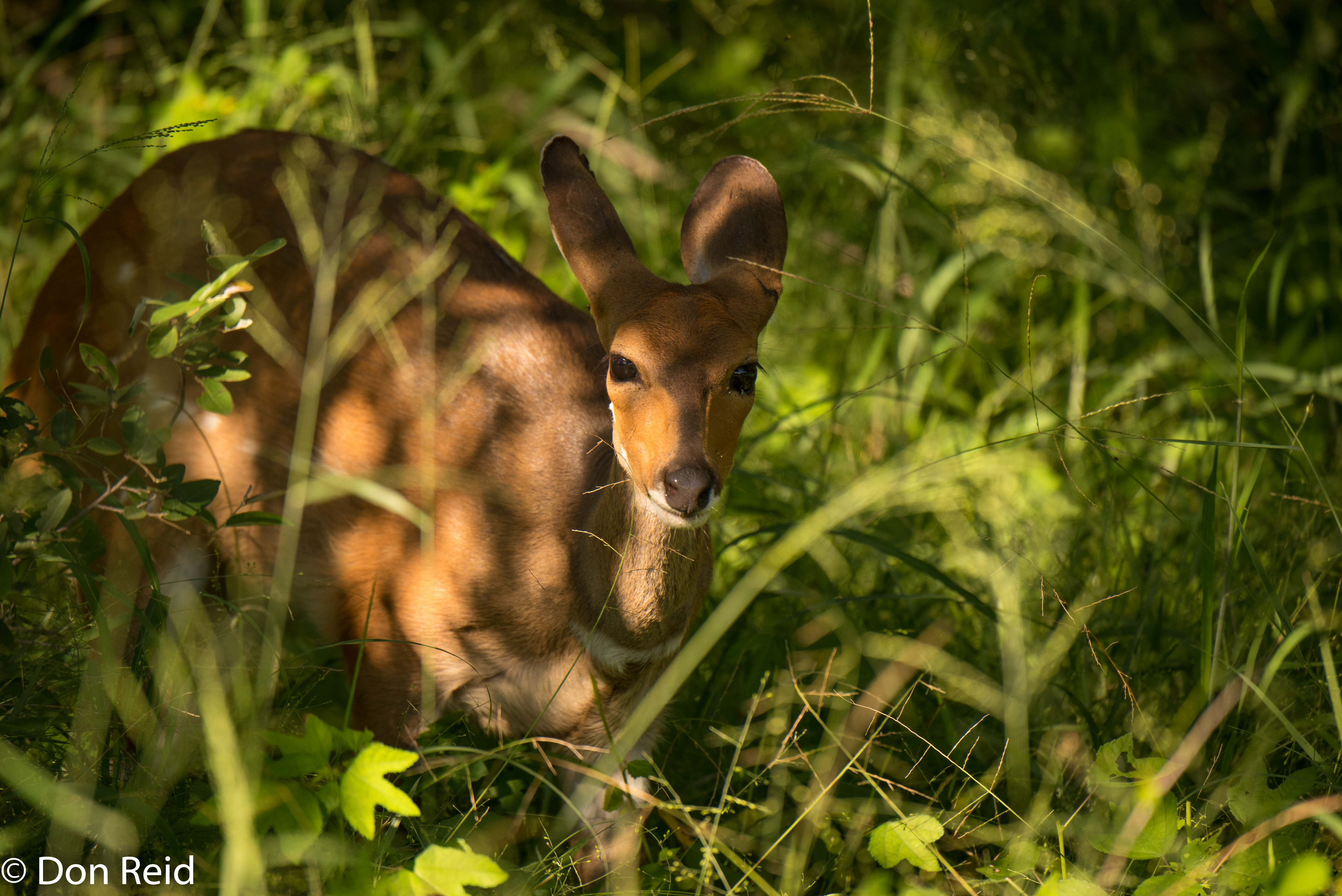
Bush buck, Lake Panic
Pied Kingfisher, Lake Panic
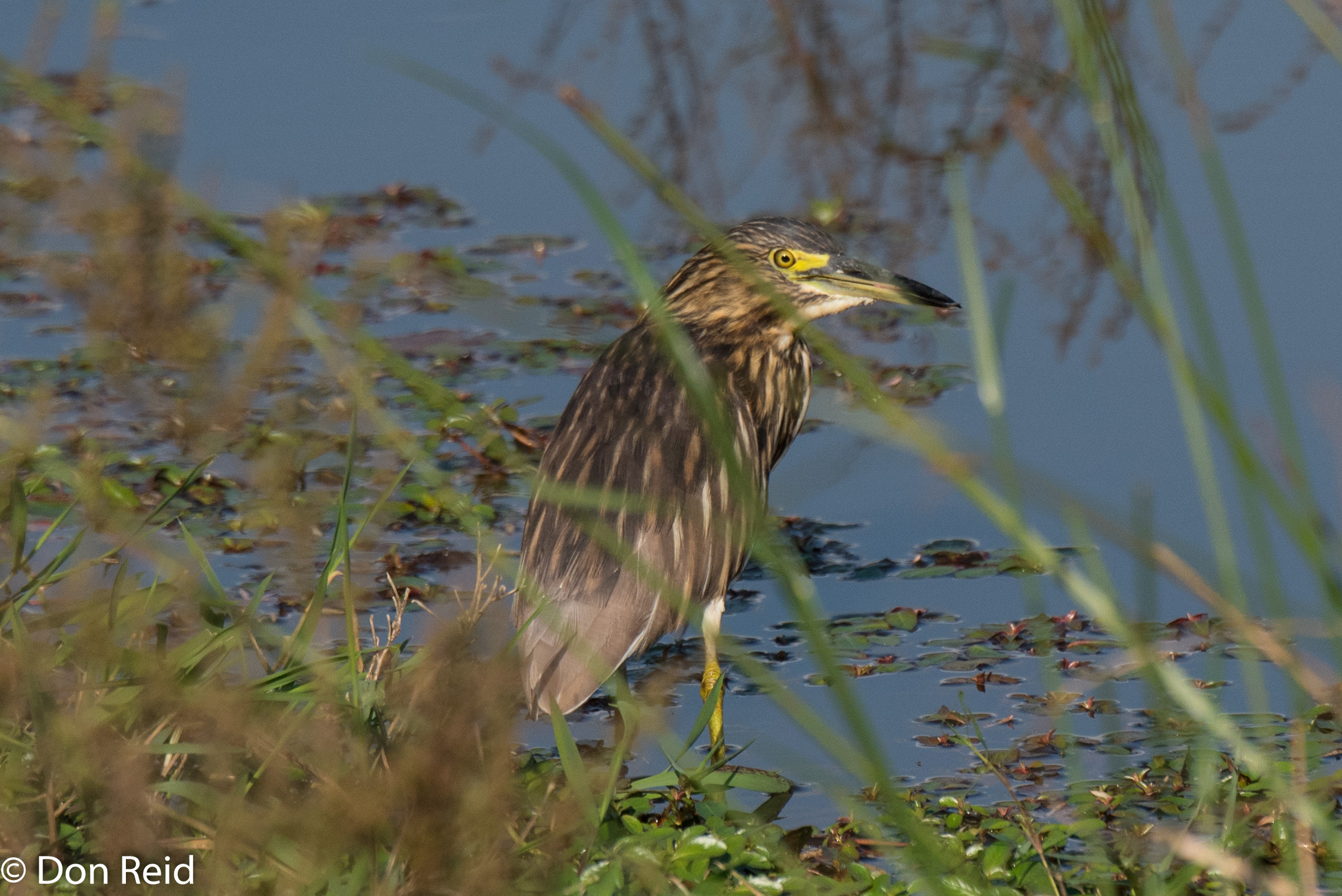
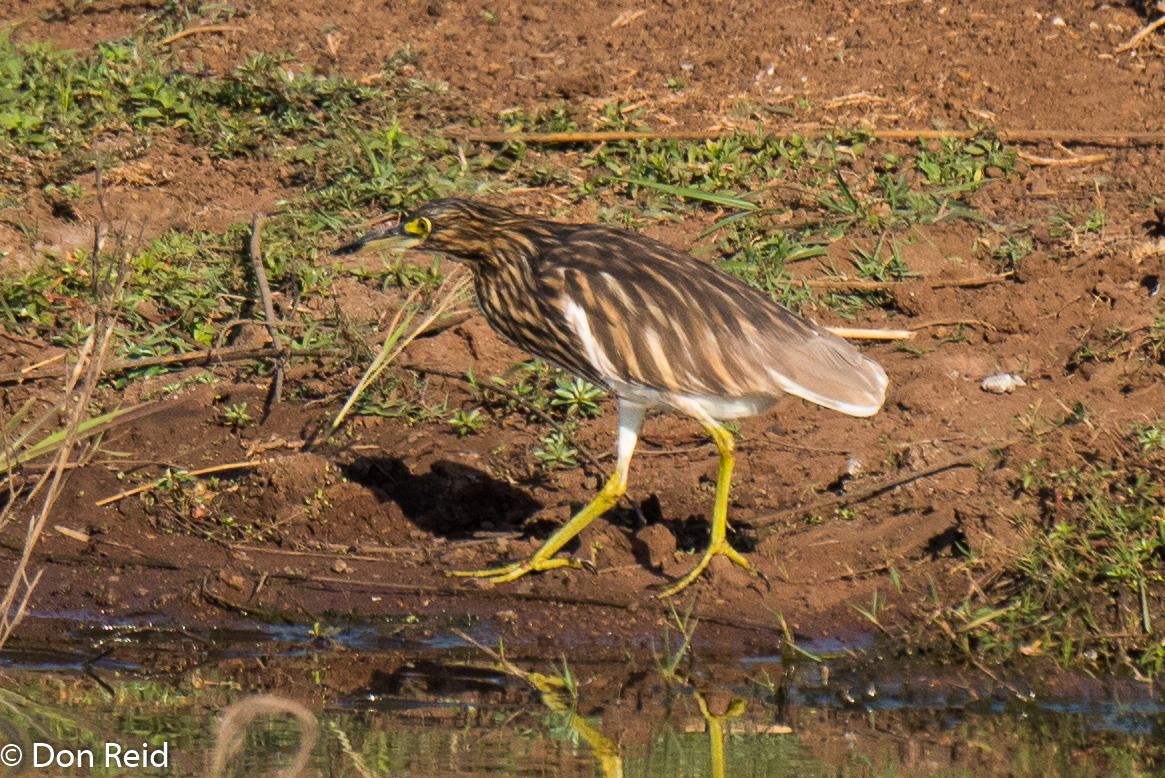
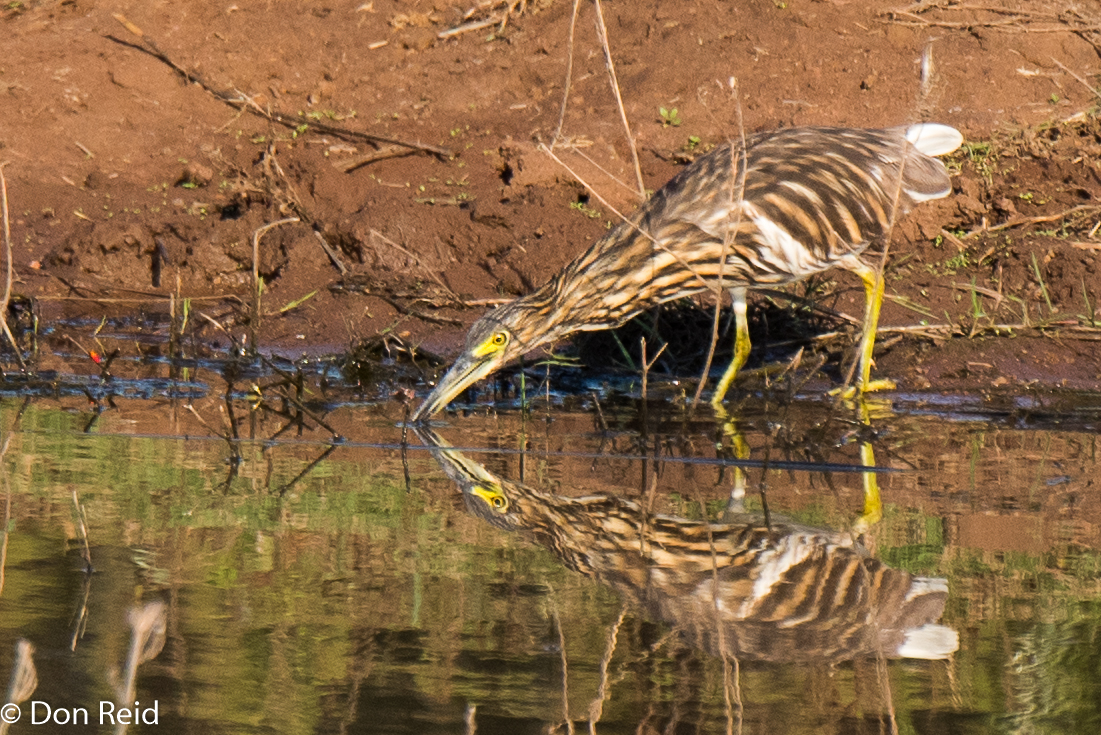
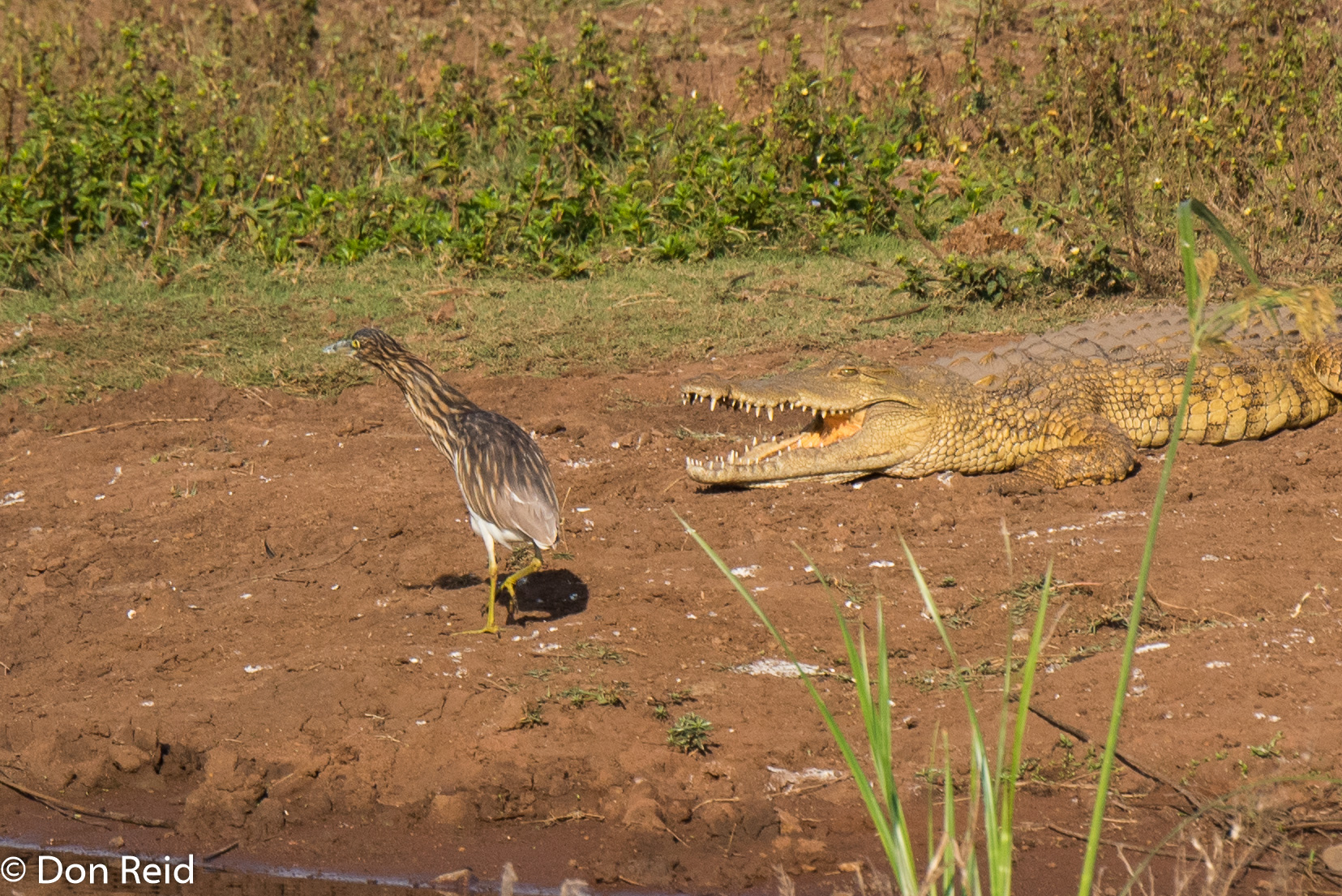
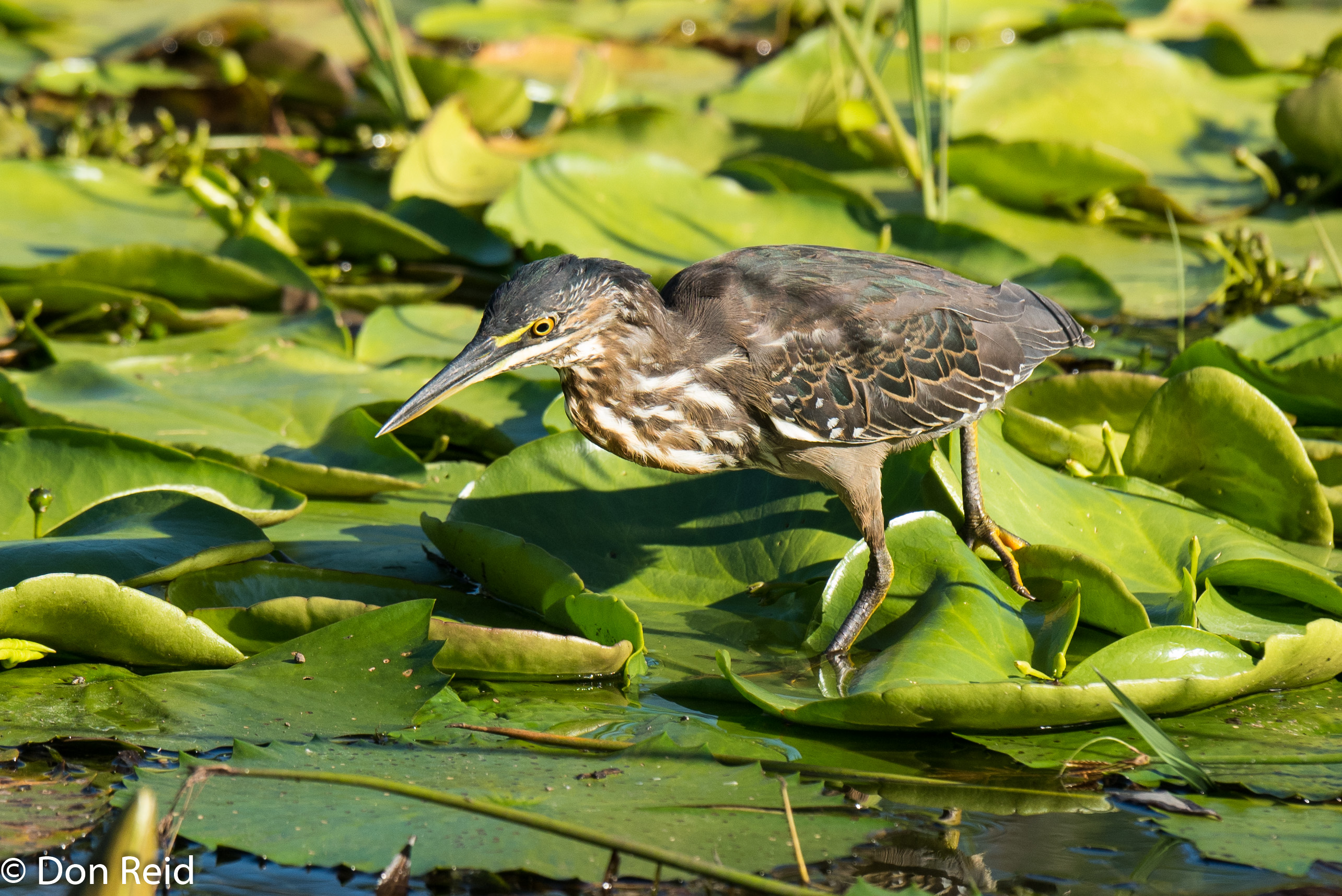
Green-backed Heron (Juvenile), Lake Panic
African Jacana, Lake Panic

The trip through Kruger took all of 8 hours compared to the 2.5 hours it took on the way in!

Lower Sabie – our only Leopard sighting

But it was the special sightings that had all of us enthralled.

The 3 Rhinos were grazing peacefully in long grass some distance from the road, offering brief views of their unique horns now and again.

White Rhino, Satara-Lower Sabie

We came across the 2 Lionesses walking on one side of the road, then crossing the road and continuing leisurely on their way into the long grass on the other side.

Lioness, Satara-Lower Sabie

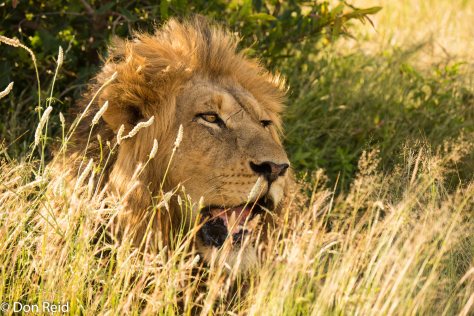
The male Lions gave us a great show as we first saw one right next to the road, with a car parked next to it virtually within touching distance, but also mostly obscuring it from view. The car’s occupants seemed to have the attitude that the lions belonged to them and no one else, as they showed no inclination to move and allow anyone else a decent view – very frustrating!

However, luck was on our side as Alex (our new chief spotter) saw a Lion approaching out of the bush and I quickly got our vehicle into position when it flopped down in the road just a few metres further, with unhindered views for a few minutes before we decided to move on. The temptation to thumb our noses at the selfish people in the other car was great, but good manners got the better of us.

Lions, Phabeni area
Lions, Phabeni area

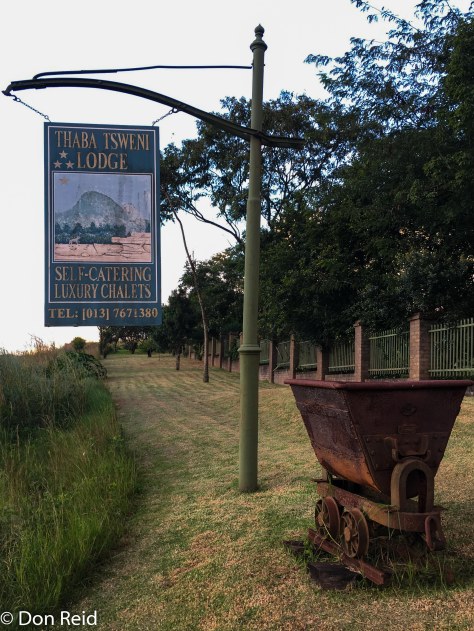
All that remained of our Kruger expedition was to exit at Phabeni Gate, with the time now 5.30 pm, and find our way to Graskop, then on to Thaba Tsweni lodge for the next leg of the trip – more on that in a future post.


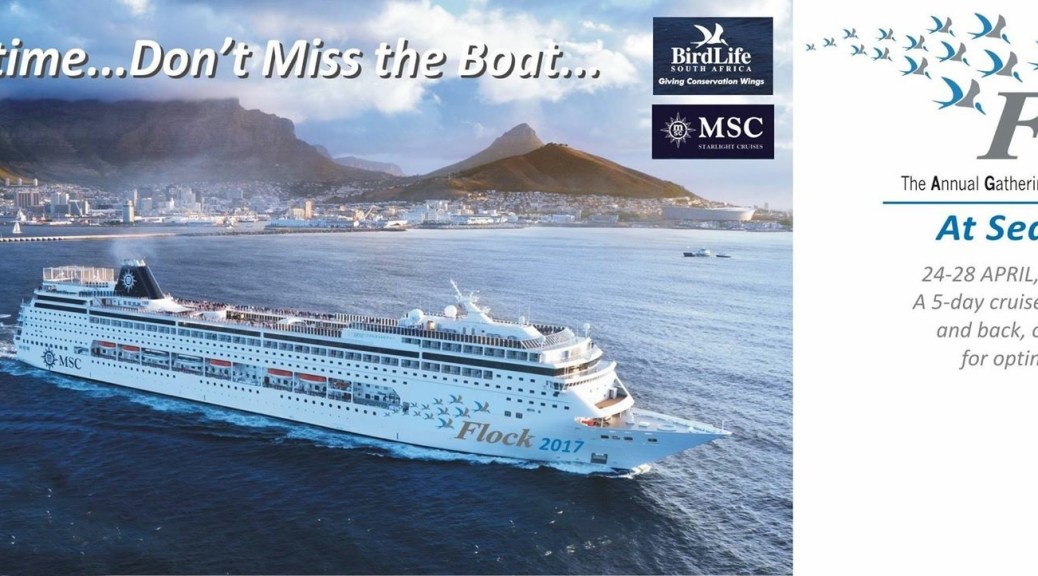
Flock at Sea 2017 – Mostly Birding at Sea

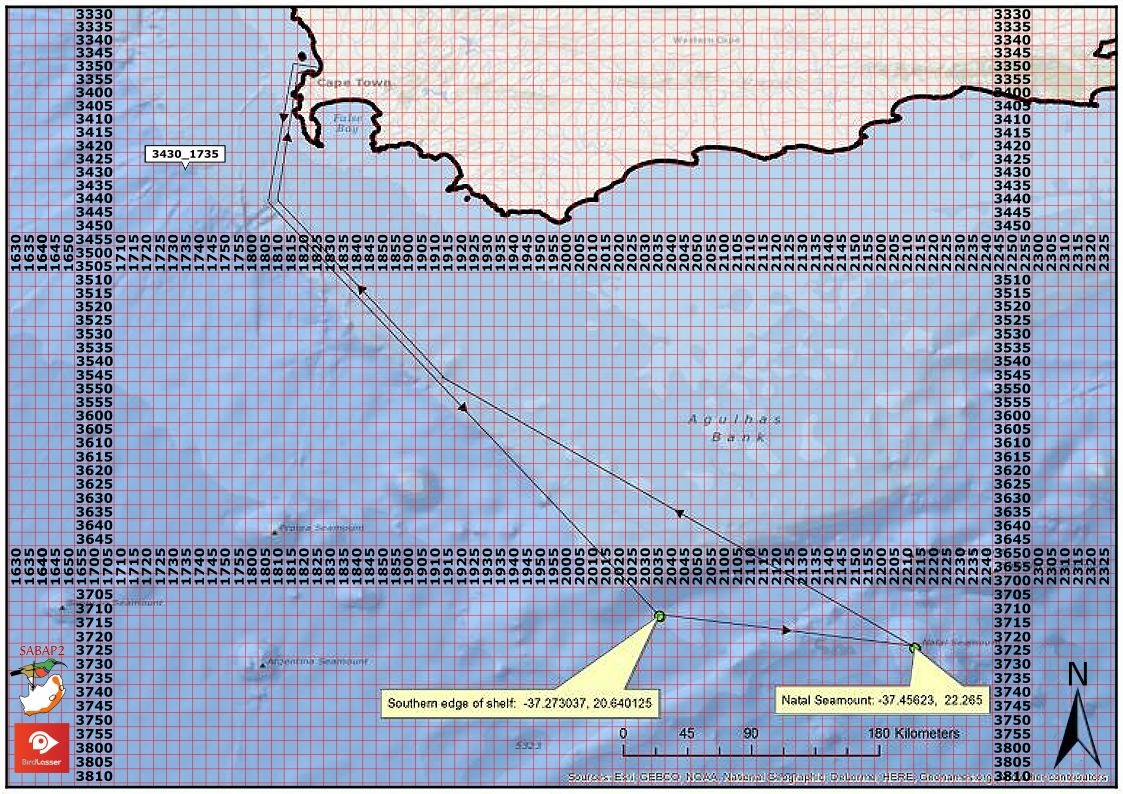
Two weeks ago we were on the MSC Sinfonia, around 200 nautical miles (in kms that’s .. um .. very far) south of Mossel Bay, now we’re back in that town and have had time to reflect on what turned out to be a truly memorable trip, for many reasons. Here’s my take on it……

The Build-up

Ever since booking our places on the “Flock at Sea 2017” cruise some 9 months prior, Gerda and I had been looking forward to the experience of a 4 night cruise aboard the MSC Sinfonia, along with almost 2,000 other birders – a  “cruise to nowhere” out of Cape Town with the main aim of seeing as many sea birds as possible in three and a bit days, cruising in the waters off the southern coast of South Africa.

A facebook page created for the event and regular Birdlife SA emails provided essential information, building to a crescendo in the final weeks and days leading to embarkation day – 24 April 2017.  There was also no shortage of seabird ID advice including a set of ID sheets depicting the birds most likely to be seen which I printed and put in my trip file.

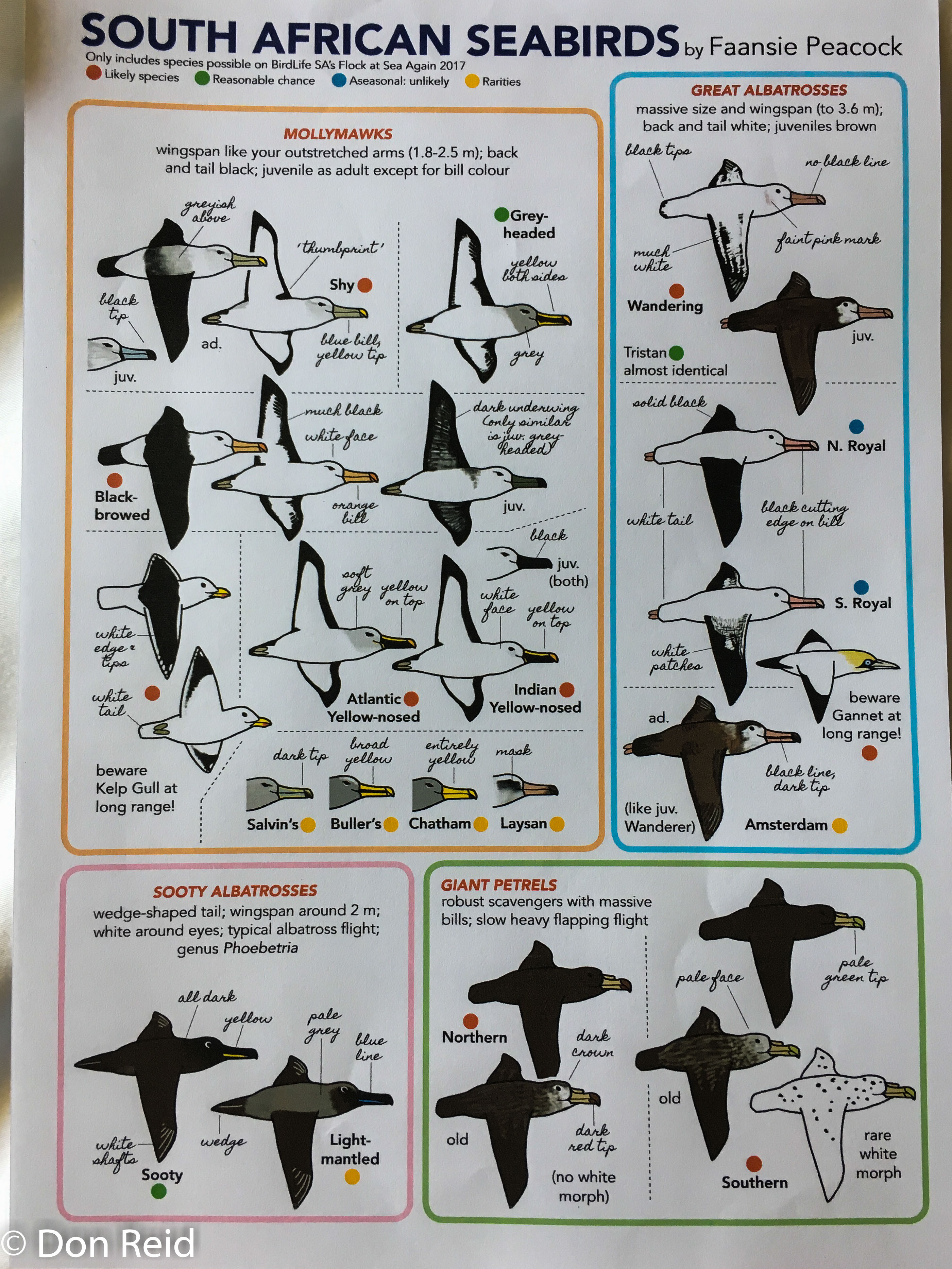
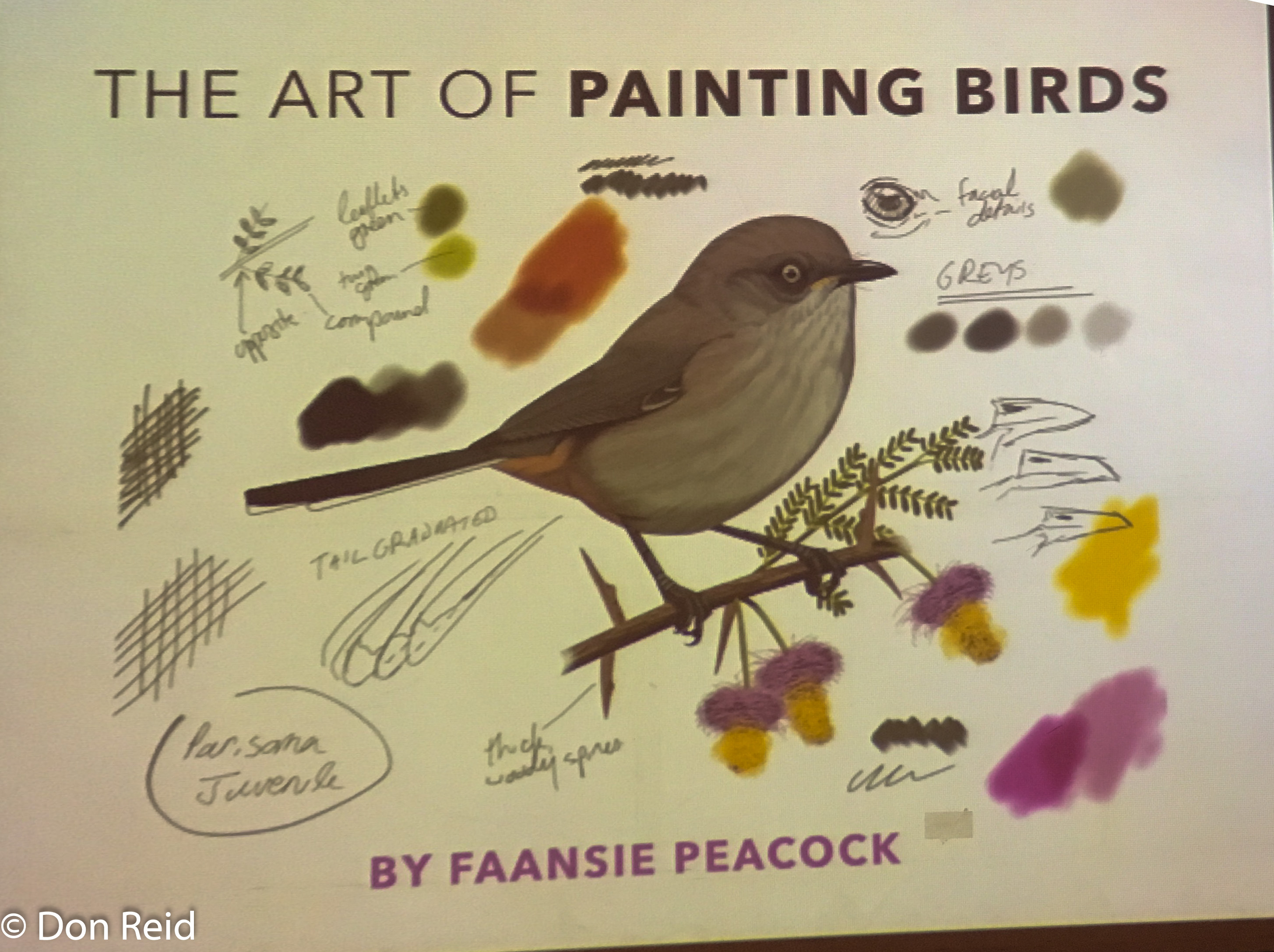
Faansie Peacock was also good enough to produce and share a wonderful, concise set of “cartoon-like” sketches of the probable species, with notes on the features to look for, which I printed and carried with me folded in a pocket for reference – these proved to be super-useful for a quick check when a number of species were spotted in quick succession.

Flock at Sea Cruise


The Cruise

This was not entirely a new experience for me, having had the privilege of doing two pelagic trips out of Simonstown ( near Cape Town) in the past, however the  mode of transport was very different this time – a large cruise liner with close to a couple of thousand other passengers and 700 or so crew, versus a small ex-patrol vessel with about 15 people on board and one or two crew.

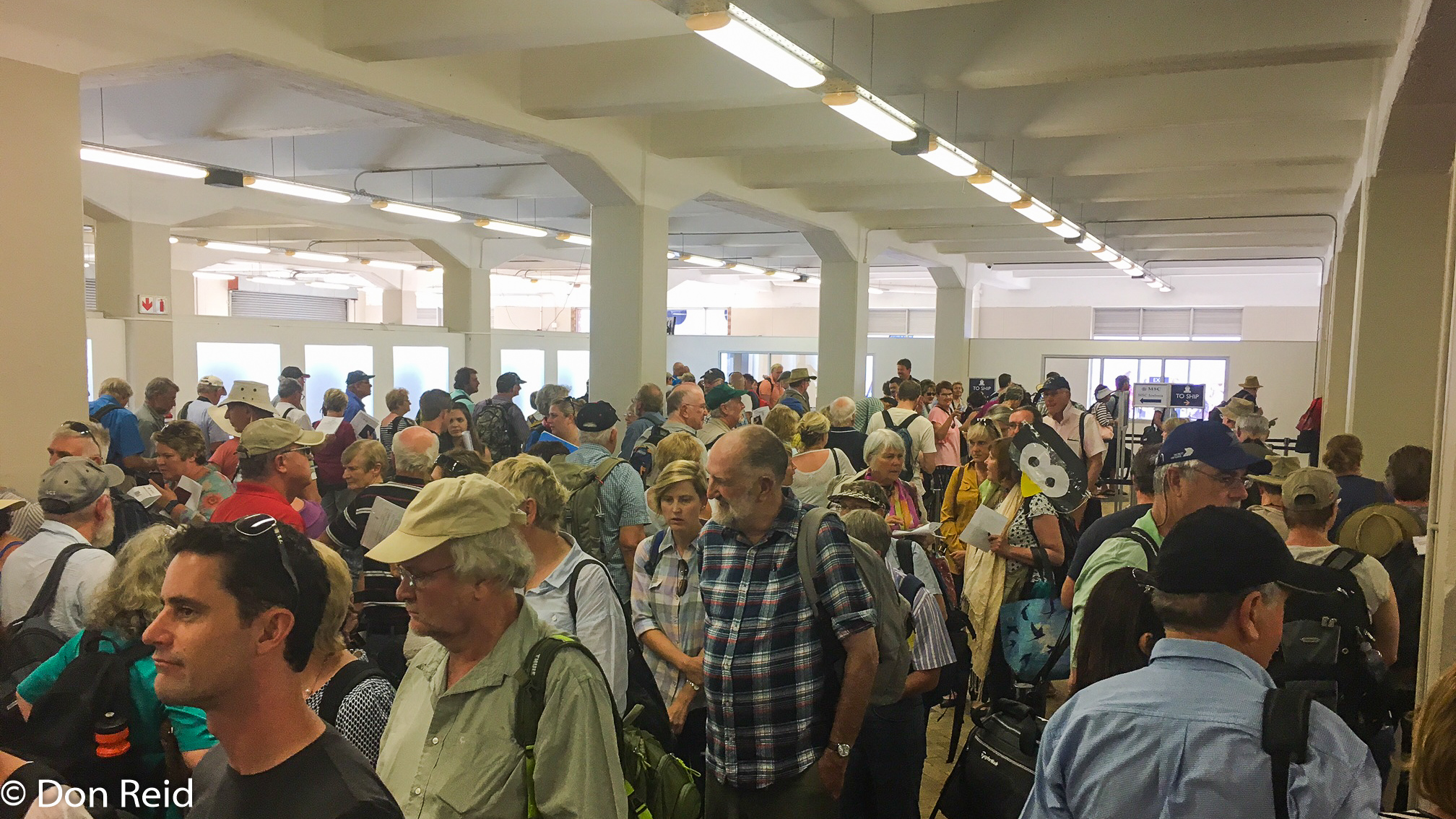
We had travelled from Mossel Bay the day before embarkation, staying overnight in the Commodore hotel at the Waterfront, so it was a short drive to Berth E at Duncan Dock, where I dropped Gerda off with our baggage, parked in the nearby parkade and returned to the quay to join the already long queue….. for the next couple of hours while the previous load of passengers disembarked very slowly due to IT problems at Immigration (or so we understood). This was not necessarily a bad thing – it gave us time to get acquainted with others in the queue, meet up with some old friends and take in the buzz of 1,945 keen birders all looking forward to the next few days.

The long queue at Berth E

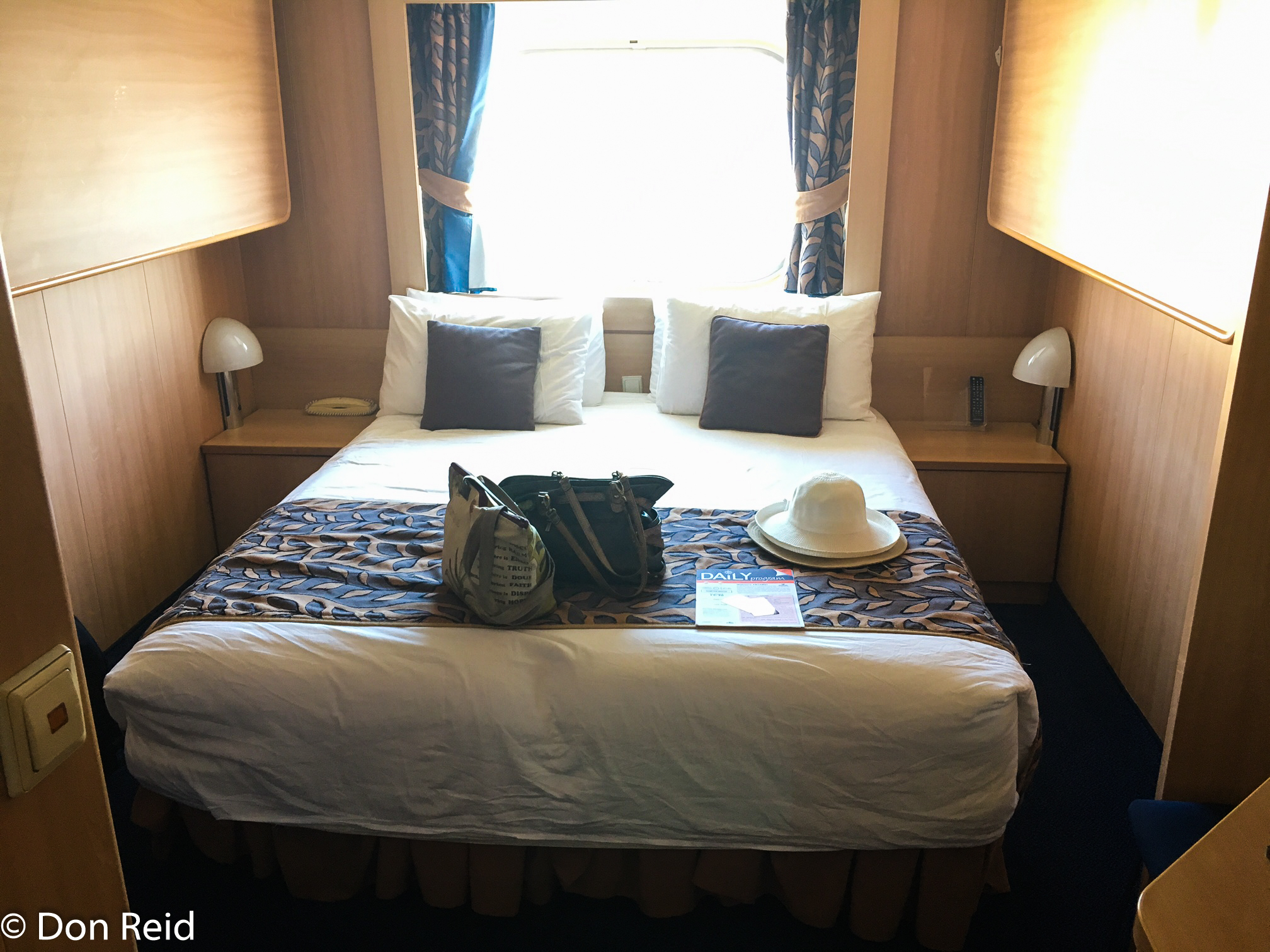
Once boarding commenced, it all went quite rapidly and a couple of further queues later we had taken care of all the formalities and could enjoy a late lunch in the buffet restaurant and settle into our cosy cabin.

The queue snaking through the terminal
At last!
Our cosy cabin

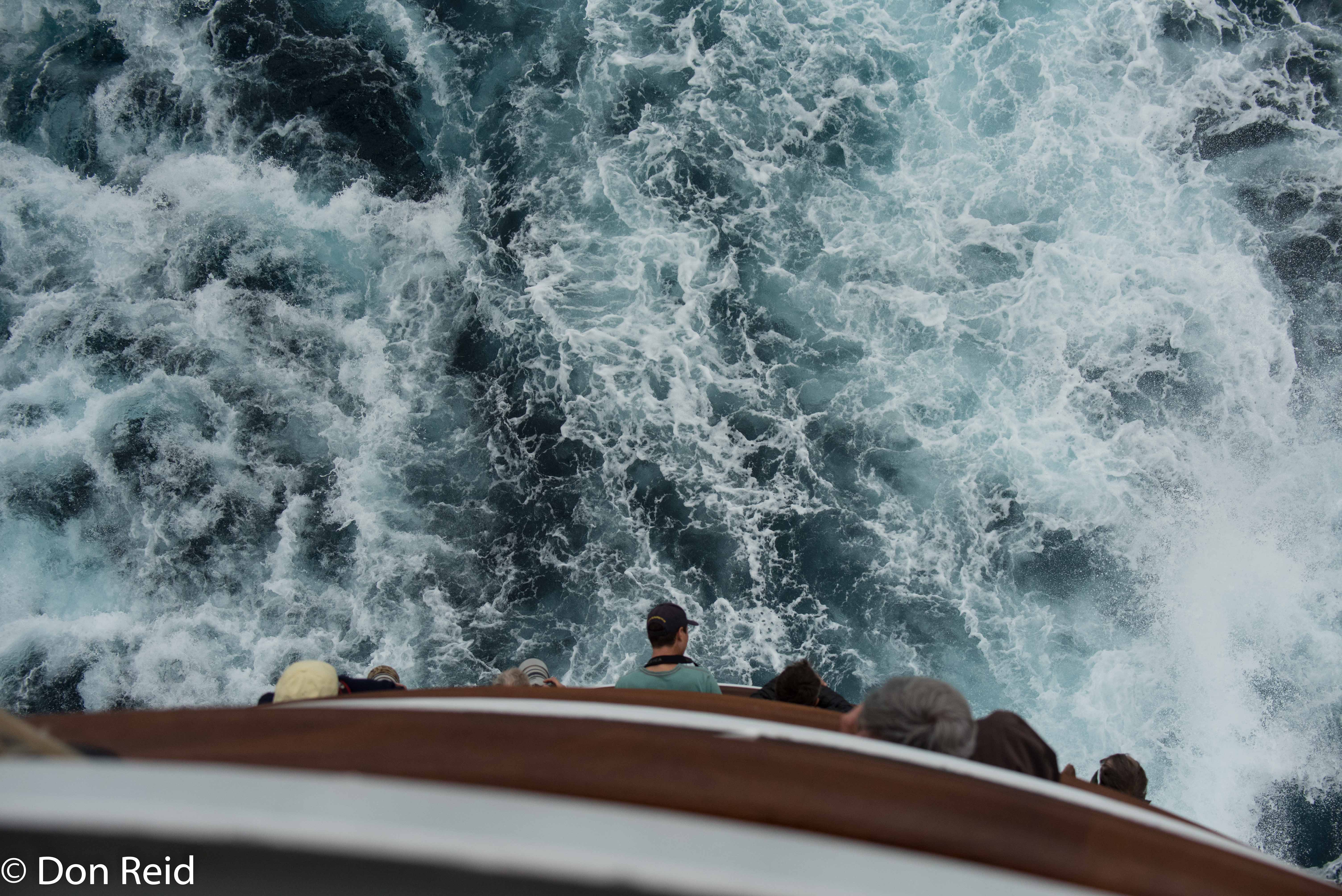
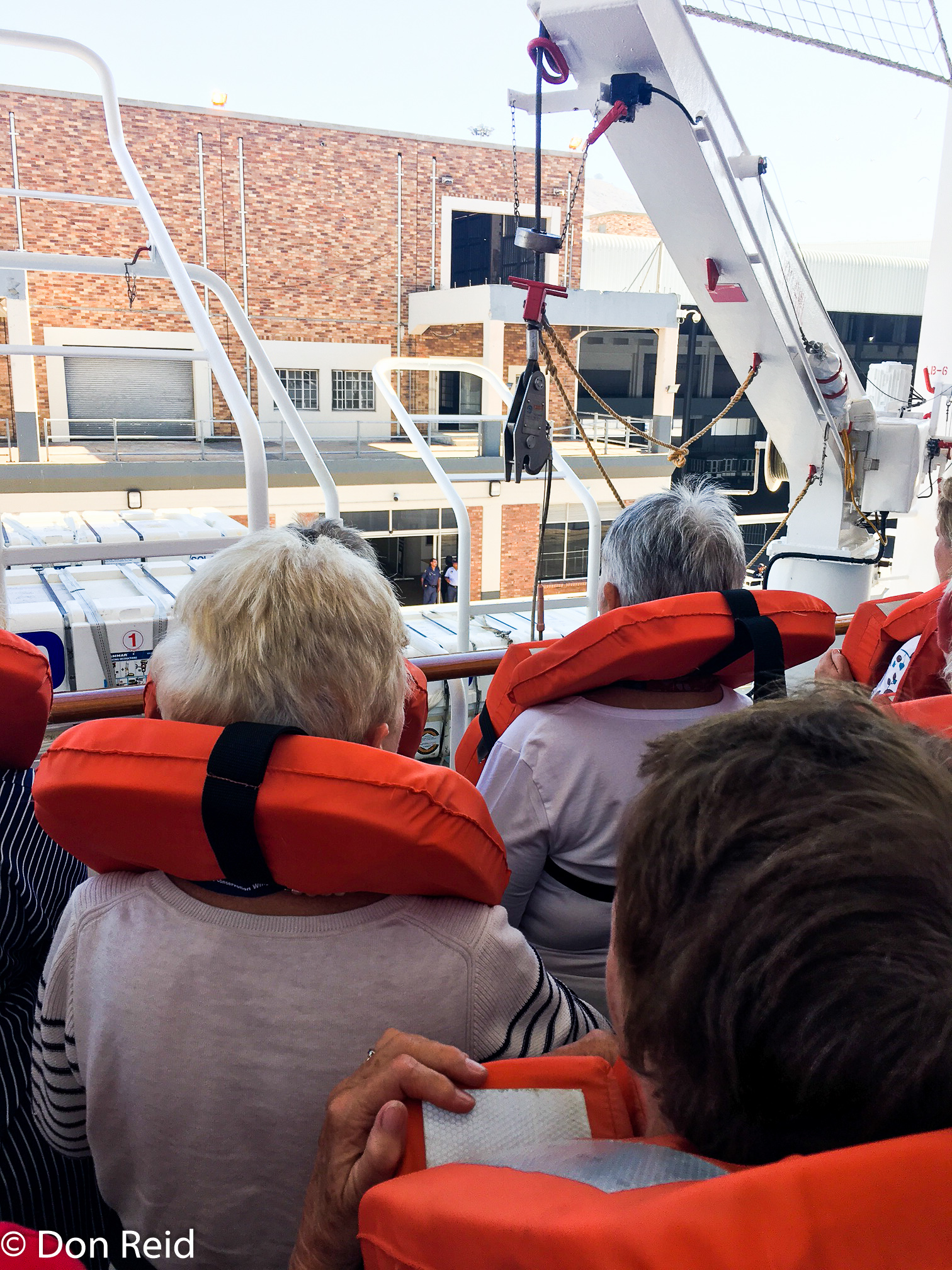
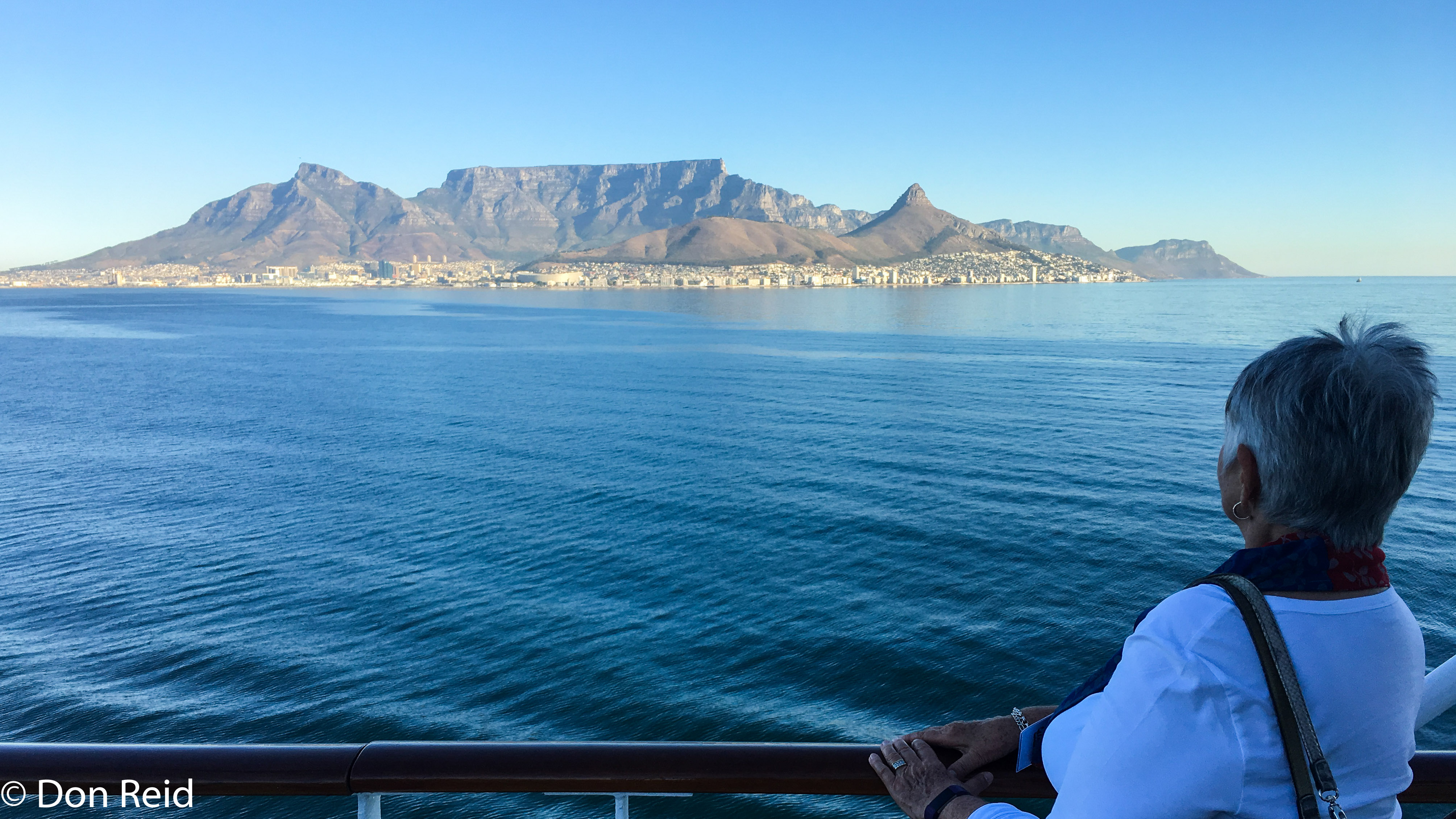
The emergency drill followed and by 4.30 pm we were departing from Cape Town harbour and heading out into Table Bay in perfect weather, the ship leaving a trail of churned sea and the classic view of Table Mountain receding slowly as we stood on the rear deck, enjoying the moment. I couldn’t help thinking of Sir Francis Drake’s comment – he called it “a most stately thing and the fairest cape we saw in the whole circumference of the earth” – and who can argue with that!

The emergency drill
Flock at Sea Cruise departs
Leaving Cape Town
Leaving Table Bay – first sunset

First birds encountered were those favouring the shallower waters close to land – White-chinned Petrel, a skein of Cape Cormorants flying by in their typical V – formation, Cape Gannets and the first Albatross – a Black-browed sitting on the sea.

Later, dinner was in the Galeone Restaurant at the table to which we had been allocated, along with our dinner-table companions for the cruise, Herman & Magda Sauer and Ben & Carolien Prinsloo.

The next 3 days were busy, with our time divided between meals – breakfast in the room, buffet lunch and sit-down dinner, birding from the decks, attending talks and spending time just relaxing with Gerda.

Birding at Sea

  Day One (Tuesday)

The birders who were up early enough on the first morning were treated to sensational birding, the highlight being a Light-mantled Albatross, classed as a mega-rarity in Southern Africa. Unfortunately I missed out on this opportunity and had to be content with the 3 lifers I saw later on during the day – certainly a thrill but dampened somewhat by hearing what I had missed during the first few hours.

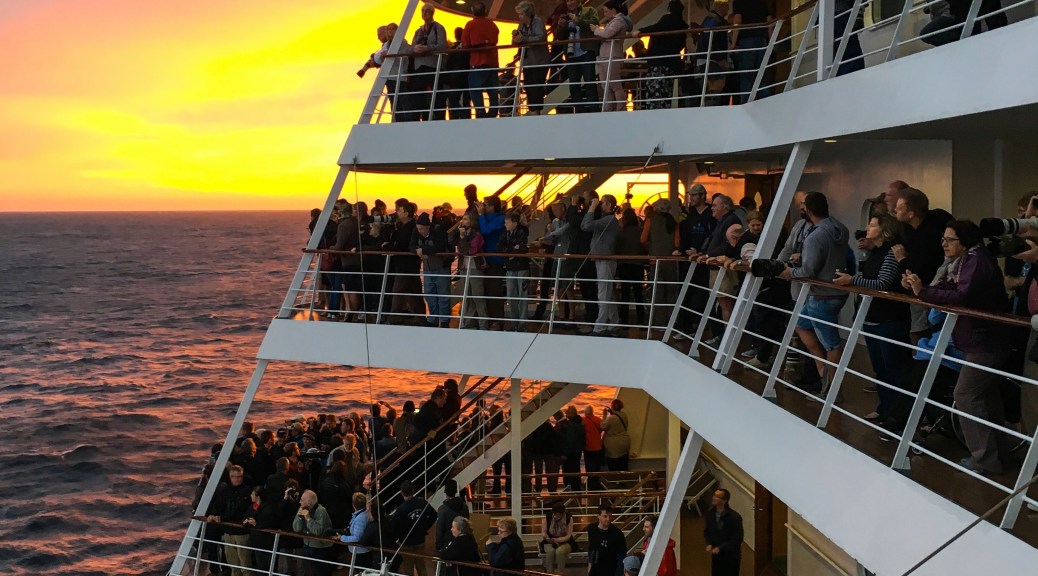
The rear decks seemed to be the place to be, crowded with  keen birders on every available level, to the extent that I had to wait patiently for some to disperse before finding a place at the rail. At other times I spent time on the bow decks and on the side decks which provided a different perspective.

All hands / birders on deck!
The stern deck

Regular sightings of birds flying into the calmer wake of the ship were announced by the experts and were met by a hum of excitement by the layers of birders, followed by clicking of the many cameras. Albatrosses were plentiful, including Wandering, Southern Royal and Indian Yellow-nosed Albatross, with Sooty and Great Shearwaters  and a White-headed Petrel (my first lifer for the trip) in the mix. On our way back to the cabin a Sooty Albatross flew by for my second lifer of the morning, albeit a view diffused by the glass sides at that spot.

Returning in the afternoon to the still crowded stern decks, I added a further lifer when an Antarctic Prion glided past the wake and an imposing Northern Giant Petrel swept by in grand fashion.

  Day Two (Wednesday)

I made sure I was in position early morning, which was a lot quieter birding-wise, nevertheless Shy Albatross and Soft-plumaged Petrel showed well. After a quick breakfast in the cabin I was back on the stern decks where chumming was being done using large frozen blocks of chum, to little effect it seemed, other than another White-headed Petrel which performed beautifully in the wake along with a Northern Giant Petrel.

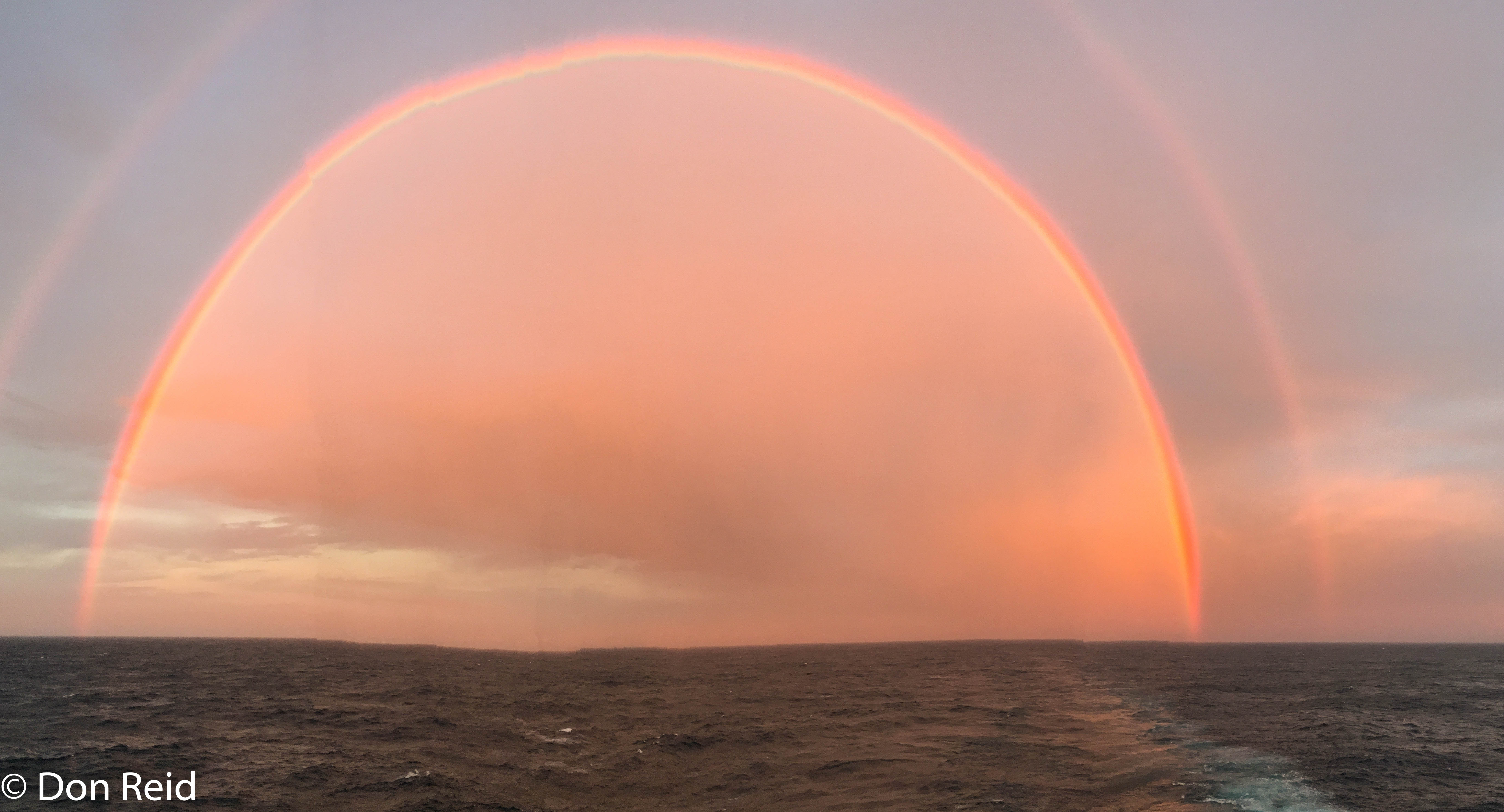
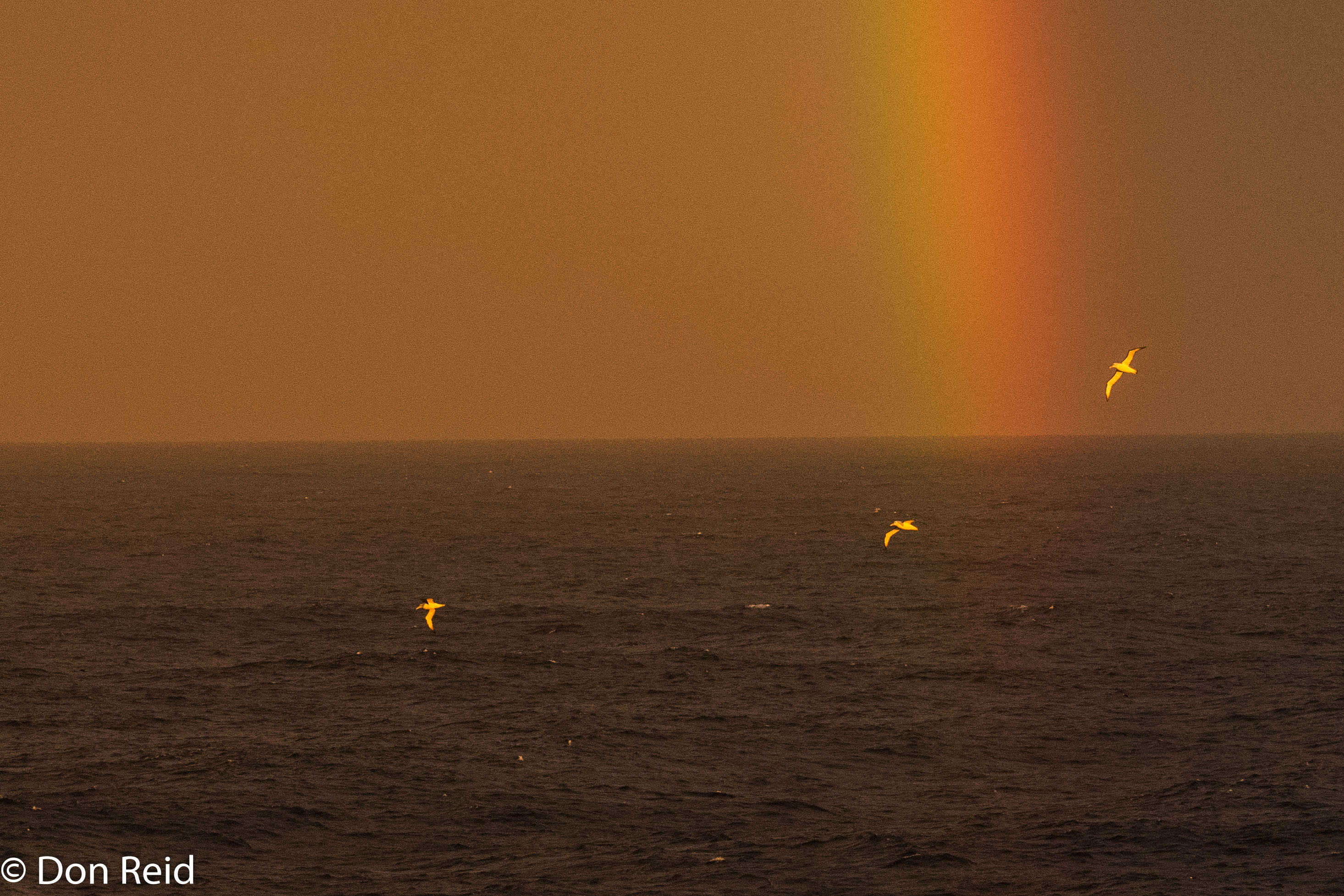
Late afternoon saw me in position once again on the rear deck for some further birding, when a double rainbow developed and soon stretched across the horizon in a display that was nothing short of amazing – it also reminded me of  those half-moon shaped “orange slice” sweets we used to have as a treat when we were kids.  As a bonus, at that moment a clutch of Albatrosses glided gracefully across the face of the rainbow, turning it into a quite magical scene, impossible to reproduce in an ordinary photo.


Amazing double rainbow
Albatrosses gliding by the rainbow

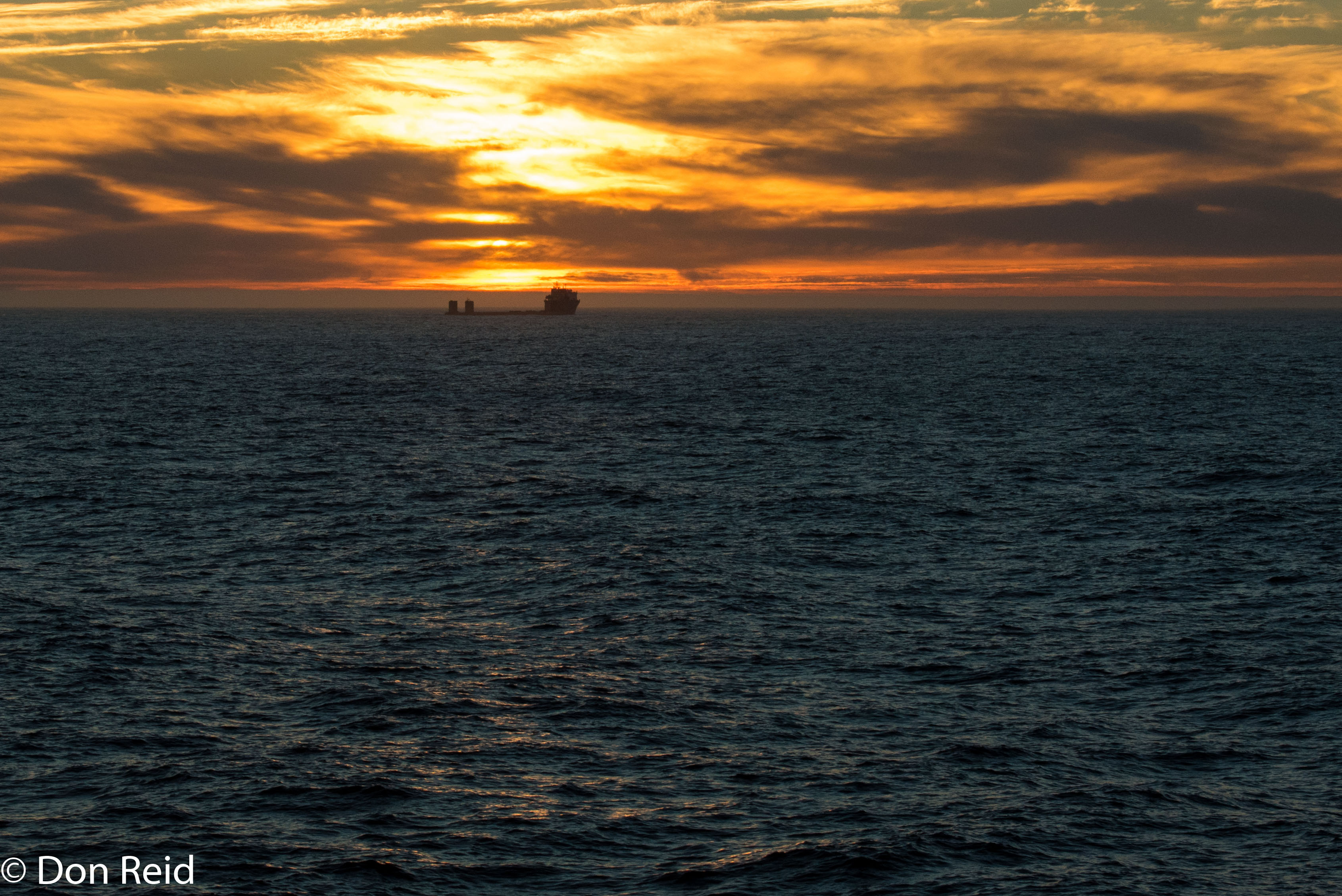
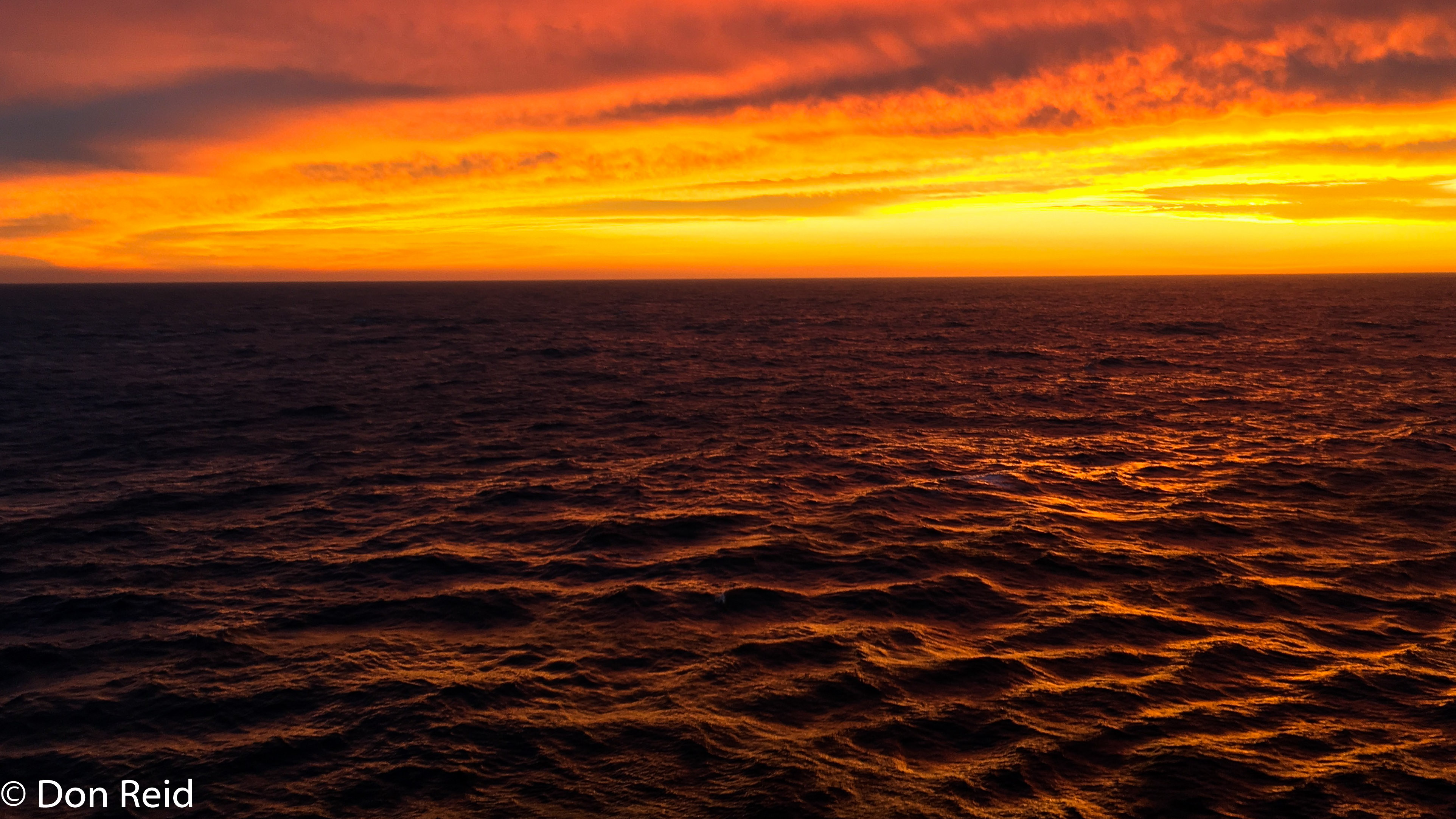
As if this was not enough, it was followed by a sunset to dream about as the ship slowly continued on its way into the night.

Sunset at sea

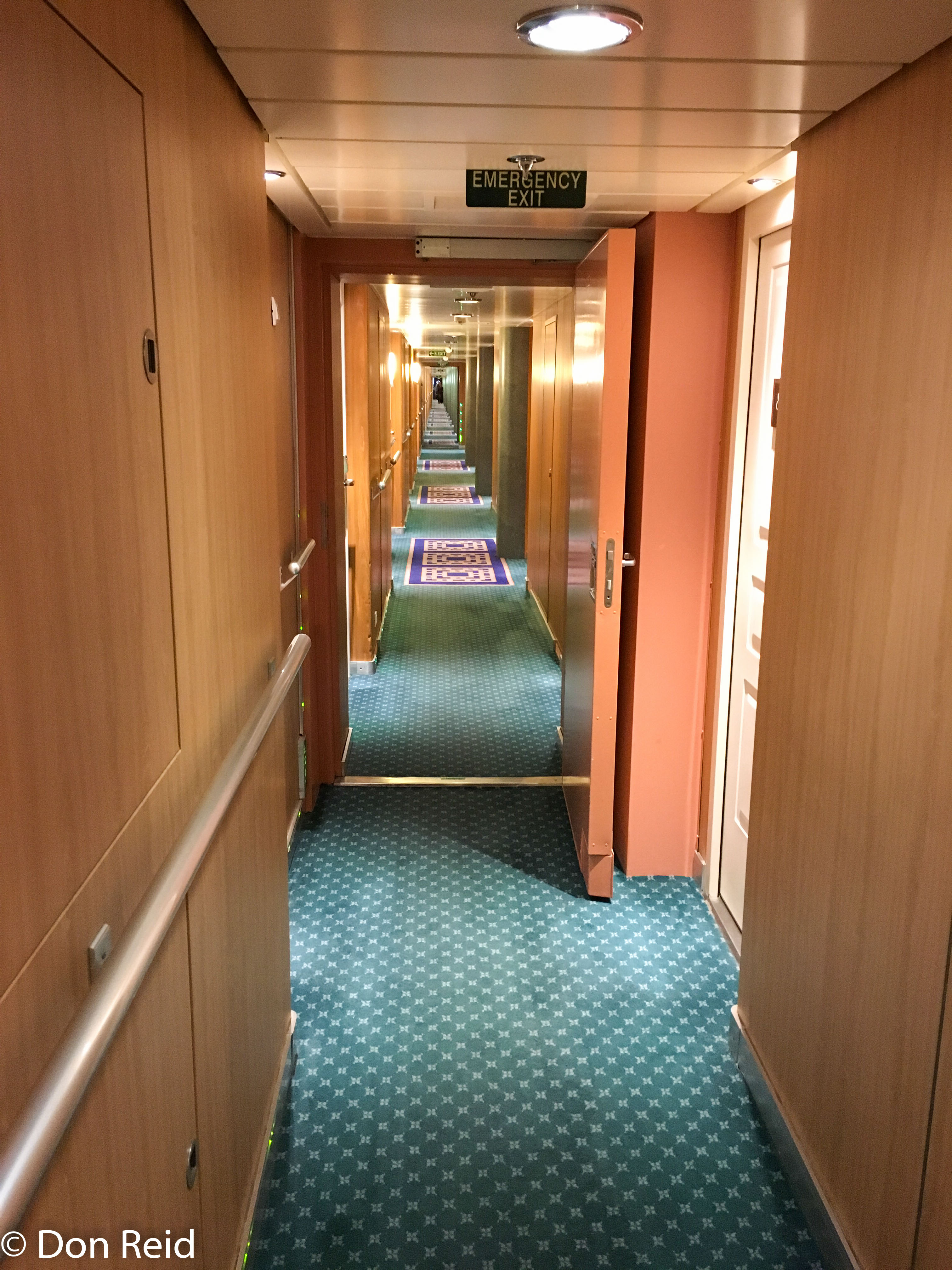
The wind had come up strongly, which made for interesting, slightly drunken walks down those long passages, a challenging shower experience and a night of being bounced gently in our bed as the Sinfonia battled against 80 km/h winds and high swells – thank goodness for stabilizers!

  Day Three (Thursday)

Down the long passage and onto the stern deck, where several birds were hanging around the wake – Shy and Indian Yellow-nosed Albatrosses, Great-winged Petrel, Great Shearwater and White-chinned Petrel were all prominent, plus a couple of new species appeared when Cape Gannets were seen nearby and a lone Subantarctic Skua flew in close to the ship. After breakfast I added Atlantic Yellow-nosed Albatross to my list before heading to the theatre for a highlight of the trip – the talk on Albatrosses by Peter Harrison.

The lo..o..o..n.n.ng passages
View from the top deck

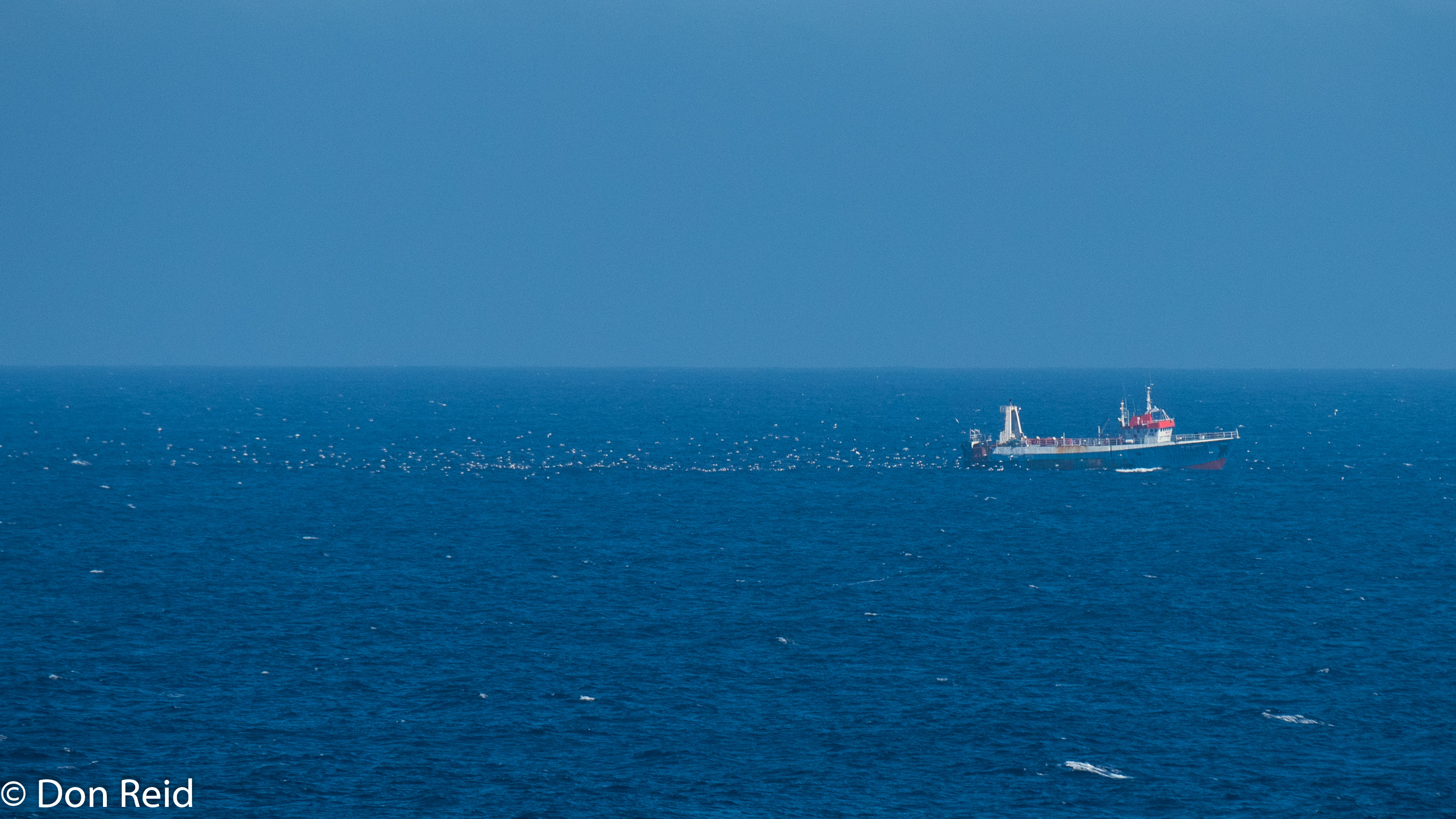
This was followed by lunch where after we headed to our cabin for a bit of a break from all the activity………..  not for long, as I glanced through the cabin window and noticed an Albatross passing by, then another…. and another. So I grabbed my gear and headed to deck seven starboard to find a continuous stream of seabirds passing by – my guess was that they were heading towards the trawler we had seen earlier, “towing” in its wake a flock of many hundreds of birds.

Trawler with Flock of birds – at sea

The stream continued steadily for more than an hour during which time a few hundred Albatrosses, Gannets, Petrels, Shearwaters and Storm Petrels passed from bow to stern, many doing an airborne pirouette and a pas de deux before going on their way – apart from the thrill of the lifers on Day One, this was for me the absolute birding highlight of the trip. Just a pity all the Birdlife guides were attending the AGM, so there was no one to confirm the ID of some of the trickier birds that passed by, including some Storm Petrels in the distance.

All this excitement needed a short nap to recover, by which time the wind had died, the sea had gone quiet with hardly a swell and the birds had all but disappeared.

However that was not quite the last of the birding – after dinner at 10.30 pm I went to deck 6 starboard where it was said Great Shearwaters were feeding and sure enough there they were, up to seven visible at a time, feeding near the ship’s side, drawn to it by the lights.

My Bird List for the Trip

So what birds did I see? Some really good ones actually……….

  Albatrosses

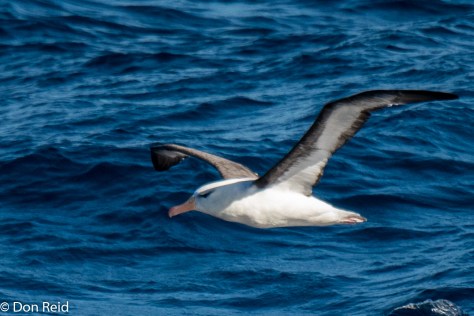
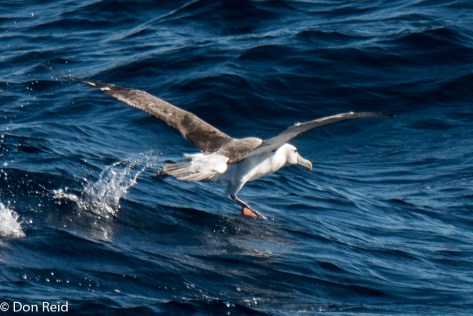
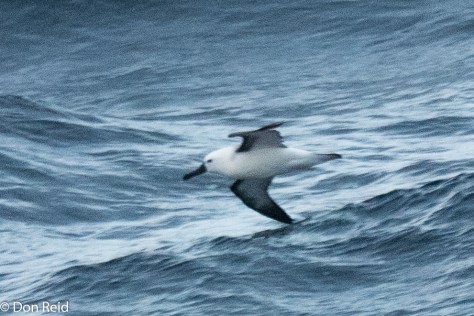
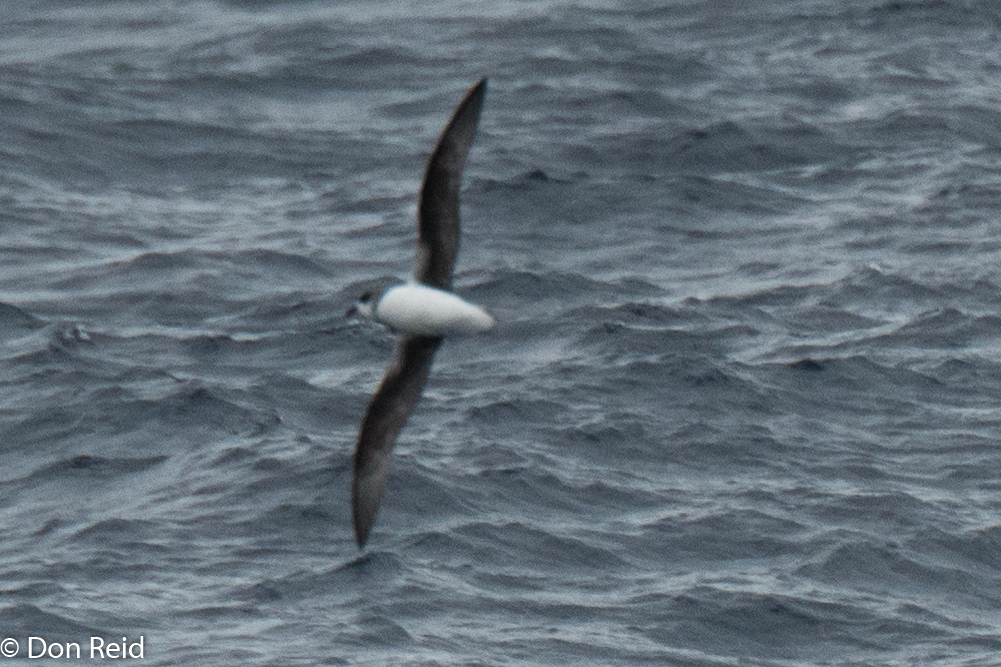
Black-browed Albatross was the most frequently seen Albatross :  black back, broad black edging to the white underwings, orange bill

Black-browed Albatross, Flock at Sea Cruise

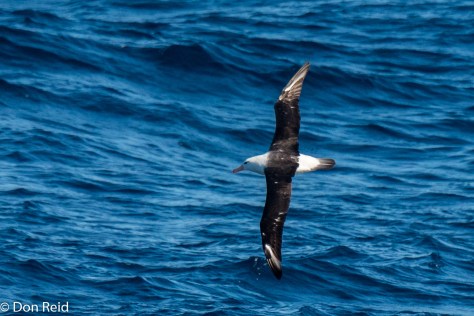
Shy Albatross was next most numerous : black back, narrow black edging to the white underwings, bluish bill

Shy Albatross, Flock at Sea Cruise

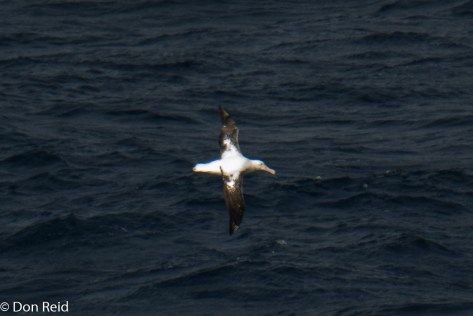
Wandering Albatross seen several times on the first day : largest of the Albatrosses, white back, mostly black upper wings fading to white nearer body

Wandering Albatross, Flock at Sea Cruise

Southern Royal Albatross seen once on day one : white back, black wings with white patches (No Photo)

Sooty Albatross seen once on day one (Lifer!) : all dark with white crescent around eyes

Sooty Albatross, Flock at Sea Cruise

Indian Yellow-nosed Albatross seen a few times during trip : black back, black edging to white underwings, white face with black bill

Indian Yellow-nosed Albatross, Flock at Sea Cruise

Atlantic Yellow-nose Albatross seen just once : as for last species but grey face (No Photo)

  Petrels

White-chinned Petrel seen regularly throughout trip : large dark seabird with pale bill and white “chin” at base of bill

White-chinned Petrel, Flock at Sea Cruise

White-headed Petrel seen a couple of times (Lifer!) : smaller seabird with dark bill, white face with dark mask around eyes

White-headed Petrel, Flock at Sea Cruise

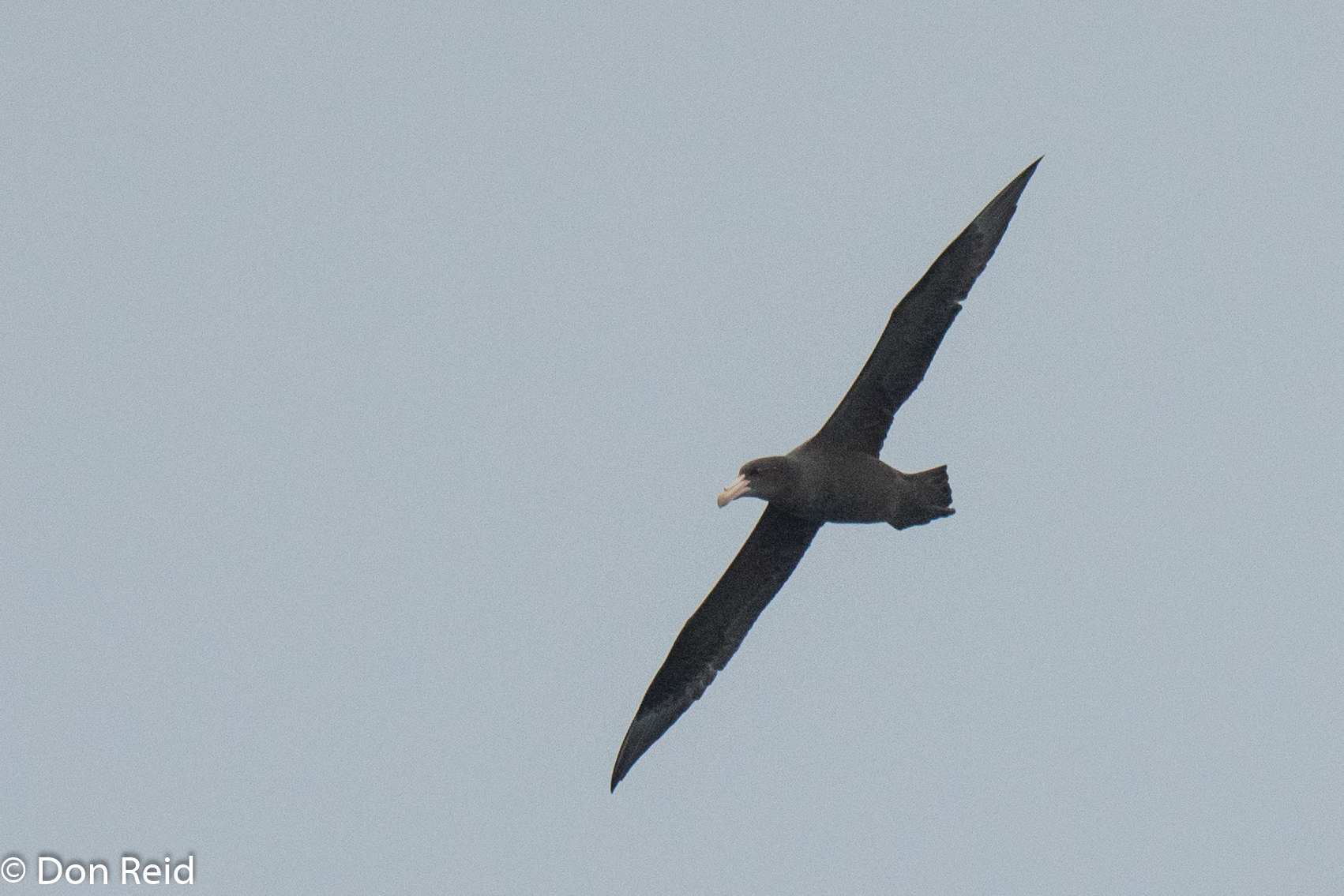
Northern Giant Petrel seen a couple of times : large dark seabird with heavy bill

Northern Giant Petrel (Juvenile), Flock at Sea Cruise

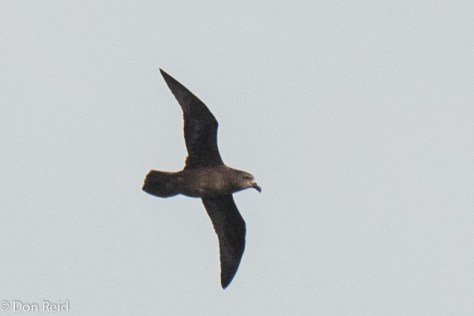
Great-winged Petrel seen regularly throughout trip : medium-sized dark seabird, dark bill

Great-winged Petrel, Flock at Sea Cruise

Soft-plumaged Petrel seen just once : smaller seabird with light body, grey neck band, dark bill

Soft-plumaged Petrel, Flock at Sea Cruise

   Shearwaters

Sooty Shearwater seen a few times : small dark seabird with silvery underwing, dark bill

Great Shearwater seen regularly throughout trip : small seabird with light body, mottled wings, black cap and dark bill

Great Shearwater, Flock at Sea Cruise

  Other Species

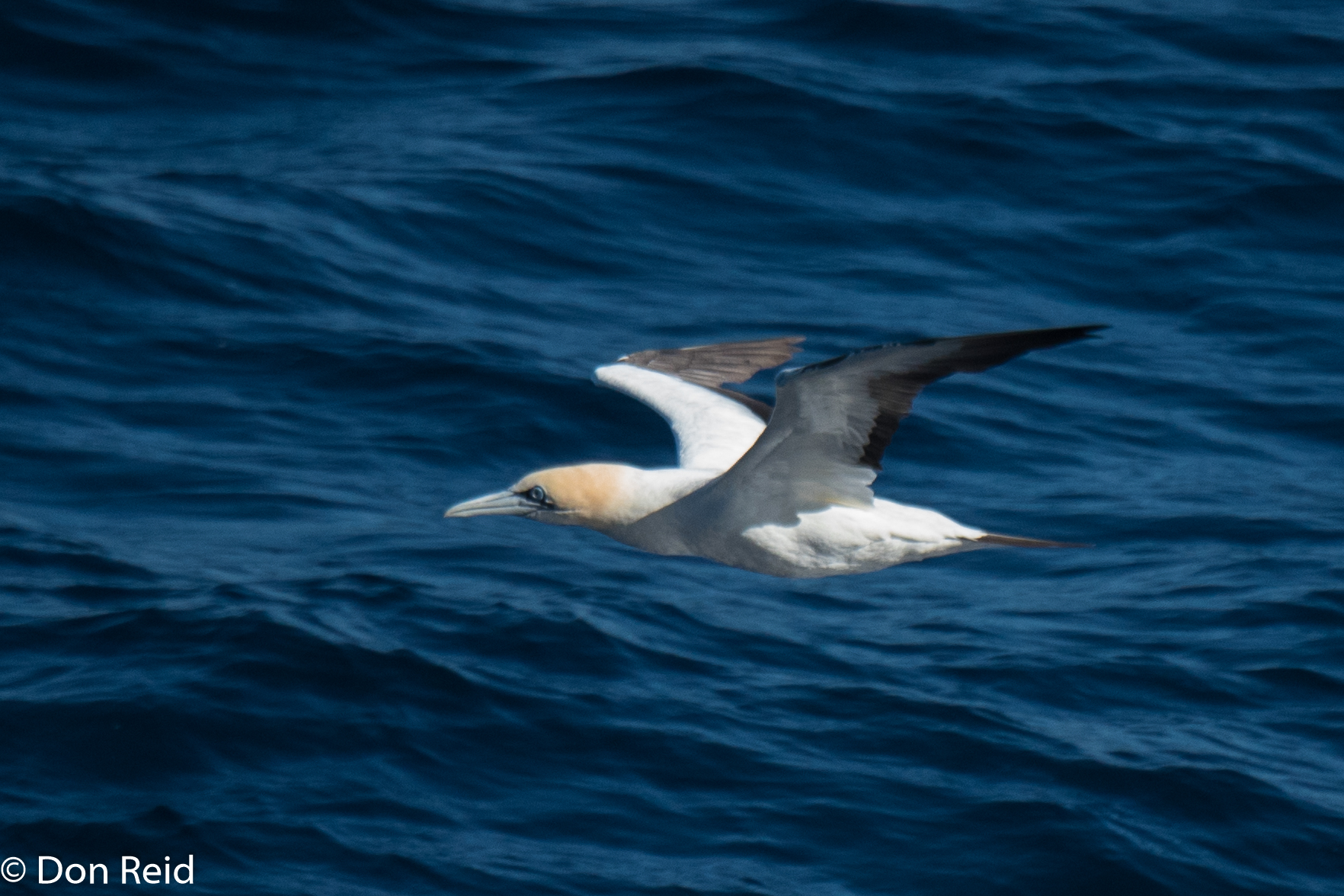
Cape Gannet seen regularly during trip : unique giss – easily identifiable

Cape Gannet, Flock at Sea Cruise

Antarctic Prion seen once during trip (Lifer!) : small pale blue-grey seabird with dark “lazy” M across upper wings

Antarctic Prion, Flock at Sea Cruise

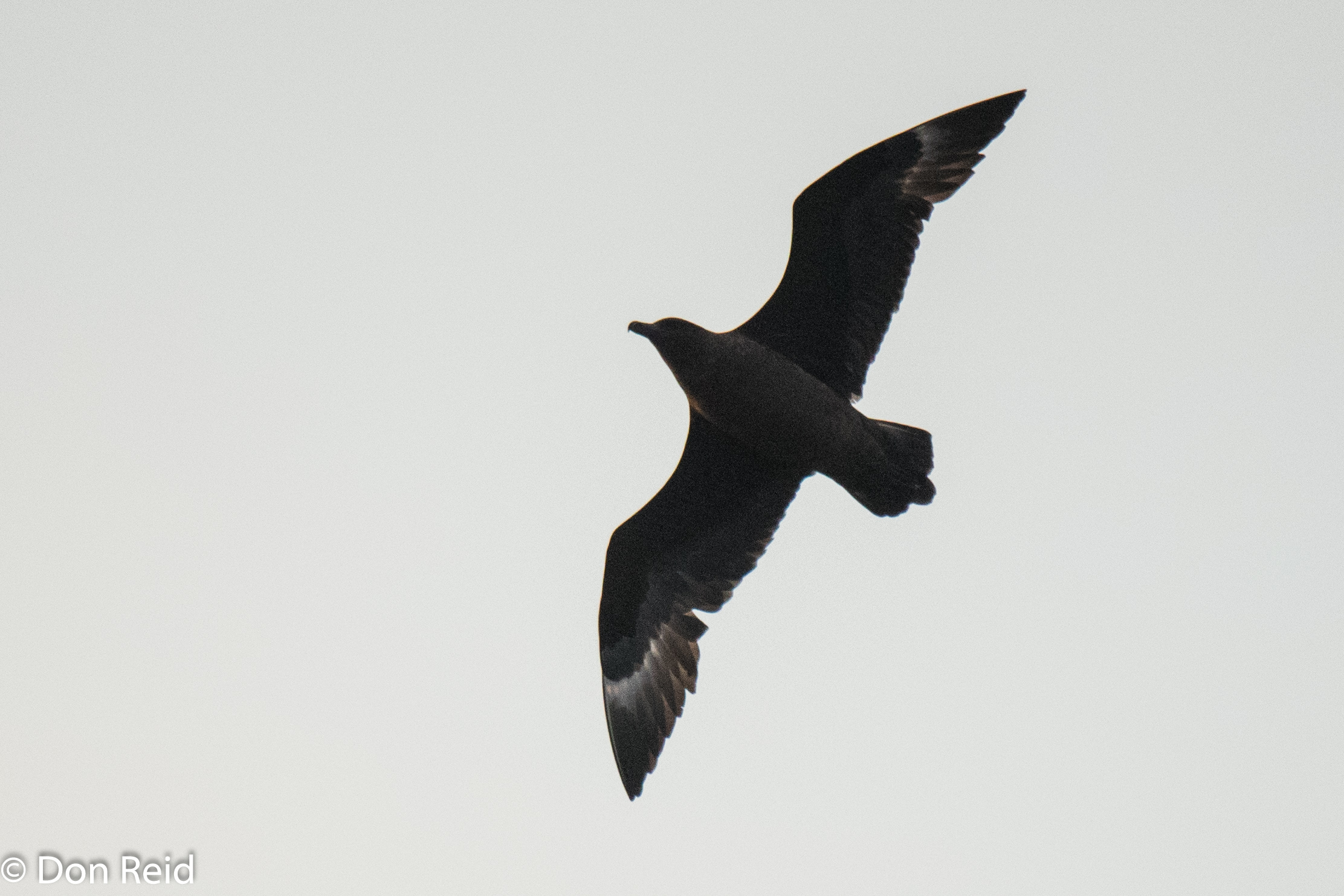
Subantarctic Skua seen a few times on last day : large, dark seabird with white underwing flashes

Subantarctic Skua, Flock at Sea Cruise

The Talks

I had planned to attend more but the birding was just too attractive, so in the end I limited it to three of the talks :

Dale Morris on Bird Photography – he showed us an impressive set of his images along with tips on getting that different shot, more art-like compared to the usual “bird on a stick”, as he put it.

Faansie Peacock on Digital Painting – fascinating and inspiring enough to persuade me to try it at the earliest opportunity (I have ordered a graphics tablet as a starter)

The end result of a 40 minute digital painting session – and he made it look easy!

Peter Harrison on Albatrosses – Ocean Nomads – the person introducing him used phrases such as “inspiring”, “best speaker he had ever heard”, “brings tears to your eyes” which I was wont to dismiss as hyperbole, but once his mesmerizing talk was done, I realised he was spot on. Certainly one of the best speakers I have heard and yes, I had a tear welling at times during his talk, which had me literally spellbound and on the edge of my seat for the full hour.

Albatrosses have always held a certain magic for me, which Peter Harrison took to a new level – I will never view Albatrosses quite the same again.

And it’s Over!

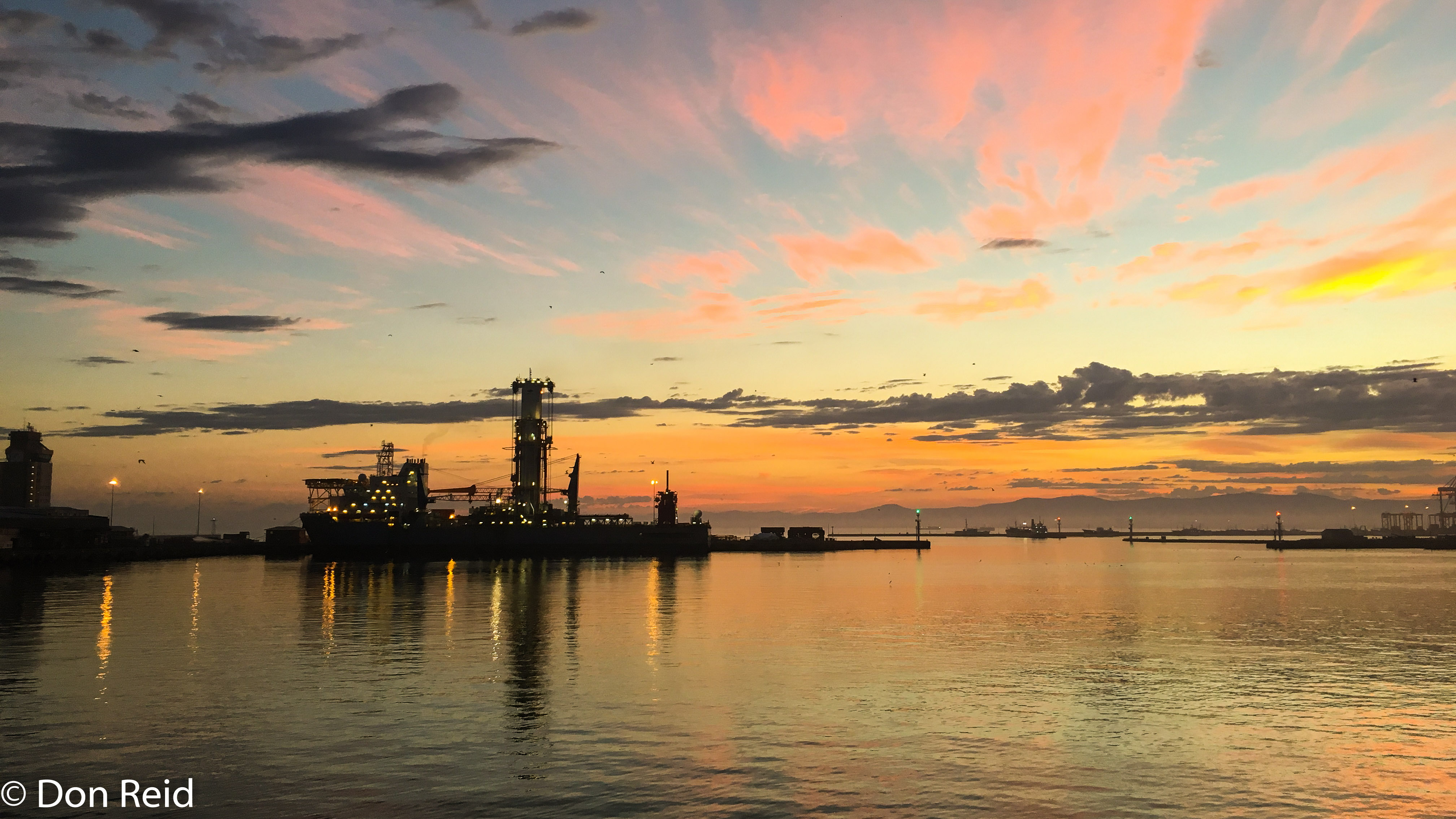
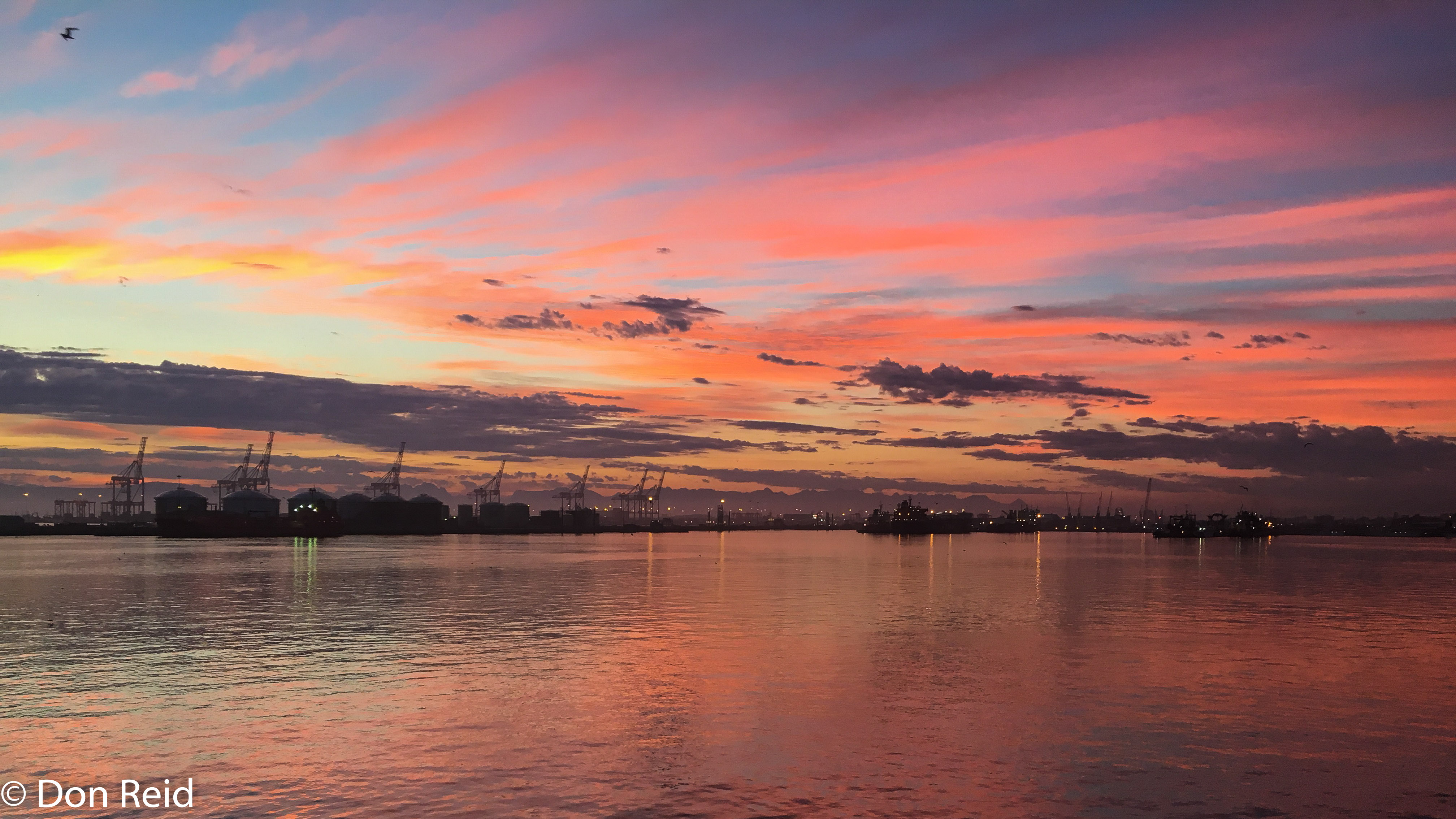
We docked before sunrise in Cape Town harbour, only to be met by the most beautiful scenes of the harbour bathed in the early morning hues, turning ordinary dockyard scenes into those worthy of hanging on your walls.

Cape Town Harbour at sunrise

A fitting end to a spectacular and memorable trip! Thanks and Well done to Birdlife SA!

And we’re (almost) off!

So, here we are in Cape Town – relaxing in our hotel room after a not too strenuous drive from Mossel Bay. Why are we here? You may well ask and here’s the answer …. ( there is a small clue in the photo at the top)

Tomorrow at midday we board the MSC Simfonia along with 1943 other birding enthusiasts for a special cruise arranged by Birdlife SA and said to be the most birders ever gathered together on a ship of any kind.

It promises to be quite special with 30 seabird experts at various spots on the ship to help ID the seabirds that we come across. We will be heading into the deep seas south of South Africa, renowned for the diversity and numbers of sea birds so there should be no shortage of potential sightings – who knows what could turn up in that watery wilderness!

A selection of sea birds

Just have to go through the checklist – tickets, check; baggage labels – check; binos – check; camera with long lens – check; penguin outfit – er what? Oh yes there a “penguin evening” to celebrate international penguin day – check.

Right we are all set!

Touring with Canadians – Part 1 : The Highlights

The Planning

When “Overseas Family” come to visit us in South Africa, it is always a big occasion which is eagerly anticipated, so we were thrilled when niece Sarah announced more than a year ago that she was bringing their family from Canada over to Southern Africa for a “Trip of a Lifetime” in March 2017. Even better was the news that my sister Sheila (Sam to them) would be joining them for the trip and brother Andrew would join them for the southern leg.

Our task was to organise the northern leg of the trip, which had to include Kruger National Park with Victoria Falls and Botswana being high on their wish list. We soon had a Kruger booking pinned down, together with a short stay on the Panorama route in Mpumulanga, which took care of most of week 1 of the two-week northern leg. A while later we secured a travel package which included a couple of nights each in Victoria Falls and Kasane Botswana which filled week 2, so we were all set.

The Highlights – Places, Sights, Food

The following is a brief diary of the two weeks, which I will no doubt expand on in further posts.

Monday 6th – Pretoria

The family arrived on Sunday evening (Alex, Sarah, Cassie and Rio) and Monday morning (Sheila) so Monday was a day of recovery and orientation for their travel-befuddled and time-zoned brains. Gerda prepared a nice supper with “just enough chicken” to go around (3 whole chickens with one in the wings just in case!)

Tuesday 7th – Pretoria to Satara Camp in Kruger

We set off for Kruger in the morning, loaded to capacity in our SUV plus luggage trailer. Mid-morning we stopped at Milly’s for the customary brunch and a good coffee, which set us up nicely for the rest of the day.

The journey took more or less the whole day and included an unexpected deviation in Kruger so we arrived at Satara just as the gate was closing at 6.05 pm (more on that story in another post!)

The evening braai allowed us time to reflect on the long day’s travelling and sights seen on the way to Satara, albeit a bit rushed!

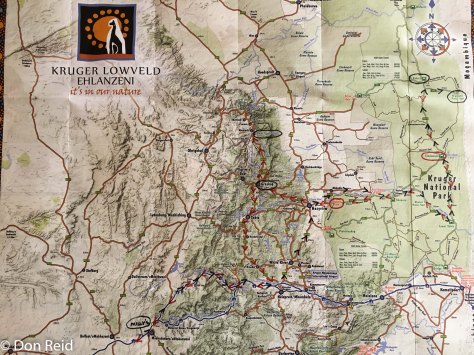
Route map Mpumulanga
Millys
Millys

Wednesday 8th – Satara to Nwanetsi

We had just two nights in Satara camp in Kruger so made the most of it with a long morning game drive on the Wednesday to Nwanetsi, where we prepared a genuine Kruger brunch. The afternoon nap time allowed everyone to rekindle their energy.

Satara-Nwanetsi
Satara-Nwanetsi
Elephant, Satara-Lower Sabie
Elephant near Satara

Thursday 9th – Satara – Phabeni – Thaba Tsweni Lodge

The route to from Satara to Phabeni Gate took almost the entire day, travelling at a slower and far more respectable pace, with stops at Tshokwane, Lower Sabie and the Lake Panic hide along the way. From Phabeni it was a short drive to Graskop and onwards to Thaba Tsweni Lodge for a two-night stay. The day was filled with interesting and exciting sightings with Kruger in superb condition after the good summer rains.

The evening meal was not in a restaurant as planned (we just could not face the trip to Graskop and back at night having seen the state of the road) , but a Chef’s Table conjured up by Gerda and Sarah with all the goodies packed by Gerda “just in case”.

White Rhino, Satara-Lower Sabie
Lionesses, Satara-Lower Sabie
Lions, Phabeni area
Lion, Phabeni area

Friday 10th – Panorama Route (Lite)

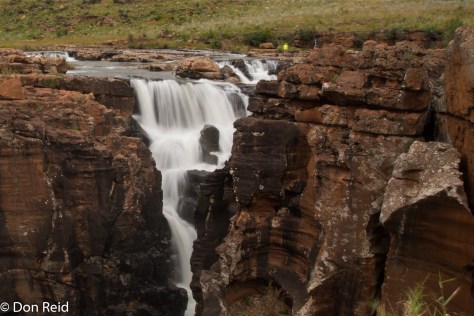
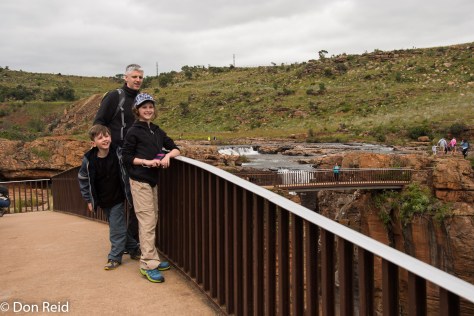
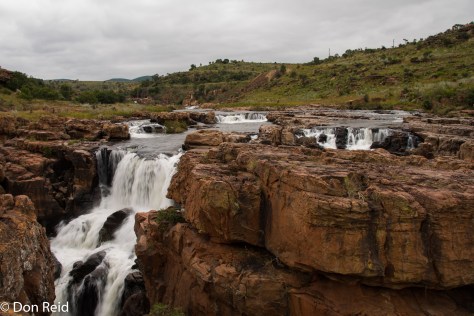
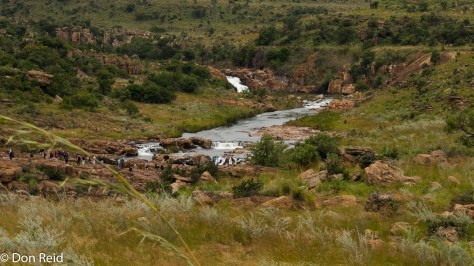
Sarah’s birthday was celebrated at Harrie’s Pancakes in Graskop, after a late start and a visit to Bourke Luck Potholes (the kind formed by eons of water and grit action on soft rocks) and a section of the Panorama Route. A cabbage bought for R5 from a farmer was turned into a delicious fried dish that evening by inventive Sarah.

Bourkes Luck
Bourke’s Luck Potholes
Bourkes Luck
Bourke’s Luck
Sarah's birthday, Harries Pancakes, Graskop
Sarah’s birthday, Harries Pancakes, Graskop

Saturday 11th – Graskop to Pretoria

Our first stop after breakfast at the lodge was God’s Window for a walk to the viewpoints and up the path to the rain forest.

From there we headed homewards to a “meeting of the cousins” , only stopping for lunch at Milly’s.

Gods Window
God’s Window

Sunday 12th – Pretoria

More family time as the cousins and their progeny got to know each other, interspersed with some of Gerda’s home cooking and much excitement amongst the youngsters.

Monday 13th – Pretoria to Victoria Falls

Off to OR Tambo for the flight to Victoria Falls, where we landed just after 1 pm and we were soon at the Kingdom Hotel.

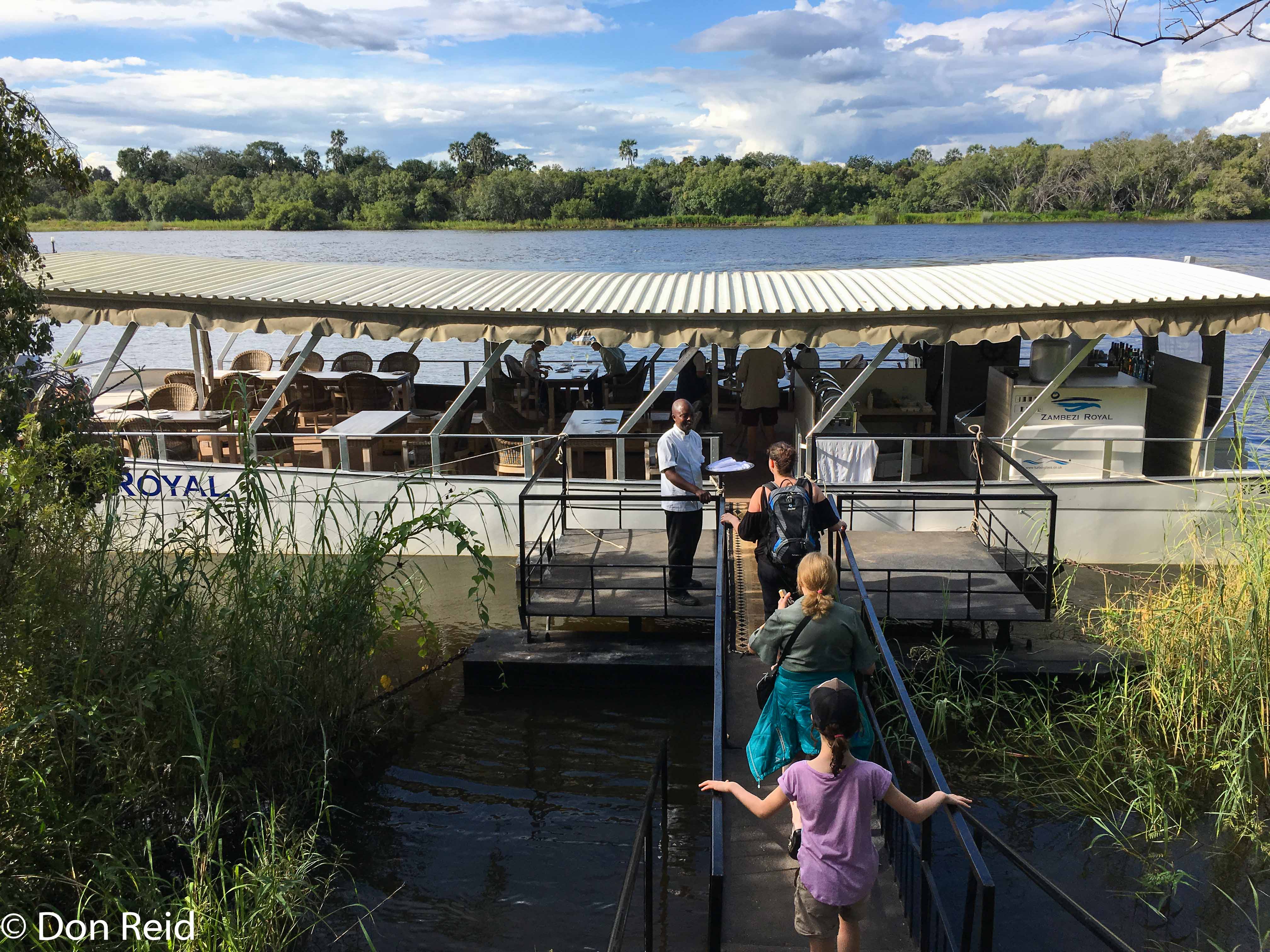
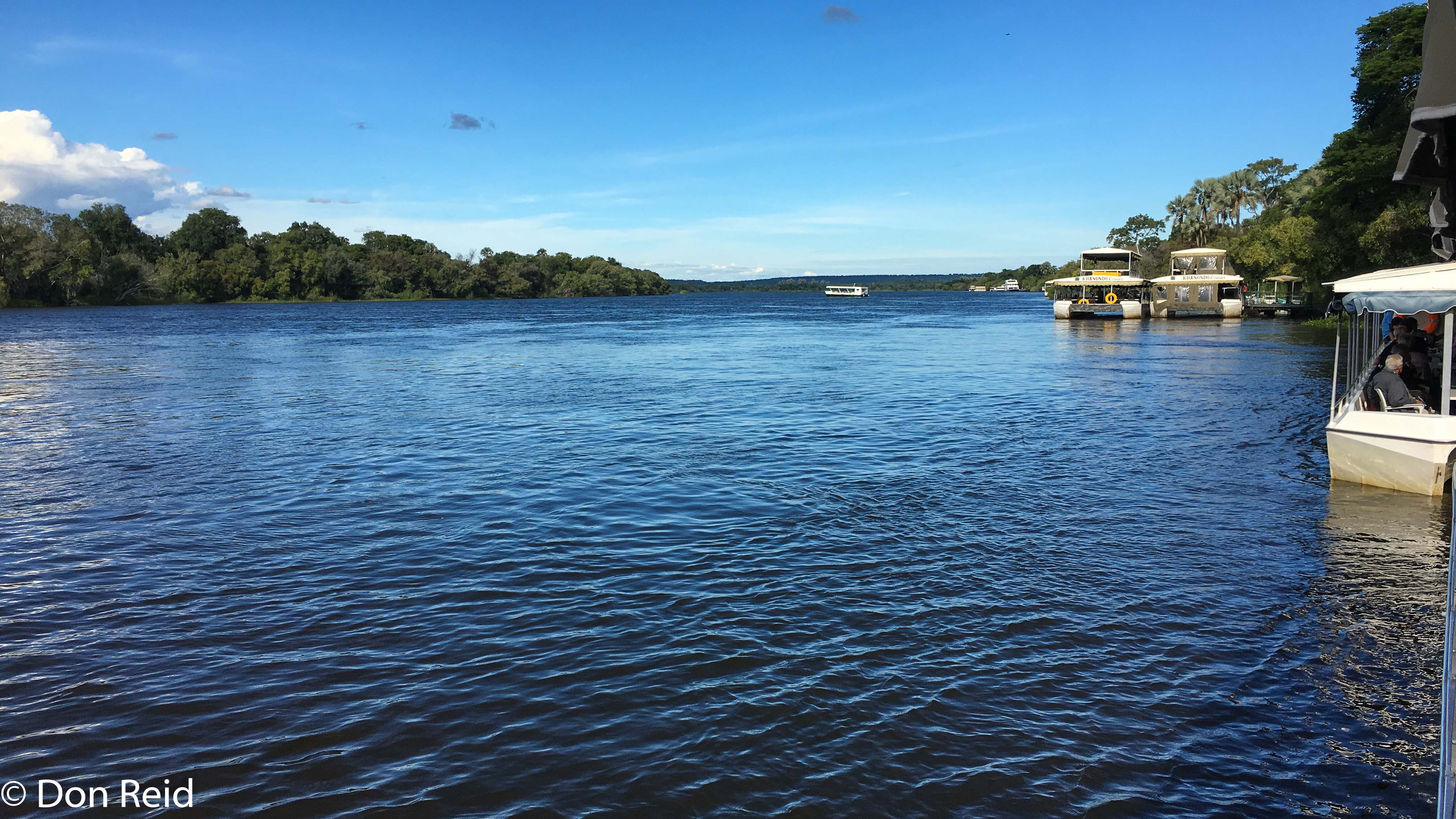
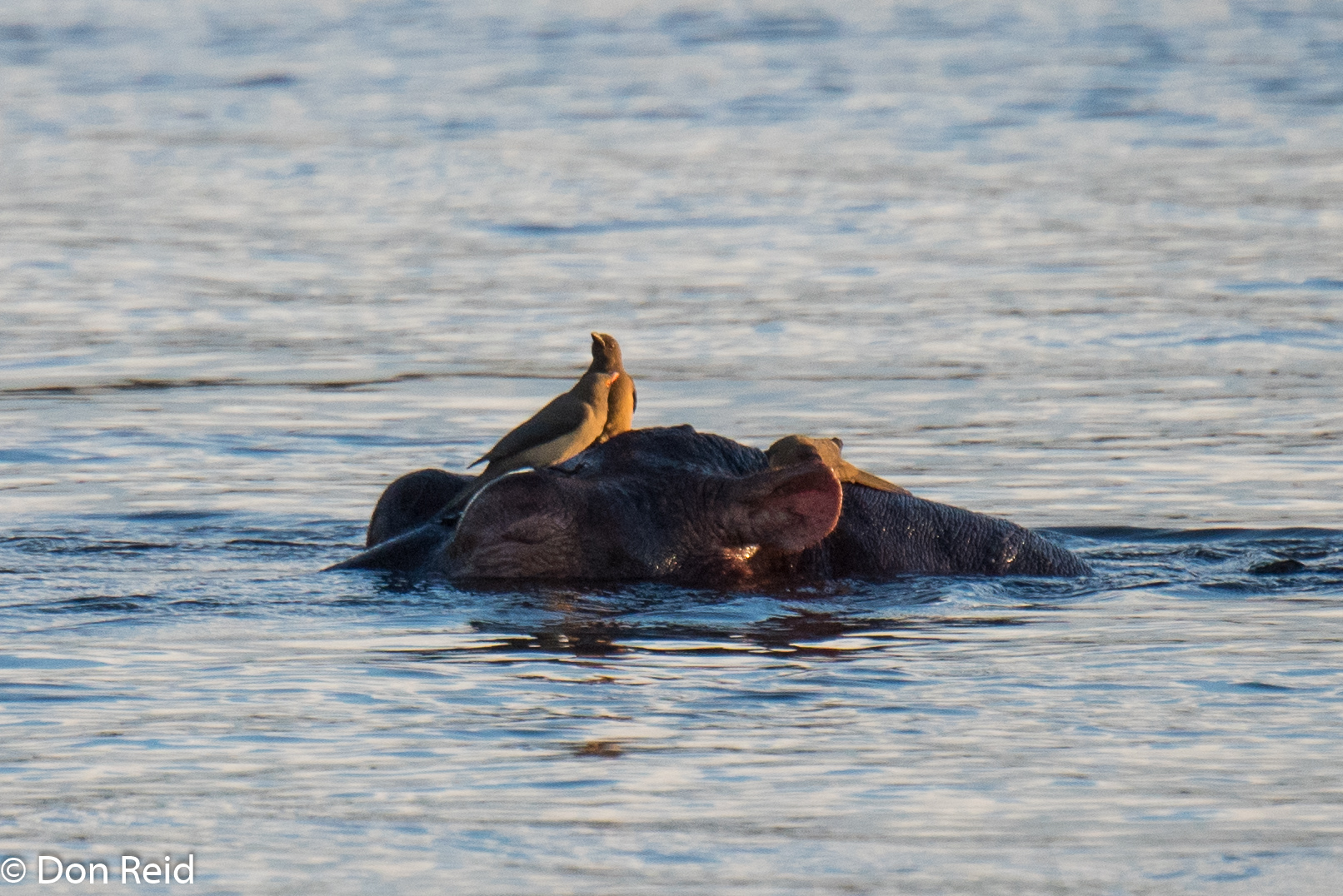
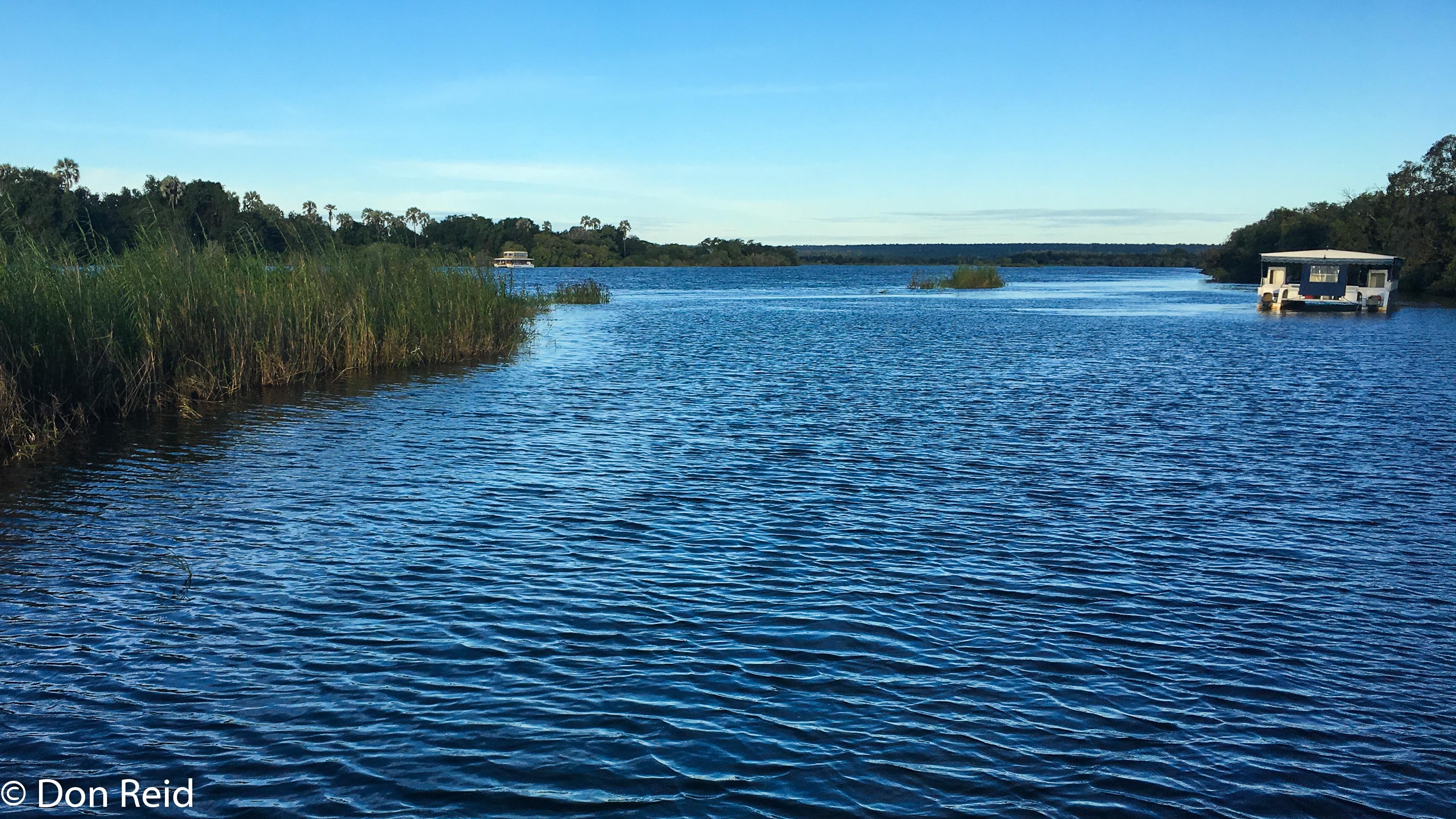
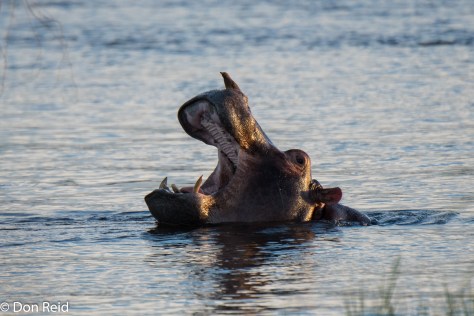
We did the “Sunset Cruise” (Luxury version) which was “super-cool” in Sarah’s words, seeing Hippos and Crocs up close, followed by a meal in the local Spur.

Kingdom Hotel Vic Falls
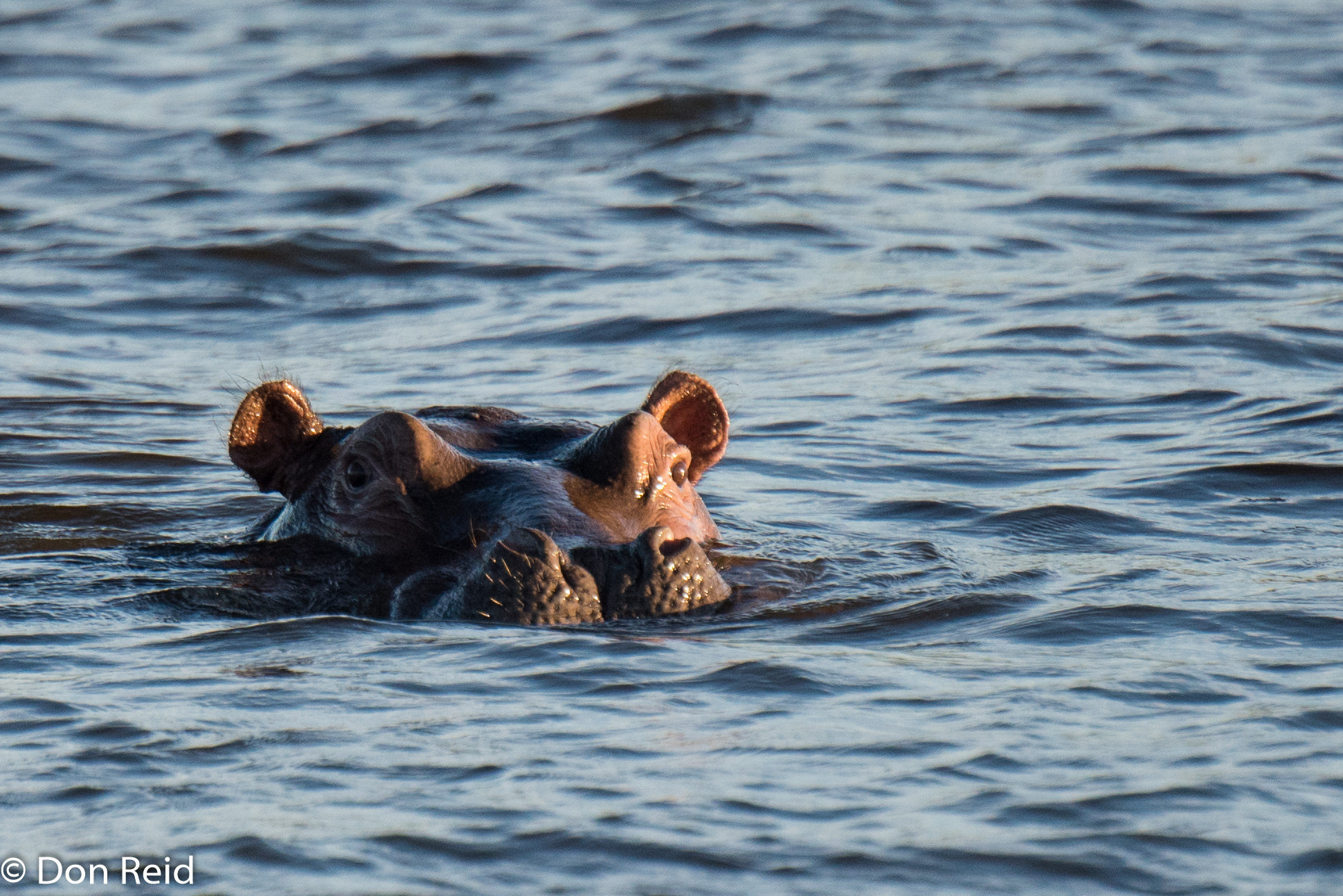
Hippo, Zambezi Cruise

Tuesday 14th – Victoria Falls

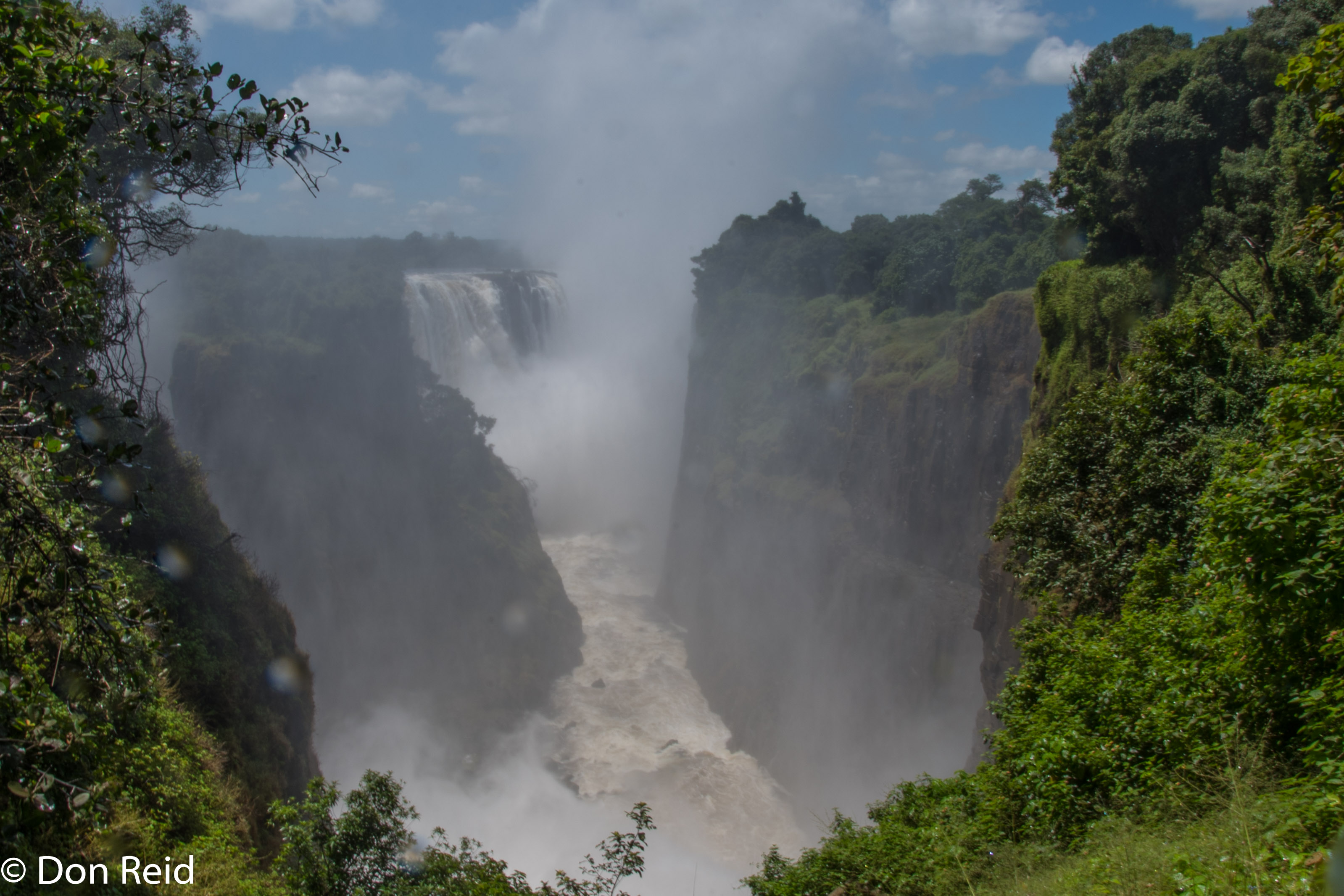
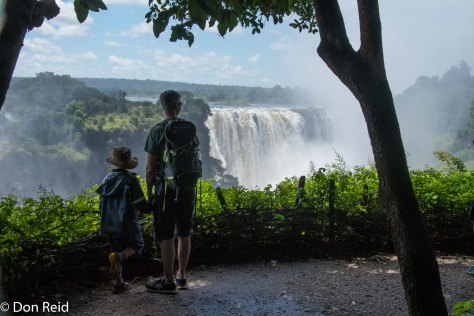
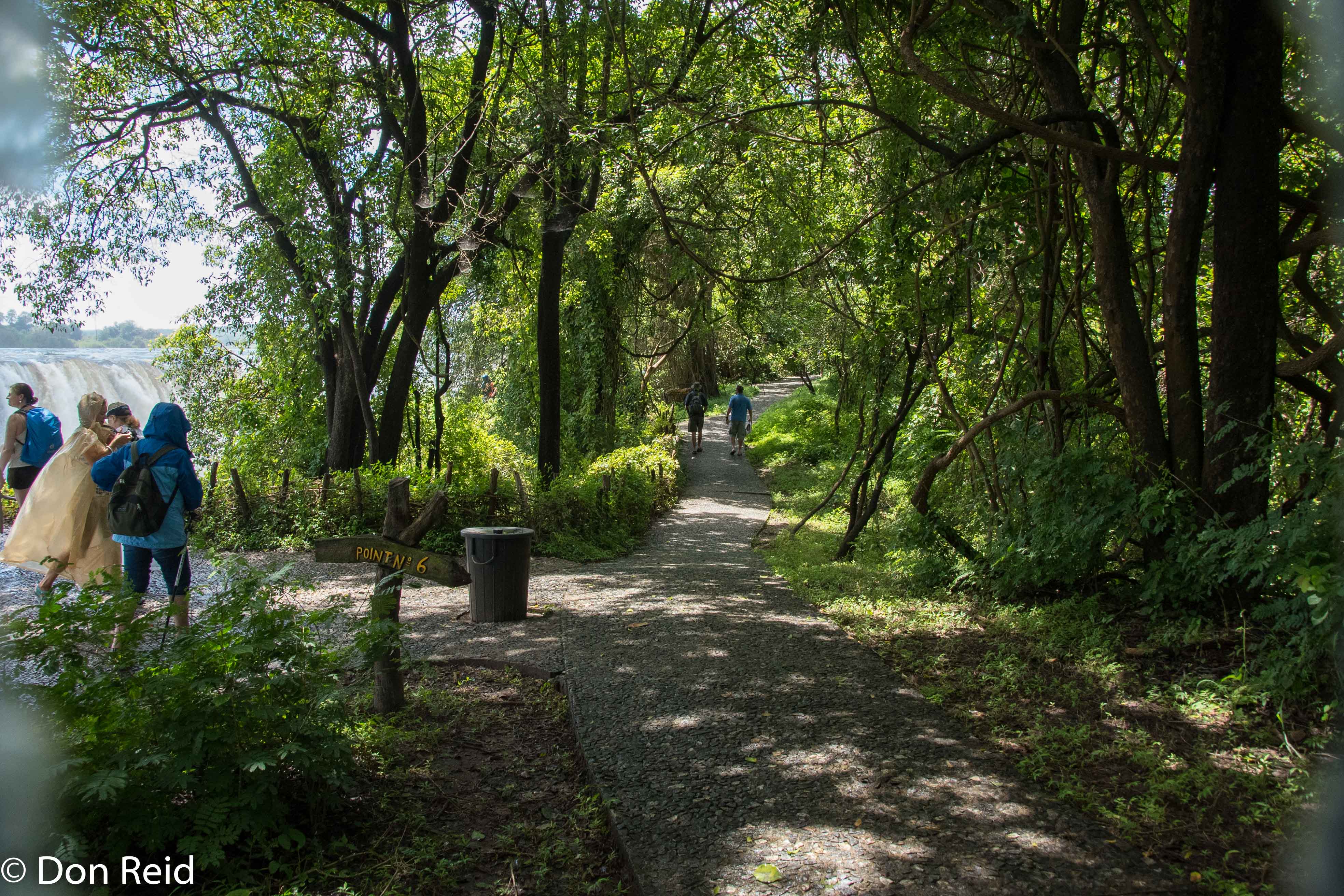
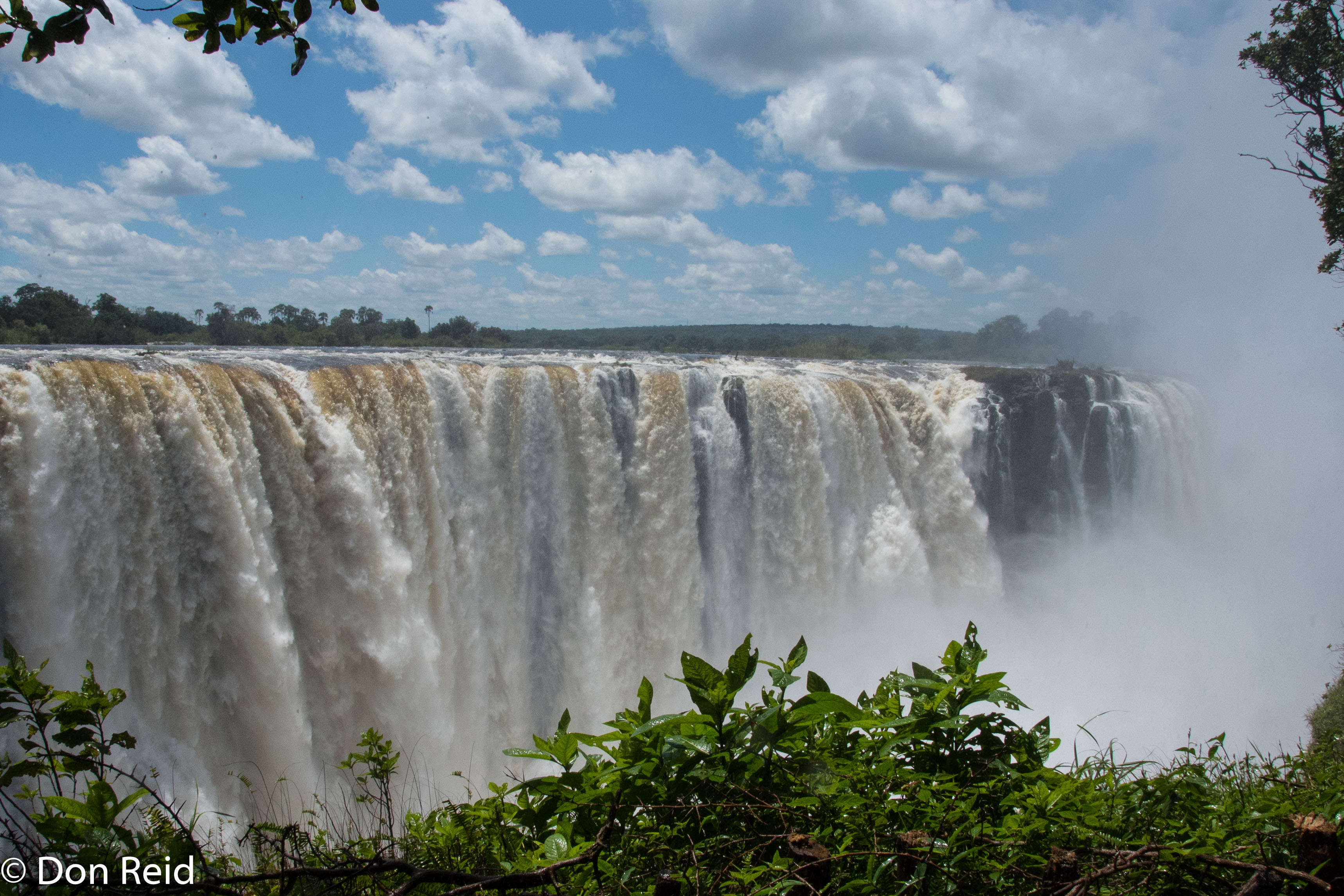
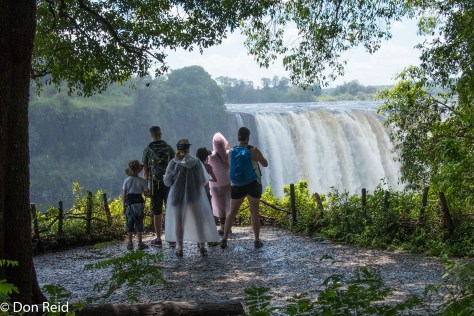
After a good buffet breakfast we walked down to the Falls and meandered along the path with heavy spray drenching us in parts but not enough to spoil the views.

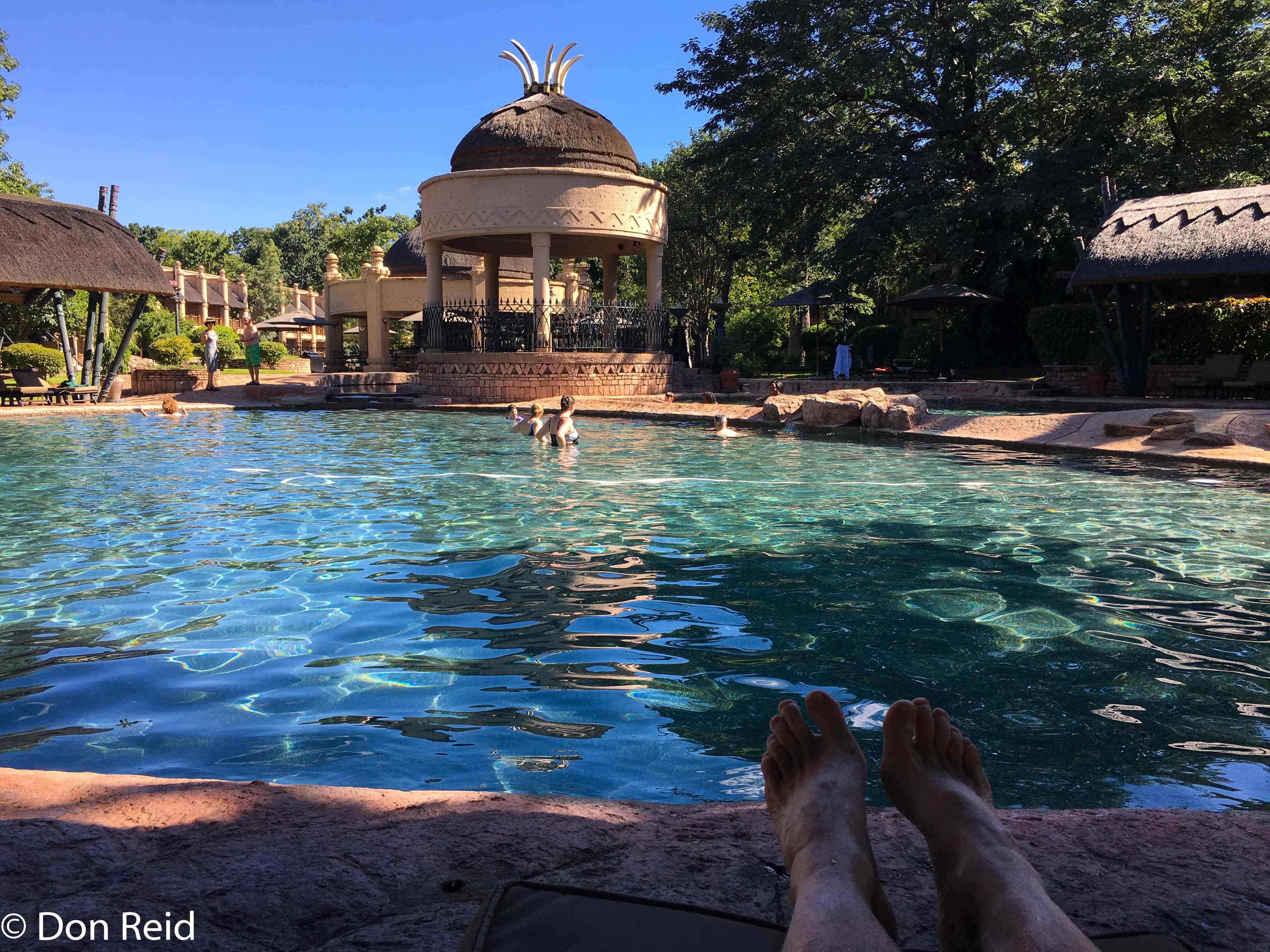
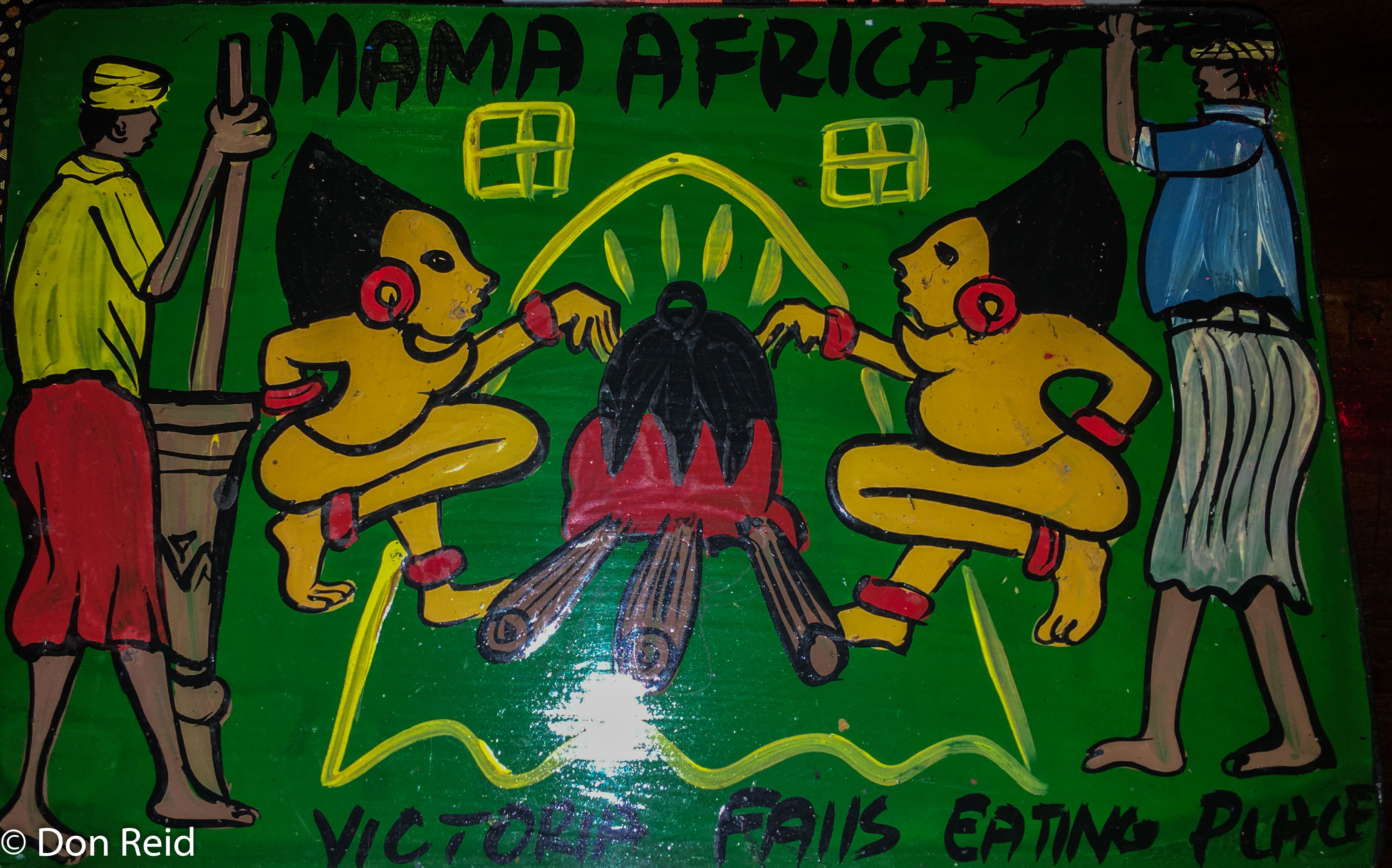
We whiled away the afternoon at the poolside and dinner was at Mama Afrika restaurant with a genuine African flavour.

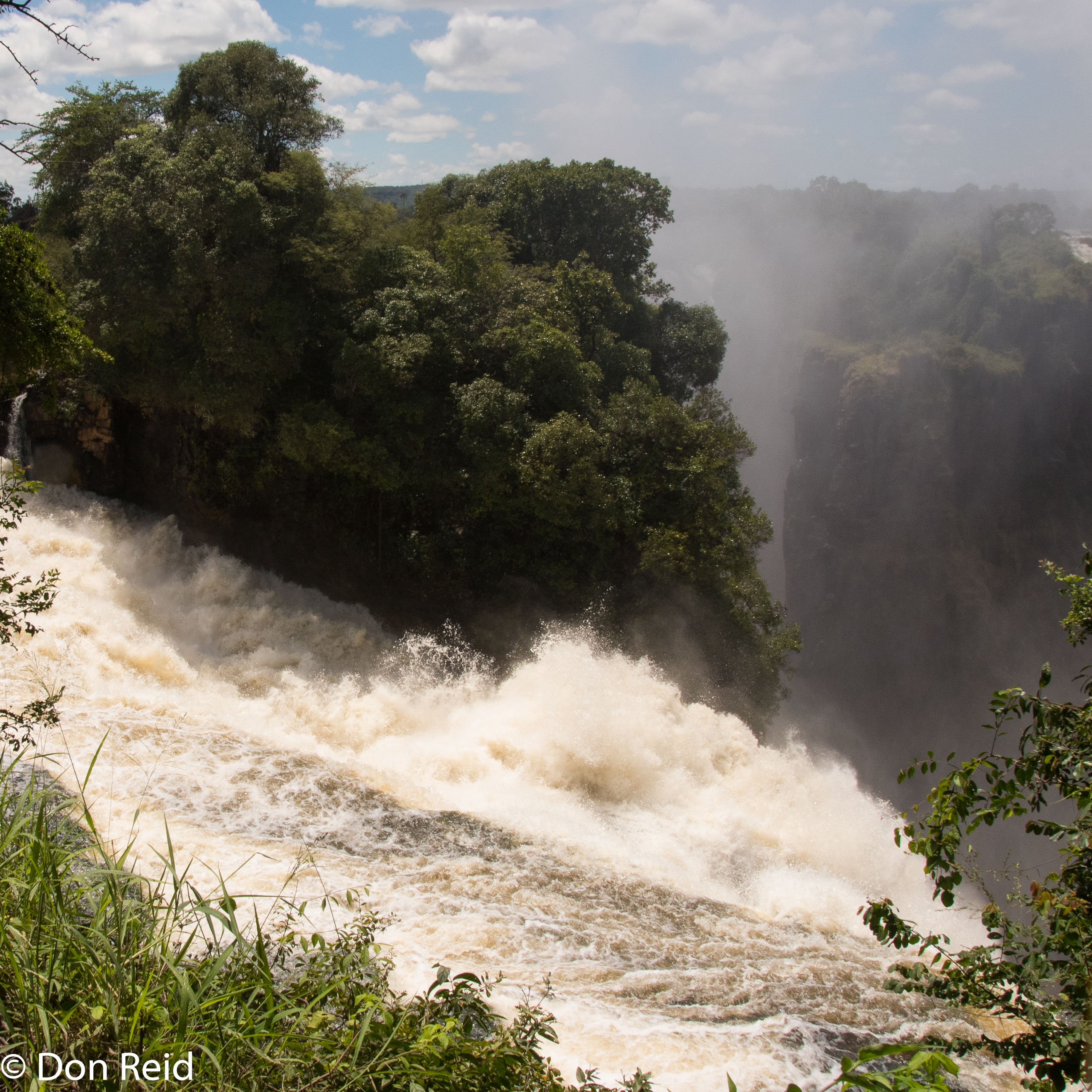
Vic Falls NationalPark

Wednesday 15th – Victoria Falls to Kasane

Another sumptuous breakfast and a short visit to the adjoining historical Victoria Falls Hotel, then it was time for our transfer to Kasane by small bus. There we checked into the Chobe Safari Lodge and relaxed over a light lunch and swimming at the pool.

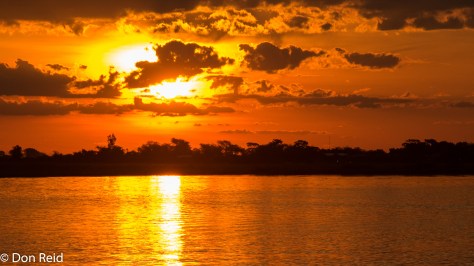
A walk to the riverside “Sundowner Spot” was the opportunity for G&T’s and a spectacular sunset, followed by the Lodge’s Buffet Dinner to round off the day.

Sundowner spot
View from the Sundowner spot
Chobe Safari Lodge
Chobe Safari Lodge

Thursday 16th – Chobe National Park

An early morning game drive into Chobe and an afternoon boat cruise on the river took up most of the day, with enough time for relaxing in between.

Game cruise Chobe
Game cruise Chobe
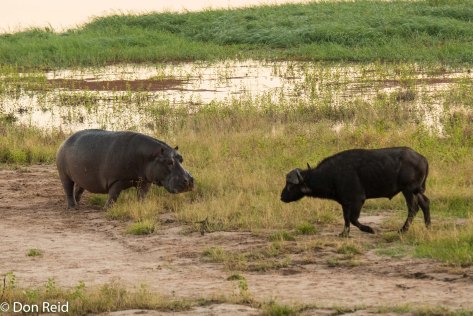
Hippo meets Buffalo, Chobe game drive
Crocodile, Game cruise Chobe
African Elephant, Game cruise Chobe
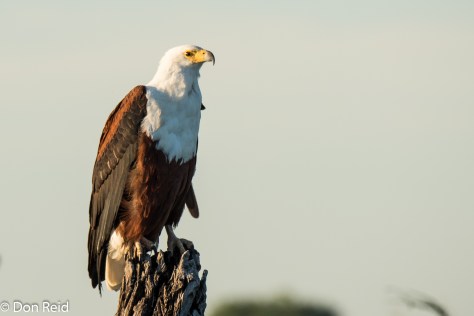
African Fish-Eagle, Game cruise Chobe

Friday 17th – Kasane to Pretoria

Today was all about getting back to Pretoria, where Gerda had a special dinner planned to end the northern leg of the Canadian’s visit.

Tomorrow they fly to PE to meet up with Andrew, their “tour guide” for the southern leg.


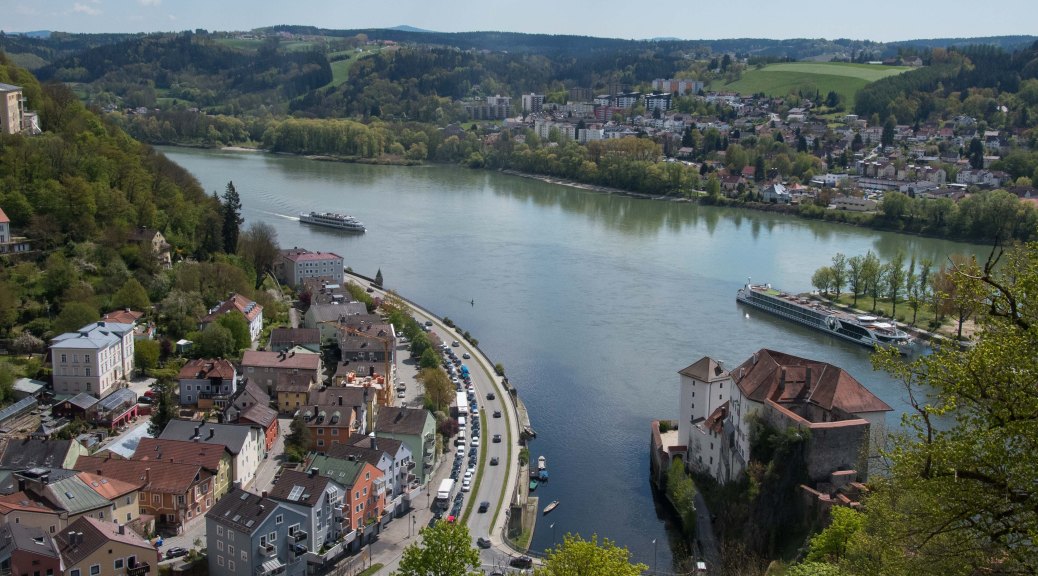
Passau – Where Three Rivers Meet

One of the joys of travel is the unexpected delights that await the intrepid traveller. When planning our bucket list cruise on the Danube River from Passau to Budapest and back, we decided on a whim to spend an extra few days at the end of the cruise in Passau, where we were to embark and disembark, without having any idea of what we would find there.

We had a brief taste of Passau on the day we arrived from Prague by car transfer to board the river cruise boat, just enough to whet our appetite for the longer stay at the end of the cruise.

Reading the pamphlet we had picked up at the tourist office, we were intrigued by the description of the town –

“The City on Three Rivers : Passau’s unique location at the confluence of the three rivers Danube, Inn and Ilz, has made the town a one of a kind cultural and artistic centre. Passau is located near the Austrian and Czech borders. The interplay of the sights and the baroque historical centre with its narrow and winding little streets and alleyways creates a distinctive ambience making the city extraordinarily beautiful”

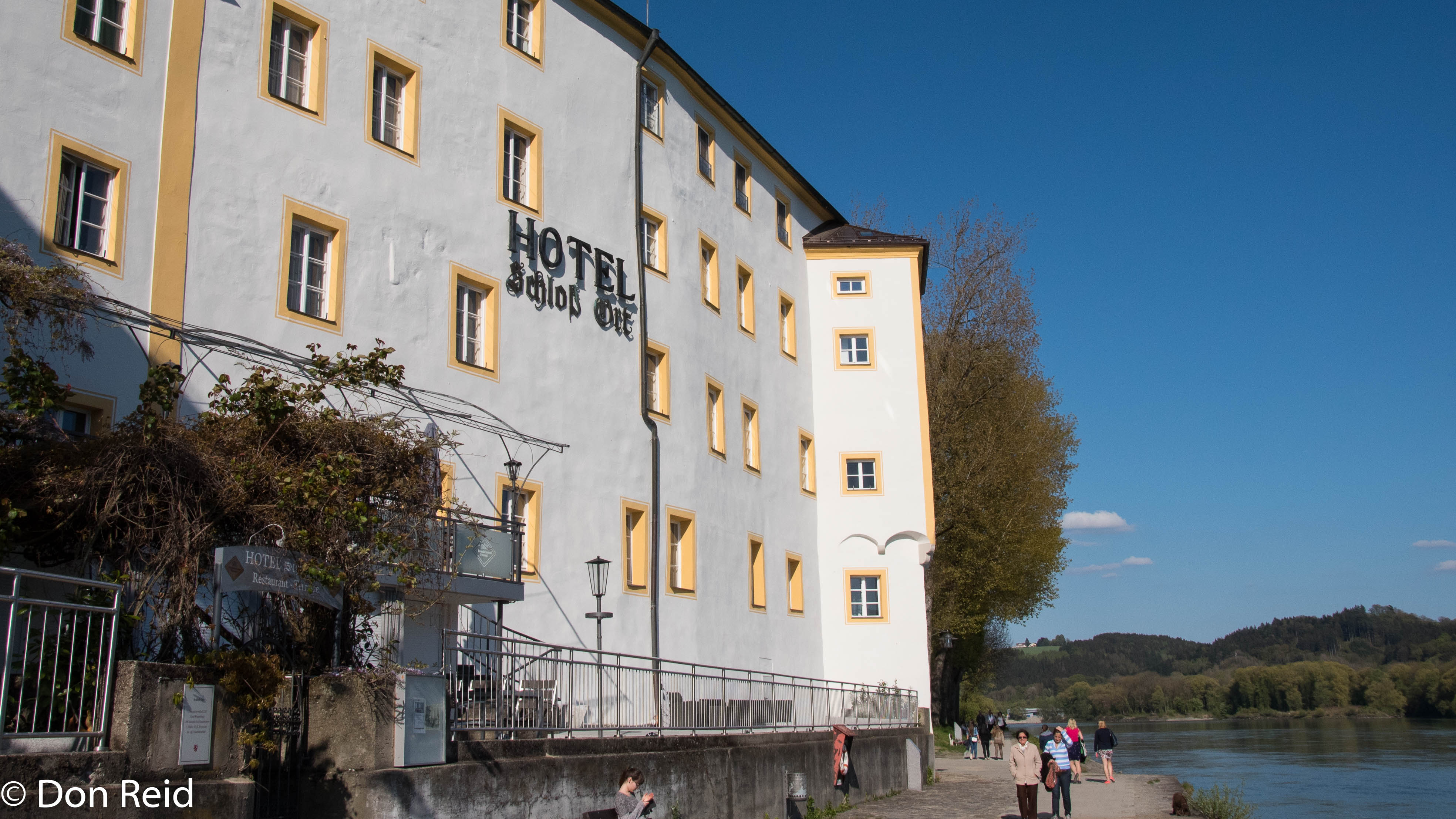
After our magical cruise along the Danube, we arrived back in Passau in the morning, where we disembarked and a short taxi ride later we were settled into a comfortable room in our hotel in the old part of town, its entrance located in a narrow street between similar old buildings, while on the other side it overlooked the Inn River.

Passau – Schlos Ort hotel
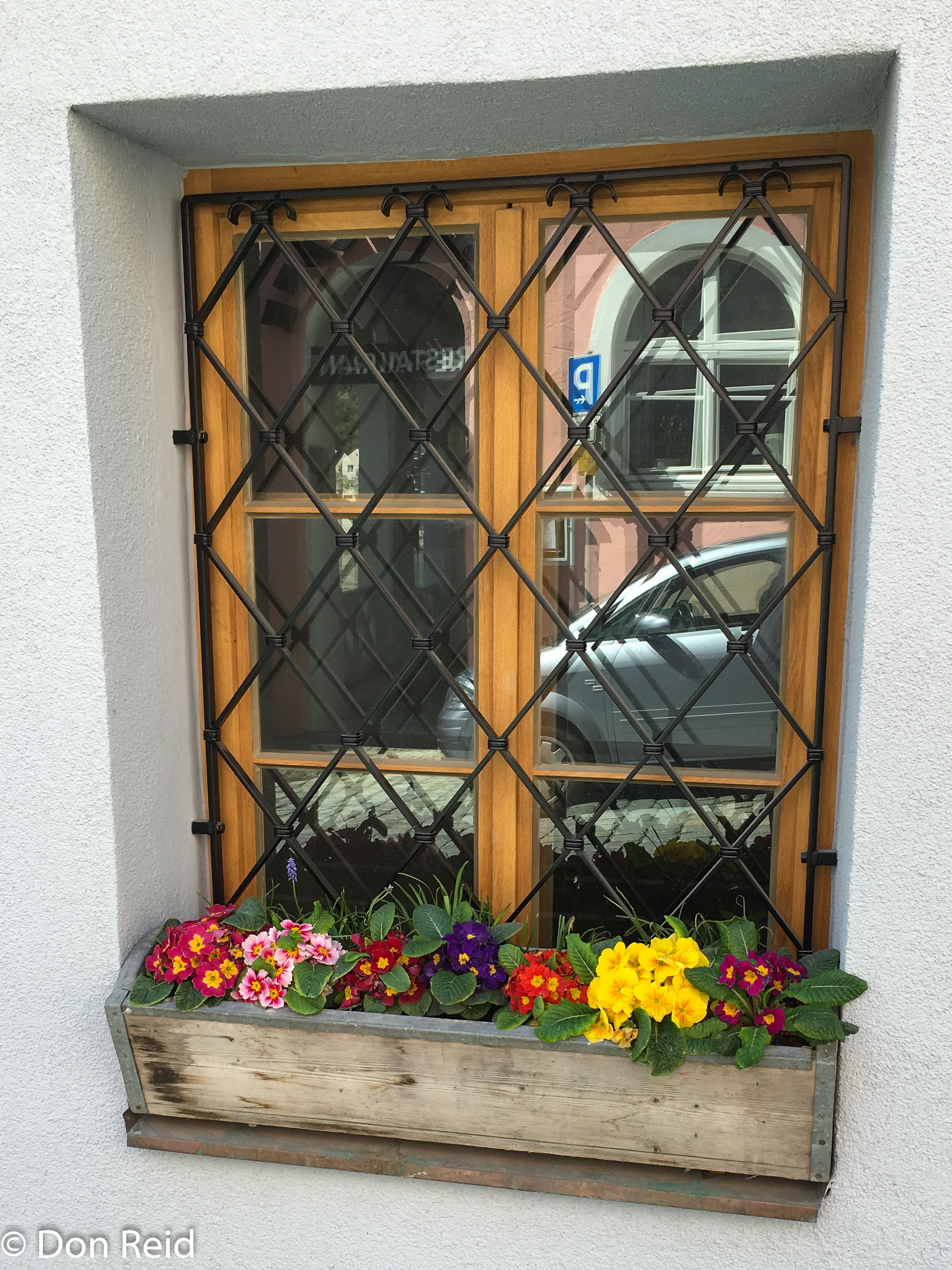
View from hotel room – spot the real window

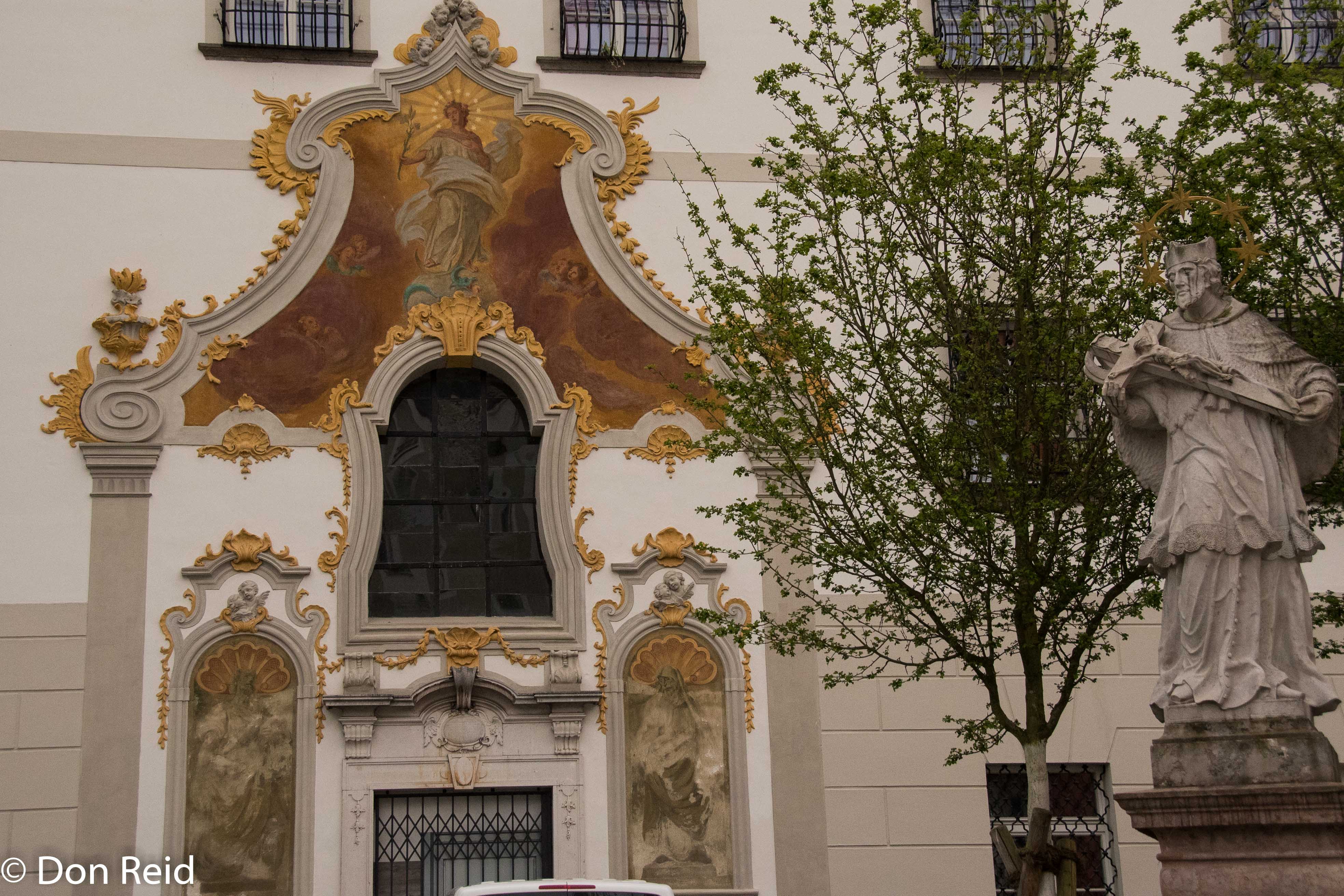
A while later we took a walk along the promenade and the narrow streets to the town centre with its picturesque square known as Residenzplatz, passing some historic looking buildings on the way.

Passau – the Orphanage
The promenade on the river

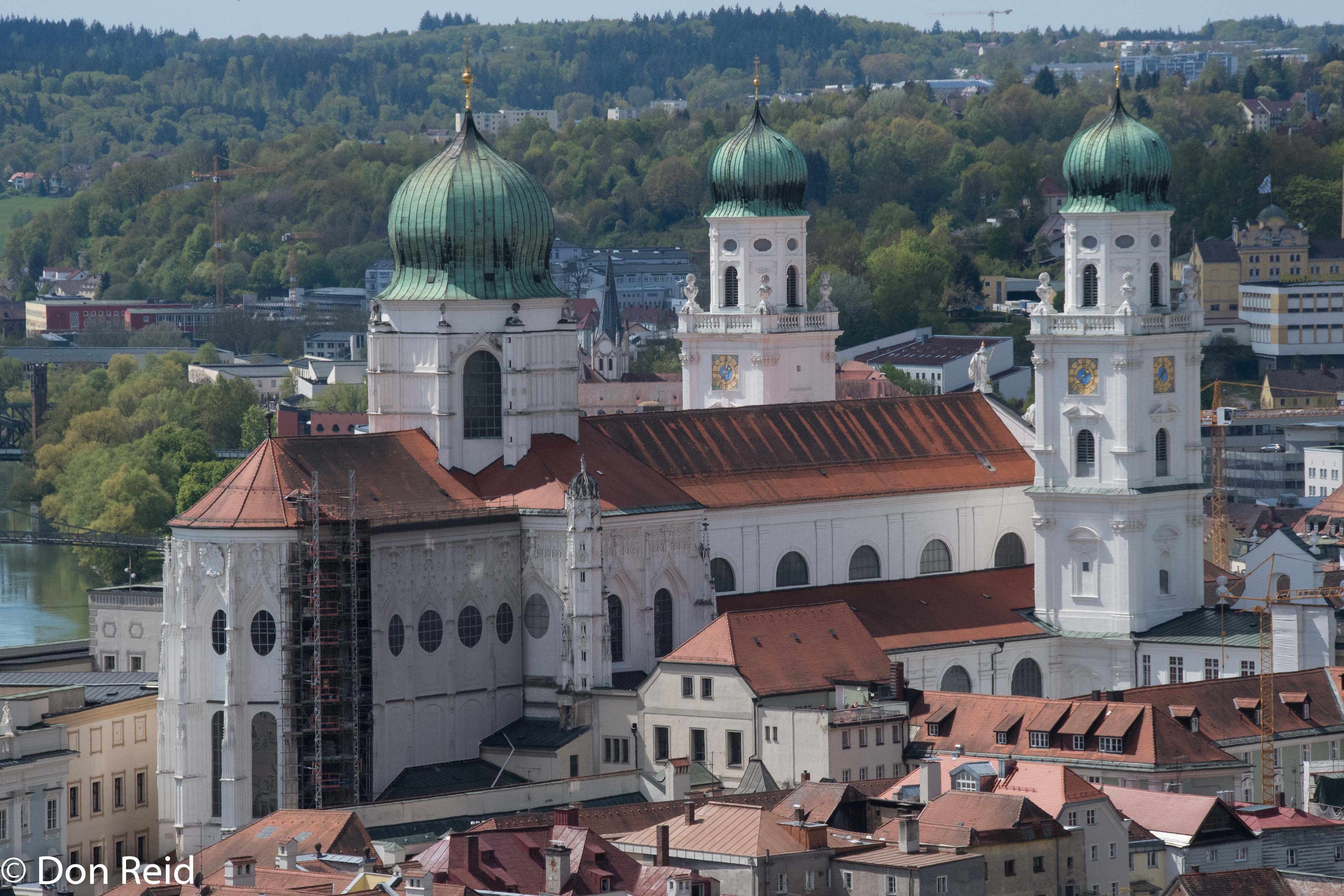
Another narrow lane led to the Domplatz and the entrance to the  impressive looking cathedral which dominates Passau, located as it is at the Old Town’s highest point.  The exterior is fairly plain by cathedral standards and didn’t prepare us at all for the moment when we stepped inside.

A glimpse of the cathedral from the narrow alley approaching it

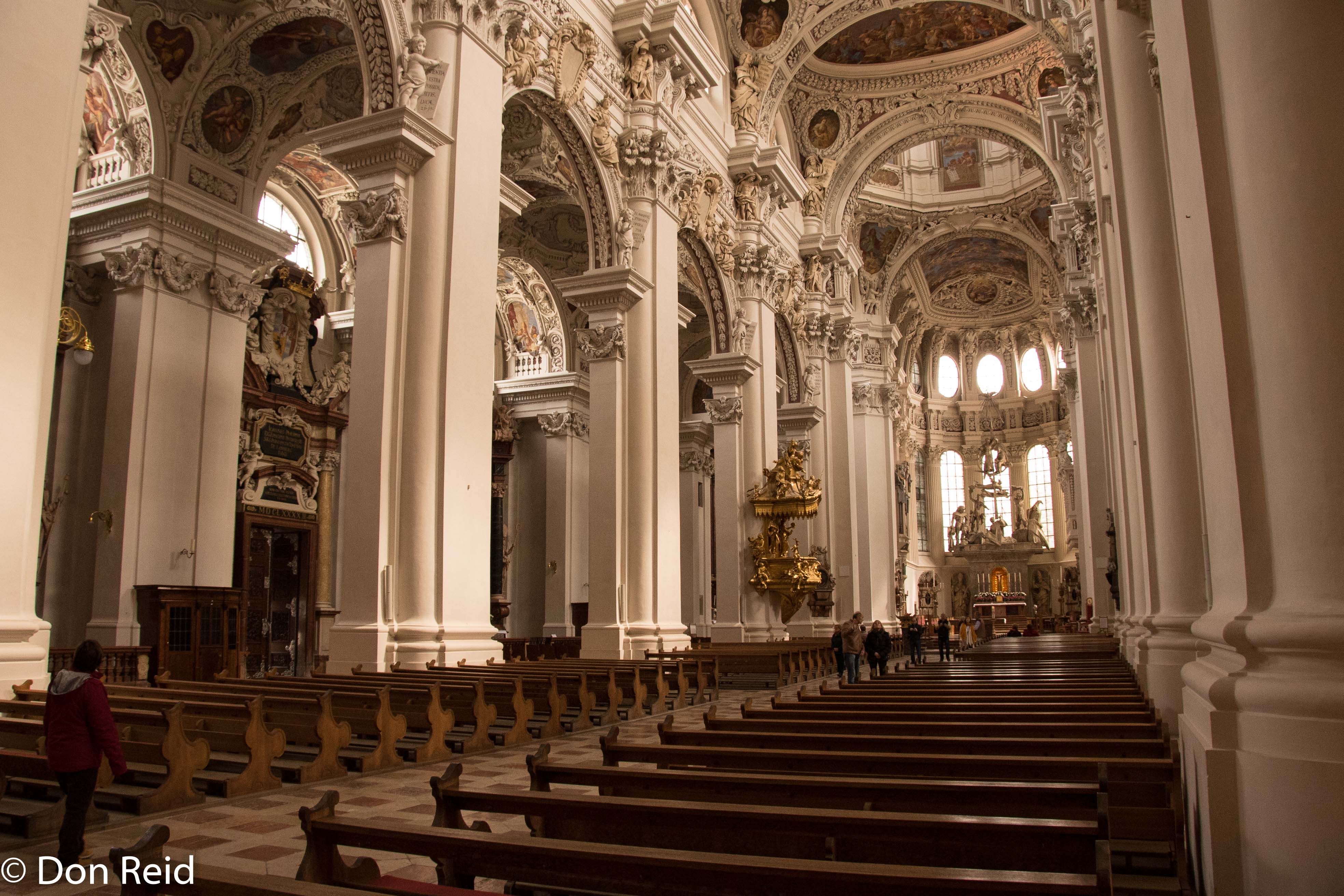
The interior literally took our breath away and we both gasped audibly as we stepped inside – the highly decorated, beautifully proportioned domed ceilings and elaborate supporting columns had us craning our necks to take it all in.

St Stephen’s Cathedral

While many cathedrals we have seen on our travels were arguably more gilded and colourful, St Stephen’s was stunning without being “over the top” and rates as one of the most impressive we have seen. The enormous and intricate organ is apparently the largest of any cathedral in the world and a wonder in itself, with an amazing 17,774 pipes!

A section of the cathedral organ

The baroque architecture dates from 1693 when the current building was completed under the direction of top Italian architects and artists. We were truly lifted by our visit to this magnificent building which celebrates the best of human endeavours.

St Stephen’s Cathedral dominates the old town

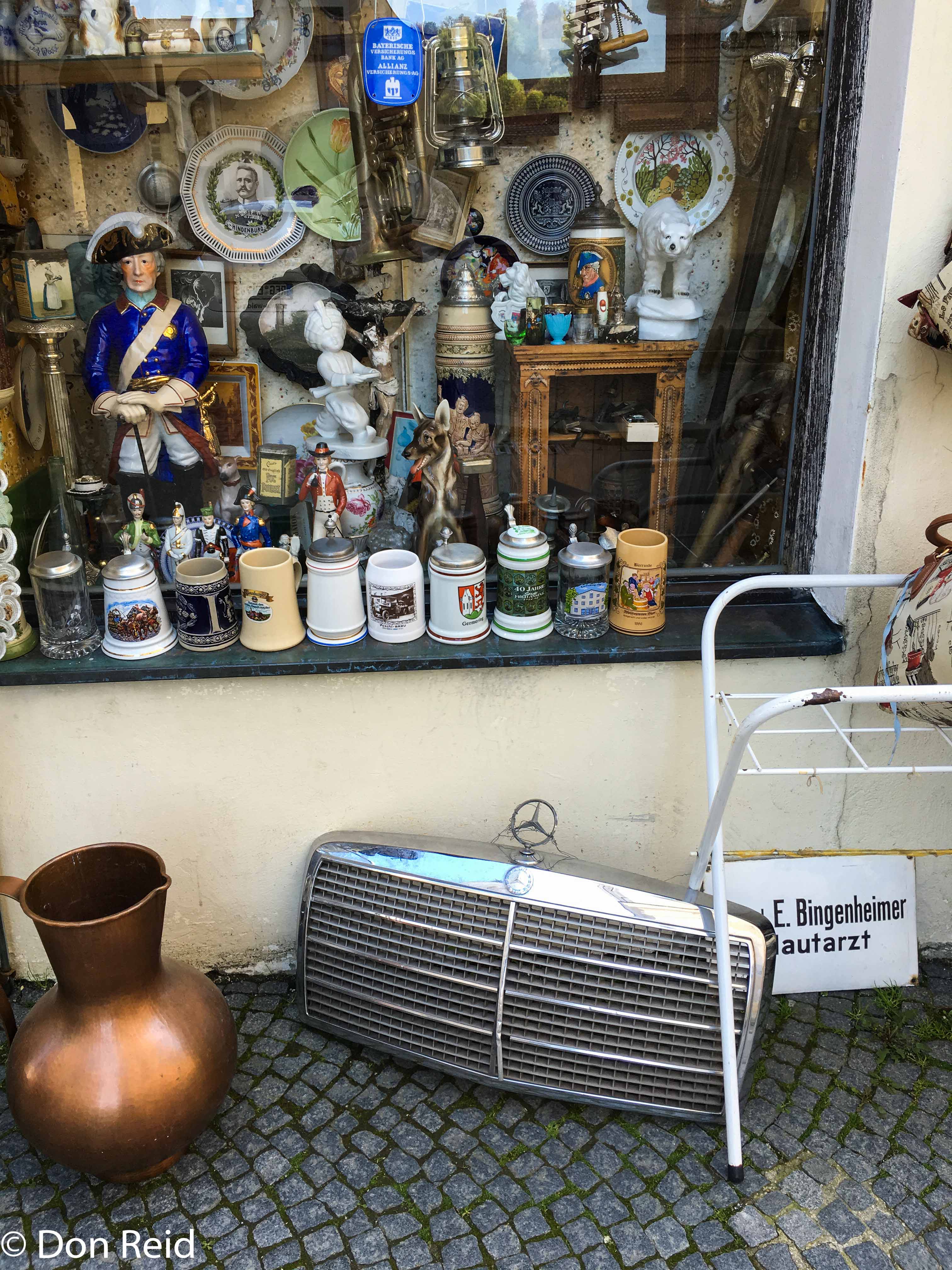
A café on the square lured us inside for a cappuccino and a slice – a substantial one at that – of apfelkuchen, one of the local favourites and we had to concur as it melted into and excited our taste buds. Suitably refreshed, we ambled  on doing window/actual shopping and found several interesting shops, some touristy but not irritatingly so and we were glad to be able to stock up on some fresh fruit at a small grocery shop.

Apfelkuchen and cappucino

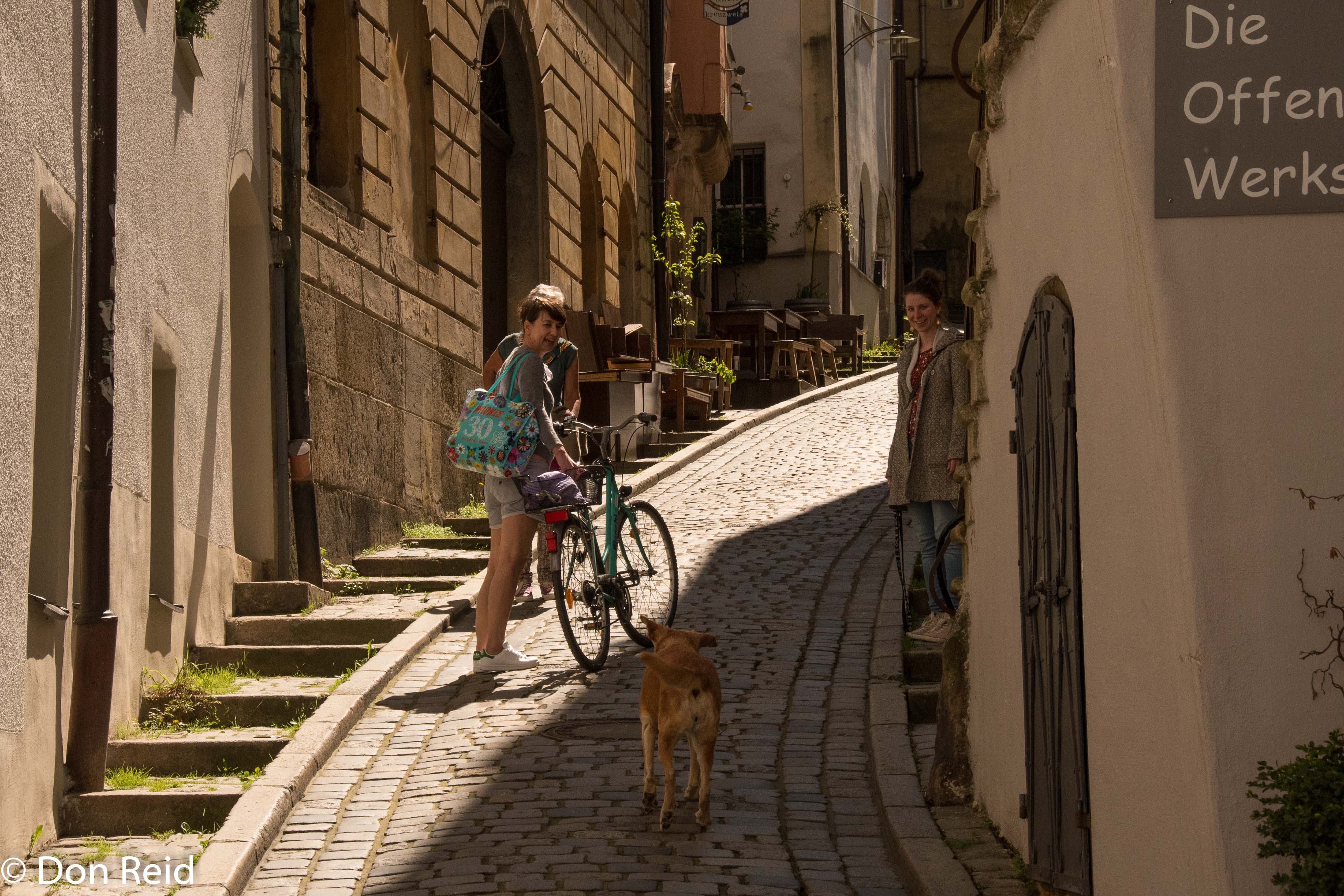
Passau is one of those places where you look forward to each new corner, expecting another surprise and are seldom disappointed, be it an interesting shop, an alley with character, a quirky sight or a local doing what locals do. Having rivers on both sides of the town means there is almost always water in the background, adding to the charm of the place.

Passau – shop window
Passau – street scenes
Even the Postman’s Trolley is unique
Passau – street scenes
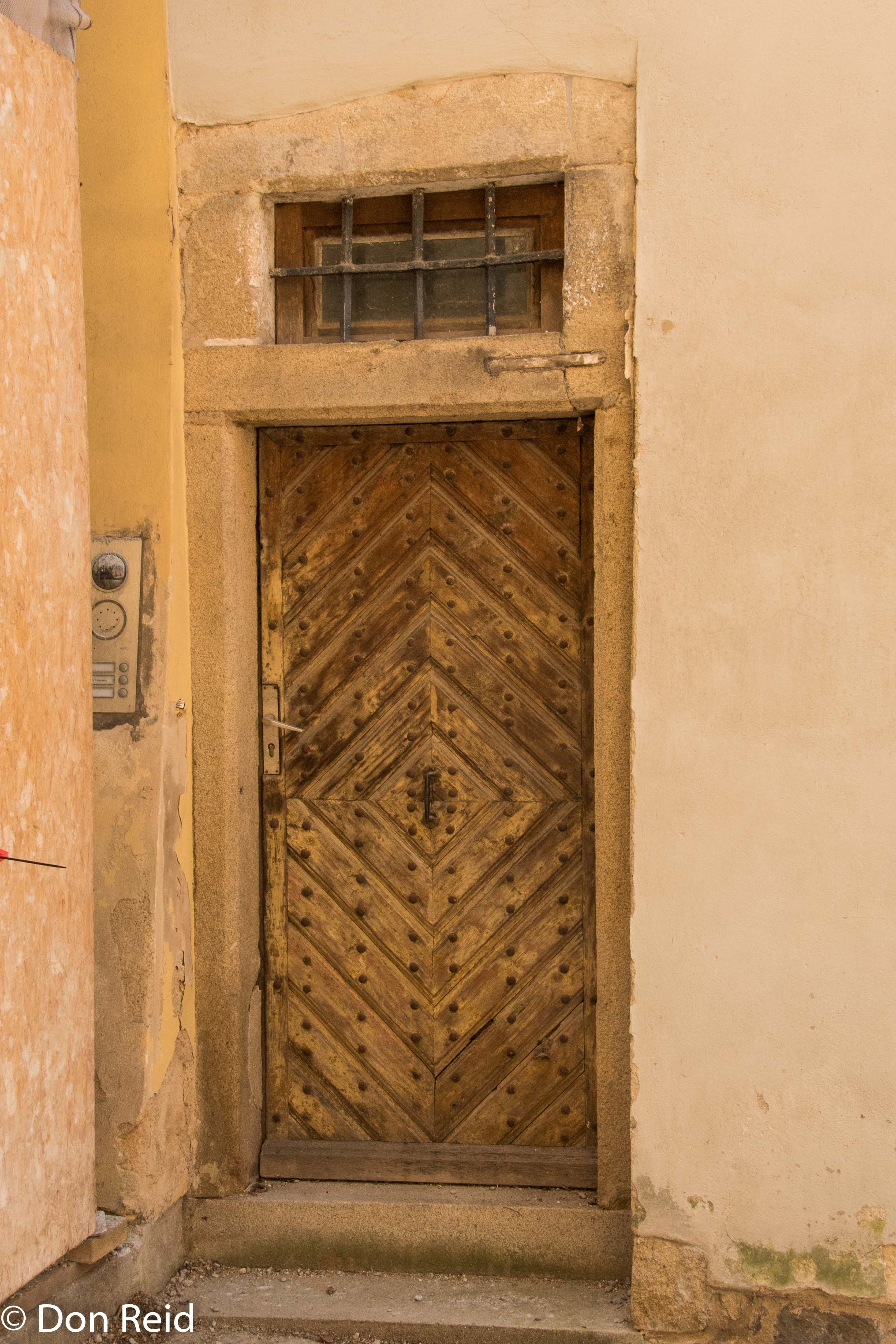
Passau – an old door
Stromer electric bikes –
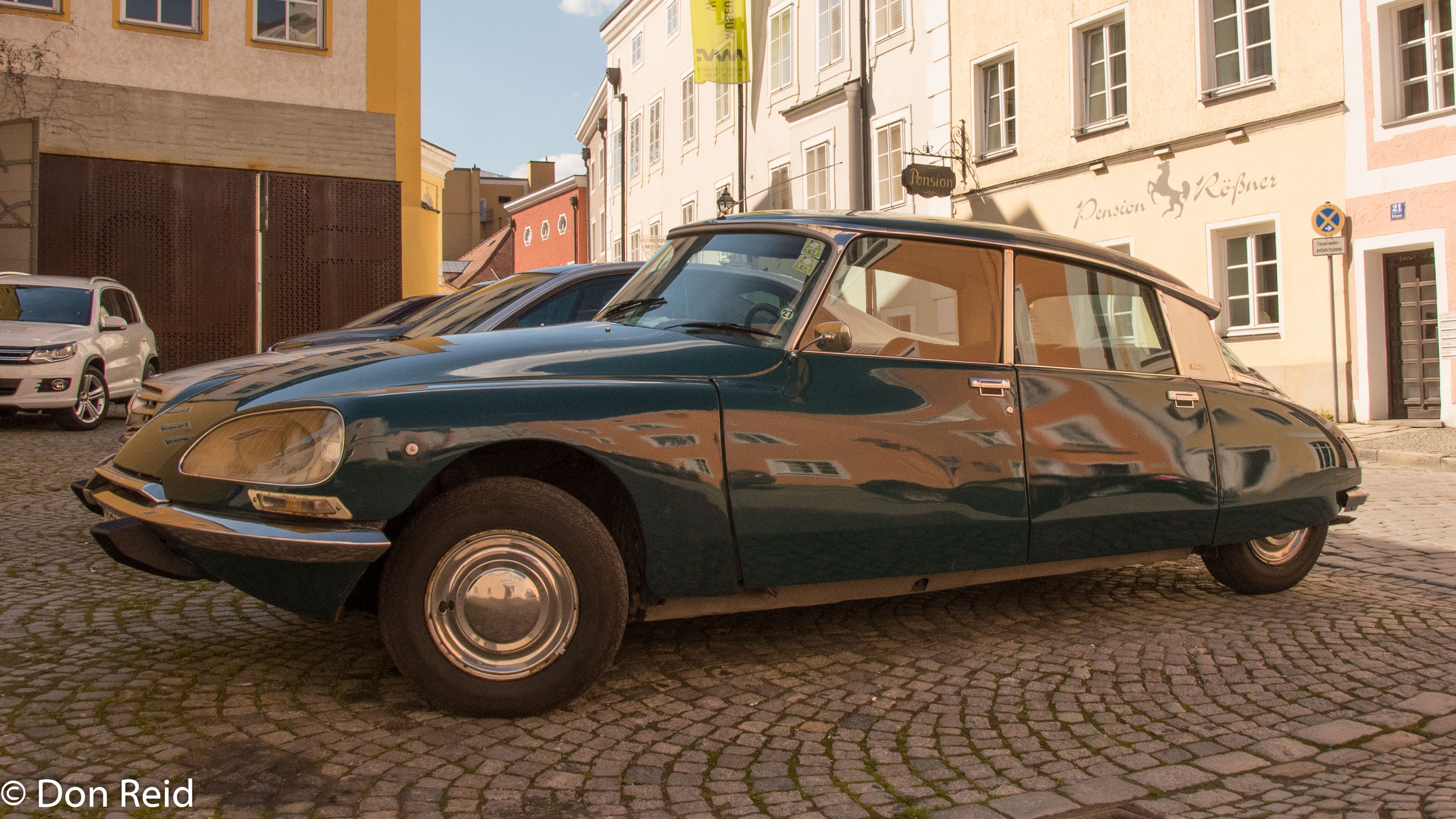
Passau – Citroen Pallas
Passau – street scenes

Lunch was goulash soup and a wheat beer in a cosy restaurant, which set us up nicely for an afternoon snooze when we got back to our hotel – this touring is hard work! We managed to gather enough strength later on to find a restaurant for dinner, ending up in an Italian restaurant Il Monastero where the waiter was rather bizarrely dressed as a monk and the drinks lady as a nun, but the pasta and wine was delightful!

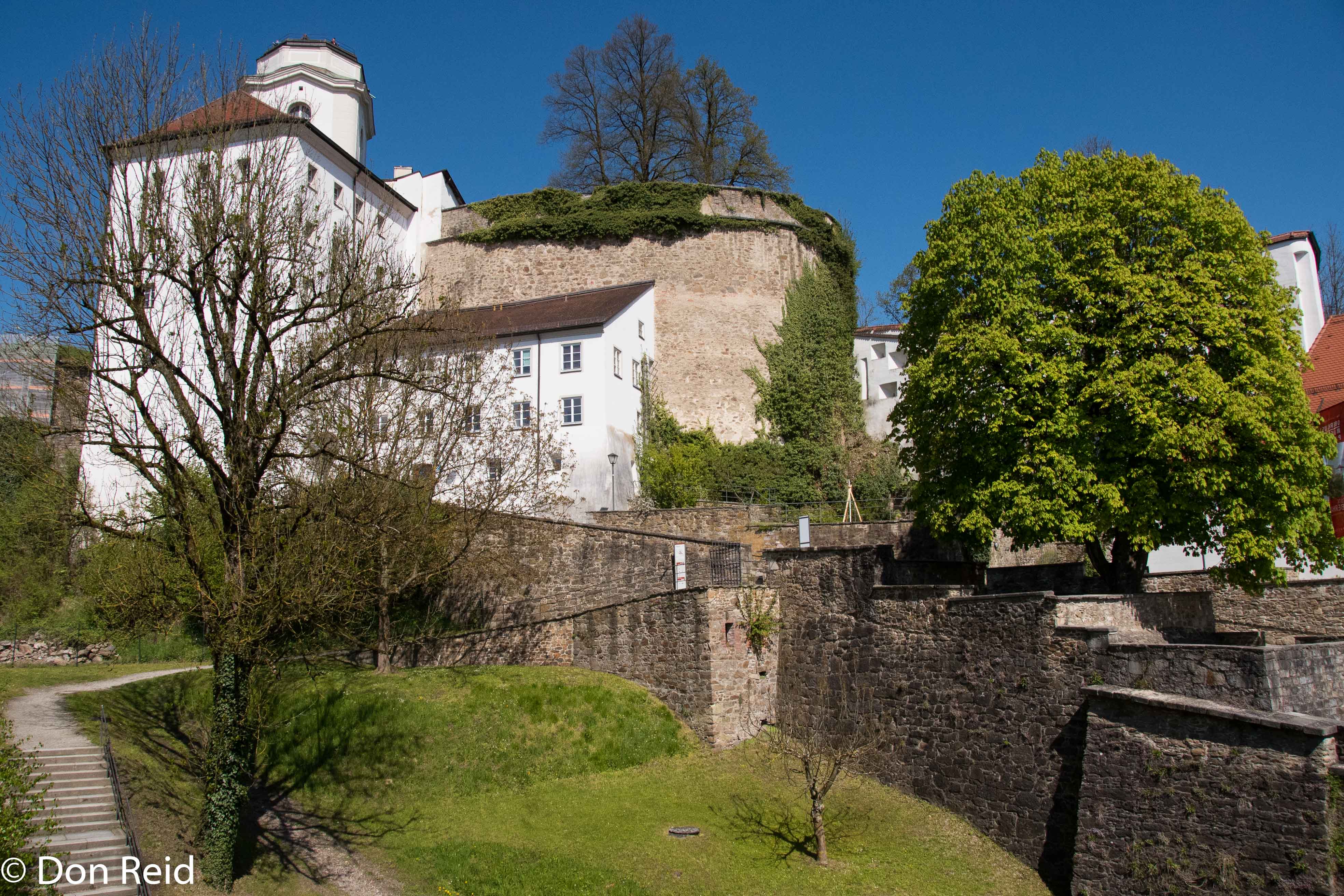
The next day we continued our exploration of Passau, our sights now set on the Veste Oberhaus, which sits prominently on the top of the hill on the opposite side of the river to the town. We had read that it dated from 1219, when it was built as a fortress by the then Bishop of Passau in order to control commerce across the rivers and served that role for a number of centuries. It currently houses a fine Museum of the area.

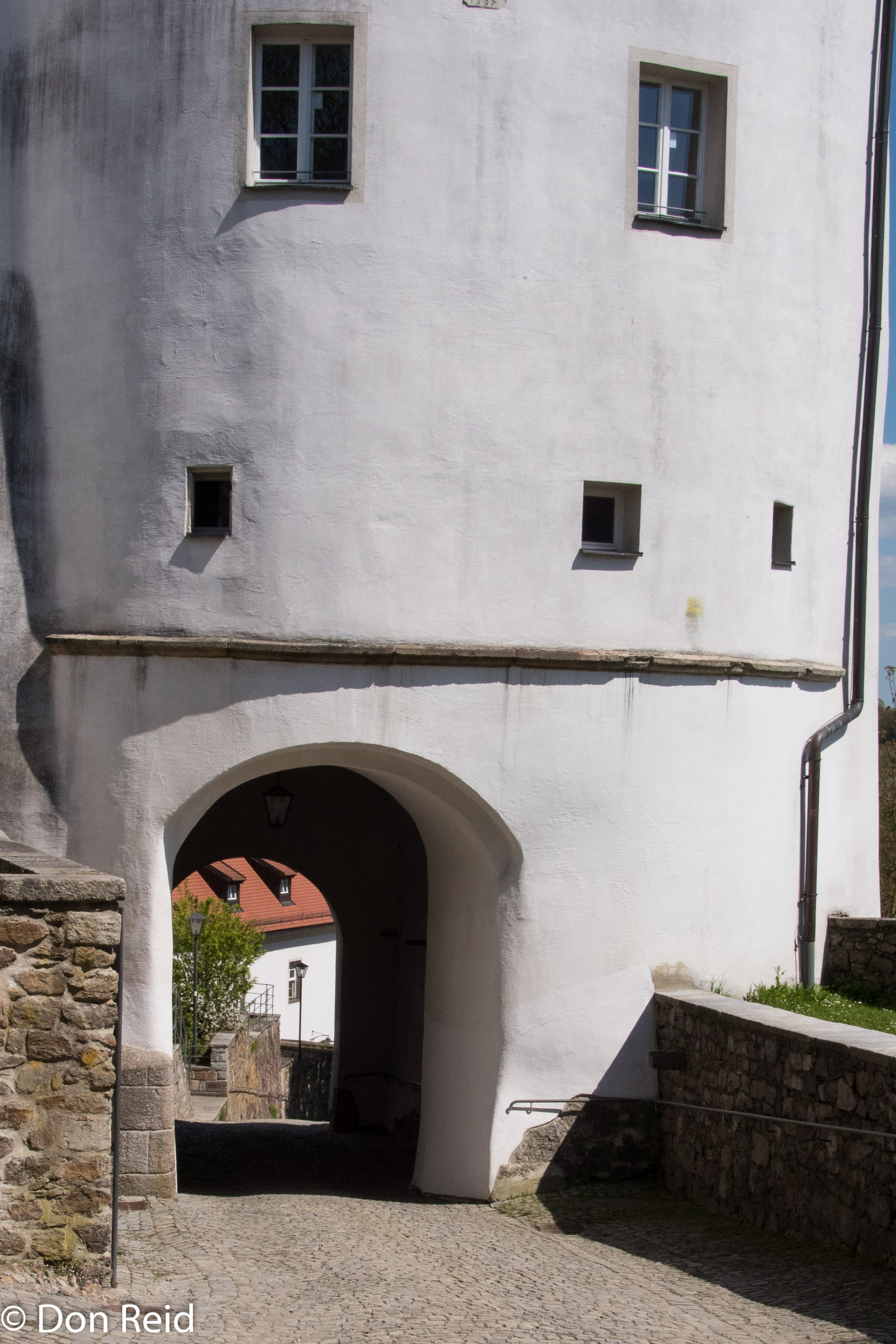
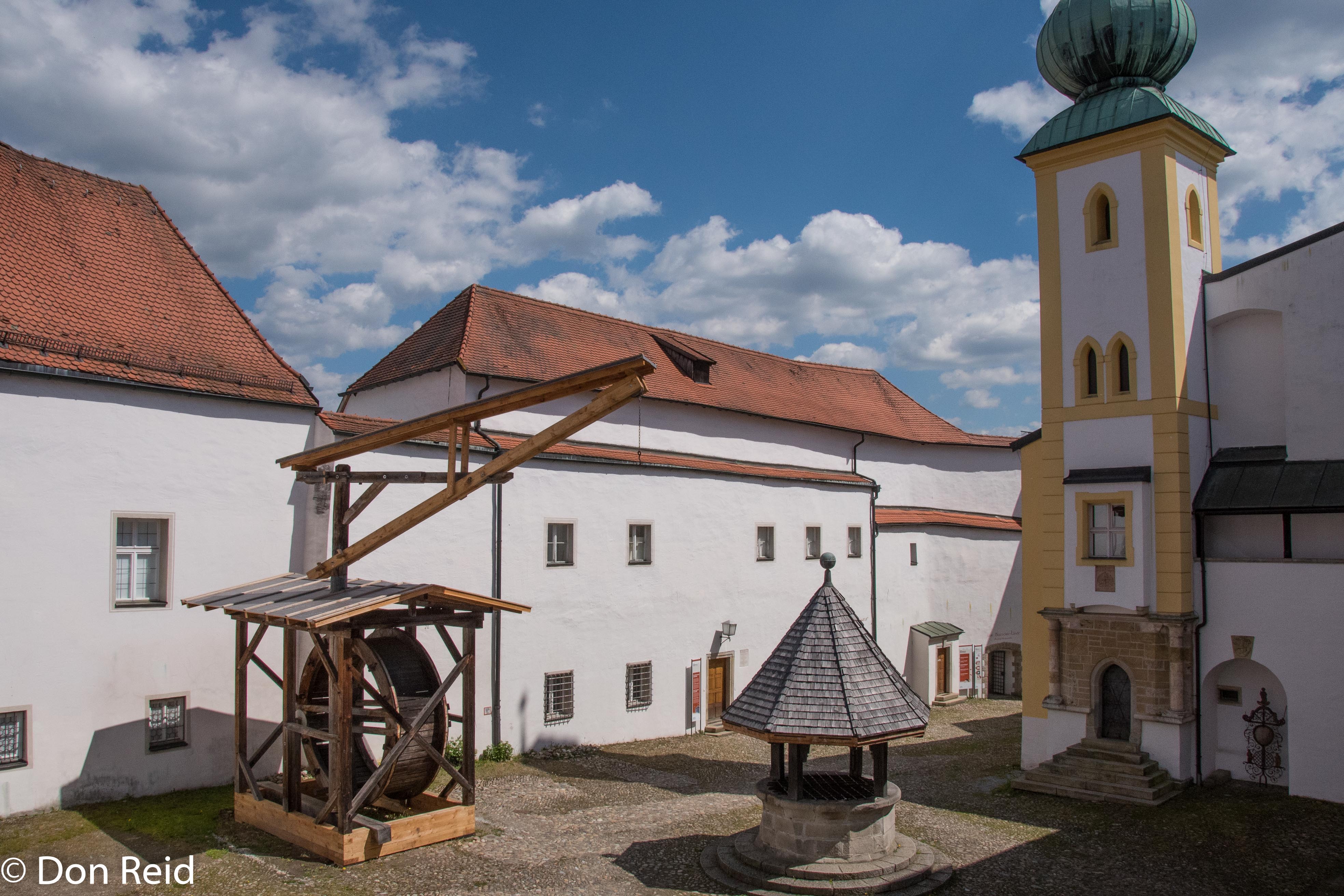
Passau – Veste Oberhaus

A convenient shuttle bus, which runs every half hour from the Town Hall square, dropped us off literally at the front door of the Oberhaus, but if you are energetic (and let’s admit it, younger than these two pensioners!) there is a stairway with 200 steps that will take you from the riverside up to the Oberhaus.

Passau – Town Hall square
Passau – Veste Oberhaus fortress
Passau – Veste Oberhaus  fortress

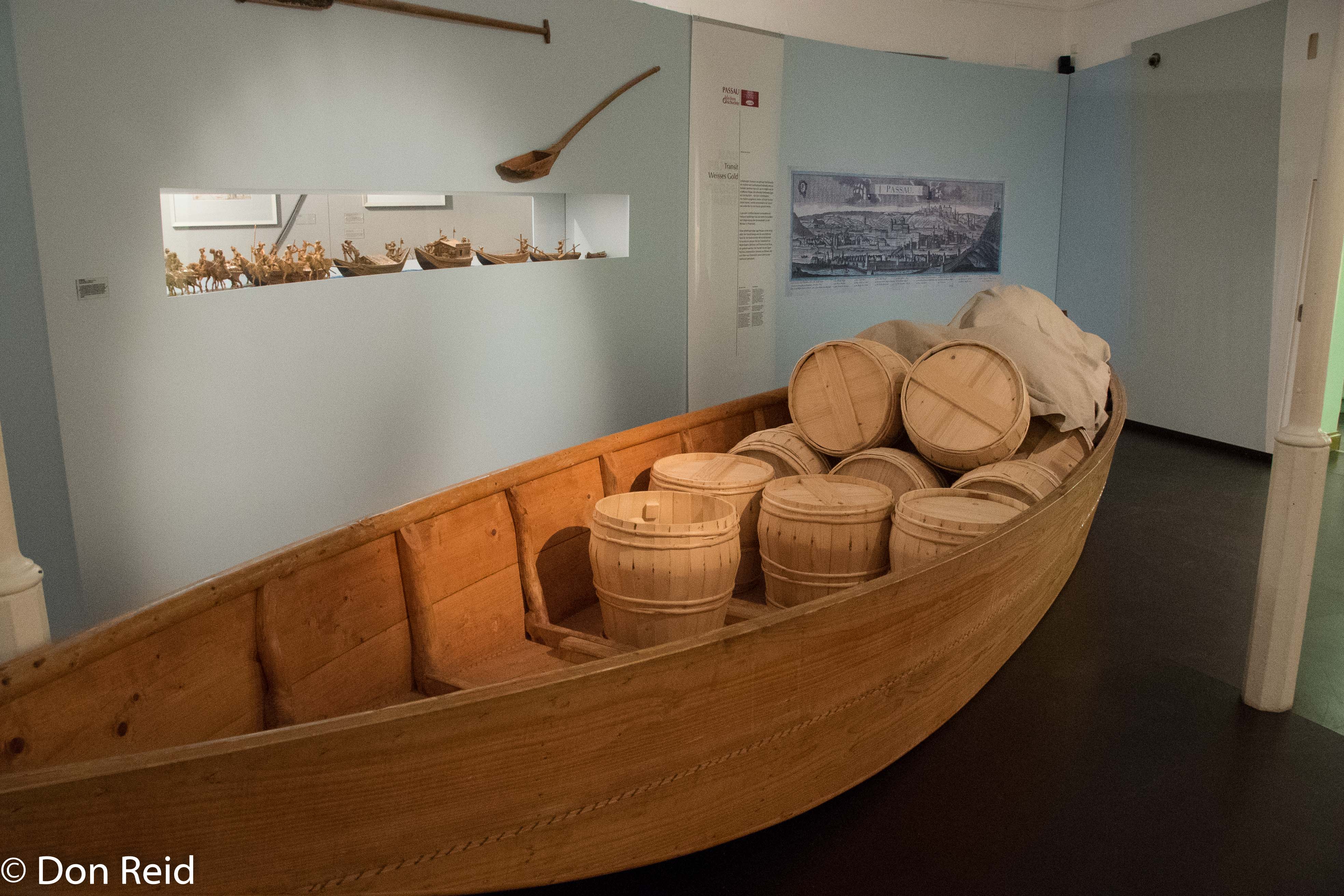
Tickets to the museum were just 4 Euro each – about the price of a coffee – and we spent a good hour or two viewing the fascinating exhibits, which set out the full history of the town spanning many centuries, from prehistoric inhabitants, through Roman times to Catholic church domination and all the turbulence of the battles for religious dominance. Very well presented and well worthwhile, even for those of us who tend to become quickly jaded by too much history.

Passau – Veste Oberhaus Museum – a boat from the salt trade era
Passau – Veste Oberhaus Museum

The restaurant was further up the hill and after a steep climb we found a table outside with a wonderful 180° view of Passau below and the three rivers that come together at its easternmost point.

Lunch on the hill
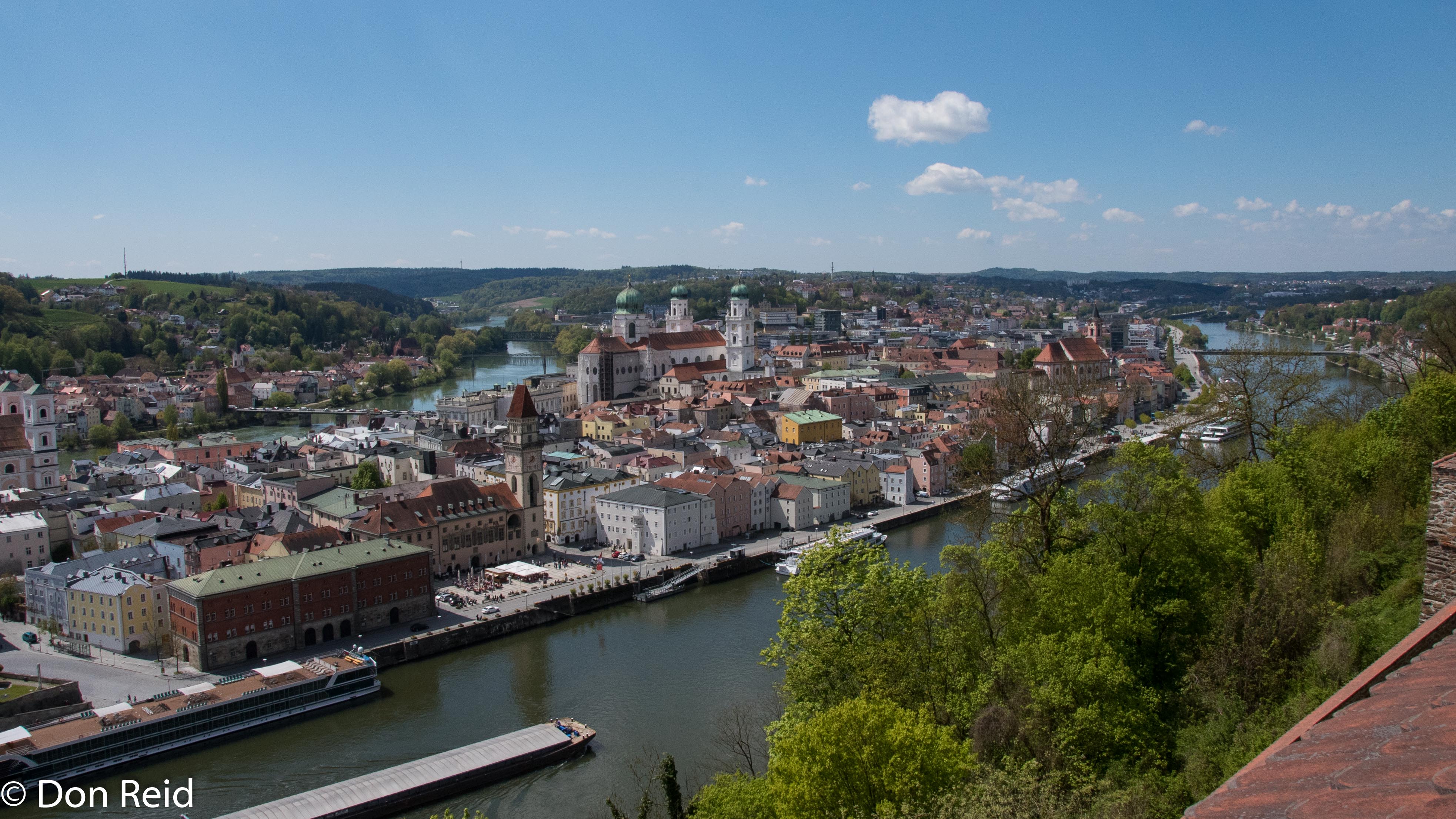
View of Passau from the Oberhaus – the spires are those of St Stephen’s Cathedral
View of Passau’s Old Town from the Oberhaus

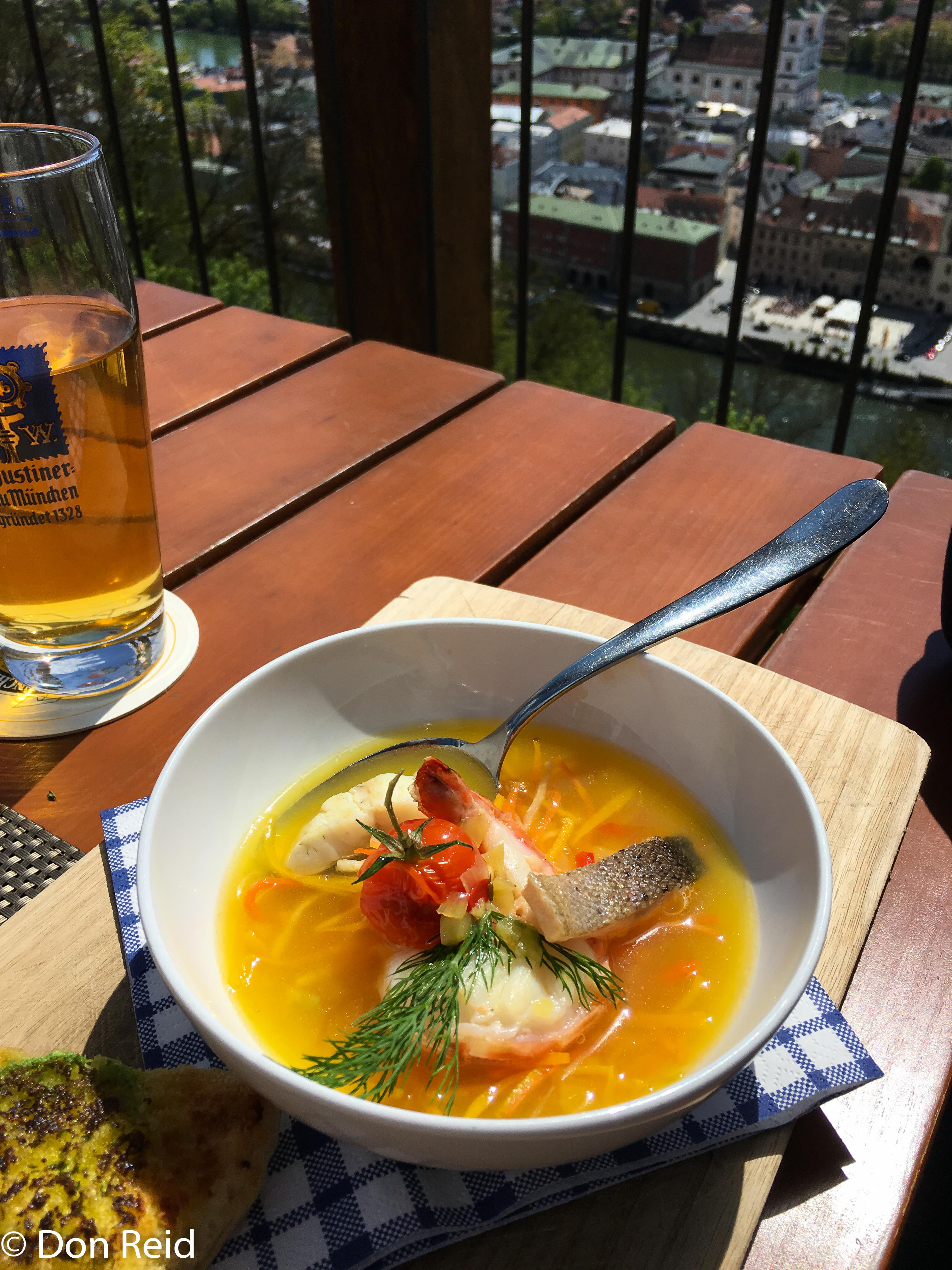
Fish soup on the menu (OK not actually on the menu but printed there),  caught our eye and turned out to be delicious, followed by “Bananen Split” my personal favourite.

Lunch on the hill – fish soup to write home about

We made it to the shuttle just in time for the return trip down the hill and across the river, well satisfied with the outing. The rest of the afternoon was relaxing – I took a short walk to check out the park at the point of the “peninsula” formed by the Danube and Inn rivers coming together.

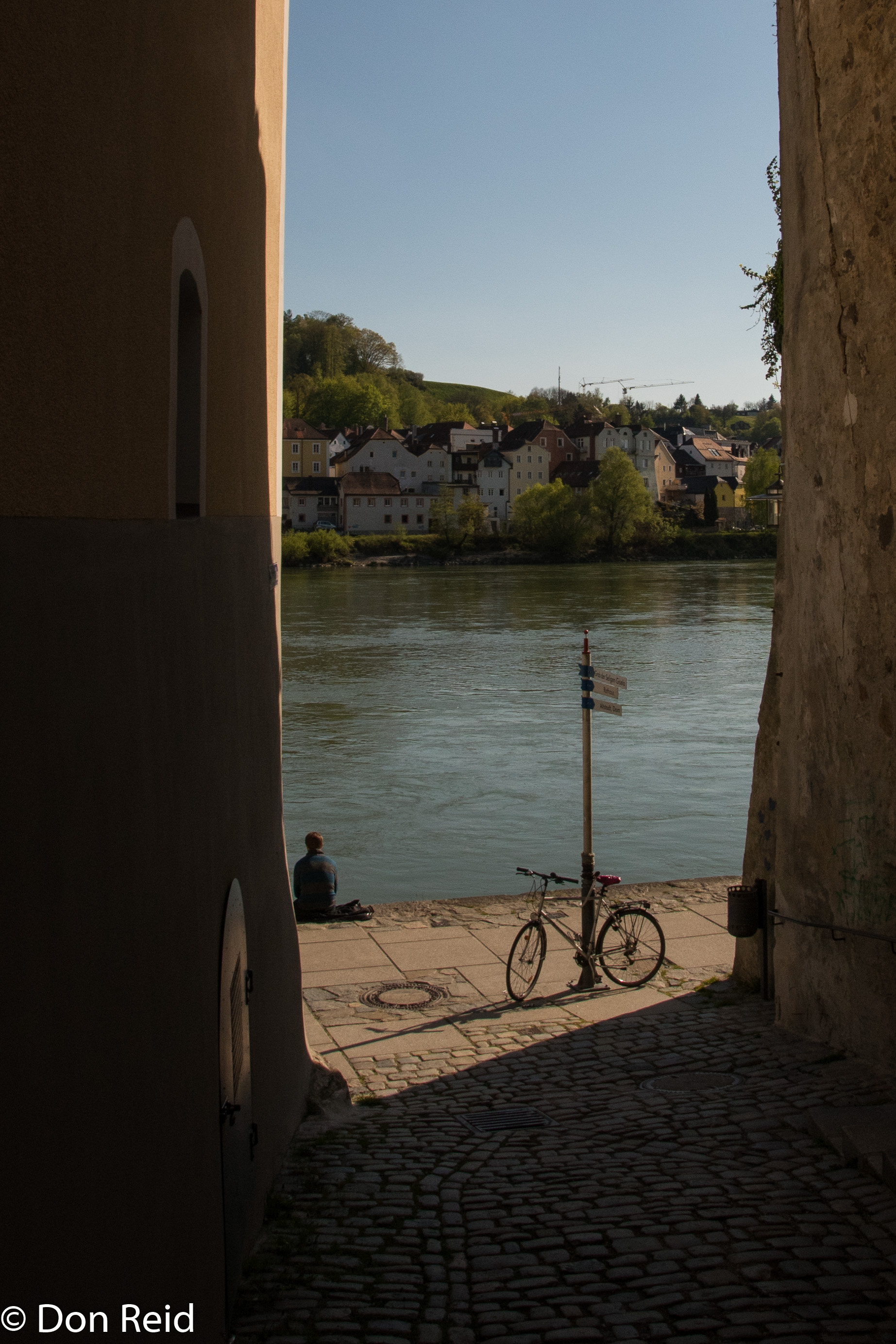
The promenade next to the Inn River
View from the point where the three rivers meet

Dinner was at the nearby, rather splendid, Wagners restaurant where we enjoyed Erdbeer Spargelsalat ( asparagus and strawberry salad) starter followed by a classic Cordon Bleu, one of the best we have tasted.

A fitting end to a short stay that exceeded all our expectations!

On a Farm in Africa

I (wish I) had a farm in Africa……….

Having a farm in Africa is not quite as romantic as the well-known film of some years ago made it out to be. It takes a lot of courage and hard work to make a success of a farm and the dependence on favourable weather conditions can fray the nerves, to say the least.

Nevertheless it would be many people’s dream come true to have a farm in Africa – the next best option is having family with a farm and we count ourselves fortunate to be in that position. It also helps if said family are the hospitable kind and they don’t come more hospitable than Pieter and Anlia Genis, Pieter being my wife Gerda’s nephew and Anlia being, well, Anlia.

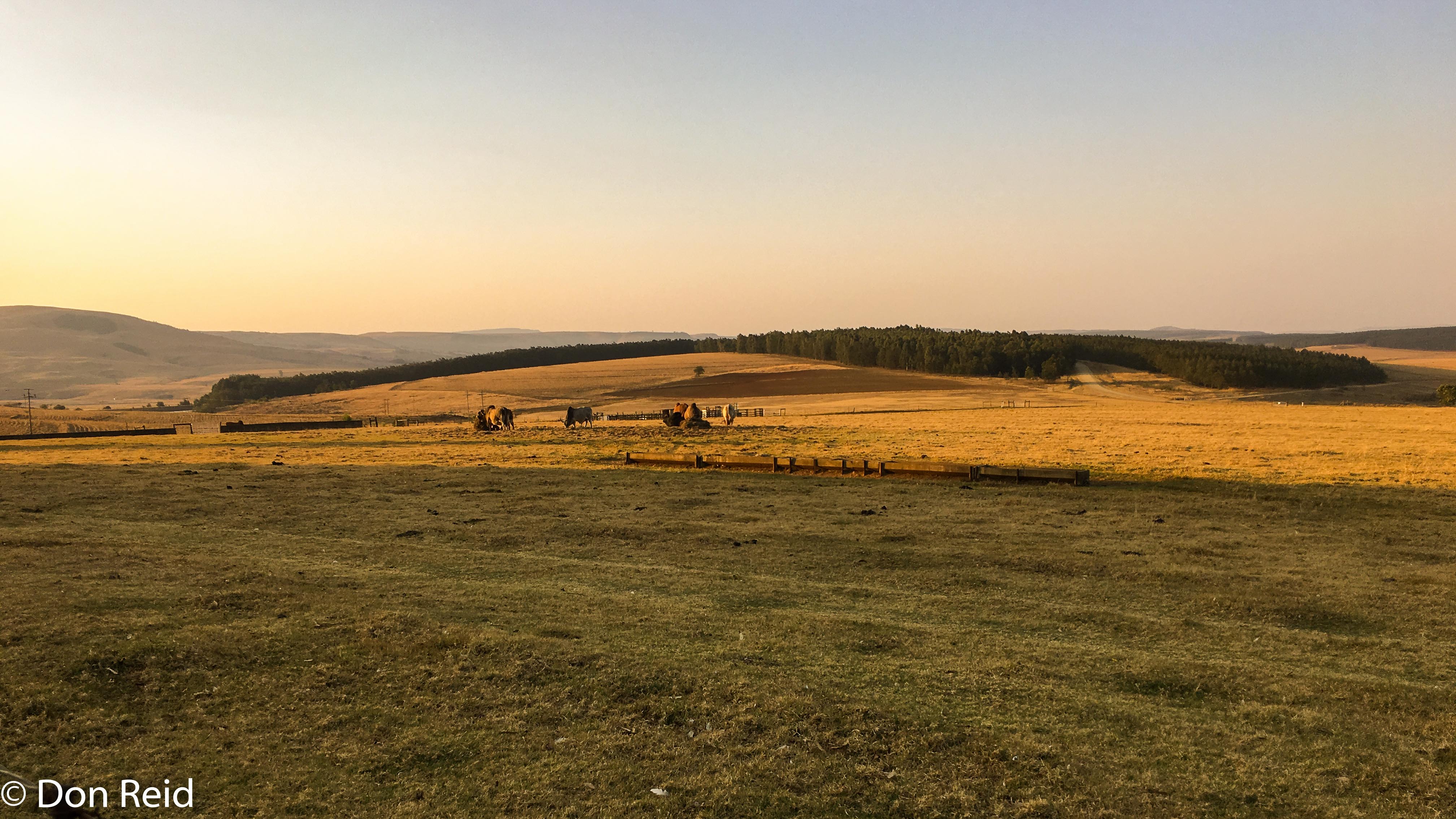
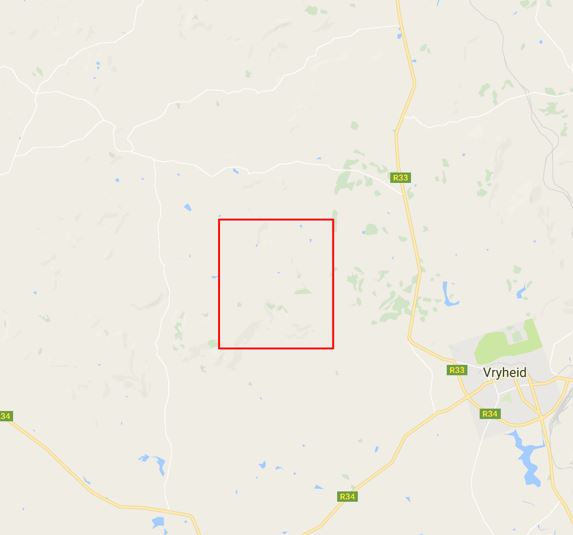
Their farm lies in a hilly part of northern Kwazulu-Natal province of South Africa, not far from Vryheid and some of the sites of fierce battles that took place in the late 1800’s, variously between the forces of the British, Boers and Zulus who were all fighting for control of this part of Southern Africa.

Onverwacht farm, Vryheid

We visit the farm whenever the opportunity arises, although less frequently than we would like and our most recent visit, coinciding with the first weekend of our Spring in September 2016, was to attend a family wedding in Vryheid. I used the time before and after the nuptials to fit in some birding in this quite special environment and as usual it delivered several species that are not easily seen elsewhere.

Exploring the Farm gardens and surrounds

Onverwacht farm, Vryheid

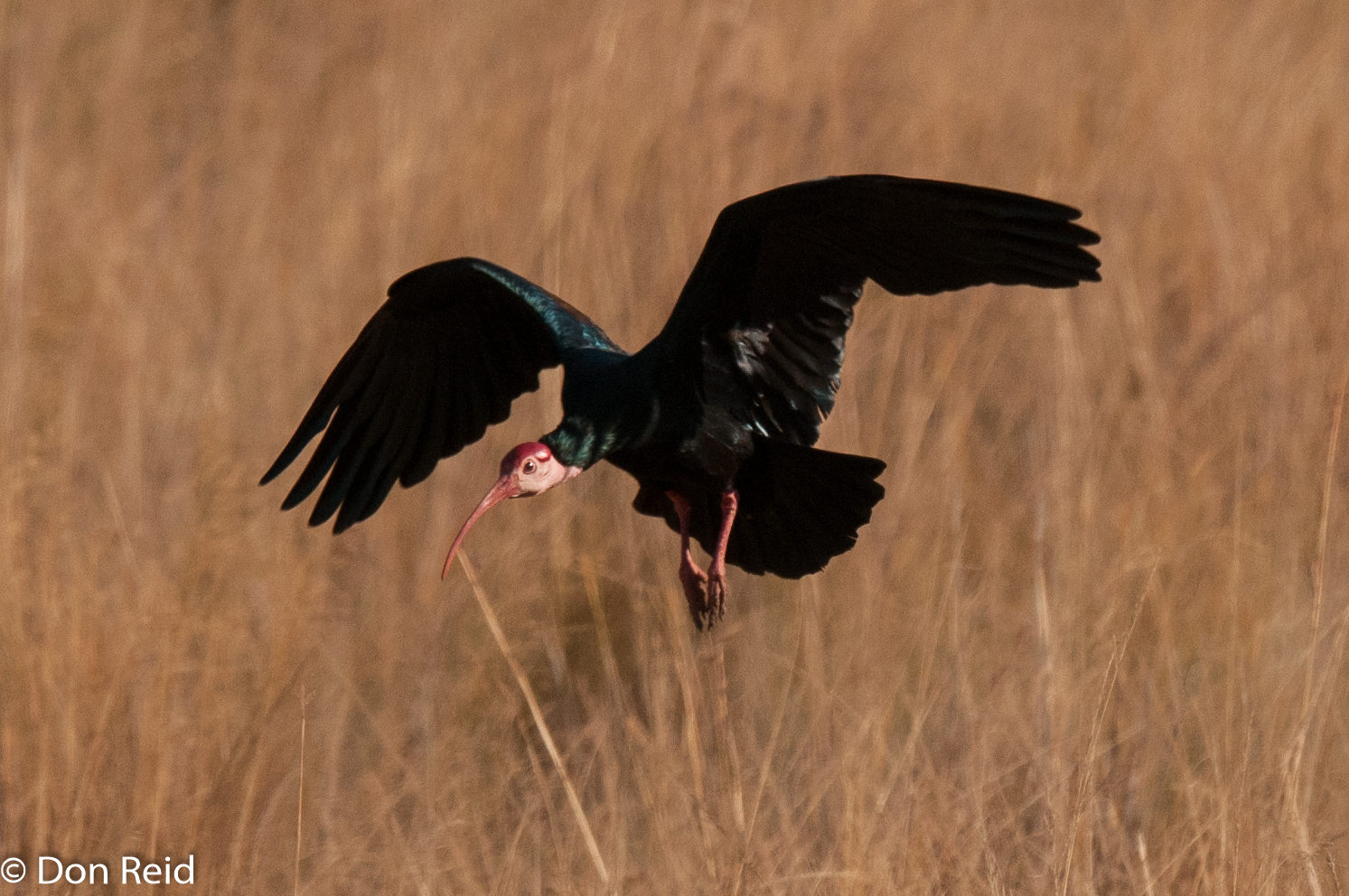
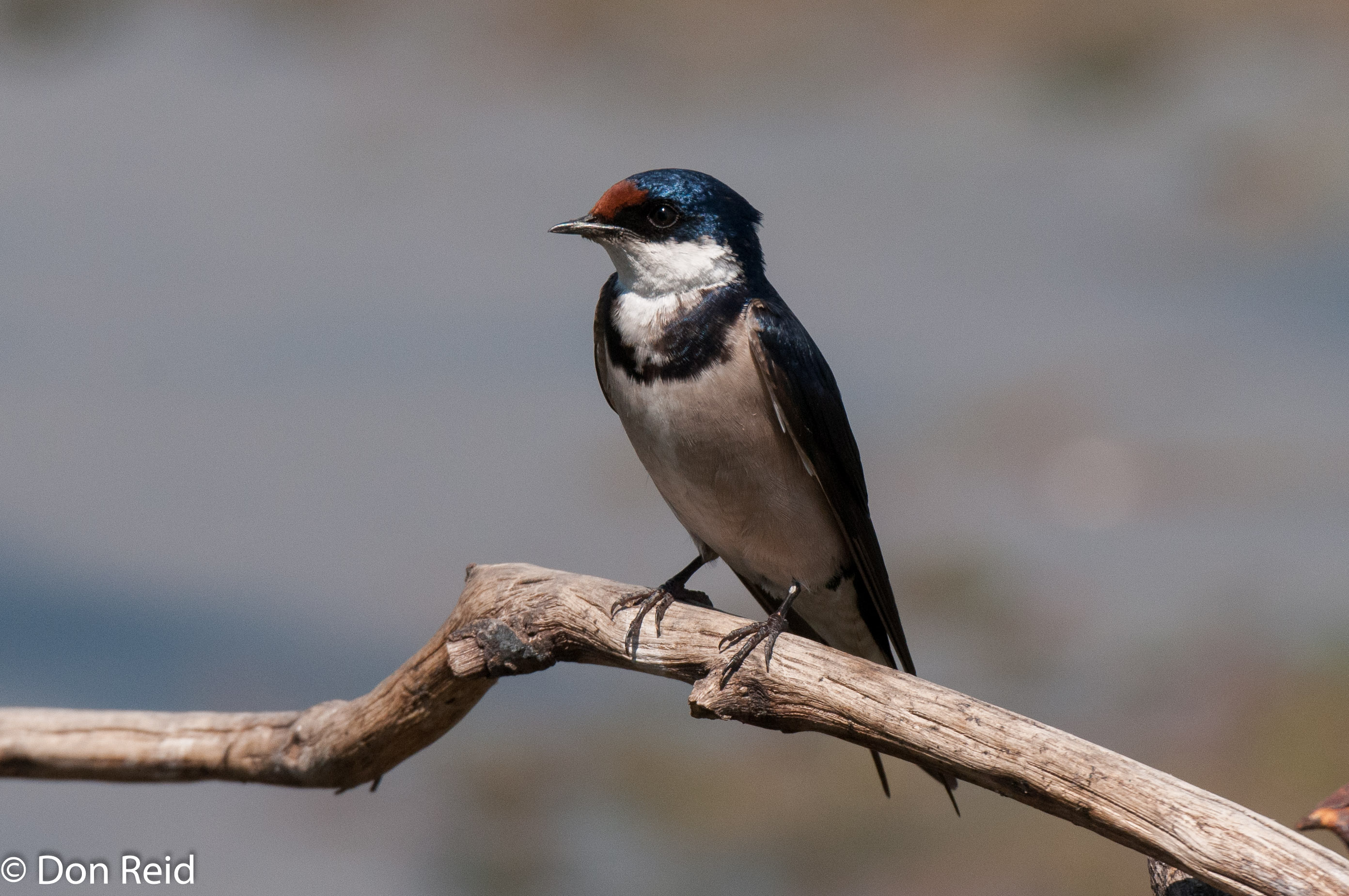
Saturday’s session was less than half an hour in the vicinity of the farm-house, highlighted by a Bald Ibis flying past, Black-headed Oriole calling regularly with liquid whistles, White-throated Swallow and a lofty Yellow-billed Kite, no doubt fresh back from its migration to other parts of Africa.

Bald Ibis
White-throated Swallow

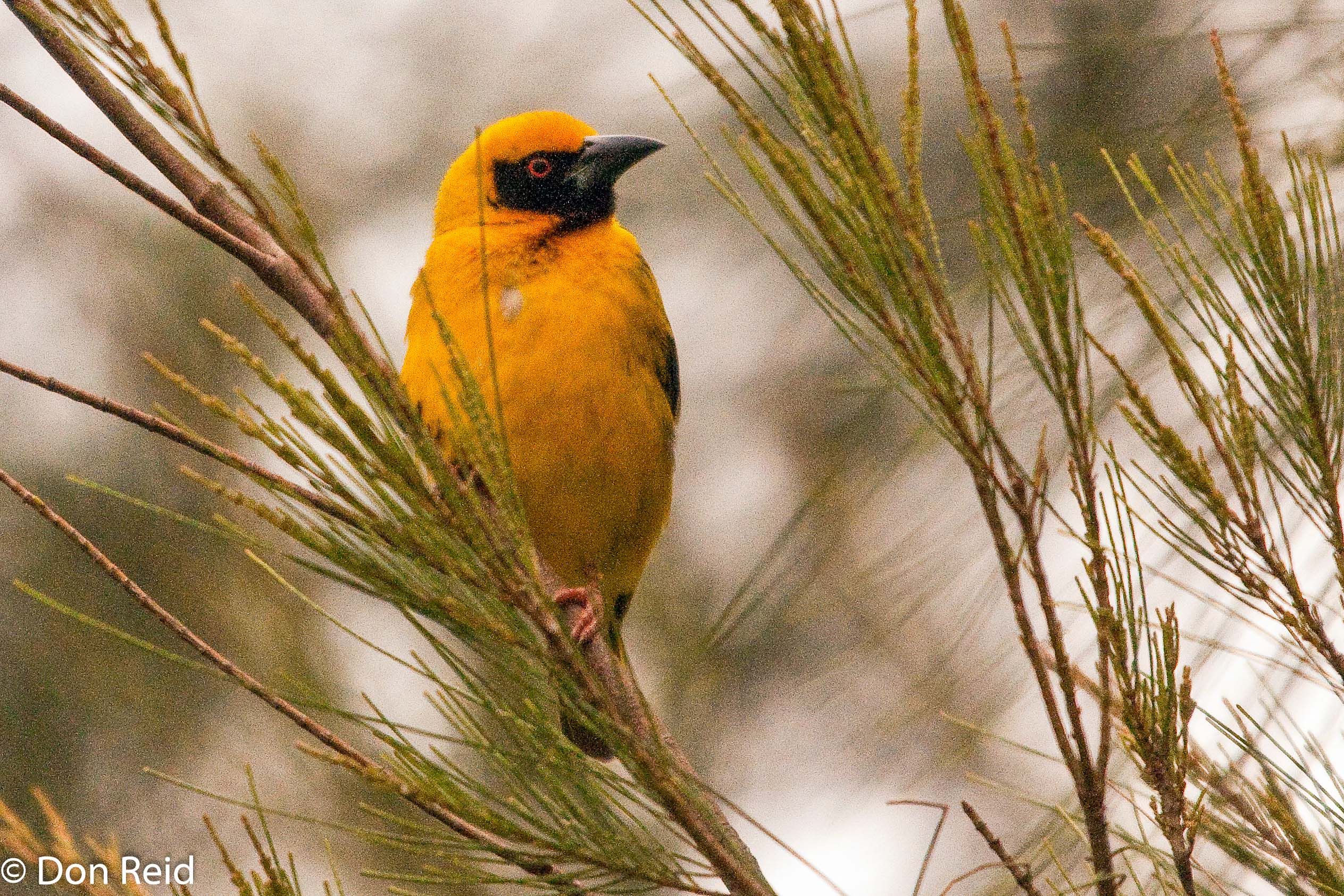
Very prominent were the Village Weavers in numbers in the pine trees behind the house, chattering away in their excitement at the arrival of Spring and a chance to do some nest-building and wooing of the female weavers.

Village Weaver

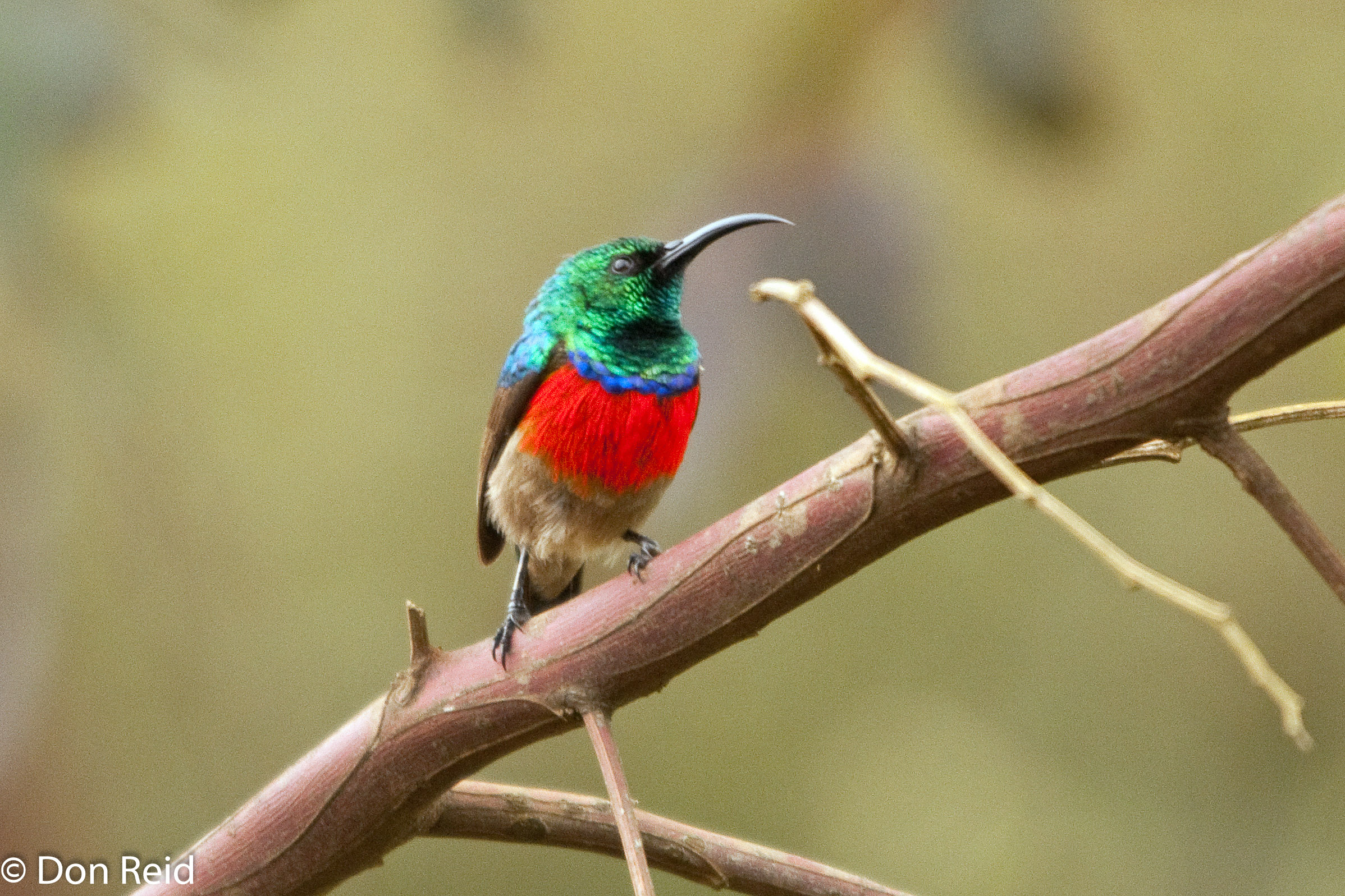
And in the garden a Greater Double-collared Sunbird showed off its bright red and green colouring.

Greater Double-collared Sunbird

Sunday’s birding was a lot more exciting, starting with an hour-long slow walk around the dam not far from the house and followed by a drive up the mountain to the plateau, courtesy of “bird-guide” Pieter, who has become very adept at knowing where certain species occur on his farm.

The dam circuit was a slow and easy walk from the house down to the dam and skirting the edge all the way around.

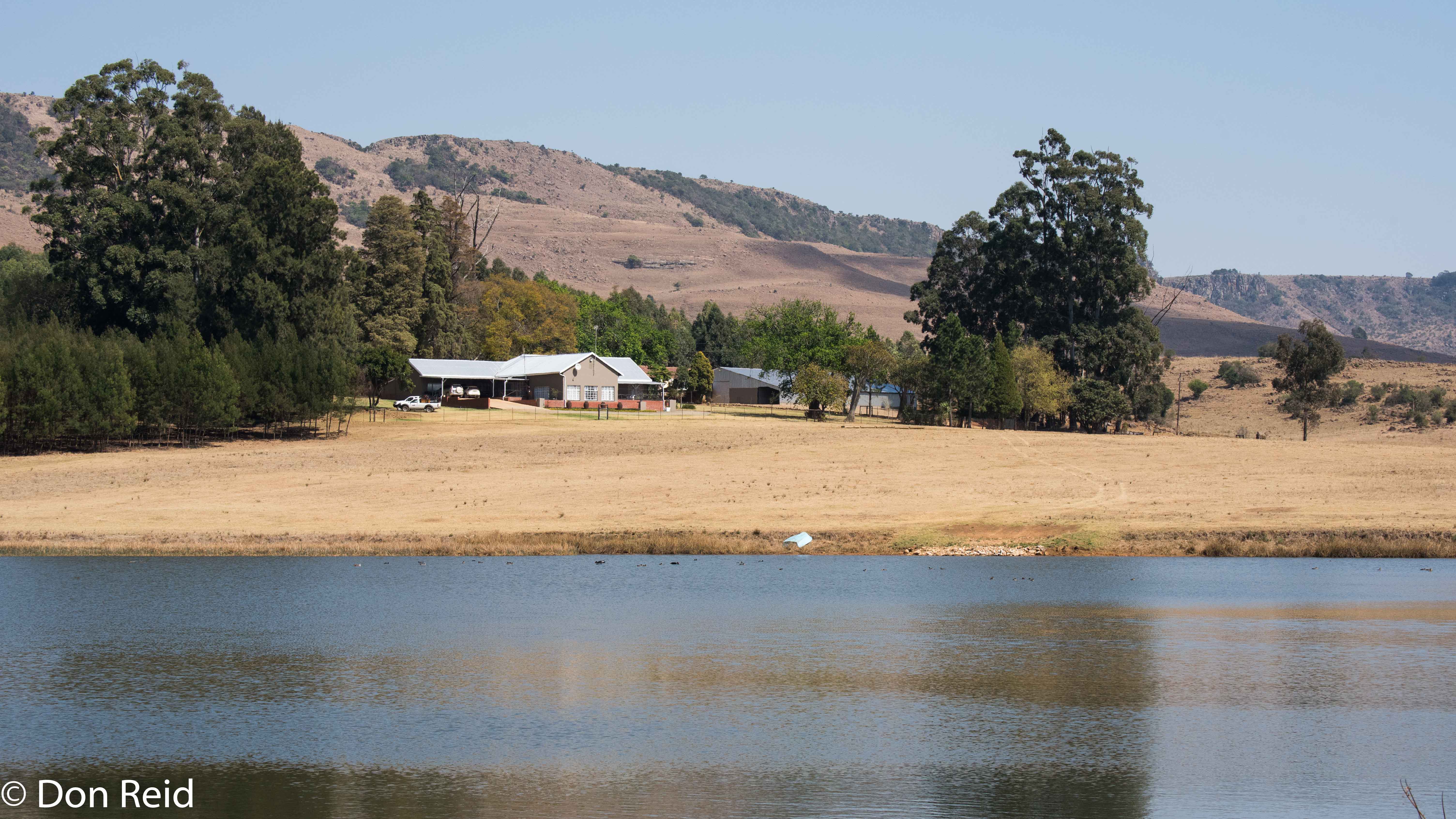
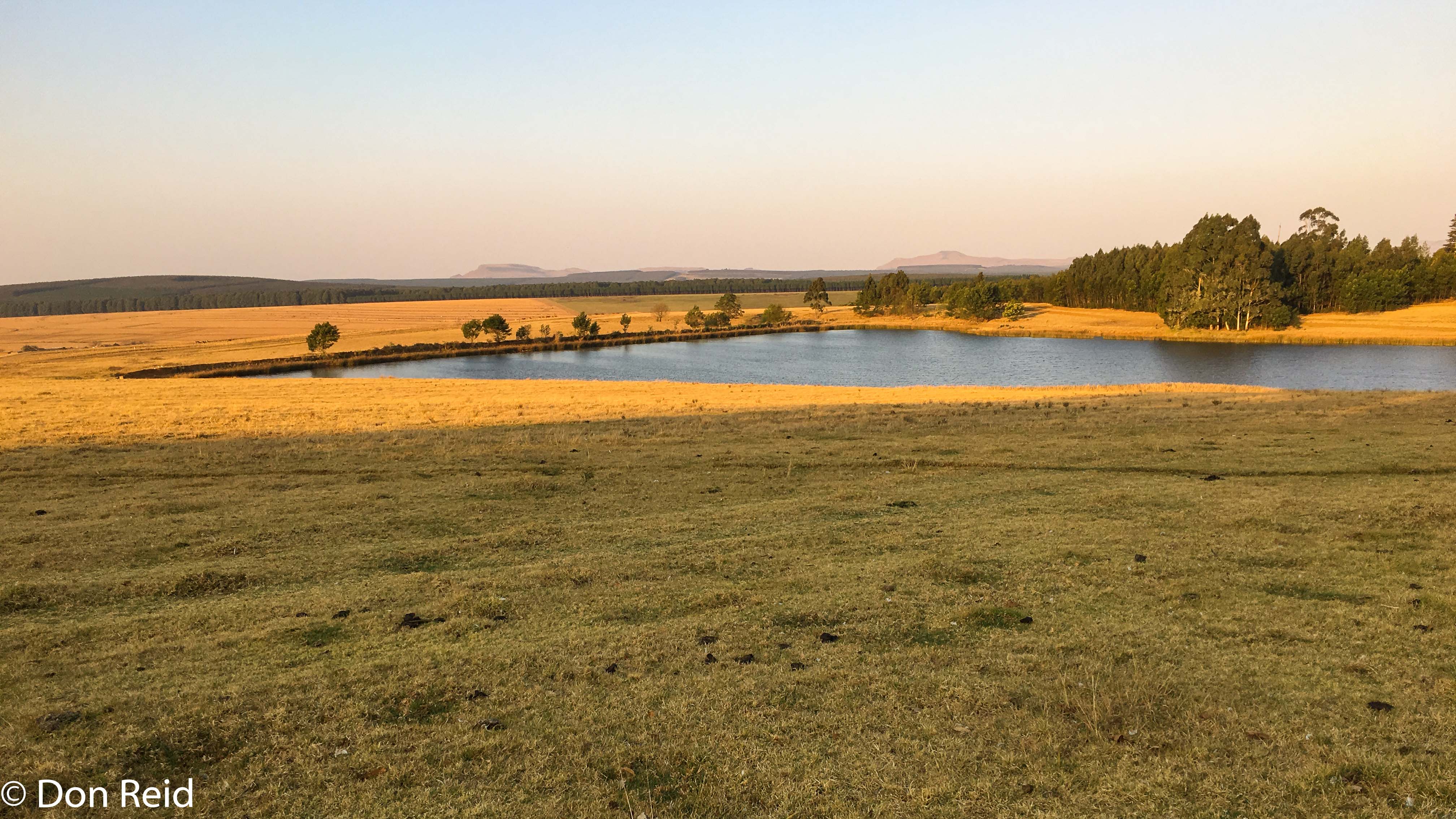
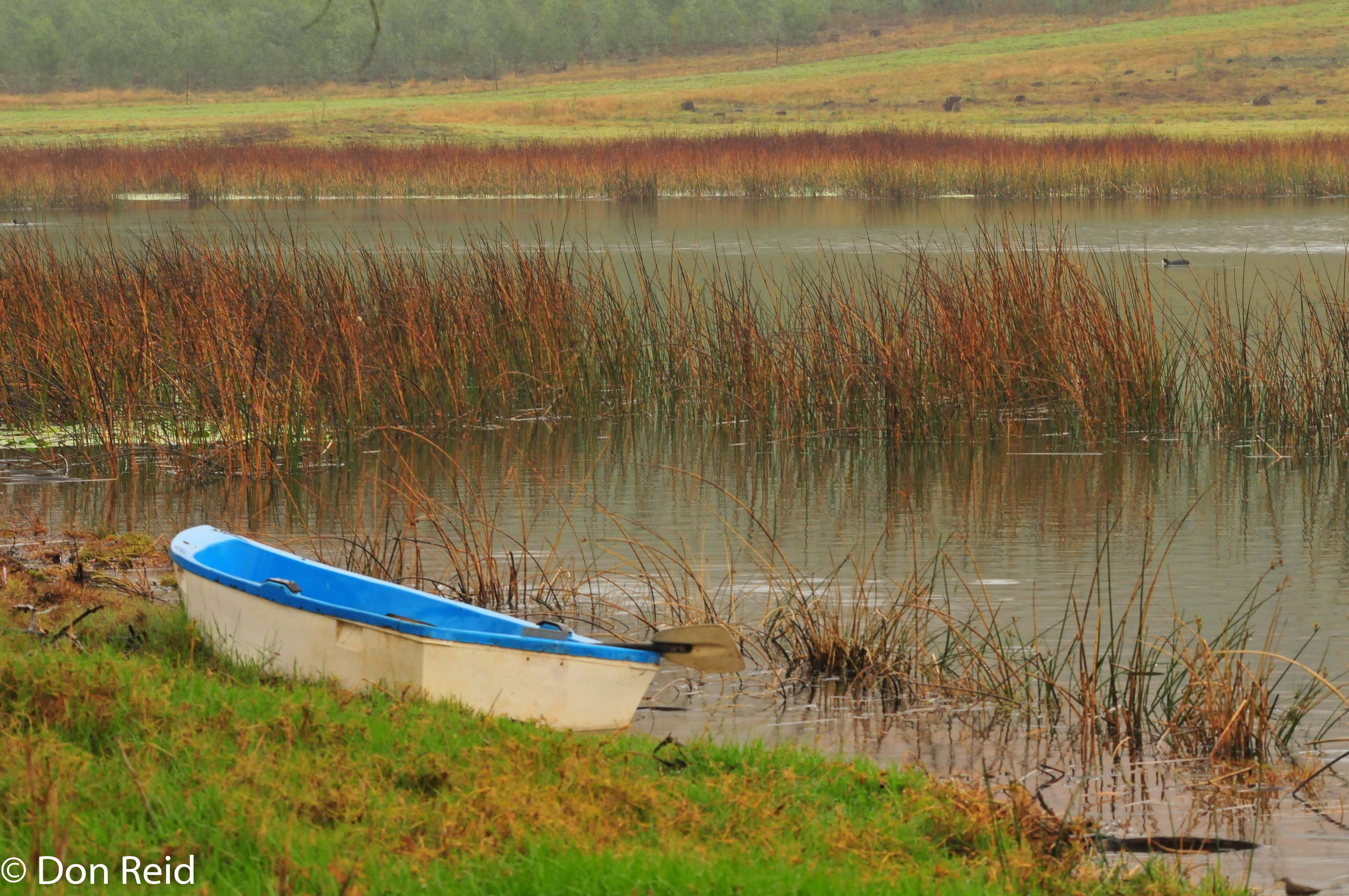
The dam as seen from the farm house
The dam

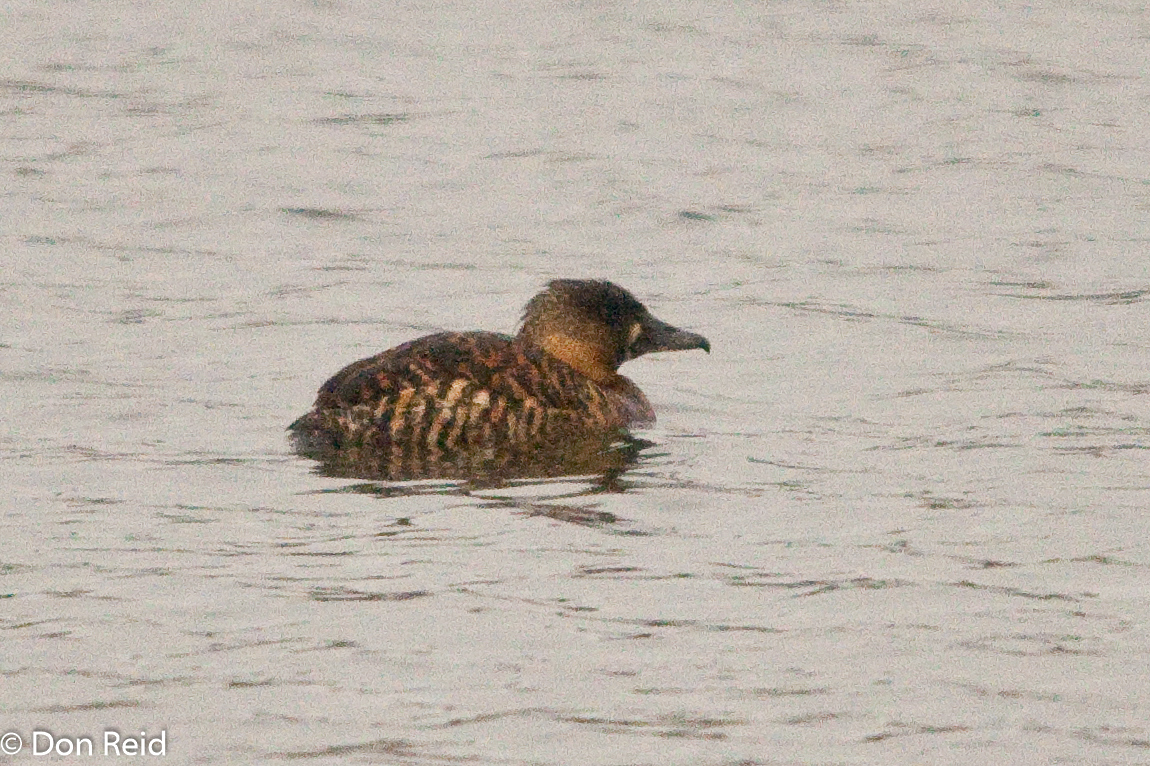
Brown-throated Martins and Black Saw-wings flew low over the water along with an occasional White-throated Swallow. Amongst the usual Yellow-billed Ducks and Red-knobbed Coots, a bevy of White-backed Ducks stood out but kept their distance, making it difficult to get a decent photo.

White-backed Duck

A Giant Kingfisher flew out of a waterside tree as I approached, calling ka-ka-ka, and landed on the far side of the dam.

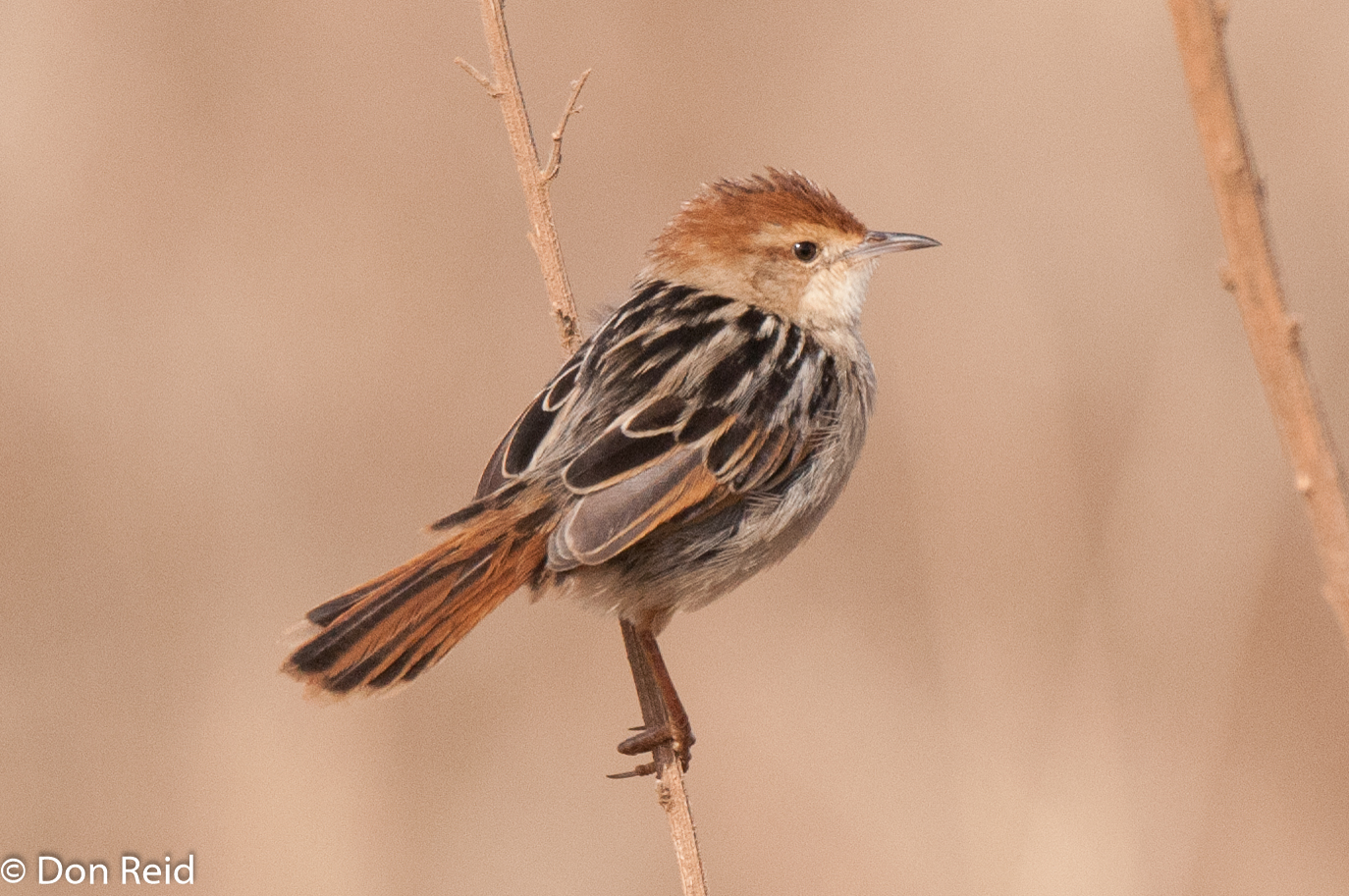
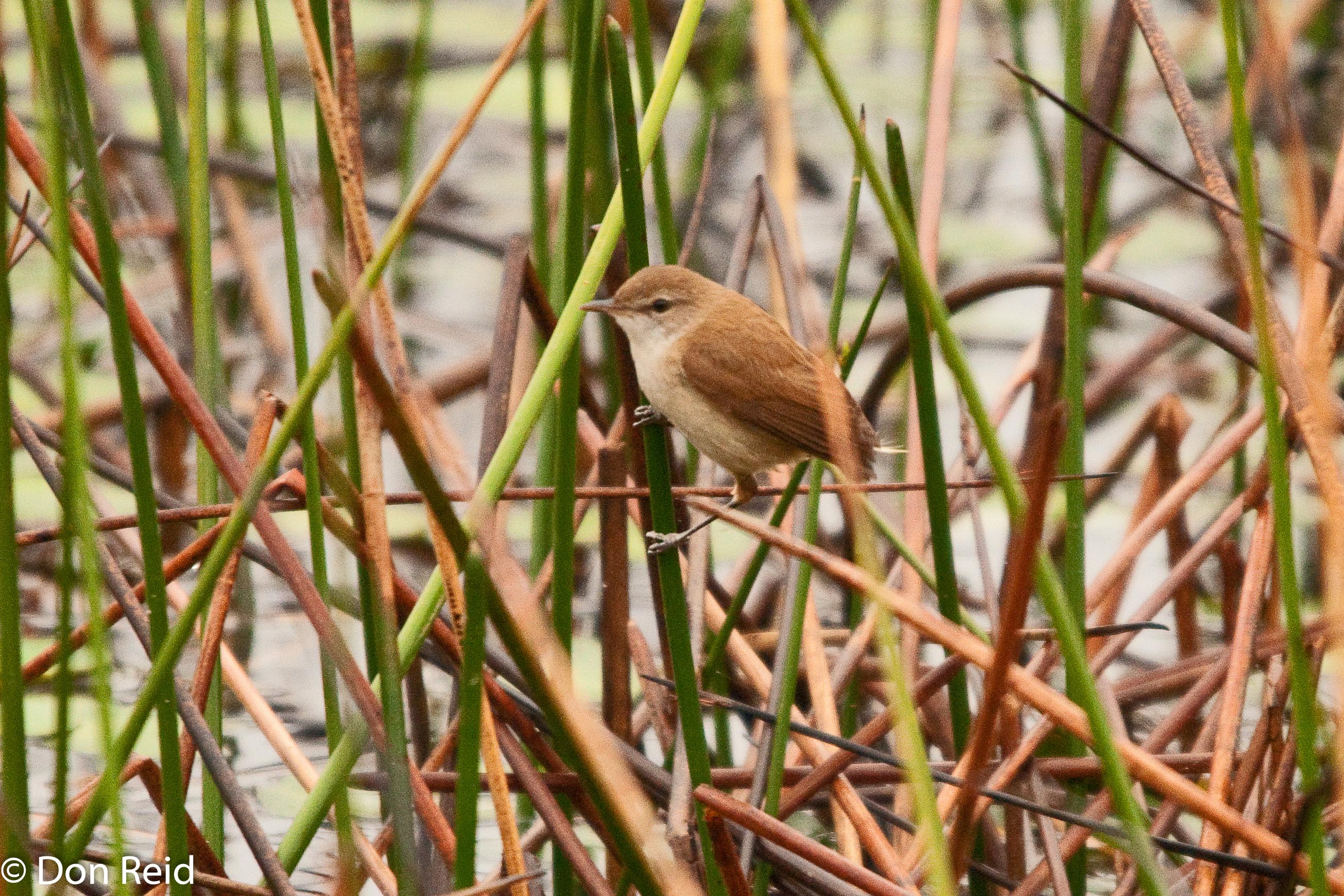
Walking along the dam wall, I disturbed several reed-dwellers – Levaillant’s Cisticolas, Tawny-flanked Prinias, Neddickys and Southern Red Bishops aplenty. Lesser Swamp-Warbler peeked out of the reeds just long enough to grab a photo.

Levaillant’s Cisticola
Southern Red Bishop
Lesser Swamp Warbler

Going Up

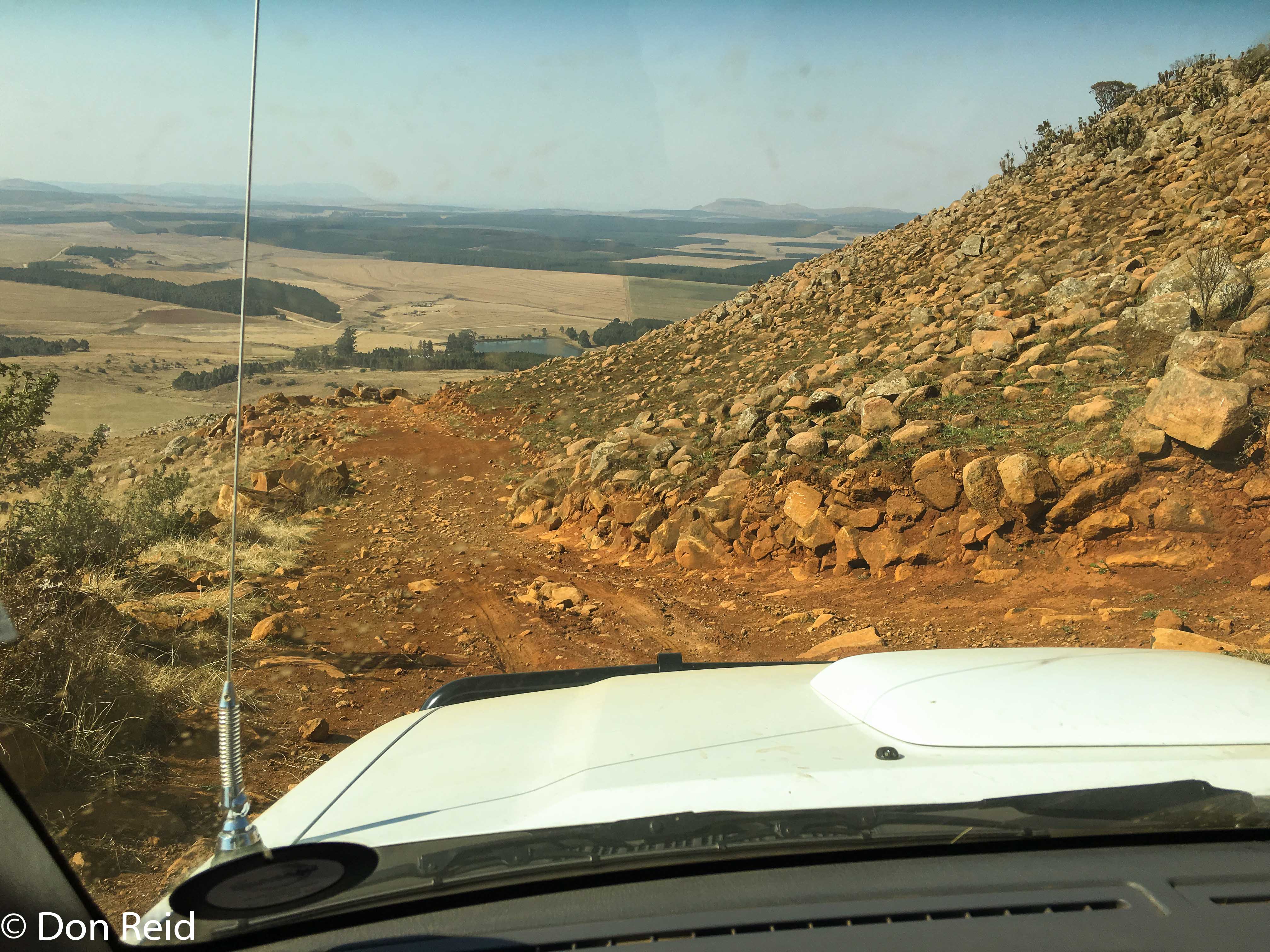
After a more than substantial farm breakfast, including my favourite “krummelpap” – a crumbly porridge in warm milk and dressed with biltong and cheese, Pieter suggested a birding drive, which I agreed to rapidly. We were soon on our way  up the mountainside on to the plateau in the 4 x 4 bakkie (pickup), expertly driven by Pieter on tracks which are at times rough enough and steep enough to have this brave birder’s heart in his mouth.

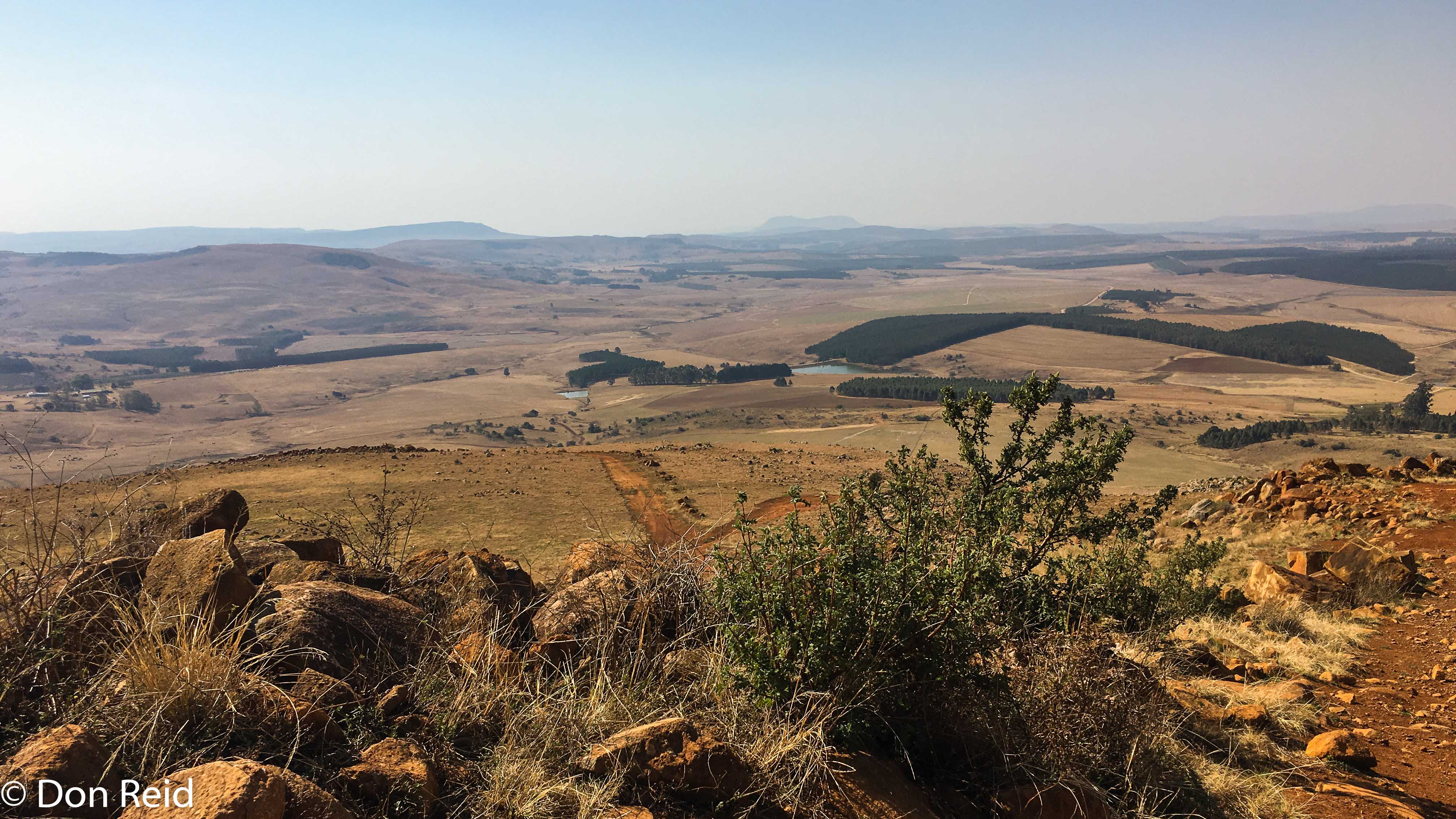
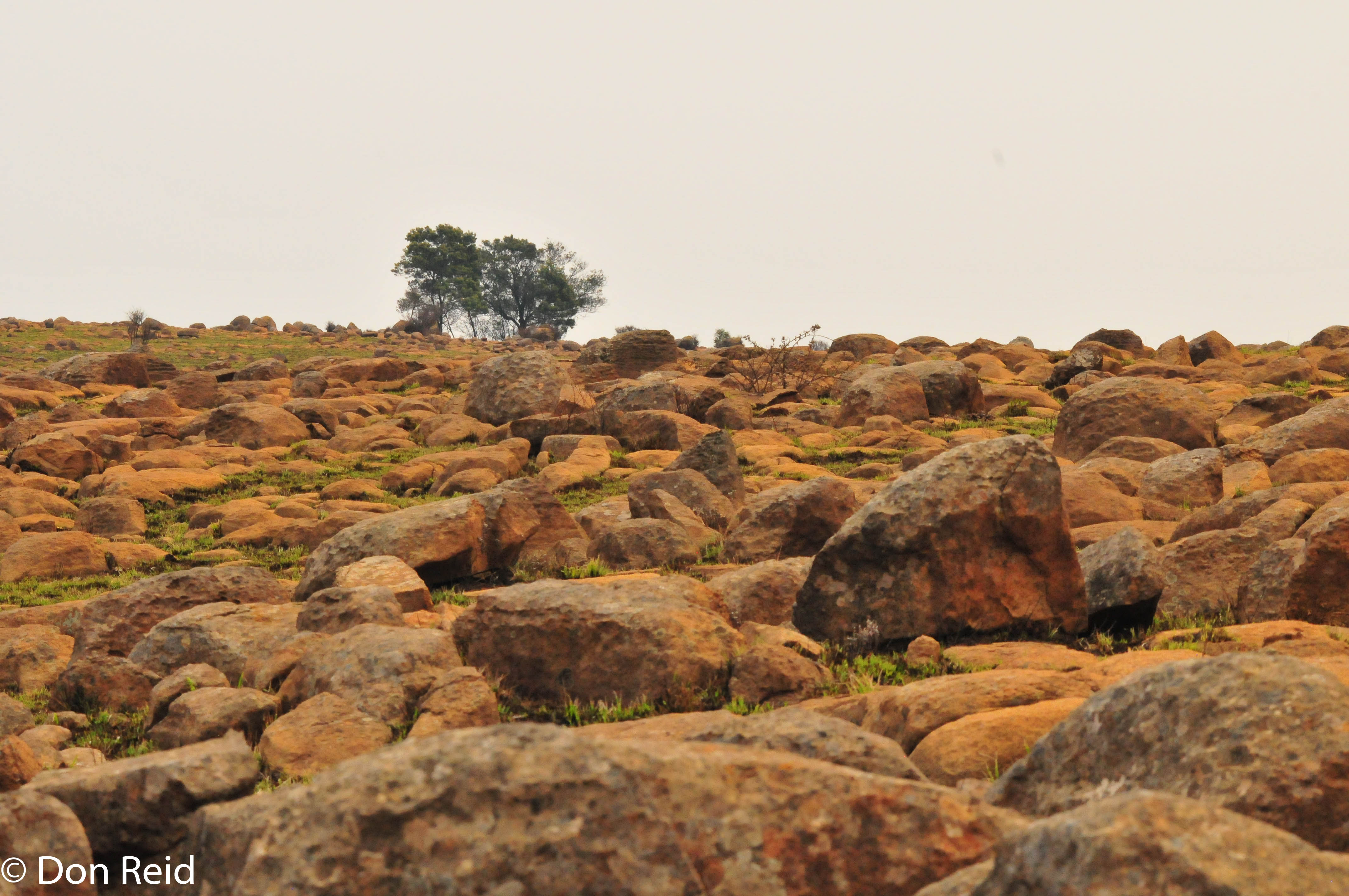
The plateau lies some 300 metres above the farm-house and once we had ascended to the top we spent the next couple of hours looking for the species that favour the rock-strewn grassy habitat, rocking and rolling along the rough tracks that wind between the rocky areas.

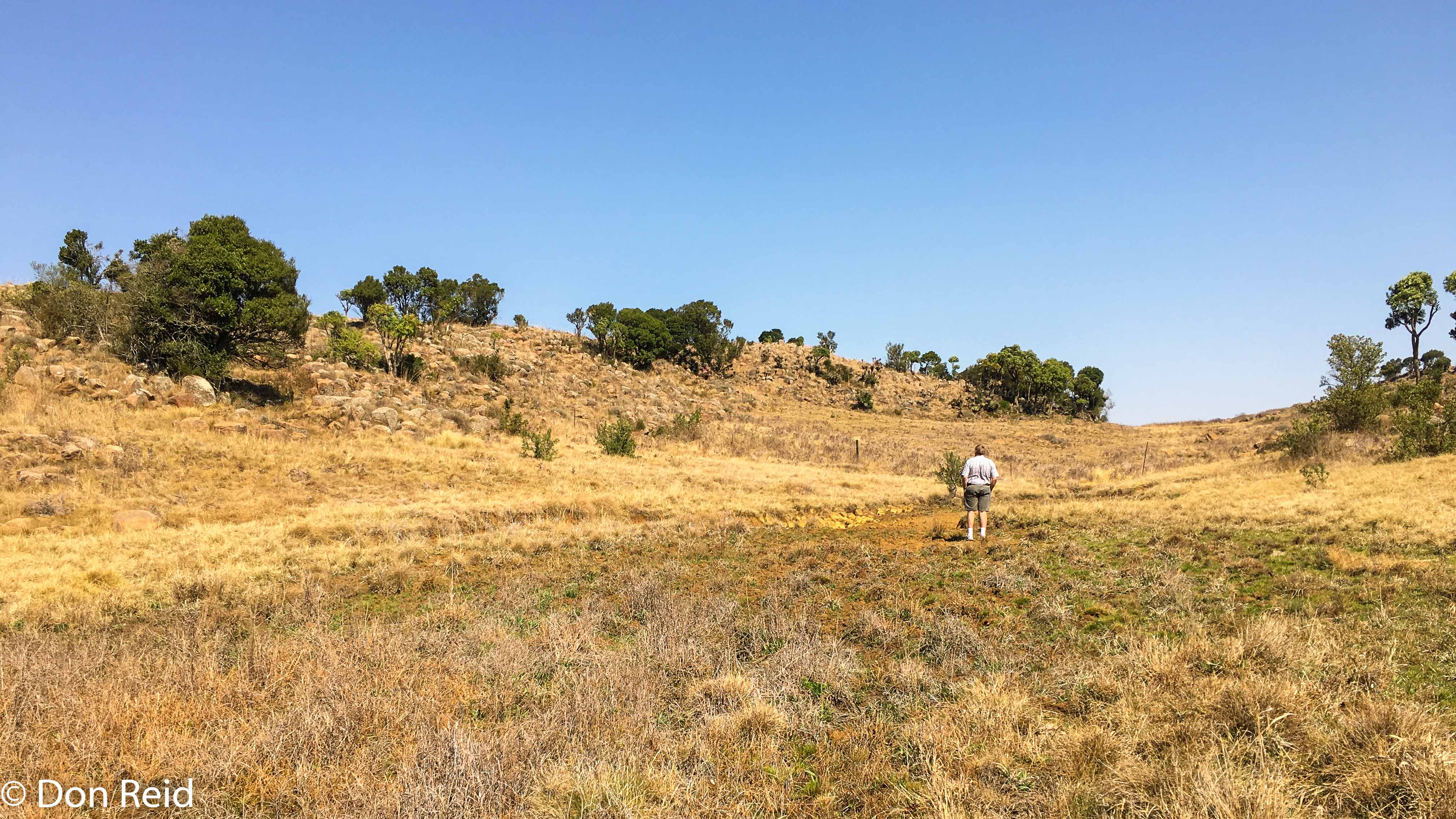
View from the plateau

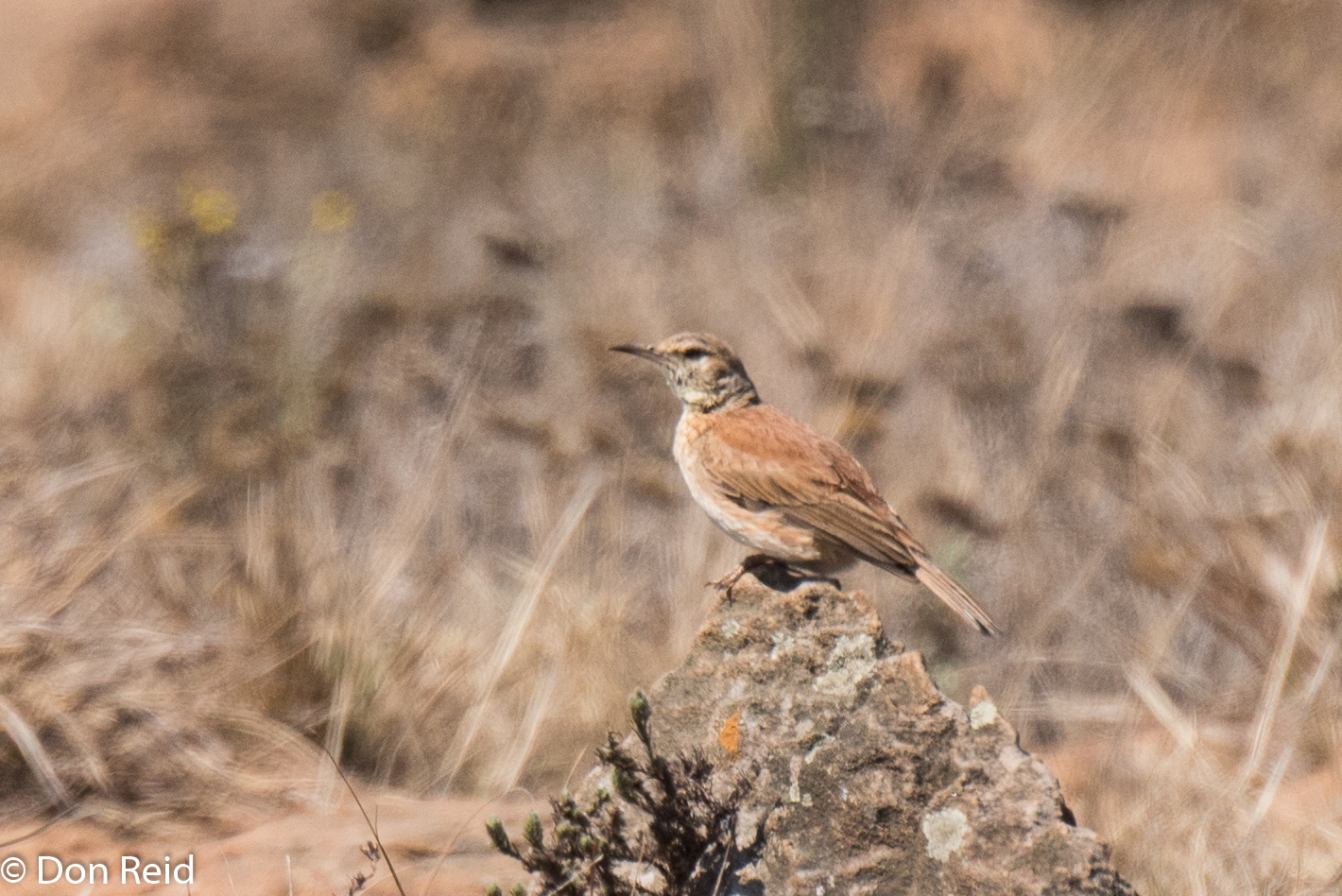
Surprisingly the most common bird was Buff-streaked Chat – up to a dozen pairs in all – followed by Eastern Long-billed Larks and Cape Longclaws, all moving about this unique landscape with its almost unearthly feel – thousands of rocks seemingly strewn about in a random manner, interspersed with fine grass and shrubs and relatively flat despite being “on top of the mountain”

On the plateau – rocks for Africa!
Eastern Long-billed Lark (from far away)
Cape Longclaw

Other interesting species that occur here and that we came across in small numbers were :

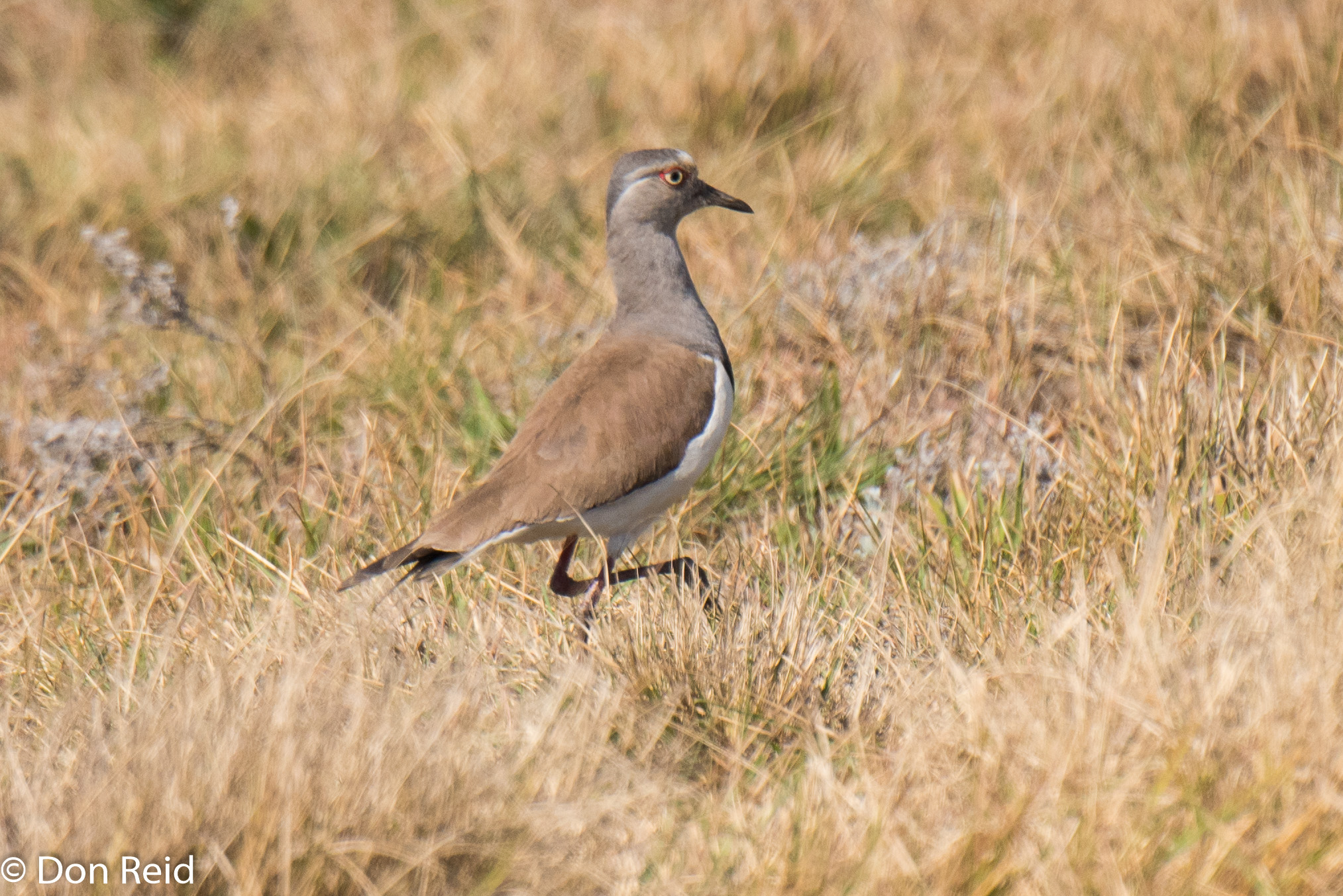
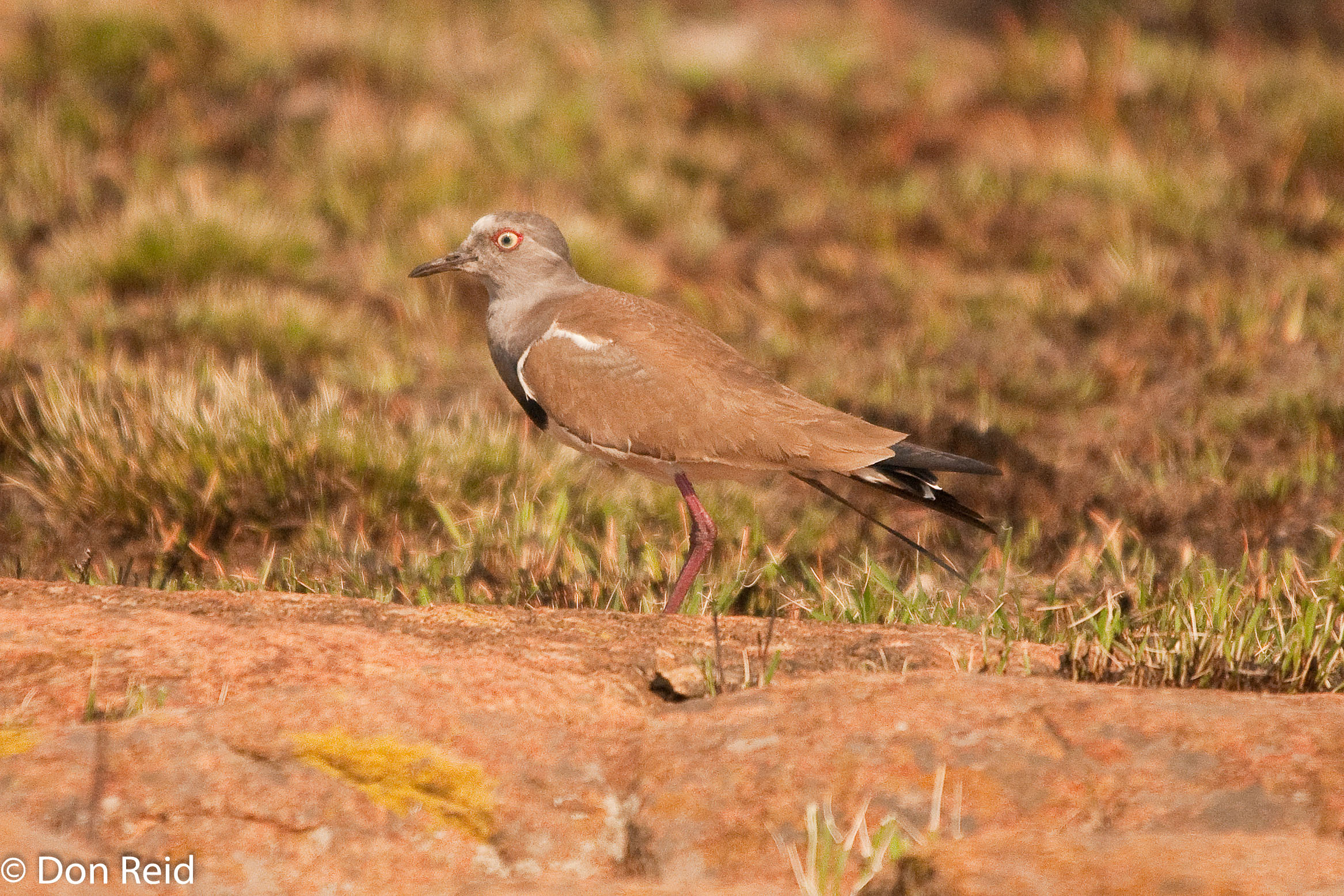
  • Black-winged Lapwing
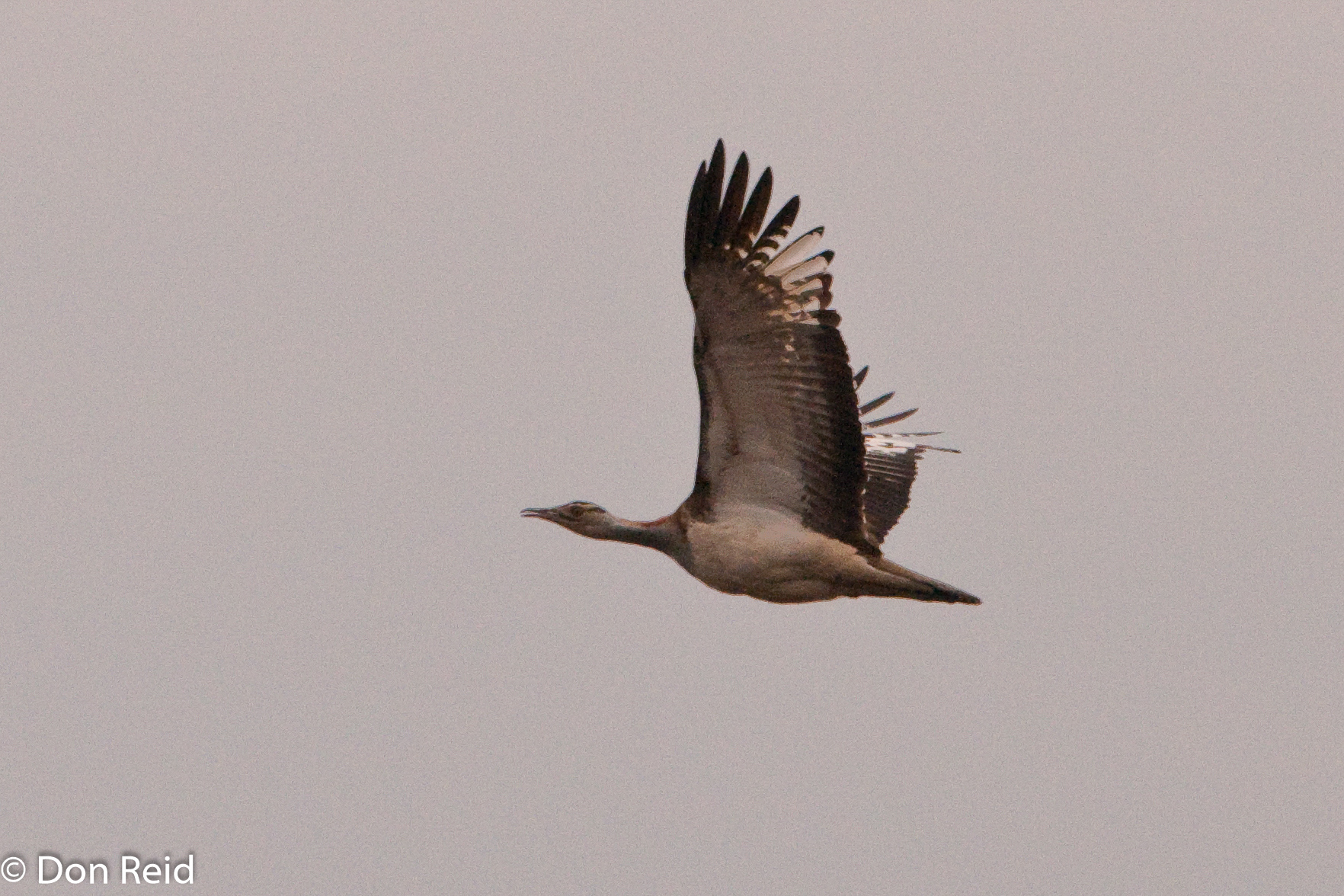
  • Denham’s Bustard
  • Blue Crane
  • Red-capped Lark
Black-winged Lapwing
Denham’s Bustard

After exploring the length and breadth of the farm’s extent at this higher level, we headed back down the steep incline, edging slowly around the hairpin bends, some with a steep drop-off to one side, which require some careful manoeuvring.

We came across Ground Woodpeckers, whose habitat according to Roberts includes road cuttings, which is precisely where we found them – how specific is that!

We ended with a drive through corn fields adjacent to a stream and found a single Spoonbill, then made our way back to the farm-house for more of the hospitality for which farmers are deservedly famous.

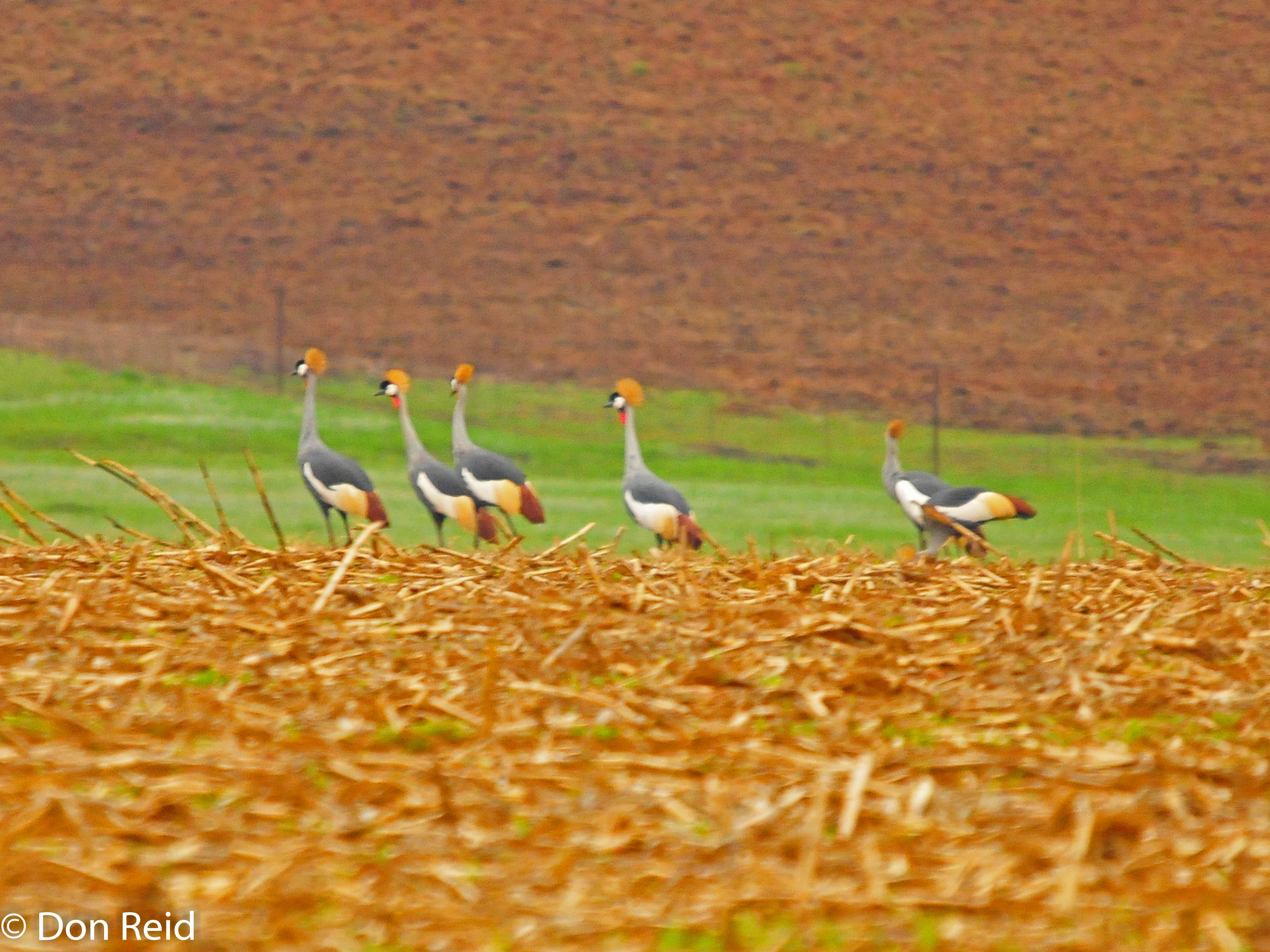
On a previous trip we had the pleasure of seeing Grey Crowned Cranes in the fields, albeit at a distance. They must rate as one of the most spectacular large birds in Southern Africa and to see them “dancing” as part of their courtship ritual is unforgettable.

Grey Crowned Crane

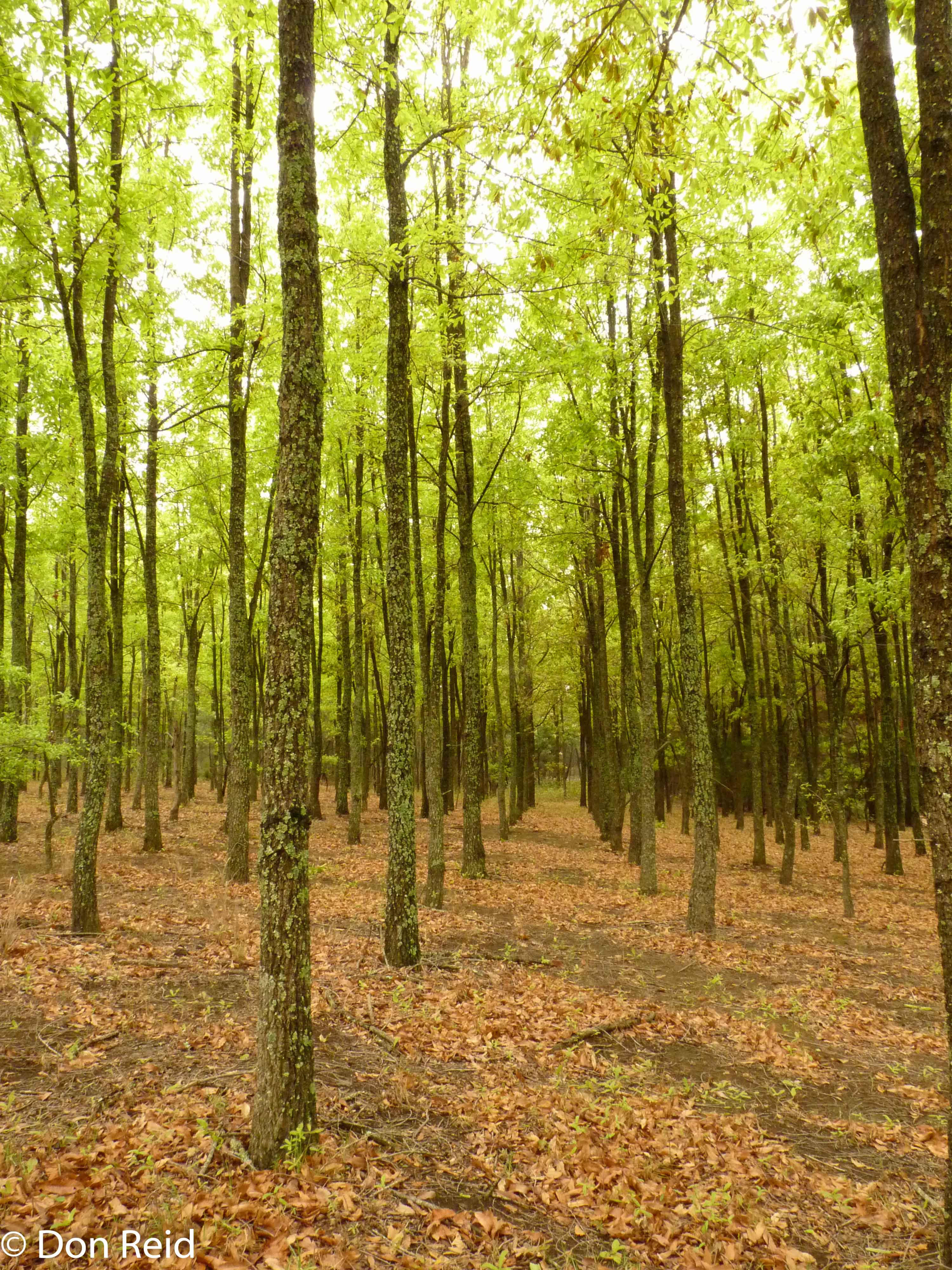
This is also an area of plantations, generally sterile as far as birding goes but good for a moody photo…..

Plantation, Onverwacht farm

Atlasing Stats

From an atlasing point of view it was a successful outing with 55 species recorded, 5 of which were new to the pentad (refer to my recent “Atlasing Tales” posts for an explanation of these terms). The pentad number is 2740_3035 (the red square on the map) and this was the 7th Full Protocol card. My contribution has been 4 FP cards so far, with a species count of 123.

Can’t wait for our next visit!


Havana Cuban Cigar

I submitted this story to the SA Sunday Times “Accidental Tourist” column in early December 2016 and was delighted to have it published in the Sunday Times of 26th February 2017, on top of which they actually paid me as a freelance writer (No, I’m not giving up my day job just yet)

This is the published article along with what I think is a delightful illustration :

st-cuban-cigar-16

st-cuban-cigar-17

And here is the original version with some photos from the trip to illustrate it :

“Our trip to Cuba some 5 years ago, was memorable for many reasons, none more so than a cigar-shopping expedition instigated by my son-in-law, in search of real Cuban cigars, but not those you can buy at a premium price in the tourist areas, he was after a “real bargain”.

Now said son-in-law is always on the lookout for a good deal, but I did not realise just how determined he could be until we found ourselves in Havana with an afternoon to spare.

Having done the normal tourist routes of Havana, we set off from our hotel in the older part of this fascinating city, heading in the direction of the Cigar Factory closest to our hotel, passing by some of Havana’s contrasting sights along the way – on the one hand the beautiful National Capitol building, in pristine condition, on the other the “Train Museum”, a collection of sad, rusty locomotives standing forlornly on an open plot.

Capitol building, Havana
Train "museum" central Havana
Train “museum” central Havana
Train "museum" central Havana
Train “museum” central Havana

We were soon at our destination, the Partagas Fabrica de Tabacos, and entered the showroom area which was crowded with tourists, took a quick look around, checked the price of a box of genuine Cuban cigars – around R4,000 – and headed straight out the front door again. This was not the place to find a bargain.

Cigar factory, Havana
Cigar factory shop, Havana
Street scenes, Havana

As we stood outside debating our next move, a man sidled up to us and said “wannacheapcigar?” or something along those lines. I was inclined to ignore him and walk away, but son-in-law – let’s call him A to protect his normally conservative reputation – decided otherwise and engaged our new friend in conversation. It seemed we would have to follow him to his apartment to find out more, which I thought very unwise, but not so A who eagerly fell in behind the, admittedly, quite pleasant looking cigar-agent.

Street scene, Havana
"Classic" American cars, Havana
“Classic” American cars, Havana

A street or two and a couple of corners later we were in what can only be called a seedy part of Havana and climbing a flight of stairs which had clearly not seen a renovator’s hand in a long time, into an apartment with a front door so low I had to bend slightly to get in. Cigar-agent pointed to a battered sofa and suggested we sit while he fetched the cigar-seller, at which point my heart sank even further, but A still had his brightest face.

A panicky minute or two later a somewhat more intimidating man entered, muscled, bedecked in gold chains and carrying a large bag with an air of “no one messes with me”. The bartering session that followed between A and the gold-chain one was something to behold – A had him emptying his entire bag of boxed cigars, until the very last one seemed to take his fancy. By this time, I was eyeing the door and working out the best route for a quick getaway, but A insisted on opening the box, rolling and sniffing each of the cigars to make sure there were no fakes in between the genuine cigars, all at a relaxed pace.

Content with the quality, A then started the negotiation process, whittling the price down from the same R4,000 as the cigar factory to the equivalent of about R400, by which time the seller was looking very unhappy and, I thought, liable to take drastic action. Amazingly the deal was concluded with the seller close to tears, payment was made, cigars taken and we strolled out and down the passage to the stairs as nonchalantly as my nerves could manage, all the while expecting an angry roar and a dagger in the back.

"Classic" American cars, Havana
“Classic” American cars, Havana

Then, on the way back to the hotel……… but that’s another story, let’s just say I was mightily relieved to get there.”


A Week in Olifants – The Road to Timbavati

For the second year in a row we spent a week in Kruger National Park in October, this time spending 6 nights in Olifants rest camp in the northern part of Kruger, with one night stop-overs at Berg en Dal  and Pretoriuskop rest camps on the way there and back respectively.


The Road from Olifants to Timbavati

Timbavati lies south-west of Olifants and is ideal for a morning’s outing from Olifants camp – we chose to do it on the Wednesday of our week-long stay.

Another early start saw us heading along the S92 (in yellow on the map) for 12 kms past Balule, joining the H1-4 tar road towards Satara (red on the map) for 7 kms, then branching off on the S39 Timbavati road (yellow on the map) for a further 27 kms past Roodewal private camp to the popular picnic spot.

Kruger maps

This is classic Kruger Park with regular game sightings along the way to keep the spirits up and eyes sharp. Antelope including Kudu, Waterbuck, Impala and Steenbok were plentiful despite the drought-ravaged landscape.

The birding on this route, up to the junction with the H1-4, was influenced by the dry conditions and was subdued until we reached the Olifants river, where there are a few short side roads which take you closer to the river and are worthwhile exploring for game and birds. White-browed Scrub-Robin, Brown-crowned Tchagra, Emerald-spotted Dove and Golden-breasted Bunting were our only significant sightings up to this point.

Emerald-spotted Wood-Dove (Groenvlekduif)
Emerald-spotted Wood Dove (Groenvlekduifie)
Golden-breasted Bunting (Rooirugstreepkoppie)

At the river we spent some time on the low-water bridge at Balule, often an excellent spot for water birds and this morning was no exception. The bridge has just a single lane but the designer had enough foresight to include a few wider “bulges” along its length which allow you to park on the bridge without blocking cars crossing over. Woolly-necked Stork, Common Greenshank, Sacred Ibis, White-breasted Cormorant and Grey Heron were all present and enjoying the clear waters and fringing reeds.

A medium-sized wader not far from the bridge had me perplexed and excited at the same time for a few minutes, until I had to admit it was a (common) Wood Sandpiper. Despite all attempts, I just could not turn it into a rare Green Sandpiper, which was my first thought when I saw it. Blame it on early morning light playing tricks on me, advancing age, hallucinations or whatever. (No, I don’t smoke at all)

Wood Sandpiper (Bosruiter) Balule bridge

On the other side of the bridge we noticed some White-fronted Bee-eaters on the sandy bank and on closer inspection could see their nesting burrows in the sand, which they excavate by digging with their bill and removing the loosened material with a bicycling action of their feet. Both male and female help to excavate a new burrow each year, which can be up to 1m deep.

White-fronted Bee-eaters (Rooikeelbyvreter) at nesting burrows which are typically 1m deep

The S39 follows the Timbavati river for most of the distance and although bone-dry for most of the way at this time of year (October), the river had tiny patches of water which were enough to still attract game, which do not have many options during the dry season.

Elephant looking for edible foliage amongst the dry scrub
Elephant finding edible foliage amongst the dry scrub

The birding along the S39 picked up with a Bateleur doing its balancing act in the sky and both common species of Spurfowl (Swainson’s and Natal) entertaining us on the ground. Sabota Larks attracted our attention with their cheerful singing from the very top of bare trees.

Sabota Lark (Sabotalewerik)

We arrived at the Timbavati picnic spot just in time for a bush breakfast conjured up by our able team. One of the charming aspects of Timbavati is the tables and chairs, some of which are the same ones we have got to know during more than 40 years of visits. They probably would not win any design competitions, but when it comes to durability and nostalgic memories they are still No 1.

The team at Timbavati

Timbavati is also a fine birding spot in its own right with resident populations of Natal Spurfowl, Greater Blue-eared Starling, Southern Yellow-billed Hornbill, ever-present and on the lookout for food scraps. Other birds vying for attention were White-backed Vulture, Red-billed Oxpecker and a lone Gabar Goshawk.

Eventually we reluctantly decided to head back to Olifants, having absorbed about as much relaxation as our poor bodies could handle.

The return trip was along the S127 road to the H1-4 tar road leading back to Olifants camp. This is a shorter route and makes it an interesting circular drive rather than retracing the route taken to get to Timbavati.

This route added Purple Roller and Grey Hornbill amongst others, but just ahead lay the sighting of the day, if not of the trip. Just before reaching the tar road a knot of cars that had stopped meant only one thing – an exciting sighting nearby. It turned out to be a Leopard lying in the shade of a tree with a dead Impala hanging in the fork of another nearby tree. We later found out that Maia and Geraldine had been the first to spot this most sought after species.

Leopard, Timbavati KNP
Leopard near Timbavati
Leopard prey, KNP
Leopard prey

After viewing it for a while we proceeded to the tar road and our next stop was at the bridge over the Olifants river, where you are allowed to get out of the car between marked lines – it’s always a good idea to take advantage of this and other “get out the car” spots throughout Kruger, to stretch the legs and check for any game or birds out of sight of passing cars.

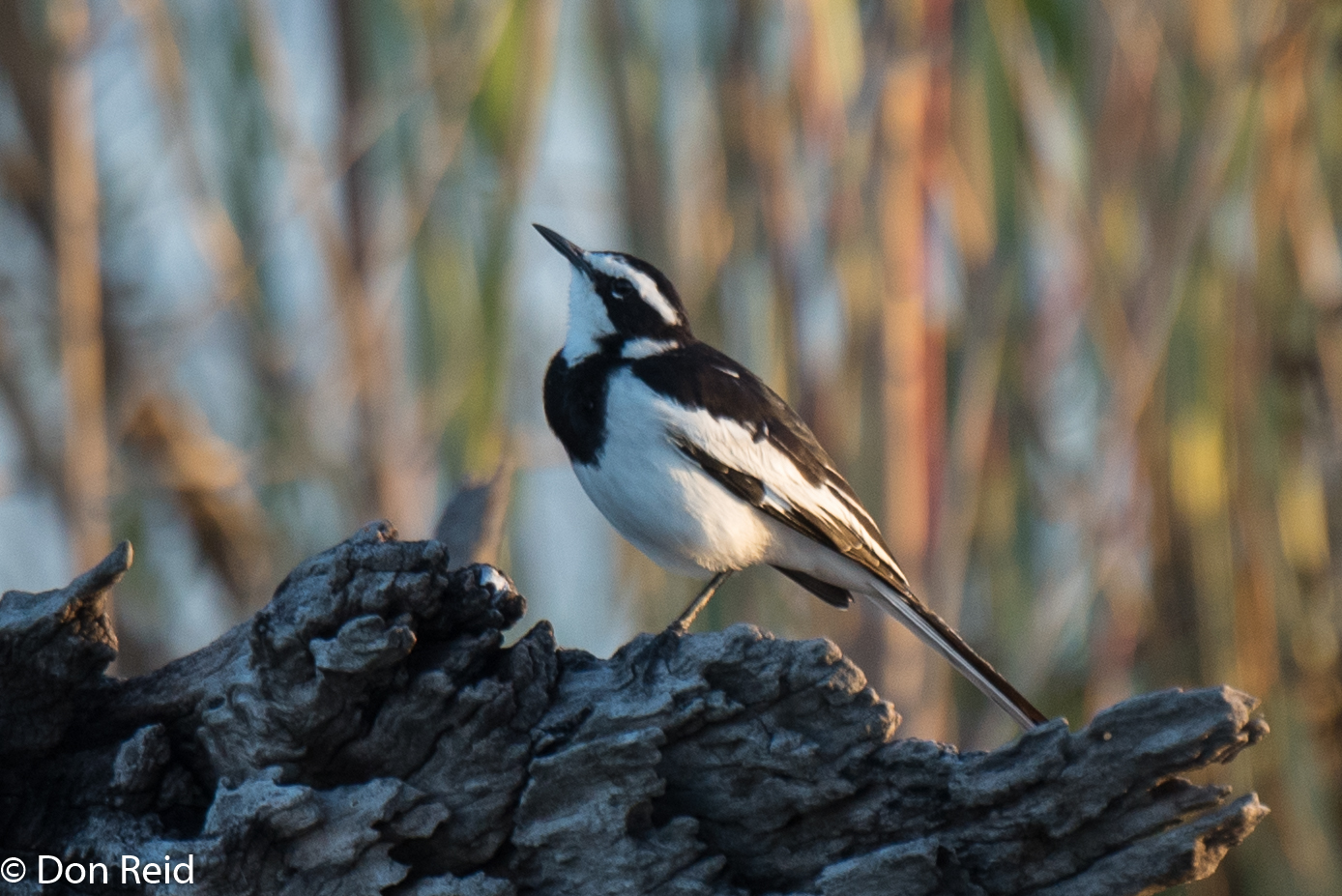
African Pied Wagtail, Olifants river bridge
African Pied Wagtail (Bontkwikkie), Olifants river bridge

Shortly after the bridge another knot of cars announced a sighting of Lions some way off the road. In between the big cat sightings we enjoyed a delightful scene at a water hole where an indignant young elephant chased the Impala who dared to drink from the water hole at the same time as he did.

Elephant at waterhole, KNP
Young Elephant at water hole which he decided belonged to him alone

With a full morning’s game and bird viewing under our belts, we returned happily to Olifants camp, where we relaxed for  the rest of the day with a bit of swimming thrown in and a bottomless coffee on the deck at the Mugg & Bean restaurant.

A late afternoon birding walk rounded off the birding for the day with Bennett’s Woodpecker and Klaas’s Cuckoo being the highlights.

Klaas's Cuckoo, Olifants camp
Klaas’s Cuckoo (Meitjie), Olifants camp

The bird that earned “most confusing” award for the day was a common or garden Yellow-billed Hornbill who, it seemed, had just emerged from a serious dust bath as he was reddish-brown in the places that he would normally be white.

Yellow-billed Hornbill (After dust-bath), Olifants KNP
Yellow-billed Hornbill (Geelbekneushoringvoël) (After dust-bath), Olifants camp


Atlasing Tales 1 – East of Delmas

Atlasing?  Simply put, it is the regular mapping of bird species in a specific area  called a “pentad”. Each pentad has a unique number based on its geographical position according to a 5 minute x 5 minute grid of co-ordinates of latitude and longitude, which translates into a square of our planet roughly 8 x 8 kms in extent.

As a registered observer / Citizen scientist under the SABAP2 program (SA Bird Atlas Project 2), most of my birding includes recording the species I see or hear, for submission to the project database at the ADU (Animal Demography Unit) based in Cape Town. These tales record some of the more memorable experiences while atlasing.

Delmas and surrounds

The Area marked in blue on the map shows where this atlasing took place

delmas-east-11

Delmas is a busy town, known for many years as a centre of large farming operations and now also on the fringe of the coal mining belt that stretches across a large part of the Mpumulanga province and feeds the several large coal-fired power stations in the area. The habitat varies between stretches of prime grassland – lush and long after the good summer rains, large farming operations with tall green mielies (corn) bordering the gravel road for kilometres at a time and, sadly for the environment, areas that have been substantially altered (even devastated) by extensive strip coal-mining activities. The latter is cause for concern as you can’t help wondering if the mine-owners will go to the expense of properly rehabilitating the landscape, once they have stripped out all the available coal. Yes, there are regulations and laws that oblige them to do so, but as with so many things in our beloved country, these laws are often ignored by unscrupulous people who, it is rumoured, buy their way out of their obligations.

The atlasing

The atlasing reminded me once again why atlasing is such a joy (despite my comments about coal-mining) – this outing had all the elements that make atlasing memorable – interesting birding, a handful of “wow” birds seen, pleasant weather conditions, mostly quiet roads and an unexpected surprise sighting.

Pentad 2605_2850

As usual I was on my way before sunrise and made Delmas in good time before traffic had built up too much. At one spot the low mist combined with the soft light of dawn made for a magic scene which I just had to stop and snap with my iPhone.

Early morning, Delmas area

Right on 6.30 am I was into pentad 2605_2850 and my list grew apace with all the usual grassland species on view. Orange River Francolin and Swainson’s Spurfowl were particularly vocal, as they often are early morning.

The long grass, stretching as far as the eye could see in places, was dotted with Widowbirds – Long-tailed Widowbirds displaying in their trademark undulating fashion with long tails floating behind them, White-winged Widowbirds fluttering about and Fantailed Widowbirds perched elegantly on longer stalks. Here and there Yellow-crowned Bishops provided a splash of colour in the waving grass.

Long-tailed Widow (Langstertflap) showing why it has that name
Long-tailed Widow in flight - what a beaut!
Long-tailed Widow in flight – what a beaut!

The road itself was full of action – Doves and Sparrows in abundance and numbers of Red-capped Larks foraging for goodness knows what in the middle of the gravel road (I always wonder why they spend so much time in the road – there can’t be much for them to feed on).

A Marsh Owl over the grassland was cause for the first “wow” of the day, followed shortly after by a Pipit which caught my eye at the roadside – after much deliberation at home and consultation of the wonderful LBJ’s book of Faansie Peacock, I decided it was a Buffy Pipit.

Common (Steppe) Buzzard (Bruinjakkalsvoel)

A stop at the Wilgespruit (stream) added African Reed Warbler calling vigorously and out of the many Swallows overhead I could ID White-throated and SA Cliff Swallows. A long stretch of mielies followed, the stalks higher than my Prado – so pleasing to the eye and soul, but not particularly good for birding.
Mielies (corn) near Delmas, looking magnificent after good summer rains

Shortly after I was into coal-mining area where a Black-chested Snake-Eagle surveyed the altered landscape with what I imagined was disdain, but a group of a hundred or so Brown-throated Martins didn’t seem to mind as they were foraging actively amongst the spoil heaps.

Black-chested Snake-Eagle (Swartborsslangarend)
Black-chested Snake-Eagle (Swartborsslangarend) – too far for anything but a record photo
Brown-throated Martin (Afrikaanse oewerswael)

With my total on a pleasing 55 species, I turned around and drove back along the same road towards Delmas and the second target pentad for the day.

Pentad 2605_2845

This turned out to be a rather trying pentad, as it largely covered landscape seriously altered by extensive coal-mining activities and I struggled to find an accessible side road to escape from the incessant string of coal trucks rumbling by every time I stopped.

Coal mining area - a depressing sight
Coal mining area – a depressing sight

After 40 minutes of less than happy birding, I abandoned the pentad – nevertheless with 21 species logged, including one “wow” bird in the form of a soaring Booted Eagle, for which I received an ORF (Out of Range form to be completed and submitted whenever a species outside of its normal known range is recorded).

With some time in hand and wanting to make the most of the morning’s atlasing I took the longer way home via the R42 to Bronkhorstspruit.  As I passed the signpost indicating the entrance to Bronkhorstspruit Dam, I decided to explore it and turned off onto a pleasantly quiet stretch of road through grassland. Not far down the road was a bridge over a stream which was just the spot I was hoping for to enjoy some refreshments and view the bird life.

And the birds were plentiful – several Amur Falcons perched on the fence, White-throated Swallows and Brown-throated Martins swooping under and over the bridge, Calling African Reed and Lesser Swamp Warblers, a Giant Kingfisher and a Common Sandpiper bobbing its head on a brick retaining wall while it watched the rushing water below.

Common Sandpiper (Gewone ruiter)

Bird of the day was a Half-collared Kingfisher which unfortunately did not hang around long enough for me to get a photo. But a very pleasant conclusion to a mixed day of atlasing.
Surprise Sighting

The surprise of the day was not a bird – travelling along a stretch of gravel road, I spotted a mongoose in the middle of the road, not too unusual when birding in the country areas, but as I got closer I realised it was tackling a snake. The metre-long Mole Snake had coiled itself up for protection, while the Slender Mongoose looked for a vulnerable spot to attack.
My approach disturbed it enough to abandon the snake, which uncoiled itself and headed towards my vehicle.

Mole snake approaching my car

I reversed out of the way and as luck would have it, at  that moment a car approached from the opposite direction, forcing me to move away to avoid having the snake run over. However the other driver did not appear to see the snake and probably just caught it with a wheel – immediately after the car had passed, the mongoose dashed from its cover, grabbed the injured snake and dragged it into the roadside bush, where it eyed me for a moment before disappearing. A real natural drama on a small scale! Now I believe those stories of Mongoose taking on snakes larger than themselves!
Slender Mongoose vs snake, Delmas area (Swartkwasmuishond)

The Atlasing statistics

Pentad 2605_2850

14th Full Protocol card for the pentad;   3 New species added to the pentad list (Little Egret, Palm Swift, Buffy Pipit) ;   Total species for the pentad now 138;  Personal total for the pentad 82 from 3 FP cards

Pentad 2605_2845

1st Ad hoc card for the pentad (18 FP cards done) ;   1 New species added to the pentad list (Booted Eagle) ;   Total species for the pentad now 145;  Personal total for the pentad 61 from 2 FP cards

My Birding Year 2016 (Part 2) – Twitching, Lifers, Atlasing and more

It was a memorable Birding Year for several reasons – many great places visited in pursuit of new birds, many amazing experiences, often when least expected, atlasing at every opportunity, all of which has left me more than satisfied and (hopefully) has boosted my birding and bird photography skills. It was also sprinkled with enough “Lifers” to make it a special birding year, most of which were not planned but rather just happened along the way.

Part two follows my birding journey from July through to December and is just a brief synopsis of my birding activities along with photos of the species encountered and places visited. Some of my trips are / will be covered in separate posts in a lot more detail.

July

The month kicked off with some mid-winter atlasing on the 2nd, in the Balmoral / Witbank area with Koos Pauw

On the 8th, in Kasane, Botswana for my monthly project visit, I did a spectacular birding trip by rented boat on the Chobe River, which was every bit as good as I had hoped

Chobe River Boat Trip
African Fish-Eagle, Chobe River Boat Trip
African Skimmer, Chobe River Boat Trip
Lappet-faced Vulture, Kasane

Just three days later it was back to more normal birding / atlasing – this time east of Potchefstroom where we had gone to visit Stephan and family

And another two days later it was time for a truly memorable trip to Heilbron in the Free State to ” twitch”  the reported Burchell’s Courser with Koos, which we duly did, finding  along the way two other Coursers (Double-banded, Temminck’s) and a bonus lifer for me in the form of a Pink-billed Lark which Koos spotted

Burchell's Courser, Heilbron area
Burchell’s Courser, Heilbron area

The last week in July was spent in Mossel Bay where the Pincushions were in full bloom and attracting numbers of nectar feeders, which kindly posed for some colourful photos

Greater Double-collared Sunbird, Mossel Bay

Writing this, I realised that I had done birding across 2 countries and 5 of SA’ s provinces during July!

August

My visit to Kasane from the 3rd to 5th allowed for some great birding again, visiting a riverside spot late afternoon where my colleagues went to fish and I took the opportunity to do some atlasing, photographing the Hartlaub’s Babblers and just enjoying the ambience as the sun set and hippos blew bubbles and snorted in the river

On the Friday morning before returning to SA I travelled to the Ngoma gate into Chobe Game Reserve and drove eastwards along the Riverfront road, atlasing all the way. I was rewarded with good views of Openbill, Great White Pelican, Tawny Eagle, Dickinson’s Kestrel and Slaty Egret amongst many others.

Brown-crowned Tchagra, Chobe Game Reserve
Slaty Egret, Chobe Game Reserve
Slaty Egret, Chobe Game Reserve (a very average photo, but my first of this scarce species)
Dickinson's Kestrel, Chobe Game Reserve
Dickinson’s Kestrel, Chobe Game Reserve

Mid August I fitted in some Monday atlasing, this time near Leandra where a farm dam was very productive with a nice range of waterfowl and one Caspian Tern

September

A family wedding took us to Vryheid and the farm of Pieter and Anlia Genis, where I was able to enjoy excellent birding in between the family festivities, with the assistance of Pieter and his rugged Bakkie (Pickup). The drive up to the plateau high above the farmhouse was as spectacular as ever and was good for a number of the area specials such as Black-winged Lapwing, Denham’s Bustard, Ground Woodpecker, Buff-streaked Chat and Eastern Long-billed Lark

Onverwacht farm, Vryheid
Black-winged Lapwing, Onverwacht farm, Vryheid

Another family event saw us in Potchefstroom two weeks later and I was able to squeeze in some atlasing early on the Monday morning before returning home to Pretoria

October

A visit to Kruger National Park in the first week of October with Andre and Geraldine and the girls was a highlight of the year, with the dry conditions limiting the bird numbers somewhat but each day proved to be full of interesting sightings.

Our home for the week was Olifants camp in the northern section of the Park.

African Harrier-Hawk, Afsaal area KNP
Southern Ground Hornbill, KNP
Golden-breasted Bunting,  Olifants Balule road KNP
Golden-breasted Bunting, Olifants Balule road KNP
Hooded Vulture, S37 Trichardt road KNP
Brownheaded Parrot, Pretoriuskop KNP

The rest of October was devoted to atlasing some of the birding “hotspots” around Pretoria and further afield.

Roodeplaat dam was good for two separate visits on consecutive Saturdays, one with Koos Pauw, both visits proving that this is one of the best spots for a relaxed morning’s birding with good roads and well-kept facilities.  The highlight was the constant calls of Tchagras, Titbabblers, Boubous, Scrub-Robins and others that accompanied the drives. The two birding sessions produced a remarkable 100+ species!

It was also the place where I saw the strangest bird of the year – one that had me completely flummoxed until I realised it was a fairly common Lesser Striped Swallow missing its tail. For a moment or two I thought I had discovered a new species of Spinetail!

Lesser Striped Swallow (tailless), Roodeplaat NR
Lesser Striped Swallow (tailless), Roodeplaat
Diederik Cuckoo, Roodeplaat NR
Diederik Cuckoo, Roodeplaat
Chestnut-vented Titbabbler, Roodeplaat Dam
Caspian Tern, Roodeplaat Dam

Another attractive venue was Mabusa Nature Reserve, some 1.5 hours drive from Pretoria, but almost constant light rain put a damper on my visit and the slightly unscheduled arrival of our 7th grandchild had me rushing back to Pretoria a little earlier than planned. Definitely a spot to revisit on a sunny day.

A Terrapin in the middle of the drenched gravel road was proof of how wet it was – I have only ever seen them clinging to a rock in a river or dam

Terrapin, Mabusa NR
Terrapin, Mabusa NR
Mabusa NR
Mabusa NR on a wet day
Cape Glossy Starling, Mabusa NR
Cape Glossy Starling, Mabusa NR trying to look happy about the rain
African Pipit, Mabusa NR

Last up was a visit to the area around Settlers in the Bela Bela area of Limpopo province, where the highlight was meeting a farmer that I encountered on the road who invited me to visit the “Vulture restaurant” at a large Pig-farm nearby.

Greater Kestrel, Settlers area, Limpopo
Chestnut-backed Sparrowlark, Settlers area, Limpopo

November

You would think I’d had enough of Chobe by now, but no, once again I arranged a boat trip along with a colleague while in Kasane and once again it was spectacular. My aim was to find Rock Pratincole which we did quite easily and had an up close and personal view to boot. I will do a separate post on this trip but suffice to say it was special.

Rock Pratincole, Chobe River trip
Long-toed Lapwing, Chobe River trip

On the 9th another local hotspot demanded a visit when Green Sandpiper was reported from Rietvlei Nature Reserve near Pretoria (actually part of Pretoria). I did not find the Sandpiper but plenty of others kept me busy and fascinated, including a variety of antelope and other game. I still managed to make it to the office by mid-morning with 62 species counted.

Cape Longclaw, Rietvlei Dam

Our annual “long stay” trip to Mossel Bay came around almost before we were quite ready and an overnight stop at Abbotsbury guest farm near Graaff-Reinet on the way there was my next opportunity for some Karoo birding on this delightful farm.

Red-eyed Bulbul, Abbotsbury near Graaff-Reinet

We were barely settled in Mossel Bay when Birding Big Day came up on the 26th and at the last moment I decided to enter the Birdlasser challenge despite not having a team, planned a route or being even vaguely prepared. As it turned out I had a great day doing a circular route in the surrounding area, with Gerda joining me in the afternoon, and recorded 112 species on the day – not too bad for the area.

December

On the road again – this time on a 5 day trip to the Western Cape mainly to visit family, but naturally I took every opportunity to do birding along the way. News of several rarities at Strandfontein Sewage Works had filtered through in the few days prior to the trip and, prompted by Gerda who knows I can’t resist the temptation of a new bird, we adjusted our itinerary to spend a night nearby the spot, which meant I could spend time there in the hope of finding them. As it turned out I added Temminck’s Stint, Red-necked Phalarope and American Golden Plover to my life list – my only dip was the Pectoral Sandpiper.

Temminck's Stint, Strandfontein Sewage Works
Temminck’s Stint, Strandfontein Sewage Works
Red-necked Phalarope, Strandfontein Sewage Works
Pied Avocet, Strandfontein Sewage Works

Worcester was our base for 3 nights and on the return trip to Mossel Bay we stopped for an overnight stay at Jan Harmsgat guest farm

I felt that the rarities were following me when a Red-necked Buzzard was seen in Stilbaai, just and hour or so away from Mossel Bay, so on the 13th I went to look for it and ended up getting great views accompanied by some of the top birders in SA, who had driven a lot further to see this mega-rarity. One of them was the country’s leading seabird expert, Barrie Rose, with whom I had a chat as we were at school together. Barrie was tragically killed just a couple of weeks later  when he fell off rocks at Cape Point while fishing. Just another reminder how tenuous life can be.
Red-necked Buzzard, Stilbaai Twitch
Stilbaai Sewage Works
Stilbaai Sewage Works – a bird hide for the birds
Stilbaai twitch
Stilbaai twitch – RIP Barrie Rose (walking up the hill at the rear)

On the 22nd I atlased two pentads north and south of Herbertsdale, one of my favourite birding areas, which was also my last formal birding trip of the year.

During our lengthy stay in Mossel Bay I did regular atlasing in the Golf Estate, where 30+ species can be seen in an hour’s walk during Summer, as well as around town which has a few reliable birding spots such as the Point and the harbour area for seabirds and the small dam at the SPCA grounds for waterfowl.

Grey-backed Cisticola, Mossel Bay
African Black Swift, Mossel Bay

I am not sure how I will top 2016 as far as birding goes, but I will certainly give it a go!

Adventurous Birding, Atlasing and Travel