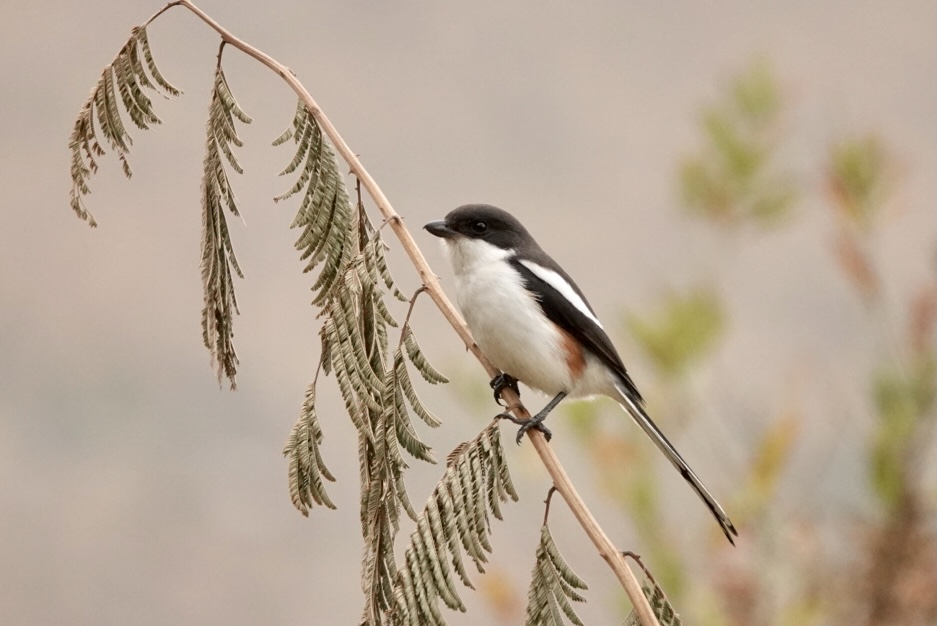
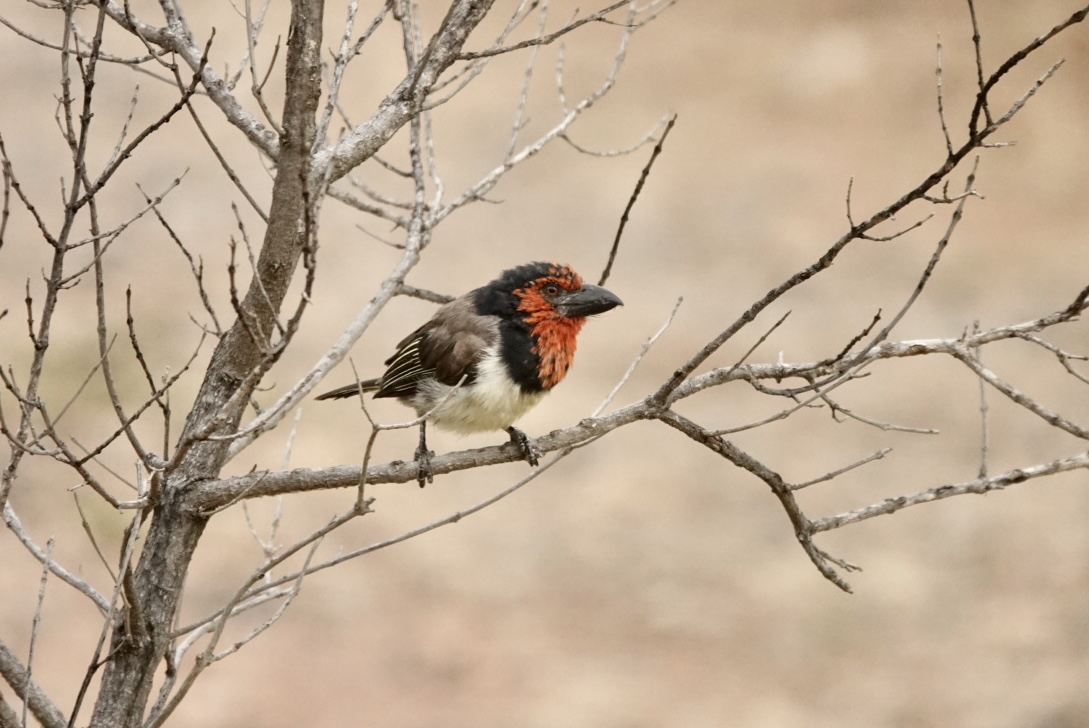
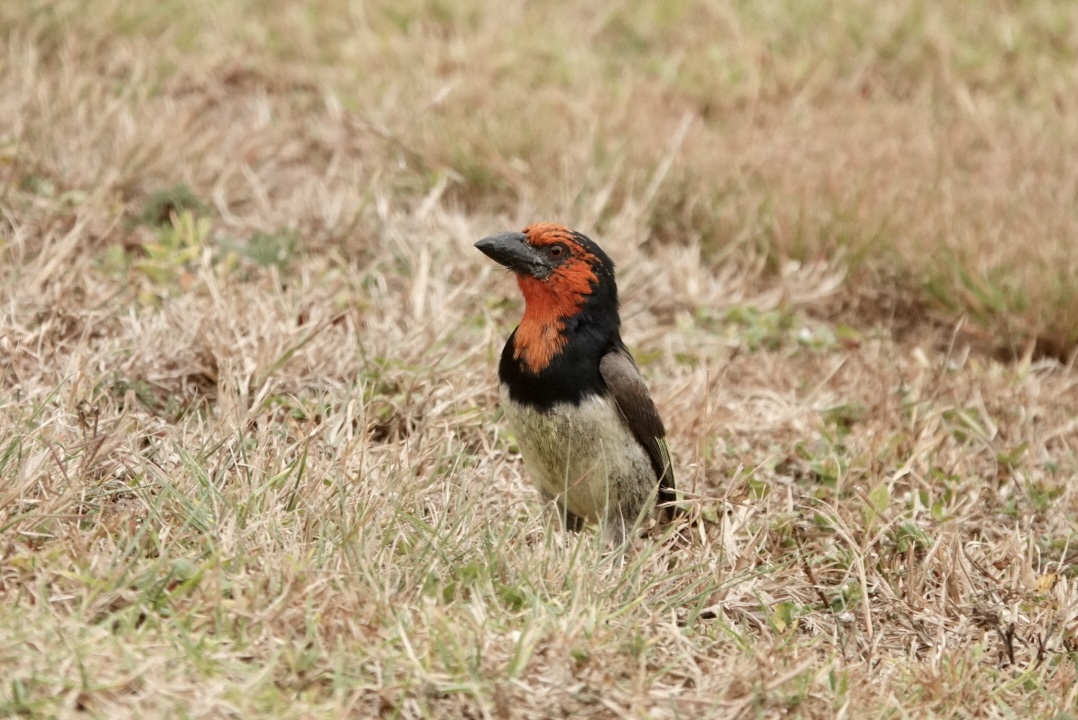
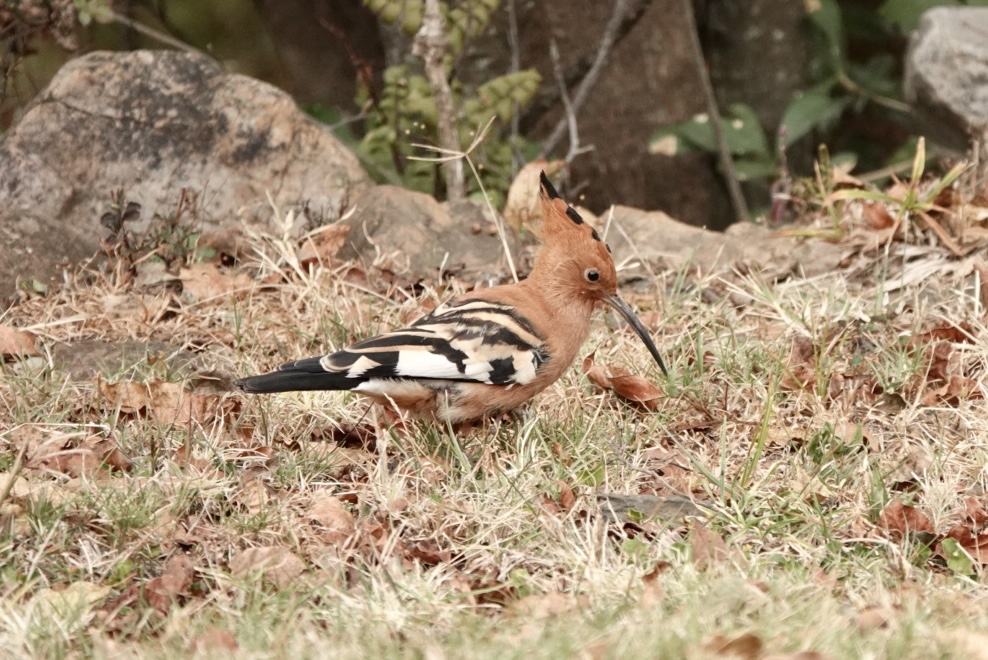
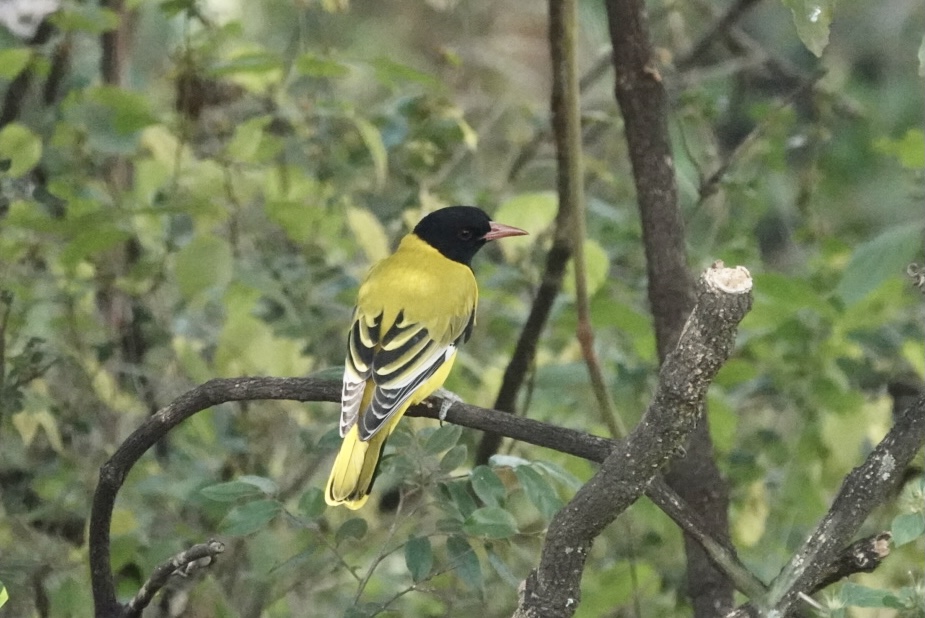
We are getting back into our Pretoria routine after 3 months in Mossel Bay, and I decided to go out atlasing in Roodeplaat Nature Reserve one morning this week. Heading into summer the weather in Pretoria is already warm with temperatures in the low 30’s and the skies are clear – some rain has fallen but the ‘big’ summer rains accompanied by the typical highveld thunderstorms have not yet arrived – hopefully they are not far off.
It was a good morning’s atlasing with 71 species logged on the Birdlasser app, including one which put on a brief display for me (well that’s what I like to think) ….
I was out of the car listening to a Lesser Honeyguide calling near the nature reserve offices, when I saw what looked like a woodpecker fly from a tree to a bare wooden utility pole. I could not make out what it was as it seemed to be purposely hiding from me so I approached carefully until I had a partial view and took a few record photos.
It then started pecking at the pole in a rhythmic fashion creating a loud drumming sound and I immediately wondered why, as there was no hope of anything edible to be found and the pole was completely unsuitable for nesting or similar purposes.
Here’s the short clip I filmed of the woodpecker, which I later identified as a Bearded Woodpecker, in action – do excuse the shakiness of the images – I had to film it at a distance on full zoom so as not to scare it away and the wind blowing didn’t help matters.
A read through of the species habits on the Roberts app on my phone provided the following insights into this behaviour – nothing to do with food or nesting it seems –
Presence often given away by loud, distinctive call, or by loud tapping (while foraging), or drumming.
Moves out of sight behind a branch in response to danger.
Both sexes drum frequently, mostly early morning; used in territorial advertisement and to establish contact with partner.
Drums in bursts of ca 1 sec at ca 12 strikes/sec, beginning fast, then slowing; usually on a high dead branch (same branch often reused); audible to 1 km.
Roberts VII Multimedia Birds of Southern Africa
It flew off after a while and I continued with my atlasing, pleased at having witnessed this behaviour and at having everything one wants to know about birds available on my iphone.
Continuing the story of our ‘Wild Flower Season’ trip to the West Coast town of Paternoster…..
Getting there
After breakfast we left Klein Welmoed Farm near Stellenbosch, dropped granddaughter Megan off at her university hostel, then headed to Paternoster via Wellington, Malmesbury and Vredenburg.
The road runs through the wheat belt of South Africa – almost endless fields of dark green wheat with smaller fields of canary yellow canola providing a dramatic contrast.
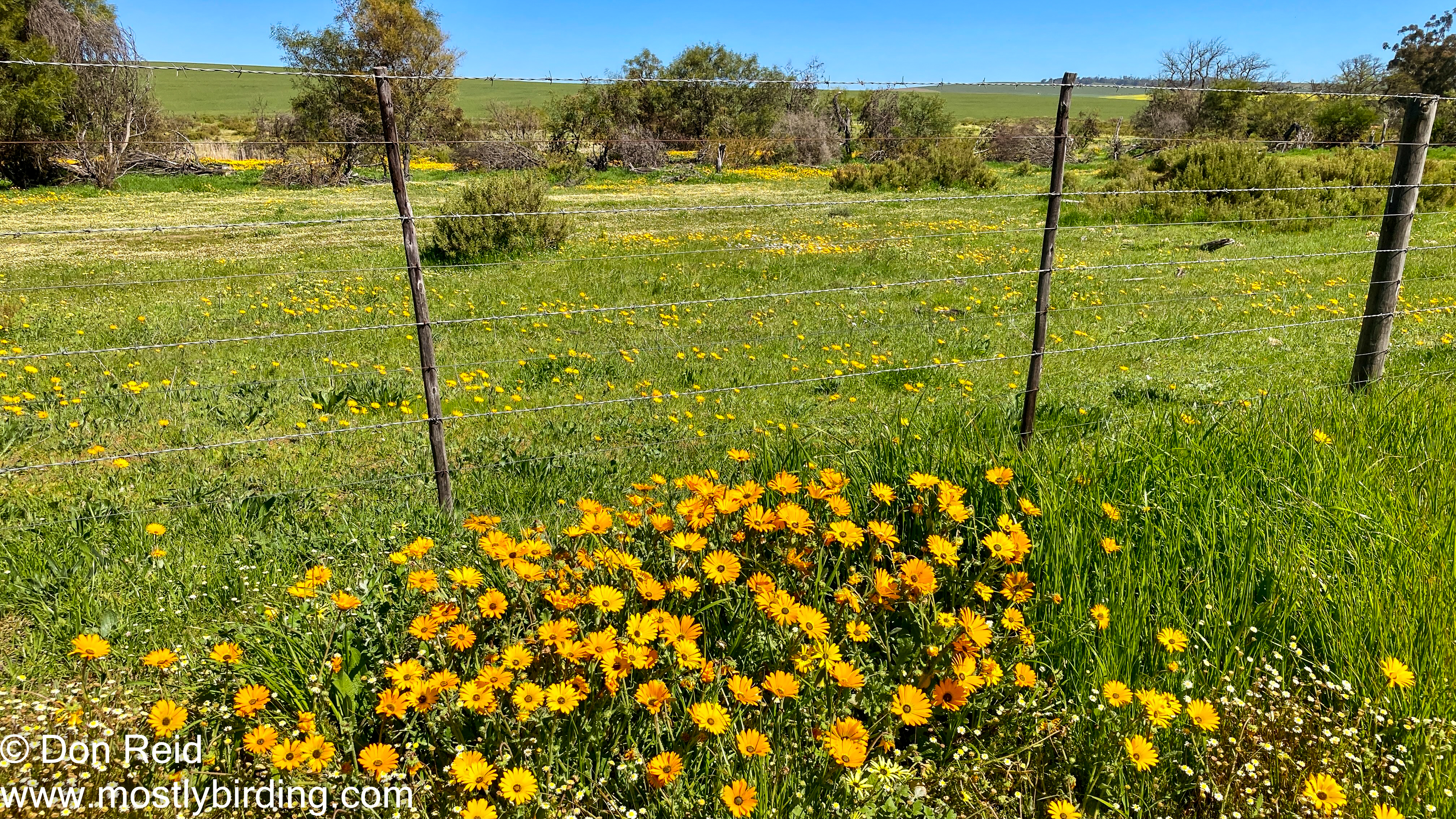
Occasional patches of ‘natural’ veld held colourful sprinklings of wild flowers to break the monotony of the cultivated fields and had me braking and reversing to get some photos.
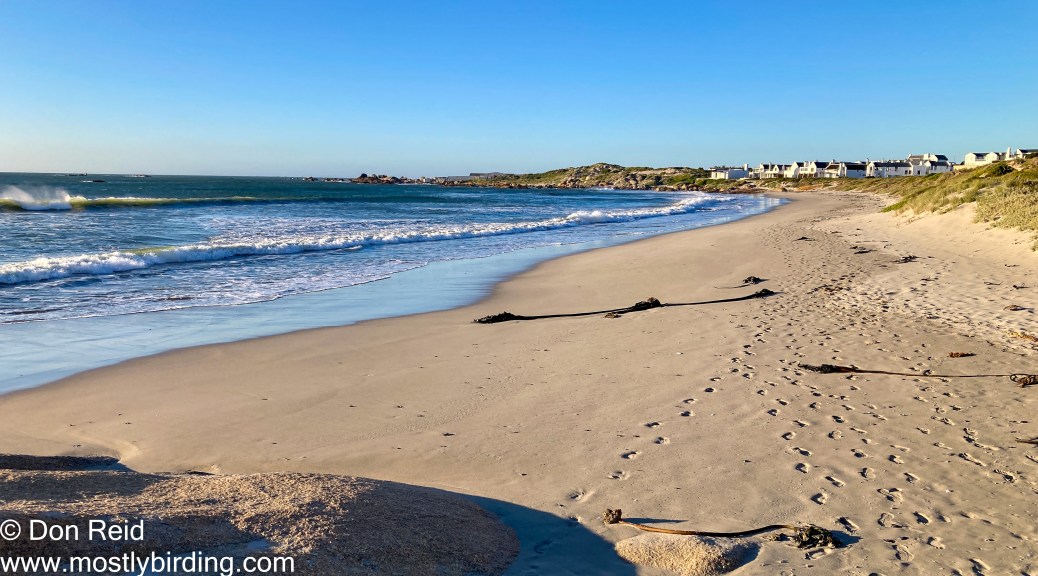
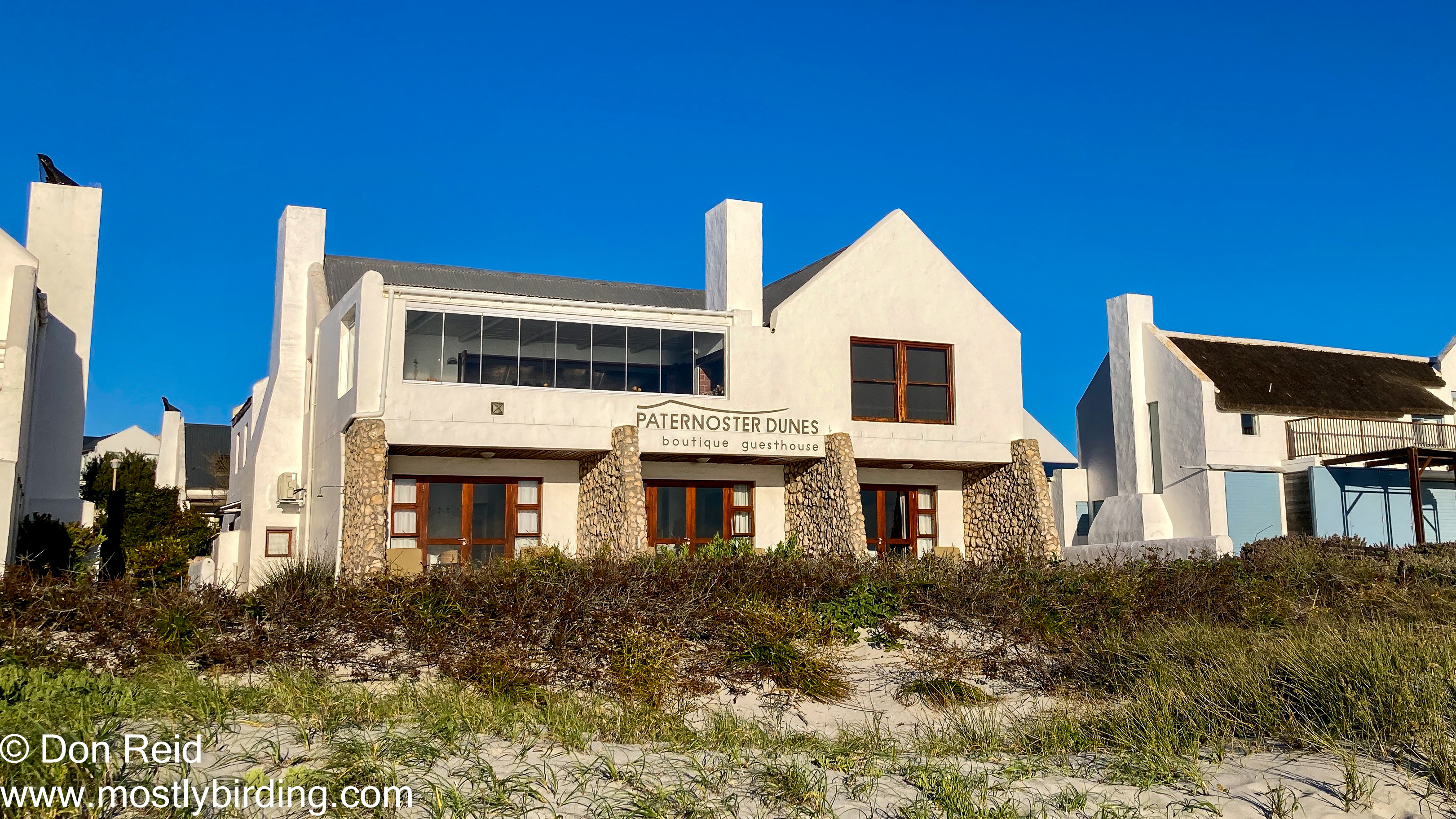
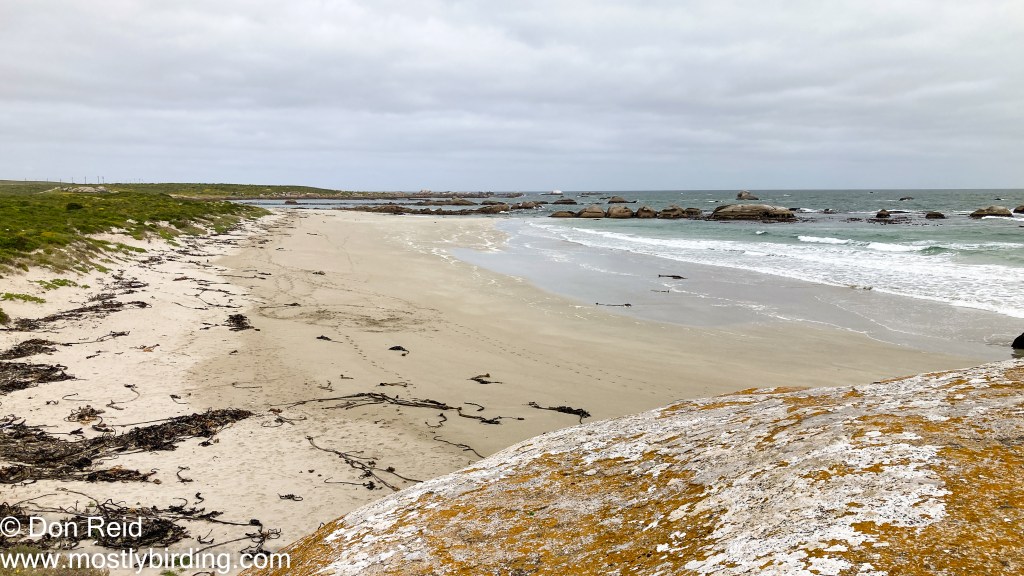
Then we were in Paternoster and soon found Paternoster Dunes Guesthouse which, as the name suggests, lies on the land side of the dunes overlooking a wide expanse of unspoilt beach
The view of the beachThe Guest House
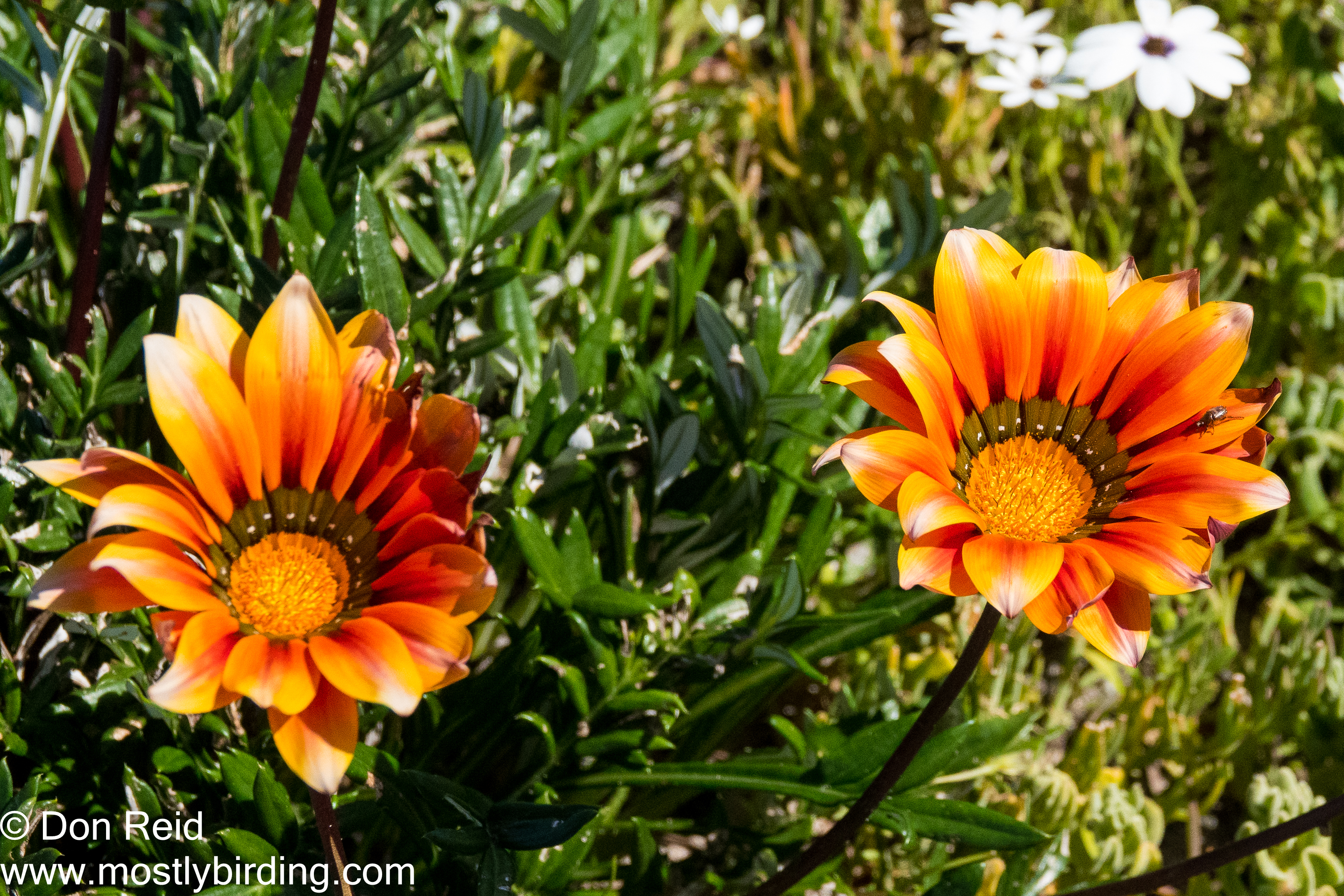
Just to get us further into flower appreciation mood, the patch in front of our room, the middle one in the image above, held some bright orange flowers
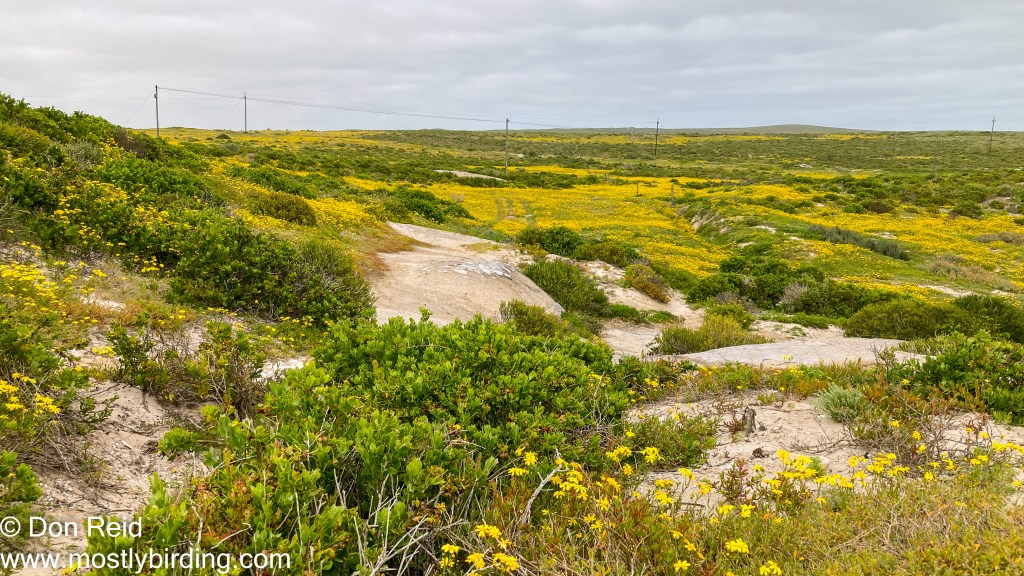
After a rest (we are pensioners after all) I took a walk along the beach to the end of the bay and looked up at the dunes which were covered in growth with a mass of yellow flowers
I climbed to the top of the dune and walked to where the houses stopped, finding a view into the distance with more yellow flowers in abundance
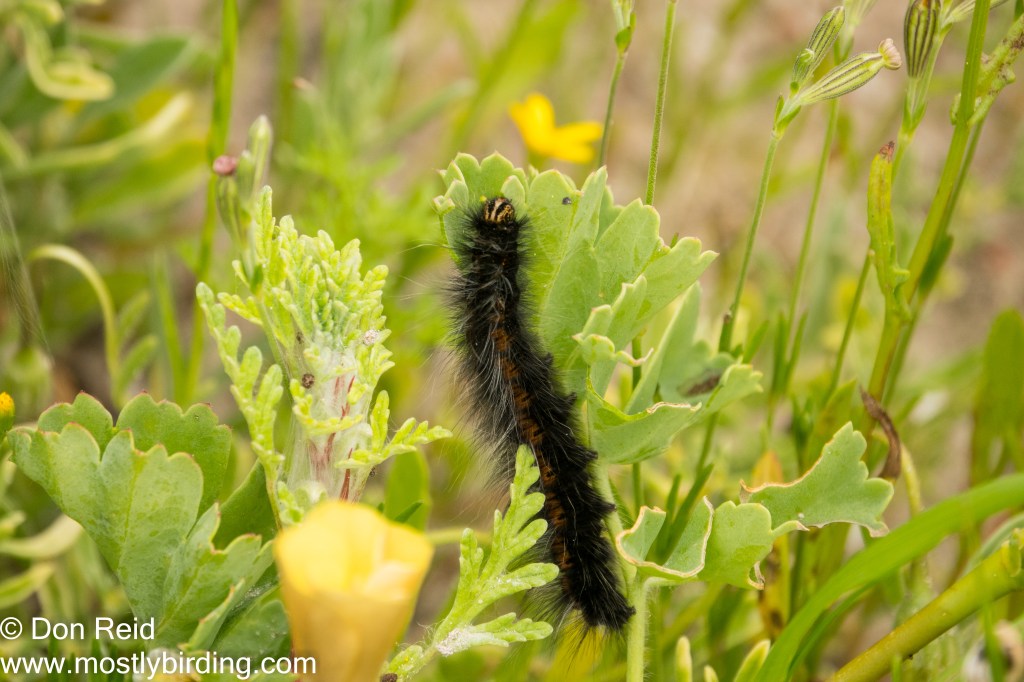
Caterpillar of unknown species, specific to the plant on which I found it by the looks of it as they were only in one small area
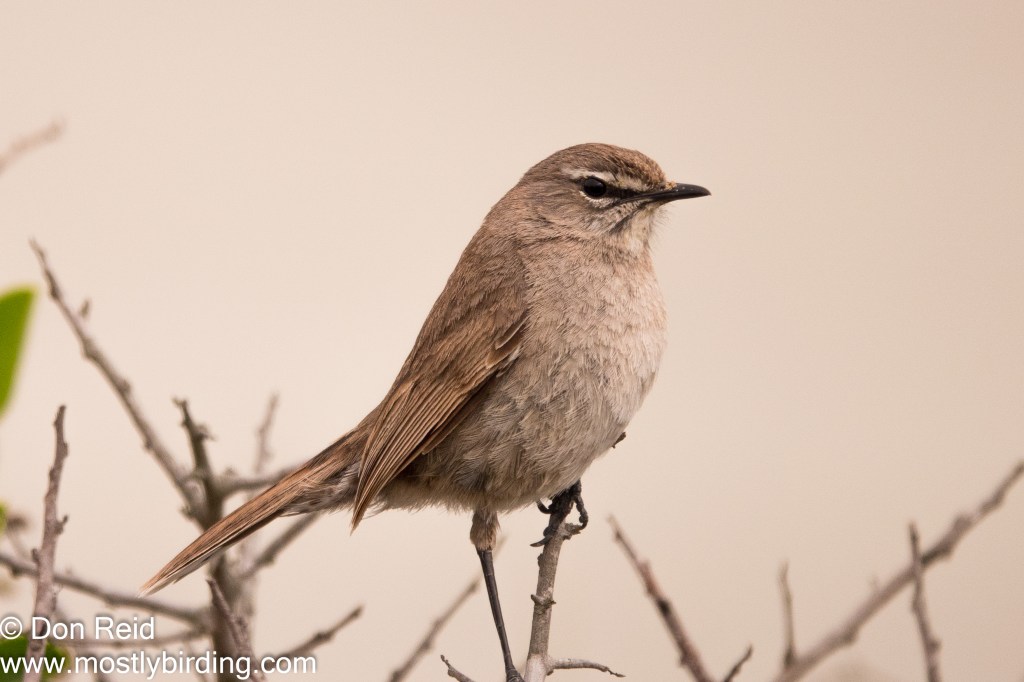
During our visit I discovered that there were a few bird species which found the patch in front of our room to their liking, including the Yellow Canaries and Karoo Scrub-Robin pictured below as well as Cape Bunting, Southern Double-collared Sunbird and many Common (European) Starlings
Yellow Canary (Geelkanarie) Crithagra flaviventris in full songKaroo Scrub-Robin (Slangverklikker) Erythropygia leucophrys scanning the surroundings from its favourite perch on a low bush
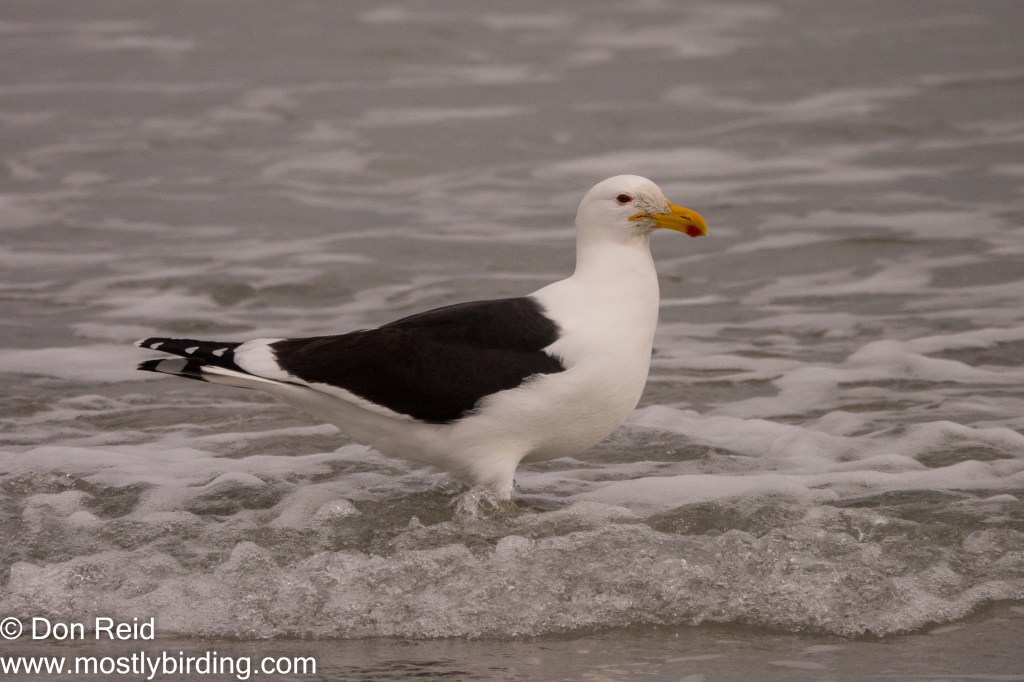
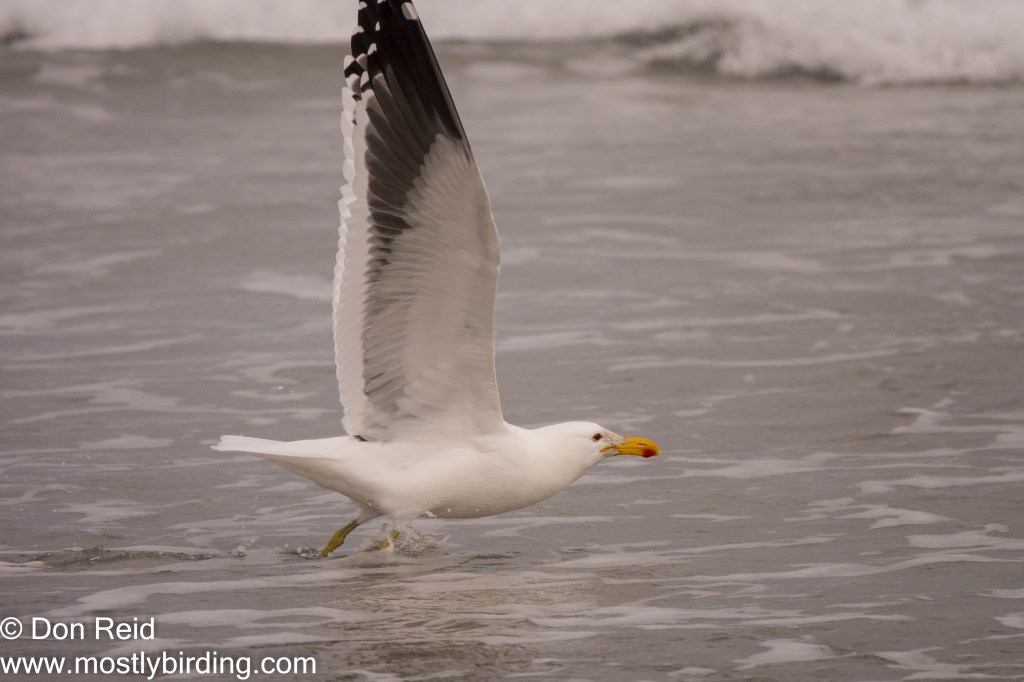
On a morning walk along the beach in front of the guesthouse, camera in hand, with the wind blowing the sea into a frothy jumble and overcast skies, several Kelp and Hartlaub’s Gulls wading in the shallows caught my eye and with some gentle persuasion lifted into the air, providing some nice photo opportunities in the soft, even light
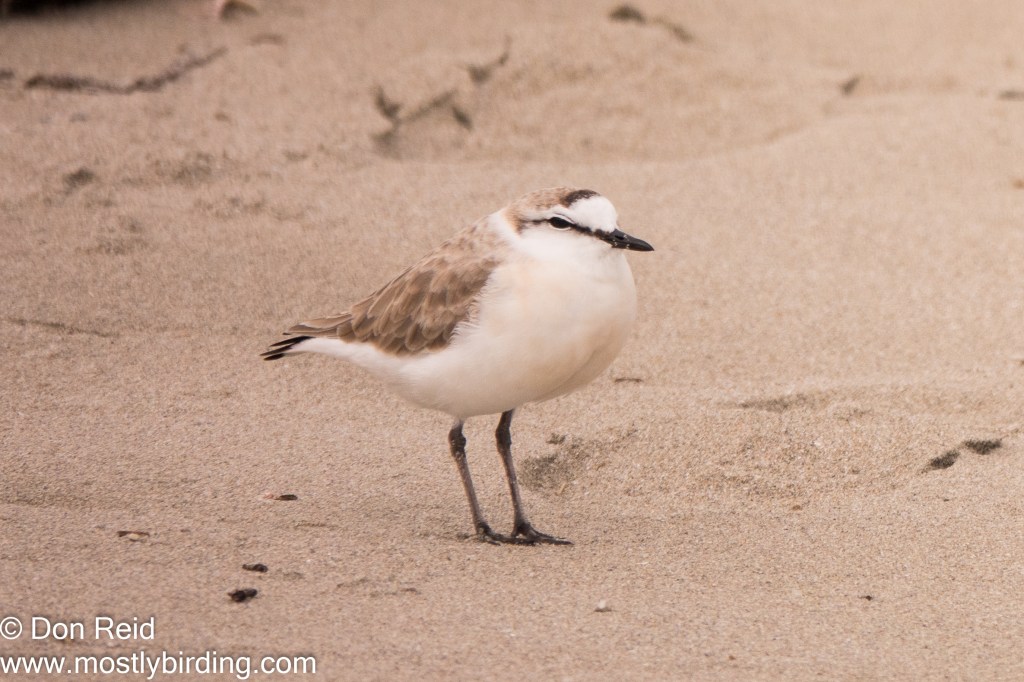
As I walked along the sand I spotted movement on the dry sand ahead and approached cautiously, knowing that the subject matter would race off if I got too near. Sure enough, three tiny White-fronted Plovers watched me carefully as I got closer, initially moving away in slow short bursts, then speeding off like top 100m sprinters, barely touching the sand between strides
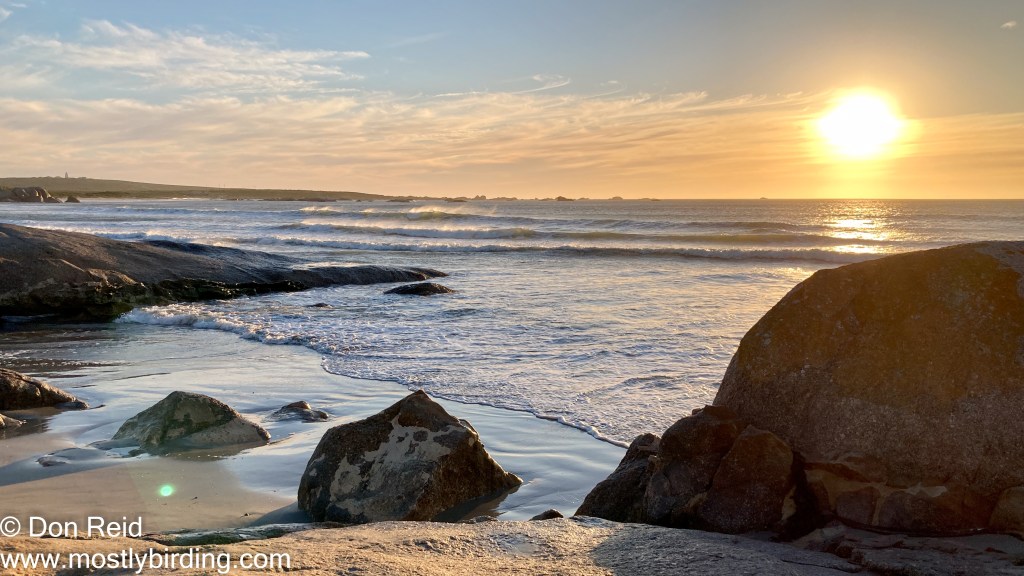
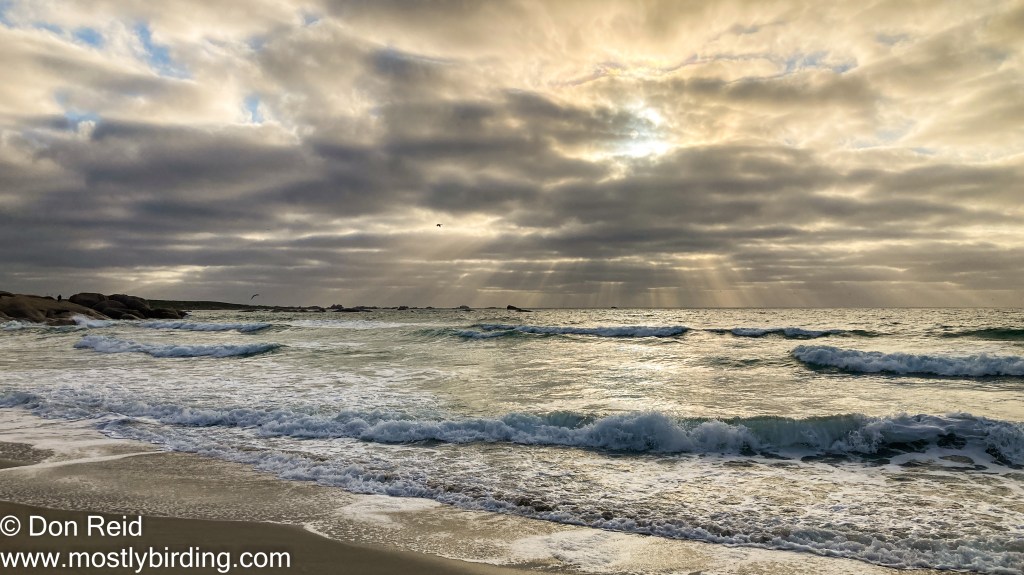
And a few more photos of Bek Bay at different times of the day
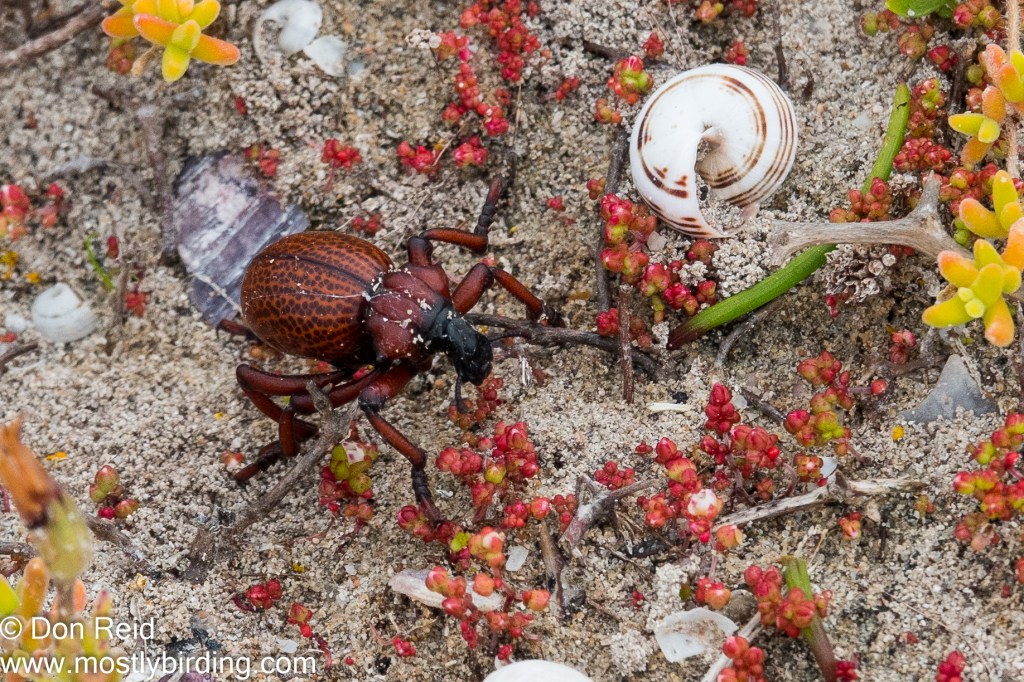
I came across this interesting beetle scavenging among the rocks
The last afternoon produced the most spectacular sunset of all as the cloud-filtered sun cast its rays on the choppy sea. Many Terns were plunging into the sea offshore – too far to differentiate between species until a Common Tern seemingly chased a much larger Caspian Tern so that they passed close to where I was watching from the beach
Paternoster turned out to be an excellent choice as our base for the short stay, being within an hour’s drive from West Coast National Park and literally next door to Cape Columbine Nature Reserve, both of which we visited – more about that in upcoming posts
Our road trip to the Eastern Cape in March this year included a 3 night stay in Mountain Zebra National Park near Cradock, only our second stay in this “off the beaten track” National Park, but enough to cement it as one of our ‘new favourite’ parks to visit. What it lacks in Big Five game, other than some introduced lions which are not easily seen and a small herd of Cape Buffalo, it makes up with other animals not generally seen elsewhere including the Zebra after which the park is named and interesting antelope species.
On the birding front, the park is known for its drier habitat species and I was looking forward to doing some atlasing and adding to my year list without much expectation for anything unusual – but as all birders know – ‘always expect the unexpected’ and a bird that had eluded me for many a year was about to become the highlight of our visit ….
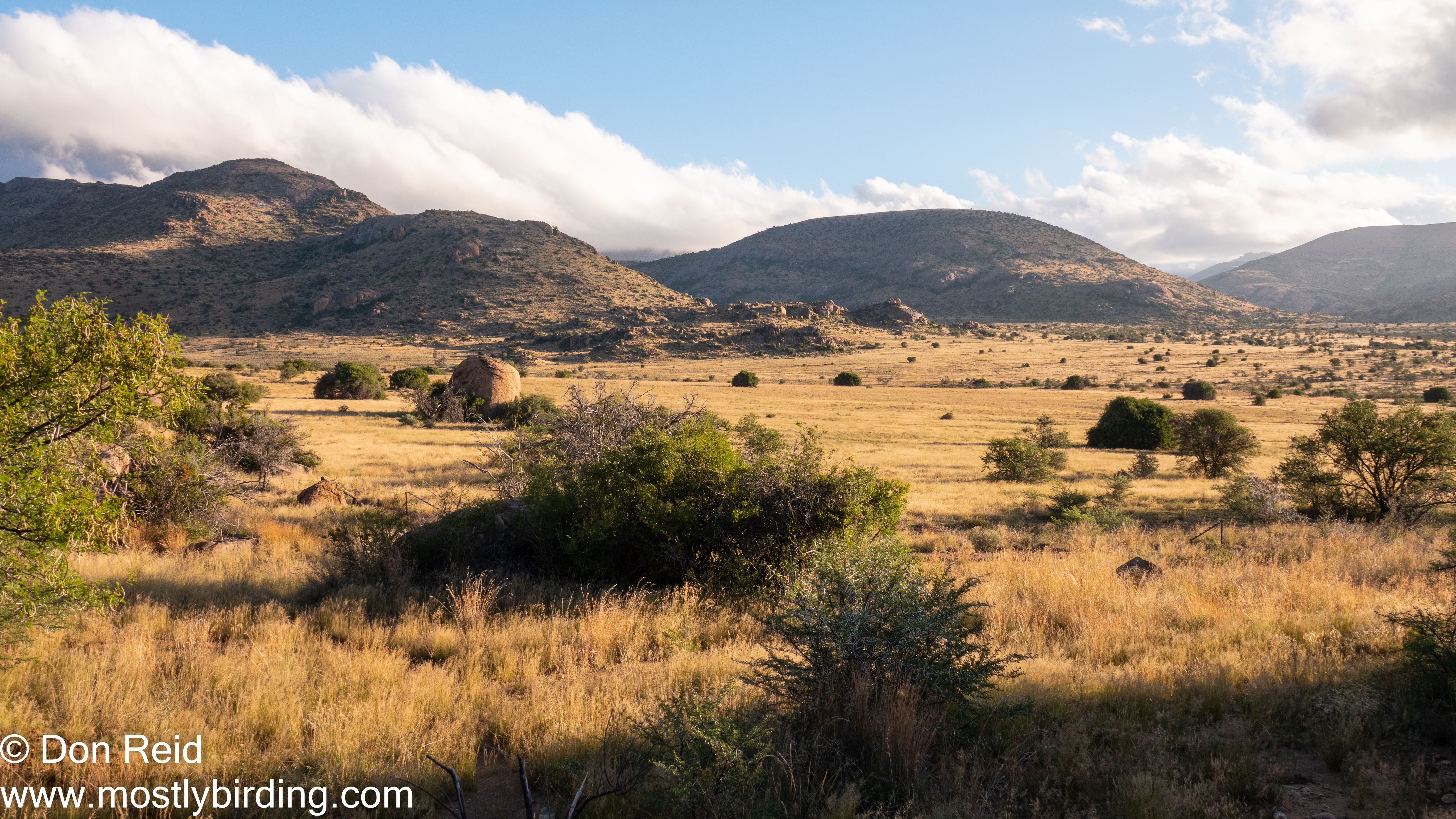
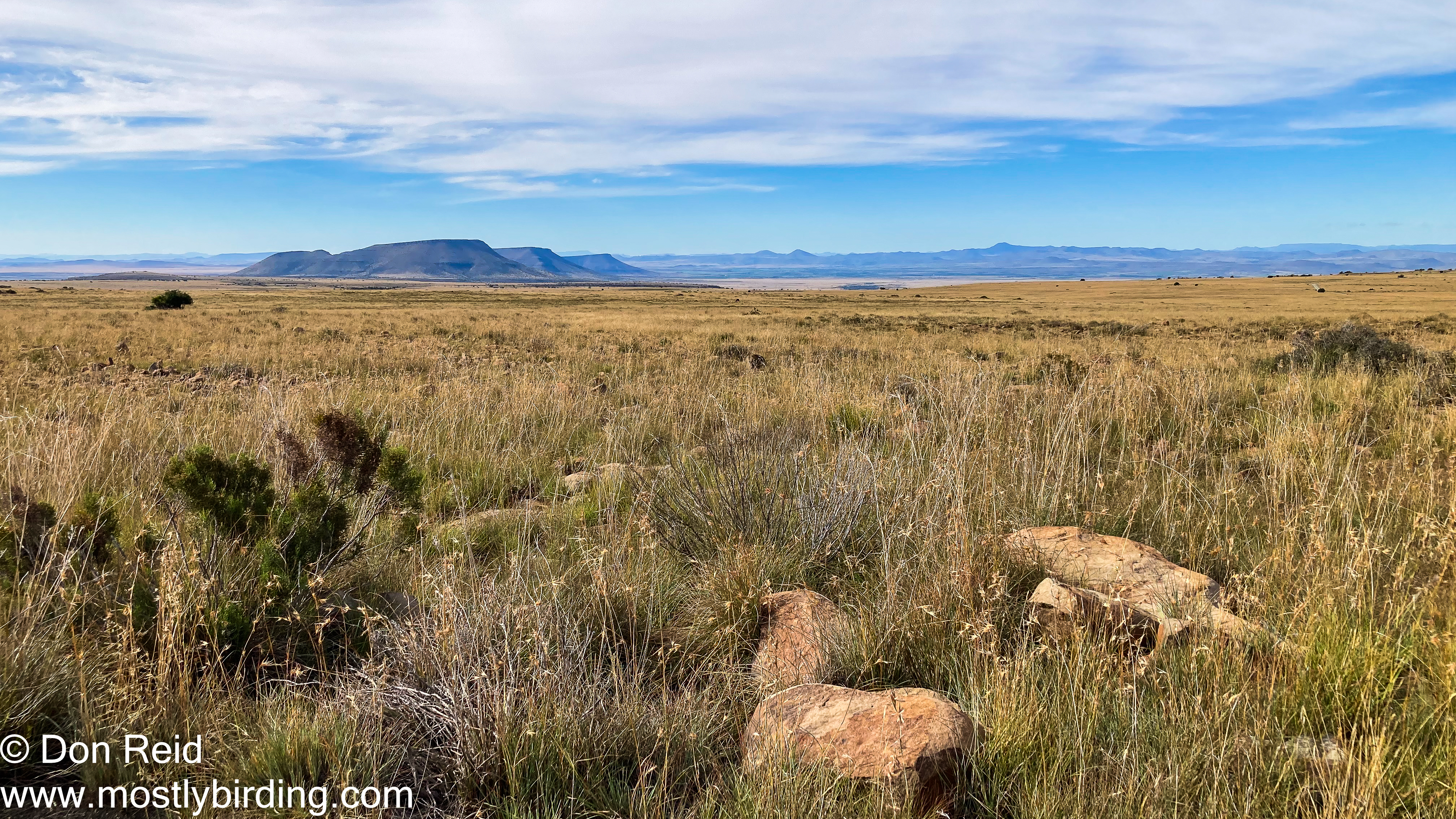
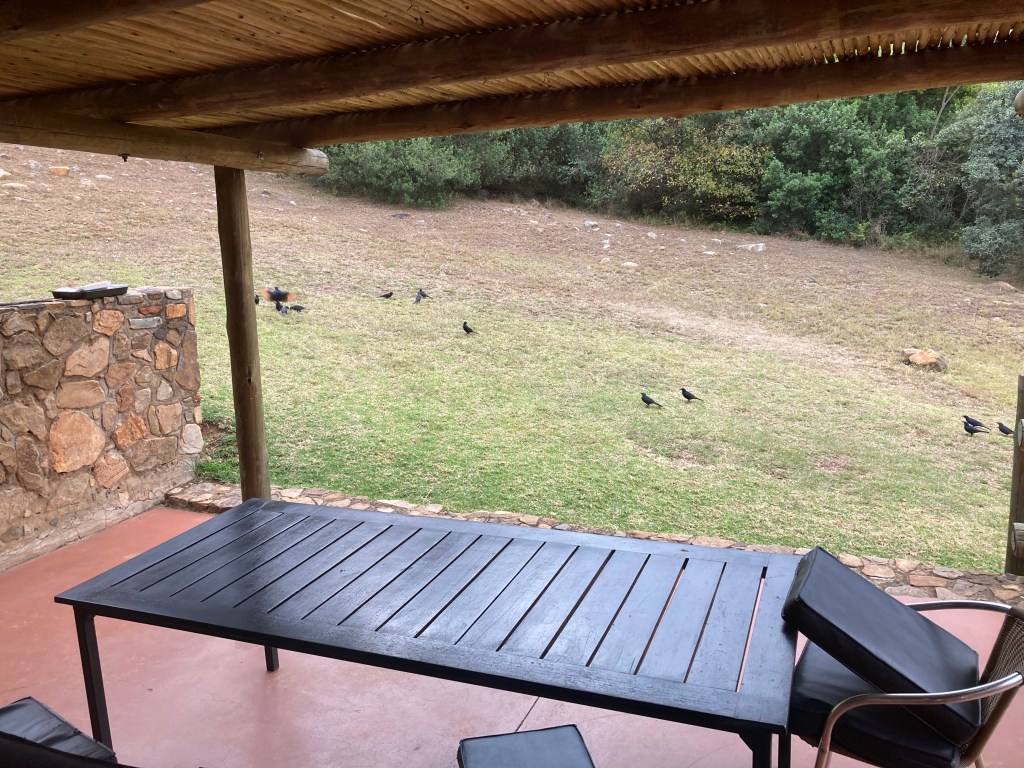
What also sets this park apart is the ambience – peaceful yet wild with panoramic views once you reach the plateau, which is at an altitude of about 1400 m, a couple of hundred metres above the main camp. The camp has around 25 comfortable chalets with patios which overlook the plains and distant hills, an ideal spot for some ‘stoepsitter’ birding.
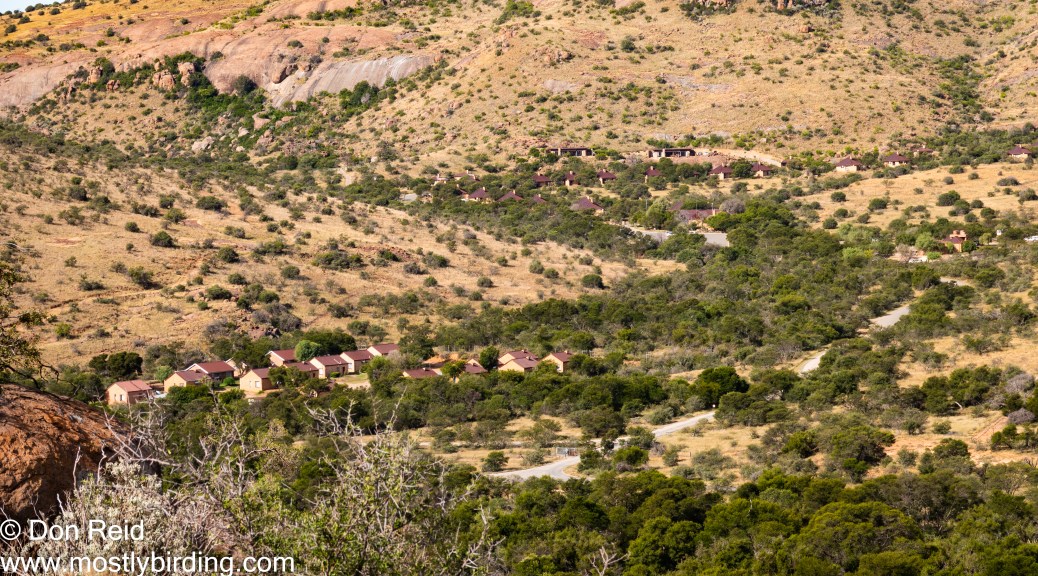
We left Addo mid-morning, initially heading east towards Paterson and joining the N10 National Road heading northwards to Cradock, where we stopped at a coffee shop for a light lunch, then drove the last 12 km to the Mountain Zebra National Park gate. The main camp (pictured in the heading image) is another 12 km along a rather corrugated gravel road which thankfully changed to tarmac for the last stretch.
The reception was efficient and friendly and we soon found our chalet No 20 almost at the top of the gently sloping road that runs through the camp and got ourselves settled in.
After a brisk walk, the air was suddenly chilly with the sun setting behind the surrounding hills, so I donned a jacket and headed to the stoep for a bit of late afternoon birding. The stoep furniture did not match the rest of the chalet in terms of comfort – in fact I’ll go so far as to say the chairs are possibly the heaviest, most uncomfortable ones I have ever come across. However I didn’t let this small detail bother me and carried one of the living room cushioned chairs outside for that all important sundowner time.
Stoep chairs designed to keep you away from them !
The view made up in no uncertain terms for the furniture and with beverage in hand I scanned the surroundings, soon finding a few species typical of the more arid landscape
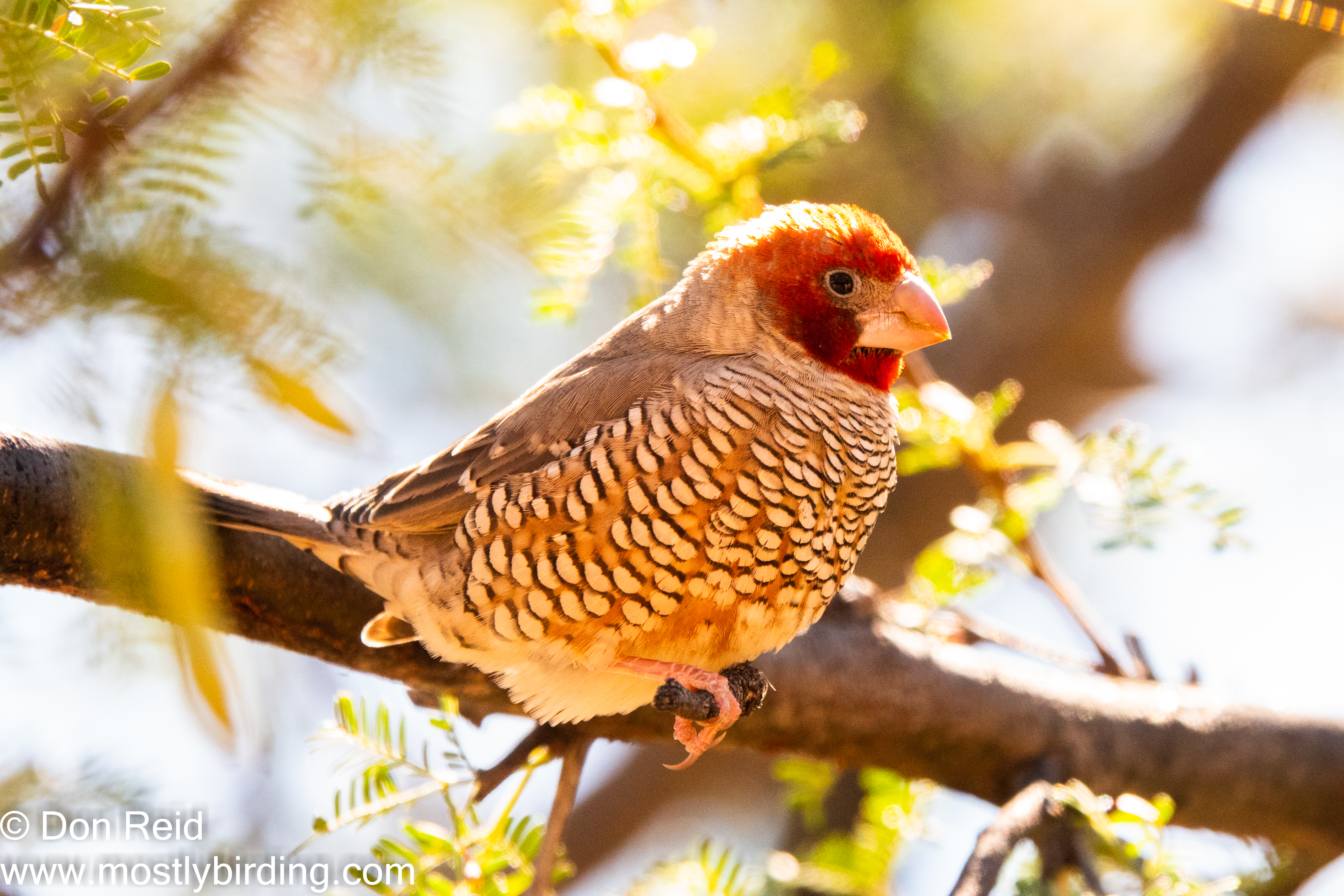
View from the stoep, Mountain Zebra NPRed-headed Finch (Amadina erythrocephala / Rooikopvink) (male race erythrocephala), Mountain Zebra NPWhite-browed Sparrow-Weaver (Plocepasser mahali / Koringvoël), Mountain Zebra NP
Next morning was very relaxed – being Sunday we were up late-ish and most of our morning was spent on the stoep. Apart from the species already shown, other prominent species were Familiar Chat, Red-eyed Bulbul, Red-winged Starling, Acacia Pied Barbet, Bokmakierie and several others.
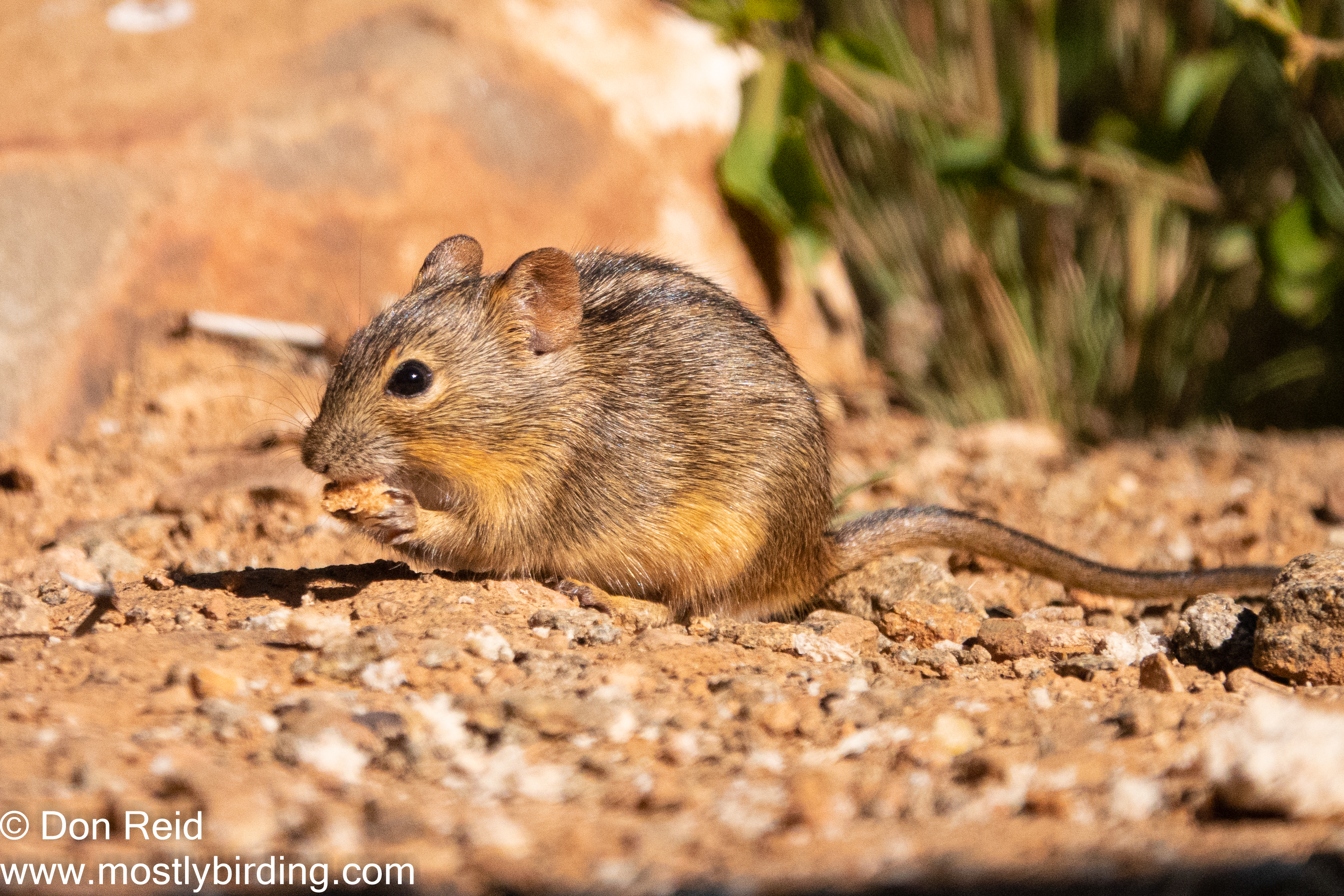
Striped Mice crept cautiously out of the low bushes to grab a morsel in front of the stoep, scurrying back to safety at the slightest movement. Using very slow hand/camera movements I was able to get a few shots of these cute creatures. They are also known as four-striped mice based on the four characteristic black longitudinal stripes down their back.
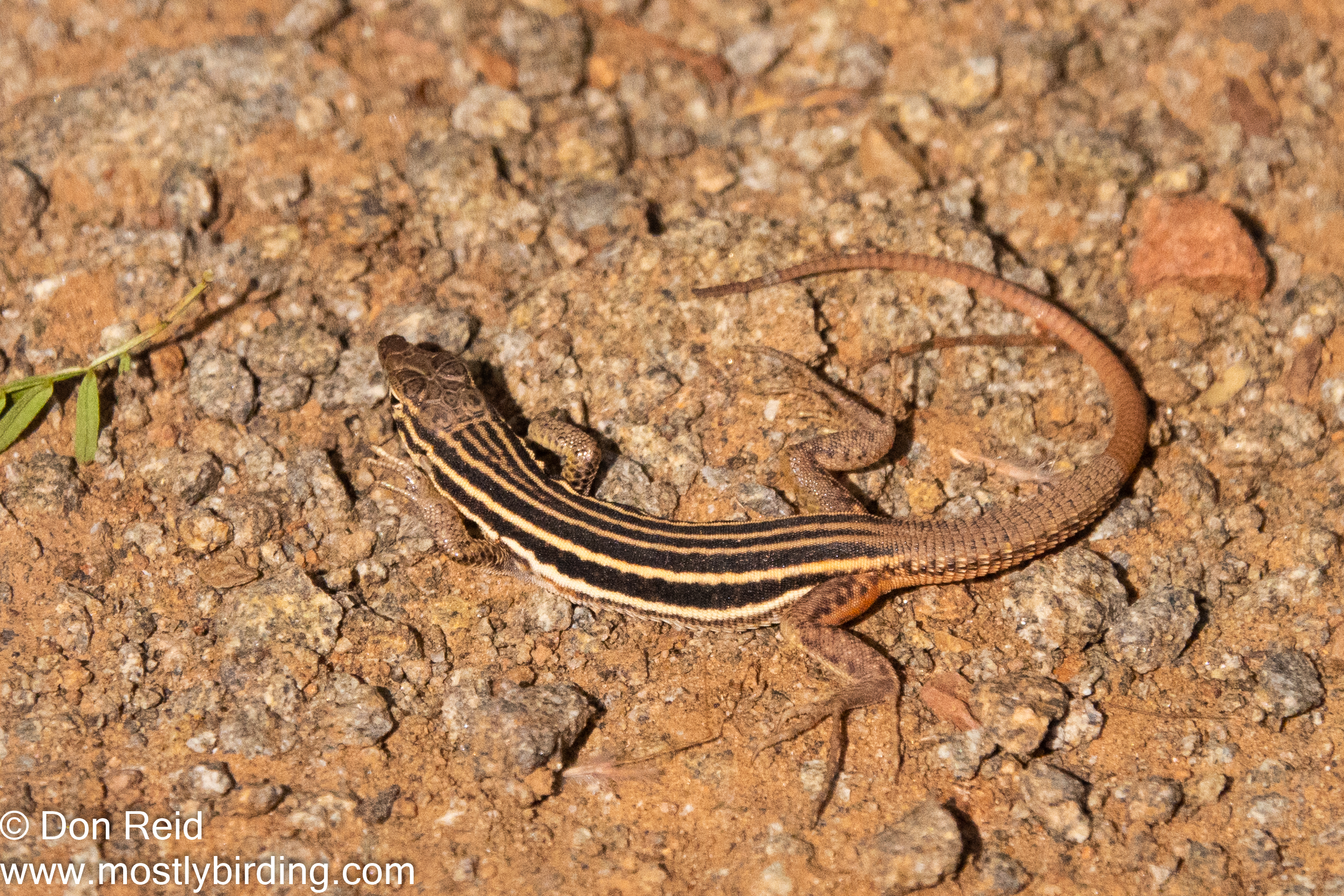
Another striped creature, this time a lizard, put in an appearance alongside the mice, each not taking much notice of the other, probably after small insects that wouldn’t necessarily be on the mice’s menu. With its distinctive stripes, I thought this would be an easy species to identify but the Reptile book I have groups lizards into a few main groups without providing photos of each regional one so I was only able to narrow it down to what I thought was a Mountain Lizard
Lizard – unsure of species but possibly a type of Mountain Lizard
After lunch we set off on a drive on the Rooiplaat Loop, the most popular circular drive and about 25 km out and back. Before ascending to the plateau we spent some time at the picnic spot near the main camp (also mentioned in my earlier post on the Honeythorn Tree) where a few birds were active, including a lone African Hoopoe – such a handsome bird and always a treat to see, even though they are quite common.
A short way further on we came across a group of Vervet Monkeys including a mother and youngster who posed like pros in the lovely shaded light – I am always drawn to their eyes which look so bright and intelligent.
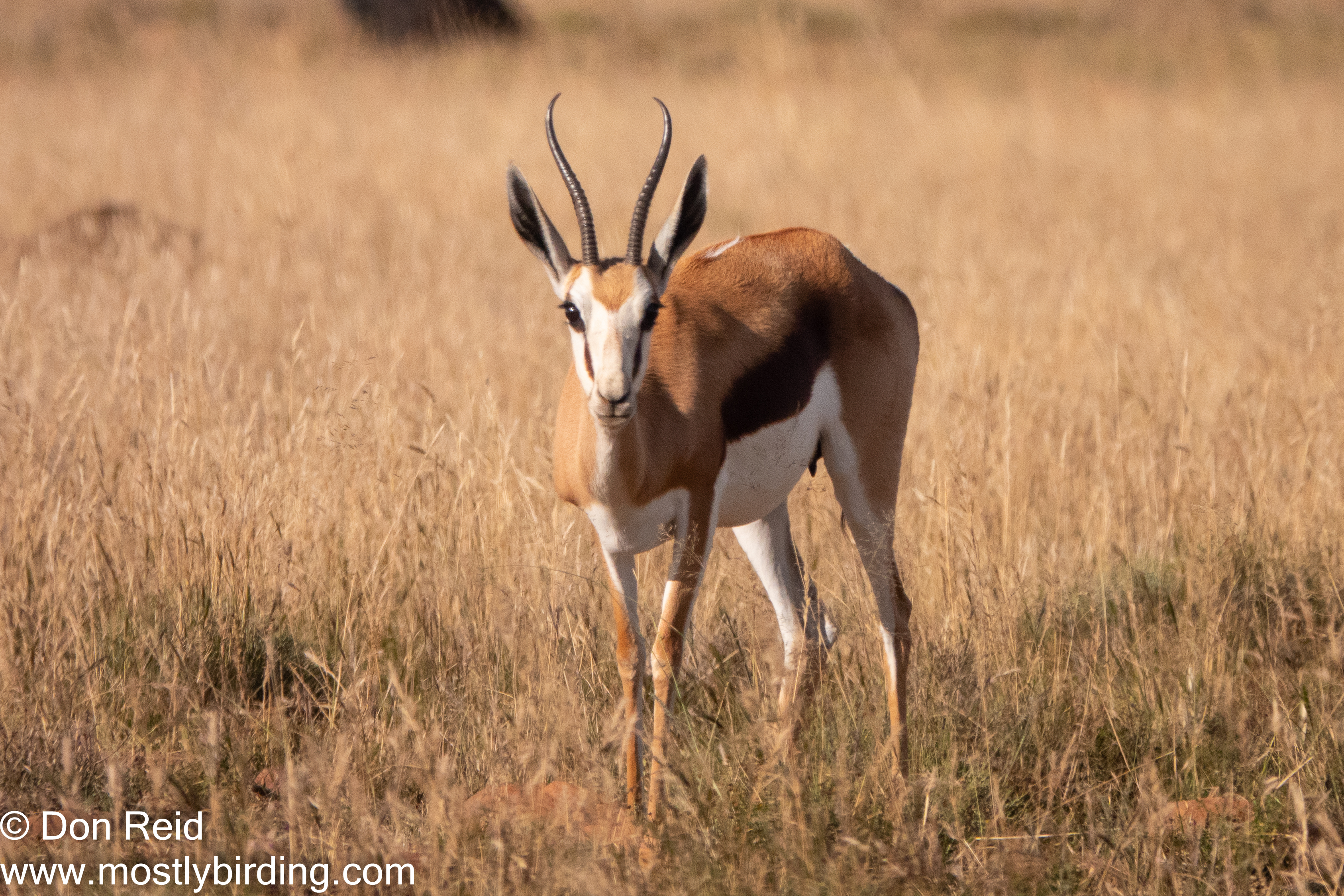
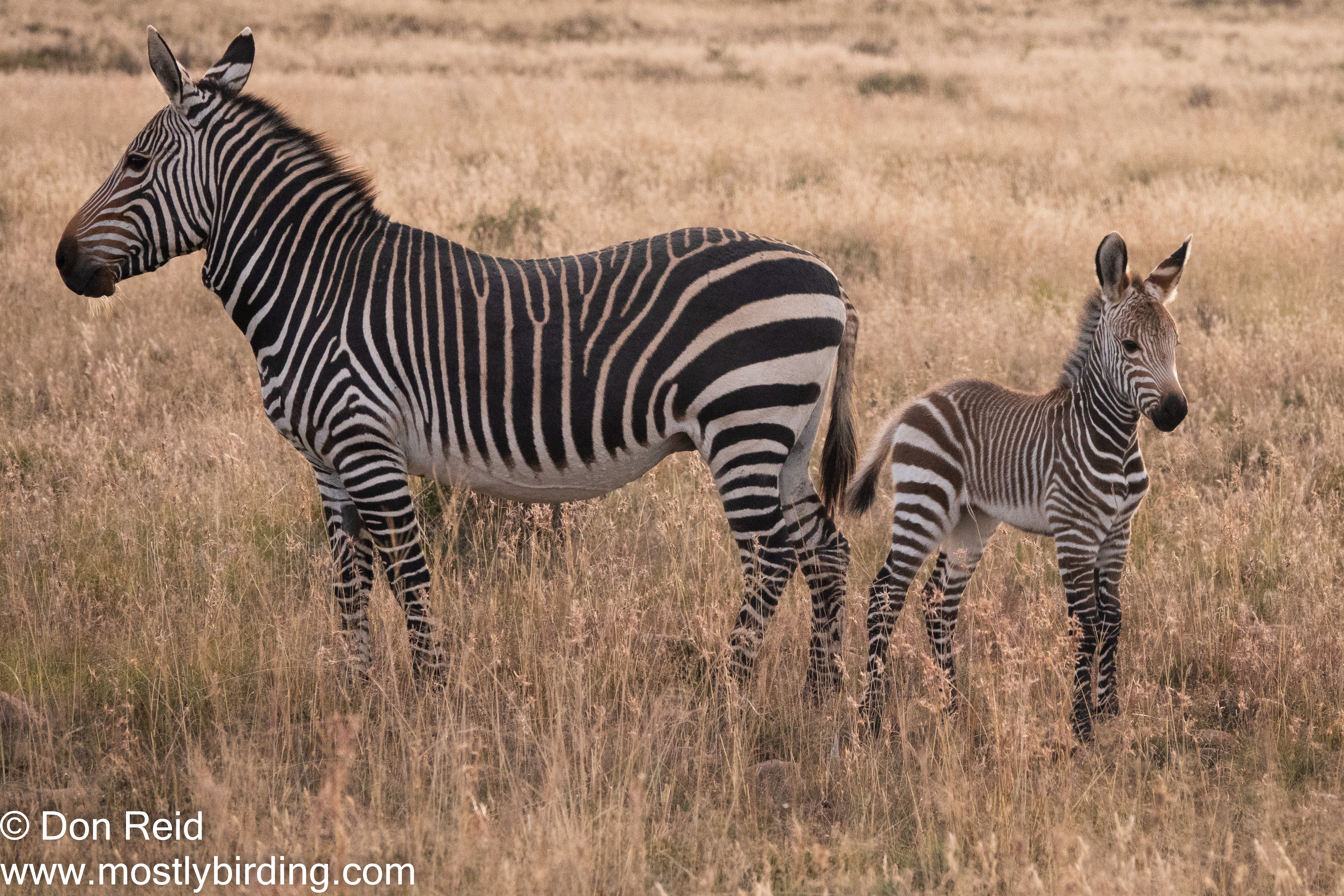
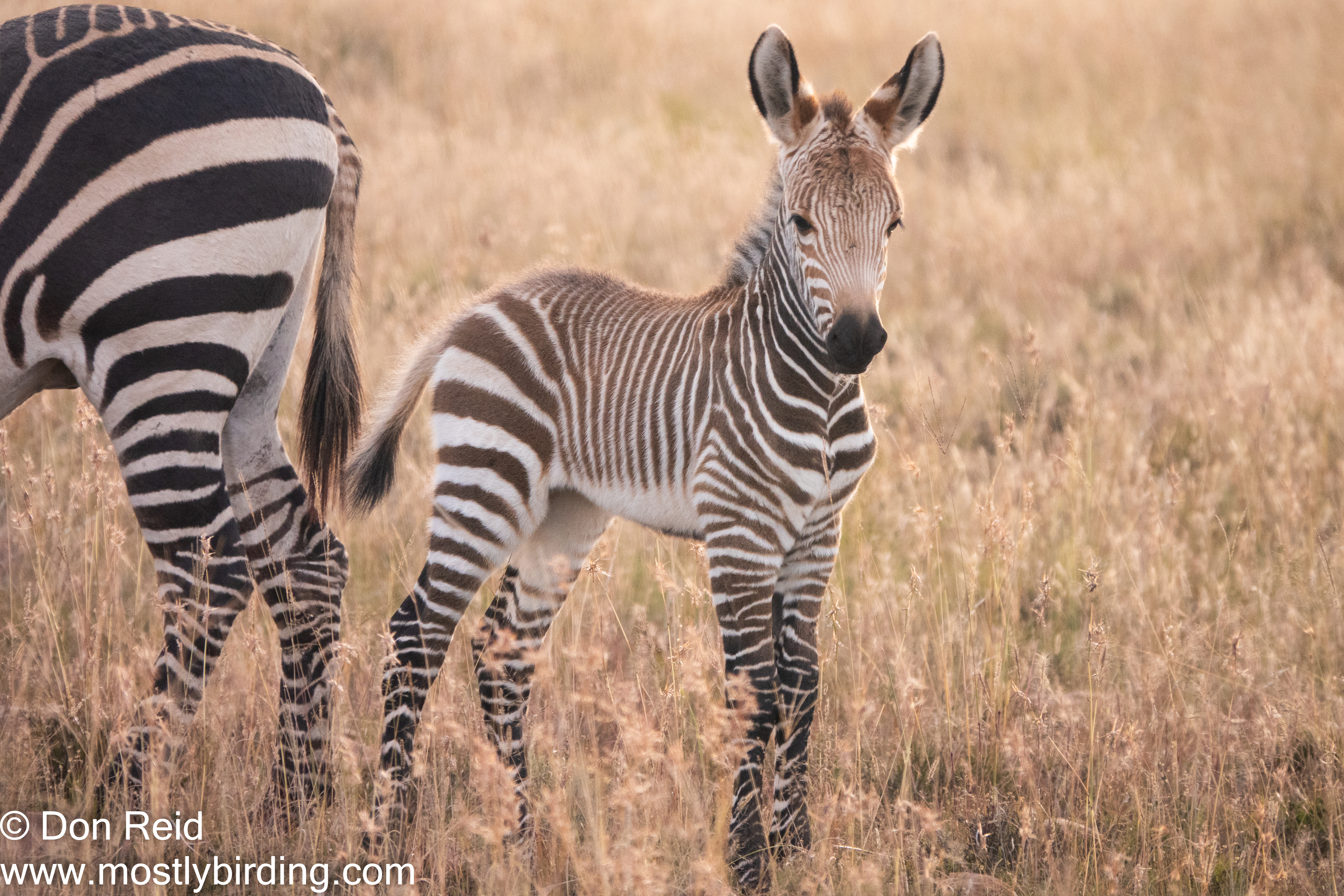
A short climb up the tar road took us to the plateau where the grassland stretched to the horizon, with pockets of game visible in the distance – the return leg took us closer to some of them so I used the opportunity to get some pleasing images, particularly of the Mountain Zebra foal with its parent.
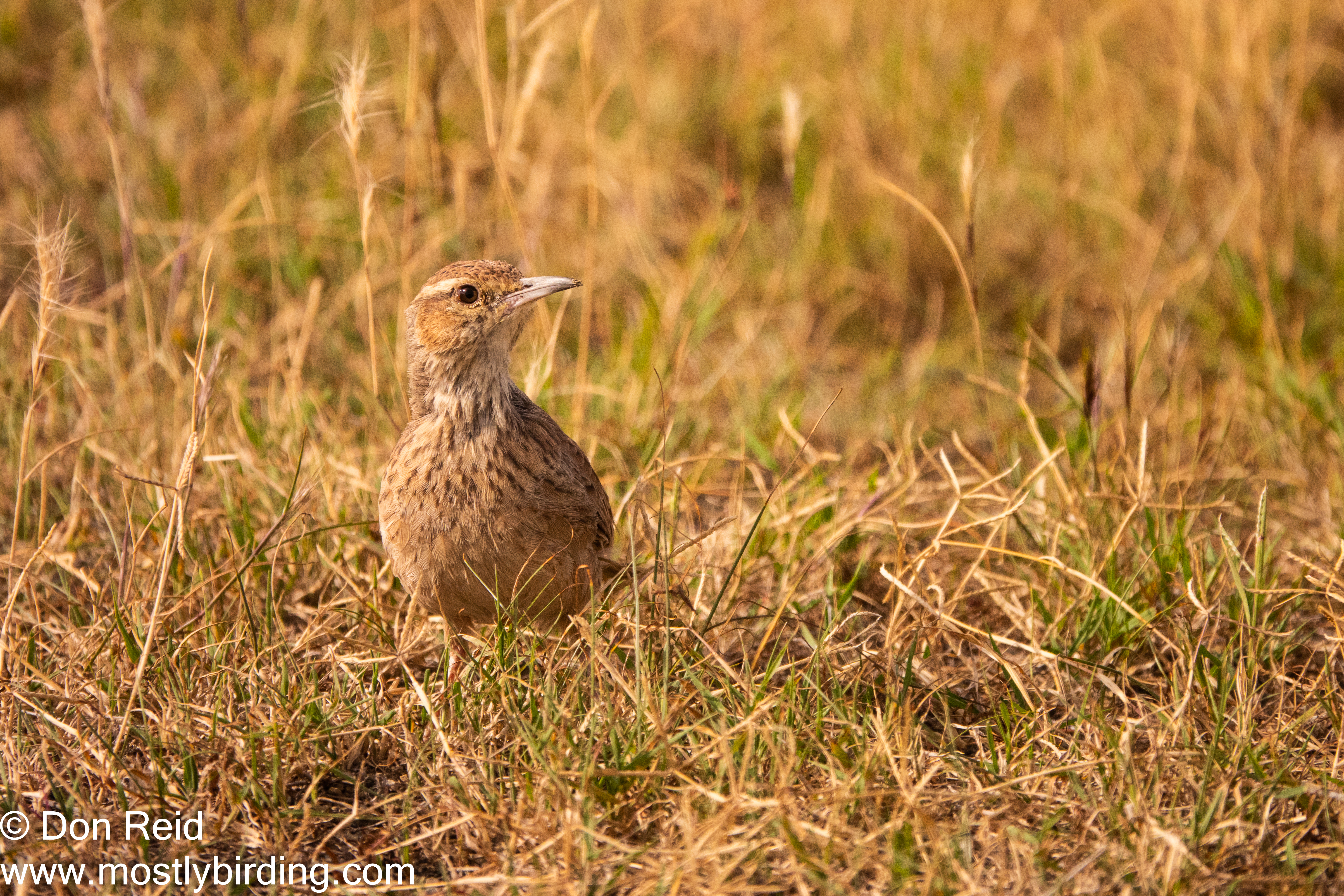
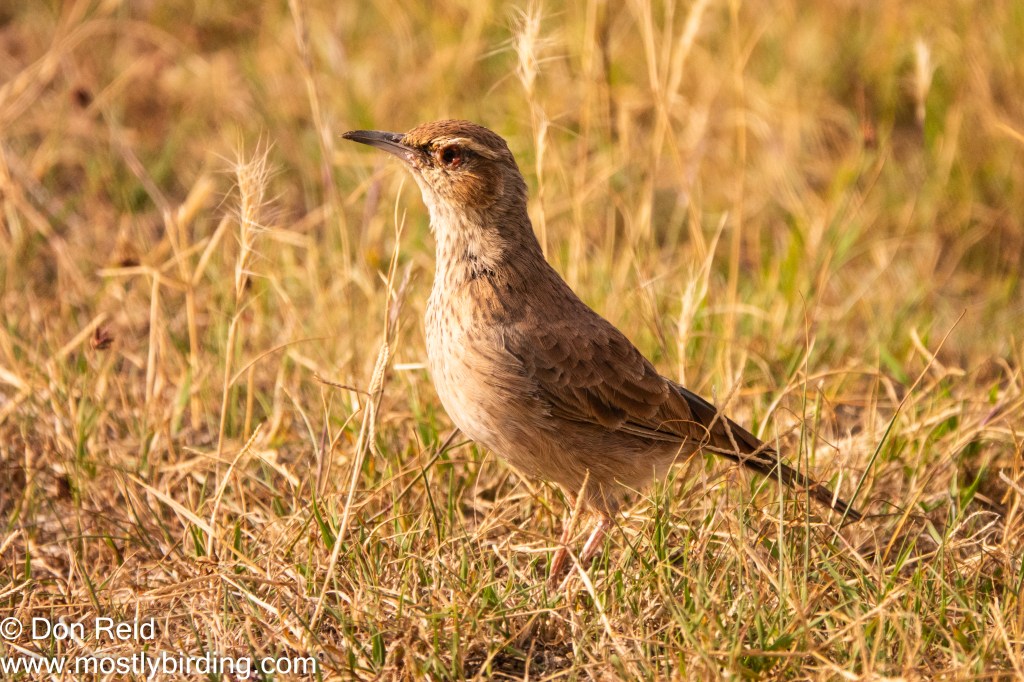
The birds were not plentiful but several of those we came across were species not regularly seen outside of this particular habitat – three species of Lark on the ground (Eastern Long-billed, Spike-heeled and Red-capped Larks), Scaly-feathered Finch and Neddicky in the few trees and a glimpse of Grey-winged Francolin just showing in the long grass.
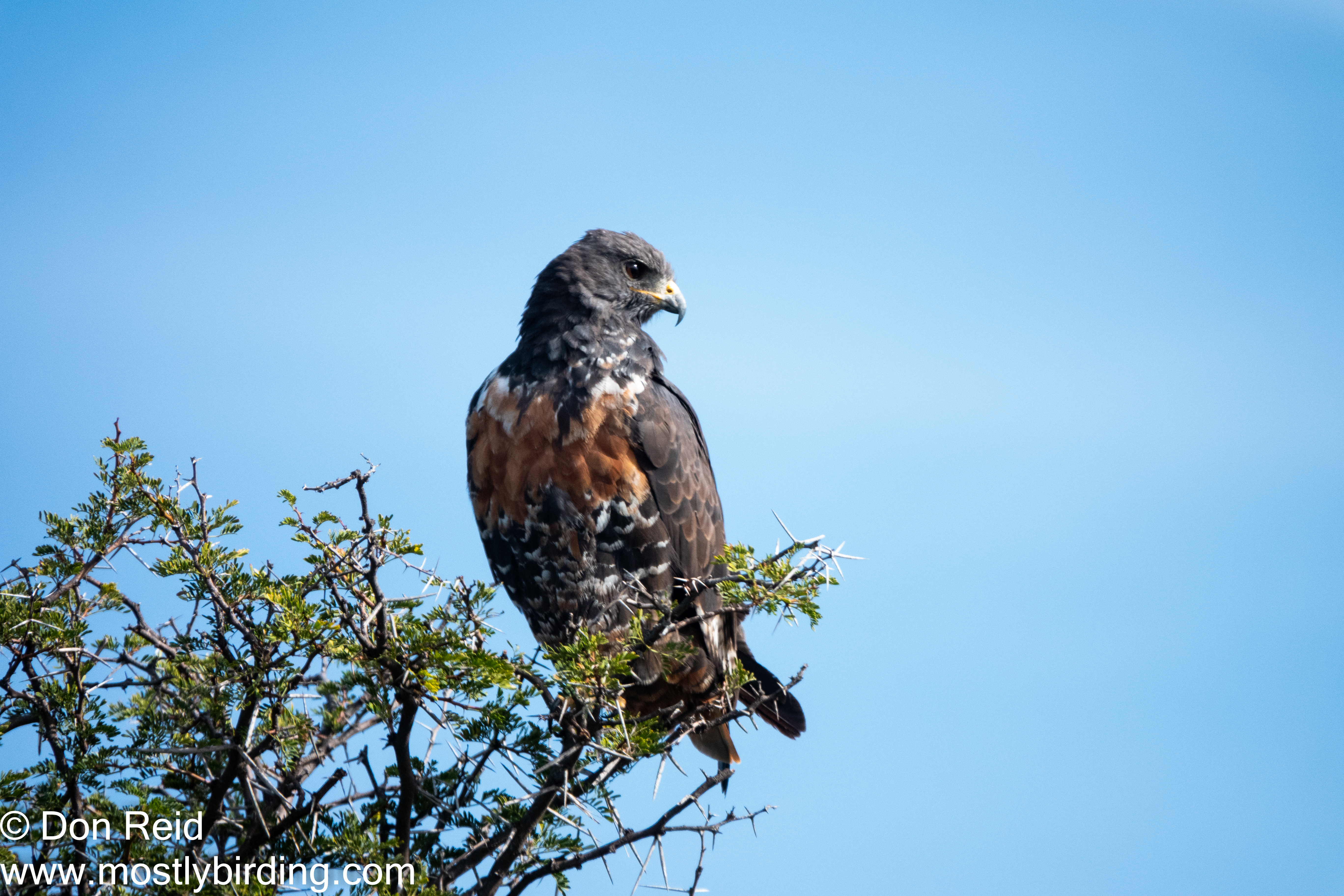
This handsome Jackal Buzzard was no doubt on the lookout for prey –
Larks are a favourite of mine – not the most striking of birds, in fact just the opposite, but that is their attraction and finding them in grassland habitat feels like a real accomplishment, often followed by some serious research to confirm the ID.
We had completed the full circuit of Rooiplaats Loop and started descending the road which winds down from the plateau when I heard a call which caused me to brake sharply – it went like this
Gerda said “what is it, why did you stop so suddenly” – my reply, in an elevated state of excitement, was something like “oh boy, this is a bird I’ve been trying to find for a looooong time”
We were into perfect habitat for what I thought it was – rocky hillsides with large boulders – and after a quick scan I found it on one of the boulders – African Rock Pipit!
Rock Pipit habitat, Mountain Zebra NP
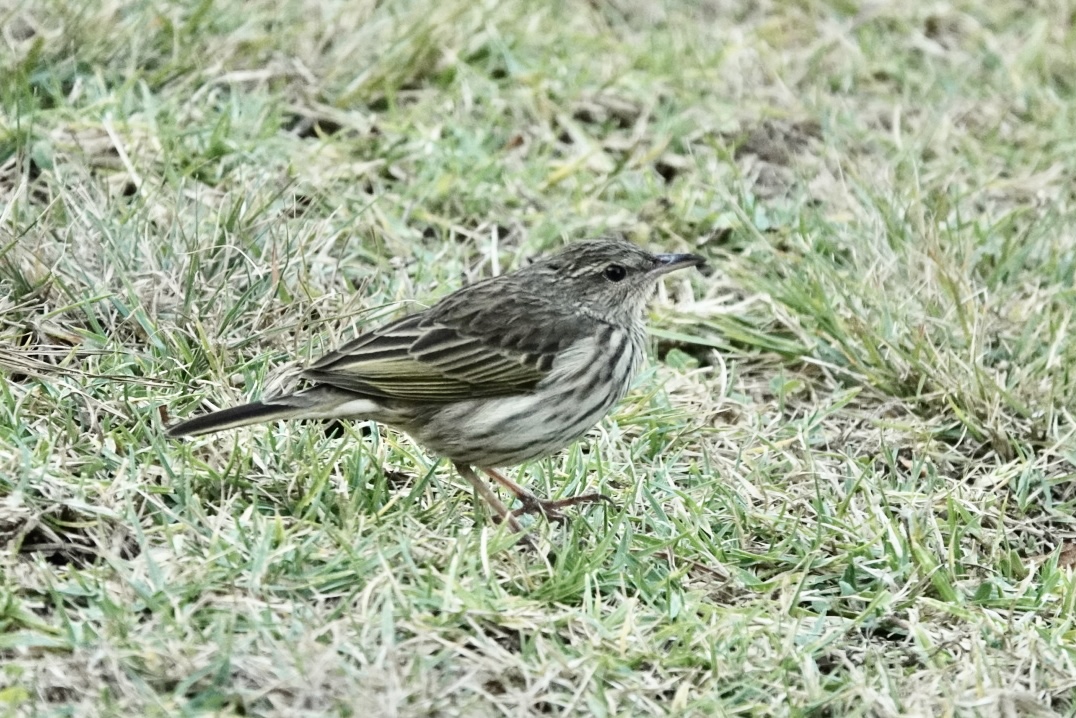
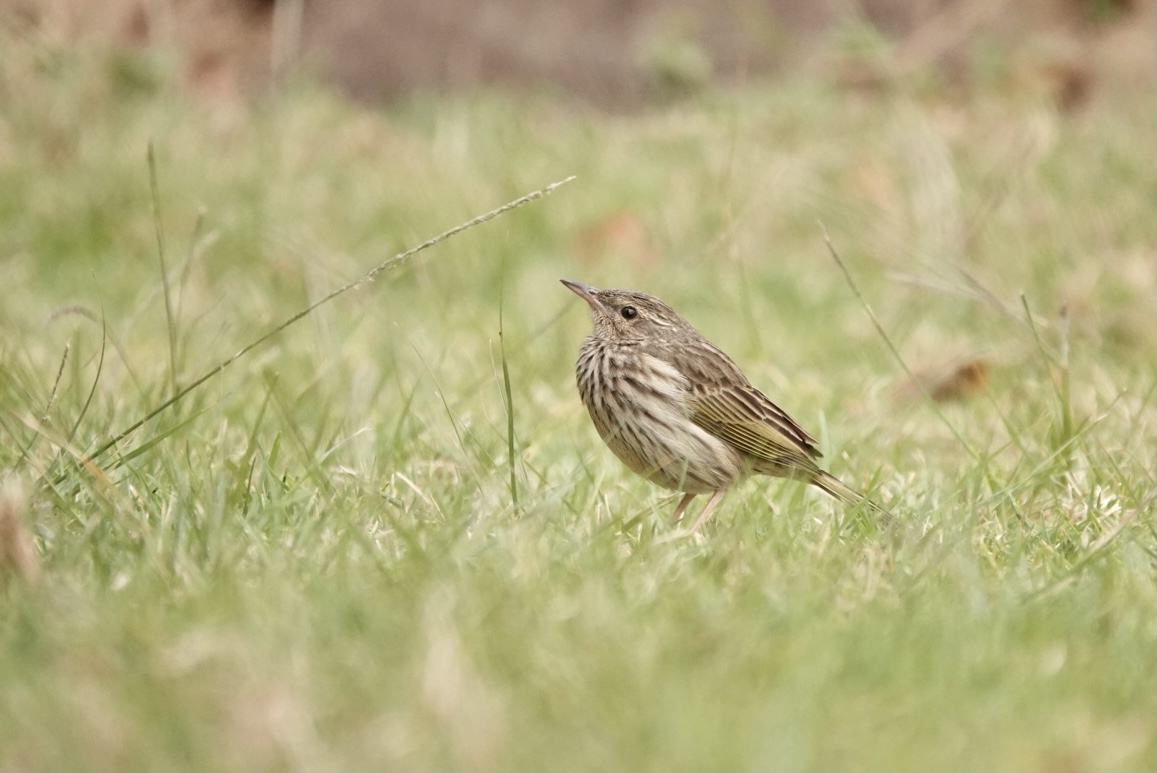
The Pipit. a lifer for me, was perched on the boulder and emitting its distinctive, repetitive call every few seconds and I was doubly pleased to be able to get a few decent photos of it in action
African Rock Pipit (Anthus crenatus / Klipkoester), Mountain Zebra NPAfrican Rock Pipit (Anthus crenatus / Klipkoester), Mountain Zebra NP
To celebrate we went to the park’s restaurant for dinner that evening and, unsure what to expect, were very pleasantly surprised to find brisk service, good food and friendly personnel to round off an outstanding day.
A couple of my recent longer posts have highlighted what I like to call “Stoepsitter birding” – which is the relaxed kind conducted mostly from a comfortable seat, preferably accompanied by suitable snacks and beverages to make sure the energy and spirit remains at a high level. Both were in favourite locations, one in Satara Camp in Kruger National Park, the other at Verlorenkloof Resort not far from Macahadodorp in Mpumulanga Province.
Addo Elephant National Park in the Eastern Cape has the honour of completing a trio of outstanding locations and places where Stoepsitter birding comes into its own.
The criteria are simple – suitable habitat to attract a variety of birdlife, a comfortable spot from which to observe the comings and goings of the birdlife, without disturbing them too much and the time and patience to devote yourself to this activity. It also helps if the birdlife and small wildlife is habituated to humans and happy to share their world with us, which for the most part is certainly the case in Addo.
Addo Elephant National Park
Our road trip in March this year included a three night stay in Addo, in a comfortable chalet with a view over a part of the Main Camp and a raised deck where we could spend a large part of the day (depicted in the heading image), while reserving the afternoons to venture out on game/birding drives.
The variety of birdlife that came to visit was exceptional, many of them drawn by the surrounding trees and shrubs which held a cornucopia of edible avian delights – nectar filled flowers, berries, small insects and suchlike.
The Weavers
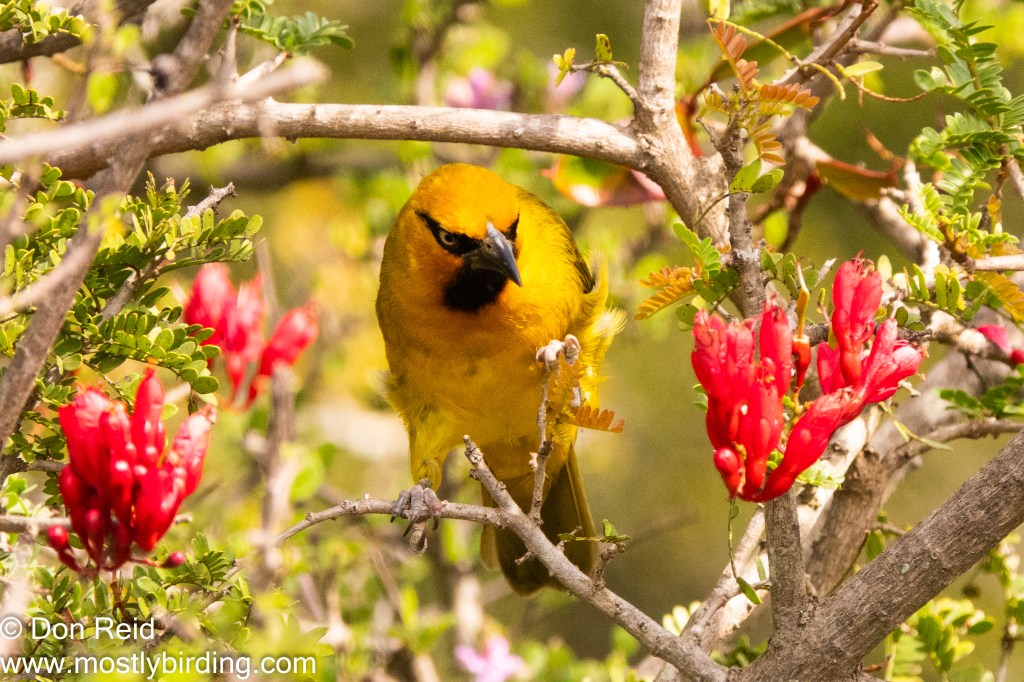
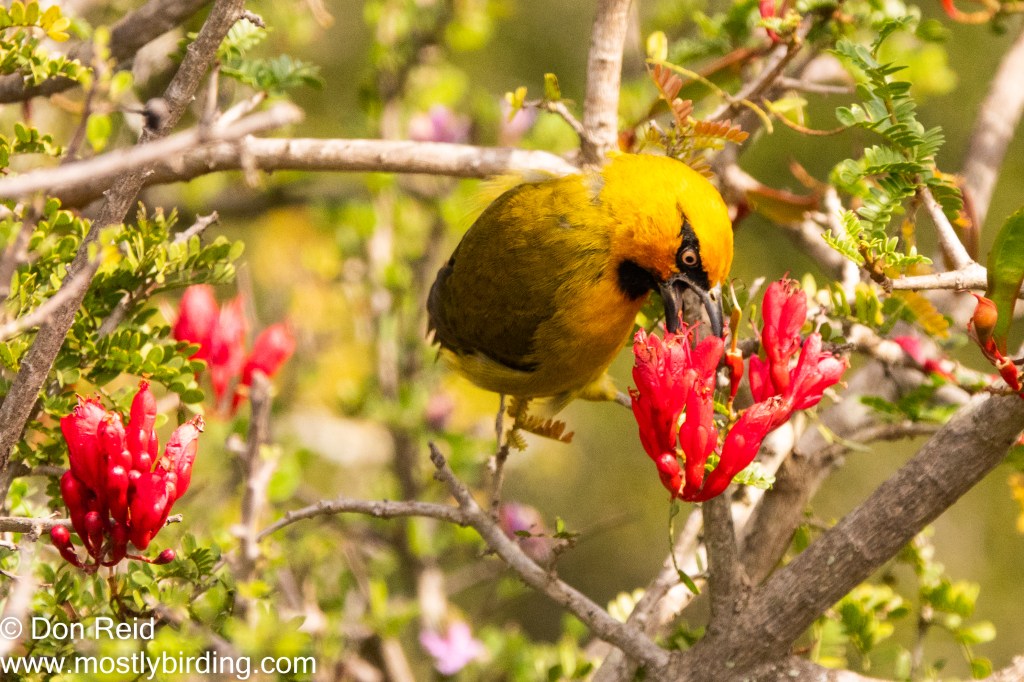
Weavers were the most prominent and numerous birds that visited, represented by no less than three different species, all belonging to the Ploceus genus. Weavers can be difficult to ID in their winter non-breeding plumage, but there are still enough clues to narrow the identification down when faced with similar looking yellow birds.
Village Weaver (Bontrugwewer / Ploceus cucullatus)
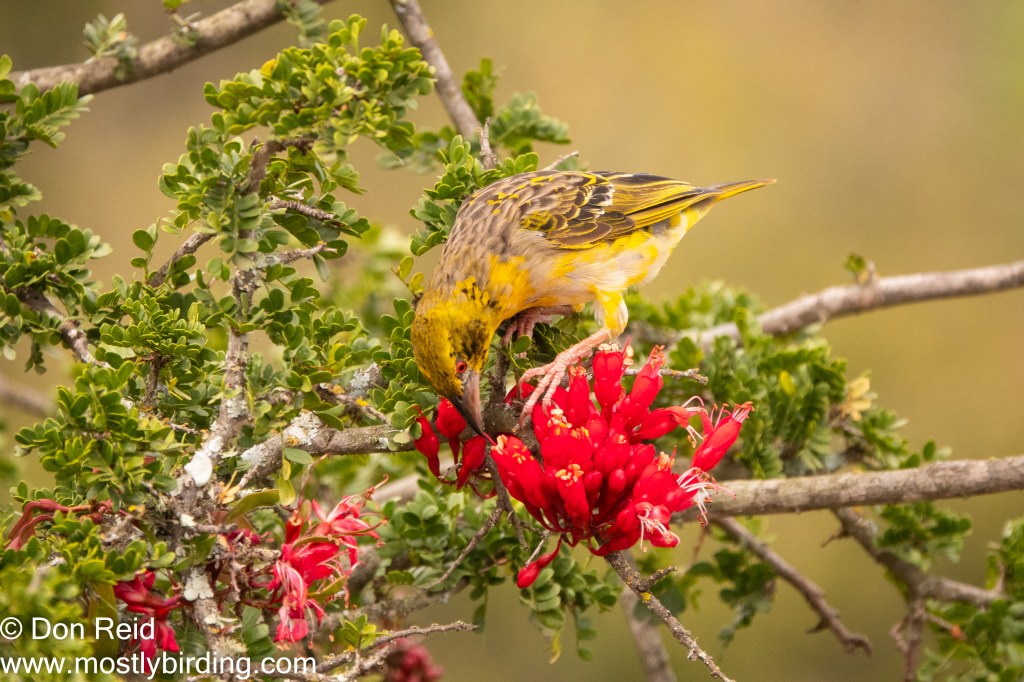
The Village Weavers outnumbered the other two weaver species and were frequent visitors to the flowering trees right in front of our chalet. My limited botanical knowledge would make this a type of Coral Tree (Erythrina genus) with its bright scarlet flowers but I’m open to correction….. which I have received (see comments below) and I now know this is in fact a Weeping boer-bean (Schotia brachypetala / Huilboerboon) so called, apparently, due to the copious amounts of nectar during flowering which overflow and ‘weep’
In breeding plumage the Village Weaver is fairly easy to distinguish from other masked Weavers, but this male was in eclipse plumage, the “in-between” stage when they are in the process of transitioning to their duller non-breeding plumage. The red eye and spotted-backed appearance confirmed the ID
Village Weaver Male in eclipse plumage, Addo Elephant Park
Cape Weaver (Kaapse wewer / Ploceus capensis)
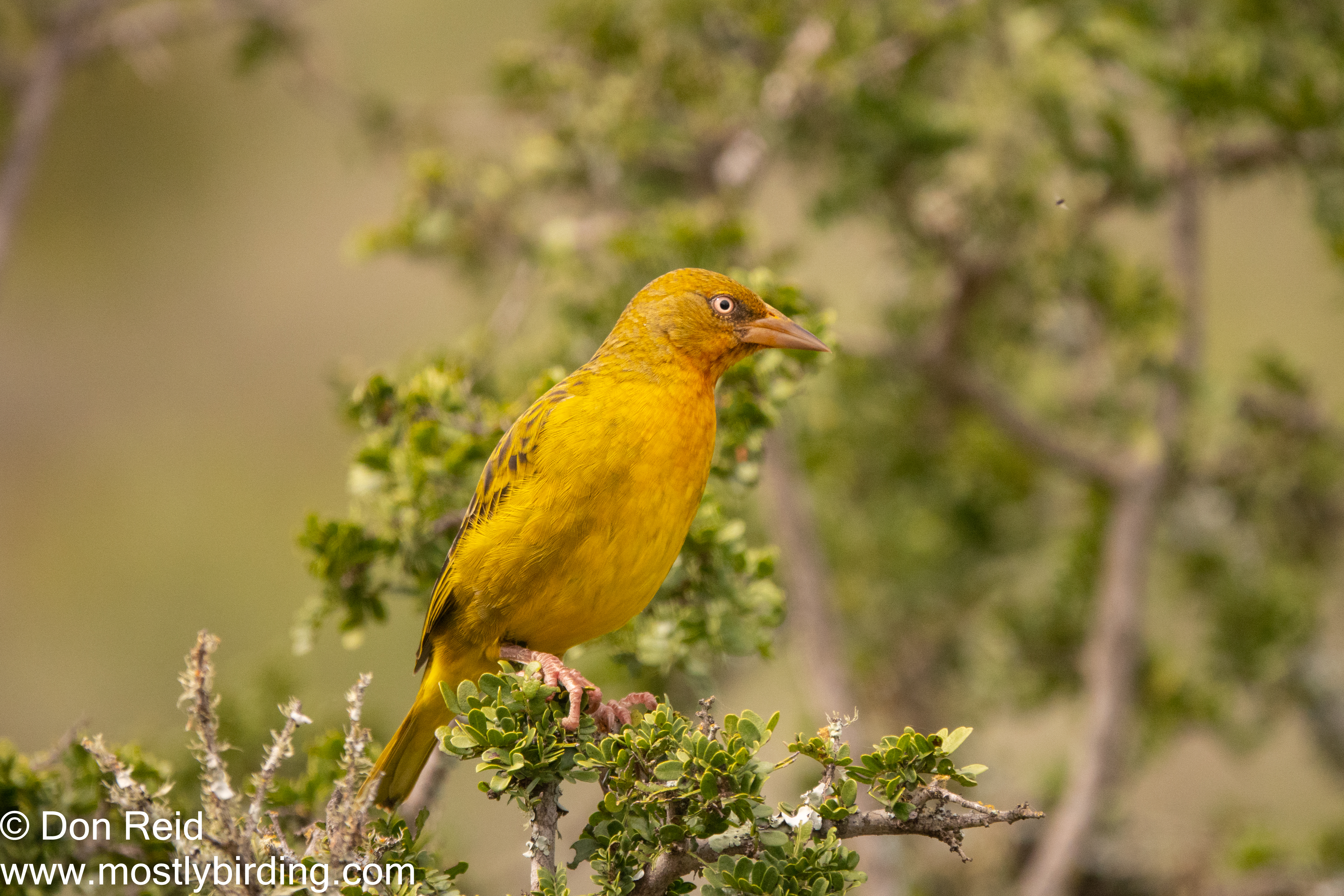
In non-breeding plumage the Cape Weaver male is still fairly easy to identify with its white eye colour and heavy bill, although lacking the chestnut brown wash over the face and neck which it shows during the summer breeding months. This is also the largest of the yellow weavers, by length and mass, but size is not always a dependable way to ID a bird unless the other candidate is sitting right next to it.
Cape Weaver male in partial non-breeding plumage, Addo Elephant Park
The female is less distinctive with brown eyes but the heavy bill helps to separate it from other non-breeding female weavers.
Cape Weaver female, Addo Elephant Park
Cape Weaver female, Addo Elephant Park
Spectacled Weaver (Brilwewer / Ploceus ocularis)
The Spectacled Weavers are easily distinguishable with their black ‘spectacles’ and black bill, while the black bib says this is a male.
Spectacled Weaver male, Addo Elephant Park
Spectacled Weaver male, Addo Elephant Park
The Sunbirds
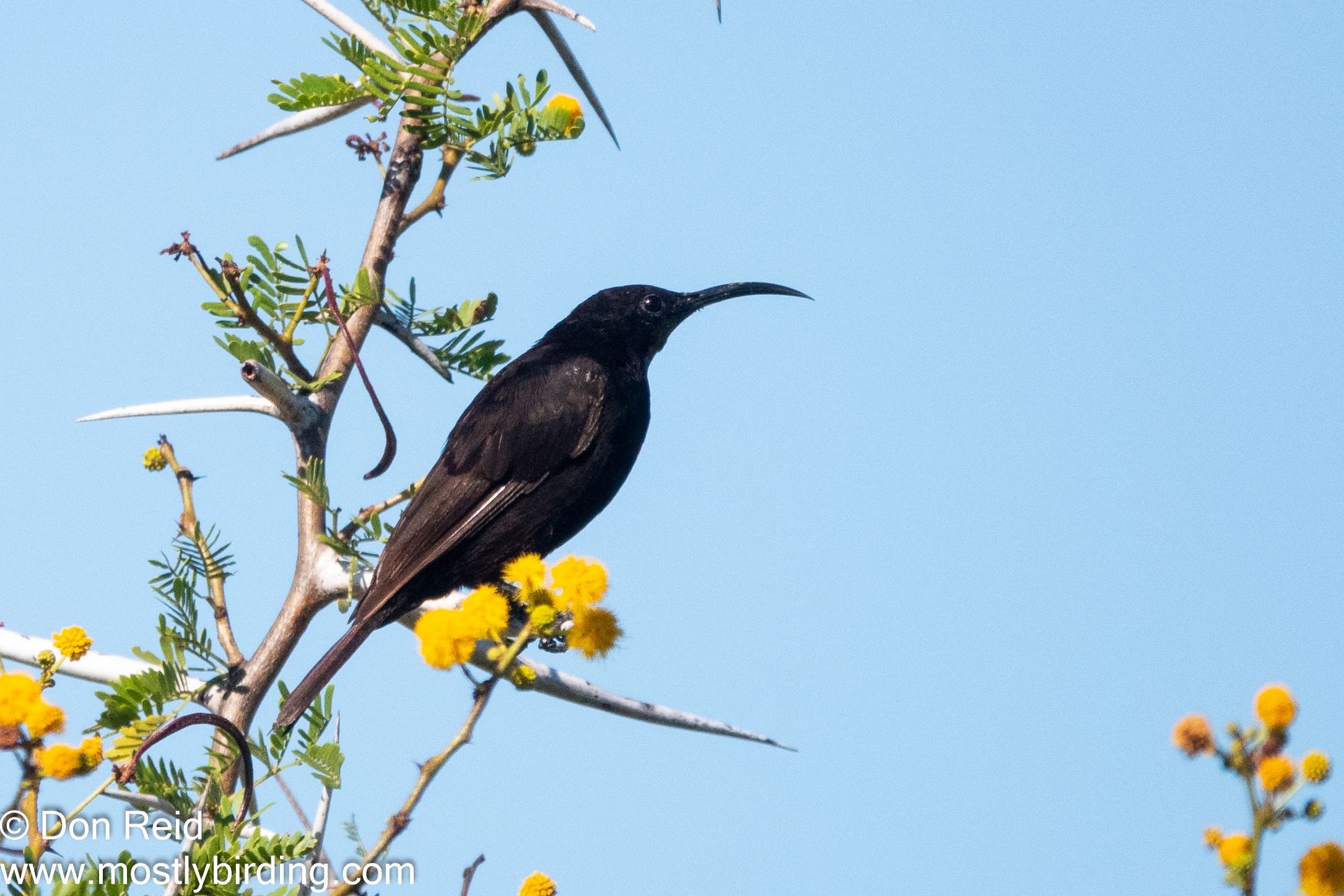
Two species of Sunbird were drawn to the nectar produced by the flowering trees, very different in appearance but equally striking as they went about the business of extracting the nectar with long down-curved bills and even longer tongues to probe the flowers.
Greater Double-collared Sunbird, Addo Elephant Park
Other Species
There were several other species that visited the chalet surrounds, not all of which chose to pose for a photo, but those that did seemed quite happy to be ‘in the picture’. Here are the species that spend most time in the trees and shrubs –
This member of the Canary family (The Afrikaans name confirms it) is a great singer and fond of sitting in an exposed position, so is hard to miss, but can be confused with the similar looking White-throated Canary
Streaky-headed Seedeater (race humilis), Addo Elephant Park
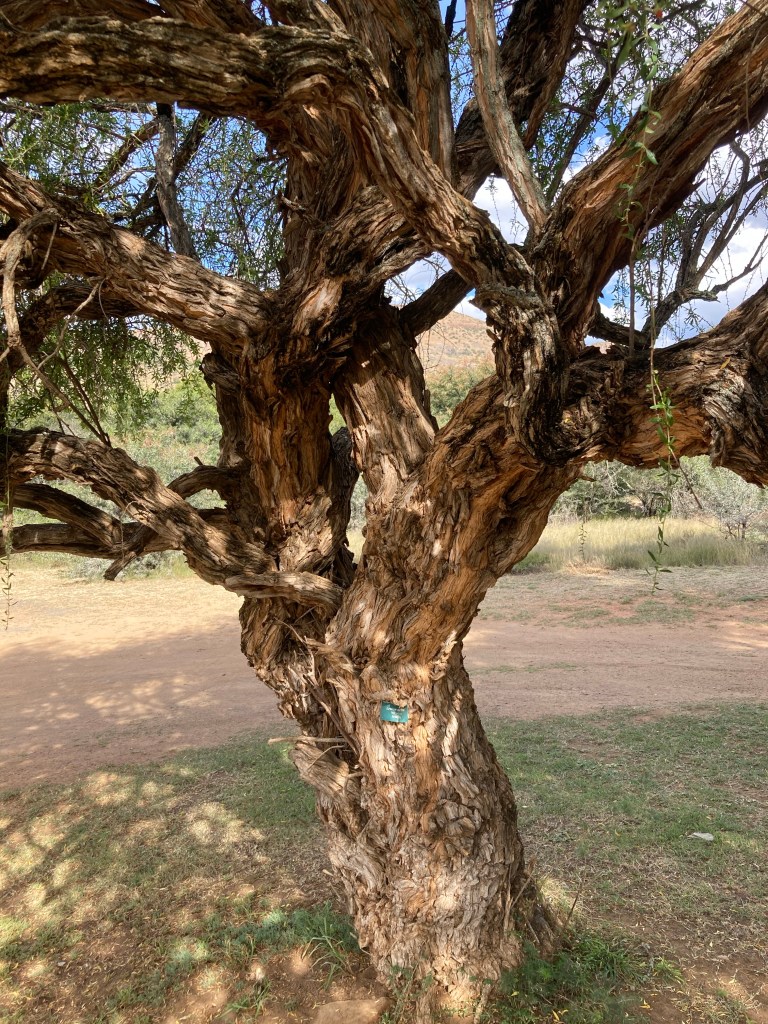
During our visit to Mountain Zebra National Park in March this year, we stopped at the main picnic area on the way to one of our drives and were drawn to have a closer look at the striking tree in the middle of the area.
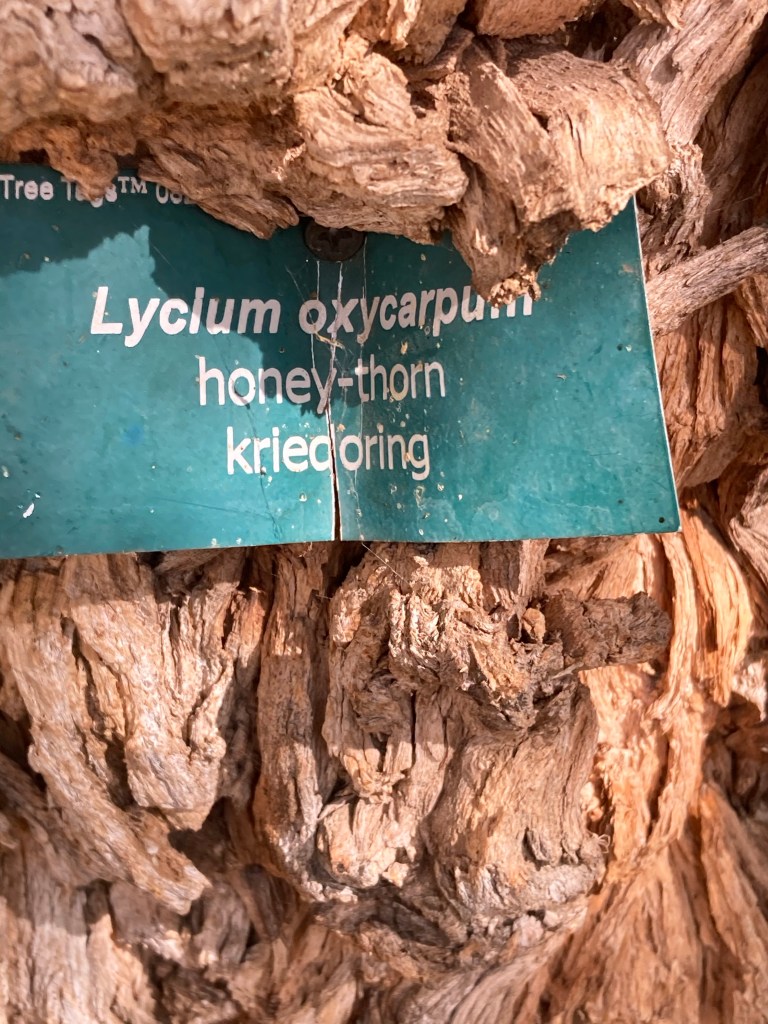
Closer inspection showed just how unique this tree is and the Parks Board had wisely thought to provide a name plate for this impressive example
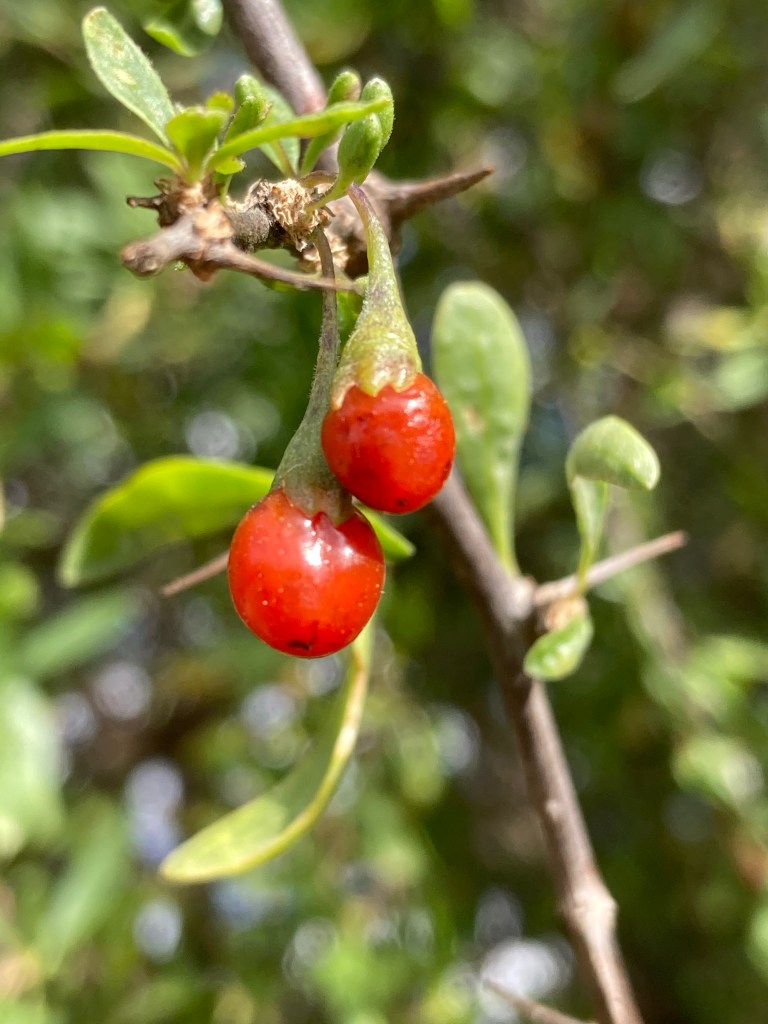
The tree dominates the middle of the picnic area The bark has a unique rough texture Close-up of the bark and the name plate (being gradually engulfed by the looks of it)The fruit of the Honey-thorn are vivid in colour The flowers are small and delicately beautiful
All in all a striking example of this tree species, I’m sure you will agree
Actually it was on a Wednesday – but all will become clear as you read on…..
Road Trip to Eastern Cape
Our Road Trip from Mossel Bay to the Eastern Cape was into the third day, after spending the first two nights in the Nature’s Valley area, where we explored a few places we had last visited many years ago.
Our next stop was Addo Elephant National Park, half a day’s drive further east, so there was no need to rush, except ……. well, there was the small matter of a possible rarity in the back of my mind …..
Now, some readers may know by now that I am an opportunistic twitcher rather than an obsessive one – if a rare bird is reported at a spot which is within reach of where I happen to be, I will consider making an attempt to see it, as long as it does not entail extensive travel and there is a reasonably good chance of actually finding the rarity.
So what rare bird was in the back of my mind?
Well, for some time before this trip, in fact since the end of November 2020, there had been reports of a Sooty Gull that had been spotted at various places along the eastern coast of South Africa, a species never recorded before in the region, so classified as a “Mega Rarity” by those who are driven by such things.
I had been following its gradual progress southwards with interest, secretly hoping that 1) it would remain in the area long enough until our road trip began and 2) it would settle at a spot which was within ‘twitching distance’ of our planned route to the Eastern Cape. After the initial sighting in Northern Kwazulu Natal, the gull was spotted at Kei Mouth in the Eastern Cape and spent some weeks there.
I became more interested when the bird was spotted at the Sundays River Mouth, east of Port Elizabeth, early in March 2021 and remained there for the couple of weeks prior to our road trip. That was just what I had been hoping for, as I estimated that the detour to its location would fit into our travel plans with time to spare.
Extract from the SA Rare Bird News of 8 March 2021 with a report of the Sooty Gull
Sooty Gull
Now where had this rarity come from? No one can tell for sure but it is thought it had somehow ‘drifted’ far south of its usual territory, which is the Middle East and southwards to Tanzania, Kenya and the northern most reaches of Mozambique. Also known as the Aden Gull or Hemprich’s Gull, it was a couple of thousand kms outside its normal range when first spotted in SA. It is partially migratory, moving southwards after breeding, so perhaps its internal ‘GPS’ went awry and took it much further south than intended.
Being a coastal bird and a scavenger, it is most often found near ports and harbours, inshore islands and the intertidal zone.
The Journey
My journal tells the story ……
We left Nature’s Valley around 11 am with a drive of some 330 kms ahead of us – which took us all of 6 hours as it turned out! A quick stop at the Bread and Brew shop for pies to take to Addo and we were on our way. Initially the N2 National Road proved to be a good road with a broad shoulder, but from halfway it became more challenging with heavier traffic, several of the ubiquitous “Stop and Go’s” (one side of road closed at a time to allow construction work) and many slow heavy vehicles to get past.
The route (in blue) from Mossel Bay to Sundays River Mouth
I had discovered that morning that I had contrived to forget my camera’s battery charger at home and was desperately thinking how to find one for my particular camera in Port Elizabeth (PE) in a short space of time. Fortunately the first camera shop I phoned said they could help, but this meant a long, slow detour deep into the suburbs of PE to the shop. An hour or so and R700 (about $50) later I was the proud owner of a nifty universal battery charger and we set our sights on getting to Colchester, the town near the Sundays River Mouth.
Sundays River Mouth
After confirming the location on Google Maps, I had imagined driving through Colchester to the river mouth on a reasonable road, parking there and finding the Sooty Gull nearby – none of that happened!
We found Colchester some 30 kms east of PE, drove through to where the road to the mouth supposedly began and found ourselves on a road marked ‘Private’ and a locked gate blocking any further progress. I parked and went to enquire at the nearby Pearson Park office where I found a couple who confirmed that we were at the right place and told us “the entrance fee is R100”. It seemed odd that the river mouth had been privatised in this way but there was no time for a discussion and R100 seemed like a good investment for what I imagined to be a guaranteed lifer, so I paid the amount and, clutching the entrance ticket, returned to our car.
The gate opened and we proceeded along the road, initially tarred but soon it became gravel, very corrugated and worn, which had our small but fully loaded car bouncing along while I winced inwardly. The office couple had simply told us to “drive until you see parked cars”, which we did for several kms.
Some distance from the sea we found a parking area in between the low dunes, with two vehicles parked, one of which was about to leave, so I stopped them to enquire if they knew about ‘the bird’. They absolutely did as they were returning from a day’s fishing and they explained how I would find it on the beach “where those fishermen are, see?”. I didn’t want to admit that said fishermen were so far away that I couldn’t see them, thanked them as they drove off and set off myself on foot, munching on a take away chicken burger (there had been no time to stop for lunch), along the sand in the direction they had pointed.
Heading towards the beach
Looking back to where the car was parked, in the distance (my footprints show my progress)
At this stage it was already 3.30 pm and with the last stretch of road to Addo still ahead and of unfamiliar route and distance, I was becoming rather tense. I walked as quickly as the soft sand would allow, quickly seeking out the firmer sand along the edge of the estuary. After some 15 minutes of strenuous walking/ trotting I found myself closer to the beach. I could already see a few gulls pottering about on the sand – through the binos I could make out numbers of Kelp Gulls but of the Sooty Gull there was no sign and my heart sank just a tad.
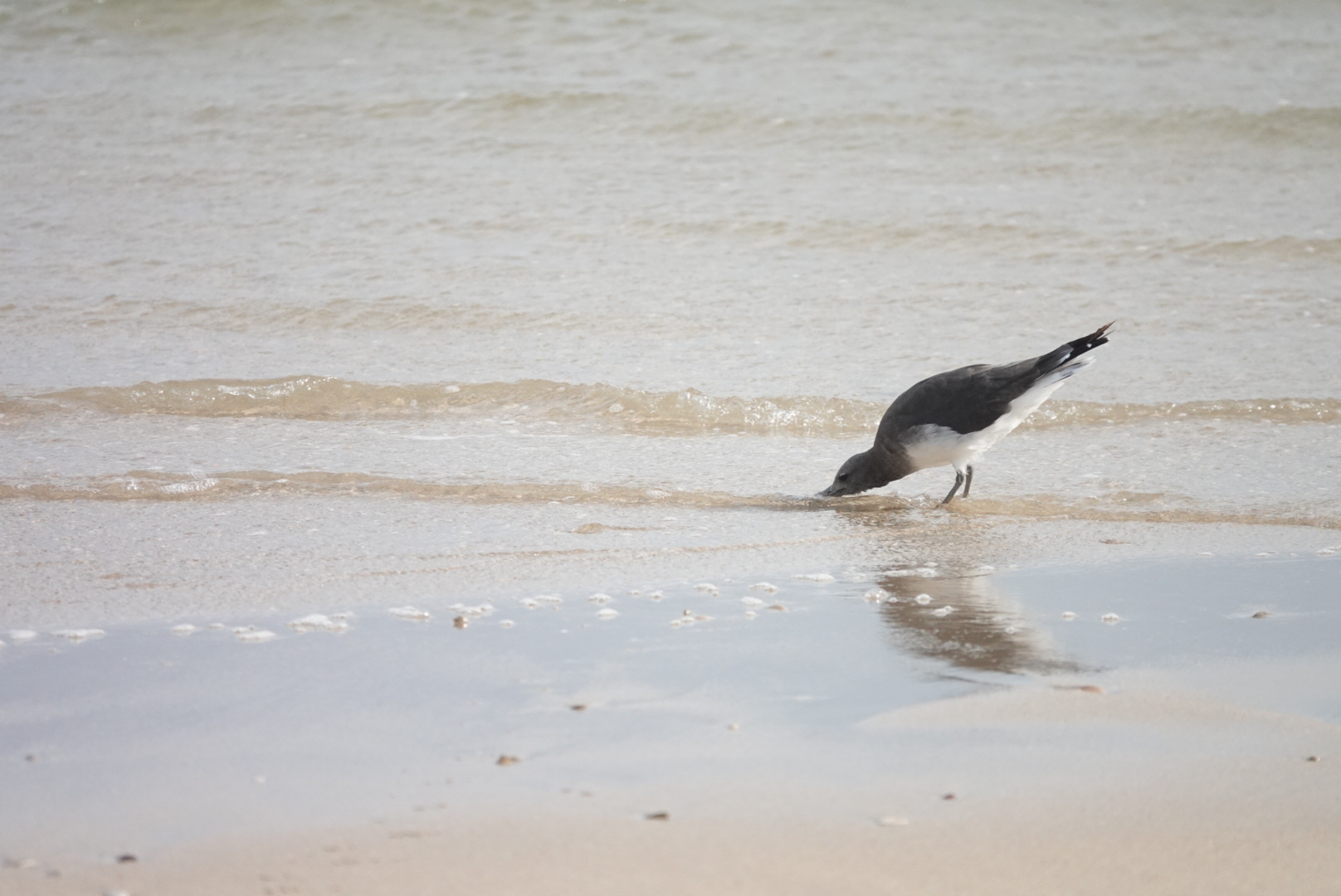
Then, as I approached the last ridge in the sand before the beach and peered over it I spotted more gulls, one of which had a darker appearance. Lifting the binos to my eyes I let out a shout of “bingo!” or something similar – it was the Sooty Gull!
First glimpse of the Sooty Gull
Relieved, I spent the next 10 minutes slowly approaching and photographing the gull as I went, until I was 10 to 15 metres away and felt that I was close enough, not wanting to spook the bird, which seemed quite accepting of my slow approach, only once lifting into the air for a few seconds before carrying on with its foraging.
When seen with a Kelp Gull, the size and plumage differences are obvious
A closer view shows the red tip to the bill and the dark grey colouring which gave it the name “Sooty”
Sooty Gull, briefly in flight
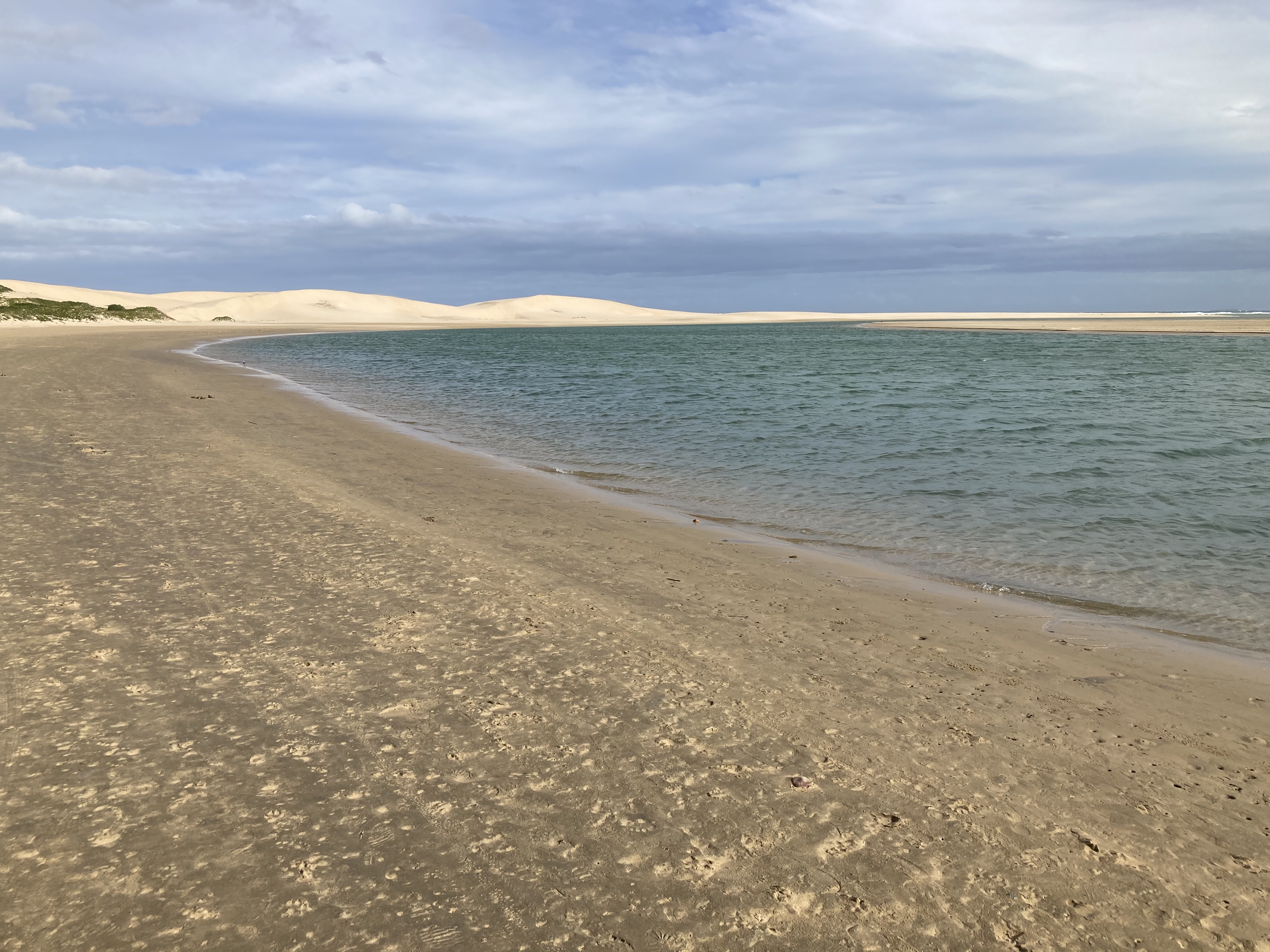
This is the location where the gull was hanging out
Most satisfied with how things had turned out, I returned as hastily as possible to the parked car and my patient wife, sweating from the exertion but happy about the outcome. The rest of the trip to Addo was uneventful, but slow on the poor, bumpy and narrow roads and we were glad to arrive safely and in time before the gates closed, book in and find our chalet. Accompanied by a typical bush sunset, we could relax and savour a glass of red wine and the new lifer in beautiful surroundings.
What a challenge birding can be sometimes, yet what joy and satisfaction it brings.
How to find out about rarities
Just a footnote on news of Rarities in Southern Africa – for up to date news of rarities I highly recommended that you subscribe (at no cost) to the SA Rare Bird News by simply sending an email to hardaker@mweb.co.za and asking to be added to the subscriber list
Sticking with the “stoepsitter” mode of birding as described in my recent post on the ‘Lawn Raiders’ of Verlorenkloof, here’s another version in a somewhat different location – Satara Rest Camp in the Kruger National Park.
(For the benefit of international readers “stoepsitter” is an Afrikaans term that translates roughly as one who spends much time on the stoep or verandah – but you knew that anyway, I’m sure)
It’s a well known fact amongst birders that, when visiting Kruger’s camps, time spent relaxing with binos on the stoep of your accommodation is bound to be rewarded with views of a variety of birds as they go about their daily business, on the grass, in the bushes and in the trees that most of the camps have in abundance.
That’s not to say one shouldn’t spend time getting out and about on game drives, exploring this national treasure of our wildlife, it’s just that when you want to relax in the rest camp, there’s no better place to do so than on the stoep of your rondavel or other accommodation.
Satara Rest Camp
During our December 2020 visit to Kruger, we spent four nights in Satara Rest Camp, one of which was in a fully equipped rondavel close to the perimeter fence, the other three in a more basic rondavel facing onto an expanse of grass with well established trees in close proximity.
This meant there was ample time for some serious stoepsitting, in between forays into the surrounding areas on game and birding drives and to visit the picnic spots for our traditional Kruger brunches (ooh, just typing that makes my mouth water and my nose prickle with the imaginary smell of a tasty brunch braai-ing on the pan).
The first afternoon and morning produced a fair sprinkling of interesting birds, before we changed rondavels, some of which I managed to photograph –
Spotted Flycatcher (Muscicapa striata / Europese vlieëvanger
A Spotted Flycatcher, a non-breeding Palaearctic migrant, was quietly going about its business on an outer branch with a view over an expanse of lawn, which in some camps has been allowed to grow “wild”, as you will see in the featured image at the top of this post.
Just a note on these “wild” lawns : it was initially jarring to see the lawns in such a wild state, having been used to manicured lawns in the camp for so many years, but I will admit that I now find this quite appropriate to the surroundings, as the contrast between the camp gardens and the natural habitat of the surrounding veld has been reduced – the ‘line has been blurred somewhat’. I like to think this was a conscious decision by the Park authorities.
Spotted Flycatcher (Muscicapa striata / Europese vlieëvanger), KNP – Satara
And the missus was there, no doubt keeping an eye on handsome hubby to make sure he didn’t attract any competition. One of a number of species with significant, even dramatic, differences in plumage between male and female (known as dimorphism)
The Woodland Kingfisher is also a breeding intra-African migrant, strikingly coloured and always a joy to find. Although they were present in the camp, this photo was taken on one of our drives.
On the second morning we had to move to another rondavel, this time without a kitchen, but we had come prepared with a fold-up table, little gas cooker for the all-important boiled water for our tea and coffee and our picnic hamper that always accompanies our trips to Kruger. The camp has communal kitchens close by for the washing up etc .
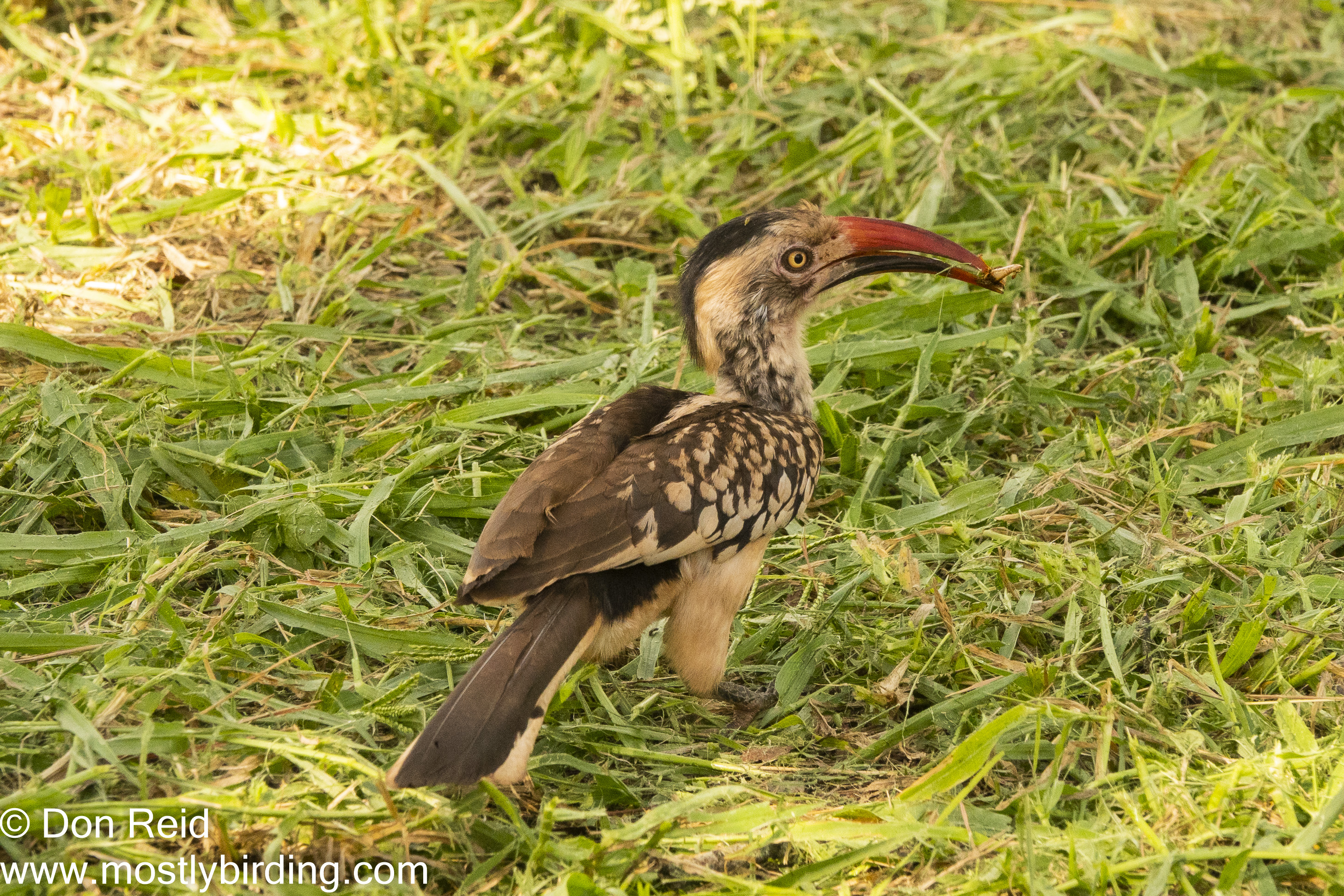
Once settled in to the new accommodation, I continued with stoepsitter birding and soon noticed that one particular bird was almost constantly present on the stretch of grass in front of the rondavel. It was a Red-billed Hornbill, a common species found throughout Kruger. I assumed it had found a good spot to find the small insects that make up most of its diet and did not pay too much attention to it as it came and went at regular intervals.
Southern Red-billed Hornbill
Southern Red-billed Hornbill
Hornbills look ungainly with their huge bills, but they have an admirable ability to find and pick up insects with some precision
Southern Red-billed Hornbill
Southern Red-billed Hornbill
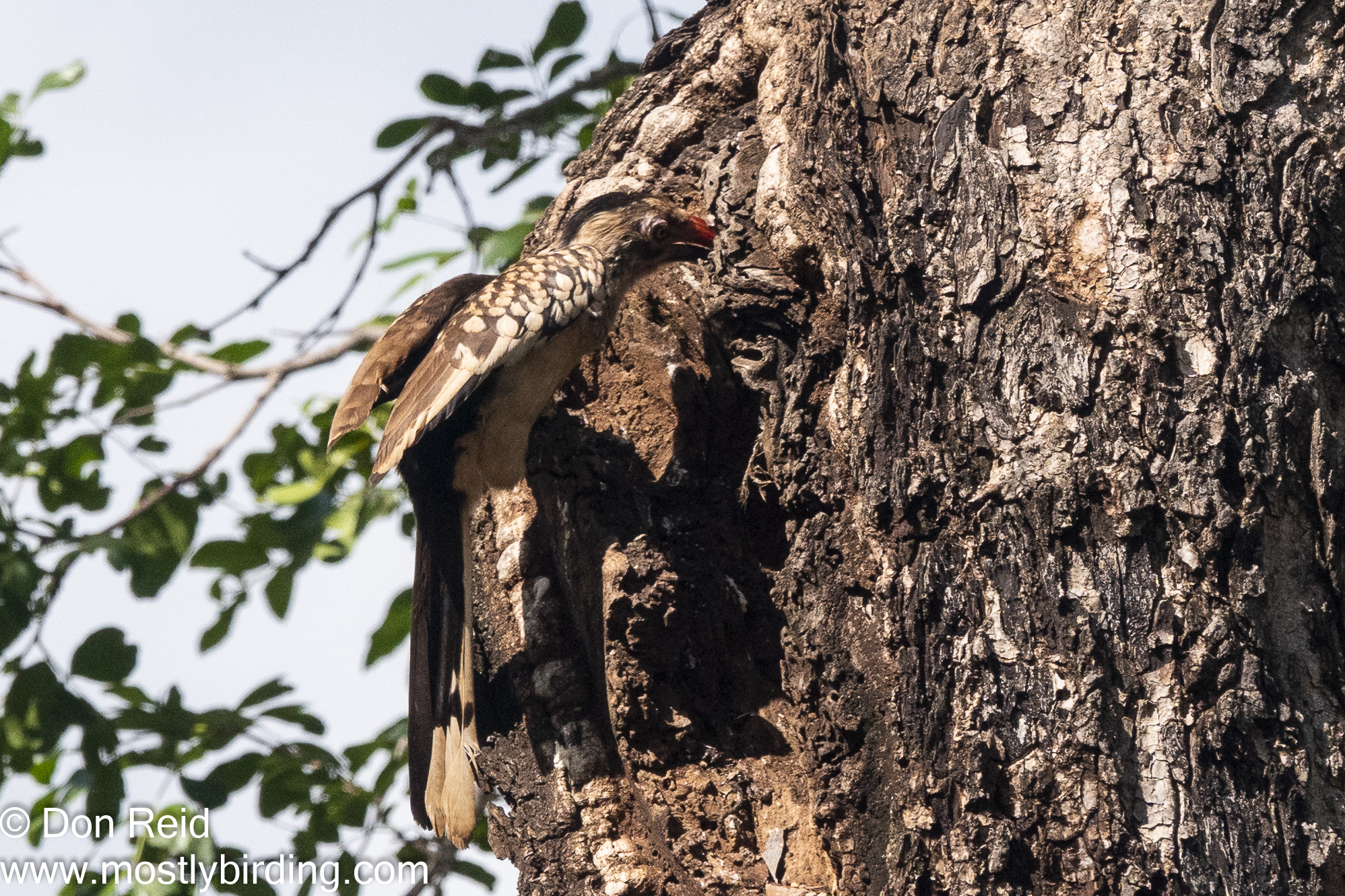
At one stage I kept watching the Hornbill after it had found an insect but not swallowed it, which led me to think it was feeding its young. It flew up to a large tree nearby and settled on the trunk where a branch had probably broken off years earlier as there was a large scar, visible about halfway up the left hand trunk in the image below.
Satara Rest Camp
Southern Red-billed Hornbill
The Hornbill then poked its bill through a small hole in the trunk and that’s when I realised what it was doing.
Southern Red-billed Hornbill
Red-billed Hornbills nest in natural cavities in trees, which the female inspects before selecting one. The entrance is usually just wide enough to allow entry and is then sealed from the inside by the female, using own faeces, leaving just a narrow slit and effectively holding her prisoner during the laying and incubation of the eggs.
Cavity sealed from inside with small hole for feeding
Once eggs are laid, incubation takes up to 25 days, followed by another 16 to 24 days during which the female cares for the young, all the while being fed by the male. Then the female breaks her way out leaving the youngsters in the nest and joins the male in providing food for the chicks, while the youngsters then re-seal the opening until they in turn are ready to take on the world at the ripe old age of around 50 days.
That’s quite a partnership! I felt privileged to have been able to see them in action.
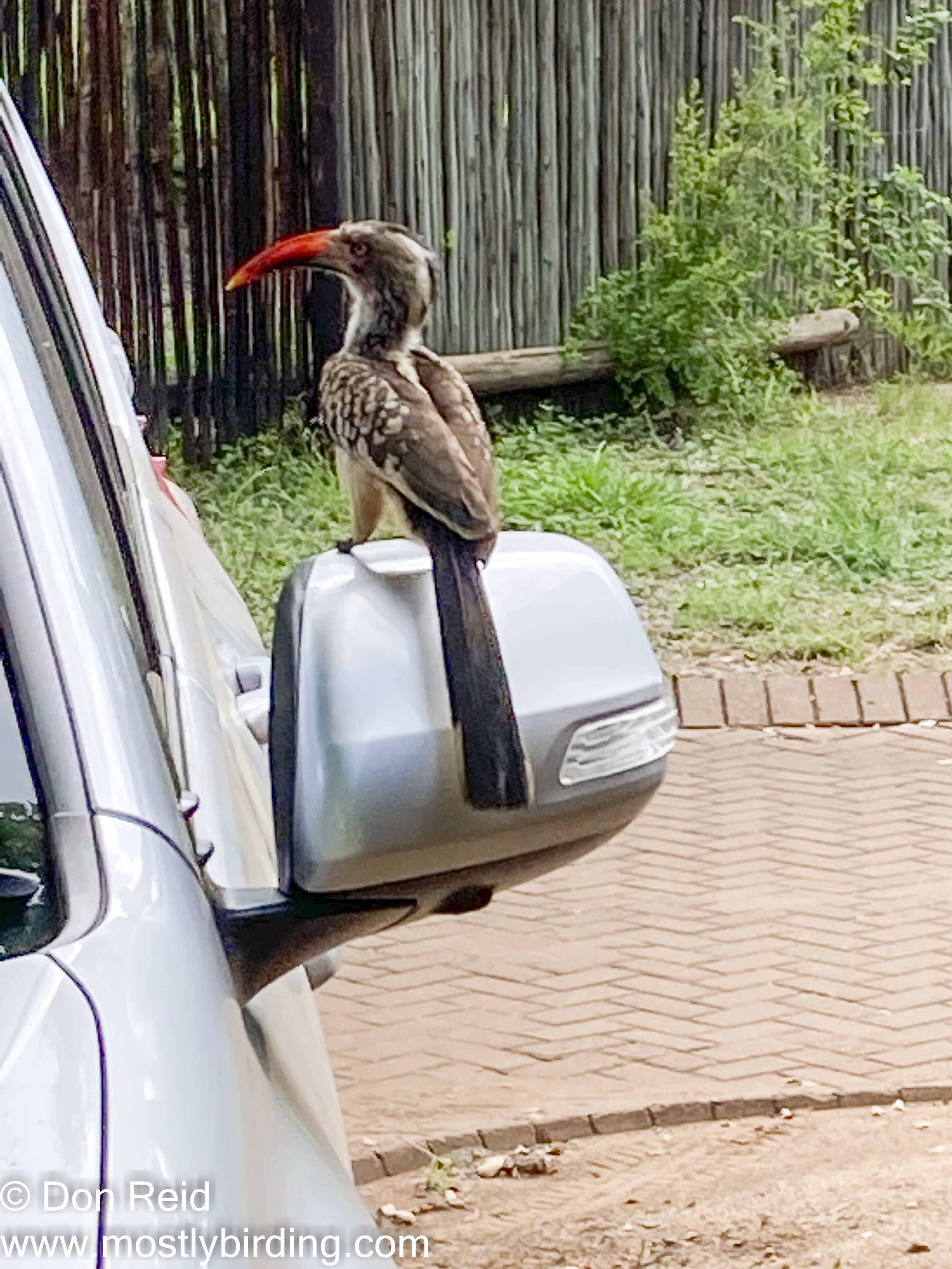
All of this kept the male busy the whole day, but he still found time to go and see his reflection in my car’s window and frustratingly shadow box with what he thought was a possible intruder.
Birding comes in different forms, sometimes challenging, requiring a dedicated effort, extendedtravel, perhaps some serious physical exertion, often in the face of less than favourable weather conditions.
However, it’s not always that way – some of the most relaxing and enjoyable birding is to be found in your immediate surroundings, whether at home or a holiday destination.
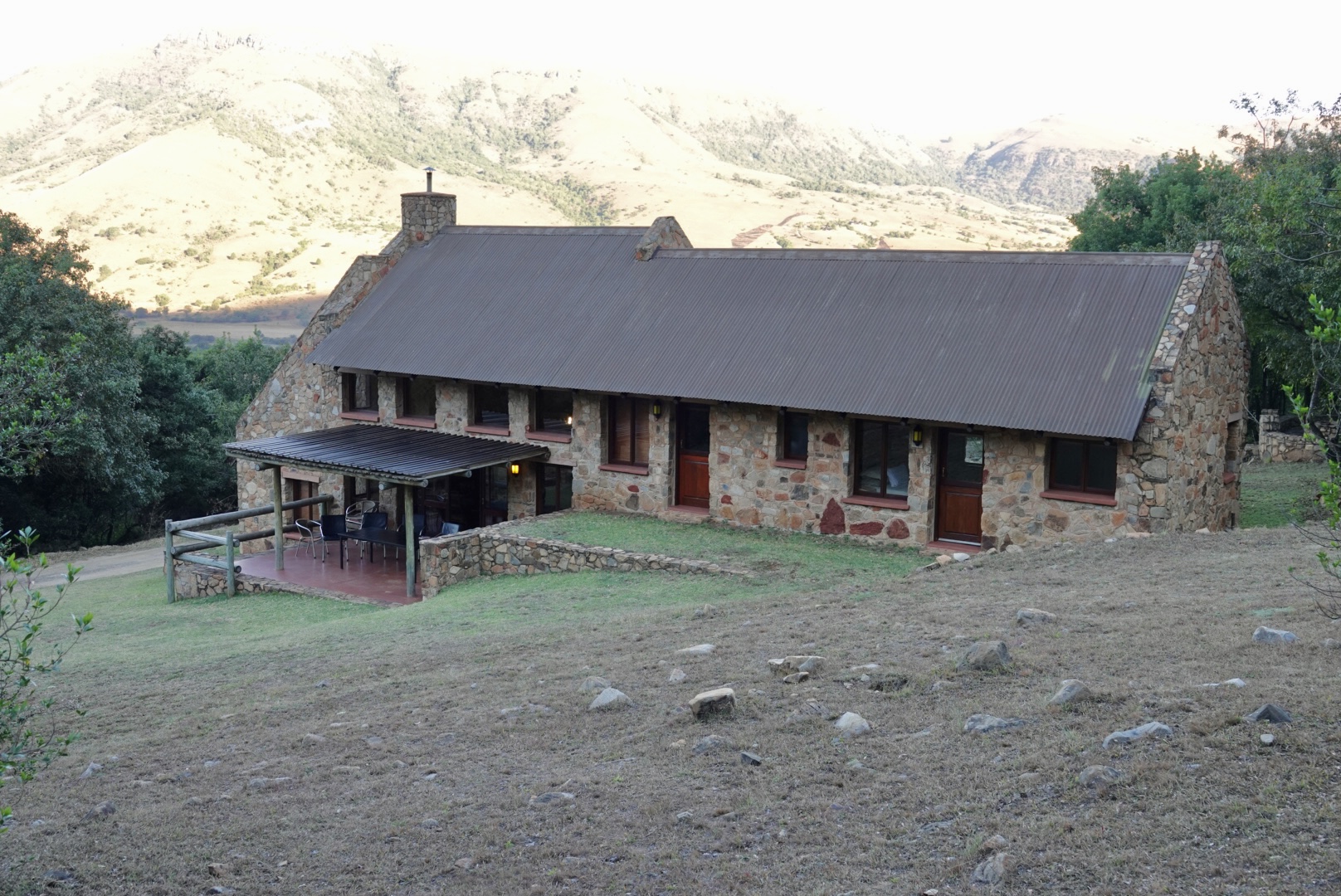
Which is precisely what we experienced during our recent visit to Verlorenkloof, a country resort that I have written about on a few occasions and one of our all-time favourite places to spend a breakaway week. We were fortunate to be invited by Koos and Rianda to join them in Croft No 3 (shown below) for the last week in May.
Croft No 3 Verlorenkloof
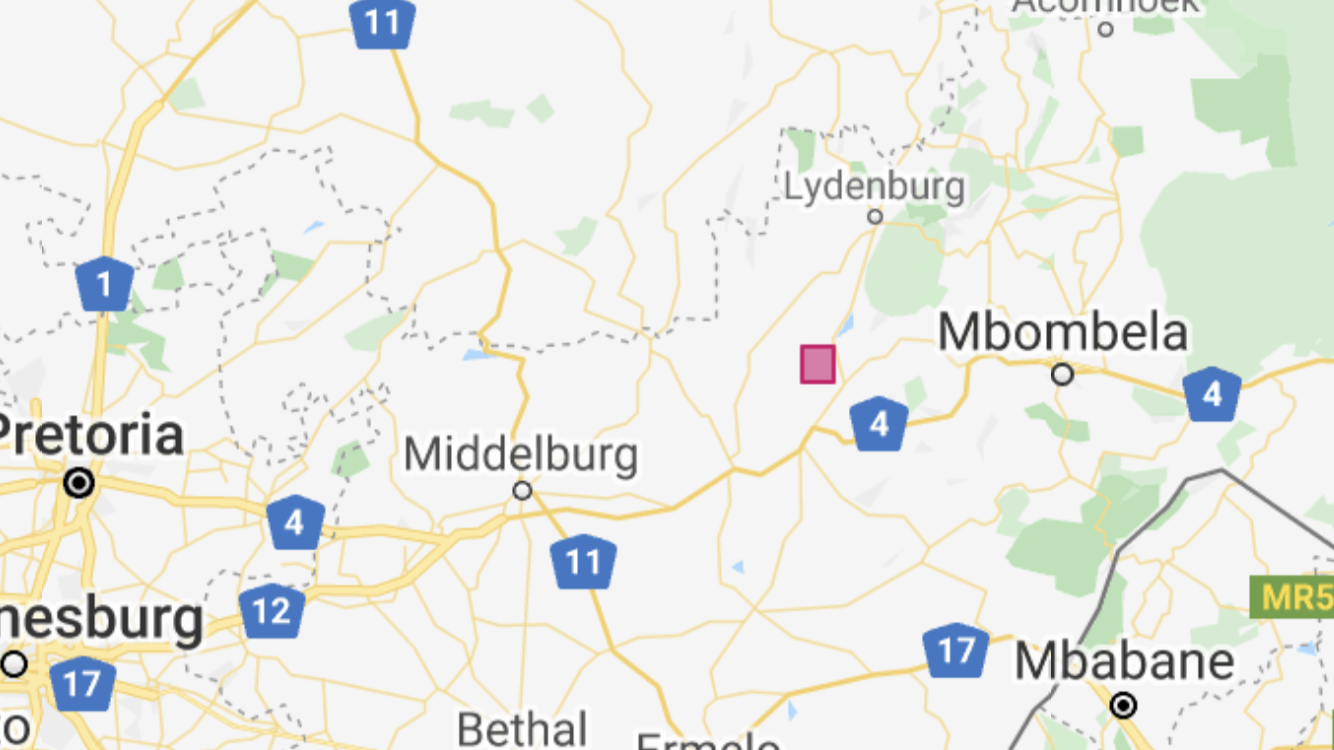
For those who don’t yet know, Verlorenkloof lies east of Dullstroom, but on the lower side of the escarpment which towers above the fertile valley in which the resort is situated. The red square on the map indicates the position of the pentad which includes Verlorenkloof resort.
The birding at Verlorenkloof is always exceptional, with my personal tally of species recorded in the area, after many visits over the last twelve years, standing at 195, so the expectations were high. These hopes were of course tempered by the knowledge that the last week in May is often a quiet time for birding, with none of the summer migrants present and many of the remaining species not in calling or displaying mode.
Oddly enough, for the first 3 or 4 days of our stay, the area around the Croft was very quiet with far fewer birds than we are used to, but over the last two days of our stay, following some light rain, the scene changed completely. Suddenly all of the usual visitors were there, searching the lawn for edible insects, worms and the like.
I was fascinated by the variety of mostly “ordinary” birds and their antics – each one displaying its own way of “raiding the lawn” and finding a tasty morsel while showing unique character traits and interacting with the other bird species doing more or less the same thing.
The ultimate “I’m not going to bother anyone” bird – demurely pottering about, occasionally finding something to its taste then carrying on as if it was nothing special
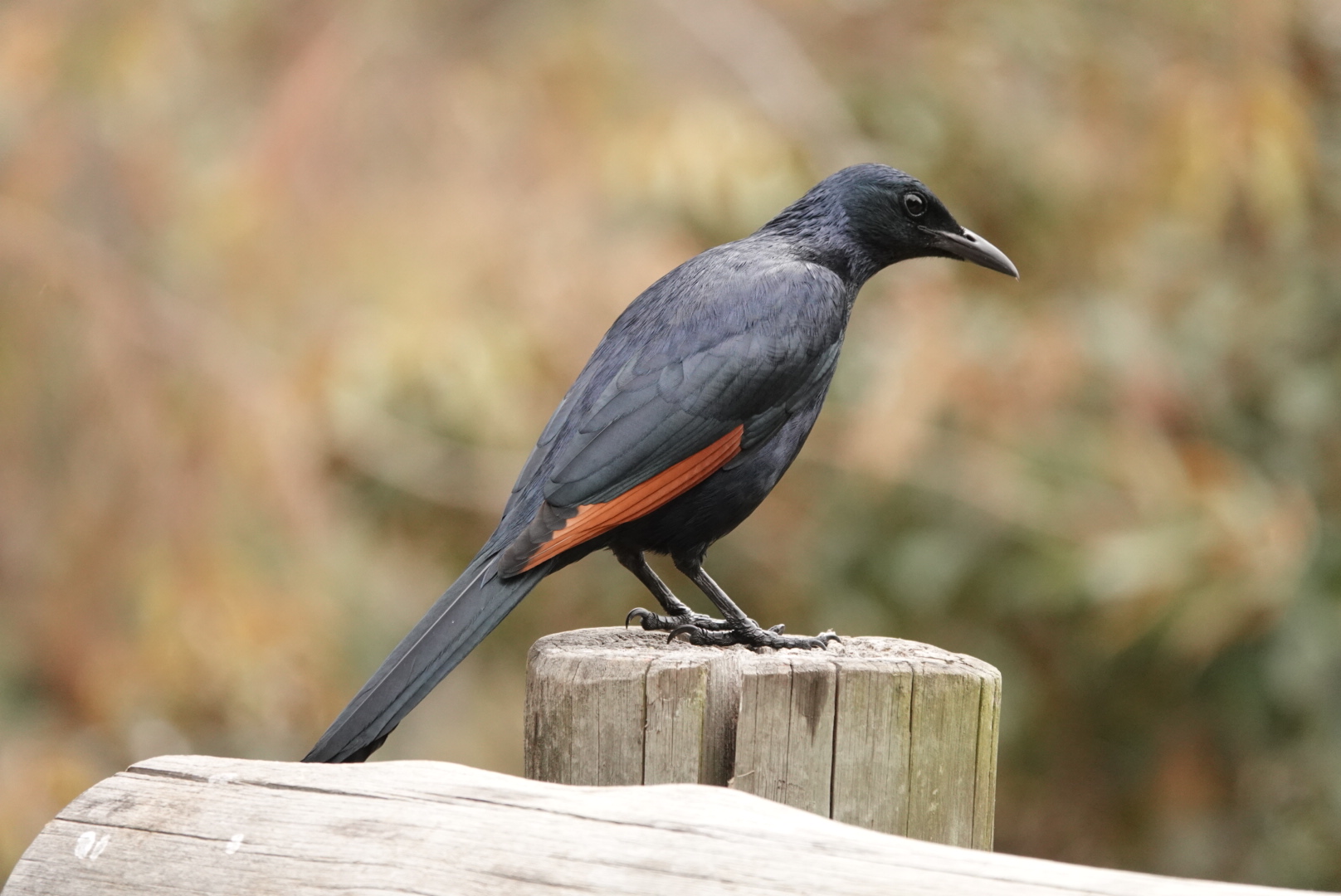
Enter the Darth Vader of the bird world – the menacing, glaring Red-winged Starling….. and they work in gangs, daring others to get in their way, descending en masse to grass level and prodding aggressively at the grass in search of a victim. But only after perching on the railing post in intimidating fashion.
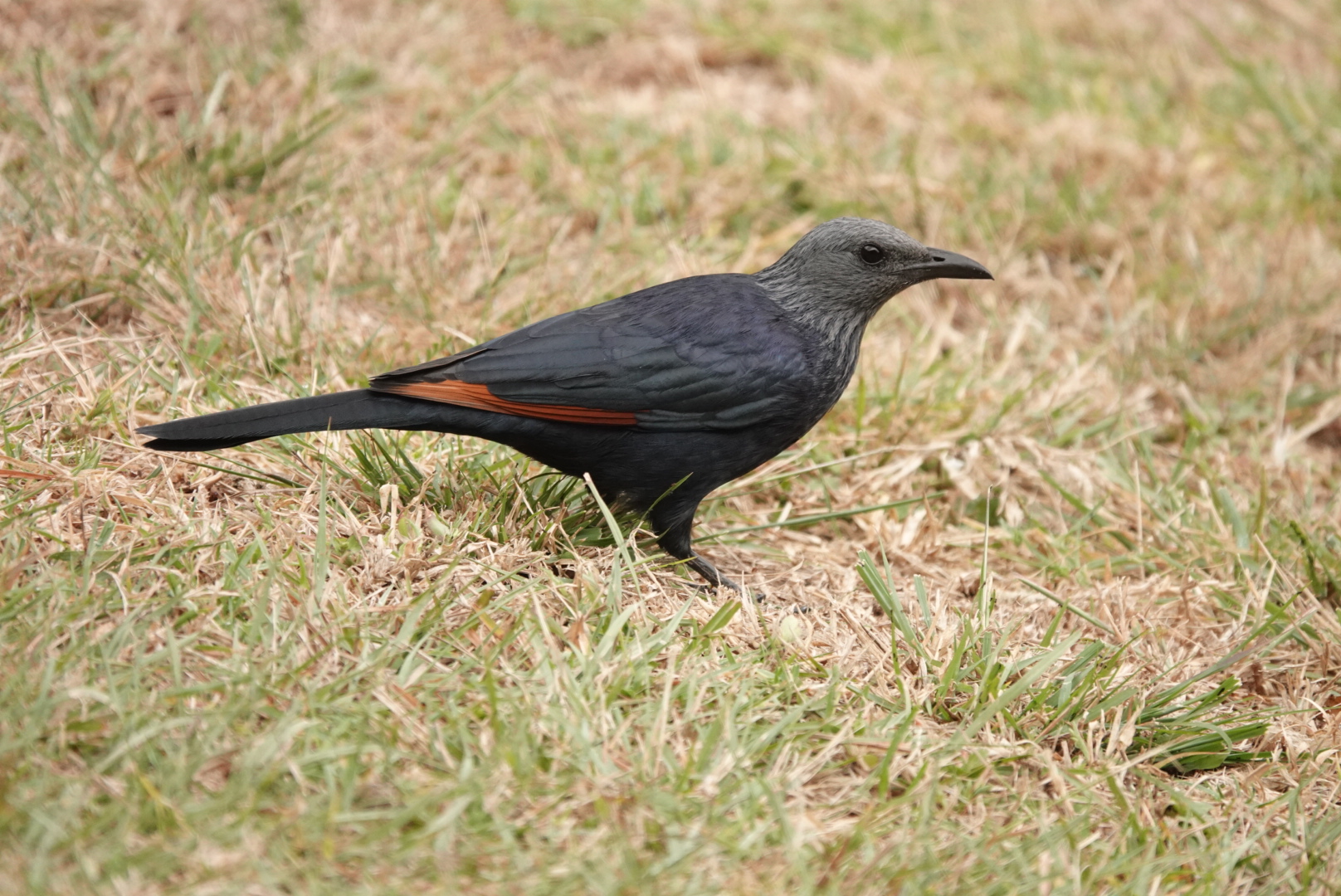
The gang takes over ….
Common Fiscal (Fiskaallaksman / Lanius collaris)
Watching from a side tree, the Common Fiscal, aka Jacky Hangman aka the Butcherbird – what a reputation this small bird has, all because of its habit of impaling prey on a thorn or barbed wire! Its elegant appearance, as if dressed in formal attire, seems to project just the opposite impression.
Interestingly the Fiscal was quite composed, until the Fork-tailed Drongo arrived, when it flew from its perch and chased the Drongo until it retired to a far-off tree.
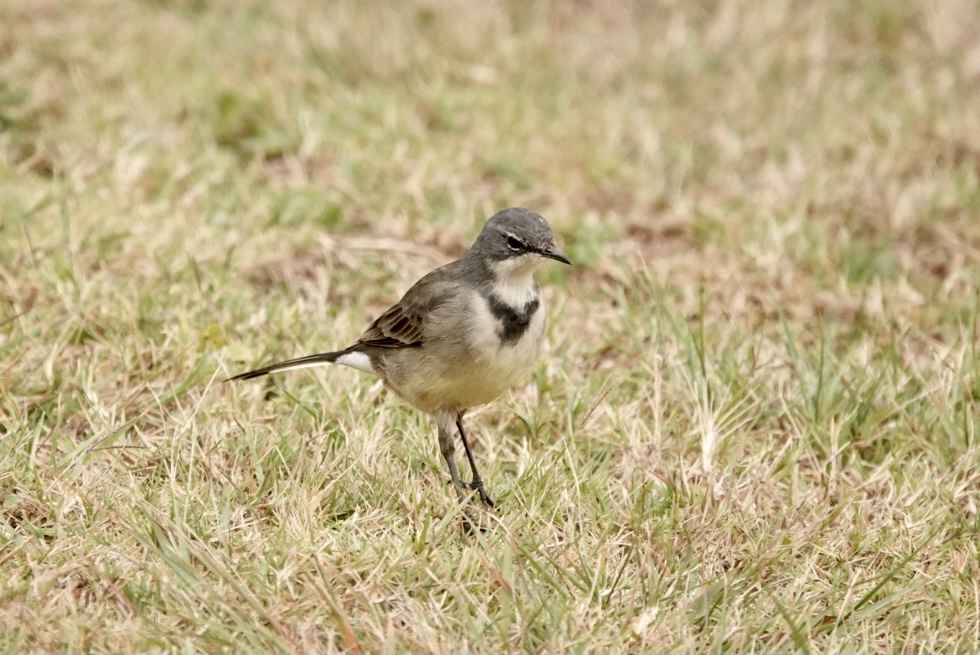
Another of the more timid birds, almost ever-present on the lawn, pottering about without bothering any of the others. But a bit of a celebrity nevertheless, being rated “uncommon to locally common” by Roberts – a regular at certain times at Verlorenkloof, but by no means guaranteed.
Familiar is the right name for this well-known species. Another bird that is present from dawn to dusk around the Croft, watching from its favourite post and “diving” down to catch its tiny prey in the matted grass, with each return to its perch marked by three wing-flicks. I wondered how a bird with such tiny eyes can spot its prey at up to 5 metres or more, pouncing on it unerringly and returning to its post to devour it.
Cape Rock Thrush (Kaapse kliplyster / Monticella rupestris)
Bringing some class to the scene (did I mention I also originate from the Cape?) the Cape Rock Thrush has a way of dominating with its handsome looks and determined approach – they are not around constantly, but “pop in” from time to time, watching carefully from the roof edge or stone wall before pouncing on an unsuspecting prey.
Now here’s everyone’s favourite bit player – demure, quiet, unobtrusive (for a moment I thought I was describing myself), spending much of the day perched in the shade on a thin twig, flying down to the grass to catch some small prey.
The Bulbuls lie somewhere between the extremes shown by other species – not aggressive but certainly determined and not hesitating to pounce on prey before the competition gets to it
A somewhat unexpected visitor, trying its luck along with the regulars. Despite its bright colours, this is a bird more familiar due to its call, a far-carrying duet, than its appearance. It did not stay long but seemed to be drawn to the lawn by all the other bird activity.
Making just a single appearance, the Drongo had to put up with being chased by the Fiscal and ended up viewing the action from a distant tree, before flying in for a quick lawn raid then disappearing.
African Hoopoe (Hoephoep / Upupa Africana)
A real loner, the Hoopoe patrolled the quiet edges of the lawn, well out of the way of other species, head down and prodding with its long bill all the way.
Let me start by saying : “I saw millions of birds this past weekend” – now I know what you’re thinking ….. just a bit of harmless hyperbole on my part, not unusual in these attention-seeking times. But what if I really did see millions of birds? What kind of bird gathers in those sort of numbers?
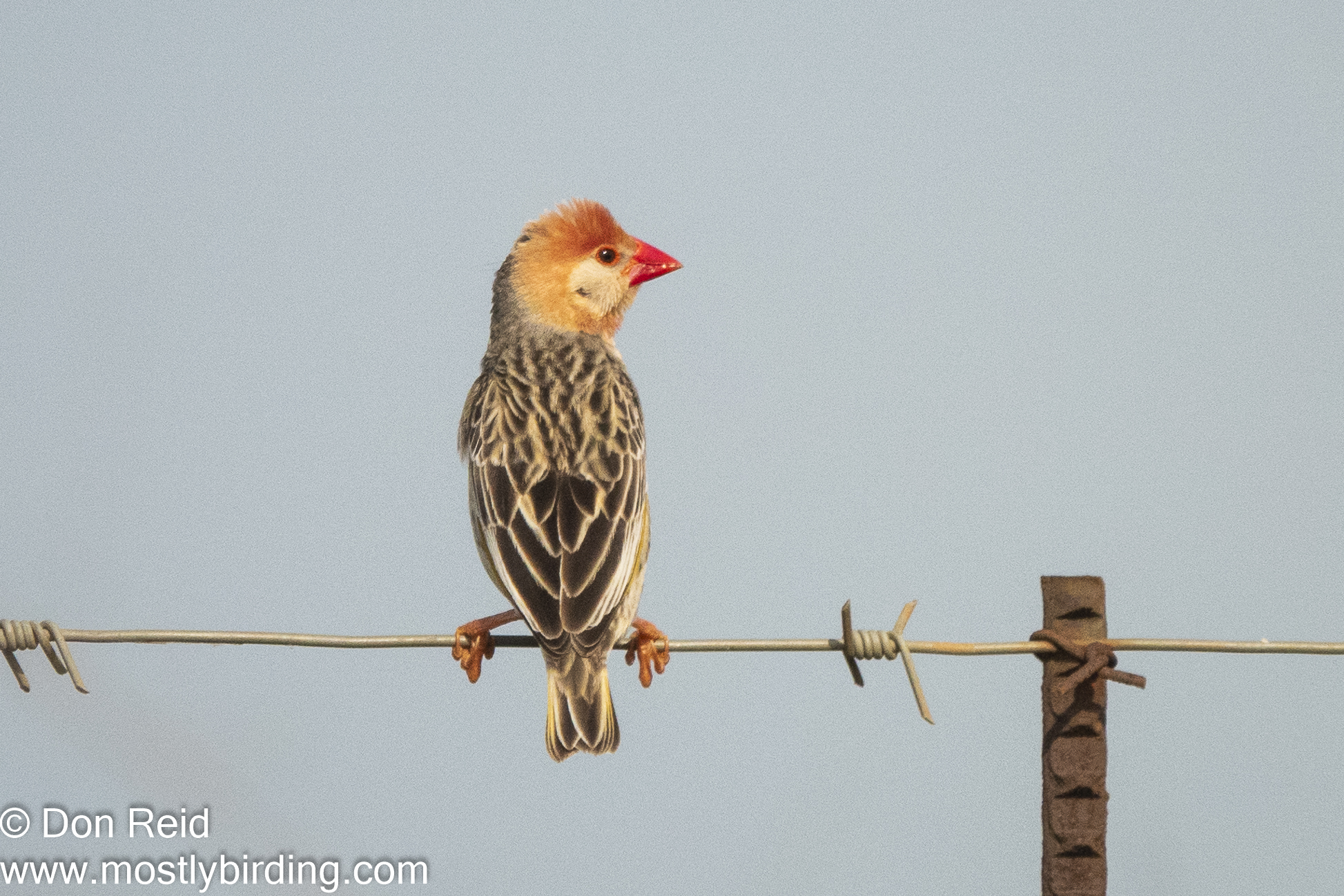
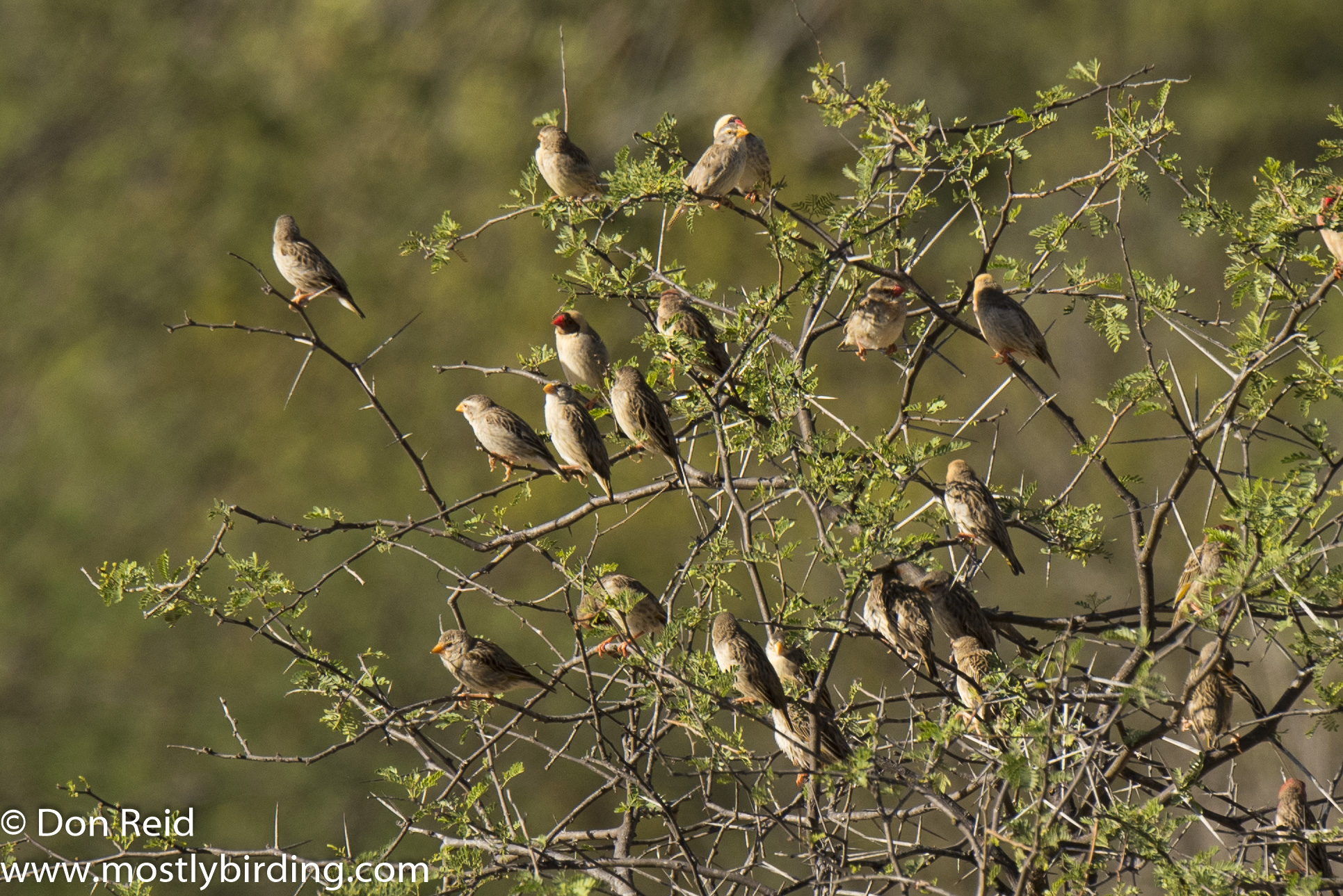
There is only one possible answer to that question and that is – the Quelea, or to be more precise in this case, the Red-billed Quelea.
Some background to this latest exceptional birding experience –
We were travelling back to Pretoria after a long stay in Mossel Bay and arrived in Hoopstad, Free State for our second overnight stop, primarily to pay a short visit to Gerda’s family. It was just after 3 pm when we arrived in the small town, the centre of the farming community in that part of the Free State. Piet and Marietjie kindly accommodated us and Piet invited me to join him on a quick trip to their farm some way out of town.
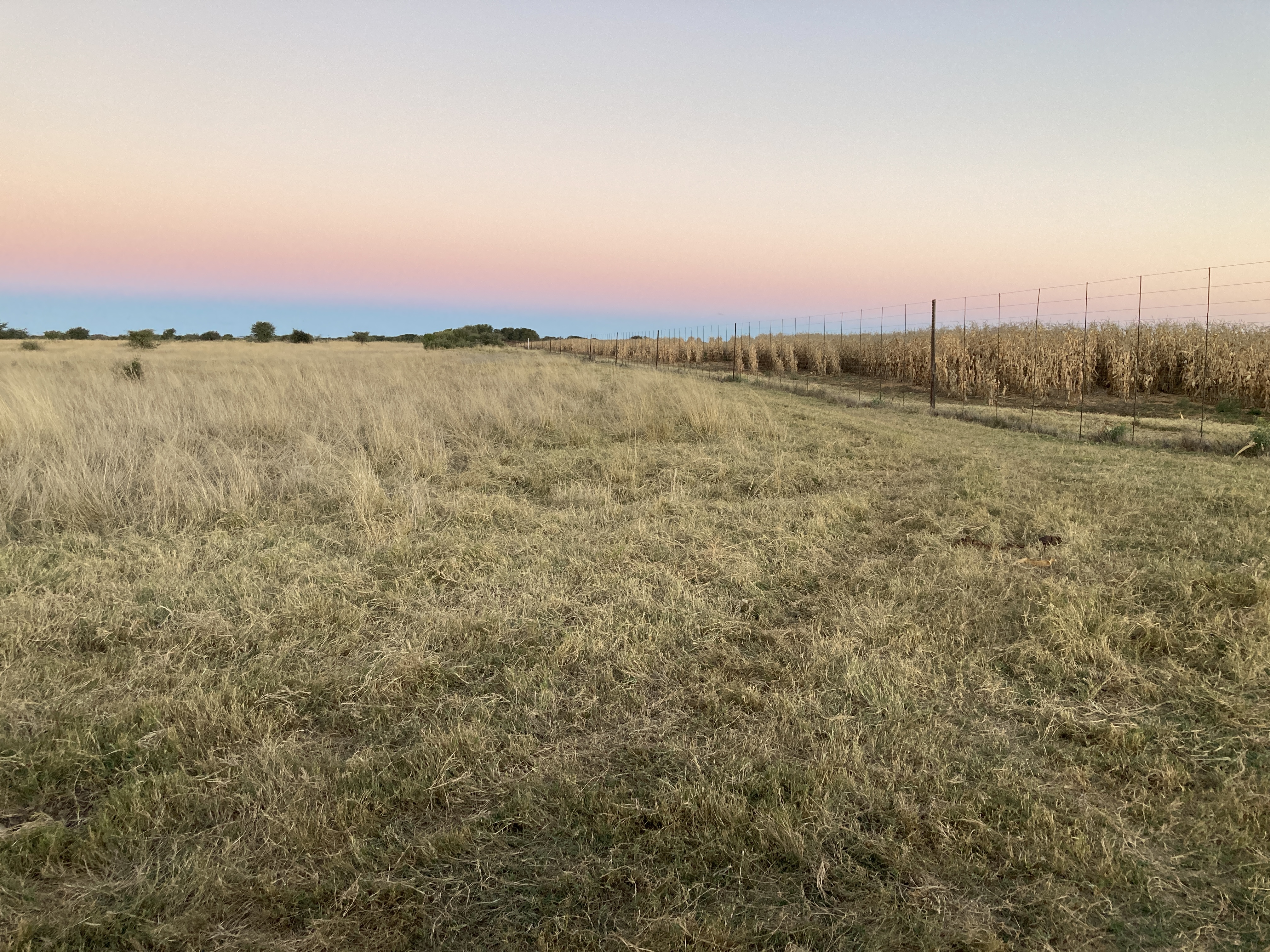
The farm lies on the southern side of the Vaal river, which forms one of its boundaries, and is a well-stocked game farm with a variety of game in a bushveld setting to rival the best that Southern Africa can offer, so for a lover of nature such as myself it is always a special treat to visit this piece of paradise, albeit briefly.
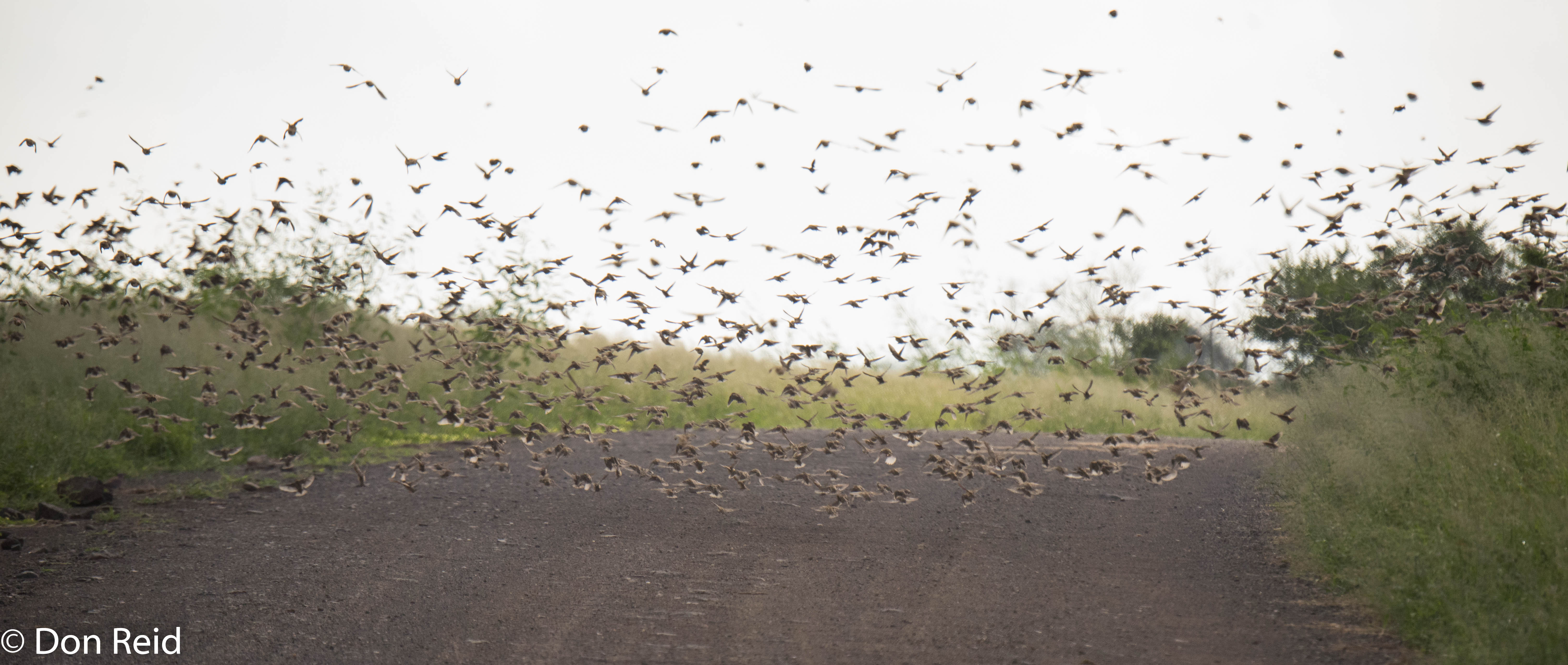
The day was waning as we approached the farm and our progress along the dirt road was punctuated by flocks of Queleas rising up out of the roadside grass at regular intervals, each flock numbering a couple of thousand at a guess. Piet remarked that he had seen many more flocks of larger size that same morning, so we were on the lookout for more Queleas, without realising what we would experience a bit later.
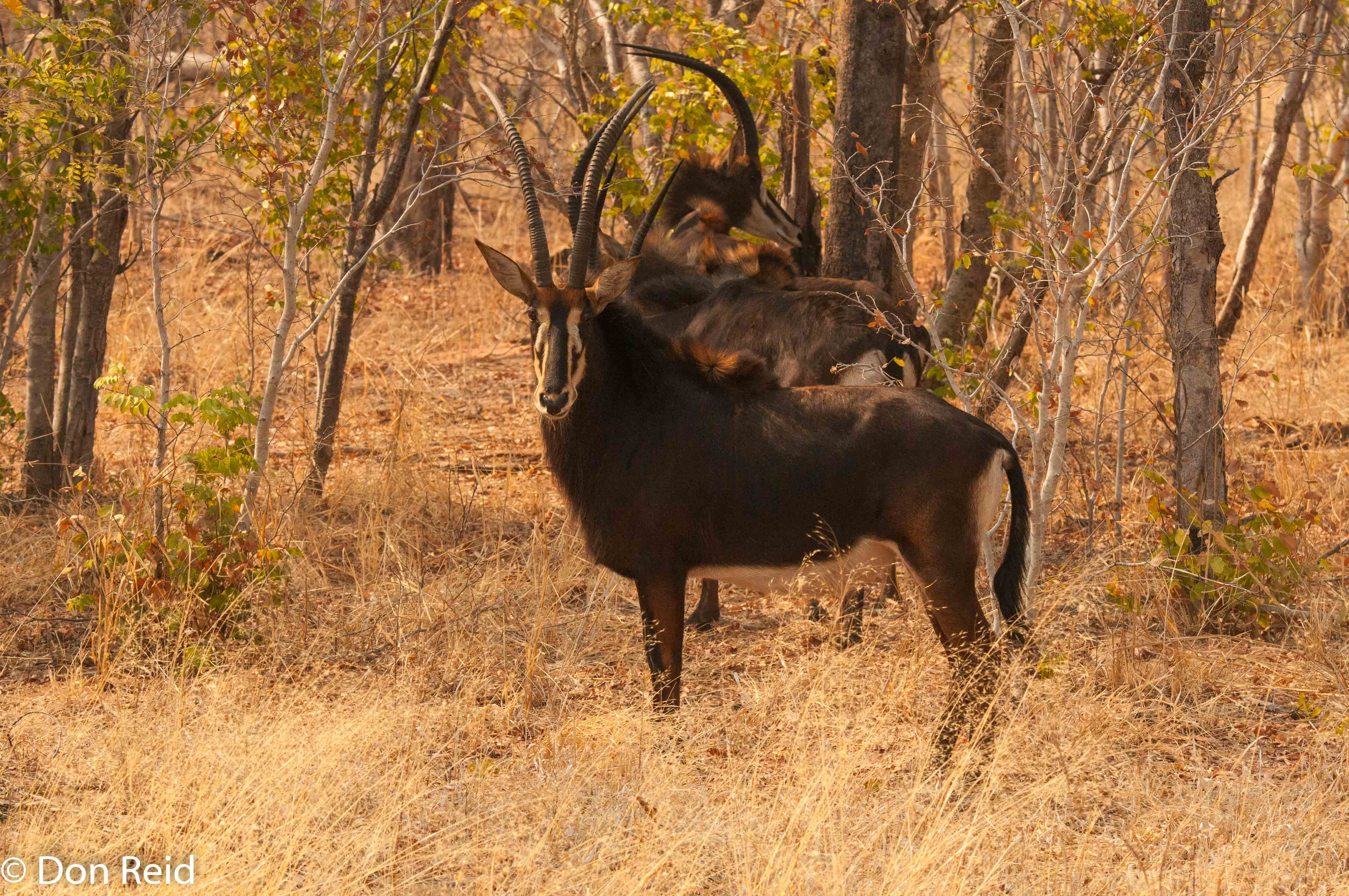
We did a quick tour of the farm, marveling at the numbers of game, ranging from Antelope to Zebra, with the standout animals for me being the incomparable Sable Antelope with their dark brown bodies and graceful, curved horns. (The photo below is from one of my Chobe trips as I did not have my camera with me)
Sable Antelope (Chobe Game Reserve)
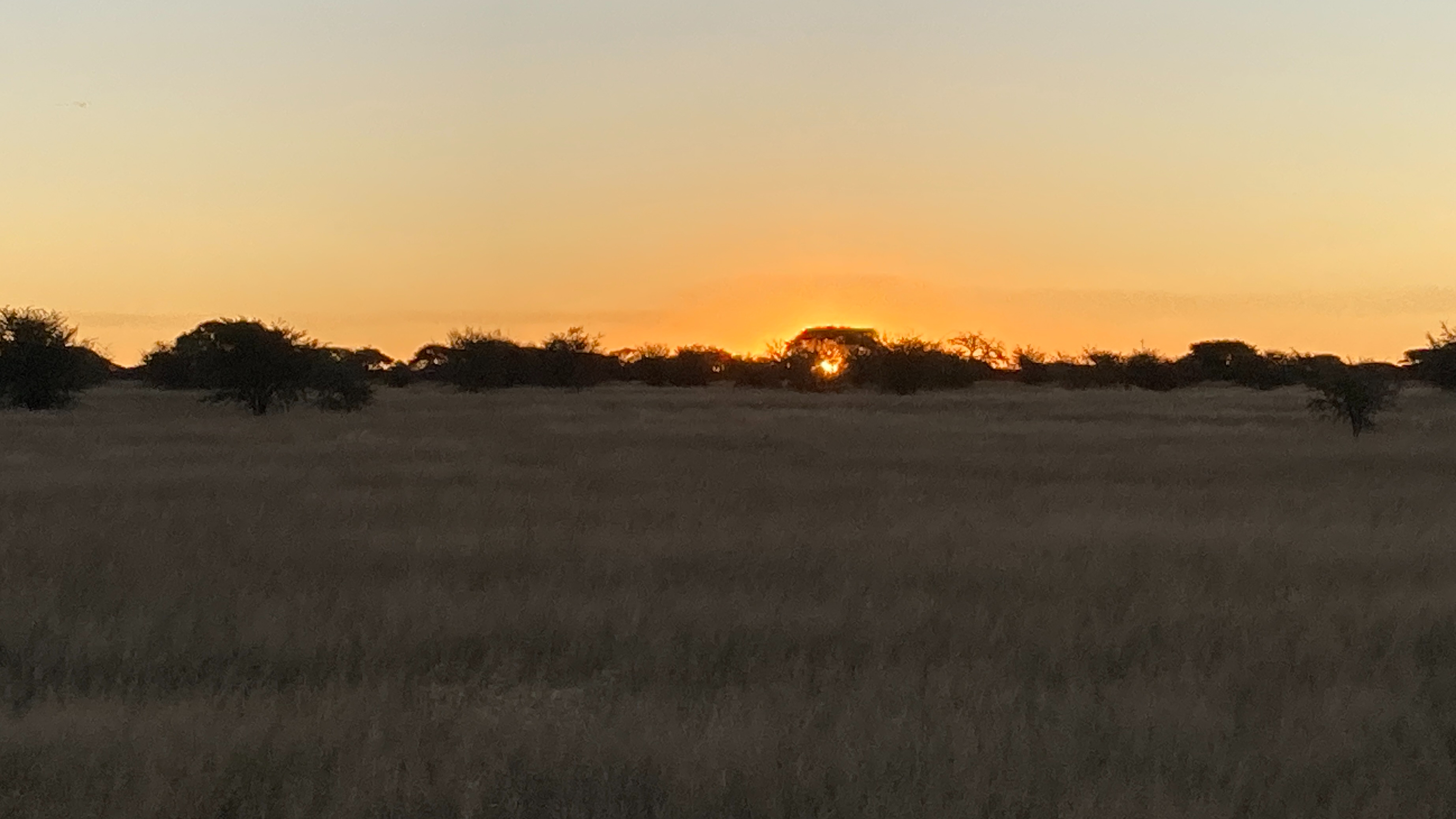
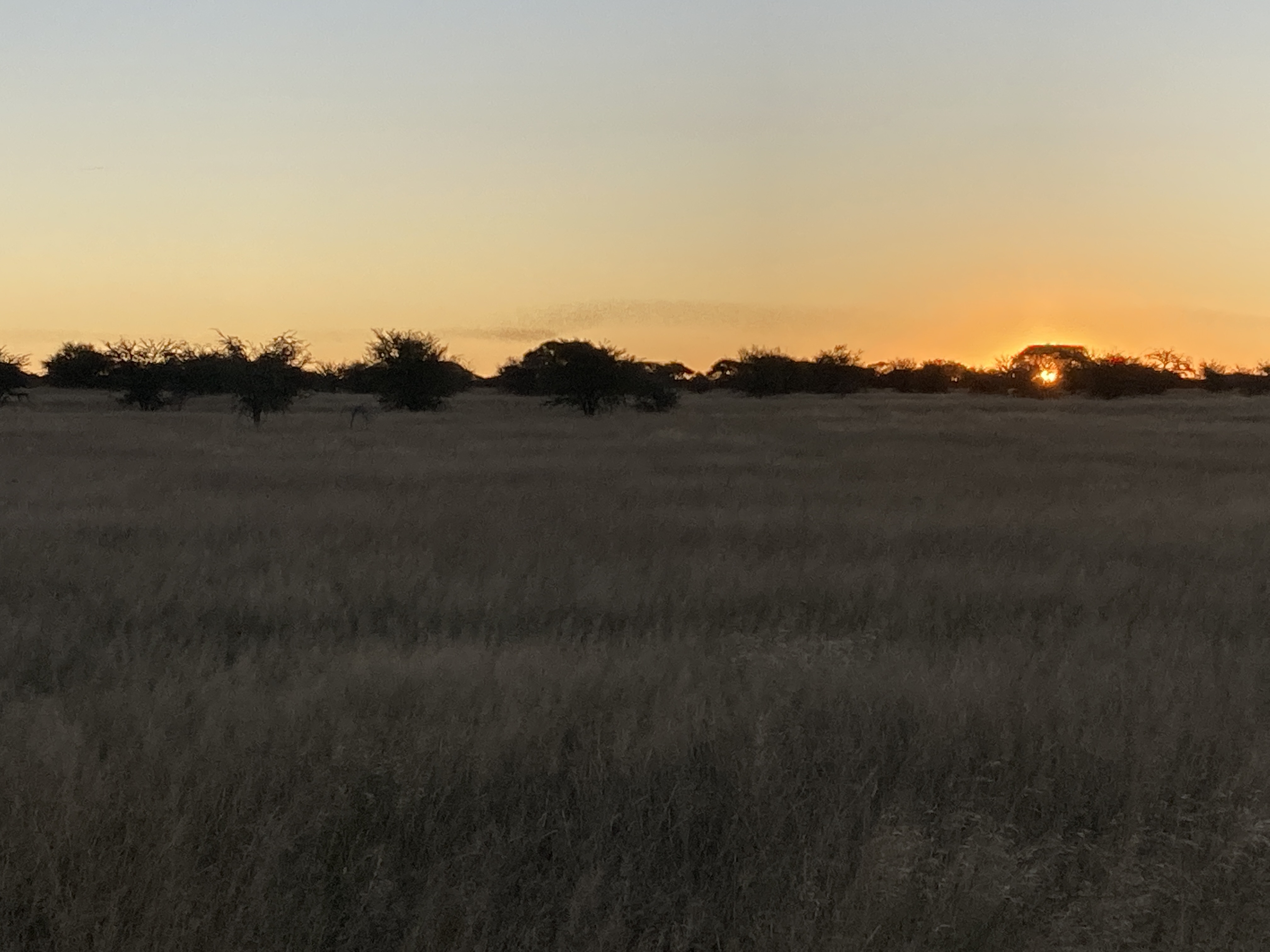
After a brief stop at the farm house, occupied for the week by a group of hunters, we headed back to the main road, but hadn’t gone far when Piet pointed out what looked like a distant cloud of smoke stretching across the horizon. He stopped and we got out to have a better look and realised immediately that this was not smoke of course, but a huge flock of Queleas, visible against the rapidly darkening skyline, moving like a giant serpent across the horizon.
Queleas across the horizon
For the next ten to fifteen minutes – I didn’t time it so it could have been longer – the enormous flock grew in length and made its way to some distant, unknown roosting spot, probably along the river. There is no way of beginning to estimate numbers of birds in a flock of this magnitude, suffice to say “millions” is not an exaggeration.
At one stage the flock moved in an elongated tube-like formation directly over our heads and as we gazed up the sound of several thousand small wings filled the silence with an eerie soft humming, like nothing I had heard before.
As it was rapidly getting darker, we left the farm and headed back to Hoopstad, mulling over the impact that birds in these numbers could have on the area, which is one of the prime maize and wheat-producing areas in our country. Piet mentioned that some farmers had already decided not to plant their usual winter crops due to the risk of the crops being devastated by the Queleas.
Suddenly I realised that birds are not always to be regarded as “Threatened” by human behaviour but can also be “Threatening” to some of our food sources – a sobering thought.
Roberts VII Birds of Southern Africa has the following to say about Red-billed Queleas under Population and Demography :
Perhaps the most abundant bird on earth
The major pest of cereal crops in Africa
Population estimate post-breeding is 1 500 billion (so about 200 Queleas for every person on earth!)
Most abundant bird in Kruger National Park at 33.5 million
More than 100 million birds killed annually in control operations in South Africa – methods used are aerial spraying and explosions at roosts (but the latter is not favoured as other species get killed in the process)
Prey of Peregrine and Lanner Falcons
Drinking birds taken by predators including pelomedusid turtles (!), crocodiles, Marabou Storks and Striated Herons
All in all, this is an interesting bird, often for the wrong reasons. Despite this I always enjoy seeing them in small numbers as they are quite variable in appearance, some drab, others colourful.
Here are a few photos of those I have come across while atlasing –
Red-billed (Quelea quelea / Rooibekkwelea), Balmoral northRed-billed Queleas, Calitzdorp areaRed-billed Queleas, Satara-Nwanetsi (Kruger National Park)Queleas, Mkhombo Dam
During our September 2020 visit to the farm of Pieter and Anlia, described in my previous post, the opportunity arose for a very unique birding experience, all thanks to Pieter’s efforts in setting it up.
Pieter had arranged with friend Trevor, retired professional hunter and nature expert of note, to pick him up from a nearby farm so that he could guide us to a bird sanctuary on a farm south-west of Vryheid – Trevor had already given the outing a name – “Crane Safari” which was an obvious hint of what we were likely to see but not of the exceptional numbers we would encounter.
Firstly though, there were various urgent farm matters to attend to – amongst them, counting the cattle to make sure none had been ‘appropriated’ overnight, checking fences for signs of any further ‘recycling’ operations and taking the bakkie to town for some repairs to the suspension (damaged during a fruitless hunt for fence ‘recyclers’ who had struck during the night and removed a few hundred metres of fencing) – such is the existence of a farmer in these parts.
Pentad 2745_3035
We picked up Trevor, who I had met before several years ago, drove to Vryheid and then proceeded along the R33 towards Dundee for about 15 kms before turning off onto farm roads and arrived at the farm around 1.30pm. Trevor knows many of the farmers in the area and had arranged access to the farm and bird sanctuary.
From then on, for the next two hours, the birding was hectic as Trevor and Pieter spotted birds in quick succession while I tried to record them on the Birdlasser app and verify the ID.
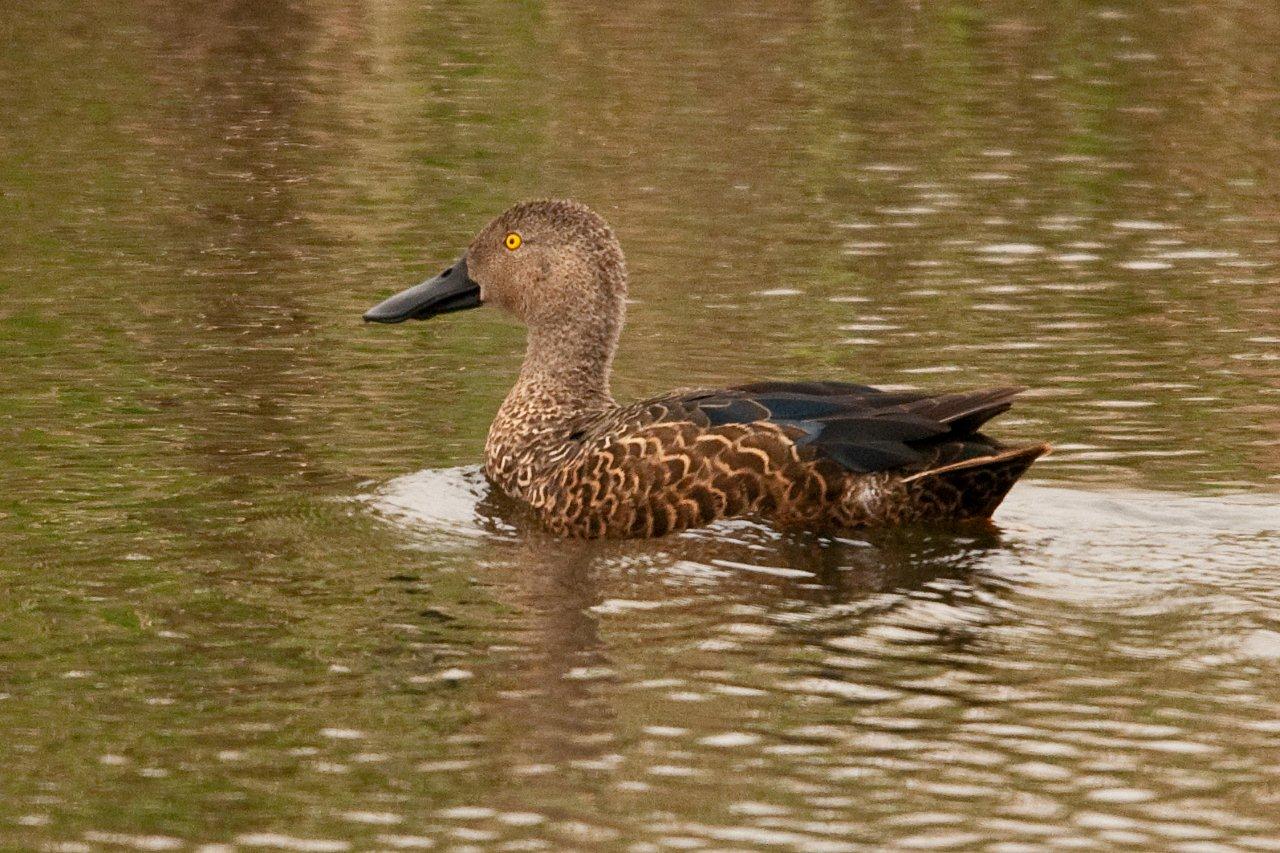
We drove along the earth wall of the first dam, which was filled with hundreds of waterfowl, including a group of White-backed Ducks (new record for the pentad) and others of Greater Flamingos, Southern Pochards and Cape Shovelers (which I like to call “Sloppy Ducks” based on their Afrikaans name of Slopeende).
Several Black-winged Stilts patrolled the dam fringes and Trevor called an African Marsh Harrier which was flying low over the grassy verges.
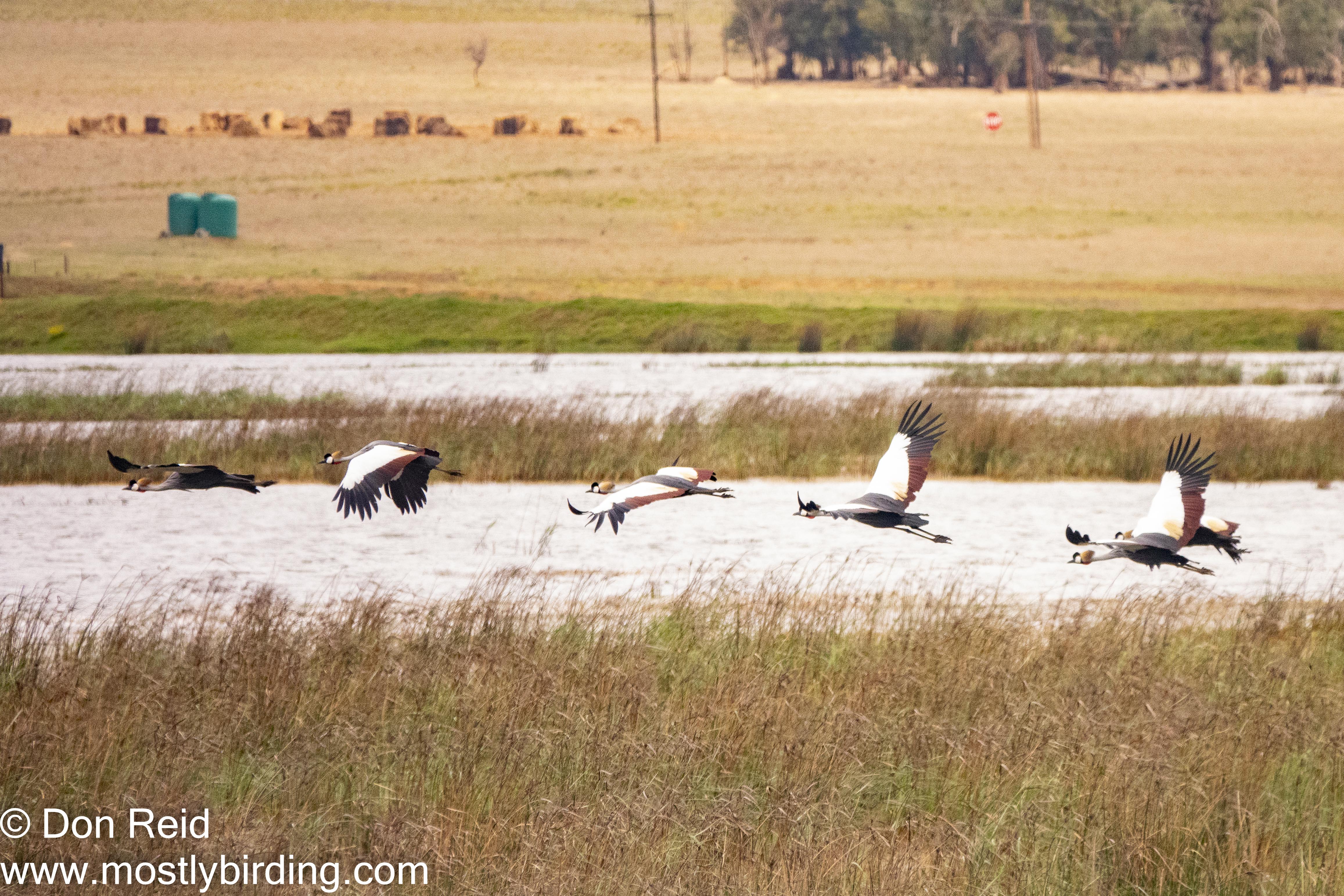
Moving on, the large vlei lower down came into view and at the same time a huge flock of perhaps 150 Grey Crowned Cranes rose up in unison, creating a birding spectacle that few people can have witnessed. The flock circled the vlei then settled for a while, but as soon as our vehicle edged closer they rose as one again, repeating the spectacle over and over.
Grey Crowned Cranes, Crane Safari near Vryheid
I would guess that most experienced birders have seen a pair or perhaps a small group of Grey Crowned Cranes at some time, but to see such a large flock of this endangered species is truly remarkable.
Grey Crowned Cranes, Crane Safari near VryheidGrey Crowned Cranes, Crane Safari near Vryheid
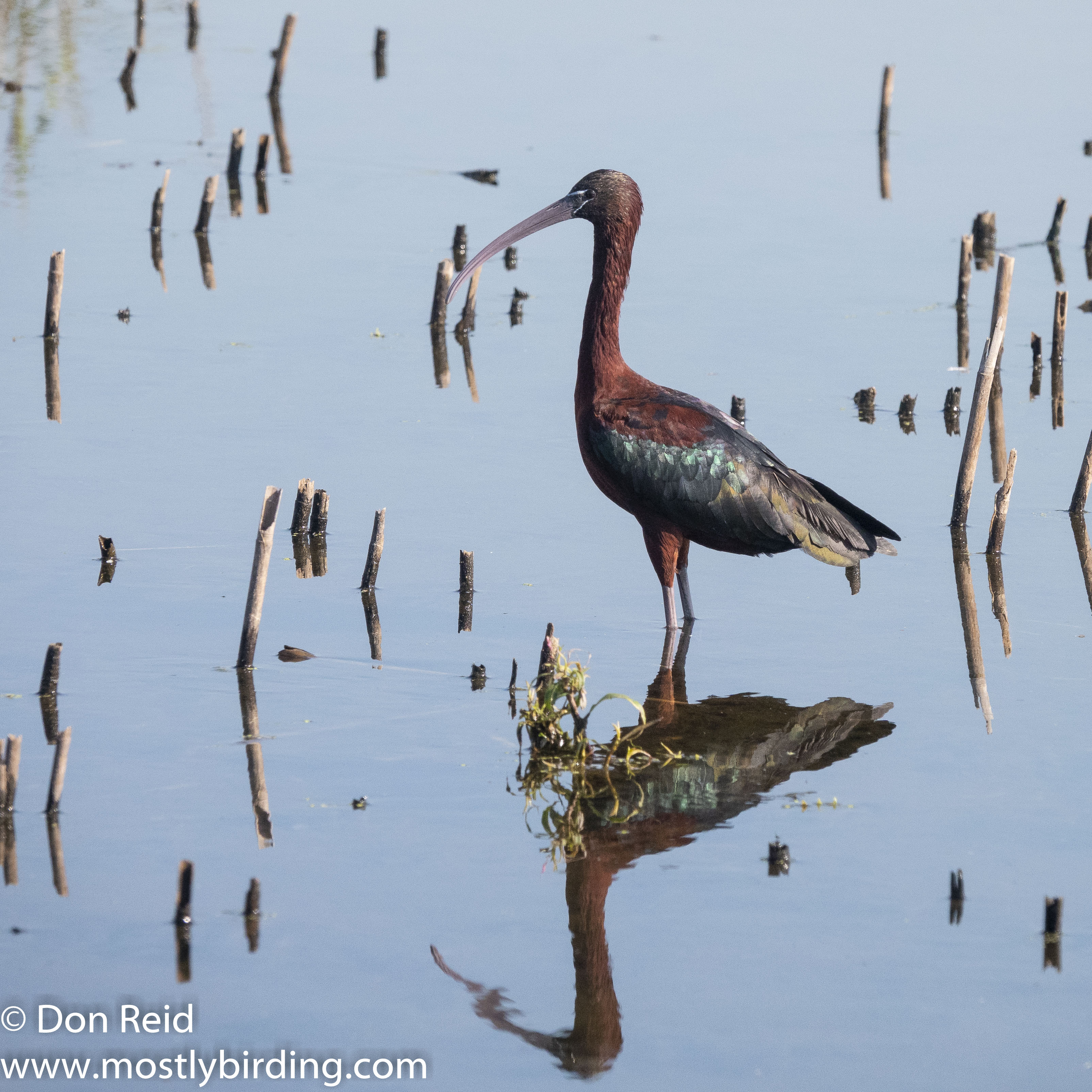
Once we were closer to the vlei, with the Crowned Cranes now settled on the opposite side, we could see a few Glossy Ibises along the fringe and a superior looking Goliath Heron right in the middle. Shortly after, a lone Squacco Heron flew in and a Purple Heron rose up out of the reeds to complete the trio of “scarcer Herons”.
Glossy Ibis (Plegadis falcinellus / Glansibis)Vlei, Crane Safari near Vryheid
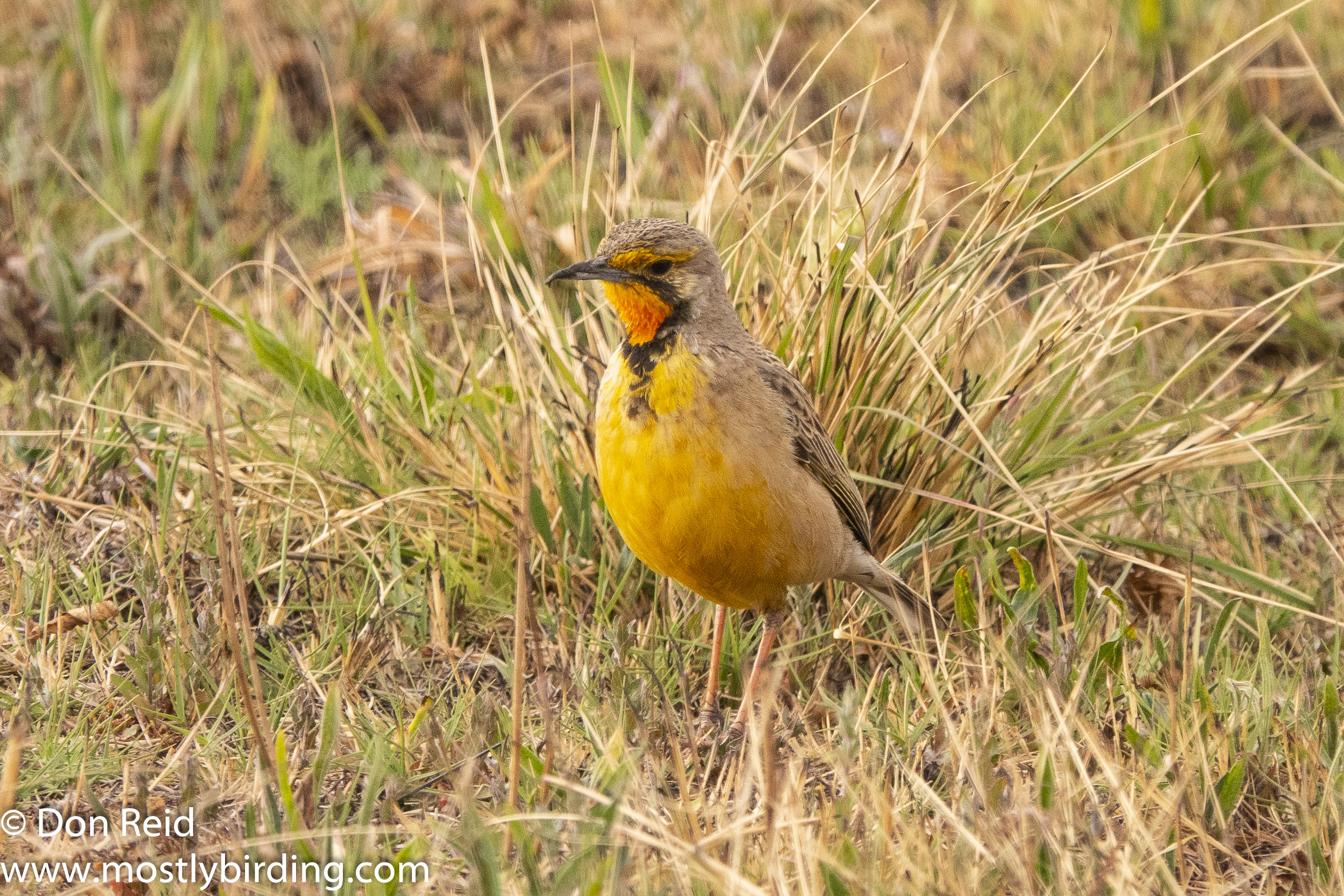
Between the dam and the vlei, lush grassland was good for Cape Longclaw, Spike-heeled and Red-capped Larks and African Stonechat.
Cape Longclaw (Macronyx capensis / Oranjekeelkalkoentjie)Spike-heeled Lark (Chersomanes albofasciata/ Vlaktelewerik) – showing its main identifying features of short white-tipped tail and long slightly curved bill
Soon it was time for a lunch break – sandwiches of home made bread and last night’s leg of lamb leftovers along with coffee which went down a treat in the cold windy conditions. The lee side of the bakkie provided some shelter from the wind but we didn’t dawdle and were soon on our way again.
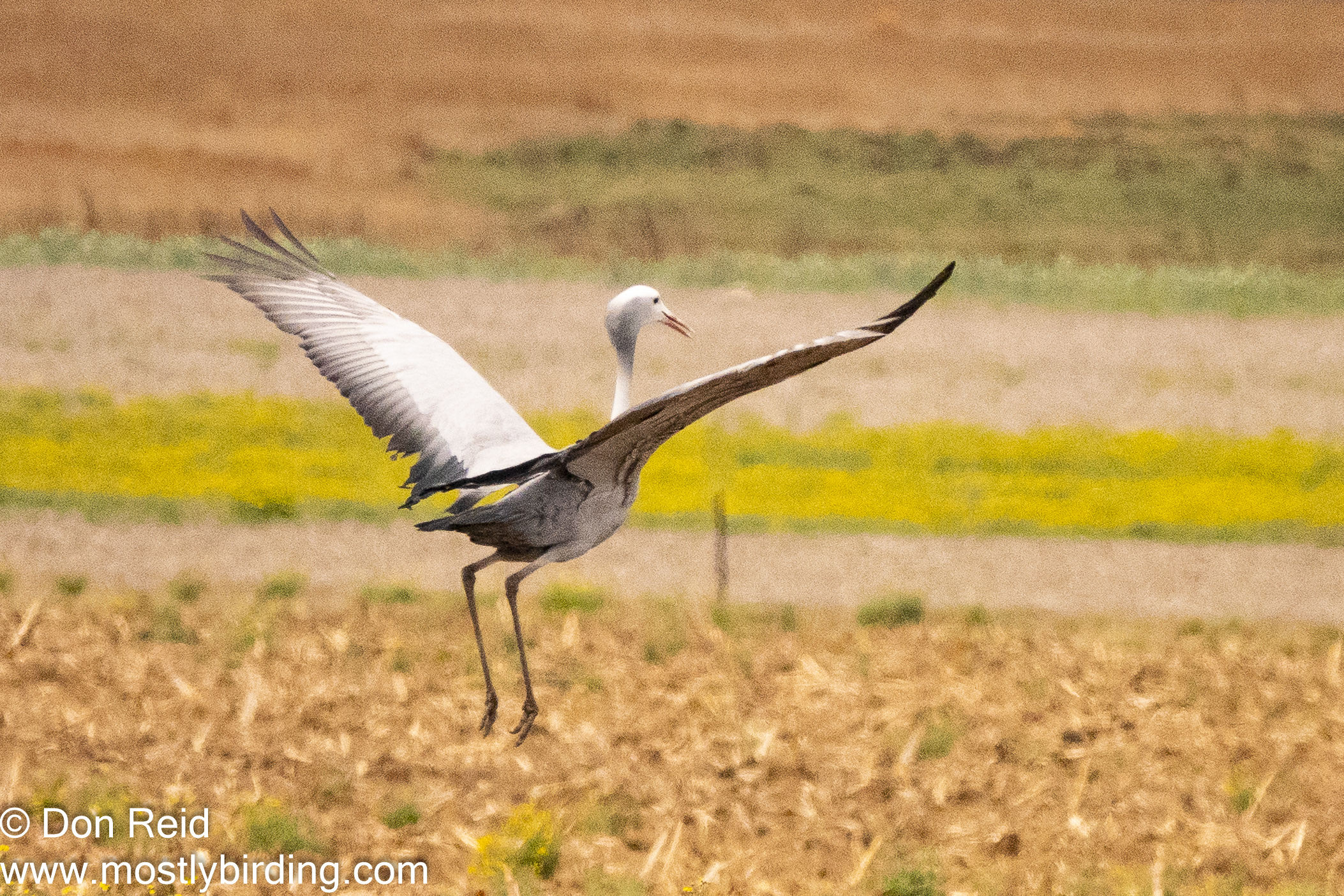
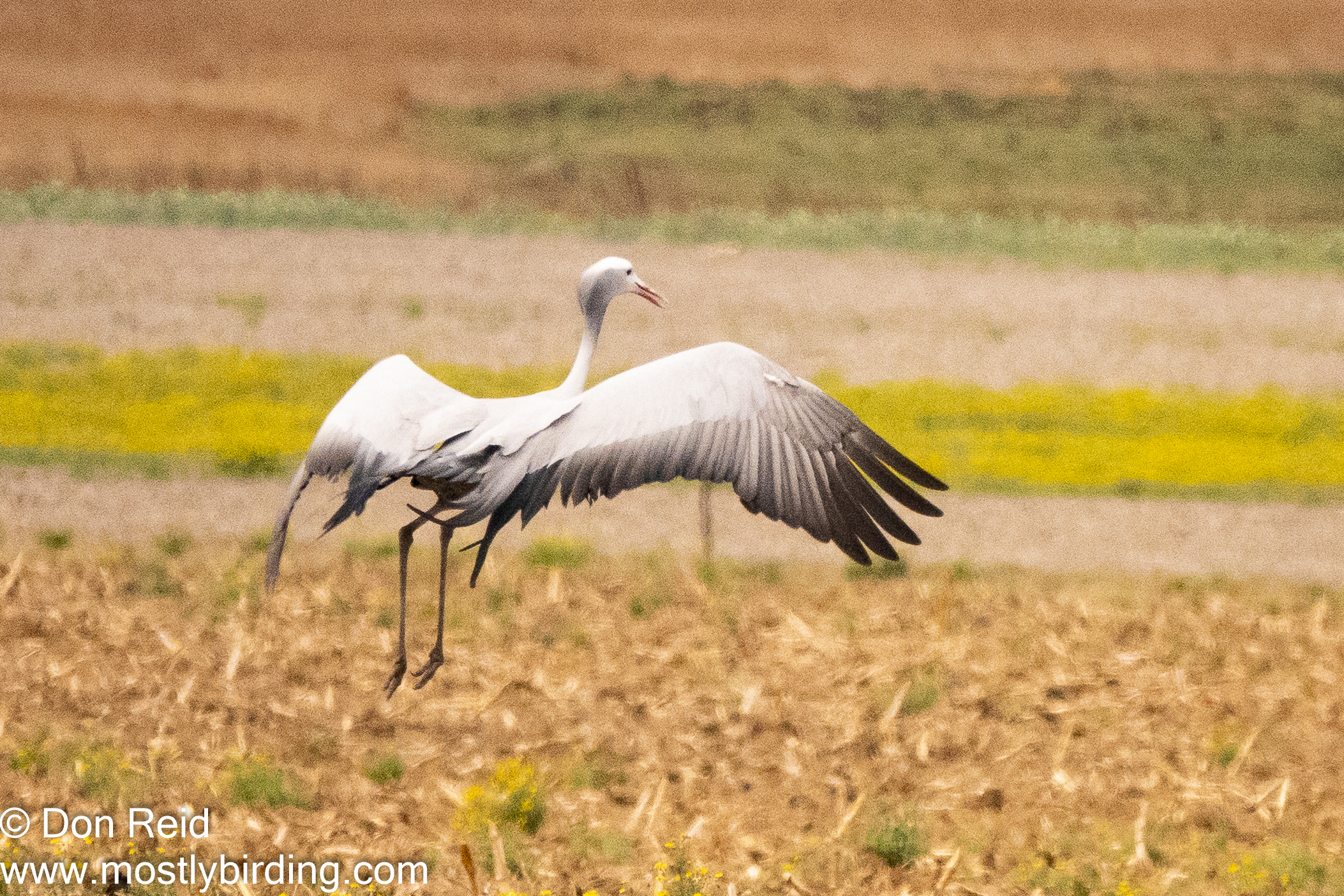
While we were enjoying lunch, a flock of Blue Cranes, some 100 strong, flew over the vlei and settled briefly before moving on – so we had seen large numbers of both of the Crane species found in these parts – mission accomplished, thanks to Trevor!
Later, we found a small group of Blue Cranes in a field, this time close enough for some photos …..
Blue Crane, Crane Safari near VryheidBlue Cranes, Crane Safari near VryheidBlue Cranes, Crane Safari near Vryheid
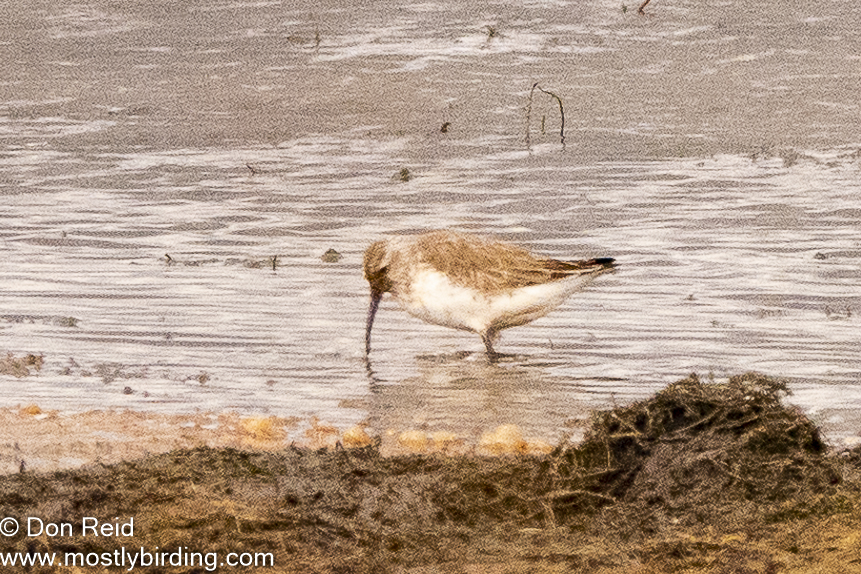
At the last dam before leaving this incredible birding spot, we saw a few waders at the water’s edge and approached carefully so as to get close enough to identify these sometimes difficult species. Fortunately they were all species that I have got to know well and I was able to record Ruff, Curlew Sandpiper (New record for the pentad), Little Stint and Kittlitz’s Plover – a real bonus after such a variety of waterfowl.
Ruff (Philomachus pugnax / Kemphaan), near VryheidCurlew Sandpiper (Calidris ferruginea / Krombekstrandloper), near Vryheid
I hadn’t planned to do a “Full Protocol” (FP) card for the pentad in which the dams and vleis fell, but as it turned out the last bird recorded on the way out – a Southern Masked Weaver at a small stream – was precisely two hours after the first bird and I was more than happy to submit my list as FP (which requires a minimum two hours of survey time in a pentad).
Back at the ranch – well, the farmstead where Trevor and Collette live – we sipped warming Milo while Trevor pointed out a few of the garden species including Paradise Flycatcher and a flock of Olive Pigeons that swooped by.
It had been a memorable day’s birding and I was very pleased to have been able to complete a Full Protocol Atlas card. I recorded 40 species in the two hours, the seventh card for the pentad, and added two new species