Small Birds taking BIG Journeys : Part 1

During my birding and atlasing trips I come across a variety of migrant species, some of which I manage to photograph in their local habitat – one in particular, the Little Stint, had me thinking for the umpteenth time how fascinating and amazing these annual migrations are.

Many of the migrant waders – or shorebirds as they are also known – display the most Jeckyll and Hyde characteristics of all birds, living two dramatically different lives and spending time in habitats which are as far removed from each other as can be imagined.

The majority of South African based birders get to know migrant species during their stay in the southern hemisphere, typically during the months from October to April, so let’s find out a bit more about their ‘other’ lives by delving into the typical annual life-cycle of these waders, starting with –

Little Stint

Calidris minuta (Kleinstrandloper)

This is the tiny, compact (13 cm, 23 g) wader found across southern Africa, often in flocks and joining other waders at almost any coastal or inland habitat with shallow water, soft mud and not much vegetation.

Key identification features are the very small size, short black bill and wings that project beyond the tail – the latter is a common trait amongst migrant birds needing extra wing power for those ‘halfway across the world’ journeys that they undertake

Clues to their two very different lives lie in the distribution map (courtesy of Cornell Lab of Ornithology) – the orange area is where breeding occurs in the Northern Hemisphere while the blue area, mostly in the Southern Hemisphere, is where they go ‘on vacation’ to build up strength for the next breeding season

Life in the North

Birds are considered as “resident” in the area where they breed, which in the case of the Little Stint is situated within the Arctic Circle in a habitat known as Arctic Tundra, with temperatures well below zero for most of the year and a maximum of just 4 deg C in ‘summer’.

Tundra is known for large stretches of bare ground and rock and for patchy mantles of low vegetation and small shrubs – ‘barren’ and ‘frozen’ are about the kindest words to describe this habitat, yet these tiny waders thrive in this environment

Tundra in Siberia (Photo courtesy of Wikipedia)

They inhabit dry ground at lower altitudes, often near swampy areas or salt-marshes, avoiding areas with annual rainfall of more than 250mm (No, they don’t have a way of measuring it other than instinct)

Little Stint in breeding plumage (Photo courtesy of Cornell Birds of the World)

Breeding and Migration

Their nest is built on the ground, lined with leaves and grass but otherwise exposed. Eggs are laid starting late June to early July and are incubated by both parents.

Once the young have fledged and can look after themselves, they and the adult birds start migrating south, not necessarily together, heading across Europe before following a route via the Rift Valley lakes of eastern Africa then fanning out across southern Africa

According to estimates, up to 1 million Little Stints migrate to Africa, of which a relatively small proportion venture all the way south to southern Africa. Migration south starts from July with peak numbers arriving in southern Africa between October and December

Life in the South

On arrival in southern Africa (and just before departure) some of the stints will still be in partial breeding plumage with upper parts washed rufous, while others will have adopted their non-breeding plumage of brownish grey

Little Stint, Bloemhof Saltworks : taken in April so showing partial breeding plumage

In southern Africa they seek out suitable habitat, preferring coastal and inland wetlands, especially where wet mud is available. Temporary pans in the interior can often provide the abundant short-term food that is perfect for their requirements.

Voëlvlei, about 30 minutes drive from Mossel Bay, which had no water for many years until the good rains of last year, has attracted hundreds of Little Stints this past summer along with many other migrant waders.
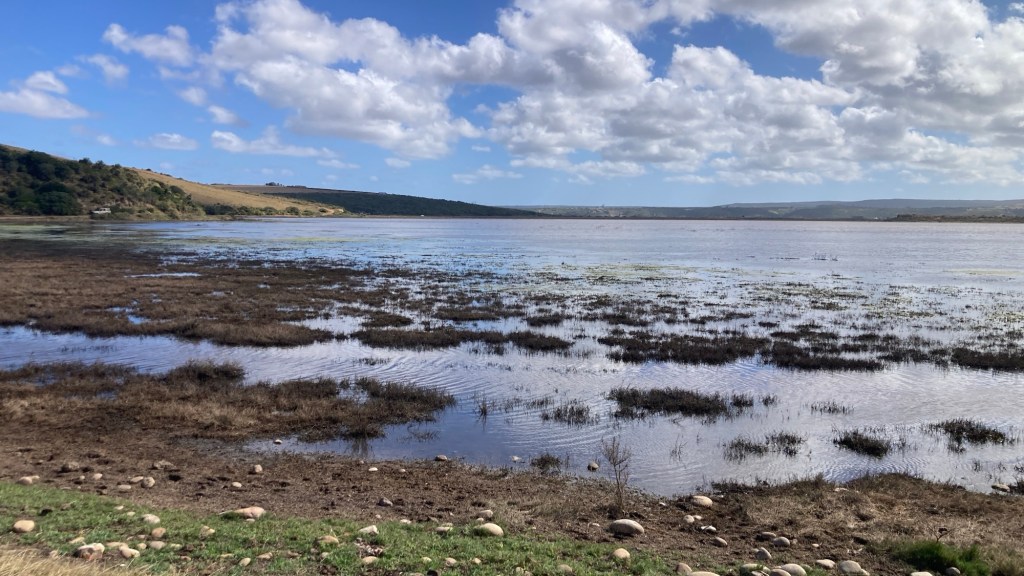
Voëlvlei near Vleesbaai

Not only did Voëlvlei provide abundant food for the waders and others, it also provided an ongoing feast for local birders enjoying the abundance of birds along with a few rarities. (More about that in future posts)

Foraging is done in very shallow water or on wet mud, picking small invertebrates off the surface rather than probing as many waders with longer bills tend to do.
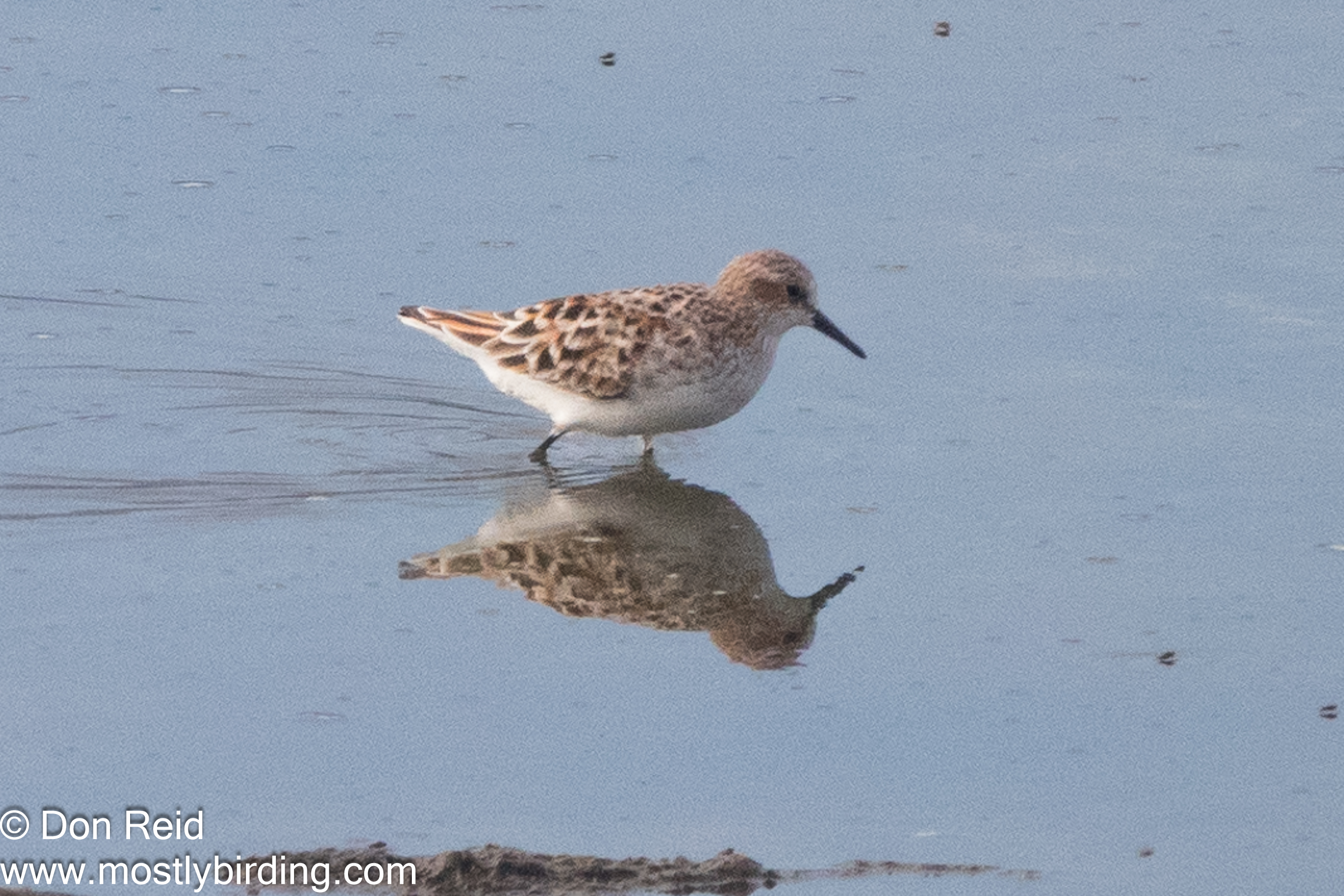
Little Stint Calidris minuta Kleinstrandloper, Great Brak River estuary

Stints are fairly easy to spot amongst other waders, not only because they are generally the smallest of the waders present but also due to their hunched appearance which always reminds me of a little old man pottering about

Little Stint, Strandfontein Sewage Works

The Stints start departing from mid-February with the majority having left by end April, heading north to their breeding grounds where the cycle will start all over again…

Little Stint Calidris minuta Kleinstrandloper, Voëlvlei near Vleesbaai

What a privilege it is to welcome these fascinating waders to our shores

References : Cornell Lab of Ornithology Birds of the World; Roberts VII Birds of Southern Africa

Addo Trip – March 2024 : Part 3

The Routine

Repeated from Part 2…

We had four full days to make the most of our breakaway to this delightful park and we soon settled into a routine which we followed more or less on each of those days. Let’s just say we were out to relax as much as possible, while not missing out on what Addo has to offer.

The mornings were the most relaxed part of the day, getting up late-ish, having coffee while enjoying the birdsong and spending the rest of the morning out on the deck, then venturing out for a drive along one of the routes, usually with a light picnic lunch packed.

This took us to mid-afternoon when we would return to camp, just in time for a rest (I told you we were out to relax!). More deck sitting, followed by getting the braai fire going for the evening meal to round out the day.

Day 3 and 4 Highlights

The Drives

On Day three we followed a similar pattern to the first two days, starting with coffee and rusks and spending most of the morning chilling on the deck or inside when light intermittent rain began to fall

Once again we made our way to Jack’s Picnic spot, this time taking the Rooidam road for a bit of variety. We prepared a picnic lunch of cheese and biscuits plus fruit and yoghurt to enjoy in one of the secluded spots.

The power was off due to loadshedding when we wanted to make tea to take with us, but fortunately I had brought a small camping gas burner and a kettle for just such an occasion, allowing us to boil our tea water at the picnic spot – not sure why but this simple act is a highlight of the day for me.

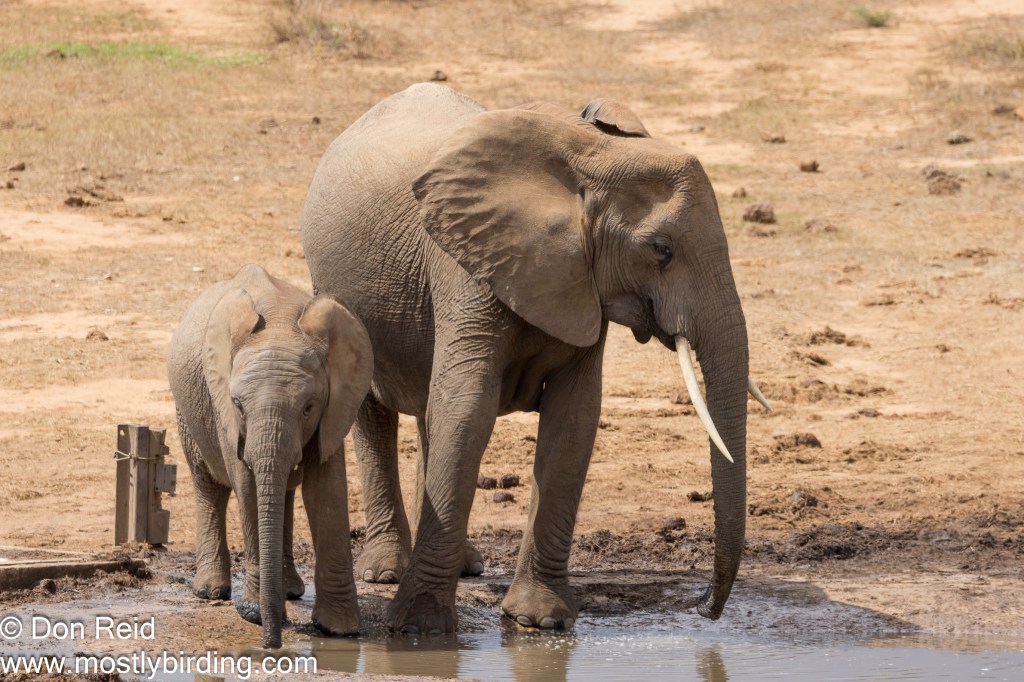
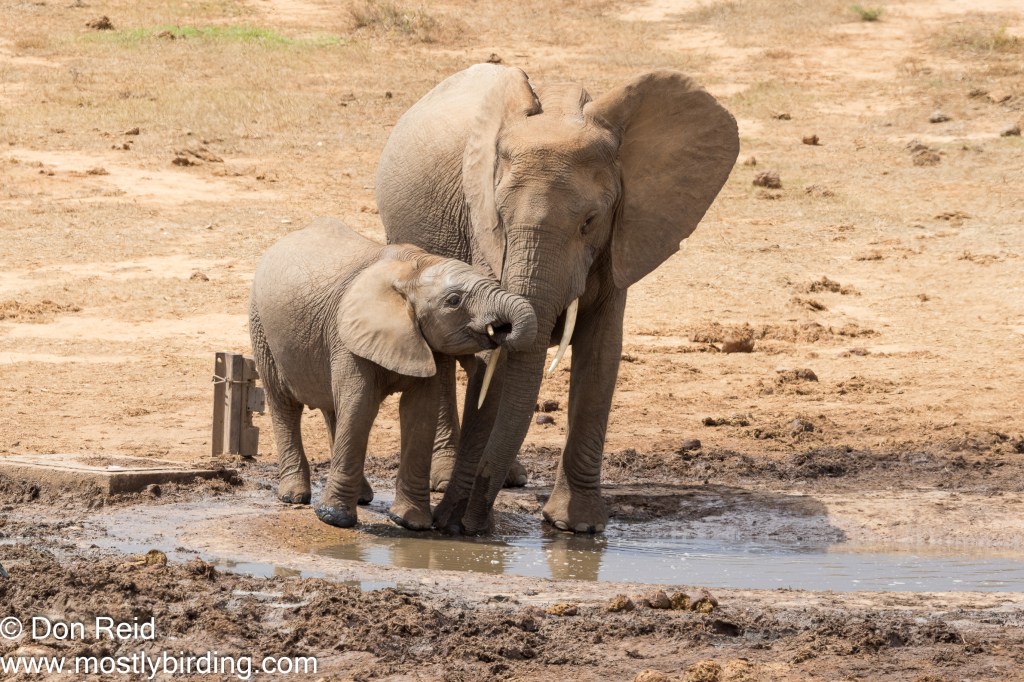
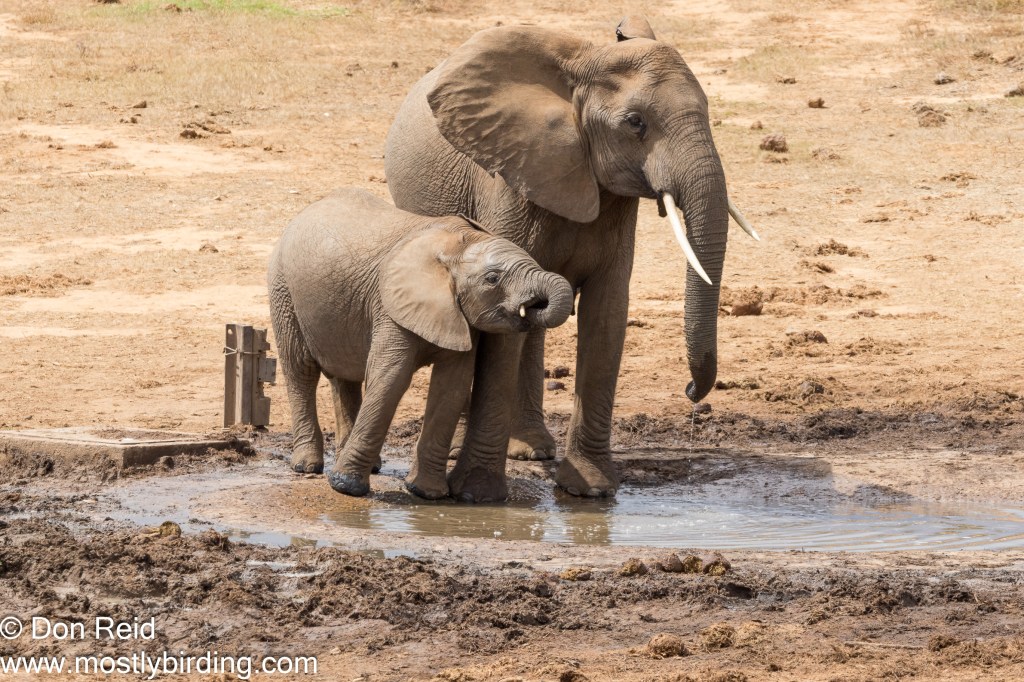
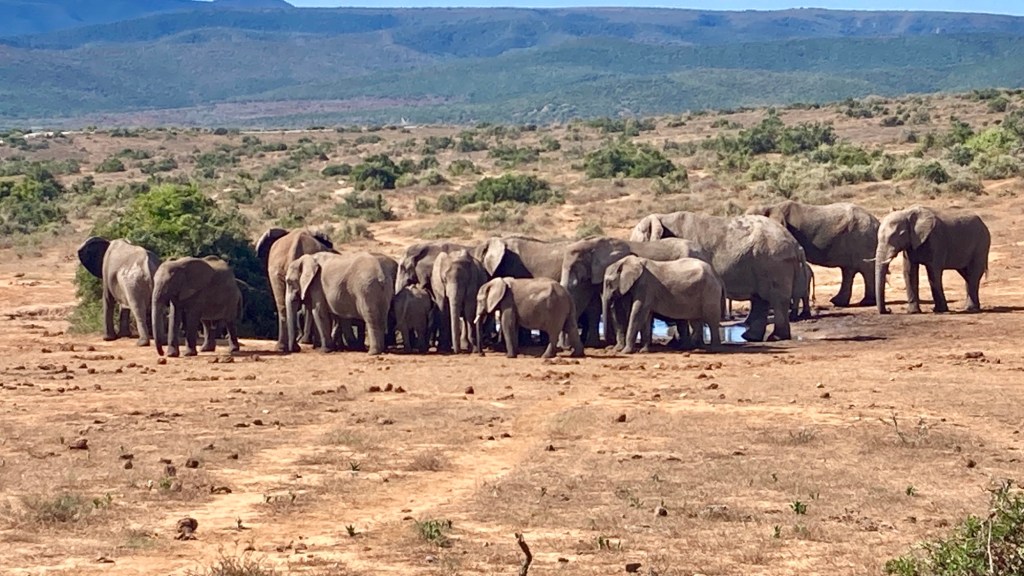
Along the way we enjoyed watching groups of elephants interacting at the waterholes – such as this ‘mother and child’ scenario – what wonderful creatures to observe!


Best animal sighting of the day, apart from the ubiquitous elephants, was a lone Black-backed Jackal walking across the open flats at the Hapoor dam – handsome in its coat of black, white and rust, with its distinctive black bushy tail.

Black-backed Jackal, Addo Elephant NP

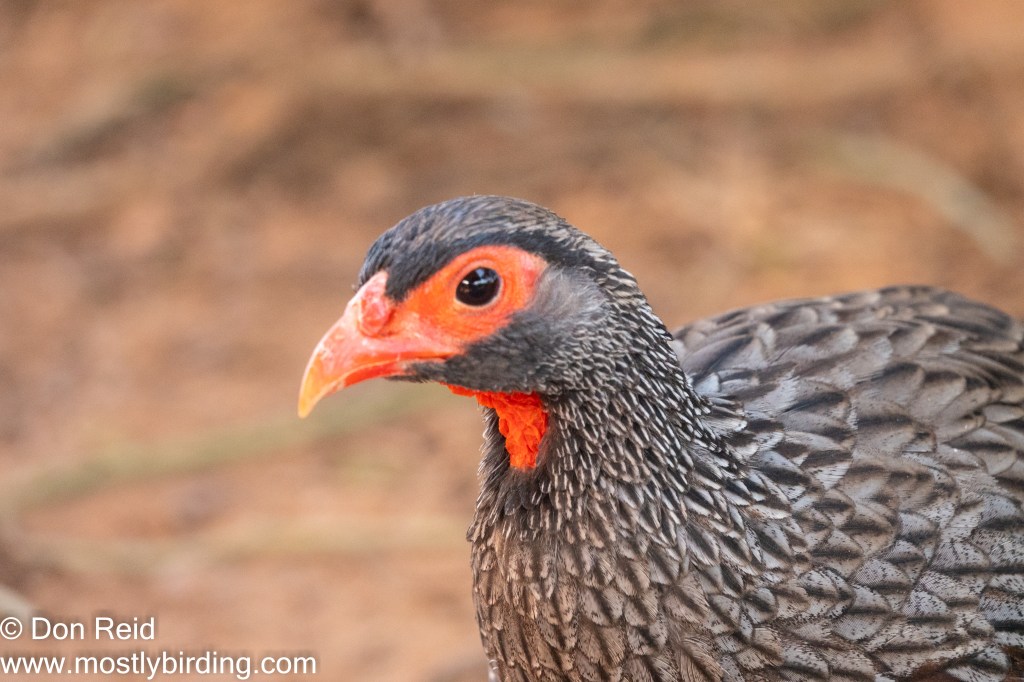
At the picnic site a few birds came to inspect and see if we had dropped any crumbs –

  • Red-necked Spurfowl
Red-necked Spurfowl
  • Sombre Greenbul
Sombre Greenbul (photo taken in Kruger NP)

Day four was our last day and it was a hot one – the forecast said it would rise to 39 deg C by lunchtime and indeed it did

Much like the first three days, we hung around our chalet during the morning, mostly inside to avoid the baking heat outside, enjoying a krummelpap brekkie and late morning tea with fruit salad before venturing out into the hot midday sun. We followed a new route which included the loops on the far western side of Addo

It was comfortable for us in our air-conditioned vehicle, even with the windows open, but less so for the animals and birds which were visibly affected by the extreme heat.

We came across fewer elephants in the open plains area to the west, but found a large mixed herd at the waterhole when we were on the way back. The elephants didn’t seem to wander too far from the waterhole which seemed completely overcrowded, yet the ellies displayed great patience in letting all have a chance to drink without any commotion.

Almost all the birds we came across were ‘panting’ with beaks wide open – their way of keeping their body temperature under control.

Bird highlight of the day for us was a Denham’s Bustard not far from the road in an open area of dry grassland. As they are wont to do, it walked away when we stopped, making it difficult to get a decent photo – if only they knew how frustrating they can be!

Denham’s Bustard Neotis denhami Veldpou (race stanleyi), Addo Elephant NP

Other birds spotted :

  • Grey Heron at Domkrag dam
Grey Heron Ardea cinerea Bloureier, Addo Elephant NP
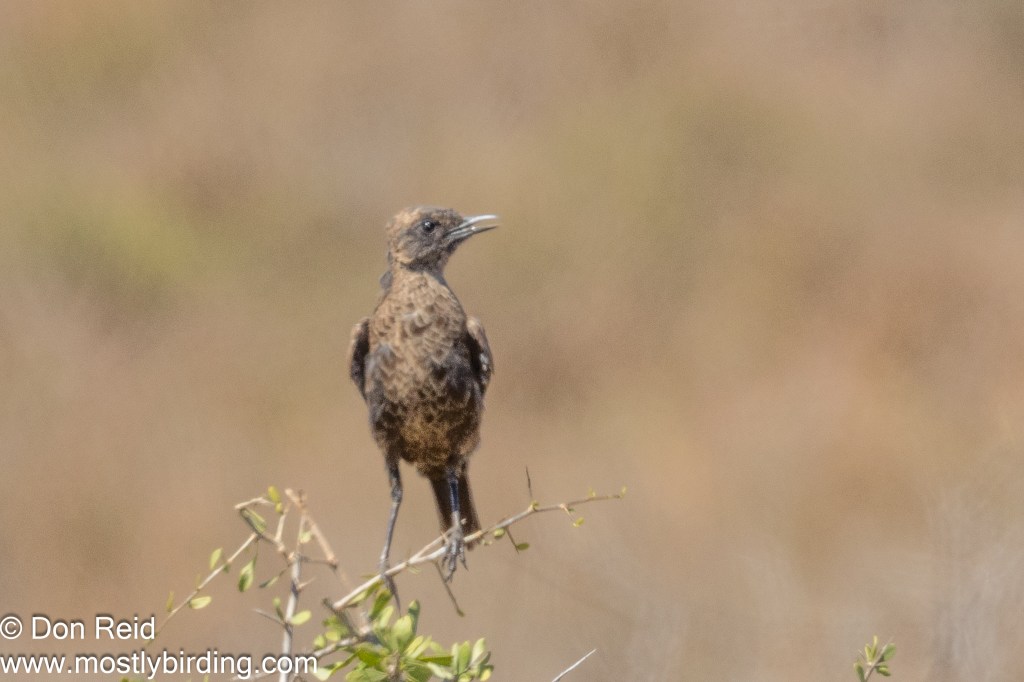
  • Ant-eating Chat out on the open plains
Ant-eating Chat Myrmecocichla formicivora Swartpiek (race formicivora), Addo Elephant NP

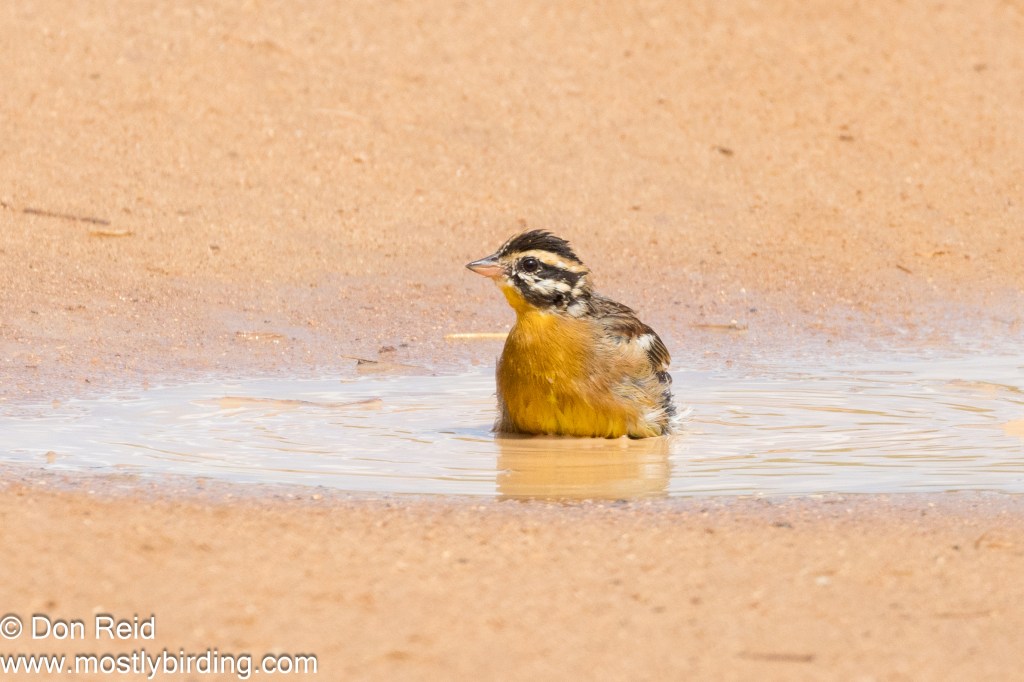
Golden-breasted Bunting enjoying a puddle in the middle of the road

Golden-breasted Bunting Emberiza flaviventris Rooirugstreepkoppie (race flaviventris), Addo Elephant NP
  • Ostrich pair with 3 juveniles sheltering from the heat in the shade under mommy ostrich
Common Ostrich Struthio camelus Volstruis (male), Addo Elephant NP
Common Ostrich Struthio camelus Volstruis (female with juveniles), Addo Elephant NP

Some other wildlife sightings :

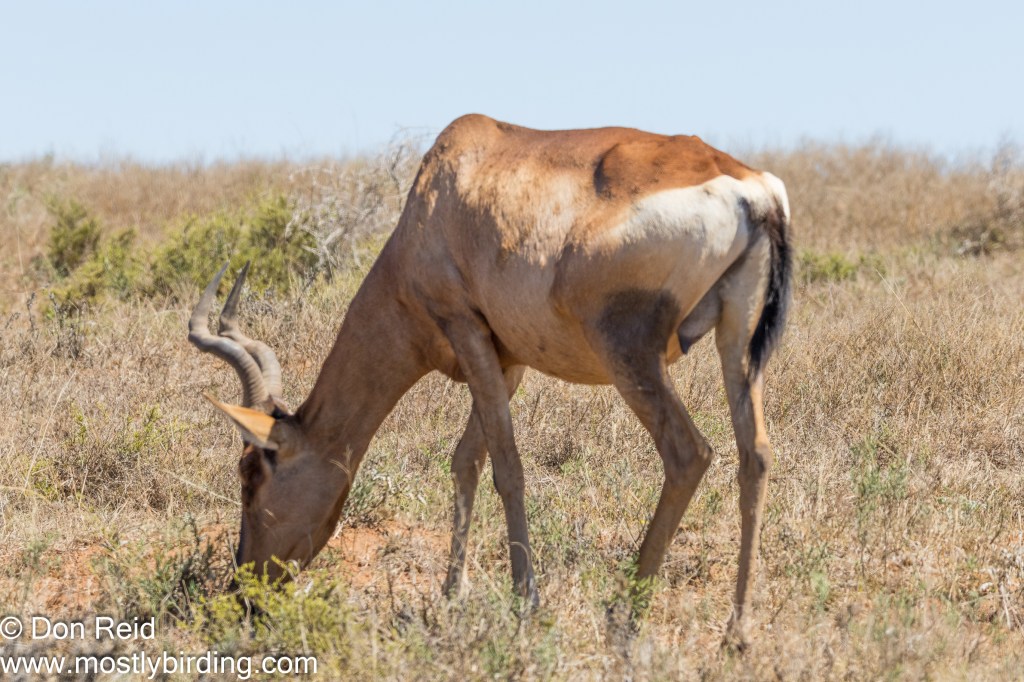
  • Two antelopes not seen in the first few days – Eland and Red Hartebeest.
Eland, Addo Elephant NP
Red Hartebeest, Addo Elephant NP
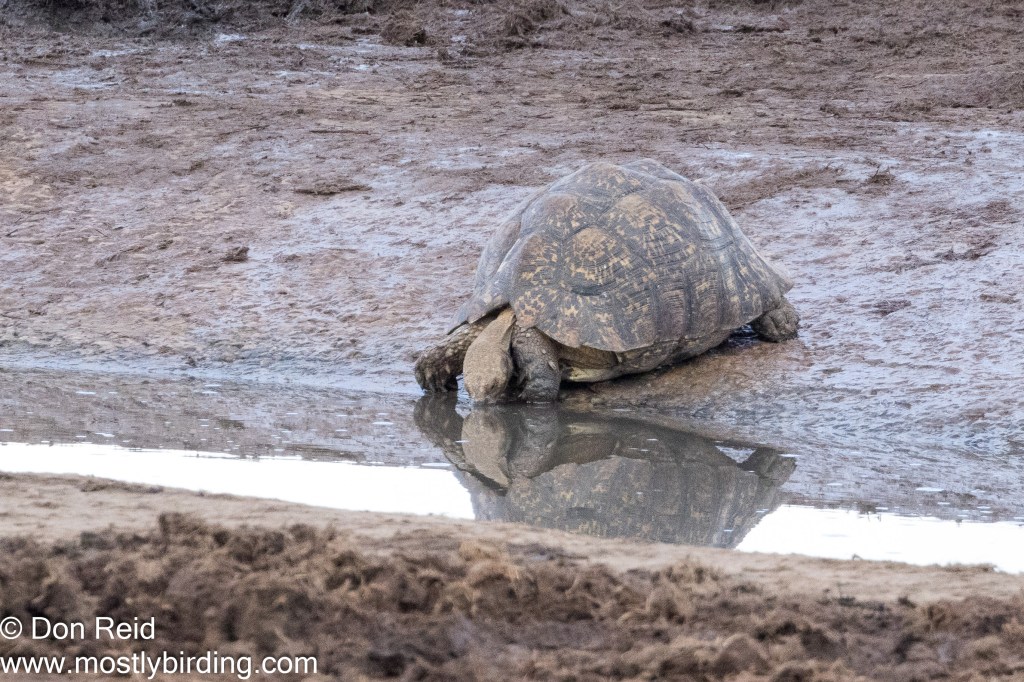
  • It was unusual to see a large tortoise all alone at one waterhole, quietly quenching its thirst
Tortoise, Addo Elephant NP

All in all a worthwhile and interesting drive of a couple of hours, despite the extreme heat

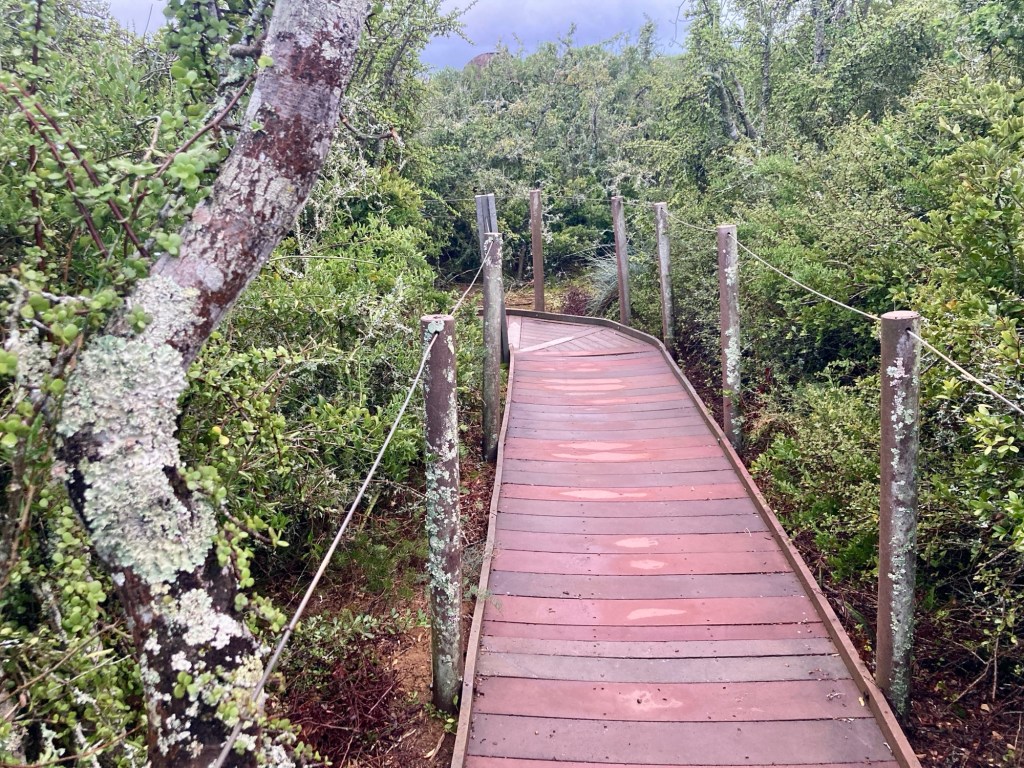
After a restful period at the chalet and a swim in the pool nearby, we visited the Discovery Trail near our chalet and enjoyed matching the nameplates placed at intervals along the boardwalk with their respective trees and bushes.

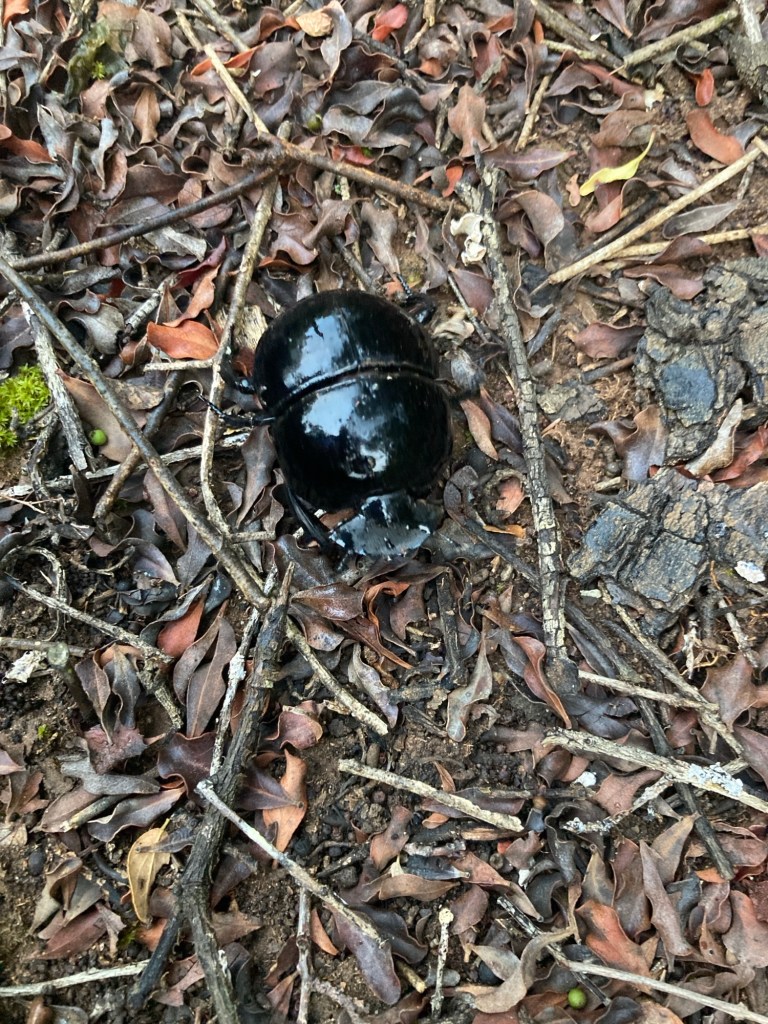
It was nice to find a Flightless Dung Beetle next to the pathway. This must be one of the few beetles in the world that features on warning signs advising drivers to keep a look out for them and avoid driving over them.

They are quite vulnerable in Addo when the roads are busy and the beetles are out foraging elephant dung, which they carefully roll into a ball and propel with their hind legs, often crossing the road very slowly in the process.

Back at the chalet we heated up the ribs we braaied last night and enjoyed a last Addo supper with salads, somewhat sad that our stay had come to an end