An Ostrich Encounter

My last post (“Birds on the Beach”) highlighted one of Southern Africa’s most iconic birds, the African Penguin. This time the spotlight falls on another iconic species, this one being about as far removed from penguins as it is possible to imagine. Not that I had intended to write about this species at this juncture, but it drew attention to itself in ways that I simply could not ignore…..

Here’s how it happened –

I was on an atlasing trip out of Mossel Bay, which I try and do once a week, and was heading along a minor gravel road north-west of the town. After many years I have found that the most efficient way of atlasing (recording species in a defined area called a pentad) requires a combination of very slow driving, with windows open to pick up bird calls, combined with regular stops to get out of the car and scan the habitat all around.

Just as an aside, the ‘window open’ part had already paid huge dividends when I picked up a call which sounded warbler-like, emanating from roadside bush. I stopped and got out to listen carefully and when the bird carried on its warble I recorded it on my Iphone, knowing that it would probably not show itself and I would have to ID it on call alone.

This was fortunate as I realised that it could be a Marsh Warbler, considered a rarity in the Western Cape, which I duly reported to the SA Rare Bird News along with my recording. It was confirmed by Trevor Hardaker who runs the news service and he included it in that evening’s emailed report.

Anyway, back to the main theme of the post –

At one of my stops next to a wide field, I noticed a lone male Common Ostrich on the far side and, as I did so, he began trotting in determined fashion towards where I was standing alongside my SUV.

‘Hello’, I thought, ‘this could be interesting’ – but my camera was in the car and the ostrich was approaching quickly so I grabbed my phone, set it to video and started filming. Halfway across the field the ostrich stopped and called, a deep booming call that has been likened to that of a lion in the distance.

Turn your sound up to maximum to hear the call….

The ostrich continued coming towards me until it was just a few metres away, then suddenly went down onto its haunches and performed its courtship display, swinging its neck from side to side with wings spread wide. At that stage I was glad of the fence separating us – who knows what he might get up to next!

Still not satisfied that he had attracted my attention, it seems, the ostrich came even closer, just a metre or two from where I stood amazed, with just a flimsy fence separating us, and once again performed the courtship display.

This is when I believe the ostrich started having second thoughts about my suitability as a partner and he went behind the bushes for a minute or so then reappeared, giving me the once over and, I imagined, showing signs of mild doubt, even confusion as he eyed me from behind the bushes. That final tail flip is very telling…

I decided not to confuse the misguided bird any further and drove on….

However, I couldn’t help wondering about this strange encounter for the next day or two and came up with a few possibilities to explain it –

  • It was a very short-sighted ostrich
  • It was very lonely in that field all on its own
  • It was trying to prove its ‘wildness’ so that I might be persuaded to add it to my records for the pentad list*

* This last one probably needs some explanation for those not familiar with atlasing protocols and the status of the Common Ostrich in the southern Cape. Ostriches in this part of South Africa have been farmed for well over 100 years and most ostriches encountered are in fact of the ‘domesticated’ type, although not distinguishable from ‘wild’ ostriches which are generally only found in game and nature reserves. Atlasing protocols allow for recording of ‘free flying’ birds only which translates to ‘wild’ birds in the case of ostriches which of course are flightless, so none of the ostriches in the farming areas will be eligible.

  • Oh, and there’s one more possibility – perhaps I look more like a female ostrich than I had previously imagined….. Here’s a recent photo of me to let you decide

Birds on the Beach

Now these are not just any old birds on any old beach that I’m referring to, both the birds and their beach habitat are – well – very special and wonderfully unique.

Let’s start with the beach …….

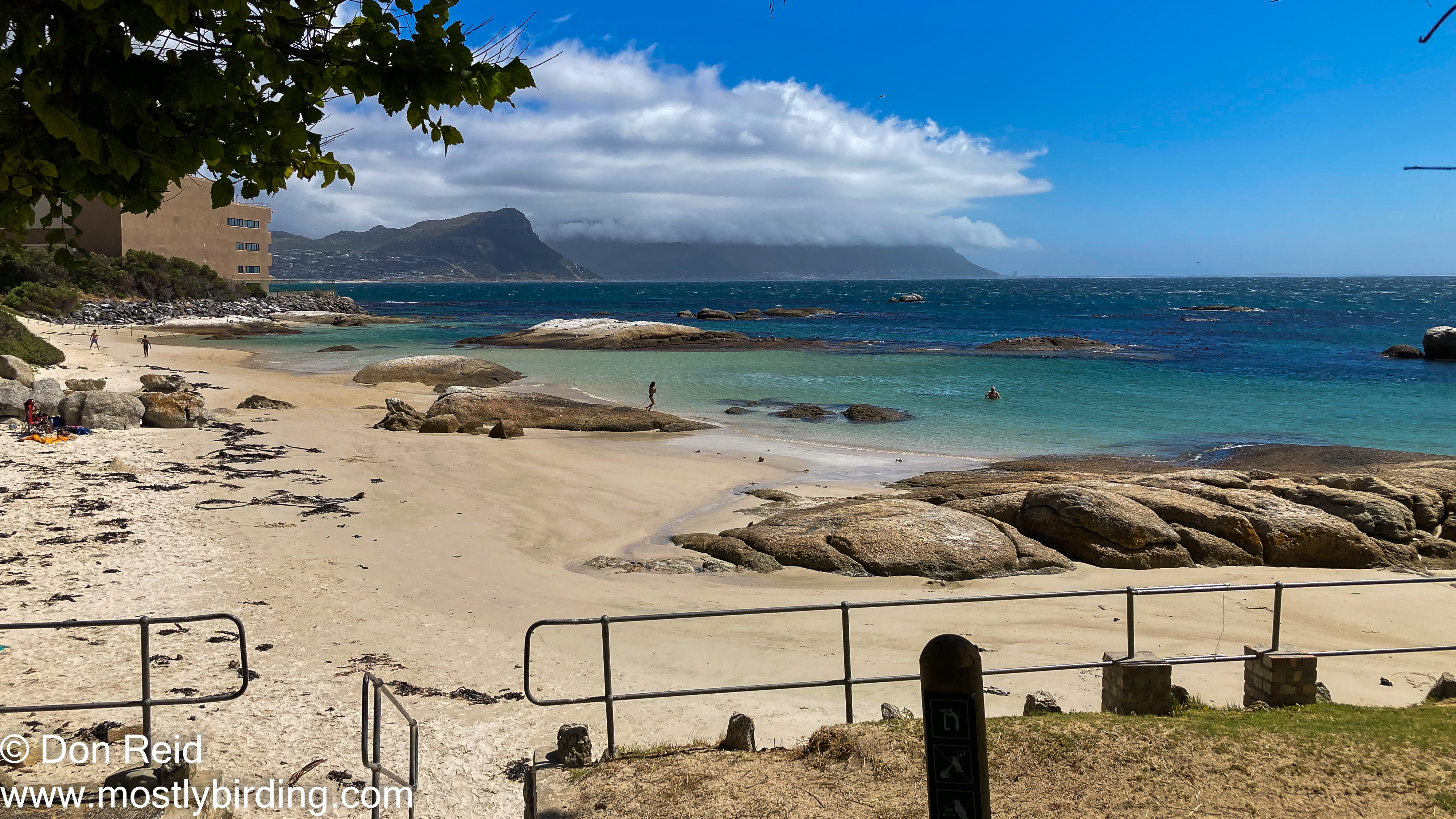
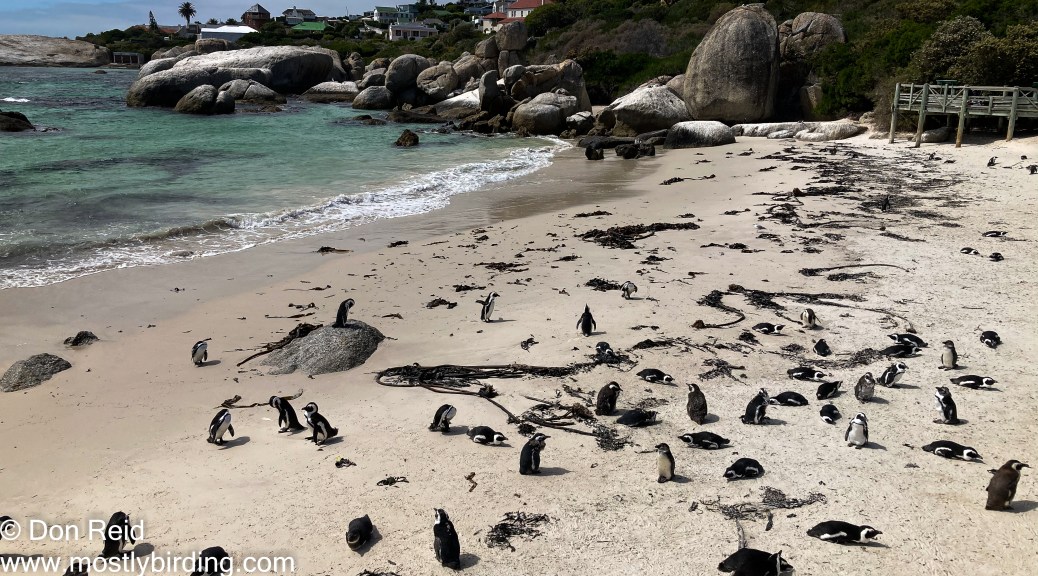
Boulders Beach is a small beach at Simon’s Town, which lies on the False Bay side of the Cape Peninsula, some 40 kms south of central Cape Town. For many years it was a little known, ‘out of the way’ beach favoured by couples and young families seeking a quiet spot to spend a day, Perfect for a picnic and safe for the kids to paddle and swim, with hardly a wave in sight due to the protective ring of large boulders which all but shut out the sea’s power.
Growing up in Cape Town, I can recall the occasional trip from our home in the suburbs, via bus and train, to Simon’s Town to spend a day at Seaforth beach, which adjoins Boulders beach. Later in my student years, I ‘graduated’ to joining my elder brother and his family in a leisurely day at Boulders itself.

Seaforth beach, Simon’s Town

I left Cape Town in 1970 to pursue my career ‘up north’ (actually my future wife played a major role in that decision, but don’t let on to her) and Boulders beach gradually drifted from my memory, until much later……

Some 12 years later, two breeding pairs of African Penguins decided that the beach would be a good place to settle, probably influenced by the availability of fish in nearby waters

From just two breeding pairs in 1982, the penguin colony has grown to about 3,000 birds in recent years. This is partly due to the prohibition of commercial pelagic trawling in False Bay, which has increased the supply of pilchards and anchovy, which form part of the penguins’ diet. (Ref : Wikipedia)

Boulders beach Simon’s Town

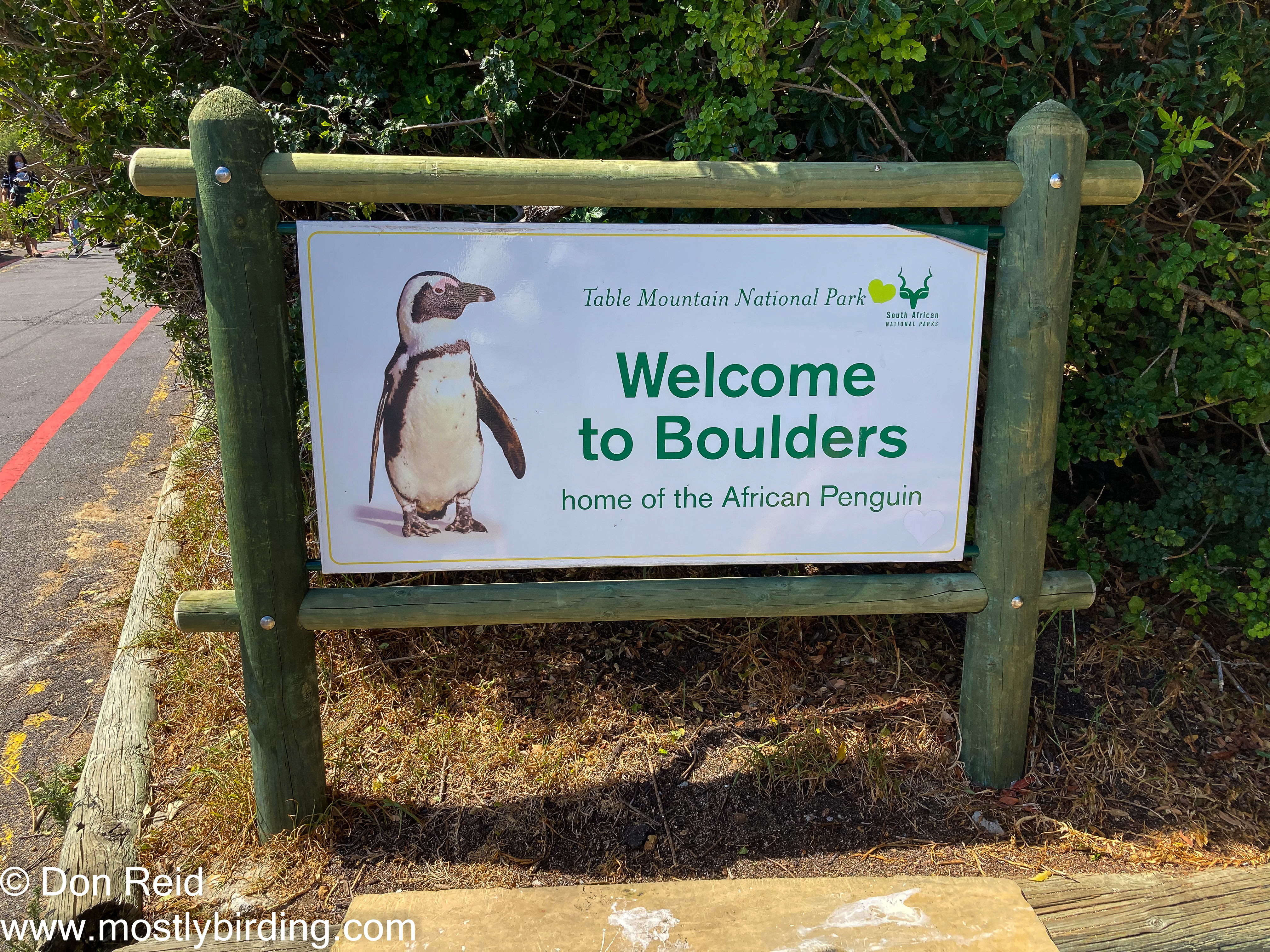
Since those first two pairs settled there, Boulders has gone from an obscure swimming beach to one of Cape Town’s best known tourist attractions and now forms part of the Table Mountain National Park

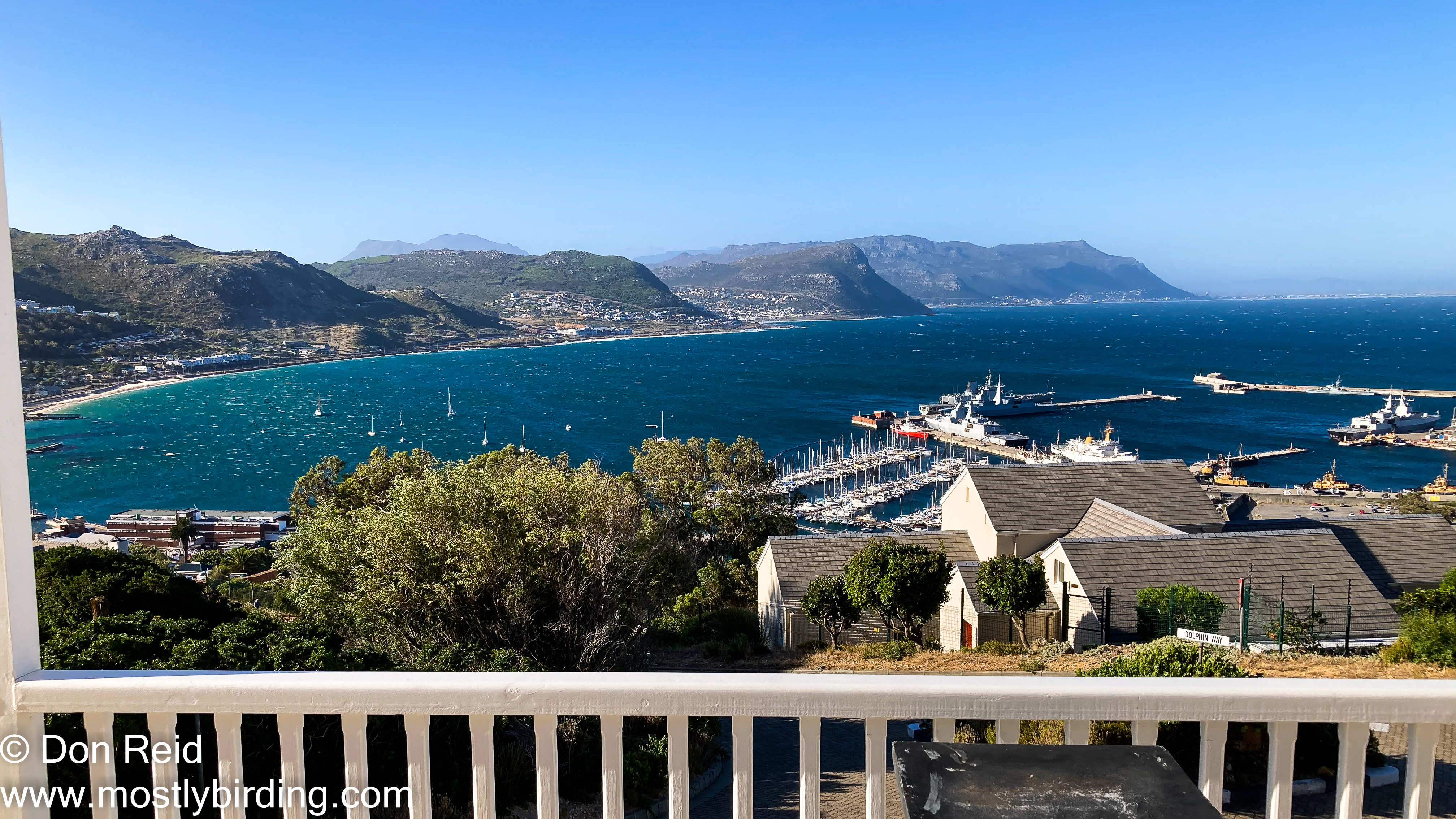
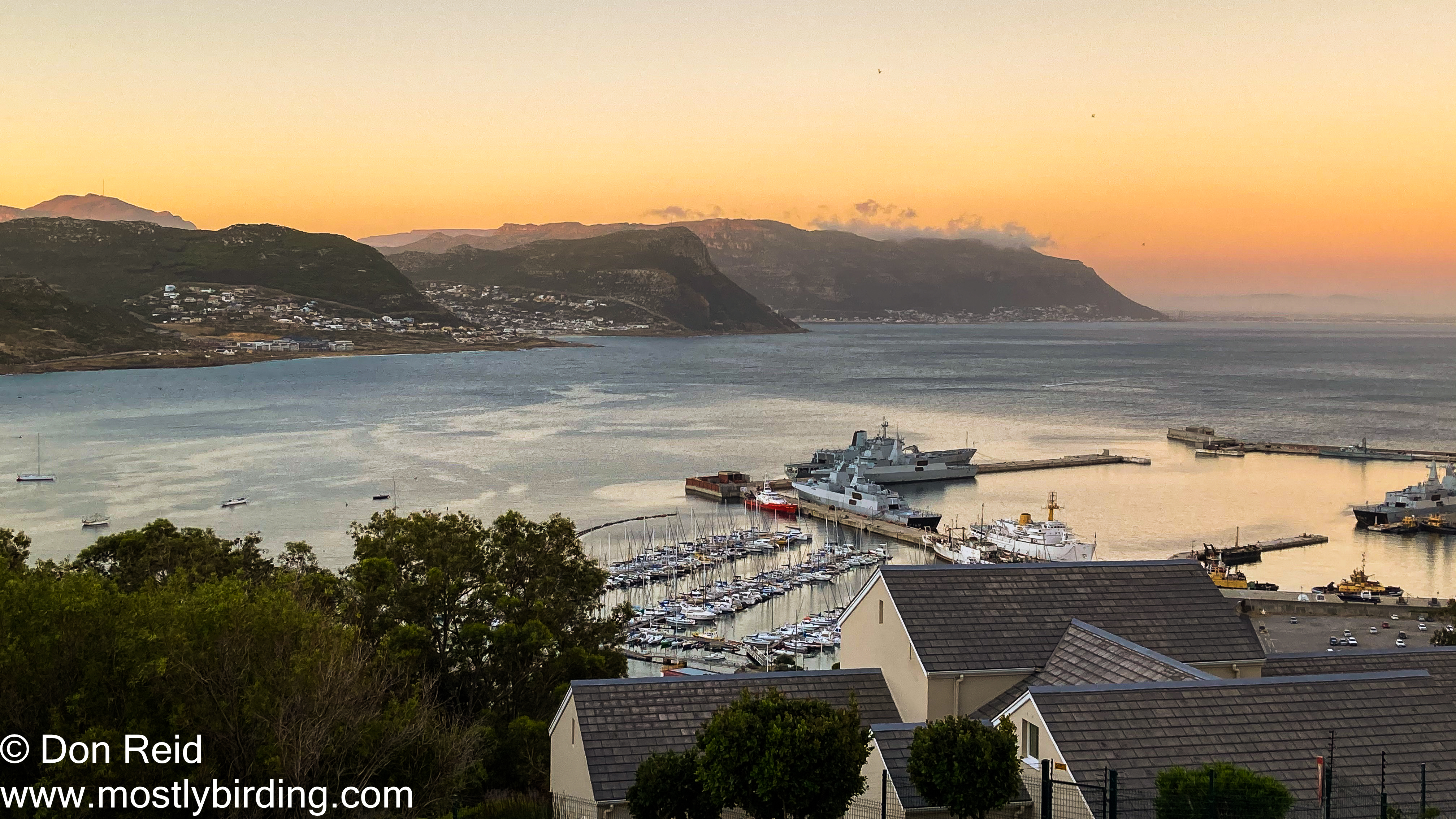
We had a reason to travel to Cape Town in January last year and decided to use the accommodation that we were going to use in March 2020 but which we had to cancel when Covid 19 and the subsequent lockdown changed all our lives. The B&B sits high up on a hill overlooking Simon’s Town with sweeping views of the town, the naval dockyard and False Bay beyond and turned out to be an excellent choice.

The daytime view from the B&B
Even prettier in the evening

With the ‘business’ part of our trip done and dusted, we thought about what to do with the rest of our stay in Simon’s Town and first on my list was Boulders beach which we had last visited many years ago.

The Penguins

The thing with Penguins is that most people know what they look like from films and images, adverts and the like – they are just so endearing and marketable. But Penguins tend to choose remote spots to breed and live, often on islands, so relatively few people get the chance to see them in real life, outside of zoos that is.
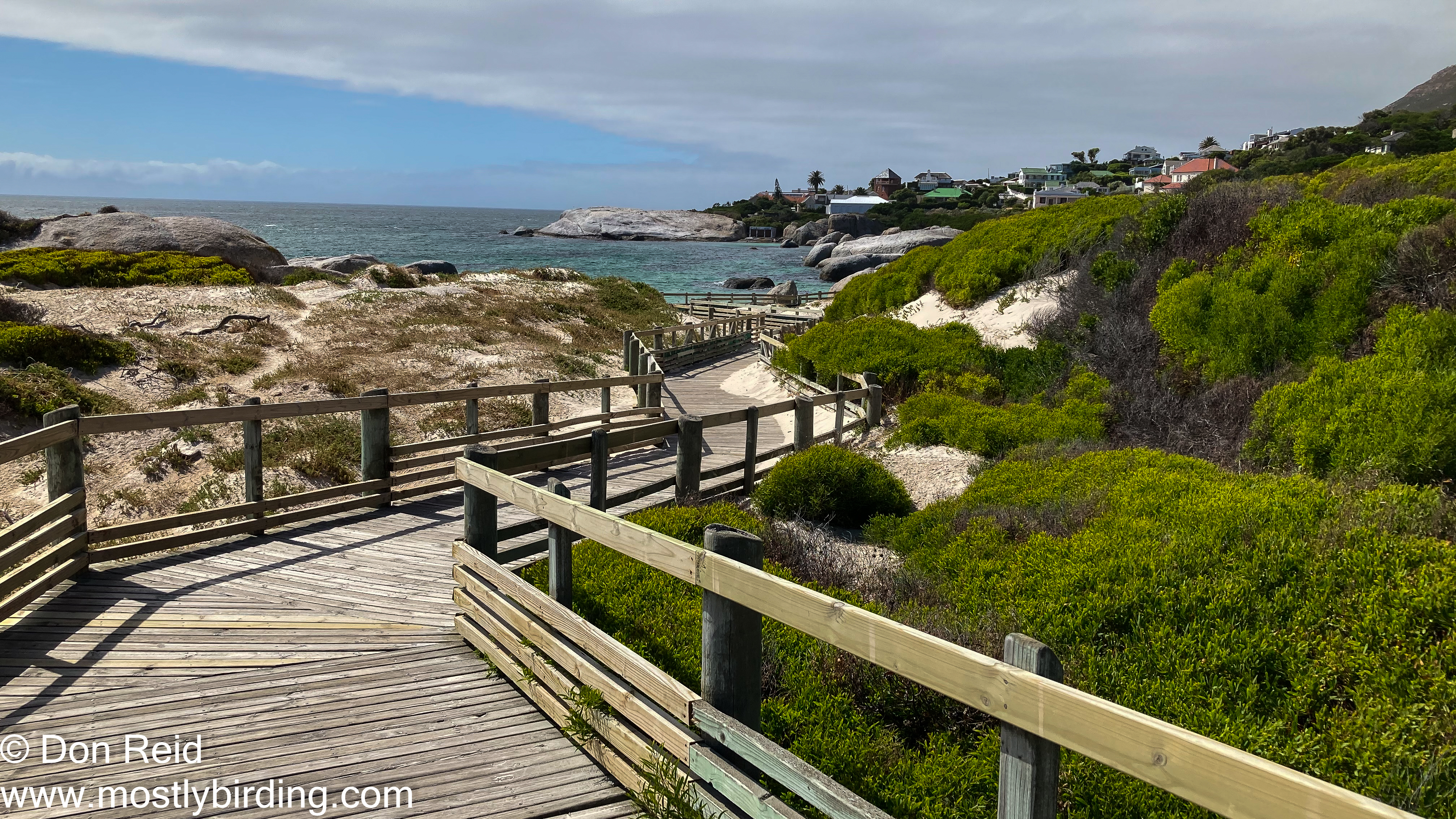
Which makes Boulders a perfect choice for anyone wanting to see these birds in their natural habitat. After gaining entry with my Wild Card I walked along the boardwalk which snakes its way down to the beach, with a platform at the bottom for viewing the beach and nesting area.

Boulders beach Simon’s Town
Boulders beach Simon’s Town – the boardwalk to the Penguin’s habitat

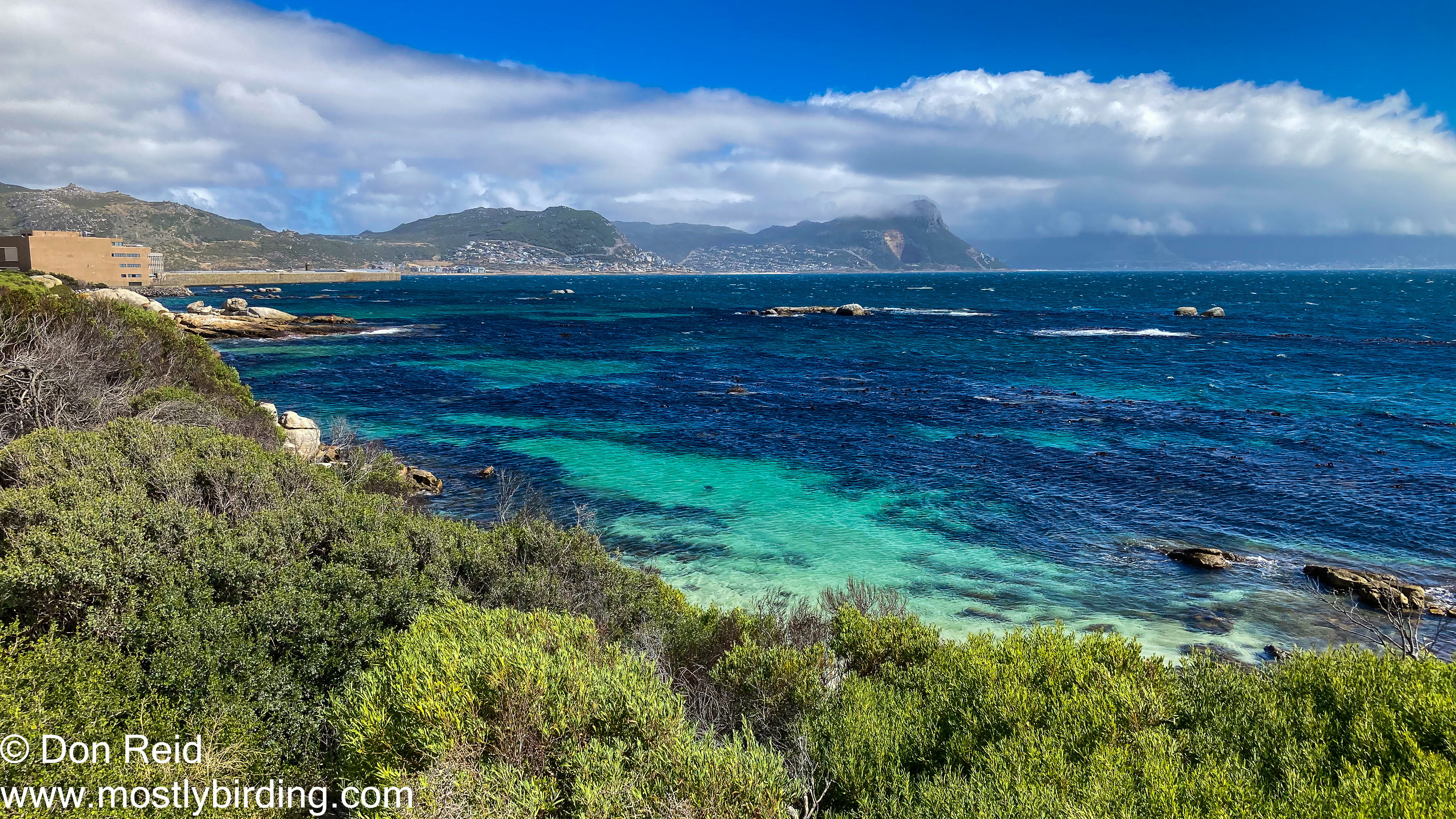
Looking back from the upper part of the boardwalk, the view across the bay is quite striking

View from the boardwalk at Boulders beach Simon’s Town

Once you are past the densely vegetated dunes, the first of the penguins comes into view, quite relaxed and unperturbed by human presence. Not the smallest or the largest penguins in the world, they would reach to about your knee height when standing. (Incidentally, we saw the smallest penguin, called a Little Penguin – obviously – during a visit to Philip Island near Melbourne Australia – the subject of a post a few years ago – https://wordpress.com/post/mostlybirding.com/8353 )

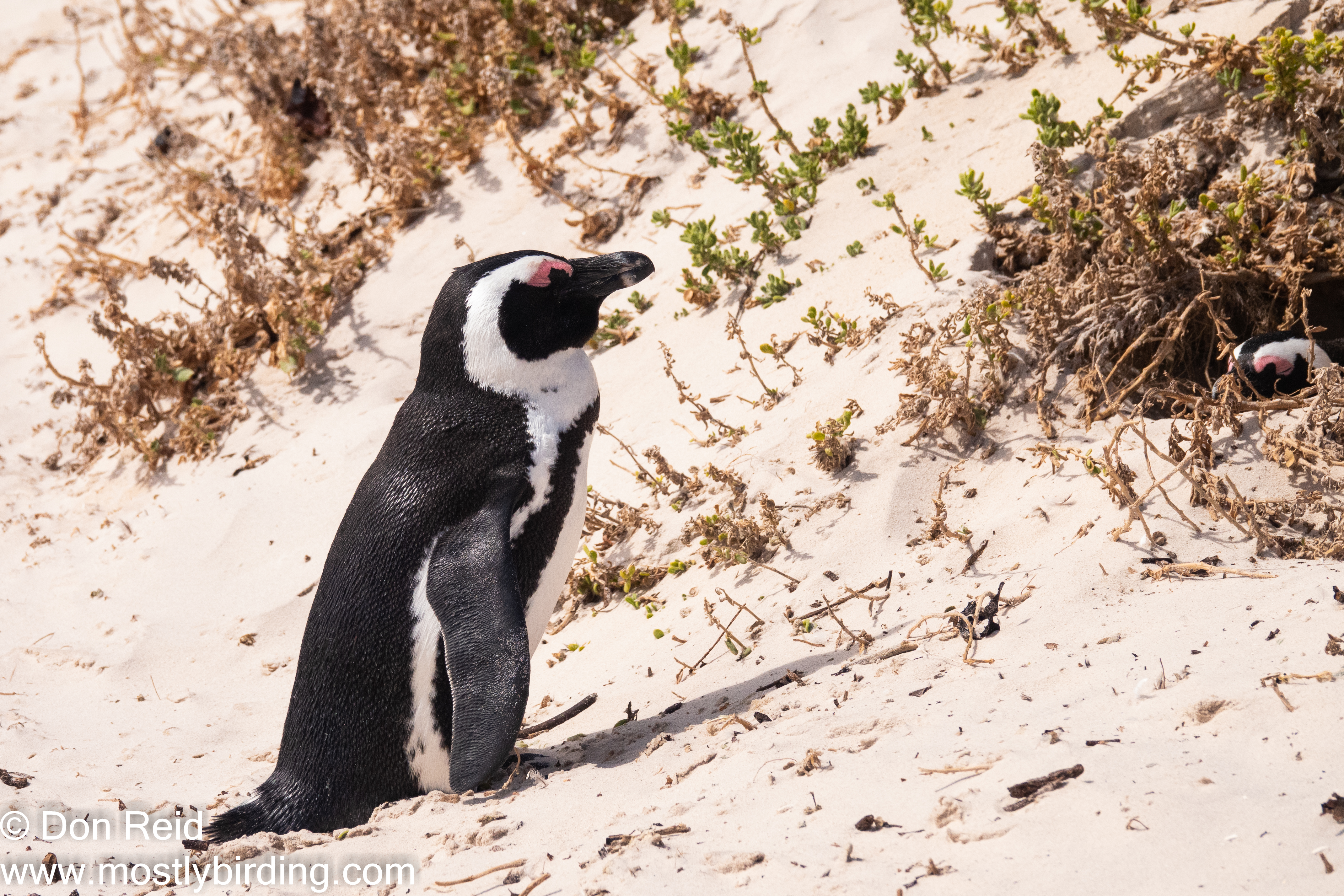
African Penguin (Spheniscus demersus / Brilpikkewyn), Boulders beach Simon’s Town

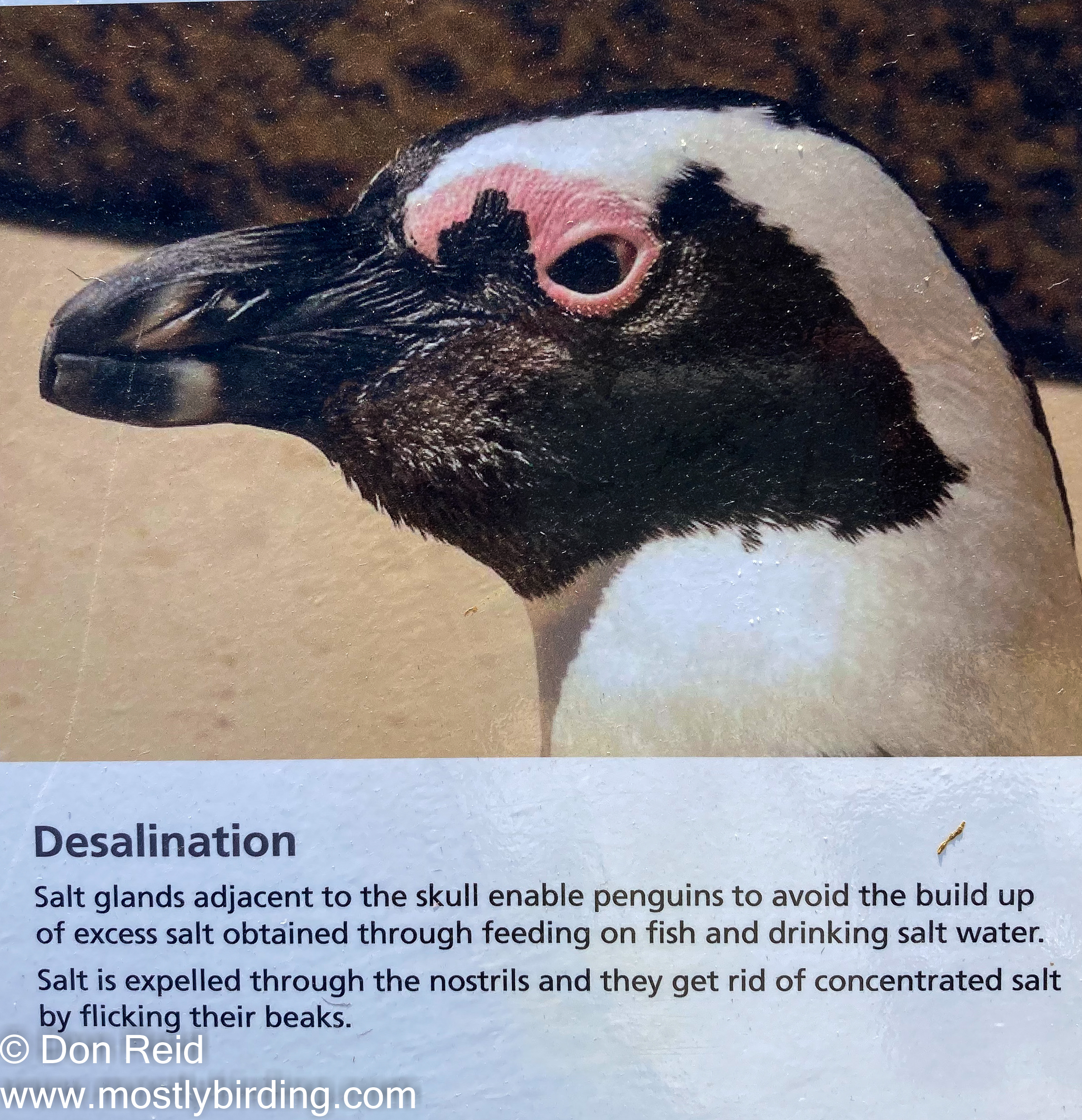
At various points on the boardwalk, information boards are placed with interesting facts about the colony and the habits of the African Penguins

Boulders beach Simon’s Town

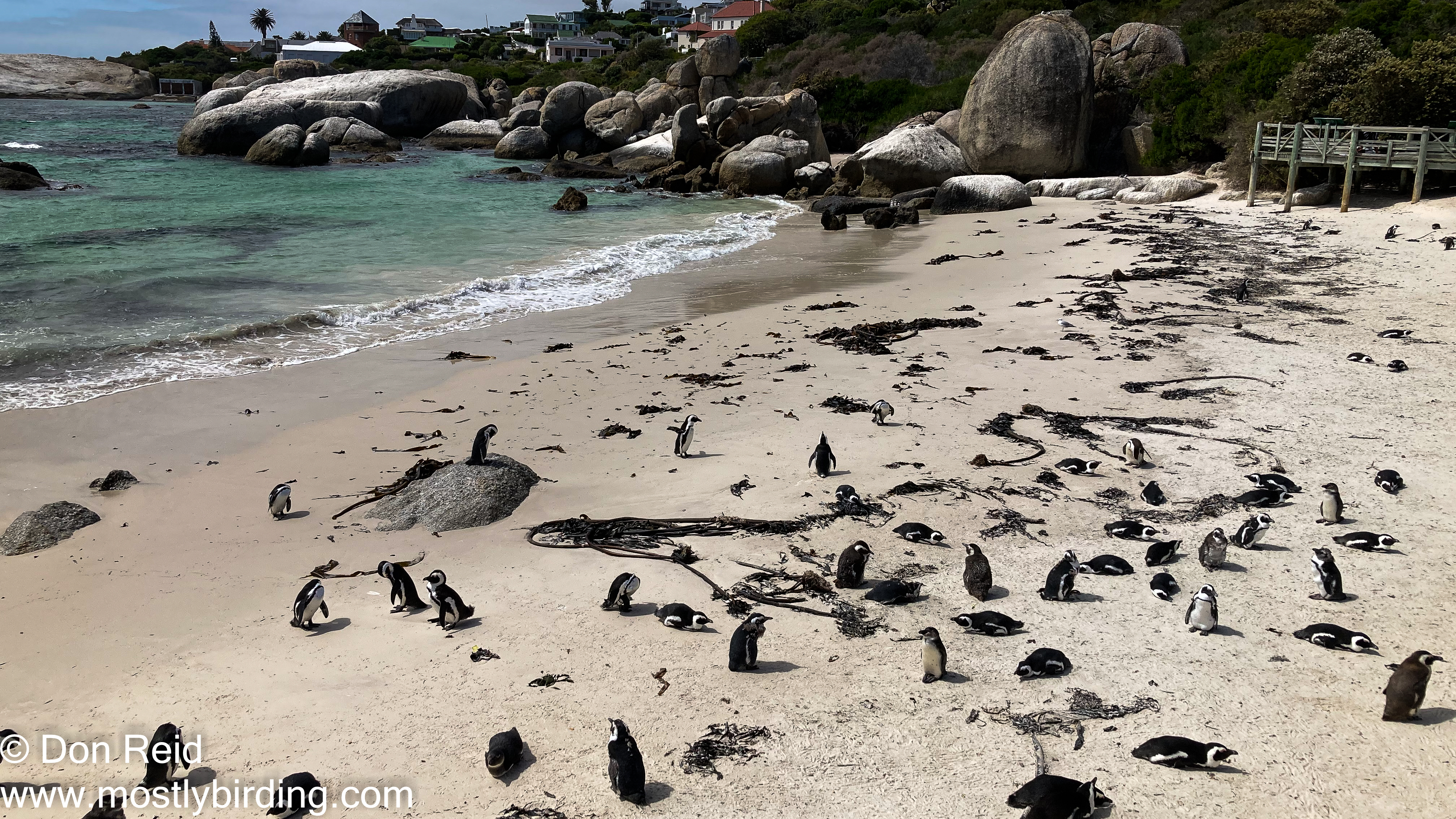
Once you get to the lower viewing platform, you can see some of the residents of the colony – those not involved in breeding activities will be out in the deep sea looking for food, so what you see here is a small part of the colony

African Penguin (Spheniscus demersus / Brilpikkewyn), Boulders beach Simon’s Town

I took a few shots of some of the penguins in their burrows, only realising when I edited the photos and lightened up the shadows that I had captured a glimpse of an egg under one penguin’s belly.

African Penguin incubating an egg

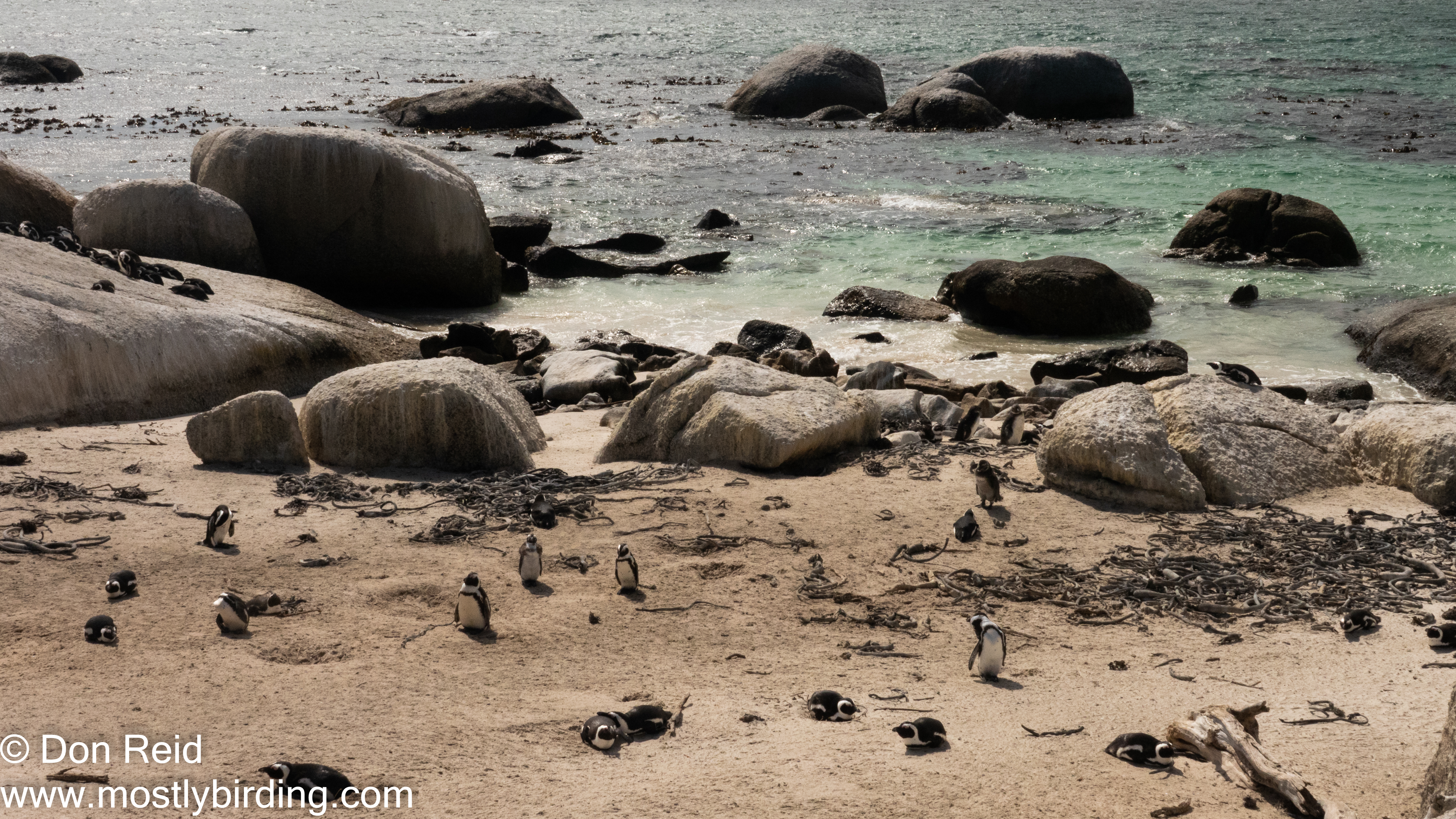
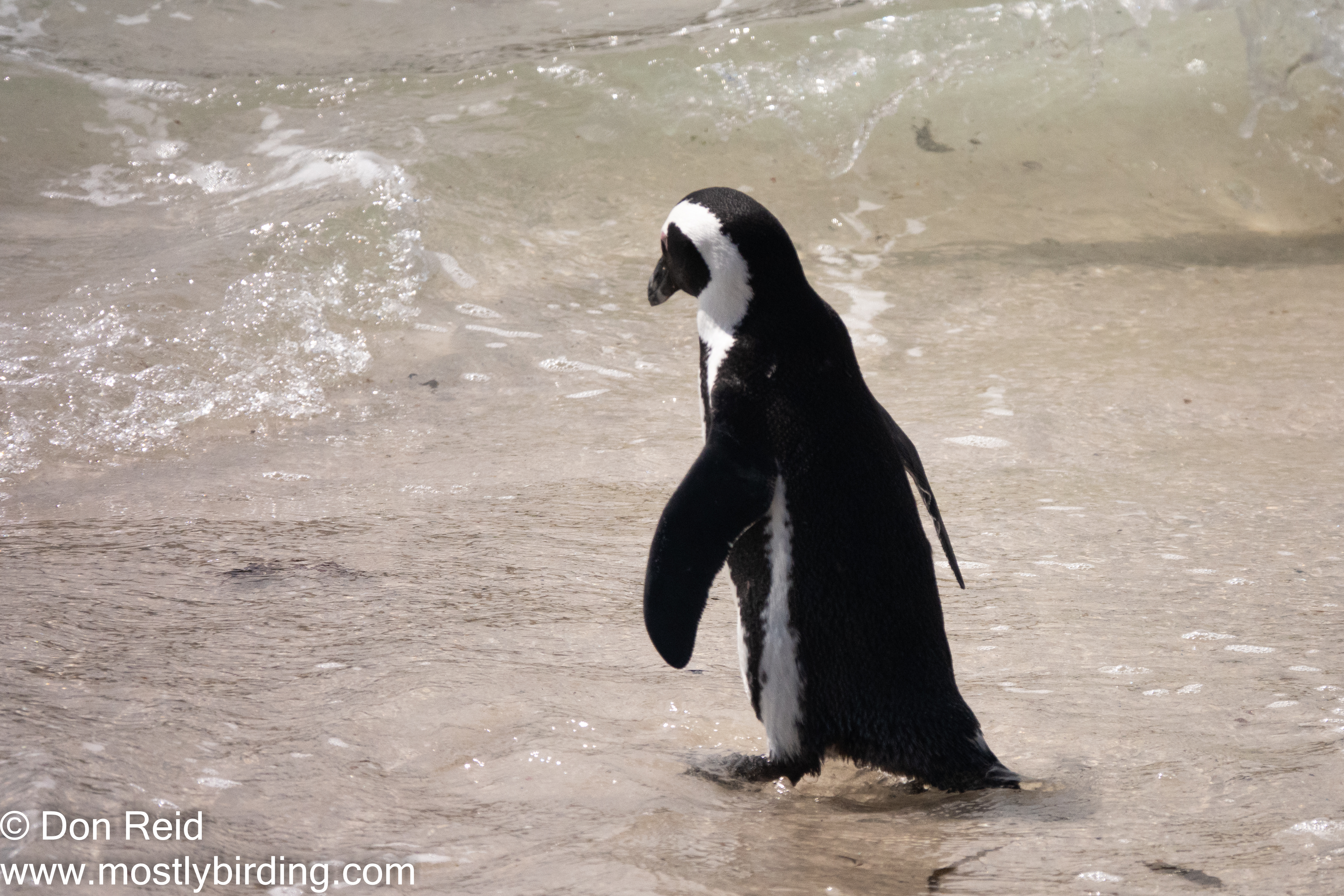
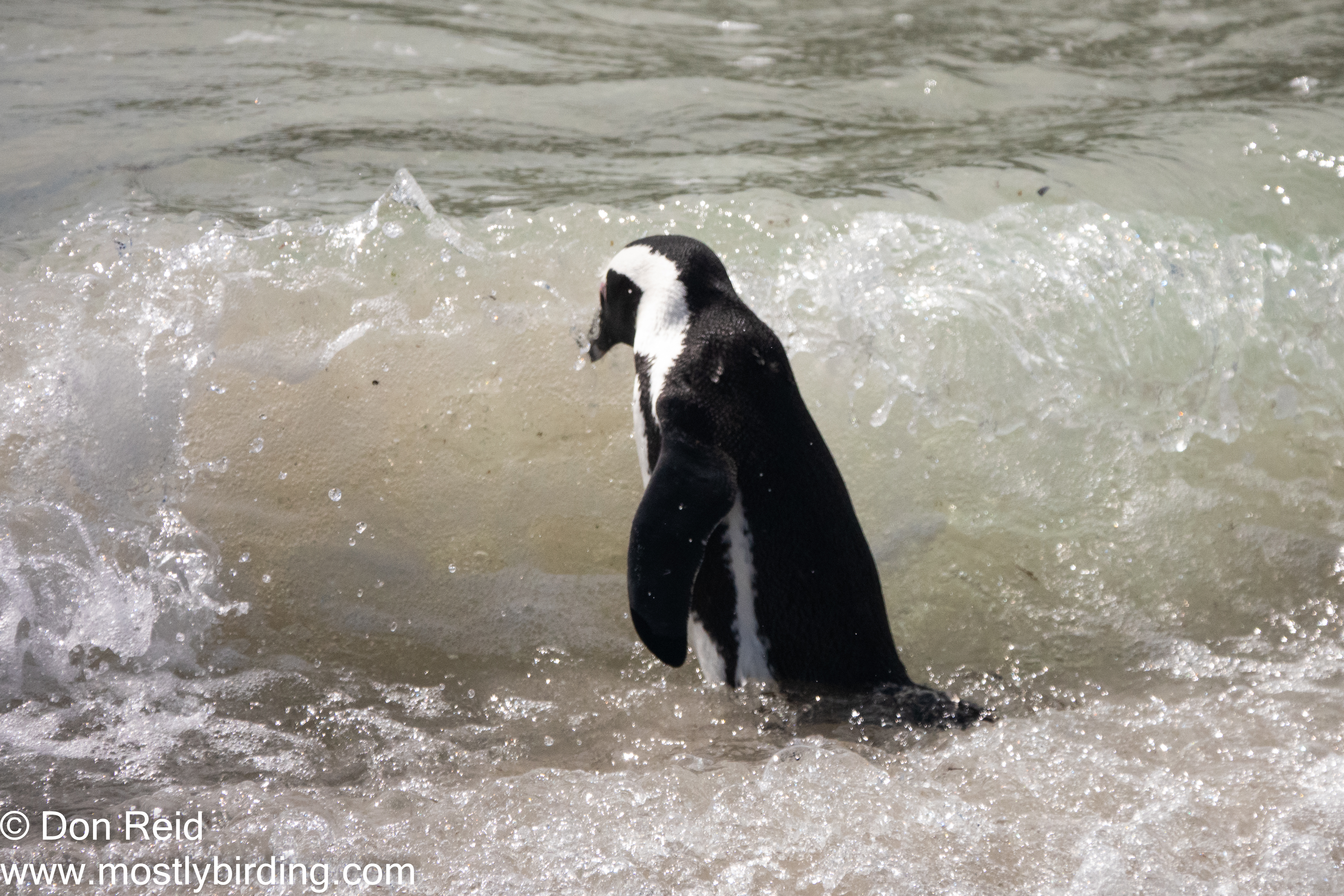
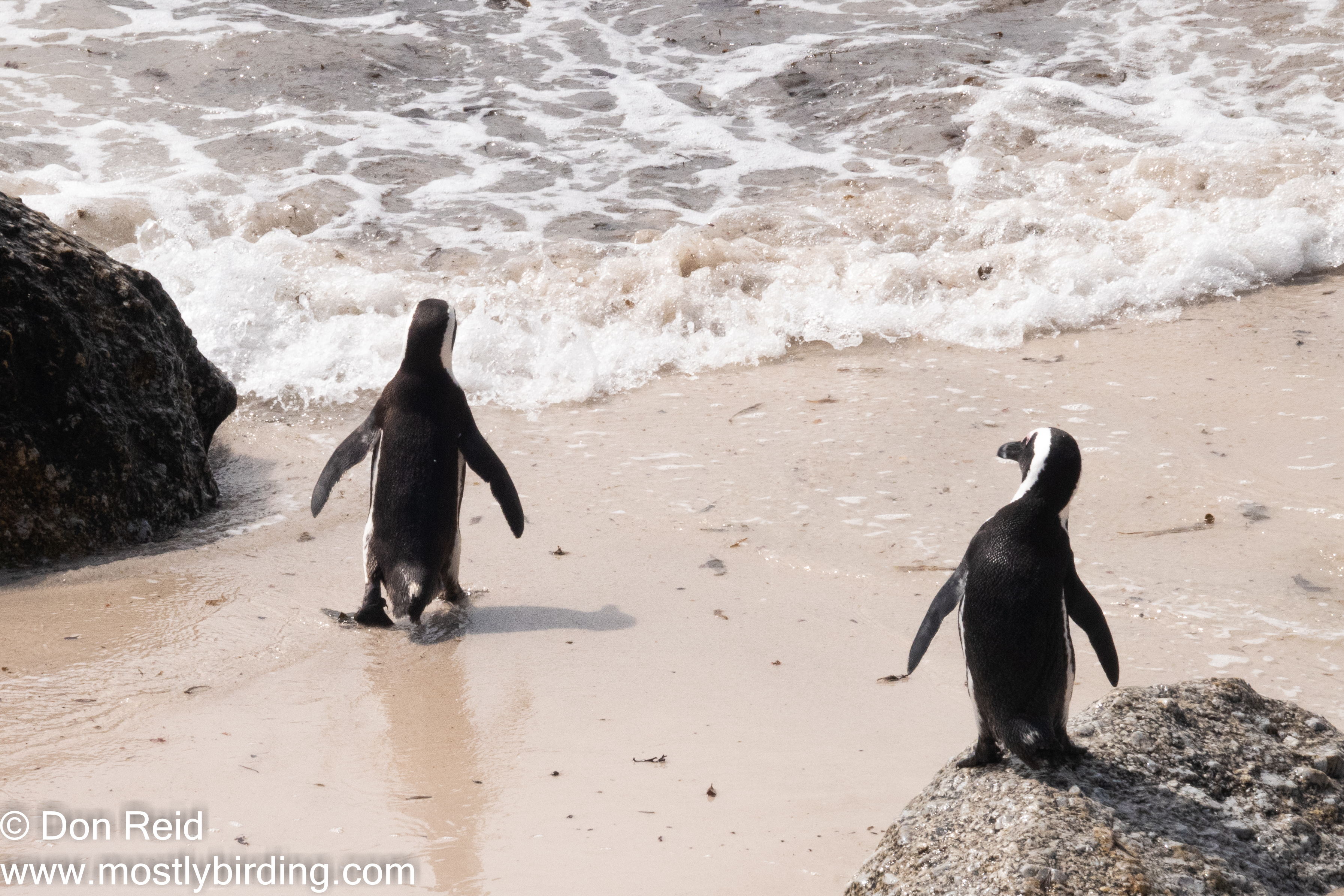
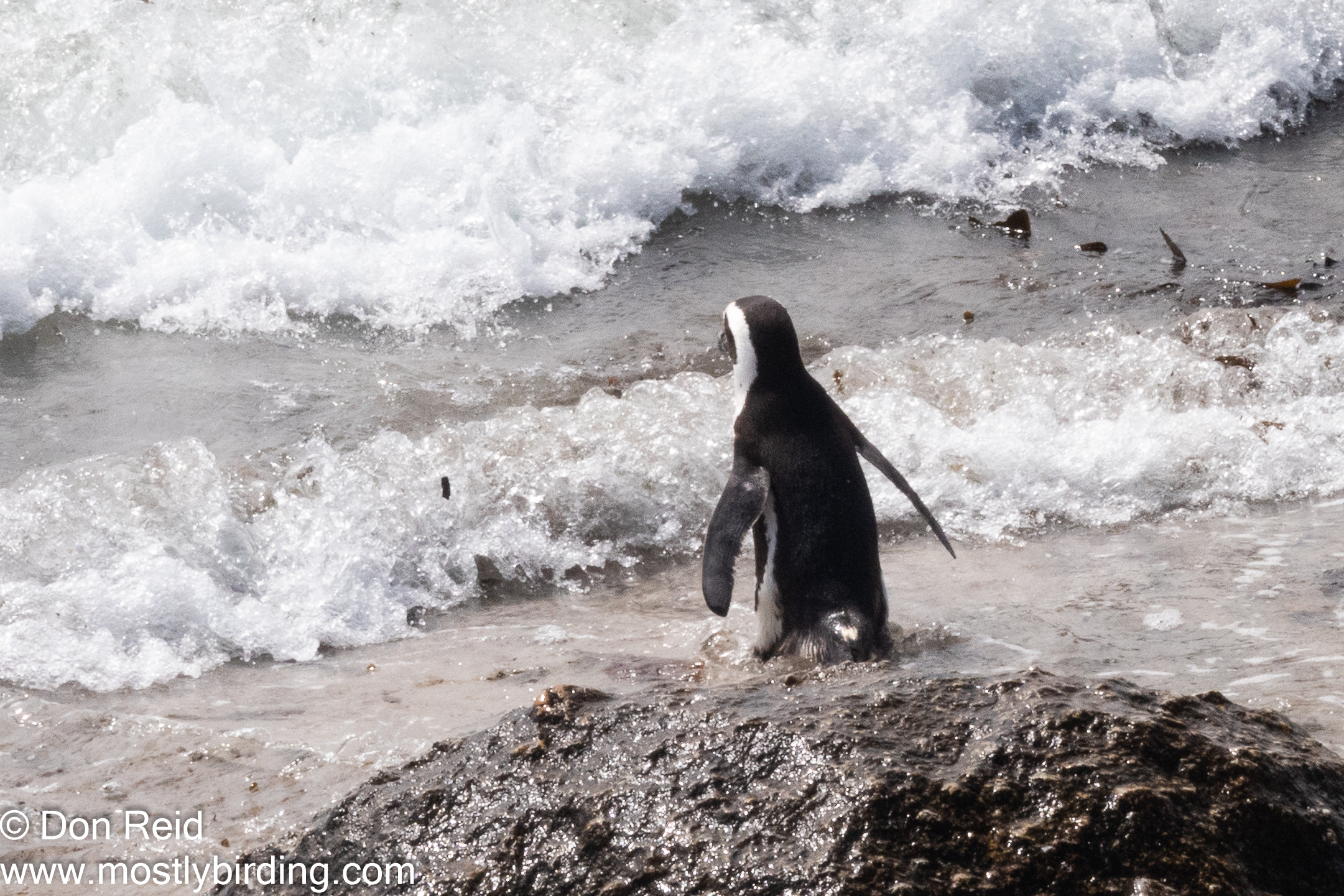
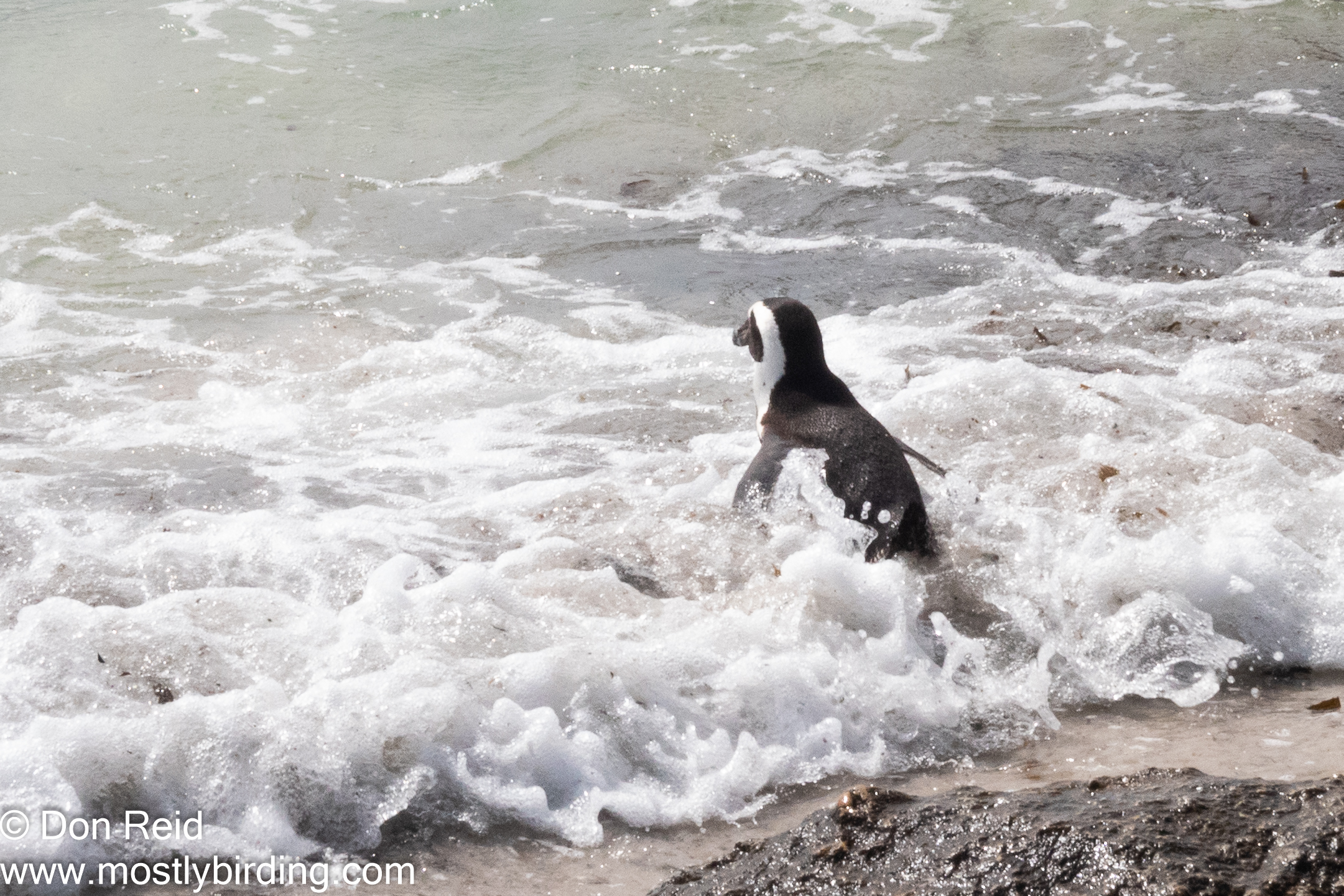
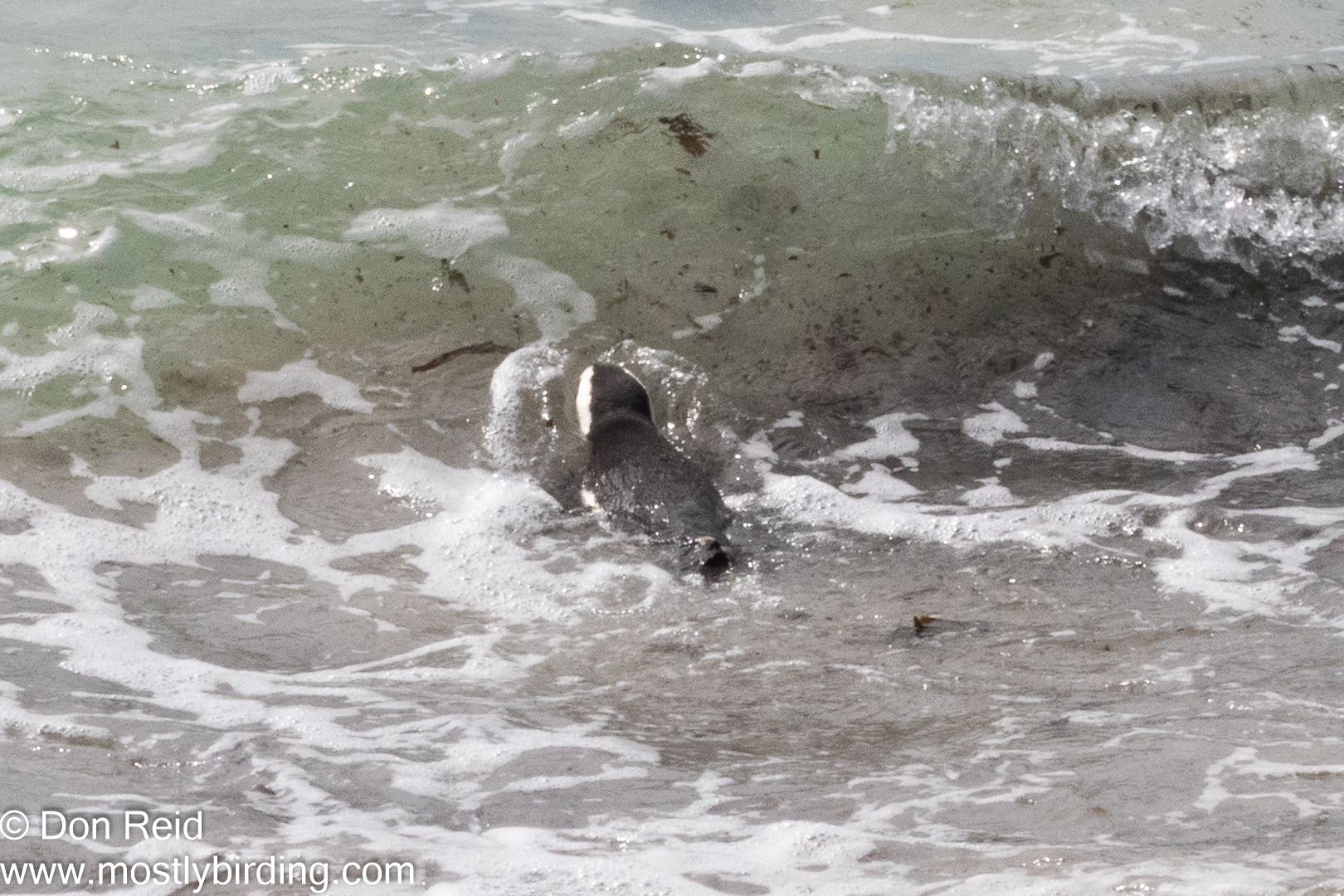
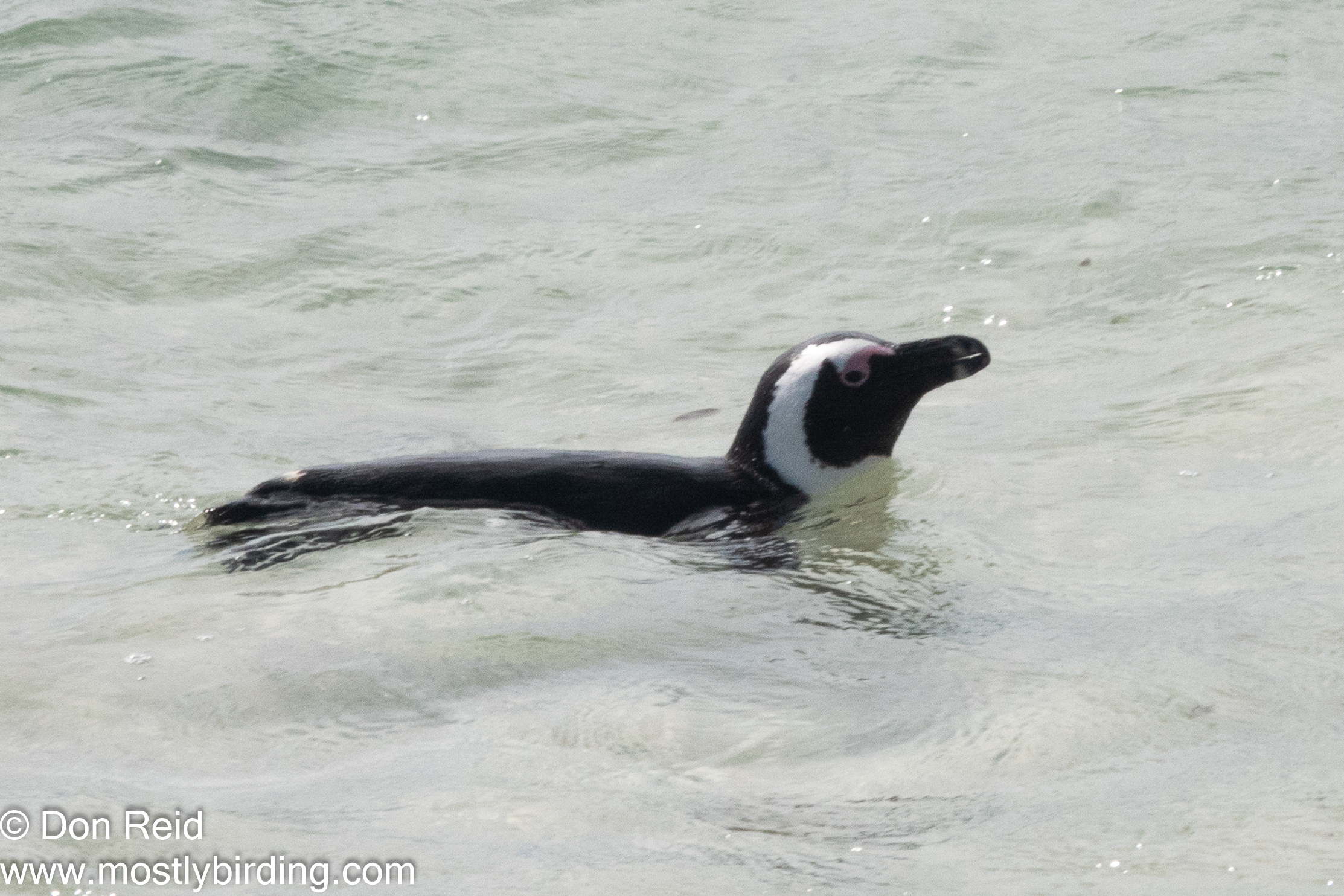
There was constant movement of penguins to and from the sea – such a comical sight as they waddle towards the water but once in they are in their element, swimming swiftly and soon disappearing from sight.

African Penguins on the beach

I couldn’t help thinking of an elderly yet elegant gent tentatively going for a swim in cold water as I watched one penguin entering the sea…..

As the one penguin swam off, more entered the water

A little bit more…

The African Penguin is the only penguin that breeds in Africa and is restricted to the coastline and seas of Southern Africa. Penguin numbers fell from over a million pairs a hundred years ago, to just 18,000 pairs today so they are justly classified as Endangered.

In the late 1800’s and early 1900’s egg collecting and guano scraping (which I can remember being taught about at school with not a hint of criticism, such was the relaxed attitude to conservation in those days) caused havoc with the survival of penguins. Nowadays the decline in availability of fish due to overfishing is the major cause of the further downward trend

Their ‘wings’ are in reality efficient flippers for swimming at speeds up to 20 km/h – which may not sound that fast but they would easily beat any Olympic swimmer you can think of – and they can dive to depths of 130m while holding their breath for an average 2,5 minutes, when feeding.

Their black and white colouring aids in camouflaging them from predators, both from above (black back blending in with dark sea for predators looking down) and below (white front melding with light skies for predators looking up).

These unique aquatic birds are certainly deserving of conservation – hats off to Birdlife South Africa for being at the forefront of penguin conservation efforts.

References :

  • Table Mountain National Park information boards at Boulders
  • African Birdlife Magazine September/October 2021, published by Birdlife SA
  • Firefinch – Birding app by Faansie Peacock

My Photo Picks for 2021 – The Places, Wildlife and Other Stuff

With the new year barely out of the starting blocks, it’s once again time to select the photos which best represent our travels and nature experiences during 2021, plus a few others that appeal to me for various reasons.  Despite the ongoing restrictions brought upon all of us by Covid 19, we still managed to travel fairly extensively, although it was limited to the borders of South Africa. 

I’m hoping you will find some of my favourite images to your liking – if you do, please take a moment to mention them in the comments at the end of the post. 

The Places

It was a revelation to look back over the year’s images and realise that, in fact, we did manage to travel to many places across South Africa. Our longest road trips were those between the two places we call home – Pretoria and Mossel Bay – and the pendulum seems to have swung in favour of the latter town, where we spent slightly more time than in Pretoria for the first time. My bird atlasing activities were somewhat handicapped this past year by other factors – nevertheless I did get out on atlasing trips on a fairly regular basis, mostly in the vicinity of one of the two home bases

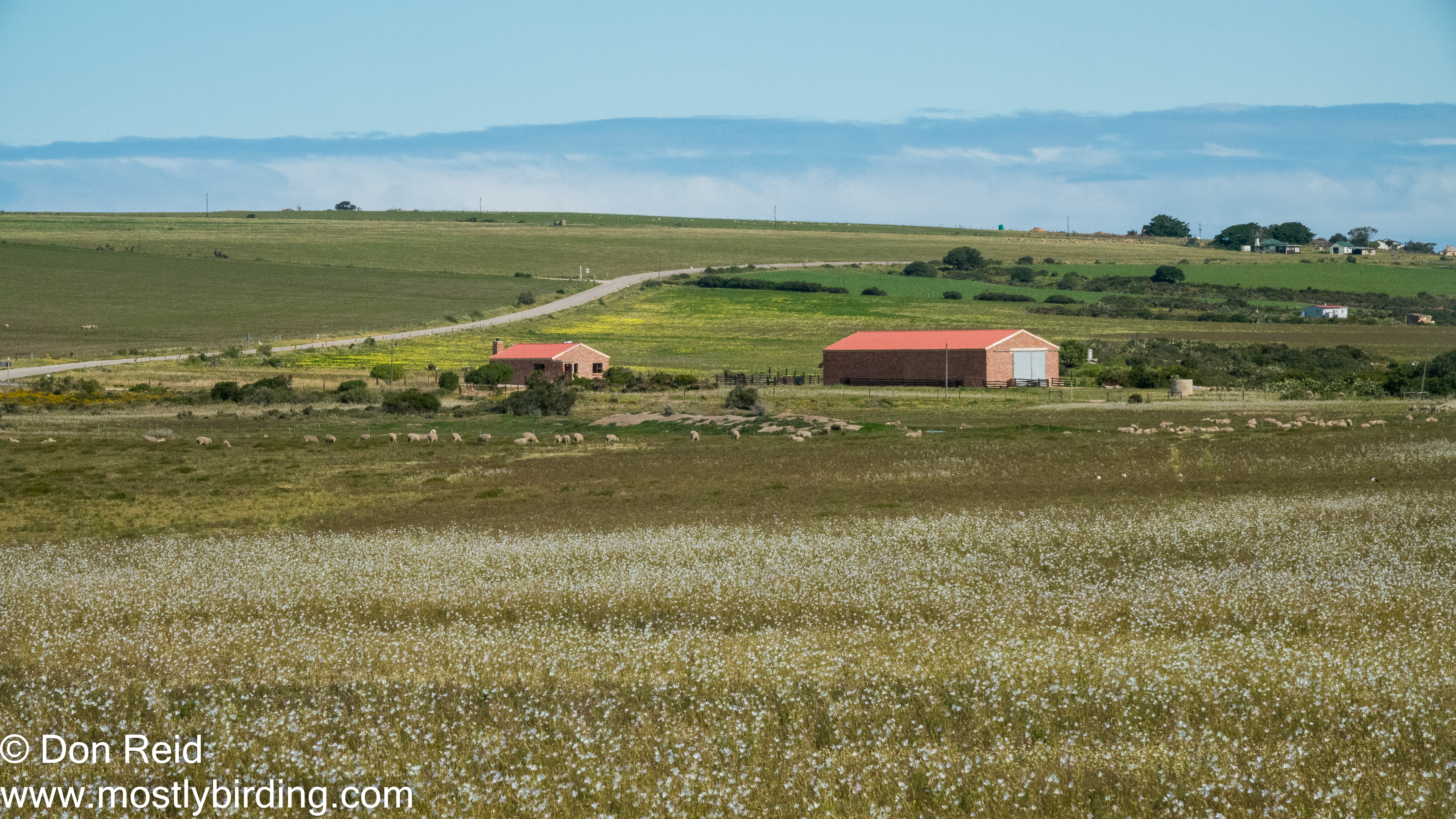
Farmlands, Vleesbaai Area near Mossel Bay
Hillside Farm Trompsburg, Free State – where we spent a night on the trip to Mossel Bay
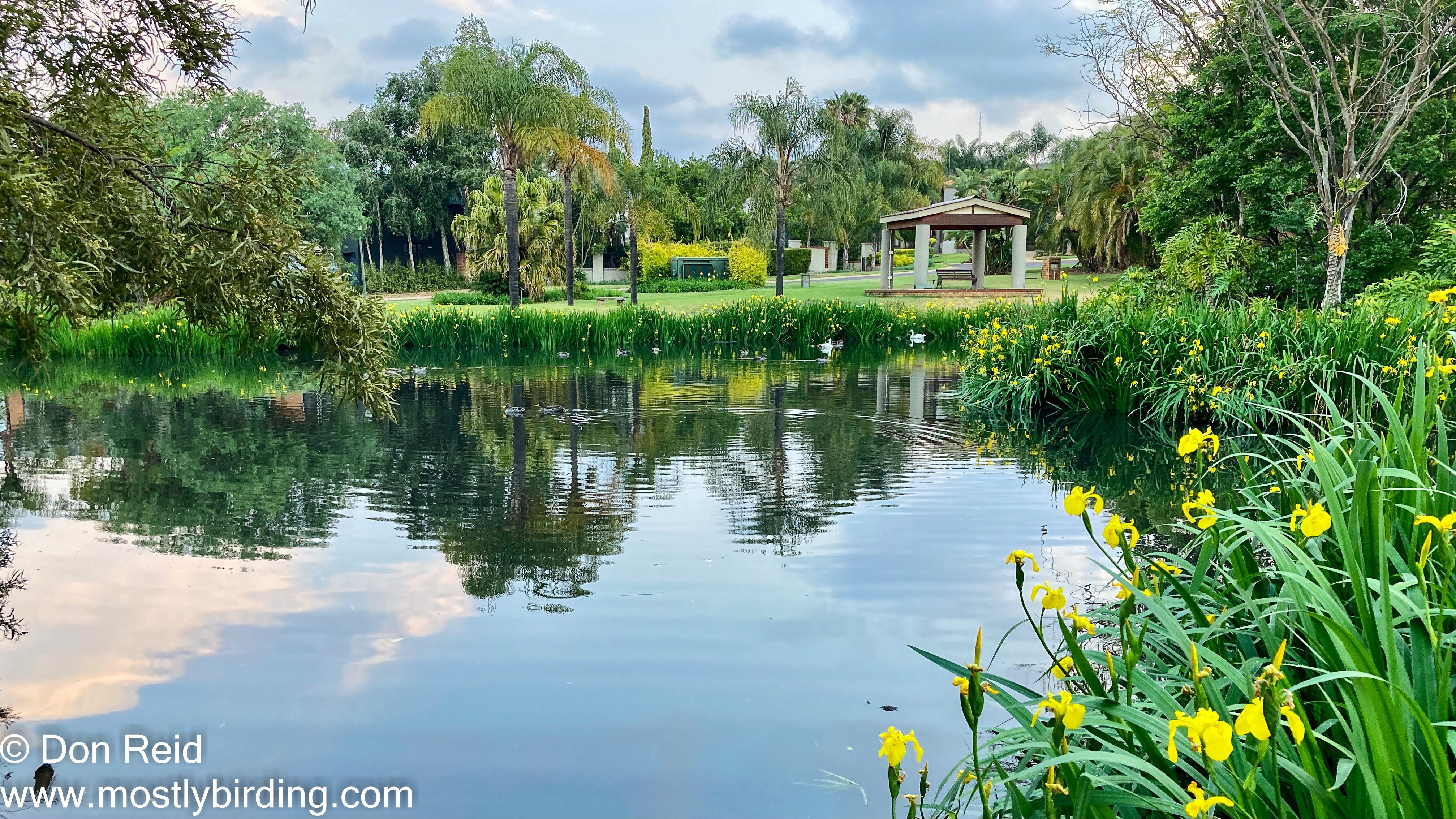
One of the dams in The Glades Estate, (where our Pretoria home is)
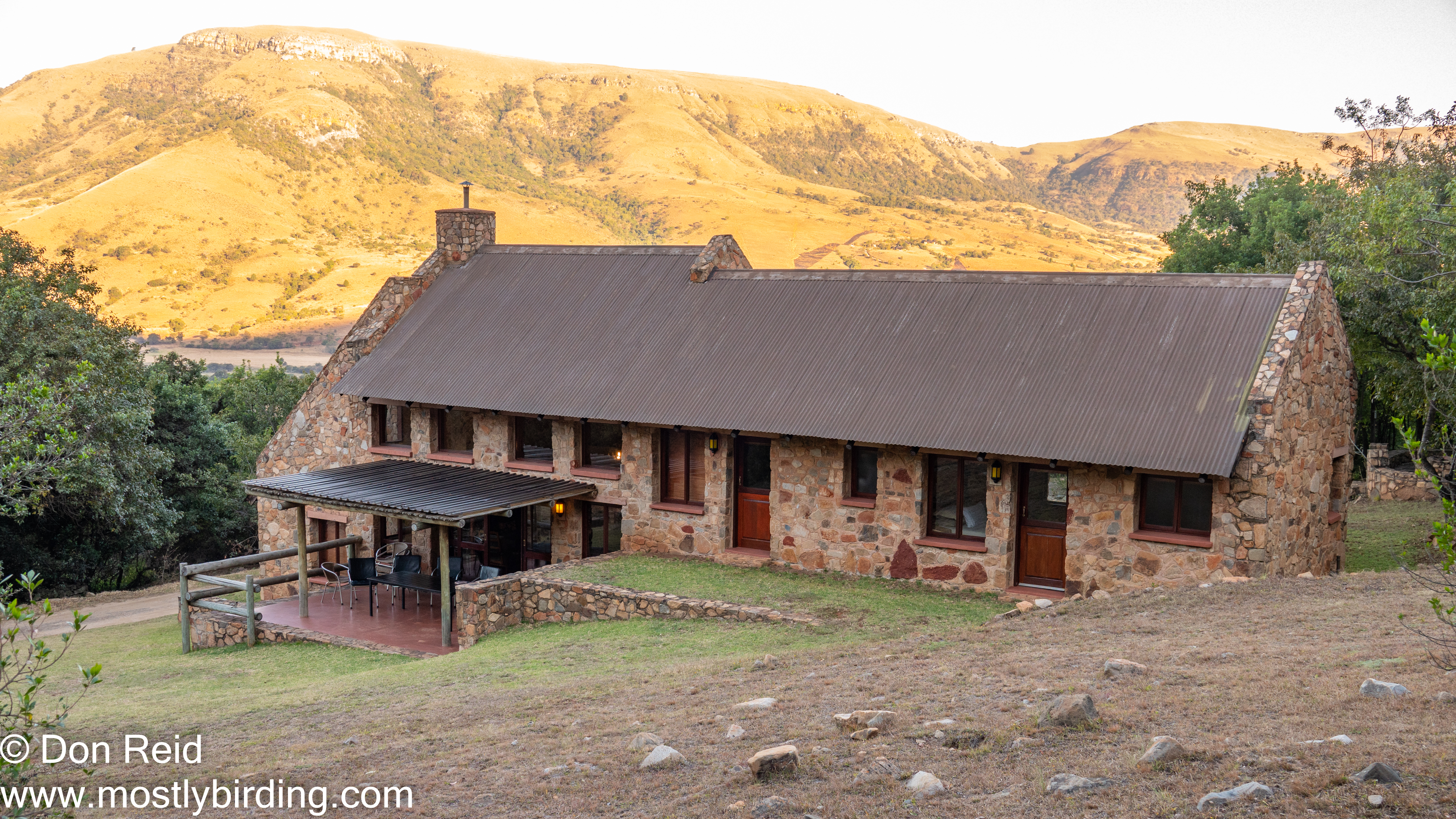
View of Simon’s Town from Penguin Palace B&B
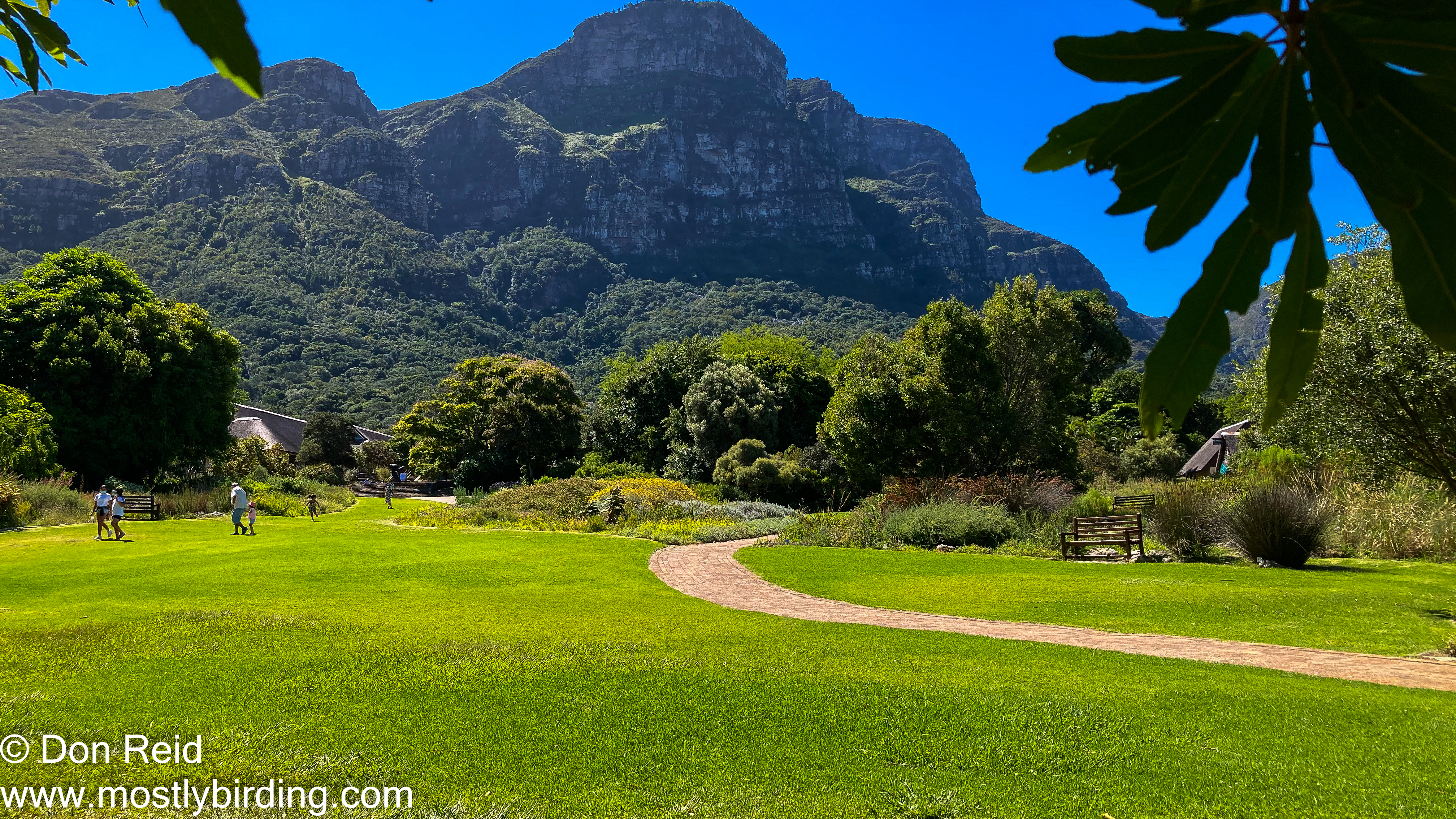
Kirstenbosch National Botanical Gardens in Cape Town – we never visit Cape Town without a visit to these superb gardens
Boulders beach, Simon’s Town, site of the famous African Penguin colony
The Point from the hill, Mossel Bay
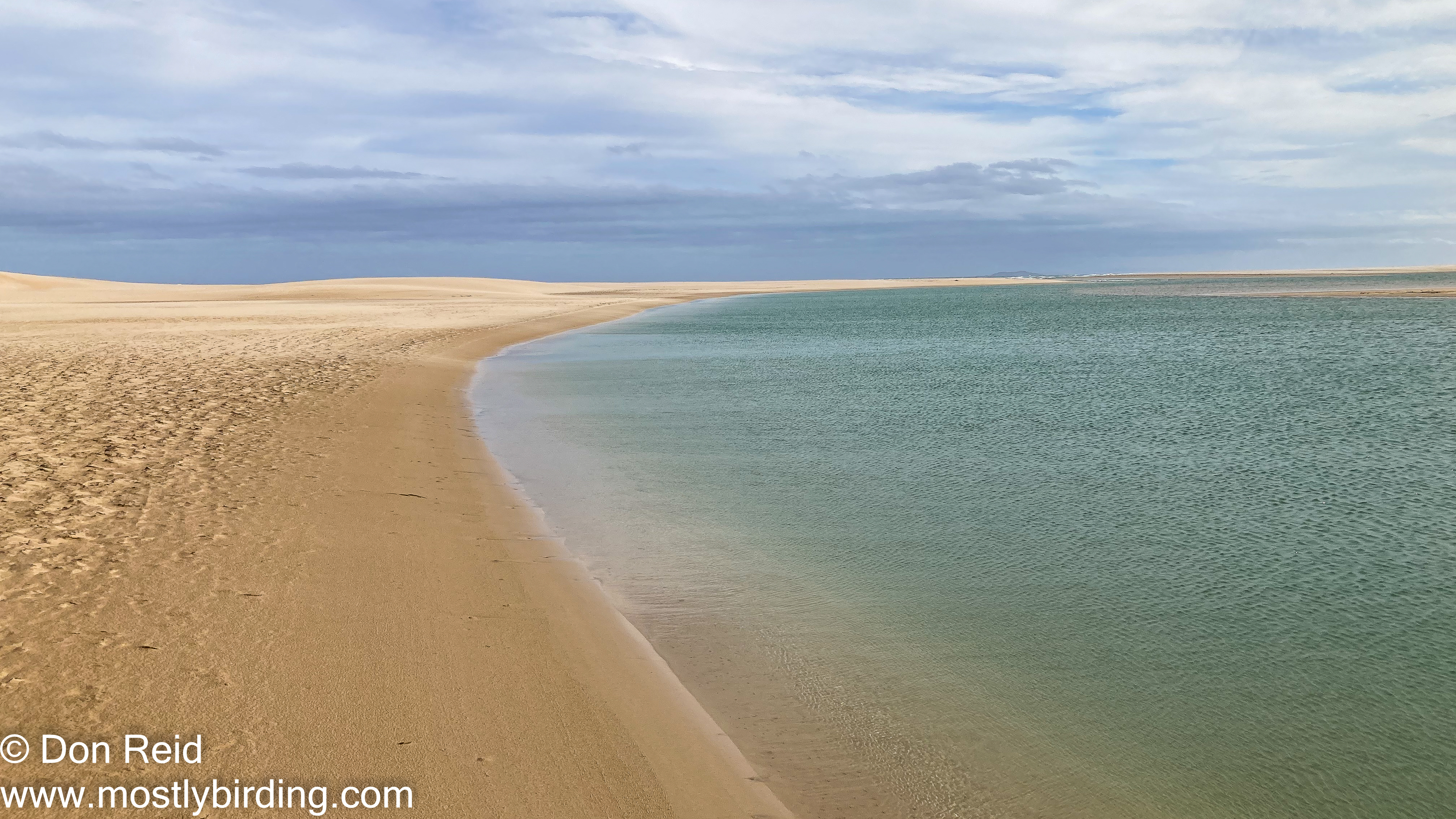
Sunday’s River Mouth, Eastern Cape
Addo Elephant National Park, Eastern Cape
Mountain Zebra National Park, Eastern Cape
Croft 3, Verlorenkloof, Mpumulanga
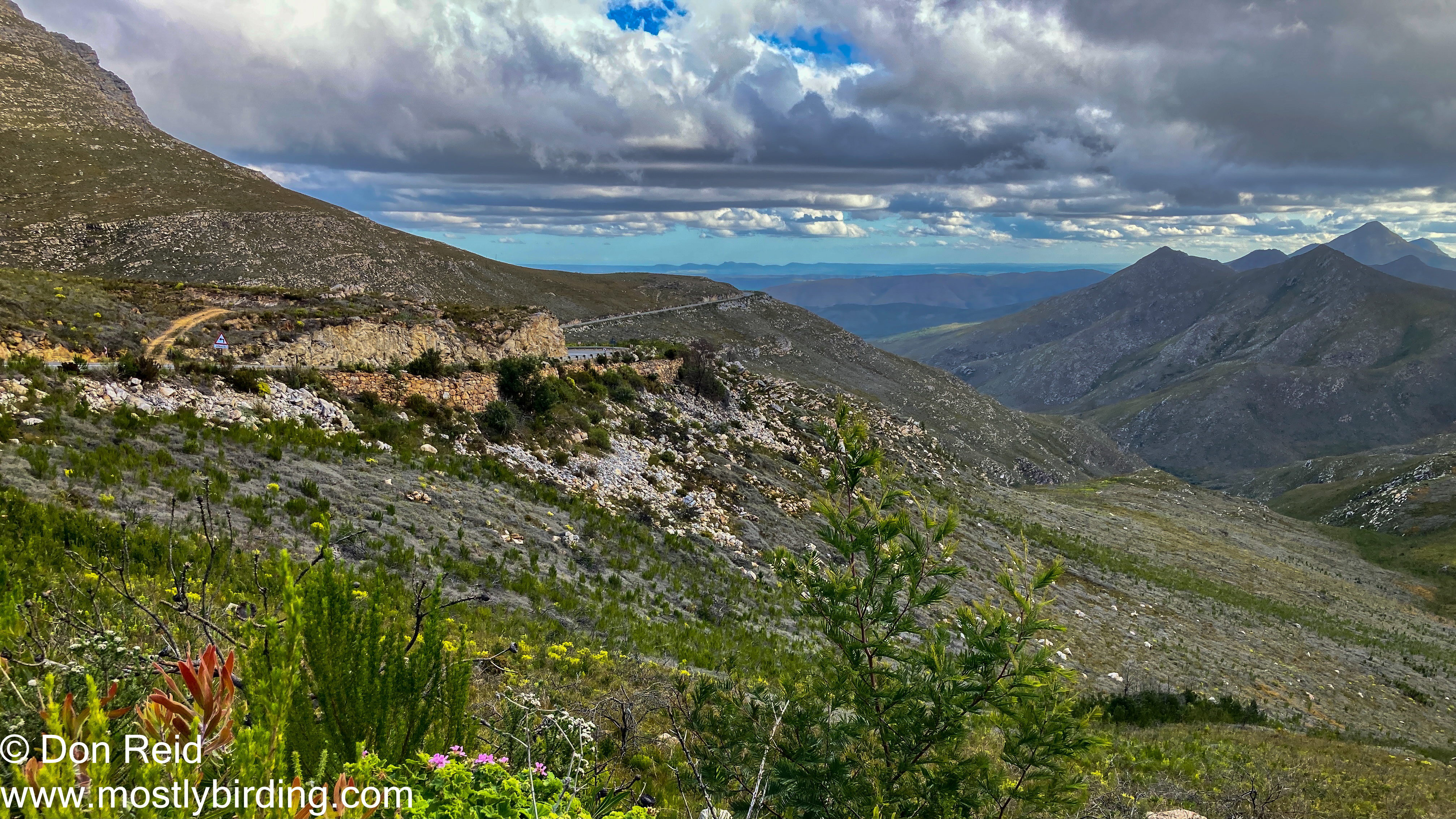
The view from Robinson Pass, between Mossel Bay and Oudtshoorn
Abbotsbury Guest Farm, near Graaff-Reinet, Eastern Cape
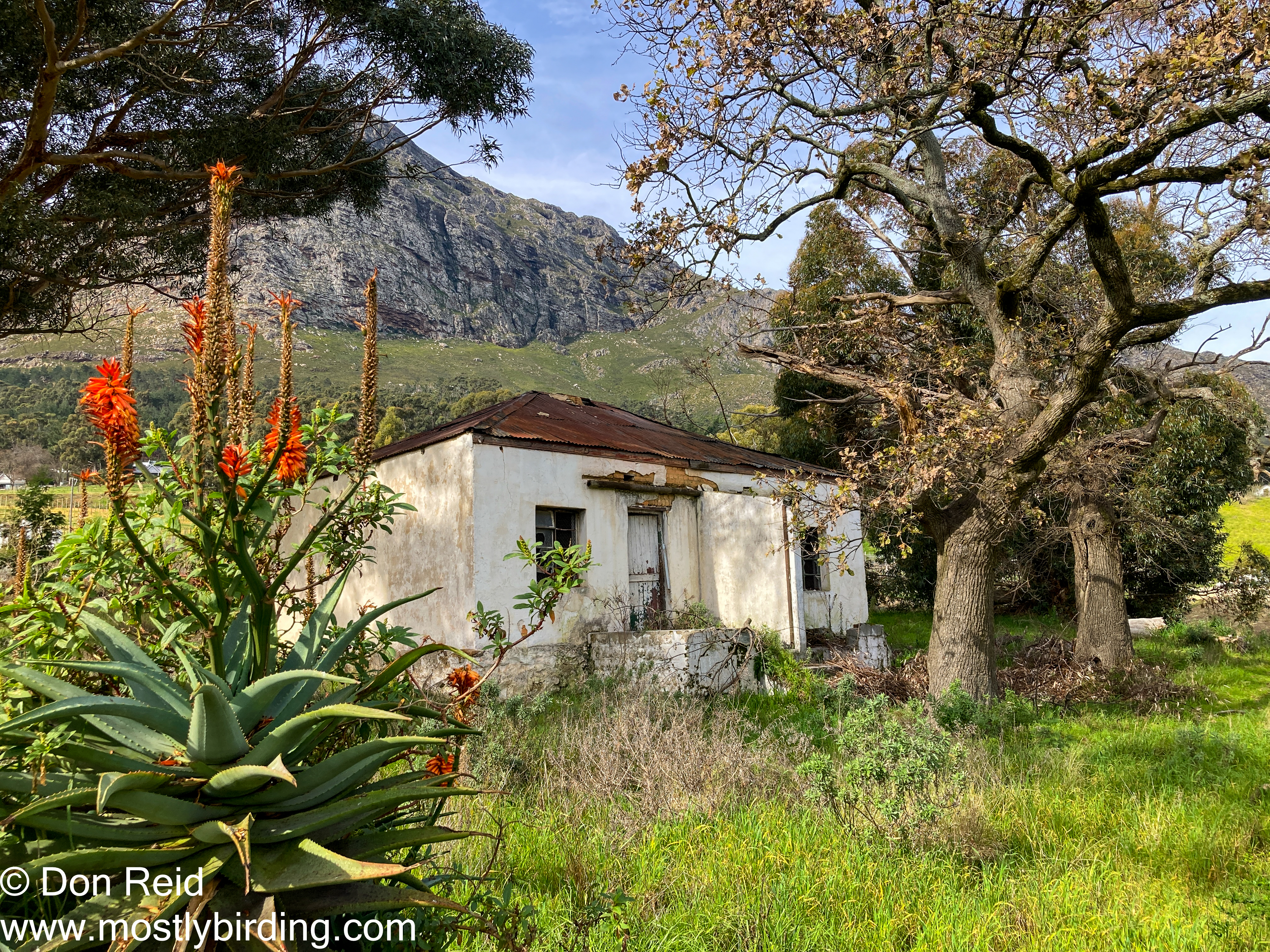
Abandoned cottage, Franschhoek, Western Cape
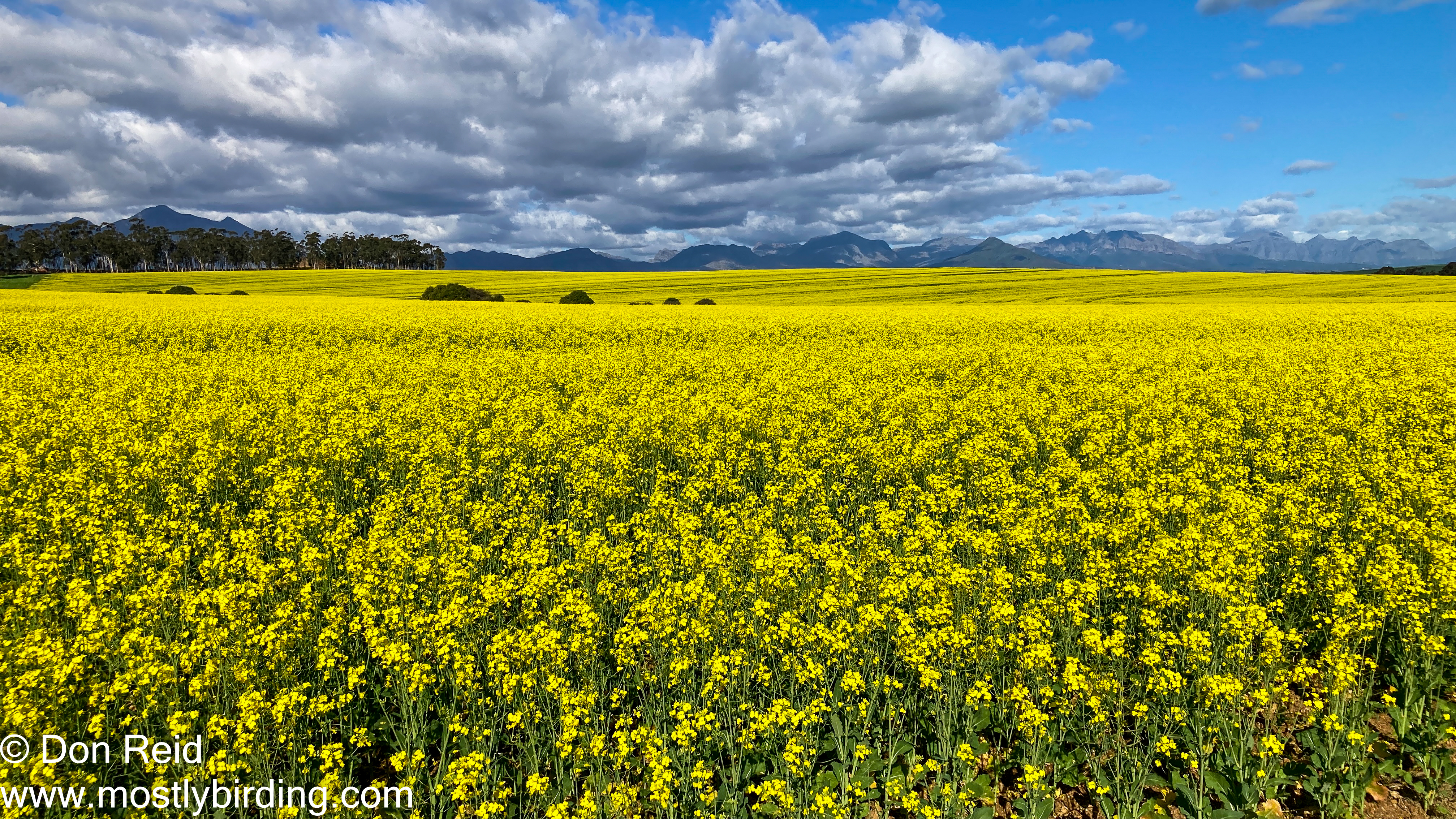
Canola fields, Near Wellington, Western Cape
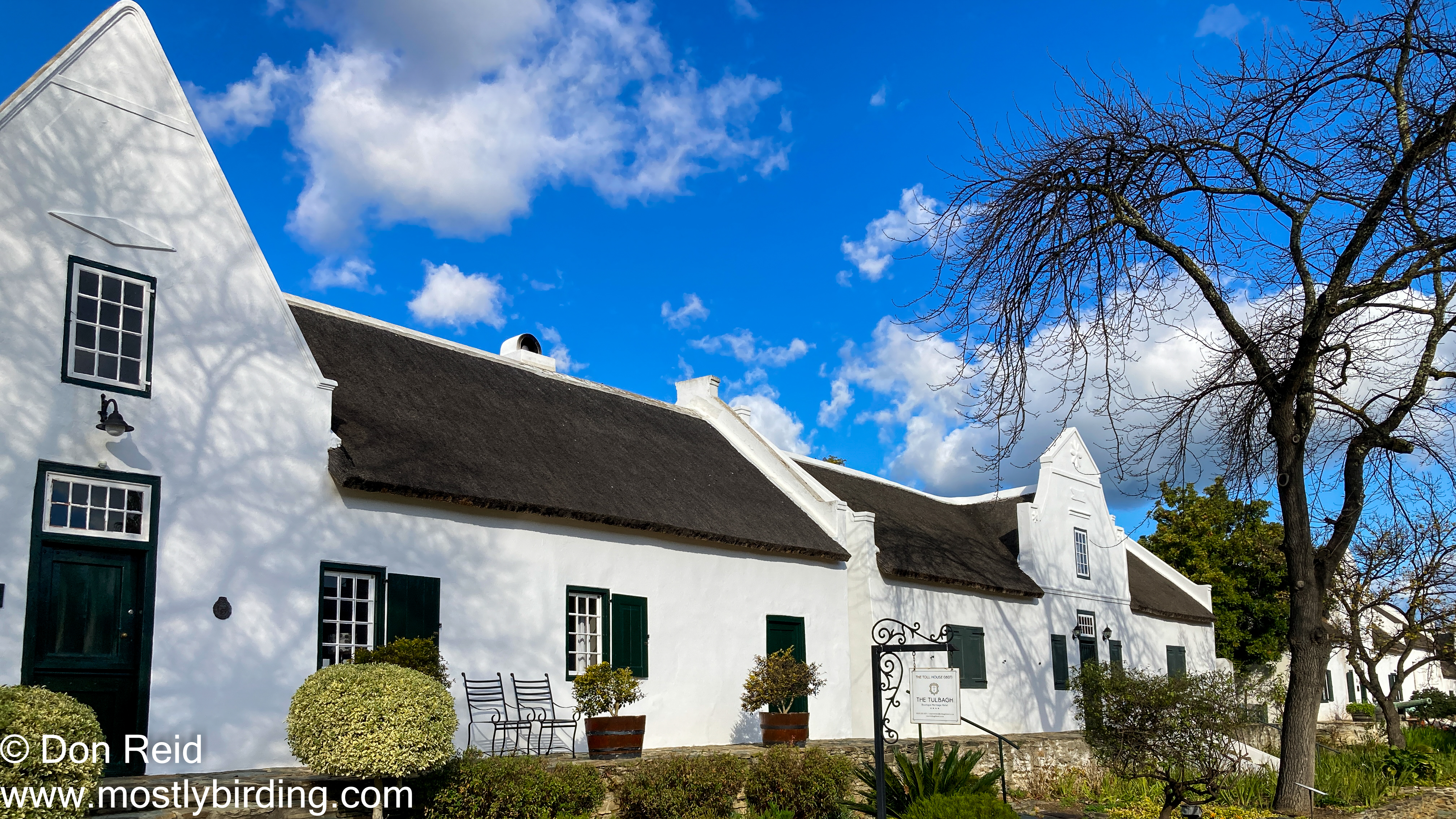
Historic Kerkstraat in Tulbagh, Western Cape
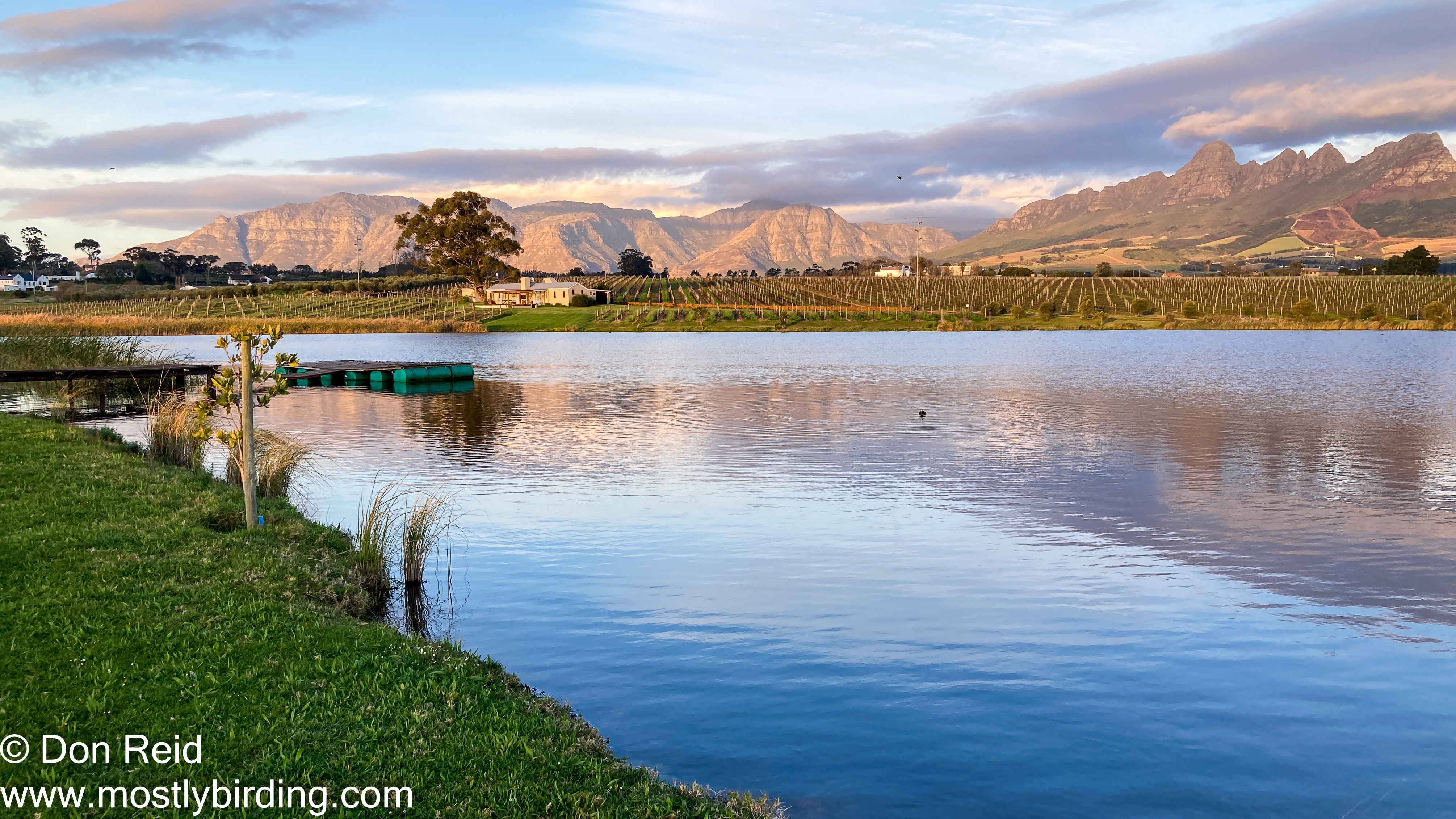
Klein Welmoed Guest Farm, Stellenbosch, Western Cape
West Coast National Park (Postberg section)

The Wildlife

2021 stands out for me as the year we did not visit Kruger National Park – I can’t remember when this last happened! Visits to a couple of the smaller Parks partially made up for this but I’m afraid my selection of wildlife photos is poor by comparison to previous years
Giraffe, Herbertsdale Area
Cape Grey Mongoose Herpestes pulverulentus (Kaapse grysmuishond), Addo Elephant Park
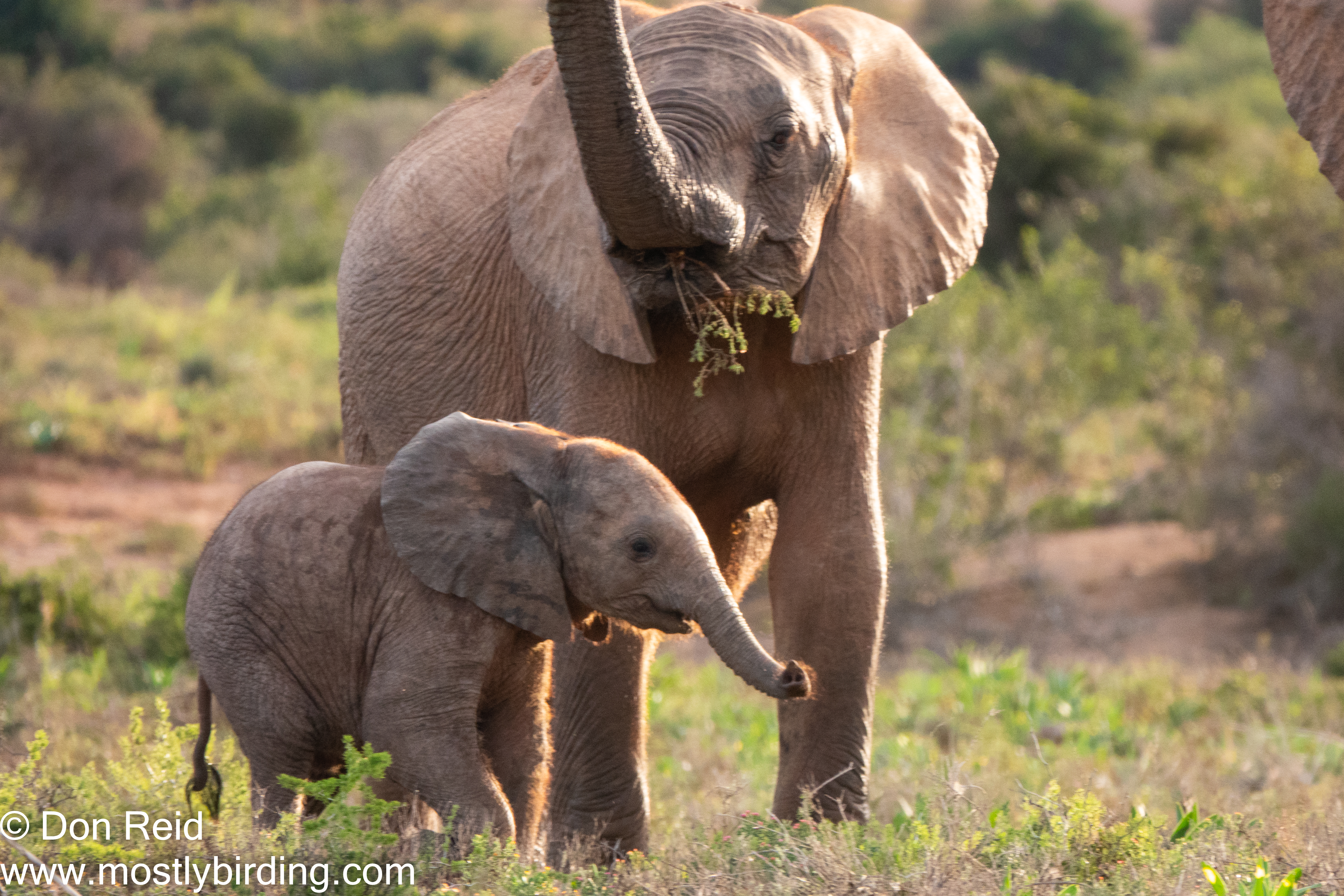
Elephant, Addo Elephant Park
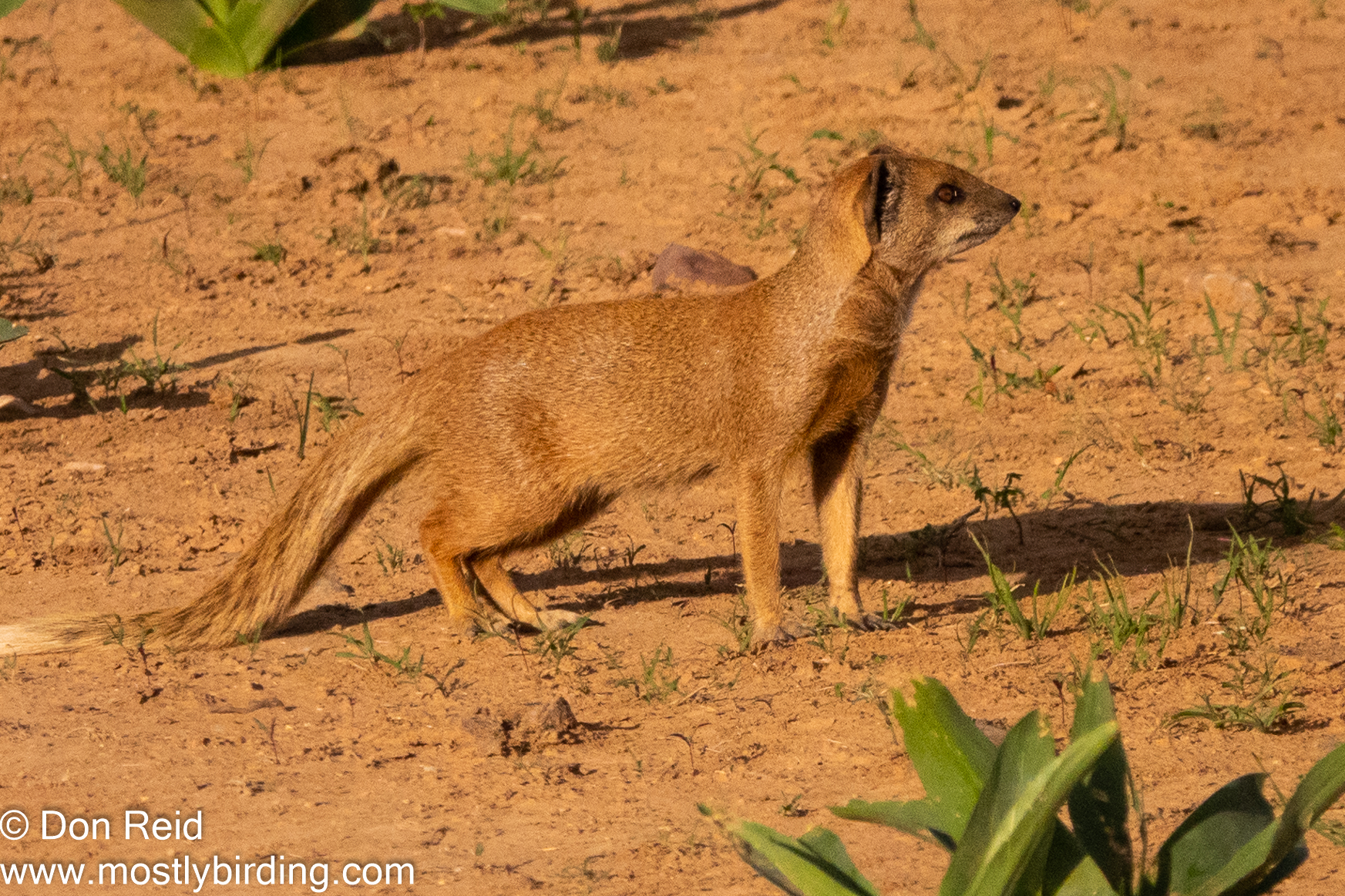
Yellow Mongoose Cynictis penicillata (Rooimeerkat), Addo Elephant Park
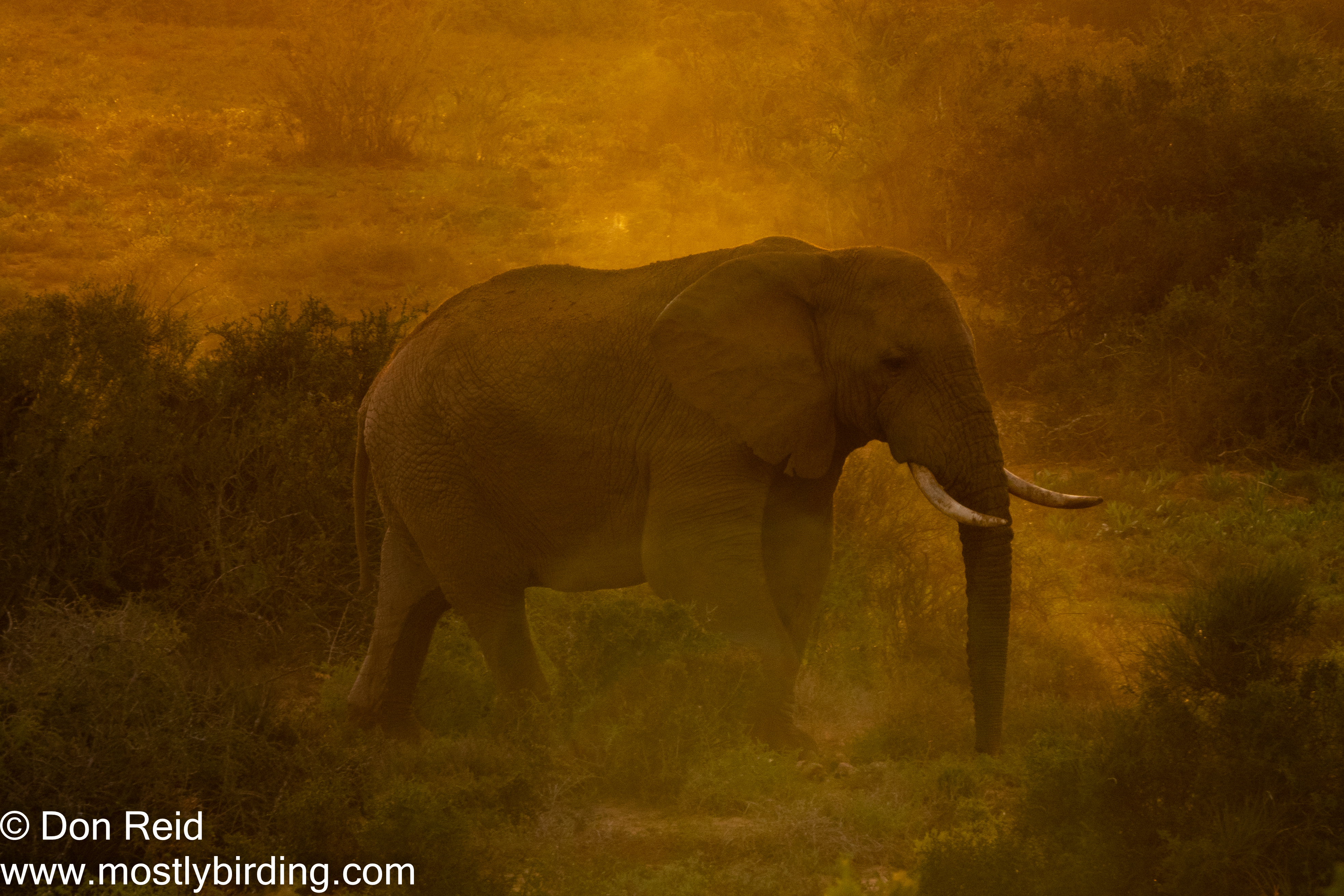
Elephant at dusk, Addo Elephant Park
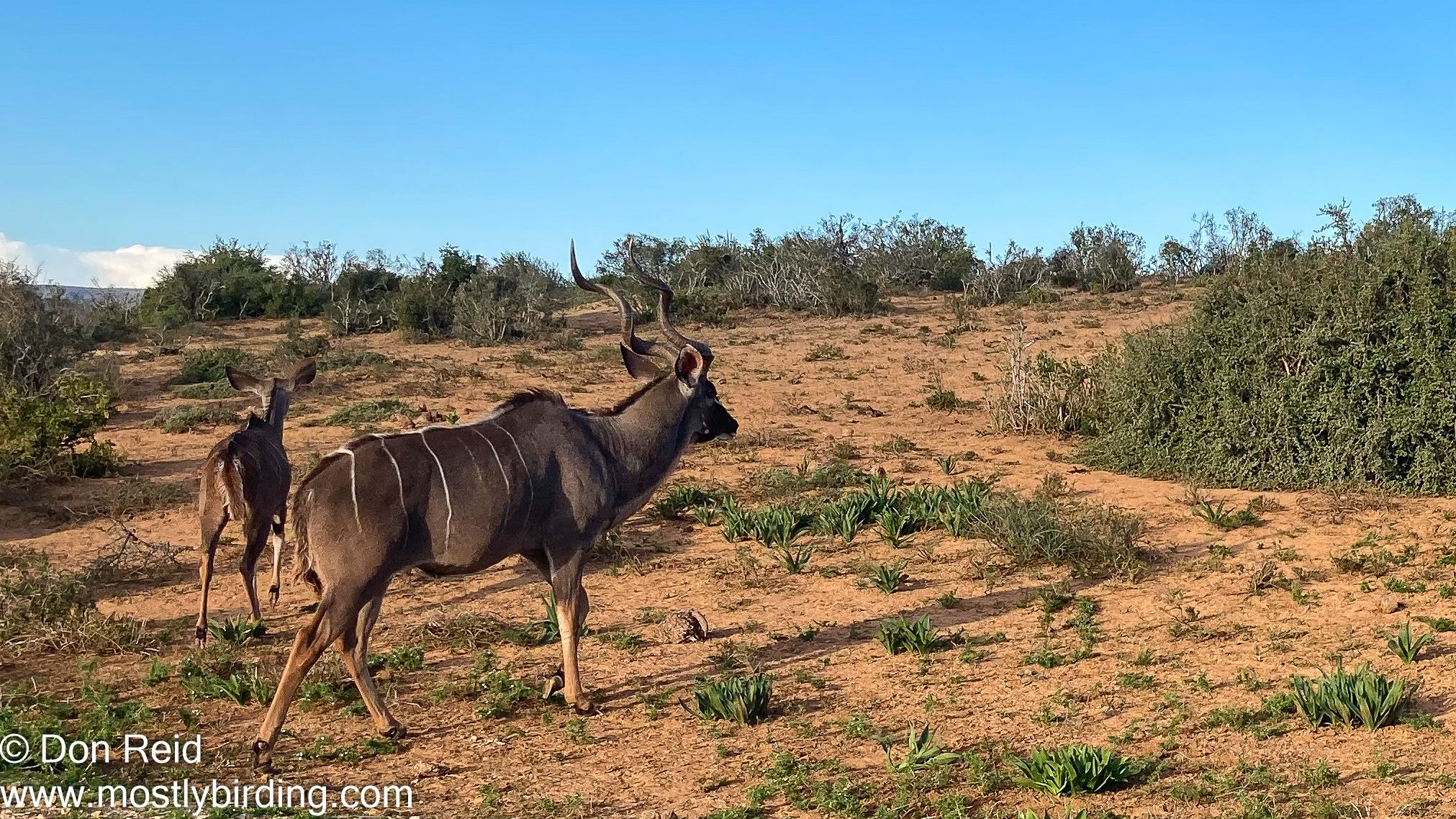
Kudu, Addo Elephant Park
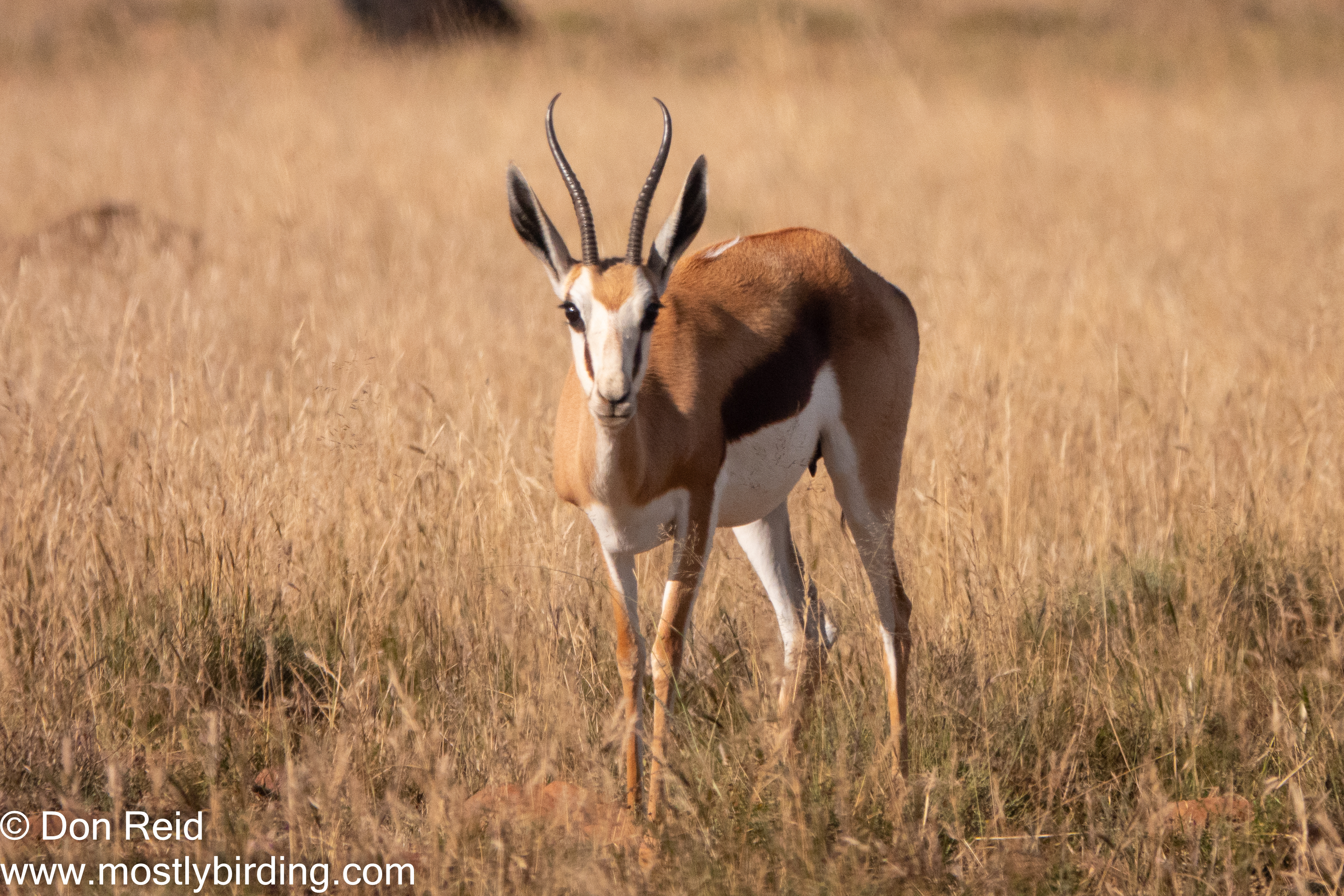
Springbok, Mountain Zebra NP
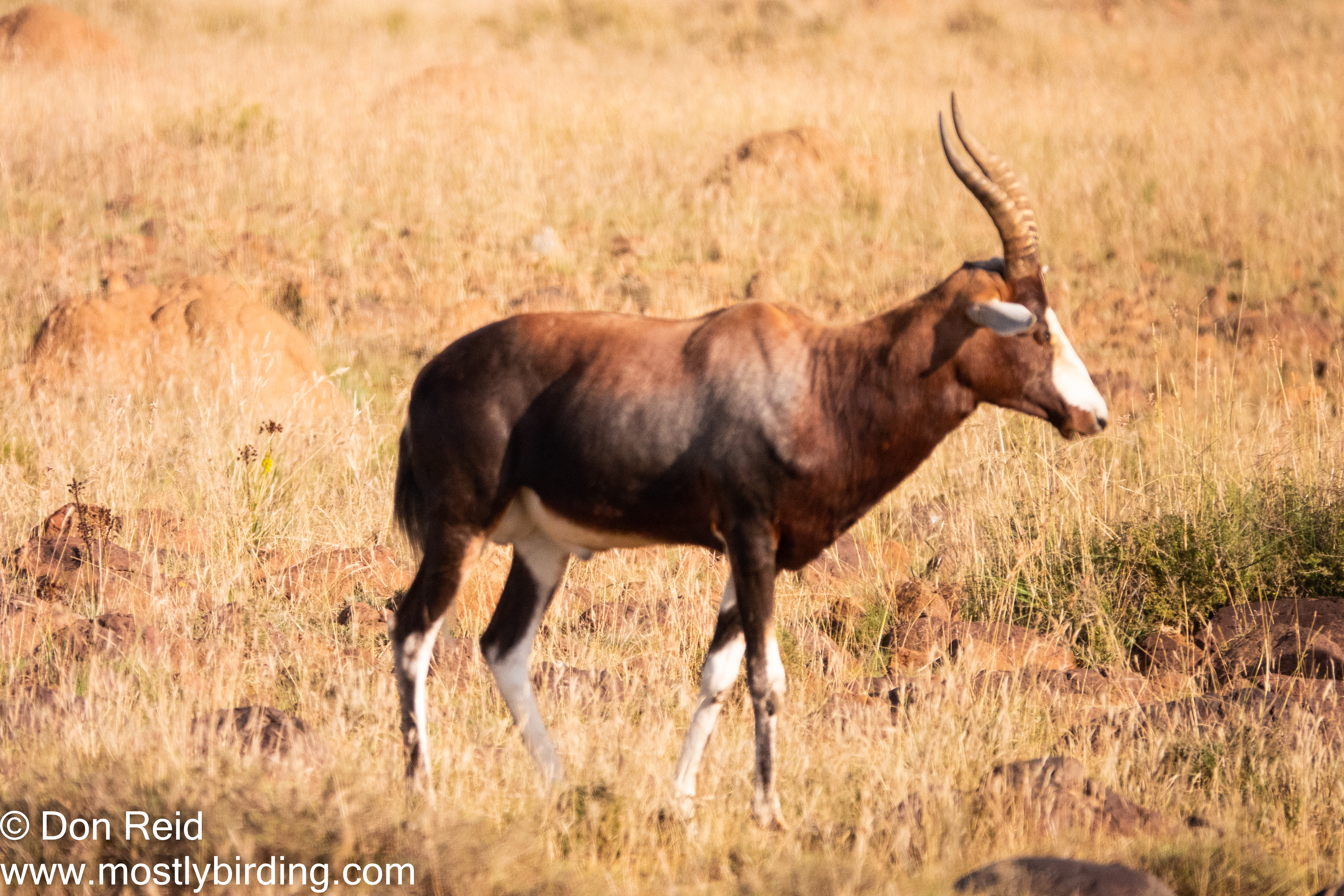
Bontebok, Mountain Zebra NP
Mountan Zebra, Mountain Zebra NP
Mother and child” Vervet Monkey Chlorocebus pygerythrus (Blouaap), Mountain Zebra NP

The Reptiles

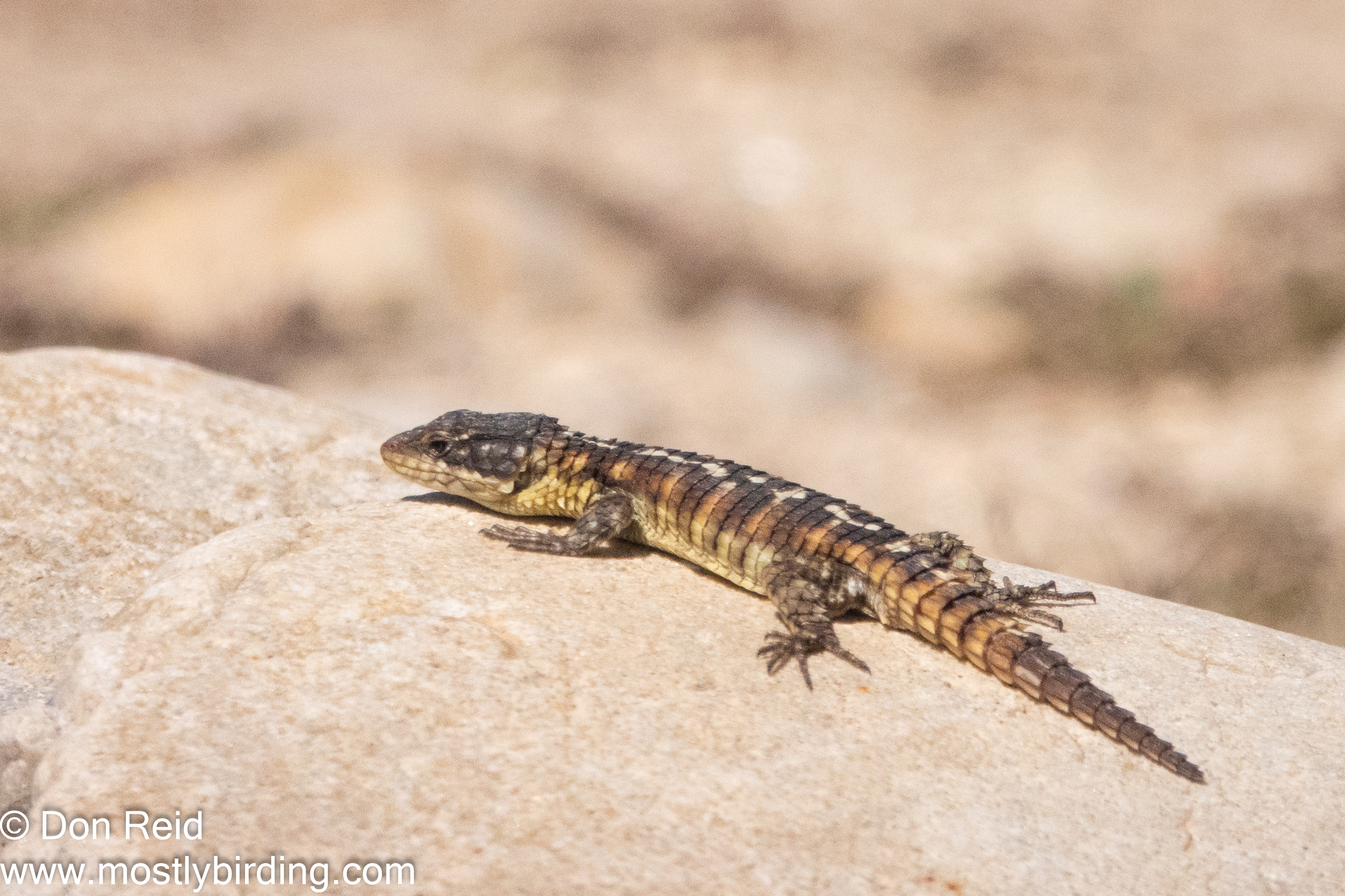
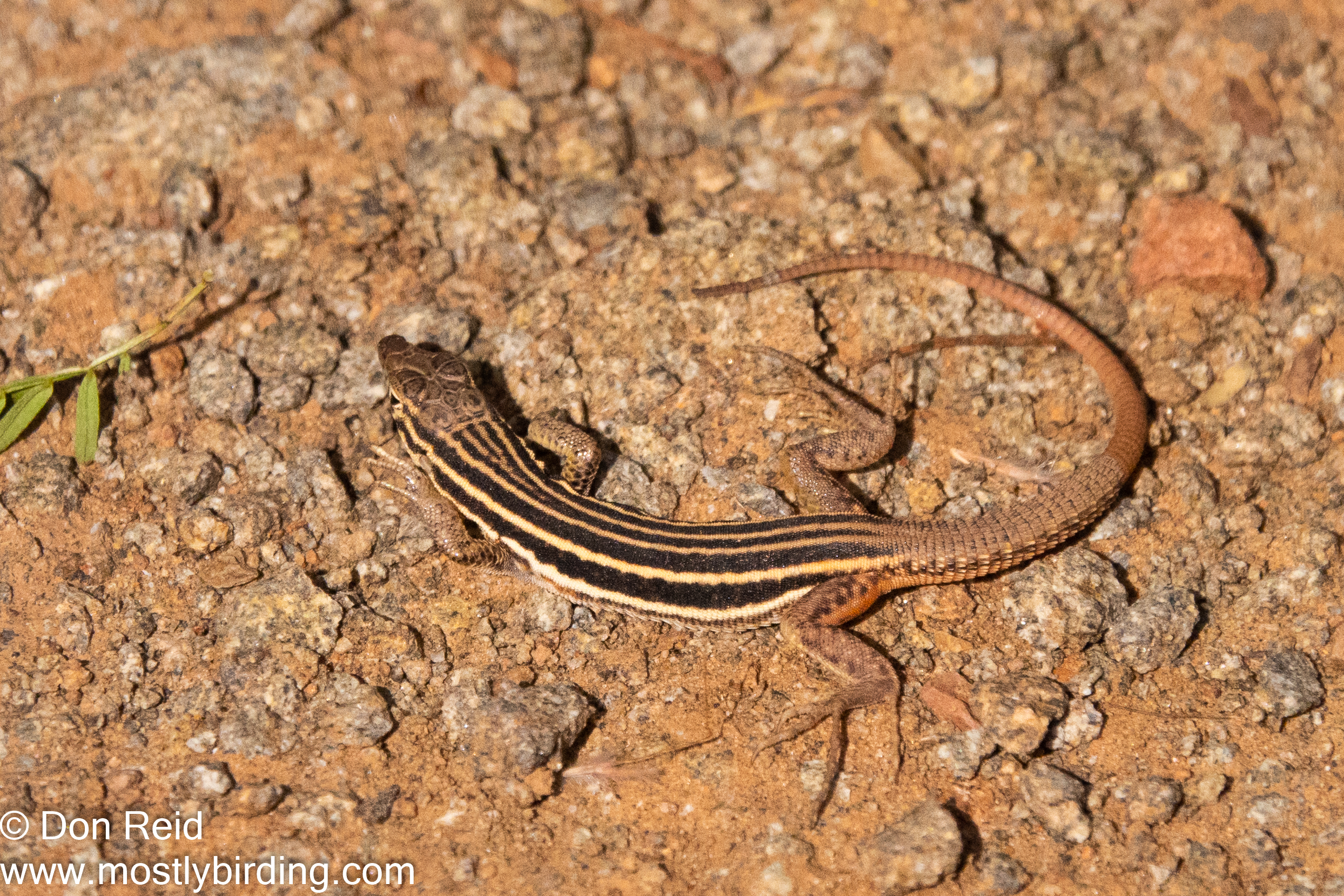
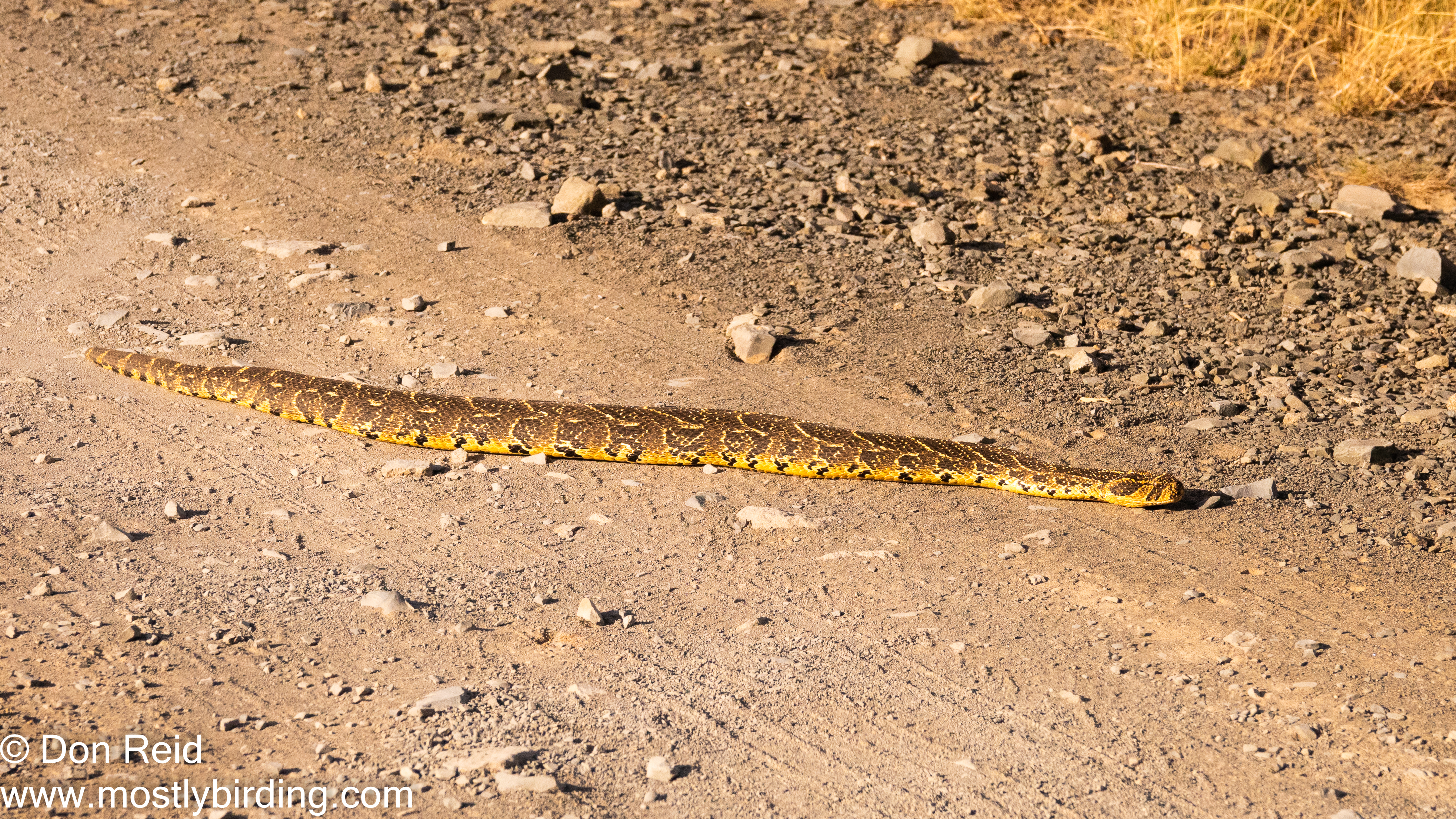
Reptiles are interesting creatures and I love it when the opportunity to photograph them at reasonably close quarters arises – here are a few examples – unfortunately I have not got around to positively identifying the first two yet

Probable Plated Lizard of some kind, Gouritzmond Area
Probable Sand Lizard, Mountain Zebra NP
Puff adder Bitis arietans (Pofadder), Mountain Zebra NP

The Other Stuff

And the rest – photos that don’t fall into a category but have a certain character that appeals to me

Windmill, Hillside Farm Trompsburg
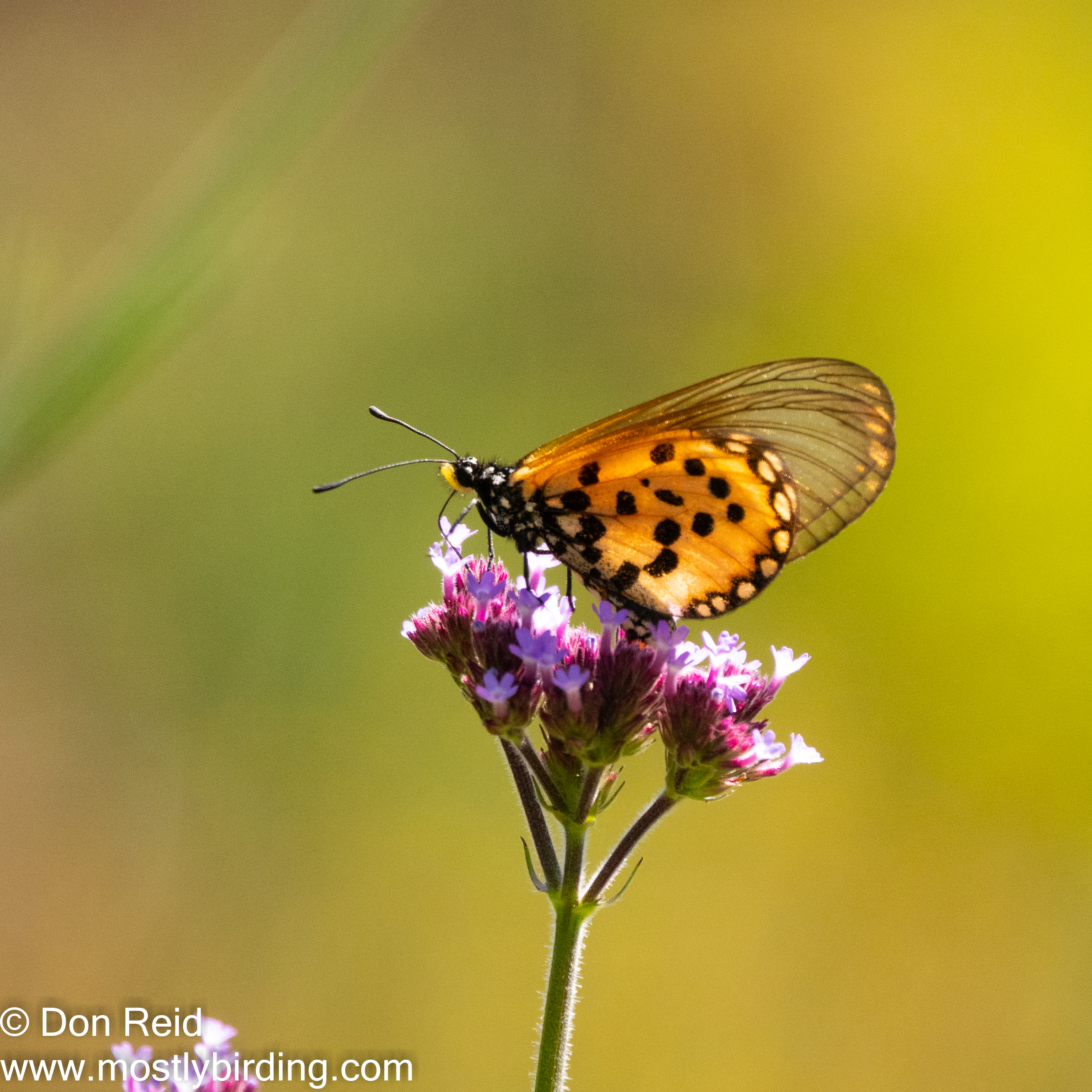
Garden Acraea Butterfly, Kirstenbosch
Beach footprints, Nature’s Valley – where the birds go, I am bound to be not far behind
Doorknob selfie, Abbotsbury, Graaff-Reinet
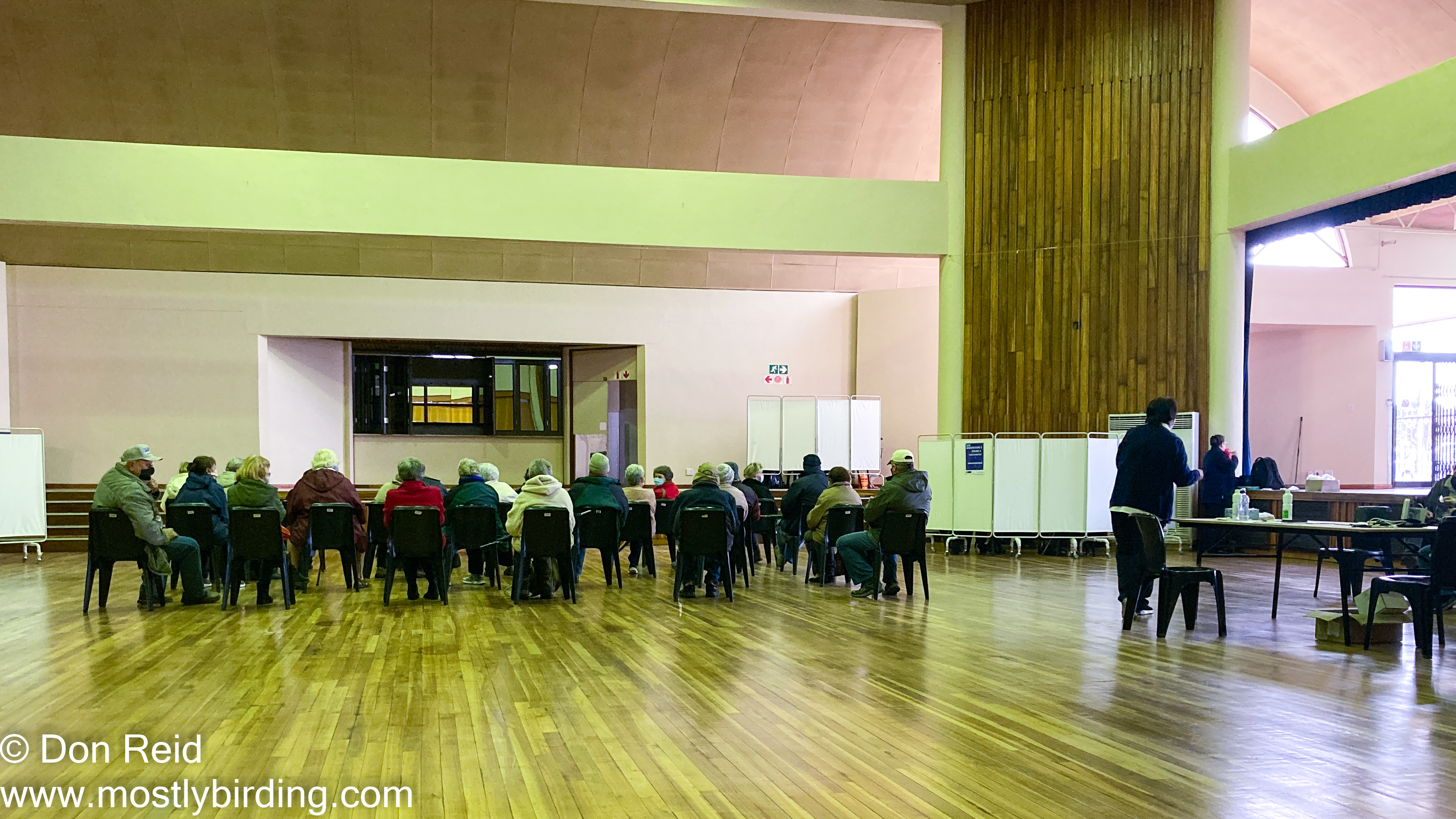
Waiting our turn to get the vaccine, Mossel Bay
Saartjie, our daughter’s Border Terrier, enjoying a mid-winter (gas) fire , Mossel Bay
Surfer, Mossel Bay Point
Flowers in Robinson Pass
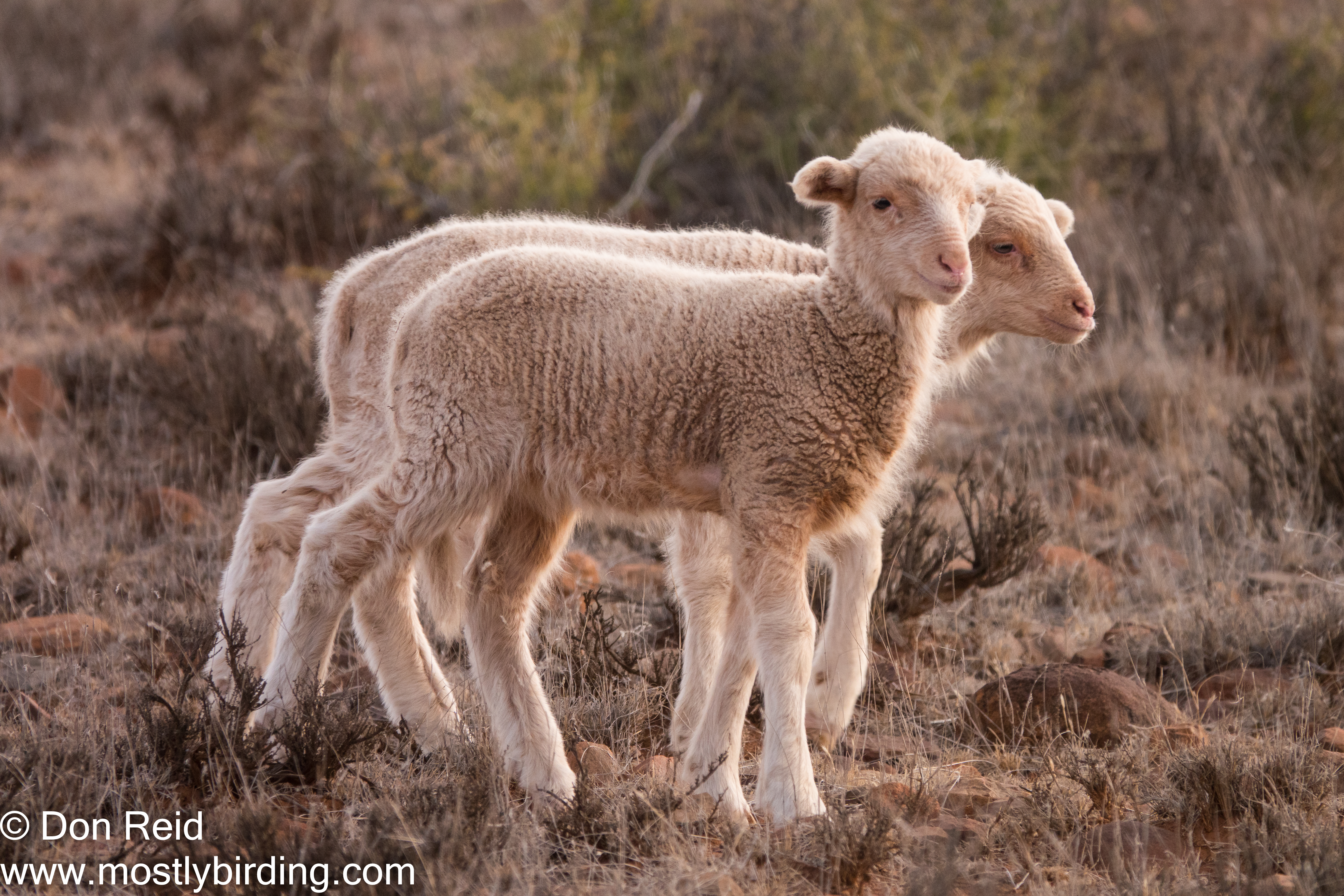
Karoo Lambs, Abbotsbury Guest Farm
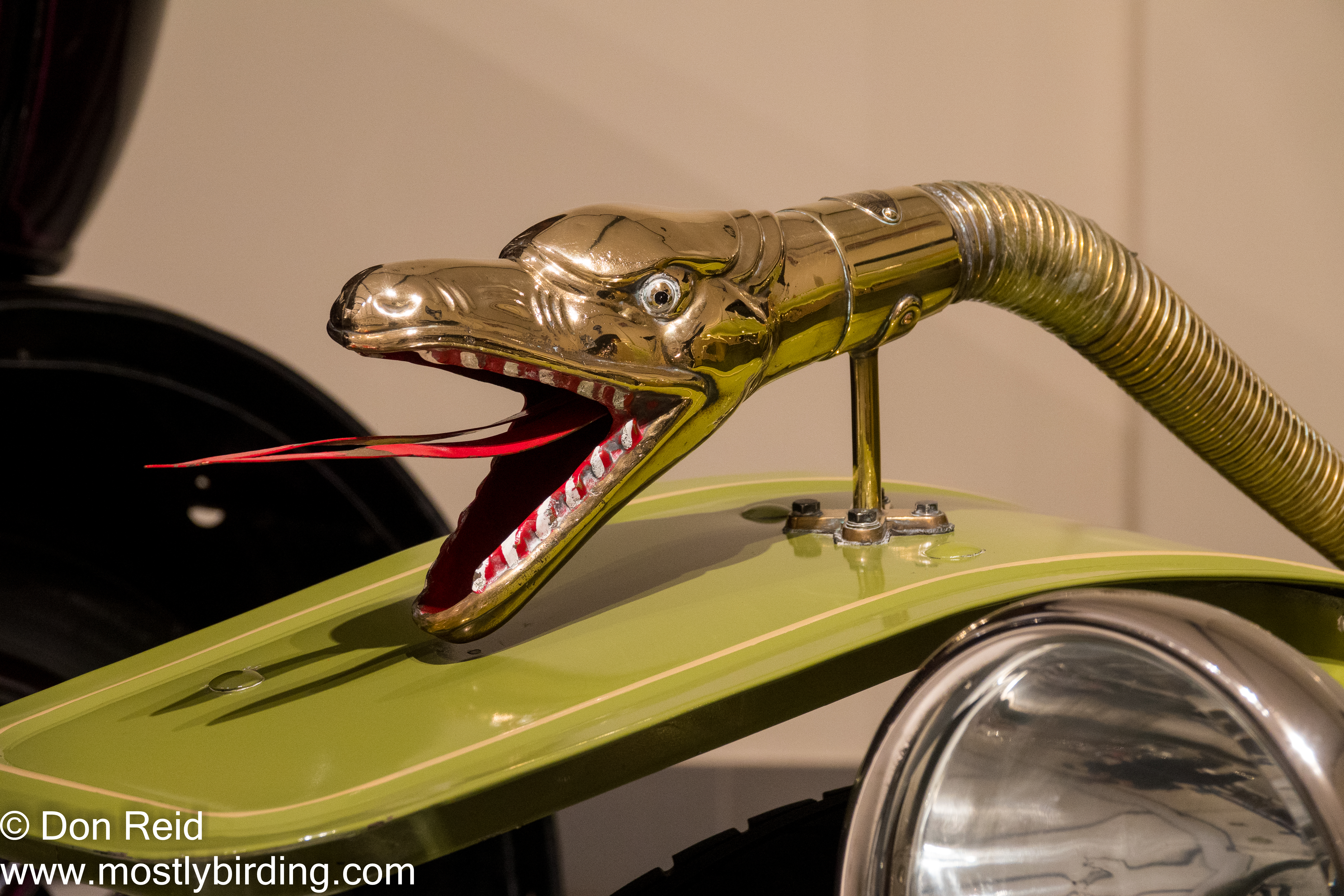
Dragon hooter (horn) on 1911 Lorraine-Dietrich Convertible, Franschhoek Motor Museum
Spring flowers, Cape Columbine Nature Reserve (Tietiesbaai)

Have a wonderful 2022!

My Photo Picks for 2021 – The Birds and a Bee

With the new year barely out of the starting blocks, it’s once again time to select the photos which best represent our travels and nature experiences during 2021, plus a few others that appeal to me for various reasons.  Despite the ongoing restrictions brought upon all of us by Covid 19, we still managed to travel fairly extensively, although it was limited to the borders of South Africa. 

I’m hoping you will find some of my favourite images to your liking – if you do, please take a moment to mention them in the comments at the end of the post. 

The Birds

During a normal birding year, I take a couple of thousand images of birds – this past year, for various reasons, I did not get out in the field birding and atlasing as much as I would normally have done, nevertheless when it came to choosing images I was happy to find that it was as challenging as ever.

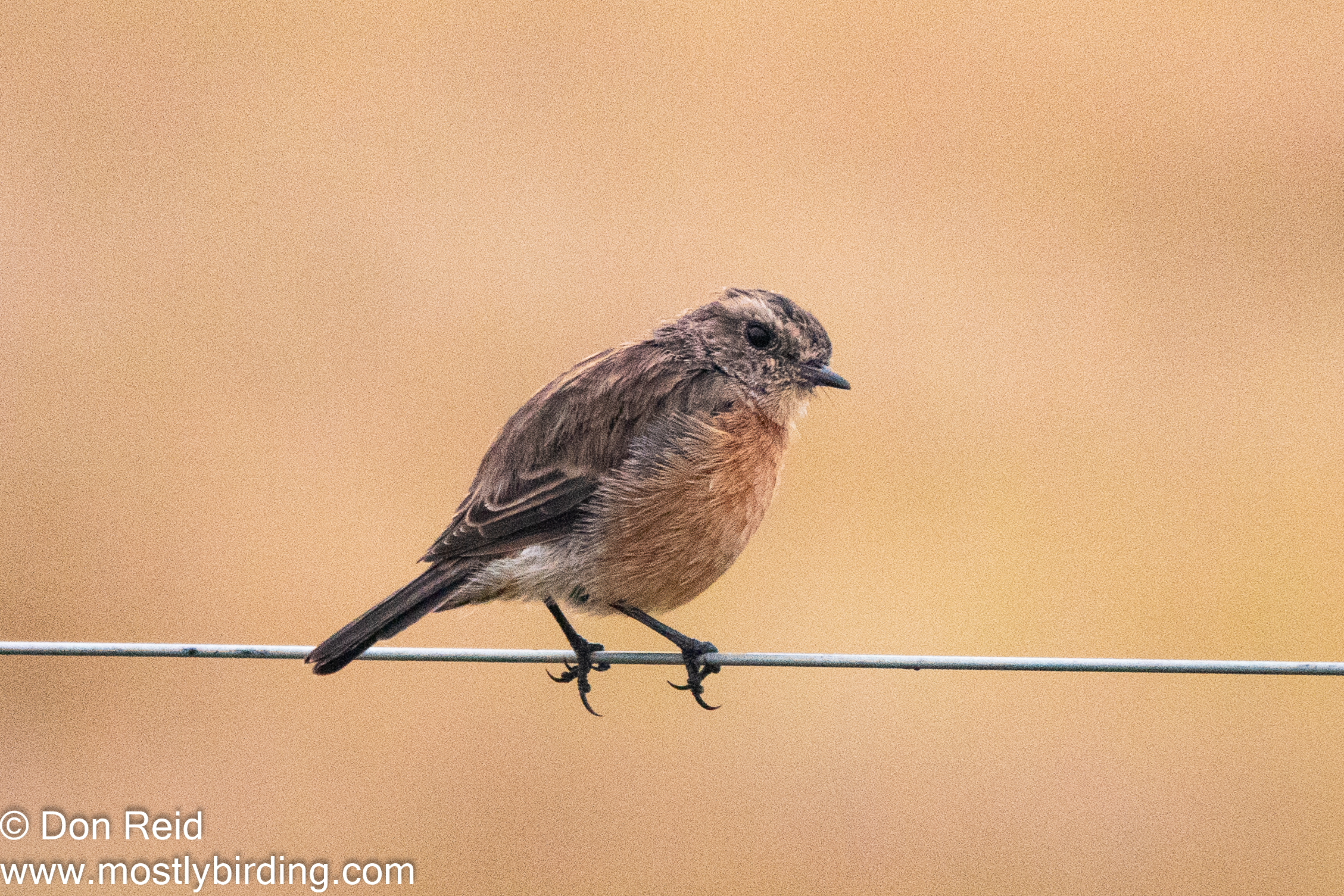
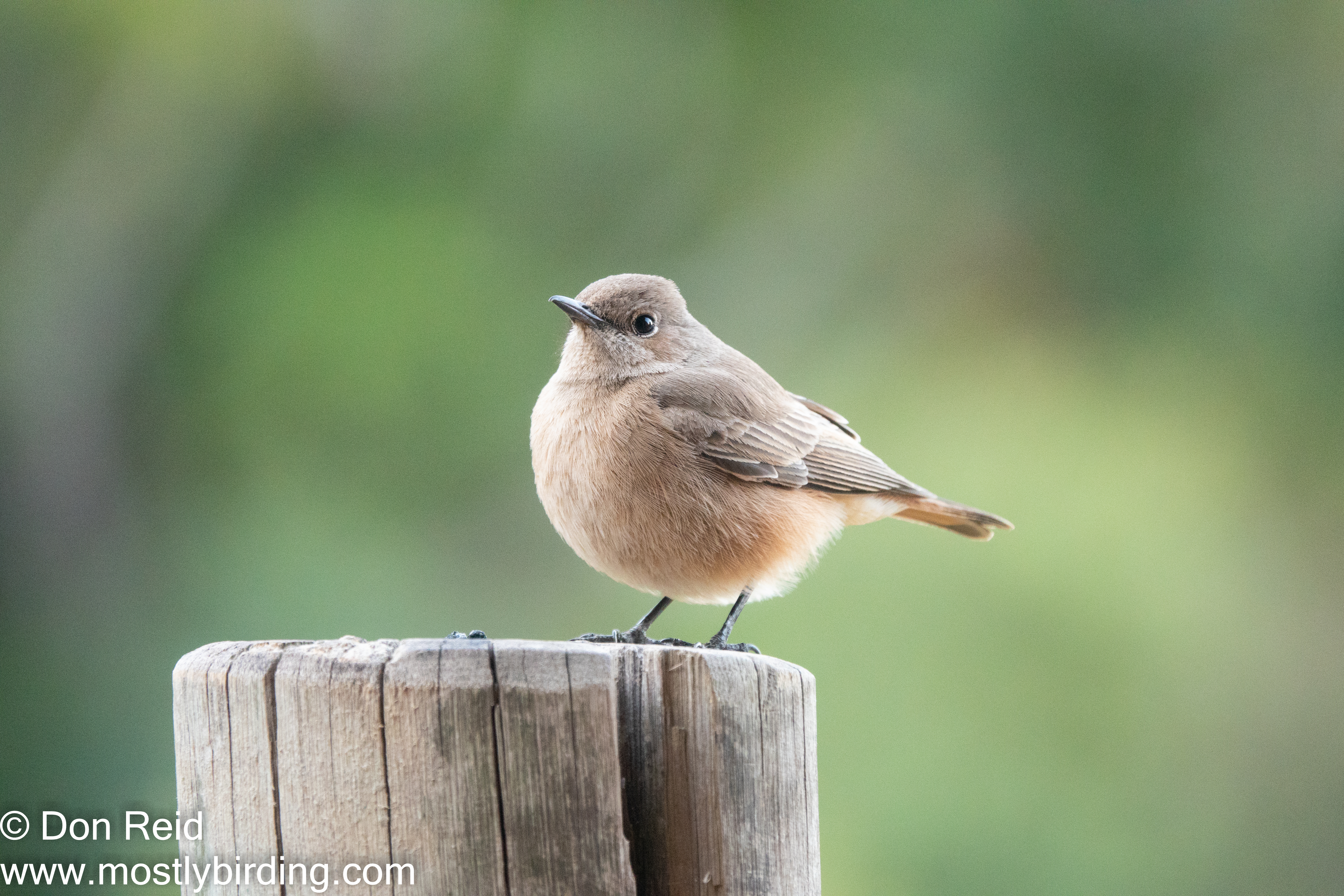
African Stonechat Saxicola torquatus (Gewone bontrokkie) (Female) , Herbertsdale Area
Common Buzzard Buteo buteo (Bruinjakkalsvoël), Herbertsdale Area
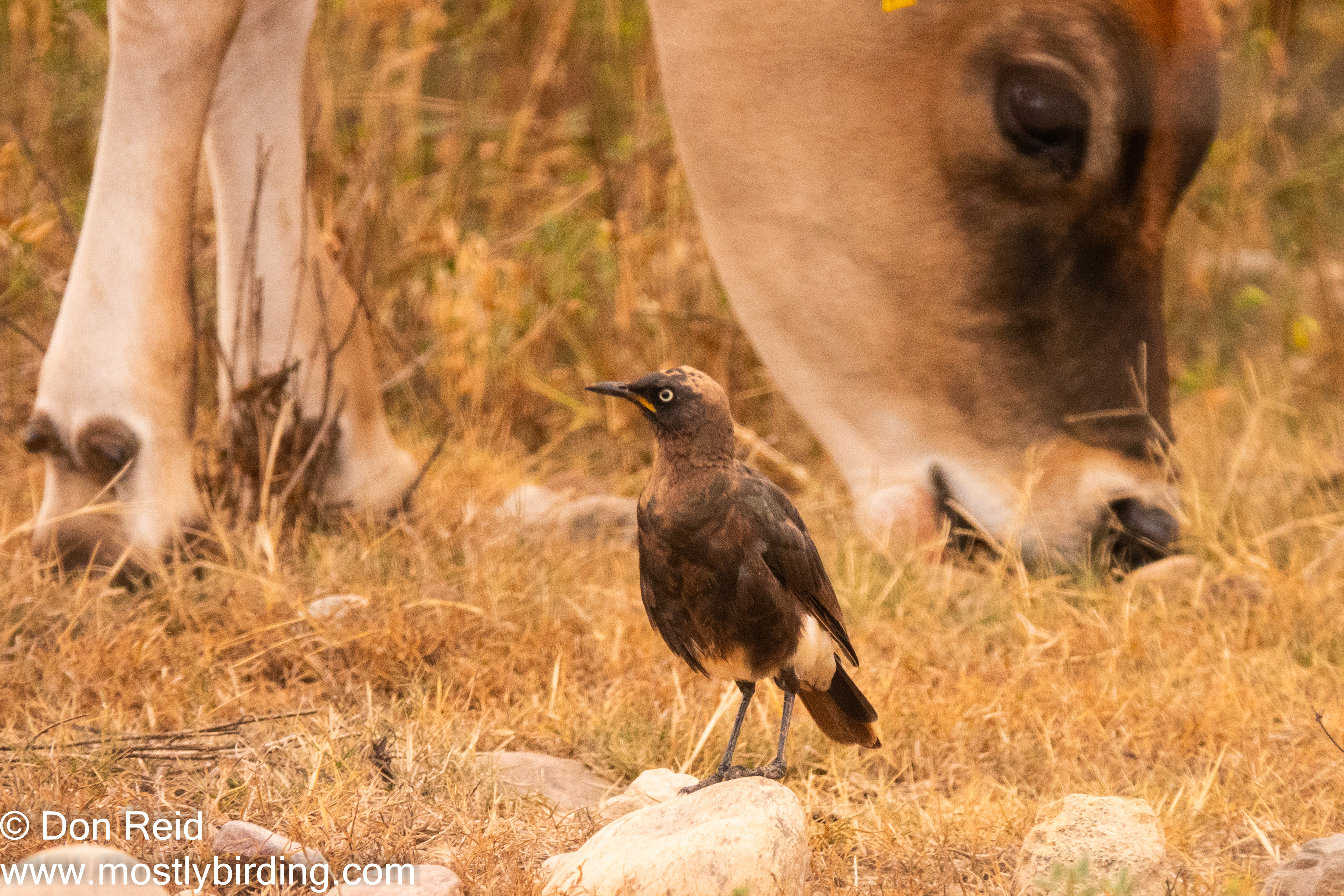
Pied Starling Lamprotornis bicolor (Witgatspreeu), Herbertsdale Area
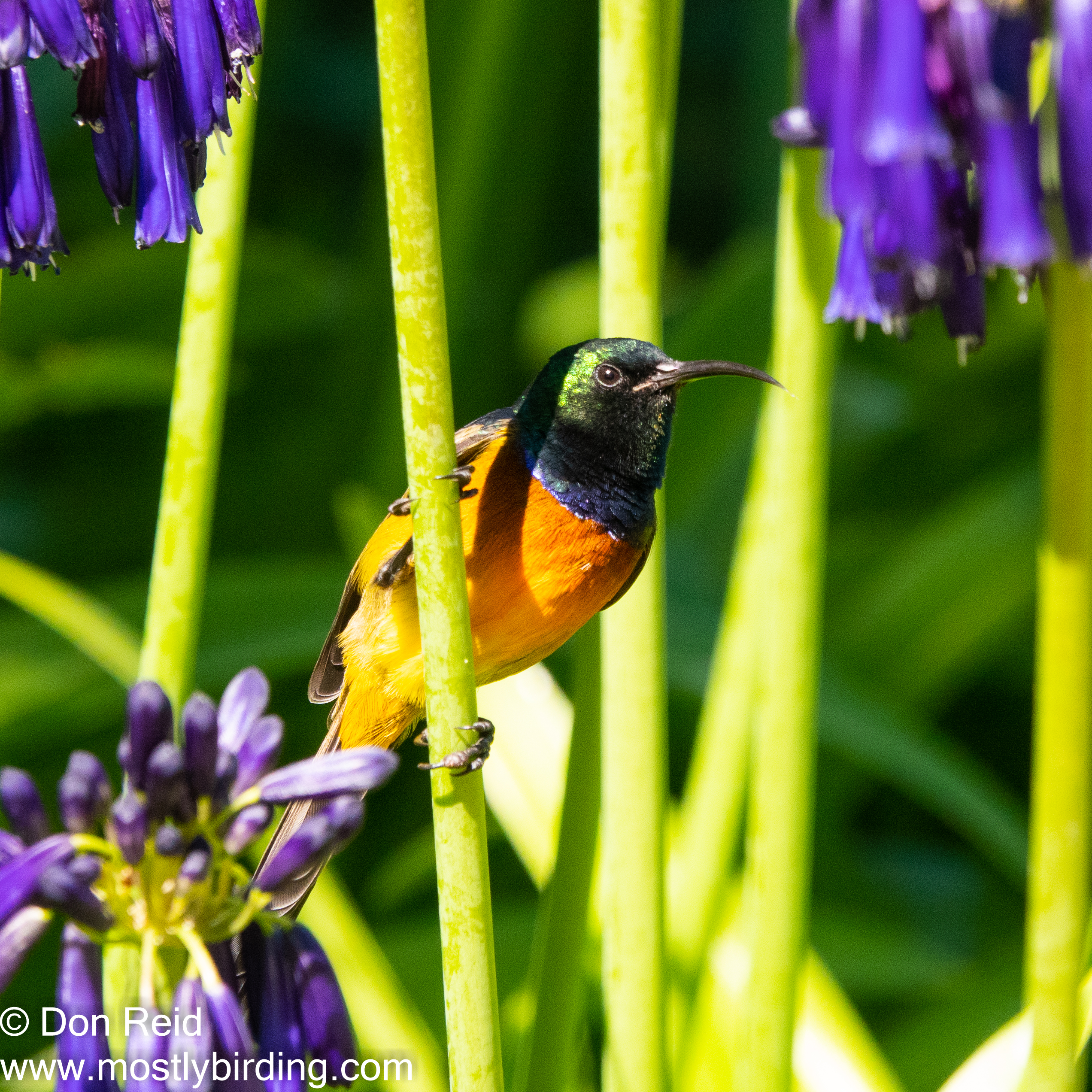
Orange-breasted Sunbird Anthobaphes violacea (Oranjeborssuikerbekkie), Kirstenbosch
Rock Kestrel Falco rupicolus (Kransvalk), Vleesbaai area
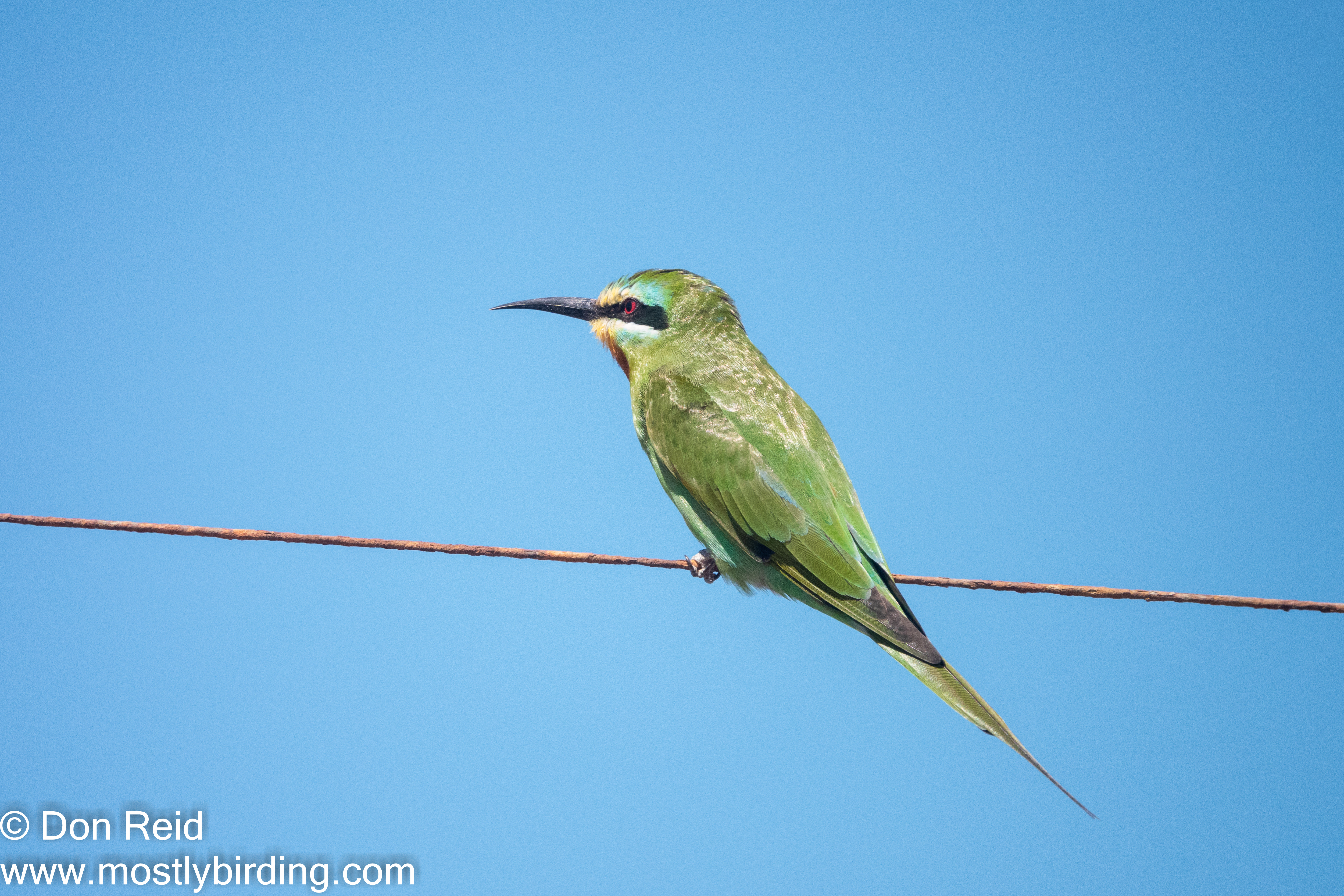
Blue-cheeked Bee-eater Merops persicus (Blouwangbyvreter) (Western Cape rarity), Gouritzmond Area
Large-billed Lark Galerida magnirostris (Dikbeklewerik), Herbertsdale Area
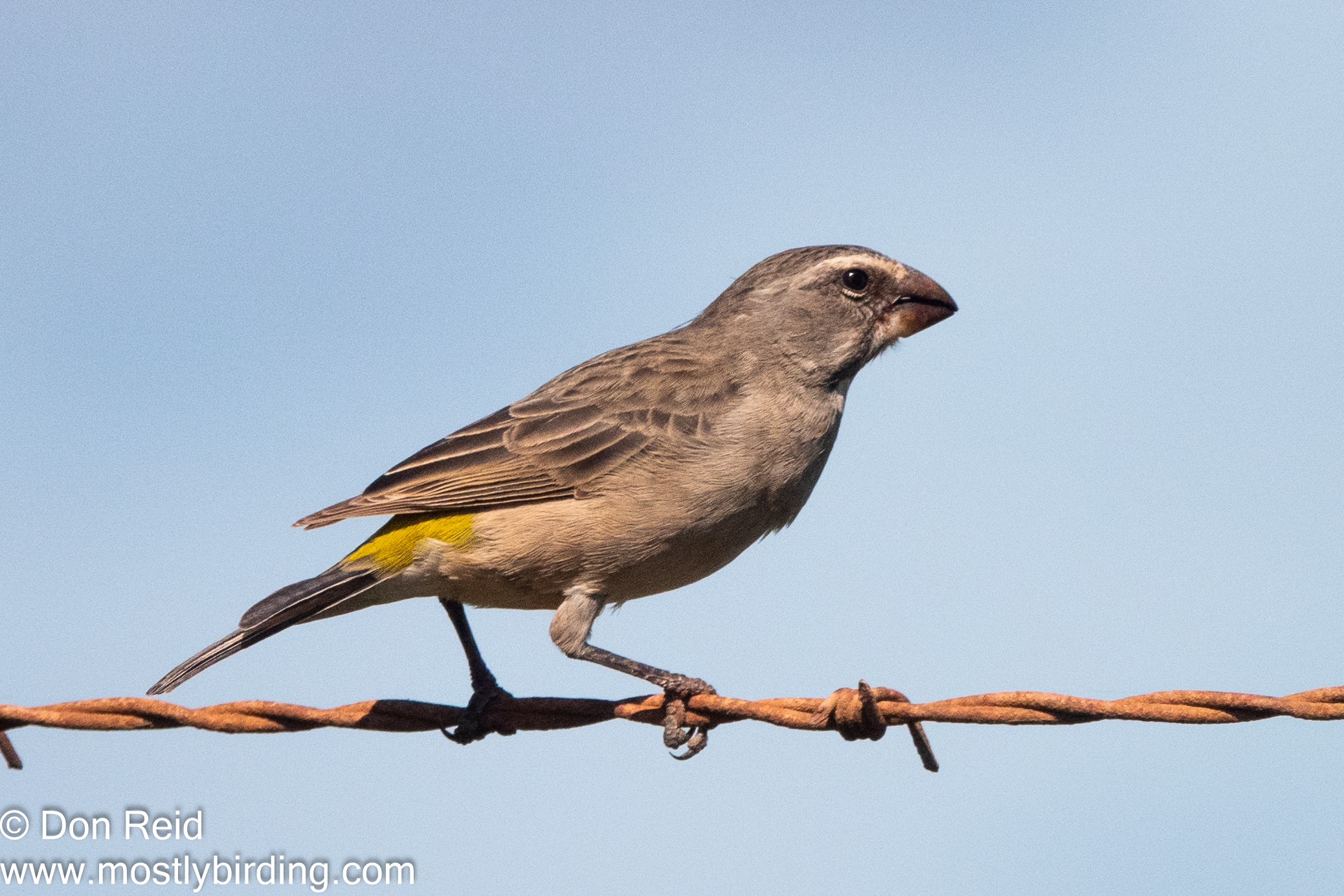
White-throated Canary Crithagra albogularis (Witkeelkanarie), Herbertsdale Area, Western Cape
White-bellied Sunbird Cinnyris talatala (Witpenssuikerbekkie), Donkerhoek / Boschkop Area, Gauteng
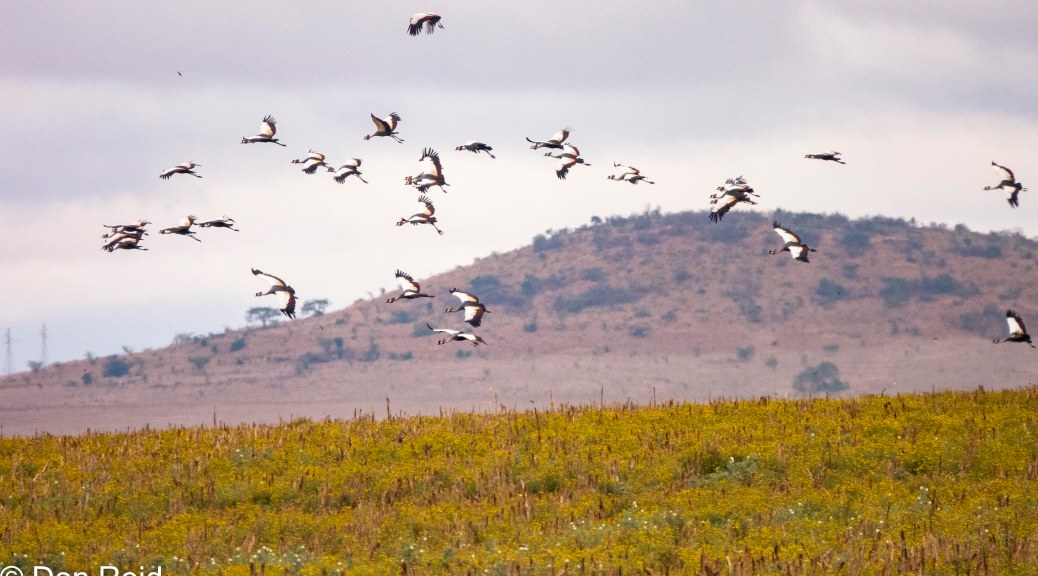
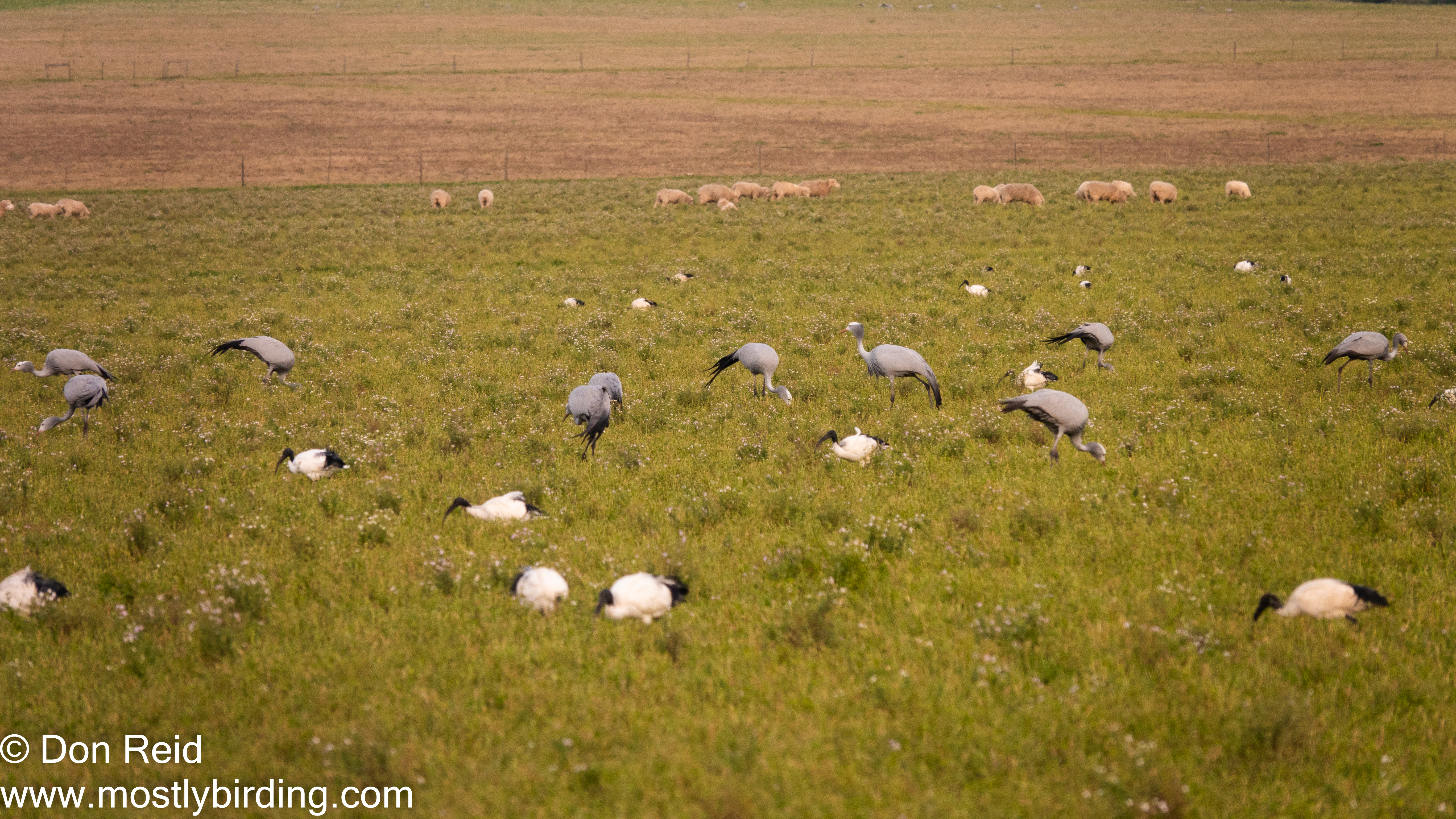
Blue Cranes, Sacred Ibises and sheep, Vleesbaai area, Western Cape
Zitting Cisticola Cisticola juncidis (Landeryklopkloppie), Vleesbaai area
Sacred Ibis, Vleesbaai Area
White-throated Swallow Hirundo albigularis (Witkeelswael) Bronkhorstspruit Area, Gauteng
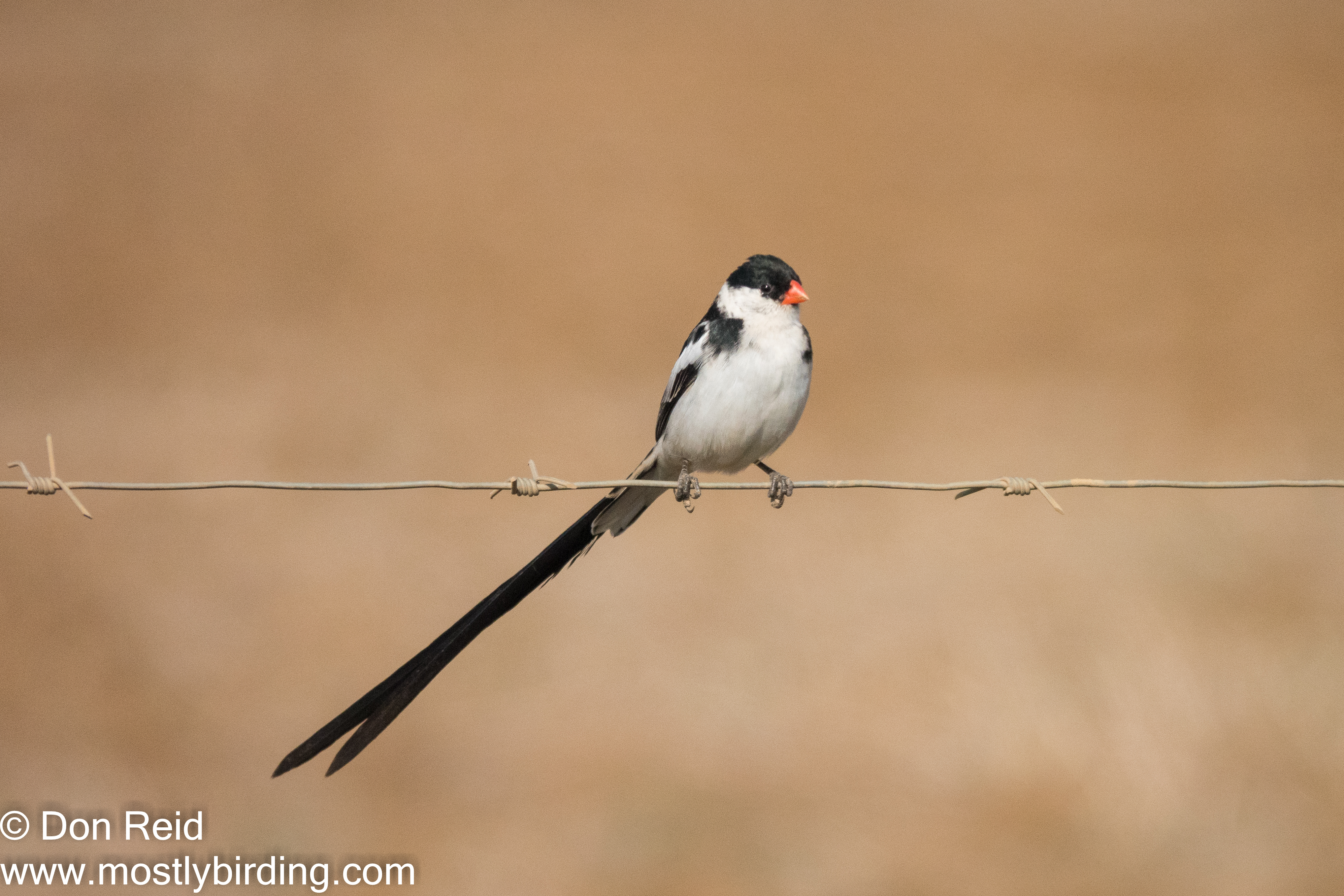
Pin-tailed Whydah Vidua macroura (Koningrooibekkie) Bronkhorstspruit Dam, Gauteng
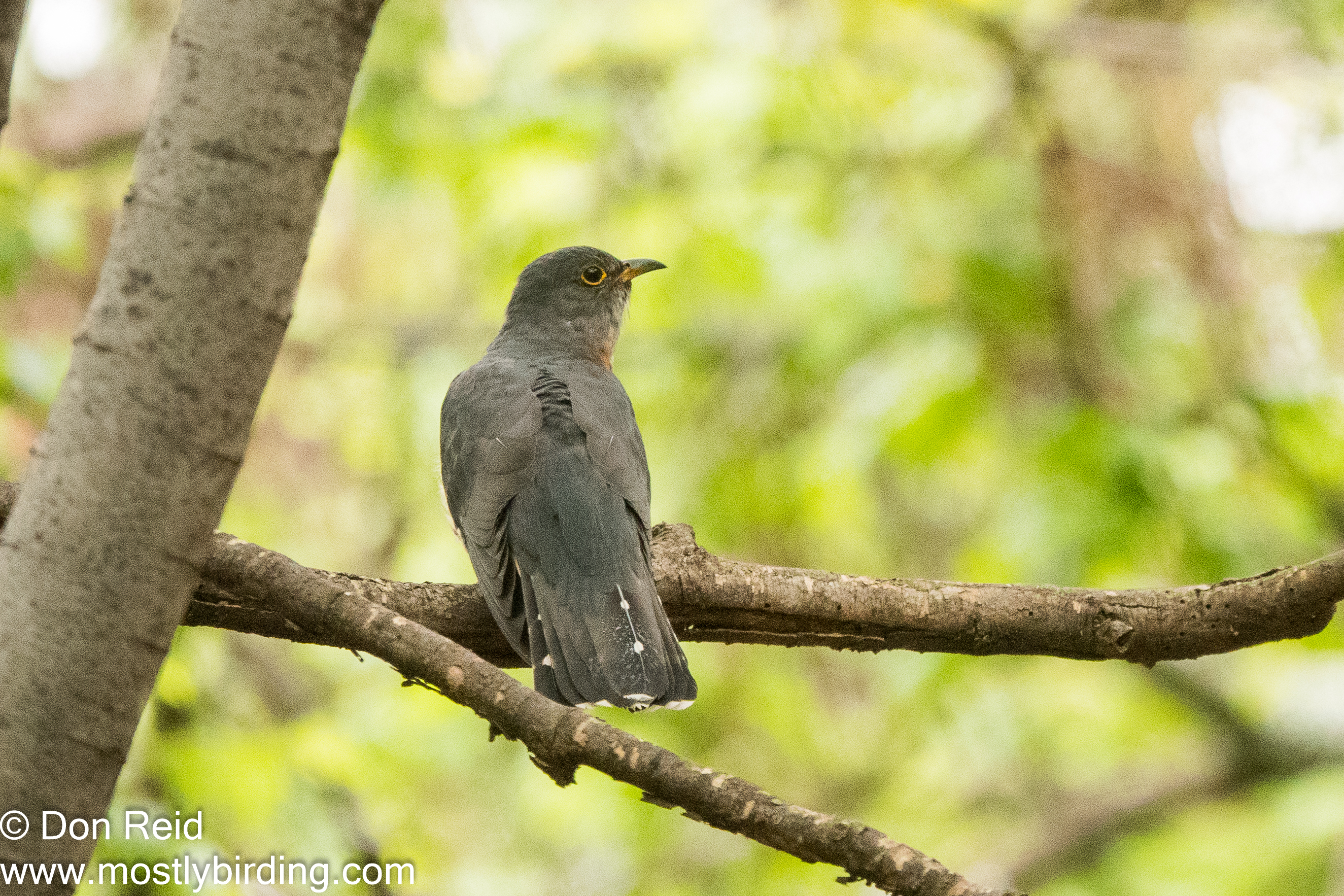
Red-chested Cuckoo Cucula solitarius (Piet-my-vrou), Ezemvelo Nature Reserve, Gauteng
Baird’s Sandpiper Calidris bairdii (Bairdse strandloper), (National Rarity), Bronkhorstspruit Nature Reserve, Gauteng
Red-capped Lark Calandrella cinerea (Rooikoplewerik), Bronkhorstspruit Nature Reserve, Gauteng
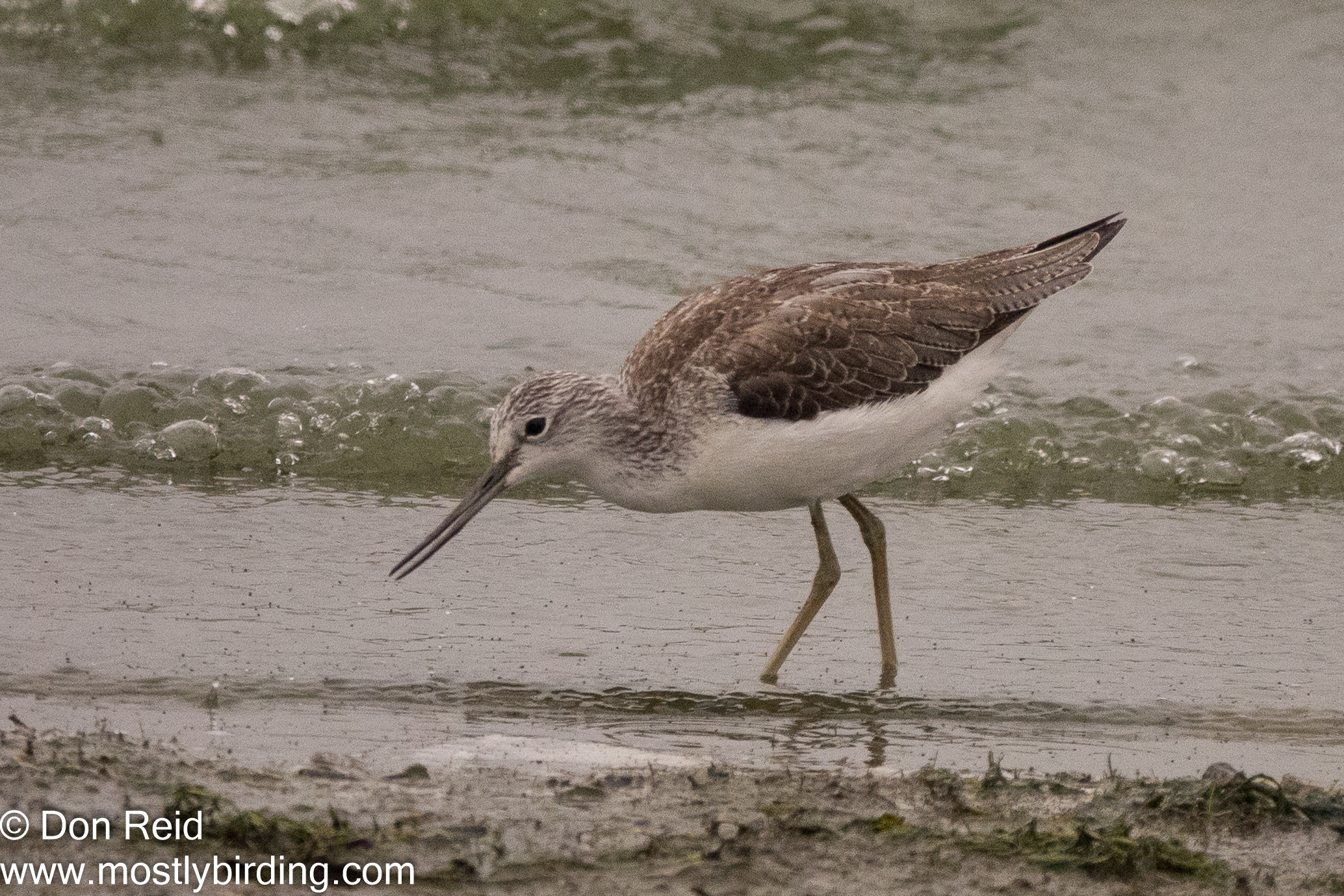
Common Greenshank Tringa nebularia (Groenpootruiter), Bronkhorstspruit Nature Reserve
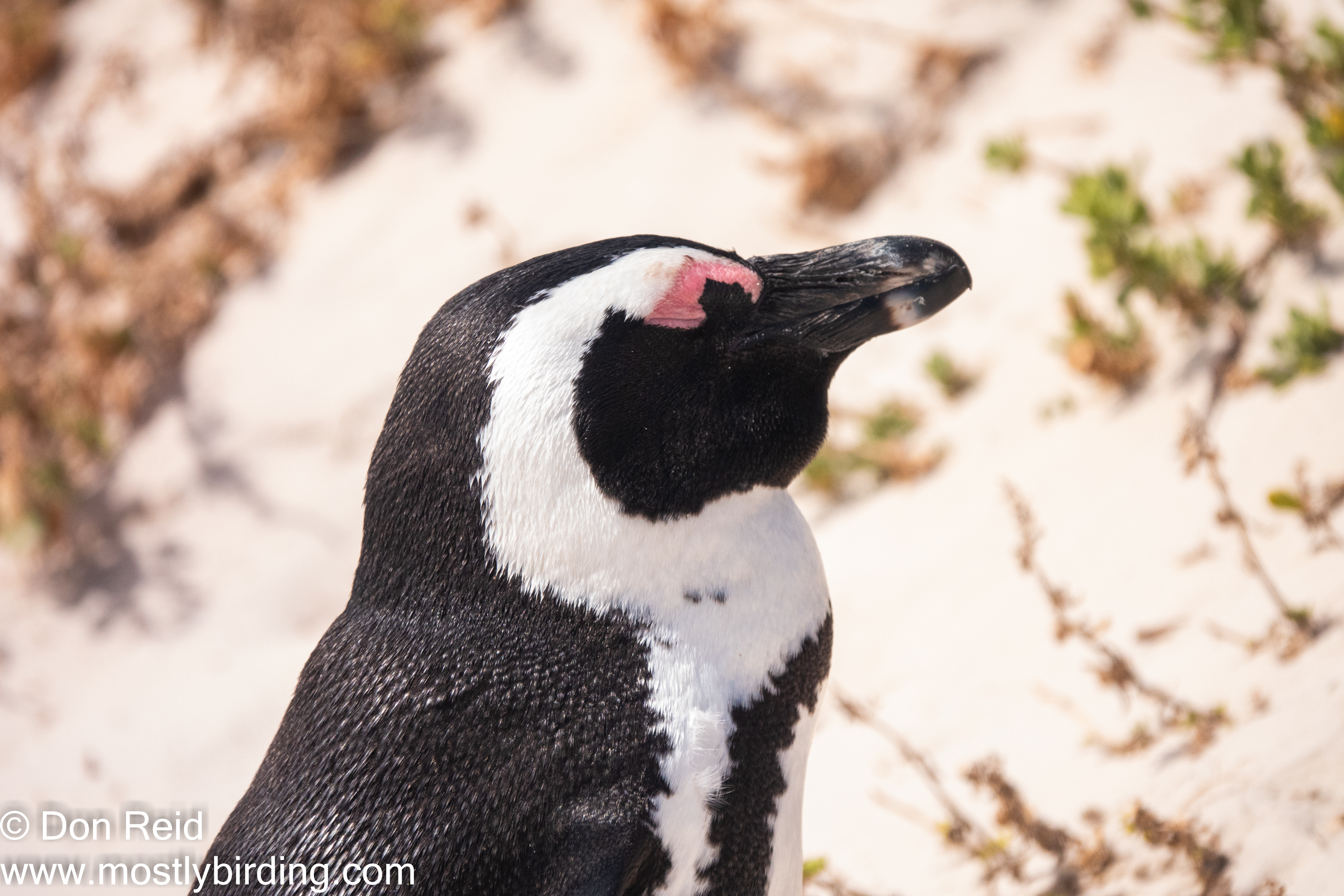
African Penguin Spheniscus demersus (Brilpikkewyn), Boulders beach Simon’s Town
Sooty Gull Ichthyaetus hemprichii (National Rarity), Sunday’s River Mouth. Eastern Cape
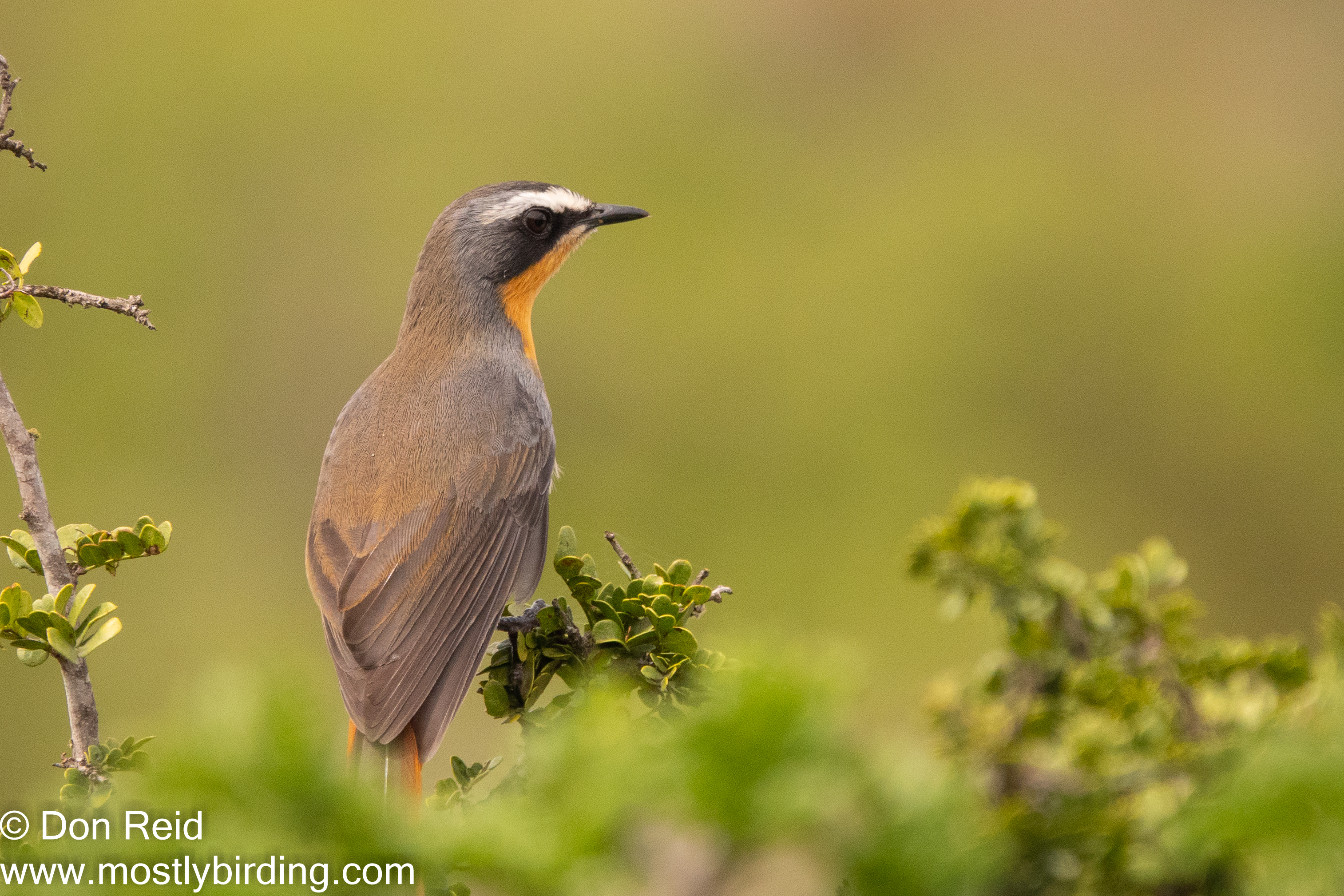
Cape Robin-Chat Cossypha caffra (Gewone janfrederik), Addo Elephant Park, Eastern Cape
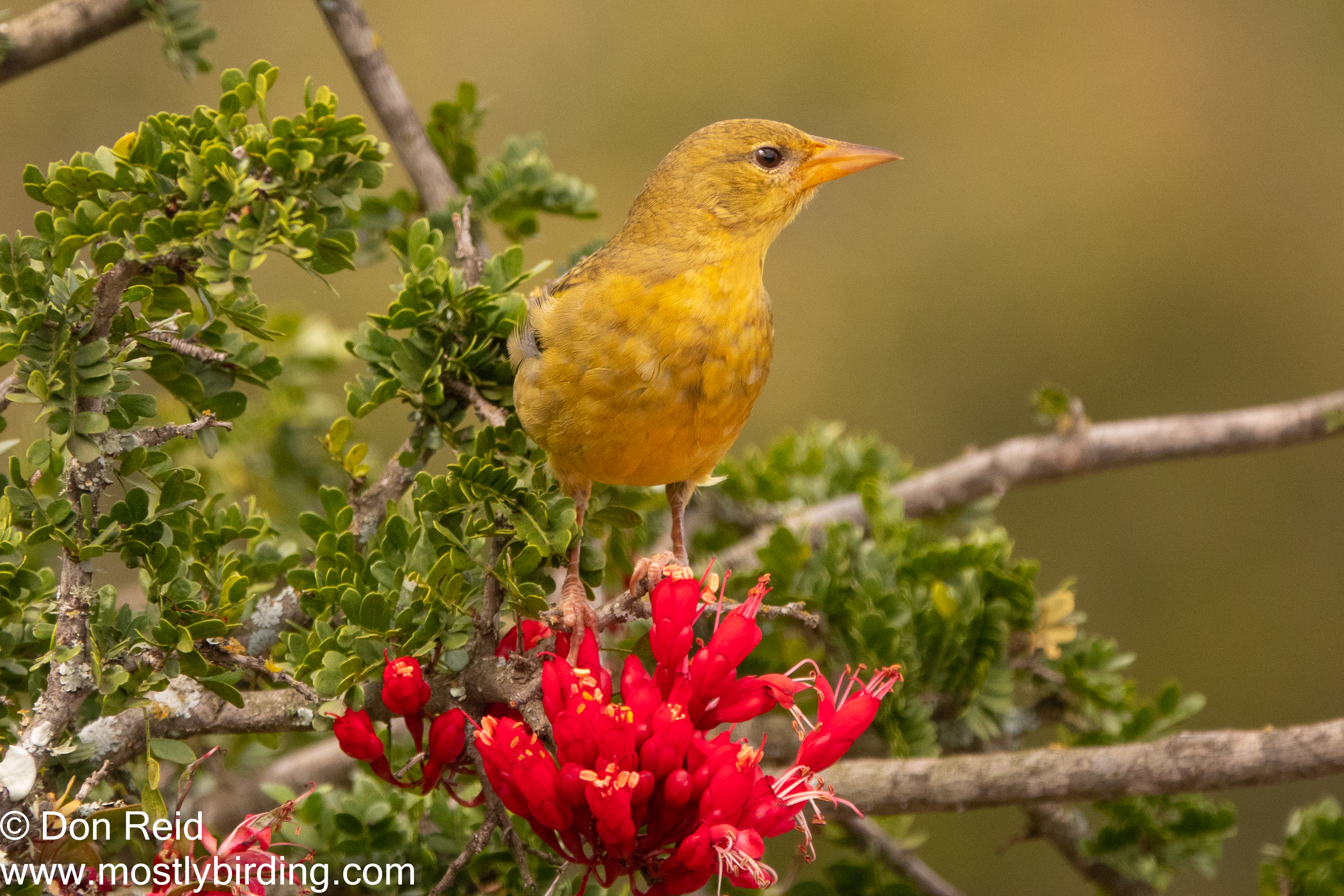
Cape Weaver Ploceus capensis (Kaapse wewer) (female), Addo Elephant Park, Eastern Cape
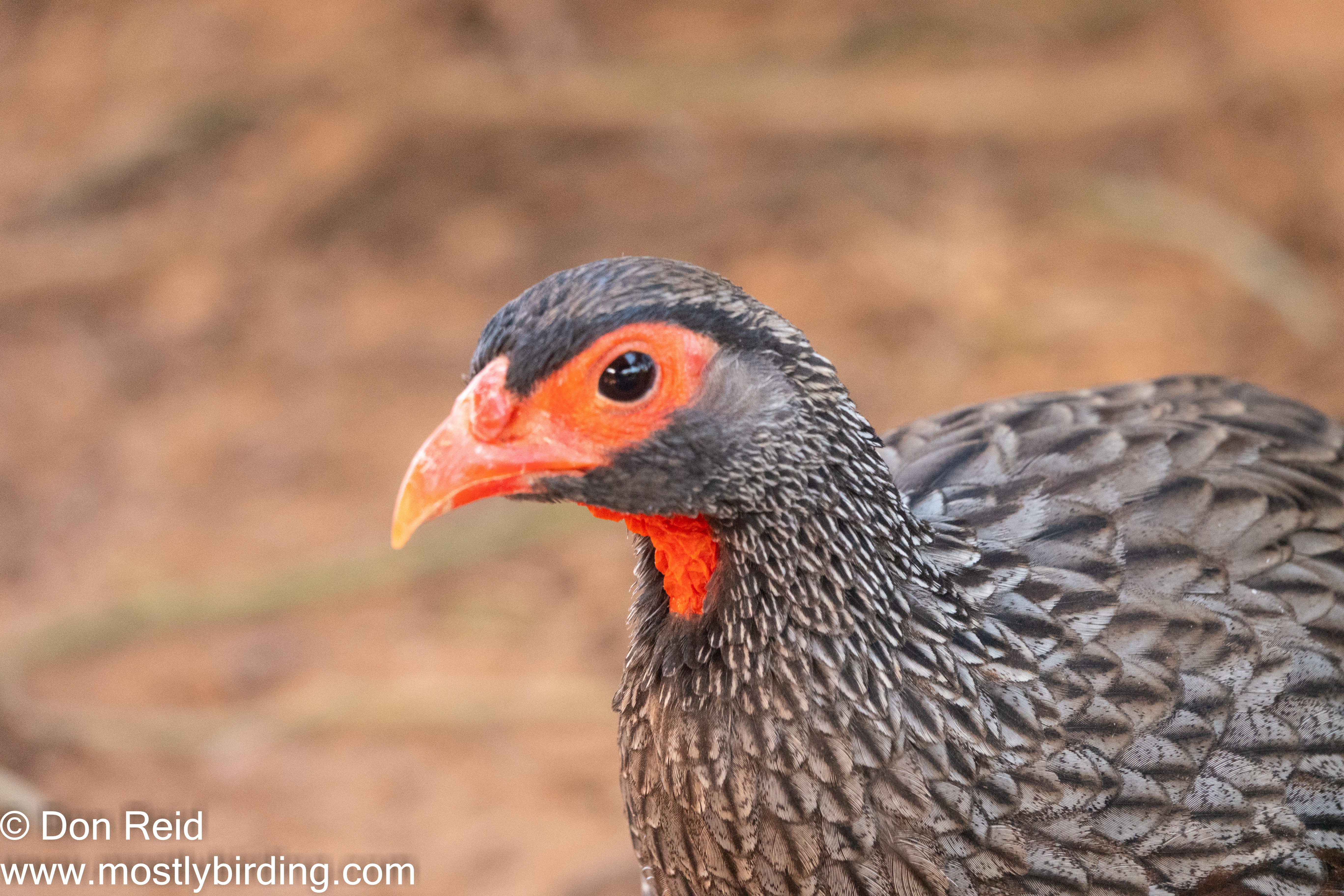
Red-necked Spurfowl Pternistis afer (Rooikeelfisant), Addo Elephant Park
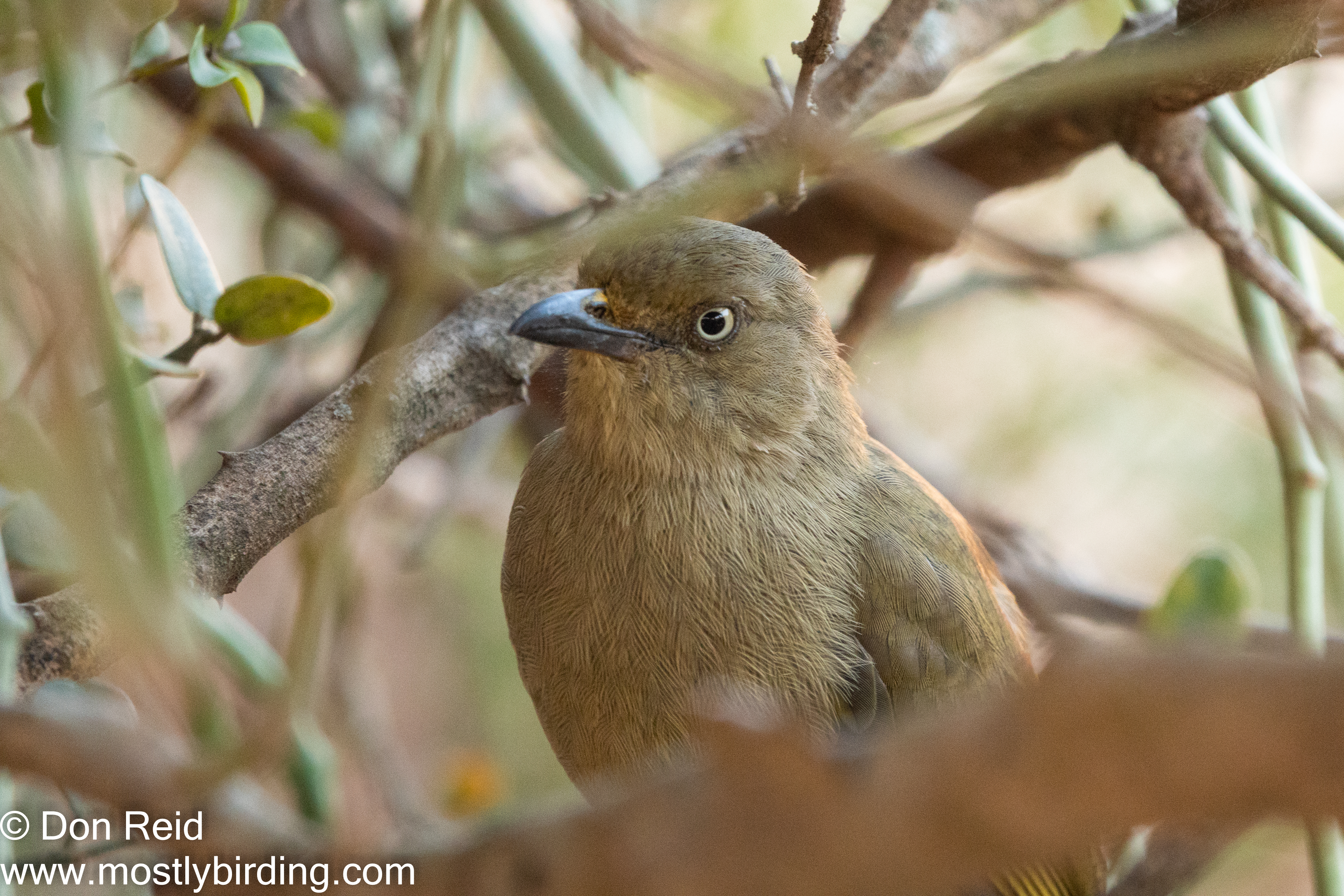
The usually extremely shy Sombre Greenbul Andropadus importunus (Gewone willie), Addo Elephant Park
Cape Turtle-Dove Streptopelia capicola (Gewone tortelduif), Addo Elephant Park
African Rock Pipit Anthus crenatus (Klipkoester), Mountain Zebra National Park
Familiar Chat Cercomela familiaris (Gewone spekvreter), Verlorenkloof
Cape Rock Thrush Monticola rupestris (Kaapse kliplyster), Verlorenkloof
Nest building Cape Weaver Ploceus capensis (Kaapse wewer), Mossel Bay
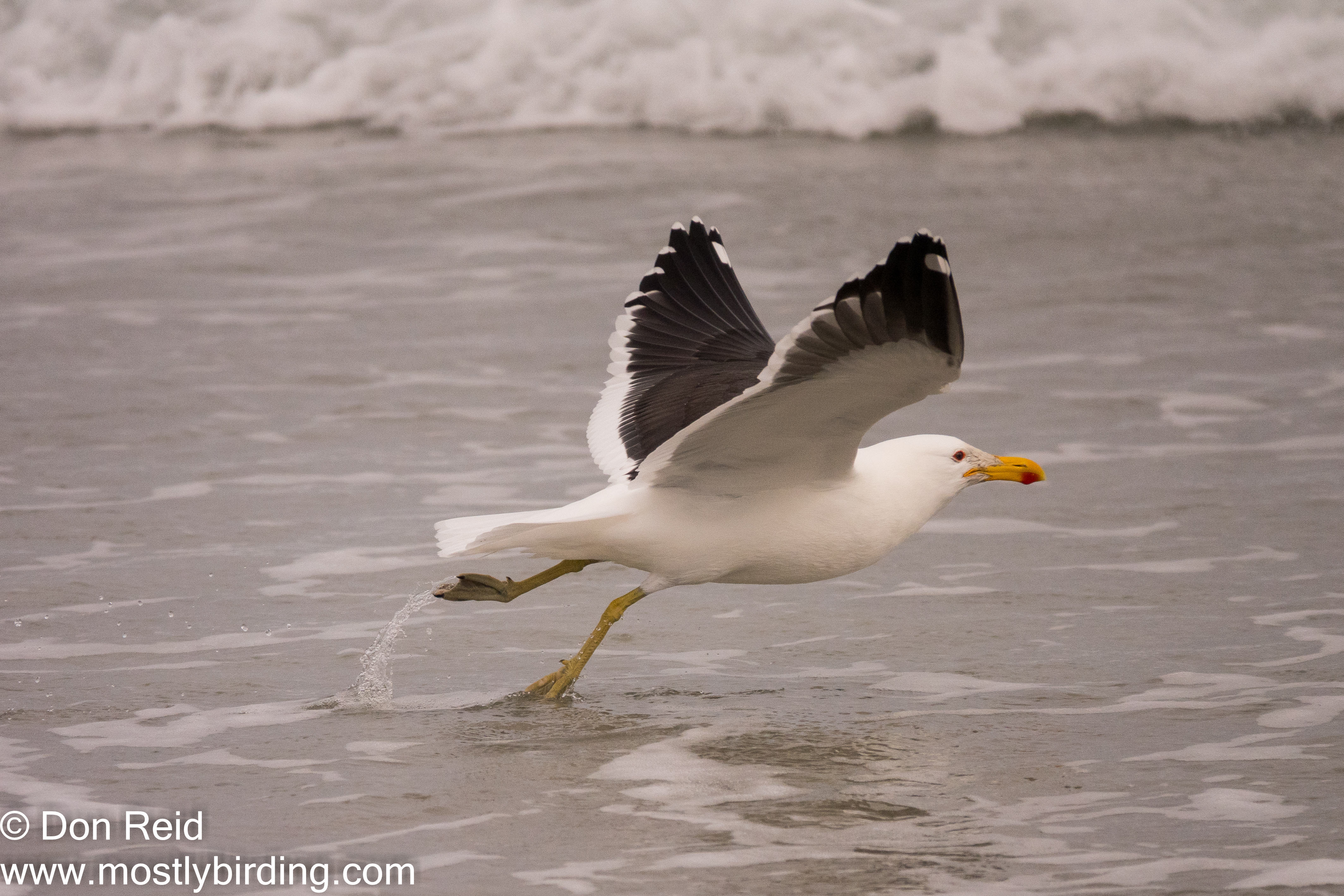
Kelp Gull Larus dominicanus (Kelpmeeu), Paternoster, Western Cape

And the Bee….

Busy Bee, Mossel Bay

Have a wonderful 2022!