It’s a Shore Thing

My atlasing trip last week included time spent in Bronkhorstspruit Nature Reserve, which lies on the southern side of the dam of the same name and is an easy 40 minutes drive east of Pretoria

Before reaching the reserve entrance, I had spent time recording species in the habitats that I was not expecting to find inside the reserve and had a pleasing list of 30 species by the time I reached the entrance, a number of which I had found at a bridge crossing the Bronkhorst Spruit on a quiet side road.

On entering the reserve I passed a few herds of antelope enjoying the long grassveld habitat of the dam surrounds before heading to the dam’s shoreline, which I knew from previous visits was ideal habitat for waders – or shorebirds as some prefer to call them.

Waders are notoriously challenging to identify in the early stages of birding, but time is on your side in this wonderful hobby/pastime, which usually becomes the dominant one for the rest of your life once you’ve got into it. As you progress and have more opportunities to watch waders in action, you learn to look for certain features and identification becomes easier, making you wonder why you battled so much in the beginning.

Here are the waders and a few other birds that I came across as I drove slowly as close to the shoreline of the dam as I could – I had to divert here and there to avoid disturbing the fishermen who also enjoy this environment ….

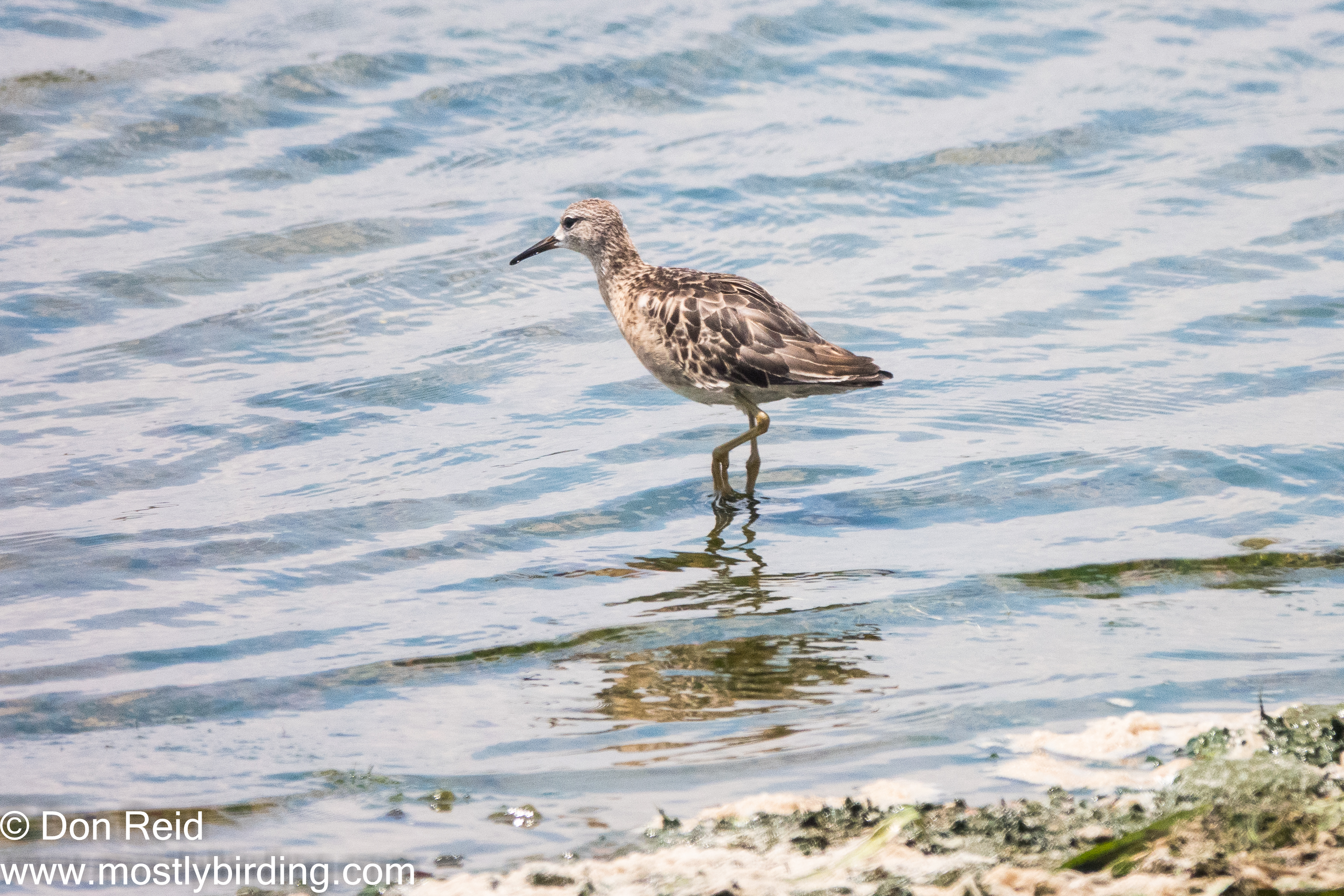
Ruff Philomachus pugnax (Kemphaan)

Ruffs fall into the wader family known as the Calidrids, breeding at Arctic latitudes and migrating to southern Africa during the austral summer. There would be no difficulty identifying Ruffs during the breeding season, as they take on a spectacular breeding plumage, but we see them in southern Africa in their drab non-breeding state, looking like many of the other waders. One of the most numerous summer waders

What to look for :

  • Size medium (M : 29-32cm F 22-26 cm)
  • Medium length bill, slightly drooping
  • Longish, usually orange legs
  • Scaled appearance on back
  • White feathers at bill base
Ruff Philomachus pugnax (Kemphaan), Bronkhorstspruit Dam

Sanderling Calidris alba (Drietoonstrandloper)

Sanderlings also belong to the Calidrids family, breeding in, and migrating from, Siberia and Greenland to southern Africa, where they arrive from September. Inland records are quite scarce as most head to coastal beaches, but Bronkhorstspruit Dam has seen some records of this species on an intermittent basis. This was the only one I saw during my visit and is only the 4th record for the pentad, out of 170 cards

What to look for :

  • Size : Small (18-21 cm)
  • Distinctive light colouring separates the Sanderling from most other waders
  • Short, stout bill
  • Dark shoulder patch (hidden by white feathers in my photo)
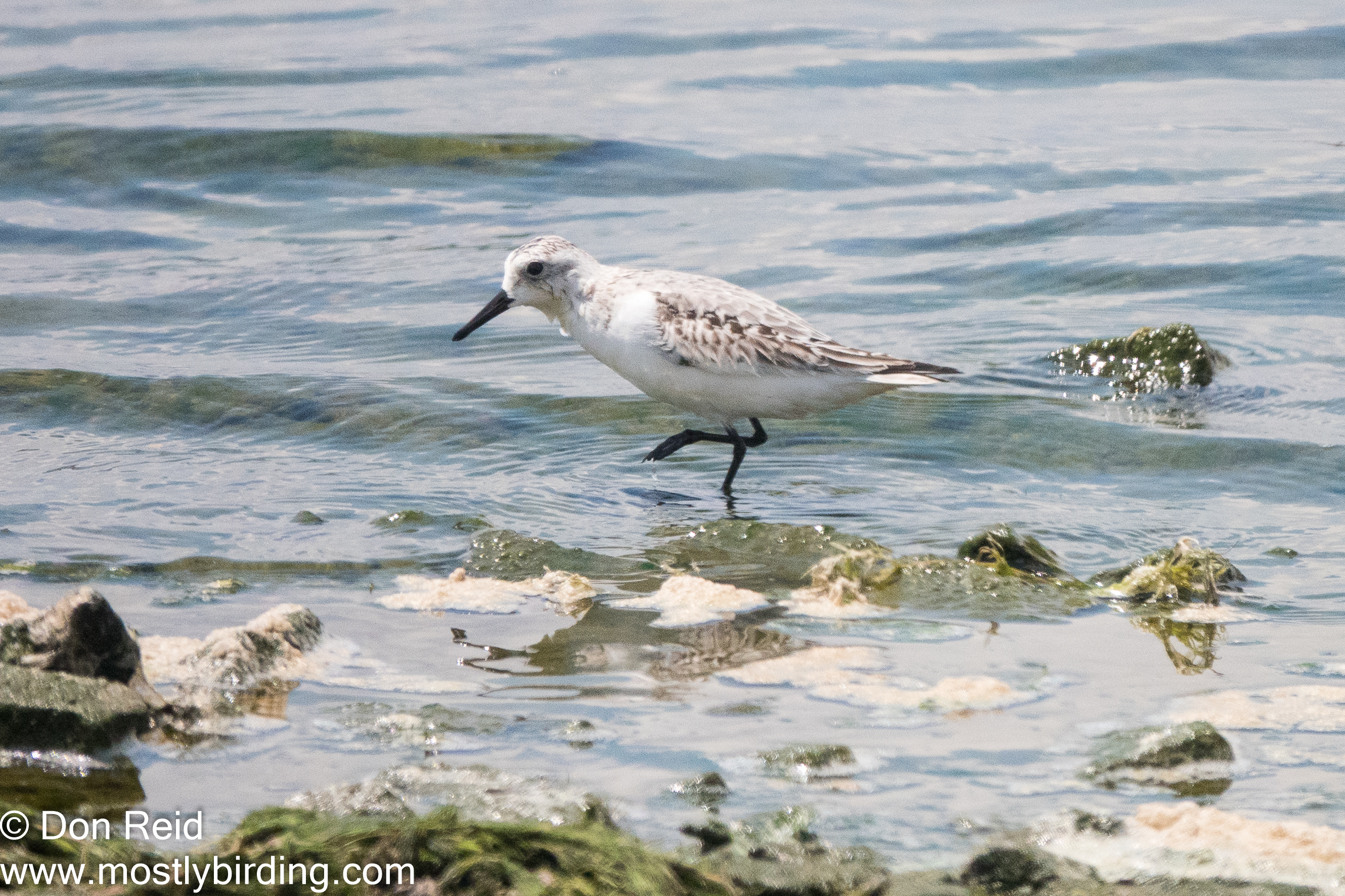
Sanderling Calidris alba (Drietoonstrandloper) Bronkhorstspruit Dam

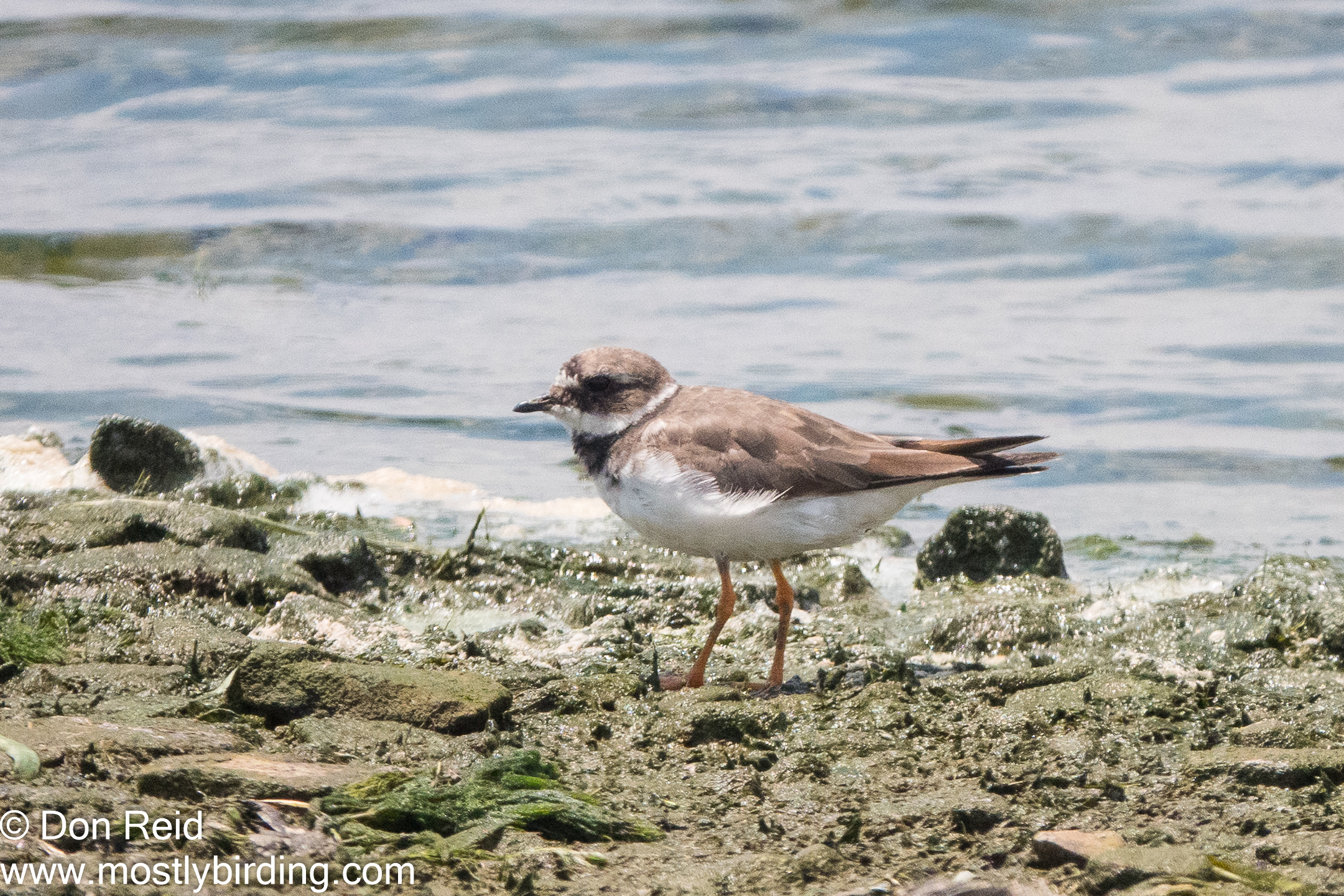
Common Ringed Plover Charadrius hiaticula (Ringnekstrandkiewiet)

The first of the “Small Plovers”, this palaearctic migrant flies up to an amazing 18,000 kms from its breeding grounds to southern Africa

What to look for :

  • Size : Small (17-19 cm)
  • Relatively easy to identify with its broad black breast band contrasting with the white collar
  • Very short, stubby bill
  • Orange legs
Common Ringed Plover Charadrius hiaticula (Ringnekstrandkiewiet) Bronkhorstspruit Dam

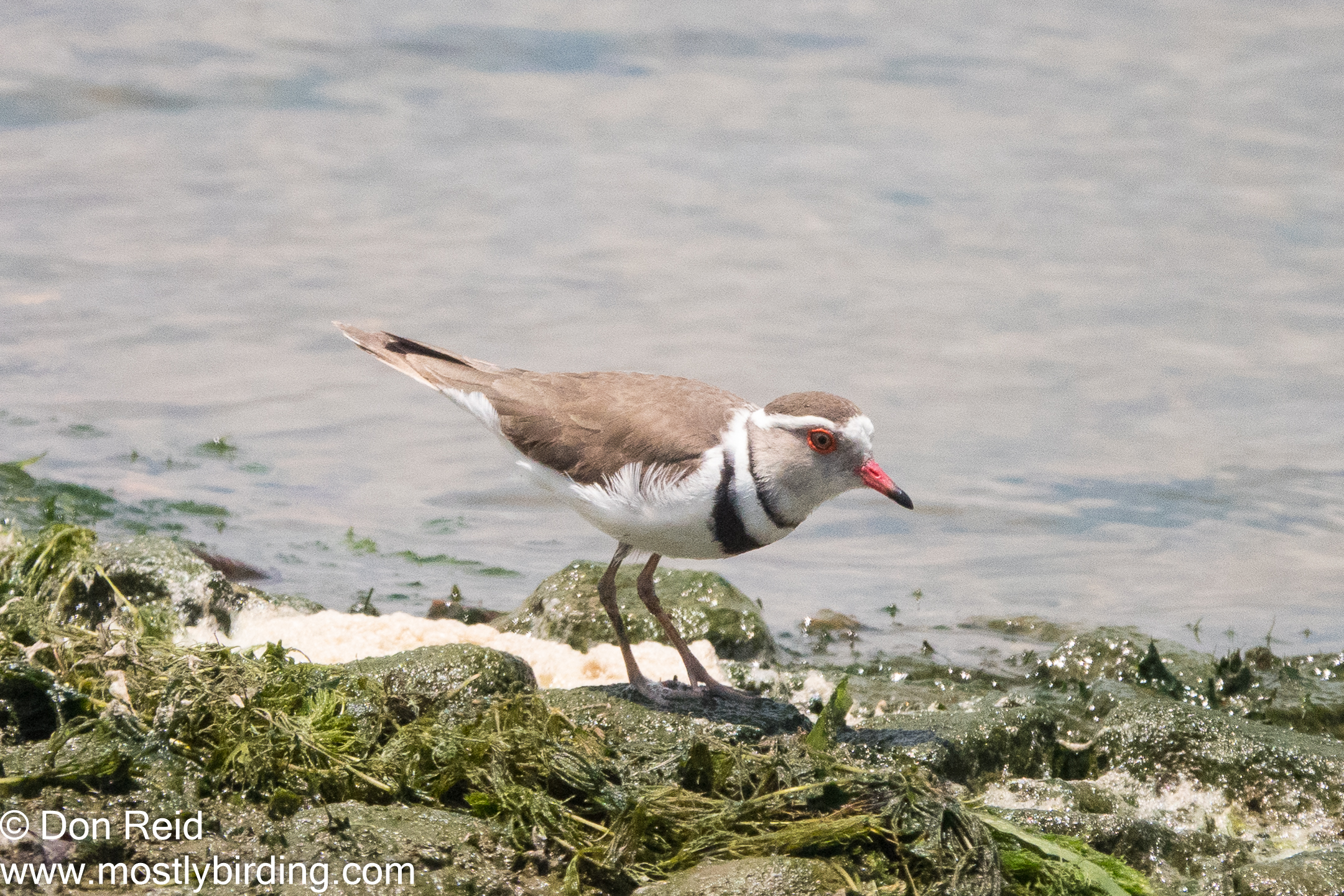
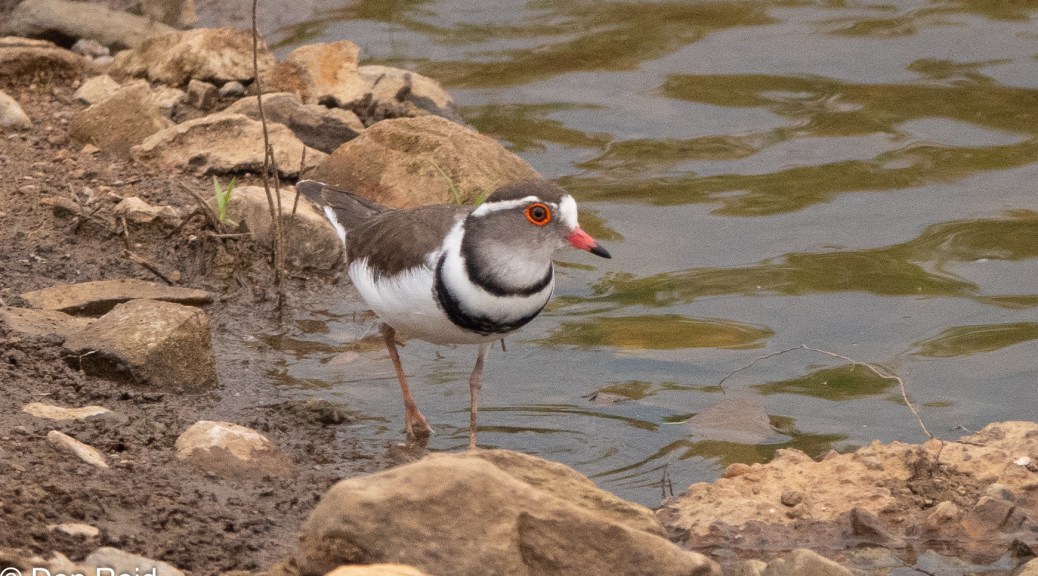
Three-banded Plover Charadrius tricollaris (Driebandstrandkiewiet)

The second of the “Small Plovers”, this is a common freshwater wader in southern Africa, where it also breeds

What to look for :

  • Size : Small (17-18 cm)
  • Distinctive with its double breast band and red eye-ring
  • Bobs up and down in animated fashion
Three-banded Plover Charadrius tricollaris (Driebandstrandkiewiet) Bronkhorstspruit Dam

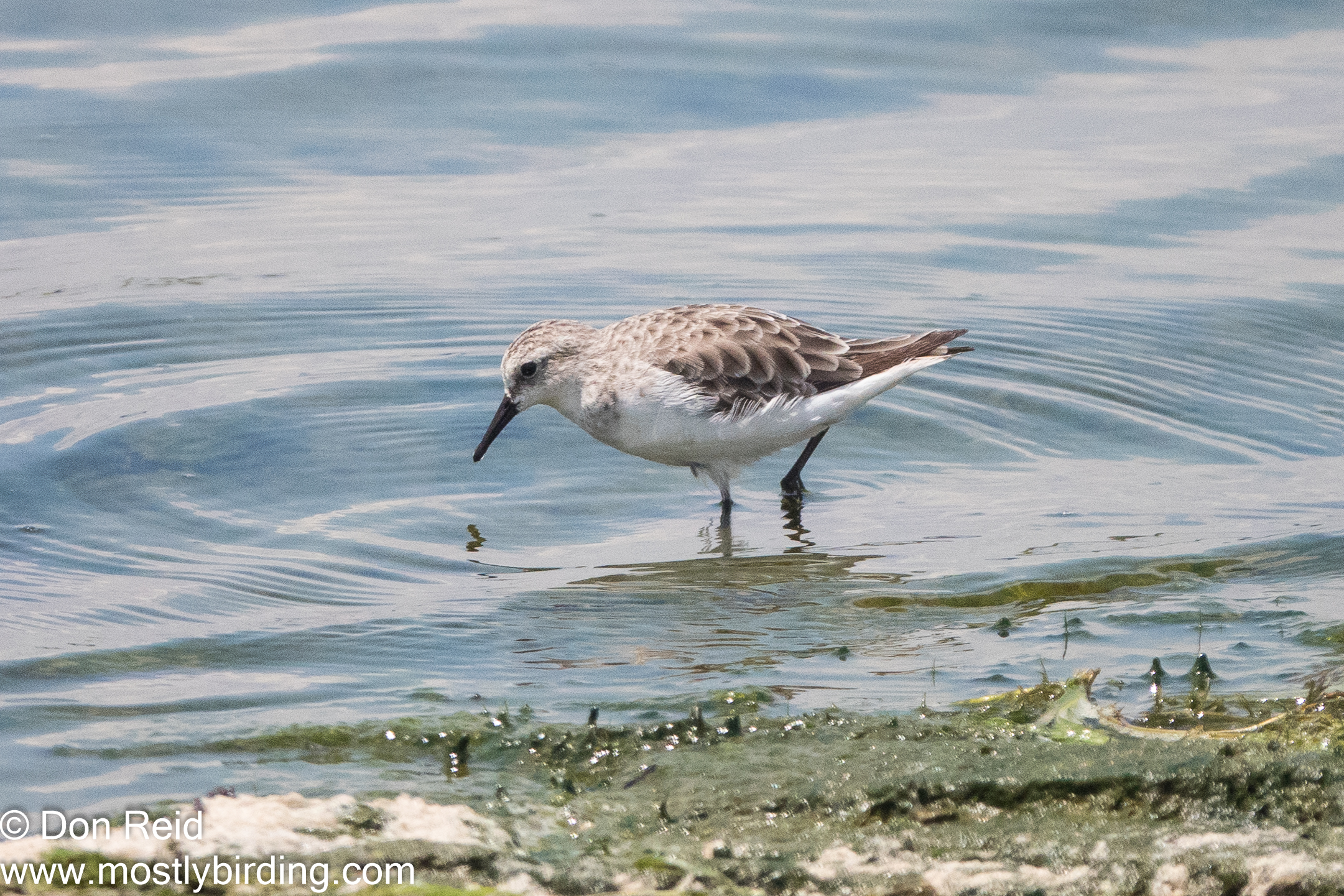
Little Stint Calidris minuta (Kleinstrandloper)

This smallest of waders always makes me think of an old gent in a faded brown overcoat – they habitually walk about with head bowed which, along with their small size, makes them easy to pick out among a group of waders. The Little Stint is a Palaearctic migrant. those arriving in South Africa from September are thought to breed in northern Europe

What to Look for :

  • Size : Very Small (12-14 cm)
  • Short, fine-tipped dark bill
  • Bowed posture while wading
Little Stint Calidris minuta Kleinstrandloper Bronkhorstspruit Dam

The Others

Some of the other birds occupying the shallow wading areas and margins of the dam that I came across –

Grey-headed Gull Chroicocephalus cirrocephalus (Gryskopmeeu)

This fairly common inland Gull had been attracted to the shallows by a dead fish on which it was scavenging.

One of the easiest Gulls to identify inland as it is usually the only one. At the coast one has to be a bit more judicious in arriving at an ID – the Hartlaub’s Gull is of similar size and general appearance so a more detailed look will show the differences
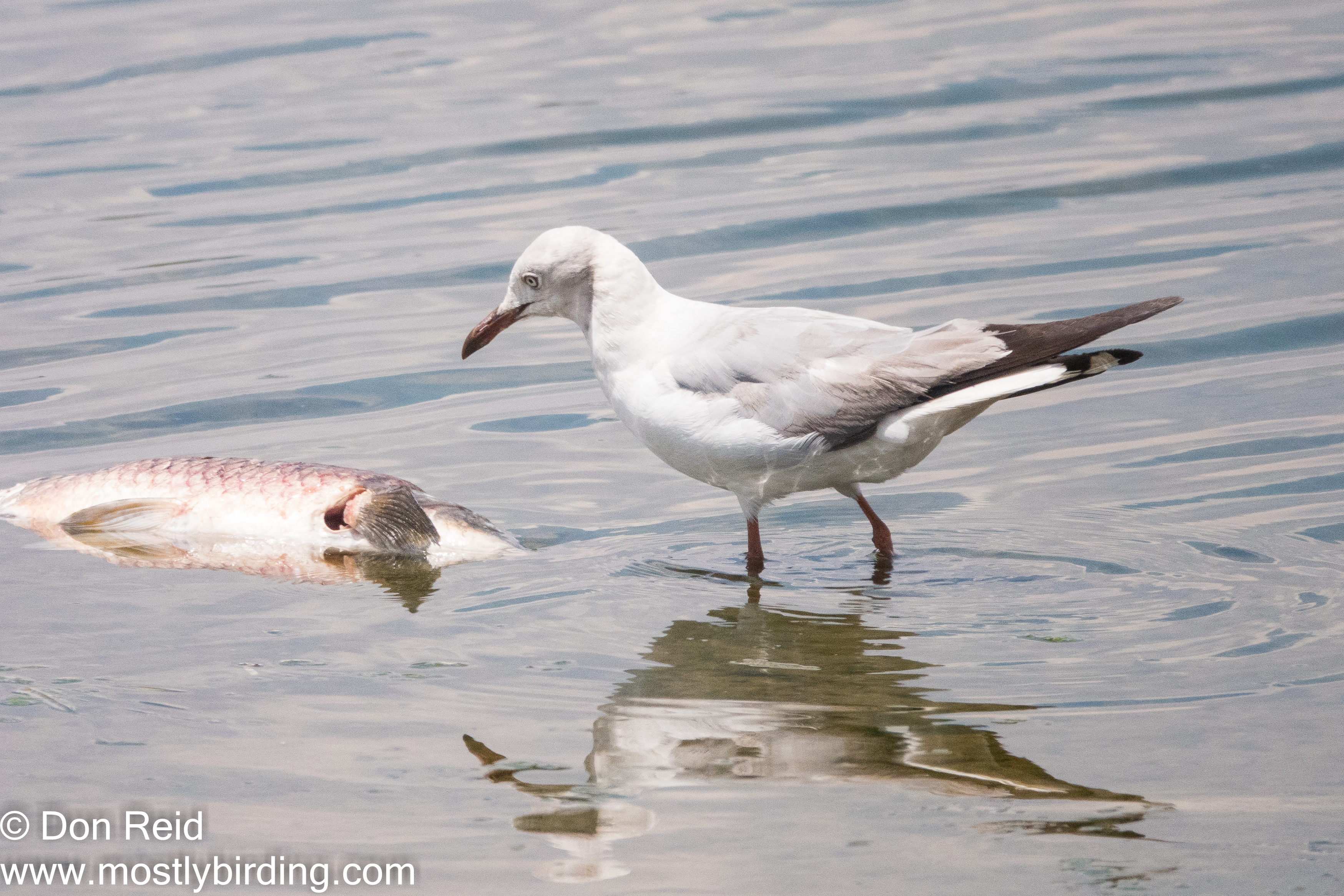
Grey-hooded Gull Chroicocephalus cirrocephalus (Gryskopmeeu)
Bronkhorstspruit Dam

Juveniles are there for the sole purpose of confusing birders, or so it seems – they often look so different that it’s easy to imagine it may be a completely different species
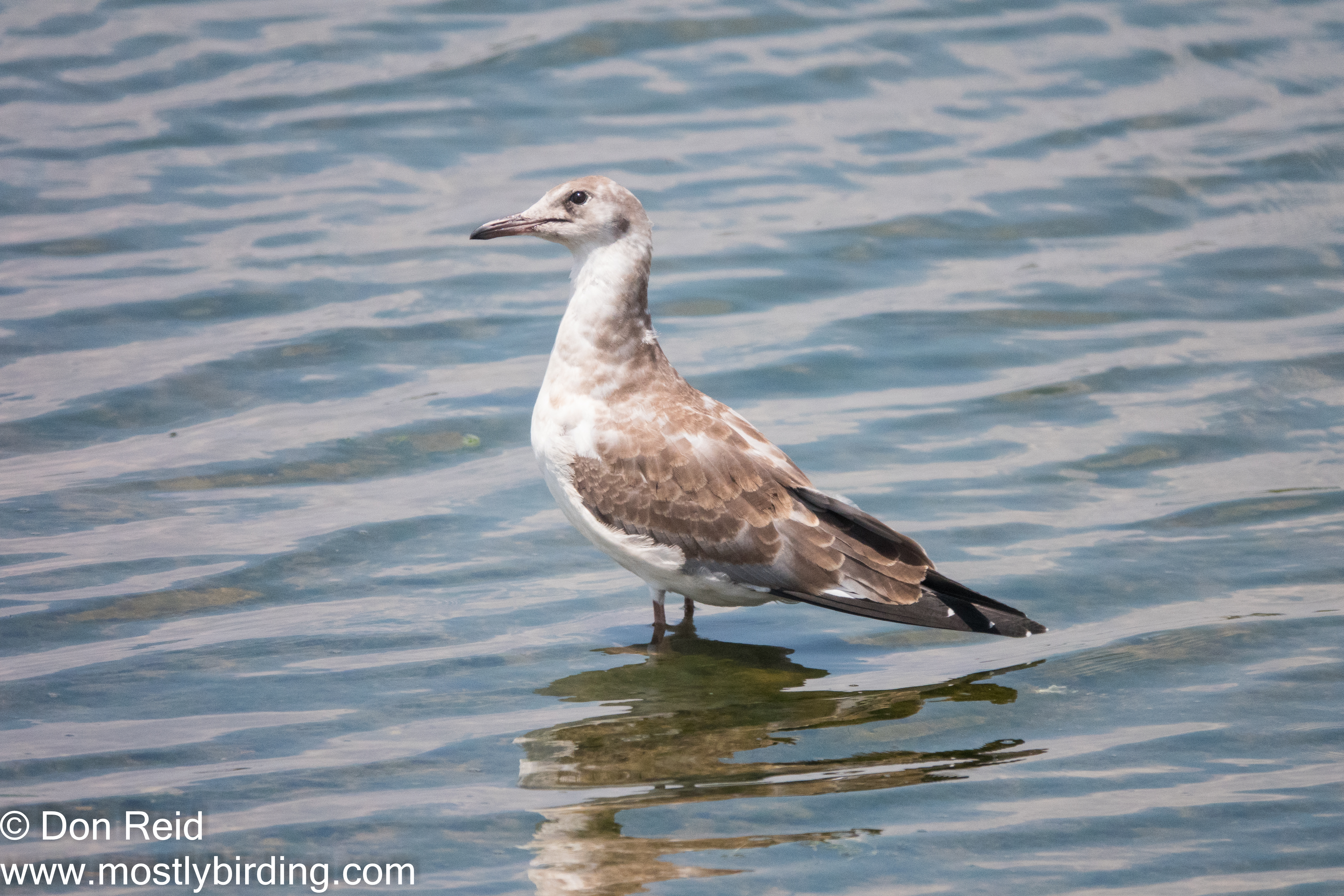
Grey-hooded Gull (juvenile) Bronkhorstspruit Dam

Whiskered Tern Chlidonias hybrida  Witbaardsterretjie

A small flock of Whiskered Terns were resting at the dam’s edge – any terns seen inland are likely to be one of two species – this one and the White-winged Tern. They can be difficult to distinguish in flight, but resting like this it is a fairly easy ID
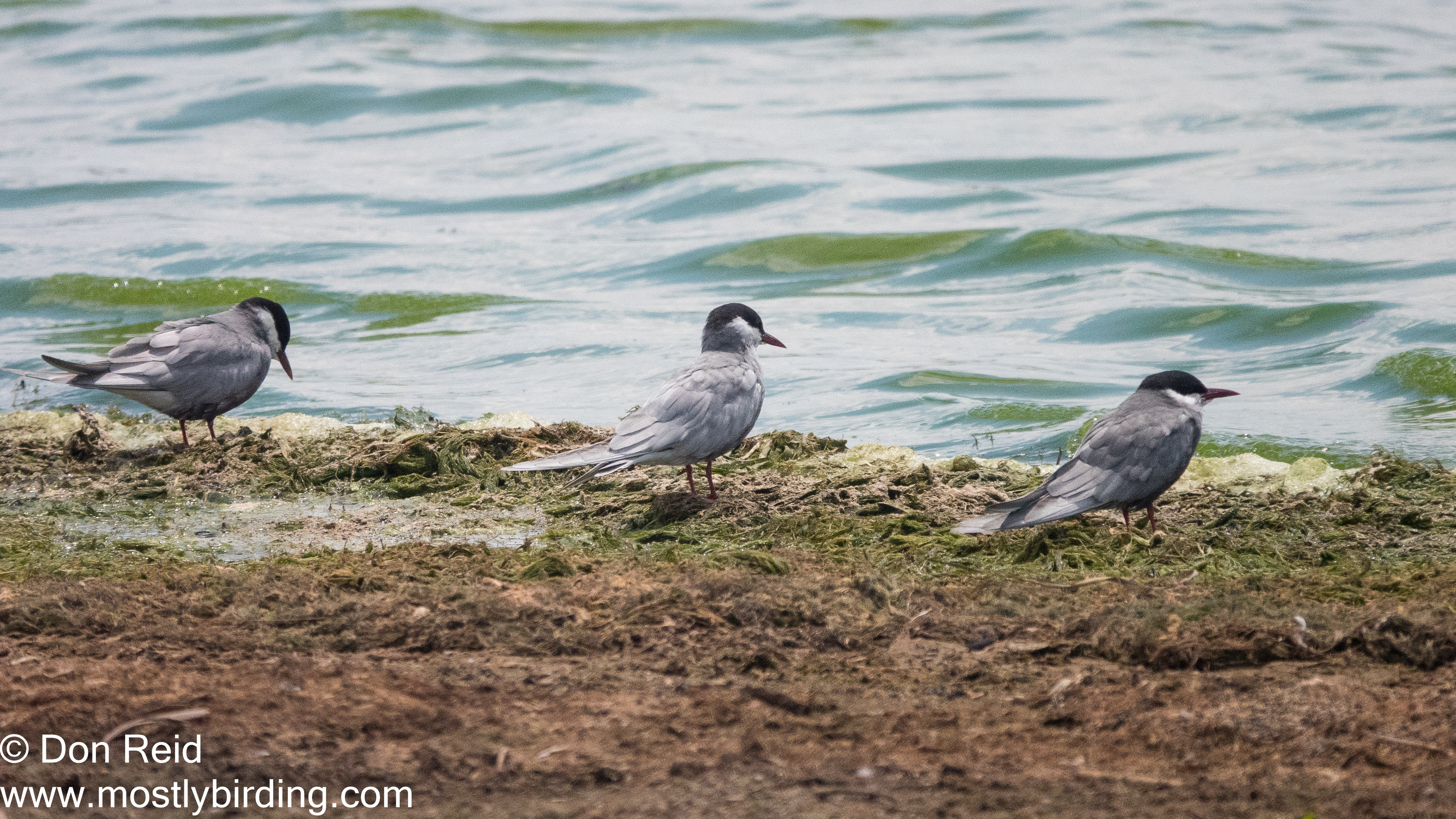
Whiskered Tern Chlidonias hybrida Witbaardsterretjie Bronkhorstspruit Dam

This one decided to stretch its wings then flew off, showing off the beauty of the feathers that make up the wings and tail
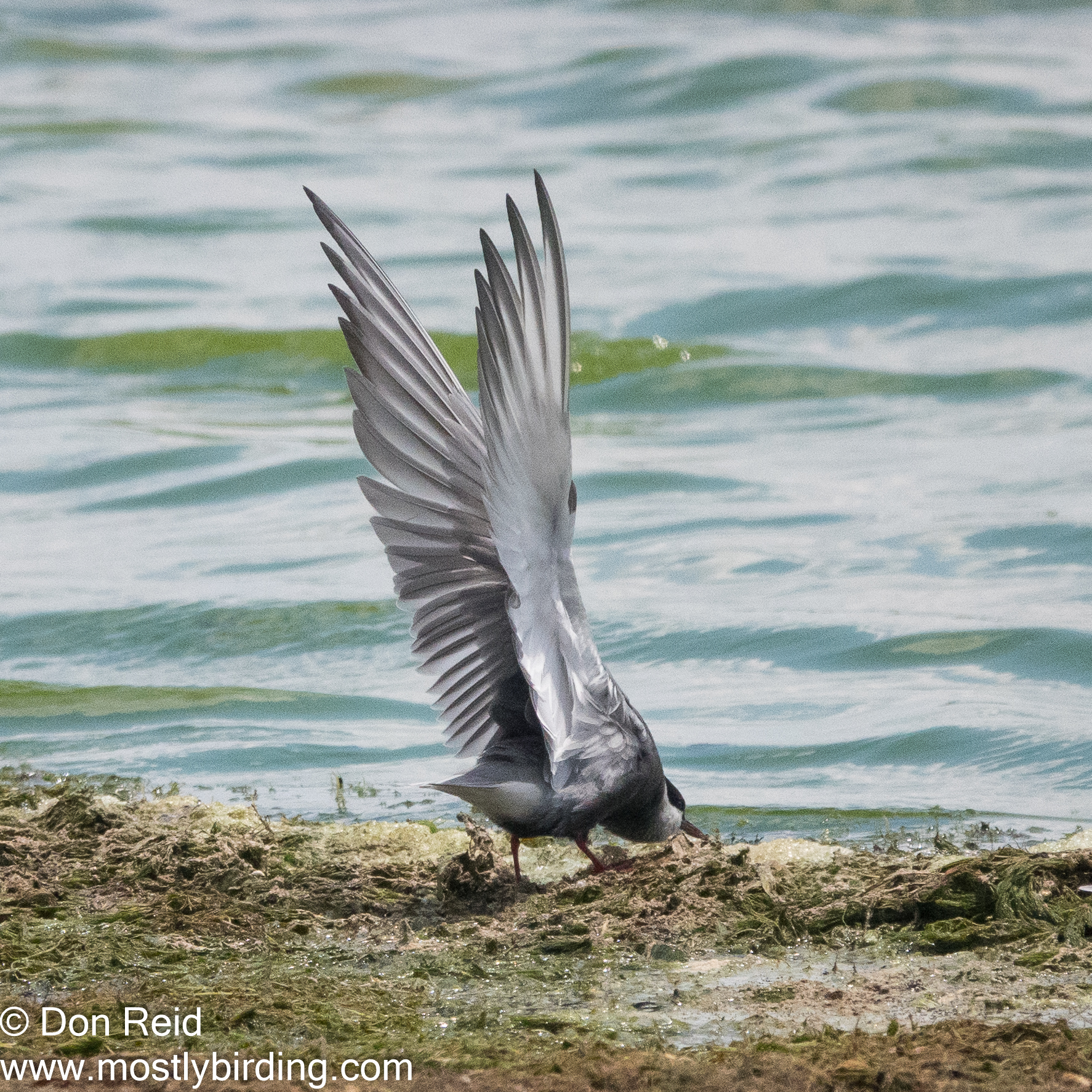
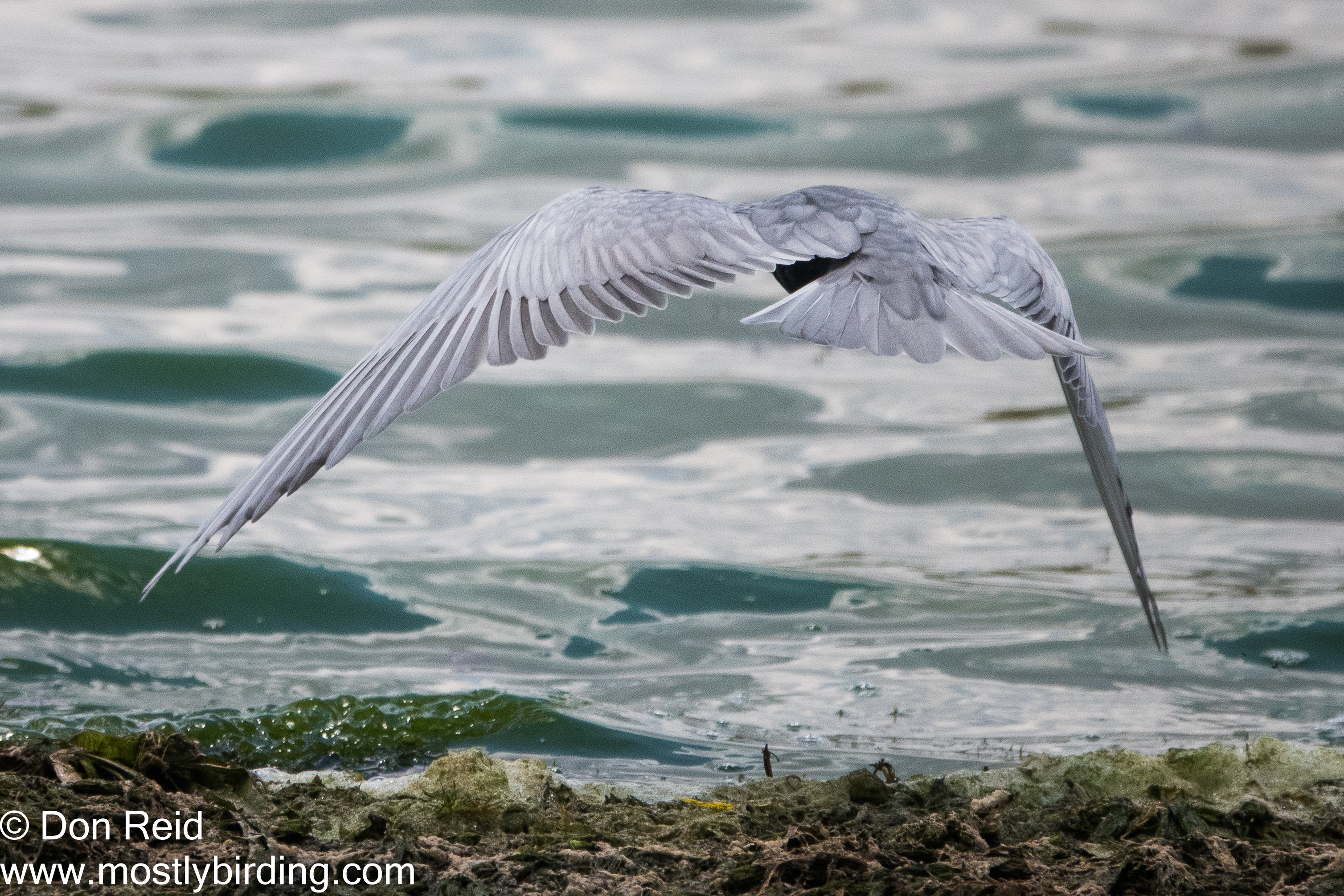
Whiskered Tern Chlidonias hybrida Witbaardsterretjie Bronkhorstspruit Dam

Caspian Tern Hydroprogne caspia (Reusesterretjie)

My favourite Tern was nearby, on its own – the Caspian Tern is the largest tern (at 51 cm) in the region and is a breeding resident. Apart from its size, the standout feature is its large red dagger-like bill.

Caspian Tern Hydroprogne caspia (Reusesterretjie), Bronkhorstspruit Dam

And these two waterbirds make it onto this post simply by sticking close to the shoreline, allowing me to get reasonable images as I studied the waders

Cape Shoveler Anas smithii (Kaapse slopeend)
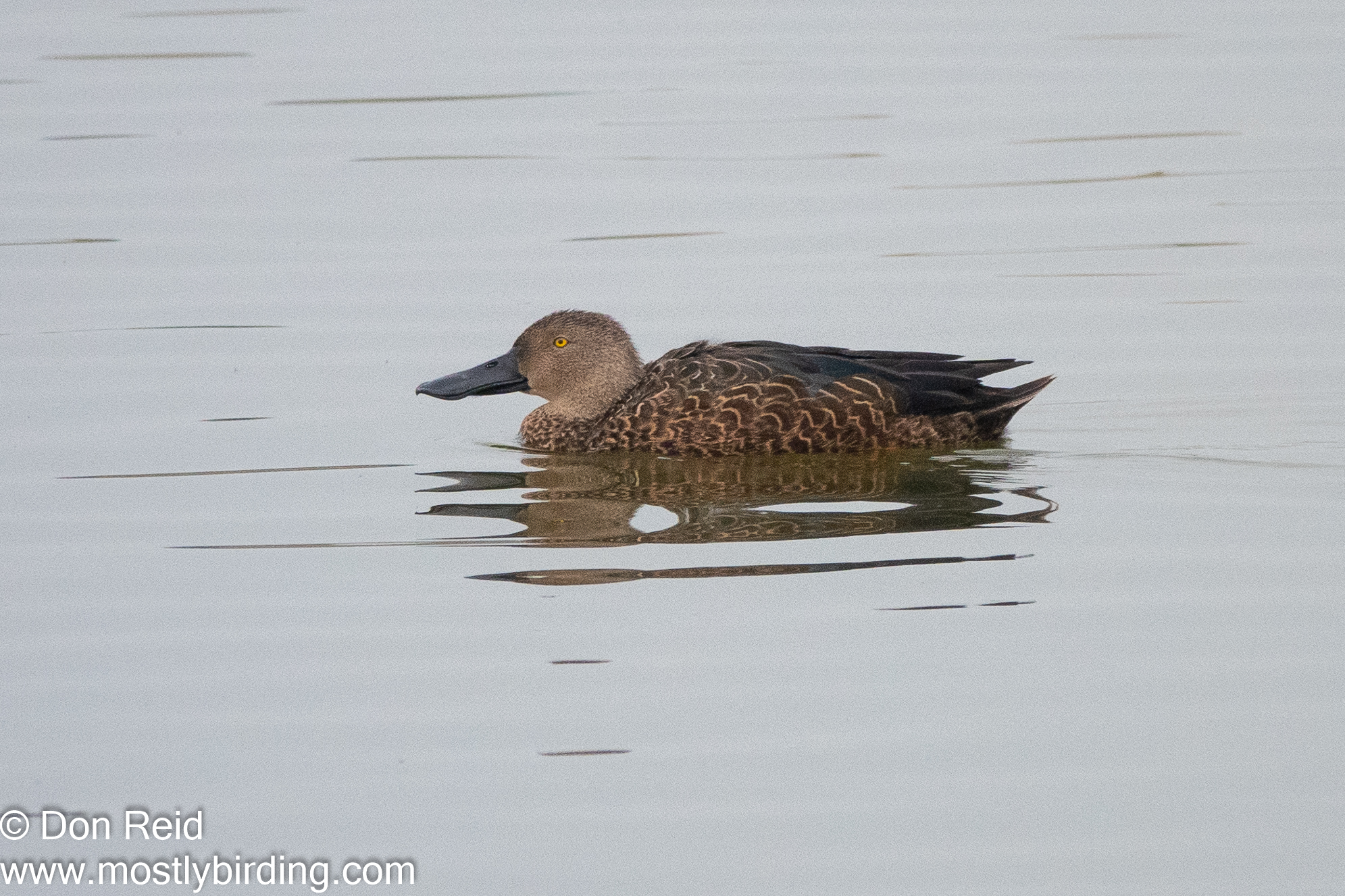
Cape Shoveler Anas smithii (Kaapse slopeend), Bronkhorstspruit Dam

Yellow-billed Duck Anas undulata (Geelbekeend)
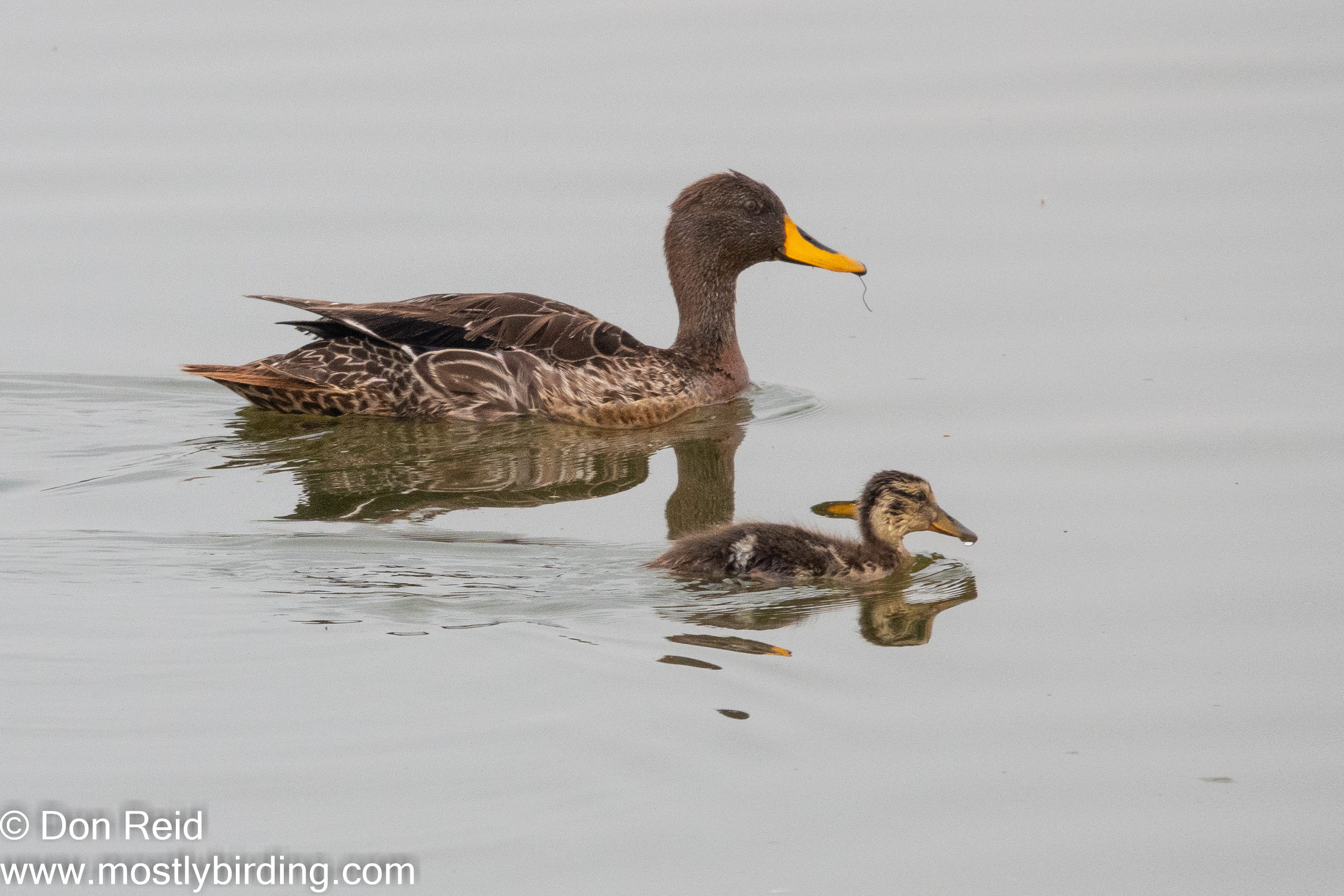
Yellow-billed Duck Anas undulata (Geelbekeend) (Adult with Juvenile), Bronkhorstspruit Dam

To end off – a mystery wader at water’s edge – extremely large and well feathered – definitely not a Stint……

Supersized Wader, Bronkhorstspruit Dam

Tietiesbaai ! (Cape Columbine Nature Reserve) – Flowers, birds, beaches and a lighthouse

It was our last day in Paternoster and we were in two minds as to where to spend it – there are a number of wild flower spots within comfortable driving distance from the town, but in the end we decided to limit our driving and explore Tietiesbaai (Cape Columbine Nature Reserve), right on the doorstep of Paternoster.

What a good choice it turned out to be!

Cape Columbine Nature Reserve (Tietiesbaai)

Firstly, if you mention to another South African you have been to Tietiesbaai, it is bound to raise a smile, even a snigger. Why? Well translated directly Tietiesbaai would be the equivalent of “Boobs Bay” in English.

Depending on which source you prefer, the name Tietiesbaai derives from either a prominent fisherman of years past called Jacob Titus who drowned there or from the smooth round boulders that are a feature of the bay. Whichever you prefer, it is a worthwhile place to visit, especially in spring flower season.

Cape Columbine Nature Reserve (Tietiesbaai)

In complete contrast to our visit to the West Coast National Park the previous day, we had the whole nature reserve almost to ourselves, apart from a handful of other intrepid visitors. This gave us the chance to stop on a whim and climb out to have a closer look at some of the attractive flowers, explore the isolated and mostly deserted beaches and coves and generally just do as we felt like.

Cape Columbine Nature Reserve (Tietiesbaai)

Just as an introduction to Tietiesbaai / Cape Columbine, some facts –

Cape Columbine Nature Reserve lies on the west coast near the village of Paternoster

It is the furthest westerly destination in the Western Cape Province and covers an area of 263 hectares along the rocky stretch of coastline

It was declared a nature reserve in 1973 and boasts the last manually controlled lighthouse to be built in South Africa.

The lighthouse was built in 1936 on Castle Rock and is usually the first lighthouse to be seen by ships coming from Europe, being visible from up to 50 kms away

It was just after 11 am when we set off through Paternoster and were soon on the neatly scraped gravel road to Tietiesbaai, the sea almost always in view and the road increasingly lined with a multitude of colourful wild flowers.

The road between Paternoster and Cape Columbine Nature Reserve (Tietiesbaai)
Cape Columbine Nature Reserve (Tietiesbaai)

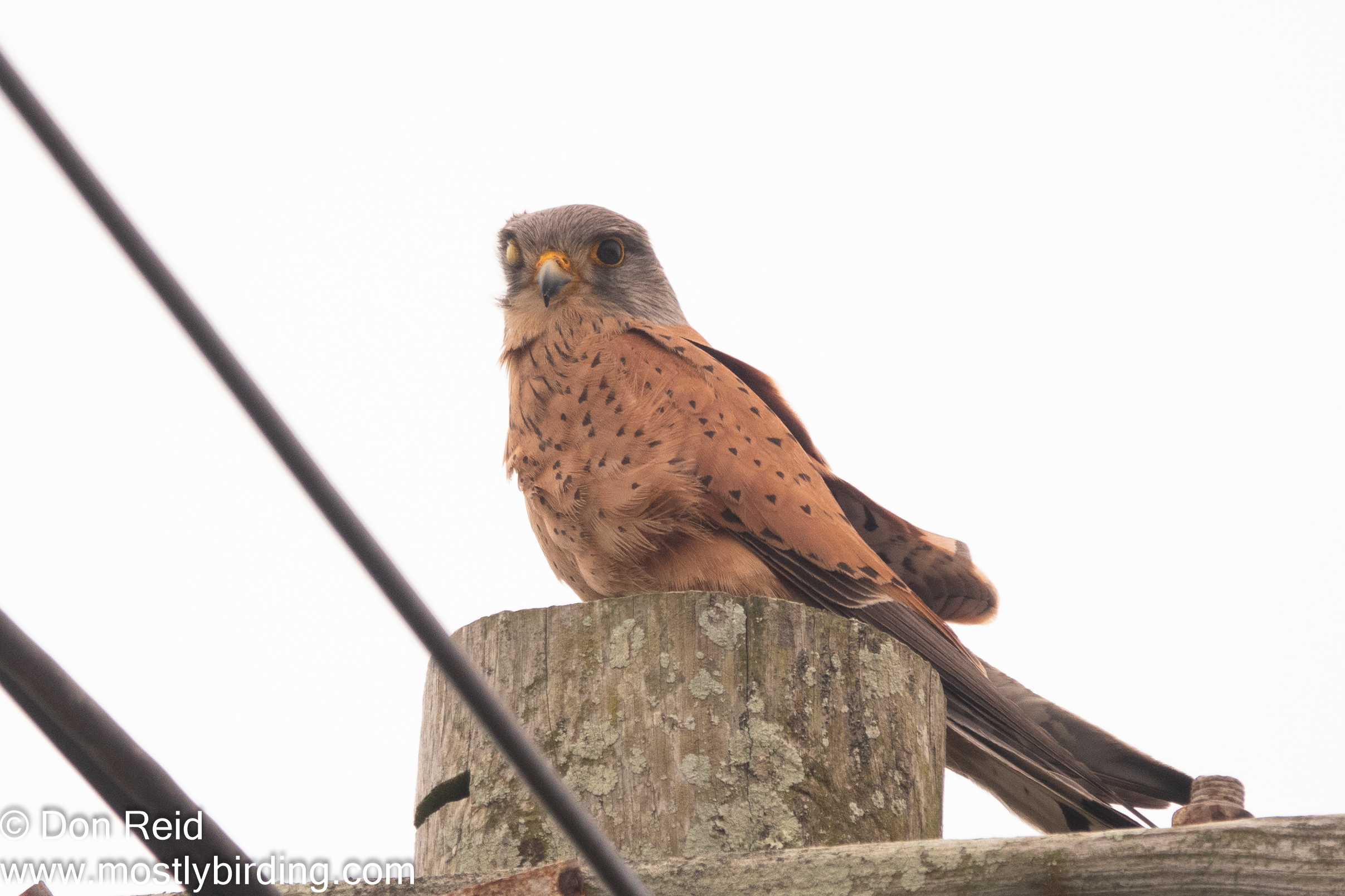
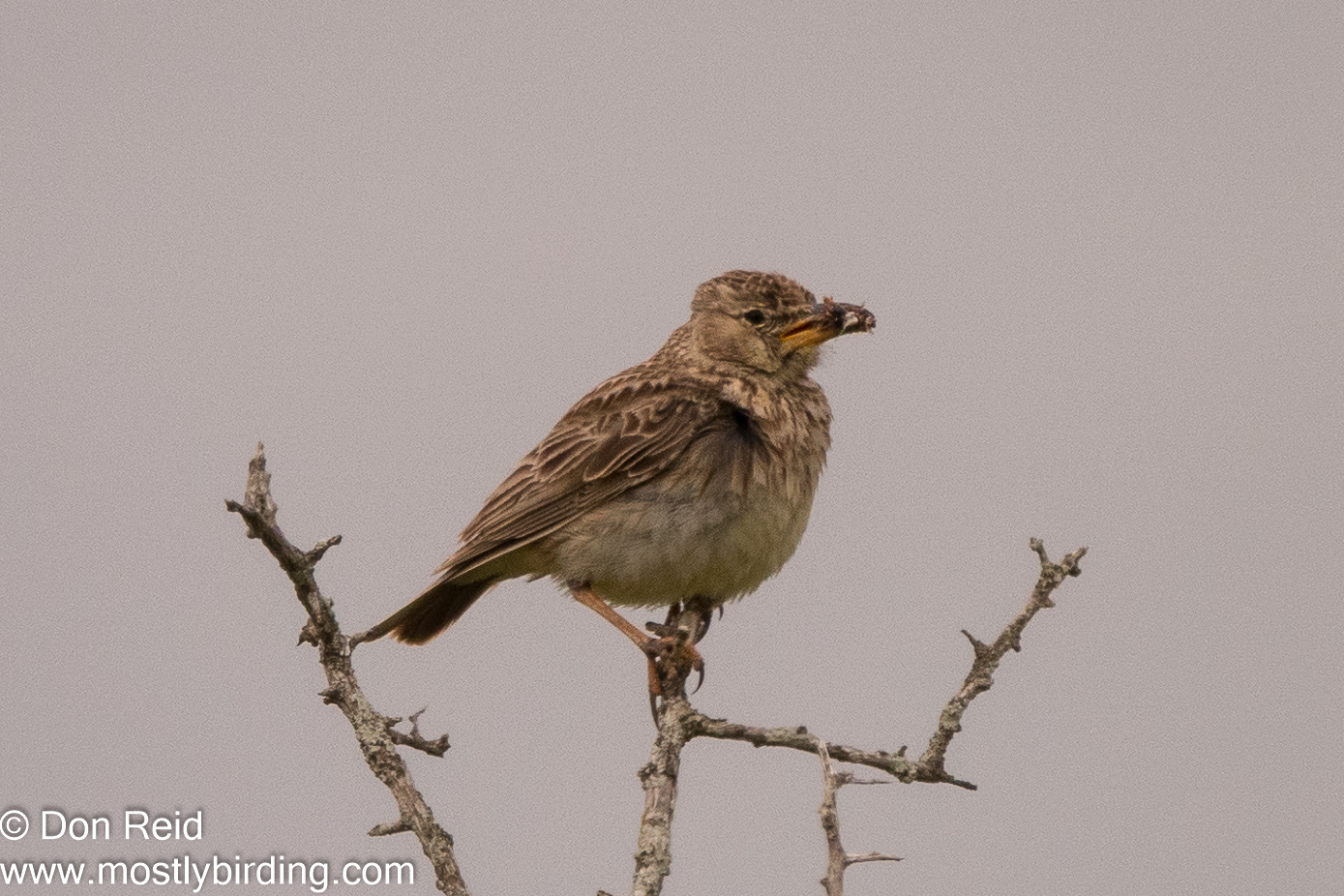
Numbers of birds were enjoying the bounty of Spring and I soon added Rock Kestrel, Large-billed Lark and Grey-backed Cisticola to my list.

Rock Kestrel Falco rupicolus Kransvalk, Cape Columbine Nature Reserve (Tietiesbaai)
Large-billed Lark with small insect in beak Galerida magnirostris Dikbeklewerik, Cape Columbine Nature Reserve (Tietiesbaai)

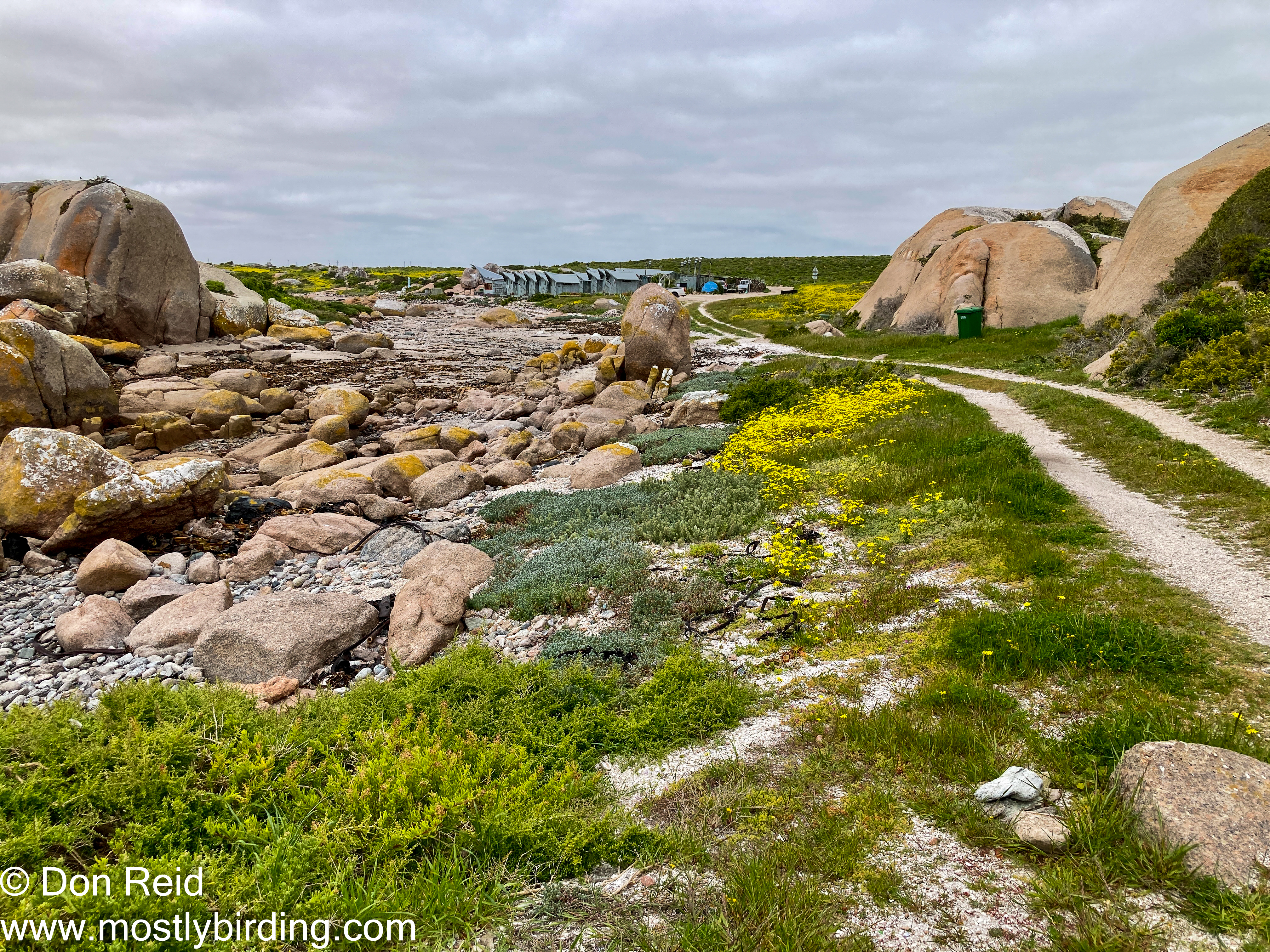
After entering the gate where we had to fill in a form and pay the nominal entrance fee, we headed into the reserve proper and found ourselves at a turn-off, signposted “Sea Shack” which seemed worth exploring – the track was just wide enough for one vehicle, so we hoped we wouldn’t encounter any returning vehicles.

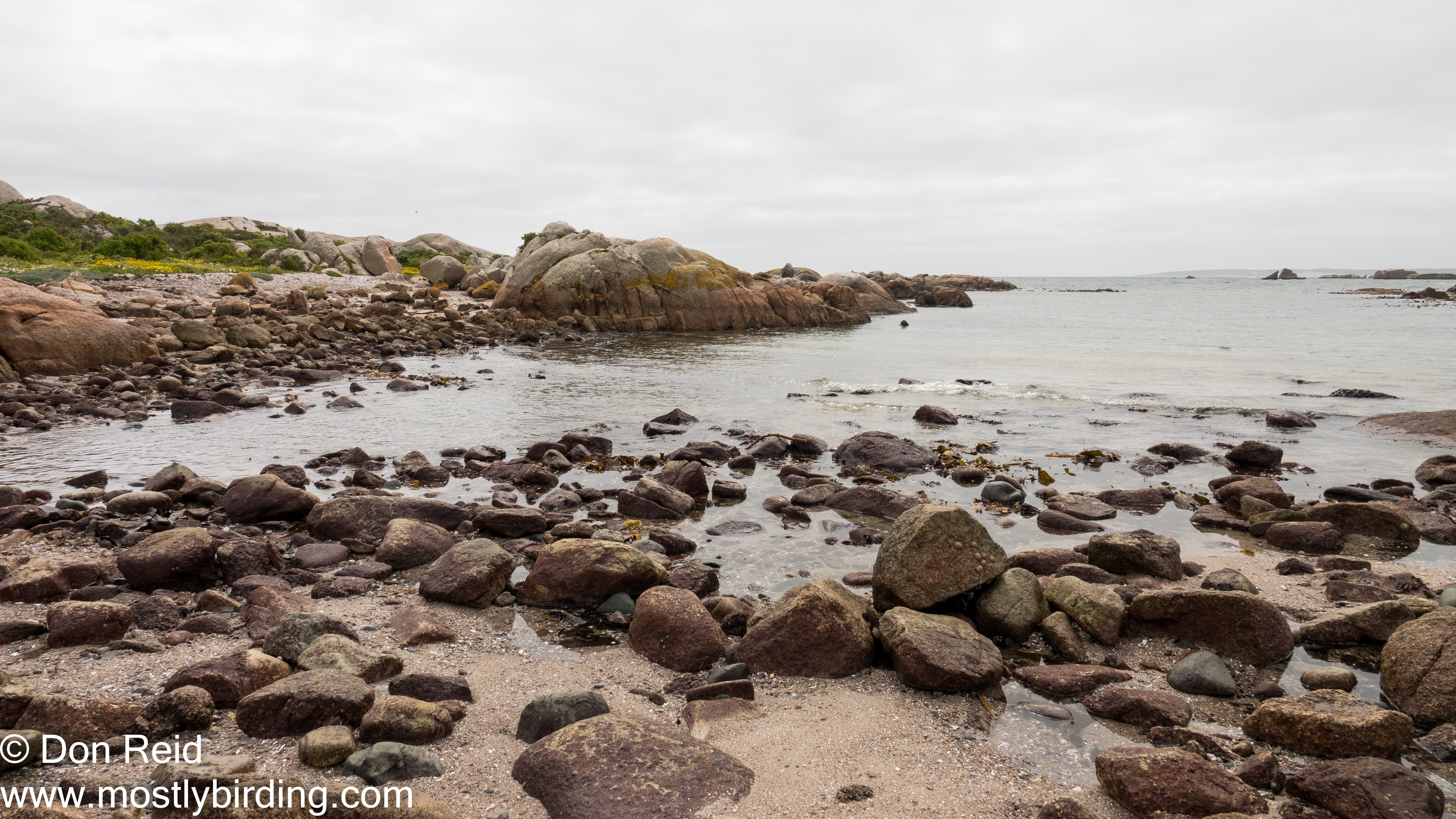
We needn’t have worried as we were literally the only car on the track which wound its way down to the rocky shoreline, where we found a small cove with a line of simple ‘shacks’ – the Sea Shack on the signpost. There was just one gent in residence and he drove off soon after we arrived, so we had the cove to ourselves.

Sea Shack, Cape Columbine Nature Reserve (Tietiesbaai)

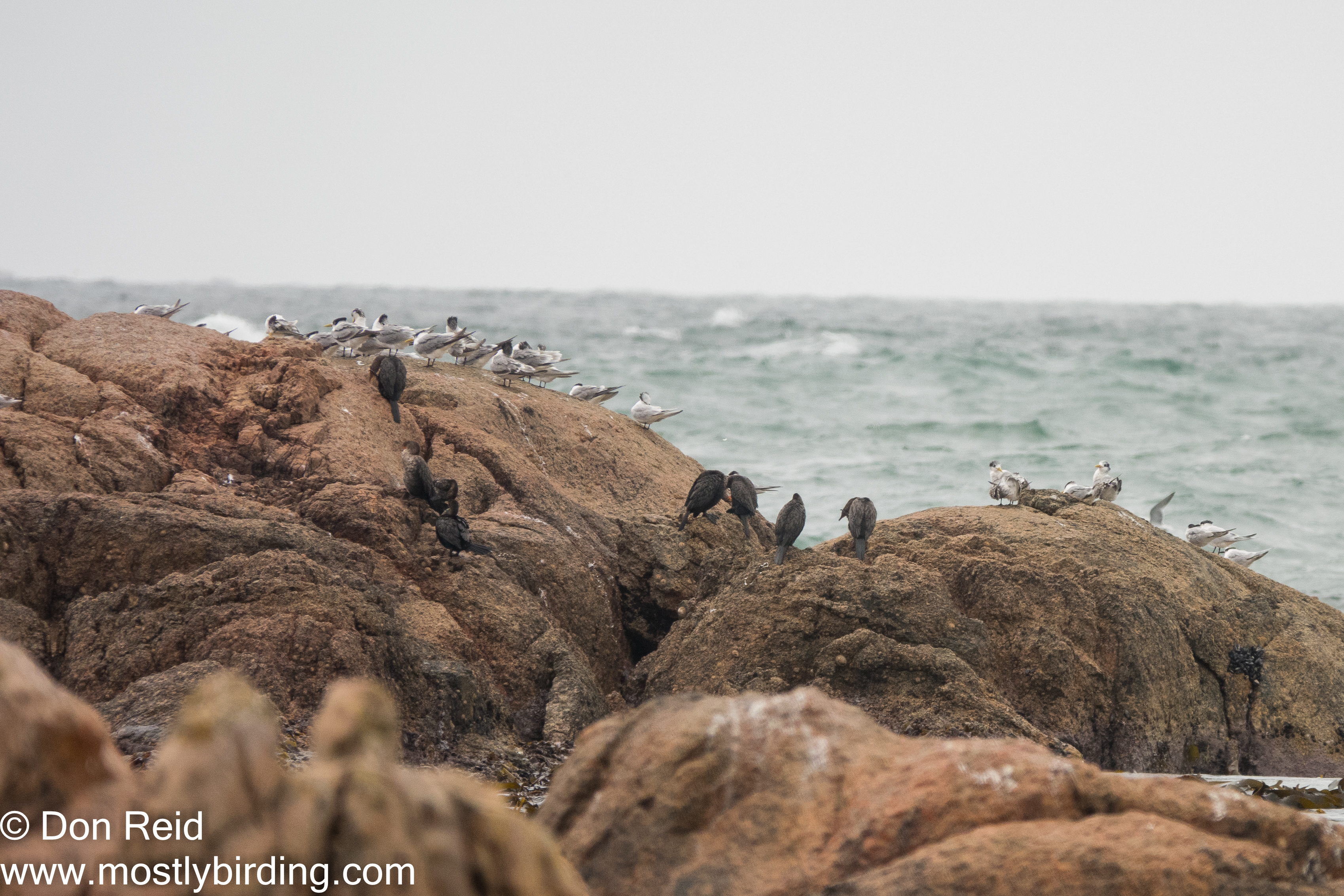
There were birds on the rocks a short way out, but just too far to see clearly with the binos, so I clambered over the seaweed and small rocks close to the shoreline to get a better view.

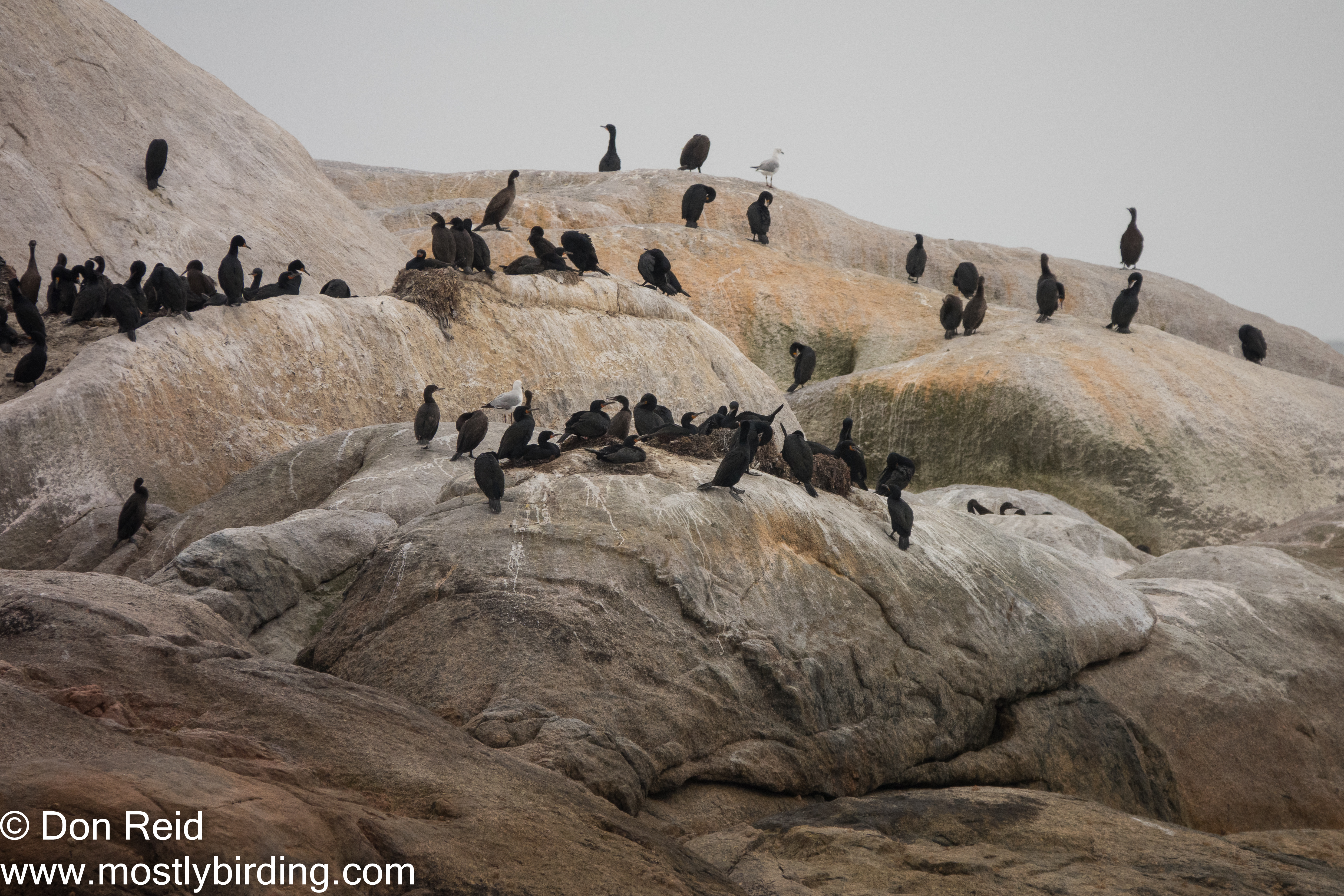
Cormorants and Terns, Cape Columbine Nature Reserve (Tietiesbaai)

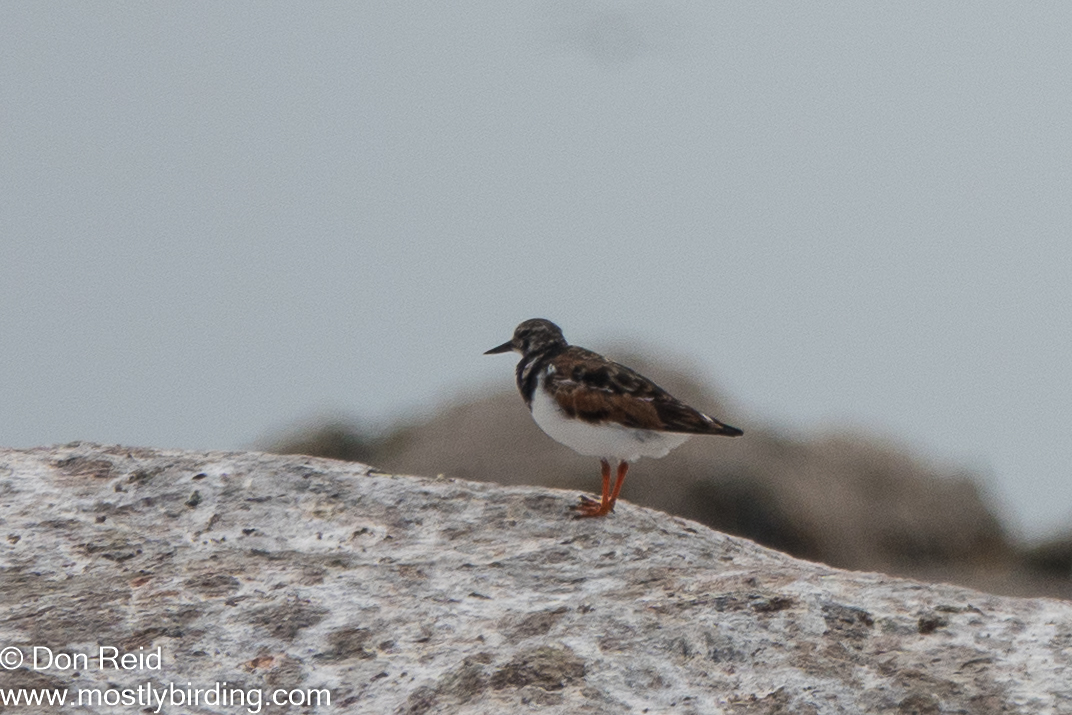
Cape Cormorants were well represented as were Swift Terns and a lone smaller bird turned out to be a Ruddy Turnstone – always a special sighting.

Ruddy Turnstone Arenaria interpres Steenloper, Cape Columbine Nature Reserve (Tietiesbaai)

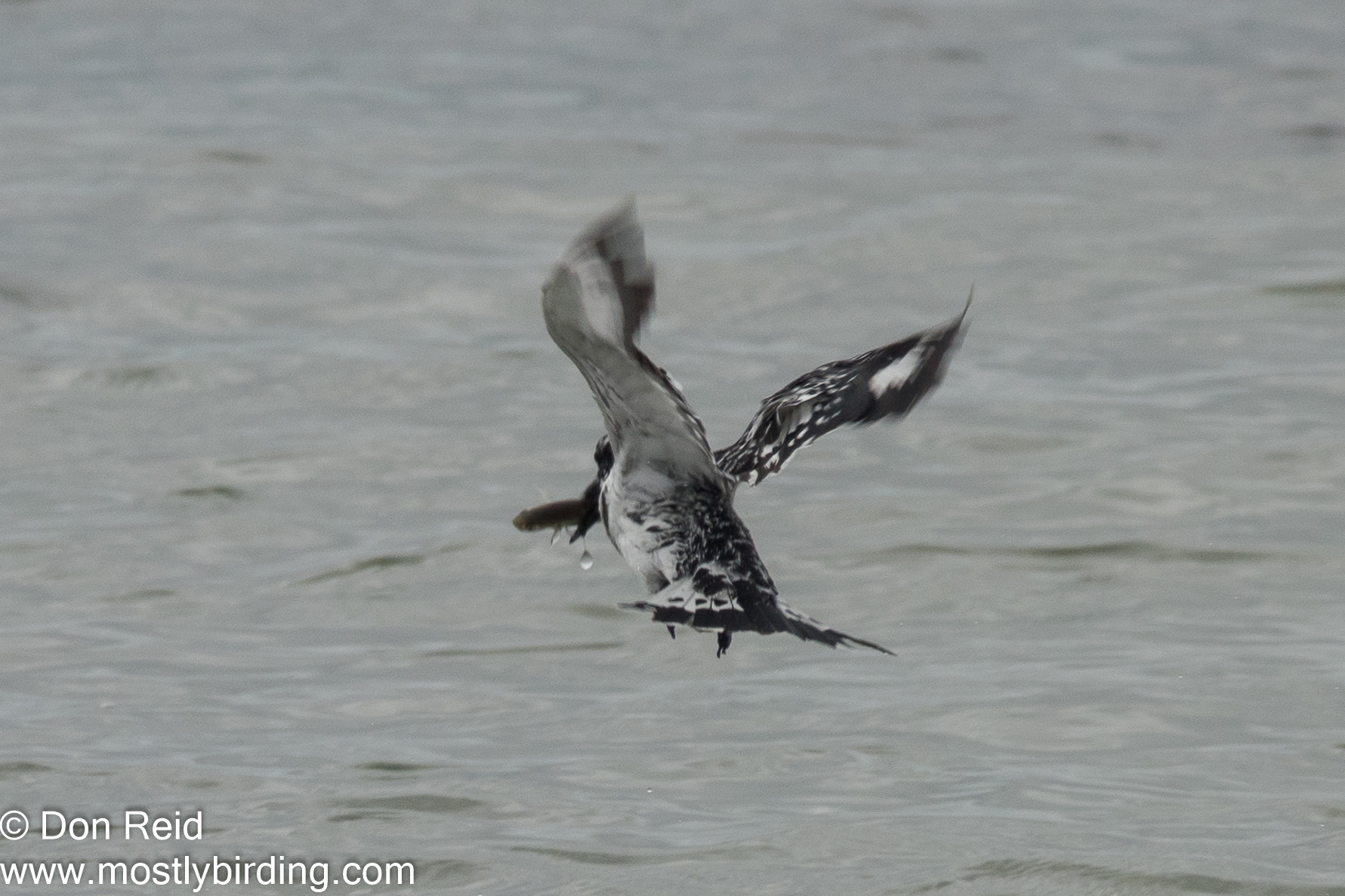
As I watched the Turnstone, a Pied Kingfisher came into view, diving for a small fish right in front of me and flying off with its catch – I tried to get a photo in flight but could only capture a fleeting glimpse of it disappearing with the fish held in its beak.

Pied Kingfisher with fish catch Ceryle rudis Bontvisvanger, Cape Columbine Nature Reserve (Tietiesbaai)

Nearby, we found the perfect spot to enjoy our tea and snacks, parked at the end of an even bumpier track that ended amongst the rocks at the sea edge.

Teatime spot, Cape Columbine Nature Reserve (Tietiesbaai)

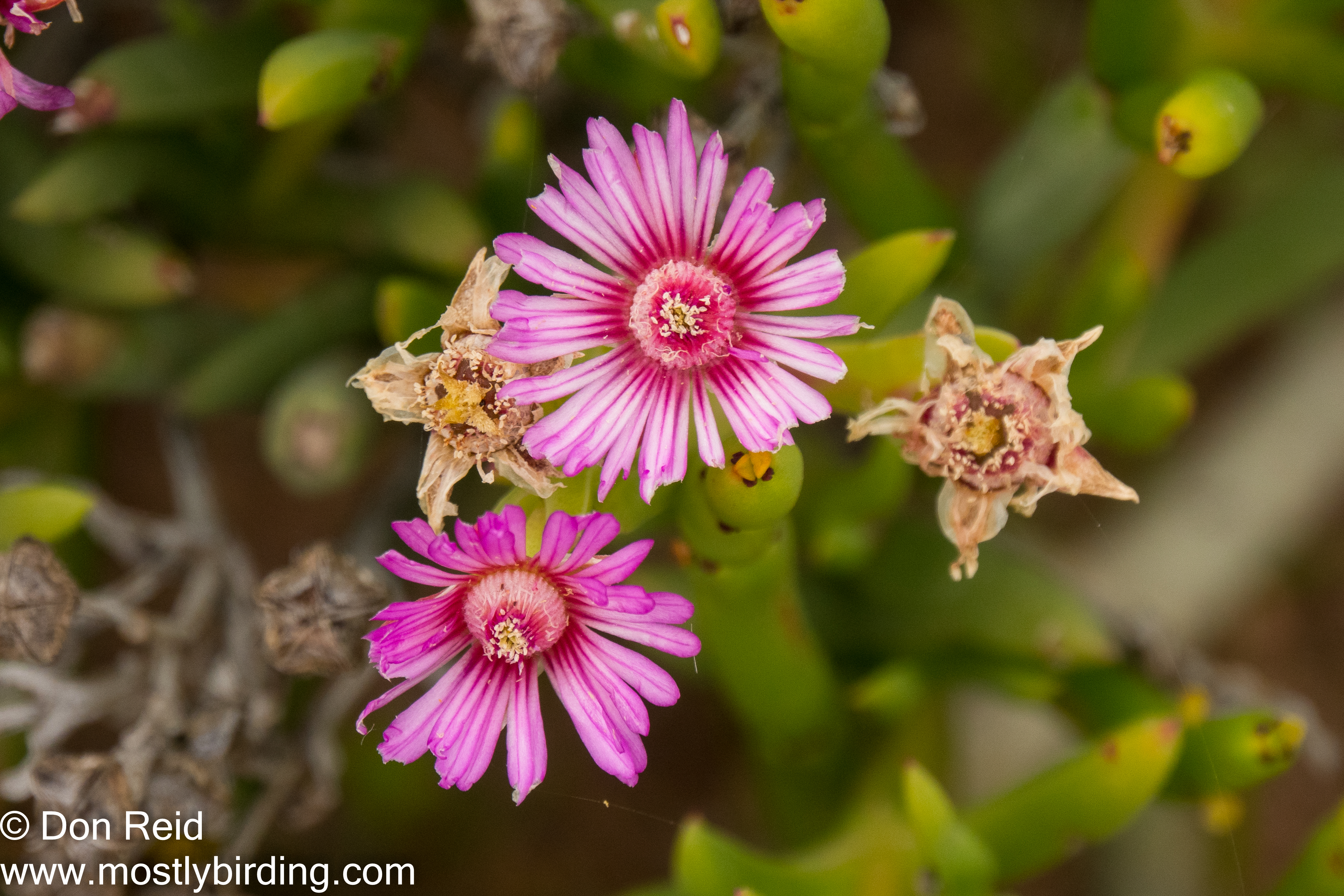
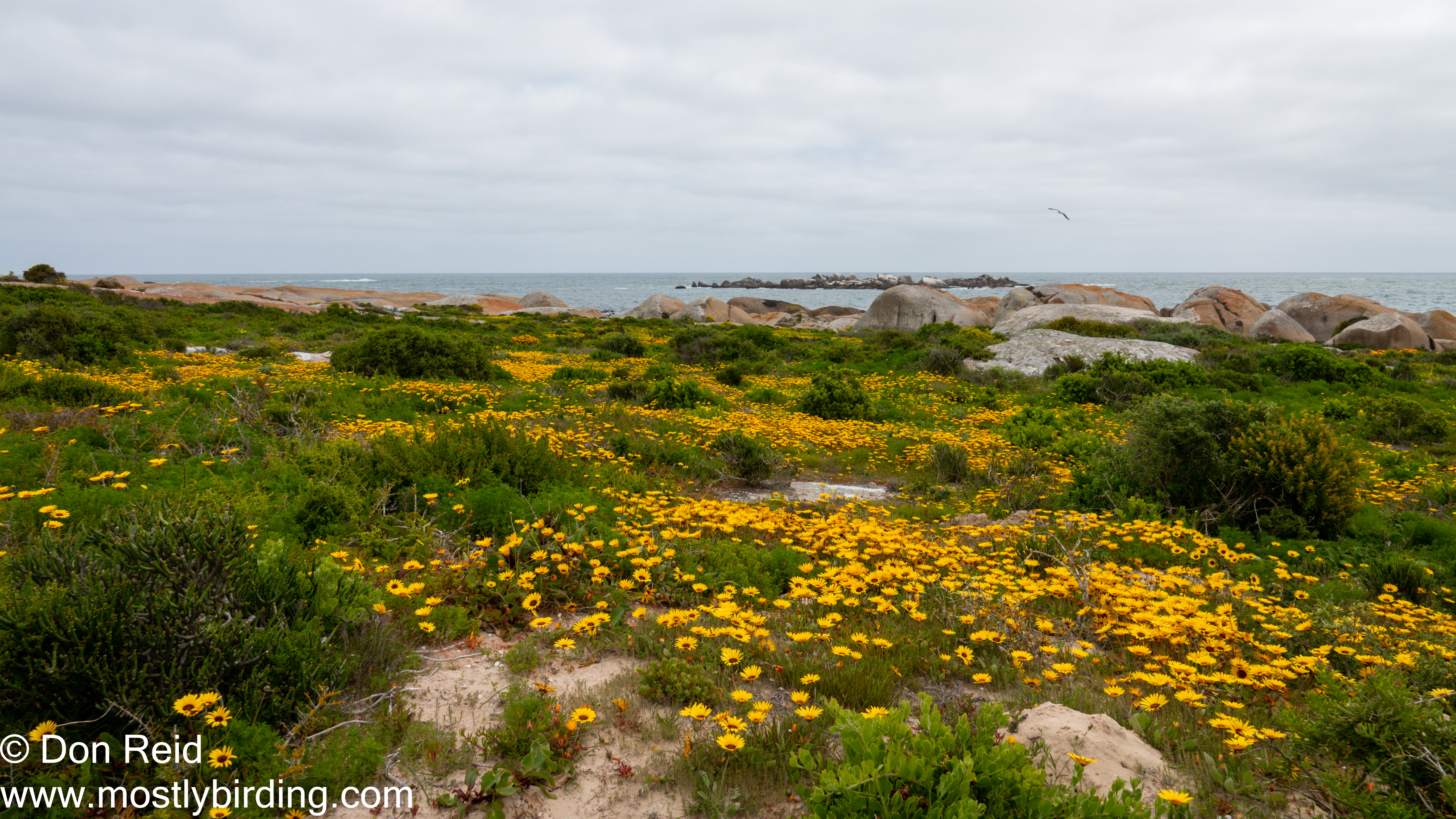
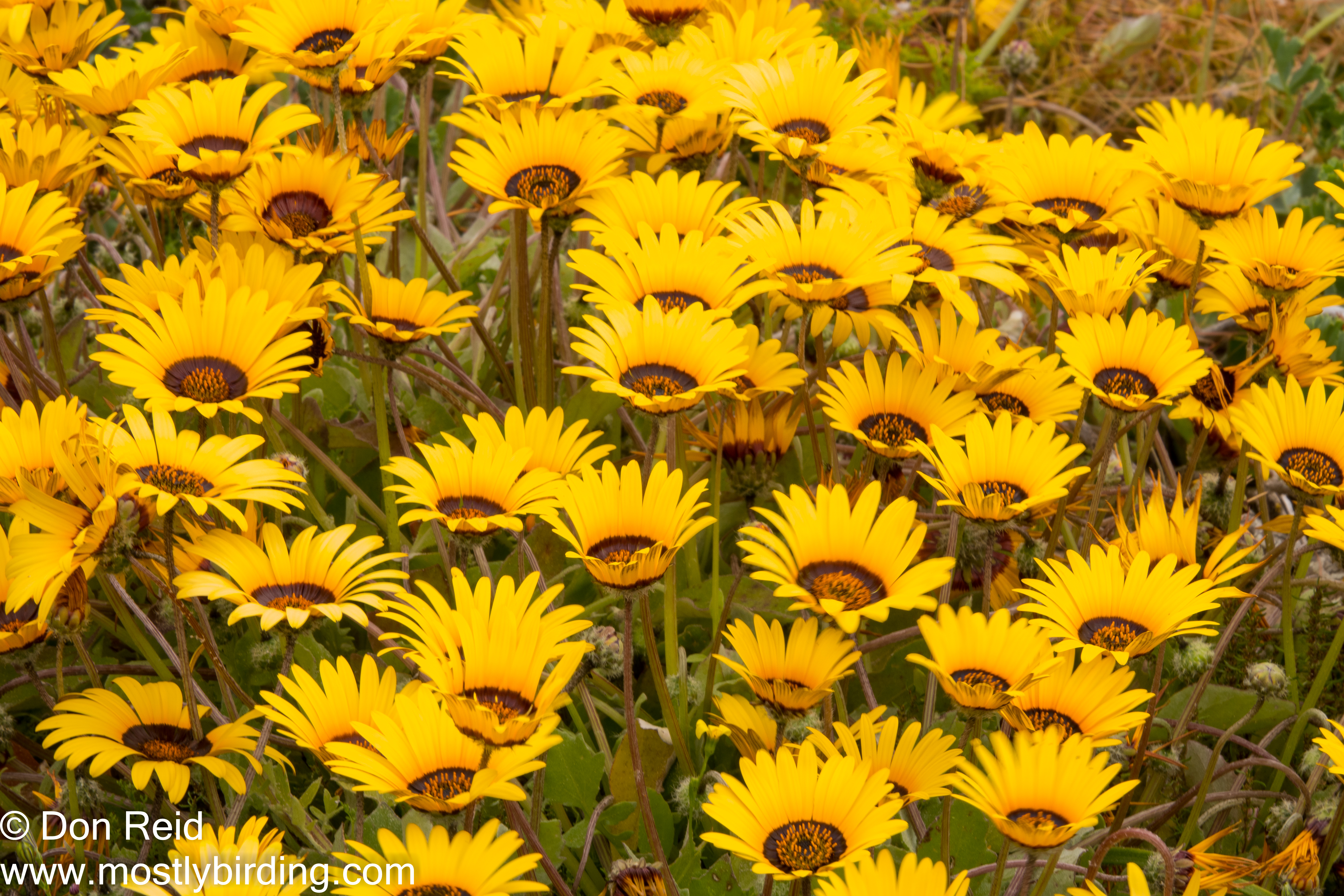
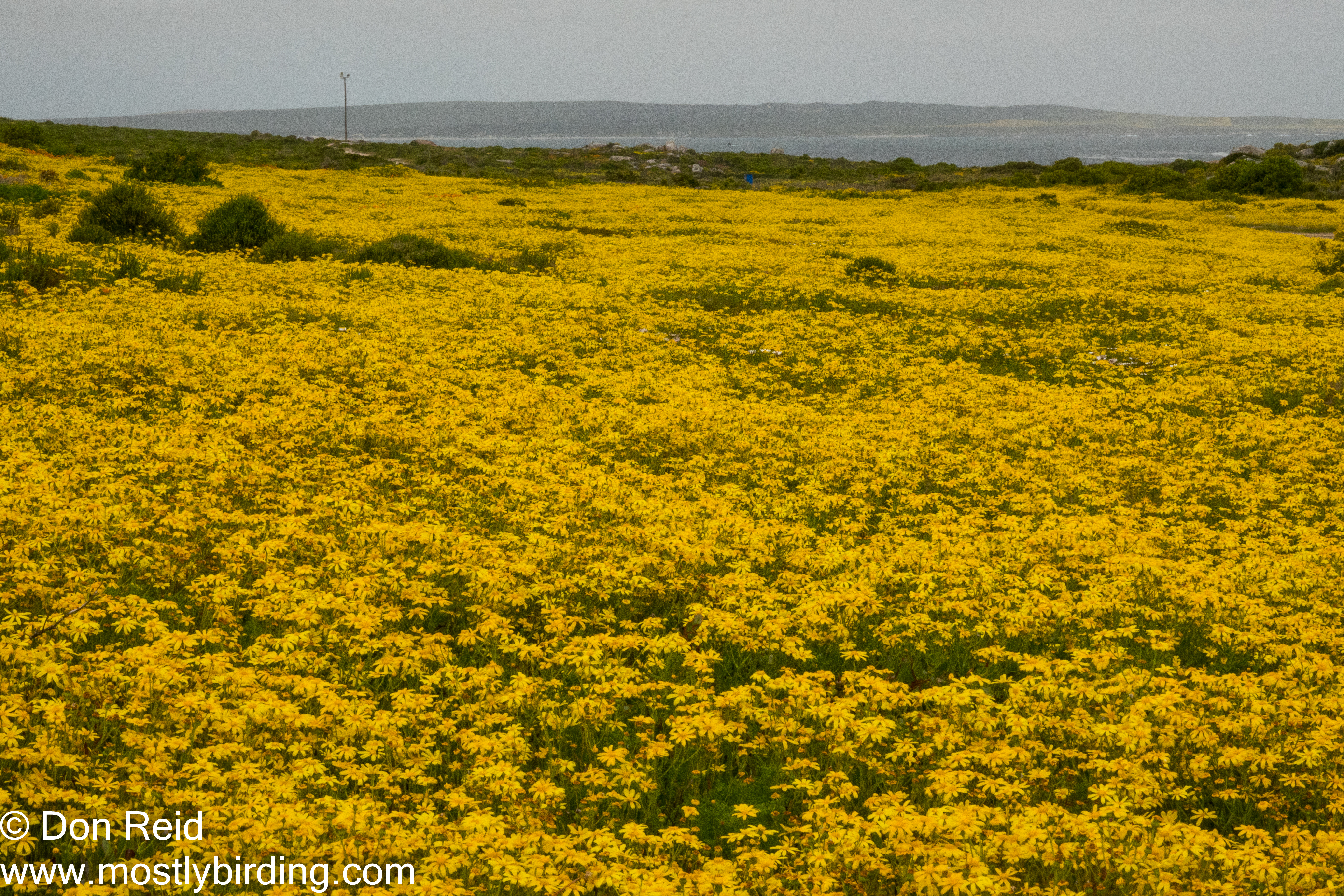
Patches of colourful wild flowers had established themselves everywhere, looking as if they had been planted by a landscape gardener

Cape Columbine Nature Reserve (Tietiesbaai)

We were so engrossed in enjoying the flowers, the time passed without us realising it

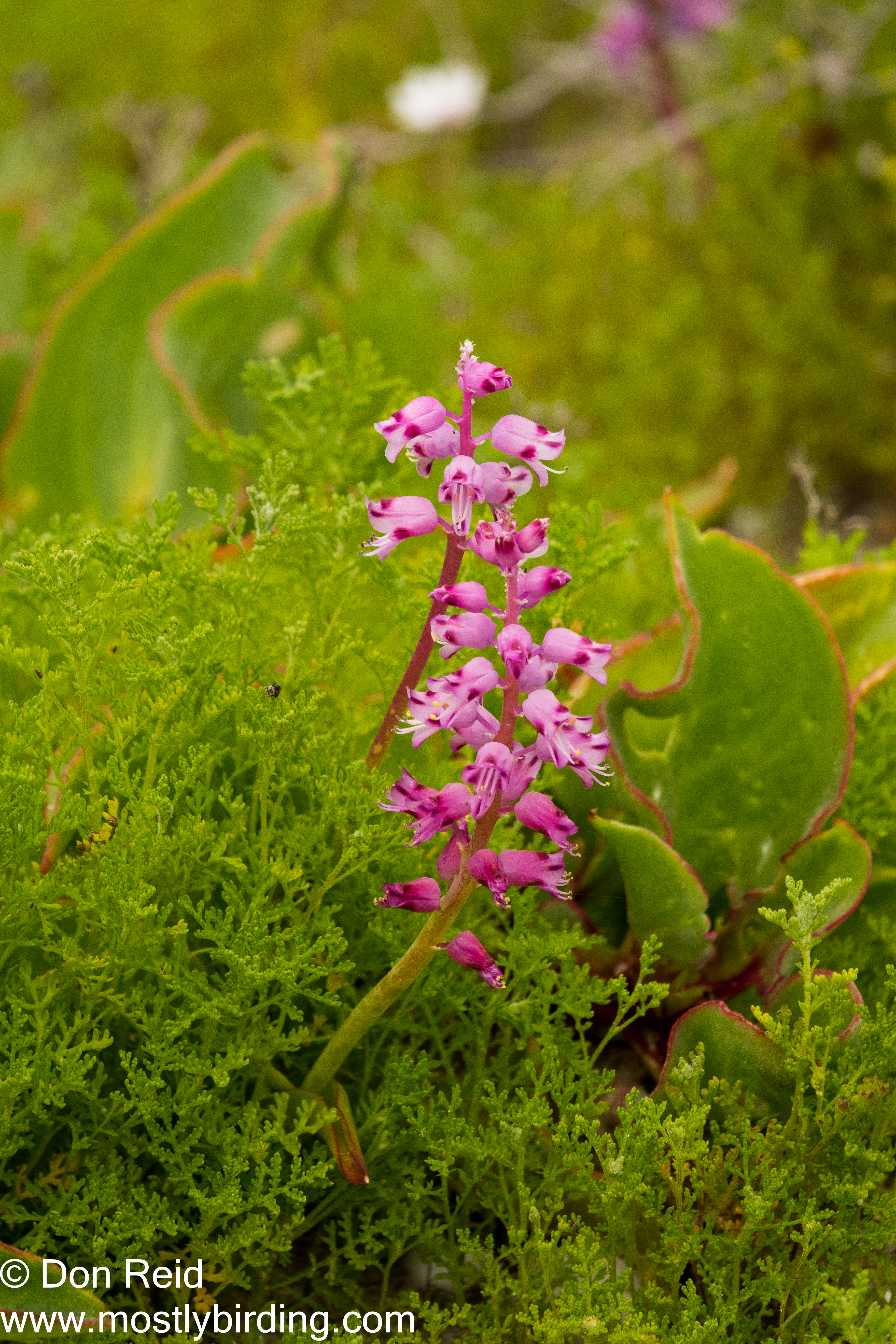
We continued along the track, stopping frequently at Gerda’s behest to view and photograph flowers we had not yet encountered, until we found ourselves at a junction with the ‘main’ road where we turned back, somewhat reluctantly, towards Paternoster.

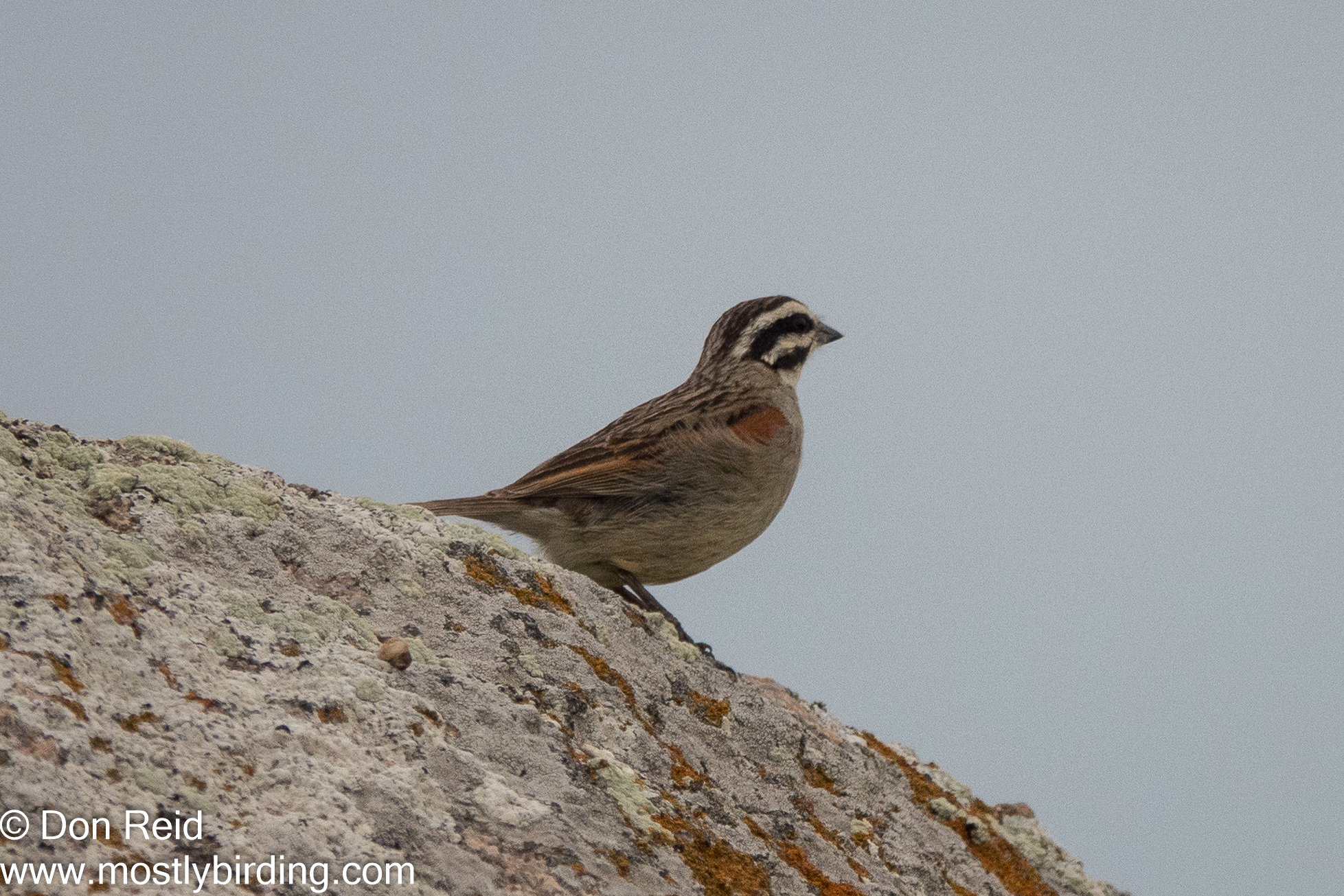
A Cape Bunting on a small rock had me stopping yet again for a quick photo

Cape Bunting Emberiza capensis Rooivlerkstreepkoppie, Cape Columbine Nature Reserve (Tietiesbaai)

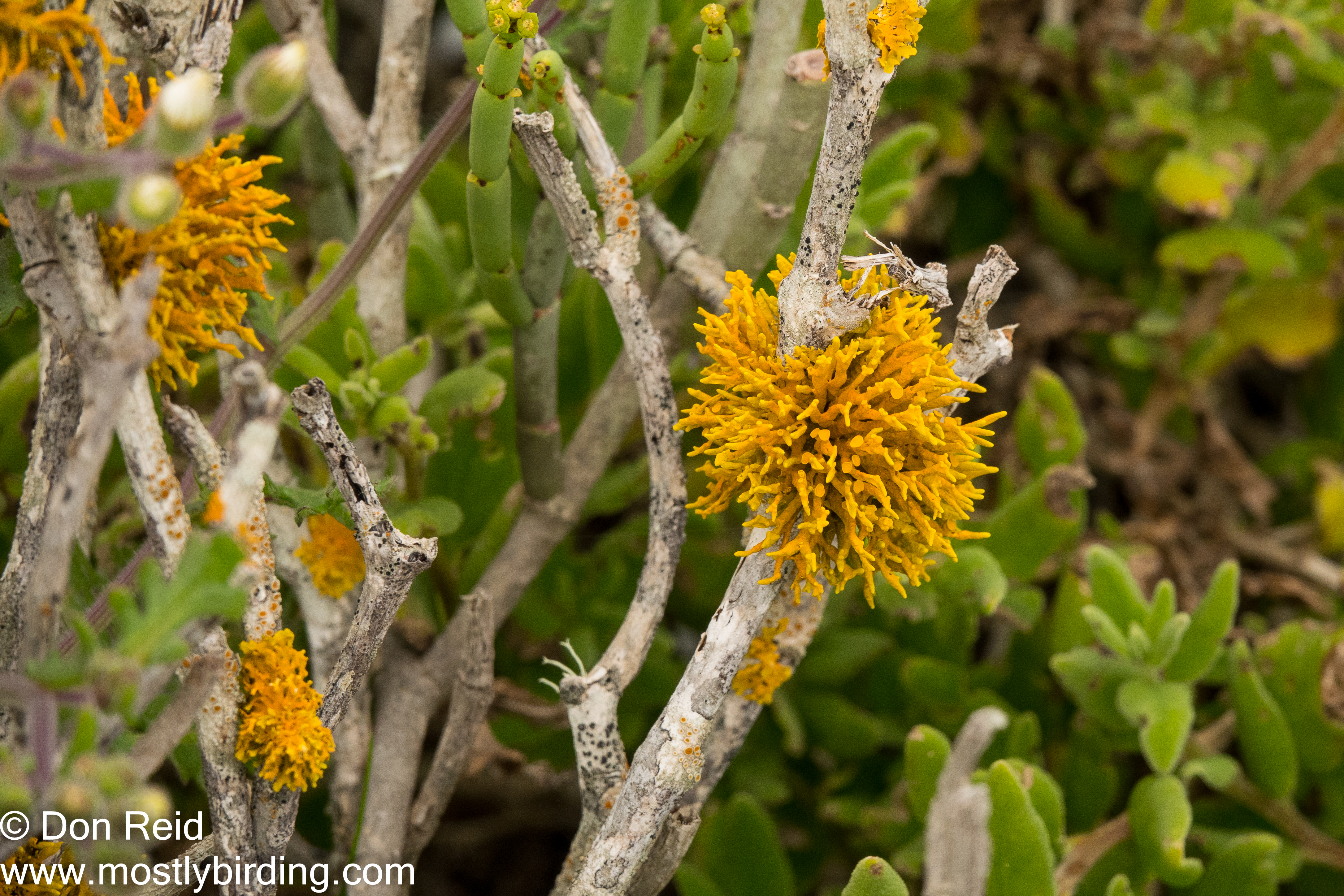
Even the unusual lichen on a dry bush was colourful enough to warrant closer inspection

Lichen, Cape Columbine Nature Reserve (Tietiesbaai)

The road back passed by the lighthouse, which sits on one of the higher points in the reserve, then took us back to the entrance gate.

Lighthouse, Cape Columbine Nature Reserve (Tietiesbaai)
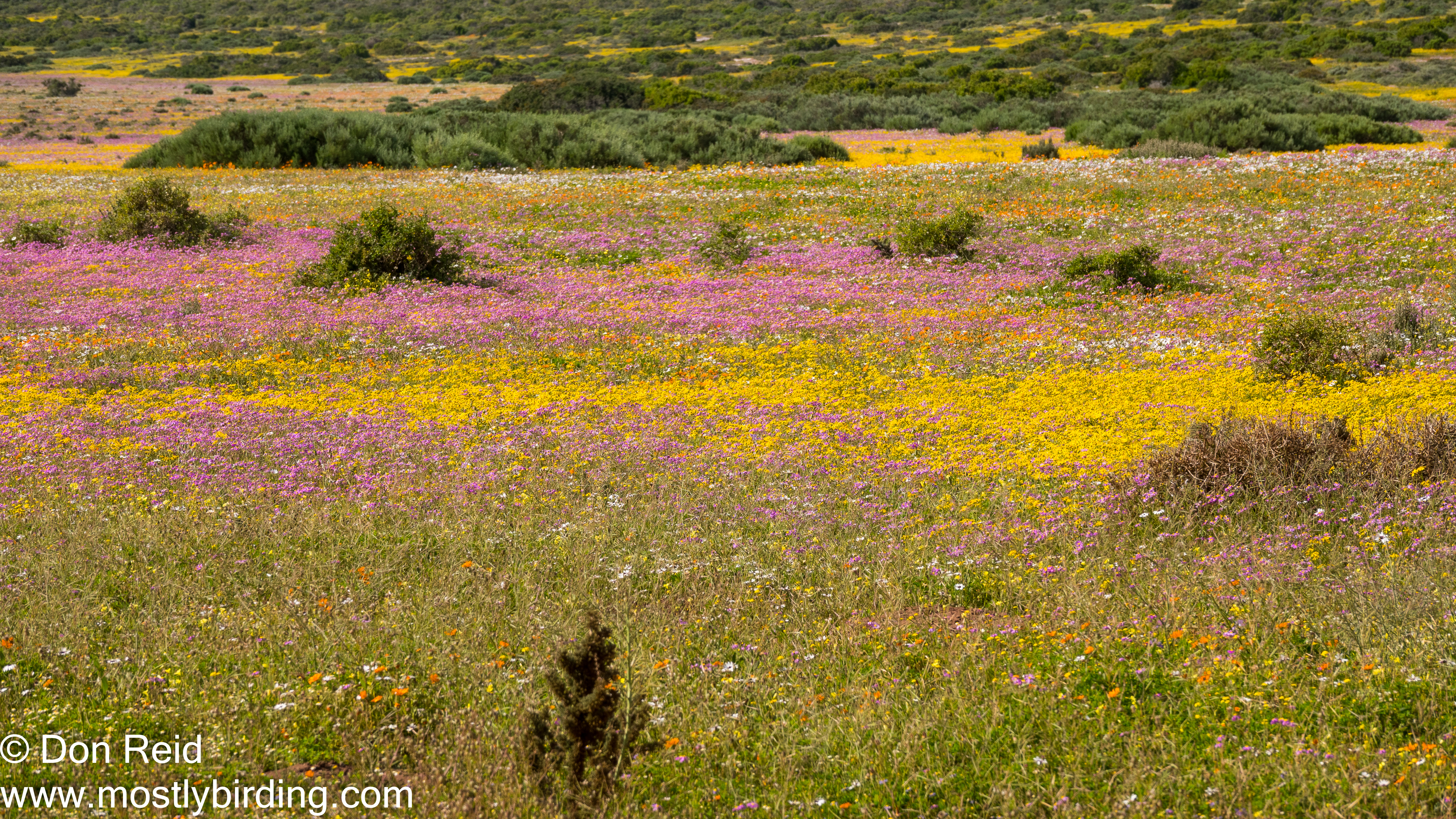
Cape Columbine Nature Reserve (Tietiesbaai)

All in all a spectacular day among wild flowers and rugged coastal scenery.

Knock knock …… who’s there?
We are getting back into our Pretoria routine after 3 months in Mossel Bay, and I decided to go out atlasing in Roodeplaat Nature Reserve one morning this week. Heading into summer the weather in Pretoria is already warm with temperatures in the low 30’s and the skies are clear – some rain has fallen but the ‘big’ summer rains accompanied by the typical highveld thunderstorms have not yet arrived – hopefully they are not far off.

It was a good morning’s atlasing with 71 species logged on the Birdlasser app, including one which put on a brief display for me (well that’s what I like to think) ….

I was out of the car listening to a Lesser Honeyguide calling near the nature reserve offices, when I saw what looked like a woodpecker fly from a tree to a bare wooden utility pole. I could not make out what it was as it seemed to be purposely hiding from me so I approached carefully until I had a partial view and took a few record photos.

It then started pecking at the pole in a rhythmic fashion creating a loud drumming sound and I immediately wondered why, as there was no hope of anything edible to be found and the pole was completely unsuitable for nesting or similar purposes.

Here’s the short clip I filmed of the woodpecker, which I later identified as a Bearded Woodpecker, in action – do excuse the shakiness of the images – I had to film it at a distance on full zoom so as not to scare it away and the wind blowing didn’t help matters.

Best viewed in full screen mode ….

Bearded Woodpecker (Female) ‘drumming’ (Baardspeg / Dendropicos namaquus)

A read through of the species habits on the Roberts app on my phone provided the following insights into this behaviour – nothing to do with food or nesting it seems –

Presence often given away by loud, distinctive call, or by loud tapping (while foraging), or drumming.

Moves out of sight behind a branch in response to danger.

Both sexes drum frequently, mostly early morning; used in territorial advertisement and to establish contact with partner.

Drums in bursts of ca 1 sec at ca 12 strikes/sec, beginning fast, then slowing; usually on a high dead branch (same branch often reused); audible to 1 km.

Roberts VII Multimedia Birds of Southern Africa

It flew off after a while and I continued with my atlasing, pleased at having witnessed this behaviour and at having everything one wants to know about birds available on my iphone.

West Coast National Park – a Feast of Spring Flowers

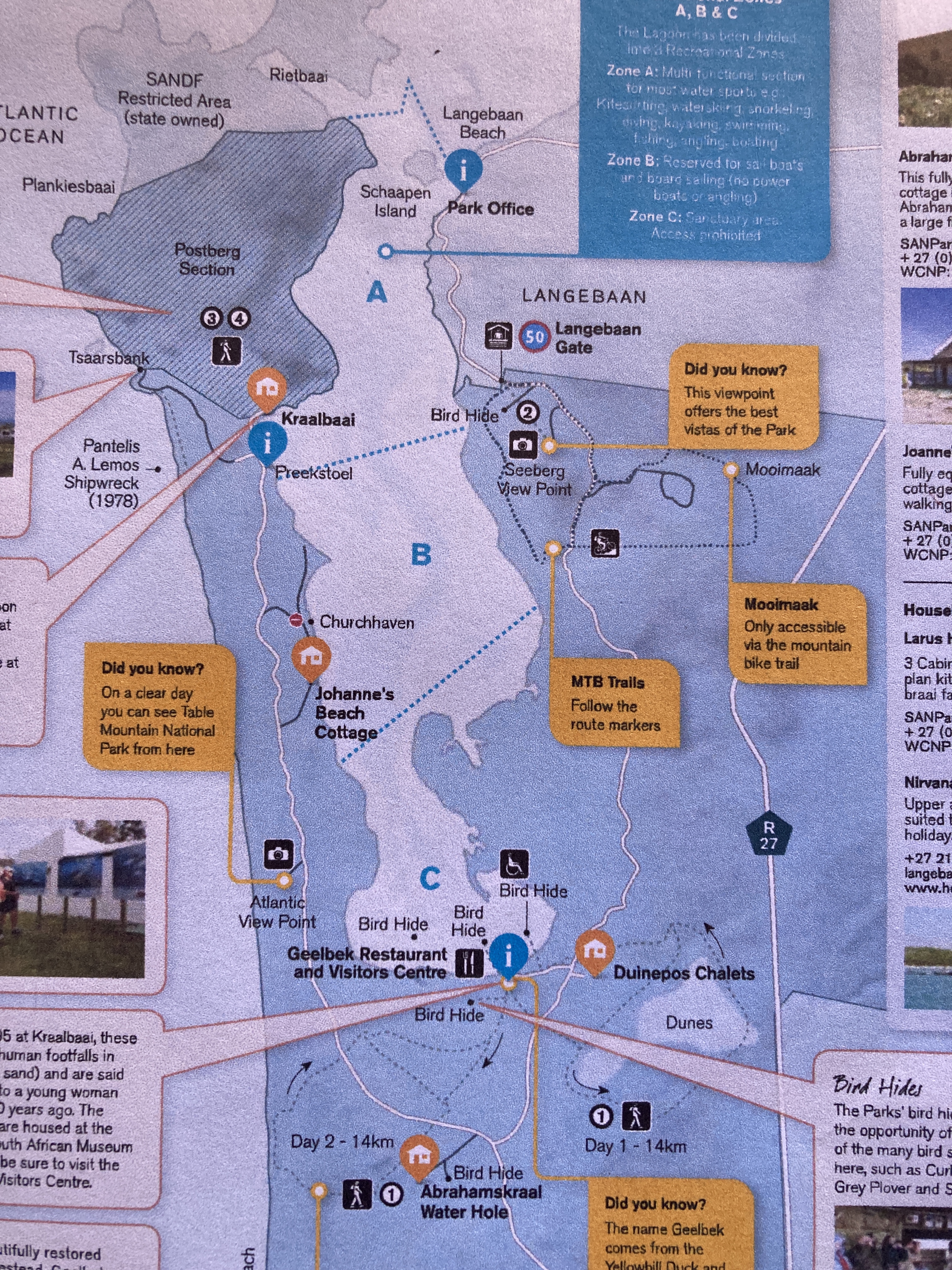
Top of our list of things to do during our visit to Paternoster in September this year was the trip to West Coast National Park and specifically the Postberg section which is only open during August and September each year and which has a reputation for producing spectacular displays of wild flowers at Spring time.

West Coast National Park

It was our first full day in Paternoster, having arrived the previous afternoon and we had already tasted some of the culinary delights that this small town has to offer – a beautifully prepared Kabeljou with rice and veg at De See Kat restaurant.

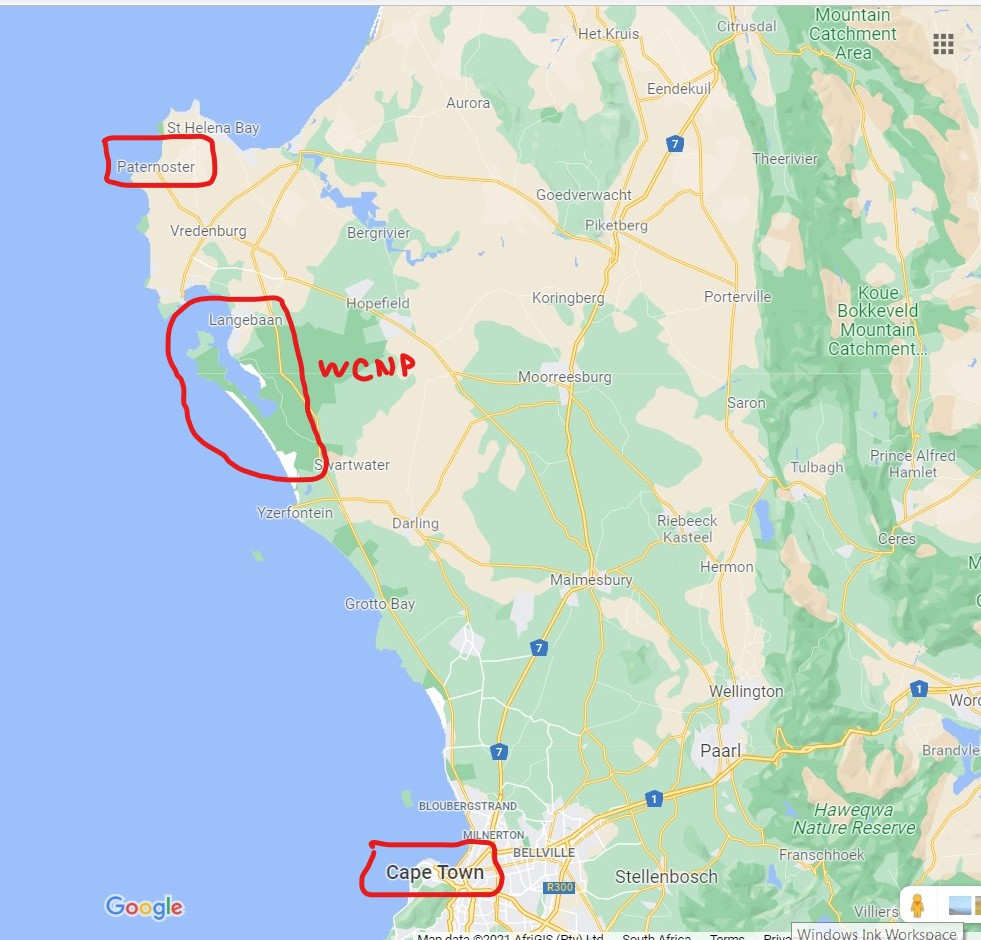
West Coast National Park (WCNP) is around 120 kms from Cape Town – the map shows its position relative to Cape Town and Paternoster –

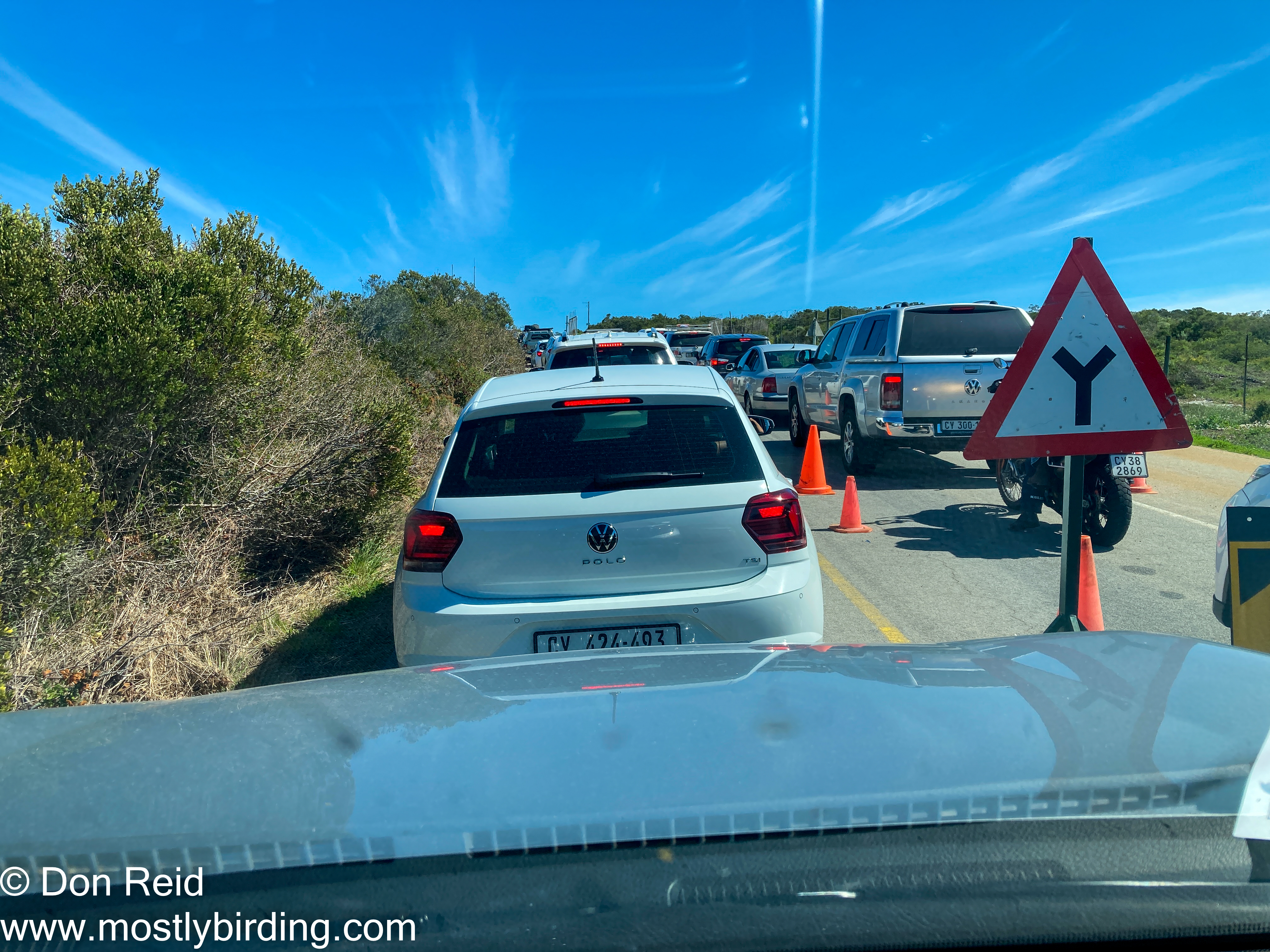
After a superb breakfast at our Paternoster guesthouse, we set off for the West Coast National Park via Vredenburg and the R27, a distance of just over 60 kms to the gate. As we approached the turnoff to the gate, we were amazed to find a queue – two abreast – of cars waiting to enter the Park and joined the back of it. I was very glad we had chosen a weekday for our visit as, judging from the popularity of this park during the wild flower season, the weekend was bound to be a lot more crowded.

West Coast National Park

Fortunately the queue moved along nicely and a half hour later we were into the park and heading in the direction of the Postberg section, along with a string of cars all heading the same way.

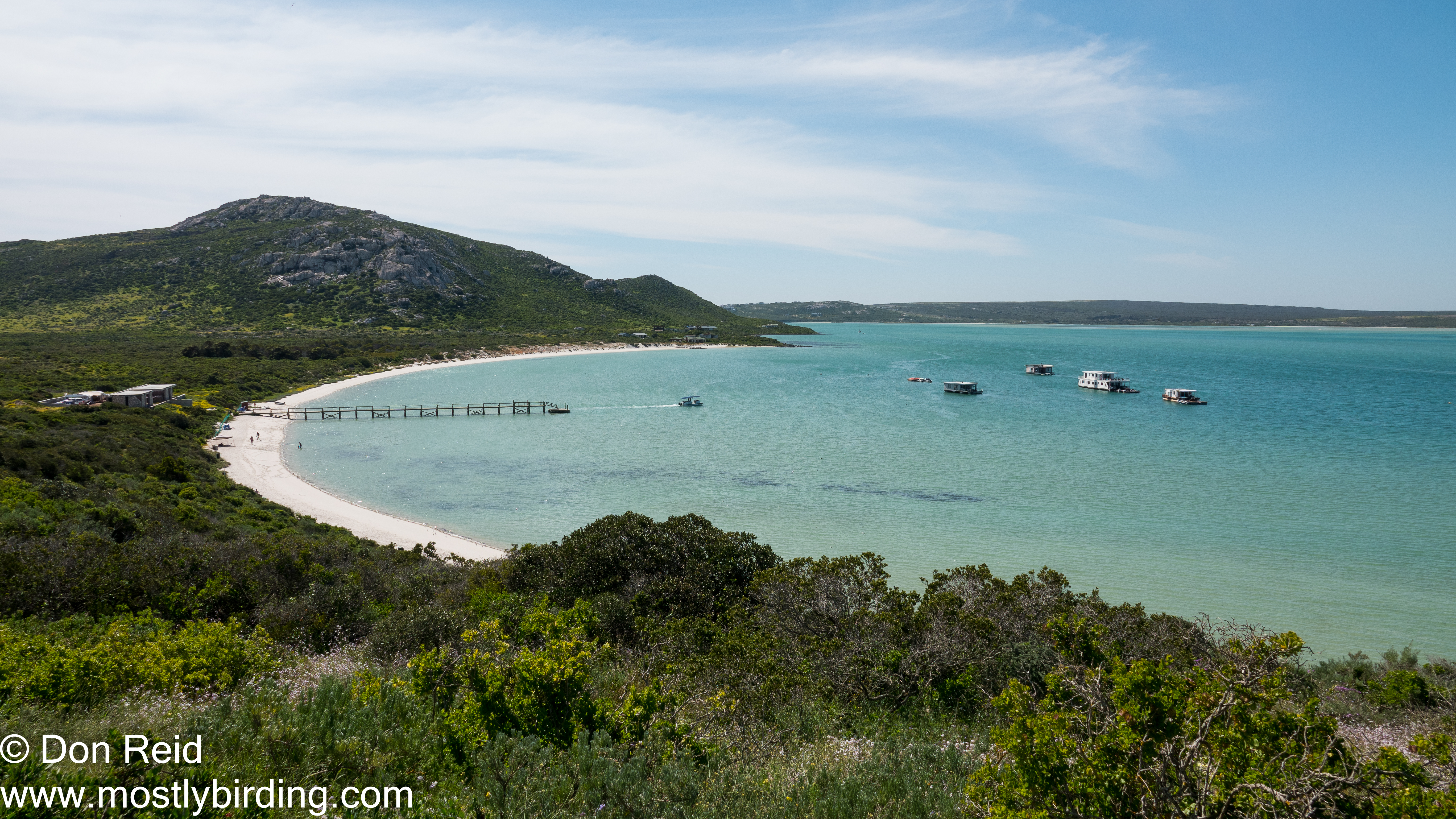
We made a couple of stops along the way to Postberg section, which lies in the northernmost part of the park, mainly to break out of the stream of cars, but also to have a closer look at some of the roadside flowers. One of these stops was at a parking spot overlooking the lagoon.

West Coast National Park

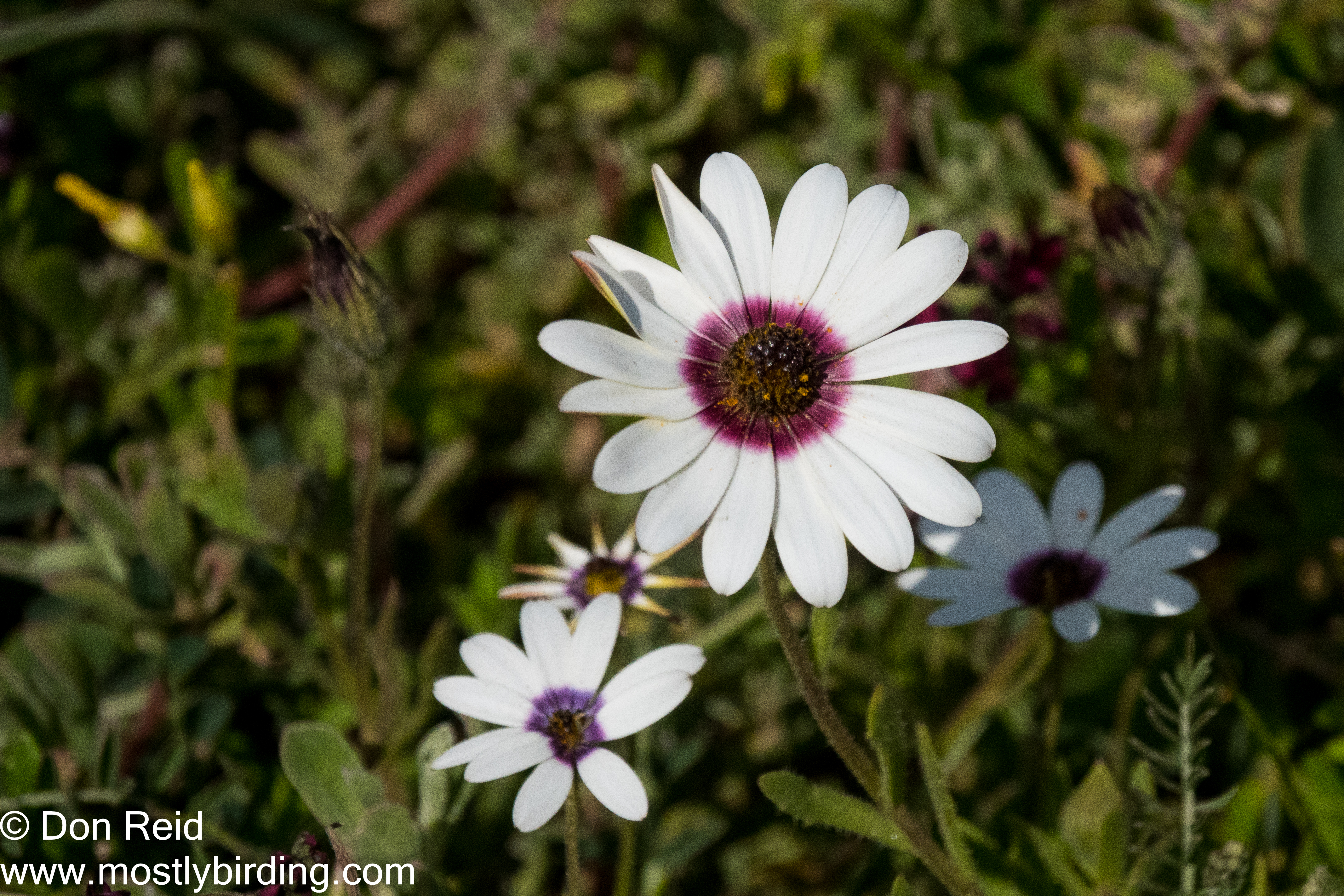
All along the road were patches of flowers which just begged closer inspection and of course a few images

A turn-off from the main road through the park took us towards the sea, the road bordered by masses of flowers

West Coast National Park

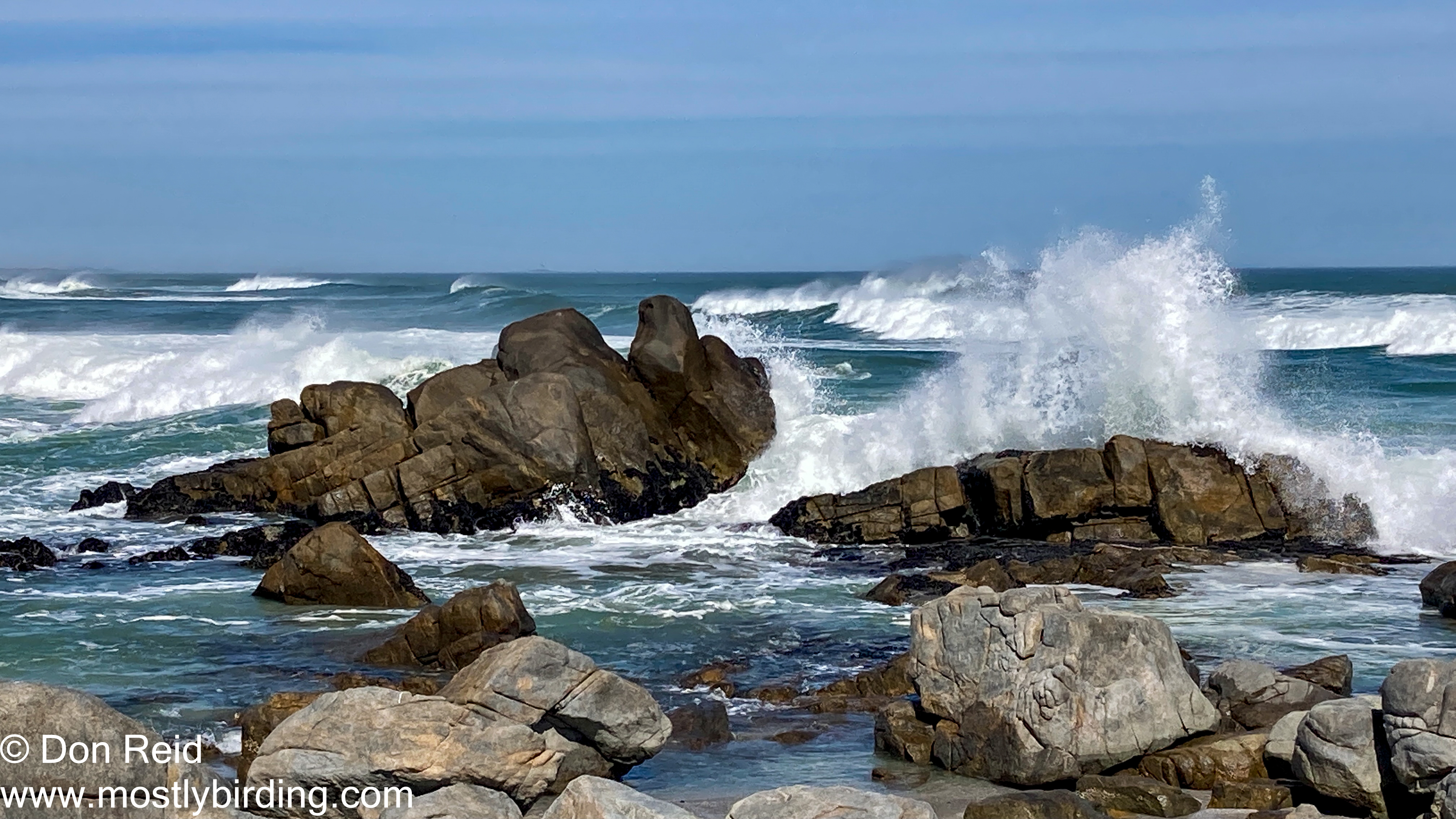
At Tsaarbank picnic spot we lunched on – wait for it – Provita with cheese spread and the tea we’d brought along (talk about fine dining!) and watched wild waves crashing into the rocky shoreline.

Tsaarbank, West Coast National Park

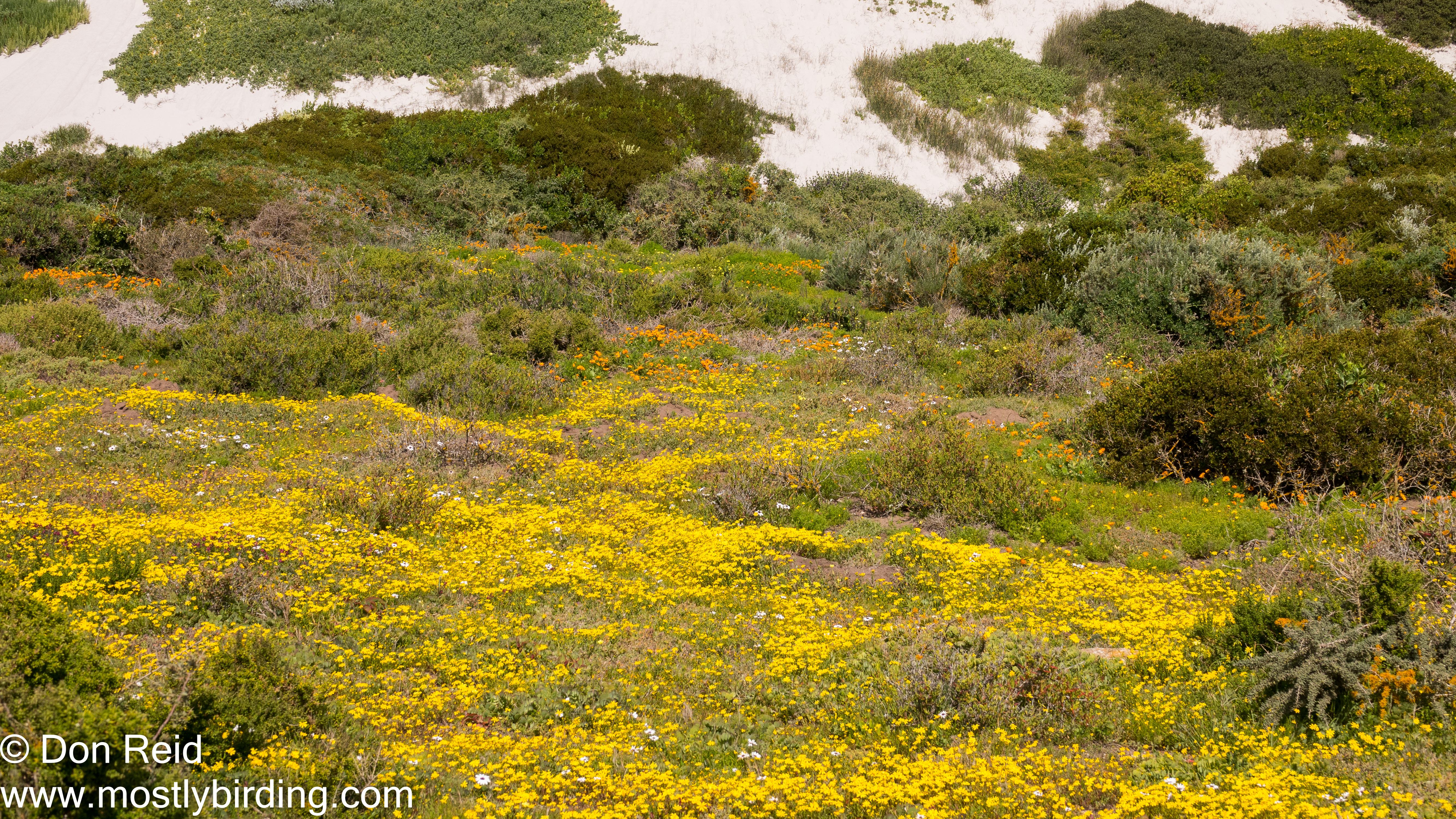
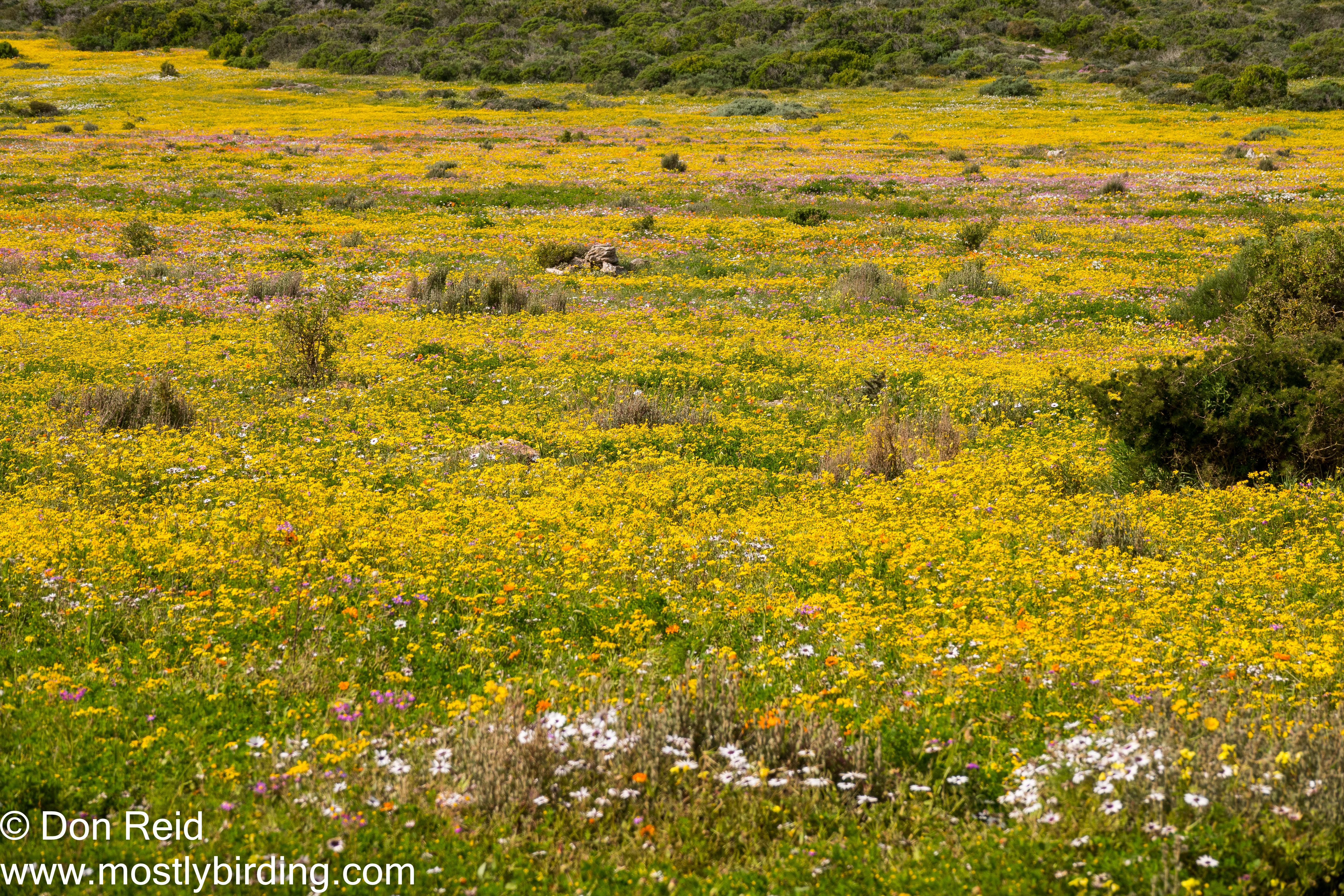
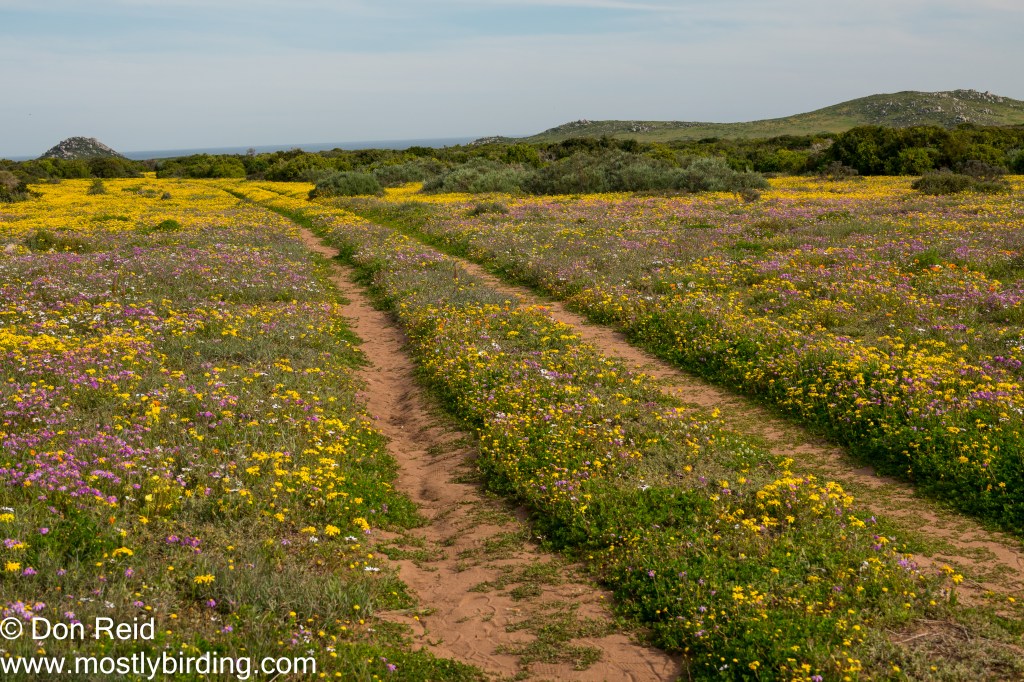
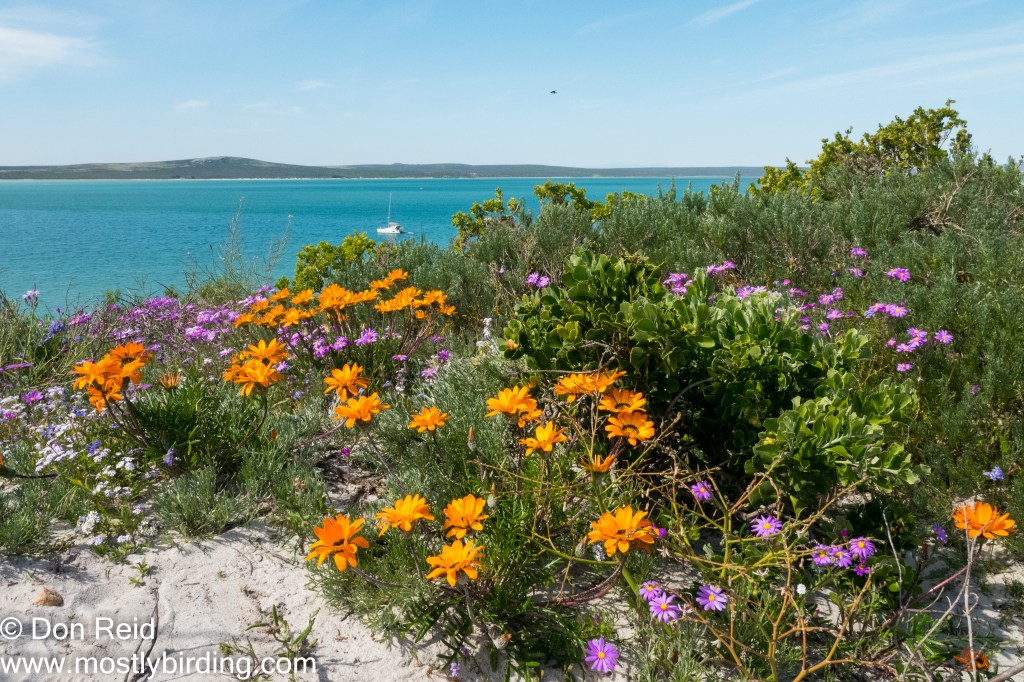
Then we entered Postberg proper and found ourselves surrounded at times by multi-coloured flowers spreading across fields and hills – what a display!

West Coast National Park

Fortunately the many cars had by now dispersed in different directions, giving us and others the freedom to stop and admire the many varieties of flowers and just take it all in.

The road took us on a circular route, eventually joining the exit road, which took us past more magnificent displays of flowers, until we found ourselves back at the entrance to Postberg.

All that remained was to make our way slowly back to the main entrance gate where we had entered earlier and head back to Paternoster along the R27 road, reflecting on a truly memorable day.

Paternoster – Spring Flowers, Birds and Beaches

Continuing the story of our ‘Wild Flower Season’ trip to the West Coast town of Paternoster…..

Getting there

After breakfast we left Klein Welmoed Farm near Stellenbosch, dropped granddaughter Megan off at her university hostel, then headed to Paternoster via Wellington, Malmesbury and Vredenburg.

The road runs through the wheat belt of South Africa – almost endless fields of dark green wheat with smaller fields of canary yellow canola providing a dramatic contrast.

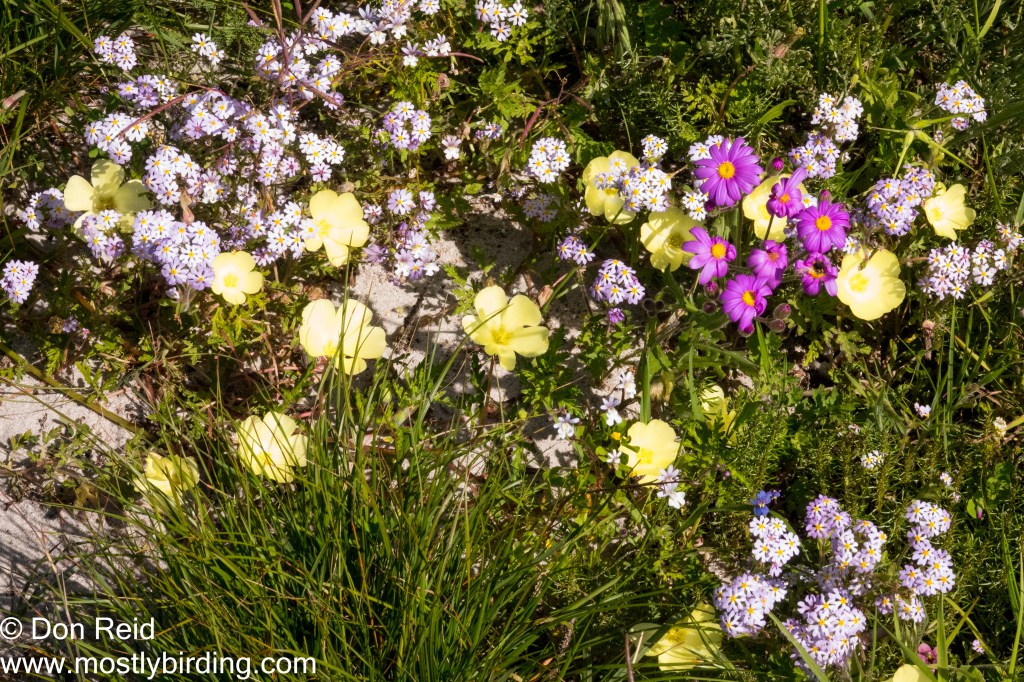
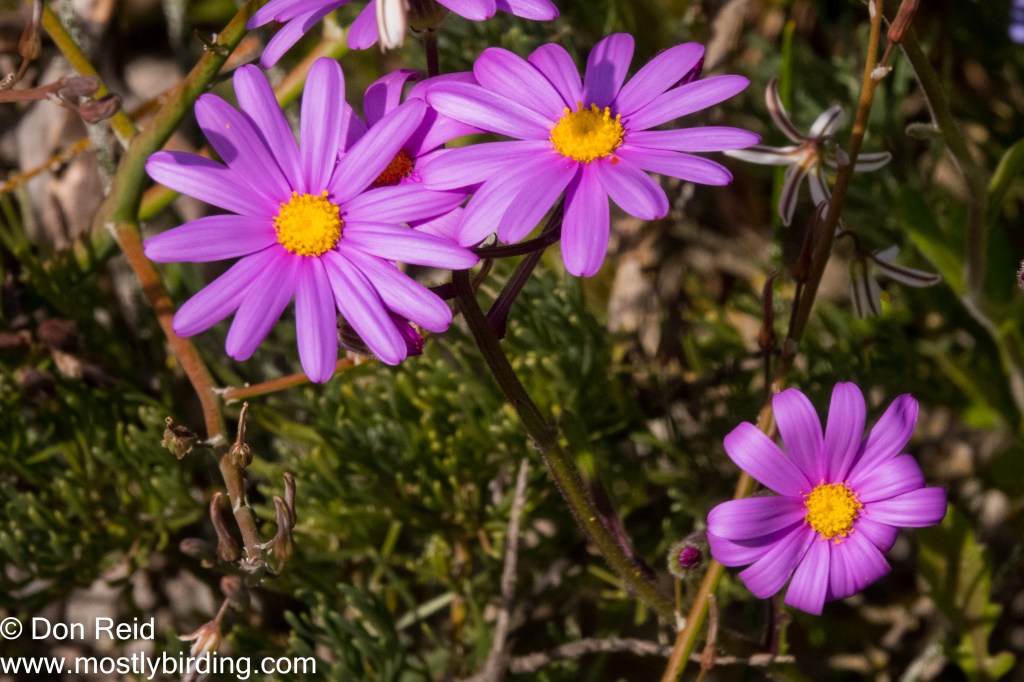
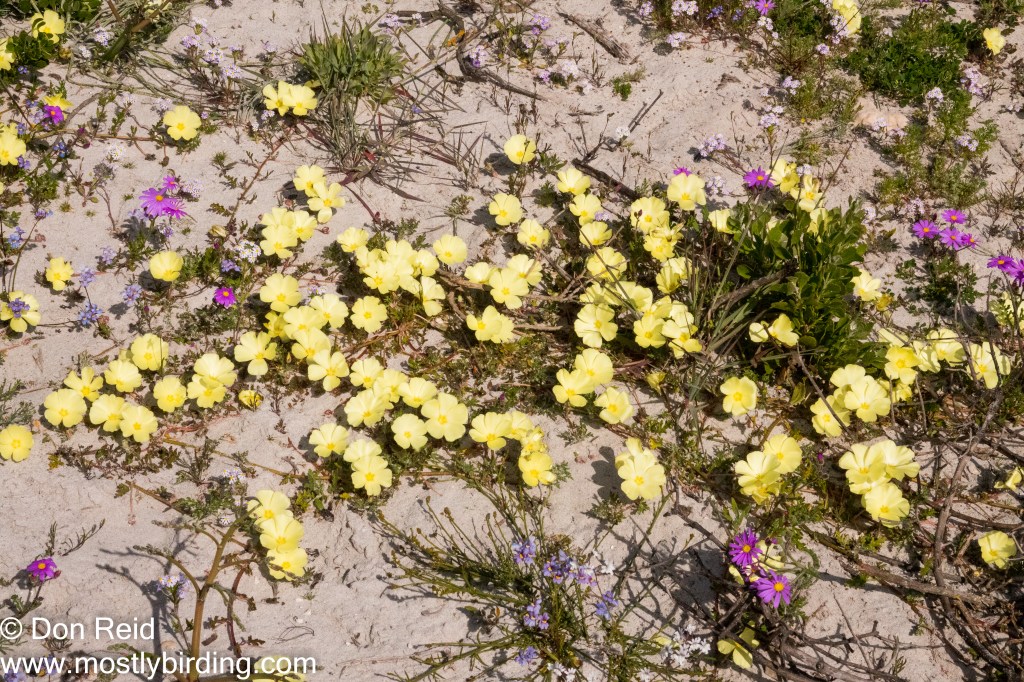
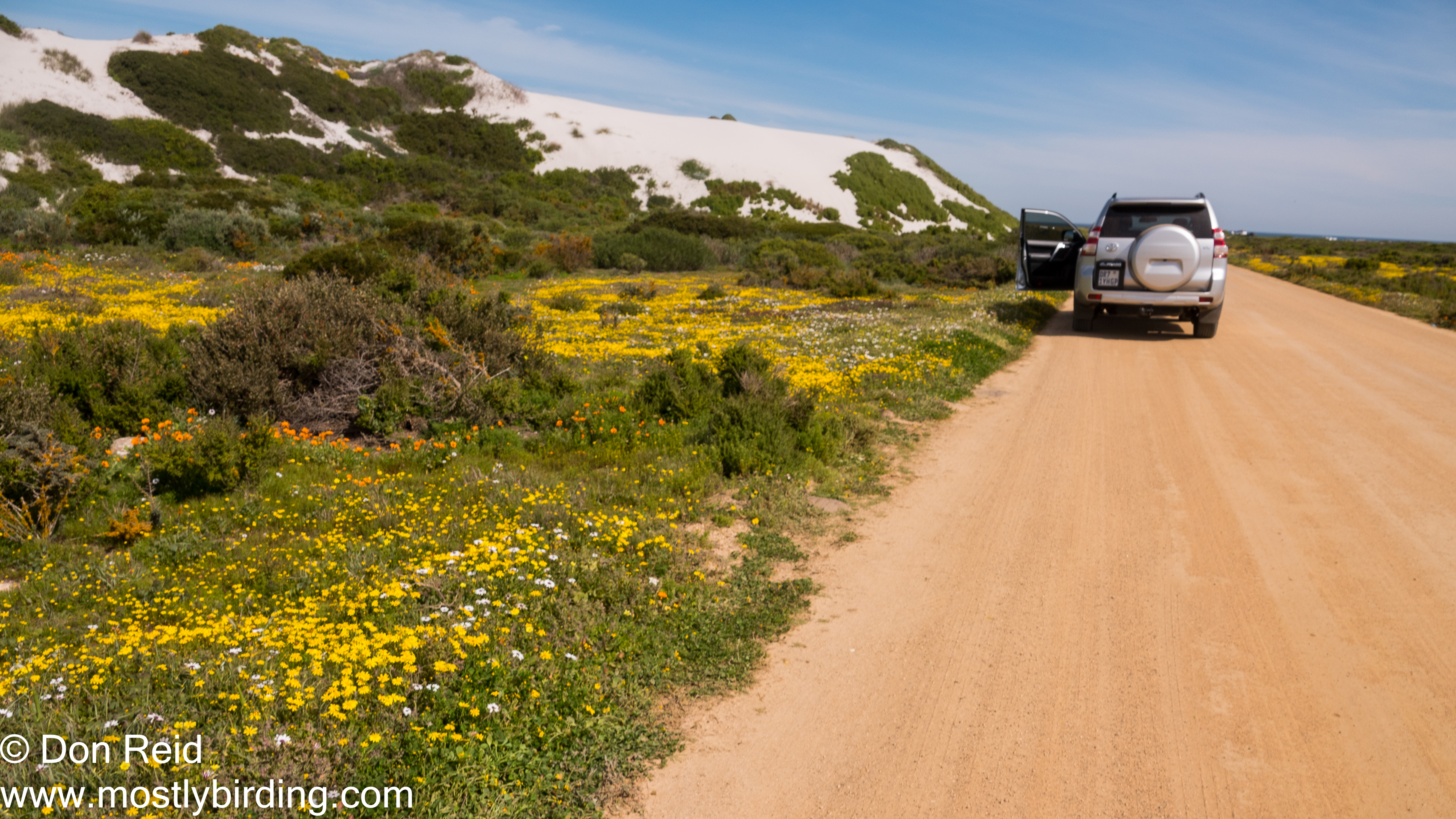
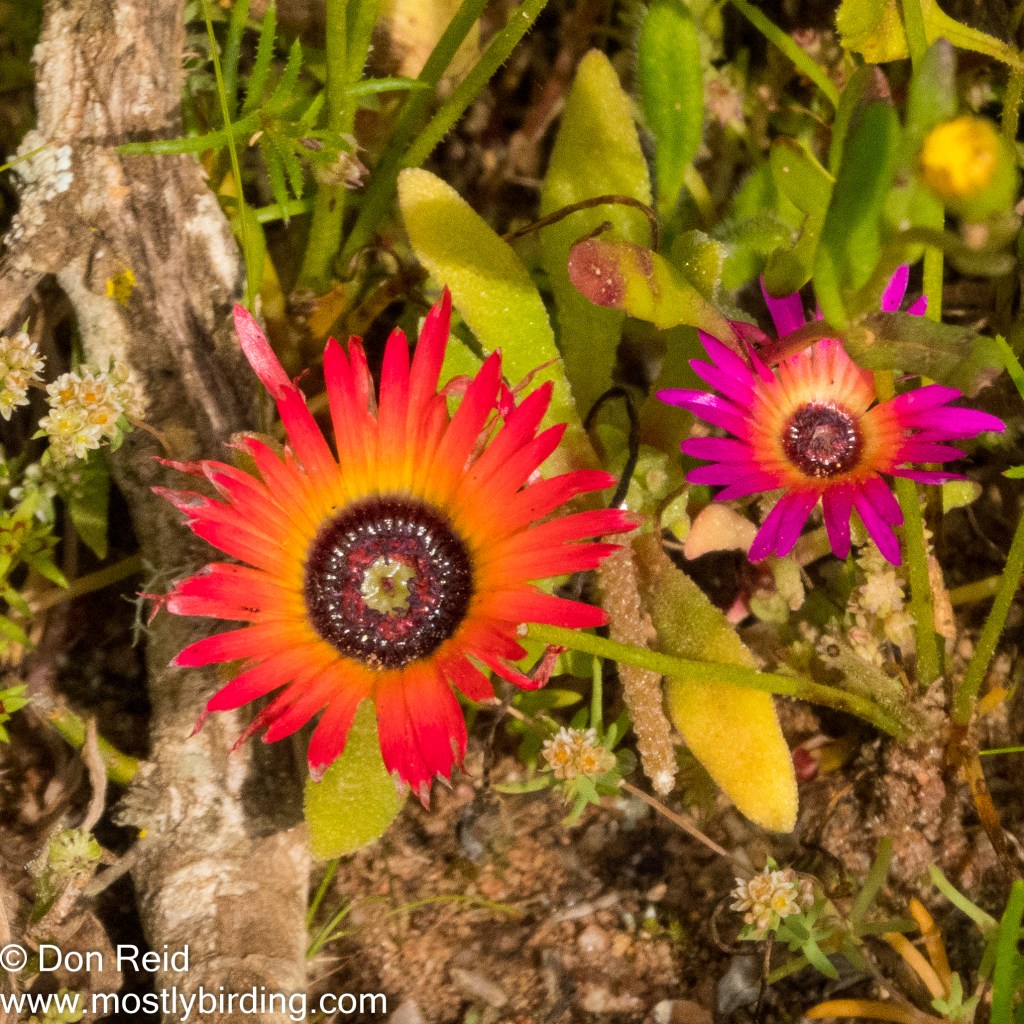
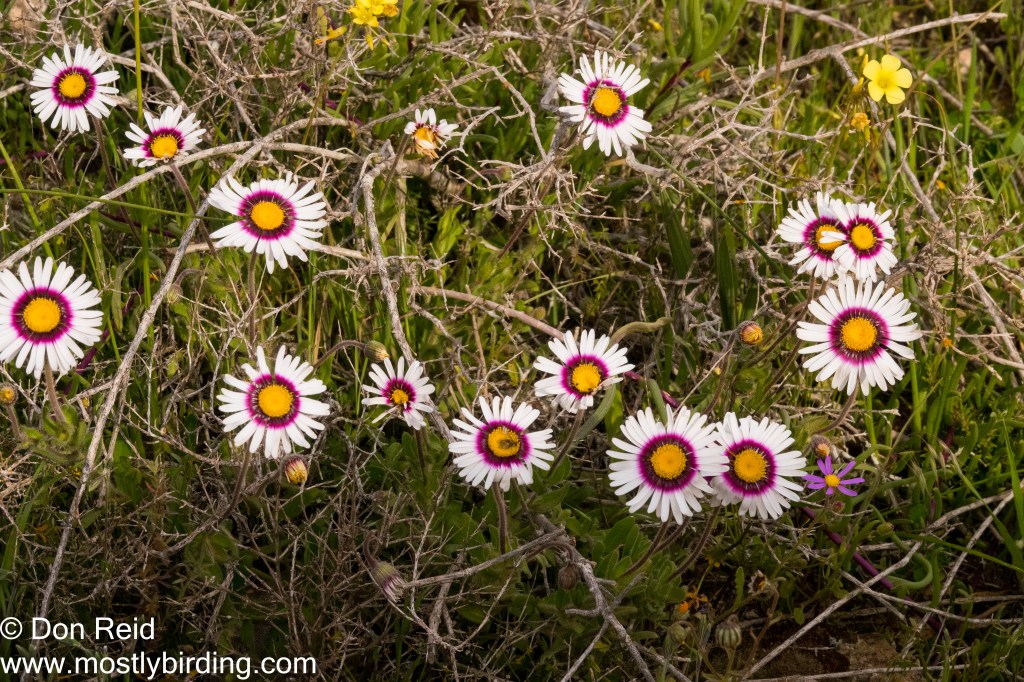
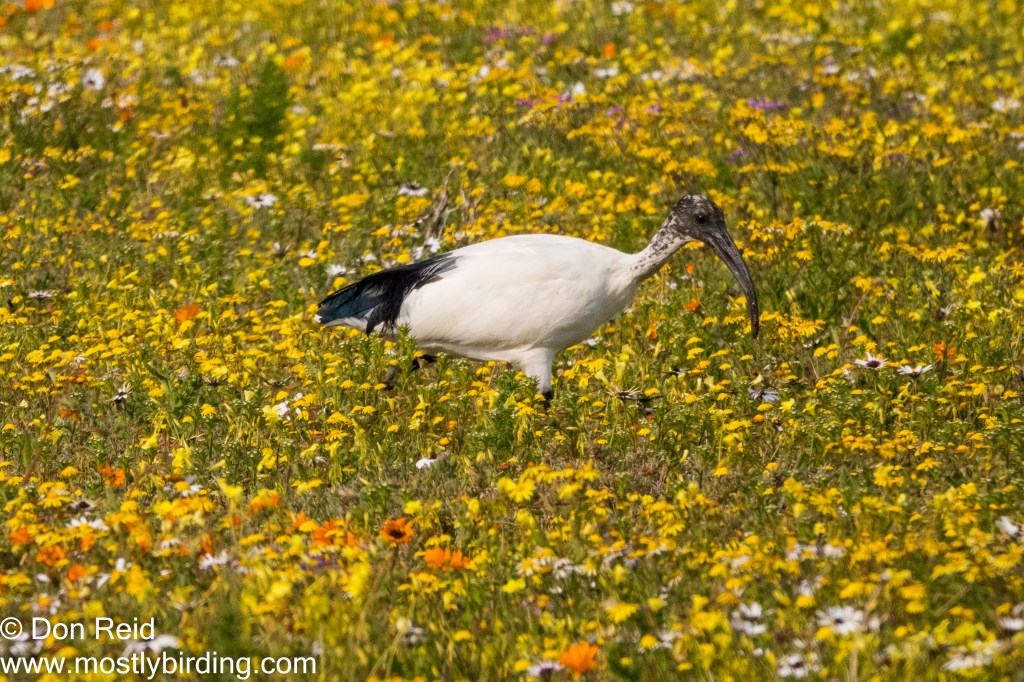
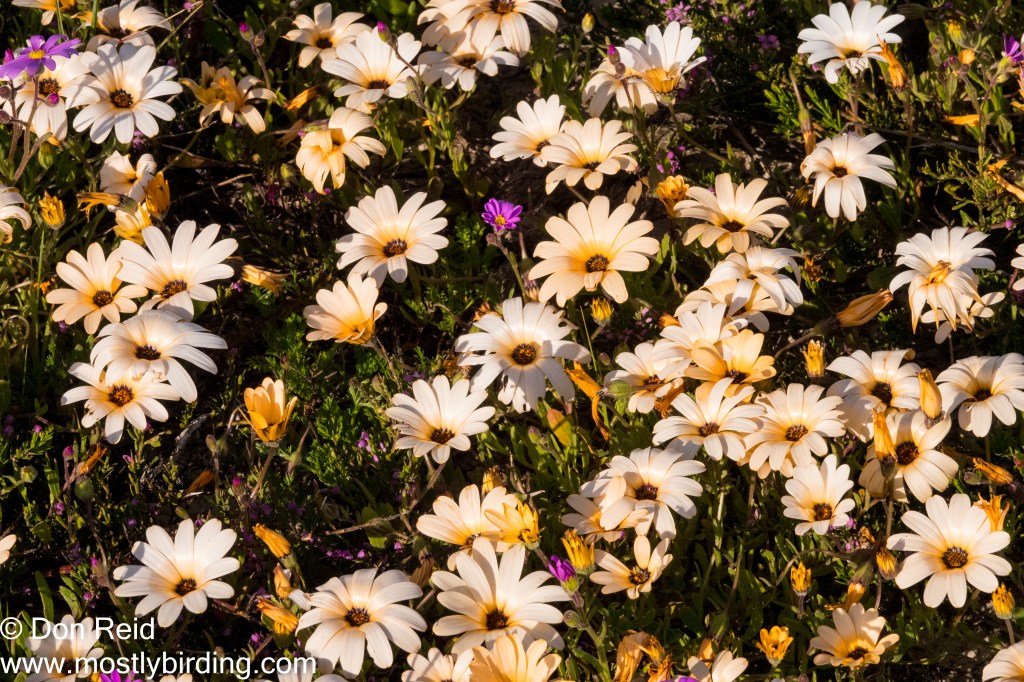
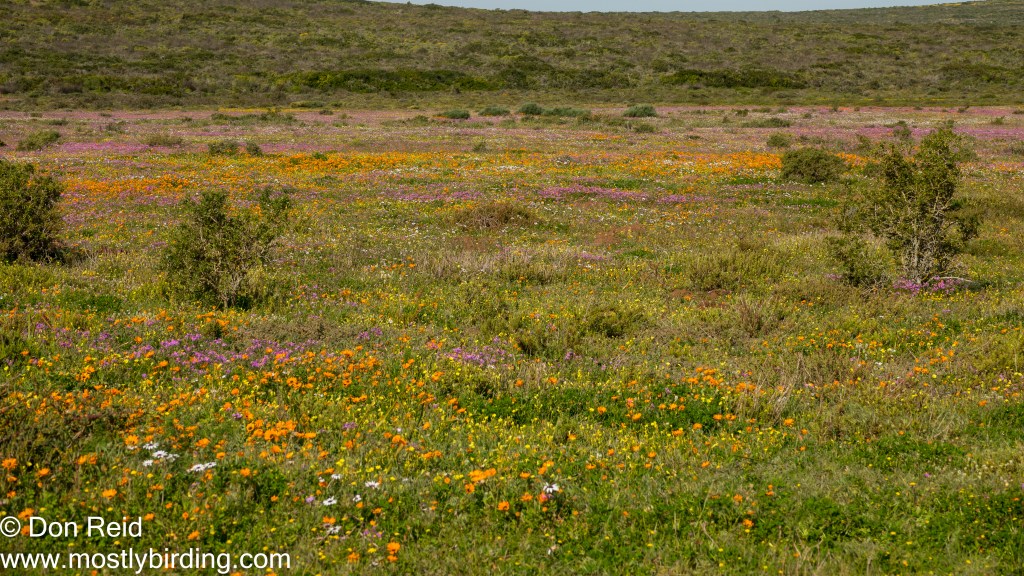
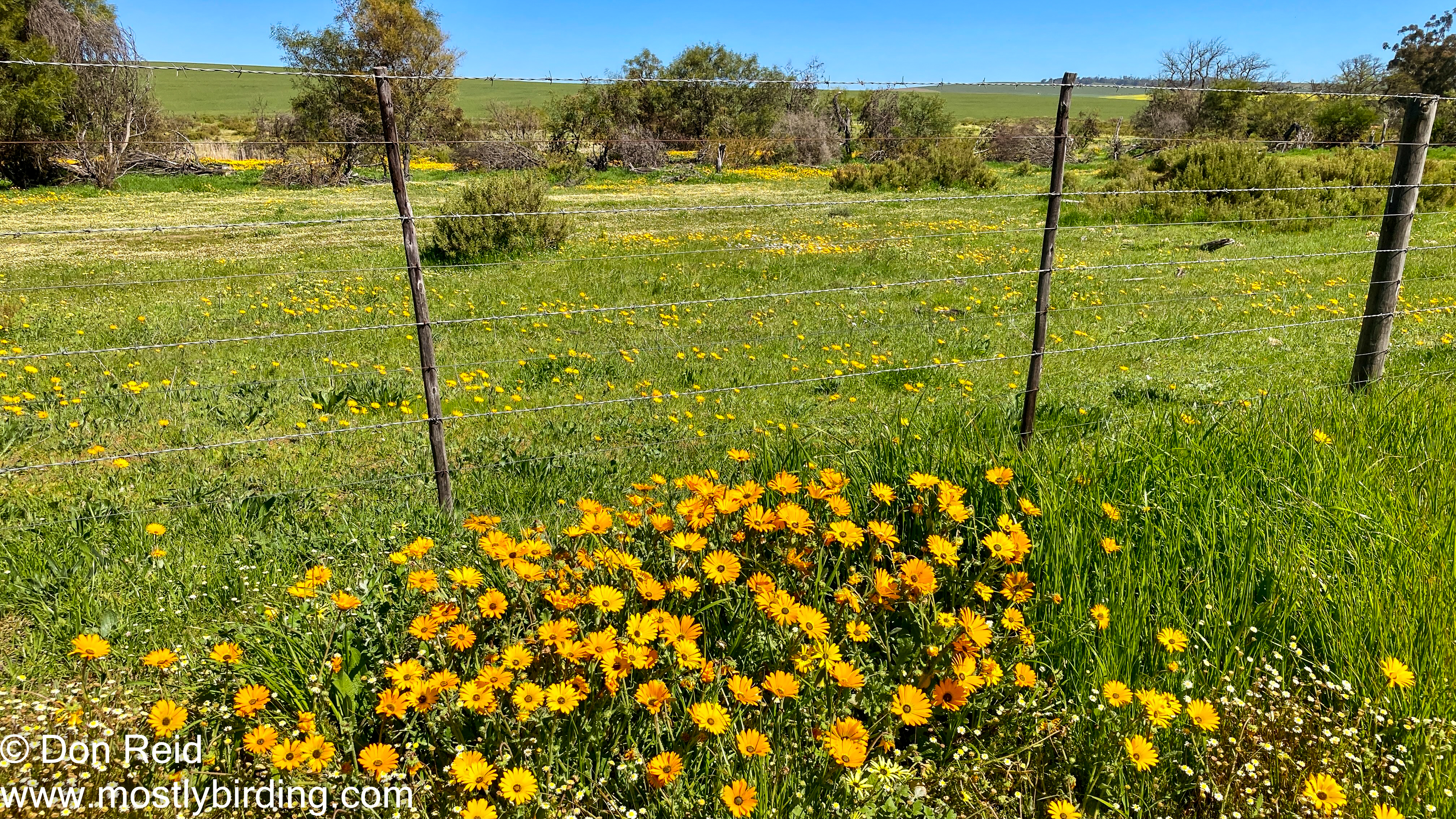
Occasional patches of ‘natural’ veld held colourful sprinklings of wild flowers to break the monotony of the cultivated fields and had me braking and reversing to get some photos.

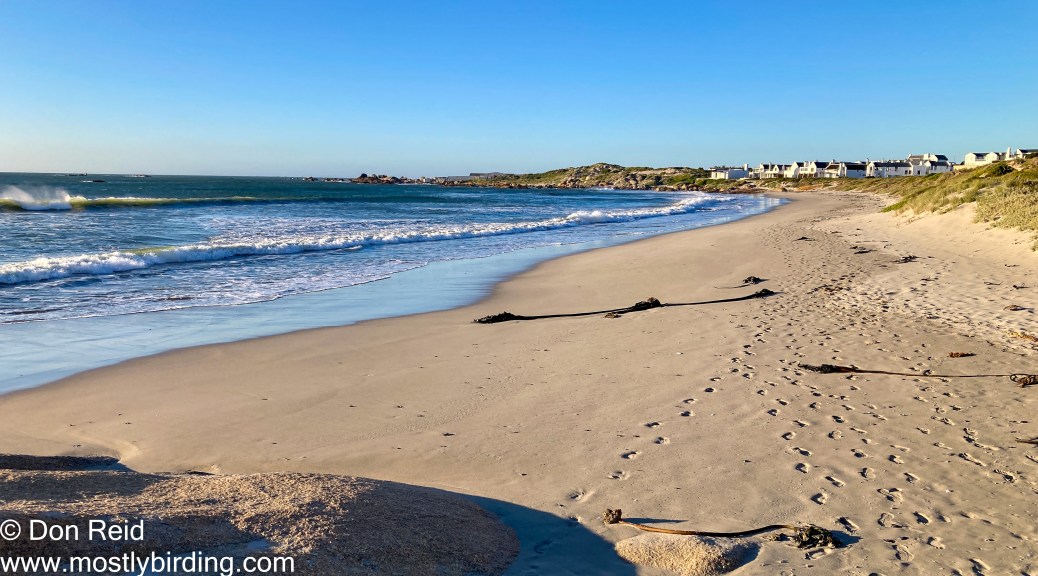
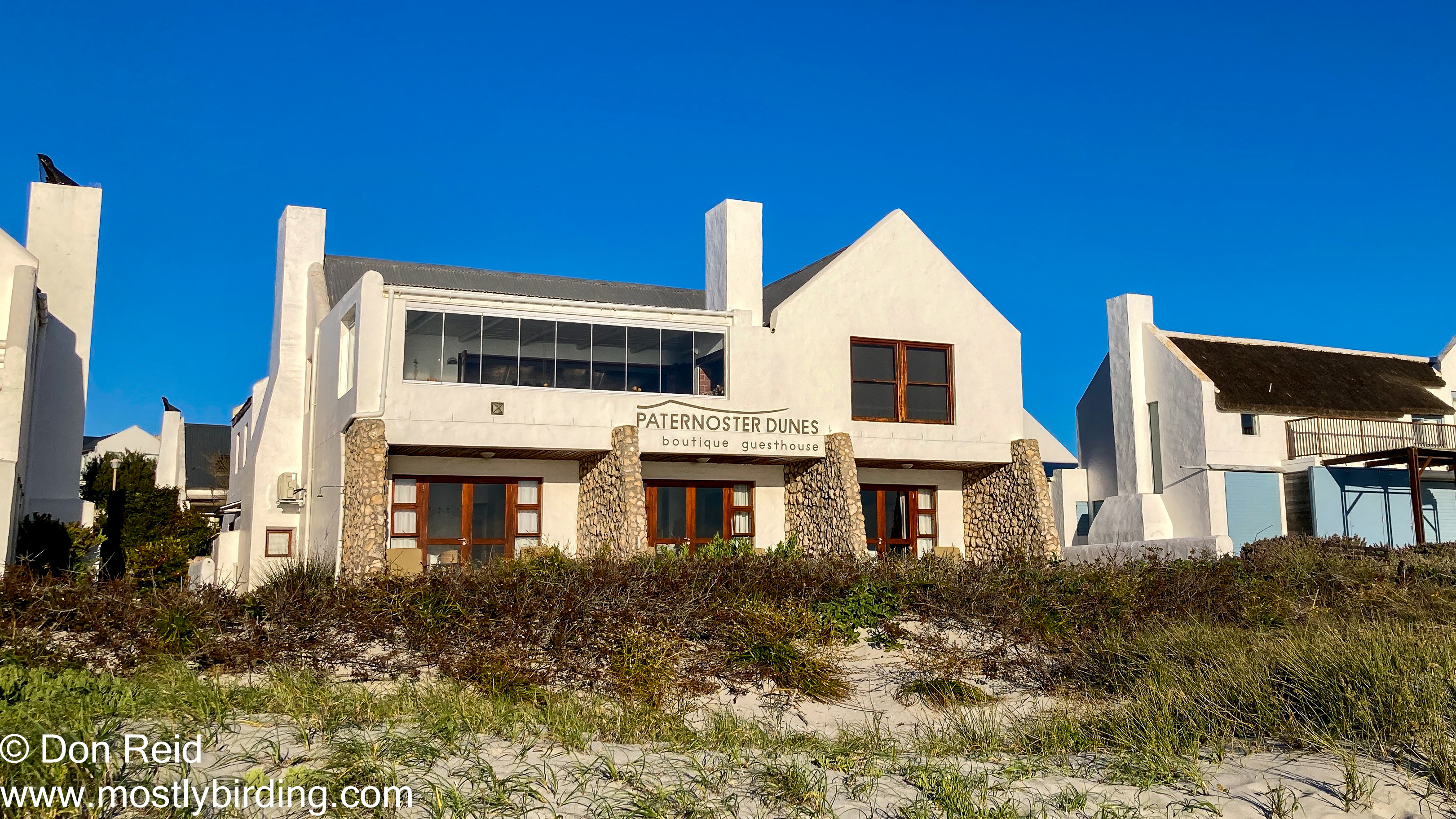
Then we were in Paternoster and soon found Paternoster Dunes Guesthouse which, as the name suggests, lies on the land side of the dunes overlooking a wide expanse of unspoilt beach

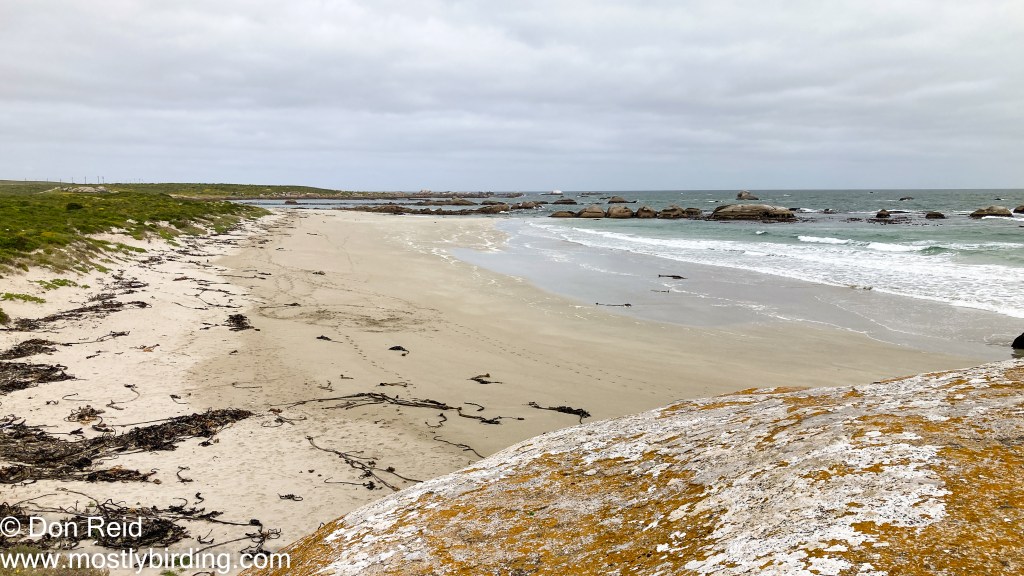
The view of the beach
The Guest House

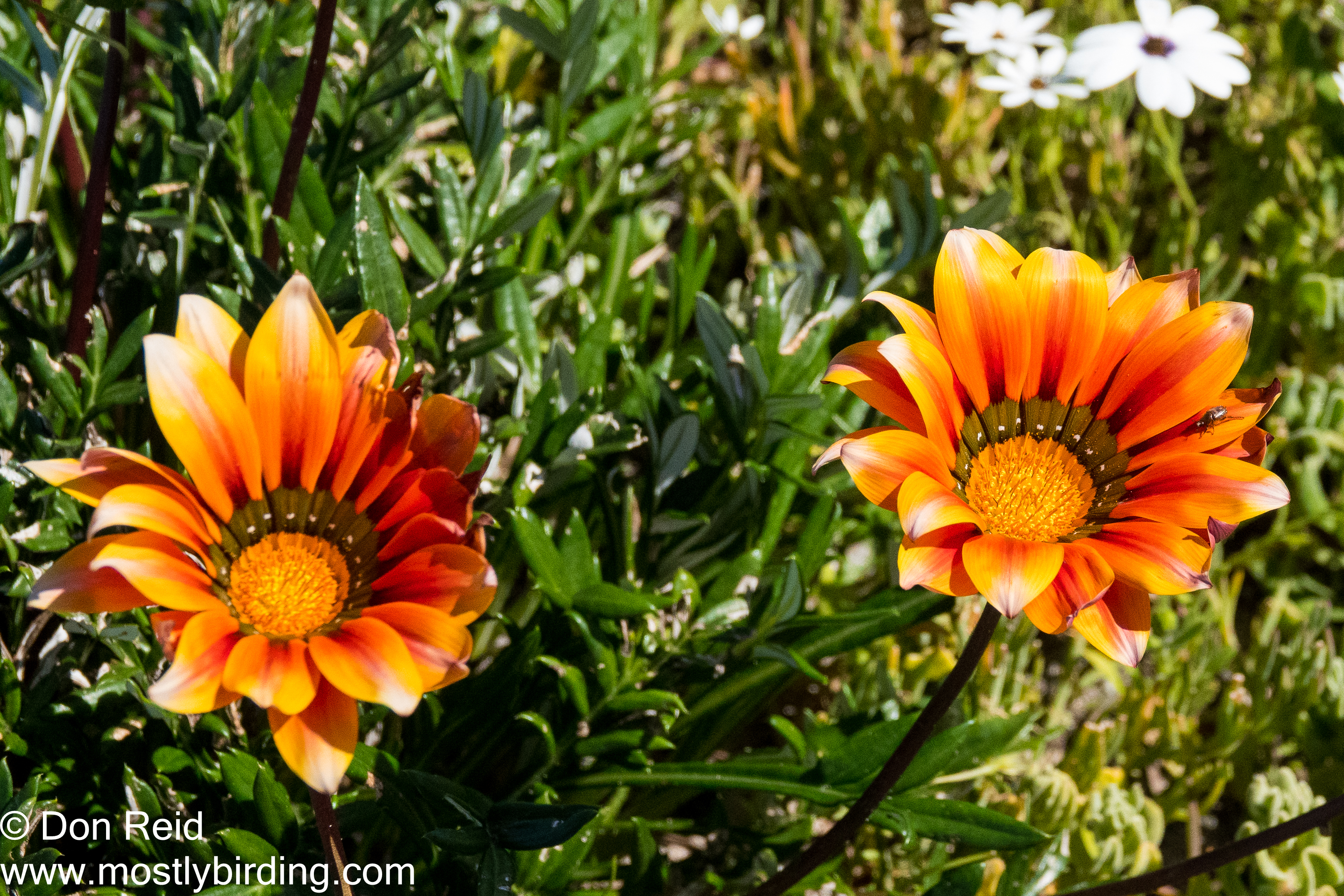
Just to get us further into flower appreciation mood, the patch in front of our room, the middle one in the image above, held some bright orange flowers

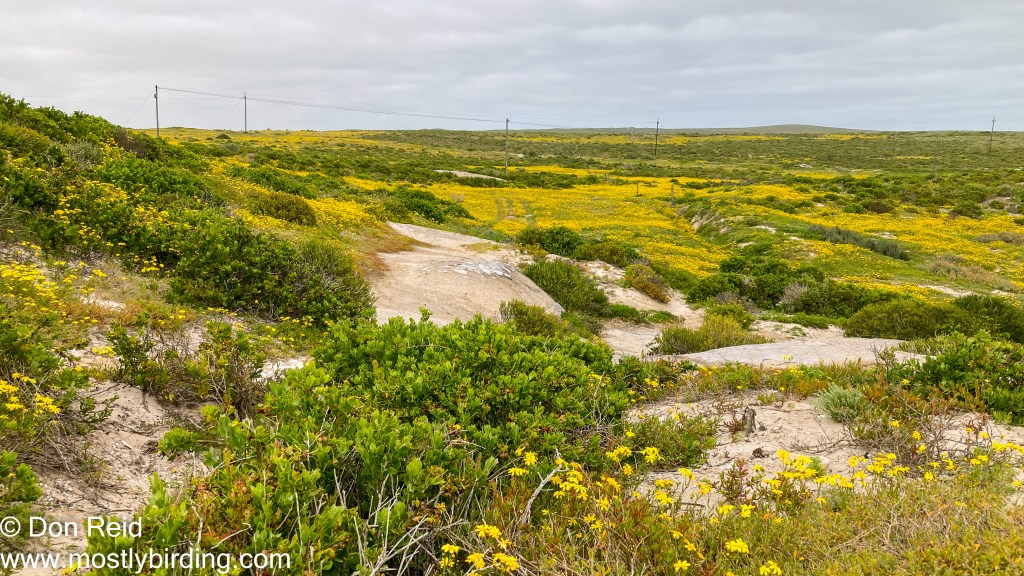
After a rest (we are pensioners after all) I took a walk along the beach to the end of the bay and looked up at the dunes which were covered in growth with a mass of yellow flowers

I climbed to the top of the dune and walked to where the houses stopped, finding a view into the distance with more yellow flowers in abundance

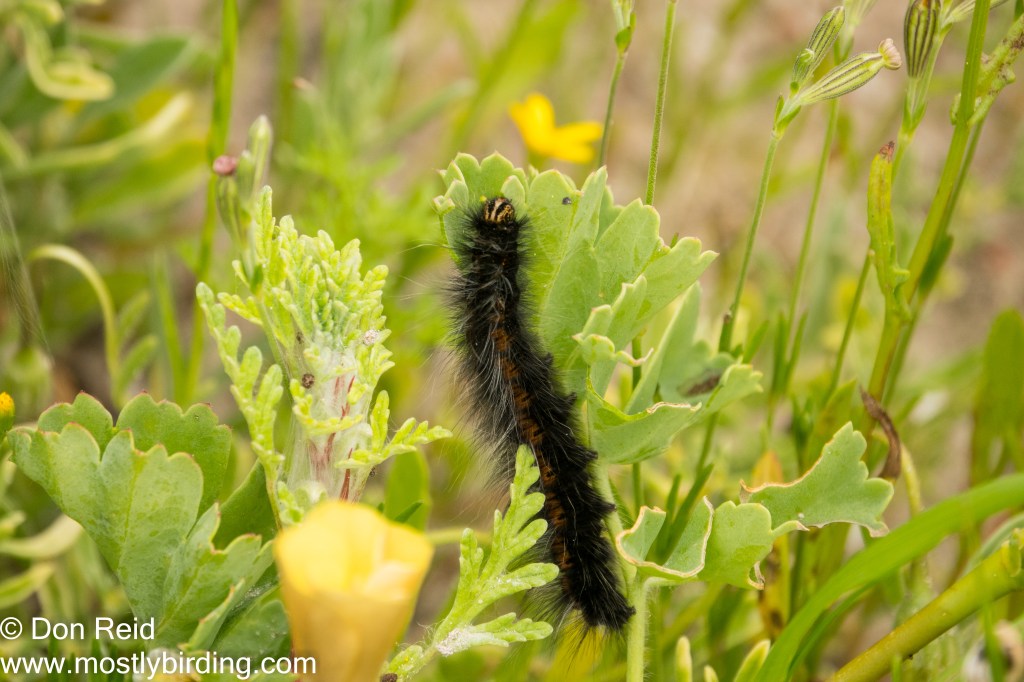
Caterpillar of unknown species, specific to the plant on which I found it by the looks of it as they were only in one small area

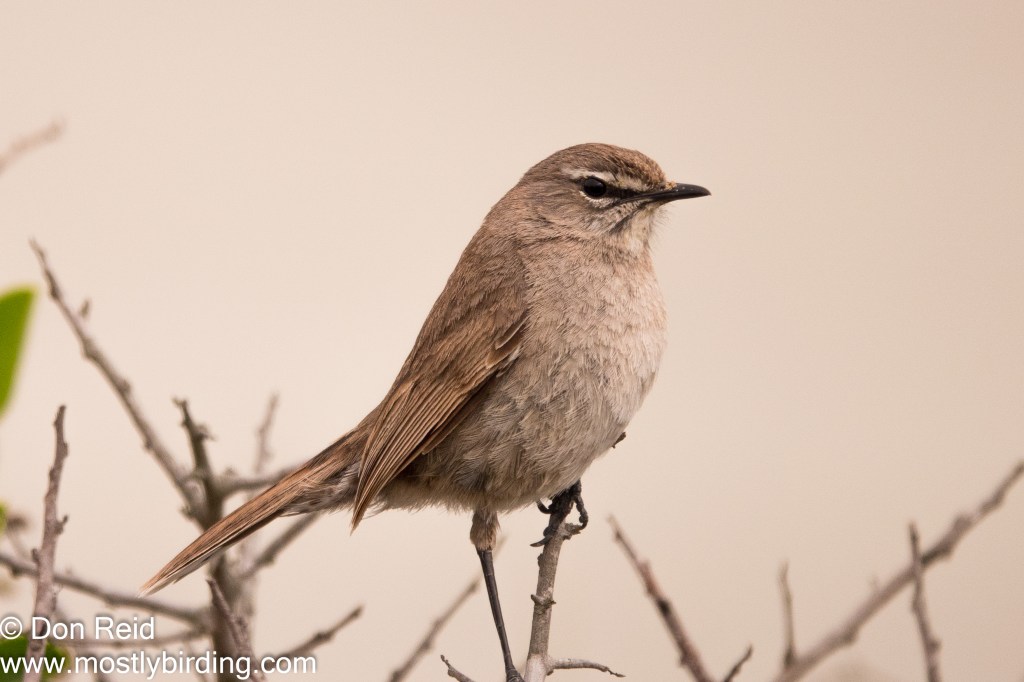
During our visit I discovered that there were a few bird species which found the patch in front of our room to their liking, including the Yellow Canaries and Karoo Scrub-Robin pictured below as well as Cape Bunting, Southern Double-collared Sunbird and many Common (European) Starlings


Yellow Canary (Geelkanarie) Crithagra flaviventris in full song
Karoo Scrub-Robin (Slangverklikker) Erythropygia leucophrys scanning the surroundings from its favourite perch on a low bush

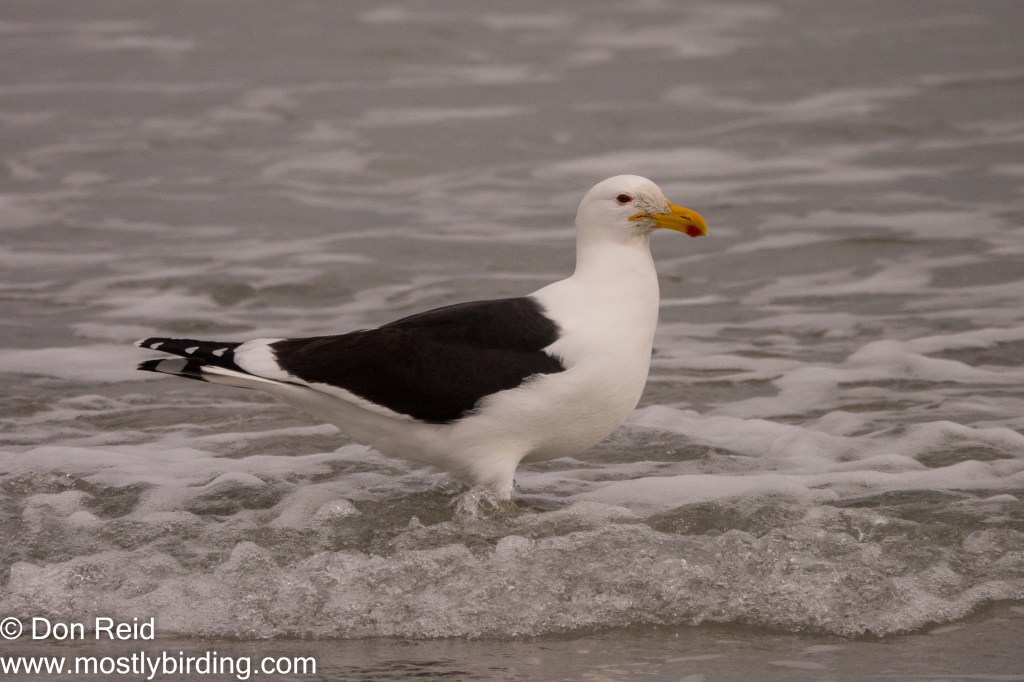
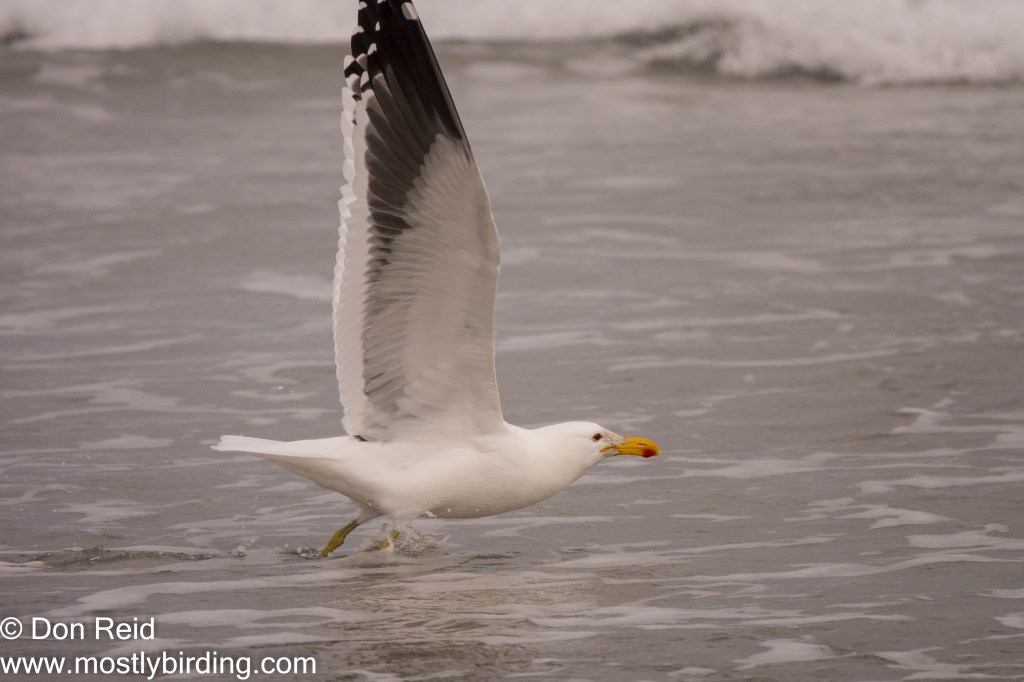
On a morning walk along the beach in front of the guesthouse, camera in hand, with the wind blowing the sea into a frothy jumble and overcast skies, several Kelp and Hartlaub’s Gulls wading in the shallows caught my eye and with some gentle persuasion lifted into the air, providing some nice photo opportunities in the soft, even light

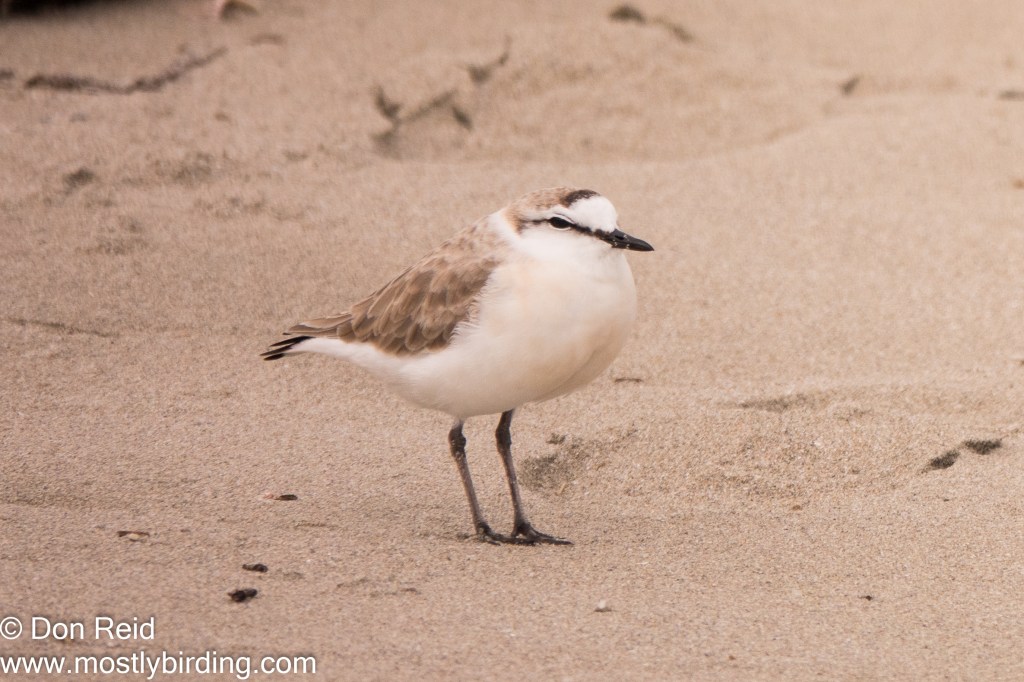
As I walked along the sand I spotted movement on the dry sand ahead and approached cautiously, knowing that the subject matter would race off if I got too near. Sure enough, three tiny White-fronted Plovers watched me carefully as I got closer, initially moving away in slow short bursts, then speeding off like top 100m sprinters, barely touching the sand between strides

And a few more photos of Bek Bay at different times of the day

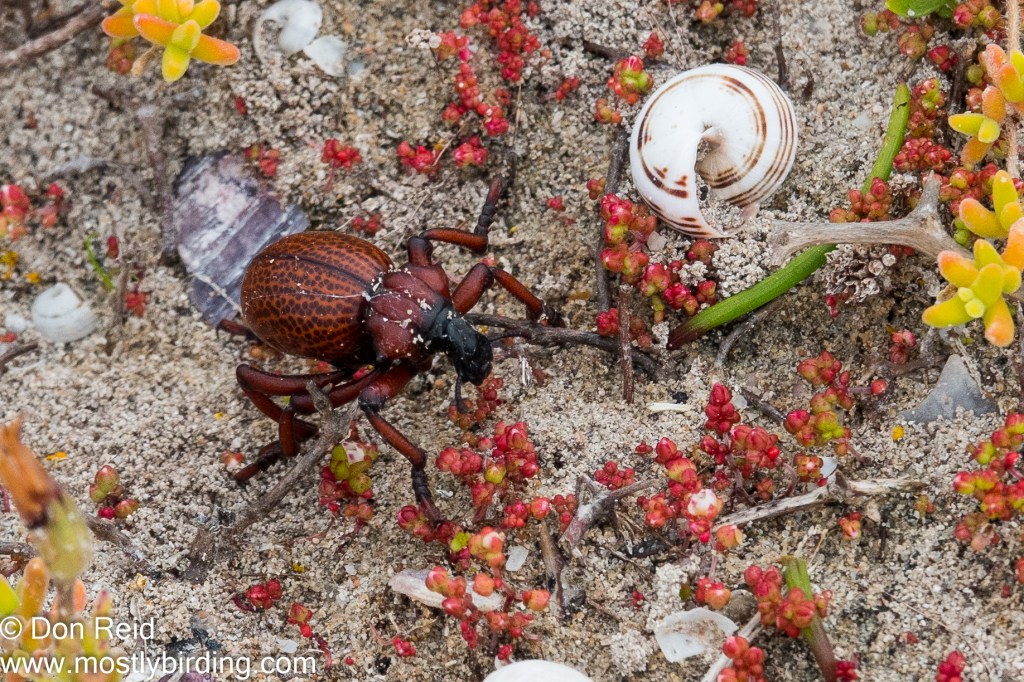
I came across this interesting beetle scavenging among the rocks

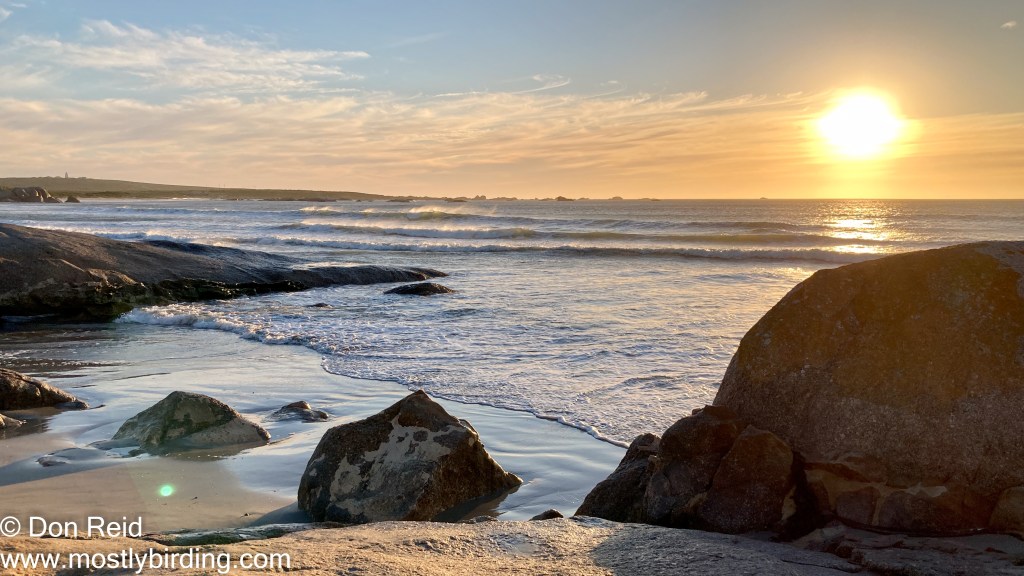
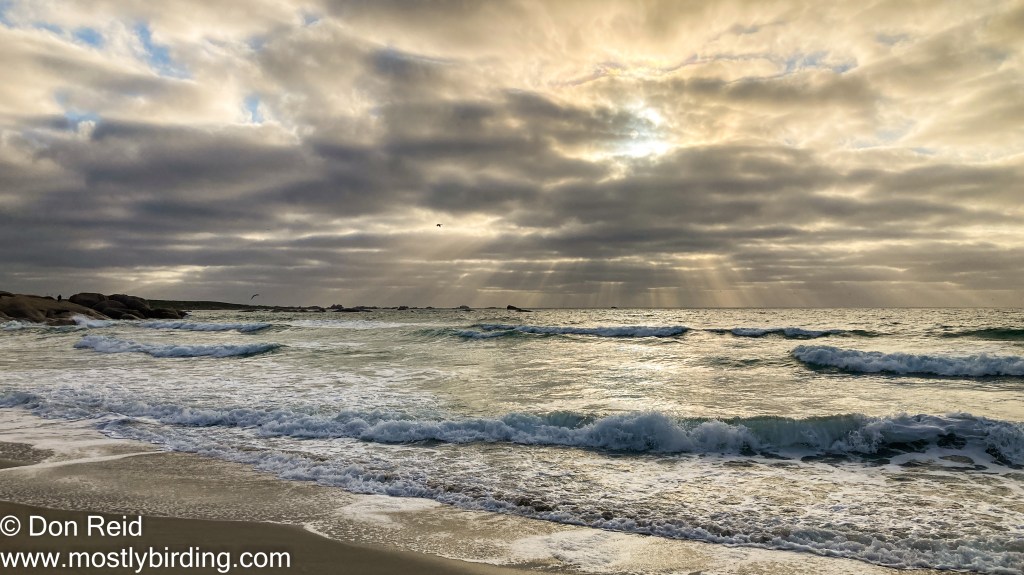
The last afternoon produced the most spectacular sunset of all as the cloud-filtered sun cast its rays on the choppy sea. Many Terns were plunging into the sea offshore – too far to differentiate between species until a Common Tern seemingly chased a much larger Caspian Tern so that they passed close to where I was watching from the beach

Paternoster turned out to be an excellent choice as our base for the short stay, being within an hour’s drive from West Coast National Park and literally next door to Cape Columbine Nature Reserve, both of which we visited – more about that in upcoming posts