Hornbills in Lockdown

Stoepsitter Birding

Sticking with the “stoepsitter” mode of birding as described in my recent post on the ‘Lawn Raiders’ of Verlorenkloof, here’s another version in a somewhat different location – Satara Rest Camp in the Kruger National Park.

(For the benefit of international readers “stoepsitter” is an Afrikaans term that translates roughly as one who spends much time on the stoep or verandah – but you knew that anyway, I’m sure)

It’s a well known fact amongst birders that, when visiting Kruger’s camps, time spent relaxing with binos on the stoep of your accommodation is bound to be rewarded with views of a variety of birds as they go about their daily business, on the grass, in the bushes and in the trees that most of the camps have in abundance.

That’s not to say one shouldn’t spend time getting out and about on game drives, exploring this national treasure of our wildlife, it’s just that when you want to relax in the rest camp, there’s no better place to do so than on the stoep of your rondavel or other accommodation.

Satara Rest Camp

During our December 2020 visit to Kruger, we spent four nights in Satara Rest Camp, one of which was in a fully equipped rondavel close to the perimeter fence, the other three in a more basic rondavel facing onto an expanse of grass with well established trees in close proximity.

This meant there was ample time for some serious stoepsitting, in between forays into the surrounding areas on game and birding drives and to visit the picnic spots for our traditional Kruger brunches (ooh, just typing that makes my mouth water and my nose prickle with the imaginary smell of a tasty brunch braai-ing on the pan).

The first afternoon and morning produced a fair sprinkling of interesting birds, before we changed rondavels, some of which I managed to photograph –

Spotted Flycatcher (Muscicapa striata / Europese vlieëvanger

A Spotted Flycatcher, a non-breeding Palaearctic migrant, was quietly going about its business on an outer branch with a view over an expanse of lawn, which in some camps has been allowed to grow “wild”, as you will see in the featured image at the top of this post.

Just a note on these “wild” lawns : it was initially jarring to see the lawns in such a wild state, having been used to manicured lawns in the camp for so many years, but I will admit that I now find this quite appropriate to the surroundings, as the contrast between the camp gardens and the natural habitat of the surrounding veld has been reduced – the ‘line has been blurred somewhat’. I like to think this was a conscious decision by the Park authorities.

Spotted Flycatcher (Muscicapa striata / Europese vlieëvanger), KNP – Satara

Violet-backed Starling (Cinnyricinclus leucogaster / Witborsspreeu

Another migrant, the stunning Violet-backed Starling, but this one hasn’t got as far to migrate, being an intra-African migrant from tropical Africa.

Violet-backed Starling (Cinnyricinclus leucogaster / Witborsspreeu) (Male), KNP – Satara

And the missus was there, no doubt keeping an eye on handsome hubby to make sure he didn’t attract any competition. One of a number of species with significant, even dramatic, differences in plumage between male and female (known as dimorphism)

Violet-backed Starling (Cinnyricinclus leucogaster / Witborsspreeu) (Female), KNP – Satara

Woodland Kingfisher (Halcyon senegalensis / Bosveldvisvanger

The Woodland Kingfisher is also a breeding intra-African migrant, strikingly coloured and always a joy to find. Although they were present in the camp, this photo was taken on one of our drives.

Woodland Kingfisher (Halcyon senegalensis / Bosveldvisvanger), KNP – Satara – Muzandzeni

Moving home

On the second morning we had to move to another rondavel, this time without a kitchen, but we had come prepared with a fold-up table, little gas cooker for the all-important boiled water for our tea and coffee and our picnic hamper that always accompanies our trips to Kruger. The camp has communal kitchens close by for the washing up etc .

Southern Red-billed Hornbill (Tockus rufirostris / Rooibekneushoringvoël

Once settled in to the new accommodation, I continued with stoepsitter birding and soon noticed that one particular bird was almost constantly present on the stretch of grass in front of the rondavel. It was a Red-billed Hornbill, a common species found throughout Kruger. I assumed it had found a good spot to find the small insects that make up most of its diet and did not pay too much attention to it as it came and went at regular intervals.
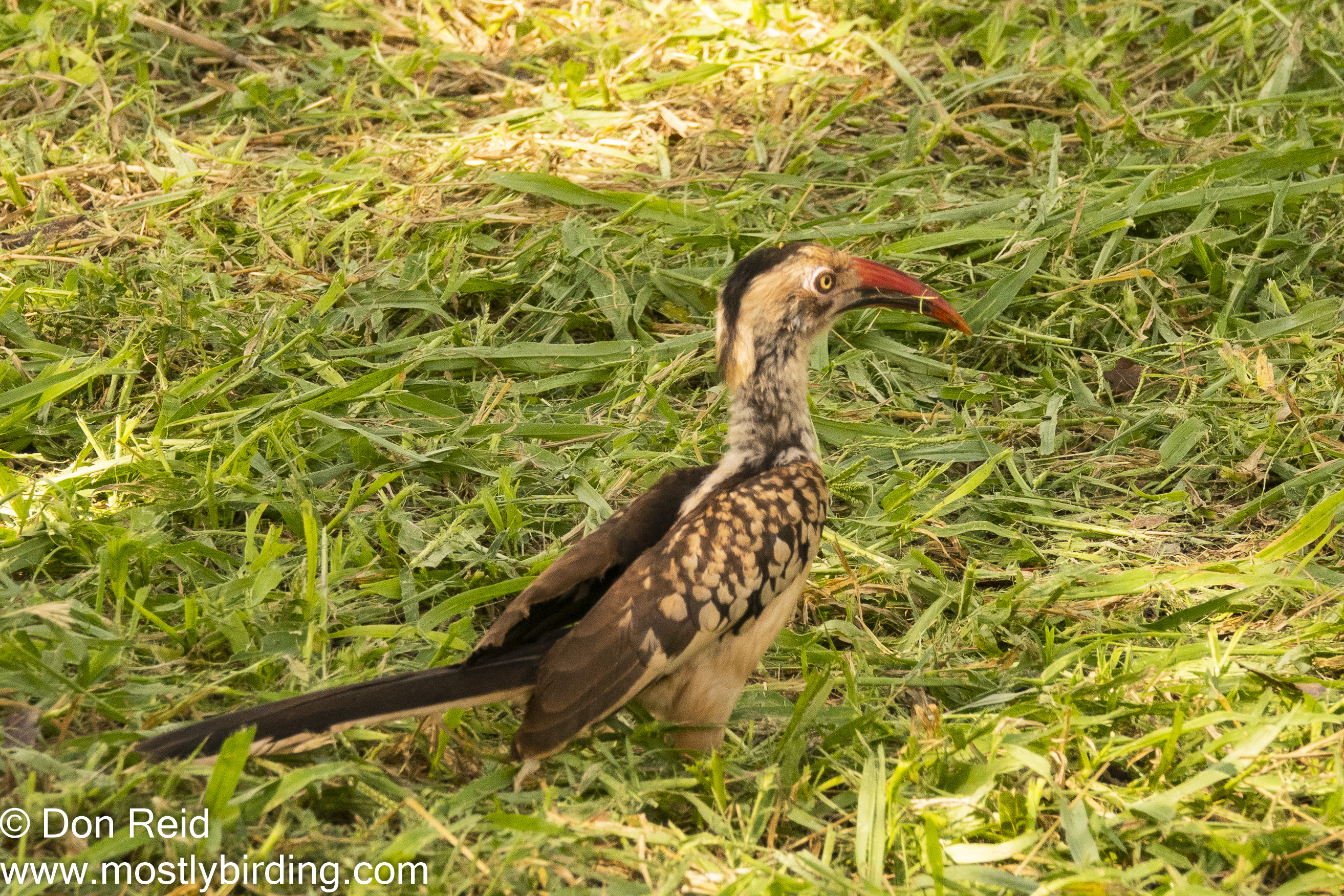
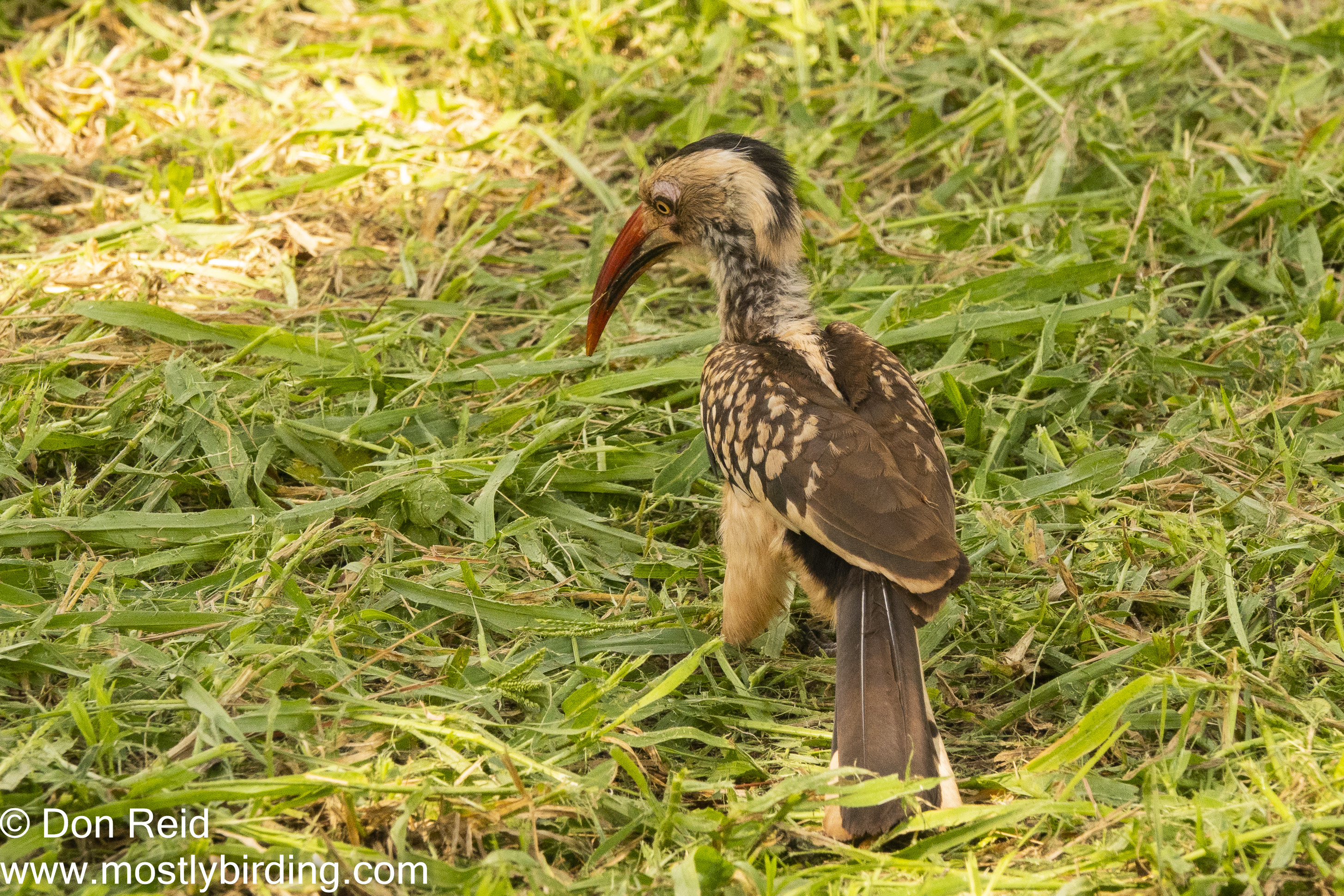
Southern Red-billed Hornbill

Hornbills look ungainly with their huge bills, but they have an admirable ability to find and pick up insects with some precision
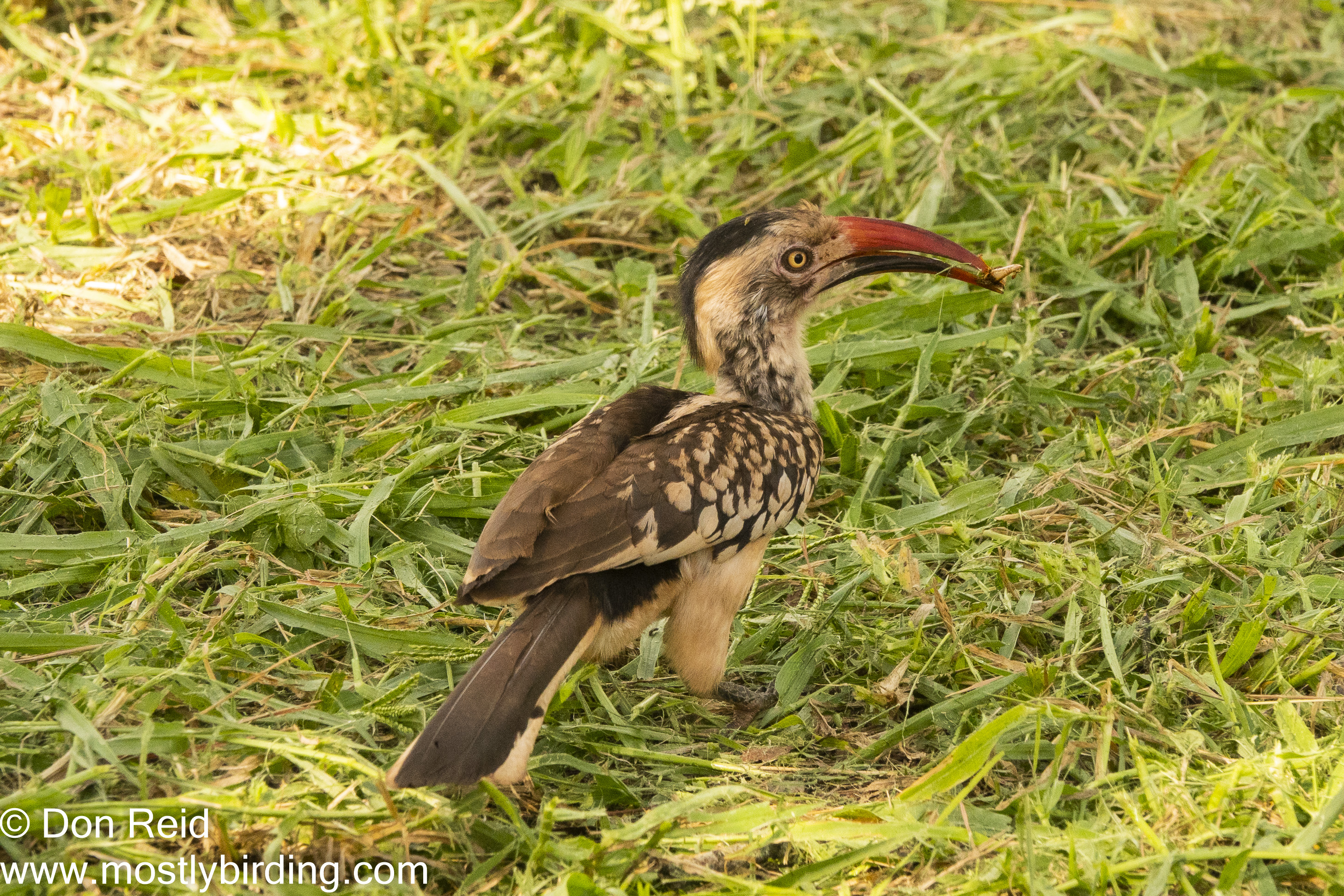
Southern Red-billed Hornbill

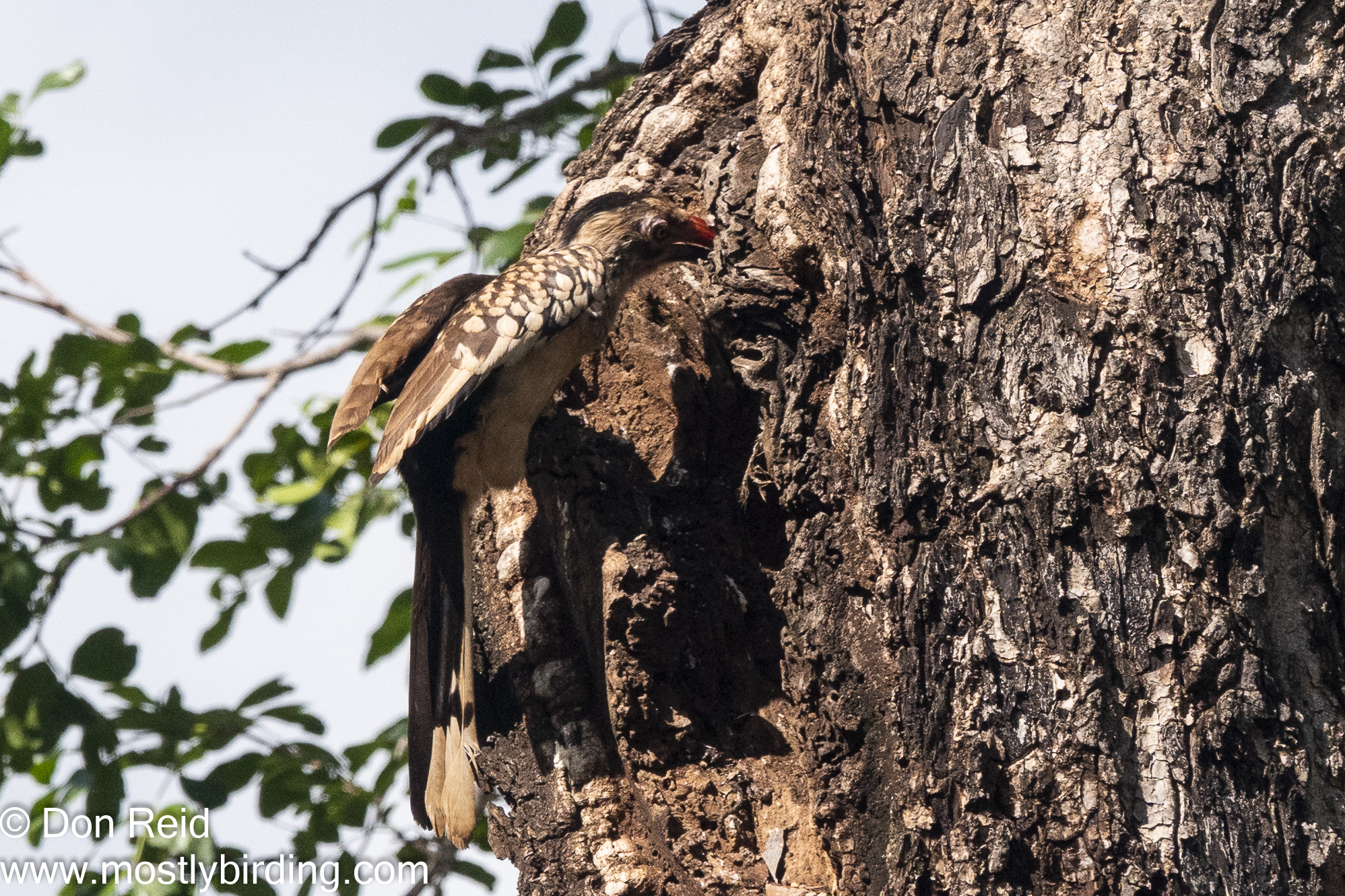
At one stage I kept watching the Hornbill after it had found an insect but not swallowed it, which led me to think it was feeding its young. It flew up to a large tree nearby and settled on the trunk where a branch had probably broken off years earlier as there was a large scar, visible about halfway up the left hand trunk in the image below.

Satara Rest Camp
Southern Red-billed Hornbill

The Hornbill then poked its bill through a small hole in the trunk and that’s when I realised what it was doing.
Southern Red-billed Hornbill

Red-billed Hornbills nest in natural cavities in trees, which the female inspects before selecting one. The entrance is usually just wide enough to allow entry and is then sealed from the inside by the female, using own faeces, leaving just a narrow slit and effectively holding her prisoner during the laying and incubation of the eggs.

Cavity sealed from inside with small hole for feeding

Once eggs are laid, incubation takes up to 25 days, followed by another 16 to 24 days during which the female cares for the young, all the while being fed by the male. Then the female breaks her way out leaving the youngsters in the nest and joins the male in providing food for the chicks, while the youngsters then re-seal the opening until they in turn are ready to take on the world at the ripe old age of around 50 days.

That’s quite a partnership! I felt privileged to have been able to see them in action.

All of this kept the male busy the whole day, but he still found time to go and see his reflection in my car’s window and frustratingly shadow box with what he thought was a possible intruder.
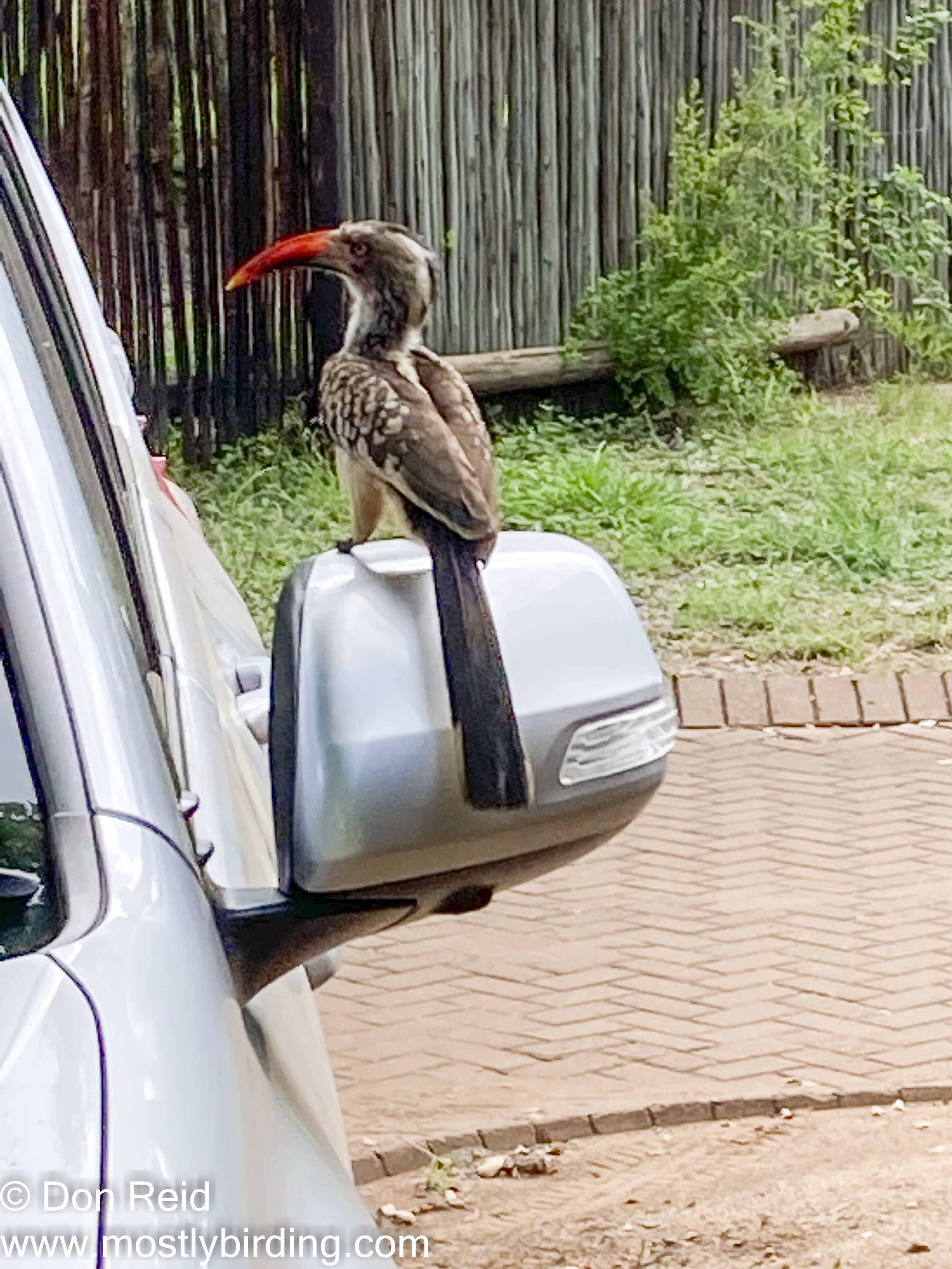
Red-billed Hornbill seeing his reflection

Verlorenkloof – The Lawn Raiders

Birding comes in different forms, sometimes challenging, requiring a dedicated effort, extended travel, perhaps some serious physical exertion, often in the face of less than favourable weather conditions.

However, it’s not always that way – some of the most relaxing and enjoyable birding is to be found in your immediate surroundings, whether at home or a holiday destination.

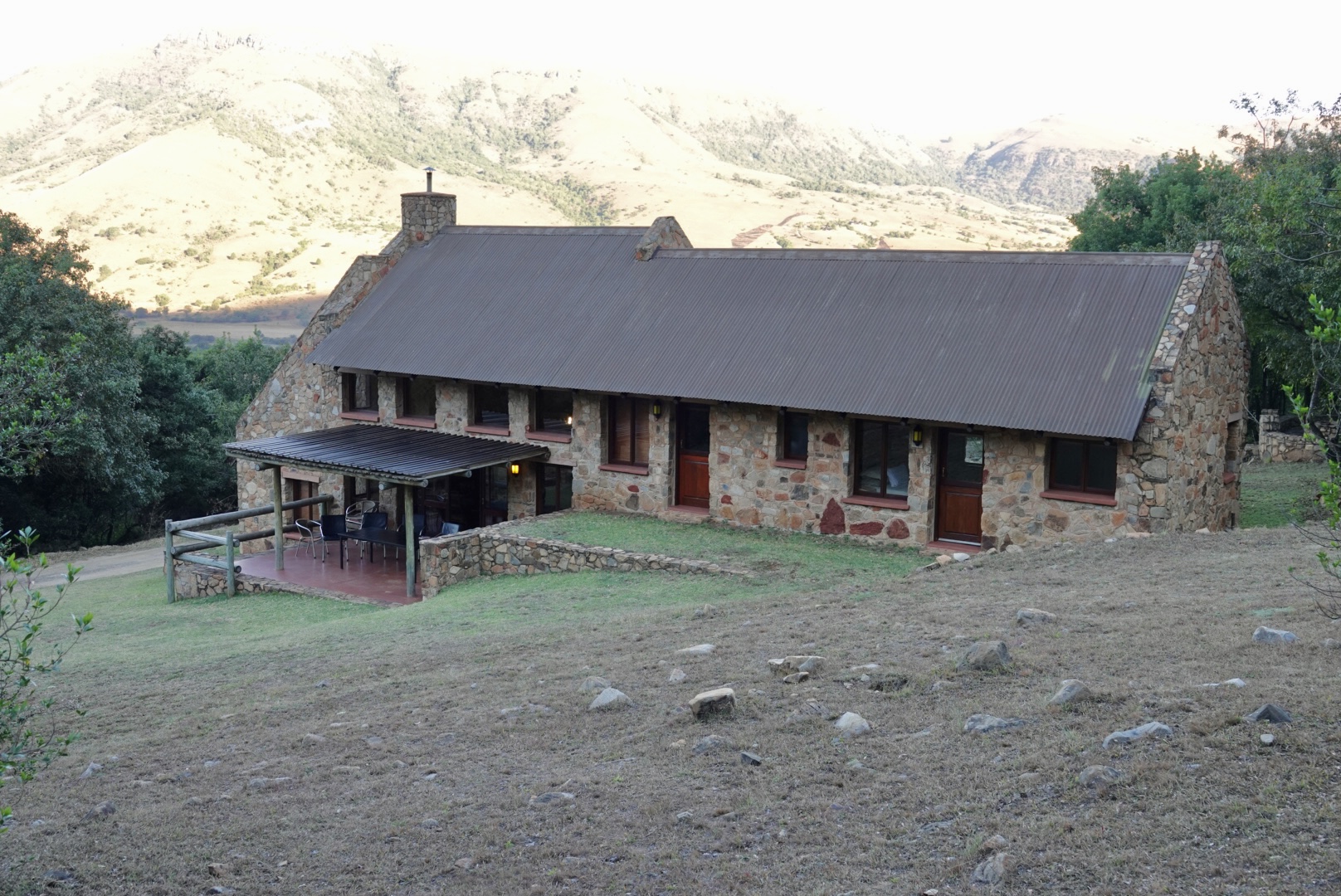
Which is precisely what we experienced during our recent visit to Verlorenkloof, a country resort that I have written about on a few occasions and one of our all-time favourite places to spend a breakaway week. We were fortunate to be invited by Koos and Rianda to join them in Croft No 3 (shown below) for the last week in May.

Croft No 3
Croft No 3 Verlorenkloof

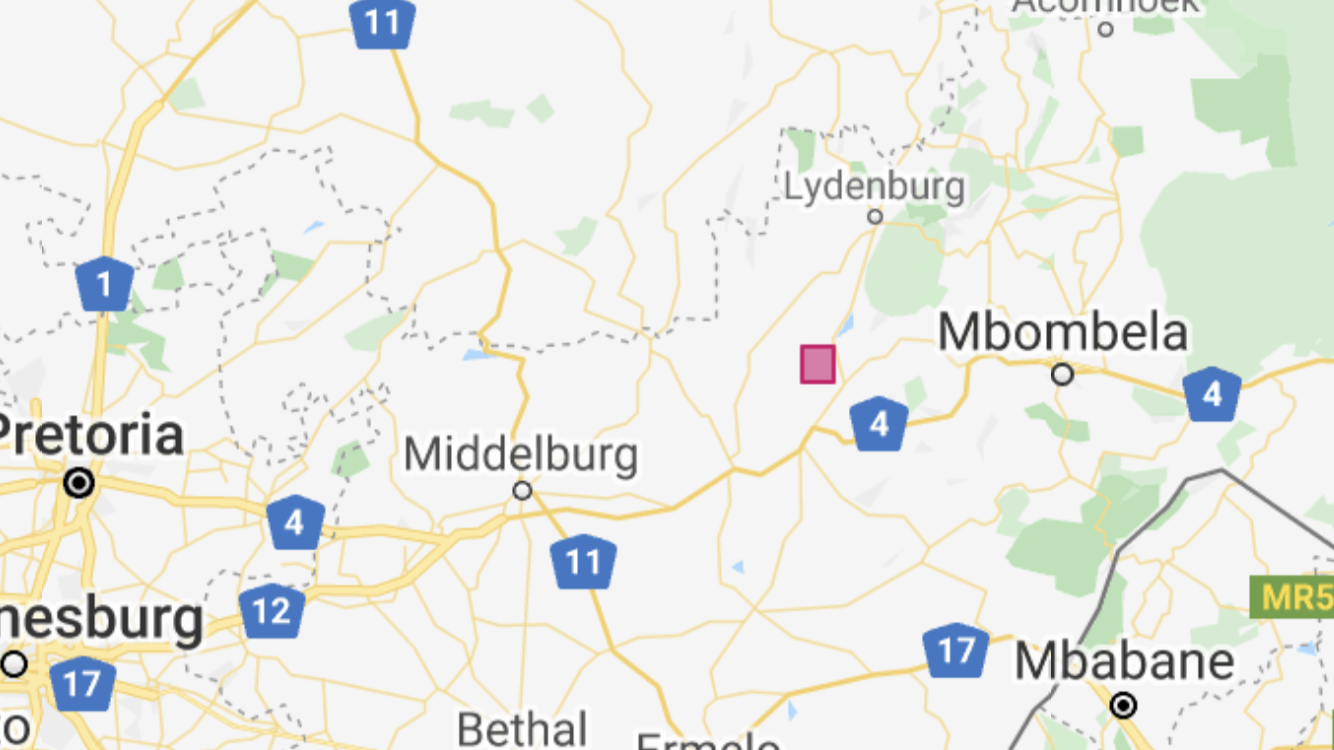
For those who don’t yet know, Verlorenkloof lies east of Dullstroom, but on the lower side of the escarpment which towers above the fertile valley in which the resort is situated. The red square on the map indicates the position of the pentad which includes Verlorenkloof resort.

The birding at Verlorenkloof is always exceptional, with my personal tally of species recorded in the area, after many visits over the last twelve years, standing at 195, so the expectations were high. These hopes were of course tempered by the knowledge that the last week in May is often a quiet time for birding, with none of the summer migrants present and many of the remaining species not in calling or displaying mode.

Oddly enough, for the first 3 or 4 days of our stay, the area around the Croft was very quiet with far fewer birds than we are used to, but over the last two days of our stay, following some light rain, the scene changed completely. Suddenly all of the usual visitors were there, searching the lawn for edible insects, worms and the like.

I was fascinated by the variety of mostly “ordinary” birds and their antics – each one displaying its own way of “raiding the lawn” and finding a tasty morsel while showing unique character traits and interacting with the other bird species doing more or less the same thing.

So here’s a selection of the Lawn Raiders

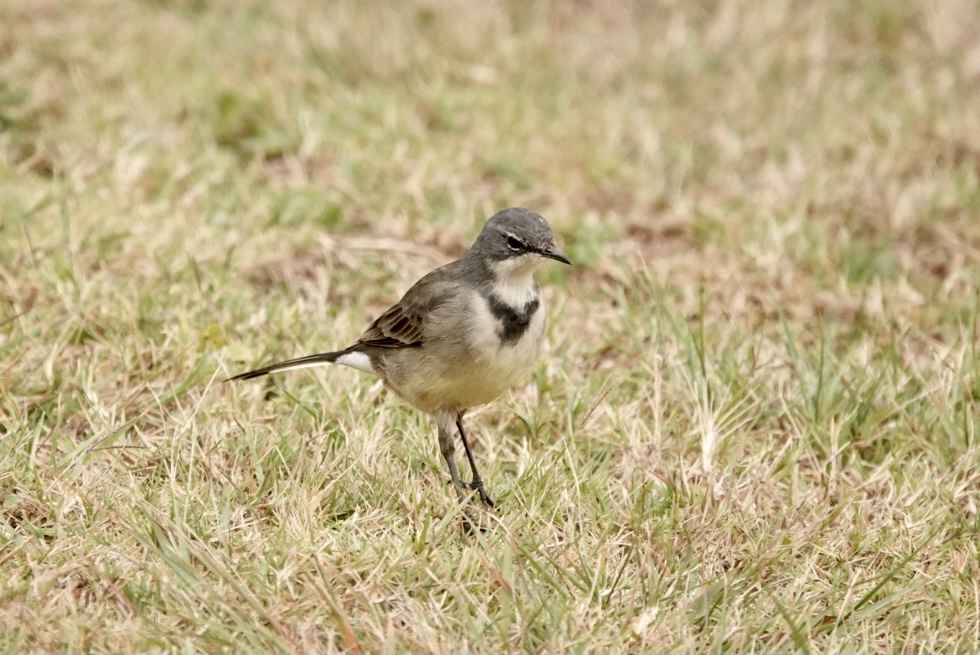
Cape Wagtail (Gewone Kwikkie / Motacilla capensis)

The ultimate “I’m not going to bother anyone” bird – demurely pottering about, occasionally finding something to its taste then carrying on as if it was nothing special

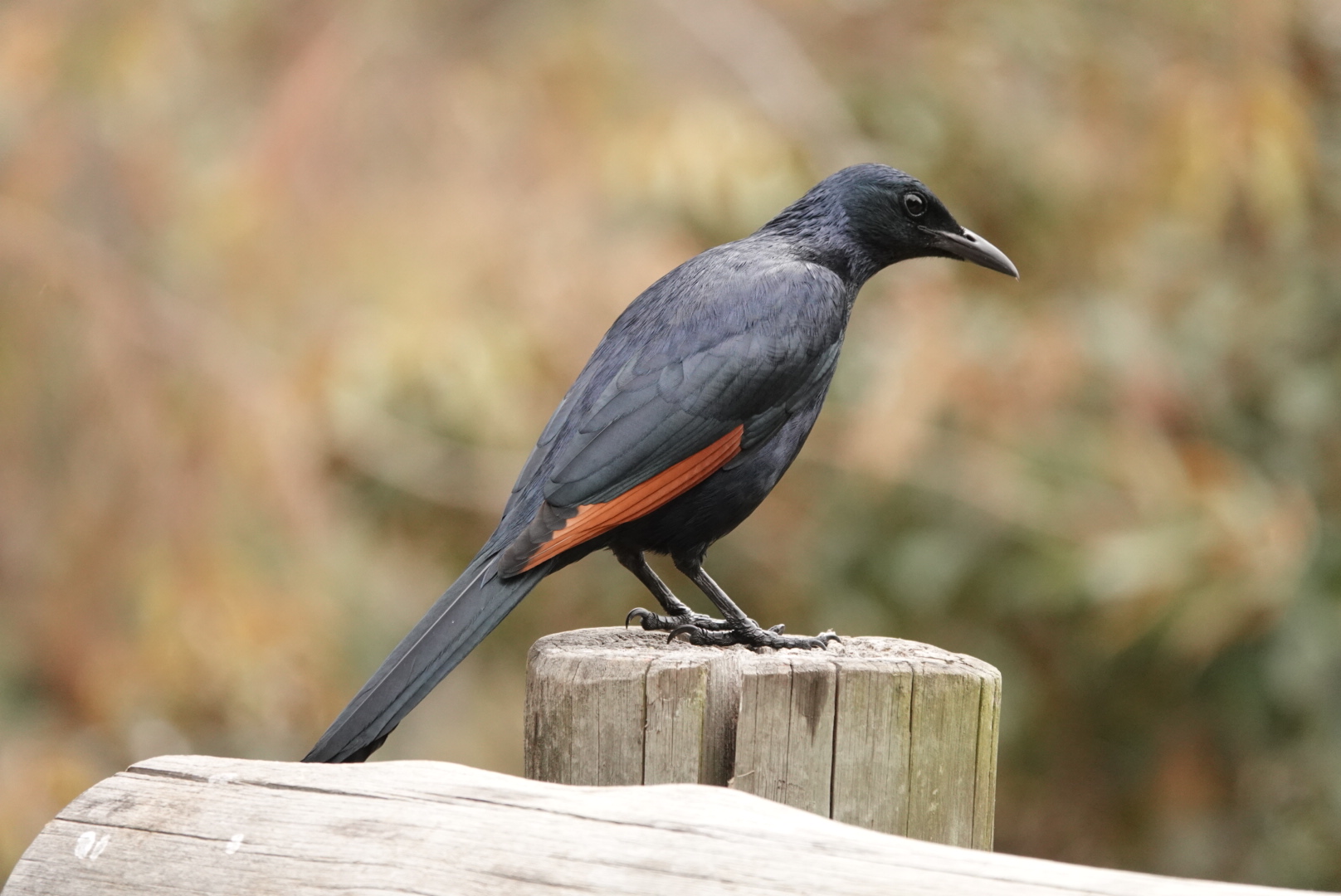
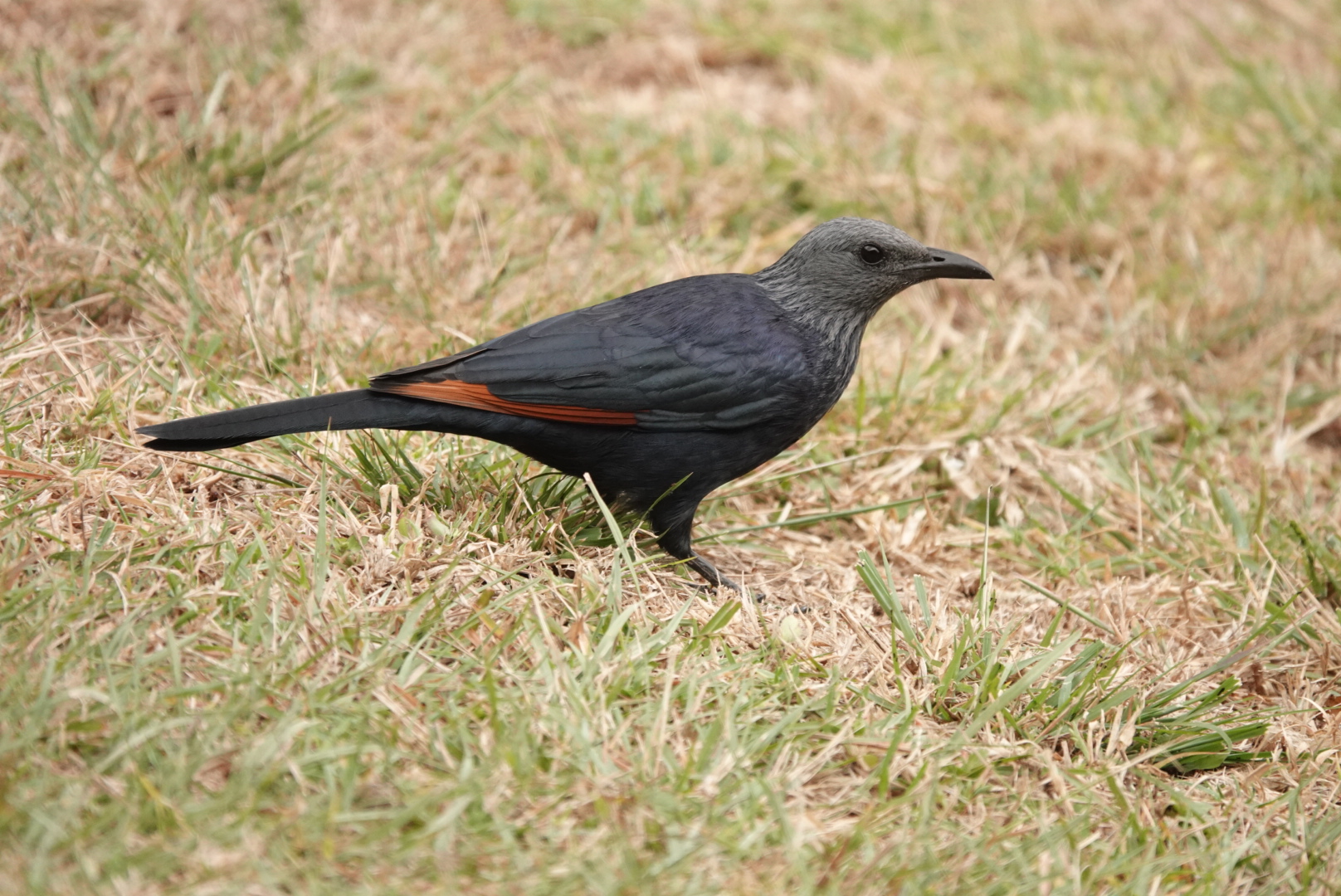
Red-winged Starling (Rooivlerkspreeu / Onychognathus morio)

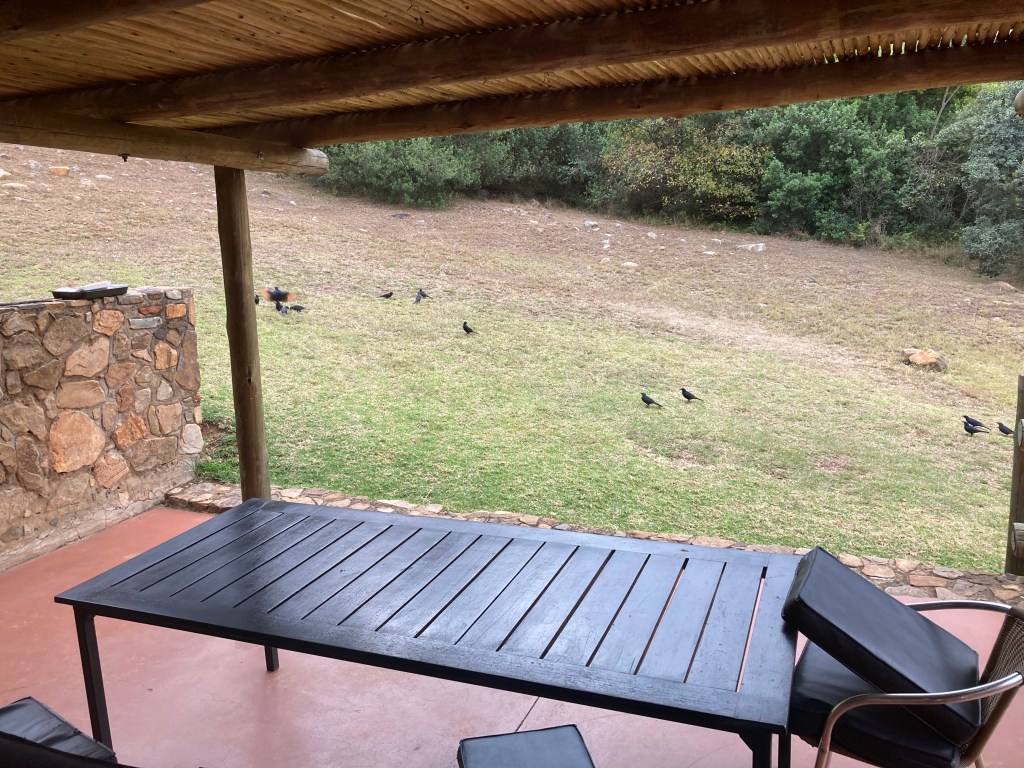
Enter the Darth Vader of the bird world – the menacing, glaring Red-winged Starling….. and they work in gangs, daring others to get in their way, descending en masse to grass level and prodding aggressively at the grass in search of a victim. But only after perching on the railing post in intimidating fashion.

The gang takes over ….

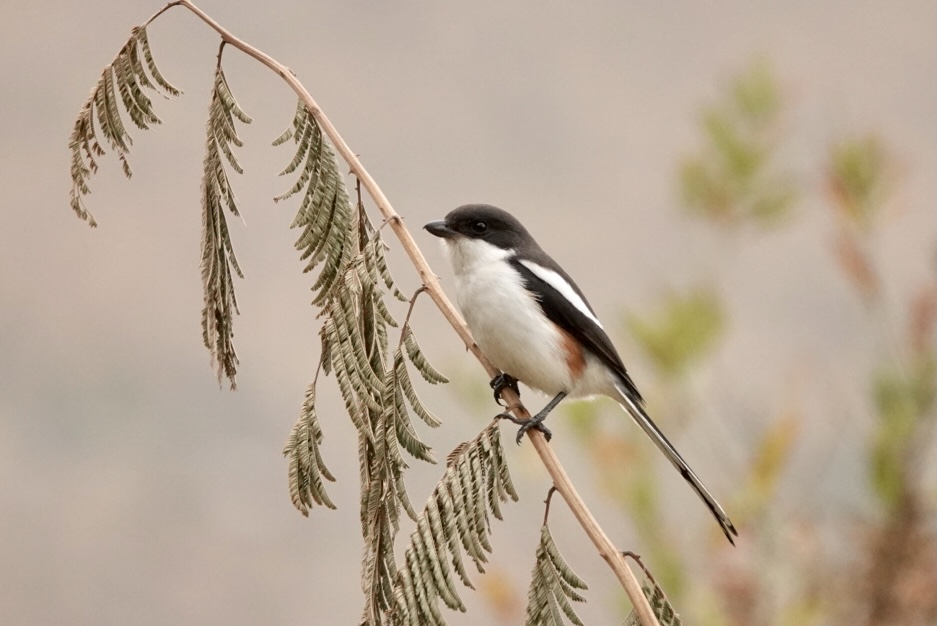
Common Fiscal (Fiskaallaksman / Lanius collaris)

Watching from a side tree, the Common Fiscal, aka Jacky Hangman aka the Butcherbird – what a reputation this small bird has, all because of its habit of impaling prey on a thorn or barbed wire! Its elegant appearance, as if dressed in formal attire, seems to project just the opposite impression.

Interestingly the Fiscal was quite composed, until the Fork-tailed Drongo arrived, when it flew from its perch and chased the Drongo until it retired to a far-off tree.

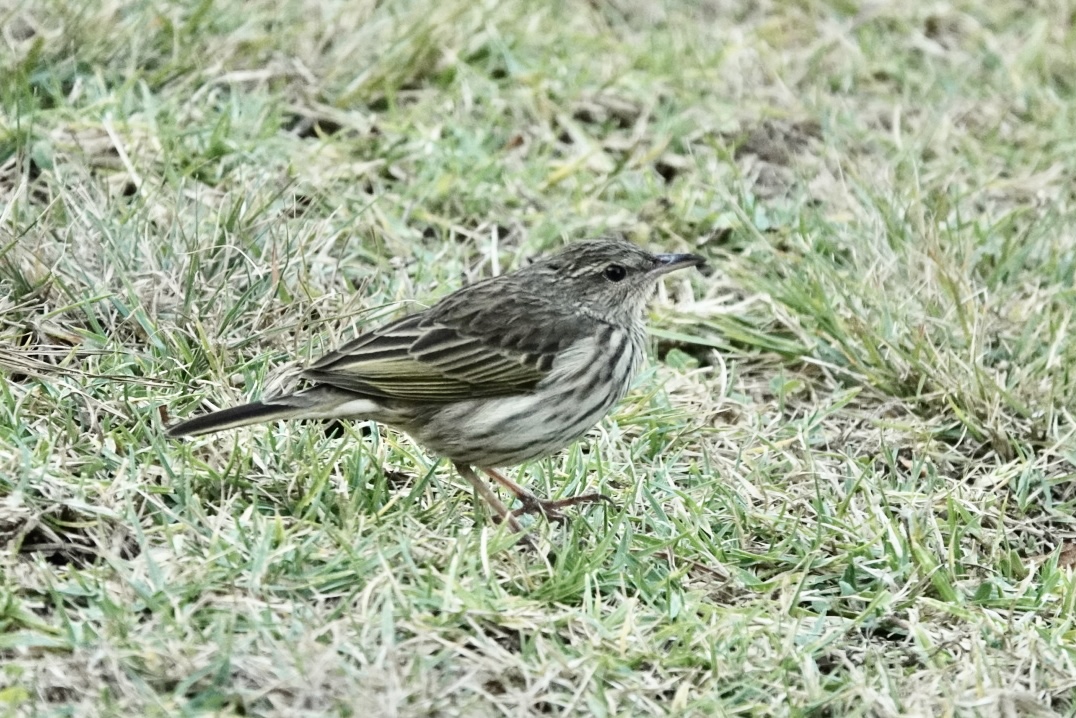
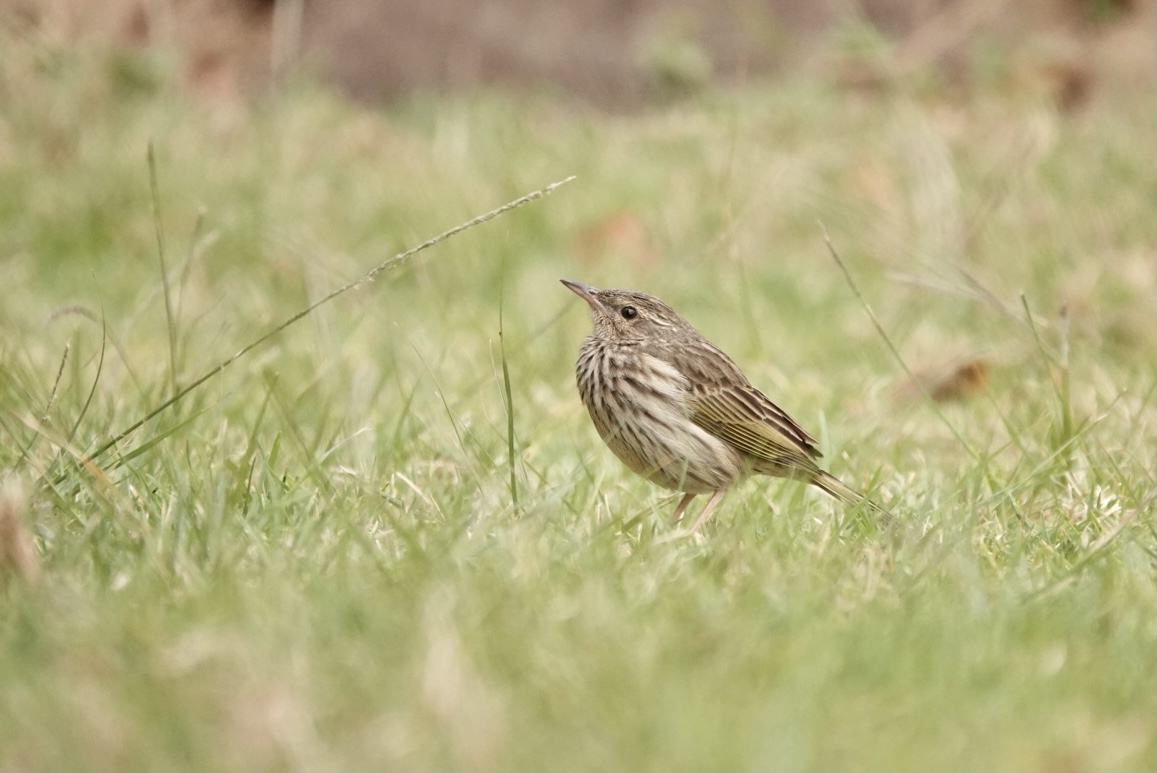
Striped Pipit (Gestreepte koester / Anthus lineiventris)

Another of the more timid birds, almost ever-present on the lawn, pottering about without bothering any of the others. But a bit of a celebrity nevertheless, being rated “uncommon to locally common” by Roberts – a regular at certain times at Verlorenkloof, but by no means guaranteed.

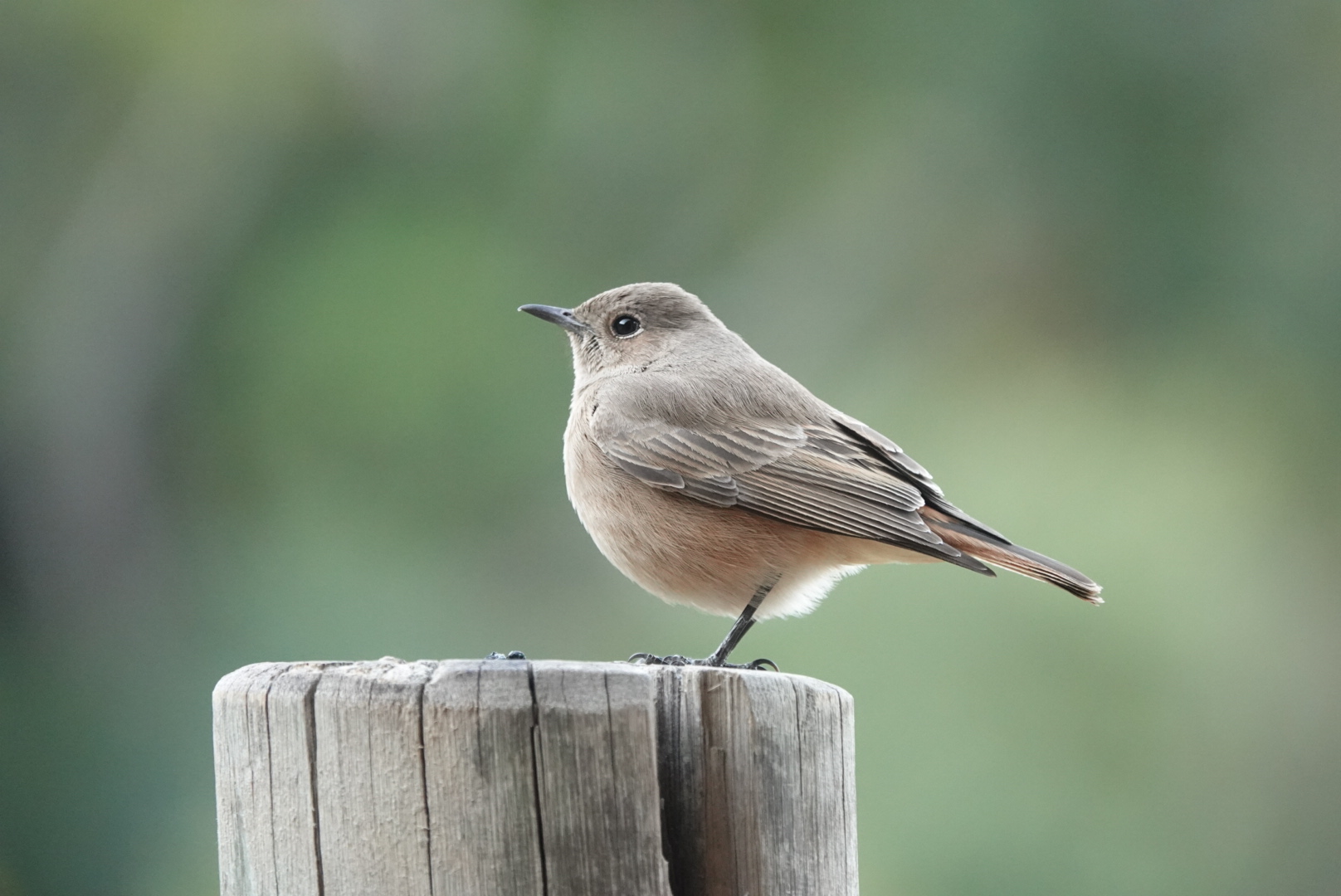
Familiar Chat (Gewone spekvreter / Cercemola familiaris)

Familiar is the right name for this well-known species. Another bird that is present from dawn to dusk around the Croft, watching from its favourite post and “diving” down to catch its tiny prey in the matted grass, with each return to its perch marked by three wing-flicks. I wondered how a bird with such tiny eyes can spot its prey at up to 5 metres or more, pouncing on it unerringly and returning to its post to devour it.

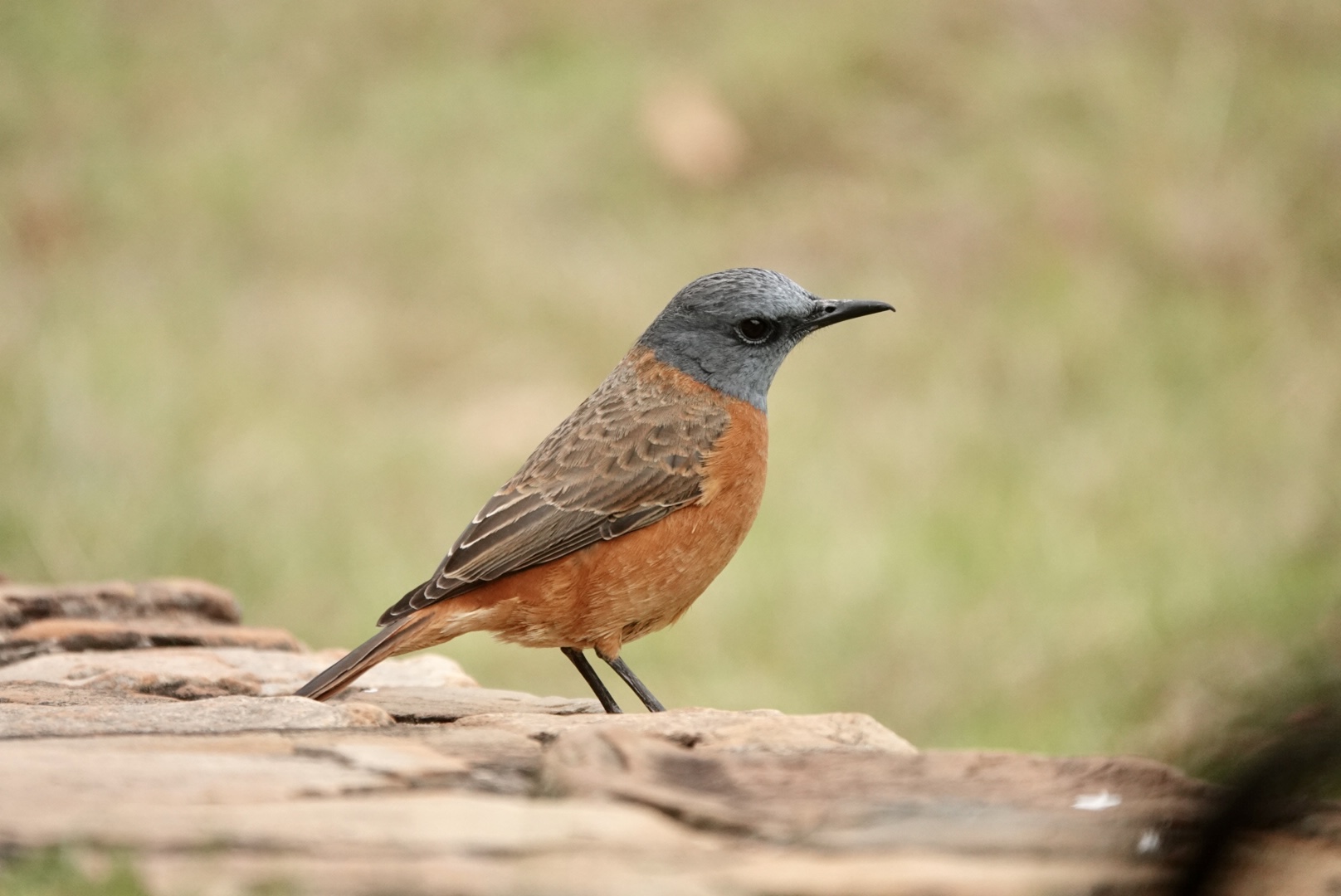
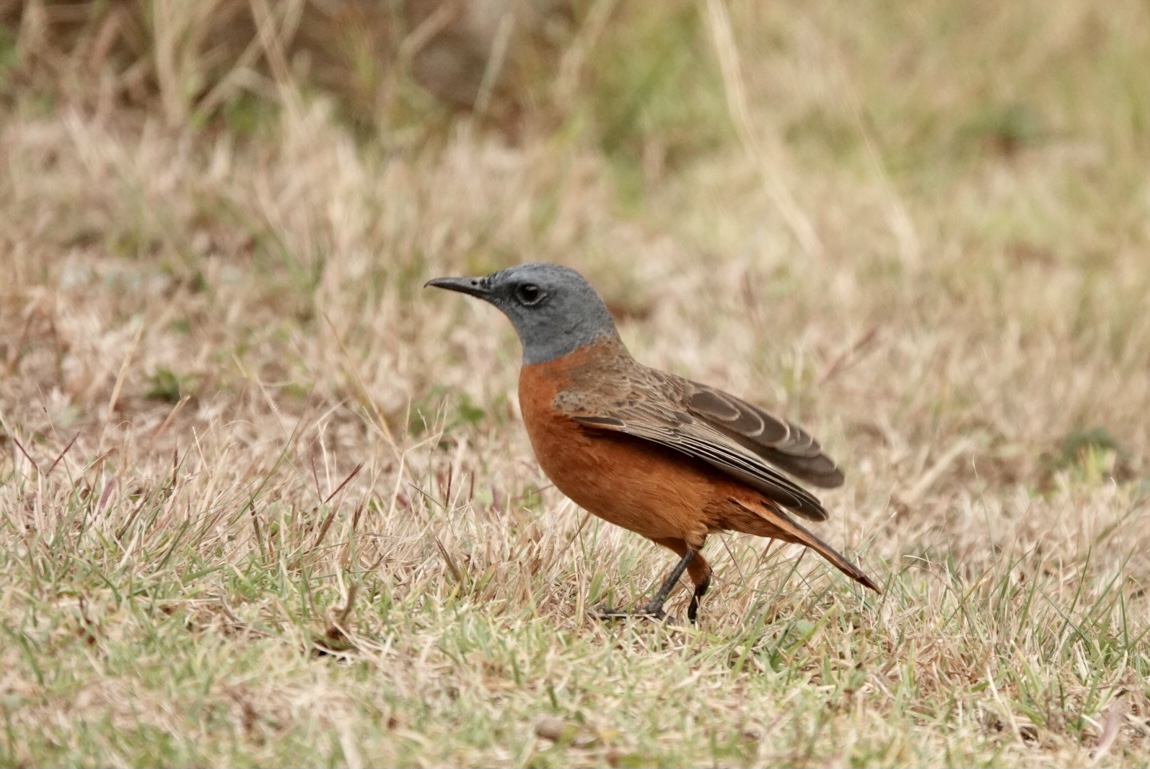
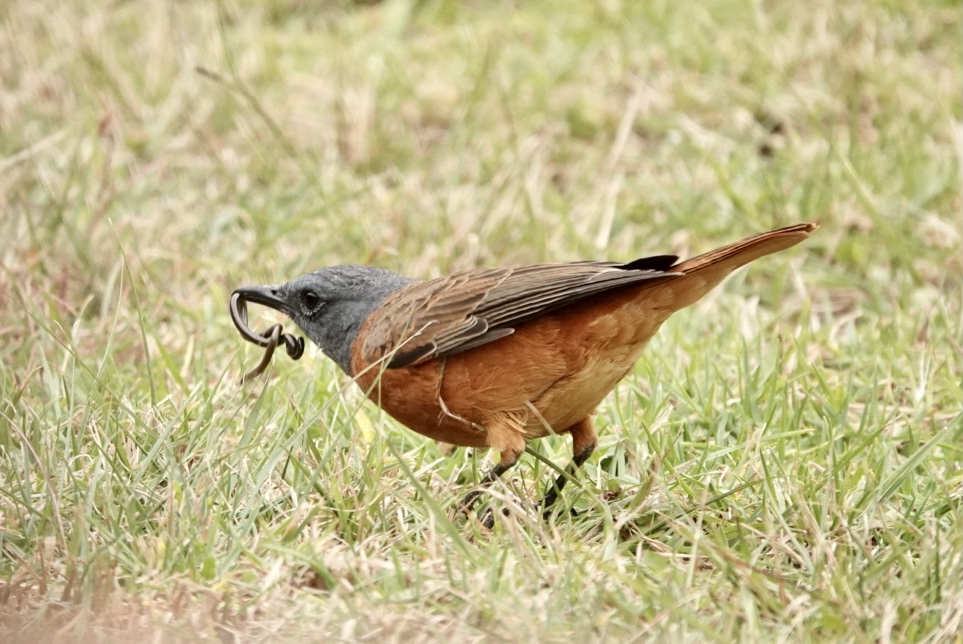
Cape Rock Thrush (Kaapse kliplyster / Monticella rupestris)

Bringing some class to the scene (did I mention I also originate from the Cape?) the Cape Rock Thrush has a way of dominating with its handsome looks and determined approach – they are not around constantly, but “pop in” from time to time, watching carefully from the roof edge or stone wall before pouncing on an unsuspecting prey.

And this is called hitting the jackpot

African Dusky Flycatcher (Donkervlieevanger / muscicapa adusta)

Now here’s everyone’s favourite bit player – demure, quiet, unobtrusive (for a moment I thought I was describing myself), spending much of the day perched in the shade on a thin twig, flying down to the grass to catch some small prey.

Dark-capped Bulbul (Swartoogtiptol / Pycnonotus tricolor)

The Bulbuls lie somewhere between the extremes shown by other species – not aggressive but certainly determined and not hesitating to pounce on prey before the competition gets to it

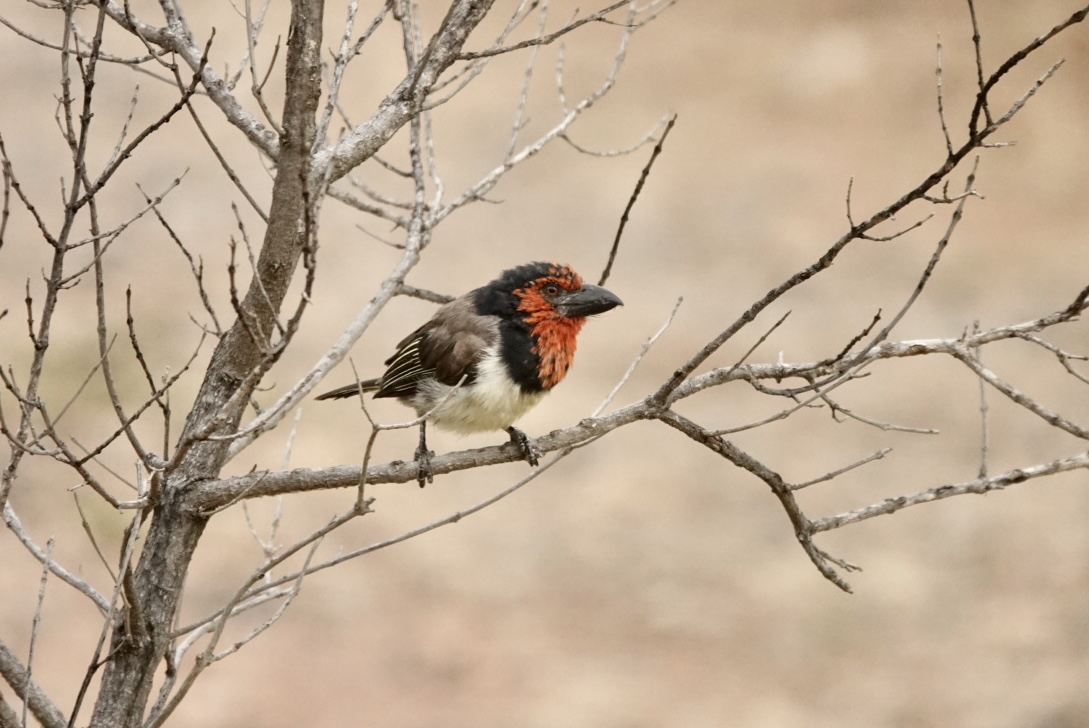
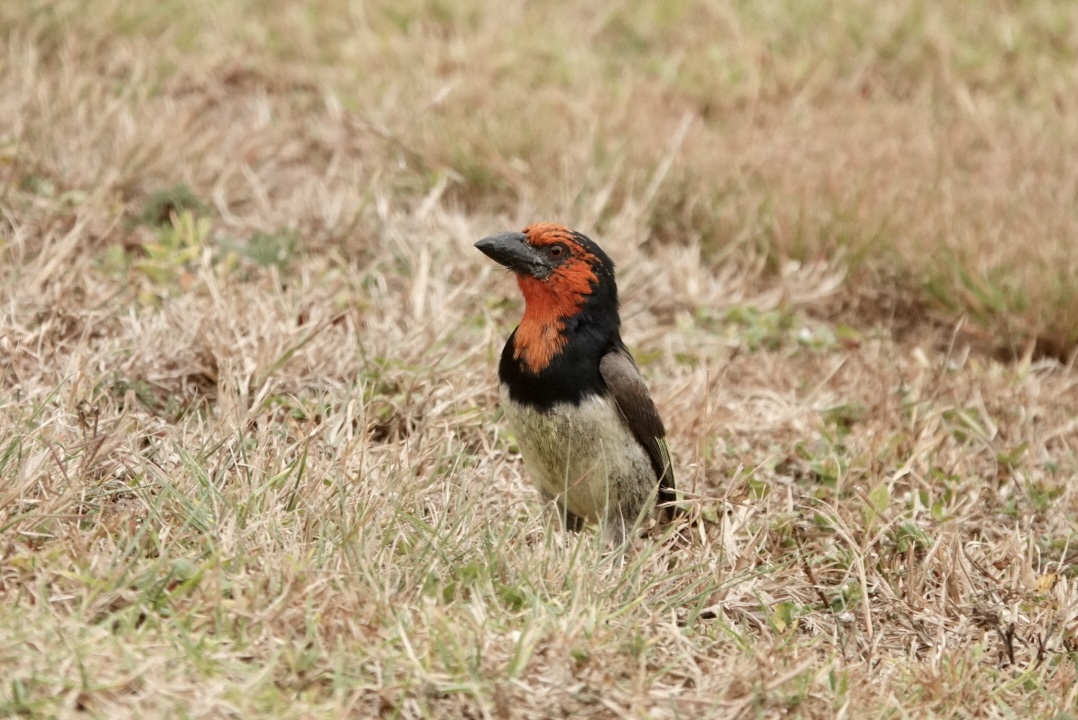
Black-collared Barbet (Rooikophoutkapper / Lybius torquatus)

A somewhat unexpected visitor, trying its luck along with the regulars. Despite its bright colours, this is a bird more familiar due to its call, a far-carrying duet, than its appearance. It did not stay long but seemed to be drawn to the lawn by all the other bird activity.

Fork-tailed Drongo (Mikstertbyvanger / Dicrurus adsimillis)

Making just a single appearance, the Drongo had to put up with being chased by the Fiscal and ended up viewing the action from a distant tree, before flying in for a quick lawn raid then disappearing.

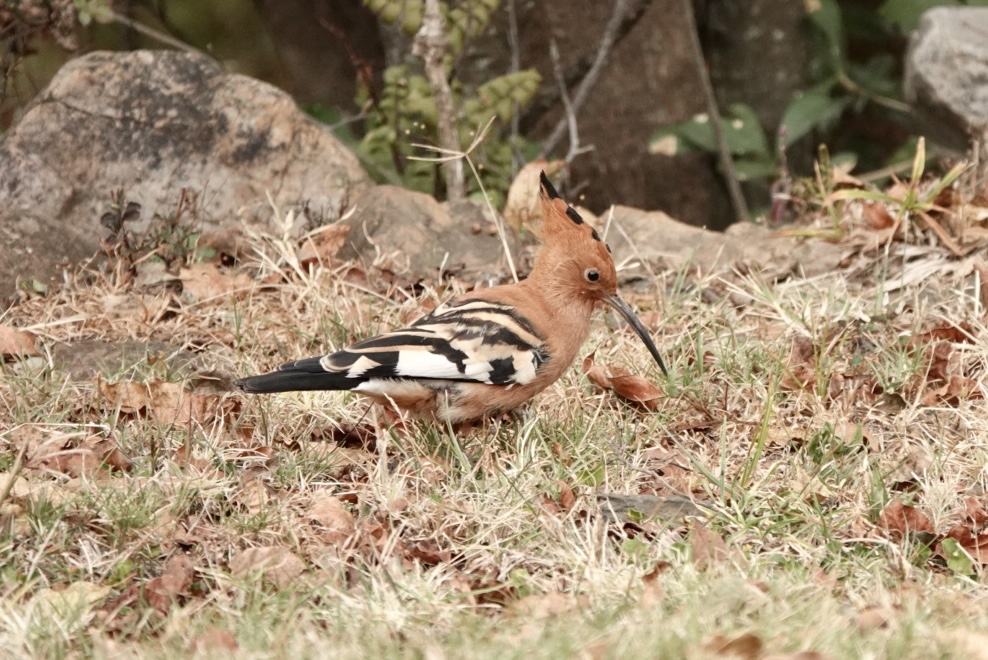
African Hoopoe (Hoephoep / Upupa Africana)

A real loner, the Hoopoe patrolled the quiet edges of the lawn, well out of the way of other species, head down and prodding with its long bill all the way.

Black-headed Oriole (Swartkopwieliewaal / Oriolus larvatus)

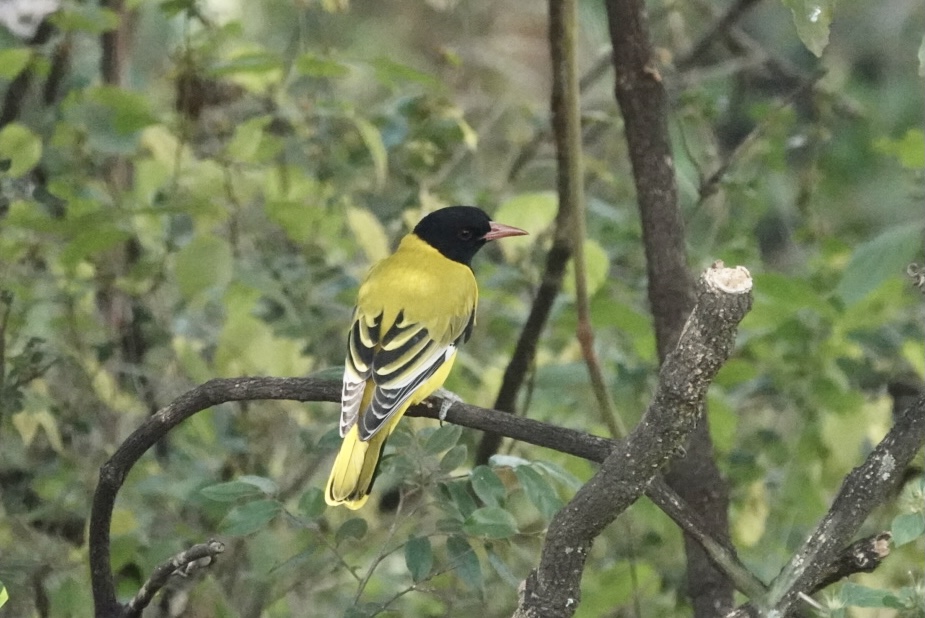
The Oriole just sat for a while on a branch with a view of the lawn, didn’t seem to want to get involved and flew off again.